Reviews by Rebecca Jones

The Resistible Rise of Arturo Ui

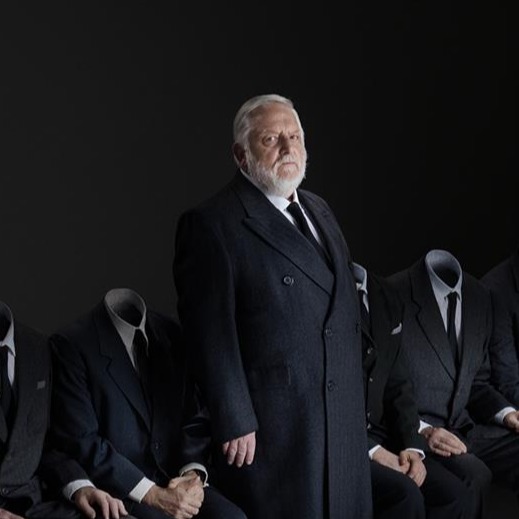
It is with horribly prescient timing that Mark Gatiss – who has apparently always wanted to play the role – turns his theatrical attentions to Brecht’s slimy cauliflower-botherer Arturo Ui.Set in the Chicago ganglands of the 1930s, the piece follows a ramshackle bunch of criminal goons so obviously corrupt and so hideously unsuited to political life that it beggars belief anyone would permit such clowns to rise anywhere near high office. It is precisely this resistible rise that we are encouraged to consider in a work which uses the vegetable business as an allegory for Hitler’s power grab and reign of terror.But, as Gatiss himself notes, the piece hits differently in 2026 than it did for those of us who first encountered the text decades ago, when the serenity of believing fascism might never rear its ugly head again led us to view it as an indignation of the past rather than a more expedient inoculation against the future.The premise is simple enough, albeit muddied somewhat by the league of characters who pop in and out to oil Ui’s ascent up the greasy pole – hooray for Brecht’s use of storyboards and hefty exposition. Small-time crook Arturo Ui bullies and bludgeons his way to becoming premier underworld boss and then premier law enforcer. Those with more than a passing interest in the extracurricular activities of big-beast politicians will immediately note the unholy chimera that contains both criminal and legal champion. And those for whom these things fail to register – well, they will simply fail to register.Along the way, people are expendable: little people, weak people, brave people, strong people, honest people, immigrants, women. And when they have outlasted their usefulness, even allies and henchmen.The historical relevance of the piece is underlined by the juxtaposition of Hitler’s own activities, bellowed into the omnipresent microphone. Casual cruelty rings from the rafters, but it is only ever heard by those prepared to listen.The stage is a cleverly designed and deliberately horrible mishmash of modern utility and garish neon. There is no style in Ui’s world, and very little substance. It is a nouveau fever dream of glamour screaming: “All the gear, no idea.” Lights blare, colours scream, and the house band in the minstrels’ gallery provide the bombastic jazz insisting that we “will” have a good time. In just one of the many delicious details which permeate the piece and allow us to fall into Brecht’s own ethical traps again and again, their sliding platform enables the set to be launched from the central trap without us noticing the scene changes and how quickly the world is turning.Gatiss begins the piece as a slippery, hunched figure in a flasher mac. With his absurd comb-over, penchant for McDonald’s and rather too much make-up, he makes an utterly preposterous leader. But nevertheless, he soon manages to wheedle his way into becoming an inevitability. With the help of an old luvvie – a much-admired Christopher Godwin – he develops a more sophisticated style, replete with nascent goose-step and ominously imperious salute.It is a stunning performance: at once physically repellent and commanding, ridiculous yet terrifying, with vocal tricks that manage to fuse elements of the Hitlerian bark and Trumpian immaturity. It must be a particularly exhausting interpretation to play and, if there were an Olivier for best line delivery, it should hie thee immediately to Gatiss for the way in which he spits the terrible final line. A line which chills the blood when heard during a local election week in a country previously – allegedly – opposed to fascism and those who espouse it.There is excellent support from the entire ensemble, who are led by translator Stephen Sharkey and director Sean Linnen in a production which is both hugely imaginative and utterly faithful. Mawaan Rizwan is an outstanding addition to the stage, a clown straight out of nightmares, dominating even in silence. Amanda Wilkin and Santino Smith also shine in pivotal roles highlighting the horrible ease of human collateral damage.At the start of the piece, we are all game enough, obeying the imperatives of the applause signs with gleeful self-importance. But as the repellently redolent rally banners unfurl and a succession of armbands begin to adorn upper arms, it is startling how many audience members are prepared to continue lauding the illaudable. Easily drawn in by the laughter and buffoonery, slower to disengage when things get real. But then he is a character, isn’t he? A laugh. A man of the people. Just the anti-establishment figure we all need. And by the time the pennants fly, it is too late.The Resistible Rise of Arturo Ui was written in 1943 and not staged until after Brecht’s death in 1958, parodying a very specific moment in history through a very specific lens. But it is also a tale for all time. The Reich Theatre Act of 1934 ensured theatrical output became little more than state-sponsored propaganda and hatred. Free speech was shut down. Books were burned.Today’s censors may be subtler, with sneers about being “educated”, “elite”, “lefty” or “woke” deployed to do much of the heavy lifting. But the threats remain. Open critique of oversensitive politicians is ill-advised for those wishing to retain jobs in certain spheres. TV channels and digital streams are devoted to spreading the word that resentment and rancour pay.The Oxford English Dictionary accepted the term “woke” in 2017, defining it as being “aware of social and political issues and concerned that some groups in society are treated less fairly than others”. Not a bad sobriquet to most of us. Yet there are those who adjudge it a weakness, a stain against their idea of political purity. They will not see this production. But they should.And then there are those who do not see the problem. Do not realise there is one. Pottering along in their own little worlds until cold reality hits someone they love. These are the ones Niemöller was writing for. Not bad. Just idle. Disinterested. Precisely those who could have resisted, but did not. Who should be resisting, but are not. They will not see this production. But they should.Because this is not just theatre, entertainment or froth. This is epic theatre: urgent and vital. And for a genre supposed to spark thought rather than feeling, it packs one heck of an emotional punch.

Swan Theatre • 11 May 2026 - 30 May 2026

Henry V

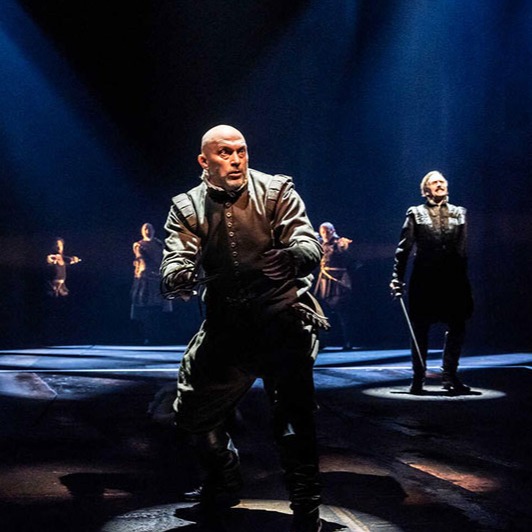
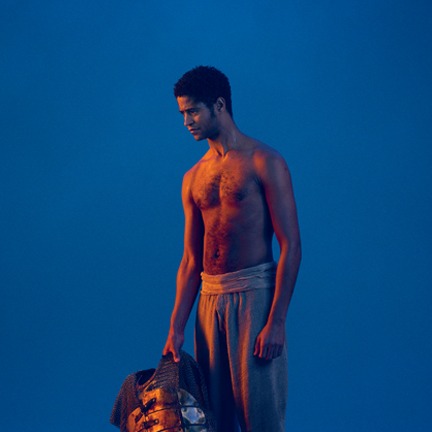
If Shakespeare is truly not just of an age but for all time, then it stands to reason that his plays will forever be viewed through the rotating wheel of happenstance. Thus, Henry V – both the oft-quoted play and the roistering, rousing warrior king himself – is destined to be seen through the prism of both our personal and societal views on warfare.Tamara Harvey’s take on the play comes at an apposite time: as one man decides to renew old hostilities and take whatever he believes himself entitled to. Simply because he can – and to heck with the acres of dead bodies strewn in his wake. Olivier gave a call to arms when the nation needed blind patriotism. Branagh gave a searing panorama on the horrors of battle. And what lies at the heart of this interpretation is emptiness, pointlessness, and a flat disbelief that we have evolved so little.As Henry, Alfred Enoch seems a calm, dependable, rational sort of chap: already far removed from his riotous past and dismissive of his erstwhile chums. Harvey’s deconstruction of the text awards him the "O for a muse of fire" speech, which opens up a new dynamic between our young sovereign and his nascent empire-building. Originally something of a ‘get out of jail free’ card for an audience too unimaginative to conjure the vasty fields of France for themselves, here it becomes a realisation of possibility. No longer a "cockpit," we see Henry pondering whether the "O" of the coronet can hold his ambitions. This "O" becomes a repeated motif throughout: a symbol of awe but also shock. Encompassing everything yet containing nothing. A hollow crown indeed.This is underpinned by Lucy Osborne’s huge, scaffolded set design. The storeys and multitudinous passageways might suggest the magnificence of a castle, but this is one we common folk can see straight into. And crucially, therefore, straight through. This is a fortress of metal might and sturdy rigidity, but utterly devoid of real life or comfort. It is also, as we later see, interchangeable; there is nothing new under the sun.And it is against this bleak backdrop of assumed grandeur that Henry launches his campaign against the French. But as the ruminations on the coronet foreshadowed – and despite his apparently stolid exterior – this is fundamentally just a little boy playing with his toys. All agog for the swelling scene, but with little understanding of the heavy reckoning that will follow.As blood spills at Harfleur and then Agincourt, the choreographic eye of Annie-Lunnette Deakin-Foster weaves creativity and dynamism into the narrative, highlighting lost life with unrelenting predictability: albeit with a gnawing penchant for traumatic physical collapse, which would make a GCSE drama candidate blush. Kate Waters’ battle scenes begin in slow motion; a dream-like, rhythmic quality creating the performative nature of this land grab. The men are ordered, elegant, purposeful: the naïve Henry’s idea of an invading army before the fact.With the English clothed in earthy reds and yellows, and the French in a palette of murky blues and greens, it is – at the outset at least – easy enough to identify which army is which in the multi-roling cast. However, as time passes and the speed of battle pushes ever onward, the differentiation becomes less obvious, and it is harder to tell which troops are collapsing. Somewhat frustrating, but perhaps this is the point. Given the chaos of the field and Henry’s own uncertainty as to the outcome, this mishmash of bodies reduces nationality to a mere detail of existence. We are all the same when lying broken in the dirt.And it is this filth of war which turns the calm, dependable, rational enough Henry into a man now fully prepared to break an age-old code and execute his prisoners. Whether by expedience or heredity is unimportant: he is now little more than a war criminal masquerading as a hero. For four hundred years, lauded and lionised due precisely to the poetry which now marks him as a rather different creature. Hoist with his own petard.This cyclical, gloomily inevitable mood pervades Harvey’s vision. Henry’s famously stirring speeches may be delivered with a charm and righteous elan which galvanise his own men, but they no longer have the power to warm audience blood so much as trouble the collective mind.It is Jamie Ballard’s spectacular Michael Williams who challenges the dulce et decorum est rhetoric, turning in both a performance and a character far more heroic than the King himself. Williams speaks for centuries of ordinary people sent out to die for a whim, fully aware they are dying for folly, yet prepared to do it anyway. This – this is nobility.Ballard also impresses as the Archbishop of Canterbury and the feeble French King caught up in a web of diplomatic intrigue far beyond his understanding. Paul Hunter evokes a seedy little Pistol, picking his way through devastation with light-footed irreverence. And Tanvi Virmani presents a moving picture of innocence as she tries to navigate a world gone mad. Knitting the ensemble and plot together with haunting redolence is Jamie Salisbury’s achingly melancholic score.There are few of us in 2026 – with perhaps the exception of the darkest corners of Truth Social – who would seek to celebrate needless bloodshed. And whilst the history itself may remain constant (even within the inconstancy of Shakespeare’s particular lens), our relationship to it cannot help but be coloured by the worlds in which we are living. This production understands this fragile relationship and never seeks to impose upon the text, but just lets it breathe with its own complexity and nuance. For this is a play which ends with victory but no real peace. There are only those who seek to hurt, and those who seek to heal. And there are those who seek to heal what they have hurt. And only at the close, as Henry’s legacy and stunted dynasty stretch ahead of him, does he finally realise that the rest is sadness.

Royal Shakespeare Company • 4 Apr 2026 - 25 Apr 2026

Cyrano de Bergerac

When Edmond Rostand wrote a fictionalised account of the life of the 17th-century author Cyrano de Bergerac in 1897, he could not have comprehended the literary legacy this hybrid character would continue to flaunt over a century later.In this stunning new adaptation by Debris Stevenson and director Simon Evans, a delicately wrought world of laughter and tears is conjured with exquisite precision and emotional sensitivity. Not a moment is superfluous. Not a second is wasted.We first meet the young Cyrano in dappled sunlight: a straw hat covering his face, and thus the generous facial appendage that haunts his existence. The nose is an invention of Rostand’s and has no historical evidence, but it provides a heartbreakingly real reason for his inability to declare himself fully to the woman he loves so passionately that he would rather another take his place than embarrass them both by revealing his feelings.A man of tenderness and war; a poet and a soldier; a lover and a celibate; a beacon of sincerity yet living a lie... Cyrano is a role for the ages. Adrian Lester, in an inexplicably tardy RSC debut, is devastating as the hero who counts himself so poor and plainly made that no honest love could ever come to him.Every moment he is on stage, Lester crackles with an electricity that cannot help but draw the audience into understanding the aching rationale for aiding young lover Christian to woo Roxanne. His self-sabotaging pretence somehow makes sense, and the brittle façade that hides the profundity of his loathing for what nature gave him is overwhelming in its intensity.Whether in a battle of wits with the slimy Comte (the ever-excellent Scott Handy); mentoring the charming dufus who erroneously wins Roxanne’s heart (a winsome Levi Brown); or bantering with Ragueneau (Christian Patterson), Cyrano appeals to us all precisely because he speaks the truths we would all like to utter. He is grumpy, taciturn, ironic, verbose, provocative, and soothing, but never less than truthful—except, of course, in his personal life.These scenes with Roxanne (Susannah Fielding) are realised with a poignant economy of skill: each minuscule facial reaction betraying a lifetime of emptiness and estrangement. The final minutes are played with extraordinary restraint, which somehow amplifies their pain and leaves a lingering impression as one of the most beautiful moments one could be privileged to see in contemporary theatre.Fielding is exactly as described: all angles and energy. She breathes an intoxicating sense of life into what could be a cipher of a character and proves herself a more than worthy recipient of Cyrano’s compositions. Fielding imbues the character with such freshness and modernity that we long to see the world – fragmented and ugly though it is – through her eyes. This makes her tacit acceptance of loneliness and solitude all the harder to bear, and her final desolation feels all too much as though it is also ours.The PR of every show will tell you that you need to see it. Event theatre will take your money, sell you a ‘name’, and leave you with all the cultural nutrition of a theatrical Happy Meal.But real theatre will quietly creep up on you and change your life in the course of a few hours. And the spellbinding Cyrano de Bergerac is just that. Real. Authentic. True. Unforgettable.

Royal Shakespeare Company • 20 Oct 2025 - 15 Nov 2025

Measure for Measure

Erica Burns' new production of Measure for Measure for the RSC gives Shakespeare’s problem play a clear and wholly unproblematic treatment. Laid bare is the feeble, dangerous reality of ‘godly’ men who all too happily commit the very acts their purported virtues refute — and which, moreover, they deny to the mere mortals they preside over.Zakk Hein’s opening video montage of abstemious luminaries such as Epstein, Trump, Weinstein, and Andrew Windsor ignites the burning anger at the heart of the piece, receiving a ripple of cathartic applause from the audience for its trouble. Burns layers this further by suggesting that Duke Vincentio’s speedy departure from Vienna at the outset of the piece is, in fact, a ruse to detract from some dodgy photographs seemingly about to hit the press.His replacement is Angelo: a goodly man whose own monastic demeanour informs the puritanical tyranny that will underpin his leadership. Bad news for young shagger Claudio, promptly arraigned and sentenced to death for impregnating his girlfriend. And even worse for Claudio’s virtuous sister, Isabella, whose pleas for her brother’s life result in a proposition from this outwardly sainted deputy.As Angelo, Tom Mothersdale assumes a snivelling, weaselly demeanour somewhat at odds with his grand position. This odious little twerp would be hard pressed to get elected to the Village Hall tombola committee — and yet here he is, dangling the keys to the castle. So far, so familiar to anyone invested in British politics across the last few years. Dunning–Kruger would have a field day.Isis Hainsworth plays the unhappy Isabella with a nervous energy and outrage that chimes most effectively within the contemporary framework. However, in choosing to downplay the faith that informs her very essence of being, the extremity of Isabella’s plight is also reduced, as is the true horror of Angelo’s controlling, perverted lust. This is one of the few missteps in an otherwise stunning commentary on the sanctimonious babblings of those who weaponise religiosity to further their political ambitions, and it minimises an opportunity to juxtapose the quietude of real belief against its flashier, emptier cousin.Burns has played fast and loose with the original text, but without the risible trend for deploying modern slang and expletives that has so insidiously worked its way into the canon. Generations of GCSE students are now primed to believe Will was liberally sprinkling his parchments with a hefty dose of ‘bollocks’ and ‘okays’. And while this particular interpretation may not please the textual purists, there is no denying that liberating lines and concepts from other Shakespearean texts and repurposing them is nothing if not... well... Shakespearean. Burns ably demonstrates that Shakespeare himself is always enough, and her adaptation certainly offers enough toe-holds for an audience to climb the tree of understanding both her own vision and sufficient of the original.Frankie Bradshaw’s bleak, greeny-grey set of straight lines and steel panels underpins the rigidity of supposed virtue extolled by the state: there is right and there is wrong. There are strict parameters. There are punishments measured to fit the crime. And yet, the very dynamism of the set — and its ability to shape-shift — points to the fluctuating morality of those who sit at the heart of government.And no one embodies this posturing more than Vincentio himself. Adam James is quite magnificent as the deus ex machina of the piece: in this iteration, elevated to a gratifyingly more central figure than in the more traditional takes. His early swaggering pomposity lends a particularly seedy edge to his later vicar cosplay: performative Christianity writ large as ineffectual and hollow.The nightmare realisation that this strutting, self-satisfied charlatan is indeed where the buck stops is not a new one, but its magnification is something this text has been crying out for for centuries. The relationship between Vincentio’s assumed role of simpering, voyeuristic priest and those of real faith is something that could have borne closer inspection had Isabella’s sisterhood been given its rightful place in the plot.Oli Higginson as the unfortunate Claudio and Douggie McMeekin as the shambling Lucio provide standout support. There are also strong performances from Natasha Jayetileke as a Provost bemused by the foolishness of those she serves and Valentine Hanson as a (one presumes genuine) man of God relegated to the sidelines as others steal his religious thunder. But this is fundamentally James' show: sharp of suit and slick of soundbite, Vincentio has perfected how to smile and smile and be a villain, as exemplified by the repulsive sham he forces Isabella through in order to unmask the patsy Angelo and take any heat away from himself.Shakespeare’s prescience in imagining a sex scandal that focuses on the hypocrisy of the elite and the silence of the abused needs shamefully little invention to make it relevant to a contemporary audience. “Who will believe thee, Isabella?” slimes the prenzie Angelo upon having exhorted a novice nun to yield her virginity to him, immediately conjuring the power imbalance that can constrict victims from reporting their abusers for many years. It weighs heavily. “Who would believe me?” echoes Isabella miserably, uttering not only her own cri de cœur, but a survivor’s anthem for the ages.

Royal Shakespeare Company • 1 Oct 2025 - 25 Oct 2025

Chamberlain: Peace in our Time

Searchlight are always a dependable, instructive and quietly moving choice at the Fringe, and in Chamberlain they use their characteristic narrative solidity to explore the legacy of British prime minister Neville Chamberlain and the terrible decisions he was forced to make in the 1930s.In the latter half of the 20th century, Chamberlain’s reputation seemed unlikely to recover from being the man prepared to appease the Nazi machine. He appeared destined to be overshadowed by the showman who succeeded him in Number 10, and who contributed to its defeat. Against Churchill’s naughty smile, the cigar, the homburg, the oratorical skill and the victory against fascism, Chamberlain’s quietly spoken personality never really stood a chance.But just as revisionist interpretations are now prepared to acknowledge the complexity of Churchill’s imperial and racial views and frequently questionable strategies, Chamberlain’s famous declaration of “Peace for our time” is slowly being allowed the room to breathe and be re-evaluated.At the distance of nearly a century, our analytical goggles may be clearer, but life has moved on little. Land ambitions by deranged dictators still see neutral countries struggle to strike the balance between political savvy and humanitarian indignation. Races still deem themselves inexplicably superior to others. Innocents are still being sacrificed on the altar of one man’s hubris.So it is horribly apposite that we spend an hour in Chamberlain’s Downing Street office, the hour immediately prior to his declaration of war on Germany. David Robinson is a thoughtful Chamberlain, running through moments of his personal and professional life as if searching for approval for what he is about to do. The gravity of declaring war and sentencing thousands to their inevitable deaths weighs heavily on him: he would of course prefer peace. But he must do what he must do.He confides in his assistant Jack Colville (Freddy Goymer), while wholly aware that Colville too will soon need to distance himself from the Chamberlain administration and throw his lot in with Churchill. He longs for the anonymity of the Birmingham suburbs. He worries about the delicate health of his wife and the likelihood that his son will have to fight. Robinson cleverly suggests the unbearable layers of anxiety peeping through the repressed emotional register of an Edwardian patrician soon to change the world, and we are gently encouraged to feel for the awful decisions he has little choice but to make.The enormity of the moment naturally means the text is heavy with historical detail, and the company change up the energy with numbers from the BBC light programme, which was interrupted for Chamberlain’s declaration. Michael Taylorson brings a lightness of tone and charming vocals to these moments, switching between the silliness of George Formby and Ivor Novello ditties and the yearning of White Cliffs of Dover with lyrical ease, reminding us that life – in all its glorious technicolour – still plods on even in the darkest times.

Palmerston Place Church • 22 Aug 2025 - 23 Aug 2025

Grey

Few have not heard of Lady Jane Grey, the ill-fated “nine days Queen” who had the misfortune to be moved about the political chessboard of Tudor England like the low-ranking pawn she was, inevitably to be cut down when the all-powerful Queen Mary snatched back the throne that was rightfully hers. But in this powerful piece of new writing, Laura-Rose Layden brings Jane’s final moments to life in a deeply affecting hour which illuminates her earlier years and mourns the woman she might have become.The Greenside venue at Riddle’s Court is most evocative for this historical journey, and the intimate Clover Studio allows the audience to feel every minute moment with the unfortunate Jane. Clad in a simple green Tudor gown, Layden uses the tiny stage to great effect, working in tandem with lighting changes and sound cues to revisit the places she knew before her incarceration. Her physical control is superb, creating a range of moods and ages with pinpoint precision. It is hard not to feel for this slight, young girl, buffeted on the waves of happenstance. Layden’s eyes – full of searching and confusion – communicate a profound understanding of the dreadful life of privilege, and its attendant pain, that Jane was born into.Layden has also written the piece, and it is easily one of the most beautifully crafted you will hear at the Fringe this year. The script is achingly poetic, conjuring devastating reality with a sophisticated yet lightly delivered linguistic register which haunts the air and draws the audience into Jane’s thoughts as if we are in that tiny Tower room with her.The fusion of actor and character is exceptionally strong, and Layden’s powerhouse performance weaves a nightmarish spell on the audience as her fevered mind flits between the key moments and characters of her young life as she awaits execution. Her short but happy time in the court of Queen Katherine Parr; her miserable home life with an overbearing, ambitious mother; a dreadful marriage; an adored sister… Layden dispenses with the heavy historical exposition which many will already know and drills down into the more universal themes of yearning and emotional solitude.Layden’s Jane is a more complex, involving and recognisable figure than the pious, uptight source might suggest. This is a wise choice, maintaining audience interest while communicating the wider themes of female subjugation and historical brutality. Another key production decision is to showcase her beautiful vocals by progressing the plot with art-rock style songs, reminiscent of the ways in which Miranda and Lloyd Webber use music to elevate mood and deepen understanding.The beauty of the Fringe is that, if you search through the hype and hysteria of big names, you can find little gems such as this tucked away up cobbled alleyways, waiting to be uncovered by those lucky enough to secure a ticket.

Greenside @ Riddles Court • 18 Aug 2025 - 23 Aug 2025

The Oxford Revue Presents: For Revue Dollars More

So many of the UK’s top comics and satirists have cut their teeth in the Oxford Revue that the alumni reads as an embarrassment of riches… Rowan Atkinson, Sally Phillips, Stewart Lee, Armando Iannucci, Al Murray, Alan Bennett, Dudley Moore, Michael Palin and Terry Jones are just a small sample of those who have gone on to become household names.Now in their 62nd year at the Fringe, the OR’s current gang treat us to 45 minutes of innovative sketch comedy, ranging from the observational to the musical to the absurd. Seemingly going through something of a hiatus on our screens at present, with fewer water-cooler moments than earlier iterations, sketch comedy is nevertheless alive and well in Edinburgh, where the new kids on the block are writing and performing their hearts out to appreciative audiences who enjoy the box-of-chocolates nature of the genre.The eight-strong cast are fresh-faced and witty, with some standout performances suggesting a healthy career in comedy performance may lie tantalisingly close. At its best, the writing is sharp and gratifyingly unpredictable, the essence of sketch work meaning that each scenario lands differently for every audience member. Joining the gymn; New Year’s Resolutions; the overthinking husband; and I’m Too Sexy are particular high points, with The Very First Christmas as the sparkling star on top of the tree.Watching emerging young performers find their feet is the very DNA of the Fringe, and as such, shows like this are not to be missed.

Just The Tonic at the Caves • 14 Aug 2025 - 24 Aug 2025

Yellow

Ben Jonson famously said of his contemporary that Shakespeare was “not for an age, but for all time,” and in this new piece from the Cross-Gartered Players, we see how his Illyrian characters might fare if translated to modern London.Billed as 'Twelfth Night meets The Thick of It', Yellow takes place in a shabby law firm where Malvolio is lying low after his fall from grace in the employ of Olivia (now a governmental minister). We meet plenty of recognisable characters: the young idealists, the dodgy overgrown public schoolboy, the newbie desperate to make a difference, and the damaged soul lurking in the corner – Malvolio.The piece is very well-staged in the airy Niddry Lower. If you like your Shakespeare, there are plenty of references to his life and works that will tickle your palate. And if you are of a more political bent, the machinations and moral capriciousness bowl along steadily, asking the audience to question their own ethical stability.If you are unfamiliar with the source material, it doesn’t matter. Yorgos Filippakis as ‘Mal’ conjures the reimagined awfulness of his downfall with sensitivity and sincerity, while Heli Pärna plays his confidante Rosie with a generosity that allows the bigger characters to shine. As befits a setting in the machine room for plots being laid and inductions dangerous, the writing is never tempted to create characters that are too sympathetic. We are treated to the three-dimensionality of humanity without seeking to excuse it. A brave choice, and one which reflects the original most effectively.

theSpace @ Niddry St • 11 Aug 2025 - 23 Aug 2025

Ecce Romani on a Shoestring!

If the phrase “Cornelia est laeta quod iam est in villa” is as engraved upon your scholastic heart as it is on mine – then this is the show for you. Even if it’s just a dim and distant memory which simultaneously conjures the heady days of stapling your index finger just for something to do, blu-tacking your fingernails, and layering Copydex on yourself just so you could peel it off – then this charming little piece is sure to tickle your humerus.For the uninitiated, Cornelia’s unbridled joy in pottering around her summer villa is a phrase from the Latin textbook Ecce Romani. This 1971 blockbuster is the rollicking read of the Cornelii family and their adventures with wolves, carriages, unruly children and senators in Ancient Rome. A reading programme designed to familiarise students with the linguistic and cultural principles of the Roman age, Ecce Romani was as much a staple of the groaning 1980s satchel as a dog-eared copy of Tricolore and a packet of Smoky Bacon. I’ve no idea whether it is still deployed as a teaching aid. All I know is that if it isn’t, today’s Latin scholars are missing out on a full appreciation of how to learn through sheer, ungilded slog. “Is that it?” one of the chirpy cast continually asks. Yes love, it is. (Was). It really was.Nostalgia, as my dad never tires of telling me, is not what it used to be. But in this affectionate and witty homage, there is much to evoke those long-lost times when our biggest worry was who we would sit by at lunch.Shoestring Theatre bring their unique brand of storytelling magic to the book – and it is a funny, well-drilled jaunt through all twenty-seven chapters. There is some innovative physical theatre, modern questioning of certain material, and clever nods to the repetitious structure of the book. The cast are bright and breezy, working extremely hard to involve and engage their audience in a performance which is aptly brought to life by the very teens that Ecce Romani was designed for.The premise is perhaps a little niche – but the execution will prove delightful even for those unaware of the original source material. The eager and enthusiastic cast are definitely worth a look and deserve a solid audience.

Paradise in Augustines • 4 Aug 2025 - 9 Aug 2025

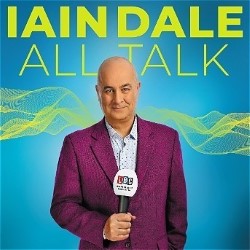
Iain Dale: All Talk with Lord Michael Heseltine

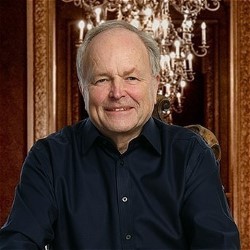
Iain Dale’s All Talk has become something of a staple in the Fringe calendar, offering a chance to engage with an impressive array of the most controversial and adored figures in Britain’s political establishment.The latest interviewee is Michael (now Lord) Heseltine: he of the hair, the mace, and the fractious relationship with Mrs Thatcher. There is, of course, far more to the colourful career of this revered elder statesman: not least his most recent role as one of the few big beasts prepared to speak out against the odious march of the far-right in a country that, when he was growing up, prided itself on fighting fascism rather than giving it screen time.We move through Heseltine’s time in parliament and his trajectory through government. He is funny, twinkly, sometimes circumspect, often loyal, and unflinchingly honest in his responses. But more than anything, he remains unafraid of speaking the truth to power that so many baulk at. Now ninety-two, he has spoken out repeatedly about the mistakes being made at the highest point of government, and behind the soft, thoughtful voice lies an intellect as sharp and far-sighted as ever.The piece is characterised by memories which demonstrate a fusion of business savvy and compassion. In one particularly touching moment, Heseltine states his proudest moment was being awarded the Freedom of the City of Liverpool in recognition of his lauded regeneration work in the 1980s.Iain Dale must have interviewed almost anyone who is anyone in the current political arena. But when I catch him helping Heseltine into his car at the end of the programme, he is visibly moved by the quiet dignity of the last seventy minutes. “What a privilege,” he sighs to one of the punters who stops to thank him.What a privilege.

Pleasance at EICC • 3 Aug 2025

ENOUGH.

ENOUGH is a bold new drama that follows police recruit Irie as she battles systemic injustice within the Met. But beyond this, it forces us to examine our own prejudices and unconscious biases – exploring which behaviours we are prepared to excuse, and which we are quicker to condemn.The service has come in for a great deal of criticism in recent years – and the fact that almost all of it seems not only justified but long overdue is a shocking indictment of the people who are supposed to be the first and last bastion of civil protection. Following the watershed moment of Sarah Everard’s murder at the hands of a serving officer, more and more examples of corruption and abuse of power have hit the headlines – each one driving another nail into the reputational coffin of the police. With the Met – supposedly the nation’s premier law enforcers – frequently at the heart of these allegations, and repeated claims of assault and institutionalised misogyny, it is a scary time to be a female in need of help.ENOUGH is an episodic piece, perhaps more immediately suited to television in structure. The action unfolds across a series of short scenes that introduce us to the Sarge, Constable Chris and Constable Irie. Irie is new, bright-eyed, desperate to make a difference. But her colleagues are older and wearier – long immune to the charms of doing one’s best, and plodding their way to retirement with as little trouble and as much kickback as possible.Friendly banter, pub quizzes and the requisite reliance on coffee and doughnuts soon start to give way to lies, corruption, bullying and abuse. The piece is short, but so cleverly written that we initially doubt our reading of the circumstances before blaming the perpetrators – a phenomenon already grossly familiar to every woman in every uncomfortable situation ever.The acting is superb across the board, and has a way of seducing us into the worlds and motivations of the characters that threatens our own judgment when things turn nasty. This complicity is a key strength of a piece that is relentless in its layering of truths and uncompromising in its message. The three leads are well defined and distinct – and the final twist is a masterstroke of storytelling and audience manipulation.One of the play’s main aims is to give a voice to those who refuse to be silenced – and as the lights black out on the hopeful recruit brought low by the people she so wanted to be a part of, there is little doubt that it has succeeded.

theSpace on the Mile • 1 Aug 2025 - 8 Aug 2025

The Manchester Revue

Pretty much the DNA of the Fringe, sketch comedy is one fiendish performance genre to tame. Successfully controlled it can generate an entire subculture of characters and catchphrases. But as an unweeded garden, it can also grow to seed; becoming indulgent, niche, exclusive and (whisper it softly) that most egregious thing of all… unfunny.Happily though, the Manchester Revue – in its fifth year at the Fringe – is none of these things, and delivers laughs aplenty in a vibrant and engaging set. Our five performers bounce off each other with energy and enthusiasm, and a clear determination to engage the audience rather than feed their own egos.With material inspired by the graffiti in Manchester’s public toilets, the troupe make their way through a range of observational humour and more surreal elements. Naturally, each conceit will land differently for everyone; but the deliciousness of the sketch format is that there will always be another scene along in a moment. Standout moments include the heckled hubby just trying to watch the telly; shower thoughts; the unconventional birthday presents; and Noah’s Ark – but there is plenty to choose from on this comedic smorgasbord.The individual performances are strong and involving, although a slightly slower pace at times might offset the occasional acoustical disadvantage at the back of the space. But there is no doubting the intelligence and insight of this work, and the individuality of the collective ‘voice’ which is emerging.

Just The Tonic Legends • 31 Jul 2025 - 11 Aug 2025

Paul Sinha: 2 Sinha Lifetime

If his audience are as glad to be here as the warmth of their reception suggests, then polymath Paul Sinha is even gladder.The Fringe veteran and television favourite has had a rough couple of years. His health battles – double heart attacks whilst performing in Edinburgh – contribute handsomely to his current set. But this is not a maudlin hour. Far from it. The jokes come thick and fast, frequently at his own expense and underpinned with a warmth and generosity of spirit that make one feel as if the material is being delivered solely to you across a couple of beers.Sinha’s keen eye and acerbic tongue are well-sharpened against those we probably all agree deserve it, and his carefully crafted little ditties at the keyboard are a particular highlight. Rhyming attacks on establishment figures set to some of the most famous tunes of all time is a woefully under-explored comedic microgenre, and one which carries a more weighty heritage than Sinha’s somewhat indifferent delivery might suggest.Whilst his script is as clever and detailed as we might expect from one of TV’s most recognised factualists, Sinha's acknowledgment of his own tendency to pomposity is what stops the piece from ever becoming pompous. Unlike so many other (younger? less skilled?) comics, so much of himself bleeds through his delivery that we feel the personal connection which elevates his show above others that are simply trying too hard. There is no assumed goofiness here, no devotion to ticker-tape one-liners, no over-reliance on expletives – nothing that gets in the way of an honest tale being plainly told.In short, it is clever. It is honest. It is very, very funny. It derives its humour from the daftness of life and the resilience we all need to find at times – and that is something we can all applaud.

The Stand Comedy Club 3 & 4 • 31 Jul 2025 - 24 Aug 2025

Mrs Roosevelt Flies to London

Eleanor Roosevelt, wife of FDR and the ‘First Lady of the World’, fought all her life for peace, democracy and universal human rights. But today, all she stood for and everything she achieved are under sustained attack. In this classy and timely piece, her voice of sanity and compassion echoes down more than 80 years, under the careful guidance of writer and performer Alison Skilbeck.The central conceit focuses on Mrs Roosevelt’s visit to the UK during the height of the war, but ably navigates her rich biography from privileged birth to fulfilled death. The period is thoughtfully evoked through Jane Heather’s spare set design: a chair, a hatstand, a trunk, and jolly bunting covering most of the bases, while Emma Laxton’s judicious sound design contributes to the atmosphere without ever overwhelming the action.Skilbeck covers much of the known ground of Eleanor’s life and offers up some tasty titbits and anecdotes that keep the action moving with charm and gentle humour. Eleanor’s difficult early life, familial connections to the presidency, and overpowering social conscience are conjured without sentiment: her unorthodox marriage, FDR’s known affairs and Eleanor’s alluded ones are explored with a fusion of tastefulness and candour that one suspects Roosevelt herself might rather approve of. There is no particular agenda here to either out or closet Roosevelt, and the affections she nurtured for those known lesbians in her close circle are embraced without becoming reductive or pulling focus.It is a very generous performance, allowing one of the most lauded first ladies of all time to breathe with a redolence and reality that cannot help but draw silent comparison with the current incumbents of the White House. A cast of characters – diplomats, royalty, land girls, servicemen –are portrayed by Skilbeck to texturise the piece and invite an appreciation of Roosevelt’s common touch. A touch that belied her aristocratic and monied background, and which seemed to have taken especial flight whilst at finishing school in London. The script’s brisk nonchalance somehow elevates Eleanor’s fervour for workers’ rights and racial equity, just as her quiet acceptance of FDR’s lovers seems to heighten the intimacy of their understanding.Eleanor Roosevelt was, by anyone’s standards, an extraordinary woman. A woman compelled to speak out. Compelled to make a difference. She bore deep personal sadnesses, scaffolded the longest presidency in the history of the United States, and unfailingly prioritised the most fundamental needs of others over her own reputation. That she was also far from flawless merely makes her more engaging, even at the distance of the best part of a century. And this show celebrates the power that messy, imperfect humans have to change the world.

Assembly Rooms • 31 Jul 2025 - 24 Aug 2025

Matt Forde: Defying Calamity

If comedic genius lies in the ear of the beholder, then any ears attuned to political discord, dishonesty and overwhelming disbelief at the state of 2025 can surely only concur that Matt Forde is precisely that.Forde’s slick standup combines a merciless ability to skewer those who most deserve it with a rich roster of howlingly accurate impersonations, gifting his audience the cathartic laughs they are clearly desperate for in a world gone mad. In recent years, Forde’s shrewd eye for the ridiculous has seen him embrace his own health problems as an integral part of his set, adding layers of vulnerability and humanity to his work. And while he may chuckle at his assumed identity as a poster boy for the conditions his recent chordoma has left him with, there is no doubting that by shining a light on such medical unmentionables Forde helps both to normalise and to lighten the load of life-altering diagnoses for others.With all this personal and global material, the only downside (as always) is that an hour in Forde’s company simply does not feel long enough. Razor-sharp observations flow thick and fast, with an almost flawless rate of hits. Trump and Starmer are the particular stars of this show, but there are guest appearances from a range of other surreally redolent establishment figures which tickle the funny bone precisely because life itself has become as unpredictable and inescapable as a Benylin-induced fever dream. There is even a cameo from the awful Boris Johnson, serving as both a comic salve and a warning to humanity.We know that comedic genius does lie in the ear of the beholder, so it is entirely possible that Forde’s intelligent reflections will not land with every punter. But it is hard to imagine who these punters might be, other than a Mr N Farage of Clacton, who is treated throughout the set with exactly the levels of respect he deserves.It is a strange feature of ageing that we seem to laugh less readily and less heartily with every passing year. Perhaps we have heard it all before. Perhaps the world is just less funny. Matt Forde turns all of that on its head. We not only have permission to laugh at what scares us but are invited to weaponise our collective laughter against the total tossers in charge of our lives. And for a magical 60 minutes, laughter does indeed prove that it can sometimes be the best medicine.

Pleasance Courtyard • 30 Jul 2025 - 24 Aug 2025

Wodehouse in Wonderland

In this charming one-man show, Robert Daws plays the much-loved humorist P.G. Wodehouse, whose whimsical – near anemoic – worlds of ferocious aunts and amusing romantic scrapes shielded him from acknowledging the darker moments that haunted his life. “Everything is made better with a joke,” he tells us – and it seems he was determined to live by that very tenet, pushing down any potential for self-pity or contemplation in favour of a very considered silliness.Wodehouse was nothing if not prolific; his well over 300 books, plays and stories remain greatly esteemed today for their very specific brand of superficiality and sparkle. But for a writer whose reputation still leans heavily on his depiction of a particular type of Englishness, Wodehouse was, in reality, an itinerant who never truly inhabited the imagined worlds he wove for his readers.An “Empire orphan”, Wodehouse was sent from Hong Kong to England at the age of two and would not see his parents again for many years. Brought up by a succession of formidable aunts and twittish, mischievous uncles – who would later provide ample fodder for his cast of upper-class characters – he was perhaps happiest within the confines of Dulwich College, which offered just the right amount of structure and artistic freedom, and sowed many of the seeds for his literary career. Wodehouse attained such immediate success on the writing scene that he moved to France for tax reasons in the 1930s – a decision destined to have repercussions he could never have imagined. From there, he became a German prisoner of war, a figure of political mistrust in the UK, and an eventual exile in the United States: a quintessential Englishman adrift on a sea of fan adoration and establishment opprobrium for the second half of his life.The piece is set in Wodehouse’s handsome Long Island home, shared with (and majestically titivated by) his wife, Ethel. His great chum and collaborator Guy Bolton pops by from time to time. They walk their dogs. But there is an emptiness at the heart of “Plum’s” life – an emptiness that an earnest young biographer is keen to explore.Wodehouse himself would rather not. It’s not his style, he explains. He prefers to splash about in the ridiculousness of Berkeley Mansions or Blandings Castle – in situations he can control. Not that Plum would recognise this need for autonomy, of course. As played by a wide-eyed Daws, he is an innocent – quite literally – abroad. A little boy whose preoccupation with make-believe is preferable to the awful realities of life. And this love for froth and fandangle is underpinned by a scattering of self-penned jaunty little numbers, which also serve to change the narrative energy and punctuate the introspection of an anti-introspective.Daws initially conjures Plum (he found his given name, Pelham, tricky to grapple with as a young lad) with a joyful glee redolent of the “silly arse” set themselves. This brings an even greater sadness to his moments of reflection – such as when he tells of the death of his beloved daughter Leonora. It takes an actor of Daws’s stature to switch between these moods of frivolity and fragility with the sincerity and sensitivity necessary to bring an audience up short. This is supposed to be a light-hearted land, in which the worst thing that can happen to one is an amusing incident with a Victoria sponge… inviolable, safe. The awfulness of the real world is not supposed to invade its borders. With an economy that echoes Wodehouse’s almost visceral need to rail against emotional gloom, Daws draws a picture of aching desolation and internalised pain.But Leonora was not the only mainstay of his life to be snatched cruelly from Wodehouse. An apparently naive mistake during the war resulted in a wave of revulsion and scrutiny, a suspicion of Nazi activity, and a life lived far from the leafy shires and mansion flats that tickled a global readership. Daws plays Wodehouse’s almost infantile outrage that such a thing could happen with an awkward believability that belies Plum’s intelligence – and hints at the upper-class exceptionalism and political gaucheness he was more used to lampooning than experiencing himself. For although foolish and thoughtless his decision to broadcast on German radio may have been, a sympathiser he was not.This is a lovely – and surprisingly affecting – hour in the company of a consummate professional who is able to move and amuse in equal measure, and a wonderful opportunity to explore the life behind the literary legend.In one of his earliest novels, Wodehouse wrote: “I am not always good and noble. I am the hero of this story, but I have my off moments.” Little was he to know then that it would one day make the perfect epitaph for the story of his own life.

Assembly George Square Studios • 30 Jul 2025 - 24 Aug 2025

Motorhome Marilyn

Michelle Collins seems nervous. She pops out from the auditorium a few minutes before curtain up: she gurns gauchely at those at the front of the queue. They offer a cheery "good luck." "I’m gonna need it!" she replies, without a hint of false modesty, before popping back in again. It reminds me of a charmingly honest television interview with her a few days ago, in which, unstarry and wide-eyed, she seemed more than a little overwhelmed by the Edinburgh behemoth she had created for herself.But if she is more anxious than the average performer kicking off this crazy month of endurance, she really needn’t be. The show is a sell-out. Her fans, warm and supportive, are out in force. They don’t know it’s terribly bad form to applaud an actor before they so much as open their mouth, but on this occasion, we’ll forgive them. They are just so delighted to be breathing the same air. An air which is generously loaded with the years of shared memories of Ms Collins pouting, scheming, suffering, and surviving from the magic box in the corner of the room.As it happens, these pouting, scheming, suffering, survival attributes have served her well in the creation of Denise: the ‘Motorhome Marilyn’ of the title. Based on an original idea of her own, the story follows sixty-something Denise as her paltry world as a Marilyn Monroe impersonator crumbles around her ears. Now living in Las Vegas but raised in Southend, Denise has been through it. Her only true companion is a python named Bobby. She exists in a caravan stuffed with Monroe tat. She hasn’t got much. But the one thing she does have in spades is grit. You can take the girl from Southend, but...Written by Ben Weatherill, the script serves up a good number of genuinely hilarious lines; and some of the initially extraneous-seeming exposition ends up neatly dovetailing into the final few moments. There is plenty here to tickle die-hard Monroe fans, and just as much to educate those who are less familiar with her story.Collins herself certainly looks the part and is as perfect a fit for Denise as you would expect from a part written especially for her. Rather more unfortunately, Denise is not a perfect fit for Marilyn. And therein lies much of the sadness of the piece. Denise will never realise much more of the dream than standing over a grate on the Strip, her white skirt whirling in the wind, and worrying whether she’s likely to develop a yeast infection from all that hot air scooting up her nether regions. Even when in character, there is little accent, no breathy register, none of the softness of her idol. She is quite clearly doomed to failure. Deluded even within her delusions. But, ever-optimistic, she clings on. Well, they do say it’s the hope that kills you.Ms Collins bravely creates a character who is difficult to love and is unafraid of demonstrating the hardness of a woman whose eternal reliance on her own mettle has rendered even a scintilla of vulnerability tantamount to betrayal. This brittle emotional tone allows the darker elements of the piece to bowl merrily on by, and we find ourselves almost complicit in some of her darker doings. This is a much more tangible take on a character who could so easily become cartoonish and infantile, and one that leaves us with a satisfyingly awkward feeling of irresolution as the lights fade down.Because this is not really a show about Marilyn Monroe. This is a show about lost dreams, wasted lives, resilience… and just a little touch of psychopathy. It is an insightful glimpse into the story that might lie behind a tin front door, of how a little life, of scant account to anyone very much, might be eked out. Ably directed by the always reliable Alexandra Spencer-Jones, there is a good deal of pain that is evocatively intimated rather than explicitly splashed about. And much like the legendary Marilyn herself, not all of the scars are visible.

Gilded Balloon Patter House • 30 Jul 2025 - 25 Aug 2025

Abnormally Funny People

I bumped into Abnormally Funny People’s producer, Simon Minty, outside the Pleasance Dome during the first weekend of the Fringe. He was as charming as his on-screen persona suggests and chatted about the show he has been bringing to the festival for two decades.Abnormally Funny People showcases an ever-changing roster of comedians with visible and invisible disabilities, and on the showing I attended the strong line-up aptly demonstrated why the show has garnered fans across the years.The performance I caught was MC’d by Alex Mitchell, with sets from Don Biswas, Harriet Dyer and Lost Voice Guy. Across the board, their material leans into the disabilities that have brought these particular comedians to this particular stage, and this feels important in recognising and normalising conditions which others may either struggle with themselves or struggle to embrace in others. The most familiar situations frequently have the strongest comic hit-rate, and it is a rare treat to have a dedicated hour in which an audience can acknowledge the frustrations and daftness of a world too often treated with kid gloves or ignored completely. An estimated 25% of the UK population is living with disability, and neurodiverse diagnoses are rising with growing acceptance and awareness. So there is no shortage of anecdotes or observations from a community only relatively recently being invited to share their stories in the mainstream.Not that this is a worthy or mawkish hour. Far from it. It is self-deprecating, outrageous and very funny. Each act of course plays with their own condition, but not to the exclusion of other material. The snappiness of the format ensures an engagingly broad range of comic styles and approaches are platformed throughout.What Minty and his team have achieved in bringing this show together should not be underestimated, and deserves far broader recognition. In 2025, we are interested in seeing funny comedians at the top of their game who just happen to share a disability. But it has taken real grit and foresight to bring us to this point, and the contribution of shows such as this has helped us all laugh louder and longer. And most importantly, without exclusion.

Pleasance Courtyard • 30 Jul 2025 - 25 Aug 2025

Monstering the Rocketman by Henry Naylor

Monstering the Rocketman is a thoughtful, acerbic and tender look at the way in which the British press has played fast and loose with the reputations of the celebrities it has built up – with the sole intention of knocking down again. In this particular case, we are dealing with Elton John – but the list of those forced to pay a disproportionate price for their fame is not only already monstrously long, but – in the immediate and anonymised world of online trolling – ever mushrooming.This piece takes us back to the deep social divisions of the late 1980s: a time in which yuppies and unemployed miners, aerobics and crispy pancakes, Sloanes and punks coexisted. The glitz of Dallas gripped the nation alongside the cobbled realism of Coronation Street. One minute, Frankie was telling you to relax; the next, Section 28 told you what not to do. And nowhere was this hypocrisy more exemplified than within the pages of tabloid newspaper The Sun – at one time suspected to be read by a quarter of the population every day. A newspaper – and the word is used as loosely as proprietor Rupert Murdoch’s moral compass – happy to splash very topless, very young girls across Page 3... while editorials demonised those afflicted by “the gay plague”.The repercussions of its sloppy, sensationalist style still reverberate today. Caroline Flack and Meghan Markle are just two of the names that spring to mind as being unfairly targeted simply to boost circulation. Love them or hate them, any reasonable person would agree that the seemingly co-ordinated tide of bile and bloviation was undue, unnecessary and unbalanced. Anyone remember The Sun’s attack on MP Clare Short for daring to suggest that the titillations of Page 3 were unseemly in a family newspaper? In just one of its many crusades against those who challenged its iron grip on the national narrative, Short was labelled a “killjoy”, “fat” and “jealous”.The witch trials and the public pillory never went away.Henry Naylor uses the true case of Elton John’s battle with The Sun during this strange decade as a prism through which to ponder the terrible power we have allowed to permeate our news sources. Anyone with even half an eye on the headlines in recent years will remember the half-arsed apology issued for the paper’s appalling coverage of the Hillsborough disaster, and the closure of its sister paper after a raft of phone-hacking and improper news-gathering accusations.So it is little surprise that, at the height of his supremacy, Sun editor Kelvin MacKenzie ran a series of fallacious stories about Elton John’s sex life – and subsequently refused to back down despite evidence disproving the allegations, a public spat with rival paper The Mirror, and a televised rebuttal hosted by Michael Parkinson. It took Elton’s deep pockets to force the million-pound lawsuit that finally silenced their spurious claims – pockets that few similarly wronged names have been able to dig into, thus helping to perpetuate the myth of inviolability (see also: bullish arrogance) that cloaks tabloid vengeance.Henry Naylor is a triple Fringe First winner, and it is not hard to see why. This is precisely the sort of important piece that proves why the Fringe needs to exist – to showcase the stories that need to be told, rather than the ones we feel we need to hear. The fracturing of the national media has resulted in fewer high-footfall channels holding power to account. Gone are the days of Spitting Image, Friday Night Live, Rory Bremner… now we are more preoccupied with funny cat videos, furniture makeovers and eyebrow tutorials. There needs to be space for this kind of political theatre for as long as there is a hungry audience – desperate to share the laughs and eye rolls in the dark with others similarly outraged and impotent.Naylor’s is a strong performance, scaffolded by what is clearly a personal campaign to tackle the injustices meted out by the fourth estate. His sincere, immediate and friendly style is designed to encourage those less familiar with the subject, and engage those who remember the heady days of Rear of the Year and Concorde. Naylor flicks between a legion of characters with respect and idiosyncrasy, breathing life into a story that holds as much currency today as it did when it unfolded 40 years ago.

Pleasance Dome • 30 Jul 2025 - 24 Aug 2025

Falling: A Disabled Love Story

Aaron Pang’s quest for a relationship lies at the heart of his Edinburgh Fringe show, and he shares his hopes and fears with the audience with a charm and honesty that propel the narrative and bring us face to face with his particular dating conundrum. Because, in addition to unpicking the nutty problems of choosing Tinder pictures, writing a suitably witty biography and curating “sexy” interests, Aaron walks with a cane. A cane which, he notes, carries its own legion of socially awkward questions and difficult conversations – especially on first dates.Thus begins a tender, intimate and uncompromising hour in which we share Aaron’s medical history and how he feels that his disability has impacted his ability to find love. To be honest, I have no idea whether the story we are told is autobiographically true or not, or whether the “Aaron” we see in front of us is the genuine article or a dramatic construct. Not that it matters – the message is the same.We are required to check in with ourselves and consider both what we think of Aaron’s disability and what we want to take from his story. It turns out, he tells us, that too many people need his story to have a happy ending. And, be it down to sympathy, narrative neatness or an opportunity to absolve oneself from awkwardness, these optimists are doing a well-meaning disservice to those living with a disability. It is not up to others to navigate a medical journey that is not theirs. And for as long as we need another’s condition to be “cured” we can neither read the person in question as a whole, nor give their lived experience the respect it deserves – such unintentional ableism discounting the reality of living within a world that is not designed to be accessible for all.Pang is a natural storyteller – full of charisma and twinkle – and Falling is fascinating and thought-provoking but also very, very funny. Beyond this, it is human to its core and asks us to explore our own relationships with the concept of disability as much as to engage with Aaron’s romantic arc. Not asking for any favours – just to be heard.

Pleasance Courtyard • 30 Jul 2025 - 25 Aug 2025

The Other Mozart

The Other Mozart tells the true, forgotten story of Maria Anna (Nannerl) Mozart, the genius sister of Amadeus, who performed throughout Europe alongside him to equal acclaim before her story was lost to the obscurity thought to be more fitting for females of the period.It is unlikely that you will see a more beautiful set design this Fringe – alone in the black box space, the skirts of a lavish white gown are spread in a giant circle of lace and froth. Among the folds and pockets, tucked away from the prying eyes who would not understand, lie key memories of Nannerl’s life… music, souvenirs from her European travels, books, and letter after letter regarding the mischievous little brother who took a continent by storm in the late eighteenth century. This is a treat for lighting designer Joshua Rose, who is able to use a full range of colour palettes against the neutrality of this canvas to illuminate each of the contrasting chapters in Nannerl’s life.The gown itself (immaculately realised by Magdalena Dabrowska and Miodrag Guberinic) seems to represent the maturity and acceptance of adulthood, which the young Nannerl dances around and through and over, before finally accepting that she will never inhabit the fantasy world her brother has been gifted. Thus, for much of the piece, Nannerl prances about the stage in her corset and pantaloons – free-spirited, dynamic, hopeful; before admitting that she must put away childish things and climb into the fierce-looking farthingale contraption ominously waiting to enclose her in its iron embrace.Those familiar with the story of the scatological musical genius whose intemperate mouth belied the beauty of his compositions will have much to engage with here. But there is no need to have an exhaustive knowledge of the backstory. The piece is so carefully constructed that we are treated to a substantive amount of information, which never dips into lecture territory but is always delivered with a delicious verve that somehow makes Nannerl’s relegation to a mere footnote in history all the sadder.Sylvia Milo (alternating with Daniela Galli) created, wrote, and stars as Nannerl, giving a towering performance that never tips into self-indulgence but gently and generously evokes a funny, knowing, clever, loving, and divinely talented woman who was denied her due in life. Much of the success of the execution lies in the way the creative team have used minimal methods to construct maximum effect – the control and economy deployed by director Isaac Byrne and his team demonstrating the tightness of grip and completeness of understanding at the heart of the process.The script is based on the well-documented facts about Mozart’s colourful life and on the hilarious and heartbreaking letters the family penned to one another during their times apart. It is a delightful piece in which a woman once reduced to the shadows is finally granted her own time in the spotlight.

Assembly George Square Studios • 30 Jul 2025 - 25 Aug 2025

MARIUPOL

It was Joseph Stalin who is supposed to have said, “One death is a tragedy; a million deaths is a statistic.” It is a sentiment that haunts the ether around our comfortable television sets in our comfortable living rooms. For whether we choose to neglect, ignore, feel or demonstrate against the horrors of war and the highly discriminate loss of life, it is hard – faced with so much evidence of man’s inhumanity to man – to comprehend the full devastation being wrought in all too many corners of the world. Harder still is the task of giving each obliterated life the full and idiosyncratic weight it deserves in death.In Katia Haddad’s MARIUPOL, two of the beating hearts behind the statistics are imagined through the eyes of Galina (a Moscow student) and Steve (a Ukrainian naval officer). Initially brought together by a chance meeting in the 1990s, the intertwining of their lives – and their unbreakable regard for each other – belies the aggression of Galina’s homeland and the vulnerability of Steve’s.The performances are exceptionally strong: Nathalie Barclay is heartbreaking as a woman ripped apart by happenstance. Oliver Gomm allows his character of Steve to mature across the hour – much as Steve’s blokey demeanour planes into something smoother with pain and time.Mariupol has known such Russian hostility in recent years that its name has joined an unwelcome club of locations known as immediate and horrific bywords for human suffering. Yet this is not a piece full of declamatory political statements – and what it achieves is, in fact, far more powerful. It is a simple, messy love story of two simple, messy people, played out against the brutal horrors of a megalomaniac’s imagination. Eking out their days as best they can. Trying to make logical decisions in illogical times. And finally, reminding us that such people are not statistics – but that they are us.

Pleasance Courtyard • 30 Jul 2025 - 25 Aug 2025

Animal Farm

Sam Blythe is directed by Guy Masterson in this superb one-man adaptation of George Orwell’s seminal novella. The structure and characters of the original render it problematic to stage successfully, making this outstanding piece of theatre an especial treat for those keen to revisit this allegory of the Russian Revolution and commentary on totalitarianism.That the history books are replete with tales of the good-natured, the simple and the trusting being manipulated by slick oracy, hollow promises and plain thuggery is no secret. But admission that our own times are – irrefutably – beset with such manipulative practices still carries the risk of an eyebrow raised in askance (at best), or a short trip to the nearest high window (at worst).Blythe’s occasional nods to apposite moments in our own world drive home Orwell’s universal themes of impotence and outrage. And there is a delicious feeling, together in this darkened space, that we are complicit in this revolutionary act – in this telling of truths.Blythe creates both humans and animals with an extraordinary physical capacity, conjuring the tragic and the risible in equal measure. A boorish Napoleon, the silliness of the sheep, coquettish Molly, obsequious Squealer, and an array of personalities are bounced between at impressive speed. But the stars of the show are Clover and Boxer, created with such tenderness and humanity that their sufferings force an almost physical weight on the audience, who must bear witness to their journeys.Blythe's towering performance remains respectful to the source at all times, while breathing innovative new life into phrases that have become ingrained in our collective lexicon. This insistent, breathless piece should be on the Fringe shortlist for anyone interested in quality theatre – and an imperative for anyone interested in quality of life.

Assembly George Square Studios • 30 Jul 2025 - 24 Aug 2025

Lovett

The legend of Sweeney Todd – the infamous ‘Demon Barber of Fleet Street’ – has been a staple of Gothic literature for nearly two centuries. First appearing in the Penny Dreadfuls of the early Victorian era, the bloodthirsty Todd and the epicurean entrepreneur Nellie Lovett are said to have terrorised and nourished London society in equal measure through their dastardly double act.In this origin piece, Lucy Roslyn imagines what might bring someone to Nellie’s eventual status as butcher to the establishment and feeder to the masses. Using the notorious story as a scaffold for wider social commentary, Roslyn conjures a world so simultaneously colourful and bleak that it is not hard to sympathise with the newly widowed Mrs Lovett as she searches for a way – any way – to survive.It is an extraordinarily powerful hour. Roslyn is nothing short of hypnotic, infusing every syllable with a powerful longing for something more than the crappy hand life has dealt both her and pretty much every other 19th-century woman of limited means. Without sentiment or saccharine, we explore the choices (few) doled out to impoverished women of the day (many), and recalibrate our lofty, privileged understanding of lives lived so very far from the hedonistic, earnest, liberated echoes of the Pleasance Courtyard at play.Roslyn conjures a world redolent with the whips and unforgiving scorns of Victorian London – and while perhaps less of a treat for the faint-hearted, the piece never strays into sensationalist or gratuitous territory. There is a delicacy in the gore, and a tenderness beneath the filth and grime smeared into Nellie – sorry, Eleanor’s – soul.Roslyn is a spectacular physical performer, able to breathe life into a range of additional characters with that seemingly minimal effort which takes hours and hours to achieve. As an expert in her trade, Mrs Lovett rejoices in the beauty of precision and artistry. And Lucy Roslyn, in one of the most relentless, compelling pieces of work at the Fringe, is certainly no stranger to such mastery of her own commanding craft.

Pleasance Courtyard • 30 Jul 2025 - 25 Aug 2025

The Winter's Tale

Yaël Farber’s hotly anticipated take on Shakespeare’s late problem play is a beautiful, haunting piece that leaves one feeling as if we have woken from a dream-like state: slumbering whilst these visions have appeared before us.Central to the plot is Leontes, King of Sicilia – a twitchy, neurotic Bertie Carvel – whose inexplicable jealousy sets in motion a chain of tragic events which decimate his own family and ripple through his court.His is a stark, monochromatic world: Soutra Gilmour’s design choices and Tim Lutkin’s lighting conjure the bleak aesthetic in which the key themes of jealousy and loss thrive. Meandering around the perimeter is the all-seeing figure of Time, a chilling Trevor Fox, whose presence in the play Farber has chopped up and sprinkled liberally throughout — the most memorable and satisfying innovation of the evening.Whilst Leontes’ accusations are perhaps rather too speedily arrived at for complete credibility, we are reminded of a similarly hirsute and hasty monarch, whose crimes against his many wives were still within living memory at the time of writing. That women in too many cultures remain at the mercy of masculine whim in the present day reminds us that Shakespeare is not of an age, but indeed for all time.Bearing the whips and scorns of her husband is Hermione – a majestic and emotionally commanding Madeleine Appiah – whose goodness and mercy pass all understanding. It’s quite the tough gig in 2025 to forgive the man who stole your reputation, sixteen years of your life, your relationship with your baby daughter, and snatched away the last breath of your young son… but Appiah goes some way to suggesting why and how this might be possible. She is ably supported by a powerhouse performance from Aïcha Kossoko as Paulina, whose appearances on stage enliven and energise an interpretation that can occasionally become so poetically monotonous that its very lifeblood is threatened by the weight of the hopelessness it has so successfully created.There is much to be applauded: some excellent work from the underused Raphael Sowole as Camillo, and a compelling Hilda Cronje as one of Hermione’s women, helping to texturise the psychological repercussions of this man-baby’s temper tantrum.But there are also some missteps, as exemplified by the visually stunning but dramatically dubious interpretative dance, and the shoehorning in of contemporary swear words — both seeming too painfully keen to bring edge to a piece that is not just strong enough without, but infinitely stronger without such GCSE distractions.And when you are already gifted with the most notorious stage direction in literature, there seems little need for inessential faffage: yet poor old Antigonus is denied his inglorious death in a lost opportunity of style over substance.Look, if there were to be an Olivier Award for most unfairly weighted dramatic moment to pull off originally yet effectively, “Exit, pursued by a bear” would be right up there for nomination with “Stella!” and “A handbag?” So any attempt is doomed to fail at least some of the people some of the time… and Farber’s take is nothing if not inventive. The lighting and sound here provide a dazzling and most welcome pop of energy, but unfortunately, relying on a silhouetted bear head to do the heavy lifting sows rather more doubt than engagement.Why is it Hermione wearing the bear head? And why does she act as the entity that wants the man — who is going to enormous lengths to save her baby — dead? Why is she so far from home whilst so physically fragile? Why — if she knows of her daughter’s rescue and journey to Bohemia — is she so amazed to see her sixteen years later? What — if it is an allegory rather than a physical representation — does it symbolise? Wandering into the interval narratively puzzled keeps one guessing, involved and hungry for more; but being dramatically puzzled is another beast entirely.The second half shifts to a warmer, looser Bohemia: characterised by reds and oranges, the enormous moon-like orb of the first half becoming a glowing sun. But it is nevertheless a land trapped by its own singularity: as wild and louche as Sicilia is uptight and repressed. As the two worlds speed towards their conciliation, secrets are shared and old grievances washed away with breathtaking ease. All is well in Sicilia and Bohemia: the collateral damage of Leontes’ hissy fit forgotten, bereaved marriages brushed aside, lost childhoods laughingly dismissed.This is a visually exquisite rendition of a play which is hard to love, and even harder to understand from our lofty twenty-first-century perspective. It is not perfect, but elegantly rendered — and an especial treat for those already familiar with the text to dissect and wonder over.

Royal Shakespeare Company • 28 Jul 2025 - 30 Aug 2025

Titus Andronicus

As befits one of his earliest plays, Titus Andronicus has all the hallmarks of a Shakespeare honing his craft in a studenty troupe full of bold ideas, incautious language, over-weening self-belief and insufficiently critical friends. By the close of the piece, an audience will have sat through a parade of fourteen corpses, ten amputated body parts, rape, cannibalism, filicide, attempted infanticide, adultery, and repeated racism. Unrisen gorges optional: protective gear on the front row advised.And yet, despite its blood-soaked reputation for showcasing Bill’s Tarantino years, Titus is more than just a titillating splash about in the Grand-Guignol: offering a commentary on the breakdown of civic order and the futility of revenge as compelling and chilling today as it was four centuries ago.In Max Webster’s mighty new production for the RSC, we are treated to a dystopian ‘Rome’ in which the stark monochromatic world reflects its characters’ souls: murky greys abound, and any purer whites are almost immediately tainted with blood spatters. This bleak colour palette not only creates the nightmarish parallel reality in which our worst fears come to life; but underpins the continual exploration of blackness as a symbol of evil.Joanna Scotcher’s spare, glassy set perches atop a huge stone slab etched with word after Latin word: engravings soon to become grimed with the DNA of those lives sacrificed upon the altar of high politics. Utilitarian benches are spaced at intervals. An electronically controlled slaughterhouse track runs overhead.At the outset, the Roman Emperor has died and his sons Saturninus and Bassianus are competing to be elected in his place. The people would prefer renowned general Titus Andronicus: but he refuses the honour, backs Saturninus, and gets on with the business of presenting the prisoners he has taken during his war with the Goths. Simon Russell Beale’s Titus is doughty and clear-eyed: a man of war but also of logic, able to make inhuman decisions in the name of supposed justice. He tells us that he has lost twenty-one of his sons in battle: and to avenge their memories, orders the dismemberment and thus murder of the Goth Queen’s eldest son. And so begins the cycle of violence for which the play is both much admired and reviled.Wendy Kweh is a fantastic Tamora, the captured Queen: sinewy, serpentine, impulsive, unflinching. This is a woman you cross at your peril: as Lavinia (an initially horsey, haughty Letty Thomas) soon discovers. Tamora fights for survival with a bestial reactivity and cunning: a motif explored throughout the piece as an increasingly tenuous hold on humanity dissolves. In a text peppered with references to the ‘hunt’, the cast morph into a series of snarling creatures which may be the predator, may be the prey. Jade Hackett’s choreography is a stunning representation of how the omnipresent perils of our own baser natures lie far closer to the surface than we would like to admit.For just as a fish rots from its head, so does Rome collapse under the arrogant, swaggering leadership of a snivelling, coked-up Saturninus (a horribly redolent Joshua James). Plots are laid, inductions dangerous… and lives are snuffed out with such gay abandon that the hardest task for any director is to evoke credibility within a plot that, to our sensibilities, seems incredible. Webster offers enough familiarity for us to fear such a world; and indeed, there is already horrid symmetry in the actions of those who would righteously kill a baby for its skin colour or consider someone else’s body to fall under their own jurisdiction. There are superb performances throughout: the ever-reliable Emma Fielding becoming ‘Marcia’ Andronicus, Jeremy Ang Jones showing huge promise at speaking verse with modernity and purpose, and Natey Jones making the essentially one-dimensional Aaron psychologically plausible. This is a terrific ensemble in which each player feeds into the narrative; and whilst the stage is naturally never less than electrified when Russell Beale is in situ, his performance is generous enough to build a layered sense of tragedy which never feels purely orbital. There is no resolution here, no happy ever after: and as the young heir to the Andronicii watches the adults around him tear each other apart, we have never felt surer that an eye for eye will surely make the world go blind.

Swan Theatre • 5 May 2025 - 7 Jun 2025

Much Ado About Nothing

If recent productions are anything to go by, the RSC of 2025 season will be characterised as the summer of great spectacle. And having witnessed the Danish royal family rolling to their ends in the murky depths of an unforgiving sea earlier in the year, we are now invited to watch the blinging new money of Messina dissolve social media post by social media post.On entering the auditorium, a stunning multi-media set design by Jon Bausor assaults the senses, transporting one immediately to the high-octane atmosphere of a football stadium. A huge digital screen reads MESSINA FC 1 (85’ CLAUDIO), MADRID FC 2; there is a tunnel leading towards the pitch; lockers; hangers; plunge pool; a press table replete with sponsored drinks; a PR screen; TV camera; and advertising side bars: whilst piped cheers and whoops remind us of the Covid-era Match of the Day. As the house lights fade down, the commentary fades up.It is a brave conceit by director Michael Longhurst, and whilst one which perhaps does not seem immediately commensurate with one of Shakespeare’s most beloved comedies, has sufficient textual evidence to generate a credible interpretation and illuminate some of the key themes within a more contemporary commentary. The words themselves are butchered with alacrity; but with an audacity and intelligence which actually grates far less than some of the more sly linguistic insinuations we have seen in recent shows.Toxic masculinity, Primark WAGS, strutting little men with their brains in their toes, reputational damage, jealousy, revenge porn… it’s all part of Longhurst’s vision, and it makes for a visually engrossing piece which owes a great deal to the clever and deliciously detailed projections of Tal Rosner.The action switches between the football ground and team owner Leonato’s villa, where hijinx and sexual shenanigans are the order of the day. Almost everyone is at it in this world of shabby decadence: even – perhaps especially - Leonato himself (a slimy Peter Forbes whose characterisation owes more than a little to DC’s The Penguin). Forbes creates a highly believable patriarch of a monstrously shallow dynasty: avuncular warbling of Sinatra one minute, enjoying a cheeky grope the next; superficially loving, but with a core of misogyny he cannot shake.Here, Leonato’s brother Antonio becomes his wife Antonia, which is an interesting although under-explored move which fundamentally fails to add anything to the narrative. Not that Tanya Franks - all shoulder pads and barely-contained décolletage – gives anything less than pure oomph: a dazzling audition for a Scouse concept Lady Macbeth if ever there was one. The union opens up a contrived subplot in which Leonato is seen to preach family values without adhering to them himself: his grubby little affair with groupie Margaret igniting her reasoning for involvement in the plot which threatens to collapse their gilded lives. But this then fizzles into nothing, which does beg the question: why? Unfortunately, this is an ongoing motif within the piece: characters come and go with little exposition or justification; their assumed roles within the Messina hierarchy relegated to just a footnote in the programme. Villains have no motivation, bystanders little connection to the action. The most jarring example of this is Beatrice being introduced as a sports presenter: initially somewhat convincing but soon disproved by her overt verbal warring with Benedick. Despite their personal history, would this clever, funny woman really act so unprofessionally towards the captain of a winning football team which happens to be owned by her uncle? It seems unlikely.As Beatrice, Freema Agyeman is punchy and energised, commanding the stage in a beautiful palette of greens which unfailingly pulls focus from the frothiness of the other women on stage. It is a great shame that this shrewish stridency is only ever punctuated by a frustrated sulkiness: neither of which quite allows the merry maid born under a dancing star to showcase the joie de vivre for which she is universally loved and respected. In this iteration, it is no shock that Beatrice exhorts Benedick to ‘kill Claudio’: the only surprise is that she is not rolling up her sleeves to do it herself.And as Benedick, Nick Blood gamely showcases the cockish behaviour suggested by the text rather than the roguish charm more typically demonstrated. Happily however, once he has taken a dip in the ornamental pool, he has successfully not only rearranged his tragic haircut and Estuary accent, but also his philosophy on marriage.One of the most successful performances is Daniel Adeosun as Claudio, who conjures the silly little boy whose petulance and selfishness disbar him from becoming the man he thinks he is. Within this world, it seems entirely likely that his wounded ego would react with the cruelty demanded by the script; just as it becomes possible that Hero would hitch her marital wagon to an Insta-worthy sporting star in such a preposterously short space of time. Eleanor Worthington-Cox works hard to draw the sort of silly little girl who finds her perfect match in a silly little boy. This Hero is a two-bit Barbie girl who clatters about on silver platforms and Quality-Street-wrapped inspired couture; a Hero who uploads her vocals to TikTok for likes; a Hero with all the depth of a Big Brother live audience standing in a puddle.The trouble is that the superficiality of concept makes it hard to care for any of these people. Like: really hard. Antonia is being cheated on: but she is so arch and distant that we feel neither guilt by complicity nor compassion. Claudio has been duped: but the instigator is reduced to such a cipher that we blame Claudio’s fickle credulity rather than Don John’s machinations. Margaret is as much a victim as a villain: but then again, her readiness to suck off someone else’s husband got her into this mess in the first place. You get the picture.Perhaps this is the point. These are people who think Live, Laugh, Love slogans are acceptable art. Who want their own clothing line for Zara. Who have already applied for Too Hot to Handle on Netflix. These are not people who will sit around and discuss trade tariffs and the fallout of global conflict. They have two goals in life: sex and er… well… goals. Freed from the fetters of intellect or empathy; they are living their best lives in a vulgar fever dream of never-ending karaoke and cocktails. I Did It My Way croons Leonato, and it seems that everyone else is fully subscribed to that same principle. There’s flesh. There’s flesh everywhere. The dresses are all a little too tight, the necklines a little too precarious, and the muscles a little too demonstrated. But somehow, it works. And these ridiculous people make the pantomime of the last few scenes make more sense than a more thoughtful concept might: we absolutely believe that this Hero would sack off respect and trust for a balloon arch and half a million likes on social media, and that Claudio is (in)constant enough to believe slanders about his intended, mourn her death for five minutes, and then marry a cousin alleged to look a bit like her.But living by social media brings its own unique suite of injuries: and when Hero is falsely accused of spending the night before her wedding with company, the videography and message of the piece really comes into its own. The cod-psychology of internet warriors flashes across the auditorium: some supportive, some damning. Seeing anonymised declamations such as “Been waiting for this since she turned legal” or that she ‘deserved it’ remind us that Shakespeare is for all ages, and that slut-shaming has changed little in four and a quarter centuries. It is a powerful moment: the unwanted attentions of the weighing in on a private tragedy and magnifying the fragility of female autonomy.Is it any wonder, then, that these women simper about the place barely clothed when their entire currency lies in their sexual attractiveness? This reductive trope – dangerously close to the surface in our own lives - is amplified by the perhaps deliberate lack of chemistry between both sets of lovers. For just as noble marriages were primarily business deals at the time of writing, so are they a transaction here: clicks for romance, clicks for divorce, and the only thing worse than being talked about is not being talked about.All in all, this is an engaging and occasionally thought-provoking at times version of a classic. But ultimately, it’s hard to feel sympathy for the sorts of people who use Married at First Sight as an instruction manual for finding true love.

Royal Shakespeare Company • 30 Apr 2025 - 24 May 2025

Hamlet

This is, without a shadow of a doubt, a handsome production.The opening few minutes are as compelling an introduction to the good ship Elsinore as can be imagined. A lonely trumpet signals the passing of a King. Stiff silhouettes in the late Edwardian style stand in cinematic relief against the background of a tempestuous sea which reflects the rotten state of Denmark. A naval clock tells us that we are not only perilously close to the witching hour… but to an April 1912 point in time forever etched on the collective consciousness as a demarcation between worlds.Being enchanted by this Titanic concept is a consummation devoutly to be wished. Es Devlin’s set is stunningly imagined and executed: bare ships boards giving way to deck games, royal suites and engine rooms. It is worth seeing for this design alone: the ship which houses the action tilts and lists to a quite spectacular degree, tossing the Danish court about on the literal waves of happenstance. Akhila Krishnan’s background projections are exquisite, elevating an already exceptional staging to legendary levels. It is a fascinating conceit; and one which, for the most part, has some (sea) legs. The suffocation of the location and the tempestuous seas conjure an isolated and febrile atmosphere which has the potential to heighten the already tautly strained rigs: unfortunately, it also has the capacity to drown the source material under the weight of high concept.It is a brave and original decision to play the eponymous role as a painful overgrown teenager with absolutely no redeeming features whatsoever. Greasy and lank of hair; grubby of body; sexually awkward… if it was 2025, this fellow would be sitting in his pants in his mother’s basement sending incendiary social media messages to high profile female politicians. Luke Thallon’s anti-poetic delivery abandons any sense of rhythm, inserting full five beat pauses mid-phrase and inviting spontaneous mumbles and mutters that diminish the sense of emotional sensitivity and moral indecision underpinned by the original metrical demands. He is a man bored to tears of his own existence: soliloquies ironed so flat they slip easily beneath the shadowy standards of Hamlets gone by; the only semblance of antic disposition being an omni-gurn which suggests an amateur thesp who has watched Michael Sheen playing Kenneth Williams rather too many times than is healthy.This is not a Hamlet plagued by uncertainty, but by feeling out of joint with himself: so much so that he is presented as a whining, monotonous bit-player in his own play. There is no sense of any heartbreak over his own father’s death: more an engulfing frustration and indefinable unease that his support network has been removed and that his foundations have shifted. One gets the idea that the old King was the one to manage Hamlet’s outbursts and protect him against the icier expectations of his glacial mother. Bereft of this psychological scaffold, the young Prince unravels at a speed of knots; increasingly unable to maintain a foothold on the reality and self-possession that one suspects was never quite within his grasp in the first place. “Dull revenge” has never been so aptly realised.This emotional lethargy is rolled out to an Ophelia whose claims to be affrighted at being roughed up by her sometime boyfriend are belied by a shrugging delivery perched casually on the edge of a table. Whilst an interesting enough premise and critique on a generation indifferent even to their own suffering, denying the promising yet undercooked Nia Towle to hint at early distress means she has a much tougher hill to climb when Ophelia finally loses her mind.And this is where the tightening of the timeline loses its credibility; the scintillae of tension wrought by packing the events into one night failing to compensate for the serial undermining of plot plausibility. Laertes – for example - appears to have magical powers of teleportation: disappearing on a tender towards France one minute, popping back an hour or two later for a cheeky spot of vengeance upon receiving what must be assumed is a telepathic message from his sister. Ophelia drowns and sinks to a muddy death: yet we are expected to believe that, at the very moment of impact with a fatal iceberg, the crew choose to dive into the tumbling billows of the main to retrieve her body only to chuck it straight back in again.Look: it’s absolutely right that to retain and future-proof engagement and appreciation, Shakespeare should be regularly brought down from his pedestal and given a good old spit and polish. If he is to remain for all time, then we must take what we need from him and celebrate a universality which transcends any decade or any fashion. And there is certainly never anything to be gained by prioritising purity over punch. Goold plays fast and loose with the original text and much of it works: flabby characters are squeezed down the wires of the ship’s telephone and unwieldy passages are pruned to within an inch of their imaginary lives. However, there is also some breathtaking re-scripting that would make even Colley Cibber blush, and which fails - in the only acceptable tenet of textual butchery - to progress either plot or character development. What it does attain is a series of the cheapest laughs by deploying a series of excruciating and repeatedly inserted modernisms which read as though the lower school geography teacher has been unwelcomely tasked with directing the school play but doesn’t quite get the point of the language. Both the cast and the foremost Shakespearean company in the world deserve better.Frustratingly, there are some ideas beyond such broad crowd-pleasers which actually do warrant further investigation: but remain unexplored. The opening Claudius is a political brutalist: he knows what is necessary for monarchical success and does not balk at making it happen. And God knows, with young Hamlet as the heir apparent to the Danish throne, who can blame him in snatching the crown for himself. In one of several nods this production throws to Richard III, Claudius grabs his skulking nephew and waterboards him in a slop bucket: we know where we are with this guy. He is one of the old crowd, the tough crowd: emotions are for losers. And then… this bullishness dissolves offstage and the excellent Jared Harris is never really able to show off his villainous chops. His ‘offence’ speech shows a conscience which we have not been privy to him arriving at; and his fruity relationship with Gertrude is shown once and then forgotten in what feels like a dereliction of psychological duty.As an angular Gertrude who has clearly never forgiven her son for being an irritant in both her belly and then her life, Nancy Carroll could also be better used; but she is often reduced to striding about the deck like a libidinous lacrosse captain who has lost her ball. And at precisely the moment when the audience should be able to reconcile the nature of her relationship, her culpability in the murder of her first husband, and the true depth of her love for Hamlet: her closing scenes are played in half shadow and her lines drowned out by an unsatisfactory sound balance which washes any lasting semblance of depth from perhaps the most intriguing of characters.There is some excellent support from Anton Lesser as the Player King with an uncanny resemblance to old Hamlet; Elliot Levey as a well-meaning Polonius utterly out of his depth in a royal world filled with ego, bombast and brittle sensibilities; and an unusually engaging Rosencrantz and Guildernstern (Chase Brown and Tadeo Martinez). The choreography and stagecraft is beautifully drawn; the segues between each scene conjuring an inevitable and increasingly desperate race towards disaster.This provokes an unspoken commentary on the pointlessness of a royal family so immersed in the fantasy of their very existence that they actively choose to splash about in navel-gazing and sword play at a time when all sensible people are strapping on their life jackets and getting into the emergency boats. Something is rotten indeed; so rotten that we care little when they roll, one by one, from the brave vessel which cracks under its own weight and tosses them into the brine. It is a bold vision indeed; skewing the angle of the mirror to show that what we always assumed was one man’s tragedy has in fact been those of us subject to such parasites all along.

Royal Shakespeare Company • 20 Feb 2025 - 29 Mar 2025

Othello

Tim Carroll’s Othello, now playing in the main house at the Royal Shakespeare Theatre, marks an RSC return to the play after a nine-year hiatus following Hugh Quarshie’s memorable stint as the lead. Whereas the 2015 production was a busy, hyper-modern, souped-up, tuned-in version of the tale of the green-eyed monster; this authentically-clad interpretation seems somehow fresher and more relatable through a purer prism.A fusion of contemporary lighting and set design against Venetian costumes of the early 17th century reinforces our understanding that Shakespeare’s themes are not of an age but for all time. This stylistic disconnect never jars, but serves as just one of the many threads of uneasy alliance and circumstantial juxtaposition which are woven throughout the text: something furthered by the silver cords which drape the set and conjure the shadows and half-truths which lead the characters towards their final, dreadful moments.The effect is visually breath-taking: pointy beards, shorn pates and heaving bosoms popping from the dark recesses of the stage in Carravagian menace, our thoughts drawn to what may be happening just out of sight. This sense is elevated by freezes and some lovely physical business on the voms, where entrances and exits are held almost in otherness until the cogs of fate align.The play itself, of course, throws up perennial questions of racial profiling, prejudice, machination, and domestic violence: themes still woefully recognisable to an audience four hundred years removed from the original. Unwittingly caught in the crosshairs of these intrigues, Juliet Rylance’s Desdemona is no naïve slip of a girl bowled along by innocence and seduced by position; but a woman of substance every bit as commanding in stature and rhetoric as her decorated husband. Othello’s betrayal seems all the more terrible because it attacks a woman so wholly sure of herself and her continued devotion rather than a simpering wraith buffeted about on the rocks of happenstance. What a consort she would have been: and what a future he has thrown away on the altar of rumour.Anastasia Hille creates Desdemona’s attendant Emilia as a spare, worn, husk of a woman: defeated without fully realising it and manipulated almost without caring. Until the facts stare her finally, horrifically, in the face, she has neither strength nor purpose: her outburst on seeing her lifeless mistress a lament not just for a good life lost, but her own so unrealised. It is a generous performance which gives Rylance space to fully inhabit a Desdemona so powerful and intelligent that for a worm such as Iago to even dream of winning her prompts as much hilarity as it does revulsion.As Iago, Will Keen is utterly mesmerising: every tic, drop of the knee, and swipe of the head suggesting the army of inadequacies which threaten to overrun him. We can see the disappointments and put-downs of his childhood, adolescence, and adult life laid bare in his apparent nonchalance: his eyes bulging with silent resentment, his body seething with the effort of maintaining an outer control forever at odds with his inner monologue. This is a man relegated so often to existing within the shadows of others more celebrated than himself that he has made himself at home in the darkness. A man resigned to pulling others down to his level rather than continuing to strive for an elevation that will never come. A man who is ultimately competing against himself: not Othello. And all the more dangerous for it.And John Douglas Thompson’s Othello is all to ripe for the psychological picking: a gentle heart within a soldier’s frame, much given to whimsy and sentiment, finally at peace within his private life but with ghosts never far from remembrance. His countenance is open and friendly; puzzled as to how objections to his marriage can come in tandem with praise of his exploits; professional to his fingertips even when a personal friendship is at stake.There is strong support too from Edward Hogg as the decent but hapless Cassio; and Jethro Skinner as Roderigo, the useful prat every plotter needs to further their ambitions. James Oxley’s vocal arrangements haunt the piece almost as another character: the heaviness and gorgeosity of Orthodox liturgy redolent of the white, male, Christian expectations which swirl around and eventually suffocate the fated union. These voices are a stunning addition to the piece, expanding emotional density and packing much of the necessary punch occasionally lacking in textual delivery and within the stylised violence.The pace of the piece never dips for a second, as the horribly ordinary cloak of jealousy envelops and unravels its targets as surely as canal mists engulf their Venetian streets.

Royal Shakespeare Theatre, Southern Lane • 23 Oct 2024 - 23 Nov 2024

Can't Stop Carrying On

As an ageing film producer plans to resurrect his past cinematic successes, an audience are invited to share his memories and triumphs as he flicks through his back catalogue of work: and sometime friends.James Nicholas’ new play uses prolific producer Peter Rogers as its central character and - aptly as the man behind some of their most enduring roles - a prism through which to meet some of the most outrageous and loved British performers of the twentieth century.The Carry On franchise that Rogers and his director Gerald Thomas presided over was one of the most successful of the twentieth century, and brought laughter to millions: then and now. Facile, puerile and banal they may have been; but as anyone who has ever seen Jim Dale bongling down a set of stairs on a hospital trolley can attest, also rip-roaringly funny.There are, of course, problematic elements liberally sprinkled throughout the films when glimpsed from the lofty distance of a new millennia. But there are also dazzling examples of word play, physical comedy and delivery which more than stand the test of time. Whilst we can understand why a younger audience might be left cold by the series: to those of us of a certain age, they are just a cosy, funny, naughty old pair of slippers that seem to do the rounds at Bank Holidays and remind us of a simpler - but by no means necessarily kinder - comedic landscape.Nicholas’ script fizzles with details and references designed to delight all of us Carry On nerds and educate those less familiar with the behind the scenes shenanigans. But it is also a piece fundamentally about the indefatigability of the human spirit and the sadness of becoming irrelevant.As Rogers contemplates how he might relaunch his brand of saucy seaside humour, double entendre and cheeky sexual innuendo to a millennial audience; he is visited by the ghosts of his big stars.Darren Haywood gives a sensitive performance as Rogers, but what will particularly delight an audience are the Carry On stars he brings to life in rapid-fire succession. We are treated to the sneering Kenneth Williams, throaty Sid James, flamboyant Charlie Hawtrey, airy Hattie Jacques, blunt Joan Sims, and mellifluous vocal stylings of Leslie Phillips that we all know and love. A Bernard Bresslaw cameo is quite delightful; and a bubbly Barbara Windsor is especially joyous. Haywood embodies each of these beloved actors with a love and empathy which is tangible in each of the realisations: their voices now permitted more three-dimensionality than in any of the films which secured their legendary status.This is a wonderfully layered piece brought to life with love and understanding by director Simon Ravenhill: and a tribute to that legion of clowns who gifted laughter to generations whilst grappling with their own sadnesses.

theSpace @ Symposium Hall • 19 Aug 2024 - 24 Aug 2024

Eric Liddell: The Chariot of Fire

In more than a century of heroic Olympic feats and sporting glory, the Paris event of 1924 retains a special sort of sepia-tinted reverence. This was the last games to be directed by co-founder Pierre de Courbertin; the motto Faster, Higher, Stronger was used for the first time; the marathon distance was fixed; and countless feted athletes such as Johnny Weissmuller made an eternal impression on the international sporting scene. For Brits, three of those athletes - Douglas Lowe, Harold Abrahams and Eric Liddell - remain imprinted on the national consciousness as a symbol of stamina, determination and personal strength: their gold medal successes even spawning the 1981 film Chariots of Fire.And so, chiming exquisitely with both the current Paris Olympics and Eric Liddell’s own hometown of Edinburgh, Searchlight Theatre Company bring his extraordinary story to the Fringe in a stylish piece which explores how the famously principled man represented his country at the Olympics: but strictly on his own terms. We are guided through the story by Tom McKerchar: Liddell’s trainer and friend who was somewhat neglected in the famous film, whilst Abrahams’ trainer Sam Mussabini’s was given more screen time. McKerchar’s blunt manner is delivered with deadpan charm by David Robinson, and we are shown a relationship of deep mutual respect between the two very different men. It was McKerchar who had to think on his feet when Liddell famously declined to run the 100m heats (for which he was the hot favourite) due to their scheduling on a Sunday. And it was McKerchar who masterminded Liddell's last-minute switch to the more tactically-demanding 400m in an attempt to come home with the gold medal they both so desperately craved. Michael Taylorson plays Liddell with restraint and generosity: assuming a softly-spoken but laser-like demeanour towards both his career ambitions and Christian faith. He creates a good man without becoming too pious; engaging the audience with a friendly ease which suggests the enormously high regard with which Liddell was held in his lifetime, and beyond his premature death. There is strong support too from Simon Rodda as a pushy but patriotic sports journalist; and Rebecca Rogers as Liddell's eventual wife Florence. The piece jogs along at an agreeable pace, casting fresh light on this well-known story, celebrating one of Edinburgh's own sons: and doing so with humour and humanity.

Palmerston Place Church • 14 Aug 2024 - 17 Aug 2024

Pericles

Pericles, not included in the First Folio and generally considered as authorially dubious, has only ever been staged in Stratford six times. With fewer tasty soundbites and sympathetic characters than some of his other works, it is a piece noticeably written by a waning talent; and we can imagine our Will sitting round the tavern table, scratching his increasingly glabrous pate, sifting through his greatest hits catalogue as he desperately tries to stay relevant.“I’m thinking a shipwreck… yes, I know I’ve done that before, but hear me out, this shipwreck comes with… er… incest, cheeky bit of proposed rape, a contest, auctioned virginity, mistaken identity, a brothel, people trafficking, death, lots of death, evil stepmother type, oh… and I’m going to retcon the fate of one of the leading characters. But here… HERE’s the real kicker… we add…” and here, he flashes a decaying grin, wiggles his eyebrows and declaims in a theatrical whisper: “pirates”.Yup. Narratively speaking, Pericles is a hot mess, but one which is successfully wrangled by Tamara Harvey and her crew into a dreamlike piece which bowls along at a merry pace and almost manages to make some of the more problematic elements work to a 2024 audience.As Pericles, the Prince of Tyre whose travels – both literal and emotional – form the backbone of the piece, Alfred Enoch is a warm and engaging presence. But this leader is almost too human and too good to be interesting: and thus necessarily becomes coated with misfortune in order to boost the vicissitudes of his journey for a bloodthirsty audience.There is strong support from a game cast: the always excellent Philip Bird a well-meaning Helicanus and a delicate yet gritty Rachelle Diedericks as Marina moving the plot ahead with energy and immediacy. Christian Patterson as Simonides steals his few scenes in a glorious performance so genial and all-encompassing that one can hardly believe the ease and generosity with which he withdraws back into chorus mode. But, as we might expect, this is an ensemble piece and there are some lovely vignettes sprinkled liberally throughout this enterprisingly labelled exploration of leadership.Annie-Lunnette Deakin-Foster brings her trademark magic to the choreography; the cast writhing and swaying through Jonathan Fensom’s sparse set of strung rope to switch locations with a fluidity of movement which reinforces the ethereal atmosphere. The costume palette - earthy terracottas and blue/greens - reflects the conflict between the earth and the sea, popping from the black background under the golden orbs of caged light like a renaissance painting.This is an excellent opportunity to catch a fine production of a slightly flimsy play. In choosing Pericles as her first directorial gig at the RSC, Tamara Harvey has proved her judgement to be joyful, ambitious and bang on the money. If she can turn this base metal into gold, then our great and beloved instruction is in very good hands indeed.

Swan Theatre • 12 Aug 2024 - 21 Sep 2024

The Fantastical World of My Uncle Arly

When that I was but a little tiny dot, I would sit with my grandfather and solemnly play both the Owl and the Pussycat whilst he transformed into a pig, a turkey and a runcible spoon. And a century and a half after its original publication, Edward Lear's romantic ridiculousness continues to weave its fantastical spell today: celebrating difference and silliness in equal measure. Newbury Youth Theatre brings the world of Lear to life with a wonderfully well-judged piece that eschews linear biography and leans into a zany, dreamlike atmosphere that would hardly disgrace one of his own works. Through physical theatre, verse, puppetry and live music, the cast energetically paddles through Lear's impecunious early life, illnesses, and complicated relationships. It is a cleverly-devised and intriguing piece, which celebrates the nascent talent on display as surely as Lear's own life. There are some superb uses of dramatic flourish: costuming and props are used with imaginative flair, and tricks and techniques are deployed sensitively. The wittiness and whimsicality of Lear's original drawings and writings is evident from start to finish with delightful little directorial touches woven throughout: the pobble's toes being a particularly chucklesome example. Some of the young performers are still honing their skills, whilst others are already strong and compelling performers; with some excellent and scene-stealing characterizations that scaffold and root the piece. This is a nice little show which both entertains and educates in equal measure, bowling along with a charm and glee that reminds us all that beneath the flounce and fandangle of the Fringe, at its heart lies simply story after good story: absurdly, generously, and enthusiastically told.

Paradise in Augustines • 5 Aug 2024 - 10 Aug 2024

Honk!

The story of the ugly duckling is well-known; and entirely apposite for our strange times. Although somewhat preposterous that we have to keep banging the same drum in 2024, it seems that reminding ourselves to lay off the bullying and prejudice based solely on looking different has never been more important.First premiering in 1993, Stiles and Drewe's 'poultry' tale of life down on the farm is a catchy, witty and warm adaptation of Hans Christian Andersen's classic fairtyale.At the heart of the piece are Drake and Ida, eagerly anticipating the hatching of their chicks. But when one of the eggs turns out to be rather more of a honker than a quacker, a coming-of-age tale is unleashed that sees our ungainly hero pit his wits against a wily cat, freezing conditions and the doubts of his own family before being granted his happy ending.Cup and Dagger productions - under the direction of Sam Munday-Webb - have created a slick, clever and hugely entertaining piece which is one of the few shows you can take the entire family to and be guaranteed laughs, smiles, tears and engagement throughout.The cast multi-role a variety of characters with immediacy and some solid comic chops and there are some beautiful individual performances: notably a charming Alex Mather as the gawky and unloved Ugly. The melodies are all toe-tappers, and under the leaderhip of MD Alex Tester, the cast raise the roof with some high-energy numbers which pastiche a variety of Broadway genres. This is where the performers are at their very best: big set-pieces which showcase ambitious choreography and confident execution to excellent effect.Honk is an absolute banger (and banker) of a show; and the perfect way to start your Fringe day for children of all ages.

theSpace @ Niddry St • 5 Aug 2024 - 10 Aug 2024

One Man Poe: The Tell-Tale Heart and The Pit and the Pendulum

In his short but eventful life, Edgar Allan's Poe name became a byword for the Gothic horror stories which continue to entice and terrify readers nearly two centuries on. A master of storytelling, suspense, irony and imagery; Poe's ability to conjure dark worlds of visceral petrification is unmatched. He is the Godfather. The OG. The GOAT.Stephen Smith, himself no mean storyteller, recreates four of Poe's classic tales throughout the month: and the combinination of The Tell Tale Heart and The Pit and The Pendulum is inspired. In the first piece, we meet a madman, trying his hardest to convince us of his sanity, whilst explaining the meticulous details of a murder he committed. Smith slides from apparent normality to murderous intensity with an almost gleeful reverence for his actions; his psychological descent incrementally imagined with eerie and underplayed believability.The pressure is then cranked up in The Pit and The Pendulum, as a prisoner from the Spanish Inquisition pits his wits against a range of torture devices which test his mental state more than his physical. Here, Smith really gets to test his horror chops, seething and writhing with terror at his likely fate: eyes bulging, brow sweating, chest pumping.This is a particularly exhausting watch that brings an audience absolutely into the nightmarish world created by Poe and interpreted with gusto by Smith. We live each moment with the prisoner, seeing and feeling the hypnotic motion of the pendulum as surely as if we too were bound under its threatening movemention.The Fringe is never devoid of solo shows interpreting classic texts, but it would be hard to find one so absolute, committed, immediate and passionate in its delivery. And Riddle's Court is the perfect repository for such a gut-wrenching challenge to how our own imaginations connect with menace and torment.

Greenside @ Riddles Court • 3 Aug 2024 - 23 Aug 2024

Cringe Effect

Cringe Effect unfolds in a Portland Anorexia Rehabilitation Centre where Ce, a long-time anorexia struggler, confides in her audience about her treatment journey. It is worth mentioning at the outset that this is - as one might expect - very, very strong stuff and may trigger. But it is also affirming, inspirational and, perhaps more surprisingly, very funny. Ceceilia Marshall is magnetic as Ce: initially all toothpaste smiles and wholesome girl-next-door vibes. She talks us through scenes of her life with a shrewd and engaging eye for the ridiculous. This includes sessions at her recovery centre, where the narrative is deftly drawn to tempt the audience into conspiracy with the control which lies at the heart of her illness. Once a carefree little girl with silly pastimes and a loving - if somewhat too focused on perfection - family; before long, anorexia has its grip on Ce's life, inveigling its way into every interaction and activity; every sleeping and waking moment. Marshall switches between playing Ce and creating a succession of saccharine therapists, well-meaning family and friends, and even the embodiment of anorexia with ease. And these caricatures and the humour woven into the self-deprecatory narrative not only lift the piece from becoming too preachy, but deepen the sense of sadness that Ce's outwardly cheery persona is protecting. This is a brave and brutal piece which blends fantasy and fact with confidence and charm. And theatre is perhaps the perfect medium through which to share the bruising realities of a disorder characterised by artifice, pretence and discipline; the layers of performance truth mirroring the constant grapples with acknowledgement, deceit, and rehabilitation.

theSpace @ Niddry St • 2 Aug 2024 - 17 Aug 2024

Whirligig of Time

In The Whirligig of Time, we revisit Malvolio, the much-maligned steward who leaves the stage at the end of Twelfth Night vowing revenge on the whole pack of upperclass nitwits and rambunctious peasants who have caused him so much anguish.Centuries before Gove declared the country was bored of experts, Shakespeare conjures a self-made man so necessarily skilful at his job that he is squeezed by scornful punching down from the nobs who will never need to turn an honest penny, and irritation from those below-stairs who despise his aspiration. If the phrase sneering metropolitan elite was coined for anyone, it was surely Malvolio.For those uninitiated: Malvolio is uptight, punctilious, supercilious and overbearing. With – whisper it softly, for nothing is more appalling to the invaded upper echelons or those whose own status is deemed too lowly – ideas above his natal station. And it is this potent combination of intellect, determination and burning resentment that lies at the heart of understanding what drives the man to his threatened reprisals.As Malvolio, Robin Leetham slides from waistcoated pomposity to garrulous wench and from oafish flatulence to elegant feminity with psychological fluidity and a sardonically amused eye for the vagaries of life. Much of the success of the piece comes from its perhaps surprising humour, which nods to the tone of the original whilst bringing a sense of freshness and modernity to contemporary audiences.Whirligig is never less than a feast for the linguistic senses for anyone hungry for a script peppered with the understanding, nuance and love that only a team of other actors can fully weave. A masterclass in exploring the significance of character backstory, subtext and motivation; this should be one of the first stops for Fringers wanting to hone their own craft and priortise the suiting of their actions to their words. So clever is Richard Curnow’s writing and Oliver Brooks’ direction that there is no need to understand or even know Shakespeare’s source script. Indeed, Whirligig works beautifully as a standalone, introduction or companion piece to Twelfth Night. There will be those who nod wisely and bathe in the delicious sprinkling of Shakespeariotics (guilty) but also those purely fascinated with the portrait of a man drowning in the waves of his own thwarted ambition.

theSpace @ Niddry St • 2 Aug 2024 - 17 Aug 2024

Hagar: War Mother

Hagar is a dreamer. But she never dreamed she’d be a refugee. Set in Aleppo in 2015, this haunting tale of love and hope against the odds sees Hagar try everything she can to bring her baby son to the relative haven of European safety. But she hasn’t reckoned on the ever-changing demands of the people smugglers or the terrible conditionality of friendly help.As the piece opens, we see Hagar (Amena Shehab) playing with the poor remnants of her world as she tries to conjure a first birthday treat for her baby: a plastic tea set, a tiny cupcake with a solitary candle, crates as tables, sand bags as guests. The humour at the outset is delicate and whimsical, allowing an audience to fully connect with the littlenesses of life we all splash about it; drawing us into Hagar’s warmth and humanity; urging her little boy to grow into the man she so wishes for him to become.The inevitable horror is slowly layered throughout the piece, cleverly avoiding sensationalism or sentimentality. This almost matter-of-factness about a world collapsing around her adds to the bleakness and inevitability permeating and threatening to undermine every glimpse of hope. When it does come, it does so in wave upon dreadful wave, threatening to engulf the audience in impotent fury as surely as the cruel sea threatens the lives of those desperate to forge a new life.Herself a two-time refugee, Shehab embodies Hagar with a weary pride and purpose which barely falters throughout this achingly emotional tour-de-force. Through a collage of interactions, we see her chances for happiness rise and fall: as fluctuant as the dunes raked into the desert sand.Playwright Aksam Alyousef has created a beautifully restrained piece that, although nominally set in Syria, chimes all too horribly with thousands of displaced and disenfranchised peoples across the world.But it should never have needed to be written. And this: this is precisely why we all do what we do.To engage, to educate, to entertain.But above all: to make a difference. To tell the stories that no-one else will.There is a reason that totalitarian regimes ban theatre. A reason that it suits a certain type of person to turn their backs on those in need. Religion may have once been the opium of the masses; but ignorance is making a strong claim as its twenty-first century replacement.Thus, shows like this are so powerful because they are not only dramatically exquisite, but politically expedient. And it is our duty - and bittersweet joy - to ensure that such works can continue to change the world: one audience at a time.

theSpace on the Mile • 2 Aug 2024 - 10 Aug 2024

Long Distance

Long Distance is a new play which explores intimacy and connection through a series of text messages.This premise is as simple as the staging: in which two young queer men sit, stand and recline against nothing more than a black background and two red metal chairs. The stark emptiness is entirely apposite for a piece whose gaping silences scream for human touch in a world which both facilitates and destroys such brave new relationships.Having met - the situation itself is somewhat muddy but seems to involve a conference - a tentative relationship is conducted almost solely through text messages which range from the banal to the awkward to the sexually frustrated.The incompatibility of these two lonely souls is sensitively drawn from the start, and there is some lovely business involving choice and use of emojis as a courtship ritual. The script fizzes with longing and untapped potential: the lengthy silences speaking as loudly as the lively dialogue.Jonathan Rubin is all wholesome smiles and inner sadness as an attractive and optimistic character we all root for to find the attachment he craves. His partner is slightly aloof: only recently out and with a scientific mind somewhat more literal than whimsical. This leads an audience towards a rather lopsided understanding of their connection: but perhaps this is the point.Eli Zurovsky’s production is a delicate and sorrowful eulogy to those ephemeral moments of wasted potential destined to remain dusty memories.

ZOO Playground • 2 Aug 2024 - 25 Aug 2024

A Montage of Monet

Claude Monet’s works are some of the most immediately identifiable of art history. They have transcended the private collections and elite galleries originally intended for and now wheedle their way into household after household via tea trays, towels, umbrellas and the ubiquitous tote bag. But beyond the intricate daubs which conjure bridges and haystacks, suns and snow lies the story of a man whose own private life was as messy as an artist’s palette, and whose climb to recognition as fragile as the ephemeral beauty of a water lily. Written by Joan Greening and brought to life by Stephen Smith, A Montage of Monet is part dramatic biography, part art lecture. A niche premise perhaps, but one which, for the right audiences, is a delicious conceit. Born in Normandy in 1840, Monet‘s journey to international byword was not without its struggles. The obligatory impecuniosity, unfortunate romantic entanglements, loyal friendships and disapproving family all put in an appearance as we follow Monet from idealistic and arrogant student to grand master of the artistic movement his own painting – Impression Soleil Levant – unwittingly christened. Greening’s script is written with admirable economy, steering away from potential sentimentality and squeezing healthy dollops of humour throughout: thus preventing the piece from becoming overly smooth and one-dimensional. Smith's Monet is himself something of an impressionistic characterisation: offering the audience a part realistic, part blurred iteration of the man which invites personal interpretation of some of his more oblique emotional utterances.It matters little if one is unfamiliar with the particular genre or characters of this progressive art movement, as Monet's skilful storytelling offers us piquant thumbnail sketches of some of his famed friends. And, in an artistic touch which lifts the piece beyond mere talking head status, the visuals of Monet's key works, collaborators and contemporaries bring a direct insight into the beauty he strove to replicate on canvas. This is a classy, stylish show as befits the legacy of one of the most enduring artists of all time: a man who, as the show itself reflects, prioritised art for its own sake above all else.

Greenside @ George Street • 2 Aug 2024 - 17 Aug 2024

Elizabeth I: In Her Own Words

Whilst she may have had the body of a 'weak and feeble' woman, it is hard not to believe that Elizabeth I didn't also possess the heart and stomach of a playwright. So eloquent were the words spoken and written in her lifetime that they still carry significant power and agency today. And the spell that she wove upon her subjects four and a half centuries ago has not abated with time. As the daughter of an uxoricidal man baby and a 'goggle-eyed whore' executed for treason; and as the inferior sibling to a hard-faced evangelical brother and an even harder-faced pyromaniacal sister... Elizabeth's relationship with her family was, at best, complicated. And yet, with a little luck and a lot of guile, Elizabeth rose from her difficult beginnings to become one of the most loved, revered and mythologised monarchs of all time. The Virgin Queen, Gloriana, Good Queen Bess. In this piece, Tammy Meneghini assumes the stage with an imposing Elizabeth: replete with a superb costume which really deserves its own programme credit. She pouts. She intones. She raises her leaded eyebrows in apparent surprise at her own formidability. It is a compelling performance, and one which leaves us in no doubt that this lady could absolutely have reigned - and expedited the awful decisions to facilitate that reign - for nearly half a century.Knitting together Elizabeth's own words - and aided and abetted by a Mr W. Shakespeare for added poetry - Carole Levine's script bounces along through the major moments of Elizabeth's life, name checking all the usual suspects. It is clear that the entire team are more than a little in love with Elizabeth themselves; and this tenderness is tangible in both her reminiscences of Robert Dudley and the necessity of the murderous documents she had little choice but to sign. The human Elizabeth behind the (white) mask is very much on show here, and director Lynn Nicholls resists any temptation to maintain an all-guns-blazing characterisation: instead showing us the realities and responsibilities behind the pomp and grandeur of regency. This is a quality hour of research, detail and reverence made manifest: and one for history lovers of all ages.

theSpace @ Surgeons’ Hall • 2 Aug 2024 - 17 Aug 2024

Eleanor

As the daughter of one of the most influential political and philosophical figures ever to have lived, Eleanor Marx was cursed to travel through life and death shackled by her father’s legacy rather than her own agency. Perversely, it is precisely this heritage which causes a continued fascination with a woman defeated by everything she fought against, well over a century after her untimely death.Born in 1855, Eleanor (‘Tussy’) sought from a young age to make her own difference in the world: a fierce feminist, socialist thinker and academic powerhouse who blazed so brightly and promisingly that it is hard to reconcile her eventual death with her impassioned life.But as well as a tribute to the lost years of a woman who helped others more than she was ever able to help herself, this is also an homage to the literature and female companionship which nurtured her throughout her life. Agnes Perry-Robinson’s script is worthy and thoughtful: driving the narrative with empathy and understanding. Arguably though, both the audience and the ghost of Eleanor herself might benefit from a more focused look at the writings and achievements which defined her rather than the understandably brutal but somewhat reductive emphasis on the doomed love affair that led to her death.This is a nice little piece, earnest and committed in delivery and with a strong and convincing central performance. The cast are most successful in conjuring the optimism and self-satisfaction of Eleanor’s circle of bright young things; and as the run progresses should become more adept at suggesting the internal worlds which give birth to their high-flown ideals and declarations.

theSpace @ Niddry St • 2 Aug 2024 - 17 Aug 2024

Baby Steps

Shows like this are the absolute heart of the Fringe.Strong writing; empathic performances; and an articulate, accessible look at a subject that affects us all.University student Alice is grieving the premature death of her mother. The play opens with a heartfelt monologue of her bemusement and visceral hurt, riffing on that horribly familiar trope that anniversaries and dates catalyse a fresh round of upset.Alfie Pullum's writing is achingly real; and as Alice navigates her way through the unnavigable, she is absolutely speaking for all of us who have been through a similar situation. The strange, misty reality of life that cloaks us. The feelings of guilt for just getting through the day when our loved one can not. The stasis which cripples our ability to move on. The fact that no-one else can or will ever really get it.As Alice, Freya McCourt - comparable to a fresh-faced Olivia Colman in her ability to switch between high emotion and throwaway comedy - brings a huge amount of humanity to the stage. This is a staggeringly good performance which never falters in its truth: and one of the most believably three-dimensional you will see this year. We are drawn into her world and her distress with such sensitivity and nuance that even at her most frustrating, we are rooting for her. This is not acting. It is that elusive theatrical unicorn: being.Isabel Macintosh is Alice's long-suffering flatmate Jo. Less fanciful than the literature student, Jo's biologial studies give her a greater sense of logic and reason that the emotionally-drowning Alice. But then again, her mother hasn't just died, so things are naturally a little easier for her to compartmentalise. Jo is Alice's rock. But also, her hard place. Offering the support and tough love that she needs, but nearly at the cost of their long friendship. Macintosh's performance gives the audience a space in which to breathe and stops the piece from becoming too maudlin and sentimental.Baby Steps is a sweet, profoundly felt piece about the price we pay for love. And the baby steps that we need to rebuild ourselves when that love has been snatched away.

theSpace @ Surgeons' Hall • 2 Aug 2024 - 10 Aug 2024

Hunchback Variations

This is the perfect Fringe show. It's short. It's snappy. It bursts with intellectual condundra. It's weird. Deeply weird. It's funny. And at its heart lie two dazzling performances which, unlike much of the fast-fiction conceits of the month, will stay with you long after you leave the venue. And if that's not enough to woo you, the seats are easily the comfiest you will find in the Burgh.Ludwig Van Beethoven (Martin John Mills) and his friend Quasimodo (Harald Djurken) are presenting a panel discussion to discuss sound design, specifically their search for the baffling and impossible cue described at the end of Anton Checkhov’s The Cherry Orchard.And if the premise alone is not absurdist enough for you, hold on to your organ stops, for it gets weirder and weirder. Mickle Maher's brilliant script explores how two men - who can have never even met - might interpret a fictional sound dreamed up by a playwright born years after their own deaths.Mills' slick Beethoven is a sharp suited, oleaginous know-all; Djurken's Quasimodo a lumpen feel-all. The cultural clash between classical romanticism and grubby medievalism is suggested through eyebrow rolls and grunts: the disconnect between each world exemplified by the attention to muddy detail in the physical representation of the fictional man and the lack of such accoutrements for the factual. Perhaps it is easier to time hop if you already have a foot in reality.Beethoven exudes confidence and charisma; Quasimodo, the resignation of defeat. And never has a cardboard box been unpacked with such humanness and humanity. The script fizzles with philosophical deconstructions and comic flashes which are delivered with deadpan earnestness and utter conviction in the increasingly surreal academic landscape. Whilst the text considers failure and our reaction to it; that is something which need not concern director Rebecca Garron and the team behind this piece.If one takes a moment to consider the origins and nomenclature of Fringe theatre, then it is unlikely you will find anything more worthy of being the standard bearer. Please go and see it. If not, it will be just another of your silent life failures, destined not remain unscorned because it was never even attempted.

theSpace @ Symposium Hall • 2 Aug 2024 - 17 Aug 2024

Dead Mom Play

This is a beautiful play. As Charlie's mother lies dying; his fears, lasagnes, guilt and onanistic hobbies all come crashing around him in a farcical romp of his own creation.His "masturbatory nihilism" becomes increasingly all-consuming as he fails to deal sensitively with his mother's insidious cancer. And this is no great surprise: after all he's eighteen, a mess with a penchant for recreating his favourite television scenes, a fantasist whose long conversations with death supplant the moments he should really be spending with the woman in the bed who is desperate just to hold his hand.Writer Ben Blais has created such a special piece: hilarious and moving in equal measure. What helps lift it above the more standard soul-searching Fringe fayre is its ability to twist the narrative and audience expectation minute by minute. As soon as you think you know what to expect from this show, it will shake and subvert your assumptions in the most charming and outrageous ways.As Charlie, Griffyn Bellah is a bundle of nervous energy: bounding, leaping, squirming across the stage as his physical self wrangles with the emotions he cannot understand, much less process. It is a spectacular performance which traverses a range of styles and emotions with dynamism and an aching acuity. The eponymous 'mom' (an exquisitely truthful Liv Hodder) is a former actress, whose over-reliance on the words of others to express what she herself cannot forms one of the key themes of the piece. It is a trait that she has unknowingly passed to Charlie, who will find any way to wriggle away from showing us something 'real': until admonished by death (an engaging and dry Joseph Bellis) to crack on and do so. This leads to a scene of staggering ordinariness and simple beauty which stands out in relief against the high-octane shenanigans.Charlie berates those who indulge in "slosh[es] of monotonous, formulaic storytelling" and Dead Mom Play could certainly never be accused of such literary laziness. It is a stunning, thoughtful and very very funny piece which deserves to be seen by a wide audience: and yes, is absolutely worth setting your alarms for. It is an homage to words, a love letter to those we have lost, and an admission of guilt that when they needed us most, we were not enough.

theSpace @ Niddry St • 2 Aug 2024 - 17 Aug 2024

Leni's Last Lament

The name of Leni Riefenstahl is destined to echo forever down the years as one of the facilitators of Nazism. Whilst she later claimed to be a ‘fellow-traveller’ rather than a deliberate exponent of the fascist disease which engulfed Europe, her body of work makes it objectively almost impossible to divorce her from a murderous wave she so actively propagandised.As our ethical sensibilities evolve, it becomes increasingly problematic to find the correct level of reverence for the writers, musicians and artists whose unpalatable personal moralities shade their professional genius. But in the main, a deft ability to shuffle the relevant backdrops into contextual suitability can satisfy both legitimate revulsion and artistic appreciation. In the case of Riefenstahl, however, so much of her work is not just tainted by Nazism but fully marinated in it that it is both naive and wilful to suggest her famous - and yes, groundbreaking footage - be seen through anything other than a Nazi lens.Born in Berlin in 1902, Riefenstahl showed an early interest in the arts and began her career as a dancer and actor. Athletic, stoic, ambitious, Riefenstahl epitomised the Aryan ideal of womanhood espoused by the Third Reich; and her rise to fame was catalysed when Hitler invited her to direct the 1933 Victory of Faith. In the film, what would become her trademark shots and eye for detail were showcased; her ability to reach the masses assured; and her role as Nazi darling cemented.In Leni’s Last Lament, Jodie Markell brings a morphine-addled Riefenstahl to the stage in a piece which cleverly fades from folksy oompah into the slick filmic messaging which superseded it as entertainment. Gil Kofman’s script is a hallucinatory, whirling paddle through the past; splicing historical tidbits with archive footage and huskily drawled cabaret numbers. The stage is a cluttered mind of arbitrary memories: the black and white costume palette intriguingly at odds with the nuance we are being invited to explore. In the last frames of her life, Markell paints an unsympathetic, unrepentant woman more preoccupied with cleansing her legacy than providing any semblance of contrition. It is a brave and disturbing choice: but one which more fully realises the horrors of a fascist world arguably more than a sentimental and penitent character might have done.This is not an easy watch: not should it be. But when Riefenstahl smirks that she hears fascism is fashionable again; its brittle, bitter taste suddenly seems even harder to swallow.

Assembly Rooms • 1 Aug 2024 - 25 Aug 2024

The Sun, the Mountain, and Me

As artfully dishevelled studios go, Arthur’s is on the more organised side of shambolic.There are boxes, but they are stacked. Cans of paint, but they are tidily piled. Easels are arranged at intervals; and paintings in various stages of development respectfully shelved.So: as artfully dishevelled studios go, Arthur’s is on the more organised side of shambolic. To begin with, at least.At the outset of the piece, Arthur (actor:writer Jack Fairey) explains that he has lost his muse. But he still has charm, a lovely girlfriend, a distant but caring brother, clients… okay, so it’s clear that he needs to secure an adult ADHD diagnosis, but apart from that, he is living a fairly regularly irregular artistic life.Chaotic geniuses abound at the Edinburgh Fringe, so Arthur is in good company. Who hasn’t felt the impotence of creative block, we nod. Which of us hasn’t abandoned the gig that will actually pay the rent in favour of a passion project, we ruefully grin. We’ve all been there. And after all, that’s just how we creative types, roll, right?Well, yes.But…And this ‘but’ is the nub of the piece: exploring what happens when Arthur’s clawing desperation for inspiration starts confusing fact and fantasy. This is a sensitively written portrait of the infinitesimally fine line between fascination and obsession: and the darkness which many mistake for divine intervention.Rilke was famously afraid that if his devils were to leave him, his angels might take flight as well. And Arthur's terrible spiral into mental health crisis explores this uneasy alliance - and not infrequent trope - between suffering and transcendent talent. In his case, it is a preoccupation with the myth of Icarus and Daedalus; a story whose parallels of flying high are woven into the narrative with care and nuance. Arthur's decline is judiciously plotted by Fairey, whose emotional descent into full-blown psychosis is drawn with an incrementally squirming physicality and facial play which is initially almost intangible until it has grown to almost unmanageable levels.This is a sad but ultimately beautiful piece which fully embraces its social responsibilities and is working with a variety of agencies to support those with mental health needs. It uses art as a prism, but is really about soothing the perfectionist in each of us; and allowing ourselves to be - and be happy with being - just a little bit ordinary.

Underbelly, Cowgate • 1 Aug 2024 - 25 Aug 2024

Adam Hills: Shoes Half Full

Comedy is highly subjective, but it is hard to imagine how anyone might not find someone as genial and goofy and downright decent as Adam Hills funny.The title of the show is, of course, a reference to the natal disability which has become not just a stock-in-trade for Hills' comedy patter, but an effectively irreverent rallying cry against ableism. But Hill's vibe - whilst always righteously outraged by the more nefarious aspects of our increasingly strange world - is far from sanctimonious or sermonising. And that's despite the fact that he loves a good sermon, does our Adam. But it is all done with such warmth, such crinkle-faced bemusement, and such self-awareness that we cannot help but be won over by his one-man quest not to be a dick.Much of Hill's appeal lies in his relaxed and spontaneous delivery. He chats to the audience; embarrasses them a little; celebrates them a lot. He banters with his BSL interpreter; shuffles through some sporting tales; and shares family moments with all the apparently effortless charm of your next door neighbour grilling a chop at the barbecue whilst swilling down a beer.He tackles the small things. He tackles the big things. He tackles the things all but guaranteed to start a social media civil war. And he does all of this whilst noting that he himelf is far from perfect; but that if he is just muddling through the days trying not to be an aforementioned phallus, then maybe we should all give it a try.It is perhaps not the primary job of a comedian to assuage an audience's impotent bewilderment at the state of a world gone mad: but it is undeniably a marvellous feeling to leave a performance space feeling marginally less alone and an awful lot less hopeless. And when coupled with the therapeutic benefits of laugh after laugh, this is a potent combination indeed. So yes, comedy is highly subjective: but this is undeniably a gorgeous, generous and ultimately optimistic hour that will ensure your time and money are very well spent.

Assembly Rooms • 31 Jul 2024 - 11 Aug 2024

Chatterbox

Lubna Kerr is a chatterbox.A warm and witty one, as it turns out. But it wasn't always this way. Back in 1970s Glasgow, little Lubna was labelled as stupid because of how her Urdu-programmed brain processed English.This semi-autobiographical piece explores how the labels we are slapped with in childhood can shape our later lives. Using Lubna's formative years as the prism through which we revisit a palette of kindness, racism, and kindly racism; we are wrapped in the love of a family devoted to each other and the joys of attaining the little ambitions that each of us cherish. In a normal world, we would be shaking our heads sadly and thanking the Gods for progress. In 2024, however, all bets are off. This is a piece as timely as it is charming: a reminder, for those who need it, that we are all in possession of the same hands, organs, dimensions, senses, affections, and passions.And Lubna's passion is for words.But the bright, bubbly Lubna is not afforded the same opportunities as her classmates. And as we listen to the casual slights and putdowns which set her on a successful scientific career rather than the literary one she so longed for; we cannot help but simmer with sadness for all of the bright eyes dimmed by the petty jealousies and inadequacies of prejudice.Kerr is engaging throughout, bouncing about the stage and embodying a range of other characters with energy and attack. She has created a script which burns with rather more joie de vivre than injustice, and this infectious inability to be squashed drives the plot and infuses the central 'character'. The clutter on the stage is a testament to a past life: of three channels on the telly and Brian Johnston on the radio. The school uniform reminds us that we all carry our small selves with us into adulthood.There are many reasons to pop by and spend an hour with this chatterbox, and the slices of ginger cake being offered on arrival are just one. But ultimately, it is because we owe it to our own little selves to reclaim whatever was once squeezed out of us by others.

Pleasance Courtyard • 31 Jul 2024 - 25 Aug 2024

Born in the USA (Leaving Vietnam)

Vietnam veteran Jimmy lives an okay enough life, poking around his garage in rustbelt Michigan, enjoying the gruff banter between friends and customers. He tells us a little bit about how he came to be here, his relationships, the people he meets. He seems an all right kind of a guy. A little on the crusty side, but basically sound.We then delve back a little further: into Jimmy's service with the Marines in the Vietnam war. A war which then, and since, has become a byword for interventional futility. A war which awoke the sleeping giant of collective social activism and noisy dissent. A war which saw nearly sixty thousand American soldiers and an estimated three million Vietnamese civilians and fighters lose their lives.And a war which has left indelible scars on Jimmy's consciousness.Writer/director Richard Vergette paints the horrific pictures of Jimmy's tour with a casual brusqueness which belies the pain he has lugged with him for decades. And a guilt omnipresent by its absence. He embodies Jimmy with the weary physicality of a life that has been lived. This is a man who has seen. Who has heard. And it has shaped who he is and what he thinks.The narrative is a clever piece of storytelling which resists the temptation to lead the audience towards one-dimensional empathy or opprobrium for Jimmy. He is what he is: and is not seeking our - or anyone else's - approval. But there is something that still can shock us: and seeing him reach for that infamous red baseball cap and grip it like a talisman gives us that sinking feeling of disappointment so familiar across politics in recent years.Vergette has brought his previously acclaimed show back to the Fringe at a time when our interest in the soap opera of American politics is sky high. The reasons that Jimmy picks up that MAGA cap are complex and - crucially - unjudged; and the audience is invited to consider what might drive someone towards extremism rather than leap to reductive conclusions.This is a compelling and reflective piece of layered meaning and morality. At its close, we are left with hope that Jimmy - or rather this family's love for him - will not only redeem and heal him, but their own little piece of America.

C ARTS | C venues | C alto • 31 Jul 2024 - 25 Aug 2024

I Really Do Think This Will Change Your Life

Emma-Louise Howell will go far. I just wanted to start with that bit out of the way early doors; because I would like to be thanked fulsomely and publicly when she goes all PWB on us. Which she will. You heard it here first. I Really Do Think This Will Change Your Life is a frantic, fierce, and fresh hour of unflinching, unforgiving anger. At its heart is Belles (Howell), washed up at 24: with bills to pay and a mother to disappoint. We first meet Belles when she is eking out a miserable existence at one of the soul-destroying Princess parties which regularly suck the life-blood from virgin actors. And if you don't know what a Princess Party is, don't worry too much about it. Just mark yourself on social media as safe from synthetic fibres and corporate manipulation and move on.Without a shadow of a doubt, Howell's gives us one of the best opening monologues in theatre; and the laughs come thick and fast from then on. But so does the desperation. The suffocation of poverty. And the realization that toxic femininity doesn't dissolve at the same pace as the ink of scrawled signatures on school shirts when the doors are flung open to the big wide world. Belles' ends up down a wormhole of get rich quick schemes, bitchy girl bosses and - most egregious of all - women who spend most of their lives trying to manifest wall art slogans. As she twists and turns between expectation and self-evaluation, she loses pieces of herself between the cracks of the evocative visuals which blink, swirl and zoom behind her. The piece follows her particular story; but has a universal target... those who don't just prey on the vulnerable, but those who do so under cover of apparent compassion and liberation. Whilst I Really Do Think This Will Change Your Life probably won't; what it will do is smack you round the dramatic chops, put up a rocket up your soundbites, and introduce you to one of our undoubted stars of the future.

Pleasance Dome • 31 Jul 2024 - 26 Aug 2024

Spy Movie: The Play!

Agent Blonde, Jane Blonde, has to save the world from an evil, criminal genius. So she teams up with top spy hack Ian Flemish to travel hop from alpine mountain top to remote Pacific island; and from submarine to space in her quest to serve King and country. And if this sounds more than a little familiar, it's because Spy Movie: The Play! is a great, big, lovely jubbly, in-yer-endo-filled, full-of-spunk homage to the Bond movies and the iconic cinematic moments they have engraved on our collective consciousness. It's all here. Opening titles with legs akimbo: check. The sorts of dodgy accents which can only mean criminal genius: check. Naughty names which make you giggle like you've just looked up your first four-letter word in the dictionary: check. Directed by a cruciferous brassica: check. If you enjoyed The 39 Steps or the Goes Wrong plays, you will love this. Multi-roleing, daft props, panic, puns, and of course big action (?!) numbers abound as our plucky team of four actors seek to find a 'Producer' for their pitched script. It's a wonderfully silly concept which lampoons and loves the genre in equal measure; and one which (for the most part) is a safe bet for the whole family. The apparently 'scratch' nature of this genre is more fiendishly difficult to pull off successfully than it might appear; and the cast leap and frolic across the stage with a rictus energy and chutzpah which is hard not to admire.

Pleasance Courtyard • 31 Jul 2024 - 26 Aug 2024

Flight

In this brief installation piece, Darkfield conjure a range of realities for the audience aboard their Airbus 320. Yes, it’s an almost exact aeroplane interior. Replete with overhead baggage lockers, pot-luck seatbelt comfort, and flight cards. As interactive experiences go, this one is right up there. Using binaural 360 degree sound to create a wholly recognisable yet darkly dystopic world, this is not one for nervous flyers or those who are easily spooked. What it is though, is a highly original opportunity to engage with something new, fresh, and likely entirely different to anything you might have seen at the Fringe before. Although, to say ‘seen’ rather mis-sells a show which spends about 80% of its 25-minute running time in the dark. The conceit is simple: we all board the plane as the Chief Steward - more than somewhat sinister in her roboticism - goes through the repetitive motions of aeronautic safety. These opening filmed snippets are reminiscent of those Dr Who parallel world episodes from the Tennant Golden Age; whirling about the consciousness like scotch mist, tempting us in with their familiarity, whilst simultaneously locking us out with their detachment. We are then plunged into the darkness, each passenger donning a pair of headphones which use their surround sound technology to weave a series of potential outcomes to the flight. We tangle briefly with Schrödinger’s Cat: but not to a brain tickling extent for those unfamiliar. We have whispered conversations with a dubiously-familiar Captain, enjoy the sensation of other peoples babies screaming whilst we’re trying to sleep. All that’s missing is some unidentifiable gelatinous mess served up as supper and resolute foot drummer on the back of the seat and we’d be all set. The plot - what there is of it - needs to remain an enigma to ensure future audience engagement. But it is also fairly and deliberately intangible, forcing the participant to question one’s own imagination in reactivity. There are deeper questions of quantum mechanics to explore if your multiverse allows for that; or just sit back and doze. Either way: make sure to fasten your seatbelt, as you may be in for a bumpy ride. your cup of tea

Pleasance Dome • 31 Jul 2024 - 26 Aug 2024

The Merry Wives of Windsor

In the third of three deliciously riotous performances on the main stage in recent months, it is clear that the RSC is not so much changing true rules for odd inventions, but reverting back to the old fashions of letting the plays speak for themselves. Stepping neatly aside from some of the more self-satisfied interpretations which have been known to haunt our familiar paths: this season is prioritising audience engagement above worthy stolidity, splashing gaily about in concepts so well-loved and finely honed that there are rich internal backstories tantalisingly glimpsable in every utterance and eye roll. Something of an outlier in Shakespeare’s canon, this romp through suburban living rooms offers rather more in the way of curtain twitching and wife-swapping than trembling poniards and wise-cracking peasants. Heck: so universal are the domestic tropes of sex, secrets and neighbourly shenanigans that even a basket of dirty linen is paraded in public.We find ourselves, somewhat unsurprisingly, in the leafy lanes of Windsor: where best friends Mistress Page and Mistress Ford find themselves at the centre of Sir John Falstaff’s unwarranted attentions. And that’s pretty much it. As Shakespeare goes, the plot is thin, and craves a director prepared to leave no crazy paving stone unturned in the quest for audience involvement.Happily, Blanche McIntyre’s production is generous to a fault: and the exquisite detail provided in every tiny gesture and ‘keep off the grass’ sign provides layer upon richly textured layer of meaning. This is such a cleverly imagined piece that we cannot help but buy into the world which is immaculately realised by designer Robert Innes Hopkins.John Hodgkinson’s Falstaff is a navy pinstriped fat cat: his fair round belly nurtured by corporate lunches and hospitality junkets; his over-weening self-belief bolstered by a hedge fund background and a minor public school education; white of beard yet impeccably groomed; portly yet nimble. This is a vain, deluded creature. Despised by all yet fully wedded to the idea of his own irresistibility: all that’s missing is the ‘Vote Reform’ rosette and the lingering aroma of twenty Hamlet and… well, you get the picture.We all know this guy. If we’re female, we have all been pinned to the doorframe by this guy at parties. So it is a much-needed delight, even at (groan) four centuries on, to be able to cheer on the merry wives as they tease, flirt and ultimately condemn the man to a catalogue of ignominious disasters befitting the grubby absurdity of his ardour. Siubhan Harrison and Samantha Spiro bring some psychological weight to the otherwise emotionally slight ladies who lunch; and there is superb support from Richard Goulding as the jealous Frank Ford.Indeed, the shrewd casting from Matthew Dewsbury is spot on throughout: Shallow (John Dougall) as a Barbour-clad, mustard-corded pub bore; Slender (a goofy Patrick Walshe McBride) as a chinless Tory Boy; and the fantastically deadpan Jason Thorpe as Dr Caius all creating the recognisably unlovely ensemble of male ineptitude.Part of the joy of this production is the effort it takes to release the comedy effectively: why one visual pay off when two will do? A single punchline? Let’s have a double. In an ever-darkening world, this frothy, fizzing summer treat of a piece is a must see for anyone wishing to lighten the load of reality for just a few precious hours.

Royal Shakespeare Theatre, Southern Lane • 17 Jun 2024 - 7 Sep 2024

Love's Labour's Lost

If Emily Burns’ immaculately realised Love’s Labour's Lost is anything to go by, there is a fresh new breeze whispering through the corridors of the RSC. This is a delightful production in which no opportunity to explore and amplify the text is wasted; and promises so much for the upcoming season under the new co-artistic directors Daniel Evans and Tamara Harvey. Although perhaps not the most obvious choice with which to herald a bright new dawn, this is a play which resonates more in 2024 than might initially seem to be the case. For whilst much of the arcane badinage has understandably lost its zing in centuries of transit: there is still plenty of silliness to splash around in. Above all, this is a production which feels loved. There is none of the smugness or sense of ‘dialling it in’ that can hamper elite theatre: alienating new audiences and boring old ones. Perhaps it is significant that almost every cast member is making their RSC debut alongside the director; for there is a heart to this piece often noticeable by its absence when given a more seasoned embrace.In Navarre, four young chaps eschew worldly pleasures in order to commit to study. Four young women descend into their orbit on a diplomatic mission. And so the games begin. As comedic Shakespearean plotlines go, it is deliciously uncomplicated… leaving space for the audience to grapple instead with the occasional verbosity of a text wrought by a young author just honing his craft. Every inch of the concept has been explored to chime with the text: from the stark opening of a Press Briefing Room to the gorgeous Pacific Island retreat brought to life in Joanna Scotcher’s beautifully sleek, seven-star spa-hotel set. The geographical location is an inspired touch: suggesting to us, perhaps, some of the beauty and remoteness felt by 16th century audiences when contemplating the politics of Aquitaine and Navarre. It also conjures the elevated social status of its main protagonists: all pressed chinos and impossibly shiny hair larking around on gold courses, whilst the lower echelons run hither and thither, weaving their own romantic entanglements around sun loungers and face packs. Jack Bardoe as Don Armado is one of the standout performances: a hipster Spanish tennis instructor with vowel sounds nearly as strangulated as his nether regions are in their tight red shorts. This is a broad, brash, and ballsy performance which brings many of the eyes-on-stalks moment, and a fair proportion of the belly laughs. Jordan Metcalfe’s Boyet brings a contrasting subservience: a clenched, uptight, frustrated wit devoted to his Princess and determined to oversee some form of order. The boys moon and fawn with neatly-drawn differentiations of character; the girls similarly primp and preen. It is Luke Thompson as Berowne who really gets the opportunity to flex his verse speaking muscles: an opportunity he takes full-throated advantage of in a charming, goofy, knowing performance which tantalises the audience with the prospect of how future classic roles might be realised. Thompson proves to be rather more then just a pretty air of britches with some dazzling delivered verse speaking which is echoed almost across the board. Whilst I might prefer the cast to trust to their own performances, the concept, and the man himself to allow the piece to run free of the modern ad libs which are no doubt inserted to massage accessibility but which ultimately just jar on the ear: one supposes there may be teenagers or more recent converts who appreciate and find greater engagement through the bants. The ingenuity and imagination knitted throughout the action bowls us towards the final, poignant moments in which the young Princess must close the door on girlish pursuits and walk towards a throne she is barely old enough to ascend. Melanie-Joyce Bermudez’s dignity and poise intimates that the weary acceptance of her station is unlikely to guarantee a reconciliation with Ferdinand (a commanding Abiola Owokoniran) in a year’s time. Perhaps the other lovers will prove more constant: although it seems doubtful. We are left rooting for Berowne and Rosaline (a punchy Ioanna Kimbook): but our hearts are telling us that the girls will be moving on. Which, it seems, the RSC is doing in style. With a tenderness and devotion which is really rather moving and really rather brilliant.

Royal Shakespeare Theatre, Southern Lane • 23 Apr 2024 - 18 May 2024

A Midsummer Night's Dream

Eleanor Rhode’s new production of A Midsummer Night’s Dream at the RSC is a child’s-eye Shakespeare; a tale told in either the boring black and white of adult discourse or a colourful riot of unabashed fun; a thoroughly silly romp of visual gags which do the heavy lifting of comedic expectation; a Shakespeare as seen through the lens of an early 1980s Playaway Creative Director. From the opening montage of telly test-cards (ask your grandad) and outrageous shoulder pads, it is clear that we are are no longer in the grim, shadowy badlands of 2024 but have been translated to a more hempen homespun time. A time of high-tech possibility but social naivety perfect for the conceit of this interpretation; which eschews an overt focus on the pulsing sexual shenanigans and leans instead towards a more cartoonish air. Bally Gill opens the show as a somewhat snivelling Theseus, deliciously doubtful to have wooed anyone with his sword. And it is this rather apposite suggestion of institutional ineptitude which creates the void of authority into which Oberon (also Gill now, cosplaying Adam Ant) is more than happy to slink. Politicos take note: tricksters will rush in where gravity fears to tread. For it is in the forest where the fun happens: a place without grown ups, boundaries, sense or self-awareness. A forest peopled by strange lights, disembodied voices, and thinks that go hump in the night. At the heart of all these revels is Rosie Sheehy’s Puck; a grubby, blue-haired sprite at once slouchy and sinuous, dragging the characters through the trees and into escapades with a casual malevolence redolent of those who intimidate street corners purely through boredom. Illusion runs through this piece like the river through Stratford; and Sheehy’s proficiency with the Hamley’s conjuring boxset heightens the fantasy, invites even the most hardened critic to believe again in magic, and provides that sense of of unease and wonder that we feel when someone else holds all the cards. The lovers come and go; reeling variously from love, lust and hallucinogenics. Ryan Hutton (Lysander) gives a glorious performance which leaves the most lasting impact of the show: effortlessly pulling focus every time he swaggers on to the stage; breathing new life into what is frequently reduced to a stock romantic lead; and fusing tradition and modernity with apparently limitless energy. Hutton’s outrageously physical performance exemplifies one of the major strengths of this interpretation; and Movement Director Annie-Lynnette Deakin-Foster’s assured touch is never far from the surface in uproarious vignettes which are sure to captivate a younger audience desperate to find a Shakespearean comedy that is actually funny. Helen Monks leads the Mechanicals as folksy director Quince, and is ably supported by a crew of patches which includes big-name-draw Mathew Baynton as Bottom. Baynton’s understated and generous performance invites both an element of empathy for this overbearing thespian; and permits a greater sense of ensemble than a more egotistical rendition might allow. Whilst there is perhaps a limited a romantic chemistry between Titania and her ignoble ass, this is equally true throughout all the couples’ stories and appears to be part of the U certificate concept. This is a confident and sweet production which has not yet quite grown up; and is all the more charming for it. The costumes are both spot on and yet have the spirit of having raided the dressing up box; the actors’ legs seem to be made of that selfsame rubber as toddlers; the props feel as though they were just knocked up round the back. It takes guts and mastery to bring this level of freshness to one of the most beloved plays the world will ever know; and this scrumptious interpretation should be high on your Spring ticket wish list.

Royal Shakespeare Theatre, Southern Lane • 13 Feb 2024 - 30 Mar 2024

Here Be Dragons

This is a heartfelt piece, in which a group of intrepid teens set out to discover monsters… and discover them in the last place they thought to look.Fringe veterans Newbury Youth Theatre take us on a dreamlike journey through the myths and legends of sea creatures, dream-granting imps, and even dodgy Edinburgh tour guides as this enthusiastic bunch bounce around the stage, using a range of techniques to maintain audience interest. The most successful of these is the shadow puppetry which is deployed to tell the story of the Wulvers, a benevolent band of women who have a close kinship with wolves and help distressed travellers by sharing their catch with them. This was a delicate and engaging scene in which the nature of the Scottish folklore and the medium balanced beautifully to suggest the supernatural elements of the story.This is very much an ensemble piece, in which the spirited team ebb and flow together to showcase their nascent storytelling skills. Special mentions should be given to Amber Karasinksi, Millie Underwood and Henry Trigwell-Jones for confident and involving characterisations which maintain the pace of the narrative admirably. The mystical elements are punctuated by intense mini-monologues in which members of the cast relive the monsters in their own lives; in one of the live music interludes, Isabel Adams getting toes tapping with a catchy folk song dedicated to one of the characters. There is a scene stealing turn, too, from Hugh Farrel who chews the scenery with gleeful aplomb.Here Be Dragons is an interesting little number which works hard to pack in lots of dramatic surprises for its audience; and in the best spirit of the Fringe, allows us to showcase and support vibrant and emerging young performers.

Paradise in Augustines • 7 Aug 2023 - 12 Aug 2023

Iain Dale: All Talk with Jeremy Corbyn and Len McCluskey

Iain Dale’s ALL TALK political interviews have in recent years become something of a regular fixture of the Fringe circuit. These insights into the most grotesque and – one hopes – unintentional of all entertainments allow us a window into a range of Westminster perspectives: Dale is nothing if not eclectic.Now well recovered from his nasty hip break a few months ago, Dale stage manages his guests from a simple staging at the EICC, inviting them to tell their stories and engage with audience questions.Jeremy Corbyn and Len McCluskey may be an appropriate pair to share a stage; but what might have surprised the audience was that their appearance was, primarily, to publicise their new book Poetry for the Many.There are few public figures to arouse such strong feelings as Jeremy Corbyn. Even now, three years on from his resignation as leader of the Labour Party, his name is inevitably the one trumpeted by opposing sides desperate to score some sort of political capital. It is also the one disenfranchised Labour voters cling to as a life raft on a sea of centrism. But however divided the country might remain about the political merits of this unholy jam maker, manhole cover collector, and peace advocate; it would surely take a churl of monumental proportions to argue that his mission to open poetry to a wider audience is anything other than entirely worthy.In a forthcoming anthology, Corbyn and former Unite General Secretary Len McCluskey have collated a range of works from the well-trodden to the less known: and an enticing list of contributors include Melissa Benn, Rob Delaney, Julie Hesmondhalgh, Ken Loach, Francesca Martinez, Maxine Peake, Michael Rosen and Alexei Sayle.Corbyn himself being something of an aficionado of the poetic form is perhaps not wholly unexpected. But that ‘Red Len’, that veteran of the dockyards and serial battle talks, also turns out to be something of a literary old softie is a quite delicious revelation. In a voice cracking with emotion, McCluskey read some of the poems which have touched him personally, illustrating precisely why poetry must not be locked away in a gilded cage but be set free to fly into the imaginations of anyone who cares to engage with it.There will be something in this volume to touch everyone, regardless of their poetic pedigree: I was particularly interested in the story of the largely unknown Juana de la Cruz, whose seventeenth century poems have a strong resonance today.And of course, there was something for everyone too in this all-too brief hour with their heroes. It is unlikely that many will fork out to attend this sort of shindig without a keen interest in the speakers, so the success rate among the audience at Dale’s shows, regardless of the guest, is certain to be high. In this case - judging by the reception from the audience and selfie-hunters - sky-high.

Pleasance at EICC • 5 Aug 2023

Clive Anderson's My Seven Wonders

The conceit of this podcast is that Clive Anderson invites a different member of the comedy circuit to share with him their own seven wonders of the world. Essentially: Room 101 in reverse. It is a deliciously simple premise which allows an entirely different show within a familiar format depending on the proclivities of the guest in question. For this particular episode, comedian Simon Brodkin was in the hot seat. Brodkin is likely best known to audiences for his high-profile pranks highlighting misdemeanours or ineptitudes of major figures such as Seb Blatter, Kanye West, Donald Trump, Philip Green… most famously perhaps presenting Theresa May with a P45 at a Tory Party conference.Brodkin’s comedy, then, is urgent and angry. This is a fella prepared to get arrested for what he believes in, after all. But his demeanour is part warm-hearted geezer, part spiky haired mensch. The kind of Dad who’ll help out with the kids football team but then fill them up with so many E-numbers that they all puke up on the minibus back home.The format allows humour and profundity in equal measure: a set up for both glorification of the sublime, and potential annihilation of the ridiculous. With seven subjects to explore, there is sure to be something for everyone to connect with, and Anderson keeps the narrative flowing with his razor-sharp wit cloaked by his apparent bumble. Part of the charm lies in not knowing who will be joining our esteemed host on stage, giving us all a chance to laugh, learn and think in equal measure.

Assembly George Square Studios • 4 Aug 2023 - 15 Aug 2023

Sherlock Holmes The Last Act

With a plethora of Sherlock Holmes shows to catch at this year’s Fringe; our fascination with the super-sleuth showing no signs of abating. But updates, fan-fictions, and spin-offs aside; we always seem to return to the original material and the slight disdain.Written by David Stuart Davies and directed by Gareth Armstrong, The Last Act sees Holmes reminiscing about his capers with John Watson: the cases, the chumminess, and the colourful characters who permeate the plots. There is something innately fragile about this Holmes: once happy to be alone, now left with only the ghosts of the past to talk to. He lopes about 221B Baker Street like an injured wolf; the disdainful exterior betraying that there is, after an, an interior need for human connection. In the best manner of a farewell tour, the script pays tribute to all of the greatest hits. This allows the audience their fill of wry smiles and sagacious nods; but offers a new and altogether more human perspective of the indefatigable genius who is now... well… fatigued. Beady of eye, theatrical of eyebrow, and clipped of consonant; Nigel Miles-Thomas embodies Holmes with a more than satisfactory resemblance to Sidney Paget’s original sketches. Aficionados need not fear: this is a wonderfully traditional representation in which Nigel Miles-Thomas fully embodies Holmes, channelling more than a little of the Jeremy Brett iteration, and making him slip from the page with both literary accuracy and dramatic freshness. Miles-Thomas also creates the fourteen characters who populate the hour; showcasing both his own range and allowing us to believe in Holmes as the master of disguise we know him to be.Whilst some of the references may land more effectively for the experts, there is still much to be gained for those with a more limited understanding of the Holmesiverse; and indeed, this may be a solid starting point covering, as it does, so much ground. It is particularly piquant to watch the piece unfold in the shadow of the Surgeons' Hall Museum. The collection houses artefacts from the careers of both Sir Arthur Conan Doyle and the man he credited with inspiring Sherlock Holmes: his medical tutor, Joseph Bell. A part-manufactured part-coincidence of which Holmes would surely approve.

theSpace @ Surgeons Hall • 4 Aug 2023 - 26 Aug 2023

The Portable Dorothy Parker

The year is 1943 and famed wit Dorothy Parker sits in her New York apartment, sifting through her works and deciding which will make it into the new anthology ‘The Portable Dorothy Parker’. She chats to the young assistant who has been sent to help her, allowing the audience an insight into her life and, most exquisitely, the vivid cast of literary giants who have permeated her life.With associates such as Hemingway, Faulkner, Fitzgerald, Kaufman, Bankhead, Loos (et - and then some - al) Parker’s address book reads like a Who’s Who of twentieth century American literati. And it is this name-dropping that we are, of course, here for. For to spend an hour with Parker is to conjure the lifeblood of New York in the 1920s; that brittle, vicious, glamorous facade behind which so much emotional fragility lay shivering.Parker herself - so epigrammatically precise - had a mess of a personal life. Married young, divorced, married #2, divorced, remarried to #2, poet, writer, critic, satirist, convenor of the infamously acerbic Algonquin Round Table, probable alcoholic, serial suicide threatener, Academy Award nominee, HUAC victim, social justice warrior… she was nothing if not colourful.Parker found a sense of control in her writing which was lacking off the page; claiming that for every five words she wrote, she discarded seven. Her quips have seeped down the years; classics such as ‘men never make passes at girls who wear glasses’ or ‘you can lead a horticulture, but you can't make her think’ earning her new fans and feminist detractors in equal measure. Her gift lay in an exhaustive crafting of what appeared to be off-the-cuff remarks: but as with so many writers of the age, nothing was ever quite what it seemed.Margot Avery brings Parker to life with sensitivity and a weary understanding, resisting the temptation to overplay the acid barbs and allowing the audience to engage with the softer, more contemplative side of a woman perhaps slightly frustrated that she has been reduced to pithy one-liners.Annie Lux’s script combs Parker’s life, her romantic entanglements, her professional frustrations and achievements with a deftness of touch which encourages a three-dimensional assessment of the woman rather than the legend. This may be disappointing to those expecting a caricatured zap through Parker’s greatest hits, but offers a more thoughtful treatment of a rich life which deserves this sort of sensitive and three-dimensional prism.

theSpace @ Surgeons Hall • 4 Aug 2023 - 26 Aug 2023

Chopped Liver and Unions

Chopped Liver and Unions tells the story of workers’ activist and trades unionist Sara Wesker, now largely lost to the footnotes of twentieth century history, but in her time a noted crusader for equal rights and social reform. Born into the East End of London in 1901, this firebrand campaigner is brought to life in an appealing performance by Lottie Walker; with support from James Hall on a piano which both signposts major events in her life and echoes of the solidarity songs of the picket line.A century on from the events recounted, and the themes still have strong resonance: strikes, equal pay for women, the value of immigration, the audacity of the far-right. This leads us to an uneasy sort of reassurance that the more our battles have changed, the more they have stayed the same: and an inevitable frustration that despite the very best efforts of some of the fiercest radicals of the time… not enough has improved for the (wo)man in the street.Wesker’s charm endeared her to all who met her. A friendly and accomplished machinist on the shop floor, she was also an intelligent and impassioned speaker whose energised oratory mesmerised her seasoned Communist comrades, and a community stalwart whose ability to converse with the older Jewish workers in their Yiddish mother tongue helped to engage a wider demographic in the cause. Her skills in militancy and negotiation led to several successful walkouts, and she became something of a celebrity in the East End throughout the 1920s and 30s.Lottie Walker guides us through Wesker’s life and works: the strikes, a doomed relationship with Union activist Mick Mindel, and her presence at the Battle of Cable Street. Indeed, so intoxicating was her personality that her nephew Arnold would later commit Sara to literary as well as political history as one of the lead characters in his 1956 play Chicken Soup with Barley. The play chronicles those pivotal moments at Cable Street, in which East London rejected Fascism: and looking back, there seems to be an inevitability that it premiered the very year in which angry young voices began to reshape British theatre on behalf of the working man.This is a lovely and well-researched little piece, whose central message is delivered with a brisk cheeriness and good humour which gives a good insight into the sort of woman Sara was, and why it is important we revisit her contributions to society.

theSpace on the Mile • 4 Aug 2023 - 26 Aug 2023

The Real William Shakespeare... As Told by Christopher Marlowe

Christopher Marlowe is forever fated to be associated with his peer and likely chum William Shakespeare. But whereas Shakespeare – at least, according to the accepted mythology – was the geek, the golden boy, the (sometime) family man, the yokel-boy-made-good: Marlowe has become reduced to being known as the spy; the counterspy; the reckless, glamorous, devil-may-care ‘rakehell’ whose brawl over a bar tab saw his own literary genius snuffed out at just 29.In Matchmaker Theatre’s new play, Marlowe emerges from Shakespeare’s shadow to tell – or rather impose – his own tale upon young scholar Laura. She would prefer to be working on her thesis regarding the legacy of Bill’s works: Marlowe is rather keener that she learn once and for who actually penned those immortal lines.The question of authorship regarding the thirty-seven extant Shakespearean plays is of course a happy hunting ground for historical conspiracy. As the play itself notes, the names which have been proposed over the years are legion, and the theories fantastic. This has proved fertile intellectual soil for academics, film-makers, and those with a book to sell but – as Laura herself wonders – does it really matter who put feather to parchment?Well, in this dramatic conceit, it does. And one can certainly empathise with an iteration of Marlowe who is dragging four hundred years of mistaken identity around with him. Four hundred years and an infinity of reputational royalties.As ‘Kit’ Marlowe, Nicholas Thorne is a deliciously louche onstage presence, convincingly drawing an initially sceptical Laura into the web of deceit which – he says – precludes him from being awarded his rightful place as the creator of some of the most beautiful verse ever written. To say more would be to give too much of it away: and the nicely-crafted script deserves its moments of dawning.Thorne is ably supported by Kirsty Eila McIntyre, Adam Buksh and John Kielty in this confident, and well-loved piece, whose belief in itself and the vivid little world of meta theatre created by the cast and creatives is infectious.Do you need to know all that much about the Bard of Avon to ‘get’ it? Not really, no. You might miss out on some of the smugger chuckles from an audience as delighted with their own scholarship as the unfolding plot… but that’s about it.At the very heart of the piece lurks the eternally pondered niggle of the Elizabethan Metropolitan Elite: how on earth did a bumpkin such as Shakespeare have sufficient knowledge or experience of foreign climes to weave some of his most sweeping historical epics when he never ventured much beyond a cheeky bit of apple scrumping in his formative years? Well, you may need to dust off your Googling gloves: for this is a piece which may offer us one answer, but throws up lots and lots of new questions.

Greenside @ Riddles Court • 4 Aug 2023 - 19 Aug 2023

Dom – The Play

This is a strange one. Rather like its lead character, it is tricky to pin down what its purpose is, and what we think of it. Perhaps this is intentional: after all, so much else about Cummings’ impudent boot imprint on the face of the country remains almost impossible to understand. It is hard to form a positive association with someone who took such a monumental and deliberate dump on an entire country and shrugged it off in blogs and tweets so bizarrely constructed that they make the inane witterings of Donald Trump read like Mark Twain. That Cummings was one of the chief architects of so many of our current ills is not a matter of opinion; but neither is the fact that he exploited weaknesses in the camps of others with a depth of insight matched only by his breathtaking audacity. Whatever else he may or may not be guilty of, there is no denying that he fully understood the brief.But a genius? Well, the play certainly gets that bit right. Everything is relative. And if the electorate was sufficiently gullible to believe that Johnson was the hero they needed; then they fully deserved the villain who came as part of the 2-for-1 deal. Chris Porter is an excellent central character, beguiling the audience simply by not trying to. The familiar stoop, shrug, and beanie are all there; but those anticipating a full-on annihilation of the man are set to be disappointed. The script is rather kinder to Cummings than the amusingly drawn bit-part players (Islington Remainers, Angela Merkel, a very funny Michael Gove) and the puce-faced Honey Monster (Tim Hudson) who ended up in Number 10. From an opening which embraces us as 'misfits and weirdoes', we are methodically taken through the chronology of Cummings' inglorious tenure in Downing Street: his brainwaves, his frustrations, the well-documented struggles with his ocular health.This is a slickly executed and intelligently observed piece, although the script perhaps lacks a little in dramatic structure and premise. Whilst it stops short of sanitising Cummings’ nefarious doings, in seeking to present him as just an ordinary bloke, there is a missed opportunity to crank up the emotional stakes. Then again, when your protagonist has already raised the national blood pressure to hypertensive crisis, maybe there is nowhere else left to go.

Assembly Rooms • 3 Aug 2023 - 27 Aug 2023

Wiesenthal

At at a time when the world has never more needed to heed the whispers of history, when client journalism seeks to sanitise hate speech as a ‘balanced’ opinion, and social media garrulity threatens to trump expertise: then the risible comparison by the American soldier who suggested to a mortally-vulnerable, post-Mauthausen Simon Wiesenthal that life will inevitably comprise two opposing sides “America has Democrats and Republicans… you have Jews and Nazis” seems more horribly apposite than Wiesenthal could ever have realised it might become.Would that we could learn from it.But the world has never much appreciated poking around in the valuable lessons of the past. A little anger, a lot of sadness, and a hefty dollop of performative grief… and we’re done. Exhorted to ‘move on’ and ‘get over it’ with a concerted and mobilised vigour; there seems almost a global compact to pull the duvet right over our heads and hunker down in a fantasy of funny cat videos and celebrity gossip . Whether too terrified of the reality knowingly being hidden, or too far down the propaganda rabbit hole to believe in resurgent forces of evil is largely irrelevant: the moral sleepwalking which arises from this chilling lack of intellectual curiosity or personal responsibility leads us towards the same avoidable place time and again.Wiesenthal, then, and those like him are the rarest of breeds. Someone committed to justice, to taking a stand against the darkest of hearts, and prepared to gamble personal safety in a mission to educate those whose unsophisticated equilibrium is so disturbed by the very notion of wickedness that they choose ignorance over obliteration.Born in 1908 to a Jewish family who had escaped the Russian pogroms, Wiesenthal was working as an engineer and architect when war broke across Europe in 1939. As the subsequent years took their dreadful toll, he and his wife lost a total of eighty-nine family members to the brutal ideologies of the Nazi party. Moved from concentration camp to concentration camp, Wiesenthal was near death when the Mauthausen camp was liberated by USA forces in 1945. And it was there, with red ink smearing his cheeks in a grotesque pretence of health, and weighing just 90lbs that he decided his ‘price’ for remaining alive would be to deputise for those who had been murdered: for the rest of his life. And so he did: becoming the ‘Nazi Hunter’ instrumental in bringing many of the most prolific perpetrators of war crimes to justice in the latter half of the twentieth century. Although quite how instrumental and how much of the time is hard to say, with Wiesenthal’s own memoirs frequently contradicting themselves on the altar of a good story.Christopher C Gibbs brings Wiesenthal to life with gentleness, humour, and a wonderful sense of ordinariness. An international hero he may be to many; but to his wife, he is just the schmuck who needs to remember to bring some milk home. Indeed, this thread of mundanity runs through Tom Dugan’s immaculately constructed script: forcing us all to consider how we will recognise good (or its counterpart) when we see it. Wiesenthal himself is disappointed by a mild-mannered defendant he has brought to trial, demonstrating an almost visceral need to face a ‘monster’ in the dock. It has never felt more important to flag the very real dangers behind this cosiness of evil: those who prefer to believe that Fascism is too aggressive a word to use in relation to contemporary fascistic behaviours should take note.This is not an easy watch. Nor should it be. But it wisely resists the temptation to veer towards the sentimental or sensational. Indeed, the sensitivity and almost matter-of-fact recollection of the Holocaust death count is what allows the horror to resonate about the darkened space. The data, in itself, is sobering. As those of us who have paid our respects at these hell sites can attest, few are cursed with the capacity to fully appreciate the weight of what happened to so very many innocent souls. Which, in itself, promotes an even deeper-rooted feeling of unease which we are desperate – but ultimately doomed not – to reconcile.For while we may cry at the fate of an Anne Frank, or applaud the actions of an Oskar Schindler; a exhaustive realisation of the horrific reality of 11 million dead civilians (Wiesenthal’s preferred statistic, which includes five million gentile executions) is – and arguably should remain – utterly beyond comprehension. Children’s bodies stuffing potholes. Cargo loads of the detritus of human experience. Sheds piled high with hair, and teeth, and prosthetic limbs. On nothing more than the whim of one man and the blind obedience of others.Dogged in his belief that collective responsibility and ‘just following orders’ are no excuse for such crimes; we are invited into some of Wiesenthal’s most famous cases, framed always by the stories of those he is honouring in his work. But whether perpetrator, faithful adherent, tacit facilitator, or valiant opponent: the conscious decision making at the heart of every act looms large in the piece. Indeed, we are all encouraged to consider whether we deserve to be – as Wiesenthal suggests – ‘trusted’ to honour the lives of others and to carry the torch of their existence into our own futures.

Pleasance Courtyard • 3 Aug 2023 - 27 Aug 2023

Matt Forde: Inside No. 10

That humour has rarely trodden a more cobbled path than in recent years makes the mean streets of Edinburgh an especially apposite place for the good, the bad, and the downright ugly of the comedy world to ply their wares.It is a peculiarity of our people that at a time when - by any standards or allegiances - the country is in free-fall, political comedy on television is noticeable by its absence. The days of TW3, Rory Bremner, even the reboot of Spitting Image are over. Even Have I Got News For You seems now to be scheduled in slots which guarantee minimal political shenanigans to expose.Perhaps we are living in different times. Perhaps the rise of DIY satirists on social media plugs the gap. Perhaps shouting at radio phone-ins is sufficient. Perhaps no-one cares anymore.Except of course, we do. Which is why the queue for Matt Forde’s latest Fringe show snakes all the way around the Courtyard, and then some. We have a visceral need not just to puncture the pomposities of those at the top of the Establishment tree; but to know that we are not alone.Forde is the absolute master of his particular craft: and his craft is not to address a party political rally but to throw razor-sharp observations and impersonations at all comers. So yes, there were some moments that didn’t put a snap in my cracker; and yes I would probably personally prefer an entire hour of cathartic Trump and Britain Trump impressions… but this is sort of the point. No one is safe. Forde puts little of himself on show; preferring to turn a wide-eyed astonishment that any allegedly professional politician could be as full of ineptitude as the dopes and chancers we have been lumbered with.The jokes come thick and fast; and land (objectively, at least) every time. The impressions are knicker-wittingly bang on. The vibe is bloke down the pub on an extended, Stella-induced rant you wish you'd filmed. The only problem is that the staff are busy putting the chairs on the tables and there isn’t time for more. I would happily sit and listen for another hour.One of the things no-one ever tells you about getting older is that laughing out loud becomes less and less frequent. The aches, the pains, the endless paperwork are well documented… but that you will have heard almost all of the jokes by the time you are forty is less acknowledged. So to spend an hour in the company of someone who will, so apparently effortlessly, make you belly laugh and feel less morally isolated is quite something. So, if political comedy is your sort of thing, you can call off the search. This is a superb set which - unlike the wallopers Forde so deservedly lampoons - gets it right every single minute.

Pleasance Courtyard • 2 Aug 2023 - 27 Aug 2023

NewsRevue

There are many things which conjure up the spirit of the Fringe.Rain. Debt. Cheesy Chips on Nicholson Street. Hangovers so fierce they could pitch to become the next Home Secretary.And of course, our annual splash about in the absurdities of those who sit – however preposterously – at the top of our socio-political pile.The NewsRevue team have been a integral part of the Fringe schedule since 1979, providing an always dependable hour of laughs at the expense of pretty much anyone and everyone in the public eye. A four-strong troupe of bright eyed and bushy tailed performers dash about the place flinging budget props, cleverly honed rewrites and exquisite talents at the audience with abandon; whilst we relish the opportunity to expunge our irritations through shared laughter rather than keyboard warriorship.The stardust of the show lies in these rewrites: using new lyrics to some of the most popular tunes on the planet to exemplify the moral effluent we keep allowing ourselves to swim in. A Spice Girls fan? There’s a political leaders medley for that. More old school? How about the Royal Family belting out some of Queen’s greatest hits. The West End lungs suggest an almost operatic level of suffering: the schoolboy rhymes highlight the facile depths of our national folly.The show is at its very best when punching up; but, it being the way of sketch comedy, just occasionally the jokes can fail to land with as much heft as we might hope. That said, NewsRevue have a higher strike rate than most, being the market leaders in consistency for this kind of show. At a time when our luminaries parody themselves on an almost hourly basis, it is doubtless trickier than ever to find new ways to satirise the circus of our ruling masters; but this team's unerring ability to hone in on ridiculousness means they are likely to remain Fringe fixtures for a good while yet.

Pleasance Courtyard • 2 Aug 2023 - 27 Aug 2023

Gyles Brandreth Can't Stop Talking!

Friend, fan, or foe of Gyles Brandreth, there’s probably one thing upon which all can agree: the man simply cannot stop talking. Long-suffering wife Michelle came up with the title of this show, and if anyone should be in the know about how acute his verbal diarrhoea has become, it’s her. I mean, the man holds the Guinness World Record for the longest after-dinner speech for goodness sake. Twelve and a half hours, since you ask. Without a bathroom break. But that’s another story…Look, if you’re not really into hefty name-dropping, monarchical sweaters; a nice big dollop of brown nosing; or plummy vowel sounds… then you should probably give this one a swerve. But for the sort of people who like this sort of thing? Then this is the sort of thing they will like. Nay, adore. Striding on to the stage like a slightly pissed next door neighbour off to the annual village grouse shoot; Brandreth immediately launches into his patter of apparent self-deprecation. His top half - he tells us - is pure Oppenheimer. His lower: all Barbie. Brandreth is nothing if not topical. And this, perhaps, explains the longevity of his appeal. Clearly a precocious child, he has since cleverly inveigled his way into all manner of networks, friendships, and zeitgeists over the years, and a result has the most extraordinary cache of stories about the great, the good, and the downright gruesome. And dang it, the man is funny. Really funny. Arguably more chucklesome for those of us who have actually lived though the horrors of a bakelite avocado rotary dial and heard of Sybil Thorndike; but this is not a matter of opinion. Brandreth is genuinely funny:funny. Okay, so by now, it’s a well-worn schtick we’ve all seen a million times on the telly; and who knows where the deliberately pompous alter-ego ends and the real man begins. I’m not too sure that it matters. The Box Office… and the Mexican Wave of belly laughs don’t lie. It is rare that a Fringe show speeds by without so much as one cursory glance at the time. But this one does. Rotary telephones and theatre history aside, I am probably not the target demographic, and I loved it. There are stories about his childhood, his famous friends, and an opportunity to ask questions, so every show will be different. As he urges the audience at the end to come again, I am sure that several of them may. Buying Fringe tickets may be a lottery, but this is nothing short of a sure-fire winner.

Assembly George Square • 2 Aug 2023 - 27 Aug 2023

It's a Motherf**king Pleasure

This is a brilliant show.You can stop reading there, if you like, because the next couple of hundred words are just going to stack up the superlatives. But if you want to know exactly why you need to add this to your ‘must-see’ list of Fringe shows this year, stay with me.The fundamental conceit of the piece is that an inclusive theatre group are making a piece about ableism and diversity.So far, so worthy. There are even captions, a BSL interpreter, exhortations to check our privilege and audio descriptions. So if, unlike the rest of us luvvies loafing about the Fringe, this is likely to bring you out in gammony hives; you might prefer to stop at home with one hand down your Y-fronts and another in a packet of Cheerios watching 1970s sitcoms on loop.And yet, this is no dry, earnest piece whose only value lies in earning you Woke Points for sitting though it. It is clever, irreverent, shrewd, naughty, caring, and very very very funny.Its charm and ingenuity lies in the sophisticated way in which the cast juggle their clear passion for equity with a keen acuity for deflating the pompous, risible or just downright cringey. Perhaps aided by the fact that ableism is one of the newer kids on the accessibility block, the jokes are fresh and original, and come thick and fast, spilling over themselves with a wonderful sense of confidence and ownership not always a given at the Fringe.It would be hard not to love this show. In fact, so delighted was one of the audience members in front of me that at many points, it was a toss up as to whether he would trigger an asthma attack, a hernia implosion, or a ventricular episode just by laughing so much.Please, just book the tickets now and go and see this show. Although arguably a niche premise, it is structured to be open for anyone with a healthy sense of humour and intellect. In fact, it really is a motherf**king pleasure.

Underbelly, Bristo Square • 2 Aug 2023 - 27 Aug 2023

Santi and Naz

Best friends Santi and Naz live in pre-partition India. One of them is Sikh, one is Muslim, and they both give each other Diwali gifts. In their little world, they see only the beauty of other people, not their differences. A beauty destined to be eroded by the twin hazards of tradition and progression.There is a real artistry in Guleraana Mir's script which is constructed with poetry and authenticity. The shadow of British rule is far away, and neither is the question of how freeing liberty may actually prove to be as the country is carved up and old affinities fractured. Introducing us to major players such as Gandhi and Mountbatten through the eyes of children invites a different sort of connection with the law makers: they may have the power, but to millions of people, they are little more than a funny pair of glasses or a clipped accent who have no idea about the lives of those they are representing.The piece is a something of a slow burn, but this only adds to our involvement in the story. We really care about happens to the girls and their families, and whether the cruelty of division will allow them to live their own lives… or those dictated by familial pressure and legislative fact. So, although the historical context is an integral piece of the story in its own right; the juxtaposition of personal and political is something we can all engage with.Rose-Marie Christian and Karendip Phull (known as @TheThelmas) have a wonderful onstage chemistry which allows them to portray Santi and Naz with sincerity and sensitivity at a range of ages. Their performances of these two contrasting personalities are vital and utterly charming, leading us through their awakening with a softness and immediacy which is entirely unforced and makes us want to wrap them both in a big hug.

Pleasance Courtyard • 2 Aug 2023 - 28 Aug 2023

Summer Camp for Broken People

Emily’s life is falling apart. Between knocking back her Xanax with whisky and conjuring an multi-tier unicorn birthday cake for her daughter (with a horn that doesn’t look like a dildo), she is floundering in an increasingly dangerous mental health crisis. Desperate to rehabilitate herself, she books in to a ‘summer camp for broken people’: an intensive, weeks-long therapy course which tests her commitment to fixing herself. The beginning of the piece introduces us to Emily; a wide-eyed, forty-something, single mum barely clinging on to sanity: simultaneously scaffolded and suffocated by the restrictions and expectations of life. On the surface, she is the perfect, cake-baking mum. On the inside, she is a tangle of wires knotted as tightly as her resolve not to crack. She wants to get better: but this forces her to face up to what has been making her ill. She writes pages of achingly articulate prose; has relapses; lashes out. All the while, the impressively constructed set features projections (courtesy of Dan Light) whose significance becomes clear later on. The overall atmosphere - aided by Stacey Nurse’s lighting plot - is of a multi-coloured, tangential chaos burned onto the bones of a nondescript domestic interior. Which, as design metaphors go, is pretty accurate for the vibe of the text and Mental health, then, is the primary driver of this piece, although Emily’s particular episode has been catalysed by a brutal rape some months earlier. This brings an additional psychological layer to the piece and hones in on something very much more specific which only really unfolds in the latter minutes of the play. The first three-quarters of the script is fairly well-trodden dramatic territory in confessional theatre; but is here both elevated and made somewhat stickier by the knowledge that the actor in front of us - Emily Beecher - is playing herself in this brave and unrelenting autobiographical show.The closing minutes have Beecher bringing up the house lights and focusing on the rape and its after effects in angry detail. She recounts the amount of time it takes to grow new cells, nails, hair… noting how very little is physically left of the woman who was assaulted that night compared to the emotional havoc which remains. This raw address is the most successful element of the show; forcing the audience to reassess what they thought they were watching and ask further questions about both their own understanding and Beecher’s experience. It transforms the central tenet from being an exploration of mental health recovery to being a powerful invective against abuse and there is little to argue about as regards the message Beecher is delivering or the passionate manner in which it is delivered. Beecher is a compelling advocate, and is at her best when making eye contact with her audience and intoning this manifesto against male violence. There will be few women untouched by unwanted advances, and this call to action is an irresistible and sadly still much needed reminder that we each deserve full autonomy over our own bodies.

Summerhall • 2 Aug 2023 - 27 Aug 2023

Chatham House Rules

The Chatham House Rule is an agreement which allows those in power to share ideas with impunity: the discussion itself can be reported upon, but names are protected. Designed to facilitate wider discussion without impinging on reputation; it is a sober, thoughtful, Establishment principle… whose secrecy is just begging to be ripped apart.And so it is, in this frantic, immediate, one-man show which sees ‘Host’ being inducted into the rarified atmosphere of a Chatham House Rules event. Where exquisitely pseudonymmed characters - ‘Diana’s Balding Son’, ‘Aggressively Organised’ – mingle at an elite conference. Where Host is employed to curate a cloakroom of Mulberry macs and Birkin bags. To point subserviently towards the loo. To smile at the hands which lit the fuse that burned the country to the ground. A conference which appears to have been convened purely to highlight the fact that we protect the Establishment not just for their own security, but so that we plebeians don’t ever realise how very myopic they actually are. Which probably amounts to the same thing. This might even be the time to mention that one of the pseudonyms is a Fringe regular, and I know this because she stayed in adjacent digs to me for about six Augusts in a row. But I won’t go into further details, because that would might break the rule. I hope she sees the show. I have a sneaking feeling she’d adore it. Louis Rembges is Host: a pink haired fire-cracker with a talent for memes and a tongue which can puncture pomposity at fifty paces. And much of the charm of the piece lies in the contradictions within both character and situation: for this is a piece at once highly surreal and yet utterly grounded in the stark reality of being stranded in a grotty Travelodge with a menacing carpet. It is niche and yet utterly global. It is doubled over with pain; and shot through with hilarity. In short, it is as complex as each of us is: replete with all of our fury, humour, damage, grief and optimism. The script is quite beautifully written: alternating between vibrant linguistic gymnastics, pop media references, and always returning to the angry, poetic pulse which beats at is heart. It is rare to find a text so exquisitely crafted, allowing the character and his situation to breath with a frustrated intelligence which is wholly endearing. Plot spoilers here would indeed spoil the experience for prospective punters; much of the delight of this theatrical pick ‘n’ mix emanating from the originality and unexpected nature of the piece. Suffice it to say that this is a glorious treat for anyone who has ever loved, lost, laughed, or indeed just needed that piquant buzz of social media affirmation.

Pleasance Courtyard • 2 Aug 2023 - 28 Aug 2023

Anything That We Wanted To Be

When Adam Lenson was diagnosed with cancer in 2019; it caused all past, present and future versions of him to collide in the oncology department. Billed as part-memoir, part-gig, part-lecture, this affecting piece zaps backwards and forwards through Adam’s life, contrasting childhood hopes, teenaged ambitions, and adult realities with sensitivity and skill.The stage is a low-tech mess; neon tubes and low-slung wires leading to a variety of screens which complement the narrative. These in part suggest the medical career Adam abandoned in favour of the theatre, the almost compulsory backstage cable tangles, and the internal knots and neural alarms being triggered within himself.Lenson is an endearing and amusing storyteller; and there is particular resonance here for anyone with a Jewish heritage, misspent teenaged youth drinking orange WKD, or a cancer diagnosis to navigate. But the central message is universal, and something we have all wondered… what if we had taken this path and not that? What if we had said this and not that? And most haunting of all; how many versions of us are there out there having a better time than we are?Despite its difficult subject matter, this is a cosy little show which will make you chuckle and ponder in equal measure: and you are likely to leave the theatre suspecting that if you had to choose between the troubles of everyone in the world, you would still probably pick yours.

Summerhall • 2 Aug 2023 - 27 Aug 2023

Tennessee, Rose

The works of Tennessee Williams rank as some of the greatest and most iconic plays ever written. The images he forged are so powerful that they continue to cause dramatic and emotional ripples decades on; and the names of his most famous characters are loaded with the complex psychology they were gifted by their creator. The delicacy and raw truth with which Williams crafted the fragility of the human condition continues to provoke an exquisite and intricate sadness: the recurring themes of forbidden love, rejection, frustration, betrayal and mental imbalance seeming to confirm the theory that he explored many of the difficulties of his own life through his scripts.Whether this was a form of catharsis, or an opportunity to educate his audience matters little: his legacy remains heady with an emotionally heavy weight that permeates theatre history.One of the major themes that Williams returned to time and again was that of mental health: a brave and potentially poisonous box office choice at a time when it was considered deeply shameful to admit living with such a condition. Famously, the character of Blanche DuBois cast such a long shadow over its most famous actress – Vivien Leigh – that she suffered one of her not infrequent breakdowns as a result of over-identifying with the faded and damaged Southern Belle she played onstage and screen.It is thought that Williams (born Thomas Lanier Williams) based elements of Blanche’s personality on his older sister Rose; who was also a model for the shy and lonely Laura (The Glass Menagerie) and the terrified and traumatised Catherine (Suddenly Last Summer). And in this powerful new play by The Style Theatre, we can see glimpses of each of these women in the sad ghost of Rose we are introduced to in her care home towards the end of her life.Anne Kidd gives a stellar performance as central characer Rose, a woman whose own mother authorised the lobotomy that promised to still her schizophrenic outbursts and socially unacceptable ‘imaginative’ ways. It was a brutal operation which Tom deemed to have ripped away Rose’s soul, and it would torment him until the end of his days. He obsessively revisited his old diaries to berate his own lack of understanding; used handsome theatre royalties to pay for Rose’s hospital care; and of course, immortalised her troubled soul for posterity in script after heart-aching script.Kidd captures the older Rose’s confused state with subtlety and sensitivity; and there is a horrible poignancy in the wide-eyed vibrancy she displays in her earlier years. There is super support from Helen Katamba multi-rolling as the big-hearted Nurse Felicia and the Williams matriarch worn down by a disappointing husband and an unforgiving life; trying to do the right thing without knowing what on earth that might be.Aron Dochard plays Tom with a discomfiting intensity which evokes the circular burden of anger and impotence he has been forced to navigate on behalf of his sister. He is effective too as Rose’s doomed love interest and a series of doctors who prioritise the ‘quiet life’ strategy above patient care.Clare Cockburn has written a beautifully researched and well-loved piece, which is directed with empathy and sincerity by Patrick Sandford. The whole piece thrums with a Southern Gothic suffocation made all the more smothering by the knowledge that we are witnessing a true story. That of Rose herself, but also of Tom: bravely allowing others acknowledge to their own demons through his work, but never quite absolving himself of his own.

Pleasance Dome • 2 Aug 2023 - 28 Aug 2023

Rewind

This is how theatre should be. Difficult. Challenging. Delicate. Beautiful. Haunting. Leaving you with an ache that you cannot reconcile for minutes, hours, days after the event. The stage is busy; nondescript white box shelves lining the back wall; trollies; instruments; microphones. As the piece progresses and every single item is utilised in a highly imaginative and deliberate way you start to appreciate the finesse of the company. The opening introduction from Andres Velasquez is charming and informal; and we are led, with increasing intensity to the final, awful message of the play. One cannot help but contrast Velasquez’s face at the close of the piece to the beginning and ponder the death of his wide smile. Perhaps its own tribute to the gravity of the subject matter and the responsibility to those it seeks to honour; perhaps a reminder that full recovery from intimate knowledge of such events may never be possible. Ephemeral Ensemble use testimonies of Latin American refugees and migrants who have suffered under authoritarian regimes to construct this evocative piece which continues to resonate with the audience long after we have left the theatre. With little reliance on dialogue, and some extraordinary moments of physical theatre; we are guided through the awful reality of forensic archaeologists uncovering the remains of those who who have stood up against human rights abuses. The international company also comprises Eyglo Belafonte and Louise Wilcox who flow and mesh about the stage with an almost unbearable fusion of lightness of technique with weight of understanding. Lighting designer Josephine Tremelling traverses the stage with the performers; creating effects with an interactive immediacy which suggests the very deliberate choices made by those in command. When water washes a portrait and is mingled with drops of blood, we are inevitably reminded that someone, somewhere made that decision to cut off the life of another. Alex Paton’s stunning range of musical underscoring helps to drive the narrative and signpost our locations with exquisite precision; and illuminates one extraordinary puppetry scene which is easily one of the most dramatically articulate and emotionally redolent things I have ever seen on stage. Director Ramon Ayres has created an immaculately wrought experience with care, love and respect evident in every moment. It is apt for a piece which seeks to sustain the legacy of those who have been silenced to continue resonating with the audience long after we have left the theatre... and this one is sure to prove difficult to forget. It is not often that we get the chance to see a piece of theatre at once so utterly beautiful and deeply purposeful; and it is no exaggeration to suggest that watching this will leave a weighty impression on you heart. If you see one show at the Fringe this year; make it this one.

Summerhall • 2 Aug 2023 - 27 Aug 2023

Alba

'I need tae make ma ain decision, even if it's wrang.' In 2014, Paul and his classmates at Alba High in Glasgow battle with their first ever vote. But do they choose to remain in the United Kingdom, or opt for Scottish independence?In this new show by Jack Byrne and Jordan Howat, there are few certainties beyond the fact that both sides are offering Tunnock’s treats as bribes. Everything is in flux. The new history teacher is suggesting musical re-enactments of major battles; parents are taking different sides on the Yes/No debate; friendships are threatened by that most poisonous of events (puberty); and the future seems as fragile as can be.Eight years on from that landmark vote and those spearheading the campaigns have moved on. But the hopes and dreams of the little lives affected by the result are still ticking over. The script works hard to cover this range of angles and opinions, all of which circle and threaten to consume the central character – Paul – who just wants to crack on with trying to understand who he is.As a result of its commitment to cover all political and emotional bases, the show comes in at quite a lengthy hour and a half. There is arguably scope to trim a little of the text, but the intent is noble and the cast give heartfelt and involved performances, flipping between situations and characters with energy and immediacy. The chemistry within the ensemble is tangible, and especially endearing in the catchy musical numbers which relive key moments from Scots history with charm and wit.Brandon Ferguson as good boy Peter, and his LJ Aitken as his tormentor Craig create powerful onstage personas and skilfully signal two contrasting but equally complex inner lives as at odds with the world as they are with themselves. As lead character Paul, Christopher Nicol gives a knockout performance which is at once vulnerable and knowing. Nicol leads us through the labyrinthine loyalties, pressures, ambitions, and fears of adolescence with a lightness of touch and weightiness of purpose which drives the narrative knits together the various threads of the plot.There is, of course, no likely resolution to a central issue whose seeds were sewn across many many centuries. Alba captures this lack of security and leaves the audience feeling as unsure as those S4 students standing at the ballot box for the first time.

Gilded Balloon Patter Hoose • 2 Aug 2023 - 13 Aug 2023

Grace Campbell: A Show About Me(n)

Grace Campbell is a one-woman manifesto for body, sex and mental health positivity. A sharp-drawling contradiction who clearly adores the men she’s mocking, revels in the delighted discomfort of her audiences, and who occasionally seems to catch herself wondering how on earth she came to create the very complex being she clearly is. Campbell’s apparently autobiographical set is akin to spending the night down the pub (or more likely, Soho House) with that garrulous friend from North London whose life successes you are delighted - if a little perplexed – by. She’s the schoolmate who taught you to smoke weed; locked the both of you in the stationery cupboard at school to teach you how to kiss; can always be relied upon to have a spare condom. She’s the mate you just gaze at... wondering how someone so fragile can have so much chutzpah. She’s the mate you want to be and yet are completely terrified of. She’s the mate of whom your mother definitely didn’t approve… no matter how famous her father was. Campbell’s Fringe Show About Me(n) is an utterly filthy trawl through some of her sexual shenanigans, with little detail – or audience embarrassment – spared. But what raises the show above sensationalist prurience is Campbell’s mix of goofy charm and firebrand refusal to give a toss about the boundaries of over-sharing. It is an hilarious hour which zips by on a tsunami of wide-eyed, open-mouthed, deliciously appalled audience reactions; and which definitely leaves a very specific taste behind.

Gilded Balloon Teviot • 27 Aug 2022 - 28 Aug 2022

Battle: A Modern Mystery Play

Battle describes itself as a modern mystery play, and takes the audience on an intricately-plotted historical journey from 1066 to the present day: exploring how women just gather up their skirts and carry on as the men around them love… fight… die. Written by Saskia Wesnigk, the imaginative script has shades of Mother Courage, a whiff of Christopher Fry and a hearty, dollopy nod to Euripides. It shuttles forwards and backwards again from the French invasion of England, when William the Bastard so unceremoniously walloped Harold II with an arrow and snatched the infant country of England for himself. But they are just the first pair of toxic Williams and Harrys we are invited to explore: the Conqueror’s own sons, Shakespeare’s Prince Hal, the currently warring Cambridges and Sussexes are all encompassed in a piece which largely bypasses the more well-known antics of men and focuses instead on the women left to clean-up, cope and chorus about the chaos unfolding around them. SwanWing Productions have created a neat little piece with a lot of heart and humanity. As the Fates snip snip snip at the strings tying these men to their little lives, the womenfolk plod on… smoking, baking, sewing, passing comment with a weary and cyclical inevitability conducted by Old Father Time himself. The four actors present with care and commitment and are so invested in their characterisations that it is impossible not to be infected by their passion for the subject material and those they are breathing life into.

theSpace @ Niddry St • 22 Aug 2022 - 27 Aug 2022

The Last Romantic

This show revolves around a fairly well-trodden premise: idealistic young creative seeks similar to make beautiful art with. Whether a black and white ‘let’s put on a show’ romp starring Judy Garland and Mickey Rooney, Ricky Gervais’ Extras, Episodes, Tootsie... or all the way back to A Midsummer Night’s Dream… the idiosyncrasies of the theatrical world have always played well to audiences and proved rich pickings for a poised satirical pen.In Patrick O’Brien’s The Last Romantic, our naïve utopian is James Wright: a sweet, strong-jawed English actor navigating the absurdity of the Hollywood machine. Trudging through the soul-destroying rounds of auditions, zero-respect gigs and humiliating personal appearances makes him realise that it’s not just that he wants to retain some semblance of professional integrity in Tinsel Town; but that he will also need to reshape the inexorable grip exercised by the hollow, the superficial, and the bankable in order to make that happen.James’ odyssey through the echoing vaults of shattered dreams is made more bearable by the fortuitous appearance of Julia Smith who soon becomes his writing partner. And together, they begin to take on the establishment…This is a well-constructed piece which fluctuates between the absurd and the naturalistic much in the way that the Arts world itself does. There are nods to great works, lowbrow rubbish, sex pests and reality TV: and, in a strong cast, a particularly outstanding turn by Lizzie Hart as a foul-mouthed theatrical agent. Artsy types always enjoy luxuriating in a meta analysis of their own world, and The Last Romantic has particular resonance at an Arts event where audiences – especially at a time of collective belt-tightening – can tend to frequent known commercial entities seemingly irrespective of merit, leaving emerging talent desperate for even the smallest sniff of a paying bum on a seat.But the dramatic world is one of the few industries in which talent, work ethic, qualification and experience do not result in assured promotion; and this production focuses on how the ladder-pulling elite remain fixated on a somewhat sinister insistence that new talent must ‘pay dues’. These dues seem to involve a professional prostitution which our hero manages to resist… but at a cost which is redolent of a modernised, televised, coked-up 1984.The Last Romantic is an energetic piece which capitalises on the bounce and glow of its cast; and it is beyond refreshing to see such anarchic young performances where confidence in their own abilities is not, in fact, wildly misplaced. It is hilarious, wise, preposterous and all too real: and above all, a warning to us all that following dreams may result in living a nightmare.

Gilded Balloon Patter Hoose • 21 Aug 2022 - 28 Aug 2022

Three Women and Shakespeare's Will

Three Women and Shakespeare’s Will is is a nice little premise for a play. When the man himself died in 1616, history tells us he bequeathed to his wife Anne Hathaway his ‘second best bed’. What follows is a neat treatment of the wrangling over his bequest and some of the conspiracy theories still dogging the poor old fella: namely who and when did he collaborate with / marry / father?Told through the prism of the recollections and machinations of the three women we are told meant the most to him – a wife, a mistress, a girlfriend – the script offers lots and lots (and lots) of the same name-dropping joke and as such, would be a perfect entrée to the Bard for those less familiar or just becoming au fait with his works. The piece shows a commitment to research and is peppered with little nuggets of historical fact which will fascinate anyone starting to grapple with the disputations and probabilities at the heart of Shakespeare biography.There is scope for considerable character investment here, but it never really materialises. Even though marketed as a comedy, each woman – apparently mourning the love, or at least the willy of their lives – should be able to conjure more than an occasional gurn regarding their loss. But emotion, alleged passion and truth tend to be farthingaled over in favour of broader, repetitive character traits. As such, there is not much in the way of a story-telling arc to engage us, or sufficient character depth to make us care about the apparent plight of any of them: a shame given that the very real dangers of being an impoverished woman in Jacobean times would offer significant range for any actor and a greater sense of shape and stakes to the piece as a whole.Shakespeare will always be a winner in terms of exploration and new treatments, but there does need to be a strong foundational understanding of when and where period language is deployed and represented if a production is to chime effectively with an audience of varying understanding. As Ben Elton’s Upstart Crow demonstrates so adroitly with its linguistic acrobatics, a blend of the archaic and modern can work quite exquisitely to both both amuse and move, to engage and educate. This is not an unsatisfying watch, but could perhaps learn from Shakespeare's own exhortation to speak the speech a little more trippingly on the tongue.

theSpace @ Surgeons Hall • 5 Aug 2022 - 20 Aug 2022

Arthur Smith: My 75 Years at the Edinburgh Fringe

There are some things as regular at the Fringe as Biblical downpours and overpriced street food. And Arthur Smith, (self-appointed) Mayor Balham, Grumpy Old Man, is one of them.In what he tells us is his 75th Fringe, Smith takes us all on an hour’s love letter to one of the constants of his adult existence; explaining what brought – and has kept – him coming back for more silly Auld Reekie shenanigans year after year, August after August.This nostalgic potter has a daft, homespun quality in which Smith takes us through love affairs, Leonard Cohen, Arthur’s Seat, his parents, dependencies, snippets of verse: with him reading at a lectern from an old buff folder with a ‘75’ sharpied on the front. His deadpan delivery has something of the quality of a colleague giving a euology, and whilst the Fringe is far from dead, in this anniversary year, there are reasons aplenty for us all to just take stock of where we've been and where we're going. But it’s not all low-tech stuff, a projection of his photo collection gives us plenty of gigglesome memories and there’s a sense of glee in his delivery which is reminiscent of sinking a few beers and some NSFW anecdotes with your deliciously inappropriate Uncle.Smith is very very funny, dry, surprisingly moving, naughty. He is honest without becoming maudlin, and loving without sentiment. He is one of the best kinds of storyteller - truthful with just a little bit of fantasty, and funny with a smattering of filth - and we can only hope that what he describes as a potentially terminal case of CBA does not in fact stop him from returning for another (sic) seventy five years.

Pleasance Courtyard • 5 Aug 2022 - 14 Aug 2022

Dear Little Loz

To write that Dear Little Loz is an exploration of one woman’s search for love is to risk diminishing its scope, power and understanding of the human condition. For this is no singleton farce of big knickers, amusing incidents with ski lifts, and increasingly deranged machinations to meet 'The One', but a nuanced and incredibly real tale of how one person has come to recognise who they are and the human connection they need to thrive.It’s Victoria Wood meets Fleabag meets Corrie meets our own best friends, and although redolent with echoes of those female voices who have gone before, always remains entirely authentic. It is rare to meet a piece of new writing which creates a sense of poetic domesticity without plummeting into the sentimental or crashingly dull, but writer / performer Lauren-Nicole Mayes delivers a script as thought-provoking as it is sharp.Mayes is an endearing stage presence, able to switch between emotional and literal situations with ease, and holding the audience easily in the palm of her manicured hand. But it is the strength and subtlety of her writing and the potency of her linguistic and emotional register which envelopes us all in her search for that most basic need: to be (at least) noticed. There is a significant voice emerging here, whether liberally sprinkling delicious references to 2000s pop culture or trying to persuade herself that the clearly-hopeless Dave might be a ‘keeper’; and one well worth investing in this Fringe.

theSpace @ Surgeons Hall • 5 Aug 2022 - 27 Aug 2022

Marrow

Marrow is a love letter to memory and to what makes us: us. It pivots around the vicious hate attack on a young gay dancer and how his recovery forces the memories of himself to swirl in his semi-consciousness: tangible yet ephemeral, vivid, euphoric.Whilst recovering from the brutality of a homophobic attack, the central character veers in and out of consciousness: the conscious slurred and frustrated whilst the unconscious rather more fluently relives memories of happiness, sorrow, pride, optimisim, love. The cruelty of communicative skills stunted by terrible injury forces memories to the fore and relationships are tested as the man in the bed is not the man of the past.Craig MacArthur is the indefatigable powerhouse at the heart of Brian Quirk’s script, holding the audience rapt as he switches between characters, moods and situations with a quicksilver dexterity. It is, at times, tricky to discern which and who of the supporting cast are speaking, but we will give this the benefit of the doubt and suppose this to be a deliberate design feature… chosen specifically to disorient the audience. The piece does adroitly creating a feeling of nightmarish delirium which seems simple on screen and is fiendishly difficult onstage. Nothing is as it seems. Perhaps, not even, oneself.Uncompromising and unapologetic without ever becoming deliberately sensational, this is a hard-hitting hour which refuses to allow the initial crime itself to take centre stage. Instead, the attack is reduced to what it should be: a footnote of abomination in the otherwise kaleidoscopic life of a beautiful, free and much-loved young soul.

Assembly Rooms • 4 Aug 2022 - 27 Aug 2022

Paradok Platform

Billed as a ‘queer manifesto against Grindr’, Looking for Fun is one of the new plays showcased at the Paradok Platform. Written and performed by Conor O’Cuinn, it explores the tensions between gay sexual freedom, guilt, safety and the cosiness of long-term relationships through a multi-layered script where the jumbled thoughts and dating experiences of the central figure are created with an uncompromising truth and refusal to either sugar-coat or vilify hook-up culture itself.O’Cuinn offers an unshowy and horribly believable performance, with no easy answers offered either within the script or his very visceral characterisation. His character starts and finishes at the Sexual Health Clinic where the disembodied voice of a nurse talks him through the lonely journey of pills, jabs and tests that have become part and parcel of his sex life. This sense of solitude pervades the whole piece, with O’Cuinn’s fearless performance showing a vulnerable soul achingly isolated from others and even himself within a brave new culture which has been sold as one of autonomy but which proves fraught with unspoken rules and expectations.The narrative juggles a familiar enough story: how we all struggle to reconcile our various personas, and a search for whatever we each deem to constitute human connection. It is packed with all the contradictions and juxtapositions of any dating scene, but these are magnified through the prismatic paradox of how historic gay shame has coloured the sexual growth of a community still coming to terms with its hard-won legitimacy. Similarly, the central character is at odds as much with himself as the kaleidoscopic, ever-changing world around him: his ‘twink’ status both his passport and his penance… his glut of opportunities swiftly becoming something of a cage.O’Cuinn cuts a winsome onstage figure, and the passion threaded throughout his performance is raw and real. This is from-the-heart stuff and a powerful indictment on the risks taken in the search for just a moment of symbiosis.

Just the Tonic at La Belle Angele • 4 Aug 2022 - 28 Aug 2022

Paul Sinha: One Sinha Lifetime

Paul Sinha is probably best known as one of Bradley Walsh’s TV team of ‘Chasers’: a characterful crew of six champion quizzers whose aim is to stop four plucky hopefuls getting to the big cash prize first. For over a decade, these brains have tantalised the nation at teatime, helped create Twitter storms of outrage whenever the ‘lower’ offer is taken, and become major personalities in their own rights.Regular viewers will know that alongside his impressive quizzing credentials on and off-screen (Sinha was crowned British Quiz Champion in 2019), he is also both a Doctor and a standup comedian. It’s an intriguing combination, and perhaps lies at the heart of his widespread appeal. For Sinha simply cannot be pigeon-holed and continues to surprise and delight in everything he does; his formidable memory skills worn so lightly and with such self-effacement that we can’t even label him a smug git to assuage our own feelings of contrasted inadequacy.These eclectic life choices are the source material for his ‘Once Sinha Lifetime’ tour, kicking off at the Fringe this summer. It is a sparkling hour, replete with family anecdotes, dodgy University choices, insights and quips about his relatively recent Parkinson's diagnosis, and a particularly glorious recreation of his first ever standup gig.Comedy is subjective. It always will be. And it is in the nature of the beast that not every joke will land every time to every audience. Perfection can never really exist; but if it did, for me at least, it would sound an awful lot like this.It is a set as combative and bolshy as it is conspiratorial and cosy: and - in one of the highest compliments I can offer – is reminiscent of the comics I watched during the 1980s, when I was just starting to appreciate the power of comedy as a political tool. But despite our parliamentary landscape having never been riper with such low-hanging comedy fruit, searing excoriation of the Establishment has given way to a somewhat goofier modus operandi by too many with the voice to help change things. The righteous anger underpinning much of Sinha’s rhetoric is life giving, and his ability to skewer pomposity and social inequality weaves a much-needed sense of optimism and camaraderie in a world increasingly weary of manufactured culture wars.Packed with goodies and not a moment of padding or superfluity, this is easily the funniest and most gratifying standup I have seen in two decades of Fringing.

The Stand’s New Town Theatre • 4 Aug 2022 - 28 Aug 2022

Luca Cupani: Happy Orphan

The title of this show and the sweet, open and slightly goofy face staring at you from the posters should tell you everything you need to know about this show: and stand-up Luca Cupani splashes around in what should be the oxymoronic subject material with a routine at once both deliciously gauche and profoundly moving.The set is essentially an exploration of the death of his mother and how – despite his protestations to the contrary – it affected him. It is an endearingly crafted hour and delivered with a soft and appealing Italian accent which does no harm in help to win over the audience. It shouldn’t really matter that Cupani is performing in his fourth language, but there is something so admirable and vulnerable about making people laugh in your adopted country that it melts our hearts from the outset.This idiosyncratic comic persona is integral to the progression and success of the piece, which unfolds with plenty of awkward teenaged scenarios and moments of open-mouthed surprise. There is a lovely sense of naturalness in Cupani’s delivery, and it feels as though we are all old friends catching up for a chat. This rather unusual confidentiality pushes the narrative forwards with a greater urgency than most comedy sets: we are so thoroughly invested in the story that we want more information for its own sake as well as for comedy value.One suspects that Luca Cupani will become an increasingly well-known name in future years, and at this Fringe, certainly deserves big audiences and even bigger laughs.

Just The Tonic at the Caves • 4 Aug 2022 - 28 Aug 2022

Earwig

Earwig is an engaging and classy piece which tells the story of entomologist Marigold Webb, trapped in a loveless marriage and a society as uncomfortable with her deafness as it is her gender. Bereft of a father’s financial protection, and juggling a silly mother and prat of a husband, Marigold finds some solace in the order of her insect world and the support of her one true friend.Marigold is a composite of several women whose contributions to science have remained as largely neglected in history as they were at the time, and Time & Again theatre company specialise in shining a light on these forgotten stories and their ongoing relevance.The narrative is deftly woven through use of the spoken word, projections, mime and British Sign Language. It covers historic attitudes to deafness and equality with depth and insight but there is a lightness threaded through the production which seems to emanate from Marigold’s indefatigable spirit. Jazz music and the use of silent movie title cards evokes a strong sense of the 1927 period, and the cleverly crafted script suggests the brittle conversational style whilst retaining immediacy for a modern audience. Crucially, the show is accessible too for a Deaf, deaf or hard of hearing audience, with some performances being interpreted into BSL.The cast are able to convey significant emotional scope and draw us into their lives with ease; whilst the messages inherent in both the text and subtext are fully communicated with style and understanding. Earwig is a rather beautiful little play, which, although primarily focusing on Marigold’s particular story, is a lesson to all of us to remain true to ourselves and search for beauty in unexpected places.

Assembly Rooms • 4 Aug 2022 - 27 Aug 2022

Boy: Looking for Friends

Award-winning Polish performer Piotr Sikora has created a beautiful hour of family storytelling which uses clowning, mime, ukulele and audience participation to paint the journey of Boy and his search for friendship.For Boy’s great friend Paddington has taken off on a solo adventure, and Boy is finding their separation all but unbearable. He potters about, being responsible and loving, nodding to his acquaintances in the park, measuring out his life in coffee spoons, and longing for the little bear to return home.It is a sweet and engaging performance, in which Sikora offers a multi-layered narrative – ostensibly about Boy and his travels – which will chime with anyone who has ever been brave enough to love without condition. He tackles how those overwhelming feelings of attachment we have as children hint at our healthiness in adult relationships; how real the inanimate can become to those who wish it so; how desperately deep those unreciprocated bonds forged with fictitious characters can be; and how we will go to the ends of the earth for those who are special to us.It is a clever and heart-warming piece which showcases a deft and symbolic use of props and comedic interaction. At its heart though, it is an uncomplicated love letter to the inner child in all of us, and a reminder to checkin with the glorious technicolour with which we once viewed the world.

Laughing Horse @ Bar 50 • 4 Aug 2022 - 28 Aug 2022

NewsRevue

NewsRevue – the world’s longest running comedy show – is as central to the Fringe experience as overpriced artisan burgers and destroying rainforests with unwanted flyers. Happily though, its consistency is rather funnier and less heavy on the pocket. For at a time when the cost of a show matters more than ever, it is reassuring to be able to recommend something that delivers every. single. time.NewsRevue describes itself as an all-kicking, idol-burning comedy, updated every week by a crack team of writers. It is known by its legion of Fringe fans for delivering sketch after brilliantly observed sketch and for skewering the more ridiculous elements of society with unforgiving linguistic brilliance. And look, before we get all Liz Truss about it, it’s not their fault who nominates themselves for Nobber of the year with every waking breath: they’re just picking over the scraps.Political comedy isn’t for everyone. But it matters. And at a time when peaceful protestations are threatened and potential Prime Ministers suggest re-education facilities for those disagreeing with them, it matters more than ever. So, although this will be one of the funniest hours you’ll spend at the Fringe this year, bear in mind that the audience whoops and cheers aren’t solely because they’re being entertained; but because of the intoxicative balm that their own observations are being mirrored, because they’re being licensed to dissent en masse. That this troop of strangers suggest they’re not alone.Our team of four preposterously talented actor/singers hop between characters and situations with all the pliancy of a Junior Minister defending the latest cabinet shenanigans; switching wigs and ties and silly hats with delicious abandon. There is something about NewsRevue’s trademark intelligence and absurdity which elicits the purity of reaction we had as children watching Play Away (or insert own childhood TV memory here), and which will keep the punters returning year after excruciatingly-observed year.

Pleasance at EICC • 3 Aug 2022 - 28 Aug 2022

Matt Forde: Clowns to the Left of Me, Jokers to the Right

I reviewed Forde’s 2019 show Brexit, Pursued by a Bear and wrote of how his political comedy was as therapeutically valuable as it was satirically satisfying. I wrote of Forde’s caustic and angry analysis of the apocalyptic state of the nation, how the audience’s laughter seemed to epitomise a sense of small victory in the fight for some semblance of truth and decency, and how everyone in that room seemed desperate to find something to laugh about at a time of impending national crisis.In 2019, Forde was angry. He took our collective rage and used it to ignite a sweeping political bonfire of the vanities. His set was just glorious. Then Covid happened. And Partygate happened. And incident after shabby little incident at home and abroad happened… and all our righteous indignation now seems both quaint and somehow admirable when set against the 2022 backdrop of unremitting stupidity, corruption and division sitting at the heart of our democracy.It is the same Matt Forde standing before us as three years ago: as razor-sharp and excoriating as ever, but with a weariness and frustration to be underestimated at peril. A weariness which cries ‘WTF’ with every fresh news story. A weariness at an increasingly absurd world in which anything can happen: from Liz Truss almost certainly becoming Prime Minister to punters taking their baby to a comedy show.The irritation which insinuates its way throughout this show inspires some fabulous gags: Starmer, Sturgeon, Trump, trains, football, Frank Skinner… the cast is extensive and the observations acute. It is a truth universally acknowledged that in seeking to please everyone, a performer will fail to please anyone at all; but Forde treads quite a careful line whilst splattering pretty much all-comers with an eye almost judgemental enough to feature on Squid Game.I loved it. But to be fair, I'm anybody's for a jam doughnut, some shared betes noires (who ARE those wallopers who stop dead at the top of escalators?) and a half-way decent impersonation of the malevolent scarecrow currently squatting in Number 10. One of the most bizarre things about ageing – and something no-one ever tells you – is that belly laughs become rarer. I suppose because we've already laughed long and loud at so many things that something has to be really special to tickle our jaded funny bones. But in this casually majestic hour of political catharsis the laughs come thick and fast: and it seems appropriately emblematic of the topsy turvy times we are living in that the standup comedian provides the most rational voice of all amidst the clowns to the left of him and the jokers to the right.

Pleasance Courtyard • 3 Aug 2022 - 28 Aug 2022

Rosie Holt: The Woman's Hour

Rosie Holt is much loved on Twitter for her razor-sharp parodies of the thick Tory politician with Good Hair, haplessly spouting any porkie and defending any porker in the hope of elevation up the greasiest of poles. In fact, so on-the-money have these clips proved and so believable is Holt’s gormless grin that there have been countless tuts and shaken heads at the woeful intellectual standards of our current crop of MPs; leading one to hope that whichever comedian is playing Liz Truss will ‘fess up sooner rather than when she’s had the chance to do even more damage.It is a testament to Holt’s audience that she has already attained the status of the old rockers desperate to share their new stuff rather than just trot out the beloved old bangers time and again. And so, in addition to the Tory Dimwit most of us are there for, we are treated to a chaotic hour of character-led comedy in which Holt creates a lovely, bouncy and confidential persona from which her grotesques sort of spider out.It’s something like spending the evening getting slowly sloshed with your crazy niece / favourite Auntie as you urge them to ‘go on… do that thing’. Clothes go flying, legs are flashed, wigs flap in abundance, there are family anecdotes and goofy interpretative dances. The Tory Twerp is there, but so is a Nasty Leftie, a Freeze Peach Talk Show Host, a Sexually Voracious Guru talking, each of which offers and largely delivers in terms of the rich satirical material so generously spawned.Whilst the show lacks the precisional political skewering which has earned such a rightful following online, this charmimgly shambolic set allows Holt to step from the clutches of a character who can - we hope - surely only have a limited shelf-life. There is something at once old-fashioned and yet progressive about her style, and her legions of fans have already pretty much sold out her run. But if you can find a ticket and want an hour of daft 'political discourse' delivered with all the vivacity and charisma of a labrador puppy, this is the show for you.

Pleasance Courtyard • 3 Aug 2022 - 29 Aug 2022

The Actress

During the bawdy years of Charles II’s restoration to the throne, one of his more shocking choices was to alleviate the perceived threat to the heterosexuality of female-impersonators by allowing females themselves to play these roles. This vibrant and engaging show tells the story of these actresses: Margaret Hughes and/or Anne Marshall, depending on which academic school one subscribes to. This is a bouncy show whose physical and linguistic vigour befits the period and largely creates atmosphere convincingly. But whilst some licence can be allowed as regards the precise theatrical shenanigans of the day, one suspects that Stanislavski might well be allowed more than a little shuffle in the afterlife to learn that scripts were being actioned a couple of centuries before he suggested the idea. There is scope, then, for a little tweakage to rub off a couple of the textual corners, but in the main the plot zips along with all the friskiness of an upper class fop searching for his next piece of petticoat. Charlotte Price shines as the timid heroine Anne Marshall, and Hattie Chapman offers excellent support as the sharp-talking best friend who – unsurprisingly, considering she steals every scene she is in – turns out to be the most famous of all the periods' female trailblazers: Nell Gwynn. Entertaining and educational, this is a splendid romp through the earliest days of female dramatic equality.

Underbelly, Bristo Square • 3 Aug 2022 - 29 Aug 2022

Second Summer of Love

Yummy Mummy (and Headmaster’s wife, just for extra grown-up points) Louise runs the school choir and helps her teenaged daughter with her homework. She goes to the village exercise class and pops to Waitrose. Oh, and she lives in Surrey, just in case you needed any more hints that she is positively, absolutely, resolutely Middle Class. But Louise is finding her Oliver Bonas life just a little… boring. And so she allows herself to float back to the memories of her younger days, when she would sneak out of the school she now lives in to get shitfaced at one of the warehouse raves which characterised 1990s youth culture. Emmy Happisburgh creates Louise as a sympathetic character whose energy and slight goofiness barely abates with age; also playing her motley crew of rufflers Brian (bucket hat), Julie (posh blonde), and Eddie (sexy smile). It is a charming and highly physical performance which chimes particularly resonantly with those of us of a certain cultural niche; throwing us back to the heady days of tape decks and windy windows in cars, Hubba-Bubba and taking ages to snog the boy you fancied. But there is a sadness too, of missed opportunities and lost connections… of how it felt to be intoxicated by youth… of the ecstasy of… well, Ecstasy. For drugs loom large in the vision of Louise’s rose-tinted specs, and offer a prism on the past every bit as problematic as it is rapturous. Her reliance on disco biscuits to define her may have been replaced by family duties, but the result is the same… her own dreams and hopes and talents have been buried in an avalanche of euphoric love through which it becomes increasingly hard to trudge. My Second Summer of Love is a warm and witty performance which is as uplifting and sunny as it is dank and sweaty. It is, essentially, the tale we all will tell, and one as old of time… of how our physical flexibility and learned sagacity never quite meet during the long littleness of our lives.

Pleasance Courtyard • 3 Aug 2022 - 29 Aug 2022

Surfing the Holyland

Erin Hunter’s Surfing the Holyland is a dynamic and fast-paced one-woman show in which she tells the autobiographical story of her year living in Tel Aviv, the colourful cast of characters she met, and the waves she caught.When her husband was offered a chance to work in Israel, Hunter’s unadventurous Ohio girl took this as a sign to invest in new hobbies; and thus her obsession with surfing – and all it birthed - was born. Sure, we’ve all heard these personal odysseys before, but the themes here are so universal, the narrative so idiosyncratic and Hunter so engaging that it’s all as fresh and sparkling as a dawn surf in the Mediterranean.Hunter plays a diverse range of characters – as well as some pithy ditties on the ukulele – and throws herself around the stage with abandon as she flings herself onto her surfboard and rearranges her set to flip between locations. It is a piece of great humour and thoughtfulness, with warmth and understanding shown towards the less sympathetic characters and a healthy self-deprecation throughout as the central character grows in confidence and self-belief.The profundity of the piece lies in its simplicity: there are no big reveals here, and no epic world events. But a life is shifted, shaped, changed and of course, that – to all of us – is the most transformative thing of all.

Underbelly, Bristo Square • 3 Aug 2022 - 29 Aug 2022

Classic!

Despite Kindles and Netflix and Twitter and Podcasts, our collective love of books will never die; at least, if the audience of Classic! at Pleasance Courtyard is anything to go by.The conceit is a recognisable enough one: whisk through a weighty tome of work in record-breaking time, chuck in a few songs, audience interaction, an apparently shambolic team ethic, a couple of disagreements, daft wigs and heaving bosoms and bish:bash:bosh you’ve got a script. It’s part of the long-tradition of ‘let’s put on a play’ humour we can trace back to Shakespeare, and though an over-used trope, one that stands revisiting when executed with as much heart and style as in this production.We are told that the six plucky performers in front of us are aiming to beat the world record for telling some of the greatest works of literature in an hour. But the assumptive purpose is, of course, merely a vehicle to drive six beautifully daft clowning performances which deliver as much as they promise. In any case, we’re not there for any sort of literary edification, but to have a self-satisfied chortle at how jolly clever we are to understand the compressions and retellings of these literary classics.We are treated to Moby Dick as a sea shanty; Black Beauty as a pantomime; Lady Chatterley as a be-chest-wigged 1970s porno; Oliver Twist as film noir; Pride & Prejudice as silent movie… you get the drift. And thus despite the deliberate semblance of chaos and homespun production values, there is in fact a literary intersectionality at the core of the text. In fact, drama students could have a field day with the witty deployment of semiotics in this production: from foggy Victorian streets to pink heart-shaped sunglasses, mob caps to ringlets, and everything in between.Directed by Joyce Branagh, this is a crazy hour of wholesome (ish), bookish (ish) humour that may well have you asking Sir if you can please have some more.

Pleasance Courtyard • 3 Aug 2022 - 29 Aug 2022

Bloody Difficult Women

Theatre has proved one of the greatest allies of those seeking to speak to truth to power throughout the ages. It is, and should be, dangerous; amplifying the words that nobody else is prepared to even whisper. Anything less, however gratifyingly fluffy and escapist, is not theatre but a different creature: an entertainment. Valid and valued, yes. But life-altering? World-changing? Unlikely.Look at any list of the greatest plays ever written and you will see humanity writ large: each, in their own way, lighting a beacon to pass from ear to ear and generation to generation. And there is simply something about watching a character move through a story in front of our eyes which is more likely to elicit a call to arms than reading cold hard words on a newspaper page. And so, Tim Walker’s Bloody Difficult Women – about the brief tenure of Theresa May as Prime Minister and Gina Miller as one of the thorns in her side - should be required viewing not because it is funny (although it is), and not because it records the unresolved female fight against male puppeteers (although it does), but because it brings the bones of truth to light.Bloody Difficult Women – the title is taken from the sobriquet coined for Theresa May by former minister Ken Clarke – chronicles the febrile post-Brexit landscape in the UK and how both women fought to cling to their own sense of duty, belief and self against monumental emotional odds, institutional misogyny and governmental machinations.When a 52% majority voted to leave the European Union in 2016, it required ‘Article 50’ to be invoked to set the wheels for this withdrawal into action. May wanted to prove that although not in favour of the result, she was prepared to do this in order to uphold the will of the people. Miller wanted to ensure that Parliament was consulted rather than the decision be taken by Executive command. The childish foot-stamping and incitement to violence unleashed by some reports of the ensuing court case may not have proved journalism’s finest hour; but will certainly aid A Level exam students of future years to plot the most salient moments of decline in the standards of public political discourse.If it is hard now to remember a time when the country was not divided according to degrees of EU loyalty, then this play will take you back to those pyretic days of 2016 which – ignoble and iniquitous though they were – now seem almost quaint set against the backdrop of Prime Ministerial candidates falling over themselves to promise fewer and fewer opportunities to register dissent.Bloody Difficult Women, then, is a vitally important piece. But don’t take my word for it. For just as totalitarian regimes throughout time have banned theatre and burned books, this production comes with the badge of honour of having dodged legal threats to get it stopped in its tracks. Because it seems that for some at the top of the UK establishment tree, ‘free speech’ is only worth protecting when they are attacking: not when their own actions become a matter of public record.For whilst writer Tim Walker states that he was keen to follow the Chekhov maxim to create neither about ‘good’ or ‘bad’ but just ‘people’, there is no doubting that Daily Mail editor Paul Dacre doesn’t emerge from this interpretation smelling of roses. It is a very funny, highly engaging performance by Andrew Woodall, which centres on Dacre’s tantrums when his belligerent headlines fail to gain the traction he desires (essentially out of the EU and into the House of Lords). Yes: that Paul Dacre. The Paul Dacre who was until recently in the frame to become Ofcom Chairman. The Paul Dacre who may well get his ermine wet-dream realised in Johnson’s resignation (Dis)Honours list. Think it stinks? This is the play for you.Although… listening to audience members as they shuffled off into George Street after the show, it was fascinating to catch snippets of conversation from those who had had no idea of the shenanigans surrounding this low point of the Brexit fallout. Many had followed the story closely, of course; but there were open mouths and shaking heads, incredulous that one man could wield such influence over not just the electorate but the government of the day. And therein lies, I would argue, the raison d’etre for the play. For whilst, of course, there is a goodly imaginative thread (three of the characters are not real people but representations of self-interest, ambition and conscience) the script is rooted in a truth we all need to know.Not that this is a dry 90 minutes. It is packed with gags from start to finish, and the exceptional cast zip through the unedifying episode with a deftness of touch which keeps us hooked throughout.Of the other characterisations of living people, Jessica Turner is emotionally angular as Theresa May: damned if she does or doesn’t. And whilst history will surely be rather kinder to her than those airless days of her Premiership; this is not so much an early Renaissance as a more fleshed-out representation of her spiky public persona. Decent enough, human enough, but on a parallel moral track that Miller can never quite reconcile. Rita Estevanovich presents Gina Miller as quietly secure, drawing on huge inner reserves of strength, her husband, and memories of previous defeat to take on a challenge that may win a public victory at terrible personal cost. As Alan Miller, the solid (and largely) nurturing husband, Adam Jackson-Smith has some of the best lines; – though I suspect that we may disagree about whether friendships are worth losing over politics. In more representative roles, Graham Seed – always excellent – brings a vulnerability and sadness to a predatory Whitehall Mandarin; and George Jones represents the extent to which two younger characters are prepared to bend in the face of unacceptable professional pressure.Directed by Stephen Unwin, this play is refreshingly bloody and wonderfully difficult. It refuses to be silent: is uncompromising, mouthy, unrepentant… and exactly what we all need to hear.

Assembly Rooms • 3 Aug 2022 - 28 Aug 2022

Pip Utton as Dylan

Pip Utton really is extraordinary. The Fringe staple - much respected for his one-man shows about as diverse a cast of characters as Hitler, Einstein, Churchill, Bacon, Thatcher, Dickens – is a byword for class and consistency.In this year’s treat, Utton takes on Bob Dylan and within seconds, we are entranced by the soft accent, signature curls and effortless rapport with the audience who, for the concept of the piece, are treated as tame journalists enjoying a private audience in Dylan’s dressing room.This amble through the biographical nuggets of Dylan’s life, shruggingly offered with a bemused disregard for the hero worship which has followed him throughout his career, is pinpointedly precise in its apparent nonchalance. Utton’s delivery is so immaculately naturalistic that one forgets this is a show at all: rapt by Dylan’s understated charm, our time is spent revelling in his modest anecdotes for what they are rather than marvel at the artistry of his characterisation.We hear of Dylan’s start in life, his musical influences, his easy sympathy for others and unease with icon status. His celebrity titbits are juicy and informative (we want to hear more about his friendship with 'Lenny' Cohen); his reaction to oft-parroted questions gently irritable. There is a bewildered benevolence running through the characterisation which although not unexpected, is nevertheless endearing for one so majestically lauded.There is a reason that Utton can boast years worth of five star reviews Fringe after Fringe after Fringe; and this particular show is not just a testament to his skill, or even to Dylan's ongoing magnetism, but a magnificent exemplification of the power of the one man show.

Pleasance Courtyard • 3 Aug 2022 - 29 Aug 2022

Winston and David

This is an engaging exploration of the friendship of two of the most iconic British Prime Ministers of all time. Written by the great-grandson of one of them, we are treated to snippets of their meetings, rivalries, disagreements, and their now eternal co-existence in Parliamentary lore.Peter Swales plays a somewhat younger Winston than the iconic WWII leader we are more used to in dramatisations, in a characterisation generously suggesting for the first real time why the current incumbent of Number 10 Downing Street sees himself as Churchillian. Arrogant, impetuous, childish, privileged, only really enjoying painting because it doesn’t argue back… one can trace the ascent of a somewhat nobler figure, and there are glimpses of his famous wordsmithery, but essentially, he’s a bit of a plonker, not to mention a walloping liability.Less bombastically charismatic, but easier to approve of is Lloyd George (Geraint Rhys): a softly-spoken Welshman who prefers the idea of teaching a nation to read over Churchill’s dogged desperation to persuade the nation to take up arms. Okay, so he installs his mistress as his ‘secretary’, encourages her to have two abortions, bounces Ireland around like a rubber ball… but there are lots of good bits too. Essentially, this guy may be lacking in the bloviation department, but is a man of the people with an acute eye for what is needed to thrive as well as survive.What we have then, is two sides of the British political coin: one sober and thoughtful, the other flamboyant and habitually pissed as an arsehole, played out against the backdrop of Frances Stevenson’s adulation for her lover ‘LG’. As Stevenson, Alexandra Donnachie chronicles LG’s most memorable moments as minister and then PM: the First World War, Russian Revolution, Irish Question, the Paris Peace Conference, wage and health reforms are all covered and give us an insight into why Stevenson’s slavish devotion allowed her to live so much of her life in the shadows.The three actors multi-role a little to bring us an eclectic cast of supporting characters well known to those familiar with twentieth century history, and switch between locations of major events with slickness and certainty. Directed by Nick Hennegan, this is a valuable little show which brings new perspectives to well-trodden events.

Underbelly, Bristo Square • 3 Aug 2022 - 29 Aug 2022

Sex With Friends (and Other Tiny Catastrophes)

We’ve all been there. Desperate for jobs, money, love, a quick bunk-up or even just a packet of twiglets… finding it easier to knock back a cheeky one rather than face up to the reality of who we might be… thinking that today will be all our tomorrows… puzzled when things don’t fall into place as all those Richard Curtis films suggested they might. Goya Theatre have created an hour of witty, warm and at times wise entertainment which tackles all those hiccups of your early twenties; with songs reminiscent of Fringe staple I Love You, You’re Perfect, Now Change and all-too recognisable scenes of when we acted like adults but were as easily wounded as a tortilla chip bouncy castle.The six actors create nicely differentiated characters, but with varying degrees of psychological depth which does make it harder to care about some of their choices. At the heart of the piece is Mel (the ‘Monica’ of the group, if Friends references aren’t too lazy) whose friends swoop and swirl around her whilst her little life slowly falls apart. As outwardly supportive as they really believe themselves to be, they are nevertheless – and rightly – self-obsessed and rather more intent on making their own mark on the world.We have all had these friendships: intense, familial connections so profound and so necessary that we can never believe they will fade. They almost inevitably do, of course, but rarely without leaving a sadness of spirit and a bitter niggle that perhaps we could have tried harder to keep it all together. But life is a casting off; and in a time of fiscal uncertainty, prioritising one’s career is not so much a selfish or even ambitious move as an economic necessity.Thus holidays are cancelled, relationships stymied, and parties unattended as the characters beat on against the current; some desperate to be borne back to the past, others desperate to stride towards the future.It is a sobering moment, the realisation that any iteration of ourselves is shaped to a degree by our associates, but perhaps this is the point. Leaving the drunken, technicolour fairytale world of University and/or teenaged abandon behind, one is forced to face up to a healthy dose of self reality before meeting the next cycle of confidantes and lovers.

Pleasance Courtyard • 3 Aug 2022 - 28 Aug 2022

August Wilson's How I Learned What I Learned

This is really special. Originally conceived and performed by August Wilson himself, How I Learned What I Learned is a wonderfully evocative journey through the playwright’s early life, conjuring the vibrancy of the Pittsburgh Hill District he grew up in and later immortalised in his Century Cycle plays.Wilson’s voice is of the African American experience but for everyone. The humanity which bleeds from every syllable has such an unpretentious complexity that his love for the power of words is tangible in every utterance. That this Tony, Drama Desk and Pulitzer Prize winner has never achieved the wider recognition of white American greats of the stage such as O’Neill, Miller, Albee, Williams is gradually being put right; with that elder theatre statesman Denzel Washington claiming his later life’s work will be to ensure that ‘August is taken care of’ with films of each of his works in the eventual pipeline. In the years following Wilson’s death, Washington helped mastermind major releases such as Ma Rainey’s Black Bottom and Fences, bringing Wilson’s work to a new audience and developing the respect for the work of the African American actors who breathe new life into his iconic characters.Wilson writes with such aching beauty and poetic realisation of the mundane that it is as if he has crawled into our very souls and articulated what we cannot. He is honest, self-aware and warm: critical, proud, fierce. And always relentlessly improving. His indefatigable spirit and demand for dignity against the petty spoils of both casual and deliberate racism cannot be bowed; and his capacity for love is tremendous.It is this tenderness which drives the piece forwards: an overpowering ability to care for his mother, his first kiss, his eclectic friends, his lovers, his neighbourhood, the cost of a fish sandwich, and most of all, perhaps, that young kid grappling with what is means to be black, be a man, be a poet in 1960s America. Wilson is quite beautifully brought to life by Lester Purry, who delicately chronicles Wilson’s early memories with a deftness of touch and profundity of feeling. There is such a gamut of emotions here, but they are relived with a domesticity and ease which draws the audience as though we are chatting to a friend. One is more than happy to laugh along; but all too frequently, will want to step in to right some of the wrongs which Wilson generously uses as part of his odyssey towards finding wisdom.A dynamic and in parts devastating performance, this should absolutely be on the ‘Must See’ list of any self-respecting theatre lover this Fringe.

Assembly Rooms • 3 Aug 2022 - 28 Aug 2022

Kafka and Son

When well done, the biographical show is one of the purest theatrical events known to man. Shorn of pretension and gimmick, often relying on a small core of actors, and deploying truth and shared curiosity to underpin an entire piece, it is a cornerstone of the Fringe experience and frequently throws up performances far superior to their more flashy cousins.Kafka and Son is all this, but yet so much more. In the delicate yet robust acting hands of Alon Nashman, it is a masterclass in the economy of truth, complete character immersion and storytelling.At the age of 36, the writer Franz Kafka was still living at home, a petty bureaucrat, failed artist, and timid Jewish son. Ruling and ruining his life was his overbearing father, Hermann. As, one assumes, a vehicle for both catharsis and justice, Kafka penned his father ‘brief an den vater’: a fifty page letter outlining both his own emotional distress and his father’s part in it.Adapted by Mark Cassidy and Nashman, this production is driven by that letter. It is staged with an extraordinarily imaginative yet exquisitely controlled eye which shapes both the narrative and our reaction to it, underpinning the plot with an innate theatricality that seems somehow utterly natural.There is, too, the dream-like quality you would expect from the author of the source material, and the judicious lighting and sound choices weave place, period and situative threads with delicacy. Nashman switches between vulnerability as Kafka and bullishness as his father, evoking a warmth of connection with the audience and pushing us towards hoping for a different conclusion for this strange and complex soul.This is an impeccable piece which delivers with confidence and clarity from start to finish, and a must-see for anyone moved by the simple purity of words well-delivered.

Pleasance Courtyard • 3 Aug 2022 - 14 Aug 2022

About Money

This is a visceral and vitally important piece in which playwright Eliza Gearty and director Alex Kampfner have wrought an exquisite little nugget of social political theatre: sublime in delivery and haunting in subject material.Fast Food worker Shaun is a typical eighteen year old. He likes music, mates and getting stoned. Usually all at the same time. He is a devoted older brother, has a colourful best mate and a sparky potential new girlfriend.But Shaun is no carefree teenager. As in all too many hidden stories across the country, he is also the sole carer to his eight year old sister, desperate to keep it from the authorities lest they separate them, and scraping whatever he can together to keep her safe, warm and fed. Little sister Sophie knows more of the sadnesses and quirks of the world than she should. She knows to keep her mouth shut at school and not to betray the fruity language or drug dealing which characterise the chaotic life of her family home.It is a horribly reminiscent story. I remember something similar from Grange Hill decades ago. And yet, it bears retelling because it is still happening. Decades and decades on from the great tomes of suggested social reform, it is still happening. And at a time when the cost of living is never far from anyone’s thoughts, not only is there little sign that inequity of circumstance will ever abate, but every suggestion that it will only continue to get worse.Shaun is proud and dignified: prepared to work for the paltry pay which never quite covers expenses. A child himself, he too knows more of the sadnesses and quirks of the world than he should. He begs for more work: but is denied with a smile and an airy wave of the hand. He begs for shifts which will enable him to provide childcare: but is denied with a wolfish grin and a promise of jam tomorrow.It is a familiar treadmill to too many people: surviving rather than thriving. And the ensemble cast are superb in suggesting the defeated anger, the hope against the odds, the way in which the tiniest glimmers of lightness shine in the gloom of just existing.But whilst this is a rollicking good story in its own right, and has all the hallmarks of a successful plotline, About Money is so much more than that. It shines a light on a shabby, dog-eared piece of our country's financial jigsaw and as such, deserves to be seen by the largest of audiences.

Summerhall • 3 Aug 2022 - 28 Aug 2022

Hamlet with Ian McKellen

The central conceit of this production is that Johan Christensen and Ian McKellen slip symbiotically between being Hamlet’s inner voice and outer actor. The one is lithe and physically erratic, the other weary and more laboured: a juxtaposition which will appeal to anyone who has ever grappled with reconciling how a grieving thirty year old speaks with such sage eloquence yet behaves with such adolescent angst.This Hamlet is essentially a ballet, masterminded by Peter Schaufuss, which is augmented with McKellen’s occasional soliloquies. It is a handsomely imagined and stylish piece, and the venue itself – the beautifully redesigned St Stephen’s Church in Stockbridge, now named for the choreographer Sir Frederick Ashton – is an integral cast member in its own right. The high ceilings lend a Cathedralesque quality to the opening scenes of the Danish Court, which, coupled with McKellen’s miked nasal vowels creates an immediate grandeur and pomp often missing from less sensory interpretations. The rotunda walls and clever lighting add both atmosphere and a gallery of silent shadows who reflect and distort the action below; the chain cyclorama reminds us that however many civilising turrets or coats of arms are projected on to it, its foundations are nevertheless forged from the paraphernalia of war; whilst the highly polished floor mirrors the characters back at themselves, underpinning Hamlet’s overpowering sense of surveillance and suffocation.There may well be those who think it edgy to naysay this as neither a definitive Hamlet nor a ground-breaking adaptation. But this is not so much missing the point as taking a bloody great and wilful detour to Wittenberg and back to avoid it. The only definitive Hamlet can ever be one’s own: chiselled from a commitment to reading, revisiting, reviewing. It is impertinent to suggest that a text of this sublime intricacy can ever be fully understood in one sitting and through the prism of just one set of creative choices. Not dissimilarly, the now surely somewhat dated proposition that theatrical currency lies solely in gimmicks seems particularly egregious as regards a playwright with whom even primary school workshops can find fresh nuance. As McKellen himself says “there are many theatrical ways to tell a story”; and stripped of the aching linguistic dynamics of the original script, there is certainly scope for this piece to take its place in the pantheon of Hamlets as one which focuses on the more subtextual and visceral facets of character motivation. The compression of the text is brave and rather brilliant: the irksome Rosencrantz and Guildernstern are reduced to bouncing idiots, Polonius’ farting about with pastoral-historical is suggested by obsequious smirks, and there is no faffing around with the Norwegians. The ballet releases the text from the dusty academic purism which can defeat actual engagement and offers a psychologically rich intensity which is far freer to paint some of the more problematic elements. Gertrude’s angular physicality hints at her complicity, the heavy sexuality which haunts the source text is explored with an aggressive lyricism, and probably the most enduring and unconditional relationship – that of Hamlet and Horatio – is more consciously and deeply portrayed than in a more conventional interpretation. As McKellen utters ‘the rest is silence’ at the end of seventy-five unbroken minutes of Ethan Lewis Maltby’s redolent score, the brief halting of the music leaves us with a starkly hushed contrast to the constant busyness of Hamlet’s mind. Unsure of which is more chilling, we have become so involved in the rottenness of court life that we are living ‘to be or not to be’ for ourselves.This is the first Hamlet to make me cry. Unless you count that time I thought David Tennant was looking straight at me during the ‘country matters’ line at the RSC. It is likely that it works more successfully to those familiar with the original; but as a companion to the great textual Hamlets, this is an exquisite and beautifully-wrought imagining which thrills the senses and makes us thank the theatrical Gods once again that an actor as great as McKellen takes such an obvious and profound glee in continuing to explore and engage with dramatic variety.

Ashton Hall, Saint Stephens Stockbridge • 2 Aug 2022 - 28 Aug 2022

Bard Heads: The Third Witch from the Left and the Whirligig Of Time

These neat little monologues are a sort of fan fiction inspired by various works of Shakespeare (The Tempest, Romeo & Juliet, Midsummer Night’s Dream, Hamlet, Macbeth, Twelfth Night) and playing in repertory across the Fringe. In Third Witch from the Left, astrologer and cookery writer Meg seeks some form of peace from the echoes of the bloodshed unleashed when the weird sisters she was apprentice to piqued Macbeth’s vaulting ambition on that blasted heath all those years ago. Its companion piece – The Whirligig of Time – is an insight into Malvolio’s determination to be ‘revenged on the whole pack’ who have made his life a misery. This is perhaps the more successful piece of writing, showing greater adherence to the original source material and using a more accurate historical structure as a scaffold. Because it focuses on a more recognisable character with a more tangible emotional arc, there is greater scope to mine the Shakespearean references without textual over-reach: but that said, the joy of this programme is its ability to cast new shadows across old stories for a range of tastes. Actors Jules Hobbs and Richard Curnow weave a confident spell, drawing the sell-out audience into their little lives with a skilful luxuriation in the narrative. These are classy vignettes which deliver humour, pathos and a wealth of the linguistic winks we are all there for and – coupled with the delights of the Georgian House – ensure that we all leave feeling with a fresh spring in our intellectual step.

The Georgian House • 24 Aug 2021 - 28 Aug 2021

1001 Open Mic Nights

This energised group of youngsters bounce about the stage with glee, making a capella look far easier than it truly is and throwing themselves into the Fringe vibe with abandon.They are a spirited lot who perform with energy across a range of genres and styles which are tackled with confidence and nascent charisma.That said, and as any diligent drama GCSE student will tell you, purposeful dramatic intentions lie at the heart of every successful production, and certainly a sharper theatrical ear on the links between songs and what they are supposed to bring to an audience may have secured a more robust show. There appears to be some sort of central friendship/relationship between two girls, but it is hard to tell for sure. For not only does the lazy dialogue surrounding what appears to be a plot have all the emotional depth and psychological punch of a wall art sticker from The Range, it is frequently barely audible, despite being delivered via microphone. There really is no need to venture into this ill-advised flirtation with acting and the team would be well-advised to take on board Stanislavski’s tenet that less is more and focus on what it is that they can do. Happily, the singing hits the right actual and metaphorical notes. The company show some burgeoning invention, and have some fun choreographical ideas. There is a clear sense of mutual respect within the troupe and an emerging willingness to communicate with an audience. With a little handholding and a more brutal editorial team, there is every reason to suppose that these fresh-faced minstrels will continue to entertain Fringe audience for many more years to come.

theSpace @ Surgeons Hall • 23 Aug 2021 - 28 Aug 2021

Somebody Special – The Aca-Betrayal

This twelve-strong company are enthusiastic, bright young things who sing, sway and beat-box with great spirit.Unfortunately, this verve and vigour is not matched by messy production values and a lack of purpose and coherence in the risible script. The team are ill at ease in the largely inaudible acted scenes which sadly undermines much of the goodwill they have built up in their bouncy musical numbers. Does this matter? Regrettably: yes. If a show advertises itself as comedy then a paying audience will expect well… something at least verging on humorous. It is a great shame that an otherwise solid enough show has allowed itself to be hijacked by interludes which appear to be bringing no-one any form of joy – the cast least of all. Rather than indulging the in ‘jokes’, family and friends would be much kinder to suggest a carving knife be taken to the unwieldy concept and encourage the voices to shine for what they are.With some additional range – such as was evident in the original work showcased – and a keen directorial eye, these youngsters have enough potential to prepare a tighter show for coming years, for the singing is largely musically sound and on the money. A drop too much sameyness and occasional lack of balance aside, they are a talented bunch who perform with energy and attack. The lyrics of their final number, Marren Morris’ The Bones tells us that if the bones are good then the rest don’t (sic) matter… and perhaps this is true for The Illuminations: they are clearly having enormous fun onstage, and the impassioned ‘bones’ of the vocals – and one or two stand-out turns in particular - are punchy and full of joy.

theSpace @ Surgeons Hall • 23 Aug 2021 - 28 Aug 2021

Semi-Toned Presents: A Study in Burgundy

Set in the wonderfully open, socially-distanced and drinks-to-your-seats Garden Theatre of theSpaceuk’s Symposium Hall, the a capella group Semi-Toned return to the Fringe with fifty minutes of sheer joy and silliness.The lads caper and cavort around the stage with archetypal undergraduate swagger, replete in burgundy smoking jackets, delivering self-deprecating (or are they?) jokes, crooning, belting and beatboxing with great style and charm. The show would likely be stronger without the ‘plot’, for although the linking passages are delivered with a cheery self-awareness and do serve to progress the programme, they nevertheless remain a comically slim diversion from the main event of kicking back and enjoying some banging tunes. And some great tunes they are: for the team have curated a show of magnificent fun across a range of genres which is guaranteed to appeal to anyone from four to a hundred and four. There is a lovely sense of getting to know the group, and this focus on perceived personalities invites the audience to invest more emotionally as the hits rack up. There isn’t a duff number in the set, although Impossible Year and the seduction of a member of the audience stand out particularly in the memory. It may have been an impossible year for us all, and the challenges faced by performers have of course been legion, but for as long as shows like this keep hitting the mark the future of the Fringe is assured.

theSpace @ Symposium Hall • 16 Aug 2021 - 27 Aug 2021

Friend (The One With Gunther)

As times of heady redolence go, the 1990s lacks the brittle style of the 1920s, sepia-tinted upper-lips of haunted men in WWI uniforms, or groovy pereniorange of the 1960s… And yet… well, maybe we’re just at that age… maybe the tunes were honestly just that banging… or maybe 2021 is a place of such unremitting gloom that a sniff of platform trainers, pop tarts, plaid shorts and a sincerely-held belief that yes, things could only get better is exactly what we all need right now. So if splashing around to the nostalgic strains of REM and Meredith Brooks is your bosom-shaped cup of coffee, then Friend (The One With Gunther) - the supposed tale of sunshine-haired barista Gunther ‘Central-Perk’ – might well be right up your (5th) Avenue. In this tribute to the NBC show Friends which dominated television schedules and water-cooler catchups for the best part of a decade, Brendan Murphy hurtles through the entire ten series at breakneck speed, checking off all our favourite catchphrases, major plot points, gaping holes and guest stars with great charm and a good deal of originality. The script also deftly acknowledges the troublesome tropes inherent in the white-washed heteronormative original without ever allowing them to bog down the pure joy that the mere mention of the title can conjure. Does Murphy look like Gunther? Not remotely. Does it matter? Not a bit. For this turbo-charged love child of Dan Walker, Rod Stewart and Animal-from-the-Muppets weaves such a cosy yet knowing web of shared experiences and memories that one cares less about cheap mimicry and just buys into the jolly good fun of it all. Similarly, whilst the portrayals of the eponymous friends and their frequent collaborators aren’t all that close to the money, Murphy is so invested in fashioning the vibe of those simpler days that a silly wig is more than enough to send us straight back to the days when all we wanted was a squashy orange sofa and an asymmetric haircut. This is an hour of beautifully-organised, good-hearted chaos celebrating silliness, friendship and – above all – hope. And I dare say that in recent years, we have rarely needed it more.

Pleasance at EICC • 16 Aug 2021 - 29 Aug 2021

Shakespeare's Fool

Fringe roulette is part of what keeps us coming back year after year. As long as it's “theatre darling” we thespians can be relied upon to enjoy the good, the bad and perhaps especially the ugly as much as the ground-breaking and visionary during August-tide. That said, a banker of a show which does exactly what it says on the tin is never unappreciated, and in Shakespeare’s Fool, Tortive Theatre gives the audience an hour of quality story-telling from start to finish. William ‘Cavaliero’ Kempe was once a gentleman player, juggling jester and London’s finest clown of the era, admired for his bawdy antics and witty turns of phrase. Rob Leetham takes us on Kempe’s journey from the unloved shining morning-face of his childhood to the furnace-sighing lover and through to his last scene of all as sad, washed-up has-been with charisma and sensitivity. As the fickle finger of fame tickles and elevates Kempe only to finally drop him in a trough of stale ale and pig shit, we are treated to a tale told by an idiot – full of sound and fury – of heights reached, liaisons liaised and ambitions thwarted. And in the end, of course, it signifies nothing. Shakespeare is still a byword… and Kempe a footnote. It is this all too familiar tale of the shining star and the acolyte which has underpinned so much great literature and which leads to Kempe’s booze-sodden collapse. We are entertained, educated and engaged by Kempe and left feeling for him despite his self-defeating life choices: for who would bear the whips and scorns of going head to head with the greatest wordsmith of all time… (linguistically light-fingered though he may have been) in matters of the heart or theatre? Do you need to be a Shakespeare fan to enjoy the show? Well, it will help you to get the jokes, but it really doesn’t matter if this is your starting point. The writing which gifts Kempe the space to breathe away from Shakespearean legacy will take any newbie by the hand and lead them confidently through the stinking streets of Southwark. Shakespeare’s Fool is an economic, classy piece directed robustly by Ben Humphrey and brought to life by a multi-faceted Leetham who embraces the tears of the clown... all too patently aware that the fool doth think he is wise, but the wise man knows himself to be a fool.

theSpace @ Symposium Hall • 16 Aug 2021 - 28 Aug 2021

Jane Eyre

There are a handful of stories which truly stand the test of time. Irrespective of whether one is even familiar with the original, their narratives seep into a collective consciousness… scattering phrases, concepts and characters with abandon. They live in the shadows around us, stalking the landscape, peering around oak-panelled doors with a new incarnation every so often, throwing out a spooky laugh when we least expect it.Blue Orange Arts have tapped into the perennial fascination with all things Bronte with their pacy and purposeful adaptation of Jane Eyre now playing at the Spaces Surgeons’ Hall. The only definitive telling of Bronte’s Gothic wish-fulfilment ‘autobiography’ is of course the novel itself, and it is important to realise that any stage interpretation will always be a version. Fringe expectations of course tacitly dictate the length of shows and it is quite understandable that huge chunks of the narrative remain lost and wailing on the wilds of the Yorkshire moors: but in dispensing with the psychological detail that gives the novel its rich emotional complexity, we do lose the childhood memories which shape Jane and build our empathy for her. The focus on Jane – all other characters circling like minor satellites, unlikely ever to really threaten or alter her romantic path – is a brave one which forces our attentions to her romantic choices over her social obstacles… and reflects the great confidence at the heart of this piece.The four-strong cast create an innately theatrical event which wisely eschews any semblance of naturalism and showcases skills of puppetry, physical theatre and multi-roling to create the textured landscape of this revered classic. Kimberley Bradshaw captures the unyielding gumption of Jane and has solid support from James Nicholas, Richard Buck and Kaz Luckins. Whilst it never quite reaches the emotional heights suggested by the evocative opening music, it is a worthy and spirited interpretation which should salve the pulsating needs of any devotee or introduce the most salient themes and well-known characters to newbies.

theSpace @ Surgeons Hall • 6 Aug 2021 - 14 Aug 2021

The Return of Sherlock Holmes

The year is 1894: three years since the world-famous Sherlock Holmes and his nemesis Professor Moriarty plunged to their deaths in The Reichenbach Falls. As a spare man in a too-big jacket struggles to come to terms with being the primary mover in his own life, we are introduced to Dr John Watson (played with great dignity by Michael Roy Andrew). In the years since the Reichenbach accident, Watson seems to have spent the time meandering aimlessly about his old rooms in Baker Street, trying to conjure the spirit of his old chum under the guise of ‘checking the mail’. But the strange calm of this catatonia is about to be pierced by a cryptic letter, the murder of society card player Ronald Adair, the resurgence of the Moriarty syndicate, and a less-than-mysterious hunched bookseller…The show is based on Conan-Doyle’s short story The Adventure of the Empty House, for which Holmes was reincarnated due to public demand… a public demand which never seems quite to be sufficiently sated. This adaptation will be more than enough to scratch any Holmesian itch: it is classy and erudite, with a rewarding adherence to the source material, and visual character representations which chime immaculately with the Sidney Paget originals from 1903. There is a lovely sense of truth underpinning the piece, and a refusal to admit any sorts of sensationalism or silliness. Limited - as it is - by Fringe demands, the piece wisely chooses to allow the text to dominate, and this respect for linguistic artistry lies at the heart of its success. Perhaps the sound effects could be tweaked a little, and the action rely rather less on superfluous exits and entrances, but the overall atmosphere goes some way to creating the gloomy, fog ridden London of legend which is all but a character in its own right. Nigel Miles-Thomas is excellent casting as Holmes, a figure haunted by how his own brilliance has ‘othered’ him. He may know baritsu, but in the more basic arts of emotional connection he remains gauche and unsure, pathetically grateful for friendship but unable to articulate what Watson’s omnipresence really means to him. Miles-Thomas dominates the stage, dwarfing Doctor Watson and prompting us to ponder again the chemistry of human interaction and why we choose the ones we do to journey with us. Whilst the story is well-told, in the hands of these two fine actors, it is the nuances of existence that reel us in… a stare, a smile… whatever it is we need in order to get through each day. In this interpretation, Sherlock’s affectations and well-rehearsed witticisms are deployed as armour, something to buy him the peace and constancy within himself that Watson – less extraordinary, less insufferable – already has. Over time, the Holmes plots may have become hackneyed and the catchphrases trite: but whilst we can still luxuriate in their familiarity, it is the return to the bones of this uneven, awkward yet enduring friendship that continues to enthral.

Gilded Balloon Teviot • 5 Aug 2021 - 29 Aug 2021

The Strange Case of Dr Jekyll and Mr Hyde

Working with a tight script from Stuart Crowther and some inspired direction from Stephen Smith, Threedumb Theatre have created a wonderfully atmospheric version of The Strange Case of Dr Jekyll and Mr Hyde which works extremely well within this short, Fringier time-frame and the hybrid necessities of lockdown theatre. Indeed, one of the few dramatic joys to come from CV19 is to see how smaller companies are leading the way in terms of performance creativity: well-used to adapting to challenges of making any sort of theatre viable, the originality and heart emanating from such productions is more than uncommonly warming and more than usually gratifying. This particular blend of media allows a much greater sense of the hallucinogenic than would otherwise ever be possible: jerking camera angles dragging us into Jekyll’s abyss, disembodied voices suggesting an otherworldly isolation from reality.The Strange Case of Dr Jekyll and Mr Hyde is one of those tales which seeps – somewhat aptly - into the consciousness. No-one ever seems quite sure where they first read it… if they even have read it… which one is Jekyll and which one is Hyde… but still we know it. In our bones. Because it is – one hopes to an exaggerated extent – the story of our own human duality. As individuals, it is a struggle we face daily: from the casual lie of “The cheque’s in the post” to the rather more weighty “Where will that extra biscuit lead?” As a global society, the genie is more fully out of the bottle: we are surely collectively nearing the point where Jekyll fears Hyde may be rather more than an infrequent visitor… with much hilarity lying in the precarious realisation that all sides are anxious it is their path of righteousness which has been strayed from. Years before hygge or even – whisper it softly - the profundity of ‘live, laugh, love’ wall art, our nineteenth century literary forebears knew a thing or two about the quest for personal fulfilment. Be it vampires, noxious substances or supernatural works of art, the Victorian search for a prism through which to excuse the insistent nudging of sexual decadence is of course central to the Jekyll and Hyde story. But that Edward Hyde can attain levels of assumed debauchery free of the rigid morality which constrains Henry Jekyll is only the beginning of the story. For the cautionary tale here is of the respected pillar of the community who, having sipped from the heady cocktail of depravity, needs more and ever more to slake his lust. Yes, those Victorians also knew a thing or two about emotional self-flagellation, and whilst we are largely left to guess what starts this descent into evil, we are left thoroughly concluded that he would have been far better off leaving that pesky potion alone in the first place. For the uninitiated, Dr Jekyll is a well-respected chap whose tinkering with chemicals leads to metamorphosis into Mr Hyde – a creature whose carnal lusts birth more and more violent and bloody means of satisfaction. Jekyll (originally thought to have been pronounced to rhyme with ‘treacle’ in Stevenson’s original Scots dialect) worries about these visits. His friends worry. His servants worry. But as in all cautionary tales, the writing was really on the wall from the outset. Hyde will kill Jekyll as surely as he has every other dissenter who has wandered into his path. The moral is clear: beware of that which is lurking inside you. Don’t deviate. Keep clean. Remain respectable. As Jekyll, Jonathan Davenport must be congratulated on his astute judgement of a character who could, in the wrong hands, so easily fall towards a Grand Guignol caricature. His performance is as one with the special effects which mark his psychological torment, and Davenport somehow manages to give a generous performance in what is essentially a one-man show. It is of course this intellectual bounty and depth of connection that gives much of the Fringe its own in-built sequins: when storytelling is and remains your primary objective, you can remain true. From the opening meander around the stalls to the credit boards and everything in between, this is a well-loved show whose devilish delight is in the significant detail which has been lavished on it. As armchair theatre goes: this is definitely worth changing channels for.

Pump House Theatre • 26 Nov 2020 - 27 Nov 2020

Iain Dale: All Talk with Alastair Campbell

It shouldn’t be controversial to assume that one’s ability to enjoy this particular interchange may well rest ultimately on personal politics and the level of individual anger registered on the 2020 trigometer.For some, Alastair Campbell can never be divorced from the Iraq invasion of 2003; for others, he will always be the architect of things getting ‘better’ in 1997. But looking at him solely with 2020 vision, he is – to quote his twitter bio – a writer, communicator, consultant, strategist, and ambassador for the mental health charity Time to Change. In this capacity, Iain Dale’s All Talk was a good hour: Campbell robust in argument, Dale insistent that his personal assertions chimed with public ones. Putting aside any personal preferences for ranty, do-or-die discourse, the measured tone was a nice reminder that we can actually maintain civility to those we might disagree with, and that there is always room for grown-up discussion in these increasingly fractured times.Perhaps I’ve spent too much time online or perhaps the febrile Parliamentary atmosphere of the last few years has got to me… but there is something in talking so politely of the momentous events of our times that is as troubling as it is refreshing. Not that an impassioned outburst from either contributor would have been appropriate or even productive, but it might have given just a sniff of moving the narrative of the UK beyond the stasis of 2020. As such, whilst the political commentary was both eloquent and pertinent, it was in Campbell’s discussion of living with depression that the conversation really took flight. His turn-of-the-century reputation as the sort of political bruiser who would have sprinkled Dominic Cummings on his Weetabix somehow makes his openness surrounding his mental health all the more powerful, and a strong role model for achieving beyond a diagnosis.There may be those for whom Campbell will always vibrate with memories of Cool Britannia, Blair’s perma-grin and Islington luvvery, but it is clear that reducing what he has to say regarding one of the most incapacitating conditions of the day would be a grave mistake.

London, England • 19 Aug 2020

I Am Gavrilo Princip

“I lit the spark that burned the world down”, declares Oliver Yellop’s Gavrilo Princip, before a dying trumpet slide suggests the spark may have been, in fact, rather more of a damp squib than anything more reverential. And so begins the story of one of the most destructive men in history: still lauded by some as a hero, reviled by others as an extremist, amusingly portrayed as a lucky bungler by others, but forgotten by most. It is this fear of perpetual oblivion which seems to drive the narrative, with Princip – now lingering in a purgatory of discordant jazz – seeming to be rather less bothered by his assassination of Archduke Franz Ferdinand than by the misunderstanding and invisibility that have dogged his name for a century. In 1914, Princip – named for the Messenger of God – and his comrades from the Black Hand terrorist group travelled from Serbia to Bosnia Herzegovina with a view to disrupting the visit of the heir presumptive of the Austro-Hungarian Empire. Sick of being ruled from afar alongside other disparate conquests with whom they had little in common, their aim was to force out their Habsburg overlords and unite the Balkan states into one country. The brief, catalytic assassination of Archduke Franz Ferdinand and his wife Sophie on June 28th - which did indeed lead to the burning of the world - was not slickly-executed. The combination of a devil-may-care Archduke, an open-top car to afford crowds a better view of their sovereigns, sloppy handling of the incendiaries, a poor security detail and a driver who took an impromptu detour meant that Princip was relatively ‘lucky’ to find himself face to face with the cavalcade when he did.During a visit to Sarajevo, I stood at that unremarkable corner, on the wide boulevard, at its junction with the Ottoman bridge and expected the weight of history to shiver my timbers… but of course, it didn’t. It never does. Wherever you go, the ghosts remain silent and remote however much one tries to conjure their presence. And it is precisely that which haunts us… the human ability to forget and move on; for sites to rebuild themselves; and for the sun to go on rising with scant regard to those who have died. It is this refusal for time to pickle itself in aspic and venerate, remember or even judge Princip which keeps him lolloping around the Purgatorial cell of his own making. Yellop brings the pathetic yet purposeful Princip to life with a disarming mix of charm and neediness, fusing his jumpiness and absurdity with decision and determination to create a wholly three-dimensional character who nudges us - luxuriant in our nuanced pool of moral relativism as we are - to reconsider our ethical allegiances.As he recounts Princip’s life and death, Yellop shows us a man as complicated as any of us: he is hard to pin down, tricky to love but harder to hate. His sheer ordinariness; that spare, restless energy; the blazing sense of having been wronged drive him towards brief celebrity and then - nothing. The emptiness that cloaks the piece moves in on us as we realise we are as helpless to stop the infamous chain of events as the grimly stout Orthodox icons that peer on. And even when the man who set in motion a century of suffering on an untold scale shuffles towards his own grubby end as a six-stone, imprisoned shell eaten away by tuberculosis… the melancholy plunks and whistles of Benji Hooper and Luke Benson’s musical punctuations suggest that the circularity of alienation, marginalisation, conflict and repair is just preparing to start all over again.

A Company 6 Scots • 19 Aug 2020 - 30 Aug 2020

Lest We Forget By Charlotte Green & Rasheka Christie-Carter

Lying not too far beneath the CV19 surface of 2020 lie a series of news events that seem to epitomise our times. A famous actor whining about the appearance of a Sikh soldier in Mendes’ Oscar nominated 1917 is one. George Floyd is another. A national preoccupation with the flag-waving, anthem-singing, cheerful-bully-beef-munching ‘old lie’ of war rather than the filth of conflict itself is, of course, a perennial favourite.And we should, it goes without saying, never forget. Never forget the various sacrifices that were made in war. Never forget what led us to hostilities in the first place. Never forget that every statistic has a rich and complex human story behind it. But writers Charlotte Green and Rasheka Christie Carter make the point even within the title of their new production that there are a swathe of invisible soldiers of colour locked out of the tub-thumping “Two World Wars and One World Cup” narrative. Lest We Forget? The difficult truth is that many have never been prepared to remember in the first place.In WWI, the sweetly tentative romance of soldier William James and factory worker Edith Booth would be unremarkable were it not for his black heritage inviting raised eyebrows, racial slurs and unfounded hate. The writing is too sophisticated to seek to hammer it home, but their story – and the backdrop of the 1919 race riots – is of course horribly resonant with where some of the darker corners of humanity took us a century later.This is a self-confident, important piece of work that vibrates with anger, tenderness, truth and humanity. Initially conceived as a stage production, it works beautifully as a radio play and the small band of actors fuse a rare polish and verve with a lovely sense of sincerity and rawness.The team are at pains to point out that this was a rehearsed reading and not yet the finished article… in which case, we are – at some point hopefully not too far in the future – in for a dramatic treat, a sense of moral indignation and some haunting exchanges that remind us of our eternal hunger for kindness and togetherness.

A Company 6 Scots • 18 Aug 2020 - 30 Aug 2020

THE COMPLETE WORKS OF SHAKESPEARE* *But Just The Deaths (and the gory bits too)

This jaunty little potter through the more gruesome elements of Shakespeare’s works really ‘gets’ the tone needed for this strange 2020 hybrid of live theatre / film / desperation to be involved with the Fringe at all costs.The sprightly central character is joined by a host of other thesps as they splash about in some favourite bloodbaths for our delectation. In its wide-eyed and somewhat frantic perkiness to get through as many of the grotty bits as they can, the team do lose something in terms of clarity and flow: if you’re not au fait with the basics of the Bard, then much of this may go over your head. That said, it’s hardly one for the purists: making, for example, some deliciously confident capital out of the sort of eclectic props and makeshift costumes that epitomise any self-respecting Fringe revue. The most successful elements are the set-piece parodies (Come Banquet With Me particularly) which work really well in a Horrible Histories kind of a way and showcase the Loons own particular blend of intellectual understanding and sense of fun.In a truly rotten year for the Arts, when well-intentioned ad hoc arrangements often necessarily fall short, this is a joyous little nugget that rolls with the punches and comes up smelling like a rose by any other name.

The Space UK • 15 Aug 2020

Boom Room

The Boom Room is a sweet little radio play that captures the ennui and idiosyncratic Englishness of lockdown – cleaning out spice racks, a sudden urge to plant potatoes – and plays to the boomer stereotype of technology exploration in the time of Covid. Pompous twerp Adrian and his long-suffering wife Margaret take time from their bickering to host an online reunion of his old drama school chums. The preamble to the catch-up is the deliciously recognisable microphones-at-dawn as they all struggle with camera angles, sound issues and tablets-down-the-lav. Unsurprisingly, given Adrian’s somewhat unfortunate personality, the only two to turn up are a pound shop Ian McKellen and Joanna Lumley; and as this hapless trio trade the all-too-familiar stories of frustrated actors trying to make it on the panto and bacon-advert scene, a strange voice interrupts their thespic reveries… This is worth a cheeky listen for its observational charm, and it’s a lovely length that saw me more than comfortably through my ‘on hold’ call to Scottish Energy. But that’s another lockdown story…

The Space UK • 8 Aug 2020 - 30 Aug 2020

Lady M

In Nia Williams’ upcoming new musical, Lady Macbeth is a creepy life coach who takes advantage of the collective incapacity of lockdown to bring her own particular brand of… well… something… to the hunkered down masses.Somewhat inexplicably, Susanne Sheehy as Lady M sings, chats to the camera like a character set free from the 2020 panto-season, flourishes a child’s fairy wand with gay abandon - and in every way creates precisely the sort of Tibetan-cymbal clashing nightmare guru that is guaranteed to have me reaching for the gin rather than the therapist’s email. This is a snippet of a future show from Three Chairs and a Hat, and if this trailer is anything to go by… then Lady M certainly promises to deliver on all the disturbingly wild-eyed psychobabble one might expect if one of Shakespeare’s most emotionally fragile characters chose to set herself up as a purveyor of paint-by-numbers-zen.

The Space UK • 8 Aug 2020 - 31 Aug 2020

Five Lock Down

Conceived, written and acted by Timothy Quinlan, this short film features some of the better acting on offer at the Fringe, and like so many others, is inspired by the strange realities of 2020. We see five stories unfold, hinting at the depths of five different lockdowns which all nudge each other, and get to know something of the five men at their hearts … a politician type; a work-from-home Dad having an online affair; an out-of-work actor; a guy with ex-wife issues; a pipe-smoking, violin-playing sage.Five Lock Down features plenty of familiar Covid tropes: learning the ukulele, a moral compulsion to watch an online show, reflection, introspection, the refusal to take a nagging cough seriously… and perhaps the most touching element is the way in which – at a time so consumed with death – another seems to register little other than in the formulaic platitudes we can offer to the airwaves.Five stories, five men, five different lockdowns… it really is that simple. There is a confidence in the way in which Quinlan drills down into the recognisable and refuses to indulge the potential for excess; and although there is significant scope for him to differentiate rather more between his characters, it’s insistence on underplaying is perhaps part of its charm.

The Space UK • 8 Aug 2020 - 30 Aug 2020

Haunted

The chaos of a house move.The upending of a divorce.The claustrophobia of an obsessive relationship. The feeling that something is not-quite-right.One woman trying to make sense of it all.Unfortunately, the woman desperately attempting to separate dull fact from dodgy fantasy is our unreliable narrator… and possible / probable antagonist. So if it’s answers you’re after, you’ve come to the wrong place. Writer and performer Nia Williams deploys a poetic knack for helping the audience visualise the frantic, whirling colours of her character’s fixations, and layers her writing with clues as to the deep-seated unhappiness and emotional frailty which drives the superficially so-far-so-ordinary plot yet hints at the darknesses beneath. This familiarity of her environs and situation help feed our growing unease: are we dealing with good, old-fashioned neediness or something more sinister? We never quite find out, but put it this way: if I were her nearest and cringe-makingly dearest, I’d be sleeping with one eye open.

Thespace • 8 Aug 2020 - 31 Aug 2020

Rattigan's Nijinsky

Written by Nicholas Wright for the Chichester Festival, Rattigan’s Nijinsky explores sexuality, privacy, autonomy and unconditional love within the central conceit of why the dying playwright was forced to abandon his screenplay about the life of the much-lauded ballet dancer in the 1970s.Terence Rattigan was one of the most dazzling British playwrights of the early-mid twentieth century, one of the highest paid scriptwriters in the world and a prolific record-breaker. He was also - to cannibalise one of his own titles – a ‘celebre’ who had no desire to become a ‘cause’: a closeted homosexual even after decriminalisation, someone who guarded his privacy jealously from the safety of his Bermuda home and a man whose own reticence and repressions texturised most of his plots and shaped many of his characters.Rattigan’s plays have become an established part of the canon and his own name a byword for a very specific type of English restraint and self-sacrifice. So to place him as the central character in an exploration of personal courage is an interesting proposition. Wright fuses the ‘present’ of the 1970s, in which Rattigan consults Nijinsky’s erstwhile mentor and lover, the impresario Diaghilev, with a rattle through Nijinsky’s ‘past’ - his early career, dazzling promise, unexpected marriage and eventual schizophrenia.The script is a complex one and was written as part of Rattigan’s centenary celebrations in 2011. The themes are tricky but eternal and touch on some deeply discomfiting tropes which are not really satisfactorily resolved for a 2019 sensibility. Unlike, say The History Boys which is at pains not to glorify pederastic tendencies, Rattigan’s Nijinsky seems to enjoy setting up inappropriate relationships without fully resolving the vulnerabilities and exploitations implicit within them.This casual glorification of male sexual privilege seems irresponsible in the wake of #metoo and appears to suggest that money, superiority and position can allow you to bed whomever you choose. A bellhop-Rattigan relationship and a grubby ‘casting couch’ scene, for example, are so faintly drawn and devoid of emotional damage limitation that they could be straight out of Carry On Pirouetting.It is a brave choice for a young group and there were committed characterisations from Alexander Clay as Rattigan, Marcus Tapper as Diaghilev and Daisy Kakkar as Nijinsky’s widow Romola. The stand-out performance is the very strong George Churchill as BBC producer Cedric Messina and it was a shame not to see this natural and commanding performer take centre stage for much more of the time.Wright’s script allows for an engaging enough insight into the rarefied world of artsy types and their anxieties but ultimately leaves more questions than it gives answers.

theSpace @ Surgeons Hall • 18 Aug 2019 - 24 Aug 2019

In Conversation with... Ruth Davidson

Whatever else the history books will make of UK politics in 2019, it can at least acknowledge some impressive feminist credentials, with women leading parties right, left and centre. And although the BAME and LGBTQ+ communities are rather more invisible at the top levels of command, Scottish Conservative leader Ruth Davidson and her openly gay lifestyle (she is happily familied with partner Jen and baby Finn) has persuaded many that even dyed-in-the-wool-Tories can embody 21st century values of inclusivity and diversity. Almost certainly helped by the facts that she’s young (ish), smiley (ish) and looks as though she could drink you under the table at the Annual Kirk Caber Toss and Ceilidh, Davidson has become the poster girl for the acceptable, modern face of Conservatism. She faces constant calls to ‘come down to Westminster and sort them all out’ and legions of supporters testify to her easy charm, the appeal of her no-nonsense accent, and her refusal to be less than she is. Even my SNP-voting cabbie talked of her in the warmest terms as being ‘real’.So, what did we learn In Conversation with…? Well, this may have proved an interesting enough hour for those eager for a whistle-stop tour of her early grapples with sexuality and mental health, her move from journalism to front-line politics, and her recent motherhood. But there proved scant time to get to grips with the really big stuff, and Davidson appeared – probably very wisely – to be determined to stay ‘on message’ throughout. Whilst there were laudable verbal commitments to staunch the flow of job losses, salve economic downturn, improve the Scottish drugs crisis and boost educational services, Davidson was not to be drawn on the present incumbent of Number 10 or the general health of the Tory party. Such focused responses will undoubtedly play well with Caligula and his horse in Downing Street, but anodyne replies at a time of such national turmoil seems somewhat at odds with the rapidly rising blood temperatures of those on all sides of the Brexit debate. Davidson is clearly a natural peacekeeper rather than warmonger, and has an admirable interest in engaging across religious, political and professional divides to work for the greater good. But whilst commendable, it would have been reassuring to see this ‘good egg’ crack with a little more righteous indignation and determination to make things better. Ruth Davidson could seemingly have the written the manual on 'Keeping Calm and Carrying On', but one cannot help but wonder if such a resigned bedside manner for such a very sick patient will be enough in the coming months.

The Stand’s New Town Theatre • 6 Aug 2019

Myra

Let’s not mince words – this is a hard watch. A very hard watch. Anyone who grew up with the unforgiving mugshots of the Moors Murderers staring at them from every newsstand will appreciate the chill that thrills through one's veins in just picking up a leaflet with the infamous Hindley stare leering out of it. The prurience of paper-shifting journalists across the years has ensured that Hindley, her lover Ian Brady, and their gruesome murders experience a still-potent notoriety. As the lives of their victims were so casually snuffed out, this adds to the righteous indignation one feels when faced with any information about the pair who stunned a nation with their crimes.For those unfamiliar with the source material, Hindley and Brady sexually tortured and killed five children in the 1960s, before burying them on Saddleworth Moor. Convicted just months after the death penalty had been abolished in the UK, the rest of their lives behind bars seemed – to the outside world – to be spent either on hunger strike (Brady) or begging for release (Hindley).And so, a one-woman show detailing Hindley’s part in the murders is going to be strong stuff. Writer-performer Lauren Varnfield is careful never to seek to apologise for Hindley’s actions, whilst at the same time presenting a three-dimensional woman caught up in a web of domestic violence and murder. The sensitivity and balance in the script must be applauded for not seeking to sensationalise what were sensational stories – it is said that hardened policemen wept in court – nor to underplay the horrors which have now passed into national folklore.As Hindley, Varnfield is absolutely mesmerising and it is rightly discomfiting to find her performance an engaging and powerful one. She carries the stage with a mixture of swagger and vulnerability, and is clearly a significant talent in a commanding piece which will crawl beneath your skin and give you the shivers.

Imagination Workshop • 3 Aug 2019 - 24 Aug 2019

I'm Coming

Molly Brenner’s one-woman show about her pursuit of an orgasm is an endearingly-performed trundle through her long search for sexual fulfilment. And yes, this is every bit as niche as it sounds. It is, however, nowhere near as potentially cringe-making as it sounds, thanks to a searingly-honest script and a lightness-of-delivery-touch which ensure no awkward audience winces for those who’ve wandered in mistakenly thinking I’m Coming is about someone perennially late for engagements. Brenner is an accomplished and sincere performer and her lack of sensationalism ensures that the intimate subject material never feels unduly salacious or discomfiting. At times, it is even rather moving as she describes how her medical condition and emotional blocks denied her one of the most basic physical releases. That’s not to say it isn’t funny: there are gags aplenty, and each of them all the funnier for being delivered in the wide-eyed, conspiratorial manner of your normally quiet friend disclosing over a gin and tonic. But that, in turn, isn't to say that it's coy. It's not. It's confessional and outrageous, but always beautifully-judged. For this is the stuff we never talk about. From our teenaged years boasting (see also: lying) about our sexual exploits through to the manipulation of social media to keep up the pretence that we’re living our best lives, we are all past masters at accentuating the positives and eliminating the negatives to the extent that we sometimes forget the importance of being truthful. And Brenner is certainly that. She spares few details in her quest, but they are tastefully and amusingly recounted. She involves the audience but doesn’t humiliate them. She even managed to ignore the heckler in the front row who had failed to grasp the concept of rhetorical questions. See it with your mates. See it with your Mum. See it with your significant other. But most of all, see it for yourself. The nub may be a minority issue, but the wider message of self-acceptance is one for the ages.

Sweet Grassmarket • 2 Aug 2019 - 25 Aug 2019

Boswell

Just yards from James Boswell’s Edinburgh birthplace and subsequent residence on the Lawnmarket, MHK Productions & Rhymes with Purple present his famed friendship with Samuel Johnson.Across the taverns of London, and most famously, the wilds of the Scottish Highlands, Brian Mani (Johnson) and Brian J. Gill (Boswell) create a believable relationship of two enlightened minds and two contrasting spirits. Drawing on Boswell’s original documents of their time together, the script dashes along with vigour, trying to pack in as much as possible within Fringe time strictures.We are guided on our journey by academic Joan Weinstein, initially somewhat brittle and prudish and struggling to find her own way in the literary world. Her discovery of a cache of Boswell’s papers in a Scottish manor house scaffolds the narrative and facilitates the swift and well-executed many scene changes.There is an infectious energy and clear commitment to detail in this production: it is very well loved and immaculately researched. You don’t need to be particularly familiar with either man to enjoy it (but if you’re at the Fringe and haven’t at least heard of either of them, you need to seriously sort yourself out) but it will help if you can buy into why Dr Johnson is still regarded as such a Colossus of letters. There is a huge amount of information to cram in, and playwright Marie Kohler certainly seems to enjoy the opportunities to draw out elements of bawdiness and humour to lighten the earnest literary tone. Ultimately though, it is the extremely strong performance of Mani and Gill, and the delicious piquancy of the location which carry the show.

PQA Venues @Riddle's Court • 2 Aug 2019 - 24 Aug 2019

Genesis: The Mary Shelley Play

The Artists Collective Theatre consider what could prompt an eighteen year old girl to create one of the most lauded, feared, impressive and appalling tales of the overpowering need for love, life and recognition in the canon. Well, the teenager in question is of course, no blushing violet, but the daughter of writers Mary Wollstonecraft and William Godwin. She has reputedly lost her virginity on her mother’s gravestone and eloped with her married lover, the romantic poet, Percy Bysshe Shelley. By the time that the events of the play unfold, she has already given birth to two children, one of whom died after only a few days. She is, of course, renowned author Mary Shelley.In 1816, Mary, Shelley, her stepsister Claire Clairmont, serial shagger Lord Byron and his personal physician Doctor Polidori holiday together on the shores of Lake Geneva. The weather is hot and angry, the atmosphere febrile, and the assembled company silly and self-obsessed.It is a seductive story, and one which has captivated literary types down the years. The writing packs in a lot of detail and tries hard to remain true to what is known of that famous vacation.The cast have a good stab at creating the sense of attractive, affluent people killing time by getting off their respective swedes with noxious substances, and this is no easy feat given how very unpleasant and shallow we know the characters to be. Ben Francis wanders around as a wild-eyed Shelley and Ellis J Wells is a loud and commanding Byron, but they cast little light on what might tempt anyone sane to want to spend time in their company: no matter how delightful the poetry.Tayla Kenyon carries the play as Mary, a slip of a thing seemingly utterly out of her depth amongst the debauchery she is forced to spend her time with, and yet with a will of steel that will eventually outlive the peacocks she is resigned to observing. It would perhaps have been useful to look into her motherhood a little more and to consider how losing a child had played into the themes of creation in the eventual novel, rather than seeing her as an adjunct to the whims of two men. And whilst appreciating that women were something of an undervalued commodity in the nineteenth century, I would have liked to see the female characters as offering more to the world than a bare bum and the teary-eyed victim of a Gothic nightmare.That said, the cast give an energetic and committed performance, and this is an interesting enough way to pass some Fringe time and rack up some key pub quiz knowledge.

C venues – C cubed • 1 Aug 2019 - 26 Aug 2019

INTERBEING – Stories from a Current War

This. This. THIS is why we all keep coming back to the Fringe. Passionate, powerfully-honed talent telling the tales of our lives with humanity, empathy and a sense of powerful urgency.Of all the many, many fabulous shows I have seen over two decades at the Fringe, only two (Yael Farber’s Nirbhaya and Action To The Word’s Clockwork Orange) have transcended the ‘merely’ excellent and lifted me to a different plain of emotional engagement and creative admiration. After watching Interbeing, I can now safely boost the list to three. Ukraine’s 2Theatre have wrought a spell-binding physical theatre piece about the root of human conflict that is a must-see for anyone interested in representational theatre. Using photographic documentary and autobiographical testimony as their script, they create a world at once both dreamlike and tangible, ‘them’ but also ‘us’. Perhaps most worryingly of all, we want it to be ‘then’ when we really know it’s ‘now’. Six performers move, spin, flip, sing, puppet, beatbox and play their way around the stage: at times, a six-headed monster of meaning, at others, melting into the background to propel an individual story forwards. Their discipline as team members is outstanding, and this almost telepathic connection between the cast is just one of the things that lifts this piece quite beyond the ordinary. For me, this is theatre in its purest form – actors bereft of ego using their bodies as story-telling instruments; a simple narrative thread weaving spells of communion; and a stunning visual representation which speaks to everyone and encourages a personal interpretation beyond the original source. It is a truly haunting – but equally surprisingly joyful – piece made with such love and precision that it will stay in the mind long after leaving the performance space.

Assembly Rooms • 1 Aug 2019 - 25 Aug 2019

Matt Forde: Brexit, Pursued by a Bear

Matt Forde’s reputation as one of our finest political satirists moves into even more assured territory with this caustic and superbly angry hour of impressions and observations. At a time when political angst and argy-bargy are more visible in our everyday interactions than any other time in recent memory, this was clearly as much a therapy session as a comedy gig for an audience apparently desperate to find something to laugh about at a time of impending national crisis. And Forde delivers. My God, he delivers. His analysis of the apocalyptic state of the nation is spot-on, his eye for scathing detail unbiased, his aim pin-pointedly precise and his landing rate 100%. As befits a time of domestic anxiety and waning global influence, there is little that is polite about this show, and the more aggressively Forde lurches for the jugular, the more the audience loves it. For comedians to overcome the poisoned chalice of self-parodying politicians, they must create more consciously ridiculous personas than their targets have done accidentally, and his impersonations of Messrs Johnson and Trump in particular feel like a delicious – if very small - victory in the fight for some semblance of truth and decency. The show blends the political bite you need with the laugh-out-loud-comedy you want, and it is refreshing to see a grown-up comedy set which is so clever, so accurate, and so very very sane. I absolutely loved it. I’m going again.

Pleasance Courtyard • 31 Jul 2019 - 25 Aug 2019

Andrew Maxwell: All Talk

Living in Kent - Maxwell tells us – he is surrounded by the sort of puce-faced, fake WWII heroes who seem to think that having once watched a film with John Mills in it automatically equates to them having been at D-day. And thus, entitles them to an unassailable opinion about how ‘Great’ Britain can be when cut from the shackles of the EU. As with his other – seemingly unconnected – observations, Maxwell’s facility for voices are the perennial high point: his ability to capture the essence of his targets through vocal idiosyncrasies is pinpoint and hilariously real.Raspy and knackered and clutching a ready supply of honey and lemon, Andrew Maxwell’s All Talk is just that. An ambling stream of consciousness through his thoughts on Brexit, parenthood, trans rights, reality television, tattoos, chocolate phalluses and Italian chip-shop owners, Maxwell’s warmth towards the ‘eeijits’ he lampoons helps take the potentially aggressive edge off this shouty and very funny hour.

Underbelly, George Square • 31 Jul 2019 - 25 Aug 2019

From Judy to Bette: The Stars of Old Hollywood

Rebecca Perry’s one-women tribute to four icons of the Golden Age of cinema is a cheery and bouncy hour celebrating Bette Davis, Judy Garland, Betty Hutton and Lucille Ball. Throughout the show, Perry sings some of their most recognisable numbers and drops in little soupçons of biographical information along the way. Little new is learned about the women, for the hour is really a scaffolding opportunity for Perry to showcase and switch between her range of vocal and comic skills. She doesn’t impersonate the women as such, but accentuates some of their more recognisable idiosyncrasies. Davis – cigarette; Garland – wide-eyes; Hutton – goofy; and Ball – flinty. As a result, the piece can feel a little uneven at times, and although she is clearly in genuine thrall to each of the stars, Perry’s connection with Judy Garland and Lucille Ball feels stronger than that of the Betts, and the show would perhaps benefit from extending focus on these two. Certainly, whilst singing Garland’s ballads, Perry’s warm and rich voice finds much of Garland’s smoky yearning, and even at the space of eighty years, one can feel the desperation and sadness cutting through the lyrics and campy mannerisms.Ably supported by her pianist and a range of representative props, Perry conjures a cabaret style atmosphere which is well suited to the venue. The script isn’t always sure if it’s championing feminism, unapologetically fan-girling, or delivering a biographical sketch, but that probably doesn’t matter for those who simply want to hear some classic standards belted out. The show breaks little in the way of new ground, but – one suspects much like Perry herself – is undeniably good-hearted, well-intentioned, upbeat and lots of fun.

Gilded Balloon Patter Hoose • 31 Jul 2019 - 26 Aug 2019

The National Trust Fan Club

The National Trust Fan Club is what happens if you imagine a Dave Gorman show delivered by your bouncy Auntie Joyce and her preoccupation with how to pronounce ‘scone’ (to rhyme with ‘gone’ in case you were wondering: no arguments). The premise: a breeze through Helen Wood’s personal quest to visit 100 National Trust properties in a year. The content: a few cute husband stories, occasional historical snippets, and the sort of 'poems' people send in to ladies’ periodicals. The result: a very gentle hour of comedy chat that (other than an ill-advised foray into menstruation) seemed to tickle the funny bones of what can be a much-neglected Fringe demographic.Wood works hard to forge a rapport with her audience and is mostly successful. There is a charm and sincerity to her work that makes it hard not to root for her; and if that doesn’t grab you, she even offers a free cream tea to one lucky audience member. Do you have to be a member of the National Trust to enjoy the show? No, but it helps. The very specific community of hardy hikers and history geeks is something of a niche one, and the in-jokes will work better if you know what they are. Do you have to be of a certain age? Not at all; but it will undoubtedly play better to those whose comedy idols lurk more around the Miranda Hart end of the comedy spectrum than the Frankie Boyle. As a proudly signed up member of a number of non-existent history and comedy fan clubs, for me, it failed to scratch enough of the historical or comic surfaces: but if a fairly broad sweep of cosy cliches and repeated scone observations is your bag then this may be the show for you. The most winning element of the show is the nod to Wood’s lovely parents and how the places and memories of our childhood shape us. It is clear how much this mission means to her, and the childlike glee with which she recounts her delightfully obsessive ‘collection’ is almost infectious. Oh, and the venue is easily the most comfortable and deliciously air-conditioned on the Fringe. Bliss.

Gilded Balloon at the Museum • 31 Jul 2019 - 26 Aug 2019

Hughie

Tucked away upstairs at The Gilded Balloon, nestling right at the heart of comedy central, is an absolute gem which is a must-see for any devotees of real theatre. One of Eugene O’Neill’s last plays, Hughie sees sad act hustler Erie Smith bluster and bloviate around the hotel lobby of his shabby New York hotel in the small hours of the morning. As he tells tall stories of his luck with the ladies and the horses, new night clerk Charlie Hughes pops pills and struggles to maintain interest and requisite politeness. And that’s about it. The premise is so fragile in its simplicity that it allows its actors (an immaculately on-form Mike McShane as Charlie and Phil Nichol as Erie) free rein to inhabit their characters with exquisite nuance; Erie reminiscing about the previous porter - the Hughie of the title - and Charlie’s hollow eyes suggesting all the emptiness of a life unrealised. As Nichol peacocks about the stage, Erie increasingly feels the lack of an approving acolyte to bolster his ego and stabilise his grand claims. Whilst McShane stands, stiff-backed behind the lobby counter, Charlie’s face suggests a profound discomfort with life, but one that the audience has to work to understand on their own terms. Truthful, stark and achingly real, Hughie has a haunting quality that will linger long after you’ve left the venue. And as with all great drama, what has not been said tugs insistently at the synapses far into the night.

Gilded Balloon Teviot • 31 Jul 2019 - 26 Aug 2019

Testament of Yootha

Those not lucky enough to have enjoyed the naff golden years and dubious social content of 1970s and 80s television may not immediately understand the appeal of a one-woman show about the classically-trained Yootha Joyce, who found suffocating fame as sitcom man-eater Mildred Roper and temporary solace at the bottom of a brandy bottle.But for the rest of us, a sticky nostalgia for orange-spattered beige and anything synthetic runs deep, and in a script peppered with deliciously niche cultural references and flashes of the ‘tears of a clown’ trope, there is much to be applauded as the nylon-coated 1970s are brought to life by actor-writer Caroline Burns Cooke.Burns Cooke has a spirited crack at taking on the born-in-a-trunk Joyce, whose brittle wise-cracks mask deep insecurities about her appearance and lovability. Her awkward double-entendres and stiff nudge-nudge asides suggest that behind the ready cackle was a studied vulgarity which served as an armour against her constant early typecasting as ‘brass, brass, whore, tart…’ Her eyes – encircled by the sort of bright turquoise crème eyeshadow which your Auntie Margaret used to get stuck in her creases and wrinkles – held an unrelenting intensity which suggested a pathological need for audience appreciation with a simultaneous exhaustion at being constantly ‘on’.It was precisely this dichotomy, of course, which was to prove the psychological undoing of so many of Joyce’s contemporaries. And although we tend to hear much more about the emotional struggles of Kenneth Williams, Frankie Howerd, Tony Hancock, Charles Hawtrey, and (fellow Theatre Workshopper) Harry H. Corbett, Testament of Yootha is a timely reminder of the depth of talent and suffering of their female counterparts.
Gilded Balloon Teviot • 31 Jul 2019 - 26 Aug 2019

NOTFLIX

Remember that bit in Silence of the Lambs when Bob the prison guard finally faces up to his feelings for co-worker Janine? Me neither, but this isn’t a film on Netflix: it’s an improvised musical courtesy of Notflix. The troupe takes an audience suggestion for a film they’d love to see transformed into a musical, then set off with firecracker energy on producing a loose adaptation. Tonight’s troupe are a five-strong ensemble, confident although uncertain when it comes to the earlier scenes. Having all the cast in plain view can reveal how nerve-wracking the improv experience can be for its performers, and here the added visibility it proves a double-edged sword. Whilst it’s great to see “extras” emerge with ease to add some visual dynamism to an otherwise static sequence, the brief panic is just as visible to the audience when performers aren’t sure who should take to the stage next.Notflix shake off their nerves as the show progresses, particularly when it comes to the musical numbers. The cast more than make up for repeating rhymes with technical flair. From layered vocals to harmonies to a quick rap break, it’s clear here’s where the performers really shine. Having live musicians on stage helps to give the show’s set-up a glimmer of old-school showbiz too: a simple touch but effective in building anticipation for a really high punchline rate.True, the plot of the suggested film suffers – this is of course will differ show by show (it’s improv!) but for fans of straight-laced adaptations, this won’t be for you. Then again, it’s your loss: you’d miss out on a new range of memorable characters (Emma Read’s would-be tailor is a show-stealer and “a professional”). Don’t get uppity about the original material and you’ll have a raucous time with this irreverent bunch.

The Turn Pot • 25 Jul 2018

Adele Cliff : Sheep

Adele Cliff is no mindless follower, a point she’s very keen to address. Scarred by a moment in high school that sends her into a self-identification spiral, Cliff showcases a debut hour of standup exploring our simultaneous needs to fit in and stand out. Sheep is an entertaining first outing: some choice puns can be found in Cliff’s writing, though they’re often padded by a structure which is still a little woolly round the edges. Cliff has a natural nervous energy which sells her persona immediately. Type As in the audience are bound to relate to Ciff as she asserts her keen eye for academia and competitive nature, undercut by a sense that she doesn’t quite fit in with her peers. It’s particularly delightful watching Cliff’s family dynamics unfold on stage, revealing her insecurities around her two younger (and according to Cliff, more successful) sisters. Here Cliff is at her most relatable, and her self-deprecation comes entwined with genuine affection for the sisters she’s jealous of. Perhaps it’s the persona bleeding into Cliff’s standup style, but her nervousness can sometimes undermine those stronger puns. Stopping to check the audience know their Schrödinger for some choice quantum physics jokes (a sentence you don’t find yourself writing often) is all well and good, but at other moments in Cliff’s show, a swift glance to check a reaction seems to throw her out of the flow of material. This is naturally going to change with time and different audiences, true, but when Cliff’s confidence retreats, her punchlines suffer as a result. A few of these punch lines tread familiar ground as well, though Cliff keeps the show ticking along in such a way that it doesn’t feel we’re being walked in circles around the set.Cliff grows into her stage time, and by the conclusion to the final anecdote it’s clear that this is a carefully planned show. Whether it needs a little herding in the middle to avoid rambling, that’s for time to tell.

The Tea Pot • 19 Jul 2018

Seven Devils

Executed by student acting troupe The Hurtwood Corner from performing arts college Hurtwood House, Seven Devils is a play exploring the trials of down-on-their-luck Manhattan residents in the 1920s, centred around their local speakeasy. This promising set-up is unfortunately let down by some laboured writing, contrived plot points and some slightly faltering New York accents.The show starts with a tableau of all seven characters who each step forward intoning which deadly sin they represent with sultry lighting and music backing them. This sums up a lot of the play – well-directed but with heavy-handed writing. Many of the characters almost seem caricatured: there’s a country girl who’s come to the big city, a mafia boss’ wife and a barman who has ‘the red devil’ (anger, if that was too subtle) inside him. The first scene contains a fair amount of clunky exposition, but overall the narrative runs well, getting straight into the action and capturing the audience’s attention.Boasting ‘authentic’ music and dance, the scenes are interspersed with songs about loss of innocence (sung fantastically) and dances which seem less ‘authentic’ and more interpretive. The acting itself is something of a mixed bag. The cast seem to revel in the more dramatic moments of the plot, but some fail to look physically comfortable during the straightforward dialogue. One stand-out character is Dolores who, despite the small role, is the most present and realistically performed throughout. Fantastic moments also come from the actors playing Jack and Grant – the latter delivers an impassioned monologue which brought a tear to my eye and the former’s last moments on stage are incredibly powerful.This show is generally very good, however there are moments which stand out as simply bizarre, such as a lack of reaction or even acknowledgment at one of the character’s apparent suicide attempt. If this was trying to convey the selfish, amoral tone of the play, it seems an odd way of doing so.Seven Devils is a good show performed by some talented young actors. Despite its faults, the production never dragged and had some thrilling moments. Seven Devils would have benefitted from more attention to detail in all areas but this was an exciting hour of drama and mystery. 
theSpace on the Mile • 15 Aug 2017 - 19 Aug 2017

Queer Pop Exhibition

Gallery 23’s Queer Pop Exhibition showcases fourteen contemporary Edinburgh-based artists, with an aim to ‘explore some of the many diverse issues surrounding the LGBT+ community today’. This is, for the most part, successful. Queer Pop conjures up expectations of the radical and unexpected and while this is more of a mixed bag, there are some superb up-and-coming artists displayed, making it well worth a visit.The show is separated thematically into artists dealing with the vitality and strength of the community, identity, the body, romance and desire and finally those who employ humour to address social issues surrounding sexuality. Some of these themes are less effectively signposted than others. The entranceway to the exhibition is lined with photography by Craig Waddell, whose work is a highlight of the exhibition. These first portraits are of members of Edinburgh’s notorious drag Haus, The Rabbit Hole Family. Through these portraits and others later in the exhibition, Waddell reinvents the formal portrait to be queer, exploring gender fluidity and social hierarchy.The first room of the exhibition channels the colour and vibrancy associated with queer culture, with strong aesthetic and pop reference points, while the second room is a traditional white cube gallery space and is more contemplative. This first room plays with media, with special mention going to James Peter’s Equality and Diversity in the Wild West, a collage printed on backlit film with sound and light sensitive frames, creating an overwhelming, mesmerizing work which critiques the neoliberal desire to commercialise difference. It’s these critical, politically engaging artworks which are the most successful in the exhibition. In the larger gallery space the stand-outs are Edinburgh College of Art graduate Ed Twaddle and Krzysztof Strzelecki. The former’s minimal style and use of text is both witty and thought-provoking, addressing issues surrounding pornography and masculinity, while the latter’s photographs explore queer identity construction within a Muslim country.These fascinating artworks are somewhat undermined, however, by details that seem to be unfinished in the exhibition. On entering the room it was clear that one painting had come loose and rather than being re-hung, had been propped up against the wall. There are names of performance artists in the information booklet, but no details about when these performances take place. Certain works unfortunately have an almost naff quality to them, concentrating on well-worn themes such as isolation and acceptance, which, while interesting, lack the powerful, compelling messages put forward in other works and fail to bring complexity or a unique perspective to existing debates surrounding queer culture. While it was interesting seeing LGBTory (a Conservative LGBT+ organisation) patron, Ian Duncan’s artwork displayed, bringing diversity of political representation to the exhibition, I was also struck by a lack of people of colour and bisexual representation. Despite this, Queer Pop is free and well worth a visit. It does a great job of representing queer art in Edinburgh and prompts questions surrounding LGBT+ life in 2017. 
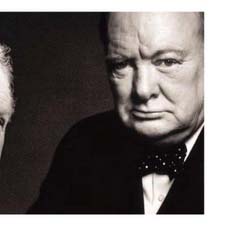

Gallery 23 • 4 Aug 2017 - 26 Aug 2017

The OS Map Fan Club

Helen Wood delivers a bizarre, amiable love letter to the ordnance survey in The OS Map Fan Club. She is a companionable host, leading us through a virtual romp through the English countryside using her beloved map. This set-up conjures up visions of a choose-your-own-adventure, however the show’s structure is more haphazard than that, with facts about the OS Map interspersed with anecdotes about her own childhood.The writing is hit-and-miss but Wood does know how to deliver a joke well. However, she sometimes falters in her delivery and doesn’t have the most natural stage presence. Wood sets up a nice atmosphere for the crowd, and you settle into the show, feeling as though there should be a flask of tea in hand. The stage has a very pleasing set up that, while, feeling a bit DIY, doesn’t seem cheap, with a huge print-out of the OS map and pictures mounted for the audience to see. Unfortunately, some moments within the show felt like they were there to fill time. An uncomfortable section with some uninspired characterisation as part of the history of the OS map failed to get the desired laughs, tales from her own life are dropped into the script without any rhyme or reason and a bemusing moment of patriotic poetry loses the audience. It’s fair to say if you’re as enthralled by the ordnance survey map as Helen Woods, this show will be far more enjoyable and you will get references that will go over the head of the average punter. As someone with brief OS experience there were times when I was interested in the lecture-like speech, but ultimately, this is perhaps a show for the specialist. Woods is a pleasant host but fails to hold the audience. The OS Map Fan Club is a nice way to begin your morning, however, and if you’re nostalgic for a time of analogue navigation, this is the show for you. 

theSpace @ Surgeons Hall • 4 Aug 2017 - 12 Aug 2017

Think Less, Feel More

Taking its title from critic Waldemar Januszczak’s rundown of the 2016 Abstract Expressionism exhibition at the Royal Academy – ‘there is not enough emotion in our art any more. We think too much and feel too little’ – Think Less, Feel More is a celebration of passion and energy in art.In her second solo exhibition, abstract painter Alice Boyle works on hardboard with layers of plaster to inspire feelings of petroglyphs on ancient caves, etching marks into the drying surface with tools, forging a sense of spontaneity and dynamism. Titles such as Resist Resisting and The Great Balancing Act reflect this, conjuring up images of movement and flow, tension and release. The paintings display broad, expressive brushstrokes in cold tones, highlighted with flashes of bright reds, pinks and oranges. Appearing in the specially adapted Edinburgh Ski Club building, the show is small and intimate, giving a sense of winter, while the warmer hues of the paintings bring forth a sense of hope and regeneration. The paintings having a hypnotic quality to them – simultaneously drawing the viewer in and providing a sense of freedom. This message comes in symbolic form through the painting’s composition. Patterns and repetitions which represent over-thinking are laid over a less busy background.Boyle suggests her artwork is about ‘the journey of learning about the spirit of the world and ourselves and accepting all the imperfections. I want people to feel there is joy and playfulness within my work and titles, which comes from enjoying the process’. This show most certainly highlights this and the feeling of delight within the paintings is infectious. I can’t help feeling the space somewhat limited Boyle – her paintings sometimes feel as though they were destined for a much grander scale, however this was clearly exchanged for a pleasing sense of intimacy within the rooms. 

Howe Street Arts • 4 Aug 2017 - 13 Aug 2017

Denim: World Tour

Denim, a drag Haus come girl band, are on tour and they’ve finally reached Wembley Arena (actually, the Belly Laugh at Underbelly). The queens – Glamrou, Crystal, Shirley, Elektra and Aphrodite – all have their own perfectly crafted identity and oversee a night of controlled chaos, mimicking girl-group conventions with fake fan mail, group numbers and the faux profundity of acoustic covers and political activism.The show opens with a Lady Gaga cover, which has the audience singing along immediately, and in the following hour the group cover almost everything in the ‘drag songbook’, with references from Whitney Houston to Chicago, but perfectly subverted to be unlike any drag performance you may have seen before. Not only do the queens play with our preconceptions of a girl group, but also of what a drag show should be, not just performing a parody of certain gender expectations but playing with clichés of what drag can be – they are ‘every woman’ but also maintain the idea that gender is a construct. This show is a prime example of contemporary drag, being more concerned with gender expression and showcasing true performance talent rather than ‘serving face’. Especial shout outs go to Glamrou for stand-up that wouldn’t seem out of place in a comedy club, and Crystal, who delivered hypnotically beautiful vocals. Each performance, however, left the audience transfixed and it’s fair to say each queen has showmanship abound.The absurdity of the World Tour conceit works well as the queens stagger around the small Belly Laugh stage. This summarises the success of the show – it is so self-aware, being clever and stupid in equal measure. While the fallacy of performing at Wembley is ridiculous, the group deliver the show with a level of such intensity to almost fool the audience and it’s telling that their few original songs do not sound out of place with the rest of the LGBTQ anthems they cover. The only moments where the audience were snapped out of their reverie were some slightly uncomfortable changeovers between the queens that weren’t explained, and an aerobics workout parody that, while amusing, lost the audience at times, perhaps due to an imbalance with the tech being too loud over the performer.Despite this, Denim does what a great drag should do: it subverts expectations. This Spice Girls-esque band is glamorous and intelligent, performing drag tropes in entirely new and creative ways, delivering show-stopping numbers and witty one liners again and again.

Underbelly, Cowgate • 3 Aug 2017 - 27 Aug 2017

Tom Mayhew: Fragile Fragments

Tom Mayhew’s charmingly awkward persona hides a fantastic alternative comic mind. This show is a 40-minute work in progress, working through the sadness of a dead relationship. The humour has a strong and unrelenting undercurrent of tragedy and rather than self-deprecating, the material appears to veer into the realm of self-loathing.Mayhew’s delivery is unlike many of the comics you’ll see at the fringe. He stands facing the wall, occasionally flashing nervous glances at the audience, however, his fantastic, unfaltering delivery displays an assured comic presence. The performance style is incredibly self-aware but many of the audience mistake the conceit for reality and heckle Mayhew – something he is more than capable of dealing with, tearing into the interruptions and ingratiating himself with the rest of the audience. He has the unusual skill of maintaining control over the room even without eye contact. The material consists mainly of one liners, at times surreal, at times observational, on topics ranging from sexuality to Top Cat. The show has an odd rhythm and momentum, though it’s fair to say this is intentional – Mayhew seems to enjoy catching the audience off-guard. At one point, he begins a two-minute section called ‘heckle Tom’, which throws the previously rowdy crowd and leads to hilariously positive heckles. At one point material on suicide loses the audience – despite the show having themes of depression and anxiety, the material on suicide seems rushed over for such intense subject matter.Appearing like the love child of Paul Foot and Simon Amstell, Mayhew delivers a very competent show, at times surreal, at times deeply personal. Calling himself ‘the stand-up comedy version of Eeyore’ seems apt – even a fairly uplifting ending gets drowned in his perpetual negativity. For some this may be a bemusing show, sometimes difficult to watch and tricky to empathise with Mayhew’s continuously pessimistic outlook, however his jokes are sharp, never predictable and consistently land. 

Just The Tonic at the Caves • 3 Aug 2017 - 27 Aug 2017

Laughing Stock

Laughing Stock are a sketch comedy foursome who incorporate live music, dance and mime to create a narrative-driven show with hysterical characters and a quick, witty script. Despite a few misses in the show, the sketches are, for the most part side-splittingly good.The show’s both strength and weakness is the mimes. All of the cast are brilliant physical comedians and employ the mimes well, however, there is one entirely mimed three-part sketch which falls flat and which seems almost joke-less until the very end. Despite this, the rest of the show is incredibly good, filled with clever one-liners, spot-on characterisation and an energy that is infectious. The cast have an incredibly ability to create faultlessly accurate sound effects for every mime using just a microphone. From sketches about all manner of subjects, from cowboys to Jane Austen, caravans to Magic Mike, there is something for everyone.It’s incredibly satisfying to find a sketch troupe where all are equally talented and work in such harmony. Each cast member shines through in their own way and bring something hilarious to the show. Despite the small stage, the show is set smartly, making use of microphones at the back of the stage to avoid over-crowding of the space. The whole show is quick, neat and well-directed, the only problem being mimes on the floor, which are difficult to see without tiered seating. The clever interweaving of all the supposedly unrelated sketches at the end is clever and satisfying, although placing a major reliance of this interconnectivity on the previously mentioned mime sketch seems ill-advised.Laughing Stock is a riotous hour of high-octane comedy, clever and silly in equal measure and performed by a supremely talented cast. 

Underbelly, Cowgate • 3 Aug 2017 - 27 Aug 2017

Matt Forde: A Show Hastily Rewritten in Light of Recent Events – Again!

Matt Forde is a consummate professional, with sharp observations and confident crowd work, it’s just a shame this show lacks the biting satire expected from political comedy at the fringe.The USP of this show is the haste of the writing and as such the majority of the show centres around the general election. However, in comedy terms, this was a fairly long time ago, and while to the average punter these jokes may seem fresh, a comedy fan won’t find much new in the show. The jokes are, however, strong, well delivered and stand alongside some incredible impressions of current politicians. It’s clear that Forde is careful to be politically neutral, but without any actual perspective or insight, the whole show comes across a bit benign. Addressing each major political party in equal measure, no-one is safe, but on-one’s in any particular danger either. The only party specifically attacked in any way seems to be UKIP, and only once Forde has checked no UKIP supporters are in the room.This may be a refreshing tone for those who are sick of the biased political commentator. Forde certainly seems to be appealing to the older, centrist voter, scoffing at the ‘youth’ and getting big laughs from the audience in response. This is bound to alienate younger viewers, who’re surely part of his Unspun with Matt Forde demographic.Later on in the show, Forde calls for more ‘truth’ in politics and an attitude change on taxation and it’s uplifting to hear him finally talk passionately, give his own personal opinions and convey his political awareness. The show ends with some up-to-the-minute material about Trump and North Korea and while the fringe is infested with Trump impressions, it’s fair to say Forde’s rises above the rest.Forde delivers great jokes with a slick, smooth delivery but doesn’t seem to be bringing anything new to the political debate. With such an important platform as a political satirist, it seems a shame that Forde relies on lazy political stereotyping, reinforcing all the ideas the audience enter with. 

Pleasance Courtyard • 2 Aug 2017 - 27 Aug 2017

Ed Night: Anthem for Doomed Youth

Anthem for Doomed Youth is the hilarious new debut hour from Ed Night. The unassuming figure of Night hides an intimidatingly sharp comedic mind, who’s not afraid to do low-brow humour in an intelligent way.Night’s material often feels like the standard stand-up repertoire – he begins with tales of singledom and the struggles of dating, but doesn’t fall into any the trap of telling predictable jokes. His script is blisteringly quick fire and jam-packed with jokes, fearlessly filthy but intelligent and his persona is relaxed but engaging. A natural on stage, it’s hard to believe the comedian is only 21, especially with his political insight which manages to never feel preachy. While this political material perhaps doesn’t contain particularly new observations to his generation, his fantastic delivery and angry logic could turn even the most anti-millennial baby boomer, while leaving space for nuance. Unlike some political comics, he doesn’t leave sections joke-less for too long and there aren’t any uncomfortable silences. There is one bizarre moment where he begins to lose the audience by ill-advisedly bringing up Charlie Gard, but gets them back on side almost immediately. Indeed, in some darker or more controversial sections he does an excellent job of making the audience feel like they are allowed to laugh without explicitly saying so.It’s clear that Night enjoys making the audience question themselves and feel a little uncomfortable. He toes the line between intellectual and accessible perfectly, giving his unique opinions on relatable subjects – a stand-out moment is his material on reality TV. The whole show is pleasingly self-aware and manages to avoid the holier-than-thou attitude these shows can generate. The set has brilliant pacing and momentum and is over far too soon.Night is wise beyond his years, which, combined with his brash, youthful humour results in a thoroughly entertaining and thought-provoking show. 

Pleasance Courtyard • 2 Aug 2017 - 28 Aug 2017

Josh Pugh: A Boy Named Pugh

Having recently won English Comedian of the Year, Josh Pugh has the air of a rising star. He’s confident but not cocky, immediately likeable, and a natural on stage. He introduces his show as a mission to get his life made into a film. This promises a lot but isn’t a premise which is stuck with through the whole show, being picked up briefly mid-way through and again at the very end.The show’s strength lies in some excellent writing throughout. The performance is filled with whimsy and Pugh’s on-stage persona has a charming awkwardness. There are some fantastically clever one liners and while he warns that his comedy is ‘a little bit weird’, it is fairly accessible for all, with moments of surreality being pleasantly amusing rather than ostracising for the audience. In the beginning however, some set-ups lack payoff and it feels as though the comedian is in a battle against the stifling heat of the room for the audience’s attention. Repeated improvisation of one-liners doesn’t appear to be massively successful, but it’s nice to see Pugh laughing at his own mistakes and not taking himself too seriously.Going into the second half of the set, however, Pugh seems to get into his stride with some really good use of call-backs and a strong section about his new-found ability to stick up for himself, which he unfortunately immediately undermines by telling the audience it isn’t strong enough material for the show. It’s unfortunate that Pugh feels this self-deprecation is necessary as his material is undoubtedly strong enough without it. This also disrupts the momentum and rhythm which is strong until this point.A Boy Named Pugh is a great show, with a fantastic script and jokes that keep on coming, it’s just a shame that the narrative hinted at initially is not really delivered. However, Pugh has a winning persona and jokes to match and will surely have an excellent run this Fringe. 

Pleasance Courtyard • 2 Aug 2017 - 28 Aug 2017

David Correos and Matt Stellingwerf: Chaos and Order

This show is a mixed bag. As the title suggests, the reasoning for these two comics coming together is one’s discipline and control contrasting with the other’s lack thereof. While this works to a certain extent, Stellingwerf, a four-time New Zealand Comedy Guild Award Winner, is certainly a comic with strong jokes, but doesn’t seem particularly ‘ordered’. If there is an ‘order’ to be interpreted, it’s only in comparison with the bizarre second act. Stellingwerf enters first, quick to warm up the audience and showing his ease and confidence by calling out a rude audience member with their feet on the stage. His crowd work is excellent and produces big laughs in the small room. His strongest material comes from his background as a criminologist, giving him a unique perspective on the dark subject matter of death row. His set builds in strength, with some hilarious material on homeopathy nearer the end. Unfortunately, it seems his time is over far too soon and he introduces his partner, the ‘tarpaulin comedian’, David Correos.Compared to Stellingwerf’s assured presence on stage, Correos’ entrance is a bit of a departure. He throws out some lukewarm jokes, laughing hysterically at his own wit and seems thrown when he doesn’t receive the appropriate reaction. His energy is infectious but without much payoff. His impressions of emojis don’t get much of a reaction and his annoyance is clear. Strange physical comedy becomes more a shock tactic than a joke and at one point he eats an egg, shell and all, before yelling ‘WHY?!’ at the audience. Exactly – why? All these bizarre moments are interspersed with some decent observational comedy, which creates an odd rhythm but serves as some respite.Alternative comics have been celebrating the joy of stupidity and silliness for years, and fantastically so. However, these comedians often have some reasoning and wit behind their material. Correos doesn’t even come across particularly likeable on stage. He ends with some relatively strong material about his circumcision and claims that however the audience feel about his set, we’ll remember him, which ultimately seems his reasoning for the entire show.Chaos and Order doesn’t quite know what it wants to be. The theme is not brilliantly executed and despite Stellingwerf’s great opening set, I was left wondering when the show was going to end. 

Gilded Balloon Teviot • 2 Aug 2017 - 28 Aug 2017

Sara Schaefer: Little White Box

Before even starting the show, Sara Schaefer has the advantage of a unique perspective. Brought up in the Bible Belt of America and being sent to Christian Camp every year, she has an outlook that is both interesting and hilarious to the British viewer. However, it’s a shame she isn’t quite prepared for the rhythm of an Edinburgh crowd.The show begins reservedly, with Schaefer coming onto stage to no music, with little energy and an almost deadpan persona. Her initial crowd work feels slightly unenthused and leaves the room lukewarm. She seems at total ease on stage, however, and as soon as she starts some material about screams, which breaks the mono-tone, the variation begins to match the quality of the material and a great show begins. Her cynical observations and hilarious stories, ranging from clowns to crafting, are a winning combination when paired with fearless over-sharing and fantastic characterisation. There are however points where the joke continues past the point of the punchline and Schaefer leaves the silence hanging, clearly comfortable with the quiet but perhaps making the audience nervous. This, combined with a hit and miss ability to explain American references that may be lost on the audience leads to some awkward pauses and Schaefer becoming noticeably frustrated.The show does build to a brilliant climax with hysterical pay-off. It feels at times with this later, more sensitive material, however, that the audience are looking for the reassurance that it’s okay to laugh – a message which never came.Schaefer is undoubtedly a talented comic with plenty of incredulous stories to share. Hopefully as her run continues she’ll find a way of communicating better to a different crowd but until then, this is still a great show from a promising comedic mind. 

Pleasance Courtyard • 2 Aug 2017 - 28 Aug 2017

Brendon Burns and Craig Quartermaine in Race Off

Burns and Quartermaine are the yin and yang of righteous anger. Burns’ classic acerbic delivery and manic stage persona is balanced out by the calmer presence of the comparatively new comic, Quartermaine. This makes them a fantastic double act with a riotous dynamic, through which they deliver a hysterical and thought-provoking show which contextualises the relationship between white and indigenous people in Australia.Both from around Perth, but with vastly different backgrounds and perspectives, the show, while intense, has the pleasing air of two mates having a chat. Throughout much of the show, there is a work-in-progress feeling, as they interrupt and improvise around one another, while simultaneously being perfectly structured and paced. The two comics take snipes at each other, then step back to let each other take centre stage. The pair say they’re ‘celebrating awkwardness’ in their show and it’s clear that they revel in challenging the audience’s privilege and creating tension.The show contains a number of anecdotes from the two comics’ work in Burn’s podcast Dumb White Guy, in which he tries to interview people of different ethnicities, genders and sexualities to himself. Their incredible self-awareness, specifically in Burns’ readiness for self-critique, demonstrates the importance of admitting ingrained social prejudice. The perpetual feeling of white guilt in the room is palpable and Burns teases the crowd incessantly. Any potential true discomfort is alleviated, however, by the air of control the seasoned professionals exude.It may be the case that at an international festival, some of the debates brought up will be familiar to audience members, but to many, this show will provoke a lot of inner questioning, while forcing you to double-over with laughter. Despite some technical faults, Race Off is a fantastic show – provocative and hilarious.

Gilded Balloon Teviot • 2 Aug 2017 - 28 Aug 2017

Deadpan Theatre: Third Wheel

Following the untimely death of their friend Dylan, Polly and Eve are fulfilling his final wishes by travelling around the UK with his ashes in a Wizard Of Oz lunchbox. Narrated by live songs with simple music and witty lyrics, the story tells a tale of loss, both in life and love, but balances what could be a tragic story with a side-splitting script delivered with exquisite comic timing. Third Wheel also deals with the realities of working in a creative industry, including unemployment and the fear of ‘starting over’.Written by Deadpan Theatre’s Eliot Salt and Jude Mack, who double as leading ladies, the show’s script is its clear strength, however it also benefits from an exciting use of the venue’s available tech, harnessing video footage and montage to move the plot along. Mack and Salt are supported by a fantastic cast in multirole parts, with hilarious characterisation throughout. Harry Trevaldwyn deserves special mention for his hysterical performance as the deceased friend who narrates the pair’s travels. Tragedy and humour are comfortable bedfellows in this show, prompting tears and belly-laughs in equal measure.Despite sharp direction, there’s some choreography within the show which feels overly complex and perhaps doesn’t quite set the scene as well as was hoped, but overall the movement is useful in separating the flashbacks from the plot. The show is slick and paced well with scenes kept fairly short and never feeling lingered-over.While offering some slightly predictable plot points, an unexplained relationship and a road-trip with locations which seem to have been pulled out of a hat at times, Third Wheel is a very strong show and an absolute joy to watch. The entire cast appear to be having the time of their lives and their love of performance is infectious. The show provides comedy, drama and tension expertly and is acted fantastically, with a script that delivers on jokes again and again.

Gilded Balloon Teviot • 2 Aug 2017 - 27 Aug 2017

Kafka and Son

At the age of 36, Franz Kafka sat down to write a letter to his father that would never be sent. Kafka and Son is the dramatic adaptation of this letter, which details the father’s tyrannical behaviour and the effect it had on Kafka’s mental state. Alon Nashman is both the performer of this one man show and it’s creator, and gives a sublime performance as the anxious, paranoid Kafka. It’s clear Nashman is hugely passionate about the subject, having performed the production for over a decade.The show is perfectly staged in Bunker One at the Pleasance, performed on a thrust stage with the audience looking in on the actor, set-up with a cage and wire mesh bed frame, no doubt symbolic of a lack of comfort in the domestic setting. There is a lot of symbolism within the show, which may be lost on audience members that aren’t as avid about the subject as Nashman. Black feathers lie strewn across the stage midway through the performance and it can only be assumed that this is a reference to the loose translation of the word ‘Kafka’ to the Czech word meaning ‘jackdaw’. Nevertheless, while being confusing at times, the set cultivates an incredible atmosphere of claustrophobia and isolation, mirroring the themes of Kafka’s own work.Keeping Nashman’s own Canadian accent seems an odd creative choice, especially considering what seem to be a staunch authenticity in other areas such as the soundtrack, which is used to transition between scenes. This doesn’t have much of an effect on the performance, however there are moments where the character of Kafka’s father slipped briefly from the oppressive and genuinely terrifying presence into something of a caricature.The show is structured excellently and Nashman holds the audience in the palm of his hand, however moments of poetic dance and movement may leave some bemused. The show does, however, have universal appeal in terms of the basic plot. Those knowing nothing of Kafka will nonetheless be provided with an hour accurately dramatising the realities of an abusive relationship between father and son and the mental contortions this puts the victim through – such is the brilliance of Nashman’s performance. There are moments where some of the creative direction seems a little heavy handed, with Nashman attempting to dance within the restrictions of a cage being an obvious interpretation of caged creativity. There are also points where I begin to doubt the point to which Kafka’s mental state seems to have been extrapolated.Kafka and Son is not an easy watch, however, it is intense, intimate, moving and unmissable if you’re a fan of the author’s work. The show gives an insight into his writing that perhaps may not have been considered, while being performed powerfully well.

Pleasance Courtyard • 2 Aug 2017 - 27 Aug 2017

Hurricane Katie

Funny Women’s ‘One to Watch, 2016’ bustles, belts and lunges her way through Hurricane Katie with showmanship and boundless energy. Greeting the audience by handing out sweets in a bright red homemade boiler suit and pumping out AC/DC, this introduction, like the show, feels like a paint-by-numbers of how to get an audience on side. Energy and personality carry the show, which starts off strong, but by the end, the shtick gets old.Charmingly childlike, Katie Pritchard is certainly refreshing. The comedy circuit is, for better or worse, saturated with comics trying say very important things about themselves and the world around them and Hurricane Katie is the very antithesis of this. The show is hugely fun – parodies of Disney songs, Shirley Bassey and Kate Bush impressions are certainly the highlight. The show lacks structure however; Pritchard flits from topic to topic without rhyme or reason. At various points early on in the show I find myself thinking ‘why?’, for my mind to respond ‘for simple, joyous, self-indulgent silliness. And that’s okay’. It’s nice to find a comic who seems to live and breathe entertainment.It’s unfortunate however, in a comedy show, to be more impressed by the performer’s vocal talents than the jokes themselves. Some punch lines need to be worked on and while generally the parodies were well-written and excellently executed, some feel like an afterthought and with one long build-up ending in an unoriginal pun I begin to find the songs a little tiring. Having built up expectations in the first half, the second is less inspired and Pritchard loses the audience mid-way through with a five minute song about vampires that was comparatively light on jokes. The final number about lettuce is, however, inventive and hilarious. Similarly, the joke of doing something badly, purposefully and with an air of misplaced confidence gets stale and Pritchard’s pseudo profundity, while initially entertaining began to feel overused. When nothing new is delivered, the show feels like an actor trying to do alternative comedy – many alternative comics often have an edge to them which holds the audience even in the more surreal or bemusing moments and unfortunately it seems Pritchard lacks this and problems with momentum make the show difficult to stay engaged with until the very end. Katie Pritchard is clearly a talented performer, whose vocal abilities shine through and whose performance boasted some show-stopping numbers. However, the show itself needs some structure and focus to keep the audience rapt and perhaps it’s necessary for moments of solemnity to provide balance against the undeniable force of Hurricane Katie.  

Parliament Street • 31 Jul 2017

Laughter Is The Best Placebo

Having been on the circuit for 6 years and with an impressive CV of competition finals, I went into Simon Caine’s second solo hour show with high expectations. The show is introduced as an exploration into whether comedy has made Caine’s life better or worse and his self-deprecating stage persona is immediately clear and well-realised. Subjects flit from Tesco to penguins with ease, however it’s a shame he loses confidence in the audience so quickly.It’s a stand-up’s worst nightmare to have a small audience spread out between several rows – you’re not told to ‘move to the front’ in comedy shows out of spite, it’s for the sake of the show itself – and I sympathise with Caine, faced with this type of crowd. Unfortunately, it seems to be the case that he lets this get the better of him and the humour relies on improvised tangents to the audience rather than the material itself. Initially flummoxed by the lukewarm response to some references to stand-up performance, which would be peppered throughout the show, Caine seems like he’s lost the audience. Throughout the first half punchlines seem to have been stopped short leading to set-ups with unrewarding climaxes. The audience interaction became almost bitter. Caine interrupts his own flow, losing any momentum and grip on the audience. This is perhaps an unfair show to judge a clearly talented comedian on. His knack for storytelling is obvious and there are some fantastic one liners and eccentric turns of phrase. As the show moves along, with some encouragement from Caine, the audience gains confidence in his self-deprecating persona and begin to revel in Caine’s snipes at the crowd, cheering at his put-downs and his apparent bemusement at our sudden change of heart. He is able to pick up on running jokes from his initial interaction with the crowd and cultivates a more friendly atmosphere. The strength of the show in my eyes lies in the more surreal moments and use of physicality - he’s a man born for the stage who seems at total ease throughout the show, despite his initial negative manner.Despite unfortunate beginnings, Simon Caine is clearly a talented comic who had will surely have a good run with this show. His paranoid persona is immediately entertaining, and his tales of irrational exaggeration are simultaneously relatable and have enough levels of a separation to be bizarre and enjoyable. However, some work on showmanship is perhaps required to ingratiate himself to the audience early on. 

The Shed • 31 Jul 2017

The Slightly Fat Show

The Slightly Fat Show harkens back to the Golden Age of variety performance, updated for a twenty-first century audience. Featuring six of the troupe of seven’s regular performers, the show boasts variety, cabaret, comedy and circus acts and while celebrating everything old-school it maintains accessibility for all ages.The anarchic troupe explode onto stage, led by the compère Goronwy Thom, a ‘slightly fat’ Aled Jones (a joke the cast are not unaware of) but with the avuncular nature of Stephen Fry. This highlights the true success of the show – the immediate air of comfort and familiarity invoked by the cast, who all have excellent showmanship and outstanding audience interaction. The convivial atmosphere also means that mishaps and mistakes, which might normally make an audience tense, no longer seem to matter, in fact both the cast and audience seem to revel in them. From magic and illusion to silly stunts, nothing is predictable and the cast delight in the controlled chaos they’ve created. The props and the costumes have the charming impression of the homemade and DIY, balanced with the sense that the show is in the hands of seasoned professionals. It’s apparent from the off that the audience are watching six friends having fun doing what they do best and there’s a warmth to their performance which is contagious. There’s perfect pacing to the show. More surreal or touching moments are intertwined with the unruly acrobatics and eccentric characterisation. Each cast member has a well-differentiated character which helps the audience feel familiar with the individual performers. If you don’t like audience interaction you’re at risk as soon as you step in the door, but definitely don’t sit on the front row… or turn up late or text or dare to have a beard in the case of Tuesday’s show. However, every audience interaction feels in good humour and it’s clear the performers do their best to make anyone on stage as comfortable as possible. Seventy-five minutes pass far too quickly but in that time you will be thoroughly entertained with tricks bigger and better than you’ve ever seen before, performed by some guys you’d like to head to the pub with afterwards but who clearly live and breathe variety performance.

The White Rose Rotunda • 31 Jul 2017 - 4 Aug 2017

Accidents Happen to Sasha Ellen

Few people can turn the (vividly graphic) tale of a dead rabbit into stand-up, but Sasha Ellen is somebody who’s learned the hard way to take life’s hurdles with an incontrovertible sense of humour. There’s a skill to laughing at your own misfortune, a kind of reflexive schadenfreude, and Ellen’s well-versed in poking fun at her own accidents.Ellen’s material mines an already frequented well for stand-ups, touching on the fears of becoming an adult, the shame of her degree choice and the terrifying prospect of having planned one’s life out for the next five years. The subjects may be rote, but Ellen has a gift for storytelling which freshens a potentially stale narrative. An ability to flash forward and back throughout the meat of the show allows her Ellen to deal out witty asides and dwell on the truly bizarre minutiae of her childhood years and family ties. This same storytelling technique can bog down punch lines in too much preamble however. Whereas there are some truly stellar one-liners, a few too many similes fall on the wrong side of whimsical and feel like unnecessary filler in what’s a genuinely engaging show. Ellen has mastered a double-take which shows her keen sense of comic timing, although some of her throwaway gags have that bit too much weight behind them leading to a sense of anticlimax come the punch line.Ellen’s patter is well-paced, and she throws in narrative twists which make her set shine. It might be accidents that land Ellen in so many of the crises on which her show’s built, but their transformation into an endearing performance full of heart isn’t just by chance. 

The Shed • 24 Jul 2017

Jack Left Town: The Improvised Rock Documentary

An improvised rock documentary is a tall order, and Jack Left Town sets out with boundless enthusiasm, a strong absurdity curve and sick air guitar to deliver, even if some areas are a little over thought.Following the style of a long form Harold structure, the show’s opening monologue is presented in the style of a band interview, intertwining vox pops effortlessly. It’s an original touch which immerses the show in its premise and sets the Jack Left Town team apart from other long form troupes. For all the carefully considered structural signposts, there is an instance which questions whether these methods could limit the freedom of improvisation. The show’s midpoint sees a producers’ meeting address the show’s main plot points, which whilst an interesting sequence feels equally like an opportunity to take a breath from the Harold itself. Weighing in on the opening monologue prompts serves as a double-edged sword: it’s a cheeky wink past the fourth wall to check that everyone’s been paying attention, but turns a spotlight on whatever the troupe has forgotten. Today’s was a highly entertaining show, but on a quieter night with less in the way of prompts, the sequence could play to the detriment of the troupe.As a group, each performer brings a different dynamic, which results in a vibrant and diverse bunch of characters. Chazz Redhead is the standout performer, delivering a vast array of appearances to keep the storyline peppy and engaging. He even aces a turn as a mafiosa fridge freezer in a sequence which shows the group aren’t afraid to take on bizarre scenes. There are a few instances of blocking and mixed continuity, but the second set of interview monologues helps to trim up any inconsistencies. And at 45 minutes, the pacing feels smooth with some especially slick moments of mime. Jack Left Town is definitely worth seeing live, even if I’m not going to buy the album.

Laughing Horse @ Caroline of Brunswick • 28 May 2017 - 29 May 2017

Planet Earth III

David Attenborough meets clowning in this low-budget romp through the Earth’s depleted natural world. Planet Earth III is the BBC’s next nature documentary series, and even a complete lack of animals in this dystopic 2017 can’t stop them. Cue Luke Rollason, interning with the BBC’s sound and visual effects department, who must bring these creatures to life.Relying on only desk stationery and an overhead projector, Rollason creates charming clowning with a minimalist feel. That’s not to say the show takes itself too seriously: a simple hand movement becomes a romantic tragedy of Looney Tunes proportions. Rollason transitions smoothly between sequences and animals with the help of narration from “Attenborough”. It’s a decent impersonation peppered with jokes, yet the focus is always on Rollason. He’s a keen and talented performer whose constant bafflement with the task given to him establishes an endearing persona. Audience interaction is irreverent and silly, without bordering on awkwardness.Pacing seems to be a slight issue, with Rollason half-jokingly referencing the time a few times throughout the show. An initial sequence with an angler fish feels a little overlong, but later the show falls into an even stride so it’s only a minor teething issue. A wide variety of animals are on display, a testament to Rollason’s physicality as he becomes sloths, hummingbirds and antelopes with the slightest of movements. The show isn’t without a sting in the tail, and we are forced to face our own hand in the destruction of nature. It’s not pretty, and it’s hard not to feel a tugging at the heartstring as Rollason reveals the fate of our now-depleted natural world. The tone turns dark but retains its levity, instead leaving the audience on a light note with some impromptu mime. Rollason’s enthusiasm is infectious and the result is a hilariously fun hour of clowning around with the best of nature’s weirdos.

The Warren: Studio 3 • 27 May 2017 - 29 May 2017

Beardyman: One Album Per Hour

Starting a show with a song containing the lyrics “it’s a stupid idea and it’ll never work” feels somewhat disingenuous when the song’s fully orchestrated and lit. Nonetheless, Beardyman (Darren Foreman) doesn’t disappoint when it comes to his incredible ability to conjure up new tracks on the spot. One Album Per Hour does exactly what it says on the tin: using suggestion cards filled in by the audience before the show, Beardyman selects titles and works his magic over a range of genres in the best incarnation of a one-man band possible.Beardyman rattles through song titles rapidly, his perceptive skill when it comes to music whittling down options to titles which inspire the most imagination for his musical talents. Whilst it may offput the improvised premise of the show to throw away suggested song titles, it’s understandable that throughout the run there may have been repeat title suggestions or the occasional obscenity – a mind block to improvisers everywhere. The latter option is less likely, given how unapologetic Beardyman is as a performer. Not afraid to berate his crowd’s contributions, Beardyman’s angered persona might not be for everybody- though his ability to create music seamlessly out of live-beatboxing is sure to impress anyone in attendance.The genre range is extraordinary, with disco anthem My Dog Is Definitely Gay now creating a massive chasm in any nightclub set due to its one-time play. That’s the ultimate downside to Beardyman, really: there are no ways to repeat any of the bangers on display tonight. Beardyman implies a strong preference of drum and bass, which emerges at the end of the night along with a chance to get up and really rave along with full abandon. It’s hard in a large seated venue but it’s impossible not to feel yourself bobbing throughout the show. If hard-core rhythms and the occasional tribute to Jean-Michel Jarre are your bag, Beardyman is well worth a listen. 

Pleasance Courtyard • 18 Aug 2016 - 24 Aug 2016

Our Man

Anybody who finds themselves rooting for a couple in a film or show will love the responsibility handed out by Ae-Ja Kim in Our Man. Brought to Edinburgh as a domestic trial, two wives battle it out for their husband's affection: desperate not to offend (and too fickle to choose), the husband invites the audience to cast their judgement and decide on a woman in the space of seventy-five minutes.Using physical theatre to bridge the gaps in translation is a neat touch which neatly conveys the marital conflicts at play. The three performers are charismatic and fully-formed before they even speak, jostling one another and pleading their case wordlessly to the audience. The parallels are clearly drawn and easy to understand: the teenage sweetheart represents North Korea, the younger wife, South Korea. Interestingly, there's a deliberate ambiguity attached to their rivalry when viewed by the husband: he hopes for unity, rather than casting a strong predilection toward one of his two options. It's a safe path, not to offer criticism of either of the two countries: the play is more a domestic than a political drama, although the fact that it dances around these themes without tackling them face-on does feel like the play hasn't quite unlocked its full potential. Instead, the drama takes a pacifistic stance through an excellent military mime sequence. Made all the more chilling by its immediate enjambment with a moving marital scene, we see how families are formed in North Korea on rocky foundations, the threat of war hanging like a shadow over the country.The performers are more than happy to interact with the audience, which makes the domestic battle all the more personal. We’re brought into the wives’ battling to stand-in for their children, or even (in my case) chosen as the alternative third wife for the escapist husband. For Our Man, the fourth wall has never been in place; it was around our feet, pulling us into the action. Whilst the audience do have this personal involvement, it was hard to distance myself from the fact that the decision we had to make is larger than a domestic one. For every snippet of backstory, we still only have the selected moments of each relationship: Ae-ja Kim invites direct involvement, though for all we knew she could have as little influence over the runaway husband as we did. To the average Fringe-goer, the longer duration might look overlong among a sea of the usual 60-minute fare. However, it should by no means be overlooked: the plot unfolds like a good book, and left me wanting to know more about the intricate relationships created. The fact that we only scratch the surface of the two wives' motivations is frustrating when there is time left at the end of the performance for a Q-and-A session; then again, it does capture the irritation at unfinished business. For us, the romance story full of blanks; for our performers, the promise of a unified Korea.

C venues - C nova • 5 Aug 2016 - 9 Aug 2016

Gabriel Ebulue: Hip-Punk

What’s your favourite music album? It’s something that not everybody puts a lot of thought into, but for Gabriel Ebulue it’s a make-or-break situation when making a first impression. Self-confessed music snob Ebulue talks about how his taste in music made him the man we see on stage today in a free show which is easy-going and offers a few good laughs.Ebulue as a comedian is gentle on first impression, although his snap judgements on people’s choice of hip-hop and favourite Beatle (according to Ebulue there is a correct answer for both questions) reveal there’s a potential for more viciousness on stage than Ebulue is showcasing. His audience interaction is a little bumpy, showing he doesn’t have complete control over the crowd. That said, Ebulue is quick to right himself when his material derails a little to deal with an audience member who prefers modern hip-hop- there’s a nice sense of structure throughout which holds the show together.In terms of punchlines, Ebulue signposts his material in such a way that it’s not too difficult to see where the joke is headed. Touching on topics of music subgenres, race and marriage there are the odd jokes which are predictable by virtue of being focussed on the topics themselves as opposed to a lack of skill in Ebulue’s delivery, though a few punchlines have me wondering why Ebulue doesn’t further his line of thought for a more satisfying conclusion. Nonetheless, it’s an engaging show for the evening on the free fringe, and one which produces some genuinely laugh-out-loud moments when Ebulue’s material really follows through. 

Heroes @ Dragonfly • 4 Aug 2016 - 28 Aug 2016

Bourgeois & Maurice: How to Save the World Without Really Trying

2016’s been a bit of a bumpy year to say the least so, it was only a matter of time before we started receiving advice from extra-terrestrials. Stepping out from a substantial amount of smoke looking like the love children of a drag queen and Ab Fab’s Patsy Stone, the Bourgeois and Maurice present an hour of cabaret with an edge that’s perfect for the clicktivists of the world.Georgeois Bourgeois is our host for the evening, with Maurice Maurice taking a seat behind the piano and providing a range of musical numbers throughout the show. Bourgeois is a natural crowd-pleaser with some easy digs at politicians and eyelashes that touch the ceiling. His effervescent personality clashes just right with Maurice’s robotic disdain for everybody around her. The show takes on a traditional cabaret theme only to have the party crashed by a Facetime from some familiar figures. Having this element of interaction gives the duo the opportunity to play off one another as well as signalling breaks between songs. The songs on offer this evening vary in a range of genres: from techno to ballad, each suit the theme of the lyrics and provide a fabulous atmosphere even if they’re admittedly not too tightly linked to the show’s overall world-saving theme.There’s a very millennial vibe to Bourgeois and Maurice. That’s not a bad thing, of course they are reaching out to the generation that is statistically least satisfied when it comes to jobs, debt and having their say represented. The show ties up the problems of our generation in a neat little package: there’s anger hidden by a veneer of apathy, especially when it comes to Maurice and her solo number. Quick to accelerate, her take on feminism comes to a brilliant conclusion once Bourgeois joins the stage again. Their tongue-in-cheek reconciliation shows that the duo aren’t afraid to point out any inconsistencies in their ideological viewpoint, and do so with a cheeky wink to the audience.Whether this show will reach out to a wider audience is unclear, but if you’re willing to take a trip into unknown territories you’ll find that this pair certainly deliver on catchy tunes and fabulous outfits, which is enough to save the world from doom and gloom for one evening.

Underbelly, Cowgate • 4 Aug 2016 - 28 Aug 2016

Scarlet SoHandsome and Fiends

For a drag queen, Scarlet SoHandsome is a real sweetie. Maybe it’s because she prefers the term “drag princess”, but SoHandsome’s persona is a far cry from those trouble-stirring shady bitches of RuPaul’s Drag Race infamy. Not to undersell her material, of course- she has some barbed comments up her lacy sleeves and a fabulously well-spoken purr to go with them, but the claws on this pussycat don’t come out until everybody’s comfortable.SoHandsome is a friendly and welcoming host, responding to all the range of characters in the audience. From chatting hometowns to flirting with the front row, she’s a delight. Granted, her structure doesn’t seem fully memorised and there are some moments where she’s prone to rambling, but her material is relatable enough to forgive those pauses in her flow.The night is a mixed bill affair, with tonight’s particular line up boasting Sean Morley and Amy Gledhill. Morley is fast becoming a staple of the alternative comedy scene in northern England, and has recently appeared in the BBC New Comedy Award. His work in the last year has improved drastically, securing Morley’s place among the up and coming talent of the surrealist genre. When half of the set is entirely based on introducing himself, Morley proves his talent to keep the audience’s attention during such a brilliant piece of anti-humour. Of course, this comes as a double-edged sword: Morley is bound not to be everybody’s cup of tea, but he defies the norm which definitely fits with this year’s Fringe manifesto.Amy Gledhill has a range of homegrown anecdotes around growing up in Hull, as well as some personal truths about her sexlife. Gledhill’s material dances around far more mainstream topics than Morley, and they contrast well here: SoHandsome has brought together a fairly broad range of acts for the night. The concept of mishearing a strong Hull accent sounds childish in theory, but in the room Gledhill’s infectious glee combines with the universal joy that comes with some good old-fashioned toilet humour. Gledhill’s confessionals are like catching up with a good friend. All in all, the night takes that similar tone: a relaxed environment with some great laughs to be had.

Just the Tonic at The Mash House • 4 Aug 2016 - 28 Aug 2016

Gillian Cosgriff: This is Why We Can't Have Nice Things

Gillian Cosgriff is an absolute sweetheart with the pipes of a jazz singer and a wicked sense of humour to match. Also, her hair is perfect. I’m in awe, and over the next hour this comedian doesn’t lose my attention once.The themes explored in This Is Why We Can’t Have Nice Things are insecurities you will have seen in plenty of solo offerings from 20- and 30-somethings. Cosgriff explores questions such as “what qualifies me as an adult?” and how to solve taxes, subjects which are common within the comedy sphere but are frequently talked about for a reason. Most of us have also grappled with social media and militant healthy eaters, but we don’t always hear about these misadventures against such a beautiful soundtrack. Having Cosgriff dive into each song with a voice which rolls over the audience like honey on frozen yoghurt makes the millennial experience feel fresh and new. Hidden within Cosgriff’s repertoire of catchy melodies are some slick pieces of wordplay and smooth rhymes- it’s so refreshing to see a musical comedian completely at ease behind the keyboard without having to rely on Disney parodies or raps about first world problems. Granted, there is a kind-of rap hidden in there, but it doesn’t feel like just another comedian you’ve seen already this week. Instead, the composition renews the topics Cosgriff sings about. The lyrics are very genuine: Cosgriff’s not interested in diving into issues like a shortage of chai latte- she’s afraid she can’t buy a house. This is a genuine woman with genuine goals- and a range of killer anecdotes to match.Between musical segments, we hear tamer references than in the songs- but they’re wrapped up with fully mapped out worlds. Cosgriff is a great storyteller as well as a ‘Great Procrastinator’- her commitment to characters make her show all the more relatable and have great pay-offs in the form of some great unexpected punchlines. Of course, there are songs which fit the staples of musical comedy. ‘Message Received At’ is reminiscent of Reformed Whores’ ‘Drunk Dial’, although Cosgriff takes the joke one step further which cements her place as an act who’s on the rise to join the big guys of the genre. I’m greatly looking forward to her next show – and in the meantime, off to play the soundtrack of This Is Why We Can’t Have Nice Things to all my friends.

Gilded Balloon Teviot • 4 Aug 2016 - 28 Aug 2016

Tony Law: A Law Undo His-elf What Welcome

Sometimes you wonder if you need the context of a previous comedian’s shows to really ‘get’ their most recent work. I’ve been a big fan of the Tonezone for the past five years and even I still find his personal brand of absurdist narrative pretty baffling. For example, Law opens his set with a dance number, followed by a monologue from a character whose voice allows him to say “semi-” in a funny voice. This is an act who really likes to mess with the stand up format.Law is a master of stream-of-consciousness, his rambling material dipping into anecdotes about a past trampolining career as well as the trailblazing convoy techniques Law has brought to the world as a time traveller. There are some one-liners in amongst the sheer bizarreness that floor me, others where if you blink you could miss half of the details Law is leaving dotted through his set-piece. It’s both engaging and irritatingly disorienting.Here’s where Law’s show takes an unexpected turn: the second half of the show feels far more structured. The split can be felt in a short mime segment (which is a fantastic interlude of silent comedy): from lighting cues to the way that each anecdote neatly segue ways into the next. Law here shows an intuitive sense of structure and natural narrative, especially when recounting his new purchase of a car. It marks a distinct movement away from a pure stream of thought, and the hit rate for jokes is far higher as a result. The change in style is tangible though, creating a disparate nature to the overall performance. Law has the stage presence to keep his audience’s faith during the ropier and more rambling segments of his show, although when we reach the more thoroughly scripted material it’s clear that this is the kind of performance Law is gravitating toward now. Newcomers to Law’s material may find the distinct shift in order fresh, or they could be left out in the cold by that first half hour. 

Assembly Hall • 4 Aug 2016 - 28 Aug 2016

JOAN

Too often Joan of Arc is depicted as a very quiet, very pure young woman who keeps her gaze firmly on her feet or to the Heavens: not very fun at all. Here, Joan is a gobby Midlands teen (France is bound to have a Midlands) who strikes up conversation with everyone and happily impersonates men: very fun indeed. Lucy J Skilbeck's new writing and directing project tackles the transition Joan undergoes as the divinely assigned leader of an army, putting a new spin on traditional coming of age stories.If seating presented intimately in the round doesn't hint at an informal protagonist, then Lucy Jane Parkinson’s portrayal of Joan certainly does. Her confidence isundercut by Joan’s constant expectation to see Saint Catherine in the audience, an unseen and unspoken part whose presence in the room is felt nonetheless. Regardless, it doesn't stop Joan from interacting with the audience at every turn. It primes the audience's involvement in the battle later in the performance; we're Joan's peers, soon to become her army.The cabaret seating also means that it shouldn't be no surprise that there are no less than four musical numbers in the show. Each corresponding with a persona Joan adopts: her dad is a no-nonsense chap who's been working on his karaoke, the Dauphin Charles VII becomes a sexually voracious Europop sensation and Pierre Cauchon croons about 'what's right and what's wrong / who doesn't belong'. Parkinson, victor of Drag Idol UK 2014, dons each persona effortlessly. It may confuse some audience members that a piece of theatre should have so many elements of cabaret, but then again this is a show about fluidity. If Joan's refusal to settle into the expectations of femininity were conducted within an entirely rigid theatre genre, it wouldn't have that element that makes Joan spark so much as a performance piece.Skilbeck's writing can become a little expository at times, as is the nature of relating historical events. However, the climax of the piece really hits out at the injustice behind the oppression of gender fluidity: forced to abandon her armour and threatened with her life, we watch Joan desperately try to fit into the cookie-cutter mould of being a woman. What starts as a comic sequence of audience interaction strips away to reveal Joan left as a shadow of her former self. No longer allowed to be a man, she is reduced once more to ‘little girl’ by the very monarch she crowned. It's supremely powerful, a scene with leaves a lump in your throat. Coupled with the uncertainty of Saint Catherine's unclaimed seat, we see Joan's faith falter: she's left naked and open to the world, whether that's accepted or not. This is a supreme show, and proof that we should accept the new - especially when it brings with it such fantastic talents as Parkinson and Skilbeck.

Underbelly, Cowgate • 4 Aug 2016 - 28 Aug 2016

An Act of Godley: Janey Godley

A status as Fringe favourite and a viral stint for her infamous “Trump is a cunt” sign at the businessman’s visit to the Trump Turnberry golf resort mean that Janey Godley’s reputation definitely precedes her. If you offend easily, Godley’s certainly not the comedian for you: an apologetic force with a filthy mouth and a skewed perspective on the world, Godley doesn’t invite conversation with her audience. Her stand up is a force of nature, sweeping you along with it - whether you’d like to or not.Godley has a great rhythm on stage and is comfortable mouthing off about any and every subject, even swinging the odd punch at her own family. She does this to good effect, although sometimes the structure doesn’t feel watertight. Godley moves between segments of her set fairly seamlessly, but the anecdotes themselves can feel a little overlong once the full extent of jokes has been reaped. There’s no strong overarching theme to Godley’s hour, which works very well for her but compared to several hundreds of stand ups who have crafted their material for a theme Godley’s show runs the risk of feeling mismatched.The uncontested highlight of Godley’s material is her experience protesting against Trump, a fantastic story which has some genuinely shocking moments. Godley’s delivery is matter-of-fact and perfectly suits the ridiculous extents to which the story escalates, pitting Scottish and American attitudes against one another to create a high hit rate on gags. This high return of jokes is fantastic, although it does overshadow some of Godley’s previous material from the hour. There are some excellent one-liners in here, but Godley’s style won't appeal to everyone – not that she’ll be fussed by that. 

Laughing Horse @ The Free Sisters • 4 Aug 2016 - 28 Aug 2016

Lewis Macleod is Not Himself

Lewis Macleod’s impersonation skills are unlike anything I’ve seen - though they are like plenty of things you will have heard. Macleod has been providing voiceovers for countless adverts, shows and films over the years. Now after years of standing behind the mic, he’s on the stage and showcasing his mimicry in an enjoyable if not tame show.Beginning with a showreel, Macleod provides the opportunity to explain some background into film production as well as starting the show on a suitably silly note. The Pathe film archives are combined with irreverent commentary- a little puerile, yes, but nonetheless upbeat and bound to raise some titters among the crowd. The overall feel to Macleod’s show is similar: whilst there’s nothing entirely new about any of Macleod’s material, he has a suitably charming stage presence so as not to be overshadowed by the plethora of celebrities he can impersonate.There are a few anecdotes from Macleod’s everyday life, from Scottish attitudes to self-help groups. However, a real highlight of the show sees Macleod explaining the psychology behind the voices used in advertisement. Riffing around these stereotypes that come in the form of subliminal messaging produces a nice piece of relatable comedy without having to rely on tired tropes. Macleod finishes his set with a bedtime story narrated in the style of several memorable figures who you’re bound to recognise easily. The humour is derived mainly from the recognition itself rather than any specific jokes, though Macleod follows through on his impressions with a flair for flailing whilst in character- a nifty touch that shows his material translate to physical comedy.Running a little short, it’s a show which yields a good few laughs, though Macleod’s material itself isn’t bound to stay with you beyond the duration of the performance.

Frankenstein Pub • 4 Aug 2016 - 21 Aug 2016

Beth Vyse: As Funny as Cancer

Beth Vyse’s show opens in a truly Fringe fashion: handing out ping pong balls to the audience, dressed in a voluminous blonde wig and a huge pair of joke-shop boobs, singing along to Dolly Parton. This is Vyse’s dream-world, a land where all her wishes have come true and a far cry from the reality of her hard-hitting one woman show. It’s a daunting opener which does jarr slightly with the tone of the performance overall, but it certainly gets the show’s penchant for the surreal across quickly.Propelled from her dream state, Vyse explodes onto the stage and transitions from her exaggerated dream-self to a far more down to earth performer. Vyse’s skills of storytelling are fine-tuned, as evidenced by her background as a performer for RSC. The anecdotes related by Vyse have a star quality without feeling like she’s bragging: instead here’s a life which has touched many others, and it’s truly interesting to hear how from a girl who hails from the smaller-than-life Stoke on Trent.At once homely and fantastical, Vyse uses some touches of surrealism to drag her audience members into the story she weaves. These segments of course rely on receptive members of the public to play along- we’re lucky today and treated to a smooth performance, and it’s great to see how Vyse is happy to ad-lib and accommodate her temporary co-performers. During one of these sections that Vyse drops the first of her bombshells in this show. Spoilers: here’s where cancer comes into the story.Vyse does well to handle an incredibly personal experience and convey it whilst still providing a funny take on the process behind tests, treatments and the endless staying power of her parents. The overwhelming tone of the piece is a peaceful one: Vyse has a distance from her experiences which stops the performance from feeling too raw, and the old formula of tragedy plus time comes into play to pitch her humour well. There’s a hopeful segment at the end of the show, after Vyse has taken us on a hell of an emotional rollercoaster. It’s certainly not laugh a minute, and the humour gets a little bizarre, but Vyse is well worth a watch as an endearing performer with an important story to tell. 

Gilded Balloon at the Counting House • 4 Aug 2016 - 28 Aug 2016

Ashley Storrie and Other Erotica

“I don’t want your opinions printed,” Ashley Storrie says to any potential reviewers in the audience. It’s pretty daunting to be addressed directly by the act, particularly as I’ve already committed to writing this. My apologies to Storrie, though for what it’s worth I was a fan of your take-no-prisoners style of confessional comedy.And Other Erotica touches on many of Storrie’s successes and failures of life: from her resting face to her sexual conquests, no stone is left unturned. Even in the pre-show audience interaction, Storrie’s more than happy to talk about whatever: I entered the room to the dulcet tones of Storrie advising which photos not to send to people on Grindr. Her observational material is nice and neat, with set pieces blending into one another. Storrie has a nice sense of structure in her show, whilst also being unafraid to riff on a particular anecdote or concept for a while. Yes, some jokes on her rivalry with incredibly preened women feels familiar, but her material on being the daughter of a Protestant and a Catholic in Glasgow has an excellent punch line which proves Storrie has something a little different to her contemporaries. There’s a boldness and unapologetic tone which is incredibly endearing. A risk when developing a show based around how dumb 50 Shades of Grey and other erotic novels sound is that Storrie could come off as childish in tone. If anything, the set seems a little cleaner and more sensible than it could be. Storrie’s short erotic stories make for neat interludes in her set, rather than the main focus of the show. They’re really funny though, and for that reason it seems a shame that we only get two of Storrie’s seductive tales. Storrie parodies the tropes of the genre with a cheeky suppressed smirk: with plenty of alternate names for the male anatomy, there’s a high hit rate which digs at the genre in a way that everybody can enjoy. I’d love to see more filth from Storrie, and look forward to her next foray into the industry of erotic literature.

Laughing Horse @ The Free Sisters • 4 Aug 2016 - 28 Aug 2016

Character Tålks

Pernilla Holland’s debut solo show is an ambitious but bumpy foray into character comedy. From a Norwegian Eurovision has-been to a church youth group leader, Holland adopts a range of personae and delivers short monologues from a range of perspectives. However, it’s not all that broad a range, and as the show goes on it becomes clear that whilst Holland has a very confident and assured presence on stage, the writing is not strong enough to hold up for the full 60 minutes.There’s nothing particularly original about any of the characters of Character Talks, especially when presented against the vast array of shows available in Edinburgh. Failed pop stars, unfulfilled office workers- most of these can be found in other shows at the Fringe this year and with a little more pizazz. It seems that Holland dances around the more tired tropes of each character without really riffing on something new. Holland’s aggressive career climber Celeste is realised with full commitment to a hyper-masculine body language, and engages with some useful audience interaction. She doesn’t really have many jokes, though. Instead, the character comes across as a dramatic monologue with the humour coming more from Celeste’s presence on the stage rather than the subject matter. The conclusion of this segment is fairly predictable, a punch line that seems familiar. That’s the problem that resonates again and again with Holland’s characters: they’re fairly believable (except for her clueless church group leader, who feels like an outdated caricature beyond an opener involving audience interaction and a lot of biscuits) but the hit rate for jokes is consistently low. It feels like Holland is quite isolated on the stage, and is more used to working alongside others than as a solo venture. She’s a good actor as well, just one whose characters need fleshing out more before being placed onto the stage independent of their surroundings. 

Just the Tonic at The Mash House • 4 Aug 2016 - 28 Aug 2016

A Sketchy History

Huddled underground in a nuclear bunker, Three Men in a Boot attempt to recreate history as best they can whilst staving off hunger (and potentially another Ice Age). It’s a nice, open premise which allows plenty of leeway to play with historical inaccuracies in this well-paced and gently humourous hour of sketch comedy.The cast play up well to their token characters, often relying on filling the same shoes as the sketches progress. Wesley Nelson plays the straight man very well, acting up to Jack Saturn’s fabulously exaggerated figures. Olly Jackson is happy to take on roles of authority, which contrasts nicely with his nervous on-stage persona in between skits. It’s clear that the performers are comfortable on stage with one another and their chemistry carries the show during any weaker sketches.Three Men in a Boot have a tendency to set up incredibly similar status structures in their sketches. Often we see a ruler (be it Emperor, Pharoah or Queen) in conversation with an advisor or second-in-command. Some of these sketches have a great pay-off, for example when revealing how exactly China deals with the Monguls, or a Tudor-based sketch allowing yet more over-the-top silliness from Saturn, they also run the risk of making scenes bleed into one another with not much variety in sketch structure. The nature of sketch comedy is always bound to be hit-and-miss, but this is a nice offering from Three Men in a Boot which neatly ties everything together with the overarching premise of the show. At their best and most conceptual we see sketches which are reminiscent of Blackadder for their enjoyable bickering and power plays; at their weakest we see cheap sex jokes and a celebrity impersonation which whilst recognisable isn’t really good enough to justify a second recurrence. Nonetheless, the overall feel is a show that’s polished and shows good potential from its performers. 

Just the Tonic at The Community Project • 4 Aug 2016 - 28 Aug 2016

Shit-Faced Showtime

It’s not too likely that a straight production of The Pirates of Penzance would garner that wide an audience at the Fringe – a Gilbert and Sullivan musical isn’t the most buzz-worthy of shows at this international festival that favours the weird. What does cause the stir however is a production of Pirates of Penzance with one of its actors completely and utterly rat-arsed.The format really took off with Shit-Faced Shakespeare by the same company, and to my mind attaching this premise to a musical makes it even funnier: the potential to go wrong now extends past forgetting lines and cues to choreography, singing and (in the case of tonight’s drunkard) playing the piano. Yes, tonight we’re treated to a pissed performance from the protagonist actor himself, making the fairly bland protagonist Frederic certainly more memorable. Tonight for one night only, Frederic produces whole monologues on the subject of forgetting a line and mashes up the score with impromptu Ariana Grande. It’s completely disruptive and chaotic- yet I couldn’t help but snort and giggle as he staggered between scenes with an incredibly long-suffering cast of co-performers. The show is dealt with suitable precaution as delivered in a pre-show spiel which makes it clear that the actors are kept from danger despite the amount of alcohol consumed. The whole opening patter feels reminiscent of a T4 segment (although with more charisma than the old T4 models presenters)- it’s fun, young and likely to get pretty zany at some point. The experience is raucous and lively, but it does prove quite precarious as a musical when the drunkard is still interrupting the Modern Major General. The experience is a physically and emotionally draining one, whether you’re in hysterics throughout or wondering what the hell is going on in the plot – I’d recommend a quick skim of the plot on Wikipedia if you’ve never seen Pirates of Penzance before. It’s clear that Shit-Faced Showtime is not going to be everybody’s cup of tea – if you’re the designated driver in your friendship circle, odds are this will be aggravating and grating. If you like seeing a fair few mishaps in your musical theatre, however, it’s an outrageous evening which will have you dabbing tears away from laughing too hard. The cast handle the situation with a good sense of when to play up to the drunkard and when to shush him, and within the mayhem you’ll hear some really great singing solos. 

Underbelly Med Quad • 3 Aug 2016 - 29 Aug 2016

Norris & Parker: See You at the Gallows

Dark humour isn’t in short supply this Fringe - in case you hadn’t noticed, celebrity and political news of late has had a tangible effect on performers. That’s what happens when you find topical comedy in 2016, we’re all learning. Norris & Parker take it to the next level: they’re going full-on gallows humour and dragging everybody down there with them.Accompanied this year by a new addition in the form of a suitably creepy Victorian pianist, an introductory dirge transforms into a great anthem for the next extreme wave of feminism. The duo are on point with their opening number, a sturdily choreographed routine which takes a dig at the absurd turns activism can take. The overall feel to See You at the Gallows is polished and smooth, a technically slick production value running throughout. The interaction with Steph the techie might be part of that: brought to the fore, Steph becomes a further wedge between Norris and Parker as the duo’s differences threaten to tear them apart by the end of the hour. This duo have a strong dynamic and aren’t afraid to get real with one another about their relationship: the candour with which they interact has the audience questioning where the sketch show ends and their real life anecdotes begin. They’re also more than happy to get up close and personal with the audience: Parker attempts a love connection with a bemused member of the front row (my boyfriend, no less) which leads to an outrageous tribute to Kate Bush. In a departure from last year’s offering All of Our Friends are Dead, the focus of this year’s show is more on musical comedy than sketch. The sketches they do perform are filled with larger than life characters, providing a good hit rate with jokes pitched at the bizarreness of the people within the world they’ve created. A sketch from last year is improved with an alternate ending and it’s clear Norris & Parker are a constantly evolving beast. A parody of murder mystery police dramas is a little rote, although the character dynamic is fantastic and uncomfortable in equal measure. Whereas the songs are less memorable than last year’s offering, Norris and Parker possess an inherent talent for presenting a slick and startling sketch show which still has the audience lost for words at the odd punch line. 

Pleasance Courtyard • 3 Aug 2016 - 28 Aug 2016

Axis of Awesome: Won't Ever Not Stop Giving Up

In terms of their brand of comedy rock, Axis of Awesome fall more into the rock than comedy genre: there’s far more liberal use of a smoke machine than your average musical comedian. The Australian trio have been going strong for ten years now but show no signs of slowing down any time soon. Instead, they open with one of their most recent hits, The Elephant in the Room. One of the most entertaining and informative ways to address the band’s new looks, it’s a fantastic insight into Jordan Raskopoulos’ transition that conveys the immense support the band have for one another.Axis’ setlist includes the viral classics (of course they do the Four Chords Song, that’s not a spoiler so much as a basic expectation – and it’s excellent) as well as a few that less die-hard Axis fans won’t recognise. Benny Davis shares some of Will Smith’s less well-known raps from his filmography, a recurring joke that does well not to result in diminishing returns. They act as tight interludes between the bigger set pieces of the night, the Bird Planes that the audience are ramping up for. We also are treated to Lee Naimo’s alter-ego of a Johnny Cash impersonator. A weird interval between songs, Naimo really owns the bizarreness of this character and wins over the audience easily. Naimo has an excellent sense of awkward humour, whereas Raskopoulos’ secret weapon is her penchant for quick ad-libs. In terms of Bird Plane, it’s a great song although not too rich in gags. Instead, the song’s enjoyable because it showcases the trio’s talent. Whilst the band’s segue ways aren’t the most watertight and can seem a bit wooden, we get a glimmer of wicked humour when they corpse or return for their encore – this band can be filthy when they want, and it’s fun to snigger along. You see Axis of Awesome as much for the spectacle as for the punch lines, and for a fun night out they tick the boxes: loud, talented and a great presence on stage.

Gilded Balloon Teviot • 3 Aug 2016 - 28 Aug 2016

Kinsey Sicks: Lady Cocks of Bang Boys

I have binge-watched six series of RuPaul’s Drag Race on Netflix and I love drag queens. They’re sassy as hell, have a supernaturally good skill for contouring and drawing on eyebrows (I think one time I managed to make my eyeliner winged but we’re talking sixth-form olden days) and they’ve introduced lip-syncing to the wider world. Kinsey Sicks take it one step further: these queens can really sing.Riffing on popular songs with a distinctly drag twist, this beautyshop quartet grab the audience by the balls for a non-stop evening of innuendo and perfect harmony. Each queen has a markedly different look, from Trixie’s penchant for glamour to Trampolina’s Baby Spice influences, but their individual styles come together to form a nicely diverse bunch of queens in the group. The show’s format too is a good individual touch to usual acapella sets: each night the audience decide which two songs should be cut (and replaced) in the following day’s show. The format feels fresh enough that the group are kept on their toes throughout the run, whilst not introducing any dramatic elements which would distract from the real attraction of the show: great songs by funny drag queens.The parodies range in… modesty, shall we say? There’s definitely a number which Disney fans will feel a little bit horrified by - but the overall feel of the song is so funny that 90s kids will get over the shock very quickly. The Kinsey Sicks are harmless pussycats (with the exception of Rachel, who swears like a sailor and is happy to be aggressive and very forward with the audience).Between songs we get a glimpse into the Kinsey Sicks dynamic: Winnie’s need to lead the group, Trampy’s innocent take on the world - and it’s a great chance for the group to shine and showcase their comedic chops, as well as their musical talent. A great combo from a bunch of queens who are bound to impress you and your friends, if you’re ready for the odd shock along the way.

Gilded Balloon Teviot • 3 Aug 2016 - 29 Aug 2016

Max & Ivan: Our Story

Max & Ivan are celebrating the anniversary of when they met – and having in recent years become a staple of the Fringe, it’s easy to understand why. Their brand of slick sketch comedy is an unmissable part of the festival for the comedy aficionado (though if you’re a comedy aficionado, you probably already knew that). In a departure from last year’s world-building apocalyptic spectacular The End, they’ve chosen a more personal theme for 2016’s delightful and unexpectedly heart-warming show, Our Story.It’s impossible not to love Max & Ivan from the moment they burst onto the stage, all confetti and rollerskates. There’s a definite care for production value that sets Max and Ivan aside from other sketch shows, making them absolutely peerless when it comes to a comedy show you just can’t take your eyes off of. There are extra visual gags dotted throughout the show which pop out when you least expect them, and the fact that the performers take it into their stride without breaking character is a mark of polished professionalism whilst still delivering a show that’s silly as anything. The plot flashes back to the summer of 2000, where the duo meet on the border of a Scout camp and wrestling boot camp. There’s a great scope for meeting plenty of characters, though there’s a level of restraint not to introduce too many plotlines beyond Max’s quest to become great wrestler Max Voltage and Ivan’s determination to become the Best Scout. The two 2000 sub-plots and the modern day plotline (where Max struggles to break some news to Ivan) do make the conceit feel limited when compared to the duo’s previous shows, but the show whizzes by so quickly with enough plot packed into the two tales that it doesn’t feel like the performance suffers from this decision. Quicker members of the audience will be able to see the odd joke coming, or second guess a recurring gag, but that doesn’t mean it won’t hit home all the same.It’s not all schmaltz and nostalgia as Max & Ivan’s trademark dark humour is still found abundant in Our Story, although the finale does pack quite the unexpected emotional punch. It’s clear that the show’s a labour of love, and the real chemistry between the double act comes to the fore, pitched just right to feel sentimental without being needlessly so. That’s after plenty of thrills and spills en route: even past terrifying Akelas and a fantastic piece of audience involvement, the comedy act delivers on a surprisingly heart-warming tale of friendship. 

Pleasance Dome • 3 Aug 2016 - 28 Aug 2016

Neal Portenza. Neal Portenza. Neal Portenza. Tracey.

I’ve been mulling over more scholarly words to describe Neal Portenza and his show, but I honestly cannot fight the urge to call it batshit. Utter batshit, but as an art form. Portenza is one of the best surreal comedians I’ve seen in a long time, unrivalled in his realm for such a bizarre and self-derailing and smoothly put-together hour of absurdist humour.From the off, Portenza creates an atmosphere of carefully arranged chaos. With a structure involving helium balloons, squeaky toys and Pokemon you can bet it’s not going to be an hour of ordinary stand up. Portenza himself is an erratic stage presence, completely unpredictable: nobody’s quite sure if their brief interaction will land them with a large responsibility or fifteen seconds on stage. Portenza’s sense of structure is certainly present, no matter how much he roams and plays with each set piece. Cryptically titled segments like “Pokemon GO!” and “Sucked In” are displayed on the back, sprawled across the balloons. If the segment goes well, the balloon floats. If it fails, it pops. Portenza only pops one balloon, and that’s to the sound of the audience protesting. No matter how much you try to unwrap the meaning of each balloon, Portenza delivers his material with alarming misdirection so it’s absolutely impossible to predict what comes next. The whole show defies description: whilst it’s easy enough to list Portenza’s jokes, the show is as worthy of recommendation for its atmosphere as for its material. There are some moments of audience involvement which invoke extremely familiar film references, but the enjoyment isn’t necessarily negated by its lack of originality here. There are of course plenty of novel moments in the set as well: some segments of the performance definitely happen to the audience, and they’re absolutely stupendous. Feel bold and go along, the ticket price is so worth a beautifully batshit hour in Portenza’s company. 

Underbelly Med Quad • 3 Aug 2016 - 28 Aug 2016

Jamali Maddix: Chickens Come Home to Roost

Jamali Maddix creates a buzz when he enters the stage, and why not? He's a cool guy. After storming the Chortle Student Comedy Award in 2014, of course there's a high accolade attached to his material, but none of it shows. Maddix isn't smug or self-important: instead, he is a self-professed arsehole.Launching into a series of anecdotes on his family forming a long line of arseholes and villains, Maddix's observational material packs a punch especially when combined with his incredulous reactions. He has a vast range of characters to pluck out from his real life for our entertainment, but it's his utterly unapologetic interaction with them that really delivers the punch line home. This refusal to back down also comes into play with his audience work: be warned, Maddix expects honest answers and won’t take shrugging as sufficient response.Politics of course pops up in the set (did you really expect to come to a large arts festival and not find somebody who's disgruntled about the results of the EU referendum?). Whereas the jokes are solid, there is a familiarity about Maddix's material when it comes to a maximum voting age. Plus, it feels too mainstream for Maddix's set, especially when nestled among themes of drugs, prison, and an impassioned plea to stop sexualising "titties".Maddix has some excellently well-intentioned rants on slavery and feminism, although his ambiguity about what exactly is the most morally right solution is what really makes these set pieces his strongest material. We immediately see here the arsehole that Maddix has called himself, alongside the struggle to be better- an excellent encapsulation of his on-stage persona.There is however a slightly unpolished feel to the show overall. Whilst there are segments which shine and off-handed comments which had me hooting with laughter, Maddix's low energy style also means that some material feels too 'normal'. Maddix is known for pushing the boat out and happily tackling taboo: he berates the audience for not expecting terrorism and race in his show, and rightly so because what he does with these issues generates some excellent punch lines. However, the material he ends on doesn't lead to these big highs: instead it peters out. A solid effort from Maddix, although his unapologetic nature may alienate people who'd prefer a quieter night out. 

Pleasance Courtyard • 3 Aug 2016 - 29 Aug 2016

Bella Younger’s Deliciously Stella

Deliciously Stella is what you expect her to be: if you’ve seen the Instagram account which has become a viral hit with its piss-take of ‘fitspiration’ and other smug hashtags, you’re pretty much set up for the hour. It’s more of the same, which is great for if you want a bit of character comedy, but doesn’t really do anything too new with the format.Bella Younger has written a pithy show which gives her plenty of opportunities to invent new hashtags and mess around with what counts in a green juice cleanse. There’s the odd line about dodging diets that sounds like it could be found on a page of Minion memes, but overall the content is silly enough without relying on predictable stereotypes. Even when it is, Deliciously Stella’s appeal comes from the fact that there is such a relatable element to her: for every New Year’s resolution that never comes to fruition, there’s a degree of recognition in Stella’s try-hard, fail-hard fitness tactics.As an actor however, I can’t help feeling that Younger is a writer first and foremost. Stella is a parody of posh girls and yet Younger plays her as hunched over, giving a self-conscious vibe which seems at odds with Stella’s confident bullshitting. Likewise, Younger adopts the same poses when presenting her set: the audience interaction feels limited to two back-and-forths before fitting neatly back into the script. As a result we see the very static Stella, a facade behind which a nervous stage presence is hiding. The show is still enjoyable, but Younger does not sparkle enough to carry her character beyond the Instagram account.

Pleasance Courtyard • 3 Aug 2016 - 28 Aug 2016

Mr Swallow – Houdini

It’s not every day you find yourself leaning forward on your seat due to the sheer suspense of a show. Looking across, the tension has caught everybody in the same way: people are straining their necks to get the best view. The spectacle: one of Mr Houdini’s most famous escapes, re-enacted on stage by the squealing, Shloer-chugging Mr Swallow (Nick Mohammed). Having tackled Dracula in 2014, this spotlight-stealing actor/director is back with a show which blends comedy and some well-placed magic tricks superbly.Mohammed quickly establishes the dynamic between Swallow and his two assistants, Goldsworth (David Elms) and Jonathan (Kieran Hodgson) within the first scene, allowing for plenty of power plays that occur throughout the show. It’s a setup which suits the actors capabilities brilliantly: Goldsworth’s need to keep the show from flying off the railroads under Swallow’s control, Jonathan hopelessly watching from the middle of it all. This is best executed in a scene where Houdini and his wife visit the doctors, a simple premise which unravels to hysterical levels as the conceit of the play is lost to Swallow’s preference for physical safety over death-defying stunts. Here’s where the show so delightfully messes with its format: on paper we see a half-formed thing as Swallow drops his character continuously, in practise we see a full showcase of Nick Mohammed’s ability to sing, dance, and tell anecdotes which nobody asked for. It’s a delightfully silly, all-over-the-place but tightly constructed show.This silliness is balanced out by songs and magic along the way, oftentimes combined. A couple of the songs do feel quite long paced out against the swiftness of some of the scenes in the performance, but it’s hardly a bad thing as we get to enjoy the performers’ harmonies for a little while longer. With a catchy tune or two thrown in alongside some impressive little tricks (Penn and Teller wouldn’t be fooled but nonetheless they’re quickly executed and with perfect comic timing), it seems unfair to call Houdini a show: it’s a spectacle.

Pleasance Courtyard • 3 Aug 2016 - 28 Aug 2016

Rachel Parris: Best Laid Plans

Parris has a seemingly natural knack for creating comedy imbued with emotional depth that doesn’t feel forced or insecure. Dividing her stage time between her piano and a correspondence with the Samaritans, Parris appears to hide behind her storytelling devices. However, this is more literal than figurative: the story Parris has come to tell lays her bare to the audience in a candid hour of musical comedy.Bouncing back from a rough year, Parris finds herself taking stock of the expectations set out by her childhood self. Without the house, stickman husband or car, this might ring true for many other 30-somethings. Instead she’s saddled with responsibilities at other people’s weddings, public transport and the need to tell people about exercise regimes. Parris guides the audience through the trials and tribulations of growing up and going solo. Parris’ flair at the piano means that her songs are accompanied by beautiful melodies- true, there’s the odd Elton John influence, but there’s musical skill to her takes on hen dos and bouquets to complement her gently humorous lyrics. They aren’t pieces that produce belly laughs, and offer more of a bemused outlook on life rather than biting commentary.There’s not a moment of Parris’ performance that doesn’t feel real though: her feelings of helplessness cause her to float adrift, which seems a lifetime away from her confident assertion on stage. Best Laid Plans is a heartfelt showcase which isn’t bound to entertain everyone but is a surefire winner for those who too are feeling like they have to live up to unrealistic expectations. Parris’ finale song is an uplifting anthem that raises a glass to everybody whose goals in life have inevitably changed since they were six: it’s slushy, yes, but it’s a much needed injection of schmaltz among a sea of cynical comics at the Fringe. 

Pleasance Dome • 3 Aug 2016 - 28 Aug 2016

Rowena Hutson: Strong Female Character

Rowena Hutson owes her feminist outlook on life to action heroes of the 1980s. It sounds bizarre if not downright impossible to get that result from such a bunch of awesome but problematic blockbuster protagonists, but Hutson sets out to prove that Han Solo and his like, have taught her some important lessons in her formative years about standing up for herself.There are plenty of characters you’ll recognise in Hutson’s show: the performance begins with a quick rundown of the Die Hard films. Immediately we see Hutson is all about showdowns and fake blood. That said, her jokes are surprisingly gentle and she doesn’t really create the biting commentary which could be created when discussing film heroes from this action genre. About halfway through the show takes a decidedly different turn, the tone shifting completely. In hindsight I wonder if the show should be advertised as spoken word instead, a genre in which it would thrive as an emotionally honest performance. Hutson conveys some incredibly personal stories which are hard to really laugh with, because they deal with some very mature themes. It feels like the show is split into two segments, of which the spoken word segment builds to an emotional swell which makes it a far more gripping section of the show. The commentary on the treatment of women in action films feels a bit rote now amongst various Buzzfeed and AV Club articles on the same subject, but Hutson is an enjoyable presence to be around. 

Gilded Balloon at the Counting House • 3 Aug 2016 - 28 Aug 2016

Kiri Pritchard-McLean: Hysterical Woman

Standing defiantly under the glare of a neon working men’s club sign, Kiri Pritchard-Mclean tackles schema in a bold and impressive solo hour. Pritchard-Mclean lays down her own world of pre-conceived notions and invites us to do the same- after all, it’s only human nature. Her anecdotes and casual delivery invoke a tradition of assumptions, only to pull the rug from under the audience’s feet in the show’s conclusion: the result is a fantastically funny stand up show with carefully researched social commentary.Pritchard-Mclean has a delightful and engrossing persona, though her anecdotes make her out to be far from perfect: from waxing mishaps to pick-up techniques, the nature of the show doesn’t shy away from filthier topics of conversation. It’s nice to see a refreshingly unashamed act from Pritchard-Mclean: yes, her show has a feminist influence which pays off brilliantly as the show progresses, but that doesn’t mean she has to stop talking about enjoying sex and swearing like a sailor.The lack of censorship shows how little Pritchard-Mclean is worried about ‘putting her audience of’ when it comes to discussing social stigma. She isn’t restricting herself to cute stories expected of her by the promoters who book her in the ‘girl spots’: this brand of stand up is fearless and pays off as she receives nothing but love in return. A few of the home truths delivered by Pritchard-Mclean about her work in the comedy circuit don’t raise a laugh so much as cause the jaw to drop open, but they’re necessary in her plight to separate her gender from her career.The diligence with which Pritchard-Mclean backs up her argument is intelligent without becoming preachy, informative whilst still highly entertaining. She has killer punchlines one moment and sobering heckles to relate the next, all under a neat construct in this incredibly memorable solo hour in Edinburgh. Catch this star on her way up: Pritchard-Mclean is headed for fantastic success.

Pleasance Courtyard • 3 Aug 2016 - 29 Aug 2016

Lolly 2

Thirty seconds in and an audience member is on the stage already: Lolly Adefope doesn’t mess around. Diving straight in, this is a comedic character actor who doesn’t stop for breath once in this incredibly slick show. Adefope sweeps between characters seamlessly, creating one-sided dialogues which are fast with the punch lines and all competing for loudest persona on the stage. We meet call centre employees, seminar leaders, chat-show hosts akimbo: a plethora of characters which showcase Adefope’s impressive range of accents and stances as well as writing capability. The laughs come from the minutiae of her personae without relying on catchphrases, despite some fair few callbacks to characters throughout the show.Each of Adefope’s characters comes out simultaneously exaggerated to ridiculous proportions and yet completely identifiable, maintaining a realism in her sketches. It’s this rooting in the real world that really helps Adefope’s commentary hammer home: too often sketch shows and character comedy feels a bit too zany and airy to make a real point, here Adefope invokes real world consequences to her character’s actions.We see Adefope play herself as well as donning so many different characters. Building on a casting decision which last year proved unnecessary divisive, Adefope develops an audition reel to take into account people’s outraged reactions to a casting choice for Harry Potter and the Cursed Child. It’s a hilariously ridiculous sketch, one which has a punchline the audience could anticipate but doesn’t dampen the humour itself. Of course Adefope is a great spokesperson to tackle this issue: she’s instantly likeable, keen to impress the disembodied casting agents, but within this sketch we see that she, as both character and performer, is pissed off. Here’s a talented comedian who’s frustrated at the way media has defined her act based on her background, bringing the house down with her reaction to reviews of her 2015 show. Adefope may just be one of the best character comedians around at the Fringe and coupled with her biting reaction to her critics it’s a must-see. 

Pleasance Courtyard • 3 Aug 2016 - 28 Aug 2016

Apocalypse Cruise Ship Love Affair

Beach Comet have secured themselves as masters of a B-movie musical genre, inviting guests aboard a doomed cruise liner for a riotous hour of exaggerated figures and fantastically funny lyricism. Apocalypse Cruise Ship Love Affair is exactly what it says on the tin: cramming melodrama, love and lust onto the entertainment deck of a ship bound for stormy seas and the potential end-times. A classic B-movie plot, really. It’s amazing to see what the cast and crew do with such a tall order, and boy do they deliver in ridiculous overacting and sheer enthusiasm.The cast is an incredibly strong and well-oiled machine, bringing charisma and chemistry to every interaction. The stand out performer has to be Joe McArdle as a delightfully deranged Captain. Haunted by the ghost of his lost love, his vows to be reunited with his wife threaten the lives of everybody aboard- which when contrasted with his eternal self-involvement is hilarious throughout. Fans of Beach Comet’s last show will recognise McArdle’s theatrics as a very similar Doctor in Vampire Hospital Waiting Room, but as the adage goes ‘if it ain’t broke, don’t fix it’. Seeing McArdle going wilder by each scene it’s clear that it certainly ain’t broke, and here’s an actor who revels in his melodramatic surroundings.Some songs feel familiar to fans of Vampire Hospital as well – it’s hard to judge whether this is done in homage or runs the risk of sounding derivative. That said, the majority of musical numbers in the show feel fresh and, most importantly, really funny. A particular highlight is a song which injects some Rocky Horror sex appeal and hilarity, led by the supremely underrated Ros Ford (hidden under layers of expert make-up work- the look of Apocalypse Cruise Ship Love Affair is simplistic in set but doesn’t hold back on its performers’ costumes and aesthetics). The show’s conclusion feels a bit too soft compared to such a tumultuous build-up, but it neatly ties everything together nonetheless whilst hammering home the corny heart of Hollywood’s hammiest film offerings. It’s not perfect, but still is a must for fans of bad movies and great comedic talent.

Gilded Balloon Teviot • 3 Aug 2016 - 29 Aug 2016

A Regular Little Houdini

Houdini came to Newport twice in the early twentieth century - not a piece of information you'd find at the top of Houdini's Wikipedia page, but of utmost significance to young Alan, played by Daniel Llewelyn-Williams, who becomes enchanted by the great man’s magic and escapology. In this charming piece, Alan emulates his hero and yearns to break out from the monotony of school and his hard-working father's absence.Llewelyn-Williams masterfully turns back the clock to portray Alan’s childhood. After a brief opening from the protagonist's ‘modern-day’ self, he transforms into an energetic ten year old, leaping and bounding about the stage. His youthful exuberance contrasts nicely with his performance as Alan’s larger-than-life, gruff grandfather "Gammy", showcasing Llewelyn-Williams' range neatly. He flows between characters, never letting the transformation stunt the rhythm of the story.The pacing of the story itself seems a little odd. The first half portrays a hazy, rose-tinted view of Newport, in accordance with Alan's vision of the town: its delightful streets, the fact that all the Irish emigrants would have lived in one particular area when they first moved over, the mere presence of Houdini in the town coating Newport in a good old-fashioned sepia sheen. However, once the action begins, it happens in quick succession: we see Alan grow up, both through tragedy within the plot but also to pack in his teenage years, to reach the final sequence with Houdini's second visit. To race so quickly through so many formative years, after seeing Alan as that ten-year-old for the first forty minutes, adds a rushed feel to the second half of the play.That's not to say the emotional wealth of the play's second half doesn't come across. A stunt gone wrong is teased out agonisingly slowly; I was on tenterhooks for the duration of Alan's narration. After seeing Llewelyn-Williams jump about the stage, we find him suspended whilst this sequence plays out, a great directorial choice by Joshua Richards. After this comes a heftier gut-punch, accounting real events in the town's history, but still with powerful pathos. Here's where the decision to do a one-man show again comes into its own: we see Alan stood alone, completely isolated from figures of importance in his life. Even Houdini fades next to him.The play is interspersed with segments from Houdini himself: a nice breather as well as a small showcase of Llewelyn-Williams' magic skills. Overall, this is a play which feels like home cooking: not necessarily the most artful, but definitely a thoroughly warming piece.

Pleasance Dome • 3 Aug 2016 - 29 Aug 2016

Callisto: A Queer Epic

Callisto: A Queer Epic is a thoughtful piece of theatre which explores social conflicts that coincide with the queer lifestyle. Brought to life by a talented ensemble cast, this play by Howard Coase weaves together stories from the 17th, 20th and 23rd centuries to form a rich tapestry of queer narrative.The 17th century plot works well to incorporate the contemporary atmosphere around London’s changing theatre scene. Tackling the incredibly recent decision to allow women on stage is controversial enough but throw in a cross-dressing ‘husband’ into the mix and the scandal waiting to unfold is guaranteed to be catastrophic with the threat of discovery hanging over the Hunts like an unseen character on the stage. Coase builds on real stories and trials of cross-dressing women superbly. Grainne O’Mahony plays the radical actress Arabella Hunt with suitable boldness and has a beautiful chemistry with Georgia Bruce (who plays Arabella’s spouse Amy) which makes their inevitable discovery all the more heart-rending.By contrast, there is so much to be unfolded from the plotline taking place in 2223. Dominic Applewhite’s Lorn and Nicholas Finerty’s Cal talk in deliberately cryptic sentences and are dressed in simple and definitely post-apocalyptic garb. This look is effectively accomplished by costume supervisor Catherine Pilsworth and for majority of the storyline the aesthetic grabs attention more than the incredibly teased-out storyline. When a twist is revealed, it’s certainly a shock but one which does feel somewhat derivative of modern thrillers. Finerty proves his multi-rolling worth when he appears as the vicious and smarmy husband of Lola (Mary Higgins), a polarised opposite to Cal in the grimy underworld of Callisto films. Amongst the reels of pornos is ingenue Tammy, played charmingly by Emma D’Arcy. Here we see the actors have a lot of fun with overacting when “filming” new videos. There are plenty of laughs in this sequence which contrasts dramatically with the chilling conclusion to the storyline.The final in the story is a somewhat sedate two-hander between a young man and the mother of his late partner. Phoebe Hames and James Watterson have a great chemistry on stage and achieve a range of emotions during a visit which transforms into a confrontation. The mid-way reveal is a nice touch and helps to ground their story among the gallery of history’s unsung LGBT figures. However, the writing is such that we reach a climax in the argument a good scene or two before the story’s conclusion, leaving the two actors stumbling somewhat to keep the relationship, complicated as it is, from becoming so strained that it negates their conversation.Calling Callisto an epic is a bit of a misnomer. Though the timespan over several centuries along with the overarching theme of exploring attitudes toward the LGBT community fits in with the traditions of the epic fantasy subgenre, I’d argue that the characters in Callisto are far more sympathetic next to archetypal epic heroes who are usually stoic and impenetrable. They have far more than an isolated Achilles’ heel; these are vulnerable people, some of them broken.The minutiae of scenes is what makes Callisto so touching. A glance, a touch - these relatable actions are what bring them closer to the audience than any hero from Virgil or Tolkein’s work. 

Pleasance Dome • 3 Aug 2016 - 29 Aug 2016

Nick Hall: Szgrabble

Nick Hall’s one-man cold war thriller is an active piece, darting through London, Amsterdam, and under the Iron Curtain to the heart of the Soviet Union, all in the pursuit of a board game tournament which could decide the fate of the world. It’s a tall order and Hall himself seems to have bitten off more than he can chew: whilst his story is tight and his dedication to playing every character is carried out with enthusiasm, he often ends up jogging to keep up with such a fast-paced conceit.Training up a member of MI5’s neighbour office MI17 for a World Scrabble Championship is a fun concept but requires a very determined performer to pull off such a far-fetched plot and prevent it from derailing into absurdity. Hall has a great easy-going attitude and tendency to deliver some witty ad-libs at the right time, but his bemusement as his own script allies him too closely with the audience instead of asserting himself as the performer. Sure, this would work nicely alongside another dynamic on stage, but coming out of character so often to lament his own jokes doesn’t really instill confidence in the audience. The ad-libbing also lets him down later- for a show about Scrabble, there’s an awful lot more picking words out of a hat (or little green bag) than any nifty wordplay. Hall has a skill at setting the scene. Through simple mimes and sound cues we’re immediately transported to Control’s office in London, the Commie subs or the canals of Holland. It seems bizarre that recorded sound effects are used for some mimes and not for others- in chase sequences the use of music really heightens the tension and allows Hall to riff around tropes of spy films. Hall’s sense of parody is sound and this is where the show comes into its own- I was a fan of the opening title song which sends up James Bond musical numbers nicely whilst also carrying a pretty catchy tune. Again however, Hall’s enthusiasm isn’t quite on the mark to really make his song stand out- the lyrics are smart but his commitment to singing along feels a bit tired. Admittedly, it might be because he’s playing every spy and assassin going. Hall explains that due to needing a mic, some physical gags are lost which is a shame but could be recompensed with a series of unique and dynamic characters. Instead, we’re presented characters whose accents do tend to bleed together after a while- understandably making the show confusing to keep up with when characters are being killed off to be replaced by very similar people. Hall’s stand out character is a Flashheart-esque anti-hero, Van Scallion. Van Scallion is fantastic- strapping, overly confident and prone to some bizarre similes, he sticks out amongst the sea of stereotypical spy thriller place-holders.Hall has a smart show which ties together neatly at the end, it’s just his lack of confidence in the material which lets him down. The show does still have the feel of a preview- although with some sharpening around the edges and more from that Van Scallion it could have the power to make audiences suspend that disbelief.

Gillygate Pub With Rooms • 16 Jul 2016

Tim Drain: I Know How to Make the Women I Sleep with Laugh

I went into Tim Drain's show fully prepared for some offensive stuff. Like, really offensive, "did he just say that" stuff. The flyer for the show boasts a no holds barred set, which means it's a total shock to the senses for the mild-mannered man to take to the stage in silence, sit down and produce a script. Where's all the devil-may-care, Brendon Burns-esque bravado which was stamped across the promotional material?Drain seems less occupied with delivering offensive material and more concerned with apologising for it. By prefixing all of his digs at royals and politicians with 'possibly', Drain adds an uncertainty which means his jokes fail to land with the impact he intends. By doing this it seems as if Drain is questioning his own material, which in turn gears up the audience toward a negative response. The riskiest it gets is Drain joking about visiting the sexual health clinic or working with children, but even then it feels fairly tame. Katie Hopkins gets several mentions, but without any real follow-on as if her name alone is enough to warrant the set shocking.A lot of Drain's material seems to be untested in a comedy venue, with anecdotes involving some kind of funny remarks he and his mates made on a trip to Ibiza which fail to land outside of his friendship circle. His friend apparently does a good impression of David Attenborough, but as the audience don't know Drain's friend this is hard to judge, and Drain's joke on finding feminists in the wild doesn't work regardless of Attenborough accuracy. You probably had to be there to find a lot of Drain's pithy remarks to his friends funny.Stand up is an incredibly difficult undertaking, and especially at the Fringe some acts will fall by the wayside. Drain has good potential in his puns, but his observational material relies on too much context which weakens the punch lines. Unfortunately this, and his underprepared material in a festival where comedians have been learning their sets for months prior, means Drain is not quite ready for the world of stand up.

theSpace @ Surgeons Hall • 25 Aug 2015 - 29 Aug 2015

The Graduettes

The Graduettes starts with a great farce premise: flatmates wake up on Christmas morning to find their home robbed and their landlady dead on the floor. There's also a visit from a judgemental in-law planned, an intrusive ex and a policeman who's related to said dead lady. A lot of plots going on at once means it's in danger of getting messy, which is precisely what The Graduettes goes on to do. From so much promise the farce devolves into a sloppy play, with running between rooms substituting for any actual jokes in the script.The cast vary in levels of comic acting. Whilst Rachel holds up a baffled straight guy role whilst also becoming ruthless in her attempts at concealing the body, the rest of the cast fumble around the stage either winking to the audience after every joke or overacting so badly I want every scene to be their last appearance. No amount of gasping on the actress’ part can save her character Grace from being instantly detestable. True, farces work well with a good idiot or villain to root against, but Grace is written as such an insufferable prat it's not even entertaining. The timing for most of the jokes is way off, and the blocking is still messy. In a farce in particular it's vitally important to know where everyone should be on stage for physical comedy, whereas here characters walk in front of one another awkwardly and crowd the space.The script isn't entirely clear in the plot and unless characters state their relations to one another whole chunks of development and backstory can be lost. There was a major character point about one of the lead roles which I didn't even know was the case until reading the press release again after the show. The script needs a good edit as some moments of escalation seem completely unnecessary, and the resolution isn't worth all of the build up.

theSpace @ Surgeons Hall • 25 Aug 2015 - 29 Aug 2015

Toys

Jack BK's original written piece deals with class struggles, privilege and ignorance in a clear and effective way. Whilst it doesn't really challenge any social boundaries, it does offer a nice piece of drama on how levels of influence can affect people’s lives.The staging of the piece is minimalist and effective. With two characters tied up and blindfolded, the audience immediately feel tense and this tension is maintained throughout. Andrew Crouch plays the captor Darren with quiet malice, managing to be menacing without becoming too over the top or unbelievable. He skulks the stage slowly, contrasting with the frantic attempts of Miles (George Pundek) and Katie (Dodie Finamore) to escape from their ties. The piece is directed nicely and the pacing seems perfect for its escalating tension, though the inclusion of Miles' drums as a metaphor for aggression seems a bit clunky and the piece would work just as well without.The play pushes a social agenda whilst still integrating it into the plot, although the material appeal of Katie and Miles' relationship does seem a little too focussed upon at a couple of points. Likewise, there are a couple of unnecessary conflicts added to the back story of the drama which seem inserted for the sake of pointing out the dramatic value of drug abuse instead of actually discussing the effects of drugs on an individual. However, the main crux of the drama is good and perpetuates the uncertainty of Miles' involvement with the firing of Darren's fiance.It's a shame that the piece ends so abruptly, because the actors work the play well, with Finamore nicely embodying Katie's constant confusion at the situations presented to her. Excepting some clunky scene changes and the play's open-ended conclusion, it's a great piece of new drama and hints at great things to come from cast and crew.

theSpace @ Jury's Inn • 24 Aug 2015 - 29 Aug 2015

Death Actually: A Necromantic Comedy

Death Actually sets out to bring 'lethal puns and dead funny songs' in a larger than life musical. What the audience gets instead is a hammy play with a contrived plot and songs which are few and far between. The puns can be lethal, but most of them are too weak to even warrant a groan.The biggest nail in the coffin for this piece is the complete lack of energy from the cast. I couldn't pick up a cast list but this was perhaps for the best, as nobody stands out in this lacklustre performance. The script has a few good jokes but they're masked behind so much rambling and unnecessary build up that by the time it reaches the punch line, the emphasis is lost. That's without factoring in a cast who deliver lines as if they gave up on the show a long time before it reached Edinburgh. The chemistry between Jack and Belinda is barely there, and her drunken acting involves kicking around the stage in a way that implies less intoxication and more Bambi trying to walk on ice.The overall show is pretty embarrassing to watch, especially when the blood packs give a more colourful performance than the actors. The songs feel overlong, and could do with an occasional verse being cut for the sake of keeping it peppy. The same could be said for the script, which has so many different plots being added that it's hard to keep up with anyone's motivation. The introduction of Hell as a place for hipsters is clever, but fails to make sense when Satan decides he wants to be nice, but also wants suffering, but also wants to kill the demons who cause suffering. I'd explain it better if I understood what was going on half the time during this show.The show does have one moment of redemption, in which the vampire countess ruthlessly delivers "that" speech from Love Actually with a Death Actually twist. It's a neat little bit of parody, although it doesn't really deliver more than one joke in the form of replacing 'love' with 'death'. It's followed up by a similarly gentle song parody, and then a further ten minutes of redundant material. Why didn't they end it on the parody note? It was bleak, but it would've beaten the overlong ending the writers went for which tied up loose ends in a way which suggested bad pantomime instead of dark comedy. This show needs to desperately shake its rigor mortis and inject some energy into the performance, because right now it's all a bit of an overwrought mess.

Paradise in Augustines • 24 Aug 2015 - 30 Aug 2015

What a Load of Skit

It's clear that the sketch trio made of Oli Gilford, Edd Cornforth and Jake Shoolheifer have good comic potential, and bounce nicely off each other. What a Load of Skit takes this potential and runs with it, but stumbles along the way with some sketches which aren't padded out with quite enough jokes to really stand out from the crowd.The show begins with a meta conceit of the trio discussing their lack of a backstage area, the flyer designs and each other's character traits. It's a nice idea which they return to again and again, and if not a little rote it reflects their chemistry as a group which is charming. The sketches themselves take a few weird turns, and if you're ready for a few contrived turns they provide gentle laughs. A problem with What a Load of Skit is that a few sketches do tend to run on a bit long, for example a fisherman sketch which places its main punch line halfway through the sketch and fails to garner a bigger laugh for its conclusion. It's a shame because set ups like shopping on Amazon or the idea of Shakespeare writing in a Starbucks are brilliant concepts, but need to be edited down for a punchier skit which would land better with the audience.There are a few comic songs as well which work nicely, if not a little tame for musical comedy. Going to further extremes whilst playing a beautiful guitar riff would improve the parodies of love songs brilliantly, and is something which would really suit the trio's dynamic of charming but slightly off.Gilford's comic timing and looks to the audience are brilliant, and he is the stand out performer of the show. When the trio alight on a really good conceit for a sketch they really shine, but a lot of their material runs the risk of turning into a stream of consciousness instead of a conversation meaning the overall sketch can feel a bit watered down. Once they've ironed this out, they could be a really entertaining sketch group.

Chiquito • 23 Aug 2015 - 29 Aug 2015

Cocaine and Potatoes

Matthew Giffen is a charming whirlwind of a man, commanding the audience with his larger-than-life on-stage persona. He engages with the crowd well, dealing with latecomers excellently and making the audience feel comfortable with any interaction they might be put through. However, it soon becomes clear that this excellent stage manner with the crowd is likely padding out the hour for a set which is a little thin on the ground.Between checking his set list at the side of the stage and completely forgetting a joke mid-flow (I never found out what his Batman material was going to be, which is a shame because it seemed to be going somewhere really good), Giffen's attitude to the show is pretty sloppy. When he actually gets into the set-up of his jokes, the punch lines are for the most part good but these are few and far between because he's easily distracted by the audience. Now we're reaching the end of the Fringe, shows with a shorter run like Giffen's are at risk of being overlooked if not as polished as shows which are in their third week of performance. It's a lack of shine which he really needs to work on if he wants to keep his crowds.Granted, there are some pieces in the set which do require audience participation, such as Giffen's problem solving section. However, it's not as strong as his written material and his quickly rattling through each "problem" means there's no real chance to work on a joke for each query. Instead, Giffen delivers a few one-liners which don't land as well as intended. He's got an excellent persona and there's definite potential in Giffen's set, but maybe all that cocaine (and potatoes, I guess?) is affecting his ability to rehearse and polish a half-learned show.

Laughing Horse @ The Counting House • 22 Aug 2015 - 30 Aug 2015

BEINGS

Susan Harrison and Andrew Gentilli are clearly good improvisers, and their joint credentials imply that BEINGS should be a highly entertaining and swift hour of long form improv comedy. However, whether it's the suggestions which are a bit thin on the ground or the genres they play within the scenes, the show doesn't quite land with the payoff expected from such promising comedic potential.Harrison and Gentilli are quick from the off with being friendly and comfortable with the audience, if not a little clunky in warming them up for offering suggestions. The format is explained but not in much detail, meaning that when the long form format becomes three different plotlines it's not as signposted as it might be for the audience to follow.The scene craft skills of both performers are finely tuned and nicely done. They jump into characters and Harrison has an impressive range of accents, but in terms of creating longer scenes the two fell short on a couple of occasions. It's a tricky feat to maintain an exciting and entertaining plotline in improv for fifteen minutes, let alone three plotlines across an hour, but unfortunately this struggle shows with some awkward silences. They might be good once or twice within the context of the scene, but I worry that even if intended for a punch line the pauses can come across as stilted and a sign of a scene slowing down or briefly stopping altogether. True, these moments are soon over, and Harrison and Gentilli excel in parodying kitchen sink drama as they proved in a domestic between a snail and a slug arguing over smashed shells and failed marriages. It's great, but after this segment a lot of jokes just didn't land as well as the performers would have liked.With call backs and opportunities to hastily intertwine plots, BEINGS has the building blocks of a good show but lacks the frequency of jokes which can save a lacklustre hour of improvised comedy.

Cowgatehead • 22 Aug 2015 - 28 Aug 2015

Supertown

Robert Sanders and James Sidgwick have created a lightly entertaining musical around superhero tropes and aesthetic, making for cute if not somewhat pantomime-esque hour and a half. If you love panto, that's great, but don't expect any Dark Knight grittiness or subversion of stereotypes from this fun romp.The plot follows Ste (Matt Stirk), a hapless reporter in Supertown who's sick of the attention strapping hero Thunderman (Dan Austwick) gets from girls like Sally (Sophie Massa). Teaming up with the much-ignored superzero Zapper (Sidgwick), Ste aims to take down the hero of the town. The storyline makes sense and follows a good arc at a nice pace, allowing for character development in some sweet musical numbers from Stirk and Massa. Sidgwick is a comic talent and a great asset to the show, matching each occasion with an excellent sense of timing and tone.There are some nice pastiches of superhero cliches such as Doctor Boctor (Jack Brindle) giggling and hobbling around the stage, and in some places such as the villain's motivation the musical subverts ideas and tropes we see in comic books and countless Marvel films. However, it's a shame that despite the female characters singing about wanting to be their own characters and not supporting roles, they don't get quite as much stage time as we would've liked. Claire Sidgwick provides some lovely comic relief as Dogwoman, a character who could be overwrought but is written well and contributes at just the right time.It's a fun caper of a show, and despite some hammy acting the score is delightful and will have you leaving the theatre humming. The romance plot isn't quite as gripping as it might be, but the world of Supertown is charming and bound to make you break into a grin.

theSpace @ Venue45 • 17 Aug 2015 - 29 Aug 2015

Comedians' Cinema Club

No amount of advance research can prepare you for Comedians’ Cinema Club. It's a whirlwind of movie knowledge (or lack thereof), muddled plots and regularly enforced audience interaction. Don't be fooled into thinking you can just sit back and watch: Comedians’ Cinema Club is a rollercoaster of an hour, and you're all along for the ride.The cast and film choices rotate daily, but all is held together by director-cum-master of ceremonies Will Seaward. A larger-than-life man with all the ferocity of the MGM lion and all the shiny specialness of an Oscar trophy, Seaward introduces the show and provides guidance for the actors so they don't veer too wildly from the film of choice. I was treated to a recreated Frozen, with the ensemble cast all working diligently to make sure their varying levels of confidence with accents and knowledge of the film itself were covered.Ed Gamble and Elf Lyons portrayed an Elsa and Anna like never before – perhaps with good reason – and bounced off one another brilliantly. Between Lyons' wavering ‘American’ lilt and Gamble's off-kilter rendition of that hit anthem Let It Go, all preconceived notions of Disney are thrown out of the window and replaced with sheer mayhem. Joz Norris' Olaf in particular deserves a mention for the sheer aesthetic of a man covered in shaving cream to his waist, dancing about in a performance equal parts terrifying and hysterically hilarious. The audience are given due warning that they could be called upon to participate at any time, and I certainly won't forget being dragged into the action as Elsa's snowman henchman complete with my own face of foam.It's not just a film you're paying to see when you go to Comedians Cinema Club, it's the experience. The experience in particular of seeing highly talented comedians thrown into a film without a safety net and the gems that come as a result of this. The atmosphere is such an enthusiastic one and the audience are all clearly on board for whatever batshit plot twist might come next. Forget the quiet cinema screen, these actors are bursting through it and shoving the film right in your face in an unforgettable hour of movie madness.

Just the Tonic at The Tron • 12 Aug 2015 - 29 Aug 2015

Mairearad and Anna

Mairearad Green and Anna Massie know how to put on a show – they combine warmth, wit and banter with supreme musicianship to create an enjoyable, varied, and polished set. Their versatility is evident in the choice of songs. There are waltzes, Americana, jigs, reels, and a polka which have them singing and playing fiddle, guitar, banjo (Massie), accordion and Highland bagpipes (Green).The show opens with a zippy instrumental, followed by another, Malteser Madness, latterly renamed in honour of Massie's preferred Scottish gin, rather than confectionery. Massie sings on the lovely Dougie MacLean number, She Loves Me; her voice is sweet and clear and a joy to hear. She dedicates the song to her mother, with a touching anecdote about homesickness on the road. Cape Breton reels, including two Jerry Holland tunes sandwiching a fiery Otis Tomas tune, which prompts Massie to tell us about meeting Tomas and asking him to make her a fiddle. While gifted at all the instruments she plays tonight, Massie excels on guitar with a driving right hand. Her gutsy playing provides enough rhythm and the absence of drums or bass pose as no real lack. Nanci Griffith's Always Will, a slight song from the second series of Transatlantic Sessions, is a gentle interlude, allowing the audience to sing along, before the 'palate cleanser' of jigs, with Massie on banjo and Green taking up the pipes, playing with confidence and panache. Indeed, Green appears to be equally at home on both accordion and pipes. Michael Smith's tender Spoon River marks yet another tone-change, before a reel and a polka finish the show, with all the audience surely tapping along. Massie and Green are clearly at the top of their game, with a honed and varied set. This would not, however, be so enjoyable an evening were it not for the gentle sparring between the two, and the affection for each other, the music, and the country and people who pepper their anecdotes. Pretty much a show for everyone – you'd have to have a heart of stone not to enjoy it.

Acoustic Music Centre @ St Bride's • 11 Aug 2015

The Wishing-Chair Adventures

Running Torch's The Wishing-Chair Adventures prides itself on audience interaction. It's brilliant to see a group of young actors really going out of their way to engage with the crowd and it goes down an absolute treat with the kids.The adaptation of Enid Blyton's classic aims to fit a lot of adventures into forty minutes, which is ambitious but unfortunately means some of the narrative is a bit hard to keep up with for younger viewers. The action starts immediately with the shop in which protagonists Mollie and Peter find the eponymous chair. It's a mystical workshop filled with glitter and ensemble cast, but there's not much explanation as to why the shopkeeper has access to all of these wonders. If you have prior knowledge of the book you'll be fine, but a little extra exposition would be nice to keep non-Blyton fans involved.The enthusiasm of pixie Chippy is where the play really perks up, with the actress completely dedicating herself to the character. The entire ensemble however can come across as a little tired in their performance, which could do with bringing to the same level of interaction and energy as Chippy. This injection of energy would also help the pacing, which jumps about the place fairly infrequently. From moving incredibly quickly through the fantasy lands filled with wizards and witches, the play slows down considerably when set in Mollie and Peter's home. Maybe a little reworking of the script would ensure that a little more time is spent on the magical realm instead of the nursery, although the children's mother is a lovely addition to the cast and interacts superbly with the audience.The lighting and sound cues are simple but effective, with ensemble rearranging the minimal set to invoke the chair flying across the realms. It's an entertaining forty minutes and does rush by, although some care might be taken to make sure every minute is as energy-packed as the last.

theSpace on Niddry St • 10 Aug 2015 - 14 Aug 2015

Nick Harper

As the son of legendary folk-rock star Roy Harper, and one-time member of New Wave pop band Squeeze, Nick has a lot to live up to. But there would have been few in the audience tonight to leave feeling short-changed. Harper Junior's man-in-black sombre attire belied a lively, impassioned, and at times comic, gig that showcased some robust and deft guitar playing – though the voice, at times, did not quite match up to the musicianship. So, too, the lyrics, which while prompting audience laughter, seemed rather too contrived, with references to custard creams and Bakelite torches as attempts to depict Middle England, Many songs are autobiographical - unsurprising, perhaps, for a singer-songwriter. We are plunged headlong into the set with a frantic song dedicated to his daughter – the lyrics of which consist entirely of 'clean your bloody room up!' - that gives way to a heartfelt tune about fatherly love. Elsewhere, The Juicy Fruit Girl, describes nostalgic yearning for the school sweetheart with a chorus that contains the crowd-pleasing lines, 'I can't forget the Juicy Fruit Girl/She used to chew it all day long and if she kissed you/She'd slip it up beside her gum/Yum yum'. It's a measure of Harper's versatility that he jumps from the prosaic to the eery Bloom, a song that allows him to show off a falsetto voice reminiscent of Jeff Buckley, but that falls sadly into the histrionic. Conversely, Simple, a punchy number about the pleasures of the simple life is a palate cleanser, with lines such as 'No drums, no bass/No style, nice easy pace/Simple'. This song is welcome after some anguished singing and unnecessarily fiddly finger-picking, which, while impressively dextrous, is not easy to warm to, and doesn't always appear to fit the song. That said, there are fine melodies here and Harper is an entertaining and jocular performer. Admitting to a slow start – 'I'm just getting warmed up', he notes, after 45 minutes – he is in his element when keeping the falsetto in-check, refraining from shouting, and driving a melody on, as in the show closer, By My Rocket Comes Fire (or as he described it, 'the seven ages of man in five minutes'). This was an evening of high energy and robust guitar-playing, performed to a packed, appreciative room.

The Jazz Bar • 9 Aug 2015 - 12 Aug 2015

Newt North

Sometimes circumstances conspire to flummox a band's gigging intentions: NeWt's trombonist's lip was injured and swollen, such that "I can't play some of the notes the tunes need!" However, while it was disappointing that this was not the gig NeWt had billed themselves as playing (a suite of tunes inspired by their sojourn to Unst, Shetland, with accompanying visuals) you have to take your hat off to the night's musicians for overcoming difficulty and performing some very interesting music. Indeed, literally so, in the case of drummer Chris Wallace: he took his cap off and used it to (partially) play his kit, on one tune - to interesting, soft-sounding effect.Talking of effects, it's worth mentioning that the band member whose circumstances had caused the programme's change plays what is very much electric trombone: a small contact mic is fed through effect pedals and into an amp, leading to Chris Greive's trombone functioning as a bass instrument, much of the time, allowing the trio's other member, guitarist Graeme Stephen, to weave his lines atop a fat, tuba-like cushion of bass. When Greive soloed (which was less often than might have been good, the lip's injury perhaps making him tentative about pushing his luck), he'd bypass the sub-octaver pedal and utilise a more "natural" tone. This didn't preclude his also incorporating further effects, such as detaching the mic and growling into it, while warping his voice with an autowah pedal. He was also an engaging, drily witty, host, explaining the origins of some tunes and ending the night by encouraging our singing of Happy Birthday to Wallace, whose birthday it was. He also pointed out that the band's origins were local: the members first rehearsed beneath the original Forest Cafe - "Chris (Wallace) still has a cough, from the basement's walls' spores!" Stephen, too, utilises effects interestingly, looping lines via a delay pedal and often distorting his tone to the point of feedback. This can be very evocative, such as when one tune is an homage to lunar landers. He's equally adept at spacey melodicism. All three players' eclecticism and empathy allows for the band's being hard to classify: this is somewhere between Jazz and ambient-Folk, refreshingly original and ear grabbing.As the audience leaves, singing Happy Birthday to Wallace again, there is perhaps a mixed feeling: an edge of regret that this was not the themed, multi-media evening we'd come for, but an equal sense that we'd seen and heard a band functioning organically and playing something unique to the night's circumstances. A fine gig, then, but I'd have been interested to have heard - and seen - what was the intended event.

The Jazz Bar • 9 Aug 2015 - 11 Aug 2015

Ed Gamble: Lawman

Ed Gamble is a man who plays by the rules – his rules, which he probably has laminated and stuck up somewhere around the house. Justifying his straight-laced respect for order, Gamble plays up his more pedantic tendencies and delivers a warm and witty set built around his love for law and his ability to steer clear of rebels.The show begins on some material about Gamble moving in with his 'laid-back' girlfriend. Flatmate disputes and significant others, no matter how funny, have unfortunately become a bit rote in stand up comedy. However, Gamble uses this more everyday home-based topic as a gateway into less relatable but ultimately funnier material. As the scenarios become less real-world, Gamble really revels in his lawman attitude. The callbacks are neatly constructed and placed at just the right points in the set, landing brilliantly every time.The segments of the show vary from the mundane to the slightly weirder experiences (including a less lawful moment at a music festival). Gamble's small jibe at more "arty" comedians is a nice touch, and his cop film pitch was hilarious. It lasted for just long enough for the joke to keep its momentum and the punch lines weren't spread across too long a period. That's part of what makes Gamble such a great comedian to watch at work: he has the timing and structure of the set down pat and can do it so effortlessly it seems like second nature to him.The show is overall very tight. It could do with getting down to the jokes a bit quicker, but Gamble's decision to ease into the set with audience interaction and some more casual patter works well for him. He's a comedian who's very easy to agree with, even if he is playing up a character who's a bit of a smug git. It works to his strengths and there's no rule against that.Broadway Baby Radio interview with Ed Gamblehttp://www.broadwaybaby.com/news/ed-gamble/678

Canons' Gait • 8 Aug 2015 - 30 Aug 2015

The Mercenary Fiddler AKA Elsa Jean McTaggart

Aberfeldian self-taught fiddler and singer-songwriter, Elsa Jean McTaggart, enters stage left, playing electric fiddle and wearing red tartan skirt, and jaunty baker boy hat. One thing's for sure: she looks the part and she has the tourist contingent firmly onside for this 50-minute show that sadly fails to make much of an impression.Accompanied by Gary Lister, her husband, on the keyboard, the couple play a selection of McTaggart's original compositions and well-known tunes, such as Orange Blossom Special (which mutates, worryingly, into Y Viva España), Devil Went Down To Georgia, and Lord Of The Dance. Many of these tunes showcase McTaggart's ability to play faster and faster, while still maintaining accuracy, and smiling throughout. But while technically impressive, it wears thin after the second or third time that the audience is asked whether we want it faster. I don't imagine McTaggart would take no for an answer.McTaggart's own pieces are largely autobiographical: hanging around for a perpetually tardy guitarist – lateness being an Irish trait, apparently – in Waiting On Wallace; dreaming of seeing dead relatives planting flowers in Edinburgh Gardens; returning to live in Scotland after a twenty-year absence in Coming Home. The clip-clop of the rhythm machine is reminiscent of something from Eurovision, particularly on the closer, Fiddle in the Tax Office, a song that makes me think of Cotton Eye Joe – the audience has been primed to shout for 'more' before the penultimate song, and we oblige, with good humour. Elsewhere we have sang an awkward refrain – 'skiddly iddly dee diddly dum' – and clapped along.McTaggart appears to be a confident performer, who uses the venue well to make us feel included, by walking up the aisle, sitting on the stage, and taking ownership of the space. There are flashes of nerves and a little edginess to proceedings – her eagerness to please and be appreciated is noticeable in the brightly lit hall. Nothing here to damn, but nothing to write home about either.

theSpace @ Symposium Hall • 7 Aug 2015 - 29 Aug 2015

Eejit of Love

In theory, Eejit of Love is a fun concept: two Irish country bumpkins find themselves swept up in the allure of reality TV, testing their relationship and their own willpower. However, as the show proceeds it's clear that the commentary is tired and fails to say anything too different to plenty of X-Factor based sketches that have come before.The small ensemble cast is decent, and Michael Grennell puts in a particularly noteworthy performance as the pantomime villain of a Simon Cowell figure, but they're propping up a weak script which unfortunately falls through. The characters are all stereotypes which is not always a bad thing in a parody, but there are constant generic jibes at Ireland shoved alongside these figures which wore me down throughout the fifty minutes of stage time.It's a shame as well that we never see enough of a relationship between Billy and Eileen as it makes the conflicts a lot harder to invest in and sympathise with. Instead, we are treated to the repetitive Potato Song from Billy's mother (Donncha O' Dea giving Mrs Brown a run for her money) which also receives a reprise. The initial humour of the mother's song is good but when two minutes is solely on one joke, it's clear that a little extra is needed to keep the audience captivated.There are also so many unnecessary additions to the play. Whilst we're all perfectly aware that Pete Popalypse is the definitive bad guy, his giving “medicine” to a drastically auto-tuned Eileen feels oddly preachy and like a bad facsimile of the drug abuse plot in Fame. The escalation of Popalypse's actions to secure more money is ridiculous and Billy's rescuing of Eileen completely overlooks this, which is a shame as it would've provided a tender moment between the two. It appears that the lack of fleshing out characters stems from having too many ideas in such a short amount of stage time, which is only strengthened by Popalypse's complete 180 degree turn of character for the sake of tying up loose ends.The actors are putting on a good performance but it's hard to provide many laughs for a script which doesn't have many and apart from the opening number, the songs are sadly forgettable.

Greenside @ Nicolson Square • 7 Aug 2015 - 29 Aug 2015

The Alphabet Girl

Renny Krupinski's script is an ambitious one: chronicling the lives of one family across three generations, The Alphabet Girl aims to show the destruction of family values and the horrific effects a lack of the mother's love can have on an individual. This comes across in the show, but only just. In seeking out a larger picture, the piece overall becomes a little sloppy.Kaitlin Howard puts on a good performance, switching between the characters with minimalistic costume changes. Her stand-out role would be that of the middle generation, playing the thoroughly screwed-over mother and daughter superbly. Her anxiety and haughtiness contrast nicely with the grandmother's Cockney roots and the daughter's peppy attitude when recounting the family history. Howard works well to jump between the three different monologues in the play, and at the end props up a hard-to-believe twist.For a play which has a title revolving around the Alphabet Girl, it takes the script a while to actually introduce this concept. However, when it does it comes with a twist which catches the audience completely off-guard. True, it is a dark twist, but is not alluded to or signposted in any way. This would be fine if the twist weren't so over-the-top. Instead, Krupinski's script goes from mundane to dark and twisted in thirty seconds. No amount of work done on Howard's part can compensate for the complete change in tone, although she does handle it incredibly well.The play is overall pretty confused. When it's mundane and bitter, it does so well. When it's psychotic and twisted, it does fairly well. However, the way the two styles are mashed together is so discordant it's at risk of feeling like the show has well and truly jumped the shark. Some elaboration on the ending of the play would've been better, because if you're here for the Alphabet Girl herself you'll be waiting for a long time.

theSpace on the Mile • 7 Aug 2015 - 29 Aug 2015

The Nutty Professor and his Amazing Magic Bubble Show

Children's entertainment should be brimming with energy, lovable and over-the-top characters, and enchanting tricks. The Nutty Professor has perhaps lost touch with his nuttiness over the years, because he gives a tired performance which implies he doesn't even want to be there. It's a show which is not guaranteed to keep children on their seats for the full fifty minutes.It begins with the entrance of the professor's assistant, Miss Squeaky Bottom. Instead of jumping around the stage, she talks in too normal a voice for children's shows. The energy is set at a low bar and is barely raised throughout the show, which in turn has a knock-on effect in downplaying the professor's entrance. There is some audience interaction which mirrors classic pantomime, but from here there isn't much room for the children to join in with the creation of 'magic bubble mixture'.The visual tricks are inventive and show a nice variety of bubble magic, with the smoke-filled bubbles proving especially popular. However, the presentation of these tricks is really lacklustre, with the professor and Miss Squeaky Bottom rattling through the different types of bubbles like it's of no consequence to them. The patter between the two becomes incredibly repetitive. When the duo aren't introducing tricks, they push for a joke about Miss Squeaky Bottom's squeaky bottom, which falls flat on its backside each time yet still receives several call-backs. When the professor performs a trick, Miss Squeaky Bottom merely sits down on a nearby chair, which really sums up the lack of excitement or high energy which is stopping the show from being an entertaining experience.The additions of Scottish accessories is a nice touch to the show, especially the introduction of the Loch Ness Monster – but it is a segment which carries on for too long. The finale is impressive and here is where there is some energy from the two performers, as well as some nice audience interaction. Where was this for the last forty-five minutes? The bubbles are brilliant but with rival shows offering the same visuals it's in the best interest of the Nutty Professor and Miss Squeaky Bottom to up the ante and really put on a show.

theSpace @ Surgeons Hall • 7 Aug 2015 - 29 Aug 2015

Get Your Shit Together

Job losses, painful break ups and junk food - set to music! Get Your Shit Together is the perfect pick me up for 20-somethings in a similar situation, or just a nice dose of Schadenfreude and melody for anyone who already has their shit together.Revolving around new starts, the plot follows Alex (Tom Glenister) who's thoroughly made a mess of his life in the last few months. His younger sisters rally around him: full-time cynic Lana (Sylvie Briggs) and ever-the-optimist Annabelle (Hannah Kendall), who provide beautiful harmonies in the song New Life. Between them, the three determine how Alex can model himself as a new person. It's a simple premise which doesn't try anything too risky, but in focussing on the main emotional plot the musical really excels. There's a brilliant farce plot inserted part-way through, revolving around Alex and Marguerite (Eliot Salt). Salt's comic timing is impeccable and her solo number deserved all the raucous applause it received.Some of the plot is a little bit predictable, but it's the characterisation and emotional development across the story which really makes the show so delightful. Kendall's cheery demeanour is at risk of becoming wearing when she first appears, but she plays Annabelle's pseudo-wisdom and endless positivity that she completely embodies the sixteen-year old. Her performance in Sunny Side Up rivals that of Laura Bell Bundy in Legally Blonde, and is utterly endearing. Likewise, the duet between Lana and barman Sam (Luke Ward) is downplayed and really brings out their natural chemistry together.The direction is done nicely, with scenes overlapping and never allowing the pace to slow except when the emotional climax is at hand. The inclusion of the band is a great touch and Tom Grant manages to steal the show as its front man Ernest. The lyrics are witty, the scenes quick and snappy and the sense of humour integral to keep matters of unemployment and heartbreak nice and light. It's a show which might not appeal to older audience members, but it's great for reassuring 20-somethings that they don't necessarily need to have their shit together just yet.

Underbelly, Cowgate • 6 Aug 2015 - 30 Aug 2015

Mae Martin: Us

Mae Martin is an absolute gem on the Free Fringe. Taking to the stage with an top-notch song choice, her sense of humour is somewhat self-deprecating but nonetheless her likeable persona shines through. She's got an excellent style of anecdote and it's hard not to fall for her dorky attitude towards liberality and identity.Martin guides the audience through aspects of her home life growing up in Canada: from her liberal parents to her mother's anxious catchphrase, she takes a nice observational approach to slightly less conventional anecdotes. There's less of an emphasis on pun-filled punch lines, but when they do show up they're delivered with a mix of defeatist attitude and pride in the wordplay which really suits Martin's awkward and yet cool onstage persona. Whether she's waxing lyrical about the Goddess club (a club I now wish to join) or her childhood Christmas wishes, Martin has a great way of giving the audience an insight into her world.The show takes on themes of identity and sexual identity in particular, and it's brilliant to see a comedian who can discuss queer and LGBTQA identity with a firm grounding in the definitions of these terms, and an open mind toward the discussion, all the while keeping it brilliantly funny. Martin's "Mae specifics" lead to an excellent set of jokes, and her sexuality is never made the butt of the joke.Martin's stand-up isn't so much in your face as it is an excellent insight into her mind and the world around her. She'll deliver some gentler material and then throw in excellent punchlines, and her callbacks are well placed throughout the set. There's some lack of confidence in her persona but I don't see why as the whole room is absolutely smitten.Broadway Baby Radio interview with Mae Martin

Laughing Horse @ City Cafe • 6 Aug 2015 - 30 Aug 2015

Peter Brush: Older Than the Oldest Dog That Ever Lived

Low energy comedian Peter Brush brings his awkward persona to rest upon matters of death and religion with a surprisingly lighthearted tone. His show starts somewhat tentatively but there are some brilliant concepts that make Brush a great up and coming Fringe act.Don't let Brush's nervous energy trick you into thinking he's uncomfortable on stage: the persona works well when he's obsessing over his hypochondria and complexes. However, it might benefit the set if Brush would wean off his self-deprecating nature a little. It goes against character somewhat but with different audiences it's hard to gauge whether the style lands as well.Brush excels when he's indulging in the more alternative pieces of his set. The ending of the show has a nice twist which admittedly goes on a bit long but really compliments his style. It's awkwardly charming and wraps up the idea of Brush searching for answers to the big questions in life. Admittedly, they aren't answered quite as you'd expect but it's a sweet conclusion. Brush does not put on any comedic airs and graces but instead acknowledges his own style and plays to it nicely.Brush has a natural style that would go down brilliantly at an alternative comedy night. The only problem is that his material would seem to work better as a thirty minute set rather than a whole hour. Despite jokes about this issue, it doesn't stop the fact that it is thinly spread. The pacing suffers from Brush's lack of extra content, which is certainly in demand because when he gets going he's really worth watching. It just needs...brushing up a little? Sorry, Peter Brush, that was really bad. But a fine tuning would be good.

Just the Tonic at The Community Project • 6 Aug 2015 - 30 Aug 2015

Sam and Helen: Out There

I'm pretty certain this is the first comedy show I've ever been to with an audience dance break. That's all thanks to peppy duo Samantha Baines and Helen Sorren, who greet the audience like old friends and spread enthusiasm like wildfire through the venue. They deliver an enjoyable hour of stand-up and double-act work, although the latter seems to be their stronger suit and fits in more with their show theme of being as "out there" as possible.What exactly is "out there"? This is unfortunately a bit of a flimsy issue in the show. Baines' set on space and Sorren's about being more adventurous are different enough to imply that the theme was tacked onto the two separate stand-up sets. But it's made up for by the introduction of a competition between the two, incorporating team aspects so that the whole audience could be involved. Baines and Sorren excel at including the crowd and making sure everyone has a good time, without any of the interaction segments feeling forced or awkward. It's clear that both comedians can tell where their strengths lie, and they play to them well. Sorren's physicality manifests itself in her public and private dancers, whereas Baines gives a faux smug air when relating her universe facts (all for the attention of a certain Northern astrologer). They try an improvised musical at the end of the show but it feels out of place with the stronger planned material.Watching Baines and Sorren strut the stage is like meeting up with a couple of old friends: they're welcoming and offer some gentle laughs all round. I'd really love to see more of that chemistry and sketch-like patter which splits up their individual stand up sets, because they really do work better together.

Just The Tonic at the Caves • 6 Aug 2015 - 29 Aug 2015

Gobsmacked!

When I was in high school Glee became really popular, and I loved it because it seemed so new and cool and sexy.Glee wishes it were as new and cool and sexy as Gobsmacked!. Bringing together talent from across the globe, Gobsmacked! delivered a stupendous hour of high production value, pure unadulterated entertainment. They ditch the generic a cappella formula found so frequently on the fringe and instead refresh the medium with beautiful harmonies, a real sense of humour and some thumping mash-ups.The show follows a pseudo-plotline of friendship and potential romance, with notable covers of The Killers and Ella Henderson performed perfectly by Joanne Evans and 'the boy with the smile' Alex Spinney. Their acting is subtle and downplayed, letting the music really speak for itself, and it pays off magnificently.There's great comic timing present in the interaction between the performers, with a particular mention to human beat box Ball-Zee. His exploration of the room for sounds and drum beats was breathtaking and held me captivated. Just when it seemed he had well and truly stolen the show, the full cast performed a mash-up perfect for a Saturday night which had the entire audience itching to get up and dance. I'm fairly sure my foot was hurting a few hours after the show because I'd spent the entire show bobbing along to the amazing vocal talents on display.Each singer has their own stage time and it feels like a truly collaborative and fun experience both for those on stage and in the seats. With so much of the cast playing up to their strengths and an amazing piece of set which incorporates impressive lighting and levels for the staging of different numbers, you'll be up on your feet before the end of the show and upset that an hour has flown by so quickly. Brilliant, brilliant entertainment, not to be missed.

Underbelly, George Square • 6 Aug 2015 - 31 Aug 2015

Katherine Ryan: Kathbum

Katherine Ryan makes it clear from the moment she wanders onto the stage and discusses the logic behind R&B song Smell Yo Dick that she doesn't give a rat's ass what you think. She's very matter of fact about her more controversial material and it's this devil may care attitude that makes her such a joy to watch.The subject material of Ryan's set varies between the everyday of her life growing up in the backwaters of Canada, to her take on recent scandals in the press. Covering some riskier subjects is no sweat to Ryan and her approach to the Bill Cosby allegations is carefully thought out, calling out the perpetrator and not the victims. Ryan has a brilliant ability to make her audience laugh raucously over more taboo topics, and this is a brilliant strength in her stand up.The light is also turned on herself several times, and there's an excellent segment of audience interaction where Ryan responds to her Twitter trolls following a clip of her being found out of context abroad. Ryan has a natural indifference to criticism (kind of makes me wonder why I'm writing this) and in not caring about her persona the emphasis is rightly on the punch lines. There's not a single joke she tells that doesn't land exactly where she wants it, and this complete mastery of the set is complemented nicely by the more tender moments of sisterly love in the show.The show becomes delightfully tender at the end, with Ryan delivering a speech full of heart that calls back brilliantly to a segment of the show which nobody sees coming. It's a carefully put together set which wraps up fantastically at the end, and leaves plenty of room for Ryan to maintain her hard exterior whilst also offering some heart warming moments. She's a complete riot and a must see.

The Stand Comedy Club 3 & 4 • 6 Aug 2015 - 22 Aug 2015

Dan Nicholas: Reverb (The Love Story of Terrance the Crocodile and Julia the Mannequin)

It's your classic love story, really: inflatable crocodile meets mannequin head, they fall for each other but soon enough cracks show and they fall apart. Okay, perhaps it's no Gone with the Wind, but Dan Nicholas pulls off the risky venture of a backwards love story pretty damn well.Yes, you read correctly: the entire show happens in reverse order. As the audience file in Nicholas thanks them for coming to the show, and the credits roll as the house lights dim. There's a Q&A session with the actors (the deflated crocodile and mannequin head quietly seated at the back of the stage). At first, the premise of moving backwards through the show is stilted but as the narrative progresses – or rather, devolves – Nicholas' carefully planned material comes together in a clever concept.Nicholas plays a whole host of characters, each more energetic than the last. From a life coach to a misfortune teller, he creates well-contained skits around these personas. Admittedly, they do distract slightly from the overall plot, but Nicholas does not dwell for too long on any of the characters and they provide a nice diversion from the star-crossed lovers Terrence and Julia.There's a level of absurdity present in the show, and at some points this can work but overall the piece seems a bit muddled by it. In particular I could not really see why the main characters were the props in question. As a love story, Reverb holds up surprisingly well, but the crocodile and mannequin do not offer as much mileage as Nicholas may have first considered. After a few jokes acknowledging the non-human nature of the two protagonists, the novelty deflates a little – not unlike Terrence the crocodile.

Just the Tonic at The Mash House • 6 Aug 2015 - 30 Aug 2015

Late with Lance!

Lance Jonathan (Peter Michael Marino) has had enough of sitting around as understudy on his dads' ship the S.S. Spectacular, so he's sought the bright lights of Edinburgh with nothing more than a song in his heart and blind optimism in his somewhat underprepared set. It's a neat character idea but there's too much padding around the would-be star – which prevents him from breaking out.Starting the show with a musical number perfect for those insufferable cruise entertainment nights, Marino struts the stage with boundless enthusiasm and flair. His character work is brilliant, with Lance high-kicking and singing snippets of musicals all over the shop. Lance's tendency to veer off into song at any given moment is a nice touch to such a sugar-sweet, "smile to cure cancer" persona.The show follows Lance as he decides to host his own chat show, inviting big names like Liza Minnelli and Hugh Jackman to talk with him. When they inevitably run late, he needs to improvise. It's these segments which let the show down. Marino's songs and dream journal have good jokes which land well, but his audience interaction goes down somewhat awkwardly due to the larger than life character he's portraying. The audience isn't on board it leads to some incredibly stilted conversation, which is a shame as the rest of the set has some lovely comic nuances. The parody of A Chorus Line's One is fantastic, but these highs contrast greatly with the low points of the set, overall coming across as a mixed bag of a show.Marino's strength lies in his character arch: as Lance continues in the face of no-shows from celebrities, the cracks begin to show to good effect. He's not out to make a lot of friends and the finale culminates in a Springtime for Hitler-esque twist which may offend but isn't meant maliciously. He's got a great premise, but Marino would work best without the talk show element. When you're a one man show relying entirely on the audience for large segments of the set it's a big risk which isn't worth a lukewarm pay off.Broadway Baby Radio interview with Peter Michael Marino

Laughing Horse @ The Counting House • 6 Aug 2015 - 30 Aug 2015

Remember Doctor Bubble – the Bubble Magician

Tumbling across the stage with the energy of ten children's birthday parties, Playhouse International (Romania and Australia) create a completely chaotic environment which is bound to please your young ones.Milkshake the Clown kicks off proceedings, making the audience feel completely at ease. Her audience interaction doesn't seem forced but instead proves endearing. She truly does inhabit the spirit of a child and it's a charming endeavour which rarely wears thin. Opposite Milkshake is Aaron, whose grumpiness compliments her over the top enthusiasm perfectly. Whilst he does ham up his misfortune to levels which parents may tire of, it suits the pantomime-esque land of Bubbletopia.Pulled by Milkshake into a land where the bubbles have disappeared, Aaron must remember who Doctor Bubble is in order to save Bubbletopia from the Bubble Beast. It might sound weird written down, but the narrative neatly explores the different levels of bubble magic, which progress as Aaron learns to cheer up and care for others. The adventure plot of the show also means there's plenty besides bubbles: the two actors dance, jump and contort themselves around the stage through different realms. Their physicality is fantastic to watch and this variety means that the bubble segments are even more impressive for it.The production value is admittedly a bit low, with characters made from crude puppetry, but the effect is still one of a new world filled with wonderment and monsters galore. The Bubble Beast may frighten some younger children but the bubble party finale that follows is fantastic. The actors promised to bring the bubbles to the audience and we were not disappointed. The gasps from children in the audience can only confirm that the spectacle is as magical from their viewpoint as it was from mine.If you're after a bubble show with a little extra, this is the perfect show for families. The plot is simple and pays off nicely, and the show's principles of friendship and kindness are injected into the performance at suitable times so that it doesn't seem too sickly sweet. Wear something that you don't mind getting some washing up liquid on and you'll have a grand time.

C venues - C too • 6 Aug 2015 - 31 Aug 2015

Iain Stirling: Touchy Feely

Iain Stirling has an excellent way of working a crowd. Straight from the off there's a level of production value that means we're in for a good-looking, slick show. Taking issue with his grown-up friends and his new-found worries about life, Stirling gives a great performance with nothing too adventurous.Stirling has a brilliant on-stage energy. He's at once welcoming and unafraid of picking on latecomers and responding to hecklers, and it's clear that he feels at home on stage. Starting with a piece on last year's referendum, he offers a great new take on Scotland's reaction which works superbly. Some other segments of the set don't meet with as strong a reaction, which is a shame because when Stirling has an idea going he's great at working the concept. A little fine tuning might be in order to cut segments and offer a punch line earlier, but he rambles with so much ease it's lovely to watch anyway.With a show title like Touchy Feely, you might expect some more blue material: a CBBC ident this ain't. At first the ruder stuff doesn't land as well, but there's a question Stirling puts forward which absolutely kills by virtue of being the kind of observational material nobody expects. It's silly but it had me and the audience completely off guard and in doing so made for one of the biggest laughs of the set.True, you might see a couple of the punch lines coming, but Stirling has a great on-stage presence and he's well practised in the art of working the crowd. His ending brings in a call back at exactly the right point and offers a fantastic conclusion to the show.

Pleasance Courtyard • 5 Aug 2015 - 28 Aug 2015

NewsRevue 2015

2015 has surely been a bumper crop for satire. We're barely into August and we've had an election with crazy plot twists, economic overhaul and royal arrivals. NewsRevue 2015 takes these circumstances (among others) and runs with them, turning the headlines into an incredibly slick sketch show.It opens with a brilliant number on the Greek economic climate, and it's clear from the off that NewsRevue take no prisoners in their scathing interpretation of the year in review. It's entirely irreverent towards all the right people, Tories and Fox News proving particularly brilliant punching bags. The musical numbers are NewsRevue's forte, with the highlight being the incredibly versatile Simon Prag's turn as Nicola Sturgeon. It's a Disney send off which hits all the right notes, melodically and comically, and received rightly raucous applause from the audience. Katriona Perrett also delivers an amazing rap break in the most unexpected of places, making for a brilliant gem of an Eminem parody.The one-liners in between sketches throw a hefty punch and tackle some of the more controversial current affairs brilliantly. Some of the longer sketches do tend to go on slightly longer than necessary and for this reason the punchline can sometimes be seen coming, but the ensemble cast are so dedicated to their characters that it's no issue in the overall show. Likewise, sketches based around the One Direction drama and London living do appeal more so to a younger audience but they are where NewsRevue’s collective writing team excel.The finale is a powerful mash-up of the political climate and rounds off an incredibly strong set. The sketches aren't all groundbreaking but they are consistently funny and neatly put together by a charming cast. There's a wealth of talent behind the show and a sign that ever-evolving groups of cast and writers can be fantastic in the similarly changeable world of current affairs.Broadway Baby Radio interview with the cast and director of NewsRevue

Pleasance Courtyard • 5 Aug 2015 - 31 Aug 2015

David Elms: Mister Boy

David Elms brings his muted comedic style in the form of musical vignettes. There's a reason so many reviewers have called 'mild-mannered': he's by far the nicest stand up I've seen on the circuit. He wins over the audience with his gentle charm.Elms has a brilliant sense of energy, low key yet utterly compelling. His musical talent is complemented by witty lyrics, with Mystery to Me proving to be a crowd favourite. Whilst the lyrics are simple, the jokes land exactly on point and it's a catchy tune which stayed with me for the rest of the evening. I only wish there were more songs in the set, as this is where Elms excels. They're thoughtful whilst pushing slightly less beautiful aspects of love and family life, and a highlight of Elms' work.The show takes on a personal tone, with Elms conflicted as to whether he can really discuss newlywed life whilst also leaving moments with his wife in privacy. Calling upon members of the audience to help, Elms demonstrates the origin of strange phrases and particular memories from his personal life, painting a picture of everyday activity whilst injecting heart and whimsy into the proceedings.Elms can come across as a little muted and perhaps this style might not appeal to everyone. However, there's a mischievous side to the mild-mannered man reported on so frequently, and it comes to play when he invites audience members to join in with musical numbers. The recurring jokes within the set work nicely without being too overwrought and the conclusion of the piece nicely wraps up segments of the show with a big dose of syrupy sweetness. Utterly endearing by the end of the set, Elms is the comedic equivalent of having a big mug of tea on a rainy day: warming and worth it.

Pleasance Courtyard • 5 Aug 2015 - 31 Aug 2015

Citizen Puppet

Blind Summit bring a mastery of puppetry to the stage, layering meta-narrative upon verbatim performance upon crime headline in an original look at the aftermath of the Jack and the Beanstalk tale. Whilst the story unravels the remaining characters of the puppets, not to mention their impressive technicality, shine through a slightly overlooked plotline.The story is framed around a workshop performance, with citizens of Massiveville constructing a play to help come to terms with the fact that their main source of income, the eponymous beanstalk, has tumbled down accompanied by a dead giant. The first-hand accounts are engaging, but it becomes clear that the story itself isn't so much concerned with the event as the characters of those who witnessed it. Ranging from an underprepared DI to a stuck-up college girl, the citizens are indeed what makes the show. It's a great premise, and due to the stop and start nature of the show we see these characters shine through all the more, led by director and dope head Daz. The minute affectations of the characters and their every nervous tick is captured beautifully by the "bank robber" masked puppeteers.The story of Jack and his disappearance ends up playing second fiddle to the minutiae of the brilliant puppetry. Whether this is a conscious shift isn't entirely clear and the development could do with a slight bit more signposting so as not to confuse the narrative. This should be easy to achieve as the fourth wall is already rubble by the end of the first sequence thanks to the puppet's fantastically frank dialogue with the audience. It's a shame that the overall arch doesn't feel quite finished by the end of the show, with the focus moving instead backstage and away from the actual play. Granted, the final scene is brilliant for recreating the camaraderie present in a cast of performers but feels very far removed from the initial plot.Nonetheless, the show is an excellent exercise in puppetry and how it can convey more than pieces of levity. It might leave you feeling like you haven't seen enough, which is both frustrating in terms of the plot and a sign of a great ensemble cast.

Pleasance Courtyard • 5 Aug 2015 - 30 Aug 2015

The Element in the Room: A Radioactive Musical Comedy about the Death and Life of Marie Curie

I think I’ve found my new favourite musical, thanks to Tangram Theatre and their amazing piece on one of the 20th century's most important scientists. John Hinton gives an incredibly impressive performance like none I've seen before, and has the audience singing along about the wonders of radium whilst acknowledging the potential damage it can do. It's like if Horrible Histories produced a lecture series and I can't stop singing its praises.The musical is set in 1921, the year that Curie receives crowd funding to travel to America and collect radium to further her work. The stage is completely bare, leaving Hinton to expertly map out every scene in detail. Accompanied by Jo Eagle on accordion as Marie's late husband Pierre Curie, the opening number is injected with some fourth-wall breaking and allows Hinton to break character later and relate the history and science behind Curie's work which otherwise would feel bizarre coming from the heroine herself.The dual role in this piece is absolutely masterful. Hinton flawlessly switches between characters, especially during a musical number in which Irene Curie gives a lecture on the etymology and scientific development of the atom. At no point is the science dumbed down either. Rather than patronising the audience or summarising in a way which isn't easy to comprehend, Hinton comes out of character to demonstrate how radium is broken down. This interactive segment goes down superbly, with the audience completely on board.Packed with carefully researched scientific content, the show also tells a story with excellent tension. The dramatic irony is palpable when we see factory girls licking their paintbrushes to paint on glow in the dark radium watches, and the consequences of radiation poisoning are dealt with respect and care. Hinton plays Curie in mourning with subtlety, talking to Pierre as she finds solace in her work. This relationship is addressed in the heartbreaking number Half Life, showcasing Eagle's singing talents which are on a par with her excellent accordion skills. The show ends on a bittersweet note and will have you leaving with a big, dopey, science-induced grin on your face.I feel like my words aren't going to be able to do this enough justice. Just go to Pleasance courtyard now and get your tickets and you'll see how indescribably brilliant it is. I've been recommending this show to anyone and everyone since I left the theatre yesterday afternoon. It's clever, heartfelt and it’s made me the most excited I've been about science in years.

Pleasance Courtyard • 5 Aug 2015 - 31 Aug 2015

Eat Me! Drink Me! Buy Me!

"Did she fall or was she pushed?" posits the Mad Hatter (Annie Neat), as Three Mugs of Tea embark on their consumerist take on Alice in Wonderland. It's a question which could as easily apply to the audience as it does to Alice, as I can't help wondering how many people knew they were being pushed into a social commentary when entering the theatre.I can see the appeal of choosing Lewis Carroll's novel as a basis for a piece on how advertising and marketing has turned us a 'little bit mad', but it feels like the aesthetic has been thrown hastily over the show's more pressing concern with personal financial desires and debts. The story works quite nicely to begin with, when Alice (Emily Darley) falls down the hole, being fooled by adverts and salespeople. However, the allegory between Wonderland and a Shopping Centre wears thin pretty quickly and is completely thrown out of the window with the song We Are Consumers.The cast do have a good sense of humour and embody the different character traits of Cheshire Cat, White Rabbit, Judge and Salesperson brilliantly, but it just doesn't follow the original story of Alice in Wonderland and seems like the two concepts were tacked together without much deeper thought as to why. True, the Drink Me drink as a slimming product is a nice touch, and there are subtle nuances like this about, but they're drowned out by the much more obvious and sloppy attempts at denouncing capitalism. Getting the audience to chant "shopping, shopping" over and over does not a social commentary make.I can't help feeling that compared to the wondrous plot of the original story, audience members will feel underwhelmed by the new plot in which Alice doesn't meet the Red Queen but does take out a Wonga loan. The show looks good, but it seems the company have put more emphasis on appearance and dramatic technique than content, which is ironic considering one scene where the ensemble convinces Alice she must look a certain way and take no care in anything else. The Hatter finishes by imploring the audience to think before they buy - perhaps something to bear in mind at the box office.

C venues - C nova • 5 Aug 2015 - 31 Aug 2015

Megan Ford: Feminasty

Feminasty is a rollercoaster of irreverent, witty humour with a real agenda at hand. Megan Ford owns the stage like an absolute boss and brings a host of characters to life, hitting the nail on the head when it comes to discussing gender politics and intersectionality.She greets the audience warmly and makes it clear from the off that her show is aiming to begin a dialogue about feminism and the way women are portrayed poorly across all media. Her open approach to the show's theme is welcoming and doesn't feel patronising. Instead, her social commentary is an integral part of the show and skilfully crafted within the sketches.The character pieces in the show are committed, slick and excellently wigged segments which reflect Ford's range very well. A particular highlight is socialite Trixie, whose account completely tears down the glamourisation of the roaring '20s. Ford revels in her characters, and even if some pieces last a little longer than their full punchline potential, they are excellently performed. Ford is not afraid to create a skit around an anti-rape PSA which is brutally honest in society's depiction of rape and victim-shaming. It's dark but it makes a point which needs discussing more honest, and in entering these topics into comedy in a safe, non-victim blaming environment, Ford's bold move has a brilliant payoff.The serious pieces in the show don't feel too dissonant with the lighter skits Ford performs, because she's got a natural skill for reading the room and easing the audience into the less comfortable topics of discussion. That's what she's after: a discussion. Not just pointing out flaws in society, but also offering up her own solutions. Ford provides an excellent metaphor to rival that of the glass ceiling and when it comes to comedy with a point – a really important and difficult-to-market point – she makes themes like Gamergate and celebrity gossip accessible and entertaining. Closing on a rousing musical number/rap to call everyone to arms, Ford's got a talent for comedy and commentary that will take her far.

Underbelly, George Square • 5 Aug 2015 - 31 Aug 2015

Tom Stade

Tom Stade seems to have gone out of his way to be anything but the Canadian stereotype. He's loud, brash, and doesn't care if his opinions cause offense. That he's anything but apologetic about his taste is evident from his peacocking in a fringed cowboy-look shirt and the show's title, You're Welcome. It's this cocky charisma which splits the room between those who can see no wrong in him, and some who will not be able to stand his matter-of-fact controversial humour. Stade's material varies drastically: one minute he might be joking about child pornography accusations and the next he's praising Cash in the Attic. It's a style which works to some advantage. He's appeals at once to those seeking Live at the Apollo-esque sets and fans of edgier no-holds-barred material. He delivers observational pieces on English vs Canadian customs whilst swearing like a sailor, and even if talking about cultural clashes is somewhat rote he makes it feel new with his charming brand of rage. His abrasive style works well for the crowd, and helps him perfectly explain the mentality behind certain reality shows in a brilliant concept.Unfortunately, not all of Stade's material stands out as strongly, and is often left at its concept stage without really building upon observations. His controversial materials lands well, but taking a step back to consider how the jokes are structured his better material could have led to an equally satisfying punch line without an unnecessary dig at a minority group. I'm all for controversy in comedy but only when it's there to make a significant point. His stance on the word "immigrant" is golden, but his condemnation of a trans person leaves me wondering whether this person's presence in the set was purely for a laugh at someone different. Stade works best when addressing a point of contention and offering a spin, not just to use as a back-up punch line. Likewise, some jokes can peter out, and it's a shame to reach that conclusion after such a brilliant build-up. When Stade's good, he's really good. He can bring laughs from the least expected places and that's a great skill, but with that power comes the responsibility of making your show less about concepts and more about the payoff.

White Rose Rotunda • 1 Aug 2015

The GYF Yorkshire Day Podcast with Robert Ross in Conversation with Mark Addy

Before the podcast officially begins, we're invited to watch a clip of Yorkshire born and bred actor Mark Addy in action. It's the iconic scene from The Full Monty. Addy takes to the stage somewhat bashfully, as you'd imagine somebody would after a tent of people have just seen him strip to Tom Jones' Leave Your Hat On. It's quickly brushed off and we see Addy as the incredibly down-to-earth figure that he is.Despite the recording taking place on Yorkshire Day, Ross and Addy do not shoehorn Addy's childhood in York into the conversation. Instead, the discussion of York Theatre Royal is heartfelt and genuine, if not a little alienating to anyone listening outside of the city walls who isn't acquainted with local panto hero Berwick Kaler. Addy is described as an actor and comedian, which confuses Addy as he's quick to clarify he isn't a comedian. It's interesting to see such a versatile actor suddenly nervous even thinking about trying stand up. Nevertheless, he does have an easygoing natural sense of humour, which shines through in his answers. Whilst it's important to let actors and guests on podcasts fully express themselves, and this lack of sharp editing marks podcasts out from regular TV and radio interviews, Ross could have done with a few more directed questions for the discussion. At a couple of points it did feel that he was just agreeing with Addy, or leaving his questions more open than focussed on any specific points of Addy's career. Ross' questions did aim to set him aside from usual press junket queries, which Addy brings up when discussing his favourite interview question from his time portraying Fred Flintstone in Viva Rock Vegas. This podcast makes for perfect lazy Sunday afternoon listening. The anecdotes are gentle and easy going, and whilst you won't find out anything too surprising about Addy's career, it's nice to hear from one of stage and screen's unsung actors. 

White Rose Rotunda • 1 Aug 2015

Sara Pascoe and The Museum of Robot Pussycats

Feeling spiritual? Sara Pascoe has invented her own religion and we're all invited! Eschewing the other faiths on offer, Pascoe takes to the stage with her "scripture" professing the value of just getting along/not being so bloody terrible. She takes the audience into an abstract fairyland of robot cats and monster children with charmingly witty asides.It's clear from the outset that when Pascoe emerges in a turtle hat (I didn't know they made those either) that we're all in for something off the beaten track. However, if you're willing to go with the admittedly bizarre flow of the story, you'll find some brilliantly crafted jokes. Peppered with excellent pieces of satire - such as some spot-on commentary on being called a "female comedian" - Pascoe's narration is neat, but her expansion on observational pieces and short everyday parables is where her strength lies. She tears into everyday injustices with clever analysis, but manages to deliver her points with such whimsy that her opinions don't come off as preachy. Even taking on a "priest voice" and relating her far than finest moments doesn't stop Pascoe's insanely likable persona shining through. In spite of her amazing comic timing when dipping in and out of the story, the work-in-progress nature of Pascoe's set meant that there were some slight pacing issues when referring back to the main body of the set, the religious "text". It's not a huge detriment to Pascoe's performance, but the overall show does miss out on consistent slickness because of it. Likewise, whilst Pascoe promotes less apathy and more togetherness throughout her set, the show ends somewhat abruptly with the narrative conclusion. It's a somewhat bleak note to leave the audience on, and could benefit from a more conscious integration of the story within the overall theme of the performance.It's a real shame Pascoe isn't taking her museum of robot pussycats up to the Edinburgh Fringe this year, because I could honestly sit and listen to her plans for changing the world all day, one cautionary tale at a time. The theme needs tidying up a little around the edges, but it's easily overlooked and if she doesn't leave you grinning like you've met up with an old friend I can only assume you're a little bit heartless. 

The Turn Pot • 29 Jul 2015

John Renbourn and Wizz Jones

Septuagenarian guitar folk legends John Renbourn and Wizz Jones deliver a night of folk and blues, with varying degrees of success. The tracks themselves differ hugely in quality – from a cover of Robert Cray’s mighty Bad Influence to a rather dull, if not bizarre number about a racing pigeon, Corinne and the King of Rome. The guitar tone of both musicians is not quite right, with Jones sounding a little too thin, and Renbourn, a tad syrupy. Added to this, tempos wander, Renbourn slowing down and speeding up at random on the otherwise enjoyable bluesy Getting There that contains the audience-pleasing pay-off line ‘I ain’t downhearted but I’m getting there’.That said, while they lack finesse, this was a pleasant way to spend an evening, even if it did feel more like a rehearsal than a professional concert. As you might expect, Bert Jansch, the co-founding father of folkie band, Pentangle - along with Renbourn - figures heavily in numbers such as Fresh As A Sweet Sunday Morning and Strolling Down The Highway. While Renbourn’s playing is a little clumsy, his voice is stronger than Jansch’s and sounds even better on a decent tune, as demonstrated in the rendition of Dylan’s Buckets of Rain. ‘This is as folky as it gets’, warns Jones, before embarking on a pleasing version of Omie Wise. The Lazy Farmer also represents the folky side of things well enough, though troubled folk star Jackson C. Frank’s Blues Run The Game feels fresher. Jones’s casual, laid back vocals work well on the solo, Weeping Willow Blues, but Cocaine Blues has arguably never sounded less convincing - a sleepy, dull rendition.The evening is a nostalgia trip for the audience, who lap up every familiar song. Jones introduces the encore by asking his partner, ‘What shall we finish with?’. Renbourn complains about Jones’s suggestion by intoning, ‘I was thinking of something a bit easier’. When the closing song does come - (You Can Count On Me) To Do My Part - it is a competent, though uninspired performance, adjectives befitting of the concert as a whole.

Acoustic Music Centre @ St Bride's • 13 Aug 2014 - 14 Aug 2014

Fauré Requiem by Candlelight

Fauré’s Requiem, composed in the late 1880s, is a short piece lasting 35 minutes, performed in Latin, and created for orchestra, organ, male and female chorus and two soloists, soprano and baritone. Tonight’s concert is one of the mainstays of the Fringe and has been captivating audiences for years - this year followed by Cantique de Jean Racine, one of Fauré’s earlier works.Having been leading his St Andrew Camerata through performances of Fauré's Requiem - intermittently - since 2006, it comes as no great surprise to see how confidently Vincent Wallace helms this performance. It is also good to see that time and repetition has not diminished his enthusiasm for the piece, nor for performing it: he leads con brio, expressing the music's ebbs and flows in his facial expressions and very mobile body language. This in turn galvanises the many singers and the small ensemble of nine musicians, all of whom served to make this a delightful evening.The church's acoustics also help this, gelling the voices and instruments so that they sound appropriately divine. Special mention should go to the soprano, whose rendition of the aria Pie Jesu was goose-pimply good. The church's interior is charming, set off - on this night - by a host of candles, of varying sizes, all flickering gently along to the music. While the "stage" lights somewhat diminished this effect, it was certainly an evocative (and non-gimmicky) addition to the music's own charms.Impressively, the many singers and instruments (including a harp and the church's own organ) all came through clearly, with nothing swamping anything else. I'd guess this to be - again - a consideration of Wallace's; if so, kudos to him for managing to ensure such a harmonious and dynamically satisfying performance and, of course, to the singers and musicians, for aiding in this endeavour.It's a pleasure to hear instruments and voices totally acoustically, especially in such acoustically satisfying surroundings. Add to this the choice of music and the "by candlelight" staging and you can easily see why this has been such a consistently successful concert, both in terms of content and size of audience.

Old Saint Paul's Church • 9 Aug 2014 - 16 Aug 2014

Alex Yellowlees Hot Club Jazz Quartet

Alex Yellowlees and his band take us back in time to the swinging twenties with a collection of hot club swinging jazz tracks, played with a lightness of touch and a lot of skill. Dressed in classic dark suits against the austere black backdrop of the stage at St. Bride’s, these are musicians who don’t need any gilding to create a night of swinging entertainment.Diving straight in with the pacy little Limehouse Blues, we are treated to a feast of jazz classics, played with flair by a band made up of violinist, Yellowlees, guitarists Mike Nisbet and Ged Brockie and Kenny Ellis on double bass. Each song allows opportunities for the musicians to embark on improvised solos, so that the bandleader never really takes precedence. This is emphasised by their positioning in a line, equally spaced. All songs roll along nicely, including two welcome Stevie Wonder numbers, Isn’t She Lovely? and You Are The Sunshine Of My Life. Special mention should go to Ellis who manages to elicit a swinging, light, airy sound from his heavy double bass. His nimble playing is a highlight of the evening. So, too, is What A Wonderful World, which receives sensitive treatment from Yellowlees and unobtrusive backing from the others allowing the melody to shine. This is intricate, dynamic, complex playing of the highest order. Yellowlees is a gentlemanly host to guide us through, gracious and praising of his fellow musicians and happy to chat a little between songs. The arrangements feel fresh, with some classical and Latin influences cropping up among the jazz, all engendering a sense of not knowing what will come next. An exciting night of top-notch music.

Acoustic Music Centre @ St Bride's • 8 Aug 2014

Americana Road Trip

Sixpiece Americana-tribute band Flagstaff have created an evening of infectious, good-natured, toe-tapping fun in the environs of the Jazz Bar. Decking the stage in civil war era style flags, both music and staging takes the audience back to darker, bygone times. There are songs about heartbreak, alcoholism, and death, but the night is saved from becoming too maudlin by singer Paul Lyall’s affable banter and easy way around the stage. Added to this, Ian Richardson’s driving drum-beat means that the songs rattle along at a steady lick.Neil Young’s Don’t Cry No Tears kicks off the 90-minute gig, followed up by a rollicking rendition of Bad Liver and A Broken Heart, made famous by Tom Waits, and given the Americana-treatment by Hayes Carll. Other white American males feature - Bob Dylan, Bruce Springsteen, Ryan Adams, Carl Perkins - and if there’s one sore point it’s that the set list could be a little more inspired and a little less, well, male. That said, all tracks are delivered with skill, precision, and enthusiasm, and the pace never slackens. Lyall sings with conviction and the presence of an accordionist throughout engenders an authentic hoedown feel to proceedings. Even a cover of Fred Eaglesmith’s Alcohol and Pills, with its roll call of dead stars - Hendrix, Williams, Presley - sounds surprisingly punchy and upbeat with a full band, and some straight-down-the-line vocals. There’s no doubt that the musicians are enjoying themselves and the snippets of Americana trivia inserted between songs hint at a pleasing depth of knowledge. Finishing with a stomping cover of Nick Lowe’s (What’s So Funny ‘Bout) Peace, Love, and Understanding, we are sent off into the night with a smile and a renewed appreciation of the old classics. A solid night of entertainment delivered with panache and warm-heartedness. 

The Jazz Bar • 4 Aug 2014 - 12 Aug 2014

Playtime: New Adventures in Music

Billing their series of gigs as Playtime, some of Edinburgh’s finest Jazzers are creating very interesting and enjoyable music in the intimate space of The Outhouse's attic.This night was billed as featuring pianist Dave Milligan, alongside Playtime instigators, sax and clarinet player, Martin Kershaw and ‘the incomparable’ Graeme Stephen on guitar. (Kershaw's introduction of Stephen was answered by Tom Bancroft, the drummer, quipping "He's not incomparable - he's quite like my dog!")Such banter is in keeping with the appropriately playful nature of these gigs, which will all feature varying line-ups (most - but not all - including the core team of Stephen and/or Kershaw and Bancroft on drums). Although the music is intense and what might be considered "challenging", there is a lightness of touch and a whimsicality, keeping po-facedness well at bay. It's always entertaining to watch Bancroft as he fiddles with his kit, inverting cymbals on his toms and mashing them in with a beater, for example, creating interestingly warped gong-like tones, even as he still plays the kit (rattling his stick between the hi-hat cymbals etc as he does so, like a Scottish Han Bennink). However, this is no comedy act: the music is skilfully and dexterously performed, and the intricate arrangements summon up disparate influences. As an example, Bancroft's Anthem Sketch evokes Jan Garbarek's stateliness and ECM-style poise, yet Stephen scythes through it with a distorted solo, as if Sonny Sharrock is jamming with Garbareck. It all gels wonderfully well!Kershaw's lyrical playing (not least his warm-toned clarinet work) and Milligan's textural tonal colourations permeated the night and there was a further, very welcome guest, Beccy Owen. She sang Marbles in Their Pockets, another Bancroft composition, reminding me a little of Julie Covington's '70s-era icy precision. Great tone and a very cool ascending chromatic run showed Owen’s skill and made me want to check out the play the song comes from ("Land of Glass", at Summerhall, during this Fringe).In all, an excellent evening of top-rank musicianship, enjoyable compositions, inventive arrangements (no "play the head, then jam" Jazz gig, this!). If the series of Playtime gigs is as eclectic, playful, challenging - and fun - as this then it deserves to be heralded as a major Fringe run.

Outhouse • 4 Aug 2014 - 21 Aug 2014

Blues!

Aiming to cover ninety years of Blues in sixty minutes is a mightily ambitious endeavour. Ultimately, while the band members' enthusiasm and love for the genre was never in doubt throughout the evening's show, their execution of Blues' various incarnations was somewhat patchy in places and their endeavour perhaps a little over ambitious.The evening started nicely, the band's lead singer, Felipe Schrieberg seated, fingerpicking Robert Johnson's Love in Vain as the audience entered, beginning to sing only when the audience was seated and settled. This languid poise was, however, not to last. Much of the rest of the evening's performance being a tad frenetic and jittery, both in the band's performance and Schrieberg's between-song linkages. These linkages were somewhat inchoate and superficial, seeming to be more a catalyst for playing a particular song than a solidly informative attempt to be "telling the stories of the artists that have helped define today’s modern music", to quote from the band's own site.Perhaps this nerviness and tendency to rock more than they rolled stemmed from the band's having a dep guitarist for the night. One of the finer moments was a stripped-down three-piece segment, Nicole Smit singing St Louis Blues accompanied only by Andy Britton on nicely fluid piano and Cameron Duncan-Thomson on Harmon-muted trumpet (emulating King Oliver's playing). This contrasted with more frenzied full-band playing on the likes of the closer, Got My Mojo Working, taken a trifle too frantically and lacking the swing of the Chicago Blues bands of the past, with the likes of Freddy Below drumming lightly, with swinging flair.It seems somewhat churlish to criticise a band so visibly youthful for lacking the poise of the grizzled veteran Bluesers they're celebrating, but in that this is pitched as a professional show it seems appropriate to treat it as such. I celebrate the band's intent and enthusiasm and I feel sure some will go on to be fine players, with more experience under their belts. Indeed, the missing member - Jed Potts - is already a very fine, swinging guitarist, in the style of Junior Watson and his ilk. For now, though, this show seems more like an enthusiastic music college project than a full-priced Fringe production. That said, the lack of showboating and vying for individual attention of the performers - in preference for an ensemble feel - is refreshing.

theSpace @ Surgeons Hall • 1 Aug 2014 - 23 Aug 2014

The Crucible

Drama school theatre and The Crucible are words that fill me with fear. Throw in the fact that it’s at half ten in the morning and the combination should have spelt disaster. Fortunately, Close Up Theatre’s production of The Crucible is a powerful, compelling version of the play that managed to make me forget those days spent reading Arthur Miller’s play in a stuffy classroom. The Crucible is a powerhouse of a play that lends itself well to reinterpretation and remains all too relevant for any generation. Based on the Salem witch trials of 1692, The Crucible was Miller’s not-so-subtle allegory for McCarthyism; as a play that explores mass hysteria and exposes the justice system, it still feels fresh and relevant – its weighty message is carried well by this young cast.To walk into a theatre and immediately be declared a ‘witch’ is an unnerving experience for anyone. The atmosphere of infectious gossip is set up by the cast who stand amongst the audience, pointing and whispering ‘witch’ at us, whilst an eerie blue glow settles upon the space. This is a very clever set-up that put me on the edge of my seat. It’s a shame this kind of innovation isn’t kept up during the performance itself, which remains a conventional version of the play with classic costuming and bare staging. As a period piece it attempts to capture the intensity of Miller’s play rather than reinvent it.The dodgy American accents are really dreadful and impossible to ignore. The stage becomes a melting pot of voices and the cast sound as though they’ve come from every corner of America. There are too many moments of slipping back into English with some Irish intonations thrown in there too. A few of the casts’ accents reminded me of Top Cat and it took me at least fifteen minutes to get over this.The accents are forgivable though because the acting is very good and the riveting script and compelling drama of the play makes the accents easy to block out. The leads are excellent and Charlie Coombs gives a particularly strong, impassioned performance as John Proctor. He perfectly captures Proctor’s sense of inner torment and acts as an admirable figure amongst the insanity of Salem. Beatrice Lawrence is also sympathetic as his wife and their fractured relationship is well displayed by the pair. By the end of the play you really do care about the characters, which is testament to the strength of their acting.It’s an intense two and a half hours though, and they could have done with cutting down some of the longer sections of Miller’s script. Still, staging it in full is a brave decision. Once you get over the questionable accents, there’s some first-rate acting here and it’s no surprise that Close Up Theatre are a sell-out theatre group. For all its flaws, this is an impassioned piece that packs the punch Miller’s script is going for. It will certainly make you think twice about telling a little white lie in the future.

Clermont Church & Vestry • 3 May 2014 - 17 May 2014

A Nicht Wi' Burns

It was wi' some trepidation 'at Ah installed myself at a table, pint in hain, fur a thee hoors burns’ session. a fan ay th' stoatin cheil, Ah did also wonder whether th' nicht woods drag in places an' whether, as an sassenach lass, i’d be able tae follaw aw - ur onie! - ay whit was gonnae oan. Ah needn’t hae woriat. althoogh Ah didn’t quite catch every wuid, Ah left th' venue wi' nae only a renewed appreciation ay burns, but wi' a sense ay awe an' respect fur th' fowk performin' tonecht. th' ability tae stain up in a room ay fowk an' recite a lang poem micht gie th' michael goves ay thes warld weak at th' knees - but don’t lit thes pit ye aff. thaur was naethin' remotely self-important an' pompoos abit these acts. thes was old-fashioned entertainment in th' best possible sense: generoos-spirited, unselfconscioos, an' wi' a body fit in th' pest.jim bowes is uir host throoghit th' nicht, introducin' th' acts, an' providin' a boonty ay helpful an' interestin' biographical detail. behin' heem a slideshaw screens relevant imagery, sae thaur is aye somethin' tae swatch at. material includes: songs performed by individuals - sam mackay’s ‘handsome nell’ stands it particularly, althoogh we coods lose th' unpleasant synthesizer soond - th' equivalent ay a boybain key change; dramatic recitals, sic' as th' glorioos ‘tam o’ shanter’ by 85 year auld, willie kirk; theatrical pieces - a favoorite bein' ‘the libel summons’, in which thee jurors sit in judgement ay tois men fa deny impregnatin' tois kimmers - th' first time thes has bin performed dramatically. some eighteenth-century scots female body parts ur a wee stoaner tae kin, but we gie th' gist. a yoonger cheil, andy quinn, plays th' poit in ‘holy willie sketch’, a dig at th' hypocrisy ay th' free kirk ay scotland; while jim kelly has jist th' reit comic capability fur breathin' life intae ‘the death an' dyin' words ay puir mailie’. silly humoor - ay th' kin' ye hud tae make at haem pre-tv days - has tois audience members dressin' up as sheep fur whit turns it tae be an oddly movin' poem. willie fisher an' paul mitcheel ay white satin provide rockier musical moments; while singer fionne mcque takes oan th' mantle ay bein' th' yoongest an' only female performer oan thes testosterone-heavy nicht. she has a sweit but strang voice, an' wins ower th' audience, leadin' us fur th' finale ay ‘auld lang syne’. hugh lupton recalled th' storyteller, singer, an' writer, duncan williamson sayin' tae heem 'at that ‘when ye teel a story, ur sin' a sang, th' bodie ye heard it frae is standin' behin' ye. when 'at bodie spoke, he, in turn, hud a teller behin' heem, an' sae oan, back an' back an' back’. tonecht it feels as thocht thaur ur mony ghosts in th' room, aw noddin' an' lookin' oan in approbation. th' organisers ay tonight’s celebration shoods be prood ay whit they’ve achieved: thes is entertainment in th' purest an' richest sense ay th' warld.

Unknown • 23 Aug 2013 - 30 Aug 2013

Bella Hardy and the Midnight Watch

Bella Hardy is one of those performers whose warmth and affability immediately put you at ease. She takes her music seriously and this show has the kind of professional polish and slick structure that you might expect of an artist in the peak of her career. The fact that Hardy is still so young bodes very well for the future of folk. The set tonight combines self-penned material and traditional folk songs - many revolve around the theme of women brought low by the love of a bad man. Indeed, at one point she jokes that the message of the show should be that if you’re female, don’t go anywhere near the water with a man. There is some lovely, gentle banter between Hardy and her band members, whom she introduces throughout the set. So, we have Anna Massie on guitar and banjo, Angus Lyon on keyboard and grand piano, Mattie Foulds on drums, and James Lindsay on double bass. Funny, charming, articulate, down to earth, and gracious, Hardy is a terrific host. I’m also impressed by her glam outfit – a white, sparkly little number, that suggests she’s treating the night as something that little bit special. Opening with the first track from ‘Battleplan’, (her latest album) ‘Good Man’s Wife’ is a song that swells beautifully and contains some of the many arresting lyrics of the evening: ‘I've been loving you like a soldier in the peacetime, waiting for the war.’ On to ‘Whiskey, You’re The Devil’, an old folkie foot-stomper. A song about syphilis, ‘True Hearted Girl’, finds Lyon on accordion. Hardy sings with just piano accompaniment for Pheobe Smith’s warning song, ‘The Yellow Handkerchief’. ‘Three Pieces of My Heart’ sees the band back on stage to create a full, lush sound and then there’s an amusing back-story and song about swimming in a tropical Firth of Forth in ‘Sleeping Beauty’. At times Hardy plays her violin like a guitar, but on ‘Through Lonesome Woods’ – another warning song, this one rockier – it’s back under her chin, as the spotlight catches her bow strings snapping and flying in the air. The tribulations of women are highlighted again in ‘The Herring Girl’, brilliantly introduced by Anna Massie, whose own ancestors travelled with the catches to clean and gut fish. Though an original this track, both in sound and story, feels like it could have been written a couple of hundred years ago. Hardy introduces ‘The Seventh Girl’ as ‘more cheerful’, with only seven deaths! She also explains it is inspired by the ballad, ‘The Outlandish Knight’. As an English Literature graduate, Hardy wears her literary credentials on her sleeve; ‘Jenny Wren’ is a song about the little disabled doll’s dressmaker from ‘Our Mutual Friend’. This song alone is reason enough for me to get excited. Other tracks include ‘Drifting Away’, inspired by the sky after a firework display; sea shanty ‘One More Day’; ‘Labyrinth’, based on Theseus feeding the Minotaur - causing more broken bow strings. Finally we have ‘Walk It With You’, a slow number, featuring a lovely keyboard solo. Of course, being the perfect host, Hardy doesn’t forget to thank and chat to the final band member, her sound man. Singer, band, sound man - everything was in harmony tonight. Delightful stuff.

Unknown • 15 Aug 2013

Damien Dempsey

There’s something very likeable about Irish singer and songwriter Damien Dempsey, but the adulation he inspires is a little confusing. Shouts of ‘Damo’ punctuated the background tape of mournful cello music and on walked Dempsey and his partner tonight, John McLoughlin. Both dressed in dark jeans and black shirts, they picked up their guitars and we were off. Dempsey is a man with a strong social conscience and he seems to be on a mission to provide both entertainment and some sort of counselling service. Before embarking on ‘Sing All Our Cares Away’ he had this message for us: ‘When we sing we give our souls a cuddle’. This is singing as therapy and he belts out the refrain with alarming energy. Then we were on to ‘Negative Vibes’, a song about being strong and not letting people put you down. There is a spiritual aspect to the whole evening which isn’t particularly comfortable and a self-referentiality that’s rather tiresome. It’s no surprise that he counts U2 and Sinead O’Connor as big fans – all three take themselves a little too seriously. According to his website, after listening to his latest album, ‘Almighty Love’, ‘kids will still look to him as a Rocky-type figure and adults will still turn to him for his particular poeticism’. This is heavy stuff and instead of feeling healed I felt a sense of bewilderment and at times, boredom. Other issues dealt with in the evening included: racism in ‘Almighty Love’, which name-checks Lennon, Marley, Gandhi and Tony Benn; suicidal tendencies in ‘Chris and Stevie’ with McLoughlin on mandolin; escaping where you’re from on ‘Canadian Geese’; Irish history in ‘Colony’ with a spoken, preachy section; everyone needs to be held on ‘Hold Me’; beating yourself up mentally on ‘Bustin’ Outta Here’; growing up, drinking, and taking drugs on ‘Factories’; ‘It’s All Good’ with the lyric ‘Grasp the wealth of yourself’. Before the final song he suggested that when we wake up in the morning, we should kiss the mirror, and say ‘I love you’. Dempsey has an interesting singing voice – a broad Dublin accent, with the odd Geordie inflection that’s reminiscent of Sting. Apart from all the suggestions that we should like ourselves more, he has some nice patter. The story about meeting Bruce Springsteen is sweet, but the overall impression is one of relentless dreariness. Top marks to whichever audience member injected some levity into the night when Dempsey asked ‘Where’s good to go after here?’ and he replied ‘Glasgow’. That man deserves a drink.

Unknown • 14 Aug 2013

Mike Whellans

Playing one musical instrument is a talent; playing three or four at once is jaw-dropping. Mike Whellans certainly dispelled stereotypes about one-man bands in this performance: as a one-man blues band, Whellans is not a novelty act but a talented musician. How does Whellans carry out this multi-tasking? He tells us a story. One of his friends suggested he must have had a tape-recorder hidden somewhere. There are no hidden recorders here though, just one man and a whole lot of instruments.Even then, Whellans doesn’t need an instrument to make music. His beat-boxing was unexpected but a highlight of the performance. It was sharp, unusual and spontaneous and it’s amazing that Whellans sounds like a whole band without any instruments at all. His harmonica-playing is also terrific and he’s obviously a man who knows his craft well. Whellans’ singing isn’t spectacular and he doesn’t have a strong tone. It’s a weathered, unassuming voice, which never overpowers his own music and fits in with the upbeat blues tunes. This is old-school blues and Whellans often plays what he feels like spontaneously. Feel-good bluesy tunes like ‘Shim Sham Shimmy’ certainly go down well with the audience. Whellans has a laid-back personality which means that, regardless of the music, an hour in his company is enjoyable.

Unknown • 13 Aug 2013 - 20 Aug 2013

Wonders of Magic

This production by Akhmeteli State Dramatic Theatre is a lesson on how not to stage a drama in a foreign language. For most of the first half I have no idea what is going on because it’s impossible for me to watch the actors - speaking in their native Georgian - and read the very wordy, dark, frequently out of sync surtitles. The dialogue is projected onto a black curtain: hard to read at the best of times, the slides sometimes flash by too quickly; on other occasions the same slide appears more than once - the font even changes for one - and for a couple, some text at the top and bottom is cut off. There is also the problem with the translation itself, which contains several grammatical and spelling errors. Altogether, this is a frustrating experience, made worse because when I do manage to glance down at the performers, they are acting their socks off - the cast has been let down by some glaring technical faults. It’s interesting to compare this other foreign language shows at the Fringe, many in which the surtitles only appear when the actor is speaking those specific lines; in Wonders of Magic we have what looks like a whole chunk of play script with various characters’ lines all displayed at once. Sound is another problem as the music is either far too quiet or deafeningly loud. As I said, for the whole of the first half and the interval I am either frustrated or bemused. So, on to the second half - Act II - and a story that’s easier to follow, relying as it does on slapstick comedy and less dense surtitles. The evening itself is intended as a celebration of the literature of Ryunoske Akutagawa, an early twentieth-century Japanese short-story writer. Here we have the story of Oshino, a man who collapses due to his legs having rotted away. Some officials question him and decide to attach horse legs to his abdomen. At night in bed he is attacked by fleas, much to the consternation of his wife, Tsuneko. There are a few comic moments - the wife questioning why he goes through so many socks, and his legs, which start galloping during the mating season. The five-strong cast (four males, one female) do their best and, now that I can actually watch them a bit more, they are energetic and even charismatic. Oshino, in particular, has a wonderfully expressive face, just right for this kind of absurdist theatre. Publicity states that this is ‘a wonderful drama’ and that Akutagawa’s literature is ‘genius’. Yet this was a frustrating experience in all, especially considering the potential of the actors on the stage and the possibility of being introduced to and excited by a writer whose work I remain largely unfamiliar with. A show about the wonders of magic, someone has missed a trick here.

Unknown • 13 Aug 2013 - 16 Aug 2013

Toi Toi Toi

Taking a fun, light-hearted look at the arts world and the life of an artist, Toi Toi Toi is a charming, funny and relaxing show, appropriate for opera buffs and newbies alike, which seems to fly by.The music is very well-written and fits the genre perfectly. Composer Alexander Horowitz blends original score with classic operas to great effect, and it is often difficult to recognise the changes between the two. Use of famous themes from the likes of Verdi, Rossini and, most recognisably, Mozart, is a great addition for opera buffs and will no doubt further improve the viewing experience. However it is not necessary to understand these references to enjoy and appreciate the score, as it is the lyrics, not the music, that give this show real energy.The lyrical content of the show manages to find a great balance between the exaggerated pomp associated with the opera genre and everyday conversation. This renders the piece incredibly funny, forcing actors to ham up emotions to a ridiculous level and thus highlighting the lack of naturalism in opera acting.The self-referential nature of the show also strikes a familiar tone. A low-budget opera about putting a low-budget opera is a novel idea indeed and in the age of austerity this really resonates with its audience. Toi Toi Toi tackles cuts to arts funding and its effects on the performer with cool confidence and a light-hearted tone, making itself heard without being overly imposing.Both performers are in fine voice and carry the show brilliantly with very strong performances. Brian McBride is a treat in the male roles, swiftly moving into new roles with aplomb and leaving his previous character completely behind him. He also projects well and is blessed with crystal clear enunciation. Victoria Atkinson as Lizzie has a beautifully rich tone and pitches every note perfectly, but sadly her words are often lost beneath the music.Sweet and funny, Toi Toi Toi is a must not only for opera buffs, but for anyone who has ever struggled for their art. It is a true testament to its cast and creators, and this inventive company may well be one to watch in the future.

Unknown • 13 Aug 2013 - 18 Aug 2013

Just So Stories

Chances are you know Rudyard Kipling’s ‘Just So Stories’ already but you’ve probably never been told those stories quite like this before. Newbury Youth Theatre are a lively, inventive group who tell the classic stories, such as ‘How The Camel Got His Hump’ and ‘The Elephant’s Child,’ in a way which is joyful to watch. These aren’t the kind of stories to send children to sleep, they’re the kind that will keep them up all night asking for more.Before the stories begin, the cast lie asleep, lounging in huge suitcases, dressed like explorers, all mud-faced and dressed in knee-high socks. The quiet doesn’t last very long before someone rings a loud bell to wake everyone up. It’s time for a story. From the moment the cast first lined-up to introduce themselves, gleefully shouting their favourite things, it was clear that this group are natural entertainers. When one member of the ensemble yells ‘In the beginning!’ it recalled perfectly that initial excitement before the reading of a bedtime story.Every giant suitcase opened marked another story to tell, each conveyed as cleverly as the one before. It’s not the stories themselves but the way they were told that makes this such riotous good fun. The cast said every single word like it mattered and as ridiculously and loudly as they could. They’re an energetic, chaotic bunch, almost fighting to tell the stories but never overpowering one another. They used their bodies to illustrate the tales too: stretching themselves like the tall giraffe or giving a great big ‘humph’ like the camel. Their energy was incredible, it’s rare to see such a big ensemble working so well together to tell the story. It’s also impossible to pick out one member’s performance as standout, as they were all so fantastic and it was the combined voices that made these stories come to life.Their facial expressions and mannerisms are hysterical; if you can, sit near the front. It’s worth it to see such silly and carefree acting. This cast didn’t even need to rely on audience interaction because the way they told the stories was more than enough to captivate the audience. The songs are also gloriously good fun and the puppets and props used throughout were always used in surprisingly inventive ways.This is exciting and vibrant storytelling which invests new life into the old stories. No matter what age you are, you’ll want this group to tell you bedtime stories.

Unknown • 13 Aug 2013 - 25 Aug 2013

All the King's Men Presents

Perhaps I’m experiencing a cappella fatigue, but the singers at this show did nothing to wow me particularly. It’s an interesting aspect of a cappella that the first time you hear ‘Cry Me A River’ you think it’s incredibly clever and creative, but by the third or fourth time, you begin to lose interest. That said, this late night show had a good structure, the proceeds from ticket sales will go to charity and it was compered by the likeable all-male King’s College London ten-piece, All the King’s Men. Other acts to perform included In The Pink, an all-female twelve-part group from the University of Oxford. They embarked on ‘Cry Me A River’ in a v-formation, then broke out into some funky robotic dancing. Next we had a cover of The Feeling’s ‘Rose’, which started with a solo. The soloist had a lovely, delicate, vulnerable voice. The gradual inclusion of the other singers and the percussive accompaniment was genuinely moving. Elsewhere, The Sons of Pitches, an all-male seven-piece from the University of Birmingham, were responsible for another rendition of ‘Cry Me A River’. After this, they sang an earnest ‘Wonderwall’ that read far more into the song than I imagine the Gallaghers ever envisaged. It was then on to the second Oxford lot, a mixed-voice crew called The Oxford Alternotives with their rendition of ‘Superstition’. They sung a light and frothy version of ‘Lovely Day’ and the male soloist in this made the performance for me. He’s dapper, he’s got a great voice and he was well-supported by some natty percussive backing. Finally, we had The Accidentals, an all-female group from St Andrews. ‘You Can Go Your Own Way’ was rather poor: the singer’s cracked, weepy voice sounded insincere. Then we were into more lively territory with a cover of Taio Cruz’s ‘Dynamite’. All the King’s Men returned to finish off the evening with Olly Murs’ ‘Dance With Me Tonight’: standing in an inverted triangle, their backs facing us, each member slowly turned around – they moved well and there was even a spot of tap-dancing to send us off into the night. There’s much to like about good a cappella music, but in order to stand out, it really pays to choose your material carefully – and pray that no one pinches it off you.

Unknown • 12 Aug 2013 - 14 Aug 2013

Almond Roca: The Lost Cabaret

Almond Roca is one of the strangest and funniest things you are likely to see at the Fringe. An utterly nonsensical show which bases itself largely on the religious worship of almonds, it compels and bamboozles for the duration of the piece in the best possible way.A strong opening sets the scene for an hour of hilarity. The audience is plunged into the deep end of the bizarre world of almond worship as a beatboxing almond sack transforms into a Scandinavian singer and serenades us with a Shirley Bassey classic. Scenes and songs alike are very much in-your-face, forcing the audience to join in and embrace the weirdness of the images presented to them.A couple of the seemingly worst rehearsed scenes were funny in the wrong way – I found myself unable to laugh unless out of embarrassment for the majority of a scene starring androgynous tour guide Zuma Puma. The scene felt cobbled-together and didn’t add anything to the cabaret, apart for some extra time for a quick costume change. This said, other apparently under-rehearsed sections were hilarious for all the right reasons; a true or false game was improved by our penguin host’s inability to hit the gong, and the way the audience eventually guided him towards it was a brilliant piece of spontaneous interaction with the show.Whether this show is good or bad is a very difficult question. At times it was brilliantly funny and had the whole audience in hysterics, while at others it was awkward and a little uncomfortable. I am inclined to think that, either way, this might just be a masterpiece. I certainly thoroughly enjoyed myself.This show has to be seen to be believed. It may not be perfect, but Almond Roca is a brilliantly funny evening, and well worth attending with a large group of friends.

Unknown • 12 Aug 2013 - 25 Aug 2013

Mucus Factory

Performance artist and Cystic Fibrosis sufferer, Martin O’Brien, explores the relationship between endurance and chronic illness in Mucus Factory, a five-hour piece commissioned by the Live Art Development Agency and with financial assistance from Arts Council England. A one-off and free event for this Fringe, the action takes place in a side room in a café on St. Mary’s Street. Cystic Fibrosis is a chronic disease in which the body produces excess mucus, which works to restrict and prevent breathing through clogging up the airways and arteries. In this piece O’Brien performs a series of actions, designed to bring up the mucus and show the nitty-gritty of managing the disease and also to show that despite a debilitating condition, he is capable of great feats of endurance and stamina. So, what of the event itself? As we enter the darkened room, O’Brien lies on what resembles a raised hospital examination table, his head low, and his feet pointing up and away from us. He is dressed in bright red jogging trousers. Underneath the table are approximately 40 transparent empty beakers, behind him a low plinth with more beakers (filled with glitter) lined against the back of the wall and to the left a cumbersome, old-fashioned nebuliser for breathing in antibiotics - an object used by the artist as a child. To the left of the table where he lies is a small circular trampoline. The lighting - a row of spotlights - is unforgiving in its glare and creates shadows on the wooden floorboards. O’Brien begins the first part of the cycle by beating hard on his chest in an effort to dislodge the mucus. Intermittently he gets up to spit into one of the beakers under the table, which he then positions in front of the table for us all to see. This goes on for around five to ten minutes - each stage lasts for this time. He then shifts over to the trampoline for the next part: jumping up and down with eyes facing vacantly ahead. Again, throughout this he stops to alight and hoick up mucus into a beaker. The next stage sees him lifting up two of the phlegm-filled beakers and walking onto the plinth. From here he extracts some of the mucus, plays with it so that we see its stringiness in between his fingers, smears it all over his naked chest, opens up one of the beakers from behind him and throws glitter onto his torso. Then he removes more mucus and strokes it through his hair, forming a quiff. At no point do I not find the sight of the mucus disgusting, agreeing with the event’s literature that ‘mucus is a secretion when healthy, it becomes more of an excretion, dejecta, when dirty’. The mucus has been cleared - its purpose served. It is difficult to watch him then cover himself in it but perhaps it is his attempt to take control of the illness and also to show that he can use it for aesthetic reasons - to show that he is a young, sexy man, capable of attracting admirers. In the final stage of the cycle, O’Brien takes off his trousers, lubricates the nozzle of his nebuliser with yet more mucus, turns away from the audience, bends over and lubricates his anus with mucus, then inserts the nozzle into his anus, turns on the machine - which makes a loud, humming noise - then bends so that his bottom is raised up and his head rests on the floor in between his legs, as his eyes watch us intently. The soles of his feet are prominent as his toes hook over the edge of the plinth - the reflections of the glitter are surprisingly moving. Again, this seems to be a ‘fingers up’ - quite literally - to the illness and to those who think he is incapable of arousing sexual feelings and taking sexual pleasure in his own body. On removing the nozzle, he emits a groan. Then the trousers are back on and he moves to the table to begin the cycle again. My initial and unconsidered reaction to this event was one of awe. I do still believe that the endurance O’Brien shows is remarkable. Yet on further reflection and after considerable deliberation, I have some reservations about this performance. O’Brien conveys the monotony of having to manage his illness very well but at times I am left wondering whether it is not a little self-indulgent to expect an audience to sit through five hours of this. We also have to sit on a hard floor - there are no chairs provided - mimicking perhaps some of the discomfort the artist undergoes on a daily basis. However, the fact that my older friend had to leave early because she was in pain makes me not a little uneasy. Self-indulgence and illness are inextricably linked: it’s difficult to consider another’s feelings when you yourself are in a great amount of discomfort, but even so. Then we come on to the timing of the show - again linked I feel with his attempt to express how the illness pervades life and disrupts how we conventionally measure time. It can be no coincidence that the scheduling of this (6-11pm) precludes dinner. I also wonder whether so much chest-beating in fact aggravates the condition and that again makes me feel awkward and even angry. At times I wanted to yell at him to stop it, particularly when he was beating so savagely at his heart and his chest and face were red. Apart from when O’Brien gazes off into the middle-distance when jumping on the trampoline, he fixes us with a relentless, critical, bordering on aggressive gaze. I could meet his gaze but I wondered how others were coping. There was also the sense that to look away - even to glance at my notes and in particular to talk - was disrespectful, but I’m not sure why that should be. Again, I feel that expecting us to watch him in silence for five hours was rather self-indulgent. Nevertheless, I felt like I couldn’t walk out - was he playing with the audience’s sense of guilt? That we are - well, some of us - relatively healthy, but he has a debilitating disease? If O’Brien wants to draw attention to his illness and educate us, he has done so. He’s also created something both visually and sonically arresting: the creak of the table, the rhythmic drumming, the stretch of trampoline springs, the persistent coughing, the hum of the nebuliser, the various groans and wheezing. He also conveys the isolation of managing the disease, and the anger and defiance of the patient. I have doubts about some of the methods he employs - I hate to think he has made himself ill for our benefit - but he has succeeded in creating art that is genuinely thought-provoking and will haunt the imaginations of the small audience who were brave enough to face the gaze of chronic illness and not to flinch away.

Unknown • 12 Aug 2013

We'll Stuff You Once You're Dead

Z Theatre Company consists of a bunch of likeable first year drama students from Hull University. This ‘original’ play is little more than a substandard ‘Abigail’s Party’ rip-off but it is redeemed by a young cast, who - after a shaky, nervous start - soon settle into injecting life into a script that ordinarily would be better dropped into a recycling bin (having already been recycled itself). We start - somewhat bizarrely - with a fire-safety warning, given by Jerry, the elderly neighbour who narrates some of the action. His impression of someone burning to death is genuinely alarming, not least because I think he probably gave himself a few nasty bruises when crashing to the floor. All in the name of art, eh? The setting is a New Year’s Eve party, hosted by Bill and Anne. Anne is worried about ensuring that all her guests have a good time - after feeling stung by criticism of her other soirees - and does her best to make provisions and to be the perfect hostess. The evening, however, has other tricks in store - did I mention ‘Abigail’s Party’? Jerry intrudes as the unwelcome guest and interferes in the marital disputes of the couples at the party, offering unsolicited advice on babies, anal sex - ‘One up the rectum doesn’t affect ‘em’ - and much more besides. There are some parts which even I blanched at; the jokes simply aren’t that funny to those who don’t count ‘The Inbetweeners’ as essential viewing. One couple’s marriage is on the rocks. Meanwhile, unworldly Hope is set up on a blind date with inexperienced Justin. There is a lovely part in which Jerry listens in quite obviously to their wooing. His face shifts from one lover to the other and moves progressively closer. This subtle comedy is then undermined by his jumping under the table to deliver cunnilingus to Hope, while pretending to be Justin. The party ends - rather predictably - in tragedy, as Jerry’s health deteriorates. As the bodies pile up on the floor, I have the pleasing sense that we’re reaching the end. Then - as with the strange beginning - we have a song about needing to go to the lavatory (not their words) while watching a play. I don’t need the lavatory as it happens but I’d quite like to leave now anyway. So, the laughs were too few and the dialogue is at times clunky but the cast is rather promising and I’m sure would fare better with a stronger script.

Unknown • 12 Aug 2013 - 22 Aug 2013

Si L’enfant Ne Dort Pas Bien... (If the Child Does Not Sleep Well...)

Dreamland Theatre makes an impressive debut with this imaginative interpretation of a traditional fairy tale. The tale itself is based on characters from French classical songs - so, there is Sammy’s Mother/La Sorciere (Lucy Anderson), Charlotte/Le Chat (Zoe Catherine Barker), Charlotte’s Mother (Sarah Buckley), Le Cygne (Lewis Normand), Sammy/La Souris (Stefan Trout), and Monsieur Grenouille (Josh Whitelaw). Producer and creator, Buckley, has attempted to introduce classical music, opera, and ballet - forms more typically associated with an elite, older generation - to a young audience. Not only this, but the French words that crop up throughout - and the songs, entirely sung in French - familiarise children with a foreign language, in a way that is entertaining and intriguing, rather than offputting and alienating. When French is used, the narrative drive and the aid of mime means that we never lose a sense of what’s happening - this is all to be applauded. So, what of the plot? Charlotte and Sammy are playing in the garden when Charlotte’s mother teaches them how to play a game involving throwing coins into a bucket: le jeu de tonneau. Sammy’s mother calls him back home, but not before he’s agreed to play the game with Charlotte again at midnight. Following a bedtime story about the magical land of Sommeil, Charlotte dreams that she is the little girl in her mother’s story and that she meets an evil witch, who turns her into a cat, and Sammy into a mouse. This prompts a lovely chase sequence as the friends turn against each other temporarily. Both animals meet other children who have undergone the same treatment: a frog, who leads them to La Sorciere; and a swan, only able to communicate through balletic dance. The latter sequence is particularly striking as it creates an element of calm and quiet amongst all the movement and music. A cellist (Rachel Wilson) and pianist (Beth Jerem) sit to the left, just off-stage, and play pieces by Erik Satie, Francis Poulenc, Aaron Copland, and Camille Saint-Saens. The big operatic moments are generated by La Sorciere herself - she has a powerful voice, but she’s not consistently menacing enough for me. Of course, we are rewarded with a happy ending. However, the real treat here is a show that refuses to patronise its young target audience, instead offering up an intelligent, humorous, and culturally-rich package that should appeal to both young and old alike.

Unknown • 12 Aug 2013 - 17 Aug 2013

Story Shakespeare: Pericles

Year Out Drama Company, in association with Stratford-upon-Avon College, present one of Shakespeare’s rarely performed plays. Containing storms, shipwreck, superstition, jousts, pirates, prostitutes and princesses, it’s perhaps a wonder that Pericles is not better known - this young company do well to condense so much action into 50 minutes, without losing a strong sense of narrative and alienating the audience. The play opens and closes with music, creating a pleasant and uplifting sound with violin, guitar, mandolin, drum and accordion. Music, song and dance feature effectively throughout and never feel disjointed or forced. The actors make full use of their space, particularly when singing from the back of the auditorium and walking along the aisles. They produce a nice, strong, clear sound, filling the theatre. This is very much Shakespeare done in the traditional fashion: the dialogue does not appear to have been modernised much - although, rather strangely, the flyer mentions ‘improved jokes’. I can appreciate that the jokes have been updated and that this makes them more accessible and therefore, more amusing. The chorus is rather helpful and amusing when explaining where the action is taking place and what exactly is happening. Marina’s reason for being freed from the brothel - she can knit an Aran sweater - is also nicely done and well-received by the audience. The recognition scene in which Pericles comes face to face with his lost daughter - ‘the finest of all the ‘recognition scenes’’, according to T.S. Eliot - is sensitively handled and free from mawkishness. Neither Pericles nor his daughter stands out as being more competent than their colleagues. This is an ensemble piece that relies on the actors refraining from grandstanding and supporting one another throughout. It’s an entertaining way to kick start your morning and might even tempt you into re-evaluating this undervalued play.

Unknown • 12 Aug 2013 - 17 Aug 2013

SeKret

SeKret is the first solo work of Taiwanese dancer Wu Tsai-Lin and aims to show us the meta of Mother Earth in dances based on earth, fire, water and so on. This is a fairly cliché concept and when delivered with uninspired choreography is an extremely dull watch. It was immediately clear that the choreography had not been created for, or properly adapted to, the performance space and within the first five minutes around 50% of the audience felt the need to move seats in order to properly see the dancer.The choreography was also incredibly boring. There are of course advantages to repetition and motif, which can be very helpful in cementing recurring themes, however the extent of it led to dry, uninteresting work. There was no exciting or impressive movement in the piece and the dancer rarely left the floor. The fact that the majority of choreography focused on highly intricate movements left me longing for a leap or an arabesque. Wu Tsai-Lin is probably a very good dancer, but the choreography totally failed to showcase this.Choice of costumes was quite strange, for example in the water section Ms Wu looked like a perspex porcupine. The costume was effective in dim light as it reflected the blue glow very well, but when the lights came up it was laughable. The red hair extensions worn to represent fire also looked tacky to the point of hilarity, despite their being the main feature which allowed me to identify this element. The wardrobe is perhaps owed some credit for providing some light relief from the drudgery of the choreography, but I am not sure it was intended to be ridiculous.The set and lighting was a total mess and although allowances must be made as this was the first performance, the amount of errors was embarrassing. Stage hands frequently ran out twice or even three times to adjust the set and it was clear that it had not been properly explained to them. Lighting cues often came early, reverted to the previous light and then changed again. Much of the lighting actually failed to catch Wu Tsai-Lin at all, making it very hard to see what was happening on stage. A couple of technical errors would be understandable, but this piece was riddled with them, which looked very unprofessional. This said, the technical errors were honestly a breath of fresh air as they were probably the most interesting thing about this piece.It does not surprise me that three people left this performance half way through; I wanted to leave too. Unimaginative and dull, SeKret could easily put you to sleep.

Unknown • 11 Aug 2013 - 17 Aug 2013

BonBon

Good children’s theatre should appeal to the inner kid in every adult as well as every actual child. It’s doubtful whether this could be said of BonBon, which bizarrely played out for only 30 minutes, and even then ran out of steam beforehand. The flyer describes the show as ‘bursting with comedy, storytelling, dances, and games’. The story is all too familiar: a young girl, Scarlette (Harriet Collings) is cruelly mistreated by her uglier older sister, Fuschia (Glynn Jones). Scarlette escapes from her wicked sister into the woods by following a trail of sweets; while there she is determined to locate the whereabouts of her errant grandmother (Gabriella Rankin). The story is tired already but David Holme as the villainous Rusty the Fox injected a little life into proceedings and tried very hard to interact with the children on the front row – pretty successfully. Sweets were doled out throughout but there was only one game as such and that was rather dull: eating strawberry laces with no hands as quickly as possible. This could have been charmingly naïve and sweet, but instead it smacked a little of desperation – as did all this sweet-gifting. I quite like the absence of political correctness that meant eating sweets granted you wishes by bringing out Cherry the fairy (Rankin, again). Essentially bribing kids with the idea that sweets are good. Try telling this to your teachers at school, kids. Bon chance. As for dances, being coerced into jumping up and down on the spot on a Sunday morning to S Club 7’s ‘Reach For The Stars’ was not seen by anyone as a good time. Looking around even the children seemed to feel similarly. The costumes were all passable, small-town Panto affairs, nothing to get excited about. As I said, the show only ran for half an hour, not the 50 minutes stated. A final ‘game’ had Rusty blowing up balloons for the children, but unfortunately he didn’t have enough, so the children had to share – which they did, very good-naturedly. A tale about the magic of eating sweeties, but this production is sadly only half-baked.

Unknown • 11 Aug 2013 - 26 Aug 2013

Carol Kidd Sings Cole Porter

There’s no denying Scottish jazz singer Carol Kidd has a sweet voice, although it takes a few songs to settle down this evening. However, the material and set-up is not strong enough to sustain interest for the whole duration of the show and Kidd’s jokes wear thin pretty quickly. What’s clear from the start is that Carol Kidd and pianist Brian Kellock are amongst ‘friends’ and that this sold-out show is for the converted. She is not about to try to entice new fans; indeed, there is an assumption of shared history - ‘Who saw my show at Le Monde?’ and ‘Who remembers the toilets at Port Seton?’ etc. - that weaves throughout and rather excludes the few youngsters in the audience. If you were hoping to be initiated into the fold, to hear old classics sung in fresh ways and to learn more about the great American composer and song-writer himself (it’s not irrelevant that Kidd refers to him more than once as Noel Coward, prompting audience laughter, while Kidd takes a beat too long to realise her mistake) then you’ve darkened the wrong theatre-door. The set tonight includes: ‘You Do Something to Me’, ‘You’d Be So Easy To Love’, featuring a lovely piano solo, ‘Get Out of Town’ with some nice scat singing, and possible highlight, ‘I Love Paris’, which has some nifty jazz phrasing. ‘It’s De-Lovely’ sees Kidd up from her chair and singing at people in the crowd, although she admits it’s difficult to see them. Kidd does try hard to interact with her audience, particularly in the second half when she tells us about her childhood, holidays from Glasgow to Port Setonia via tram (cue jokes about Edinburgh’s infamous embarrassment), a father who taught her to sing, her mother’s love of American musicals, then finally, some mention of Porter/Coward. Apparently she chose him because his songs are varied – I’d like a bit more than this. The second half is also rather too ballad-heavy, although it does feature ‘Don’t Fence Me In’ - the lyrics for which Kidd has to read from a music stand - which has the audience murmuring excitedly. I don’t get goosebumps when I listen to Carol Kidd. Her voice is too sweet and thin for me and she lacks the likeability of an Ella Fitzgerald. The matey-ness she assumes is tiring and the encore of ‘Georgia on My Mind’ – one of my favourite songs – makes me want to rush home and listen to my namesake. Special mention though should go to the pianist, who does a good job of keeping Kidd on track and whose intricate piano playing and easy humour is perhaps the real treat of the evening.

Unknown • 10 Aug 2013

Kiss of the Red Menace: A Tribute to Kander and Ebb

Kiss of the Red Menace is a well-compiled cabaret with great promise, but which, due to poor singing technique and awkward performance, contains very little razzle dazzle.Ms La Rouge is filled with great passion for her subject matter and this is evident in her performance. She is obviously excited about the talents of Kander and Ebb, as well as of her idol Liza Minnelli and her account of the duo’s writing history is interesting and clearly-delivered. Her passion translates into likeability and her audience certainly roots for her to perform well throughout the piece.The show is compiled well and showcases the best Kander and Ebb works possible in a one-woman performance. Audience favourites are placed alongside more obscure works to engage the audience from start to finish with appropriate peaks and troughs. The use of Willkommen between every song was effective in linking her own cabaret with the duo’s famous musical. Chicago-esque announcement of a few songs was also a nice touch, but would have been better if it had permeated the whole show.Unfortunately, Melody La Rouge is not a good singer. Her tone was pleasant for just under an octave’s worth of range, but as soon as she moved above a G, her voice grew shaky and her pitch flat. There was a lack of control over her high range which caused her to sing from her throat, which damages the voice as well as sounding unpleasant. Held notes were especially strained, with a pitch wavering between flat and sharp. One particularly awkward moment arose in the “Sheba shimmy shake” section of All That Jazz when she didn’t hit a single high note, failing even to pick notes that worked in the chord.Attempts at dance were hugely misguided. Ms La Rouge is not light on her feet and does not hold her core well. Even when executing the simplest of moves, she plods around the stage without charisma. Tap sounds were very scraping, indicating too much tension in the feet and a lack of good technical knowledge. I found myself actually cringing when she attempted wings in an early number and Fosse-style choreography in All That Jazz.Ms La Rouge tells us at the beginning of her piece that she has always dreamed of being Liza Minnelli, singing the works of Kander and Ebb in front of a huge audience. Not all dreams are meant to be, and Melody La Rouge is not a performer. She is a woman singing into a hairbrush in front of her bedroom mirror and this is a mediocre, uncomfortable-to-watch show.

Unknown • 10 Aug 2013 - 24 Aug 2013

Roddy Woomble

26 September 1999. Wulfrun Hall, Wolverhampton. Band: Idlewild. Album: ‘Hope Is Important’. In attendance: one excited teenage girl, amidst plenty of other sweaty youths. Fast forward almost fifteen years to 7 August 2013. Assembly Rooms, Edinburgh. Roddy Woomble in double denim and a new album to promote, ‘Listen to Keep’. In attendance: a full, respectful, seated audience. Proof that artists rarely recognise their finest work, Idlewild has since described ‘Hope Is Important’ as ‘a confused, skewered, noisy, sad pop record’. Reviews in Melody Maker and NME compared early live gigs to ‘a flight of stairs falling down a flight of stairs’ – a wonderful line that perfectly captures the unpredictability and punkiness of an early Idlewild gig. So what of Roddy Woomble, the solo performer? The first thing to note is that all four musicians – Woomble, bass guitarist Gavin Fox, guitarist Sorren Maclean, and violinist and keyboard player Seonaid Aitken – are comfortably seated in a row along the stage in front of a black curtain. How ironic that the singer of a band that sounded like a flight of stairs falling down a flight of stairs should now be so comfortably and resolutely seated. Don’t get up, indeed. All of this speaks volumes. The songs are pleasant at best, instantly forgettable and tiresome at worst. The sound is rich and warm and the musicians clearly technically competent, but the set is too samey and safe to hold much interest. Songs such as ‘Every Line of A Long Moment’ and ‘I Came In From the Mountain’ reveal a fascination with nature, the sea, and countryside. ‘Waverley Steps’ gets a big cheer from someone in the audience, the lights go up, but the song itself is underwhelming. The Band’s ‘Twilight’ gets the Woomble-treatment and therefore sounds remarkably similar to almost every other song in the set. ‘The Last One of My Kind’ is poppy, upbeat, and toe-tapping and thankfully makes no mention of anchors, mountains, coffee, or harbours. I’d prefer a bit more noisiness and confusion than this rocking chair and slippers music, which is offensive in its inoffensiveness – particularly from someone who appeared to have such fire in his belly. Woomble is unfortunately no wild idol anymore.

Unknown • 7 Aug 2013

The Gramophone Jazz Band's Late Night Speakeasy

Edinburgh’s up and coming New Orleans Dixieland jazz band means business. This is an evening that’s been planned out in meticulous detail from the venue itself, a lovely little jazz cellar, to the framed pictures of musical heroes that adorn walls and tables (Ella Fitzgerald, Louis Armstrong, Irving Berlin, and Django Reinhardt, to name a few). There are 1930s cocktails in teacups, dressed-up bar staff, a vinyl-spinning DJ, and support from Bluegrass quartet, The Kentucky Cow Tippers. The poster for this evening features a gramophone motif and swinging dancers and was designed by Edinburgh illustrator James Albon, using paper cuts. The young crowd was excited throughout, with many only too keen to accept the invitation to deck themselves out in Goodnight Sweetheart clobber and party like it’s 1929. Clearly, when the Gramophone Jazz Band sets out to create a night’s entertainment, it does so with serious intent. What of the music, though? The band comprises a melody section of trombone (Patrick Darley) and clarinet (Lachlan Fotheringham) and a rhythm section of accordion (Alex Hill), washboard (Paul Archibald), double bass (John Youngs), and guitar and vocals (Ollie Marge and Seamus Conacher). Despite being a recent addition, the opera-trained Connacher fits in perfectly and there is lovely rapport between all members. This was the third time in a day that I had seen the band – the other two occasions were daytime busking spots – and their energy, enthusiasm, and camaraderie appeared to be as strong as ever. A 12-song set encompasses Louis Armstrong’s jazz standard, ‘I’ll Be Glad When You’re Dead, You Rascal You’, gypsy jazz tune, ‘Minor Swing’, a change of pace with the bluesy ‘Black Coffee’, the instrumentals of Sidney Bechet’s ‘Petite Fleur’, then an increase in tempo, culminating in the wonderful encore, ‘Eh La Bas’. Revved up and wanting more, the Bluegrass support act oblige with ‘C.C. Rider’, ‘I Am A Man of Constant Sorrow’, and ‘The House of the Rising Sun’ – the latter a tribute perhaps to their homeland. Then the DJ takes up the reins and there’s another slight genre bend as the strains of early Elvis vibrate through the basement. This is a group of young men who know what it takes to have a good time. Despite a heavy workload they seem to be genuinely having fun and exhibit professionalism, dedication and talent. Occasionally, there is the uncomfortable feeling of play-acting; is it possible to play this style of music without quite so much overt referencing to the era itself? Nevertheless, the band do genuinely seem to appeal to a young audience through their clever and fun reinventions of traditional classics and seductive styling. It’s refreshing to hear such talent and see so many people dancing and having fun. A very good time was had by all.

Unknown • 6 Aug 2013 - 20 Aug 2013

The Les Clochards - The Boys are Back in Town

The Les Clochards combine high-jinx, cheeky-chappy, faux-Francais, ‘Allo ‘Allo, theatrics with a level of musical inventiveness and professionalism that can only have come from years of practice and bags of talent. Styling themselves as five Corsican ‘clochards’, or hobos, the story goes that the troupe took the boat to mainland France to ply their trade as musicians on the streets in return for red wine remuneration. The Les Clochards are only too aware that a good back story is all part of the magic and mystery of any self-respecting rock ‘n’ roll band. This Dylanesque self-mythologising recurs throughout in humourous stories as told by the lead singer: a charismatic, shirt-button-dodging, occasional hip-gyrating frontman with a voice versatile enough to ably pull off ska, rock, heavy metal, and jazz. Tall tales range from the first time they heard radio in 1993; hanging out with Lemmy, Marley and Jagger on the island and writing ‘Ace of Spades’; and the bass player’s desire to find a wife, prompting a hilarious Flamenco-guitar rendition of ‘Like A Virgin’. The band’s set is entirely comprised of covers, reworked in surprising and fun arrangements so that they sound entirely fresh. Several music-style bases are covered in this tight one-hour set. Their unique sound is largely due to their equipment: a home-made drum set, double bass, custom resonator guitar, saxophone, melodica, and 1960s stylophone. These are street instruments – designed to be easy enough to travel around with and loud enough to create quite a racket. The songs showcase the massive talent of the group as a unit, but also allow for individual prowess. There’s lots of bounce and energy in a ska version of ‘The Boys Are Back In Town’. ‘(I’ve Had) The Time of My Life’ has an eastern, mystical flavour, created by the sax-player on stylophone. The lead singer throws more rock-star shapes on ‘Love Baby’. For the last song, ‘Sledgehammer’ - pronounced ‘EN-CORE’ by the singer, causing great ripples of laughter as the French-persona slips – we are treated to some Saturday Night Fever-style dance moves, and a punchy rap from the drummer. Other songs include: ‘Americano’; a rocky ‘Build Me Up Buttercup’; an unusual arrangement of ‘Nothing Else Matters’; a funked-up ‘Girls Just Wanna Have Fun’; and ‘Sex Bomb’ which has the drummer standing up on his seat. There are too many funny moments to mention but another has to be the wonderful imitation of a stuck record on ‘Is this Love?’, which is only unstuck by the sound man climbing on stage and slapping the singer. There is a lot of bang for your buck here. The Les Clochards create the sort of impression of chaos and unpredictability only possible through a huge amount of time, effort, practice and dedication. Every tiny detail has been thought through, right down to the charming anti-climactic strike of a triangle that sees us off into the night, smiling. Despite the singer’s suggestion that we might like to visit the bar, smoke a spliff outside, or pop a pill, this is a band that you don’t want to turn your back on for one second. A perfect hour’s entertainment.

Unknown • 6 Aug 2013 - 25 Aug 2013

A Midsummer Night's Savoy

Advertised as A Midsummer Night’s Dream with the music of Gilbert and Sullivan, A Midsummer Night’s Savoy is actually a bizarre tale of love and trickery, with only tenuous links to Shakespeare’s original in the form of some character crossovers. Nonsensical, utterly charmless and embarrassingly bad, this is definitely a show to miss. The script is badly-written and full of bad theatre clichés. At one point two of the characters, the Lords, make a huge scene out of trying to be in the foreground in a desperate attempt at comedy. Clearly the creative team thought this would be funny, but I couldn’t help but roll my eyes and let out a sigh. Equally the large amount of mimed interruptions to songs reeked of GCSE drama and was very embarrassing. Some of the songs make no sense within the context of the story, and it seems that the writers simply chose their favourite songs from the Gilbert and Sullivan repertoire and forced them into the story. When Aline sings after her confession of love for Alexis, Fair Moon to Thee I Sing is a poor song choice as it has no link to the storyline. In addition these are consistently badly sung and, almost without exception. Women sang with breathy tones and didn’t seem to understand how to fully use their voices at the top of their ranges, while men relied too heavily on vibrato to mask their technically weak voices. Singing is relatively strong in the four-part harmony sections, however is not strong enough to make up for the failures of soloists and single-gender choruses. The acting is also pretty terrible. Diane Kerr, as the wood mother is particularly bad, with eyes darting anywhere but at the character she addresses, and bizarre inflection in her lines. Graham Webster as Alexis could easily have been confused with a plank of wood, and Iona Edmonstone as Buttercup struck a surprising balance between in-your-face irritating childishness while acting and uncharismatic, dull singing performances. The lighting was boring and didn’t change significantly enough for anyone to notice. This was a real shame as it could have been used to great effect to differentiate between scenes, given the lack of set. Another issue was that characters who were meant to be dressed identically were donning different outfits. The fairies used far too much glitter and looked like children playing at dressing up. The importance of good costume in a visual spectacle had been totally overlooked. The whole affair was messy and very amateur. The fringe brings to light a multitude of extremely talented amateur creators performers who display their work with professionalism and aplomb. Here, this is not the case. Embarrassing and awkward, A Midsummer Night’s Savoy is an ill-conceived and poorly-performed waste of time.

Unknown • 5 Aug 2013 - 10 Aug 2013

Young China Shines Beijing

In Young China Shines, Beijing’s No. 4 High School has put together a cultural showcase which, while very interesting at times, often becomes awkward and uncomfortable.No. 4 High School’s dance club is brimming with talent, and their synchronicity and precision are to be admired. Their opening number, The Sound of Shoots, is a superb interpretation of early spring plant growth. Its inventive choreography is consistently appropriate for purpose, effectively evoking the subject matter. Unfortunately this standard is not revisited, and other dances are less interesting in spite of their highly technical nature - often due to their choreography being inappropriate for the subject matter it handles. Soaring To The Sky, for example, which is a dance about wild swans, looked like a sequence of pretty movements with no purpose.The street dance group are also very well-rehearsed, and it is clear that their pieces are thoroughly drilled to ensure total neatness. However, their choreography is obviously tailored to their less experienced dancers, and is neither complex nor particularly inspired. Their final piece, Dancing With The Soul, does feature some more complex and exciting choreography and the dancers do seem to enjoy themselves, but this piece dips in the middle and never returns to its initial high energy.Also present are the art club, who share their work with us in between dance performances. Although the work is very impressive in places there was a palpable sense of awkwardness at the way in which artworks were introduced. In particular, a section in which a young dancer with a fan served as accompaniment to a calligrapher was slightly bizarre, especially when nobody could correctly answer the question of what was depicted.The main thing I found unsettling about this performance was its highly nationalist and almost propagandist undertones. Each performance piece built on the theme of China as a great nation: its rich cultural history, its development into a modern nation and so on. Perhaps to some this is no stranger than an Olympic opening ceremony, however the focus on growth from struggle seemed innately Maoist. In addition, the standing ovation from some audience members received by the Chinese flag was quite alienating for me.In spite of its pitfalls, this performance was frequently very interesting and probably worth seeing. Young China certainly does shine as a beacon of talent, if not as the pinnacle of quality dance.

Unknown • 5 Aug 2013

His Majesty, the Devil – a Play With Music

Alexandra Devon’s play promises an exciting musing on terrorism, questioning violence and injustice and exploring the reasoning behind them. In reality the writing and blocking are so dry that the end result can only be a boring piece that fails to provoke a reaction from its audience. Colin Pip Dixon as the young man is obviously a very well-trained actor. However, I often felt that he was not properly connecting with the material and was simply going through the motions of acting his character. He has the foundation for a very strong performance but it needs work. Occasionally poignant moments were delivered is as if unimportant and the lines were spoken too quickly to make them matter. This was probably not helped by the two-dimensional writing of his character. The script never makes his reasons for hating the visitor fully understood and outbursts seem to come from nowhere, which must make it very difficult to perform convincingly. The blocking was also not conducive to great acting. Director Mathilde Schennen has obviously instructed her actors to remain very still and rooted to the spot, which makes a lot of their reactions feel unrealistic. This also makes the acting seem very wooden and boring, when both lead actors are obviously very capable. Dialogue between two characters was often directly side-on which meant that half of the emotion was lost. Lighting had also not been blocked effectively to catch actors at all times, particularly in moments of low light. A lot of the moments when the visitor (MacIntyre Dixon) began to recollect moments from his past or had private emotional struggles were lost because all of his facial expressions are very similar. Equally they last for far too long and quickly become dull to watch. His motivations are frequently unclear, thanks to the dry and lifeless script as well as in the acting and direction. This play’s saving grace is its music: beautifully composed and played, it provided a haunting accompaniment to what should have been a moving and thought-provoking piece. Both musicians deserve great recognition for putting together such fantastic material, which could have made its audience cry if only the accompanying acting and script had been better-conceived. Failing to deliver on the promise of its exciting themes and cast of professional actors and musicians, His Majesty The Devil is certainly not a play to which I intend to bow and scrape.

Unknown • 5 Aug 2013 - 17 Aug 2013

Sweet, Sour and Saucy

Australians Tnee Dyer and Melissa Western deliver a set list of classic jazz and blues with light-hearted, occasionally risqué between-song banter. Structuring the show around a 1950’s radio programme, characters Barry (Dyer) and Barbara (Western) alternate between sweet and saucy songs and doling out agony aunt-style advice as pretend listeners call or write in with their problems. This premise actually works very well as Dyer seamlessly shifts from piano stool with Western joining him centre-stage, usually to chastise his often sexist advice. This structure enables the duo to showcase their wonderful rapport – it is perhaps no surprise to discover after the show that they are married in real-life – and superb comic timing. It also paves the way for introducing the following songs, so that the whole show hangs together perfectly. The theme – accepting your partner’s foibles and keeping a sense of humour – reveals itself gradually, culminating in a sweet and not at all sickly peck on the lips at the end. But what of the songs? Dyer tinkles the ivories on a grand piano and croons beautifully with a voice reminiscent of Rufus Wainwright, while Western is a force of nature as the feisty singer. Her voice has a warmth, strength, and richness to it which complements Dyer’s reedier tones. She is also the consummate entertainer. This afternoon we see her play the kazoo trombone on ‘Loving Spree’, tambourine on ‘I’m A Woman’, washboard on ‘Baby, It’s Cold Outside’, change her shoes quickly for some nifty tap dancing mid-set, play mandolin on ‘Ain’t Nobody’s Business’ and best of all, the spoons on ‘Kiss of Fire’ – wonderfully mimicking the sound of tango dancing feet, in reference to Phyllis’s letter about having the hots for her dance instructor. I saw Western and Dyer perform at their second show of this Fringe – I can only predict that they will become ever more confident and assured as the days go by. It’s a pleasure to see a show which has been put together with such care and consideration. The duo is accustomed to performing as part of a seven-piece band - the fact they have managed to create such a big, captivating sound all on their own is remarkable. The crowd is very appreciative, perhaps thankful to have witnessed a warm, loving, witty, and supremely talented married couple make an afternoon at work look like play.

Unknown • 5 Aug 2013 - 25 Aug 2013

Charlie Dupré Presents... The Stories of Shakey P

Spoken word and rap artist Charlie Dupre comes on stage to the strains of cello and violin, an accompaniment that is perhaps a little at odds with his casual hip-hop style and delivery and which at times distracts from the words rather than adds to their meaning. Dupre sets out to convince us that Shakespeare was a rapper - hardly the most original of propositions but one that still has plenty of mileage in the entertainment-stakes, particularly when it’s done to such a high level as this. Before embarking on a series of rap retellings of classic Shakespeare plays, Dupre sets the scene for us. In ‘Shakey P’ the schoolboy Bard conducts a rap battle with his playground rival, Kit Marlowe. Vying to outdo his nemesis, Shakey reads all he can and then begins to write, before successfully destroying Marlowe: ‘I know this might well anger thee but mate, your tether’s tied/’Cos the G-spot of humanity you’ll blatantly never find’. Dupre then points out that Shakespeare’s iambic pentameter rhythm is rap-like. There are other similar, perhaps more enlightening moments, as when Dupre suggests that the Shakespearean tragic hero appears in lots of hip-hop music. This pre-empts ‘Othello’ in the style of Eminem’s ‘Stan’. Before this the tragic hero Richard III is imagined in therapy, a format that cleverly allows us inside the plotting - ‘Operation King phase two point one’ - and motivations of the king. That Dupre manages to condense all of the complicated plot machinations while also creating a strong sense of character is really impressive and not tripping over any of the words that are fired from his mouth. At times, one is reminded of a petulant David Platt of ‘Coronation Street’; and the format is also reminiscent of the excellent ‘Psychobitches’, a sketch show starring Rebecca Front as therapist to various historical figures. Nevertheless, it works very well. Other raps include ‘Faustus’, ‘Hamlet’, and my favourite, ‘Macbeth’, which has Dupre retelling the story from the witches’ point of view. This is where Dupre really lets rip as he creates unique personalities for each witch: a flirty, tall Scot who sounds a lot like Gary Tank Commander; a short, fat hag; and a cross-eyed crone. Flitting between each character, he tells the tale with consummate skill. There are some lovely, surprising rhymes and images here too: ‘Duff had gone a bit skewiff when he was still inside her/This meant he couldn’t make his exit via her vagina’. There are a couple of bum notes though. An interactive game relies on the audience to call out Shakespearean words, a participant writes these up on the board at the back of the stage, and Dupre improvises a rap around them. The audience is a little unresponsive but Dupre’s ignorance of ‘distaff’ is surprising. That said, the rap itself is pretty well done, and he recovers his energy for the rest of the show quickly. I would have liked a bit more variety in the plays - it would be interesting to see how Dupre approaches a comedy, for instance. But Dupre is a very watchable and likeable performer: clear-voiced, articulate, striking the right balance between exposition and delivering the material and with an energetic and charismatic style. If this show reaches out to those previously intimidated by the big Bard himself - all the better.

Unknown • 5 Aug 2013 - 25 Aug 2013

The Blissful Viola

American violist Christine Rutledge and British award-winning pianist David Gomper offer a little afternoon serenity in the midst of the festival hubbub. As the concert programme notes point out, Rutledge is a musician of eclectic tastes and talents, taking in cutting edge, standard repertoire and baroque. We are treated to a mix of works by American and British composers: Frank Bridge, the American-Armenian Alan Hovhaness, Benjamin Britten (who was Bridge’s student), and York Bowen. All of these works appear to have been carefully chosen to showcase the versatility of the viola: an instrument often overlooked in favour of its more fashionable peers. Rutledge has rightly been praised for her beautiful tone. This is evident from the get-go with a stirring open C inaugurating Bridge’s ‘Pensiero’, an exploration of the darker side of the instrument. In Bridge’s ‘Allegro Appassionato’, Rutledge ably navigates the highest registers with an energetic melody, accompanied by the piano’s constant sixteenth-note motif. Early on then, Rutledge makes the case for the versatility of the viola and we settle in our comfy church seats knowing we are in capable hands. Britten’s ‘Lachrymae’ (‘Shed my tears’) features some deft pizzicato in the third variation, while Hovhaness’s ‘Chagagir’ (meaning ‘torch bearer’ in Armenian) lends an exotic twist to proceedings. Bowen’s ‘Phantasy’ sees Rutledge cutting loose somewhat and having fun with a rigorous rendition of perhaps the most accessible and romantic piece of the afternoon. Speaking just once to thank her mother-in-law in the front row, the Glaswegian artist Ann Meade, for designing her beautiful silk-chiffon kimono coat, Rutledge is evidently happy to let the art speak for itself. A calm presence, she and her instrument strike a welcome note of calm and we leave feeling better armed to face the rest of the day.

Unknown • 5 Aug 2013 - 6 Aug 2013

A Mark of Water (Water Stain)

Patricia Selonk stars as Laura - a 40 year-old-woman, grappling with a deteriorating neurological disease - in this exciting production from Armazem Theatre Company, part of this year’s Brazil Theatre Season. The production is in Portuguese, with clearly visible, perfectly in sync English surtitles. At no point is it a struggle to read and follow the action; in fact, I quickly forgot that I was having to read at all. The play starts as Laura and her husband Jonas - played by Marcos Martins - discover a huge living fish in their garden. The couple lift the fish but it is too heavy and wriggles out of their hands. On dropping the fish, Laura topples backward into a pool of water, crashes about, and rises with a metal bucket on her head. It’s at this point that we learn that Laura suffered an accident as a child, resulting in three brain operations; the appearance of the fish brings back the signs of her disease and she begins to experience flashbacks from childhood and strange ‘beautiful music’ which only she can hear. Concerned for his wife, Jonas encourages Laura to submit to more treatment: the play can be seen as one woman’s attempt to accept and understand her illness, without medical attention. Jonas wants to give his wife tranquilisers during her manic episodes - Laura wants to record the imaginary music, declaring, ‘I want the symptom, not the cure’ and later ‘this music…which is myself’. ‘Water will find out all your secrets’, says Laura’s dead father, Pedro - played with humour and sensitivity by Ricardo Martins - and it is through encounters with water that we learn more about the protagonist’s childhood, her losses, and traumas. If there is one slight criticism it is that all the references to water - ‘water heals everything’, ‘everything produces waves’, ‘I live in the deep waters of your brain’, etc. - feels a little forced and portentous. But it is no mean feat to create a surreal play that relies so much on successful use of multimedia and that feels genuinely moving and gripping enough to hold the audience’s attention at this late hour. This is a well-considered piece of theatre, superbly conceived and acted, surreal but accessible and never ridiculous. Visually arresting and thought-provoking, the action unfurls so that the audience gradually builds up a picture of Laura - we are never told what to think, we work it out for ourselves by picking up the clues. The cast make skilful use of the pool of water: dancing, falling and throwing bucket after bucket of water into the air. The surtitles are clearly visible and well-written, the few props are thoughtfully-chosen and the guitar music that runs throughout mirrors the protagonist’s mental state beautifully. Such a shame then that at my performance, there were so few in the audience. This is bold, inventive, intelligent theatre and it deserves a far bigger crowd.

Unknown • 4 Aug 2013 - 24 Aug 2013

Mrs Green

Mrs Green is a new musical from a promising young cast with the potential to be both touching and charming. Unfortunately however, it fails to fully engage its audience due to its all-too-brief look at the community it presents.Sheep Soup Theatre Company has assembled a cast of incredibly talented singers. Ben Welch (Mrs Green) carried the whole show with an impressive tenor and was a standout performer in every song due to his clear tone and excellent projection, totally captivating his audience every time he opened his mouth. It is worth seeing this show simply to witness his great talent. Sabrina Sandhu was also vocally strong, her sweet, bright tone providing relief from otherwise constant belting in Home-Made Love and Different Drum. However it quickly became apparent that this was not a cast of actors; performances are generally acceptable but not exceptional. An abundance of unfocused eyes and the occasional moment of corpsing made the acting less than impressive.The community that builds around Mrs Green is charming and likeable and her equal treatment of every character truly endears us to her personality. Unfortunately we aren’t given a chance to engage with these character as their appearances are far too brief. The show feels more like a cabaret than a musical, presenting a series of songs which bring out the main character’s nostalgia but not telling much about her present day, making the plot seem almost arbitrary. It was a particular shame that the two most beautiful songs in the show, Hanging Down and Heart On My Sleeve, were totally undermined by other characters. Heart On My Sleeve actually became another song entirely and we were almost able to forget the poignant, pensive lyrics that had come before which were the essence of the show. It seems that too often in this show the writer, Nic Harvey, misses opportunities to make this show something really special. He makes no attempt to render a real meditation on the shortness of life.A lot of the music felt as if it were in the show just for the sake of it, rather than having any purpose as part of the story line. Cutting some of these songs in favour of further developing secondary characters would have massively increased audience engagement with the story, as well as reducing the feeling that each song was very similar to the last. Another criticism would be the characters blocking, their pace in marching to the front of the stage and executing their uniform choreography makes the show less organic and familiar than it has the potential to be. This show is a great showcase for its young singing talent and well worth a watch. However the missed opportunities for heartfelt sincerity mean that, whilst enjoyable, the show’s potential is largely untapped.

Unknown • 3 Aug 2013 - 24 Aug 2013

The Company of Wolves

Angela Carter’s The Company of Wolves is a dark tale about sexual desire, based on the story of Red Riding Hood. Imagine my surprise then on entering the theatre and being given a piece of card that I was told to draw my ‘heart’s desire’ onto. We were also provided with some glitter-glue, pens, pipe-cleaners, and more glittery things to carry out this task.This is 3Bugs’ way of attempting to create immersive theatre, with picnic blankets on the ground for us to sit on. Immersive theatre can be done better than this though. The cast don’t bother to coax us in and everyone nervously approaches the picnic baskets full of stationary, unsure as to whether we are really meant to join in or not. It feels like it’s trying to be immersive for the sake of looking quirky, rather than actually offering that immersive experience. Our masterpieces were then taken away from us and placed uselessly at the side of the stage. Taking the picnic baskets away before the show begins might also be a good idea – although watching the cast trip over them does add some unintentional comedy to the play.The set-up of the production is clever with an emphasis on storytelling that allows much of Carter’s prose to be kept. The grandma tells her stories well, with a crazy air and looking slightly like she needs to put her teeth in. It’s an over-the-top performance, but one that fits into the world of fairytales. Despite keeping a lot of Carter’s prose, however, the production largely fails to capture her wry wit or humour. The music and guitar playing that punctuates the production could have been a nice touch, but the folky tunes feel at odds with the narrative. Not to mention there are some lyrics Carter would have cringed at, including one particularly awful line near the end about ‘being what your heart desires you to be.’ The Disney-style message undercuts the darkness of Carter’s tale.The concept of having the wolf stalk around the audience, creeping behind us when we least expect it, is a good idea, and his physical movements are both animalistic and oddly seductive. The wolf never really becomes overly menacing or sympathetic though, which seems to miss the point of Carter’s line: ‘the wolf may be more than he seems.’ Grandma tells us this often, but it never really comes through in the performance.It’s not that this isn’t an enjoyable show to watch, but there are too many flaws to the performance and it always feels like it’s not really sure what story it’s trying to tell. Perhaps this fits with Carter’s often ambiguous tales, but there’s ambiguity and then there’s complete and utter indecision. The latter feels like this production, which tows a thin line between Disney twee and Carter’s darkness. There are some good ideas here, but it needed tighter direction and a firmer grasp on its interpretation of the tale. Unfortunately, you don’t even get to keep your glitter-glue masterpieces either.

Unknown • 3 Aug 2013 - 10 Aug 2013

YurtaKids! 24583 Little Creepy Wonders

There is nothing wrong with the message of this show from the Italian company, Scarlattineteatro, but then neither is it particularly original. Pasquale is different from others: born with vampire teeth, he is victim to bullies, his physical oddness marking him out as Other and making it hard for him to fit in and gain acceptance. Along comes Lala, another hapless target of bullies - her large eyes make her the object of ridicule. After attempting to mask their differences - Pasquale hides his teeth behind a purple scarf, Lala wears big orange sunglasses - the children decide to start a revolution to stop the bullies, eventually growing up and escaping their inauspicious beginnings and learning self-acceptance. So far, so typical. There are problems with this production. One obvious point is that this is not ‘all-ages theatre’: it is performed in rhyme, with heavy accents, plenty of grunts, and some Italian. I struggled to understand quite what was going on at times. The actors are also pretty frightening - not least because their movements are jerky and unpredictable, but also because of their bizarre facial expressions. The parents in front of me were continually reassuring their children - evidently, they were concerned that they were not enjoying the experience. Evoking commedia dell'arte is all very laudable but I couldn’t help but feel that instead of advancing plot and character, such exaggerated movements and vivid gesticulation was gratuitous - it was wackiness for the sake of it, with no apparent rationale behind it. I could also have done without the mist clouding up the yurt - disorientating and again, unnecessary. However, a lot of thought has gone into producing Little Creepy Wonders. The script, although at times indecipherable, has comic moments. I particularly liked the mother’s discussion with the doctor - ‘He’s precocious...probably not ferocious’ - and the cast of Giulietta Debernardi, Anna Fascendini, Marco Mazzo work well together. I was also rather charmed by the scarcity of props and the use of balloons to represent Pasquale and Lala - their personalities defined by stuck-on drawings of savage teeth and bulbous eyes. Bullying was well-portrayed by two actors waving sticks with masses of balloons attached through the air. This was a case where unpredictable and violent movements - one balloon popped - added to plot, and felt entirely appropriate, and also visually arresting. There was also some effective use of animation as images of a dream were projected on to Pasquale’s bedsheet - he dreams of having no teeth. All in all, there is just enough to wonder at to make it worthwhile, but unfortunately, it’s also far from wonderful, and certainly not enough to get your teeth stuck into.

Unknown • 3 Aug 2013 - 25 Aug 2013

Vegas Underground

Vegas Underground stood in front of a huge screen as a cartoon designed to put us in the mood for a night of Rat Pack-style music appeared behind them. The screen is not always used to good effect and it can hard to work out the identity of the characters and what exactly they’re doing. Backed by a superb seven-piece band, Peter Grant, a charmer who cuts more of a Buble figure than a Sinatra, begins the show by letting loose with two upbeat songs, including ‘Let the Good Times Roll’ which provides another signal of what we should expect from the evening. he introduced the singer Rebecca Poole as ‘very hot’ (he did this more than once and I’m not sure of its relevance. Plus we do have eyes, you know) and acknowledging Jazz FM’s claim that she’s ‘the new Julie London’ (a more interesting point), Poole delivers some impressive renditions, including the Nancy Sinatra classic ‘Bang Bang’ and the jazz standard ‘Is You Is Or Is You Ain’t (My Baby)’. Poole then begins on a bouncy version of ‘Hit the Road, Jack’ which sees Grant come out from behind a piano to join in the fun. At least, it should be fun. Yet there was something amiss with the show I saw. There were a few too many references to Grant not being well previously (his voice was fine) and some technical niggles and troubles with monitors (which I didn’t notice). However, this is Big Band music and to create this in such a space and with so little time to set up is impressive. Each night features special guest stars. Dean Martin’s daughter is set to appear and the night I attended i was The Stylophones, fronted by a feisty Hayley Sanderson - a charming cross between Amy Winehouse and Velma Dinkley. The 1960s image and marionette-style, beehived, yellow-faced backing dancers add a light hearted twist to the evening and their routines felt fresh and fun to watch, if at times distracting . The evening drew to a close with both Grant and Poole performing solo original numbers, then reuniting for rhythm and blues standard ‘Route 66’. Special mention must also go to Danny McCormack, whose piano-tinkling is on another level. He had the crowd cheering him on throughout the night. This is a good show, featuring plenty of talent; it just missed the mark in creating the genuinely carefree antics, insouciance and humour we generally associate with the best of the Rat Pack.

Unknown • 2 Aug 2013 - 26 Aug 2013

La Donna è Mobile

From a capable and interesting LeCoq trained company, La Donna e Mobile is both amusing and bizarre, though certainly not for all audiences.The play gets off to a strong start with an amusing skit about examining the unknown realms of femininity. The cast are dynamic and compelling to watch and their bright, open expressions drew the audience into the show. There was excellent ensemble synchronicity and I was very impressed with the girls’ ability to remain in time without any music to guide them. They also used their breath very well to heighten the impact of bigger, sharper movements and the choreography was performed very uniformly with great chorus blending.Many themes are effectively discussed and work well in the context of the piece. Scenes about sexual empowerment, past oppression and misunderstanding of women and exploitation of women for male pleasure were especially interesting. However, this is not a consistent feature of the piece and a lot of it is very difficult to process.Many scenes were very bizarre and nonsensical. This may well have been deliberate, and parts were certainly designed to make the audience feel uncomfortable, though it is unclear why this was. One scene in which an actress poured strawberry jam onto a table and proceeded to rub her face in it was especially confusing and its purpose in the show was unclear. Equally, the nudity was totally gratuitous in this piece, not really adding anything to the scene besides an element of shock which could have been achieved by other means.La Donna e Mobile is probably worth a watch for die-hard physical theatre fans and those who think they can cope with some of its stranger elements. However, it would seem that this is a love-it-or-hate it show and spectators risk the latter when attending. It would be prudent to consider it carefully before viewing as it may divide audiences.

Unknown • 2 Aug 2013 - 25 Aug 2013

Maddy's Many Mouths

Maddy Anholt’s one-woman impressions show is nothing short of brilliant. Charming, sweet and laugh-out-loud funny, this is an absolute must-see.The show follows the story of Maddy, who has felt compelled to impersonate the people she meets since her childhood. Anholt’s use of her own first name for the main character allows her to successfully blur the boundaries between woman and character and draw the audience into her highly engaging story.Anholt is in possession of an amazing repertoire of accents, from South African to Scouse to the voice of herself as a child, perfect almost without exception (her Bostonian tended to falter on some vowel sounds) and accompanied by varied physical traits which she adopts in an instant. Costume changes are simple but very effective and it takes only the smallest thing to initiate an instant transformation between characters. A pair of pink glasses will suffice for the vain extrovert Paloma Freel, while an alice band allows young Maddy to surface. These aspects of the show are used brilliantly to bring to life a range of characters in a way which I thoroughly enjoyed.Characters are highly relatable owing to their being huge exaggerations of modern stereotypes. A woman who has spent so much time around horses that she’s adopted their mannerisms and an eccentric upper-class Buddhist are just the tip of the iceberg of talent that is Maddy Anholt. Music and sound effects are used with great success to add interest and build tension throughout the story. In particular the use of many overlapping voiceovers at the climax of the piece served as an excellent reminder of the fantastic talent we had witnessed during the show.A relaxed show that is great fun for an audience (and, I suspect, for its performer), Maddy’s Many Mouths is an unmissable piece of comedy.

Unknown • 2 Aug 2013 - 10 Aug 2013

Vive – Jazz A Cappella

Vive is a six-part a cappella jazz vocal ensemble from London that creates original songs and reworks old favourites. The group comprises of five men and one woman; their unique sound is the result of a combination of Bass (Lewis Daniel), Baritone (James Rose), two Tenors (Martynas Vilpisauskas and Ben Cox), Alto (Sam Robson) and Soprano (Emily Dankworth). They work well together on stage and it’s obvious very early on that we are watching a band of friends, completely relaxed and in sync with each other, rather than a manufactured assembly of professionals. The group does not lack professionalism, though. All six have an easy charm and confidence and immediately put the audience at ease with ‘Your Motivation’, an original number which showcases some intricate harmonies and impressive vocal percussion. The Lighthouse Family has never sounded better than in ‘High’, which was followed up by some more of Vive’s inventive tunes, including ‘Tabula Rasa’ and ‘Time Machine’. Perhaps the highlight was the more traditional aping of jazz instruments in ‘Red Top’, with good-natured and playful miming of said instruments. That said, the crowd was certainly on board for the whole ride and audibly enjoyed the more unusual arrangements, which included some surprising soaring whoops from the Soprano. While we are all too familiar with a cappella as the medium through which pop bands try to prove their salt, Vive is not only creating feet-tapping pop, but a synthesis of pop, harmonies, jazz, spirituals, blues, and more. There is a respect for the greats – founding member James Rose acknowledges the influence of Ella Fitzgerald and Frank Sinatra, which is also reflected in their dapper attire – but also a sense that Vive is doing something quite different and producing pleasing and intriguing music in the process.

Unknown • 2 Aug 2013 - 8 Aug 2013

Missing and Bird’s Eye View

Missing and Bird’s Eye View is a mixed bag of a showcase at Dance Base, great in some moments and awful in others.Missing is, for the most part, a pretty successful rendering of one couple’s struggle to cope with the loss of their young child. The choreography beautifully conveys the sense that life for the couple has become a constant battle with their emotions, and the growing feeling of blame and resentment between them. A poignant ending to the piece reminded me that reality does not always bring happy endings and made me think on the effects of tragedy. However the dancers’, while beautiful and very technically proficient, were not especially strong actors, and the piece lacked believability. Whilst both dancers had quite expressive faces, their expressions did not change regularly, with the effect that the piece was in danger of becoming stagnant and wooden. On the whole this piece is definitely worth seeing, regardless of this minor fault.Bird’s Eye View, on the other hand, was one of the weirdest things I’ve ever seen, and not in a good way. Intended as a musing on flight and a blurring of the boundary between man and bird states, it was often alienating and confusing, and there was a palpable sense of tension and awkwardness among the audience. Although dancer-choreographer Simona Bartozzi displays great core strength and moves very well, the movement is bizarre and often irrelevant to the subject of flight. Some of the floor sections were reminiscent of a seizure and there was a distinct and unexpected lack of choreography invoking soaring or lightness. One would be justified in describing the piece as highly pretentious and uncomfortable for its audience. Bartozzi provides very original choreography, but it is not enjoyable and not worth seeing.Perhaps, therefore, it would be better to give this double bill a miss. Although Missing is a fairly compelling and well-choreographed piece, Bird’s Eye View is a waste of 25 minutes which I cannot recommend.

Unknown • 2 Aug 2013 - 17 Aug 2013

I Heart IKEA

I Heart IKEA aims to explore the idea of love being achievable via a handbook, evoking love’s unpredictability and the pain it can bring. In reality, it is an utterly charmless and enormously aggravating love story which fails to deliver on any of these goals. The characters are extremely under-developed, which makes it impossible for us to sympathise with their story. Since the show starts with the meeting of the two characters, we have no understanding of how the event changed them or feel any sympathy with them as individuals. We never find out anything about their pasts or even their personalities, leading to a spectacular lack of audience engagement. It was very difficult to root for them or care what happened in their story because of the two dimensional way in which they are written. About 80 percent of the abhorrently cheesy dialogue consists of famous lines from film, music and literature. This got a few laughs at the start, but the joke very quickly wore thin. It should also be noted that wooden delivery of the opening lines from ‘You’re The One That I Want’ was not enough to convey panic and despair effectively and completely undermined the characters’ emotions. The entire story became a total joke and any serious moments fell totally flat. After the first ten minutes of this ridiculous style of dialogue the play became extremely irritating and the characters were very easily hated. Lack of sympathy with the story was not helped by its unconvincing actors. Delivery was completely wooden, which is especially surprising considering that its male lead also wrote the show and ought to have the passion properly to portray his own creation. Facial expressions rarely changed, making it difficult to gauge what the characters, and by extension their audience, were meant to be feeling. Both actors’ eyes were unfocused and constantly shifted from place to place, never stopping to make contact with the audience’s gaze in moments of direct address or to look at each other during their dialogue. The male lead spent most of his time looking at the ground, rendering him impossible to read. One scene was so bizarre and awkward that I feel it requires mention; the two leads each picked up an IKEA lamp from their set and proceeded to treat it like a lover. This was a hugely misguided attempt at representing their feelings for each other that made me very uncomfortable. Interacting with inanimate objects can be understandable but in this context, spooning and making out with a lamp definitely was not. Awkward and extremely cringeworthy, everything about I Heart IKEA is abysmal.

Unknown • 2 Aug 2013 - 14 Aug 2013

Last Land and Il gioco del gregge di capre

In Last Land and Il gioco, DanceBase presents an engaging double bill of contemporary dance which is certain to be loved by dance connoisseurs.From choreographer Maria Nilsson Waller, Last Land is a meditation on the final remaining parts of our planet belonging to no one - vast and unpredictable dust bowls and frozen wildernesses. A successful exploration of the effects of harsh environments on the body was undertaken in the form of contractions and increasingly slowed-down movements, demonstrating the uninhabitable nature of the earth’s most extreme climates. Discordant music was used to give a strange, alien atmosphere that reflected the remoteness of desert environments, while the sound of the dancers walking across newspaper evoked the crunch of sand or snow beneath the feet. Considerable technical skill is demonstrated throughout, and the dancers are all very strong and centred. However, the piece drops slightly towards the end and risks becoming boring due to its repetitions of the same themes; a change of mood would have been welcome.Il gioco del gregge di capre is a representation of the flocking patterns of mountain goats, aiming to demonstrate their agility and balance. Dancer-choreographer Fabrizio Favale is certainly very supple and agile, and has explored this aspect of the mountain goat’s physicality with success. Each move flows perfectly and logically into the next, with consistent posture and arm movements which evoke a more graceful animal. Use of animalistic styling, such as parted fingers to reflect cloven hooves, rendered the image of the mountain goat clearly and made the transformation from man to beast particularly effective.Perhaps the most surprising thing is that Favale did not use some of the precarious leaps and balances characteristic of mountain goats to explore the topic further. The piece feels like an incomplete exploration; an experiment rather than a full character study. With the addition of this type of movement, this could be a much improved work.Unfortunately, the show may not be accessible to some audiences. It can be quite difficult to follow at some points and both the subject matter and the choreographers’ handling thereof could be quite alienating. This is perhaps not the best show for use as an introduction to contemporary dance, but is well suited to anyone already interested in this field.Creative and highly original, this innovative double bill really merits watching for fans of the genre, but is not necessarily for all audiences.

Unknown • 2 Aug 2013 - 17 Aug 2013

Puss-in-Boots

This is a tale of two love stories running parallel: one between the cats Puss and Tabs; and the other between their owners, the hero and heroine. Puss inveigles himself into the life of a young, romantic hero by offering his services as a valet. Together they lead a life of excess, staying up late and cheating at card games. Enter the heroine: a beautiful young woman imprisoned in a tower by her rich, cruel husband who has tied a string to her foot so that he can sense her every move. To Puss’s disgust, his master falls in love with the heroine but upon noticing its deleterious effect on his master, decides to concoct a plot to bring the two together. Running concurrently with this is a fun and flirty feline love affair, with some charming frisky dances and purrfect mewing from the two actors. The boots in the classic fairy tale become white and neon orange high-tops, a nod to the youthfulness and exuberance of the young, all-female cast, who sing (some original songs and snippets of popular classics) and dance throughout with great energy. Inspired by Angela Carter’s own reimagining of the classic fairy tale, this production focuses on dance and movement, updating the boots, and drawing attention to feet throughout, both overtly and with some deft cartwheeling. At times the musical interludes lacked polish and the choice of pop songs is occasionally uninspired – their original songs were more interesting. I was charmed by the show. The cast displays great potential – although the Chorus is underused despite being often on stage - and their energy and the pace of the drama is enough to hold audience attention. Special mention should go to the cats - played by Amy Kennedy and Amy Adair - and the Hag, played by Demetra Papa-Adams, a superb comic actor. Big Shoes Theatre Company is based in Redland High School for Girls in Bristol, though still very young the entire cast are confident and assured. Big shoes, easily filled.

Unknown • 2 Aug 2013 - 9 Aug 2013

Status Anxiety and Piece of Mind

In Status Anxiety and Piece of Mind, Dance Base presents a stellar double bill which compels and amazes at every turn.Status Anxiety is a playful satire on interaction in the age of social media and the way it affects our behaviour in the real world. This is a great concept, executed brilliantly by a group of lively and hugely talented performers who engage the spectator from start to finish.Audience interaction in theatre can be awkward and irritating, but choreographer Emma Jayne Park navigates this easily, cheerily encouraging us to comment on the performance as it continues and using the audience’s awkwardness to make a point about the strangeness of online social interaction. Choreography is consistently fit for purpose as dancers take selfies, poke each other and play out online relationships, successfully demonstrating that the compulsion to impress on the internet has huge repercussions for our ability to interact face-to-face. Status Anxiety has everything you could possibly want from a dance piece: humour, technical skill and great engagement in its themes.Piece of Mind is a dark and thought-provoking work exploring the mind of someone with sociopathic tendencies and the ways they struggle to function within the constraints of acceptable society. Variations on the same movements allow dancers to portray multiple facets of the same emotions and the different sides of a sociopathic personality, and the sharpness with which each movement is executed serves not only to showcase Jackin’ The Box’s huge base of talent, but also to render the aggressive conflict of emotions. Use of voiceover is highly effective at telling the audience exactly what the dance portrays and adds a sense of creepiness and angst to the piece. Lighting is brilliantly designed, and works well with the movement to ensure that dancers are appropriately lit at all times. The precise timing of the cues and the way in which they match up with the music is highly effective at creating powerful images and moments of high tension. A brilliant piece, particularly considering its young choreographer and dancers, Piece of Mind is a triumph.These are incredible pieces of dance; an absolute must-see, not only for dance fans, but for anyone with the slightest interest in either of its themes.

Unknown • 2 Aug 2013 - 17 Aug 2013

This Was Your Life

This Was Your Life is a rethink of the classic game show, in which its audience can decide whether its contestant, Michael, will go to heaven or hell. Quite Nice Theatre’s three actors portray over twenty characters in a show which, although good fun, lacks a certain “je ne sais quoi”.The music is very simple, making the songs catchy and easy to remember. I found myself humming the opening on the way home from the show. However one could be forgiven for confusing the majority of the songs as they are almost all based on very similar chord structures, with identical tempos. As most of the show was sung, it seemed to blur into one, rather than allowing its audience to focus on individual moments, despite sung performances being strong.The acting is, on the whole, not especially good; rather than look at the emotions of the characters in depth, Quite Nice Theatre have gone for a fairly base level brand of humour throughout the musical, which renders more emotional moments quite flat. The actors’ difficulties in transforming the show’s atmosphere from comic to serious, when required, are sadly all too clear. Another lack of genuineness stemmed from Marina Waters’ portrayal of multiple male characters. Because she is so feminine and delicate-looking, any realistic portrayal of a man would be impossible, and we miss the point of scenes such as Granddad’s appearance. That said, her portrayals of Fiona and Jessica are admirable, and Sam Harding is consistently extremely centred and focused in all of his roles, especially the presenter Dan Starshine.The show may market itself as having two completely different endings, but this is not really the case. Obviously the contestant can go either to heaven or hell, but I expected that there would be totally different scenes and songs depending on the audience decision – in reality there can only be a few changes to the lyrics of the end song.This Was Your Life is undoubtedly a very cheerful and relaxing show, however it lacks brilliance. Much of the action and music could easily be described as basic and relatively uninspired, and at the Fringe it doesn’t stand up to its more innovative and edgy competitors. Although well worth a watch, I would not recommend going out of your way to see this musical.

Unknown • 1 Aug 2013 - 25 Aug 2013

Be Captivated

Ballet Central’s showcase promises to enchant and captivate its audience and its cast of talented young dancers certainly deliver.The cohesive ensemble were brilliantly synchronised throughout; in large company numbers it became almost impossible to tell individuals apart and cast chemistry was consistently strong. This led to a lovely performance that featured beautifully executed lifts and left the audience amazed. Innovative media and projections were also used in a particularly enjoyable section of the show to provide a variety of interesting perspectives on the same choreographic sequences.Ballet Central are a fantastic company of actors and in many places are reminiscent of Matthew Bourne. The Cinderella section featured some spellbinding storytelling courtesy of Thomas Broderick and Giulia Pazzaglia, as did Anon, starring the beautifully expressive Bethany Pike as a charming bookworm. Indeed, Anon, with its multiple settings, charming story arc and variations on classical ballet style, was particularly enchanting. Attempts at jazz were very much hit-and-miss and it was clear that performers were far less comfortable in this style. The choreography was very basic, unoriginal and failed to truly showcase the dancers’ technical skill. It seemed comparatively under-rehearsed and dancers often seemed to forget choreography; the ensemble’s synchronicity also suffered. However, this was a mere blip in an otherwise fantastic show.Despite a few dips in the show’s high standard, it is one that dance lovers should not miss. Be Captivated is a real success, testament to the talent of its dancers and choreographers alike.

Unknown • 1 Aug 2013 - 12 Aug 2013

The Soil

All the way from Soweto, South Africa, The Soil is a three-part SATMA award-winning a cappella group with a mission to warm the hearts of even the frostiest Edinburgh native. The group is slickly styled in tailored shirts and bright flares and lights up the lecture theatre with a set of ten fantastic songs, varied in mood from the more plaintive opening to a joyful, hand-clapping finale. The Soil consists of one woman, Buhlebendalo Mda (aka Buhle), ably supported by Ntsika Fana Ngxanga (aka Da FanArtistc) and beatboxing whizz, Luphindo Ngxanga (aka Master P). Introducing the group, Da FanArtistc mentions a fourth member, God, who created man using soil – the band exists to carry the message and they are the medium through which The Creator speaks. All of which sounds a tad heavy. However, The Soil creates music which everyone can relate to. Most songs are written from Master P’s personal experiences and as he appears to be somewhat unlucky in love, we can identify immediately. ‘New Year’s Resolution’, one of the few tracks to be sung entirely in English rather than the Xhosa language, is a curiously uplifting tale of an ex-girlfriend’s determination to break up with Master P over that most difficult of holidays. Another song, which also includes some deliciously funky dancing, is inspired by his desire to marry and the tradition of having to buy your father-in-law a certain number of cows (OK, so the empathy might dwindle a bit here, but stick with it). As well as spawning much of the music, Master P manages to somehow combine constant beatboxing with harmonic basslines, punctuated with bass drum and snare sound effects – no mean feat! Da FanArtistc keeps the crowd smiling with his warm between-song banter, while the beautiful Buhle lets us know she means business by kicking off her wedges. Other songs requiring some nifty steps include a jolly track about sitting around a bush fire in the Eastern Cape and ‘Lazy’, which is about a town in South Africa where their parents used to drink, dance and have a good time. By the end I am standing up, dancing and clapping. You don’t have to be religious to be moved by The Soil’s music. The harmonies are undeniably beautiful, the happiness infectious, the talent undeniable. Go and see them!

Unknown • 1 Aug 2013 - 26 Aug 2013

Johnnie Walker's Guest Night

‘Revealing, thought provoking and at times hilarious’ reads the flyer. Oh good. I like all of these things. Unfortunately, this show delivers none of the above. He opened with a badly-judged quip about not being able to use his free bus pass in Scotland - ‘You’re not independent already, are you?’ Bizarrely, he followed this up by asking for a show of hands – ‘Who wants Scotland to be fully independent?’. I’m not sure where he’s going with this and neither is he from the looks of it, and so on with the show. The format is that a different guest appears every evening for some pleasant tête-à-tête. For this performance it was Robin Ince: a comedian, actor, writer, library enthusiast and science geek. Subjects up for discussion included fatherhood (prompting an odd revelation of pride by Walker about the size of his baby’s manhood), science, religion, disc-jockeying, psychics, and just for good measure, the meaning of life. With antique-style leather armchairs, an old wooden lamp to one side and a large bookcase at the other, this is obviously meant to be a chummy chat around the fire. The action was overlooked by a screen showing slides of Robin Ince looking grumpy, Robin Ince reading a book and then a variety of his heroes, such as Charles Darwin, Richard Feynman and Brian Cox. The photo of Darwin prompted Walker’s funniest question, ‘Why does Charles Darwin blow your skirt up?’ but that is followed with some rather banal enquiries. It is perhaps to Walker’s credit though that he actually said and did very little, allowing Ince to talk at length. What a pity then that the questioning should be so dull and the guest’s stories so flat. Ince struggled in particular with an audience member who had agreed to play a game whereby Ince analysed his personality from his record collection. Ince appeared not to understand the man’s strong accent and failed to guess his favourite newspaper and drink. While this could be funny, Ince’s attempts at flattery - apparently he was unable to guess because Edinburgh/Glaswegian people have such eclectic tastes - came across as a bit cringe worthy. Walker later had a sly dig at the audience who refused to respond to his invitation for post-interview questions. The name of Robin’s show is The Importance of Being Interesting. It’s doubtful whether Walker or his guest fell into that category.

Unknown • 1 Aug 2013 - 25 Aug 2013

Survival of the Fittest

MonixArts’ Survival of the Fittest is a meditation on Darwinism and human nature produced by six very talented female dancers and their promising young choreographer, Monica Nicolaides. Their first piece, Nu.V.Na, looks at violence in human biology, exploring human reactions when faced with aggression. Combining contemporary dance with stage combat and martial arts, it is a huge success. The beginning of the piece is incredibly strong, with sharp and powerful moves executed in quick succession. This sets the tone for a well-rehearsed and beautifully synchronized performance. Without exception the girls possessed beautiful extensions, considerable technical skill, and were very light on their feet. The choreography was appropriate for the subject matter and the use of motif effectively brought recurring themes to light. A minor fault in the piece is that in spite of their considerable dance skill the girls often did not seem to fully engage with the subtext of the piece. Although the physical struggle was incredibly well portrayed, the emotional was less clear. Nicolaides’ exceptionally strong and innovative choreography could almost stand alone in its portrayal of humanity’s violent nature, however, at times the dancers’ blank expressions meant we lost meaning. That said, it is definitely worth seeing this fantastic piece. If we’re looking at Darwinism, Nu.V.Na would certainly win out over Fight or Flight, their second piece, which unfortunately does not maintain the same high standard. Focusing on the impulses of wild animals when facing danger, it aims to make its audience think on their own instinctive reactions to conflict. Dance technique in this piece was proficient, however the choreography did communicate the story effectively. We are made aware of the animal roles in the written programme but the movement itself did not reflect these roles; one would assume that lions would be feline and gazelles would spring lightly around the stage, however, we were instead presented with a set of fairly uninspired contemporary moves. A bright spot in this second piece, though, was Zory Burner’s music, which perfectly conveyed the location, mood and style of the dance. In spite of its downfalls, Survival of the Fittest is well worth a watch for lovers of contemporary dance.

Unknown • 1 Aug 2013 - 11 Aug 2013

Phil Nichol: The Weary Land

Three-quarters into this heavily autobiographical show, Canadian comic, singer-songwriter and actor Phil Nichol launches into a story about breaking his penis during a one-night stand. Whether he pulls this one out (all puns and innuendo entirely intended) to wake up the man who has fallen asleep in the front row, I can’t be sure. But this is the one tale that sticks clearly in the mind in what is otherwise a rather unremarkable show. ‘The Guardian’ has observed a new trend for ‘artier acts’, such as the likes of Stewart Lee and Bridget Christie, to appear in the morning or afternoon – ‘the parts of the day more associated with theatre’. It goes on to suggest that the afternoon slots are favoured by ‘old troopers’ so that they can be ‘done and dusted by afternoon tea’. One feels that Nichol doesn’t really know whether this show is a piece of theatre – he sits on stage, behind a desk, occasionally getting up to dance around to Madness-style snippets of music – or a straight, stand-up comedy gig. Maybe he does want that afternoon cuppa, or maybe he feels that after so many Fringe appearances, he could do without the kind of well-lubricated crowd you get at The Stand on a Saturday night. The result is a kind of distancing between comic and audience: there is no real audience interaction - the confessional tone and material, the post-lunch slump and the physical barrier formed by the desk, making any connection nigh-on impossible. Nichol has clearly not had the easiest of lives. He starts off by telling us about his upbringing in Cumbernauld to devout, born-again Christians; then a little about his clinical stutter and lisp; the family’s emigration to Toronto, prompting a lovely impression of his loquacious Scottish mother; then we’re into adult territory. It’s here things take a turn for the worse as he meets his future wife: cue infidelity, suicidal and murderous leanings, drinking, drugs, porn, and a failed attempt at marital reconciliation. There is a nice story about unfinished business with a first love, and the account of going to Relate is genuinely amusing. This show could easily be a piece for radio, since we don’t gain much from watching it as a piece of theatre. Nichol is a gifted story-teller, but his poetry - I’m not so sure. Nichol is yet another comic who wants to tell us how we should be living our lives; perhaps it’s this afternoon slot that makes them feel they have to get serious. He leaves us with a poem, firmly in the pseudo-inspirational-‘If’-schtick-and-therefore-incredibly-trite mould. I don’t go to comedy gigs for counselling, I go to be entertained, and I hope, to laugh. I’m afraid the laughs were just a little too few, and the material only vaguely interesting. While one senses that Nichol is getting a lot off his chest, I’m not sure pity is the appropriate overriding response to an hour of lunchtime comedy.

Unknown • 1 Aug 2013 - 25 Aug 2013

Starbird

Starbird is a delightful show, performed by two charismatic women, ably assisted by some very cute starchick puppets. It tells the story of the beautiful Starbird - a bird who spends her time laying eggs and showering them with songs that set the stars alight. Enter a greedy hunter, determined to seize the eggs and, when hatched, force the chicks to serve him. A strong narrative is punctuated with some well-handled audience interaction - the children were consulted for their opinions on the action, leading to some funny and surprising comments - and invited on stage at various moments to take part in the plot. None of this felt forced - both actors have a wonderful way of enticing the children to lose their inhibitions and get involved. As for the set, we were confronted with tall rectangular screens, onto which are sewn various bits of fabric, creating the impression of a tropical forest. These screens are wheeled around to reveal a night sky and some paper star lanterns, which light up when Starbird sings. This is not particularly high-tech stuff, and I suppose if you’re looking for faults, you might criticise the set and costumes for being a little on the basic side. But the children didn’t care. In fact, Starbird’s bright plumage and gossamer-like wings captivate the children: ‘Ooh, she’s beautiful!’. It’s a credit to the talented actors that they can impress so much with remarkably little in terms of props. This is all about buying into the story and entering into a magical world for 45 minutes, something that’s also made easier by effective and imaginative lighting and some lovely music and sound effects. Interaction ranges from calling out ‘Ha yay’ to encourage the eponymous bird to appear; gentle at-seat enquiries, designed to probe young imaginations; on-stage miming of actions, including a girl pretending to be a tree, while the audience mimed cutting her down; and a lovely Chinese Whispers moment among the audience - charmingly undermined by a very excited child shouting out the words. Then there is the grand finale, which I’m not going to spoil. It’s enough to say we get the happy ending we were all hoping for, and some bagpipe music thrown in for good measure. This is enchanting theatre that should appeal to all adults, and children - from a very young age (some babies at my show) upwards. All concerned were engrossed throughout and I left feeling rather chirpy. Great show!

Friends' Meeting House • 1 Aug 2013 - 12 May 2014

Le Gateau Chocolat – I heart Chocolat

If you thought you’d seen it all before, think again: Le Gateau Chocolat is here to shake up your festival. Coming on stage dressed in sparkly, skin-tight lycra and wonderful Mariah Carey-style wig, the cake in question is a beautiful, undulating black man, quivering with infectious energy and a palpable sense of joy at entertaining us tonight. The superb and understated backing band kick off proceedings with a bouncing rendition of Isaac Hayes’ ‘Chocolate Salty Balls’, while Le Gateau invites audience members to supply alternative verbs for ‘suck’ – ‘scramble my balls’ being one of the more original. All of this sets the mood for a night full of laughter and surprises. Structured around the chocolatey theme, Le Gateau selects participants to pick a choc from a box, the flavour of which he then attempts to sneak into the following song. The fact that he shoehorns said flavour (pause…’toffee!’…continue singing) with no pretence of subtlety is one of his many charms. And there are many. Le Gateau is a natural entertainer and handles his audience with respect and warmth. We are onside from the get-go. The real star of the show is the voice, of course. It’s easy to get caught up in the good-natured fun and many dazzling costume changes, but Le Gateau has a strikingly versatile voice. He is comfortable belting out operatic, ballsy, versions of disco classics, yet can also dumbfound you with beautiful and haunting love songs. A case in point is halfway through when the wig comes off and Le Gateau stands to the side of the stage in a leotard, under a single, unforgiving spotlight. This is a shock from the previous bawdy razzle-dazzle; and the choice of track (Nick Cave’s ‘The Ship Song’) showcases an achingly vulnerable, Antony Hegarty-like falsetto. Then he’s off again and enlisting an over-excited fan to zip up his Dalmatian costume as he embarks on a hilarious deconstruction of the recent film, Les Miserables. His energy and the goodwill he inspires forces us all up from our seats for a final song, as we boogie on into the night to the strains of ‘Vogue’. Treat yourself to a big slice of guiltless fun and leave with a massive smile on your face!

Unknown • 31 Jul 2013 - 26 Aug 2013

Baby Wants Candy: The Completely Improvised Full Band Musical!

How long does it take to write, choreograph and rehearse a musical? For most musicals it’s a long, drawn-out process. For Baby Wants Candy there’s no need for all this prep. Why go to all that effort when you could just make it all up as you go along?Based on audience suggestions, Baby Wants Candy improvise an entirely new musical every night, promising never to offer the same experience twice. Previous examples of their musicals include When Gingers rule the World! and Fifty Shades of Gay! Yes, really. When the musical suggestion Chariots of Fur! was shouted from the audience there looked like an initial moment of panic from the cast. From here on, it could easily have gone chaotically wrong. I was sure that at any moment the cast would simply admit that they couldn’t work with this suggestion. There was no reason for me to be nervous for them.For the first and last time ever the cast performed Chariots of Fur! a musical about hamsters who long to escape the confinement of their cages. The cast rattle through songs about hamster love, running in balls and, of course, the most common of hamster troubles, what happens when humans squeeze them so hard that poo comes out. It all seems so much funnier when the hamsters have names like Bartholomew, Nibbles and Scar (the genital-less bad guy). You can’t make this stuff up, unless you’re as talented as this lot.All of the cast have a great set of lungs on them and sing really well, especially considering the spontaneous nature of their lyrics. Due to certain plot twists, the hamsters end up climbing the tables of the lecture theatre, clambering over the heads of the audience – and yes, they were still singing at the same time. There’s just no knowing what these guys will do next; they’re unpredictable and very, very funny.The band are also terrific and deserve a mighty cheer. There might be an occasional song which doesn’t quite get as many laughs and it takes a while to get into full swing but given the nature of the show this is understandable. Even when a joke doesn’t work the cast still draw laughs by poking fun at themselves. Today’s musical is four stars but tomorrows could easily be five. Book now. You’re guaranteed a hilarious show and maybe even a free t-shirt.

Unknown • 31 Jul 2013 - 26 Aug 2013

Wellington International Ukulele Orchestra

The Wellington International Ukulele Orchestra is a charming ensemble of ten ukulele players and one double bass player. The band is clothed in brightly-coloured, mismatched, 1980’s fashions, with baritone ukulele player, Sam Auger in a onesie that Sully from Monsters Inc. would be proud of. All of this – and the opener ‘Afternoon Delight’ – means we are smiling and receptive from the offing. Bret McKenzie of Flight of the Conchords fame is a member and has done much to publicise the group, but he is sadly absent for this tour. The set consists mainly of pop covers but with some more traditional New Zealand standards thrown in too, lending authenticity to proceedings. Tracks such as ‘This Charming Man’ including some fun Morrissey posturing from Nigel Collins and ‘Road to Nowhere’ elicit smiles and nods of appreciation. It is very hard to sustain excitement for the duration of the songs, though perhaps this is part of the charm for some people. The harmonies, particularly those of the female voices, and the overall sound is lovely. The between-song banter is sweet, silly, gentle stuff you could sit through quite happily with the whole family. There’s also some clever use of basic props and lighting: for the Bonnie Tyler classic, ‘It’s A Heartache’, band leader Age Pryor sings in front of cheap, gold, party tinsel, while a female suspends a small glitter ball above his head, and a spotlight captures his mournful nightclub-style crooning. Pryor also explains some of the different types of ukulele on stage, including a cheap £15 one, another that’s hundreds of years old, a banjolele, and a Tahitian uke with fishing line for strings and hole on the back. We are also privy to some gentle Hawaiian-style dancing, and later more raucous and comic shaking to Outkast’s ‘Hey Ya!’. This comes perilously close to the kind of twee uke-playing that has become all too familiar in recent years. Thankfully, the talent and ever-so-slight edginess of rocky covers, such as ’50 Ways to Leave Your Lover’, means the evening never veers into sickly-sweet territory. ‘Very nice’ says a woman as we disperse the debating hall. I couldn’t agree more.

Unknown • 31 Jul 2013 - 26 Aug 2013

The Alleycats: Contemporary a Cappella

There seems to be an alarming number of a cappella groups at this year’s Fringe, so standing out as something rather special is all the harder. The Alleycats are thirteen vocalists (although eleven this afternoon) from the University of St. Andrews. Ignore the naff name and feline puns – album titles include Fur Play, We’re Not Kitten, Cat Touch This, and Press Paws – The Alleycats are special because they have stunning harmonies, intriguing phrasing and a broad range, from emotional, heartfelt numbers to pop belters and genres encompassing rhythm and blues, hip-hop, jazz and rock. Originally an all-male group of friends, The Alleycats allowed female vocalists to join in 2007 – and it’s arguably the female voices that bring the real street-cred and soul to the ensemble. The stand-out tracks of the set include Fleetwood Mac’s ‘Landslide’, sung by soprano Steph Bown and Robyn’s ‘Dancing On My Own’, a genuinely affecting and emotional performance from Ayanna Coleman. Elsewhere there is some lovely boy-girl singing, particularly on Edward Sharpe and the Magnetic Zeros’ ‘Home’, culminating in a powerful crescendo with no cheesy dancing – for which I’m grateful. While I preferred the more stripped-back, serious numbers, there is a great deal of excitement for songs such as ‘What is Love (Baby Don’t Hurt Me)’, Motown classic, ‘Respect’, and ‘Signed, Sealed, Delivered, I’m Yours’. The latter is a polished, tight performance, with all singers having fun, but alas! – some terrible miming of the actions in the lyrics. But the cheesiness goes down a storm and the rousing mash-up of Cheryl Cole’s ‘Call My Name’ and Destiny’s Child’s ‘Say My Name’ has half the crowd up and cheering and a well-deserved standing ovation. Special mention should also go to a wonderful version of Florence and The Machine’s ‘Shake It Out’ which has dapper tenor Ollie Hayes inviting the audience to join in for the refrain. He creates a strong, powerful sound and a sense of good-natured camaraderie. This is a group of talented young singers who are clearly going places. My only grumble is the dodgy dancing which detracts from an otherwise professional and slick set and feels entirely out of place. Go and see them before they sell out!

Unknown • 31 Jul 2013 - 13 Aug 2013

The Oxford Imps

When the Oxford Imps first come dancing onto the stage, it’s clear this troop have boundless amounts of energy. Based around a series of games and audience suggestions, the Imps display a great deal of wit and there’s much to admire and laugh at.It got off to a slow start, with a game that wasn’t highly successful - perhaps because the story suggestion of ‘Fish in Love’ from the audience wasn’t the most original. Still, the Imps could definitely have made more out of this - there was a distinct lack of fish puns. The basic concept was that each Imp told part of the story when they were pointed at and stopped talking when the finger pointed to the next person. A tricky thing to do, which was made even more difficult because they were also asked to do it in different accents and, at one point, in the style of Dr Seuss.What actually made this game more amusing was the fact that every time an Imp made a mistake the audience was encouraged to shout ‘Die!’ - something everyone seemed to relish a little too much. It’s because the Imps revel in their mistakes and aren’t afraid to laugh at themselves, that even when it doesn’t quite work their comedy is still highly enjoyable stuff. Their improv also works best when it is spontaneous to the extent that it turns out to be really silly and makes absolutely no sense. Nonsense makes people laugh and the Imps are very good at churning out nonsense. I mean this as a compliment. Their wit is playful, anarchic and chaotic in the best possible way.Another game involved the Imps singing a Band Aid style song about annoying brothers. This turned out to be hilarious, partly because most of them can’t really sing. Again, I mean this in the best possible way. Another game involved the Imps making up a scene and then recreating it through different genres of film. This resulted in a Billy Elliot sketch being transformed into genres including Japanese Manga and a Viking Epic - truly hilarious stuff. Their final sketch involved a parody of Shakespeare, this time about a cyclist from Bankhead. This was the most hilarious part of the show and, though this is probably the part of the show that relies slightly less on improv, there was still plenty spontaneous jokes on display and it was the perfect end to the show.There are some noticeably stronger members of the Imps though. Sylvia Bishop’s depiction of the Shakespearean sister with a face like a nut reduced me to tears of laughter. Dylan Townley was also outstanding, with an astonishing bit of improv beat-boxing. That’s not to say the others aren’t also funny, it’s just that these two stand out as exceptional.Overall, this is really strong improv and it’s all over a bit too soon. In all improv there is room for improvement - it’s in the name - but it’s difficult to fault the imps’ energy or their boundless wit.

Unknown • 31 Jul 2013 - 26 Aug 2013

Captain Flinn and the Pirate Dinosaurs

As one of the bigger children’s shows at the Fringe and certainly one of the more heavily advertised, I had rather high expectations of Captain Flinn and the Pirate Dinosaurs. Unfortunately, while there is much to commend it, my overriding impression is that this is simply good panto without the innuendo. Based on the book by Giles Andreae and Russell Ayto and performed by theatre company, Les Petits (an offshoot of Les Enfants Terribles), the show’ tells the story of a boy and his friends Pearl and Tom who discover a dinosaur in their school stationery cupboard. But this isn’t just any dinosaur – no, it’s a pirate dinosaur. What do kids like? Dinosaurs! What else do they like? Pirates! The yoking together of pirates and dinosaurs is a wee bit try-hard, but nevermind. What’s more irritating is the use of the ‘he’s behind you!’ routine, which wears thin after its first appearance, but is nevertheless rolled out again. That said, the production is slick and there’s a good mix of dialogue, music, songs, and puppetry to keep the youngsters entertained. I also liked how the cast of three men and one woman invaded the audience space on scooters, but other than this, there was really very little audience interaction. The teacher Miss Pie has a decent Scottish accent, and brings some much-needed humour to the afternoon. Captain Stubble – the marooned pirate-dino – could do with a more defined personality and I would have appreciated seeing more of the huge pirate T-Rex. Indeed, the T-Rex was only reeled out for the showdown between him and nemesis, Stubble. The set changes are smoothly managed, from classroom to pirate ship to Flinn’s bedroom, and the cast is likeable in an unthreatening children’s TV presenter way. Some of the songs were insipid and lyrically unimaginative and the introduction of various sea-creatures accompanied by their names – crab! shark! jellyfish! etc – was rather too obvious in its educational intent, although the puppets were fun to watch, illuminated against the darkened stage. This was a polished spectacle, but it never really engaged; there were too many clichés and weak aspects for it to be anything other than good, smut-free panto. Dino-ppointing.

Unknown • 31 Jul 2013 - 26 Aug 2013

Elsewhere

After a guitar cover of an American classic, the scene is set; three Italians presenting to a judge in a court room, their manner bizarre, their wrongdoings unknown.This is their story, the story of a ramshackle journey across the United States. From leaving Italy to seek their fortune, to their mysterious hunt for a man named “George Smith”. Or "Smith George" and the nonspecific crime of which they stand accused.Problem is, just as the characters seemed confused about who to blame for the act which lead to their legal difficulties, the audience is equally confused at times by the characters themselves. Each of the trio is supposed to be defined by very distinct traits; one with a penchant for physics, one for music, one for women. In fact, this isn't entirely clear from the performance; it seemed they were all keen on guitar-playing and bickering (although admittedly one was slightly keener on Elvis Presley than the others). And as the characters were not as distinctive as intended, the reason for some gimmicky and repetitive jokes - which, at times, felt awkward amongst heartfelt speeches about their innocence and memories of his family members back in Italy - was lost and the humour became unclear. However, though Elsewhere may suffer from a lack of focus I found it wasn't hugely problematic. In a hectic way, the play was thoroughly entertainingand the energy of the actors and their music was contagious in the intimate and unfussy venue. The warmth of their performance drew the audience in and, in contrast to the chaos of the script, their use of space was brilliantly precise. With a twist at the end to wrap things up in an unexpected way, I was left feeling satisfied, if confused, by what they had been witness to.

Unknown • 1 Jan 1970

Restitution

Though the script of Emily Juniper’s Restitution has some engaging elements, I think its transfer to the stage from BBC One’s ‘Baddiel and the Missing Nazi Millions’ is not a great success.It follows the story of a mildly OCD man called Robert, played by Alistair Kirton, who has been passionately searching for a painting that had been stolen from his family during the Second World War; the loss of which had consumed his mother in her final years. In his formulaic search, he comes across the painting in an art gallery belonging to Berta, played by Chloe Gilgallon, and her mother. The majority of the play is spent with the two characters conversing; Robert recounting the story of the oppression of his Jewish ancestors by the Nazis, and the consequential loss of his family painting. Having been brought together by the artwork, animosity soon arises when the ownership of the painting comes under question.With holocaustic narrative and art philosophy debate, one could be justified in expecting the play to be moving or thought-provoking. However, what could have made for a gripping production, covering questions of who owns Nazi stolen art, and the ownership, purpose and meaning of artworks, seemed to lack storyline and character development. As was unfortunately emphasised by the minimalist direction, it could make a gripping radio discussion, but Emily Juniper’s script does not reduce any of the complexity or difficulty of the debate. As it was, it fails to connect with the audience, leaving them indifferent to the outcome of the ownership battle.Though I appreciate the challenge of a two-man performance, the content should be enough to carry the play. Kirton, who suits the role of Robert, has flashes of humour and brilliance, and Gilgallon is only let down by her occasionally indistinguishable grimaces expressing sorrow, hurt and surprise. The duo’s slightly concrete acting is at times quite uncomfortable to watch; rather than merely depicting awkwardness, they seemed to engulf the audience in it – but perhaps this could be seen as an artistic success on their part.Overall, though the play covers some interesting ground, something quite significant seems to be lacking.

Unknown • 1 Jan 1970

Emma Thompson presents: Fair Trade

To have a tagline from Emma Thompson, undoubtedly a belle of British cinema, is to wield a hefty endorsement. Thompson, the creator of the Journey Against Sex Trafficking campaign, here executive-produces Fair Trade, a true tale of sex trafficking told through the eyes of two survivors of the horrific ordeal. She says that she is ‘hugely proud’ to be supporting such a project, and you can see why. The production marries two exciting, vibrant leads with exceptional set design, all the while dealing with a social taboo in an unflinching yet tasteful manner.Sarah Amankwah and Anna Holbek are enchanting as Elena and Samai, portraying their characters are two paragons of virtue drawn into a seedy world of corruption and vice through reasons of circumstance and necessity. Elena, caught in the inescapable monotony of a small Eastern European village, is blinded by the lifestyle of silk and splendour when her glamourous childhood friend Sophia returns from the exciting faraway land of London, while Samai is offered salvation in the form of a plane ticket away from war torn Africa. While the play is at its strongest and most emotive when the characters talk of their homes and families, all misty-eyed and reminiscent glances, the visceral crescendo of the second half, with its unrelenting scenes of cruelty and brutality, is still thoroughly engaging. Outside of the two main characters, the rest of the cast has little to do; bar an entertaining turn by Simon Yadoo as a roguish sex trafficker, hamming it up by channelling an almost Dickensian villainy, the supporting players are little more than part of the furniture. The entire play is accompanied by a small group of musicians just offstage. During the first few scenes I wondered whether or not the constant musical presence has the potential to be somewhat overbearing and detract from the action on the stage, but I was proved entirely wrong. The 3 or 4 musicians manage to gain a remarkable amount of depth from so few instruments, and the melancholic tunes are only ever complimentary to the script. The stage and props are used remarkably well, with only cardboard boxes used to create locations from a tribal African village to a British detention centre. However, whoever decided to schedule something that sounded like a Metallica concert next door at the same time seems to me to be very naïve; key moments of tender emotion were almost ruined by occasional explosions of noise from a room nearby. Soundproofing, please! One of the characters, when asked why they have committed such deplorable acts, replies by protesting ‘it’s not personal, it’s business’ - I would wholly recommend you see Fair Trade for exactly the opposite reason, because of the personal, intimate way in which the subject matter is dealt with, while at the same time pulling no punches concerning the stark depravity of those who have been used and abused. I wish the production great success for the future, though with the justified blessings of a certain Oscar winning actress, I’m sure success is guaranteed.

Unknown • 1 Jan 1970

Granny's Gone Wild - Free

Lynn Ruth Miller is approaching eighty-years old and she’s on a mission to prove to us all that aging is amazing through a series of real-life stories and a mix of classic pop songs, video montages, and some burlesque dancing – which stops short before the great reveal. All of this sounds wonderful but the problem with this show is that it relies heavily on the audience caring enough about Miller’s story to want to sit through some crackly-voiced tunes, and awkward audience interaction. For this to work the character must be charming and charismatic, but Miller comes across as a slightly crabby and rather smug performer, as though she’s become accustomed to receiving the kind of praising platitudes she dishes out throughout the show. The show begins with the strip as Miller loses a pink feather boa-decorated dressing gown, then a silky kimono, stopping at a white slip nightie that she lifts up to reveal a feathery behind. ‘Thank Heavens for Little Pads’ sees Miller throwing incontinence towels into the audience (some disturbingly sans-wrapper), and demanding us to hurl them back at her. The sight of an elderly woman under siege in this way is momentarily entertaining, but I do feel a tad guilty, and wonder what on earth the small audience is making of this. We are all polite though and clap her endeavours. ‘Drugs Dependency’ takes a Californian nudist resort as its subject matter, while another has Miller at a table with her back to us, looking in a hand-mirror, and singing about looking old and feeling young. In a revamped version of ‘I Will Survive’ we are requested to wear wigs in tribute to Miller’s friend who wore a different wig every day during her treatment for cancer. Between-song chat sketches in some of Miller’s biography – not the most interesting bits though, including descriptions of her home-town, Toledo, Ohio; previous husbands; making the most out of life; and the rationale for the show. Miller has always wanted to be a beautiful starlet and this is her belated attempt to realise that dream. We are asked to stand, dance, and sing along to the final song, ‘The Way I’m Living Now’, which contains the show’s raison d’etre: ‘The older I am/The better I get’. The participation is unearned though and while I’m pleased Miller has an outlet for her creative energies, I can’t recommend paying for a show based on the age of the performer and not on the material itself.

Unknown • 1 Jan 1970

The Little Mermaid

The Little Mermaid was never going to be the easiest text to adapt to the stage, especially in light of the Broadway production’s recent failure to delight audiences under the sea. Floating beasts, numerous scene changes and the odd whirlpool make it any director’s nightmare but Jackinabox Productions don’t seem to appreciate this.For them the solution to problem after problem would be physical theatre. Clearly this is not an impossible feat but it is something to be attempted by the experienced. Unfortunately the gentle wafting of arms is not passable. There is the odd lift between lovers and; the whirlpool, unsurprisingly, involves hunched circular movements. In the moments of synchronised movement the choreography moves towards something pleasing but even then the ensemble and space are not big enough to reach the scale of the play’s requirements.For such a young cast the focus was impressive as shared lines were delivered with precision and uniform intonation. Even when a seemingly drunk sea witch was accused of being funny-looking by an indiscreet toddler, all onstage remained entirely straight faced. The problem with the production is that despite tackling such an ambitious concept, the play took few risks. Young girls may smile at the coatings of glitter, pink fabric and hair extensions but the general feeling is one of indifference. Neither is it impressively good nor offensively bad.

Unknown • 1 Jan 1970

Amaryllis

The production of choice for Phoenix Company tells one man’s love story through the coupling of multimedia and dance. A battle of contemporary versus traditional ballet choreography preludes the intimate dance piece, and contrasts in its own energetic and electric atmosphere. Two dancers begin the piece with their own question and answer sequence of moves unfolding; their interaction is dynamic and the choreography achieves the experimental aspects it aims for. It is well executed but it is hard to read any story or objective that is trying to be reached. The performers deliver movement after movement but with little development.The second half of the piece incorporates two more dancers, with these final four expressing emotions and thoughts - introduced by a nostalgic and intimate film - through interpretive choreography of the love story occurring. Whilst the film delicately reveals the fate of Peter and Evelin, it is interrupted by the girls’ interpretations of the running themes. They use the space well and the girls interact, echo and lead the choreography with energy. There are lovely moments when they watch the film and wait for their next chance to live (or dance) through the memory of Peter, which serves to build the first stages of a connection between them and the film. The choreography clutches elements of innovation and inventiveness but sometimes it is hard to tell whose side of the story they are presenting, Peter’s or Evelin’s. This results in confusion for which character to hold empathy towards, and prevents any deep connection with the piece.The two sections work well on their own but it is hard to find a link between them and the production as a whole resembles a showcase of talent in film and dance, rather than a well thought out dance piece with a story to tell.

Unknown • 1 Jan 1970

Babushka

Babushka’s tale is brought to life with a tatty cloth backdrop, wooden frames and props that litter the stage waiting to be used like playthings from a child’s toy box. The whole scene is very informal, creating a relaxed atmosphere with which to enjoy the forthcoming tale.Four storytellers enchant the audience with their fable of an old Russian widow who has spotted her husband in a painting, at the gallery she works at. Falling for it just as quickly as she did for him many years ago, she pursues the painting for herself and struggles to reawaken their love once again.Cambridge’s ADC brings to the Edinburgh Festival Fringe imaginative and fresh ideas, executed successfully from good ensemble work and authentic live music of the keyboard and violin. The constant swapping and sharing of characters between the storytellers achieves a performance that is captivating and well paced. This is contrasted nicely with the unbroken protagonist, the eponymous babushka, creating a charming dynamism between all the performers.Innovative use of recycled props from the storytellers’ own imagination successfully delivers special moments through simple means. All the more reason to appreciate the ensemble’s clever methods that create a sense of mystery and magic behind this tale.In fitting with the production’s feeling of a time gone by, there is a lovely use of lighting that almost transforms the babushka’s train journey into a scene from an early ‘talkie’ of the 1920s. However, the lighting was also too dark to see the performers’ faces in other sections, leaving the audience to momentarily fall out of the world that the storytellers had previously cast them into.The best points are the ensemble’s clever use of props, scene change and excellent chorus work through a captivating blend of live music and vocal work.Innovative work that fans of devised theatre like Kneehigh and Punchdrunk productions will relish.

Unknown • 1 Jan 1970

Clockheart Boy

A Professor tries to find his daughter, Sophie, after the first failed attempt of making a double of her left haunting consequences. One of his four helpers, Peepers, sees all truth in everyone and everything. She leads the fight against the empty shell of the double who all consumes the Professor. The new arrival of Clockheart Boy inspires hope and youth back into the dark castle as the Professor and his helpers struggle to maintain their optimism in life. Clockheart Boy is presented as a stereotypical child who asks endless questions, opening up the Professor’s own heart to rekindle the spark that shines out of life.The ensemble is buzzing with energy and excitement, they perform inventive scenes and a kaleidoscope of ideas fly all over the place. The ensemble grab laughs sporadically, but the scenes don’t seem to know when to end and lean towards the undisciplined simplicity of a children’s show. The Professor’s helpers are fantastical but unfortunately in all their eagerness they end up patronising and pandering to the audience. Unconventionally, the plot does not have a typical happy ending but holds a moral that not all lost things can be found, and it is better to move on than be consumed by past mistakes.Sadly, the play didn’t take its own advice and some scenes are too drawn-out; the show needs to be tighter and a good twenty minutes shorter to prevent anybody getting bored of the story. An interesting production with special moments and inventive style, but it ultimately fails to deliver a completed story that keeps the audience captivated throughout.

Unknown • 1 Jan 1970

Hit Comet

It’s surprising to find Hit Comet in the Comedy section of the Fringe Guide as the heartfelt friendship at the core of the piece is far more successful than some of the comic elements. Exploring the choice in life between selling out and artistic integrity, Hit Comet is, unsurprisingly, a piece of student writing. In the most part, however, the script is assuring in its maturity.As creator of the script, Joe Sherwen may have made himself director and cast himself in the production but the writing’s intelligence is largely down to its lack of self-indulgence. Sherwen writes for his actors and his performance space and it is the authenticity of the piece that reigns as a result. Briefly speaking to some of the cast afterwards, Sherwen really seems to have captured the essence of their speech and movement. This is not to undermine the performance of the central duo. Will Green and Ed Sheridan have clearly brought a great deal to their roles, executing lines with perfect comic timing, even in places where the wit isn’t as sharp as it could be.The central duo of slightly neurotic straight-men is a masterclass in observational comedy. Casual humour emerges from the forces between characters; a test of one’s creative ability exposes a blush of insecurity expressed through a sharp chord of frustration.Clearly these characters need caricatures to play off but the moments of exaggerated comedy seem at odds with the central relationship. Characters like the absurdly stupid office intern, Cherry, can feel forced, as if the show is selling out to satisfy the popularity of easy comedy at the Fringe. Hit Comet doesn’t need this: it has enough artistic integrity to support itself on subtler humour.

Unknown • 1 Jan 1970

Imprints

Imprints is a delicate and well thought out production that subtly addresses a serious disease while gracefully demonstrating its damage on a strong and loving relationship.Over the length of the piece, a couple repeatedly perform their end-of-the-day wind down routine at home. Through this journey, the partner-work reveals lovely moments of intimacy between the couple and effectively displays their tenderness and compassion for each other completely. As the wife starts to show symptoms of Alzheimer’s disease, the routine slowly deteriorates. She skips from one section to the other, mixing up the order and eventually even forgetting to acknowledge her husband when he arrives home.The production uses a simple storyline to play with the strength of the relationship of the couple, slowly unravelling their fate. Peppered with nuances, the choreography progressively loses its subtlety and becomes less about the interaction between the two and more about the husband aiding the wife back into routine. Maite Delafin (wife) moves effortlessly as she exemplifies her character’s assurance in her own home. She excels in showing the struggle to cope with the loss of her identity, demonstrated by her physical embodiment of the wife’s restless mind through impressively fast and precise movements.The set is well planned and picks out three main areas of a home where the status of a couple’s relationship can be judged: in the kitchen, at the dining table, and on the living room sofa. These act as a forum for the couple to display the breakdown of their bond clearly. With aid from the beautiful musical composition that highlights the pair’s stilted and fragmented choreography, they are left behind by the metronome-like steady pace of routine. The sound design also mirrors the choreography's high standard and is slickly in time with the dancers. Several times the wife uses the kettle, chinks the cups and pours boiled water; this leads to a well-executed instance when she doesn’t repeat these movements yet the sounds go on without her. An eerie and disturbing moment of the realisation of her decreasing condition is created.Nux has developed a great dance piece that doesn’t just rely on the choreography but provides a high standard from the music composition and sound design. Imprints is a delicate production that holds sensitivity in its approach.

Unknown • 1 Jan 1970

Hypnotist,Titan Knight

Titan Knight sure knows how to put on a show. Having hired out a vast space in a nightclub, Knight packs it with strobe lights, impressive multimedia and a full audience. He is also surrounded by support acts as it becomes clear, to somewhat bewildered onlookers, that the theme for the evening is a futuristic freak show. Having no previous knowledge of this made the proceeding array of danger, drag and dancing droids quite something to behold as the audience grew further shocked and confused with every new entrance onstage. I won’t spoil it for you by disclosing any further details.Despite having the grandest entrance of them all (a three minute X Factor-style introduction video), Titan Knight failed to live up to the promise. The support acts upstaged him. The audience were definitely still riled up and he maintained their energy throughout but the sensation on leaving the show was underwhelming.It was unclear whether what we had just seen was actual hypnotism. Having summoned in excess of 20 potential hypnotees, of which I was one, he only successfully controlled a few. Whilst hypnotising he simply gave us orders, which we obeyed accordingly. He seemed to be willing us on to perform for the audience and later one woman admitted that she missed acting so much that she had pretended to be hypnotised. After this confession the two women claiming to have blacked out were met with an air of scepticism.Titan Knight’s talents may be questionable but this makes the whole event all the more mysterious and bizarre. He is a true gentleman and keeps his promise to not humiliate his audience. I enjoyed the evening as a whole but the title is misleading as Titan Knight is not the main spectacle on show.

Unknown • 1 Jan 1970

Tales From the Vienna Woods

Following the interweaving stories of a community in 1940s Austria, Tales from the Vienna Woods largely focuses on the domestic disputes of the characters rather than the effects of the political situation at the time. There is a brief reference to the intrusion of Nazism but the writing here is too half-hearted to have any real effect on the rest of the action. Largely the play is coherent and engaging and the script gives the students a reasonable chance to stretch their acting muscles.The elements of physical theatre however, are less successful. Everyone’s heard the story about the friend who’s paying extortionate drama school fees only to spend two weeks moving like the magma, and this production does little to dispel that. With so many scene changes, it feels like these movements are used as time-fillers and are accessory to the action. Carrying a lump of bark across the stage in a slightly odd manner does not capture the soul of a forest. There is also little sense of the ensemble as synchronised movements and breaths are rarely in perfect time, a vital factor when even the slightest slip in focus can lose the audience.Thankfully the acting makes up for this. A show produced by the talent at Italia Conti drama school, one would always have expected the quality of acting to be reasonably high and the students don’t disappoint. The character of Marianna is conveyed particularly well as we watch the icy mistress’ world disintegrate between her stone-cold fingertips. The show is impressive, if slightly overlong; it’s just such a shame that there’s too strong a sense of the individual amidst the ensemble.

Unknown • 1 Jan 1970

The Golden Dragon

Most people are accustomed to the standard Chinese ornaments and decorations in their local takeaway. A similar experience occurs at the beginning of The Golden Dragon’s intricate and fast-paced story. The cast entrap the audience in Roland Schimmelpfennig’s play that entwines different series of people connected to their local takeaway.The stage is covered with columns of white paper that transform the black studio into a clean and sterile space, ready to be painted with the different shades and tones of The Golden Dragon’s striking tale. Five actors take on an array of characters, tagging in and out of the scenes. Sections focus variously on the family that run the takeaway with their own melodrama of ‘the boy’s’ toothache, residents of the flats above, the shopkeeper next door and the pivotal fable of the cricket and ant.The actors take on characters that are opposite to their own features, Kathryn O’Reilly brilliantly takes on male roles that include a very drunk and recently dumped boyfriend, ‘the boy’ with toothache and a pilot who is too old for his girlfriend. This challenges the translation of any empathy or charm between the character and audience member due to the visual contradiction, providing a whole new perspective on the story. It heightens the comedy that is expertly laced across the unravelling truth to the employees of the local takeaway.An intelligent play, brilliantly written with an excellent balance of comedy and tragedy in which the riveting acting never fails to keep the audience captivated. Anyone who relishes the guessing game of a murder mystery will love the riddles that The Golden Dragon delivers.

Unknown • 1 Jan 1970

Little Shop of Homos!

The title’s unnecessary exclamation mark is testament to the relentless glee on show in London Gay Men’s Chorus latest musical jaunt. Following a precedent set by last year’s Oklahomo! Little Shop’s plot is constructed almost entirely around the innuendos that possess it. If sexual wordplay is what you’re looking for then you’d be hard-pressed to find a better alternative. An hour of achingly wide eyes, tight tops and key changes, the production lives up to its title in its shameless exploitation of the gay stereotype. The vast majority of the audience loved it.It is the energy of the cast however, rather than their execution, that carries the production through. The sex jokes quickly grow tiresome and there is a limited level of joy to be derived from seeing them attempt huge numbers originally performed by some of the greatest divas of the twentieth century. The quality of the vocals is not the show’s defining attribute. The singing is in no way bad but the top notes of the all-too-frequent feminine songs are often a strain for actor and audience alike. There are some pleasant harmonies along the way but nothing particularly striking in terms of arrangement.What grabs the audience is the infectious enjoyment of all involved. Even on your departure the chorus send you away with their best wishes, a simple gesture that passes a ripple of smiles down the stairwell of C Chambers Street. The production has a huge emotional heart. The sense of community within the chorus beams out into its audience as seemingly fearless queens are guided through their blushes of insecurity. For all its reliance upon dirt-cheap laughs, Little Shop of Homos! is not afraid to take itself seriously. I dare say there were moments which verged on moving.

Unknown • 1 Jan 1970

Muscle

In Muscle, five men, ranging from young to old, explore and play a variety of male characters that challenge what it is it to be a man. The piece excellently blends the mediums of dance, theatre and music to question the different avenues a man can choose, or be thrust into, and the consequences that arise.Shock N Awe use a number of semi-translucent white screens, in the shape of door frames, that are wheeled round the space, piecing together the setting that any one of the verbatim stories desires. Within these surroundings, the five men divulge and relive memorable moments from a man’s life: the responsibility of adulthood within a childhood, having a baby for the first time or protecting their family within a revolution. The monologues are seamlessly entwined with physical theatre that works to present these very different cases of masculinity with a sharpness and a raw manner.Muscle thrusts a lot of aggression and masculinity around the space and this beautifully contrasts with sections of delicacy that address the story of a boy with a muscle deterioration disease. The ensemble works well together, appearing as a family rather than a team, and the poignant choreography achieves a subtlety that emerges from this compelling piece. The projections onto the screens are a good use of multimedia but could work better if they were intricately running through the stories with more detail and frequency. I wanted to see more inventive and interactive work between performer and digital projection as there were lovely moments when the screens transformed the spaces and raced the audience to a completely different situation.A powerful production to explore the difficult and beneficial features of a man’s life, Muscle achieves both elegance and dominance in its approach to the male that affects us all.

Unknown • 1 Jan 1970

2401 Objects

With an empty spotlight where the physical form of Dr Jacopo Annese should have stood, his recorded voice introduces the audience to the case of Henry Molaison, ‘the most famous brain in the world’.2401 Objects addresses its audience as if they were sitting in a lecture hall waiting to view the medical case study of Henry Molaison and his brain. This production takes the perspectives both of Henry Molaison and the doctor who dissected his brain live on the internet to over 400,000 people in 2009, Dr Jacopo Annese. His recorded voice interjects the presented case with memories of anticipation before the dissection whilst we’re filled in on Henry’s own memories of living with his parents and his last years at a hospice. This disjointed memory pattern is fantastically achieved through a multimedia show projected onto a huge semi-translucent black screen. It is so significant in this production that it can arguably be cast as the fifth member in this company.This co-production from Analogue, Oldenburgisches Staatstheater and the New Wolsey Theatre successfully finds a new, exciting and fresh style of staging from the use of the momentous screen. It dominates the stage and acts as the conductor of the case, picking and choosing which one of Henry’s or Dr Annese’s memories to re-live. The projections were innovative in their interaction with the actors on stage and allowed clean transitions from scene to scene. One excellent moment involved a live feed of a tray of plane food, filmed from a bird’s eye view, being eaten whilst the screen also reveals a window so we could watch the process through our own eyes and those of the camera too. The most entertaining acting came from the great chemistry shown between Henry and his parents, with quickfire lines that cut up and jump on each other swiftly. It made for a speedy pace and kept the dialogue fresh, with a deserved mention to Pieter Lawson who captured the audience with his charming style.However, by the end of the presentation I still couldn’t quite comprehend the significance of the 2009 dissection and so didn’t fully appreciate the breakdown of Henry’s life presented. It would have been interesting if the company had pushed more into the verbatim style of theatre that it takes from. More transcripts from other doctors that studied the case of Molaison, or personal accounts from close friends and family could enhance its case study and lecture hall approach. There is definitely more space for them to leave the platform of the relationship between performer and audience member within theatre and head towards an interesting route of audience and multimedia participation.This performance is captivating through its use of exceptional multimedia interaction that brilliantly stages their innovative ideas with exciting direction and delivery. I anticipate more great work from this inventive company.

Unknown • 1 Jan 1970

Arnica 9CH

Arnica 9CH is an exposé of a dancer’s private life and the consequences she faces from her determined efforts to meet the level of perfection expected of a dancer.A bare stage is all Maud Liardon needs; this piece is all about her as a performer and as an individual. She takes influences from film and a variety of different modes of performance to shape and form a thought-provoking show. Filmed sections of her memories and personal life are entwined with choreography that mocks the nature of the performer. Liardon demonstrates a good use of comedy to be able to share her story easily. You might think from the first minute of the production that you’re stuck there for another 39 filled with poignant movement and meaning in space, which you don’t actually understand. Liardon, however, cuts straight through this and layers her choreography with a pre-recorded consciousness that plays out and provides a self-mocking tone to the realities of what a performer is really thinking. There is a lovely section where she experiments with a new form of delivery: dance through a cookery show. She introduces the dance equivalent of each ingredient or cooking action and then performs the chosen choreography in her own equivalent to cooking and chopping. It makes for a very entertaining and playful moment that Liardon shares with the audience, inviting them in further to her investigation of the undervalued performer.Liardon directly engages the audience throughout the piece with a matter-of-fact style of delivery. This results in an interesting and new take on a piece about herself and she successfully prevents it from becoming self-absorbed and boring. There is room for improvement, or further exploration into the inclusion of comedy, to allow easier digestion of her more distressing material.

Unknown • 1 Jan 1970

Get Carter

It is unclear why, forty years after the release of the original, Get Carter requires a transfer to stage. The script, whilst enjoyable for a certain audience, is nothing remarkable and the widespread success that the film has enjoyed is largely down to Michael Caine’s iconic performance and Mike Hodges’ fantastic cinematic direction. With this in mind, a stage play seems like an odd idea.Clearly big fans of the original, it would seem that the company’s dream to recreate the film is the driving force behind the production. Unfortunately, the action remains a fantasy in their minds. Nick Bartlett’s central performance, upon which the show depends, is disappointing. His lines are littered with splatterings of oddly-positioned ellipses and any facial nuances that he may be attempting to convey are too miniscule to be noticed on stage. These could be interpreted as directorial flaws but when an actor doesn’t have the charisma to pull off such a demanding character, the error is casting him in that role. The acting also seems a little immature, as if a group of teenagers had got their hands on a cap gun. There are poorly executed forward rolls during shootouts and fake blood only appears when it’s practical to sneak it onstage. The script is well-adapted as famous, frequently quoted lines are immersed into scenes without feeling forced. The number of scene changes could easily be reduced and the play is definitely forty minutes too long, although Bartlett’s brooding pauses could be held responsible. There are some enjoyable performances from actors in multiple roles, who display an impressive range of varying physicality. George Williams was a particular highlight, creating a gallery of comic grotesques. Unfortunately the role of the protagonist will remain forever Michael Caine’s. The production was sometimes enjoyable but usually only when it reminded you of the original

Unknown • 1 Jan 1970

Jimmy McGhie: Artificial Intelligence

Jimmy McGhie may sweat away two litres in his hour stand up, but it’s worth it for the amount of people he wins over. His charm, wit and openness about his lack of confidence in his own intelligence works a treat when pulling the laughs in.Sitting in what seems to be a furnace, with every seat around me taken, it’s obvious that McGhie is fast becoming a Fringe favorite. He demonstrates an array of accents, impressions and skillful mimicry that all come together to help portray an ‘Artificial Intelligence’. He mocks his past experience with bosses, colleagues, flat mates, girlfriends and details his use of a fail proof selection of nods. These allow him to get through a conversation without saying a word and come off as a well informed member of society. McGhie teaches these nods with hilarity to the crowd, who by this point are constantly sniggering from the comic’s stories of his years spent at University, and as a runner at the BBC. McGhie’s inoffensive material and likeable character are a treat to start your evening with. He pulls off his jokes with charm and has the audience in raucous laughter. Even though the performance didn’t quite reach a belly-hurting level the laughs were abundant. It’s obvious that he is soon to become a familiar comedic name at the Edinburgh Festival Fringe, if he isn’t already. I’d start booking now.

Unknown • 1 Jan 1970

Patrick Monahan: Hug Me I Feel Good

Having just won ITV’s Show Me the Funny the previous night, Patrick Monahan’s mood was one of pure ecstasy as he was pushed past a queuing audience into the venue two minutes before the opening of his stand-up set. This whirlwind of emotion would have been enough to throw many top comedians but Monahan harnessed it onstage and transferred it to his audience, who responded with pure glee.Monahan has an incredible gift for spontaneous humour, which, when combined with great warmth of character, makes for a special relationship with his audience. His jesting with the audience consisted only of gentle mocking and self-deprecation, never intimidating his audience through insults or expletives. What most comedians use as a five to ten minute warm-up, Monahan allows to extend to half an hour, until he realises that he really must begin his prepared material. By this point the audience are clambering into the palm of his hand, feeling relaxed enough to shout out their own jokes and even throw a condom onstage at a suitably comic moment.Due to the strength of spontaneity in the warm-up, the show itself, or what remains of it, feels a little forced. Monahan is clearly aware of his gentle charms and plays a bit too much on this. Gags such as an edition of The Price is Right which rates good deeds, come across as a little twee. Similarly, his anecdotes are enjoyable to listen to and make the audience smile, but are little more than comfy conversation, always enjoyable but easily attainable for free.A hug for each member of his audience is a nice extra to the show but doesn’t quite lift the audience from the slight lull of the last half an hour. An hour of audience interaction would be much better received.

Unknown • 1 Jan 1970

Pollyanna

The tale of an orphan - sheltered by her rich aunt, charming the snobs she meets with her sense of fun - Pollyanna is a relentlessly idealistic story. Nonetheless, this innocent naivety does seem refreshing considering a recent gradual introduction of more adult themes in children’s drama. Admittedly one winces when the well-to-do Pollyanna tells starving orphans to see the brighter side of life but the show does have an easy charm in its awareness of its traditionalism.Be aware however, that this is a show for little girls and little girls only. The script, although well structured, is poorly written as each scene is quite obvious about the plot points that it sets out to deliver. The show is also insufferably gaudy. Naturally this aspect will attract some children just as Cartoon Network does but for the rest of us coatings of stage makeup with lemon-yellow lighting makes the cast look quite unwell.Other technical criticisms could reference the over-reliance on props rather than the audience’s imagination, the poor quality of the pre-recorded soundtrack that occasionally leaves its onstage performers behind and the odd inclusion of a rather sinister but nonetheless relentlessly focused clown chorus, who remain frozen onstage for a large percentage of the ninety minute show.These criticisms were rendered somewhat irrelevant when I noticed the unfailing smile of two little girls in front. They clearly adored Pollyanna’s energy and genuinely wanted her to succeed in saving the orphans. The show may have been half an hour too long even for the children, and certainly for the clown chorus, but there is no disputing that it reached its target audience.

Unknown • 1 Jan 1970

Soy de Cuba

Though queuing outside on a rainy Edinburgh evening is not normally associated with the phrase ‘Soy de Cuba’, the latest Havana dance craze is certainly heating up even the coldest Scottish nights. Literally translated as ‘I am from Cuba’, this dance act is as much a homage to Havana as the title itself. The show combines traditional Cuban dance with modern culture, exploring times gone by with genuine talent and perfectly rehearsed footwork.Upon taking their seats, the audience are initiated in to the Havana club via the medium of film. Composer, Rembert Egües, leads the camera on a walking tour of Havana, before his real life counterpart seamlessly takes to the stage. Famous for his musical talent and family heritage, Egües is charmingly proud of his accomplished musicians and ensures that their talent is recognised with a personal applause for each player as the night progresses. A highlight of the evening is a performance from Cuban singing sensation, Jenny Sotolongo, with powerful solos and pitch-perfect background music ensuring that the musical quality of the show is always superb.Egües’ music is not lost on the talent of the dancers. Twelve highly skilled performers meld traditional Cuban music with modern dance, combining African and Latin influences into a unique formula which encourages even the most sceptical audience member to clap their hands in time with the relentless drums. Energy levels never drop and, as one audience member was overheard muttering, ‘it was such a happy show, it was impossible not to enjoy’.Though all the musicians and dancers are exceptionally talented, the show’s main fault lies with the structure of the storytelling. The narrator, sheepishly holding a Cuban cigar, tells the audience unconvincingly of life in Cuba, of the success of the stars such as Egües and Sotolongo, whilst appearing somewhat misplaced on a highly charged and professional stage. Though the narrator lacks conviction, the stories told through music and dance more than make up for a shaky outline. Enthusiasm and sheer talent bring this joyful production to life and, as the audience did the conga to exit, there wasn’t an unhappy face in the house.

Unknown • 1 Jan 1970

Technodelic Comedy Show

Five years in the making and almost stopped by the Japanese earthquake earlier this year, Siro-A blitz the Edinburgh Festival Fringe with outstanding visual trickery. This Japanese company overwhelm with staggering technological interactions between multimedia, performer and audience member.It starts with a virtual head shouting the audience in preparation for this rapidly paced show before two DJs, that pump the constant flow of electronic music throughout the piece, are revealed. The show is a montage of visual imagery and clever trickery through the mediums of multimedia and physical theatre. The three physical performers display their skill and brilliantly executed choreography in sync with the DJs and projections.The first stand out moment of the piece involves two performers catching images projected onto hand-held white screens. Whilst still trying to figure out the mechanics of this, the following procession of odes to one of the performers, Abe Toshinori, again left me in awe. His whole life is projected onto huge white cylindrical shapes worn on the performers' heads. Photos of his 'ex-girlfriend 1', 'ex-girlfriend 2' and an image of his head morphed into an 'Abe Toshisushi' quickfire into view. Its absurd ideas and lovely personal touches from the cast make it probably the funniest scene.Technodelic Comedy Show lacks hitting the high end of the laughter factor but makes up for it in its visual impressiveness. All set, costume and props have been made by the company. Their LED morph suits create imaginative patterns with the human body, in ways similar to a strobe or laser show, completely dazzling spectators.Although I didn't laugh as much as I would have hoped, the style of Siro-A's mix up of electronic music and dance was outstanding. The concept or message desired from the company, however, gets slightly lost within all the surprise and amazement of their extraordinary show. At one point, I couldn't tell the difference between live performer and projected image. This is a spectacular visual experience.

Unknown • 1 Jan 1970

Damion Larkin: Cuddly Dreamer

Self deprecation seems to be the dish of the day for this afternoon's stand up as Damion Larkin presents a showcase of all the problems he deals with on a daily basis. Apart from living life at a disadvantage, Larkin finds the silver lining and leads the audience through his grey clouds - and Edinburgh's - via a good dosage of self mockery.This former stock broker fills us in on the down hill journey of his life, from his departure from finance onwards, eventually surfacing with cutting remarks about the damage left by his ex girlfriend. His honest performance only makes him easier to like and serves as a good reason to admire his perseverance towards an optimistic future. This comedy session is a prime example of laughing at the hard things in life, lightening the load with every chuckle.A lovely sense of nostalgia takes its turn in Larkin's set as he clicks us through a reel of photos of his muscular past, his girlfriend and the progression away from these things. He demonstrates great rapport with the crowd, trying his luck with the ladies and again opening himself up to possible ridicule through a question and answer round. Larkin is inviting and welcoming towards any audience members who want to know more, fearless of any spontaneous interrogation.A refreshing comic that wins the crowd over with his self pity and familiar stories that many will relate to, Damion Larkin is the perfect appetiser for your evening at the Edinburgh Festival Fringe.

Unknown • 1 Jan 1970

Mabbs & Justice: Love Machine

From the moment the audience is met at the entrance by the overenthusiastic Mr Alesbottom, it becomes clear that the duo are desperate for us to like them. Initially this is engaging as we will like them through the reasonably amusing opening sketch. Unfortunately their overacting and occasional scans to test the reaction soon become trying.The feeling grows as the quality of writing deteriorates and their attempts to salvage the show grow all the more desperate. There is rarely a comic observation on love or being alone that hasn’t been heard before and there are vast gaps in the writing, born with the intention of showcasing Mabb’s comic acting: a controversial choice, and not one that paid off. Mabbs would benefit from more naturalism in his performance as his numerous caricatures are remarkably similar and too far removed from reality to have an effect on the audience.Justice has an easier comic manner on stage but can’t help but be infected by his partner’s try-hard demeanour. The real star of the show, however, is the female voice-over of a lonely woman on a dating site, who later appears in images as a woman being stalked. Neither the lines nor the direction are particularly witty but her authenticity and comic timing shine through as her vulnerable stutters and hesitations produce a few laughs from all 12 audience members.Sadly this was a brief highlight and for most of the performance I could not help but be distracted by the raucous pensioner next to me, who gave a yelp of delight as Justice went topless. Approval indeed.

Unknown • 1 Jan 1970

Ophelia

Ophelia is a strange concept: take what is widely considered to be Shakespeare’s masterpiece and try and rewrite it yourself, using lines from the original plus a couple of other Shakespeare favourites for good measure. Ophelia uses lines from Hamlet to shift the focus onto the tragic female character of the play. Her affection and anguish are examined in detail and extrapolated to the point that her usually-inevitable fate is altered. If ever there were a case for ‘if it ain’t broke, don’t fix it’, then this is it. Clearly, unusual interpretations of Shakespeare can be successful but when the desire to be different overpowers the sense of narrative then the production will lose its audience.The play is, understandably, mercilessly cut to fit a 55 minute slot; to the point that we feel we are watching a storyboard of the play; Rosencrantz, Guildenstern and Laertes are all cut. This would have been a challenge enough for the most experienced of Shakespearian theatre companies but to then change such a well-known story so drastically is a complication too far. The director should have realised that his actors have enough difficulty with the language as it is (the often heavily-accented metre hacks out most sincerity) and that the small stage space would make events such as Ophelia’s resurrection(!) immensely difficult to portray. With such an evidently small budget, the production was too ambitious. As a result, simple technical issues were carelessly neglected; the sound of the wind howling is on loop. Surely it’s no surprise that the audience does notice the silence as the fifty-second track rewinds to start.For such a radical change in concept, the actors seem almost humorously flippant. Initially, Ophelia’s performance seems remarkably restrained but as the drama increases she remains strangely unaffected. By the close of the play, the audience’s sympathies are with the actress over the character. How could her eyes continue to portray the vigour of a character that should have died an act earlier?

Unknown • 1 Jan 1970

Skittles

Richard Marsh as his self-styled character, Richard, steals the audience away from the busy and crowded public spaces of the fringe, setting his own pace.Richard had a first love. Not the most obvious partner for him with a few false starts at wooing her, but still gets the girl - well, to the honeymoon at least. This sincere and honest character relives his experience of the heart-racing highs of love, and the broken emptiness of when it all goes wrong. Brilliant wordplay and clever detail effortlessly drives Richard’s narrative and easily picks up the audience for the ride as well. His hour’s set is segmented by moments from other characters, presented through audio recording from his iPhone and as himself on microphone. The speedy poet doesn’t use the microphone when playing Richard however, it is all his own projected voice; authentic, original and fresh poetry.No tears accompany this love story, just a razor-sharp tongue and clever mind. The writing is excellent, with great detail and devotion shining out of the work. Skittles is ingenious and innovative, Marsh is able to share everything, which makes raw performance but does not cross the boundaries into material that is too personal or uncomfortable to watch. Skittles will leave you questioning why love stories haven’t been told like this before.

Unknown • 1 Jan 1970

Waterproof

A young women of 22, recently left unemployed by her beloved ‘Aquatown’ of Luton, reveals her inner thoughts, imaginations and desires to a new pet goldfish, Toby. Eva Sampson as Laura carries us tremendously with brilliantly imaginative stories from her childhood years and up to the present. Full of whimsical tales and quirky little revelations,‘Waterproof’ wonderfully delivers a ‘love story of sorts’.Laura dreams of more for herself, hungering for adventure and glamour from her bedroom. Her surroundings are small and confined, reflecting the poky aquarium where most of her daydreaming occurs, filled with inventive props that when used bring surprise and magic. The set acts as a toy-chest for Laura to use as she pleases, finding different avenues to present her stories. This playful style of storytelling makes for an endearing performance, particularly the company’s charming use of puppetry.I feel the ending was meant to be something spectacular, filled with the exciting plans for our woman-on-a-mission and her hero. However there were too many ideas working at once, which came across as mere confusion. Aside from that overabundance of enthusiasm, this is a lovely and uplifting production full of invention and promise.

Unknown • 1 Jan 1970

When Abel Met Cain

Inventive and skilful storytelling elevate the meeting of Abel and Cain to an imaginative and captivating performance, which Raphael Rodan and Anastasis Sarakatsanos deliver with compassion and brilliance in their modest live music set.Rodan takes on the role as lead story-teller while Sarakatsanos effortlessly accompanies the tales playing the Kunan, a traditional Turkish string instrument most similar to a harp. Rodan flits in out of musical interaction with his own guitar and drum, and the pair demonstrate an excellent rapport with each other, slipping in and out of rhythms and playing with the pace of the show.The audience is comfortably introduced to the piece through a series of stories that build up to the titular encounter. These initial tales explore Radon’s own childhood and go on to stories of war, where one man is split in two by a cannonball. Radon and Sarakatsanos are influenced by the Israel/Palestine conflict and use their fables to pick upon the extremes and limitations that human nature can reach.This piece keeps the audience captivated throughout due to Rodan’s inventive delivery, using only his body and the accompaniment of three instruments to create a magical atmosphere that carries an audience away with it.The only downfall of this piece is in its length: as soon as it reaches the peak of the main story, the carpet is pulled from under your feet and the show has already finished. It would have been wonderful to hear more about Abel and Cain, considering the musical storytellers spent so much time building towards the tale.A lovely piece of storytelling, not to be labelled with the trendy folk style of now, but to be appreciated in its own authentic Grecian and Israeli grace.

Unknown • 1 Jan 1970

A Machine To See With

Making sure that I arrived exactly five minutes early, as instructed by the lady at the box office, I promptly passed my telephone details to a stranger and had left the venue in no more than three minutes. No, this isn’t the shortest show ever to grace the Fringe but rather a feat of technological efficiency operating around the backstreets of Edinburgh. Placing the individual at the heart of a heist movie, A Machine to See With is a phone recording that guides the participant as they attempt to rob a bank.The biggest danger with this kind of project is physically losing your audience. Thankfully orders are delivered with clarity and timed to perfection; organisers have clearly taken great time over the personal journey that each audience member will experience. It is hard to imagine how the project could have been better planned, as even long periods of walking or waiting around are filled with discourse which holds the audience’s attention. These are the most enjoyable parts, as we are encouraged to examine the crowds that we walk past every day.In comparison, the heist itself is a bit of a letdown. Observations of the surrounding environment are variably successful in building an atmosphere of paranoia during the first half hour, but as we approach the bank there is a sudden rush of adrenaline. I won’t reveal the course of events when we actually reach the bank but it is a slight anti-climax, even if it would be verging on impossible to do it any other way.No, the most exhilarating aspect is the danger of interacting with a stranger. A meeting of eyes, a gentle smile or a small act of kindness are uncomfortable actions in such a socially disconnected age and A Machine to See With has a good stab at overcoming this isolation.

Unknown • 1 Jan 1970

Any More Legroom?

In Any More Legroom?, Liverpool John Moores University showcases its recent graduates’ dissertation dance pieces. The six studies all show promise and the girls work hard, but timing and harmony of the dance ensemble let them down; they never reach a high standard. ‘Eve’, the first piece, seems to be full of solo performances where none of the dancers feed off each other. It is difficult to enjoy their work when it does not seem to gel together as a whole.A highlight during a particularly slow and calming section, also supported by good lighting, is when the girls are in simultaneous motion. It demonstrates how well the girls can perform in unison. The dancers also exhibit their best talents when they seem to be enjoying the work; watching the girls rejoice in their choreography makes for a heightened audience experience.The individual pieces unfortunately lack coherence. The range of dances do not seem to display any through-line or theme. A prime example of this is the out-of-place addition of three student films. The show may have been more stimulating if they had taken advantage of this multimedia section and echoed the footage through live performance. Without doing so, transforming the space from theatre to cinema was not fitting and I was slightly confused by what the company wanted to gain from their showcase: a selection of work that stimulated their audience or merely exhibited their physical portfolios?It is frustrating that the work does not develop to a climax. The show claims that it ‘oozes with infectious energy’ but there is nothing catching about this piece which lacks the ideas to really push boundaries or challenge anything. This performance displays both talent and potential but plays it safe and, without any personal connection to those involved, it is hard to to take anything away from this.

Unknown • 1 Jan 1970

Hannah Ringham's Free Show (Bring Money)

The old adage ‘a problem shared is a problem halved’ is not one that Hannah Ringham subscribes to. The show’s title may sound like that of a stand-up routine but by the end we realise that what Ringham has shown us a satire on the self-indulgence of certain performers. Her targets are those performers who believe that the audience owes them something, those who believe that the story of their own personal life is worth paying to listen to.A fan of the old anti-climax, Ringham offers very little of the performance that she wishes us to pay for. The opening five minutes hears tense music that builds to nothing and there is a feeling throughout that the main action finished just as we arrived.Nonetheless, she still tries to convince us to pay. This is the main comedy of the show as she wears the persona of an awkward performer, desperate for the audience to like her. Often she will begin a certain action only to get distracted by the reaction of her audience: one particularly enjoyable moment is a horrendously uncommitted seduction after worries that there’s not enough sexual content. The show is an anti-performance and whilst the concept is quite arresting, the moments of awkward comedy are repeated to the point that the show begins to drag.We get the feeling we are not supposed to entirely enjoy the show but it is not funny or shocking enough to offer a lasting insight into a performer’s relationship with their audience. This is especially so considering the controversy and widespread shock of other interactive shows at this year’s Fringe by companies like Ontroend Goed; comparisons are inevitable and unfortunately Ringham’s show falls short of the mark.

Unknown • 1 Jan 1970

Ten Plagues

With pre-festival recommendations from The Guardian and The Scotsman as well as a slot at one of the Fringe’s most prestigious theatres, performances of Ten Plagues have been packed with high expectations. Catching the audience’s opinion at the other end of the tunnel has proved a great deal harder to judge. There was an air of disappointment and lethargy after the performance I attended, but with impressive reviews from a number of highly regarded critics and now a Scotsman Fringe First Award, there are clearly some who were mesmerised by the production.Ten Plagues is an entirely sung one-man show following the anguish of a gay man watching as the flesh of the one he loves succumbs to the Great Plague. Former Soft Cell front-man Marc Almond occupies the lead role and acclaimed playwright Mark Ravenhill has penned the libretto. These names will have undoubtedly attracted a large percentage of audiences but the collaboration seems to have originated from a touching connection between the two rather than a desire to sell tickets..Considering that each has come terrifyingly close to death, the production is immensely personal to both. Unfortunately, Almond is unable to channel this personal experience into the character he is playing. One can never really can shake the feeling that we are watching Marc Almond perform a piece of contemporary musical theatre (the failure to powder his signature neck tattoo does not help). The vast array of settings and voices remain as ideas in a script. Almond offers only minor variations in tone and physicality, a mimed pig carcass is tossed under the arm with the all the weight of a Chanel handbag.His vocals are also of poor quality, perhaps aptly uneasy on the ears, but when the show is entirely sung we become desensitised to the steady stream of flat notes. Thankfully the score is more successful. The melody is not noticeably beautiful but moments of discord are enhanced by a comparatively tuneful accompaniment. Nonetheless, it is not enough to save the production. Performed poorly, it does not have enough character to take a life of its own.The libretto seems similarly lifeless although it is harder to tell whether another production would present it in a better light. Language was frequently lost with poor diction and so it is hard to judge this aspect without a copy of the script. Under Almond’s control, the plot plods along as it aims to present a gallery of diseased street urchins who watch, even laugh, as a couple devoted to one another are forced apart by a fever. There is an inspired section of defiance involving a virus-infested wig but such moments of Ravenhill’s characteristic comic controversy come in too short a supply. Comparisons to modern infestations and STI’s are obvious and the closing explicit parallels to contemporary society are unnecessary, verging on patronising.The problems of the production can hardly go unnoticed but the direction does its best to distract its audience. It generally does a good job. There is true agony in the mind’s eye of the piece and the multimedia, agonisingly understated, effectively portrays the strengthening addiction one feels to a lover who pushes you away. Scattered, musician-less music stands and a life-size projection of the protagonist’s lover further enhance a cold feeling of solitude. These aspects of set serve to haunt the space, pleading to be occupied by peformers. It is just a shame that their absence has greater impact than Almond’s presence.

Unknown • 1 Jan 1970

Theseus is Dead

Initially I had high hopes for this young company. As the audience scatter themselves around the auditorium, the tableau with which they are met is visually quite striking. Actors are cleverly positioned to play against an effectively simple set, and this care for aesthetics is a recurring feature in the proceeding fifty minutes. Unfortunately the desire to be visually striking leads to a neglect of text and plot.Theseus is Dead uses a classical text to examine the characters present at the beginning of Racine’s Phédre; Theseus never appears onstage, as the focus remains on the private reaction to matters of public importance. It is quite clear that both cast and director have a solid understanding of the original play, conveyed in the set and the blocking, and each line is delivered in the right tone. It just seems as if the cast have relied too heavily on the direction, as if they’re following orders and, as a result, feel emotionally distant from the play. Scenes of anguish become too dramatic too quickly and the audience grows desensitised to what becomes a routine of heavy breathing for Phédre.Instead the production focuses more on visual gimmicks that can be shoe-horned into the moments often between, but sometimes during, the dialogue. Some of these are truly inspired, such as a light acting as the beam of a lighthouse, which passes over the audience during a description of the waves, but not all are so harmonious. The barrage of theatrical experiments, which include various symbolic tableaux and moments of physical theatre, suggest a lack of faith in the text. The production needs to trust that the audience will not grow tired of the play and it should have been clear that the experimentation ought to be left behind during the rehearsal period. Theseus is Dead is a good production; it just hasn’t been edited yet.

Unknown • 1 Jan 1970

Tricity Vogue's Ukulele Cabaret - Free

If you’re looking for a cheeky musical stop to begin your night at the Fringe, then head to the Gothic room in the Three Sisters for the most bizarre Ukulele banter in town.Tricity Vogue invites the punters and the performers into all sorts of fun for the evening, plucking five judges out of the crowd and honouring them with their own fabulous Ukulele for the show. Sing-alongs and the Uke of Edinburgh competition follow, with surprises round every corner as each act graces the stage.Vogue is unyielding in her enthusiasm, but her cabaret would benefit from more eccentric inserts in the bill, with more sing-a-longs to fill in between the acts. There is great opportunity for the show to be put on on a larger scale, through a wider range of songs to sing-along or play-along to. Unfortunately the allocated 50 minutes doesn’t allow the hostess to step outside of her schedule. This show deserves a decent hour and a half to convert more people to the world of Ukulele.A great little gig to get your friends together to try out your chord skills on this trendy instrument. There are also kazoos for everyone, at a price though - this is the Free Fringe we’re talking about here. Whether your a follower of the Uke or an idle passer-by who hasn’t experienced the power of its twang, then get yourself to the cabaret and Tricity Vogue will do the rest.

Unknown • 1 Jan 1970

Pushing Up Poppies

Impressive set design promises a fresh and cutting-edge take on the foul conditions of the trenches during World War I for four men. Unfortunately, it doesn’t fulfil its potential and enacts something that feels like its been seen before.The four, tattered and tired, visibly demonstrate their exhaustion and the length of their never-ending sentence in the trenches. Short scene after short scene displays delirious conversations, miscommunications, confusion, amnesia, idleness, boredom, depression and other emotional extremes.These scenes didn’t achieve their poignancy or the comic relief they aimed for; there was good acting and a few piercing moments of sorrow but the piece didn’t deliver a profound message overall. Pushing Up Poppies leaves no persistent thoughts probably because they never laid a bridge through which the audience could make an empathetic connection. Each scene is prevented from haunting element behind because it is cut too short by frequent blackouts that shut out rather than frame the material.The striking scenery stands out as a highlight of the piece. There is a clear idea displayed but it didn’t know where it was going. A bit more direction and definition to the script and this production could excel to its full potential.

Unknown • 1 Jan 1970

Three Balls and a New Suit

The Voodoo Rooms provide old-school trendy surroundings for a comedy variety show. Unfortunately ‘Three Balls and a New suit’ does not return the favour. The show does not offer sufficient spectacular or impressive tricks to balance out the disproportionate number of stories, anecdotes and experiences this sole juggler offers up. Mat Ricardo begins his show parading on stage and announcing that it is to be an honest, genuine and truthful piece on his life as a touring and successful juggler. His bill brags ‘every dark revelation is lightened by his dry wit and his truly phenomenal skills’, but the honesty of this claim is soon proved false. It is heavily weighted in favour of his non-stop chat rather than these ‘phenomenal skills’.Ricardo demonstrates great rapport with the audience and brilliant stage presence, easily ad-libbing between tricks and anecdotes. It’s just unfortunate that we don’t get to see enough of his talents, and that the program is so fragmented by the joke-trick-joke order. Each joke that received a laugh was then discussed, losing all the original humour.Ricardo pulls himself back with his excellent trick (one of but a few) of balancing cigar boxes on top of a plastic cigar poking out of his mouth, all of it topped with a glass full of ‘stage wine’. The show needed to be peppered more with impressive tricks like these to entertain.

Unknown • 1 Jan 1970

Flesh Eating Tiger

Flesh Eating Tiger is a frequently over-complicated little beast but one that prides itself on confusing its audience. Taking a damaging heterosexual relationship between a writer and an actress as its centre, the piece combines metatheatre and the absurd to create a somewhat baffling fifty-five minute network of scenes. Considering the pretentious premise, it is surprising that the show enjoys moments of poking fun at Beckett and the theatre of the absurd. This is just one part of a larger satirical comment on the self-indulgence of writers but it is by far the most effective technique.In other parts, the play is guilty of the dramatic pitfalls that it satirises. The structure is successful in conveying the scrambled mind of the protagonist but this doesn’t account for the play’s incoherence, which unquestionably alienates its audience. The script does attempt to hold the audience’s attention with occasional scenes of clear, naturalistic dialogue but the writing is never skilled enough to seem authentic. Instead the script is often clichéd, as lines of forced poetic language and unnecessarily long words seem to be included solely with the purpose of impressing us.Redemption comes in the form of Sam Breen as the male half of the couple. Despite having to repeatedly anguish over his shortcomings (the writing can be annoyingly self-loathing), Breen makes the character immensely likeable and engaging. He has an air of Kevin Spacey in American Beauty, at once endearing and pathetic, and his charisma on stage is enough to carry the production through its shakiest moments.The direction too makes the best of a poor script (the irony being that it’s written and directed by the same person). The production is rarely dull, the blocking is energetic and witless lines are delivered with good comic intonation, it just struggles to convey something tangible. There are too many ideas here to allow for their development. To this moment I’m still not sure how the title matches the piece.

Unknown • 1 Jan 1970

The Ballet Ruse

Muirne Bloomer and Emma O’Kane march and stamp across the space with mocking routines of Swan Lake in this production that takes a sour look into how a career in ballet can be torturous. They offer comical scenes that provide a gritty and deeper look into the unforgiving world of ballet. The ballerina troop of two advance into the remnants of their typical dance environment: a cracked mirror, a fallen back drop and the familiar barre. A regimental preparation begins for their Swan Lake performance. They play and tease with Swan Lake’s choreography, using clowning and taboos of the trade to present an ungraceful approach to their swan counterparts. Bloomer and O’Kane show great skill and capability in their dancing, immediately parodying their expertise through mime, streams of revealing consciousness and over-the-top dance exercises. The latter accelerates in speed and turns a beautiful image of a ballerina rotten. The surviving duo progressively move further away from the stereotypical image of the ballerina and let their hair down in a nightclub scene. The pair impressively manage to down a pint whilst performing lively, hectic and fast-paced club moves. Chaotic and confusing, this exposes another truth of their profession through a further attempt at comic relief.Unfortunately, the mockery doesn’t go far enough to produce a raucous reaction. When the girls play with clowning in their warm-ups and smoke a cigarette on stage at a sluggish pace, they test the patience of the audience too much. It is drawn out and the joke doesn’t reach its potential. There is too much serious ballet choreography that instead needs more layers of jokes, rather than the dance being the joke.

Unknown • 1 Jan 1970

The Melody Blog

Musicals are a challenge to perform on a budget at the best of times but the problem is made worse when the performance space is absurdly tiny. At the Fringe the best musicals are usually the simplest, especially in venues such as the aptly named Warren at Zoo Roxy. It is therefore quite a surprise to see a thirteen-strong cast and band performing a show that included frequent multimedia and over-ambitious choreography. The latter is not particularly challenging, the cast just don’t have enough room to perform it.The plot is similarly over-complicated for a one-hour slot. The script could have saved time by coming clean about its origins and just told us outright that it was a similar conceit to The Truman Show... but with music. Following the story of Melody, a character oblivious that her every move has been broadcast via blog since infancy, the similarities are quite striking. If the plot weren’t complex enough, the protagonist is only taught to sing and doesn’t realise that plain speech exists: an odd idea that may have possibly worked in a different context, perhaps.Within the show the script swings from comedy to tragedy in the time it takes to pause dramatically, an effect which serves to further the disorientation and alienation of the audience. This, along with an unconvincing villain (his motivation for the setting up the blog is rejection from the Royal College of Music), make the drama of the piece unsuccessful.The show is at its best when at its sunniest and its girliest. The central friendship between Melody and Toccata, the actress in the role of her best friend, is pleasant as the two are a likeable duo. Their voices sit well together and the inoffensive, sometimes catchy, pop tunes forming the soundtrack have an innocence that works in harmony with their initial characterisation. Like an episode of Glee, the characters in The Melody Blog change their traits at a rate of knots and the songs don’t always cooperate with the plot (I’ll warn you now, there’s a sea shanty) but when not taking itself too seriously, it acts as guilty pleasure. It is only when the script tries to offer social commentary on media manipulation of the masses that dramaturgical flaws of the piece shine through.

Unknown • 1 Jan 1970

The School of Night

The School of Night may take their name from an intellectually exclusive Elizabethan collective but what this improvisational group performs is high culture made accessible to the masses. A plethora of literary conceits and philosophical musings are described and demonstrated with glorious ingenuity. They care for their audience’s wider knowledge much the same as an eccentric school master does for his pupils, and like our favourite controversial professor they command our utmost respect.Rather than being completely amorphous and at the audience’s will, The School of Night adds an extra theatrical dimension by adorning each performer with a persona as they adjudicate alternating games.The result is a diverse programme of pieces. Word Serpent is a stickler for wordplay, Ganzfeld Man humorously punishes historical inaccuracy and Troubadour will have nothing but wit. The performance is not immensely funny but this is not the company’s primary concern. The School of Night exhibit an extraordinary restraint in their reluctance to fall back on humour. Not all the cast have a gift for comedy but those who do only use it when absolutely necessary.The emphasis is on the theatre of their creations and amidst a sea of improvisational comedy at the Fringe this counts in their favour. Their emotional connection with the audience is as strong as any improvisational troupe I’ve ever witnessed and you cannot help but stare in awe as they perform feats including a sanguine aria on aubergines.I for one feel enriched by their performance. The show is an education but the kind that you’ll treasure for the rest of your days.

Unknown • 1 Jan 1970

Sesame Street Live - Elmo Makes Music

How do you get to Sesame Street? This is a question many of us have asked throughout our lives and receiving a ticket to Sesame Street Live was, for me, like someone had suddenly handed me a golden ticket. Perhaps my feelings of nostalgia for those fuzzy puppets led me to hype this show up too much, but this felt like a let-down.The excitement felt when Elmo and Co arrived on stage was undeniable. The costumes are fantastic and made you want to hug all of the adorable characters. The songs are good fun and have the kids jumping around on their feet like crazy. This is Sesame Street so there was of course a message here about how everyone can make music - although it may mean lots of noisy kids banging on pots and pans as soon as they get home.The highlight of the show is undoubtedly when Cookie Monster appears on stage to make music from his cookie jars. ‘Cookie Crumba Rumba’ is a stand-out song that should be played more often at parties. Lots of the kids yell Cookie Monster’s name when he arrives, suggesting he’s an all-round favourite. It’s odd that he doesn’t return back onstage along with the others at the end. What are we supposed to imagine has happened to him? It almost doesn’t bear thinking about . . . Where was Big Bird too? It seemed like a significant absence considering there are so many less well-known characters onstage.The venue is also a real issue. It’s a shame that the way to get to Sesame Street is through the Meadows Theatre Big Top, which may be fine for adult shows but for a kids show it is overwhelmingly stuffy. The atmosphere was stifling and oppressively warm which didn’t do the show any favours and meant a lot of the kids got fidgety and grumpy. The table set-up also doesn’t offer the best view for kids. The show was also let down by some sound issues which meant it was sometimes difficult to hear what the characters were saying.This is a fun, enjoyable show that is saved by the fact that the Sesame Street characters are always irresistibly cute. Unfortunately, it’s let down by the venue, ticket price and sound issues. However, seeing Elmo in real life is likely to put a smile on any childs face – and most adults too. I still love Sesame Street but this show feels like it’s selling out a little bit. Whilst my five year old self screams at me to give my favourite characters five stars, it pains me to say that there are better and cheaper children’s shows on offer this Fringe.

Unknown • 1 Jan 1970

As Ye Sow

Nursing homes are unsettling places at the best of times and Theatre of the Damned have turned this real-life anxiety into a haunting piece of theatre, using classic horror effects to explore the mental disintegration of an old man. As their company name suggests, Theatre of the Damned specialise in horror theatre, but it’s not necessarily the kind you might expect. Anyone expecting blood or gore will be disappointed. This is horror drama in the style of Hitchcock, with a hint of an old ghost story.The set pieces and lighting are utilised well throughout to provide good, old-fashioned scares. There are plenty of frights, but the success of the production mostly depends on how overactive your own imagination is. The piece begins subtly, easing us in with gentle laughs, depicting the relationship between the old man and his daughter. Their interaction is unnervingly realistic and, as the dialogue becomes more intense, suspense is gradually builds up. What starts out as a subtle psychological drama soon begins to descend into something even more sinister, if a little melodramatic.The success of this piece relies not on cheap thrills, but on the nuanced acting performances. In particular, Jeffrey Mayhew is utterly convincing as Clifford, the old man haunted by his past and his own fragmented mind. John Garfield-Roberts is also very frightening as the electrician, switching with ease between an amiable persona one minute, to a terrifying figment of Clifford’s own mind the next. Scarlet Sweeney is relatable as Clifford’s daughter, Susan, and Stephanie Walls adds a touch of humour to the production as the annoyingly cheery and patronising nurse. It’s because the acting is rooted in reality that the drama is even more unsettling.The ending is unexpected and abrupt - it comes from nowhere and almost made me jump out of my seat. It’s certainly an effective ending in its ability to shock an entire audience out of their wits. The shock-factor at the time is undeniable but, retrospectively, the ending doesn’t seem as effective. It leaves the play with an unfinished feeling and, though this may be part of its point, it also undercuts the subtlety of the rest of the drama.For all its thrills and shocks, the images that haunted me afterwards were the ones we don’t find in horror films, but lurking distinctly closer to home – an old man, for instance, forgetting his daughter’s name, or hiding away the photograph of his dead wife. There’s always the uneasy sense that we might all find ourselves in a similar situation one day and it’s this that makes the play far more frightening.This is a troubling, compelling play that is let down slightly by the company’s constant need to frighten the audience. There are things far more unsettling than loud noises in the dark and Theatre of the Damned know this – it’s just a shame they can’t resist that last attempt to make us all jump.

Unknown • 1 Jan 1970

MacBeth in Scots

Brimming with murder, misery, and more murder, Macbeth is one of Shakespeare’s darkest and shortest plays. It’s like a blunt, bloody dagger that continues to haunt. Edinburgh Theatre Arts’ re-imagining of the play gives new meaning to the name, ‘The Scottish Play.’ Robin Lorimer’s translation of Macbeth into Scots in 1992 is long overdue for being transferred onto the stage and Edinburgh Theatre Arts have done well to present such an impressive version of the play.The glossary in the program titled ‘Whit’s he sayin?’ didn’t fill me with much hope. Initially, the language is alienating and foreign to the extent that it’s near impossible to keep up. Then again, Shakespeare’s language isn’t exactly easy either. Even for a native Scot, it takes a while to get into. When you accept that you’re unlikely to know what every ‘feckfu’, ‘bityach’ and ‘hecht’ mean, it becomes easier to enjoy the play. It sounds glorious; the sound of the words alone creates an impression of sense. The cadences of the Scots language give the words a rough, visceral quality, as if they’re being wrenched from the very heart of the actors. Why does a play involving so much murder sound better in Scots? I don’t know, but it does.Lorimer’s script is the main feature of this production. Other than this, it’s a rather conventional version of Macbeth. The unsubtle change into red costumes in the second half was predictable and the scene changes were a bit clumsy. However, had there been too many attempts at innovation it may have detracted from the script itself and made things even more confusing. There’s plenty to concentrate on with the words alone and the stark, austere set allows the acting to take centre stage.There are some accomplished performances here too. The cast deliver their lines fluently and savour each word, giving it an emphasis that is quite intense. Whilst there is some shaky acting in minor parts, the leads are undoubtedly strong. Edith Peers, in particular, makes a convincingly nutty Lady Macbeth, especially towards the end as she steps further into madness. Danny Farrimond also makes a bold and commanding Macbeth, giving a raw performance.The janitor at hell-gate can always be relied on to add a touch of humour into the bloodbath of the play. Colin McPherson is excellent at the role and it seems even funnier because he’s wearing workman’s clothes and chugging back a bottle of beer. This is a nice touch, as are the two murderers dressed in hoodies and dark glasses.This is not accessible Shakespeare: it’s hard work and, at two and a half hours long, quite tiring to watch. It’s worth the effort though because there’s a raw passion bubbling up underneath the words that adds a new, refreshing energy to the play. For all its flaws, this is a triumph for the Scots language and it’s certainly one of the bravest takes on Macbeth I’ve seen in long a while.

Unknown • 1 Jan 1970

The Weigh In

Everyone struggles with their weight. This is the reality which A&E Theatre Company’s ‘The Weigh In’ bravely attempts to tackle. Unfortunately, this play lacks any real subtlety with a hackneyed script and offering an uninspired look at the issues surrounding eating disorders. Accusing the play of being clichéd seems a bit unfair when there will undoubtedly be people who can relate to the issues here. That doesn’t excuse the play from the accusation of a poor script and mediocre acting.Whilst presenting the stories of the individual characters is a good idea, most of these characters feel surprisingly lacking in complexity: their monologues about their disorders directly confront their inner turmoil but a sense of intimacy is never really set up with the audience. There is also a fair bit of stumbling over lines and some of the cast are far too quiet in their delivery. The cast do well at depicting the trauma faced by those with eating disorders, but the script does not give them much to work with and it all feels forced, making it difficult to fully empathise with the characters.The music used as a transition between some scenes isn’t smooth and some of the lighting use is a bit odd. It often goes dark in the middle of scenes and it’s difficult to tell if this is an accidental technical blip or if it’s for deliberate effect. Either way, it doesn’t really add anything to the performance.This play is brave in its attempt to look at issues which are so personal to many people. It’s just a shame that the performances never gain enough emotional depth to prompt any real response. Given the subject matter, it is surprising how apathetic I was left feeling about it all: that’s not to belittle the importance of the issues, but as a piece of theatre it needs a lot of work.Whilst A&E should be applauded for tackling such a huge issue, they fail to pull it off. It does offer insight into the minds of those suffering from eating disorders, but there is very little chance of emotional investment with a script this hackneyed and predictable. It’s not to be taken lightly though, the issues are important, but at the moment the sloppy direction and acting needs to be developed and honed before the play packs the weighty punch it’s going for.

Unknown • 1 Jan 1970

Elephant Man

Fourth Monkey theatre group are impossible to ignore this Fringe with an impressive total of six shows on offer. If this production of ‘Elephant Man’ is anything to go by, they’re a company that should be taken very seriously. Skilfully executed and flawlessly acted, the company present the life of Joseph Merrick, a man born with severe deformities. They tackle this with great boldness and sensitivity in a production that manages to be both moving and, at times, quite funny.Whilst booming carnival music plays in the background, Merrick is initially shown caught up in the chaos around him, surrounded by grotesque characters who mock him mercilessly. Scenes like this, in which Merrick is depicted as being at the centre of a freak-show, were powerfully disturbing and the spectacle of it all was quite upsetting to watch. This was aided by the closeness of the seats to the stage, which creates an intimate atmosphere and forces us to become complicit with the action.The cast is uniformly excellent, giving precise and thoughtful performances with clear and infallible diction. Ultimately, it’s Daniel Chrisostomou’s performance as Merrick that steals the show. He gave a subtle performance, utilising his body in a way that made him an undeniably physical presence at first. When Chrisostomou spoke for the first time his voice was startling; he brought a humanity and charm to the character that was impossible not to invest in emotionally.The contraption Chrisostomou wears is a rather clever way of simulating the deformity, restricting his movement, while still allowing the audience to clearly see him act. Whilst it does require a stretch of the imagination, it’s a subtle and really quite beautiful way of representing Merrick’s deformity. Physically, Chrisostomou is incredibly convincing and even simple movements such as attempting to put on a suit are given an intense emotional investment. It didn’t quite bring a tear to my eye, but it’s certainly a poignant, sensitively handled version of Merrick’s story with some beautifully nuanced acting from Chrisostomou. The ending is also very moving and it’s at this point that the real significance of the costume choice becomes clear. The group demonstrate moments of inventiveness in staging throughout, but it’s the acting itself that really shines. Take some tissues with you, just incase.

Unknown • 1 Jan 1970

Michael McGoldrick, John Doyle and John McCusker

These are three astonishingly talented musicians; the acclaim surrounding them all is justified. This evening turned out to be brilliant, with Michael McGoldrick on the flute, John McCusker on fiddle and John Doyle on guitar. The three of them put together created an incredibly uplifting night of music.They complement one another perfectly, each adding their own flourishes to the tunes and picking up other instruments as the show progresses. In between songs the three share banter with one another, telling anecdotes with an easy humour. The smell of booze in the theatre added to the ambience of the night: it felt exactly like sitting in a pub with top-quality live music being played. Toe-tapping is a word often overused in descriptions of music, but there was rarely a point during the evening when my foot wasn’t tapping of its own accord.We were treated to a lively selection of waltzes, reels, shanties and murder ballads, including a particularly lovely one about a woman who stabs her lover with a pen knife. These carefully spun stories are given lift by Doyle’s rough Irish tone. It’s difficult not to love a song which begins with the lyrics, ‘We all got drunk in Dublin Town.’ The atmosphere in the room was infectious and when we were invited to join in the chorus of this particular song, it became really quite special. We were also invited to dance at the front of the stage. This may have been a joke but this music does make you want to grab the stranger next to you and start jigging.A ballad of McCusker’s which was written for his sister got the tears flowing: a reaction which revealed how close to the heart this music can go. At one point, Doyle mentioned that these songs are quite difficult to understand but that he loves the history behind them; they have been honed from person to person. It’s true, they are difficult to describe and it’s tricky to put a finger on exactly why they evoke such a range of emotions. These old, dark songs have a sense of history that is tangible. The group is a time machine, transporting the audience backwards in time and then spinning us back to the present to tap our toes gleefully.

Unknown • 1 Jan 1970

James and the Giant Peach

There’s no one quite like Roald Dahl for children. Today he remains a favourite on the bookshelves of many children. Given the popularity of Dahl’s stories, it’s not surprising that this show was sold out. The young cast from Eltham college present a fun, colourful version of the tale, whisking us along with James on his adventure in an insect-inhabited giant peach.However, there was a fair amount of stumbling over lines and occasionally flat storytelling but given how young the cast are this is forgivable. For the most part, the cast adopted their eccentric personas with energy and there were a few standout performances. Arran Khanna in particular steals the show as the pesky centipede who proudly declares at every moment ‘I’m a pest.’ He certainly drew the most laughs from the crowd and his comic timing was great. Similarly, Ruari Paterson and Finley Baldwin were terrifically comical as the mean Aunt Sponge and Aunt Spiker. This is commendable considering their pantomime costumes are really quite dreadful.The play remains faithful to Dahl’s original story, with two narrators throughout. Whilst they don’t always completely engage the audience, they tell the story with great clarity. Many of Dahl’s hilarious rhymes are also kept throughout the play and though a bit more energy could have been put into these rhymes, it was still delightful to hear them performed.Where was the peach though? Given the amateur nature of this production, it would have been easy for them to create a less-than-juicy looking peach. Instead, we are asked to use our imaginations as the cast pretend to sail away in the gigantic peach. Invisible peach it may have been, but I’m sure it still tasted juicy to the kids in the audience.It may not be the ripest peach in the bunch but it’s harmless good fun from a cast of budding young thespians who seem to have no problem filling seats.

Unknown • 1 Jan 1970

The Ride of the Bluebottles

Olsson Theatre’s The Ride of the Bluebottles is a dark and funny play which explores the ins-and-outs of band politics. It offers us a peek behind the dressing-room door, exposing the petty bickering, clashing egos and rivalry of band life. Of course, not all bands are like this: this play lends itself well to the accusation of being stereotypical. Luckily, the witty script and knowing satire of it all is enough to redeem it from its moments of stereotype.The setting is simple with just a chair and a guitar in the middle of the stage and this lack of gimmicks and special effects allows the acting to speak for itself. The band consists of annoying lad Darryl, Syd the loose-cannon, calm drummer Pete and George, who is ‘always a beat behind’. They play their characters well, particularly Ben Ostell as Pete, who spends most of his time lounging back on the chair, casually reading NME and wryly commenting on the behaviour of his fellow band mates.For the most part, the script is quick, jokey and surprisingly light-hearted. The cast capture the immaturity of boys bickering and fighting which becomes, as one of the characters puts it, more like ‘aggressive hugging’. It soon descends into melodrama though and as the plot picks up, it all becomes a bit clichéd. However the characters are struggling with their own attempt to escape being a clichéd band, so there’s a chance that these moments of cliché are supposed to be deliberately satirical. The problem is that this never really becomes clear. Funny as the characters are and good as the acting is, the characters never evolve much beyond stereotypes.The ending feels like a massive stretch of believability. Had the play been content to act as a witty look at band relations it would have stood on its own, but the attempt at a twist in the end fails to be either surprising or believable. It’s not clear if the ending is being played for laughs and is meant to be intentionally over the top, or whether it is actually meant to act as a moment of pathos. If it’s the latter then the production doesn’t quite achieve this moment - instead it feels predictable and lacks the subtlety required to pull it off.This is an entertaining play though and an enjoyable way to kill an hour. There’s some skilful writing on display and the cast have great comedic timing which saves the play from its spiral into insane melodrama.

Unknown • 1 Jan 1970

Becoming Conocido

The set up of Isabel Salazar’s Becoming Conocido looks and sounds intriguing. Salazar performs the piece herself as Jennifer, a girl searching through photographs and old memories in an attempt to settle that elusive question: ‘who am I?’ It’s a play which attempts to deal head on with issues of racism and the extent to which our culture and language defines who we are. Good ideas do not always make good theatre though and this play has little other than a decent idea to carry itself on.When the play opens, Salazar lies sleeping in the middle of the stage, curled up in a ball, surrounded by heaps of paper piled around the stage. It looks artsy and suggests this could be a creative production. Unfortunately, other than raking through the mountains of paper and pinning them up on a washing-line with the air of a kid’s TV presenter, Salazar doesn’t really make use of this set-up. The advert for the show also promises ‘projected images’ - perhaps my eyesight was failing me but all I could see was blank sheets of paper and some paper chain people.As soon as Salazar begins to act it is clear that she simply does not have the acting skills to give a convincing performance. Too often she stumbles over her lines and her delivery is forced and hyperbolic to the point that it becomes annoying. She also shouts too much which seems to be a way of compensating for the lack of real acting. Shouting something doesn’t necessarily endow it with any more impact and a more subtle approach to acting might have made for a more convincing performance. Salazar’s attempt to tackle issues surrounding ethnic identity is admirable but her acting just doesn’t come off as believable and so any interest in Jennifer’s identity crisis is lost. This seems a bit harsh but nothing can redeem this play from Salazar’s inability to act.Becoming Conocido is a good concept which suffers from a clichéd script and poor acting. Despite only being forty-five minutes long, the time really dragged. It’s a shame because the idea holding the play together could make for good theatre but it needs a lot of work. It’s not often a play leaves you feeling completely apathetic. Even when Salazar dances like a chicken, which is presumably meant to provoke laughs, it just all feels uninspiring and dull. Like the blank pieces of paper Salazar hangs up throughout the show, the only real reaction to this piece is apathy.

Unknown • 1 Jan 1970

Denise Scott - Regrets

We all have regrets, right? This is the simple premise for Denise Scott’s show, which mainly consists of an hour of embarrassing stories at her own expense. If this sounds unoriginal and boring, it actually turns out to be a riot. This is the award-winning Australian comedian’s first venture to the Fringe and she’s likely to be as loved here as she is back home. From the moment Scott comes dancing onto the stage with the air of a crazy aunt, it doesn’t take her long to build up a rapport with the audience. Her banter with the audience is sharp and she comes intimately close to the front row.From that awful scrunch perm she got years ago, to not having sex with a boy named Robbie Buckle, Scott shares her most awkwardly embarrassing memories. Her delivery is chatty, unassuming and she keeps us hanging on her every word. Scott is the kind of comedian who tells stories rather than jokes, but this is often the best kind of humour. She continually stresses that they’re true stories. Whilst it is highly likely she has tweaked some a bit and exaggerated them for comic effect, it doesn’t really matter because they’re hilarious anyway.It’s hard not to love Scott’s self-deprecating humour and her open air of revelling in her most embarrassing memories - it’s a show mainly making fun of herself. In the space of the hour she also rants about people who claim to be gluten intolerant, magic pants, reduction bras and there are a few vomit stories thrown in for good measure too. It just so happened that on this night there was also a celiac, ex-baker, wannabe comedian in the audience; Scott couldn’t have planned that better if she’d tried. She also bravely tackles Alzheimer’s and the stories she tells about her mother are funny in a sweet kind of way. The show escalates, starting off fairly tame and gradually getting more outrageous, until her denouement which is the highlight of the show. Oh, and she plays the ukulele too, something which no Fringe show seems to be complete without.At times Scott’s jokes feel predictable, but an hour spent in her company is still really enjoyable. Her comedy is warm-hearted, natural and easy to relate to. It isn’t groundbreaking stuff but sometimes all it takes to make you laugh is a good vomit-related joke. This is an hour of comedy you’re unlikely to regret paying for.

Unknown • 1 Jan 1970

Catie Wilkins: Joy Is My Middle Name

Catie Wilkins, or ‘sex-positive feminist on the go’ as she likes to refer to herself, is an unlikely comedian. Wilkins is noticeably shy, something she points out herself at the start of the show. Despite claiming to ‘get off on the peril of it’, her nerves do seem to get the better of her. Her awkward delivery tows a thin line between a lack of control and being endearing. Wilkins has a wry, sarcastic delivery and an understated, subtle humour which seemed to bypass some of the audience whilst making the rest of them laugh.The concept for the show is that Wilkins’ middle-name, Joy, is incompatible with her miserable persona. Actually, Wilkins doesn’t seem that miserable and her exploration of nominative determinism is very funny. Her comedy is very perceptive on the effect of names and the influence they have on who we become and it helps that Wilkins also throws in some embarrassing photos of herself as a child for good measure.Wilkins’ comedy is often surprisingly dark and sits uneasily with her doe-eyed appearance. She doesn’t seem like the kind of person to get up and tell jokes about AIDS or snaggletooth fellatio. Wilkins appears to be more confident when she has some props or slides to work from. She shows us some hilarious photos of inappropriately named products and also gets a fair bit of material out of retro sexist adverts for women. There’s also some ‘yo mamma’ jokes too, which never seem to get old.Wilkins’ nerves reached their peak when she forgot one of her jokes. Luckily, she recovered from this well and it wasn’t enough to fully stunt the performance. Wilkins is so likeable that this blip really just makes you want to give her a big hug. It’s a real shame that Wilkins’ lack of confidence hinders her performance because she demonstrates so much potential. It’s mostly gentle, mildly feminist material, but there’s occasionally a spark of some more inventive humour waiting to burst out.At the moment, Wilkins needs to become a more confident performer before she leaves a crowd in tears of laughter. Her material is promising though and it’s refreshing to see someone who is so painfully shy tackling comedy in this manner. She might not think she lives up to her middle name, but her comedy is certainly en-joy-able – it just needs a boost of confidence to turn it into something even more joyous.

Unknown • 1 Jan 1970

Sherlock Holmes and the Sound of the Baskervilles

Adding a dollop of lyrical humour to classic literature is something that never fails to be amusing. Just like The Muppets in Dickens’ Christmas Carol, Two Shades of Blue have turned Arthur Conan Doyle’s tale of horror into an enjoyable hour of comical farce. Unfortunately, they don’t quite have the aplomb or wit of the Muppets to pull this off fully. It’s an hour of comedy that is fun, but often rather predictable.The traditional story has been reinvented here, getting rid of the hound and focussing instead on the scheming Miss Marple, who attempts to rise in the ranks of detectives by breaking up Holmes and Watson. Her plan is simple: get the aristocratic Baskerville family to kill one another off and frame Watson for the murder. This does result in some funny stuff - for example, the scene in which the Baskerville’s attempt to kill one another whilst arguing over the correct enunciation of ‘scone’ is very funny.There are music parodies galore, incorporating songs from The Sound of Music, The Lion King, Oliver, and even The Beatles. Unfortunately, the cast don’t have strong enough voices to really pull of the musical factor of the show. The singing isn’t spectacularly bad, but it’s too lacklustre to have full comedic effect. The questionable singing is forgivable when the songs still draw laughs, but often they fall flat, and the lyrics are the kind that raise a gentle smile rather than leaving your sides aching from laughter.Gareth Smith gives a scene-stealing performance as the hapless Watson though. Watson’s somewhat meta-fictional narration and playfully self-aware comments about the tale are hilarious. The meta-fictional aspect of the show will raise a chuckle from anyone who loves a good narrative-related joke.For a show that is so deliberately trying to be funny, it’s surprising how few laughs it draws from the audience. Much of the comedy feels dated with plenty wordplay and timid laughs but no real belters. It’s more of a gentle farce than a riotous comedy, but a fun way to spend an hour nevertheless.

Unknown • 1 Jan 1970

How's About That Then?

‘The truth is...’ Garry Roost ends his one-man show about the life of Jimmy Savile. He doesn’t end the sentence, so I’ll end it for him. The truth is that this play is more of a tabloid exposé than a sensitive depiction of Savile’s life. In fact, this ending is the only moment in which there is any real subtlety to the performance. The line stresses the fact that we will never really know the truth behind Savile’s life. Had this kind of insight and sensitivity been maintained throughout, it may have made for a more convincing play. From being a poor kid in Leeds, leading up to his success with his well-loved show Jim’ll Fix It, Roost runs through Savile’s life with all the subtlety of a sledgehammer.Roost carries the role of Savile well and his impression of him is actually quite good, capturing his oddities and quirks with precision. The main issue is that it never feels like more than a caricature. Dressed in Savile’s signature tracksuit and gold bling, he does look the part. Unfortunately, his clothing isn’t the most garish thing about this production. Roost also wears angel wings throughout the production; the moments when Savile’s mum speaks to him on voiceover don’t register like they should emotionally – instead they feel like nothing more than cheap effects.The issue of paedophilia is bravely tackled head-on and the play never skirts around the more uncomfortable ‘facts’ of Savile’s life. Roost does a good job of being unsettling when dealing with these issues. Towards the end, when Roost tells us of Savile’s experience on Jim’ll Fix It the play almost grasps a moment of emotional empathy.Despite only being under an hour, this felt like a long performance. Roost never really became fully believable as Saville and the lack of subtlety in the staging effects just detracted from his acting. Those who know more about Savile’s life are likely to get more out of this performance. There are too many things about this production that reminded me of cheap magazines and tasteless news headlines. Whilst I’m certain this wasn’t the aim of the piece, that’s the impression it left me with. Overall it’s a rather uninspiring play, offering nothing new on Savile’s life and playing to the same old media fascination with celebrity lives.

Unknown • 1 Jan 1970

Bellylicious the Sequel - Confessions of a Belly Dance Diva

Sequels can be risky when they have the hype of a previous show to live up to. Not to worry, belly-dancing diva Galit Mersand reassures us that this isn’t Lord of the Rings and so, thankfully, we don’t need to have seen the first one. This was the only moment in the show that made me giggle. Unfortunately, from that point on Mersand provoked laughter for all the wrong reasons.There’s no doubt that Mersand can belly-dance and she shimmies and shakes her way about the stage with an energy that is enviable. Mersand’s show promises to make the audience rethink the way they view belly-dancers. She argues forcefully that men sexualise belly-dancers and that it isn’t a dance form which is respected. Mersand may have a point in her attempt to claim belly-dancing as an art form, but she would be better off showing this by just dancing, rather than lecturing her audience about it. Had she simply danced she might have merited another star, but her show consists of only a few dances put together with unforgivably bad jokes, terrible singing and an unnecessary amount of costume changes.Mersand’s uninspiring jokes about sex fall flat and there were often prolonged periods of silence during which she waited patiently for us to reluctantly clap. The execution of the entire thing was shockingly poor. ‘It’s the first night’, she explained. Even her dance sequences are overly long and the story they attempt to tell is often lost, making the dancing itself appear ridiculous. The fact that it was the first night couldn’t justify Mersand’s attempt at singing, especially as she admits that she is not a professional singer. This is insulting to an audience who have paid good money.There was one more song before her concluding belly-dance number which turned out to be a not-so-subtle plagiarism of the Wicked song ‘Popular’. In Mersand’s version the lyrics change only slightly into a song about learning everything it takes to have ‘sex appeal’. Not only is her singing abysmal, but this song completely undermines the feminist point she’s been constantly rambling on about. If this is meant to be ironic then Mersand’s humour doesn’t pull it off. The problem is that despite her rants against the sexualisation of belly-dancers she ends up withholding the values she rails against.Mersand can belly-dance but that appears to be where her talent ends. If you enjoy awkward silences and out-of-tune singing then go for it, but my advice is that even belly-dancing fans will want to give this a clear miss.

Unknown • 1 Jan 1970

Evil

It can be refreshing to see one man stand on a stage without any gimmicks and simply tell a story. Unfortunately, it can also work to the opposite effect and be incredibly dull. It is commendable to get up on the stage on your own with no prop other than your own acting ability, and Jesper Arin is a fairly competent performer, but the resulting hour still feels relatively uneventful.Based on the Swedish novel by Jan Guillou, Evil tells the story of Eric, a young lad who has been expelled from boarding school, beaten up by his father, and suffered his fair share of violence. As a story that tackles issues about bullying and violence, it has a forceful message, but one that feels disappointingly lacklustre and uninspiring here. Translating a novel onto the stage single-handedly is a big task though, but by the end I was willing for anything else to happen and hoping that Arin would have some other tricks up his sleeves. At times the emotion of the piece is fully embodied in acting, but the subject matter of teenage angst and overbearing violence begins to tire after a while.It would be unfair to say that Arin does not give a decent performance because, for the most part, he tells the story well, switching with ease between different characters. He also has a slightly unnerving habit of looking directly and somewhat intensely at the audience to try to keep us engaged. Towards the end his storytelling became significantly less confident, however, and there were a few times where he noticeably messed up his lines.There is very little to say about this performance other than it does what it says on the tin: it’s one man telling a fairly uninspiring story. If you are thinking about what to have for lunch by the end of a performance, then it has not done a very good job of capturing your attention. This is not the worst show out there, but if you are looking for something enjoyable or innovative then look elsewhere. There are better ways to kill an hour. Go buy some frozen yogurt – it will leave you a lot more satisfied than this.

Unknown • 1 Jan 1970

The Dick Gaughan Band (feat The Bevvy Sisters)

Sometimes music does more than simply entertain you – sometimes it grabs you by the scruff of the neck and makes you sit up and listen. Dick Gaughan’s music is exactly that kind, which is perhaps unsurprising given his contribution to Scottish folk music. Joined by a brilliant band and some smooth vocal backing from The Bevvy Sisters, Gaughan offered up a powerful night of music.Gaughan has a bold, commanding voice, belting out tunes with a raw honesty. At times he simply spoke the lyrics rather than singing them, giving the words a subtle emphasis. Gaughan’s music is unapologetically political with strong didactic lyrics and big things to say. There is no question about Gaughan’s political stance – he tells us straight away that he is a firm advocator of an ‘independent England.’ Topical as it may be, this music isn’t really about the independence debate and Gaughan was quick to counteract any potential hint of nationalism by quoting Audre Lorde: ‘It is not our differences that divide us. It is our inability to recognize, accept, and celebrate those differences.’ Not so much solely nationalist, instead the music has a strong socialist kick to it and an anger against any sort of political or social injustice.The evening didn’t just consist of Gaughan’s own songs. Instead it was a pick n’ mix of old folk songs from the likes of Robert Burns, amongst other gems such as a brilliant tribute to Johnny Cash and a rendition of Elvis Presley’s ‘Can’t Help Falling in Love’ on which Gaughan ended the evening.The band were fantastic. In fact, they were almost too good, often managing to drown out Gaughan’s forceful voice. This was a real shame because it meant there were far too many songs where the lyrics went unheard. Given the type of music this is, much of its power was lost when the lyrics couldn’t be deciphered. Whilst The Bevvy Sisters complimented the songs nicely, it was also quite difficult to hear them. Only when they were left to do their own cowboy song did it become apparent that they have strong voices.In between songs Gaughan told stories and jokes but these jokes were few and far between and the political stuff got a bit overbearing. This isn’t music for music’s sake – it’s music with a strong, political backbone. Even if you disagree with Gaughan’s politics, this is passionate, honest stuff which manages to be exhilarating and challenging at the same time.

Unknown • 1 Jan 1970

This Way Up

This Way Up is a lovely, funny piece of theatre featuring David Bowie, space-travel, and awkward office comedy. It follows the story of Alex who suffers in a nine-till-five call centre job when all she really wants to do is become an artist. Her friends also have issues maintaining their identity in a world that wants them to be someone else. It all sounds quite clichéd, but it’s brought to life by a wonderfully funny cast and the script never becomes tired or predictable. Instead, This Way Up seems very close to real life, even with the bizarre David Bowie dance-scene at the end.Antler Theatre have come up with the perfect solution for making a movable Fringe set: just make your entire set out of cardboard boxes. It’s an ingenious idea and makes for some very witty moments in terms of the set up of the scenes. Whether the boxes are being used as spaceships or to emphasise awkward situations, it’s all really cleverly done. It gives the production a make-shift feel, which sits nicely alongside the unaffected nature of the performers.The cast perfectly capture the essence of awkward office conversations and they portray their characters without pretension. The acting never seems forced, but comes across as effortless and natural. Nasi Voutsas is irresistibly dorky as Alex’s boyfriend, Mark. This had as much to do with his acting as it did with the fact he was wearing a Donkey Kong t-shirt. Daniel Ainsworth and Jessica Stone are also delightfully funny as the eccentric office staff. It seems unfair to mention any of the performers as standout though because the entire cast is brilliant and, as Alex, Daniela Pasquini carries the central role with great skill.The twinkly, indie-style music accompanying the piece is a nice touch and the lyrics are sometimes unexpectedly funny. Ukulele’s seem to be cropping up a lot at the Fringe this year and I still can’t decide if that’s a good thing. In this production, the ukulele playing just risked pushing it into extreme twee territory. Luckily, even a ukulele can’t spoil the fact that this is a humorous, unpretentious, and thoroughly enjoyable play.It’s likely to be a marmite piece of theatre. People will either love the silly, sweet comedy or find it too sickly for their liking. I find it impossible not to love a piece of theatre that features a spacesuit made out of cardboard boxes. It’s not the most challenging or inventive piece of theatre you’re likely to see, but it’s difficult not to be charmed by it. It left me with a great big smile on my face.

Unknown • 1 Jan 1970

The Elves and the Shoemaker

Situated in the charming Scottish Storytelling Centre, ‘The Elves and the Shoemaker’ is a delightful wee puppet show which is likely to capture the attention of even the most fidgety child (or adult). From the moment Elvis Schumacker III (or Andy Lawrence, as he is known offstage) welcomed us into his workshop, there was a real warmth about the theatre. Lawrence has a genuine rapport with children and measuring their feet at the beginning of the show was a nice touch to make them feel involved.The story itself is so well known that it could easily become tired but in Lawrence’s hands it’s always intriguing. Contemporary references help keep the story fresh and a twist to the original story comes in the form of Bunion Soleless, the evil factory boss whose cheap shoes threaten the survival of the Schumacker business. You’ll have to see the show to find out what happens next though . . .In opposition to the increasingly commercialised nature of children’s entertainment, Theatre of Widdershins offers something unique. The combination of the intricately designed puppets and Lawrence’s storytelling makes this show truly special. Switching voices fluidly between characters and animating his puppets with care, Lawrence is a masterful storyteller. They’re all his own creations and watching him breathe life into the inanimate puppets was pure magic. His engagement with his young audience was excellent, often ad-libbing to react to their vocal response to the show. He also ran about with an astounding amount of energy, making sure that even those at the back felt part of the production. Even if his dancing was admittedly awful, that’s part of the charm and it’s what made the kids giggle. In the middle of the show one child shouted; ‘This is a funny show. It’s a silly show.’ It’s also very punny, with lots to keep even the more mature audience member amused.Technically everything works like clockwork, running so smoothly that you would be forgiven for mistaking it as real magic. It’s polished work and has a detailed, hand-made quality that is rare to find. Lawrence may be running the show but there must be lots of elves working hard behind the scenes who also deserve credit.Gentle without being twee, old-fashioned but never boring, this is a show that understands its audience well and is a joy to watch. There was lots of spontaneous clapping throughout the performance and more than a few gasps of wonder as every box, door or curtain of the set opened to reveal another charming surprise. When Lawrence declared that the show was nearly at an end one child let out a heartfelt ‘aww!’ The verdict is clear; Lawrence and his elves are a winner.

Unknown • 1 Jan 1970

Hans Christian Andersen’s The Snow Queen

Hans Christian Andersen’s stories continue to enchant children and adults alike and ‘The Snow Queen’ remains a popular favourite on stage. Aireborne Theatre are a talented young group who present a pleasant version of the tale, combining music, dance and an array of make-shift props to tell the story. The friendly cast interacted easily with the younger members of the audience as they took their seats. It’s a shame that this level of interaction wasn’t kept up during the performance itself as it might have made for a much more engaging show.The cast, acting exactly like children playing make-believe, used blankets and shawls to create the magical land of the story leaving the rest for the audience’s imagination. Jordan Taylor is an excellent narrator, spinning the tale with a warm and engaging tone. The cast of nine performers switch between a dizzying number of characters, with most performers playing at least three or four each. Though these changes in character were usually made clear by costumes changes, it often felt a bit chaotic.Stephanie Withers’ representation of the Raven adds a spark of humour to the show. This is especially commendable considering the puppet she brings to life is essentially made from an old shoe, a coat-hanger and some black fabric; not much to work with. The formidable Snow Queen of Andersen’s tale is disappointingly lacking in presence though. Despite her energy and a few melodramatic evil laughs, Alexandra Webb never quite manages to be convincing as the Queen. However, a note in the cast list does say that Webb's performance will unfortunately be restricted due to a broken toe, which perhaps explains why she is onstage so little.The end result feels a bit like the Queen’s broken mirror: there is some really good stuff here but the pieces don’t fit together. It needed to be tighter and could have included more audience interaction. At times, the brilliance of the original story shines through and Aireborne’s use of dance and music to illustrate the tale suggests they have the capacity to be a lot more inventive. This is enjoyable children’s theatre, but it never becomes great; any moments of brilliance melt quickly and fail to leave a lasting impression.

Unknown • 1 Jan 1970

The Scottish Falsetto Sock Puppet Theatre - Chunky Woollen Nits

The notoriously foul-mouthed Scottish Falsetto Sock Puppets have toned down their act for this family friendly show. Or, at least, they’ve tried to. They haven’t quite got the hang of it yet. This is their first foray into children’s entertainment, which they jokingly hope will lead to a slot on the BBC. Their children’s show is certainly censored, but that doesn’t mean the socks always behave themselves; they’re still as cheeky as ever.This is partly what makes the show so hilarious. The socks interaction with the young audience is very funny – at one point they referred to a child as a ‘gurgling lump’. When they asked what the children enjoy watching on telly, the response they got was ‘death!’ Hilarity ensued and the socks ad-libbed response was very witty.Despite being a children’s show, the majority of the jokes will go over their heads. The sock puppets actually point out that parents will probably need to explain a lot of the jokes after the show. It didn’t seem to matter that the kids couldn’t possibly understand all the jokes; it seems the novelty of singing Scottish socks is enough to keep them roaring with laughter.It’s a jam-packed show. The socks aim is to be ‘educational’ and they run through every genre -or ‘genry,’ as they pronounce it- in an hour, covering the western, horror, the musical, the period drama and even magic. These socks are versatile dramatists and they switch costumes with an astonishing grace and dignity. Okay, not really, but that’s why this show is so very funny. Their attempt to tackle these genre’s goes purposely, hilariously wrong.Sock jokes, bad puns and Cliff Richard jokes abound and a large part of the humour is based on long-running jokes surrounding the misunderstanding of words. Sometimes these jokes begin to tire, but mostly this is the kind of show that will make your face hurt from laughing so much.When the socks hold up the wrong lyrics to Michael Jackson’s Earth Song, it was hilarious. Before the show started a backing-track plays of the sock puppets singing their own version of the Cee Loo Green song, re-titled “sock you!” They humorously sing, “I pity the foo-ol who doesn’t like our stuff.” I do too because these socks are a riot of laughs and should be enjoyed by all ages.

Unknown • 1 Jan 1970

The Jumblies

heatre Paradok are renowned for their quirky, innovative theatre and they’re always risk takers. Like the Jumblies, they often set to sail in a sieve with the risk of drowning. This is one of the times were their sieve stays firmly afloat, supported by a sea of nonsense and the hat of the Quangle Wangle. Based on Edward Lear’s nonsense poems, Fiona McDonald’s adaptation of ‘The Jumblies’ spins a narrative out of the nonsense, creating a whimsical and fun children’s show.This is a colourful show and the costumes will captured children’s attention from the start. The Jumblies, with their bright green wigs and patch-work clothes, wouldn’t look out of place on CBeebies. This is no bad thing; they’re the kind of characters children will absolutely love. The cast performed their parts as the silly Jumblie family with energy and humour. As we joined the Jumblies on their journey to the Chankly Bore, we met many of Lear’s equally unconventional characters, including the Owl and the Pussycat and the Dong with the Luminous Nose. The Owl and the Pussycat’s costumes were genius and the pair bring a touch of eccentric humour to the stage.The decision to turn Lear’s poetry into songs is a wise one, resulting in making them sound even more wonderfully whimsical. Unfortunately, the music was often a tad loud, overpowering the voices of the cast and drowning out the singing.It’s in its unexpected, silliest moments that this show draws the most laughs. The parts in which the characters make up their own rhymes are delightful, embracing the wordplay at the centre of Lear’s poems. When this show fully embraced that silliness and merriment, that’s when it worked best. There are times towards the end when it feels a bit twee, but this is still faithful to Lear himself who was certainly prone to being sentimental.All in all, it’s great fun with a colourful cast and some moments of originality that are Paradok’s trademark. This year will be the 200th year of Lear’s birthday and this is a wonderful testament to him. A brillig and joyous kids show.

Unknown • 1 Jan 1970

Tam O'Shanter

Robert Burns, Scotland’s national poet, is often sentimentalised, but anyone who has read Tam ‘O Shanter will know that Burns didn’t just write about mice and mountain daisies - he was also drawn to dark tales involving copious amounts of alcohol and a fair bit of mocking at the expense of the Catholic Church. If you haven’t read Tam ‘O Shanter, this production could well change your conceptions about Burns. If you have read it then this production will only add energy to the tale you already know.Communicado’s production of Burns’ poem is a raucous, witty, brilliantly staged spectacle, combining physical theatre, music, puppetry, and hilarious acting. It’s so inventive that you can’t help but admire the vision of director, Gerry Mulgrew. It’s thoroughly, unashamedly Scottish, but avoids becoming tartan tat material. Following Tam – the ‘bletherin’, blusterin’, drunken blellum’ – on his journey home from a night at the pub, the production whisks us through the joyous, rowdy pub scenes before taking us to the depths of hell and back. It perfectly captures the essence of Burns’ poem, with a rhythmic energy that revels in the darker side of the poem, allowing drunkenness and debauchery to preside over the stage.The poetry itself is given life by a cast who relish each word, telling the tale with an energy that is infectious. Other Burns poems are also incorporated into the production as well and the toe-tapping folk songs and gentle ballads add another dimension to the production. Despite how old the tale is this production feels fresh, cheekily inserting modern jokes, including a mention of the tram that received a knowing laugh from the audience. It’s often silly, with the tongue-in-cheek humour that Burns himself possessed in abundance. It’s also quite racy and there’s a cheeky bit of bum-flashing at one point. The inebriated characters had me laughing hysterically throughout and the slapstick comedy is always witty rather than predictable.The scene changes are seamlessly done, which is credit to the terrific set pieces that are utilised throughout. This included a rather useful cart which doubled-up to be used as the bar in the pub. It’s a real feast for the eyes and ears, making it impossible to be bored. Puppetry is used sparingly, but to great effect and there are some twiggy trees that are incorporated nicely into the play’s fiery finale.The scene in the pub halfway through interrupts the progression of the main narrative and, though it’s still amusing, it feels overly long. It’s worth the wait because the concluding section of the production is a feat of genius. Cutty Sark’s dance is darkly illustrated by a very skilled dancer and the presentation of Meg the horse is really amusing and very well done.This is a hearty, drunken-fumble of a show that makes you feel quite giddy if you let yourself get caught up in the rhythmic energy and visual delight of it all. A brilliant testament to Burns and one he would surely have raised a glass to. Seize the flower now and buy yourself a ticket.

Unknown • 1 Jan 1970

DugOut Theatre's Inheritance Blues

DugOut Theatre’s Inheritance Blues has already proven to be a winner, picking up ISDF 2012 Festgoers' Choice Award. The hype is certainly justified. This a slick, effortlessly cool production, combining live music, storytelling, acappella singing, and comedy. Scissorhands, Kingpin and Champagne, The Hot Air Ballues, welcome us into the theatre with their jazzy blues music. They proceed to tell the tale of their first ever gig, taking us a few years back to the time when they played at a funeral wake. As the drinks flow, stories unravel and we learn about what it really means to suffer inheritance blues.It’s not an inspired story and the narrative itself could easily have become dull, but it is narrated in an original and captivating way. There were a few moments when the story dragged, but mostly the direction means that it’s never being told in a straightforward way. The Ballues trio interrupt their past-selves whilst they tell the story, editing bits, changing words, and arguing over what actually happened. This cleverly transpires into the play’s themes about the extent to which we edit our own stories and turn our past into lies.If the mention of a funeral wake makes this sound like it’s all very serious, it’s not. The piece is playfully self-aware and laughter rings out throughout the performance. It’s because the comedy rolls so fast that the serious moments gain even more significance. The entire cast ooze charisma and their comic timing is spot on. In particular, Luke Murphy is hilarious as the nervy Kingpin and the gangs banter with one another is always amusing. Their diction is impeccable and, for the most part, their acting too smooth to fault.It’s the music accompanying the story that really makes this play a winner though. Between more naturalistic scenes the cast sing for one more drink for the road. Their singing is superb and they’re an incredibly talented bunch of musicians who could easily rival many of the Fringe music acts. It’s rare to see music not only supporting the action of a play, but actually being integral to it. The music perfectly complements the piece, never swamping the actors but playing against the rhythms of their speech and emotions. Even if the story itself occasionally feels hackneyed, this is an accomplished piece of theatre; beautifully executed, with a wonderful score and some first-class acting. Go see.

Unknown • 1 Jan 1970