Latest Interviews

Max Allen: When Mad is Rewarding

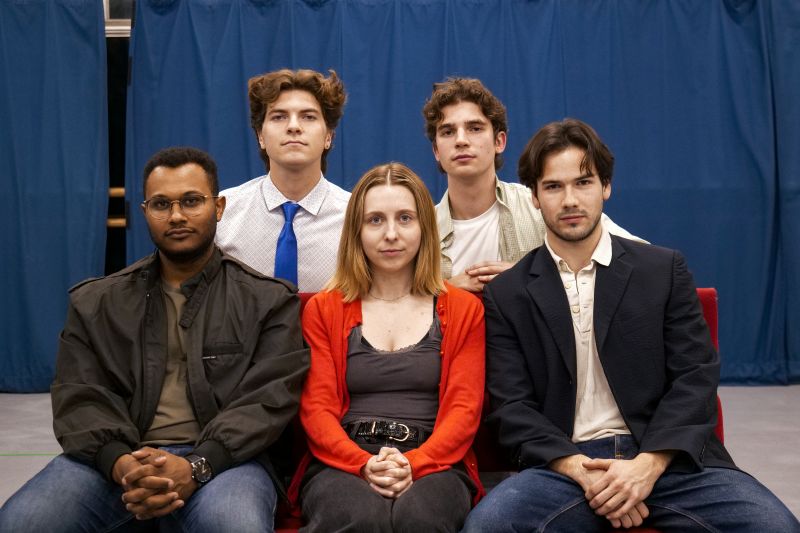
Max Allen talks about starting out and moving from his successful first play to his next venture.Max, let's start with your background and how you came to be in London forging a career in acting and writing.I'm from Toronto, Canada. I studied acting at Concordia University in Montreal before moving to London to complete an MFA in Classical Acting at LAMDA.Writing was always part of my life. My father is a playwright, so I grew up around theatre and storytelling. While studying acting, I started taking playwriting courses and gradually became interested in creating my own work alongside performing.One of the things that drew me to London was the theatre scene. There are hundreds of theatres here and a real culture of artists creating and producing their own work. That opportunity was too exciting to pass up. Since graduating, I've been focused on building a career as both an actor and writer, and I've found that the more work you create, the faster you develop as an artist.You founded Namesake Theatre shortly after graduating. How did that come about?A piece of advice my father gave me was to find talented, creative people you genuinely enjoy working with and build things together. That's exactly what happened at LAMDA.The actors in my first play, FRAT, and several members of the team for my new play Persona are people I met there. We wanted to create original work and tell stories we were passionate about, so we founded Namesake Theatre as a way of doing that. When you're starting out, there's something powerful about a group of artists simply deciding to put in the hours and make something happen.FRAT was a major success. What inspired it?FRAT grew out of my own experiences as a member of a fraternity during university in Canada. Fraternities are fascinating institutions. They're steeped in tradition and ritual, and they've shaped generations of people, yet much of what happens within them remains hidden from public view.I was interested in the way institutions influence identity. Fraternities can produce extraordinary success stories, but they're also associated with controversies around hazing, alcohol and sexual misconduct. Rather than writing a piece that judged that world, I wanted to present it honestly and let audiences draw their own conclusions.That's something I try to do in all my work. I don't want to tell audiences what to think. I'm more interested in creating a theatrical space where people can wrestle with difficult questions themselves.Then you found yourself wrestling with more venues than you could have imagined.I certainly did. At the time, none of us really knew what the standard path was. We had just graduated and wanted to get the play in front of as many people as possible, so I applied to almost every fringe festival I knew about. To our surprise, we were accepted into all of them!We began at the Old Red Lion Theatre before touring to Brighton Fringe, Prague Fringe, Camden Fringe, the Comparative Drama Conference and finally the Edinburgh Fringe; a five-month journey of performing across the UK and Europe.Looking back, it was a slightly mad thing to do, but it was also one of the most rewarding experiences of my life. We learned an enormous amount, and the friendships formed during that process will stay with us forever.How important was the response to FRAT in giving you confidence as a writer?Massively important. The sold-out performances, positive reviews, awards and audience reactions all helped convince me that there was something worth pursuing here. Creative work can often feel like you're throwing things into the void, so having that level of engagement gave me confidence to continue developing Namesake and writing new plays. Without that momentum, I'm not sure Persona would exist in the form it does now.Tell us about Persona.Persona shares some thematic DNA with FRAT, but it's exploring a different world. Where FRAT examined American fraternities, Persona focuses on a group of former students from an elite boarding school. I attended a boarding school in Canada, so once again I'm writing from a world I know.The play follows four alumni, three men and one woman, who gather at a country house after the death of a close friend. As they argue over the contents of his will, old tensions begin to surface and carefully constructed identities start to unravel.At its heart, the play is about performance. We all create versions of ourselves to navigate the world, but what happens when those personas begin to crack? The boarding school environment felt like a fascinating setting in which to explore those questions because it's a place where identity, privilege, belonging and social hierarchy are constantly being negotiated.The title itself feels loaded with meaning.Absolutely. The idea of a "persona" is something that fascinates me. We all perform versions of ourselves depending on who we're with and what environment we're in. Sometimes those performances protect us; sometimes they trap us.The play places its characters under increasing pressure and asks whether the identities they've built are sustainable. It concerns itself with the gap between who people are and who they want others to believe them to be.Before Edinburgh, you're previewing the show at the King's Head Theatre. Why was that important?Last year was very grassroots. We were performing in small pub theatres and building everything from the ground up. The King's Head feels like a step forward. It's a respected venue with a strong reputation for new work, and it gives us the opportunity to present Persona in a larger space before taking it to Edinburgh Fringe.It's also invaluable to hear audience reactions early. Theatre is a living art form. Every preview teaches you something, whether it's from audience feedback, reviews or simply watching how people respond in the room.What excites you most about returning to Edinburgh?Edinburgh is unlike anything else. For a month, the city becomes the centre of the theatre world. There are thousands of shows, huge audiences and an incredible concentration of artists and industry professionals.We only performed for a week last year. This time we're doing a longer run, which is exciting but also demanding. By the time you arrive in Edinburgh, the work needs to be rock solid.What's different now is that people are coming to see what Namesake does next. That's exciting, but it also creates a sense of responsibility. We want to build on the momentum of FRAT and continue to make work that challenges, entertains and sparks conversation. For me, that's ultimately what theatre is about.

Richard Beck • 20 Jun 2026

From Idol to Family: An Interview with the Legendary Peaches Christ and Mink Stole

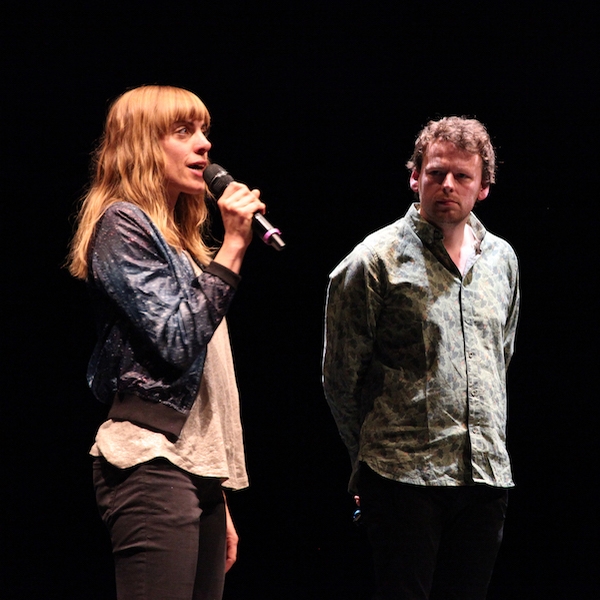
Scotland and Comedy Editor James Macfarlane had a fabulous time interviewing cult icons Mink Stole and Peaches Christ about their upcoming show 'Idol Worship'. They talk everything from the origin of their friendship, what to expect from the show and why this will be the first and final time they bring the show to the UK.Peaches Christ and Mink Stole! How are you?Mink Stole: I cut my thumb last night on a knife, but other than that, I'm absolutely fine.Peaches Christ: I think none of us are fine right now, wherever you are in the world, especially if you're an American, it's a hellscape. But outside of the obvious, I’m doing well!Let’s talk about Idol Worship. It’s being described as ‘part interview, part concert, part storytelling’. How did you find the balance between those elements when you were building the show?Peaches: It started 25 years ago as a conversation before a midnight movie screening as part of my Midnight Mass movie event. Mink was the first icon I'd ever invited, and I fell in love with her. I couldn't believe that she was willing to do a show with me! I had the audacity to ask her to do it again and again. From there, I asked her to be in a movie and, for part of the movie promotion, we decided to sing a duet. That led me to ask her to be in a big drag show and then we had enough material to do a show, Idol Worship, without a screening of the movie. That’s when it transferred into just the two of us on stage. Mink sang and we had movie clips. That was about ten years ago. During the pandemic it evolved again and became much more about our friendship and working relationship. So, it’s truly evolved over time.Mink: It became a mutual admiration, because I have so much admiration and respect for Peaches. When she asks me to do things, they're fun, they're good and they're well done, so I always say yes. She takes good care of me and it's always a positive experience.The show itself celebrates Mink and her legacy, as well as the creative partnership between you. How did you decide what parts of that history you should be including on stage and what to leave out?Peaches: That's a great question. To be honest, it’s very difficult. Mink lets me almost exclusively decide what to highlight about her. If she doesn't like something or she's tired of a particular story, because we've told it a million times, then we’ve got a thousand more. So much so, in fact, that the conversational part of the show is truly impromptu. We know we're going to talk about Pink Flamingos and about me being exposed to Multiple Maniacs and the sacrilege in that film. We know that we're going to connect some of these dots. But it does change. I'll tell you that, for the fans, the iconography that we are celebrating is, of course, Connie Marble, Peggy Gravel, Taffy Davenport and Dottie Hinkle.You described the show as an ‘uncensored exposé’. What does being truly unfiltered in a live performance look like to you both?Mink: Well, it's uncensored in that we talk about things that are perhaps not family friendly. Words do fly out of our mouths on occasion.Peaches: It's not so much that Mink and I are being outrageous, we're really not, but you might think that us discussing parts of our lives and our work, for some people, we might need that uncensored caveat to refer back to. We've never gotten complaints, but we've definitely seen people's shocked faces, if that makes sense.So, with the film clips and the live music and the storytelling all woven together in this show, what kind of experience do you want the audience to take away?Mink: I think we want them to go away thinking that they actually met us and that they got to know a little bit about us and what we're like in our real lives.Peaches: I think this is the most revealing Peaches show I’ll ever do. I'm sitting there in full drag, but a lot of what I'm talking about is my inner child and what my reaction to discovering her was like before I discovered Peaches and how it led to becoming Peaches.In this show, you're seeing a lot more of Joshua. And I like that because, when I started drag, Peaches was armour. She was a disguise and a way for me to rebel and to protect myself. I love that this show's become that sort of deeply personal. I agree with Mink, I want them to get to know us. I actually want them to see a different version of drag. I'm lucky as a Gen-Xer to have been exposed to all other kinds of drag. Don't get me wrong, I really am entertained by RuPaul’s Drag Race, but for some people, that's their only view of what drag is or has been. I love it when the young people sit with their blue hair realising, ‘Oh shit, we had no idea’. Young people being turned on by the same stuff that turned me on is so brilliant.Is there anything that you've learned about each other on a personal level throughout doing the show?Mink: So, we both grew up Catholic and the way that Catholicism did damage to us as children is something that we've been able to explore a bit. I had some very cathartic moments that have informed Peaches' catharsis, big time. We have been instrumental somehow in helping each other and my talking about it with Peaches on stage still helps me because there's always that lingering feeling like you've got a crucifix tattooed on the back of your neck.Peaches: It's like having to be deprogrammed and that takes a lifetime. I learned so much from Mink. But you also have to remember that I met Mink at 24 years old. She’s literally watched me grow up. I'm 52, so I'm sure she's seen me really evolve. And I would say that the thing that's been lovely as far as the evolution of working with Mink is just what an incredibly good friend and mentor she's become. I call her one of my drag mothers because she, Cassandra Peterson and John Waters were such incredible showbiz mentors to me in a very nurturing way. I feel like they have taught me how to show up and be gracious and to really enjoy getting to know people who I've inspired.Years ago, there was a fan who had a tattoo of Mink. She hadn’t seen this very often. Now it happens regularly. Pretty much wherever we go, someone's going to have a tattoo of Mink and Mink's looking at it going, ‘You put that on yourself?’ She was so baffled by it but she’s changed lives.Mink: I found it very hard to accept at first.How does it make you feel now, Mink?Mink: Well, it's incredibly gratifying. I feel very responsible now for these people, that somehow I can't do anything wrong in my life that would justify them having to remove the tattoo.Peaches: I mean, I always think about the Harry Potter fans...Back to the show, it's the first and last time that you're bringing Idol Worship to the UK. What makes this seem like the best time to say goodbye to the show?Mink: We had planned to come in 2020, but the pandemic hit. It was an earlier iteration of the show, so, in a sense, I'm actually really happy that we didn't bring it then, because what we're bringing now is better.Peaches: We were scheduled to be in London in March 2020. That's how close it was to happening and this was something she and I were so looking forward to. One of the things about the show is we do at the end kind of talk about our personal lives. Mink has intentionally decided to slow down some because of getting married and wanting to enjoy a different life. The idea of touring, it's hard. It's Mink, me and my husband, the three of us going from theatre to theatre. We do our best to really make it comfortable for Mink, but, at the end of the day, just getting on stage is hard, let alone the movement from city to city, the packing, the unpacking, all of that stuff. When we were planning our London show, I thought if we're going to go to London, let's go all over the UK. And that's what happened.Speaking to you today, it’s obvious that you have such a lovely friendship. I want to know your favourite thing about the other person?Mink: First of all, Peaches has such enormous ambition, talent and determination, which I admire enormously. However, I think I am most taken by Peaches’ kindness. She’s really kind and generous, not just to me, but to everybody that I've ever seen her work with. There may be some things that I haven't seen, but I have never seen her be cruel.Peaches: Thank you, Mink. I will say that my answer is very similar, but I'm going to frame it like this. It's kind of like when I met my husband. I used to think that in order for me to marry someone, they're going to have to like the same movies, they're going to have to like the same music. I used to think all those things were important. When I met my husband, he had no concept of who Peaches Christ was. He did not know who John Waters was. He was open to learning everything about me. What bonded us was our view on humanity, our kindness, our sense of how to treat people and our sense of what's important in this world to live a good, fulfilling life. Mink and I bonded over the same stuff.I think we're basically saying the same thing. When you work with someone and even if they're talented and you admire them, but they don't treat people the way you think people should be treated, it's very hard to sustain a relationship, even if the work is great. So, if you think that I'm nice and you look at the people that I work the most with, especially Mink, but you could look at Jinkx Monsoon, Bob the Drag Queen and a bunch of others, the people that I'm really connected to as family, what you can discern is they're probably similar people.

James Macfarlane • 1 Apr 2026

Miraculous Collision of Sacred Language with Adolescent Chaos

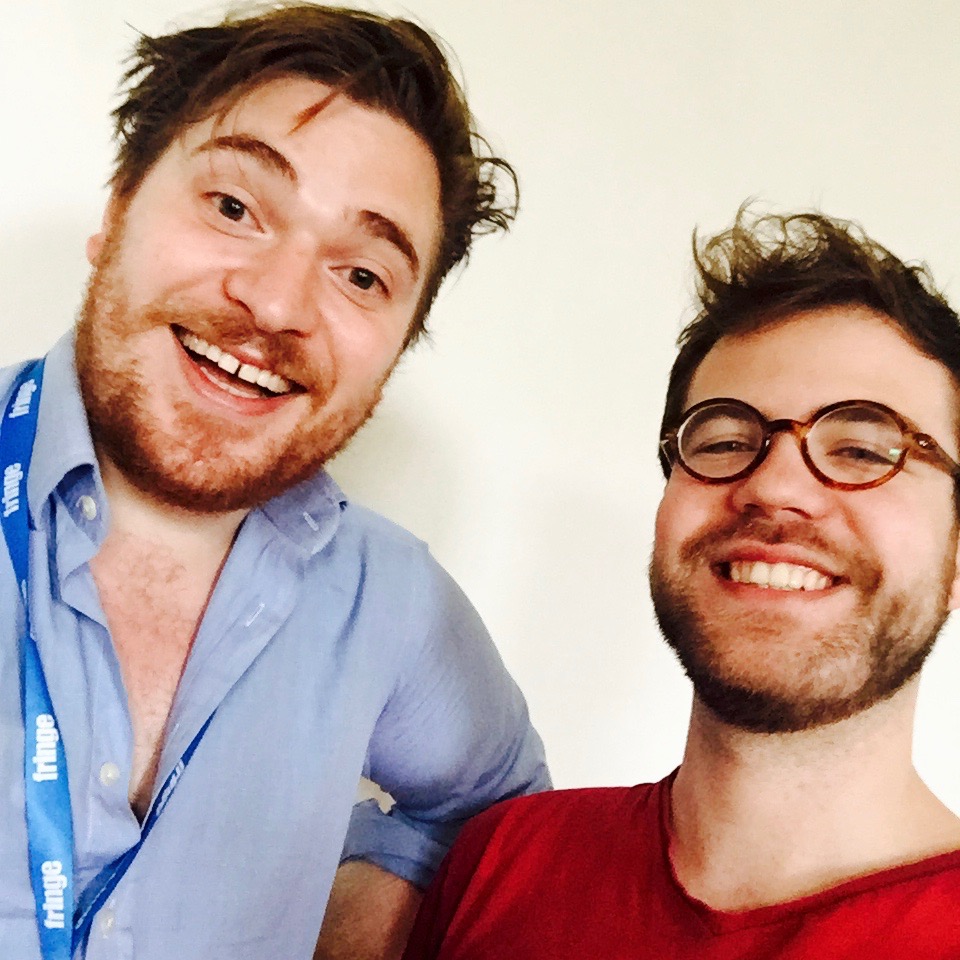
Luke Stiles talks to us about growing up in California, studying at LAMDA and his debut play Miraculous. Let’s do this chronologically, Luke, and start with where you grew up and your background.Luke: I was born in Pasadena, California, and grew up in southern California, very much in the church. I was announced in the same church my parents were married in, and we went every week. During middle and high school, I went to youth group every week and spent every summer at a week-long Christian camp in the mountains.What kind of church environment was that?Luke: It was an evangelical Presbyterian congregational church – very Protestant, slightly new wave. The church itself was big and a bit old-fashioned in its ways, so I grew up with a conservative foundation, but my youth pastors were always these twenty-something aspiring theologians – mentors who gave a more progressive lens, and that combination really shaped me.Camp was especially formative. You’re away from your parents, up in the mountains, spending a week with these people and the friends in your cabin. Those shared experiences were defining.Where did you go to school after that?Luke: I went to high school in La Cañada, and throughout I did theatre and was writing as well. I went to UC Berkeley for undergrad and studied journalism, politics and economics. I stayed active in theatre, took classes and wrote for the paper, The Daily Californian, which became a central part of my identity and development, as did my theatre professor, Christopher Herold, who really shaped my path. He encouraged me to pursue an MFA and coached me through the audition process for LAMDA.I was accepted and moved to London in 2023, completed the Classical MFA programme in April 2025, and have since been putting up work with collaborators, mostly in the fringe circuit. Last year, some of my best friends and I took FRAT to the Prague, Brighton, Camden and Edinburgh fringes, and that kind of scrappy, grassroots theatre was an incredibly formative experience. That run started at the Old Red Lion.And that’s where you are staging your play, Miraculous, so let’s move on to that.Luke: I started writing this piece at LAMDA. I put an early version up at the April Fools’ Fringe scratch night in 2025, which Diego and Brock also produced, and the response was really lovely – very encouraging. Miraculous really came together at the end of last year when I was thinking about what projects I wanted to do in 2026. The draft we’re working with now came out of that.And who are your collaborators on the piece?Luke: Our main team is Diego Zozaya, the other actor; Brock Looser, our producer; and Toby Clarke, our director.I trained at LAMDA with Diego Zozaya and I’ve collaborated with him a few times before. Diego wrote a project, A Mechanical’s Midsummer Night’s Dream, that took him, Brock and me to a theatre festival in Beijing. I wrote the role in Miraculous with him in mind from the outset.Miraculous is produced by Brock Looser, another member of our LAMDA cohort and long-time collaborator. We started an improv group, Wiggle Room, together, and she brought invaluable producing experience from her own work at the Old Red Lion last year.Our director, Toby Clarke, has been a vital mentor. He directed our actor showcase and the web series The L’s during our training. He’s done a lot of dramaturgical work with us and really helped shape the script. His expertise in both stage and screen has been invaluable, especially given the intimacy of the Old Red Lion Theatre, which allows for a cinematic, high-detail performance style.So what’s the play about?Luke: It’s about a youth pastor and a troubled teenager who meet over a series of mentorship sessions at a Christian sleepaway camp. As their views on faith, sexuality and divine intervention become increasingly incompatible, the tension rises and culminates in a fatal attempt to test whether miracles still happen.Given what you said earlier, how personal is the material for you?Luke: Completely personal. I grew up inside evangelical church culture, so I know its rhythms, its language, how it can make you feel chosen and confined at the same time. I was really interested in that moment when sacred language collides with adolescent chaos, when you know the doctrine but start having real adult questions. I lived that experience, and I wanted to see it on stage.I think the most personal stories often become the most universal. There’s a lot of conversation right now about young men feeling isolated or adrift. When you’re searching for structure and meaning, the church can offer that in a powerful, sometimes intoxicating way. My play examines why that structure is attractive, but also how it can become destructive.Does it connect to contemporary Christian politics in the USA?Luke: Not overtly. It’s more about generational belief systems clashing than about politics. We see versions of conservative Christianity through two lenses. Josh is a teenager seeking answers, stability and a father figure, and Paul is a millennial pastor who appears progressive but holds fundamentalist core beliefs about sex and religion. The play lives inside that tension.What do you hope audiences will take away?Luke: I don’t know exactly what the outcome will be, and that’s exciting. I think there’s a temptation to “solve” the play – to assign blame or decide who’s right. I’m less interested in that. I care more about the moral dilemma and the emotional cost for the two people at the centre of it, and about watching them collide and change over the course of a week.We’ve put a great deal of care into the rehearsal draft, and I’m eager to see how audiences – both those from religious backgrounds and those from none – react to the relationship at the heart of the story. For some, it’ll feel deeply familiar. For others, it’s a window into a world they’ve never experienced. I’m just excited for the conversations it sparks.Looking ahead, what are your hopes for the production?Luke: We’ve had a wonderful response so far, with interest from a few theatres. My hope is to secure a further run this summer or autumn and continue developing the piece from there.Thinking back to some earlier comments, and as this play arises out of your Christian camp days, I’m curious to know if you are still part of the church back home and whether you attend here.Luke: I go once in a while when I’m home with my parents, and I’ve been once here with my aunt, but I don’t attend regularly any more.Photo: Luke (right) with a friend at one of the camps.

Richard Beck • 7 Mar 2026

Chris Leicester puts a ruthless copper and a seasoned criminal in the same cell

Chris Leicester's play, 180° Chord, continues its UK tour with a run at Greenwich Theatre. Here we find out about his background, the play and his approach to theatre.Chris, let’s start with a biographical introduction, which I suppose should begin with your childhood in Sheffield and how you got into writing.Yes, they were interesting days. I’m a working-class lad from Sheffield. At that time you were pretty much expected to wander off into a working life in the coal mines or steelworks, so being creative was a bit of a stretch. I did it anyway and began writing poetry. I went to a rough comprehensive with rubbish teachers, bar one, and so fighting in the playground was obligatory and broke up the creative flow somewhat. But by the end of it all I knew what I wanted to do. The first thing I did after finishing the sixth form was to go on walkabout around Europe, whilst taking on 14 various, and mostly appalling, temporary jobs. I felt I needed to get more experience in life, and I did, and it’s one of the most valuable things I ever did.You graduated from Liverpool University in 1998 with a degree in creative writing and since then you say you’ve been on a journey. What’s that involved?My theatrical journey began in Liverpool. I joined and then ended up running a writers’ group called Liverpool Playwrights. I soon began to realise that getting my work produced by a company was likely to be really hard work, so I formed my own company over a pint in the Pilgrim pub in the city. I put on a short version of a play I’d just written and those of four other members of the group. The learning curve was vertical but gave me a start on this tricky and sometimes rocky road. As I wrote more and the reviews continued to be good, I pushed out the boundaries further and further to where I am now. There are two main qualities you need for this, I reckon: perseverance and near stupidity.The play you are now touring, 180° Chord, started out as a book. Can you give us an insight into what inspired the story and the characters?I’ve always had a healthy respect for fate in my own life and it never amazes me what it can suddenly throw at you. I was looking for a situation in which something or someone could change completely, instantly and without warning. The idea of a ruthless copper finding himself in the same prison he’d sent a lot of villains to provided a brilliant premise for this. Also, in 180° Chord, I play with the idea of how similar a ruthless copper and a seasoned and competent criminal are. Those two characters make for great theatre, especially as we’ve got two fantastic actors playing the roles.You decided to make it into a play. Why was that and what challenges did the process involve?Because the book hinged around two main characters, it was crying out to be adapted to a theatre piece. I had to simplify the subplots a little and make sure that I was still showing and not telling. Keeping the staging simple and maintaining the flow of the play was essential to making sure the story carried well, which I think it does. The play has been significantly workshopped and it’s had a few changes since it was first performed a few years ago. This process is vital to keep the project vibrant and appealing.The two actors you mentioned are Paul Findlay and Dominic Thompson. How did you come to cast them and what do you think they bring to their roles?I’d already pretty much cast the play via Spotlight when I received an email from Paul. As soon as I heard him read the script I knew he was a perfect fit. Paul had worked with Dom a number of times and recommended him. They’re well known in the Midlands and beyond and have won several prestigious awards. They bring excellence to these characters. I’d describe them as exceptional actors, especially as they work so wonderfully well together. They are true masters of their craft.Talking of crafts, what do you feel to be the benefits and downsides of directing your own writing?It’s great to be able to write your own directions into a new project as you’re first creating it on paper. I can visualise the story, dialogue and characters, but I can also see how the finished project can be staged, how it can be lit and moved, and what sound effects can roll the performance along. A downside could be that you have a blinkered view and that the production could be limited to and by your own input. The remedy for this is to listen. I’m fortunate to have worked with some great professionals over 30 years, and so when someone I respect tells me that perhaps something isn’t working as well as it could, or an alternative could work better, then I listen.You describe yourself as having a minimalist approach to theatre. What are the fundamentals of that and how are they incorporated in 180° Chord?I say that my work is driven by the words and the actors. This is my minimalist approach. Some of this comes from having been at the Edinburgh Fringe a couple of times and having had a number of UK tours. There’s only so much stuff you can cart around. Given tight get-in and get-out times, your production has to be simple. I rather got addicted to that, making both the words and acting really count. 180° Chord is no different. The set will fit in the back of my car. The play is stronger for it, I believe. We have to make words and the performance work as well as they possibly can.You’ve said the play has an educational purpose. Can you explain that?This is two-fold. There’s a message to young people about not getting involved in “county lines” gangs. It’s not a preachy message, but it’s there all the same. The second purpose is to encourage young people to be creative. This applies to everyone. I love Shakespeare now, but when I first came across it at school, it felt like it was owned by posh, pretentious people. No chance for a lowly comprehensive school lad then. Nobody owns imagination. It’s an open space where anybody can roam. This is a message I love to spread.This relates to your Dramatic Insight project, so let’s hear about that and also your theatre company, Too Write Productions.The Dramatic Insight project adds another dimension to the theatre projects of Too Write Productions. Whilst we’re showing people the play itself, we can connect with young people to tell them how we created it, what steps we took and what we learned along the way. It’s like double rations. They complement each other perfectly.What’s your message to young writers and presumably the message you keep giving yourself?Be bold. Listen to the right people and possibly ignore the wrong people. Believe in your own work. Be true to yourself and, above all else, keep creating.

Richard Beck • 7 Jan 2026

Intermission Changed My Life: Graduate Makes History With Bold Shakespeare Remix

Stephanie Badaru was invited by Intermission Youth Theatre’s artistic director Darren Raymond to become the first graduate of the company to direct a production for them. We asked her about the experience.Stephanie, how do you view the company?I view Intermission Youth as a family, first and foremost. I’ve been lucky enough to see the organisation through a variety of lenses, as a participant, a facilitator and now a director. That has given me the chance to see how much the organisation has grown, all while keeping the mission of supporting young people at the core. My involvement as a director, 17 years after doing the programme myself, is a testament to the work they do and the people they are.Some people might think it strange that a youth theatre company focuses its work around Shakespeare.I think it’s easy to question ‘why Shakespeare?’ but even more than before I understand why it’s so important and so effective. Firstly, the themes he wrote about are just as relevant today as they were when they were written, but also understanding the language and working with classics breaks down barriers for young people. It’s about connection, and actually using Shakespeare’s plays allows for such an opportunity to expand empathy and make connections.How did you come to direct Comedy of Errors Remixed?I did the 10-month programme all those years ago, and when I was introduced to the organisation, I think Darren saw something in me and knew what journey I could go on. Two years ago I came back as a facilitator, which I’d wanted to do for years to give back and support the programme, but never had the time. This year I came back again, intending to facilitate, and then was asked to direct. It did make me think ‘how far are they gonna take this personal development thing?!’, but that’s what Intermission are about. Darren and the rest of the team have an incredible passion and ability to see a young person’s potential and lock in with them to make it happen.Were you surprised to be asked to direct this year's show and how does it feel to be making history?I was extremely surprised! I still think Darren is crazy for asking me but we’re here now. When he first called me, I said no, because of time and also my experience. He then suggested that I could co-direct with another grad. I agreed, even though I doubted the other grad's capacity. Then it turned out the other person wasn’t able to work on it. Despite my worries, my heart was shouting at me that I had to say yes, so as soon as the next call came from Darren I said yes straight away and told him to take that as my final answer, no sleeping on it, no mulling it over.Intermission changed my life, and continues to do that for every young person who participates in their programmes. Ever since I completed the 10-month programme I’ve always wanted to give back, not necessarily to be a part of making history, but because if I can help make a difference in one young person's life the way that others made a difference in mine, I’ve done something to give back.One feature of IYT productions is double casting. How does that work out for you as director?It’s really fun. I get to see two almost entirely different shows. When we first started rehearsals, it felt like they looked to me for answers, and my response was that 1, I don’t have the answers, and 2, I’m not there to tell you how to act or what to interpret from the text. It was challenging, but in refusing to answer those questions, it gave the casts space to consider it all, apply their own opinions and interpretations, and in some ways create their own show. It has meant that while the text is the same, the characters are dynamic between the two casts: they have different intentions, there’s nuance to how they deliver different lines and there’s different depths to the relationships.This year’s production is a reimagining of Shakespeare’s Comedy of Errors, created by Artistic Director Darren Raymond. What’s he done with it, and what themes and issues does the production highlight?Darren’s script pulls out some seriously topical issues like displacement, identity, immigration and the struggle to assimilate, which are relevant generally, because of the current social climate, and also because so many of our cast and the young people Intermission work with come from immigrant backgrounds. We’ve found our focus is on empathy and humanising the stories of refugees and immigrants. I think that seeing young people, especially those from immigrant backgrounds, is especially hard-hitting because it personalises those who are being impacted negatively by the social climate and policies. A lot of the time the headlines we see are quite dehumanising, and vilify immigrants as a group rather than acknowledging them as individuals. In our first scene, you actually get to hear people’s stories. Through the stories you hear, we allow an opportunity to personalise, to humanise and to actually give space for the extremely difficult circumstances that immigrants have fled.

Richard Beck • 9 Dec 2025

Embracing the Incomplete: Thekla Gaiti on Postdramatic Theatre and the Art of Unresolved Meaning

I recently saw Thekla Gaiti’s play Postdramatic at Milano Off Fringe Festival. I was intrigued, excited and somewhat perplexed by the nature of the work and the performance it requires that I decided an interview was needed to find out more abut her and the theatrical style she has adopted, which was new me.Thekla, let’s start with an introduction to your background and training.I’m an actress, performer and educator based in Athens, working across theatre, film, music and television. Recently I have been exploring conceptual photography and solo performance. I’ve trained extensively in acting, voice and movement, with a focus on physical theatre, improvisation and both solo and ensemble performance. Postdramatic is my first solo piece, and it began as a photo series before evolving into a full-scale performance.The title of your play gives away its genre, so can you tell us something of the history and characteristics of this style of theatre?Certainly. When we speak of postdramatic theatre, we refer to a broad range of performance practices that have emerged since the late 20th century, roughly from the 1970s onward. It didn’t arise from a single movement, but from wider cultural shifts: the crises of the 20th century, the rise of mass and digital media, the decline of grand narratives and a growing scepticism toward fixed identities and stable meanings.In this context, artists began experimenting with new forms of expression, incorporating methods and practices from a variety of artistic and disciplinary traditions, while questioning the traditional foundations of dramatic theatre: plot, character psychology, linear storytelling and the primacy of the written text. The term itself became widely established after Hans-Thies Lehmann’s seminal study Postdramatic Theatre in 1999, which was quickly recognised internationally as a key reference point for understanding these new aesthetics.What’s unique about postdramatic theatre is that, rather than offering a formula to follow, it opens a space for experimentation. It isn’t defined by a single style, but by a set of tendencies: narrative is rarely linear or continuous, often taking an open or discontinuous form; the performer’s presence takes precedence over character psychology; and the text becomes just one material among many. Postdramatic theatre draws freely from other disciplines — visual arts, dance, music, video — collapsing traditional hierarchies between them. The audience is no longer a passive observer, but invited to interpret, respond, and even participate, rather than simply decode the performance.Directors like Robert Wilson, Pina Bausch, Heiner Goebbels and Romeo Castellucci use postdramatic forms to break traditional storytelling. Their work reflects the complexity of contemporary life, with its fluid identities and overlapping realities and focuses on experience, resonance, and multiplicity rather than fixed narratives.Hοw did you discover this form of expression and why does it appeal to you?I discovered postdramatic theatre during my Master’s studies and was immediately captivated by it. Unlike more traditional forms, it offered me the space to realize what theatre could mean for me, not only as a practice, but as a lived way of responding to the world. I decided to dedicate my thesis to creating Postdramatic as a solo performance.What excites me about postdramatic work is that it lets me create something personal and strange, offering the audience a fresh way to experience theatre; a way to explore ideas, emotions and perspectives in a form that’s unconventional, surprising and vibrant. It’s my chance to speak with my own voice and create theatre that’s intimate, alive and speaks directly from me to the audience.How have you used the form in your play, which you refer to as “a sincere tribute to the Incomplete” ?In this piece, I use postdramatic form to embrace rather than resolve incompleteness. The piece is built as a collage of short scenes that keep shifting before they can settle and grew out of my own creative and cognitive rhythm: a mind that shifts quickly, gathers impressions, and struggles with closure. Postdramatic theatre allows me to turn that restlessness into method, transforming chaos into material rather than obstacle. I call it a “heartfelt tribute to the Incomplete” because it doesn’t try to fix or solve this condition, but to live inside it honestly, and invite the audience to inhabit that space with me.Is the medium more important than the message?In postdramatic theatre the two can’t really be separated. The medium is part of the message and the message only fully exists because of the way it is delivered. Most often the form is the statement. In my case, the choice to work with discontinuity and incompleteness isn’t just a stylistic frame around an idea, it is the idea.You go on to say that “making sense of what happens on stage is optional”, so what would you like people to take away from having seen your performance?I don’t expect the audience to “make sense” of everything on stage — that’s not the point. Postdramatic does not favor a predetermined conclusion that I want them to arrive at. There is no unified “truth” or a clear message to be decoded. The swimmer character in my piece moves through the scenes, opening up possibilities rather than giving answers, and I hope people leave having experienced an emotional journey, taking with them a feeling, a moment or a spark of recognition.Thekla, thank you so much for this insight.Postdramatic is still touring in Greece and internationally and as an example of this genre it is outstanding. It has been met with great enthusiasm by audiences and also won an Off West End Award (Offie) in London in March 2025. The next step in its journey is a phygital theatrical hybrid, merging live performance with cinematic language, set to premiere in February 2026 at a major cinema in Athens, which Thekla sees as challenging herself "to explore postdramatic theatre in deeper, more experimental and unfamiliar ways".

Richard Beck • 30 Oct 2025

Wrestling with the gods – Mythos: Ragnarök body-slams the Fringe

Whenever my friends ask me for show recommendations, Mythos: Ragnarök is top of my list.It’s fun to tell them about this show based on Norse mythology, featuring the likes of Odin and Loki, and watch their jaws slowly drop when I mention it’s all told through wrestling.Mythos: Ragnarök is the only show of its kind in the world and one of the Fringe’s successes. Having debuted at the Edinburgh Fringe Festival in 2021, the show opened to a single audience member, who has since attended every year’s opening night. Four years on, it’s one of the highest-rated shows, selling out performances and becoming a crowd favourite at the Fringe, with a dedicated cult following.Curious to discover how this crowd-pleaser came into existence, I sat down with Ed Gamester, the creator, owner, pro-wrestler and lead performer of Mythos: Ragnarök.Having known him only as Odin in the show, I couldn’t help but feel nervous about meeting this intimidating pro-wrestling god. Ed, as I soon discovered, is a kind and caring gentleman with a deep passion for storytelling and wrestling.“I’ve been a wrestler forever, since I was 16. So I was very familiar with the wrestling industry and how wrestling worked as an art form, as a form of storytelling. I thought it was the best thing that I ever discovered or ever did.”With an extensive career as a stunt performer, fight arranger and athlete, Ed combined the artistic flair, charisma, storytelling and improvisational skills of a pro wrestler with freestyle Olympic-style wrestling and stunt elements.“I tried to combine the three of them together to take the best of all those things to create a new way of doing violence – live violence that hadn’t been done before. I decided to base that in Norse mythology because that’s just my own background and my interest.”While studying philosophy at university, Ed got to “really dig into the old myths and legends in their original languages and play with the poetry of it all. So, when the opportunity came up to create my own show, I thought, ‘Hey, I want to base it on that because I love it.’”Mythos: Ragnarök strikes a chord with audiences that is hard to pinpoint, possibly due to the combination of factors. Ed has undoubtedly found a stylistic crossover between mythology and wrestling that makes total sense as a medium.“If you describe mythology, it’s a collection of superhuman entities often colliding over ridiculous nonsense and resolving their conflicts through fights or trickery. They become household names, and people know they don’t exist, but they still act like they do. It’s like a quasi-realistic approach to a religion. Thor doesn’t exist, but you still tell stories about him as if he does, and people do that with wrestling; they’re massive characters that archetype characters that collide over nonsense and fight one another, and we all know The Rock isn’t actually The Rock, but you’re still talking about him like he’s The Rock. In my world, I figured that pro wrestlers are modern mythological characters, and pro wrestling is modern mythology.”Although the ideas had been brewing for some time, the pandemic’s closure of film sets and wrestling shows, and prohibition of performances by government decree, meant that Ed and the cast were out of work. “So I was forced to sit and write the show. And then I was forced to put it on its feet, because I was going to go insane if I didn’t get to perform. Because it’s not just a job, it’s a lifestyle.”After a brief run at a theatre in London in 2021, the show made its debut at the Edinburgh Festival Fringe. “No one has ever done wrestling here, not like that. There’d been occasional one-off wrestling shows and normal wrestling, but no one had ever done a run. No one had done wrestling every single night at the Fringe. So there was no blueprint for it. But I knew it needed to happen because until wrestling and wrestlers are in environments like this, people will never understand what we do.”Ed, along with his partner Melanie Watson, who designed the show’s look and costumes, has worked for five years to get the show off the ground, continuously improving it. All set pieces are built and handmade by them, inspired by Viking-age artwork – no small task, as the costumes must look worthy of the gods while also surviving being wrestled in.“Every night we get slammed into the floor, into hard surfaces. There are people in the cast who are close to seven feet tall, and some are 130 kilograms.”Having recently celebrated his 200th performance, Ed’s efforts have paid off as “the venues have got bigger and badder every single year”. The show has now travelled to six countries and is booked till 2027, but always returns to its debut stage at the Edinburgh Fringe, where fans and newcomers alike have rallied around Mythos: Ragnarök, with many audience members having come to see it in the past and wearing the show’s merch.The show is layered, showcasing what is possible through the storytelling art of wrestling.“The storytelling art of wrestling is so versatile, it isn’t just limited to ‘You’ve annoyed me, now we’ll fight’, which is what we do for the first bit of the show. Once we’ve done that and proved how well it works, the next step is to show how we handle tragedy and emotional beats. Can we do emotional stuff?”In a festival overflowing with theatre, comedy and musicals, Ed makes a point about wrestling:“In a musical, when the character gets to a point where they can’t talk anymore about their feelings, they sing. In our show, when we can’t talk about our feelings anymore, we fight. And if you think musicals are legitimate theatre, then you should think we’re a legitimate theatre. It’s a different way of expressing feelings and telling stories.”You can catch Ed taking on the role of Loki in this year’s Mythos: Ragnarök.

Lisa Simonis • 14 Aug 2025

Where There's A Wil ... There Is Laughter

It is very seldom that I find anything or anyone here in August that makes my wizened, embittered old heart lift and sing. But I spoke to Wil Mars recently about bringing back Some Guy Called Dave's Funniest Joke of the Fringe, to fill the gap left by TV channel Dave – who evidently couldn’t be arsed to wade through a month of one-liners – and my wizened, embittered old heart is singing like a show queen at a Sondheim karaoke night.It is quite something to listen to someone like Wil. “I care about one-liners and proper jokes – I absolutely love them. Hearing a great one makes my week or month or year. That's why I'm bringing back the (Some Guy Called) Dave Joke of the Fringe and putting up the £250 prize money from my own pocket.”And it gets better: “I care about standup. Proper comedy club standup. And it should have a place at the Fringe. It should be respected more. That’s why I’m doing the Edinburgh Fringe Comedian of the Year, encouraging comedians to do their best stuff, and putting up the £1,000 prize money from my own pocket.”As he talks, I can feel there might yet be hope for the Fringe at every level.“I care about comedians. Especially the ones that aren't in the spotlight. That's why we're doing the Joke Sellers show, with all ticket monies and joke auction money going to Comedy Support Act – the comedians’ benevolent fund.”I know what you're thinking – at the end of the last paragraph there’ll be a little laughing emoji and a “gotcha”. Nope.Back to Wil.“I care about sketch comedy, and when it's done well, it's SO MUCH FUN. I grew up watching sketch on TV, and you just don't see as much nowadays. I'm bringing my Sketch Thieves show back to the Fringe to help give sketch acts another opportunity to showcase their brilliance and help them to find an audience for their shows.”He even cares about non-performers.“I care about Fringe audiences. They've treated me so well over the years. They’ve loved my Joke Thieves show more than anything else I’ve ever brought to the Fringe, and so I'm bringing it back for them.”I’m having a quasi-religious experience here…“Oh, and I'm also doing my own solo show – but that's just me telling all my best one-liners and recording it every day for YouTube.”Go, people. Watch. I doubt we shall see his like again.

Kate Copstick • 31 Jul 2025

Musket drills, squatting kitchens and DIY hope: Victoria Melody on how comedy powers her Fringe revolution

We talked to Victoria Melody about her EdFringe show, Trouble, Struggle, Bubble and Squeak.Victoria, let's start with the extraordinary background to your show. You went through a divorce and joined a historical re-enactment society in a move to find new paths in life. That's where you came across the 17th-century radicals, the Diggers. So let's begin with that part of your story.I’m an anthropologist, so I embed myself in Britain’s niche communities for around four years and make shows about the people I meet and how they change me. I’ve been a beauty queen, a championship dog handler, a funeral director and a pigeon fancier.When my marriage broke down, I was feeling lost. I started looking for answers in weird places and I stumbled across a history book by Christopher Hill about the English Civil War and the radical groups that emerged during that time, including the Diggers.So, I joined a 17th-century historical re-enactment society. While I was learning about 17th-century army drills and setting fire to myself with lit musket cord, I was also falling into a wormhole about radical politics, land rights and community action. That’s what the show grew out of.The Diggers believed the earth was a common treasury for everyone. They took direct action – not petitions or polite requests, just people putting their bodies on the land and saying, “This is ours, and we’re going to use it to survive.”They lasted about a year before they were crushed by landowners and authorities, but their ideas lived on. They were rooted in their communities – radical and hopeful. They believed in equality and were hungry for a different kind of world.You also discovered that there are people around today like the Diggers and their stories have become the basis of your show. Can you give us some examples?Modern-day Diggers are everywhere. Ordinary people who step up when no one else does. When the state fails them, they take action.The show is based on my time working with a community in Whitehawk – a council estate in East Brighton that borders the South Downs National Park, but it’s not included in it, so the land is constantly under threat from industrial development. It’s a place of contrasts. Around half the children live in poverty and the life expectancy for men is ten years less than the rest of Brighton.The show is hopeful though, celebrating the everyday heroes who don’t make history books but should. Something happened between the community and the developers that was almost miraculous – like a modern-day fable.In what ways do you think we are currently let down by people in power, and how can we go about improving our lot?Here’s one example that comes directly from the show. The NHS currently spends around £20 billion a year dealing with malnutrition. And yet we got rid of community meals on wheels.One of the people I met, Bryan Coyle, who founded a community meals on wheels service, had to squat a disused kitchen just to start feeding people. He and his volunteers, many of them pensioners, were technically trespassing in order to cook meals for vulnerable people. That’s where we’re at – people having to break the law to feed their neighbours.The people in this show aren’t waiting for permission or policy. They’re feeding people, protecting land and saving spaces that matter. Not because they’ve got loads of time or money, but because no one else is doing it. And that’s what’s so powerful. They remind us that change doesn’t always come from the top – it comes from the ground up.You've collaborated for the first time with political comedian and director Mark Thomas. Tell us about that relationship and how it’s influenced the show.I’ve always admired Mark and the way he mixes activism, humour and storytelling. Working with him has been a proper masterclass.He challenged me to make this show without film, which is a first for me. I usually use film to help audiences believe the stories, to see the real people and the settings I’m talking about. Without that, I’ve had to step up my writing and performance and describe things more vividly. He’s taught me how to move at a different pace, and I think the show is stronger for it.It's a serious topic which you approach through the medium of comedy and storytelling. What do you think comedy can bring to these issues?Comedy helps people stay open. When you hit someone with pure facts or hard politics, they can shut down. But if you make them laugh, you make a connection.I come from a big, chaotic working-class family. I learned early on that if I wanted to be heard, I had to be loud and funny. I think humour gives us breathing space. It allows us to talk about grief, injustice and anger without it feeling like a lecture.What would you like audiences to take away from the show?I hope they feel the joy in people and the beauty in community. The news is full of stories about monsters running the world. This show offers an alternative – a reminder that real power lives in ordinary people doing extraordinary things.I want people to come away feeling hopeful and maybe a bit fired up. Not in a shouty political way, but in a “Let’s roll up our sleeves and do something” way. Because it’s already happening. We just need to notice it and join in.

Richard Beck • 30 Jul 2025

Drag, panic and performance: how a misread library booking inspired KINDER

We spoke to Ryan Stewart about their new EdFringe show, KINDER. It involves a drag artist, a library and a catastrophic misunderstanding of a ‘reading hour’…Ryan, your show features a drag artist, a library and a misunderstanding about a ‘reading hour’. How do those come together?Words and languages have always been such queer things, haven’t they? We all use them in our own ways to make sense of the world we’re in; and as the world creates new things that need naming and describing, words are born, or changed, or recontextualised. That transfigurative nature makes them very queer.Formal understandings of our languages have often been filtered through ethno-national boundaries and limitations that flatten complexity and homogenise those languages’ speakers and writers. Think of the variety of dialects, accents and regional differences in meanings and spellings that exist, and the various sociopolitical connotations and implications intertwined with the speaking or writing of these variations, and it all starts to be very queer indeed. It becomes the open mesh of possibilities, gaps, overlaps, dissonances and resonances, lapses and excesses of meaning that Eve Kosofsky Sedgwick understood “queer” to mean.And for people whose queerness extends far beyond any of the borders we’ve demarcated humans by, language is a lifeboat in a frigid, iceberged ocean of heteronormativity – a tool to safely connect with our kin and create community. We took words from all different pockets of our languages and made a bricolage of our own that only recently has begun to spill over with the commercialisation and mainstreaming of drag culture, which has increased the capital of our words.Opening up libraries for people to give readings has become ubiquitous – but what would happen if a drag artist misinterpreted the nature of a reading hour they were booked to do, and what would the implications of that misunderstanding be in today’s world? That’s how KINDER came about.You talk about finding poetry in panic and comedy in chaos, but beneath that you are dealing with the important issue of censorship. At the same time, drag artists reading to children has become a big issue in the USA. Why do you think that is?To be honest, I don't know what is behind the rationality of those who protest for drag bans. I guess that’s why I’ve written the show – to try and get to the bottom of how something so innocent as reading books to children in libraries has become so politicised.What I do know, though, is how we ended up here. For marginalised communities, history is a long game of two steps forward, one step back – and the last decade has seen massive social and political gains for queer people. At the same time, and almost in spite of the progress we’re collectively making, the world is becoming an increasingly difficult place to navigate economically. And rather than own up to the gross inequity that has led us here, those in power direct our gaze horizontally to those around us, not up towards them.History is littered with these periods of economic upheaval, and whenever you see a populace suffering, you also see the rise of a moral panic that seeks to shift blame away from those who have the ability to meaningfully change something. Today, that new moral panic has centred on disruption of gender and scapegoating our trans siblings – of which protests against drag are an extension. The freedom offered by recognising the fluidity of our bodies is a threat to a capitalist system that thrives on divisions created by saying what people can and cannot do, and so anything that seeks to dismantle that, or is seen to be in collusion with that, suddenly comes under fire.But you say you use drag as both a disguise and a magnifying glass. How does that work?Great question! The short answer is that it can all be summed up by summoning the proverbial Trojan horse.Venturing a little further, sometimes it is the most outrageous and the most outlandish that stealthily reveals what we’ve been hiding for so long – that forces us to look upon ourselves and think, “Hmm, where did we go wrong?”We have long utilised the aesthetics of drag to uncover societal anxieties. Think about Marlene Dietrich’s androgyny in Morocco, the iconic Daphne and Josephine in Some Like It Hot, or Robin Williams’ beloved Euphegenia of Mrs Doubtfire. Comedic, yes – but through the laughter, we’ve watched as these loud and brash characters navigate experiences of harassment, objectification and ridicule (or radical acceptance, as in those closing moments on the boat in Some Like It Hot).The gender-bender, even in their positioning as the joke, occupies a sort of mythic, Puckish space that undermines hegemony. Drag offers the artist a mask – a literal second face, if you will. So, for me, the character of Goody in KINDER has been a mask that I’ve been able to use to talk about the things in my life I’ve not yet been able to give voice to as Ryan. They are my disguise, and I use them to talk about what’s really going on right now.And if you think about the figure of the drag artist today, and look at how much power the proponents of this current moral panic have imbued them with – in spite of the precarious reality we really understand artists to be living under – you begin to see how this disguise starts to magnify our problems.

Richard Beck • 27 Jul 2025

Alejandro Postigo on queering Spanish cabaret

We talked to Alejandro Postigo about his Spanish show at this year’s Edinburgh Fringe.Alejandro, you’re bringing Copla: A Spanish Cabaret to the Fringe this year. Let’s start with an explanation of copla.Copla is a popular song tradition that emerged in Spain in the early 20th century. It’s often compared to torch songs or chanson because it blends folk roots with theatrical flair. At heart, copla is storytelling set to music. Each song is a miniature drama about love, shame, defiance or heartbreak. For many Spaniards, these songs are part of our collective memory, echoing from our grandparents’ radios and oral tradition. However, despite its Spanish relevance, copla is practically unknown outside Spain – which is something I’m trying to redress with this show.What is the emotional range of copla?It’s vast. A copla can be gloriously over-the-top or heartbreakingly restrained. One song might be a bawdy celebration of forbidden passion, the next a lament for a lost homeland. What I love is that copla never apologises for being emotional; nothing is understated. That directness is something I think audiences today really crave.How does it relate to the more well-known Spanish flamenco?Flamenco and copla are often mentioned together because both thrived in Andalusian culture and share Romani and Arabic influences. But they are quite distinct forms. Flamenco is built around improvisation, rhythm and virtuosic expression; you feel the raw passion in the dancer’s footwork or the singer’s wail. Copla, on the other hand, is structured and narrative-driven. It’s much closer to musical theatre: the lyrics tell a clear story, complete with characters and plot. While flamenco can be abstract, copla is about painting a picture in words. Also, although copla is often associated with Andalusia, it really became the popular music of the entire country.It was appropriated by Fascists under the Franco regime, but does that mean it just went underground?Not exactly – more like it split into two faces. Under Franco, certain “acceptable” versions of copla were promoted as official folklore, scrubbed of any challenging content. But for ordinary people, the songs still carried double meanings. They were sung in kitchens, in bars, and sometimes in secret gatherings. Drag performers, for example, kept the more subversive side of copla alive, but they often had to do it behind closed doors.After the dictatorship ended, there was an explosion of reclaiming copla from a queer perspective. In a way, the return to democracy let people say publicly what they’d always been whispering – that these songs belonged to everyone, especially the marginalised.And traditionally, that included the illegitimacy of relationships outside heterosexual marriage and of love gone wrong. Has it changed over the years?Those themes remain at the heart of copla, but now they’re celebrated rather than hidden in coded language. Historically, copla gave voice to women who were judged or shamed – to single mothers, adulteresses, women who refused to conform. In my work, I build on that tradition by reinterpreting these songs through a queer and migrant lens. When I sing about exile or forbidden love, it resonates both with the old stories and my own experience of living between cultures. I think that’s why copla still feels urgent. It’s a way to transform stigma into pride.What’s the story in your show, and what can people expect in your cabaret production in terms of the balance between narrative, characters, music and dance?Copla: A Spanish Cabaret is part musical performance, part confession. The show starts with my arrival in England as a young migrant, carrying these songs in my suitcase, and follows how I’ve learned to reinterpret them in my own voice. Each copla is a chapter: there are tragic heroines, defiant outcasts and moments of absurd humour. I sing in Spanish and English, so audiences don’t need to understand Spanish to feel the story. There’s live music, video projections with archival material, and an atmosphere that swings between camp cabaret and intimate sharing. You can expect laughter, tears and maybe even a singalong.The show blends the personal with the political. Was that always your intention with this project?Yes – copla is inherently political because it’s about who gets to tell their story. As a queer person and a migrant, I’ve always felt the tension between longing for home and wanting to break free of its expectations. By performing these songs, I’m both honouring the past and queering it. It’s a way to claim space for people like me within Spanish cultural memory.What would you like the audience to take away from the show?First, that you don’t have to be Spanish to connect with this material. These songs are about universal feelings: longing, shame, joy, the hunger to belong. I hope people leave understanding that folklore isn’t a dusty relic – it’s something alive you can reshape to tell your own story. And that sometimes the best way to resist invisibility is to step into the light and sing.

Richard Beck • 27 Jul 2025

One Woman’s Unbelievable Run of Bad Luck – And the Hit Show That Came Out of It

We talked to Smita Russell about her autobiographical show, Odds Are, which she performs at this year's Edinburgh Festival Fringe.Smita, your show comes to Edinburgh after winning the Grand Prize at the United Solo Festival in New York City. What do you think is in it that made for success?The quick answer is that the script is bold and beautiful, but people aren’t just responding to the writing. The show is successful because it’s honest and vulnerable. It breaks your heart. At the same time, I’ve worked hard to ensure it’s not trauma porn. There’s a fair amount of humour threaded through the 60 minutes, but it’s less about landing a punchline and more about noting absurdities and being truthful – even if it makes you question my sanity.For example, my obsession with Dyson vacuums really is the only reason I chose a vacuum-assisted birth over a C-section. And yes, I was envious of a guy who was the victim of nuclear radiation (the envy was for a different reason!). Because I lay out my wild and unvarnished story, a magical thing happens after each show. People write emails or DMs or line up to share the most difficult moments of their lives. Odds Are stays with audiences for hours, days, even weeks. It’s successful because it makes you consider the role of luck in your life.I understand you refer to “a scientific diagnosis of bad luck” among other things. Has your life been beset with disasters?I love this question. By many metrics, I am profoundly lucky – and I’m aware of my overall good fortune. My bad luck was targeted, and it wasn’t the mild variety – like, “Oh, darn! I keep hitting red lights!” – it was a losing streak that bordered on the mythic. In the show, I call it a “cosmic sniper attack”, and attempts to understand it drove me to mania. The bad luck felt pinpointed. Purposeful.Telling the story, framing the events, trying to make sense of them – it’s the only way I regained any control. Because it all comes down to how we tell the story, right? You could lose your house, but meet the love of your life. Or take Violet Jessop, a historical figure who was in three major ship disasters – including the Titanic – and walked (or swam) away from them all. Is that good luck or bad?You kept quiet for many years about these things. Why did you finally decide to tell your story?Silence imposes a very real burden. I felt weighed down and guilty because I’d been lying for over a decade. I told my therapist that I wanted to gather everyone I cared about in a room and tell them the truth in one fell swoop. I had no plan when I said this – but I manifested it. A few months later, I sent out an email invite that read: “I began storytelling in order to gain the experience and strength to share this specific story with all of you...”Generally, people practise in front of friends before sharing with strangers, but I had to practise in front of hundreds and hundreds of strangers before sharing with a single friend.What’s in your background that made you able to take your story to the stage?I don’t have a classic theatre résumé. I’m a writer. I work in education, and I’m an animated person. I don’t have stage fright and I take risks. If you were to ask my mother (and please don’t!), she’d tell you that I was late to speech – but when I finally talked, I spoke in story, not in words.Two years ago, I ended up on stage because I needed a hard deadline. Otherwise, my story would’ve gathered dust in a desk drawer.As luck would have it, the deadlines all happened to be for competitions that I ended up winning. The wins were great, but it was the audience response that always dictated next steps. People kept asking for more, so a six-minute story became 20 minutes – and finally stretched to an hour.You have an impressive team around you. What was the process of deciding how to deliver the show?I have daily conversations with the producers, our graphic designer and our director. I’m in awe of them and grateful that their fingerprints mark this project. Odds Are is largely about the role of change in our lives, and I think often and deeply about the sequence of bad luck that helped bring such brilliant collaborators into my life.As for delivering the show? Part of the thrill is discovery. We’re finalising the poster right now, and it’s been a series of conversations about the tagline, colour palette, central image and the drop shadows on the title. We bring the same thoughtfulness to all aspects of the show. Rehearsals have begun in earnest, and every day is centred on experimentation. We say, “First idea, bad idea” a lot – and keep riffing until we land on the great idea.What would you like audiences to take away from the show?Surrender to chance, luck, fate – whatever you want to call it – without expectation. And share your story, please.

Richard Beck • 26 Jul 2025

From Spike Island to San Francisco: Michelle Burke’s musical memoir of family, faith and folklore

We talked to singer Michelle Burke about her EdFringe show, Mind How You Go.Michelle, with your Celtic heritage, it's not surprising that you’ve chosen to tell the surreal history of your family through music and storytelling. What material did you have available to draw on?Well, when I first started working on my new record, I had a scrapbook of photos and stories and a few ideas stuck into it. There’s a stunning photo of The Twins – my granny's mother and her twin sister. The story goes that, at the age of 16, one of them snuck out the window to a local dance, caught the black flu, and died.Then there are poems that my great-grand-uncle wrote when he was a political prisoner on Spike Island. A rhyme my Granny Griffin recited was the starting point for a song called Crow – and just stories, I suppose, that have stuck with me over the years.I understand there are some rather crazy stories within your family history. Would you like to give us a taste?Well, I suppose all families have stories they grow up just hearing, and mine are no more extraordinary than anyone else's. The stories are varied – from the arrival of Uncle Pat from San Francisco with his family on the day Neil Armstrong landed on the moon. My aunt found a photo of Uncle Pat at the airport in San Francisco, all decked out in a dickie bow and tuxedo, waiting to board the plane.But the story of that summer of 1969 started much earlier for my mother and her siblings. Uncle Pat had sent home a cheque for my Grandad Albert to buy him a car for his holiday so he could show the family around Ireland. He had saved for years for this trip. My grandad couldn’t drive, so a Hillman Hunter sat on the road outside the house for months awaiting the arrival of the American cousins. My mother and all her siblings were allowed to sit in the car after their supper each night.My uncle told me that even though they couldn’t go anywhere, it opened up a world of imagination and possibilities for them. They still talk about that summer of 1969 when the American cousins arrived. They looked different, smelt different – it was like they were from another planet.How do you view the part that organised religion has played in your life?I have very mixed views about it all. When I was a child, I didn’t know any different. I went to Mass, was confirmed and made my Holy Communion. It was just the done thing when I was small – everyone at school did it. It was very much part of the community I grew up in.There’s no doubt it shapes you as a person when it’s such a big part of your childhood – for both good and bad. I did love the hymns though. I’ve always felt uneasy about the power the Church held. It’s complicated, but I don’t go to Mass anymore – well, very rarely.You reference colonialism – how do you feel about that, in both the context of Ireland and Scotland?Living away from Ireland for over 20 years now, I can’t help but see how deeply colonialism affected both places. My great-grand-uncle was a political prisoner on Spike Island during the War of Independence. And you see similar patterns in Scotland’s history too – the Highland Clearances, the suppression of Gaelic culture, the way communities were displaced and scattered.Ireland’s story is similar to what is happening in Palestine right now. It makes you realise that all those colonial patterns I grew up hearing about in Irish history – they’re not ancient history at all. They’re still playing out around the world today.Music is an integral part of your show. It’s varied and centred around your latest album. Tell us about the compositions and the other musicians.Duke Special produced the album, which will launch in the autumn. I’m a big fan of his work. When I performed my show Step into My Parlour at Celtic Connections, I invited him as a special guest, so I was delighted when he agreed to produce my new record. I co-wrote the songs with Duke Special, Kathryn Williams, Boo Hewerdine and Stewart Robbie. There’s a wonderful cast of musicians on the album, including gorgeous backing vocals from Rhiannon Giddens and Inge Thompson.When my grand-uncle Tom was a political prisoner on Spike Island, he wrote poetry – and we’ve set one of his poems, Smile A While, which features on both the album and in the show. There’s a song called American Cousins, Twins, The Calling, and a song called From Cabot Cove to Conna, which is inspired by Angela Lansbury moving to our parish.What would you like audiences to take away from the show?I hope people leave smiling – and maybe even wondering what stories live quietly in their own families, or how the places and people we come from shape who we are.

Richard Beck • 26 Jul 2025

Colonialism is alive and kicking: Niall Moorjani’s rebellion against the British narrative in Kanpur: 1857

We spoke to Niall Moorjani about their new play at this year’s EdFringe, Kanpur: 1857 – a piece rooted in the Indian Mutiny of that year.Niall, Kanpur: 1857 “challenges the narrative of heroism and villainy, examining contemporary conflicts around gender, colonial violence and making art in times of crisis”. Were you keen to write about the Rebellion, or was it just a convenient vehicle for exploring those issues?I have been fascinated by the Indian uprising since I studied it years ago in my undergrad at uni. I had always wanted to write something about it and originally thought it might take the shape of a novel. But then, with recent events in Gaza, I was so struck by the parallels – a colonial oppressor reacting to a moment of violent resistance with mass collective punishment. It made me want to tell the story of the uprising of 1857 to hopefully draw attention to what’s happening in Gaza right now and ask people to think differently about it.But that doesn’t mean I’m not incredibly passionate about communicating this very under-told (in British contexts) Indian story. It’s part of our history now and deserves telling as such.It sounds as though you’ve taken on quite a challenge in the breadth of material and issues. How have you interwoven all those elements?Traditional-style storytelling sits at the core of all of my work, and in the end it was actually fairly straightforward to do it as a story. So the rebel (my character) is forced to tell the tale of how they became involved in the uprising by a British officer – and naturally, in the telling of that very personal story, the rest of it just sort of unfolds.In the historical business we might call it a microhistory, where you use one person or one moment from the past to explore a far larger period of history. I guess in some ways this is a sort of dramatised, semi-fictionalised microhistory. But it’s super effective and keeps things nice and simple. My character can’t speak to everything that happened in the uprising, just as someone couldn’t tell you everything about Covid-19 – but what they do tell gives great depth of its own sort and touches on a much wider picture.You also refer to it as “a satirical interrogation of colonial history”. How does satire work as a vehicle for achieving your objectives?Ohh it’s just so effective – like, mocking power and atrocity is such an effective way to highlight its absurdity and therefore morally problematic nature. I took so much inspiration from people like Armando Iannucci and Chris Morris, but also closer to home, Jonathan Oldfield (the co-director and performer), who co-writes Time of the Week with Lorna Rose Treen. And even though it’s a different kind of satire, I find them so inspiring for mocking and critiquing unjust structures and elements of society. So Jonathan was amazing to have on board.For good measure, you also have a live soundtrack. Why did you incorporate that into the play?Well, live music was actually played as part of these events (where Indian rebels were strapped to cannons), so it felt historically accurate to do so. But also, the specific musician we have – sodhi – is just an absolute master. His tabla transports you straight to India and adds so much clarity and emotional depth to the storytelling in the show. He is incredible, and I’ve worked with him before on one of my other shows (Mohan: A Partition Story), so it’s a joy to be working with him again.You’re the winner of the Charlie Hartill Fund 2025. What did the prize consist of, and how has it helped you bring this work to fruition?The prize consisted of both financial and in-kind support that has been quite game-changing. It’s allowed us to upgrade our set, but most importantly not worry about a lot of external stuff like I normally would – ticket sales, upfront costs etc – and means we can actually focus on the piece itself. I’ve never had that before and feel so lucky to be in it.With that said, it doesn’t feel right to be one of the only artists of colour with this kind of support at the festival. I hope more organisations follow Pleasance’s lead soon and have lots of specific prizes for artists of colour.What would you like audiences to take away from the play?That history is complex and nuanced. That colonialism is alive and kicking. And that revolution and resistance are human – not simply statistics.

Richard Beck • 24 Jul 2025

Trish Lyons on suicide, stalking and survival in BUZZ

We talked to Trish Lyons about her EdFringe show BUZZ, which chronicles tragic events in her life.Trish, your show BUZZ is described as a one-woman stand-up tragedy constructed around a stalking in Toronto, a suicide in London, a breakdown and time in a mental hospital. Can you tell us something about those events and how you bring them together?BUZZ is about seeing and being seen. I was stalked in Toronto. I never saw my stalker. He would break into my home and take and leave things for me. It was a wholly frightening experience because even my home was not a safe space. I was acutely aware that he was watching me. He could see me but I could not see him. I wanted to become invisible – which I did, but it had consequences.A few years later I witnessed a suicide in London. This experience was also about seeing, but this time as a witness. The trauma of the suicide triggered PTSD that had the uncanny psychological effect of making my body a vanishing point – a black hole that I was disappearing into.These vivid experiences of seeing and being seen all spring from my understanding of the world as a visual artist. Art structures the way I see the world and ultimately saved my life.What was your motivation for compiling the show?It is our storytelling impulse that inspired BUZZ. Was it Joan Didion who said, “We tell ourselves stories in order to save our lives”? It is revealing that history and story are the same word in French – histoire. Stories are core to our sense of self, our origins and our histories.When I witnessed a suicide, the experience profoundly affected me. It silenced me and I unravelled. When I found myself in a psychiatric hospital a few years later, I discovered the power of bearing witness and telling our stories. I heard stories of paranoia and suffering that I remember to this day. I grew more compassionate, and the experience expanded my ideas of what the mind is capable of.So first and foremost, BUZZ is storytelling with surreal elements. I describe BUZZ as a cross between the storytelling podcast The Moth and performance art.You worked as a lecturer in Fine Art and you are described as a post-punk frontwoman. Can you explain how those elements help to convey your message?Both being a lecturer and a lead singer have prepared me for performing in front of an audience, which has readied me for the hardcore experience of live performance at the Fringe.Being in a band is very rough and tumble – you play in dodgy venues and have to set up your own kit and know the equipment. It hones a whole set of improvisational skills.When lecturing, I extemporise and discourse with the aid of notes. When I wrote BUZZ, I was meandering and weaving in abstract ideas, but in rehearsals these passages were deadening. I had to really strip back the text and get the action to move. My director, Lee Brock, would very diplomatically say, “That’s a really interesting section, but it doesn’t move things forward.” So out came the sword – and slash, slash, slash. (Hey, have you noticed that sword is an anagram of words?)What would you like audiences to take away from the show?I appreciate how difficult the subject of suicide is, but I also know that talking about it saves lives – so what I hope for is that BUZZ inspires conversations about suicide and PTSD.

Richard Beck • 24 Jul 2025

Bipolar Shame and Weirdness Creates a Show for Beth May

We talked to Beth May about her bipolar disorder and her EdFringe show Beth Wants the D.Beth, your show is an autobiographical presentation that confronts death and delusion using your struggle with bipolar disorder. Can you explain the nature of the condition and how it affects your life?I think the clearest way to explain bipolar disorder is to explain what it’s not. It’s not feeling really sad and then really happy the same day, it’s not mood swings at the drop of a hat, and it’s not an anger management issue. It’s more of an illness of energy – the dangers of having way too much energy or none at all. It’s characterised by episodes of mania and depression, which last weeks or months.During manic episodes I’ve stayed up for days on end, found nonsensical mathematical connections in the letters of my friends’ names, and heard the voice of Satan. Episodes of depression have had me quitting jobs, moldering flat on my back in bed for weeks, escaping into drugs or alcohol, and praying for death. And then there are periods like right now, where I’m doing okay and these symptoms seem pretty damn extreme and, well, a little crazy. That’s just the nature of the illness – without treatment, my brain trends toward entropy, and when I’m healthy, I’m kind of left wondering what it all means. So I wrote this show about it.What was your motivation for compiling the show?My good friend Alice Stanley Jr, who is an incredible person and a ferociously talented writer, met me for dinner one night, and before the drinks were even ordered she told me, “I’ve been really interested in shame recently,” and I laughed because Alice is very funny in the way she says things like this – like with the assuredness and simplicity of a kid saying they’ll be an astronaut. But we started talking about the things we were ashamed of, which brought me to my life with bipolar disorder and the chaos that the illness has inflicted on me and my loved ones, and how hard it is sometimes to pluck pieces of my identity away from the things I’ve done or believed during episodes.Alice told me to lean into the shame and the weirdness and see what I could get out of it. I think a couple of months later I had the first draft of Beth Wants the D. I’ve felt fear and shame at literally every step of this process, and it’s also been something that has excited and fulfilled me probably more than anything else I’ve written so far. Cheers to Alice.What do you consider to be the advantages that comedy has over other forms of theatre for dealing with these sorts of issues?I’m just speculating here, but speaking personally, comedy shows are scary whether I’m on stage or in the audience. When I’m on stage, I’m scared nobody will laugh. When I’m in the audience, I’m scared I’ll laugh at something I shouldn’t laugh at – like a tragic or offensive run-up to a punchline or something.Also speaking personally, I think that fear is a really good thing. I think it makes both parties vulnerable to some extent, where that vulnerability leads to compassion and ultimately connection. To write about something painful is to invite the audience into the experience of that pain, but to write comedy about something painful is to invite the audience into both the experience of pain, and also a bit of its remedy (if laughter really is the best medicine).What would you like audiences to take away from the show?It is shockingly easy to go crazy. I know they call drowning the silent killer, but your head can just as easily slip beneath the surface of paranoia or delusion before anyone else notices, because the curtain between madness and sanity is very thin. When does religious belief become psychosis? When does grief become clinical depression? It’s really hard for most people to say. And that makes serious mental illness extremely scary. It’s both sneaky and propulsive; madness begets more madness.But the message I hope audiences walk away with is that there is also a road back to sanity. It’s often much longer, and much more exhausting, but it is absolutely possible, and it is absolutely worth fighting for.

Richard Beck • 24 Jul 2025

Peter Pan Hits the Dancefloor - The Joy of Never Growing Up

James Macfarlane speaks to Club NVRLND director and creator Steven Kunis about creating such a magical showClub NVRLND reimagines Peter Pan as a Y2K-era club kid. What inspired the idea to turn Neverland into a late-night dancefloor?The idea for Club NVRLND came to me during the winter lockdowns of 2020. It was while I was sitting with feelings of nostalgia that the show began to take shape in my mind. First came the idea of the dancefloor as a kind of Neverland – a place where time stops, where you can lose yourself in music and movement and the crowd. Then came the soundtrack: those towering pop anthems of the 2000s that my team and I grew up with. That era’s music is so saturated with pure and uncomplicated emotion – joy, heartbreak, rebellion, wonder. It really is the perfect sound for the world and story of Peter Pan – of this boy clinging to youth and terrified of growing up.The show features massive 2000s hits from Britney to Justin Timberlake. How does the music power the story and what guided your choices in building the soundtrack?Pop music carries memory in such a visceral way – you hear the first chord of an Avril Lavigne or a Panic! At the Disco song, and suddenly you’re 15 again: heartbroken, ecstatic, invincible, rageful, you name it. The songs are more than just nostalgic period pieces – they’re emotional lightning rods and an incredible shorthand for immersing our audience straight into the minds and experiences of our characters. It was thrilling to see how effortlessly the music slotted into the world we were creating.Wendy is about to get married when she’s pulled back into Peter’s world. How does this story balance wild, nostalgic fun with deeper questions about growing up?We’re not inventing anything new here – that tension is already baked into the core conflict of J.M. Barrie’s original story: Peter Pan refuses to grow up, but Wendy feels like she has to and struggles with what that really means. What Barrie does so brilliantly is hold those two forces side by side – the wild, exhilarating joy of staying young and the quiet ache of realising time won’t stand still. Translating Neverland to a nightclub – where Wendy’s a ragged runaway bride, Peter’s dreading his 30th birthday, and Hook’s a jealous, ageing ex–go-go dancer trying to take over the club – gave us the perfect canvas. It’s chaotic, it’s euphoric, it’s full of life, and it’s all wrapped up in deliciously camp fun.Immersive musicals are rare at the Fringe. What can audiences expect when they step into Club NVRLND, and how will the Assembly Checkpoint space transform? What kind of theatrical experience are you aiming to give Fringe-goers who think they’ve seen it all?Think of Club NVRLND as a place to go rather than a show to see – Tink’s up in the DJ booth spinning out all the hits of the Noughties; Tiger Lily is on stage with her entourage of dancers geeing up the crowd; and you’re on the dancefloor where you can drink, dance, talk, and experience the whole show happening all around you in real time – as if you really were in a nightclub. I won’t offer any more spoilers than that, but I think the work that our cast and creative team have pulled off will really challenge what people think is possible in an Edinburgh Fringe venue.

James Macfarlane • 23 Jul 2025

Ballet, bangers and chaos: GISELLE: REMIX brings queer hedonism to the Fringe

James Macfarlane speaks to the mastermind behind the queer phenomenon that is GISELLE:REMIXGISELLE: REMIX reimagines a classic ballet through a queer, genre-bending lens. What drew you to Giselle, and what did you want to explode or subvert in retelling it?Giselle, as a classical ballet, is well known in ballet circles, but outside of that it’s not really in the cultural mainstream. I wanted to shift the focus from how others harm us to how we harm ourselves – how certain parts of us die and new versions emerge in response. In this retelling, Giselle isn’t an innocent fawn in the woods. The piece moves from a queer utopia into chaos and hedonism, from innocence to raw self-exposure.Your Giselle is raised on 90s romcoms but finds a very different reality in queer intimacy. How does the show blend pop culture fantasy with the raw, messy truth of queer experience?Yeah, I say it in the show – I was raised on Julia Roberts, Drew Barrymore and Pride and Prejudice, specifically the 90s version. Like many of us, I grew up on that wholesome, idealistic idea of love. Then, as you get older, that fantasy is torn apart. You realise love isn’t simple or linear – it’s messy. And in a queer context, that realisation is even more profound. So the show blends that pop culture fantasy with the raw reality by starting in a queer utopia and descending into queer hedonism.This show has been described as everything from “dance-theatre” to “warehouse cabaret” to “pop concert odyssey”. For first-time Fringe-goers, how would you explain what they’re about to witness?The best way I can describe it is: a unique live experience. I remember last year struggling to explain it, because it really doesn’t fit into any one box. It’s not strictly dance, it’s not theatre, it’s not cabaret, or performance art, or gig theatre – but somehow it’s all of those things at once. We’ve described it as what might happen if Matthew Bourne met Leigh Bowery in a club and decided to reimagine Giselle. I’m especially excited for first-time Fringe audiences. This show is chaotic, unboxable and bold, and it makes total sense to bring it to a festival that celebrates exactly that.The show features a soundtrack ranging from Judy Garland to SOPHIE. How did music help shape the emotional arc and visual style of GISELLE: REMIX?I wanted tracks that spanned decades but still felt cohesive – The Carpenters, Natalie Cole, Judy Garland, La Roux, SOPHIE. SOPHIE especially was vital – her sound captures everything this show is: beautiful, grotesque, hyperreal. Every song had to earn its place not just individually, but as part of the full sound journey. I’d listen to the entire arc to make sure the energy flowed, that nothing stuck out or stalled the momentum. The music doesn’t just support the show – it is the show.Beyond the performance, you’re also hosting CLUB GISELLE at the Fringe. How does the party extend the spirit of the show, and what can audiences expect from those nights?Club Giselle will be a euphoric, messy, joyful space for Fringe pass holders – performers, technicians, volunteers, producers, box office staff, anyone working across the festival. So often people are scattered across venue-specific bars or locked into long hours, and we want to bring everyone together. It’s about creating a space that’s inclusive, flirty, communal, a bit weird – in the best way.

James Macfarlane • 23 Jul 2025

No Strings Attached: Max Fulham is Bringing Home the Bacon in his Fringe Debut

We spoke to native Scot Max Fulham about his upcoming Edinburgh Fringe debut, FULL OF HAM, and the childhood experiences that led him into the world of ventriloquism.Max, in the last few years you’ve made colossal strides in your act and are now ready to take on the Pleasance. From childhood memories of the Fringe, how does it feel to be making your Edinburgh Fringe debut – and will you be visiting the old stomping ground in Linlithgow?It is truly special, and I wouldn’t be doing what I’m doing if not for the Fringe growing up. The Royal Mile was the first place I saw variety, with its many street shows, and some standup acts my dad took me to (which I was definitely too young for) were the first time I saw comedy in the flesh. It’s perhaps not quite momentous to say it was a childhood dream, given the nature of the Fringe, but it’s undoubtedly one born in the heart of the festival. And it’ll be nice to catch up with various Scottish friends while I’m up – plus it’s useful to know the lay of the land and be properly equipped to handle the temperamental Scottish summer.You’ve mentioned before that your first puppet was one your parents bought you when you were nine – did it have a name? And growing up, did you have any influences in your routine or in creating your characters?My first puppet didn’t have a name. It was a little pink sock puppet – simple, but one I instantly fell in love with. Teddy bears are cool, sure, but why not have one that comes to life? Since then, I was hooked on puppets. It sounds a bit sad, but it’s served me well, and it gave me opportunities to perform at school assemblies – some of my first gigs. I used to repeat lines from The Two Ronnies on the Gold Channel, nicking a few gags from them (I was unethical as a child!), but they gave me the much-needed experience of how two people work in tandem for comedy. That’s been intrinsic to my own routine – albeit with the added pressure of tiny me on my shoulders as well.You have many marionettes in your puppet arsenal – the boisterous Grandad and Gordon the Monkey, to name a few. Can we expect to see any new characters debut this summer?Oh yes, several – depending on how you count them. There are new characters coming into this show and it’s very exciting, very fun exploring them. I’ve worked with Grandad since he was born because, well, he’s my Grandad. But it’s also been fun getting to know some new characters and seeing where they take the show. There are some new occurrences in this show too – from my wisely or unwisely unleashing of intrusive thoughts, to spiritual awakenings and processed meat. It’s definitely a jam-packed, vibrant act. As soon as one character departs, another will be along in just a moment.You manage to blend realism with comedy so seamlessly. What can audiences expect to see on the Fringe?I think it plays with ventriloquism in quite a different way. In some moments, it’s exactly what people think ventriloquism is – but then it takes a new direction. To anyone new to ventriloquism, I’d say come and see it live, as it’s so much more entertaining in the flesh. There are still lingering preconceptions about the art – I had someone ask me recently whether they were coming to a comedy show or a ventriloquist act, as though the two were mutually exclusive. Full assurance to Broadway Baby and its readers – this show not only explores characters but sketch comedy too. The vibe I like to create is that we’re all together in a room, and I’ve got some very fun things to show you. So come along and have a laugh!Finally – we’re all excited to see your fabled talking ham. But what’s your favourite type of pork?Well, for nostalgic purposes – and this is a big old hint – I would have to say the hit children’s Billy Bear ham. Is that meat content even legal? These questions and more will be answered in the show.

Stuart Mckenzie • 19 Jul 2025

From Gaulier to OnlyFans: how Jessica Aszkenasy turned chaos into TITCLOWN

We spoke to Jessica Aszkenasy about her bold, genre-bending debut solo show TITCLOWN at this year's Edinburgh Fringe, training at École Philippe Gaulier, and raising money on OnlyFansJessica, let’s start with an overview of what it was like to train at the legendary École Philippe Gaulier and what it involved.Hmm. I really want to be as measured as possible here. Before going to Gaulier, I had done a few clown workshops with Dr Brown and Elf Lyons – performers I love, who have both trained at Gaulier – so naturally I wanted to go to the “source”. It was an incredibly intense experience. Lots of personal growth, uncomfortable discoveries and space to explore. Movement classes in the morning and improv in the afternoon.I had never been to a drama school before, so it was really great to be in that environment and be able to just immerse myself in it for 10 months. I was there at a particularly hard time for the school, as it was the final year Philippe was just about able to teach part-time, so it was a period of readjustment. He and Michiko (his wife) have really built something incredible there. I think, though, institutions can sometimes absorb and perpetuate attitudes that no longer serve us. It’s really important that teachers pay attention to how much certain demographics are elevated in a workshop setting, and to the language that is used when giving feedback. At the end of the day, we’re all paying the same fees. My show, TITCLOWN, which was conceived straight after I finished Gaulier, is a reaction to this.But your experience there took a turn when you ran out of money and decided on a particular way to survive. You embraced OnlyFans with what might be called an alternative perspective – one that was reinforced when the money started to roll in.Haha, “alternative perspective” – this turn of phrase made me chuckle. I guess it is somewhat alternative – I don’t wear makeup, or sexy lingerie, or try to hide the wobbly bits of my body that I don’t always love. My approach is incredibly DIY, so I was shocked when I made £2,000 within the first month. I’m a size 12, so let’s not get ahead of ourselves here – I’m not breaking the mould in some huge way. But it does go to show that there’s a big difference between what we’re conditioned to think is attractive and what we actually find attractive. I thought people would only buy content from 22-year-olds who were a size 8 and picture-perfect. I couldn’t have been more wrong.Do you think you found a niche that others on OnlyFans didn’t realise existed?There are a fair few creators (especially Gen Z creators) who are taking this approach – I’m definitely not the first. But I think what draws people in is the intimacy they get with my content. It’s not all X-rated posts. I market my account as my “dirty Instagram”. People want the sexy stuff, but they also want to know what you had for breakfast. We’re all just horny voyeurs, really.Your experience became the basis of your show, which goes beyond just telling your story. What have you learned from the experience?I feel like I’m incredibly fortunate to have found this path. It’s given me financial independence and the autonomy to be able to make work that I’m proud of and have lots of fun while doing it. I’ve learned that you really can just make it up as you go along (I will, though, heavily caveat this with the recognition that I say this as a mostly able-bodied white person with no dependants).Would you recommend OnlyFans to others as a fundraiser?OnlyFans is a full-time job. It’s hard work – 80% of it is knowing how to market yourself and constantly self-promoting. Most of it is trial and error, and you work alone and risk exposing yourself to a lot of not very nice people. And it comes at a price. I’m only doing this because I’m one thousand percent sure – after having tried every different kind of day job under the sun and having already explored multiple career paths before I started performing – that this is all I want to do. I also came to OF at the age of 30 with a strong sense of self and a lot of self-love and self-respect. If I’d come to this at 19 or 20, it would have been a very different story. So no, I would not recommend viewing it as a fundraiser. A fundraiser suggests a temporary solution with an end date and little risk – and that’s not what this is.What would you like people to take away from your show?Joy, mostly. Silliness. Fun. I’d like for women to walk away feeling less shame around their bodies, and for cis men to observe without judging. At the end of the day, I just want everyone to have a good time. The world is quite a harsh place right now, so if any of the chaotic joy I try to conjure up rubs off on other people over the 50 minutes I’m on stage, I’ll be more than satisfied.

Richard Beck • 15 Jul 2025

From Sadness to Sex Parties: James Barr on healing, comedy and being recognised in a dark room

James Macfarlane speaks to James Barr about trauma, healing and dark rooms.James Barr, how are you?I'm great! I feel really good, James. It’s such a heavy question. I've been very busy, and that has taken its toll a bit. I did a UK tour and I missed a lot of trains and had to buy new ones, which was really annoying. But the sky is blue right now, which is really nice! I think I really need a weekend of doing absolutely nothing and not thinking about anything.Your show I’m Sorry I Hurt Your Son (Said My Ex to My Mum) is back this year. Are you excited?Absolutely! It was great last year, and I had some amazing reviews, so I feel lucky for those. I know in myself now, as a person who’s been through this experience, that I’m a lot further along with my healing. It’s a funnier show now, and it deserves the opportunity to be seen. So I had to bring it back! There’s been so much interest from audiences and critics alike to see the show evolve, so I think it deserves the chance.What’s surprised you most about the evolution of the show? Are there moments that are easier to tell now?It’s definitely easier. Last year in Edinburgh, I had days where I was really happy and others where I was really sad. The Edinburgh run was filled with sadness and anger and by the end of the Fringe, the show completely unravelled in a way I didn't expect. So after Edinburgh, I took a break from the show to heal. But I realised that, actually, it’s not finished – and like abuse, healing and grief, it’s never going to be finished. It stays with you forever. I think taking the show to Australia really helped, because I thought: if this experience had never happened to me, I wouldn’t be across the world sleeping with these gorgeous Home and Away men! Australia is such an amazing country and a great place for comedy, and it really hit another level when I was performing there.Do you have anywhere to add to the list of places where you’ve found healing?Have I been to other sex parties, is that what you’re asking? I've been to a lot of dark rooms in all sorts of different countries across the world. The only problem is that now I start getting recognised in dark rooms! I was in a dark room in London and I was getting with a Spanish guy. Then, a random man from across the room shouted: “He's famous! He's famous!” So everyone in the dark room turned around and looked at me. The Spanish guy said: “Why is he screaming?” And the guy literally shouted: “He's on Piers Morgan!” So I was recognised for my overly woke alter ego.Have you had a reaction to your material that’s taken the show to a really unexpected place?Yeah, there was a woman who was laughing hysterically at some really violent moments. There are just these moments in the audience where people lose their minds and are laughing when they shouldn't be and then, because they're laughing, everyone else starts laughing. Before I know it, I’ve got the entire room laughing at something really horrifying. And that's absolutely what I wanted to create. I wanted to create a panic. I actually do want them to laugh at all of it – even the awful stuff.How has your relationship changed with the really powerful silences in your show?I naturally started putting more jokes into those silences. I made the decision that I don’t want to be sad, I want to be happy. I didn’t want to be mean to myself because I realised that I was more healed than I was last year. I didn’t want to stand there and be sad about it, so I didn’t want the audience to be sad either.You’re also a radio host as well as a comedian. How has your radio persona changed through this year of healing?I'm less afraid now than I was. Initially, being broken and sad and then being on the radio and having to be really happy – I think it was actually what I needed. It was really helpful to me to just switch into a different mode and forget about what was happening in my personal life. It was essential to my survival. But now, I wouldn’t say my persona has changed on the radio, but I’m definitely less afraid than I was. I’m less afraid to go on the radio and admit that my ex was abusive. I feel more confident and safer in myself to be able to talk about things and be more open. So that’s good.What are you like offstage?I chose chaos for a while, and that pushed me forwards as a human. I’ve done a lot of work to forgive myself and some of my past choices, which is really nice. I think the main change in me offstage is that I’m now more able to say, actually, I don’t want to do that, and I feel confident saying it.Thanks for speaking to me! Do you have any shows you’re looking forward to seeing?I’m looking forward to seeing David Ian’s Am I Mean? He’s such an incredible crowd-work comic. I’m excited to see Joe Sutherland’s new show and Elf Lyon’s new show, which I haven’t seen yet. There are so many things I’m looking forward to seeing!

James Macfarlane • 15 Jul 2025

Tiff Stevenson’s Post-Coital: A Bonkers, Existential Journey Through Midlife, Feminism and Sex

James Macfarlane speaks to Tiff Stevenson about her new show and some fabulously ‘post-coital’ thoughts.Post-Coital is such an evocative title for your newest hour. Why did you choose that name and what kind of “post-coital thoughts” are we in for this Fringe?Weird, existential and bonkers ones. I wanted to be able to talk about all the things you can muse on philosophically when sex is out of the way. Like am I a witch? What is an umarell? Is empowerment just for the middle classes? Must I see everyone I know doing amateur pole dancing? Will I make it on to the celebrity bunions 2025 list? Why are men so lonely? What is space feminism? What is a shuffle retreat? Why are we all entrained? Can I transfer my soul into a puppet and most importantly will my guardian angel show up when I’m naked?Your show covers everything from space feminism to step-parenting and the perimenopause. Do you see these as connected themes or are you embracing the glorious chaos of what our brains do when the lights go out?A bit of both. I’m definitely diving into my personal opinions but also a macro look at what it means in the wider world. Feminism has gotten a bit bonkers in the last few years and everything now is categorised under some kinda ‘girl boss’ ‘female power’ so I do want to unpack what that means and the messages younger generations are getting. Also the ‘have it all’ myth — you can have it all if you are incredibly wealthy, have access etc. I’m in the gooch of life which is to say midlife. Which means juggling parenting stuff with perimenopause and ageing parents. They are all connected themes in a way as they intersect with class, age and access.You’ve said maybe the UN should only meet after everyone’s had sex. Fringe shows are full of big ideas, but this one might be the most radical solution to world peace we’ve heard. How did that line come about?Ha! Sex is used simultaneously as a sell and as a distraction. See my poster, for example. I feel that once sex is out of the way it allows for clear-headedness a bit more. Sometimes our primal urges are too at the front. So we can be relaxed and de-escalate. We can also be a bit more existential and maybe focused?This isn’t your first time at Monkey Barrel. What keeps bringing you back to that venue and how does it shape the kind of show you create?I’m able to do the Fringe because of the model the Monkey Barrel runs. I don’t have to pay upfront fees, I don’t have a promoter, I just do it with them, hire some flyerers and away we go! They offer the best split financially and I love that people on lower incomes or students are still able to attend using the PWYW model. This enables me to be more creative in the work and keep adapting the show during the run. Also it’s a stand-up focused venue that’s there year-round. Everyone just knows what they are doing, very competent and is being paid properly. It makes a huge difference. At the Fringe it often feels like there are too many intermediaries and everyone makes money except the acts. That doesn’t feel right. There are lots of promoters and producers who are brilliant too. However, it is an economy of scale thing: unless you are consistently selling 400-odd tickets a night then hiring a big promoter who then does huge billboards isn’t going to work for you. Even then I have friends who have shifted 8,000 tickets over the course of the run (£14 quid a pop) and walked away with £1,000 in profit. So something is broken. I have also rented the same flat for the last three years slightly out of town and my landlords are big supporters who basically do mates rates. The Fringe should not become a rich performers’ playground.You’ve made the Best Reviewed list at the Fringe five times already. Congratulations! Does that bring extra pressure when you’re writing a new hour or do you thrive on the challenge?Thank you! I’m always trying to top last year’s show every year so there is that. Even though I’ve been on that list a bunch there are still certain outlets that have never once reviewed me – looking at you The Guardian. To be honest though I just want my audiences to love it. I have people who come back year after year and spend their hard-earned cash on the show and I want to live up to their expectations.Fringe audiences are famously up for anything. What do you hope people leave Post-Coital thinking, feeling – or overthinking – once the show ends?I want them to know how important it is to feel needed and seen. I’m talking a bit about the various stages of life and I’m dealing with ageing parents and you see your own mortality in that. So hopefully that. Also you’ll need to decide if you are an Umarell or witch?

James Macfarlane • 14 Jul 2025

Comedy and candour collide in Amy Veltman’s PSA: a funny, frank look at pelvic floor health

James Macfarlane chats to Amy Veltman about everything funny in "that department".Let’s start with the obvious: why pelvic floor health? What made you decide to turn such a personal and overlooked topic into a comedy show?I chose to share a lot of my personal story because I didn’t know anyone else’s. The rough outline of my experience is this: for years, I’d had several amorphous midsection issues that were having a negative impact on my quality of life, but I had no idea what kind of doctor to consult or exactly what my question was, which was its own embarrassment. It turned out almost all of my problems were connected to the pelvic floor. What?? When I was prescribed physical therapy for my own pelvic floor, I thought I must be one of the few people in New York City who’d ever experienced such a thing.What I learned in pelvic floor physical therapy astounded me. I was incredulous that, as a 55+-year-old woman, daughter of an obstetrician/gynecologist, and all-around curious person, there was so much useful information I didn’t know about our most basic bodily functions. My treatment improved my quality of life an unbelievable amount.I wanted to spread the word, in the off-chance I wasn’t the only one with my set of problems, and started writing and performing little bits of what would become the show. The more I talked about my issues, the more people talked to me about their own. Ah, so I wasn’t some unique creature in my city of 8 million people!Your observation that the topic is “overlooked” was a big attraction for me. Menopause is getting so much attention these days, but the poor pelvic floor often gets taken for granted, especially considering how much it does for all of us. I wanted to give the pelvic floor a moment in the sun.Your show blends character work, music, multimedia and a ‘medically unsanctioned chart’. What can audiences expect from the experience?Audiences should be prepared for some silliness. Also, while the show delves into the workings of the body, I’m not going for shock or gross-out. I try to take people through my own discoveries and reactions, along with my difficulty acknowledging and accepting them, let alone sharing them with anyone else, even my husband. And yet, everything I learned was so useful and funny, I had to share it with someone, so now we have a show.You’ve performed PSA across the US, from San Diego to Off-Broadway in NYC. How does it feel to now bring the show to the Edinburgh Fringe?For years, I’ve been Edinburgh Fringe-curious, but whenever I would go to an information session or hear about it from a friend, I would think, “That sounds a bit overwhelming for me!”But then I made this show I’m proud of, which people have responded to by laughing and even occasionally seeking help for their own medical issues or feeling “liberated” by hearing someone talk about something they felt isolated experiencing. It’s also so much fun to perform this show; I’m finally sharing with others all the stuff that has made me a star in my own mind.Lastly, not to bring down the vibe, but I’m 57 and a half, and I’m shifting into a more urgent now-or-never mode. My body can do this show. My kids are (mostly) out of the house. My brain can hold the whole thing. I was able to access the resources to perform here. I’m grateful that the window is open.There’s a real push right now to destigmatise conversations about women’s health. Did you set out with a message in mind, or did the comedy lead the way?A job I had was coming to a planned end, and people kept asking me what I was going to do with my “extra time.” It sounds corny, but I asked the universe (or whatever) to help me find a solution that would fit my two criteria: I wanted to do something that would have a positive impact, and I didn’t want to be bored. In response, the universe delivered some worsening issues, the means to address them, and the title PSA: Pelvic Service Announcement. I’m endlessly grateful that my problems are related to the pelvic floor, which is related to pee and poop and sex, which are both innately funny and essential to our quality of life.I agree with your premise that women’s health is stigmatised, which leads to it being under-researched, under-funded, and under-taught. Some doctors (male and female) are dismissive of women’s experiences of pain and suffering, which leads to terrible outcomes. In the United States, these problems are much more acute for Black women.Having said all that, I want to emphasise that pelvic floor health is a concern for men and women. As much as I wish it were otherwise, I believe the misconception that pelvic floor health is solely a women’s health issue makes it even more stigmatising for men to seek care when they have issues. Cynically, I wonder if we can get pelvic floor health to be seen as more of a men’s health issue, so we can get ample energy and funding to research and care for all of our pelvic floors!As a comedian, podcast host, and mum, you mine a lot of material from everyday frustrations and bodily surprises. Where do you draw the line, if at all?I definitely draw a line! I want to be that cool, chill girl who’s fine being outrageous and shocking, but I think my mom built in a white-gloved inhibitor. For example, as I was creating and then performing the show, several people wanted to know more about the impact of my pelvic floor problems on my sex life. Due to popular demand, I had to push myself to add a little more candour in that department, but not an excessive amount – as you can tell by my referring to it as “that department.”

James Macfarlane • 14 Jul 2025

Lulu Popplewell on love, OCD and why weddings are a scam

James Macfarlane chats to Lulu Popplewell about love, OCD and the bisexual implications of Robin Hood.After a hit debut with Actually Actually, you’re back with Love Love. Was it obvious love would be the next big theme, or did it sneak up on you during therapy?It wasn’t obvious at all, weirdly. I spent my year off creating an entirely different show about chronic illness and body stuff. It was only in December 2024 I realised that while the show wasn’t bad, I was going to feel really negative performing that show every day for a month. So my very patient and talented director, Joz Norris, said: OK, no worries, what else is on your mind?I had an old ex stuck in my brain at the time for reasons I couldn’t understand, and I realised the idea of love felt interesting to explore – specifically a desire to understand what it is, and why it’s worth pursuing when the fallout can be so awful.The show title isn’t even meant to be a play on the last show’s title… that was very much by accident. Love Love is just a slightly hideous phrase I use with some people I care about.This show digs into the messiness of relationships, obsession and mental illness. How did you strike the right tone between heartfelt and hilarious?This was more something to look at carefully with the mental illness stuff than the love stuff, I think – it’s fairly easy to tread the line between the two when the topic is more universal.But I really strongly feel that we shouldn’t feel like we’re done talking about mental illness in comedy. I understand maybe people feel bored of hearing about depression and anxiety, and if that’s the case then hopefully that’s a good thing… it means it’s been destigmatised to the point of being boring. What a win!But there’s still a ton of stigma around other stuff – stuff that feels scary to hear about still. E.g. bipolar, psychosis, and my main focus in the show, Pure OCD.Getting the tone right while making it funny is hard. It’s hard to educate concisely but fairly on something you feel passionate about, while also not making it overly heartfelt. Hopefully there are enough jokes in there to balance it out.Your background in psychotherapy and counselling adds an extra layer to the comedy. Has training in that field changed the way you write or perform?Maybe? This show touches on tropes of the human condition and the existential difficulties of love (but, you know, with jokes).I think on the one hand my training has informed me, but on the other it’s made writing harder. Often I’ve thought things like: “Yes, but what you aren’t exploring there is the relational attachment element of what’s going on, and the fact that issues of trauma and esteem would impact how someone reacts individually to an ex-partner…” and I just have to tell myself: oh my god shut up and pick a lane to write in, because that’s what makes a show better and funnier.It’s impossible to cover the nuanced reality of things without making it a TED Talk. So it informs what I’m interested in, but does then also make it a nightmare to force myself to gloss over some of the vast generalisations I’m making in the show.The show covers everything from Pure OCD to the bisexual implications of Robin Hood. Were there any bits you hesitated to include, or was it full steam ahead into the oversharing?I’ve been described as an oversharer a couple of times in reviews, I think? It’s an odd one because I don’t take it as an insult, but the phrasing “over” implies it’s too much.The aim is never to be too much to the point I make the audience uncomfortable! I do like playing with the line between surprising the audience with honesty, and bringing them in on an experience in a way that feels shared and relatable.But speaking openly about things comes naturally to me – I like to share because I think that in sharing, there’s something to connect over or learn and, hopefully, find funny.That said – yes, there were elements to the dynamics of the ex at the centre of the show that I cut out. It felt like that was making it too much about me trying to work through something specific to me alone, and not about how we might all relate to the subject matter.Your debut sold out and transferred to Soho Theatre. With Love Love, what are you hoping audiences take away this time around – beyond maybe an urge to rewatch Disney classics with fresh eyes?I genuinely just hope audiences enjoy it. This show has been a real labour of (pardon the fart) love.I started making this show in December 2024, and I then spent most of spring in hospital/too ill to do comedy. So this show has been a huge effort of trying to play catch-up, of trying to do what I could, when I could, and get something I’m proud of over the line in time for the Fringe.And I am very proud of it.Also – that weddings are scams for gifts.

James Macfarlane • 14 Jul 2025

Ben Hart on vanishing coins, eerie dreams and why real magic happens after the lights go down

James Macfarlane speaks to Ben Hart about all things magic and illusion in his new show.You’ve said that this show feels different, and that you’re no longer sure where the trick ends. What changed for you in the way you perform or think about magic?My journey in magic has been full of surprises and seems to constantly evolve. I’m always searching for ways to make the work more astonishing – not just in the moment, but in the echo it leaves behind. I’ve come to realise the magic doesn’t end when the trick does – it lingers in memory, reshaping itself over time.Now, I think about what I’m crafting not just for the stage, but for the days, even years, that follow. It’s a kind of memory-hacking – a quiet trick that plays on long after the lights go down.There’s a tension in this show between performance and something genuinely uncanny. Do you still consider yourself a magician first, or has that definition shifted?In some ways, I find the term magician a bit limiting – it still conjures images of sparkly cloaks and dancing assistants, which couldn’t be further from what I do. But at the same time, I’m proud to use it. A magician is, at heart, someone who keeps dreaming in a world that often finds fantasy embarrassing. I think we need more of that, not less.I always play the magic as if it’s completely real – for me, it is. And something strange happens when I commit to that: by the end of the show, the audience often starts to believe too. That’s where the tension lies – the shift from scepticism to surrender. And that’s the space where the real magic lives.Your shows often blend darkness, charm and theatricality. What makes The Remarkable Ben Hart distinct from your previous Fringe shows?Each year, I try to create a show that kills off the last one – shedding its skin completely. I change the tone, the aesthetic, the material… always revealing a new corner of myself that hasn’t been seen before.This time, the setting is clinical. The stage feels more like a laboratory for wonder. The magic is stripped back – no clutter, almost no props. Just me, a live video camera that lets us zoom in to forensic levels, and the audience’s thoughts.Much of the show is shaped by a series of strange dreams I’ve been having – so it’s intimate, unsettling, and just a little surreal.In 2023, I was a huge supporter of Colin Cloud’s After Dark – another show that danced between illusion and true mentalism. How do you feel your work sits within that space of mystery, psychology and belief?Colin is a great friend and we frequently talk to each other about ideas (we’ve even done a few TV shows together). I’m a big fan.My work lives in that same blurred space, I think, between mystery, illusion and mentalism. I’m not so interested in proving something – I’m more drawn to creating an atmosphere where the impossible feels possible. Where the audience isn’t sure if they’ve witnessed a trick, or just remembered something strange.For me, magic should make you question the rules you live by. It should feel like a dream that’s just beginning to crack – a psychological fog, where the audience leans forward and wonders, what if this is real?Any one moment in my show might secretly be achieved by sleight of hand, hidden mechanics, or my genuine psychology and the kind of sixth sense you get when you spend your life looking at audiences and how people behave… I love the synthesis of all of those things.You talk about thoughts coming to you before they should. What’s the most unsettling moment you’ve experienced on stage lately? Has anything genuinely surprised even you?There was a night last year when I vanished a coin… and it genuinely vanished. It wasn’t in my sleeve, my pocket – nowhere. For a moment, I thought I’d slipped into my own trick. That was unsettling.After the show I checked my pockets, I looked on the floor etc. I promise you it genuinely vanished somewhere. Maybe it will turn up somewhere strange (like in the lining of my jacket or something) one day, or maybe I really did do it right finally…You’ve created magic for everyone from Penn & Teller to Tom Cruise. How does returning to the Fringe, where everything is stripped back, compare to working on that kind of grand scale?The Fringe is the truth. No cranes, no pyro, no second takes – just you and the audience, inches away, sharing the same breath.I’ve worked on huge sets with enormous budgets, but at the Fringe, there are no producers watering things down, no committees. It’s pure. It’s personal.Here, I get to follow a strange idea all the way to the edge – without having to explain it to anyone. It’s the only place where I can be completely myself and still be believed.Here I can set my own rules and be agile with my creativity, responding more directly to the audience. And we still manage to sneak in the occasional grand moment – where the scale or something surprises the audience, who are expecting something modest, and they get a silly moment of grandiosity. I love those moments in my shows where the theatrics of the thing carry the audience away.You’ve said audiences might never see the world the same way again. Without giving away the magic, what do you hope people carry with them after they leave the room?I hope they leave feeling like the world has a crack in it – and maybe something beautiful is leaking through. That a tiny part of them is still spinning, still questioning.I’m not trying to fool people – I’m trying to remind them that not everything has to make sense to be meaningful. If they walk out seeing the ordinary as a little more extraordinary… then the magic didn’t end when the lights went down.

James Macfarlane • 14 Jul 2025

From Lionel Richie to rock bottom: Barry Ferns returns to the Fringe with a life story stranger than fiction

James Macfarlane speaks to Barry Ferns about his next Fringe show.Let’s start with the obvious: how exactly did you end up legally named Lionel Richie – and what made you keep it for seven years?Ha – you know what, I ask myself that question on a weekly, if not daily basis. The whole story feels like some mad, Hunter S. Thompson, LSD-inspired dream. And yet, it’s my life.The most basic answer is that, throughout my life, I’ve taken jokes way, way too far. That’s one of the reasons I’m a comedian – I’m always the one walking into a lamppost in the background. But every step of the way, it felt like the right thing to do… until I looked down and realised I was holding a passport with my picture under the name “Lionel Richie”.This show weaves together bankruptcy, identity, homelessness, and stand-up. Why tell this story now?It feels like the right time because those themes are everywhere right now. We’re in the middle of a cost of living crisis, and coming from a Dorset council estate without a safety net – and having the brass neck to think I could be a comedian – maybe I was just an early warning for what a lot of artists are now going through.To survive as a comedian today, you often need two jobs and to house-share with seven people. Looking back, it’s wild what I went through – but I know plenty of comics who are in their own leaky lifeboats. I’ve been a comedian for decades. This show is a bit of a moment to take stock and go, “Wow. That was mental.”There’s a wild honesty to the title, but also something very Fringe about it – surreal, funny, and oddly moving. Was that balance intentional from the start?I think that comes naturally when the story’s true. When I look back at how young, hopeful Barry kept getting back up and trying to make it work – and kept losing everything in the process – there’s something very poignant there.People might not have lived this specific story, but we’ve all thrown everything into something. And when it doesn’t work out, it hurts. That kid’s capacity to keep going was incredible. And in my case, the failure just happened to include a Grammy-winning pop star’s name on my bank card. Trying to live as an artist isn’t always pretty – but it’s often colourful and compelling. And it almost always sounds insane.You’ve been performing at the Fringe since 2001. How has your relationship with it changed over time, and how does this show reflect that?Your first time at the Fringe blows your mind. It’s like running away to the circus – a human circus, where the animals treat themselves badly. Every doorway is a stage, every café has a poet or trapeze artist sitting next to you. And of course, there’s the rain, the bagpipes, and the smell of trans fats in the air.Over time, though, the magic can wear off. You start to take it for granted – even roll your eyes when someone says, “Oh no, another sword-swallowing Mexican accountant.” And once you factor in the financial pressure, it gets harder to enjoy it all.That’s why I genuinely think there should be two Comedy Awards – one for people with a producer or agent, and one for the acts who are out there flyering, producing, and doing it all themselves. It’s night and day in terms of what you can give to your show.You’ve played a huge role in developing other comics’ careers through Angel Comedy and The Bill Murray. How has that experience shaped how you view your own story?Completely. I created Angel Comedy for the 15-year-old version of me – the one with no mentor, no idea how to become a comedian, and who made every mistake.It didn’t need to be as hard as I made it. No one should go bankrupt or end up homeless for trying to be a comic. If you’ve got a couple of key people supporting you, it makes a world of difference. That’s why we give spots to new comedians every night at Angel. It’s so, so important, because those first few years are brutally hard.And if you’re reading this – go check out the Angel Comedy Showcase at the Fringe. It’s all new comedians, they get 100% of the ticket money, and we cover the show costs. It’s often enough to help them pay for food and accommodation.Starting the Comedians’ Choice Awards in 2012 was another big thing for me – it’s the only Edinburgh award voted on by comedians. It’s a way for comics to recognise and reward each other. That matters.

James Macfarlane • 14 Jul 2025

Jazz, jabs and japes: Aussie brothers bring Roaring Twenties mayhem to the Fringe

The Burton Brothers talk about their fascination with the Roaring Twenties as they bring their show 1925 to the Edinburgh Fringe.1925 is such a specific moment in time. What drew you to set a whole sketch show in that exact year, and how did it shape the material?We both grew up on comedies from this decade. From an early age, our dad sat us down and showed us Charlie Chaplin, Buster Keaton and Laurel and Hardy, and these performers had a huge influence on our comedy style.The word “timeless” gets thrown around lazily these days, but the comedy from the 20s truly lives up to that promise. If a couple of young boys from Australia can sit down 100 years later and still laugh and appreciate the comedic mastery on display, then “timeless” is the only word for it.Comedy aside, the 20s is such a rich decade in history. The music, the fashion, the attitudes are all so unique and instantly recognisable, making it ripe for parody. Plus, who doesn't love some big band jazz numbers!The show uses the glitz and absurdity of the Roaring Twenties to reflect on the 2020s. What parallels did you find most striking between then and now?The more we researched and wrote this show, the clearer the parallels between then and now became. The 20s kicked off a wave of individualism and personality over connections to institutions. Organised religion began to backslide, divorce became mainstream and movies and movie stars became the new obsession.Many standards of modernity began in the 20s and have only intensified since. The attitude that permeated Western countries during this decade was one of wilful ignorance and an arrogance that this was the greatest time to be alive. That gives the whole decade an inherent and built-in irony: the “roaring” 20s with its opulence and excess, being immediately followed by the Great Depression and the second world war. Not such a great time to be alive any longer…This starkly reflects our attitudes today – that we are living in the best time in human history because of our modern comforts, technology and air conditioning. One can only wonder: if history repeats itself, what kind of ironic doom are we racing towards now?You’ve called this your “fourth original sketch comedy show – now in Technicolor!” How has your style evolved over the years, and what’s new about 1925?We’ve always had an old-school, vaudevillian approach to sketch comedy. Our work is inspired by the classic ‘song and dance’ men of a bygone era as well as the broader slapstick comedy of the silent film stars and classic Looney Tunes.Bringing that style together with modern sketch comedy has been an evolution for us – one we’ve gotten better at each year. It’s all culminated in this show, which puts our skills, influences and inspirations to the test. 1925 is a true hybrid of old vaudevillian comedy, told through the lens of a modern sketch show.From prohibition to Hollywood glamour, the show blends historical parody with musical numbers. How do you balance comedy, commentary and choreography?Comedy and choreography is a classic combo of the 1920s. From silent film stars to flashy Broadway musicals, it was everywhere throughout the decade. It would feel dishonest to do a show set in the 20s and not have a handful of song and dance numbers – what’s the point otherwise?The commentary in our show is present but it isn’t excessive. The goal, first and foremost, is comedy. Any commentary is always playing second fiddle to the giggle.The Fringe can be a launchpad for international acts. What’s it like bringing your Australian perspective on history – and sibling banter – to Edinburgh?It’s an incredible treat! Edinburgh is such a fantastic festival to be a part of, and bringing our show here is a very exciting opportunity. We hope that 1925 is unique and stands out among the regular comedic stylings on offer.Our brotherly dynamic is inherently recognisable. We’ve all had a quarrel with a sibling or loved one – we just do ours on stage for your enjoyment!What do you hope audiences take away from the show?An appreciation of the decade and a smile on your face! If you’re a lover of all things 1920s, this show is for you. If you’re not a fan of flapper caps and jazz numbers, we hope that after seeing this show, you’ll change your tune.But most importantly, we want people to leave with a smile. This show is packed with goofs, gags and giggles, and our biggest hope is that you come and have a laugh with us.

James Macfarlane • 13 Jul 2025

From warehouse worker to Fringe joker – Jacob Nussey on turning Amazon shifts into stand‑up gold

Jacob Nussey talks about his debut show at the Edinburgh Fringe, Primed, and its roots in working at Amazon.Jacob, what made you want to build your first hour around your time working at Amazon?Every time I mentioned I used to work in an Amazon warehouse, the first question people asked was, ‘What was it like?’ We all use Amazon, so there’s a weird curiosity about it. Everyone has a picture in their head, usually based on headlines, but most people don’t actually know beyond that. I’m in the position to tell people what it’s like from the inside – and give them a laugh while I’m doing it.Primed lifts the lid on warehouse life with a lot of sharp humour. Was it cathartic, exposing or just hilarious to finally write about it?It’s definitely a bit cathartic. Obviously there are a lot of jokes you can’t make when you work somewhere. So much of the writing was sifting through ideas I’d been mentally collecting for years. It’s satisfying to finally poke fun at Amazon’s expense – though there are plenty of jokes at my expense too, to be fair.There’s a real stealthiness to the way the show tackles working‑class aspiration and wealth gaps. How conscious were you of weaving those ideas in alongside the jokes?I wasn’t trying to make a point – it’s an hour of jokes, not a TED talk. I don’t really talk politics on stage, so it was never going to be overtly political. When you come up with jokes about a topic, themes naturally rise to the surface whether you plan it or not. The show is about my life and experiences and I am working‑class. Working at Amazon was never my dream, so it’s almost unavoidable to touch on that, and it ends up shaping what the show is really about.You describe the absurdity of job interviews and being rejected before ending up at Amazon. How much of the show is about finding dignity and comedy in places people overlook?I was never any good at interviews; they’re a mystery to me. But there’s something inherently funny about the fact that nobody really knows what they’re doing and everyone tries to blag them. We’re all in the same position.Your delivery has been called “hilariously nonchalant”. Does that deadpan style come naturally, or did it develop over time?My friends and family say it comes naturally. I’ve always had that dry, deadpan way of talking, even before stand‑up. It wasn’t something I consciously developed, but over time I’ve learned to lean into it. The straighter I play something, the funnier I find it. I’ve been told I’m unassuming, so people wouldn’t think I’m a comedian – but I promise I am. Don’t listen to what they say in Mexborough.You were part of Best in Class in 2023, and now you’ve got your own full run. What did you learn from that experience that helped shape Primed?It was my first time at the Fringe. Being part of Best in Class made it feel less overwhelming. It’s given me a support network and taken the edge off what can be a daunting experience. I learned so much from the way other comics handled their shows, and it gave me an idea of what to expect from a full run.You’ve done tour support for acts like Russell Kane and Jack Carroll. Has anything from those gigs influenced the way you’ve approached your debut hour?They’re some of the best. The way they structure their shows and how polished everything is – I’ve picked up a lot. I haven’t done loads of tour support, but it’s always nice to play to someone else’s audience and adapt. Even though it’s my show, I still have to bring people in and keep them with me the whole way.The title is clearly a dig at Amazon’s culture, but it also suggests something ready to go. How “primed” do you feel for this next stage of your comedy career?It definitely started as a dig at Amazon, but I hope it also hints that I’m on the edge of launching. You can prepare as much as you like, but you never really feel ready until you’re actually there and doing it.

James Macfarlane • 13 Jul 2025

From hippos in space to erotic puppets: inside the wild world of Fringe’s boldest shadow show duo

We talked to the team behind two shows at this year’s Edinburgh Fringe: Space Hippo and Shunga Alert!You’re bringing two wildly different shows to this year’s Fringe – a sci-fi epic starring a heroic hippo and a raunchy puppet romp through Japanese erotic art. What ties these projects together for you as artists?The first shadow puppet show we ever made was called Oni, where we told erotic Japanese folk tales. It was the first show we considered a success. That led us to creating Space Hippo, where we developed the cinematic style we use now. Shunga Alert! is a spiritual successor to Oni – it’s the show Oni would’ve been if we had known what we were doing back then. So as different as Space Hippo and Shunga Alert! may seem, for us it’s all connected.Shadow puppetry is at the heart of both productions, but used in very different ways. How do you adapt the medium to suit such contrasting tones – from cosmic adventure to adult comedy-doc?We love juxtaposing the old with the new. In Space Hippo, we try to make an epic, big-budget science fiction movie using shadow puppetry techniques that have existed for thousands of years. Shunga Alert! is more high-tech – we use document cameras and projection – but all the puppets are painted in the traditional Japanese ukiyo-e style, which dates back to the Edo period.Space Hippo has already toured internationally and earned acclaim, while Shunga Alert! is a newer piece. How has your approach differed between reviving one show and debuting another?Honestly, not that much. We’re always looking for small ways to improve our shows. It’s hard to believe we’ve been performing Space Hippo for almost ten years. It still feels very new and relevant. I think that’s the power of science fiction.There’s an undercurrent of commentary in both pieces – environmental collapse and political manipulation in Space Hippo, and repression and fetishisation in Shunga Alert!. How important is it for you to balance message with entertainment?It’s absolutely the most important thing to us. It’s literally all we care about. Theatre is a bad career choice for anyone who just wants to make a decent living. We don’t make shows because we want to; we have to. We are obsessed with trying to make shows that will entertain people and somehow have them leave the theatre knowing or feeling something that will make their lives a little better. Otherwise, what are we even doing?The Fringe is famous for its creative freedom – and for its demanding schedule. How do you prepare for the intensity of the month?A month seems like a long time, but it actually goes by very quickly. We live in Japan but travel a lot. Before the Fringe, we like to look for travel accessories to be comfortable when away from home for a long time. We bring things like our own travel pillows and towels. This year I got an ultra-portable umbrella.Audiences might come for the laughs or the visuals, but what’s something you hope they leave thinking about after seeing either show?One of the things we love most about theatre is that a show is a completely different experience for every single person who watches it. We do make shows with certain messages in mind and write scenes hoping to make people feel a certain way. But everyone has a different life experience, and that causes them to experience the show differently. For us, the most satisfying thing is having people tell us how the show uniquely affected them – sometimes in ways we never could have imagined.

James Macfarlane • 13 Jul 2025

Back on the BOAT

Brighton Open Air Theatre, affectionately known as BOAT, burst back onto the Brighton scene post-lockdown with a celebration of local artists at the end of July. Since then, they've been taking advantage of the summer to present a jam-packed season of live performances, attracting stand up stars such as Shappi Khorsandi, Al Murray and Tim Vine, as well as improv from Mischief Theatre, Shakespeare adaptations and much more. With new COVID measures in place, we asked Will Mytum, BOAT General Manager, what to expect from an outdoor performance in 2020.BB: What did you do during lockdown? WM: Planned for reopening! It was actually very busy here during lockdown, as it hit just as we were ramping up for our season. Rescheduling, extending the season, introducing Covid-secure measures. Everything we could to get ready for reopening.BB: What are some of the COVID measures you’ve introduced?WM: Distanced queues, each bubble personally seated by a volunteer, a one-way system for the toilets, hand sanitiser, no cash. Being outdoors helps a lot too!BB: You have a policy of continuing come rain or shine (except for extreme weather), what’s your advice to audiences battling the elements?WM: We all know what the British weather can do, so be prepared! Sun cream and raincoats, umbrellas and picnic blankets. Check the forecast on the morning of the show you're coming to, and bring whatever you think you might need.BB: Who are you most looking forward to welcoming back to BOAT? WM: We're spoilt this year with an amazing array of companies, but we did really miss out on Shakespeare's Globe, which is normally such a seasonal highlight. We really hope they're able to return next year.BB: What show would you love to see at BOAT in the future? WM: The dream would be to commission an original piece that's written specifically for us. And all I'll say on that is ... watch this space!

Elanor Parker • 2 Sep 2020

Interview with Matt Hoss: Valentine's Special

Up and coming comedian has found success on the circuit by uniting vegan comedians for his compilation show Viva Las Vegans. However, his first solo tour, Here Comes Your Man, is about falling in love, romance and awkward sex. We talk to him about what would be on his Valentine's playlist, how to book a tour after Edinburgh Fringe and what to get a vegan for Valentine's Day.BB: Tell us about your show, Here Comes Your Man.MH: Here Comes Your Man is my debut stand-up comedy hour about the last year in my love life. It’s a storytelling show talking about the first time I fell in (and out) love, and the subsequent the highs and lows from that experience. It’s a personable, relatable show from an endearingly intense man. Ultimately, it’s a positive show about growth and finding yourself through adversity.BB: What advice would you give to someone looking to tour their show after Edinburgh?MH: One of the biggest things I struggled with the tour is to remember the full show. It really stressed me out. So refresh your material every so often, just so that you remember how to perform each joke. You will naturally remember it onstage, but make sure you do your prep!I would also recommend looking at timing to book the tour. I am also writing my new show, and have several previews whilst the tour is undergoing - don’t do that. My head is full of content and its unnecessary stress, so plan your time better than I did.My final, and most significant piece of advice, is that you should just do it. I am far from famous and haven’t got an agent. But I do have fans (and many wonderful people who take a risk on me), so just set-up your own tour. I love the punk/DIY vibe of my tour and it adds an extra element to each of the shows. I think people can see how much I care for the show, and it pays off. So don’t be afraid to do it! There is literally no one stopping you.BB: would be on your Valentine’s playlist?MH: WHAT. A. QUESTION. In my show, I extensively talk about a playlist I made for my love interest and I was tempted to make you a bespoke playlist, but instead, I’ll just give you my top 7 Valentine’s songs!Neko Case – This Tornado Loves YouVan Morrison – Into The MysticQueen - Somebody To LoveLaura Veirs – July FlameChris Farren – Human BeingJeff Rosenstock – 9/10The Beatles – Golden Slumber/Carry That Weight/ The End(Also listen to the entirety of Jeff Rosenstock’s WORRY. album!)BB: You’re well known for having hosted Viva Las Vegans. If a box of Dairy Milk is out the window as a gift on Valentine’s Day for vegans, what would you recommend instead?MH: Just take your lover out for a KFC vegan burger or a Greggs vegan steak bake. Who says romance is dead? Joking aside, a box of vegan chocolates would always go down a treat. Vegan sweets are always a sure way to win me over. Failing that, LUSH products are a nice touch if you don’t have a sweet tooth.BB: What’s your advice for anyone single this Valentine’s Day?MH: Valentine's Day doesn't matter. I understand if you are feeling upset (this time last year, I wrote a song called Flowers Die (Like Your Love For Me) because a girl dumped me a week before). You are wonderful and perfect that way you are. If you don’t feel that way, you can do some small things to change your life and feel happier in your day-to-day life. I was so lonely for the majority of my adult life; I yearned achingly for companionship. In the last year, however, I learned to love myself and really enjoy my own company and that has led me to more fulfilment and happiness that I can never have imagined. It always gets better.Who makes you laugh?So many people! The people I could watch easily day-in, day-out are: Pappy’s (their weekly podcast is exquisite), Bec Hill, Carl Donnelly, Chris Stokes, Laura Lexx, Josh Pugh, Alice Fraser, Joz Norris, Michael Legge, Mark Thomas and Richard Herring. There are too many people to list though!What are you working on next?I’m working on a new podcast called CASTIVAL, which I ask a selection of top acts to pitch their dream music festival line-up. It’s a music appreciation podcast, with festival anecdotes and a sentimental look at the music we love. Our first live date is on 31st May at Camden Comedy Club.I am also currently working on my second Edinburgh Fringe hour: Hossanova. It’s a show about modern morality, crude environmentalism and tests whether you can be happy in a burning world. I’m going to previewing the show madly from April onwards and be at the Edinburgh Fringe for the month.Matt Hoss is currently touring the UK and brings his show to Brighton on 23rd February at the Caroline of Brunswick.

Elanor Parker • 14 Feb 2020

Interview with Catherine Bohart: A Comedians Life on the Megabus

Comedian Catherine Bohart, star of 8 out of 10 Cats and The Mash Report, talks to us about ways to keep smiling despite the news, how to make your run at Edinburgh Fringe a success, and her favourite restaurants in Brighton.BB: Tell us about your new show, Lemon.CB: The show is largely about love, sex, relationships and people’s perceptions of queer women. It was born from a reaction to something that happened at my first show, Immaculate, which was about growing up as the bisexual daughter of a Catholic deacon. A woman came to that show and left very annoyed, declaring that I was disgusting for talking about my sex life on stage. It’s actually not what I did in that show, but I think it’s fascinating about how people react to queer people talking about their queerness, and so I wanted to have a show that celebrated it. I also thought it was funny that anybody could go to a show at the Edinburgh Fringe and be surprised that they’re listening to a queer person.BB: Is there anything you’d never want to talk about on stage, or do you consider it all to be fair game?CB: There are things I think require more than one person’s perspective to have the kind of nuance they deserve – but those are very few and far between in my mind. There’s some elements in terms of trauma I don’t trust an audience with, and also I can’t make funny enough. I think it’s all fair game, but I only talk about things that I’m comfortable talking about after the show – people will ask questions! You never know how a show is going to be received, but you can inadvertently end up become a spokesperson for a matter if you’re not careful.BB: You’ve talked about building trust with your audience and a key part of being a comedian is reading the room – how do you deal with managing your audience?CB: That’s one of my favourite parts of the job. I think the main thing I have to do is be aware of the people who are enjoying it. As a comic it’s really easy to focus on the one person who is hating you, so reminding yourself of everyone around you who’s enjoying it is very important. I try not to over think it – often somebody is just listening and they just happen to have a particularly dour face.BB: You’re well known for your work on The Mash Report – what’s your top tip to help people keep smiling even when the news cycle seems relentless?CB: It seems so lame, but I studied history and I try to remind myself that things move in cycles and that as bad as the world can seem it will be good again. Also, instead of your enemies, focus on people you like and care about. People are who are good people to yourself and remind yourself that the world’s not all bad.I like to think that when I’m most frustrated in the world that there’s got to be more people like me who are also frustrated. It’s comforting to know there has to be enough of us who think “this isn’t how the world should work”. I love that The Mash Report exists because we need more comedy that holds people in power to a higher standard and reminds them that they’re being observed. But of course it is hard so I would say that chocolate is also an option!BB: Do you have any advice for up-and-coming comedians?CB: Gig as much as possible. It’s said a lot but there’s nothing that will account for face time. Decide to get something out of a gig if it’s not paid. In your early career it can take a good while before you get paid, so decide what you want out of the gig as ‘payment’. For example, you can think “I want to try talking to an audience member tonight” or “I want to try creating a different energy.” Whatever it is focus on that. It can be a bit soulless to go to gigs and not get paid five nights a week and doing just five minutes where no one cares about what you’re saying, so you need to get something out of it for yourself. And there’ll be so many Megabuses. Megabuses for days!Another thing is to experiment as much as possible. I know when you start out it’s really tempting to stick with your five [minutes] or 10 [minutes], but if you’re doing new acts and open mics then keep changing your set because it’s just so important to keep challenging yourself every night and not get stuck.BB: You’ve performed at Edinburgh Fringe many times now – do you have any advice for not long surviving the Fringe but making it a success too?CB: When you’re doing Edinburgh you need to set achievable goals that aren’t in the hands of someone else. It’s impossible to go to Edinburgh and not come out a better comic if you gig a lot. Because you’re doing the same show each day in Edinburgh you can give yourself personal goals for the show. For example, “I want to get in more audience interaction”, or “I want to try to do that bit differently”. That way you can get better at everything because you’re doing it every day.In terms of general advice, don’t debut until you’re ready and try not to go there alone. The reality is that shows in good rooms with good PR can be seen by more people; whether or not that’s fair I wouldn’t like to say. You can’t be too ready to do a show at the Fringe but you can definitely be underprepared and it’s a lot to do alone. Oh, advice 101: go to the Fringe before you do the Fringe. My first Fringe I’d started comedy in the April and I went that August and I did 50 gigs, I flyered for two shows and I teched another show. So I got the sense of it as a comic doing gigs, as an audience member and I got a sense of it as a flyerer and a technician: it taught me so much. I’m strongly in favour of going and witnessing the horror before you agree to participate in it!BB: You mentioned that when going to Edinburgh it’s important not to do it alone. Previously you’d done a show with Cally Beaton (Cat Call) and obviously you’ve worked with your partner Sarah Keyworth a lot. Is there anything you prefer about doing your own show over working with someone else? CB: When it’s just you, you can make a mistake and it doesn’t affect anybody else. You can also do things further ahead and think “Ok I’ll remedy that” without having to telepathically try and communicate with someone about what you’re trying to do. It’s also easier to be sensitive to the alone. You can go “they’re not feeling this, I need to change something” and you’re in charge of that. There are some times I need to cut 10 minutes because something happened in the room and I started to talk to somebody, or something that worked in previews isn’t working now. You can be quite savage with your own work in a way that maybe you can’t do with other people and you’re not tempering for anybody else’s view, which can be a good thing. Doing stuff alone really makes you aware of what your voice is rather than what you are reacting to.BB: Who makes you laugh?CB: Sarah [Keyworth] always makes me laugh – she makes me laugh at home and on stage. She’s very funny and she is the silliest person I know. I’m really lucky that she is such a goofball. You’ll see her just looking seriously out a window and then you’ll turn back a minute later and she’ll have her bum out. I also think she’s a phenomenal stand up, she’s hilarious.There are so many other great stand ups that make me laugh: Sara Pascoe, Katherine Ryan, Sophie Duker, Helen Bauer. Ivo Graham is excellent and Rose Matafeo; there are just so many great stand ups at the moment. Most times when I go to gigs I see a stand up when I think “fucking hell you’re good”. I know people talk about there being too many stand ups, but I think that the fact that there are so many means people have to be bloody brilliant to make a living.BB: Do you have any favourite spots in Brighton? CB: I love the Komedia – that big room is just glorious. Everyone wants to have a nice time and it’s an amazing room.BB: What do you like to do when you’re down in Brighton? CB: Eat! Eat everything, it’s all so delicious. Food for Friends is spectacular and Dough for breakfast. Just eat your way around town!Catherine Bohart is currently touring her new show Lemon across the UK. You can catch her in at the Komedia in Brighton on 8th February.

Elanor Parker • 2 Feb 2020

Interview: Harry Clayton-Wright Talks The Fortnight

Alternative and experimental performances have always been at the heart of Fringe, but in a time when Brighton Fringe is home to slick productions such as perennial favourite Ladyboys of Bangkok and seasoned shows that return year after year to build an audience of loyal fans, is there still space for something a little more unpredictable?Enter Harry Clayton-Wright. Whereas many perform in lowkey venues with the hope of one day reaching stardom, Clayton-Wright has moved in a different direction and translated internet success into compelling live performances. Describing himself as an entertainer, performance artist and international mischief maker, this Brighton Fringe his new work, The Fortnight, has seen him perform for eight hours every day in The Spire, a beautiful deconsecrated church turned arts creative space in Kemptown, Brighton. Every day of The Fortnight you can expect to encounter something completely different. So far performances have included an all-day Madonna rave and a life drawing session. Wander in at any point and you’ll be encouraged to participate as much as you want to, giving you the opportunity to make new friends and experience something completely new. We caught up with Harry as he approaches his final performances to discover his favourite moments so far and what we can expect next.Where did the concept for The Fortnight come from?The Fortnight consists of 14 brand new eight hour performances consecutively premiered over 14 days. It was born from a love of durational performance, making new work and the want to challenge myself. I’d been in conversations with The Spire - the venue where the performance is taking place and also the commissioners of the work - about making something new and I just loved the idea of creating something that could change each day, which would not only allow me to explore lots of new concepts and ideas but give the audiences a chance to see something new each time they visited.How do you find inspiration for the theme of each day?The Fortnight is a show about show business. A series of performances about performance itself. The work is inspired by growing up in Blackpool, working class entertainment and my career as a professional performer. A month before The Fortnight opened, I got to spend time with the incredible performance artist Melanie Jame Wolf, developing ideas and structuring them as a two week experience. Alongside that, Ryan Dawson Laight, ridiculously brilliant set designer, created this really epic, multi-layered and spectacular world for the project to exist within. It elevated the themes within the work to feel really tangible. He’s a genius. That teamed with Simon Booth’s incredible lighting design, I just have scope to play. It’s a joy.What’s been your favourite moment so far?I loved performing Liza Minnelli’s album Results in full as a 45 minute lip sync piece, on loop for eight hours. And I love that one person stayed with me for four hours that day. It’s one of their favourite albums, as it is mine. At one point when it was just us in the space together, they asked if I needed anything from the petrol station and bought me a bottle of Lucozade. I got tattooed with George Michael, while listening to George Michael, by my favourite artist @straightthingsareboringthings this week. They also encouraged me to tattoo myself which I did on my kneecaps with a tribute to my mum. And rather nicely, we turned the space into an apocalypse shelter and I served hot Ribena while we all did a jigsaw puzzle. Plus, I threw an eight hour Madonna dance party which was quite transcendental as well as lots of fun. Listening to Like A Prayer in a church was just everything.What do you hope visitors will take away from The Fortnight?I hope, for people who may have never seen queer durational performance art before, they have their eyes opened to a different style of performance. I hope anyone who comes feels inspired to push themselves too. I hope they leave feeling better about life. I hope they’re both challenged and entertained.You’re from Blackpool - how does Brighton compare?I just love Blackpool and Brighton. I’m obsessed with the seaside. They’re obviously wildly different in terms of background, politics, economy and cultural ecology, but they both have such a sense of camp that run through their veins. Blackpool has better charity shops, while Brighton’s vintage clothing stores are second to none. I’ll be taking The Fortnight to Blackpool for a second cycle of shows (14 other brand new performances - I’m making 28 this year) in the autumn. I can’t wait to debut this work to a home crowd.What it’s like working in The Spire? The Spire is a gorgeous arts centre set in an amazing deconsecrated grade two listed church. It’s a spectacular space that has just given such grandeur to the work and Ryan Dawson Laight’s stunning set looks incredible in the venue. They’ve been so supportive in making The Fortnight happen, I couldn’t be more grateful and proud to be performing there.Any hints as to what people can expect in the last few days?A weird striptease from a beloved figure from my childhood. An eight hour lip sync marathon. They’re going to push me to the brink, I can already feel it.You can see The Fortnight at The Spire 16th-18th May, 13:00-21:00

Elanor Parker • 16 May 2019

The Attention Economy: Exposed in Feed

Feed is a thought-provoking, relevant, and timely production thrusting the ‘attention economy’ modern social media facilitates into the spotlight. In this day and age, many of us are plugged into social media networks. Facebook, Instagram, Twitter, Snapchat… the list goes on. For many of us, our lives may feel like an endless scroll - our brains are constantly stimulated. Feed exposes the (sometimes harsh) reality that this is not always a positive thing. After speaking with Ailin Conant (director) and Eve Leigh and Erin Judge (contributing playwrights), I was able to get a better insight into the production and how it evolved into the show that is going up at the Fringe.For Erin, the concept for the story was born while she was looking at her phone one evening, feeling increasingly low as she continued. She wondered aloud, “why do I feel so bad?” Her husband’s casual response of “that’s by design” sparked the concept for Feed in her mind; the emotional roller coasters we experience while scrolling through our news feeds are no accident. Social media is engineered to captivate our attention, playing on our most primal emotions such as anger, fear, and jealousy. According to Erin, Feed thrusts this reality onto the stage in the hope of forcing the audience to reflect on how vulnerable to emotional manipulation they are by social media.Of course, putting such an abstract concept into a gripping, evocative production is a challenge – one that Ailin has directly tackled as Feed’s director. According to her, the largest challenge was avoiding overly simplistic emotional arousal since that narrative is exactly what the team aimed to expose. Ailin says the team had to “be on top of both general and specialist knowledge, all while finding a way to apply theatre to bridging the gap between the two in a poetic and engaging way.”Feed aims to expose our relationships with social media and how we are manipulated by it in a funny, nightmarish, uncomfortable way. If the show in fact achieves what the team behind it set out to do, its audience will leave the venue seriously reflecting on their relationships with social media – and may find themselves in favour of a detox. Feed runs at Pleasance Dome Venue 23 from August 4th-24th (except 15th) at 14:00.

Lara Williams • 6 Aug 2018

Prune Might Be A Bouffon But She's Not Afraid To Make Fun Of Her Own Heartbreak

Serena Flynn discovered that her boyfriend was cheating on her with webcam girls. They broke up and Prune was born. A grotesque, anarchic on-stage alter ego that allows her to parody gender performance and ridicule her own heartbreak through bouffon. Acerbic and raw, Prune is wild and terrifying. Serena on the other hand? We decided to talk to her and find out. At what point did you think your own heartbreak was good inspiration for a show?Actually at the time I thought it was a probably a terrible idea, but it was something I felt I had to make. The show’s been through loads of phases of development though and started out as something much more earnest. For an early version of the show I used verbatim recordings of me and my friend interviewing my ex about why we broke up. The show ended with my friend asking "was Serena enough?" There was this long, pregnant pause before he finally just said "no". I thought it was going to be this big sympathetic moment but the entire audience fell about laughing. I learnt a lot about the relationship between tension and humour in that moment and I think that was the moment I decided to make a comedy about my heartbreak. When performing your show, how much do you feel as though you are performing a character?I am performing as Prune who is definitely a character, she’s pretty grotesque but she’s also fragile. There are bits of me in her, bits that I would never normally be brave enough to reveal in public. Unless I’ve had a lot of gin. You’re Lecoq trained – what does being a bouffon mean to your performance?Despite spending two years terrified and mute (my French is totally merde) the training at Lecoq, particularly in bouffon, unleashed something in me. The bouffon's role is to mock society, and push whatever they are mocking to its absolute extreme. It’s physically really exhausting, especially wearing a padded ‘body’ but it’s also liberating and exciting to perform. I leave a lot of space for improvisation and audience interaction in the show so it’s different every night.Prune is based around your ex cheating on you with webcam girls. How do you think the internet has affected our relationships?That’s a huge question! Perhaps controversially, I don’t actually believe the internet is affecting our relationships in as radical ways as people fear. I don’t think our human needs or desires have been changed by the internet, I just think that the internet means that they’re now being performed and explored in different ways. Online interactions such as webcam sites have forced us to redefine infidelity and what ‘counts’ as cheating. A guy in a bar once tried to tell me that I hadn’t been cheated on because my partner hadn’t touched anyone, but I absolutely felt that he had been unfaithful. Who is your comedic hero?My dad's a comedy fan and brought me up with Blackadder, Red Dwarf and Monty Python, I loved them all and I think they've all influenced me but I also struggled to see myself in them; comedy felt like a boys game. At a certain point I sought out female comedic voices and I love French and Saunders, Victoria Wood and Sue White in Green Wing. Silly women are my absolute favourite.What are you looking forward to most in Brighton?I was a student in Brighton so pulling into Brighton station in the sunshine always feels like coming home. Brighton audiences are incredible - generous, open-minded and up for anything so I'm really excited to share the madness of Prune with them.Prune is liberated from social restrictions – what unspoken social rule do you wish never existed?I wish adults could all just play with each other a bit more and not do boring small talk that nobody really wants to do. I either want to get stuck in talking about something really meaningful or play around like a fool.

Elanor Parker • 27 May 2018

Do Animals Have Chins? Songwriter John Hinton Reveals The Surprising Truth

Do you ever find yourself singing The Bare Necessities? Or breathily repeating David Attenborough’s iconic narration? If so, the Ensonglopedia of Animals is the show for you. Promising fun for the entire family, songwriter John Hinton leads you through a host of brilliant original tunes inspired by all of the amusing and remarkable wonders of the animal kingdom. Sure to make you laugh and learn in equal measure, you’ll be amazed at how easily he’ll get your kids to be fully engrossed in evolutionary history.We caught up with him to discover why he decided to combine science, music and animals.What inspired the Ensonglopedia of Animals?This is the sequel to last year's Ensonglopedia of Science. Science is quite a broad topic, so I thought I'd pick something a little narrower. Well, that was the idea. I wasn't aware at that stage quite how many millions of species of animals there are (two-ish, is the answer, in case you're wondering) and how much fascinating stuff there is to say about them.What’s your favourite creature and why?It's always been the duckbilled platypus, perhaps because I identify with its collage nature - beak of a duck, foot of an otter, tail of a beaver, venomous spurs like some kind of snake, plus it lays eggs. I'm a bit of a collage myself – part-Swede part-Brit, part-thesp part-science-nerd, though I'm largely lacking in venom and I don't lay eggs. I've never met one. My new favourite animal since researching the show, which I have met in the flesh, is another Australian – the quokka.How have you found the Brighton Fringe to be so far?It's the don. It's home territory for me – I've lived most of my life either in or near Brighton – so the audiences tend to be really friendly and supportive of my latest crazy ideas for shows. The venue staff are great, the other shows I've seen so far have been great, the weather's been great, and hey, it's Brighton, what's not to love?Which scientist do you admire the most?Got to be Charles Darwin. Had to assemble so much data, from such a broad range of species, and had to battle against so much prejudice and received wisdom, firstly to figure out the bare bones of how evolution works, then to dare to publish his theory in the face of so much objection, and then to continue defending his vision against all the naysayers for the rest of his life. He changed everything, as far as I'm concerned.What’s the weirdest animal fact you’ve come across? Humans and elephants are the only animals who have chins.What do you hope your audience will take away from your show? A free pencil that says "Ensonglopedia" on it. Yes, really. Please take them away. I have far too many.What is the hardest word you’ve had to rhyme? Well, I did some research into what it actually means to be an animal. And one of the key technical differences between animals and all other types of living thing is that animal cells form a sphere called a "blastula". So I had to rhyme with that. And it wasn't easy.Give us a taste of your rhymes?Here's one that pretty much sums up the whole show:I'm putting ignorance to rest one species at a timeIn the only way that I know how – and that's rhyme.John loves science. He’s also a trained theatre maker, who studied at the Jacques Lecoq school in Paris. It’s his unique combination of the two that led to the creation of his 'Scientrilogy' of musical comedies. Playing scientists as varied as Charles Darwin, Albert Einstein and Marie Curie, his shows have all toured internationally and won awards at Edinburgh, Brighton and Adelaide Fringe Festivals, and at London's Offies.

Elanor Parker • 23 May 2018

Christine Kempell thinks Caitlin Thomas needs her story to be told. We found out why.

Arriving at Brighton Fringe for the first time is Caitlin. Raucous, outrageous, regularly drunk and yet also talented and wildly underappreciated, Caitlin made her name... but only as Dylan Thomas' wife. Christine Kempell, star of this one woman show, tells us more about this wild child of the 1930's.Tell us a little about your show, Caitlin.Caitlin is a one-woman play by Mike Kenny about Dylan Thomas and his wife's tempestuous life together, written entirely from her point of view. He was a wonderful poet and she was a talented dancer, but while his career soared, her's failed to reach the heights she always felt it should have. She describes their first romantic meeting in a pub in Soho, and charts their lives together through poverty, alcoholism, children, the War and infidelities on both sides to his untimely death in New York at the age of 39.What interested you most about Caitlin Macnamara Thomas?I actually saw the play performed a few years ago and thought at the time that Caitlin was a challenge I may be prepared to undertake at some point! It's written for an older woman and unfortunately meaty roles for older women are not that easy to find, so this is a gift. I am Welsh and lived a few miles from Laugharne so I've been brought up to feel very proud of Dylan Thomas and his achievements. I was in a production of Under Milk Wood and love the characters he describes and the language he uses in the play. It was only later that I discovered Caitlin and her story when I read Leftover Life To Kill.How do you get into character when playing Caitlin?Well, I will not be drinking copious amounts of whisky that's for sure! Not until after opening night anyway.Many brilliant women successful in their own right are still defined by their husbands by the media today, such as Amal Clooney. What do you think we still need to do to make this change?Unfortunately, women on the whole still have to put a pause on their careers for the sake of their partners, especially when they are bringing up a family, but when their achievements are equal to or exceed their husband's we need to champion these achievements and tell their stories. George gets enough attention anyway. Caitlin was known as a rebel and a bohemian. Do you see any of Caitlin in yourself?I see a lot of Caitlin in myself. I have done my share of rebelling in the past and I love dancing and music and the occasional G and T! My career has also taken a back seat for a number of years due to the restrictions of family life added with the complication of moving countries. And I don't mean from Wales to England. What are the challenges of performing in a one woman show?Learning the lines and not having a rest backstage while someone else talks. Is there anything you're excited to see this Brighton Fringe?There are so many things I want to see. I have my eye on One Woman Alien, Space Doctor and After. Plus hanging out in the Speigeltent. If Caitlin came to Brighton today, where do you think she would frequent?I think she'd like the Neptune in Hove and Paris House. Or maybe that's just me. I think we'd have a lot in common.See Caitlin make her Brighton Fringe debut at the Rialto Theatre (13th-16th May, 20:00).

Elanor Parker • 9 May 2018

Buddhism, Development and Daphne with Screenwriter Nico Mensinga

Daphne is a coming-of-age movie about a 28, sorry, 31-year-old woman who witnesses a stabbing in a corner shop. Forced to confront her own mortality, she must reevaluate her own life, including her opinion of her mother's way of dealing with terminal cancer and her attitude towards love which, after Freud, she believes is a psychosis. Broadway Baby’s James T. Harding met screenwriter Nico Mensinga at the UK premiere of Daphne in Edinburgh to talk about Buddhism, film development, and random acts of kindness.Nico Mensinga laughed when he heard my potted summary of the film. “I find it a nightmare, when people ask me what the film's about. I don't know how to talk about it without going into depth,” he explained. This isn’t a matter of great concern for him, “If you can't summarise your film in a pithy sentence, it doesn't lessen it.” But “I pity the marketing people that have to do it.”At the start of her story, Daphne uses Žižek and Freud as armour to repel intimacy. One of the most striking scenes involves Daphne pouring her heart put to a stranger on the bus, having run away from her therapist. And later, she finds solace simply by sitting in silence with her therapist. Naturally I wanted to know more about Mensinga’s attitude towards this intersection between philosophy, therapy, and real human emotion.“My mum's a psychotherapist,” said Mensinga with a wide smile. “A sip of wine might help me. One second.” He was in a celebratory mood when we met, having just heard he’s won Best Screenplay at the Malta film festival.“I don't actually have a disagreement with Freud per se – I never thought I'd say that sentence – it’s more a character device for someone who thinks too much. If you're intelligent, you can see through everything. An analytical mind can find the flaws in things and then think, because they're clever…"...they alienate themselves from living.“Exactly. Reading Žižek and Freud is a symptom. Daphne keeps people at arms length – she views this as Yeah, but I prefer my own company and most people are dicks. On a first date she can already see everything that's wrong with that person before she's even given it a chance to see what could develop between them in the present. She might not be able to see it anymore, but that behaviour is not helpful for her because it's isolating.“I'm a practicing Buddhist, and this is an image from my practice: often we in the West are like massive heads on a snake's body. We've overdeveloped our intellects and underdeveloped our connection to our bodies.“The pivotal scene for me is when the shop assistant's been stabbed and he wants to hold Daphne’s hand, but she can't do it. She is self-conscious in that moment. You are one step removed from your experience if you have a narrative of your experience while you're in your experience.”Is that where the silence in the therapy session comes from? “I feel like, in that moment, she's genuinely feeling something without needing to analyse it. She's trying to allow that to be felt without trying to immediately mask it or take the piss out of it.”“You know the scene you picked up on with her on the bus? Sometimes it's easier to be yourself with someone you don't know and who you'll never see again than it is to be yourself with your mother or old friends. The town can be comforting or claustrophobic because everyone knows you; the city can be alienating or comforting because no-one knows you. In London, or any major city, you can brush up against intimacy in a way that can be both dangerous (violence, crime) or fleetingly connective. There are weird kindnesses in the city. I hope that comes across.”Nico Mensinga met director Peter Mackie Burns though their mutual agent. They worked on a different feature project which didn’t take off, so Burns asked Mensinga if he had any short scripts “just so he could make something”.The resulting short film, Happy Birthday to Me, stars Emily Beecham. Mensinga calls it “Daphne in prototype. When Peter sent it to me, I got really inspired by it. A lot to do with Emily's performance.”Mensinga wrote first draft of Daphne of spec. “Although it was my own script, I was trying to imbibe what she did as an actress, the character she and Peter developed in the short film.” Screenwriting “is such a nebulous job. Having something concrete like an actress, I found it really helpful.”The project found development at The Bureau with Beecham attached. “I couldn't imagine anyone else, because I wrote it for her!”Mensinga has an intuitive, perhaps chaotic, approach to writing. “So far, I have not outlined what I've written. Often, I start with an inciting incident and then I don't know how it's going to end as I'm writing. I'm trying to discover it in the writing.”“Sometimes it's not very good.”Daphne went through around six major drafts. The early notes rarely discussed the overall structure of the film. Mensinga remembers producer Valentina Brazzini “talking really early on about having to rigorously look at everything in the script and strive not to be cliched. There was nothing to start with about making it more tense in Act II, or adding something to make it more commercial. We were always like, What can we do, on the level of scenes, to bring out the richness of her character?”The writing in the finished film certainly feels acutely observational, but the brutally short scenes (“a scene just runs out of juice for me, and then I end it”) are highly structured. The stabbing and Daphne’s connection with a stranger on the bus, for example, occur pretty much exactly across each other from the midpoint.This structure work occurred in the late stages of development. “We were analysing sequences, we were doing the screenwriting stuff of strands and arcs. Trying to make sure that it was all working in synthesis. That is the beauty and wonder of screenwriting: it's both an art, intuitive, while also being rigorously scientific.“John-Henry Butterworth once said to me, it's interesting when you're working – particularly for Hollywood – they really want a rigorous outline and to know everything about the structure. They talk in terms of turning points and acts and all that. That's OK, but that's like the architectural blueprint of the house. Really my job as a writer – this is him talking – it to make sure that house is haunted.”Daphne appears in cinemas from today.

James T. Harding • 29 Sep 2017

Happiness Research Institute’s Meik Wiking Talks Social Media, Hygge and Mindfulness

Meik Wiking is the CEO of the Happiness Research Institute in Copenhagen and author of The Little Book of Hygge. The Danish word hygge is difficult to translate, but it loosely means comfort, warmth and togetherness. It’s cozy nights by the fire and enjoying a long meal with friends. Meik attributes Denmark’s perpetual ranking as one of the world’s happiest countries in part to their love of hygge. Features Writer Carly Brown sat down with him after his event at the Edinburgh International Book Festival to discuss why he thinks hygge has become a global trend, how social media affects our happiness and what we can expect from his new book.Meik’s research examines happiness, subjective well-being and quality of life around the world. He travelled extensively to research his new book, The Little Book of Lykke: The Danish Search for the World’s Happiest People, and we began by discussing his travels.‘I travel a lot with work – the USA, Canada, Morocco, South Korea. I enjoy travel more when I can talk with people and get input on what I’m trying to understand: Why are some people happier than others? The new book focuses on the six factors that we know matter for why some people are happier, [for example] togetherness, trust, and health. Then we try to find great cases within these six domains. So the first book was about a key concept in Danish culture, but now I wanted to see what works in other places and what we can learn from each other. I think one of the key messages of the new book is that yes, Denmark does a lot of things right in terms of [creating] a happy society, but Denmark doesn’t have a monopoly on happiness.’‘I think I’ve been to forty countries around the world in my day. But it’s my first time in Scotland. I’ve been saving the best for last. With all the rain, it feels like home [in Copenhagen].’We then talked about hygge, whichwas the subject of Meik’s first book, as well as various other books published recently. I asked why he thought this Danish concept resonated with so many people worldwide.‘I think it was because it was something that people were, to some extent, already doing. But the book helped them appreciate it in a new way. It gave them a language, a context and additional ideas of what to do. I think a lot of people felt seen.’‘[The reaction] overall has been overwhelming. I’ve had an avalanche of kind letters. I received a letter from a British primary school teacher. She’s been incorporating hygge in the classroom, reading out stories to the kids and putting up fairy lights. She wrote: I don’t know how you can measure the effect of that, but their smiling faces in enough.’I asked him if he saw any links between hygge and self-care, or other ways of taking care of one’s mental health. ‘Hygge has this focus on being present, connected, feeling warm, understood and secure. Those ingredients are also vital to our mental health and that’s why I think a lot of people see links. I hear a lot of people asking about the link between hygge and mindfulness. To us Danes, we haven’t seen it that way because we see mindfulness as a trend and hygge is something that has been going on for a long time in our culture. But with the focus on presence and the slowness of both concepts, I understand why people would see them as similar.’I mentioned that one of the links between hygge and practicing mindfulness seemed to be a detachment from technology and focus on the present surroundings. I asked him what he thought about social media’s impact on our happiness.‘It’s still something we need to figure out how to use in a better way. It’s constantly in the back of our minds. It can be a mental interruption and also a bombardment of great news for everybody else. Part of our life satisfaction is how we feel compared to others, so that can be a negative aspect. That said, there are also some good things to say about social media. It keeps many grandparents connected with their grandkids and allows them to follow their lives. But right now we’re struggling with how we should use these things.’We then spoke about how his next book would have a similar tone and style to the first book – full of cozy photos and anecdotal stories from Meik’s own life combined with his research.‘I like to keep it conversational. When I write, I imagine that I’m sitting across from somebody, having dinner and trying to explain what it is I do and see. When I do presentations, I try to combine [data and anecdotes]. We need the data and the evidence, but people don’t remember the data. They remember the stories.’Because he has been on the road so much for work, I asked him if he thought travelling itself had any impact on our happiness and wellbeing.‘I think it does. There’s a great sense of belonging with the human race and understanding that we are the same. Also, just experiencing a bit of adventure, seeing the world, learning things that work and trying to import them back home. One of the questions I often get is: Where should we emigrate? Which are the happiest places in the world? But I think that’s the wrong perception of it all. I would rather think about what works in different places and then incorporate them into our lives.’Meik Wiking’s new book, The Little Book of Lykke: The Danish Search for the World’s Happiest People, will be released by Penguin Random House on September 7, 2017.

Carly Brown • 8 Sep 2017

Double Denim Duo on Working With not Against the Audience

Australian comedians Michelle Brasier and Laura Frew made their duo debut at this year’s Fringe as Double Denim, having previously performed as part of Backpack Anorak. Michelle and Laura met Broadway Baby’s Sarah Virgo over lunch to talk about their show this year, the first time they’ve worked as a duo and why Edinburgh is the only place to be as a comedian in August.Sarah: So, this is your first show working together as a double act, what’s that been like compared to previous group and individual work?Michelle: It’s really different… this is the first time that it’s just us. It’s been more relaxing, less people is always a bit easier.Laura: We’re really good friends, I know a few double acts that aren’t friends anymore… but we’re very honest with each other.Michelle: We’re like sisters. We’re opposite humans and we’re very, very different.Sarah: Double Denim is on at 11.45pm, and the two of you showcase a lot of energy in your performances; how do you keep yourself and the audience’s energy levels and interest up?Laura: Every now and then you do have to work a little bit harder: on a Wednesday night or a Sunday night it’s always particularly hard [to keep up the energy in the room]. But, as soon as our house music comes on we just sort of [*enthusiastic dancing from Laura*].Michelle: I feel really passionately about this. A lot of comics yell and get mad at their audience and I hate that so much. I think you just have to look at them and be like, What is it that you want?, try different things on them, and then find what works for them. That’s so exciting for us in our show because we can do that. And if there is one pocket that’s more tired than the other, you have to revisit them, be gentle with them… it’s about communicating and negotiating. It’s not about throwing something at them. [The show] is just an invitation to come and play with us, it’s not a demand. We’re not having a good time at your expense and I think that’s really important.Sarah: How did you come up with the concept of a sketch show that is also a big party on stage?Laura: I call it a sketch show with a loose narrative.Michelle: It’s a kid party for grown-ups! A lot of the time we just improvise and see what happens.Laura: Yeah, we came up with that little high five we do on each other’s armpit, we came up with that–Michelle: –when we were drunk on a tram.Sarah: What do you enjoy about the Edinburgh Fringe Festival?Laura: It’s amazing. There are so many opportunities to meet other artists from different places and you create these amazing friendships. It’s a home away from home, a family you have for a month.Broadway Baby’s review: http://broadwaybaby.com/shows/double-denim/722503

Sarah Virgo • 8 Sep 2017

Kirsty Law, Kirsty Logan and Esther Swift Don’t Want Fairytale Weddings

Songmaker Kirsty Law, author Kirsty Logan and harpist Esther Swift came together at the Edinburgh International Book Festival to perform their dark fairytale reimagining, Lord Fox. Part of the Book Festival’s Playing with Books series, Lord Fox combines storytelling, composition and song. Broadway Baby’s Carly Brown met the team to talk about the rehearsal process, creative collaboration and why you probably don’t want ‘a fairytale wedding’.Carly Brown: Could you tell us a little bit about the rehearsal process for Lord Fox?Kirsty Logan: I would say that all our fingerprints are on every second of the show. It was completely collaborative in every possible way, which was really nice. I think possibly people’s expectations were that I would write a story and then there would be breaks in it for music, or that there would be music and I would write words to go around it. But it wasn’t like that at all. So if there was a song that Kirsty Law sang in the show, then I wrote some of the lyrics, she wrote some, and Esther wrote some.Carly: Had any of you worked in this way before?Kirsty Law: I’ve actually worked like this a lot. I’ve done a couple of different collaborations with storytelling, music and a song element. So that element didn’t feel new to me. What was exciting about this one was that we all locked into the themes in quite a strong way. I felt that we were all very attached to what we wanted to say with the story. I think we are all quite good at knowing each other’s strengths. Also, we were quite happy to call each other out on things and to score stuff out. Nobody’s egos got in the way. We started from a place of mutual respect for each other and each other’s work. That meant a smooth process. We’ve not worked as a trio before and we gave ourselves four days to write it. If it hadn’t worked out, we would have been in trouble.Carly: And how did you all come together to work on this project as a group?Law: Kirsty [Logan] and I decided that we wanted to work together after being on a particular line-up for Rally & Broad. Then we figured out what kind of idea we wanted to do. We are two wordy people. I’m much more of a songwriter than I am a musician. I play the keyboard to accompany my singing. So I immediately thought of Esther as someone to bring in as a composer who could bring in a really interesting dynamic and pull off the bits that I couldn’t. Esther was the right choice because she’s not a conventional harpist. She takes it to a different place. So we were able to get that fairytale aesthetic, which is what the harp does, and then Esther could turn that very sound on its head.Logan: I kind of like to do that as well [in my writing]. I take a very sweet story and turn it upside down so you can see the bugs underneath.Esther Swift: I like how both of you guys used really beautiful language: at times floral and pretty, but also really dark.Carly: It’s interesting how well you guys are firing off ideas and building on each other’s statements now even.Swift: The thing that I really liked about the rehearsal process, that intense four days, was that we talked non-stop. We covered a lot of feminist subjects over dinner, which I think fed into it.Law: We never left that headspace and that was really important. If one of us had gone away to do a reading or a gig in the evening time and then come back the next morning, it wouldn’t have been the same. We would have had to recalibrate.Logan: Yes, absolutely everything we did during that week fed into the show.Carly: Kirsty Logan, as an author, did you find that your writing shifted throughout that process?Logan: Yes, it was completely different from the writing that I usually do because I’m usually trying to construct a full narrative. When you write a book, all you have is the words on the page, but with this there was so much at our disposal because it was a performance piece as well. So not only do we have words, music and those combined, but we could also use silence, gesture and the physical space that we were occupying. So it was really nice to play with all of that.Carly: One of the things that you mentioned during the Q and A after the show was that you wanted to create a piece that sounded like ‘one voice’. I thought that really came across. I wondered if at any point you considered having different characters? Or did you always want to prioritize that single narrative voice?Law: We wanted it to be an exploration of ideas. We didn’t really talk much about whether there should be other characters because we were all on the same track when it came to the ideas that we were exploring. We definitely felt that Lady Mary’s character was the woman in the tale that we wanted to explore.Logan: Thematically we thought it was important that we have three women on stage, telling a story, while everyone is silent and listening. We should play with that. Quite often women are silenced. Nobody wants to hear their stories. Everybody talks over them. But everyone is silent and listening to us. We should come together in unison to tell this story.Swift: We also wanted to imply the power of speaking versus physical strength or other types of strength. We wanted to come across as unified for that.Logan: Which is why the voice reaches a crescendo at the end with all of our voices together to destroy Lord Fox.Carly: In the Q and A, you also mentioned you were drawn to the heroine in Lord Fox because she’s not a traditional fairytale princess. For example, she has many lovers.Swift: We really liked her independence in general. She wants to be curious and follow Lord Fox into the woods.Law: A massive part of this show is about female sexuality and how fairy tales influence that from a young age with the imagery of this virginal princess or lady. [The princess is] often like a child and she’s going to marry an older experienced man. We wanted to turn that around a bit.Logan: I think a very worrying phrase that crops up a lot on the internet is a ‘fairy-tale wedding.’ What fairy tale are you talking about? Are you talking about Sleeping Beauty where she’s unconscious and someone kisses her without her consent? Are you talking about Beauty and the Beast where he’s basically an abuser? Which fairy tale do you want to have your wedding like?Carly: Speaking of fairy tales, are there any that you might want to tackle next as a group?Logan: I would love to do some Scottish myths, some selkies or kelpies maybe. I think that would be really fun and we could do a lot with that.More from Kirsty Logan: http://www.kirstylogan.com/Kirsty Law: http://www.kirstylaw.com/and Esther Swift: https://www.estherswift.co.uk/

Carly Brown • 4 Sep 2017

Calais Jungle Volunteer Matt Abbott Challenges Liberal Attitudes to Brexit

In his Fringe show Two Little Ducks, UK spoken-word artist and activist Matt Abbott uses poetry to explore contemporary politics. Native to a city that voted 66% Leave, Abbott delves into the socio-economic climate which led many traditionally working-class communities to vote for Brexit, as well as his experiences volunteering at the Calais Jungle. Broadway Baby’s Carly Brown sat down with him to discuss how he created the show and what he’s learned from performing at the Fringe.Tell us a little bit about your show.The show has three key strands: the working-class Leave vote in the EU Referendum, my time volunteering at the Calais Jungle last summer, and a fictionalized story based on a character called Maria, which sort of ties them all together.How did you come to the decision to include those three stands and link them in the show?I came into a little bit of money in September and had the opportunity to do a show. I thought, What can I write about? I’m a political and social activist and that’s always been in my poetry. So I thought it would be a little bit of a betrayal of my art form if I didn’t talk about what’s happening right now.Obviously I wanted to talk about Calais because I was there last year. Also, I’ve noticed that a lot of people dismiss anybody who voted Leave as a racist, small minded, ignorant, and idiotic. The campaign itself was definitely very xenophobic at the top level towards the end, which was horrible, and I campaigned against it strongly, but I can understand why a lot of people from working-class communities like mine chose to vote for Brexit. And I thought, There’s no point in coming to Edinburgh and preaching to the converted. So I’ll do something that maybe challenges preconceptions.But at the same time, I don’t want people to think that I’m defending all elements of the Brexit campaign. So by talking about Calais, it’s very much challenging people’s views towards refugees because unfortunately there are a lot of people who have a lot of hostility towards refugees, which is awful. So that’s why I talk about those two things.For the Maria strand, I just wanted something that was a different flavor. Something that was fictionalized and that sort of linked in, but was its own standalone thread. I’ve been writing that character for nine years so it just slotted in naturally.Everything that I’m talking about in that show is really personal to me and I think that’s important with a poetry show.One of the things that I thought was really effective in your writing was the closely observed details of the various settings – from the seagulls in Calais to the quality of the light while riding the Megabus. Do you take notes or observations when you’re going around? How do those details come into your writing?It’s all from memory: I had no intention of writing about Calais when I was there. When you’re listening to a poem, I think it’s really important that the poet shows you. If I mention stuff like the seagulls, the smells, it gives you a sense of being there. So I just try to visualize it, take myself back there, and describe it in as sensory a way as possible.As far as the staging goes, you utilized a few props – the flag, the canister and, to an extent, the chair. How did you settle on those?Because it’s three strands, I wanted it to be clear which one I was talking about, without having to explain it every time. The CS gas canister seemed stupid not to bring up with me because it is genuinely a CS gas canister from The Jungle.All the way through the show I’m talking about the Union Flag. The flag represents so many different things to different people. Sometimes, it represents the government and the state. Sometimes it represents nationalism or patriotism. It can be a religious thing. It can be all sorts of stuff.Two Little Ducks is not your first show at the Fringe, but your second.Yes, this is the second, but the first one that I did, two years ago, was essentially just a well-crafted set list of my best poems. I sort of weaved it together at the start and the end, but it wasn’t a show. Whereas this, I would like to think, is an actual show.Were there any lessons you took from that first experience performing at the Fringe that you utilized this time around?The reason I did that first week was to get an idea of the flavor [of the Fringe], because Edinburgh is so crazy, so intense and such unforgiving hard work. It’s amazing, don’t get me wrong. I’m so glad that I did that first show because it prepares you for the flyering and the highs and the lows with ticket sales.As a poet, it’s difficult coming to the festival because you’re put under so much pressure to do a show that is essentially a piece of theatre. The way I’ve done it is sort of half theatre, half not. You’ve got to play to your strengths and do what’s in your comfort zone. I think a lot of poets are put under pressure to conform to what they feel like they should do, but you should just do whatever works well for your art form because you know yourself better than anyone else. When you’re actually on stage, on your own, miles away from home, begging people to come in, you need to feel comfortable with what you’re doing. You’ve just got to do what you’re happiest with.

Carly Brown • 28 Aug 2017

Bobby Winners All We Ever Wanted Was Everything on Reinventing the Musical

Ever since their debut in 2015 with Weekend Rockstars Middle Child Theatre have been rewriting what musical theatre can be with their distinctive gig-theatre genre. Their new show, All We Ever Wanted Was Everything, has been met with rave reviews and a coveted Bobby Award from Broadway Baby. Liam Rees caught up with playwright, Luke Barnes, and composer, James Frewer, to discuss the creative process and the benefits of culture outside of the capital.Liam: Middle Child have been doing gig-theatre for a while now, how did this develop?James Frewer [composer]: So they always knew music was something they wanted to work with and tried lots of different things. We stumbled across a novel we wanted to do called Saturday Night and Sunday Morning by Alan Sillitoe [adapted for the stage by Amanda Whittington] and we thought it’d be cool to do a full underscore in a film way. And we thought This is cool. Then we wanted to do it ourselves and that’s where Luke [Barnes] came in, with an amazing Northern voice that’s real. When we’re in Hull you can’t make stuff that’s pretentious, nor do we want to, because we’re going after a different audience, people who don’t normally go to the theatre. We wrote Weekend Rockstars, which was our first piece of gig-theatre, but it was set up more as a gig with a band.Luke Barnes [writer]: Instead of trying to find a new form of gig-theatre, that [Weekend Rockstars] was closer to a gig. I was really proud of it but it felt like the seeds for this [All We Ever Wanted Was Everything]. The gig-theatre thing comes from a fundamental question: How can we make this [theatre] relevant? in content and form to an audience of non-traditional theatregoers. Edinburgh isn’t necessarily the audience we’re trying to find but the fundamental thing is to get people who don’t normally like theatre and we hope that people who do like theatre will also like this.James: ‘Theatre’’s almost a dirty word for a lot of people. You know, you might associate it with panto but often you’re told off for going on your phone, rattling your sweets and all that, and that makes people feel really alienated. Also, you got so many options since the Internet. Live performance is a real luxury. You’ve got to give people something that they want to do.Luke: We’re competing against staying in and watching the entirety of Breaking Bad – why would you go to the theatre? As a person who wasn’t introduced to theatre at a young age, why would you do it as a normal thing? So it has to be bigger than a play, it has to be a social event.James: The original show was very different to the one you just saw. It was in a nightclub and the audience were all standing and it was more of a spectacle. Hull’s got a really big music scene and we got bands every night, so it was in three acts and we’d get bands to play sets at the start, before the show, and in between acts. And it changed every night and it was cool as hell. We got to know the nightclub manager quite well and one night there was a really laddy-lads-lads [kind of] band taking the piss out of theatre in the toilets, [but] by the end they were weeping their eyes out.Liam: When you’re making a piece of gig-theatre what’s the writer/composer relationship like?Luke: The key is Paul Smith [director of All We Ever Wanted Was Everything and Artistic Director of Middle Child Theatre].James: We have an amazing middle-man. He is an amazing human who is very good at teasing work out of people. So we came up with a concept and I came in later. Fundamentally you need to get the script right and then put the music on top. In my head, it’s absolutely pointless writing a bunch of songs that Luke has to work around.Luke: I think you’re doing yourself an injustice by saying ‘put the music on top’. They’re absolutely intertwined. They have to work in synergy for the music to articulate the emotional narrative of the story.James: It has to intertwine [so] you don’t notice the music and then suddenly it punches you in the face. But you also need to get the dramaturgy right.Luke: What it’s not is a short scene followed by some songs followed by a short scene: that’s a play with music. And it’s not a gig that’s directed by a theatre director. Gig-theatre is words and music in synergy, all the time, in complete equality.Liam: How much has it changed since the beginning?James: It’s changed in every production, the ‘Live your life, I fucking dare you’ line at the end was very bleak [in a club setting] so in rehearsals we thought No one’s going to want to stay and drink after that so we added a Billy Bragg inspired anthem that worked in that context. But here [at the Roundabout in Edinburgh] that didn’t feel appropriate. We worked on it for a long time, about two years.Luke: At the start of the process, I didn’t just write a play and give it to them. We spent a week together with the actors, a music-festival organiser and a club manager to work out the common ground, what we wanted. Also theatre happens in the process of rehearsal. I love directors, I love actors and I‘m not clever enough – no one is clever enough – to sit at their desk and say What I’ve written is genius, that’s perfect. If they do, send them home, theatre’s made in that [rehearsal] space and lived in performance.Liam: What was the process like for composing the music?James: Really fun. You’ve got a lot of eras to play with, which was really cool. You get to rip the hell out of the 80s tunes at the beginning. And it was a dream adding in all the apocalyptic stuff at the end. One important person in this mix is Ed Clarke, our sound designer. It is an absolute nightmare to put a show like this together sound-wise, it requires such detailed sound work: when to push, when to come back. He just gets music.Liam: Could any of the actors play instruments at the beginning of rehearsals?James: Some of them had never picked up a bass guitar in their life. Josh [Meredith] is a drummer in a local Hull band but it’s just teaching them how to do it. If you give them the confidence, anyone can turn up and do it.Liam: What do you feel is next?James: For me and Luke, we have so many questions about how to change ‘musical theatre’ and what that means. I’m really interested in changing it. I’m fed up of watching people imitating [Jason] Robert Brown. It’s nice but it’s not new.Luke: The last thing I’d like to talk about is [Hull] City of Culture. I think the lesson I’ve learned this Fringe is: if you invest properly in people who have shown commitment to something, look at the rewards they reap. Look at this whole generation of artists to come out of [a] city that was low on confidence, low on culture. You’ve got NPO backing, Fringe Firsts all because someone gave them a platform and some backing. You saw the same thing in Liverpool, culture reinvented the city. It’s a fantastic thing that Arts Council England is moving money out of the capital because art is for everyone.

William Heraghty • 28 Aug 2017

Graeme Macrae Burnet Responds to the Lyceum’s Staging of His Bloody Project

Graeme Macrae Burnet’s literary thriller, His Bloody Project, explores a brutal triple murder in the Scottish Highlands in 1869 through a variety of different, at times conflicting, accounts. It won the Saltire Society Fiction Book of the Year Award, and was shortlisted for the LA Times Book Awards and the Man Booker Prize. This year the Edinburgh International Book Festival, in a co-production with Royal Lyceum Theatre, presented a theatrical exploration of the novel as part of their Playing with Books series. Features Writer Carly Brown met with Graeme to talk about the rehearsal process, the challenges of writing historical fiction and what’s in store with his next novel.Can you tell us a little bit about what the rehearsal process was like for this theatrical exploration?Watching the director Paul [Brotherston] interacting with the actors, and what the actors brought to it with their thoughtfulness and the understanding, I was so impressed. It was three days of real education about how people go about doing this: the care, the looks, the physical movements, the delivery of the lines and the actors bringing their own thoughts to it. And they’re performing something I’ve written. You can imagine how rewarding that is. I felt they really did it justice.How much input and suggestions did you bring to that process?I said at the beginning, ‘Don’t feel obliged to have me along.’ But everyone seemed keen to have me there. It was a new experience for me and I didn’t know the etiquette. I went in with the attitude that I would just sit back and say nothing. I pictured it all taking place in a theatre and I would be back in the shadows, probably puffing a cigar. I’m fairly opinionated, but I did try to keep my comments to a minimum and tried to address myself to Paul [Brotherston], so there was some kind of hierarchy. Obviously I know the book, and I sort-of know the characters, but how someone else feels about the characters is also valid.I think I could illuminate some of the motivations of the characters and I think actors seem to like to talk about this stuff. I kept completely away from saying, ‘Oh say this line like that’, because that is not my job. I think let the actors do their work. Let the director do their work. They’re really, really good. I don’t know how to do that stuff and it was really nice to be involved. I’ve had an amazing year. I’ve been all over the place, and that was the highlight. That’s because it’s nice to work with lovely people and see your words performed. It was incredible.One of the things I thought was particularly effective was that the piece referenced the challenges and opportunities of performing scenes from your book onstage. Certain scenes are replayed, for example, so that we get two different versions of events.Absolutely, that came very much from Paul. I met him last week for a drink and he said that he wanted it not to be a reverential reading of some scenes, but to reflect the experience of reading the book, which is that you get a version of events and then it’s kind of challenged later. So that was very much the idea about replaying scenes.The challenge for an actor, if you play everything in a linear way, is you have to make a decision about: Is [the character] horrible and aggressive? Or is he an awkward young man who doesn’t know how to behave with the opposite sex? So I thought that worked really well.It mimicked the structure of the book as well. It was a bit jokey at the beginning, but then at the end it became more immersive and emotional, as the book does.I wanted to ask you about the book itself. This form – the layers of documents, the different unreliable narrators – is such a nineteenth-century structure, like Wilkie Collins or The Private Memoirs and Confessions of a Justified Sinner. What drew you to that particular way to frame a story?I definitely wanted to present a story in a way that the reader has to make up his or her own mind about what’s happened. So you are presented with different viewpoints. Part of the inspiration was this French case where there was a memoir and the book also contained these witness statements that were wildly contradictory, just as they were in His Bloody Project. Carmina Smoke [a character in the book] says that [Roddy’s] a polite and courteous young man and then the minister says that he’s a malevolent good-for-nothing. So immediately you are presented with: Who is this character? What are the motivations for the people speaking? So I think that structure brings the reader in, in a very active way. You’re not presenting a version of the truth and the book doesn’t ever give you a definitive answer. It’s for the readers to come to their own conclusions. That’s what I like as a reader. It does reflect a view of the difficulty of ascertaining the truth of even very recent events. All you have are conflicting accounts. Nothing is complete. Everything is partial and biased. If you’re writing in the first person, it’s always unreliable.You also have a new book coming out, The Accident on the A35. Can you tell us a little bit about it?It’s a sequel to my first book [The Disappearance of Adèle Bedeau], which was set in a small town in France. It’s going to be a trilogy and this is the second one. In the first book, I pretended that I only translated the book and it was written by a fictional French author called Raymond Bruni, which of course confused people greatly. It was a bit of a lesson, because when that book came out, people thought it was a French novel, which I was a bit embarrassed about because I didn’t want to fool anybody, but people felt fooled. So for this, I’m writing in the persona of Raymond Bruni who is trapped in this small town. It’s quite an interesting exercise. [It has] that sort of meta-textual playfulness.Has anybody thought that His Bloody Project was non-fiction?Frequently. There was a review in The List magazine that reviewed it as a true-crime book. It’s often been said that it’s ‘based on a true case.’ When I go to book groups, the first question is always, ‘It is real, isn’t it?’ But it’s a compliment to the book that people can read a book like that and it feels real. That’s what you try to do in fiction.I think that’s a particular feat given the historical setting.It’s a challenge with the first-person to get the language right, to sustain it and make it convincing. That was the most difficult thing about writing the book. It’s a question of convincing the reader and using some of the historical language, the construction of the sentences, and making sure you don’t use vocabulary that is too modern. You work with an editor as well. We took care over that stuff and that’s why it feels real.Graeme Macrae Burnet’s new book, The Accident on the A35, is forthcoming from Saraband Books in October 2017.

Carly Brown • 28 Aug 2017

‘Edinburgh is kind of like tapas’ – New Diorama Theatre’s David Byrne

Having received rave reviews for The Secret Life of Humans as well as supporting dozens of other theatre companies at the Fringe and beyond, the New Diorama Theatre has made a name for itself as one of the new powerhouses of British theatre. Broadway Baby’s Theatre Editor, Liam Rees, caught up with artistic director David Byrne to discuss the challenges of devising and how theatres can support emerging and established companies.Hello David, it’s lovely to meet you. The New Diorama has exploded onto the scene recently having won a whole bunch of awards, would you like to talk about the work you’ve been doing?So we opened in 2010 with the idea of being a companies’ theatre – in the same way the Royal Court looks after and supports writers, we wanted to be an organisation that supports ensembles and groups. And the big question is: how do you do that?When you’re looking after an individual artist you can tell what they need, but groups have different needs. To sustain a group making work is much more expensive and you not only need artistic knowledge but also that entrepreneurial background of how to make that work.How did The Secret Life of Humans come about?I’d read Yuval Harari’s Sapiens [and] all the other books [I’d read] had a story or characters, a very easy way of getting in, but this book had nothing – no plot, no through-line, no anything. So this would be a very exciting thing to try, so we went away for a week and worked on it and we came back and didn’t really have anything. I remember spending most of my time actually thinking about how I could get out of doing this. Can we give the money back? Can we not do this? I don’t know how to do this!And slowly in rehearsals we started to find a bit of a language that worked. It was almost a mirror language: something wouldn’t work so surely if we did the opposite it would work. So for example, the walking on walls came from wanting to stage the movement from the agricultural revolution to the industrial revolution and someone in the room said it’d be amazing if they could just walk up the wall because that’s how different it felt. And we tried to lift people but physical theatre didn’t work and slowly we found our way.And how do you balance creating your own work with supporting so many other artists and companies?Really poorly. It’s really hard. The work I make for the theatre tends to be devised work so there’s generally an 18-month gestation period from beginning to end – so I can spread it out, which is really useful.It’s addictive supporting other people’s work, and up here at the festival I have got more excited about companies we’re supporting’s good reviews and more angry about their bad reviews than I have to our own. I think if I saw it as a distraction from my own work I don’t think it’d be a very fulfilling job but it’s absolutely the highlight, making sure they’re going from strength to strength.Do you have provocations or ideas for other theatres?[We provide] interest-free cash flow loans for theatre companies. We’ve got [close to] 15 grand on loan just for this Fringe to help that gap between people getting here and getting their box office back, for personal development when it’s unaffordable.I think theatres can be more generous to their companies. I think there’s a lot of stigma around the term ‘emerging company’ because theatres use it it means they don’t need to pay them very much if at all. And when you’re starting out in your career trying to make you reputation, that’s when you need the most support. We try to cajole some of our partners and co-producers from around the UK to do that. And it isn’t difficult – it just takes a lot of listening, willpower and generosity of spirit, which is fun to embrace.And you’ve recently announced the NDT First Devised Show Award. Could you tell us about about that?We’re looking for theatre companies who have put on their first devised show, because making devised theatre is so hard. [In] the last few years, [the Fringe has become] a much more professional showcase, and people are a lot harder on these small groups who are making work. So we thought it’d be good to find work that is promising and has a glint of something special and give them some money to invest in themselves and say, We think what you’re doing is excellent. We want to see more of your work.And what are some of qualities you’re looking for?Essentially we’re looking for a group of people making work over an extended period of time that only they could create. So it’s the flavour of that group working together, and that varies radically from company to company. I could see each of our companies’ work and tell who it’s by. So we’re not looking for a company that’s ‘like’ one we’ve got we want them doing their own thing with their own distinct voice. We’re not prescriptive in terms of form or content, just good company work.What’s amazing about Edinburgh is it’s kind of like tapas: you get to try so many different flavours in one day. It’s a challenge as a programmer because there are certain shows that work so well in Edinburgh but the question I’ve also got is, What is going to be able to come back to London and sustain a whole evening?Do you have any words of wisdom for anyone starting out making devised work?Ultimately it’s about doing everything you can to get whatever’s onstage in the best state it can be. A lot of companies get stuck on setting up as a business or designing a logo or having a company name but none of that really matters. All that’s important is presenting the best possible work, and then you shout about it and get people to come see it.I always say you’re not doing it right unless there’s a range of opinions. You’re not here to make Pizza Express art to try and please everyone, you’re making really distinctive and exciting stuff that some people will love and others won’t. This festival embraces all of it.@newdiorama

William Heraghty • 28 Aug 2017

Fiona McNamara & Ralph Upton on their Approach to Audience Interaction

Binge Culture are a performance-art group of five that originated in Wellington, New Zealand. They’re always thinking about how to get the audience involved in their work and playing with forms outside of traditional theatre. The group have three highly contrasting shows to this year’s Fringe – Whales, Break Up: We Need to Talk and Ancient Shrines and Half Truths. Sarah Virgo met two of the team, Fiona McNamara and Ralph Upton, to learn a bit more about the inspiration and thinking behind each of them.Binge Culture have brought three shows, all with varying levels of audience participation and different quirks, to this year’s festival. The oldest one is Whales, which goes back to 2011. Inspired by whale strandings, the group ask audience members to participate in the show: they act as the whales, and the general public help save them. It’s a highly interactive piece about bringing the community together to help do something special. Ralph explains it as, ‘making people believe, in a straight-forward kind of way.’Talking about Whales, Fi and Ralph say that it has been weirder bringing the show overseas. In New Zealand, whale strandings are a common event, everyone knows what they are. However, at an international festival like Edinburgh, it’s been a bit more difficult to explain to people what they’re doing. I asked Fi what it’s like to direct and get people involved in these performances. ‘We’re wearing wetsuits and we lie on the ground and people [the audience] are sent to fill buckets of water and lay the wet sheets on the whales backs. People sing to the whales and talk to the whales and keep them calm and relaxed before we send them back to the sea.’Break Up: We Need to Talk is another older performance that Binge Collective have brought to the festival this year. The format of the show has changed over the eight years they’ve been performing it, so it is one of their better known works in New Zealand. The show, now, is a completely improvised five-hour show that follows a conversation between two characters and the breakdown of their relationship. My most pressing question was ‘Why five hours?’ And what happens when one of the cast needs a break?‘We wanted to give ourselves as many restrictions [as possible],’ Ralph explains. The concept behind Break Up is that the intensity and restrictive nature of the production creates and leads to better conversations. They do give each other breaks sometimes though, Fi tells me, ‘Once, in Auckland, I really needed to go to the bathroom and I could see there was at least one audience member who hadn’t left at all and I was like, If he doesn’t leave, I can’t leave!’The show is‘a weird chaotic blender’ and ‘an exploration of character and relationships and what makes a relationship.’ The format allows all of the cast to feel, at one point, like the victim. It’s an intense, emotional experience to watch – it feels intimate and a bit odd to watch such a personal conversation, the break-up talk. Fi points out that at some times you do just wonder why everyone keeps yelling at you, and then you remind yourself, you’re acting… The Kiwi group’s interactive, app-based, Ancient Shrines and Half Truths is a debut this Fringe. The team give the audience devices and headphones with a pre-made application and they take you on an ‘alternative’ tour of Edinburgh – which is full of lies. Ralph tells me they were inspired by the AirBnB slogan ‘belong anywhere’. The AirBnB market has changed how we visit countries, we now expect the ‘local’ experience, to see things no other tourist has seen, and Ancient Shrines takes the mick out of that. Binge Collective take the ridiculous part about visiting overseas, all of the expectation and assumptions that you will get the ‘authentic’ experience – and turn it into something absurd. ‘It’s a satirical guide that is disguised as a tourist experience.’The team were excited to debut the show in Edinburgh, because they believe the festival gives them a unique opportunity to really roadtest an idea and performance. ‘If it works here it’s going to work anywhere. The luxury of taking something and to both present it and figure it out over a month is a special thing you can do in Edinburgh,’ Ralph said.I didn’t need to ask the guys if they’re coming back for another Fringe: I know they are excited to come back here in the future. Both Fi and Ralph say they’re excited to come back with new or reworked shows in the future. Compared to Wellington, Edinburgh gives them the opportunity to do these shows multiple times and get different experiences and reactions each time, particularly for audience-dependent shows like Whales and Shrines.They were heading off to fly home just after we met, exhausted by the festival and, Fi told me, with a suitcase full of wetsuits.

Sarah Virgo • 28 Aug 2017

Queerness and Colonialism in Lilith: The Jungle Girl at the Traverse

In nineteenth-century Holland, a leading neuroscientist tries to ‘civilise’ a wild girl who was raised by lions in the heart of Borneo. Broadway Baby’s Theatre Editor, Liam Rees, met some of the creators of Sisters Grimm’s latest show, Lilith: The Jungle Girl – Ash Flanders, Candy Bowers and Declan Greene – to talk about queerness, colonialism and the differences between Australian and British audiences.Liam: The show’s just finished, how are you feeling?Candy: It’s such an interesting work. You can’t really ever think you’ve got it completely under your belt because there’s still moments where you could slip and break your head.Ash: That’s not a metaphor. There’s literal danger.Candy: So much relies on the crowd, that’s what I’ve noticed in Edinburgh. You can almost feel the crowd’s sensibilities: with you, against you, coming to something with you. I can see people spasm sometimes when they’re laughing so hard, they’re hooked on one little thing and they can’t get over it. The show moves pretty fast, so like suddenly we’re lions or something.Ash: The theatrical ketamine kicks in!Candy: But yeah it’s very tiring, very high-energy.Liam: What was the rehearsal process like?Declan: The dramaturg on this show is Nakkiah Lui and she is a Gamilaroi/Torres Strait Islander woman, so she’s indigenous Australian, and she was one of the people who was really important in the shaping of this work. She’s a phenomenal playwright but also a real political provocateur in Australia, so she was a great sounding board for some of the politics in the work on the matters of colonialism and trauma.Ash: And it’s a very delicate balance because the literal mess of the stage [design] means the show[‘s structure and dramaturgy] has to appear tight and taught because if that becomes sloppy or messy then it actually does look like a slimy mess.Liam: In Britain we don’t really engage with our colonial past so have you noticed a difference between British and Australian audiences?Candy: In Australia, I always bring my friends and colleagues [who are] involved in black feminism and they have their reading of it about colonialism, but the queer folks have their reading of the outsider. Because I’m a South African playing a Dutchman is very interesting for me, [with Dutch and British colonists] having played such a strong part in South Africa and the similarities with Australia are huge. So then you get back here [in Edinburgh] and you go Is there any unpacking of that? because in South African work there definitely is among Dutch Afrikaner artists. Which is interesting, because here I’ve seen a lot, we just saw salt. today, Woke and The Fall so you see that positionality of the slave or the colonised but, other than this work, I haven’t seen the other perspective.Declan: Australia is still grappling with its colonial legacy and there’s a huge conversation around Australia Day, our national holiday which celebrates the birth of White Australia, so there’s equivalences in Australian politics where the First Nations say You wouldn’t expect Jewish people to celebrate the Holocaust.Ash: Also same-sex marriage is facing a lot of backlash.Declan: So Australia’s definitely at a political crossroads at the moment – which is the cauldron that the body of this work grew out of. So Lilith isn’t supposed to be a figure that stands in for one particular kind of oppression, she’s an intersection of different kinds of otherness.Ash: Yeah, all the symbols are scrambled and we did that to make the audience reevaluate what they’re looking at and think critically, hopefully in an entertaining way, about what might be the meaning behind all this. And it’s interesting that some audiences really get behind that and go that journey with it and some still want to be passive.Liam: But the absurd comedy means it's never too heavy, it helps sneak in the politics.Ash: That’s such a touchstone here [in the UK]: the refusal to actually commit, like doing ridiculous voices and costumes that do not make sense. We try to balance the jokes. It probably seems like there’s a lot of stupid jokes but there’s actually a lot more [deeper meanings]. Sisters Grimm, which is me and Declan, have always found our own audience that are typically non-average theatregoers, showing them that theatre can be live and stupid and funny and smart and grossly immature at the same time.Candy: It’s funny to think that theatre has to fit in some kind of box. I mean this zeitgeist of conservatism is upon us as a world but if we can’t screw with people, if we can’t make people go How do I feel? and in the piece there are these expectations, even in the flyer, that Ash is going to look like that hot drag queen in the picture. So you’ve got loads of queers who think they’re non-conforming yearning to see that pretty lady, that Caitlyn Jenner. And in this whole festival there’s this dramaturgy of what it is to be a man or a woman. I think this work does something very interesting.Declan: That’s what’s felt nice about this whole Trav Festival, it does feel like there’s a major conversation occurring in this building, and beyond that there’s this tipping point crossing over from academia and activism and is moving over to theatre that has momentum and real purpose. It really feels like that’s really intertwined with excellence as well, so shows like Hot Brown Honey, salt. but it’s not just good politics, it’s also exceptional shows and I think the radicalism and activism is intertwined in the craft.

William Heraghty • 25 Aug 2017

100 Ways to Tie a Shoelace on Sensitive Issues in Theatre

Having made their Fringe debut last year with The Life and Times of Lionel, theatre company Forget About The Dog are back with their new show, 100 Ways to Tie a Shoelace. Kat has had an accident and has trouble remembering things. The show presents her journey and relationships with her mind and her family. This group have so far gone from strength to strength using their own style of charming physicality. Actors Leanne Stenson and Joshua Ling spoke to Chris Quilietti. Photo Credit: Forget About the Dog

Chris Quilietti • 25 Aug 2017

Adorable Deplorable’s Catriona Knox on Making Heroes Out of her Audience

Behind every tyrannical leader is a complicit partner rolling their eyes, and in this new show from comedian Catriona Knox they get a voice. Catriona Knox: Adorable Deplorable delves into the peripheries of power and the minds of the people who know our world leaders the best. Chris Quilietti met Catriona to talk about character comedy, the perils of audience participation and the unique properties of Fringe shows.

Chris Quilietti • 25 Aug 2017

Comedian Sarah Kendall on the Power of Storytelling, Silence and Cartwheels 

In Sarah Kendall: One-Seventeen, Fringe stalwart Sarah Kendall breaks down what we mean when we talk about good and bad luck. In her own inimitable style she takes the audience to her past in order to discover how she reasons with the chaos and uncertainty of modern life. Chris Quilietti from Broadway Baby Radio caught up with her to talk about the influence of space on stand-up, forgiving latecomers, and more. Find listings information and read our five-star review of Sarah Kendall: One-Seventeen here: http://broadwaybaby.com/shows/sarah-kendall-one-seventeen/719917 @Sarah_Kendall

Chris Quilietti • 23 Aug 2017

Charlie Duprè on Meeting Tony Blair, the Man he Now Portrays

Betrayal, money, power, politics and love. All thing you find in a standard Shakespeare play. And modern politics. Macblair, written by Charlie Duprè, Bard-ifies the rise and fall of Tony Blair with rap, verse and tongue firmly in cheek. Chris Quilietti spoke to Charlie about the piece. Our Macblair review and listing: http://broadwaybaby.com/shows/macblair/723125 http://www.charliedupre.com/ @CharlieDupre

Chris Quilietti • 23 Aug 2017

‘Teen books will always be the most important books’ – Geek Girl’s Holly Smale

Holly Smale is the author of Geek Girl, a teen book series that follows the comic adventures of a high-school girl turned high-fashion model. Smale – herself a former model – returns to the Edinburgh International Book Festival this year for the release of Forever Geek, the final book in the series. Broadway Baby’s Carly Brown sat down with her to discuss travel, writing from a teenage perspective and why teen books are so important.The Geek Girl series has sold over a million copies and connected with readers around the world. When asked about how she writes from a compelling teenage point of view, Smale explains, ‘There is a part of me that is still very young at heart. So I don’t find it that hard to remember what it was like to be fifteen. Some days it’s too easy and I’m concerned for my thirty five year-old self! But it’s about remembering those emotions, how fresh and heightened everything is, how raw. It’s terrifying and exciting in equal measure. Everything is momentous. Everything matters when you’re that age.’One place Smale won’t be turning to as a source of inspiration are her own teenage diaries. They ‘are excruciating. I think some people are under the impression that I’ve just gone and published diaries from when I was fifteen. I really wish that was true. I’d be a lot less work. They basically were so utterly dramatic. Every day was the end of the world.’One of the main features of the Geek Girl series is travel. Throughout the books, the protagonist, Harriet Manners, leaves her home in England and travels to various foreign destinations – New York, Japan, Morocco – through her modeling. Smale herself has travelled extensively and, for her, travel is central to the series. ‘At the start of the books, [Harriet’s] life is quite limited. Travel, as well as modeling, opened her eyes. It forced her to meet other characters that she wouldn’t meet otherwise. It also forced her to experience new things and understand how small her position in the world really was. For me, that’s what happened with travelling. As cliché as it sounds, travel really does put things in perspective. It’s exciting, interesting, and adventurous. It’s also really fun to write about. And I want to encourage girls to get out there and be adventurous. So travel was pivotal and it will remain pivotal in my writing.’Another element of the books is Harriet’s frequent recitation of facts (‘Humans have 70,000 thoughts per day.’ ‘Caterpillars have four thousand muscles.’) Smale talked about how she went about researching and utilizing these facts in her books. ‘When I started writing Harriet, one of the key points of her narrative voice from the start was this use of facts. Facts are how Harriet sees the world and how she makes sense of it. Sometimes they are metaphors. There are always reasons for them. They’re never just thrown in – that would be pointless and boring. Sometimes, before I started to write, I would go through fact books, dictionaries, documentaries and encyclopedias. Anything that I could get my hands on. I’d read a fact and think, That’s going to be used to express Harriet’s embarrassment or her anger. Then I saved them up.’‘I think some people thought that I just wrote the book and then dropped the facts in, but it wouldn’t have worked like that. It just wouldn’t have been a narrative voice. It wouldn’t have been smooth and it wouldn’t have been funny.’Geek Girl’s fact-reciting heroine is brainy, academic and a self-professed ‘geek’. Smale wanted the books to be a ‘defense of smart girls’. ‘I was super smart and academic at school. I was ashamed of it, because I was made to feel ashamed of it.’ With Geek Girl, she wanted to celebrate ‘girls who have opinions and who aren’t prepared to just be quiet about them.’This is Smale’s first series and her next book will also be for teenagers. ‘For me, teen books will always be the most important books and I will defend them to my last breath.’ She believes books are a powerful force in shaping the lives of teenagers. ‘It’s easy to get lost as a teenager because you don’t have the guidance of experience. There’s so many confusions and identity issues. You’re working out so many things from scratch. So it’s an incredibly important time. There’s never a time where you can have so much influence on the reader and provide so much inspiration. Teenagers are desperate to find anything that can comfort them, that can tell them they’re doing something right, or that there are people like them and they’re not alone. And if [books] can help them in any way – even small ways, like laughing when they’re sad – or help them find confidence, strength, purpose and inspiration, that’s a massive privilege for me. If you can write books that mean something to a teenager, they are going to love them for the rest of their lives.’Photo: HarperCollins Children’s Books

Carly Brown • 21 Aug 2017

Will Naameh, Steve Hartil and Sean McCann Talk Improv at the Fringe

Improv is as big as it’s ever been at the Fringe, with well over a hundred shows for you to choose from. Chris Quilietti leads a panel discussion with improvisors from some of the festival’s most popular shows: Will Naameh (Spontaneous Sherlock/Men With Coconuts) Steve Hartil (Murder She Didn’t Write), and Sean McCann (Showstopper! The Improvised Musical/Rhapsodes). Topics include new trends in improv, rehearsing to improvise, the nature of the troupe, and the Edinburgh energy. Will Naameh Spontaneous Sherlock: http://broadwaybaby.com/shows/spontaneous-sherlock/719606 Men With Coconuts: http://broadwaybaby.com/shows/men-with-coconuts/721756 Steve Hartill Murder She Didn’t Write: http://broadwaybaby.com/shows/murder-she-didnt-write-the/719990   Sean McCann Showstopper! The Improvised Musical: http://broadwaybaby.com/shows/showstopper-the-improvised-musical/717977 Rhapsodes: http://broadwaybaby.com/shows/rhapsodes/719900 Photo: Murder She Didn’t Write @TheShowstoppers @DegreesOfError @willnaameh

Chris Quilietti • 21 Aug 2017

‘What I like about Edinburgh audiences is that they’re up for adventure’ – Meow Meow

Meow Meow is an international actress, singer, and dancer. She’s performed her works with The London Philharmonic Orchestra, played Titania in A Midsummer Night’s Dream at Shakespeare’s Globe and toured her own work around the world. She returns to the Edinburgh International Festival for the European Premiere of Meow Meow’s Little Mermaid, a playful cabaret reimagining of Hans Christian Andersen’s fairytale. Features Writer Carly Brown spoke with her about the original fairytale, creating her show and why she likes performing in Edinburgh.Tell us about your show.It’s based on Hans Christian Andersen’s fairytale from 1837 and it follows it very closely. I’ve actually stuck pretty closely to the story, although some people don’t see the resemblance. It also uses that fairytale as a springboard, but then goes more deeply into concepts of salvation, perfection, true love and happiness – all of those things that make the world tick.What themes from Anderson’s fairytale did you want bring out in this version?Well Hans Christian Andersen is a very interesting person. He had a lot of issues with development, social anxiety, sexuality – he’s a fascinating person. So there are lots of ways that you could read the original story. A fear of growing up? A fear of adult sexuality? Literally splitting to get two legs – is that a frightening thing or is that a necessary rite of passage? Is the loss of voice a loss of self? Or is it a development to another place?I think the thing that really struck me about the original was the pain that [the little mermaid] feels with every footstep, the degrees that she goes to, even when there’s no guarantee of true love.The pain of her walking on land is described as like knives, right?Yes, so I wanted to heal a little bit of that wounding, I suppose, in this version. But at the same time, I think the show is very contemporary in terms of its images of beauty, romantic love, and happiness. Is it a loss of self to give something up or is it a liberation? Is it abandonment or is it being set free? Those are some of the questions that I’m looking at – but in a world of speed dating!The ending of the original fairy tale has a tragic, or at least an ambiguous, ending, whereas your version offers up the possibility of happiness for the mermaid at the end. Is that something you wanted the audience to take away from the show?I think so. I think there’s relentless optimism, but I also try to imbue that last piece with a lot of ambiguity. [The ending] is very open for people and they will project their own reflections of the world on it, whether that is tragic, or comic, or both.So it retains some of the ambiguity of the original ending?I think so. Those last lines of Hotel Amor, the song that I wrote with Thomas Lauderdale, are: ‘love is everywhere.’ Sometimes that’s the happiest thing in the word and other times it’s not for me.Also, why do we always put love on to one person when we have friends around us? When we have community? On stage, I have the songwriters that I worked with – Amanda Palmer, Kate Miller-Heidke, Megan Washington and Thomas [Lauderdale]. They are really good friends of mine. So we’re writing specifically for the show, but at the same time they know me really well. It’s a beautiful thing to be surrounded by my friends on stage, even though they’re not completely there.The show is like a manifestation of the love and camaraderie of the people who created it.That’s right, very much. I’m about to do two shows tonight and half the crew is sick. And the band – two of them are sick! It’s just like, ‘Oh, here we go!’ But I want to tell that story, so I guess it’s about presenting as much entertainment and ambiguity for people to enjoy. It’s interesting how people respond to it differently – what they’ll find funny, what they’ll find moving.It is such an interactive show. Since you’ve performed all over the world, do you ever notice different audience reactions in different environments?Oh yes, absolutely. Culturally, you sort of shift it depending on where you are. An audience is not a single beast either.I think The Hub in Edinburgh looks pretty gorgeous. We’ve done the show in a circus tent and in a huge theatre. It works really well in both of those spaces. I think The Hub is sort of somewhere in between. No matter where you are performing, you’ve just got to be as genuine as possible. What I like about Edinburgh audiences is that they’re up for adventure. That’s great. It’s a kind of prerequisite for walking into any show. There’s a great excitement about that month in Edinburgh where everything is happening. There’s an amazing energy in the city.The theatre itself is quite a big part of the show – you talk onstage about the tech and request certain effects like bubbles. There’s an emphasis on the theatrical space in an almost Brechtian way. Why was that such an important element of Little Mermaid?Well I’m very influenced by Brecht and I think it’s sort of dishonest to pretend that there isn’t an audience there and that you’re not relating directly to them. I was performing as Titania at The Globe. What I liked about performing at The Globe was you are so directly relating to an audience. You’re not pretending there’s a fourth wall. You’re having a direct conversation. That’s what I love about this open art form. It allows for the show – even though it’s tightly made in terms of comedy, dramaturgy and the rhythm of it – to let the audience be what they are on that night. I can’t help referencing the artifice, the magic. We know what the mechanics are yet still it has the possibility of transporting us. I love that.

Carly Brown • 18 Aug 2017

Scottish Playwright Linda Duncan McLaughlin on the Birth of A Play A Pie and a Pint

Architect Rob can't find his Rotoring mechanical pencil. A small event, perhaps, but the early onset dementia it heralds will challenge Rob and his wife Cathy's relationship to its very core. This is a new production of Descent at the Gilded Balloon. Broadway Baby’s James T. Harding met Scottish playwright and actor Linda Duncan McLaughlin to discuss the play, the Scottish new-writing scene, and the twin creative-writing courses of Glasgow.The play was first performed at Òran Mór's A Play, A Pie and a Pint strand in 2015. What was the development process like?I got a New Playwright's Award from Playwright Studio Scotland to develop the play in the first place. Because it had been developed under their umbrella, they were instrumental in encouraging me to submit to to Òran Mór. It had a reading before that: as part of the award there was a public professional reading at the Tron. At that time Elaine C. Smith, Barrie Hunter and Kirstin McLean read it. And then I took it back to the page, if you like, and developed it further to the version that went on at A Play, Pie and a Pint.What was the biggest change that was made the script at that time?I had originally envisaged it as a two hander, just Rob and Cathy, but Nicola became a much stronger character in the reading. We only had a day's development in the Tron, but because the actor who was playing Nicola, Kirstin McLean, was so strong, it was possible for me to say: tell me the questions you want to ask, tell me the things you want to talk about. I was writing monologues for her on the hoof.When we got to Òran Mór, I had to cut it again to the 45-minute length that Òran Mór needed. That helped to hone the thinking process as well.I know you've interviewed many people with experiences of dementia in their family. Was there anything surprising or particularly memorable that came out of that?It wasn't actually personal interviews. I was given access to a database of letters and emails from carers who had responded to a guy called Tommy Whitelaw. He invited carers to come to his roadshow and to write to him, and he undertook to present all that information to Nicola Sturgeon who was then Health Minister. I introduced myself to Tommy who asked me if I wanted to read the letters and emails. So he left me in a room for two days with these box files.The overwhelming thing that came out of that was all the love. It was heartbreaking. There was a lot of rage and frustration and even sometimes hate in them, but underlying it all was that people loved who they cared for and still saw that person, no matter why they were on the dementia track. That's what I wanted to reflect in the play.The show employs quite a lot of direct monologue, a technique which is practically a taboo in television, which is another medium you write in. What led to your emphasis on that technique for this play?I felt it was a way to get into the real thinking in character's heads. Sometimes it can be hokey in theatre, as we know. For Rob, it was a way into his head which we might not otherwise have got just by presenting him from the outside. He's the character who suffers from dementia. It's really hard to portray that in drama without a lot of technical wizardry. At one point I wanted to do a lot of digital graphics to be the inside of Rob's head, to represent what he was going through, feeling, but it wasn't possible to do that – mostly for budget reasons.It doesn't get done on television very often, but look at the impact of something like Fleabag where we do have direct address. It's not the same, we don't get long monologues, but she turns to camera and speaks. House of Cards, same thing. When Frank speaks to camera it's exciting.Pretty much every interview I've done this Fringe someone has mentioned Phoebe Waller-Bridge.Really? No wonder. I thought it was so bold to have a character who was essentially unlikable, but you could understand why she was the way she was. Her monologues didn't attempt to make her nicer.Rob is quite unlikable as well: he's extremely controlling of his own life and the people around him. I like the fact you see that as a character trait to begin with, but in a way it could have been a coping mechanism for his memory slipping.They are a marriage of equals. Cathy's up to his weight, you know. There's plenty of give and take in their relationship, but Rob's need to be precise, his need to control things in his work, translates into a need to control the things around him in his life as his disease develops. It twists along the way, so it's a negative thing, whereas in his work, before, it's been a corollary of being a high-functioning architect.A lot of people bring plays to the Fringe in the hopes of launching a tour afterwards, but you've already done a tour. So what was it that motivated you to bring this particular play to the Fringe?I wanted to move it beyond Scotland. I'm really interested in touring the rest of the UK and internationally.The audience hang around afterwards and want to talk about it. They don't want to talk about the process of putting the play together; some do, but most want to share their own experiences. When we did the tour, I did workshops in post shows. I only had enough money in the tour budget to do five in our 17-day tour. The first one we didn't do a workshop on, the audience had their own spontaneous post-show discussion. So I thought: I have to go to every venue that I can.This is something that people really do need to talk about. We've thought about this a lot as a company -– the effect is has on us, and the effect that we were having on the audience. And I'm not claiming to be the only thing that makes it possible for people to talk about this, but it's one way for art to address it, and I think it's really important that we do. The Fringe is a big comedy festival now, but it's a way to make it available to more people.I certainly didn't bring it to make money.You were an actor in the very first A Play, A Pie and a Pint. How was A Play, A Pie and a Pint changed in all the years that you've been going to it?I remember David MacLennan phoning me up, 'It might work. It might not work. Do you fancy doing this?' I was like, 'Who's gonna pay ten pounds for a lunchtime play? That's never gonna work!’But it took off and in the very first week it was full. Now it has a dedicated following, people come every single week to see theatre in Òran Mór and the other venues. They will forgive things that don't think are so good, and will celebrate things that they do, and everyone has different views. It's employing actors, directors, writers, technical staff… I don't think David thought it would become such an institution.There are problems because of the budgetary constraints. You have two weeks’ rehearsal and with the harder-hitting drama that's sometimes hard to do, but it's a great platform, a way to put something together that can then go on to a full production.Do you think that A Play, A Pie and Pint has had quite a dominating influence on the type of new writing that is made in Scotland? It feels like it's the only platform for new writing in Scotland unless you're a very established writer.I think that's a fair point. We have the Traverse, the Tron to an extent, but they certainly can't commission twelve new plays a season!Sometimes it's good to write under constraints, but it does push people along that line. And because it's there, maybe it takes some of the pressure off the other producing theatres, the ones that we do have. We know each other through the MA in Television Writing at Glasgow Caledonian University. I know you have the MLit from the University of Glasgow too. I wonder what the primary differences are between them – apart from the obvious that one is about scripts and one is mostly about novels. What differences in attitude to the courses have? What was the most useful thing from each for you?The MLit was a chance to expand, if you like. At the time I was there, Michael Schmidt was the head of the course. He’s a well known poet. It was a way to open up the imagery in my writing, which I hadn't thought about before.When I started writing, I expected I would write drama because I was an actor, but I found it really difficult to do. I was too close to it at the time. So taking the time out just to expand my head a little bit – there was more space to breathe with the MLit. By the end of my two years I had a novel underway and my writing had changed, definitely.Then going to do the MATV – I'm a masters junkie, obviously – that was more careers focused. The MLit was more opening up my head, exploring the corners of my writing talent, developing my voice. The MATV did that as well, but it was focused on producing product, if you like, which I think it should be. The MLit has a lot of peer workshops where you critique each others' work. On the MATV the crit came from professional writers who were running the course.You and I were on earlier renditions of the course. I've kept in touch with them – I do occasional guest lectures – and I know it's more practice focused that it was even when I was there.Descent is on at the Gilded Balloon. Read our five-star review and find ticket information here: http://broadwaybaby.com/shows/descent/722345

James T. Harding • 18 Aug 2017

Pollyanna’s Pollyfilla Talks Queer Cabaret and Political Anxiety

Broadway Baby’s Gordon Douglas met Angel Cohn Castle, the host of Pollyanna to talk about the outrageous, late-night queer cabaret that’s on everybody’s minds.As well as directing and hosting Pollyanna, Castle is the director of Edinburgh Artists’ Moving Image Festival, an annual festival for the celebration of moving image. In recognition of her efforts in both of these, Castle won The Creative Edinburgh Leadership Award in 2016. Having experienced Pollyanna last year, Gordon was eager to return to the cabaret once again. The morning after the show, Gordon and Angel discuss: the draw for performers to share their work in a social, cabaret format; how to provide space and opportunity for an audience to communally exercise their political anxieties; and the origins of Pollyanna’s host Pollyfilla. Gordon Douglas (GD): Hello, my name’s Gordon Douglas and I’m thrilled to be joined by Angel Cohn Castle, who as her alter-ego, Pollyfilla, is the star and host to the marvellous Pollyanna which takes place at Paradise Palms from 11pm every night Sundays-Thursdays for the rest of the Fringe. Angel, thank you very much for joining me today. Angel Cohn Castle (ACC): Thanks for having me. GD: Not at all, I guess a good way to start would be for you to maybe introduce our readers to the show. ACC: So, I host a show called Pollyanna. It’s a late night cabaret, hosted by Pollyfilla, a character that I become for the night. Pollyfilla is a feral, drag, queer creature. There’s lots of PVC, skin, smeared makeup, and messiness that is reflected in what is always a messy, sweaty, trashy kind of night. Each night is a different host of acts: drag, queer performance, performance art, a bit of comedy. It happens in Paradise Palms which has a very relaxed vibe, rather than a sit-down-and-watch-five-acts-for-an-hour theatre. It’s more like having a drink, and every while you’ll be assaulted by something on stage. GD: You’ll be forced to get out your seats, or forced to dance around as Diane Chorley stands on a commandeered table in the middle of the floor. You say at the beginning of the night, that it is the ‘queeriest, trashiest night’, and you certainly live up to those expectations. It was outrageous at points and totally great. Let’s talk first about the programme. Last night, we had Georgia Tasda, Night Bus, Jezza Bellend, Desert Storm and Diane Chorley. ACC: And Theresa May too. GD: Ah yes Theresa. There was a really great, guest appearance by our wonderful Prime Minister, we’ll get to her in a bit. Before that though, you say the programme differs from night to night. How does that programme come together? ACC: I know you expressed before we started the interview that you had this hope that I’d met these characters in seedy bars. Unfortunately Gordon, putting together a trashy cabaret is actually a very organised process. It’s produced by Annlouise Butt, with assistant production from Carrie Alderton, and then I direct and host it. It’s a mixture of people replying to our open call, or us getting on contacts which acts we find in the Fringe brochure or from shows we have seen. Some acts in the Fringe say that the spaces they get to perform in can be quite sterile (lecture theatres that are re-appropriated, or bunker-type spaces) and they come to us and say that this is the kind of space that they want to perform in, a social space distinct from the more typical theatre conventions. We’re hosted by Paradise Palms which is a lovely venue, and has much more of a cabaret feel. I always imagine cabaret is first and foremost a night out where performance happens amidst the confusion of drinks and partying. A lot of the performers really gel with that vibe. GD: I think the Fringe theatre format could potentially be quite limiting to some of those performances. In the case of Pollyanna at Paradise Palms, the host and the variety add to the already spectacular environment that the audience create. From a people-watching perspective, it’s great, because other people in the crowd are just amazing too. You said the programme can be quite flexible to people coming to Edinburgh for a month that sees the city transform into such a nexus for a whole variety of different performers. Either people are traveling through with a show; or up to see a show; or with friends; it makes sense to work with that. Obviously, the programme changes each night depending on who is in town and which works sit well with each other, but one thing that recurs each night is a segment called Theresa: the Musical. Maybe you can talk a little about the musical format in the context of the programme you put together. ACC: Well last year we had Brexit: The Musical… and of all the people to rip us off, this year a lawyer has produced Brexit the Musical! GD: I know! I totally I saw posters for that this year and I thought ‘maybe Angel’s trying something different this year.’ [both laugh] ACC: It’s written by someone called Chris Bryant, who’s a Brexit lawyer. I’m sure the musical is very good, and I’m definitely wanting to see it. In the context of Pollyanna, the musical segment we create almost became a little bit of a joke. It feels like all the shows that are on at the Fringe are Northern male comedians and things like ‘x’ the Musical, so I thought I’d put on Brexit: the Musical last year. I mean its not really a musical, its just a couple of songs that I have changed some of the lyrics too... And that’s what counts as a musical in Pollyanna! I don’t want to give away too many spoilers for this year’s Theresa: the Musical, but we get people on the stage to play the parts of political characters. There’s some quite stupid things related to political events that involve things going in the various genitalia of Pollyfilla. The idea of that, is firstly that it’s stupid and it’s funny, but it’s also an opportunity to be cathartic. We’re playing with political events and allowing them to be a communal release. It certainly sits within the history of queer performance which is so much about the body, and sites of pleasure in the body becoming more playful and not hidden or frightening. I think there’s something in this idea of queer performance that is silly and fun, but it’s also something that clearly has a politics in it. Having a space where people can get together and enjoy slightly ridiculous queer, trashy things alongside trying to release about our communal, political strife, is really important. GD: I get the feeling during it, that the audience feel like they’re communally subverting the system– seeing the same anxieties in other people’s faces, and having a platform to let it all out. There was a group in America during the Great Depression, that identified with this method called The Living Newspaper. The only way they could deal with their economic and political fear was by playing out stories in the newspaper everyday in an attempt to digest the absolute tragedy they were living through. There’s a lot of parallels between that and this kind of communal, queer, political performance that drag and queer artists are able to approach with such comedy. Let’s talk for a moment about the host, Pollyfilla. What is the origin of Pollyfilla, how did Pollyfilla come to be? ACC: In the beginning, the show, Pollyanna started out as quite different to what it is now. I set it up with another artist Emma Finn, and it was a monthly performance night where people could try out what they wanted. The character then was not as together as it is now, it wasn’t Pollyfilla. Things snowballed, and we ended up being hosted by Paradise Palms, a venue with an already inbuilt, cabaret feel. We decided to call our night a cabaret, because we liked the mixture of acts, the word conjured. I hadn’t come up with a name, and I thought for a long time about it. My original idea was to be called Fridge and I sometimes regret that, because Fridge is a really great name. And then I came up with this other name, Pollyfilla, something that represented the filler for the night, filling the gaps in between the performances. It’s sort of suggestive, and it’s also just sort of practical – I like this contrast. This was really important to the feeling of the night, we love hosting performers who have characters with an interesting concept and stories to tell. And I think there should be some element of politics to each act too, whether it’s explicit in stating it’s politics, or by discomforting the norms of gender or sexuality. My character is not really a she or a he, it’s just a drag creature, associated with a different kind of drag, a creature who’s been ‘dragged through the dirt’ just before the show, here for you. GD: Of course, one element of drag that has been popularised through television is the lip-sync. The night I was there was a lip-sync extravaganza – It’s not something I see a lot of in Edinburgh outside the Fringe. ACC: About two years ago, there was just Dive Cabaret who were doing stuff, and then Pollyanna started, and then Such a Drag started. There are a few nights now, Alice Rabbit does a show once a week at CC Blooms, lots of drag stuff there. There’s definitely more things beginning, but there’s definitely still a lack. I wish sometimes that we still did our shows monthly throughout the year, but somehow it just didn’t happen. It takes a very different kind of energy to do something monthly, rather than every day for a month. They’re equally hard in different ways. GD: There’s a maintenance that needs to be in place to sustain something over that year long cycle. The endurance of Pollyanna during the Fringe is totally applaudable, and thank you so much for taking time out of that schedule to speak to me. Just to reiterate, Pollyanna takes place from Sundays - Thursdays, from 11pm at Paradise Palms. ACC: And it’s free. GD: And it’s free! Thanks Angel, ACC: Thank you.

Gordon Douglass • 17 Aug 2017

Clique’s Milly Thomas Dives in at the Deep End with Two Plays this Fringe

Writer and actor Milly Thomas is best known in the theatre world for her 2016 play Clickbait and for writing an episode of Clique on BBC Three. This Fringe she is presenting two plays of her own penning: Dust at Underbelly – which she also stars in – and Brutal Cessation at Assembly. James T. Harding met her to talk about the process behind the two plays, her duty of care to the audience, and how best to support emerging, diverse writers.‘My first Fringe was in 2007,’ says Thomas, ‘and I've been coming up every year as a performer but I've never had my own writing up here before. Everyone always assumed I had. I said, "It would be nice to finally take something to the Fringe." And everyone said, "OMG really have you not yet?”‘It’s such a right of passage but also, as my dad loves to remind me, it's the single largest trade fair for our profession in the whole world – and I'd not taken my wares, as it were.’‘It never occurred to me that I was taking two until about April. I was developing them both separately. I do feel like I'm jumping in the deep end.’Thomas’s two shows are on at conflicting times so, when I met her, she hadn’t had a chance to see Brutal Cessation since previews. ‘People are wanting to have a conversation about the play but I have no idea what it looks like now.’DustDust is a play about Alice, whose body is lying on a mortuary slab. We learn she committed suicide, we learn why, and we see how the consequences of this are beyond her control - and not really what she expected.Thomas wrote and performs in Dust, but the two roles are quite separate in her mind. ‘I know when I'm an actor and the writer's in the room I never relax, ever. No matter how lovely they are, you're always thinking is this what they want?Thomas has to play multiple characters in the show, quickly switching back and forward between them. ‘When we meet Alice first, she's not a reliable narrator and it's only when you see the experiences of the others that you're able to put Alice's experiences in context.’ When rehearsals began, ‘I was suddenly very aware that I'd not done any acting in forever.’Thomas didn’t have the headspace to think about changing the script at the same time as developing her performance. ‘I feel like I'm driving a car and someone asks you to get something from the back seat. Absolutely not! I need to keep my eyes on the road or I'll crash.’Instead, Sara Joyce (Dust director) and Jules Haworth (Soho Theatre) acted as dramaturges during the week’s rehearsals. ‘Both of them have such a brilliant eye,’ said Thomas with enthusiasm. ‘We were cutting; we added nothing. (It was running at an hour and twenty…) I wasn't generating anything in the room other than performance. That was important just for my own sanity.’Dust features quite a lot of sex, post pre- and post- humous. ‘There's something about Alice being able to see these people who she thought she knew inside out, and who thought they knew her, in this position. All of the sex in the play is a moment of discovery. It's when we're at our rawest and most vulnerable.’‘I am very unapologetic for the sex in it, because it's important to me to present Alice as high functioning. Myself and so many other people exist on this plane where we're able to get up and do things every day – it doesn't effect our jobs. That's a blessing and a curse. Who's going to say Stop when you're presenting as fine? I was keen to show someone who was flawed, isn't easy to eulogise, a human being; but also someone who has wants and desires like anyone else. ‘There's the sex you enjoy because it's enjoyable, and then there's the sex that, as a young woman you feel… not that you have to endure, but there's something that's expected of you.’Brutal CessationDespite its ghostly premise, Dust is a fairly traditionally told story. Brutal Cessation is more of a concept play: a couple teeter on the verge of breaking up, violence lurks in the background, and then the scenes are repeated in reverse but with the roles reversed.‘I've wanted to do something swapping gender for a long time. In 2015 I took a case of assault to trial. What happens when you press charges is you're entered into a system – there are hundreds of you. I was referred to for the entirety of the trial and the built up to it as “the victim”. I accepted it immediately, because there's something about authority, and internalised it. But months later I thought That was scary. If I'd been a man would I have internalised that so easily?’The experience of watching Brutal can be challenging at times, because it confronts the audience with its own internalised sexism. ‘In rehearsals, something rears it's head and I think Oh my god, I thought I'd banished that from myself!’Thomas and director Bethany Pitts were keen to develop the two characters in the play as distinct individuals, rather than gender stereotypes. ‘When they swap they're playing the same characteristics,’ almost like characters without gender. ‘I wrote the play with really specific people in mind, two friends of mine who are not actors. They're not a couple. They don't even know each other. So I know who those people are.’ Then in rehearsal ‘we spent a long time in rehearsal workshopping who each of them were,’ a process which involved mood boards and much discussion of what would be on the character’s iPods. ‘Those characters have an arc and a keel. You think you can predict what they're going to do. And then it's when a character does something different that you're surprised, rather than it being haphazard.’‘The very point of the play is that it's your bodies which are talking, the body provides the context; which is terrifying really.’One of the clearest examples of this involves one of the characters trying to get the other to lick an open wound. When the woman does this to the man, it is unnerving; when the man does it to the woman, it’s horrific. ‘We've worked very hard to make sure those moments are strategic and not gratuitous.’‘In the original read-through we did a coin toss to see who played which part first. Alan [Mahon] went first playing the more aggressive character. It was hugely unbearable to the point where me and Beth nearly asked him to stop – bless Alan, he did exactly what we wanted him to do. We finished the read-through and we all felt so drained. But Beth was energised because we found something interesting to play around with.’ ‘To put that first read-through on a stage would have been irresponsible, boring, and utterly careless. I'm very aware that there's a huge duty of care to audiences with both shows, but I also don't want to shy away from reality.’Supporting New WritersAlthough Thomas has only been writing since 2013, she has completed an unusually large number of writing courses, mentoring schemes, and development initiatives. ‘I was in a unique position because I had my first play produced before I'd done any courses. I realised, Oh I know jack-shit about structure.’She is full of praise for her various tutors but ‘just the idea that someone is taking you seriously is all you need sometimes – your work and your voice are legitimate. It's someone who owes you nothing saying You're good and I believe in you.’For example, ‘I didn't own a copy of Final Draft when I got the Clique job. I remember freaking out thinking, I don't know how to use this software how am I meant to write?’Dave Evans and Bryan Elsley of Balloon Entertainment ‘were like, Chill out. We think you've got something and can bring your voice to this. They were so, so kind. I adore people who work in development – they're all as hungry and angry as me.’I asked what barriers still exist for writers like Thomas. ‘I remember seeing a woman reading the news when I was about six. I remember it like a lightening bolt – Oh! A woman can read the news! I was only little but I'd assumed men in suits ran the world. Unless you see’ other people like you doing it, where does that spark that makes you want to be a news reader in the first place come from?’‘The only reason I was able to do Dust this year is other people have spoken so candidly about their mental health and made work about it in years gone by. People have paved the way before me and gone though enormous amounts of shit so that I've gone though less.’‘It's a pass-it-on type deal.’You can see Milly Thomas in Dust at the Underbelly. Our review and the listings information are here: http://broadwaybaby.com/shows/dust/719872Brutal Cessation is running at Assembly. Our review and listings: http://broadwaybaby.com/shows/brutal-cessation/719799

James T. Harding • 17 Aug 2017

Leyla Josephine’s Collision of Theatre and Spoken-word Poetry

Leyla Josephine is a performance artist and writer from Glasgow. She’s the former UK Spoken Word Slam Champion and her poem ‘I Think She Was a She’ went viral in 2014. This year, she brings her show Hopeless to the Edinburgh Fringe. Hopeless has been Longlisted for the Freedom of Expression Award from Amnesty International. Features Writer Carly Brown sat down with her to discuss creating a solo show, her work with refugees and how we might find hope in turbulent times.Tell us about your show.It’s a one-woman show. It’s spoken word fused with my theatre background. It’s got lots of different themes coming through it. It talks a bit about refugees, walking, travelling, about moving on with your life and moving forward. It’s also about the news, how that can make us feel really hopeless and how it’s really important that we acknowledge the suffering and the joy within life. So it’s got so much in it.Prior to Hopeless, you’ve won a lot of poetry slams and done a lot of feature sets. Is this the first solo show that you’ve created?No it’s not – my graduation piece [from The Royal Conservatoire of Scotland] was called What a fanny. It was a spoken word and theatre show I did when I graduated. But that was 2013, so quite a while ago. I did that for two nights in The Arches and then one night in York University. So it isn’t my first, but it’s definitely my first professional one.Was there anything that you learned from doing that first solo show that you brought to writing Hopeless?Yeah, I think I’ve grown up a lot and my poetry has grown up a lot. I definitely felt like that first show was kind of like: ‘Here’s all my issues. Here’s all my dramas.’ And I think Hopeless is much more considered and crafted actually. I’ve really thought about what I want the audience to feel, whereas the first one was just kind of giving everything that I had to it. The beautiful naiveté of doing your first show. That was the first time I’d written poetry as well. I think having four years to craft my practice has made it very different.One of the theatrical elements that I noticed immediately in your show was your use of props – or, prop – with the duvet. I was wondering how you came about using that as a central part of the show?I think that comes from my theatre background, knowing what an image means. The semiotics of what you see and what you read into that. I thought the duvet was a really easy way of being like, ‘I’m in my bed. I feel sad.’ That comfort that we look for. With the duvet, I had to spend a lot of time to get comfortable moving it.Someone said to me yesterday, ‘I hated how you kept going back to your bed. I just wanted you to do something.’ But that’s what it’s about. That’s how you’re meant to feel.The show weaves together autobiographical elements. One of the things that you discuss is working at a refugee camp in Athens. How did this experience impact your writing and what you wanted to get across in your show?When I went, I wasn’t thinking about writing. Quite a big theme of the show is wanting to do something so you feel like you have purpose. That complicated thing when you want to do good, but are you wanting to do good for other people? Or do you want to do good for yourself?I wrote maybe ten stories based on people I met out there. That was going to be a show at one point. But then I felt like, as a white woman, there was something really complex about me doing those stories. When I started writing Hopeless, I didn’t have any intention of putting those pieces in. But I realised that it was fundamental to my story. And I have to really trust that that was the right story to tell. I do have complicated questions like: Does that mean I’m exploiting their stories? Does that mean I can’t? But who is going to tell it? I just had to be so aware of that. It’s interesting and it’s complex. I wonder: What would they think if they saw it? But I have a friend, Amal Azzudin, who was one of the original Glasgow Girls. When she came to see it, she really loved it. That was a relief. That was almost a permission. Since that point, I’ve been able to go with it and not feel so guilty about it.Even though the show deals with difficult themes, it has a lot of moments of levity and humor as well.It has to. Otherwise people would be really upset when they left.So was it important to get the balance right?Definitely. I think it’s really important. A big part of the show is that joy is defiant. It doesn’t matter how shit things are, because there is always going to be joy. It was really important to give the audience a little bit of humour.One of the things that you grapple with in the show overall is how do we deal with things and have agency when things do feel really hopeless. What do you want to leave the audience with at the end of the show, to carry with them, if anything?I would love for them to feel hopeful. But I don’t think that I can, for everyone. I can just offer what I have and hopefully it will plant a seed somewhere. But I think admitting something is powerful. Admitting that everyone feels sad. Admitting that sometimes everyone does feel hopeless, actually that’s what connects us. That’s a really powerful thing, that people are aware they are not the only one feeling those struggles and pains. So I hope that they leave feeling a little bit more connected to the world around them.

Carly Brown • 17 Aug 2017

Neil Hilborn on Self Care as a Poet

In 2011, Neil Hilborn’s poetry slam team placed first in the US College Poetry Slam. Since then he has toured with Button Poetry and published two collections of poetry, Clatter and Our Numbered Days. Freddie Alexander met him to chat about self care, the show, Neil Hilborn – Live Poetry, and the differences between the UK and US scenes.Have you enjoyed your first Edinburgh Fringe?I’ve had so much fun. It is less overwhelming than I thought it was going to be. My show is pretty late, so I spend a lot of my day doing tourist stuff. I see occasional shows, and try not to get too worn out.You have described yourself as an introverted person. What do you do to look after yourself while on tour?I intentionally make time to sit around and watch garbage TV, or go for a walk in a part of town that I know is going to be quiet. Something in which I don’t have to have feelings, because I have feelings professionally.It is funny, usually I am by myself while on tour. In America I tour a lot of colleges, so I’m driving eight or nine hours a day by myself, which I love. However, this time I brought my friend and tour manager with me, and he is filming a travelogue that we are going to turn into a DVD. As such I have to intentionally take time to be by myself.It is just about intentionally doing things that aren’t travelling, doing a show, or drinking.Many of your fans have a strong emotional reaction to your poetry. What is your method of dealing with that?When I was a kid I did a lot of a japanese martial art called aikido. Aikido is about taking the other person’s energy and redirecting it, while applying as little of your own energy as possible. I try to do that in my own life.I know so many people have an intense visceral reaction to my poetry. I try to notice that energy, acknowledge it, thank it and the person, and move the energy somewhere new without attaching to it myself. I have heard thousands of really traumatic stories, and if I attached to each one I would die. I try to take care of myself in that way.What is the best piece of criticism you have ever received?I started doing spoken word about nine years ago. A few years into it I was on a competitive team, and we were going to the college national poetry slam. I had a coach who sat me down and said, ‘Neil, these poems are good, but I don’t know what the hell you’re talking about. Cut the bullshit, say what is really going on.’Something there just clicked, and I started to write about my personal story. I then wrote about a whole load of really traumatic experiences, and shit got really dark for a year. Now I’m back in a place where I feel that I can be authentic.What would you say are the major differences between UK and US slam poetry?American spoken word is really focussed on narrative, telling a story and then unlocking the lyricism. A lot of UK spoken word does this the other way around. UK poets will open with two or three really dope lines, and unravel the narrative as the poem goes on. That is really cool.I’ve seen a Scottish group called the Loud Poets, and they do that really well. They will set up tone, give an image set, and let you figure out what the emotion is going to be for the whole poem. Then they will gradually drop in narrative pieces and settings. It is a really cool, subtle way to do poems. Most of the time I will spend the first 20 seconds saying ‘I’m sad and this is why, now here’s some good writing.’The trajectory of a spoken-word show either seems to be towards a showcase, a collection of poems, or a theatre piece with a connecting narrative. Is there one that you feel particularly drawn towards?My show is much more like a showcase. I read my poems, and between them I will do some storytelling or comedy. When I started doing spoken word and going to poetry slams, that was the first time I had ever performed. I had no performative background before poems. I’ve always loved comedy and storytellers, I guess I wanted to do that too.I think people aren’t trying to have strong feelings for an hour straight, so I try to break it up with a bit of humour and levity. I try to let people into my internal life. I’m envious of someone who can put together an hour long cohesive set, because I just can’t.I think it was Springsteen who said that ‘Artists write the same song over and over, just with different chords.’ Is there a particular story, or feeling, that you feel you keep returning to with your work?Definitely. It goes in about one or two year cycles, after I publish a new book. Looking back on those books, it is interesting to see what I was dealing with at that time.I have just finished up my next book. Looking back at it, I realised I was dealing with how to be honest in an interpersonal relationship, suicidal ideation, and what it is to travel for a living. Those are the main themes I keep writing around, trying to find what is at the centre. It is so hard to be honest with yourself.You can follow Neil Hilborn on Twitter at @neilicorn. Full listing for Neil Hilborn’s show at the Edinburgh Fringe can be found here: http://broadwaybaby.com/shows/neil-hilborn-live-poetry/722374

Freddie Alexander • 17 Aug 2017

Prom Kween’s Rebecca Humphries on Why she Won't be Doing a Phoebe Waller-Bridge

Underbelly Untapped Award-winner Prom Kween is a high-energy comedy musical about Matthew Crisson, the first non-binary person to win a prom queen title in a US high school. Features Editor James T. Harding met writer and actor Rebecca Humphries, winner of two Musical Comedy Awards, best known at the Fringe for her 2014 hit Dizzy Rascals.Prom Kween was inspired by another Fringe musical, How To Win Against History, which won a Bobby Award last year. Rebecca explains, ‘Last year at the Fringe I saw a lot of musicals. A lot of it was vague, sexist.’ But How To Win Against History ‘was so fantastic. That was the only one I thought, Yes, this is actually what musical theatre is all about.’Rebecca feels strongly that an audience ‘deserves better than just having musical numbers thrown at them.’ She wanted ‘to find a story that's actually worth writing about. On Facebook I found this story about Matthew – who had won prom queen about a month before. There's so many high-school genre musicals and movies that I love. (I’m thirty years old and I still love watching films about high school.)’ But ‘none of them have a centralised queer character. None of them are representing the LGBTQI community.’‘Prom Kween isn't an LGBTQI musical, in the same way I don't think How To Win Against History is: it’s a great musical about a human being. I'm this straight white girl, which a lot of these high-school movies are about, and it's like, how many problems can you actually have, you know? I didn't have that many, but I did know what it felt like to be different and to feel like nobody really understood me. That's what Prom Kween is about.’The connection with How To Win Against History goes further than mere inspiration. Its producer, Áine Flanagan, was involved in Prom Kween from the off. ‘She and I got hooked up after the Fringe because I was such a fan of her work. We went, Shall we just apply for the VAULT Festival and see what happens? And then we've got a deadline and we have to write it. Go on then. I regretted it almost instantly.’‘I underestimated how difficult it would be to write, direct and act in something. It's a very big ask and now I understand why people usually only have one job.’‘We didn't get any funding. It looked like it cost five quid, which it did; it was the most ratchet thing you've ever seen in your life, but that sort-of became its charm. Someone tweeted, It looks like it was made in someone's basement, in the best possible way. And it does, and will continue to do.’One of the most charming and memorable things about the show is that Matthew is played by four different cast members – two men, and two women. ‘Truthfully, it was a big happy accident.’ In the initial script, Matthew was played by one actor in the usual way. But one of Rebecca’s friends in the cast had to pull out for financial reasons. ‘So I had a breakdown. How could we get this on? It was two days before we started rehearsing. I went to the script… I thought, we're all going to play Matthew! I figured out [the logistics] and the more I thought about it, it doesn't make any sense for a non-binary character to be played by a guy or a girl. It should be at least two of us that alternate.’Rebecca is particularly pleased with the song Feel the Fear. ‘I feel like that song says something now about what it is to have different facets of you, whether that's as a non-binary person or as a straight person who doesn't really know who they are at the moment. Gender doesn't have to be serious, it can be fun. Regardless of their orientation, people watch a show, see someone put a hat on, and just accept – Oh, they're that character now. That goes back to the lo-fi aspect of the show.’The scratch run at VAULT Festival was clearly a success. ‘On the first night Underbelly came running up to us and said, we want to give you the Untapped Award.’ And here we are at the Fringe a few months later.Based in London, Rebecca works as an actor and writer in theatre and television. She prefers theatre ‘and I always have, because I enjoy the collaboration of it in a way that television doesn't have – unless you're a star. There are some amazing people out there, women like Phoebe Waller-Bridge. But as an actor who just plays a role, you don't have that control.’If BBC Three came crawling and begged Rebecca to do a Waller-Bridge and adapt her show for them, what would she say? ‘I don't feel Prom Kween would work on telly. We've got four people playing Matthew, running around being daft, sudden dance breaks for no apparent reason.’ She’d have to write an original pilot.‘I'm interested in theatre that is made for theatre. I don't like watching stuff on stage which is transparently someone's pilot – this is the sitcom you wish you were making, so why am I watching it on stage?‘It's not necessarily something I look down on,’ but people who aim to use theatre as a stepping stone to television are being ‘slightly insulting to people who really want to make theatre. It's using theatre as something which is easy, but if theatre it's good it's not easy. It shouldn't be easy. It should be interesting, challenging and fun. It's a form in its own right.‘I get passionate about this sort of thing because I love it. Theatre is the best. I love the Fringe so much.’You can hear Rebecca and fellow cast member Sam Swan being passionate about theatre on their podcast, Theatre Legends: https://soundcloud.com/theatrelegendsProm Kween is playing at the Underbelly. Listings information: http://broadwaybaby.com/shows/prom-kween/719745

James T. Harding • 16 Aug 2017

Jack Rooke Opens Up about Mental Health

Jack Rooke's career was launched by his 2015 Fringe meditation on loss and mourning, Good Grief, which took him on a national tour, sold out at the Soho Theatre in London, and saw him present his own BBC documentary last year. Now he's back where it all started, in Edinburgh, with another frank, honest comedy show dedicated to a friend who took his own life. Henry St Leger sits down with the writer, performer, and mental-health campaigner to talk about his latest Fringe offering, Jack Rooke: Happy Hour.Talk to me about Happy Hour. What is it? Why is it here?Well, it's not really what I thought it was going to be about. It was meant to be a continuation of grief, and how you're affected when someone, you know, [kills] themselves. But it became way more about friendship, and about life, and the importance of people who could so easily not give a shit about you.Really it's a comedy-theatre-documentary-show about male friendships, and how different they are now to how mainstream culture has portrayed them for the past few decades.And what is it about groups of young men that are misrepresented?You have these masculine stereotypes of men all functioning as one identical group. But my friendship group is made up of all these men, these young boys, with loads of different character attributes, that all come together in a way you don't see on television.I'm 23, so I'm a lot younger than a lot of writers, and this is me saying that our new generation of male friendships groups are quite different to those that are seven, eight, ten years older than us.What's changed in the way that men bond together?I don't think you're as defined by your interests, if that makes sense? I feel like friends are more coincidental now. At university, I was coming out in a very heterosexual male friendship group, across the scale from more open-minded straight guys to the real laddy types – and even they didn't give a shit that I was gay. It didn't matter. That I think is the theme of the show as well: me accepting, in quite a comical way, being gay and the ups and downs of it.And for talking about sexuality or mental health, is it getting easier for men today to be open?I definitely think it is. I'm quite outspoken on where the mental-health conversation is going. I've worked with CALM [a UK mental health charity] for about five years now, and we've had this big zeitgeist campaign for people to open up – and men are, but they're not necessarily opening up to the right people, or to people who are really aware of how to support them.We're not educating people enough on how to recognise the symptoms and behaviour patterns of depression, or how to give people a toolkit to deal with that aside from going to their GP – because those facilities aren't really there.So is culture the best way to get across the message, that education?Obviously the arts makes an impact. But only when it's put in front of the right audience. I can do this show now at the Fringe, and build its profile, but... the real power of it will be when I take it on tour in schools, and community centres, and to universities. I really want to put it front of freshers and get it out to them. And I think Happy Hour will play its part, but it's a bit misguided to think a one-person show is going to singlehandedly change the world.But didn't Good Grief change your expectations of what you could do onstage?Good Grief did so much better than I ever could have dreamed it could do. Because I'm not trained in performance or theatre – I studied journalism. It's not a natural skill for me.I've learned a lot from working with Soho Theatre – I was part of their youth education programme when I was making it – but I'm not very interested in being a really slick, superstar performance artist. I've tried to lie before in my material to make it funnier, but it doesn't work. It just means the story that I'm telling isn't convincing.Broadway Baby’s (five-star) review and full listings information: http://broadwaybaby.com/shows/jack-rooke-happy-hour/719854

Henry St Leger • 15 Aug 2017

Atlantic: Two New Musicals from RCS set Either Side of the Pond

The Royal Conservatoire of Scotland and The American Music Theatre Project at Northwestern University have teamed up to bring two brand-new musicals to the Fringe. Atlantic: A Scottish Story is a haunting show set on a remote Scottish island that asks the question: what if we didn’t go on the adventure? It follows Eve, a girl who didn’t follow her heart and stays where she thinks she belongs. The second show is Atlantic: America and the Great War. During WWI, a woman searches for her sister, reported missing after serving on the front line. Leaving home for the first time, she uncovers her family’s past and a secret love. Chris speaks to various people from the shows to find out more. Review and listings information for America and the Great War: http://broadwaybaby.com/shows/atlantic-america-and-the-great-war/719547 Listings information for A Scottish Story: http://broadwaybaby.com/shows/atlantic-a-scottish-story/719546

Chris Quilietti • 15 Aug 2017

Danyah Miller’s Inspection of Perfection

As a course leader at The International School of Storytelling, Danyah Miller can certainly spin a good yarn. Here at the Fringe, she is turning her talents to the baffling question of why we strive so desperately for perfection, often at high costs. Her one-woman show Perfectly Imperfect Women is a fabulous and diverse performance that cleverly weaves fairytales and audience involvement into fascinating journey through Danyah’s family history. Broadway Baby’s Carla van der Sluijs met Danyah to talk about the show, the art of audience inclusion, and the inclusivity of feminism.Perfection is a theme that Danyah has carefully considered for the show, and it has led her to some insightful observations. ‘It’s very interesting how many people say “I don’t want to be perfect,”’ she says, ‘and then we start unpicking it to discover that there’s lots of traits in many people that really are about wanting to show something that is as good as it can be.’How Danyah came across storytelling is a tale in itself. Having trained in drama and dance, she went on to study physical theatre at Lecoq in Paris, but found that something was missing. ‘I always felt when I was in role as an actor that [the performance] didn’t really in work in the same way as when I tell a story. A friend of mine sent me an email with the heading “I think you’d be good at this.” It was an advertisement for a storyteller required to work in a school. I applied, and it felt like coming home really.’Danyah seems to have a real knack for getting her theatregoers involved in show discussions whilst not allowing anyone to feel pressured or singled out. How does she manage this? ‘I really feel that you can’t expect people to talk’ she tells me, ‘you have to earn the right to ask people to do things, so I think it’s a lot about trust.’ Her technique of asking people to stand up or sit down in response to statements seems effective. ‘I recognise that some people might be nervous about it but I say “I’m not going to ask you individually and I’m only going to ask you yes and no questions”.’Many may be wondering whether a show titled Perfectly Imperfect Women is a feminist show. Danyah’s answer is yes. ‘It’s a story from a woman about women. For me, feminism means that we want to respect and appreciate women equally with men.’ However, the title of the show has produced some interesting debate. ‘Men in the audience tell me the title is wrong’ she explains ‘because the theme applies to men too, but I think a show can still relate to them even if it has women in the title.’Danyah first visited the Fringe in a backstage role with the National Student theatre company in 1984. However, it wasn’t until 2009, when she’d finally discovered her love of storytelling, that she returned with her own show. For a storyteller, the Fringe holds an unusual appeal in the practice of leafleting. ‘Something that I don’t do anywhere else is flyering,’ Danyah explains, ‘so I’m meeting the public all the time and asking what they’ve been to see. I like sharing stories with people, and I like hearing other people’s stories.’Look out for Danyah next time you’re walking down the Royal Mile. She’ll be the flyerer smiling in the rain.Read our (five-star) review and see performance times here: http://broadwaybaby.com/shows/perfectly-imperfect-women/723283

Carla van der Sluijs • 15 Aug 2017

The Royal Court’s Elyse Dodgson on the Joy of Directors who Support Writers

As part of the Edinburgh International Festival the Royal Court was invited to present a series of rehearsed readings by playwrights from Chile, China, Cuba, Lebanon, Palestine and Ukraine under the theme of New and Now. Broadway Baby’s Theatre Editor, Liam Rees, caught up with director and curator Elyse Dodgson to discuss the Royal Court’s international work, the challenges of producing said work, and the changing face of British theatre.You are the International Director at the Royal Court. It’s a very broad term, what does it involve?It was very hard to get that term. I used to be called ‘Associate Director (International)’ and then I’ve had various titles. But what I really do is I have a small department of three people and we do international play development, taking those right up to performance all over the world.And what drew you to international work in the first place?Well I’ve been at the Royal Court for 32 years. It wasn’t so much about being drawn in, it almost happened by accident. I guess I’ve always been a nomadic, internationalist soul – because my family were immigrants to the United States and then I left and came to England, so the idea of moving and thinking of things in not just one location is built into me. But basically I started out acting and then I began to teach drama and as a result of the work I did with schools and the education program [at the Royal Court] it came into our thinking that the work we were doing with young people could be done internationally and that’s really how it started.Quite a natural progression then?Yes, it was during the 1980s when the Arts Council had cut back on a lot of funding and we all had to come up with ideas about how to extend our finances really. And actually you could’ve said it’s quite cynical, you know, the idea of expanding internationally, but it very soon became something very different, totally non-profit and really about extending the work.What was your thought process when you were curating the the New and Now season at the EIF?When the British Council first talked about it, I think it was basically that we would look at work that we’d done that embodies change, conflict and societies where things were falling apart really and trying to heal them. My first temptation was a kind of greatest-hits thing, plays that really marked changes in our time, and we could’ve chosen many, really brilliant plays that people know. And then we just thought, it’s great people know those plays, but work that’s not been seen before really excited us.And where do you find all these writers, how do these relationships develop in the first place?Well it’s a very long process. I think one of the most important principles of doing this sort of work is that it’s long term and continuous and that you build up relationships over the years. Every single writer who’s here over this week [at the EIF] has been in a previous program or even currently, in the case of China, part of a program we’re running at the moment.What are some of the challenges of producing international work?I think the biggest challenge is working in translation. No one has to speak in English to take part in our programs. [You have to] find the best translation for our audiences and sometimes there isn’t one. Maybe you need to use surtitles in order to hear the language. And with some languages we’ve been more successful than others because we’ve worked with translators who are theatre practitioners.Are there any plays that you think were real standout gamechangers?Oh yes! Right from the beginning we produced Marius von Mayenburg’s Fireface which I thought was very challenging in form and he’s one of the major playwrights in Germany now. His work has been so influential on British writers. Some of the Russian work has had an incredible impact including Vassily Sigarev and Plasticine – I’m going back to the early 2000s, all his work is incredible. I think so many of our writers are now significant writers in their own countries: Juan Mayorga, Rafael Spregelburd from Argentina. I’ve mentioned only men but there are women: Anupama Chandrasekhar from India is now the writer in residence at the National Theatre. Natal’ya [Vorozhbit], whose play [Bad Roads] we’ve seen yesterday, she started working with us in 2004. So they’re relationships. We’re doing a Syrian play by Liwaa Yazji in our new season, we’ve worked with Syrian playwrights since 2006 and we’ve seen them through so many changes.Why do you feel international work is important?Well I think it gives us a perspective that we can’t get anywhere else. Many leading journalists will say that they need us, in a way, to keep those stories alive and when we started working with the actors on Natal’ya’s play on the war in Ukraine they all said, Why don’t we know about this? Why don’t we know these stories. We need to tell them.While Bad Roads is having a full-length production, what else is there in store for the International department?Well Guillermo Calderon, who’s in this week, we’re doing his new play that he’s developed with us called B and that’s in the theatre downstairs at the end of September. The Syrian play called Goats by Liwaa Yazji will also be done in the Theatre Downstairs.Usually, if I’m honest, I’m happy to have an average of one or two international plays over the course of one year, but to have three in one season is absolutely fantastic.There does seem to be a real fan-base now for international work, especially from European theatre directors. What do you think of that?Some of them are absolutely brilliant but we’re a new-writing theatre and I wonder – I’m probably going to be quite controversial – but I wonder just how political the work really is, how insightful it is. I know it’s fabulous to watch, and sometimes they can be works of genius, but they do have that ‘genius cult’ with young people following them, which is not so much about the ideas in the play but the ‘concept’. But I am just such a new-writing person, and I really love the kind of directors who have the vision to support what the writer is trying to say but can also make it exciting.For example, John Tiffany is one of our most successful directors and he’s spent the past two days working with a young Cuban writer who’s only 25 years old. He’s just finished some major productions but will just sit at the table with that writer and find out what she wants to say. And to me that’s the most glorious experience you can have between a writer and director.And finally, what do you feel are some of the greatest challenges to British theatre currently?Well I’m very old but you can’t have that attitude of ‘I’ve seen it all before’ because it’s always different each time. We’ve reached the stage where we’re asking questions about who can make theatre and who can make certain kinds of theatre. Can you write a play about Syria if you’re not Syrian? I’ve spoken to many writers outside of this country who are sort of plagued by these questions. And of course I say ‘Of course, what is a writer [to do] if not to use their own absolute empathy and imagination’ – but how you do that with integrity and depth is the huge challenge. It’s interesting because I was talking to Marius von Mayenburg and he said, in Germany, no one seems to value playwriting anymore. Everybody is sort of telling their story but they’re not sort-of permitted to tell anyone else’s story and that can be quite worrying really. There are some incredible verbatim projects I’m proud to have been a part of like Lola’s [Arias] play, MINEFIELD which is one of the best pieces of international theatre you could see. So you need both of them, it’s not either/or.

William Heraghty • 14 Aug 2017

What Would Kanye Do?’s Clare Marcie on Connecting with Kanye West

Broadway Baby’s Gordon Douglas is joined by Scotland-based theatre-maker Clare Marcie to talk about her new show What Would Kanye Do?, part of the programme at theSpace @ Jury’s Inn. Clare Marcie grew up in Aotearoa, New Zealand, and moved to the UK to study at the Royal Conservatoire of Scotland in Glasgow. Since then, she has been a prominent and supportive member of the local scene. She is most well known for her productions The Flinching, Outside Eyes, and the series of podcasts Bill & Me, a self-described ‘smorgasbord of Shakespeare geekdom’ that adventures into her nuanced relationship with the powerful historical figure. Continuing on this research into cultures of fandom, What Would Kanye Do? introduces us to the character of Marcy, a teenage girl from Christchurch, New Zealand, whose frustration and anxiety about her life, procures language through her obsession with Kanye West. In a domestic setting perched on a dinner table, Gordon and Marcie talk through: how feelings of belonging can emerge through a globalised popular culture; the similarities between the fictional character Marcy, and the cultural character of New Zealand; and the complex legacies of colonial empire. Listings information: https://tickets.edfringe.com/whats-on/what-would-kanye-do

Gordon Douglass • 14 Aug 2017

Virtual Reality Comes to the Fringe at Assembly's FuturePlay Festival

Could virtual reality and interactive media become a staple of the Fringe programme? Housed in Assembly Rooms on George Street, FuturePlay is an artist-led technology festival that builds on last year's EDEF (Edinburgh Digital Entertainment Festival) with a greater focus on variety, fun, and integration into the city's buzzing event schedule. Having sampled some of the games, simulations, and offerings from Pixar and Cirque du Soleil, Henry St Leger sat down with the FuturePlay producer, Josh McNorton, to talk art, technology, and the future of Edinburgh Fringe.Let's start at the top. What is FuturePlay?FuturePlay is a festival about technology – specifically artists using technology. We've rebranded since last year, and stuck to the same core ethos, with the Virtual Reality Studio and Tech Hub making a reappearance. But this time we've brought it out into George Street and made it more of a publicly accessible event. More of a festival vibe, more fun, more playful. So hopefully the content and the experience people have when they go into one of our exhibits will be reflected in that too.Do you think we'll get to a point where VR will be as normal in the Fringe catalogue as theatre or comedy?I think the Fringe is a great example of how all these different art forms are melded. You have comedy with circus arts, or one-person shows with dramatic shows, which is amazing because you can see all those things in one day. And we're just trying to add another element to that. So I might step into VR for an hour, then I'm going to see a comedy show or that circus show. And in the future I think we won't think of them as such different things.And it looks like you're trying to break out of how tech exhibitions often present themselves, as showcases for particular products or wares.You're exactly right. It's entertainment first and foremost. As interactive and playful as possible.It's not really a tech exhibition, we're not promoting any particular product at all, we're not sponsored by any product companies. We have lots of different headsets and games to try. It's all in the spirit of playfulness.But why Edinburgh Fringe? Why bring tech to an arts festival?I love festivals. I think they're one of the most important things in the world. They bring people together, show people new ideas, and it does so in such a playful and collective way.Even though something like VR, for example. We have a few experiences that aren't one-on-one, but generally it's isolated. You're in a headset wandering around this world and that's great, but that to me is not really what festivals are about. Festivals are collective experiences and about interacting with lots of people and content and performances and things. So really it's trying to meld that all together.You've also brought a number of stage performances under the FuturePlay banner.Well, obviously we're connected to Assembly, and they were being sent some amazing shows that use technology or are about technology, and they also have a great knowledge of all the acts and producers who are making work out there. Last year we did have some live performances, but they were quite separate, so this year we wanted to really embed within Assembly's programme.And what are you hoping to do with FuturePlay going forward, whether that's next year or five or ten down the line?Ideally it's something we can bring to other festivals as well. Seeing where we can take the brand internationally, along with the core ethos of what we're trying to do. I think the nice thing is that it fits into any sort of festival, so we could have it be at a big outdoor festival, at Latitude or Glastonbury, or somewhere a lot more like a conference, like TED talks or something. So ideally bringing all those different formats and ideas and mediums to other festivals and events – and certainly to London as well.And to close – what are you hoping people will take away from your programme?First and foremost I hope they have fun. Because it's meant to be fun. A lot of tech-based events can be very serious. I know last year in the VR Studio there were lots of documentaries, which is amazing, but because we're out on George Street, because we're in domes, because we're in the festival environment, we do have some of that documentary and serious stuff, but I want a lot more to be part of the playfulness in the overall programme.So we want people to have fun, we want them to be entertained, and we want people to be surprised how easy it is to play some of these games that we have.And I'm not a gamer per se, but I love tactile things. I love that anyone can play the Data Duo [a two-person music synthesiser]. They'll spend half an hour playing one of those. You'll have two people who don't know each other, playing different sounds, and that to me is what the whole festival is about. So they can walk away saying Oh, I didn't know I could actually play that, I've never played a synth, I didn't know anything about VR. If that's happened, my job's been done.FuturePlay Festival runs 2-28 August. You can find more information on their shows, exhibitions, and panels at their website: https://www.assemblyfestival.com/futureplay

Henry St Leger • 9 Aug 2017

Taggart Creator Glenn Chandler's Gay Boarding-school Play

Glenn Chandler, creator of the legendary Taggart, has become known at the Fringe for his plays exploring different facets of gay life. This year, Lord Dismiss Us, from the 1967 novel by Michael Campbell, is amusing audiences at theSpace @ Surgeons Hall. In conversation with Broadway Baby’s James T. Harding, Glenn talks about his process of adaptation, overcoming suicidal feelings during his schooldays in Edinburgh, and the London gay scene of the 1970s.Listings (and our five-star review): http://broadwaybaby.com/shows/lord-dismiss-us/719675

James T. Harding • 9 Aug 2017

Cherry pops the question: ‘What’s the big deal about virginity?’

Research began with a Google Doc form with a simple prompt: ‘Talk to us about virginity.’ They shared it on Facebook, and ‘in three days,’ says Wain, ‘We got over 27000 words of response.’They took those online submissions, which they now have over 300 of, and added to them a number of longer, in-person interviews with family and friends, sex-ed teachers, priests, an elderly woman who had sex with only one person in her life, and a victim of sexual assault. They gathered comments from a subreddit where people go to help each other lose their virginity, and a series of sex-ed guidelines from the US Department of Education.Film was an important source, as well, Brett says. ‘Virginity has, in the media, been portrayed comically, in The Inbetweeners, and American Pie and things. It’s always lost in the most hilarious way possible. To contrast with darker scenes, we have actors lip syncing to some of these shows.’ If you’ve never thought about Fifty Shades of Grey’s treatment of its (initially) virginal heroine, Cherry presents a hilarious opportunity.After about four months of gathering quotes, Brett and Wain turned their sources into scenes. ‘At first we just came up with moments we were quite interested in representing,’ Wain explains, ‘So we had this Reddit scene, this scene about sex education, a religious scene.’ Brett adds. ‘Once we had the first draft of the script, we took each chunk and asked “what does this scene say in a sentence?” And we did that for the entire script and asked “Does this read as a paragraph?” If it flows, we thought, that works, because we have a through line.’The show progresses rapidly through this paragraph, rarely spending more than five minutes on a scene. One moment involves a woman being manipulated into giving, and then abused for surrendering, her virginity, delivered by a member of the cast sitting cross-legged, lit largely by the faint glow of fairy lights. Those kinds of stories are important to Brett and Wain, because they’re the ones no one likes to admit to.Both directors discuss the pressure around virginity and the losing thereof, and the way it impacts young people. Brett says ‘When I lost my virginity, I was 18. I met him that day and really didn’t like him that much, but I knew if I didn’t do it then, I might not have it done by uni.’For Wain, the gossip and discussion of sex lives got to her. ‘I was at an all girl’s school. I never felt like it bothered me, but when I was about to go to uni I felt like it was a really big deal. I know now that’s quite a universal thing.’The directors say that the pressure, guilt and resentment that can surround those labeled virgin keeps them from entering their sexual lives in a way that helps them find pleasure and fulfillment. And it’s a useless label. Brett reads from his script: ‘We’ve got a nice quote. This is my mum, hilariously. “Surely not being a virgin is about having the power and knowledge and freedom to explore sexual pleasure. No one loses their virginity. You don’t lose anything. You gain experience.”'Elliot Brett was able to talk to his mum about her experiences of virginity. Surely we can start talking to each other.Cherry runs from the 9th to the 26th in the Space @ Venue 45. Check times at: http://broadwaybaby.com/shows/cherry/721729

Bennett Bonci • 5 Aug 2017

Dominic Holland is Spider-man’s Dad

By any account, Dominic Holland has had a successful career. As a stand-up comic, he’s won a best newcomer award at the Edinburgh Fringe, hosted a Radio 4 series, appeared on a number of television shows including Have I Got News For You, published four books and worked as a stand-up comic for 25 years. This year’s show, Eclipsed, is his sixth Fringe run. In most families, that would make him the local celebrity, the epicentre of any reunion. But Dominic Holland is the father of Tom Holland, who made his West End debut in Billy Elliott at the envy-inspiring age of 12, and can now be seen in cinemas around the world as the star of Spider-man: Homecoming.Despite the implications in the title, Dominic downplays the role of his prodigal son in Eclipsed, his new free stand-up show. ‘My story is,’ Holland says, ‘I’m a married father of four, one of whom is incredibly illustrious; the other three are ordinary kids. And it’s me dealing with the world, dealing with life, trying to be a good dad, trying to be a good comic, trying to write my books and chucking stuff at the wall, hoping some of it sticks’.Parenting Tom, now 21, may only be one concern for Holland, but it is a unique one. Asked if he worries about the side effects of fame, he says ‘We do, me and his mum. I’m not worried about Tom becoming a diva or an idiot, because he’s a pretty grounded boy and he understands that all of the acolytes and sycophants are just that.’ ‘What I do worry about is the scrutiny he’s under, and the lack of privacy he has to suffer now. Clearly, these people, young fans of Tom, don’t just like him, they obsess about him. I think that’s going to becomes difficult for Tom. We met the parents of another very famous actor in London recently and they explained how hard it is for him to have an ordinary life. I think that’s going to be the cost of being Spider-man and that will be difficult for him. He’ll have to adjust.‘That’s life. Listen, every single person on the Fringe is trying to become famous. Me included. I didn’t quite get there. We all want to get famous, we want to be successful showbiz people. So I’m not complaining that my son is a famous showbiz person, but I think as famous as his character is, it comes with some costs.’Holland is quick to acknowledge the comic potential of being Spider-man, Sr. ‘I think the newest stuff you do is the best, for some reason. A sapling is always most attractive when it’s young and new, so my Spider-man stuff, at the moment, is probably my biggest laughs.‘Even though I have this unusual situation because of what’s happened to Tom, and I’d say I’m having a successful career as a comedian, the takeaway is “Dominic Holland has the same issues as me, even though I’m a teacher, or I’m working for parcel force.” ‘For my show to work, I can’t go on and point out things people have already noticed. I have to talk about the oblique things in my life, that resonate. And that’s the takeaway. “My life is just like Dominic Holland’s life.” It’s a very affirming show. And even though I’m moaning about things and I point out I’m not happy about certain things, it’s always done with a sense of “We’re all suffering this”. ‘If my audience didn’t chime with my observations, my material wouldn’t make them laugh. When you write a book you can get smiles, but when you do stand-up you’ve got to make people actually laugh out loud. That’s my barometer, and if stuff doesn’t make people laugh, I dump it.’Dominic Holland Eclipsed runs from the 5th to the 27th (not 8th or 9th), 16:40 at the Voodoo Rooms.

Bennett Bonci • 1 Aug 2017

Comedian Kae Kurd on Growing Up Kurdish and the Responsibility of Representation

Kae Kurd isn’t intimidated by the prospect of debuting his first hour-long stand-up show, Kurd Your Enthusiasm, in a full run at the Edinburgh Fringe. Partially, that’s because it’s not his first time to the rodeo: he’s been doing stand up for five years, and performed in Edinburgh last year as part of The Pleasance Comedy Reserve showcase. But there’s another reason as well: he can’t allow himself to be intimidated. ‘At my age,’ he reminds himself, ‘my father was running at tanks’.Kae Kurd is, well, Kurdish. Kurds are an ethnic and religious group, most of whom live in Greater Kurdistan, an international region comprising parts of Iraq, Iran, Turkey and Syria. His parents come from the Iraqi area, and in the 80s, they were part of the resistance to Saddam Hussein, whose Al-Anfal campaign sought to eliminate the Kurdish people in Iraq. Kae has a strong South London accent and a no-nonsense approach to the narration of his tragic backstory: ‘The 80s was great for action movies and music,’ he says, ‘but terrible for Kurds’.Kae’s parents, like many, fled the country and ended up in the Kurdish part of Iran. But they had no political status. “It wasn’t a great time to be there,” says Kae, who was born there in 1990. His father had been injured two years earlier in a poison gas attack, an injury which had gone largely untreated. ‘It wasn’t like they could actually do anything for him properly, like they did here,’ says Kae. He laughs for a second. ‘It’s just normal to me, but it does shock people when I tell them’.Kae cites that injury as the reason he and his family were among the few Kurds accepted to the UK as political refugees. They ended up in Brixton, right in between the 1985 Brixton riots and the 1995 Brixton riots. ‘It wasn’t exactly the place you picture yourself going to if you want to go and have a cozy life, if you see where I’m coming from.’Growing up in the UK, his parents stressed his Kurdish identity, because there weren’t others around. They had Kurdish friends in different parts of the city, but they could only see them on the weekends. ‘In my class, you’d have a lot of people from a Jamaican background, or a Nigerian background, or a Ghanaian background. You’d have a couple of Asian kids and two or three white guys. And that was it.” No Kurds. Not even other middle-eastern people. So their household became very political. Kae says, ‘I grew up in a house where my brothers nearly had a fight over which economic policy is best’. He doesn’t mean “argument”. Kae is uniquely political as a stand-up as well, commenting less on party politics than peace in the Middle East and the problem of gentrification. Kae says his show is opinionated in that respect, in his usual way: ‘If you’re expecting to go and have someone bang on about their cat for an hour, this isn’t the show for you.’But middle-eastern comics are few and far between, and Kurdish comics are non-existent. Which means Kae, fighting for the audiences that every performer needs, is facing uphill. ‘It’s not just middle-eastern comics,’ he says, ‘I think TV, in general, is not really representative of what people are like in this country. You don’t see a massive amount of women on TV, and when you see a black actor, they try not to get more than one on a show, or more than one Asian girl on a show. We’re not given the opportunity to fail like a lot of other people are.’Kae knows that when people see him perform, they’re seeing every Kurd in the world. ‘Whether you like it or not, they’re going to make you representative.’ He complains about being asked to comment on, for instance, the political landscape of Libya, a place he’s never been and knows no more than anyone else about. ‘It’s like how a lot of celebrities don’t ask to become role models but they become role models, it’s just something they have to deal with. That’s why I think it’s important to be knowledgeable about where you come from and who you represent. Because people will put that responsibility on your shoulders. It’s because they’ve not come across anyone from that group of people.’‘A lot of people don’t know who Kurds are, so I’ll have to be a positive representation of my people for the public to see. I’m not necessarily sad about that or downtrodden; I’m actually positive that I can have an effect on people’s viewpoints.’ Kae Kurd: Kurd Your Enthusiasm runs from the 2nd to the 27th August, 17:30 at Pleasance Courtyard. http://broadwaybaby.com/shows/kae-kurd-kurd-your-enthusiasm/719508

Bennett Bonci • 1 Aug 2017

#EdFringe17 Theatre Q&A: Corinne Maier from Like A Prayer

Like A Prayer is a theatrical essay about personal faith in which six nuns deliberate attitudes towards the big questions of life. We spoke to Corinne via an email Q&A.Hi Corrie, tell me about Like A PrayerA very close friend of mine unexpectedly had an encounter with ‘God’. At first, I had a very hard time accepting the fact that she had just changed her opinions about life in almost a day. After the initial shock though, I became curious about this change. I wanted to know more about personal faith and, since my medium is theatre, I wanted to create a show about it. For the show, I chose two performers and devisers I knew had interesting opinions about that subject, and would help develop it. I also thought it would be a good idea to also ask professional believers: nuns. So we spent a week in a monastery in Central Switzerland and talked to the six remaining nuns about their thoughts, their faith – and also about their sense of humour. Now, through words, through stories, through video and music, I’ve tried to take our experiences in that monastery, and put them on stage.What does Edinburgh mean to you?It’s an adventure, and it will be our “first time”– the first time at the Edinburgh Festival Fringe! The structure of the Fringe is unusual for us – we’ve never performed at such a huge festival with so many productions around us before. So we’re really excited and looking forward to meeting a lot of new artists, people, and a new audience.Who inspires you and why?There are so many people who inspire me - I don’t think I can pick one. When I began to study theatre, theatre makers like Christoph Schlingensief and especially Renée Pollesch were very important to me, because their works expanded my idea of theatre so much.Now, inspiration comes from so many different places, like the work of colleagues. For example, choreographer Cuqui Jerez and the director Boris Nikitin, because they always changing and questioning their own format. I also find inspiration in the music and especially the concerts of Santigold, who just creates a wonderful atmosphere with her songs and her live shows. Though sometimes inspiration just comes out of a talk with an old neighbour who’s much more experienced and wise than I am.Describe your best or worst experiences on stage.The best experiences are definitely when I just feel: It works! Then, from entering the stage until the show ends, I’m like a sleepwalker in the best, most positive sense – not thinking but only doing, surfing on the vibes together with the audience.Describe your best or worst review.Once, I did a show about the philosopher Hannah Arendt that was a solo lecture performance. There was a workshop for young reviewers who attended the show and wrote about it. Their exercise was to be very enthusiastic OR very critical about my show. However, I did not have this information when I read their reviews which was, well, a bit challenging. Especially in one case- I really was a bit offended -because the critic talked not only about the form and content of the performance, but about my appearance (e.g. my red cheeks) and movements as a performer.If you weren’t a performer, what would you be?Well, I mostly working as a director these days and very seldomly work as a performer. So that would be my first answer. If I would not be a director though, I could see myself working as a consultant or psychologist or something similar. I’m very interested in the way people function, and especially how the don’t function, in our world and in all the questions and conflicts of the human social life. But I am glad that I can deal with them in an aesthetic and not in a scientific way right now.What was the last book you read?Here I Am by Jonathan Safran Foer. I liked it very much, and it felt like a super good Netflix series on paper.What is your greatest wish on a professional basis?I want Like A Prayer to go on tour in the UK, the rest of Europe, and hopefully even further. After that, I hope that I can produce more performances that reach a wide variety audiences. I want to reach more and more people with my work. At the same time, I hope that I can reinforce my personal style, that I get more deep, more precise and more distinctive with every project.Imagine that the BBC have asked you to produce a primetime show. What would it be and who else would be involved?I would go into retirement homes and would try to find funny, clever, and passionate senior citizens I could involve in the show. Then I would want to produce a very comical show with them about the subjects of getting and being old in our society and how you live life when you don’t have decades before you. Also, I’d definitely want to explore the questions about older and younger people living together, not only apart from each other in segregated areas. Twitter: @performances_cWebsite: http://produktionsdock.ch/en/projects/corinne-maier-like-a-prayer/

27 Jul 2017

From Stage to Screen: Modern Life is Rubbish's Philip Gawthorne

Modern Life Is Rubbish is romantic comedy about a couple whose love of music brings them together as well as revealing their differences. The feature film version starring Freya Mavor and Josh Whitehouse recently made its world premiere at the Edinburgh International Film Festival, but the story started life as short stage play. Broadway Baby’s James T. Harding met playwright and screenwriter Philip Gawthorne to learn more about the film and talk about writing across stage, television, and the big screen.Gawthorne found the seed for Modern Life of Rubbish in 2003, when he and some friends from the Royal Court Theatre's Young Writers Programme would meet and set each other writing exercises. One such exercise was to write something inspired by a song, in Gawthorne’s case, ‘With or Without You’ by U2, which he ‘felt had a quality which is very rare to have in a song: it's always spine tingling even when you've heard it 1237 times. That was my spark: to try and do something that captured the emotion of a relationship where you felt like you couldn't live with or without this person.’The story ‘evolved into this exploration about music and our relationship with music as the soundtrack to our lives, particularly with relationships’ and was staged by Mind The Gap Theatre in 2008, nominated for a New York Innovative Theatre Award. Only a year later, director Daniel Jerome Gill picked up the script and turned it into a short film starring Rebecca Night and Rafe Spall.‘When we started to get interest in the short becoming a feature,’ director Daniel Jerome Gill ‘was integral to building it. If you know there's a directer cooked in, it makes sense to include them as much as possible when you're structuring the feature script so that they feel they've got some skin in the game, their DNA in the script. The director is always going to want to put their stamp on it, so this way saves time.’So how much of the original story made it through all these different stages to the film? ‘It's essence is very much there. What Dan did so brilliantly was make it something cinematic. This could have been two people in a house talking. He was able to open it up and think visually. It has scope and scale and swagger.’After his time at the Royal Court, Gawthorne was selected for John York’s BBC Writers Academy. ‘When I went into that I had the arrogance of youth: you're not actually going to teach me anything about writing, come on. But within the first week I realised how little I knew and how much I had to learn. It was a very humbling experience. I'm hugely grateful.’Of all the different script genres, popular television is the hardest ‘because of the things you can't change. You've got to hit your act breaks, have a cliffhanger before your commercial and at the end of the episode. It's just a bit more rigid. It's a very specific type of writing.’‘It was difficult for me to express my own voice within that system, because of the nature of it.’ British shows often give very specific briefs to their episode writers, right down to what happens in their episodes.’‘Casualty was the one that had the most scope to put your own stamp on it—you have the guest story element. I got fired because, on my first attempt, I tried to turn my episode into The Shield, which I was obsessed with at the time. It was entirely justified that I was fired. I was pretty young - this was about ten years ago - I consider it something of a badge of honour these days.’Although much of what Gawthorne learnt as a staff writer on BBC shows was specific to those shows, ‘certain techniques are universal. One that stayed with me is having a cliffhanger at the end of every scene - it can be small.’‘An example: Barbara Windsor in EastEnders. She gets a letter. She looks at it. She looks confused. Cut. Something as simple as that can be a cliffhanger. We were taught that every scene should have that principle.’Gawthorne has written across theatre, television and film. ‘Ultimately, movies were my jam, what I was always about, wanted to get into, my passion, ever since I was a kid,’ but theatre ‘was a more accessible route.’‘With the way the industry is going, it behooves you to have different skill sets. With movies shrinking and TV, content delivery like Netflix and Amazon becoming so influential, the game has changed in a major way. If you can try and do them all, do.’Modern Life is Rubbish was recently acquired by the US distributor Cleopatra Entertainment.

James T. Harding • 10 Jul 2017

Phyllida Lloyd Transfers her All-female Julius Caesar to the Screen

When it was first staged in 2012, Phyllida Lloyd’s prison-set Julius Caesar was called “gimmicky, humourless and slow” by the Telegraph and “witty, liberating and inventive” by the Guardian. Joined by Henry IV in 2014 and The Tempest in 2016, the once-controversial trilogy has become a byword for stripped back, all-female Shakespeare - and it’s about to be enjoyed by a much wider audience thanks to filmed versions of the 2016 re-staging. Broadway Baby’s James T. Harding met director Phyllida Lloyd (Mamma Mia, The Iron Lady)after the premiere screening at the Edinburgh International Film Festival to talk about the impetus behind Julius Caesar and the process of transferring it to the screen.The prison framing device shared by all three plays began life as a feminist project to correct the lack of diverse women’s roles in theatre. It was an ‘intellectual aesthetic thing. I thought it would help the audience believe the androgyny of the women, that they were obsessed by freedom and justice, that they were full of superstition - as prisoners often are.’ But then the company took the plays into HM Prison Holloway to see what real prisoners would make of them and found that they were ‘very suitable. That's an understatement.’‘They recognised Caesar the bully, the person who is charismatic, full of humour, who everyone gravitates towards, who maybe runs a wing in the prison, who ultimately some people would want to kill. He's quite a familiar character in prison.’As Lloyd continued to work with prisoners and Clean Break Theatre, ‘the aesthetic choice faded away into a social mission. We became obsessed by prison reform and women in prison. Everyone onstage has a prison character, and many of those are based on real people.’ Over the five years of the production, ‘It became a social and political mission as much as it was an artistic and aesthetic one.’The production constantly reminds the audience that it is set in a prison, although in fact it was filmed in a specially constructed tent at Kings Cross. ‘This was born of our experience in prison where everything is impermanent. People are being removed from your workshop - suddenly yanked out to go to another court hearing or to be moved to another prison.’ Even the spaces given to workshops was subject to change, sometimes in the middle of a session.When the guards come to shut down the performance, Harriet Walter (Brutus) cries ‘You can’t stop it now. You know we’ve only got one chance.’ Lloyd comments, ‘That underpins the entire theme. They are all performing, as if for their lives, as if they will never be heard again. It's a woman's chance to speak these male roles, a woman's chance to voice concepts of tyranny, freedom and justice. And a prisoner's chance to be heard outside of this immolated, tomb-like place they feel they're in.’ That the women can only be heard with the capricious blessing of the regime makes their opportunity all the more precious.Though a more general version was used for the film, Walter’s lines at the end of the play are usually improvised based on current events. ‘The night Trump was elected we had four hundred school children in the audience,’ recalls Lloyd. ‘Harriet turned to them and said, "Christ, the world is going to hell. There are tyrants everywhere. We can't do anything. You've got to do something." And these kids just stood up and began cheering.’A moment, of course, which can only happen in live theatre. But in film, you have the ability to edit. ‘Oddly, for me, the edit period of a film is a lot more like theatre’ rehearsals. Although the actors’ performances are fixed, ‘they appear to be alive. You can be editing for weeks and suddenly you go, "Gosh, you know, Jackie's performance has really come up today." But how can that be?‘It's to do with the shifting of elements - suddenly an actor's performance can come into focus.’The filmed version of Julius Caesar was recorded with multiple cameras over two nights, with additional footage shot without the audience present. ‘In the Brutus/Cassius scenes, you're looking at the characters on different evenings. It's a kind of hybrid of live and set-up.’‘I have a very strong ambivalence about theatre on screen. I hate this term “capture”. The problem is the camera is never where you want it to be in a live performance - the audience are’ in the way. ‘Our advantage was that we're in the round, so the camera could be where you wanted it to be: on the actor's eye line, which is very unusual for theatre on screen.’The live audience presented other opportunities for the film too. ‘You probably felt, even if you didn't think it, that every time Caesar came on stage you could see the audience - until the point in the Senate when the lights came right up and suddenly you've got four hundred unpaid extras sitting there as parliament. That sense of the audience was useful to the filmmaking, in a way that they often aren't at all useful in putting a play out on screen.’Julius Caesar will be playing at cinemas around the UK from Wednesday 12th July, 2017. Find a screening near you here: https://www.donmarwarehouse.com/production/10022/julius-caesar-in-cinemas/?qitq=6fa29722-3c40-4fcd-a4c9-44d4949a2061&qitp=22e9e989-9e95-4b77-9913-9b95ea956856&qitts=1499082691&qitc=donmarwarehouse&qite=klaxon03jul17&qitrt=Safetynet&qith=30d14502ba23e7b5aa4b74f99c21870a

James T. Harding • 4 Jul 2017

#EdFringe17: Sarah Callaghan 3 minute interview

Sarah Callaghan returns to the Edinburgh Fringe, with the show, 'The Pigeon Dying Under The Bush'. 1) Tell me about your 2017 Edinburgh show My show 'The Pigeon Dying Under The Bush' is about a lucky escape I had last year that made me re-evaluate my life. I’m only doing a short run this year like Ricky Gervais without the pre-sales. 2) When was your first Edinburgh and how many have you done since? My first Edinburgh was in 2010 and I've been each year since so this will be my 8th time at the festival - as I'm doing 9 dates this year I'm looking forward to leaving just before I lose my mind and get bang on the smack. 3) How have your performances changed over that time? I think the shows get better every year - I love doing an hour and being able to have proper time to tell a story. And making them universal so I can tour them around the place - I’ve done a few places in Europe and the Sydney and Perth comedy festivals for the past 2 years and getting good reactions from my shows outside the UK too is such a good feeling. 4) Just how many pairs of trainers have you got now? I've lost count! I am getting like Imelda Marcos. I've got loads in boxes still and some I wear for rainy days, fresh summer ones that only come out when its a nice day. Its an addiction. I just wana get sponsored by Nike innit. 5) Who is your favourite comedian to hang out with? Hanging out with comedians? Are you mentally ill? 6) Who would be the guests on BBC1's, 'Sarah Callaghan's Comedy Roadshow'? All the people that genuinely make me laugh - Julian Deane, Roisin Conaty, David Mills, The Birthday Girls, Nathan Cassidy and Sam Simmons. All very talented people and we’ll all be on the BBC together I’m sure when Hell, Oxford and Cambridge freeze over. www.sarahcallaghan.com

1 Jul 2017

​Drolls: The Illegal Comedies Time Forgot

At the largest arts festival in the world, it's easy to forget that theatre wasn't always welcome in Britain. When the Puritans made theatre illegal, the scene was driven underground. This working man's theatre of the Seventeenth Century has been largely unknown, but now The Owle Schreame Theatre Company aims to revive and revitalise the bawdy 17th-century drolls for a new audience. Broadway Baby’s James T Harding interviewed actor and artistic director Brice Stratford to learn more about the historical context of the drolls, the process of turning them into a performance, and the best type of milk to pour over an actor’s face.The drolls are a genre of short comic plays that were performed illegally during the Puritan Interregnum. “They tend to be individual scenes from popular Shakespeare plays. They're edited slightly, taken out of context, and turned into comic sketches, plays in their own right. A bit baser, bawdier, a bit more fun.” Extracts from other plays were used too, including “a few from plays which haven't survived (which is obviously quite valuable) and some which it is theorised were original writing by Robert Cox.”Robert Cox is significant because he was the best-known of contemporary droll performers. “He had been a boy actor for Beeston’s Boys, which means that essentially all he knew was acting. There is one trace of Robert Cox's name as an adult actor as well as part of a company, but aside from that he left no dent on the historical record. From which we can surmise he was a fairly unsuccessful actor in the Jacobean period.”“But then theatre became illegal,” and Cox “devoted himself to travelling around the country and collecting drolls. His collection was published after his death as The Wits, or Sport Upon Sport.” This book, published in 1662, was edited by Francis Kirkman.Having collected so many drolls was more of an achievement than it might sound. “People forget how unimaginably brutal life was.” The drolls “were made under a religious dictatorship, an oppressive regime which based it's entire moral code on a fundamentalist view of Christianity. Christmas was illegal because there is too much revelry. Englishmen were killing Englishmen in the streets. It was a dark time.” Cox was arrested at least once for performing the drolls.In that context, “seemingly stupid jokes about cuckolds and horns are quite significant.”If it wasn’t for Robert Cox’s compilation, we wouldn’t have much of an idea what drolls were like.“There is approximately thirty in there, and that's all the drolls that survive. There are a few others scattered here and there, but single figures.”But how good was Robert Cox as an actor? There is actually “a comment on how good he was in Simpleton on record - so good that a blacksmith in the audience said he'd take him on as an apprentice any time.”The introduction of the 1930s academic edition of the drolls “talks about how strange it is that that was said, because he doesn't really do any actual blacksmithing in the play.” Which rather misses the point.The Owle Schreame’s performance at the Fringe consisted of three of the drolls: John Swabber, Simpleton, and a jig.I was interested in what level of editing was needed to make them work for a modern audience. “Almost none. People were surprised.”What about verbal play or historical references which would be lost on a modern audience? Unlike a full Shakespeare, “they’re easy to do without any further reading. There's not much in the way of obscure allusion. You can pick one of these up, rehearse it in a day, and perform it that evening. Most of the references you can just cut out, and it genuinely doesn't matter” because the spirit of the plays lies in their performance.“The way that we find the humour - if we did it to a Shakespeare play - would be bad practice. We're not finding the humour from the text, we're imposing a gag over the top, distracting from the text.”“People put far too much focus on text being unassailable. The drolls would have been edited and changed around depending on how many people were available, where they were performing - just like a contemporary performance.”In any case there are very few stage directions in the texts to follow. “We're used to hundreds of years of people guessing what the stage directions might be and just writing it in, but generally when we go back to the original text there aren't many.” And the few that were there were difficult to interpret for a modern audience. “In the text, they ‘whistle’ for mice and ‘hem’ for the dogs. I've no idea what that was about.”For the entrance of Young Simpleton in Simpleton, he “comes on carrying a massive loaf of bread and butter. And then everyone laughs. 'You can't eat that much bread!’ That was a classic bit that Robert Cox would do - he'd always come on with a massive bit of bread, and everyone would go, 'There he is with his massive bread. Ridiculous!’ What we've done now is inflated a huge bin bag with ‘haggis’ written on the side. But basically it's the same thing.”I was surprised by how little racism there was in the plays. “We did cut some racism. There was very little though, I think three lines in John Swabber.” None from Simpleton or the jig. “When Swabber gets stuff all over his face, in the script it's supposed to be soot… I don't think it's supposed to be blackface in the sense that we know it today, he's just meant to look ridiculous as white was the standard form of beautiful powder that people would wear to make themselves look attractive.” But the connotations today are unfortunate. It was changed for the performance “because the show isn't about any of that stuff.”For most people, the highlight of the Owle Schreame’s performance is the waterboarding sequence, where John Swabber clumsily tries to feed a fully grown man pretending to be his baby (don’t ask) a bottle of milk. Historically “it would probably have just been flour and water” as this would have been cheaper for the cast to obtain than milk. The script describes it as pancake batter.“We thought initially skimmed would be better than whole milk, but it doesn't make any real difference. Soy milk is way too sticky” and the actor had difficulty getting it out of his beard. “We tried rice milk. I vetoed coconut milk because it doesn't look enough like milk.”“There was one night when we let some semi-skimmed milk get warm and it came out in chunks. It was hideous. It looked like it had gone off. That was the best night. Chunky, gone-off pasteurised milk is the best thing to drown in.”Stratford has grand plans for working with the drolls beyond his performance at the Fringe, including an expanded version of the existing show, a competition inviting different directors to put forward their own interpretations, and publishing accessible editions of the texts. “You can find them all online, but nothing that's easily readable. A lot of them have been done with optical character recognition - where they just scan it in - so there's loads of weird little symbols.” In any case, the 1930s edition which Stratford found on Amazon set him back £70 and “an extortionate postal fee”.Stratford is, in general, scathing about the academic work that has been done so far on the drolls. “I don't think you can really appreciate them when you just read these texts in a library, if you don't have the mind of a performer. They have very little hard literary merit - they're not literature, they're fun, stupid comedy.”As a result of their performance-reliant nature, “there’s almost nothing written about them. The received idea is that theatre stopped in 1642, and then there was the Restoration and theatre started again. That broke the living tradition. But it is not true. The drolls disprove that completely”“That said, there is an academic who came in and was taking copious notes. She has just started working on a project about drolls. That could be cool.”Read Broadway Baby’s review of Droll at theSpace here: http://www.broadwaybaby.com/shows/droll/715699Find more information about Owle Schreame from their website http://www.theowleschreame.com/ and get updates @OwleSchreame.

James T. Harding • 31 Aug 2016

Yokes Night’s Scott Lyons & Zoe Forrester on Anger at the Status Quo in Ireland

If all drugs were legal for twenty four hours, what would you do? It really happened - in Ireland, 2015. Chris Quilietti met writer/actor Scott Lyons and actor Zoe Forrester to learn about their theatrical response to this legal loophole, Yokes Night at the Pleasance Courtyard.Yokes Night plays at the Pleasance Courtyard this Fringe. Full Edinburgh listing: http://www.broadwaybaby.com/shows/yokes-night/714934

Chris Quilietti • 30 Aug 2016

Please Excuse My Dear Aunt Sally’s Ianthe Demos on Sentient Mobile Phones

If you’ve a maths brain, you might recognise the term ‘Please Excuse My Dear Aunt Sally’ as a mnemonic for the order of operations in arithmetic. It’s also the title of a new play from the US following the story of a maths teacher’s affair with one of her students - told from the point of view of a mobile phone. Chris Quilietti caught up with One Year Lease Theater Company’s artistic director, Ianthe Demos. Find Please Excuse My Dear Aunt Sally on Twitter @OYLTheaterCo and the Full Edinburgh listing: http://www.broadwaybaby.com/shows/please-excuse-my-dear-aunt-sally/713741

Chris Quilietti • 30 Aug 2016

​Brexit and Nazi Art: Interview with Ten Storey Love Song’s Paul Smith

Bobby Winner Ten Storey Love Song (adapted by Luke Barnes from the Richard Milward novel) is a play cum techno gig about five wretched tower-block inhabitants who deserve better from life. Broadway Baby’s Oliver Simmonds asks Paul Smith, artistic director of Hull-based Middle Child theatre about reacting to Brexit, unlikable characters, and (sort-of) being called a Nazi.Why are you attracted to the novels of Richard Milward?There’s something about his prose that’s explosive and electric and feels true. It’s completely absorbing—he’s brave in form; he’s brave in content. Everything I’ve read of his, I’ve felt energised by it afterwards. You mention form; the Edinburgh show is different to the one you mounted in Hull. What’s changed?The Hull Truck Studio’s massive, so it was originally made for a big studio that has to reach really far back, so it was much less direct and much less immediate in relation to its audience. In between the original production at Truck and the one here we just wanted to have a much more live relationship and a much more direct engagement with our audience.In terms of the future of show, are you planning small or big?It depends. We’re kind of open. With our previous show, Weekend Rockstars, we sometimes toured it to massive nightclubs. Sometimes to intimate pubs. Sometimes to studio theatre spaces. So our concern isn’t so much about the space but about the audience it can attract, so we tend to look at who we’re going to get in to talk to, because we’re not interested in just preaching to the converted about certain issues.Brexit happened in between the original production and now. What did that do?How we look at the show has changed; how we read it and the things we take from it feel, as with most plays now, completely different since that day happened. The morning after Brexit we were all sat, stunned as a company, and one of the first things we started talking about is how it affected Ten Storey.I also noticed on Twitter that lots of people aggressively blamed the people who voted Leave—I was a Remain voter, but I don’t think blaming places like Middlesbrough that voted primarily Leave is the answer. It’s more about looking at the root causes of why people feel isolated, of why people feel like they do and the things that they’ve been fed that’ve led to that decision.Some of the play’s characters are unlikeable. Would you say the story redeems these people, or is there a better term for what it’s doing?Richard himself calls it “a lovesong to a loveless Teesside”, which, I think, is the closest thing we’ve found. There’s lots of love in it, but these characters are often products of a loveless world that has forgotten about them, or that doesn’t care for them, or that pidgeonholes them; for us, that’s why it’s called Ten Storey Love Song. It’s hard: what Richard’s writes is truth, and what Luke [Barnes] searches for in his adaptations is truth. This story comes from Richard living in a ten-storey tower block in Middlesbrough and he said, essentially, that all you hear there is partners making love or fighting. So it all starts from a place of truth, from real people that he knows.It’s a sympathetic play, but there was one reviewer who likened the show to Nazi art, calling it anti-intellectual and anti-queer (among other titles). What did you make of that review?It was shocking at first because as soon as you see that word you go “Oh my god, someone’s called me a Nazi”. But Andrew [Haydon] is careful to qualify in his review that he’s talking about a really specific strand of anti-intellectualism. And the characters in the play are anti-intellectual at times. They feel isolated by certain things and, as I say, all we can do is be sure that this comes from a place of truth. The things that Bobby experiences when his art becomes commodified or when he gets used as a working class tool—they come from a place of truth.And we’re not anti-intellectual as a company; we overtalk every single decision and our approach to working is definitely intellectual.It seemed ironic given the liberal pledges on your company’s website. Could you talk about those?We want to be a progressive theatre company which makes a difference. We think theatre needs to change or it’s doomed. We want to make work that’s provocative, and we don’t want to sanitise. When I go the theatre, I feel that characters are often sanitised towards a liberal ideal - which would be lovely, but theatre also has a duty to look at those voices which you don’t always hear onstage. I’m just not interested in lots of liberals watching liberals onstage talking about being liberal. Sometimes theatre does need to be more provocative and that may involve hearing things we disagree with, things that may force a reaction out of us.There’s a quote from the show, too good to spoil here, that criticises tokenistic gestures to the working classes in theatre. Do you agree with it?Just because a character says it doesn’t necessarily mean we, as a company, agree with it; but often at the Fringe, or in the theatre in general, if a northern accent is used, it’s used for a comedic, silly character, or something like that, and I think the Fringe is really interesting in terms of class and northern stories. They are rarer. You can see that commodification of working-class artists in music, in theatre—in all forms, really. And I think Bobby’s experience of London was that for him, but again, I’m saying it was his experience for him. It’s not for us to say because we live in Hull, not London, that everyone should think that way. To wrap it up, Middle Child just been made associate company with Paines Plough. How did that come about?Both companies believe in new writing and the need to attract new audiences in new ways. We’ve always been inspired by their work, and they’ve been reading our blogs, our values and (hopefully) saw that there was something in us. They went to Weekend Rockstars and liked Ten Storey and we moved on from there. We’re buzzing to see how that relationship can develop.Ten Storey Love Song plays until the 29th at the Pleasance Dome. Find the company at www.middlechildtheatre.co.uk and @middlechildhullFull. Edinburgh listing: http://www.broadwaybaby.com/shows/ten-storey-love-song/713474

Oliver Simmonds • 30 Aug 2016

Poet Dan Simpson: “Computers Don’t Know What a Cliché is”

Dan Simpson is a former Canterbury Laureate, and has performed at the Glastonbury Festival, Roundhouse Camden, and the BBC Fringe Slam. His 2016 Fringe show Artificial Ineloquence uses emoji poems, selfie sticks, and computer-generated jokes to explore the future relationship of AI and art.What was the inspiration for Artificial Ineloquence?I am a bit of a tech nerd, and had been reading about ‘computer creativity’. I got interested in the idea of whether a computer could write poetry. With AI getting better, computers can do more ambiguous and complex tasks. We’ve actually been using computers to make music and poetry for about 50 years. Not many people know the first computer and arts festival was in the 1960s.What is scary is how original and brilliant it is. Computers don’t know what a cliché is, and so can write lines that bizarre and left field. There was a computer called RAKTER, which wrote a document about the “love of lettuce and snails” and the “love of proton and electron”. That’s love, that.Is this because computers don’t have influences, in the traditional sense?The person that is programming a computer would have a goal for it. Twitterbots are good examples of this. I enjoy handles such as @horse_ebooks, @pentametatron, or @poetry_exe, each writing poetry within specific parameters.This made me think about how we interact. I think it is bullshit claim that people are no longer talking in person. Live gallery and theatre attendance are up. Screens have not taken away human interactivity. The use of emojis and selfies is wonderful, and I wanted to celebrate that.The show seems to explore themes of commerce and technology, as well as arts and economics. Is this something you set out to explore?I’ve been self employed as a poet for three years now, so every day is thinking about commerce and art. I run my practice as a business as well. I’ve got bills to pay, and am getting married next year. So money is something I have been thinking about.There is a tradition emerging of artists publishing their accounts, and being honest about what they will charge for their work. I think that is good.What constitutes a spoken-word show?The intention of the artist and the expectation of the audience. If you bill yourself as a comedy show there is an expectation of laughing throughout. We are briefing an audience in what to expect.The most interesting difference for me is between spoken word and theatre. There are a lot of spoken-word monologues, which are very close to becoming ‘theatre’. I call my show spoken word because poetry is at the heart of it.What has it been like bringing multiple shows to the Edinburgh Fringe?I have performed at around 60 shows this month, with a lot of these being comedy nights. It’s been lovely to be the poet on a comedy bill, and welcome the comedy audience into spoken word. Again, expectation comes into play. I’ve also loved the different venues. The Banshee Labyrinth is a great venue for spoken word.What criteria would you like reviewers to take to a spoken-word show?I would like them to bring a critical eye for performance, stagecraft, and structure.I think we should be held to the same critical bar, but currently there is a lack of independent spoken-word critics.You can follow Dan Simpson on twitter at @DanSimpsonPoet. Artificial Ineloquence is at 18:20 in the Banshee Labyrinth (Venue 156) this Fringe. Full Edinburgh listing: http://www.broadwaybaby.com/shows/dan-simpson-artificial-ineloquence/716696

Freddie Alexander • 29 Aug 2016

Staging the Unstageable with Kill The Beast’s Zoe Roberts & Natasha Hodgson

Macabre comedy company Kill The Beast (Peter Brook and Manchester Theatre Award winners) return to the Fringe with their 70s werewolf spectacular He Had Hairy Hands and a new 80s futuristic throwback, Don’t Wake the Damp. Broadway Baby’s James T Harding met writer-performers Zoe Roberts and Natasha Hodgson to learn about the magic of Warwick, the role of democracy in script development, and creating compelling women’s roles in horror. Find the full Edinburgh listings for Kill The Beast’s shows here: He Had Hairy Hands: http://www.broadwaybaby.com/shows/kill-the-beast-he-had-hairy-hands/713232 Don’t Wake the Damp: http://www.broadwaybaby.com/shows/kill-the-beast-dont-wake-the-damp/714186 More information is available from killthebeast.co.uk and @Kill_Beast.

James T. Harding • 27 Aug 2016

Agent of Influence’s Sarah Sigal on the Unusual Staying Power of Pamela More

Agent of Influence: The Secret Life of Pamela More is the story of a high-society fashion journalist recruited by MI5 to facilitate the abdication of King Edward VIII. Broadway Baby’s James T Harding met playwright Sarah Sigal to learn more about holding seances with fictional characters, the nature of theatrical collaboration, and her family’s multigenerational conspiracy theory.Agent of Influence: The Secret Life of Pamela More plays at the Underbelly Cowgate this Fringe. Full Edinburgh listing: http://www.broadwaybaby.com/shows/agent-of-influence-the-secret-life-of-pamela-more/713219Follow Pamela on Twitter @UndercoverPam, the company @WeAreFluff, and Sarah Sigal @SigalSarah.

James T. Harding • 27 Aug 2016

​Will Pickvance, Piano Whisperer, on the Anatomy of the Piano (for Beginners)

Will Pickvance returns to the Fringe this year with his whimsical Anatomy of the Piano (for Beginners), an anatomical lecture about the piano. Children’s Correspondent Tom Moyser met him to find out more about this prolific and unique species, piano-forte.Will Pickvance and I meet some time after his performance of Anatomy of the Piano (for Beginners). At the end of the show, children flood the stage, hitting the strings with hammers, bashing the keys, experimenting with the pedals. “That piano is a beast of a thing,” Pickvance explains, “which can stand being knocked around. If it was a concert instrument, you couldn’t do that.”He uses, in his words, “an old, crap piano” because “one of the things about the feel of this show is having a piano that you might expect to have in your average house, a family heirloom, or something you’ve found on Gumtree. If it was a concert instrument, I think it would already take away a bit of the magic.”Pickvance’s background gives him a good grounding in both piano and anatomy. “I did a degree in biology. The plan for me by my father was that I would be a doctor. I didn’t really want to be a doctor; I wanted to be a piano player.” He likes being able to bring his “experience of student life and study into the show.” He ventured into “theatre, direction, composition,” before doing shows “more on the improvised entertainment side” before finally starting “doing these scripted shows about three years ago. It’s a format that I really like, just piano and stories.”The show’s first iteration was for adults and was inspired by its first venue, the anatomy lecture theatre in Summerhall. “I just liked that room so we wheeled the piano up. I had about a month beforehand, and I thought, ‘What am I going to do? Am I going to do a straight concert or shall I do something a bit different?’ It’s in this amazing old room, which they’ve always had cadavers in, animals for dissections. I thought, ‘Why don’t I present this as though the piano is an animal which I’m going to do an inspection of?’”“Once you’ve got an idea like that, it’s a very fertile idea.” With his science background, Pickvance knew the format of a dissection well. He wanted to work out “what would that mean musically? The imagination can run quite wild.”He took the show to Perth Fringe, where it was suggested he adapt it as a family show. “I completely regutted it,” he explains, “as a story about me as a boy playing with all the composers instead.”I ask Pickvance if he has learnt anything about the piano from performing the show. “I suppose, before I started doing these shows, I’d never thought of going onstage with a musical instrument being a double act, but it kind of is. In my adult show, I talked about the blind date - because as a pianist you never take your piano with you. Whereas if you’re a violinist you take your Strad with you so you can form that long-term friendship. With piano you just turn up and you’re at the the mercy of what you’ve been given. That can affect what you play on it or how you play on it. So now at the end of all my shows, I thank the piano. Otherwise, it’s not going to get its due.”Doing the show has made Pickvance reflect on other differences as well. “There’s no other instrument I can think of which you’d use as a shelf, or you’d put your cup of tea on it. And also the fact that it’s such a versatile instrument. It fits into so many walks of life: it can do the pub sing-along, it can do the concert recital, it can do the ballet school, it can accompany the hymn in school. It just keeps churning up new stories, new backgrounds. I don’t think any other instrument has that range.”“I think the idea that pianos have these different personalities, and they’re somehow connected to this species, I find that fun. And that I’m some kind of, I don’t know... what would you call it? Some kind of mediator or translator?”Whisperer, I suggest. “Yes! In fact, Fest did a nice article on me just before the Fringe and they called it piano-whisperer. I thought that was nice. If someone asks, what is it? And I say, yeah, I’m going to sit down and play some music and talk about composers. If you said it like that, if you were flyering someone, they wouldn’t be interested. But hopefully a good reviewer, a good article would be more descriptive than that.”Of course, both children and adults are fascinated by Pickvance’s lecture. When he lifts off the front of the piano to expose the insides, there is an audible gasp. “I know!” says Pickvance, “and yet every piano’s like that. People say ‘Oh, it’s a special anatomy piano’. They think it might be different to any other piano. Just seeing all that mechanics, the moving parts.”I ask Pickvance if he feels he’s on a mission to sell piano playing to children. “I don’t think I’m trying to sell them hard on it. I’m not saying everyone should learn the piano now at all or anything like that. What I think I do like to do is illuminate, or ask people to maybe look at it in a different way, certainly if they’ve been put off it. Maybe a different approach would have sparked something different in them. How many grown-ups do you meet who say ‘I wish I’d carried on. I wish I hadn’t stopped.’?”In fact, Pickvance’s own summary of the show is as “an antidote to boring piano lessons.” The ideal audience reaction? “I’m going to go back to that tonight, I’m going to take the front off it, I’m going to mess around.”Anatomy of the Piano (for Beginners) runs at the Scottish Storytelling Centre this Fringe. Follow Will on Twitter @willpickvance and find their full Edinburgh listing: http://www.broadwaybaby.com/shows/anatomy-of-the-piano-for-beginners/715380

Tom Moyser • 27 Aug 2016

Fossils’ Nel Crouch: “Theatre is alive and well at the Fringe!”

Award-winning theatre company Bucket Club are melding together playful theatre with a live techno score for Fossils, a sceptical quest for the Loch Ness Monster at the Pleasance Dome. Alexander Gillespie sat down with writer/director Nel Crouch to find out about how the show was made, and what’s next for Fossils after the Fringe.So you both wrote and directed the show – where did the idea for Fossils come from?Our first show, Lorraine and Allen, was an adaptation of the selkie myth, which is about a man who falls in love with a seal. It was a modern, playful retelling of that. We talked to some people afterwards who said that we should look more into mythology, and we thought about what the most enduring myth was in this country – which was the Loch Ness Monster – and we made a story out of that. Although I wrote it, we are very collaborative in coming up with the story, and everyone has input, and we have a big day of story planning and putting ideas on paper and talking about music. Then I go away and write it up. We change it quite a lot in rehearsals as well. So it’s writing, but it’s quite collaborative writing.Was music an important part of the show from the beginning or did that evolve into it as you went along?Music was always going to be a big part of it. It was in Lorraine and Allen, and Dave who plays Miles in the show was a composer (it was the first time he had acted really in the show). So it was always going to be a big part of it, and I work very collaboratively with Dave to find the right sort of sounds for each bit. Some parts I’ve written the lyrics for, and some parts Dave’s written the lyrics for, and one of the theme’s a Scottish folk song. So we’ve worked with Dave in the room the whole time, just responding to what’s going on.How do you normally approach the rehearsal process then?We have what we call a scroll day, where we lay out big bits of paper on the floor and segment the story into different parts, and think about what ideas could go in those parts, visually, story wise, music wise. Then we go away and write. Then I scratch most of that and write it again. Then we had two weeks’ rehearsal, working from the script and devising any bits that need filling in. We had another big gap (because of availability) of about six weeks where I could go into the polishing stage. Then we had a five-date preview tour. So by the time we got here we kind of felt like we were ready.There are a lot of people now who feel that the Fringe has become more of a comedy festival than a theatre festival. Do you think theatre is still alive and well at the Fringe?I don’t see very much comedy at the Fringe, so I think that theatre must be alive and well because there is still loads that I want to see. I think it’s just different circles, but I like it when people cross over a bit. I think our show is quite funny. Companies like Kill the Beast are doing a really good job at blurring the lines between those two. Character comedy is more and more of a cool thing – and that is quite exciting as it feels like a theatrical thing. So I think that theatre is alive and well at the Fringe!Fossils plays at the Pleasance Dome this Fringe. Full Edinburgh listing: http://www.broadwaybaby.com/shows/fossils/713265. Find them on Twitter @wearebucketclub.

Alexander Gillespie • 25 Aug 2016

Student New Writing at the Fringe: Oxford, Warwick and St Andrews Students Compare Notes

The Fringe is the single most exciting date in the student-theatre calendar. Although accommodation and production costs are rising, it still represents one of the best chances young playwrights, directors and actors have of getting that much-feted big break – not to mention the all-important opportunity to meet and make friends with hundreds of theatrically minded students from all over the UK. Broadway Baby’s Alexander Gillespie speaks to representatives of three student productions from different Universities to talk about the differences between their universities’ scenes, trends and problems with student writing in general, and the call of the Fringe that keeps them coming back for more. Meet Joanna Bowman, director of Delay Detach at Greenside, coming from St Andrews University; Sam George, director of The Murderer at Zoo Southside, from Warwick; and Flo Read, playwright of Cold/Warm at Pleasance Courtyard, from Oxford.So what brings you all to the Fringe?Flo Read (FR): Come back every year, feel like a complete masochist. Once you’ve had one Fringe, you can’t not come back, because every Fringe feels like it might be your Fringe. Then you get there and you realise that it’s not going to be your Fringe. That’s the joy of student drama at the Fringe: it gives you the sense that you could make it big and then rips it from under you, just so you come back next year. I’ll probably be forty and still be saying that I’m taking graduate drama to the Fringe. It’s addictive in the worst and best possible way.Joanna Bowman (JB): You see just enough student plays become successful, like one or two a year are going to get picked up by dear dear Lyn [Gardner of the Guardian] or whoever, and you think “Oh, that could definitely be us next year!”Sam George (SG): I’m trying to take a slightly more long-term approach the Fringe, because last year we just sort of came up and thought it would be fun, basically – but this year we have a show that we think is good, but has more to do to it. The idea is that we take the run as an opportunity to work out what’s good about the show, what’s doesn’t quite work yet, make it better, and then tour it hopefully (fingers crossed).Sounds great! So let’s go around the table – first of all, Jo, what is your show actually about? (Delay Detach at Greenside)JB: So the play itself is a bit of new writing by a former St Andrews student who is currently studying writing for performance in New York. In about December last year, a seed of an idea of a script fell into my inbox. I read it, thought this would work really well for the Fringe, because it’s the right length, so then we worked on it for the past eight months or so. It’s about a friendship between two women between the ages of six to seventy. The story is about their friendship, but it’s also about how borderline personality disorder has an impact on that friendship.Sam – What’s The Murderer about? (At Zoo Southside)SG: It’s set in a parallel world in which murderers get rehabilitated back into society through a special program. So it's slightly faintly sci-fi, but not like lightsabers sci-fi. It’s kind of about care and rehabilitation and control, very abstractly. But it’s gentler perhaps than it sounds from the title, it’s a kind of off-beat comedy drama. It’s a three hander and it’s got one actor playing the carer, one playing the murderer and one playing everyone else in the world. And it's adapted from a poem by Luke Kennard, I really should say.And Flo, what is Cold/Warm about? (At the Pleasance)FR: It’s a play about gentrification in cities like London, where I’m from. It’s about one man who lives in the last block of council flats in an area with his microwave. I have a firm belief that all of us replace our mothers with a microwave when we grow up, and this was my growing up play about what happens when you do, quite literally. So it’s this guy’s final stand against the world around him. It’s really funny, really dark, and hopefully quite moving. It took us quite a long time to develop, but I started writing it around Christmas time, and wrote it in a burst of about three days.How do you feel Edinburgh audiences compare to the audiences that you have been making theatre for at university?JB: It’s weird to see people who aren’t your friends in the audience. I mean St Andrews is not a city, it's three streets, and it’s a theatre community of about 100 people which means that our theatre sells out two nights with just them. So this is the first time that work is judged not by people who are going to support you whether it's good or not, it’s people who are going to give you more honest appraisals. It’s that change from getting a friend to give you five pounds and getting a stranger to give you a tenner.FR: Last year I was doing the PBH Free Fringe, and that is very different to having two shows at Pleasance as I do now. For Pleasance shows, even the cheapest preview price is £6, which to me seems like absolutely loads. The people who are going to risk their money on shows they don’t necessarily trust, are going to be older, are going to be people with full-time jobs, people with regular income. Suddenly you shift from having a student audience, to having one which might have a different sense of humour, or one that might have different references. You have to shift the way you write for that audience.SG: At University the only adults you get are parents or the occasional lecturer. I’ve really noticed that it's affected the sense of humour. But it's also have a positive effect as well. With the show we took up last year we noticed that the humour was really geared towards the under 30s, and that’s ok, but if you are making something for the Fringe that’s maybe not the most helpful way to go. When we working for this year’s Fringe, we realised that although the laughter was not always where we expected – people have found it more moving than we expected. I wasn’t sure if it would create an emotional connection with anyone, and it has, and that’s been a confidence boost as well as a weird shift.You all seem like intelligent people – when you could have spent your summers doing an internship in investment banking, you are instead coming to the Edinburgh Fringe, presumably making no money whatsoever. With that in mind – why theatre?[silence]FR: You’ve just spun us into existential despair!JB: You’re right, I’m just going to go work for Accenture…FR: A lot of my friends are doing just that, they are going to JP Morgan and they are doing a couple of months and are coming out with 40-grand starting salary, and you think “Why not?”. But then you think, “Why can’t I do that?” There’s something there, there’s something stopping me and it's not a deep Marxist sense about what is right and what is wrong, who is a consumer and who is not.It’s really just a sense that if you can do this, although it is hard, although it is near impossible to make anyone care about you, or what you are doing, even if people walk out, or people say that it wasn’t their kind of thing, or if they give you back your flyer because they don’t like shows about microwaves, even though that happens, even though you stand all day on the Mile, there’s still something about it that makes you want to come back. It’s probably the same thing that drives you away from the shiny pearly gates of JP Morgan – it’s the same urge.I think it’s the same urge that a lot of people here share – I think that’s the best thing about the Fringe, its sense of solidarity. Even though people are going to be awful, and people are going to say terrible things about you in reviews that you don’t like, you know that there is going to be a solidarity there, a solidarity with people who have chosen this path.JB: I think there’s this sense, particularly at the Fringe, that something could happen. And even if it doesn’t, you’ve spent a month seeing theatre, of posting in a group asking what have people seen that’s good, and getting fifty responses back with different things. There is a sense of something happening.Also, it’s just fun, theatre is just a fun thing to do. I spent our rehearsal two weeks just laughing. Maybe I just have a silly approach, but it’s just laughing really.You mentioned a little about the rehearsal process – what does the rehearsal process look like for you?JB: Oh, dicking around. We didn’t even pick up a script for the first four days, we just walked around the room. I kept asking if they needed breaks.The best thing about working with a new writer is that you can ask them to change things and play around with the script. With new writing, there is no preconceived expectations of what this play should be, so you can afford to play around a bit more.FR: I typically come in on the last night of a run and see it for the first time. I’m not one of those people who hover over the shoulder of the director at all; I give it to them and run away from it. But with the Fringe – because of the fact that you are doubling your numbers by simply sitting in on the show – I have to sit in every day and watch a show that has lines that to me sound awful. They keep coming – over 30 times – over and over. It’s a good way to learn that nothing is perfect.Sam, your show has a rotating cast, how does that factor into the rehearsal process?SG: So the rehearsal process has been fairly complicated – loads of fun, but very complicated – because we are a devising company, or, we were a devising company first and foremost rather than a traditional new-writing company.We got the poem, played around with it, we liked it. And then someone out of the blue wrote a monologue and we thought “Oh we like this monologue!”. Then someone else wrote another thing and we thought “Oh, we like this too!” Then we started giving different bits to different performers to write, then we would take it to the rehearsal room and give it to someone else to rewrite it until we were happy with it. That means everyone is really familiar with the show from the first stage, and it also makes life very easy when we want to change things. No one is precious about their words, because no one owns them wholly themselves.There’s five people with three different parts. The total number of combinations you could play is 18, and you can’t rehearse 18 different parts for a show which only has 25 performances – that’s impossible! So we cut it down to seven or eight variations, which was much more manageable.Back home and in Edinburgh, what do you think of the state of student theatre?SG: Obviously my experience is limited to just one or two universities where I and my friends are. What’s really good is that people are feeling increasingly not bound by traditional forms or structures, people are free to write for the first person and third person, free to write one person shows, free to write massive casts, ensemble shows, free to write physical theatre into their stage directions – which is loads of fun.On the other hand, I’ve tended to find that we get a kind of political uniformity to the writing that happens, and that uniformity happens to be “the Labour Party is good”. That’s fine – our company is all left wing, that’s how theatre tends to work – but it’s not very helpful if you want to hear something thought provoking. What you need is someone who is going to engage in other perspectives with which you might profoundly disagree, and give them an honest voice. I don’t know if that ever happened regularly, but I don’t think that is happening now.JB: I think, from my experience with student writing, is that things often happen before they are ready to happen. I don’t know what it’s like at either of your universities, but at St Andrews it’s very competitive to get a slot to do your play, so often student writing gets shunted to the beginning of the semester, because we assume that it will be a one-act play. So shows go up in week three or four of a semester when they’re not ready to be seen.FR: In Oxford there is such a vast amount of support given to theatre, from individuals and the institution itself. But no matter how great that is or how privileged we are to have that, I think there is a sense that just because you can doesn’t mean you should. This applies to my own student theatre, but I think that given a few years or real experience in the world, something great could come out of that – but I think people are desperately searching for their big break and forget that most people’s big break doesn’t come for a goodly while. That’s why people come back to the Fringe: people realise that being young isn’t a free ticket, you have to work through your immature direction to a point where you can say that this is something you believe in, and doesn’t just concern me, but concerns other people.There is a real egotism to young theatre right now, which I feel is the biggest problem with student theatre at the moment. I love student theatre, partly because it's so hit and miss – that’s hilarious – but also because some of it is so great and you are shocked.SG: Are there divisions between people putting on published plays and student-written plays?JB: Often student writers will direct their own work in St Andrews, which means there aren’t that fresh pair of eyes. This is the first thing, other than scratch nights, this is the first thing that I’ve directed that has been a with-rights play. So for me this has been a massive change in how I’ve worked. But yes, often in St Andrews student writing is directed by the writer, which is interesting. I’ve seen a lot of student writing that with different eyes could have had a lot more in there. FR: Oxford has quite a diverse scene in terms of new writing. It has quite a few groups who work together and are loyal to each other and work as more of a team. That means that if you are more of a lone wolf – like I am: I write and tend to give to different people – you become somewhat of an outsider.So I do think that’s a problem with student writing, that it can be very cliquey. I do think there needs to be more space given to radical voices, because student writing thinks it’s very radical and it is actually not.SG: It’s certainly not impossible, but it’s more difficult where I am [Warwick] to find a platform for student writing, rather than just getting a play and putting a concept on it. If you do do student writing, you tend to have to work with absolutely no money, and do it in a classroom or a tiny tiny studio. Which produces really interesting results… but I’ve found it quite hard where I am to put on plays with tech. I don’t think that’s quite the same at Oxford?FR: No, it’s not. And I’ve been very very lucky this year in finding a group of people who are really really passionate about that side of theatre. We have a designer who is absolutely incredible. He’s built (in a garage in South Wales) a stack of thirteen microwaves that light up individually, and brought them all the way up here to the Attic in Pleasance.Things like that, although we don’t have any money – it’s about the ambition. What Oxford is really good for is that: it gives you a sense of ambition and entitlement that in some people manifests itself horribly, and in others means that they go out and say “This is something I should be doing”. For that, it’s great; for everything else, it’s horrible.Delay Detach at Greenside: http://www.broadwaybaby.com/shows/delay-detach/713323The Murderer at Zoo Southside: http://www.broadwaybaby.com/shows/the-murderer/716430Cold/Warm at Pleasance Courtyard: http://www.broadwaybaby.com/shows/cold-warm/714948

Alexander Gillespie • 24 Aug 2016

Two Tired for Shakespeare? Try the Handlebards Energetic Cycling Performances

It’s been 400 years since William Shakespeare shuffled off to wherever he is now, and the Fringe guide is filled with his plays—possibly even more productions than usual, which would be saying something. The Handlebards, however, are perhaps the only company to get to the festival entirely under their own power. That is, entirely by bicycle. The troupes have cycled across the UK, from London to Edinburgh (1500 miles). They carry all their sets and costumes with them, and stop along the way to perform at various venues, most of them outdoors.Although they’re sadly no longer running their Secret Shakespeare shows, in which the audience cycles along with them to an undisclosed performance location, this year they’ve brought two troupes with two shows apiece. The all-male bards, (Stanton Plummer-Cambridge, Liam Mansfield, Paul Hilliar, and Matt Maltby), are performing Much Ado About Nothing and Richard III, while the all-female troupe will be performing The Taming of the Shrew and Romeo and Juliet. All the productions are performed outdoors in Edinburgh’s Royal Botanic Gardens, whatever the weather.The Handlebards are more than just very physically active actors—their inventive shows offer a highly comic and clever treatment of Shakespeare, one that allows for ad-libbing, songs, audience participation, and general silliness. Broadway Baby’s Lauren Moreau visited the male bards in the Gardens before one of their shows and chatted with them about their tour experiences so far.LM: How did you all become Handlebards? What made you join such a non-traditional touring company?Matt: I’d seen the Handlebards before; I done this big night where lots of Shakespeare companies all work together and do lots of different scenes. It was the best and funniest thing there that night, by such a long way, and I just fell in love with it, before I really knew what they did. So when the audition came up, and the opportunity to have an adventure… I’d wanted to go backpacking for ages, but I’d always gone, “No, I’ve got to focus on work and career.” And actually, the idea of getting to see the UK, most of which I hadn’t really seen, and getting to do the shows, which looked like so much fun, and are so much fun…Liam: Yeah, I had a couple of friends who were auditioning, and I’d heard about it, but I didn’t really know much about it, and then looking into it I just thought it sounded like a good adventure. And being paid to have an adventure is a nice way to do it. I’m not saying that I was a cyclist beforehand; it wasn’t something that I did or knew how to do...Paul: You just wanted to spite them by getting it, didn’t you? [laughter]Stanton: I heard about it through friends as well. Two of my friends wrote in, because there’s a written application first, and then if they deem that you are worthy, you get an audition. And I nearly didn’t get an audition.Matt: There’s a section on the application form, where you’re told “Can you put something here that will make us laugh,” and Stanton’s was just astonishing, the directors still talk about it.Stanton: I made a video where I went around asking people - paying people - to answer questions. So I went around asking, “Quickly, for a pound, name a celebrity that you hate.” A lot of people sort of reacted with fear, or ran away from me, but one guy looked me in the eye and went, “Ed Sheeran. I hate him.” And that was that.Paul: You bribed your way to get the job.Matt: By paying random members of the public, rather than the producers.Paul: Rather obscure.LM: What was the audition process like? Bicycle races?Matt: To start with they made us go for a run. And then as soon as we’d done the run, they did a thing called the 7-Minute Workout with us, which is basically designed to blitz you to the point where you’re on the floor within seven minutes. And then we’d done that, and they went, “Cool. Ok, we’re just going to do the 7-Minute Workout again.” And we got to the end, and people were staggering around the room, and they went, “Ok. Cool. We’re just going to do that again.” So at the end of that, when we’d done the seven-minute workout three times, they looked up and went, “Ok, now two hours of auditions begin”.At the end of the night they took us all to the pub and bought every single person a drink, which was a really decent thing to do.LM: Were the auditions harder than anything you’ve done in rehearsal or on tour, would you say?All: No. [laughter]Stanton: That was the beginning. That set the tone for the rest of the time.Liam: They were more intense that any other audition for any other job, but then the job is more intense than any other job that we’ve done.Me: And with that … what is it like, cycling across the UK and performing? I see from your tour blog that you’ve done things like beekeeping—all kinds of adventures.Paul: It’s not massively glamourous. It’s a strange slog. Your average day would be getting up at say, 08:00, you would spend maybe an average six hours a day cycling, with an hour break where we invariably stop at a pub and have a-Matt: -a very unhealthy lunch-Paul: -a veggie burger and chips. And then pitch up at four or five and do the show and sleep, repeat. So, it was a bit of a slog. But that doesn’t mean that it wasn’t phenomenally enjoyable, and there were highs of… cycling down a huge hill at 40 miles per hour. That was cool. And there were phenomenal lows - and I’ll let the other guys talk about the lows.Matt: One of the things about the tour is it’s so varied. One night we’re sleeping on the floor of a Portakabin, surrounded by vegetables; and another we all have double beds to ourselves in a National Trust property, because you’re often just hosted by the venue.And then there are days when it rains… we’re outside really from about 9 o’clock in the morning until about 10 o’clock at night, because the shows are outside. So you’re outside for fourteen, fifteen hours a day, and it’s been a very wet summer…and when it’s rained on you for fourteen hours straight, and you can’t believe you’re about to do a show outside…that’s the hard part of the journey. But you just always know that tomorrow’s going to be different. You could be beekeeping.Liam: When you do a show in a theatre, generally, things don’t go wrong. Tents don’t fall over. You don’t get attacked by peacocks. Things like that don’t happen when you’re in a normal theatre.LM: You must be the only performers that think the Fringe feels like a break, because you’re finally in one place.Matt: We arrive knowing that we know the shows and that we can do them—and also, not having to do thirty miles of cycling every day. We get to sleep in the same bed for a month, which, when you have not stayed in the same place for more than three days in a row, is an extraordinary luxury. It’s funny how the tour will make you appreciative of very basic things, like having more than three clean t-shirts.LM: How much do the shows change over the course of the tour?Matt: Some things are born out of necessity, and then stay. For instance, Stanton has a moment in Richard III where he wanders off the stage for a really long period of time, in any given direction. And we did that in a place which was very small, and there was nowhere for him to go, apart from a hedge. So Stanton just walked, and none of us stopped him. And he just went straight into the hedge, and fell down. And it was one of the funniest things that any of us had ever seen. So for pretty much every show since then, you’ve found a hedge to walk into. Or an object, of some kind.Stanton: I’ve fallen over, yeah.Matt: That sort of thing happens. But also, you learn quite quickly. Because it’s a comedy, you learn what’s working and what’s not.Stanton: I guess that’s the biggest luxury of travelling and doing the plays, that you for the most part have really forgiving audiences, audiences that are on your side. So if you do try something out that’s new, even if it crashes and burns, it’s not going to crash and burn as badly as it could.Matt: I mean, do you remember the musical version….Stanton: …of Richard and Elizabeth. Which didn’t necessarily work particularly well.Matt: It didn’t not work! People liked it.Stanton: It didn’t work; it wasn’t refined (laughter). We abandoned it…Liam: You just have to try new things. We do have the freedom to do that, which we were partly given by the producers and the directors, who let us try stuff.Matt: In the shows, we each have a Handlebard character, so underneath all the characters we play there’s an actor who has various qualities. So mine, for instance, is late to Richard III, is a bit forgetful and all over the place. And Stanton’s, obviously, thinks that it’s a musical, and he’s constantly trying to push that. And we did try…I think only once…the idea that he would burst into song, and make Liam do a song. And the confrontation between Richard III and Elizabeth was a musical, and Paul and I were there, doing some backing accompaniment. It did kind of work, but eventually we just decided it was…Stanton: Too long. [laughter]Matt: But that is the sort of thing we tried out once; it was never seen again. But, it was a fun attempt. And that is the sort of thing that will happen.Paul: One of the best things about the Handlebards is that there is a lot of interaction with the audience, which is a very special thing that you can’t always do in a conventional theatre space, because there can be a kind of stuffy snobbery around Shakespeare, and indeed lots of other kinds of theatre. I think we celebrate the fact that we can talk to the audience. Some of us, maybe me, take it too far a lot of the time, but it’s a wonderful thing to be able to directly involve the audience in so many ways. Which I think we do in a light-hearted and nice way. It makes the Handlebards very different to other things you’ll see.LM: There’s ad-libbing, and you don’t get that in a lot of Shakespeare productions. And I think that’s a nice way to see Shakespeare for the first time—it makes it much more accessible.Matt: Yeah, I think we’re very accessible. We don’t have much to hide behind. If for instance, the set collapses, we can’t turn off the lights and put the set back up with the help of our stage managers, and start the play again. It’s just the four of us there, and we have to put the set back together. So if the set collapses, like it did yesterday when you saw the show, that has to be a part of the show—and I defy anyone to make that part of the show without ad-libbing. You have to explain to the audience that the palace has just collapsed. Liam: We really just go with it, that something’s gone wrong.LM: I guess to you don’t want them to be paying attention to the peacocks, for instance.Matt: So we had conversations with the peacocks. We’ve had shows where we had to talk to peacocks in the middle of the show, because otherwise the audience was just going to be listening to them. Sometimes that works, sometimes it doesn’t.LM: The whole Handlebards approach—it’s broad, it funny, it’s not taking Shakespeare seriously at all—although I did notice that there were moments in Richard III, especially, that were left alone. You’ve gone for the funny sides of the plays, but you all have conventional Shakespeare training—has this approach changed to way you think of the texts?Liam: If I ever watch a serious version of Richard III, I am going to be so confused.Matt: We come with so many assumptions, particularly about plays that we know well, but there are so many different ways of playing a line or a scene. And very few of the ways that we play scenes are sort of the traditional angle on them. And actually, if you’re doing a show that’s not the Handlebards, let’s say you’re doing Richard III at the Globe, it will probably still be better if you take a couple of scenes and skew them, take them in different directions. At least, you as an actor will be better for having taken them in different directions.Before this, I didn’t really think of myself as a funny actor and I’ve learnt so much about how to do it from being with an audience every night for three months, doing the same funny plays. You just learn an awful lot about timing, attitude, everything. It’s great. And about taking risks. I think we take quite a lot of risks—I think some of us more than others, and that’s exciting because they do seem to be coming off.You can catch the Handlebards, taking risks and riding bikes, at the Royal Botanical Gardens in Edinburgh. Find them online: @HandleBardsNext up: an interview with the all-female Handlebards troupe, newly arrived in Edinburgh after their own cross-country cycle.

Lauren Moreau • 24 Aug 2016

Us/Them's Carly Wijs & Gytha Parmentier are Talking Terrorism to Children at Summerhall

Us/Them, a family dance show about terrorism, has been one of the surprise hits of this year’s Edinburgh Fringe. Children’s Correspondent Tom Moyser met its writer and director Carly Wijs, with performers Gytha Parmentier and Roman Van Houtven, to get the inside story of its development; and to discuss the ways that theatre can engage children with challenging and controversial subjects.There’s something missing when Gytha Parmentier and Roman Van Houtven perform Us/Them at Summerhall. “There’s not many children!” bemoans writer-director Carly Wijs afterwards, “I understand that people are a bit protective and they’re scared. You’ve got to be careful bringing children to shows of this subject. But I hope people will know,” Wijs slips into some imagined dialogue, “‘No no no, it’s very good for your children.’ That’s what I hope for.”The reactions to Us/Them, which uses the Beslan school siege in 2004 to explore children’s reaction to terrorism, have diverged between adults and children. Whilst parents have been crying, Parmentier explains that the young people “asked, is it difficult to learn this much text? And, are you two in love with each other? They accepted all the terrorist information. They all got it in OK. But one big question was left: are you two in love? That was the main theme for them in the piece. That’s what their world at that time is about.”Another difference, Wijs observes, is certain language in the play, “like when they say ‘breasts’. For grown-ups the word breasts is not particularly funny. But for children, they go ‘Raw, she says breasts, huh huh huh’. It’s very nice when fifty per cent of the audience really starts laughing. The parents remember ‘Oh yeah, this used to be really funny’. You’re communicating between the stage and the audience, but inside the audience, they’re communicating as well.”In fact, it was the difference between child and adult reactions to terrorism that first inspired the piece. Wijs pitched the idea to the Bronks theatre around the time of the shopping-mall attacks in Nairobi in 2014. “My son at the time was eight. He was watching the children’s news and they were talking about this terrorist attack. He was sitting on the couch and he sort of ran over to me and said, ‘Oh mum, the terrorists have come to a shopping mall in Africa and there’s a little boy who was underneath, he was hiding under the meat, and then they took him out from under the meat and they gave him some chocolate and he could go away and – can I go on the iPad?’” Conversely, Wijs says the information hit her “like a bomb”, for her son it was “‘Boom, boom, boom, objective information’. The implications of what it meant were completely not part of his world, incomprehensible for an eight-year-old child.”“And that made me think, that could be a way of talking about terrorism with children.”Wijs has seen the same difference in the reception of Us/Them. “There’s actually two different performances that you see, because the older people see the story with all the implications, so with all the trauma that surrounds it. The younger audience just sees objectively: this, this, this this, ah OK, you have to drink pee. There’s actually quite an active dialogue between the parents. It’s quite special.”Whilst developing the play, Wijs “w anted to talk about the subject [of terrorism]” and not, fundamentally, the Beslan incident itself. “It’s absolutely not interesting for children that age to explain this terrorist attack. It’s a very sad chapter in history, but that’s for high school.”She did, however, do a lot of research around the topic, from books and documentaries, to find her material. Things began to connect as she watched the BBC documentary Children of Beslan on YouTube. “There you see the exact same matter-of-fact, objective tone. The children of Beslan themselves walk through the building and explain to everyone. They’re still children, they’re like ten, some of them are six, some of them are fourteen. Some of them you see the trauma inside. Some of them are still completely distant to what happened to them. Some of them, you hear the voice of a grown-up coming out of a child. And some of them you hear the trauma’s already hit in.”Wijs recalls one story from a book she was reading by a Dutch survivor of a concentration camp, about a mother who went without her bread ration for a week so that she can mould it into a piece of cake for her son’s birthday. “And when she gave it to him, he went ‘Oh my God’, and he took a bite, and it’s stale bread! ‘How dare you, you promised me a piece of cake!’ Of course when we hear that story, we think, ‘The mother – she didn’t eat for a week!’ But a child stays a child no matter the situation. It’s only later, in retrospect, that it becomes this big thing.”The siege of Beslan provided similar windows for Wijs into the ways that children process traumatic situations. For example: the way that Parmentier’s character undresses to her shorts whilst Von Houtvan’s never yields his yellow long-sleeve turtleneck. “This is something that I read in a book, that the boys didn’t want to undress. The boys didn’t want to go to the toilet. You see it in the pictures, fully dressed boys and the girls just in their knickers.”Initially, Us/Them - “The Beslan attack family performance,” as Wijs describes it - was a hard sell to theatres. After eleven performances were sold, however, programmers began to come and “see that it was something different. I mean, I have son, I’m not out to traumatise children!” There was a second tour, a translation from the original Flemish into French, and now English, “and then we’re here, ten o’clock in the morning, Edinburgh. We’re sold out.”Wijs believes part of the reason the audience is so dominated by adults, with so few children, is that British culture and parenting is “probably a bit more protective towards children” than in Belgium. Parmentier believes that this is reflected too in the children’s theatre she has seen in Edinburgh. It has tended to be “very different to ours, very careful towards children. We noticed the approach was very sensitive, trying to explain everything. They wanted to be sure that all the children got all the exact information.”Another difference that Wijs finds in the UK is that it is harder to attract school groups. “You have to book them six weeks in advance; they have to read the text. That’s different in Belgium. You just call them up and say: ‘Do you feel like coming over to the Bronks and watching a show?’ And they’ll go like: ‘Yeah, yeah, yeah, we’ll come over’. Because they trust you.”Even in Belgium, though, there were “people who were also in the theatre themselves that were really very cautious. There were a few who were really like, ‘Ooh, shall we do this?’ And they especially had problems with the bit about paedophiles.”“I was pretty sure if you put up this list, and you were like, ‘All the children have to work in brothels, all the men are addicted to drugs, all the women have moustaches and they have to work like horses, and the landscape’s all fields and there’s no trees’ – if I say that to a six-year-old, the six-year-old will probably go, ‘Oh, really, oh ok’. But a nine-year-old will go, ‘Really? I don’t think so.’ So we were really interviewing children in the first run about this.” Wijs morphs into recounting typical interview responses: “Why is the paedophile in this piece? Because they’re the enemy. Do you think it’s true? No. They don’t know what a paedophile is. It’s about the enemy. When it’s the enemy, you say bad stuff about your enemy. So they got it.”“What’s the most interesting is you teach your children to think for themselves. It’s an attempt to get them to think for themselves. Everything’s a story.”More than the reception between cultures, Wijs feels that the reception of Us/Them has changed since its debut in 2014. “As I was writing this piece, my neighbours - I mean literally, the terrorists that were responsible for the Paris attacks and the Brussels attacks were living 200 meters from my house - while I was writing this, they were preparing to kill, to commit mass murder.“After a year, we were doing a second tour, things changed also in Belgium. We had one performance right after the Paris attacks. The theatre was completely sold out but only twenty people came. Why? Because they were just terrified. Everyone was just terrified in Brussels. In Belgium. Then all of a sudden, this performance became something completely different.“We realised we probably would have made a different performance. It would have been less innocent if we’d made this performance after the Paris and Belgium, the Brussels attacks. It would have been less innocent because we’ve, in a way, lost our innocence. In that way, a Belgian audience has changed because something has changed in Belgium.”Us/Them was Wij’s first experience of writing for children. “What I like about it is you can do anything you like because good taste, really,” isn’t something children want. “They’re not reading it the way we’re reading it. It gives you a lot more freedom, if you realise it.”In a similar spirit, next week, the company starts work on something new. “We’re going to cover the subject of sex. For me, I just had a son and the subject grows with him. We’re entering this new stage now and maybe it’s interesting to talk about that. We feel completely free now because we realise that British people don’t really like talking about sex, especially with their children. I don’t think the next piece is going to tour in Britain. We’ll see where it goes.“That’s basically what we did for Us/Them. It was completely free. We had this freedom of ‘they’re not going to like it anyway but we’re going to do it and prove them wrong.’”Us/Them runs at Summerhall this Fringe. Find their full Edinburgh listing: http://www.broadwaybaby.com/shows/us-them/714970

Tom Moyser • 24 Aug 2016

Shakespeare Syndrome's Catriona Scott on Macbeth's Rorschach Test

How do you tell a story using Shakespeare’s characters and make it original? How do you tell a story about Shakespeare himself for that matter? For Catriona Scott, playwright of Shakespeare Syndrome, the answer was simple: mix together a handful of the bard’s most famous characters (and the bard himself), put them in therapy, give them all a good shake, and serve with a nice red wine for comedy. Al Gillespie chatted with the playwright about all things Shakespearean at the Fringe.How did you find the writing process? Was it difficult to try and reframe such well known characters?As this was my first foray into writing comedy I found the process to be quite tricky, as I was not sure which jokes would work and which wouldn’t. The original script contained a great deal of more-obscure jokes and Shakespeare references which had to be cut when redrafting, though even some of the jokes in the show as it is are still a bit obscure! As for reframing Shakespeare’s characters, I found this process to be more fun than it was tricky, mostly as I took aspects of the characters’ personalities or events in the plays and built on them in this new un-Shakespearean situation, such as Macbeth’s constantly seeing a dagger in the Rorschach inkblot test.Why do you think Shakespeare's canon has remained such a cultural touchstone for the past 400 years?The characters he wrote about, and their situations, are still very much relevant today. Issues of love and loss, family drama, political intrigue – all are still very much present in today’s society. The plays can also be reinterpreted and redesigned in many ways to draw attention to current issues, such as the racism present in The Merchant of Venice, or the abuse of political and religious power in Measure for Measure. I attempted to address this in Juliet’s monologue in Shakespeare Syndrome, where she discusses ideas of nature versus nurture.You also directed the show - what were you looking for in your actors when you cast them?I was looking for actors who worked well together straight from the auditions, as the play is more of an ensemble piece than my previous work. I was also looking for actors with a good sense for comedic timing and, as three actors in the show play multiple roles, I look for actors for those parts who could show particular versatility in vocals and physicality.You've directed a number of shows that you have written - how do you approach the rehearsal process when you are working with your own text? Do you ever discover elements of your plays that you wouldn't have otherwise thought about?Seeing as I have not yet directed a text other than my own, I am unable to compare my normal rehearsal process with that of rehearsing another’s text. I can say that, working with my own text, the process is very collaborative: lines are changed or cut a great deal more than I imagine they would be with a different script, as the actors are involved in the editing and rewriting process. The characters can change a great deal during the rehearsal process: Colin Paton, who plays Dr. Bard, has pointed out a number of traits in his character that I did not realise I had written, making him a less affable character than I thought!Shakespeare Syndrome plays at Greenside this Fringe. Full Edinburgh listing: http://www.broadwaybaby.com/shows/shakespeare-syndrome/713565

Alexander Gillespie • 24 Aug 2016

A Capella Radio Special: All The Kings Men & The Magnets

A capella is something of a phenomenon at the Edinburgh Fringe. Some groups start at colleges and universities and become fringe staples, while others have been performing for 30 years or more. Adrian Bradley speaks to members of The Magnets and All The Kings Men: with the rise of Glee and Pitch Perfect, a capella is cool - but is it cut throat?The Magnets are performing Audiocity at Assembly George Square Gardens this Fringe. Full Edinburgh listing: http://www.broadwaybaby.com/shows/the-magnets-audiocity/714706All the Kings Men are performing The 11 Tour at C scala this Fringe. Full Edinburgh listing: http://www.broadwaybaby.com/shows/all-the-kings-men-the-11-tour/715802

Adrian Bradley • 22 Aug 2016

​Faulty Towers The Dining Experience Audiences “Get a bit manual with Manuel”

Faulty Towers The Dining Experience has been a fixture of the Edinburgh Fringe for nine years and counting. Broadway Baby’s Sophia Charalambous met Suzanna Hughes (Sybil), Benedict Holme (Basil), Oliver Harrison (Manuel) and Alison Pollard-Mansergh (creator) to find out more about the world-touring culinary experience.The Faulty Towers trio have just come off stage. And by stage I mean B’est restaurant on Drummond Street where they’ve just performed a two-hour piece of interactive theatre, emulating the experience of being a diner in the hit 1970s sitcom Fawlty Towers. Disappearing from the restaurant while audience members finish their profiterole desert as part of a three-course meal, I hunt down the actors at their Potterrow residence. Scampering around the kitchen, Suzanna Hughes (Sybil), Benedict Holme (Basil), and Oliver Harrison (Manuel) are making teas and coffees - still in their stage make-up. I sit down with them and Faulty Towers The Dining Experience creator, Alison Pollard-Mansergh, to hear about how the show has become a global phenomenon. Do you do the stage make-up yourselves?Suzanna: Yes, but I’m just keeping mine one because there no point taking it off and putting it back on again as we’ve got another show to do in a couple of hours.Benedict: I tend to just mascara my moustache. No one seems to buy brown mascara. It’s like the reject. Seriously no one wears it, just Basil impersonators.How long did it take you to perfect Basil?Benedict: I was doing pub impressions of Basil before I even got the role. I would run poker nights to keep me financial buoyant between acting jobs. It’s during these that I’d let people know I was an actor and do a few impressions. When I saw it advertised I jumped at the opportunity. I’ve got the lanky, grumpy thing going on so that’s half way there. Do you have lines ready to fire at the audience?Benedict: Yes, but I’m always delighted to have a bit of a surprise. There was a very interesting one today, I had a lady who said, “I don’t like this soup, it tastes of s***” and when she handed it back to me, I said, “At least it’s fresh s***” or something like that. I thought at one point she really wasn’t enjoying herself, but it turns out she was just playing along.Suzanna: I had some bloke who pretended it was his birthday just so I could flirt with him. It was really weird. Oliver: I grew up in Spain even though I’m English, so it’s always a fun opportunity when there are Spanish speakers in the audience. People come in and say, “Oh yeah I speak Spanish” but then they realise they can’t speak as well as they thought, which is quite good to play with. I do a little story and ask for translation help, which really works. The nature of the show is fast-paced and interactive. Have you ever injured yourselves?Benedict: There’s one bit in the show when Sybil exposes me - not in that sense - that hasn’t happened yet, but that’ll be exciting. Anyway Manuel says, “Don’t tell the dragon”, and I slink down into a woman’s lap.One time, I hit my face into a corner of a chair. I just thought, “That’s going to be a nasty bruise”. But as I was doing the fire drill people were pointing at my head and I could feel blood gushing. Suzanna: I was holding a door open before the bows and my co-star slammed the door so hard… I broke my finger. Everyone must have been wondering why I wasn’t bowing properly. Oliver: People are encouraged to play with Manuel, but often people have had a bit to drink and they go too far… they get a bit manual with Manuel. One drunk couple thought it was a really good idea to tie my shoelaces together. They’d also unclipped my braces and my trousers were around my ankles, and I’m left thinking, “What am I doing with my life!” Ali, why did you decide to set up Faulty Towers The Dining Experience?Ali: I was a New Zealander who moved to Australia with a Kiwi accent, so I couldn’t get an agent. True story. I was one of eight Fawlty Towers tribute shows working in New Zealand in the early 90s, and so my husband saw me do one of these, and said why don’t I do this. After six months of doing this in Australia (with an Aussie accent) I had two fabulous performers with me and we knew we had a hit on our hands. I only retired from playing Sybil last year.Did you change the name to Faulty Towers to get the rights for the show?Ali: No. When I contacted Cleese’s manager back in 1997, they told me there are lots of tribute shows out there, call it what you like, they weren’t interested. I decided that as people could get confused if I called it Fawlty Towers, because they’d think it was John Cleese and co., we would use a ‘U’. A lot of tribute shows still use a ‘W’. There are no rights for a tribute show, and there are no royalties to pay if you don’t use the original script. You’ve been trying to become recognised as the official tribute act?Ali: I’ve tried very hard become the official tribute show, because there’s hundreds of them in the world. But every time we’ve offered money as a recognition free it’s been ignored. Mr Cleese and his new management are now doing a stage show and have been making claims about our shows on social media etc that aren’t actually true. It’s quite upsetting - people think we’re ripping somebody off when in actual fact all we’ve ever wanted was to pay a fee to become recognised as the official tribute act. Why don’t you use Polly in the show?Ali: That was a decision I made very early on because when you look at the character of Polly she’s the antithesis. She’s the person that solves the issues. Having her would mean there were no issues for the audience to solve. The audience has to help Manuel hide his rat. What was the best pieces of improv you’ve come up with?Ali: Andy, who I’d been working with for fifteen years, was doing Manuel and I was Sybil and I said to him, “Four for four please, four people for four”, and he replied “no no no Mrs Fawlty it’s por favor”. We looked at each other and said, “Why on earth did it take us fifteen years to come up with that!” It’s so obvious.Oliver: We try to give each show some new elements just to add some flavour because there are so many people who return. This time Basil said “Hand out the nibbles”, and I shouted “Nipples!” I was very pleased with that.Benedict: This is an anatomically fixated Manuel. Next year will be your tenth year at Fringe, will you be doing anything to celebrate?Ali: I’m very loyal to B’est, I’ve been there for nine years. It’s not the most ideal venue for our show but it’s an ideal location - that’s how we really got noticed. It’s also a good name for our restaurant because it’s far from the best! For our tenth anniversary I think I’m going to do three shows a day, but going to reduce the number of audience members to 60. Find the company on Twitter @thefaultytowers and their full Edinburgh listing: http://www.broadwaybaby.com/shows/faulty-towers-the-dining-experience/710940

Sophia Charalambous • 22 Aug 2016

Andrew Roberts & Josh Mathieson are Dealing with Death in Children's Theatre

The Many Doors of Frank Feelbad is a brave and engaging work about how children and families process and communicate grief. Children’s Correspondent Tom Moyser met writer/actor Andrew Roberts and his co-star Josh Mathieson to discover how children’s theatre can be used to start conversations that some school curriculums are shying away from.I meet Andrew Roberts just as the last families leave the theatre. The mood is different to a normal children’s show. “The atmosphere afterwards is really quite serene and sedate,” reflects his fellow actor Josh Mathieson as he finishes the get-out.The final scene of The Many Doors of Frank Feelbad will be a difficult one for some children. Although “it’s usually the parents who get quite emotional at the end,” explains Roberts. This is partly because the scene provides a release. Until then, Frank has been told that his family have “lost” his mum. So he heads out to find her, meeting colourful characters and solving puzzles as he goes. He learns at the end, of course, that she is not 'lost'. She is dead.“Everyone talks euphemistically to Frank all the way through the show. Until he gets the talking to from dad, there’s no clarity.”Just before the last scene, the actors ask the young people in the audience to snuggle up close to their grown-ups. “They’re there ready, safe. We would love to do it in schools but it would have to be an after-school thing because the parent needs to be there. We feel like that moment at the end when they snuggle up together needs to be a moment. You can’t have the child in there on their own.”Roberts’ only worry during the show’s development was “that a family would come in to see the show and weren’t prepared for it. It’s the kind of show where a family should know they are coming into see a show about bereavement and it’s going to tackle those issues.”“I think every family coming has understood. That does somewhat deplete the audience numbers sometimes. A lot of families aren’t willing to. But that’s OK. It’s been really positive here, the families have been very on board with what we’re trying to do. We’ve had a lot of people bringing kids along who have recently lost parents. We had one who had lost someone literally a week before. We were quite surprised because we thought that would be too soon. But the parent was like ‘I’m not in a position to take her through this, so I thought I’d bring her to this show to help start that conversation.’”“So we hope it starts conversations for families and helps makes that whole process easier.”The idea for The Many Doors of Frank Feelbad first came when Roberts and his co-writers (Robert Daniels and James Baker) learnt that teaching on grief and bereavement had been taken out of the curriculum in their local area in South East England. “We thought that was a big part of what it is to grow up so we immediately thought we wanted to respond to that.”“It also comes from the fact that, as we were doing our research, a big percentage of families would teach their children about loss and how to grieve using metaphors and things that weren’t straight to the point. We were told that was the worst way to teach a child that’s in development, in adolescence, how to deal with grief. It turns out that they thought the mum was just lost, that she would come back one day, that they could find her. That just sparked this idea of going ‘maybe these metaphors aren’t the best way to explain that situation.’ So we wanted to do a show that, gently and softly, took Frank through the stages of grief.”The reaction so far, according to Roberts, has been “really, really, really positive in Edinburgh. Better than we could ever have hoped for. We’re kind of just humbled by it all”Mathieson, who rejoins us as we finish the interview brings up another show on this topic, Grandad and Me by children’s theatre company The Letter J. “The criticism of their show was that the loss, the bereavement, was quite euphemistic. The words ‘mum is dead’ don’t come out. We’re the other end of the spectrum in terms of how direct it is.”Yet, he recalls how Jude Williams from the The Letter J counselled him when he questioned “whether I feel OK about making a piece where sometimes children cry. She said something that I think was really important, which was that children are totally entitled to experience a breadth of human emotion. And if it’s just all gleeful, joyful happiness, it doesn’t prepare them in any way for the world in which we live. Kids are wise to the fact that mum and dad fight or that nan’s ill. Not having a mechanism to deal with that doesn’t equip them properly for the actual world.”The Many Doors of Frank Feelbad runs at Pleasance Kids @ EICC this Fringe. Follow the company on Twitter @Bootworks and find their full Edinburgh listing: http://www.broadwaybaby.com/shows/the-many-doors-of-frank-feelbad/714729
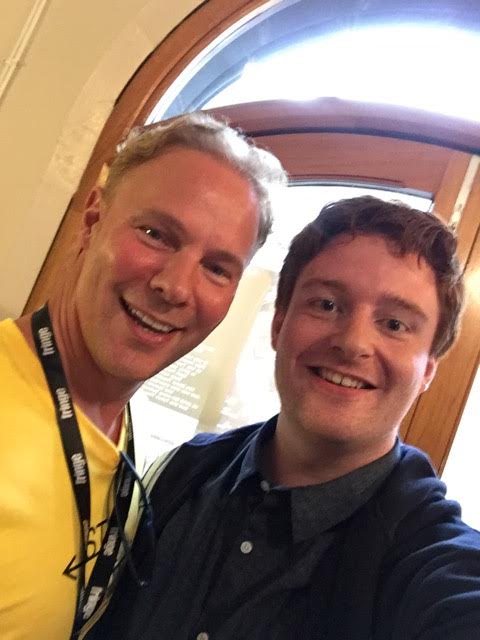
Tom Moyser • 22 Aug 2016

Sun, Chen-Chieh on Inspiring Children to Becoming Puppeteers

The Adventure of Puppets charts the voyage of two explorers as they venture into the unknown. After fifteen years of touring it comes to the Edinburgh Fringe as part of the Taiwan Season. Children’s Correspondent Tom Moyser spoke to the show’s director and original creator Sun, Chen-Chieh (AKA Jack Sun) about the magic of children’s laughter.One of the things I most enjoy about Puppet Beings Theatre, whose exquisite Paper Play also ran at the Fringe last year, is the way the puppets are made live, in front of the young audience. Sun, Chen-Chieh sees it as a guiding principle of his work: “I think that children’s theatre must use the imagination and [children’s own] creativity. The first idea we use is object theatre. We can see the actor just use the tools to make the puppets.”This is especially important to Sun because “we want the children to know that when they go back home they can make their own puppets and perform at home. Or in the classroom.”Sun’s first idea for the show was the two characters, the carpenters played in the current production by Lu, Tsung-Hsien and Jia, Siang-Guo. “The two characters have different personalities. They both want an adventure, but one likes sailing and one likes flying. When I make their story and I combine this together.”Sun has known his his original collaborator on The Adventure of Puppets, Peng, Guo-Cheng for a long time. Since the pair were at elementary school, in fact. He feels that, because they were childhood friends, they “really can play together” and know each other very well. This was the main challenge in developing the work for Lu and Jia to perform. “This knowing each other, this familiar interaction will be a new challenge for them. The performers’ interaction is the main work to practice.”Despite this, The Adventure of Puppets exists most fully in the space between the actor and the audience. “We get the idea first,” says Sun, “and then the details are improvised by the performers. Some ideas from me and some ideas from the actors.”The puppets themselves are largely assembled from found objects. I ask Sun whether the idea for each character comes first or whether the objects themselves inspire the choice of character. Once they have established the characters of the two carpenters, he explains, “The second thing is we just try to find a tool. After that, I see a mop and think ‘that can be a dog licking my face’. It’s just step by step.”Since Sun and Peng devised it together fifteen years ago, The Adventure of Puppets has been on a journey to rival that of its main characters, appearing in Taiwan, India, Japan and now Edinburgh. Sun finds that the children watching the play are the same all over the world. “I think it’s the same because we don’t have a language. Children can understand what the actors are doing.”So far in his twenty-year career, Sun has only made work for children. The most important thing for him, he says, is “the good time and laughter of the children.”The one sentence pitch for the show? “Bring the imagination and go on an adventure with us.”Taiwan Season: The Adventure of Puppets runs at Summerhall this Fringe. Follow the company on Twitter @oooptTaiwan and find their full Edinburgh listing: http://www.broadwaybaby.com/shows/taiwan-season-the-adventure-of-puppets/714440Some translation help was provided during the interview from Yutsen Liu, who works with the company.
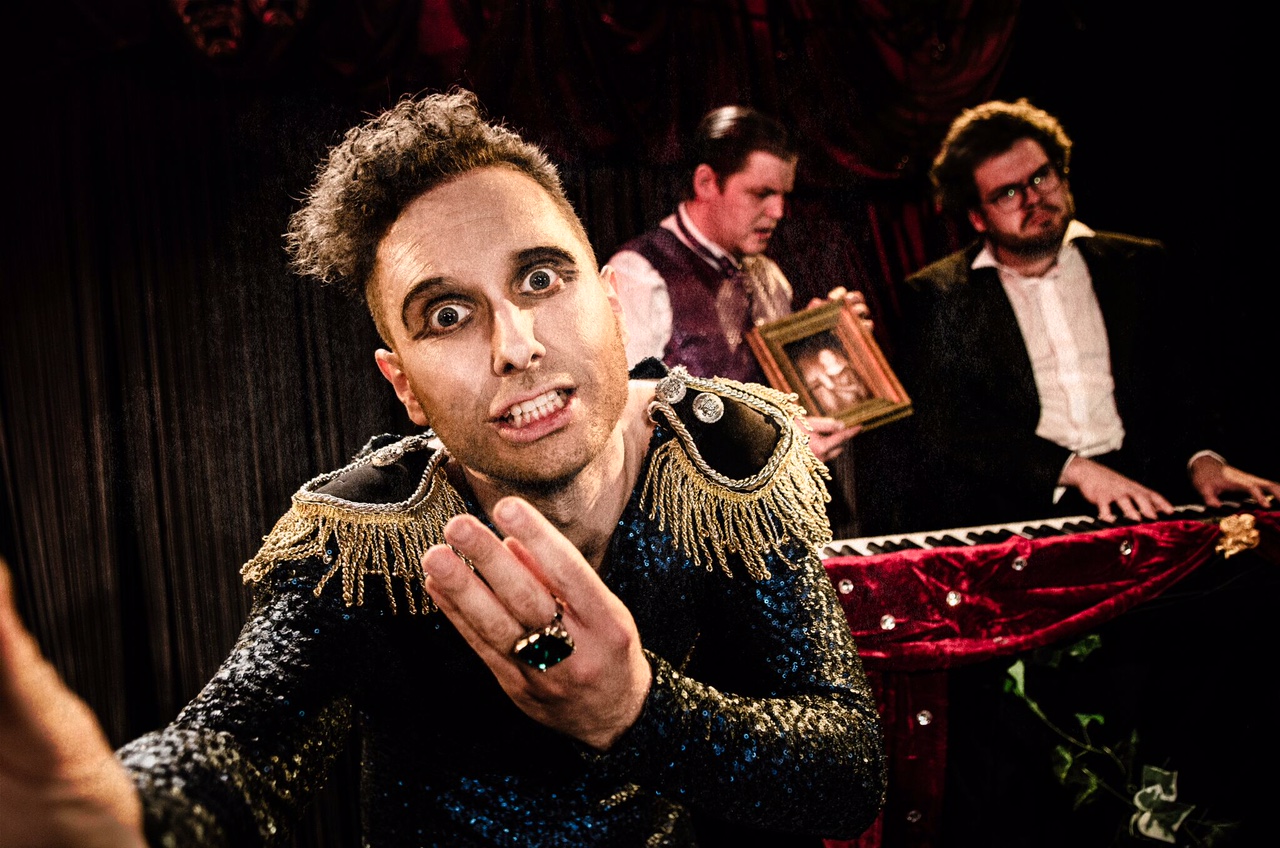
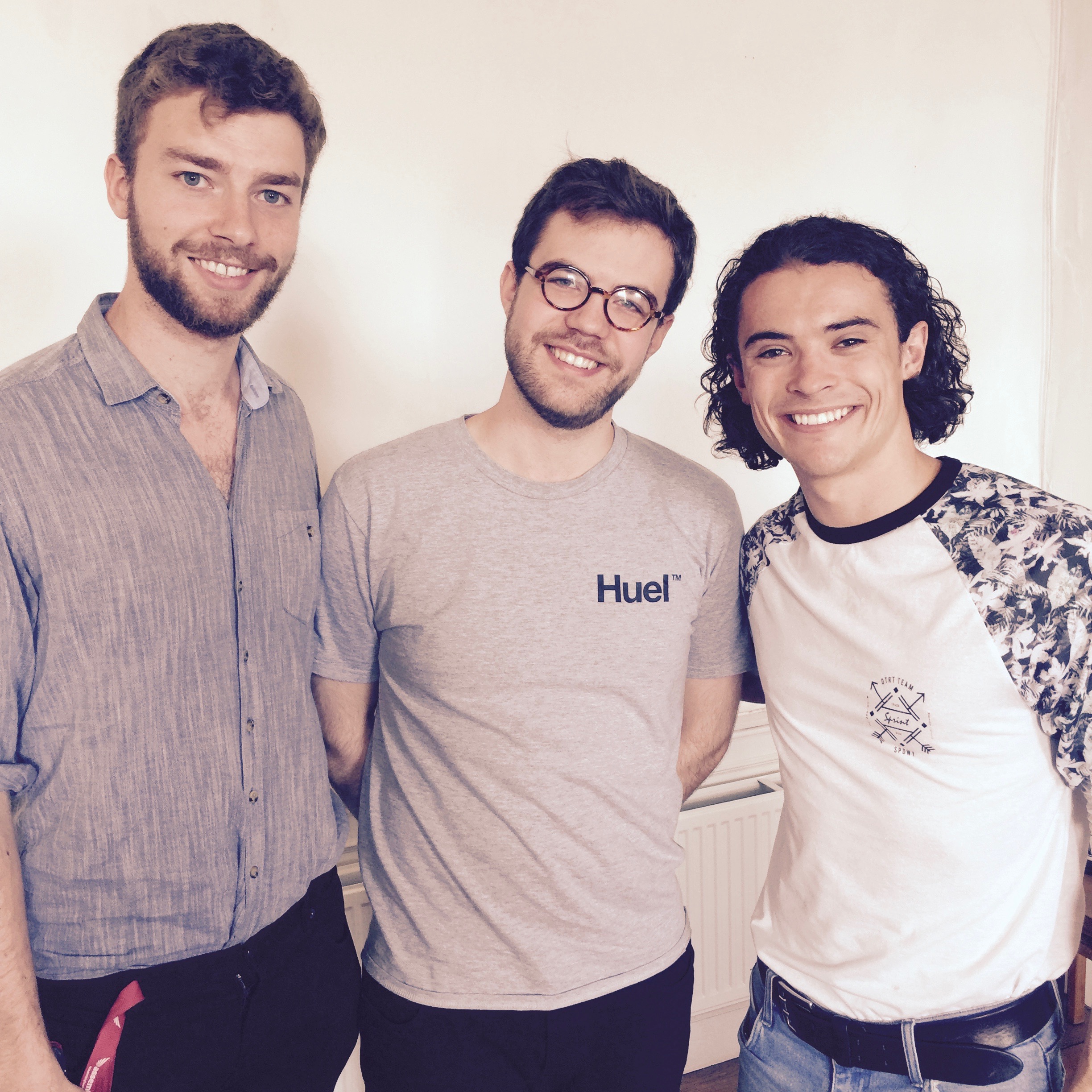
Tom Moyser • 22 Aug 2016

Hyprov: Improv Under Hypnosis’s Asad Mecci on the Science behind the Show

You don’t know this, but somewhere inside you is a comedy genius just waiting to be unleashed - all you need is a hypnotist to help you let it out. Asad Mecci’s new show Hyprov: Improv Under Hypnosis turns audience volunteers into improv stars alongside veterans Colin Mochrie and Mike McShane. Chris Quilietti caught up with Asad to find out about the links between hypnotic disassociation and comedy gold.Hyprov: Improv Under Hypnosis plays at the Assembly George Square Theatre. Full Edinburgh listing: http://www.broadwaybaby.com/shows/hyprov-improv-u... Twitter: @HypnohypeFor more on clinical uses of hypnotherapy, visit the NHS website.

Chris Quilietti • 22 Aug 2016

The Nuclear Family Team on Creating Interactive Theatre Formats

Do you work well under pressure? How about life-or-death pressure? Nuclear Family gives you the chance to find out by inviting the audience to mount an enquiry about a pair of sibling security guards at a nuclear power plant. Chris Quilietti caught up with this interactive theatre show’s cast and creative team Eva O’Connor, Adam Devro and Jonathan Carr.Nuclear Family plays at Assembly Roxy this Fringe. Find the company on Twitter @SundaysCTheatre and their full Edinburgh listing at http://www.broadwaybaby.com/shows/nuclear-family/715112

Chris Quilietti • 22 Aug 2016

Steps' Lee Latchford-Evans on Learning Accents for Eurobeat

Tired of having to wait a full year to get that Eurovision vibe? Then you’ll love Eurobeat, a comedy musical where European countries - including Vatican City - compete for your audience votes. Chris Quilietti caught up with Lee Latchford-Evans (from Steps) who plays host Nikolai Nikovsky.Eurobeat is playing at the Pleasance. Full Edinburgh listing: www.broadwaybaby.com/shows/eurobeat/712983 Find them online www.eurobeattheshow.com and on Twitter @EurobeatTheShow.

Chris Quilietti • 22 Aug 2016

Stop The Train's Rick Guard on the Magic of New Musicals at the Fringe

Stop The Train is a new musical from Rick Guard and Phil Rice following the story of commuters plunged into a dangerous situation - and forced to talk to each other. Broadway Baby’s Chris Quilietti spoke to co-composer Rick Guard about the workshopping process and why Edinburgh is such a brilliant place to bring a new musical.Find out more at stopthetrainmusical.com and follow the show on Twitter @sttmusical. Stop The Train runs at Paradise in Augustines this August. Full Edinburgh listing: http://www.broadwaybaby.com/shows/stop-the-train-the-musical/715017

Chris Quilietti • 22 Aug 2016

​Linda McLean on her Adaptation of The View From Castle Rock

Alice Munro’s short-story collection The View from Castle Rock fictionalises the real-life history of her ancestors’ economic migration from Scotland to Canada. Stellar Quines has taken up residence St Mark’s Church for a half-Fringe half-Edinburgh International Book Festival production, the first time any of the Nobel Prize winner’s work has been dramatised in Scotland. Features Editor James T Harding spoke to playwright Linda McLean to learn more about her unusual adaptation style.The first thing that struck me as an audience member of The View from Castle Rock is that all of the dialogue is direct quotation from the two adapted short stories - and the narration is spoken out loud by the ensemble too.Linda McLean explains how this idea took seed as soon as Marilyn Imrie, the artistic director of Stellar Quines, asked her to read the book with a view to writing a play from it: “As I read it, I thought, if I adapt it I'm gonna lose some of her best writing.”“Because some of her best writing is what she says about the characters, or implies or infers about them, which pays off later. There wasn't a way that I could do that in the dialogue.”McLean returned to Imrie with the idea of approaching it as a ‘word-for-word’ adaptation. But “as it turns out, when they applied for the rights to do it, Alice Munro's estate only allowed word-for-word adaptation.”“It really was serendipitous, me suggesting it and the estate suggesting the same thing. Because it's the first time they've given permission for any theatricalisation of any of her work in this country. It was a real privilege.”The estate placed limitations on what types of editing were available to McLean’s adaptation. “I could shape, reshape, but I couldn't put someone's words into someone else's mouth.”“I could divide up the narration, which was actually the most exciting part.” If you take “Alice Munro's comment on the character, but put it into one of the other character's mouths, it becomes much more layered. Doing that throughout was a lot of fun. But also loads of choices. Which one of this family would be best to make that comment about the other one?”Although Stellar Quines’ production only uses material from the first two short stories in Munro’s book, the adaptation process was characterised by a lot of cutting. “I did it longhand in the beginning. I dramatised every page of those two stories, and split it up to see how long that would take. Three and a half hours!”The next stage was “choosing the story. It quite quickly became obvious that the journey was the story, so lots of things easily fell away from that.” The next draft was still fifteen minutes too long for a Fringe show’s runtime, so some painful cuts had to be made.“Just after the baby's born, Agnes won't feed it until she's allowed some salt to put on her breast with the breastmilk. Because there was a superstition within the Borders that the children would be dimwitted if you didn't do this. It's a lovely scene, but it had to go.”Now McLean has dipped her tow into word-for-word translation, she’s keen to do more. “I've been looking at a couple of things that I think could become amazingly layered when you do them word-for-word. I just think there's more to explore there.”One of the lovely aspects of this production is its interest in migration as a way to make connections - both on and off stage. “Even though Alice Munro was backwardly casting her ear to the possibility of a Borders dialect from the Eighteenth-Nineteenth Century, her description of the characters which have survived in her family and obviously been handed down, are essentially Scottish, you know. ‘Don't be making too much of yourself.’ And secretly writing and sending things off.”“Marilyn was very keen to bring the Book Festival out of Charlotte Square. But also to do something that moves further from the festival and the Fringe, so it's going to the Borders.”“We have had some audience members who are part of the Laidlaw family, and have wanted to have photographs taken with the cast. A nice souvenir to take back."“I'd love to take the show to their part of the world. It would be lovely to take it back [to Canada] as Scots. I really think that would be amazing.”The View from Castle Rock is supported by the Scottish Government’s Edinburgh Festivals Expo Fund and is also part of the Edinburgh Festival Fringe. Following daily performances during the Book Festival at artSpace@StMarks in Castle Terrace, The View from Castle Rock will tour to the Borders including the Ettrick Valley, home of Munro’s ancestors who were related to James Hogg. The tour will take in Peebles, Hawick, Ettrickbridge and Galashiels from 31 August to 3 September as part of Booked!; Edinburgh International Book Festival on the road. Full Edinburgh listing: http://www.broadwaybaby.com/shows/the-view-from-castle-rock-by-alice-munro/715781

James T. Harding • 21 Aug 2016

How to Win Against History's Seiriol Davies on Making a Musical

How to Win Against History is a new musical about Henry Cyril Paget, an eccentric, cross-dressing marquis who was written out of history by his family. James T Harding met Seiriol Davies (Mess, Underbling & Vow) to learn more about the marquis behind the musical, the show’s development into what we see today, and how to repel Roman troops using only the power of dance.How to Win Against History plays at Assembly’s The Box throughout this August. Full Edinburgh listing: http://www.broadwaybaby.com/shows/how-to-win-against-history/714135 Find Seiriol online @seirioldavies.

James T. Harding • 21 Aug 2016

Jonny Labey & Quentin Beroud on Rediscovering Rupert Brooke for Verge of Strife

Poet Rupert Brooke is known for the patriotic poetry he wrote as World War One got under way, but most know little about the trail of broken hearts he left through Edwardian counter-culture beforehand. A new play Verge of Strife by Nick Baldock aims to change all that by bringing Brooke’s life and work back into prominence. Star Jonny Labey (EastEnders) and director Quentin Beroud (Richard II, House of Parliament) join Features Editor James T Harding to talk about getting into Brooke’s usually cruel character, his bisexuality, and the way he has and hasn’t been remembered.Verge of Strife plays at Assembly George Square Studios throughout this Fringe. Full Edinburgh listing: http://www.broadwaybaby.com/shows/verge-of-strife/714947 Follow Johnny @jonnylabey and Quentin @QBeroud.

James T. Harding • 19 Aug 2016

​Milk Playwright Ross Dunsmore on Bravery in New Writing

What do we need to nourish ourselves? Is love enough? Can we definitively say that Nandos are the kings of fast food? Such questions and more are explored in the invigorating new play Milk, on at the Traverse Theatre this festival. Alexander Gillespie sat down with first-time playwright Ross Dunsmore to learn more about his journey from open submissions to the Traverse One stage.How has your Fringe been so far?We lost an actor with a week to go, so another actor had to step in and do some very quick, very last-minute rehearsing, but he’s been fantastic. Once the previews and the first couple of performances were done and the show had really settled, its been really enjoyable. I’ve gradually started seeing other things myself. Its hectic, its crazy, but in a good way – it’s been good.Where did the inspiration for Milk come from?A conversation that I overheard on a bus – a group of girls had been talking about a party that they had been to. They looked about thirteen, fourteen years old. One girl said to this other girl – “Did you hear that Scott ripped off Tracey’s top” – and this other girl said “Yeah, I think he really really likes her”.It was a strange exchange that got me thinking about how affection is articulated in strange ways, and how our cravings and desires can become quite confused and quite damaging. So that opened up the theme of nourishment and sustenance.Then the idea of the three stages of life – teenagers, a couple who had just had a baby and an elderly couple – and examining the idea of craving, sustenance, nourishment, what it meant to each of them.Why did you choose to look at three ages spectrum rather than just focus on one?I suppose because I think we are one, and at the same time all ages, in a sense. My early formative years are always with me, I often think about the future and what that will be like, so I guess you’re experiencing the entire age range at once in many ways. Also, it wasn’t really that thought through, I tend to find that the characters sort of arrive to you on the page and if they are interesting you stick with them and they become scenes and they become stories, rather than chasing them away. So I didn’t actually particularly sit thinking, I’ve got to write these three ages – they were just the characters that presented themselves and maintained my interest, and in a way they happened to represent three parts of a life. That seemed to work rather well. Yeah, I think I’d say that characters arrived rather than I went pursuing them.So how much did the script change from the first draft to the final one?Bizarrely, I would say that 60% of the script remained entirely intact, didn’t change one word. I guess once you’ve found something that works and you’re happy with, its best to leave it alone and not continue to tinker with it forever. So maybe 30% or 40% developed over the past year or so.Both myself and Orla [O’Loughlin, artistic director of the Traverse and director of Milk] would just examine the script, see what was working, what wasn’t working. It was really only one couple, the central couple, that changed over time. The young couple and the older couple, pretty much from that first draft, most of it was exactly the same. It seemed to work, so we left it alone. It seemed the smartest thing to do.How did you find working with Orla?Fantastic, absolutely fantastic – she’s very inclusive, completely involved me in all the decisions about developing the script and the casting, welcomed me into rehearsals, so I think she’s fantastic – and a great champion of new writing. She took a big risk, a big risk on me and she’s brave to do that. She didn’t have to do that, so it was a brave choice and she made me feel very much part of the team, so I think she’s been great.You worked previously as an actor, how was it being on the other side of the team?Scarier, I think, or more scary in a different way. Certainly in performance, when you are an actor, you’re on stage, you can affect things in a way. If the energy is flagging, you can pick the energy up. If its maybe a little bit slow, you can push it along. You can do something with it. As a writer, once it’s up and running you watch it, you experience it with an audience, and it’s a performance, so there’s nothing you can do. I miss acting, but I am also quite relieved that other people have taken that responsibility.How do you find the experience of watching it, with everyone else seeing it for the first time?Great – the first couple of times quite scary, because your not sure how they are going to take it, but now the show’s settled and the show’s really tight, it’s really enjoyable to see their pleasure and to see them embrace the show, to lean into the show, to listen and catch the ideas. If there’s a funny idea or if its more playful, or intense or sadder ideas – when you see the audience connect with something you’ve put on the page its very rewarding, and you feel just part of the audience, part of the group that are enjoying something on stage.Is there anything you wish you had known before you started writing the script?No, No – I think I approached the work with honesty and integrity and I committed to it. It’s quite an intense experience, putting on your first play – Milk is my first play, not only the first play that I’ve had produced, but the first play that I’ve ever written. It’s not as though there are another four or five plays in a drawer somewhere, it’s my first ever – so to go from that to Traverse One, middle of the festival, is quite intense. I probably wasn’t quite prepared for how sharp or how bright the spotlight was on that. Having said that, its been very rewarding, the reaction has been incredibly positive. I wouldn’t say I would do anything different, but I’m slightly wiser now about what it’s like.Before the show I was chatting downstairs with a lady selling playscripts – and she mentioned that your script got accepted here around the same time you got accepted into a development program…The script was accepted here the same time I was accepted into Playwright Studio Scotland, who do a mentoring program for new playwrights. The two things were running at the same time.So how have you find that mentoring program?Great, Great! My attention was obviously split, and as the play shifted more into full production I had to shift my focus here, but I was working with Lynda Radley who wrote The Interference and she was great, working on another piece of work that is not finished yet, but her input was fantastic. She’s a playwright and she’s done this many times before, and It’s all new to me, so her insight and generosity was fantastic. It was sometimes quite refreshing to step away from here, and just think about something else entirely, and come back and reinvest here. Having two things on the go wasn’t such a bad thing really. There’s a danger of getting overly obsessed I guess, just spending every minute of every day thinking about one particular piece of work, which ultimately might not be helpful or good for that piece of work. So having the two things was great.Is it scary to give your script to a director, to someone else, and let it go?Yeah, but more and more I think you have to, writers have to be a bit braver. There’s a temptation to hide yourself away and write something perfect and present it to the world and that’s never going to happen. I’ve always found that when I have taken the risk and given the work to people to read they have always been very generous and supportive in their feedback, not nasty or mean about the work, but trying to figure out what it is and what you’re trying to do to support you. I would encourage writers, I’d encourage myself, to be a little bit braver. If you write something and you like it then show it to people. It’s not as though you can’t then change it.Milk plays at the Traverse this Fringe. Full Edinburgh listing: http://www.broadwaybaby.com/shows/milk/716138

Alexander Gillespie • 19 Aug 2016