Reviews by Richard Beck

Allegra

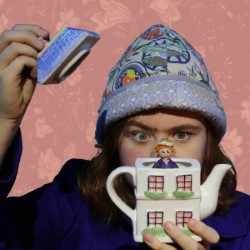
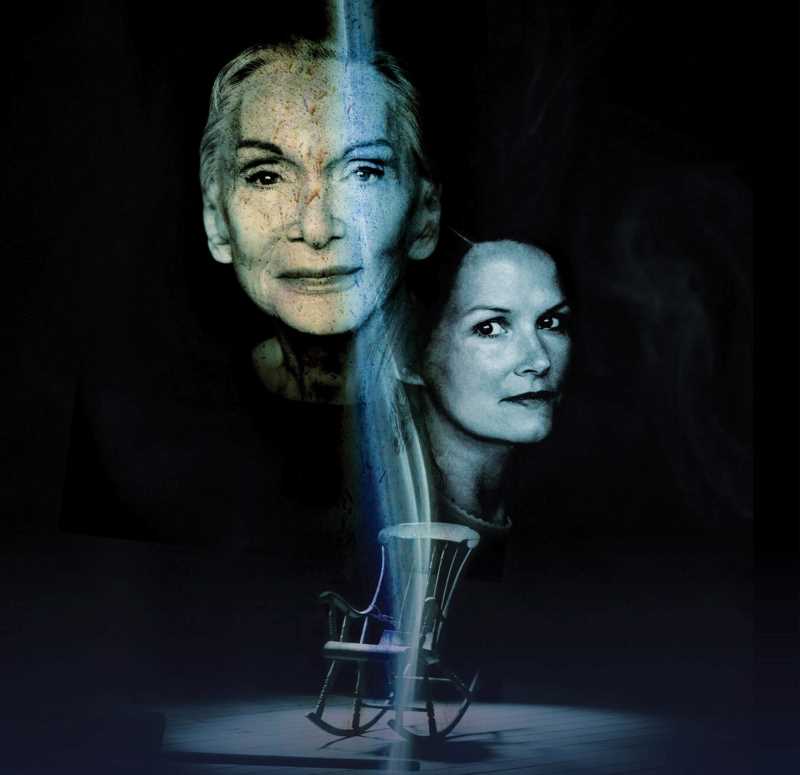
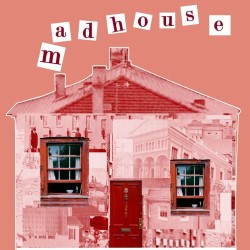
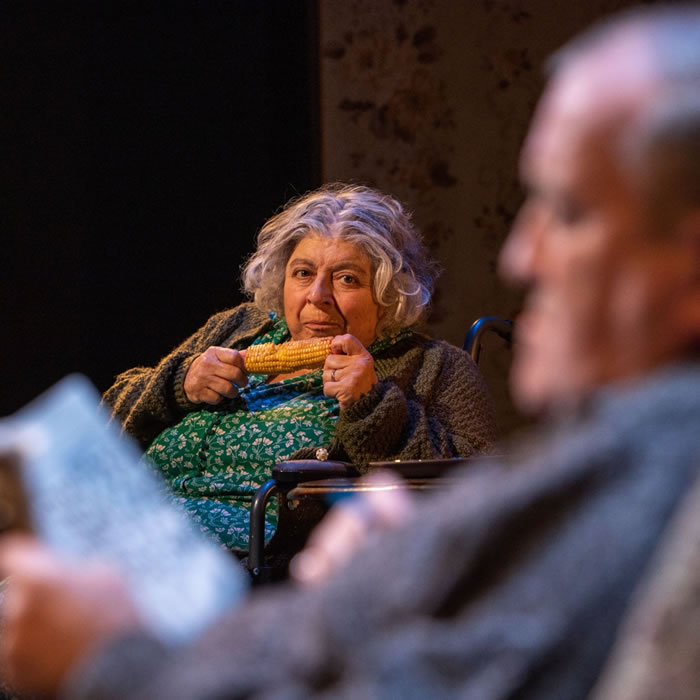
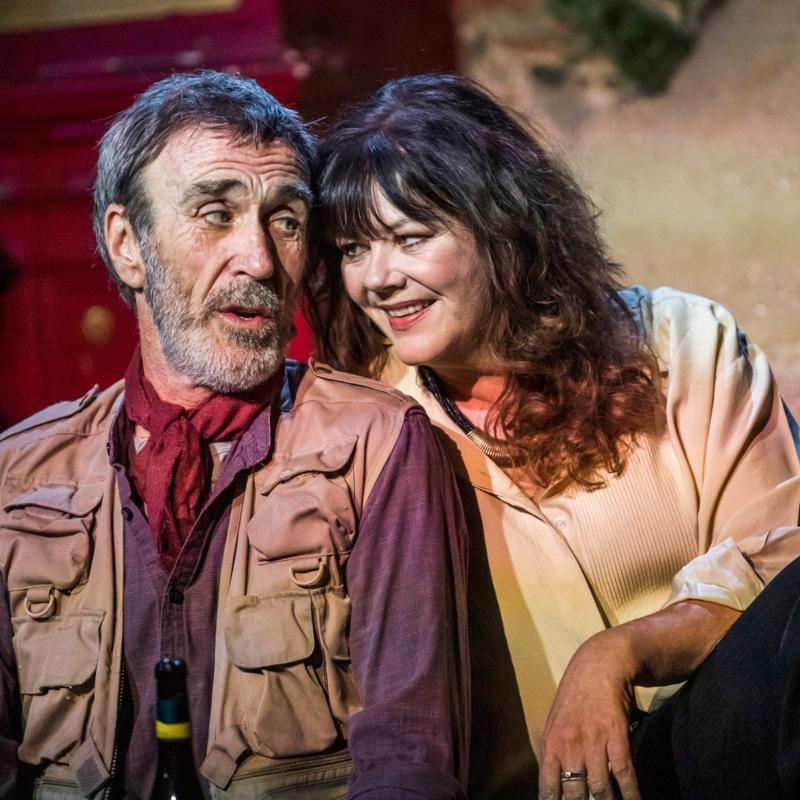
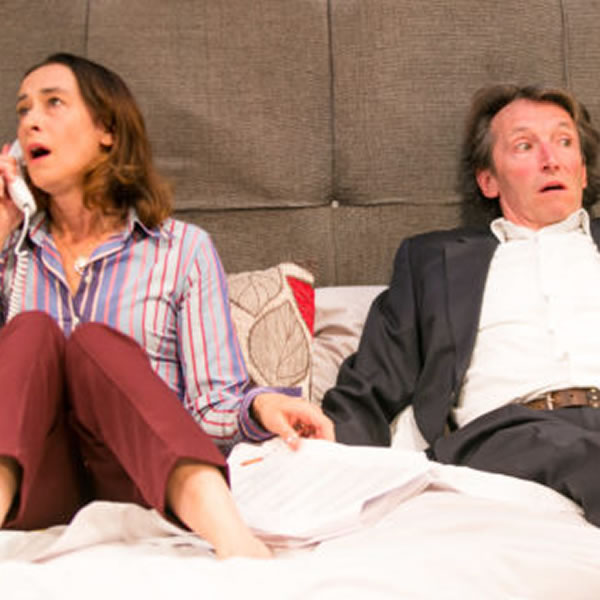
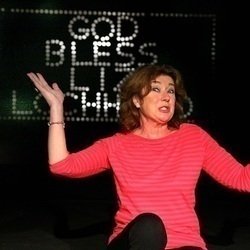
With a head full of songs to which she has to give voice, Allegra swans around her village causing distress to all the miserable, grumpy and easily upset locals who despise her lack of conformity to social norms. They resent her cheerfulness and the way she tries to spread her glee, while she sees herself as performing a service to the community by brightening their days.Dame Maureen Lipman, in the eponymous role, clearly relishes every minute of playing such an innocently mischievous character and, as a consequence, her infectious joy flows off the stage, enveloping us in two hours of delightful situation comedy, brimming with classic English humour, courtesy of Peter Quilter’s profound understanding of what makes us laugh. The show has a pace worthy of a farce and contains nods to that genre, thanks to the astute direction of Stephen Mear, who is also responsible for choreographing the highly entertaining song-and-dance routines that permeate the show and venture into every corner of Justin Williams’ charming country-house set. He also designed the vividly coloured costumes that give Allegra an added air of eccentricity.Brimming with so many tunes, Allegra sometimes recedes into her own fantasy world while others are talking to her. As she does, lighting designs by Samuel Biondolillo, with sound by Russell Ditchfield, transform the set as projected leaves descend and dancing tulips appear while she bursts into that old Tiptoe favourite. Complaints from the neighbours, people in the library, the hairdressers and local shoppers reach a point where she is ultimately given a judicial order to desist and is placed on medication that destroys all the life in her.She’d been warned that this might happen by her long-suffering brother, Ronen, charmingly played by John Middleton in a caring role riddled with frustration at dealing with Allegra. He employs a Czech housekeeper, Anna, played with firm compassion by Elizabeth Bower, to bring some semblance of order to his sister's life. Somewhat surprisingly, Allegra gets on well with Anna. Interrupting the domesticity, Officer Rogers makes several visits to the house to explain how Allegra's behaviour is increasingly being brought to the attention of the police. Bailey Patrick, as a stereotypical village bobby, is both serious and comical as he becomes drawn into this bizarre world.Among all the humour there is a serious but unstated undercurrent of issues relating to old age and mental health, which those looking for more meat among the light-hearted frivolity of Allegra might like to ponder. No doubt some will criticise Quilter for not making the play more sensitive to these issues, but this is escapist entertainment, almost of a bygone age, and not the soul-searching angst of most modern drama. To that end, sit back, enjoy the show and wonder at the marvellous Dame Maureen, who celebrated her 80th birthday last month.Following this week’s run at Richmond Theatre, the play goes on tour until its limited West End run at the Harold Pinter Theatre, starting on 8 July.

Richmond Theatre (Ambassador Theatre Group) • 8 Jun 2026 - 13 Jun 2026

An Audience with Abraham Lincoln

The UK première of An Audience with Abraham Lincoln, at Greenwich Theatre, also marks solo performer Jacob Truax’s first professional engagement in this country.Truax is an award-winning Lincoln interpreter recognised for his rigorous historical research and detailed knowledge of the 16th president’s life. This is evidenced throughout the play, with references to the minutiae of ‘Honest Abe’s’ early life, the positions he held, his rise from humble rural beginnings, and the career-changing encounters that led to him becoming a lawyer and politician.A front-of-house announcement before the performance explained that Truax would have to take a break before the end of his 75-minute monologue in order to accommodate the interval of the main-house show, which would create disruptive noise in the adjacent bar. This seemed to be something of a programming error on the part of the theatre, breaking the continuity of the storyline and disrupting his flow. It took him a while to regain his concentration thereafter.Lincoln was known for his storytelling and for relating anecdotes in order to make political and moral points. We hear several of these, some of which were clearly meant to be humorous but, for the most part, raised no more than a smile or a chuckle. In comedic terms, they largely fell flat.Increasingly, the performance became more of a costumed lecture delivered in the first person than a piece of theatre, the narrative being delivered in an almost uniformly soft voice, even when reciting some of the anticipated great speeches. These included Lincoln’s Lecture on Law, the House Divided speech, the Second Inaugural Address and the famous Gettysburg Address. It was often hard to distinguish where one ended and another began in vocal terms.The narrative moved chronologically, but little possessed the rousing tension or excitement found in works such as Doris Kearns Goodwin’s Team of Rivals. Lincoln’s genius in navigating the complexities of assembling his first post-election cabinet is barely addressed. Some tragedies of his private life are related, but his love for his wife, Mary Todd Lincoln, seems underplayed. The tragedy of his assassination is, of course, absent, as this is an encounter with the living man.The ponderous historical narrative is not helped by the lack of movement direction, which consists of little more than a couple of steps back and forth between a seat and a table. Meanwhile, the fixed lighting often leaves Truax half-lit or in shadow.An Audience with Abraham Lincoln ends up as a drawn-out talk about one of the most important US presidents of all time, one that fails to ignite enthusiasm or sympathy for its subject and that requires substantial editorial and directorial input if it is to have real impact as a solo show.

Greenwich Theatre • 2 Jun 2026 - 5 Jun 2026

More Pub Tales with Chris Sainton-Clark

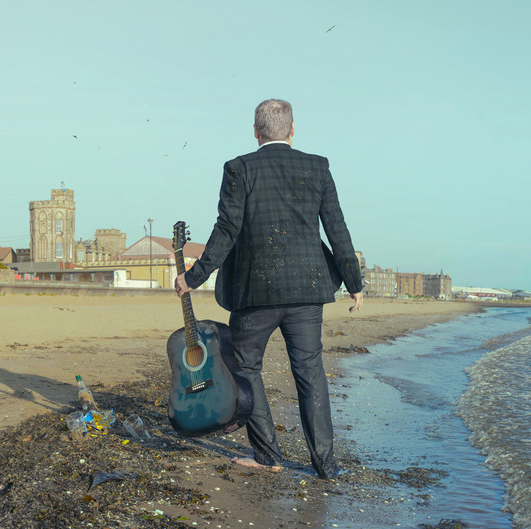
Last year, Chris Sainton-Clark filled Prague Fringe Festival’s largest venue, Malostranská beseda, with his hugely successful and highly entertaining Tales from a British Country Pub, for which he deservedly picked up the 2025 Creative Award in recognition of his remarkable inventiveness; one of 12 theatre awards he now possesses.The show had a simple formula. Draw on your years of working behind the bar, observing and listening to customers from all walks of life. Eavesdrop on them, engage with them, note their idiosyncrasies and quirky behaviour, and use your comprehensive ability with words to form narratives in rhyming couplets. Combine your virtuoso talent as a lyricist, singer, guitarist and composer to create songs that form a highly amusing hour’s entertainment that everyone can identify with.He continued touring the show around the UK and then went on to a sell-out run in venues all around New Zealand, picking up multiple awards along the way and many more stories. The boundaries of his material have now gone beyond the pub to include encounters with people rooted in everyday life and situations occurring on his travels. Hence this year he was back in Prague with his sequel, appropriately and simply called More Pub Tales with Chris Sainton-Clark.The show contains some of the most popular material from the original and remains true to form, bearing his hallmark blend of guitar-backed songs with cutting lyrics that lay bare the human condition. We are introduced to Paul, the classic pub geezer, and Bob, who loudly displayed his bright red Arsenal shirt while cruising up the stunning Milford Sound with his back to the most spectacular scenery. More amusement comes from New Zealand in Confusing Interactions I’ve Had With Kiwis; an exposé of the pitfalls of not fully tuning in to their vowel sounds. Folks from the USA also come in for some stick in A British Bartender’s Guide to Americans.These and many more acutely observant pieces keep the light-hearted show rolling along with our host’s charismatic charm. There are a number of opportunities to see him on tour around the country and he’ll also be in Edinburgh again for the Fringe, where, additionally, he is performing his gripping five-star crime drama, The Night Ali Died.

Malostranská beseda - Klub • 28 May 2026 - 30 May 2026

Pip Utton - Hunchback of Notre Dames

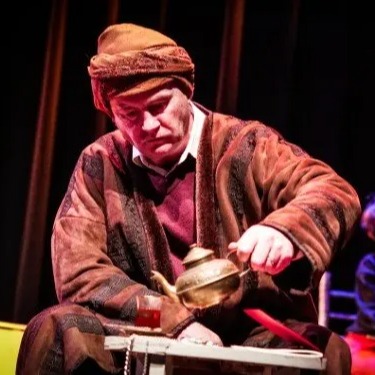
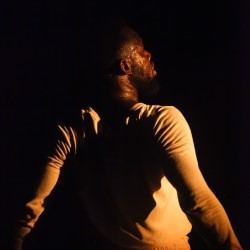
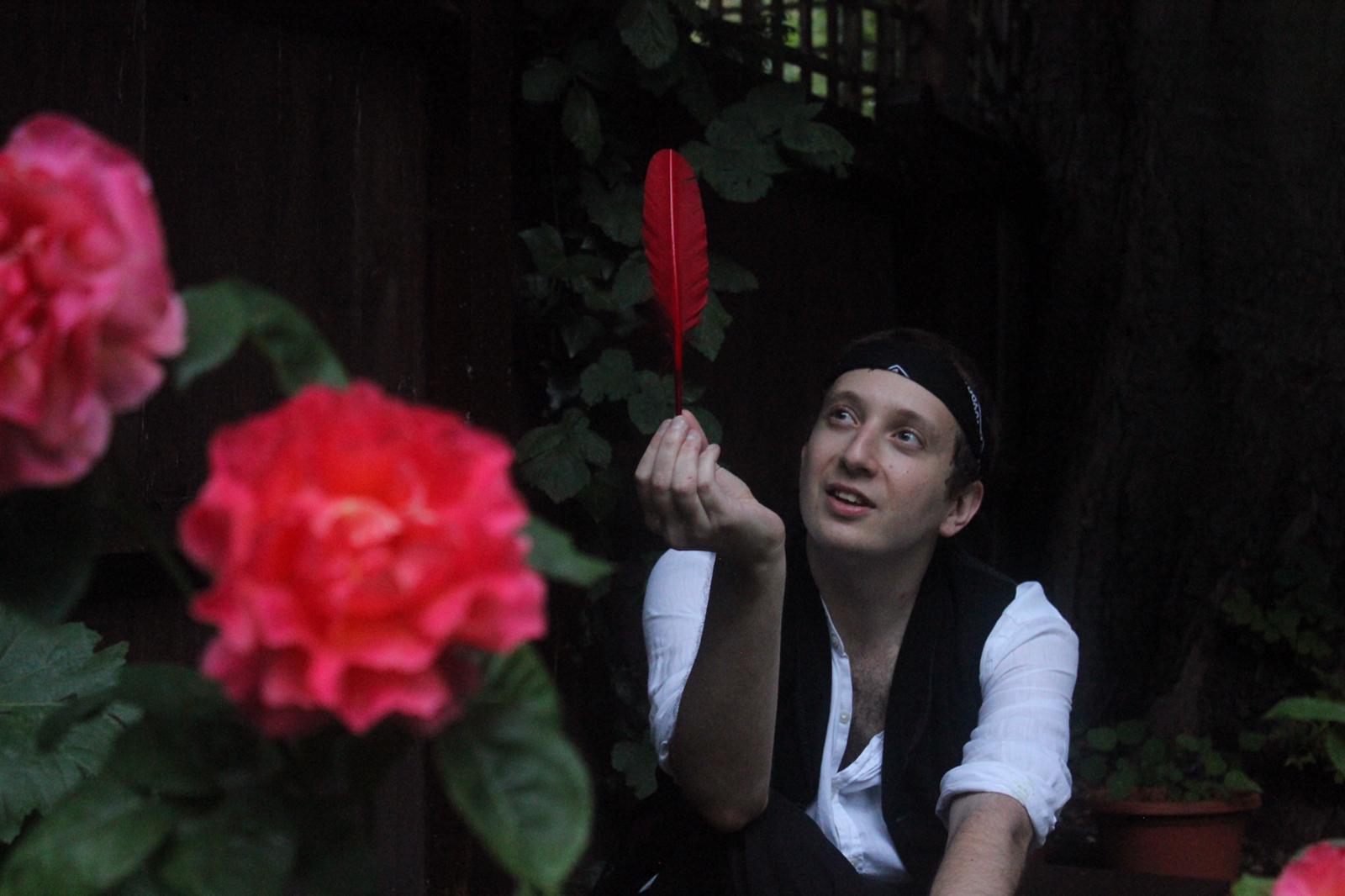
There’s a particular thrill when a classic story is stripped back and submitted to the craft of an outstanding single performer. In The Hunchback of Notre Dame, at Studio A Rubin as part of Prague Fringe, the master of solo performance, Pip Utton, delivers another triumph from his series of towering characters that have included Lear, Churchill, Chaplin and many others.As we enter, Utton is there, barefoot, dressed in shabby sackcloth and holding a small posy of white flowers. His back is towards us, revealing the hunch that dictated how the world viewed Quasimodo. He looks to the ground, his stare transfixed by the body of his beloved Esmeralda, one of the few people ever to show compassion towards him. He mourns her loss, turns and then takes us back in time until his life story is fully revealed and we return to the present and the tale's tragic ending.Throughout, he remains utterly immersed in the character of Quasimodo, drawing us into his sad life in a manner that is immediate, intimate and emotionally devastating. His voice is the only sound we hear except for the timely introduction of the famous bells of Notre Dame; bells that had caused his severely impaired hearing, but which, in the absence of people, had become dear friends, each lovingly named and called upon to perform. He looks down on the streets of Paris and observes the everyday life from which he is excluded; the interactions from which he is prohibited and the encounters with friends which he is denied.His narrative is richly textured, full of heartache and longing, replete with reminiscences and recollections of childhood, of the loves that might have been and the painful details of the flogging he received when he made a rare venture onto the streets and was arrested. This is no grotesque caricature, but the portrayal of a painfully isolated soul with deep feelings and yearnings, who can yet find wit and humour in the misery of existence. This is all conveyed through the power of a meticulously performed character study of small gestures, little steps and the humility of a mostly bowed head, in which the slightest movement or change of voice can transform a scene, turning individuals into crowds with ease. He also allows himself the occasional enraged outburst.It's a superbly balanced performance, precisely what Utton has become famous for, and despite all his claims to be retiring, we look forward to seeing him at many more Fringes in Prague, where he's been coming for 23 years, and at others around Europe.

A Studio Rubín • 25 May 2026 - 30 May 2026

Howie the Rookie

Contracting scabies and the death of a Siamese fighting fish are the somewhat minor incidents that set in motion a series of chaotic events with disastrous consequences in Mark O’Rowe’s visceral drama Howie the Rookie at The Cockpit Theatre, in collaboration with Burning Coal Theatre for their biennial UK visit, directed by Jerome Davis.The drama unfolds in two fast-paced, intense monologues set over an action-packed 24 hours. In part one we meet the scabies-riddled Howie Lee (Lucius Robinson), who is trying to track down The Rookie Lee (Andrew Price Carlile), from whose old infested mattress he contracted the condition. He intends to “give him a hiding” for the discomfort he is enduring. In the second half it’s the turn of The Rookie Lee to give his side of the story, but mostly to explain his own troubles in finding the money to repay Ladyboy, whose expensive fighting fish he killed in an unfortunate accident. Here, it seems, not even the fish can live in peace.Both actors give powerful performances. Robinson, playing the rougher of the two, relishes the seediness of the role, immersing himself in all the filth and sexual depravity of everyday life, along with the essential threats, violence and aggression that come with the territory. Price Carlile plays a softer role that relies more on charm and good looks to survive, while suffering the panic of a repayment deadline he has little hope of meeting. They each introduce us to some eccentric characters and mingle humour with wounded pride in a plot that ultimately ends in tragedy.The action takes place in Dublin’s gritty underworld. It is here the production falls short, despite the masterful performances of both actors. Their utterances have a generic Irish sound to them but are lacking in precision. The tones and lilt of Dublin are missing. Some sentences are rendered unintelligible and trying to grasp what is going on, particularly in the first half, is very difficult.The level of effort and concentration required to understand what is being said and to follow the story is way beyond what should be necessary to appreciate the play.

The Cockpit • 24 Apr 2026 - 2 May 2026

Charlie and Striptease

The double bill of political satires by the award-winning Polish playwright Sławomir Mrożek at The Golden Goose Theatre date from when the country formed part of the Soviet Union. Charlie and Striptease, written in 1961, are examples of his distinctive blend of absurdity and social commentary.Director Orsolya Nagy says, “The Theatre of the Absurd in East-Central Europe carried a critical political statement and reflected on the absurdity of life in the communist era.” Although times and circumstances have changed, the power of regimes, threats to civil liberties and the controlling arm of the state still make them relevant today.The parts in Charlie and Striptease are respectively played as follows: Occulist/Man 1, Rowland D. Hill; Grandson/Man 2, Simon Brandon; Grandfather/Hand 1, Kenneth Michaels; and Hand 2, Orsolya Nagy. In both, lighting designer Matthew Biss successfully sets the required mood.Charlie opens with the rather posh Occulist semi-recumbent, reading and snacking on his sofa. He is disturbed by a loud banging on the door. He lets in the old man, armed with a hunting rifle, and his grandson. They have come to kill Charlie, but wouldn’t know him if they saw him, and the Occulist assures them that he doesn’t live here. Through a series of bizarre conversations the Occulist is drawn into the ludicrous situation, becoming part of the scheme. Ultimately he accepts the outrageous as normal and effectively becomes a co-conspirator.In Striptease, two strangers walk through streets of dense fog and enter a room through opposite doors. It is empty, but for two dining chairs. They carry matching briefcases and are dressed identically in dark suits, white shirts and black ties, even down to the red and white striped underwear; the colours of the Polish flag (intentional or just coincidence?). We know this because a mysterious hand, that silently protrudes from the wings, gestures that they are to divest themselves one item at a time.Why they are there remains a mystery. Any thoughts of leaving are quashed when the doors lock, but the situation initiates a debate about the nature of choice and free will that is ultimately brought to nought by the controlling hand, to whom they succumb.Michaels brings comic relief to Charlie, while Brandon confidently delivers the absurdist thrust of non-sequiturs to the nervous and jittery Hill, who tries to accommodate his nonsense. He contrasts this performance in Striptease with a deadpan logicality that pleads for rationality against Brandon’s angst-driven Man 2.In two disparate situations, each play allows for interpretations of the exercise of power, the weight of coercion, the nature of authoritarianism and how people can be manipulated and controlled. The plays fall short of the advertised “riotous comedy”, which a different approach might have produced, but they do contain “wit and humour” as promised. They also present a rare opportunity to see these works and be transported into an age when innovative theatre challenged regimes.

Golden Goose Theatre • 21 Apr 2026 - 9 May 2026

SMOKE + You Are Loved panel

For those who enjoy a play open to multiple interpretations, the otherwise simple story of SMOKE, directed by Campbell X at the Omnibus Theatre, Clapham, allows for ample speculation.The publicity tells us that writer/performer Alexis Gregory makes a return to the stage with “his most daring and uncompromising work to date, confronting the hardest issues currently facing the queer community, head-on.” Maybe. The event consists of his performance and a post-show discussion with a panel of contributors in partnership with the LGBTQ+ non-profit organisation You Are Loved, who explore the show’s themes.Most of that discussion on this night focused on the issue of chemsex, which is certainly an important element of the play and may be interpreted as a drug-induced delusion. Wider issues of access to sexual health information and the nature of relationships were also considered. That session is an optional extra once the play is over.The casual, conversational opening of SMOKE is heightened in its laid-back style by the interesting directorial decision to run the whole play with the house lights on full. It creates an up-close storytelling atmosphere, enhanced by Gregory’s walks up and down the aisle, but detracts from the sense of theatre, performance and mystery. The rather abrupt and fleeting last scene is the only exception to this.Alex reveals that he has received an Instagram DM from his boyfriend, who has been dead for two years. He shows it to people in the front few rows to establish its authenticity. But in the world of social media messaging, anything is possible. Is it really a new message, one that has just popped up from the past, or part of a phantasmagorical world in which he struggles to come to terms with his partner’s death in a psychotic malaise? You decide. These optional interpretations run through the entire play: scenes in the café, which have some delightful comic moments; visits to his boyfriend’s mother; encounters with the man whom he believes to be the person who sent him the message. Is this world real or a fantasy?SMOKE, we are told, draws on Gregory’s “particularly brutal experience of an online hack and several years observing addiction and the mental health crises within the LGBTQ+ community, particularly with many young gay men in this technological age.” As such, it is to be respected as a worthy solo performance and deeply personal testimony about important issues.

Omnibus Theatre • 21 Apr 2026 - 25 Apr 2026

He Said/She Said

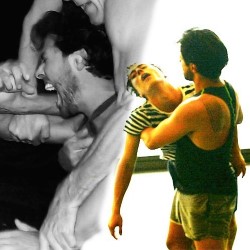
An inspired piece of programming by director Claire Evans sees Misconduct by Dom Riley and Ladykiller by Madeline Gould paired in a double bill entitled He Said/She Said, at The White Bear Theatre.The concern with running two plays together by different authors, with separate casts, is that one will overshadow the other. That issue was heightened after the towering performance by Gwithian Evans as Richie in Misconduct. “Follow that,” was the thought that came to mind. It took no more than a highly charged entrance, with face, hands and clothing covered in blood, combined with the forceful delivery of opening lines, to demonstrate that Geebs Marie Williams as Her in Ladykiller was going to more than match the pre-interval show. Even though the gender of the actor, the location and the circumstances change, these plays and actors feel as though they were made to go together and be performed in this order. With the common theme of a knife attack occurring towards the end of Misconduct and at the opening of Ladykiller, it’s rather like picking up where we left off.These are not plays tackling systemic knife crime and remain two very different works that are ultimately concerned with the exploration of two individuals, their mindsets and how a solitary act can change their lives for ever.Male bonding and the challenges of friendship permeate Misconduct. Richie is distressed by the knowledge that his best mate at school is heading off to university, leaving him behind with lesser prospects and also breaking up the group. In a farewell outing they set out on the train to Leeds for a big away game. As their journey progresses, aggression and hooliganism emerge on the train and at Elland Road, before the fatal crime occurs almost out of nowhere and Richie is faced with the devastating consequences of an action which he underplays through self-deception. It’s a male story by a male writer.Ladykiller, on the other hand, is about a female and is written by a female. It places the character known just as Her at the centre of a gruesome hotel murder. In a single frenzied act of grotesque violence her simple life as a chambermaid is destroyed. However, her attempts to rationalise her behaviour and the ideas she has for escaping detection reveal that she has deep-rooted psychological issues that form a disconnect between what she has done and its consequences. Like Richie, she creates a gulf between feeling guilt and the acceptance of responsibility.Both actors sustain an impassioned level of performance that is truly remarkable. They are unyielding and unwavering in their commitment to the roles and exude breathtaking energy. Powerful direct addresses are balanced with moments of calmer introspection but, for the most part, with Evans we are carried along on both a literal and mental journey at breakneck speed and with Williams we are plunged into a fiery, fervent and vehement malaise of rage and delusion.The intensity is heightened by the confines of The White Bear Theatre and its inescapable intimacy. Evans’ direction uses every inch of space, with movements darting in all directions, thus overcoming the complexity of seating on two sides at right angles to each other. Both actors engage with us at all times, wherever we might be seated. Meanwhile, Jan Giedroyc‘s evocative soundscape is timed with staggering precision to the phrasings and delivery of the scripts, raising the dramatic stakes even higher in harmony with the lighting direction and technical DSM work by Marta Fossati, who changes designer David Fitzhugh’s appropriately functional and unobtrusive set with an array of colours.              This double bill is a stunning double treat.

White Bear • 21 Apr 2026 - 2 May 2026

Thrill Me - The Leopold and Loeb Story

Marking 15 years since Thrill Me: The Leopold & Loeb Story made its London premiere, the musical is revived at Waterloo East Theatre, directed by Gerald Armin with musical direction by Richard Seaman.The theatre world is awash with musicals and it’s easy to wonder whether there is anything that cannot be told through the genre. Stephen Dolginoff certainly stretched the boundaries when he came up with the book, music and lyrics for a show that relates the true story of a 14-year-old boy’s murder.Nathan Leopold (Jamie Kaye) stands before the parole board, yet again, after 30 years’ incarceration for the crime in which he was complicit. As the voice-over officer (Richard Cunningham) questions him about his current state of remorse, he re-enacts episodes of the crime with its instigator, Richard Loeb (Rufus Kampa).They were both brilliant, highly educated and privileged young men about to set out on successful careers as Chicago lawyers. Yet both were deeply flawed individuals. Loeb initially got his thrills from petty crime, which had to keep escalating in order to get a satisfactory buzz. Arson developed into pyromania with its associated sexual gratification. Then he discovered the writings of Nietzsche and cast himself as a superior man, infallible, untouchable and not bound by society’s norms.Leopold was obsessed with him and overwhelmingly sexually attracted to him. Loeb went along with this, but only as a tool of control, rationing favours in return for compliance in his criminality, including the plot to commit the perfect, undetectable murder. What does not emerge until the story of their arrest and imprisonment unfolds is the undermining counterplot so carefully executed by Leopold to meet his own ends.This minimalist production relies on six sets of independently located blocks to create levels. The absence of a naturalistic set hampers immersion in the period, locations and reality of the story. Consequently, lighting by Jonathan Simpson, while changing the moods, has little to work off. Penny Topsom fares better with the costumes that capture the period and, in the case of Loeb, highlight his posh, flamboyant characteristics.Kampa and Kaye competently deliver the vocals with clarity, against a basic piano accompaniment, but the chemistry between them often seems thin, emotionally restrained and lacking menace, all of which undermine the complex, manipulative nature of their relationship.Will it thrill you? Probably not, but it is an opportunity to see how this extraordinary story became transformed into a musical.

Waterloo East Theatre • 16 Apr 2026 - 1 May 2026

Un-Expecting

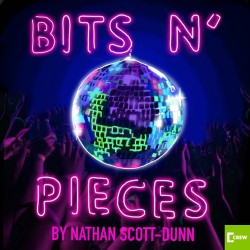
Inspiration comes in many forms for playwrights, and the experience of becoming a father was the perfect stimulus for Nathan Scott-Dunn to pen his latest drama and make his debut at Òran Mór with Un-Expecting, as part of A Play, A Pie and A Pint’s Spring 2026 season, supported by Creative Scotland.Speaking of the life-changing event and the play, he says, “Becoming a parent completely changed how I see the world and it made me think a lot about how we talk about parenthood in society, especially when it isn’t neat or planned. Un-Expecting is messy, lyrical and full of humour, but at its heart it’s about what happens when real life refuses to follow the fairy-tale version we’re usually sold.”That’s it in a nutshell. It’s a simple story told by two characters on a specially constructed thrust stage that provides the up-close intimacy the play requires. It’s a functional, non-distracting, versatile set of plain black rostra with a couple of moveable, multipurpose black boxes and two neon strip lights either side of four translucent screens that enable silhouette scenes, courtesy of set and costume designer Heather Grace Currie. A standard glitter ball with associated lighting creates the disco scene where Scott (Cristian Ortega) and Jess (Cindy Awor) meet and exchange their first tentative words.Scott is rather lacking in confidence when it comes to dancefloor social interaction, but when he sees Jess he can’t resist making a move. They end up nervously chatting on a bench outside, and clearly Jess has this planned better than Scott. They go back to her place, where they discover that he has forgotten to do one of the few things his father ever taught him: always go out prepared. With minimal risk assessment, the condomless night ensues, as does the surprise pregnancy.Debates follow about what to do. We gain insights into the trials of carrying a child and giving birth, of dealing with other people’s opinions and managing coping mechanisms. Scott is reaching the end of his music degree in London. He’s desperate to graduate but also wants to be with Jess. Another issue is carefully woven into the story here. Parenthood comes with responsibilities. Scott was only six years old when his father left home, and he is determined to be a better, more responsible man than he was, so his time away weighs heavily.Awor and Ortega are two powerful performers who deliver with unfaltering passion and sincerity, giving captivating credibility to their characters. The richness of his accent from Edinburgh and hers from Glasgow adds to the idiosyncratic, beat-poetry style in which Scott-Dunn writes. Rhymes abound in the verse-dominated script, and yet he is such a master of this style that it seems completely natural as a speech form: it’s just the way the characters speak. But it adds momentum, which, combined with the precise timing the actors possess, makes for a fast-moving story enhanced by lines started by one of them and finished by the other, and dialogue interspersed with direct address. There are many very funny moments of laugh-out-loud humour contrasted with several intensely emotional, tear-jerking scenes that together reflect the highs and lows of life.Maximising the outstanding talents of Awor and Ortega, director Edoardo Berto has lifted this gem of a script off the page and managed the diverse elements of the play, its staging and the performances with focused clarity of purpose and cohesiveness to deliver an hour of joyous theatre.

A Play a Pie and a Pint • 13 Apr 2026 - 18 Apr 2026

Iphigenia

The themes that permeate Greek tragedy are timeless. Every age has been able to identify with the great issues that confronted the classical writers and this is made abundantly clear in Iphigenia at the Arcola Theatre. Based on the story by Euripides, this English version is by Stephen Sharkey and is adapted and directed by Serdar Biliş. However, the promise of an exciting new take on the ancient myth fails to materialise.There's a gimmicky introduction that would have made more sense had it been part of a bookend device, but that didn't materialise. Instead it is a very weak scene by way of a mobile phone conversation Simon Kunz has with his son while explaining that he’d forgotten it was his turn to set the stage for the play. This includes rolling out the carpets that transform Set and Costume Designer, Mona Camille’s glossy ‘sea’ into an interior space. With that nonsensical opening out of the way, he then dons a formal military jacket as Agamemnon.Agamemnon's duty is to redeem the honour of Greece against the Trojans or face revolt by his troops, but his fleet cannot set sail without the fair wind that the gods control. Their price is that he sacrifice his daughter. His torment and conflicted position are the heart of the story. In an attempt to place his internal strife within a wider context, devices are employed that detract from this rather than assist the debate.Projections of womenm from around the world mgiving their views on war and the loss of loved ones disrupt the flow of the play and add nothing to the storyline, but rather form a documentary commentary on the tragic plight of families in regions of conflict. Similarly, when the cast break out of character in asides that tell personal stories of growing up in relation to parents and domestic strife, the connections are too loose to impact the great Greek tale.The main story is woven amid these interruptions, seemingly making it difficult for the cast to maintain emotional involvement and credibility. Rather, they seem to have distraught set pieces while pleading their causes and debating the issues. Kunz, not surprisingly, dominates, but overwhelmingly appears as a general who would direct from behind the lines at GHQ rather than brandish his sword leading the troops into battle. Mithra Malek plays a devoted and dutiful Iphigenia trying to reconcile herself to the situation while Indra Ové is a distraught yet assertive Clytemnestra. The underused resource is Cretan-born singer and composer Kalia Lyraki, whose pipe-playing is a prelude to the action and her only song has the air of a lament. She could have made a fitting chorus in a differently constructed play. The plot ultimately becomes confused as an alternative ending, where eagles appear and a deer replaces Iphigenia, is tangled with a version in which she is sacrificed. Yet another unnecessary inclusion in overall disappointing attempt to update the work.

Arcola Theatre • 9 Apr 2026 - 2 May 2026

Miraculous

There is a brooding air of mystery delicately placed beneath the seemingly simple surface story of Miraculous at the Red Lion Theatre, Islington.The sound and lighting of the opening suggest a murder mystery or horror of Gothic proportions, and designers Pierre Flasse and Amy Fisher are unrelenting in crafting mood. Yet here we are at a Christian summer camp, so what will unfold over 60 minutes of meetings between young Josh (Luke Stiles), a high schooler brimming with arrogance, insecurity and theological angst, and Paul (Diego Zozaya), his older mentor, a devout young father wrestling with the challenges of spiritual leadership? With each scene the question becomes more pressing. Many possibilities exist, and once the pair have hilariously re-enacted the story of Elijah and the priests of Baal and Paul has introduced Josh to his son, the mystery only deepens. The denouement, however, is almost certainly nothing that comes to mind and avoids obvious and clichéd predictables.Meanwhile, you can enjoy their interactions around sex, belief and divine intervention, along with the embarrassing questioning of someone lured into pouring out more than he ever bargained for, in the reverse of what might be expected. On day one of the camp, Paul has 10 questions for Josh by way of initiating discussion around the religious, personal and moral issues that will occupy the week. Paul has done this many times. He starts out with the confidence of a man whose position places him in control and is ready to receive some stock answers, until the politely unassuming and playfully nonchalant Josh becomes increasingly beguiling, irreverent and cocky, fully turning the tables on him.Yet that is something of a veneer, under which lie insecurities and doubts, particularly about his ability to get on with others. They emerge in passing lines. His parents have decided to holiday at Lake Como without him and send him to camp. There was his cousin’s wedding, which they attended but to which he was not invited. At the camp, despite being appointed dorm captain, he is shunned by the other boys.Paul, too, has his vulnerabilities. When exposed, his marriage has a few surprises and a miracle, while his embodiment of Christian principles turns out to be less than perfect and his use of scripture selective.Stiles and Zozaya give captivating and intriguing performances. They are a well-balanced double act who know how to play off each other while crafting two contrasting characters rooted in Stiles’ distinctive writing. Through precise delivery, they give full vent to the humour, dropping off-the-cuff one-liners while not shying away from depth in emotionally charged scenes.Director Toby Clarke maximises the confines of this theatre, creating identifiable locations and managing movement with natural fluidity. The set, managed by Maia Thompson, allows room for Jon Aaron’s tightly staged fight scene.Miraculous is a refreshing departure from many exhausted contemporary themes, bravely using an overtly religious setting to explore the frailty of human nature.

Old Red Lion Theatre Pub • 18 Mar 2026 - 21 Mar 2026

F*ckboy

The District Line will never be the same again, having passed through so many stations with writer/performer Freddie Haberfellner as Frankie on his frenetic ride home from a night of partying.This was an opportunistic one-off performance at Camden People’s Theatre of his show F*ckboy that has travelled to fringe festivals in Prague and Edinburgh and graced venues around the country. Having just used that word, it occurs to me that we talk about gracing somewhere with our presence, which implies not just being there but making a significant contribution to the surroundings, enhancing the setting and making it better than it might otherwise have been. And that is precisely what Haberfellner does, even as Frankie just poses in the corner of the stage waiting for us to take our seats. Dressed in fishnet tights, a low-cut black top and a green jacket, their pale face has glitter-embedded make-up in all the right places that sparkles under the lights. Is this a hooker waiting for passing trade or simply a reveller waiting innocently for the last train?Then blackout, rapidly followed by bright lights and Frankie has come to life on the other side of the stage in an acrobatic freeze-frame. The blackout repeats. They’ve moved again, this time legs spread wide in the air, lying with their back on a chair. It happens twice more and then, alert and gripped by their physicality, we are set to go on a kaleidoscopic, movement-intense and relentlessly action-packed journey with someone who is anything but innocent.Under the imaginative direction of Isobel Jacob every inch of space is used and the high-octane tempo is enhanced by compositions from Marta Miranda and sound design by Gareth Swindail-Parry, while Rowan West’s lighting design colourfully matches the pace and settings.You’re going to be drawn into the story without being picked on, but you might just become a latter-day personification of their fixation with Andrew Garfield or be chosen for a meta-theatrical engagement because it’s time they involved the audience more intimately as one of the characters in the narrative. Just keep your eye on the pair of scissors that hang aloft like the sword of Damocles for symbolic rather than surgical reasons. Although the two come together in what follows, for, like Dionysius, this partygoer who seemingly has everything also has a weighty issue hanging over them.Underpinning all the events is Haberfellner’s existence as a person en route to transitioning, someone in a female body longing to be the man they truly are. Meanwhile life has done anything but grind to a halt for Frankie. On the contrary, like any queer person they are immersed in the scene and every excess it offers. This is not an inward-looking, self-indulgent piece of navel gazing, but rather a celebration of discovery, of gender dysphoria turned on its head, of realising who you are and what you want to be, of knowing that a process, no matter how complex, radical and maybe even dangerous, can set you free and give you a lifetime of being the person you know you should always have been.For those wondering about the name, Haberfellner is Austrian, whose impeccably enunciated English combined with the occasional quaint alien intonation gives his voice a cute charm and turns him into a forceful yet endearing storyteller who relishes all things queer in a performance that gives a whole new meaning to a Viennese whirl!

Camden People's Theatre • 11 Mar 2026

America The Beautiful - Chapter 1

Heralded as a “sensational UK premiere”, it is hard to imagine that this first trio of plays in the trilogy, America the Beautiful, comes from the pen of Neil LaBute, the man who gave us In the Company of Men and The Shape of Things.To be clear, there are nine works branded as an “exclusive collection of savage short plays offering a uniquely skewed view of life and relationships in the modern world”. They were “written over the past decade for the LaBute New Theater Festival in the US” and are now presented for the first time in three groups of three, produced by Greenwich Theatre for the King’s Head as an initial venture in their new partnership. Described as “chapters”, the first two are being performed at the King’s Head Theatre, while the third can be seen at Greenwich Theatre. The hyperbole surrounding the works continues with a description of chapter one as “a blistering trio of short plays from Neil LaBute that take a radical, bitter view of modern relationships”.Snippets from the conversation between the lovers in Hate Crime suggest that they are up to no good, plotting the demise of pretty boy’s soon-to-be husband in order to make an insurance claim. The stilted, bland and vague dialogue leaves us trying to put the pieces together after an argument about a lost key card to the hotel room, that turns out not to be lost, and a question as to whether Danish pastries come from Denmark (they don’t) and if one filled with cheese is a legitimate variety (only in the USA!). Borris Anthony York is annoyingly coquettish as he wiggles and poses around the room in shorts and a vest, in stark contrast to Liam Jedele’s sinister revelling in the gruesome details of what he will do to the victim to make it look like a hate crime. Then the pair separate, vowing not to meet until the deed is done.In the solo work, Kandahar, York impressively transforms himself into a decorated soldier who served in Afghanistan. He’s seated in the dock, although it could just as easily be a confessional, having taken revenge on his wife and committed several murders motivated by the adultery she committed with a fellow soldier. His static and protracted story and rationale for the crime are almost interesting, even if the conclusion is predictable, but the telling lacks the heightened angst, torment and tension one might hope for in such a tragic tale.With two down and one to go, it’s the turn of the two female actors, Anna María and Maya-Nika Bewley, to assume the stage and give Artistic Director of Greenwich Theatre, James Haddrell, one last chance to make something of LaBute’s writing. The Possible pits a lesbian who has sex on multiple occasions with the boyfriend of the woman she is obsessed with in order to teach her a lesson, in the hope that it will bring the two of them together. Finally we see some emotional engagement in the midst of this unlikely scenario, and moments of humour lighten the improbable situation. It too has a predictable outcome and, while in no way being exceptional, it is the saving grace in a lamentably uninspiring event.

King's Head Pub and Theatre • 9 Mar 2026 - 14 Mar 2026

Yentl

Yiddish writer Isaac Bashevis Singer, who gave us Yentl, said of the Streisand film that it had “nothing but a commercial value” and seriously questioned the “kitsch” ending. The current production by Melbourne’s Kadimah Yiddish Theatre, at Marylebone Theatre, is not that musical. Instead, we have a tragic play of enormous complexity that sees faith, longing, gender, desire and sacred learning intertwined in an emotional outpouring.  This international premiere reunites the acclaimed Australian creative team of co-writers Gary Abrahams (director) Galit Klas and Elise Hearst, with set and costume design by Dann Barber, lighting design by Rachel Burke, and original composition and sound design by Max Lyandvert. The Yiddish translation is by Professor Rivke Margolis. For this staging of the UK premiere, originals have been adapted. The stark simplicity of the set and traditional costumes by Isabella Van Braecke, ensuring that our attention is kept focused on the story, which is enhanced by the subtle tones of Julian Starr’s abstract soundscape, also saw drawing on Jewish tradition, and the rich, sultry mood lighting by Tom Turner. Yentl is overwhelmed by her love of God, her adherence to her faith and her hunger for Torah – for the knowledge that will make her life complete. The only obstacle is being a woman and, as such, someone who has no access to the yeshiva and no opportunity to debate with rabbis. Her solution is to assume the guise of a man and, in so doing, challenge her conscience in order to follow her passion. She crosses boundaries not in an act of contempt for tradition but because she wants to be immersed in it and, in so doing, leads herself into agonising situations of dishonesty and betrayal, creating the classic dilemma of whether the end justifies the means.Amy Hack is captivating in her multifaceted performance as Yentl. She oozes intelligence, is consumed by an inner fire of spiritual restlessness, wounded by emotional attachment and scarred by deceit. She carries us with her on every inch of her painful journey as she battles under the guise of her invented scholar, Anshel.Much of the struggle whirling around in her head is highlighted in a remarkable performance of impish agility by Evelyn Krape, in a newly created character arising from the Yetzer Hara concept – the force of desire that, when left unchecked, can lead to destruction. Known simply as The Figure, she hovers as narrator, tempter, alter ego, provocateur and shadow self, with an Ariel-like presence, giving psychological depth and visibility to Yentl’s inner turmoil.The interpersonal complexities of Yentl’s situation begin when she is adopted as a study partner by Avigdor. This academic arrangement is soon overwhelmed by intense feelings for each other, he believing her to be a woman. Now we see the queer undercurrent emerging that persists to the end and deserves an essay of its own. Ashley Margolis brings warmth, vitality and emotional energy to the role in a thoroughly masculine yet charming performance.The love triangle is completed by Hadass, whose engagement to Avigdor falls victim to circumstances. Genevieve Kingsford’s beautifully understated portrayal is full of tenderness, innocence and openness of heart.Both the breadth and depth of this play are quite remarkable, providing food for thought and reflection long after the curtain comes down. There is something of an imbalance between the energy of the two acts, but it will go down as a truly memorable production that is compelling, intelligent and often haunting.

Marylebone Theatre • 5 Mar 2026 - 11 Apr 2026

It Walks Around the House at Night

Hyped as a “chilling ghost story” in which the “terror continues” with “atmospheric horror”, “dark humour and spine-tingling moments”, It Walks Around the House at Night at Southwark Playhouse might well disappoint those who expect a spine-chilling drama full of startling surprises and moments of heart-palpitating shock.However, if you are content with a well-told story built around an ancient manor, a noble family, a ghostly invention and a scheme involving young men lured into the woods by an attractive older man in order to sustain a wealthy family’s respectability, then this might be for you.Wigan-based ThickSkin’s production has many strengths, and creating a piece in this genre requires exceptional creatives who can fill our imaginations with the image of a grand location in an eerie woodland alongside a humble room in a cottage. Darkness pervades, both inside and out. The simple open-plan cottage set by Neil Bettles and Tom Robbins has a basic bed with a table lamp beside it that provides minimal lighting. It is the sort of place where things could go bump in the night. Indeed, embedded into a rock formation is a refrigerator door that has a haunting mind of its own. That feature indicates the merging of inside and outside worlds, with the room being accessed from all sides.Video and lighting designer Joshua Pharo excels in creating the play’s overall mood of haunting suspense, leaving us wondering what will emerge from the shadows and surrounding blackness. Against this appropriately grim palette, projections that mark the passage of time stand out, as do some sudden flashes and a spectacular display that accompanies a disaster. Heightening the moods, sound designer Pete Malkin maximises the opportunities to create an air of shimmering tension and moments of explosive shock.Dominating the scene is George Naylor, who plays Joe, a depressed out-of-work actor trying to earn a living working in the local pub. When a rich stranger offers him a ridiculously large fee to play a ghost in the grounds of the local mansion, his desperate predicament leaves him with little alternative but to abandon his friends, quit his job and accept. Inevitably, the simple job description portends only a fraction of what will transpire, as he is exposed to nightmarish terrors while roaming the haunted grounds at night.Naylor abounds with confidence, charm and exuberance. He is endearing from the outset, with an engaging conversational style that lures us into the story, complete with some humorous asides. He also knows how to raise the level, bringing tension and anxiety into the frame accompanied by often frantic physicality that uses all available space and levels under the imaginative direction of Neil Bettles. Movement sequences take off with the arrival of Oliver Baines as the Dancer, who adds a paranormal element to the increasingly disturbing events.As the story progresses it becomes less clear, more complex and, for me, difficult to follow. Events begin to move rapidly and, while the dramatic appeal persists, the denouement seems tangled. Notwithstanding this, the high-quality performances and work by the creatives make this a memorable production.

Southwark Playhouse Borough • 4 Mar 2026 - 28 Mar 2026

SALT

Contemporary Ritual Theatre (CRT) is an exciting and highly imaginative company from Great Yarmouth, founded in 2022 “with the aim of creating innovative and challenging theatre projects”, of which SALT, at Riverside Studios, is a fine example.From the outset we are transported into another world. The year is 1770 on the East Norfolk coast (although there is an amusing line that says Cromwell is dead, Charles is on the throne and “whoring is back in fashion!”). Man Billy (Mylo McDonald), a violent young fisherman, lives among the dunes with his domineering mother, Widow Pruttock (Emily Outred). It’s a brutal world where the people live on the land but depend on the sea for their survival. It’s a tightly knit fishing community where everyone knows everybody else and their business. Rumours, gossip and superstition are rife, and witchcraft is still a very real threat, as witnessed by the arrival of Sheldis (Bess Roche). She is a wild young woman with supernatural gifts – a travelling singer in colourful, shredded clothes, with a feathered hat and masks. As an outsider she is automatically treated with suspicion by Widow Pruttock. Billy becomes increasingly obsessed with her while his mother believes Sheldis to have bewitched him and will do anything to break the spell.The situation opens up a host of scenarios that further the plot, while also giving insight into the period and the everyday life of people whose existence depends on the seasons, the weather and the tides, along with the hard work and bravery of men who subject themselves to the perils of the sea and women who labour endlessly preparing and selling the catch while maintaining homes and families.The studio space is set out with a single circle of chairs, two deep in only a couple of places, for this immersive, in-the-round experience. As the lights dim the cast enter and survey the scene. They strike up the first of many songs that are woven throughout the narrative. Composer and musical director Anna Pool has compiled a collection that embraces the rich folk song and sea shanty traditions of the region, arising naturally out of the narrative and giving a sense of time, place and circumstance. Attention focuses on the thick, heavy mooring rope piled up centre stage that the trio gradually unravel to create a ceremonial ring, all the time engaged in song.Over the course of two acts they assume multiple roles, the complexity of which can at times be confusing, but the overwhelming joy of being immersed in another world – of hearing fine voices strike up a cappella tunes and seeing characters brought to life by three highly accomplished actors – far outweighs any concerns in that area. These actors know their craft and deploy it fully.Credit must also go to writer-director Beau Hopkins for his creativity in shaping the story and the poetic, vivid use of language, and to Cameron Culver for casting three outstanding performers, whom Amanda Harrold has costumed in suitably rustic period attire. Lighting design by Tim Tracey creates moods with subtle tones, while Lucy Cullingford’s movement direction makes maximum use of the space both within and outside the circle, employing rhythmic beats and step patterns to enhance the script and sense of ritual. Meanwhile the many props, created and stage managed by Lucinda Bray, simplistically befit the period and the actions of daily life.SALT is a theatrical treat from a company that deserves recognition and support for its remarkable work in bringing to life both history and an oft-overlooked region that possesses a wealth of traditions and stories.

Riverside Studios • 3 Mar 2026 - 15 Mar 2026

The Uncontainable Nausea of Alec Baldwin

The New Diorama Theatre is currently hosting what is described as “an absurdist descent into the paradox of modern life”. It comes in the form of The Uncontainable Nausea of Alec Baldwin, a world premiere from migrant-led experimental theatre company TG WORKS.They provide helpful information about the play, which is useful in concisely describing what might otherwise prove elusive. The play “combines fractured narratives, physical theatre, and multimedia design to create an urgent interrogation of guilt, responsibility, and moral decay in an age where we confess to algorithms instead of each other”. This has to be understood in the context of a company that “champions experimentation where content dictates form and form is constantly questioned, disrupted, and reshaped, creating work that reflects a turbulent world and asks what theatre can – and must – be today”.The company is led by Lecoq and RADA trained artist Tommaso Giacomin, whose style is to work “through collaborative and highly physical processes” that blend “new writing, fractured narratives and multimedia elements to create bold, urgent work that interrogates contemporary socio-political realities”.In academic terms that work exists in the realms of existentialist European experimental theatre and theatre of the absurd. Don’t imagine for one moment, however, that this is something in the order of Pinter or Beckett. Rather it is the realm of what might be called “bonkers theatre”. It is mad, overstated, chaotic and enthusiastically energetic, but not silly or stupid. It is also visually exciting in terms of set, costumes and lighting. There is an abundance of sound and visuals, including a projected transcript of an AI interrogation and a full-scale dance routine, brilliantly choreographed and executed. A red chair drops from the ceiling and an enormous red plastic armchair is pumped to life and treated rather like a bouncy castle.Amid all this there is a storyline – somewhere. The title might suggest that it revolves around the tragic case of Alec Baldwin, who accidentally shot cinematographer Halyna Hutchins. There are times when the AI therapist seems to think this too. But there is another Alec Baldwin who has done something he truly, deeply regrets. We assume that, with no one else to turn to, he spends his days outpouring his guilt to a chatbot, even though it was not his fault.James Aldred gives a heartfelt, commanding performance as the eponymous hero, grappling with self-inflicted nausea and an overwhelming digital world of multiple outputs all screaming at the same time, with Stefanie Bruckner wildly playing the crazed victim of the incident. Meanwhile Bartel Jespers, in a blue shellsuit, captivatingly traverses the stage with a “Henry” vacuum cleaner, and Mathias Augestad Ambjør wanders around in white pants and vest sporting a giant smiling piñata headpiece to comic effect. Much of this is captured on a roving camera by Manuela Pierri and relayed on to the back wall. All combine in a kaleidoscopic frenzy of modern life that ultimately leads to a psychological breaking point.Two culminating monologues seem strangely out of place amid the mayhem. The first makes some significant points and offers a fine ending, but another follows that could easily be discarded. Is the production as cohesive as the company suggests? Probably not. Is it a thoroughly enjoyable and entertaining romp? Yes.

New Diorama Theatre • 3 Mar 2026 - 24 Mar 2026

Ukraine Unbroken

Mariia Petrovska sits aloft at the Arcola Theatre dressed in traditional costume, armed only with her country’s national instrument, so despised by the Russians as an expression of Ukrainian unity and identity that they executed people for playing it. The bandura has been at the heart of Ukraine's history and folkloric traditions for centuries, its 36 delicate strings creating magical sounds and accompaniments for songs that tell of triumphs and tragedies, love and loss. Having fled to Britain with her parents after the Russian invasion, she has an intimate connection to the production.Along with Petrovska’s situational narrative and enchanting vocals, it provides interludes between the five short plays that form Ukraine Unbroken. Her sequences also cover the significant scene changes required to move from one play to another. Credit here to Naomi Shanson (Stage Manager On Book), Ryan Denton (Assistant Stage Manager) and their team of hands for so expertly bringing about the transformations.The quintet is a worthy and ambitious project directed by Nicolas Kent with Victoria Gartner (Associate Director) and Maryna Kursik (Assistant Director – Ukrainian), performed by an adept six-actor ensemble of Daniel Betts, Ian Bonar, Sally Giles, David Michaels, Clara Read and Jade Williams.Act One, Demonstrations & Invasions, opens with Always by Jonathan Myerson in which we view the 2014 Maidan Square protests from a hotel room where two gunmen intend to shoot participants. This strategy comes as a surprise to the MP and his wife whom they are holding hostage, causing her to fear for her son who is out there with the crowds. Despite its inherent tensions, the outcome is rather bland.Next, David Edgar’s Five Day War examines Russia’s 2022 “Special Military Operation”. Imbued with some dark comedy, three potential post-victory leaders compete for positions while a bureaucrat pulls their strings. It’s an interesting, if rather game-ridden, take on the delusional world of false narratives.War is the simple descriptor of Act Two. Three Mates by Natalka Vorozhbyt is an intensely dramatic monologue in which Ian Bonar becomes Andriy, wrestling with his conscience as a man who, by various deceits, has managed to avoid conscription. Finally, we have a piece of theatre with which to identify and experience emotional turmoil.This leads into David Greig’s Wretched Things, which takes us to the front line where issues of morality and rules of engagement pose problems for three soldiers. The arguments and dilemmas are interesting; it might come over more convincingly in a film than it does on stage.That’s not the case with Taken by Cat Goscovitch, which confronts the harrowing reality of the 20,000 Ukrainian children stolen by Russia, handed over to other parents hundreds of miles away and subjected to a world of propaganda. Jade Williams, as the mother, movingly expresses the distress of families torn apart, and Clara Read as her 12-year-old daughter chillingly reveals the impact of re-education.Hence, it’s a mixed bag performed over nearly three hours. For those with a passionate interest in the subject matter, the didacticism and expositional content might be of interest, but overall, as a piece of theatre it falls short of the mark.

Arcola Theatre • 27 Feb 2026 - 28 Mar 2026

Broken Glass

Director Jordan Fein has brilliantly placed Arthur Miller’s tense psychological drama Broken Glass in a pit-like arena at the Young Vic theatre, creating an all-encompassing air of inescapability and claustrophobia for characters trying to deal with the fact that in life “you draw your cards face down, you turn them over and you do your best with the hand you’ve got”.This first major London production of the play in 15 years proceeds for an uninterrupted two hours, with little let-up in the mounting intensity of questioning, revelations and confessions in the search for answers to a bizarre situation.Sylvia Gellburg (Pearl Chanda) runs the emotional gamut from calm acceptance of the strange paralysis that has inexplicably taken control of her legs to the ragings of a sexually frustrated and fearful wife who has nevertheless stayed by her husband. Now, from the comfort of her Brooklyn home, she is also overwhelmed by events in Germany. It is 1938 and the horrors of Kristallnacht fill the newspapers she obsessively buys, compulsively reads, then bundles up in her sitting room. The image of elderly Jewish men being forced to scrub the pavements with toothbrushes particularly haunts her.Based on his experience as a student in Germany, Dr Harry Hyman (Alex Waldmann) believes the people to be good-natured and that these events will soon pass, in the same way he believes Sylvia’s condition will disappear once they find the cause. He believes her paralysis to be psychosomatic, but he is no psychologist and she dreads the prospect of being thought mad. As the doctor to her husband, and despite his lack of appropriate qualifications, he continues to “treat” her and espouse amorous intentions towards her in keeping with his past.Meanwhile Philip Gellburg’s (Eli Gelb) tormented existence goes from bad to worse – a man who has never come to terms with being Jewish yet prides himself on being the first to attain such an elevated realtor position in the company. Gelb incrementally portrays the undermining of Philip through the mystery of his wife’s condition, his impotence and his shortcomings at work, despite his vehement protestations of being a good husband and a successful businessman. Waldmann excels in the interrogative scenes with him, as he does with Chanda, as a man passionately trying to do his best and get others to be honest and confront their demons.Mingling among these flawed titans, Nancy Carroll brings a knowing understanding of her situation as Harry’s wife, along with an outrageous scripted laugh. Nigel Whitmey captures the arrogance and control of a property magnate as Philip’s boss, while Sylvia’s sister – the most down-to-earth of them all – is realistically portrayed as a classic Jewish woman from Brooklyn by Juliet Cowan, who knows a lot and has to have it dragged out of her.This late play by Miller, in which he reveals many of his own misgivings, is not his most outstanding work but it is stamped with the hallmarks of his greatness and is done justice in this gripping production. Imaginative yet simple set design by Rosanna Vize, and lighting by Adam Silverman, along with excellent casting from Julian Horan, make it an all-round tragic joy.

Multiple Venues • 21 Feb 2026 - 18 Apr 2026

Loot

The essential elements of Loot are its irreverence towards the taboo of death and the traditions of the Roman Catholic Church, and its attacks on the integrity of the police force. The script both overtly and by innuendo allows for these to be highlighted, if you know how to play it, and that is where this production falls short.Black comedy, of which Joe Orton was a master, is a demanding genre. It’s not simple laugh-out-loud comedy, although it contains many hilarious moments, nor is it pure farce with split-second timing avoiding disastrous consequences, yet it contains elements of both. Instead, it treads a precarious path between the two and demands a very specific interpretation that delivers its unique style.Ultimately, everything is down to the director, but all play their part. Casting director Chloe Blake has assembled actors who appear as caricatures, churning out lines at speed with little awareness of the nuances and subtleties contained within. There is an excess of eccentricity from some, with unrelentingly high-octane, monotone diatribes that should have been reined in, while underplayed delivery of potentially comic lines comes from others. What’s lacking is the credibility that these are real people engaged in outrageous behaviour. Orton’s homoeroticism is also lost through a lack of seductiveness, along with the underlying sense of menace.The abundance of often hyperbolic activity and delivery is sustained at such a level as to become monotone and does not negate the overall feeling of blandness. The set and costume design by Zoë Hurwitz convey the period, but the looming illuminated cross, while impressive, is overstated, especially when, with no context, it turns to red, white and blue at the end.Loot marks director Bethany Pitts’ first opportunity to “lead work on a mid-scale stage”. It appears in this case that Orton’s peculiar type of theatre proves to be too demanding and too big an opening gambit.

Multiple Venues • 19 Feb 2026 - 7 Mar 2026

Iolanthe

With an adulterous king on the throne, a prince stripped of his title and under police investigation, along with a disgraced peer of the realm, Gilbert & Sullivan’s satire of power, privilege and parliamentary democracy, wrapped around a story of forbidden love, resonates as much today as it would have done when Iolanthe was premiered in 1882, though by modern standards the mockery is mild. Back then the audience might also have been distracted from the lyrics by seeing the first production ever to be lit entirely by electricity, allowing for a range of new effects.It’s a trivial story of the improbable surmounted on the impossible. The lower echelons of the fairy world are lamenting the banishment of their dear friend Iolanthe (Eleanor O’Driscoll) for having married a mortal, contrary to fairy law. Her son, Strephon (Matthew Palmer), top half fairy, bottom half male, about whom the father knows nothing, is an Arcadian shepherd who has fallen in love with Phyllis (Llio Evans), whom he wants to marry. She, however, is a Ward of Chancery, well known to their lordships for her beauty and sought after by them all. As fairies don’t age, events take an unfortunate turn when Phyllis sees Strephon embracing a seemingly young woman who, unbeknown to her, is his mother. Chaos and confusion ensue before all is inevitably resolved after a few more revelations.What director John Savournin doesn’t know about performing and directing G&S probably isn’t worth knowing, and he’s assisted by revival director James Hurley. Designer Rachel Szmukler’s centred Palace of Westminster bookcase, looking a little isolated, cuts the stage’s depth, so that Savournin moves the action forward with maximum use of the double apron and split levels. This makes for a more intimate production, though cutting the large chorus of peers and fairies is a loss. Simplicity is the order of the day. We have the company’s own chamber orchestra under the enthusiastic baton of David Eaton. Ben Pickersgill’s lighting rises to the challenge of Wilton’s Music Hall's vast expanse, while Molly Fraser’s costumes are imaginative and functional.The show abounds with opportunities for virtuoso performances and these were not missed. Matthew Kellett, as the Lord Chancellor, fulsomely expressed his embodiment of the law, comically telling his story in When I went to the Bar and faultlessly delivering the nightmare tongue twister When you’re lying awake. Meriel Cunningham, as the controlling Queen of the Fairies, used the depths of her powerful contralto to create a figure not to be contradicted. She is fully controlling yet merciful at the bidding of the harmoniously matched, giggling fairy duo Celia and Leila, played by Sarah Prestwidge and Martha Jones, into which O’Driscoll blends perfectly.Back in the real world, Evans and Palmer give vocally powerful, assertive performances, with the latter doubling as Willis the librarian and giving a delightful rendition of When all night long a chap remains… to open the much faster-paced Act Two. The fine-voiced David Menezes entertains throughout as Earl Tolloller, but it is the brilliant gender change from Earl to Lady Mountararat that allows Catrine Kirkman to give a highly amusing Thatcherite interpretation of the role.Charles Court Opera, with a wealth of experience and well-versed performers, deliver a joyous, if minimal, production that celebrates the remarkable collaboration that bequeathed us lyrics that flow easily from comedy to heartache and music that has us still singing memorable melodies weeks after the show.

Wilton's Music Hall • 17 Feb 2026 - 26 Feb 2026

Flashbang

In a “little town 20 miles from anywhere important”, there are five lads, of whom one says: “The most exciting thing that ever happened here, happened somewhere else.” Clearly that is currently not the case at Greenwich Theatre, where Proforca Theatre Company have brought Flashbang as part of their tour.Writer James Lewis has compiled an action-packed eighty-five minutes about five lads seeking youthful fun in a place that is not really geared up for it. They met in junior school and decided they should create some recognition of their closeness by forming a gang, although their teacher suggested that this sounded somewhat aggressive and perhaps they would rather just be a group. There was no kudos in that, so they ignored her and stayed together into adulthood. All except one, that is, whose exit from the circle marks the major turning point in the play.It’s a reflective work in which the four lads, Ryan (Alex Hill), Jason (Charlie Jobe), Andy (Haydn Watts) and Deano (Ben Watts), take us along the path of growing up. The performances are full of energy and the pace is fast, with lines of stories being shared among them. There are plenty of nights out recounted, weekend parties, excessive and sometimes gross behaviour, but it’s all conducted in a spirit of fun and camaraderie and is the sort of stuff that those of us listening can identify with from our own teenage years. To contrast the banter, we are treated to some short monologues which reveal more personal aspects of events and allow feelings and emotions to surface.Flashbang is a celebration of male bonding and the power of friendship surviving through thick and thin, the good times and the bad times. That spirit can be felt amongst the ensemble, and the casting is well balanced to create four credible yet different characters. Director David Brady, with Lucy Glassbrook in charge of movement, has created a lively piece with just four metal chairs as props on a bare stage, which for some reason has a white rectangle painted in the centre. Projected photographs by Ross Kernahan provide the setting and a commentary on the action, and some stunning lighting effects by Gregory Jordan change the moods.The boys’ stories, while entertaining, tend to be variations on a theme, without making much progress in terms of a storyline. The big flashbang that changes the direction of the play is predictable from early on, so only the details create interest, while the fallout tends to be overworked and prolonged and there is nothing especially profound in the story.Hence it remains enjoyable rather than memorable; the lasting joy is seeing the next generation of actors exhibit their enthusiasm and talent.

Multiple Venues • 27 Jan 2026 - 31 Jan 2026

Mrs President

Plays often attempt to redress the balance of male-dominated history, and Charing Cross Theatre is currently hosting Mrs President, a two-hander that places Abraham Lincoln’s wife, Mary Todd Lincoln (Keala Settle), centre-stage with the ground-breaking photographer Matthew Brady (Hal Fowler).The period is artistically established with a conservatively furnished set by Anna Kelsey, who also designed the fabulously impressive costumes. Greens, blues and browns dominate Mary’s functional room, with a carver chair that brings back memories of her sons who died at the ages of three, 12 and 18. Behind a gauze screen that blends unobtrusively into the room’s layout is the photographic developing studio. It might appear somewhat dull but for the imaginative lighting from Derek Andersen, who also supplies multicoloured artistic flashes that heighten key moments. Meanwhile, Eammon O’Dwyer’s sound effectively complements both the setting and the action.Director Bronagh Lagan makes excellent use of everything supplied by the creatives and, along with associate and movement director Sam Rayner, gives Settle plenty of room to swirl her layers of hooped petticoats. Despite all these factors in its favour, along with the invested experience of two accomplished actors, and notwithstanding all her stories, the tragic deaths she experienced and the devastating sectioning of her by her eldest and only son to reach adulthood, it is still hard to identify with her or to feel a sense of emotional attachment. Her cause is not helped by the excessive wailing and screaming in some scenes.Fowler takes on several roles, including one as a judge in which the emancipation timeline seems completely awry. This, and other scenes, provide glimpses of the eventful times in which they were living, but nothing is explored in depth.The missed opportunities to create two characters with hearts, confronting major personal and social issues, are manifold, denying us both emotional understanding and historical insight.

Charing Cross Theatre • 23 Jan 2026 - 8 Mar 2026

American Psycho

The show that initiated Rupert Goold’s tenure at the Almeida as artistic director is now revived as his last before moving to the Old Vic. He described that premiere production of American Psycho as “an over-ambitious show for the space”.Now the first two rows have been taken out to accommodate a matt black raised thrust platform consisting of embedded LED panels. These are the vehicle for some very impressive sequences by designer Jon Clark, who creates stunning lighting effects throughout. LED concertina curtains at the rear open to reveal various sets, while two floor panels form a trapdoor from which the meticulous, yet minimalist, sets by Es Devlin emerge, often with a character in situ. The otherwise bare stage also provides space for some tightly choreographed numbers by Lynne Page, in keeping with the period, locations and moods of the plot. With music supervision by David Shrubsole and director Ellen Campbell, sound design from Dan Moses Schreier, who perfectly judges the volume, and video design from Finn Ross, the achievements of the creative team take their place among the highlights of the production.The show is dominated by Arty Froushan, who reveals his character in opening words from inside the shower: “There is an idea of a Patrick Bateman; some kind of abstraction. But there is no real me: only an entity, something illusory.” Froushan is as fit as Bateman boasts himself to be. He exudes privilege, money, class and expensive taste to a level that makes him somewhat obnoxious, in addition to being an investment banker. Nothing he owns or uses is ever mentioned without the extravagant designer name adjectivally attached. He epitomises the saying, “If you’ve got it, flaunt it.” That includes his glamorous, strikingly dressed fiancé, Evelyn Williams, assertively played by Emily Barber, whose costumes are some of the many fabulous numbers designed by Katrina Lindsay. Together they might look the part, but we become increasingly privy to stresses beneath the surface. The only thing missing in his life is the highly lucrative Fischer account. That jewel in the crown went to Paul Owen, and Daniel Bravo wears it with casual pride, knowing that it turns Bateman green with envy.In addition to foot-stomping original electropop music and lyrics by Duncan Sheik, there are well-known songs from the period, of which In the Air Tonight is the most poignant, marking a turning point in Bateman’s behaviour. In a chilling moment listening to: “I can feel it coming in the air tonight, oh Lord. And I've been waiting for this moment for all my life, oh Lord.” We remember his words from the shower and the psychopath is let loose. Add to that Phil Collins’ own words that in the song “there's a lot of anger, a lot of despair and a lot of frustration”, and it becomes the perfect fit for Bateman.Goold’s production is packed with energy, moves at a pace and has a stylish ensemble.

Almeida Theatre • 22 Jan 2026 - 14 Mar 2026

The Comedy of Errors

Cambridge University’s European Theatre Group, under the direction of James Allen, delivers The Comedy of Errors with pace, humour and physicality at the ADC Theatre.The production was devised for performance not just locally, but also on tour in several European cities to audiences that include children listening to an archaic version of a foreign language. The Theatre Group's desire to preserve authenticity combined with accessibility is well met in this two-act version.For clarity, a modern preamble explains the problem of finding two pairs of identical twins, which is overcome by costume coding. Give one pair matching T-shirts and the other bright yellow sou’westers and all becomes clear. Additionally, explain that a shortage of actors means that one part will be played by a seagull puppet, while others double up parts by a change of hat or by wearing a mask, and you have a comic introduction that sets the tone for what follows. This, and the ensuing action, witnesses the ingenuity and imagination that Allen has given to this production.All playwrights have to begin somewhere and the consensus for Shakespeare is that The Comedy of Errors was among his first works. Dare one say that it shows? Notwithstanding, it is not without its admirers. The renowned critic Harold Bloom maintained that it “reveals Shakespeare's magnificence at the art of comedy” and shows “such skill, indeed mastery, in action, incipient character, and stagecraft, that it far outshines the three Henry VI plays and the rather lame comedy The Two Gentlemen of Verona.” Humour has clearly changed over the years, but there is plenty of fun to be had in it. The story was taken from Plautus and is rare in its adherence to the classical unities of time, place and action, giving it an inherent focus across the board.The set reflects the simplicity of this production. Two trestle ladders of different heights are arranged asymmetrically, one labelled ‘The Phoenix’, where Antipholus of Ephesus lives with his wife, Adriana, and the other, ‘Porpentine’, where Antipholus of Syracuse is meant to dine and to where the gold chain is delivered. Entrances and exits are frequently made under the ladders’ arches, and this adds to the element of superstition in the play.The ensemble cast are full of energy and enthusiasm but, as might be expected from a university society production, they comprise a mixed bag of talent. While they each have their commendable qualities, special mention has to go to the former National Youth Theatre member (Rob) Marques Monteiro for a commandingly idiosyncratic performance as Antipholus of Syracuse, full of measured pauses, artful gestures and mesmerising eye contact.Overall, Allen and the company have grasped the comedic aspect of this minor Shakespearean work and have turned it into fun-filled entertainment. Good job done.

ADC Theatre • 20 Jan 2026 - 24 Jan 2026

Cable Street

This year marks the 90th anniversary of Oswald Mosley’s attempted march down Cable Street, when he led the British Union of Fascists (BUF) through an area at the heart of his antisemitism.That was not just an affront to the large Jewish population there, but to all who lived in the East End of London. Consequently, communists, anarchists and swathes of Irish dockers and other workers, along with local residents, took to the streets and eventually caused the march to be abandoned. Their success was achieved despite the presence of 6,000 police, who cleared barricades and used mounted and baton charges against protesters to fulfil their protective escort duties for the blackshirts.Les Misérables proves that this sort of material can be the stuff of musicals, and Cable Street confirmed that with two highly successful runs at Southwark Playhouse in 2024. Now it resurfaces at the Marylebone Theatre, directed by Adam Lenson, where it’s hard to imagine that the strings of four- and five-star ratings that adorn the posters will be replicated.Alex Kanefsky’s book concerns three parallel stories about families who are Jewish, Irish and working class, and is consumed by the hardships of the period and the attitudes that exist between the different communities. In various ways, the families and individuals within them respond to their circumstances and to emerging events, such as the rise of fascism, the shortage of work, and the lack of secure housing.A present-day group of people on a guided tour of the area provides a framework for the recounting of history, made relevant only by a woman trying to trace her ancestor. However, it’s a device that could be dispensed with. The stage is a hive of activity, and the versatile set by Yoav Segal copes admirably. The three rooms for the families are regularly taken apart and reassembled as other locations are created in between. The multiple stories weave their way in and out, often as staccato interludes that take an adept mind to follow.The show features powerful performances from the likes of Isaac Gryn, Preeya Kalidas, Romona Lewis-Malley, Ethan Pascal Peters, Jez Unwin and Barney Wilkinson, within an energetic ensemble. The musical styles reflect the backgrounds of the people, although the fashionable raps seem out of place. Like most musicals, it’s very loud, courtesy of the fully miked stage, although that does not always help convey the lyrics, which might also reflect poor enunciation in places. Opportunities to significantly lower the volume are rarely taken.The musical’s message resonates across the years, however, and there are strong links to the Spanish civil war, with the cry of “¡No pasarán!” (“They shall not pass”) resounding as a universal motto, while connections to our own times are easily made.The show has already been back to the drawing board, but it needs to return for further editing to be made more slick and coherent.

Marylebone Theatre • 16 Jan 2026 - 28 Feb 2026

The Olive Boy

A tragicomedy that is both entertainment and therapy, The Olive Boy is rooted in the death of Ollie Maddigan’s adolescence and his grief management following the death of his mother, which he confronts through the lens of himself aged 15.It's emotionally challenging, but it's his choice and he knows what he’s doing. The play is not just a release and coming-to-terms mechanism for him, but has also powerfully impacted others who have found themselves in similar situations. In conversation he will relate moving accounts of parents and children who have thanked him for The Olive Boy and the way it has helped to bring about reconciliation in families and hope for the bereaved.Maddigan is now 22, but vividly remembers his youth, which provides the framework for what one assumes is an embellished, yet authentic, portrayal of the boy he was. A family video opens the play before he makes a swaggering entrance in his dishevelled school uniform of black trousers, white shirt, blazer and tie. He sits and waits, looks around to get a feel of his audience, raising the tension with a lengthy pause, before breaking the ice with a line of humour. It’s a device that will appear on several occasions and just one of the many performance skills he uses so deftly. He artfully juggles punctuation to create momentum and then hold things still. Rather than stopping at the end of a sentence, he will run straight into the next, irrespective of content, and then insert an unexpected pause. It’s a clever attention-holding strategy that combines with accents and voices attached to an array of characters he portrays.Complementing the language is the physicality of his performance. He occupies the stage in a manner that illustrates teenage agility, using all available space and just one chair. He sits on it, leaps over it, stands on it, picks it up and thrusts it down. He has walking styles, movements and a myriad of gestures that in themselves entertain but which are always directly related to the text and reflect his various states of mind. Some flow smoothly, others are abrupt.Alone on stage, but with the family, classmates and teachers vividly in his mind, he also interacts with some startling lighting by Adam Jefferys, precisely cued by stage manager Dani White, along with various sounds. On a plain stage these serve to change locations, time and moods.As his life unfolds we are treated to the story of a bereaved lad in a dysfunctional relationship with his alcoholic father, trying to fit in as a stranger in a new school in a new area, while his body increasingly produces testosterone and he craves a girlfriend. As Maddigan has pointed out, “When you're a teenager and your mum passes away you don't stop being a teenager. It's not like you don't stop caring about who's popular and girls and drinking and parties.” And we see that sentiment well evidenced.An earlier version of this play had enormous success at the Edinburgh Fringe, where I first saw it, and on tour, but now under the sensitive and imaginative direction of Scott Le Crass it’s had what they call a ‘glow-up’, and a play that always shone brightly glistens even more vividly as a hilarious, tear-jerking and profound theatrical triumph.

Southwark Playhouse • 14 Jan 2026 - 31 Jan 2026

Safe Haven

Talk of genocide, ethnic groups denied the right to claim land they believe to be their heritage and the invasion of a country in pursuit of oil makes much of Safe Haven resonate with our own time.Yet it is firmly entrenched in the aftermath of the First Gulf War in 1991, the policies of Saddam Hussein and Operation Safe Haven, a diplomatic and humanitarian intervention that saved countless Kurdish lives and prevented a genocide greater than the one some claim to already have been under way.As a former human rights diplomat in London, aid worker and journalist who reported for the BBC from Afghanistan and Central Asia, Chris Bowers is eminently qualified to write on this subject, especially as he was posted to Moscow and Iraqi Kurdistan and headed the UK office in Erbil. Translating that experience to the stage is another matter, however. Whilst his insights into the workings of those institutions are obviously authentic, the complexities of negotiations and relationships are probably not the stuff of entertainment unless there is a cliff-hanger in the mix. An excess of exposition in order to provide understanding of the situation, combined with time restrictions, makes negotiations seem oversimplified and the conjuring up of brilliant solutions contrived.Using gauze curtains against the brick walls of Arcola Theatre’s Studio 2, designer Jida Aki, in collaboration with Samuel Owen (lighting), Ali Taie (sound) and Libby Ward (video), simply but effectively creates multiple locations and scenes of action. Two of those predominate to suggest the very different worlds of diplomats and the dispossessed.Richard Lynson portrays diplomat Clive as a predictable, rather dull bureaucrat who finds himself challenged by circumstances and the more radical approach of Catherine, his assistant, whom Beth Burrows plays assertively and with a passion for the plight of peoples that is often at odds with diplomatic neutrality. Stephen Cavanagh throws himself into the fray as Brett, the US commanding officer, but scenes with him seem to heighten the lack of credibility surrounding interactions.Meanwhile, on the mountains, Zeyra (Euginie Bouda) and Najat (Lisa Zahra), as a pregnant woman and her helper, depict two women struggling against the elements and the political malaise as aircraft fire on them. This adds a human, if predictable, dimension to the story. Introducing Clive’s wife into the equation, also played by Zahra, adds some domestic interest and a chance for her and Catherine to conspire against him, with shades of the henpecked husband. Mazlum Gul, making his professional debut, gives an insight into local attitudes as Zeyra’s brother and more powerfully as Saddam Hussein’s brother, despatched as a negotiator.It’s an interesting rather than gripping production from director Mark Geisser and worthy of further development.

Arcola Theatre • 14 Jan 2026 - 7 Feb 2026

Dressing Gown

A misheard word while eavesdropping on a conversation sets a series of events in motion that embroil the already highly stressed Tom Asher (Jamie Hutchins) in a web of confusion and misunderstandings, all while he tries to cope with the two current priorities in his life: directing his latest play and getting dressed.Thus the scene is set for Andrew Cartmel's farcical comedy Dressing Gown at the Union Theatre, tightly directed by Jenny Eastop. Casually attired in the eponymous robe, Tom strolls out of his bedroom, but before he can tackle his first coffee, his producer, Dan (Ryan Woodcock), storms in and launches into a prolonged tirade. (The door seems always to be on the latch so anyone can walk in, though some do him the courtesy of ringing the bell.)Dan is under the impression that Tom is having an affair with his girlfriend, Layla (Rosie Edwards), who also happens to be the lead in the play they are doing. Tom is confused, as that is definitely not the case, but once Dan is done and gone the playwright, Jenna (Freya Alderson), enters to rant about actors who cannot learn their lines and who seem to regard her script as just a guideline as to what they should say. She also throws some important light on Tom’s misunderstanding. Meanwhile, once Layla is in on the situation, she decides to milk Tom’s guilt trip for having not trusted her, and so the layers of chaos and calamity build up.It’s a joy to see a new play in this genre, with a hard-working and energetic cast who storm through the 70 minutes. The situation is classically absurd, with plenty of ludicrous moments and clever linguistic periods of exploration. It’s funny in places, but it won’t leave you rolling around in the aisles, and there are patches of wordy dialogue that labour potentially amusing moments. Within the scenes the outcomes are fairly obvious, and the stakes could be much higher in terms of unpredictability and things going disastrously wrong.That aside, Dressing Gown is a fun and refreshing piece of theatre.

Union Theatre • 7 Jan 2026 - 23 Jan 2026

The Dumb Waiter

It’s a 60-minute two-hander, but Harold Pinter's mingling of realism and absurdism, combined with his precise style of writing and the need to create two credible yet enigmatic characters, means The Dumb Waiter presents a challenge for even the greatest of talents. It is therefore all the more remarkable that two teenagers from Years 10 and 12 at Westcliff High School for Boys should pull off a triumph.Performed in a black box, created by curtaining off the bookshelves in the library and performed in the round, the space has precisely the required level of claustrophobia needed for the basement setting. Two canvas beds are the sum total of furnishings, but in the centre of the raised staging, connecting this level to the uncharted floor above, is what amounts to the third character: the dumb waiter, which seems to have a mind of its own and interjects by suddenly dropping down with notelets attached to a covered tray or abruptly ascending. But who is writing these food orders, and why can they not grasp that the kitchen no longer functions?Playing faithfully to the script and its stage directions, Sam Skeels and Conor Lynch-Wyatt create the very different characters of Ben and Gus respectively, two hitmen awaiting details of their next assignment. It’s nothing they haven’t done before, but that doesn’t make the waiting any less tense nor allay Gus’s concern that their victim might be a woman. The specific actions that Pinter insists on are there from the outset. Gus struggles with properly tying his shoelaces, while Ben assumes the detached and disinterested manner of a man simply filling the time with reading and rereading his newspaper while making the occasional observation on a story.This is where the chemistry between the two begins to emerge. Skeels embodies the contrasting elements of a passive, lethargic man of few words, who nevertheless exerts enormous control over his partner. His movements are purposeful, and his occasional criticisms of Gus and comments towards him indicate the underlying sinister and threatening manner of a man who will not tolerate criticism. In the societal view of the play, he represents the oppressive authority of those powers who are, nevertheless, controlled by someone higher up the ladder.Lynch-Wyatt, in contrast, is a man who can't sit still, always burning energy in erratic pacings of the floor or expressing nervous tension. He behaves submissively in his role and is clearly dominated by Ben, perhaps because his intellectual powers are more limited. He is the other dumb waiter in the room, but it doesn't stop him trying to engage, although it rarely gets him anywhere.Under the meticulous direction of Mr Ben Jeffreys, who runs the school’s drama club, the team has mastered the art of delivering an ellipsis, a pause, and silence; the three forms adopted by Pinter to break up his text in a way that directly reflects the characters’ mindset. They also have the effect of creating suspense, tension, and anticipation in those watching. These work most effectively when the text is delivered with pace. It is this art of timing that comes over so well in this production and which the duo have clearly mastered.Of course, the play poses many questions and, as Pinter intended, gives no answers, but this was a breath-taking opportunity to see a first-class exposition of the great playwright's work at its best.

Westcliff High School For Boys • 10 Dec 2025 - 11 Dec 2025

HMS Pinafore

The English National Opera’s revival of their 2021 production of Gilbert and Sullivan’s HMS Pinafore is musically joyous but tinged with distracting comic actions, puerile humour and the tired vestiges of digs at Brexit. Boris still flies aloft while attempts to adapt the flag-waving feel contrived.As with the original version, there is a front-of-curtain introduction to the show by the outstanding bass-baritone and character actor John Savournin, who later appears as the immaculately attired and ultra-posh Captain Corcoran. It now seems these shows require the appearance of a ‘celebrity’. The good news is that the previous ‘star’, Les Dennis, is no longer around. His presence matched his role only inasmuch as he played a man appointed to a position for which he was totally unqualified. This year we have Mel Giedroyc in two roles: a cheeky cabin boy, supposedly a non-speaking part, although she soon changes that with her interruptions, and Aunt Melanie, constantly seeking attention and fooling around. Ah well!In contrast, much of the rest is a delight. Opening on the deck of the eponymous ship, we are immediately struck by the scale of the set by designer takis, which uses the double revolve to impressive effect. His crinolines, wigs and hats for the sisters, cousins and aunts form a kaleidoscopic rainbow of colour in contrast to the smart blue and white uniforms of the sailors. The singing of the chorus meets all the demands of the work, as does the orchestra under the baton of Matthew Kofi Waldron. Meanwhile, Lizzi Gee’s choreography is both traditionally naval and comic.Neal Davies somewhat overly plays the pronunciation of ‘r’s as ‘w’s, which seems to serve only the purpose of getting a laugh out of the word ‘rank’. But as Sir Joseph Porter he engages fully in the role. Clearly from an operatic background, Thomas Atkins sings Ralph’s part with passion while seeming a little uncomfortable at times. Not so Henna Mun, who is clearly focused on her role, even with the nonsense of Rhonda Browne doing Buttercup’s comic turn of clambering over the railings distracting from her delicate vocals.G&S purists will probably feel uncomfortable with the excesses of Cal McCrystal’s production, while others will enjoy the fun and the musical quality. Perhaps in a future iteration ENO can go the whole hog and give us Pinafore – the Panto.

London Coliseum • 5 Dec 2025 - 7 Feb 2026

Daniel's Husband

If you’re looking for a master class in dramatic construction, performance and direction, it has arrived at the Marylebone Theatre in Michael McKeever’s hit Off-Broadway play, Daniel’s Husband, for Plastered Productions. The superb casting by Arthur Carrington allows director Alan Souza to draw out all the emotional intensity of the play with distinctly drawn characters and dialogue that is engaging throughout the five-scene structure.Before becoming immersed in the story, however, sit in awe of Justin Williams’s chic set: a stunning apartment dominated by walls in British racing green, straight out of Farrow & Ball, with occasional tables, sofas and bookcases. He should do a sideline in interior design. People would be queuing up. It is all sensitively lit by Jamie Platt in amber hues with hidden lights on every shelf. The gay couple who live here also have a record player and Sarah Weltman captures its sounds perfectly in her design. There are soothing tunes throughout and some delightful cabaret-style piano as a mood-setting introduction.Scene one opens with the guys enjoying a relaxing after-dinner drink with arms wrapped around shoulders. Friendly chat ensues and we enjoy the camaraderie of the evening. Joel Harper-Jackson’s Daniel exudes confidence as a successful architect and plays the perfect host. Luke Fetherston, as Mitchell, his partner of seven years, and in Daniel’s mind would-be husband, is an author who is happy to make plenty of money out of popular gay fiction rather than pursue a literary career for less. He’s relaxed and sociable. Between them there is only one taboo subject, that of marriage. Daniel is desperate to wed. Mitchell refuses to accept the idea of gay people subscribing to heteronormative traditions. Nevertheless, the issue keeps raising its ugly head and is central to the plot.Joining in the exchanges are their friends. Barry is the oldest member of the group and Mitchell’s agent. David Badella’s charm and maturity entirely suit the role of a man whose professional wisdom works well for him in business, but whose craving for twinks and at least a twenty-year age gap has not served him well. Witness Trip, who adoringly sits beside him. Raiko Gohara has some wonderful lines that illustrate the eras in which they grew up and he delivers them with a youthful naivety that gains a number of laughs. Trip’s serious side is the work he does as a home-care provider. Meanwhile, with some disagreements, the mood has become a little tense.Scene two opens with the dreaded arrival of Daniel’s mother, the control freak, complete with suitcase. The week proves stressful and argumentative, but Liza Savoy’s Lydia is not one for compromise. She sternly plays the woman who is not to be messed with or contradicted. She holds her deceased husband in low esteem, whereas Daniel holds him in the highest regard and despises his mother for having held him back from an outstanding career as an artist. He has one of his large abstract paintings on the wall we don’t see, which he refuses to take down in order to appease her.Once she leaves, the startling event occurs that will change the course of everyone’s life. While no one could have seen that coming, the foreshadowing of the previous scenes now falls into place and the subsequent events, while having some inevitability to them, entertain in their unfolding and detail. Monologues from Daniel and Mitchell, a scene apart, provide a balanced and refreshing stylistic change of mood from the otherwise intense dialogue. The end of the final scene brings a surprising, but very neat rounding off of the story. Have tissues at the ready; you might very well cry.If you’re seeing no other play as a culmination to your year of enjoying theatre, fit this one in or kick-start 2026 with it. Everything about it suggests it has a huge future ahead of it and you want to be able to say you saw it here.

Multiple Venues • 4 Dec 2025 - 28 Jan 2026

The Playboy of the Western World

In 1907, when J M Synge’s The Playboy of the Western World opened in Dublin, protests took place during the performance at the Abbey Theatre and riots ensued in the streets.Each generation has its sensitivities and Synge clearly touched a nerve with this work, although today it is hard to imagine what all the fuss was about. Set in County Mayo, it was branded as unpatriotic, an affront to morality and demeaning to the people of western Ireland, in particular the women of the region. The theme of patricide was also unpalatable. However, it went on to achieve esteemed status in the Irish Literary Revival and influenced successive generations of writers.The plot is minimal. Christy Mahon (Éanna Hardwicke) stumbles into Flaherty’s tavern and announces that he has just killed his father by hitting him over the head with a loy. For reasons that are not clear, the reaction of the locals is the opposite of what might be expected. The eponymous landlord (Lorcan Cranitch) commends Christy for his deed, while his barmaid daughter Pegeen (Nicola Coughlan) falls in love with him, much to the annoyance of her suitor, Shawn Keogh (Marty Rea), and the envy of other women who flaunt themselves at him.At the behest of Keogh, Widow Quin (Siobhán McSweeney) tries unsuccessfully to seduce him. When Christy’s father, Mahon (Declan Conlon), turns up at the tavern, having only been injured, the locals turn on Christy, who attacks his father again in order to regain the love of Pegeen. But this time, believing him to be dead, the villagers unite to hang him. He is saved by his father’s reappearance (again). They become reconciled and leave to wander the world. Keogh seizes the moment to suggest that he marry Pegeen, but she spurns him. In her final wailing lament she exclaims: “I’ve lost the only playboy of the western world.”‘Willing suspension of disbelief’ comes to mind for most of the story, but the play’s strength lies in its telling. In the best Irish tradition many a yarn is spun and vivid imagery conjured up, along with a good measure of humour, all delivered by a mostly authentic Irish cast that gives impressive performances under the direction of Caitríona McLaughlin, on an expansive set by Katie Davenport, sensitively lit in hues that match the time of day and weather conditions by James Farncombe.There is a big issue, however. A number of empty seats after the interval probably reflected the linguistic difficulty with this production, which is true to Synge’s Hiberno-English, heavily influenced by the Irish language. While the sound and richness of the language is a joy, much of it is unintelligible to the English ear and to people from other countries.That said, it is still a worthwhile experience to see this Irish classic so well delivered.

National Theatre • 4 Dec 2025 - 28 Feb 2026

Indian Ink

Previews of Sir Tom Stoppard's Indian Ink at Hampstead Theatre began just a few days after his death, and through this sad coincidence, a story is highlighted that gives the production an added dimension.Originally a radio play, this revival celebrates the thirtieth anniversary of the stage debut, in which Felicity Kendal played Flora Crewe. She and Stoppard were in a relationship for many years. He wrote the role for her and dedicated the play to her mother. Now, she plays the role of Crewe’s sister, Eleanor Swan, who outlived her by many years. Their story unfolds in two time frames, until the very end, when Swan travels to India and stands over her sibling’s grave in a poignantly moving scene.Taking on Kendal’s original role, Ruby Ashbourne Serkis brings an air of the debutante. Arriving in India for health reasons, she inevitably attracts the attention of all the important people in the region. The English colonial official, David Durance, clearly has his eyes set on her. Tom Durant-Pritchard gives him the etiquette of the Raj, which comes across with hesitant politeness in her presence. Balancing him is Nirad Das, a local artist who paints her portrait. Gavi Singh Chera captures both the customary respect given to the memsahib and the informality of a man with whom she freely engages, enjoying his company and conversation. It’s a delight to see their relationship develop in a way that will never happen with Durance. Irvine Iqbal exudes the presence of an Indian aristocrat, with a charming manner in making advances that, ultimately, will go nowhere.Meanwhile, back in her English country garden in a later period, Eleanor Swan is serving cakes and cups of tea to Eldon Pike, a literary researcher from the USA eager to lay his hands on any material about her sister, particularly her correspondence. Those were the days of revealing all in letters. Donald Sage Mackay plays Pike with the ineptitude of a man unaccustomed to the pleasantries of English society, in complete contrast to the lady of the house. Kendal exudes charm, politeness, and tolerance, interspersed with wit and her hallmark cheekiness — sadly wasted on the interloper but not on us.There are some delightful moments of banter among servants and lackeys, and director Jonathan Kent excels in capturing the appropriate period feel in both locations, highlighting the various levels of relationships between the diverse characters.An unmissably brilliant aspect of the production is the stunning and highly versatile set by Leslie Travers, which copes with multiple locations in India and the parallel English venue: a split stage that merges into one, adorned with an abundance of flora. Costumes by Nicky Shaw add to the atmosphere and sense of period, while lighting designer Peter Mumford bathes the entire production in the most delightful hues.It's a delightful entertainment with captivating performances and a fitting tribute to the late author.

Hampstead Theatre • 3 Dec 2025 - 31 Jan 2026

Comedy of Errors

The annual Intermission Youth Theatre production is always a highly anticipated and rewarding event. Those of us who have been attending for several years know we will be in for an evening of joyous entertainment from a new cohort of 16 to 25 year olds who have completed the 10 month programme that is an accessible alternative to drama school for burgeoning actors and creatives. Shakespeare will be stripped back, reimagined and remixed. The everyday language of the Bard will blend with modern street English and become a universal means of communication.This year’s choice from the Bard’s collection, performed in their new location of the Courtyard Theatre, is The Comedy of Errors, rewritten with the customary flair of the company’s artistic director Darren Raymond to create A Comedy of Errors Remixed. Perhaps not an obvious choice, but as always the modern relevance of the play is drawn out.The original is set in the Greek city of Ephesus, which the citizens of Syracuse are forbidden to enter under penalty of death. Chaos reigns when two sets of identical twins, who were separated at birth, unknowingly end up in the city, giving the play a farcical element. None of this is lost in the current production, which wholeheartedly embraces the confusion of mistaken identity, the importance of family and the wider issues of immigration, displacement and what Raymond describes as “worsening attitudes towards the ‘other,’” pointing out that “members of our cast are second and third generation immigrants and still struggle to feel British.”Set in London, we follow two asylum seekers, Anthony and Dominique, who arrive in the UK having escaped conflict in their home country. We witness their struggle to assimilate as they navigate language barriers, prejudice and mistaken identity, eventually reconnecting with their long lost identical twins whom they believed to have been killed in a civil war 20 years earlier but who had actually escaped to the UK.A special feature of this year’s production is the direction by Stephanie Badaru, who was in the first group of young people to participate in the company’s programme in 2008 and is the first alumnus to face the challenge of directing two casts who switch lead roles and chorus on alternate nights. With a multi level functional set by Constance Villemot and lighting by Rajiv Pattani, she has created a play with pace, energetic interaction and scope for the young cast to demonstrate their abilities. She is assisted by associate director Federay Holmes.As always, it is a thrilling multi ethnic production, created by an enormous amount of teamwork and passion, that inspires hope for the future of theatre.

Courtyard Theatre - London • 26 Nov 2025 - 20 Dec 2025

Ring Ring

Gary Owen’s RING RING, directed by David Bond for Shed/Vox Theatre company, receives its professional premiere at the White Bear Theatre, having been commissioned by the Royal Welsh College of Music and Drama as part of their NEW programme of original work.The structure of RING RING is inspired by Arthur Schnitzler’s Reigen (1898), otherwise known as La Ronde. That play was banned in 1904, its 1921 premiere was shut down by the Vienna police, and its author was prosecuted for obscenity amid additional criticisms of anti-Semitism. The original no longer suffers such a fate, and this adaptation is sufficiently innocuous as to leave no one upset or distressed.The ensemble cast of Iwan Bond, Leisa Gwenllian, Izzi McCormack-John, Tiger Tingley, and Alfie Todd proves competent, and there are moments of humour and intensity in the dialogues. The functional set by Alberto Aquilin allows for movement within the confines of the stage, while lighting by Trekessa Austin and original music by Leo Nathan assist in mood changes.Nowadays, it’s hard to replicate anything approaching the impact of the original. Attitudes have changed. Viennese society was likely highly stratified and tightly structured. Relationships that crossed these boundaries were seen as scandalous. There are elements of secrecy and infidelity in Owen’s work, but they seem no more than aspects of everyday modern life, and the whole is far less overtly sexual. No syphilis doing the rounds here!Pairs of actors consecutively perform scenes, with one character remaining on stage to be joined by a different partner in the next vignette, providing continuity as a different aspect of the person’s life is revealed. It illustrates that, individually, we see only part of what makes a person, and that in another setting a person can be perceived differently.The focus in the various scenes is on how people handle situations, deal with conflict, and seek resolution. The simplicity of the situations belies the complexity of the interactions: trying to avoid signing up to donate money under pressure from a charity worker; managing a relationship with your partner; parental responsibility and divorce; or catching out a would-be world traveller spewing false tales.The points are easily made, but there are perhaps more scenes than necessary to make them in the 90-minute run.

White Bear Theatre • 25 Nov 2025 - 6 Dec 2025

Working Class Hero

A trailer projected onto the wall of Barons Court Theatre promotes the latest film featuring Posh Actor. It is innocuous enough and nothing exceptional, but behind it lies a story and relationship that forms the substance of Theo Hristov’s Working Class Hero, in which he plays opposite Oscar Nicholson.Despite their friendship, the divide between them is evident from the outset. Nicholson plays the white, privately educated Posh Actor with the air of privilege and entitlement as though it were his birthright. Hristov plays the character Posh naturally looks down on – a working-class Bulgarian immigrant struggling to make a name for himself in a world where the odds are stacked against him. The script he has written was intended for himself to play, but those who pull the industry strings have other ideas. Posh has decided the role is for him and relishes the challenge and fun of performing in a ‘gritty’ independent film set ‘up North’ with ‘an outrageous accent’ and ‘red hair’. He has no problem with usurping the identity of others, compromising himself and undermining his friend. Those in the industry respond to his charm and confidence, and so he is cast.Working Class Hero adopts the style of satirical sketch comedy, with SNL scenes and nods to absurdism, combined with plot twists, silly wigs, multiple accents and a host of characters. Some tense moments are woven into the overall light-hearted, energetic and comic approach to a story that makes serious points about how the industry and British class system operate.The play opens up important issues and, with development, there is material for another play, possibly a sequel – a story that delves more deeply into the impact of events on their relationship. At the same time, the focus in this work might be tightened without losing any of the fun.Under the title of Migrant Class Hero the play transfers to Pleasance for the 5th and 6th of December and is well worth checking out.

Barons Court Theatre • 19 Nov 2025 - 22 Nov 2025

Nutcracker in Havana

It’s Nutcracker time of year, and for those who fancy a novel take on Tchaikovsky’s original, Carlos Acosta’s Nutcracker in Havana is currently on tour. On a chilly November evening, the Victorian Baroque splendour of Richmond Theatre stands in sharp contrast to the opening video projections of life in the heat of Cuba and the forested area where the show is set.Pepe Gavilondo’s arrangement of the original score retains the most famous and popular tunes in clearly recognisable form, while other sections are given more varied interpretations. What dominates are the rhythms and sounds of Caribbean music, along with heavy use of woodwind and brass. Modern post-jazz age and regional sounds are assimilated into the score, and while there is ample, perfectly executed classical ballet, no opportunity is missed to incorporate contemporary styles that provide freedom of movement and a more relaxed feel. While not in the league of La Fille Mal Gardée, there are even numbers featuring wooden-soled shoes and a maypole to add to the festive village atmosphere. Clearly relishing the light-hearted fun of this piece are members of Acosta Danza Yunior. Their obvious enjoyment is infectious, and it’s a thrill to see the next generation’s passion and talent on display.Meanwhile, the well-established Alejandro Silva gives a commanding performance as the Prince, acting as a master of ceremonies and calling forth dancers to perform their set pieces for Carla (Adria Diaz) after the main story has unfolded in Act 1. Alexander Verona delivers a delightful character performance as Drosselmeyer. The second half dances are the highlight of the evening, however.Amisaday Naara is enchanting as the Sugar Plum Fairy, alongside Melisa Mordera and Alexander Arias as the lead Flower couple. The scenes follow in rapid succession as the entertainment builds up. The Four Cooks (Aniel Pazos, Noel Sánchez, Edgar Quintero, and Anthony Quevedo) provide a light-hearted interlude. The Spanish Dance is delivered with Iberian passion by Thalia Cardin and Frank Junior, while Ofelia Rodriguez and Paul Brando provide a contrasting set of rhythms in the Arabian Dance. The light, almost comic orchestration of the Mirlitons is given appropriate treatment by Wendy Friol, Cynthia Garceran, and Aniel Pazos. The world tour continues with dances that reflect their places of origin, energetically executed by Leandro Fernandez and Edgar Quintero in the Chinese Dance, and Adria Diaz and Brandy Martinez in the Russian Dance.It all makes for a delightfully light-hearted entertainment in a seasonal wonderland.

Richmond Theatre (Ambassador Theatre Group) • 18 Nov 2025 - 22 Nov 2025

The Great Christmas Feast

The Lost Estate theatre company is currently hosting their lavish seasonal offering in what has now become something of a tradition. The Great Christmas Feast, with much cheer and a measure of humbug, satisfies not only the senses but the stomach too.For the purposes of Adam Clifford’s adaptation and the theatrical dining experience, we’re the honoured guests of the rising author Charles Dickens. It is Christmas Eve, 1843, and we’re about to hear him share his latest work, A Christmas Carol, while enjoying a three-course meal served between the acts, with a range of cocktails, wines, beers and non-alcoholic drinks also available courtesy of his publishers, who are present and whom he is out to impress.It’s a laid-back immersive event. We are seated in the round at tables in a great Victorian parlour while the performance takes place in all directions, utilising four stages, with waiting staff and hosts scurrying around serving food and drinks and making sure that everyone is having a grand time. You might, however, be asked to perform a short scripted part as one of the characters in Scrooge’s story.Director Simon Pittman has maximised the setting’s potential, creating various locations that feature in the story around the room. There is plenty of movement between them and the excitement of trap doors opening. The action is heightened by the spectacular sound and lighting created by the company and the delightful musical accompaniment of variations on Christmas carols from Guy Button (violin), Beth Higham-Edwards (percussion) and Kieran Carter (cello).This afternoon, playing the role of Dickens, the narrator and many other characters in this monodrama, is Tama Phethean, who along with André Refig is one of two alternate actors to the main performer for the run, David Alwyn. He gives an impassioned performance, bringing characters to life and relishing his role as the host surrounded by so many guests. It is perhaps overly blasted out and some quieter, more reflective moments would add contrast and nuance, but this is ultimately a jolly and festive production.The event makes for a delightfully party-like occasion which would be fun to share with a group of family or friends, or just as a seasonal outing for two.

The Lost Estate • 14 Nov 2025 - 4 Jan 2026

HIDDEN VOICES: Queer Artists in Exchange

Founded this year, QVIA’s debut project, HIDDEN VOICES, is an ambitious work that blends narrative with music in an exploration of queer elements in the lives of six famous composers.In most cases we know these people by their music and in some cases perhaps a few things about them, but the challenge for QVIA was to highlight the lesser-known private lives of Franz Schubert (1797-1823), Frederic Chopin (1810-1849), Pyotr Ilyich Tchaikovsky (1840-1883), Dame Ethel Smyth (1858-1944), Francis Poulenc (1899-1963) and Benjamin Britten (1913-1978) and their love for members of the same sex, when such feelings generally had to be kept secret and, for the men, any sexual activity was illegal. It is their correspondence and other personal writings, however, that exposes their secret and through which we are made aware of their true feelings and inclinations.Staged under the vivid red-arched ceiling at the end of The Space on the Isle of Dogs, as part of the Volia Festival, the colour palette is picked up in the radiant costumes of pianist Judith Valerie Engel and actor Simon Christian, with mezzo-soprano Neelam Brader dressed in a white sleeveless two-piece. Combined with the setting and grand piano there is certainly the air of classical performance or drawing-room entertainment about this production.The piano pieces and songs from the respective composers are interwoven throughout the narrative; some more well-known than others, but each reflecting the moods of the composers in coming to terms with their situations. There is a feeling, however, that the clever concept outweighs the delivery. While this is not officially a work in progress, there is ample room for further development and refining of the production, perhaps in the choice of pieces and the clarity of transitions from one composer’s story to the next. Costumes, projections and background information might make for greater clarity in transitions from one character to another. That letters were never intended for performance also poses its own difficulties.Nevertheless, this is an exciting and original first work in terms of the company’s potential to create an idiosyncratic style of theatre.

The Space Theatre • 13 Nov 2025 - 14 Nov 2025

Letters to Joan

Samantha Streit is a New York-born, London-based actor and writer who has brought her two-person play, Letters to Joan, directed by Martavius Parrish, to Barons Court Theatre as part of the Voila! Festival.It’s 1956 in Brooklyn. An aspiring playwright falls in love and begins to put pen to paper in what will become a series of exchanges running to hundreds of letters and cards. They are full of hopes and fears, ambitions and intentions, but above all they are outpourings of love and desire.The play is inspired by the real love letters Streit's grandparents exchanged. Playing the role herself, she thinks back to the time when they were written and what they went through. As she reflects on their content, questions emerge to which she would love to know the answers. Then, as her Grandpa (Kevin Cahill) appears, an imaginary meeting between them takes place across time. Sitting in a local diner, she has the opportunity to piece together the contents of the letters and probe more deeply into what lay behind them and the love story that was complicated by depression and an unfulfilled dream.Streit exudes enthusiasm, energy and a fervent enquiring mind that keeps pushing Grandpa to reveal more. Meanwhile, Cahill calmly and gently reveals how Lenny prefers to think about the small things that made life and their relationship so charming. It’s a delight to see characters and actors engage across a two-generation divide and in particular to witness Cahill’s seasoned performance.In an age of emails, boxes of bound letters will no longer exist for future generations to devise works like this, which has a certain bygone charm to it and encourages young people to ask all they can of their older family members before it's too late.It's an endearing piece that impacts some more than others in terms of family relationships, following your dreams and the passing of loved ones.

Barons Court Theatre • 12 Nov 2025 - 15 Nov 2025

Starfish

Billed as a dark comedy, Starfish, by theatre company Two Right Feet, makes its London debut at the Bread and Roses Theatre. Written by Offie-nominated writer Richard Fitchett and directed by Lucy Appleby, the play references an adaptation of Loren Eiseley’s oft-told story The Star Thrower.Eric (Peter Saracen) is an Abba-loving homeless man who knows under which garden pot Cheryl (Emma Riches) hides the emergency key to her house. He decides to let himself in and cooks dinner in readiness for her and her partner Tim’s (Ed Jobling) return from a day’s teaching. The smell of food raises their suspicions even before Eric emerges from the bathroom. Tim’s initially threatening attitude softens under Cheryl’s influence and the realisation that allowing Eric to stay the night could be seen as an extension of all the good they do through their monthly charitable donations.The one-night stay, however, becomes a week, then a month, and eventually many more, as Eric increasingly takes over the house, remodelling it to his own taste. Attempts to palm him off on Karin (Lisa Minichiello), who runs a shelter for homeless people, come to nothing. The twist in the story reveals the truth about Eric and ultimately sees him move on. It had to happen – but how and why becomes the play’s central question.Starfish requires a willing suspension of disbelief to accept the initial circumstances and the rationale behind the couple allowing a complete stranger to live in their home. What fascinates is the subtle way Eric carries out his clearly well-planned manoeuvres to create the home he desires. The couple’s accommodating nature is commendable, if not always credible, and there is an overt message about the appalling state of homelessness in this country and what we could all do to help.A surprising 15-minute interval interrupts the flow and extends the running time to 95 minutes. Performances are solid, while moments of humour combine with an entertaining story that carries an important social message.

Bread and Roses • 11 Nov 2025 - 15 Nov 2025

Ci conosciamo già

Filippo Ruggieri codirects and performs with Patrizio Recchioni and members of the Mancanze collective in Ci Conosciamo Già (We Already Know Each Other) at Catania Fringe OFF.It is a dark drama that deals with the consequences of drug addiction, criminality and the difficult road to recovery. It lays bare the workings of institutions and those who work within a system that tries to help people change their lives, and confronts the conflicts that can arise between what is permitted and what people of good will want to achieve.Enrico is a social worker at a rehabilitation centre in Pescara that is notorious for having one of Italy’s highest relapse rates. But he is relatively new to the institution and has developed his own approach to helping young people recover from drug addiction. When a young fugitive seeks asylum, he finds himself placed in a position that risks serious damage to his career and the organisation. How far is he prepared to bend the rules for the sake of one person and what he believes in?The five characters, though from different backgrounds, are brought together almost as a family, with varying bonds of affection and commitment to each other. Within the often claustrophobic setting, love and compassion face challenges to truth and even betrayal, as inner demons and ghosts from the past emerge and they reveal their own stories.Each member of the ensemble gives a powerful performance and creates a focused and consistent character in roles that are clearly defined. There is room for some editing and perhaps a more nuanced approach to the text, which demands passion and emotional involvement but not always at full volume.It’s a raw presentation of challenging material that draws us into the complexities of the plot and invites personal reflection while standing in another person’s shoes.

Piazza Scammacca 1 • 23 Oct 2025 - 26 Oct 2025

Aut-Aut

Using a philosophical work as the stimulus for a performance piece is an ambitious undertaking, but the result is on show at the Catania Fringe with Margot Theatre Company’s Aut-Aut, which arises from their reading of Søren Kierkegaard’s eponymous book.His writing is in two volumes, fitting for a work that explores the notion of choices through the simple proposition of “either/or”. Both parts present a style of existence. The first is that of the aesthete, a position that will lead a person to a state of psychological despair after recognising the limits of this lifestyle. This then leads to a second, ethical stage of rational choice and commitment.How clearly this translates into the 50-minute movement performance, with only a couple of paragraphs of text, requires imagination and interpretation. The physicality of the piece is highly appealing, with the three characters engaged in a moto perpetuo of exchanges that embrace levels, floor work, and well-devised repeated motifs in various sequences.Central to the performance is a large suitcase and its contents. It is embraced, discarded, lifted up, and thrown to the floor in ways that both accept and reject what it symbolises. Then its contents are explored, and one of the female cast members discovers numerous dresses, which she proceeds to put on one after another, only to take them all off and repeat the process. The suitcase is never fully opened, only unzipped enough to allow access. Next, a number of boxes are found within that must be constructed. Meanwhile, four differently sized picture frames capture the man’s face, as though he is a live portrait, but they also frame his surroundings as he looks through them to the world outside.The characters manipulate their world and seek to interpret it. This can be seen as a search for meaning – an exploration of the world around them while they ponder the world within. Throughout, however, we are given space to place our own interpretation on what we see, considering how the soundscape, mostly of piano and cello music, affects the mood and relates to the actions.Would this be immediately recognised as a piece inspired by Kierkegaard’s philosophical speculations? Probably not, but that is the nature of a stimulus. Its purpose is to inspire the work; to be the creator’s servant, not master.

Piazza Scammacca 1 • 23 Oct 2025 - 26 Oct 2025

Pene, Sofferenze Del Mondo Contemporaneo

The essential elements of good theatre come together in Luigi Orfeo’s Pene, Sofferenze del Mondo Contemporaneo at Fringe Catania Off, which he co-directs tightly with Roberta Calia. The obvious translation of the title, Pains, Sufferings of the Contemporary World, loses the Italian pun in which the plural pene also means “penises” or, colloquially, “dicks”.Focusing entirely on the male of the species, this neatly structured solo work consists of five vignettes exploring different aspects of the male psyche, framed by a prologue and an epilogue. As the lights come up on Luigi Orfeo’s dramatically dim stage, we see the contorted, naked figure of Stefano Sartore. He resembles the muscular depictions of St Sebastian before the arrows pierce his body. Pain and suffering are incarnate against a vivid, blood-red wall.He tells us that scientific studies from the University of Wisconsin prove “that the world is beautiful but humanity is shit”, and references Cain and Abel to show that the “genesis of humankind is disgusting” – that we have inflicted pain on one another since the dawn of time. And the source of all this? The “dick”. “The dick is not only that proboscis part of the body, it’s a way of thinking, it’s an attitude.” He offers several examples before the prologue ends.Thereafter, wearing costumes carefully devised by designer Augusta Tibaldeschi, we meet a succession of characters embodying contrasting aspects of masculinity. First comes a gruff, deep-voiced man with fascist leanings, irritably finishing a game of solitaire. He explains that just as he cannot turn a king into a knight, so the natural order of things cannot be changed – that there is a place for everyone and everything. He laments the fluidity of the modern world.He is followed by a racist killer pleading his innocence, and, in stark contrast, a loving father nursing his baby daughter after being abandoned by his wife. Then comes an elderly gay man who, having little to do with women, reminisces, indulges his memories and offers his perspective on life. Finally, we meet a man dealing with noisy neighbours while recounting the horrors of war.The piece ends where it began – back at the University of Wisconsin – with the thought that perhaps we should start all over again, but in a different world, one without the supremacy of the “dick”. “And this time, from the Garden of Eden, let’s try not to get ourselves expelled.”It’s a provocative production that reflects on mentality, masculinity and power, in which Sartore creates strong, credible and gripping characters who bear the burdens of life. Their maleness has shaped the contemporary world – if not on a grand scale, then certainly in their perceptions and their effects on others.

Via San Lorenzo 4 • 23 Oct 2025 - 26 Oct 2025

Helen Shapiro Walkin' Back

Helen Shapiro was aged just 14 when she shot to fame in 1961 with two No. 1 hit singles, You Don't Know and Walkin' Back to Happiness. Voted “Number One Female British Singer” in that year and in 1962, record sales in excess of one million copies for each song gained her two gold discs, and she went on to become the teen sensation of the ’60s.Her story is faithfully related in Kingdom Theatre Company’s biographical play Helen Shapiro, Walkin’ Back at Dundee Fringe, following a sell-out run at this year’s Edinburgh Festival Fringe. The production is an imaginatively devised piece of theatre that honours Shapiro while going beyond the style of a tribute show, performed by a company of student learners, not professional performers – though many have considerable experience for their years.Despite the tight confines of the venue, and with help from CEO Lorraine Brown as stage manager and Lorna Cairns as production assistant, director Izzy Brown creates a split stage of a period classroom and the recording studios at Abbey Road. Costumes and hairstyles further faithfully confirm the age we are in.A reflective prologue, complete with song from Erin Gilliland-Patterson as a mature Helen, sets the scene before we are taken back to her school days. Four girls sit at desks, one of whom is Lily B. Martin, also aged 14, playing Shapiro. How’s that for authenticity? She acts and sings with confidence beyond her years, while reminding us that Shapiro was just a very ordinary schoolgirl with dreams and the good fortune to be discovered. Martin’s command of the Shapiro songs and the many others specially written for the show by Willie Logan is remarkable. The new songs are well crafted and blend effortlessly into the musical genre of the day and John Murray’s script.As we move through the years, her classmates (Mya Harley, Sadie Lax and Betsy Simmons) grow with Helen and display their outstanding vocal talents as her backing singers and in songs of their own. We meet her songwriter John Schroeder and hear some fine vocals from Theo Hart in that role, also doubling as John Lennon. Scott Hunter, meanwhile, reveals the politics and pressures of the business as the astute producer Norrie Paramor at Columbia Studios. Meanwhile, Anne Hart as Helen’s teacher remains left behind as a doubter of Helen’s dreams.The show is slightly cumbersome in places, but there is nothing that couldn’t be made smoother and slicker in a more expansive venue. All the elements make for an entertaining, musically rich, multimedia experience.

Keiller Shopping Centre • 19 Sep 2025

Do Astronauts Masturbate in Space?

Perhaps contrary to expectations, Do Astronauts Masturbate in Space? is not about the sexual activities of those circling the Earth in spaceships, but, in the words of the company, “a dystopian, dark, physical theatre comedy”. It premiered at this year’s Edinburgh Festival Fringe after a London preview and is now at Dundee Fringe.The play’s setting is a future Britain ruled by an authoritarian regime whose control the people fear and whose intervention in their lives is absolute. A law, innocuously called the Parental Act, requires all couples to apply for a licence in order to have children. Trying to see a lighter side to this invasion of privacy, the people refer to it as a Stork Card.Under different circumstances, as a young couple, Lily (Briony Martha) and Gareth (Zak Reay-Barry) might be looking forward to raising a family. Instead, the unexpected pregnancy instils panic as they face the prospect of attending the week-long mandated Retreat, in a bid to gain their Stork Card, and a government-imposed abortion should they fail the various tests and questionings they are subjected to. Their initial attitude of “Oh, it can’t be that bad,” and “Everything will be alright” is soon eroded, and no number of Digestive biscuits can allay their concerns. They are placed under the auspices of The Voice (Torya Winters), whose tone and questioning become increasingly threatening as the process grows destructive to their relationship.Under the impactful direction of Megan Brewer, this first project by the couple is packed with humour and physicality, using only a couple of light cubes and various costumes for effect – an appropriately minimalist and clinical setting, suitably lit by Ruben Sparks. Reay-Barry plays a phlegmatic, rational male in contrast to Martha’s often hilariously emotional and hysterical female, with outbursts that lighten the dire situation. They make a well-balanced double act of opposites.As to the title, it is given voice and almost elicits a sigh of relief as we finally hear where it fits in and our curiosity is satisfied – a great moment. The play is a triumph in tackling serious and increasingly credible threats to freedom and issues of state oppression, brought home through familiar personal relationships and comedy, and augurs well for future works.

The Keiller Centre • 15 Sep 2025 - 16 Sep 2025

Ma Name Is Isabelle

Theatre often affords rare opportunities, and at Dundee Fringe this week we had the chance to hear the delightfully evocative voice of Lucy Beth in her solo show Ma Name Is Isabelle.It comes as no surprise that Beth was nominated for the Artist of the Year award as part of the Scottish Emerging Talent Awards in 2024. She is an accomplished storyteller who has honed her craft with the skills that make for engagement. The varying paces and levels of delivery are embedded in the emotions of the storyline: sometimes soft and lyrical, carefully measuring the metre of rhyming couplets that assist the flow of the narrative, then in marked contrast raging with anger as the story becomes darker and she voices Isabelle’s frustrations.Running for a tight 45 minutes, Beth introduces the story with an explanatory note in English regarding the language and style of the work. Why? Because the story itself is delivered in Doric, her native dialect from the north-east of Scotland, giving an aspect to the performance as intriguing as the story itself.Many words are shared by both languages and others are so closely related in sound that their meaning in context is clear. Some words and expressions might be unknown to non-Doric speakers, but again the manner of delivery and setting allow for a good guess at what is being said.It is Beth’s talent in that area that makes listening so easy and joyful. Seemingly lacking the harsher gutturals of Gaelic, the tone for the most part is mellifluous and the mood mellow, reflecting the pastoral Highland nature of the story. However, it can still be spat out with the throat fully engaged, especially when delivering words that end in “cht” and “ght”, with the tongue working overtime, rapidly vibrating the uvula at the alveolar ridge to produce the trill – the art of simply rolling your r’s.The story is a reimagining of the famous bothy ballad Bogie’s Bonnie Belle, related from the protagonist’s perspective – an angle that historically has been overlooked. Isabelle is a young woman who was impregnated against her will by her lover, James, on her father’s farm. She expresses the challenges she faced in her relationship with James and the conflicts she endured as an unmarried mother whose pain was increased by the removal of her son. The tale highlights the strict moral codes of local communities and the church. The weight of inner shame, public disgrace and excommunication from the community that young women endured is matched in Isabelle’s case by her resilience, strength and triumph over adversity.Ma Name Is Isabelle is a superbly told and powerful statement about female oppression and degradation that also bears witness to the courage of making a stand and fighting back.AcknowledgementsThe work was commissioned by Eden Court Theatre and Tobar an Dualchais/Kist O Riches, Scotland’s online resource dedicated to the presentation and promotion of audio recordings of the country’s cultural heritage, as part of the Scrieve Project for the 2024 Under Canvas festival. During the research and development process, Lucy collaborated with Kist O Riches Scots song cataloguer Chris Wright to research Belle’s experiences and present a speculative yet plausible depiction of what she may have endured.

Keiller Shopping Centre • 13 Sep 2025 - 14 Sep 2025

The Weir

Beneath the rustic facade of The Weir lie themes that resonate with personal experience, adding a depth that will be different for each audience member, bearing out the idea that “the tallest tales reveal the deepest truths”.Written and directed by Conor McPherson at the Harold Pinter Theatre, Rae Smith’s costume and set design roots us in the realism that pervades the play. We are immediately at home in a rural Irish pub, with shelves of whiskey bottles and beer taps that will dispense a good many pints during the next hour and three-quarters. The dark woodwork of the walls, bar top and occasional tables, dining chairs and stools dominate the room, while a couple of upholstered armchairs provide more comfortable seating. With the bar set to one side, the stage is open with plenty of room for movement and changes of position. This is important for a play that consists largely of each character, in turn, telling a story while the others listen. In between their tales there is lively banter and plenty of classic Irish humour. Mark Henderson’s subdued amber lighting, which dims so warmly, completes the moody scene against the background of a windy night, subtly created by sound designer Gregory Clarke.Undeterred by the weather, four local men gather for yet another night in the pub. Owen McDonnell awaits them as Brendan, the barman, who is part of the furniture. Humble yet convivial, he knows his customers well, meets their needs, listens to their words and conveys a welcoming charm. With him is his long-standing handyman Jim. Seán McGinley is many years older than the suggested age in the original script, but his wealth of years is ideally suited to the slightly cynical local whose spontaneous quips show that he misses nothing.There is much that is very ordinary in what they say, as is the norm in bar-room chat, and with lyrical Irish voices the joy is as much in the sounds as the content. Brendan Gleeson dominates as soon as he enters, with his hulking figure and wry smile. He is Jack, the man around whom the evening seems to revolve, though all the characters have their turn. He soon turns the everyday into a personal revelation of Jack’s lost love – a melancholy reminiscence of what might have been that has haunted him for decades.In contrast, Tom Vaughan-Lawlor is every bit the showman as Finbar, a spiv who behaves as though he might break into a song-and-dance routine while selling you a dodgy second-hand car. He has actually left the village for Dublin and a real estate agency, and he has brought his outside influences home with him. He has also brought Valerie. Kate Phillips plays the only non-Irish character, who shows the unease of being an outsider but ends up having the most tragic story of them all, and gains their sympathies.The Weir is a snapshot of common interactions and testament to the power of simplicity. Nothing much happens, but all stands witness to the emotional strength of storytelling, the joys of camaraderie and how much we need the things we so often take for granted.

Harold Pinter Theatre • 12 Sep 2025 - 6 Dec 2025

The Poltergeist

Take a deep breath. Actually, take several deep breaths, because you’re going to need them. Meanwhile, close your eyes and get pumped up to the disco rhythms of Pet Shop Boys and the voice of Jimmy Somerville proclaiming I Feel Love. There's nothing to see; the stage is bare.What follows is about language, delivery, and performance; about playwright Philip Ridley, actor Louis Davison, and director Weibke Green — an experienced triumvirate of talent that takes the Arcola Theatre by storm for some 90 minutes or so with The Poltergeist; an exhilarating monodrama of breathtaking intensity.Davison owns the space from the moment he walks on and surveys the scene, which is his audience. His blue-grey eyes are wide open, and his strikingly shaped eyebrows move up and down, giving expression to his thoughts and emotions. He’s 26, 5'11" (1.80m), with short hair. He looks casually cool, wearing a white t-shirt, an open-fronted short-sleeved beige shirt, black belted trousers, and matching narrow chains around his neck and left wrist. With his presence asserted, he bursts into creating the character of Sasha.Outward appearances can be deceptive, and beneath the smooth exterior, Sasha is a deeply disturbed individual. At the age of 15, he was hailed as a prodigy by the art world. His works were sought after, and he had high hopes of becoming a superstar. A tragedy turned all that on its head, and now he lives in a run-down flat with Chet, his out-of-work boyfriend, and is unknown.Reluctantly, they both attend a children's party to celebrate his niece’s birthday. Though not direct family, Chet has less of an issue with it than Sasha. He has to deal with the birthday girl, whom he delights in referring to as “the brat,” his brother, Flynn, with whom he has a strained relationship, and likewise with his sister-in-law, Niamh. The event serves as the catalyst for emotional reflection on a past that haunts him while he angrily deals with the present. At breakneck speed, Davison creates each of these characters and more, each precisely defined with posture, accent, and gesture, as Sasha becomes embroiled in codeine-fueled conversations and commentary. Every inch of space is used under Green’s direction, and Davison exposes Sasha’s tormented condition not just through the agile delivery of the hugely demanding text, but also the energy and vigour with which he moves from one location to the next.Ridley has created a massively demanding role in Sasha, but as with Joseph Potter three years ago, when the play was performed at the Arcola, Davison excels in interpreting the part and delivering an astonishing, awe-inspiring performance.

Arcola Theatre • 11 Sep 2025 - 11 Oct 2025

The Pitchfork Disney

Philip Ridley was already known as a visual artist and screenwriter (The Krays) when his first professional stage play was performed at the old Bush Theatre in 1991. The Pitchfork Disney took the theatre world by storm. Now acclaimed as a seminal work, it received a mixed reception at the time: mostly negative from established critics, but positive from young audiences who relished the power, complexity and vivid imagery of his writing, and the brazen affront to dramatic norms.Haley (Elizabeth Connick) and Presley (Ned Costello) live in isolation. It’s ten years since an unspecified event took their parents away, and nothing has changed in the house they grew up in. They have barely matured, still behaving as children. The only growth has been in their fear of the outside world – and their love of chocolate.Kit Hinchcliffe’s design and Ben Jacobs’s lighting faithfully create the ‘dimly lit room in the East End of London’ with furnishings that are ‘worn and faded’. The pallid palette runs through the walls, the fabric of the shabby sofa and the carpet. Along with the wooden table and chest of drawers, everything belongs to a bygone age.Their lives revolve around stories, some based on past events and wildly embellished, others drawn from a post-apocalyptic vision of a world in which only they and their house survive. They listen with biblical devotion to each other retelling these tales, sometimes interjecting with an extra detail which is then absorbed into the next version. Both deliver remarkably intense, fast-paced monologues: two highly animated ones early on from Connick, followed later by a five-page belter from Costello (one of the longest ever written for the stage).They shun the outside world and relationships, except their own as non-identical twins. Presley reluctantly visits the corner shop, but Haley never ventures out, always successfully arguing her case to remain in the safety of the house. Five front-door locks guard against intruders – in their minds, only minimal protection against who or what might enter. Haley trusts Presley never to let anyone in, but one day he sees a tall, 18-year-old blonde Adonis getting out of a car and opens the door while she is deep in her daily drug-induced sleep.Presley sees in Cosmo (William Robinson) someone who might give him the recognition he craves – the sort his father used to give him with a pat on the head. Although the air simmers with sexual undertones, Presley makes his position clear: “I am not a homosexual. I just want you to say my name.” Now the tension really mounts. Robinson’s Cosmo has an unnerving, menacing demeanour, his behaviour able to change on a whim. But the truly terrifying experience comes with the entrance of his performance partner, Pitchfork Cavalier (Matt Yulish), a latter-day Darth Vader who cannot speak but makes chilling noises. That these figures are recognisably human makes their words and actions all the more daunting.It’s a play of contrasts: the past and the present; the real and the imaginary; logical arguments derived from irrational premises; spaciousness and claustrophobia. The most grotesque figure is also the gentlest. Power and control is a battleground for the twins, but Cosmo takes it to another level, showing the malign manipulation and darkness of human nature in full force. If Cosmo feeds his obsession with money by eating cockroaches as part of his pub act, Presley is coerced into doing so as an act of submission.If you want to know what all the fuss was about in 1991, visit the King’s Head Theatre, Islington, for this stunningly performed production, brilliantly directed by Max Harrison for Lidless Theatre. It’s an engrossing, mesmerising and disquieting theatrical triumph.

King's Head Theatre • 27 Aug 2025 - 4 Oct 2025

The Nest

A birth is danced in The Nest at theSpace @ Niddry Street, marking the first professional show by the company Ale Martín, dedicated to building bridges between Butoh and contemporary dance.In an interview with Broadway Baby, Spanish performer Alejandro Martín de Mier explained that Butoh is a Japanese style of dance dating from the 1960s. “It’s characterised by slow movements and an abstract way of showing ideas and meanings. It really goes to the subconscious part of the mind.” There is no formal technique to Butoh, but he has a background in contact improvisation, contemporary dance and physical theatre, which is evident in this performance.Speaking of The Nest, he said, “It's about birth and transformation. It is a way of living. Imagine each moment lived as a baby trying to come into this world; a small chicken cracking the egg. In my show, I present reality, rawness, struggle, enthusiasm, joy and pain.”His movements are a study in the art of control. Positioned mostly on the floor or, when standing, bent in two, we witness a series of foetal contortions with minute and intricate movements of the feet, hands and fingers, along with rotations on the spot. Shaking and quivering occasionally give way to stretching sequences that suggest the unborn’s struggle and hope for birth and release from the confines of the womb, though that moment has not yet arrived.The soundscape, combined with music created and performed live by his partner JULI(o), attempts to capture the feelings associated with birth: “pleasure, contractions, fear, pushing, heaviness, excitement, release, intensity.” He explains, “First, we just use guitar and amplifier, drone style with a little bit of hardcore. Second, absolute silence. And third – oh! I love it! – it is a loop in crescendo with different instruments like Tibetan singing bowls, claves, shaker, hand drum, voice and other sound effects.” The effect is both ethereal and earthy, reflecting and enhancing the moods associated with birth, with the help of simple lighting that ensures the focus is always on the movement.These elements combine in a fascinating and hypnotic dance, a slow-motion evocation of the first tentative movements of a new life.

theSpace @ Niddry St • 19 Aug 2025 - 23 Aug 2025

Romeo and Juliet: Out of Pocket

For a play that starts just after nine o’clock in the morning, you might be forgiven for thinking the cleaners have forgotten to put their trolley away, but it is actually a clue that Romeo & Juliet: Out of Pocket at theSpace @ Surgeons’ Hall is going to be an irreverent take on the Bard’s great romantic tragedy.The two-person adaptation begins with an exchange between the professors who co-teach the Shakespeare course. Eduardo Zucchi plays the visiting Mexican academic who sees and emphasises la pasión of the text, while his British scholar counterpart, Felicity Ison, is obsessed with structure, language and grammar. What follows is a high-energy, eccentric and bonkers romp through the play that debates whether it is one of hope or despair but ends with the pair overcome by the sheer romance in the air.The aforementioned trolley, complete with cleaning items, mops, gloves and a host of other bits and pieces, is actually the props repository and the couple waste no time in deploying it. Director Alonso Iñiguez has them frantically using everything they can lay their hands on to create over-the-top characters and boost the comedy.The accomplished performers work well as a physical theatre comic duo, bouncing off each other’s energy to create a fast-paced, frantic farce that is mad but fun. Some lines and speeches from the original play are also given a twist in delivery, confirming that even the most sacred text can be abused and distorted.Do not be deterred by its being advertised as bilingual. The bulk of Argentine playwright Emiliano Dionisi’s script is in English and the few lines that remain in Spanish can be understood by context and add to the humour.Grab a coffee and enjoy a light-hearted, lively start to the morning that should put you in a good mood for the rest of the day.

theSpace @ Surgeons' Hall • 19 Aug 2025 - 23 Aug 2025

Shallowspace Cryotech Feverdream

Prepare to be transported to another world – or at least to deep space on an enterprise of the starship Theseus with just one person on board, August. Having visited the Edinburgh Festival Fringe, the mission has now reached Dundee Fringe, where Shallowspace Cryotech Feverdream is receiving similar recognition as a startling debut work from trans writer and performer Callie O’Brien and the team at Elastic Fantastic, who created Deeptime Atomic Waste Pleasure Party.August’s mission is to protect a deep-space digitised archive of civilisation. Although rigorously trained and theoretically prepared for the task, the reality of isolation and cryogenic stasis becomes a deeply disturbing experience. The monotonous drudgery of repeated routines and the recurrent recitation of data begin to take their toll. In a performance that is both physically demanding and mentally taxing, O’Brien personifies how August’s psyche becomes increasingly tormented by resurrected dreams, memories of home and wonderings of what it must now be like – all accompanied by strange feelings in her limbs, as though on a rack.A complex and evocative original synth-wave soundtrack of noises and diegetics, co-created by O’Brien and sound designer Fraser White, pulses over projected visuals, interspersed with voiceovers and songs composed by the highly talented Ronan Goron. This ambitious soundscape is played in cold steel lighting, colour effects, blinking bulbs and icy mist – the multi-talented O’Brien also being responsible for lighting.Although alone in person, there is the ever-present AI voice: a menacing, chilling and uncompromising presence in a pre-recording by Ally Haughey. What comes through the loudspeakers is a constant and demanding reminder that there is no turning back, no chance to abandon the project – only to endure whatever the mission requires and, if necessary, suffer.Referred to by the company as a “Trans Sci-Fi Body Horror Play”, it more than ticks all those boxes, but rather than falling into any narrow genre, it has universal appeal. Depending on where you’re coming from and the area that most appeals to you, there is plenty for everyone in each of those descriptors.Beyond any content or message, however, is the grippingly powerful and commanding performance of O’Brien that evokes a deep “wow” exhalation.

Multiple Venues • 18 Aug 2025 - 14 Sep 2025

Hunger

Fragen Network bring their distinctive style of experimental theatre to theSpace on the Mile with Hunger, an adaptation of Knut Hamsun’s late-19th-century groundbreaking novel.Their reimagining begins with the anonymous Writer sailing away from Kristiania on a boat bound for England as a deck hand. He is exhausted, wet from the rain and waves, and has a fever. The book he will go on to write is only just formulating in his mind as he relives his memories of poor choices and the cruelty of his time in Norway.Stylistically intense, physical and immersive, the cast are already performing as we enter, surrounded by an array of masks. The sounds of seagulls and crashing waves accompany sweeping and cleaning movements on deck. Verbal engagement with us recurs throughout. While carrying out mundane tasks, phantoms of the past appear. He would like them to go away, but knows that the intrinsic value of all he has endured is the key to the masterpiece he will soon pen. For now he experiences an in-between state – a latter-day Janus marking the points between two different times and the dualities of suffering and hope.The performance is divided into four parts, with three memory sections each assigned a dominant colour: yellow, green and red. The fourth part, under natural white light, weaves between them in the present. The vignettes illustrate events in his life of poverty. We meet a limping beggar, a cake seller, the organ grinder’s daughter who calls the police on him, and we witness the famous parade down Karl Johan, a daily ritual in which the leisure classes of Kristiania meet and greet one another. He plays a prank on two sisters, follows them home and falls in love with the one who looks out of the window at him, naming her Ylajali. Next, he finds lodgings, where we are introduced to the landlady, her husband and father, whom he taunts, before a sailor arrives to lodge and seduces the landlady. Finally, he fantasises about Ylajali. In trying to understand her, he applies makeup and dons a glamorous dress.Hunger is an extraordinary and complex piece; a niche work that may not have mass appeal but will certainly impress theatre buffs. It is influenced by German Expressionism, the Neue Tanz of Mary Wigman and Harald Kreutzberg, Butoh pioneers Kazuo Ohno and Tatsumi Hijikata, as well as Munch and Käthe Kollwitz. There is even a flicker of Chaplin’s tragic Tramp.Writer and director Roland Reynolds performs with Zaza Bagley, Angel Lopez-Silva and Anastasiya Zinovieva, with design by Denis Girenko, lighting by Zidi Wu and photography by Yijia Fu and Xin Wei.

theSpace on the Mile • 18 Aug 2025 - 23 Aug 2025

Derby Day

This is no Taggart detective drama, but suffice it to say, “There’s been a murder!” and a small town in Fife is shaken to its core. The place is riddled with police; the net curtains are quivering and the tongues are wagging. Thus, Without Compromise Theatre sets the scene for Derby Day, which makes its debut at theSpace Triplex.For one tight-knit group of friends, however, the event is too close to home for comfort, and matters need to be resolved. The victim is their lifelong friend. The investigation is dragging on and those conducting it have met a wall of silence, as anxiety mounts within the group. They have already been interviewed, but have given only the bare essentials of the night he left them and was later found dead.Jade is pregnant. Kirsty Stevenson creates an appropriately calm, motherly character who seems to be the main source of stability, given the chaos that is to come. She talks comfortingly to her sister-in-law Chloe. Maria Woodside balances her vulnerability as the victim of sexual abuse with the durability she demonstrates in living – if not coping – with the trauma.The tension in the air is amplified incrementally with each scene, an artful writing skill that makes the narrative increasingly captivating. With the entry of father-to-be Danny, Xander Cowan takes us to the next level. Clearly all is not well with him, not just because it is Derby Day and he has to shout at the TV in support of his team. He knows things he has not told the polis. Cowan starts by appearing nervous and on edge before he explodes in the next scene, when his buddy Harris pushes him too far and confronts him with the harsh reality of the mess they are in.With Kieran Lee-Hamilton, at his impassioned and forceful best, barking reason brilliantly opposite the irrationality of Cowan, we are soon thrust into perhaps the most confrontational, aggressive and chilling argument at the Fringe. The hair-raising rammy, as they might call it, is a stunning piece of theatre. All that remains is for painful decisions to be made and for events to take their inevitable course.Writer Michael Johnson more than fulfils the company’s aim of telling honest, working-class stories for working-class audiences and beyond. He tackles abuse and criminality head on with credibility, staged against a stark white set designed by Danny Menzies and Loz that allows nothing to detract from the intense dialogue. Meanwhile, director Lucy Pedersen superbly builds and relaxes the tension in a model arc.There is a side to the story that remains unfulfilled and leaves a question hanging, but maybe, like Taggart, there will be another episode. Let us hope so.

theSpaceTriplex • 18 Aug 2025 - 23 Aug 2025

4's a Crowd (Or What Not to Do When Stuck in a Bunker During the Apocalypse)

The Fiascoholics are bringing the world to an end with a brand-new crazy comedy 4’S A CROWD (Or What Not to Do When Stuck in a Bunker During the Apocalypse) at theSpace@Surgeons Hall.Which means it’s really all over before it starts, but that doesn’t stop the company from dutifully regulating admission to the bunker and devising rules for living together in an apocalyptic age, where the only survivors are the people you might have wished dead. There’s a young lad, described as just a geezer (which says it all), a zealous Welsh boy scout who certainly didn’t earn his management skills badge, a C-list actor who even at that level is overrated, and two billionaires claiming to be the same person, whose wealth has clearly increased at the cost of their brains. If these remnants of humanity are the gene bank of the future, there is little hope.Given the choices available, who would you kick out of the bunker, as thanks to another chaotic mistake, five people have turned up to take four places? Would it make any difference anyway? But critically, the supplies of Wotsits are dwindling rapidly.As the creators say, “The show aims to subvert conventional apocalyptic storytelling by rejecting the idea of heroic protagonists and instead throwing together a chaotic, selfish and deeply flawed group of characters… it is an ironic and witty satire – mocking elitism, privilege and performative activism.” I couldn’t have said it better myself, which is why I’ve left it to them, but I would quite simply add that it’s fabulously bonkers.The show clearly emerges out of an imaginative, chaotic flurry of creativity, abounding in absurdity to create a comedy that never takes itself seriously in its drive to provide exuberant entertainment. If you appreciate The League of Gentlemen and Accidental Death of an Anarchist combined with the Commedia notion that character creation reigns supreme, then this is for you.

theSpace @ Surgeons' Hall • 18 Aug 2025 - 23 Aug 2025

Once Upon a Bridge

Translating real events into a drama for the stage is a challenging quest, but the Lace Market Theatre have succeeded with a clear and compelling presentation in Once Upon a Bridge at theSpace at Surgeons Hall.On 5 May 2017, a jogger inexplicably shoved a woman into the path of a London bus on Putney Bridge, leaving the driver to narrowly avoid tragedy. Caught on CCTV, the assailant ran on as though nothing had happened. Dubbed the “Putney Pusher”, he was never identified, despite a police appeal and widespread media coverage.Sonya Kelly’s play reimagines this random act of violence in a powerfully chilling and intriguing “what if?”. Director Beverley Anthony seats the three characters most intimately involved in the incident on evenly spaced chairs, face-on to the audience, resembling interviewees. It is a starkly simple device that appropriately reflects the gravity of the situation. In turn, they provide backgrounds to themselves, relate their side of the story and reflect on how it has affected them.Luke Willis creates a cocky, self-assured jogger who almost manages to remain oblivious to the possible consequences of his actions until the horrors finally overwhelm him and he breaks down emotionally. Clare Moss sensitively and delicately relates the traumatic experience the woman endured, wondering why it had to happen to her. Gurmej Virk similarly describes events as the dutiful bus driver – a family man who takes pride in his work and punctuality and always seeks to do his very best.There is great imagination in the creation of the characters and their lives, which draws interest in them as people. Their narratives eventually collide, and the first exchange of words towards the end comes as a dramatic breakthrough.It is a reminder of how easy it is to become part of life-changing events in the impersonal urban jungle.

theSpace @ Surgeons' Hall • 18 Aug 2025 - 23 Aug 2025

The Light Catcher

If charming storytelling is your thing, then The Light Catcher at theSpace on the Mile could be the perfect start to your day. Sensitively written by Niranjan Pedanekar and delicately directed by Sanket Parkhe, this English solo play traverses the world, introducing us to fascinating people as we visit a number of diverse countries.Ritika Shrotri plays a celebrated photographer who goes on an emotional search for her favourite shot. But where might she find it? She travels from the Indian sub-continent to the UK via Ethiopia, Venezuela and North Korea, relating the sounds and sights and creating vivid portraits of the people she meets: a lady in one country, an immigration officer in another, then a police officer and child, and the attractive Alejandra. In all, we are introduced to ten people for whom she devises idiosyncratic voices and characteristics, and we see her in evocatively lit scenes and silhouette, enhanced by a soundscape that creates appropriate locations and mood.The characters all have stories; some heartwarming, others hard-hitting, but they are always combined with a visual element. Since childhood she has seen things in frames, with images delineated in black and white and all the shades in between. She had a Polaroid that captured those magical moments, and now she pursues the ultimate image.Shrotri moves effortlessly from one scene to the next and from one character to the next in a series of graceful vignettes set to a pertinent soundscape in this delightful production.

theSpace on the Mile • 18 Aug 2025 - 23 Aug 2025

Born with Teeth

In the hands of director Daniel Evans, Liz Duffy Adams’s well-researched play about the relationship between William Shakespeare and Christopher Marlowe becomes something of a comic showcase for Edward Bluemel and Ncuti Gatwa – though their performances are nevertheless impressive.On the expansive stage of Wyndham’s Theatre, Born With Teeth asks us to imagine a cramped room above an inn, where the literary giants pen pages of Henry VI Part I, a work now shown to be a collaboration. It’s a tall order, especially with only a table for a set and vast banks of lights beaming out at us – 80 on the rear wall and 56 on each side – with scene changes marked by pixelated projections.In the early 1590s Marlowe was the man of the day, with Shakespeare still a mere fledgling. Marlowe was also a government spy, which gives rise to much talk of Catholic-Protestant rivalry and faith in general, along with his atheism, debauchery, procrastination and attempts to seduce his fellow playwright, placing historic rumours beyond speculation. The contrast is sharp: Will, single-minded in his commitment to finishing the play, is cast as a sensible family man who avoids trouble.Life’s dangers are well aired, but reported second-hand, which dulls their impact. If only these teeth had more to bite into – some first-hand politicking, heresy and treason to immerse us in. Instead, we are left with an abundance of physicality and frolics, mixed with too much puerile humour and schoolboy smut.

Wyndham's Theatre • 13 Aug 2025 - 1 Nov 2025

Insiders

The rating of a show is not always just about the performance. As we know, many elements come together to make something truly outstanding – and this can include background research, the devising process and the purposes that a play in the realm of social drama can serve in terms of therapeutically helping others.Insiders was created through video links with Scottish prisoners during the Covid-19 pandemic and was first performed in November 2020 via live stream. The final version was devised by Sam Rowe (coordinator of Creative Expressions), Neil Leiper and Garry Sweeney from the contributions of 14 Scottish prisoners, and went on to tour 11 of Scotland’s 13 male prisons. It was devised with touring in mind, with no need for a set.The Edinburgh stop at St John’s Church sees a stage erected on the chancel steps with a black cloth forming the rear wall. Each of three chairs seats a prisoner who is in his cell. On a fourth chair is musician Michael McMillan. He plays the guitar and sings original compositions that tell stories and embrace reflections on life. In turn, the prisoners vividly describe the contents of their cells – the pictures, artefacts and memorabilia they are allowed that provide comfort and consolation. It’s a modern place that permits a TV, a mobile phone and video games. Once we have that picture, we enter the lives of the insiders.Danny (Sam Rowe) is in for murder and battles anger and loneliness. Craig (Sean Connor) is trying to put behind him years as a drug dealer and addict. He finds strength in his new faith and fervently reads his Bible. He does not want to be released because he fears going back to his old ways. Richard (Garry Sweeney) is a middle-class newcomer who does not fit in. We move from monologues to dialogue as conversations between them enhance our insight into daily routines and prison life. The air is often tense and the slightest remark can provoke a heated response. Tempers flare, insults fly and anger is released. There is harsh language and serious questioning of what God is up to – none of which is watered down for this church performance by three actors who have a fine array of accents and are completely immersed in their roles and the creation of unique individuals.Creative Expressions is a department within Bethany Christian Trust, “a national charity dedicated to ending homelessness in Scotland”. The company seeks to provide opportunities for people “to express themselves through the creative arts in communities across Scotland”. A particular aspect of its work is in the criminal justice system and prison service, often in collaboration with chaplaincy. Hence its material commonly explores “faith, recovery and rehabilitation”, enabling people to reflect and engage in forward planning “whilst developing positive networks and a renewed sense of self, aiding resettlement and reducing reoffending”.Insiders is not just a gripping drama but also a powerful vehicle for revealing prisoners as people and providing them with a means of expression.

St John's Church • 13 Aug 2025 - 16 Aug 2025

Note of Concern

Fast Snail Productions, a new Scottish production company, make their Fringe debut with Note of Concern at theSpace on the Mile – an intriguing, dark drama packed with dry humour, wit and intelligence.A ten-year high school reunion is taking place in the main building. One former student decides to revisit his most memorable classroom, where he was taught by his least favourite teacher. One of his former mates, from whom he became estranged after a dispute over a girl, does the same. When the door handle comes off in his hand, they find themselves trapped. An air of nostalgia overtakes them and, as they begin to resurrect the past, some hard truths emerge that neither is prepared for.Meanwhile, they start poking their noses where they don’t belong. Through mysterious clues left on the blackboard, they discover the combination to unlock the desk drawer, where they find old pink punishment slips that recall incidents from their schooldays. When they break into the store cupboard, a pungent odour is released and an unexpected twist takes the play to another level. Will the shared stress of resolving this situation reignite their friendship, or do old scars still run too deep?Note of Concern is tightly written by, and stars, Fringe veterans Will Evans and Jordan Monks. They are an engaging duo and highly accomplished actors – the sort that inspire confidence and convince you you’re in safe hands. The script is focused, developing plot and characters at pace with no excess verbiage. Slickly directed by Stephanie Austin, it is superbly delivered with an air of Orton about it: bizarre events, strange circumstances, stilted conversation in awkward situations, dialogue that shifts from quick-witted to hesitant with the odd faux pas thrown in, well-timed pauses, an irreverent take on situations, and an element of detective work.It all makes for a rewarding, action-packed 45 minutes.

theSpace on the Mile • 11 Aug 2025 - 16 Aug 2025

Bipolar Badass

Mari Crawford is familiar with labels. She has seen thousands of them on the pill bottles she has worked her way through since being diagnosed with bipolar II disorder at the age of 19. Hundreds of them form an apron around the stage. These labels are inoffensive, unlike some pinned on those who live with the condition they treat. Her show’s label, Bipolar Badass, struck me as interesting rather than inviting, but having it on offer in Dundee, where the spirit of fringe theatre abounds, it was an opportunity to step out of my comfort zone.My fears of having to endure an introspective, navel-gazing lament, with a woe-is-me narrative designed to elicit sympathy, were quickly allayed. This is an upbeat, positive challenge to the monster that tries to dominate her life. Imaginatively and amusingly, she likens her chronic illness to a fire-breathing dragon in her brain that takes on a persona, genetically inherited from her late grandmother, who endured unethical medical treatment. It is a legacy she did not ask for and does not want, but then neither did her gran.Her show is a wide-ranging discourse on how her condition has been viewed, and on the stigma and ignorance that still surround it. She shows how both entertainment and social media have long given ill-informed portrayals of people with the condition, and highlights the manifestations it can take. There are times of losing touch with reality, of aural and visual hallucinations, delusional situations, suicidal thoughts and episodes of self-harm.She performs and speaks with expertise, having studied acting at the British American Drama Academy and worked as a peer counsellor with the National Alliance on Mental Illness (NAMI). Later this year she will study at Ecole Philippe Gaulier, which might give even more energy and physicality to a show that is already fast-paced and full of action – necessary skills in dealing with a dragon.Her coping mechanism has been to embrace the mythical beast and work with it; fighting against it only makes it angrier, she learned. Hence humour abounds, and she exudes a sense of triumphant power that vanquishes fear.This is a well-constructed show that successfully combines entertainment with insight to create an uplifting and inspirational tale of triumph over adversity.

Multiple Venues • 11 Aug 2025 - 13 Sep 2025

I'm Autistic – A New Musical

The newly written musical I Am Autistic follows the story of three autistic teens going through life in high school. It covers the topics of relationships, bullying and discovering yourself.Being autistic myself, I feel that the show offers an excellent portrayal of ASD, raising awareness very effectively and helping people to understand how to live alongside people who have autism, how to accommodate them, and how to adapt so that all can live happily together.The songs are very upbeat and have a pop feel about them. The three main characters are superbly put together. Their story made me cry midway through the show because I can relate so much to the performance, which just shows how well written this piece is and what an amazing performance has been created about autism.However, I also feel that the show mainly focuses on the negatives of autism – although it does have a very happy resolution (which was the highlight of the show for me). I feel like it could cover some different types of Autism Spectrum Disorder and display other aspects of it in the show as well.I like the decision to cast autistic actors in the leading roles because this gives autistic actors a chance to be themselves without having to worry about other people’s opinions of them. The production could also be improved by showing some aspects of autism in different life stages as well.In general, however, this play means that autistic people who watch the show will be able to see themselves in it, and I love that about it. I think it helps people without autism to live more comfortably around autistic people, so the show was a notable success for everybody.The actors wear simple, everyday costumes to create a normal high school day. The set is very simple, using four boxes of a cubic shape which are rearranged effectively to create different environments. The simplicity of this is strangely beautiful. The depictions of fidgeting, strumming and bullying are very accurate, and this really captures the real-life experience of autistic people.Although the main storyline is rather sad (as it depicts autistic people being bullied), the resolution really gives me personally a new hope for the future of people who are autistic, showing that eventually we can be accepted and that we can, and will, be able to live better in the future.(Editor’s note: This review was written by Clark Dearson, aged 12, who performed in Much Ado About Pirates at the Fringe by Westcliff High School for Boys.)

theSpace @ Venue 45 • 8 Aug 2025 - 23 Aug 2025

Daughter Daddy

Los Angeles-based Eagle Rock Theatre Company has brought a distinctively different piece of theatre, billed as musical comedy, to this year’s Fringe in Daughter Daddy at Paradise in the Vault.Daddy Matt Braaten directs and is joined on stage by his 11-year-old daughter and co-writer, Lily Braaten. Together they explore the musical eras of her life so far. He sings and plays guitar; she sings and generally entertains, inviting people to join in various refrains and dances.Lily exudes confidence and speaks eloquently, having starred in over 25 Disney Princess Club episodes. She also features on the official Disney Kids YouTube channel. Matt happily strums away and we sing a jingle each time he needs to check his guitar is in tune.Daughter Daddy is a light-hearted, family-friendly musical entertainment featuring original songs as well as some of Lily’s favourites from Frozen, Matilda and Wicked. Pop tunes from Taylor Swift, Dua Lipa, Coldplay, The Proclaimers and others are included, along with a devised 007 scene featuring the famous James Bond.It’s a very relaxed, informal and delightful diversion for adults with young children aged eight and over.

Paradise in The Vault • 2 Aug 2025 - 9 Aug 2025

Kaddish (How to be a Sanctuary)

Theatre allows us to enter the hearts and minds of others, to explore cultures, to confront issues, to see things from a different perspective, to be challenged, to view history not only as the past but also as the present and the future, because it never goes away, it cannot be erased and will always be with us. Sometimes these elements come together in profound writing, imaginative staging and precise direction as they do in Kaddish (How to be a Sanctuary) at theSpace Triplex.Kaddish is a 13th-century Aramaic prayer. It means sanctification, a word related to the Hebrew Kadosh, meaning holy. The best known is the Mourner’s Kaddish, which never mentions death but rather proclaims the greatness of God and speaks of peace being established. When chanted in groups, it’s a reminder that no one mourns alone.There would have been Kaddish for Grandpa Saul, to whom his grandson, Sam Sherman, is given access via a mystical creature from Jewish folklore. A structural pattern permeates the monodrama as Sherman alternates between two desks. At one he is Grandpa, typing about and reflecting upon current events. At the other he is himself, with books piled up for research along with Grandpa’s writings. Thus the past becomes the present. A large wooden tree against the back wall dominates the set, a symbol that in Judaism can represent the connection between the physical and spiritual realms, but can today also be a reminder of how forests can be used for political ends.The writing is tight, with multiple short scenes, some at the desks and others using movement around the floor space, furnishing energy and pace. Disparate topics are often juxtaposed, providing thoughtful connectivity. Grandpa is revealed as an impassioned man of conviction and principle who will face up to anyone for a worthy cause. He fights Nazis in battlefields across Europe in WWII and confronts domestic fascists and mobsters in his hometown of Newark, New Jersey. Meanwhile, Sam gets swept up in the Washington, DC uprisings of 2020 and then, appalled at the actions of Israel's Zionist government, he draws us into the heart of current events, believing it is time to follow in Saul's footsteps and take a stand. But how can he tell his parents he intends to leave home for solidarity work in the occupied West Bank?Sherman is deeply conscious of the respect and sensitivity required to bring the journal of the man who inspired the shape of the play to life on stage; a relative who died years before he was born, yet still asks us to listen to the moral inheritance of our ancestors. They echo one another across decades in a dramatic arc that serves as a reflection on Jewish-American life, political fights and contemporary struggles. If that sounds heavy, there are times when it is, and rightly so. Burdens are rarely light. Yet there is plenty of humour and, as a playwright, Sherman knows exactly when to bail out of the depths of despondency and lighten the tone, and as an actor he knows how to time and deliver both.Sherman and Lila Weitzner collaborated on this first joint project and together, regarding it as culmination of years of friendship and shared commitment towards creating politically engaged theatre. The fruits of their labours are a dramatic triumph.

Multiple Venues • 1 Aug 2025 - 12 Aug 2025

Cody and Beau: A Wild West Story

Imagine if the pages of your favourite cowboy cartoon comic were to come to life and become the script for an action-packed, high-energy drama in your bedroom. There’s one sure way to make it happen: perform it yourselves and call it Cody and Beau: A Wild West Story, then put it on at theSpace@Niddry Street.In two captivating performances, the well-costumed dynamic duo of Dylan Kaueper (Cody) and Will Grice (Beau) blur the lines between fantasy and reality, leading us to forget that this is just a make-believe world of imagination and invention. Transported to 1889, we become immersed in a dramatic tale of cowboys and Indians packed with daring escapes, dastardly encounters, threatening gunfights and a plentiful supply of tacos. The boys set out on a bold journey, forsaking their box of miniature toy cowboys for the lonesome trail across the arid desert from Texas to New Mexico in the hope that their hero, Billy the Kid, is not really dead and that they might actually meet him. In a movingly staged and evocatively lit dream sequence, Cody even has a vision of the man as Beau doubles up in statuesque form.Beneath the gripping action and intense physicality, this heart-pounding adventure presents an intimate portrayal of boyhood friendship and an emotional exploration of masculinity that highlights the fine line between our true selves and who we pretend to be. We start with two pals who enjoy innocently playing together but then experience the intensities of bonding and survival as their characters deal with challenges on the journey and come to rely on each other for survival. They have to face the harsh realities of life and realise that growing up is a demanding process, full of big questions about existence and the nature of relationships. But among all the soul-searching, their tale is littered with comic moments and playfulness, though they don’t shy away from a bravely dark ending.Kaueper and Grice say they have “grown up performing and dreaming up worlds together since childhood”, at school where they began their creative partnership, and now at Edinburgh University, where they have formed their own company, Dylan and Will Theatre, with a “mission to make inventive, actor-led theatre that surprises, provokes and, most importantly, entertains.” This debut show fulfils all of those aspirations, is hugely impressive and great fun. These are two to look out for, with the potential to be enormously successful.

Multiple Venues • 1 Aug 2025 - 16 Aug 2025

A Pound of Flesh

What if Portia never made it to Venice? How would the trial have proceeded? What might the outcome have been? Writer-director Martin Foreman offers one possibility in A Pound of Flesh at theSpace on the Mile.Foreman seizes the “what if” opportunity and rises to the occasion in his reimagining of The Merchant of Venice. Shakespeare has Portia save the day for Antonio, but what if a tragedy prevents her from completing the journey from Belmont and the trial goes ahead without her? Will it mean that Antonio is doomed, and will Shylock be able to carry out the demand for “a pound of flesh”? “The oft-told tale begins with money ventured ’gainst a bond of flesh. But hold! See now a new path taken, tragedy appears and with sad death marks consequence of greed.”This revised version is convincingly written in a combination of Shakespeare’s words and additional material that echoes the Bard’s rhythm and imagery, seamlessly fitting into the original. In addition to the display of imagination and skill in the writing, the production is blessed with fine actors who successfully carry through the new plot.Antonio (Gabriel Bird) is troubled by his deep longing for Bassanio (Ollie Hiemann). Bird makes this obvious throughout, but always with subtlety and a manifestly aching heart, whilst also battling with his legal troubles. His yearning for Bassanio is matched by Portia’s (Millie Deere) and is easily understood as soon as Hiemann enters. Who would not fall for him? The soft tones and sultry disposition make Bassanio adorable to all.Deere encapsulates Portia’s intelligence, privileged upbringing, delicate scheming and abundant love for Bassanio, while Michael Robert-Brown as the Doge and other characters creates an impactful presence in all roles, adjudicating with precision and equanimity. In a stunning piece of casting, Shylock becomes a female role played by Danielle Farrow, whose dignified and stern demeanour makes for a towering presence as she states her case with legal precision, angry retribution and just conviction.The antisemitic elements of the play are not shied away from, which heightens the impact of Shylock’s impassioned “I am a Jew. Hath not a Jew eyes? ...” and is forcefully proclaimed. Delivery is of the highest standard throughout, with all lines carefully and clearly enunciated.This production is a joy for all lovers of the Bard who care for what might have been.

theSpace on the Mile • 1 Aug 2025 - 23 Aug 2025

Life Would Be Pretty Dull Without Sex, Raves and MDMA

Release your grief and conquer cancer through pulsating discos and wild workouts in an endless round of partying. That’s the message of Sarah Asante Gregory and performer/co-writer Bex Wall in Life Would Be Pretty Dull Without Sex, Raves and MDMA at theSpace at Surgeons Hall.If that sounds wild and outrageous, it’s because it is. As Wall says: “This story comes from somewhere real. It’s about the weird, unspoken places grief takes us – and how music, madness and human connection can carry us through.” Gregory adds: “We’ve created something raw and ridiculous, but also deeply human. It’s not about tidy answers – it’s about being seen in the mess.”Wall’s slick, psychedelic, leotard-clothed body gyrates to the sounds of the 90s, seemingly possessed of more energy than she knows what to do with. She tries to expend it all in this 50-minute romp, but by the end there is a sense she could do it all again. Her powerhouse performance is unrelenting as we tour raves around Europe, but nowhere can she escape the two fiends that fill her mind.A frenetic lifestyle is precisely what her deceased brother would have wanted her to embrace. It was exactly how he lived and died – in a drug-fuelled, alcohol-driven, sex-ridden excess of partying and clubbing. Her own end might come differently, however, given her breast cancer diagnosis. For her, life is a battle on two fronts, as she lives with a duo of demons who are as likely to attack her head on the dancefloor as they are in the tranquillity of her home or on a lonely walk.The joy of this highly personal show is its life-affirming message and refusal to become self-centred or self-indulgent. There is no navel-gazing morbidity, but rather a challenge to defy the odds. Her dance may be physically on the floor, but mentally it hip-hops between letting go and holding on, as her head grapples with the complexities of grief, the guilt of survival and the joy that can come from embracing both.The show is full of contradictions: of finding alternative answers to a situation; of looking tragedy and misfortune in the face and standing up to them; of defying the obvious. This is a raw and brutally honest dive into life as it is, legal or not. Wall wears her heart on her sleeve, gives it everything and dares you to join her in the dance of life and death.

theSpace @ Surgeons' Hall • 1 Aug 2025 - 16 Aug 2025

Nick It for Munich

Jamie is a good lad: devoted to family and football, a passion he shares with his father. Even his mother has a Saltire flag on a stick she waves throughout every Scotland game.Together, they had planned to attend the opening game of the 2024 European Championship between Scotland and Germany in Munich, but they suffer a setback and the trip is called off. Jamie is devastated, but doesn’t give up on the idea. What follows, in Nick it for Munich at Greenside@George Street, is Jamie’s quest to see the game while handling family and friends in a series of incidents – some of which help him on his way, others that block his path, divert him or draw on every ounce of ingenuity he possesses.The play is written and performed by Aric Hanscomb-Ryrie, a talented emerging artist from Edinburgh, and was developed with the aid of a Keep It Fringe bursary. He plays several roles in the 60-minute solo show as various characters converse with Nick, the sharply drawn central figure. Energy, physicality and humour abound as his story unfolds in a series of twists and turns that make for an engaging, well-paced narrative, delivered with clarity, strong projection and a ringing local accent.Director Aaron Clason draws out all the laddish elements while making Nick an endearing character, and – along with assistant director and movement coordinator Zoë Maunder – has used every inch of the tight space to create an animated production, complete with focused sound and music.Nick it for Munich is an unpretentious, well-told story, performed with passion and pride.

Greenside @ George Street • 1 Aug 2025 - 9 Aug 2025

Almost Everything

Surprises are not uncommon in shows, but the way Almost Everything suddenly takes off past the halfway mark is stunning.It’s also interesting that a theatre company of young people has opted for a naturalistic, domestic drama complete with matching set, neatly and authentically designed by Tiffany Yu. The sofa, the occasional table with chairs and a chessboard, and another with drinks immediately place us in a comfortable apartment. It belongs to Charlie. He’s an architect, currently looking for a new flatmate, and is conducting interviews. Some he’s dismissed and others have pulled out, which leaves Becca, who is perhaps something of a gamble, but by now he has little choice, and she is determined to move in.Perhaps inevitably, the extent to which living under the same roof can remain a professional landlord–tenant relationship comes into question. Can cohabiting remain purely platonic, or is romance in the air? Will Becca’s excessive drinking and active social life prove too much for Charlie? Scenes move on apace, with incidents building up and the relationship becoming more complex but still leaving uncertainty as to where all this might be leading.Then Becca’s older sister, Emily, arrives on the scene, and the dynamics change – not just in the household. After she is established as a character, events pile up, and an eruption occurs with a devastating wedding speech. Thereafter, the tension mounts, relationships rise and fall, and a couple of twists elevate the drama to a powerfully new level. “Wow! Where did that come from?”The play is written by Lauren Barrie (Becca) and Ben McGuinness (Charlie), who, together with Imogen Eden-Brown, give solid, impassioned performances under the neat direction of Graham Newell. They all benefit from the quality of the realistic conversational writing, clear characterisation, and a well-developed plot.

Braw Venues @ Hill Street • 1 Aug 2025 - 24 Aug 2025

Garden Party – Truman Capote's Black and White Celebration

There were probably occasions when the ubiquitous socialite Truman Capote might have wished he’d been left off the invitation list – even of his own party. Garden Party – Truman Capote's Black and White Celebration at theSpace @ Symposium Hall is probably a case in point.We’re invited to don a black lace eye-mask to feel fully part of this immersive theatrical experience by Paris-based Kulturscio’k Live Art Collective that uses all available space. Two hosts, Sean O’Callaghan and Paul Spera, mingle with the guests and engage in chit-chat about the rich and famous, bandying around names such as Audrey Hepburn, Greta Garbo, the Bloomingdales, Peter Lawford and Patricia Kennedy, David Niven, Tony Curtis, Natalie Wood, Hope Lange and many more. Meanwhile, director Alessia Siniscalchi hovers around in the manner of an operatic diva, fanning herself. Cue song and dance routine as the gentlemen take to the stage as socialites for an interlude of musical entertainment with live backing from Didier Leglise, who has been seated behind his keyboard with guitar playing incidentally – all part of what they call the ballad of hypocrisy.More mingling follows and it terminates nearly 20 minutes before the end of its programmed 50-minute running time. As with many parties, you sometimes wonder why you went.

theSpace @ Symposium Hall • 1 Aug 2025 - 9 Aug 2025

Piano Smashers

We all have things passed down to us. Some are inherited genetically, and others are items bequeathed. A piano often falls into the category of a burdensome gift, one that can carry a great deal of emotional baggage and necessitates finding a home for it when you’d much rather smash it up. But, oh, the guilt!Piano Smashers, at theSpace at Surgeons Hall, is a solo play featuring Rob Thompson, co-written with Rupert Page, that has moments both amusing and moving. A mother hands down her piano to her children in her will, but they really want neither the instrument nor the memories it contains. Reluctantly, they accept their fate and take what they’re given. Inspired by the plays of Tim Crouch and the theories of Peter Brook and Bertolt Brecht, this is intended as a metaphor responding to what one generation passes on to another in terms of the environment, global economics and political culture.The piece opens with Thompson delivering a couple of poor gags as a warm-up in a flamboyant, multi-coloured striped jacket. With that cast off, he begins in a softly relaxed manner to describe the set, which is an imaginary country home with three pictures in the hallway. The equally imaginary piano has to be brought in from outside, requiring the help of three members of the audience to mime its entrance.Audience participation is a key element of the show, as Thompson takes time to issue scripts to volunteers to read sections of dialogue discussing various issues. Interspersed through narrative passages, we hear the sound of pianos being smashed, far in excess of the one that was inherited. The passages relate around the central theme but never quite achieve a sense of coherence.Then, when we think it might all be over, there is a rather charming epilogue in which we are invited to reflect, in a period of silence, on an object, characteristic or quality we have inherited. Those who wish may then share their feelings with the rest of us.It’s just one more section in a rather disjointed work that nevertheless has a certain charm.

theSpace @ Surgeons' Hall • 1 Aug 2025 - 16 Aug 2025

Exhausted Paint: The Death of Van Gogh

Artifacts dangle from a spinning wheel that sits atop a pole and dominates the stage in Exhausted Paint: The Death of Van Gogh, by experimental US playwright Justin Maxwell at theSpace@Surgeons’ Hall and is the key to the structure of the solo show, directed by Penny Cole.The opening and closing sections of the script are fixed. Between these, segments correspond to each hanging object, but they are not necessarily the same each day. The order of the passages is determined by Drew Stroud’s spin of the wheel. He then unhooks the prop and tells the related story.In his own words, what follows is a “tilt-a-whirl, unrelenting dash through the life of Vincent.” The debate surrounding the artist’s mental condition comes through not just in the show’s content but also in Stroud’s performance. At times he is sane, rational and able to explain his feelings about life, art and the people he meets. In contrast, he can seem to be in a very different world. Van Gogh experienced at least eight major episodes characterised by anxiety, memory loss, partial paralysis and hallucinations. He was frequently hospitalised and famously cut off part of his left ear after a major disagreement with fellow artist Paul Gauguin – all part of several tumultuous relationships he had with artists in the avant-garde community he helped create. The show imparts a good measure of historical material.Stroud animatedly romps through these events, also including Van Gogh’s problematic dealings with women, ranging from glamorous socialites to whores in brothels and sexually transmitted diseases. As Van Gogh wrote in an 1887 letter to his sister, “For my part, I still continually have the most impossible and highly unsuitable love affairs from which, as a rule, I emerge only with shame and disgrace.” Fortunately, he had the devotion of his brother to sustain him.There is tremendous pace and abundant energy in this show – perhaps too much at times. Moments of quieter, calmer introspection would provide more variety in delivery for a performance that currently exists at a continuously frenetic level.

theSpace @ Surgeons' Hall • 1 Aug 2025 - 23 Aug 2025

Shiva for Anne Frank

According to performer Rachel McKay Steele, “Shiva for Anne Frank started as an ill-conceived, one-off bit in a comedy show in 2018." It has since evolved "into an exploration of girlhood, growing up Jewish in the American South and collective grief.”Those elements and many more are present in the show that, sometimes rather uncomfortably, wraps her own story around that of Anne Frank. On stage a cloth covers a hand mirror on the occasional table, reminding us of the rules of shiva, which, although centred around a deceased person, is actually designed to help people with the grieving process.Screen projections assist the passage of the show and the telling of Anne’s story, with visuals that include anticipated images of Anne Frank, her family and the Holocaust, but also others that illustrate her wide-ranging tangential material. Steele is at pains to point out the side of Anne that goes beyond the innocent, speculative girl in the attic keeping a diary of everyday events, highlighting passages that provide insight into her sexuality and feelings.It is the abundant other material that often feels incongruous, and in the midst of it we might well wonder how we got here. Steele’s personal story of girlhood, Bat Mitzvah, a nose job, an obsession with Paul Rudd and coming to terms with Jewish identity and bisexuality is a launch pad for diversions, of which there are many. In no particular order, we somehow manage to cover ICE raids, Springsteen, menstruation, female anatomy (illustrated), October 7th, interfaith marriage, anal sex (with more anatomical illustrations), drug-taking, chlamydia and bulimia, among many others. These cannot all be remnants of the ‘ill-conceived’ 2018 show.Although a comedian, her attempts in that area fall rather flat. There is some humour and a display of her limited tap-dancing abilities. By the end, with the Israel/Gaza situation looming large, Steele has become so emotionally involved in the material that she is holding back tears. It is certainly shiva with a difference.

ZOO Playground • 1 Aug 2025 - 24 Aug 2025

Wilde Women

Krista Scott gives a gushing performance as the glamorous and legendary Victorian actress and socialite Lillie Langtry in Wilde Women at Greenside @ George Street.Her solo show celebrates Oscar Wilde’s most powerful women. She dramatically enters through the theatre door wearing a stunning deep purple bustle dress. It’s 1900 and we’re in her dressing room at the Royal Lyceum Theatre, Edinburgh, where she is playing the lead in Sydney Grundy’s The Degenerates. The furniture and trinkets are redolent of the period, transporting us to a bygone age.She is awaiting the arrival of a crucial telegram from her dearest friend Oscar Wilde, who has resided in Paris since his release from Reading Gaol, having served his prison sentence for gross indecency. She has in mind a play that presents all his most illustrious female characters – Cecily, Salomé, Mrs Cheveley, Lady Windermere and, of course, Lady Bracknell – but she cannot proceed without his approval and cooperation. She sees it as an opportunity to make amends for, like the rest of society, she had distanced herself from him at the time of his arrest. She believes it will restore his reputation and, equally importantly, revive her own fading stardom.The plays are stacked on an occasional table and for the rest of the show she works her way through them, explaining the importance of the female characters, taking on their roles and performing extracts from their most important monologues. We are also given a good measure of historical context, with references to the famous theatrical names of the day, and we learn of Wilde’s importance in establishing strong, independent women as protagonists, and his influence.The play is rich in content and perhaps overflowing. Scott rattles through the performance repertoire at considerable speed, giving classic interpretations, although there are times when it has the tones of a lecture. Overall, however, it’s a wonderful opportunity to hear the great speeches and revel in the world of Wilde.

Greenside @ George Street • 1 Aug 2025 - 16 Aug 2025

The Last Bantam

There's no shortage of shows that tackle the plight of soldiers sent to the front to fight for their country, and Michael Hughes found his niche in The Last Bantam at Greenside @ George Street.Patrick Michael Wolfe, a teacher from Dublin, made many attempts to join the army at recruiting offices in Ireland and England, but was always rejected because he was below the regulation height. His motive for enlisting was to secure Irish Home Rule, a promise that was made to Irish recruits who joined up. He heard that a unique regiment had been formed by Alfred Bigland, the MP for Birkenhead, Cheshire. Bigland believed that shorter healthy men, many of whom worked in mines, could make a valuable contribution to the war effort. He wrote to the Secretary of State for War, Lord Kitchener, who agreed to the idea but refused to fund it. Undeterred, he formed Bigland's Birkenhead Bantams, who took the aggressive fowl as their emblem and later became 15th Battalion, 1st Birkenhead, The Cheshire Regiment. The 30,000 men were all between 4’10’’ and 5’3’’ (147–160 cm).Clad in an authentic replica uniform and bustling with personal equipment, Hughes tells the remarkable story of these men and highlights the contribution of Irish recruits to the war effort and the attitudes they encountered among the ranks. It is a story of patriotism, prejudice, courage and betrayal, the action ranging from the city of Dublin to the horrors of the Western Front, with the Easter Rising carefully noted.Handling a topic that might easily become heavy, Hughes ensures there are light moments, with humorous tales and even a tune or two within the narrative of war, all delivered in the lyrical tones of his homeland.The show is for anyone who enjoys a well-told story, and even more so for those with an interest in WWI history who want to understand it from a personal perspective.

Greenside @ George Street • 1 Aug 2025 - 23 Aug 2025

Krapp's Last Tape

In a masterclass delivery of Beckett’s most autobiographical work, critically acclaimed former Royal National Theatre actor and award-winning Fringe veteran Kevin Short takes to the stage at Greenside @ George Street to give a mesmerising performance of Krapp’s Last Tape.If you’ve seen the play before, you know what to expect and the details to look out for. First, the man himself. As we enter the auditorium, Short does not disappoint with his presence, and the set is perfect in its stark simplicity. There he is, seated behind a black desk with white drawers that match his eccentric shoes. The tape recorder is in place, and the now-tattered files and boxes are scattered around. Short sits in silence with a wild mass of grey and white hair – fuller than Einstein’s – cascading from his head. The black and white palette extends to his shirt, waistcoat and trousers.The silence is all-consuming. He sits and stares into the void. And sits and stares. And sits and stares. And sits and stares – until the first fumbling for keys. He tentatively rises, shuffles around the table and, after some bungling, unlocks the drawer. He has a good rummage around and finally produces the first banana, and the absurd humour we've been waiting for begins to flow.What follows reveals the loneliness and isolation of an old man who has only his memories to fall back on, but who can at least listen to the recordings of events he made each year on his birthday. This birthday, he is reliving the past with a tape in box five. It’s spool number three and, after more rummaging, it is carefully fitted onto the tape recorder.It’s mundane stuff but gives an insight into a life that has known intimate relationships and loves that were found and lost. Short conveys the melancholy mood, the reflective meanderings of the mind as the spools turn, and the fun that can be had with stretching out the vowels when pronouncing “spool”. “Spoooool,” he says several times, and interrupts the tape with the occasional chuckle or rant. And so it goes on, becoming more captivating by the minute, until we are transfixed by the man.His measured delivery, attention to pauses, the careful timing and leisurely pace are textbook Beckett, and Short’s impeccable performance will leave all admirers of the great author’s work richly rewarded.

Greenside @ George Street • 1 Aug 2025 - 9 Aug 2025

8-bit Dream

It’s always a pleasure to see what bonkers piece of theatre Offie-nominated Square Pegs – Macready Theatre Young Actors’ Company – will come up with next. They’re at C Arts Aquila again, this time with 8-bit Dream, directed by Tim Coker and written by Ben Grant, a co-artistic director at Electrick Village Theatre Company, who also directs at the Identity School of Acting.This year’s show takes a sideways look at modern culture in an absurd and quirky comedy packed with physicality, movement sequences and a good measure of sound and music. It takes us back to an analogue age when telephones had wires and handsets, and television had only a few channels. In a modern world where so much is fake, their fast-paced, fun-filled storytelling plies us with time-travelling tales of nostalgia and a search for meaning. The cast look spectacular in their uniforms of brilliant white dungarees and vivid plain T-shirts in three colours – orange, blue and yellow – divided between the troupe.This year’s company comprises: Amelia Barton; Toby Davies; Daisy Donne; Celia Duffy; Elsa Melia; Maggie Poszewiecka; Lily-Rose Pitcher; Albie Tuckwell; and Billy Wright-Evans, with movement by Ellen Finlay. The ensemble includes artists from Poland, the Netherlands, Ireland and the UK. Regulars from previous years have now moved on, but this new group continues the tradition of providing sparkling entertainment, although this year’s offering is less crazy than usual.It still makes for a fun-filled 45 minutes, and it’s always great to see such an enthusiastic and well-rehearsed group of young people making energetic theatre – and clearly enjoying every minute of it.

C ARTS | C venues | C aquila • 1 Aug 2025 - 10 Aug 2025

The Lost Priest

Chicago-based Orchard Theatre Company makes its Fringe debut with an intense exploration of ethnic and religious identity in The Lost Priest at theSpace Surgeons' Hall. The show is jointly directed by Julia Grace Kelley and Gabe Seplow, who also serves as the writer and performer of this solo journey.Gabe approaches the table and lights the Shabbat candle. "Baruch atah Adonai, Eloheinu Melech ha-olam, asher kid'shanu b'mitzvotav v'tzivanu l'hadlik ner shel Shabbat." They speak the language, were brought up in the tradition, though somehow managed to talk their way out of their bar mitzvah. The questioning emerged even when they were a child, and as the years passed, it became more critical, more central to their existence, and more profound. They became increasingly aware of the complex situations in which Jews have existed throughout history—beneficiaries of the sympathy that followed the Holocaust, who now have leaders in a land where their ancestors once lived, leading a genocidal Zionist state.Seplow gives a tormented, anguished performance through fragmented reflections, grappling with familial history, the weight of antisemitism, the search for meaning in religious rituals that once felt familiar, and a conflicted relationship with their heritage. Yet there is humour within all that soul-searching. As such, the play becomes an agonised meditation on the complexities of identity and the longing for connection.Though not officially a work in progress, it is, like so many Fringe shows, a piece with considerable potential for further development, yet one that is already a rewarding drama.

theSpace @ Surgeons' Hall • 1 Aug 2025 - 23 Aug 2025

Thin Walls: (Men)tal Health

The newly written Thin Walls: Men(tal) Health comes from the theatre class of Wabash College Professor Heidi Winters Vogel, in Crawfordsville, Indiana. The project began in January, and all aspects of its devising and production have consumed her students through to its opening at Greenside @ George Street.The class – Sean Bledsoe, Eamon Colglazier, Alejandro Cruz, Brody Frey, Tyler Horton, Dane Market, Preston Parker, Alex Schmidt, Gabrien Smith and Carson Wirtz – all contributed to the writing, and each has a part in the end product, including stage manager Xavier Cienfuegos. They chose the title to emphasise the work’s central theme: that men are often separated from each other by only a thin veneer of masculinity, which they use to hide the choices they make in their lives.Speaking about the work, Professor Vogel says the themes emerged from the students’ own life experiences. “They are experimenting with what a new masculinity might look like,” she said. “Through devised performances, this show unearths the pressures, contradictions, and vulnerabilities that shape the male experience … asking men if they are willing to be vulnerable and honest, and enter relationships in a less combative way.” And vulnerability is exactly what the students have exposed themselves to – not only in opening up, but in pushing themselves to create and perform, as only a few had experience on stage before this project.The exploration of cultural masculinity is set in the context of the relationship between three brothers immediately after their stereotypically masculine father has died, interwoven with aspects of college life that range over issues of depression, loneliness, peer pressure and violence.Thin Walls: Men(tal) Health is a classic piece of student ensemble theatre, featuring a wide range of performance abilities.

Greenside @ George Street • 1 Aug 2025 - 9 Aug 2025

Copla: A Spanish Cabaret

When it comes to Copla, Alejandro Postigo is not only a pre-eminent exponent and performer of the art, but also a world authority. It was the subject of his PhD thesis at the Royal Central School of Speech and Drama, and he is currently Senior Lecturer in Musical Theatre at the London College of Music. His knowledge and talent combine in his latest show, Copla: A Spanish Cabaret, a celebration of Spain’s vibrant cultural and political history, brought to life with a queer twist. The show makes its Fringe debut at Assembly George Square.So, what is Copla? In an interview with Broadway Baby, Postigo explained that it “is a popular song tradition that emerged in Spain in the early 20th century. It’s often compared to torch songs or chanson because it blends folk roots with theatrical flair. At heart, Copla is storytelling set to music. Each song is a miniature drama about love, shame, defiance or heartbreak.” His show is an illustrated and practical guide to the genre, in which he performs songs, shows video footage and photographs, and relates a fascinating history that reaches out from his homeland to other parts of Europe and the USA.We are invited to join him in a song from The Sound of Music, sung in both English and Spanish — the musical he fell in love with as a child, which stirred his early love of singing. We hear the same song performed by numerous artists over many decades as an example of how Copla spread, and also how it was both repressed and subverted under Franco to boost his ideology. It was even exported to be sung in German under Hitler. But after the Civil War, it was reclaimed by the people, especially the marginalised, who featured in many songs concerning relationships outside heterosexual marriage, love gone wrong, laments for a lost homeland, or bawdy celebrations of forbidden passion. The warmth of this heartfelt music has the power to bring both tears and laughter, or simply the chance to sing along with your favourite diva. In the show, we also enjoy live violin accompaniment.Copla: A Spanish Cabaret is not only an entertaining show but also a joyous celebration of an often overlooked Spanish folk tradition, and a well-crafted educational tour, vividly told with passion, colourful costumes and, of course, song.

Assembly George Square • 31 Jul 2025 - 24 Aug 2025

Trouble, Struggle, Bubble and Squeak

Award-winning theatre-maker Victoria Melody returns to the Edinburgh Festival Fringe with her latest show, Trouble, Struggle, Bubble and Squeak, collaborating for the first time with acclaimed political comedian and director Mark Thomas.Melody has a way of dealing with the things life throws at her – usually by taking on a completely diversionary hobby or job. Dealing with her divorce led her to the English Civil War Society, where she was assigned to the politically wrong side for her liking in historical re-enactments – but found a revolutionary outlet in the Diggers, who, faced with poverty and starvation, occupied common land to farm it.It soon dawned on her that the dissatisfaction felt by these 17th-century radicals towards those in power – who had failed their communities – is still rife in today’s society. With that historical background covered, she goes on to tell the tale of how she embraced a deprived area of her own city and ultimately galvanised people to bring about change that would benefit the entire community.Her show is filled with stories of eccentric but real people who became emboldened to challenge the status quo, confront the powers that be, and take on the local council to improve their lives. Couch potatoes soon became activists, helping hands and campaigning citizens who, with every success, became more committed to furthering their cause. With the aid of a colourful, child-like drawing of the area and cardboard cut-outs of people, she playfully rattles off the interactions, confrontations and remarkable contributions that transformed a region, changed lives and enabled a community to reshape its home – making it a place of which they could be proud.Entertainingly told with great clarity and precise delivery, Melody’s show is an inspiring tale that brings history to life in modern times – and demonstrates how people can be empowered to change their own lives and communities for the better.

Pleasance Courtyard • 31 Jul 2025 - 24 Aug 2025

Our Brothers in Cloth

This year marks the 20th anniversary of the publication of the Ferns Report, an official Irish government inquiry into allegations of clerical sexual abuse in the Roman Catholic Diocese of Ferns in County Wexford. Our Brothers in Cloth, by Ronan Colfer at Assembly Rooms, George Square, reflects on the impact the actions of some priests had on individuals, families and communities in an emotionally challenging drama, sensitively directed by Ryan McVeigh.The play is rooted in harsh reality, rigorous research and much soul-searching. Colfer was deeply affected by clerical child sexual abuse that resulted in the tragic suicide of a close family member and left others traumatised. Rather than tell the story of the victim, however, the play addresses the intergenerational impact of abuse on a family and community in sleepy rural Ireland. Hence, we are given a wide perspective that embraces the personal torment of coming to terms with Chris’s suicide, the revelations about the former parish priest, the cover-ups, and most dramatically, the silence and level of denial within the community and the divisions caused within families.Jake Douglas gives a powerfully impassioned performance as Alan, who carries the burden of knowing what happened to his brother Chris after he receives testimony from an eyewitness friend, Mark Doyle. Michael Lavin gravely delivers the information and shows how difficult it is to open up such a can of worms. Then, armed with the story, Alan’s work really begins. He has to convince the indoctrinated and devout to believe him – parishioners whose families have for centuries looked up to the Church and its priests, and against whom they will have nothing said – most particularly his mother, Martina. Rosalind Stockwell fills her with fervour and blind allegiance in support of the accused priest and the Church, while bitterly turning on her son.Meanwhile, Kevin Glyn hovers around in an understated performance as the disgraced cleric's successor, Fr O’Donovan, reminding us of the ever-present involvement of the clergy in people’s lives. A subplot involving the relationship between Alan and his girlfriend, Siobhan, allows Oli Fyne to demonstrate the anguish caused by having to decide whose side she is going to take, while Gráinne Kelly adds her two penn’orth as a parishioner and friend of the family.Colfer says: “This play was born from the stories passed between generations – what was said and what was kept silent. It’s about the cost of complicity and the fight to reclaim truth in the face of institutional silence.”He has transformed that material into a remarkable social commentary and a gripping piece of theatre.

Assembly George Square Studios • 31 Jul 2025 - 25 Aug 2025

This Blighted Star

Alfie Jones debuts as writer and performer in This Blighted Star, an intriguing monodrama at Underbelly, George Square. Developed through Omnibus Theatre’s Omni-Wright Playwriting programme, the story follows a CCTV operator who becomes consumed by the disappearance of his childhood friend, Ivan, in their small Midlands hometown during a sweltering summer.The fragmented footage is played to us on a large screen, several times, with rewinds. The images enable detailed examination of people’s movements and even shadows. But how are they to be interpreted? Who are the couple in the first few frames? Why does he push the girl away? Who is he talking to on his phone and what is he saying? Is the black car in the foreground in any way significant? These and other questions need answers, and the evidence needs to be interpreted.The operator is legitimately employed by the council to survey camera footage, although his obsessive replaying of these sections is probably outside his remit. But he is hooked on it, and we become drawn into his fixation, minutely examining each frame, looking for clues or anything he might have missed.As the narrative progresses, we are drip-fed insights into his and Ivan’s youthful relationship, his infatuation with him and subsequent rejection by him, and his jealousy towards those Ivan befriended. We learn more from conversations he has with Brian, a 66-year-old man he relates to, and we watch TikTok posts he makes under a disguise, challenging the police investigation. As the truth gradually comes to light, a new star burns in the sky, brighter than the rest. A glimmer of hope? Or more uncertainty?Director Alice Harding says, “When I first read Alfie’s play I was taken aback by how deeply original the piece is.” She is absolutely right. To frame a play around CCTV footage, with an added immersive soundscape, and then combine it with a moving personal story reflects a highly creative and imaginative mind, and has resulted in an end product that is refreshingly different. The icing on the cake is Jones’s charismatic and endearing performance. The clarity of his delivery is a joy to the ear, and his ability to carry us on a gripping journey of crime detection, obsession and love is remarkable.

Underbelly, George Square • 30 Jul 2025 - 24 Aug 2025

Tom at the Farm

Following a decade of sell-out tours and international acclaim, the multi-award-winning Brazilian adaptation of Michel Marc Bouchard's Tom at the Farm is now making its UK premiere at the EICC in a spectacular surtitled production featuring Armando Babaioff, Denise Del Vecchio, Iano Salomão and Camila Nhary. Under the striking direction of Rodrigo Portella, the quartet of impassioned actors somehow manage to fill the vast stage for two hours.The multi-faceted plot revolves around Tom, a sophisticated advertising executive who travels to a remote farm to attend the funeral of his lover, who was killed in an unspecified accident. However, he is shocked to discover that his partner had hidden his sexuality from his mother – she has never even heard of Tom. In contrast, her other son, a brutal beast of a man, knows everything and will do anything to keep the truth from emerging. He sets the mood of unrelenting toxic masculinity, homophobia, psychological torment and physical violence, heightened by vivid lighting and a dramatic soundscape.Bouchard has said that this is “one of the most beautiful and powerful productions” of his work. The stage is covered in plastic sheeting and slick with mud, in which the men roll during the play’s intense fight scenes – Tom is even drenched with buckets of water as part of the abuse he suffers. Movement across the open space reinforces the sense that this is not merely a conflict between two men, but a malicious predator in relentless pursuit of weakened prey.Meanwhile, the mother mourns her lost son and, despite Tom’s arrival, suppresses any suspicions she might have about his sexuality, consoling herself with the belief that her son had a girlfriend. While she goes along with this at first, she increasingly challenges the brother’s deception and his grip on the household. Further power dynamics unfold as the characters clash, each played with conviction by an outstandingly accomplished cast.The production is supported by Brazil’s Ministry of Culture, not only as a theatrical triumph but as a powerful political statement. It stands in defiance of the country’s previous right-wing government, whose time in office saw a surge in violence towards the LGBTQ+ community.

Pleasance at EICC • 30 Jul 2025 - 24 Aug 2025

In the Land of Eagles

If you’ve still not been to Albania, then writer/performer Alex Reynolds brings it alive in a vibrant rollercoaster journey through this thrilling country of charming people and stunning landscapes, combined with the discovery of lost family history, in Land of Eagles at Pleasance Courtyard.This sweeping, action-packed story is inspired by true events. Reynolds and her Grandpa are thick as thieves at six and sixty-six, but worlds apart by eighteen and seventy-eight. “Don’t tell Mum,” she says to him. He promises not to, on one condition: that the next time she goes on an adventure, she promises to take him with her. Then, one day, he asks to go home—not to his semi down the road, but to his historic roots. Her bluff has been called. Albania is a distant, mysterious land, and he can’t venture there alone.What follows is a wild, crazy journey, by turns unexpected and fantastical, as the unlikely pair soon find themselves journeying into the heart of a place unknown. The history of this dark, little-known country, which was cut off from the rest of the world for some forty years by its tyrannical dictator Enver Hoxha, is laid out in intriguing anecdotes and perilous paragraphs of narrative, told at an unrelenting, breakneck speed. The story is filled with passion and excitement, as the curious granddaughter is exposed to the culture of a country she has never known, yet is part of her heritage, and uncovers the truth about her grandfather’s life before he came to England. But as their journey reaches an end, she must now find a way to say goodbye to the grandfather she has only just had the chance to know.The storytelling remains engaging, poetic, and humorous throughout, packed with vivid imagery. For those of us who have experienced the hospitality and self-determination of the Albanians, it’s a joy to relive times spent there and hear themes of national identity and resistance to oppression brought to life.

Pleasance Courtyard • 30 Jul 2025 - 25 Aug 2025

Buen Camino

When Susan Edsall’s partner of 11 years died, her life fell apart. Out of the blue, something told her to walk the Camino de Santiago. She didn’t believe in voices and knew nothing about the pilgrimage route, but she followed the impulse. Buen Camino, at Gilded Balloon at Appleton Tower, is her autobiographical story of those events, combined with elements of fantasy and more mysterious voices.She carries a mantra that keeps her focused on her aims and hopes: love, grace, beauty and freedom – a far cry from the life of heavy drinking she had fallen into. She knows she has to move forward and find new meaning without Jim, when her previous purpose had simply been loving him. She now believes that with his journey a brighter future awaits, for, as she says in the other mantra that divides the scenes: “The Camino provides.”Her personal quest makes this more than just a travelogue, though names of key places are included, along with details supplied by the Weather Fairy about the conditions she will face on each section of the route. Projected images, both real and fantastical, of people and places accompany her narrative, providing a visual focus. Through various voices she creates a multitude of characters that add entertainment value and enhance the story, though there may be too many for clarity.It’s an interesting rather than gripping journey along the road and through her life. Earnestly told and well presented, it is clearly of great significance to Edsall – though it’s not one that would inspire me to embark on the Camino.

Gilded Balloon at Appleton Tower • 30 Jul 2025 - 24 Aug 2025

Suicide, and Other Acts of Selfishness

Edge-of-nowhere, Glasgow, Central Belt. An abandoned, derelict bridge. A young man and an old man decide to take their own lives in the same spot at the same time. They've never met before. Neither expected anyone else to be there. This surprising coincidence means they now have to confront a changed situation. Conversation and questions cannot be avoided and neither can the often difficult answers.Kieran Lee-Hamilton’s bold and captivating debut play, Suicide, and Other Acts of Selfishness, is part of the inaugural season at the new Theatre 118 in Glasgow, which is committed to producing cutting-edge dramas rooted in Scotland. Written in punchy Scots, this play perfectly fits the bill, delving into the minds of two very different people who exemplify the human face of a quiet yet deadly epidemic that besets the country.The National Records of Scotland show that in 2023 there were 792 probable suicide deaths. Of those, 590 were males, making the male rate consistently nearly three times higher than that for females over the last 30 years. The highest levels are found in the most deprived and remotest areas, 2.4 times higher than in the cities, and Scotland tops the UK list. The average age of death is 46.6.Lee-Hamilton’s characters fall either side of that average. Dylan (Eli McFarland) is only 18, while Archie (Lindsay Anderson) is not yet a pensioner, a topic of recurring humour, but he is close. The casting is superb. The unlikely pairing is captivating in itself, and from the outset their delivery is gripping. The setting creates a sombre mood. Dylan stands on the edge of stage right, staring into the distance above and occasionally looking down; behind him, a large mesh barricade. Archie emerges from the darkness, deep stage left, and makes his way to the sturdy park bench. The awkwardness of the situation is immediately apparent. They both know what they're there to do. There is a sustained pause before Archie breaks the silence, and from the outset we are introduced to the performance devices written into the script and heightened through Frodo Allan’s stark, well-paced and sensitive direction.In two powerful performances, they both master the art of the pause, the reflective moment, often stretched to the maximum before the next thought or observation emerges. Then comes the ice-breaking comic, deadpan line, and we are suddenly laughing out loud. Yes, in this darkest of hours there are some hilarious moments. But that is the nature of black comedy that Lee-Hamilton has mastered, ingeniously alternating the dark with the light. It’s a device that forms a pattern, and both actors know how to play it.This is a triumphant premiere that will be tweaked into an even more stunning production that makes an important contribution to the discussion of male mental health.

118 Osborne Street • 17 Jul 2025 - 19 Jul 2025

The Unkillable Mike Malloy

Writer-director Luke Adamson says he's taken “a lot of creative licence” in the writing and staging of his latest play, The Unkillable Mike Malloy, at the Bridge House Theatre, Penge. However, the most remarkable thing is that it’s based on a bizarre true story.Michael Malloy (1873–1933), from Donegal, moved to New York City, where he ended up a homeless, unemployed alcoholic. It was the age of Prohibition. Five people took out a number of insurance policies on him through a corrupt agent, believing he was near death due to excessive drinking. One of the group owned a speakeasy and helped him on his way with an unlimited tab. But they underestimated Malloy’s resilience.With increasing desperation, they tried adding antifreeze to his whiskey, then turpentine, horse liniment and rat poison – and finally, wood alcohol – all to no avail. Similarly, raw oysters soaked in wood alcohol and sandwiches of rotting sardines mixed with poison and carpet tacks achieved nothing. In desperation, they drenched him in water and abandoned him outdoors on a freezing cold night. The police found him and took him to a shelter. Then they had him run over by a taxi, which only broke a few bones and hospitalised him for a few weeks. Their final idea worked, but police suspicion, a questionable death certificate and attempts to claim the insurance led to their arrest.Bryan Pilkington (Malloy) sustains a convincing drunken, folk-singing part, switching between costume and accent changes for several other characters. As a police officer, he is shocked to find the speakeasy run by a woman, Toni Marino. Stefani Ariza, however, leaves us in no doubt of her capabilities and control. Meanwhile, Will Croft narrates and plays gang member Francis Pasqua with period aplomb.Prison cell scenes bookend the play, which is staged in the style of film noir, with appropriate sound and compositions from Dan Bottomley. The trio carry the story through some 85 minutes that should really be no more than 60. The repetitive nature of the various attempts to kill Malloy is interesting only to a point – and we already know the ending, although it comes with a little twist. While there are elements of black comedy and farce, no single style fully asserts itself above being a narrative tale, albeit an absurd one.

The Bridge House Theatre • 9 Jul 2025 - 26 Jul 2025

Cock

The stark simplicity of Mike Bartlett’s 2009 play Cock shines through every moment in this staging by HER Productions at the Cockpit Theatre, on tour from the Hope Mill Theatre and heading to Shakespeare North.For some, the play may seem dated, yet nowhere has the bisexual conflict in the mind of one young man been so clearly laid bare. As such, it still contributes meaningfully to ongoing debates. It is not about what moralists see as rights and wrongs, but rather the inner turmoil of being confronted with externally imposed demands to declare your love and sexual inclinations as though they were a simple either/or predicament.John (Callum Ravden) thought he knew who he was, living happily with his boyfriend M (John O’Neill) of seven years – until he met W (Hannah Ellis Ryan). She shakes the foundations of his existence, teaches him about female anatomy and invites him to make love to her – which he does. Thus begins a back-and-forth between W and M, and a struggle between fidelity and betrayal. It assumes the biblical proportions of the debate between God and money: “No one can serve two masters. Either you will hate the one and love the other, or you will be devoted to the one and despise the other. You cannot serve both...” Or in John’s case, you can position yourself in a perpetual tug-of-war between your homosexual partner and your heterosexual lover. You cannot move in with both; you are not Schrödinger’s cat.Director Rupert Hill has meticulously adhered to Bartlett’s limited instructions on the staging of Cock – no set, no props – allowing the text, which amply describes setting, costumes and actions, to speak for itself, unlike some less convincing West End productions. Hill goes further, prohibiting physical contact even when it might seem natural. This heightens the isolation and detachment of the characters from each other, despite their intimate relationships, and raises the tension. The action exists at both surface and subliminal levels, while the square performing space keeps the cast hemmed in, intensifying the sense of entrapment. The area allows for freedom of movement, yet it is choreographed with precision to accentuate the message and nature of the dialogue, which the cast delivers impeccably.Bartlett gives very clear markings and punctuation to denote delivery, and Hill has paid close attention to these, creating an energetic pace and a powerful group dynamic in which the tempi vary to reflect the mood and intensity of the exchanges. An outstanding cast rises to the demands of meticulous direction.Ravden is superb in his cutely naïve depiction of John’s confusion and dilemma – a man riddled with guilt and wracked with indecision. O’Neill conveys M’s frustration at having to deal with the situation while being desperately in love with John and aching for the settled existence his maturity desires. Bearing a credible father-son resemblance, Toby Hadoke exerts impassioned rhetoric in support of his son – a man from a previous generation who has espoused a remarkable level of liberal tolerance. However, he is accused by W of lecherously admiring her body during the difficult dinner party. Ryan’s W is not to be messed with; she gives a firmly confident portrayal of a woman able to confront and deal with anything thrown her way.As we come to know the characters, our sympathies are invoked all round as the tension rises to an emotional climax that easily induces a few tears.

The Cockpit • 8 Jul 2025 - 10 Jul 2025

The World of Madness

Acclaimed Indian actor Vkinn Vats brings his highly anticipated monodrama The World of Madness to premiere at Prague Fringe, and it certainly lives up to its title. But don’t be put off—this is not the madness of stupidity or tomfoolery, but rather the madness that can overtake the mind and afflict the body.The fusion of words, often in poetic form, an evocative soundscape, startling lighting, and fiery physicality creates a moving, multi-sensory experience. The episodic storyline explores events and mood changes, beginning in relative stability and Bollywood dreams, progressing through a relationship, a breakup, a decline, a devastating drug-fueled breakdown, and culminating in a warzone denouement. The melting pot contains grief, love, expressions of masculinity, and a search for identity. The effect is cumulative, with each stage of the journey raising the emotional intensity, drawing us deeper into his turmoil and gripping tribulations. As Vats himself says, "Prepare to be transported into a kaleidoscopic fever dream of love, war, betrayal, and the fragile line between sanity and salvation."I’ll let him explain further the complex cross-genre work he has created. For him, it "explores the fractured psyche of a 'mama’s boy' who lands in La-La Land—not the Hollywood of dreams, but the underbelly of human contradictions... (and) confronts the ultimate human dilemma: To forgive or to avenge? To surrender or survive? To stay silent, or become the scream the world can’t ignore?”As both performer and creator, Vats wrote and directed this drama in a very short time. While the work has strong emotional impact, it would benefit from further development, revision, and editing to make it tighter. It could use another pair of eyes—perhaps those of Neha Jethva, who, with Vats, co-founded Shooting Star Studios, a company dedicated to creating "theatrical experiences that transcend borders and cultures."Whatever form its next iteration takes, this moving production is one to watch.

Divadlo Inspirace • 28 May 2025 - 31 May 2025

Pip Utton - King Lear

Pip Utton is a self-styled "strolling player," a point he emphasizes by noting that he has performed in venues "ranging from London’s Royal Albert Hall to Prague’s A Studio Rubin; from Chicago’s Theatre Chopin to Mumbai’s Sophia Bhabha Auditorium; from Edinburgh’s Assembly Ballroom to Horningsham’s Village Hall." He has become an institution as a solo performer on the modern fringe festival circuit. It’s fitting, then, that this man, who espouses the tradition of wandering theatre troupes from a bygone era, should now turn to The Bard for his latest monodrama.Utton first appeared at the Prague Fringe in 2008, and this year, he performs the world premiere of his adaptation of Shakespeare’s great tragedy, King Lear. While he may not have Lear’s “fourscore and upward” years, the 73 he has certainly add to the credibility of his remarkable performance. If Romeo requires youthfulness, Lear demands the weight of years and a lifetime of theatrical experience—along with stamina. In the intimacy of A Studio Rubin, we are as close as possible to the actor, who can hide nothing from us. And Utton doesn’t want to. He invites us to join him on yet another of his journeys, which, he says, are fuelled by his imagination.To explore King Lear in the span of an hour is a huge undertaking, but Utton rises to the occasion. He remains faithful to The Bard’s words, occasionally adding a thoughtful aside. For his solo show, he juggles the scene order, initially presenting Lear in a state of madness. Over time, we come to understand that senile dementia has slowly taken hold of him over the years. He still remembers the decisions he made but is now immersed in regret. He incredulously laments how he was duped by the false affections of Goneril and Regan, whose subsequent actions exposed his errors in judgment. He also bemoans his rash decision to disinherit Cordelia.Utton portrays a tragic figure—a man who once nobly wore the crown he gave away and now wanders aimlessly, with a circle of flowers on his head and royal robes reduced to the simple attire of a mendicant. He tells the main story, delivering the great speeches and turning points as flashbacks, like a man tormented by hindsight. Full of emotion, rage, and tearfulness, he always gives words their full weight, respecting Shakespeare’s meter in a poetic performance.He’s taking Pip Utton: King Lear to Edinburgh this year. If you want to witness a master of his craft in action, this is the show to see.

A Studio Rubín • 28 May 2025 - 31 May 2025

The Chai Queens - A Tale of Love & Longing

Tea is for every occasion, and in India it comes in an array of flavours with glorious perfumes that waft from the cup. It can both enhance and create a mood; it can wake you up in the morning and send you to sleep at night. Today, it celebrates the reunion of Babli (Taranjit Kaur) and Tejal (Archana Patel).The Chai Queens tells how they parted fifteen years ago: one to fulfil the tradition of arranged marriage, the other to escape the perils of being identified as a lesbian. Under different circumstances, in a future age, the wedding that brings them together might have been theirs — but that was not to be. However, they still have the dolls they played with years ago, and so we become immersed in the rites and ceremonies of an Indian wedding, as our hosts animate their toys and provide the words that make them partners for life.Ramanjit Kaur skilfully directs with ingenuity and sensitivity, allowing the natural charm of Kaur and Patel to shine through. Babli has successfully opened her sari shop and, although now a businesswoman and mother, she has not lost her sense of fun. Tejal is something of a little devil who still retains a wicked enjoyment of games and mischief. As the tension of seeing each other again fades, they reminisce, and we are drawn into a delightful tale of love, life, frustration, and joy.The props, their clothes, the sweets they share with us, the ceremonies, and the soundscape from many facets of Indian life provide a strong cultural framework for the dialogue. They were forced to grow up and move on, but instead of being filled with resentment, there is just a trace of melancholy in their voices — and a richer sense of gratitude for the time they shared.The Chai Queens is a delightful, experiential piece of theatre, full of insights that invite emotional attachment.

Muzeum alchymistů a mágů staré Prahy • 28 May 2025 - 31 May 2025

The Red Shoes

Fear of what the neighbours will say, fear of the priest’s penance and fear of God’s judgement hang over a fun-loving and somewhat rebellious young girl in The Red Shoes at Prague Fringe.Hans Christian Anderson’s somewhat gruesome fairy tale is given both an Irish and Buddhist makeover in this engaging adaptation, written and performed by Danni Cullen and directed by Jennifer Holland.If nationalities are blessed with certain talents, then Cullen excels in the art of storytelling and how to make it gripping, using her distinctive Irish lilt, engaging eyes, stunning head of hair and a range of vocal inflexions. In musical terms she can go from sforzando via marcato to fortepiano and legato in one sentence. Raised in a remote part of Wicklow, why would she not know all about storytelling as entertainment?Her tale is rooted in her own life and finding freedom away from the confines of catholicism and life in a claustrophobic community, but this is no self-indulgent piece of navel gazing, though she did some of that when she rose to the challenge of a ten day Vipassana silent retreat in southern Mexico. The passage of time is marked by striking together the tingsha, whose faded ring marks the end of one day and the start of yet another where she has to face the challenge of keeping her gob shut. However, this frees her mind to wander into a realm of stories and observations of people, when she is not thinking about food and the minimal rations she's living on.The Red Shoes story is personalised and placed firmly in an Irish village context. Around it are woven snippets of the oppression under which young people grow up and women seem to endure forever, in a place with an idyllic facade. But if you tell someone they can’t do something, then for sure they’ll go and do it along with other things even more wicked. Temptation is hard to resist, so we hear how you just give into it, perhaps escape through the bedroom window and get up to all sorts of shenanigans and revel in the joy of dancing.The heady blend of gossip, scandal, partying and sinning provides much humour, some amusing and some laugh-out-loud. Look beneath the surface of the craic, though, and Cullen’s show is an invitation to think about what you’re capable of and what holds you back; about whether you’ll conform, do as you’re told, so you don't get punished, or whether you have the courage to follow your own path. Will you, with Kate Bush “dance the dream and make the dream come true”?

Café Club Míšeňská • 28 May 2025 - 31 May 2025

Priya Malik & Simar Singh - Love, Laughter & Longing

The delightfully engaging Simar Singh and Priya Malik from the company UnErase Poetry return to Prague Fringe with their new show Love, Laughter & Longing after another highly successful, award-winning year.That’s more than can be said about the love life of the young Mr Singh. While not filled with dreadful disasters, his amorous intentions seem constantly thwarted by a certain shyness, social awkwardness, and inability to make a long-lasting impact on any of the girls and young women who have entered his life. Well, perhaps they felt like disasters back then. With characteristic dry humour and comedic timing, he relates various liaisons. They have promising beginnings and sometimes develop encouragingly, but rejection seems to inevitably come his way.His half of the show winds up with inspirational words and life lessons he has garnered from his experiences and leaves us with the belief that all is never lost, despite what might come our way. His narrative is not just flowing prose but incorporates passages in poetic form that better convey his feelings and emotions. This style is taken up to a greater extent by Malik, who uses extended verse to tell of her own romantic encounters, equally enhanced by light humour. Her ultimate story, despite some early misgivings and creepy behaviour on the part of the man concerned, turns out to be a romantic triumph, and she ends on an upbeat note. Together they provide an epilogue that brings their words into a neatly rounded package.It’s easy to understand why UnErase Poetry has become India’s largest spoken word collective, with over two million followers on social media. Their linguistic acuity, personal charm, and smooth delivery make for easy listening.

Malostranska Beseda Galerie • 27 May 2025 - 30 May 2025

Shylock

It's 24 years since Gareth Armstrong opened the first Prague Fringe with his monodrama Shylock. Now aged 76, he’s back again giving a masterful performance that reflects a lifetime of theatrical experience including classical plays with the Royal Shakespeare Company, lighter productions on TV such as One Foot in the Grave, EastEnders and Birds of a Feather and West End plays by Noël Coward, Tom Stoppard and more Agatha Christie.Inevitably, the Bard’s speeches come ‘trippingly on the tongue’, but there is far more to this work than the obvious recitations from The Merchant of Venice. Armstrong explores Shylock through the eyes of the only other Jew in the play; indeed the only other Jew in the entire Shakespearian canon. As bit parts go, the character of Tubal is easily glossed over. He enters the play halfway through Act III, scene 1 and has just eight lines, yet he has an importance in just being there. With Tubal in the frame, the otherwise isolated Shylock’s has a friend, albeit only one. His presence asserts that Jewish communities were present in cities across Europe and played an important role in commerce and the practice of money lending that was forbidden to Christians. We are reminded, of course, that they never forgot that scripture tells how the Jews begged Pilate to release Barabbas and crucify Jesus with the words, “His blood be upon us and our children”; all Jews for all time. It is not just Shylock who is on trial but all of Jewry.Thus Armstrong’s story contains not only delightful renditions of extracts from the play, but also strives to put the character in context by looking at historical aspects of the Jews in Europe and the role over time.Yet throughout, this remains a piece of theatre, replete with movement characters, voices, props and costumes all tightly directed.

A Studio Rubín • 27 May 2025 - 31 May 2025

The Magic of Terry Pratchett

If you put on a show about a man with a huge following, his devotees are almost guaranteed to turn up in droves to honour their hero - which probably explains why Marc Burrows plays to full houses with his show, The Magic of Terry Pratchett.It's likely that fans will love anything that promotes the man, his writing and his perspective on life. The test is whether people drawn by curiosity - who may know the man only by name, and who may never have read any of his many books (yes, fans, such people do exist - I’m one of them) - can find it rewarding.Burrows is aware of this, and his informal poll of the audience before the show really gets underway proves that he’s preaching to the choir. His skill lies in making the show accessible to those with no prior knowledge, and who want to know how a man of humble origins became a cult figure. Burrows lays this out clearly in a chronological presentation that is rich with projected photographs, newspaper headlines, video footage of the man himself and quotations from his speeches and books.His approach is convivial, light-hearted and earnest. His encyclopedic knowledge of the author becomes less surprising once we learn that Burrows was the first - if not the official - biographer of Pratchett, his credentials enhanced by the blessing of the Pratchett estate. He is, without doubt, an authority on the subject, fired with the zeal of a disciple and a touch of nerdiness. There is much to listen to and much to see as the presentation progresses, littered with humorous asides and witty juxtapositions.There is plenty that plays to Pratchett’s avid readers, with references to many of his works and frequent quotations. They lap it up and cheer him along, while those of us on the sidelines can delight in seeing them so thrilled - without feeling left out.

A Studio Rubín • 27 May 2025 - 29 May 2025

Do Birds Hide to Die?

I’ve often wondered why both the rural and urban landscape is not littered with dead birds. Do Birds Hide to Die provides no answer - and the play is not about dead birds, although there is a treasured one in the small tin that Violet (Eleanor Cobb) carries in procession from the back of the theatre, accompanied by her mother, Lily (Fanny Le Pironnec). They ceremoniously bury it before the flashback ends.Lily is writing a book, but is struggling to find an ending to her story. As she sits alone at her desk, she is haunted by the recurring presence of her deceased daughter - a destructive loop of fraught emotions. She tries to push them aside, but there is no escaping the memories of the short time they spent together. Sequences of trying to keep the house tidy are repeated in her mind as she remembers how Violet messed it up with her drawings scattered around the floor. Then she recalls the game Violet played of seeing how long she could hold her breath while submerged in the bath.Violet never knew her father, but desperately wants to be told about him. For Lily, it is a painful recollection, suggested only in a brief movement sequence - a story she will never tell. She always ignores the question and changes the subject. Violet resumes her fascination with birds, and where they - and people - go when they die.Cobb beautifully captures the characteristics of a child through movement, facial expressions and vocal delivery. Le Pironnec, meanwhile, conveys the stress of a single parent: the attempts to balance caring for her daughter with trying to finish her book and keep the house tidy. That’s how life was, but now she has only trauma and memory to occupy her life of solitude.Both performances are captivating and shine above the play itself, which is complex and often confusing. Yet for those who like to speculate about meaning and weave their own experiences and emotions into a story, it is probably fertile territory.

Divadlo Inspirace • 26 May 2025 - 28 May 2025

The Night that Ali Died

Christopher Sainton-Clark has scored another triumph with his new monodrama, The Night That Ali Died, which makes its debut at Prague Fringe.After his performance, I spoke to two young people from Melbourne in the delightful courtyard of the Museum of Alchemists and Magicians of Old Prague. They said the play was like reading a crime fiction novel or watching a TV crime series condensed into one hour. And they were absolutely right. Their words capture the intensity of the action and the depth of story packed into this gripping drama, which offers plenty of humour without ever losing its focus as a detective tale centred on the tragedy of a young man out of his depth.The protagonist’s Arabic-sounding name might initially suggest a plot involving a terrorist organisation or persecuted freedom fighters, but we’re told from the outset that Ali is short for Alistair – and he is entirely English. This is, in fact, a story of criminal gangs, drugs and murder, set not in a gritty inner-city borough but in sleepy Norwich. And if Inspector Morse can find plenty to investigate in Oxford – and Midsomer Murders in the countryside – why not Norwich? It also provides one of the funniest lines in the play.Ali works in a chemical laboratory with Tony, whom he discovers is abusing his access to drugs. Foolishly, though with good intentions, Ali begins to investigate. He soon witnesses a gruesome murder and becomes a key witness in the police investigation. Although placed under police protection for his and his family’s safety, he abandons his failing marriage, bids farewell to his baby, and escapes surveillance. But he knows too much – and it’s not just the police who are looking for him. The plot thickens, with twists at every turn.Four distinct characters are vividly portrayed through shifts in voice, physicality and costume, with each offering their own perspective on events. It’s a clever device that allows insight into each character’s mind. A simple chair and briefcase are used effectively, supported by a soundscape that conjures atmosphere and setting to enhance the storytelling.Sainton-Clark’s company, Raising Cain Productions, is committed to creating “bold and cinematic theatre that provokes thought and entertains in equal measure”, and this production certainly delivers. He has again collaborated with accomplished director and dramaturg Rosanna Mallinson, whose minimal, physical approach – shaped by her training at L'École Internationale de Théâtre Jacques Lecoq – also contributed to the success of his award-winning A Year and a Day. Here, it elevates the intensity of the storytelling.There’s only one way to find out what happened on the night that Ali died – and it’s a must-see. But if you want to experience a different side to Sainton-Clark’s range, he’s also performing Tales from a Country Pub at the Prague Fringe, telling stories through his own songs – and playing guitar.

Muzeum alchymistů a mágů staré Prahy • 26 May 2025 - 31 May 2025

FRAT

Fraternities are an integral part of university life in the USA. While the organisations and their members are well known on every campus, they still carry a certain air of mystery and secrecy, rather like the Freemasons. What goes on behind closed doors - and the implications of being a faithful member of such a society - forms the basis of Max Allen’s gripping debut play FRAT.There is a highly talented team that makes FRAT a compelling production. Max Allen is joined on stage by Luke Stiles, Elliott Diner and Will Hammond. All are graduates of LAMDA, and the quality of their training shines through every moment of the play. With their first lines, they instil confidence as performers – each manifestly self-assured and able to generate a powerful presence, delivering the dialogue with clarity and conviction. From the outset, you know this is going to be good. We become familiar with the characters and their roles in the formally structured Beta Chi Omega, and as we gain insights into the camaraderie and banter of frat life, an air of suspense creeps in and we begin to wonder where it’s all heading.An abstract soundscape by Pierre Flasse hauntingly increases the tension, and the atmosphere is heightened by lighting from Mason Delman. Seeds are sown - often in casual lines - that suggest all is not well beneath the superficial playfulness masking deeper feelings. The green-eyed monster lurks within the pack; envy runs deep, and before long, events unfold at the fraternity’s big night that cannot be camouflaged. The party turns into a courtroom drama.The story is a heady mix, influenced by major works such as The Riot Club and Lord of the Flies, and it’s a refreshing choice of subject, exploring power, masculinity, group morality, tradition and identity in a gutsy manner. Director Olivia Woods rises to the challenge of the confined space with well-crafted, flowing movement that matches the pace and precision of the delivery. These are early yet highly successful days for this play. Inevitably, as with any new work, some tweaking and development remain, but even now, it is a towering piece of theatre with a stunning cast.FRAT had a sold-out London premiere at the Old Red Lion Theatre before going to Brighton Fringe. It is also heading to Edinburgh this August and has been selected for performance at the prestigious international Comparative Drama Conference in July 2025.

A Studio Rubín • 26 May 2025 - 30 May 2025

Parlour Song

Who knows what lies beneath the seemingly respectable, very ordinary, and rather bland lives of those who occupy suburban London? Jez Butterworth’s Parlour Song, at Greenwich Theatre, hovers over that surface and, without probing too deeply, finds life to be more uneasy, uncomfortable, and unsatisfactory than it seems.Dale (Jeremy Edwards) grudgingly runs his own car-wash business, employing teams of immigrants. He lives in some awe of his neighbour, Ned (Naveed Khan), a demolition contractor—a job that, to Dale, seems full of thrills and excitement, and from which Ned derives real pleasure. Together, they often watch recordings of the detonations Ned has carried out. Ned wants to lose weight, and in some highly entertaining and comical scenes, Dale instructs him in basic exercises while Ned recounts various possessions that have mysteriously vanished from his house—a recurring theme, as the list continues to grow. Meanwhile, his wife—ironically named Joy (Kellie Shirley)—languishes next door with little to do but reflect on eleven years in an unrewarding marriage and contemplate making sexual advances towards Dale.Rather than finding contentment in their lives, each ultimately longs to escape from what they have. The dialogue is broodingly comic, and each member of the talented cast successfully conveys their character’s frustrations, fears, and shortcomings. Even more impressive is the way they rise to Butterworth’s challenge of portraying the tragic human conditions that lie beneath the words. The script goes only so far, but the wheels turning inside their heads say so much more—and the cast makes this palpable.Director James Haddrell describes the play as a "theatrical comedy of manners wrapped up in an unsettling satire of suburban life," and he has carefully worked to enhance the text with supporting business that never detracts from it. Design by Emily Bestow and lighting by Henry Slater achieve the same effect in equal measure, with the outlines of houses providing a façade for projections.Together, they have created a thought-provoking and reflective production tinged with an element of mystery.

Greenwich Theatre • 2 May 2025 - 24 May 2025

Noises Off

Brian Rix, the Whitehall Farces, and their successors from the 1950s were part of my life growing up, as they must have been for almost everyone packed into what felt like a matinee for senior citizens of Noises Off at the New Wolsey Theatre, Ipswich, last Thursday.Michael Frayn’s frantic farce premiered in 1982 but draws on a long tradition of the genre. Specifically, it was inspired by his 1970 play The Two of Us. One day, he watched a performance from the wings and commented, “It was funnier from behind than in front, and I thought that one day I must write a farce from behind.” Hence, he went on to write Noises Off, which starts at the technical rehearsal for another farce, Nothing On. This creates maximum chaos and complexity, as we have a farce within a farce, with the same actors playing parts in both productions.It’s set in a modernised mill house, replete with that vital ingredient in farces: doors. There are seven of them, along with three other exits. This set provides the bookends for a middle section, which depicts a matinée performance one month later. The set is turned inside out, and we witness the same opening act from behind, with silent gesturing, mad business, and already faltering relationships.Finally, the set is rotated back to where we started, but this time it’s a performance in Stockton-on-Tees, at the end of the ten-week tour. Relationships have decayed further, stress is the dominant emotion, and wear and tear have taken their toll on the set and props, causing the actors to frequently abandon the script and ad-lib their way to the bitter end.It’s a high-energy show that demands physical agility, impeccable timing in both delivery and movement, and the creation of credible, often eccentric characters in both plays. The cast—Hisham Abdel Razek, Ezra Alexander, Clare-Louise English, George Kemp, Harry Long, Hilary Maclean, Russell Richardson, Ailsa Joy, and Gemma Salter—under the tight direction of Douglas Rintoul, create a jaw-dropping sensation that makes one wonder just how they manage to do it. The same goes for the creative team, with sound design by Helen Atkinson, assistant direction by Charlie Flynn, lighting design by KJ, fight, movement, and intimacy direction by Haruka Kuroda, set and costume design by Clio Van Aerde, and wardrobe supervision by Rebecca Rawlinson-Allen—all of whom rise to the occasion. An actual round of applause that afternoon also went to the highly efficient team of stagehands, who physically rotated and rebuilt the set without the aid of a revolve.This production marks New Wolsey Theatre’s first-ever international collaboration and is co-produced by Queen’s Theatre Hornchurch, Les Théâtres de la Ville de Luxembourg, and Theatre by the Lake. It can be seen at those venues as part of its tour.

New Wolsey Theatre • 1 May 2025 - 24 May 2025

Faygele

Ari Freed (Ilan Galkoff) strolls down the side aisle of the Marylebone Theatre and casually addresses us as though we were friends. He’s cheerful, endearing, even amusing, and pleased to see us. He’s also surprised at the number of people who have turned up—and welcomes us to his funeral.The drape over two versatile benches creates the image of a coffin, separating Mrs Freed, his mother (Clara Francis), at one end from his father, Dr Freed (Ben Caplan), at the other—positions symbolic of the distance between them in their marriage. Behind the lectern stands Rabbi Lev (Andrew Paul), who tries to be all things to all people. Ariel’s prominent bar mitzvah photograph cues a re-enactment of the tearful events of his coming-of-age celebration, unveiling the misery that has dominated his life and his awareness of the devastating effect that revealing his sexuality will have on his family. As the characters come to life, we move into an uneasy blend of theatrical styles.His controlling father, who has espoused Orthodox Judaism with dogmatic fervour, disowns him, while his mother, burdened with Ari’s eleven siblings, becomes complicit through her helplessness. Yet in a play that is overwritten, her part feels underwritten.For those who have been through the process of coming out to intolerant parents, especially within a strict religious family, there may well be identification with Ari and a setting that resonates, **** confirmed by a young man I met after the performance who was moved by the story and recognised many of the struggles portrayed.As a piece of theatre, however, it is less rewarding. The number of scenes necessitates frequent reorganising of David Shields’ basic and necessarily versatile set, while Nic Farman’s ever-changing lights respond accordingly. Just in case we are unclear about Ari’s real-life situation, a play within the play is constructed, based on the Jewish parable of the Prince and the Turkey (gobble, gobble).  This unnecessary and laboured pantomime-style intrusion is such a blatant allegory that it feels like an insult to the audience’s intelligence. The notorious 'clobber' passage from Leviticus 20 is recited to justify the homophobia that Ari suffers, a reminder that those obsessed with power and control are always happy to quote words that suit their agenda while ignoring their meaning in context. We also have the AIDS crisis thrown in for good measure, along with a sexual twist to Dr Freed’s story.Many of the scenes seem contrived, and it is left to Yiftach Mizrahi, as the confidante Sammy Stein and ‘daddy’ figure in Ari’s life, to bring some reality, humanity, and credibility to the story. Between them, they save the day.

Marylebone Theatre • 30 Apr 2025 - 31 May 2025

Krapp’s Last Tape

Some 12 years ago, Stephen Rea contemplated the possibility of performing Krapp’s Last Tape. He says: “I had no certainty that one day I might play Krapp, but I thought it a good idea to pre-record the early tapes so that the voice quality would differ significantly from that of the older character, should the opportunity ever arise to use it."Now his day has come at the Barbican, and his foresight adds another dimension to director Vicky Featherstone's production of Samuel Beckett’s classic work. Here is the 78-year-old Rea in the role of a 69-year-old man listening to the words of his younger voice. Jamie Vartan’s spartan set places him front stage on a raised platform with just his table (that provides its own comedy) and a chair. Eoin Lennon’s lighting provides a very dimly lit space that appropriately creates the idea of the “den”, as per the script, but offers little to illuminate Rea or the business of the 55-minute play. While it scales down the enormity of the stage and auditorium, an 1,100-plus-seat theatre still feels inappropriate for such an intimate solo show.A long pause opens the play, giving time to focus on the lone man before the familiar actions are rolled out. Our curiosity is aroused as to why someone living alone would bother to lock the table drawer, when it seemingly contains nothing of value, and to ceremoniously repeat the action after each banana is removed, always fumbling for his keys. And what are bananas doing tucked away in the depths of the drawer, anyway? But these are rituals no doubt developed over years of living in isolation, in the same way that every year on his birthday he would record a review of the previous year. On this birthday, however, he has also decided to listen to a tape he made three decades ago.We hear of an intimate relationship, of love that was lost, and reflect on the hapless, empty life that ensued. Rea captures the melancholy, reflexive mood while enjoying the playfulness of Krapp's fascination with the word “spool”, providing moments of amusement. Overall, however, the measured delivery lacks the emotional depth to draw us in to feeling anything about the man or his plight.

Barbican Theatre • 30 Apr 2025 - 3 May 2025

Ben and Imo

Benjamin Britten was not the easiest person with whom to form an attachment, much less a friendship and to work for, but Imagen Holst, a focussed, determined and eccentric woman with an outstanding musical pedigree, persevered in the matter and remained close at hand until his death.Mark Ravenhill’s delightful new stage version of his 2013 radio play, now named Ben and Imo, brings together Samuel Barnett and Victoria Yeates in this microscopic two-hander at the always stunning Orange Tree Theatre, Richmond. Imo enters the music room of Britten’s Aldeburgh house where they tentatively explore the boundaries of her position as what can loosely be described as his assistant along with the even more vague financial remuneration, terms and conditions she might expect. It sets the tone for the ups and downs of the ensuing volatile relationship. With some lack of self-certainty Britten has given way to his ego and accepted the commission to compose an opera in honour of Elizabeth II’s accession to the throne. The deadline places them both under pressure.Barnett captures Britten’s mood swings: at times nervous and unsure of himself with a rather pubic schoolboy demeanor in need of comfort and support, then raging and demanding particularly in the second act where he becomes far more uncomfortably aggressive and distasteful. Yeates shows that Imo is a force to be reckoned with and a person prepared to commit herself wholeheartedly to a task, as she did with her father, Gustav’s work, in her teaching at Dartington and would go on to do in influencing the Aldeburgh Festival. Yet she never denies her humanity and on occasion lets us in beneath the often stern and always coping exterior to reveal that she too has feelings. Under the sensitive direction of Erica Whyman they give careful attention to pace and timing. This is especially noticeable in the many witty and light-hearted moments. Expressing high hopes for the newly formed Arts Council now seems amusingly wishful thinking. Revelations about Britten’s loathing of dance hit hard on Frederick Ashton and I’d go back again to just hear Barnett deliver his line on Ninette de Valois. These moments and others also give subtle historical context to the creation of Gloriana.The creative team has done a fabulous job in creating the setting for this piece. Soutra Gilmour’s design centres around the baby grand, with just a music rack, drinks trolley, armchair and a standard lamp on a floor covering of pastel blue carpet. Scene changes are marked by a turn of the revolve and accompanied by coastal sounds courtesy of Carolyn Downing and musical passages from Conor Mitchell played by Connor Fogel. It’s all very homely yet functional. Watching the progress of the project unfold and their relationship develop provides a fascinating focus, though the piece is perhaps a little over-extended with a somewhat jarring and abrupt change of tone in the second half, but otherwise it’s a gratifying and captivating tribute to two outstanding individuals.

Orange Tree Theatre • 19 Apr 2025 - 17 May 2025

The Brightening Air

Conor McPherson’s latest play, which he also directs, might benefit from a more intimate setting than the Old Vic, but The Brightening Air retains an element of claustrophobia as the eight members of a feuding family in rural Ireland explore their bonds and divisions in equal measure.It’s a solid ensemble piece that enables members of the talented cast moments to shine through and reveal their abilities as character actors in this Chekhovian-style piece, that has plenty of humour amid an assortment of frustrations, regrets, displays of anger and some dreams too. Three siblings form the heart of the play. Stephen (Brian Gleeson) and Billie (Rosie Sheehy) live together. Then there is the rebellious Dermot (Chris O’Dowd), whose arrival at the house disturbs the peace. That he is accompanied by Freya (Aisling Kearns), who is rather embarrassingly many years his younger and clearly of another generation, simply fuels the flames of discord, especially as his estranged wife Lydia (Hannah Morrish) is still part of the family and present in the house.While the play is rooted in the practicalities of life it is also imbued with an air of mysticism that is reflected in Rae Smith’s set with its upstage gauzes and the moody lighting design by Mark Henderson. Lydia pays Billie to bring magical water from a distant stream that she believes will restore her marriage. Without being mentioned one feels that the leprechauns, banshees, kelpies and changelings are never far away. Pierre (Seán McGinley), the unfrocked priest on whom a miracle befalls, roams the house holding forth in a manner far removed from his catholic past. It's left to Elizabeth (Derbhle Crotty), his faithful housekeeper, to keep him in order. One more character and storyline is thrown into the melting pot with Brendan (Eimhin Fitzgerald Doherty), a simple love-sick farmhand whose yearning for Billie stands no chance of being fulfilled.The Brightening Air is well-written and a delight to watch, yet it doesn't really satisfy. There’s a lot, if not too much going on, and by the end one wonders, “What was it all for, where does it leave us and what have we learned?”

Old Vic Theatre • 16 Apr 2025 - 14 Jun 2025

The Play’s The Thing: A One Person Hamlet

Mark Lockyer gives a remarkable and compelling performance in Fiona Laird’s shrewdly abridged version of Shakespeare’s Danish tragedy, The Play’s the Thing: A One-Person Hamlet, which she also directs.Wilton’s Music Hall is a cavernous space. The stage is deep and wide, but Laird confines the movement to the expansive apron, with staging blocks almost barricading what is behind. A modestly regal chair is tucked away down left; a place for Lockyer to take a break and towel his face between the newly-devised ‘acts’. A length of shimmering red cloth hangs stage right from the ceiling to the raised floor level behind the apron, its modest width offering just a hint of power, royalty and blood, in vivid contrast to the otherwise ‘sterile promontory’ that is suggestive of Hamlet’s loneliness and isolation in his empty world. Only some highly effective lighting by Tim Mitchell serves as an emotional and mood-setting aid to Lockyer’s performance. Thereafter it is just the man with the text.It is the text that reigns supreme in this production. A palpable passion to convey meaning, and to ensure that every word and construct is understood emanates from Lockyer throughout, as though he is pleading with us to get the message. As he takes on all the roles in the play, it becomes increasingly clear that his characterisations are not about displaying his consummate versatility as an actor, although they do this abundantly, but rather that they are concerned with showing each person as a distinct individual who has a vital part to play in the unfolding of the drama and above all that their words in context should be fully comprehended.Nowhere does this become more clear than in the heartfelt delivery of the most challenging of speeches, To be or not to be… Setting aside all grandeur, he sits humbly on the floor and calmly allows the mental cogs to turn. He earnestly sets out the dilemmas, making sure the emphasis is placed on certain words to convey the logic of the argument that is disturbing his mind. Is it better to ‘suffer… or take arms’?With all lines meticulously enunciated, vivid characterisation and explicatory storytelling dominate. Amidst the many takes on male roles through a range of voices and postures he also brings an appropriate air of sensitive femininity to Gertrude and Ophelia. Humour and light-heartedness are interspersed among the anger and tension, while the complexities of staging a one-man duel are overcome by his acting skills and the ingenious fight direction by Dan Fraser.Together, Lockyer and Laird deliver a rigorous exposition of the play, stylishly directed and consummately performed.

Wilton's Music Hall • 1 Apr 2025 - 12 Apr 2025

Pandora

If location is everything, Teatro dei Giordi at the Coronet Theatre have espoused this sentiment in their latest work, Pandora, which transforms the stage into a unisex public lavatory. For just over an hour, we face the soap dispenser, the mirror and wash-basins, the electric hand dryer, the urinals and closets of a focussed and spacious set by Anna Maddalena Cingi that feels very familiar. This is a universal convenience that one might find at an airport or railway station, in a shopping mall or beneath a bustling street. The last of these makes for greater credibility in terms of where the people who use the facilities might have come from, but again, that is not a vital element of this absurdist and surreal work. Placing it elsewhere simply stretches the imagination further.The comings and goings have a feel of time-lapse photography. The air of normality that surrounds the first person to appear from out of the closet is soon shattered when he turns out to be a hygiene-obsessed germaphobe enduring a highly challenging set of circumstances made worse by his own clumsiness. He leaves with an unresolved situation but the production is neatly rounded off with his return in the closing sequence and the matter is resolved. He is a gentle, comic introduction to the more extreme behaviours that follow as we begin to realise that even in this place there are conventions we generally conform to that are being challenged. While someone vomiting or an approach to engage in homosexual activity might not be uncommon, it’s not every day a pop-up choir of naked men perform in such a place. Meanwhile, we run the gamut of responses: amusement, shock, horror, surprise and revulsion come and go amid the moto perpetuo of vignettes.An accomplished cast of Claudia Caldarano, Cecilia Campani, Giovani Longhin, Andrea Panigatti, Sandro Pivotti and Matteo Vitanza play over 50 parts. The collaborative methodology of the company means that they were also intimately involved in the creation of the piece, developing director Riccardo Pippa’s concept through hours of ideation, experimentation, improvisation and refinement. The result is not a tightly structured play with defined characters but rather a fascinating snapshot of figures engaged in fast-paced, idiosyncratic and eccentric behaviours. If the real world is their stage then this space is their dressing room where they prepare for life’s challenges, let off steam and give vent to their emotions. Perhaps this is a place of hope where they find the resolve to face the challenges and difficulties of life brought about by opening Pandora’s box, or maybe it's just a day in the life of a public convenience.

Coronet Theatre Ltd • 27 Feb 2025 - 2 Mar 2025

One Day When We Were Young

Nick Payne’s One Day When We Were Young is a neatly crafted trio of vignettes, each of which provides an insight into how the lives of Violet (Cassie Bradley) and Leonard (Barney White) progress over a period of 60 years.The three significant moments in the lives of the two provide a micro view of their relationship, revealing their long-term love and affection for each other, along with the obstacles that came their way and the difficulties they encountered. Their conversations fill in the intervening years, providing backstories that fill out the picture of their long and tenuous romance. Initially, we encounter them in a hotel bedroom. The first soldiers from the USA have arrived to join in the war effort. Lionel has received his call-up papers and in the morning he must leave to fight on the European Front. He survives the battles, but not without complications that undermine the promises they made to each other that night. How their futures evolve is the subject of the two following scenes. James Haddrell, Artistic Director of Greenwich Theatre, has longed to direct this play and pays tribute to the actors who have the skills he was looking for to pull off this demanding work. “Both,” he says, “have an astonishing ability to see beyond the physical ageing process and understand the ageing of intelligence and emotion–two hearts ageing in parallel, though not always in unison.” Their ageing is certainly well-crafted, with changes of gait, the wearing of spectacles, the acquisition of a limp for one and arthritic hands for the other indicating the passing of time matched by changes in voice. With age, their always tentative exchanges become even more measured as they furtively reference the life that might have been. An air of melancholy pervades the scenes that are intimate but slow-moving, a mood aided by the confines of Studio 90 at the Park Theatre, and Pollyanna Elston’s realistic and flexible sets, lighting by Henry Slater and the all-important sound effects by Aidan Good.It’s an interesting rather than gripping love story told with sensitivity.

Park Theatre London • 26 Feb 2025 - 22 Mar 2025

A Man For All Seasons

Rober Bolt’s A Man for All Seasons, is steeped in the politics of the age, but the dispositions of its characters have a timelessness that inescapably leads us to reflect on the world's current leaders. Simon Higlett’s set and costumes leave us in no doubt that this is a Tudor period piece. The wood panelling that surrounds the perimeters of the stage is black and foreboding, yet flexibly creates multiple locations, assisted by evocative lighting from Mark Henderson: Moore’s home, rooms in the Tower and palaces, the prison cell and scaffold and the banks of the Thames. Martin Shaw powerfully portrays the many facets of Sir Thomas More, embodying Bolt’s desire to reveal him as a man of principle and integrity, a scholar, legal expert and ruthless logician, a loyal subject and devoted family man. More becomes swept up in the intense moral and political manoeuvrings that dominated the reign of Henry VIII. Orlando James, presents the king as an affable fellow whose main concern at this time is to ensure his divorce from Queen Catherine. He wants to carry his friend with him on this and even appoints More to the office of Lord Chancellor, but such is More’s devotion to his faith and the letter of the law that the King's requests prove impossible. In the presence of More, others seem to be somewhat dim-witted. Shaw clearly shows the man’s frustration at being surrounded by intellectual inferiors and those who would compromise in order to please the King, fearing his judgement above that of God’s. At the forefront of these is Norfolk, whom Timothy Watson shows to be the compromising pragmatist; a bewildered man lost in a legal and theological sea and who’s only basis for action is self preservation. He is the antithesis of More. Other vivid portrayals come from Nicholas Day as Cardinal Wolsey, a milder version of the scheming Thomas Cromwell (Edward Bennett), though equally unworthy of office, as is Archbishop Thomas Cranmer (Sam Parks). Bennett creates a chilling character who draws the weak, the gullible and the ambitious into his machinations, because he knows he can successfully use and manipulate them, as Calum Finlay’s Roper demonstrates in a dangerous blend of ambition and naivete.To move the play along, Bolt created The Common Man as a narrator and versatile character to assume numerous bit parts. Gary Wilmot provides light moments of observation and comment and has that essential down-to-earth quality demanded of the role.Director Jonathan Church faithfully delivers Bolt’s text in a production that is a joy for all lovers of historical drama.

Oxford Playhouse • 18 Feb 2025 - 22 Feb 2025

What A Gay Day! - The Larry Grayson Story

For those of us who lived through the era of Larry Grayson, What a Gay Day, at the Bridge House Theatre, Penge, is a joyous walk down memory lane. Tim Connery’s chronological script, charmingly delivered by Luke Adamson, takes us through Grayson’s life from cradle to grave. interspersed with imaginary performances in some of the many venues where he starred; from humble working men’s clubs with audiences of local miners to the splendours of the London Palladium in front of royalty. Grayson’s shows were littered with references to people he knew from growing up in Nuneaton. His mother was unmarried, making him a bastard child at a time when that was a disgrace. She entrusted him to the care of Alice and Jim Hammonds, though she remained on the scene and Larry knew her as Aunt Alice, not to be confused with Slack Alice, based on a lady who sold inferior quality coal of the sort her name suggests. Adamson sympathetically reveals Grayson’s devotion to his family and the tragedies of his early years, as the deaths of those close to him mount up, including the tragic loss of Tom Proctor, his best friend from school days and the man with whom he would probably have spent his life, but he was killed at the Battle of Monte Cassino aged just 21. He lived on in Grayson’s most famous character Everard Farquharson, in company with Apricot Lil, who worked in the local jam factory, Sterilised Stan the milkman and the postman Pop-it-In Pete.Adamson makes no attempt at impersonation but uses the manner of Grayson’s delivery to put us in his presence, assisted by the characteristic pale suit, the contrapposto stance, worthy of Michael Angelo's David, with the left leg angled, while leaning on his ever-present bentwood chair, uttering “Look at the muck on ‘ere” and “Shut that door” along with the title of this show and innuendos he spouted in seeming innocence only to be shocked at his audience's interpretation.There is also an insight into the history of the gay movement that celebrated the de-criminalisation of homosexual acts, Grayson’s rejection by the BBC and his rise to fame as the host of The Generation Game and his condemnation at the hands of the Gay Libertaion Front.It’s all there and under Alex Donald’s precise direction Adamson delivers Grayson's fascinating story with sensitivity and humour, though Grayson, looking down from above, might simply praise him with, “Seems like a nice boy”.

The Bridge House Theatre • 18 Feb 2025 - 1 Mar 2025

Vollmond

Four major elements combine in Pina Bausch's Vollmond at Sadler's Wells to create an intriguing two-hour, two-act production of contemporary dance from Tanztheater Wuppertal Pina Bausch + Terrain Boris Charmatz. The set, movement, staging and music are interwoven to create entertaining, multi-themed scenarios.Peter Pabst’s now famous monolithic set for this work is visible on entering the auditorium. The giant boulder dominates throughout with a magnetic surrealism and animistic presence. From where I was seated it appeared as an abstract facial image, whose recesses and protrusions created a mouth, nose and horizontal seeing area, giving it a presence beyond just its size. The choreography embraces the feature as dancers leap and climb on and off it, move around it, shower it in buckets of water and swim from one side of the river to the other, passing behind it.It’s an action-packed, highly physical work. Some scenes pass quickly while others are extended by Bausch's characteristic repetition of motifs. This style, with its absurdist connotations and featuring everyday objects, is made clear from the outset. The opening entrance of two men would be unremarkable were it not for the actions that follow. In both hands they each have empty plastic water bottles. In turn they swish them back and forth making a muted whooshing noise way beyond the moment at which the point is made. Some scenes appear as staccato anecdotes, others flow into longer expositions as the ensemble is introduced in solo and group sequences. Amusement becomes the norm through minimal use of words and comic interactions. A range of music from Tom Waits, Amon Tobin, Alexander Balanescu and Cat Power, supplements the action and enhances the various moods of love, conflict and competition.As the piece progresses it becomes more elemental and we become increasingly reminded that the title refers to a high tide or full moon. Forces of nature are at work and the moment arrives when the rain begins to come down, sometimes as a fine gauze and frequently as fierce showers. The dance increasingly embraces this until it climaxes in aqautic frenzy.Vollmond is packed with imagery yet often moves at a pace that leaves little time for reflection. Whatever interpretations one takes away or what sense one tries to make of it, the piece is entertaining, energetic and stunningly executed.

Sadler's Wells • 14 Feb 2025 - 23 Feb 2025

Much Ado About Nothing Remixed

Intermission Youth Theatre continues its tradition of radical takes on Shakespeare with Much Ado About Nothing Remixed featuring the customary two alternating casts. They’ve left their former venue in Chelsea, where they had memorable successes with MSND, Taming Who and Juliet and Romeo. Their current four-week run is at the newly relaunched Collective Theatre in Finsbury Park; a minimalist reclamation of an exposed-brick building with tiered seating and, for this production, a thrust stage.True to the original, the action of the play takes place in Messina, now transformed into a 21st-century holiday destination and party island to match Ibiza. First off the flight are the girls, complete with suitcases, stunning outfits and minds set on ‘sun, sea, sand and snorkling’. Right! Within minutes the lads arrive. Promotor Leon has invited Don P and the Aragon boys, Benedick and Claudio, onto his turf, not knowing that his younger sister, Hero, and fiery cousin Beatrice, have also just checked in. When Claudio locks eyes with Hero, it’s love at first sight but with “zero game” he must persuade Don P to help him win her love. However, DJ, (Don P’s illegitimate and jealous sibling) plots to deceive Claudio into believing Hero is unfaithful and chaos ensues. Meanwhile, Don P, convinced that Benedick and Beatrice are secretly in love, musters up a plan to get them together. Confused? Yes. And that is just the start of Shakespeare’s convoluted comedy of errors, dare one say? In a classical production, striving to understand its complexity might matter, and that is not to say it’s unimportant here, but ultimately there is so much joyous theatre going on, that it’s a minor detail. If a stage full of young people immersed in their roles meaningfully reciting the verbiage of the Bard interspersed with contemporary street talk be the food of theatre, give me excess of it, man.Will Claudio get his girl? Will DJ ruin the party? Will Beatrice and Benedick hook up? Who cares? Here the medium, under the bold direction of Nana Antwi-Nyanin, is the message. Intermission’s Artistic Director, Darren Raymond, says, ‘I wrote Much Ado About Nothing Remixed because that’s what I do, I remix Shakespeare. In many ways the world has moved on since the Elizabethan days, but some unhelpful attitudes and ways of thinking still exist. This remix interrogates love, deception, misogyny, and gender through a 21st century, young London lens.’ Thus the company remains faithful to Shakespeare’s intention of using a medium that speaks to ordinary people in their own language.And for those who perform, the experience is transformative. Read the testimonials of Intermission actors whose lives have been changed beyond their wildest dreams since discovering that the timeless themes of the Bard are about them. Don't miss this opportunity to experience a colourfully staged, stunningly performed and very funny adaptation of this classic and to support those who have been the beneficiaries of the company’s endeavours “to improve their mental health, social skills, life outcomes and outlook on their ambitions”. Find out more about Intermission Youth here.

Collective Theatre • 13 Nov 2024 - 7 Dec 2024

A Million Miles Under Hampstead Heath

Making your professional debut as a playwright, is a nerve-racking experience, but Nina Fuentes can set aside any doubts or fears following the rapturous reception that the premiere of A Million Miles Under Hampstead Heath by nothing theatre received at the Lion and Unicorn. Sensitely directed by Robert Monaghan, the play is an enchanting and captivating work. Dialogue and inner monologues flow from one moment to the next, raising issues in a burgeoning relationship that explores the delights and dramas of forming a loving attachment to someone. Maya (Anna Hewitt) and James (George Prentice) are two successful young professionals who bump into each other each evening on their commute from a day at the office. The open casting resulted in the perfect pairing of these two actors and in so-doing created a couple who are so well-suited to each other and so abundantly at ease in each other’s company, it's hard not to imagine that they have known each other for years and that they are a couple in real life. They are not; they just seem made for each other. That appearance is explored in the tightly woven, 60-minute story.Initially they do not speak to each other. Instead we hear their thoughts as they awkwardly look at each other. Fuentes cleverly suggests a bond as words from a line spoken by Maya that express her thoughts or feelings will be repeated by James as an introduction to what he wishes to say, and vice-versa. It’s a highly effective device that provides momentum and identification with the other party. Eventually the ice is broken and they come together and Maya moves in with James. But this is not a happily ever after story. Both actors give highly accomplished. impasioned performances and are a joy to watch as they travel the emotional path of a testing romance that faces an array of challenges, tragedies and personal decisions that lead to deep-rooted questionings of their relationship. The remarkable chemistry that exists between them is exploited in heartfelt exchanges that test their characters' co-existence.The stark simplicity of the set keeps us focussed on the couple. The lone, white park bench provides seating on the station platform, a place from which to admire the views across London from Primrose HIll and Hampstead Heath and when draped in blue cloth a sofa for homely relaxation. Fuentes, Monaghan, Hewitt and Prentice along with the production team of associate artist, AD and co-producer Luis Hopkins and technician Alicia Quah have created a highly rewarding, no-frills gem of rock-solid theatre.

The Lion And Unicorn Theatre • 7 Nov 2024 - 10 Nov 2024

Horatio & Hamlet

Shakespeare wrote that “Madness in great ones must not unwatched go.” Nor does it in Harry Reed’s succinct and focussed adaptation of the Bard’s great tragedy Horatio & Hamlet at Barons Court Theatre.Using the original text, Reed has brought these two characters together to tell the story in a concentrated production that focuses on Hamlet's ‘antic disposition’ and raises the age-old question as to whether Hamlet really is disturbed to the point of madness or whether his extraordinary behaviour is an outward show to further his ends; that he might say with Iago, “I am not what I am”, even to the point of deceiving his friend.Inevitably, Hamlet (Joseph Ryan-Hughes) dominates; after all, it's his tale. But Horatio (Alex Dean) is his student buddy and, lest we forget, he wears the Wittenberg University hoodie as a reminder; an inspired piece of costuming. To reinforce the roots of their friendship, Laura Mugford's set is Hamlet’s dilapidated student flat, two months after the funeral of Hamlet’s father. Without wishing to stretch a line too much Hamlet says to Horatio in Act V “Couch we awhile, and mark”, which is what they do. The couch is a central part of the set on which they share a bong under a blanket creating clouds of smoke. What they are smoking is unspecified, but their subsequent behaviour suggests it’s probably more than apple, as they energetically fool around and bait each other.All the great speeches are recited and some lines from other characters are given in particular to Horatio in order to help the story unfold. Dean plays second fiddle with subtlety, a subdued, facilitating role that contrasts with Ryan-Hughes’ wild outbursts. He gently teases out of Hamlet how he perceives the situation and as far as possible some explanations of his actions and his understanding of his actions.He clearly has a great deal of affection for Hamlet and is disturbed to see him in this condition playing the dear friend with kindness and sympathy. Ryan-Hughes, meanwhile, supplies all the eccentric behaviour and wild gaming to confirm suspicions of madness as he delivers the lines that reveal the inner workings of his mind. He also gives intelligent and meaningful delivery of the famous soliloquies, in particular, “To or not to be..” with emphases in all the right places.In directing his play, Reed does not shy away from modern devices that get around some awkward moments in delivering the full story. Ingeniously the performance of the Mousetrap by the strolling players is live-streamed to the tv in Hamlet’s flat. The deliberate anachronism perfectly fits the situation and forms part of the student-style existence the two guys share. The basement venue also adds to the mood of being housed in a dark old building where ghosts might indeed wander.With Hamlet dead in his arms Horatio has indeed fulfilled his promise to “speak to th’ yet unknowing world/ How these things came about.” And so the double act part ways and we too can leave this triumphant production. Like madness, this play should not go unwatched.

Barons Court Theatre • 1 Oct 2024 - 12 Oct 2024

Jez Butterworth’s The River

Is it a parable? If so, what is it trying to teach? Is it an allegory? If so what does each of the components represent and if it’s a metaphor, then for what? These elements always hover over Jez Butterworth’s The River at the Greenwich Theatre. Don’t expect answers, but do appreciate the literary quality of the writing.The characters have no names; they are simply people caught in a situation. The Man (Paul McGann) occupies a seasonal cabin by the river that as a child he stayed in with his uncle, who introduced him to the world of fly-fishing and told him stories about women he brought to stay. Now, as a man he has become like his uncle; obsessed with fish and females. He can catch and devour both, yet does so with a calm, meditative passion. He is inspired by poetry and vivid descriptions of sunsets, of which he has seen so many he feels he can ignore the one The Woman (Amanda Ryan) begs him to observe through the kitchen window. But he has to pack his basket for one of the greatest fishing nights of the year.So far so good. We have a lonely man finding comfort in the company of a woman to whom he professes love, while she appears content with his low-key approach to romance that nevertheless includes having sex. But then when she leaves the room it is The Other Woman (Kerri McLean) who returns and takes up where her predecessor left off. Do all the women in his life merge into one? Is his life on permanent replay and is his ultimate consolation only in the constancy of the seasons that bring the trout back every year?This is a subdued production with performances that are sincere and flow very gently within the realistically detailed cabin set by Emily Bestow, aided by mood lighting from Henry Slater and a delicate soundscape courtesy of Julian Starr.

Greenwich Theatre • 1 Oct 2024 - 27 Oct 2024

Gruoch: The Lady Macbeth

After some years of setbacks, Caroline Burns Cooke took to the stage at Dundee Fringe with her new work, Gruoch: Lady Macbeth, written for her by David Calcutt. Shakespeare’s Lady Macbeth is rooted in the historically discredited Holinshed’s Chronicles, of 1587 and is largely a woman of fiction. Gruoch has many more facets to her than Shakespeare’s blood-stained woman although this impassioned production is perhaps equally speculative and imaginative.Gruoch’s background is complex and I’m indebted to Kate Braithwaite, writing in The History of Royal Women for unravelling her story.Gruoch hailed from Scottish nobility, being related to King Malcolm II. Her brother had a claim to the throne, but Malcolm intended his grandson, Duncan, to be his successor. She married Macbeth’s cousin, Gillacomgain, and they had a son, Lulach. Macbeth was the son of King Finlay who ruled the Kingdom of Murray. He had become King even though he had an older brother, one of whose two sons was Gillacomgain. These brothers assassinated their uncle and took the throne, while Macbeth fled the land. While absent Macbeth led an undercover operation that garnered support among disaffected subjects of Gillacomgain, and culminated in his return to Moray where he killed Gillacomgain and his supporters. The next turn of events sees Gruoch marry Macbeth, seemingly setting aside any loathing she might have felt towards him for murdering her husband. The move guaranteed her own safety and that of Lulach and provided a royal step-father for him, enhancing his claim to the throne of Moray in addition to that of Scotland. Meanwhile her brother had been murdered, probably by Malcolm II, in order to clear the way for Duncan’s succession, which occurred shortly after his father’s death at the battle fought against Macbeth at Glamis. In Duncan’s later invasion into Moray he too was killed, possibly by Macbeth. His death while a guest in Macbeth’s castle is a Shakesperian invention as is the idea that Macbeth had usurped the throne he recived by public acclamation He enjoyed a 17-year rule with Gruoch by his side, despite having no children of their own. In 1057 Macbeth abdicated in favour Lulach and Gruoch’s plan - if that’s what she had - came to fruition. Her joy was short-lived, however. Lulach was killed the following year in a battle against Malcolm’s forces. Lulach’s son was a child, but Macbeth took up arms against Malcolm to defend his right to the throne, but was defeated at Lumphanan in August 1058. Macbeth was buried in the royal cemetery on Iona, but there are no records of Gruoch’s last days.Intense physicality and emotional turmoil permeate Cooke’s performance that is full of the inner strength, tinged with an element of madness, that Gruoch must have possessed to endure her life. The historical record suggests a woman who proceeded calmly through life accepting her lot and behaving subserviently to the powerful men who surrounded her. Cooke, on other hand, explores what she imagines might have been hidden beneath the surface. She has a mantra of “Daughter, Good Wife, Crone” that sums up her life, the last word indicating her current condition as she gives way to anger, bitterness, resentment and vengeance. She describes the monodrama as “a feminist, myth-centred examination of the bereaved and abused girl who became Lady Macbeth as an act of revenge for the death of her father”. Hence her visceral performance of a woman who nevertheless had a degree of logic and rationality for her actions.

The Keiller Shopping Centre, Chapel Street • 21 Sep 2024 - 22 Sep 2024

Juno and the Paycock

Juno Boyle (J. Smith-Cameron) has the famous line that underpins the pervading sense of despair beneath the comedy in Seán O’Casey's Juno and the Paycock at the Gielgud Theatre: ‘What can God do against the stupidity of men?'In a religiously obsessed country the Church, its clergy and the faith’s grip on the people are all pervading. It’s Dublin, 1922 and Ireland is in the midst of Civil War with families divided and the nation split over the independence settlement. No one can be neutral, but it’s the wives and mothers who must strive to make ends meet and keep families together. Smith-Cameron asserts herself throughout in the matriarchal manner of a woman who has endured and not been beaten down. Help from her husband Jack (Mark Rylance) would be welcome but she has married a drunken paycock (peacock) who struts around, or rather staggers, in the delusional world of having been a sea captain on the basis of a crossing to Liverpool. The play is billed as tragi-comdedy, but under the direction of Matthew Warchus comedy triumphs until tragic circumstances demand a change of mood in the last quarter of the play. Meanwhile Rylance assisted by Paul Hilton (‘Joxer’ Daly) indulge in scene after scene of Chaplinesque vaudeville-style entertainment, even down to the moustache. Hilton plays the foil to Rylance’s commanding and excessive indulgence in the humour. That, combined with the heavy accents, wears thin before it culminates.More of the tragedy and realism is borne by Aisling Kearns (Mary Boyle) and Eimhin Fitzgerald Doherty (Johnny Boyle); she pioneering the ideas of a new age and he bearing the physical and mental scars of the recent past. They along with the rest of the supporting cast get the tragedy/comedy balance right.Rob Howel's set is broodingly dark at the level of the tenement room and ominously blood-red in the upper levels of the outside world. Overhead is a small glistening cross, for religion hangs over everything.

Gielgud Theatre • 21 Sep 2024 - 23 Nov 2024

Placeholder

There’s a wealth of research that shines through Placeholder, presented by Fronteiras Theatre Lab in association with the Colonial-Era Caribbean Theatre and Opera Network at Dundee Fringe. Written and performed by Catherine Bisset, with dramaturgy by Jaïrus Obayomi, choreography by Yamil Cuedo Herrera and directed by Flavia D’Avila, the team took on the challenge of creating a piece that, in D’Avila’s words, ‘would communicate scholarly work to a non-specialist audience but would also be enjoyable’. The company studied historical accounts of theatre and opera performances in Jamaica and the former French colony (1697 to 1804) of St Domingue (now mostly Haiti). In news sheets they found advertisements for runaway slaves next to those for shows. Those two worlds would intersect when wealthy slave owners who wished to attend the theatre sent a servant to reserve their seat; a placeholder who was dismissed once the patrons arrived.In the same period they discovered Minette, an opera singer and a placeholder whose story is elaborated in the play to become ‘a metaphor for the Haitian Revolution’. She is a free woman, but Creole, and in the highly stratified colonial society of the day, that positioned her between the ruling whites and the enslaved blacks, belonging to neither and looked down upon by both. Discovering Minette meant there was an opportunity to redress the imbalance prevalent in the narrative of slavery by telling the story of a highly talented non-white person. Initially trained by her mother, Minette and her sister were discovered by Madame Acquaire, an influential actress and opera singer of the Comédie de Port-au-Prince who took up their tuition.Although a solo show, Bisset through her writing and performance vividly creates two characters steeped in the period, while also exploring the impact of the composer/conductor Joseph Bologne, Chevalier de Saint-Georges, another biracial free man of colour. The dialogue between mother and daughter flows effortlessly and gracefully between the two, deploying appropriate accents and voices while providing insights into the age and the struggles of people against colonial occupation and making clear the enormous courage and determination required to stand up to tyranny and fight against the odds in the pursuit of recognition individually and collectively.Placeholder is a well-crafted, nuanced and moving work, tightly directed with focus on its central themes yet not afraid to deploy movement and dance as a further expression of the emotional content. It is a rare breath of fresh air in contemporary theatre that illustrates the wealth of under-used historical material that is out there waiting to be explored.

The Keiller Shopping Centre, Chapel Street • 21 Sep 2024 - 22 Sep 2024

What The Thunder Said

As might be expected in Jane William’s ambitious work, What the Thunder Said, there are some impressive sound effects of the heavens in torment. But in Eliot’s The Wasteland, around which play is formulated, it is the earthly turmoil of mortals that is explored along with the theatrical potential of different worlds colliding and a myriad of humans interacting.No one can pretend that Eliot makes for easy reading, replete as it is with academic allusions and literary and religious references, yet setting that aside there is much with which to identify personally. What Williams does is to relate the work to her own life, to see it as a source of dark humour that becomes an emotional release and a means of confronting the complexities of mental disarray. Hence she cleverly weaves the trials and tribulations of her own life into passages from Eliot’s poem that seem relevant to her condition and interprets it in a wider context.Her performance is a journey of heartfelt mental health experiences that change like the weather and can move with the seasons. As Eliot pointed out, April might be cruel, winter full of contradictions, just as the freezing snow keeps the earth beneath it warm and protected, and summer might be full of surprises. In the same way that there is no escape from those external forces, so the workings of the mind cannot be avoided, only accommodated. The high must be appreciated and the lows endured. Medicines can provide some relief but not a permanent solution. Temporary amelioration is always tinged with knowing that the storm clouds will again gather and that a sudden clap of mental thunder will destroy the mind's stability.Williams was assisted in creating What the Thunder Said by dramaturg Di Sherlock who helped to weave the worlds together through text and sound. Working collaboratively, with openness and honesty, they created an intriguing juxtaposition of Williams' own life with Eliot’s controversial poem, which he completed while recovering from a nervous breakdown. Together they have drawn attention to the lack of fulfilment and meaning people can experience, combined with a feeling of entrapment in a routine mechanical world, like that of The Typist in the Fire Sermon. There is no certainty of a way out of such a life but there is hope during times of respite that Shantih, the peace that passes understanding, might be achieved or perhaps just be glimpsed at, even if through a pair of yellow sunglasses.

The Keiller Shopping Centre, Chapel Street • 21 Sep 2024

Look Back In Anger

The Almeida’s Angry and Young season has opened with John Osborne’s Look Back in Anger that heralded the mid 1950s revolution in drama and gave birth to the Angry Young Man genre. And anger dominates this play, personified in the character of Jimmy Porter. Billy Howle is unrelenting and constantly energised in his powerful portrayal of this destructive emotion. Was Jimmy just born with a chip on his shoulder or was it the childhood experience of sitting on his father’s deathbed that set him against the world? As he says, “You see, I learnt at an early age what it was to be angry – angry and helpless. And I can never forget it.”  Social injustice has not helped nor the humility of an educated albeit working calss man running a market sweet stall and the disapproval of his wife’s well-to-do and moneyed family. But it hardly explains the extent of his rage nor the venomous abuse he hurls at the woman he married.Alison Porter (Ellora Torchia) has learned to listen to and largely ignore her husband's rants as has their lodger, Jimmy’s friend, Cliff Lewis (Iwan Davies), who has an affectionate relationship with Alison that Jimmy strangely consents to. Davies successfully plays this awkward role of wanting to remain faithful to both parties, remaining silent for long periods as the tension builds up but also feeling the need to interject and at times console when the situation becomes more heated than usual.Torchia conveys Alison’s sense of being reconciled to her lot in life, but increasingly shows that no one can be expected to suffer Jimmy’s vituperative outbursts indefinitely. When her actress friend Helena Charles (Morfydd Clark) arrives to stay, matters are brought to a head. Clark turns on all the poshness that Jimmy despises and Helena too becomes the subject of his aggression. She takes matters into her own hands and summons Colonel Redfern (Deka Walmsley) to take his daughter Alison away. Walmsley personifies the bygone age Jimmy so despises, but shows the Colonel to be a well-meaning and sympathetic parent. The plot goes through various twists thereafter raising questions about the attraction people have towards loathsome individuals.The play’s revival is intended to be ‘angled towards 2024’ which comes across in the modern style of direction deployed by Atri Banerjee and the contribution of the other creatives: set by Naomi Dawson, lighting by Lee Curran and sound by Peter Rice. The sunken drum at the centre of the revolve provides an open pit which Jimmy symbolically gazes into.But Look Back in Anger remains entrenched in the period even if we can see now how it examines themes that have become the subject of so much more modern drama.

Almeida Theatre • 20 Sep 2024 - 23 Nov 2024

He's Not Gay, He's Just My Brother!

Humour is a funny thing and while I have a reputation for not doing comedy, many things amuse me and some even make me laugh out loud. Ortonesque black comedy is at the top of my list along with anything that uses quick-fire wit and repartee. That probably explains why I chortled my way through He’s Not Gay, He’s Just My Brother! starting with the ridiculous non sequitur in the title that still makes me chuckle.This triumphant production from Not so Nice! Theatre Company founded in 2020 by Matthew Attwood and Grace Baker is the work of a tightly knit team. Playwright Ryan Lithgow’s two-hander features the gay Peter (Will Evans) and his not gay brother Ross (Michael Tominey). The circumstances behind that distinction are explained in the play. Both characters are vividly drawn, with an endearing humanity that makes you want to become their friends and participate in all the abundance of brotherly frolics that litter the show.Evans and Tominey play off each other so well that they might easily be brothers in real life. They certainly give the impression of having performed together for a long time and yet that is also not the case; they had never met till casting and rehearsals. They contrast and complement each other perfectly. The fluidity and the inherent demands of pace found in Lithgow’s script are gold in their hands. Their timing is spot on, using changes of tempo and pauses to maximum effect. Frantic exchanges are contrasted with calm reflection and Eleanor Tate, making her outstanding directorial debut, has imaginatively used the confines of this Dundee Fringe venue to heighten the intimacy of the action in scenes that demand focussed conversation and space to explore movement opportunities in the more riotous scenes.The plot is a delightful ‘when things go wrong’ story. Peter is preparing for what he believes will be the happiest day of his life. He’s to marry his boyfriend, but a clap of thunder announces a torrential storm outside linked to the distant presence of the dreaded mother-in-law; a wicked witch undeterred by water. Her recurring presence at the other end of the phone create some of the most hilarious exchanges in the play. Combined with her, the surprise arrival of his estranged brother, who wishes to add his two penn'orth to the fray, escalates Peter’s stress to the stratosphere.And that’s it; a fabulous 75 mins of captivating tragedy and comedy, of pathos and passion. But not quite. About two-thirds of the way through when we are settled into the rhythm of the action, Lithgow throws us a massive curveball; a moment of shock horror that takes our breath away and turns it into a tear-jerker.He’s Not Gay, He’s Just MyBrother! is an enthralling exploration of bonds and relationships, of discovering what brings us together rather than separates us and of learning that the things we have in common are stronger that anything that might divide us. It's also a reminder that you should never be afraid to say who you are or how you feel, because one day it might be too late.

The Keiller Shopping Centre, Chapel Street • 18 Sep 2024 - 19 Sep 2024

Buckets of Blood: Fairy Tales Not For Kids

In a gripping and hilarious show, Yorkshire storyteller Eden Ballantyne takes us back to the original versions of some of the most famous children’s stories and leaves us wondering what sort of world young people grew up in back in the early 19th century. Buckets Of Blood – Fairy Tales Not For Kids strips away the sanitisation that the writings of the Brothers Grimm have been subjected to over the last 200 years and delivers them in their startlingly raw first-edition form.Ballantyne is a consummate storyteller and could entertain on any subject, but here he revels in revealing the history and development of the Tales over time and in different cultures as well as delivering them in energetic performances the form the Brothers intended. Children in those days, it seems, were far less sheltered, protected and sensitive than their modern counterparts, or perhaps the realities of life at the time were so harsh that even a gruesome fairytale would fail to shock or cause distress.If we think modern versions of Little Red Riding Hood or Hansel and Gretel contain some awkward material then be prepared for the horrors of versions that wallow in mutilation, kidnapping, child abuse and cannibalism and were deemed entirely appropriate as material to induce a good night’s sleep. Excessive violence and gore are the norm in these works; the Tales are Grimm by name and grim by nature, but Ballantyne's renditions are a joy.His highly entertaining hour-long storytelling and fascinating history lesson includes reference to lesser-known Tales and explains some of the illogicalities that have crept into the familiar ones over the years. If you have ever wondered about the impracticality of a glass slipper, this is your chance to find out how it came about.

The Keiller Shopping Centre, Chapel Street • 14 Sep 2024 - 15 Sep 2024

I Believe in One Bach

Alan Gottlieb (Chris Brannick) has spent forty years on the back row of the second violins, but changes are afoot that threaten everything that gives meaning to his life.The opening line augurs a good story: “Once upon a time there was a boy who loved music.” What follows is no fairy tale, but a selective biography of a man with unfulfilled childhood dreams. As he mimes playing the violin that has been his lifelong companion we learn that his ambition was to rise through the ranks and play in the grandest and most famous of international orchestras.His consolation comes with immersion in the world of J.S Bach and in particular the great B Minor Mass, a work he never tires of playing, not least because with Bach even the second violins achieve prominence, a status not afforded by other composers. Mentally, Gottlieb revels in the apotheosis of the man whose coming into the world for him assumes Messianic proportions. Playing Bach’s Mass is a transcendental experience in which he yearns for the Rapture when he will be at one with his musical saviour for eternity.Meanwhile there are more mundane matters to deal with. Karen Kirkup who introduced the story takes on a series of roles with a fine array of mannerisms and voices. The HR department is engaged in a Excellence in Action assessment of the orchestra which Alan is convinced favours all the youngsters and is not wrong in thinking that it will bring about his demise. He is also on the wrong side of the new conductor for whom he has nothing but contempt. Thus he descends into a downward spiral of depression His mental health perhaps merits further development and the adulation of Bach at times seems laboured but the play is refreshingly original, told with sincerity and performed with skill.

The Keiller Shopping Centre, Chapel Street • 14 Sep 2024 - 15 Sep 2024

The Truth About Harry Beck

The Cubic Theatre inside the London Transport Museum, Covent Garden, provides the most fitting venue for Natural Theatre Company’s The Truth About Harry Beck, which commemorates the fiftieth anniversary of the man who designed what is possibly the world’s most famous and most used map, that is not a map but a diagram, as Harry Beck spent a great deal of time telling people.Written and directed by Andy Burden, the play is a straightforward narrative of Harry’s life with a functional set by Sue Condie that serves as his office, his London residences and retirement home in the country. Ashley Christmas portrays his wife, Nora, and the various characters who impacted Beck’s life. Woven into the story are direct addresses and moments of audience participation that give it a slight immersive edge.Christmas and Simon Snashall as Harry Beck give solid performances as the very ordinary working class couple whose lives became enveloped by Harry’s obsession. The first Tube map consisted of the various routes drawn onto a standard London road map. As a technical draughtsman Beck was accustomed to working on diagrams of circuits; simple straight lines that showed the layout and connecting points.That’s where the idea came from to convert the existing cramped, higgledy-piggledy map into a clear diagram.They portray how their simple lives were overtaken by this project, for which he received scant reward, having signed away any rights to ownership; how he lived and breathed the task of perfecting the diagram while she worked around him trying to bring some sense of matrimonial normality to their childless lives.The play gives an interesting insight into the story of the ‘map’. It's also a warning of how people’s passions can end up ruling their lives and the need to realise when the time comes to let go and call it a day.

London Transport Museum • 14 Sep 2024 - 10 Nov 2024

Hellcats

There is an enduring theatrical interest in witch trials. They offer interesting characters, a strong storyline, acts of betrayal and another chapter in the ongoing dominance of men over women. Menstrual Rage Theatre found inspiration for HELLCATS on their doorstep in the The Newcastle Witch Trials that took place from 1649 to 1650 and resulted in the execution of a man and 15 women.The company has created numerous fictional characters to populate their story while using as a stimulus recorded events of the period. As might be expected from a feminist company, and quite rightly, the victimisation of women is high on the agenda. Allocating blame for natural phenomena and scapegoating are popular pastimes when crop failures occur and there is a local woman well-known for making potions. It’s easy for people to forget the good her tonics might have done and turn the tables on her and by association drag her friends and family into the circle of the accused. Events in our own time are also explored within this context, reminding us that our fascination with conspiracy theories is an historical tradition rather than a modern invention.This strong ensemble deftly deploys physicality in scenes that range from the romantic to the tragic and from the playful to the sinister. There is no shortage of comedy to lighten the misogyny of the witch-hungter's antics and whose presence in the village means that no one is safe. A neighbour with a grievance has only to whisper an entirely false suspicion in his ear to seek revenge. Accusations are easy to make; proving your innocence almost impossible and the hangman's noose centre-stage is an ever-present reminder of the consequences of being found guilty. There's a lot of stylised and over-the-top action and the use of ever-present corn dollies could be better woven into the storyline, but this is a company full of theatrical ingenuity.

The Keiller Shopping Centre, Chapel Street • 13 Sep 2024 - 15 Sep 2024

Snake in the Grass

Alan Ayckbourn’s Snake in the Grass gives an opening impression of a potentially genteel tale concerning reunion of two sisters in the garden of their late father’s country house, complete with tennis courts, a summer house and the very important well, of which only the covered hole is evidence.The script makes many demands on the set and director Andrew Panton and designer Jen McGinley have created a stunning and realistic scene that lives up to all expectations. Further enhanced by mood lighting from Derek Anderson and sound from composer/designer Niroshini Thambar all the elements are there for the plot to unfold, which it does very quickly.Annabell Chester (Deirdre Davis) left the family home decades ago for a life in Tasmania. Her sister Miriam (Emily Winter) remained and has had an unfilled life with their demanding father, who rather mysteriously, in a late change to his will, left everything to Annabell. Memories, many of them unpleasant, clearly fill her head, already befuddled with jet lag, as Alice Moody (Ann Louise Ross) suddenly appears from behind a trellis. She was a nurse to the sisters’ late father and wastes no time in saying that Miriam was involved in their father’s death; that he had expressed concern about Miriam's actions and that she has a letter written by him to prove it. She demands £10,000 or she will go to the police with the evidence and Miriam will end up in jail. As a friend once said, “Where there’s a will, there’s family.”In no time at all the atmosphere has changed dramatically. Now we have a possible murder in the family, a blackmail plot and revelations of paternal and matrimonial abuse from the two sisters. However this heavy material is treated with considerable humour by Ayckbourn. Some of it is laugh-out-loud, which the cast deliver with full strength, but they also know how to deal with self-deprecating humour and embrace the art of delivering venomous slurs and deploying wit. They are three very different yet delightfully drawn individuals whose chemistry ensures that they play well off each.Ample suspense combine with startling twists and turns in the story and supernatural elements that with sounds and voices keep us on edge. It's a classic thriller and this production is an excellent opportunity to see how it should be staged.

Dundee Repertory Theatre • 13 Sep 2024 - 5 Oct 2024

Maybe This Time

The Dundee Fringe provides the perfect context for Maybe This Time, a story of love, frustration and delusion rooted in the city.A chance meeting in a local karaoke bar, where we hear perhaps too many many attempts at the art form, kicks off the boy-meets-girl scenario, strengthened by a further speed-dating encounter that leads to a relationship between them in which actors Benjamin Asensio and Rebecca Ross capture the joys and difficulties of making your feelings known. She is able to express her what's within her and is manifestly enamoured of the guy who probably feels the same about her but just cannot bring himself to utter the words, “I love you.” What’s wrong with him? Something is clearly lurking in his background and when he blurts it out in an argument it’s a relief all round, but the issues it has caused for him are never explored; a note for Asensio who also directed the piece.They relate their predicaments to their respective best friends played by Emily Powell and Scott Duncan, receiving some consolation and tactical advice in return. For the lads, this is mediated largely through Duncan’s character's obsessive immersion in films such as Titanic, Die Hard and The Notebook through which he interprets life. Perhaps another missed opportunity here to deal more fully with mental health issues. Overall, it’s a high-energy production that bodes well as a first outing for Cor’ Blimey Theatre. There’s a well-executed fight scene and the show is not short on comedy, even if not all lines land as well as others. It’s a classic Fringe piece; in need of some refinement but a sound example of the potential of the next generation of theatre-makers.

The Keiller Shopping Centre, Chapel Street • 13 Sep 2024 - 15 Sep 2024

Roots

The Almeida’s Angry and Young season has opened with two seminal works from the dramatic revolution of the late 1950s: Arnold Wesker’s Roots and John Osborne’s Look Back in Anger. Initiating what became known as the ‘kitchen sink’ genre, it is Roots that most faithfully portrays the kitchen as the heart of the home and the prison of women. Beatie Bryant, simply yet passionately played by Morfydd Clark, returns to her home in Norfolk after three years in London where she met and fell in love with Ronnie and encountered a world remote from anything she had ever experienced. The big city was a challenge to her rural lifestyle, but it was Ronnie’s radical socialism and attacks on the norms of the day that opened her mind to a new reality, even if she had difficulty in understanding much of it for her lack of education. She tries to spread the message of a post-war Utopia to her family and in particular her mother, repeatedly predicating her sentences with, “Ronnie says…” in a blend of indoctrination and infatuation. Meanwhile, listening patiently in her own world, Sophie Stanton staunchly captures the rustic stoicism of Mrs Bryant, who manages to stretch her husband's limited wage to ensure the family has food and clothes.Wesker captures the clash of these two worlds. The mundane conversations and banalities of life that were the stuff of isolated working class families, where mothers really did know the bus timetables by heart, look out of the kitchen window and make conversation about of the late running of the 1030. Class divides were rampant yet the lower echelons repeatedly elected Conservative governments who kept them in their place. Mostly they were content because that’s what they had grown up in and been taught to accept. Hence Beatie proclaims, “The whole stinkin' commercial world insults us and we don't care a damn. Well Ronnie's right – it's our own bloody fault. We want the third-rate – we got it!”She was always going to be fighting a losing battle. Yet, as she preaches in pools of light used only for her orations, an ingenious part of Lee Curran’s lighting design, she grows in her own understanding and increases in confidence until in a frenzy of exultation to the accompaniment of Bizet L’Arlésienne, she realises she can speak for herself and we are treated to the hope of salvation and redemption.Director Diyan Zora makes maximum use of the double revolve, to move Naomi Dawson’s realistically practical set back and forth and with a strong supporting cast the play provides a window into a bygone age that many of us grew up in.

Almeida Theatre • 10 Sep 2024 - 23 Nov 2024

I Did Something I Shouldn't Have...

Marketing a show as a thriller often raises hopes that are not met. That is not the case with I Did Something I Shouldn’t Have… from PJGProductions at theSpace on the Mile.Paul-James Green has written a high-stakes drama that starts with a chilling conversation between Will (Richard Michell) and his voice-over counsellor/therapist. He’s shaking, tearful and frightened as he is haunted by the abuse he suffered as an eight-year-old boy. The image of him as an emotional wreck lingers, but the mood is lightened as the next scene opens in his home and the everyday banter between his older sibling, Harrison (PJ Green), who fulfils the role of a carer, and his younger brother, the 16-year-old Sean (Orlando Campolucci-Bordi). Their mother is dead but their estranged father soon becomes the main focus of the story. There is an air of teenage normality for a while. Sean spends time with his school chum Max (Joseph Bigley) and is assisted by Harrison in sorting out the family tree homework exercise. However, the straightforward task soon turns sour. The situation escalates with the entrance of Will and the mood darkens. Tensions rise when Sean decides he wants to know about his father. But there is a reason he’s never been told about him, and there are secrets known to Harrison and Will they would rather Sean knew nothing about. But Sean is determined to find his father, Vince (Gary Simpson), and get to the bottom of the mystery surrounding him. Thereafter, the roller coaster commences. The tension rises and suspense sets in. I cannot recall ever feeling threatened by a character on stage or filled with an urge to escape from a situation, but Simpson plays the dangerous brute of a father terrifyingly. His presence places everyone on edge and fearful for their safety. We begin to wonder what might happen next as more of his criminality and his psychologically disturbed condition is exposed. Everyone in the family is differently involved in the situation, and each cast member has a unique response, enhancing his success in portraying a credible individual.There are further twists and turns in the story as events speed up along with our heartbeats and the plot of this edge-of-the-seat hair raiser becomes more intricate. We await the denouement with bated breath, and the resolution comes with a huge sigh of relief.This Fringe version of I Did Something I Shouldn’t Have… is edited from the original two-hour drama and probably still needs some attention in places, but it's a gripping thriller that will leave you shaking for some time.

theSpace on the Mile • 19 Aug 2024 - 24 Aug 2024

Gaudi: God’s Architect

The Archdiocese of Glasgow Arts Project (AGAP) was founded in 2006 to engage people of all backgrounds through faith-inspired arts events and activities often through dramatic productions. This year’s contribution to the Fringe is Gaudí: God’s Architect at C Arts Aurora.A deeply religious man, variously seen as a genius, a madman or a saint, Gaudí met an undignified death at the age of 73 in 1926. While taking his daily walk to the church of Sant Felip Neri for prayer and confession he was struck by a number 30 tram. As usual he was dressed in his ragged old clothes and was asking people for money to provide funds for the construction of his most famous work, the Sagrada Familia. Those who witnessed the event assumed he was a beggar. Unconscious, he was eventually taken to the Santa Creu Hospital, but received only basic care. It was not until the following day that his identity was revealed, by which time he had gone into terminal decline. Two days later some 5000 people lines the streets of Barcelona for his funeral.AGAP’s multi-media play opens with this event accompanied by black and white period footage of a tram and related sounds. The classic flashback is then used to tell the story of his life chronologically, before ending with the same scene. It makes for a neatly packaged if predictable play.The cast features writer/director Stephen Callaghan, Jacqueline Glencorse and Russell Wheeler, They take on multiple roles and are appropriately dressed in period costumes, the men’s waistcoats being in the same dazzling harlequin cheques as the tiered boxes that form much of the set.Gaudí: God’s Architect features sincere storytelling and if the subject is of interest the play provides a straightforward biography of the man.

28 Lauriston Place • 19 Aug 2024 - 25 Aug 2024

RUM by Joe Mallalieu

The exposed brick of a top-floor cavern at Underbelly Cowgate is the ideal setting for actor/writer Joe Mallalieu’s premiere of Rum, a solo play rooted in his experience of growing up in a working class family of three generations in the building trade, where the boys were born with a trowel in their hands.Danny has to urgently finish off some plastering before the wealthy customer returns. His mate should have done it yesterday, but instead scarpered off leaving holes in the wall. Bags of plaster litter the stage, along with his tool box, trowel, motorised paddle mixer and tub, all showing the signs of use, with hardened splatterings of plaster all over them. He also has to write a speech for a very special occasion today; not something he’s done before or is any good at, but it’s really important and adds to his stress. A can of beer and a line of coke relieves some of his tension, as does the next one.He’s one of the rum lads; the guys who work on building sites and tell stories full of bravado, of night-time escapades, of shagging and drinking and narrowly dodging the law; of having no care for the consequences of their actions and behaving larger than life. They are great storytellers with plenty to draw on and an ability to heighten the tragedies and comedies with a little ego-boosting embellishment.But the banter tends to be superficial. Danny might have all the tools of his trade but he’s lacking the tools to deal with emotional situations and his mental well-being. Besides, men don't talk about those sorts of things; they keep their feelings to themselves; they put on a brave face and maintain the stiff upper lip of masculinity because there’s a stigma attached to showing any signs of vulnerability.As the clock ticks and the big event draws closer we are drawn deeper and deeper into the raw recesses of Danny’s mind, where childhood memories lurk and his inability to deal with what he has to confront festers. Nothing and no one has prepared him for this and the abyss of male culture offers only a void to stare into.Mallalieu's storytelling is captivating and impassioned. His naturally rich Southport/Bramhall accent has a down-to-earth ring. There’s nothing fake or put on here. He was a plasterer long before he was an actor and he knows the people he’s talking about and their lives. Danny says, “If the prep’s done well, the plaster goes on well. If things are done right at the start, things go easier later on.” Along with Tess Seddon’s tight direction all the prep makes for a smooth finish, a highly polished performance and a deeply moving story.Rum is more than one man’s story. It’s a plea for men to open up, to educate their sons differently and to start tackling the crisis in male mental health. Fitting then that Max Emmerson Productions is partnered with Andy’s Man Club, a men’s suicide prevention charity who offer free to attend peer-to-peer support groups for men aged over 18.

Underbelly, Cowgate • 17 Aug 2024 - 25 Aug 2024

Tales from a British Country Pub

Once in a blue moon you take a punt on a show at 11pm and to your surprise, you find pure gold. Last night was in fact a blue moon and Chris Sainton-Clarks’ Tales from a British Country Pub at theSpace @ Surgeons' Hall is nothing short of pure nectar.Stainton-Clark fills the space with that rare quality found only when an artist is on the precipice of great success. His is a charming, well-crafted, intelligent and hilarious performer who captivates his audience and carry us along with him. In return he receives spontaneous outburst of sing-along and clapping.His tales are told in a string of ten or so songs. He's the lyricist, composer and performer. Each song features one or more of the various characters he‘s encountered working in pubs, from his locals in his home county of Norfolk to places further afield. With guitar in hand and clearly enjoying himself, he tells of his troublesome and hilarious experiences. There are compulsive liars, disruptive youths, clinical oversharers, fruit machine addicts and many more. The genres range from comedy rap to country folk which he applies to his refreshingly honest observations of toxic masculinity, first love, conversational blinders, male bonding the British drinking culture and teenage angst.Each song takes a satirical and scathing outlook at British pub culture. It's all very light-heatred and amusing with the added joy of hearing about very recognisable characters, some of whom you've almost certainly encountered when you've popped out for a pint. You might even meet yourself!It's a fun ending to day at the Fringe or prelude to a long night out. Catch it while you can. Shows like this come around once in a blue moon.

Multiple Venues • 12 Aug 2024 - 24 Aug 2024

Winchester

History can do strange things to a person’s reputation, and Sarah 'Sallie' Lockwood Winchester (née Pardee,1839-1922) has probably not fared too well in those stakes. GreenHouse Theatre Project’s Winchester by Elizabeth Braaten Palmieri at Paradise in Augustines succinctly delves into her life, times and legacy in a beautifully presented period drama with elegant constumes by Sabrina Garcia Rubio.She was born into a family that espoused liberal ideas and became well-educated. In 1862, she married her childhood friend William Wirt Winchester, the famous rifle and shotgun manufacturer. In 1881, following his untimely death and that of her mother-in-law, she inherited his fortune.But the rifle that brought her riches also gave rise to menacing guilt and grief over the lives it took. A psychic told her to build a house in order to appease the dead and save her soul. She immersed herself in the study of architecture and design and the management of real estate as she embarked on constructing the villa, now known as the Winchester Mystery House; a lavishly decorated and quirky building of over 1800 square metres, twenty rooms, marble floors, doors that open onto walls, corridors that are dead ends and staircases that lead nowherePalmieri, dressed in funeral black complete with mantilla, plays Sallie Winchester with Anna Sundberg, Ian Sobule and Alex Hoge taking on various other roles. Archive material makes it clear that Sallie was renowned for her intelligence, kindness and keen financial management. She was not thought to be superstitious, but posthumously she has been seen as guilt-ridden, mad with grief, and ultimately delirious and Palmieri combines these facets in her performance along with the eccentricity of a demanding woman who mercilessly dealt with architects and designers. There are moments of humour but we also see a woman who suffered from the deaths of many people close to her.The story is fascinating, the production precise and the performances elegant, but it remains a drama from which one remains detached, a distant observer of another world.

Paradise in Augustines • 12 Aug 2024 - 17 Aug 2024

A Silent Scandal

Meade Conway discovered that the school he attended was involved in one of the Ireland's many school scandals. Viewing the subject through the eyes of three people working in an all boys school, A Silent Scandal, directed by Sally Hennessy, is at Greenside @ George Street.The scandal itself remains vague. It’s hinted at but the details are never revealed, It leaving room for imaginative musings as to what really happened. This gives the play a sense of universality; it’s not just about a specific incident, but rather the workings of a system that allows for cover-ups, while exploring the reasoning and motivations of the people involved, the manner in which they can get away with wrongdoing through the exercise of power and the threats they use to safeguard their own positions. The characters can be seen as symbols of the key roles that emerge when any scandal is unearthed. Hence we have the one who is the perpetrator, the one who is complicit and the one who is the antagonist.In the hierarchy of this well-ordered school the newly appointed Ms Turley (Senna O’Hara) is on the bottom rung. Initially not intimidated by rank, she either doesn’t realise that her place is to keep quiet, obey instructions and get on with her job, or is a deliberate trouble-maker. She increasingly has grounds for raising concerns about the student at the cenrte of the scandal, not least because her own son attends the school. The Head (Eoghan Quinn), knows that any revelations would be the end of him, so tries hard to quash her interference until he manages to turn the tables on her and she too becomes a victim of his bullying. Between the two is the egotistical Mr O’Toole (Ben Carolan): a slimy jobsworth who sycophantically sucks up to head in order to safeguard his own position. He clearly knows that things are not right but lacks the moral fibre to support Ms Turley.The play moves slowly at first as O’Hara and Carolan establish their characters and the strained relationship between them. Then, as the scandal becomes the focus of attention, a new energy is released and it becomes an intense, claustrophobic drama with three strongly drawn characters that evoke feelings of sorrow, loathing and disgust.Anyone who has worked in an office, a school or hospital, or anywhere that has an entrenched power structure will recognise how such institutions are run and identify with these characters.

Greenside @ George Street • 12 Aug 2024 - 17 Aug 2024

The Ruffian on the Stair

It’s sixty years since Joe Orton’s The Ruffian on the Stair, was broadcast as a radio play and now his unmistakable style is brought to life by Edinburgh Graduate Theatre Group, (EGTG) at the The Royal Scots Club.Mike (Trevor Lord) and Joyce (Lois Williams) live together, unmarried, in a basic London flat, He describes himself as "derelict", though he looks quite smart. He’s a Roman Catholic, ex-boxer from Donegal who claims the dole while running people down for cash using his white van. Joyce is from London, an ex-prostitute and a Protestant. She spends her days at home, alone.One day there is a knock at the door. She opens it to find Wilson (Ollie Hiemann), a very attractive, very cocky young man she’s never seen before. He says he’s come about the room. There is no room. But by now he’s inside and taking control of the situation as Joyce becomes increasingly anxious in the face of threats. When he asks the whereabouts of Mike’s gun the tension is further raised. Then he decides to leave, having done no harm. Joyce relates the story to Mike who thinks she is over-reacting, but the lad returns, meets Mike and so a series of events unfold into the classic Orton black comedy full of sexual undertones, irreverence for social norms and contempt for death.There are fine performances all round. Williams captures the victimhood of a woman largely ignored and put down by Mike and abused by Wilson. Lord puts on a convincing Irish accent and knows exactly how to deliver Orton's outrageous comments with dead-pan sincerity, often fed by Joyce:Joyce: Have you got an appointment today?Mike: Yes, I'm to be at King’s Cross station at eleven. I'm meeting a man in the toilet.Joyce: You always go to such interesting places.With that clue, our suspicions about Mike are raised as soon as his lascivious eyes are set on Wilson. Together they perform an edgy scene on the sofa with Hiemann brilliantly playing the seducer with suggestive moves and alluring vocal tones. He is made for the part and many others that Orton created. Coincidentally, his birthday this week is on the same date as Orton’s death, and as an Edinburgh lad he does a convincing London accent.There is confident direction from Robert Wylie, who delivers black comedy production that reaches the heart of Orton’s style.

The Royal Scots Club • 5 Aug 2024 - 10 Aug 2024

Athens of The North

Three Edinburgh characters weave in and out of each other’s lives in Mark Hannah’s Athens of the North, premiering at the Hibernian Supporters Club, A play that confronts the ways in which areas are rapidly becoming commodified and gentrified, something of vital concern to people in the Club's surrounding neighbourhood of Leith.Fraser Scott directs the playwright’s solo performance in this stream of consciousness work set in the capital city over the course of a single day. With scenes from the past and present our characters reflect on what their home means to them while also looking to the future. Hannah vividly and energetically creates the three people. Alan’s a father who works all hours driving and delivering, but will he make it to his daughter’s big day in St Gile’s Cathedral. If you want to know what he sounds like, here’s a taster: "Edinburgh’s a village, eh. Villages’ dinny normally huv castles, palaces and parliaments though. But we do. And in villages, everybody kens everybody. Whether ye like it or no." All spoken by Hannah in the richest of local accents; a real joy to hear. Changing rapidly to a voice from around London he creates Liam, who has landed in Auld Reekie following a holiday romance. But has he made the right decision? As for Maureen’s, well she’s not what she was and her mind doesn’t function as it did in the old days. But what impact will the visitor who takes her for a walk have on her?Each has several scenes that are carefully interwoven into an episodic love-letter to Edinburgh; fond reminiscences of good times balanced by as many struggles; difficulties that had to be overcome and the people who created these moments. “Everything we were, everything we are, aun everything we’ve yet tae become”Hannah is an accomplished storyteller and performer whose talents shine through in this work. In the words of the Director, “The play feels like a night at the pub in all the best ways” and goes down very well with a wee dram.

The Hibernian Supporters Club • 5 Aug 2024 - 12 Aug 2024

A Singular Deception

James Barry was born Margaret Anne Bulkley, but she fooled the world in order to become a doctor in the British army, which in the very early nineteenth century was an unthinkable and prohibited career for a woman. The Edinburgh Graduate Theatre Group (EGTG) presents her story in the premiere of A Singular Deception by Hilary Spiers, who also directs, at The Royal Scots Club.She graduated in medicine from the University of Edinburgh in 1812 and went on to achieve the highest medical rank in a career that spanned nearly 50 years and that is related by Jac Wheble in a highly confident and commanding performance that has all the egotistical no-nonsense dynamism for which the doctor was renowned. She is joined by Kenneth Brangman who gives a suitably humble and at times sarcastic performance as Black John, her devoted lifetime manservant and confidante, who safeguarded the secret of posing as a man. It's an intriguing relationship that Wheble and Brangman explore in all its diversity.With a versatile set by Richard Spiers of simple furniture that adapts to make a bed, a table, the bows of a ship and even a horse, we romp around the world as the doctor becomes a pioneer of reforming medicine with musical accompaniment from Flora Henderon. If anything there is perhaps too much detail, with example after example heaped upon country after country, until the story begins to tire.Nevertheless, it makes for an enjoyable and highly informative evening’s entertainment.

The Royal Scots Club • 5 Aug 2024 - 10 Aug 2024

The Popess: Instructions for Freedom

Writer/performer Elena Mazzon presents an unusual piece of theatre in The Popess: Instructions for Freedom, directed by Colin Watkeys at The Carbon Lounge as part of PBH’s Free Fringe.The upstairs room is relaxed and intimate with seating on built-in sofas against the walls with soft backless stools scattered in front of them. Mazzon weaves her way through the confined space to begin her often complex address.It’s Italy in the 13th century. Guglielma of Bohemia is preaching a feminised, apocalyptic version of Christianity which foretells her own resurrection as the incarnation of the Holy Spirit. Following her death around 1280 her burial site becomes a shrine. Her followers elect the nun, Maifreda da Pirovano as their leader, a female pope who celebrates the mass over Guglielma’s tomb.The Inquisition charges many of the Guglielmites with heresy. Guglielma’s bones are disinterred and burned, while three of her devotees, including Maifreda, are sent to the stake.Bringing the story of these two obscure women to light reminds us that feminism is far from being a modern cause. Women have strugglged throughout the ages and men, particularly in the form of the male-dominated Church, have always strived to suppress them.In a room full of strangers some might find it uncomfortable to be asked, “What are you looking for in faith or religion?” in an assumptive tone that suggests you subscribe to that view of life. Similarly being asked in an open forum, “Who or what would you die for?” tends to provoke a struggle to come up with the most worthy cause or closest person to you: “My sister”; “World peace”.This could be something of a Marmite show, but the sincerity and passion of Mazzon is beyond question.

208 Cowgate • 3 Aug 2024 - 25 Aug 2024

A Play by John

For lovers of absurdist theatre, A Play by John at theSpace @ Surgeons’ Hall is not to be missed. The production comes courtesy of MULE, a theatre company made up of two actors, Marc Wadhwani and Jules Smekens, whose work in the last three years has included plays, short films, seven contemporary dance projects and a nomination at the Barcelona Choreoscope Festival.They take on the roles of Matteo and Reggie who are engaged in constructing coffins in preparation for taking their own lives. Hence, the stage is converted into a workshop, an enclosed space that heightens their isolation and the inescapability of their situation. One coffin, to the side, is finished and ready to take the taller of the two lads, who tries it for size. The second is still under construction, with much banging of nails and checking of measurements. Their conversations sound rational and sincere, yet couched, as they say, in ‘similar lingual tones to Beckett’s Godot and Pinter’s Dumb Waiter’. And why not draw on the masters of this form? That said, this is not a copying of anything by either of those playwrights, but rather an original piece cleverly rooted in the absurdist genre and performed with considerable skill.The impending doom is suspended as the action focuses on the preparations that have to be made for their demise. The language is light, conversational, at times interrogative and, of course, the subject matter is taken seriously and with earnest intent, harking towards black comedy. There are the all-important pauses and moments of bewilderment as the trivial takes on significance. But in the midst of this there are the underlying themes of identity and trust and authority and power against a backdrop of political turmoil and societal unrest in which it is becoming increasingly difficult to know what to believe.Will our characters complete their challenge and move on, or are they just trapped in A Play by John.

theSpace @ Surgeons' Hall • 2 Aug 2024 - 17 Aug 2024

Doped

Reconnect Theatre’s Doped at the Hill Street Theatre is a fascinating and delightfully crazy study of the relationship between three guys that questions the nature of friendship, the bounds of loyalty and how far you can push people before they crack.Talking of which, it’s also a drug-fuelled 55-minutes of delightful Scottish patter, worth seeing if only to hear the richness of the broad accents and breadth of vocabulary. There are also fine performances in this play, co-written by Sam Stuart Fraser and Sean Fullwood. Adding to the talent is Director Pete Sneddon who says he wanted to create ‘a new, classic format of situational British comedy, in the style of Still Game or Bottom’. And it works. The story is simple. Faolan and Tinny share a pad, two characters well-crafted and contrasted by Kieran Lee-Hamilton and Sam Stuart Fraser respectively. Faolan is bright, went to university and has a job. Tinny is dim, finds words difficult and has a brain that ticks at the pace of a snail. They form a classic comic double-act and each knows how to play the role to maximum effect. Enter Buzz, played with a raging whirlwind of revolutionary energy by Xander Cowan. Although he abandoned alcohol as an undermining product of the establishment, his consumption of weed and LSD has led him into a world of demons and imaginary figures that only a revolution can wipe out. With all the passion of a firebrand preacher he proclaims his good news about overturning the system, believing himself to be the harbinger of Armageddon. In reality he is just a paranoid drug dealer whom Faolan sees through but Tinny falls for.On one of his zealous highs he lets it slip that all his money is stored in his dad’s garden shed. Is this an opportunity too good to miss for either of the boys? But what to do? By the end, each has had his own personal apocalypse and established relationships are turned on their head.Underpinning the play are much broader issues. As Sean Fullwood says, “Stoners are stereotyped and often dismissed members of society… Mental health problems and addiction are sky high. Homelessness is on the rise. Extremism is rising on every side.” Doped shines a comedic light on these issues and is a splendid piece of theatre.

Hill Street Theatre • 2 Aug 2024 - 25 Aug 2024

Super Second Rate

Leah Coloff is an impressive musician. David Bowie, Iggy Pop, Debby Harry all thought so when she played with them and so did the judges who recently awarded her a Grammy, but her show, Super Second Rate, at theSpace@Surgeons’ Hall, tells another side of her story.Complete with cello, Coloff bursts into a frantic pizzicato introduction of repeated staccato statements proclaiming “I was. I am” and many more. After the initial frenzy the New Yorker, who was raised in the Pacific Northwest, launches into the story that merges her career with revelations about her family. Her father passed away in 2000 and the old hoarder's basement is now the focus of a major clear-out. Coloff casually accompanies the narration with appropriately matched sounds and music and even the occasional song in her fine soprano voice. Her words paint a picture of the cellar and no doubt strike a chord with many who have a similarly cluttered room in their homes. It’s a den of furniture, old lamps, a piano, suitcases, costumes, a slide projector and many other items that form the accumulated detritus of life. Her father kept drafts of the letters he sent; a memoir of his life as a cello teacher. One is about Leah addressed to her music teacher, which she reveals at the appropriate time in her chronologically structured show. It comes as a shock. Even though her relationship with her father was usually strained. He had put in writing that she did not have what it takes to be a professional musician; that the teacher was effectively wasting her time, as Leah would never come to anything. She's proved the old perfectionist wrong, however, going on to work with contemporary composers including Philip Glass, Ted Hearne, Joel Thome, Sean Friar and Michael Gordon. She says the implicit rules in her family were: “Play music! Be better than other people at music! But be humble, don’t act like you’re special! Just be better and special, but with humility!” “Super Second Rate,“ she says, “put that aside in favour of being yourself and doing what you want in the way you want to do it. That’s better!”She tells the amusing story of how the show got its name in a performance that has contrasting moments of hope and despair but is personal and unusual; presented both as an autobiography and a mini concert.

theSpace @ Surgeons' Hall • 2 Aug 2024 - 17 Aug 2024

I Am Yours Sincerely

Writer and performer Ed Saunders-Lee presents the remarkable untold true story of his step-grandfather, Special Operations Executive (SOE) agent John Cox MC in the charming solo show, I Am Yours Sincerely, at theSpace Triplex.SOE was known as ‘Churchill’s Secret Army’ or ‘The Ministry of Ungentlemanly Warfare’ whose members conducted covert operations behind enemy lines. Cox, a member of the renowned Jedburgh team, parachuted into enemy territory to collaborate with local resistance groups, carrying out reconnaissance and espionage missions under the motto “Surprise, Kill, Vanish”.This compelling one-man play chronicles Cox’s journey from a university student to war hero, complete with daring escapades under the constant fear of being discovered. A contrasting parallel saga tells of how he found love in the midst of the dangers that surrounded him. The script incorporates Cox’s own words from interviews, memoirs, and letters he wrote during his service, which he always signing them off with the respectful line, ‘I am your sincerely.’Saunders-Lee, a recent graduate of the Guildford School of Acting, embarked on writing this piece as a tribute to his step-grandfather. He carried out extensive historical research with visits to museum exhibitions, exploration of the SOE archives and extensive background reading. It’s a highly informative memoir. Accuracy and attention to detail shine through the play, but it is the charm of his storytelling that makes this a moving and endearing production. He knows how to engage with his audience by deploying looks, a smile and even tears. His eyes penetrate and he breaks up the narrative with well-timed pauses and changes of mood and tempo along with sequences of movement and physicality.I Am Yours Sincerely is a fitting tribute to his brave relative and his comrades in SOE that is also filled with hope for a more peaceful future thanks to thier service and sacrifice.

theSpaceTriplex • 2 Aug 2024 - 10 Aug 2024

Sessions

Working Progress Collective is ‘a Midlands-born theatre company, making theatre for, by and with working class communities’. Sessions, written and directed by Sam Bates, at Zoo Playground, is a fine example of how that mix can make for topical, relevant and powerful theatre.The new government’s assessment of the situation they inherited, is that our prison system is in crisis, because the courts choose to incarcerate more offenders than can be accommodated in what are notoriously schools for criminals; rehabilitation is a more positive option.George (Adam Halcro) managed to avoid a custodial sentence. Instead he was given community service for his violent crimes, partly because he was only 17 at the time. Another condition of his sentence was to be placed under the supervision of a care worker for weekly counselling sessions.He turns up for his first session with David (Naytanael Benjamin) and the contrast between the two could not be more pronounced. George is hyper-active, aggressive and foul-mouthed. David has heard it all before. He sits calmly and listens to the tirade until a term of homophobic abuse slips out and he puts his foot down. George is surprised, but begins to realise that he’s not going to get it all his own way. As the sessions progress he becomes more relaxed and we learn of his troubled background, but also his talents as a footballer. We also discover that the otherwise seemingly untroubled David has demons of his own. They emerge gradually and a subtle change in the balance of power occurs.Halcro’s performance is packed with energy and anger. Some scenes feel violent but he is no threat and also engages in quieter more reflexive moments until his final magnificent outpouring of emotion, which leaves him shaking. Halcro treads a calmer path as befitting his role. He is softly spoken, compassionate and understanding as he calmly elicits responses from George. But he too has his moment when everything he has been bottling up finally has to be released.Session runs the gamut of modern social issues: homophobia, substance and sexual abuse, toxic masculinity, trauma and violence are all met head on, often with the offensive language that accompanies them. It is certainly a play for our day and makes a powerful case-study contribution to the debate about reforming young offenders, as early release programmes are announced. It’s a work of fiction rooted in contemporary reality.

ZOO Playground • 2 Aug 2024 - 25 Aug 2024

RTFM (Read The F***ing Manual)

Building an IKEA wardrobe is probably a challenge at any time. Doing it while a war rages around you adds yet another dimension to the task, but you can see how it’s done in DNA Studio's latest immersive show, RTFM (Read The F***ing Manual), at Greenside @ Riddles Court, directed by Dor Frenkel.Structurally the play is far simpler than the IKEA manual. Olivia (Helena Harrison) and David (Philip Honeywell) enlist the help and advice of numerous audience members throughout the show, making it immersive and participatory. It opens with people helping them arrange the flatpacks on the floor before the battle to open them up commences. Once the contents are revealed they too have to be arranged ready for the sequenced assemblage. David discovers the manual and immediately casts it aside, but Olivia reclaims it; his disregard for its advice is balanced by Olivia’s devotion to following it to the letter.She unearths the plastic bag of nails, screws and wooden plugs. She is compelled to place them in groups, count them out and then hand each of the different types to an audience member for safe-keeping until they are needed. Meanwhile, the wardrobe is taking shape under David’s expert eye and the big moment comes when the back has to be nailed on. Olivia gathers the nails, of which there are 47. One of the comic highlights ensues as everybody becomes involved in the debate about whether it’s really necessary to use all of them and if not how many can you get away with banging in to ensure the rigidity of the structure. Sweden might be a democratic country but extending its political philosophy to flat-pack construction is not a good idea.The serious side of RTFM comes as the construction process is interspersed with physical theatre and the cutting-edge 3D sound technology for which the company is renowned. The newscaster voice-over relates events and calls upon the population to stand firm and cooperate with each other in the face of the attacks. The enemy is no longer the flat-pack but the bombs raining down around them. Harrison and Honeywell leave the banter and laid-back comedy to become contorted figures symbolically portraying the agonies of war.Thus the themes of love, loss and resilience are merged and we realise that the act of building goes beyond furniture to life, relationships and community and that hope must always prevail.

Greenside @ Riddles Court • 2 Aug 2024 - 10 Aug 2024

Boiler Room Six: A Titanic Story

It wasn’t just the toffs and millionaires who sought a cabin on board the Titanic’s maiden voyage; workers also vied for positions. Boiler Room Six: A Titanic Story premiering at Greenside @ George Street tells the story of one such man in a new and intimate perspective on the infamous tragedy.Frederick William Barrett, born 1883, was a wheelwright until he discovered his wife’s infidelity. Consequently, he abandons his home, serves on several ships as a stoker and is eventually hired as a lead stoker on the ill-fated ship and assigned to boiler room six.Tom Foreman’s play, which he also directs, with Natalia Izquierdo as Technical Director and Pip Pearce as Associate Director, starts with Barrett’s appearance in front of the board of inquiry into the disaster. Max Beken appears smartly dressed as he answers questions. He conveys the profound sense of responsibility Barrett had for his team and in particular the last-minute recruit who had lied about his age in order to get a job on board. He also illustrates the competence and experience of Barrett in handling the situation.We are soon transported to the bowels of the vessel to witness the terrifying moment when the ship scrapes along the side of the iceberg. Beken’s highly animated physicality vividly draws us into the ensuing crisis, heightened by powerful lighting and sound effects. Red lights flash, bells ring and the command to stop the engines is given. He shouts orders to shut the dampers, that will close the furnaces just before the water starts to pour in. With the option to stay and battle on or go up on deck, Barrett chooses to follow procedures until no more can be done and the only move left is to head to the lifeboats, where he takes charge of No 13 and successfully steers the overloaded vessel’s passengers to safety before being picked up by RMS Carpathia.With the events over, the play rounds off neatly with a return to the Inquiry, Beken also having delivered some emotional moments as Barrett laments having torn up the letter he received from his estranged wife and struggles with the idea of a reconciliation.The play and Bekens performance is a fitting tribute not just to Barrett but to the sacrifice of those men who put the lives of others before their own and in so doing saved many.

Greenside @ George Street • 2 Aug 2024 - 24 Aug 2024

Dummy in Diaspora

Chicago-based American actor and writer Esho Rasho is the child of an Assyrian-Iraqi refugee and an Assyrian-Lebanese immigrant, both of whom are war survivors. In the intersectional narrative of his well-crafted solo show he points out that life is problematic.Dummy in Diaspora is an autobiographical story of a queer boy growing up in the USA, whose family’s culture was at odds with the lifestyle and values of their newly adopted country. Although it’s about him and replete with specifics in his life, the themes and issues he deals with extend to many people in similar circumstances and those who have experienced any form of alienation, disassociation or striving for acceptance and an understanding of their world.Rasho thinks of his writing as existing ‘at the intersection of poetic realism and comedy, often weaving the two together’. Certainly this comes across in the telling of humorous stories of situations and people that are frequently heightened by a simple rhyming of words or a sentence that goes beyond prose in its refinement. He also has some delightful expressions. He is most proud of “vinegar-filled”, a term he developed as a substitute for a favourite, if overused word, that was less socially acceptable.Growing up he never heard stories in which he felt represented, despite the universality of exploring your world, searching for your self and claiming your identity. He knew there must be other queer men in a similar situation, so decided to tell his story. In a largely chronological journey we meet his family and friends, for whom he has distinctive accents and voices. We navigate the path of realising and proclaiming his sexuality, with each age bringing new experiences, not least the wild time in the famous BOTOX club in Milan. Youth begins to fade but the nicotine demon, amusingly personified as a puppet, won't leave him alone.Rasho is an accomplished storyteller, proud to lay his life bare so that others might identify with his experiences. Told with manifest honesty, the highs and lows are related in a gentle, warm and endearing manner that reaches to the hearts of his listeners.

ZOO Playground • 2 Aug 2024 - 25 Aug 2024

My English Persian Kitchen

Attending the world premiere of My English Persian Kitchen at The Traverse Theatre is a real treat. Not only do you see a beautifully performed piece of life-affirming theatre, you also watch a live cookery demonstration that culminates in sampling the food.Isabella Nefar stars in this show, produced in conjunction with the Soho Theatre, written by Hannah Khalil and directed by Chris White, that’s filled with the mouth-watering flavours of Iran and fascinating insights into its people, some of which might surprise. “85% of Iranian women are well-educated. Of course we don’t cook. We work. We are professionals. As successful as the men,” says Nefar, while chopping vegetables for the pot.The spacious auditorium soon fills with fragrances from Atoosa Sepehr’s recipe for Ash-E Reshteh whose true story is contained in her best-selling cookery book that inspired the play. The tiered seating allows us to look down on the preparations of this hearty Persian noodle soup with fresh herbs and legumes, and the warm, dim lighting adds a mood of mystery as the secrets of the dish are revealed.There is also a narrative interwoven with the practicalities of cooking. Forced to flee Iran, with no hope of ever returning home, our heroine finds herself in the unfamiliar surroundings of London. Longing for the tastes and aromas of her mother’s kitchen, she starts to lovingly recreate the dishes of her childhood and homeland, and in so doing gathers a new community around herself, attracted by the aromas of her cooking. Soon she has a new recipe for life, a new community and a new identity with a sense of belonging at its heart. Food will always bring people together and break down borders.Performed with passion, sensitivity and humour combined with movement sequences that portray some difficult times, My English Persian Kitchen has all the ingredients that make for a delightful theatrical experience.

Traverse Theatre • 1 Aug 2024 - 25 Aug 2024

Out of Woodstock

Whatever the mention of Woodstock conjures up in your mind it's probably represented in this ‘99-inspired show by Tom Foreman Productions, written, directed and produced by Tom Foreman. Premiering at Underbelly Cowgate it celebrates the event’s 25th anniversary in a high-energy solo performance by Max Beken.Approximately 220,000 young music lovers swarmed to the Griffiss Air Force Base in Rome, New York, over four days in July, 1999. Some were probably not so young, if they were hoping to relive the thrill of attending the original festival thirty years earlier. But the site quickly transformed from a paradise of pleasure steeped in peace and love to a mire of mayhem and misogyny as assaults, riots and arson swamped the event.Hence, Foreman is not short of material to weave into Out of Woodstock; one man’s substance-fuelled odyssey. It gives Beken ample room to capture the high and lows of the event. Already dealing with a break-up from his girlfriend, Guy is encumbered by his parents making him responsible for the safety of his under-age sister. Allowing her to attend was a mistake from the outset and goes badly wrong, leading to frantic phone calls with the family, riddled with emotional stress, guilt and acrimony.The electronic music pumps out before Beken makes his entrance. Archival recordings of the live acts are interspersed throughout the narrative. There's much excitement about Limp Bizkit; he and his mates are big fans, but it’s not long before the drug-fuelled frenzies and camping out strain even long-term friendships that neither Jamiroquai, Metallica, nor any of the others can heal. Meanwhile, Singer Dave Matthews comments on the “abundance of titties” which the lads are also enjoying. While some girls no doubt revelled in getting ‘em out, no doubt others felt under pressure to join in. Scenes escalate and we get a take on the contemporary crisis of masculinity in what becomes a fast-paced and volatile psychodrama that questions the extent to which we are willing to excuse boys being boys and men being Trumpian grabbers.Beken’s performance is awash with physicality, psychedelic drug sequences, raves and rages against poor sanitation, rampant commercialism and overpriced food and water with spectacular lighting heightening the intensity. Yet he also has moments of nuanced introspection, questioning his place in the world and the life he has created.There’s plenty to enjoy throughout this dynamic show and also much to reflect upon.

Underbelly, Cowgate • 1 Aug 2024 - 25 Aug 2024

Rat Tails (WIP)

We don't normally review works in progress, but that description is more a mark of Jeremy McClain’s honesty and humility than a reflection of his solo show Rat Tails at the Fruitmarket. The vast majority of productions at the Fringe are probably works in progress, if the truth were told.McClain is best known for his portrayal of Cubby Wintour over three seasons of the Golden Globe and Emmy-nominated Pose. The talented American has left New York behind and is now an Edinburgh resident, the home city of his husband. It's a move that echoes in his semi-autobiographical play.In Rat Tails, McClain plays Jasper, a Prozac-popping, biracial, millennial model agent from the American South living in London with his British, aristocratic husband. (The aristocratic bit is wishful thinking!) We follow him on an existential journey as he anxiously awaits their baby's birth in an NHS maternity waiting room. As Jasper grapples with themes of intergenerational trauma, mental health, gay culture, and class dynamics, the show provides a thought-provoking insight into his emotional state in the face of impending parenthood.It’s a deeply personal and authentic narrative inspired by the creator's quest to start a family with his partner. Prompted by a pivotal question from a doctor - "What kind of parent do you want to be?" - the character’s exploration delves into Jeremy’s childhood, fears, traumas, and aspirations with a delicate balance of humour and vulnerability in this cathartic expression rooted in his own profound introspection.McClain has created a waiting room set in the refreshingly airy upstairs studio of the Fruitmarket; such a contrast to the many enclosed sweatboxes at Fringe venues. Daylight pours in through the window and is integrated into the action of the play. Some chairs are bright yellow, others dazzling white - they were there when he moved in - and they are arranged in what at first seems to be a challenging configuration. A back-to-back central row in two sections faces an arc of seats on the two sides. This enables figure-of-eight movements around the space and places him in the midst of the audience. At times he will take the opportunity to sit down and deliver in conversational mode; one of many strategies that makes this delightfully intimate show so easy to watch, McClain being such a confident, relaxed, and personable guy.A work in progress? Yes. We chatted afterwards about a couple of issues. Worth seeing? Absolutely.

Fruitmarket • 1 Aug 2024 - 18 Aug 2024

Divine Invention

Sergio Blanco’s latest offering with Tangram Theatre Company, which he directs, is radically different from his other works. He describes Divine Invention Or The Celebration Of Love as a talk rather than a play and the performance by his translator and long-time collaborator Daniel Goldman, is precisely that.The work's beauty lies in the descriptive and life-affirming passion of the prose. It has the meta-theatrical, auto-fictional style made famous by the acclaimed Franco-Uruguayan playwright; it’s simply applied to the format, perhaps unexplored until now, of the performance lecture, told from behind an old wooden table, that itself could probably tell a few stories, appropriately in a dimly lit lecture theatre at Summerhall.On the table is the text that Goldman reads, though he clearly knows it too. Each of the 30 scenes, along with a prologue and an epilogue, is printed onto a separate sheet of heavy paper. Each is announced by name or number and when completed the page is meticulously placed to the side. Also on the table are some books, a notebook, a microscope, an apple and a human rib bone. Blanco’s directions say that ‘the text should be read with a certain vocal and gestural restraint, a certain containment as befits the reading of any lecture or talk’ though that should ‘not exclude the swell of certain emotions’.Goldman follows these orders, but from a listener’s perspective, given that there is no movement, more variations in tone would be welcome. While his forceful delivery builds as the scenes unfold and its consistency become captivating, some softer, gentler moments would suit certain scenes and provide an element of variety and changes of mood.The content is wide-ranging, with people, locations and themes changing from scene to scene. He interweaves first experiences of love as a teenager with his boxing instructor and the story of Francis Bacon's doomed romance with George Dyer. He journeys through the history of love in art, literature, music and science and from his childhood devotion to Superman, to Egyptian love poetry and from Tibetan meditation to Shakespeare.His self-confessed attempt to say something new about love is a fascinating, surprising and challenging work. “One morning, as I was writing, I suddenly understood that as a species, through incredible stubbornness, we were able to write love into our genetic makeup, and that this is enough to redeem us all. We were given mouths to bite with, and with deep intelligence and beauty, we learned to kiss each other.”

Summerhall • 1 Aug 2024 - 11 Aug 2024

3 Couples, 2 Breakups, 1 Barbie and The Berlin Wall

Square Pegs, the Macready Theatre Young Actors’ Company are back again at C Arts Aquila with another joyous bag of wild imagination, comedy and physicality. 3 Couples, 2 Breakups, 1 Barbie and the Berlin Wall by Georgina Dettmer is not as bonkers as last year's production, but it has the same distinctive style that sets them apart from other companies.The play is tightly directed by Tim Coker and Ellen Finlay who has choreographed some entertaining movement sequences for the eight teenagers who make up the ensemble: Millie Astbury, Chloe Beynon, Alex Bonsall, Lucia Lee, Matilda Measures, Alex Morgan, Kalil Naziu and Louisa Roberts. Together they ensure the fast-flowing pace in a show marked by rapid-fire dialogue that comes with audience participation.They were off to a good start in creating this crazy work when they discovered the story of Eija-Riitta Eklöf who became Mrs Eklöf-Berliner-Mauer after she married the Berlin Wall. Born in 1954 in Liden, Sweden she was aged seven when the Wall went up. Watching TV one day she saw the famous edifice and it was love at first sight; a romance that became an obsession. On her sixth trip in 1979 she hired an animist who claimed to be able to communicate with the Wall. She proposed and the Wall accepted. She explained that she found “slim things with horizontal lines very sexy… The Great Wall of China’s attractive, but he’s too thick – my husband is sexier.” Little did she realise that by the age of 28 she would be a widow. But it seems that objectum-sexuality never really caught on.It takes a lot of vivid imagination to come up with stories to beat that, but the play is full of amusing vignettes about romances around the world that include the Barbie doll affair and a German bilingual encounter, all with delightful accompaniment on the famous saxophone.Thus the joyfully absurd meta-theatrical play about love in all its weird and wonderful forms asks many questions about what it means to be human, but true to the company’s signature style, offers absolutely no answers whatsoever in this life-imitating-art play about growing up.

C ARTS | C venues | C aquila • 1 Aug 2024 - 10 Aug 2024

An Adequate Abridgement of Boarding School Life as a Homo

Not the longest-titled show at the Fringe, but surely in the top ten, An Adequate Abridgement of Boarding School Life as a Homo, at Just the Tonic, Cave, must also rate as one of the most outstanding. It’s a new play from Choir Boys & Co that explores the life of a young gay man in his last year at boarding school. The company points out that ‘the play is not a coming-out story, it is not a gay tragedy, and it is not porn. It is life through the lens of a queer young man, navigating masculinity, Grindr and an institution that is rife with shame’. Johnny (Ned Blackburn) is 18 and in his final year. That he has survived so long is remarkable. As a flaming homosexual and devotee of Britney he is hardly the best fit in an all-boys school, but then there are those who keep their inclinations secure in the changing-room locker. Harry (Will Walford), is a confident, charming, rugby lad. He insists, of course, that he’s not gay; he just like to fuck boys, in the plural, constantly. Johnny is not complaining. It’s what he is good at; actually the only thing he’s good at and he can't get enough.Blackburn wrote the play that is jointly and tightly directed by Meg Bowron and Joshua Stainer, carefully mixing the paces to ensure attention never falters. That we've all been through school, even if not a boarding school, means that there is plenty here with which we can all identify; fellow students, eccentric teachers and, for some, the school chaplain. Walford plays these and others, gifting them with distinctive voices and behavioural idiosyncrasies that mix scenes of sometimes tense and awkward situations with humour that Blackburn has so carefully woven into a rich emotional tapestry. The narrative follows a classic arc from seeing Johnny in the changing room where he introduces himself and the setting, through trigger points that advance the story and make the relationships increasingly complex, to a showdown and its consequences that lead to the denouement. As the events and incidents mount up, so does their emotional impact, on him and us, as he leads us through his experiences.Although he is the focus of the story, there is a strong chemistry between the boys that comes through whatever role Walford is playing. They know how to play off each other to create both humour and tension. They are also blessed with a varied soundscape tied into the scenes and some delightful mood lighting that reflects off the arched walls of The Cave and works particularly well in creating an ecclesiastical setting.All these elements combine to create a play that is a gem on every level; a theatrical joy that, with humour, pulls at the heartstrings.

Just The Tonic at the Caves • 1 Aug 2024 - 15 Aug 2024

Corpse Flower

Threepenny Collective’s Corpse Flower at C Venues Aquila is a weird piece, though not in a negative sense, but in its amalgamation of multiple elements and curious happenings that invite the search for explanations, meanings and interpretations.The company explains that in an old, godforsaken coastal town struck by famine, young Millie struggles to support her ailing mother by slaving in the pesticide factory that strives to protect them from swarms of flies. Worse comes when the townspeople are eaten by a swarm of ‘silly billy bugs’. Thereafter, the characters are transformed into various grotesque insects. This event plays havoc with the distinguished suitor’s' pursuit of Millie and his financial dealings with her father over the bride-price. An eccentric, money-grabbing aunt is the source of medication and Millie also has dealings with a local fisherman. This is all accompanied by a live original piano score worthy of the silent movies.It all makes for an entertaining, if rather confusing tragicomedy, which is not surprising given that the company has tried to contrast themes of ‘decay and redemption’ while ‘drawing on expressionist masterpieces like M and The Cabinet of Dr. Caligari, Alice in Wonderland, A Nightmare Before Christmas, and the heady world and dark humour of Franz Kafka’; an excess of riches for a 60 minute play.The performances are strong and the company, founded by Ilya Wray, Michal Vojtech and Ariel de la Garza Davidof, recent graduates of the University of Cambridge has carved an unusual niche with this work.
C ARTS | C venues | C aquila • 31 Jul 2024 - 25 Aug 2024

Dee Allum: Deadname

As we walk in to Dee Allum: Deadname at Pleasance Courtyard , Man in the Mirror by Michael Jackson is playing. Dee comes on to Let’s Go Girls! by Shania Twain and John Lennon’s Beautiful Boy (Darling Boy) plays as we walk out.From the get-go, Allum would like us to know she has a sense of humour about the whole ‘trans thing’. At times, it does feel like that’s what she’s doing over the course of her Fringe debut: trying to put a mostly cisgender audience at ease with her existence, which one can understand given the way transness is currently being discussed (hint: usually not by trans people nor positively).Allum begins the show by getting us all up to speed with the answers to the FAQs she gets as a transwoman. Her soft spokenness and dry delivery help the show not feel like a preach-fest, which it isn’t at all; it is simply one person’s straightforward account of their transition and how they are reconciling this with themselves (both former and current), their loved ones and the world at large. The callbacks are constant and clever; the asides are astute (“a double-edged sword like all swords”) and we’re given a great life hack on owning a horse being the cheapest way to get ketamine.Given the subject matter, there are naturally moments of tension which Allum deftly breaks almost as quickly as they arise. There are no frills, no unexpected twists or surprises, but Allum’s irrefutable charm and ability to mine such a deeply personal experience for a comedy hour shows she doesn’t need it. Or, as she succinctly puts it, “I was born a man but am now interesting.”

Pleasance Courtyard • 31 Jul 2024 - 25 Aug 2024

You Can't Escape an Aussie Boy

Hailed by the company as ‘loud, obnoxious and darkly humorous’, one is left wondering what happened to those elements in You Can’t Escape an Aussie Boy. The three-man play tells the woeful tale of Marydale Tigers Football Club and the once-in-a-lifetime opportunity that arises when the wholly unqualified lads stumble across a chance to revive their ‘jockstain’ of a footy club, making themselves rich into the bargain. All they lack is experience and knowledge.The plot sounds appealing and the cast clearly have performance skills; it just isn’t a particularly gripping storyline, though they come out with some entertaining Aussie vocabulary, expressions and imagery.

C ARTS | C venues | C aurora • 31 Jul 2024 - 25 Aug 2024

Red Speedo

As the Summer Olympics approach, the UK première of Lucas Hnath’s Red Speedo at the Orange Tree Theatre, Richmond comes with timely prescience of the almost inevitable doping scandals that will mar the event.The play launches in at the deep end with the discovery of performance-enhancing drugs in the swimming club’s refrigerator. It could be a play that poses serious moral questions that create dilemmas all round. Indeed they are there, but the treatment lacks depth and with the exception of a couple of impassioned speeches the manoeuvrings around the situation seem mostly concerned with heightening the comedy. Ethical issues float around but without detailed exposition and neither the script nor Matthew Dunster’s direction lives up to the play’s billing as a thriller.Finn Cole (best known for his roles as Michael Gray in Peaky Blinders and Joshua ‘J’ Cody in Animal Kingdom), perhaps surprisingly at the age of 28, makes his professional stage debut as Ray, a somewhat dim-witted, exceptional swimmer who stands on the brink of selection for the Olympic team and, if he changes trainer, a lucrative sponsorship deal. Portraying a young man detached from reality with a level of naivety that often amounts to stupidity, seems to leave Cole detached and not fully at ease with the role. In contrast, Ciarán Owens (also Peaky Blinders), gives an animated performance as Peter, a lawyer of flexible principles and Ray’s older brother and manager. His rapid-fire conversations are often prefaced or interspersed with a raging monologue filled with truncated lines that suggest a loss for words or a sudden change of tack.The script is easily envisaged with its half-formed sentences and rows of dots as the idea falls off and the next one picks up, but the device often sounds like fumbling.Between these two comes the considered performance of Fraser James, known only as Coach, the trainer and mentor who increasingly becomes the investigator. He remains calm in the crises and seems to have a firm hold on ethics, which is why his about-face at the end lacks a certain level of credibility. To answer, “Where did the drugs come from?” Parker Lapaine, also making her stage debut, convincingly plays Lydia, a girl with whom Ryan has failed romantically and who has escaped from her former role as a supplier. The link is there, but the love story is hardly necessary and something of a diversion from the main issue.Given the level at which Ray is competing and the number of events in which he participates, it’s incredible that at no stage in the story do the authorities carry out a drugs test. Of course, that would throw a spanner into the works sufficient to require a rewrite, but it is a niggling issue. Really annoying, however, is the ear-splittingly loud horn from sound designer Holly Khan that marks each scene change and is at odds with the pleasing set designer by Anna Fleischle who along with lighting designer Sally Ferguson has converted the theatre into a shimmering natatorium complete with a small sunken pool and stainless steel steps. It all ends rather mysteriously with an unconvincing fight scene directed by Claire Llewellyn as Roy Orbison reprises, Anything you want, you got it, which, as far as i could tell, remains a pipe dream for Ray.

Orange Tree Theatre • 13 Jul 2024 - 10 Aug 2024

Skeleton Crew

The Donmar Warehouse, with its exposed bricks and systems, provides an ideal setting for Dominique Morisseau’s Skeleton Crew that opened off-Broadway in 2016, was subsequently nominated for three Tony Awards and now has its UK premier,The setting is Detroit, a monocity that tied itself to the automotive industry. When times were good the city thrived, but when the industry went to decline the city and the lives of its inhabitants went with it. The year is 2008, the brink of that fateful period. Financial crises have brought economic woes. Many factories have already closed; others are sustained by skeleton crews who persevere even as the threat of redundancy hovers over them. Morisseau captures the impending doom in the break room of an assembly line which becomes a microcosm of the city’s fragile condition, the resilience and kind-heartedness of its people and the hope that sees them through the darkest of times.Casting by Anna Cooper has brought together a cohesive yet diverse quartet of highly talented black American actors who create four unique characters, each of whom has a life and background rooted in the city. A rather drawn-out first act consists of little more than getting to know the characters and gaining a feel for the setting, creating an interval of speculation as to where it's going based on a few snippets that are casually dropped into the conversations. Morisseau is from Detroit so knows the social backgrounds and styles of language from different parts of the city which she authentically reveals in the dialogue. The characters have precise roles and distinctive personal narratives that become increasingly interwoven.Pamela Nomvete displays an abundance of matriarchal stoicism as Faye, the down-to-earth, omniscient union rep, who has ruled the break room for twenty-nine years. That figure places her on the precipice of retirement. One more year will make a big difference to her pension, but will she make it before ill-health or redundancy cuts her time short? She stands up to the system and defies those in power yet is a confessor to her workmates. Dealing with her troublesome nature is Reggie, who is proud to have risen from humble beginnings to the position of foreman. It often places him in a difficult situations and Tobi Bamtefa captures the torments of a conscientious man placed in conflicting situations trying to do the bidding of those upstairs while remaining faithful to his roots and doing his best to help and protect others. His stress is palpable. In contrast, Shanita, although expecting a baby, takes everything in her stride and remains unfazed by the threats to her job security. Racheal Ofori reveals the wit and intelligence of a west-side girl who is proud of the part she plays in keeping the assembly line running and knows the importance of the smallest cog in the wheel. She chills by listening to the music in her head and has a degree of homespun philosophy that sees her through life. Her soft nature very much appeals to Dez, a young man wise to the streets of Detroit who is saving to set up his own business and who just wishes to be left alone to pursue things as he sees them. Their relationship simmers throughout. Branden Cook gives an intriguing performance as a focussed guy with a slightly gritty edge that doesn’t always go down well with others. The outstanding quality of his acting is all the more remarkable given that this is his stage debut.The set is meticulously designed by Ultz, who gives a worn functionality to the break room and defines the space with a ceiling canopy. The wider context of the factory is created by the sounds of heavy industrial machinery designed by Nicola T Chang and visualised aloft with a range of lighting effects from Ciarán Cunningham. Period and location are reinforced with songs, most notably by Aretha Franklin and J Dilla. Director Matthew Xia allows the text to flow at a naturalistic pace that highlights the often mundane routines of workplace conversations, heightening the tension at times with measured pauses and in the second act allowing the energy to rise as matters become more critical. He weaves all the elements into a smooth-flowing observation of people caught up in circumstances beyond and their struggle for survival.

Donmar Warehouse • 28 Jun 2024 - 24 Aug 2024

The Beckett Trilogy

The Coronet Theatre again hosts Gare St Lazare Ireland, the leading exponents of Samuel Becketts’ work. On this visit, in only a three-night run, they present the Beckett Trilogy, consisting of the novels Molloy, Malone Dies and The Unnamable, a group Beckett described as the ‘the important work’. Performed as consecutive monologues over three hours, acclaimed actor Conor Lovett gives a stellar performance of this mammoth work, that demonstrates how Beckett’s complex texts should be delivered.In Molloy a man recounts his effort to visit his ageing mother. En route he is arrested for indecently resting and encounters an old woman and her dog with dire consequences. Malone Dies begins with the narrator Malone on his deathbed, telling himself stories as he bides his time. He finally hits on a character, McMann, whose story involving an asylum, a lunatic nurse and an Easter Sunday outing to the islands, results in scenes of carnage. The Unnamable dispenses with the idea of a storyline as the nameless narrator tries to make sense of his existence. There is no set and all effects come from the lighting design by SImon Bennison who for the first two plays bathes the centre in a pool of dimmed white light in which Lovett stands. Apart from a few shufflings he remains fixed, but from time to time he intersperses the stillness with grand gestures as he becomes animated over some event. Award-winning director Judy Hegarty Lovett ensures that the words and performance are given full weight with no distractions. The last play sees a white rectangle projected onto the wall with Lovett in the direct line of the source so that his towering shadow looms over him and the abstractness of the piece is heightened.Lovett embraces the many characteristics common to the performance of Beckett's plays. Often in a seemingly mesmerised state he will pause, sometimes pushing the limits of the silent break to its limits. Then he will start up again, the next lines not always following on from the ones before, because his character has gone off on a tangent or simply forgotten what he was talking about and, indeed, where he is. Much of it comes across as the ramblings of men who relive the past, but often fumble for words and leave sentences hanging; whose mings are full of non-sequitors. In contrast he can also vividly recall some things and tell often shocking stories of how he treated his mother and conjure up bizarre scenes, as with the incident of the dead dog. A great joy is that all is spoken with a natural Irish lilt and intonations that give a lightness to even the darkest of moments.Often sad and sometimes humorous, Lovett, captures the detached existences of men trying to make sense of the world and understand events until existence fades away. In the meantime, their malaise sv given expression in famous Beckett’s final words: “I can’t go on, I must go on, I’ll go on”.

Multiple Venues • 20 Jun 2024 - 22 Jun 2024

L'Amore Del Cuore (Heart's Desire)

Caryl Churchill’s wild family debacle, Hearts Desire is given a make-over at the Coronet Theatre by acclaimed Italian theatre maker Lisa Ferlazzo Natoli who directs the company lacasadargilla. Presented in an Italian translation by Laura Caretti and Margaret Rose as L’Amore Del Cuore with monitors either side of the stage providing the English text, it is an intense hour of physicality, humour and linguistic agility.A simple story is placed on rewind as the characters go so far through the script before being told to ‘reset’ and start all over again. For those who like to know what’s coming next, the answer is, “You’ve just heard it”. Yet each reiteration brings with it certain changes and variations. There is a version at high speed in which the Italian language, with its predominant vowel sounds and inherent musicality, makes for humour and evokes admiration for the cast’s verbal agility. Another version has excess words removed and yet another deploys Churchill’s distinctive overlapping conversation that she pioneered in Top Girls. After several repetitions it's time to move on to the next stage of the story and adopt the same recurring format until finally the whole story is told. This structure gives a sense of people experiencing frustration as they struggle to convey their message and of wondering why it is so difficult for people to understand and accept what is being said no matter how many times theyare told.The deceptively calm opening belies the argumentative and aggressive nature of much that follows. The set, designed by Alessandro Ferroni, is stark and dismal, with just a central wooden table around which the family gathers. Costumes by Camilla Caré , mostly in dull shades of grey, green and blue add to the foreboding air. The family is gathered to greet 35-year-old daughter Suzy on her return form Australia. It should be a straightforward celebration, yet as is often the case with families, a simple disagreement, in this case as to whether her father should pick her up from the airport, sets husband and wife against each other, suggesting that below the surface much more about their relationship lies buried. The debate is fuelled by interjections from the girl’s aunt and alcoholic brother who cannot resist having their say, before a spanner is thrown into the works with the arrival of the girl’s friend with news that renders all the preceding rhetoric futile. Some of the more absurd and surreal interventions in Churchill’s drama are omitted here, which makes for a production that is tightly focussed on communication and interactions between members of the family. The exception is the brother, who doubles as the director and announces the stage directions from a chair at the side of the stage, detached from the main set. But the emphasis on language works well for the cast of Tessa Battaiato, Tania Garribba, Fortunato Leccese, Alice Palazzi and Francesco Villano who have performed together for fifteen years and have a palpable affinity with each other.This production afforded the rare opportunity to see this short work performed, and perhaps the only chance to witness it in Italian, so much so that Caryl Churchill, now in her 86th year, attended the opening night. The run is for three nights only, but it’s to be hoped that other opportunities to see it present themselves.

Coronet Theatre Ltd • 13 Jun 2024 - 15 Jun 2024

Kiss Me, Kate

Cole Porter’s highly imaginative dual play, after Shakespeare, a musical within a musical, Kiss Me Kate, has opened at the Barbican. It received a rapturous reception on press night, with an immediate and exuberant standing ovation and almost two more during the course of the performance as show-stopping numbers were wildly applauded.Kiss Me Kate premiered in 1948 and won the first Tony Award for Best Musical the following year. The story of the show is rooted in the notorious on-stage/off-stage battle between husband-and-wife actors Alfred Lunt and Lynn Fontanne during their 1935 production of The Taming of the Shrew. Future Broadway producer Arnold Saint-Subber observed their wranglings and asked Bella and Samuel Spewack to write the book. Coincidentally, their marriage was also on the rocks. Subsequently, Bella Spewack invited Porter to write the music and lyrics that would turn it into the Broadway show; his only one to run for over a 1000 performances.That marital dispute provided the structure for a show that would mirror the conflict between the leading characters in the play, and the modern-day tribulations between a divorced couple playing those parts. Hence, all the characters take on two roles:one in real life and one in the travelling production of the Shrew and this production finds actors in every part who excel in their roles to provide an evening of impassioned performances, catchy songs and high-energy dance.Adrian Dunbar (Fred Graham/Petruchio) makes his musical theatre debut and with his silver-grey hair, suave demeanour and relaxed demeanor he performs with enthusiasm with an almost grinning expression that reveals how much he is joying himself in the roles. His vocals are competent, but not in the same league as other soloists. Opposite him the accomplished soprano and Tony Award winner Stephanie J. Block (Lilli Vanessi/Katherine), making her West End debut, often comically yet sensitively relates the the ups and down of her marriage, but disposes of any subtlety when dealing with romance in her aggressive portrayal of Kate. Nowhere has misandry been more fully and venomously expressed, than in I Hate Men which she performs with relish.A parallel love story is played out by Charlie Stemp (Bill Calhoun/Lucentio) and Georgina Onuorah (Lois Lane/Bianca). Outstanding throughout, they each have a highspot: Onuorah in her rendition of Always True To You In My Fashion and Stemp with the Company in the breath-taking song and dance routine complete with tap section, Bianca. It’s a shining example of Anthony Van Laast’s remarkable imagination and skill as a choreographer. The Company are also out in force with Jack Butterworth (Paul) in the sultry It’s Too Darn Hot.No US show of this type would be complete without a couple of gangsters to muddy the waters and Hammed Animashaun and Nigel Lindsay do that with great humour and skill. The double act reaches its peak in their rendition of the musical-hall-style comic number Brush Up Your Shakespeare, which becomes something of a singalong.It’s not just the stage that’s littered with star performances and there are more than mentioned here. Director Bartlett Sher has excelled in creating an up-to-date and slick show that is stunning both visually and musically. Much of that is also due to the astounding revolve set by Michael Yeargan, the elegant and vivid costumes by designer Catherine Zuber, Donald Holder’s sparkling lighting design, Adam Fisher’s sound design and the musical supervision of Stephen Ridley with orchestration by Don Sebesky. They, along with many others make a brilliant team and ensure the phenomenal end product.With famous songs such as Another Opening, Another Show, Wunderbar, We Open in Venice, So in Love and Tom, Dick or Harry. Kiss Me Kate is night out not to be missed.

Multiple Venues • 4 Jun 2024 - 14 Sep 2024

Franz Kafka's The Hunger Artist

The opportunities for speculation about meaning abound in Franz Kafka’s The Hunger Artist at Etcetera Theatre, Camden in a production by London Actors Workshop, with Jonathan Sidgwick in the solo role. Some lines of interpretation might gain in strength as the story unfolds while others might fade or be abandoned entirely. The ultimate joy is knowing that you are right, wherever your thoughts take you, for who is there to say that you are wrong? Certainly not Kafka!A Voice of God prologue sets the scene and context for the play. This is Franz Kafka’s final work. He died on 3rd June 1924, and it seemed fitting that this play be performed in the centenary month of his passing. Kafka was editing A Hunger Artist on his deathbed, a story whose composition he had begun before he was consumed by tuberculosis and his throat closed to the point that he could not take any more nourishment. His dying wish was that any writings found in his house following his demise should be burned, except this one, which clearly meant a lot to him. As Kafka lay in obscurity on his deathbed of only forty years old, his literary executor, Max Brod, told him he had no intention of doing anything of the sort. Kafka was in no position to argue and so his legacy was preserved.In an age when we have grown beyond keeping animals in cramped cages in zoos or torturing them for purposes of circus entertainment, it’s worth pondering for a while on the reality of a hunger artist in order to have a handle on the play. The sight of Sidgwick confined within the bars of a cage that allows him only to peer through the gaps, contort and crawl from one part of the straw-strewn floor to another, is not just a construction for the stage, but a realistic representation of what people used to find entertaining. Crowds of spectators would gather to see a new installation, and return on a regular basis to see how the man’s starvation was progressing. Some would become night watchmen, to ensure that he was never let out and that no one slipped him a morsel of sustenance. Some admired, others jeered and became abusive, but this was all part of the entertainment, in the same way that the public used to relish a day out at the gallows or beheading block to witness executions.But if the hunger artist were to die that would be a loss of revenue, so in the case of Sidgwick’s character, known only as The Protagonist, the Impressario, in modern terms his producer and agent limits his fasting to forty days. This infuriates him. He sees it as an attack on his art and stamina, for he is no doubt that he can easily exceed that brief span and become the world’s longest fasting hunger artist. But he was denied that opportunity and any case there was no Guinness Book of World Records in those days.For those pursuing explanations, the mention of forty days is inevitably a springboard for what is probably misguided speculation, given that Kafka was a Jew and an atheist. But let’s go there. At a point towards the end when The Protagonist emerges from his confinement, he adopts a position with his arms stretched out across the top bar of his cage and with rags for a covering and head bowed to the left he creates the image of a man crucified for his art, so much so that it’s hard not to look for a sword-hole in his side and a crown of thorns on his head. This religious or spiritual dimension easily leads to thinking of the pillar saints, like St Simeon Stylites, who similarly set themselves apart from the world to enter a realm of asceticism or the flagellants who scourged themselves into a state of agonising exaltation.And as the crowds who once so loyally followed Jesus mocked him on the Via Dolorosa and from the foot of his cross, so in Kafka’s story The Protagonist’s followers have now lost interest and his novelty value has passed. He parts company with the Impresario and seeks fame by joining a circus, only to be placed in a cage next to the animals. But now, the people pass him by on their way to see the latest novelty, a panther, whose feeding times they particularly enjoyed. Then, as The Protagonist lies near to death in his cage, almost indistinguishable from the straw, the words of the prophet Isaiah come to mind: ‘He was despised and rejected by men, a man of sorrows, and acquainted with grief”. Other angles on the play see it as a statement about misunderstood artists, or as Kafka’s autobiographical statement, bearing in mind his possible anorexia nervosa, imminent death and frail body. The panther stands as the antithesis to this and a reminder of how some can gorge themselves with fame while others are starved into ignominy.Steven Berkoff suggested this text for Sidgwick’s debut solo show and it has proved to be an inspired choice. Sidgwick committed to it wholeheartedly, losing around seven kilos in weight from his already tall, slender body. The cage is constructed to accommodate his height, leaving him cramped but allowing for a performance marked by physicality. He captures the many moods through which the Protagonist passes, sometimes shaking the bars and raging at those who fail to understand him, before recoiling to introspectively consider his plight and his often fraught relationship with the Impresario, reminding us of Kafka’s words in The Metamorphosis, “I cannot make you understand. I cannot make anyone understand what is happening inside me. I cannot even explain it to myself”. In all respects it is a captivating and intriguing performance with an admirably idiosyncratic take on physical theatre.The current production comes with a new score by Mark Glentworth that conjures up images and associations that add yet another dimension to the play which is still undergoing tweaks in pursuit of the finished product.

Etcetera Theatre • 3 Jun 2024 - 27 Jun 2024

The Untold Fable of Fritz

Let out your inner child and enjoy The Untold Fable of Fritz by Unsettled Theatre at the Prague Fringe Festival in the Divadlo Inspirace Theatre.The snow sweeps down from the mountain tops of the Neuchstein region, freezing over the valleys and the hearts of the people that live at the foot of the tallest peak. In the Kingdom of Brutzenvien a tragedy has befallen the royal household, as the young heir to the throne is consumed with a debilitating cough that no doctor can cure. The king vows that he would give his life to save his son, whereupon he hears of a mystical old man who might have the cure he so desperately needs. He now has no alternative but to embark on the perilous journey to find the one man who might save his son’s life. But what of his vow?Using simple yet versatile props, the multi-roling cast of Paige Canavan-Smith, Anais Fallow and Tom Wheeldon, embark on the hazardous journey with horses and sleds over bumpy, pot-hole riddled roads with the elements against them. Performed with precision and imagination, specially rewarding is their impeccable enunciation of the tight script, combined with a sense of pace that moves the action on. But they have one more gem of a bonus up their sleeve. The Prince is an endearing puppet for whom it is easy to feel sorry as he endures the discomfort of the journey and the misery of his condition as he is carefully manipulated by the cast. Meanwhile song interludes reflect on the situation and provide a further dimension to the drama.In accordance with their intentions, there is a joyous sense of playfulness in what they do and this production is certainly not without its moments of humour. Yet it is also possible to appreciate themes of caring, sacrifice and integrity that permeate the story.

Divadlo Inspirace • 29 May 2024 - 1 Jun 2024

The Chemistry of Love

What do Shakespeare, thermodynamics and biochemistry have in common? The somewhat surprising answer is Love. But little did the Bard realise that his Sonnets expressed the consequences and feelings generated by complex scientific reactions which the brain then sends out to the body with amazing consequences.Dr. Michael Londesborough MBE is the expert who takes us on a fascinating journey that explores the nature of romance and explains what we feel and why we behave as we do when it comes to matters of the heart, an organ that has very little to do with romance at all. His presentation, The Chemistry of Love at the Prague Fringe is very much in the style of a Ted Talk Although packed with a wealth of scientific information, it remains accessible at all times. It’s well illustrated with numerous projections that show the molecular structures that control or instigate our behaviour. There’s much talk of monoamine neurotransmitters such as dopamine, norepinephrine and serotonin along with a host of other stuff that for chemists is probably old hat but to the rest of us sounds very impressive. The real sense of awe and wonder comes when we start to discover what these things can do and the effects they can have. A delightful story about voles serves as an example. Amongst all the varieties of voles in the world, why is that only the prairie vole is monogamous? Apparently it’s because of a minute difference between them and the rest of the species.The female has more oxytocin receptors that are densely packed in her reward system and critically the male’s gene for the vasopressin receptor has a longer segment. The result is that they bond for life. Shakespeare never mentioned a vole in any of his writings, but he observed the outcomes of molecular behaviour in humans without realising it. In Sonnet 129 he illustrates the feeling of guilt or remorse on having committed an act of lust. No sooner is the deed done, and certainly by the next morning, there is a message is sent out saying, “I wish I hadn’t done that”. Or as the Bard put it, “Th' expense of spirit in a waste of shame/Is lust in action… /Enjoyed no sooner but despisèd straight”. Londesborough goes on to give more examples of other reactions in different situations which Shakespeare accurately describes.It all makes for a highly informative and entertaining hour. The only shortcoming is perhaps in what is left out. The talk is concerned only with heterosexual behaviour and some acknowledgement of alternatives would not be out of place given Shakespeare’s possible bisexuality and his dedication in the sonnets to the ‘Fair Youth’ That aside, Londesborough’s words ensure that sex and Shakespeare will never be the same again.

Restaurace Malostranská Beseda • 28 May 2024 - 30 May 2024

UnErase Poetry - Stories from India

Making their international debut, UnErase Poetry, India's biggest spoken-word collective, with over two million followers on social media, provide an hour of delightful tales, all beautifully told in Stories From India.Taranjit Kaur, Helly Shah and Simar Singh relate personal stories that give a fascinating insight into a mysterious culture rooted in traditional expectations and family life, which modern generations find increasingly difficult to embrace. An array of topics feature in often amusing anecdotes that have a profound personal element and open questions that go to the heart of the national psyche. What is it like for a young girl to realise that she is less favoured than her sister because she is a different shade of brown? How do you confront parental expectations concerning your career and marriage when they are at odds with what you want? How do you broach the idea of moving away from home to have an independent life of your own making in another country? How do you challenge stereotypes of women and make clear that you do not intend to devote your life to cooking and cleaning. How does a young man explain to his father that there is more to life than being an engineer? Why are boys not supposed to show emotion and what does it mean to be a man? Why is there so little sex education and if you are radical enough to think it necessary, where do you begin?These tales of love, hope and, of course, engineering, are eloquently expressed in prose and verse by three experts in the art. Their mellow voices and varied delivery make for easy listening, combined with sincerity, passion and humour that sustain the passing on of powerful messages that are at the heart of our humanity.Storytelling and the spoken word genre is a performance art that is easily overlooked, but this production is a testament to its worthiness as part of the canon of dramatic forms. Stories From India might be a surprise discovery that opens up a new world of artistic appreciation. The experience will certainly be a joy and memorable.

Malostranska Beseda Galerie • 27 May 2024 - 1 Jun 2024

At Home with Will Shakespeare

Who knows what Shakespeare looked like? We might think we do, yet as Pip Utton points out in his solo performance of At Home With Will Shakespeare at the Prague Fringe, the most famous images we have of him are not necessarily that reliable. So let Utton, one of the UK’s leading performers of monodrama be that man; that he might on ‘your imaginary forces work’. Join him as he creates plays and parts for his band of actors, The King’s Men at the Globe, and reveals the man behind the words. Listen to some of the most famous lines ever written, all beautifully delivered by a man who has perfected his art over decades.The setting is simple yet contains all the tools of his trade. A desk, worthy of a child at school, with parchments scattered all over it containing his various attempts to write the next great speech, the all-important quill and the even more important bottle of red wine for stimulation. He looks as though he’s already had a few. His ruddy complexion glistens in the light, despite the camouflage of bristles from not having shaved for days, and his hair remains dishevelled throughout. His baggy clothes befit the period, but give the impression he’s been wearing them for years, although he has a couple of changes that show him to be a man who relishes being swathed in robes of bright colour. It’s spartan, functional yet homely and a credible setting for the Bard to rattle off a few plays; his office and study. A notable feature of his performance and the writing is the seamlessness with which he switches from narrative about his life and times into recitations from the plays and then breaks the fourth wall and becomes one of us. Often wandering off the stage and up the aisle, especially when he sees someone who will make the focus of his next piece, he particularly enjoys finding an attractive lady to whom he can address romantic verse and show us the Shakespeare the womaniser. Then we are transported to his home in Stratford-upon-Avon to learn of his beloved wife Anne and his two children. This leads later to one of the most touching scenes in which he has to return there as his son is taken ill. He abandons writing and rehearsals, but nothing can be done for the boy he named Hamlet. Reduced to tears he laments the boy’s tragic passing. Back in London he immerses us more deeply into the age with tales of his disputes with Marlowe, rivalry with Ben Johnson and the demands of his leading actor Richard Burbage.At Home With Will Shakespeare is packed with details of the man’s life and dips into many of the famous speeches. As the title suggests, we are made to feel as though we are his guest as he wears ‘his heart upon his sleeve’ to reveal that beneath all the triumphs of his writing was a man who would probably been amazed to think that his works were still being performed over four hundred years after his death. After all, he was just a writer trying to earn a living.

A Studio Rubín • 27 May 2024 - 31 May 2024

Sherlock Holmes: The Last Act

For fans of Holmes and anyone who enjoys a solid solo show, this performance of Sherlock Holmes: The Last Act at the Prague Fringe by celebrated actor Nigel Miles-Thomas is a must-see. Written by Conan Doyle expert, David Stuart Davies and directed with precision by Gareth Armstrong, this unfolding tale of how it all came to an end is sure to please.We join the famous detective in his Baker Street home where he begins to resolve ‘the last act’ of his epic career. In the course of the investigation, Miles-Thomas assumes the personas of fourteen characters, delineated by their voices, movements and mannerisms. Sound and lighting combine to create moods and locations where his encounters take place. At the forefront of the catalogue of characters is his long-suffering companion and stalwart defender, Dr Watson. But this is 1916 and all Holmes has left are the memories of times spent with Watson, now that his dear friend has died. He vividly recalls how they first met and acquired what has become one of the most famous of London addresses, 221B Baker Street, when Holmes left his Sussex retreat to be at the centre of investigations in London. There were ups and downs in the friendship, but the pair became inseparable.The famous story of his nemesis Professor Moriarty looms large as he explains the incident at Reichenbach Falls that brought about the man's death and where Holmes decided to fabricate his own disappearance, which he sustained for several years, leading people to assume that he too was dead, until he made a surprise reappearance.There are many insights into the man himself, who was clearly not always easy to get along with. Sometimes secretive, as in the case of the Hound of the Baskervilles, and at times argumentative and drugged up on cocaine and morphine. Nothing remains hidden in this exposé. Holmes: The Last Act is a fine story whether you are an aficionado of the man or not, but for devotees of Conan Doyle, this will be a delightful imagining of the scenes from the life of the famous detective. Miles-Thomas’s gives a nuanced performance that deploys all the skills of an accomplished actor to create such a credible character that seems to erase his fictionality.

Muzeum alchymistů a mágů staré Prahy • 27 May 2024 - 1 Jun 2024

Twelfth Night

If you’ve never seen Shakespeare performed Aussie style, this is your chance. Forget sitting for three to four hours as the play laboriously unfolds. Australian Shakespeare Company’s Graduate Players have reduced Twelfth Night to a running time of seventy minutes in an action-packed interpretation that's full of frolics and makes even that time fly by.Shakespeare might have imagined Viola shipwrecked on the shores of Illyria, but this down-under version has her washed up at The Blue Topaz Resort on an island off the steamy coast of Queensland. But no worries; she’ll be right. It’s the hangout of Sir Toby Belch, who is either drunk or hungover; the answer to both being another drink. The comedy, of which there is plenty, mostly revolves around him and his scrounging ways with Sir Andrew Aguecheek, his bullying of Malvolio and his lust for Maria.His is not the main story, however. At the heart of the play are gender-bending love stories, rampant with disguises and deceits. From beach-wear to fine costumes and beach-bums to aristocrats, it’s a riot of colour and confusion as mistaken identities cause havoc with all the romance that is in the air. Acts of good intention that initially seem like great ideas soon become extraordinarily convoluted, with multiple twists and turns before being resolved, so that almost everyone can live happily ever after on the love island.It’s a major accomplishment to reduce the script to its bare essentials, while retaining the most famous lines, even if they are just the openings of otherwise long speeches that have been cut. At least we have the satisfaction of hearing the Bard’s most memorable words. Throughout this fast-paced and farcical interpretation we also enjoy seeing a fine troupe of skilled actors pull off this outrageous romp with confidence and conviction. Play on!

Malostranska Beseda Galerie • 27 May 2024 - 1 Jun 2024

RANK.

At the end of drunken night out all that Gemma and Jane want is to jump into a taxi, get home and crash into bed. But it’s that time of night when cabs are few and far between and those that do appear are already occupied. Despite their screaming, shouting and frantic waving some, perhaps wisely, just ignore them and drive on. Then they see a drop-dead gorgeous hunk of guy with a moustache turn to look at them with an alluring eye before disappearing into the night. Is this the man of Gemma's dreams? Later, they see a man by the distant bushes doing something that should only be carried out in private. Jane captures the event on her camera and a black cat also takes an interest in what is going on. Rank, at the Lantern Theatre, is the debut play from Goldie Majtas who also plays Gemma opposite Paige Cowell as Jane. To say more about the plot would risk giving too much away, but the loose ends are brought together in a neatly crafted story that is packed with humour. Playing drunk is an acting challenge but Cowell shows exactly how it should be done. From the stumbling around to the slurred conversation she hilariously captures the lack of control that follows an excess of alcohol. Rather than have them both in this extreme state Majitas shows that Gemma, though tipsy, can clearly handle the drink and be the supportive friend when the need arises.Sobering up the next day, the two embark on working out what was going on the night before. Through studied use of social media and the photos Jane took the pieces of the jigsaw come together, the plot thickens and the story moves on with the efficiency of a police investigation until all is revealed and they find themselves in a very difficult situation that leads to a dark turn of events and a chilling ending. Julia Mandler directs this play, full of twists and turns, with precision and pace. With two talented performers and a solid script she draws out the comedy, effectively using pauses and looks that speak volumes to give some hilarious moments. The bond between the two characters in their twenties is evident throughout and there is a joyous feeling of the crazy times they have living together. Natalia Glow creates a suitable sense of realism managing the set, props and costumes in the intimate space.Rank is a fun-filled hour of exciting new material that augurs well for the writing future of Majitas.

Grania Dean Studio (Lantern Theatre @ ACT) • 10 May 2024 - 25 May 2024

Barrier To Entry

Ed Oulton booked his studio at Theatre Peckham as part of their Fringe programme before he’d written Barrier to Entry. Two months later, coinciding with his twenty-second birthday, he was on stage performing it. That’s some achievement, but it’s more than matched by the quality of his writing and performance.His solo show is the captivating story of Connor, a young Scouse lad whose disposition is at odds with the school system and the national curriculum. It opens as Commor is about to sit his maths GCSE exam. Not just as any sixteen-year-old might; he’s been there and done that. No. This is his third attempt. The first was a regular failure; the second a deliberate act of rebellion, but this time it really matters and he’s sincere about passing, because if he doesn’t the life-changing opportunity that awaits him might disappear forever. Maths is his barrier to entry, because the government has decided that everyone must have that to get on a course to further themselves. There are probably many former and present students for whom this play will resonate. Connor post-dates the discredited 11+ exam that would have been another hurdle for him to jump over. That system of selection split the nation; it gave a boost to the careers and egos of approximately 20% of the population while leaving the rest deflated. The results of the exam were only the beginning of the divisiveness that followed. While the elite went on to study modern languages and transitional academic subjects, the rest were consigned to workshops to turn wood and hammer metal, though some basic subjects they had in common. Like Connor many became misfits in a system that wasn’t geared to their needs, interests or abilities. Connor is at a posh school at a cost to his parents, as his headteacher never fails to remind him, just to put him down a little more. There he has his older brother’s reputation to deal with; the star student who won a scholarship to the school, cost his parents nothing, excelled in everything and became head boy. Follow that. Connor can’t and he’s sick of being told by everyone that he’s not living up to the standards of his brother. It’s a poignant storyline for those who grew up with sibling rivalry of whatever sort. One day, however, Connor finds success in a major act of rebellion. If the system is against you then go against the system. He commits a series of highly visible but anonymous acts to the acclaim of his fellow students and the outrage of prefects and staff. Although he can’t tell them it’s him, in private he can still wallow in the glory and acclaim it brings him as the perpetrator. Finally, he has something of which he can be proud. Also he discovers that the teacher who’s been supervising his studies turns out not to be his enemy but his saviour. It’s an imaginative yet credible narrative that contains vivid vignettes along with events that inform and entertain. Oulton tells the story with conviction, impassioned by Connor’s plight and his battle against the odds. He has the voices for the characters that haunt Connor’s days and brings them to life both physically and vocally with a range of actions and accents. He tells the narrative in an open, inviting manner. He effectively utilises the region's distinctive intonation and consonant and vowel sounds to naturally raise the enjoyment level as the twists in the story unfold. Director Hector Smith keeps the design simple with a backdrop of plain white boards and a versatile chair. The intermittent projections enhance the story and the ominous digital clock effectively sets the examination-room scene.Oulton will revise the script in the light of this first outing, but he already has a joyous piece of theatre that touches the heart and mind whilst being highly entertaining.

Theatre Peckham • 10 May 2024 - 11 May 2024

Six Characters in Search of Pirandello

Playwright Tim Coakley has created an interesting twist on Luigi Pirandello’s groundbreaking play, Six Characters in Search of an Author, with his latest work, Six Characters in Search of Pirandello, directed by Petna Hapgood at the Lantern Theatre.Julian McDowell gives a measured and charming performance as Pirandello, complete with a goatee white moustache and beard and moments of eccentricity and frustration thrown into the mix to suggest a man who is entering his twilight years with a degree of resentment. With his great achievements behind him he still yearns to write and, one suspects, continue as the controversial figure whose radical works had created such a stir in the world of theatre and inspired a new generation of writers.But the muse seems to have deserted him. What can the subject of his next play be and where are the characters who will carry his message to the world? Indeed, what is his message? Has he not expounded it enough already? Help appears in the form of the Stranger, who emerges from under a dust sheet; a statue suddenly brought to life in a room that might well be a study, but is so cluttered with junk it looks as though all the props from Pirandello’s collected works have been scattered around an attic depository. Andrew Allen in this role suggests that rather than Pirandello racking his brain in search of the characters for his next play, perhaps the characters have come to find him; all six of them. If ‘one man in his time plays many parts’ then Allen introduces each to Pirandello until he realises that he has the material for his next opus. In contrast to McDowell, Allen in the early scenes is loud and rather over-the-top. By the time he mellows, the play has already overrun its course as the denouement becomes apparent and we are left to sit through its final unfolding. The end result is a play that, while being a novel take on the original, is stronger in concept than execution.

The Lantern @ ACT • 9 May 2024 - 12 May 2024

Far From Home Close To Love

Actor and writer Benjamin Kelm taps himself repeatedly about the face as he repeats the mantra, “You can do it, you can do it , you can do it. You don’t have to be afraid. You don’t have to be afraid.”It’s known as the Emotional Freedom Technique or EFT. He was taught it as a way of building self confidence and deploys the strategy when he feels, challenged, under threat or is in any way nervous, as he is for much of the time in his play Far From Home Close To Love. Born in Germany, he wasn’t a stranger to travel, having lived in London and Los Angeles. Now he is fulfilling his dream of living in New York. The nerves kick in as he approaches the immigration officer at the airport, who is not the most welcoming of people, but after a few misunderstandings he passes through the gate and his dream becomes a reality. He goes on to recount his impressions of the city and selected experiences, starting with a rather distasteful incident on the train, then an unfortunate encounter with two men on the street and his home being broken into. For company he often goes on walking tours in order to meet people, but even there and amongst the bustling throngs of the Big Apple, he always has a sense of isolation. Longingly, he remembers his family and friends back in Germany in which he finds comfort, but also degree of frustraion. He takes to writing poems to give voice to his feelings of loneliness and as a record of what befalls him. These he recites from the scraps of paper on which they are scribbled. His narrative is accompanied by recordings of background sounds and noises he made on his journeys to various locations around the city.Kelm embodies the highs and lows of his emotional journey allowing us into his world and giving an insight into adjusting to life a strange city. His English is spoken with a strong German accent and acts throughout as a reminder that here is a man trying to make his way another country and rediscover himself in a new setting; a man who ultimately looks forward to the rest of his life with a new-found hope and with many of his fears overcome.

Multiple Venues • 9 May 2024 - 17 May 2024

A Song of Songs

The European premiere of A Song of Songs at the Park Theatre sees a work as mysterious in theatrical categorisation as the book on which it is based is in terms of religious literature.Its place in the Hebrew canon derives largely from its being ascribed to King Solomon, though many scholars, rightly dismissing that connection, treasure it as a unique piece of writing with its own merits. Some rabbis have taken it to be an expression of God’s love for Israel, while Christian scholars see it in various terms as representing the relationship between God and his Church or a Christian soul’s desire to be in union with God. Otherwise, it is simply an erotic and sensual portrayal of a woman overwhelmed by passion that has no counterpart.Women dominate in the original poem and this is carried over into this production. Also, like the poem, there is little in terms of plot. Tirzah (Ofra Daniel ) is in a loveless marriage. Her Husband (Matthew Woodyatt) discovers she has an unseen Lover (Joaquin Pedro Valdes). Note that she is the only person to be given a name, further asserting that this work revolves around her. It is about her journey and striving for personal empowerment and freedom of sexual expression. Unless you see is as the development of a woman so besotted by the idea of an idyllic romance that she is driven mad, while having to deal with the ever-judgemental women of Jerusalem. That chorus is made up of accomplished dancers and vocalists Laurel Dougall, Rebecca Giacopazzi, Shira Kravitz and Ashleigh Schuman If women are the main focus of A Song of Songs, then one woman also dominates the production. Ofra Daniel is not only the star of the show she is also its writer, composer and director. While some of the content seems to be variations on a theme, verging on the repetitive, the work as a whole is spectacular and her performance captivating. Her wild, impassioned portrayal of Tirzah is effectively contrasted by Woodyatt’s interpretation of Husband as a dour individual out of touch with his wife. Conversely, Valdes shows the Lover to be handsome, youthful and charming; qualities he employs effectively as a seducer. Valdes also learned mugham, a classical Azerbaijani art form, the vocal aspects of which involve rising pitches of increasing intensity and sounds akin to aspects of flamenco and fado, in modal form as opposed to conventional scales. His command of this is very impressive and adds to the enigmatic nature of his character. With klezmer also thrown into the mix there is a certain incoherence in the blend, given the play’s location, but is works brilliantly and can be forgiven amidst the dramatic vocals and orchestration combined with spectacular choreography from Billy Mitchell which, along with the music, also draws heavily on flamenco, as do the vivid costumes with full skirts and tight bodices that raise the dramatic energy.With musical supervision by Thomas F. Arnold, a highly talented quintet of improvisational musicians, features the renowned Ramon Ruiz on lead flamenco guitar, percussionist Antonio Romero, Ashley Blass on double bass, violinist Amy Price and Daniel Gouly on clarinets who play throughout. Other creatives include lighting designer Aaron J Dootson – who has one particularly wow moment – sound designer Andrew Johnson and set designer Marina Paz – whose simple arrangements make for flexibility and provide a plain backdrop for all the colour of the costumes.With all the elements combined it could be said that A Song of Songs is a musical. It's certainly packed with stunning performances, music and costumes, but it's not in the western tradition to which we are accustomed.

Multiple Venues • 7 May 2024 - 15 Jun 2024

The Government Inspector

Bribery and corruption, greed and stupidity dominate Nikolai Gogol’s The Government Inspector. Dating from 1836, it’s a play begging to be transformed into our own age as a satirical commentary on the vices that have plagued recent governments and dogged institutions. Yet director and adaptor Patrick Myles misses the opportunity at the Marylebone Theatre in a bizarrely staged farce that might easily portend the pantomime season.Gogol penned a damning indictment of the political establishment and its administrators. What we would now call the right-wing press (ie all the press) were up in arms about it, but Tsar Nicholas I, considering himself to be above those at whom it was aimed, wanted the play staged. On seeing its premiere he declared, "There is nothing sinister in the comedy, as it is only a cheerful mockery of bad provincial officials." It reinforced his contempt for the petty bourgeoisie and exposed them in public.Taken out of Russia, the setting is now a small English town located in an unspecified part of England somewhere north of Watford, to judge by a Brummy and a strong Pennine accent among the indistinguishables, but new location makes some lines from the original seem out of place. Who in England would suggest that a person’s head felt like a Cossack’s hat? Distant London is held in awe by the locals who associate it with a lavish lifestyle far removed from their own mediocre existence. It’s a place where balls are held. If that raises a smirk, then you are in tune with the tone of the production. There are something in the order of four miserable attempts to drain hunour from the word, which are overshadowed only by attempts to make the title Count sound like a well-known four-letter word. Talking of whom, when he finds himself without trousers and is offered a pair of green breeches he is so appalled at having to put them on he proclaims the most distasteful line of the show, that “even a refugee would burn them” rather than wear them, though some found it amusing. The play revolves around two key figures. Gogol’s Russian Mayor is now the Governor of the English backwater, though why he has that utterly unEnglish title remains a mystery, when the country is host to many mayors and the only Governor runs the Bank of England. D.S Mirsky observed that the character “is full of meaningless movement and meaningless fermentation incarnate, on a foundation of placidly ambitious inferiority". Little could he have realised how prophetic his words would be. Dan Skinner as Governor Swashprattle charges onto the stage and shouts his opening lines at breakneck speed, rendering them unintelligible. This over-the-top style is moderated only slightly as the action progresses. He also looks out of place, dressed in a bright red and gold military dress uniform that gives him the appearance of a toy soldier from the nursery floor. Indeed, the costumes throughout give the impression that designer Melanie Jane Brookes opened the wardrobe and the cast were given free rein to grab any period piece they fancied. Her green and gold set, however, looks stunning.Skinner also has the misfortune to deliver the lines that famously break the fourth wall: "What are you laughing about? You are laughing about yourselves!" We should have screamed back, “Oh no we’re not”. Gogol’s history-making words require a pointed and nuanced approach to the script to make any sense and so here the whole business of jumping off the stage to make a direct address seemed ridiculous, but by that point it didn’t seem to matter.Martha Howe-Douglas performs eccentrically, but retains a matronly role as Mrs Swashprattle, longing for an elevated status in life and to part of high society, (she has a thing about balls!) even as she lays herself open to seduction by the man mistakenly believed to be the Inspector, for whom anyone would do anything in order to gain a glowing report. Kiell Smith-Bynoe as Fopdoodle milks this role and certainly appears to be more of a fop than a government official as he swans around in fine clothes. In contrast to all the foolery, Daniel Millar as Fopdoodle’s manservant, Fudgel and Chaya Gupta as Connie, the Swashprattle’s daughter, bring subtlety and a breath of fresh air to their roles in a style of performance that has depth.Gogol intended the play to be a comedy of errors, but surely not in the way it's portrayed here. Myles’ Government Inspector is not so much lost in translation as destroyed in adaptation.

Marylebone Theatre • 3 May 2024 - 15 Jun 2024

So That You May Go Beyond The Sea

As we sit in the Camden People’s Theatre, a performance of Puccini’s Madama Butterfly is taking place at the Royal Opera House, Covent Garden, at least for the purposes this play.We are watching So That You May Go Beyond The Sea. Sitting on opposite sides of the auditorium are Joey Jepps and Gabriele Uboldi. They are the cast of two and the joint playwrights, who are also real-life partners Joey and Gabs who met by arrangement on Primrose Hill and are now engaged. From their sedentary position they begin to explain that 2256 people are about to leave the Opera House and file onto the tube. One of them shouts an oriental, racist abuse at Joey, who is Anglo-Japanese and was born in Hong Kong. That person had been watching an Italian Opera, featuring white performers playing Asian roles with make-up designed to make them look generically oriental. By chance, Gabriele is a white Italian.This show is a direct response to such productions of Madama Butterfly and is a true story. It began twenty-five years ago when a Japanese stewardess and a British pilot walked onto a plane. They fall in love and Joey and are still together. There is none of the tragedy here that comes to dominate Madama Butterfly, just a simple parallel between Cio Cio San, and Lieutenant Pinkerton. As Joey delves into his past we hear recordings of conversations he had with his mother about her romance and issues of Asian misrepresentation, orientalism and exoticisation. This raises questions about the nature of his relationship with Gabs. Do the same concerns underpin and indeed could they undermine their relationship? A complex series of scenes emerge in which this and much more is explored in a conversational manner that tells of the making of this play, their original intentions and the revisions that took place en route to the finished product.This cleverly devised metatheatrical work is rich in audio recordings, video clips, photographs, and a set-designer scale model of a grand stage with toy figures representing all the characters mentioned so far. Both performances are relaxed, engaging and humorous. The casual tone of a chat show pervades but it’s interspersed with character performances and backed up by a team of imaginative creatives: Set & Lighting Designer Cheng Keng; Sound Designer Rudy Percival; Video Designer Douglas Baker; Dramaturg Max Percy and Stage Manager Vivi Wei.There are also some serious points in this light-hearted, engaging drama. Not least that to be a spectator is to be complicit; if we simply go along with what confronts us then we are consenting to it. It’s incumbent on everyone to challenge the person who utters racist abuse.

Camden People's Theatre • 2 May 2024 - 4 May 2024

A Year And A Day

Christopher Sainton-Clark, the sole actor in A Year and a Day, founded Raising Cain Productions in 2021 ‘with the aim of producing bold, innovative and cinematic small-scale theatre that provokes thought and entertains in equal measure'.His performance at New Wimbledon Theatre Studio fulfilled that ambition admirably. He’s an inventive storyteller who is creating an ‘anthology of bedtime stories for grown ups’, called The Book at the End of the Shelf. They range from 13-21 minutes, so theoretically are ideal for a short pe-slumber listen. However, they come with a warning that they ‘are sure to keep you up at night!’ He adds that ‘some are dark, some are funny, some are downright gory’ and that you should make sure any children you have are not within earshot. Their originality is combined subtle verse form that heightens their flow and gives them an air of being taken from history.A Year and a Day is one of those stories and has Gothic overtones. This extended version of around one hour is the chance to hear the strange events that befell a lad called Nathan and see Sainton-Clark give an impassioned performance full of physicality and energy. The weird narrative tells of the boy born in Ireland in 1933, now aged 25 in 1958, or so you would think, and spans 65 years. His mother was a weaver; his father unemployed, but both are now dead. His girlfriend, Elsie, lives in the village, along with all the lads who are a bad influence on Nathan. What starts out as petty criminality escalates to a botched heist after which he has to be on his guard for gang members who are after him. That’s less difficult than it might seem, though his day of reckoning does come eventually. One day, while on the heath with Elsie, a blinding light envelopes him and he disappears for a year and a day. When he returns he has no knowledge or recollection of his absence and so is shocked to discover how events have moved on without him. But then, when he falls asleep that night, it happens again, and that pattern recurs, making him a man of 90, who hasn’t aged, and gives him little time to right his wrongs.Sainton-Clark creates many characters each with their own idiosyncrasies and voice, mostly from around Ireland, but also England, where the story ends up. Speaking to him after the show he tells of the time a man told him he needed to work on his English accent, which he took as a huge compliment for the quality of his Irish accent given that he’s from Norfolk.With no set and just a bag, his presence fills the stage and the fascinating and captivating tale offers food for thought on how we often take our lives our time and our and our relationships for granted.Link: The Book at the End of the Shelf

New Wimbledon Theatre • 2 May 2024 - 4 May 2024

Frozen

Bryony Lavery’s Frozen embraces difficult issues and circumstances. A bereaved mother, a psychiatrist who has lost her partner and a paedophile serial killer are brought together to explore the many questions that start with “Why?”Director James Haddrell, along with a highly talented team of creatives and a well-chosen cast, has risen to the occasion,with a wonderfully imaginative staging of a challenging text. Having decided to use the revolve, designer Alex Milledge has divided it into two halves with a translucent partition along its diameter. One half is the home of Nancy (Kerrie Taylor), who is initially engaged in her garden. She believes that her ten-year-old daughter Rhona has disappeared and will be found or return, particularly as her birthday is approaching and missing people often turn up on that occasion. As the set rotates we meet Ralph (James Bradshaw) and discover that there is no chance of Rhona ever returning. Behind him we see Nancy through the screen continuing her daily routines, a device that powerfully reminds us that these stories are being told contemporaneously and that life goes on for both of them.Meanwhile, in New York City, Agnetha (Indra Ové) is preparing for the dreaded prospect of a flight to meet with Ralph and Nancy. Her first two scenes are cleverly staged in the auditorium; initially making the aisle her home and then a seat in the stalls her place on the plane. When she arrives her office is to the side of the stage. As an accomplished criminal psychologist she is heavily invested in exploring and explaining Ralph’s mind and in examining the effects of the situation on Nancy and how she relates to Ralph.Much of Act I consists of monologues, with the three characters isolated from each other as they bring aspects of their lives into the public domain. Taylor captures the many emotional states through which Nancy passes. She potters around her garden believing all will be well; laments the loss with anguished rage; grapples with trying to understand what has happened and finally contemplates forgiveness as a way of moving forward. Bradshaw’s performance is a fascinating portrayal of a man who has never known normality as most of us would understand it, yet sees himself as nothing out of the ordinary. Beaten and abused by stepfathers and thrown in the sink by his complicit mother, he has a treasured collection of child pornography, about which he boasts and protests that the only thing wrong with killing children is that the law makes it illegal. This is his personal normal and Bradshaw portrays it with calm rationality, with no hint of the vicious acts he is capable of committing, until towards the end when the emotions break through and he has to reconcile himself to what he has done and choose a way forward or out of his chosen life. Ové faces a different challenge. She vividly reveals Agnetha’s emotional distress at the loss of a lifetime friend. However, the script gives her pages of analytical lecture material to deliver on the criminal brain, which is interesting but despite being delivered with academic verve tends to be too much information. What she grasps are the manners and tones for dealing with both a bereaved serial child killer.Lighting Designer Henry Slater and Sound Design Liam McDermott both do an outstanding job in heightening moods and providing symbolic and at times startling visuals and effects, revealing the extent to which this demanding production is a team effort.

Greenwich Theatre • 26 Apr 2024 - 19 May 2024

Robin Hood (that sick f**k)

Baby Lamb Productions have scored another success with their latest production, Robin Hood (that sick f**k) at the Bread and Roses Theatre.The title should indicate that this is not a show for youngsters, but it has all the ingredients that make children’s shows so endearing and simplistically funny. It doesn’t reach the level of outrageous hilarity achieved by their previous production, The Emperor’s New Clothes, but it is a further example and development of a theatrical genre they are calling ‘pantomime-noir’ and its refreshingly original. In an age of navel-gazing introspection, obsessed with indentity, sex and gender, this comes as a breath of fresh air. It’s a show that would provide a period of light relief in any theatre’s programme, whatever the season, and appeal to a wide demographic. The play has music, but rather than going down the now laboured route of creating yet another musical, the show is limited to three delightful and amusing songs with an opening number reprise to round it off. There are even opportunities to join in. Composition is by Ashok Gupta and Oliver Moyles, with lyrics devised by the cast.The beaming Ashok Gupta (Robin) peeps from behind the curtain, looks out, checks the forest is clear and is joined by his band of Merry Men. (That’s what they are always know as, by the way, lest someone unfamiliar with the story thinks I’ve made a pronoun gaffe, given that in this case his outlaws are not exclusively male. But as far as I’m aware no one has suggested the non-alliterative Merry Theys……yet.) They launch into the leg-kicking opening number that itemises Robin’s many crimes and explains why the Sheriff of Nottingham (Hannah McLeod) is after him. This is not the traditional beyond-reproach Robin, though he does still rob the rich and give to the poor; occasionally. Or as they have rephrased it, he ‘steals from the greedy and gives it the needy’. Then we are transported from the late twelfth century to a modern-day incident room. The black curtains with the dangling leaves and flowers are swept aside and the white-board is pulled out. The map of Nottinghamshire mounted on its surface has pins indicating where bodies have been found, pictures of the prime suspects and his known accomplices and lines of red string joining incident spots together. The set’s simplicity works efficiently and effectively as officers gather to track down the notorious villain.The ensemble cast now embarks on a series of rapid changes as they take on numerous roles. Gupta appears in the news reporting and crime investigation team, as does Sasha Brooks who also plays the love-lorn Maid Marian. Jacob Baird takes on two contrasting but equally hilarious roles as an unworthy Father Tuck and the none-too-competent Irish police constable, Peter Connell. Amongst the mayhem Alexandra Monroe, along with several other roles, plays the calm and rational stereotypical secretary with laptop. Called in to unravel why this enquiry has been going on for over ten years with no results, Nisha Emich plays the alluring officer sent from head office to sort out the local incompetence. What she hadn’t bargained for is the seductive Detective Inspective Guy Gisborne. The handsome Janik Rajapakse ouzes ego, poses in ways that suggest he has a very high opinion of himself and exudes misguided charm in his failed attempt to impress. Amusingly he doubles as Willy in Robin’s camp.The script, which is full of witty humour, silly jokes, double entendres and smutty suggestions, was written by the cast and imaginatively directed by Hannah McLeod with fervent pace. Let’s hear it for pantomime-noir (a genre you never knew you needed) and hope that other theatres come to appreciate its merits.

Bread and Roses • 26 Apr 2024 - 28 Apr 2024

Laughing Boy

Connor Sparrowhawk died this morning. He tells us so in the opening line of Stephen Unwin’s revealing play, Laughing Boy, at Jermyn Street Theatre. But it didn't have to be.The play is an adaptation of the book, Justice for Laughing Boy, written by his mother, Sara Ryan, an academic specialising in learning disabilities and autism. Connor was a fun-loving, adorable boy with a passion for life, London buses, Eddie Stobbart Lorries and Lego, amongst other things. He lived with his family for eighteen years, during which time his autism and learning difficulties were just part of his being Connor. Then he started to have outbursts of aggression and soon his unpredictable violence became too much to handle at home. On the recommendation of a friend, his mother placed him in Slade House Assessment and Treatment Unit, Oxfordshire, run by Southern Health, a NHS Trust. He survived only 107 days there before being found dead in his bath following an epileptic seizure.Both an inquest and inquiry found a catalogue of failures and shortcomings that contributed to death, which was avoidable. This is all revealed in the play, along with the campaign for justice led by his mther through the organisation FLAME. There is a lot of material at an informative level but it’s balanced by the tenderness and love of Connor’s family in contrast to the cold, detached responses of those trying to escape blame and save themselves.Five actors, Lee Braithwaite, Charlie Ives, Forbes Masson, Molly Osborne and Daniel Rainford form an ensemble who remain on stage throghout and take on numerous roles adopting a range of accents and creating easily identifiable characters. In an endearing performance, Alfie Friedman beautifully portrays Connor’s youthfulness, enthusiasm for life and sense of what is right, while Janie Dee, as his mothe, runs the gamut of emotions that would befall any mother who had lost her son, but also reveals the woman of guts and determination who takes on the establishment and eventually wins.A simple set of just some chairs leaves space in this tiny setting for plenty of movement and grouping. A white arc of screen forms a backdrop from one side of the stage to the other. Against this, an array of lighting, projections and video footage form an enhancing addition to the story. Credit for this to designer Simon Higlett, with lighting design by Ben Omerod, sound design by Holly Khan, video design by Matt Powell and SFX design by Anna Wood.Laughing Boy, tells of the death of the eponymous hero, but is in many ways a joyous celebration of his life; of change brought about for the benefit of others and the power of unrelentingly fighting for justice; an engaging blend of tragedy and triumph.

Jermyn Street Theatre • 25 Apr 2024 - 25 May 2024

What The Butler Saw

Artistic Director and Founder of London Classic Theatre, Michael Cabot opened the company’s touring production of Joe Orton’s What The Butler Saw at the Devonshire Park Theatre, Eastbourne, last week With a seating capacity of around 900 the ornate, late 19th century theatre is somewhat oversized for Orton’s last play and with the stalls filled to only half capacity, at the most, the proscenium stage seemed rather distant for a work that benefits from a degree of intimacy. Bek Palmer’s set is a spectacular work of art, with hints of imagery from Monty Python’s opening sequence, and Daliesque surrealism. It’s a stunning abstract sight in vibrant colours to be greeted by on entering the auditorium. Then the realisation sinks in that it is detached from the late 1960s realism of a psychiatrist’s office that the play requires.Orton described the play as a ‘farce’, a modus operandi that runs throughout and reaches a fast-paced, rapidly-changing climax in its bonkers denouement. It also fits into the category of black comedy. The essence of both genres lies in the actors believing that the bizarre behaviour they display is normal; that tangential ripostes are part of normal conversation and that their skewed perspectives on everyday life are only to be expected. John Dorney sets the tone as Doctor Prentice as he attempts to seduce his prospective new secretary, Geraldine Barclay, as part of the interview process that requires the removal of clothes. Alana Jackson,gives a suitably compliant and gullible performance. His scheme is foiled with the entrance of Mrs Prentice. Holly Smith captures the excesses of this gushing and overwhelming character who is being willingly seduced and less comfortably blackmailed by Nicholas Beckett, a situation that gives Alex Cardall the opportunity to display menacingly lustful and criminal intentions. The plot and multiple subplots become increasingly complex as the play progresses. Next, Doctor Rance, the Government Inspector appears to investigate reported goings-on at the clinic and gather material for his latest book. Jack Lord is appropriately dour in this role and also revels in revealing the rather suspect mind and interests of the Doctor. "The final chapters of my book are knitting together: incest, buggery, outrageous women and strange love-cults catering for depraved appetites. All the fashionable bric-a-brac." The clinic provides plenty of material. Eventually the police become involved and Jon-Paul Rowden gives a classic performance of the none-too-bright Sergeant Match, steeped in the style of language used only by members of the force. By then the question as to who is sane and who is mad and the extent to which the inmates have taken over the prison looms large.It’s a production packed with energy and pace, but there is a sense that it’s early days for this show and that a greater degree of internalisation of the characters might be forthcoming along with a heightened awareness of their stakes in the proceedings that takes it above the level of a ludicrous and very funny romp.It’s hard to appreciate the nature of the play as it would have appeared to audiences at its first performance in March 1969, some eighteen months after Orton’s death; shocking, radical, perhaps obscene, an affront to the establishment and a challenge to the albeit slowly changing morality of the day. Themes such gender identity, sexual activity and adultery are now commonplace, as is the lack of reverence for and questioning of those in authority, but that was not the case over half a century ago.Orton’s writing was groundbreaking in its day and still ranks as amongst the finest in its class. It’s a joy to see that it’s being kept alive for today’s audiences.

Devonshire Park Theatre • 24 Apr 2024 - 27 Apr 2024

Community Service

Stan’s Cafe Theatre, Birmingham, is rooted in the community, so it's no surprise that they have taken the local story of Trevor Prince, a gospel guitarist and one of the first black police officers in the West Midlands, who passed away in 2019, as the stimulus for their latest production, Community Service, with text developed by Artistic Director James Yarker along with the company and directed by him with Reisz Amos and Steady Steadman.It's the 1980s and social unrest is rising in Thatcher’s Britain. Trevor King (Reisz Amos) decides he can best help his community by joining the police force, where people of colour are not just underrepresented but almost non-existent. Over the course of two hours, we journey with him as Community Service develops into an action-packed kaleidoscope of social interactions drawn from his multifaceted life that presents challenges on multiple fronts. Scene and costume changes abound as locations are created and revisited and the cast take on multiple roles. Full marks to Jhalesa Hewitt, who with Kay Wilton manages a vast wardrobe and Company Stage Manager Immy Wood and Technical Stage Manager Mya Forde for holding this together. We become immersed in an array of social interactions around the neighbourhood as we dash from home life to school kids on park benches, to officers patrolling the beat and to the local police station, where we witness chilling examples of endemic racism. The Handsworth riots and the miners’ strike become part of the narrative with slow-motion fight sequences spectacularly choreographed by Movement Director Paul ‘Steady’ Steadman. Conflict of a different kind emerges between two rival churches, as leaders and the family become involved in a debate about what sort of music God listens to, whether he might be offended by Bob Marley and whose music you should let your children play, as the sacred and the secular battle for supremacy. The latter stands as an example of the many pressures felt by traditional immigrant families as their children become immersed in contemporary British culture and attempt to take on the styles of their peers. We are also given insight into the conflicting pressures that King feels as he tries to reconcile his belief that it’s better for his community to have a member working on the inside of the police force than it is to stand on the outside condemning its often negative actions and attitudes towards minorities. Each of these forms a thread that runs through Community Service that is woven into a dramatic tapestry of events presented via the remarkable talents and versatility of actors Kianyah Caesar-Downer, Tinashe Darikwa, Yasmin Dawes and Dominic Thompson.Throughout, the action is enhanced by the live band. However, the music and songs are not just an accompaniment that aids the flow of events, but are an essential and vibrant element at the heart of the play and are fully integrated into the storyline.The ensemble consists of Ashleigh Hepburn, Jamael Jarrett and CJ Thompson, led by Musical Director Reisz Amos (AKA Oddpriest) who ring the changes of traditional gospel music and reggae, that highlights the family’s Jamaican heritage, along with other popular genres. Further enhancing dimensions are added to the production by the Lighting Design, courtesy of Nigel Edwards, Projection Design from Michael Ellis and Graphic Design by Simon Ford. At this matinee, in the Belgrade Theatre, Coventry’s B2 studio. Hyacinth Powell gave an energetic BSL Interpretation that was a gripping performance in its own right.There's a lot to take in. A couple of scenes in act two give some respite from the ever-changing settings and allow for greater depth to emerge in the story that contrasts to the earlier predominantly snapshot style. Perhaps some careful editing and restructuring of some scenes could enhance this aspect of a lengthy show. Overall Community Service is a testament to the power of collaborative working and multi-disciplinary theatre that draws on those who serve the community.

Multiple Venues • 10 Apr 2024 - 11 May 2024

Besa

What an extraordinary and charming play this is, courtesy of De Insomniis Theatre. From the intriguing title to the remarkable story and the sincere performances, Besa captivates in such a way that any weaknesses or shortcomings are easily easily forgiven and in many cases they become endearing features that add to the rustic simplicity of the piece.Elona Gagani is the company’s founder and artistic director. Born in Albania, she grew up in Florence. Hence she wrote Besa in her first language, Italian, and then translated into Albanian and English. It is based on the brave actions of her grandfather who rescued Jewish refugees escaping from Greece in WWII.It’s 1943, and the predominantly Muslim Albanian population has refused to comply with the orders of the occupying forces to hand over Jews who have fled there for safety. What the Germans have not taken into account is the centuries old tradition of besa, that is deeply rooted in the mindset of the people. It’s a difficult concept to define, but it brings together the ideas of faith and action in a code of honour that must be obeyed and acted upon.The upstairs theatre at the Drayton Arms provides a suitably confined setting in which to create the sparsely furnished yet intimate home. Here the family gathers and we witness the teasing friction between brother and sister Agimi (Laurent Zhubi) and Merusha (Loresa Leka), who is studying medicine. Meanwhile, Elenor Gagani takes the role of their mother, who focuses on feeding the family and passing on the traditions of their culture, especially when it comes to marriage. Her husband, Besim (Klodian Merriman), somewhat more strictly admonishes the children for their antagonistic behaviour towards each other. Together, he and his wife strive to maintain peace between their son and daughter.He is also explains to his children the responsibilities that besa places upon them, when a Jewish brother and sister, Jakov (Ethan Richardson) and Sandra (Shiri Noa) arrive in town in search of a safe haven. This is also the cue for a developing love story between Merusha and Jakov who increasingly usurps the position of Flamuri (Laurent Zhubi, doubling in this role), who is madly in love with Merusha, but whose amorous advances are not reciprocated. A safe passage to the USA, via Italy, is found for the Jewish refugees, but not before a major tragedy strikes, while the romances are resolved with the passage of time.Performances are mixed, but this is essentially an ensemble work with a profound message, and those performing in their second or third language with an array of accents bring a sense of location to the piece that might otherwise be lacking. A couple of things don’t work particularly well. The elements of physical theatre sit uncomfortably in this otherwise naturalistic play and add nothing to the story. As my friend said, “Dancing with chairs is to be avoided at all costs”. Other movement sequences seem redundant and the mourning scene over the coffin, when we already know of the person’s death, is overstretched. With just a little more editing the play could run smoothly in one act, the disruptive interval could be scrapped and the events could run and with heightened intensity. What adds enormously to the mood is Cleo Queene, the solo violinist, who uses the instrument’s lower register to hauntingly accompany the story with tunes rooted in the region.Besa is an uplifting play that demonstrates how life could be if only all nations had the code of honour that in this case brought Muslim Albanians and Jews together and enabled them to toast each other in peace with “Gëzuar” and “L'chaim”. This, in a devastatingly divided region riddled with generations of conflict rooted in ethnic and religious differences. It also the highlights the plight of refugees, reminding us that migration in such circumstances is not a luxury but a necessity in the struggle to survive.

Drayton Arms Theatre • 9 Apr 2024 - 13 Apr 2024

Horne's Descent

It all starts off so nicely, but it’s not long before Nina Atesh’s drawing-room drama turns into a battleground of conflicts that resurrect the past, fight for the present and attempt to claim the future. The play might be called Horne’s Descent, but at times they all hit the depths and those who survive to win the days comes as something of a surprise.If you enjoy asking yourself, “How’s this going to end?” as you attempt to unravel the carnage of verbal bombardment unwinding in front of you, then this might well be your sort of play. Others might find it ultimately too mysterious or far-fetched depending on the level at which you think it should be interpreted. Either way, what at first seems to be a simple piece of period theatre ultimately winds its way to a denouement worthy of Gothic horror.It’s January 1920. Peter Horne (Alexander Hackett) is newly ordained. (Here's a opportunity to toy with plots, intermittently throw in the idea that he isn’t ordained but has just thrown that into the mix as a wind-up). He spent the war years fighting in the trenches with his fellow working class cannon fodder and managed to survive. Albert Palmer (Magnus Gordon) his aristocratic childhood friend, could have easily arranged a commission for him through his titled father, but Horne stuck to his roots, not even telling Palmer he had gone to serve. They had no contact with each other for six years. Palmer has rooms in the posh London house of Etta Florence (Cici Clarke), a woman whose looks belie her years, and her niece, the attractive young socialite Mary Florence (Bethany Slater). They are all flawed individuals. Horne’s commitment to the priesthood is questionable, his youth was chequered and he relishes deliberately winding people up and having the odd rage. Palmer lacks control of his drinking, revels in his privileged status, is foolishly in love with Mary and also has aggressive outbursts. Etta swans around in a world if not quite of the occult one that is certainly full demons, strange powers and animistic curiosity; all of which provides ample material to rile any priest, which she enjoys doing. Mary, while not of similar persuasion, does nothing to stifle Etta’s beliefs. She is aware of her beauty and social class and open to being seduced at the drop of hat. The casting is successful works and each member creates a well-defined character portrayed in a solid performance. The confines of the Red Lion, Islington are ideally suited to this intense dialogue and claustrophobic atmosphere. Miranda Cattermole’s detailed period parlour with the chairs, chaise longue, drinks table and gramophone, covers most of what little space there is, but she left enough room for the ladies to parade her elegant and colourful cocktail dresses. She scores a double triumph. Director Chloe Cattin manages to find enough room to navigate the cast around the furniture without getting into awkward manoeuvres or head-on collisions. Meanwhile, the air is rife with vitriol and biting conversation as things don’t go the way Palmer had hoped and the past begins to reveal itself. But look out. Conversely, it might be going very much along the lines the ladies planned, despite their protestations. But just what are they up to? As the denouement approaches the stakes rise along with the element of mystery and level of confusion as to what precisely is happening. It’s all very interesting rather that gripping and on reflection there is a tendency to simply ask, “What was that all about?” You decide.

Old Red Lion Pub • 2 Apr 2024 - 13 Apr 2024

My Beautifull Laundrette

Hanif Kureishi’s adaptation of his screenplay for My Beautiful Laundrette was at the Liverpool Playhouse as part of its UK tour, courtesy of the Theatre Nation Partnerships convened by the National Theatre. His script remains strong, but the production is far removed from the 1985 film's powerful exploration of interracial gay romance and racial tension directed by Stephen Frears that received and an Academy Award nomination and two nominations for BAFTA Awards.The Laundrette is owned by Nasser (Kammy Darweish), but it’s currently run down, perhaps partly due to the time he spends having an affair with Rachel (Emma Brown). He sees the Laundrette’s transformation as a major business opportunity for his nephew, Omar (Lucca Chadwick-Patel), a young British Pakistani, who is filled with enthusiasm for the challenge. That doesn’t carry over into Nasser’s other plan, that Omar should marry his daughter, Tania (Sharan Phull). ;The families are living in London during Thatcher's premiership; years that brought success for some and hardship for others. Omar’s father, Papa (Gordon Warnecke, who played Omar in the film), once a significant fighter in Pakistani politics, is dispirited by the times. He has turned to alcohol as an escape and relies on Omar to look after him, his wife being deceased. Salim (Hareet Deol), on the other hand, who works for Nasser, has taken full advantage of the rising drugs scene and is running a lucrative dealership.It was a period of racial tension and rising opposition to the number of immigrants entering the country and those already established communities. (Nothing changes!) Omar, although born in the country, still falls victim to skin-head gangs out on a spree of “Paki-bashing”. Led by the aggressive Genghis (Paddy Daly), accompanied by Moose (a role in which Emma Brown very successfully doubles) they count the seemingly less committed Johnny (Sam Mitchell) among their ranks. When the gang approaches Omar he recognises Johnny, whom he’d known at school, speaks to him and manages to diffuse the situation. Their friendship is rekindled and Johnny joins in the Laudrette’s renovation. Slowly a romance develops between them, leaving Omar to face his family and Johnny to deal with the gang. What should be a powerfully engaging social drama is strewn with weaknesses. Grace Smart’s set, in predominantly dreary shades grey if great is difficult to interpret A wall winds its way around the stage but looks as though it has been hewn out of rock. Integrated washing machines are matched by freestanding ones and an ever-moving flexible multi-level gantry provides a vehicle for scene creations. The thrill of the brightly illuminated shop that appears in Act II is diminished because its unlit neon arch can be seen looming above the wall throughout. Meanwhile, the rigs for Ben Cracknell’s lighting hangs visibly from aloft, detracting from the naturalism of the play. Music by Neil Tennant and Chris Lowe, interwoven into Tom Marshall’s sound design is great to listen to, but does no more than remind that we are in the era of the Pet Shop Boys.The lack of chemistry between the would-be lovers seriously detracts from the credibility of their relationship, despite the random bouts of kissing, and they mange to reduce the famous two-way mirror sex scene to a comic turn. While Chadwick-Patel fairs well in some scenes with his family, Mitchell never seems out of place in all settings. Meanwhile Darweish and Warnecke rarely infuse the script with any conviction and Deol seems isolated in an intervening storyline of his own. While the casting in those cases is questionable, there are some exceptions. Daly gives an energetic and chilling performance that reveals the extent to which which skinheads were a threat to safety on the streets and how their mindset posed a risk to an integrated society. Phull and Brown brighten up the production with vibrant performances. Phull express the inner conflicts and frustrations of a young woman trying to reconcile the opportunities and freedom of life in British society with the traditional restrictions and expected conformity within her own culture. Brown, meanwhile, has no problems with brazenly being the ‘other woman’.It’s a production riddled with weaknesses that director Nicole Behan doesn't seem to have a grip on and as such is a major disappointment.

Liverpool Playhouse • 26 Mar 2024 - 30 Mar 2024

Les Misérables (School Edition)

To stage Les Misérables is a massive undertaking for any theatre company, but Director Ben Jeffreys has consummately risen to the challenge with a production of the School’s Edition at Westcliff High School for Boys. This production is more than worthy of anything students at a musical theatre school might produce. Shivers ran not just down my spine but through my body for almost the whole of Act One along with tear-jerking moments that followed through into Act Two.As with most shows the end product is the culmination of extraordinary teamwork, and more so in a school production, where everyone is putting on the show in addition to full-time study, teaching or other jobs. Drama is not on the formal curriculum, but Jeffreys, who is Head of History, has run an after-school drama club for the last eight years. He puts on at least three shows a year, amassing a total of twenty-five since he started in 2016. That is a tribute to the energy and drive that combines with his passionate belief in the importance of drama in giving young people opportunities and skills.He has a cast of thirty-eight to manage and, watching from the balcony, it was easy to appreciate his directorial creativity, theatrical imagination and choreographic eye from the outset; the convicts, normally a chain gang of labourers, are instead twenty-four rowers in the galley of a French naval vessel with a series of motifs made into a grand opening number with an impressive “wow” factor.Once on stage, the backbone of any musical is the orchestra. Musical Director Mr Wood, an Old Boy of the School, conducts an accomplished band of sixteen, mostly students, with some adults who have connections to the school, in a manner that ensures the pace of the show never falters.The performance takes place in the School Hall, which has an adequate stage that has been extended by the guys at 1159 Productions, but affords little space behind the flats and no wing space. The challenge this presents is made all the greater given the number of beautifully crafted sets that are wheeled on and off, courtesy of Spotlight Productions, who also excel with the costumes and props. Mr G. Marlow handles the construction of the barricades elegantly, whilst Sound by Jamie Mather and Lighting by PikeLights completes the staging.Jeffreys is blessed with a remarkably talented group of twenty-three students who take on the named parts. Edmund Griffiths (Bishop of Digne) sets the standard high in a lyrical and sensitive rendition of his prologue song following the theft of the silver. Jacob Guyler, in what turns out to be a commanding performance, then breaks into Jean Valjean’s What Have I Done?, an emotionally charged opening number in which he captures the convict’s bitterness about the past and anger at his current predicament, together with his resolve that Another Story Must Begin! Indeed it does, but perhaps not the one he has in mind. Guyler goes on to vividly portray Valjean's angst in the midst of a moral dilemma (Who Am I?), but still finds time to help Fauchelevant (Peter Nimalan) when threatened by Javert.The big chorus number, At The End Of The Day, exposes the plight of the poor, epitomised by Factory Girl Five (Isla Rodel), and the power of those in charge in through The Foreman (Jacob Mellor), Fantine (Mia Cater) emerges and her story of an abandoned single mother turned prostitute is revealed. Then the music tones down and we await with baited breath for the Susan Boyle moment as Cater, in melancholy reflection, looks back on what might have been with I Dreamed A Dream; and, as they say on The X Factor, “She nailed it” and the tissues came out.Now, the story becomes increasingly complex with plots, subplots and the passage of time, all interwoven with Claude-Michel Schönberg’s signature style of repeated musical motifs and the many famous songs.The reality of life in the docks returns with misogynistic avengeance in Lovely Ladies, with the likes of Old Crone (Freddie Cathan) and Bamatabois (Ronnie Hardy) and the chorus. Inspector Javert reappears after his brief introduction in the Prologue, determined to see Valjean re-arrested. Rafael Gamma gives a well-crafted, darkly menacing, sinister and vengeful portrayal of this sad man, though he manages to come over as a much smoother individual, if still full of malice, in Stars. Lighter melodies follow from Cater and Guyler as Fantine lies on her death bed (Come To Me) and Young Cosette (Sophie Cleave) follows with a sweet rendition of Castle On A Cloud, that is interrupted by interjections from her keeper, Madame Thenardier, whose aggressive and rather unpleasant nature is captured effectively by Edith Jefferson. Light relief comes from her husband. It’s strange that a murderous, money-grabbing informant has such a comically entertaining scene but Gabriel Williams in full song and dance routine mode proves highly amusing as the innkeeper in Master of the House and the master of faux sorrow in the Thenardier Waltz. Meanwhile, Sam Skeels seizes the opportunity for a fine piece of characterisation as Gavroche, the son whom they threw out. He grew up as a street urchin whereas Harley Cleave as Young Eponine, has the joy of being their spolied daughter who learns the tricks of the family.The revolutionary period now comes to the fore as the scene moves to the ABC cafe where conspirators of various backgrounds meet. Further interesting individuals emerge with the actors creating well defined characters for each: Sebastian Puddick (Combeferre), Oliver Street (Feuilly) Joseph Galvin (Enjolras) Alexander Miller (Joly), Noah Bettis (Grantaire), Conor Lynch-Wyatt (Marius) and William Holley (Prouvaire). The culmination of their revolutionary planning comes with the stirring Do You Hear The People Sing?.Alice Morgan, as the grown-up Cosette continues the show with a suitably lugubrious rendition of In My Life as she is joined by, Valjean, the papa she never had, Marius, who expresses his love for her and Éponine (Emma Clarke). Clarke carefully balances the multifaceted aspects of Eponine’s character of the girl who was as nasty as her parents, the Thenardiers. She is in love with Maruis, and jealous of Cosette. Their intertwined relationships are brought out in s a delightful rendition of the trio A Heart Full of Love. Several characters continue the plotting in Plumet Attack which leads into the fabulously grand Act-One-closing chorus number, One Day More.Clarke opens up the second half with Eponine’s impassioned On My Own and not long after Guyler tearfully delivers a deeply moving Bring Him Home. Meanwhile Javert is battling with his conscious and inability to live with the events of his life. Gamma mentally wrestles his way through the man’s tragic demise before committing suicide. Marius and Cosette have a joyous wedding before we move forward to Valjean's natural death and Guyler’s peaceful song of farewell.No show would be complete without a rousing ending including some short reprises and Les Mis is no exception. All that remained was for us all to rise and give this production a very well deserved standing ovation.

Westcliff High School For Boys • 20 Mar 2024 - 22 Mar 2024

Foam

Harry McDonald’s Foam, at the Finborough Theatre, is a chronological series of snapshots that capture events in the life of Nicky Crane (1958-1993). If you wondering who he was, join the club. Not that is should be necessary, but if you swat up on his life you will understand far more of the play.The five scenes take place in April 1974, June 1978, September 1988, August 1990 and November 1993. For those who didn’t live through the period it’s also worth acquiring some background to the social and political context in which he grew up. In April 1968 Enoch Powell, the Conservative MP for Wolverhampton and Shadow Secretary of State for Defence, gave what became known as the Rivers of Blood speech. Powell was an outstanding academic and his speeches were often riddled with allusions, references and imagery rooted in the Classics, which he had read at Trinity College, Cambridge. On this occasion he drew on a prophecy from Virgil's Aeneid, from which the title of the play is derived. “As I look ahead, I am filled with foreboding; like the Roman, I seem to see 'the River Tiber foaming with much blood'”. The body of his speech struck a chord with those who felt their country was being overrun by an almost open-door policy towards immigrants from Commonwealth countries. It fuelled the flames of racial hatred and it cost him his job. But the scholar had spoken for the masses and it opened up the floodgates to a wave of racism not encountered since the antisemitism of the brown shirts and the Battle of Cable Street. In particular his speech appealed to a growing number in the skinhead movement who were attracted to a neo-Nazi philosophy.The series of vignettes, explores the often complex relationship between homosexuality, the skinhead movement and right wing (fascist) politics as Nicky (Jake Richards) encounters individuals from various walks of life. Aged fifteen, he has been followed into a public lavatory, cruising territory with which he is already familiar. He spends some time (too long) shaving his head. A much older man enters who has been stalking the boy. He’s called Mosley. With the moustache, Matthew Baldwin bears a certain facial resemblance to Sir Oswald Mosley (1896-1980), founder and leader of the British Union of Fascists and speaks in a similar manner, which is painfully slow. Director Matthew Iliffe clearly chose to play this entire scene in a ponderous lentissimo. It generates an exploratory air as Mosley questions Nicky about about his beliefs, commitments and habits, but makes for an agonisingly tedious opening whose effects are difficult to shrug off, even though the pace picks up in the following scenes.With his new Dr Martens, a gift from Mosley, who seductively licks them before handing them to him, he is ready to go into the world and especially to a club recommended by Mosley for boys like him. Over the remaining scenes, Richards convincingly transforms himself from schoolboy, to punk rocker, to gay porn performer, to bouncer in a gay bar and finally to the man on his death bed with an AIDS related condition; all via a four-year term in prison. Richards gives a strong performance in which he embraces a wide emotional range, a number of ages and a development of character. These scenes all take place in various lavatories, with a curtain pulled over the toilets for the final hospital episode. The set, by Nitin Parmar, is starkly simplistic yet powerfully representative of a immaculately well-sanitised public convenience, complete with that special style of white tiles. It’s given a less-than-realistic warm purplish/pink hue, by Jonathan Chan’s lighting design, which makes it seem camp enough for a later conversion to a cocktail bar. Needing no conversion, Gabriel is the subject of a seduction scene, which establishes the play’s gay credentials, while Chris, a fellow actor, spots Nick's Nazi tattoos and so declines to socialise with him but would gladly have sex with him. Both parts are played by Kishore Walker who successfully creates two distinct characters across the gay spectrum. With his impressive height and physique, chequered past and moments of violence, Nicky stands out and is recognised by Bird (Keanu Adolphus Johnson) who commands this next scene with his anti-fascist tirade that does more than the others to expose Nicky for who he is and the tightrope he walks. He later plays the nurse in the hospital scene where Baldwin reappears, this time as Nicky’s partner, emotionally tormented, angry and compassionate.With a weak opening and some parts of the scenes that seem redundant, Foam is interesting rather than gripping. The hospital conclusion, although historically accurate, has had a place in so many plays that it comes across as no more than yet another unimaginative version of what we’ve seen so many times before. If you know about the life of Nicky Crane, then there is perhaps some appeal in seeing it staged in this format, which must omit so much. If you know nothing of him, Foam, is simply a rather odd collection of scenes.

Finborough Theatre • 19 Mar 2024 - 13 Apr 2024

Hide and Seek

It’s refreshing to see a much-visited subject of bullying and homophobia in a world dominated by social media, given a fresh treatment that is both innovative and extraordinary, but that is what Italian writer Tobia Rossi has done in Hide and Seek, translated and directed by Carlotta Brentan at the Park Theatre.Gio (Loris Scarpa), has been an outsider all his life, believing that he not accepted by anyone around him, be they his parent, teachers or classmates. He endures the claustrophobia of small-town Italy and the entrenched prejudice towards anyone who seems different, especially if that is being gay. Unable to endure further he retreats to hiding in cave. He takes some minimal supplies, blankets and ominous pillows. Despite the depth of the cave and its isolated location, his popular classmate Mirko (Nico Cetrulo) discovers him. The question now is, “What to do?” Mirko is a sympathetic listener. Gio is determined not to have his location revealed, despite being informed of his mother’s anguish and the media frenzy surrounding his disappearance. Should Mirko betray him or support him? Even without an initial clear intention, he becomes embroiled in Gio’s scheme; at first just going along with it and then becoming proactive in sustaining his detachment from the world. Underlying the development in that plot is Gio's obvious infatuation with Mirko and the initial tentative reaction from Mirko that increasingly reveals his own homosexual curiosity, that develops into an unnerving desire for control and domination.The cave is suggestively captured by Constance Comparot in a minimalist set whose eeriness is enhanced by Simone Manfredini’s soundscape and the dim, shadowy lighting of Alex Forey, brightened only by the string of battery-powered Christmas-style lights that Mirko brings along.Scarpa and and Cetrulo are well matched. Scarpa is confident about what Gio has done and pleads his cause with conviction while sustaining an air of vulnerability. Cetrulo takes Mirko on a journey from the incredulous, mainting that Gio cannot go on like this, to the supportive and the to becoming absorbed in the event and unwilling to see Gio give up his position as a recluse. The reversal of positions comes as no surprise, from Gio being committed to remaining in the cave, and Mirko wanting him to leave because he clearly cannot spend the rest of his life there; to Gio deciding he wants to re-enter the world and Mirko making the argument for staying. From that point on the ending becomes predictable. The story is rather drawn-out but it's made intriguing by two endearing actors who capture the passion, naïveté, enterprise and imagination of youth.

Park Theatre London • 12 Mar 2024 - 30 Mar 2024

Rika’s Rooms

Rika’s Rooms is the second in the series of four works that form the Playground Theatre’s season of plays by Gail Louw and features Emma Wilkinson Wright in the eponymous solo role. The play is an adaptation of Louw’s novel of the same title. That work is based on the life of her mother who fled from Nazi Germany to Palestine, where she had an uneasy existence in a kibbutz, which she soon left, married and moved to South Africa, where she had to adjust to the alien environment of Apartheid and the waging of new battles. She had become accustomed to fighting for freedom when embroiled in the cause to abolish the British Mandate and create the state of Israel. She had some affection for the man whose death she enabled and that still plays on her conscience. Now aged seventy-six, she lives in England and has debilitating dementia. In her past she lived in many rooms in different countries, some of which she remembers well, but now she finds herself in the basic surroundings of her care home. This physical space is of little significance to her; the rooms she inhabits are in her head and it is her mind, full of memories, some distorted, that takes her from place to place in a manner that is beyond her control. Her two worlds are the present, which makes no sense, and the past, that is populated by ghosts.The story is emotionally charged and difficult to tell, but Wright rises to the challenge of portraying Rika’s current state of dementia and contrasting her pitiful condition with scenes from events in her life delivered from those periods, as she was. These provide a refreshing alternative approach to the storytelling and highlight how a once bright and charming woman has gone into degenerative decline.Here current living space and the other locations that feature in her life are realistically portrayed in Male Arcucci split two-room set adorned with pictures, which allows for plenty of movement and an intervening outdoor area. The two doors work convincingly to establish entry into different areas and times. Her costumes capture the period and Lighting Designer, Petr Vocka has done an outstanding job establishing a complimentary array of moods and effects that support the changes Wright brings about through voice and movement. She delivers Rika’s current lamentable condition with sensitivity, presenting us with a tragic figure whose demise is in such marked contrast to the energetic and vibrant Rika of former years. She consistently applies the array of voices, accents and mannerisms she has developed for different people and the stages in her life, creating identities for them all. Her energy is as well placed in the sexually charged young woman as it is in the marked contrast she portrays in the hapless old lady. Director Anthony Shrubsall harmonises all these elements into a production that deftly flows from place to place and through the highs and lows of one remarkable woman’s life.

The Playground Theatre • 5 Mar 2024 - 10 Mar 2024

Guys & Dolls

Celebrating the show’s first anniversary, Nicholas Hytner’s sensational, immersive production of Guys & Dolls continues at the Bridge Theatre with a new lineup of stars, that is guaranteed to ensure its run for some considerable time. Frank Loesser’s musical, with book by Jo Swerling and Abe Burrows, is packed with famous tunes and it’s hard to imagine any production not making a success from a score and libretto that offers so many opportunities to excel in the genre. Hytner’s vivid imagination and creativity, however, take this production to a level that rises above all expectations. He has the enormous advantage of a versatile space that can be transformed from a flat floor by raising the platforms from below to different heights to give a variety of stage configurations in terms of levels and shapes. More importantly, he is an accomplished theatre director who knows all about the use of space and how to control the audience’s focus.In the vast floor area standing members of the audience are brought forward and pushed back to be always wrapped around the stages and up close to the action. At times they become extras, seated at tables or dragged into the scene. A large team of stage hands or movement stewards, dressed as New York City cops, are charged with the choreography of these changes; their management of this huge undertaking almost becoming a show in itself for those seated in the tiers of the vast theatre. It’s all done on a grand scale, with the Tommy Entrata orchestra conducted by Tom Brady extending the action onto the first tier. The story is ingeniously crafted around the pairing of opposites in a romantic comedy set in New York and Havana. Newcomers Owain Arthur and Timmika Ramsay star as Nathan Detroit and Miss Adelaide. Detroit is a likeable con-man who spends his time finding venues for his illegal, but highly popular crap games. She is a showgirl who after 14 years of being engaged to Detroit still believes that one day he will marry her. Meanwhile she continues with her job that provides the excuse for some outstanding song and dance numbers choreographed by Arlene Phillips with James Cousins. Costumes by Bunny Christie and Deborah Andrews add a glamorous dimension to these routines, with all the creative elements coming together in such spectacular numbers as A Bushel And A Peck and the act two opener, Take Back Your Mink, of which there is an abundance wrapped around her shoulders.In addition to her stunning showtime song and dance routines, she can also ring the changes with songs such as Adelaide’s Lament. Importantly, Ramsay portrays the love Miss Adelaide has for Detroit in an entirely convincing, sincere manner, while making her repeated protestations equally amusing. Arthur in turn gets plenty of laughs for his quick-thinking in order to change the subject and the busy time he has charging around organising the floating crap game.George Ioannides and Celinde Schoenmaker continue their stunning performances in the other lead roles of Sky Masterson and Sarah Brown. Detroit finally runs out of money to fund the premises for his games. Masterson is prepared to gamble on anything and accepts Detroit’s bet that he can’t get Brown, the morally upright and virtuous Sergeant of the Broadway’s Save-a-Soul Mission, to go on a date with him to Cuba, in return for funding the next game. You can guess how that works out when they discover there’s more freedom in the country than just the Cuba Libre. Earlier on Schoenmaker has made her position clear with regard to the evils of gambling and drink and how she will know when the right man comes along; a heartfelt rendition of I’ll Know makes that clear. But the barriers break down and we are treated to her joyous If I Were A Bell, the contrasting melancholy My Time Of Day from the suave Ioannides and the act one closing number sung together of I’ve Never Been In Love Before. Later Ioannides joins the Crapshooters in a ripping rendition of Luck Be a Lady, that demonstrates another side to his singing capabilities.But the big blockbuster of the show goes to none of these characters. Instead, it’s reserved for one of the crap game guys, Nicely-Nicely Johnson, played by Jonathan Andrew Hume. Sit Down, You’re Rockin’ The Boat is a breathtaking triumph, choreographed on a tight space in the mission house with all the chairs set out for the congregation. It seems an impossible task, but the chairs became the essential props for an array of routines, as Hume milks the song for all its worth. With some rehearsed beseeching of the conductor he gets three reprises out of it, and we were still asking for more!There’s a host of talent in every aspect of this show. Whether you’re a lover of musicals or not this one is in a league of its own and is pure theatre. It’s no wonder it won the Evening Standard Theatre Award for Best Musical in 2023. Don’t miss it.

Bridge Theatre • 4 Mar 2024 - 31 Aug 2024

Uncle Vanya

The Orange Tree Theatre, Richmond, has scored a major triumph in securing the services of Sir Trevor Nunn to direct his faithful adaptation of Uncle Vanya in a production that has all the warmth, attention to detail and style one would expect from the former artistic director of the Royal Shakespeare Company and the Royal National Theatre.With him, Casting Director Matilda James CDG has assembled an outstanding cast of accomplished actors who embrace the naturalism that Chekhov demands and the style of performance that would have have characterised the original production directed by Stanislavski in 1899, albeit with the benefit of developments in his method since then.There are probably many joys to be had from owning an estate in the country, but if you feel bound to be there for a large part of the year the pleasures can wear thin and the tedium of a rural existence can make life seem hardly worth living. Ennui fills the air in the confines of the house and the dreams of a changed existence take many forms. The Professor observes, “I cannot go on living in the country. Human beings were not meant to live in the wild”. It’s just one example of the subtle dry humour that permeates the play and that is so well delivered.The intimate setting if the Orange Tree again enhances a production that is set in a claustrophobic house, meticulously designed by Simon Daw, moodily lit by Johanna Town and soundscaped by Max Pappenheim. It is home to the elderly Professor Serebryakov (William Chubb). Previously widowed, he now has a glamorous young wife, Elena (Lily Sacofsky) with a significant age gap between them. Sonya (Madeleine Gray) his daughter by his first marriage, lives there as does her eponymous Uncle Vanya (James Lance), who manages the estate. She is regarded as ‘plain’ and although of an age to marry is making no progress in that direction. Enter Astrov (Andrew Richardson), the eligible and handsome local doctor who also stays at the house from time to time as the Professor has ongoing medical demands and he lives some distance away. Despite their many conversations Astrov is not attracted to Sonya, though she is besotted with him, he but does have a reciprocated passion for Elena, leading him and the two ladies into many tangled moments. Others add to the household. Telegin (David Ahmad), nicknamed Waffles on account of his pockmarked skin, is a dependent of the family and lives on the estate, Marina (Juliet Garricks), is the mature nurse/housekeeper and Maria (Susan Tracy), the widowed mother of Vanya. The lives of all are thrown into disarray when the Professor announces his intention to sell the house and they are forced to rethink their futures.The cast make realistic, idiosyncratic individuals out of all the characters. Chubb’s Professor is detached in his own world of academia and aloof from everyday life, while Lance contrasts with his cranky Vanya and between them Richardson is the man most in touch with reality and his emotions. Sacofsky and Gray have several charming scenes together in which the woman who seemingly has everything laments the shortcomings of her position and the one who so wants to be loved cannot overcome her insecurities. Altogether, Nunn’s production is a delight from beginning to end and Checkov’s play often surprises with its humour and environmental concerns of about deforestation and population growth.

Orange Tree Theatre • 2 Mar 2024 - 13 Apr 2024

Blonde Poison

Gail Louw's best-known work, Blonde Poison, forms part of a four-play season devoted to her work at the Playground Theatre. Fiona Ramsay plays the title role, a nickname given to the historical character Stella Goldschlag by the Gestapo. The starkly minimalist set by Marcel Meyer is startling. Brilliant white flooring descends from half-way down the rear wall to front stage, covering the central third of the stage. Either side is black, although not off limits. A solitary carver chair awaits Ramsay’s arrival along with a pair of elegant high-heeled shoes, a reminder, perhaps, of the possessions Jews took with them as they were banished from their homes and later stripped of.Equally stunning is Ramsey’s entrance. With cat-walk precision she approaches the chair, dressed in white with period toque hat, and takes her place. The symbolism of purity and innocence inherent in white is yet another cover-up for what lies beneath and the dark deed she committed. A model never loses her poise and even at seventy-one, Goldschlag has forgotten nothing of what she once had and was. She revels in the glamorous; the grotesque she rationalises, both in preparation for an impending interview in order to live with herself. That interview might have been a gripping, confrontational debacle, more penetrating and placing her under greater pressure to account for herself than the warm-up we witness. This is her rehearsal; her time to go over the ground her former friend from school days, now a journalist, will certainly question her about. For now, we hear only his voice repeat a line she must have heard so many times and poses the question she has endured for so many years: “How can you live with yourself?”She spent ten years in prison after the war, a small price to pay, many would say, for the 3000 fellow Jews she identified, betrayed and surrendered to the will of the Gestapo. Now we are in the 80’s and in chilling tones she explains that she was survivor; a woman blessed with exceptional beauty worthy of an Aryan; a woman who was prepared to use that gift to save herself and in a failed attempt to shield her parents too. Before we descend in vitriolic condemnation of her and the path she chose, her side of the argument invites us to put ourselves in those tragic shoes and ask what we would have done to survive. If it had not been her the Gestapo chose, it would have been someone else. She had the chance to save herself and took it; to forsake her Jewish heritage, collaborate with the enemy and live to tell her only child. Except that while she can live with herself and rationalise her actions her daughter wants nothing to do with her; another price she paid for her deeds.Ramsey has an exceptional German-Jewish accent and is so immersed in the role as to make us think that we are in the presence of Goldschlag herself. Gail knows this territory well. She was born into a Jewish family in South Africa and lived in Israel before moving to the UK in 1976. Her maternal grandparents died in a concentration camp so stories handed down and an inherited culture are evident in the writing. Director Fred Abrahamse adopts a simple approach to the play, allowing the text and performance to do the work without distractions, indulging both the pathos and the humour. Such sounds as there are enhance the various moods.Ramsey gives a solid performance that ranges from laughter to tears. The script tells a woeful tale, yet it rarely pulls at the heartstrings and we are left with a story that is remarkable and fascinating rather than emotionally engaging.

The Playground Theatre • 27 Feb 2024 - 3 Mar 2024

The Duchess of Malfi

Director Rachel Bagshaw has created a vibrant and vivid production of John Webster’s tragedy, The Duchess of Malfi, at the Sam Wanamaker Theatre that revels in the candlelight setting and intimacy of the venue that is reminiscent of the Blackfriars’s Theatre where the play was first performed in 1614.The high energy, impassioned performances and vengeful plot, intertwined with romance and the plight of a strong-willed woman dealing with the arrogant determination and wrath of her brothers, drives this moving play with timeless themes and contemporary battles. A gory scene and an ending that sees the stage strewn with corpses, places it in the tradition of the macabre and fateful tragedies of Shakespeare. It’s grim, but glorious, balancing light with dark and the humorous with the sinister.Ti Green’s set provides a simple yet stately backdrop to her colourful array of costumes matched to the character that give the suggestion of period yet with a modern twist. Her choice of palette plays into the themes of light and dark that permeate the script. Olivier Huband as Antonio, steward, suitor and lover to the Duchess, gently moves around in a white suit uttering poetic charm in marked contrast to the darkly-robed Oliver Johnstone whose Ferdinand becomes more bitter and venomous as his campaign to destroy his sister progresses. Jamie Ballard, the other brother and Cardinal, cannot be missed in the brilliant red robes that denote his office and serve to highlight the hypocrisy in which he is steeped. In similar vein, Arthur Hughes, gives a commanding performance as the darkly costumed Bosola, a man desperately trying to be a reformed character from his criminal past, but who finds the lure of unscrupulous behaviour too inviting not to become embroiled in the macabre machinations of Ferdinand and ultimately murder.Francesca Mills scores a triumph in the central role. Her Duchess, in predominantly shining cream brocade costumes, is filled with energy, much of it sexual, and she will have no truck with the propriety imposed by her brothers. She needs a man and Antonio, despite his lower status, is at hand. What others regard as unthinkable, she sees as a woman’s right and ignores the ban on marriage imposed by her brothers, wasting no time in producing a series of children; births that mark the passage of time. Throughout she has her dutiful woman-in- waiting, Cariola, to turn to and Shazia Nicholls plays her faithfully, while creating some of the more playful and lighthearted scenes. The whole production is given a further lift by the use of creative captioning throughout, ingeniously devised by Sarah Readman.The words appear across the entire set and at times create frantic displays that reflect the action onstage. It works well with Anna Clock’s jazzy musical compositions for a four-piece ensemble, unlike the attempts early on to incorporate modern references into the text that sound completely out of place and fall flat.

Sam Wanamaker Playhouse • 18 Feb 2024 - 14 Apr 2024

She Stoops to Conquer

Artistic Director Tom Littler, with Francesca Ellis, scores another inspired triumph with his production of Oliver Goldsmith’s She Stoops to Conquer. Transported from the Georgian period to the 1930s and given a festive air, with Hardcastle Hall bedecked in holly and boasting a large Christmas tree, the seasonal setting works brilliantly to heighten the lighthearted jollity of this classic piece of theatre.There is something very giving about the layout of the Orange Tree Theatre. The corner doors lend themselves to the many comings and goings that keep everyone on their toes. The railings around the circle have been oak panelled and surmounted with hunting trophies and family crests The set and costumes by Neil Irish and Anett Black have really captured the feel and style of a country house for distinguished residents, while Mrs Hardcastle’s penchant for cocktails and parties is captured in the fabulously designed outfits she flaunts. (I can still see the turquoise cocktail dress and flowing orange robe that matched her wig. What a stunning triumph!) With the seats taken out of one side of the auditorium and replaced with tables and chairs, a slick shuffling of furniture transforms the sitting room into the bar of the local pub, the Three Jolly Pigeons, and later into the garden. The addition of a rotating ensemble of local performers to the pub scenes thoroughly enhances the atmosphere, as does the contribution from all the other creatives: lighting by Jonathan Chan; music and sound by Tom Attwood and movement by Julia Cave.A stellar cast from across the generations completes the picture. David Horovitch opens and sets the tome with his period tweed jacket and plus fours, bumbling around with a disgruntled air as Greta Scacchi, the source of his marital woes breezes in as Mrs Hardcastle. What a joy it is to see seasoned actors who know how to deliver these period roles. The youngsters are by no means outshone, however, and soon take centre stage. Guy Hughes, as Tony Lumpkin, Mr Hardcastle’s mischievous stepson, provides lively songs in the pub and relishes every moment of creating domestic havoc. By chance, Charles Marlow, the suitor who has come at Mr Hardcastle’s invitation to meet his daughter, Kate, encounters Lumpkin in the pub. He and his companion, George Hastings have lost their way. Lumpkin directs them to Hardcastle Hall, but tells them it’s an inn where they will find accommodation. They arrive and treat all the residents as staff. Lumpkin takes Kate into his confidence and she wholeheartedly plays the maid. Confusion, mayhem and misunderstandings now become the norm in a farcical comedy of errors that the cast plays to the full. Tanya Reynolds has all the style and elegance to carry off the posh daughter, but transforms herself into the naive country maid with rustic charm. The dashing Freddie Fox captures Marlow’s stuttering nervousness in dealing with women, yet is full of bravado in other situations and is ably assisted by his companion Robert Mountford as the practical George. He in turn has his own scheming storyline with Constance, Mrs Hadcastle’s cousin, involving the family jewels and Lumpkin. Sabrina Bartlett gives her a feisty air that contrasts with Kate’s gracefulness. A final good measure of humour comes with Richard Derrington as Diggory, the inept butler, doubling as the aristocratic Sir Charles Marlow in an upstairs, downstairs reversal of roles.This year marks the play’s 250th anniversary and its easy to why it has stood the test of time. Littler has successfully shown that it can be played in any age and is not simply rooted in the distant past. Pandering to the English obsession with social class while exposing the shenanigans of the well-to do, its humour is as powerful today as ever and makes it a seasonal cracker of a production.

Orange Tree Theatre • 18 Nov 2023 - 6 Jan 2024

Ghosts

The traditional blacked-out auditorium that marks the start of a play at the Sam Wanamaker theatre is illuminated one candle at a time, until the six candelabra and four sconces bring the stage to life. The eighty candles still leave the space dimly lit by modern standards giving a haunting atmosphere ideally suited to the murkiest of Ibsen’s plays, Ghosts.The subject matter that so shocked and appalled audiences at the end of the nineteenth century is far less repugnant today. So excoriatingly vicious were some of the reviews that it’s worth reminding ourselves of what was said in order to appreciate how scandalous the play appeared in its own day. The Daily Telegraph regarded it as “An open drain; a loathsome sore unbandaged; a dirty act done publicly... a lazer house with all its doors and windows open.. Candid foulness… Absolutely loathsome and fetid… Gross, almost putrid indecorum… Literary carrion…Crapulous stuf.. novel and perilous nuisance”. The Standard thought it “Unutterably offensive….. Abominable piece….. Scandalous”. Many other followed in similar vein including Era who declared it to be “As foul and filthy a concoction as has ever been allowed to disgrace the boards of an English theatre….. Dull and disgusting….. Nastiness and malodorousness laid on thickly as with a trowel”. Such a reception today is unthinkable, but at the time its content came too close to the bone and no doubt hit a nerve with many. Polite society may have been riddled with syphilis, but there was no stomach for hearing it discussed on stage. There was no shortage of private dirty linen regarding matters of marital infidelity and incest, but for it to be washed in public was considered reprehensible. What shocks today is how trying to conform to social mores, people can so embroil themselves in a tangled web of secrets and lies that their lives become a living falsehood, dominated by the fear of being found out while denying the truth to others. Hattie Morahan compellingly portrays the tortured existence Helene Alving endured at the hands of her deceased husband and which still dominates her life. The children's home she has just had built in memory of him is designed to perpetuate the lies about his being a decent man. She convinced her son, Osvald of his virtues, but sent him away to study at the age of seven, lest he find out the truth about his father. Stuart Thompson captures the idealism and desires of the youthful boy making the maidservant Regina the subject of his advances. Sarah Slimani maintains an air of propriety, but welcomes the attention. Then the past comes to haunt them both as hereditary disease and familial truths rain down upon them. Adaptor & Director Joe Hill-Gibbins along with Associate Director Lucy Wray have injected a great deal of humour into this bleak tragedy. The lustfulness and comic hypocrisy of Father Manders flows with subtle innocence from the lips of Paul Hilton, casually dressed in a lounge suit that rather annoyingly denies his clerical status and makes him seem like any other man. If Mander wears a camouflage for his true self, Egstrand, played with rustic menace by Greg Hicks, places no cover over his outward ambitions, with schemes and sales pitches that are always manifestly false and so overtly riddled with deception that he receives laugh after laugh, even realising himself, at times, how brazen is his falsity. He cuts a delightfully comic figure who provides a contrast to the heavier roles that surround him, but how well playing for laughs works in this context is debatable.With no set, but a purple carpet and wall of mirrors the focus is always on the interactions that occupy the stage. Those mirrors heighten the sense of introspection and of gazing into the past. Their presence represents a well-researched inclusion by designer Rosanna Vize as they fit with the use of a psychomanteum; a room or wall of mirrors commonly used by spiritualists at the time to assist in reviving memories and apparitions of the dead. While Helene’s time with her husband still pervades her live, she is also obsessed with her ‘boy’, whom she seems to keep trapped in childhood and is always in her mind. Perhaps that explains Osvald’s rather scruffy costume of old PE shorts and a woolly top and his presence on the stage, being stepped over as he lies prone on the floor when not in the scene. There is no excuse for the modern tweaks of talking about children raised by two fathers, however.This production of Ghosts is an interesting interpretation, with some novel aspects and fine performances, but overall it is not the moving experience one might hope for.

Sam Wanamaker Playhouse • 10 Nov 2023 - 28 Jan 2024

Treason - the Musical

The brief descriptor of Treason the Musical as “a historic tale of division, religious persecution, and brutality” reads like a modern-day newspaper headline. In fact it’s the seasonal story of the 1605 Gunpowder Plot to bring down King James I (VI of Scotland) and his government. The show raises many issues, not overtly, but by association and similarity, that it’s impossible not to make comparisons with the struggles our own times and indeed other periods and events throughout history; conflicts that have involved social class, religious division and political disagreements. As the mind wanders there’s often the needs to pinch oneself, return to the story in hand and remember that this is a musical to be enjoyed.In many places that is not difficult, but for much of the show it more problematic, as in most of Act 1. Treason is certainly in the air throughout, but the details of the notorious plot and the passion that surely motivated the traitors lacks focus in a storyline that is concerned with too many other tangential issues. It was an exciting period, still dominated by religion and politics and with the death of Queen Elizabeth the country was positioned at the beginning of a new era. Catholics were hopeful of greater religious freedom and the end of persecution, given that the Scottish monarch’s mother, Mary Queen of Scots, had been a catholic. James, however had been educated by Presbyterians and lent support to Puritanism and although he has assured he Earl of Northumberland that he was not inclined towards persecution, that proved not to be the case. He wanted a smooth transition of power, rather than a radical departure from the policies of his predecessor, so little changed.The fear in which catholics lived is depicted in the rather drawn-out story of the necessarily secret marriage of Thomas Percy (Sam Ferriday) to Martha Wright (Nicole Raquel Dennis).In a work replete with scantily drawn characters Wright, who at first seems much like another one of them comes, into her own after the interval, as we see her distress and anguish poured out to her friend Anne Vaux (Emilie Louise Israel). Wright and Israel between them have moments of operatic splendour and finally we witness some depth of emotion and character.Joe McFadden’s King James has some entertaining moments and he clearly relishes watching the masque play put on for his coronation, for which the musical style suddenly changes and we are left wondering which Gilbert and Sullivan operetta inspired it. Otherwise, he seems unclear as to whether he is the strict ruler or lighthearted playboy kept on track by his Secretary of State, Robert Cecil, played with a hint of comedy by Oscar Conlan-Murray, who deploys his powerful bass/baritone voice with assertion. As for those involved in devising and failing to successfully execute the Plot, they hastily come together to get things under way in Act 2, but as characters carry little weight. Popping up in various locations and having his say, Guy Fawkes (Gabriel Akamo), rather than being a central character, assumes the role of a detached observer, often narrating in rhyming couplets. Akamo belts out some numbers, is loud and often difficult to follow. Taken together, this begs the question as to the need for Fawkes to be in the show at all. That in turn highlights the extent to which the book by Charli Eglinton with Kieran Lynn is unfocussed. Philip Whitcomb’s suitably gloomy set takes advantage of the stage’s size and benefits from imaginative lighting by Jason Taylor. Musically, Ricky Allan’s score has some life in it, but unmemorable.The spectacular setting of Alexandra Palace could have been home to a gripping period musical, combining intrigue and drama, but it’s not. There’s a certain buzz to seeing Treason at the time, but that fades upon reflection, as the muddled goings-on cloud the memory, leaving little behind.

Alexandra Palace • 8 Nov 2023 - 18 Nov 2023

Now Entering Ely, Nevada

Memory is a strange thing. Why we remember some things and not others is a mystery. Do we we shun the horrors we endured, bury them in the past and remember only the good times? Do we ever remember things as they were or do we see them later in life through rose-tinted glasses? Basque-American Daniel Camou confronts these issues in Now Entering Ely, Nevada, a remarkable piece of theatre he developed for his Masters Degree at Rose Bruford. “I don’t remember much of my childhood,” he says, “but I remember my summers in Ely. So, I thought it would be a good place to start.“ And so we embark on a journey into the past in what Camou describes as “a multi-sensory immersive solo show about sense memory”.His grandma grew up in a copper-mining town in the high desert of Nevada. When he was very young she bought a rickety two-bedroom house in Ely. It became his family’s summer home and his retreat for the rest of his childhood. At the end the season they would stack the furniture and cover everything in dust sheets for the winter. But it’s summer again now and Camou meets us outside the Space Theatre on the Isle of Dogs, introduces himself, asks our names and and leads us in.We remove our shoes and socks. Our feet are going to get dirty as we walk onto the compressed compost that covers the entire floor. The interior is just as the family left it last year. Now we start the task of rolling back the covers, setting out the chairs and other furniture so that we can experience grandma’s house as he remembered it all those summers ago. Everyone has a job, for we are his new family. “I welcome you into this old home of mine,” he says, “where we attempt to rebuild and sort through a childhood of disorganised, fragmented, and forgotten memories.”There are family photos to be seen, stories of outings to be told, old records to be played from his gran’s collection and the story he recorded of her relating her escapade on the ice, a song to be played on the guitar and a picnic to be eaten on a trip to the lake, We engage in these and many more activities as Camou charmingly reveals the secrets of the house and the impact events there had on him that remain to this day in what he confesses to be “a vulnerable, visceral, and honest meditation on growing up and the fallibility of memory”.Camou’s studies and training with the Grotowski Institute, Song of the Goat, Teatr ZAR, and Gecko Theatre give him the confidence and expertise to comfortably deliver this style of theatre and place his participants at ease. This is his work and material through and through, but director Sophia Hail has clearly formed a close relationship with Camou to guide him through the performance of his message that is rooted in sincerity. She too has a rich background on which to draw. She received her BA in theatre performance from the University of Kansas and undertook further training at the Dell’Arte International School of Physical Theatre and has recently completed her MFA in Collaborative Theatre Making at Rose Bruford College. Lighting by Ferdy Emmet and sound by Sam Tannenbaum form an integral part of the work designed to change the moods and create triggers for the development of story and atmospheres for thought and reflection. The floor not only has the contents of the house strewn around it but also juniper twigs and weeds to further the outdoor feel along with the scent of sagebrush, amber and pine; plenty to keep stage manager Paul Sage creatively busy in catering for all our senses along with production assistants Jenette Meehan and Austin Yang. This is the first production from the newly-formed Corduroy Theatre Company and is produced by Camou and Estelle Homerstone. The company aims to make work that is devised holistically. Now Entering Ely, Nevada reflects that approach as an intimate, deeply personal and rare piece of theatre. It is grounded in solid methodology and well-crafted to provide a thought-provoking and reflective experience that by example encourages us to consider our own memories and their reliability along with what we value from the past.

The Space • 24 Oct 2023 - 28 Oct 2023

To Have And To Hold

The final days of a sixty-year marriage are turned into a domestic comedy in the latest offering from playwright Richard Bean, of One Man, Two Guvnors fame, in To Have and To Hold, currently receiving its world premiere at Hampstead Theatre.Bean draws on his Yorkshire heritage, locating the action in Wetwang, where Jack (Alun Armstrong) and Florence (Marion Bailey) are trying to enjoy a relaxed life in their retirement village. Only their perpetual bickering disturbs the peace, giving the impression that they have coexisted under sufferance, tolerating each other’s idiosyncrasies, living with their annoying habits and forgiving their peccadillo’s in a long-running act. It’s an amusing daily show they put on and their world would be empty without it. Their exchanges, that might otherwise be regarded as abusive, belong to a different age of conversation and in particular what Bean calls the “brutal honesty” characteristic of the region.Beneath the words there must be a loving attachment that has kept them together over the years, although we see no outward evidence of this. The tirades and never broken by affectionate moments.They receive regular visits from cousin Pam (Rachel Dale) and ‘Rhubarb’ Eddie (Adrian Hood), both of whom look after aspects of their banking and run errands for them. Much less frequent are the visitations from their children, who left home to attend university and then moved away completely. Rob (Christopher Fulford) pursues a writing career, shuttling between London and LA and Tina (Hermione Gulliford) manages a group of private medical practices in Somerset, while contemplating a move to Australia.According to the British journalist, commentator and author David Goodhart in his programme note, the “play shines the light on an increasingly common British experience: how different generations within the same family can be divided by class and geography". His point that “most children today not only have different accents from their parents but live in different universes” is highlighted in the script. “Jack, Florence and Pamela have Hull accents,” insists Bean. Eddie, has a generic East Yorkshire voice with “esoteric pronunciations across a range of words”. Had the children not moved away they might have sounded similar, but they now they “have RP with no trace of Hull or Yorkshire”.The local accents add to the richness of the characters who have them and in contrast make the RP pair less interesting. Fulford and Gulliford make a go of their underwritten parts, carrying a rather unnecessary detective drama of a subplot, but they are always second fiddles to Jack and Flo on whom the emphasis remains throughout. That storyline embroils ‘Rhubarb’ Eddie and gives Hood the chance to not only play the amusingly rather dim-witted allotment keeper with the country accent, but also to show how destructive false accusations can be. Dale is caught somewhere between these two extremes leaving. Armstrong and Bailey are at the heart of the wit and repartee, with the best lines and the biggest laughs.The play is co-directed by Richard Wilson and Terry Johnson. On reading the script Wilson thought that the stories Jack tells of his time as police officer “needed 10% shaving off them”; now that could do with another 10% removed, despite being well-told. What gives warmth throughout is the realistic living room designed by James Cotterill with lighting by Bethany Gupwell that provides a suitably furnished and credible setting that enables the action to flow.The affirmation that the play "tackles the prickly problem of dealing with ageing parents" is something of an exaggeration; it uses the issue as a source of comedy without saying anything profound or original about it. As for Bean saying, “My hope is to enthral the audience and illicit laughter,” he has scored only on the latter of those in a play that has old-style comforting comedy.

Hampstead Theatre • 20 Oct 2023 - 25 Nov 2023

Manic Street Creature

Making its London premier Maimuna Memon’s multi-award-winning Manic Street Creature is now showing at the Southwark Playhouse, Borough, following its barnstorming, sell-out world premiere run at the Edinburgh Festival Fringe in 2022, This is another production I was talked into seeing, believing it not to be my cup of tea. My misgivings were potentially confirmed at the sight of six guitars, a cello, an electronic drum set and keyboard and a harmonium, the latter creating some intrigue as to how it might fit in. The mix of instruments had all the makings of a cacophonous head-banging nightmare, but it turned out to be nothing of the sort. I was enthralled enthralled by the music, the story and the performances. I found out afterwards that the volume for all instruments is controlled from the sound deck, the noise level being my main concern. Full marks to Sound Operator Max Alexander-Taylor for fully appreciating what constitutes a pleasant listening level and sustaining it throughout while still managing variations in volume. Harley Johnston (Raz) on percussion could bang his drums as hard as he liked, it would make no difference. He looked completely chilled for being relieved of the responsibility, clearly enjoying the chance to perform with the occasional harmonising vocal. Although she had her back to me during the in-the-round performance, the same could be said for Rachel Barnes (Heidi), whose contribution on that most melancholy of instruments, the cello, was movingly enhancing to so much of the narrative. Dominating the show, of course, is Olivier nominee Maimuna Memon. Her musical and storytelling artistry, voice and presence are all-pervasive. The tale she has is straightforward. Ria is a Lancashire lass who moves to London, searches for somewhere to live and is thrilled with the prospect of a new life when she finds a place in Camden. She gets a job in a pub and soon she is working with her band to complete a new album of songs that charts the rise and fall of a recent relationship. It proves to be an effective framing device and she calls out the number of each track as its about to be recorded. Each song relates to a specific memory and as events unfold she is drawn into the darker aspects of her own past and the agonies of being in love with a man with bipolar disorder. She points out that before the condition assumed that name he would have been known as manic depressive. That sounds far more hard-hitting, which is why she doesn’t shy away from it. She goes on to unflinchingly describe the highs and lows of their relationship in the rawest terms to chilling effect, creating an air of incredulity wrapped around the thought, “Did she really just say that?As a stand-alone narrative it would be demanding enough to perform, but she proclaims this to be ‘unashamedly musical theatre’ so in between the spoken words and some dry humour, the songs flow from one to the next, not just as musical interludes but as vocal arrangements that are deeply integrated into the emotions and events that transpire. It’s a classic of love, lust and late nights, with the added dimension of mental health issues that are starkly confronted, making it deeply routed in our own times. Memon started writing this show during the pandemic as a’ form of release and catharsis.’ During that time she learned about ‘secondary traumatic stress, which means ingesting someone else's trauma and making it your own’. She writes that by understanding this she was better able to process why she was drawn to a certain way of being. “Most importantly,” she says, “it helped me to realise I wasn't on my own”. Her hope now is that the show will help others in a similar position and those who love and work with them to also not feel alone. There is clearly a strong team behind this production who collectively contribute to the effective styling of the show. Memon is clearly aware of how changes in sound affect the mood. She works her way back and forth between the six different guitars and using a range of style that include Indie, Rock, Pop and Folk amongst others. She and Raz also squeeze that mysterious harmonium to create some really haunting moments. Additional sound by Sam Clarkson for Sound Quiet Time provides effects that relate to various locations for the story. To heighten the moods further, Lighting Designer Jamie Platt frequently bathes areas in warm amber but contrasts with profile spots to give a concert effect, reminding us of how the songs might be heard in another setting. His eight strings of hanging bare-bulb lights similarly brighten and dim for effect. Designer Libby Watson, apart from locating the instruments, has homely rugs covering the floor that no doubt help with sound absorption, while Movement Director Ira Mandela Siobhan has managed to find enough space on the crowded floor to keep Memon on the go, establishing various locations. Finally, Director Kirsty Patrick Ward has brought all the elements together to form a tightly knit show that is powerful and easy to follow.Manic Street Creature is a remarkable creation; a daringly deep musical exploration that bravely confronts mental health issues head-on. I am so pleased I was persuaded to see this stunning piece of theatre.

Southwark Playhouse - Borough • 19 Oct 2023 - 11 Nov 2023

1984

Playwright Adam Taub says, “In the era of Google, Amazon and Meta, when our every move is monitored and recorded, there is no more relevant story than 1984”. His reimagining of George Orwell’s prophetic novel, however, goes further, much further than to remind us that we are all being watched. It’s many centuries since Pontius Pilate allegedly asked, “What is truth?” In Oceania there is no doubt. Truth is whatever the Ministry of Truth declares it to be. If you have memories that you believe tell you otherwise that the Ministry dictates then you are mistaken. If you write down or proclaim those sentiments to another, then you will be discovered, taken away and re-educated, because Big Brother is not only watching you but listening to you and reading your thoughts. Is you room bugged? Of course it is. Are you family, your friends, your lovers and partners working for the Ministry? Of course they are, for that is the way that Oceania will survive for ever. Or take a break. Believe that life is not like that, behave according to your feelings and see what happens. There is no room for secrecy or dissent; no margins for emotional attachment. This is the age of totalitarian surveillance. Big Brother reigns supreme and the Ministry’s mission is to ensure that Oceania will exist in perpetuity, The imposing Art Deco Hackney Town Hall, venue for Pure Expression’s latest immersive production, has the austerity and deceptive beauty one would expect for the headquarters of the Ministry. Upon entry bags are checked. Phones must be silenced. Everyone is given a colour-coded badge that assigns to either the red, blue or green group and has a unique number. There is no way of knowing the significance of either the colour or the number. This is not a place to ask questions, merely to follow instructions. We assemble in the chamber of the building, seated according to our designated colour. A black and white war film is shown and the anthem of Oceania is sung before O’Brien (Jude Akuwudike), with mellow tones and convincing logic begins his exposition of the Ministry’s rationale. It is so easy to find oneself nodding in agreement, caught up in the smooth-talking that makes complete sense and renders any alternative ludicrous. Akuwudike is frighteningly captivating. How could you go against such a charming man? And then comes the realisation of how painless it is to be sucked into the propaganda, to conform, to unquestioningly believe in Big Brother and the Truth and then to carry out the commands follow. The sound by Thor Aswarm, lighting by Jonathan Simpson and sets by Dr Jeroen Van Dooren all contribute in a precise manner to the running of the well-oiled machine that is the Ministry.Julia (Kit Reeve) and Winston (Declan Rodgers) are examples of those who thought they could beat the system. Of course they are discovered. We see Winston taken away and witness his torture and the re-education he undergoes to correct his memory. His condition of not seeing things as the Ministry has declared them to be is manifestly a mental illness that must be treated by correction. Both Reeves and Rodges give compelling performances that make personal the suffering to which millions have been and still are subjected to around the world. The truly remarkable aspect of Taub’s adaptation directed with unnerving simplicity by Jem Wall and Richard Hahlo, is the subtlety with which it makes us realise the extent to which we live in the age of 1984. Today we listen to the propaganda of warring factions and to politicians in denial of what they have said, even though the evidence is in front of us. And when truth and lies become indistinguishably merged in fields of political rhetoric, 1984 confronts us with those situations and reminds us of how dictators come to power and how millions have died and many more millions have had their lives destroyed on the strength of their ideologies because people succumbed to the pressure of the message and those to whom they gave powerThere’s a powerful scene at the end that challenges the extent to which we have become drawn in to the dogma and developed fear of the consequences of standing up against wrongful actions and evil instead of doing what we know to be right. This might be theatre, but it speaks to our lives and the world we have allowed to build up around us. If only 1984 were just a play.

Hackney Town Hall • 19 Oct 2023 - 26 Nov 2023

Casting the Runes

Following their hugely successful run at the Edinburgh Festival Fringe this year Box Tale Soup are now performing Casting the Runes, based on stories by M R James, at the Pleasance in north London, as part of their UK tour of the production directed by Adam Lenson. Noel Byrne and Antonia Christophers are the writers and performers of the piece who have established themselves as leaders in the art of theatrical puppetry. They are also responsible for the set, props and costumes, all of which are made from recycled materials. Even without that factor they are quite remarkable. The three panels give the appearance of being made from the finest wood. Just as doors they would be impressive, but they also perform tricks. An arrangement of sliding windows make them particularly versatile, drop-down leafs form tables and seats with pullout supports and the reverses are painted as a bookcase. They are ingenious constructions that support the mystery of the plot. Similarly versatile are the four elegant standard lamps that are reconfigured to adorn interior sets and also to light streets and stations suggesting a same period air along with the suitcases that find many uses. Creating the various locations could be a clumsy business, but the team has created an almost balletic style of choreographed movement that sees items delicately adjusted or relocated with graceful ease. Equal finesse is also applied to working the puppets. With a costume draped down the puppeteer’s arm the hand animates the mouth as words are spoken from behind. It’s remarkable how a character can come to life simply through a mask designed to make a vivid statement. Both actors have mastered this art, but Christophers has the most parts in this format and along with her role as the focussed Miss Harrington, uses a range of voices to convincing effect.Using direct address to the audience we become the students attending Edward Dunning’s lecture, a device that draws us into the action and makes us feel part of the whole quest to understand the supernatural, of which he is an expert and a sceptic. At this stage in the play Byrne appears distinguished and confidently plays the self-assured authority on the subject.That is all about to change, however, as he encounters the mysterious Mr. Karswell. His life now becomes a waking nightmare with sinister happenings at every turn, all related to the unfathomable runes he was handed and whose secret he must uncover before his time runs out and the dark presence finally catches up with him. The increasingly ghoulish events are enhanced by Dan Melrose’s original haunting score and lighting that is often dim and moody with flickers that that suggest the presence of powers beyond our senses, in the best tradition of Gothic horror stories. In a superbly measured performance, little by little Byrne reveals how Dunning is destroyed by these forces until he becomes a trembling wreck.This production of Casting the Runes is stylish, gripping and impeccably delivered; a work in the best tradition of puppetry and acting.

The Pleasance Theatre Trust • 19 Oct 2023 - 21 Oct 2023

The Nag's Head

If you are partial to rather extraordinary pieces of theatre, that contain elements of many genres but cannot be pigeon-holed into any of them, then The Nag’s Head at the Park Theatre might be for you. Officially it’s described as ‘A dark comedy ghost story in an ode to rural England and the independent pub’. It’s also in keeping with the Halloween advent season for those who like a little spookiness. There’s a feeling that with some audience participation and a few songs, it could develop a cult following, rather like the Rocky Horror Show, except it makes less sense than that. It already has the dance routine, which would be easy to learn, and music by the band Good Habits. It’s short on eccentric costumes, with the exception of the Greene King (as in the brewery) emerald hooded cape. Lines of entrepreneurial capitalists would look impressive outside the theatre waiting to assume their seats in the auditorium. There would also be the opportunity to come as the ghost, the image from the painting having been heavily branded and trademarked. But the show hasn’t reached that level yet.Let’s start with the easy stuff. Three siblings are in the pub that was owned by their deceased father, whose wake they are attending. Jack, Connor and Sarah, played respectively by co-writers Felix Grainger & Gabriel Fogarty-Graveson and Cara Steele. Jack has been loyal to his late father, helped him run the pub and never left the isolated village of Shireshire. Connor and his sister Sarah both got out as soon they could to start careers and be independent. They have barely kept in touch over the intervening years; well more than a decade, maybe nearer twenty years. As joint beneficiaries of their father’s estate, they are now brought together and must decide on the future of the abysmally failing pub that is devoid of customers. They decide to make a go of it, which, with the benefit of hindsight, turns out to be a foolish move.From this point the events rapidly charge up the craziness scale from zero (normal) to around five (eccentric to a little mad) by the end of act one and hit ten (absolutely bonkers) well before the curtain comes down. The mystery develops when a gift-wrapped painting is heard to drop at the door. The demonic image is said to have ghostly properties and their father’s insanity is believed to have been caused by it’s haunting antics around the building.True or not, madness is contagious. Connors inner demons increasingly take over any sanity he might have possessed. Sarah’s delusions of grandeur are reinforced when the brewery’s representative crowns her queen of the pub, (or did she just imagine that?) and Jack is beset by the ghost of a former customer and brandishes a crucifix at the painting fully convinced of its satanic powers. There’s more; a lot more as the trio increasingly lose control of the situation and they succumb to other-worldly forces.The members of the ensemble formed by Make It Beautiful Theatre Company give their all to this production as they take on multiple roles, creating a presence and clarity of purpose for each character. Director Alice Chambers skilfully moves them around the two sets of pub tables and chairs laid out in front of the bar that gives an unmistakable location for the action. She has clearly exercised control and staged the movement with precision to avoid what could have turned into shambolic cavortings given the high octane levels of energetic performance. Commenting on The Nag’s Head, Grainger says, “This play has been the product of two years of passionate research and writing. Working with communities in both Shropshire (where I’m from) and Norfolk we’ve deep-dived into folklore and ghost stories as well as what makes a good old pub run and the characters you meet in them”. Which brings us to the universal concern about the survival of pubs, especially independent ones, in the face of increasing rates of closure and corporate takeovers. as the serious issue that underpins the story.Almost lost for words regarding the production, not really knowing what to make of it, my friend and I agreed afterwards that this mind-boggling play is, above all, entertaining. It’s a simple description of but it fits the bill.

Park Theatre London • 17 Oct 2023 - 28 Oct 2023

The Loaf

Head to the Bridge House Theatre, Penge for an evening of delightful storytelling and charming performances in Alan Booty's two-hander, The Loaf. The play is inspired by the tale Das Brot by Wolfgang Borchert. Born in 1921, he is known as one of the founders of Trümmerliteratur, translated as literature of the ruins. The genre sought to realistically depict the spiritual and physical state of Germany immediately after the Second World War. He was an outspoken critic of National Socialism and when peace came he wrote prolifically for two years, until his death from liver failure at the age of 26 in 1947.Rationing was a feature of post-war Germany as it was in the UK. In Borchert’s home city of Hamburg, where the play is set, bread allowances were in place until 1950. The play features Hermann (Alan Booty), a postman who walks many kilometres everyday on his rounds and builds up an unsatiated appetite. His wife, Martha (Joanna Karlsson), keeps a well-regulated home, but one night, overcome by hunger at 2.30, Hermann sneaks out of bed to steal a slice of bread. He makes a noise in the kitchen that wakes his wife who gets up and almost catches him in the act. He will not admit to what he was up to, but she sees the loaf on the table, removed from the bread bin.From her questioning and as a knowing lady, she would clearly like Hermann to just own up to what he was doing. He, however comes up with stories of rats, cats a dog and burglars as possible sources of the noise, all of which are improbable. She persists but is too polite to simply confront him with his crime and the conversation wanders into concerns about her ageing mother in Berlin, whom she hasn’t seen for several years, and reminiscences of times past and childhood memories.Much of the broadening of the play from the original story comes from research done in Hamburg. Amongst others, he met with the administrator at the English Theatre of Hamburg, where he has performed, who invited him to meet her mother who had lived in Hamburg during the War and witnessed the entry of the British Army in 1945. The heaviness of the period is borne by Karlsson in her measured words, soft tones, reflective disposition and concerns for others. In her pensive storytelling she captures how Matha is haunted by the ‘old days’, and guilt-ridden about silly childhood misdemeanours. Hermann has his stories too, but Booty balances the dark mood by making him a man who can see the funny side of things. He brings moments of amusement and does an entertaining song in German made famous by the actor and singer of the period, Hans Albers, and dance routine to go with it. He dips into the alternative market for potatoes and onions giving an insight into the wheelings and dealings of the day, which he finds amusing, but Martha does not. The text has intermittent expressions in German, of which Booty was formerly a teacher. These add significantly to creating the sense of place.The set and costumes by Rose Balp are convincingly authentic, with a vintage breadboard from 1939 and period knife along with blue trimmed white enamel kitchenware: a washing bowl, a jug and mugs, a waste-bin, a bucket and, of course the bread bin, She even acquired a pattern from that time to knit the slippers they wear. Subtle lighting by Venus A Raven adds to the night time setting and the mood of the piece.In one memorable moment Martha expresses the Vergangenheitsbewältigung or coming to terms with the past. "Life is going on... We have to look to the future. But, every now and then, I feel I cannot get on with the present. Because first, I have to come to terms with the past." There are probably many millions around the world saying something similar today, so while this play has a very particular focus, the couple and their situation have universal significance.

The Bridge House Theatre • 17 Oct 2023 - 21 Oct 2023

The Kaspar Hauser Experiment

Winston Churchill’s famous expression, “It’s a riddle wrapped in a mystery inside an enigma…” could accurately be applied to the subject of The Kaspar Hauser Experiment at the The Space, Isle of Dogs and on tour.Kaspar Hauser (1812 -1833) was a German youth who appeared on the streets of Nuremberg in 1828 claiming to have previously been held prisoner in a darkened cell. He carried a letter from an anonymous author addressed to Captain von Wessenig of the cavalry regiment. The writer claimed that he had been given charge of the boy after his birth and had taught him how to read and write and instructed him in Christianity and that Kaspar now wanted to follow in his deceased father’s footsteps and join the cavalry. Another note, allegedly from his mother, gave this information and his name. Analysis of the documents have shown them to be by the same hand and Kapsar probably wrote them both himself.He was in good health, although he insisted on a diet of just bread and water, and was able to walk easily, but his intellectual state was the subject of controversy and he was obsessed with horses. Initially he was imprisoned as vagrant. Mayor Binder spent time with him and found a few more details and rumours soon emerged that he came from aristocratic parentage, while others proclaimed him to be a fraud.His case was investigated by Paul Johann Anselm Ritter von Feuerbach, president of the Bavarian court of appeals who passed him to the care of Friedrich Daumer, a teacher, who received public donations for his upkeep. He discovered the boy’s talent for drawing which is taken up in the play. Following a mysterious cut to his forehead - probably self-inflicted - he was moved to the house of a local official, Johann Biberbach who found him to be a persistent liar. An incident with a pistol led to his being transferred to another keeper, Baron von Tucher, who noted the boy’s vanity and spite; his "horrendous mendacity" and "art of dissimulation". Needless to say, his stay with the Baron was short-lived and finally Lord Stanhope, took charge of the boy. After a while he housed him with the schoolmaster Johann Georg Meyer as he was usually dealing with parliamentary affairs in England and did not wish to take the boy with him. Although he made great efforts to find out more about Hauser he ultimately came to doubt his credibility, while Feuerbach proclaimed the boy to be “a smart scheming codger, a rogue, a good-for-nothing that ought to be killed". Hauser’s ultimate death from a stab wound to his left breast was surrounded in predictable mystery.It’s a story that loses none of its complexity in the writing by Florence Brady, Adam Davies, Henry McGrath & Charles Sandford nor in the solid performances of the Animikii Team of Graham Butler, Rhianna Compton, Adam Davies (actor/director), Henry McGrath and Charles Sandford. Daumer, Stanhope, and Meyer all feature in this investigation into Hauser along with another character, Clara, the wife of a politician, who is intrigued by Kaspar’s captivating personality. In turn, rather like a trial, they question Hauser and while they are initially in control, he soon learns the art of interrogation and has each of them in the dock, questioning their motives. Elements of Brecht’s epic theatre abound in the style of this work. We are spoken to directly and asked to rise in the presence of the prince and perform a drum roll. Songs and music composed by Charles Sandford, accompany many moments, often in an ecclesiastical and medieval-sounding style that highlights the Christian elements to Hauser’s background. Narration intersperses the dialogue and chalk boards have the names of the scenes written on them. There’s a lot going on throughout this work and the spacious floor of the Grade II listed Romanesque-style former church, dating form 1856, allows for plenty of energetic movement in a suitably period building that easily accommodates and suits the many interesting items in Jessica Staton’s set. It’s a big, brave, bold production but the intricacies of the story combined with the theatrical style are not always conducive to clarity of understanding. It’s easy to become lost in some of the diversions and towards the end of act two there is an element of uncertainty as to where it should end. Nevertheless, it’s a remarkable theatrical experience for which the team are to be commended.

The Space • 17 Oct 2023 - 21 Oct 2023

Trueman and the Arsonists

Writer Simon Stephens has taken Max Frisch’s 1953 Biedermann und die Brandstifter, variously translated as The Fireraisers or The Arsonists and given it a heightened absurdist interpretation with songs in a production at the Roundhouse by Represent Theatre.The central themes remain the same, though the Germanic context is changed. This version contrasts the gullibility and arrogance of the well-to-do Smith (Tommy Oldroyd) with the machinations and determination of Trueman (Adam Owers), a man far below him in social standing, Trueman appears at Smith’s doorstep in something akin to a prisoner’s outfit. This might be for no other reason than that it is fun to dress up and can reinforce a claim to absurdity, but it might be a clever device for showing that Smith’s imminent foolishness has been staring him in the face all the time. Trueman appears to be genuinely in need of a place to stay and is the sort of chap Smith believes he could get on with, as he has with other vagrants he’s accommodated in the past. His wife, Bobsy, (Nadine Ivy Barr) goes along with this. After a some haggling, Trueman offers him the attic for the night, but Smith stays on and takes advantage of the hospitality by inviting Molly (Angela Jones) to move in with him. Smith accepts this and even when the pair start stockpiling barrels of petrol in the loft he is unable or unwilling to make the connection with the arson attacks that have been taking place around the city. Worse still, he becomes embroiled in the planning by helping to measure the detonating fuse and provide the couple with matches, making himself an accessory. Thus, no matter how much the evidence points to the contrary, Smith cannot bring himself to admit an error of judgment and stop believing that Trueman is a decent chap. Frisch’s original deployed the firefighters in the style of a Greek chorus. Now we have a motley collection of characters resembling trendy individuals from the 1970s. As a group they belt out the chorus music and lyrics of Chris Thorpe with guitarist Aaron Douglas as lead vocalist and Lucy Yates on drums and additional effects. It’s all very entertaining but exists rather as an aside to the thrust of the play’s message. Director Abigail Graham has clearly had a lot of fun staging this version and misses few opportunities for eccentricity. What’s lacking is the depth of writing and performance to draw us into the situation and convince us that we should see ourselves in Smith’s position and reflect on what we would have done in his circumstances or the the extent to which we are blind to the truth that surrounds us in so many areas.Given the times in which we live that surely should not be difficult. The stockpiling of oil and related climate issues along with the plight of refugees are really not far removed from the core of Frisch’s play if you really want to update it.

Roundhouse • 17 Oct 2023 - 8 Nov 2023

Owners

Carly Churchill looks upon Owners, now revived at Jermyn Street Theatre, as a watershed in her life. It was her first play to be professionally produced on stage. That was at the Royal Court in 1972. Thereafter she said, “I've worked almost entirely in the theatre. So my working life feels divided quite sharply into before and after 1972, and Owners was the first play of the second part”.We all know the catalogue of plays that followed over decades of writing. At the time of her being yet another new writer, Owners had a mixed reception. E. Kyle Minor described it as an "intermittently interesting and otherwise tedious" play. In hindsight Sylviane Gold of The New York Times stated that Churchill "had yet to achieve the formal mastery that would make later plays like Cloud Nine and Top Girls instant modernist classics”. Gold went on to say in the New York Times that Churchill's "acidic critique of capitalist freebooters and the culture that worships them as heroes carries even more resonance today than it did in 1972”. That was written in 2013. It could easily be said today.The property and rental prices we hear from this period in themselves raise a laugh, but then wages were also a fraction of today’s. What hasn’t changed is the crisis in accommodation and the money-grabbing and often manipulative, coercive or even bullying tactics of some property owners towards their tenants. Cue the cold and calculating Marion (Laura Doddington) who is anxious to sell a property for which she has buyer offering her a very good price. She has a problem because there are sitting tenants who occupy a damp-ridden flat on the top floor. Lisa (Boadicea Ricketts) and Alec (Ryan Donaldson) already have two children with a third expected any time. Alec has no intention of leaving, for reasons that are unclear, rather like his motives for all aspects of his behaviour. It would probably be just too much trouble and in any case he seems to enjoy indolence and stubbornness. Lisa, meanwhile is up for moving on especially as Marion is prepared to offer a cash incentive for doing so. Marion doesn’t soil her hands by dealing directly with the tenants but instead uses her sidekick, Worsely (Tom Morley) to do her dirty work. Having had an affair with Alec, she still lusts after him, further complicating the situation.He is a dead-pan suicidal misfit who gets on very well with her husband, Clegg (Mark Huckett), who in turn is obsessed with homicidal thoughts towards his wife whilst being a lecherous, porn-watching misogynist. There's a parallel between his view of women and his wife's take on houses; both are property to be used. As a butcher he has all the tools at his disposal, but considers a Sweeney Todd pie-shop scenario a bit too blatant for her demise. Between them, in bouts of black comedy, they conjure up various means of murder and suicide. Into this mix are thrown further sexual self-seeking adventures, hypocrisy, deceit and double-dealing.In a play centred around property, Cat Fuller’s set of nine doors is focussed and remarkably well-fitted onto the confined stage. The direction by Stella Powell-Jones, however, is often static and rather flat, often leaving the universally talented cast grouped in fixed positions to deliver the wordy script, even when space is available for movement. It is their ability of to create fascinating characters that forms the production's strength.Owners is piece of theatre history and this is rare opportunity to see it staged. It might be rooted in the period but its themes resonate with our own times and its critique is still valid.

Jermyn Street Theatre • 12 Oct 2023 - 11 Nov 2023

Iolanthe

There is nothing subtle about Gilbert and Sullivan’s satirical attack on the House of Lords in Iolanthe, which premiered in both London and New York on 25th November 1882; the first play ever to open simultaneously on both sides of the Atlantic. Peers were popular subjects of ridicule even then and this revival of Cal McCrystal’s 2018 production by ENO at the Coliseum vehemently continues that tradition.The libretto resonated so well with those seeking to reform the upper chamber in the late nineteenth century that Gilbert had to ban the use of quotations from it in their campaign. Meanwhile, Sullivan had managed to couch the critique in jolly and entertaining songs, with the whole work being so light-hearted that even Prime Minister Gladstone praised its good taste. In the best tradition of the Savoy operas, of which Iolanthe was the first, this year’s version sees further updates with look-alikes Boris Johnson, who appears among the elite, accompanied by a Nadine Dorries banging on the doors of the Lords, desperate to be let in. Inevitably the Arts Council’s defunding of ENO isn't let off the hook.Perhaps setting it in a world where fairy fantasy meets reality made its substance more acceptable. In the case of the Arcadian shepherd Strephon (Marcus Farnsworth) the two come together in the top and bottom halves of his body. His mother, Iolanthe (Samantha Price), who as a Fairy has never aged, married a mortal, contrary to fairly law, for which the punishment was death. The benevolent Queen of the Fairies, (Catherine Wyn-Rogers) commuted Iolanthe’s sentence to a lifetime’s banishment as long as she left her husband, The Lord Chancellor (John Savournin), which she did without telling him she was pregnant, so he has no knowledge of his son. Meanwhile Strephon has fallen in love with the Arcadian shepherdess Phyllis (Ellie Laugharne). She knows nothing of his background, but as a Ward in Chancery Strephon needs the Chancellor’s permission to marry her, which he declines. The Fairies still miss Iolanthe and persuade the Queen to allow her return. Next, enter the peers of the realm, all of whom fall in love with Phylis and plead with the Chancellor to have her hand in marriage. Thus the mix of conflicting interests is set up and the rest of the operetta is devoted to unravelling the complexities of the situation so that all can live happily ever after.The singing is excellent throughout. The orchestra under the baton of Chris Hopkins captures the varying moods and the big numbers are well-delivered by the highly experienced ensemble. Loudly let the trumpet bray and others are sung with gusto and inevitably Savournin relishes the Lord Chancellor’s songs and delivers When you're lying awake at break-neck speed. He is ably joined by Ruairi Bowen as Lord Tolloller and Ben McAteer as Lord Mountararat in the charming If you go in you're sure to win. Female soloists shine in all their numbers and Catherine Wyn-Rogers makes an impressive debut flying around with her fairy wings.Those trying to deliver duets and other pieces do well not to be distracted by the excess of asinine antics taking place around them. The pastoral motif is milked in this production. A flock of sheep is assembled one at a time by stage-hands dressed in skin-tight black outfits, complete with full head masks, while we try to concentrate on a delightful rendition of Strephon and Phyllis’s love song, None Shall Part Us. While they remain undistracted, that is not an option for those of us in full view of the scene. Suggesting the pantomime season has arrived early a cow wanders amongst the peers, a unicorn is put to ingenious use, a horse drops his opinion of proceedings from his rear end, a flamingo is dismembered and ducks have their waddle. The performance was given rapturous applause and clearly the antics were found to be appealing to the vast majority, but they will be divisive. In addition to the music and performances there’s and Lizzie Gee’s choreography to enjoy along with the vast sets by Paul Brown that bring the woodlands and the upper house to life.

London Coliseum • 5 Oct 2023 - 25 Oct 2023

Gentlemen

From time to time a play comes along that ticks every box and gives a surprise treatment to a contemporary topic. Matt Parvin’s Gentlemen at the Arcola Theatre, does that and much more in a gripping drama whose storyline gathers in complexity as events unfold.Gentlemen was set to open in March 2020, days before lockdown. With the passage of time a new cast has been assembled, one of whom was in his first year at drama school three years ago. Huge credit here goes to Casting Director Nicholas Hockaday for assembling a trio of exceptionally skilled actors and Director Richard Speir for drawing on individual strengths to forge a chemistry between them that gives emotional depth to the production. As Speir’s says, “This cast might as well have been lab-grown for the show. With a wonderful blend of youth, experience and sharp wit, I couldn’t wish for better actors to bring Matt’s piece to life”.The opening scenes have al the makings of a situation comedy. Greg (Charlie Beck) spent his school days deep in study. His reward for all that hard work and isolation was a place at one of England's top universities. Now he intends to milk the opportunity for all it’s worth in a hedonistic mix of societies, pubs, clubs and sex. After all, it is fresher’s term and he’s as fresh as they come. In contrast, his party-going popularity is the antithesis of everything that Kasper (Issam Al Ghussain) has experienced, not that he would want it. While Greg takes to the excesses of university life like a duck to water, Kaspar is the fish out of water. The pair are summoned to the room of the college welfare officer (Edward Judge), known as Timby, who needs to resolve a charge brought by a professor that Greg has plagiarised one of Kaspar’s essays. Greg, with his skilled use of words and personal logic, argues his way out of the accusation. But this is only the start of more serious allegations that eat into his Teflon veneer.Kaspar remains silent during the mediation session; an intriguing device that makes us wonder why he is not participating and what’s going on in his head. Plenty, is the answer, but for now he is biding his time. If Greg is the focus of act one, dominating it with his endless bravado and antics, the balance of power shifts in act two with Kaspar revealing his mastery of the situation and ability to control the agenda. If only Greg had realised how Kaspar could turn and be so devastatingly menacing.Caught in the middle is the well-meaning, all-things-to-all-people counsellor who has perfected the art of sitting on the fence to the point at which becomes painful. The bulk of the play is set in his office, designed with convincing attention to detail by Cecilia Trono. It’s spacious enough for some physical action but sufficiently compact to keep everyone in proximity with each other and heighten the intensity of their meetings. The long entrance to the stage is cleverly converted into a corridor that leads off from behind the door and although largely unseen has appropriate wall hangings. It’s subtly lit with light streaming in from a window and lamps giving tonal effects. In the surprise and contrasting opening to act two lighting designer Will Alder and sound designer Jamie Lu, whose outside protest noises work convincingly, have a chance for a little more excess in their creativity.Judge captures the essence of the rather bumbling counsellor to perfection. His tone is cautious, verging on apologetic when he realise he’s said something that might, upset, offend or show lack of understanding. His delivery is often very soft, with some lines in the style of asides, under his breath as he goes out of his way to display his empathy. His softly-softly approach balances the forthright and vehemently outspoken delivery of Beck, who performs as more of a comedic master of the language, running rings round people. Ghussain falls between the two, cleverly setting up the initially compliant and submissive loner only later to take everyone by surprise as he weaves a web of sinister machinations. Delivery by all three is so powerful as to leave mouths aghast at how the manipulations of the situation unfold.All of this stems form Parvin's finely crafted script and focussed use of language. With a Ph.D in English and years spent at Oxford and Cambridge Universities he’s clearly at home in the setting of his play and his observations of life there have clearly influenced this work. It’s a joy to relish the rich vocabulary, vivid imagery and precisely constructed sentences that elevate the dialogue and gives it heightened credibility in this academic setting, whilst appreciating the skill in creating dark comedy and an intriguing plot. Class struggles, toxic cultures, the complexities of bisexual identity, how people become victims and why others are aggressors, how those roles can be reversed and the emotions that are generated are all laid bare in Gentlemen, often in the style of a detective investigation. Whatever the resolution of the specific situation between Greg and Caspar, the issues will remain long after, for them and for us all.Gentlemen is a masterclass in how to deliver stunningly captivating drama.NB: I am not in any way related to Charlie Beck!

Arcola Theatre • 4 Oct 2023 - 28 Oct 2023

Dead Dad Dog and Sunny Boy

It was a low turnout at the intimate Finborough Theatre for John McKay’s Dead Dad Dog, but we were all clearly in the mood for a fun night out. Sound Designer Julian Starr had selected some of the best music from the 80s to play as we took our seats. Such was the enthusiasm it generated that people started conversations across the three sides of the thrust stage. “What year was this one?” “Who’s singing this? I've forgotten his name.” “Oh I remember this one. I used to play it as I was getting ready to go out.” All this and more as we looked at the collage of music headlines from the period on a backdrop by set designer Alex Marker. The slight delay to the start of the performance didn’t matter. We could probably have sat there all night listening to the fabulous songs of the period, but another revival was about to begin. This funny and heartwarming play premiered in 1988 with a sell-out run at the Traverse Theatre, Edinburgh, after which it immediately transferred to London’s Royal Court Upstairs and then went on a UK tour. That’s the last time it was performed professionally until now.It’s an important day for Eck (Angus Miller), as he munches his way through a bowl of cornflakes, rehearses his responses to the questions he anticipates being asked at his job interview with BBC (Scotland) and decides what to wear. It’s also a very special day as he has a date tonight, which is not a common occurrence in his life. If all goes to plan this day could mark a turning point in his life; a new job and a new girlfriend and he’s very positive about both.Of course, that’s not how it works out at all. As he’s about to leave the house his father turns up unexpectedly. It’s a disturbing surprise for him given that his dad has been dead for twelve years. Willie (Liam Brennan) has somehow managed a day’s release from heaven and come to see how his son is doing. He was, of course doing very well but this surprise visit has turned his day into turmoil. Eck could just exchange pleasantries and leave his dad at home were it not for a sort of magnetic field that surrounds him. Every time Eck moves too far away from his dad he’s hit by a shock-wave that wont let him pass. Consequently, everywhere Eck goes, Willie goes too. And he’s not invisible. This ghostly haunting is a full bodily resurrection and so his presence has to be explained to the interviewing panel, the guys in the pub and, most disastrously, the girl he’s dressed up to meet.This all makes for an evening that is highly amusing with plenty of dry humour. Miller is immediately engaging and makes Eck into a very likeable character, who would be easy to befriend; the sort of guy who would be a charming and witty pal. His mellifluous Dundee tones and chiselled features make him utterly endearing. Brennan similarly exudes charm but with an old-school manner emphasised by the sounds of what others in Scotland might call his county Kilmarnock accent. Even when silent his comedic manoeuvres entertain. That William maintains a view of the situation that regards it as non-problematic and even helpful to Eck makes everything even more amusing, It’s an insightful piece of casting that recognised the chemistry they would have as a duo. Director Liz Carruthers, has let their natural rapport shine through, kept the set simple, with just one versatile chair and used the limited space to maximum effect, creating various locations.McKay was only 22 when he wrote Dead Dad Dog. It was, he says, “born out of the anarchic Edinburgh Alternative Comedy scene in the mid-1980s, and the radical ‘no set, no proscenium arch’ ethos of Grotowski-termed poor theatre”. He's been faithful to that spirit and confesses that he was ‘also a bit drunk’ and the time. He started writing it ‘one Christmas Eve, after the pub, back home in my childhood bed with a school pen and a bit of paper’. He admits it contains ‘nakedly autobiographical’ elements, his own father having died just a few years before, which probably helped him to focus on the relationship between Eck and Willie and craft if so meaningfully.Reflecting on the play’s surprise success he says, “Sometimes you’re not experienced enough to do anything but tell the truth”. In Dead Dad Dog we have, pure and simple.(Please Note that due to illness Sunny Boy has been withdrawn from this run)

Finborough Theatre • 3 Oct 2023 - 28 Oct 2023

fell

The current transformation of the postage stamp stage of Barons Court Theatre, located in the cellar vaults of The Curtains Up pub, has been wrought by Designer Jane Linz Roberts, for fell by Chris Salt of Edgeways Productions. This subterranean cavern is very deceptive and on entering one would imagine that the pillars would always be in the way, but the sight lines are excellent from any seat and the two big stumpy brick supports often come in useful as part of the set, even if only to lean things against. Roberts manages to create several locations in the mountains of the Lake District where Jake (Tom Claxton), a drop-out, alternative-lifestyle recluse, spends his days shooting game or setting traps with his companion dog and also catching fish. The rivers and streams also provide water and a place to wash clothes, which is what we find him doing as the play opens. The sound of running water is one of several effects, along with the whistling wind, the rain and a helicopter that Roberts and Director Janys Chambers have effectively woven into fell to give a vivid sense of place and circumstances. Jake's solitary existence is interrupted by the arrival of Lyle (Ned Cooper), a local lad who has wandered up the hillside instead of going into school, although he set out with good intentions and is wearing his uniform. Jake had seen him lurking around from a distance so was not surprised when he turned up at his latest camp, hungry and thirsty.The two contrasting figures are now thrown together in an adventure that will carry surprises as Jake queries what Lyle is up to and the lad in turn uncovers the layers of life that have brought him here. Cooper convincingly captures the age and essence of the socially inept and naive fifteen-year-old boy, who is not without his moments of wit and humour. Claxton, meanwhile exudes the confidence Jake has, built on the knowledge and experience of a young man who has learnt the art of survival and how to fend for himself. Both actors are completely secure in their roles and know how to create convincing characters and interact with precise timing. Jakes skills will sustain Lyle and the care he has for him will ultimately allow him to reveal what has been going on in his life. All the elements combine to make fell an intriguing and heartwarming tale, initially full of mystery, followed by turns of events and finally a tragic confession. It’s a real joy to watch a compelling play in old-style story form. There are no complexities of meaning or interpretations and symbolism with which to grapple. This is a well-crafted story, sensitively directed and performed with integrity.

Barons Court Theatre • 2 Oct 2023 - 7 Oct 2023

The Island

There is an intriguing opening to The Island at the Cervantes Theatre. It fully embraces the title of the play by Juan Carlos Rubio in this translation by Tim Gutteridge, directed by Jessica Lazar, but its significance as a metaphor for their predicament becomes apparent only as the story unfolds. It works well as a prologue, creating a sense of mystery as to what might follow.The two-hander is focused on the relationship between Ada (Rebecca Crankshaw) and Laura (Rebecca Banatvala). They met when Ada was 35 and Laura only 20, but have now been together for fifteen years. They sit in the hospital waiting room for news of their son Samuel, whom Ada carried, courtesy of a sperm donor. He was born with a damaged brain and has now fallen out of the window of their 7th floor apartment.At this tense moment in their relationship, conversation becomes increasingly stressful as a range of often difficult subjects and issues are brought under the spotlight. The most awkward to confront is whether they really want Samuel to survive or whether his death would open up the prospect of a new life that no longer had to deal with his challenging behaviour, would offer greater freedom and the opportunity to work on repairing their faltering relationship. Ada’s faith in God, with whom she communicates on close terms, seems not to rule this out. Laura is less convinced, however, but then her mind is occupied by handling her parents and dealing with another lover she believes to be a secret. Laura’s a cop; though why we need to know this is not really explored. Ada’s distanced approach to children probably stems from her years as a teacher, though she loved her dealings with them. Crankshaw displays the greater maturity that might be expected in such a relationship, while Banatvala still seems very young, given the years that have passed. Apart from an accident with a gin and tonic it would be interesting to know more about what drew them to each other. Indeed, the writing has plenty of material but there is little depth to its exploration.The Island is engaging with creditable performances, but remains aloof rather than moving. There is no sense of feeling anything at the emotional level for either character and likewise for their son.

Cervantes Theatre • 28 Sep 2023 - 21 Oct 2023

Lessons on Revolution

Billed as ‘documentary theatre’ Lessons on Revolution at the Hope Theatre is a fascinating excursion into performance and the creative process that challenges the traditional in both spheres.Its abnormality starts at the ticket check, when greeted with something along the lines of, “There are a lot of parts in this play and the cast would like your help by reading out loud some lines. If you’d like to do that I’ll place a sticker on you and then they will know they can approach you.” The seating is also unconventional. In addition to the usual chairs there is also the option of a cushion on the floor.Once inside Gabriele Uboldi and Sam Rees provide a warm welcome in their room made homely by a large pink carpet. They greet us and offer tea and biscuits as they circle the table that has loose pages of script on it and an overhead projector, looking like a relic of 20th century classroom furniture, entirely appropriate for a play rooted in the 60s. Probably pre-dating even that is the record player, located on the tea trolley, complete with an LP that will scratch away during various scenes. Projections and set courtesy of Ella Dale with lighting by Laurel Marks see us through various events and moods.Period established, the metatheatrical show continues with some information about themselves and then, ingeniously, both the story and the process of writing and researching it unfold hand-in-hand. The play is inspired by events at the London School of Economics (LSE) in 1968 when 3000 students occupied parts of the building in protest at the appointment of Walter Adams as Director in 1966. As principal of University College of Rhodesia his affiliation to members of the white majority government of Ian Smith, that had made a unilateral declaration of independence (UDI) from the UK, made him a target for those opposed to the regime there.This is the start of a complex interweaving of multiple events during that period that led to years of protests on many fronts. Uboldi and Rees do a laudable job in establishing connections between banks, oil companies, the Nigerian Civil War and Adams. Into the melting pot of campaigns are then thrown the Prague Spring, protests against the war in Vietnam, the civil rights campaign in the USA and the death of Martin Luther King and the Paris riots. It’s an activist's dream and captures the heady days when hopes of revolution and overturning the system filled the air. Linking them all together is a tribute to the detailed research they carried out in archives, photos and first-hand accounts. Making it accessible in such a short running time through the medium of this play is a triumph of writing and performance. However, it demands full attention, otherwise it’s possible to miss a key point and wonder how we got from A to B. And it’s not over yet. The guys also add the personal dimension of events and people in their own lives raising issues of suicide, homophobia and racism; situations that ask what radical change means today in an age of inequality and injustice and if there is anything to be gained from listening to voices from the pastLessons on Revolution is an intriguing and bold piece of theatre that stands out for the way it crafts a swathe of material into a coherent performance piece that incorporates the methodology that created it.

The Hope Theatre • 26 Sep 2023 - 7 Oct 2023

The Brief Life & Mysterious Death of Boris III, King of Bulgaria

The play’s excessively long title has a folktale ring to it and with only limited knowledge of Balkan history sounds like a work of comic fantasy. In fact, the story that makes up The Brief Life & Mysterious Death of Boris III, King of Bulgaria, at the Arcola Theatre, is exactly what it purports to be. Perhaps the monarch’s name makes it sound something of joke, but then they could have used his full name; Boris Klemens Robert Maria Pius Ludwig Stanislaus Xaver of the House of Saxe-Coburg and Gotha-Koháry. That aside, be prepared for perhaps the most entertaining and amusing history lesson ever devised. (The boring version follows below.) Packed full of humour, David Leopold, Sasha Wilson (joint writer), Clare Fraenkel and Lawrence Boothma make for a show performed by an ensemble of energetic, witty and comic actor/musicians playing multiple roles headed by Joseph Cullen (joint writer) as the inexperienced ruler faced with situations for which he was ill-prepared. With folk music and songs that draw on both Bulgarian and Jewish traditions, with some sung in their original languages, there is a sense of the people and region involved.Boris became king at the age of twenty-four, succeeding his father, Ferdinand I, who abdicated in 1918 following the country’s defeat in World War I, in which territories were ceded and it was forced to pay huge reparations. His early reign was plagued by internal feuds and numerous prime minister, the last of whom he sacked in 1935 after which his appointments effectively made him an absolute ruler. This meant that when the Second World War came he was the man who determined policy.Initially he chose the path of neutrality, but Germany helped him to regain territories in the Treaty of Craiova and he approved laws designed to ‘protect’ his country from the influence of Jews and denied them citizenship. The idea of regaining lost territories appealed to Boris and in 1941 he joined the Axis, allowing the country to be used as a base for German troops to invade Yugoslavia and Greece, from which he gained yet more lands, but refused to join the war against the Soviet Union. It was from those territories that Jews were deported to Treblinka. Under public pressure and troubled by his compliance he saved some 50,000 Bulgarian Jews by sending them to labour camps around the country. His death in 1943 at the age of 49 continues to be riddled with speculation about poising by any one of several groups.The complexities of the situations Boris finds himself are presented at speed under Director and Dramaturg Hannah Hauer-King but nevertheless suggest the difficulties he faces dealing with rival factions in the country and the largely pro-Nazi members of his wartime cabinet. His equivocations are laid bare and while he might have preferred to remain seated painfully on the fence we see how he was ultimately forced into compromise. Out of the Forest Theatre have done an excellent job in researching this story of a leader, unknown to most people and largely forgotten by others, but whose life raises issues and dilemmas that still beset nations and politicians today.

Arcola Theatre • 26 Sep 2023 - 21 Oct 2023

Am I Irish Yet

Described as a ‘one-woman show chronicling the life of Kate Kerrigan’ Am I Irish Yet? lays bare her problem as soon as she opens her mouth. No one would guess that she is in any way Irish. Her point, of course, is that being Irish is not defined by a way of speaking, an accent or the brogue. Being Irish is about what’s inside you; how you feel and where you sympathies lie and if you can add being born as second generation Irish with parents from Ballina, Co. Mayo and Killoe, Co. Longford, with the name Morag Prunty, then surely that should be enough to make you qualify.Her childhood, however, and hence formative years, were spent growing up in Hendon, north London, after a short spell in Scotland, until her mother decided she didn’t want her to have an accent from there. She married an Irishman and has two (Irish) children and has spent thirty-five years living in the Republic. So is she still a ‘Plasic Paddy’? It seems that people can change the description as the mood takes them.In the 80s it suited many to see her as one of the ‘Bombing Irish’ yet in Ireland she was introduced to people as one of the ‘English cousins’. Living in London she was under threat from the same bombs as everyone else, even though her whole family were IRA supporters. She was working in a hairdresser’s next to Harrods in her late teens when the bomb went off in 1983. This and many more anecdotes, stories and accomplishments are forthcoming to illustrate the complex situations in which she has found herself over the years and the enduring issue of identity which will never leave her.There is humour in her passionate and serious message, because that is the nature of life when you are dealing with people whose understanding of your situation is either completely lacking or totally misguided. It’s also refreshing to hear an angle on being Irish that is almost never expounded. Indeed that is one of her reasons for doing this show. Quite where it falls on the entertainment spectrum is difficult to say. Much of her performance sounds like an interview or late night chat show with an absent host. We hear the answers and can only surmise the questions.Am I Irish Yet? Makes a valuable contribution to the identity debate; the answer to the question, “Where are you from,” that is asked of so many people from all over the world. In an age of diasporas the answers, like her show, are fascinating, often surprising and always worth reflecting upon in terms of how we perceive people.

White Bear Theater Pub • 26 Sep 2023 - 30 Sep 2023

The Red Lion

Religious fervour and football fanaticism have much in common, so it seems entirely appropriate that Patrick Marber’s changing-room drama, The Red Lion should open to the sound of verses that have greeted monarchs entering Westminster Abbey for their coronation since 1626. Parry’s choral setting prepares us not to ‘go into the house of the Lord’ but to enter a temple dedicated to the ‘beautiful game’.This is no plush Premier League venue, however, rather home to a struggling semi-professional football club in the sticks, desperately trying for promotion. And don’t expect a sweaty locker-room of beefcake and banter. Set and Costume Designer Zoe Hurwitz nails the location, but Marber leaves it empty, with no distractions to take away from his close-up three-hander that goes beneath the surface of the sport to explore the levels of commitment, murky ambitions and corrupt dealings of those with power and influence, whose goals go beyond a ball in the back of the net.Crispin Letts opens as Yates, the old-school kit-man, ironing shirts, who has given a lifetime of service to the club in various capacities and become a local legend. In contrast, Kidd (Alastair Natkiel), the current manager is an egotistical, self-seeking piece of work who will profess his loyalty to the club but is really using it to further his own ends and more immediately provide him with some much-needed cash.His hopes are raised with the arrival of Jordan, a highly-talented new player. Olatunji Ayofe embraces the lads naive persona and the Christian rationale for his expressed honesty and moral high ground. However, as the story progresses Jordan’s cover-up is revealed and his ability to live with contradictions is exposed along with his temper. The other two both see their fulfilment in Jordan. Letts give’s an up-front performance of a man of honesty and integrity who sees in the boy the chance of his club being restored to its former glory, but in so doing engages in a pact with Jordan that will be a boost to his own sense of self-importance, calling into question his real motives for becoming a father-figure to him. Natkiel looks the part of a young manager, exuding confidence and ambition and seeking success, perhaps as compensation for his failed marriage. But in a world of giants, he is small-fry and he ultimately finds himself out of his depth in the wheeler-dealer stakes and the ethical stance of the Board.The ‘beautiful game’, about which Marber knows so much, is ultimately a just a vehicle for exposing the flawed human condition and the morality, motives and means it deploys. Director Douglas Rentoul sees this and takes all involved on an a compelling journey of emotional demands and inner struggles. He makes a welcome return to The Queen's Theatre Hornchurch, with this production that he has brought from his from his new post as Chief Executive/Artistic Director at The New Wolsey Theatre, Ipswich.

Queens Theatre - Hornchurch • 26 Sep 2023 - 30 Sep 2023

The Threepenny Opera

Taking on The Threepenny Opera can be a precarious business, as OVO demonstrate, without flinching from the challenge. They promise ‘a riotous and a rough reimagining of Bertolt Brecht's zany musical’. They don't stop there with the assurances but go on to say that in his ‘spirit of experimentation this ambitious modern update of theatre's first musical defies theatrical convention whilst aiming to shock, engage, mock and even disturb its audience’. It begs the question as to whether the production lives up to the hype.The claim to its being ’theatre's first musical’ is at the very least questionable. Brecht himself referred to it as ‘a play with music’ and it would take more than this rendition to shock an audience nowadays. A couple of things stand out from the start. With instrumentalists spread around the front rows, Musical Director Lada Valesova has her work cut out just establishing where they are, who’s playing in a particular number and which way to face. However, she looks the part in black tails; though it might be more as a circus ringmaster than conductor. But it all comes together and justice is done to Weil’s punchy music.With audience on four sides of the performance square, the cast of over twenty actor/musicians are well directed in using the space by Adam Nichols with Julia Mintzer and weaving their way in and out of the central scaffolding frame. That structure suggests a construction site, underscored by a cast mostly in hard hats with bright orange and yellow hi-vis jackets. Bottom halves of shop mannequins are frequently hung up and moved around. When when combined with the abattoir scene they suggest the fate that might await those who cross the path of Macheath (Peter Watts); that nasty piece of work around whom the action revolves. Others, hanging by a noose, indicating what awaits even a petty criminal. Then there are the people in white coats, with the appearance of lab workers, who keep the proceedings in order as they announce the fleeting scenes over the tannoy. The overall effect is to make the production more ridiculous than absurd. The harsh London setting in which the original was envisioned and to which the text so pertinently relates is lost in the mish-mash of abstract locations amongst the poles. Modern references to the police, political figures and royalty hardly count as an update and counteracts the timelessness of the message. Performances are energetic but songs and text tend to be belted out rather then letting the subtleties of the music and the nuances of the script do their work.Somewhere beneath the medium with all its shenanigans is Brecht’s message: A socialist critique of the capitalist world; far simpler and much purer.

The Cockpit • 25 Sep 2023 - 7 Oct 2023

The Old Queen's Head

A sincerely told story, a captivating performance and a wealth of humour make for a well-spent eighty minutes upstairs at The Lion & Unicorn Theatre with David Patterson, who makes his writing and acting debut with The Old Queen's Head, directed with precision by Ben Anderson.There is no shortage of material in the coming-of-age genre and plenty that focuses on young men coming out as gay. Many of those seem to recycle a well-trodden path of events that make them highly predictable. Patterson’s piece inevitably has some of those elements. He eventually announces his homosexuality to his friends, his parents and his gran, as many have before. The joy of The Old Queen’s Head is the way Patterson relates these moments and the amusing conceptual framework within which they are placed.David lives alone; well almost. The section of his apartment we see has a large rectangular, regal-looking rug, maybe even carpet. There’s a chair he is able to move around to create scenes in different locations, but the fixed points are two pairs of white, chest-high classical pillars surrounded by items of mess from everyday life with a few books placed on the tops. Surmounting one of these is a small white bust of her late Majesty Queen Elizabeth II, anthropomorphised to such an extent that it provides the qualifier to his solitary life.He and this particular Queen have clearly been together for some time and have a close relationship. She is his conscience and advisor; the one who challenges his preconceived notions of identity and self-worth; his alter-ego and trusted friend with whom he converses in matters ranging from outfits to boyfriends. What else is there in a gay man’s life? It’s a clever idea that lifts the introspection from begin just a vocalised internal dialogue to the level of comedic and sometimes angry exchanges with someone whom we know and whose views and opinions we can imaginatively surmise, even though we have no evidence on which to base such suppositions.This context enlivens the whole discourse, but the energy is deeply rooted in Patterson himself. He has a presence that makes one feel at ease. His fresh-faced complexion, bright eyes and endearing smile underline his innate confidence, but it is his voice, combined with inherent physicality that carries the day. He hails from Erskine and his rich Scottish accent is well-rounded; his enunciation perfectly clear and his voice mellow yet with a sharp edge; the more clipped, guttural and slurred timbre being reserved for when he has disagreements, is riled, or has perhaps spent too long with Glaswegians; an unlikely occurrence given that he went to St Andrews In all cases it’s a delight to listen to and perfectly suited to the art of storytelling, including the portrayal of the odd Sassenach intruder into his life,The stories about his first boyfriend, James, and then Fraser, the one he really fell in love with, come with the usual mix of joy and sadness. The family encounters are a familiar mix of ups and downs and his gran is someone really special whom he clearly loves, but it is the humour and facial expressions with which everything is invested that raises the level of this solo show with a succession of laugh-out-loud situations and one-liners delivered with precision.Patterson says of his show: “It’s a story that I feel is important to tell, and I hope it will make people laugh, cry and think. Ultimately, it’s about the discovery of queer joy and all the love and silliness that brings - even though getting there can be tough.” And there you have it. Look out for this play; it will be an experience to cherish.

The Lion And Unicorn • 20 Sep 2023 - 23 Sep 2023

I, Daniel Blake

Two lives come together in an unlikely match. Dan is a carpenter; Geordie through and through who is on the mend after a heart attack. Katie has just arrived from London. She finally has a council house for herself and the kids even though its meant moving to an unknown part of the country where she doesn’t know her way around and has no friends or family. This stage version of the BAFTA and Palme D’or award-winning 2016 film, I, Daniel Blake, by Ken Loach and Paul Laverty is an adaptation by Dave Johns who won the Best Actor award at the British Independent Film Awards and Best Newcomer at the EMPIRE Awards for his performance in the title role. He has clearly brought his profound understanding of the play to this stunning production. His skills as an actor and comedian have clearly played into the creation of a script that drives the strong characters, infuses scenes with humanity and balances the tragic within the cheerful. As Ken Loach has said, “This story is more relevant now than ever. And who better to put it on stage than Dave Johns, the original Daniel Blake?”I, Daniel Blake is a social critique that reaches to the heart of the staggering disconnect between the fine words of self-aggrandising Tory politicians and the realities of life for people caught in the bureaucratic minefield of unemployment, housing and benefits claims. The elected elite are poignantly condemned by the their own mouths. As we hear extracts from speeches by the likes of Cameron, Johnson, Coffey and May their words appear on the back wall, equally elevated. Meanwhile, we continue to observes the struggles of Dan and Katie whose lives remain untouched by the rhetoric.Bryony Corrigan plays single mum Katie with simplicity and passion; a woman just trying to do the best for herself and her daughter, Daisy (Jodie Wild). Having missed a job-seekers appointment and unable to afford housing in London, a place is found for her in Newcastle which she acccepts to give them both a roof over their heads and the prospect of a secure future. She sacrifices their life in the capital, the city they know so well, to become strangers in an alien environment. Here she goes to unimagined lengths to put bread on the table. Corrigan relates her predicament with heart-rending honesty and grim resignation in a performance that would move the hardest of hearts.The warmth, hospitality and generosity of the locals up north is personified in the character of Daniel by David Nellist, who is a natural for the part. Originally from Wallsend, wedged between Newcastle and North Shields, his father worked in the shipyards. This is not just another acting job for him; it's as much a contribution to the sort of social campaigning of which the region is proud. Prior to the play’s tour he cycled 350 miles from London to Newcastle to raise awareness of the national crisis in food poverty. During rehearsals he was regularly seen at Newcastle’s West End Foodbank, having previously volunteered at his local food bank in Clapton, London, during the pandemic. Daniel’s heart condition renders him unable to work on doctor’s orders. Though not an uncommon reason to be out of work, it seems to come as a surprise to those administering benefits and allowances for the unemployed and job seekers and conflicts with their own Work and Capability Assessment about which they did not consult his doctor. He decides to appeal and becomes trapped in the demands and procedures of the system. Janine Leigh does a convincing job as the claimants officer, talking the talk of a well-rehearsed script that spouts terms and conditions while raising barriers and failing to meet the needs of clients. As Daniel goes round in circles trying to resolve his predicament he has a chance meeting with Katie whom he befriends and assists. It’s a life-changing encounter for them both.Kema Sikazwe (aka Kema Kay), who was spotted by Ken Loach on a visit to Newcastle, enthusiastically reprises his role from the film as China, a young wheeler-dealer merchant also befriended by Daniel, who takes to the streets with his dodgy trainers, revealing how the young and imaginative inventively try to survive. Meanwhile down at the local garden centre Harry Edwards (Micky Cochrane), the owner offers a glimmer of employment hope for Daniel that comes to nothing when the benefits system again gets in the way. Cochrane adeptly portrays the an initially likeable and helpful character who then turns nasty when Daniel is unable to take up the job offer. Without understanding Daniel’s predicament he labels him a benefits’ scrounger. In contrast, Wild, in her stage debut, movingly portrays the struggling daughter and turns out to be the one who lifts Daniel out of his depression.The Joseph Rowntree Foundation 2022 Poverty Report stated that some 14.5 million people are living in poverty in the UK. Four years earlier, The challenges of this situation, highlighted in I, Daniel Blake, were dismissed by the then Work and Pensions Secretary, Damian Green, who simply pointed out that the film was a ‘work of fiction’, as though that made everything OK. Since then then the state of affairs has deteriorated. More than ever this play is a massive indictment of Tory government policy and the realities of life for people caught in the bureaucratic minefield of unemployment and benefits claims and those who can’t even contemplate becoming embroiled in it. Brilliant performances and direction create a distressing and deeply moving piece of social theatre that brings this message home.

Everyman Theatre • 19 Sep 2023 - 23 Sep 2023

Stephen Sondheim's Old Friends

The contribution of Stephen Sondheim to musical theatre was commemorated in a one-off tribute show last year, following his death in 2021. Rather than being placed in moth balls, Cameron Mackintosh clearly decided that it might do well at the box office. It was an opportunity too good to be missed. Hence, the show has now been revived and recast to join the ranks of West End musicals, arranged thematically to include some of the most memorable numbers from the repertoire that has sustained Sondheim’s reputation as one of the greatest composers and lyricists of his time.He is the unifying element in a production that moves from one show to the next. There is no linking commentary on the content so changes are often quite abrupt, particularly in the earlier parts of the show, as we roll along from one number to the next, with an outstanding series of chorus numbers and songs by the stars, under the accomplished conductor Alfonso Casado Trigo. Matthew Bourne’s direction comes into its own when moody three-tier sets by Matt Kinley are rolled in from the wings and double-up for extracts from Sweeney Todd and West Side Story. We are transported from the glitz and glamour of Hollywood to Mrs Lovett’s Pie Shop where Lea Salonga is joined by Jeremy Secomb to rustle up the infamous pies with comic gusto before she goes on to a heartrending performance of Somewhere on the streets of New York. Warren Letton’s lighting enhances every performance, while George Reeve has particularly splendid moments with projections that create the setting for Into the Woods and Sunday in the Park with George; his transformation of the associated painting from a lone sketchy figure to a canvas in shades of grey that meld into full colour being outstanding.Among the big names Bernadette Peters, surprisingly making her debut in the West End at the age of 75, is perhaps amongst the most anticipated. Joined by a demonically-costumed and bare-chested Bradley Jaden, who menacingly greets her in Hello, Little Girl she gives an earthy and haunting rendition of I Know Things Now, in stunningly vivid red cloak; a double-bill of costume success that matches the rest of the show courtesy of Jill Parker. The much-anticipated renditions by Peters of the moving Send In The Clowns and Losing My Mind, however, whilst effectively melancholy, fell disappointingly short of the mark in terms of vocal performance. In contrast, Bonnie Langford gives an exuberantly amusing dimension to I’m Still Here and shocks with a gymnastic splits. Jac Yarrow similarly drains every ounce of humour from On the Steps Of The Palace as does Joanna Riding in I’m Not Getting Married Today. Meanwhile, the innocently surprised look on the face of Janie Dee as she delivers a perfectly enunciated tongue-twister in The Boy From makes it all the more amusing. Jason Pennycooke also brilliantly gets his tongue round the fast-paced Buddy’s Blues in modern music-hall comedic style.It’s a glittering show packed with life, energy and outstanding talent that’s not afraid to bring the level down at times to reflect the range of Sondheim’s writing and which confirms his status as one of the greatest in his field. He once observed of his career, “I certainly wanted my name in lights”. He achieved that, and now no longer with us his name still shines brightly and in our hearts he will always sing, “I’m Still Here.”

Gielgud Theatre • 18 Sep 2023 - 6 Jan 2024

Mess Maker

We're all familiar with mess in one form or another, but for most of us dealing with it is probably not an all-consuming activity in the way that it is for writer and performer Jenette Meehan. Mess used to be her secret, unless you knew her particularly well and had seen inside her flat. After years of dealing with this issue, she has finally summoned up the courage to make it public and to share her experience in the form of Mess Maker, directed by Bethany McHugh, with dramaturgy by Dorothy Oehmler and produced by Estelle Homerstone. The play forms the substance of her MFA dissertation at Rose Bruford, so it’s likely to see further development, but last weekend she had a two-night run at the Bridge House Theatre, Penge.The play is far from being just an academic exercise; it’s also a cathartic experience in the way that ‘coming out’ situations are often described. The mass of stuff we see on entering the studio is not simply a theatrical set; it is genuinely part of her real flat which she has transported to perform in. Apparently, there is plenty more where that came from! For now, we are her guests; each of us is the person who has popped in to see her, not totally unannounced but whose arrival left her insufficient time to fully tidy up. Not that it would make much difference. With all the time in the world, her room would probably never achieve a level of tidiness that most of us might consider normal, unless we live with a similar condition.We’ve probably all seen programmes about notorious hoarders; people whose flats are piled high with a lifetime’s collection of newspapers, leaving almost no room in which to live. That’s the extreme end of this spectrum, which we are all on, but some are further along than others. Jenette is not one of those, bus she does have a large collection of stuff that has accumulated over the years that she cannot bring herself to throw away. She knows the history of each garment and treasures the memories that go with each item of clothing or object. She has friends who declutter their own homes by passing stuff on to her and she values these items for their association with people she knows, so they can’t possibly be thrown out. She has a system for dealing with this stuff, at least in theory and in her own mind. Baskets and boxes abound. There is even a suitcase that is home to a collection, but there seem to be no boundaries to the system, hence items overflow from one area to another, things are re-classified and the scheme is frequently changed so that in reality there is no overall plan, just a sea of good intentions. Thus the room becomes the outward manifestation of her mind. What we see all around her is the expression of what is going on in her head.It’s a mental issue and we know that theatre and comedy abound at the moment with people making shows out of their conditions. The joy of Mess Maker is that it’s not a piece of self-indulgent navel-gazing. She is not saying, “Oh woe is me. Look how I suffer. Don't you feel sorry for me?” Rather it’s a celebration of her lifestyle. One that is different, but that through it’s exposition brings us to realise that we all have idiosyncrasies and quirks; things that amuse or irritate people, but that they are all part of life’s rich tapestry. Her finally overcoming the door, the physical expression of her mental barricade, takes us on a journey that is revelatory in terms of appreciating others, acknowledging their lives and giving free rein to her senses. Travelling the underground will never be the same again. From now on we’ll all be more observant and imaginative. But outside she misses having a secure place in which to cry, which is the upside of staying indoors. And boredom is not an issue for her. She says something along the lines of, “I have spent so much of my life trying to disappear. Boredom is an opportunity to build a world in the back of my head”.And so she settles to a night of rest, fantasies and imaginings, before facing another day of mess and we can leave her with gratitude for having shared this part of her life and in so doing giving us a life-enriching experience to savour.

The Bridge House Theatre • 17 Sep 2023 - 18 Sep 2023

Boys From The Blackstuff

The extent to which you appreciate James Graham’s adaptation of Boys from the Blackstuff might depend partly on how well you know Alan Bleasdale’s original television series. It consisted of just five episodes, originally transmitted from 10th October to 7th November 1982. They were a follow-up to the one-off The Black Stuff, performed in the Play for Today series in 1980, although it had been filmed in 1978.It soon developed a cult following and the dates are important, because it’s critique of high levels of unemployment and the personal and social consequences that come with it coincided with the election of Margaret Thatcher in 1979 and the austerity and recession that followed. These Boys, however, are not the miners who experienced the bitter confrontations with her and the police. This black stuff is the tar that the five now out-of-work men used as road builders. Amy Jane Cook’s impressive set establishes the industrial dockland setting of Liverpool and flexible gantries prove useful in creating various settings for the action, but the grandeur of the huge cranes seems detached from the specifics of the men’s work; part of another industry and another story. It comes into its own, however, in the scenes when the men are lined up answering the same old questions from the benefits agency, like suspects in an identity parade.The bureaucratic benefits system, and those who administer it with the aim of meeting targets, serves to break down these would-be hard-working men, eroding their dignity and embroiling them in a world of humiliation. However, Director Kate Wasserberg keeps a balance in the moods. The heavy and tragic are contrasted with plenty of wit and humour. Barry Sloane as the unhinged Yosser demonstrates encapsulates this mix, however, his recurring refrain in the original, which became his mantra, is here laboured to death. “Gizza job,” he would say, “Go on, gizzit, go ‘head, giz it if you’ve got it, giz it, I can do it. Giz it then. Go ‘head, gizza job.” The brief scene in which he repeats it ad nauseam to every worker on the street is particularly absurd, but setting that aside he gives a powerful performance as the man driven to anger and tears by the loss of everything he values in life.The rest are in similar situations yet, setting aside the odd dodgy practice, dignity and attachment to principles is a characteristic of these men. This is well illustrated in an emotional exchange between Angie (Lauren O’Neil) and husband Chrissie (Nathan McMullen). By now she is desperate for some income and implores him to take a job he has been offered, but issues of loyalty stand in his way. Snowy (George Caple) similarly sticks to his beliefs in socialism as the way to a brighter future, rather than caving in to the capitalists.Andrew Schofield as George, a retired man of wisdom and sound advice, captures the joy of his age. He’s a refuge to whom others can turn and a man who’s seen it all before and knows how to live through and overcome troubles and mourn the losses the community suffers. His is the voice the government would like us all to listen to as he encourages us to come to each other’s assistance while they abandon us.There are further fine performances from the rest of the cast, many doubling up in multiple roles. There also so several more memorable scenes, but as a whole the production lacks cohesion. The series focussed on the story of one of the men in each instalment. This worked well in the original but that episodic approach also dominates this stage version. Effectively this makes for a series of vignettes that lack depth and provide no more than a series of snapshots about what is going on in their lives and how they relate to each other. It serves to introduce the characters, and set the scene, but we have to wait until act two before the biting effects of their circumstances are brought home.As a trip down memory lane it might have a comfort factor and it's a tribute to Bleasdale's imagination that riled the government of the day.

Royal Court Liverpool • 15 Sep 2023 - 28 Oct 2023

Artefact & Something Unspoken

The ever-flexible performance space at the Playground Theatre is once more transformed with great imagination, this time to accommodate the double bill of Rena Brannan’s Artefact and Tennesse Williams’ Something Unspoken, both directed by Anthony Biggs.In front of the raked seating, tables and chairs are laid out in a cocktail bar, cabaret-style set by Tara Kelly that is appropriately lit by Choreographer and Lighting Designer Steven Dean Moore with Sound Design by Eloise Sheffield.Approach the on-set bar and you’ll be offered a very strong gin martini for as long as stocks last; a nice touch for an evening that kicks off with Artefact, and “a monster under the bed”. It turns out to be no more than an unopened letter, that Betty Ford has discovered, but its contents have a huge impact on the future First Lady, who descends into a whirlwind of emotional distress about its message and her life in general. It’s set in 1965, the year of her nervous breakdown, whilst enduring addiction to prescription drugs and the consumption of what she regarded to be a normal amount of alcohol, that was anything but. Brannan’s wife Sophie Ward plays the part along with Sarah Lawrie in a silent movement role and also a dance sequence with Ford. It transpires that Julia, Ford’s college roommate from years ago was in love with her. If she had only known then what she knows now, how different life might have been. It’s the catalyst that ignites a gin-fuelled reflection on people, places and events and the times they spent together. Ward sensitively balances the now wishful thinking with remorse, joy and anger before Ford is overcome by the alcohol and remains slumped on the bar during Something Unspoken which follows seamlessly.In stark contrast to the slouched Ford, Amanda Waggott assumes the upper area of the split-level staging created to elevate this play. She exudes an air of privilege and status with a commanding presence befitting a wealthy spinster from the Southern aristocracy in 1950s Mississippi, though her drawl wavers back and forth across the Atlantic. Cornelia Scott is a society woman, currently aspiring to the position of Regent of the Confederate Daughters, a position she knows to be rightfully hers after so many years as a loyal and active member of her local chapter. For now all she can do is wait for a phone call to tell what’s happening at the electoral convention she has declined to attend in the belief that she should place in position by acclamation. She will not meddle in the dirty waters of a campaign. To stand in a competitive election would be vulgar and beneath her dignity, but things turn out to be less straightforward than she had planned, as updates on the situation come ringing in. This day also makes fifteen years since Grace (Sarah Lawrie) became her secretary, which she marks by buying her fifteen roses. It’s a subtle indication of the love she bears for her.; the very something that has remained unspoken. She hopes this simple gesture might further her intentions, but Grace knows very well how to out manoeuvre her and engages in a series of diversionary tactics. Lawrie plays the game with ripened awareness, deflecting the shots that come her way.It makes for an interesting double bill of sapphic exploration that juxtaposes the lesser-known short work of perhaps the greatest of playwrights from the USA with a modern vignette that relates to a flawed yet exceptional woman.

The Playground Theatre • 14 Sep 2023 - 30 Sep 2023

The White Factory

With horrific events occurring around the world, The White Factory at The Marylebone Theatre, written by Dmitry Glukhovsky’s and directed by Maxim Didenko comes as a poignant reminder of the misery and conflict that individuals and nations have visited upon each other. As Russian Jews who are political exiles and vehemently outspoken critics of Putin and the war against Ukraine, these two men bring intimate experience to the subject of this gripping tragedy. Set over several decades, The White Factory explores the life of Yosef Kaufman (Mark Quartley). Unlike his wife Rivka (Pearl Chanda) and their children, who were sent away on a train never to return, he survived the holocaust in the Polish city of Lodz. As he tries to build a future with his new family in 1960’s Brooklyn, he is haunted by his wartime experiences and relives the torment of decisions he was forced to take. Quartley captures that torment and anguish in the many situations that beset him with his family and the authorities. He’s matched by Chanda who as his wife, a mother and a daughter captures the struggles of holding a family together. They have two young boys whose innocence is delightfully played out by two pairings of either Paul-Hector Antoine and Aron Yacobi as Hector or Leo Franky and Lucas Allermann as Volf. Meanwhile. Adrian Schiller as their grandfather, meanwhile, embodies the tiredness of an old man who has been through too much in life to have to face what is happening now.Lodz enjoyed a special position amongst occupied cities in which the Jewish quarters were often simply ransacked and razed to the ground and its inhabitants sent to concentration camps. The Lodz ghetto became a manufacturing centre where buildings were converted to meet the ever-increasing demands of the German army. The eponymous workplace was a former Catholic church, its name coming from the white feather pillows the labourers made. The image is taken up in Galya Solodovnikova’s startling white-light geometric,sliding stadium frame with brilliant white interior in which the action takes place. It responds to the purity of lighting by Alex Musgrave and forms the perfect screen for Oleg Mikhailov’s projections. Julian Starr adds to the clinical setting with a subtly understated and softly haunting soundscape that has a plaintive piano motif repeated throughout. All elements of this production combine to create a deeply moving and profoundly thought-provoking drama. The city's commandant is Wilhelm Koppe, forcefully and mercilessly played by James Garnon, often in a manner of someone who believes he is doing good. he places individuals and community leaders in an unenviable position. Is it a betrayal of your people if you join the Ghetto police, so that at least they they are under the supervision of their own? Should Chaim Rumkowski (also played by Adrian Schiller) have accepted the appointment as Elder and become part of the Nazi machine? At least he can speak in an official capacity to both sides even if he has no freedom to decide the ultimate message. Does his respectability make him any less a collaborator when he is trying to make up the ever-rising numbers for deportation to the camps in order to meet targets set by his masters? Would the alternatives be even worse than what they currently have? At least for now some are still living. Schiller embodies all these questionings and the associated rationalisations of his position as a man simply doing what he thinks best and dealing with the consequences.In the hushed atmosphere of the auditorium created by this chilling scenario we are left to reflect. Can we ever be so bold as to condemn or judge the actions of those placed in impossible situations of which we have no experience and that defy imagination? Can we ever trust those in authority to stand by their word and do as they promise? Where would we stand and what we do if confronted by anything similar? The play has enough issues to stoke the fires of debate for far longer than just the journey home.

Marylebone Theatre • 14 Sep 2023 - 4 Nov 2023

Sorry We Didn't Die at Sea

The traditional direction of migrants seeking a better life is turned on its head in Emanuele Aldrovandi’s Sorry We Didn’t Die At Sea (translated by Marco Young) at the Park Theatre.Set in a not-too-distant future, when the economies of their countries have collapsed, three Europeans of mixed ethnicity are forced to flee the continent in search of a better life. They choose the common shipping container method to cross the closed border for which they had previously campaigned. The three strangers have engaged the same people-smuggler at great expense to find them a passage to a new life. Their claustrophobic voyage forms the passing of the play.A burgundy curtain from floor to ceiling shields the thrust floor of Studio 90 on three sides. As it recedes The Burly One (Felix Garcia Guyer) makes his demand for the agreed payment. Aldrovandi’s device of not naming the countries the migrants come from is matched by not giving names to the migrants, which broadens the universality of his message. The Beautiful One (Yasmine Haller), The Tall One (Will Bishop) and The Stocky One (Marco Young) are there with their minimal possessions and wads of cash; dollars being insisted upon as the euro is now worthless. With accounts almost settled the curtains becomes the flap at the rear of the container through which they pass on their journey into the unknown.They each have their own backgrounds and stories, some of which we become privy to, along with lies and imaginings that cover up gaps in their lives and mislead their fellow passengers and The Burly One. As the journeys progresses we realise that that the play is intriguingly genre-defying and challenging, and this assessment is borne out in the programme notes. We are told that it is a ‘dark and comic play’, that is also ‘satirical’ and ‘absurdist’; a work that ‘darkly refracts Europe’s migration crisis’ and asks us ‘to consider the contingency of migrant status, the fragility of civil society, and the risks we run by ignoring the power of the natural world’. It’s a tall order and and perhaps something of an over-reach in terms of combining those different forms along with an element of the macabre combined with pure comedy that hints at farce.There is no doubt, however, that the cast adapts to it perfectly. They ring the changes of style with ease. There is credibility in their delivery because none us knows how we might behave in such a situation or what lengths we might go to in order to survive. There is always a fine line between laughter and tears; tragedy and comedy; self-preservation and compassion for others. There is also the ever-changing balance of power: of how how the strong become weak; the controlling, defenceless and the caring merciless.It’s probably not the play we think it’s going to be. This is no straightforward story of people in boats escaping persecution, famine or war; indeed their reasons for leaving Europe seem rather weak. But it's an insight into the terrifying and uncertain plight of those willing to risk their lives in the hope of brighter future.

Park Theatre London • 13 Sep 2023 - 30 Sep 2023

The Lady With a Dog

Publicity for Lady With a Dog, written and directed by Mark Giesser, at Upstairs at the Gatehouse, promises a version in which ‘Chekhov’s famous short story of romance and infidelity is modernised and reimagined for the British Jazz Age’. As a period descriptor for the years 1923-27 it raises the hope that there might at least be a solitary saxophone somewhere, but there is no hint of the musical genre to be found anywhere.By way of compensation, there is a tango, choreographed by Xena Gusthart, who is presumably also responsible for the rather curious twirl motif actors perform when making certain exits and entrances and when moving props to create a change of setting. The other promise of ‘a dazzling art-deco aesthetic’ also fails to materialise. Costumes designed by Alice McNicholas, reflect the period, but with one exception rely upon a pale pastel palette. The opportunity to reinforce the sense of period through the backdrop, which may have existed in an earlier version, is also missed. Instead of maximising the potential by using the geometry of the age to create a locale, there is a landscape of a Scottish loch, the setting in which most of the action takes place. This is vividly portrayed in artwork resembling painting by numbers, with glaring shades of turquoise and blue depicting the water, with mountains in the background and the eponymous pair gazing into the distance, the lattice frames suggesting the we are on the inside looking out.What’s appealingly clever about this production, however, is how Giesser has added spouses to Chekhov’s original story and how the the four characters are interwoven. Damian (Richard Lynson) is married to Elaine (Laura Glover); Anne (Beth Burrows) - she of the Pomeranian - to Carl (Toby Manley).Damian is a banker, and whilst devoted to his family, in a respectable middle-class way, he is, nevertheless a philanderer and serial seducer, as his wife knows only too well. They have long-since stopped taking holidays together and she is more than happy to have time to herself while he goes off on various womanising jaunts,Hence we find him in a highland hotel surveying the scene rather than the scenery. He espies Ann and, with the formality and subtlety befitting his status and the period, commences his game of cat and mouse. He is fortunate that his prey is in similar position to himself. Her husband has no problem with allowing her to take solo trips, while he sits at home in Wiltshire revelling in his exaggerated war-wound (little more than a recurring eye condition) and contemplating a life in politics, with Ann playing the dutiful supportive role. Perhaps, however , she wants more than that in life. Whilst the main actions is between Damian and Ann, their spouses make frequent appearances and converse with each other and their partners making observations on their lives and relationships that provide perspectives and background on the situation. There are solid performances all round and some witty remarks and even a touch of humour at times. Mostly, however, it is the sense of boredom in the character’s lives that dominates. The prolonged flirtation and observations on social standing provide very little by way of action, intrigue or surprises. For those enamoured of the period and it’s associated manners it might prove rewarding but other might just find it bland.

The Gatehouse • 13 Sep 2023 - 8 Oct 2023

One Under Par

Was she or was she not fully aware of what she was doing? He certainly was, and for that reason should he have stopped before taking Birdie’s virginity? There’s a suggestion that girls hovering around the age of consent were his weakness. By the end, we know that Dan’s life has moved on from those days, but between then and now there have certainly been plenty of casual encounters with girls and women of all ages. Dan was twelve years older than Birdie and certainly played the field. As a manager at the golf club he had influence and control that gave him power to which curious female staff might be attracted and either willingly or unknowingly succumb. There is much left to speculation in One Under Par at the Bridge House Theatre, directed by Miranda Kingsley, not in terms of what took place on that fateful ninth hole, but rather in what motivated them and how they each felt about what they were doing. Dan is somewhat introverted and not the sort of guy who would talk openly about such matters. Jonny Burman plays him as a very kindly and sincere individual. There is nothing malicious or brutal or about him. On the contrary he exudes a charm that suggests anyone would be safe in his company and that he is a genuinely nice guy. His behaviour at the time seems completely normal and certainly Birdie raises no objections and outwardly has no immediate regrets. Everything on the surface appears entirely consensual and indeed she goes back for more on several occasions and talks about the sensations she experienced with relish.Writer and performer Daisy Roe gives Birdie a very casual demeanour that is interspersed with moments of excitement and thrill on discovering what being with a man can feel like. She is similarly reserved in her later confrontation with Dan, allowing herself one outburst to release the pent up emotions of the intervening years.After she loses her job, something in which Dan is complicit, she moves away from the claustrophobic confines of a village existence for a life in London, about which we are told very little. Then she arranges to meet Dan once more in their old local. She brings with her seven years of reflections on what took place; baggage that she has accumulated and hindsight with which she has interpreted the events and how she believes she felt at the time. She seeks closure to an event that over time has troubled her, but a huge cloud hangs over her rationale and what she is really seeking.Events now unfold in the present. Do we accept her words and actions at face value or should we dig beneath the surface to find what is really motivating her? Has the carefree girl who sought pleasure on the green become someone overwhelmed by resentment or is she playing a far more sinister game? And what of Dan? Burman plays him as such a nice guy, would anyone want to see his life ruined, except perhaps Birdie for reasons of revenge?The production at times is rather static and somewhat slow in moving the story forward, but it’s a play that lingers in the mind and leaves ample room for speculation about the motivations of the two characters.

The Bridge House Theatre • 12 Sep 2023 - 16 Sep 2023

Rebecca

After all the hype from it’s reception elsewhere in Europe combined with the legacy of the original film version, the intriguing yet simple plot and the clear characterisation in Daphne du Maurier's book, the musical of Rebecca by Michael Kunze and Sylvester Levay, translated by Christopher Hampton at Charing Cross Theatre is a major letdown.It all starts fairly well. Lauren Jones as the Second Mrs de Winter makes a furtive entrance through the audience to stand shyly on the apron, completely in character. She delivers the Prologue song, Last Night I Dreamt of Manderley, the solo that looks back at the story of Manderley, the stately coastal edifice that was home to the wealthy Maxim De Winter and his first wife, Rebecca, the woman, who despite her recent death, dominates the story.The subdued start is then thrown into the sort of stuff that makes a musical. Bustling her way through the audience New York would-be socialite Mrs van Hopper (Shirley Jameson) makes a grand arrival at the Monte Carlo hotel with I (as the script refers to the second Mrs de Winter, whom du Maurier deliberately created without a name of her own). She is Hopper’s companion. Maxim de Winter (Richard Carson) sees her and it’s love at first sight, and although the book makes this a whirlwind affair, the marriage occurs so quickly on stage as to lack credibility. However with the deed done, the Monégasque life-style is swept away and the setting moves to Manderley, where there is surprisingly little glamour.Despite the style in which Rebecca would have lived, Nicky Shaw’s set has a spartan bedroom and a morning room with just the essential writing desk. The huge flats, with dull motifs move noisily to create the various rooms and the seashore, often changed behind a thin curtain. The visual effects used for the fire and sea also seem below par by modern standards and contribute to overall shabby feeling. The great staircase is imposing, but again heavily dull, though suited to the stern demeanour of the too-young-looking housekeeper Mrs Danvers (Kara Lane) who cuts a chilling figure standing in their midst when the great demise comes.Both women have fine voices as does Carson, though the universal habit of belting out top notes becomes increasingly jarring. Even for a musical, Rebecca is song-heavy. The official toll of twenty-two doesn’t allow for reprises and while there are poignant numbers amongst them, most notably the title song itself, sung with passion by Kara Lane, there’s much that that might have been left to dialogue or narrative. Then there is the dodgy character of Jack Fervell, Rebecca’s cousin. Alex James-Ward looks every bit a wheeler-dealer merchant or tic-tac bookie in his loud check suit. He’s given a couple of song and dance routines that might have suited the Victorian music hall but cannot be taken seriously in this context where he becomes an out of place joke. The good news on the music front is the eighteen-piece orchestra under Robert Scott that does credit to to the score and also the energetic chorus, even though their big song and dance routine often seem out of place in this tragic tale.Then, when the complexities of the plot become too much for yet another song, there is a strangely out of place investigative scene that delves into finding our what really happened to Rebecca and Maxim de Winter’s involvement in her tragic death. Credit to David Breeds for creating the engaging mentally challenged character of Ben whose memory plays an important part in the unfolding of the story.Given the people involved in this production its shortcomings are surprising and the failure to rise to the challenge of Du Maurier’s great work disappointing.

Multiple Venues • 5 Sep 2023 - 18 Nov 2023

God of Carnage

Who has not experienced a situation in which a surmountable incident escalates out of all proportion? Then, on the way to resolving it, further baggage accumulates around the subject, which in turn spreads into numerous diversionary arguments that become subjects of dispute themselves and overshadow the original argument.Yasmin Reza’s celebrated God of Carnage, for which she won the 2009 Tony Award for Best Play, takes this simple phenomenon as the stimulus for what should be an intense exchange between two couples trying to resolve a playground altercation between their respective sons. The issue, concerning what should be done to resolve or compensate for the situation in which Alan and Annette’s son hit Michel and Veronica’s son in the face with a stick, soon fades into the background, though it is intermittently revived when the couples run out of things to say. Very soon, what starts out as a polite evening of potential reconciliation between the two families soon descends into visceral exchanges that attack the weaknesses of each character and the dysfunctionality of both couple’s marital relationships. The carnage into which the evening descends sees temporary alliances formed between the women against the men and husbands or wives from one marriages lined up against their opposites in the other.Christopher Hampton’s translation of Reza’s carefully crafted dialogue affords opportunities for nuanced delivery, humour, emotional highs and lows, impassioned outbursts, displays of arrogance and conceit along with self-deprecation. These diverse ingredients once thrown into melting-pot should make for an unnervingly tense encounter between these strangers. There should be dramatic waves and an ebb and flow of these elements that create an ever-changing and harrowing landscape. However, director Nicholai La Barrie misses most of these opportunities in a production that is flat, not for lack of energy but from an absence of undulations that should craftily ring the changes of tone and be dramatically captivating and absorbing. Instead, we have monotonously overly-exaggerated, loud exchanges that seem anything but heartfelt.Casting by Heather Basten sees Freema Agyeman and Martin Hutson, respectively play Veronique and Michel Vallon and Ariyon Bakare and Dinita Gohil Alain and Annette Reille. With neither couple is there any sense of marital chemistry that might have brought them together. They stand as individuals whose dysfunctional pairings are exacerbated by vitriolic exchanges and isolated idiosyncratic behaviour. What might otherwise be strained claustrophobic exchanges of people trapped in a sitting room lose potency in Lily Arnold’s visually satisfying minimalist set. Placing it on a revolve, for no apparent reason, without walls leaves it lost in the expansive stage, with the actors often annoyingly blocked by a lamp or statue. Richard Howell’s lighting design is bright, and features a surrounding semicircle of lights that rise at the start of the play and descend at the end. Again, visually impressive but short on significance. Meanwhile, Asaf Zohar’s sound design and composition blasts through the amps as a prelude to the play suggesting only that what might follow is going to be equally grating and loud.The production is a missed opportunity to meaningfully stage Reza’s magnificent work and expose the shallowness of relationships and the superficiality that exists below the veneer of respectability.

Lyric Hammersmith • 2 Sep 2023 - 30 Sep 2023

Oggie! Oggie! Oggie!

This show’s title summons up many associations except, perhaps, the one that forms the foundation of the play. Oggie! Oggie! Oggie! is Stephen Callaghan’s solo work about the life of St Augustine of Hippo (354-430 CE), known to his friends in this story as Oggie, a name to which the Glaswegian actor gives a guttural inflection, that would never have been heard in Augustine's home town of Thagaste in what is now Algeria, but works amusingly and effectively in this Scottish incarnation of the revered Church Father.The show is divided into six sections that chronologically follow the more unsaintly parts of Augustine’s life leading up to his conversion: Youth; Student Life; Fatherhood; Reaching Maturity; Turning Point and Take Up and Read. That life journey also takes him from his home to Carthage, Rome and Milan; each location marking a stage in his progress from sinner to saint, although this tale leaves him mid-life when he is about to embark on the life for which he is famous. His earlier years, however, are vital to his later understanding and without his heretical period his thirteen books known collectively as Confessions would never have been possible.As a student he joins the Subverters, a group that challenged Christianity but was searching for answers to questions of existence. He reads philosophy, relishes Cicero and adopts Manichaeism, a set of early gnostic interpretations of the world as a place of suffering and evil. He meets his love and becomes a father aged nineteen, after which he seeks stability. Haunted by hs own mortality he abandons the teaching of Mani, only to return to them after an illness in Rome, before his mother’s prayers for his conversion to Christianity are finally answered. Before that happens, however, he delivers a panegyric in praise of Caesar, but upon reflection he deems it to be shallow. He meets a beggar. The mother of his child leaves him. He returns to his lustful ways, yet utters the line for which he is most famous, “Lord, give me chastity and continence, but not yet!” He learns from a Roman official about the life and example of St. Anthony of the Desert and is led to the writings of St. Paul, wherein all is revealed to him and his conversion occurs.Callaghan infuses the tale with his signature blend of Glasgow humour and poignancy in a storytelling style worthy of a night out with the lads in the pub. But this is the man who tackles faith-based themes head-on and has won Vatican commissions. He understands that the way Augustine grappled with issues in his life is a timeless and universal quest that captures the malaise of many young people today. It’s the story of the reprobate turned religious told with sincerity and relatable passion.

C ARTS | C venues | C aurora • 23 Aug 2023 - 27 Aug 2023

The TUNEabomber

Another in the seemingly endless flow of musicals about unlikely subjects that prove successful. This time it’s The TUNEabomber, a tunefully jolly and satirical take on The Unabomber, Ted Kaczynski.Kaczynski (1942- 2023), was a mathematics prodigy, who gave up his academic career in 1969 and took to the woods where he lived a simple life. Between 1978 and 1995, he committed three murders and injured 23 others in a nationwide mail-bombing campaign. His targets were people who prioritised progress in technology over preserving the environment. He set out his philosophy in Industrial Society and Its Future, a 35,000-word manifesto and social critique in which he opposed industrialisation, rejected left-wing ideologies and advocated a nature-centred form of anarchism. Moving to a remote cabin near Lincoln Montana in 1972, he became a recluse, living without electricity or running water, deploying survival skills, and becoming self-sufficient. As the destruction of natural habitats around him increased, he decided to battle against it through acts of terrorism. Hunting him down became the longest and most expensive investigation in the history of the FBI. Their case identifier for mysterious perpetrator was UNABOM (University and Airline Bomber). Hence he became know as the "Unabomber".In 1995, in a letter to The New York Times, Kaczynski promised to give up his campaign if The Times or The Washington Post published his manifesto. The authorities appoved it. However his brother David recognized the prose style, and reported his suspicions to the FBI. They arrested Kaczynski in 1996. His lawyers wanted him to plead insanity to avoid the death penalty, but he insisted he was sane. His failed attempt to dismiss the court appointees led to a guilty plea and in 1998 he was sentenced to eight consecutive life terms in prison without the possibility of parole. Kaczynski committed suicide in the Federal Medical Center, Butner, North Carolina in 2023.But suppose he never wanted to be a monster, just a musical theatre star; the next Bob Fosse. In The TUNEabomber Michael Wysong and John Lampe create a musical in memoriam, bringing him back from the grave to perform the musical he wrote and rehearsed in solitary confinement. His audience is the parole board (that’s us) who listens to no avail. Released from his shackles, for a brief time his orange jumpsuit becomes his costume, the lights go up and the keyboard belts out the backing to a symphony of songs that demonstrate the musicality, humour and performance skills of these two highly talented and innovative artists who cover his life-story in a fast-paced 75 minutes at C-Aquila.New York-based director Liz Power invests the show with cabaret theatricality, and the relish the guys have for the show flows in waves throughout the auditorium. As far as they are concerned, the best way to take away any influence this despicable criminal might have is through laughter and they certainly succeed in that.

C ARTS | C venues | C aquila • 21 Aug 2023 - 27 Aug 2023

Everything That Annoys Me, and You

Thomas is excited about tonight; so excited that he has called his parents and his brother with the time to look out for biggest meteor storm in 33 years that will fill the night sky he adores. His obsessive passion and the fascination he has for stars, along with all the other stuff out there, is the sort of thing that might appear on his eponymous list: Everything That Annoys Me, and You. It doesn’t of course, because it’s his annoying trait, but it’s probably high on the list of his family’s and friends’ (if he has any) and if they are equally neurotic.He’s an amateur astronomer with a cheap telescope that nevertheless looks the part. He’s probably amateur at most things, including life itself. He has a detached relationship with both his mother and father and his phone calls to them usually end in some form of disagreement, with each call further fracturing their bonds. He’s deeply attached to brother Marky, however, but every attempt to call him is met with the same recorded apology for not being available followed by a bleep. Dan Daniels, both playwright and performer, reveals Thomas, or Tank, as he likes to call himself, as a self-conscious and nervous young man, given to rambling discourses that reveal his tensions and, of course, all those things that annoy him which he has listed in volumes of notebooks. It’s an odd, random collection of pet hates, but then that is in the nature of idiosyncrasies. As an expression of his eccentric mindset they serve their purpose, but they seem strangely unrelated to the thrust of the play, as does the title, which places undue attention on this one aspect the discourse. There is a far deeper side to this play that revolves around Tank’s mental health and his inability to reconcile himself to the realities of life and the circumstances in which he finds himself; to come to terms with his academic and social shortcomings and his inability to successfully communicate. He has a flat, a job and some existential moments, but he is still a loser. After some time spent wondering where this play is going and whether Romeo Rygolski’s direction is going to lift it to another level, the big twist occurs and the long build-up finally leads into the grand revelation. The various elements, however, lack a level of coherence that could be added to Tank's list of niggling little things.

Greenside @ Infirmary Street • 14 Aug 2023 - 19 Aug 2023

14-18 Cyrano de Bergerac

Students from Westcliff High School for Boys, Essex, have arrived in Edinburgh with 14-18 Cyrano de Bergerac, an exciting re-imagining of Edmund Rostand’s 1897 classic tale written by the school’s Director of Drama Ben Jeffreys. The military context is heightened in this adaptation by placing the action firmly in the midst of the First World War, far from the delights of Parisian hotels and bakeries. We are reminded of the original throughout, however, by the commitment of Jeffreys to using various styles of verse form including iambic pentameters, tetrametres and rhyming couplets that facilitate variation in the pace of delivery according to the mood of the scene. This feeds directly into the eponymous hero’s skills as a poet. Cyrano also loved music and this piece opens with well-known songs that establish the period before moving on to numbers written specifically for this production that range from jingoistic tunes that accompany the cast’s carefully choreographed marching, to a delightful ballad with guitar. The ensemble convincingly meets the demands of the language and music, and wholeheartedly bring energy to the show.As in the original, Cyrano’s mal-formed nose features largely in the show, although the issue of its precise configuration is overcome by covering it in a swathe of bandages that mask the offending proboscis and make it appear as though he has a war wound, like so many others. However, they don’t hide his self-consciousness and timidity in furthering his romantic intentions. Which brings us to the thrust of the love story, told far more straightforwardly than in Rostand’s character-riddled telling.Jeffreys says, “The play pays respect to some of Britain's best-loved war poets, sent to fight and die for their country but unable to see their sexual orientation accepted by the very country they fought to defend”. Hence we witness the amorous advances of Christian (Jacob Guyler) towards Rex (Maxi Rowe) while Cyrano (Lewis Seal) looks on, restraining his own love for the same man, while becoming involved in their back and forth using his writing and advisory skills. Rostand’s original introduced the word panache into the English language, which the Cambridge Dictionary defines as a stylish, original, and very confident way of doing things that makes people admire you. That being the case, it can be said that the lead trio performed with panache and that it’s a characteristic that applies to the show as a whole.

theSpace @ Niddry St • 7 Aug 2023 - 12 Aug 2023

Square Peg

This intensely personal show is a fascinating performance with hints of a lecture about it and a suggestion that it is really an audience, in this case with Simeon Morris, as he invites us to share his space and life.Morris says of the show, “Essentially, Square Peg is an ouroboros, a snake eating its tail. It charts the story of my life, really, since coming out of a fairly traumatising childhood, how I set about trying to get love and attention through making beautiful objects and then trying to get people to love me through those objects”. His creations are mostly in the forms of dresses, several of which adorn the stage on mannequins, and some leather handbags, a material he discovered later in life and which he found to have a special appeal and that required a different method of working.He demonstrates a small part of his skill when cutting a square of muslin that is dramatically transformed into the basis of a flowing dress, with the deft use of a pair of giant scissors. He explains the important art of cutting on the bias, that give dresses the ability to stretch yet hold their shape. Depending on your upbringing, (mine was with a dress-making mother), there are potentially many moments in the show that will revive often fond memories of childhood. Morris’ early years and several decades that followed were not so happy. They were characterised by trauma, abuse and loneliness that left him yearning for love and belonging; for being part of family and for enjoying the intimacy it might bring; for finding a situation that would quell the heartfelt craving to be seen and cherished.But these were not forthcoming and so the image of the ouroboros enters his mind; the realisation that perhaps the answer lies not in others but within himself and the power of poetry. He learns Hardy’s The Darkling Thrush that talks of ‘blessed Hope’; something which another knew, but of which the writer was unaware and Morris seeks.His style is conversational, laid back, reflective and understated; perhaps even too underplayed for a show, but the openness he has in sharing so much of his life is captivating.

Paradise in Augustines • 4 Aug 2023 - 27 Aug 2023

The Standard Short Long Drop

Ticking Clock Theatre brings to life the grim days of the Victorian hangman at the Space Triplex Studio in The Standard Short Long Drop, a fascinating play set in the cell of two prisoners awaiting execution.Lewis "Ludley" Thornhill, is young man condemned to death for stealing a horse, allegedly. But in a world where there is a shortage of hangmen the prison authorities offer him a stay of execution if he will tie the rope and be his cellmate’s hangman. It’s an offer he can’t refuse, not being one to look a gift horse in the mouth. But between accepting the deal and despatching his mate, he still has to share the cell with him, while wresting with his conscious and the morality of saving his own life at the cost of another’s. The doomed man is the enigmatic Alistair, whose contradictions, evasions and devious meanderings often make the the dialogue reminiscent of Pinter’s. In between trying to discover the truth of Alistair’s life and crimes, the pair grapple with issues of social class and the cost of living and ponder the challenges of being, in their eyes, just men in an unjust world. Who performs this might depend on which day you see it. The regular casting is Per Carminger as Ludley and Kevin Wathen as Alistair, but Kofi Dennis also plays both roles: as Alistair to Carminger and Ludley to Wathen, which he did on this occasion. Wathen’s maturity as an actor shines through his commanding performance. His sense of pace and timing make for some playful moments as he twists the conversations with Ludley and creates an air anticipation that leaves us wondering as to where he’s going next in the game of words and blind alleys. Dennis responds but creates a figure who is often lost in Alistair’s confusing responses; a simpler man who is clearly not used to dealing with the abstract and people who are not straightforward and forthcoming. They make an intriguing pair. Both actors clearly relish the complex dynamics in Rachel Garnet’s script which director Natasha Rickman has made into a captivating drama crafted with finesse, allowing the words to reign supreme and the movement to reflect the confines of the cell and the tense atmosphere between the two men. The story might be from a bygone age but it resonates today in this all-round delightful production of The Standard Short Long Drop.

theSpaceTriplex • 4 Aug 2023 - 26 Aug 2023

Groovicle

Dancer and performer Elliot Minogue-Stone presents pop art, contemporary dance and cabaret in his brand-new mish-mash show, Groovicle at Zoo Southside.He runs his own tech desk and has perhaps the most laid-back, informal and casual of openings to any show at the Fringe. It’s a style he sustains throughout his performance that sometimes makes it difficult to appreciate that this is actually a show rather than an invitation to just pop round and meet him for a chat and pickle: he opens a fresh jar each day and invites us to partake. It’s an interesting gimmick, but one gets the feeling that biscuits might have gained more partakers.A series of seemingly unrelated. random scenes take us on a journey or, as he describes it, a ‘search of collective discovery about who we are, what we like and how we co-exist’. Nothing that profound seems to exist but there is a jolly interlude when he sings over the ever-amusing The Laughing Policeman, revising the 1922 Charles Penrose song and choosing people to join him in the chorus of laughter; for a few stirring up fond memories of listening to the the record on the gramophone. Somehow, St Teresa of Ávila is roped into the discourse along with a holdall containing mementos from his life; odd and ends; bits and pieces; Geraldine the puppet and various T-shirts. OK, time for a dance. And he takes to his feet to perform one of a number of routines in contemporary style with hints of classicism that presumably express more of himself, for the show is indeed all about him and verges on the self-indulgent. But that too is a reflection of his life that goes back to compensating for wasted time in his childhood classroom by devising games; to overcoming his stutter by using the language of music and dance to express himself.The gigs he invented in those early years seem to have flowed into adulthood, where he still relishes putting stuff together in an attractively quirky show that is oddly pleasing. And don’t forget, as he points out, that to add to his credibility he is the son of the ‘comedy legend’ Ian Stone who also has a show here this year.

Zoo Southside • 4 Aug 2023 - 27 Aug 2023

The Typewriter

The 20 seater upstairs theatre at Riddles Court provides a suitably tight space for The Typewriter, a play based in a cramped office. There’s enough room for WWII propaganda writer Harry Thomas (Tom Browning), his chair and the desk on which sits the noisy period typewriter whose sound creates memories of a bygone age. Another chair accommodates either his assistant, Angeline Edmund (Charlie Upton) his wife Mary Thomas (Esme Jennings) or evacuee Eddie Smith. It’s fortunate that there are only a couple of occasions when more than two people need to squeeze in.Harry fought in WWI and has good reason for not being on the front this time but this doesn’t prevent him from being vilified. His rigid disposition and stressed condition suggest a man with both OCD and PTSD, but those are just incidental. He is overworked, often spending nights in the office,much to the annoyance of his wife. There is an undercurrent that she expects him of having an affair with Angeline, but that never surfaces. The glares the two women exchange as they pass by each certainly leave us in no doubt that there is no love lost between them. Browning portrays just how difficult it is to live and work with Harry, given his focussed attention on his job and his mind full of secrets that he has to guard. Upton brings a classic interpretation of the secretary, dutifully obeying orders and being respectful. Jennings plays the devoted wife, but also exudes the frustration Mary must feel in living with a man who is distant and for whom children are anathema. The announcement of thousands of evacuees coming from London turns their world upside down and Eddie comes to live with them. The outcome of this cocky fourteen-year-old’s arrival is fairly predictable in changing Harry’s attitude towards children and bringing about a mellowing of his disposition. It’s here that various elements of credibility set in. Allowing for blind casting, it is still disconcerting that Browning is far too young to play Harry and Leigh to old and physically mature to play Eddie. Given the etiquette of the day it’s unlikely that Eddie would speak in such a familiar and insulting way to an older stranger in whose house he is a guest and the transformation that occurs in Harry seems to happen far too quickly.The Typewriter has been created by a cohort of seven creatives from Liverpool Institute for the Performing Arts and the quality of acting and production is of the usual high standard associated with LIPA. There is certainly material here for a fuller piece and indeed, it already forms a sequel to an earlier work, The Bunker.

Greenside @ Riddles Court • 4 Aug 2023 - 12 Aug 2023

The Grandfathers

What would it be like for young people if national conscription were still part of growing up; to receive the letter giving you time and place to report for 547 days of duty and have your life transformed overnight; to leave the privacy of your bedroom for the shared dormitory; to say goodbye to your parents, siblings, friends and loved ones knowing that you might never see them again. Then, when it's all over, to return hope and pick up your life as though nothing had happened. But can they ever be the same again?The Grandfathers, from Reconnect Regal Theatre, is the company’s debut production and they have made an impressive start, having just gained a ‘Bright Spark’ Award from Scottish Arts Club that recognises ‘the brightest new talents on the Scottish Theatre scene’. And there’s no shortage of them. A cast of nine just about fits onto the stage; scene set with a unit of soldiers engaging in gunfire with an enemy, sheltered by piles of protective sandbags. The physical battle ends and the Last Post sounds, but it’s followed by stories of personal conflicts and inner strifes combined with the physical demands of army life, the morning muster for training, and the ever-present voice of the sergeant shouting orders.Each of the eight conscripts contributes a story, a perspective or reflection on life in the army and its impact. The norms of battle are illustrated in contrast to the emotional stress it causes for an individual who cannot bring himself to stick a bayonet into even a dummy soldier, let alone a real-life enemy soldier. A young man’s compassion for an injured bird is ridiculed by the more hardened, who see the creature as an intruder they must be rid of. “We can only look after our own, and he is not one of us.” The bird as metaphor resonates at many levels. Panics attacks, the thought of blood and guts, of being captured and ways of dying haunt the novices. And for what? As one point outs, Roman soldiers often received considerable rewards, but for them there will be nothing. Then, to bring everthing into persepctive, there is the letter to write which, if ever delivered, will mean the worst has happened.The ensemble cast of Jack Bishop, Lewis Carlyon, Joseph Coyle, Euan Ferguson, Stuart Fraser, Kieran Lee-Hamilton, David Lister, Colin McGowan and Reece McInroy, give performances filled with physicality and emotional intensity in this play by Rory Mullarkey, tightly directed by Pete Sneddon and Sam Stuart Fraser.

Hill Street Theatre • 4 Aug 2023 - 27 Aug 2023

Be Home Soon

A chance meeting in an art gallery and a new flatmate moving in provide the simple framework for Be Home Soon, a beautifully crafted and sensitively performed debut play from By The Moon theatre company, made up of students and graduates from the University of Manchester.Raf (Arran Kemp) is a struggling would-be young artist, though for the sake of a potential career in the real world he is studying mathematics. As he gazes at various paintings he encounters fellow art-lover Mel (Evie Carricker). Writer Liliana Newsam-Smith’s dialogue captures that awkward moment when two people meet for the first time and are not sure where the conversation might lead. Their exploratory exchanges are nervous and tentative, self-conscious and embarrassed. The delicacy of this writing is sustained throughout and Newsam-Smith has the ability to create situations and awkward moments that often seem very familiar and with which it’s easy to identify, because we’ve all been there.Nowhere is this more evident than when Kaya (Natalia Leaper) arrives. Leaper’s naturally pronounced North Yorkshire accent and gushing presence stands out in splendid contrast to Kemp’s soft Dorset tones. At times he seems mystified by her presence and she knows only too well that she has the habit of opening her mouth and putting her foot in it. The contrast creates some highly amusing moments especially given Leaper’s skilled timing and range of facial expressions.Raf also has to deal with the increasingly challenging suggestions from Mel that will turn his life upside down. Again the contrasts work well; her energy and pushiness encountering his lethargy and reserve. Kemp sustains a hushed and fascinatingly understated performance as a shy, timid and insecure individual confronted my the more ebullient Mel, until about half-way through the play. Then, following a scene in which several glasses of wine are consumed we witness a transformation in Raf’s personality and suddenly Kemp applies his latent energy in one of those magical moments of theatrical metamorphosis that can leave you wondering where he pulled that from. In terms of character and actor this is a changed man and we see a whole new side to both as his relationship with Mel and the world is reshaped.Realtionships build as much as the ingenious set. The two women never meet but rotate in scenes with Raf. Props used in one location become something else in the next in some quite remarkable transitions that emerge from the script but are manged by designer Emily Puddephatt. The sounds of Sofia Armella's compositions enhance the changing moods.Tragedy brings another turning point in the story and by the end we have been taken on an emotional journey from the light-hearted and amusing to the serious and devastating; to an exploration of the haunting power of memories and the need to let go in order to face the future.

Greenside @ Infirmary Street • 4 Aug 2023 - 12 Aug 2023

JM Coetzee's Life & Times of Michael K

Puppetry arguably reached a new level of realism and sophistication with War Horse. The Handspring Puppet Company was the team behind that production and also the remarkable Little Amal-fame. Now they are at the Edinburgh Fringe with another stunning demonstration of the power of puppetryBaxter Theatre’s production of JM Coetzee’s Life & Times of Michael K has been created in collaboration with Handspring and Düsseldorfer Schauspielhaus and adapted for the stage by Baxter’s Artistic Director Lara Foot who also directs the work. The widely acclaimed novel, from which it is taken, set during the 1970s-80s apartheid era in South Africa won the 1983 Booker Prize. It’s a simple yet captivating story told with great clarity and emotional strength. The eponymous male is a humble, unassuming individual whose life was marred from birth by having a cleft lip. It made him an outcast and the butt of jokes. He obtains a job as a gardener, but soon the country finds itself thrown into civil war and martial law is imposed. Concurrently, Michael's beloved mother is taken ill. He decides to quit his job, leave the city and embark on a journey to take his mother back to here to the farm of her birthplace in the town of Prince Albert.His travels prove difficult and the long story captures the difficulties so many experienced in South Africa during that period, even though the war is a fictional event. He suffers the bureaucracy of obtaining permits, arrests, detentions, forced labour, the death of his mother, mental breakdown, pillaging of his land by rebels and many other setbacks in his life. It’s a protracted tale of misfortune and although the show has been reduced over the years to a running time of around two hours it still feels laboured at times, especially when the initial thrill of the puppetry has worn off.But that thrill is quite exceptional. In the hands of Puppet Master Craig Leo and Puppeteers Roshina Ratnam and Markus Schabbing, manipulating Michael and his mother evoke emotional responses that would be a credit to any actor. The use of film close-ups reveals the pain and sadness on their faces and the skill of their manipulators is astounding, going way beyond the art of walking to the complex manoeuvering of mother into a bathtub on a cart and the stirring of ingredients in a bowl.Patrick Curtis’s grand-scale set creates the mood and locations for the story and is well-suited to the expanse of the Assembly Main Hall, enhanced by evocative sounds and music from composer Kyle Shephard and Sound Designer Simon Kohler.Together the creatives and cast have ensured a production of operatic proportions that provides a stimulating blend of multi-media to tell a moving tale.

Assembly Hall • 4 Aug 2023 - 27 Aug 2023

2nd Picture of Dorian Gray

Nine bubbly teenagers all dressed in white, a reverberating baritone saxophone and an accordion fill the stage around an empty white picture frame mounted on a white easel. They are not about to advertise laundry detergent; rather they are all in search of a theme for their artistic endeavours and the opportunity to create a work of art that will fill the frame, no doubt in a surrealist manner befitting the environment they have created, and prove worthy of the title of 2nd Picture of Dorian Gray.Fortunately for them, it emerges that one of their company might be the great-grandchild of the eponymous narcissist Dorian Gray. While his gives him a major claim to be the subject of the new painting this does not go undisputed. Indeed the bulk of this delightfully bonkers play revolves around rival claims to be the one whose image should fill the frame. There are fine performance all round from the company that consists of, Annabel Browning, Nathan Howe, Annie Hyde, Alex Morgan, Louisa Roberts, Owen Richards, Miranda Robertson, Kate Sale and Luc Schravesande. Tight direction by Tim Coker and fun choreography by Georgia Forsyth keeps the cast moving and they have mastered the art of pacey delivery that provides the sustained momentum of this joyous production. The characters they create ensure a range of personlities that interact to provide lively and varied discourse; some serious, some ponderous, some witty, others undermining nuisances, but they all play and bounce off each other. Amongst the fun there are subtexts and issues of meaning in relationship to art and life itself, but don’t expect any profound answers. The entertainment lies in the manic pursuit of questions and the joy of finding no conclusions. It’s exactly what you would hope for from youthful actors exploring this genre.2nd Picture of Dorian Gray is a high-spirited absurdist new play by Lithuanian writer and physical theatre performer Vyte Garriga co-commissioned by the Bloomsbury Festival, where it will receive its London Premiere in October 2023, and Macready Theatre Young Actors’ Company and is performed by their touring ensemble Square Pegs.

C ARTS | C venues | C aquila • 3 Aug 2023 - 12 Aug 2023

A Manchester Anthem

Making its Fringe debut after winning VAULT Festival ‘Show Of The Week Award’ and Pleasance ‘Pick of the VAULT Award’, Manchester Anthem has been restaged from the linear London tunnel to fit a black box at Pleasance Courtyard. The move somewhat changes its dynamic but the essence of its excellence remains. It’s still a stunning show. Here’s a reminder of what I said previously:This joyously uplifting solo show from Lyle Productions and ramblemill is an unfettered outpouring of humour, storytelling and characterisation from beginning to end, accompanied by flashing lights, pulsating sounds and a first-class high-energy performance.Although labelled as a ‘coming of age play’ that description does it little justice. This is no protracted journey of introverted, navel-gazing discovery, but rather an explosive and revelatory wild weekend in the life of a young man contemplating a life-changing opportunity. But will he take it?Writer Nick Dawkins has taken a simple storyline with a limited time span and packed it with events. This creates a pervading sense of immediacy and urgency within a tight transformative arc. Tommy (Tom Claxton) is a young working-class Mancunian. He lives with his mother. They rarely meet because his shifts as a barista rarely match hers as a nurse, but she leaves him notes and there is clearly a close bond between them. His father left him when he was six. They are rarely in touch, although he features in a scene towards the end. These are simply givens of the situation and never distract from the main thrust of Tommy’s decision-making process. A scholarship granted him a private school education; the start of a process of growth away from his roots, but that’s over now and Tommy is working his last shift before getting ready to take up a place at Oxford University. He will be the first person in his family to attend university, in fact the first in his whole street, but as he says, in a line typical of the play, “Oxford isn’t an interstellar journey away... it’s just south”. Nevertheless, it’s a giant step for him and this is his last weekend up north.Claxton relentlessly moves around stopping to create locations for various happenings, having meetings with his mates and dealing with others who feature in his roller coaster of encounters and events. It’s something of a work-out and director Charlie Norburn has never leaves a dull moment The night at the disco is a perfect example of this. Tommy’s ‘friends’ are there. Claxton has a voice for each and amusing descriptions of them, especially for some of the snobbier brigade who are also going up to Oxford. He locates them on different parts of the dance floor and proceeds to illustrate their different dance techniques and styles with his flexible figure consummately matching character to choreography.It’s not just a physical journey he’s on from place to place. More importantly, it’s an emotional expedition and a quest to find answers to the lingering doubts and suspicions that lurk in his mind. Events mount up as providing evidence Tommy must weigh up before he gets on that train to a new life. In so doing issues of social class loom large; matters of mobility that have nothing to do with physical fitness. Claxton draws us into that mental melting pot so that we go with go with him every step of the way.The nightclub with all its highs ends in a trivial but embarrassing event. He leaves and is thrust back into a world miles away from that set, where we meet more of the people who lives are unrelated to that crowd's privileged existence. Reality sinks in for Tommy and the road he’s travelled on this night’s wild journey finally takes him home. This time his mother is there.A Manchester Anthem, has punchy yet moving, well-structured writing from Dawkins and an outstanding performance from Claxton, who clearly enjoys every minute of this production, giving out assuring vibes that we are in safe hands. Importantly it also has a strong team behind it, from Producer Rebecca Lyle to the creatives: Set and Costume Designer Anna Niamh Gorman, Stage Manager Emily Darley, Lighting Designer Caelan Oran and Sound Designer Sam Baxter; the latter two really having their work cut out in this show with a host of unrelenting changes.Finally the show wouldn’t be complete without some pulsating House Music that goes with the title. No prizes for guessing N-Joi’s, Anthem is his favourite and Manchester Anthem is ours.

Pleasance Courtyard • 2 Aug 2023 - 26 Aug 2023

Mrs President

A haunting celeste chime creates a sombre mood that permeates John Ransom Phillips’s Mrs President at C Aquila as Mary Lincoln (LeeAnne Hutchison) poses for photographer Mathew Brady (Christopher Kelly) to capture the image of herself that she wishes to portray to the world.Brady had already made a name for himself as a pioneering photographer who recorded events in the Civil War and as a man in whom the rich and famous had faith and trust including President Lincoln whose portrait image he took in 1864 was chosen for the $5 bill series 1999 issue to the present. He refers to Mary Lincoln in the etiquette of the day as “Mrs Lincoln”, but she is always quick to correct him with a simple, if rather abrupt, “Mrs President”. She was acutely aware of her status yet knew she had none of the adulation or respect traditionally accorded to the First Lady. She was a well-educated member of a large and wealthy, slave-owning Kentucky family - a southerner, some of whose family fought against the north in the Civil War. She spent extravagantly on the refurbishment of the White House and threw lavish parties, all during a time of economic austerity. She suffered the death of three of her four sons, There was nothing unusual about such events at the time, but Mary Lincoln chose to publicly mourn her losses and display her grief, which was seen as challenging the will of God. She became despised by those around her and by the public at large, despite her undying loyalty and support for her husbandAcutely aware of being reviled, she sought, through Brady, to display an mage of herself that might in some way redress the balance of her reputation. Thus the play centres around Brady’s studio and the many sessions they had together framing the perfect shot. Despite suggestions of a close relationship in some movement sequences, the play rejects the suggestion they had an affair. Brady was also not without his problems: failing eyesight caused him much distress and obviously interfered with his work.Hutchison captures the tormented soul of Mary Lincoln whose grief is exacerbated by the assassination of her husband and who struggles to reconcile the public’s perception of her with her status as First Lady. She makes the journey from a determined woman of dignity falling into decline through illness and adversity finally overcome by mental issues that provoke her surviving son and an all-male jury into having her committed to an asylum. Kelly, who starts as the sell-assured somewhat egotistical man with an established reputation, also moves on to suggest a man in decline anxious to cover up his failing worried about its implications. The chemistry between the two of them generates a warm atmosphere under Lily Wolff’s delicate direction and the simple set of chair and camera combined with subtle lighting and sound by the company, Rec Room Arts and JPR Art Group, ensure the focus is clearly pointed to the emotional variations and vulnerability they portray.The play contributes to redressing the traditional image of Mary Lincoln as a vilified woman with insights that explain her condition in a sensitively crafted and informative drama.

C ARTS | C venues | C aquila • 2 Aug 2023 - 27 Aug 2023

Sing, River

The magic and mystery of midsummer combine with things past and present in Sing, River, written and performed by Nathaniel Jones of Love Song Productions at the Pleasance Courtyard.The theatre company is a collective of ‘young, queer creatives, that puts innovative storytelling and character-driven writing at the heart of their work’, which makes Sing, River a fine example of what they hope to achieve. With sylph-like delicacy Jones uses a symphony of gestures to invoke the gods of ancient Britain and the spirts that inhabit the bed of the River Thames and softly begins to sing a tale of ancient mythology; of kings and gods. Composer Faye James has written in a suitably ethereal style that has an air of mediaeval folk music to it. Jones delivers beautifully.This element of the play is interwoven with a modern story of love and abuse; a memory play in which Jones ponders the unnamed character’s past through the ritual of sacrificing items in order to release the ties and move on. But that is easier said the done. The darkness lingers and recollections haunt; times that might have seemed good are shrouded in a cloud hurt and distaste. The blending of these two stories provides a moving and fascinating take on a topic that has been visited many times but usually in a far more blunt and aggressive manner.There is none of that Katie Kirkpatrick directed with marked by great sensitivity and spatial awareness to create a play that flows as effortlessly as the river itself. Between them, they create a work of folkloric wonder, that turns broad ideas into intimate reflections.As Shakespeare’s discovered, the associations that the midsummer solstice bring to mind allow for the exploration of themes from a very special perspective, and this production fully exploits those opportunities.

Pleasance Courtyard • 2 Aug 2023 - 27 Aug 2023

Collar

If you think coming out as gay or announcing any change from the heteronormative might be difficult, then try telling your parents and friends that you've just been accepted on a new government-funded programme that will allow you to convert your status as a human into that of a dog.In an age of gender fluidity the prospect of this transition seems less challenging than it might have been a few years ago. On hearing the news the response might be, “Oh really. Nothing would surprise me these days”. And so it is that we accept the premise in Collar, which was performed for one night only at the Bread and Roses Theatre, prior to its run at the Edinburgh Fringe. Benji, delightfully played by Thomas Josef Burr in this solo play, eventually does have to face the family, and his best friend Will, who has very generously flown over from the USA, eager to hear the surprise news he’s been promised, only to be teased for a day or so before Benji reveals all. Procrastination is also the order of the day in regard to telling his family, but when he finally gets around to it we are treated to a household worthy of Llareggub. Burr’s Welsh accent, naturally muted, now flourishes in the portrayal of Nan, his dad, his sister and the neighbour. We also meet his pompous, old-school psychiatrist, who needs to make sure that Benji is of sound mind and clear intention, and the rather gorgeous and marginally seductive nurse who steers him through the preparations for the big day. It’s a big decision that Benji has made, with irreversible consequences if he decides to go through with it. Thought about in more depth, this is clearly a drama that raises issues of mental health, but Collar is not a heavy play you’d put firmly in that category; rather it’s a revelation concerning obsessive, eccentric behaviour; the effects of being unable to form relationships; of disillusionment with humanity and of finding a way to reach one’s full potential and Burr’s approach is lighthearted and comedic throughout.Before he says a word laughs are forthcoming as he opens, seated upright on a stool, like a playful puppy, making faces and gestures to a selection of famous doggy songs. It’s a thematic selection from across the years that pays tribute to the love affair between humans and canines and reveals just how many famous singers have lyricised about dogs. Thereafter, we are taken into his confidence in a warm and chatty manner that suggests he is already well on the road to becoming ‘a man’s best friend’.There might be sad ending, or there might be a happy one. Burr did a children’s performance in Cardiff in which he specially adapted the conclusion. A post-show chat in London suggested a number of storylines that could satisfactorily round off the tale, so to speak. It’s a tribute to his and Hannah McLeod’s writing, his vibrant performance and her directorial subtlety that the show provokes the imagination to consider other possibilities, Whichever one they go for in Edinburgh, they almost certainly won't be barking up the wrong tree.

Bread and Roses • 31 Jul 2023

Bones

In 70 action-packed minutes, Bones highlights mental health issues in sport, looking at one man’s struggle to reconcile his inner mental turmoil with the physical demands expected of his devotion to the game. Studio 90 at the Park Theatre is a postage stamp in comparison to a rugby field, yet the green floor accommodates some vigorous movement sequences, during the game and in training. Tackles, passes, scrums, and tries contrast with choreographed, slow-motion sequences. These set pieces are a highlight of the production, though some lines are lost as they are shouted over the action. Director Daniel Blake brings to life the banter, wit, and repartee of the changing room that’s crucial to Lewis Aaron Wood’s script. Name-calling, jovial abuse, and Trumpian ‘locker-room talk’ seems to be the stuff that could be hurtful no matter how much the guys put on a brave face. But that’s not the way the narrative goes.Instead, it slowly emerges that something is wrong with Ed (Ronan Cullen), whose passion for the game is waning. He considers extreme measures to sustain an injury that will keep him out of the biggest match of the year: the Regional Cup semi-finals. Though talent scouts will be there, offering the possibility of being picked up by a professional team, Ed has clearly lost all interest.An injury would be an unquestionable excuse for not playing. It would also mean avoiding the real reason. Exactly what is going on in Ed’s head remains vague, but we know it is due to a family death. Ed’s father (James Mackay) seems to share his son’s suffering. But while he asserts that he’ll “always be there for him” (there are many more cliches such as this), he seems able to do little. Questioning by the Doctor reveals little more and certainly doesn’t provide a comprehensive way out of the situation. Samuel Holt as Team Captain, Charlie, and the person to whom Ed seems closest, conveys the dilemmas of a man who inevitably becomes embroiled in the situation as he tries to reconcile the needs of the team with Ed’s welfare.Bones shows that though mental health issues can be triggered by an event, depression is something that can build almost imperceptibly over a period of some time. It’s a difficult story to portray on stage, but one that is the mission of Redefine, partnering with rugby’s leading mental health charity, LooseHeadz to present this play. The play might be full of movement but in its current form it's emotionally static. Never mind the ball, what’s needed is a tighter grip on the storyline: a harder-hitting and more impactful approach.

Park Theatre London • 5 Jul 2023 - 22 Jul 2023

Dr Semmelweis

Having emerged from a period in which we were exhorted to wash our hands at every opportunity and instructed on how to carry out the ritual, it is strange to go back in time to an era when such meticulous hygiene was unknown, even in hospitals. Yet in the age of Ignaz Philipp Semmelweis (1818- 1865) to suggest that disease and infection could be passed from one person to another by physical contact was regarded as medical heresy, while those who propounded such ideas were made the subject of ridicule.That was the fate, and worse, that awaited Semmelweis when he took up his position as assistant to Professor Johann Klein in the First Obstetrical Clinic of the Vienna General Hospital. Now regarded as a pioneer, that description conjures up a false image of the man who nervously entered the revered institution on his birthday in 1846.Mark Rylance in the eponymous role gives an impassioned performance that captures the awkwardness and frustrations of Semmelweis. He was confronted immediately by the entrenched hierarchy of the institution. Alan WIliams, as Klein, exudes haughty intolerance in dealing with the upstart doctor, epitomising reluctance to change and the narrow perspective that held back research in order to maintain status and the favour of those in power. The simple logic of the Hungarian newcomer carries no sway with him who also has to suffer the disdain of his Austrian superiors.The ethnic contempt is one of many aspects of this play, created by Stephen Brown with Rylance, that give it a contemporary relevance; of people judged by where they are from and the language they speak rather than credited with what they can contribute. Semmelweis was no smooth talker and never fitted into the polite society of his day. Rylance’s animated stutterings reveal a man who could bumble away to no avail with his superiors, while women and children died around him, but not equally. Those in the Doctors’ Ward had far less chance of survival than those in the ward run by the Midwives. But why? This division held the evidence that no one else had bothered to examine. He has to turn to the statistically-minded intern Franz Arneth (Ewan Black) and the long-suffering senior midwife, Anna Müller in order to move forward with his hypothesis. Pauline McLynn gives a classic matronly portrayal of Müller, the no-nonsense woman who has given her life to the service of others and who now relishes being valued as a co-conspirator against the powers that be, who have kept her in her place as a women for years. It’s just another example of the shortcomings of a male-dominated, stratified society.Rising above that, Amanda Wilkin elegantly portrays Maria Semmelweis, the doctor’s devoted wife who ultimately struggles to cope with his mental decline and increasingly debauched behaviour. None of this affects Daniel York Loh in a tightly focussed and humourously eccentric performance as the pathologist, Karl von Rokitansky, who relishes the endless supply of corpses for dissection. Director Tom Morris makes full use of all the resources at his disposal. He crafts his staging around the flexible period set by Ti Green that has an oculus diffusing beams of Richard Howell’s mood-changing lighting design onto the stage and giving an added spin to the revolve which enables smooth transitions from scene to scene. There are times that feel overcrowded, with a string quartet aptly playing Schubert’s Death and the Maiden, and other accompaniment by Adrian Sutton, taking positions in numerous locations, and a female corps de ballet choreographed by Antonia Franceschi, that reminds us of the the suffering of women and the spirits of the departed.At times, there is perhaps just too much going on, but Dr Semmelweis is a dramatic masterpiece, that credits a man who died in ignominy, but whose chlorinated handwash was a major medical breakthrough that has saved countless lives.

Harold Pinter Theatre • 29 Jun 2023 - 7 Oct 2023

Song From Far Away

Simon Stephens and Mark Eitzel wrote Song From Far Away in 2014 for director Ivan van Hove, who wanted ‘a monologue with song’ for the actor Eelco Smits. Both writers loved Amsterdam for, as Stephens put it, “its beauty and quiet arrogance…history and aloofness." They contemplated the city’s contradictions – espousing both tolerant liberalism and lucrative intolerance – and how it gave birth to New Amsterdam, now New York.Song From Far Away explores these two worlds by showing a logical hedge fund manager forced to dealing with the emotional turmoil of loss. It is a reflective memory play in which Willem (Will Young), who lives in New York, takes us on a journey that begins when he hears the news of his brother’s death in Amsterdam. It’s a story that must be painfully close to Young’s heart. His twin brother, Rupert, died recently aged 41.Willem looks into the void left by a lost sibling from whom he had already detached himself when he moved to the USA. His relationship with the rest of his family is equally strained and he chooses to stay in a hotel rather than with any of them when attending the funeral. But socialising is not Willem’s forte. Despite living in the Big Apple his is an isolated life. His young niece is the only person he seems to identify with and that is as part of his concern for the state of the planet and what her future is going to be like. His thoughts are rambling, and subjects are touched upon lightly - the lack of depth revealing the superficial nature of his life - but the snippets leave us craving for something more profound.During his emotional journey Willem sings the occasional line from a song he once heard. It’s not until the end that he sings the whole piece, perhaps as a metaphor that his life is finally coming together, giving him a clearer picture of the future. Young reveals himself to be an accomplished, sensitive actor, delivering lines with precision and clarity and projecting the softest of reflections in a delicate American accent. No words are lost in his ethereal portrayal of Willem and he has a calm confidence onstage as he moves freely yet purposefully, around Ingrid Yu’s modern minimalist set.The production is an outstanding example of how set, sound and lighting can complement each other. Yu hangs stunning curtains from ceiling to floor that move elegantly to indicate scene changes along with a remarkable full-width ceiling panel that rises, falls and angles. Julian Starr has created motifs on the piano underscored with shimmering strings that repeat with variations that reflect Willem’s mindset. Andrew Exeter’s lighting creates and reflects moods and locations. The effects of their unity of purpose and imagination in enhancing the tone of the play is a joy throughout. There are also some very impressive, yet subtle effects that come as a surprise: at one point, snow falls outside; at another, smoke appears stage left before turning 90 degrees to form a shroud over Willem, then drifts off through the auditorium.Jameson has created a warmly introspective production that is beautifully delivered. It’s fitting for a play that takes us into the mind of a man confronting the hand life has dealt him, but denies us any tearful lament.

Hampstead Theatre • 28 Jun 2023 - 22 Jul 2023

Lady Inger

Ottisdotter theatre company’s production of Lady Inger provides a rare opportunity to see one of Henrik Ibsen’s earliest, least performed and less well-known works. His writings from this early period form their specialist domain to which they have given years of study and performance. Aficionados of Ibsen might want to seize this chance, while seasoned theatre goers might decide to give it a miss. There is often a reason why a play has been presented in the UK on only five occasions in 120 years, with one of those being by the same company.Amongst the murmurings to be heard during the interval and afterwards the name of Shakespeare could often be heard along with a mention of Hamlet (the Danish connection making this inevitable) and Macbeth, for the hand-wringing agony of tragic death. The translation never reaches the heights to which the Bard rose, indeed it’s a rather odd mix of archaic and modern English, but the plot is riddled with complexities and intrigues worthy of his histories. The story is based on events that took place in 1528 in the ongoing conflicts between Norway, Denmark, and Sweden; part of a period (1387-1814) for which Ibsen coined the phrase “400 years of darkness”. It’s something of a minefield and for what follows I’m indebted to notes that were prepared for a production at Vassar College in 1924. I’m glad they worked it out. The Danes, have slain or outlawed all the old Norwegian nobility, and have sway over their lands. Their ally is King Gustav of Sweden, but their position is not secure as he faces attempts to oust him by a party in Sweden headed by Peter Kanzler. The Norwegian peasantry consider this an opportune moment to mount their own rebellion against Denmark and look for a leader in Lady Inger Gyldenlove, to whom they make their case in the first half of the play. She is sympathetic, but although she hates the Danes and would like nothing better than to drive them from the land, she dare not align with Sweden for fear the Danes will discover that Nils Stensson, the son she had with Stens Sture, is held as a hostage in Sweden by Peter Kanzler. He has promised to return her son to her when she vows to support the rebel cause. However, the presence of the Danish representative Nils Lykke, who realises her considerable influence as leader of the main regional province, leaves her between a rock and hard place in terms of her son, despite the strategic strength of her position.The historical complexities of the story are further complicated by deaths, marriages and love stories woven into the political fray. Ottisdotter have reduced Ibsen’s original five-act play to a two-act drama that still runs for two hours and twenty minutes. That would not be an issue if this were a gripping thriller, but the slow pace of the action and convoluted dialogue that is interspersed with monologues and soliloquies that never really engage make for hard work. Director Mark Ewbank makes impressive use of the performance area and the number of locations for exits and entrances, with the audience on two sides and a minimalist set. The cast of Kristin Duffy (Lady Inger), Ivan Comisso ( Nils Lykke), Thomas Everatt (Olaf Skaktavi, Juliet Ibberson (Elina Gyldenløve), Joe Lewis (Nils Stenson) and Siôn Grace (Chief Steward Bjørn) are clearly invested in the work, but it is difficult to find any emotional attachment to them as they plough through a text that makes for stilted delivery. Ibberson and Comisso generate something of a romantic relationship and Lewis injects some invigorating youthful energy into the fray, but it’s not enough to save the day.It’s an all-round valiant effort with commendable devotion to the cause of promoting an obscure work, but it seems like a lot of energy that could have been directed towards a different and more engaging play.

The Space • 27 Jun 2023 - 8 Jul 2023

Vincent River

Playwright Philip Ridley seems to be enjoying a resurgence at the moment; not that he has ever been out of fashion. This year we’ve had The Poltergeist (2020) at the Arcola Theatre and Leaves of Glass (2007) at the Park Theatre and. Now we have Vincent River (2000) at Greenwich Theatre directed by James Haddrell, the venue's Artistic Director. Commenting on the play, Haddrell observes, “Philip Ridley’s voice is unique in theatre, fusing the heart-breaking realism of a contemporary dramatist with the symbolism of a visual artist and the lyricism of a poet.” Ridley is massively supportive towards companies putting on his plays and here, as elsewhere, he has made himself available for advice, consultation and comment. Haddrell points out that it’s clearly a thrill and obvious bonus “to have Philip on hand both in and out of the rehearsal room to make sure we tell the story the way he intended”.The action of this two-hander takes place in realtime, a device that heightens the impact of the already intense and emotionally charged dialogue. Anita (Kerrie Taylor) at the age of 53 has just changed address and a few boxes of possessions are scattered around the floor of the lifeless sitting room in Dagenham, where the windows are still whitewashed and the only furniture is a dull sofa, a dark carpet a small drawer unit with a lamp and an occasional table. It’s probably the most lifeless set Alice Carroll has ever been asked to design, but it reflects how very little is left in Anita’s life and dramatically ensures that there is nothing to distract from the centrality of the two characters and their conversation.She’s moved following the ghastly death of her son in a vicious attack in some local toilets; a homophobic hate crime that has left her dazed, not just because of the loss of her teenage boy but because she was not aware of his homosexuality. Added to this is the mystery of the boy who was watching her house and movements and who has followed her to the new place and is now standing in front of her. Neither knows what to expect from the looming confrontation that proves to be movingly uncomfortable for them and dramatically gripping for us.Bursting with bitterness, resentment and grief, Taylor tears into the young lad with a tirade of questions, like an aggressive investigating officer or cross-examining barrister. Alice wants to who he is, what he knows about her son and why he’s not just come straight to her instead of hanging around for days. The air is electric. Davey (Brandon Kimaryo) is aged just 17; desperately nervous, hesitant and unwilling just to blurt out everything he knows. The pair adapt to each other. Alice mellows with the help of several gins; Davey becomes more relaxed and is forced to join her in a gin. “I don’t drink,” he protests. “You do now,” she retorts. She is in complete control of the situation as gradually she ekes out his story which he unfolds in a measured drip-feed of information about himself and her son. Now there are moments of lightness and understanding as the humanity of each comes to the fore.The chemistry between Taylor and Kimaryo palpable. The casting is inspired. Taylor went to drama school but left a month early to go on tour. Then she secured a part in Brookside, did another play and ended up in Hollyoaks which, along with other TV roles kept her busy for years. In fact she went for 23 years without setting foot on a stage. After braving an audition she was given the lead in A Taste of Honey at the now closed Oldham Coliseum. As she observes, “... it’s sometimes quite hard when people see you as a soap actor to get seen for theatre”. After that she moved on to perform in the Caryl Churchill collection at Greenwich Theatre and then the Theatre's Pinter this April. “I’ve now gone back to my first love,” she says, and that love shows, as does the wealth of experience in character portrayal those soaps gave her. As Anita, she embodies the character’s emotional turmoil and creates a wealth of contrasts from the tyrannical to the tender; from the mother grieving at the loss of her only son to the woman finding strength in stories from the past. Indeed, the play is a masterpiece of the redemptive power of storytelling; of letting out all the bottled-up baggage and finding release.Kimaryo knows just how to deliver this. Still in his last term at Guildford School of Acting credit must go to Haddrell for bravely casting a newbie in such a massively demanding role, but apparently Kimaryo’s audition left him in no doubt about his ability to carry off the role. His judgement has been vindicated. Traversing the emotional spectrum, Kimaryo has a presence and delivery that should come from years of experience, but he is clearly comfortably at home expressing the emotional turmoil that Davey is experiencing. He renders the opening-up of his character to perfection and masters a monologue, that runs to pages and would be a challenge for any actor, with consummate ease and compelling conviction. His is a stunning debut performance.Ridley’s writing combined with Haddrell’s direction and the performances of Taylor and Kimaryo make for a captivating and emotionally draining ninety minutes that evokes a profound and melancholy, “Wow”. Prepare to be immersed in an absorbing tragedy and be rewarded with the very best that live theatre has to offer.

Greenwich Theatre • 23 Jun 2023 - 15 Jul 2023

Behold! The Monkey Jesus - a (kind of) restoration comedy

From the extraordinary story of Cecilia Giménez (Mary Tillett), writer Joe Wiltshire Smith has created a beautifully crafted play that embraces her innocence and resilience, while exploring the consequences of good intentions gone awry.Smith adheres faithfully to a simplified historical record, while still investing in the debate that surrounds Cecilia’s actions. There is no need for embellishment as the story stands on its own merits. Cecilia is a devout daughter of the church who spends her time cleaning the building. She married as a teenager and lost her husband a couple of years later. Their son was born with weak knees that increasingly limited his ability to move. In her spare time she acquired some knowledge of painting, but went on to prove the validity of the maxim that a little knowledge is a dangerous thing. In her church of the Sanctuary of Mercy in Borja, Spain, there hung an unremarkable fresco depicting Jesus; Ecce Homo (Behold the Man), painted by the minor Spanish painter Elías García Martínez (Roger Parkins) in 1930.In their first set of roles Tillet and Parkins play the mother superior and the painter, respectively. The artwork is controversial from the outset. Parkins conveys the plight of an honest artist trying to scrape a living and be paid for the work he has done. But he’s met his match this time as Tillet determinedly sets all Christian charity aside and with matriarchal indignation fails to see how a man could expect to be rewarded with a substantial sum for a work that is anything but traditional. It acts as an impressive lesson for the nun (Louise Beresford) who looks on in awe at the mother superior’s command of ecclesiastical economics. The scene also opens up the ongoing debate about the nature of art. Disrobed, Beresford pops up throughout the play as a sort of roving reporter, cum narrator, stopping the action to comment on what is taking place in often amusing interjections.By 2012 the paint had started to peel from the damp wall when the artist’s granddaughter announced that she wished to marry in the church. Despairing of the work’s poor condition, Cecilia and the parish priest discuss having it restored. Fearful of the cost (ecclesiastical miserliness is a recurring and often amusing theme) and with an offer from Cecilia to do the job herself, the work proceeds in the public gaze.Seemingly, however, no one paid any attention to what she was doing until it was too late. Parkins, now as the priest, gives a wonderfully distraught and angry lament for the lost treasure, as though the world has fallen in on him, as he ponders what he is going to tell the family and how he will explain it to the Church. Word of the disaster spreads like the plague, assisted by social media, and within days the humble Cecilia had become an internet sensation. The lean pointed features of Christ are now rounded and chubby and in no time at all in a fusion of Latin and Spanish based on its original title it was heralded as Ecce Mono, (Behold the Monkey).Every cloud has a silver lining, however, and before long it was pouring into the coffers of the church and the pocket of Cecllia, now in her eighties, as visitors arrived in their thousands. There was, of course, a lot of debate about where the money should go and if Cecilia had any claim to it. Again, Tillet and Parkins engage in determined banter and establish their respective positions, but she gives a far mightier and more rational case then he might have expected in order to win the day. A moving scene at the end, when Beresford appears as the granddaughter of Martínez, gives yet another moving dimension to this multilayered play.Director Scott Le Crass has created a rustic simplicity in the telling of this story, on a set in which ultimately the three versions of the painting appear almost as a triptych, with an air of haunting mystery created by the subtle lighting of Joseph Bryant. With a uniformly talented cast, who create clearly identifiable characters, he evenly balances the humour and the historical narrative drawing on the naturalism of Smith’s dialogue to create an absorbing and engaging production. This is clearly a team effort by people who understand each and respond accordingly.There is another unseen character in the play. Cecilia engages in several conversations which require the voice of Jesus to be heard. It’s that of famous female actor, which might drive you mad if you recognise it but can’t put a name to it. No spoilers here, but you can ask after the show, to see if you got it right. But don't let it detract from your enjoyment of a delightfully simple story told with clarity, heart and wit.

The Brockley Jack • 20 Jun 2023 - 8 Jul 2023

Self Tape

Jonas (Michael Batten) would ideally like to be in full-time employment as an actor on stage. He has an agent, who seemingly works hard for him, but currently his life is consumed with making just the self-tape audition pieces for commercials advertising mostly stuff he loathes. To generate income he also performs in front of the camera, but this time as a webcam model for the benefit of on-line clients who are not in short supply. There’s is momentary enjoyment in this work, but he finds it unfulfilling and ultimately degrading, resenting the demands of those who call the shots. His husband, whom we never see, is in the adjoining room, from where we hear him playing the piano, an activity connected with his job. Their marriage started out well, according to Jonas, but the sparkle went out of it some time ago; a situation that adds to his misery. Jonas believes his husband knows nothing of his online activities, which is hard to believe given the short distance his moanings and groanings and conversations with clients need to travel. With no other source of income how, one wonders, does Jonas explain having money? One interpretation of the mystery surrounding events that lead to the tragedy in Jonas’s life suggests that that his husband has always known what’s going on but has just never mentioned it.Batten, who also wrote play, conveys the emotional stress that all of this brings. Faking enthusiasm for products and pretending to be someone he is not for clients all take their toll on his life. He has only the memory of his mother to cling to; her photo placed face-down when he’s doing sex shows, but brought back up when he needs to speak to her and reminisce. The client who has become overly attached to him, disturbingly voiced by Neil Burgess, makes requests that ultimately even Jonas cannot accede to, and so his world increasingly collapses around him as his mental health deteriorates.It’s a play that grew out of lockdown and it certainly has the air of that period about it, in which everyone surely engaged in some form of introspection. It’s an interesting exploration of identity, self-worth and compromise, but also highlights the complexities that can beset a person’s life and invites us to reflect upon the judgements we can so easily make about others.It perhaps opens too many avenues that are not explored in depth and the repetitious snippets alternating between self-taping and camming in the early stages become rather tedious without furthering the plot. The same can be said of the prolonged sexual fantasies, mimed masturbation and anal posing that create an uncomfortable air of gratuitously over-indulged sexual activity. The mystery cam-caller’s knowledge of Jonas provides a source of intrigue but the ending is largely predictable. Jason was right to shield his mother from his excesses.

King's Head Theatre Pub • 18 Jun 2023 - 2 Jul 2023

Rose

Martin Sherman's Rose is already an award-winning production that received widespread critical acclaim during its sell-out runs at the Hope Mill Theatre, Manchester, and the Park Theatre, London. Now at the Ambassadors Theatre for only 28 performances, that success looks set to be repeated.The dramatic potential and appeal of a one-woman show is already on full display just a few streets away, where Sheridan Smith is brilliantly playing a sold-out run of Shirley Valentine. Both plays explore how a woman deals with the hand she is dealt in life, yet they could not be further apart in terms of content: the one focussed on disaffected domesticity, the other confronting some of the greatest tragedies and population movements of the twentieth century. Dame Maureen Lipman once again assumes the weighty mantle of the eponymous Rose. As with Shirley Valentine, it’s appropriate that the play takes the name of the person around whom everything revolves. Rose is the heart of this monologue and, in a directorial triumph for Scott Le Crass, nothing detracts from Lipman’s presence, centre-stage, as she sits on a bench throughout two acts, using only arm gestures, head turns, looks and the occasional leg movements to reinforce her words. There’s a perfectly logical reason for this staging: Rose is observing shiva, not just for one deceased person but seemingly for an endless stream of people who keep passing away. But it’s still a brave move to keep her there and it takes someone of Lipman’s story-telling calibre to pull it off. She is so immersed in the character it’s hard at times to remember that this is not her own story; the informal, conversational style of delivery is such that we might be guests in her home where she is simply relating her life story. If she weren’t devotionally tied to the bench, you might expect her to get up and make us all a cup of tea. But then as a Jewish woman it is her story, not in the detail but in the common inheritance of a persecuted people, of families, all of whom know the meaning of suffering and the many who tried to forge a new existence in strange land.The same is true for Sherman who grounded this work of fiction in his own family’s movements that began when they left Yaltushkav, the shtetl that was then in Russia and is now in Ukraine. He could never have imagined that his throw-away line about that country would resonate with such force nearly a quarter of a century after he wrote it, or that the plight of refugees would be a topic of heated political debate, nor indeed that wars and pogroms would be destroying town and villages in the same way the Nazis razed Yaltushkav to the ground, leaving only a memory. But it’s memories that sustain cultures and communities and people like Rose, who can look back with tears and laughter at events that moved her family from mainland Europe to almost settle in Palestine (before it became Israel), only to be put back on the boat and transported to England, before finally starting yet another life in the USA.La Crass and Lipman demonstrate that you don’t need to do much to a great script and gripping story except respect its integrity, give weight to its words, and tell it with sincerity. But this is theatre and there’s a set, sound and lighting. Working collaboratively as always with the director and actor, no one in that team has lost sight of the centrality of the character and the story; nothing detracts and all elements support and enhance. Designer David Shields’ abstract diamond platform, whose point reaches out to the audience, is reminiscent of the geometric layout of Chana Gitla Kowalska Shtetl, illustrated in the programme The two white walls, meeting at an acute angle, provide a screen for a rainbow of plain, coloured projections from Lighting Designer Jane Lalljee. These evoke moods but avoid the temptation to be representational, appearing and fading like Rose’s memories as an accompaniment to the narrative. This subtle, suggestive approach is borne out in a delicately understated sound design by Juian Starr. What a joy it is to have sounds in the background, at times almost imperceptible, that pay homage to the actor’s role and the supremacy of the text as opposed to drowning both out. Starr aligns his soundscape with events in the story, but again the low level of volume reinforces the idea of past happenings that are distant memories.Towards the end, events move quickly and life in the New World, with its hotel businesses and gangsters, together with tales of her son’s life on a kibbutz and her daughter’s overtly political forays, is portrayed in stark contrast to what has gone before. It’s another chapter, which could be a play in itself, but it’s also a reminder of how people are forced to move on and take life in their stride.

Multiple Venues • 23 May 2023 - 18 Jun 2023

Showstopper! The Improvised Musical

Making the move from its seven-year residency at the Lyric Theatre, Showstopper! The Improvised Musical has opened at the Cambridge Theatre, its new home, where the team will be doing one or two shows per month on a Monday evening, except in August when the whole outfit transfers to the Edinburgh Festival Fringe for a month long run.The opening night, as might have been expected, was a mind-blowing demonstration of the art form they have perfected and which seems to have a cult following. The lady in the seat next to me was seeing her ninth show, which is not the same as seeing the same show nine times, because every one is different and if you can shout loud enough, or just manage to attract the compères' attention, you can have a say in creating the production. Here’s how it works.The band is on stage and The Writer (Dylan Emery) enters. The phone rings and a guy called Cameron (of course) says he’s in need of a new show. The Writer explains that by chance he has a creative team around him at this very moment and he promises to deliver in two hours. Now we move into action. He needs a setting for the show and invites suggestions. Some are humorously dismissed but a shortlist is drawn up. Tonight’s options are an Aeroplane, Basingstoke, the Central Line and the Chelsea Flower Show. Then, as each one is called out, we shout loudly in support of our choice. Aeroplane and Basingstoke (which received a lone shriek) are eliminated, leaving two. The final shout-off sees the Central Line win the vote by a narrow margin.Next it’s time to decide the styles in which the show should be performed. A similar process sees four make it onto the board: Oklahoma, Cole Porter, Avenue Q and Tim Minchin. Now the show needs a name and from amongst the suggestion, overwhelmingly Scarlet Fever is the preferred title. The framework established, it's time to bring on the ensemble who, after a short bout of dialogue, establish that they are all here to catch the 7.42 which becomes the opening chorus number, as though this were a finely-rehearsed long-running show. Thereafter, the dialogue hots up, people meet, events occur and songs such as Don’t Cross the Line, Lost and Found, and It’s Me, It’s Me take us into a love story and the plight of those who don’t find romance. With the mention of Rosie O’Donnell from somewhere in the audience, we go down the track of Hollywood celebrities with a fun-poking impersonation of her along with Michael Caine and Al Pacino et al. It’s fascinating to observe how a mere mention or interjection can divert the whole course of the story, reaching a junction that poses the question, “How did we get here?” If the whole thing seems to be going off the rails then The Writer is always there to interject, change drivers and even suggest a new departure. “This feels like a Sondheim moment.” Cue another song and another style. During the interval many in the audience have taken up the invitation to Tweet further suggestions to The Writer and before we know it we are immersed in a frantic scene involving Tinder and listening to This is My Favourite Carriage and Love on the Central Line in an arousing finale.The show poses challenges all round, and with a band and singers on stage it’s hard to work out who’s following who. The fact is, the team have been working together for so long and have developed such synchronicity that it’s not a question that arises. With their vast musical talents and performing skills they just know where things are going and create, quite literally, in harmony. Behind the scenes, hours of rehearsals and training ensure that very little can go wrong, and who would know anyway? (See my article below for an insight). The company has enough members to ring the changes on who will perform on the night. The same lady next to me pointed out two of her favourites; she’ll be there again to catch the others at her tenth visit!With 1,200 shows performed since its inception in 2008, Showstopper! The Improvised Musical has become awash with accolades, not least that of being the first ever long-form improv show to have a full West End run and to be nominated for and win an Olivier Award. Each unique performance validates the acclaim these hugely talented performers receive and explains why people go back time and again to see them. Why not join the club? You might see your own show performed in the West End and you'll certainly enjoy a cornucopia of creativity.It's called improvised because it really is!

Cambridge Theatre • 22 May 2023 - 18 Dec 2023

The Dumb Waiter & A Slight Ache

Artistic Director James Haddrell has made a brave and perhaps rather surprising choice for the Greenwich Theatre’s first in-house production of 2023. Pairing The Dumb Waiter (1960) with the less-widely performed A Slight Ache (1958) provides a double bill of Harold Pinter that might provoke a mixed reception, but should appeal to aficionados of the man. A Slight Ache was written for radio. The issue of its suitability for the stage largely revolves around the appearance of the third character. The opening sees Flora (Kerrie Taylor) and Edward (Jude Akuwudike) seated in their garden taking afternoon tea. A wasp begins to buzz around. The sound effect adds to the humour inherent from the outset and comes courtesy of Sound Designer Paul Gavin, who pays enhancing attention to detail throughout. Akuwudike plays the part with stern, intolerant determination; a pedantic man accustomed to giving orders and getting his own way with his wife, whom he clearly expects to be obedient and dutiful. Taylor gives Flora an air of resignation to her husband’s demeanour, but by no means allows her to be downtrodden. It’s a relationship that has perhaps survived too many years, but nothing is going to change now. The petty disputes surrounding the wasp provide an insight into the nature of their coexistence.Across the road is The Matchseller (Tony Mooney) who never seems to sell anything. To Flora he has always been there, but she isn’t bothered by his presence, whereas Edward is infuriated by him and wants to know what he’s up to. They lure him into the house. In a series of scenes, in which they are each alone with him, they attempt to engage him in conversation, a futile activity as the man remains silent throughout. Undeterred, they begin to muse about life, pour out their frustrations, confess to regrets and reveal fantasy dreams, all of which expose the shortcomings of the life they have had together. Putting the play on stage requires the silent role of The Matchselller to take physical form. With nothing to say he clearly wouldn't be present in the radio version and could easily be just a figment of their imaginations, which leaves audiences with the opportunity to ponder about his existence or otherwise. Here, however, he appears as a shabbily-dressed, unkempt individual who perhaps roughs it on the streets. This heightens the comedy of Taylor’s lustful seduction scenes but also give them an element of incongruence.During the interval Alice Carroll’s versatile suburban house is stripped bare and adapted to meet the needs of The Dumb Waiter, not least with what appeared to be a cupboard at the back of the room predictably, but nonetheless satisfyingly, becoming the door to the dumb waiter, whose rattling pulleys are this play’s counterpart to the wasp. Tony Mooney now has a chance to speak and is joined in conversation by Jude Akuwudike as they form the hitmen team of Ben and Gus waiting in the basement of a restaurant to go out on a job.Akuwudike transforms himself into a slightly nervy individual, anticipating what is to come and pacing around asking questions of Ben, who remains largely buried in his newspaper taking things in his stride. It’s not as though they haven’t done all this before. Forasmuch as Akuwudike is energised, Mooney is perhaps a little too laid back in his responses, but it makes for a significant contrast in the manner of the characters. Pinter’s concern for the balance and exercise of power is clear in their relationship and in their both being subjected to the instructions of the boss. There is also a pedantic terminological debate about the kettle that matches the bee sting conversation in the previous play along with an intervening third party in the form of the dumb waiter itself and the unseen people upstairs who keep sending down food orders to two men who have almost nothing. The concept of dumbness takes many forms as the situation becomes increasingly absurd.The double bill makes for an interesting time and provides an opportunity to reflect on Pinter's impact on the theatre in developing a radical writing style, along with others, that defined the period and that is now over sixty years old, but still a matter for debate.

Greenwich Theatre • 12 May 2023 - 3 Jun 2023

Leaves of Glass

Philip Ridley’s multi-layered, complex and highly acclaimed story Leaves of Glass is breathtakingly revived by director Max Harrison in collaboration with Lidless Theatre in a mind-twisting production at The Park Theatre. Premiered at the Soho Theatre in 2007 the intervening years have added more awareness of issues surrounding the darkest revelation in the play and of mental health in general, which is central to its storyline.Set in Ridley’s home territory, members of this ensemble deliver in accents that make the location of this East End drama unmistakable. Congratulations to Dialect Coach Mary Howland on securing that front. Steven (Ned Costello) has the air of a wheeler-dealer merchant, although he has a seemingly respectable line of business in graffiti-cleaning, for which there seems to be a big demand. However, he doesn’t get his own hands dirty; can’t spoil the fitted white shirt, but he does have plenty of patter on the phone. While Steven is ostensibly settled in his marriage, he has demons lurking within and nightmarish visions of the boy involved in a near-tragic car accident. Like the rest of the family he also has to cope with the loss of his father; an ongoing grieving process for all of them. He’s five years older than his brother Barry (Joseph Potter) and has always kept an eye out for him, or so we are led to believe. Their dad’s death sent Barry down a path of alcoholism and drugs, if he wasn’t already going that way. He’s a mess, but is now reforming and Steven gives him the odd job to do. If only what’s etched in their heads were as easy to remove as the graffiti, all their lives might be easier.The boys have a strong bond, but it doesn’t prevent disagreements and even violent exchanges when grim truths from the past are brought into the open. Fight Consultant Sam Angell and Fight and Intimacy Coordinator Lawrence Carmichael have brilliantly packed some frighteningly intense outbursts of aggression into the confines of the intimate space in the round. Costello comes over as a smooth talker but also plays the provocateur, unless he is alone, and then in classic soliloquy style he reveals aspects of the inner man and the denial and twisted interpretation of events he persists in. We never have those moments with his brother. His feelings and emotions are out in the open. Potter has passion, intensity and conviction in delivering Ridley’s text, which he interprets as brilliantly here as he did in his recent highly acclaimed performance in Poltergeist.Mum Liz (Kacey Ainsworth) did her best to raise them as good lads, especially after her husband’s death. Ainsworth creates a classic no-nonsense matriarch who gives the impression her own mother might well have known the Kray twins. When things go wrong, as they often do, she is always there. Liz has developed an all-embracing excuse for someone’s behaviour that distances the issue and avoids her having to confront what might turn into something unpleasant; it will be that ‘fluey-bug thing’, which seems to be quite a common complaint. As Steven’s wife, Debbie, Katie Bulchholz portrays a level of normality that comes as something of a relief, though she does have an obsession about (non-existent) rats in the basement. She is increasingly preoccupied with her pregnancy, which adds to the turmoil and reveals yet another side to the increasingly deep and mysterious Steve as suspicions abound concerning her fidelity and his. Questions concerning whose version of events or stories to believe permeate the play and are posed at every turn in the narrative. As soon as one brother raises his credibility, it is torn down, often by the other one. The familial condition of ‘secrets and lies’ is rife. The title of the play comes from the leaves of glass that hang on a beautiful tree ornament that we are told Steven bought for his mother when he was in his teens. It wasn’t cheap and it’s always been a mystery to Liz as to where he got the money to buy it, along with the further expense of purchasing more leaves to add to it on a fairly regular basis for quite a while. There’s a very good reason why he’s never told her, and that story unfolds in a major confrontation between the boys in the darkness of the basement. The palpable tension in this scene is heightened by the dimmest of lighting; no more than a glow accompanied a burning candelabra, imaginatively devised, along with all the other mood-setting lighting, by Alex Lewer. Sound Designer Sam Glossop has the same success with effects at many points where the mysterious and mental conditions come to the fore. Darkness permeates the story and it pervades the Kit Hinchcliffe’s set, from the walls of the theatre, to the four black benches and the shiny black floor. The creatives have combined to provide atmospheres that accommodate the memories, with which this play abounds, and that bring hours of joy or haunt and torture for a lifetime. Harrison, with Assistant Director Katarina Fuller, has created a triumphant dramatic exploration of memory, manipulation and mental health, through a directorial strategy that respects the actors, their insights and interpretations and involves them deeply in the process. Credit must also go to producer Zoe Waldon and Casting Consultant Nadine Rennie for her part in assembling this stunning quartet of actors so perfectly suited to their demanding roles.

Multiple Venues • 11 May 2023 - 3 Jun 2023

Under Milk Wood

For 30 years now, Guy Masterson has been successfully taking on the monumental challenge of presenting Dylan Thomas' Under Milk Wood as a solo show; revelations from the fictional town of Llareggub (read if backwards) somewhere in Wales.The sleepy settlement is close to the sea and a place of estuarine activity, which is suggested at the outset by the noise of seagulls flying around making their distinctive “huoh-huoh-huoh” choking call. It’s the start of a soundscape that will delight throughout as we pass the farms and fields and journey through the streets, popping into the pub, the chapel and the homes of unsuspecting parishioners to invade their privacy. Even their dreams and thoughts are vulnerable to exposure. With seemingly little to keep the locals occupied it’s a place of gossip, where being nosey is a full-time job and where many could list their main occupation as ‘busy-body’. Hints of the style are to be found from when Thomas was only seventeen in an article he wrote for the school magazine, but greater influences came during the time he spent living in Laugharne, which, like Llareggub has a castle, and a clock tower of the sort mentioned in Myfanwy Price's dreams. His move to New Quay gave him further inspiration for images and stories of seafaring men and is where he started to write the version we know today, although it went with him on his travels and sojourns elsewhere before various readings of the almost-completed work in 1953 before being published in 1954. While the characters are not individually intended to represent people in those places, he clearly drew on the many people he knew and met to create his fictional dramatis personae. Word has it that Butcher Beynonis far too closely resembles butcher and publican Carl Eynon in the neighbouring town of St Clears for it to be an accident. The same could be said for postman Willy Nilly’s connection to Town Crier and postie, Jack Lloyd. Thomas’s skill, however, resides not just in his descriptions of the area and the people but in the life with which he infuses them and the emotionally wide-ranging stories, events and issues he creates around them.There’s Mrs.Ogmore-Pritchard, who despite both her husbands being dead, still berates them on a daily basis, while the blind Captain Cat laments the lives of shipmates lost at sea. Organ Morgan, meanwhile, resorts to musical interludes on his instrument to escape all around him. A total of sixty-nine characters appear in Under Milk Wood, that starts and ends its twenty-four-hour expose by intruding into people’s dreams as they lie asleep.The text moves rapidly from one person to another and Masterson has a voice for each of them. He was born in London to a Welsh mother and Italian father and attended the University of Wales, Cardiff. With their voices around him and the heritage of his great uncle, the celebrated actor Richard Burton, he was well-prepared for the task. Be they women, children, men or even animals he brings them all to life with intonations for every occasion, reminding us that this was originally a work for radio, which he has now transformed for the stage. Equally as vital to his performance as the mild Welsh accent is his physicality; an element that in itself speaks volumes. From the fingertips to the toes, from minute indications to dramatic gestures, from the head to the limbs and engaging the whole body in twists, turns and tumbles he relentlessly animates Thomas’ poetic lines. As Polly Garter he makes a fine scrubber on his hands and knees, vigorously cleaning the floors of her house dressed in the pyjamas he wears throughout.Ideally, this sharing of the lives of so many people should be an intimate theatrical experience, but in the cavernous setting of Wilton’s Music Hall that is lost. Tony Boncza’s direction makes full use of the ample space. The cyclorama wall functions impressively for the huge shadow effects and white-cross projection. The music and soundscape from Matt Clifford along with the lighting design by Tom Turner are effective and well managed by Indigo & Tallulah Scholz-Mastroianni and Steven Moore. However, when Masterson is brought down from the expansive stage, with its versatile lone chair, the issue of space and distance becomes clear. The lower level apron is much closer to the audience, and from this position the rapid fire of words has greater clarity and imminence with the less hollow acoustic.Wilton’s is a production setting that doesn’t do it justice, but despite that Masterson's remarkable performance skills shine through.

Wilton's Music Hall • 9 May 2023 - 13 May 2023

Biscuits for Breakfast

It’s not only the title of the play; Biscuits For Breakfast is all that some people have to start the day, and that’s if they are lucky. The huge social and political problems the country is currently facing are delicately referenced in this story of two people who battle with their pasts and the challenge of building for a future in which the present is forever in the way. It’s a remarkable interweaving that always leave their personal stories paramount, but has the economic crisis forever present in the most subtle of ways.The narrative arc flows seamlessly from their initial meeting, through the development of their relationship and over their ups and downs before crashing into a crisis and ultimately coming to rest. It’s a story full of surprises and the most remarkable crescendo of intensity and passion imaginable. It trickles along an exploratory path for quite some time; perhaps a little too long, but then as circumstances and events change the momentum picks up, the mood changes and like an unexpected slap in the face there is a bewildering sense of, “Where did that suddenly come from?” as both Ben Castle-Gibb (Paul) and Boadicea Ricketts (Joanne) notch up their already compelling performances to a previously unimaginable level. The next question that comes to mind is, “Where did they pull that one from?” Never doubt, I suppose, what actors keep in reserve and have up their sleeves! Nevertheless, it comes as a shock and changes the whole atmosphere as eyes widen, mouths drop and the welling up kicks in.The pair meet, or perhaps coincide with each other might be better, in a nightclub. Paul’s advances are clumsy and her responses blunt. A week later they both happen to be at the same gig and the pattern repeats itself, but by the end of the month Joanna steps into his flat. Cooking is the one thing about which Paul is confident; after all, he’s a chef, ambitious for his own place and to write a bestseller cookbook. Joanna never had much chance to learn the art, having moved from one foster home to another for sixteen years. Rather than destroying her, she found strength in adversity, is assertive and defensive at the same time, but most importantly she's a survivor; far tougher than Paul.We learn his issue at the outset as we listen to an old, somewhat distorted tape of him in conversation with his father who died when he was eleven. He listens seemingly every day to one tape or another; he has a collection. The voice of his Dad (Giles King) says, ”Dream big. Bigger than I did. Got to push for something better. Promise me”. Young Paul (Rufus Flowers) says he’ll try but his Dad insists, “More than try. Promise”. He does and his father says with relief, “Can’t break a dying man’s promise.” That vow he made has haunted him every day as he's struggled and pushed to live up to it but always with the thought that he's falling short, letting him down. His loss and grief are irremediable. Further challenges await as the pair confront destitution and despair and love and loss. The hotel they both work in closes, unemployment is rife and food is in short supply, but perhaps together they can get through it; or not. It’s in these tragically personal scenes that writer Gareth Farr skilfully and successfully extends the play into a commentary on the plight of so many in society by devising a situation filled with realism and simply dropping a reference here and there without overtly labouring the message. Castle-Gibb and Ricketts rise to the needs of an incrementally demanding script for which Director Tessa Walker has required energy, conviction and passion on a set guaranteed to give them their healthy number of daily steps. It’s a daunting sight on entering the intimate downstairs studio of Hampstead Theatre. Designer Cecilia Carey has constructed a wooden floorboard traverse that extends from one end of the room to the other and forms Dad’s boat and multiple other locations with the addition of just a table and two chairs. It begs the question as to how two actors might possibly address the audience spread along such a length. Movement Director Rebecca Wield collaborated with Carey and between them have ensured that every inch of space is covered, creating locations and using the ends for exits and entrances so that the foreboding layout actually enhances the story. Depicting mealtimes and other events by symbolic gestures and repeated motifs also serves to focus on the message and the couple's feelings rather than the business in hand. Designers Matt Haskins on lighting and Holly Khan on sound enrich this environment with inputs that range from the pulsating disco to the lapping of waves, and through daytime and nighttime.The play has come a long way since theatre company Just Add Milk approached Farr to write a play about food poverty and he started to volunteer in one of the three food banks in Truro to gain an understanding of how the system worked and who used it. Perhaps it's that first-hand experience and his ability to create credible and complex characters that makes Biscuits For Breakfast so wonderfully entertaining and powerful.

Hampstead Theatre • 5 May 2023 - 10 Jun 2023

The Circle

The Artistic Director might have changed but the Orange Tree Theatre continues to resurrect plays from eras that many houses might shun. Last year outgoing Director Paul Miller completed his series of Shaw productions with the fabulously amusing Arms and the Man. Now, Tom Littler, newly arrived from Jermyn Street Theatre, has chosen Somerset Maugham’s equally humorous The Circle as his debut work, and what a joy it is.It’s only when a director decides to delve into the past and launch a revival of a work that may have languished for years that we are reminded of the greatness of men such as these and in particular their command of language, extensive vocabularies and exquisite sentence structure. They might have engaged in the occasional ‘damn’ but characters were otherwise able to express themselves fully without recourse to endless swearing and obscenities. The Circle, first produced at the Haymarket Theatre in March 1921, is an opportunity to revel in a linguistically rich period piece, full of wit and humour.By that time, Maugham was an established author and playwright. 1908 saw four plays of his running contemporaneously in the West End. While his language caused no offence, his plots did not always go down well among the upper classes, whose lives were riddled with social indiscretions, affairs. divorces, camouflages and hypocrisies. Maugham, who spent a lifetime hiding, denying and yet flaunting his homosexuality, depending on where he was and with whom, was only too well aware of this, but it didn’t stop him from exposing the lives of the well-to-do.The action takes place over the course of a day in an elegant family home in Aston-Adey, Dorset, delightfully brought to life with tasteful period furniture by Designer Louie Whitemore, that allows for ease of movement around the pieces and space for the card table to be opened up. Arnold Champion-Cheney (Pete Ashmore) enters and is clearly agitated. He stares at a figurine, picks it up and returns it to the precise location from which George Murray (Robert Maskell), his butler, has just removed it. Pacing up and down he contemplates the arrival of his mother, Lady Catherine ‘Kitty’ Champion-Cheney (Jane Asher) and her partner, Lord ‘Hughie’ Porteus (Nicholas Le Prevost) with whom she eloped thirty years ago. Arnold is her only child, but they have not met since she abandoned him and his father Clive Champion-Cheney (Clive Francis) to go off with Lord Porteus. The impending difficult reunion is exacerbated by coinciding with a visit from his father, who is staying in the lodge on the estate. His wife, Elizabeth Champion-Cheney (Olivia Vinall), provides him no comfort, as she is enthusiastically welcoming the arrival of the woman who sacrificed all for love and defied the social mores of the day. As will soon be revealed the realities of Kittie’s life turned out to be less than idyllic and the couple have spent a lifetime of merely tolerating each other, which adds to the tension in the house. Their circumstances are of particular interest to Elizabeth as she is currently enamoured of Arnold’s friend, Edward ‘Teddie’ Luton (Chirag Benedict Lobo), a planter in the Federated Malay States. Will history repeat itself? The answer to that comes in the last moments of the play which entices to the very end with the back and forth of the, “Will she, won’t she?” question. For those concerned with the unravelling of plot there is an entertaining sufficiency, but for modern audiences it surely plays second fiddle to the writing and the impeccable delivery by this superbly cast ensemble. Maugham once observed, 'Words have weight, sound, and appearance; it is only by considering these that you can write a sentence that is good to look at and good to listen to'. One might add that it is only by understanding this that justice can be done to the text by those performing it. Leading this art is the veteran Francis, wittily sardonic and relishing lines that are almost asides, but delivered with a cutting edge, never forgetting the power of the pause to heighten the anticipation. He injects the humour at every opportunity as does Le Prevost who creates a mumbling, chuntering, henpecked man who has clearly learned the art of living and coping with his wife and is resigned to his fate. Asher, in contrast oozes class and self-confidence, dominating scenes as befits her character, holding forth with flawless articulation. The others similarly sustain the style and manners of their class, but it is the casting of Lobo that provides an aural contrast and also serves as a reminder that this was the period of Empire. Presumably the part could be cast as a young, white colonial careerist, instead we have a youthful brown man of Indian-Portuguese descent with a natural Indian accent energetically moving around professing his love for Elizabeth. It’s easy to see why he stirs the spirit of excitement and adventure in her.Dressed in his cricket whites he stands out in Whitemore’s overall design which features some stunning outfits for Asher. Costume Supervisor Evelien Van Camp has ensured that the fits are perfect and that the vivid colours create a stunning presence which, of course, Asher knows how to exude. Lighting by Chris McDonnell gives added vibrancy and also carefully enhances the passage of time and the varying moods of the room. Playing gently in the background is a rich rural soundscape from Sound Designer Max Pappenheim, that has the singing of birds and the muted woofs of a distant dog interspersed among the music of the period. The production is a triumph for all the creatives involved. Director Tom Littler has created a masterpiece of naturalism that plays to the intimacy of the theatre, performed in the round and utilising the four doorways onto the floor to give the impression of a large country house that extends into the gardens and beyond the confines of this one room. Ted Morgan, in his biography, Somerset Maugham, claims The Circle as ‘the first of Maugham's plays to be booed’, implying that others came later. The reason according to The Times newspaper of the day was the very last scene: ‘a bold ending – too bold, apparently, for some orthodox moralists in the gallery last night – but approved, we think, by the more mundane majority in the house’. If that was the case, then Littler has deservedly attracted that audience, who rather than being ‘mundane’ are perhaps discerning and show their appreciation with rapturous applause.

Orange Tree Theatre • 29 Apr 2023 - 17 Jun 2023

Teechers Leavers ‘22

John Godber reinforces his campaign for the arts in education with Teechers Leavers ’22, an updated version of his original play now on its fourth UK tour courtesy of the outstanding Blackeyed Theatre,seen on this occasion at Greenwich Theatre.Godber says this version of the platy ‘tries to take into account the embattled nature of state education during and post Covid 19. It still retains its comic elements, but I think the play is stronger, if darker, as it describes a school system which pushes arts subjects to the fringes’. It certainly doesn’t fail in those respects, with some hard-hitting scenes that expose the struggles the arts are currently experiencing in education. This overtly critical polemic runs through the bouncy, comic production in what he describes as a ‘highly physical depiction of state education’. It’s been made all the more relevant by the recent suicide of head teacher Ruth Perry following an OFSTED inspection which downgraded her school from outstanding to inadequate. Godber makes his revelations through the eyes and insights of three year 11 pupils, Salty (Michael Ayiotis), Gail (Ciara Morris) and Hobby (Terenia Barlow) who energetically take on numerous roles portraying both teachers and students. They attend Whitewall Academy, a struggling school that’s failed its Ofsted and is overshadowed by the vastly superior elite private school down the road that provides the quality of education that these kids can only dream of. In particular they follow the arrival of Miss Nixon, a new drama teacher, full of passion and commitment who has a profound influence on the students. But can she survive and sustain the will to fight for them and what she believes in or will she lured to an easier life and fabulous facilities in the rival institution?The minimalist set by Victoria Spearing is an apt reflection of the lack of resources that teachers face on a daily basis. As many drama teachers know, it’s amazing what you can do with just three tables and three chairs. It serves this production well, giving Director Adrian McDougall and assistant Martha Godber an open stage. Along with choreographer Scott Jenkins, they’ve created and action-packed show filled with movement, dance routines and fast-paced dialogue, appropriately lit to suit the changing moods by Alan Valentine. The ensemble cast have great chemistry and punchy delivery, with timing that makes the most of the comedy and yet can be toned down for the hard message that brings the ending to a thought-provoking and brave low rather than a show-stopping high. Reality really hits home. Godber observes, “I had thought that social divisions might have grown closer in the thirty odd years since I first wrote the play: unfortunately, from what I hear and see, the divisions are wider and the marginalisation of drama in the curriculum in state education is still advancing strongly”. Spot on!

Greenwich Theatre • 27 Apr 2023 - 29 Apr 2023

Getaway / Runaway

Noah McCreadie has scored a triumph with his debut play Getaway/Runaway and the intimacy of the King’s Head Theatre provides the perfect setting for this intense drama from Shot In The Dark Theatre CompanyFour characters sit on chairs against the rear wall of the thrust stage. They are motionless, intently gazing into the dimly lit void in front of them. Each will become embroiled in the uncomfortable family gathering that will soon ensue. For now, they can merely reflect upon their pasts, anticipate the imminent encounters and wonder what their futures might hold. Mark (Chris Moore), whose bi-polar wife left him when he went to prison, has recently been released, though he will never be free from the fear of going back to the alcoholism which previously consumed him. He’s living with his new partner, Alice (Coline Atterbury), a woman who shrouds herself in mystery and probably has a history that is better left unexplored, judging by some of her comments. Her manner is unnerving and leaves room for endless speculation. Rising from their seats Mark’s two children arrive one after the other. They are going to stay with their estranged father (and by default, Alice) for the first time since his release. Given their uneasy previous relationship with him that meeting could prove difficult in itself, but Eliot (Nye Occomore) brings with him the burden of currently being accused of rape by his ex-girlfriend. His sister, Saoirse (Kiera Murray), is rather the odd one out in this quartet; she is actually fairly normal, with nothing major going on, nor anything to hide, except dealing with her family She has just to carry the baggage of being surrounded by the others.Awkward moments abound in this drama that is full of suspense and has the unnerving edge of a Hitchcock thriller, riddled with power games, gaslighting and dysfunctionality. McCreadie wrote the initial draft in his last term at the Oxford School of Drama, since when it has emerged with revisions via an intense period of research and development combined with workshops that elicited widespread input. The benefits of this process shine through. The language is focussed and economical and the storyline tightly structured. Each character fills out in a drip-feed of revelations and the dynamic passes from one to the other as insights emerge. There are moments of humour; repartee gives relief from the sustained intensity, but they are passing, as the complexity of each character builds up and the story progresses. McCreadie speaks enthusiastically of being partnered with Hannah McLeod as co-director in this staging, who skilfully directed the company’s debut production, Cheer Up Slug at the Bread and Roses Theatre, Clapham. The doubling has added to the insights brought to the production and heightened the sensitivities that play out in the intense sixty minutes. Getaway/Runaway has the fervour of closely-knit team with members who understand and compliment each other. There are fine performances throughout. Occomore exudes a troubled demeanour that gives him an air of mystery even before we know the full extent of his problems. Murray reaches out to him with sisterly concern but she also shows the stress of the situation that's complicated by having to deal with her father and that woman. However she knows her father well, but still depairs at his situation while Moore captures the regrets of a man whose life went wrong and who continues to live with the guilt. Atterbury, meanwhile, portrays the most puzzling of characters, relishing the release of snippets from her past while remaining an enigma. Her revelations simply beg more questions while her currents motives are shrouded and probably cause for suspicion. She merits a play of her own; we’re all begging to know more.Added to this must be an appreciation of the evocative original score and sound design by Johnny Edwards. It’s simbiosis with the text is a vital part of the production and is present throughout. At times it lingers hauntingly in the background sustaining the air of creepy mystery and nervous suspense that permeates the play, but there are also moments of dramatic crescendos that rise to accompany arguments and scenes of personal torment, before fading again to a pianissimo that keeps us on edge. It’s another triumph in itself.In one understated description of the play McCreadie describes it merely as ‘a twisted and darkly comedic family drama’. The simplicity of that statement, whilst true, does no justice to what is a haunting and captivating exploration of the human psyche.

King's Head Theatre • 25 Apr 2023 - 29 Apr 2023

Jules and Jim.

In a rather surprising debut choice, Stella Powell-Jones has commenced her incumbency as Artistic Director of Jermyn Street Theatre with Timberlake Wertenbaker’s uninspired adaptation of Henri-Pierre Roché’s autobiographical wartime novel Jules and Jim, made famous in François Truffaut’s film. The play follows the fluctuating relationships between three characters. A casual encounter brings Jules (Samuel Collings) and Jim (Alex) together and their mutual interest in the arts is outweighed only by their compulsive engagement in the conquest of women. These two elements generate a blossoming friendship and lifelong bond. Their respective Austrian and French backgrounds give them different approaches to romance and ways of handling the fairer sex, though neither performance conveys the nationality of the individual. They go to Greece, where the smile on the statue of a goddess sets their hearts beating. Upon their return the image and their rambling conversations are given a focus with the arrival of Kath (Patricia Allison) whose face, and in particular her smile, they see as the deity’s incarnation. Thus the ménage à trois is born. Marriages and break-ups abound. The divisive First World War comes and goes with scant mention and seemingly little impact on them, despite their being on opposite sides. Allison creates such a strong character that it begs the question as to she why she bothers with either of them. Kath is obsessed with having children, but she is dismissive of the two she has, now that they are more grown up. They are as much loose ends as Gilberte, a sometime fiance of Jim’s, and Albert, a neighbour with whom Kath has an affair. Though much is related about these people, knowing this to be a three hander there is no hope of their popping up in the flesh to create a storm and inject some passionate controversy into the play. Instead they are consigned to being characters of repeated passing reference and monologue material. Across the board this is a below par production. Isabella van Braeckel’s set is an abstract swirl of blue lines that cover the walls and floor stand in contrast to her rather dull costumes. The screened-off bubbling water frame makes it’s contribution when revealed for underwater scenes, but is something of an oddity. Lighting by Chris McDonnell and music and sound design by Holly Khan have their moments but overall are not captivating and fail to lift.The production fails to live up to its promise of being ‘romantic and emotionally compelling'. Overall, a disappointing start at the theatre for Powell-Jones where she has previously made impressive inputs.

Jermyn Street Theatre • 20 Apr 2023 - 27 May 2023

F★★king Men

The current production of Joe DiPietro’s F**king Men at Waterloo East Theatre is an updated version of his original 2009 script that successfully takes note of developments on the gay scene in the years since it was seen at London’s King’s Head TheatreDiPietro says, “Much about our queer lives has evolved and changed since the play’s debut, so to bring contemporary attitudes to this roundelay of sex, love and intimacy has opened up new layers of meaning.” Director Steve Kunis has strikingly embraced DiPietro’s wish that this version be seen ‘through a youthful and modern lens’ in order ‘to deliver a sexy, incisive and hilarious night out’. All of those elements abound in the hands of a stunningly well-chosen quartet of actors thanks to Casting Director Anne Vosser. Alex Britt, Charlie Condou, Derek Mitchell, Stanton Plummer-Cambridge could not be better matched and rise to the challenge of creating ten characters in the roundabout of ten scenes that reflect the structure of Schnitzler’s infamous La Ronde, on which the play draws for inspiration.There is, of course, an issue here. Schnitzler, a Jewish medical doctor, wrote the original, Reigen, in 1898. It was a critique of stratified Viennese society and the hypocrisy of judgements made by the upper classes about the lower classes and by those in respectable work or positions about those they deemed to be beneath them. Seemingly he shocked himself by what he wrote, declaring some scenes to be unprintable. The censors agreed and banned it in 1904. Initially he had not envisioned its being performed. When it was finally staged in 1921 the first public performance was closed down by the Vienna police and Schnitzler was prosecuted for obscenity among outpourings of anti-semitism. Controversy further surrounded the play with the 1964 film version, Circle of Love, that contained the Jane Fonda nude scene and The Blue Room, a 1998 stage adaptation by David Hare at the Donmar in which Nicole Kidman revealed herself from behind and Iain Glen performed a full-frontal cartwheel.How times have changed! No play based on the original can capture the outrage caused when Schnitzler’s characters were revealed to be engaging in social intercourse, let alone sexual. Yet everyone knew it went on and they were content with the associated lies, infidelities, deceptions and cover-ups that accompanied the perceived immorality along with the male domination of all the set-ups.. HIs format consisted of consisted of five female characters (The Prostitute, The Housemaid, The Married Woman, The Young Girl and The Actress) and five male characters (The Soldier, The Student, The Husband, The Poet and The Count) paired in five scenes, with one of them alternately providing continuity into the next scene.The UK in the 21st century, though still class-ridden, is unlikely to be shocked by such pairings. Whilst duplicitous revelations might cause some embarrassment and temporary inconvenience the newspaper headlines will soon change and perhaps only a few close connections will remember the actions and hold them against anyone. We have only to look at royalty and politicians to realise this. DiPietro turns his attention away from the syphilitic salons of 19th century Europe to the contemporary gay scene, where they have been replaced by syphilitic saunas. That disease can now be remedied and fears of HIV infection and unprotected sex have been mitigated by the emergence of PrEP and a range of drugs controlling viral load. Conversations about being undetectable are commonplace, though as this play illustrates in one pairing, honesty is not always forthcoming. Some things never change!So how has DiPietro moved on from the focus on social stratification? EM Forster’s 'only connect', receives a mention and the idea of bridges between people that span from hook-ups to relationships is now the central theme. Charlie Condou and Stanton Plummer-Cambridge present an overt example in their ‘open relationship’ which sounds great in theory but comes unstuck in the detail. Other relationships, while as physically intimate, are emotionally more detached. The same pair as Journalist and Actor battle issues of coming out in Hollywood, a place where it ought to be easy and not matter, but still puts careers at risk and where Hume's Law is the foundation of debate.Having only four actors play multiple roles means paying considerable attention to the subtle transitions from one scene to another and realising that a different person has now emerged. Alex Britt plays three young characters as befitting his true self, yet manages to imbue each with a distinctive persona. He provides varying degrees of seductive charm that are in marked contrast to the amusing portrayal of socially ineptitude by Derek Mitchell as the Writer, which is clearly differentiated from the uneasiness he attributes to his role as the Teacher.A traditional La Ronde can be difficult to stage with a succession of scene changes that are often clumsy and time-consuming. Set and Costume Designer Cara Evens has overcome this problem with a perspex screen of windows and doors that cuts a shallow acute angle across the stage. Thanks to Lighting Designer Alex Lewer these can be see-through or opaque, often creating indoor/outdoor locations. Meanwhile, Sound Designer Charlie Smith facilitates the transitions with a variety of apposite music and sounds. Central to this daisy-chain of sexual encounters are the depictions of intercourse and oral engagement. Movement & Intimacy Director Lee Crowley has his hands full in depicting these moments. The production goes with vivid semi-nude sex scenes of humping bare bums and frontal flashes, the success of which is probably a divisive issue. The effect has been achieved with far more subtlety and there is a feeling that this might be a preamble to a full-blown porn show. It could leave some offended and others frustrated.It’s perhaps helpful to set aside notions of Schnitzler and embrace DiPietro’s F**king Men as a modern insight into the merry-go-round of meetings and relationships that are part of every gay man’’s experience. Laugh out loud at the wealth of humour and empathise with men who lay bare their souls as much as their bodies.

Waterloo East Theatre • 20 Apr 2023 - 18 Jun 2023

Breeding

A fast pace and some hilarious banter about their names, how to pronounce and spell them, gets Barry McStay’s Breeding off to an immediately engaging and rip-roaring start that says, “You’re going to be in for a treat,” and it does not disappoint.Not only did Barry McStay write the play, he also plays Eoin who has a chance encounter with Zeb, played by Dan Nicholson. You can have some fun with friends on the very precise enunciation of their handles. The two of them ooze that casual and endearing bonhomie that makes you want to immediately be part of their social set, not that we know anything about their mates, because this hour or so is tightly focussed on the overriding concern of the two guys and their relationship with the woman who can fulfill or thwart their burning ambition. No time is wasted on getting to the heart of the matter. There’s a chance meeting, nervous introductions, an impassioned snog and before you know it they've moved in with each other and have been married for two years. In their settled existence they have everything except a family and so they decide to embark on what turns out to be the tortuous path of adopting a child. As they point out, the ease with which straight couples can breed and churn out sprogs seems highly irresponsible compared to the hurdles or tests, examinations, interviews and determinations for worthiness and suitability that people trying to adopt have go through and that’s before you filter in the the gay ingredient. They are confident, however, that their balanced relationship will provide the perfect environment for a child to grow up in. Zeb will be the fun daddy and Eoin will be the serious daddy. All they have to do now is to persuade Beth, the social worker, and those behind her on the boards, committees and assessment panels who make the decision. Aamira Challenger is charming and empathetic, sensitively guiding them through the process, herself knowing how protracted, intrusive and frustrating it can be. As they progress through the stages the couple become increasingly close to her. But how will it all end? Well, this is not simply a play about how the adoption system works, though it provides an educational insight into that. With a couple of twists, it turns into a deeply moving drama that confronts tragedy and welcomes redemption. Director Matthew Iliffe navigates this path with sensitivity and draws out performances from a trio that is well-cast, thanks to Casting Consultant, Nadine Rennie CDG, and who manage the dynamics of the script in a way that flows from the comedy to the functional narrative and through the complex denouement without jarring. The team of creatives is also clearly in tune with his vision. Intimacy Director Jess Tucker-Boyd has clearly given the cast the security and ease of working together that allows for the generation of emotional intensity, and inevitably Sound Designer Julian Starr, reflects and enhances the moods and transitions unobtrusively yet supportively, working in harmony with Lighting Designer Ryan Joseph Stafford who achieves the same results. Add a simple, functional set and credible costumes from Ceci Calf and the smooth work of Stage Manager Lamesha Ruddock and you have a production that oozes accomplishment in every department.McStay’s success here follows on from his triumph in Vespertilio and puts him in that happy band of writers to look out for, but it's the director, actors and creative team who have fashioned his vision for Breeding into a tremendously enjoyable and moving tragi-comedy.

King's Head Theatre Pub • 19 Apr 2023 - 7 May 2023

Trumpets and Raspberries

Given the vast repertoire of plays available to theatre companies one often wonders how they decide on what to perform next and why: in this case, the somewhat lesser-known work by the hugely demanding Dario Fo, Trumpets and Raspberries (Clacson, Trombette e Pernacchi). There were certainly easier options available to Wayward Theatre Productions who have taken on the challenge of reviving this 1981 play, historically entrenched in teh 70's, at Barons Court Theatre, Curtain Up and it’s not gone well, starting with choice of venue.The place has one of the smaller stages among the many London theatre pubs, yet it can often fit the bill perfectly, as seen, for example, in A Butcher of Distinction with a cast of three. Fitting nine actors and a hospital bed complete with body into its confines is ambitious to say the least. Other cluttered scenes present a real hazard, as illustrated when one of the cast fell over a small table and the performance was temporarily stopped. Accidents happen, but this play with all its clowning around just needs more space, as seen in the recent highly successful production of Fo's Accidental Death of a Anrchist down the road at the Lyric, Hammersmith.Fo’s plot clearly relates to the 1978 kidnap of Italian prime minister Aldo Moro by the Red Brigades, but substitutes for him Gianni Agnelli, the wealthy head of the Fiat corporation from 1966 to 2003, so that Antonio can be one of his employees who becomes embroiled in a a failed kidnap attempt and also rail againg the evils of capitalism. Antonio, attempts to rescue Agnelli, but flees the scene in a hail of bullets, leaving his jacket on Agnelli's body. Unrecognisable, the hospital begins reconstructive surgery on the largely missing face of Agnelli assuming him to be Antonio who is now branded a terrorist. Agnelli recovers but with the face of Antonio. With two Antonio’s in the frame the scene is set for the classic farcical mixups of mistaken identity.Fo’s play is rooted in the Italian, indeed mainland European, terrorist ethos of the period. He realised that this setting might not survive the test time and so unlike more protective playwrights he encouraged future directors to adapt and rewrite to to make the socialist, anti-capitalist agenda relevant to a new age. Unfortunately, this opportunity has not been seized upon. An aside about COVID and a passing reference to a UK tabloid really doesn’t bring it into the politics of today or the ongoing battle of the working class against the elitism of a stratified society and the rule of corporations. Admittedly, that is hard to do in country that awaits the coronation of its next monarch and refuses to espouse a left-wing agenda.The productions redeeming feature is the energy of the cast, but even this doesn’t always contribute to the script’s delivery. The shouting of lines becomes wearisome, especially given the confined nature of the venue. Alex Hayden J Smith loudly gives an over-the-top, eccentric performance as both Agnelli and Antoni. Thea Rubina as his wife is marginally more controlled with nuanced delivery in the creation of a character full of both outrage and humour. Ian Crosson as the Doctoris is more balanced in a powerfully comic and considered performance as the eccentric Germanic professor. The cast enter spiritedly into the farce. It’s a disappointment, therefore that the potentially hilarious nose-feeding scene that is imaginatively devised falls flat because the ingenious contraption can’t be properly affixed and simply doesn’t work.That the evening drags on for two hours, forty-five minutes simply adds to the unfortunate shortcomings of the production.

Barons Court Theatre • 18 Apr 2023 - 6 May 2023

The Sun, the Mountain, and Me

In an unlikely melding of three disparate stories, Jack Fairey finds common ground in his moving play The Sun, The Mountain, and Me for Bedivere Arts at the Jack Studio Theatre, in which he also plays the solo character.The setting is unmistakably that of an artist’s studio, but also where Arthur lives, the cluttered circumference of the room littered with all the paraphernalia and more that such a creative possesses, yet a set designed by Joe Malyan in such a way that Fairey at one stage can literally spread his wings. There are works in progress and a couple of significant portraits of two people in his life that occupy four easels. These make the troubled relationship with his brother and the issues he has with his girlfriend ever-present and haunting. It’s modern-day Egham, which sounds very much at odds when placed beside Ancient Greece and Kenya where the other two stories are set, but it serves to root them all in one man’s troubled existence. Arthur is a young man whose declining mental health constantly hinders him from finishing the work he has to do. His mind wanders from the job in hand to the practicalities of moving into a flat with his girlfriend, packing the boxes, deciding what to take and what can be thrown; beset by the insecurities of change and a hesitant move to a new lifestyle. In between the times he picks up his brush he relates the two stories that say something about his own life. From the confines of his flat we are taken to the tower in which Icarus and his father, Daedalus are imprisoned. Here, hope, of sorts, is found as Daedalus constructs the wings that will will enable them to fly to freedom. But they come with a caveat. Fly too close to the sun and the heat will melt them. Icarus overwhelmed by his freedom loses control, ignores the warning and plunges to his death on the sea.Meanwhile in Kenya, Felice Benuzzi is dying of boredom, but can see the souring peaks of Mount Kenya. He vows to climb the mountain with fellow prisoner of war Dr. Giovanni (Giuàn) Balletto. They escape the camp and after several setbacks they accept reaching a lower peak rather than the highest as the culmination of their ambition. Then they decided to return to the camp and give themselves up along with their freedom, though they were repatriated after the war ended. The Sun, The Mountain, and Me has a sound accompaniment by George Jennings that adds further depth to this cleverly constructed work. On hearing the intricately interwoven and sensitively related stories told by Fairey it becomes increasingly clear how the delicate mind of the artist can identify with them, find hope and inspiration tinged with hardship and reality and in so doing add his own search for mental release and freedom to them.

The Brockley Jack Theatre • 18 Apr 2023 - 29 Apr 2023

The Good Person of Szechwan

It was just another day in Szechwan with people going about their daily business until three wandering gods in disguise turned up in the city in need of a place to stay while they continued their search for a shining example of honesty among the humans. You might think that for beings traditionally imbued with omniscience it would be an easy task. But this is theatre and more specifically the epic theatre of Bertol Brecht, who set the divine challenge eighty years ago in The Good Person of Szechwan.Nick Blakeley, Callum Coates and Tim Samuels create three contrasting deities and provide some delightful humour as they embark on their search. If they can find this person then the future of humanity is safe, otherwise we are all doomed. With the stakes set so high they are fortunate to bump into Wang, endearingly played with wry humour by Leo Wan. Wang is an impoverished purveyor of water, who knows everyone. He sets about asking if anyone has a room but to his dismay and humiliation he is turned away by them all. Enter Shen Te, (Ami Tredrea) who, as the local prostitute draws on her experience of accommodating visiting men, and reluctantly offers to take them in. Overwhelmed by her generosity and despite her profession the gods announce that she is the only good person they have encountered and after some debate about interfering in economics they decide to give her $1000. With this she rents a tobacco shop. The news of her wealth spreads rapidly and she is soon beset by an array of locals asking for money to an extent that could destroy her business, but she finds the hard decisions of capitalism to go against her nature. Thus she invents and plays the figure of her fictional cousin Shui Ta behind whose persona she can hide to make all the difficult decisions. Trudeau flits effortlessly between the two roles, while further heightening the comedy. What she can’t do is hide where he is staying and that provokes disputes over references and rent with the landlady Mrs Mi Tzu, eccentrically played with enormous presence by Melody Brown. Now throw in a romance with the mischievous Yang Sun, whom Aidan Cheng turns into an embodiment of the yin/yang opposites, and the scene is set for a carnival of chaos with a multitude of issues emerging throughout. Despite appeals to the gods, when all is revealed, they are unable to resolve her dilemma of being a good woman whom the system forced to become a bad man. The gods return home and Brecht gives no resolution to her plight, which is a universal paradox. Instead, there is the famous epilogue, in which he throws the ball into the audience’s court explaining that any answer must come from the people themselves in society; it cannot be handed down.This adaptation by Nina Segal, directed by Anthony Lau at the Lyric Hammersmith Theatre in an ETT and Sheffield Theatres co-production, takes that ending in its stride, devoting energy and fun to expounding the situations in a frenzy of activity. There’s none of the heaviness that might be expected in the German communist’s writing, as scene after scene espouses comedy, cabaret and circus in a fast-paced and vibrant outpouring of satire that often seems well on its way to pantomime via commedia dell’arte. Apparently Segal ‘has never been interested in naturalism’ and this production is testament to her desire to create ‘something accessible and contemporary’.Strong performances abound on the set by Georgia Lowe, which is entertaining and full of colour in itself. Lighting Designer Jessica Hung Han Yun, Composer DJ Walde and Sound Designer Alexandra Faye Braithwaite have worked imaginatively to create coherent embellishment for the text and support for the directorial style. It’s a joy to see Brecht’s work so energetically and vividly staged.

Multiple Venues • 15 Apr 2023 - 13 May 2023

TWO

One night, in a pub, in the North of England is the setting for Jim Cartwright’s carefully crafted dark comedy TWO. Maverick Theatre Company in association with Theatre at the Tabard, however, has launched its national pub and club tour of the play in this ever-popular Chiswick local, creating a pub within a pub with just a few tables and chairs, a wooden bar with stools, a beer pump and a row of optics that fit snugly onto the upstairs’ stage.Here two actors, Claire Louise Amias and Greg Snowden, play 14 different characters, starting out as the couple whose lives have seemingly revolved around the place. “We’ve been here bloody years. In fact we met outside this pub when we were kids, me and cow. Too young to get in,.... We had our first drink in here, we courted in here, we had our twenty first’s in here, we had our wedding reception here, and now we own the bloody place” In the cast list they are referred to simply as Landlord and Landlady. The job defines who they are, to each other and to the locals whose routines they accommodate. They have each other, but little else and on this day, every year, the silent issue that eats away at the love they have for each other comes to the surface but is never overcome or resolved. His use of ‘cow’ could be as a term of endearment but it’s followed by a string of invective and hurtful remarks that run throughout the evening. Landlady gives as good as she gets and by closing time the simmering pot boils over and the source of their antagonism is laid bare. It’s not all bitterness and resentment, however, as much is steeped in comedy, placing us in receipt of asides and direct address and allowing us to witness the camouflage of pleasantness and civility they create for the patrons, several of whom now appear in succession, requiring deft changes of costumes and character. Each has has a tale to whether appearing alone or as a couple.Old Woman comes in every day at the same time, bemoaning her lot as carer for her husband whose demise can’t come soon enough for her. Moth the flirt and Maudie the gullible provider of his financial needs show yet another couple with a far from perfect relationship, but who stay together because it’s easier than separating. In contrast, Old Man lives in a vacuum of memories, dreaming of his late wife and imagining that she appears to him. The fantasies of Mrs Iger are quite different. “I love big men. Big, quiet, strong men. That’s all I want,” she says. Pity, therefore, that she’s stuck with the puny Mr Iger, the source of all her frustrations; but at least she can control him. The control theme continues with the next couple. Roy is a man consumed with jealousy and rules his pregnant wife Lesley through fear and physical abuse; an unpleasant individual who will never accept his wife’s fidelity and so tortures her with accusations. They are followed in stark contrast by Fred and Alice. Theirs is a simple love that has seen them through a hard life. Fred has stood by his wife through her mental difficulties and she observes that they are close, but in heir own way.The procession of punters concludes with two solo characters: A Woman who arrives to confront the married man she is having a fling with, but yet again can’t summon up the nerve to do so and finally, Boy. He wanders in to look for his father and his plight begins to soften the Landlady and Landlord’s bitterness towards each other. With the customers gone the issue that dominates their lives is brought into the open and while not permanently dealt with, their conversation suggests that with their assertions of love the healing process might have begun.Cartwright’s play might be straightforward but the vignettes that require two people to perform so many contrasting characters in rapid succession is hugely demanding; particularly when the relationship between Landlord and Landlady also has to be sustained and developed. Amias and Snowden make a valiant attempt to balance the humour and pathos. The characters they protray are delineated and have unique identities, but would benefit from having greater depth in order to heighten their credibility. along with sustained regional accents.TWO is a theatrical gem whose characters are amenable to a variety portrayals. Any opportunity to see it is to be welcomed.

2 Bath Road • 12 Apr 2023 - 29 Apr 2023

little scratch

If you are looking for a remarkable piece of unusual drama then the Hampstead Theatre’s production of little scratch is now being presented by New Diorama in their perfectly-suited theatre. It’s bold and brave to the point of stirring incredulity that something so powerful can be created from such stark simplicity. The secret is in the complexity of the text and its delivery.The blackened stage has two white tables set apart from each other. On them are collections of items which will be incorporated into the performance as a source of sound effects and often some amusement. A scrubbing brush is scratched, a packet of crisps is opened and noisily crunched, cereals in a bowl are munched and water is gargled and gurgled as teeth are cleaned and it’s even drunk.Four microphone stand across the front of the stage as though set up for a backing group in a recording studio. Four actors emerge from the wings dressed in a mix of greys and blacks and take up their positions behind the mics where they stand for the hundred minute run. A light shines down from above each of them, courtesy of lighting designer Bethany Gupwell, for they are the ensemble of leads who will take us through the narrative. The star of the of the show is the unseen woman to whom all of their words relate, leaving us free to create our own image of her. There is also another powerful presence in the form of an evocative soundscape devised by Melanie Wilson that plays throughout.If you imagine all the things that might go through your head during the course of a day then you will have a feel for this play. Think of the conversations you have with your self; the myriad observations you make on people who pass by you; the bewilderment you experience when you look at what someone is doing; the memories you conjure up; the reminders you give yourself; the plans you make; the reflections on mundane activities; the thoughts about family, friends and loved ones and maybe a recent tragedy you’ve experienced the memory of which will not go away. Add to this the context of a self-harming woman who contemplates telling her boyfriend that she has been raped by the boss who is still present at work. Imagine this stream of consciousness vocalised in multiple short sentences, words and sounds as though put together as musical score for a quartet, with each voice precisely cued, sometimes solo but also overlapping with the other voices in a chorus, at times in unison or harmony but very often discordantly interrupting each other. Katie Mitchell has been meticulous in crafting the complex text written by Miriam Battye, which was adapted from Rebecca Watson’s book. Timing the entrance of each actor’s voice with such precision creates an effect akin to a musical work. Apart from learning this minefield of language the cast of Eleanor Henderson, Eve Ponsonby, Rebekah Murrell, Ragevan Vasan rise to the enormous challenge of imbuing it with a string of emotions that capture the changing moods and circumstances of the twenty-four hour period over which it is set. It’s a remarkable feat.The play is a work like no other, that places demands on those seeing it to remain focussed and attentive; to listen, listen, listen. To do so is breathtakingly and stunningly rewarding.

New Diorama Theatre • 12 Apr 2023 - 13 May 2023

The Only White

There is an inherent difficulty with plays that seek to tell a well-known story and thus lack a sense of mystery and element of surprise. Gail Louw’s The Only White at Chelsea Theatre has no, “Will he, won’t he?” suspense, because we know that by the end of the play John Harris (Edward Sage-Green) will have been executed and have become the only white man to be sentenced to death in Apartheid South Africa. There were a 133 others, but they were all either black or mixed race.Harris was a South African schoolteacher who became Chairman of SANROC (the South African Non Racial Olympic Committee). The organisation’s aim was to have the International Olympic Committee ban South Africa from the 1964 Olympics for having an exclusively white team. He was eventually arrested for his anti-apartheid campaigning and although committed to non-violent protest, he began to consider whether violent actions were acceptable if they involved no physical danger or harm to people. Blowing up telephone lines having proved to be an ineffective strategy in terms of impact. To the surprise of those who knew him, on 24 July 1964 he left a suitcase with an explosive device in it on a whites-only platform at Johannesburg Park Station. He telephoned a warning to the Johannesburg Railway Police with which the play opens. “This is the African Resistance Movement. We have planted a bomb, It is not our intention to harm anyone. Clear the concourse.”His message went all the way to the President, and at every level it was decided that nothing should be done. A terrorist bomb that caused suffering suited the government’s agenda. The explosion killed a 77-year-old woman and injured 23 others. Harris was arrested, betrayed during his trial by fellow activist and friend John Lloyd and finally sentenced to death.The action of the play thereafter is divided between two locations, cleverly staged in a single set design by Malena Arcucci. Along the sitting room wall of the Hain family home in Pretoria, is Harris’s prison cell; rear centre stage surrounded by classic period furniture, the warmth and comfort of the bright orange sofa and rug standing out in stark contrast to the bare grey walls and sleeping surface that Harris sees every day and where Sage-Green's writhing portrays the agonies of Harris’ brutal treatment.The Hains invited Ann Harris (Avena Mansergh-Wallace) and her baby of a few weeks to move in with them to be nearer her husband. The Hains were members of the anti-apartheid Liberal Party and so the social and political scene is set for an initial discussion about whether Harris would do such a thing. The point at which this questioning becomes acceptance that he did tends to float around rather ambiguously and also includes wider discussions about whether the ends justify the means and how friends and family cope with the realities of life under the oppressive regime. This occupies much of the first act but after the interval the devastating consequences for his his friends and family come to the fore. Combining the didactic, discursive and emotional elements is at times challenging and creates some difficulty in providing a clear focus.Mansergh-Wallace conveys Ann’s distress and difficulties that must have have confronted many in South Africa at the time about deciding their future. The scenes she has in the prison reveal the frustrations of both husband and wife, but their conversations, rooted in correspondence from the archive, reveal a rather stilted and archaic form of address which seems at odds with their situation. Emma Wilkinson Wright shows Ad Hain to be a proactive, creative and practical woman ready to address issues and deal with them as circumstances demand, while Robert Blackwood, as husband Wal, is more given to ponderous consideration and weighing matters. Gil Sidaway's Peter Hain is in many respects the driving force behind the play’s progression. As the boy who was to become a Labour MP, an ardent campaigner and is currently a member of the House of Lords, it’s fascinating to see Sidaway credibly portray him as a sparkling fourteen-year-old whose questioning prompts much of what we learn. He also seems to mature with the circumstances, as childhood gives way to activism and debate in a foreshadowing of his future.Director Antony Shrubs weaves his way through the text but is clearly limited by the plays lack of a clear identity; it’s neither an energetic exposition of ‘terrorist’ tactics and rival strategies nor a heart-rending and gripping tale of family tragedy.It stands as an interesting play, that embeds political activism in the lives of ordinary people and as such is an insight into what many in South Africa must beed forced to confront in those troubled times.

Chelsea Theatre • 4 Apr 2023 - 22 Apr 2023

Dance of Death

The Coronet Theatre is once again hosting The National Theatre of Norway, who have arrived with their take on August Strindberg’s dark matrimonial drama Dance of Death. Strictly speaking it is Dance of Death I, as Strindberg wrote a second play Dance of Death II that places the couple in a stronger financial position as opposed to the impoverished state we find them in this play.Written in Swedish, it has been translated into Norwegian by Eva Sharp with surtitles in English which appear on large tv screens downstage left and right. The version of the script we read is therefore an approximation to what we hear and presumably lacks many of the nuances and much of the imagery of the original. Claiming also to have comic elements one suspects that, while there are a few laughs, some of the humour might also have been lost. In any language, it’s a heavy piece that embraces Strindberg’s gloom and despair under the direction Marit Moum Aune. Placing the couple on opposite sides of the stage for many of the exchanges highlights the distance between them as does their often aggressive physicality even when closer together. Set on a remote, sparsely inhabited island off the coast of Sweden Edgar (Jon Øigarden), a retired artillery captain, who has never lost his commanding ways, lives there with his wife, Alice (Pia Tjelta), a former actress. They are about to celebrate (hardly the word) a significant wedding anniversary: the 25th dysfunctional year of an angry relationship in which they freely hurl their proclamations of hatred for each other across the room.This diurnal round of abuse which shows every sign of continuing ad nauseam; it would be just a matter of who gave in or gave up first. Today, however, the ritual is interrupted by the arrival of Alice’s cousin, Kurt (Thorbjørn Harr), whose conversations reveal even more of he family’s dark side. Not only has Edgar upset the entire community in which he lives, to the point that he is now a social outcast, but he also conspired with Kurt’s former wife to ensure he was not given custody of the children. Edgar and Alice had already played off each of their own children against the other parent until both offspring left home and dissociated themselves. Venom runs deep in these circles and it’s not long before Kurt and Alice, who clearly have a past together which they are willing to flirtingly revive, begin to conspire against Edgar. Further complexities ensue around Edgar’s health, the contents of his will and various other matters before events have gone full circle and life returns to it’s vengeful norm, without Kurt and with a glimpse of affection. But the inescapability of their situation is highlighted, perhaps questionably, by repeating the opening few pages of the script at the end.In their respective roles the trio give strong performances. Øigarden remains disgruntled throughout, reaching peaks of rage and moments of deathly resignation, though his falls to the floor often seem comically out of place. Tjelta conveys the bitterness of a woman who sacrificed her own career and life to be left devoid of fulfilment and ravaged with resentment. It is only in her moments with Kurt that there is a glimmer of what might have been, but even that seems no more than a game. Harr, meanwhile soulfully portrays with resignation Kurt’s regrets and the unfortunate hand that life has dealt him.The set, designed by Even Børsum, could be seen as representation of the emptiness of their lives which must be endured in the real world. A period sitting room has in its midst a bare-framed structure in the shape of a house; it is hollow, encompassing only the table, which in the absence of much food has little purpose and is used only for playing spiteful games of cards. The frame serves to represent an outside location, as do all the animals and birds that descend somewhat weirdly like a taxidermist’s s dream, filling the air with images of death.Rather than evoking any sort of empathy, and certainly not sympathy, Dance of Death has more the feeling of a study in human nature, in which we are observers of the extraordinary behaviour of isolated humans.

The Coronet • 16 Mar 2023 - 31 Mar 2023

Ten Days

Matthew Jameson embarked on a major project ten years ago. His ambition was to take Ten Days That Shook the World, John Reed’s detailed and penetrating book about the October 1917 revolution in Russia, and present it as a play. It later became the focus of his MA in Dramaturgy at Birkbeck, University of London, and the coursework deadline for that finally pressured him into completing the task.He now had the script and, as Deputy Director of the Space on the Isle of Dogs, a venue in which to perform it. Enter the newly-formed BolshEpic Theatre company and all became set for the epic work to come to life. Simply named Ten Days, its doing a ten day run with a cast of ten, telling the story of ten specific, though not consecutive, days that changed the course of Russian history and subsequently the world. Jameson has also directed the play with Andy Straw and David Grindley as assistants and dramaturgy in the hands of Mike Carter and plays the part of journalist John Reed who acts as a narrator, giving an opening introduction, moving the action on from time to time and making observations. A two-hour+ intensive course in some details of Russian history, might sound rather demanding if not daunting, and it is. What Jameson has achieved however, is to inject events with humour, generate fast-paced action and create clearly defined characters that even doubling up can’t blur. He’s also puts in some lines that clearly relate to our times and perhaps invite ponderings as to why we are not ourselves in a state of revolution. He’s placed the audience on either side of a traverse performing area that extends from the stage, across the floor and up into the balcony. With scenes performed throughout that area there is something of a tennis-match effect, which keeps you alert and with multiple doors available there is an ongoing surprise element as to where the next scene will emerge from. “It’s above you”, might be the shout, as speeches rain down from the balcony (also making its production debut?) and Tsar Nicholas II, eccentrically performed by Tice Oakfield (who plays five other roles), addresses his people and confirms how detached he is from them and the real world.With the abdication of Tsar the Russian Provisional Government is established, but this is not to be a smooth transition of power and its time will be short lived. Now the floodgates are open for individuals to fulfil their ambitions and for rival factions in the nation to declare war on each other, as opposition to the new government mounts. Fortunately, all the internecine ideological battles between Mensheviks and Bolsheviks and their infighting are easier to follow onstage than they are in print. That’s not to say that getting lost in the mire is not likely. Yet it all remains highly entertaining, with just a few parts where the momentum drops and the desire for some perhaps unnecessary comic scenes takes over the timeline’s momentum.The chaotic state of the nation as it deals with war on its borders, internal strife, inflation, starvation and unemployment is echoed in the many meetings that are held and where the characters assert themselves. Bearing an alarming resemblance to Rishi Sunak, Deven Modha brings zeal and comedy to the role of Kerensky, the Minister for War, while Matthew Wright as Lenin and Oyinka Yusuff as Trotsky reveal the difficulties of selling one’s beliefs and sense of urgency to others and of carrying the burden of responsibility. Bringing some secretarial order and a steady hand to meetings Maggie Cole doubles two similar roles as Lenin’s wife Krupskay and Minister for Charities, Kishkin. Salvatore Scarpa stands out with considerable presence portraying both Antonov, of the Military Revolutionary Committee and Martov, Party Leader of the Mensheviks. Clementina Allende Iriarte, Steven Shawcroft and Andy Straw each successfully play three roles bringing a range of dimensions to the production.It’s an exhausting event for all concerned and one that merits admiration for all for pulling off a monumental and complex work that is history brought to life and made fun, while providing food for thought about the times in which we live. BAs Jameson points out, the story is ‘ridiculous, sensational, impossible. But it's also true’. It’s a remarkable experience to see a work of such immense scale undertaken at the Space where it nevertheless fits very comfortably, so in the words of the man behind it all, “Leave your politics in the foyer, wave your flag, stamp your feet and join the chants, because the next revolution may not have an intermission”.Note: In response to the Cost of Living Crisis, BolshEpic are partnering with the Space to trial a ‘Pay What You Choose’ ticketing model to offer tickets starting from £5.

The Space • 14 Mar 2023 - 25 Mar 2023

Accidental Death of an Anarchist

Hilarious, satirical, superbly staged and brilliantly performed, Accidental Death of an Anarchist has hit the Lyric, Hammersmith in an explosion of theatricality following its sensational success at the Sheffield Playhouse.From the outset it’s as though a starter gun has been fired for a race that goes at the speed of a 100m sprint but sustains the excitement of that pace for a couple of hours. Setting the tempo is Daniel Rigby (Maniac), from whom words flow in torrents and yet whose speeches are delivered with such precise enunciation that nothing is lost. The only way a line might be missed is as it’s drowned out by outbursts of extended laughter, which if he were to wait every time for them to fully subside would have us there till the early hours. The lunacy of the play is set on the third and subsequently the fourth floor of police headquarters. (Even the transition from one floor to the other is amusingly clever; its the same set with a twist in which Designer Anna Reid has cleverly captured institutional blandness.) The events follow on from the death of a falsely-accused anarchist whilst in police interrogation. Debate rages over whether the young man, whose body was found on the pavement outside the building, accidentally fell from the window, was pushed or committed suicide. The police have two versions of the incident on their files, making them more or less complicit in his defenestration, depending on which you prefer. Enter The Maniac who has been brought in on charges of impersonation, something at which he subsequently proves to be an expert. However, he has a defence for any and every charge they can bring: he is legally certified as insane and has a framed copy of the certificate to prove it. Lest anyone be in doubt, believes that ‘all the world’s a stage’ and that he is called upon to live a life of performance in front of the populous, who are his audience. Unable to resist the thrilling opportunities presented by his current situation, he immerses himself into the police investigation of the anarchist’s death by disguising himself firstly as the judge, who insists the case be reopened, then as a forensic expert and finally as a bishop. He thus performs to an audience both on and off stage with a broken fourth wall.The play has its origins in the death of Giuseppe 'Pino' Pinelli, aged forty-one, a well-known member of anarchist organisations in Milan who ‘fell’ from a window while in police detention following a deadly bomb explosion in the city in 1969. Following investigations into police behaviour his death was declared to be an accident and he was posthumously cleared of any involvement when others were found to be responsible. The event caused huge controversy and Dario Fo along with his wife Franca Rame penned this play as an excoriating farce about the functioning of the police force.Fo was not precious about his work and encouraged translators (in this case Tom Basden) and directors (here Daniel Raggett) to adapt his plays to the circumstances of the day; an attitude he espoused from the commedia dell'arte of his native country. Basden has embraced Fo’s wish wholeheartedly. The play is now set in London and is replete with direct references to police scandals, botched investigations and the criticisms of what goes on behind the walls of police stations. These references pack a punch and are speedily interwoven with all the blatant humour to which they stand out in stark contrast. Their brazen inclusion as exemplars of ineptitude shock and amuse at the same time. The same cannot be said for the chilling statistics of deaths in custody and the paltry number of charges brought against officers, displayed after the final curtain. We might laugh at the follies of the Force but for those caught up in the reality of them it is anything but a joke.For the cast, all the nonsense is taken very seriously, of course, for maximum effect, starting with Howard Ward who, as Inspector Burton, thinks he has a simple investigation to carry out of the sort he has done a thousand times before. He’s clearly risen in rank from the days when he was PC Plod, but has retained something of the manner, hence it takes very little time for him to be out of his depth and enraged by the non-conformity of The Maniac. Meanwhile, Tony Gardner gives the impression that Superintendent Curry’s boots never walked the streets, but that rather he had contacts in all the right places to elevate him above his level of competence. Po-faced and struggling to remember which version of events he is currently adhering to, his open reminders to himself of the current cover-up are, of course, amusing but also ring very true of many in authority. Between these two officers, other levels of incompetence are occupied by an endearing, Asian-looking (his family are actually from Grenada) Shane David-Joseph as Constable Joseph and Jordan Metcalfe as Detective Daisy. In the latter’s case the name probably says it all. How could he possibly be taken seriously? Metcalfe, as something of a fall guy, supplies plenty of evidence of the officer’s ineptitude. David-Joseph, apart from accentuating the Met’s inclusivity and the nature of its multi-racial task force, also hints that some retain a semblance of sanity despite the fools who surround them, though that probably won’t last, as his moments of contributing to the fray suggest. Which leaves Ruby Thomas, who in contrast to others, enters with a demeanour of privilege from another world to brandish her limited journalistic skills as Fi Phelan and also become embroiled in the chaos. The casting chemistry is explosive. Rigby, however, is the man in charge and around whom everything revolves and by whom the frenetic pace is determine. Accolades should shower upon him for this performance, as they should for Basden for his hilarious, penetrating and contemporary adaptation and Raggett for directing a block-buster show. ’When Fo was warded the 1997 Nobel Prize in Literature, the committee commended him as one "who emulates the jesters of the Middle Ages in scourging authority and upholding the dignity of the downtrodden”. Oh that he were still with us! But at least we can be thankful that his radical theatrical tradition is being perpetuated in productions such as this.

Lyric Hammersmith Theatre • 13 Mar 2023 - 8 Apr 2023

Family Tree

Our lives are indebted to many people. We know the names of the (mostly male) pioneers who made the big breakthroughs and advances in so many fields. Other names (mostly female) are buried in history. Family Tree by Mojisola Adebayo at the Belgrade Theatre, with the Actors Touring Company in association with Brixton House, is a tribute to the part played by one such person in changing the lives of people around the world.Henrietta Lacks (1920-1951) was born in Virginia, an African-American woman raised by her maternal grandfather after her large family was split up following her mother’s death. She worked on his tobacco farm where she met her husband and had children. Diagnosed with adenocarcinoma she was admitted to Johns Hopkins hospital, Baltimore, where she eventually died. What she didn’t know was that tissue samples had been taken from her body to be used in research. In those days the idea of giving consent for such procedures was not established and she knew nothing about what was going on. Most cells die after a few days, but the ones from her cancerous sample were able to be repeatedly split and remain alive. Hence they became known as ‘immortal’ and were named HeLa cells. They are still in use today and have formed the basis of research into many areas, including cancer, HIV/AIDS, COVID, gene mapping, allergic reactions and the development of the polio vaccine. There is plenty in this story to make for a fascinating play, as has been done before. According to Adebayo, it “paints a family tree of black women whose cells, blood and waters have birthed, raised and changed the world”, but what she goes on to do is extend that into a wider framework of three timelines and multiple issues that diminish its focus and adds to its complexity. We learn about Lacks, but also about authenticated gynaecological experiments carried out on black women in the era of slaveryalong with an attempt to update the subject with reference to the BLM movement, the contribution of nurses of various ethnicities to the NHS and their role during the recent pandemic and environmental concerns; all worthy topics in themselves, but in this context creating a sense of overload and catch-all.These divergent themes are explored by a multi-rolling ensemble of Mofetoluwa Akande, Keziah Joseph and Aimée Powell. They become characters in the various times and themes. There often amusing conversations are, however, largely descriptive and we can nod our heads with them in a mood of, “Oh yes, there was that and that happened and you're right about that”, but there is no cutting edge debate. Meanwhile, Alistair Hall makes a number entrances and exits as the silent and haunting Smoking Man; a wheezing cowboy figure whose appearances perhaps unite the tobacco plantation with cancer and deforestation and whose burial in land where things will grow suggest that even laid to rest in teh earth we can give life, as Lacks has done.Her part is played by Aminita Francis, somewhat oddly dressed in a startling purple suit reminiscent of the Civil Rights era, though it adds to the colour that Set and Costume Designer Simon Kenny has brought to this production. However, her language is anything but that of an activist even if some of her imagery conjures up conflicting issues. She speaks in strings of words making a poetic association of ideas in a mystical, shamanistic manner as though possessed by the conflicts of the centuries. Some of the juxtapositions are clever; others amusing, but they come so thick and fast as to leave little time for reflection. Her presence is impactful, both visually and linguistically, as she weaves her way with the others around the equally powerful, if ambiguous, set that provides food for the imagination. Is this a burn-out Garden of Eden that has become a symbol that Lacks refers to as the Garden of Black Death or just somewhere that Smoking Man wanders for eternity reflecting upon his past decisions? Then there is the multibranched structure, clearly symbolic of a family tree but suggesting the Tree of Life with cells that light up adding to the impressive work of Lighting Designer Simisola Majekodunmi. Other enhancing effects come from Sound Designer Francesca Amewudah-Rivers and Movement Director Diane Alison Mitchell.These elements are all brought together under the direction of Matthew Xia who has created a production that is a delight to watch but overly ambitious in terms of its script with a message that consequently lingers in the trees rather than our hearts and minds.

Belgrade Theatre • 10 Mar 2023 - 18 Mar 2023

The Emperor's New Clothes

What a joy to see a very simple and equally silly story adapted for the stage and turned into an hour of light-hearted frivolity, full of humour and ingenuity. The Emperor's New Clothes at the Bread and Roses Theatre remains true to the original tale, but places it in a new context that makes complete sense and to whihc it is entirely suited. Hans Christian Andersen’s original story was published in1837 as the final instalment of his Fairy Tales Told for Children. Appealing to young and old alike it’s stood the test of time, has been translated into over 100 languages and also formed the basis of films and television shows. If the main thrust of the story is the blind stupidity and humiliation of the Emperor, what really appeals at the moment is how those in power can hoodwink people into believing something that is manifestly false and how they then go on to convince others and propagate the lie. Add you own set of political scenarios to that framework.Where better to place a story about new clothes than in the world of haute couture, where there's nothing like being known as the The Emperor to assert your position in a highly competitive industry. But even emperors can stumble across hard times and with a failed season behind him, this Emperor’s fashion house is desperate for a new idea that will re-establish the brand at the forefront of design. Gathering his court of eccentric advisers around him, a series of crackpot ideas are broached that go no further than to show his advisors to be living in worlds of their own and ill-equipped to do their jobs.Then the breakthrough comes. “Have you heard of ‘NuCloth’? The team behind it are new in town so it's totally exclusive. It’s a whole new type of material. And the really special thing about it is that you can only see it if you’re hot, and you can’t if you’re not...” The Emperor, played wonderfully as an over-the-top odd-ball with an excess of ego by Jacob Baird, falls for the idea immediately. Now the art of deception goes into overdrive, led by Hannah McLeod and Sasha Brooks who impersonate French suppliers of the faux fabric named Bree and Oche. (Say their names together out loud! Oche is pronounced Osh). Dressed in matching Columbo-style raincoats and vivid red berets they are a challenge to French and Saunders. With visits to the production line by various courtiers, where the splendours of the fabric are extolled, it’s not long before the Emperor himself goes to see the new suit they are making for him and is left in awe. He proclaims that he will be the sole model on the catwalk at the next fashion show with just this one garment on display. Thus, to astonishing and revealing effect, he struts the catwalk until the hoax is laid bare.The Emperor's New Clothes is written and performed by Baby Lamb Productions, a group of six recent graduates from The Oxford School of Drama. Director/actors Hannah McLeod and Janik Rajapakse clearly know how to craft a show and ensure that the cast bounce off each other. They’ve channeled the ensemble’s abundant confidence and talents to create a highly-charged razzmatazz production with well-defined characters, capable of clearly-contrasted doubling up. Kip O’Sullivan strikes some stunning poses as a fashionista, his face brimming with expression and a walk to match. He also opens and closes the play as the wild compère of the fashion show. Hannah McLeod responds to every imperial command in her second role as an animated Alexa, while Nisha Emrich doubles as a courier, but makes her impact as the exasperated Maureen; the voice of sanity and the only person with any sense of reality. Hence, she is ignored and ridiculed by others.Even if this weren’t the first theatrical endeavour of a new drama group The Emperor's New Clothes would still rank as a solid piece of comedy drama. That the company has the imagination, wit and skill to create it at such an early stage in their development augers well for their future and is a credit to all involved.

Bread and Roses • 9 Mar 2023 - 11 Mar 2023

Under the Black Rock

Promoted as ‘a twisting and darkly comic thriller’, Under the Black Rock, at the Arcola Theatre, has each of those elements in different measures, but probably doesn’t achieve what the sum of the parts implies.It is certainly dark by way of both content and the staging by Director Ben Kavanagh, who ensures a stark portrayal of life in a society riddled with danger. Set in Northern Ireland at the height of the Troubles, the play covers familiar territory, but is more concerned with the tactics of fighting for the cause than the underlying politics. At the heart of it is the Ryan family, who become a microcosm of what the conflict involved for families across the province. Here one realises that just to write about it, the choice of words and terminology, can imply being on one side or the other; to live amongst it was a tightrope act. Head of the house is Cashal, whom John Nayagam instils with stern and brutal passion in all aspects of his life. His controlling behaviour sees his teenage son Alan (Jordan Walker) introduced to the IRA, long before he has the wisdom or courage to safely carry out tasks. His early death has a devastating impact on his sister Niamh. Evanna Lynch transforms her from a pleasant girl to an independent, rebellious woman consumed with anger towards her parents and passion for the cause into which she becomes fully immersed.Flora Montgomery gives an anguished and embittered performance as Sandra Ryan, wife and mother, who suffers the brutality of her husband, the tragic loss of her son, and the prospect of her daughter going the same way. Despite all her begging and pleading to both her and her husband that she not become involved her efforts are fruitless. Rather confusingly, at times, she doubles up as Bridget, the hard-headed commander of the local IRA cell. She’s tough and engineers her way through an increasingly complex series of lies, deceits, cover-ups, double crossings and betrayals that run with considerable pace through Act II often adding to the other confusions. Another doubling sees Walker reappear as Fin, the bomb-maker who delivers some of the most chilling lines in the play in an amoral defence of a mistimed bombing made worse by his excessive loading of the bomb with nails and shrapnel, causing deaths and appalling injuries. The horrors of this are exceeded only a gruesome torture scene; definitely not for the faint-hearted.As for the comedy, this is largely in the hands of Elizabeth Counsell who plays the local devout busybody, who is full lof amusing ripostes and one-liners that provide some relief but can also seem out of place in an otherwise agonising setting. Keeping more than an eye on what’s happening in his parish, Keith Dunphy plays the priest who is more deeply involved in politics than piety and treads a thin line of credibility.Set and Costume Designer Ceci Calf has created a minimalist and versatile set of stark simplicity with just a table and some chairs that suits the tenor of the script. The great feature that dominates everything is the huge black rock that hangs over the action like the sword of Damocles, ensuring misfortune and imminent perils. Joseph Ed Thomas does a highly imaginative job in lighting the darkness with subtle moods and some spectacular moments of creative inspiration. His tangerine flood early on is stunning.Under the Black Rock marks the writing debut for Tim Edge and draws on his years working and travelling around Ireland during the Troubles. He’s certainly not short of ideas and material, and while the work show considerable promise it remains interesting rather than gripping.

Arcola Theatre • 2 Mar 2023 - 25 Mar 2023

The Long Run

There are situations and circumstances in which if you didn’t laugh you’d cry or perhaps in Katie Arnstein’s case just freeze. She has a track record of doing that. On hearing that her mother had cancer, after she had frozen, thawed out and probably shed a tear or two she decided to apply her trade to the tragedy and make a comedy show out of it, because that's what people really need in the current economic crisis.The Long Run, now on at The Vault Festival, is her journey through the months of treatment her mother underwent for bowel cancer. It was the classic case of a woman being healthy, taking life in moderation and not being prone to illness, only to have the the big C bombshell land. Given that her daughter works in comedy it could have been worse. She might have had cancer somewhere less suited to generating embarrassing situations that afford opportunities for creating lavatorial laughter and anal humour. In that respect it was a horribly dark cloud with a silver lining.The show is a tribute to her mother and the millions of people with similar conditions who go through protracted and uncomfortable treatment. It’s also about the people who live through it with them. Arnstein was no doubt a tower of strength to her mother, but we also hear the story of George. He’s one of several people she meets in Derby Hospital’s radiotherapy waiting room who are all sources of amusement, but her relationship with George becomes a friendship. After she’s made considerable fun out of him, which we’ve all enjoyed, his sad story is revealed and like Arnstein we discover he is doing something in order to live with it. In his case, despite his age, he’s decided to run a marathon and is using the hospital as his training ground. There’s much more to George and his story but what goes on the Pit stays in the Pit!Director Bec Martin’s traverse layout has Arnstein covering every inch of the space, using the stage end as the hospital location and the rest as a running track and area for general banter. Arnstein makes a potentially heavy subject comfortably light. She smiles for most of the time and adopts an air of having just invited us round to hear her stories and have a good laugh as the humour flows from her speedy, unrelenting delivery, some witty asides and her numerous funny descriptions of situations and characters.Consequently, the time flies by and before we know where we are the race is won and we have gained a heartwarming insight into a very delicate and difficult subject that shows the power of love over adversity.

Pit • 28 Feb 2023 - 5 Mar 2023

Burn

The setting for Lucy Beresford-Knox’s Burn, could hardly be better. The Pit at the Vault Festival has exposed brick walls and an arched ceiling; all the makings of a dark, dank prison that sets the scene for an intense encounter between Queen Mary I (Frankie Hyde-Peace) and Thomas Cranmer (Kelvin Giles).Cranmer’s hey-day is over. The servant of Henry VIII and Edward VI, who was appointed Archbishop of Canterbury, has failed to manoeuvre his way from being the leading light of the newly-formed Church of England and author of the Book of Common Prayer, to a man who could not credibly change his position to serve the Catholic Queen. The country had reverted to it’s old traditions and as a reformer he has now spent two years confined for treason and heresy, of which his Thirty-Nine Articles stand testimony. The bright ceremonial robes of ecclesiastical office along with all the pomp and ceremonies have been stripped away. Giles appears in the simpler period robes of a commoner with the suggestion Doctor of Divinity. His Cranmer is humble and dejected; a shadow of his former self, yet still possessed of his intellect and the hope that he can escape the fate that awaits him. He’s apologetic and willing to recant; to concede to the errors he has made and to seek forgiveness for having led the nation astray.Mary, however, is having none of it. Under a different monarch he might have talked his way out of the situation, but his is lost cause. The two engage in conversation while moving their pieces on a chess board. The Game of Kings could not be more appropriate in its silent symbolism.The monarch and the bishop vie for supremacy, but the latter is now just another pawn in the power struggle that grips the country. Hyde-Peace has regal presence, dressed in glistening black that has all the overtones of having come prepared for a funeral. Cranmer can never win this game and ultimately she has no need to win an argument; his plight is non negotiable. She is the Queen and by her order he will be executed.Yet we know that in just two years the same fate will await her. The tide is already turning for her. A chalk-board proclaims "Mary I of England was a strong, handsome queen. Intelligent, independent, and a powerful woman. She will forever be remembered as such”. Her fine attributes and positive qualities are one by one wiped off and crossed out to be replaced with their opposites that become her legacy which forever lables her as 'Bloody Mary'. Hyde-Peace shows Mary increasingly tormented by her weaknesses and the public’s growing negative perception of her. Cranmer may not have the upper hand but he knows how to inflict pain and turn the screw. She remains in control, however, dominating the encounter, though the other element in the play, that of her being a woman, is also ever-present. As the words are changed it’s hard not to think that it’s a device that would only work if the stereotypical failings of her sex were able to be deployed. As the first woman on the throne of England she was not excused the misogyny of the centuries and the need to placate men. She might win this battle with Cranmer, but that war would still not be won even centuries later.Beresford-Knox’s script captures the gravitas of the situation, is immersed in history, without being didactic, and captures the humanity of two people raised to positions they must defend, but who are otherwise ordinary people with the same feelings and emotions as the peasants on the street and Director Sophie Wilson gives these full reign. There is no hint of the simplicity that would come from creating a good guy and bad guy, but rather of teamwork that has created a production that is delicately nuanced, finely balanced and completely captivating.This Beresford-Knox’s debut play and it marks and outstanding entry into the world of script-writing. She has found a niche in which her understanding of characters, historical research and style of writing are moulded into powerful and captivating theatre.

Leake Street Arches • 25 Feb 2023 - 26 Feb 2023

This Bitter Earth

Two main strands are interwoven in Harrison David Rivers’ This Bitter Earth, currently making its UK premiere at the White Bear Theatre, Kennington. It’s both a troubled interracial love story and a journey through events that gave rise to and reinforced the Black Lives Matter movement.The obvious alignment of Jesse (Martin Edwards) with the cause is here rejected. He’s a contemplative and thoughtful young black writer who can understand, almost, why people become embroiled in protests and campaigns, but political activism in simply not his thing. This is despite having been brought up in the south as a Baptist, the denomination that gave rise to Martin Luther King Jr. His parents embrace the happy-clappy form of Christian devotion, but he has no time for anything to do with their faith. He is immersed in his academic studies and enjoys the seclusion of the flat in which he can focus on his current project. Neil (Max Sterne), on the other hand, is a somewhat guilt-ridden young white man from a privileged background with very wealthy parents who paid for his exclusive education. He finds it difficult to understand Jesse’s position, but is not prepared to compromise on his commitment to attending protests in support of BLM. Their different temperaments and backgrounds inevitably make for upheavals in a relationship they both want to make work.Apparently when the play opened in San Francisco in 2017, it received rave reviews and that appreciation has been sustained throughout it revivals across the USA. Acclaim on this side of the Pond is likely to be more muted. The play embraces some traditional narrative devices in a non-linear structure with flashbacks. At times these introduce an element of confusion as to where and with whom events are happening. The opening scene becomes a motif of words and movement that (unnecessarily) appears three times during the play and it doesn’t take a great deal of perception to work out the tragic ending from its first presentation. Hence there is a level of predictability about the entire plot. We hear Jesse’s refrain, “I’m the nicest person I know” a couple of times, introducing a level of narcissism that questions how anyone could ever live up to being his boyfriend. If we are in any doubt about the basis for his having a white partner he explains that black men have never learned how to be “soft”. Really? All black men? What that generalisation means is that he’s never found a black man as soft as himself, (and Edwards plays it very softly) but then Neil is hardly a prime example of gentleness. All white men are not “soft”.The multiple scenes and locations make for much reorganising of the two large rather grubby-looking uncovered foam cuboids, on which you really wouldn’t want to have sex, but they do. The room is a standard home office where Jesse works on his laptop. It’s a suitably functional set from Isabella Van Braeckel that is enhanced by a lighting design by Chuma Emembolu who collaborated with Director Peter Cieply on the sound. Cieply makes good use of the limited stage space, but it’s surprising that in the tight confines of this cosy theatre the characters seems so distant. There’s a feeling that something is not right between Edwards and Sterne and their lack of chemistry makes emotional engagement difficult. They are not helped by trying to work in “American” accents, which sound bland and unconnected to any identifiable part of the country.This Bitter Earth is interesting, but certainty not ground-breaking. Its attempt to show how external events can impinge on the everyday life of a couple is a worthwhile story, but here, perhaps connected with the adaptations to the original script for the UK market, it feels somewhat contrived and lacking in harmony.

White Bear Theater Pub • 21 Feb 2023 - 11 Mar 2023

Happy Meal

I was invited to see Tabby Lamb’s Happy Meal at Brixton House and made it quite clear that it wasn’t my sort of thing, that I would go in order to be supportive, that I almost certainly wouldn’t enjoy it, that I wouldn’t be reviewing it and that two people prancing around in penguin costumes welcoming and waving at the audience would probably put me off for the duration of the performance, in which I would also be subjected to immersion in the world of social media with its LOLs and IRLs.That I have now put pen to paper is a tribute to everyone involved in the this fabulously sparkling production. The penguins were no more than a warm-up routine, reminding us that whatever adults turn out to be, they were all once fun-loving children. They waddled off as the house lights went down and after a quick costume change Tommi Bryson (she/her) and Sam Crerar (they/he) reappeared to tell the tale of Bette and Alec, respectively. Seeing them casually and colourfully attired, still with an air of Playchool about them, I was almost set to embrace what is dauntingly described in one place as ‘a joyful queer rom-com where Millennial meets Gen Z and change is all around’ and elsewhere as a ‘joyful trans rom-com for the Myspace generation!’ At least both proclaimed an event that would be ‘joyful'.The play has the structure of multiple journeys that run simultaneously. The characters who start as teens become adults; social media evolves from MySpace to TikTok via many other platforms and cis becomes trans. Entrenched in the digital age our couple inevitably meet online. Hidden behind any persona each chooses, they explore various paths of getting to know each other. Each communicates from behind one of the matching pair of screens designed by Ben Stones from where they peer through the window to the outside world, or maybe just to the Cloud. Meanwhile they are also engaged in playing an online game.Video designer Daniel Denton has a seemingly endless array of projections that turn the screens in to a hotbed of activity shifting locations and media symbols that combine to form both a stimulus and a commentary. They are a show in themselves, bursting with life and colour surrounded by Kieron Johnson’s dramatic lighting and a soundscape that combines the noises of media platforms with music from across the years.As they tentatively reveal more about themselves and grow closer together so the moment for an IRL encounter approaches. Alec eventually reveals his intention to transition. This is the point at which in a play less well-crafted the light-hearted banter and the fun-filled exchanges might wither away. Instead the level of emotional intensity is raised, the dialogue assumes greater depth but the trap of self pity and lamentation is cleverly avoided. There’s a hitch in the relationship which is ultimately resolved but that is just an example of the complexities of transitioning and how easy it is for things to be misunderstood. There is no dreary wallowing here, just a refreshing and nuanced message of affirmation. Bryson and Crerar have by this stage created strong but very different characters, each of whom handles life in their own, with their strengths and weaknesses playing out differently in the cyber world and the realm of personal relationships. They might be on a seesaw at times, but it’s one that remains balanced throughout, powered by the positive chemistry between them.Thus, Happy Meal turned out to be as joyful as promised, in an action-packed, humorous and touching production superbly fashoned by Director Jamie Fletcher, with input from Dramaturg Jennifer Bakst. FootnoteBrixton House has currently raised just under £1k towards providing free tickets in support and aid of any Trans, Non-Binary or Gender Non-Conforming person who otherwise could not afford a ticket to see the show as part of their Pay-It-Forward Ticket Scheme. If you would like to contribute or take advantage of the offer, please follow this link: https://bit.ly/HappyMealFund

Brixton House • 21 Feb 2023 - 11 Mar 2023

The Walworth Farce

What could be more appropriate to mark the opening of the Southwark Playhouse Elephant than Enda Walsh’s The Walworth Farce. The state-of-the-art theatre’s minimalist industrial design is symbolic of the ongoing regeneration of this area and stands in stark contrast to the dreary council flat on the Walworth estate that provides the play’s setting. It illustrates how the area around the Elephant and Castle has changed, even though the vitality important housing blocks are still there.The play within a play sits on a continuum from comedy to tragedy via absurdism and black comedy with the required nod to farce. As such, it has moments when the names of other writers or plays in the these genres come to mind. Whatever it might be reminiscent of it, this is, of course, uniquely Walsh. His concern with routines and ‘getting through the day’ are evident from the outset although he’s also said, ‘I don't like seeing everyday life on stage: it's boring. I like my plays to exist in an abstract, expressionistic world: the audience has to learn its rules and then connect with these characters who are, on the surface dreadful monsters', This combines with his fascination for characters ‘on the edge of madness, or have entered it.’ All of this and a good measure of Irish humour is to be found in The Walworth Farce along with some vigorous performances.Dinny (Dan Skinner) left Cork and with his two sons Sean (Emmet Byrne) and Blake (Killian Coyle) and set up home in this grim apartment with multiple locks on the door, lest anyone with a score to settle should come knocking. It’s become his refuge and their prison. Here on a daily basis they perform a play that recounts the people and the past they have left behind. Only Sean ever leaves, in order to purchase the same items each day from the local Tesco’s. One day he messes up the routine when he leaves the supermarket with wrong bag, incurring Dinny’s wrath. Worse comes when Hayley (Rachelle Diedericks) on the checkout, whom Sean has engaged in conversation, turns up with his bag.Skinner is every bit the entertainer as he acts out the play and directs his boys. They all assume multiple roles, both male and female, with wigs flying in all directions as they switch from one character to another. He also hints at the darker side of Dinny, the father who controls not just of the play but the lives of his sons and who will tolerate no criticism. Coyle, with his over-the-top characterisations and womanly costumes, shows the extent to which Blake is trapped in this setting, subservient and submissive to the whims of his father and with a life that consists only of giving a whole-hearted performance to please him and rise to his expectations. Byrne, in contrast, portrays the young man who has a daily glimpse of the outside world and whose mind is elsewhere. He goes through the motions of the play in a dead-pan manner, conforms and provides humour as a dullard, but ultimately his mind is elsewhere and he is merely biding his time. The surprise appearance of Hayley at the start of act two breathes a whole new dimension into the plot. She has no idea what she has walked into and that she is about to disrupt the day’s performance. Diedericks enters as though this were a normal family home. Her bubbly naivety as she chats about the mix-up over the shopping is hilarious, as Dinny looks on aghast at this unthinkable intrusion into his home and his play. Undeterred, its not long before he has a made her too a prisoner and member of the cast.Director Nicky Allpress has created a fast-paced and enormously entertaining production that flows with energy around the three-roomed shabby set designed convincingly by Anisha Fields. Amongst all the nonsense, however, it is perhaps easy to miss the simmering dark undertones that will that bring The Walworth Farce to its devastatingly tragic ending and seems to come out of the blue.This is an exciting opportunity to see Walsh's work on stage and celebrate the arrival of a new London theatre.

80 Newington Butts • 17 Feb 2023 - 18 Mar 2023

Macbeth

A Macbeth that features only the eponymous hero and his wife is an opportunity to define the characters and chart the shifting balance of power between them as the tragedy unfolds. This production by The Faction, at Wilton’s Music Hall, however struggles to lift the the text from the hacked pages and seems to lack clear intent.The production makes use of the full stage and lower level apron. It’s a big space for two actors, that serves to keep them separated when performing at the same time in different locations, but also frustrates their intimacy and denies a sense of claustrophobic entanglement in a plan that grows increasingly awry. The physicality of perfromance associated the company is also missing, except for the opening of Act II, where it comes as something of a surprising change of style that then seems out of place. Two well-matched actors with considerable chemistry between them might make this situation work, but Sophie Spreadbury and Christopher York lack that and director Mark Leipacher seems to have given them free reign in developing separate roles rather than forging a tightly bonded reciprocal relationship. Despite the text and the settings York just doesn’t seem to establish his credibility in the role as a soldier and a man desperate for power who is capable of committing atrocities; a situation that leaves him with little by way of contrast for when Macbeth's agonising self-doubt and demise set in. Spreadbury fares slightly better and seems more focussed on the mission and the fulfilment of Bellona’s ambition. (Yes, Lady Macbeth has this alternative name; - as if her character needs to be reinforced as a Roman goddess of war!) Having established her earlier strength she is able to contrast the Lady’s descent into madness and suicide. There’s more that just doesn’t hit the mark in this production. Costuming lacks coherence. The opening war scenes have Macbeth in modern desert combat gear, complete with what is possibly a replica AK47. Lady Macbeth is casually attired at home as she receives letters from the front. Later they dress up in tartan suits to greet their guests and yet other scenes see them in Elizabethan outfits. Not establishing an overall style also applies to the projections that make good use of the plain cyclorama. Titles appear with act, scene and line references to commence each section of the performance and then fade. Suggestions from the text are visualised, as with the falcon flying repeatedly across the moon. A BBC News-style clip makes a one-off appearance. The overall effect, however, is of a collection of ideas thrown together because the means of doing so happened to be available.Zeynep Kepekli has some striking features in lighting that leave us in no doubt as to how much blood is swishing around. Sophia Simensky design fares less well. The oversized bath tub that is wheeled on and off seems excessive, despite the references to washing in the script, and Macbeth's bath was unconvincingly depicted.The appearance of bears, ranging from the walk-on of a monstrous Disney-style character, to a string of tiny teddies being pulled from the symbolic cot brought laughter from the auditorium and not in a kind way. The jury is still out on the red feathers for blood that gave the appearance of shredded boas.This approach to Macbeth is not without successful precedent but here the vision and skill to pull it off is seriously lacking.

Wilton's Music Hall • 15 Feb 2023 - 18 Feb 2023

Passion

A heteronormative upbringing fights homosexual desire on a battleground that moves from a playful and sometimes argumentative bedroom to the secluded cell of a conversion therapy unit. That's the setting for Passion, an outstanding debut play written and performed by Nadav Burstein (Jude) and Tom Dalrymple (Josh); another feather in the cap of the The Lion & Unicorn Theatre, Kentish Town that continues its work of pioneering new writing and supporting young theatre-makers.The lads graduated from the Royal Birmingham Conservatoire in 2022 and formed Floating Shed theatre company. Passion was shown as a work-in-progress and is now presented as a completed work, though the experience of a week’s run will almost certainly invite some tweaking, as it would for all playwrights.There are many fine features in Passion, which is sensitively directed with clarity of purpose by Frances Gillard. The story is simple and the text sparse, inviting measured delivery and allowing time for reflection upon the situations and for the tensions to permeate the air. Josh is clear about a his feelings for Jude; he just wishes Jude were in the same position of being comfortable with his sexuality so that he could reciprocate. It’s not that Jude isn’t crazy about Josh, but he struggles under the influence of his Orthodox Christian father and years of conservative Christian teaching from the Church, both of which are deeply embedded within him. His mind is wrapped in a blanket of sin and guilt. When his father discovers his son’s orientation Jude is sent on a course of conversion therapy.Events run in parallel. Dazzling white light fills the stage for scenes where Jude is under what sounds like interrogation and psychological pressure from a torturing Voice of God. That is life in the conversion centre. These alternate with interactions between the two boys, who are still at school, with many lit in moody dim lights, verging on darkness as they delve into exploratory dialogue and discuss their feelings for each other. Here they create a tentative and often slightly strained atmosphere, not knowing where there words will lead. When it all might be getting a bit much for them they cleverly break the tension for themselpves and us with a burst of Donna Summer disco fever. ‘Ooh it's so good, it's so good.’Movement sequences and physicality enhance other scenes throughout the production and lead to the denouement. Carefully chosen Biblical passages have peppered the play along with softly soothing Orthodox chants, but the ending comes in a dramatic twist which turns everything on its head, while invoking more of those scriptural verses. Be prepared to look back over what has transpired and reconsider it all.When Burstein and Dalrymple left the Conservatoire they wanted to create a company ‘dedicated to producing original multidisciplinary work involving physical theatre with text-devising at its core’. Passion fits that brief perfectly and stands as a testament to their remarkable talent and creativity.

The Lion And Unicorn • 7 Feb 2023 - 11 Feb 2023

Rebus: A Game Called Malice

The Queen’s Theatre, Hornchurch has opened its Spring 2023 season with the world premiere of Ian Rankin and Simon Reade’s Rebus: A Game Called Malice. John Michie plays retired detective John Rebus, who just happens to be a guest at a dinner party in a very posh house where a rather unfortunate incident occurs upstairs.The others present are played by Rebecca Charles, Billy Hartman, Emily Joyce, Forbes Masson and Emma Noakes. The meal is over, but the wine is still flowing. The hostess has devised a murder mystery game set in a comparable stately home. The guests have their information sheets and in snippets of conversation, amongst other postprandial small-talk, they consider what have been established as the key elements of any investigation: means; motive and opportunity. Rather irritatingly they consistently refer to it as playing charades, even though they have already said it bears no resemblance to that game. Back stories and antecedent trifles that expose elements of their lives fill the remainder of Act 1 and indeed much of what follows after the interval. If the game is in some way meant to inform the main story, it doesn’t and with nothing happening in respect of a real detective story let alone a murder mystery we are left waiting until the last line of Act 1 to be told that something has happened in the house. (No spoiler here, although it is tempting to say what it is if only to add some momentary excitement to a heretofore dull scenario.) We head to the bar for a much-needed livener in the hope that the case will get underway, the mystery will unfold and investigations can reveal all.However, the back stories now become increasingly complex and rather mind-boggling. In a novel, with time to take everything in and pour over the pages, they might prove comprehensible, but crammed into a short second act the flow is far too thick and fast to fully digest all the connections between people and events. Rebus takes control in classic detective fashion. He calls the police, but we never see them. On arrival he escorts them directly upstairs and he reports to the room what they are doing, which is less than gripping. As more secrets and past machinations are revealed the somewhat disappointing story of what happened is finally revealed, but it's certainly not a journey that has sent us ‘hurtling towards a gasp-inducing conclusion’ as promised.With performances that range from lack-lustre to annoying there is some comfort to be had in admiring the furnishings of the the drawing room, designed by Terry Parsons and lit by Matthew England. Even here, however, the tasteless excess of paintings over books, is questionable, even though they have a subplot of their own. The adaptation fails as a captivating story and with such flawed raw material, director Robin Lefevre leaves us sitting back wondering what on earth Rebus: A Game Called Malice is all about rather than on the edge of our seats filled with suspense.

Queens Theatre - Hornchurch • 2 Feb 2023 - 25 Feb 2023

SMOKE

Too many cooks, so the saying goes, can spoil the broth. If they also mess around with a reliable recipe that has been tried and tested, the end result might not be as good as the original. It is a fate suffered by Kim Davies’ Smoke at The Southwark Playhouse (Borough).Davies specifically describes a naturalistic setting for this intense work: ‘a dark kitchen, clean and neat, in a large apartment in New York City’. She goes on to say: ‘Loud music, chatter, and a little ‘mood’ lighting stream in through a half-open door that leads to the rest of the apartment, where a noisy, cheerful house party is underway. The kitchen has a large window leading out to a fire escape’. In other words it’s a classic tenement of the type that features in so many films set in the Big Apple.Compare that to Sami Fendall’s set. No doubt, it fits the design brief she was given, but it might be more at home in the Tate Modern. A black square frame delineates the ‘kitchen’. Within it the floor is covered in fine black sand, reminiscent of a volcanic beach in Lanzarote. Placed diagonally in on its side in the centre is a refrigerator, which, when opened later on spews dry ice. It doesn’t contain the fruit juice but does hide the knife, originally intended to be in a rucksack, and a goldfish swimming in a plastic bag of water.The party is attended by BDSM aficionados with varying levels of experience and a variety of specialist interests, but their activities are taking place in other rooms. The kitchen is a quiet space and chill area and has only two people in it. First to enter is John (Oli Higginson). From hereon the black sand takes on symbolic roles. He should take a cigarette, from missing backpack, open the window, which is not part of the set, and blow the smoke out before texting messages on the phone, which he also doesn't carry. Instead, the pouring of sand through the fingers and air becomes a symbol for these missing elements as it does for represent sexual organs and activities represented in arrangements on the side of the fridge.He is joined in the kitchen by Julie (Meaghan Martin), a privileged college dropout who has become fascinated by the prospect of exploring sadomasochism. In their tentative initial conversations it emerges that John is an intern in her wealthy father’s business. Bullied by him he lacks the courage to stand up to his unreasonable demands. That relationship highlights issues of power and control which adds to the tension in the fragile relationship John and Julie are developing. He is experienced on this scene; she naive. As they hesitantly try to ascertain each others interests, enquiry gives way to experimentation that challenges their levels of trust and consent. Things do not go well.Higginson and Martin gradually raise the stakes in the game of cat and mouse piling on the tension as the situation develops, having clearly established their characters. The abstract elements built into the production, however, detract from the reality and if the situation, which makes it more subdued and far less hard-hitting than might be expected.There is also the issue of how many people it takes to put on a seventy minute two-hander. To start, the play is co-directed by Júlia Levai and Polina Kalinina, with all the issues that raises. They are both experienced, but it’s hard not to imagine that greater clarity of vision would not have come from a single director. In addition they took on Intimacy Director: Asha Jennings-Grant and Dr. Kimberly Barker, a Creative Process Pyschology Consultant. Perhaps all these inputs and the multitudes of concerns these people explore explains how a degree of immediacy was lost in order to tread carefully.A cigarette appears at the end and a cloud of smoke rises, but it is perhaps too little too late to bring the play back into the real world.

Southwark Playhouse - Borough • 1 Feb 2023 - 25 Feb 2023

I Found My Horn

A man is going through almost a lifetime’s accumulation of important junk in his attic. The clearout has been prompted by his recent divorce. As he moves a box he sees the instrument case that contains the French horn that defeated him thirty-nine years ago and which he never put to his lips again. Now he is consumed by distant memories, thoughts of missed opportunities and the question, “To play, or not to play?”I Found My Horn at the cosy White Bear Theatre (and excellent pub) is a delightful solo performance by Jonathan Guy Lewis (Jasper) who wrote the piece in conjunction with Jasper Rees on whose book of the same name it is based. The play has done the rounds, having premiered at the 2008 Aldeburgh Festival before going to the West End, New York and Los Angeles, such has been it’s success and appealOn the smallest of stages Designer Alex Marker has created a work of art that is immediately captivating and inviting. We’ve all known a space like this, with dust-sheets scattered over treasures that are not valued enough to be put on display, but to which we are too attached to throw away. A palette of pastel colours brighten the loft, the tones enhanced by Lighting Designer Chuma Emembolu who has also created some memorable moments. The teamwork and sensitive direction by Harry Burton is self-evident.The French horn, once removed from its case, takes on a life of its own. It was a acquired in the old Czechoslovakia and so, in a suitable accent Jasper converses with it. It’s one of many voices Lewis adopts to take us on a journey involving a summer camp in the USA, conductors, teachers and old friends with regional and idiosyncratic accents, including his teenage son who is full of adolescent attitude and a source of some amusement, as indeed are many of the others.Picking up his old hobby escalates to a new level when he attends the annual concert of the British Horn Society and takes advice on how to prepare himself for the following year’s concert at which he has boldly, and at this stage foolishly, promised to play Mozart's Horn Concerto No3; a piece he remembers from his childhood. To the accompaniment of some two dozen snippets of horn music we follow the ups and mostly downs of his literally embracing the horn again. Lewis’s delightful conversational manner is absorbing and engaging throughout. His tales are full of humour and there is the final joy of appreciating that he is also an accomplished horn player.I Found My Horn is a delightfully comforting and uplifting theatrical experience that leaves one’s head full of memorable tunes and the soul deeply rewarded by a fine performance.

White Bear Theater Pub • 31 Jan 2023 - 11 Feb 2023

A Manchester Anthem

A breath of theatrical fresh is often much needed at big fringe-style events and it can currently be found at the Vault Festival in A Manchester Anthem. This joyously uplifting solo show from Lyle Productions and ramblemill, performed in the Cage, is an unfettered outpouring of humour, storytelling and characterisation from beginning to end accompanied by flashing lights, pulsating sounds and a first-class high-energy performance.Although labelled as a ‘coming of age play’ that description does it little justice. This is no protracted journey of introverted, navel-gazing discovery, but rather an explosive and revelatory wild weekend in the life of a young man contemplating a life-changing opportunity. But will he take it? Writer Nick Dawkins has taken a simple storyline with a limited time span and packed it with events. This creates a pervading sense of immediacy and urgency within a tight transformative arc. Tommy (Tom Claxton) is a young working-class Mancunian. He lives with his mother. They rarely meet because his shifts as a barista rarely match hers as a nurse, but she leaves him notes and there is clearly a close bond between them. His father left him when he was six. They are rarely in touch, although he features in a scene towards the end. These are simply givens of the situation and never distract from the main thrust of Tommy’s decision-making process. A scholarship granted him a private school education; the start of a process of growth away from his roots, but that’s over now and Tommy is working his last shift before getting ready to take up a place at Oxford University. He will be the first person in his family to attend university, in fact the first in his whole street, but as he says, in a line typical of the play, “Oxford isn’t an interstellar journey away... it’s just south”. Nevertheless, it’s a giant step for him and this is his last weekend up north.Talking of which, at 6’2” (188cm) Claxton is used to taking big strides, which he needs to do, given the dimensions of the stage. On first sight it looks a potential disaster for a monologue. With audience on three sides and measuring 5.63m wide by 2.98m deep it’s a long way from one end to the other and a lone character seated in the middle would have difficulty in making contact with half the people. Amazingly, is seems perfectly suited to this play and Claxton’s proportions. He is able to relentlessly move about, dashing from one end to the other, stopping to create locations for various happenings, having meetings with his mates and dealing with others who feature in his roller coaster of encounters and events. It’s something of a work-out and director Charlie Norburn has used this demanding configuration to maximum effect, leaving never a dull moment and requiring us to follow Claxton wherever he goes. The night at the disco is a perfect example of this. Tommy’s ‘friends’ are there. Claxton has a voice for each and amusing descriptions of them, especially for some of the snobbier brigade who are also going up to Oxford. He locates them on different parts of the dance floor and proceeds to illustrate their different dance techniques and styles with his flexible figure consummately matching character to choreography. It’s not just a physical journey he’s on from place to place. More importantly, it’s an emotional expedition and a quest to find answers to the lingering doubts and suspicions that lurk in his mind. Events mount up as providing evidence Tommy must weigh up before he gets on that train to a new life. In so doing issues of social class loom large; matters of mobility that have nothing to do with physical fitness. Claxton draws us into that mental melting pot so that we go with go with him every step of the way.The nightclub with all its highs ends in a trivial but embarrassing event. He leaves and is thrust back into a world miles away from that set, where we meet more of the people who lives are unrelated to that crowd's privileged existence. Reality sinks in for Tommy and the road he’s travelled on this night’s wild journey finally takes him home. This time his mother is there.A Manchester Anthem, has punchy yet moving, well-structured writing from Dawkins and an outstanding performance from Claxton, who clearly enjoys every minute of this production, giving out assuring vibes that we are in safe hands. Importantly it also has a strong team behind it, from Producer Rebecca Lyle to the creatives: Set and Costume Designer Anna Niamh Gorman, Stage Manager Emily Darley, Lighting Designer Caelan Oran and Sound Designer Sam Baxter; the latter two really having their work cut out in this show with a host of unrelenting changes.Finally the show wouldn’t be complete without some pulsating House Music that goes with the title. No prizes for guessing N-Joi, Anthem. Tommy loves it! Join him in the grungy labrynth at Vault and ‘Feel the melody that's in the air’. Enjoy.

Cage • 31 Jan 2023 - 3 Feb 2023

Escaped Alone & What If If Only

The ladies with their mugs of tea sitting outside a cottage with a fenced-off lawn would have grown up with the song In An English Country Garden, whose tune introduces George Savona’s production of Escaped Alone at the Questors Theatre. Stephen Souchon’s set creates a genteel and idyllic surround, but this is Caryl Churchill and it’s not long before the surface impressions are eroded. She specified that the ladies be septuagenarians. This gives them a wealth of memories to draw on and stories to tell and seemingly nothing else to do in life but to reflect upon and rake over the past while reminding each other of distant events and trying to establish if that’s really how things happened. It’s a fine opportunity for senior members at Questors to assume centre stage. Alexandra McDevitt, Christine Fox and Helen Walker respectively play Vi, Lena and Sally. They give the impression that these little gatherings are quite common. The topics have probably been gone over many times. As their minds wander the subject often changes abruptly, as a thought or event comes to mind. Each lady has her own main personal issue which is revealed in an interjected monologue heightened and cued by spotlights as part of the carefully constructed lighting design by Terry Mummary and Andrew Whadcoat and disturbing sounds effects by Russell Fleet. Despite issues ranging from feline phobia to a dreary existence in an office and an unfortunate incident in the kitchen with a carving knife which they carry with them, they are still able to return to everyday conversation as though nothing ever happened. For the most part it's rather bland chit-chat deliberately illustrating how banal most of life can be and how oblivious people are to what is really happening in the world and especially the prospect of an apocalyptic and dystopian futureThese latter themes are vividly explored by their friend Mrs Jarrett who entered through the garden gate and joined them at the outset. Karla Patrick participates in the ordinary talk but has the task of delivering Churchill’s chilling visions of a world in chaos. Her dead-pan face and cold delivery symbolise the impending doom that awaits the world unwilling to to make dramatic social and ecological changes, elements of which are already upon is. The vividly bizarre imagery of these passages that is to a large extent nonsensical, stands out in contrast to the words of everyday life in the women’s conversations. They are two worlds that don't meet yet are inextricably bound to each other. Then the gathering comes to end and Mrs Jarrett goes on her way. There is an interval while the stage is reset for What If If Only and we return to find Someone played by Tim Pemberton seated at table with a glass of wine, a magazine and an empty chair opposite. He addresses an absent partner who died at an early age. In a serenely composed performance his words form a pensive and quizzical lament and philosophical discourse on what was and what might have been, constantly posing the questions of “What if?” and “If only”, with which we are all so familiar. Karen Singer enters zephyr-like to hauntingly swirl around him as the symbol of Future, Futures and Present before being joined in the last minutes by Child Future, a role charred by Sophie Chen and Miren Curley. Escaped Alone and What If If Only are both well-executed productions that provide an excellent opportunity to see two of Churchill’s acclaimed works charmingly presented.

The Questors Theatre • 27 Jan 2023 - 4 Feb 2023

How Not To Drown

The debate surrounding refugees, migrants and asylum seekers has dominated the political scene both internationally and domestically for decades. It’s an issue that won’t go away, as one region after another becomes embroiled in the circumstances that cause people to leave their homes to seek a safer and brighter future in another land. At the end of the twentieth century the focus was on Kosovo. The war there officially ended in June of 1999 but the repercussions were still raging in the region long after. In 2002 an 11-year-old boy is sent packing by his father on the highly dangerous and harrowing journey to London as an unaccompanied asylum-seeker. That boy was Dritan Kastrati, co-writer, along with Nicola McCartney, of How Not to Drown and lead actor in the ThickSkin and Traverse Theatre Company ensemble production now at the Theatre Royal, Stratford East.Knowing that the man on stage is the boy who lived through and survived the events he relates makes the production all the more compelling. Kastrati went on to graduate from Frantic Assembly’s Ignition Company for whom director Neil Bettles has also worked and How Not to Drown bears the stamp of that company’s style from the outset. The wow factor that goes with the inevitable wealth of movement and physicality staged by Jonnie Riordanis accommodated on Becky Minto’s elevated diamond-shaped wooden stage whose slope points into the audience and subsequently stirs further action on its revolve. Add to this a remarkably impactful composition and sound design by Alexandra Faye Braithwaite and lighting by Zoe Spurr and we have overall stunning set of effects. Kastrati’s story permeates this sensory minefield, and the use of simple barricade props and other items creates various locations from Kosovo to London, via Albania, the Adriatic, Bari, Italy, Switzerland and Brussels and from storms at sea to queues at railways stations and the terrifyingly blacked-out and cramped interior of a freight container. There is daylight in England but a dark cloud hangs over the boy’s future in various foster homes and through multiple bullying experiences in different schools. He’d encountered smugglers, crooks and criminals, whores and hospitality, met up with his brother and been separated from him and now over several years goes on to bang his head against the brick wall of the social care system and the Home Office. He meets many kind or at least well-meaning people and faces separation from his family with fortitude and fights, anger and acceptance and the memories of the values he was taught by his father.Others in the ensemble, Ajjaz Awad, Esme Bayley, Daniel Cahill and Sam Reuben also play the boy as Kastrati himself changes roles. Together they take on an array of characters, seamlessly moving from one to the other in all the various locations and through the events. It's a slick production but perhaps one in which the medium triumphs over the message. There is something of an emotional ending as Kastrati, reunited with his family, finds that after so many formative years away he belongs nowhere, but it's not the dramatic tear-jerker that might have been anticipated.How Not to Drown offers a spectacular piece of theatre and personal insight into the plight of the most vulnerable, putting a face on those who seek a life that so many take for granted and who fall victim to the inadequacies of policies engineered by governments.

Stratford East • 26 Jan 2023 - 11 Feb 2023

Have I None

Described by its author as a ‘tragi-farce’, Edward Bond’s Have I None at the Golden Goose Theatre is a blunt dystopian nightmare packed into an energetically angry fifty-five minutes.Bond wrote the play in 2000 when, amongst other concerns, the turn of the millennium and its associated technological bug had recently threatened the end of life as we knew it. Was it a false fear or did all the precautions taken prevent it from happening? We'll probably never know. At the time, Bond, however, was looking further ahead to a future for which he believed the writing already to be on the wall. He leapt to 2077, without knowing that much of what he referenced might be taking hold even now.The country is faced with ecological disaster and economic chaos. The democratic ideal has ceased to have meaning as governments have become increasingly authoritarian and repressive. The past has been expunged from records and reference to it is prohibited. Old cities lie in ruins and the people have been resettled. Soldiers patrol the streets of deserted suburbs. The frenzied mass consumerism of a previous age has been replaced by standard-issue houses, furniture and food. Domestic family life struggles to survive in a world swept by waves of fleeing refugees and mass suicides.Director, Lewis Frost makes the room in which the action takes place a microcosm of the world outside. Living a spartan existence, we see just one room in the apartment where married couple Sara (Abigail Stone) and Jams (Brad Leigh) live. Furnishing consists of an old box and two upright chairs, of which they are obsessively possessive, each claiming one as thier property, and a small table. There is a door at which knocking is to be heard though no one is there, or the person has run away before it’s opened. The pair engage in extended rants and arguments; she in a state of despair, he in a mood of intransigence, befitting his job as a security guard. Then Grit (Paul Brayward) arrives and fuels the fire by claiming that Sara is his sister. He has travelled from the north and has a photograph of two children that should prove who he is and which brings memories to the fore for Sara. He presents a danger as photographs are illegal. Meanwhile two chairs for three people poses a problem of ownership and rights that fuels further arguments ensue.The cast give impassioned performances, although the interminable haranguing can be overwhelming at times, especially given that there is little substance to it. The running time is something of a relief; fears of an act two, after the abrupt ending to the play did not materialise.Bond’s plays make only intermittent appearances and this an excellent opportunity to see one staged. It’s very much a ‘make of it what you will’ event and the post-production showing of an interview with Bond makes little any clearer, but that is the nature of the man. Have I None is far from being amongst his greatest plays; this is no Saved, Lear or Narrow Road to the Deep North, but rather an exemplar of his mindset.

Golden Goose Theatre • 24 Jan 2023 - 28 Jan 2023

The Lehman Trilogy

The National Theatre’s production of the The Lehman Trilogy has now opened at the spacious Gillian Lynne Theatre where it looks set for another sell-out season. If you are going, it’s worth clearing your head of the ultimate demise of Lehman Brothers in 2008, when the company made the largest ever Chapter 11 bankruptcy filing in U.S history with assets of over US$600 billion. That story is told, rather briefly, but you’ll have to wait over three hours to reach it.It’s one of many events in the play that are related largely as third person narrative. It’s a form that proves unrelenting and at times verges on the tedious, but it’s a device that’s at the heart of the writing by Stefano Massini and adapted by Ben Power. The story also progresses in chronological order, with the dates often being given of when things happen. Again, knowing when the big collapse occurred it’s hard not to look at the clock and think, “Have we only just reached the Civil War, the Emancipation Act, World War I, the Great Depression and so on?” The play is steeped in the passage of time and events spread over more than 170 years and they are fascinanting in themselves but, it’s primarily about a pioneering family who came to symbolise the American Dream and the individuals who fulfilled it. It all begins in 1844, when 23-year-old Hayum Lehmann leaves Rimpar in Bavaria to settle in the USA. Immigration officials couldn't get their tongues or throats around the pronunciation of the Jewish name, so he entered the country as Henry. He went to Montgomery, Alabama and opened "H. Lehman". In 1847 his brother Emanuel joined him and it became "H. Lehman and Bro." In 1850 the youngest of the three arrived and the name finally became "Lehman Brothers". They sold dry goods, but over the years they integrated themselves into the commerce of the region and ultimately the nation. In those early days the south equalled cotton and slavery. The Lehmans invented the idea of the ‘middle man’. At the time multiple plantations sold to numerous manufacturers. They saw a way to streamline the process; they would buy from all the producers and then from one company the textile industry could buy from them. En route the they made money from a simple buying and selling procedure. That they owned three male and four female slaves ranging in age from 5 to 50 in a state where 45% of the population consisted of slaves is not an issue the play concerns itself with. Indeed the morality of any of their actions is not the concern of the play; its simply reports on the millions it made from arms sales, their profits from war and reconstruction and the billions involved in the dubious subprime mortgage market that led to their downfall. Meanwhile the generations come and go and the mindset of the family becomes entrepreneurially that of the USA. The company moves into banking and the broader field of finance Interwoven between all the narrative from Michael Balogun, Hadley Fraser and Nigel Lindsay, are some often amusing and delightfully performed cameos. In addition to ‘being’ the brothers and the offspring that followed, they appear as immigration officials, wives, girlfriends, rabbis, other bankers, merchants and many others whose stories impact upon their lives. These performances are from men at the top of their game, entirely comfortable in a lengthy play which gives them no respite and is tightly held together by bold direction from Sam Mendes. The perspex office set by Es Devlin is a work of minimalist art, perched on the revolve that takes us from one location to another as the actors weave their way through doors. Behind it the vast, curved cyclorama defines locations and moods with stunning imagery from video designer Luke Halls that harmonises with lighting by Jon Clark and composition and sound design from Nick Powell. A delightful touch is the piano accompaniment, rather in the style of the silent movies, played by Yshani Perinpanayagam, that adds to the momentum of the piece.The Lehman Trilogy is a monumental piece of spectacular theatre in which everything is on the grand scale. Rather like the family, one suspects it will go down in the annals of history, though without an ultimate demise.

Multiple Venues • 24 Jan 2023 - 5 Jan 2025

The Elephant Song

Although written in 2004 this production of The Elephant Song at The Park Theatre is the UK premiere of Canadian playwright Nicolas Billon’s captivating psychological thriller, of which a film adaptation was made in 2014.Michael (Gwithian Evans) is a patient in a psychiatric hospital of which Dr Greenberg (Jon Osbaldeston) is the director. His regular psychiatrist has mysteriously disappeared, but there are suspicions that Michael might have some knowledge of what has happened to him. Against the advice of Miss Peterson (Louise Faulker), the head nurse, who knows how cunning Michael can be, Dr Greenberg decides to question Michael. Wishing to get straight to the heart of the matter he chooses not to read Michael’s notes as this is not going to be a psychiatric consultation. This proves to be an error of judgment. Little does he know what he is letting himself in for.The classic period office, with a desk and chair, an important tall cupboard, a couple of soft armless lounge chairs and a coffee table, designed by Ian Nicholas, allows Director Jason Moore plenty of scope for movement. He makes the most of the space and furnishings which enable Michael to occupy various positions, places and levels, including sitting on the floor, that match his controlling strategies.Michael has the upper hand throughout the mind-games he plays with the insecure Greenberg. He knows the layout of the room and the locations of key items that will play a role in his various stories. In a gripping performance, Evans oozes intelligence and navigates a course full of twists and turns, suddenly embarking on a surprise new tack with calm yet resolute aplomb that leaves Dr Greenberg all at sea. Osbaldeston shows the effects of this in often floundering and nervous responses that suggest Greenberg is not really up to the job. He falls for the quid pro quo of favours Michael wants in return for information. He fears threats of a sexual scandal being revealed, not for the first time. He only manages to control the head nurse by virtue of his position but Faulker, in a slender role also knows how to stand up for herself and carries the air of one who knows rather more than the doctor would wish. Collectively they capture the all-round discomfort of the situation.As for the elephant, there is one in the room and another that features in a life-changing story that Michael tells, if it’s true, that is. In either case it’s part of the emotional journey Evans recounts with mesmerising conviction and magnetic charm, at the end of which, like the elephant, you might even shed a tear.

Park Theatre London • 18 Jan 2023 - 11 Feb 2023

The Unfriend

The need to willingly suspend disbelief in order to fully enter into the spirit of a play is sometimes an essential requirement if the potential for enjoyment is not to be lost altogether. In those circumstances, almost inevitably the ability to mentally abandon the desire for credibility over two acts ebbs and flow. Such is the case with Steven Moffat’s The Unfriend at the Criterion Theatre. What saves the day for this sitting-room comedy are the striking performances given by all members of the cast under the pacey direction of Mark Gattiss, once we are past the relaxed opening of conversations from sun-loungers on the deck of the cruise ship. This scene serves only as an introductory plot-setter in which the very Home-Counties Peter (Reece Shearsmith) and Debbie (Amanda Abbington), encounter Elsa Jean Krakowski (Frances Barber), the loudly eccentric, gushing elderly extravert from Denver, Colorado. In these last hours before the final disembarkation they politely promise to stay in touch, as people often do in such relaxed moments; usually in the hope and belief that nothing will come of it. This foolish gesture comes back to haunt them, however. Elsa is not one to miss an opportunity. Designer Robert Jones’ detailed suburban house is the setting for the rest of the play. Within these walls middle-class virtues abound. For our couple, being polite, doing the right thing, behaving with decency, demonstrating good manners and not causing offence are the tenets of their existence. All of which are put to the test when Elsa turns up on their doorstep. They had arranged for her to visit, but this was not the appointed time and an implausible set of circumstances in a far-fetched story are glossed over as her presence is accepted. She soon meets the two teenage children. Those are the offspring who were left behind in the house by themselves when their parents took to the high seas for a month. Likely? No; despite their clearly being strained relations between them. Elsa adores them and they fall for her. Miraculously and with no evidence for how a change of heart occurred, by Act II the kids are suddenly enamoured of their parents and devoted to them all thanks to Elsa’s unwitnessed influence.These issues are minor, however compared to the alleged truth about Elsa that a Google search reveals. It seems that although never having faced trial and therefore unconvicted, there is a wealth of evidence to suggest that she is a serial murderer; her poisoning antics and the mysterious deaths of family members being common knowledge back home. Of course, had the law taken its course and the local police done their job we wouldn’t have a play, so it’s easily glossed over. If her hosts lived in the real world they would also kick her out immediately in order to protect themselves, their children and the neighbours. That however, would require them to actually confront her with the evidence; an act they deem too rude, impolite and inhospitable. Hence they continue to tolerate her presence and weave a tangled web of stories trying to explain their impossible position. If the plot is lacking the performances are not. Barber boldly and loudly dominates every scene in which she appears, Witty, throw-away lines pepper her tale as she increasingly takes over control of the house. Shearsmith and Abbington maintain a level of fraught panic packed with humour as they lurch from one episode to another in dealing with the situation they have created. Adding to their woes, Michael Simkins as The Neighbour as his own moments of delivering mirth as he obsesses about the video he has taken revealing problems with the garden wall. Gabriel Howell is an absolute joy as the son, Alex, stealing numerous moments with withering looks and spot-on timing, while Maddie Holliday as daughter, Rosie, exudes an air of comic exasperation when confronted with the behaviour of her parents. In contrast there is the quite unnecessary inclusion of PC Junkin in the proceedings, admirably played by Marcus Onilude, who draws the short straw of being the focus of a highly distasteful lavatorial scene which could be done without.A groan-worthy ending seems to fit the bill for what amounts to a fun, if flawed, comedy.

Multiple Venues • 15 Jan 2023 - 9 Mar 2024

Hamlet

There are time when you wonder, “Why?” Lazarus Theatre Company’s Hamlet at the Southwark Playhouse, Borough, is one of those. Why does one of the Bard’s greatest, most thrilling plays, full of grand speeches and lyrical poetry have some of it’s main characters removed and be hacked to pieces so that only a partial story remains, then to be rushed through to fit a hundred minute slot? The company has a rational behind this carnage, so in fairness let’s give them the first word.Their aim is to ‘embark on a new and radical transformation (that)... will champion exciting young talent, many making their debuts, in this raucous rendition… Thrown into an urban community of lost teenagers’. Furthermore, ‘This classic tale, with its violent twists of physical and mental intensity, archaic script and intricate personalities, is reworked into a strikingly unpredictable, visceral and contemporary show’. It also comes with the assurance that, ‘For audiences who think they know Hamlet, this cast of young talent will inject an enticing, raw, and gutsy interpretation into one of the most iconic Shakespeare plays, revitalising the suspense and shock of the Elizabethan tragedy and offering an all-new experience of Hamlet. All of this sounds thrilling and inviting. Elements of it are also indisputable. Lazarus Theatre Company is committed to ensemble work and a collaborative approach to creating radical reinterpretations of classical works. Those elements are evident from the outset. The obviously young cast (they are probably all in their early twenties) gather in a circle on blue plastic chairs. Reluctantly the first actor takes the mic from the stand, introduces himself nad the part he plays and adds a line of verse. He passes the mic to the next person, who repeats the format until everyone is introduced. This, along with the rest of the play, is also live-streamed onto a large TV screen stage left for us to view. Three other screens will be used for effects later on. This prologue features in a truncated form at the of the play. In both cases It’s an interesting exercise but hardly essential to the production or furtherance of the plot.As this is a version of Hamlet for ‘young talent’, all older characters have been expunged from the performance, which creates some storytelling difficulties and eliminates some key scenes, which are covered only by implication from what remains of the text. In these circumstances Sam Morris as Laertes nevertheless does a commendable job lamenting the death and defending the reputation of his unseen father, Polonius, who has been removed from the dramatis personae. Michael Hawkey, in his professional debut, similarly copes well with an absent mother and father-in-law uncle. Despite being orphaned, his Hamlet dominates this production, with perhaps more lines than the rest of the cast put together. He seems always to be on stage, often charging around like a man possessed, making quick-fire exits and entrances and rattling off lines at the pace of a Gatling gun. Some of the lines land but many are lost in the heat of delivery along with any sense of poetry and verse form. As per the above promise, however, his perfromance is certainly ‘raw, and gutsy’. Much is made of the scenes on the ramparts of Elsinore (if that’s where we are), with Bernardo, now Barnarda, (Kiera Murray), Marcellus (Juan Hernandez) and the ghost who appears in a black cloak and helmet akin to Darth Veda. This add to the darkness of the night, necessitating the predictable, hand-held torches that beam light into the scene and illuminate the characters. Similar prominence is given to the band of players and The Mousetrap, perhaps because these can all be youngsters. Kalifa Taylor recites eloquently in leading this troupe and is an example of how when given the chance to show their talents individuals do well. In between these major scenes are snippets from other parts of the play and various speeches. Alex Zur has a commanding presence and clarity of voice. It would have been a joy to hear more from him as Horatio, but he fell victim to cuts. Director Ricky Dukes created a delightful scene of potted plants, flowers and herbs for Lexine Lee, also making her professional debut, to distribute to characters around the stage in her well-delivered Ophelia speech. Thereafter we have a hand-held camera pursuing her through the corridors backstage, or wherever, to her demise, relayed on the big screen. This was then played back in reverse before the cast reassembled to conclude the play. Make of that what you will.It as certainly an ‘all-new experience’, but it’s hard to see how this treatment in any way makes it more ‘contemporary’. There is arguably far less ‘suspense and shock’ in this version than is found in the original, which is a pity given the talent Lazarus Theatre Company possesses.

Southwark Playhouse - Borough • 12 Jan 2023 - 4 Feb 2023

On The Ropes

Scheduled over twelve rounds, On the Ropes at the Park Theatre goes from 7.30 to around 10pm in a protracted telling of Vernon Vanriel’s life story. It’s hard not to keep looking at he illuminated sign to see just how many rounds (scenes) are left before the event can be wrapped up.On paper, Vanriel’s life story is gripping, but this stage adaptation is wide of the mark in its failure to focus on the most important and universal aspects of what happened to him. Perhaps because Vanriel co-wrote it with sporting playwright Dougie Blaxland the piece has ended up as a chronological narrative that seems anxious to leave nothing out. Interspersed between the numerous boxing matches, domestic events and dealings with promoters is a top twenty (I lost count) of blues and reggae songs spanning his life. Fans of those genres, and many who grew up at the same time as Vanrie, clearly relished this aspect of the play; some joined in, clapped or gyrated in their seats.Vanriel came to Britain aged six with his family as part of the Windrush Generation. Despite early protestations from his mother he found fulfilment at the local boxing gym and went on to become one of the UK’s most charismatic and influential black British boxers of the 70s and 80s. He had everything going for him until in 2005, having lived in North London for 43 years, he made a return trip to Jamaica. He stayed there for just over two years. without realising that the time span was in violation of the terms of his ‘indefinite leave to remain’ in the UK. He was now trapped. Drugs took over his life. He became destitute, with nowhere to live, no money and no access to the medical care he need for his heart condition.We don’t arrive at this tragic and appalling part of the story until we are into Act II, when Vanriel faces the biggest fight of his life. He spends thirteen years battling against the UK government and its impossible bureaucracy. It’s not until a powerfully emotional speech by local MP David Lammy that his case comes to public attention and the Home Office begins to recognise the impossibility of his position and that of many others. Then, in December 2021 he wins a historic High Court victory over the British Government when Mr Justice Bourne rules that the Home Office had acted illegally in denying his right to British Citizenship.The sense of despair in telling this part of the story is palpable. Mensah Bediako, though looking outside the weight category for Vanriel, has a boxer's build and vividly illustrates the the dramatic changes that overcame the boxer at the height of his career and the man ultimately being reduced to a physical and emotional wreck. All other characters are played by Amber James and Ashley D Gayle who convincingly become, family members, boxing promoters, judges and officials, ducking and diving there way in and out of the boxing ring set. Zahra Mansouri’s design is predictable for a play such as this and a performance in the round. That it symbolically splits into four sections as Vanriel’s life is torn apart is a clever idea but one that in practice makes for some unwieldy manouevrings. Nevertheless Anastasia Osei-Kuffour’s direction is imaginative and does all it can to instil pace, energy and excitement into the text.On the Ropes has the potential to be reworked as a far punchier, abbreviated drama, that remains rooted in Vanriel’s life but more fully explores the issues that dominated the years following his demise as a boxer.

Park Theatre • 6 Jan 2023 - 4 Feb 2023

Sweeney Todd: The Demon Barber of Fleet Street

Westcliff High School for Boys’ drama club under the direction of Ben Jeffreys, who otherwise teaches history, first came to our atttention at the Edinburgh Festival Fringe in 2017 when students performed a devised piece, Waiting for Offsted. It cleverly captured the essence of Beckett and successfully translated his style and imagery into a new context. Five years later, three of the highly talented boys, who at that time were in years 7 and 8, are now in years 12 and 13 and with the same director feature in the school edition of Sondheim’s Sweeney Todd - The Demon Barber of Fleet Street.Jacob Guyler gives a commanding performance as Todd. He captures the man who is overcome with revenge and filled with sinister and villainous intentions to all around him when he becomes frustrated in his cause, but also reaveals Todd's humanity in the love and loss he experiences for his wife and daughter. He carries those contrasts through to the songs with a voice that matches the demands of the role. Archie Hepburn now has an imressive baritone voice that highlights the gravitas he brings to the role of Judge Turpin in a highly dignified peformance. Finally from that group, Benjamin Dixon appropriately plays second fiddle to the Judge whose dirty work he he does with grovelling allegiance, whilst swaggering around full self importance.These lads have risen through the ranks but many others have joined with them since 2017 and there are fine performances elsewhere. Dexter Legon, who looks as though he is on his way to play a pantomime dame, has an element of that in his captivating portrayal of the pie-shop owner Mrs.Lovett. Indifferent to the fate of Todd’s customers Legon nonchalantly displays Lovett’s business mind and sets about contemplating the variations of pies to be made from different classes of gentlemen without even a wobble on his court shoes.Years before these events Todd had been wrongfully convicted by Turpin and sent to a penal colony. His return to London was achieved with the help of a youthful sailor, Anthony Hope played by Rafael Gamma. Mrs Lovett tells Todd that his wife committed suicide but that his daughter was made a ward of court and lives with Judge Turpin. Hope is used in the plot to regain her and so Gamma, full of innocence and dreamy ambitions fills the lovesick role admirably once he sets eyes on Johanna Barker, Todd’s daughter. Peggy Jefferson joins the boys to beautifully cover this soprano role.This nasty tale is not without humour. Lewis Seal makes the most of playing rival barber and charlatan, the flamboyant Italian Adolpho Pirelli, with delightful eccentricity. He is very quickly disposed of and his poor young apprentice, Tobias Ragg, finds a home with Mrs Lovett. Gabriel Williams brings remarkable depth and intensity to this role that becomes pivotal to the story. Meanwhile Crystal Rosher-Smith has been popping up all over the place as the Beggar Woman, making something really amusing out of this slight part.A chorus of thirteen appears in various crowd scenes in a variety of costumes adding a sense of street life and location. As with the main characters they have a range of abilities as would be expected in a production covering boys of all ages. Not all the voices in the show are necessarily outstanding, but it is the spirit and conviction they create that stands out. Their conbined effect is to put on a gripping show that reaches to the heart of Sondheim.The musical is performed in the round; a black box created by the curtained walls of the library. It was always Sondheim's intention that his work be performed in a small, dark theatre that might induce fear and terror into the hearts of the audience and that is precisely what Jeffreys has done.

Westcliff High School For Boys • 6 Dec 2022 - 9 Dec 2022

Handel’s Messiah: The Live Experience

Being dead, the great maestro of late baroque composition has the hope of being raised incorruptible. However, Handel’s Messiah: The Live Experience illustrates how his extant work is only too susceptible to mortal corruption.If it were possible to isolate the performance of the great oratorio from all the nonsense that surrounds it in this senseless production we would hear a fairly standard interpretation of the work. Those looking forward to this might well close their eyes to avoid being distracted, but even then there would be issues. The Theatre Royal is a spectacular building but it is not designed for works such as this. Lacking the acoustics of a fine church or purpose-built concert venue, or indeed the Coliseum, the London Symphony Chorus were deadened by their location on the rear half of the stage. They were certainly audible but the quality of the sound went upwards to be lost in the flies and outwards to hit the proscenium. The English Chamber Orchestra, being further forward, however, were in fine form with enough body to support the big chorus numbers and sufficient restraint to accompany the subtlety mic’d soloists. Tenor Nicky Spence, with a welcoming smile, sang the opening Comfort ye my people with tenderness and passion. He sustained that warmth throughout, announcing that the iniquities of God’s people would be pardoned, which is more than can be said for the abominations perpetrated by those responsible for this production. Cody Quattlebaum cut a dash as he entered with his naturals curls flowing to a length beyond the wildest dreams of a Restoration wig-maker. Complete with boots, breeches and a black frock coat, images of the voice of one crying in the wilderness came to mind, although he exhibited a presence akin to musketeer. His rich bass provided bold renditions of the often fiery solos Handle gave to this voice, leaving us to believe that darkness might well cover the earth and that the trumpet shall sound. Mezzo Iddunu Münch similarity rose to the occasion, her smooth tones imparting the sincerity of a prophetess as she announced with a air of mystery, Behold, a virgin shall conceive and with the stated sorrow and grief proclaimed He was despised and rejected of men.Danielle de Niese, however seemed to be carried away with creating something on a grander, more operatic scale which culminated in her florid, overly-embellished, rendition of I know that my Redeemer liveth. While her credentials as a soprano are beyond doubt this rendition sounded as staggeringly out of place as her outfits appeared. Quite why she needed so many changes of costume remains a mystery on a par with the choice of a see-through dress with silver tinsel-like designs and black under garments and a gold outfit with what looked like a flat Christmas-tree star decoration reaching beyond the sides of her head, which had it spun might have lifted her into the rafters.Handel’s Messiah: The Live Experience is the first event to be created by Classical Everywhere, a new venture from Immersive Everywhere, the multi-award-winning creators of events such as Peaky Blinders: The Rise, The Great Gatsby and Doctor Who: Time Fracture. Their ‘vision is to bring together the world’s greatest classical musicians and music with outstanding venues and creative and imaginative staging. The aim is to enhance the narrative and emotional power of the music to create an evocative, exhilarating, and entertaining classical experience that will appeal to ever wider audiences’. Judging by this hotch-potch of artistic endeavours the effect of their efforts might be just the opposite.Throughout the production a floor to ceiling rectangular portrait LED appears like a giant screen-saver, splitting the choir in two. The opening image of the sun with its erupting surface persists in various forms for some time. Other scenes suggest Dalian landscapes until it all becomes just a series of flashing and melding abstracts. As an installation in the Tate Modern it would be fascinating and worthy of praise for its creators flora&faunavisions GmbH. In this context it proved to be an irritating distraction. A trio of dancers fell into the same category. Dan Baines, Jemima Brown and Sera Maehara performed in front of the orchestra, their bodies merging against a backdrop of instruments and music stands. Again, as a dance production, at say Sadlers Wells, it might have proved fascinating, although the choreography of Tom Jackson Greaves could have been applied to any number of contexts. Meanwhile, the flamboyantly arm-waving Gregory Batsleer, Artistic Director of Classical Everywhere and conductor at times seemed as though he were part of their performance.The final element woven into this very disappointing, over-hyped, multi-media theatrical miscellany came in the form of specially commissioned poems on the theme of Mother and Child. These may or may not merit close attention but on a first hearing, recited by Arthur Darvill and Martina Laird with the words on paper in their hands, they came over as pretentious, irrelevant and an excuse for some parading around in bizarre costumes better suited to Game of Thrones.A few entrances through the auditorium hardly counts as an immersive production and quite why Messiah needs this treatment remains a mystery; it certainly doesn’t make it any more accessible, even if the premise of its being inaccessible were to be accepted. As Beethoven observed, Händel is the unattained master of all masters. Go and learn from him how to achieve vast effects with simple means. Perhaps Director, Neil Connolly could take a leaf from his book.

Theatre Royal Drury Lane • 6 Dec 2022

Wickies: The Vanishing Men of Eilean Mor

The creative team behind Wickies: The Vanishing Men of Eilean Mor at the Park Theatre have done an outstanding job on this production. Director Shilpa T-Hyland has directed the cast with precision and imagination and they have responded well. Unfortunately, even the combined skills and talents of this well-matched team are not enough to overcome the weaknesses in Paul Morrissey’s protracted script.The tale sounds full of promise. It’s based on the true story of James Ducat (Ewan Stewart), Thomas Marshall (Jamie Quinn) and Donald MacArthur (Graeme Dalling), so these events actually happened, or at least the starting point did. There are no spoilers in what follows, partly because there are no thrilling, revelatory moments that might be inadvertently given away, and mostly because this synopsis is already in the public domain. So here we go.On 26th December 1900, a small ship made its way to the Flannan Islands in the far reaches of the Outer Hebrides. Its destination was the lighthouse on Eilean Mor, a remote island that was completely uninhabited apart from the aforementioned wickies: men who maintained the mariners’ beacon. When the ship arrived on the island, the lighthouse was unlocked and two of three oil-skinned coats belonging to the men were missing. The fire was out and had been for some days. The kitchen area had half-eaten food. The chairs were overturned, and the clock had stopped. Crucially, the lighthouse lamp was extinguished and the three men responsible for its upkeep had vanished.What had happened? That is the historical mystery that has never been solved. Hence, everything that takes place on stage is speculation, except for the interspersed narrations of the inspectors’ report, which came to no convincing conclusion. Hence, after two hours we are no further forward than we were at the beginning. En route to that destination, we’ve heard some anecdotes about the history of the lighthouse, another mystery concerning the first wickies and some background to the men who vanished. Much of this raises more questions than it answers. Each member of the cast does a good job of delivering this narrative as the three wickies and of doubling up as the team of investigators. They delineate three contrasting individuals, but question marks remain about their characters which go beyond matters of performance. Stewart is entirely credible as Ducat, the man who has devoted his life to the lighthouse and has been its principal keeper, except for the first year or so of its existence. Events from that period still occupy his mind and he gives the feeling of a man trying to atone for something in which he may have played no damaging part. The tragedy of that time is known by MacArthur who against the advice of Ducat relates it to the rookie, Marshall, formerly a fisherman. It’s part of the ongoing process he engages in of frightening the naive novice. His story takes us into the realms of ghosts and hauntings which prove unnerving for the young lad who has left behind his wife and two small children. Quite why he abandoned them is unclear and indeed Quinn’s portrayal of the man suggests nothing of the hardened type to whom the job might appeal. Was this perhaps how Ducat started out, who also left his beloved children and wife. In contrast, Dalling is every bit the bitter, angry man who wallows in isolation and who has probably done society a favour by placing himself out of harm’s way. Breaking up this heavy scene are some very witty exchanges and some moments of general laughter, often thanks to the intonation and timing of the lines. Throughout the play we have the joy of seeing the wonderfull ‘brick’ walls of the lighthouse, the windows, the exterior upper walkway and the spiral steps that hang ominously over the table, courtesy of designer design Zoe Hurwitz. It’s a triumph. The same can also be said for the lighting design by Bethany Gupwell, the sound design by Nik Paget-Tomlinson, the music by Niall Bailey and the illusion design by John Bulleid. Their creativity goes beyond the supportive to create chilling and sometimes frightening moments that accentuaute the storyline and the bleak atmosphere and spooky air that haunts the building and dominates throughout. The talent and imagination of the creatives shines throughout.It’s a pity that the scope for filling out this tale is so limited, that the other tales are hardly gripping and that so much is just repetitivevly about the plight of the wickies.

Park Theatre London • 30 Nov 2022 - 31 Dec 2022

Keeper Of The Flame

Two main strands run through Keeper of the Flame, written and performed by Rob Adams, a play that fits neatly into the confines of the delightful Bridge House Theatre. It is primarily a football story; the tale of George Gilbert, a fictional goalkeeper whose politics are left-wing; his rise from obscurity in south London to the dizzy heights of being headhunted by Huddersfield Town.He moves on to greater glory on the international circuit, where he might have remained had he not also been a social activist living through the interwar years. However, his ideological beliefs and willingness to take part in protests conflict with the neutrality desired by club managers. His personal life is forced to weave its troubled way through the demands of the game and his passionate commitment to social justice.In England, it is the period of Oswald Mosley and his Black Shirts. Anti-Semitism is rife and the rise of Facism seemingly unstoppable as even those in the media owned by hard-line anti-communist Viscount Rothermere champion right-wing causes. All of this is anathema to Gilbert. Meanwhile, Europe is dominated by the Viscounts friends, Hitler and Mussolini, and the presence of the latter at one of his games and the salutes he sees send shivers down his spine.Footballers at the time were supposed to keep their heads down both on and off the pitch, but Gilbert is not prepared to sacrifice his idealism. He becomes embroiled in the Battle of Cable Street where he stands behind the barricades opposing the march of the British Union of Fascists, after which his untenable position makes him leave for a new life in Spain.The ancient maxim he had been taught as a youngster never leaves him: “When we dream no longer, then we die”. Death is what he now faces, as is revealed in the opening scene, as he stands defiantly in front of a firing squad.Adams vividly captures the youthful enthusiasm of Gilbert, whose ability to catch a ball was recognised by his parents in his infancy and by football clubs later on. He physically portrays many goal-saving moments and anxious times on the pitch, which is one side of the story. He also embodies the passion of a man who cannot separate himself from the causes of the day and reveals how his private and personal life become inextricably bound up in both. In so doing he introduces us to a range of characters each of whom is brought to life by a distinctive voice and various mannerisms.The empty stage gives Director Michael Mulqueen all the space necessary for his carefully devised movements and the settings are created by a mixture of evocative sound and lighting courtesy of Grant Leslie and Ezra Mortimer.Keeper of the Flame, although set in a historical context is, nevertheless, a story that resonates with our own time.

The Bridge House Theatre • 29 Nov 2022 - 3 Dec 2022

Wasted

Kae Tempest’s credentials as a poet and lyricist shine through in Wasted at the Jack Studio. This is a very impressive first outing for MICA Theatre, a new company whose initials stand for Matters I Care About. Combined with sensitive direction from Toby Clarke they show considerable maturity in handling the text that needs to be delivered with skill as it moves between chorus-like verse and naturalism. Tony (Ruaridh Mollica) sits at the rear of the stage, his guitar leaning against the wall. He’s clearly very attached to it. He touches it fondly as the light shining across his body casts a shadow to his left, over which he runs his hands. His fingers turn to the lead that he places on the speaker, then to a string. It’s all done with considerable feeling and an air of mystery against a background of haunting sounds. Will he pick up the guitar and break into song? That’s what he used to do. That is what his life revolved around; that and the drug-fuelled party scene; but now he’s dead, and all that is behind him. His mates have gathered to commemorate his passing and over the course of two days they reflect upon their past, the times they spent with Tony and consider what the future might hold for them. Meanwhile Mollica hauntingly moces around the action, sometimes with interjections before beautifully delivering his closing toughts that send us on out journey.They’re in their mid 20’s now and while they still manage to party on a fairly grand scale, the questioning about how they live their lives, what they want from life and what they might become has started. Reality is beginning to hit home and brings with it a certain amount of turmoil. We are allowed in to observe their world after an opening direct address that questions what we are doing there, suggesting that it might just be a waste of our time. It turns out not to be, for by entering into their lives we are able to reflect upon our own and ask ourselves the questions they are contemplating.Danny (Ted Reilly) is the one furthest down the path to hell and he is riddled with the good intentions that got him there. Reilly captivatingly portrays the angst of a young man who is always going to change, reform, become a better person and give up all the bad habits he has developed over the years, including a lack of honesty in dealing with people. Those things always seem to be happening tomorrow; for now he’ll just pop another pill or snort another line. This leaves girlfriend Charlotte (Isabella Verrico) endlessly frustrated. Verrico captures her turmoil and frustration. Is Danny worth working for, sacrificing for or will she ultimately have wasted her time? And what of her work, her career? Where should that go? Can she face ending up like all the ageing, moaning and depressed colleagues who fill the staffroom? Is she capable of going through with a big decision that could change her life and give her a new future? Meanwhile, Temi (Seraphina Beh) is somewhere between the two. Beh gives a powerfully imposing performance as the confidante who is not afraid to dish out the truth and come up with advice. She’s almost respectably settled. She reluctantly goes to IKEA with her girlfriend, because it will make her partner happy and she has dreams of a business, but is still prepared to join Danny on a bender.Wasted is a bold, forthright and challenging production has excellent chemistry between the cast members and credibility in all they say. Lighting Designer Pablo Fernandez Baz produces some buzzing disco moments contrasted with moody darker tones for the more reflective scenes and Composer Rupert Cross matches the sound admirably. The team and Stage Manager TJ Roderick put the staging and costumes together and manage the drum set which has a fascinating journey of its own around the stage as it is taken apart, reconstructed, used as a table and even played.Wasted premiered eleven years ago when later millennials were hitting the scene and it’s very much of that time. By now they have grown up and a sequel to this play would prove fascinating. That generation has largely settled into careers and family life far removed from the wild excesses in which they formerly indulged. The questions our characters asked and the issues they faced, however, are relatively timeless, making Wasted a play that will always hold a degree of fascination and relevance.

Multiple Venues • 22 Nov 2022 - 3 Dec 2022

Arms and the Man

There’s a delightful anecdote about George Bernard Shaw at one of the early performances of Arms and the Man. Amidst tumultuous applause, he was brought onto the stage. A lone voice booed him. Shaw turned to the man and said, "My dear fellow, I quite agree with you, but what are we two against so many?" This riposte gives an insight into the man’s wit, sense of humour and desire to embrace all people. There was no such dissent at the Orange Tree Theatre, Richmond, where the play is running until mid January, just a similarly rapturous reception for Paul Miller’s final production as the theatre’s Artistic Director. Miller, as a leading exponent of Shaw, boldly takes on the play, stretching its comedy to the limits whilst retaining its emotional integrity. This is his sixth Shaw play at the theatre, so he knows the man very well and has developed the ability to reach into the heart of the man and the depths of his works. The play was first performed in April 1894. Shaw was aged 38, making it one of his earliest plays. It was an immediate success and has remained so ever since. George Orwell regarded it as ‘probably the wittiest play he ever wrote, the most flawless technically, and in spite of being a very light comedy, the most telling’. It’s set during the Serbo-Bulgarian War (November 1885 to March 1886). and although a period piece there is nothing dated about it. Rather, it is an early example of the later British tradition of situation comedy with melodrama used to accentuate its critique of the folly of war and the foolishness of those who engage in it. It also highlights the absurdities of social stratification and illustrates the nature of human frailty, pretence and hypocrisy, particularly where romance is concerned.It is around these themes that the story is woven. The beautiful Raina (Rebecca Collingwood) enjoys a privileged life as the daughter of Major Petkoff (Jonathan Tafler) and his wife Catherine (Miranda Foster). She is in love with Sergius (Alex Bhat), the swashbuckling hero of the Bulgarian army whose victory in the Battle of Slivnitsa decided the war’s outcome, though not without some controversy regarding his tactics. Here Shaw puts in one of his digs at the whole military business: “I won the battle the wrong way when our worthy Russian generals were losing it the right way”. Bhat’s performance and stature make comparisons with John Cleese inevitable and he's just as funny. His triumph somewhat diminished, upon his return, Sergius has other battles to win. As Lysander said, “The course of true love never did run smooth”. While he was away Raina encountered Bluntschli (Alex Waldmann) a charming major and mercenary who sought refuge in her house. Waldmann brilliantly captures the idealism and cynicism of the man and with the seductive presence he gives to Bluntschli it is no wonder he ignites a flame in her. Meanwhile, downstairs, the dutiful manservant Nicola (Jonah Russell) has designs on the feisty yet very attractive maid Louka, (Kemi Awoderu) to whom Sergius is also attracted, despite his upstairs situation. Russell captures the traditional subservient and dutiful essence of his position which he stoutly defends against the rebellious and challenging socialism that Awoderu delivers with passion. Leave it to Shaw to give his women powerful roles and the intellect and ability to assert themselves.Comical situations arise, worthy of a classic Whitehall farce, and the spot-on delivery of lines with impeccable timing by all the cast makes for some hilarious moments that provoke outbursts of laughter in response to the most brilliantly devised humour. Foster frantically manages the surprise return of Bluntschli in a classic front door entrance and backdoor exit, while Tafler delivers the most amusing elderly bafflement concerning his disappearing overcoat and the mystery of the photograph to which we know the answers. Staged in the round, Miller, from years of experience, knows how to manage this space. He assigns skilled manoeuvres to the cast, dare one say with military precision, that ensures the flow of movement and that no side of the audience is left out of the action.Much of this is facilitated by Simon Daw’s set design, which changes for each of the three acts as the play moves around the house. Between the bed and the dresser there is ample space for Collingwood to excitedly run around during Raina’s conversations with her mother and Bluntschli. Other sets similarly accommodate action and, of course, Petkoff has his favourite chair in which to sit. Working with Deputy Stage Manager Julia Crammer and Assistant Stage Manager Jamie Craker the team has created some authentic touches. The large icon on the bedroom wall provides the religious context and the library, to which the family make repeated reference as a symbol of their wealth, learning and status, is revealed as a bookcase, but with the attention to detail of all the spines having been overwritten with titles in Cyrillic. All of this is sensitively lit by Lighting Designer Mark Doubleday with Sound Designer & Composer Elizabeth Purnell adding classical music and effects to enhance the mood and remind us of the battles raging in the streets.The obscure Serbo-Bulgarian War might be distant but the social situations it created must surely live on today in Ukraine, bringing this work into our own age. The values that Shaw promotes and the observations he made are also as valid now as when he scripted the play. Sergius explains, “Soldiering, my dear madam, is the coward's art of attacking mercilessly when you are strong, and keeping out of harm's way when you are weak. That is the whole secret of successful fighting. Get your enemy at a disadvantage; and never, on any account, fight him on equal terms”. And as Raina points out, when the war is over, “What glory is there in killing wretched fugitives?”The play has nothing to do with Christmas, but in the season of pantomimes it's a production that is by no means out of place. Congratulations to all concerned for dusting down this play and bringing it to life as a brilliant and joyous gift for all lovers of theatre.

Orange Tree Theatre • 19 Nov 2022 - 14 Jan 2023

Top Hat

The fabulous Mill at Sonning has revived last year’s Christmas success for another run over the festive season, It’s hard to believe that a full-scale musical like Top Hat, with so many big dance routines, could fit onto the theatre’s admittedly broad stage. But fit it does and also provides the added bonus of close-up views of the footwork which would be denied in any big West End venue.A lavish Art-Deco design in pastel green, pink, cream and gold spreads across the stage and to both sides of it. This work of art by Set Designer Jason Denvir identifies the period and creates the mood for this step back in time. It’s simple but clever. The drop-down bed makes for scene changes that are rapid and smooth and the attention to detail on such things as the elevator door with the luminous floor indicator is a delight. Lighting Designer Nic Farman really goes to town with the colours that flood the stage for some of the big numbers and his polka-dot effect is particularly impressive. Having a character in the show who is a dress designer gives added opportunities to create stunningly beautiful costumes that further establish that we are back in the 1930s. Costume Designer Natalie Titchener has blended a palette and styles to sumptuous effect.The love story of Top Hat revolves around a simple case of mistaken identity which in the real world would have been resolved quickly and easily. Here it is somewhat tediously drawn out, but it does provide material for a spectacular musical. Jonny Labey dominates the show. His silky-smooth voice sounds very much of the Hollywood period and he gives a sensational display of dance routines of which the tap numbers inevitably stand out. His Jerry Travers is charming, endearing and full of confidence combined with a hint of cheekiness that will offend no one once he gives that seductive smile. He falls madly in love with Dale Tremont who thinks Jerry is actually another character, Horace Hardwick (Paul Kemble), a much older married man. Billie-Kay has the challenge of making Tremont’s confusion seem plausible, which she does with competence. Less appealing is her aura of detachment and seeming lack of chemistry with Labey and a few tuning issues. She looks spectacular, however, as she dances her way through a series of beautifully designed costumes.Kemble forms the husband and wife duo with Julia J Nagl. He is long-suffering and Madge is domineeringly cynical about the relationship. Between them they generate some of the show’s comic highlights, challenged only by Brendan Cull as Bates, the dutiful manservant forever changing costumes and voices to provide disguises to cover his investigatory activities. Also on the eccentric end of the scale is Andy Rees, doing one of those stereotypical takes on the proud dress designer Beddini, with wavering Italian accents and over-the-top actions; but it gets laughs.The ensemble features Hannah Amin, Joe Boyle, George Deller, Nathan Elwick, Gabriela Gregorian, Leah Harris, Reece Kerridge and Greta McKinnon. Their contribution to the success of this show is enormous. They accomplish slick scene changes, of which there are many, back and forth, but above all provide a richly balanced chorus of voices and become a finely honed troupe of dancers under the brilliantly devised choreography of Ashley Nottingham. Credit also to Musical Director and Arranger Francis Goodhand for sustaining the pace of the show and creating a big-band sound from two floors above the stage.Director Jonathan O’Boyle work is an excellent job done in recreating the glamour of Hollywood’s golden age, the magic of Fred Astaire & Ginger Rogers and the memorable songs of Irving Berlin.

The Mill at Sonning Theatre • 16 Nov 2022 - 30 Dec 2022

Here

Clive Judd’s fascinating debut play HERE won the 2022 Papatango New Writing Prize from a record 1,553 submissions. It’s now receiving its premiere at Southwark Playhouse.There is a mysterious simplicity and haunting presence that pervades this play. “There’s somethin’ about this house. Somethin’ here. Somethin’ in the walls. Its bones. Like DNA.”The mood is set by the inspired direction of George Turvey, who shields all the action and characters within a white gauze cube, courtesy of Designer Jasmine Swan, through which we must look to see the interactions of four members of a family. The atmosphere is enhanced by effects from Composer and Sound Designer Asaf Zohar and Lighting Designer Bethany Gupwell. We are clearly present as observers, detached from their caged world, but able to gain insights about them through their conversations and interactions. Their lives have been like this for years and will continue in a similar vein for years to come. Very little that transpires is likely to change them; they have been trapped for too long and now they are just picking up more baggage. Don’t expect anything transformative or a grand twist that will change the course of events; it’s mostly more of the same, because that is how their lives are; though there is a last-minute revelation at the end of the 150 mins (including an interval).Judd states that the play is set ‘in a small kitchen, in a small house, in a small town, on the edge of a small city, in the West Midlands’. Are you feeling the claustrophobia? The location is confirmed with Sam Baker-Jones's opening lines. Raised in Stourbridge, he initiates the rare joy of hearing a play performed in London spoken in the often maligned accents of the Birmingham region, with the rest of the cast following in suit. He makes Matt a likeable, witty and amusing. He’s twenty-five; a young man with stories to tell, situations to relate and a whole other side of mystery. Forever mourning the loss of his grandfather, he believes the man’s spirit lives on in the house and that he can capture his sounds through recording the air around him. This enable him to create some captivatingly eerie and weird moments. Although he has film and television credits, this his professional stage debut, which is hard to believe given the remarkable quality of his performance.This study of individuals and their interactions continues with the entrance of his cousin Jess aged twenty-three. Hannah Millward embodies the pain and anger of a tormented lost soul searching for meaning and someone in life. Has she found it in the casual relationship wth a women ten years older than herself? Seemingly not. Is she capable of any sort of relationship that is not argumentative and unfulfiling? Unlikely, given the way she fails to get on with her parents. Not that they are easy. Lucy Benjamin as Monica puts on some fabulous rants, tirades and outbursts, mostly aimed at Jess and in particular the women she hangs around with. But beneath the outward show, Benjamin reveals a damaged woman harbouring secrets from the past that pain her, the realities of which keeps to herself as she takes consolation in bottles of wine. She displays a powerhouse of emotional turmoil. Meanwhile, Mark Frost, as her husband Jeff, displays a man who remains subdued for the most part, listening to the exchanges but trying to keep his distance, immersing himself in his hobby and giving an air of introspection and inner torment which his affiliation to the church seems not to have absolved. His demon is revealed but shows no signs of going away.Four accomplished actors portray clearly defined characters in HERE and the interactions they present resonate with aspects of family life we have all surely experienced at some time. The play also has a very special sense of the Midlands about it. I grew up there and I could feel it. There’s something about the Midlands.

Southwark Playhouse - Borough • 11 Nov 2022 - 3 Dec 2022

MSND

We’ll never know what, if anything, Shakespeare was on when he wrote A Midsummer Night’s Dream, but the team at Intermission Youth Theatre have based their ‘Shakespeare Remix’ firmly in the world of hallucinatory drugs with a brilliantly devised piece they’ve called MSND. Full marks for the title alone.It’s available only at Chelsea Theatre, where a versatile fairytale woodland fills the stage, courtesy of designer Delyth Evans, magically lit by Julian McCready who has mixed colours to give some of the hottest shades ever seen on stage, though perhaps on many a trip. There is nothing sacred about the text here and where famous lines from other plays fit the bill they are comically introduced. The script is treated as an old garment from which pieces have been cut out and onto which patches on themes of identity, relationships, and substance abuse have been sewn to create a new style that retains the structure and some of the finer points of the original. The language used by the actors in the passages they have devised is street talk, though often poetic; a sharp reminder that Shakespeare spoke and wrote in the language of his day; his works were accessible to the people and Intermission Youth take us back to that time.The original play is complex, if not confusing, so here is what the company has to say about this version, pretty much verbatim. After abusing Titania’s trust, Oberon is refused access to his daughter, Asia. His best friend, Puck, tries to cheer him up and when a new drug hits the street he sees this as the perfect opportunity. But this isn’t any old drug, this is MSND. Once taken, it is believed you inherit special powers, including the ability to speak Shakespeare. Oberon is convinced that with the help of this drug, he can get to Asia, but, unbeknown to him, Titania also stumbles upon MSND, so has powers of her own! The temptation of the drug lures them to the playground, where they take on the role of King and Queen of the fairies. Or maybe they are just high? Meanwhile, school is out for the summer and Lysander, Demetrius, Theseus and Egeus place some names in a hat. Whoever they pick, they must bed, before the showcase tomorrow evening. Things turn ugly, however, when Egeus discovers that his sister, Hermia is in the hat. To win the bet, the boys persuade the girls to follow them into the playground. Also rehearsing in the playground are a group of performers, determined to put on a good evening of entertainment for their school showcase. They too stumble upon MSND. After much coming and going, many explanations and in the light of new understandings all is ultimately resolved.The team that last year gave us the thrilling Juliet and Romeo remains very much the same. For those not familiar with the company, and anyone who is passionate about theatre should be, Sir Mark Rylance, who is on the Board of Trustees and deeply involved in its work, explains, “Intermission Youth is a sanctuary for youth. It is a safe place to do unsafe things like express your feelings truly, depend upon others, trust in yourself, and play Shakespeare plays as if they were made for you this morning. Under the genius direction of Darren Raymond, IY has for fifteen years created the most lively, original productions of Shakespeare plays that I have witnessed in London. This is Shakespeare liberated from its time and brought to life in the culture, wit, and wild soul life of London’s young and too often excluded generation”.The result is a high-energy production, that is a joy to watch; full of wit, repartee and humour but not afraid to engage in more solemn moments and to drive home its message. There’s never a dull moment as a cast that exudes confidence covers every inch of the stage, standing on boxes, leaping from one to the other, embracing the poles, peering through windows and occupying the throne-like built-in chair while using the aisles for exits and entrances. The everyday clothes keep it rooted in the present, but Costume Designer Caitlin Clarke has had some fun with the special outfits as required and her colours are well-matched. An extended creative team consists of Assistant Director Nana Antwi-Nyanin, Stage Manager Elisabeth Tooms, who has plenty to keep her busy, Raymond’s executive Assistant Olivia Fraser and Producer Patrick Glackin. There are twenty actors in the group and they all feature in both Cast 1 and Cast 2 which alternate, giving maximum performing opportunities to the whole ensemble.Intermission Youth was set up in 2008. Their aim remains unchanged: ‘to help transform the lives of disadvantaged youth aged between16-25yo, young people living in deprivation and experiencing high levels of anti-social behaviour, family breakdown, dependency, and criminality. They believe that constant support, nurture, and care in a young person's life can give them the confidence and belief to make positive choices and change the course of their lives’. And it works. This year I spoke to several actors I’d met last year and others who have been through the experience of Intermission Youth. Their stories of transformed lives and opportunities opened up confirm everything the company says. Imagine what could be achieved if every borough, town and city had an Intermission Youth!

Chelsea Theatre • 9 Nov 2022 - 3 Dec 2022

Cheer Up Slug

Jamie Patterson (Will) and Charis Murray (Bean) give delightful performances in Cheer Up Slug by Tamsin Rees, the debut production for their company, Shot in the Dark Theatre, at the Bread and Roses Theatre, Clapham. Bean already has the tent up and is relaxing in the warmth of the autumn sun. The birds are singing and she is clearly enjoying the tranquillity of the countryside. Like Will, who has not yet arrived, Bean is looking forward to the start of their Duke of Edinburgh’s Award Scheme bronze expedition, though perhaps Will is somewhat more immersed in the spirit and the requirements of the event. With nerdy passion for the adventure and excessive deference to all he has been told by the teacher in charge in terms rules and requirements of the exercise, Will begins to impress upon Bean the importance of the event and what it means to him in terms of his CV. Bean, however, is less concerned about doing everything by the book and has a far more laissez-faire approach.A third member of the group still hasn’t arrived. Dean is Will’s long-term friend who is now going out with Bean. Here the mystery sets in that will turn to complications and pose a major challenge to their understanding of each other and their relationships. The inevitable big moment, the twist in the otherwise simple story that just has to happen, eventually turns this piece of light theatre into a deeper and more profound story about trust, integrity and decency.Bean is only sixteen so we assume Will to be the same. Murray gives Bean a self-assured simplicity and care-free persona but also carries off a radical transition when events in her relationship with Dean unfold, revealing her vulnerability, the expectations she has of friends and her inner strength to make changes to her friendships. Patterson is tall, slim and has long arms; proportions that seem oversized for the confines of the stage but which are ideal to portray a gangly adolescent whose body has developed far more fully than his social skills. He captures teenage awkwardness very well. Imagining that everyone should see the world as he does and failing to understand the sensitivities of others he falls victim to gauche outbursts and ultimately inappropriate behaviour. Cheer Up Slug was Rees’ first full play and this early work provides a gentle start for this new company. It’s not a profound piece but under the skilful direction of Hannah McLeod, Patterson and Murray emerge as a well-matched pair giving two solid performances with the suggestion that they are ready and able to take on much bigger stuff as their company movies forward.

Bread and Roses • 7 Nov 2022 - 9 Nov 2022

The Yeomen of the Guard

There was a more than usual buzz in the air at the Coliseum in anticipation of ENO’s latest foray into the world of Gilbert & Sullivan with The Yeoman of the Guard. It had nothing to do with the operetta but rather the raging debate about Arts Council England’s decision to withdraw the venue's entire funding of £12.6 million combined with the prospect of a move to Manchester if it would like to see any of it restored. Regular patrons along with casual attendees were incensed. A lady in black took to the stage to give a brief outline of the situation and was met with rapturous applause in defence of the company and the fight for its future, combined with hissing and booing worthy of the approaching pantomime season every time the Arts Council’s name or their actions were mentioned. Given the show we were all about to see, sending its members to the Tower would likely have met with massive approval.Conductor Chris Hopkins followed the gloomy news with a controlled, hearty and melancholic rendition of Sulivan’s overture. The piece is generally regarded as his most ambitious, in which he abandons running the gamut of tunes from the operetta in favour of an opening in sonata form with an augmented orchestra and just the slightest hint of what is to come. Neither is there a big opening chorus number. Instead, Phoebe (Heather Lowe) sets the tone for this tale of the ups and downs of romance and the frustrations encountered in the pursuit of love as she ‘sits and sighs’ at her spinning wheel, sweetly singing When maiden loves.Anthony Ward's design supports the solemn mood, combined with emotive lighting from Oliver Fenwick. There is that a pervading darkness and inspired use of the Tower of London and its backdrop Bridge. In Act 2 the White Tower stands majestically on the revolve, turning to create new scenes and movement opportunities. Its presence is in stark contrast to the more minimalist aspects of the set using chain curtains to denote the prison and an air of people restricted by circumstances. The recent displays of pageantry at Her Majesty's funeral make the splendid costumes of the Yeoman seem very familiar and they are all immaculately presented and kept in order by the Lieutenant of the Tower. Steven Page’s rich baritone guarantees his assertive and controlling presence. Updated to the 1950s, which doesn’t sit well with some of the story, a newsreel projection sets the scene and the period; somewhat gimmicky yet also amusing. The ladies of the chorus also don uniforms of post-war WRVS style and, at this performance, they were led by the powerful, no-nonsense Gaynor Keeble as Dame Carruthers.Anthony Gregory does a splendid job as Colonel Fairfax, convincing throughout and a joy to hear. The same goes for Neal Davies as Sergeant Meryll, Alexandra Oomens as Elsie and Isabelle Peters as Kate. John Molloy clearly relishes the evil and mischievousness inherent in Shadbolt, which brings us to Richard Cabe as Jack Point, the street entertainer. As with Les Dennis in HMS Pinafore, we have a well-known figure from outside the operatic world brought in as an attraction. Cabe gets off to a shaky start with a weak, half-spoke rendition of what should be the delightful I have a song to sing O. His voice warms up as the show progresses but the exuberance of his performance distorts the balance of the production, making it overly about him.This is still a production to be admired and one that under the direction of Jo Davies confirms the strength and value of ENO, the quality of its soloists and the strength of its chorus and production team. It’s an asset that should not be lost to London.

English National Opera • 3 Nov 2022 - 2 Dec 2022

Paddy goes to Petra

Paddy (Brendan Dunlea) leads a traditional life in rural Ireland. He has a wife, two children (a boy and a girl) and some cattle. It’s the sort of existence that could have lasted a lifetime had he and Ailís not developed a love of travel. It started out with the fairly obvious cheap trips to France and Spain courtesy of Ryanair, but the wanderlust soon grew and the destinations became more exotic, reaching a climax with the life-changing journey to Jordan. The story was inspired by playwright/director Áine Ryan’s own trip to the region, the friends she made among local Bedouins and the many trails she followed through the rocky terrain in which the city is located. We learn a lot about the region from Paddy, but it is his inner journey that really captivates. As it unfolds, layer upon layer of heartache and pain are balanced by the joys he experienced and the memories he holds. Now embracing another life in the company of Diego, his local guide and companion, he finds satisfaction in the solitude of his own cave. He starts the journey to Jordan with his wife, but such is Paddy’s passion for Petra he finds a way to send her on the rest of the trip without him. Her story would make an interesting play, as she makes her own discoveries and unearths a side of herself that had lain dormant for some time. Paddy is thus able to console himself with the thought that she’ll be alright without him, at least for now. One event in her tale provides a twist in his story but it is the family tragedy a few years before that dominates his thoughts in the desert. He has much to come to terms with that in Ireland he was forever surrounded by. Here, with a new landscape, he can find relief and perhaps some understanding. Why would he want to leave?Dunlea tells Paddy’s story with a good measure of Irish wit, unflinchingly deploying his Cork accent to make melody from the highs and lows of his tale. He exudes warmth and fellowship which he demonstrates as he takes on the voices of others in his saga and regales us with incidents that bring both the people and the situations to life. He also knows how to delicately wear his heart upon his sleeve and share with us all that has brought him not just to a physical location but a stage in his life where he has learned to love himself. There’s much to be gained from how he approaches life, deals with the past and seizes opportunities.Dunlea’s heartfelt performance is supported by some beautiful contributions from the team of creatives. The stage at the Jack Studio is transformed by Constance Comporat to capture the Jordanian look. ‘Persian’ rugs adorn the floors with four sets of pastel drapes hanging either side of a raised platform, allowing for exits and entrances to various locations. The old suitcases and a globe are reminders of his travels and the Arabic tea tray speaks for the hospitality he receives. Alex Forey sensitively lights all of this, further enhancing the changing moods. Music by Cáit Ní Riain & Eyal Arad blends Irish and Arabian instruments and sounds that accompany most scenes, reminding us of the combination of the two cultures, suggesting where he has come from and where he is now living his new-found existence.The rapport Dunlea maintains with his audience makes for a thoroughly enjoyable evening of storytelling that has some surprising and moving moments.

The Brockley Jack Theatre • 1 Nov 2022 - 5 Nov 2022

A Butcher of Distinction

When the setting for your play is the basement of a London pub, where better to perform than at Barons Court Theatre which is located in the basement of the west London pub aptly named The Curtain’s Up?A Butcher of Distinction is a quite extraordinary play by Rob Hayes, which, as far as anyone can tell, has lain dormant since its premier at the King’s Head, Islingon, in 2011, having been hastily switched from the Cock Tavern which had been forced to close down. Quite why it has not surfaced more often is a mystery. Perhaps it doesn’t fit too neatly into a specific box or address the many social issues and personal causes that have to come to be the material of so much current theatre. What it possesses in that domian, by way of exploring abuse, is also no more than a storyline ingredient dealt with non-judgementally if vividly. Playwrights often mentioned in the same breath as Hayes include Pinter, Orton, Beckett, Ionesco and Adamov. Black comedy, surrealism, theatre of the absurd and gothic horrror are invoked in various measures to create this gripping tale that starts with comedic playfulness and follows an ever-chilling path to a grim denouement.Not every detail of the story is filled in, which leaves ample opportunity for those who like to speculate about the background details and experiences of the characters. The broad sweep is that non-identical twins Hartley (Connor McCrory) and Hugo (Joseph Ryan-Hughes), having spent years in the countryside where they were kept in isolation by an abusive father and presumably a compicit mother, now find themselves in the London basement where their father hung out for weeks at time engaged in activities that come to light only with the arrival of Teddy (Ethan Reid). They are searching among the detritus of their father’s existence in the hope of finding the wealth that he must surely have left them following his death and that of their mother. With their family home already sold, success in this area is imperative for the orphaned boys. Rather than finding wealth, they are informed by Teddy that their father owed him money and that if they cannot pay the substantial debt he will find other ways in which their personal assets can be used. As Teddy threateningly explains, “I provided your father with things money can’t buy. And now he’s left me the most priceless gift of all. His most precious possessions”. But further twists abound and ultimately the two boys, one of whom professes to be a goatheard and the other a butcher (or was that just a childhood game of fantasy they played?), eventually manage to turn the tide of events.The chemistry that exists between McCrory and Ryan-Hughes is so profound as to suggest that they could well be twins in real life and it’s matched by the investment each makes in his role. As the first-born, by ten minutes, Hartley has the upper hand, which McCrory establishes from the outset in his control of the situation and giving of instructions. Ryan Hughes gives Hugo a submissive and slightly dumb air that makes him the obvious target or the first advances of Teddy, but under pressure he can also rage. Reid makes a frightening entrance and with his height dominates the claustrophobic cellar, at first amicable, then menacing and finally villainous. As his behaviour becomes more sinister, so the boys’ fear and sense of impending terror becomes tangible. By the end, however, it is Teddy who is on the receiving end and Reid mirrors the dread that previously befell the young lads. Within the space of some eighty minutes, through stunningly accomplished performances, they have turned comedy into tragedy and a dream into a nightmare.Director Macadie Amoroso brings out the best in three actors who know how to immerse theselves in a role. Within the tight confines of the basement platform she uses every inch of space to create a production full of movement and that makes use of all the opportunities afforded by Laura Mugford’s busy set of junk. She has done a brilliant job in drawing out nuanced performances from a highly talented cast.This team has created a dramatic triumph for Just a Regular House productions. It’s as emotionally draining as it is rewarding, with a huge wow factor that can leave you gasping for a breath of crisp autumn air and probably a shot of something stronger. Both are available upstairs from the sinister cellar.

Barons Court Theatre • 1 Nov 2022 - 12 Nov 2022

Mary

Douglas Henshall has wasted no time in returning to the stage after his years in Shetland. Among other observations on his departure from the series he said, “Flawed humans are always the most interesting to play because I feel they are the most truthful”. Truth and people’s perception of it, is at the heart of his current role as James Melville in Rona Munrow’s Mary at Hampstead Theatre. He is also the central character; the play could just as easily be called Melville, for it is as much about him as it is the eponymous Queen of Scotland. She is merely the subject of his soul-searching and the conflicts he encounters in interpreting the past and in reconciling himself to the Queen’s bleak future. He has also to consider the future security of the nation to which he is equally devoted.Munro is in doubt about events in the life of Mary and where the truth lies. She has researched extensively for this play just as she did for the other Scottish histories in her James cycle. She rejects the notion, quite commonly held, that Mary was so full of passion for Bothwell, following the murder of her former husband, almost certainly by Bothwell, that she willingly gave herself to him and in so doing showed herself to be a woman of poor judgment and unfit to rule. Munro’s scouring of ‘original sources and eye-witness accounts’ leads to what for her is the inescapable conclusion that Mary ‘was raped by James Hepburn, Earl of Bothwell to force her into a marriage that briefly gave him power, but ultimately destroyed them both’.The details of that night in the bedchamber and the subsequent abuse of Mary form the basis of much of the debate. Yet whatever happened the urgent business of state is to secure the signature of Melville on the document that will rid the country of her and set up a regency for the next king. The conversion of Melville from a devoted guardian of the Queen to a man who will join with the rest of the Scottish nobles is in the hands of Thompson (Brian Vernel). His meteoric rise from a servant gatekeeper to a diplomat leaves us in no doubt that his loyalties lie with himself. Securing his own future means serving the rising groundswell of opinion against Mary and furthering the wishes of the lords. Vernel brings all the skills of an investigative detective or barrister interrogating the accused to the role, while Henshall captures the pain of a man whose world view is being turned on its head. The task is hard work and the process of persuasion makes for some laboured, and drawn-out dialogue. It lacks the highs and lows of a court-room drama and settles down as more of an academic debate. Nevertheless, it provides and insights into the world of politics where, as we know only too well, self-interest reigns supreme across the ages.There are some lighter moments in all of this courtesy of Agnes, a servant of the royal household, whose contribution is perhaps way above the status she would have been accorded at the time, but who is constantly being put in her place by the men she interrupts; a cameo for how women have been consistently treated. Rona Morison, brings some much-needed wit and humour to the proceedings, while passionately stating her protestant credentials and her vision for a catholic-free future; which begs the question as to how she has survived so long in the Queen’s service.Talking of whom, by now, you might be wondering where Mary is in all of this. Meg Watson, in her professional stage debut, floats across the stage at one point and is later given a handful of lines, but if you blink you might miss her. This play about a woman turns out to be all about the men who surround her, which gives it an odd slant, but also reflects the extent to which women can be marginalised even when they are central to all that is happening.Ashley Martin-Davis has created a vast, dark grey panelled room, which is matched by equally dark costumes and whose dourness is brightened only by the predominantly lighting effects of Matt Haskins. Nothing can be accused of detracting from the script whose wordiness requires our undivided attention, but the combined effects of all these elements makes Roxan Silbert’s production overwhelmingly cheerless; except perhaps for a last-minute, bizarre and jaring momentary scene when women invade the streets and demand to know what is going on. They are not alone in that.Beneath the surface of Mary there lies a host of issues and some contemporary resonances. They are well camouflaged, but worth picking out and reflecting upon.

Hampstead Theatre • 21 Oct 2022 - 26 Nov 2022

Something in the Air

A note on the back cover of Peter Gill’s latest play, Something in the Air, at Jermyn Street Theatre, claims that the stories of the two old protagonists “flow like mist down the Thames”. The reality is that their tales create a fog that is often hard to see through. “As the old men’s youth comes to life, so do the young men they once loved.” Thanks for that. It’s unfortunate that this gem of information is not made more widely known from the outset, for therein lies the key to navigating through the clag. Before reading the sleeve a conversation on the street after the play with a man who had fathomed it out allowed me to unravel the mire of this play on the way home.Alex (Christopher Godwin) and Colin (Ian Gelder) sit side by side in matching red leather armchairs staring somewhat hauntingly into the audience, when not nodding off. Neither has a direct gaze, as might be the case if their alternating reminiscences were addressed to us in the form of a monologue. Neither are they part of a conversation each has with the other. Only occasionally do they interact. The appearance of two young men, Nicholas (James Schofield) and Gareth (Sam Thorpe-Spinks), one on each side, might suggest that these two are the younger incarnations of the old men. Believing that can lead to considerable confusion, for these two apparitions are in fact the respective first loves of the two men, who exist in their minds and to whom their words are addressed.They are joined by two real-time visitors. Clare (Claire Price), the niece of Colin and Andrew (Andrew Woodall), Alex’s son, whom he frequently confuses with his other son Robert, a reminder that his mind is not what it used to be. His obsession with a family dog not being not allowed on the premises further illustrates his mental deterioration. There’s more to the Robert and the dog story, but telling would spoil a tiny twist.The rather shallow Andrew makes a great deal of fuss about the men placing their hands on top of each other and what the carers might think while not understanding why Clare is not bothered about it. She points out that he is making a fuss over nothing and it’s hard not to disagree and wonder why this element was ever included. Indeed, the existence of the four minor characters often seems questionable, given that their parts are considerably underwritten and that they remain idle for much of the time. The two men never leave their chairs and the direction under Peter Gill and Alice Hamilton makes for an essentially static and lifeless production, with the most minimal of sound matched by lighting that remains constant throughout. An encouraging aspect of the play is that here we have a new work that provides an opportunity for elderly actors to assume centre-stage. Godwin is 79 and Gelder 73. The downside is that they become stereotypical portrayals of men in the declining years of life in a nursing home, but then that is what the play is about.Throw in some rambling memories of happier days and that is Something in the Air.

Jermyn Street Theatre • 13 Oct 2022 - 12 Nov 2022

The Poltergeist

The frantic moto perpetuo of Philip Glass’s Rubric fills the auditorium as an overture to Philip Ridley’s breathtaking work, The Poltergeist, at the Arcola Theatre. The music permeates the body and lingers in the mind throughout the play. Although switched off as soon as the performance begins, it haunts the action throughout and exists as a memory that accompanies the action. It’s no add-on, but perhaps one of the most carefully chosen pieces of music to ever introduce a drama. The Poltergeist is one of many works that Ridley wrote during and around the period of the Pandemic. It was live-streamed internationally from Southwark Playhouse in November 2020. He, along with director Wiebke Green and actor Joseph Potter created that version and have now delivered the stage debut courtesy of Flying Colours Productions. The trio know each other well, and it shows. The level of intimate synchronicity is evident throughout this piece. Here are three enormously talented creatives working as one with a clear focus and unity of purpose that alone can create such a stunning production. The Arcola, in a description that cuts to the bones of this play, says this ‘one-man show is about art, family, memory, and being haunted by the life we never lived’. Indeed it is, but that stark description belies the rich depths of writing that allow Sasha, the lone character, to expose the tormented mind that is manifestly on the verge of a breakdown and to so vividly portray the characters that surround him.Potter plays them all. Through physical and verbal contortions he moves rapidly from one person to the next in exchanges that begin to explain his tormented condition. He takes on the voices, the accents, the mannerisms and postures of family, friends and neighbours, each sharply defined and given a location by Green, who uses every inch of space and tightly choreographs the whole work which is unobtrusively, but supportivley lit by Chuma Emembolu.Perhaps Sasha's life started out too well, when his artistic endeavours had him hailed as an art-world prodigy at the age of fifteen. In those days celebrities wanted to buy his paintings and he dreamed of being a superstar. Now he lives in a run-down flat, with his out-of-work boyfriend, and is an unknown. There was a turning point, an event which changed him, but it is one that others might have overcome and handle differently. His reactions to it reveal a mind that was probably already starting to go its own way. As a potentially unstable narrator of his life the accuracy of his accounts are perhaps questionable, but they are, nevertheless, real to him.There’s an image he creates in the opening lines when he wakes up with a headache; something that is not unusual for him. He wipes the steam from the bathroom mirror and says, “I look exactly like I feel. Hunted by hyenas. A nightmare. I have them a lot”. Potter captures this in the animated, relentless movement and the impassioned speed with which he delivers much of the text. He is a man possessed. Is he running away from the hyenas, trying to escape or is he running with them as one of the pack in pursuit of something that will sustain him? Is he laughing with them or at them? Whatever is going on in Sasha’s mind he behaves as one both hunted and haunted by what is in his mind; a man engaged in frenzied inner thoughts and impassioned outward expressions, always seemingly racing from one to another.Potter has all the skills necessary to create and sustain a one-hander and here they have been drawn out in Green’s fearless direction, enabling him to display them in abundance. Together they have given life to Ridley’s exuberant writing, lifting it from the page to the stage in a textbook collaboration that demonstrates what can be achieved when the great work together. Quite simply a tour de force.

Arcola Theatre • 12 Oct 2022 - 5 Nov 2022

Dmitry

In marked contrast to the UK’s recent smooth transition from one monarch to another, the story of Dmitry (Tom Byrne), at the new Marylebone Theatre, tells a woeful tale of power-grabbing, plotting, deceits and lies, bloody battles, assassinations, divisions and families torn apart. It takes place during a period known as The Troubles, a time of unrest in Russia that grew out of political and religious rivalry in the years between the death of Czar Fyodor I, the last of the Rurik dynasty, in 1598, and the election of Michael I, in 1613, whose Romanov dynasty would rule until 1917.Priests, prelates, patriarchs and pretenders all play their part along with the machinations of the grieving Maria, the alleged mother of Dmitry (Poppy Miller) and the manipulations of people with power and influence. Dimitry comes through all of this with the help of his Polish allies but enjoys (if that is the word) only eleven months as Czar from July 1605 to May 1606 when he was killed by armed crowds who had accessed the Kremlin and ousted him onto the streets.Schiller’s last play is an unfinished composition that writer Peter Oswald has crafted into a full-length work of some two hours and forty-five minutes. It has a complex plot that is rooted in the events of the day, some details of which are more reliable than others. Oswald has chosen his version of the past to form a coherent tale of events combined with some artistic licence to mould a grand work that at times has the air of Shakespearean histories and tragedies.It is to Poland, where he grew up after escaping Russia, that the young Dimitry turns for help in asserting the legitimacy of his claim to be the rightful Czar as the son of Ivan the Terrible. Contrary to popular belief at the time, he asserts that he was not murdered as a child, but that another was substituted for him and that he grew up sheltered in a monastery. His words convince the Polish authorities who take up arms on his behalf against Moscow and the incumbent czar, Boris Gudonov. On the international stage that is not just an opportunity for aggrandisement on the part of Poland and a chance to quash Russia’s territorial threats, but also a religious war that has the backing of the Pope, who is keen to return Orthodox Russia to the Catholic fold, which initially Dmitry consents to, having been raised within the western faith.As the leaders conspire a more personal and agonising note is introduced as Dimitry’s mother, still mourning the loss of her son years after she believed him to have been killed, is confronted with the sight of the young pretender and must decide whether he really is her offspring or not. Her vacillations and ultimate cover-up in this matter raise questions of personal integrity and honesty as well as the old chestnut of whether the ends justify the means and how far people are prepared to go for personal gain. Legitimate or not, the Poles have a figurehead and those opposed to Gudonov are prepared to use him to further their cause.Director Tim Supple has valiantly grappled with this lengthy work and its cast of fifteen. The result is a production that is heavy with debate and denies emotional attachment. There is a lot of listening to arguments and claims with the opportunity to ponder on how convincing they are or whether you would have gone along with the lines of action adopted. Moral judgments can be made but there is nothing that inspires allegiance to one side or the other. It’s an interesting story, but not one enlivened by the triumph of good over evil or right over wrong.

Marylebone Theatre • 29 Sep 2022 - 5 Nov 2022

Alright?

Patrick Withey gives a delightfully engaging and endearing performance as the troubled 15-year-old in Black Hound Productions’ Alright!, which has absolutely nothing to do with Catherine Tate’s Lauren.Noah sits behind a table in his home staring at a single chocolate cupcake with a lone candle on it and proclaims, “Happy Birthday to me, 15”. Then screams, “The end of the world”. It comes as a surprise, but it sows the seeds of his story that goes on to explore his isolation, frustration and despair; his sense of simply not being alright and his inability to cope with life.The full extent of his condition emerges incrementally. At first, he sets the scene and anecdotally builds the fuller picture of his situation. It’s a solo performance but he is not alone. He has conversations through recorded dialogue that brings to life his school counsellor, dad, gran and girlfriend. These exchanges take place in different parts of the stage in a cleverly-designed set.The piece is descriptive rather than analytical. It also doesn’t come to any conclusions. Instead it presents a statement of how some people are and what they have to live with. Don’t expect any profound answers to penetrating questions. This is about living with yourself and others, the stress of exams, the bullying that goes on school and how even mates on the cricket team can mock you. Price gives a captivating performance throughout and his self-deprecating manner and precise delivery combined with careful timing of punch-lines provide an uplifting element of humour. As Noah’s dad says, “You’ve gotta laugh!” and that is a good maxim to have in life and works for those of us listening to his story. The tragedy, and the point at which the mental health issues emerge, is when Noah points out that in his situation things just aren’t amusing and that he can’t laugh.A new chapter opens for him at college but life soon becomes as much of challenge there as was at school and will be for perhaps the rest of his life. In contrast to his quiet, reserved and fairly nerdy self he goes out and gets drunk at a student party and embarrasses himself, particularly in failed conversations with girls; an event as disastrous as his school prom. But it’s back home that things come to a head in a tense encounter with his dad, and two men, distant from each other, who cannot understand themselves let alone the other, try to express what they feel and explain their behaviour.At the end we are given a few tips and left with the hope that one day Noah, like so many, will find someone who can really help him to understand himself and that at the very least his life will go, no doubt as struggle, but that at least he will still be alive.

theSpace on the Mile • 22 Aug 2022 - 27 Aug 2022

Trial by Jury

Stunning, imaginative, inspired, colourful, amusing, brilliantly performed and beautifully sung, this Trial By Jury is Gilbert and Sullivan at its very best.Always keen to take a dig at the establishment, the duo latched onto the offence of breach of promise of marriage as the subject for what became their shortest operetta and just happens to have the perfect running time for the Fringe. It was first performed in 1875 and became an immediate hit. The common law tort was repealed in 1971, so Velocirapture Productions (alumni and students members of Cambridge University G & S Society and few friends) have set their show in the year 1968. This has worked out extremely well in terms of costume which are in an array of colours and designs from the period, greatly cheering up the traditional dullness of Victorian attire. Everyone looks stunning with the ladies in pretty frocks and dresses and the all-male jury, retained from original, in jackets worthy of a regatta.The arrogant Edwin (Seb Blount) has been summoned to court by his ex-fiancée, Angelina (Tiffany Charnley). The stern Usher (James Ward) calls for silence in court and the battle ensues to see for whom justice will be done. It soon becomes evident that the proceedings will be far from impartial. The jury is manifestly biased, encouraged by the usher who says they can ignore what the ‘ruffianly defendant’ has to say. Hence, they greet him with hostility in some splendidly directed group movements. Meanwhile the Defendant admits that Angelina bored him and so he took up with another woman. The Learned Judge (Christian Longstaff) enters in vivid red robes, but in a wonderfully entertaining comic twist he seems to be the most youthful person on stage rather than the elderly gentleman who would normally play the part. He sings of his rise to power and admits to his own shortcomings in the same manner as the Defendant. Abandoning the usual wedding dress, Angelina arrives in a stunning black cocktail dress and the proceedings continue with some clever humour that must make this the most amusing Trial By Jury ever performed. Dramas abound in the ensuing quite ludicrous court case before everything is resolved to everyone’s satisfaction and ‘joy unbounded’ reigns.The large cast is tightly and imaginatively directed by Tiffany Charnley who says, “Our setting has allowed us to remove the character of Angelina from a position of victim in this trial, to a more powerful role who manipulates this outdated law to her own advantage”. One of the musical challenges for the show proved to be reducing a score written for full orchestra to one with only eight players and half the number of parts. Musical Director, Robert Nicholas, says: “[we] had to carefully select the instruments to best cover the textures and harmonies in the original score, whilst [still] producing a voluminous but easily blended sound. As the conductor, I am not exempt from multitasking, aiming to also cover the bass drum, cymbals, triangle and, occasionally, second violin!” Together they keep everything moving at a cracking pace and the quality of the acting and singing is outstanding throughout. The full-cast rendition of the highly complex A Nice Dilemma We Have Here sound like something out of grand opera. It’s hard to imagine that Gilbert and Sullivan themselves would not be thrilled with this production and delighted to see that comedic musical satire is still thriving and being performed to this level of excellence.

theSpaceTriplex • 22 Aug 2022 - 27 Aug 2022

Long Nights in Paradise

There’s a lot packed in to Long Nights in Paradise, probably too much, but it still makes for an interesting story that explores the ups and downs of life, the building and disintegration of relationships and how quickly people’s lives can dramatically and sometimes tragically change by an event or a stroke of misfortune.Scott Cooper enjoys a very comfortable middle-class life. He has the job, the flat and the family that all make for security. But that setting is only the background to this story. In a series of misfortunes all of those are swept away and he goes from the high-life of his apartment to the low-life of the street. It’s the first of several chilling ‘if only’ episodes and exposes the fragility of our existence, vulnerability to external forces and the dreadful sacrifices that people are sometimes called upon to make.In his uncomfortable new world he meets others who have their own stories to tell and that become entwined with his. Not least the young woman who loves to dance who is a resident in the Grenfell Tower. Soon the play becomes not just one man’s story but a social commentary on housing, homelessness, crime, social responsibility and politics. The multimedia elements of the production with projections onto the white backdrop focus on some of these and serve to reflect his inner turmoil and also provide settings for the story and visuals for events such as the Grenfell fire.The man manages to hold on to his memories, if nothing else, and there are some moving moments when he relives the joys he has known in flashbacks. But is he also a flawed person with an unsavoury streak running through him that persists in all circumstances or is he a redeemable character who will one day sufficiently examine and reassess his life in a way that will place him on the road to salvation?Long Nights in Paradise is an ambitious work, with a lot going on. It is often heart-rending but with elements of hope. The breadth of the material and issues raised at all levels not surprisingly serve to give it broad appeal.

theSpace @ Surgeons Hall • 22 Aug 2022 - 27 Aug 2022

Appraisal

We’ve all been there! That sense of recognition permeates the room during Tim Marriott’s latest play Appraisal. The giggles, other intermittent sounds, and nodding heads are not uniformly expressed but occur when a specific moment in the dialogue clearly resonates with someone.The story weaves an intriguing line of progression through the questions, criticisms and observations that make up Nicky’s annual review. Conducting the event is Jo, a senior manager in the company where she is a head of department. It soon emerges that their agendas are not the same. Nicky’s simple desire to carry on in the job she currently has does not sit well with what turn out to be Jo’s restructuring ambitions. It all starts out fairly amicably but soon deteriorates as Jo tries to worm his way to the heart of his case. It becomes increasingly uncomfortable and unpleasant as he applies more and more pressure and chooses to raise matters that are put-downs of Angela. He’s done his homework, but so has she and while he has the ammunition for attack his defences are weaker and he has only shaky plans for the counterattack. Thus it becomes a battlefield of power tactics and the art of manipulation, brimming with subtext and subterfuge.Decorated actor, director and producer, Nicholas Collett plays the rather sexist and behind-the-times boss. He delivers lines with subtle undertones and impeccable timing including menacing pauses. The highly esteemed Angela Bull, recent star of ITV's Honour, opposite Keeley Hawes, starts in a calmly decorous and tolerant manner, seemingly listening sympathetically as she gradually reveals her inner strengths until she starts to give as good as she gets. Both brim with subtext and subterfuge.Appraisal reflects a hierarchical dynamic from decades ago yet one which we know still persists beneath many a glass ceiling. It’s a joy to see it exposed in this highly focussed and amusingly serious work with the added bonus of being able to speculate as to how it wil all end and whether there will be a twist.

Assembly Rooms • 17 Aug 2022 - 27 Aug 2022

Tempus Fugit: Troy and Us

The Greeks knew a lot about war and told great tales of heroism, victory and defeat. From the wealth of material in that genre, co-creators and performers Genevieve Dunne and Jonathan D’Young, a husband and wife team with a nine-month-old son Orien and their dog, Suki, have reimagined a classic tale to construct Tempus Fugit: Troy and Us, using classic Greek theatrical techniques.In their masks, they take us back to the Trojan War and the tragic fate of mighty Hector and his wife Andromache. Unmasked, they appear on stage as Bea and Alec. They meet and form a relationship that starts out well until Alec is posted to Afghanistan. As a soldier’s wife, Bea always knew that this might happen, but that doesn’t make the reality any easier, especially when a second and third posting comes along. With those encounters comes PTSD and Bea is faced with the trauma of her husband’s declining mental health and the possibility of his death on duty each time he goes away.It’s not an uncommon story but in this version, Bea gets drawn into a radio adaptation of The Iliad which is interspersed with the 21st-century story using imaginative mask work in the fantasy relationship Bea develops with Hector, the ultimate hero, who stands in stark contrast with the demon-haunted Alec. Wooden blocks are frequently reconfigured to create settings and locations, their siting being incorporated into scenes of physical theatre and dance, making for smooth and entertaining transformations.Tempus Fugit: Troy and Us was developed in collaboration with Dr Alice König, senior lecturer in the St Andrews University School of Classics, who runs the interdisciplinary Visualising War Project and has carried out extensive research into 'how war stories work and what they do to us'.This one works very well and creates an original imaginative production with moving performances that casts light on the realities of army life and the suffering it can bring to the men and women who serve as officers and just as importantly their oft-forgotten wives.

Army @ The Fringe • 16 Aug 2022 - 28 Aug 2022

Horsepower

Not all shows have clarity of meaning or purpose yet they still retain a certain charm. Does it matter what it’s about as long as it’s enjoyable? Horsepower explores a range of subjects, but it also tends in that direction.Let’s start with the title. Apparently, there was a time when the play had a section that made references to horses; they were a fixation of one of the characters, but they have been edited out leaving the appellation redundant and and rather bothersome. But the show must go on.The opening scene introduces Desmond, who lives to perform cabaret, but he has a multitude of other interests and occupations, which are mentioned in passing though not developed into later material. In the meantime, as part of his act, we are on the receiving end of some questions from the stage and one lucky punter is involved in a fun little activity that is not to be feared and is entertaining, as one might hope.With his opening gambit done, Desmond disappears and wild-flower-lover, posey-making Wilbert takes over. As this is a solo show these characters are both played by creator and actor Harriet Gandy. It turns out that Desmond is the shadow, maybe even the alter-ego of Wilbert. Thus we have a divided self, one half of which exposes the dark recesses of the other’s mind, layer by layer.The content of the play goes on to examine issues of growing up, surviving the rants of parents that make for a miserable existence, dealing with shame and gender conformity and coping with society’s expectations. And we have the expectation that the long-awaited guests might actually turn up. Gandy deals with these in a series of scenes on a delightfully busy set that allows for various locations to be established, while a hanging rail carries the costumes required for a series of characters. These intriguing individuals often enter into the realms of the absurd, but what really impresses is the almost poetic story-telling, the absorbing nature of the tales and Gandy’s sensitivity, graceful movements and genteel voice that illustrates how intensity and suspense can be created in the calmest of manners.It’s all beautifully performed. There’s no mention of a horse, but there is plenty of power.

theSpace @ Surgeons Hall • 15 Aug 2022 - 20 Aug 2022

Spit Me Out

Slap ‘N’ Tickle Theatre Company, founded in 2020 by East 15 Acting School alumni, has created a fabulously entertaining piece of devised theatre that explores sensitive issues surrounding consent (or the lack of it) and violence, combining spoken scenes with catchy country-style songs that are light hearted, often comical and always pertinent to the unfolding story.It sounds like an extraordinary and almost unworkable mix and just reading the description of Spit Me Out, begs the question as to how the serious content can be appropriately handled by the two comic cowboys with their guitars in bright red, sequin-clad waistcoats. The secret lies in having another ingredient in the form of Sophie (Madeleine Gordon), who delves into the darkest corners of her past to reveal secret sexual experiences that have remained hidden for years. Can bringing them out into the open bring about life-changing closure or will they continue to haunt her?The cowboys are not ostensibly what they seem. Lawrence Harp and Drew Rafton are, in fact, incarnations of Sophie’s subconscious. Hence she is able to have conversations about events that took place between these two boys in her life, The Boyfriend and The Exes, and confronting them with what they did and allowing them to explain their behaviour and the reasoning behind it. It gives hope that they too will be going through this process, wherever they might be in life, and that it will be a cathartic experience for them all.The musical interludes bring relief from a tale that at times is, quite rightly, deeply troublesome and sad. It is a moving and highly effective expression of the company’s vision to empower and explore the female narrative that also has a didactic dimension to it.Rather like ‘sweet and sour’ the unlikely combination works to considerable effect. Rooted in reality by opening soundbites from recent news stories involving toxic masculinity, Spit Me Out succeeds in delivering a moving message that goes to the heart of failures in sex education, the attitudes of many men learned from their fathers and the plight of women who are at their mercy.

theSpace on the Mile • 15 Aug 2022 - 27 Aug 2022

Los Guardiola – The Comedy of Tango

The rhythm of the tango underpins Los Guardiola - The Comedy of Tango in this superb production from Musique et Toile, but the show is much broader than the one dance form. There is much going on in this remarkable combination of dance and movement interspersed with mime sequences that hark back to the era of black and white movies and Charlie Chaplin and that draws on their expertise in commedia dell’arte.The multidisciplinary show has been performed in Paris for over six years. The work is divided into seven scenes, each introduced with its name presented on a chalkboard by Marcelo Guardiola, who is from Argentina. In the dance routines he is joined by the Italian Giorgia Marchiori. They are both performers and choreographers who create a fantasy world of encounters, hopes and disappointmenst in playful vignettes that are frequently amusing.The opening sequence, The Barrel Organ, goes back to the origins of the Tango in a comedic performance set in the streets of Buenos Aires and establishes the light-hearted approach to the subject.The Emigrant is a clear visualisation of the boat journey taken by a young Italian woman to meet a local Argentinian and is followed by The Bachelor Flat. It’s performed on a box which is a metaphor for a bulin, an apartment used for sexual encounters inspired by the famous apartment in Buenos Aires on the second floor of 348 Avenue Corrientes. Arising from the tango Noches de Colón, The Fall tells of the rise and fall of a Porteño dandy in the 1920s who went from nobleman to beggar. It also includes a section from Ravel’s Bolero.If you have ever been to a milonga, you will appreciate the competitiveness of being the best and most spectacular in the salon. In To Each Their Own Tango the woman is invited to dance by a cabeceo, a head gesture that lures her to him. Who knows where it may lead? Perhaps to the next piece, Betrayal, underpinned by Iván Díez’s 1930 poem Amablemente (Kindly). The great singer Edmundo Rivero put the words to music in 1963: He found her in the room and in the arms of another / But, calm and collected, he said to the seducer: / You can leave, the man is not guilty in situations like this. Enough said about machismo.The fantasy Paper Heart concludes the set, bringing to life the poem Corazón de Papel by Alberto Franco: Little rag doll / Dressed as Pierrot, / Though you have no soul / I want only you / Since I know you'll always / Be faithful to me, / Little rag doll, / with a paper heart.An array of black and white costumes and masks enhances these performances along with a host of musical extracts. But it is the carefully crafted dance routines, cleverly and imaginatively constructed, combined with precise execution that rightly stand out. Here, tango is transformed into brilliant theatre.

theSpaceTriplex • 15 Aug 2022 - 27 Aug 2022

The Collie's Shed

There is nothing like a timely reminder from the past. For the Millennial Generation, Gen Z and some of the politically and socially unaware of Generation X, The Collie’s Shed might be no more than an angry tale of small-town life. But for those who lived through the miners’ strike, 1984-85, and the Thatcher years it is a slice of harsh reality that divided families and tore communities apart.The setting is the eponymous local Men’s Shed in East Lothian. For those not familiar with the term, Men’s Sheds are ‘community spaces for men to connect, converse and create’. In this particular Shed, four retired miners meet as a review into the policing of the miners’ strikes is under way and the Scottish Parliament is considering a Miners Pardon Bill. This legislation was thought to be necessary to clear those who had received criminal records as participants in some of the most violent industrial action the county had ever seen, with police using cavalry and batton charges against those protesting to protect their jobs.East Lothian and Edinburgh based theatre maker and performer, Shelley Middler has constructed the play based on the real stories and experiences of people who lived through the events. It’s neatly structured in three scenes. The opening introduces the four characters: Billy, Tom, Charlie and Glen, the last of whom arrives unexpectedly and is a source of bitternes and resentment, as he left the area and joined the police force in England. Scene two is a flashback to the events themselves as a younger cast takes over to portray the men at the time of the action, their involvement and the debates in which they participate. The third scene returns to the older men as they attempt to reconcile their differences and move forward.It’s an apposite arrangement of material that conveys not just the events but the long-lasting effects of what took place. The youthful middle section, in particular, reveals the passions that were aroused, the sacrifices that were made and the extent to which relationships became inflamed. These are referenced again by the older men as they look back on events and they give a sense as to how deeply rooted those feeling were and how they still impact on their lives today.Levels of performance vary but there is no doubting the conviction demonstrated in this play and its importance as a reminder of the sacrifices that were made, particularly as we face another potential ‘winter of discontent’.

theSpace on North Bridge • 15 Aug 2022 - 27 Aug 2022

Walk-Man

It’s a day like any other. On the street are four anonymous individuals walking through the city. They are at home in their surroundings and they readily follow the etiquette prescribed for pedestrians, especially when crossing the road. They know what good conduct is and that they should be well-behaved at all times. That is until one of them decides to rebel and WALK-MAN by Don Gnu comes into its own.Soon the tediousness of everyday routines is shattered as a series of edgy stunts performed with muscular physicality repeatedly change the landscape, especially that of the zebra crossing. The dance choreography is integrated into a succession of movements that place the black and white boards into multiple configurations from their traditional format to springboards for leaps, tumbles and acrobatic feats. The options for assembling the planks seem endless with the floor design in a constant state of transformation. The ways in which they are moved often provide moments of amusement reminiscent of early slapstick comedy or those times when you meet someone on the street who is coming directly towards you and you both move in the same direction in a failed attempt to avoid each other. Worse still you might just shoulder bang the approaching innocent and each rebound from the collision. The momentum is sustained throughout and the art of precisely placing the boards and positioning them is never lost. This is everday life transformed into design and artistry. This original work comes courtesy of the company’s founders, the choreographers Jannik Elkær and Kristoffer Louis Andrup Pedersen. It all makes for a fabulously entertaining show that is rooted in the skills of contemporary dance and physical theatre. You will never cross the street in the same way again!

Zoo Southside • 14 Aug 2022 - 28 Aug 2022

DNA by Dennis Kelly

The Year 12 girls from Wycombe Abbey school in High Wycombe under the direction of Phoebe Francis have created a fine production of DNA by Dennis Kelly.It’s a fascinating and disturbing play which, perhaps because it deals with young people, often appears far less sinister than it really is. They are the sort of kids that could be found in any school from normal families; they just happen to have landed themselves in a mess and now have to cover up a major crime and in so doing dig an even deeper hole to get out of. Honesty in the first place might have been the easier option, but once the first cover-up is devised the web has started to be woven and the innocent victim captured in it seems too good to let go.Francis has boldly taken the script and placed it in the hands of an all-female cast, brilliantly demonstrating that it works irrespective of gender. This is not about ‘who’ people are but rather ‘what’ they are or can become. The girls, in their various roles, convincingly explore the vulnerabilities of the weak and the controlling influence of the powerful along with the effects of peer pressure, intimidation, fear and bullying. It’s a poisonous mix that seems less venomous in the hands of the young than it really is.These are not hardened criminals plotting malicious crimes, but children thrown into a world they never dreamed existed; rather like those in Lord of the Flies. There is the odd one amongst them to whom it seems to come quite naturally; the one with imaginative psychopath tendencies whose moment has arrived. Each student has clearly given careful consideration to her character providing definition that gives an insight into the person and what is going on with her beneath the suface.It's agreat choice of play and one that allows all involved to demonstate their theatrical capabilites with convincing performances all round.

theSpace @ Venue 45 • 11 Aug 2022 - 13 Aug 2022

Bits 'N' Pieces

Saltire Sky Theatre have lived up to all the expectations they raised following 1902, their smash hit of last year’s Fringe that won them the Broadway Baby Bobby Award and Off West End Award in the OffFest category.It was a hard act to follow, but having left the Hibs ground behind him, as far as writing is concerned, Nathan Scott-Dunn has found new turf in the Edinburgh drugs scene with his latest play Bits ‘N’ Pieces, an even more high-octane production, full of action, comedy and tragedy, which each member of the cast draws out, embraces and contributes to in abundance. Scott-Dunn also directs and appears in the show. That’s the sort of combination of roles that can often lead to disaster, but such is his talent that he carries all three off with masterly inspiration.The party is already in full swing as we enter, buy a drink at the bar and choose a seat. The performance is in the round so wherever you sit you’ll be immersed in the proceedings. The disco lights swirl and the techno music pumps out thanks to DJ Emma Hussain. Be prepared to take part and enter into conversation with the odd dealer. Once the floor is clear three friends emerge who have grown up together and are as close as brothers.Matty (Calum Manchip), Dougie (Sandy Bain) and Tommy (Nathan Scott-Dunn) recount their times together, engage in mockery, reveal dream-worlds of ambition mixed with all their failures and shortcomings. The dialogue is fast and loud. If you’re not a local, or at least from Scotland, you’ll need to tune your ear. This is full-on Leith you’re listening to. There are no compromises and it’s exhilarating. It’s the mundane banter of everyday life with all its highs and lows, of which there are many more to come in both categories, yet it is revealing and informative, fleshing out the characters and it's filled with punchy wit and rapid ripostes that provoke laugh-out-loud appreciation.Tommy is perhaps the senior member of the trio; after all he has a real job which he’s sustained for some years, unlike Dougie whose expertise lies in being a delivery boy in between periods of unemployment and idleness. Matty is the would-be ambitious one who actually makes the move to escape the confines of his life and join the RAF. No sooner is his application successful than he collides with the harsh reality of his decision and is called to Afghanistan. There’s just time for the boys to give him a send-off party. The timing coincides with the first-ever rave to be held in Usher Hall. If you don’t know it, look it up and you’ll see how outrageously ground-breaking this would be. It’s the source of much amusement.They make it to the gig, and the rest of us join in the party. But it’s not long before the whole thing goes dreadfully wrong. When the lights go down and the noise subsides, in what amounts to act two, calamitous events that reach to the heart of group loyalties and family relationships occur. We’ve already met Dougie’s mother, Mandy (Emily Drewett) and Matty’s mother (Christie Russell-Brown) but now they come into their own as full blown-characters assimilated into the core of the plot.The dark denouement reflects the outcome of the company’s research time spent with support workers within the NHS across different platforms and specialities, and their partner charity Crew 2000 ‘to ensure the script is rooted in authenticity and prevent the spread of false information’. Without preaching, the play comes with a strong message that reaches out not just to audiences but that will be heard in schools and prisons in specially developed performances and workshops.Note the awe-inspiring change to poetic metre and rhyming couplets that heightens the message towards the end. It's just one of many elements that makes Bits ‘N’ Pieces rock-solid entertainment and a stunning manifestation of the art of writing, acting and making contact with your audience. Its vibrant, visceral and vehement piece of theatre. Note also that 1902 can be seen again this year, so if you missed it in previous years you can now combine it with Bits ‘N’ Pieces to make a full night out in Leith. It’s worth every minute.

Leith Arches • 8 Aug 2022 - 23 Aug 2022

Polly Peculiar

Polly Peculiar, at Greenside Nicholson Square, is a joy from beginning to end: the sort of play that under normal circumstances you might not be tempted to see. But this is the Fringe, where it’s easy to stretch the boundaries and take a risk, which is precisely what you should do with this delightful show.It’s billed as ‘an absurdist, comedic story’, which is the formal, theatrical way of saying it’s bonkers. Clues to this are inherent in the styles and works that have influenced its creation: clowning from Gecko’s Time of Your Life and Caryl Churchill’s fragmented writing in The Striker. But Polly Peculiar is an original work from the pen of Rose Wilson that takes us into a sort of Alice in Wonderland world in which we can look upon the antics and hear the musings of Polly G.Tips as she holds her tea party.The table is set with the essential teapots, cups and saucers from a bygone age, featuring, in particular, the Staffordshire-style pot in the shape of a house. There is a chair for Polly and two empty ones for the invisible guests in her imagination; an opportunity for the mind to wander in speculation as to who or what they might be. Polly engages with them, pours tea into their mouths and plays the perfect hostess. In an increasingly physical piece of theatre fantasy, she reassembles items on the floor, moves them around and has conversations with two tiny dolls from one of her pots. It’s all done very delicately and she looks delightful in her floral frock.There are deeper themes which underpin the amusing facade. Here is a woman dealing with issues of mental stability and hyper fixation with a childish staccato voice that suggests repressed development. Despite her belief in the power of her favourite drink, these are not going to be solved by just another cup of tea.Meanwhile, we can pour ourselves into this highly imaginative, poetic work and enjoy being a guest at one of the quirkiest tea parties ever held.

Greenside @ Nicolson Square • 7 Aug 2022 - 13 Aug 2022

Rebel

Two contrasting elements combine to make Rebel into a spectacular show ideally suited to the vast tent that is Underbelly’s Circus Hub on the Meadows. The obvious one is the music of David Bowie; the other is the varied programme of circus, acrobatic and aerial performances, by an international team from Australia, New Zealand and the USA.It’s an understated opening of a solo guitarist that heralds the entrance of multi-award-winner Stewart Reeve, the latter-day Aussie incarnation of the great singer himself. He opens with Suffragette City, the first in a selection of the artist’s most famous songs. Before the music can sink in, however, the stunning A-line frock coat with its tight bodice and dazzling golden lines set against black reminds us of the importance of glam and image in the man’s appearance. The costume fits perfectly and the fullness of the split skirt is shown in myriad swirls and turns. The visual is simultaneously enhanced by the vocal. Reeve emulates the distinctive and essential timbre that makes for a convincing Bowie tribute. However, as Artistic Director Elena Kirschbaum of Highwire Entertainment points out, “... with its glamour, fantasy and spectacle, Rebel aims to be more than a tribute, but to capture the aesthetic and the spirit of a performer who captivated the world across five decades”.The show is inspired by Bowie’s own words, “I want to tart rock up. I don't want to climb out of my fantasies in order to go up on stage - I want to take them on stage with me”. This show does precisely that. A display of the talents and abilities of the cast is demonstrated as the band of lead guitarist, saxophonist, drummer and keyboard player becomes the troupe that performs a range of acrobatic and aerial feats. Each display has its own song, including Space Oddity and Lazarus. A pole act is followed by hoop-spinning and a woman who ties herself in knots ascending the length of lilac material that’s just dropped from the ceiling. Together they juggle and one of them contorts herself through the legs and back of a chair. And that’s just a few of the spectacles.Meanwhile, Reeve works his way through the repertoire. There is joy and relief as the most famous songs are rolled out and we revel in Bowie’s dissection of words: fa fa fa fa fashion followed shortly by Ch-ch-changes. Let’s Dance features in the second half of the show enhanced by a costume change to a powder blue suit with a red lapel trim and - you guessed - bright red platform shoes that glisten in the lights.Reeve revels in it all and is endearing throughout, becoming everyone's hero, perhaps for more than a day.

Underbelly’s Circus Hub on the Meadows • 6 Aug 2022 - 27 Aug 2022

The Funny Thing About Death

There are very few taboo subjects left these days, but the one that will eventually come to us all still leaves many people uncomfortable. Renowned US comedy Aactor and writer Kim Kalish, however, is sufficiently undeterred to proudly present The Funny Thing About Death, tackling the subject head on, because death is a funny thing in many ways.It’s not fifty minutes of jokes about mortality, however. Instead, it is a heartfelt comedic story of personal grief and the means of living with it. When people ask, “Are you OK?” she suggests that they are only giving the sentence which in their head continues along the lines of, “I hope so, because I really don’t want to hear that you are still grieving the loss of your twenty-three-year-old boyfriend, because I don’t know how to handle it or what to say”. She goes on to assert that it really is OK not to be OK, especIally if the love of your life has just died in an accident at work.It’s a heavy matter and there are moments of tear-jerking sadness as she weaves stories about herself, her family and friends, joyful trips she took with her boyfriend, their experiences together and the songs and places that will always remind her of him. Interrupting this potentially heartbreaking saga are descriptions of people, incidents and observations that add a good measure of humour to the proceedings. Death is not just a funny business to deal with, it can also be surrounded by comic and sometimes hilarious events, from visits to sex shops, to impulsive buying and a bizarrely-timed karaoke, along with people whose amusing idiosyncrasies persist even in the darkest of times. Welcome to the family whose multinational mix is full of stereotypes that just happen to be true. There’s nothing like a room full of Jews and Italians to lift your spirits, even if it's only temporarily and often rather annoyingly.While we’re on the subject, Kalish is based in California, but as they say, "You can take the girl out of New York, but you can't take New York out of the girl”. Hence, she’s brassy and bold, yet enormously endearing and full of anecdotes. She’s honest and open, shares her deepest feeling, gives in to emotions and wears her heart upon her sleeve. She moves around a lot and we follower her wherever she goes, engaging with her words, waiting for the pause and relishing the punch line.“If you didn’t laugh you’d cry” is a popular maxim, but in Kalish’s world these are not an ‘either/or’. There’s room for both and each is an essential to life (and death). It feels something of a privilege to hear her story, but it helps her well-being to tell it and it can helps us. At the end she speaks words of wisdom that we know to be true but often fail to observe. Ultimately it is a message of hope, and where would it be without humour?

Greenside @ Infirmary Street • 5 Aug 2022 - 27 Aug 2022

Fitry

Fitry is an intriguing one-man show from Faso Danse Théâtre, Brussels, featuring Serge Aimé Coulibaly as the performer. He is also the company’s Artistic Director and Choreographer of this work.The piece could be entirely abstract; a combination of visual imagery, movement, sounds and music encourage the mind to wander across a variety of possible interpretations. A classical orchestral piece marks the opening, sounding like the start of a pageant or something pompous and ceremonial. In contrast, Coulibaly sits on a chair in casual off-white clothes in darkness, except for the projected white shapes that move across his face and around the stage. He stands to adopt a cruciform shape and has outbursts of laughter gradually moving to the floor where erratic hand and arm gestures extend and contract while beating around his head. It’s a style that dominates the performance as the music changes, finally ending with African song. As the images move from waves to a seashore he begins to use more of the space, deepening the sense of travel. The journeying motif is strong in sequences that in fact are choreographed to show a lonely man standing at the crossroads. Perhaps the outstreched arms were not a cross, but a signpost pointing north and south for this man is torn between his commitment to Africa and Europe, struggling to stay afloat in a changing world and amidst the trials of life. It’s a message that is easily read into the work even if it is not always clear, enhanced by the strong physicality of his movements and repeated motifs.The different elements are of interest in themselves. Obviously the dance and gesturing, but also the contrasting choices of music. The visuals, in shades from grey to white, stand out and have a fascination of their own. What is less clear is the extent to which they harmonise, support each other and contribute holistically.

Dance Base • 5 Aug 2022 - 14 Aug 2022

Unseen Shepard

What if the characters you created in your plays were to come to life and challenge the lives and circumstances you created for them?Unseen Shepard finds Pulitzer Prize-winning playwright Sam Shepard reclined on his chaise. This is to be the last night of his life. Wanting only peace and quiet he instead has to suffer the torments of a host of characters demanding that he rewrite their roles and take them out of the misery they have endured for years. Among them are writers, cowboys, abusive husbands, punk rockers and long-suffering women. He protests that he can do nothing; what is written is written and cannot be changed. But they put up a fight and even argue among themselves recreating scenes from the plays in which they are trapped.Los Angeles-based Eagle Rock Theatre Company was started in 2019 by veteran stage and screen actor Nic D’Avirro and actor-writer Matt Braaten who features in this play along with Matt Foyer and Cameron Meyer. Their intention was to provide a launch pad for new writing. D’Avirro died unexpectedly while planning for the 2021 Fringe and this year's production is dedicated to his memory. Unseen Shepard is a fine example of an imaginative and tightly focussed script that allows actors to fully develop their characters. Martin Jago directs with precision and the cast give compelling and impassioned performances with emotionally nuanced moments.The concept behind Unseen Shepard is a fascinatingly surreal providing for a penetrating exploration of a writer’s legacy and responsibilities.

theSpace on the Mile • 5 Aug 2022 - 20 Aug 2022

Heroin to Hero

There are many rags-to-riches stories around but probably not another that follows a young heroin addict’s journey from death’s door to the gates of Buckingham Palace. Heroin to Hero is a solo performance by Tony McGeever who has taken Paul Boggie’s acclaimed autobiography of the same name and turned it into a confessional play. The story is told in chronological order, making it easy to follow and in so doing sequences the highs and lows of his life. Growing up on the Craigentinny estate in Edinburgh he was introduced to heroin a the age of 18. He held down his job for a while but the drug increasingly took over his life, drained his bank account, caused massive weight loss and destroyed his self-esteem. The only thing that went up with the heroin was his level of debt. One day it all changed when he discovered the Cyrenians charity who, after thirteen attempts to quit, finally put him on the path to recovery. With their help he physically and mentally confronted himself. With his nose to the bedroom mirror he said, “Don't ever ask for heroin again because you're not getting it”. Aged 30 he managed to join the Scots guards and secure his future.McGeever relates all of this and many more events and incidents in Boggie’s life. Much of it is straightforward narrative, but the Dundee Rep and National Theatre actor turns it into a tale packed with emotional vigour, capturing the distress and discomfort of not just taking heroin but of tearing your family apart, of losing out on life and betraying those you love. But it is matched with the exuberance and sense of well-being that comes with reconciliation and the triumph of having overcome tragedy. Both extremes are captivating in his portrayal of what Boggie experienced.The only things that perhaps detract are the cluttered stage and an overly zealous sound and lighting plot, that goes to excess in an attempt to highlight and support the script and performance.That aside it’s a moving piece of theatre that serves not only to entertain but also contributes to saving lives through Boggie’s commitment to work in prisons and schools in the belief that if he can do it, so can others.

Army @ The Fringe • 5 Aug 2022 - 28 Aug 2022

Are You Being Murdered?

People can be sensitive about how they are described. Arthur Bostrom, famous for his role as Officer Crabtree in ‘Allo ‘Allo, raises this point in Are You Being Murdered? It’s his new solo show based around the classic British sitcom, Are You Being Served? and is written by David Semple of Father Brown fame.His character, James Button, sees himself as a supporting artist and despises the term ‘extra’, after all, could the show go on without him? He’s clearly not the leading man; that might come one day, but for now, he’s glad of the work and happy ‘to be invisible, inscrutable, and not to pull focus from the stars’. Thus he swans around the hat counter at the famous store, interacting with the celebrities, going up and down in the lift and making observations about the proceedings. We meet Powder-puff Pam, Huge-hands Henry, Warm-up Willie, Glory-hole Graham until eventually events take a surprising turn when another guy on the set is mysteriously murdered and Button finds himself playing the amateur sleuth in a bid to get to the bottom of what’s happened.On a delightfully cosy set that is warmly lit, Bostrom cuts an imposing figure at 1.93m., but it is the precise enunciation, perfect projection and well-timed delivery that stands out. There’s also a delicate campness, that is essential to anything that hails from John Inman territory, which adds to the fun, and there are a good few laugh-out-loud moments in a show that sustains its humour throughout.It would be possible to enjoy this performance without knowing about Are You Being Served?, but much of it would be lost and the appeal is in relishing a genre from a bygone age and reliving the style of the show, but it’s by no means ground-breaking.

Pleasance at EICC • 4 Aug 2022 - 20 Aug 2022

Viva Your Vulva: The Hole Story

As the crescendo of complaints and controversy was rising over the comedy circuit I was persuaded to abandon the safe confines of the theatre category and go in at the deep end, so to speak, by seeing Elaine Miller’s Viva Your Vulva. She’s the one who’s been spat at in the street, received abusive comments and had some fellow comics turn their back on her.What is all the fuss about I wondered? Miller’s is no run-of-the-mill show. In her professional capacity, she sees hundreds of women who have issues ‘down below’. Many come reluctantly, in fear and deeply embarrassed, so the first part of her job is to put them at ease and a few laughs don’t go wrong in that situation. This show, and Gusset Grippers that preceded it, was written because she was shocked to find how many women knew so little about their bodies, from naming the parts to being confused about the difference between their vagina and their vulva and all the layers in between. I’m told that when I say ‘women’ I mean cis women. In an interview with the Scottish Daily Express, Miller pointed out that her show ‘is about anyone with female anatomy, including trans men and non-binary individuals’ This has somehow managed to upset those she doesn’t include. "I think my crime is that it's only about female people and I don't mention trans women at all because they are not relevant to the topic,” she said. It’s rather like going to a wine-tasting and complaining that nothing was said about beer, though that analogy will probably get me into trouble as well. As a gay cis man I didn’t feel in any way offended, marginalised or excluded by the content of her show. And why should I be, just because it's not about me? Instead I laughed at lines that made reference to (cis?) men and the humour with which she manages to teach. She took me to places I’ve never been and will never venture. I am the richer for what I’ve learned and I had a jolly good laugh too. I’ve used loads of visual aids in my time and taught thousands of classes and this is a first-rate lesson that conveys more in an hour than weeks of sex-ed in school. It’s direct, clearly explained, ingeniously illustrated and very funny. She also makes herself available in the bar afterwards for anyone to follow up on what she said.Does she know what she’s talking about? You bet. You don’t need to be highly qualified in anything to be a comedian unless your aim is to educate, enlighten and inform about a specialised topic, which is what Miller does. She’s a member of Pelvic, Obstetric and Gynaecological Physiotherapy, the Health and Care Professions Council, the Association for Continence Advice, The Pelvic Floor Society, the International Continence Society and a Fellow of the Chartered Society of Physiotherapists. It’s a rare talent that can unite accumulated expertise, a life-time’s devotion to women’s health and the ability to perform comedy into a show that both entertains and instructs.

Gilded Balloon Patter Hoose • 3 Aug 2022 - 28 Aug 2022

False Start

What happens when you train for something your whole life, only to fail at the crucial moment? This question is the stimulus behind False Start, from acclaimed French-German theatre-maker Ingrid von Wantoch, now based in Brussels, who weaves music and bodies into tableaux vivants with her cast of Jeanne Dailler, Pierre Gervais, Ninon Perez, and Laurent Staudt.What started as a five-minute display for runners at a marathon in 2018 has since evolved into a 55-minute show. Using elite sport as the means of opening up the realm of performance pressure, four actor/dancers limber up and take their places on the start line of an athletics track. Their dreams are in place, the adrenaline is pumping and their eyes are focussed as they wait for a single gunshot that could set them on the sprint to glory. As the bullet is released the sound ignites their movement, but it’s immediately followed by a second shot signifying a false start. By a fraction of a second, one athlete’s hopes are dashed and the others must reconfigure for another attempt.False Start is a very specific and highly focused work. The eerie opening soundscape devised by Marc Appart creates a sense of foreboding, enhanced by Jan Maertens’ lighting design. Satu Peltoniemi’s costumes with the floor markings give a clear indication of the event, its location and who the characters are. For a modern dance piece it is unusually non-abstract. Instead, the choreography, in collaboration with Nadine Ganase, is explicit and filled with clarity as it explores the minutiae of the athlete’s movements, impressing them upon us in repeated motifs and floor patterns as variations up a theme. The effect is to create a fascinating kaleidoscope of actions, As the images change so does the music and the tension ebbs and flows, at times interspersed with comic poignancy.Although rooted in the heartache and disappointment of a track event False Start is also a metaphor for life and as such takes on a depth beyond its surface portrayal.

Summerhall • 3 Aug 2022 - 14 Aug 2022

Irvine Welsh's Porno

The highly anticipated world premiere of Irvine Welsh's Porno catches up with the lives of Renton, Sickboy, Begbie & Spud, fifteen years after their appearance in TRAINSPOTTING.So what have they been up to? The short answer is not a lot, which is perhaps why the play is high on dialogue and low on storyline. Of course, it’s the verbal exchanges which are the hallmark of Welsh’s works. The broad and uncompromising accents become the outstanding feature of the play, making it harshly realistic and for some, difficult to comprehend. Understanding every word is not essential, however. With such focused delivery as found among this ensemble, the meaning is always clear. It might not be soothing but it’s a real treat to hear.Begbie (Chris Gavin) is out of prison and his opening monologues give some background to the situation which existed at the end of the first play. He’d been inside for the manslaughter of someone he’d knifed in a confusion of friendship and betrayal. It should have been murder, but in true gangster fashion, he rigged the crime scene. The gang were supposed to have amassed several grand from a deal, but Renton (Scott Kylett) stole his mate’s share and disappeared to Amsterdam. Meanwhile, Sick Boy (Simon Weir) has inherited the Port Sunlight pub with a large upstairs room that he deems would make the perfect porn studio. Fortunately for him Lizzie (Lynette Beaton), the daughter of the police officer with whom he's come to an understanding, already rehearses upstairs with the local amdram musical society and is happy to take on some extra acting work.The remaining characters, like their fellow actors, give strong performances with clear-cut characterisations. Renton (Scott Kyle), Spud (Kevin Murphy) and Knox (Jim Brown)have their own subplots, but nothing complex or profound emerges from them, despite the treachery and double-crossing that ushers in the denouement. Most significantly, however, the in-yer-face intensity that should accompany this play is lost in the overall size of the theatre and on the vast stage. Even the bar looks lonely and isolated on it.Felix O’Brien’s direction cannot overcome these obstacles and Irvine Welsh's Porno, which doesn’t live up to its predecessor, is the poorer for it.

Pleasance Courtyard • 3 Aug 2022 - 28 Aug 2022

The MP, Aunty Mandy and Me

Award-winning writer and actor Rob Ward returns to the Fringe with his latest creation The MP, Aunty Mandy & Me. His previous play Gypsy Queen did the rounds to considerable acclaim and now his talent has been recognised in a Peter Shaffer commission through the National Theatre to write a play for Leicester’s Curve Theatre.A man with a fixation for railway engines is likely to have other issues in life. The Mallard did make 126 mph in 1928, creating the steam speed record that has never been surpassed, but running around your sitting room with a Hornby model of it at Dom’s age seems a little excessive. He’s also a would-be presence on social media, if only people would respond to him. On the gay scene, of which there isn’t any in his quiet northern village, he’s not helped by his name which is contrary to his being a sub. He’d love to be part of the big-city gay set, but he doesn’t live there and his levels of anxiety and ineptitude would probably prevent him from going out anyway. Then there’s his mum, who hilariously must be the only woman to have a gay son and for her to be the one who takes the MDMA, the Aunty Mandy of the title, as if Dom doesn’t have enough to cope with.Now the news has come through that his local railway station is to be closed and he becomes the outraged, furious and devastated Dom who feels compelled to seek the support of his MP in a battle to save the line. To his amazement the man turns out to be a friend of Dorothy and the one who will turn his world upside down. He is soon working as his intern and engaging in sexual activities that he had never imagined in his wildest dreams. Added to the mix is a bisexual member of the campaign team who further complicates matters. And all this in Brinton!The tight staging, which makes for an intimate production, nevertheless allows space for locations to be established. There is a soundscape that enhances the moods and imagery and a fabulous lighting design that uses colour to give added intensity to some of the wilder moments, especially between the clubbing and bedroom scenes. Two large diffusers either side of the stage provide stunning effects with purple-blue hues creating a haunting surreal aura and the impression that Dom, in his imagination, is entering into the glam world of celebs. Thanks to Will Monks and Lain Armstrong for thisThese effects all contribute to the milieu, but this is Ward's show. His clear enunciation and Wirral twang make him instantly appealing and the voices he creates for the various characters capture the essence of them. He also establishes an air of mystery as to where all this is going, varying the pace and balancing narrative with conversation interjected with a good measure of wit.The MP, Aunty Mandy & Me is a gripping story brilliantly told.

Pleasance Dome • 3 Aug 2022 - 21 Aug 2022

9 Circles

From House of Cards writer Bill Cain and The Shark is Broken director Guy Masterson, 9 Circles is a brilliantly performed, harrowing psychological thriller that would be shocking as a work of fiction.That it is based on the real-life story of Steven Dale Green, a repatriated US Army Private accused of war crimes, makes it all the more shocking and distressing.Conceptually based on Dante’s 9 Circles of Hell, Private Daniel Reeves (Joshua Collins) is a conscript to the army who would never have passed the normal entry requirements given his previous convictions in his home town of Midland Texas, but the US is desperate for soldiers to serve in Iraq. Military training has successfully turned this teenager from the middle of nowhere into a coldblooded killing machine with unquestioning devotion to his oath of allegiance. For him, everyone is the enemy and he would kill them all if he had his way, including civilian men, women and children. Any sense of humanity, morality, and right and wrong with which he entered into service has been rapidly eroded. Now he finds himself facing discharge from the company to which he is devoted and subsequently a trial for a string of appalling war crimes that he can hardly comprehend. He is trapped in the progression of circles that will determine his ultimate fate.Collins gives a stunning, tightly focussed performance. He captures the militarily drilled persona of Reeves, a young man in an alien world that he barely understands, given to simplistic interpretations of circumstances; handling them with no-nonsense if often misguided directness. “A personality disorder can be an advantage in certain circumstances”, he says. But while it might provide some insight into the awkward logic he espouses it won’t be enough to save him, despite the efforts of others. Daniel Bowerbank appears with militaristic precision as the Lieutenant who sets the scene for what is to follow and later appears as the Pastor who out of his own troubled past attempts to bring comfort and salvation to Reeves. Samara Neely Cohen as the Female Lawyer, Shrink and Prosecution creates three distinct roles that illustrate some of the forces that come to bear on Reeves; the stern, the sympathetic and the aggressive. Completing the cast, David Calvitto gives two equally impassioned performances in which he encapsulates the legal mind and the manner of traditional courtroom delivery as the Army Attorney and Civilian Lawyer. Between them, they highlight the conundrums, contradictions and hypocrisies of war.Credit has to be given to the rest of the team: Set Design by Duncan Henderson; Lighting design by Tom Turner; Sound & Composition by Jack Arnold and Movement by Mark Baldwin OBE. Between them, they provide the setting for 9 Circles which is stunning in its haunting simplicity. A mood of inescapable impending tragedy is created as Reeves is encircled in rings of light that trap him as certainly as the events themselves.Although we are reminded many times of the brutally mortal acts Reeves committed, seen through his eyes it’s difficult not to feel a degree of sympathy for the boy who left life in the desert oilfields of Texas to greet death in the desert oilfields of Iraq.

Assembly George Square Studios • 3 Aug 2022 - 29 Aug 2022

In the Name of the Son

If the title sounds familiar you’re probably thinking of the film, In the Name of the Father, but you’d be on the right track because In the Name of the Son deals with the same subject.In 1975 Gerry Conlon and three others were convicted of exploding a bomb in Guildford, Surrey which killed five people and injured many more as The Troubles spread from Northern Ireland to the UK mainland. The men, who became known as The Guildford Four, were sentenced to life in prison. Had the death penalty been an option for the judge they would have been hanged. They were released on appeal after fifteen years when the court found the convictions to be ‘unsafe and unsatisfactory’. Shaun Blaney’s stunning solo show, examines the years following Conlon’s release from prison, in which he had the film made about him, toured the world, squandered all the millions pounds in compensation he received and became addicted to crack-cocaine, before finally quitting the habit, returning to Belfast and becoming a pioneer for victims of miscarriages of justice.Blaney runs the gamut of characters Conlon met in those years, using his ability with accents and mannerisms to portray Daniel Day Lewis, posh English judges, American senators, actors, producers and directors, his mother and girlfriend and the many Irish friends and acquaintances he made. But it’s his emotional range that really brings the chronological telling of the story home, once he rises from the death bed to which cancer had consigned him, and relates so many tales and encounters. Conlon’s father had been convicted as one of the Maguire Seven in Birmingham in another miscarriage of justice, but died in jail before his exoneration came through. Gerry Conlon never forgave himself for getting his father mixed up in that. His performance, therefore, is full of celebratory, joyful and happy moments which he contrasts with the arguments he had, the ever-present guilt he carried concerning his father and the struggles he endured with relationships and facing his mother. In the midst of this he also generates some good laughs. This emotional roller-coaster is accompanied by a fitting soundscape that also conveys and accompanies the various moods along with the lighting. Packed with moving moments, it’s a remarkable performance that brings tears to the eyes.

Assembly George Square Studios • 3 Aug 2022 - 29 Aug 2022

Fanboy

Fringe-first award winner Joe Sellman-Leava (Labels, Monster) is back at the Fringe with his new work Fanboy in which he explores his relationship with his past and future self. It’s a fascinating piece that is full of surprises and which he describes as a ‘love-hate letter to pop culture and nostalgia’.He starts with an introduction to the fanboy species in the well-captured voice of David Attenborough, the first of several famous people who will emerge during the course of the play. The specimen in front of us is Joe and while Sellman-Leava doesn’t look as nerdy as some of that ilk, he has many of the essential elements. In his teens he tried to hide his disposition. In his twenties he assures us he owned it, but the issue is that he’s never grown out of it. Hence in his thirties he is still obsessed with Nintendo, Star Wars and A Muppets Christmas Carol.In the loneliness of his childhood bedroom he begins to sort through some old stuff and finds a dusty video tape. To his surprise it reveals his days as a young boy and he begins to interact with it. This begins one of the most brilliantly synchronised performances between an actor and technology that requires impeccable timing, co-ordination and cuing. Technical Designer Dylan Howells achieves this and Joe engages in conversation with him on the sound and lighting deck at the back of the room, speaks with his younger self and also shares his story with us in direct address. We discover the excitement and disappointments of his friendship with Wayne, his relationship with Gaya and uncle Obe. In a twist to reality, Trump and Farage impinge on his life and he has to face the rise of ideologies he cannot espouse and the realisation that fandom applies as much to the living as the imagined. Super heroes exist out there in political arenas but they are not for him.This is a very personal show, but it never becomes indulgent. There is openness in his divulgences that are told with honesty and much humour. The script has literary qualities with penetrating metaphors that provide depth of meaning and insights. Beneath the surface lurk issues of obsession and escapism, loneliness and mental health. It’s a penetrating overview of life, looking back at what we were, coming to terms with what we are; wondering what we might be. And what if we had done things differently? Can we remain in the safety of childhood memories, hiding from the world, or must we move on and face a new reality? Does a time come when pop-culture and fandom is no longer sufficient to deal with the emotional trials of adulthood and relationships.As always, Sellman-Leava shines as the hero of this piece, but perhaps more than ever this work reflects the imaginative contribution of others: Director Yaz Al-Shaater, whose film experience is clearly evident, Dramaturg Lauren Mooney and lets say it again for Howells; the team that has made this innovative, multi-disciplinary show.But don’t think it’s all about technology. This is an emotionally charged, joyful yet heart-rending piece of theatre. Take your tissues if you are as vulnerable as I found myself to be.

Pleasance Dome • 3 Aug 2022 - 29 Aug 2022

The Transfiguration of Mrs Lamen

The story of the theatrical Dame has had many incarnations and they all revolve around a fairly standard trope. The Transfiguration of Mrs Lamen, written, directed and produced by Alex J. Yates, is no exception, despite asserting itself as a ‘metatheatrical’ work that ‘draws from the very lifeblood of theatre’.So here we go again! The action takes place backstage on the night of an annual London pantomime. Darren Machin takes on the role and we find him in the dressing room. A make-up table is placed in front of an imposing 6ft x 4ft mirror, with a bright surround of LED bulbs that illuminate not just the ageing Dame’s face but also much of the stage. Looking tired and worn with messy makeup she continues her preparations, which consist mostly of swigging sherry from a bottle; a misguided confidence boost that might give her the courage to go on stage, though we never reach that point. What follows is a fairly standard lament, in which he bemoans his lot in life and complains about almost everything that has befallen him, leaving him feeling undervalued and underappreciated.Proceedings are brightened up with the entrance of Charlie Thurston, who gives a delightfully natural performance as the stagehand. The conversation turns to the Dame’s inability to remember her lines, the need to finish getting into costume and the risk the theatre is taking by allowing him anywhere near the stage. The huge underskirt and frock are put on covering a rather uncomfortable view of him in tights and all is set for the curtain. But the conversations go on and attention swings to the stagehand’s life story as much as the Dame’s. Woven into this is the appearance of a beggar who makes couple of appearances, intruding into the conversation and causing some concern before ending up in dressing room six, but that’s another rather unclear story.Perhaps that’s the bit the company refers to as ‘Pinteresque, with moments of surreality, and a wealth of dark humour’, because it won’t be found elsewhere in this rather predictable and humdrum take on the pantomime Dame which might be one more interpretation to add to the collection for aficionados of the genre.

Gilded Balloon Teviot • 3 Aug 2022 - 29 Aug 2022

Sniff

Have you had the experience of sitting through a play and thinking, “If I’d known that was how it was going to end I’d have paid far more attention to all the details in the script”? It’s often followed by, “I’d love to see it again now I know how it ends”. Sniff at Theatre503 is one of those.Here is an outwardly very simple play that has traditional theatre elements, while exuding modernity. It has a plot and a storyline that becomes increasingly mysterious, complex and riveting as it gradually unfolds. It is serious, yet full of well-timed humour; its sequel could be a fascinating detective drama, for in the play all the evidence needed for the investigation is laid bare, except at the time we don’t realise it. It takes place in real time, yet has flashbacks that inform and enhance the current situation. It’s clever, claustrophobic and comic, full of surprises and not anything you might anticipate from the information given about it.The play’s location is a pub in a fictional small city on the outskirts of London. Alex has arranged to meet his girlfriend there. His intention is to propose to her. He arrives with the ring and sets up the table with a bottle of bubbly and some geraniums. He is very nervous and might even lack the courage to go ahead with it. None of this is shown but is revealed in conversation with Liam whom he meets when he decides to visit the toilet before she arrives, which is where the action of the play is set.The pub is Liam’s local. He knows everyone there and seems particularly at home in this extremely insalubrious gentleman’s room. He has two major addictions: online gambling and cocaine which he snorts and generously shares with Alex. He has his reasons for the latter. Hence he is more than hard-up with accumulated debts, having frittered away what little he ever had on his vices. His laddish speech, dress and manner are in marked contrast to Alex’s suited and booted appearance that matches his elevated position in advertising. Alex has a top job; Liam has odd-jobs.Do they know each other? Have they met before? Has Alex forgotten or would he rather not remember? Whatever the case Liam seems to know more about Alex than might be expected from a coincidental encounter in a toilet. Liam dominates the situation and how he draws Alex into an unexpected world that makes fascinating, exciting, gripping and chilling theatre.The play is by Gabriel Fogarty-Graveson who also plays Liam. Alex is played by Felix Grainger and the role of Bloke, who pops in for as long as it takes to piss, is taken by director Ben Purkiss. They are all part of Make It Beautiful Theatre Company, a London-based collective with a passion for dark comedy. Collectively they know their stuff. Two commanding performances are sustained for the sixty-five minutes running time, with each actor establishing character from the outset that encapsulates their contrasting circumstances and statuses in life. Purkiss, meanwhile, makes excellent use of the tight space with movement that enhances the dialogue and demonstrations of power and control.The Company has one 5-star hit show, The CO-OP, under its belt already. This premier night performance suggests that with a few tweaks they are well on their way to another. It's a production not to be sniffed at.

Theatre503 • 25 Jul 2022 - 26 Jul 2022

The Lesson

Director Max Lewendel has taken Theatre of the Absurd to a new level in his engrossing production of Eugène Ionesco’s The Lesson in a translation by Donald Watson at the Southwark Playhouse, presented by Icarus Theatre Collective.When considering how to approach the play Lewendel had at his disposal the newly installed Creative Captioning technology, supported by Arts Council England. Its main purpose is to ensure that every performance is accessible for deaf and hard of hearing audiences, but it opens up a host of design and performance opportunities. It allows for the script to be projected onto surfaces anywhere on the stage as it is spoken and enables the appearance of graphics. These fit in perfectly with the Absurdist concept of words and images having a life of their own, reaching a point at which they become threatening and overwhelm the characters.The remarkable projection design for the play is the result of hours of painstaking work by Ben Glover who created in the order of a thousand captions which integrate with the actor’s words, the focused sound design by Matt Downing and the lighting design by Stevie Carty which with subtlety enhances the increasingly dark substance of the play. Their combined efforts result in some 1500 cues operated from the deck in a very busy eighty-five minute production. Pupil (Hazel Caulfield) arrives at the flat of Professor (Jerome Ngonadi), and in the simple act of ringing the doorbell sets the amusing and captivating tone of what is to follow. She is eventually greeted by the dour housekeeper Marie (Julie Stark). The contrast of dispositions could not be greater. Caulfield is the ebullient and excited student, thrilled to be attending her lesson and given to bouts of giggling. Is it that Marie knows what is to come, that Stark remains unmoved, po-faced, detached and matter-of-fact?In comparison to Pupil, Ngonadi, at least initially, is calm, rational and, as might be expected, professorial. But their demeanours gradually reverse as he becomes increasingly irate at the girl’s inability to grasp what he is saying, and she, beset with a toothache, cowers into her shell as his rage increases. The script is repetitive and full of potential pitfalls but Ngonadi retains control throughout, highlighting the nonsensical lines with variations in tempo and intonation. The Professor, however, increasingly descends into manic diatribes that build up to the tragic conclusion.The exchanges between Pupil and Professor take place in one room that is deceptively simple; a dining table a couple of chairs, a bookcase and a large cupboard. Christopher Hone’s set however houses secrets that are revealed as the action proceeds. No teacher is complete without a chalkboard and, as the wooden items open up a room full of surfaces emerges to receive captions and on which The Professor can write. Costume designer Isabella Van Braeckel clads him in a traditional academic gown over a dull brown jacket, trousers and waistcoat. Marie’s clothes are similarly reserved, both of them dressed in contrast to the bright girlish colours of Pupil’s coat, skirt, blouse and cardigan.The production captures the rhythms of Absurdist writing and the cast delivers with sincerity and due seriousness, thus heightening the comic intensity of the work and its surreal nature. The opening motif repeats at the end, so that in accordance with Absurdist style the work comes full circle. It’s a neat and satisfying conclusion to an immensely rewarding production.

Southwark Playhouse - Borough • 29 Jun 2022 - 23 Jul 2022

Offered Up

Set in Chester in 1645 as England was ravaged by the Civil War, Offered Up, at the Liverpool’s Royal Court Studio Theatre is a commentary on the political and social life of the period and a tale of personal survival that resonates today. Alfie Heywood creates a period effect with his functional fixed set in the form of a half-timbered building that is the entrance and serving area of the local inn and also a family home. It fits well with the tables and chairs arrangement that forms the seating in what would be the front stalls and it would not have been amiss for director Paul Goetzee to allow the action to spill over into this area to escape the confines of the narrow stage area and heighten its intimacy. Costumes complete the period atmosphere and the opening sound of gunfire reminds us that these are dangerous times, with towns and villages being the battlegounds of the forces who fight for either King Charles or Cromwell. It's a country where members of families and communities often find themselves with divided loyalties.Wilmas (Ben Tiramani) is a devout man who was bereaved of his wife and now does all he can to protect his daughter Rosamund (Katy Metheringham) from the hands of men who would defile her. She god-fearingly goes about her domestic and accounting duties, the latter allowing references to the economically hard times in which they all live, involving shortages and rising prices. She has strongly held views and within the confines of the respect she must afford her father, is also something of a rebel. Indeed she does at times overstep those bounds. She has all the makings of a woman who is not to be argued with, a status already achieved by Jennet (Helen Carter). Injured in the opening distant skirmish she arrives at the inn seeking first aid, food and drink which at times she secures at gun-point.This no-nonsense woman has survived life on the highways and gives the appearance of someone who would fit nicely into a wild-west movie. She also has a rather confusing fraudulent money-making scheme up her sleeve around which most of the play eventually revolves. Just as they settle into co-existence Thomas (Harvey Robinson) appears on the scene. Proclaiming himself a priest, he seems ill at ease with the piety of his office and highly suspect from the moment he enters. There follows a series of twists and turns, many of which are predictable, along with revelations that are not always devastatingly remarkable and some situations that are at times a little far-fetched. The characters, however, are well-drawn and it takes very little time to know what to expect from them.Tiramani captures the enfeebled status of a man struggling to connect with his daughter and live with the loss of his wife while trying to make a living. In a reversal of traditional expectations, Carter’s Jennet is everything Wilmas is not: unafraid, challenging, ruthless and determined to stand up for herself. Robinson deftly rings the changes that come with the alterations in his role, at times being thoroughly creepy. Metherington superbly captures the puritanical spirit of a virtuous maiden with the confidence that stems from her faith and the knowledge that her life is safe in the hands of God. This is a very impressive professional debut for her that in many respects holds the play together.In Offered Up, playwright Joe Matthew-Morris demonstrates that the very structure of a stratified society inevitably leads to increasing economic disparity and the exploitation of those at the bottom by the minority at the top who have privilege and power. Sexual abuse, religious and moral hypocrisy and male domination have been rampant throughout history.

Royal Court Liverpool • 22 Jun 2022 - 9 Jul 2022

The Convert

Stunning from beginning to end The Convert is perhaps the most remarkable piece of theatre ever staged at Above The Stag in Vauxhall and that is no disrespect to the many fine productions that have graced this venue. This work, however, is in a league of its own.The latest in high-resolution LED technology forms a seamless screen that fills the rear wall of the theatre. We have entered The Facility; a dystopian world that even Orwell might have found hard to imagine. The display is like a giant console that might be used to play games, divided into six sections, but here the results of body and brain scans can be seen along with a heartbeat; the sort of stuff that might be observed in any hospital for the benefit of patients, but this is not designed with them in mind. The other cells contain hair-raising material that gives the game away. Their messages portend the darkness that is to come. A brief history of Eugen Steinach is rolled out, telling of his post-WW1 attempts to change the sexual orientation of homosexual men by testicular transplants. We are introduced to the vocabulary of further techniques used in pursuit of conversion: Electric Shock; Emetic Drugs; Masturbatory Reconditioning; Gender Realignment; Ice Pick Lobotomies and Chemical Castration. It's stomach-churning before the play even begins.The great screen is just one aspect of the overall vision for The Convert in which the collaboration of creatives is evident throughout. George J C Reeve’s video designs are a work of art in themselves and reach their own climax towards the end that heralds the denouement. His achievements harmonise with an equally imaginative sound design by Paul Gavin and lighting design by Joe Thomas. The clinically simple set by David Shields is enhanced by each of these elements to a create dark, brooding atmosphere in futuristic style. It could be a spaceship, but instead is simply The Facility with two spartan beds that seem more akin to mortuary slabs and an interview table electrically wired to encourage compliant answers and correct responses.In the outside world, society requires people to conform and live up to its expectations. Deviation from the norms is unacceptable and deviants such as homosexuals must be ‘corrected’. Hence Alix (Nick Mower) and Marcus (Sam Goodchild) find themselves participants in activities of The Facility, subject to questioning, interrogation, indoctrination and torture. Conducting all of this is the Arbiter, played by the play’s author Ben Kavanaugh. The terms of their incarceration are simple: be cured and return from whence they came; fail and be sent to the Other Place, separated forever from family and friends. Mower, in his professional debut, appears as a schoolboy trying to please his teacher, whilst knowing all the time that what his teaching is telling him contradicts everything he believes to be true, right down to his own existence and nature. He portrays the inner torment as much as he demonstrates the agony of the physical abuse; a performance that is powerful, yet full of sensitivity; rebellious yet accepting. Marcus has been in The Facility for some time; he’s lost track of how long. Goodchild plays the experienced, more knowing inmate, guiding Alix through events, leading discussions and encouraging Alix to do well, yet also manifesting his vulnerability. They are well-matched cellmates. On the surface, Kavanagh shows the Arbiter to be a reasonable, almost charming man, at times given to humour, but his true character comes out when faced with non-compliance and disagreement. Then his vicious and brutal nature takes over and we see him for the bully he truly is.Director Gene David Kirk has created a triumph with the harrowing content of The Convert. It's not easy to watch, but he has devised an the experience that is breathtakingly rewarding. I spent the interval feeling completely numb, as though I too were a captive in The Facility. It’s chilling, frightening and hair-raising; remarkable for its immediacy and the sustained performances of its cast; for a script that remains tightly focussed, unwaveringly leading us along a path of unending doom before suddenly turning on itself with twists worthy of a detective story. Kirk engineers every moment of this to maximum effect.Is there light at the end of the tunnel or just a vast black hole; is there hope or endless despair? What will become of Alix and Marcus and what will be left of them? Finding those answers is a must and they might be what you expect. There is only one way to find out. You simply must see this play.

Above the Stag Theatre • 8 Jun 2022 - 3 Jul 2022

Cancelling Socrates

Howard Brenton’s new play Cancelling Socrates at Jermyn Street Theatre is a fascinating piece that transports us to classical Greece in a consideration of the circumstances that surrounded the fate of Socrates. Although steeped in the period much of the dialogue resonates through the ages and hints at the politics of today whilst remaining sufficiently detached so as not to provide a commentary on specific contemporary issues in a way that would date it for future generations. Its timelessness combined with modern relevance makes it particularly appealing. Many of those we currently hold in high esteem were often less well-regarded in their own day. Socrates (Jonathan Hyde), whom we now revere as the founder of western philosophy, despite his having left no written records of his ideas and beliefs, was a man who attracted both devotees and enemies. The latter, in the person of the poet Meletus and a few others, brought charges against the philosopher of corrupting youth, worshipping false gods and failure to worship in accordance with the state religion. It is this trial, his conviction and death sentence that are woven into the portrayal of his domestic life and his debates with Euthyphro (Robert Mountford) who is also in court, bringing a charge against his father. The judicial proceedings are held off-stage with only the cries of the crowd and third-person reports indicating key moments in the decision-making process. In Act 2 Mountford takes on the role of Gaoler, with a stunning change of accent and demeanour; the two parts testify to his skill and versatility as an actor and ability to create strong, clearly defined characters with considerable appeal. Hyde, in a logical, distinguished and at times other-wordly performance of the philosopher, relishes enticing both Euthyphro and the Gaoler into debates about truth, democracy, religion and the law, posing conundrums that are clearly beyond them.If ancient Greece is seen as a man’s world then this is clearly reflected in the play. In clearly supporting roles Sophie Ward and Hannah Morrish very much play second fiddle to the leading men. Each does so with style and conviction as Aspasia, mistress to Socates and Xanthipe his wife, respectively. They are very different in their concerns and attitudes, contrasting involvement in political debate and ambition with homely and motherly priorities. The substance of their discussions, however, occupies a far lower stratum from that of the men and they are overwhelmed by the centrality of the male leads. The Jermyn Street Theatre’s artistic director, Tom Littler, has adopted a straightforward and stolid approach to the play with no surprises. The set and costumes by Issy Van Braeckel reflect the period. The shabby outfit of Socrates would be worthy of John the Baptist, another man out on a limb, while the other costumes reflect their wearer’s status in society. Their realism, however, seems a little overstated within the more symbolic set of three white pillars and row of frieze. William Reynolds provides the standard lighting most of the play requires but he has some artistic moments in the dream sequences as do sound designers Max Pappenheim and Ali Taie. Cancelling Socrates is thoroughly enjoyable and frequently amusing. It’s a delightful departure from most contemporary drama, offering ease of access into the life of one of the world’s greatest thinkers at the level of a beginner’s guide.

Jermyn Street Theatre • 2 Jun 2022 - 2 Jul 2022

Starcrossed

Shakespeare knew what it took to pen a romantic tragedy when he wrote Romeo and Juliet and hence carefully structured all the ingredients to meet the demands of the genre and create a fulfilling theatrical experience. There are moments that require the willing suspension of disbelief but overall it is a coherent work that delivers what it promises. The same cannot be said for Rachel Garnet’s Starcrossed, at Wilton’s Music Hall. Reinterpreting characters from a play or using them as stimulus for a new drama has its precedents; in the Shakesperian world most notably Tom Stoppard in Rosencrantz and Guildenstern Are Dead, which successfully took an existentialist and absurdist approach to devising a tragicomedy. Garnet has not specified a genre, but rather has gone for a stylistically open-ended approach based on the verse ‘Here’s much to do with hate, but more with love’ (Romeo and Juliet 1.1.172) asking, “What if Shakespeare’s Romeo and Juliet had told a different story?” Well, manifestly it would not have been Romeo and Juliet which Shakespeare, as a victim of his time, probably felt had more appeal and a greater chance of success than a play entitled Mercutio and Tybalt. Garnet’s ‘fresh twist’ redresses his missed opportunity and turns this pair of rivals into ‘the two hours' traffic of our stage’ and transforms them into fated lovers.Her aim is to reveal ‘the intrigue and passion of a forbidden romance forged in strife, stifled by circumstance and silenced by history’ and in the process ‘reimagining Shakespeare’s verse for the modern age’. This is the play’s UK premiere, having opened at the New York International Fringe Festival in 2019 with Connor Delves as Mercutio, a role he recreates in this London run. He is joined by Tommy Sim'aan as Tybalt and Gethin Alderman as Player, a part worthy of a touring company, in which he takes on all other characters. That is no mean feat and one that requires multiple changes of voice and costumes, as he flits between Capulet, Romeo, Paris, Benvolio and a new character, the beggar Salvatore, and perhaps more. Doubling-up is a well-used device but it wears a bit thin when it reaches the level of sextupling and his last character is the maidenly Juliet who would not be out of place in a pantomime. It gets some laughs as do many exchanges, but also contributes to the general confusion as to the nature of this play.It opens with the familiar ‘Two houses’ prologue and passages of the original emerge throughout the play but most is newly created or adapted in a manner which at times is clever and imaginative and then conversely irritating and shallow. The early part of the story is familiar but the departure takes place with a kiss given by Mercutio to Tybalt as they leave the masque ball. Delves has no problem in flaunting the gayness of Mercutio. He’s at times flirty, camp, witty, and seductive and always intent upon gaining the love of Tybalt, who suddenly finds himself thrown into a world of doubt and insecurity that challenges his very existence. Sim’aan captures the man’s tormented condition and they both reveal the difficulty and necessary secrecy of being consumed by ‘the love that dare not speak its name’. Given performances that have considerable accomplishment there is a sense that this should be a success, yet the mish-mash of tragedy and comedy at times approaching farce, the stylised language and usurpation of the original leave it unsatisfying. It’s not helped by the expanse of the Music Hall and the madrigal-style songs they perform which seem unnecessary and are performed so crudely as to add little to the period feel. Ruari Murchison’s dull set of a wooden wall of boards and doors does nothing to add life to the proceedings while the momentary flashes of colour in the costumes barely lift the air of brown banality. Director Philip Wilson makes maximum use of the ample space and the flight of steps that span the width of the stage, as does fight director Haruka Kuroda when the swords are brandished. It is one of those fights that brings a predictable end to this drawn out tale that seems to know not where it belongs.

Wilton's Music Hall • 1 Jun 2022 - 25 Jun 2022

No Particular Order

Set in an unspecified time and without a location, No Particular Order resonates across the ages, through civilisations and empires, dictatorships and democracies and more, vividly visiting communities, organisations and generations of individuals who have lived, survived, suffered and died under countless regimes. The structure of Tan’s play and the instructions he gives about it are fascinating in themselves. The piece is in three parts. Part One has nine scenes and is separated by thirty years from Part Two, which has seven scenes. Part Three is very short with only two scenes of which the first occurs three hundred years after the end of Part Two while the second is ‘a space beyond time, or at least history’. These latter futuristic and speculative scenes seem to lack the immediacy of earlier scenes almost causing the play to fade away rather than reaching a climax or providing a dénouement as engaging as what has come before.Thus, the play has many stories that revolve around a theme and circumstances; eighteen vignettes that are portrayals of life in a newly-emerging despotic regime. Society, we are informed, is ‘listless, submissive, and scared’ and Tan asserts that ‘every scene starts afresh’ in the manner of snapshots that capture moments in the lives of people in a range of settings, what he calls a ‘flicker-book of portraits’. He also requires that the play should have ‘at least four actors - two young, two older, a mix of races and genders - play all the roles’. The characters are not named but identified by their positions or jobs. Hence in the opening scene we have Exterminator 1 (Jules Chan) and Exterminator 2 (Daniel York Loh) who are later joined by Bureaucrat (Pía Laborde-Noguez) in a discussion of removing birds from the trees that line the procession route of the new dictator. This sets the tone of conflicting interests, the power of authority figures and people holding alternative perspectives and having different priorities that will become recurring motifs. It’s potentially a heavy mix but there are several scenes, which, though serious, are more light-hearted. The fashion house encounter provides Pandora Colin, as the Couturier, some delightful moments of dry humour in dealing with design revolutionaries who dare to suggest departing from everything being made in black. Dictators come in many guises. This scene goes particularly well with designer Ingrid Hu’s set with black and white lengths of material that sweep over the heads of the audience from the rear of the auditorium to the stage that are so Coco Chanel. In other scenes the single black rectangular pillar is sufficiently simple to take on various symbolic meanings and throughout, the gauze backdrop allows for a rear-projection to announce each scene title. Director Joshua Roche has gone for something of a low-key, understated approach to the text which the ensemble clearly warms to, particularly in the ponderous, reflective and calmly tragic scenes. The cast balance each other well and create effective contrasts in the many roles they assume. The range of issues covered means that every scene is likely to resonate with someone and especially with those who have had direct experience in some of the situations depicted, even if to a lesser degree. As such it's a well-crafted blend of the timeless and the immediate.There is undoubtedly something for everyone in No Particular Order even if it takes a while to appreciate the structure of the thematically related yet independent tales. 

Theatre503 • 31 May 2022 - 18 Jun 2022

Soho Boy

Soho Boy, at the Drayton Arms Theatre, is a new musical, written and composed by Paul Emelion Daly. It provides the professional debut for Owen Dennis who will graduate from the Italia Conti Academy this summer. He plays Spencer, the only character in the show.The storyline is familiar, simple, straightforward and contains no surprises. Spencer is gay, but not out and will remain that way until he leaves his hometown. He packs his bags and moves to Soho where his mother thinks he will find a nice girl and settle down. She even calls him to see how he is progressing in that respect. He does some busking and gets a job in a clothes store from which he borrows clothes that he flaunts in multiple costume changes that show off his slender physique. He meets Jonathan on one of many nights spent partying and they hook up; for a while. Spencer’s life goes downhill from there. In pursuit of Jonathan, he feels obliged to indulge in the sleazier side of the gay scene which is the excuse for the predictable and gratuitous nude scene. I’ll leave the ending, lest you decide to see the show, but the idea that, according to the publicity, this ‘is a modern take’ on the gay scene could not be further from the truth. There is nothing new here and there are hints of decades past.Dennis looks the part and he must be thrilled to have landed the role in a world premiere before he fully embarks on his professional career. He has an adequate voice, but one that leaves room for more development in order to carry off sustained solo roles. David Shields’ set of a couple of moveable clothes rails full of outfits establishes Spencer’s lifestyle and the stripped bed cleverly doubles up as a stage, as Spencer does a cabaret song and dance routine. Producer and lighting director, Richard Lambert, makes the most of the flashy disco vibe and lifestyle of Spencer to flood the set with vivid colours and intensely bright lights that add further sparkle to his wardrobe, just in case it’s not all quite camp enough. Talking of things that sparkle, the back wall is veiled in black cloth with individual white bulbs that blend the disco imagery with that of the sky at night. It fits perfectly with the last song of the show, Why ask for the moon, which has the line ‘Why ask for the moon/ When the stars are shining?’ a near pillage from Now Voyager that one wishes might have been avoided, even though it pretty much sums up the general level of the lyrics.Director Matt Strachan allows Dennis to wander around the room, but he has little to work on. The songs are predictable rather than memorable and combine with a minimal libretto that has a shallow storyline lacking in complexity and with insufficient narrative to build up emotional depth and create a sense of involvement and attachment.

Drayton Arms Theatre • 24 May 2022 - 4 Jun 2022

Confessions of a Goddess Unhinged

Did Alissa Finn choose to perform Confessions of a Goddess Unhinged at the Water Rats in King’s Cross because the stage has a pair of ionic columns framing the stage? No, is the answer, but they fit perfectly into the context of her storyline.But first a word about this famous venue’s prestigious history. Bob Dylan's first UK gig was staged here in 1962 and The Pogues trod the same boards twenty years later. Oasis added to the hall of fame, playing their first London gig under the lights in 1994, along with the likes of Katy Perry, The Courteeners and Ra Ra Riot over the years. Recently refurbished, they’ve installed a high-end D&B PA system which certainly did the job for Finn.This evening includes songs from Stephen Sondheim, Kate Bush, Kander & Ebb, Dave Malloy and several others. They are woven into a narrative that takes snippets of Greek mythology to tell of the relationships between the goddesses and the gods and that highlights the timelessness of themes such as love, mischief, deceit and revenge. Their stories lead from one song to the next, proving the maxim that there is indeed a song for every occasion, even if they are moments from the classical ancient world. It’s a novel idea and with all the research Finn has done into the wealth of stories that surround the other-worldly beings she had plenty to choose from including the entanglements of Aphrodite, Hephaestus and Ares and Circe’s penchant for turning men into pigs.It was the right day of the week for a show that starts with Sunday in the Park with George, a song that demonstrated her clarity of enunciation. There are a lot of words in rapid succession that can easily twist any tongue, but not in her case. Her vocal ability shone through each number, but it was the perfectly pitched and sublimely delivered top F# in such a quiet and soft tone at the beginning of Summertime that confirmed the purity of her voice. Finn is a native New Yorker now based in London where she graduated from the Royal Academy of Music with an MA in Musical Theatre in 2019. She also holds a Bachelor of Music in Vocal Performance and when required can perform as a coloratura soprano. She was raised in a family of musicians in a creative household surrounded by art and music. Her imagination is obvious in the composition of this show which she was performing for the first time since completing it.Finn was joined on stage by guest artist Lily Kerhoas who did a fine performance of the agonising Sorry I Asked. Matthew Jackson was on the keyboard. Also from the Royal Academy, with an MA in Musical Direction and Coaching he gained after being awarded a first in music from Oxford, he handled the intricate finger work with ease and energetically provided the backing, though he was anything but in the background. The joy he gave was not only in his accomplished performance but in the obvious pleasure and involvement he exuded throughout the show. The chemistry between then really shone in a tantalising rendition of Mein Herr opening the second half, just in case we needed any reminder we were being treated to all the joys of a cabaret.Jackson vacated his stool for the last number and displaying yet one further talent Finn accompanied herself on the keyboard for a rendition of Alicia Keys’ Ain’t Got You, before they all assembled for the finale to a thoroughly pleasurable and enchanting show that would have pleased the gods. 

Water Rats • 22 May 2022

Mr Laurel and Mr Hardy

Searchlight Theatre Company returns to the Brighton Fringe with their delightful show Mr Laurel and Mr Hardy at the Rialto Theatre. The production is as simple and straightforward as the title suggests and all the better for it. David Leeson is joined by Colin Alexander as Stan Laurel and Oliver Hardy respectively. They play those roles from time to time, but this is not about impersonation and neither is it in the mould of a tribute show, but rather a nostalgic telling of the comedy couples last UK tour that started in 1952. In addition to historical narrative, the story is largely told through the eyes of two stagehands, avid fans who see the celebrities backstage, in their dressing rooms and from the wings as they tour some of the great and also lesser theatres of the day. The Palace Theatre Manchester was a major venue for them, but their last UK performance was at the Palace Theatre Plymouth on May 17, 1954, after which they set sail for the USA, where Hardy died in 1957. Laurel lived to 1967, but never performed again following the loss of his greatest friend. All this and much more is detailed in the show.They ranked among the biggest names of their day and were admired by the likes of Charlie Chaplin and Buster Keaton. Dance of The Cuckoos became their signature tune. It would announce their arrival wherever they went as it does at the Rialto. For those not familiar with their style of humour, in the films it was mostly slapstick, but on stage their terrible line in groaning jokes was more evidenced. "You can lead a horse to water, but a pencil must be led." That one’s not n the show, but it gives you an idea. Hardy had a fine tenor voice and built up a repertoire of songs, several of which are beautifully sung in the show by Alexander, including classics such as The Trail of the Lonesome Pine and Honolulu Baby along with many others.The show makes for a comforting journey down memory lane; a light-hearted piece of escapism that preserves a major part of theatre history and acknowledges the enormous contribution to entertainment made by two of its finest talents.

Rialto Theatre • 19 May 2022 - 22 May 2022

The Dwarfs

The Dwarfs is a semi-autobiographical work and Harold Pinter's only novel. The three male characters are drawn from some of his friends in Hackney, where he grew up. They’re lads in their mid twenties, so they’ve been around a bit and they have that East End edge to them, but each has gone his own way in terms of making a living. It was compiled over several years in the early 1950s but not published until 1992. His first play, The Room, didn’t appear until 1957. So how did The Dwarfs end up on stage? Taking another look at it, he turned the novel into a radio play for the BBC in 1960. Three years later it was seen on stage at the Arts Theatre Club, but this version had only three characters, each male. It was not until 2002 that Pinter was approached by author Kerry Lee Crabbe and director Christopher Morahan with a request to make it into a proper stage play. He gave permission and it was performed at the Tricycle Theatre. The big change they brought about was the inclusion of a woman, creating a character that provided for new storylines and added dimensions.Most of the action takes place in a basic flat; we’re not yet into the age of boutique designer apartments. The minimalism here is simply a lack of furniture, but there is a table and chairs, an armchair and a sink with draining board and a curtained cupboard underneath it. The simplicity of Isabella van Braeckel design allows for flexibility in changing locations with just a few small touches and the space around it and within becomes a walking area, a park, a street and a canal amongst other places in this busy play. Julian Starr’s tailor-made interludes smoothly transition the twenty-nine scenes, integrating sounds and text with effects and carefully chosen pieces of music. The opening recorder tune is particularly cheery, sets the tone and anticipates the first scene. His artistry throughout the play is a delight to hear. Lighting designer Chuma Emembolu also rises to the challenge of setting the mood and moving smoothly from scene to scene in the confines of this intimate theatre.Quite what can go wrong with a recorder is a mystery, but unlike the one we’ve just heard, Len (Ossian Perret) can’t get a note out of his. This failure is perhaps symbolic of much in is life; a struggle to achieve something that doesn’t materialise. Yet he is a constant in the lives of the others, supportive and no threat when is comes to finding a girl. Perret sincerely portrays the range of qualities associated with being a nerd, a geek and a dork with eccentric behaviour around the table and moments that provide insight into the man. His enthusiastic and detailed directions for a journey across London reveal that he has spent hours learning bus timetables by heart; his enthusiasm for the time he spent in hospital speaks volumes about his feelings of loneliness and insignificance. Then there are his imaginings of dwarfs in the garden. Mark (Charlie MacGechan) also craves attention and has some idea of how to go about getting it, after all he is an actor. MacGechan suggests that beneath the smooth exterior there smoulders a menacing, rather slimy character you wouldn't really trust. You certainly don’t want to let him near your girlfriend as Pete (Joseph Potter) finds out. Potter looks good, is full of charm, is jovial and makes the mercurial Pete a seemingly great guy to be around. He has all the talk but he too has unpleasant features lurking beneath that facade. Whatever psychoses he suffers from, they are frightening to observe and Potter has mastered the art of bringing about the sudden, unexpected outbursts that Pete is prone to. Who knows what triggers them, but Virginia (Denise Laniyan), his girlfriend, puts up with them, is subservient and doesn’t provoke him. What is this intelligent schoolteacher thinking of? Again, there is more going on in her mind than meets the eye and ultimately she has her day. Laniyan, in her professional stage debut since graduating from Royal Central School of Speech and Drama, looks stunning and gives a triumphant performance that is beautifully cool and calm, soft and gentle in contrast all that is going on around her. Casting director Martin Poile has found a quartet truly worthy of this play and Director Harry Burton has crafted them into a team that does credit to the fast-paced work that contains the seeds of what Pinter was to achieve in the years ahead. With all this talent it's not surprising Flying Colours Productions have created a gripping, intimate and intense triumph.

White Bear Theater Pub • 10 May 2022 - 5 Jun 2022

The Man In The Shed

The Man In The Shed is a highly amusing and at time hilarious solo rant by actor Alex Dee, co-written as Alex Donald with Tim Connery. He is the man taking shelter from the world in his garden and he has no name other than ‘the man in the shed’, which indicates the somewhat generic and universal nature of the person in question; a type, rather than a person, not known publicly in vast numbers, but one suspects that there are plenty of them out there. Perhaps not all in sheds, but perhaps occupying the attic or the basement or any other room that doesn’t bring them into contact with the family or where visitors might venture.It might depend on your age, background and circumstances as to how much The Man In The Shed resonates with you. It’s one of those pieces that at some point should touch everyone, but some more than others; that much was obvious from the laughs, chuckles and grins, including my own, that looking around didn't come from the same people all the time. Some might have had a father like him, or still do. Others will know of people who live his sort of detached existence, surrounded by the few things that perhaps give security; in this case a supply of whisky, records from the past and a deck that can play old vinyls and CDs. There might be women who see their husband in him, whom they also ban from drinking in the house. It’s also possible to ponder on what’s going on beneath the surface of this ultimately sad case of a human being, for there is clearly much, but it’s only ever hinted at amongst the tirades that flow endlessly from him and that provide amusement at his own expense.The Man In The Shed is an in-house production at the fabulous Bridge House Theatre, Penge. (For those like me who live north of the River and initially wondered where on earth it was, it’s served by two stations of which Penge West is a few metres around the corner. It’s also a delightful, well-preserved, traditional local pub with a vast outside area.) The work is in the talented hands of the theatre's artistic director Luke Adamson, who goes for a no-frills approach entirely in keeping with the subject. JLA productions, which he and the theatre’s production manager and associate director Joseph Lindoe co-founded in 2019, provide the lighting, sound and set design, the latter partly by raiding the grounds of the pub. All the elements work well together and the shed is a work of art that could be a gallery installation. If it bore the name Tracey Emin it might even win a prize. Inside the shed, his ‘fortress of solitude’ and ‘place of reflection’ the man has his wooden table and white plastic chair, in front of which he sets up his tripod, attaches his mobile phone and prepares to record his tirade. He’s learned about YouTube from his daughter and now has a following of three. He really is a loser! Thus begins what is a fine example of a monologue, as opposed to a play, for it is a focused polemic in which he tries to impart ‘facts’ to the world and address the plight of men in today’s society. There is no soul-searching, no delving into his inner depths and no self-analysis, because that’s not what men do; leave it to the women in their social circles, the gays and the environmentalists. The nearest we get to that is the odd qualified line such as, “I love my family, but I can’t relate to anything they do”. Even that is delivered as just a statement of fact rather than an emotional regret. “It used to be fun being a bloke,” he says. Clearly, as he perceives the world, it no longer is. Now, ‘the world is against blokes’. He’s as out of tune with the modern world as he is with learning, despite trying to impart it to others. He concludes each bold, brash declamation with the assertion, “Fact”. Yet each is a jumbled heap of confusion and misrepresentation. Alex Dee leaves no doubt that the man does indeed believe he is spouting facts and delivers the falsehoods with sincerity and honesty, which makes him all the more pitiful and comical.For all that The Man In The Shed is a laugh, it is also a reminder of how difficult change can be for many people and the extent to which it poses a threat to their existence; like the man in the shed, left behind in the wake of the woke.

The Bridge House Theatre • 10 May 2022 - 14 May 2022

The Recollection of Tony Ward

Jim Spencer Broadbent is a playwright based in South-East London, so he is delighted to be presenting his play The Recollection of Tony Ward as one of twenty-seven companies contributing to the first Peckham Fringe that is currently being held at Theatre Peckham.He specialises in one-act works that tell stories which, in his words, ‘benefit from their lack of embellishment, forming strong relationships between audience members and characters’. He has no formal training in either writing or performing but brings his experience in many aspects of life to the creative process. Still a young man, he has met with success in all he has written so far. This latest piece should prove to be no exception.The Recollection of Tony Ward has the simplicity of approach that he boasts. It's a straightforward reminiscence and reflection by the sole character Tony Ward. Now aged fifty-one, Tony finds himself back in his childhood home sleeping in the same bedroom he occupied when growing up. Why? His divorce has just been granted and he has no other option than to mave back to the family home. Things were not supposed to work out like this, despite his own misgivings about the marriage. It would have been more bearable if he had been the one to end it, but his wife beat him to it. Now he is alone, without her or his son, in a box room as empty as his life. Yet the space is full of memories and these come back to him in highs and lows, recalling youthful interactions with his mum, dad and older brother, the one who had the full-sized bedroom and the friends who have since moved on.Although he wrote the play, Broadbent was not supposed to be performing it last Sunday. He’d been in rehearsals with an actor of the right age for several weeks who phoned him the day before to say that he was pulling out as he still couldn’t remember all the lines. Having never acted before Broadbent decided the show must go on and that he would do the two Sunday performances. That desicion might prove life-changing. We were not told this, so accepted the performance at face value, as though it was all exactly as intended. What he pulled off was a triumph.The difference between his own age and that of Tony did seem a little odd, but with Ian McKellen having recently played Hamlet in his eighties what do a few years matter? It meant he brought a level of agility and physicality to the performance that was superbly synced with dramatic sound and lighting effects. It gave a sense that he had taken on the boyishness of the lad who had occupied the room for so many years while recounting the tragedy of his later life. That story was told with feeling, sometimes in soft tones, with sadness and disappointment, but then with anger and resentment and the rage of someone betrayed by the world. He did it all with sincerity, honesty and passion.I really hope he goes on to write more works of this calibre and style and also that he takes up acting himself. He has the necessary magical quality of stage presence. This is exactly the sort of material a Fringe Festival should attract: succinct, focused, moving and superbly performed. Congratulations also to Theatre Peckham for mounting this. May they have many successful years ahead of them.

Theatre Peckham • 8 May 2022 - 8 May 2022

My Fair Lady

Expectations can work in many ways and it’s interesting to realise the extent to which we can be influenced by what we have just seen. Recently I was at the Young Vic for Oklahoma! I’d heard reports of it but nothing had prepared me for the radical transformation of the theatre and the startling reinterpretation of the musical that gave it a new lease of life and modern relevance. Even after a couple of weeks the impact of that production was still beating in my veins when I arrived at the London Coliseum for Lincoln Center Theater’s production of Lerner & Loewe’s My Fair Lady by English National Opera, directed by Bartlett Sher.I wondered what might have been done to this masterpiece since it was last seen in the West End twenty-one years ago. To the satisfaction of traditionalists and purists, the answer is almost nothing. In fairness, it doesn't lend itself to being adapted, radically altered or given a change of emphasis: it is what it is and that is a portrait of its time. The big breakthrough comes in the casting. Amara Okereke won Best Actress in a Musical at the Stage Debut Awards 2018 for her performance of Cosette in Les Misérables aged twenty-two. She has a string of other credits playing major roles in musicals and is described by Tatler as ‘the new face of British theatre’. In My Fair Lady, she plays the female lead, Eliza Doolittle, the young Cockney flower seller whom the distinguished professor of linguistics Henry Higgins (Harry Hadden-Paton) discovers in the market and determines to transform into a ‘proper lady’ able to take her place in society. She has the looks, can be scrubbed up, which she is in an amusing shower scene, and be dressed in fine clothes, which is also easily arranged. What stands in her way is how she speaks, because in society you are judged as soon as you open your mouth.It would be presumptuous to say how much of a challenge the accents presented to the cast but their natural voices indicate the work they probably undertook under the manifestly successful tutelage of dialect coach Edda Sharp. Okereke was born in North Tyneside but grew up in Leeds and in conversation she retains some distinctive yet mellow regional vowel sounds. Her parents, both doctors, grew up in Nigeria, which makes for a neat link to Stephen K Amos who plays her father, Alfred P. Doolittle. His parents came to London from Nigeria in the 1960s and he grew up in various places south of the river. His speaking voice retains only the mildest hint of both influences. In the show they each belt out the scripted cockney, but while Amos has to maintain it throughout, Okereke has to manage the transition to elegant received pronunciation which she does very effectively. Both actors rise to the occasion in some of the most famous songs in the to found in a musical.One assumes that the accent required of Professor Higgins was no issue for Harry Frederick Gerard Hadden-Paton who was born at Westminster Hospital into landed gentry, the son of a former cavalry officer; his mother being the daughter of a brigadier and his godmother Sarah, Duchess of York. He oozes confidence in the role, commands those around him, relishes his bachelor status, is unmercifully demanding and is contemptuous of even his mother’s criticisms. Talking of whom, it would be amiss not to mention that Mrs Higgins is played by Dame Vanessa Redgrave, now aged eighty-five. Applauded before she utters a word it gives the greatest joy to see her relishing this cameo role, despairing of her son and being carefully escorted amonst the guests at the Embassy ball. Malcolm Sinclair gives a distinguished, old-school performance as Higgins’ fellow dialectologist Colonel Pickering which is yet another delight, along with Maureen Beattie’s stern and dry-witted interpretation of Mrs Pearce. She runs the house which is on a spectacular revolve with a beautifully designed wooden spiral staircase leading to the upper level bookshelves and a door where they descend to another room. The rotations are entertainment in themselves; a triumph for set designer Michael Yeargan.Costumes are always one of the most outstanding feature of My Fair Lady and Catherine Zuber does not disappoint in this production, following in the footsteps of Cecil Beaton with grandiose Ascot outfits with enormous hats and exquisite ball gowns. The street clothes are equally impressive as are the uniforms of the domestic staff, and the bright red can-can skirts come as a dashing surprise in Get me to the Church on Time, another fine example of Christopher Gattelli’s precise choreography that is apparent in all the set pieces. With so many aspects of this production to celebrate, it’s surprising that it comes over as less impressive than the sum of its parts. The components are all there, including the superb ENO Orchestra under Gareth Valentine. Director Bartlett Sher’s re-interpreted ending in a style that seems out of keeping with the rest of the show doesn’t help, leaving an air of mystification. That aside, it is all very predictable and true to the original, which is perhaps what many will appreciate.

London Coliseum • 7 May 2022 - 27 Aug 2022

two Palestinians go dogging

Brecht would have felt at home watching two Palestinians go dogging at the Royal Court Theatre, Jerwood Studio. The techniques he devised are at the heart of Sami Ibrahim’s play and director Omar Elerian has deployed them to effectively bring the audience into the performance.The light-hearted approach to this most serious, tragic and delicate of topics is inherent in the title; it applies not just to dogging on a contested piece of land, but more importantly to the whole question of the Arab-Israeli conflict. As we are told, it is 'a serious play about Palestine…… and if a story about Palestine doesn’t feature a tormented examination of the Arab-Israeli conflict, is it even a story about Palestine?' Anticipating that it might be necessary to put us all at ease as the play commences, Hala Omran enters, microphone in hand and tells us she’s going to tell us a joke, which she does, then contradicts herself. She plays Reem, the matriarch, narrator and compère of the show. Don’t mess with her. She convincingly holds control over everything, not least her long-suffering husband, Sayeed. If it were a comedy they would be the double act; he being her foil. The endearing Miltos Yerolemou imbues that role with dry humour and amusing asides lamenting his suffering and sublimating his love for Reem with an air akin to Tevye’s, in Fiddler on the Roof, which betrays the depth of affection he clearly has for her He too would like to be a rich man. Another Arab/Jewish parallel.You’re allowed to laugh; Reem says so, so do it because if you don’t laugh in Palestine you cry. There’s plenty of humour. The Arabs are good at it, although the Jews probably claim it as theirs, but then that works both ways. And get over those two words. We are assured that in that part of the world Palestinians call Israelis Jews and Jews call Palestinians Arabs. I hope you are beginning to get the picture and feel the tone of this play; it's not subtle. And if you find that offensive, then this is probably not the play for you. On the other hand a dose of harsh reality might do you good. The Arab perspective might dominate but there are two Jews in the play: a man and his daughter; a family on whom tragedy falls just as it does upon the Arab family. Both sides could say with Shylock, “If you prick us, do we not bleed? if you tickle us, do we not laugh? if you poison us, do we not die? and if you wrong us, shall we not revenge?” Indeed it is Adam, the Jew (Philipp Mogilnitskiy), who in an impassioned monologue traces the folly of all this reciprocal revenge through the ages, culminating in a vigorously physical depiction of weaponry from the stone ages to the present day. And so the hostages are taken, the disputes rage and the killing commences. But don’t worry; it’s all interspersed with dogging, which even the Israelis find irresistible. Plus, the ground makes a great firing range; people don't expect to be shot with their trousers down. The rough-hewn set by Rajha Shakiry perfectly creates the shanty-town scene. Pieces of concrete become adaptable props and barbed wire a trap for anyone trying to clear a wall. The remaining cast move in and out of the dilapidated building conjuring up scenes and other locations on the open floor space. Luca Kamleh Chapman, Sofia Danu, Joe Haddad and Mai Weisz create a range of characters tied up in the troubles, sometimes literally. They each give strong performances and their roles provide further insights into how tragically the conflict can impact people’s lives. The design team imaginatively and significantly contribute to this with Jackie Shemesh on lighting, Elena Peña on sound and Zakk Hein on video. In closing Reem says, “I believe my story matters and you cannot forget a story that matters”. The same is true for her story’s vehicle: two Palestinians go dogging. This play matters and is truly memorable.

Royal Court Theatre • 6 May 2022 - 1 Jun 2022

The Breach

Celebrated director Sarah Frankcom makes her debut at Hampstead Theatre in a spartan production of Naomi Wallace’s morality-defying play The Breach. Commissioned by the Actor’s Theatre of Louisville, Wallace says it ‘was then sent packing due to fears about some stories in the play hitting too close to home’.Six actors play three characters at two points in their lives; a seventh appears only in the earlier period. The action starts in 1977, when the kids are in high school, and alternates between then and 1991 when they look back on the events of their formative years. It’s set in industrial Kentucky, where Wallace grew up, but the subject matter is sufficiently universal as to make that of little consequence. The time span includes the Reagan years and the emergence of neoliberalism, referenced here, if only tangentially, in the form of poor safety conditions at work and the rise of powerful, billion-dollar pharmaceutical and insurance companies.Seventeen-year-old Jude (Shannon Tarbet) works all hours to keep the family going. There is just her, her mother and her younger brother Acton (Stanley Morgan). He is bullied at school and she is desperately protective of him. Their house has a basement and two guys from his school agree to protect him as long as they can have access to it for the club they intend to form. Jude agrees. Along the lines of a fraternity pledge, Hoke (Alfie Jones) decides each must now make a sacrifice to become part of the group. This will show his loyalty to the brotherhood and demonstrate that they are bound to each other. Additionally, he rules that whatever the first person does, the next must do something that is of greater sacrifice, more serious and more demanding. He goes first; after which the tension mounts and peer pressure dominates the situation. Frayne (Charlie Beck) rises to the occasion and raises the stakes with what he does. The academic Acton, somewhat shy and nervous, is at a loss as to how he can follow that. To help him out the boys come up with an idea, but it involves his sister. He protests, but not enough for the scheme to be abandoned and so he becomes complicit.They are haunted by the knowledge of what happened for the next fourteen years until Hoke (Tom Lewis) and Frayne (Douggie McMeekin) can bear it no longer and decide to spill the beans to Jude (Jasmine Blackborow). In what should be a straightforward recounting of events the plot thickens and twists occur with each side reeling from shocks and surprises. The meeting is not the one-sided event they imagined it would be. Never believe you have the upper hand until you know all the facts. The balance of power swings back and forth between Jude and the two boys and even revelations about the behaviour of the seemingly truthful Acton all those years ago throw a spanner in the works.The actions and motives of them all are laid as bare as Naomi Dawson’s stage on which they stand. The cold, black, raked slate with just a fault-line running diagonally across it offers nowhere to hide, just as once the revelations begin to flow there is no turning back, no covering up and they will all be exposed for what they are. Both the plotting of Act I and the confessions of Act II are harrowing and at times uncomfortable to listen to. Knowing some of what is to come out gives a sense of dread as to how agonising the occasion might be. The reality justifies the trepidation: it’s painful stuff you’d rather not hear. More than that, it raises questions. How can people behave in that way? What motivates them? How do they live with themselves? But the play is not about giving answers.Here, in the actions of a few people, we have portrayed a chilling microcosm of society, in which people lie, betray their friends, conjure up and commit atrocities, fail to confront the truth and when they do it is to make themselves feel better rather than ease the burden on those they have violated and offended. It doesn’t make for an easy two hours and can leave a sense of drained numbness, but it’s a haunting and fascinatingly stark encounter with human nature.

Hampstead Theatre • 6 May 2022 - 4 Jun 2022

Busman's Honeymoon

Both a restaurant and a theatre, The Mill at Sonning, with its beautiful river setting in the countryside near Reading, is currently host to the Busman's Honeymoon, co-written by Dorothy L. Sayers and Muriel St. Clare Byrne, who were friends at Somerville College, Oxford. Sayers went on to write the novel of the same title which was the eleventh and last to feature Lord Peter Wimsey (James Sheldon), an amateur detective and Harriet Vane (Kate Tydman) a crime writer.The play is a classic from the golden age of detective fiction and the realism, manners, stratified society and methodologies of police investigation stand out as firmly rooted in an era that has long past. It premiered in 1936 at the Comedy Theatre in the West End, where it was a great success and ran for 413 performances. At home in the company of Agatha Christie and Noël Coward, it’s a joy to see so much creativity and imagination devoted to a play of this genre. Director Brian Blessed comments, “This is her masterpiece! A love story with detective interruptions. It is enriched with gorgeous characters that bring delightful humour to the story. And the murder method itself remains the most ingenious ever devised by any crime writer.”Wimsey and Vane have just purchased the farmhouse in which the play takes place and arrive to spend their honeymoon in its tranquil setting. They turn up late at night and after some confusion obtaining the key, they go straight to bed. In the morning they discover the body of Noakes, the former owner, in the cellar. What was to have been an escape from anything to do with crime now presents an irresistible challenge to solve another murder mystery along the traditional lines of who, how and why; none of which will be revealed here.Given that Noakes was generally unpopular and somewhat mean, there is no shortage of suspects, including one family member, those employed in the house and people in the village who shed few tears over his passing. No one can be ruled out so Wimsey has the task of eliminating them until only one remains. So here we go.Helen Blanc is delightfully eccentric, emotional and full of surprises. A possible beneficiary, she reveals more and more as Noake’s niece, spinster of the parish Miss Twitterton; not least in relation to the gardener and general handyman, Frank Crutchley. Christian Ballantyne imbues him with vehemence surrounding the money Noake’s owed him, yet laddish ordinariness as a young garage mechanic who enjoys his pints and games in the local pub, especially after choir practice. The housekeeping is done by Mrs Ruddle. Joanna Brookes is a constant sauce of amusement here as she trundles around the sitting room, duster in hand, chuntering to herself and speaking her mind. She is only moderately kept in order by Bunter, the butler and manservant to the deceased, whom George Tefler plays in classic style, possessing a dignified gait and showing appropriate respect to those whom he serves and subservience to those with higher social status. He also looks down on the likes of Mr Puffet, a part clearly relished by Ian Stuart Robertson, who is as rough-hewn as they come and provides much amusement with the sweeping of the chimney. Equally contrasting are Superintendent Kirk, whom Noel White depicts as a man of some intelligence, if rather slow methodical logic, and his sidekick, the less gifted Constable Sellon, portrayed by Luke Barton as a man of rural simplicity who attracts sympathy, especially when his errors of judgement throw him into the arena of suspects, despite his position. Every village has a vicar and Paggleham is blessed with the Reverend Simon Goodacre, who assumes a central role in welcoming the new parishioners, dealing with the funeral and consoling those in grief. Those practicalities aside, Duncan Wilkins makes him quite other-worldly and amusing with a degree of eccentricity that verges on the wacky. Could he possibly have had a grudge against Noakes? Unlikely. This leaves the rather odd character of Mr MacBride, who turns up to sort out some financial claims. Looking and sounding like a very dodgy East End wheeler-dealer merchant who might send the boys in at any time, Chris Porter successfully cuts a figure completely at odds with anything rural. All of these make honeymoon heaven less achievable but Sheldon and Tydman show the love they have for each other in some swooning opportunities while also fathoming out the who-dunnit.The saga unfolds in a delightful period room designed by Michael Holt and appropriately lit by Matthew Bass with costumes of the era by Natalie Titchener. I’m sure Kate Tydman will want to take her stunning last dress home with her.Brian Blessed is absolutely right about the ingenuity of the means of Noake’s death which is demonstrated at the end and is a source of wonderment. It’s an accomplished piece of directing on his part, along with artistic director Sally Hughes, and a significant contribution to preserving this often-neglected and perhaps nowadays unfashionable period of theatre history. It's probably not everyone's cup of tea and perhaps a little tedious in places with diversionary scenes that seem to serve little purpose, but this is the place to be if you want drama with your dinner.

The Mill at Sonning Theatre • 28 Apr 2022 - 25 Jun 2022

Orlando

Orlando, Virginia Woolf’s amusing challenge to the norms of society, stemmed from her own life and that of her lover Vita Sackville-West, but in her novel, the eponymous hero's life spans five centuries in various incarnations, challenging gender descriptions and experiencing life as both a man and a woman. No surprise, therefore, that this forms part of the Outsiders Season at Jermyn Street Theatre, where it fits in very well, as it does in the age in which we live.Born into nobility, Orlando (Taylor McClaine) soon moves to the royal court and becomes the chosen one of Queen Elizabeth I in whose reign our story begins, for it is indeed a tale that is shared, in a forthright manner by a storytellers, with everyone in the theatre and indeed on the stage. Scenes from around Europe are performed by a chorus of three (Tigger Blaize, Rosalind Lailey and Stanton Wright) taking on numerous roles, ringing the changes as a lead character but with the whole cast providing passages of narrative and commentary throughout. The arrival of the Russian Princess Sasha (Skye Hallam) brings about the first of several romantic diversions for Orlando, who now discovers the feeling of love but soon learns how fleeting a relationship can be when she leaves without him for her home country. Time moves on and under a new monarch Orlando is appointed as ambassador to Constantinople where he disappears under the sheets of his four-poster bed and mysteriously sleeps for several days only to awaken as a woman. Thus begins the experience of seeing the world from a different perspective. It is not until the reign of Queen Victoria that he finally marries before moving on to wonder at the marvels of the twentieth century. Given the original, it’s inevitable that Sarah Ruhl’s adaptation necessarily requires the direction from Stella Powell-Jones, assisted by associate and movement director Elliot Pritchard, to flit from scene to scene with many changes of costume ranging from the simply symbolic to the glamorous period, courtesy of designer Emily Stuart. Ceci Calf’s set, with its onstage proscenium, acts as a reminder that we are watching performers perform and often in almost pantomime style. It is also suitably adaptable to the passing years and settings, whether on land or at sea. Each member of the cast makes playful use of everything at their disposal and successfully meets the demands that the many changes make of them.If there is a weakness in Sarah Ruhl’s adaptation of Orlando it is perhaps her faithfulness to the original which creates a script heavy in third person narrative. That, of course, is a no-win situation and devotees of Woolf will no doubt be delighted that she has followed so closely what Woolf wrote and be thankful for the accuracy of its transfer to the stage. The production can thus boast literary fidelity and gender fluidity.

Jermyn Street Theatre • 28 Apr 2022 - 28 May 2022

The End of the Night

Dust-sheets cover what little furniture there is in the expansive room of Dr Felix Kersten (Michael Lumsden), trusted personal physiotherapist to Reichsfuehrer Heinrich Himmler (Richard Clothier) of Adof Hitler’s Schutzstaffel; the SS. It perhaps reflects the austerity of the times, though it is clearly part of a grand house that belongs to a man who has negotiated himself a privileged and safe position during World War II, the culmination of which is now just weeks away. The room appears rarely used, except perhaps for when the massage table is brought in, though it seems likey that Himmler is the only one to lie on it these days; there are only two dining chairs so dinner parties are clearly uncommon. A splendid view of the distant forests is visible through the two central windows with half-raised blinds, while the outer two remain down. Although in the middle of nowhere, prying eyes are always a concern.But we are in the Park Theatre, and a stagehand enters dressed in Germanic clothes befitting a member of the ground staff and removes the dust sheets in preparation for a tense drama that will tell of an almost unthinkable historical meeting that was shrouded in secrecy. Not even Hitler, least of all Hitler, knew anything about it, and he never would. A haunting violin strikes up and given the subject matter of this play Schindler’s List immediately springs to mind. Sound designer Gregory Clarke judges the mood perfectly throughout, heightening the tension of an already nerve-wracking encounter. Similarly, the lighting design by Jason Taylor reflects the subtleties of the delicate exchanges and the grim nature of their discussions, even if tinged with hope. It could be the setting for a murder mystery, but it turns out to be a conference room for something desperately more far-reaching than that.Norbert Masur (Ben Caplan) enters in a light brown overcoat with a briefcase to deliver a prologue that provides his background, before appearing at the front door of Dr Kersten’s house. He is a member of the World Jewish Congress and has flown from Sweden to Berlin and journeyed to the safe haven for this most unlikely meeting that only Kersten could possibly have arranged. Elisabeth Lube (Audrey Palmer) the long-serving housekeeper brings refreshments as she does on many occasions. Palmer gives a delightful portrayal of an ordinary, motherly German caught up in the distress of conflict; she is calm and, under the circumstances, cheerful. The two men discuss their strategy; the aim is to persuade Himmler to release the last surviving concentration camp prisoners, contrary to Hitler’s orders that no Jew should outlast the regime. It’s a plan riddled with risk for all involved, not least Himmler, who would face certain death if ever anyone were to find out. However, he knows his days and that of the war are numbered, as the Allies march forward and take control of the concentration camps. Himmler stomps into the room in full military dress, complete with knee-length black boots. It’s a nerve-wracking moment, which with Clothier’s height and dominating presence makes for a frightening spectacle. Yet here he is with a lone intermediary face-to-face in a room with a solitary member of the ethnoreligious group of whom he has exterminated millions.What follows is surprising, fascinating, and chilling. Clothier’s Himmler is full of Nazi dogma, yet remarkably charming, rational and, for the most part, quietly spoken. In the logic and thinking of his world, he makes sound arguments for the inevitability of the war and its necessity for the sake of the German people. He reminds Masur of some unpleasant truths about the attitude of the Allies towards the Jews; of the shipload turned back from the USA by Roosevelt, and the financial demands on would-be immigrants made by the British. He has just left Hitler’s birthday party and as he sees the end nearing he is wracked by issues of loyalty and duty. Above all else, he is trying to secure his own safety, future, and most desperately his reputation and place in history. It’s a moving and disturbing performance. Is this what it would have been like to encounter the humanity of a man guilty of such atrocities?On the other side of the table, Caplan can be seen biting his tongue, knowing that Masur has only one chance to bring this off and save at least some of his people. With just a few outbursts he remains subservient to Himmler's commanding position, listening attentively to the shifting terms and conditions of the deal. His body language gives us an insight into what it must have been like to be dealing with a man you hate and despise with every ounce of your being. Meanwhile, Lumsden shifts around as the host, trying to keep both sides on track, whilst also trying to ensure that his own future is going to be safeguarded. The meeting comes to a conclusion with decisions reached and compromises agreed. The play then finishes with a double epilogue to bookend it. Masur makes his observations, as he did at the beginning. Then, when it might all be over, Jeanne Bommezjin (Olivia Bernstone) enters in concentration camp uniform to give an insight from those interred for so many years who now face the prospect of freedom. Bernstone is sincere and moving, but the jury is probably still out on how tidy this ending is, and the extent to which it is needed.In writing The End of the Night Ben Brown has taken on one of the most difficult and dangerously delicate of subjects. He has also not flinched from creating some spine-chilling moments and presenting with conviction arguments that are rarely heard, along with the associated insight into the German mindset and the extent of the brainwashing. Yet it remains balanced, as the two men opposite Himmler manoeuver around him in attempts to open his mind to another point of view and pander to his own interests. Director Alan Strachan has handled the material in this world premiere with great sensitivity - no doubt knowing how many nerves it might touch - making it necessarily uncomfortable at times, and always compelling.We may not be at war, but we certainly live in an age of refugees, and this highly focused play resonates beyond the era it's set in, down the ages to where we are today. It is informative, educational, moving, and full of food for thought.

Park Theatre London • 27 Apr 2022 - 28 May 2022

If. Destroyed. Still. True.

Sometimes all the elements of a production combine to form something that is stunning and deeply moving. The key to that success is knowing which people to bring together to fulfil a script that offers enormous potential to the right actors who can perfectly relate to each other. Producer Rebecca Lyle has done precisely that with If. Destroyed. Still. True. at The Hope Theatre, Islington, starting with director Sarah Stacey.It’s a warm evening on the Essex coast in the summer of 2012. The three characters are in their late teens. James (Theo Ancient) is home from University with his new girlfriend Charlotte (Whitney Kehinde). His best friend John (Jack Condon - also the playwright) can’t wait to reunite with his mate; until they do, that is, and things start to go wrong. John is a local lad with the accent to prove it. The boys might have grown up in the same area but James is clearly from a posher background. With no hint of a glotttal stop he has fitted in very comfortably to academic life and happily forsaken the dull existence of his home town in which he no longer belongs. For John, however, there has been no road out, but rather a succession of failed attempts at maintaining a job and getting a girlfriend that lead to a downward spiral of drinking and depression. Charlotte, meanwhile, is taken aback that James should have a friend such as John with his passing racist comments, inabilty to make something of his life and negativity. The story goes on to span ten years, in three main scenes, during which the tensions mount, the rifts emerge, tragedy strikes and futures are at stake. The play is rooted in Condon’s own background and the move he made from a working-class town to training at RADA and feelings that emerged of not having fully left the one while not being completely at home in the other. The tensions of transition, of making a new life and meeting new people, of starting fresh relationships, of returning to a place that has not moved on and where you don’t want to be, but where you have family and friends from whom you have become increasingly alienated, all feature in this play. We’re warned that the play contains ‘themes of mental health, social alienation and fractured communities in contemporary Britain’ but this is not an overtly in-your-face treatment of social and psychological issues. Instead, it is the heartfelt story of three people dealing with how they perceive the world to have treated them and now must decide how they deal with their world. It neither judges nor provides answers, but rather opens up cans of worms that make us all wriggle in situations with which we can identify and would wish to be comfortable.Three honest performances and the intense chemistry between the actors bring this about. Condon performs the role he created with intensity and vulnerability. He’s a misfit in his own town, unable to form friendship groups or relationships, he’s intellectually separated from James and even more so from Charlotte with whom he cannot competently engage in the same conversation. As the years progress so does his social alienation and the tenderness and potential for love he possesses is diverted towards animals as isoloated as himself. Ancient makes the first entrance and it is easy to see from his pacing around and staring into the distance that much is going on in his mind. We have a glimpse of the fun times with John, but he knows that those days are over. His stomach is clearly knotted in their exchanges and for all that he tries to be understanding, supportive and compassionate it’s clear that he has moved on and is now in another place. Things will never be the same between them. Added to that is the road of discovery he has to travel in fathoming out his relationship with Charlotte and the implications of possible marriage and of having a family, for which, despite his intelligence, he is less than emotionally prepared for. Kehinde, in a captivating and beautifully spoken performance as Charlotte, goes on that journey with him, but only so far. She has her own background that impinges on her life and a future that has to be thought out. The question is whether her love and commitment is strong enough to wait for James to catch up with her and whether he can make the decisions that he ultimately cannot escape. That is left open as their ability to communicate is found wanting.The intimacy of the Hope Theatre places us on top of this emotional roller-coaster and the work of the creative team heightens its impact. Anna Kelsey’s set covers the floor in what amounts to an artistic installation of grass, rocks, soil, flowers, empty cans and an amusing red and white toadstool that would not be out of place in the Tate Modern. Who would have thought so much could be fitted into so small a space and convey such a sense of location.Composer and sound designer Joseff Harris more than adds to that with his soundscape of waves and abstract noises that are interwoven with the text and heighten the tensions and emotions. The sound of the sea is combined with the sight of the stars and changing colour tones in Gabriel Finn's sympathetic and enhancing lighting design. This team, that has clearly worked so imaginatively together, is further assisted by Amy Hales as stage manager and Korren Howell as assistant director.Jawbone Theatre have scored a triumph with this, their first production, and it’s a joy to witness such success from a company committed to creating stories ‘that open pathways for cross-class and cross-cultural communication’. May Jack Condon write many more and the company deliver them; it’s the sort of uplifting theatre we need.

The Hope Theatre • 26 Apr 2022 - 14 May 2022

Oklahoma!

When Marisha Wallace, who plays Ado Annie, sings “I’m just a girl who cain’t say no” we are left in no doubt as to what she means and it gets the ovation it richly deserves. In many ways it epitomises this startling production of Rodgers and Hammerstein’s Oklahoma! at the Young Vic, for which that exclamation mark is deserved many times over. It comes with warnings. We are told the production has ‘mature content’ and ‘contains fog, loud gunshot effects, moments of darkness, and violence’. It should also say that it might leave you an emotional wreck and blown away by the wonder of it all.Director Daniel Fish’s radical reappraisal of Oklahoma! toured the USA, won the Tony Award for Best Revival of a Musical and ran on Broadway for a highly acclaimed season before its current transfer to London where it has Jordan Fein as associate director. The original dates back to 1943, since then generations of fans have relished its stirring and romantic tunes. They are all still there along with the original script, but the full-scale orchestra with swooning strings has given way to a small band, in costume, that features a banjo, a double bass, a drum kit, a mandolin, a violin, a cello and three types of guitar. Daniel Kluger’s choice of orchestration combined with his arrangements root the music in the sound of the midwest, enhancing the regional setting. Added to this is the minimalist yet vast panoramic prairie scene that fills one wall; all part of the breathtaking transformation of the auditorium by co set designers Laura Jellinek and Grace Laubacher into a thrust/traverse arrangement. For the most part, this is bathed in brilliant white light, as though the sun is beating down on the plains, but designer Scott Zielinski has colours to sensitively change the mood and times of day and one very big surprise up his sleeve as well. Costumes by Terese Wadden give each character an individual look and the big dance scene provides an opportunity for some fabulous frocks in an array of vibrant colours.The claustrophobia and tensions of a small community in the vast plains of Oklahoma Territory are palpable. It’s 1902 and statehood is still five years away. Cast members sit each to one of the long trestle tables that border the floor space waiting their turn. In a town this size people see all that goes on, secrets are hard to keep and everybody knows everybody else's business. There are traditional divisions to cope with too. They are made explicit in the box dance big song and dance routine, The Farmer and the Cowman in which they admit that despite their different jobs and demands on the land they ‘should be friends’ because ‘Territory folks should stick together’.After scanning those around him as though to get a feel of the situation, Arthur Darvill (Curly) almost hesitantly opens up the show, guitar in hand, with Oh, What a Beautiful Mornin, as though he’s wondering whether life can really be this good. The rhythm soon gains pace and the energy flows. Over two hours later his feeling that everything’s going his way proves to be true, but not before a great deal of emotional turmoil. He remains captivating throughout, but that can be said of them all. His affections are directed towards Laury, whom he assumes will automatically fall for him. Anoushka Lucas imbues her with self-determination, intelligence and power which makes his task less easy. He also has to compete with Jud Fry, her farm hand. Normally played as a rough outsider who seemingly has no chance, the smouldering interpretation given by Patrick Vaill provides far more credibility. If those two are earnestly looking for a partner, Ali Hakim, the travelling pedlar is doing everything he can to avoid matrimonial capture. Stavros Demetraki provides much of the comedy in this role with his impeccable timing and delivery of one-liners. He combines in some some highly amusing scenes with James Davis as the rather dim-witted Will and his bubbly fiancé Ado Annie. Others do equally well in their roles, making this a production that must surely go down in the books as one of the all-time greats. Oklahoma, the song says, is 'where the wind comes sweeping down the plain' and it's certainly blown the cobwebs out of this classic. Now we can see beneath the surface of cheery exteriors to reveal the often sinister motivations of people with few options in life. Human nature is seen in the raw, as it was then and is now, and that grounds it and brings it into our own age, while at the same time delivering a show that is stunningly sexy and seductive. 

Young Vic Theatre • 26 Apr 2022 - 25 Jun 2022

Barry Humphries: The Man Behind the Mask

The event might fall short of the hype that The Man Behind the Mask would be a ‘confessional evening – seasoned with highly personal, sometimes startling, and occasionally outrageous stories', but it doesnt seem to matter much. It’s enough just to be in the presence of the legendary Barry Humphries; to feel the charm and warmth he emanates and to marvel at the generations he has entertained with his trademark characters and as the man himself. This latest show, with plenty of video footage of Dame Edna, Sir Les Paterson and even a pop-up of the rare Sandy Stone, is about Humphries himself; a stroll down memory lane, recounting his childhood in Melbourne with many stories about his parents, people who influenced him and his rise to fame before making the brave journey to Europe to start all over again, as he did again when he crossed the pond to the USA. Each move proved highly successful and he established an international reputation as an entertainer. With that came the chance to meet celebrities, politicians and royalty along with invitations to appear on the most prestigious chat shows and be interviewed by the biggest names in the business. More than that he became a chat-show host himself, albeit as Dame Edna, and again the world’s most famous names were honoured to receive invitations. There are two especially amusing excerpts of Donald Trump long before he became president and of Boris Johnson in his earlier days that fill the screen.He declares the stage to be the place where he feels most at home and despite the size of this one at the Churchill Theatre, Bromley, he makes it intimate as he sinks into the rich leather of his luxurious winged Chesterfield with a huge portrait of himself dominating the room and Ben Dawson at the piano on the other side ready to tinkle away; between them an ornately decorated rug. He wears a different jacket for each half but both are rich ard colourful and only slightly more subtle than the vivid socks he wears that don’t match.He has an autocue prompt either side of the stage and his movements go between the two, but the need for these doesn’t inhibit the flow of the stories or his engagement with several members of the audience at their expense. He’s still got the wit, humour, comedic timing and ability to ad lib and to deliver those punch lines almost as asides. He says, “I’m rather proud of what I’ve done in my career. It’s constantly surprising, it’s very stimulating and it’s wonderful to look back on, and to look forward to. It’s still going strong, and with a vengeance.”Now aged eighty-eight it might not be going strong for that much longer, although he does suggest a farwell show amidst the applause at the end of this one! Who knows? Who even thought this current tour would happen? But thousands are clearly grateful he’s back on the road and doing well and are taking the opportunity to see this living legend around the country.

Multiple Venues • 25 Apr 2022 - 5 Jun 2022

How It Is (Part 2)

How It Is (Part 2) being Part 2 of a three-part novel of which Part 1 comes before it and Part 3 follows it after which there is no more being a novel it is not a play yet here at the Coronet Theatre Notting Hill it is a play because it is performed on stage and in the auditorium by two actors who are actors who recite and perform the novel which has neither capitalisation nor punctuation but flows in short paragraphs which could be seen as stanzas but lack sufficient definition and are introduced by and interspersed with gamelan music.You get the idea? With no interval and a running time of over two and half hours, Samuel Beckett’s last full novel provides ample material in which to become immersed in this style of writing and to wonder how on earth actors learn and remember the lines and how to divide up the text.Originally published in French as Comment c'est in 1961 and in English in 1964, the novel is divided into three parts in the form of a monologue recited by an unnamed narrator as he crawls around in a landscape of mud and darkness with only a sack, some tins and a tin opener, and recounts a journey towards a fellow traveller, Pim, repeating his life above as he heard it, uttered by another voice inside him. All does not go well, however, and in part two ‘with Pim’, the narrator becomes increasingly angry and violent until he is abandoned by Pim. This leaves him again in mud-dark motionless solitude, speculating about the existence of others like him and Pim while seeking a simple explanation for it all.It has been suggested that Beckett may have been influenced directly or otherwise by both Leopardi, who wrote of the struggle of form to emerge from formlessness in a world of mud, and Dante who created the image of souls ingesting mud in the Stygian marsh of the Inferno and the character of Belacqua who is referenced in the work.The imagery of a primordial pond is heightened in this production by the playing of the music composed by Mel Mercier and played by fourteen musicians who form the Irish Gamelan Orchestra with Cathal Roche and Claudia Schwab. The array of glistening brass instruments occupy the vast the floor of the theatre with the audience in the round; the layout in itself being a work of art. It forms a stunning spectacle upon entering the auditorium and the sounds they create set the tone for a meditative, eerie yet rousing experience, created by blending sounds from gongs, metallaphones, drums a wooden flute and a two-stringed fiddle arranged in two tonal families. This mood is further enhanced by the sublte lighting design of Simon Bennison operated by lighting assistant Hanan Sheedy.All of this forms part of Director/Designer Judy Hegarty Lovett’s vision for this work, which is a co-production between The Coronet Theatre and The Everyman, Cork and produced by Gare St Lazare Ireland. The first part of the trilogy was performed before lockdown but this second part was delayed as a result of that and now appears two years later.Actor Conor Lovett has worked for over 20 years with her and they have an outstanding reputation as explorers and presenters of Beckett’s works. Stephen Dillane joins Lovett on stage and between them they share the text in performances that use all the available space from the staircases and very back of the theatre to wanderings through the orchestra. Their performances are confident, with words powerfully projected and combined with a degree of physicality that harks back to the primeval age. For the most part they operate in isolation in what amounts to lengthy rambling monologues, complicated by phrases that recur and that could easily take an actor to the wrong part of the script. The play is a huge challenge for all involved, not least the audience, but it is one that is deeply rewarding.How It Is (Part 2) is a truly remarkable production and a rare opportunity to see one of Beckett's most complex and mysterious works should not be missed.

Coronet Theatre Ltd • 20 Apr 2022 - 7 May 2022

Absolute Certainty?

Absolute Certainty? staged by Qweerdog Theatre revolves around the confused lives of two brothers and a friend. That question mark poses the doubts and lack of reconciliation that permeate writer/director Stewart Campbell’s play at the Bridge House Theatre, Penge, in which, outside of a few well-established facts, nothing seems certain, not even the matters that recur time and again in discussions. Where people stand, what they believe and how they amuse themselves are all part of a melting pot of fears, of the unknown, of questioning, wreckless behaviour and the unspoken that make a resolution and a stable existence seemingly impossible.The cast of three performs with pace and energy in an attempt to convey the muddled lives of the lads. Finn (Lewis Jackson) tries to remain focused on his studies for the looming A-Level exams and the prospect of life at university. He is the only academic one among them. His older brother, Deano (Dean Gregory) is a builder with his brains in his groin. His life revolves around excessive partying at the weekends and picking up as many women as he can, because it’s what a stud feels obliged to do. His best mate Lee (Andrew Houghton) somewhat reluctantly at times joins in, but has befriended Finn and sees it as his job to prepare the teenager for the social life that awaits him. Deano fears his brother’s presence might cramp his style, however, and is also suspicious of his growing friendship with Lee.There’s a lot of homophobic banter and taunting from Deano as the nature of the relationship between the two boys becomes more ambiguous. Those who like such situations out in the open will be frustrated as the issue hovers under the surface with only a hint of what may or may not be going on. Of the few certainties, we know that Deano’s attitude is derived partly from their mother leaving the family several years ago to take up a lesbian relationship along with the anti-gay rhetoric he has learned from his father. This situation has built up his anger, his resentment and the chip on his shoulder. It’s further exacerbated when he discovers that Lee is in touch with his mother and has been passing on messages from her to Finn. Thus tensions rise and friendships are challenged amongst a trio that lacks the skills to deal with the confrontations they raise.There’s a lot of scene-setting in the play and repetition of scenarios, although in act two events move on apace. The abrupt ending leaves a lot hanging in the air, however, and although by that stage more sensitivity has been demonstrated by Deano and Lee, there is little to suggest that they will make any substantial changes in their attitudes and behaviour. Finn, meanwhile, seems to rise above most of it and has the escape route of university to look forward to.The script might leave something to be desired but each member of the cast uses the material to create a distinctive and complex character surrounded by an air of mystery that gives the production an element of fascination.

The Bridge House Theatre • 19 Apr 2022 - 23 Apr 2022

Rabbit Hole

After sitting through two acts of around fifty-five minutes each at the Union Theatre, quite why David Lindsey-Abaire’s Rabbit Hole received the Pulitzer Prize for Drama, five Tony nominations, and the Spirit of America Award, remains something of a mystery. Clearly, it had an appeal on the other side of the Atlantic that seems to be missing here, or is it that a dramatic style that appealed in 2006 no longer resonates in the same way?To start, let’s make sure we have the right sort of rabbit hole to go down. This is not in the style of Alice’s plunge into a fabulously thrilling underworld of surrealist excitement, crazy characters and fast-moving events. Instead turn to Merriam-Webster who defines it as ‘a complexly bizarre or difficult state or situation conceived of as a hole into which one falls or descends…especially: one in which the pursuit of something (such as an answer or solution) leads to other questions, problems, or pursuits’. That brings us closer to the variations on a theme which occupy the play’s characters, yet even then suggests more depth, probing, investigation and analysis than is to be found in their interactions.Becca (Julia Papp) and Howie (Kim Hardy) were living the American dream, their careers progressing and their social standing rising along with their salaries. Then a tragedy strikes that destroys their family, damages their relationship and takes them down the same hole that soon splits into separate tunnels for each of them as they try to come to terms with what has happened. They are assisted, or not, by Becca’s sister Izzy (Ty Glaser), who has clearly not made similar progress in life and is now carrying a problem of her own, and Nat (Emma Vansittar) mother to the two girls, for whom the suicide of her son still lingers on in her memory. Finally, there is the appearance of young Jason (Max Pemberton), the source of the tragedy to whom Becca and Howie respond very differently.Ethan Cheek’s set is white and very pale grey; a bland, functional sitting room and breakfast bar that lacks any notable features or artwork that a minimalist interior designer might have included. Even the books on the shelf are just untitled shapes painted uniformly in the same grey. If it is a metaphor for anything it is certainly not obvious, unless it is symbolic of all colour having been taken out of their lives and that now resides in the canopy of toys that hang from above. That decor and distant splash of colour reflects the bulk of the script which has some moments of intensity but also tends to drag as the central themes are revisited with only marginal additions to the debate.It’s not for want of trying on the part of a well-matched cast. Papp and Hardy capture the plight of the couple's devastated life; Glazer reflects the world they came from and from which she has not emerged; Vansittar brings the humour of a well-meaning yet interfering mother, full of ramblings and forgetfulness yet also the understanding and sadness rooted in her own experience making her someone who should be listened to. In a brief yet significant role that serves to highlight the differences in outlook between Becca and Howie, Pemberton gives a delicate and earnest performance. Together they reveal the frictions and tensions that permeate their relationships and the struggle to find reconciliation.Overall, however, it remains unsatisfying. Whatever vision Director Lawrence Carmichael might have for this production, remains unclear. To a large extent, it is interesting yet lifeless and fails to inject sufficient contrasts into a play replete with lows but lacking in highs.

Union Theatre • 12 Apr 2022 - 1 May 2022

Fighting Irish

If you are into boxing, and I’m not, Fighting Irish gives you something to latch onto from the outset. If you love a good courtroom drama, which I do, then that is the surprising bonus just over halfway through. In either case, this is a cracking story, rooted in the lives and experiences of a real family, wherein the tale becomes a vehicle for underlying themes, which many will readily and intimately identify with and everyone should be able to appreciate.The Belgrade Theatre, Coventry, is no stranger to world premieres. Upon opening in 1958 Bryan Bailey, the theatre’s first director, wasted no time in attracting a new play for a new theatre with Arnold Wesker’s Chicken Soup with Barley, followed by Roots and I’m Talking About Jerusalem to complete the trilogy in the following two years. Others followed as the theatre became a hotbed of cutting-edge contemporary drama for over two decades.Now, as part of the Coventry UK City of Culture 2021 programme, the theatre is proud to present another premiere, this time from local first-time writer Jamie McGough, a play based on events from his own family’s history and inspired by their retelling of the stories of their lives in Coventry and Ireland. The origins of the play’s story go back to 1947 when Martin Joseph McGough was despatched to England, aged just 13. Nine years later he married his English love, Eileen Blumsom and they had four children. They settled in Tile Hill, Coventry, surrounded by other Irish families where boxing was a popular pastime. Muhammad Ali even made a special stop there on his 1983 Midlands tour. In the mid-1970’s, their sons, Sean, Martin Vincent and Jarlath, won several national titles. It was the first time three brothers had represented England internationally. Then, in the Spring of 1978, Jarlath became the youngest ever Irish light-heavyweight champion and that summer boxed for Ireland at the European Junior Championships. By now there was an element of discontent festering about these lads coming over from England to fight for Ireland. The following year, undeterred, all three of the McGough brothers entered the Irish championships. Amongst a hail of controversy, Jarlath was disqualified in the second round as he defended his title; a turning point in the lives of the family, as the simmering prejudice towards him as an Anglo/Irish surfaced and the evident corruption of the officials brimmed over. We witness the riot that ensued in the National Stadium that night and the arrest of Jarlath and Martin McGough along with their subsequent trial, at the Four Courts in Dublin, in the summer of 1979.It becomes not just a fight to retain a boxing title, but a battle for justice and a search for identity. It’s summed up in a searing, heartfelt exclamation from Jarlath. “I have to fight everyone – opponents, referees, judges. I’m Irish in England, English in Ireland. Who am I?”It’s a cry that generations of migrants, refugees and displaced persons have made to this day.The play is staged in B2, the black-box studio theatre that is not unlike the Donmar Warehouse, with about the same capacity. This production has it configured in the round for the first time since it opened in 2007. For a play based on boxing, the choice of set is obvious, but in the hands of designer Patrick Connellan (who also did costumes), the predictable and simple is elevated to the stunning, especially when enhanced by a colourful and evocative lighting design from Joe Hornsby and the venue is filled with music, songs and a soundscape by Oliver Howard and Jason Sylvester. The play makes very specific demands on everyone involved in what has clearly been a hugely collaborative team effort to nurture this play from script to stage under director Corey Campbell, assisted by Sara Myers. The list of credits for creatives is considerable and too long to name everyone, but reflects the need for fight consultants, a dramaturg, a voice and dialect coach and several assistants to them.Despite having a cast of eleven, there is also a lot of doubling-up of characters to be done in what amounts to an ensemble piece with clearly drawn characters. Louis Ellis and Daniel Krikler as Jarlath and Martin Vincent capture the ambition of boys committed to their sport, the drive to succeed and also the desire for justice. This latter theme is embraced more widely by Christian James, who as Sean passionately takes up the political agendas of the day and fights in another arena, reminding us of the historical context. Behind the boys is the family, with Colm Gormley playing the ever-supportive father out to protect his lads and Shady Murphy, displaying matriarchal control and gritty determination in all circumstances. Keith Dunphy, as Alderman John Gannon, is in many ways pitted against the McGoughs as he remains unwavering in opposition to what he sees as English intruders representing Ireland. The courtroom scene is dominated by Eddy Payne as barrister Adrian Hardiman, whose initial doubts about the case are overcome as he sees a way forward and proceeds with vehemence.When the main story is over, a moving finale – almost as an epilogue – brings updates on where they are now and what happened to them. It’s a sharp reminder that this is not a work of fiction but the saga of a fighting family.

Belgrade Theatre • 2 Apr 2022 - 2 May 2022

Mojo Mickybo

Two stunningly energetic performances keep Owen McCafferty’s Mojo Mickyboy, courtesy of Bruiser Theatre Company, rolling along at a cracking pace that provides an hour of action-packed entertainment at the Union Theatre, Southwark.The production requires close attention and considerable concentration. Such is the pace, that with a momentary wandering of the mind, it would be easy to miss a scene or two as Michael Condron (Mojo) and Terence Keeley (Mickybo) hurtle through adventure after adventure as two nine-year-old boys. It’s the creative, imaginative speed at which kid’s used to function in the days when playing in the street or the woods was the norm and it was possible to be anybody and anywhere in a world of make-believe. For these two lads the weekly trip to the cinema has opened up the world of Butch Cassidy and the Sundance Kid, which they joyfully recreate, be it where they live, on the estates of sectarian Belfast in the 70s, or by taking a bus from there to a terminus in the middle of nowhere and imagining it to be Bolivia. Their games also give sound designer Garth McConaghie and lighting designer James C McFetridge something to play with too, which they do very effectively throughout.The boys are the principal characters, but their families, the rival gangs, parents and a host of others are brought into the action. Each soon becomes an easily identifiable member of the community as the guys flick from one person to another with impressive changes of accent and tone of voice combined with the creation of a repertoire of idiosyncratic mannerisms and postures. There is a great deal of humour in all of this generated by the delivery and agility of Condron and Keeley and the dynamic chemistry that exists between them; all of which director Lisa May has used to maximum effect.That aside, there are issues with the play and the production. The volume of the banter is often ear-piercingly and relentlessly loud. Stuart Marshall’s set, an artistic composition in wood, is evocative of a debris playground in a violence-torn city. It works well for places to hide in, run around and jump off, but does nothing to pad the walls to soften the echo that often distorts lines, necessarily and naturally delivered with Northern Irish accents. That life is not all fun and games is often hinted at through scenes that depict the realities of home life and the boys’ surroundings. But they are often very subtle and even when made explicit lack development or in-depth consideration. Maybe it’s a reflection of their world, in which the uncomfortable and unpleasant are washed under the carpet of imagined other worlds as a survival strategy, but as a piece of theatre, it leaves a sense of not being fully satisfied; of wanting to know what is really going on under the surface.

Union Theatre • 30 Mar 2022 - 2 Apr 2022

The Gondoliers

Gilbert & Sullivan have survived the test of time and now seem to have successfully weathered the pandemic. The two most recent productions in London could not be more different; testaments to the durability of the traditional and the opportunities for modernity. Without speculating on what they might have made of Sasha Regan’s All-Male HMS Pinafore at Wilton’s Music Hall, a building both men would have known well, it is safe to say that they would have felt very much at home with The Gondoliers at the Hackney Empire, built in 1901 when W. S. Gilbert was still alive and the year after Arthur Sullivan’s death.The production comes courtesy of Scottish Opera, D'Oyly Carte Opera and State Opera South Australia whose collaboration has resulted in a delightful rendition of the work. G&S’s last great operetta, if lacking as many catchy tunes as some other works, is not short on orchestral charm, large-scale chorus numbers and pieces for soloists and groups, thanks to Sullivan’s craft. As for Gilbert, the Illustrated London News reported on the opening in 1889 that he was his old self, the man renowned for ‘whimsical conceit, inoffensive cynicism, subtle satire, and playful paradox’. It’s all still there and in the best tradition of these works, it comes complete with humourous updates that reflect our current political scene. The Gondoliers has some long sequences uninterrupted by dialogue and more set dance pieces than in any other of the duo’s works. This production makes the most of them, under the secure direction of Stuart Maunder with conductor Derek Clark faithfully interpreting the score. Dick Bird creates classic Venetian imagery with his set, but it is his costumes that steal the day. The smartly uniformed gondolieri partner ladies in copious pastel crinolines only outshone in volume by the arrival of Yvonne Howard as The Duchess of Plaza-Toro in what is probably the widest pannier skirt ever seen on stage. With the substantial cast suitably attired, Isabel Baquero and her assistant Lucy Burns, have devised enchanting and lively choreography that permeates the production.What follows their splendid opening does not disappoint, despite the odd reservation. The story is a tale of mix-ups as the two gondolieri brothers discover that one of them is heir to the throne of Barataria, but confusion during their early years makes it impossible to know which it is, unless the Grand Inquisitor can get the truth from the nurse, comically played by Cheryl Forbes. His a somewhat grim role that seems rather out of place in this lighthearted work, especially when played with great menace, if a little humour, as it is here by Ben McAteer. In the meantime the men have to rule as one, choosing a republican, egalitarian model, much at odds with Victorian values, and that even today seems somewhat revolutionary.Thus, William Morgan and Mark Nathan are entrusted to hold the story together as the twins Marco and Giuseppe Palmieri. As no work of this kind would be complete without a love story they espouse Gianetta and Tessa, played respectively by Charlie Drummond and Sioned Gwen Davies. Together they make a fine quartet of balanced voices. Another twist reveals that the heir was married at birth to the Duke’s daughter, a contrasting female role occupied by Catriona Hewitson who captures the distress and confusion of Casilda, exacerbated by her being in love with Luiz, the family’s personal drummer, charmingly played by Dan Shelvey. Most of the comedy is in the hands of the well-established Richard Suart, who as the Duke of Plaza-Toro almost keeps pace with what is going on, if rather indistinctly at times.Inevitably, all is ultimately resolved and everyone lives happily ever after, which is the perfect ending to a joyous production of musical and visual charm.

Hackney Empire • 30 Mar 2022 - 2 Apr 2022

Diary of a Somebody

John Lahr’s Diary of a Somebody makes a return to the stage after an absence of 35 years, this time at Seven Dials Playhouse.It tells the familiar story of playwright Joe Orton (George Kemp) and his partner Kenneth Halliwell (Toby Osmond); a dramatisation of verbatim extracts from The Orton Diaries combined with letters and literary fragments, as well as psychiatric reports. It focuses on the last eight months of their lives, culminating on 9th August 1967 with Orton’s death at the hands of Halliwell who then proceded to commit suicide, as his father had done in 1949. The couple met at RADA. During their early years together they collaborated unsuccessfully on publishing ventures, worked in small theatres and even at Cadbury’s, where two years' employment gave them the money to move to Islington. A short stay in prison for theft and malicious damage relating to library books separated them and during this incarceration in 1962, Orton discovered his independence. His first play, Entertaining Mr Sloane, was a triumph and won the London Critics’ Variety Award as the best play of 1964. It established his status as an outstanding writer of black comedy and one of the most subversive dramatists of the period. He challenged the Establishment, mocked the police, affronted conservative morals and lived a life of promiscuity. His reputation as one of the most outrageous writers of his day was secured with his second play, Loot, which won the Evening Standard Drama Award for the best play of 1966. For Halliwell, life went in the opposite direction. Lacking Orton’s charisma and good looks his mental health issues took him on a downward spiral of depression. Although claiming to be the inspiration and mentor for his partner, he was reduced to being no more than private secretary to the man who stole the limelight, although he did undoubtedly make a significat contribution, particularly in the early days and in editing. Together they enjoyed writing outraged correspondence under the pseudonym of Edna Welthorpe (Mrs), which is cleverly featured in this production, but it is symbolic of their relationship, that even the green plaque on the outside wall of their flat at 25 Noel Road, Islington says Joe Orton ‘Lived Here 1960-1967’, with no mention of Halliwell or the murder. Their individuality and the uneasiness of their relationship is convincingly portrayed by both actors. Kemp oozes self-belief, assurance, social confidence and a degree of arrogance. His body combined with the clarity of his enunciation and the classy accent are a reminder that Orton, who grew up Leicester, decided in his mid teens to take elocution lessons to erode his regional identity at the same time as he started bodybuilding to improve his physique. Osmond does equally well, particularly in portraying Halliwell’s decline. He can be seen at odds with those around him and the play is so written that he has little to say in the first half, almost begging the question as to why he is there at all, which is what many people of the day asked of Orton. His uneasy movements reveal a time of festering tension, of nervous encounters with rising envy and jealousy eating away at him. Holidays together make matters worse and finally Osmond delivers the emotionally distraught outbursts, the arguments and baiting that dominate the latter parts of the play. He transforms Halliwell into a previously unseen figure; a man of violence seeking retribution, venting all the anger that has built up over the years, and he does so in a manner that is awe-inspiring.If the play were a two-hander content with exploring their relationship even further it might be more gripping. However, a myriad of other characters making multiple entrances and exits are played by just four actors: Jemma Churchill; Jamie Zubairi; Sorcha Kennedy and Ryan Rajan Mal, who makes his stage debut. There is an excess of noisy comings and goings with shoes heavily hitting the hard floor with barely enough time to catch breath before appearing as someone else or reappearing as, for example, the beloved Edna Welthorpe (Mrs), Kenneth Williams (in a hit and miss impersonation), an assortment of Arab boys or various men in public places.Which leads to the laboured accounts of cottaging, rent boys and casual encounters. While I have no problem listening to someone’s sexual exploits with young men in a variety of venues, nor indeed of relating my own, but over the years the possible shock factor has been removed and there comes a point at which nothing new is revealed and scenarios become repetitive and as tedious as the reciting of dates from the Diary.Sound Designer Andrew Avery uses several songs by the Beatles to denote the period and also as a reminder of the ongoing saga of the screenplay Orton was asked to write for them but which was never filmed, though it was subsequently published as Up Against It. Indeed, on the day of their deaths a chauffeur was sent to take Orton to a meeting to discuss it and it was he who found their bodies. Production Designer Valentine Gigandet has faithfully recreated the atmosphere and likeness of the couple’s flat with the famous collaged wall, the single bed and added statues of Oscar Wilde and David, while Lighting Designer Luca Panetta successfully enhances the changing moods.Director Nico Rao Pimparé’s production is a welcome revival; in places highly enjoyable and moving, but there are often good reasons why a play languishes for so long without seeing the light of day.

Seven Dials Playhouse • 22 Mar 2022 - 30 Apr 2022

The Marriage of Alice B. Toklas by Gertrude Stein

There is deceit in the title of this play. There was no marriage of Alice B Toklas, but in the world of pretend around which The Marriage of Alice B. Toklas by Gertrude Stein exists, anything is possible.This production has made it to stage two years after its planned opening. The intended original cast and most of the creatives have been reassembled at the Jermyn Street Theatre under the highly-anticipated direction of the play’s author Edward Einhorn.It’s a curious, fascinating and quirky work, with an appeal that is rooted in the academic and literary. Einhorn immersed himself in the writings of Gertrude Stein. Her style, concerns and manner of philosophical musing are manifest throughout. Theatrically it is an absurdist and farcical welcome to her world in which many of the most famous names of the period pop up repeatedly in quickfire succession with the cast portraying four core characters and over thirty others with whom she was well acquainted. To keep track of where we are and what is happening, illuminated scene descriptors appear in the empty white picture that form an artistic set by Machiko Weston.Natasha Byrne cuts a matriarchal Gertrude Stein, with an opening that sets the tone for what is to follow; she makes introductions, announces who people are and generally controls the action with a certain air of mischief, knowing that this is something of a game. Alyssa Simon, who created the role of Alice Toklas at HERE Arts Centre, New York in 2017, appears dutiful and often a little bemused by all the activity going on around her, as though all these people really are endlessly calling at the house she lives in with Stein. That is until the end, when reality ceeps in and she makes a moving personal statement. The Stein/Toklas relationship invites discussion of the secrecy, prejudice and discrimination surrounding love between people of the same sex and towards Jews. These Jewish and homosexual themes come together in the wedding ceremony, which is the ultimate pretence.The two remaining actors each occupy a main role. Kelly Burke is a nimble and eccentric Picasso and Mark Huckett a curmudgeonly Hemingway, but with deft use of props, changes of voice, accents and quick costume changes they take on the likes of Alfred North Whitehead, TS Eliot, James Joyce, Ezra Pound, Thornton Wilder and a host of others from the modernist scene including wives, mistresses and matadors. With songs, it might make something of a comic music hall act, but here it simply reflects the theme of pretending that dominates the play. Hemingway, it is suggested, created an image of who and what he believed Hemingway should be and then tried to live up to it. The text is neither deep nor profound, notwithstanding much discussion on the nature of genius, which was something of a philosophical preoccupation at that time in these circles. Instead it reflects much of the superficiality within fashinoable society of the day and relates to the ranks of the famous being portrayed as caricatures trying to impress with outward appearances and strings on bon mots.On first hearing, it’s all very amusing, but the style soon begins to feel overworked. On reflection it’s as though the first scene sets out the methodology and practice, saying, ‘This is what I’m going to do and how I’m going to do. Now watch me do it over and over again, because as the lady herself said, ’Rose is a rose is a rose’’.

Jermyn Street Theatre • 17 Mar 2022 - 16 Apr 2022

Sasha Regan's All Male H.M.S. Pinafore

Wilton’s Music Hall has come a long way since 1885 when Nelly Power sang The Boy I Love Is Up in the Gallery. Now, she’d be spoiled for choice and the pickings would be all around her as the crew of Sasha Regan’s sixteen-strong all-male Gilbert & Sullivan’s H.M.S. Pinafore crew are all aboard for their latest foray into theatrical waters. The sound of waves and creaking timbers on entering the auditorium is a little disconcerting in a building of this age with the Thames so near, but soon we are into the overture with a stage full of burly sailors and cute cabin boys doing variations on a hornpipe. There’s no orchestra, just an upright piano (tucked in next to the front row of the stalls stage left if you want to avoid sitting next to it!). On the keyboard is musical director Ashley Jacobs, who keeps the production moving apace with playing that is loud and energetic or soft and sensitive depending on the song. His accomplishments on stage with the chorus and soloists are abundantly clear as are those of choreographer Lizzi Gee, who makes imaginative use of the split-level double-apron stage. Time to ‘sail the ocean blue’ and meet dear Little Buttercup, who in any production is never that little. Scott Armstrong makes his debut with the company in this role. His strong Aberdeen accent resonates even in the songs and he can say ‘Aye’ in a range of meaningful interpretations as only a Scotsman can. It makes for much humour and the contrast between his ‘female’ voice and his beefy physique makes him all the more amusing. (Note: Although I understand the differences, discussions left me none the wiser over singers being altos, counter-tenors, male sopranos or whether they just launched into falsetto. For the purpose of this review the terms are interchangeable or avoided!) Now the scene is set to launch this tale of unrequited love. Danny Becker, with a somewhat deeper pitch than the nightingale of whom he sings, follows with a heartfelt rendition of A Maiden Fair To See. Then behold! Here she comes, in the person of Sam Kipling, who is to steal the show, becoming the darling of us all while stunning with a top register any soprano would be proud of. Meanwhile, her father played by Juan Jackson, has introduced himself with the much-anticipated I Am The Captain of the Pinafore; a slight loss of status from playing the King of Siam in The King And I, but it’s still a major lead in this show. He’s an accomplished baritone with a resonant voice whose efforts at the gym six times a week are manifest to all. But hark! Sir Joseph Porter’s barge approaches with the sound of his ‘sisters and his cousins and his aunts’. In this scaled down production they cannot be reckoned up in dozens but the chorus is sufficient to make a large family which is often represented in its entirety by Richard Russell Edwards as Cousin Phoebe, who can be seen entertainingly scurrying around the deck doing all sorts of crazy business. This is not the ENO that recently treated us to vivid hooped frocks atop vast layers of underskirts. Designer Ryan Dawson Laight keeps the costumes minimal yet suggestive; entirely necessary when flitting between male and female chorus and roles. With the hand-size origami barge safely and symbolically sailed across a tightened rope Sir Joseph Porter KCB makes his highly anticipated entrance, to sing When I Was Lad; always one of the highlights of the show. In this satire on the contemporary political scene, David McKechnie does a superbly enunciated job of confirming Sir Joseph's complete lack of qualifications for the office of First Lord of the Admiralty and describing how he achieved his elevated rank through sheer incompetence. Some things never change! With everyone introduced, a dramatic scene between Josephine and Ralph leads to the act one finale which means it’s time to collect the daily tot. Act two brings some more delightful moments, opening with the moving Fair moon, to thee I sing from the Captain, who is soon joined by Josephine and Sir Joseph for the ever-jolly rendition of the interweaving trio, Never mind the why and wherefore. It just remains for Little Buttercup to throw a spanner in the works before all ranks and relationships can be satisfactorily resolved. Perhaps one more tot is required to reflect upon a delightful evening music and mirth before feeling inclined to take a boat up the river and head for the bunk. Juan Jackson, Captain Corcoran  photo credit: Mark Senior 

Wilton's Music Hall • 16 Mar 2022 - 9 Apr 2022

Under Electric Candlelight

I’ll settle for the company’s own description of Under Electric Candlelight as an ‘existential tragicomedy’, but dont worry about interpreting that. All you need to know is that it’s quite simply a stunning piece of theatre with the added bonus of music courtesy of The Kinks.The story is straightforward and the play is constructed around a series of scenes in various locations. A young nurse, referred to as just Stranger, is traumatised after dealing with a particularly gruesome death in A&E. Two people become involved as he tries to come to terms with his life: his brother Damien, with whom he has a somewhat strained relationship, and Lola, a blunt and brutally logical middle-aged woman with whom he forms a strong bond and who struggles to help him find a reason to stay alive.Will Pattle (Stranger), dominates from his first entrance, as he crosses the stage dressed in bloodsoaked scrubs to stand on the table from where he seemingly looks down on the tragedy that has occurred. His delivery is sharp and the clarity of his voice remains steadfast even as he trembles with emotion, rethinks his words and muses on the nature of death. His words are absorbing and his presence captivating set against a predominantly black canvas enhanced by sound, lighting and projection design courtesy of JLA Productions. Emma Wright (Lola), is the perfect match for him. With comparable vocal qualities her Lola is assertive and confident to the point of being brash. Unlike Stranger, she knows her mind and is not afraid to challenge those around her while remaining supportive. Of similar temperament, though perhaps less helpful, Tom Isted’s Damien is self-assured, down-to-earth and earnest, again with refreshing clarity of delivery. Isted also doubles the waiter. It’s a short scene, but for those familiar with Juie Walters serving two soups the similarity is unmistakeable, but I'm assured unintentional; it certainly it provides a moment of comedy and light relief in this otherwise delightfully dark play.The cast are all assisted in their outstanding performances by the quality of the writing achieved by co-writers Alice Briganti and Will Pattle (Stranger). The conversations and monologues are natural and flow with pace and rhythm. The language is everyday, but imbued with similes and metaphors that cater for the imagination and at times make it visual. The sensitive yet bold direction by Luke Adamson (Artistic Director of The Bridge House Theatre) has clearly enabled them to work together effectively and sympathetically The end result of this this co-production in collaboration with OVO Theatre is a triumph for all concerned.

The Bridge House Theatre • 15 Mar 2022 - 26 Mar 2022

Abigail’s Party

That irresistible 1970s suburban comedy, Abigail's Party, has been revived again; this time at the Watford Palace Theatre under the direction of Pravesh Kumar. With the promise that his new production ‘casts the attitudes to class and social standing of Mike Leigh’s classic in a whole new light’, this was clearly something to look forward to.Hostess Beverly breezes into the vast sitting room of her house wearing the most fabulous full-length flame dress, because for her it’s all about appearance. Goldy Notay, with great verve, adopts the whining insincere voice, takes control of everything and talks and behaves in what she imagines to be the classiest of manners, but of course, comes across as being entirely false. The play largely revolves around her and Notay certainly keeps this soiree alive, not least with plenty of gin. Her long-suffering, estate-agent husband, Laurence, is anything but a party animal and Orlando Wells clearly displays his reluctance to participate in the fun. He is socially awkward and persists in the investigative questioning of his guests’ likes, dislikes and knowledge in order to establish his cultural superiority.The marital tensions between the two surface from time in embarrassing moments as they do with the other couple. Although a nurse, Angela appears neither bright nor subtle. Victoria Brazier manages to show the cogs turning in Angela’s head to no avail as she spurts out inappropriate and dumb observations, much to the annoyance of her husband Tony. Max Gell has few words in this role but sustains the air of mystery around the computer operator and former footballer who’s ‘not violent. Just a bit nasty’.Seated, often uncomfortably, on the ‘real leather’ sofa is Susan. It is her daughter, Abigail, who is having a party down the street and Susan has left her house so as not to stand in the way of the kids having fun. Tina Chiang captures a mother’s anxiety at such a time combined with the unease of being in a social setting to which she is not accustomed, any more than she is to being plied with gin.Rebecca Brower’s set is dominated by an overwhelmingly tall floor-to-ceiling shelving unit in heavy dark wood that occupies the width of the stage. Unless the idea is that the host’s house significantly predates the rest of the 70s’ properties in the area, then if this is the sitting room (lounge?) they must be living in a mansion. Neither I nor anyone I spoke to could recall it’s like from the period in the sort of suburbia for which playwright Mike Leigh coined the phrase ‘theoretical Romford’. As for Kumar’s intention that the production would cast ‘a whole new light’ on the play, that always seemed ambitious given that the period, the script and social setting remain the same. What he states elsewhere is that ’bringing a diverse cast was essential to my vision…. I wanted to renew the themes of class and race in the play and open it up to a whole new audience who may not be familiar with the show’.The sum of this is that he cast ‘two women of colour’. This move is questionable, however, in terms of the script. Laurence is clearly unhappy with the latest wave of people moving into the area and who are changing the culture of the neighbourhood, though there is no explicit reference to immigrants or races. Nevertheless, it seems highly unlikely that he would marry a woman from the Punjab or befriend Susan. If it’s just blind casting that is fine but by definition that doesn’t transform this play about class into something to do with race.Ultimately, this Abigail's Party feels satisfactory with safe performances that remain true to the characters but often don’t achieve the levels of accentuation that the script affords.

Watford Palace Theatre • 10 Mar 2022 - 2 Apr 2022

Dev's Army

Dev’s Army, by Stuart D. Lee, is built around critical and highly sensitive issues in the history of the island of Ireland that to this day determine its politics and its divisions. We’re told in the programme that the play is ‘a comedy that examines the first major foreign policy decision the nascent nation made independent of British rule namely, to remain a neutral country for the duration World War II’.Humour can often lighten and indeed enlighten the most serious of topics and seeing the funny side of something can be a source of relieving tension. At times this production does just that. It opens very much in the style of Dad’s Army, to which it is no doubt indebted. The Dev of this army, Taoiseach Eamon de Valera, has his image displayed on the wall near to the colourful green, white and orange flag and reminders of the country’s Roman Catholic allegiance. Designer Phil Newman has paid attention to detail in creating the tiny hut that looks out towards the Isle Man as part of Ireland's early warning defence against invasion. No doubt Paul Freeman had fun putting together the sounds for the raging winds that convincingly blast through the dwelling every time the door is opened with related lighting issues firmly under the control of Amy Daniels.Paddy Devlin (Paul Murphy), the senior former soldier in this trio of the Local Defence Force that occupy the hut, potters around the hut muttering often amusing lines to himself as he flicks through various radio stations broadcasting what have become famous lines from Churchill and songs by Vera Lyn that set the scene. He is joined by the seemingly dim-witted Michael O’Connolly (Eoin McAndrew) who becomes the butt of many jokes, which tend to be rather demeaning after a while, but it is he who will provide one of the major twists in the plot. The political tension mounts when they are joined by Dermot Ryan (Nick Danan) who fought in the First World War and is a British sympathiser. Paddy, on the other hand, is a staunch republican with exaggerated claims to involvement in such events as the Easter Rising. The first major turn of events comes with a mighty explosion and the discovery of Betty Pope (Niamh Finlay) washed up on the shore. The mystery surrounding her now becomes the focus of enquiry and questioning. From this point on the play becomes increasingly farcical before heading towards tragedy in its denouement via elements of black comedy. It makes for an uncomfortable series of changes in style and a loss of credibility that suggest either flaws in the play itself or that director Helen Niland simply hasn’t come to terms with handling the transitions.Strange Fish Theatre Company, which specialises in producing Irish drama, scored two stunning hits with Quietly and The Matchbox. Dev’s Army, at The Bread & Roses Theatre, however, is just not in the same league.

Multiple Venues • 8 Mar 2022 - 24 Mar 2022

Bacon

Bacon, at the Finborough Theatre, showcases the talents of two remarkable young actors in a moving exploration of teenage angst. Though this is billed as its world premiere, it was first developed at the Soho Theatre in 2018, where it won playwright Sophie Swithinbank their prestigious Tony Craze Award.Set in Isleworth, West London, it’s Year 10’s first day back at school, making the two boys aged 15. Mark (Corey Montague-Sholay) has transferred from another school, where things weren’t quite what his mother expected for her son’s education. In this fresh start, he comes over as a nervous nerd who is likely to have a difficult time making friends. This is confirmed when the rather scary Darren (William Robinson) appears and in bullying tones, which he almost certainly learned from his aggressive yet slothful father, inquisitively ‘welcomes’ the new student. With little in common, they develop an uneasy relationship of highs and lows, friendship and fear that is complex and manipulative on both sides and which takes them into their early twenties.The balance of power between them moves like the seesaw that occupies the length of the traverse stage. With blackened walls all around, the great grey plank that is initially tilted upwards is reminiscent of the roof on Vauxhall bus station. This unadorned, one-item set by Natalie Johnson proves to be highly versatile, heightening the dialogue and, when made rigid by unlatching end supports, not only suggests different locations but also the tightrope that both lads walk. Against this blank canvas, lighting director Ryan Joseph Stafford is able to evocatively accentuate interactions, create different settings and alter the mood, especially when combined with the emotive soundscape by Mwen.Robinson and Montague-Sholay play off each other and portray starkly contrasting characters. Robinson is white; his Darren is streetwise and cocky, speaking estuary English with an ‘in-yer-face’ attitude. Yet much of his brashness is a cover for his feelings of isolation, loneliness and desire to be loved, which surface more as the play progresses and the tables turn. According to his Spotlight profile, Montague-Sholay has the appearance of being black-Caribbean or of mixed race. His manner is relaxed, conformist and polite and he speaks well-articulated standard English. His Mark has all the makings of a goody-goody schoolboy who is bound to receive adverse attention from other students. His feelings towards Darren become his Achilles' heel and the source of the emotional rollercoaster that ensues.In the dialogues between them, the boys’ interactions are gripping, often humorous, frequently angry and at times touching. However, there are significant portions of the script that consist of narrated events; its as though they each have a copy of the same novel with their own passages to read out loud that describe events at school and at home and conversations with their respective parents, teachers and others. Through no fault of their own, nor indeed that of Matthew Iliffe who has directed with considerable precision, and despite their best efforts, these sections often cause the momentum to be lost.The play is currently in development for a TV adaptation with a major production company, and it’s easy to see why. Montague-Sholay’s Mark could be straight out of The Inbetweeners, but Darren provides a level of roughness and aggression that would gather a gang of volatile youths around him to provide a very different series.

Finborough Theatre • 1 Mar 2022 - 26 Mar 2022

Moreno

Simple acts can often have huge repercussions. In 1955 Rosa Parks refused to give up her seat on the bus and became ‘the first lady of civil rights’ and ‘mother of the freedom movement’. In 1968 Tommie Smith and John Carlos raised their fists in defence of human rights as The Star-Spangled Banner played at the Olympic award ceremony and in 2016 Colin Kaepernick ‘took the knee’ to the same tune at a 49ers NFL game, protesting police brutality and racial inequality.Pravin Wilkins’ debut play, Moreno, at Theatre503, where it won their International Playwriting Award in 2020, is built around that event. The focus is not on the big national picture, but rather on how it challenged other players and clubs to declare their position or awkwardly make an attempt to remain neutral. Hence set incorporates an NFL locker room and the field of play, with the floor and walls imaginatively decorated in bright green with white line-markings. Combined with the team's red and white strip, designer Aldo Vazques has used a vibrant palette that vividly asserts itself. The opening scenes are similarly ‘in-yer-face’, with quick-fire banter, hip-hop music and guys brashly shouting at each other. This goes on for what might be called the first quarter. It sets the scene, but in terms of the whole play, it feels like more padding than the players have on their shoulders. There’s a cast of just four: Luis Moreno (Sebastián Capitán Viveros): 26; running back from Chicago; full of himself and out for the money and media attention, but beneath the façade is a kind heart; Ezekiel Williams (Joseph Black): 33; linebacker; big muscular African-American guy; no-nonsense, self-educated and knows his politics; Cre’von Garçon (Hayden Mclean): 23; Haitian-American quarterback; ‘the kind of guy who would get into a fight, lose and still walk away talking shit’; streetwise but empathetic; Danny Lombardo (Matt Whitchurch: 32; good-looking white quarterback; football is his life and the stadium his place of worship. This social and ethnic mix is put into the turbulent melting-pot of debate to be further stirred by the election of Donald Trump. Interwoven are family stories and tales of first-hand experiences at the hands of the rising right.The play movies on apace in the second quarter and the powerful press conferences certainly count as touchdowns and balance out some less-entertaining ball-passing in the second half. The ensemble works together as a well-trained team should. Each asserts his own identity, has his moments of glory but still knows it’s the team that matters. Credit also needs to go to the managers and coaches. Director Nancy Medina has some lulls in the game but along with movement director Ingrid Mackinnon fills the stage with action, vehement exposition and set pieces. Given where the characters are supposed to come from and how they should sound casting director Isabella Odoffin and voice and dialect coach Esi Acquaah-Harrison have scored a triumph in this production given the natural voices and background of the actors.With Moreno, Pravin Wilkins makes a bold foray into the world of sport, politics, the media and private lives and the play like any game has its highlights among the attempts to balance those elements and deliver consistently entertaining and thought-provoking theatre.

Multiple Venues • 1 Mar 2022 - 29 Mar 2022

When We Dead Awaken

For aficionados of Ibsen this is a production not to be missed; nor should those who just like to wallow in the velvety richness of traditional theatre ignore this rare opportunity to see the great playwright’s enigmatic final play, When We Dead Awaken. The foremost exponents and interpreters of his works, The Norwegian Ibsen Company, have again collaborated with The Coronet Theatre, Notting Hill, to create a captivating new adaptation of this rarely performed work under the celebrated director Kjetil Bang-Hansen.Ibsen wrote the play in 1899. The following year he suffered the first of a series of strokes that increasingly weakened his health and incapacitated him until his death in 1906. Under different circumstances, would he have revised the play in any way; or developed the rather abrupt ending that comes across as something of a narrative description of later events? Or perhaps having dealt with the major issues it was his intention to bring matters to a swift conclusion. Either way, that is what we have and it’s disappointing only inasmuch that it would be enjoyable to experience more in the manner of what precedes the swift denouement.This latter-years play reflects Ibsen’s increasing introspection. His days of dealing with the ills of society were fading and he began to take a more individualised focus that highlighted issues in relationships; on people’s perceptions of how the world treated them and how they treat their world and particular those closest to them. Not that these elements were previously missing, but in this work, accurately described by the theatre as ‘a strange, beautiful and bitter play about art, love, ambition and freedom’, the soul-searching becomes paramount.The plot is also minimal. Rubek (Øystein Røger) and his much younger wife Maia (Andrea Bræin Hovig) return to Norway in the middle of winter from their extended sojourn overseas. Their relationship has become increasingly fraught and a rift exists between them. His days as a celebrated sculptor are over but Irene (Ragnhild Margrethe Gudbrandsen), the model he used many years ago for his most famous work, Resurrection, unexpectedly makes an appearance. The emotional destruction he caused her is revealed along with his true feelings towards her. As Maia becomes increasingly intrigued by the situation a rustic bear-hunter Ulfhejm (James Browne) appears and she becomes besotted with him. After various discussions, the two sets of couples independently begin an ascent of the mountain, something Rubek promised to both women but delivered to neither, during which more is revealed. There is a strong motif of male domination throughout. Ulfhejm’s is straightforward. He lords it over the wildlife and vigorously pursues his passion for hunting, which extends to women as well. Browne, with a rough southern-Irish accent, encapsulates this man’s unsophisticated earthiness. In stark contrast, Røger depicts the subtle, refined, controlling manner of Rubek for whom women seem merely a muse or a source of companionship. Gudbrandsen manifests the damage that Rubek caused to Irene’s life in the bitterness with which she tells of the suffering Irene has endured over the years. It’s another stark contrast to the carefree sense of relief that Hovig displays at the prospect of a life of freeedon close to nature. For each of them crucial turning points loom in their lives and decisions have to be made.The play is spoken in Norwegian with the exception of scenes involving Ulfhejm which are in English and has surtitles, but the staging, gestures and responses of the actors to each other often afford clear meaning in themselves. The same is true of the set by Mayou Trikerioti, whose mysterious pile of rubble from a demolished house is straightforwardly explained as the play progresses but also lends itself to symbolic interpretation. The whole work is enhanced by lighting from Amy Mae and a soundscape composed and designed by Peter Gregson.The title of the play, combined with that of Rubek’s sculptural masterpiece and the imagery of climbing the mountain suggests that what we see may not be a realistic as it appears but might well be existing in a world of remembrances that occur when we dead awaken.

Coronet Theatre Ltd • 24 Feb 2022 - 2 Apr 2022

The Collaboration

Andy Warhol once declared, 'Making money is art and working is art and good business is the best art'. In many respects this maxim underpins much of Anthony McCarten’s new play, The Collaboration at the Young Vic, which explores a time in the early 1980s when the artist collaborated on and off with Jean-Michel Basquiat.Director Kwame Kwei-Armah’s bright and bold production leaves us in no doubt about the period. On entering, the stage and walls are vibrant and awash with vivid colours, projections and video footage of New York in that innovative era. The famous songs of the day blare out in disco style, complete with scratch effects. It gets a buzz going around the theatre thanks to another collaboration, this time of lighting designer Mark Henderson, sound designer Emma Laxton, projection designer Duncan McLean, Ayanna Witter-Johnson in charge of composition and DJ/VJ Xana visible in her box aloft, wearing a startling scarlet dress with a glistening gold chain worthy of the office of mayor. The set and costume design by Anna Fleischle is absolutely on the mark. Then it all calms down as the pensive and distant Paul Bettany enters, looking more like Warhol than Warhol himself. Just a few years younger than he would have been at this time, lean and just a fraction taller, everything about him captures the image of the man assisted not least by the wig of white hair, the glasses and the jeans. His ponderous, relaxed mannerisms and gentle voice are in stark contrast to the Germanic tones adopted by Alec Newman as the pushy Swiss art dealer Bruno Bischofberger, to whom Warhol had given the right of first refusal on his works since 1968 and who set the pair up for this liaison.Bischofberger was concerned that Warhol’s domination of the New York art scene was in decline as rapidly as Jean-Michel Basquiat’s presence was taking over. With misgivings on both sides, they finally agree to go ahead with Bischofberger’s idea that they should work together, despite their many differences in temperament and style. These are brought out by Jeremy Pope in his restless dancing around their studio, his berating of Warhol for having not picked up a paintbrush in twenty-three years and the effects of his drug-fueled lifestyle. His womanising and relationship with Maya forms something of a subplot and relief from the philosophical discussion with Warhol. Sofia Barclay restores a note of reality and everyday life through her determined attitude in this role.Warhol said of himself, “If you want to know all about Andy Warhol, just look at the surface of my paintings and films and me, and there I am. There's nothing behind it”. It’s a fair comment on the The Collaboration too. We see the painting and Warhol’s obsession with filming; we hear the speculative dialogue that McCarten imagines might have occurred, but it all feels somewhat superficial, rarely reaching to the hearts of the two men.As a whole, it’s not too dissimilar from Vivien Raynor’s verdict on the 1985 exhibition at the Tony Shafrazi Gallery that displayed the results of their collaboration, which she called a ‘a pas de deux’. Writing in the New York Times she proclaimed, ‘The 16 results - all ''Untitleds,' of course - are large, bright, messy, full of private jokes and inconclusive’. A few years later both men were dead: Warhol in 1987 aged 58, from post-operative complications; Basquiat in 1988, aged 27 from a heroin overdose.

Young Vic Theatre • 16 Feb 2022 - 2 Apr 2022

The Stars Are Fire

The University of Cambridge did not grant degrees to women until 1948. In 1919, at the age of 19, Cecilia Payne won a scholarship to Newnham College, where she initially read botany, physics, and chemistry. Having passed her exams she received a titular title through the post, but was denied a place on the list of graduates and at the graduation ceremony. Her academic option was to become a school mistress. On the other side of the Atlantic the situation was marginally better and so she took up a fellowship at Harvard College Observatory where Harlow Shipley had just set up a graduate programme in astronomy. She set sail in 1923 and England lost the woman who was to turn the world of astrophysics on its head, despite all the efforts of the male establishment to silence her.Her story is the subject of Ross McGregor’s play for Arrows & Traps Theatre, PAYNE: The Stars Are Fire, set five years after HOLST: The Music In The Spheres, which covers her background at St Paul’s School for Girls where Holst taught. Toby Wynn-Davies reappears in the opening as Gustav Holst in a brief encounter with Payne, again played by Laurel Marks. He later takes on the role of Henry Russell in a fine display of academic arrogance and misogyny.Payne was initially devastated by the menial role she was given at the Observatory doing classifications of stars from glass plates along with the other women. Peering through the telescope was only for the boys; aspiring ladies were not allowed near it. Marks maintains the matter-of-fact manner she had previously displayed as a teenager. She allow Payne’s disappointment to show, but she is accustomed to obstacles and bides her time gently pushing towards her objectives and ultimately winning. She also shows the development of Payne’s sense of humour and progression to a more rounded person. Her polite insistence and precision of thought rattled many men who ultimately had to accet that she was right and that her research proved them to be wrong.Annie Jump Cannon as the strict Cornelia Baumann demonstrates the dutiful role of women who must learn to accept their place in life, the limitations on what they can do and simply get on with the job. Subscribing a little less readily to the dourness of life amongst the thousands of plates, Lucy Ioannou as Adelaide Ames brings a lightness and sense of humour to the task as well extending the hand of friendship to Payne, which endured thoughout their lives. Alex Stevens contributes an air of bonhomie to the setting as Harlow Shapley, the journalist turned astronomer, who was prepared to give women a limited role in his newly-created observatory, in itself a breakthrough for the times. Edward Spence, yet again enlivens proceedings and as Donald Menzel gives Payne the recognition she deserves by finally making her a professor.The versatile set by Odine Corie is easily adapted to the two plays, in this case providing a stark office environment. The scrim is again used to considerable effect, particularly in an action-packed driving lesson scene that has amazing video design by Douglas Baker, with other photography in the play by The Ocular Creative and a fitting sound design by Alistair Lax. The lighting design by Jonathan Simpson complements throughout and has its own moments of splendour.The double bill is a remarkable and admirable achievement for McGregor and the theatre company. There’s a lot of astronomy in PAYNE: The Stars Are Fire, as might be expected, but the lasting memory is of the way it is integrated into a fascinating story of triumph over adversity that pays tribute to one of the twentieth-century’s greatest astronomers, who just happened to be female.

The Jack Studio Theatre • 25 Jan 2022 - 19 Feb 2022

HOLST: The Music In The Spheres

In modern parlance Gustav Holst might be regarded as something of a one-hit wonder, though aficionados could point to many other worthy works that have a more esoteric appeal and are far less well-known than The Planets Suite. Not alone among great composers, for most of his life he struggled for recognition and throughout it with ill health and a lack of money. All of this, and much more, is brought to life in Ross McGregor’s nuanced and intriguing biographical play HOLST: The Music In The Spheres at the The Jack Studio Theatre, Brockley, performed by Arrows & Traps Theatre.For the most part this is a naturalistic, yet non-linear narrative play with flashbacks occurring as they relate to a particular phase in the overall chronological progression performed behind the scrim that is a feature of Odin Corie’s set. The design is functional and reflects the simplicity of life that surrounded Holst. The furniture is adaptable and is often incorporated into the surprising scenes of expressive movement, evocatively designed by Will Pinchin, that at intervals heighten the emotional content of various scenes. Throughout, the production is further enhanced by Jonathan Simpson’s lighting design and the sound design by Kristina Kapilin that goes beyond the obvious references to Hoslt’s music to enhance the changing moods. Two actors dominate the play but they are well supported by the rest of the cast. In a measured and temperately-paced performance, Toby Wynn-Davies captures Holst’s intellect, frustrations, ambitions and desire that all should fulfil their potential and follow their dreams. His physical actions are a reminder of the neuritis in Holst’s right arm that prevented him from becoming a pianist and the increasingly failing eyesight that beset him. At St Paul's Girls' School, where he taught from 1905 until his death in 1934, he pioneered music education, making it a central part of the curriculum. Laurel Marks plays his reluctant pupil Cecilia Payne, whom he brings to a new understanding of music, but more importantly encourages to pursue her passion for mathematics and the sciences that girls at that time were not supposed to study. Marks plays the bullied and friendless girl perfectly balancing Payne’s vulnerability and determination in her battle against the odds and visibly gains confidence and maturity as the years progress. She finds in Holst the support and warmth so lacking in the likes of the school’s High Mistress, Frances Gray, portrayed with excessive eccentricity in something of a caricature by Lucy Ioannou who also plays Holst’s sister, Benigna, in a more tempered mood.At the age of twenty-one Holst met Ralph Vaughan Williams, who was to become a lifelong friend. He is dashingly played by Edward Spence, who brings a sparkle to the stage as a young man of confidence from a well-to-do family. He stands in stark contrast to Holst’s father, Adolph, with whom he had a very difficult and somewhat estranged relationship, played in a suitably austere manner by Alex Stevens who successfully doubles in two other contrasting roles. Joy comes to Holst in the form of Isobel Harrison, whom he marries. Cornelia Baumann makes it easy to understand why he would fall for her. She also doubles as the wife of Adolphus, displaying more warmth and obvious concern than her husband.HOLST:The Music In The Spheres can be seen as a stand-alone work or with the follow-on play, PAYNE:The Stars Are Fire, that takes up the story of Cecilia Payne and her battle for recognition as an astronomer and astrophysicist in a world controlled and occupies by men. It’s equally compelling.

The Jack Studio Theatre • 18 Jan 2022 - 19 Feb 2022

Thrill Me: The Leopold & Loeb Story

Bart Lambert and Jack Reitman were joint winners of the OffWestEnd Award 2020 for Best Male Performance in a Musical for their roles in Thrill Me: The Leopold and Loeb Story at The Hope Theatre, directed by Matthew Parker. That production can now be seen at the Jermyn Street Theatre, where they play the roles of Nathan Leopold and Richard Loeb respectively in this gripping piece of musical theatre.As a work of fiction the storyline would be harrowing and grim enough, but it is actually a piece of history whose consequences at the time led to what was called ‘the trial of the century’. The two young men were from wealthy Chicago families, well-educated and highly intelligent; destined for successful careers in law. Both had dispositions and inclinations, however, that would lead to their downfall. Loeb styled himself on Nietzsche’s concept of the superior man, who is above the law. His self-belief was supported by the number of petty crimes and acts of arson he had committed without being caught; the pyromania also providing a form of sexual stimulation. For more intense thrills he was driven to find increasingly serious and challenging crimes to commit. Leopold was infatuated with Loebe and the only way he could receive the affection and sexual gratification from him that he craved was to participate in all the plots he hatched. The abduction and murder of a random boy was the ultimate ‘perfect crime’ that Loeb devised, but it didn’t all go to plan. Reitman has the cool, polished appearance of an abundantly self-focussed, confident man who holds others in contempt. Measured lines and calm delivery convey the workings of Loeb’s mind and just how cold and calculating the man was and the extent to which he was able to manipulate Leopold. Lambert displays nervous subservience and the burning desire that Leopold had for Loeb with his constant pleading for attention, but also that there is perhaps more to this man than meets the eye.The space at Jermyn Street Theatre makes for a very intimate and intense production. This is heightened by Rachael Ryan’s dark wooden set, superbly lit by Chris McDonnell, including a vivid fire sequence, and the chilling sounds devised by Simon Arrowsmith. Unobtrusively onstage throughout in a tight corner, musical director and pianist Benjamin McQuigg sustains the pace of the drama and supports the fine vocals.The cast and production team have made sure that justice is done to this extraordinary piece of theatre that never ceases to thrill.

Jermyn Street Theatre • 13 Jan 2022 - 5 Feb 2022

Juliet & Romeo

Reversed, deconstructed and re-imagined to create a truly remarkable piece of theatre, Juliet & Romeo is the inaugural long-run production at The Chelsea Theatre, following its major renovation and relaunch in early 2020. Intermission Youth Theatre has taken the Bard’s famous work and swapped the star-crossed lovers’ lines. This is no gimmick, but a clever way of achieving a new perspective on the play. As Mark Rylance, Intermission Youth’s trustee comments, “The gender change is a revelation and works beautifully… This is authentic stuff.” And it’s only the beginning. Giving more immediacy to the story, the setting becomes present-day London in the midst of a global pandemic, reminding us that Shakespeare used his own plague years so creatively. Added to that are issues in the BLM movement and young people engaged in post-code feuds. Next, the text is ripped to pieces and interspersed with newly created material devised by the company that speaks vividly in the contemporary street language of today’s youth.I didn’t understand it all and it didn't matter. Their language is not my language but then neither is Shakespeare’s. He wrote for the people of his day to understand and identify with his words and message. Intermission Youth Theatre has attempted to do the same, perhaps not for old white men like me, but certainly for Generation Z. I’ve sat through operas in foreign languages and even English, that I didn’t understand or follow, but was carried away by the power and dynamism of the actors and the splendour of the production. The same happened here. With knowledge of the original, and the presence of well-crafted characters, it’s possible to move through the scenes absorbing the visceral energy that abounds throughout this production.Juliet & Romeo is intensely of the people who have created it through Intermission Youth Theatre (IYT), ‘a unique 10-month programme for 16-25 year olds that develops creativity, builds confidence, increases life skills and encourages self-expression in a safe environment’. The Theatre is part of Intermission Youth, an organisation that was created to ‘transform the lives of disadvantaged young people’. It’s attracted support from around the world. This Juliet & Romeo class enjoyed the thrill of masterclasses from Whoopi Goldberg, Daniel Kaluuya, Andrew Garfield and David Oyelowo in addition to the benefits of the long-standing association with the RSC and Shakespeare’s Globe.Outstanding individual performances were manifold, but in the spirit of this production it's perhaps best to see it as a large-cast ensemble piece, with a skillful lighting design by Julian McCready. Darren Raymond, who has been shortlisted for the 2021 National Diversity Awards, re-imagined and directed the play that makes extensive use of a chorus, members of which casually occupy spaces around the grey-toned set of sturdy boxes that are moved to create different levels and scenes. They wear matching hoodies and joggers all from the costume and set designs by Delyth Evans. To give maximum opportunity to the youngsters the play is double cast: the leads of one night are the chorus of another night.Juliet & Romeo is much more than just another production. It’s a thrilling and uplifting expression of what drama and theatre are all about. Here we have an ethnically diverse group of young people drawing inspiration from the nation’s greatest playwright to create a work that resonates with meaning for them and society today. As Shakespeare said, “Youth is hot and bold”, which pretty much sums up this production.

Chelsea Theatre • 10 Nov 2021 - 4 Dec 2021

The Art of Banksy

Banksy’s works pop up in all sorts of places, but seeing them is often a challenge. For his devotees or just the curious, The Art of Banksy overcomes this problem for those who can make it to the gallery at 50 Earlham Road, Covent Garden, that is currently booking till May 2022. There you can enjoy the experience of immersing yourself in Banksy.The exhibition is made possible by loans from private owners enabling the world’s largest collection of over 90 authenticated Banksy works to be put on show in a cavernous basement venue that perfectly fits the bill. The walls are black, as are the floors, except for exposed patches where the paint has worn off. Tightly focussed lighting highlights each work in contrast to its surround and maximum use is made of the extensive space for each work to have its area.The exhibition is a display of how Banksy’s famous public works that often appeared overnight on walls have been integrated into a repertoire of prints, canvasses, screen prints, unique works and limited-edition pieces which are mainly dated from 1997 to 2008, a period in which he produced some of his most outstanding works. In addition, witty, subversive and critical quotations from the artist adorn the walls and at various points it's also possible to watch exclusive video interviews with Banksy’s former printer, that provide insights and historical background. We’re reminded that “Art should comfort the disturbed and disturb the comfortable” and that “If you are dirty, insignificant and unloved then rats are the ultimate role model”.The display is both chronological and thematic, the latter arrangement showing various interpretations of the same subject matter.There are also explanations and examples of processes involving inks and proofs and some of the most famous works are represented including Girl with a Balloon, Rude Copper, the Turf War portrait of Winston Churchill and his largest work that became part of the controversy surrounding Exit Through the Gift Shop. To help with viewing there is an audio set with further information on some of the pieces.The exhibition comes with a warning that “the Art of Banksy is not authorised or curated in collaboration with the elusive man himself”. That perhaps is to be expected. More surprise has been expressed at the cost of the tickets; the irony, of course, being that this is the very sort of capitalist endeavour, complete with souvenir shop, that Banksy would rail against.

50 Earlham St • 10 Nov 2021 - 22 May 2022

For Queen And Country

Writer/Director Paul Stone has unearthed a gem of World War II history and transformed it into a delightful monologue, now on stage at the King’s Head Theatre, Islington.For Queen And Country tells the remarkable and almost unknown story of Major Denis Rake MC, which Stone discovered while making the BBC TV programme Secret Agent Selection. A book about him, The Shooting Star: The Colourful Life and Times of Denis Rake, MC published by Geoffrey Elliott in 2009 filled in all the details.Born in 1901, Rake would not have realised that his upbringing in Brussels as the son of an English Times correspondent and Belgian soprano were to be the foundation of his later career. He became fluent in English, French, German and Spanish while working as a youngster in a circus where he experienced life in an occupied country and his father being shot for aiding the Allies. He had flings with many men in his early years and moved to work at the Theatre Royal, Drury Lane, with Ivor Novello. With the start of World WAr II he was recruited by Churchill’s Special Operations Executive as a wireless operator and spy.He was told to keep his head down, get a job and blend in, at which point he decided the best way to to find out what the enemy was up to, whilst maintaining an unlikely cover, was to become a drag queen and entertain the Nazi officers in the night clubs of occupied Paris, where they would be at their most relaxed and talkative.Inevitably there is much more that follows in terms of captures, imprisonment, escapes and wild encounters. There are also the lovers, the losses and the entertainment. All this provides ample material for revealing the details of Rake’s extraordinary life. Neil Summerville clearly relishes telling the story. He enters carrying a small red suitcase and wearing a plain brown suit that belies the transformation that is about to unfold, though the rack of glittering dresses, already on stage behind his make-up table, serves as a huge clue. Summerville is thoroughly engaging as he reveals the chapters in Rake’s life. After a little background it’s time for work and so we see the makeup go on line by line. The bright red lipstick demands an equally vivid and glittering dress. Then, voila! She’s ready to go. Well known songs of the period are given amusing rewrites with lyrics that fit the circumstances. There are suggestive glances, an abundance of double entendres and innuendos that are anything but innocent. There is plenty of wit and humour along with some jolly good laughs. Some lines are predictable and not all land perfectly, but the evening is carried through with sincerity and style.Summerville's performance leaves a sense of having been truly entertained and also of being rewarded by learning about the life of an outstanding individual who was awarded the Military Cross for his efforts. Like works on Alan Turing, it also adds to the increasing catalogue of contributions made by LGBT+ people to the war effort. Unlike Turing’s, this story has a happy ending.

King's Head Theatre Pub • 7 Nov 2021 - 15 Nov 2021

Vanya and Sonia and Masha and Spike

The Tony Awards for comedy must have had a lean year in 2013 when Christopher Durang won Best Play for Vanya and Sonia and Masha and Spike. Or is it that the comedic gulf between America and Britain allows for success in one country and a mixed reception in the other? Vanya (Michael Maloney) and Sonia (Rebecca Lacey) have enjoyed a simple and uninterrupted life in the family home for over fifty years. David Korins has created a delightfully warm, inviting and cosy set for this location. She was adopted by Vanya’s parents, now deceased, and they live as brother and sister. This is all a world away from the celebrity lifestyle of Vanya’s real sister, Masha (Janie Dee) who fled the nest and became a film star, though her fame is now in serious decline. Her money pays the mortgage (why do they still have one?) and all the household bills, leaving them somewhat beholden to her. She turns up on a rare and unannounced visit with her latest toy-boy Spike (Charlie Maher) in tow. Ostensibly she’s here to attend a posh costume party in a neighbouring house but she also intends to break the news that the house will be going up for sale. If the names alone are not enough to give the game away, the action is an overt usurpation of various themes and circumstances from the collected works of Chekhov, complete with cherry trees that may or may not constitute an orchard. Those familiar with his works will see the resemblances, but such knowledge is not a prerequisite for understanding the play; it’s hardly profound.Maloney captures the frustration and boredom of a plain woman who has never found a man to be her partner. The surprise up her sleeve comes when she turns on her Maggie Smith voice, reminiscing about the party, and delivers some grittily intoned lines. Lacey’s delivery and timing embrace the script and he has an exhausting act two monologue that is somewhat repetitious and seems to go on for ever, but for which he must be admired. Dee lifts the level with her extrovert takeover of the house, looking every bit the star in manner and attitude, while Maher boldly flaunts his impressive physique because that’s about all Spike can do.Supplying an element of Greek tragic form Sara Powell has numerous spectauclar and impressive outbursts delivering dire warnings and impending doom from the messages in her head. In a sort of voodoo shamanistic style she seems possessed for a while before returning to her normal self as the housekeeper. Unsurprisingly her name is Cassandra. In stark contrast, Lukwesa Mwamba, in a delightful West End stage debut, plays Nina, the young neighbour, aspiring to be an actress, overwhelmed at meeting Masha and impressed by Spike.There’s a flow of humour and even some good laughs in this play, but much of it is no more than amusing and insufficient to carry it off as an outstanding comedy.

Charing Cross Theatre • 5 Nov 2021 - 8 Jan 2022

Footfalls & Rockaby

Some people pace up and down, others rock back and forth. There is an opportunity to see both movements performed with considerable style in the Beckett double bill of Footfalls & Rockaby at the Jermyn Street Theatre and it only takes forty minutes.The stunning simplicity of Simon Kenny’s set is breathtaking for those of us into minimalist design.White strip lighting delineates a cube, containing the rocking chair, and the walkway that leads up to it. Everything else is black. He, like director Richard Beecham, is assisted or even bound, by the meticulous instructions Becket gives for every aspect of the production of these plays. Minor changes exist but the harmony of design and costume by Kenny, lighting by Ben Omerod and sound by Adrienne Quartly stands out in creating the soulful, mysterious and haunting setting for these two poetic works.When directing Footfalls, Beckett commented that it was “chamber music; it’s got to be perfect”. Charlotte Emmerson clearly embraces that injunction in her meticulous performance as May. It’s all about timing. A bell announces each of the otherwise seamless four parts and then with metronomic precision the measured walking begins, each step heard clearly in a crisp meeting of the hard surface and the heel of the shoe. With arms folded as though embracing herself she looks up and addresses her dying, or even dead mother and the haunting voice of Siân Phillips is heard in response. The dialogue is often vague or obscure with meaning implied rather than stated, with much owed to the psychology of his day.In a delicate passing, Phillips enters the stage as Emmerson exits through the same space and establishes herself in the rocking chair for the next play, which demands similar precision. She hears her recorded voice relate episodes from her own life and that of her dead mother, that without expression she is clearly reflecting upon. The clarity and intonation of Phillips’ words filled with eerie nostalgia are a joy to hear and her focussed look into space a study in discipline.Footfalls & Rockaby is a rare oportunity to see two hypnotic performances in seldom-performed works by one of the greatest dramatists of the twentieth century.

Jermyn Street Theatre • 3 Nov 2021 - 20 Nov 2021

Accidental Birth of An Anarchist

Luke Oldfield’s Accidental Birth of an Anarchist at The Space on the Isle of Dogs tells of two novice activists from The People’s Movement to Protect the Planet who get jobs on a North Sea oil rig with the sole intention of staging a sit-in protest. Alice (Aurea Williamson) and Lia (Pip O’Neill), working from within, rather easily discover the code that will open the door to what is presumably the operational centre of the facility that contains vital instrumentation for it to function and be safe. Believing they have a window of opportunity in the security rotas to enter the room and glue themselves in, they nevertheless come unstuck when the Captain (Michael Jayes) makes an unscheduled visit. Alice knocks him out, despite their commitment to non violence. He quickly comes round and after some chat they raise him from the floor and tie him up in a chair. Loosely secured, they are able to explain their intentions, albeit rather vaguely. What follows is a series of conversations about companies putting profits over lives, the state of the planet, the rights of protesters, the nature of activism as opposed to terrorism and just how many years the women might spend in prison once all this is over. Veganism, pizzas and Tupperware also manage to enter the fray. Released from his bondage, shades of Stockholm Syndrome seem to beset the Captain and ultimately there is a reconciliation as the rig, in the midst of adverse weather and a possible military intervention, faces a massive technical glitch that could destroy it. The explosive noises and the theatre filling with smoke suggest at least one of those things happened to end the tale.Director Neil Sheppeck, assisted by Francesca Boccanera, has chosen a rectangular thrust stage on which to set the play, perhaps to suggest the confines of the control room, but it brings with it the associated issues of blocking. In some cases this might not be an issue, but given the often poor enunciation and low-level delivery of the cast it doesn’t always work well. While the play tries to link into current environmental concerns, the activism of the two women seems to have come from some dizzy, ill-conceived, drawing-room conversation or text-book guide to protesting. It lacks the passion and depth of people truly committed to the environmental cause. Hence, there is a huge credibility issue surrounding them and why the Captain, who in Jayes’ lacklustre portrayal seems to volunteer himself as a hostage, doesn’t just walk out of the situation and have them arrested. In a play that has adapted the title of Dario Fo’s famous work, some elements of his style might have been expected. Instead, we have a far-fetched incident of two would-be, yet very unlikely, anarchists, without any elements of bawdy slapstick or the use of alienation effect, both of which might have given much-needed extra dimensions to this unconvincing plot and pedestrian production. Even that famous willing suspension of disbelief doesn’t carry the day for this play.

The Space • 3 Nov 2021 - 12 Nov 2021

HMS Pinafore

As W S Gilbert once observed, “Oh, wouldn't the world seem dull and flat with nothing whatever to grumble at?” Cal McCrystal provides plenty of material for that in his production of HMS Pinafore at the London Coliseum for English National Opera, interspersed with some fine moments, making it hit and miss throughout.In an opening more suited to old-time music hall, the celebrated performer of G&S and accomplished bass-baritone, John Savournin, later to appear as Captain Corcoran, gives an interesting and witty introduction to the work, which is unfortunately interrupted by Les Dennis who pops through the curtain to make sure everyone knows he’s been brought in to perhaps give this show added popular appeal, and in case anyone is still unsure of his qualification for the part of Sir Joseph Porter he asks Savournin not to mention Family Fortunes. Why would he? Tacky pantomime tricks of this sort are to become a recurring theme and so the tone is set for what is to follow.With that little episode over, conductor Chris Hopkins takes to the podium and establishes the vigour and pace with which he wants to imbue this production. It's an energetic start that is sustained throughout by the orchestra. His success in the pit is matched on the vast stage by the magnificent set design by takis. The decks of the ship are highly polished and the double revolve is used with spectacular effect to provide two onboard settings and in a mighty rotation ahead-on view of the expansive hull from sea. The scale of this is stunning.Enter the men’s chorus, which does a fine job throughout, wearing the cleanest uniforms in the history of the navy; brilliant white breeches with blue and white striped t-shirts; another triumph for takis. Officers’ uniforms are traditional but it is with the entrance of the sisters, cousins and aunts that a blaze of colours like a firework display explodes onto the deck as the vast hooped skirts of the vivid frocks swirl with every movement. The quality of their singing more than matches that of the men.What could possibly go wrong? Nothing with the esteemed contralto Hilary Summers as Little Buttercup, who, by the standards of this show, if anything, is understated. Likewise Josephine Alexandra Oomens and Elgan Llŷr Thomas give traditional interpretations of the frustrated lovers Josephine and Ralph Rackstraw; she with operatic grandeur, he with lyrical verve making a delightfully well-matched couple. At the mischievous end of the plot, Henry Waddington menacingly lurks around as Dick Deadeye issuing dire verbal warnings and threats as well as breaking into song with his resonating operatic bass-baritone voice. Bethan Langford as Cousin Hebe in a stunning frock and wig shows just how to make the most of a minor part, remain in character and steal the show on numerous occasions, sometimes with just a glance.Choreographer Lizzi Gee keeps the show rolling along with some large-scale set piece routines. However, the motifs of flag and neckerchief waving soon become predictable and worn by their repeated use. There is the delightful addition of a tap dance to open act two in which Savournin shows just how versatile and talented he is. He’s joined in this by an addition to the cast in the form of a young boy named Tom Tucker, referred to as a midshipmite, played on this occasion by Rufus Bateman, although other performances feature Johnny Jackson. Bateman, aged nine, is clearly extremely talented as a performer, especially in the aforementioned tap sequences, eliciting huge admiration. The character, however, is a diverting comic addition and thoroughly annoying, popping up in scene after scene as a sort of impish lackey to the Captain.He’s one of many elements designed to raise a laugh; the cat, the birds, especially the albatross, and even an effigy of Boris Johnson. Then there is the woman, bent double in a deep green frock with a walking stick, wandering around the stage apropos of nothing and getting in the way; an unnecessary and somewhat offensive caricature. Less galling, but equally out of place, is the smutty humour which seems to have replaced the customarily updated satire of G&S, with its digs at the current political and scene. There are some moments of that, but they are overwhelmed by a preference for cheap comedy.Which brings us to Les Dennis. Despite his RSC credentials the main feature of his performance in keeping with the operetta is that he seems to be all at sea. Often at odds with the orchestra he struggles to keep pace with the lyrics in the Major General solo, despite combining speaking and his best attempt at singing. He is just simply not in the same league as the other soloists and his buffoonery is no compensation.

Multiple Venues • 29 Oct 2021 - 11 Dec 2021

The Dresser

Ronald Harwood’s The Dresser evokes memories of a bygone age in British theatre and no setting more befits it than that glorious monument to thespian achievement, the Richmond Theatre.Having trained at RADA, Harwood joined Sir Donald Wolfit’s Shakespeare company and aged just nineteen became his personal dresser from 1953 to 1958. Wolfit was then fifty-one and had an established reputation as a classical actor, being particularly renowned for his performances as King Lear and Richard III, parts of the former being the play within this play. He came to recognition as Hamlet, however, and it was the Shakespeare Memorial Theatre’s refusal to sponsor a regional tour that led him to form his own company in 1937 and take to the road; a move that prompted Hermione Gingold to observe that "Olivier is a tour-de-force, and Wolfit is forced to tour”.It was the last great period of actor-managers, who had dominated theatre for centuries but whose professional style would significantly wane after World War II. Matthew Kelly takes on the role of Sir, about to give his two hundred and twenty seventh performance of King Lear. The years, however, are taking their toll. He is increasingly uncertain about which play he is about to perform and of the opening lines. In a delightfully comic error he blacks up for Othello before being reminded that tonight is Lear. That scene is also a reminder of how times have changed in the theatre. His confusion resolved, Sir rails against the bombs dropping around the theatre on this night in 1942 in the same manner as he launches tirades against the storm and the annoyances of those who interrupt his preparation. Kelly delivers all the pathos, humor and eccentricity of a man who has known better times and now approaches the closing chapter in his exceptional life, yet is unwilling to give up.Sustaining him and seeing him through it all is Norman, his faithful dresser. Julian Clary needs no introduction, but to see him on stage in a full-length, serious play reveals a side to him that is less well-known. His customary camp style is played down, but emerges from time to time in a number of asides, witticisms and mannerisms. He is comforting to Sir and yet can also be argumentative and petulant, but overall his mincing around the stage and delivery is rather monotone and low key. Tim Shortall’s set cleverly transforms from the classic dressing room to the backstage wings from where the performers make their exits and entrances and all the paraphernalia of sound-effects equipment is set up. Enhanced by Ben Ormerod’s lighting, the two locations are effective and convincing. Director Terry Johnson has done a valiant job with this endearing work, in which he is aided by some delightful performances from several actors. The play, however, rather like Sir, has probably had its day, outside of the nostalgia some might find in a piece of theatrical history.

Richmond Theatre • 26 Oct 2021 - 30 Oct 2021

The Sugar House

Australian playwright Alana Valentine makes her UK debut at the Finborough Theatre with The Sugar House, in its first production outside of her home country, where it was nominated for Best New Australian Work in the Sydney Theatre Awards 2018. Matriarchal power and influence, or in some places the lack of it, dominate this intergenerational story of working class people on the wrong side of the law. Janine Ulfane gives a powerfully impassioned performance as grandmother June, the dominant head of the house, bringing the bitter experiences of the Macreadie family over the years to bear on the current situation. The belief that ‘bad blood’ has passed through generations of this family, despite all efforts to overcome it, lies deep in her veins, and Ulfane manages to contrast June’s hard-hearted worldliness with moments of vulnerability and painful reflection. Her daughter, Margot, has other issues. If you have any experience of people who carry a chip on their shoulder, then you will recognise how vividly Fiona Skinner demonstrates Margo’s overwhelming conviction that her brother Olli (Adam Fitzgerald) was always the favourite child. Her bitter resentment surfaces time and again in every argumentative encounter filled with blame that she has with her mother, be it her daughter’s rebelliousness or her failed marriage. Jessica Zerlina Leafe is charged with being her daughter Narelle, whose character appears at three different ages. She captures her as an inquisitive eight-year-old, a rebellious and anarchistic student and ultimately as a successful lawyer. Her portrayals are convincing, ranging from the cute and curious, to the raging and resentful and in the bookending stage, the confident and committed. There is plenty of material here, but the play interweaves much more, giving the feeling that it is trying to do too much. It engages in the issue of gentrification that has turned the industrial area of Pyrmont, where the sugar factory once stood, into a warehouse wonderland for well-oiled flat-hunters. Narelle’s grandfather worked there and so we have elements of his story and his relationships with the rest of the family, all very well done by Patrick Toomey as Sidney Macreadie who also plays numerous other parts with equal conviction. The concern raised by the looming execution of a prisoner raises the capital punishment debate that is stretched to encompass the unlikely consequences of Ollie Macreadie’s brushes with the law. Fitzgerald successfully brings a range of emotions to this role that reveal Ollie’s sensitivity, naivete and potentially brutal nature. Lea Dube, in her professional stage debut, convincingly portrays the gradual acceptance and integration of his girlfriend Prin into the family, but that is yet another strand. Director Tom Brennan has skilfully blocked the characters in the narrow confines of the Finborough, giving them space to pour out the emotional intensity of this work. He’s helped by Justin Nardella’s compact set that very simply conveys the old and the new of Pyrmont. The Sugar House presents an exciting opportunity to see a modern work from Australia and some very impressive performances.

Finborough Theatre • 26 Oct 2021 - 20 Nov 2021

Joe & Ken

A stony silence filled the air at the end of act one of Joe & Ken at The Old Red Lion Theatre, Islington, the old stomping ground of the eponymous couple who lived just down the road. No one was moved to clap and the tension was broken only by the request to leave the upstairs room so that 25 Noel Road might be transformed into the holiday flat in Tangiers for act two.The difference in the settings was negligible, but imagination can work wonders. While the conversation changed from trolling London’s toilets to banging compliant rent boys in Morocco, the bickering, arguing and tedium of a shared existence remained as claustrophobic as ever. Living together was never easy for Joe Orton (Craig Myles) and Kenneth Halliwell (Tino Orsini). As Orton’s career flourished and he achieved celebrity status, Halliwell’s insignificance as a writer increased and he became more of a social recluse and embarrassment. His mental health deteriorated and his dependence on prescription drugs rose. Ultimately, overcome with envy and marginalisation he ended both their lives in one of the most dramatic scenes he ever created. The hammer is poignantly on the table from the outset. Halliwell can't even successfully use it to stick a nail in the wall to hang a picture. He failed at everything, except in delivering the blows that cut Orton down in his prime.There is often a problem with retelling well-known biographies and probably everyone seeing this production knows only too well all that has been written about Orton and Halliwell. Writer/director John Dunne, for JD Productions, has created some contrived role-playing scenes; games that the boys play to relieve the monotony of their existence and that try to inspire some creativity in Halliwell for a play about their lives. There is nothing new or revelatory here, with well-known events rather painfuly woven into the text. Myles and Orsini rattle off lines that seem to carry little conviction and some hesitancy at times, even eight days into the run. Direct addresses to the audience pop up, but seem strangely out of place as does the finale. Orton goes for a walk, leaving Halliwell by himself. Then, in a complete disconnect from that scene, Orsini, in something of an epilogue, tells in the first person how Halliwell ended both their lives and the play is over.Joe & Ken is disappointingly dull and certainly wouldn't entertain Mr. Sloane.

Old Red Lion Theatre Pub • 19 Oct 2021 - 30 Oct 2021

The Witchfinder’s Sister

The Salem witch trials are well known, perhaps in large part due to Arthur Miller’s outstanding play The Crucible that put the Massachusetts town on the map. Those in Manningtree less so, and Vickie Donoghue’s adaptation for the stage of Beth Underdown’s award-winning novel, The Witchfinder’s Sister, taking the same title, is unlikely to put the town on the map of Essex.On entering the auditorium we are greeted by designer Libby Watson’s stunningly impressive set. Its vast scale is dominated by sturdy wooden beams and uprights, in places reminiscent of scaffolds, they form frames for exits and entrances in various locations and matching doors are flown and lowered to make the image complete, along with staircase to offstage levels. Trimming the forestage are rows of grasses that suggest an open marshland area and these are repeated on the other side of the house far upstage. Some vivid red metal chairs are located in various places, some as though blown aloft by a storm, the symbolism of which escaped both me and my friend, but they look spectacular; perhaps ducking stools. Costumes blend perfectly into this setting until closer analysis fails to identify them as either roundhead or cavalier or indeed place them uniformly in any particular period.The lighting design by Matt Haskins fully complements the set and there are some spectacular sudden changes from the soft tones of everyday life to shafts of steel that illuminate the more surreal moments. Owen Crouch’s sound design is imaginative, if excessively loud at times, but gives much-needed support to moments of heightened tension and impending events.The play is based on the activities of the infamous witchfinder Matthew Hopkins (George Kemp), who from 1644 until his death in 1647 was responsible for the deaths of more alleged witches than in the previous hundred years. He was also well-known for paying informers to commit perjury in order to secure a guilty verdict. The story, however, is told through the hard times of his sister, Alice Hopkins (Lily Knight), who comes home to live with her brother after the untimely death of her husband. There she finds her brother to be distant, controlling and secretive; all of which Kemp effectively displays.With the focus on her rather than him the play is devoid of any dramatic courtroom scenes, trials and interrogations and instead becomes a rather bland tale of family history and secrets, people’s motives, and the unravelling of a few somewhat mysterious events. Knight holds the storyline together and is earnest. Jamie-Rose Monk, as the matriarchal housekeeper, maintains order and strictly follows her master’s wishes. She makes sure that Grace (Miracle Chance) is kept in her place and prevented at all times from idleness. Chance gives a suitably fearful and trembling portrayal of life on the bottom rung. Much of the family’s past, and everything that goes on in the village, is known to Bridget. Debra Baker captures her well-intentioned nature and sense of justice in a down-to-earth performance that is warmly worldy. What we know of the trials is told by Rebecca (Anne Odeke), who stays in the house for protection, as one who will give evidence against others and defend her mother. Odeke performs with passion and gives the production a much-needed lift in act two.The production is directed and choreographed by Jonnie Riordan who has made a valiant effort to put life into a bland story and somewhat emotionally numb script that gives the impression of being all back story rather one that confronts the main issues. As a domestic tale it is nothing special and with major events reported rather than witnessed it generates a feeling of frustration.

Queen's Theatre Hornchurch • 7 Oct 2021 - 30 Oct 2021

Rat King

Rat King at The Hope Theatre, Islington, is a new production written and produced by Bram Davidovich for Kryptonite Theatre Company. Storytelling is at the heart of what they do, particularly by challenging preconceptions and bringing together issues that are often neglected or underestimated.Family conflict, mental health, homelessness and love feature as the main strands in the play. It may not sound like the most fun combination, but the imaginative handling of these issues through the lives of two people makes for a gripping tale of pathos and soul-searching.Kelly (Matilda Childs) is sixteen; a schoolgirl from a comfortable family background. The military background of her father gives him a disciplined, formal and practical approach to her upbringing. Her mother is more liberal and just wants what’s best for her daughter. Their conflicting approaches to her, combined with medicated mental health issues, prompt her to run away from home. She ends up in the wastelands of the Lea river valley where she encounters Jacko (Melker Nilsson), a homeless young man in fear of others who survives on dumpster diving but has found a disused crumbling building that he calls home. His father died when he was young. His mother remarried and Jacko found himself the victim of an abusive stepfather and so he left. Childs opens the play with a bubbly introduction to Kelly’s life that exudes the confidence of a girl brought up in a middle class home. In a very different world Nilsson is first seen ranting against a wall on which Jacko is making a chalk sketch. When the two come together for the first time they create a deep air of hesitancy and mistrust. Their words are tentative, exploratory and finally questioning; and do they know how to effectively stretch a pause! They ultimately break down the barriers between them and find common ground. The air becomes lighter as the action turns to fun in looking at the stars and painting together. Inevitably, it’s not all straightforward. Both actors carry-off the emotional and argumentative see-saw that Davidovich has created with passion and intensity, making their fears and vulnerability palpable as first one, then the other takes the upper hand. They also convey that beneath all the exchanges it is happiness, fulfillment and security that they really crave.Will they find it? To know that is to know the ending and that will probably divide those who like things left hanging from those who like everything neatly sewn up. Either way, this team, under the incisive direction of Dan Phillips, has put together a powerful and rewarding piece of theatre.

The Hope Theatre • 5 Oct 2021 - 9 Oct 2021

Foxes

It doesn’t take long to appreciate why Foxes, at Theatre 503, was shortlisted for the Alfred Fagon Award. This debut play by Dexter Flanders boldly goes where very few have dared to go before and it does so consummately.On the most basic level it’s a coming-out drama, yet until the identity of who is coming out to whom is revealed it has all the suspense of a who-dunnit. There are only two male characters. Will it be him, or will it be him, or will it be both of them? The tension is heightened because the setting is London’s Caribbean Community. The two street-wise lads live in a world dominated by traditional ideas of masculinity where the stakes are about as high as they get in an otherwise liberal, gay-friendly city. Once the mystery is revealed the implications and consequences of coming out are explored with great economy of language in plot development that just goes straight to the heart of the issues.The acts, the locations and the time frame of the play are displayed in a bold lighting and projection design by Will Monks, complete with video footage that fills the stage. Throughout, there is also the carefully crafted sound design by Josh Anio Grigg that ranges from some well-chosen songs and raps to the tremulous effects that heighten the most tense moments. Theatre 503 is hardly spacious and co-designers Erin Guan and Rita Adeyosoye have gone for stark simplicity in creating the family home in a way that cannot detract from the centrality of text. Such is the attention to detail and desire to have things done properly that director James Hillier and associate director Malakaï Sargeant have taken on the services of both a movement director, Gerrard Martin, and an intimacy director, Robbie Taylor Hunt, leaving nothing to chance. All these combine to support those on stage who work so well together thanks to the judicious judgement of casting director Annie Rowe.Daniel (Michael Fatogun) is in a difficult situation from the outset as he and his girlfriend Meera (July Namir) reveal that she is pregnant. Disowned and kicked out the house for having brought disgrace on her conservative Muslim family, she is welcomed into the evangelical Christian house headed by Daniel’s mother, the formidable Patricia (Doreene Blackstock). There she meets Daniel’s younger sister, Deena (Tosin Alabi), a dutiful daughter, but one who knows her own mind and is clearly set to get on in the world as she awaits the result of her interview with one of the biggest names in the city. Which leaves Foot Locker employee Leon (Anyebe Godwin), who spends so much time in his friend’s house he is almost part of the furniture.As the gay apocalypse opens up there are heated debates and bitter confrontations. The Bible-studying Patricia is not without chapter and verse to quote as she invokes the memory of her late husband and the judgment of God in addressing the ‘abomination’. Blackstock here is at her most vehement, having already confirmed Patricia’s no-nonsense matriarchal status that masks a kind and generous spirit that is nevertheless unable to extend to homosexuals. It’s her increasingly confident daughter who summons up the nerve to challenge her with talk of the Jesus who mixed with tax-gatherers and prostitutes and welcomed sinners. Alabi certainly knows how to ring the changes in a character who rises to the demands of every situation and is something of a detective on the side. Meanwhile, Namir displays all the concerns of a girl abandoned by her family, demonstrating gratitude for having been taken in and confronting the prospect of being a mother, less than confident about the role Daniel might ultimately play in their relationship. As for the two young men, Fatogun and Godwin perform an emotional rollercoaster packed with ups and downs and twists and turns all delivered with style, passion and integrity.The suspense is often palpable in this production, with some audible gasps from around the house coming out at times. Everything works together in this stunning production to create a groundbreaking theatrical triumph.

503 Theatre St • 5 Oct 2021 - 23 Oct 2021

The Idea

The Brockley Jack Theatre is currently offering the opportunity to see a rarely performed and probably almost unknown operetta by Gustav Holst. The Idea is presented by Irrational Theatre, a company that specialises in the performance of British operas and plays, celebrating the work of librettists, composers and writers. When Gustav Holst wrote The Idea in 1896 at the age of 22 with librettist and fellow student at the Royal College of Music, Fritz B Hart, Gilbert and Sullivan would have been 60 and 54 years of age respectively. Holst, having been born in England, would have grown up with their music, so it is really no surprise that, despite the gravity of his later works, he should have had some musical fun in the style of the satirical masters of 19th century English operetta, something he had already done in 1892 with Lansdown Castle, or The Sorcerer of Tewkesbury, even using the double title style they often adopted.The Idea is a short work of just under an hour, which still makes it longer than Trial by Jury. The story is simple and is told through characters very much in the style of the Commedia dell'arte, with extravagant costumes by director Paula Chitty and make-up worthy of pantomime. All is well in the kingdom, apart from the prime minister who has an illness, but its social stratification means that men and women know their roles and positions in society and there is harmony in the land. Now recovered the PM puts forward the idea he had on his stick bed. Recognising that the king is a weak ruler and that the queen is a woman of strength and determination he proposes that all gender roles in the county should be reversed. Accordingly, the knitting housewife takes up the soldier’s gun and the queen takes her husband’s throne. However his ulterior motive is to charm his way to the throne, which he feels will be easier with a woman than a man. He has another minor idea which he throws into the melting pot that causes some consternation, but, as with all works of this sort, the muddles and debates are eventually resolved and life goes on as before. This arrangement of Holst's work is by Patrick Vincent, who also plays a range of instruments during the performance with Laurie O’Brien on keyboard. The cast consists of Ross Hobson, Valeria Perboni, Simon Mulligan, Elena Hogg and John Stivey. They all enter into the silliness of the work and there is some fine singing with energy and pace to carry the piece along including dance gestures devised by Elizabeth George.If you like G & S you will certainly enjoy this and it’s fun to think of the stories and songs that come to mind from their works as the music and plot moves trippingly along.

Brockley Jack Theatre • 5 Oct 2021 - 9 Oct 2021

How to Survive an Apocalypse

The renowned Finborough Theatre is still alive and well as witnessed by its latest production of Jordan Hall’s How To Survive An Apocalypse presented by Proud Haddock. Unfortunately, the same cannot be said for the The Finborough Arms pub, downstairs, which unfortunately fell victim to the economic impact of the pandemic and is now closed until new owners are found. The play has come a little late for them!In any case it would have been of little help as it doesn’t quite do what it says on the tin. While mundane precautions for the end of days certainly feature throughout the piece, this apocalypse is more about dealing with disasters people face than a study of eschatology. Hence, it is not just one apocalypse but a series of actual and potential catastrophes in the lives of four people; more millennials in crisis than getting ready for the end of the millenniumJen (Kristin Atherton) and Tim (Noel Sullivan), married for five years, currently have more pressing matters to deal with, anyway. He is a well-meaning game designer who is out of work and feeling somewhat inadequate. She is the editor of a lifestyle magazine that faces financial collapse. The chair of the board, whom Jen regards with considerable suspicion and sees as a threat, brings in Bruce (Ben Lamb) to sort matters out. He is a survivalist of the hunting, shooting and fishing type. Though Jen resents his presence she develops an attraction to him and also takes up her own apocalyptic preparations in the form of storing rice and making jam. Open another strand in this story with the introduction of Abby (Christine Gomes), her best friend from university days, who has recently come out of a relationship and becomes the ideal candidate for being introduced to Bruce, because you’d never do anything with your best friend’s new boyfriend nor indeed betray your husband, would you?The complexities of these relationships smoulder through act one but ignite in the second half when this wonderful quartet of actors really show what they can do. Atherton dominates the action with Jen’s storyline and powerful delivery but also manages to calm herself to reflect upon her situation. Sullivan captures Tim’s vulnerability and sense of inadequacy and frustration with his present predicament but pulls out some surprising strength of character when the occasion demands. Lamb exudes an air of professional competence and plays the smooth yet macho man who appeals to both women and it is no wonder that Gomes with her soft voice, stunning looks, charming presence and a wonderful outfit makes him fall for Abby, who also knows her own mind and is not an easy catch.The production is backed by a strong team of creatives. The Finborough Theatre operates in a tight space and it is always remarkable to see just how much designers can achieve within its confines. Ceci Calf’s set is initially minimal. The built-in sofa against the wall is basic but the sense of being a home in which artistic people live is supplied by an overarching wooden web, while the sole table features as part of the dining room, the office and an integral support for the tent when everything is transformed into a woodland campsite. Lighting by Adam King changes appropriately with locations and moods, but it is stunning in the bar scene with deeply warm colours that transform the setting. All of this is accompanied by the outstandingly subtle yet enhancing soundscape created by the theatre’s Associate Sound Designer Julian Starr who accoplished the feat from his native Australia where he is currently sitting out the pandemic.Directed by Jimmy Hall, this production highlights the talents of all involved. It’s a pity the play is not more tightly focussed and clearly defined in dealing with the ostensible topic and the lives of its characters.

Finborough Theatre • 28 Sep 2021 - 23 Oct 2021

Hamlet

The long-awaited Hamlet, directed by Greg Hersov, is finally on stage at the Young Vic and as the young prince Cush Jumbo gives a commanding performance that keeps the whole production together.It is no mean task, for while she shines through and holds the stage, much of what surrounds her and should support her falls short of the mark. The set, designed by Anna Fleischle, does no one any favours. It leaves a barren forestage in which actors become isolated and the three towering abstract blocks behind it with matching sides fail to give a sense of either time or place. Nina Dunn’s projections in the hazy mirrors are presumably intentionally unclear, or it might just depend on where one is seated, but they give only the vagauest impression that something mysterious is going on. It comes particularly unstuck in detracting from the intimate encounter between Hamlet and his mother in her chamber and makes for clumsiness in trying to hide Polonius behind what should be an arras, leaving his death as a distant event. Costumes are well-suited to the actors and their roles but there is no sense of unity about them other than being relatively modern. Combined with the set, all seems to be floating around in an unfocussed world.The pervading sense in this production is of an actor’s free-for-all in which some have latched-on to the pervading mood while others are less sure and occupy their own worlds. Jumbo is energetic, direct and clear. She has the bearing of the hip student not long out of university and in her first encounter with Rosencrantz and Guildenstern (Taz Skylar and Joana Borja), who have clearly not moved on, it’s obvious that they enjoyed some crazy times together in Wittenberg, though that mood soon changes. There is perhaps more humour and laughter in this Hamlet than is the norm. Leo Ringer’s Gravedigger brings out all the levity he can in talking about his work and those who have passed on in some amusingly light banter with Hamlet. Joseph Marcel is particularly entertaining as Polonius, making him a man of home-spun philosophy who could easily have replaced poor old Yorick as the court jester if he were not so pompous. His timing and voice, along with the decision to deliver many lines as direct asides to the audience make him particularly witty and provide a cover for his conniving. His relaxed demeanor is in sharp contrast to the stiffer performances of Adrian Dunbar (Claudius) and Tara Fitzgerald (Gertrude). Dunbar, in particular, often gives the impression of having walked in from another production in a bygone age. Looking uncomfortable in a mid-blue business suit he is given to old-style declamatory speeches that seem out of keeping with this production that strives to open up understanding of the text.Doing precisely that is Norah Lopez Holden as Ophelia. Her measured decline from the sanity of listening to her brother's words, through the domination of her father and the mockery of Hamlet becomes complete as she sets out flowers and herbs and laments in wispy songs the death of her father. While Hamlet’s mental state remains a matter of debate, Holden leaves no doubt about Ophelia’s condition in a subtle yet distressing way.In contrast to her success, attempts at innovation rarely succeed. Various musical snippets and raps feel out of place. The dance and movement sequence that pervades The Mousetrap obfuscates a turning point in the play. The decision to use daggers in the challenge between Hamlet and Laertes makes it seem clumsy and far less impressively dramatic than a spectacular duel with swords.These things conspire to create a production that seems to lack clear vision and highlight just how much it depends on Jumbo for any success. The strength of her performance and the centrality of her being on stage is nowhere more noticeable than immediately after the interval when she is off-stage for some time. Here the weaknesses are laid bare. It is production about her, and without her it would probably soon be forgotten.

Young Vic Theatre • 28 Sep 2021 - 13 Nov 2021

Ida Rubinstein: The Final Act

How do you successfully relate the biography of a theatrical legend, tell the history of a remarkable period in the development of the arts, create portraits of the famous names of the period and incorporate the world events that shaped it? There are many ways, but to have a journalist arrive at the person’s house to ask her questions for a feature article that invites a litany of didacticism opening up chapter after chapter of her story is perhaps not the most imaginative. Yet it is the chosen means of writer, director and choreographer Christian Holder in Ida Rubinstein: The Final Act at the Playground Theatre. There is much to tell. Ida Lvovna Rubinstein was born into a family of considerable wealth in St Petersburg in 1883 and lived until 1960. She inherited a large sum of money at an early age following the death of her mother and then her father before she was ten. They were patrons of the arts, well educated and moved in influential circles, which gave Rubinstein a head start in life and eventually the wherewithal to form her own company. She became fluent in English, French, German and Italian and private tutors instructed her in music, dance and theatre. Although not a natural, she worked hard to develop her skills, becoming a dancer and performer rather than a ballerina. She moved to Paris and took up acting. Her family discovered she had entered what was then regarded as the profession of prostitutes and to save their reputation her brother-in-law, a Parisian doctor, had her declared legally insane in order to commit her to a mental asylum. Eventually returned to her family in Russia she was guarded by a chaperone until she found release in an unconsummated marriage to her first cousin. Thereafter she worked with some of the greatest names of the period: Fokine, Diaghilev and the Ballet Russe, Bakst and Nijinsky; Ravel, from whom she commissioned the famous Bolero; d'Annunzio, Debussy, and Stravinsky, whose Firebird was in her company’s repertoire. Her ground-breaking exotic performances were to be seen in Scheherazade, Cléopâtre and Le Martyre de Saint Sebastien.Her bisexuality led to an affair of three years with the painter Romaine Brooks and a longer relationship with Walter Guinness, later Lord Moyne, who was assassinated in 1944. Ten years earlier the French government had awarded her the Légion d'honneur, and then in 1939 the Grand Cross of the Légion. This highest civilian honour followed her being granted honorary French citizenship. She converted to Roman Catholicism, in which she found much solace when she ultimately faded from public view to a life of obscurity and solitude in Vence. Prior to that she had lived in England where she nursed wounded soldiers during the war.All of this is told by a variety of means. Naomi Sorkin captures the stylised movement for which Rubenstein became famous and frequently goes into this mode as she recalls her past; although it is hard to believe she always swanned around her house in this manner. There is no doubt that Rubenstein was an eccentric but Sorkin, who bears an uncanny resemblance to the eponymous lady in her later years and shares her Russian and Jewish heritage, comes across as overly dramatic in both style and voice for everyday life. Her excess in the role is heightened by the blandness of Max Wilson’s performance as Edward Clément, the journalist who is on stage with her for almost the entire play and whose background provides the twist to the end of this story. The inclination towards exaggerated performance throughout the play continues with Marco Gambino as D'Annuzio, whose lines in Italian, French and English with various accents tend to create caricatures. Kathryn Worth who doubles as Rubenstein's French maid Sorreto and her American lover Romaine Brooks fares no better in the accents department. Voice-overs with words from key figures in Rubinstein’s life are among the almost tick-box of devices including projections, period video footage and musical extracts that intersperse the production. Darren Berry successfully displays his competence on the piano as Ravel, but many of the movement sequences possess an uncomfortable naivety in their execution, particularly when taking us through the war period. The set and costume design by David Roger captures the period with the unmistakable Rubenstein chaise lounge central to the piece along with the flowing robes with textiles by Charles and Patricia Lester. A carpet on the floor would have completed the imagery and reduced the clumping noise of shoes, but the staging is sensitively lit by lighting designer Declan Randall.The play ends with an overblown scene at Rubenstein's grave that brings the production to a suitable close and really is the final act.

The Playground Theatre • 23 Sep 2021 - 16 Oct 2021

Love, Genius and a Walk

Love, Genius and a Walk, at Theatro Technis, a venue billed as ‘one of London's best-kept secrets’, is an ambitious exploration of how artistic individuals struggle with marriage and of the pressures placed on their partners.The musical genius Gustav Mahler (Lloyd Morris) and his wife Alma (Lisa Ronaghan), whose musical ambitions he largely thwarted, are well known. The Writer (Jodyanne Fletcher Richardson) and Steve (Stephen Connery Brown) are merely characters in this play whose marriage is supposed to mirror that of the Mahlers, but in the modern age. It’s probably not worth pondering for too long on why he has a name but she doesn’t, other than to reinforce the idea of male superiority and domination. What’s of far greater interest is the question of why they are in the play at all. There is more than enough material available to make for a gripping examination of the Mahlers: the introduction of this attempted parallel marriage fails to inform the former and in itself becomes a repetitive series of disputes in which Steve berates The Writer for wasting her time penning material about Mahler (the somewhat contrived link between the two stories) when she could be making fortunes in the financial sector as he does.That said, there are some delightful performances in this production directed by Leah Townley. A pair of the iconic spectacles give Morris a haunting semblance of Mahler. He impresses at the piano, shows how much at ease Mahler was when conducting and demonstrates his long-suffering tolerance of his wife’s endless affairs. Mahler was clearly not an easy man to live with. As his close friend Natalie Bauer-Lechner observed: ‘So changeable and inconsistent is he by temperament, that he is never the same for an hour at a time’. Morris also captures this side of the troubled man. Ronaghan’s part is somewhat underwritten and lacks depth of exploration, but she manages to convey Alma’s frustrations and her need for other men, a trait that continued even after her marriage to lover Walter Gropius (James Boyd) following Mahler’s death.Tim Hardy gives a delightfully calm and serene performance as a highly credible Sigmund Freud, not without some wit. It’s a pity that the protracted meeting he has with Mahler on the park bench is full of some of the most predictable and blatantly obvious analysis, which although apposite needs to be broken up or presented as less of a didactic overview of Freudian principles.The space available at Theatro Technis allows for the various scenes to have their locations in a set by Constance Villemot and for some delightful ‘walks in the park’ by the full cast in period costumes. These are also enhanced by the inevitable snippets of Mahler's great works.All things combine to make for an evening that is at times both exasperating and very pleasant: the former coming from the script and the latter from the production.

Theatro Technis • 22 Sep 2021 - 16 Oct 2021

Relatively Speaking

Noël Coward described Relatively Speaking as ‘a beautifully constructed and very funny comedy’ and this production at the Jermyn Street Theatre demonstrates how right he was.The play gave Alan Ayckbourn his big break. Having premiered in Scarborough in 1965, the year in which it is set, it opened at the Duke of York’s, London in 1967 with the well-established Michael Hordern and Celia Johnson; it also gave a major boost to the career of Richard Briers, then aged thirty-four.Greg (Christopher Bonwell) and Ginny (Lianne Harvey) live together as a couple in her London flat. One day he is surprised to find a large pair of men's slippers under her bed. They’re not his and they are certainly not hers. Suspicions are aroused and the delicate nature of their relationship is exposed. Under the pretext of visiting her parents, whom she won’t let Greg meet, Ginny makes the journey to Buckinghamshire to end her affair with Philip (James Simmons), her former employer, a much older man married to Sheila (Rachel Fielding). Greg throws caution to the wind and decides to follow her. Thus the foundation is laid for the subsequent drama. So far it is all plain sailing, but Greg takes a taxi to the station and gets on the train that Ginny misses by walking, thus arriving before her. The couple's cramped flat is now remarkably transformed into a garden patio to the accompaniment of Jimmie Rodgers’ English Country Garden; another shining example of what is so often achieved in terms of sets on the tiny stage of this theatre. Well done, Michael Holt on this occasion.Opening the play, Bonwell has a delightful schoolboy innocence and mischievous naivety that contrasts with the evasive duplicity of Harvey, whose fractionally hesitant reponses to every new question reveal how much Ginny’s mind is having to work overtime in order to save the day. Then, with the scene change, it all becomes barmy in Bucks. Fielding enters, beaming beautifully in a period pink morning outfit. She’s adorable and Simmons, playing something of the henpecked, dutiful husband, nervously hiding his deceit, is a perfect match for her. Together they make a fabulous duo of old-school actors. With the arrival of Greg and then Ginny the conversations become as tangled as the weeds in Philip’s garden. By this time costume designer Natalie Titchener has found Fielding a fabulous frock and the comedy of farcical misunderstandings and mistaken identities runs its course to the final twist.For those who want to know what theatre used to be like when much of it was designed purely as indulgent entertainment, or who wish to reminisce about a bygone age of respectability and gentility, there are few better examples than Relatively Speaking, directed with precision here by Robin Herford. Drama students could also learn a lot about spot-on timing, impeccable delivery and clarity of enunciation possessed by the cast, whose RP is a refreshing throwback to the days before mumbling became fashionable.

Jermyn Street Theatre • 15 Sep 2021 - 9 Oct 2021

Small Change

In addition to much discussion of the play itself, Peter Gill’s Small Change at the Omnibus Theatre Clapham had the bar buzzing with anecdotes from people recalling what their mothers said to them as children, the conversations they had with friends when young and expressions of how different life was in ‘those days’.The piece is usually categorised as a memory play, a genre that became identified after Tennessee Williams wrote a note in The Glass Menagerie saying ‘the scene is memory and is therefore non-realistic. Memory takes a lot of poetic license. It omits some details; others are exaggerated, according to the emotional value of the articles it touches, for memory is seated predominantly in the heart. The interior is therefore rather dim and poetic’. His words were made explicit through the character of Tom Wingfield when he says ‘the play is memory. Being a memory play, it is dimly lighted, it is sentimental, it is not realistic. In memory everything seems to happen to music…. I am the narrator of the play, and also a character in it’. All of these elements are to be found in Small Change. It is rooted in Gill’s own memories of growing up in Cardiff and is set on the east side around the docks, reclaimed marshlands and water edges of the city in the 1950s and the 1970s. It’s a story of the complex relationships that exist between neighbours, mothers, sons; two lads who grow up together. It is also a tale of traditions, moral values, working class entrapment and the marginal presence of fathers.There is no single narrator but each actor has a say at various times about what is going on and in interpretation of situations and events. The story is deliberately non-linear, at times rapidly moving from one period of life to another: in the case of the boys as small argumentative children to questioning youths and troubled adults; for the mothers through the stress of making ends meet, raising a family, dealing with husbands and confronting tragedy. The mental dexterity required to create these rapid transitions shines through all members of the cast. Often it is reinforced by physical agility in movement sequences directed by Rachel Wise that make extensive use of Liam Bunster’s minimalist set. Deliberately abstract, with white back wall, it allows for the construction of numerous locations. The door-frame sized wooden rectangle and the three long lengths of matching rust-painted boxes, reminiscent of shipyard girders, are moved around the stage with ease by the actors as they create their new setting. More importantly it leaves the mind free to focus on the changing recollections of the characters and the imagination at liberty to create a personal visualisation. With casting by Jane Frisby, George Richmond-Scott has directed with precision, bringing out the strengths of his actors who more than meet the demands of this difficult play. Sioned Jones, as Mrs Harte, captures the emotional ups and downs of motherhood and the steely fortitude required to see life through. In contrast, Tameka Mortimer, as her neighbour, Mrs Driscoll, is the woman who despite all her best efforts ultimately cannot cope and is overwhelmed by the demands of her circumstances. Gordon Vincent, as her son Toby, vehemently displays the frustrations of a man desperate to rid himself of the cloying pressures of catholicism, an unrewarding apprenticeship and the expectations of others. Which leaves Mrs Harte’s son and Toby’s lifelong friend Andy to complete the quartet. Rush Gerard gives a pivotal performance as the out-of-place lad who mis-reads the situation with his best friend and dreams of what might have been as he works his way through an existential crisis. He has some of the most elegiac and poetic passages of a play that contains several elements of Dylan Thomas. It is his scenes that are often most enhanced by the lighting design of Ali Hunter and the sound designer of Lex Kosanke, that support and create moods throughout. His fast-paced delivery of the fleeting scenes on his train journeys conjure up a sense of pace and imagery reminiscent of that created by Auden in The Night Mail. Richmond-Scott himself has said of Gill’s work, “I was drawn to his incredibly vivid language and his gift for evoking place and childhood”. The influence of D H Lawrence, several of whose works Gill directed at the Royal Court, is also noticeable in the intense relationships and strong characterisation found in the play It was also at the Royal Court that Small Change premiered in 1976. Its last London outing was at the Donmar Warehouse in 2008. This production, which superbly merges passion, poetry and physicality, is now firmly placed in the tradition of significant theatres taking up Gill’s remarkable play.

Omnibus Theatre • 14 Sep 2021 - 2 Oct 2021

Prison Games

Marcus Hercules, Artistic Director of Hercules Productions, is the one-man wonder behind Prison Games, currently live on-stage at The Pleasance in north London having previouslybeen performed on line and at many other venues since 2013, including schools, universities and various secure units. Hercules includes those places on his tour and availability for a very good reason; he might just resonate with someone and change that person’s life. He developed the show by reading accounts of people’s experiences in institutions and the effects that such places have on their lives and those close to them. He doesn’t preach, but he tells a powerful story that speaks for itself.He bounces onto the stage full of Caribbean energy, engaging with us collectively and individually. He presses the immersive button and we are all on his side telling our names and being made to feel that we are all friends and in this together. Then comes the dramatic change from carnival to the tale of the family that left their island for the promise of a bright future in the colonial homeland and the young boy who decades later becomes the focus of a tragedy.A car accident sparks the boy’s decline but it is the system, his older brother and the associated wheeler-dealer merchants who ensure his rapid descent down the seemingly inevitable spiral of criminality and custodial sentences. Not that he doesn’t try to remove himself from the circle that will define his life; it’s just that he’s trapped inside it. Ultimately he becomes institutionalised to the point at which prison becomes a secure and safe home and release to the outside world seems alien. If it sounds heavy, it’s not. Hercules infuses the story with moments of comedy, dance, song and movement in a performance that is dominated by its physicality. He creates characters with his face, movements and range of voices that become recognisable and familiar as the story progresses. Prison Games ends abruptly, like the lives of those who listen to the judge’s sentence being read in court or the person who ends up in a grave. That is the reality of life and death on the streets and Hercules has captured it very well.

Pleasance • 7 Sep 2021 - 11 Sep 2021

Beginning

Two people are left standing on opposite sides of the room at the end of a housewarming party in Crouch End: the hostess and a guy who came as the friend of a friend, but on whom she’s had her eye for some time. The room’s a mess and beneath the surface so are their lives. Cleaning up the room will take little time but sorting out what’s going on between them will take the length of a real-team play, and that will be just the beginning.The Queen’s Theatre Hornchurch has opened its autumn 2021 with this revival of the National Theatre’s 2017 production of Beginning by David Eldridge which will transfer to the Theatre Royal Bath towards the end of the month. Danny (Simon Darwen) is from Upminster and although aged forty-two has been living with his mother since his divorce and keeps his feelings very much to himself. He hasn’t seen his daughter for some years. Laura (Amanda Ryan) is thirty-eight and devoid of a partner, children and a family. She is more open and at times blunt, making her needs very clear, but still manages for the most part to camouflage her deeper feelings. As she goes to work on the reluctant Danny more is revealed about each of them. There is nothing earth-shattering about their lives. Indeed, they are almost remarkable for their ordinariness. Their revelations are more of a study in the obstacles people put on the path to fulfilment and the frustrations and insecurities they suffer as a consequence.Director Joe Lichtenstein has embraced the naturalism of this work to draw out the insecurities and vulnerabilities of two people trapped in the lives they have created. Working with Movement Director Naomi Said the pair have translated the emotional distance that exists between Laura and Danny into a finely staged set of sequences that uses physical separation along with the occasional coming together to reflect and enhance the dialogue. Sustained pauses heighten the tension between them; the ice being broken only by some clumsy humour and a prolonged dance.Ryan exudes all the social confidence of an MD. Her voice is persistent and determined, yet also seductive. Darwen captures the nervous hesitancy and social ineptitude of man out of his depth being asked to talk about the emotional baggage he carries. He also provides most of the humour with some precisely timed lines that come out of nowhere.The strained air is palpable and the awkwardness of the situation would be enough to make you leave the room, which makes Beginning something of a curiosity and a challenging experience. It’s melancholy but with an undercurrent of hope that these two might finally find what they are looking for.

Queen's Theatre Hornchurch • 3 Sep 2021 - 18 Sep 2021

This is Paradise

This is Paradise, Michael John O'Neill’s new play at the Traverse Theatre, Edinburgh, is a lengthy monologue in which Kate (Amy Molloy) provides a complex interweaving of the personal and the political in Northern Ireland.Born and raised in Belfast, Malloy has the perfect accent to tell this story that is deeply rooted in the Province. Standing on a boardwalk at the centre of an otherwise empty stage, with only moody cloud and wave projections behind her and haunting sounds to accompany her tale, she cuts a lean and mesmerised figure. Direction by Katherine Nesbitt leaves her physically isolated, ensuring the focus remains on her and the tale she has to tell with no distractions.Nothing in that part of the world ever seems to be free from trouble in one form or another and Kate’s life is no exception. The Good Friday Agreement brought a form of resolution to a turbulent history and provided hope for the future, but Kate is doubtful that she will ever find such a process of reconciliation with her past or bright prospects for what lies ahead. Currently she’s expecting a baby with her rather dull husband Brendy, but wonders if her frail body will survive the pain. It brings to the fore recollections of the teenage love she lost in a tragic accident and the way she was groomed into an under-age relationship with Diver, one of the many in her company of whom her father disapproved. He was some twenty years older than her and when he’d done he ditched her for another young girl. Now she receives news that he’s in a mess and is asked to help him.Thus, her troubled existence moves on to a future as uncertain as that of her homeland. Will either ever find lasting peace?

Traverse Theatre • 28 Aug 2021 - 29 Aug 2021

Éowyn Emerald & Dancers – Your Tomorrow

Éowyn Emerald & Dancers return to the Edinburgh Festival Fringe in a somewhat different context from previous years with their new work Your Tomorrow. Now included within the Dance Base programme their show is at the open-air Multistory, NCP Castle Terrace Car Park.The venue continues to have issues given the variable weather in Edinburgh and its structure. As there is no cover over the seating I sat in the rain for ninety minutes watching Sunshine on Leith a couple of weeks ago. In contrast the opening of Your Tomorrow coincided with perhaps the hottest day of the year so far with the sun beating down on people’s heads and necks. Also, seated on the upper level there is a railing at eye level that cuts performers in half, which is particularly annoying in a dance production. The whole idea of the Multistory needs to go back to the drawing board.That aside, the performance from this well-established company was as enjoyable as always. Éowyn Emerald choreographed the piece which ‘celebrates the private moments, uplifting intimacies and companionable bliss of the relationships that unite us’. It arose from her work with people living with Parkinson’s disease, but that is not particularly obvious as the piece extrapolates the dedication, persistence and enduring love of the families and friends who care for them. With her creativity and imagination these qualities are placed in the context of an often amusing and intimate jazz dance for two performers and 144 Ferrero Roche. Katie Armstrong opens in a 40’s style dress that swirls fabulously with her turns and Daniel Navarro Lorenzo matches the period with some slick spins and slides.In case you wonder, the chocolates are real. What's more, their website description gives the clue for including them: ‘What are life's golden pleasures? The joy of being with your family, a special love, true friendship, being together, feeling close. Such moments deserve to be celebrated with something very special, because a golden pleasure becomes even more unique if enjoyed with a Ferrero Rocher’. Quite what can be more unique than unique is a mystery, but Emerald’s choreography certainly fits into that category. These feelings are encapsulated in the movement that expresses not just elation but solitude and quieter moments of introspection and reflection. Much-needed embraces and hugs are sensitively portrayed by both dancers. As always, levels are fully explored with some delightful floor sequences of the pair rolling around contrasted with leaps and extensions that use the considerable space to full effect. The wide-ranging music is a joy in itself and suggests both period and style. Dave Brubeck, Bing Crosby, Victor Young and his Orchestra, alt-J, Joe Magnarelli, Michael Galasso, Ólafur Arnolds, Alice Sara Ott, The Chemical Brothers, Arcade Fire, Ella Fitzgerald and Count Basie all feature in reciprocity with the dance.The varied elements combine to provide a performance that is moving and entertaining.

MultiStory • 24 Aug 2021 - 29 Aug 2021

Intricate Rituals

Intricate Rituals by York DramaSoc at theSpace Triplex is a monologue with alternating actors. The role of Siken is played by Izzy Baxter on odd-numbered dates and on the even-numbered nights by Luke McDonald, whose performance I saw.Written and directed by Seth Douglas, a combination that is often not a good idea, it’s billed as a piece ‘about queer longing, catholic guilt, bugs and necromancy’. There’s also a mouse thrown in, trapped in a box located at the corner of the downstage which Siken addresses from a rather awkward angle in the centre. Cast as ‘your average gay university student’, whatever that is, McDonald does possess a considerable measure of ordinariness. The main flaw, however, is that his poor enunciation leaves much of the script unintelligible. What might be key moments in the story are often lost and he only reaches the emotional intensity of which he is capable in the final scene.The story of Siken’s unrequited love is wrapped around the tragedy that befalls the straight best friend whom he idolises. This leads Siken to find bizarre remedies to cure his condition that come from a bygone age and that no rational person would dream of pursuing. He also seems to find some consolation and meaning in the allegory of the ants.If the rituals he espouses are intricate, the play as a whole certainly is not, though its concept and tight scene structure don’t leave it beyond redemption. For the time being, however, it is singularly unimpressive, unless Izzy Baxter makes a better job of it.

theSpaceTriplex • 23 Aug 2021 - 28 Aug 2021

It's Not Rocket Science

It’s Not Rocket Science at theSpace@Surgeons’ Hall is presented by Nottingham New Theatre, England’s only fully student-run theatre venue. It’s a charming and challenging exploration of the ongoing battles girls face when making decisions about what to study and throughout their careers when faced with male domination and the glass ceiling.Written and directed by Cecilia Alexander the story follows Eve as she grows up. Her childhood fascination with space and rockets leads to studying physics at school where she soon realises that as a young woman she will have to work far harder and be more pushy than any boy if she wants her voice to be heard. She has to do this at university, during the interview in front of an all white male panel and every day in her job. She even has to contend with women who have succumbed to male expectations and just go with the flow. By now, all of this is well known, but it is backed up in this play by verbatim recordings from over twenty female aerospace professionals from around the world in a subtle piece of epic theatre that presents the daily reality of life in a man's world. What we see and hear is an amalgamation of their stories quoted both directly and indirectly within the production. Eve goes on to be a mother, another full time job she combines with her professional career, as women have to do, and has a daughter. It leaves the lingering question as to whether life will be any easier for the next generation and the extent to which women will still have to fight for a voice at the table.One of the many joys of this piece is the calm, analytical and, dare one say, scientific way in which the material is presented. The evidence is laid out and presented in a story that develops logically and sensitively. There’s no screaming, ranting or chanting of the message and that makes it all the more powerful, especially when combined with the moments of humour. India Agravat, as Eve, matures in front of us and she captures the essence of each age in her delivery, making the process of growing up and facing life’s challenges entirely credible. Caitie Pardoe and Kishan Ganatra respectively, multi-role in female and male parts. They create a galaxy of characters that are recognisable and idiosyncratic even in the short space of time each one exists.This team possesses considerable talent spread across writing, direction and performance. They should indeed reach for the stars in developing further works of this quality.

theSpace @ Surgeons Hall • 17 Aug 2021 - 21 Aug 2021

For All The Love You Lost

For All the Love You Lost is presented by Morosophy at theSpace@Surgeon’s Hall. It’s an original piece written and directed by Joshua Thomas that follows Alex and Harriet on a first date in Central London after meeting online.There’s more to it than that, as might be expected. The surreal seascape movement sequence that opens the play might seem to be a detached prologue but its significance becomes apparent later. Alex is nervous at the prospect of his first date in a long time, gaining some confidence through advice from his mate on his appearance and how to approach the evening. Harriet is feeling very much the same, but has her sister to turn to and the interventions of her mother. At the restaurant some attempts by the staff to help the situation create comic moments that add to those in other scenesThe storyline is interspersed with verse monologues from various characters that provide insights into their lives and some homespun philosophy. There are memories to recall and flashbacks to relive in a work that successfully utilises naturalism, surrealism and epic theatre. Including so much creates something of a tickbox of skills and styles learned at drama school, but it is still rewarding to see those on display. For All the Love You Lost is entertaining and enthusiastically performed. It also contain the sort of twist that always pleases.

theSpace @ Surgeons Hall • 16 Aug 2021 - 21 Aug 2021

Madhouse

Madhouse by Nottingham New Theatre at theSpace@Surgeon’s Hall does what it says on the tin. Open the lid and there is a household of six students enjoying and suffering the ups and downs of shared accommodation. The madness is evident from the moment they all stumble onto the stage and take their seats around the communal table. Vividly coloured hair and party costumes seem the norm in a venue accustomed to the bizarre and the eccentric from among the idiosyncratic individuals who make up this group. Ollie (Olly O’Regan) is lost in love, mostly with his books. Annie (Izzy Johnson) is just full of lust. Goose (Pete Rouse) is simply spontaneous. Soniya (Sunenna Sohal) is the practical one. Billy (Charlie Catmur) is a dream, or in a dream. There's one more to come.Now the party, interspersed with moments of reality checks, can begin with a much needed card game that is a diversionary activity in the midst of overwhelming debt, romances that are both complex and perplexing and piles of rubbish. The script provides plenty of comedy and the cast knows how to deliver it, with enunciation that is refreshingly clear. The analogy of the kebab scene is a gem of writing and first rate timing, which is characteristic of all performers.Apparently, this fabulous comedy and first in-person show by M Craig emerged during a light-hearted debate about whether to turn the heating on; a big decision for undergrads with little income. She then reimagined the conversation in the form of a comedy sketch and added further scenarios from everyday student life to complete the play. To this mix, we are told, were added ‘additional influences from Patrick Marber’s Closer, to Phoebe Waller-Bridge’s Fleabag’ and a good measure of ‘self-indulgent influencers storming social media’. This last ingredient receives a full measure in the character Lisa (Rachel Coussins), who cuttingly plays a toxic individual sometimes thought to be possessed by satan.Madhouse is a high-energy, swinging production, complete with musical accompaniment that is a joy to watch.

theSpace @ Surgeons Hall • 16 Aug 2021 - 27 Aug 2021

Rossetti's Women

Lemon Squeeze Productions are presenting a new adaptation of Rossetti’s Women at the Space@Surgeons’ Hall, written and directed by Joan Greening, award-winning writer of ITV sitcoms The Cabbage Patch and Troubles and Strife.It’s a delight to see the elegant period costumes on stage, courtesy of Sarah Archer, as the three main women in Dante Gabriel Rossetti’s life stand perfectly posed in a freeze frame, as though ready for the artist himself to paint their portraits. He, however, never appears. This is the moment when the ladies have their chance to dish the dirt.Lizzie Siddal (Emma Hopkins), shrouded in off-white, speaks as a ghost. She was married to Rossetti but committed suicide after hearng that he was having an affair with Fanny Cornforth (Julia Munrow), a prostitute who became his housekeeper, model and mistress. Rossetti was great friends with William Morris, the textile designer, and his wife Jane Morris (Sarah Archer). Though a woman of seemingly great propriety, her relationship with Rossetti blossomed when her husband left on an extended trip to Iceland.Hopkins captures the innocence and naivety of Siddal who is no match for the other ladies. Archer portrays Morris as a poshly spoken, conniving and judgemental individual whose put-down lines provide much humour. Her stunning purple dress and condescending demeanor plays well against the pale fragility of Hopkins. In stark contrast Munrow, with an equally stunning outfit in deep blue, displays the common, brash manners and loud mouth of the down-to-earth streetwise whore. Between them they highlight Rossetti’s obsession with women and his tragic life of lust and drug dependence. They also illustrate how different people’s lives can be depending on their temperament. Here are displayed the faithful, the devious and the opportunistic for all to see and observe. Rossetti’s Women is a charming, simple and forthright work that provides a period piece in contrast to the swathes of contemporary material that are to be found at the Fringe.

theSpace @ Surgeons Hall • 16 Aug 2021 - 28 Aug 2021

Run

Jonathan Smeed is making his Edinburgh Festival Fringe debut in Run by Stephen Laughton at Lauriston Halls, courtesy of No Frills Theatre Company.The action is set over one summer following the last day of term. Yonni is a 17-year-old gay Jewish lad from north London who has a crush on Adam that is reaching the point of obsession. His story runs the gamut of fairly predictable events involving parental conflict, emotional torment, bullying and violence, protests and passion; the encounter with a beached whale being the exception. Most things are real but there is also a lot of fantasy and imagining going on in his head.Smeeds style is contemporary and casual. He effortlessly speaks the language of his age group, but also does a very good job with reciting passages in Hebrew, especially the prayer as he drifts into sleep. He vividly creates the kitchen scene of his mother separating the yolks from the whites of the eggs. He also powerfully demonstrates the rage and anger Yonni feels when confronted by thugs and contrasts this with the softer affection he has for Adam and the more energised feeling of yearning.The stark stage, with no theatre lighting, combined with the echoing acoustic and large space of the hall deprive the production of the intimacy inherent in the story. It does enable Smeed to give a more physical performance, however, using the area to create different locations and to energetically jump onto and off the stage and move up and down the stairs for different scenes.It’s a job well done and it successfully captures the longings and tribulations of growing up.

Lauriston Halls • 12 Aug 2021 - 19 Aug 2021

Pool (No Water)

Oddly Ordinary Theatre Company has made a highly successful adaptation of Mark Ravenhill’s Pool (No Water) at theSpace Triplex as part of the contribution by the graduates of Queen Margaret and Edinburgh Napier’s BA (Hons) Acting for Stage & Screen course to the Edinburgh Festival Fringe under the umbrella of New Celts Productions.Ravenhill worked in collaboration with Frantic Assembly on this play, his first foray into physical theatre. That aspect of the original production is toned down here, partly one suspects because of the confines of the stage but also perhaps through a desire to focus on the text with few distractions. This also has the effect of heightening the moments when they do break out into dramatic movement sequences. There are no assigned parts in the text and the decision in 2006 to have four actors was quite arbitrary. It works well with three on this occasion and gives the sense that the company has made wise strategic decisions that match the performance to the available onstage space and the considerable skills of its actors.There is little complexity in the story. Within a group who were friends at art college, one of them has become extremely successful. Her earnings are such that she can afford a house with a pool. She invites them to visit her and during their stay she is seriously injured in an accident. At this moment they decide that she could be the perfect subject for their next photographic project, despite being hospitalised and largely comatose.Amy Dallas, Aodhán Mallon and Isaac Wilson weave their way through an exploration of the emotional gamut of envy, exploitation, vengeance and ultimately guilt that the friends experince. Initially seated on three wooden step stools the tale assumes almost poetic lyricism as they recite directly to the audience. Their voices are clear and distinctive with a level of precise enunciation that seems to be increasingly rare. The reserve that marks much of the initial narrative is gradually eroded as scenes become more emotionally charged, culminating in drug-fuelled frenzy before the denouement. Director Sophie Brierton has crafted Ravenhill’s dense text into an accessible insight into the workings of the mind in pursuit of thrills and success, when urged on by group ambition. The lighting design by Iain Davie and William Dron serves to accentuate the text, enhance the moods and emphasise the moments of physicality.This is an accomplished production in many respects and a tribute to the quality of the actors’ training and talents.

theSpaceTriplex • 8 Aug 2021 - 28 Aug 2021

Shook

Three lads have certain things in common. Each grew up without a father. Each committed a crime or two of one sort or another. Each is now confined to the same Young Offender Institute and each is about to become a father. Shook won Samuel Bailey the 2019 Papatango New Writing Prize from among the 1406 entries, such is the quality of the script. Dressed in casual light grey jogging bottoms and matching tops they could easily seem like mates in the same sports team. Indeed, they are mates, but largely out of necessity; you need friends in a place like this. They’re brought together on this occasion to receive parenting classes in anticipation of being released, at some stage, and having to help in bringing up a baby. The prospect is daunting, but no more so than the whole idea of a future return to everyday life outside the institution, which supplies food, shelter and security, minus the hugs that make you feel human. Their low self-esteem and vulnerability, despite all the outward bravado, tinges even the brightest prospects and opportunities with doubt and fear. Is it inevitable that they enter a downward spiral of criminality and incarceration? Could they ever start a course of study with people who would probably want nothing to do with them and where they would not fit in? These and many other questions they confront on a daily basis.With a west-Glaswegian accent you could cut with a knife, you don't have to understand every word Kieran Begley says, (and you won’t!), you just have to marvel at the intensity of his highly charged and emotional delivery as Cain, that conveys more meaning than a thousand words. The pent-up anger he lets rip in vicious remarks and furious rants are straight from the gut, betraying Cain’s tough exterior and revealing the anguish-ridden boy’s tragic mental state. In stark contrast, William Dron portrays Jonjo, guilty of the most heinous of crimes committed within this group. Barely able to understand the enormity of what he has done, Dron’s mastery of a sustained stammer that permeates the body is a masterpiece of technique. He captures the nervous, withdrawn disposition of this weak, vulnerable lad, but also shows how victimisation and bullying can enrage even the seemingly meakest of individuals. Between these two, often literally keeping them apart, is Ryan, played by the imposing Ryan Stoddart. Physically the biggest of the group he seems the most balanced and rational. Stoddart presents a figure able to acknowledge his past and look forward to a different future. Again, however, beneath the cool exterior he flaunts lies the nervous, doubting boy who lacks the belief in himself to move forward.Rebecca Morgan’s performance as Grace, the woman charged with giving the fatherhood classes, is full of the calm, consoling, advisory and comforting qualities that might be expected of someone taking on the challenge of instructing and gaining the confidence of such difficult individuals. In terms of fully developing her character she has probably done herself no favours by also directing the play, where she has undoubtedly scored a considerable success.Shook, at theSpaceTriplix, is from 4th year students, now presumably graduates, on the Acting for Stage & Screen course at Edinburgh Napier University and Queen Margaret University. Their company,Twisted Corners, is part of New Celts Productions, a collective of theatre groups from that course. The cast’s studies have clearly paid off. This is a moving and powerfully performed production.

theSpaceTriplex • 8 Aug 2021 - 28 Aug 2021

Paddy the Cope

Paddy the Cope, written and directed by Raymond Ross, makes its world premiere at the Edinburgh Festival Fringe in the delightful Netherbow Theatre at the Scottish Storytelling Centre, courtesy of The Objektiv Collective.The work is a musically accompanied monologue in which John McColl relates the life and times of Patrick Gallagher (1871-1966), a colourful, comic and adventurous social revolutionary who was inspired and assisted by the Scottish Co-operative Movement. He became a zealous activist in spreading its principles and founded the Templecrone Co-operative Society in 1906 in his native Donegal, achieving the status of a hero and ultimately of a legend. He was a fearless character and in his time he challenged the vested interests of Dublin Castle, the British Army, the Black and Tans and the Gombeen merchants. It's clear from his storytelling that Gallagher had a particular dislike for the latter group, though I confess to having never heard of them. Resorting to Wikipedia I have since discovered that ‘a gombeen man is a pejorative Hiberno-English term used in Ireland for a shady, small-time "wheeler-dealer" businessman or politician who is always looking to make a quick profit, often at someone else's expense or through the acceptance of bribes’. McColl vividly tells of their machinations in maintaining their profits and wealth through high prices and interest rates at the expense of the people, making his loathing seem fully justified. McColl’s lyrical Irish accent makes for easy and engaging listening, and it’s no big issue if those of us without an ear for it miss the odd word. The message is as much in his physicality and the wide range of tones he employs as it is in the story. He has a multitude of tales to tell that chart Gallaghers life from what amounted to childhood slavery, through the endless conflicts with authority, his marriage to Sally and family life and the ultimate glory of being Guest of Honour at the All Ireland at Croke Park, New York, in 1947. Although a rational man and a Roman Catholic he had a deeply rooted cultural belief in the existence of fairies and that the pantheon of pre-Chirstian deities, the Tuatha dé Danann, were always by his side. In particular he returns time and again to the aid afforded by the Fairy Fiddler of Cleendra. Sue Muir becomes the incarnation of this most important helper. Her melodies and sound effects on the violin at times accompany the narrative, heightening its impact and also provide brief interludes that give time for reflection and often amusingly making a musical comment.The Scottish Storytelling Centre maintains that its ‘ethos is summed up nicely by the old Scottish proverb, “The story is told eye to eye, mind to mind and heart to heart”’. McColl and Muir certainly take that on board in this production.

Scottish Storytelling Centre • 7 Aug 2021 - 30 Aug 2021

Smile Like You're Happy

Smile. [Like You’re Happy] is a debut work written by Blue McElroy for Sparkle Sarcasm Productions who are part of New Celts, a consortium of students from Edinburgh Napier University and Queen Margaret University where McElroy completed this thesis production for the MFA playwriting course. It’s directed by Grace Baker at the theSpace@Surgeons Hall.There seems to be a lot of work still left to be done in bringing this play to the point at which it is focussed and coherent. Primarily it deals with issues of mental health, in a world where people try to be true to themselves, yet are obsessed about their public image on social media. Kate (Robyn Reilly) has recently graduated and is in a relationship with Patrick (John Whyte) who encourages her to share her feelings and experiences online. He recognises that she is a novice in this area and offers the services of his somewhat nerdy brother Grem (Lex Joyce) in recording and posting her material. This might be straightforward, but into the melting pot is thrown the nagging voice of her mother (Jess Ferrier) who physically hovers around her as a form of alter ego, advising, criticising and generally getting in the way. As if this were not enough, there is also the burning question of the relationship Kate has with Patrick. He might appear to have her best interests at heart, but as Whyte develops the character his unpleasant, self-centred, controlling and manipulative disposition comes increasingly to the fore. As the play progresses, what is going on between the two of them increasingly takes over as the main focus, reaching a climax when he goes to physically assault her. Apparently all of this is influenced by Blue having seen The Taming of the Shrew.In addition there are several niggling aspects to the production. Whyte is tall and imposing but looks uncomfortable dressed throughout in a dark grey suit, in contrast to the informality of the others. Presumably this is to emphasise his success in the financial sector and superiority, but it gives more of the appearance that he has just returned from a funeral. Kate uses a ring lamp when making her recordings, but Reilly seems ill-at-ease with it. The numerous recordings she makes means her phone is constantly being attached to it and taken off with a great deal of fiddling around that becomes increasingly annoying and distracting. The largely shallow dialogue, which is not short on clichés, and the generally low-key performances simply cannot cope with so much distraction.The potential is there to make a much sharper play out this material, but at the moment it is unlikely to produce many smiles or make you feel happy.

theSpaceTriplex • 7 Aug 2021 - 27 Aug 2021

Moonlight On Leith

Moonlight on Leith, by Emilie Robson and Laila Noble, at theSpaceTriplex is inspired by the ‘Save Leith Walk’ campaign; a grassroots movement seeking to preserve the historic status and distinctive character of this port area in the north of Edinburgh. Leith was made a separate burgh in 1833 only to be merged with the capital in 1920 wherein it remains subsumed, but it still retains its own indentity.It’s a clever title that draws on the ring of its more famous musical counterpart. Very much in the style of Dylan Thomas’s Under Milk Wood and Jim Cartwright’s Road, it explores the damage of gentrification and the vitality of the local community as seen through the lives of many characters who represent its diversity and eccentricities in both prose and verse. From the bustle of The Walk to the stillness of The Shore we are introduced to the assorted souls at the heart of everyday life as the moon gazes down on the streets.Debi Pirie directs this ensemble production of students who form REDCAP Theatre in their debut at the Edinburgh Festival Fringe. Music, singing and comedy flow freely between the residents, the students, the shopkeepers, the police officers, those tending their allotments and the drunkard lying face-down in the gutter. There is even Hank, the philosopher cat, who maintains that 'hell is other people'. It’s a fun show with a serious message. The script supplies the material for a production packed with pace and full of energy. It’s unfortunate that those two elements are largely missing in the low key, laid back performances that dominate. All the potential is there, but the motivation seems to be lacking.Nevertheless, Moonlight on Leith is an urgent reminder that it’s people who make a community through their individuality, the services they provide and their neighbourliness. Destroying the old buildings and wiping out small businesses will destroy the pulse that makes Leith throb and obliterate its long history.

theSpaceTriplex • 7 Aug 2021 - 27 Aug 2021

Saving Mr Ultimate

Saving Mr Ultimate by John McEwan-Whyte at theSpace Triplex is the debut show of Extra Arca, a young theatre group within New Celts Productions, a consortium of young theatre companies from Edinburgh Napier University and Queen Margaret University.'Mr Ultimate’s Emporium' is closing down, following the death a few years earlier of Paul (Andrew Nimmo) and Barry’s (Charlie Devlin) father. As established purveyors of comic-books, Paul, who is only seventeen, wants to keep the family business running in memory of his dad, even though it’s heavily in debt. His brother, who is eight years older, has other ideas; in particular of emigrating to Australia. Also involved with the shop are the lovesick employee Liam, the highly stressed manager Abbs (Caitlin Knight), their ever cynical mate Will (Fin Watt) and – to make life just a little less bearable – Barry’s insufferable girlfriend, Annabelle (Eleanor McMahon). The company is well cast and each member creates an idiosyncratic individual.Paul, clearly immersed in the fantasy world of cartoon characters, decides he has only one option to save the day; draw on the superhuman powers of his comic-book hero Mr Ultimate. Thus dialogue moves into the fantasy world of wild escapades and epic adventures. Even when in the real world, dealing with practical issues, the imagery, metaphors and similes are all drawn from a make-believe existence of fictional characters. This escapism hides another issue. Paul was only eight when his father committed suicide and while Barry was of an age to better deal with it and move on, Paul was not. For him, the comics and his father are inextricably bound; he’s never let go of his father and won’t let go of the shop. The conflict between him and his brother is inevitable.André Aguis has created a production centred around the seemingly endless task of packing the comics into boxes, that is, not surprisingly, action-packed and fast-paced. He brings out the humour, the conflicts and the tragedy. Bound by a script that early on rather overplays the myriad fictional events, the play achieves more resonance in its latter stages. The cast respond to this with sincerity and the real-life issues become increasingly absorbing.Saving Mr Ultimate is a fun play that quirkily illustrates the veneer that many people place over their lives to hide what is going on beneath the surface. The cast revel in the humour but also dig into the darker depths.

theSpaceTriplex • 7 Aug 2021 - 27 Aug 2021

Corpsing

For a show at the Edinburgh Festival Fringe entitled Corpsing you might be forgiven for thinking it’s a comedy about laughing out of place. The golden urn on the poster is the give-away, however. In this case it refers to the art of acquiring dead bodies in order to keep a dying business alive. Not that there is any shortage of laughs in this simple story about fate and a missing fortune. Newly graduated from Imperial College London, Elliot (Dillon MacDonald) has inherited his grandfather’s well-established funeral business in small-town Scotland. Full of enthusiasm for the opportunity to put his studies into practical effect he arrives to find the only employee, Charlie (Lewis Gemmell) busily at work lumping black-sacked corpses around the place. It’s not long before he realises that the town could never have a natural mortality rate to match the number of funerals they carry out. He also finds serious discrepancies in the books just as he receives the news that the auditors’ office is about to make an inspection. Enter the bubbly Fiona (Anya Borrows), complete with laptop, to carry out the investigation that reveals more than Elliot could ever have imagined. Playwrights Calum Ferguson and Lewis Lauder include an almost serious discussion about euthanasia within the script. A gasping double twist at the end will particularly appeal to aficionados of who dunnits.Gemmel holds this piece together as a simple local with a twisted sense of morality and an irrational grasp of logic. What he does get is the art of black comedy inherent in this play. In contrast, MacDonald seems less sure about the nature of the piece, which works less well, and very much leaves him playing second fiddle. Meanwhile, Borrows has a chatty style of humour and a little chuckle reminiscent of Sarah Millican which is delightfully entertainingCorpsing is created by Red Rabbits and is one of eight plays performed by different companies of students from Edinburgh Napier University and Queen Margaret University under the umbrella of New Celts Productions.

theSpaceTriplex • 7 Aug 2021 - 27 Aug 2021

Tropicana

Billed as ‘the future of queer comedy cabaret’ Tropicana is Aidan Sadler’s 80’s solo show of classic queer hits at the suitably late hour of 23:15 at theSpaceTriplex.Although promoted as ‘Edinburgh Fringe's most engaging LGBTQIA+ act’ the appeal is even wider, judging from the audience on the night. Gays? Surprisingly, almost none. Adoring women in their twenties and thirties? Lots. Straight couples who grew up in that period, reliving the concerts many of them probably attended? More than one would ever have imagined. Clearly this late-night entertainment has hit the spot in terms of mass appeal.As far as the music is concerned Sadler doesn’t disappoint. The company work their way through one smash hit after another, belting out loudly backed song after song with energetic enthusiasm. Spandau Ballet’s Gold provides the excuse, if one were needed, to pull sparkling leaves of the stuff from every part of their glistening suit. Human League’s Don't You Want Me, ABC’s The Look of Love and a-ha’s Take On Me follow in rapid succession, along with several others that are the highlight of the extravaganza and punctuate the interludes of humour. For all the musical success the show falls down on the comedy front. As a relative newcomer, along with co-writer and director George Bricher, the material for the most part fails to hit the mark and an element of self-consciousness is apparent, in marked contrast to the confidence exuded in the vocal work.The nervous giggle that accompanies many of the punchlines that don't hit home is a give away.While that weakness can't be forgiven it can easily be forgotten. The show reaches its glorious climax and finale with the inevitable Club Tropicana from Wham! and the feel-good factor of having revelled in one the the most fabulous periods of pop music accompanies the journey home.

theSpaceTriplex • 6 Aug 2021 - 21 Aug 2021

Sunshine on Leith

Captivate Theatre returns to the Edinburgh Festival Fringe this year with their production of Sunshine on Leith, at Multistory, first performed in 2014 and twice thereafter. What better way could there be to celebrate the return of live theatre to the world’s largest arts festival? It’s hard to go wrong with Stephen Greenhorn’s show that pulls so powerfully at the heartstrings and has the moving music of the Proclaimers to heighten the joy and accompany the sadness which alternate in this work. The simplicity of the story is a huge asset. Pals Ally and Davy long for a normal life after serving a tour in Afghanistan and completing their military service. Love and loss, family upsets and the struggle to find fulfilment feature large, but it’s all carefully structured in this tightly-written work that flows so well.The main challenge to this production comes from the venue. The ill-conceived idea of creating an auditorium on the top of a multi-storey car park without putting a cover over it seriously detracts from the enjoyment when it’s raining. While the view from the lower level of seating is good, from the back row of the upper tier (row A) the cast seems distant. No names are supplied for members of the company but the lead characters are well cast both in terms of acting and singing to give full vent to the emotional range of this musical. The chorus comes into its own with the big numbers and solid backing from the orchestra. They certainly don’t disappoint with the grand finale of I'm Gonna Be that brought people to their feet and caused much waving of arms.It's a tear-jerking yet ultimately uplifting show and the good news is that if you’re a local you don't have to walk five hundred miles to see it.

MultiStory • 6 Aug 2021 - 29 Aug 2021

Plasters

Plasters is an original play by Emma Tadmor who founded RJ Theatre Company with co-producer, Daniel Feldman.There is an emerging debate about this play amongst a number of mystified people, including me. Tadmor describes it as ‘an intimate window into the mind of a young woman, who is struggling to piece together her own recollection of what’s happened’. She goes on to say that ‘you can only tell a story so many times before it morphs into something else, so by the end, who’s to say what was real?’ which is very much the feeling after the fifty minutes it takes to work through the repetitious conversations in pursuit of truth.In multiple snippets, which rarely reach the level of conversation, Tessa and Sebastian (Julian Chesshire) engage in word games in both their work and real life. There is a disconnect between them that is never resolved. Tessa has no defence against the endless gaslighting and emotional manipulation which lies behind virtually every one of Sebastian’s utterances. Recapping old exchanges it is clear they do not perceive them in the same way and that their interpretations of what has transpired are not the same. Meanwhile the carousel of memories and heartbreaks continues to turn with each party riding a separate hobby-horse they can’t get off. Both performances are low key, understated and cautiously paced. They possess a haunting fascination but also are also irritating, creating the urge to tell them to get on with it or give up, as it’s going nowhere.If you’re into placing your own interpretation on the obscure, this could be one for you.

theSpaceTriplex • 6 Aug 2021 - 21 Aug 2021

1902

In 1902 Hibs won the Scottish Cup. It’s a year etched in a long, disappointing and frustrating history for the loyal fans of Hibernian Football Club who had to wait 114 years for their beloved team to win it again. Saltire Sky Theatre returns to the Edinburgh Festival Fringe this year with 1902, a play they first performed in 2018 at the Wee Red Bar in Edinburgh and with which they have just given their debut performances south of the border, opening the new Prince of Wales Pub Theatre in Moseley, Birmingham. This production is given added resonance by being performed less than a mile away from the team’s stadium. Leith Arches has the perfect gritty edge of worn exposed brick, industrial scaffolding and a basic bar to match the raw performances that define this play.Although called 1902 the story is framed around the second victory of 2016. Four lads will do almost anything to lay their hands on tickets for the final and bring some life to their dreary pub existence, but tickets are like gold dust. In desperation Derek "Deeks" Longstaff (Nathan Scott-Dunn) decides to borrow £1000 off the local wheeler-dealer and tough guy Craig Turnbull (Jonny Tulloch) with a sob story about needing money to fulfil his nan’s dream of a new garden. Craig obliges, but soon discovers the truth and demands not only his money back but also the tickets, unless someone would rather fight him for them. As nominations for a pugilist are put forward Deeks’ drug-dealing, drug-addicted, heavy-drinking ne'er do well older brother Tony (Sands Stirling) enters the frame. Their dysfunctional relationship comes to the fore and piles the pressure on Deek who is still reeling from the death of their father while trying to deal with his mother and cope with his mates. This trio drives the main story. Tulloch gives an implacably tough peformance as the guy you dont want to mess with, while Scott-Dunn and Stirling both have times when they can reveal the humanity and vulnerabilty that lies beneath the brash exterior and bravado.Scott-Dunn not only gives a hugely commanding performance, he also wrote the play and co-directed it with Stirling. Between them they have created a masterpiece of visceral theatre and assembled a cast of extraordinarily talented actors. Their passion and commitment is unwavering as they work their way through a gamut of emotional outpourings. Fueling the group’s ethos, they are Alexander Arran-Cowan as Samuel ‘Sambo’ Donaldson, Josh Brock as Frank ‘Frankie’ Armstrong and Cameron Docker as Thomas 'Zippy Collins. Each has his own story and that is carefully woven into the narrative at the Dug and Duck in Bonnyrigg where they daily while away the hours, served by the only character from south of the border. Ella Stokes plays the barmaid Margaret "Mags" Evesham, a Londoner. In the hands of Stokes, Mags is not one to be messed with either; she’s as hard as nails and ruthless as the rest of them. Underscoring the production is Sandy Bain, The Musician, up aloft, looking down on the action, interjecting and providing the accompaniment necessary for the traditional football songs and the inevitable moving number from Sunshine on Leith.Saltire Sky Theatre have created a stunning piece of immersive theatre, that's as uplifitng as it is tragic. It also is also rooted in the spirit of the nation, of Edinburgh, of Leith and above all of Hibs. It could not be peformed in a better place.

Leith Arches • 6 Aug 2021 - 30 Aug 2021

A Weekend Away at the Hotel Decevoir

Chalkhill Theatre Ltd currently has a double debut with the company’s first appearance at the Festival Fringe and the premiere of their new play. The hype for the show proclaims that ‘if Basil Fawlty and Agatha Christie had a child, it would look much like A Weekend Away at The Hotel Decevoir’. That seems unlikely on both counts.At the heart of what would have Christie’s plot is the mysterious disappearance of a framed award, given in recognition of the Decevoir being the best hotel/restaurant in the county; or was it the country? There seemed to be some doubt. The allocalade creates a protracted dispute between the reception and kitchen as to who actually earned the reward. Failure to agree on that leads to its being located for a week at a time in each place, complete with a handover ceremony at 1230. Some ten or so guests arrive in succession, each having their own histories, revelations and arguments which fill time until they all come under suspicion of having stolen the award and are assembled in the lobby for the Poirot-style investigation by ‘the hotel’s deranged manager’ who questions the ‘ridiculous characters’ as to their whereabouts and motives. The company claims that ‘this show parodies all the classic murder mystery tropes…minus the murder’. Certainly, there is no lack of deliberate exaggeration for comic effect, otherwise known as over-acting, as the caricatures of the old, the servile, the rich, the famous, the pompous and the arrogantly privileged strut around what becomes at times a very crowded and chaotic stage.It’s a well-intentioned attempt to parody the famous sitcom and the work of the great detective writer. However, there is neither the intricacy of plot associated with Christie nor the quality of humour found in the writing of John Cleese and Connie Booth and the performances in Fawlty Towers. In some unwisely chosen words from the company, ‘this show will make you cringe’.

theSpace @ Surgeons Hall • 6 Aug 2021 - 14 Aug 2021

Myra's Story

A ninety-minute monologue about a homeless person? Embrace it. Myra’s Story deserves to be the talk of the Fringe.Irish playwright Brian Foster walked past a homeless alcoholic begging in the street and turned his head away, pretending not to see or hear her. Unlike the rest of us, who have done just that so many times, he turned his feeling of guilt into what has turned out to be a spectacularly successful play full of humour and pathos about a middle-aged woman he named Myra McLaughlin, who was in that very situation.The play opens on a bitterly cold December’s day in the Irish capital. Myra is funny, feisty, and foul-mouthed as she begs for her drink money from passers-by. She wasn’t always on the street. Like every human being, she had a life that brought her to where she is today. She was in love, she was married, she had a child, but for her it all went wrong, as it could for anyone, but for most it doesn’t. Bringing Foster’s work to life is the accomplished Dublin actor Fíonna Hewitt-Twamley. As she unfolds Myra’s tragic tale, she vividly creates the characters who moulded her life, with a range of voices and physicality that gives them profound credibility. They are at times amusing, idiosyncratic, nasty, sympathetic, vengeful and always vulnerable. They are the real people who witnessed her demise and were unable to prevent it. Hewitt-Twamley captures them as vivid exemplars of humanity in a less-than-ideal world.Brian Foster has said, “I’m sure the reason for the play’s success is the mix of hilarity and heartbreak. Everyone...can relate to the damaged character they see up on stage. My play allows them to look into Myra’s face. To stand in her grubby shoes. Smell her stale odours. Hear her voice”. Performing to a full house at the Spiegeltent Palais Du Variete, as the lights dimmed on Myra's final moments we rose to give a standing ovation to his outstanding play and the stunning performance from Hewitt-Twamley who has brought it to life. This is not to be missed.

Assembly George Square Gardens • 6 Aug 2021 - 29 Aug 2021

Theatre-19 Presents: John

Described as a ‘wonderfully chaotic and colourful tragicomedy’ Theatre-19 Presents: John is a particularly silly devised piece at theSpace@Surgeons Hall from a group of Bristol University students, presumably called Theatre-19.John Smith has died in his twenties under sudden and mysterious circumstances. That is not a spoiler, but the starting point of the play. A ragbag of characters on a scale from the relatively sound of mind to the utterly weird and bonkers attend the wake. It’s hardly a murder mystery but there is the suspicion that any one of them might be connected to John’s demise as revelations abound concerning what was going on in his life. There is the mysterious housekeeper, the completely over-the-top and camp hippy-style flute teacher, his partner, the only person dressed in traditional funeral attire, the confused Penelope, who reconciles hunting with a gluten-free vegan diet and Giles, the man-bunned Bohemian. It’s a group that could create the worst nightmares and they make a pretty good job of it.Apparently it was a sell-out show in Bristol earlier this year and received rave reviews, which clearly puts it into the category of a Marmite play. There are shades of My Night with Reg, without the emotional depth and Loot without the skill of black comedy. It could approach farce if it were more skillfully constructed and the odd scene would not go amiss in a Punch and Judy show. There are some niggling errors surrounding champagne, which doesn’t come in the style of bottles that were flaunted and neither does it require a corkscrew to open it, but those are minor concerns in a play with so much else of concernThe invitation to ‘immerse ourselves in the drama, comedy and chaos’ of the production is generous, but is one that is perhaps best responded to with an apology for having a prior engagement, like a funeral to attend.

theSpace @ Surgeons Hall • 6 Aug 2021 - 14 Aug 2021

Medicine

The banner proclaims, ‘Congratulations’ as it hangs from the ceiling above the unimaginable mess left by the previous afternoon's party in which inmates and staff seemingly ran amok. There’s no evidence of alcohol having been consumed, however. This is a mental institution. The current silence and absence of people is in stark contrast to how it must have been the day before and to what the room will witness on this special day.Medicine is the latest work from celebrated Irish playwright Enda Walsh and it takes the stage by storm at the Traverse theatre as part of the Edinburgh International Festival. Developed with the support of the National Theatre, London, it comes from the distinguished theatrical stable of Landmark Productions and Galway International Arts Festival with the support of the Arts Council of Ireland, NUI Galway and Culture Ireland.Speaking of his play, Walsh has said that it’s about people trying to discover ‘why they are the way they are’ but also about ‘the absence of love — and our longing and great need for love’. It draws on revelations about the often shameful treatment of people in Ireland with mental health issues and their institutionalisation, although the same could probably be said for how they are dealt with in most countries. It’s also influenced by witnessing his mother’s decline into Alzheimer’s and her life in a retirement home along with a short video of a man with catatonic schizophrenia.The highly-acclaimed Domhnall Gleeson enters the room dressed in inmate’s pyjamas for what is to be John Kane’s annual assessment. In a performance that ranges through a gamut of emotions, he initially looks bewildered and then becomes angry and destructive, adding further disarray to Jamie Vartan’s fabulously shambolic set. Later he will capture the inner humanity of the man put away by his family as he recalls stories from the past and recites from the poetry he has written before a final rage against the world. Much of this forms part of a scripted play about his life that the ‘therapists’ will take him through. In fact they are actors, largely out of work, who dress up as entertainers for children’s parties. Clare Barrett and Aoife Duffin play this pair, both named Mary, rather like an absurdist version of Laurel and Hardy with clearly no understanding of drama therapy. Barret forcefully plays the control freak who ruthlessly edits Kane’s story and interrogates him, while bossing the other Mary around. Kane is at the mercy of her, just as he has been of the system all his life. Then there are scenes when the actors forget all about him and indulge in their own fun and games, drawing on their musical theatre background to sing and dance. Sean Carpio takes position behind his drum kit for much of the play, providing a percussive background that at times feels like a commentary which then becomes the means of heightening the tensions and ragings that feature so largely. The frenzy of emotional extremes is bolstered by the lighting design of Adam Silverman, Helen Atkinson’s sound design,Teho Teardo’s compositions and the vast wardrobe from costume designer Joan O'Clery.It’s bizarre, quite extraordinary and mind-boggling with remarkable performances from all involved. It leaves us perhaps like Kane, trying to make sense of it all. Walsh has his own final thoughts on it. “The characters in Medicine are tied to structure and rules and ways of living that have twisted them into dysfunctional isolated souls. But knitted through the play, I hope — is a call for understanding and listening — and with that — our responsibility to care properly for one another and particularly for those who are vulnerable.”

Traverse Theatre • 4 Aug 2021 - 29 Aug 2021

My Night With Reg

Is there an issue with capturing plays from the second half of the twentieth century that deal with gay issues of the period? The Southwark Playhouse recently managed a production of Staircase (1966) that was no more than adequate and now we have an attempt by the accomplished director Matt Ryan to stage Kevin Elyot’s My Night With Reg (1994, set in 1985), at the Turbine Theatre, that turns out to be very disappointing.Visually it all looks very promising, thanks to a detailed design by Lee Newby. On entering the confines of this under-the-arch theatre a densely packed drawing room awaits. There are white wooden-framed, floor-to-ceiling shelves on two sides, overrun with books, bottles, ornaments, the nostalgic collection of LP records and all other sorts of paraphernalia that serve as a divide from the planted-infested conservatory behind. They are currently being painted, which explains the presence of the lusted-after young decorator, Eric, from Birmingham. This role gives James Bradwell his London theatre debut and he manages to combine a degree of innocence and youthful openness that contrast well with the secrecy and bitterness that characterises some of the others.The flat belongs to Guy, whose prissiness is well-captured by Paul Keating who also provides much of the humour. He has an unspoken crush on John (Edward M Corrie) who is having an affair behind the back of the mincing, swanning Daniel (Gerard McCarthy) who is Reg’s boyfriend. The rest have also had their night with Reg, who mysteriously never appears, except for Guy, whose loneliness and isolation it emphasises. Stephen K Amos brings some much needed life, humour and good timing and earthiness to the production as Benny, the bus-driver. He appears as an unlikely partner to the ever-critical Bernie, whose sense of propriety is enhanced by Alan Turkington’s piercing Northern Irish accent.All notable actors in their own right, their casting fails to gel as a group of men who have supposedly known each other since their university days. Despite the tears and embraces, the lack of chemistry denies depth and credibility to this production. Although described by Elyot as a comedy, the fear of AIDS and the loss of friends and partners provide ever-present grim undertones and at times more focussed conversation that also make it a play with much sadness. In a production that is largely lacklustre and understated these two elements remain superficial with an air of indecision hovering over whether it is comedy or tragedy. On occasions no distinction is made, creating laughter at tragic moments which cannot even be regarded as black comedy.My Night With Reg is an award-winning play that has been the subject of some outstanding interpretations and it’s disheartening that this one will not be among them.

Turbine Theatre • 21 Jul 2021 - 21 Aug 2021

every seven years

For many it will be impossible to see writer/director Jack Fairey’s every seven years at the Brockley Jack Studio Theatre and not be reminded of the groundbreaking sociological TV documentary series 7 Up that began in 1964. It was a glimpse into the lives of a diverse group of seven year-olds who were revisited every seven years thereafter to see how their aspirations, attitudes and circumstances had developed.Fairey doesn’t go as far as the latest installment of the show, 63 Up, but instead settles for five vignettes that septennially capture an episode in the lives of Marcus (Jack Cameron) and Polly (Laura Hannawin) from the age of fourteen. Unlike those in the TV series their lives are fictional, but the scenes provide often moving insights into the process of growing up and the challenges life can present on the way.Sexual curiosity and experimentation dominate the first scene, which is not the only one to contain some often uncomfortable dialogue and embarrassing moments. More importantly it establishes the characters. Cameron sensitively portrays a shy, timid and vulnerable child, ill-at-ease with those around him, sliding into the mysterious world of adolescence. Whilst Marcus’ confidence grows he still never has the capacity to fully express himself, be open with his family and friends or confront the demons that beset his life. Cameron, often understated, again captures the isolation of a man who cannot open up or be assertive even in his own interest.In contrast, Hannawin reveals Polly to be far more blunt and open. She talks about things that Marcus would rather avoid and asks questions he would often prefer not to answer or face up to. She also captures the caring and compassionate side of Marcus’ lifelong friend who has stood by him in some of the most difficult times and challenged his inability to cope with himself, whilst making some difficult decisions of her own.After the initial interest in the two characters is aroused at fourteen there is something of a lull in the following possibly overworked and overly-extended scenes, but thereafter the low-key moments disappear as the real intensity of the piece builds up. With events that provide shocks and turns in the nature of their relationship, the challenges that follow lead to an intense, emotionally draining and tear-jerking climax that makes it all worthwhile.Associate director and lighting designer Joe Malyan contributes to the mood in several places with sensitive touches. The set by Tim Howe is simple, versatile and functional with clothes racks and boxes containing all that’s necessary for the wardrobe needed to cover the different ages and situations of the characters, with everything in its place thanks to stage manager Zoë Rogers-Holman.In every seven years Bedivere Arts Company has a fascinating production that provides an insight into the impact of personality, circumstances and choices on people's lives.

Brockley Jack Theatre • 20 Jul 2021 - 24 Jul 2021

Two Worlds No Family

Writer/Director Ben Reid has made a stunning professional debut at the Lion and Unicorn Theatre, Kentish Town, with his play Two Worlds No Family, originally written as his final year dissertation piece at Italia Conti Academy of Theatre Arts, where it had an in-house run.Upon graduation Reid formed Draft99 Theatre, with fellow student Tom Plenderleith. The company aims to ‘focus on stories that show the journey of relationships’, and that is precisely what this production does. Reid based the work on a true story of a young man with mental health issues, but he has transformed it into a fast-paced, dynamic exploration of hidden issues and public image in the context of a recognisable friendship group and social setting. He is blessed with a cast that without exception crafts each role into a credible character and that provides another real joy; they all have excellent enunciation and projection, at a time when so many actors seem to mumble and have poor delivery.The mysterious H (Anthony Fletcher) sits alone on the stage silently reading from a piece of crumpled paper. Its significance will not be revealed until the end, along with his identity;a technique that gives a rounded structure to this carefully crafted play. For now, H remains just a haunting presence on the stage, who occasionally pops into the action and determines when a scene will change. Fletcher creates a distant character always seemingly set apart from the others no matter what the setting. Then, with the click of a finger, he changes the somber opening mood; lights blaze and Abba blasts out Money, Money, Money. This is no randomly chosen piece of disco music. The lyrics establish the issues that Ollie (Cameron Percival) is facing in his everyday life: ‘I work all night, I work all day to pay the bills I have to pay./ Ain't it sad?/ And still there never seems to be a single penny left for me/ That's too bad/ In my dreams I have a plan/ If I got me a wealthy man/ I wouldn't have to work at all, I'd fool around and have a ball'.Percival exerts a powerful presence and is a striking figure whose outward bravura and confidence on the hedonistic scene belie his inner turmoils and the practical difficulties Ollie has with money. Andrew Rolfe as The Man creates the perfect contrast as a chillingly exploitative yet successful financier whose wealth brings Ollie under his control. This is the world that Ollie keeps secret and hidden from his friends Kat (Amy Kitts) and Tyler (Tom Plenderleith). Kitts gives a fabulously powerful performance as the dominant woman who stands her ground and is not afraid to be open and blunt in her dealings with others. Plenderlith, appropriately plays the more understated yet earnest guy trying to be a best friend to Ollie and dutiful boyfriend to Kat.Together they are the two people to whom Ollie should have turned for help, but that highlights the fact that so often people who struggle with mental health issues do not actually discuss them or talk about them, even with their closest friends, for fear of being a burden.Reid has gathered an outstanding cast and he’s clearly multi-talented having also done his own well-devised sound design. He’s been assisted by Luke Sharman who designed the simple yet versatile set that is easily adapted to create the various scenes, and who was also in charge of costumes, all of which befitted the characters. Kat’s black dress was particularly stunning and suited her so well.There might be some minor tweaking to do, but everyone involved in this production should be immensely proud of their achievements. They are people to look out for and let’s hope this company can continue to pour out more socially relevant and original works that, like this one, avoid the pitfalls of clichéd drama.

Lion & Unicorn • 14 Jul 2021 - 18 Jul 2021

The Game of Love and Chance

As if so-called ‘Freedom Day’ had not generated enough excitement on Monday 19th July, the Arcola Theatre had its planned reopening that evening and showcased its fabulous new purpose-built,open-air performing area, appropriately named Arcola Outside, in order to avoid any confusion with the well-known one indoors and just around the corner.A new building deserves a new play, or at least an adaptation of something that has probably not seen the light of day for many years. Associate directors at the theatre, Jack Gamble and Quentin Beroud, have come up with goods in their reworking of Pierre de Marivaux’s romantic comedy, The Game of Love and Chance; just the sort of frivolous nonsense needed on a glorious summer’s evening devoted to celebration and mirth.The original of this play, Le Jeu de L'amour et du Hasard, was written by Pierre Carlet de Chamblain de Marivaux and first performed in 1730 by the Comédie Italienne in Paris; the very middle of a twenty year period in which some twenty of Marivaux’ play were successfully performed and his novels greatly admired. He developed a style that became known as Marivaudage; an embroidered form of language with usurped metaphors and situations in which characters explain their thoughts to each other and hence the audience, often going into flights of fancy detached from reality.Gamble and Beroud have taken the style and original story of finding suitable partners for the eligible sons and daughters of those distantly in line to the throne and set the comedy amongst the English aristocracy. The plot is pure farce. Sylvia (Ellie Nunn) is about to be visited by her suitor, Dorante (Ammar Duffus). With the permission of her father, Lord Orgon (David Acton), she decides that the best way to find out what he is really like is for her to change roles with her maid, Lisette (Beth Lilly). Little does she know that Dorante has had the same idea and has changed places with his driver, Harlequin (Michael Lyle). As the two pairs of would-be lovers pursue their amorous intentions Sylvia also makes use of her brother, Marius (George Kemp) to confuse the situation even further. Who will fall in love with whom? Will their true identities be discovered? Does it really matter, as this is just a good excuse for a two-hour romp through a theatrical genre that ceased to be widely fashionable years ago but is still jolly good fun? The silliness begins with the cast running through the audience and ends with a musical number, exuberantly choreographed by Natasha Harrison. In between, with the fourth wall demolished, we are privy to all the thoughts and machinations of the characters, some indulgent asides and the sight of actors clearly enjoying every moment of this giddy production, as they chase around the the bright orange sofa and make their entrances and exits through two vivid doors of the same hue, courtesy of designer Louie Whitemore.They are all very much in this together and much of the action is a reminder of the days of stock characters in the Commedia dell'Arte. Yet each manages to give a modern twist that relates to a society that is still obsessed with social class.For an evening of light-hearted enjoyment and to experience the new Arcola Outside it's worth a visit; it's like may not be seen again!

Arcola Theatre • 14 Jul 2021 - 7 Aug 2021

Helium

The Space on the Isle of Dogs continues its practice of supporting new talent with Helium, an original work by Grumble Pup Theatre, a fledgling company founded in the Black Country, written by James Turner and directed by Izzy Carney. The play is inspired by what they describe as ‘the true story of a 91-year-old death dealer’. Four characters, Chloe (Elspeth Goodman), Ben (Steven Nguyen), Kate (Mollie McManus) and David (Thomas Sparrow), whose lives are intertwined and variously related, try to find a way out of the complicated messes they find themselves in. It might be a question of reconciling differences and coming to terms with past mistakes or it could be that making a more radical decision would provide a permanent way out. Each has to make a decision and they all have to face the consequences of what they and others decide to do. To interpret life and to explain its complexities, the seemingly well-meaning Judith (Sara Dee) appears on the scene offering, or perhaps peddling, a solution that throws yet another spanner in the works. A rather lacklustre and understated opening belies what is to come. With the story unfolding the complexities of their situations become clear and as the cast warm to their roles a real sense of drama emerges in which they each make their contributions in a balanced and well-matched piece of casting. While the four take on the immediacy and urgency of their plights and the issues they must face, Dee maintains an air of calm persistence throughout. Within the confines of the available space,Technical Stage Manager Eliott Sheppard has done a fine job in creating the locations for the alternating scenes. Carney has similarly managed to create a cohesive piece of theatre, using the story to bring out both calm intimacy and raging confrontaion. No doubt the experience of performing and staging Helium will lead to further work and development on it. Let’s also hope that more original pieces are forthcoming from this promising troupe.

The Space • 6 Jul 2021 - 10 Jul 2021

Exile

Exile at the Southwark Playhouse, by JoMac Productions Limited & Blue Heart Theatre, is an interestingly constructed piece consisting of two life-crisis monologues by individuals whose lives tangentially cross, creating an overlapping storyline towards the end of their respective tales. The play was written by Niamh Denyer, who also plays Donna. The year is 2016. Abortion is illegal in Ireland and the penalties for breaking the law are harsh. Unexpectedly finding herself pregnant from a one-night stand she seeks the popular solution of taking a day-return flight to London and a visit to the Marie Stopes clinic for a termination. She entrusts her secret to her friend but deciding what to do with her mother raises the whole vexed history of the abortion debate in the Republic and family ties.In stark contrast, Darren (Sammy Johnson) is overjoyed with his wife’s pregnancy and the prospect of becoming a father for the first time. However, he has his own difficulty to confront. At school he had been infatuated with a boy he once kissed. They went their own ways: the boy declared his sexuality and became a success in the city; Darren remained in the closet, married and became a taxi driver. A chance cab booking reunites them and creates emotional mayhem for Darren.It’s another taxi ride that brings the two stories together after Donna’s flight lands. Having already heard Darren’s story in full, this comes as no surprise once we know of her plans. Indeed, there are few surprises at all in two accounts of experiences that are not uncommon. Johnson relates his story with some humour and rattles through events and the various emotional responses they elicit in the style that Darren developed in order to fit in with the macho society that surrounds him. Following on, Denyer ups the laughter and energy giving the feeling her performance might turn into a one-woman comedy stand, but she appropriately lowers the tempo and eases off the wit when dealing with the serious matters that Donna has to confront.The piece finishes neatly and perhaps a little abruptly with a sense of, ‘Is that it?' and ‘So what?’

Southwark Playhouse - Borough • 6 Jul 2021 - 11 Jul 2021

Mr and Mrs Nobody

A wonderfully entertaining evening of laughter and fine acting is currently to be found in Keith Waterhouse’s Mr and Mrs Nobody, staged by Gabriella Bird in her directorial debut at Jermyn Street Theatre as the final play in the Footprints Festival which brought the venue out of lockdown. She has undoubtedly scored a triumph, bringing together the many elements that require detailed attention in this quirky, intimate and most eccentric piece of theatre.The play is adapted from the comic novel Diary of a Nobody by George and Weedon Grossmith. Originally serialised in Punch magazine from 1888–89, it was published as an illustrated book with additional material in 1892. The diary was that of one Charles Pooter (Edward Baker-Duly) who writes a daily record describing his work as a clerk and the domestic and social life he shares with his wife Carrie (Miranda Foster) and his son William Lupin Pooter. Waterhouse decided that it would be an amusing two-hander if Mrs Pooter were also to keep a diary, giving her side of the story, on the basis that what’s sauce for the goose is sauce for the gander.Thus the scene is set for the couple to embark upon their respective missions. The diary entries are read aloud, each relating events in their overlapping worlds, but doing so, for the most part, as though the other weren’t there, although what each writes often comes across as sparkling banter with amusing and often pointed remarks made about the other. Mrs. Pooter rarely sees things in the same light as Mr. Pooter. She usually knows better than he and bides her time in order to get her own way. She tolerates, though fails to understand, his obsession with red enamel paint and puts up with his delight in banal and not particularly funny humour, while they both lament their inability to move freely in the circles to which they aspire. The lack of real dialogue heightens the moments when they do converse, often whilst moving the set around to create a new location; it’s amazing what can be achieved with a writing desk and a Japanese screen. Credit here to set designer Louie Whitemore. Costume design by Claire Nicholas is also worthy of praise giving each character a perfectly fitted period outfit appropriate to their status in society. The rest of the creatives also shine. Sound designer Tom Attwood finds period and whimsical music that creates the right mood and authentic sounds and effects for a couple living next to the railway line. Meanwhile, the many detailed props are all in the right place thanks to stage managers Sophie Jefferson and Alana Eden Barker and everything is carefully illuminated courtesy of lighting designer Johanna Town and her associate, the appropriately named Tom Lightboy.Baker-Duly and Foster are ideally matched as a credible middle-class Victorian couple desirous of an elevated position in society. Baker-Duly portrays the husband whose traditional role is to have the upper hand and be the controlling force in a nineteenth century marriage, while Foster plays the equally traditional wife who reveals her thoughts in her diary fully aware that she is the mistress of the house who knows how to play her husband and ultimately get her own way. They both have the knack of saving a thousand words by a single look and equally know the power of timing in comedy. The evening wasn’t without its hiccups but these two have the expertise to use those moments to enhance the comedy and carry on regardless.This is just the sort of play theatre’s should be putting on now. No lockdown navel-gazing here, just fabulously executed, rich entertainment. If this doesn’t lift your spirits then nothing will.

Jermyn Street Theatre • 6 Jul 2021 - 31 Jul 2021

Staircase

The Southwark Playhouse has been transformed into an authentic 1960’s barbershop for the revival of Charles Dyer’s hit play Staircase, by Two’s Company and Karl Sydow in association with Tilly Films. Alex Marker’s set creates that ‘wow’ response upon entering the auditorium. The black and white chessboard floor fills the space and two dark red period barber’s chairs, along with a trolley of hairdressing implements, stand proudly on it. The sink and the mirror are there and giving a nudge to the nature of the place, photographs of gay icons with immaculate haircuts form a gallery wall. Marlon Brando, James Dean and Clark Gable are to be found amongst several others. To this is added some significant music from Sound Designer Dominic Bilkey, starting with the ominous There may be trouble ahead, which turns out to be something of an understatement.Charlie (John Sackville) and Harry (Paul Rider) are hairdressers in Brixton. They’ve been together for twenty years, living under the shadow of laws that made their relationship unlawful. Charlie is awaiting a court summons following his arrest in a pub for sitting on a man’s knee and propositioning a police officer. It’s not his first such brush with the law and his stress becomes increasingly manifest. Harry, meanwhile, is helpless as he watches his hair fall out and contemplates his future as a bald barber. There is very little more to this scant plot.The substance of the play focuses on the claustrophobic relationship between Charlie and Harry who live and work together on the premises, along with Harry’s mother who occupies the attic. It’s something of a miracle that they have stayed together for so long given that they are in a state of perpetual fault-finding and forever bickering. Sackville and Rider keep the banter flowing apace, with the balance of power alternating between them as they go from impassioned rants, to melancholy reminiscences and into flurries of vitriol. They are well matched in a piece of artful castingDirector Tricia Thorns has made a valiant effort to bring life to this play which resonated far more strongly in the years before the passing of the Sexual Offences Act, 1967, and subsequent legislation that decriminalised certain homosexual acts. There are some delightful period touches when the guys enjoy pink marzipan rolls and Battenberg cake with tea poured from a brown crock pot into floral and yet more pink china cups with gold rims. However, the relentless exchanges between the couple become somewhat wearisome as the second act moves on and there is no more storyline to develop.Staircase is a fine example of the style and issues that are found in much 60’s drama and as such it is of historic significance, but like so much from that period it probably hasn't aged too well.

Southwark Playhouse - Borough • 23 Jun 2021 - 17 Jul 2021

Bad Nights and Odd Days

The Greenwich Theatre reopened last week with the inspired programming of four short plays by Caryl Churchill. With a running time of just under three hours, including an interval, it is, by modern standards, a long evening. Be thankful for that, as every minute is absorbing and the whole experience is very likely a once-in-a-lifetime opportunity.Director James Haddrell has carefully chosen the works and actors for this quartet of plays he’s entitled Bad Nights and Odd Days. He’s also scored a success with his designer Cleo Pettitt and lighting designer Stevie Carty. Creating a set that suits and is adaptable for four plays is a challenge, but Pettitts’ abstract arching wooden construction, like a stairway to nowhere, perfectly fits the bill. It left space on stage for the much-used bed to be maneuvered under and around it, with everything sensitively lit by Carty.Churchill had written two outstanding plays in 1976, Light Shining in Buckinghamshire and Vinegar Tom, but she wrote nothing in 1977 and feared that her craft was beginning to elude her. 1978, however, brought the TV drama The After-Dinner Joke and Seagulls, which is the opening play in this sequence and draws on Churchill’s concerns. The delightfully endearing and frequently amusing Kerrie Taylor plays Valerie, an ordinary and now elderly lady who has powers of telekinesis but is nervous about her next public demonstration of those skills. She’s become something of a recluse, but in a moment of weakness her agent and personal assistant Di, powerfully played by Gracy Goldman, gives in to her allowing an interview to the obsessive fan, Cliff. Bonnie Baddoo gushingly conveys the passion of Cliff’s infatuation as she relishes the chance to question Valerie. Things go well for a while, but Valerie soon realises why she prefers a solitary existence and begins to contemplate the possible end of her showbiz career and her relationship with Di.Three More Sleepless Nights was first performed in 1980, wedged between two of Churchill’s most celebrated works, Cloud Nine (1979) and Top Girls (1982), and has elements of a mini La Ronde, but it’s not just those occupying the beds who are overlapping. It’s in this play that Churchill first used her now famous technique of one actor talking over another that characterised the famous dinner party scene in Top Girls. The device is used to maximum effect in the first of three scenes that look at the failure of communication between couples. In what must be enormously challenging parts, Paul McGann as Frank and Gracy Goldman as his wife Margaret relentlessly pour out a tirade of emotionally charged statements that reveal the dysfunctionality of their relationship. Pauses give a breathing space before one or the other thinks of something else to rant about and the accusations are hurled back and forth. If the endless arguments sound the death knell for them, it is the silence and lack of understanding that kills the next relationship. The quickfire, screaming banter of McGann and Goldman is replaced here by the haunting silence of a couple with nothing to say to each other. Dan Gaisford, with masterful timing, shows Pete to be a singularly unaware individual, absorbed in the plots of the films his life revolves around, unable to see why they are of zero interest to Dawn. Verna Vyas creates the hauntingly remote wife who clearly hears nothing he says and is completely immersed in her own suicidal world. The final round brings one person from each couple together and a ray of hope emerges, but will it last?Abortive was originally a radio drama written in 1971, and later adapted for the stage. Not surprisingly, it revolves around all the difficulties of coming to terms with an abortion, but carries the suggestions of yet another marriage which, if not a failure, certainly has issues to confront. Churchill also throws rape into the melting pot of doubts and mistrust that characterise the strained marital relationship between Roz (Kerrie Taylor) and Colin (Paul McGann). Taylor relives events and Roz’s decision, emotionally portraying her distress and anguish while trying to convince Colin of her sincerity. This time, McGann has the opportunity to portray a more rational character, though one whose sexual frustration is mounting, who has doubts about his wife’s story and who leaves a question mark hanging over his relationship with the rapist. The final piece is another radio drama adapted for the stage that dates from the same year. The somewhat cumbersome title, Not Not Not Not Not Enough Oxygen, makes sense in terms of the subject matter and once the gasping speech impediment of Vivian is revealed. Verna Vyas brilliantly takes on the linguistic challenge of this role, creating a needy married woman who desperately wants to move in with Mick. Dan Gaisford, in an eccentric, three-piece mustard suit, plays the much older man coming to terms with her constant persterings and life in an uncomfortably polluted, dystopian city almost devoid of birds and where a licence is needed to have children. In an equally dazzling flourish of red, another tribute to the wonderful costuming throughout by Sades Robinson, Bonnie Badoo appears as Claudia, Mick’s hugely successful musical offspring, who might just have the means to provide him a cottage in the country, or not.As Greenwich Theatre observes, these plays explore ”life-shattering events, a carousel of shifting relationships and the presence of psychic phenomena, blending the personal with the political, the naturalistic with the supernatural, the spoken with the unspoken”. It represents a triumph of casting and a rare evening of exceptional theatre that is both esoteric, and should be seen by all students of drama, and yet profoundly rewarding for all.

Greenwich Theatre • 23 Jun 2021 - 10 Jul 2021

Warhol: Bullet Karma

Garry Roost’s one-hander, Warhol: Bullet Karma, at the Rialto Theatre, as part of the Brighton Fringe, explores aspects of the artist’s life through encounters with various people and reveals the mindsets that drove his pursuit of fame.With some money from his father to help with fees, Warhol attended college in New York, where he rapidly made a reputation for himself through his original and unconventional works. There he landed his dream job as a commercial artist and soon attracted a coterie of admirers. He set up his studio, workshop and headquarters in a building he called The Factory which became a hotbed of Pop Art culture and a hangout attracting the rich, the famous and the outrageous, becoming notorious for its wild parties. On the edge of this scene was Valerie Solanas, who had published her infamous SCUM Manifesto; a feminist tract in which she created the Society for Cutting Up Men whose aim was their elimination. Following a short dispute with Warhol she arrived at The Factory on June 3rd 1968 and shot him, causing physical and mental injuries that would affect the rest of his life. This event, observations from contemporaries and sundry pieces of dialogue, in which Roost takes on the various characters, form the substance of this piece, directed by Kenneth Hadley. All is set against the backdrop of a painting in shades of grey and black that features the iconic boxes of Brillo soap pads and the scandalous banana that appeared on the album cover of The Velvet Underground & Nico. Beneath, a few three-dimensional boxes occupy a small table opposite Warhol’s chair. A Campbell’s Soup Can might have provided a much-needed flash of colour.More colour is also needed in the husky tones he chooses to give to Warhol's voice and that of several others; a lack of differentiation that often obscures their individuality, Francis Bacon being an exception. There’s a lot of monotone morbidity and melancholy reflection, but that to a certain extent captures the man. The under-used stage, with the actions concentrated in a few small areas could be more imaginatievly used to create locations and add more movement within the piece.Warhol: Bullet Karma has considerable potential, given its subject matter. As Warhol said, “Art is what you can get away with,” and as Roost unfolds the story he gets away with an attention-holding performance.

Rialto Theatre • 22 Jun 2021 - 24 Jun 2021

Mayhem at the Cabaret Voltaire

The apologetic opening to Mayhem at the Cabaret Voltaire, explaining the failure of the actors to turn up, might seem out of place in any standard piece of theatre, but then it would be far too conformist to have a stage full of actors ready to open a show about Dadaism that is not a cabaret despite its title. They are, of course, in the wings, otherwise there would be no performance, but it’s important to establish that, in keeping with the faith, to not perform is as much a piece of theatre as to perform. If that is a turning of conceptions on their head then it is truly a Dadaist action and should be appreciated as such.Further examples follow but let’s deal with the basics first. Cabaret Voltaire was born on February 5, 1916 when Hugo Ball (Chris Gates), and Emmy Hennings (Char Brockes), opened what was to become the infamous nightclub in Zurich. It attracted artists from all genres who were reeling from the horrors of the First World War and the rationalism that had allowed it to happen. As Ball explained, "For us, art is not an end in itself ... but it is an opportunity for the true perception and criticism of the times we live in." In the words of Donna Budd, “Dada rejected reason and logic, prizing nonsense, irrationality and intuition.” Supporters had their own perceptions of the concept. Tristan Tzara (Liam Murray Scott) sought an interpretation through nihilism, while Hannah Hoch (Charlotte Tayler) developed the ideas of disassembling and restructuring images in her photomontages, though as a feminist she was marginalised by her views.Cabaret Voltaire had closed within six months, but its members spread their message across Europe and to the USA, Russia and Japan where it transitioned over time into surrealism, modernism and postmodernism. It contained the seeds of its own destruction. If the aim was to shock, that could only be sustained until such time as the outrageous became the norm. Writer Timothy Coakley and director/producer Margot Jobbins have created a performance piece that provides historical insight and faithfully utilises the styles, images and objects associated with Dadaism, most notably a variation on Marcel Duchamp’s Fountain, though it dates from 1917. Having a urinal on stage is far too good an opportunity to miss. The irony of a free-thinking iconoclastic venture formulating a manifesto is also exploited; the heterodox drawn to the orthodox. Tom Jobbins, responsible for technical, sound and lighting and Pat Bryant as stage manager both made obviously significant contributions to this show.The cast entertain well. Each member contributes to a balanced ensemble and if by mayhem is meant a lot of silliness then it is in plentiful supply. Arguably, however, there is far more real mayhem in a standard farce than is found here. It’s also a tightly structured piece. Scenes dealing with Dadaism in relation to poetry, music, art and drama follow in succession. All of which points to the issue which confronted the movement as to where you turn when people can no longer be shocked or surprised.

Rialto Theatre • 18 Jun 2021 - 21 Jun 2021

Shedding A Skin

The Soho Theatre launched its post-lockdown summer season this week with Shedding A Skin, written and performed by Amanda Wilkin, the 2020 winner of the Verity Bargate Award.It’s an ultimately celebratory piece that follows the recent times of Myah dealing with life as a woman of colour in an office that lacks certain sensitivities. More concerned about holding on to her coffee mug than her job, she assesses her life, makes some significant decisions, and finds herself moving into lodgings with Mildred. As the mysteries and secrets of this elderly Jamaican lady’s life gradually unfold, Myah is increasingly captivated and inspired by her new acquaintance.Wilkin imbues the narrative with energy and physicality, not only when delivering the lines, but also when dismantling the minimalist and versatile partitions and peeling back the layers of skin-like blinds of the increasingly fascinating set by Rosanna Vize. The humour is inherent in the script, but she delivers it with a variety of voices that reflect her moods and the characters she encounters. Facial contortions, eyes that emphasise, gestures that speak and bodily tortuosity become the repertoire of skills that support her varied and uninhibited delivery.It would all flow very smoothly if her story were not interspersed at each major juncture with a visual outburst and newsflash-style announcement about something happening a given distance away. The distance of the event becomes shorter with each scene, but each is introduced with the words, “In the same moment xx miles away....”, starting at 568 miles and decreasing through 360, 283, 243,132, 56, 5, until the lengths become intimately short and are no longer part of a visual display, but instead are spoken by Myah. The On-Line Encyclopedia of Integer Sequences came up with no results for this string of numbers, so they are perhaps as random as the events they accompany. In their own right the projections are spectacular. Lighting designer Jess Bernberg and projection designer Nina Dunn, alongside sound designer and composer Richard Hammarton have combined to create effects worthy of a planetarium display. The difficulty is in finding the connection between them and Myah’s story. Or is that while Myah is absorbed in her world life goes on in many ways and places around her, suggesting a tangential commonality with the rest of mankind? It all begs the question as to whether the play needs these scenes at all. Director Elayce Ismail has meticulously designed this production to heighten the impact of each scene with almost choreographic precision. Words and movement are mutually supportive in this story which she rightly says “has weight and depth, but is ultimately very joyful and positive”. That was very much the feeling at the end of Shedding A Skin, not just about the play, but because audiences, actors and creatives were once more back where they ought to be doing what they love.

Soho Theatre Downstairs • 17 Jun 2021 - 17 Jul 2021

Trestle

The Jack Studio Theatre in Brockley has opened its doors for the first time in fifteen months with a wonderfully heart-warming production of Stewart Pringle’s Trestle.This is a joint production with The Maltings Theatre, St Albans, from where it was live-streamed in April 2021. Winner of the Papatango New Writing Prize, the play premiered in 2017 at Southwark Playhouse. Under the direction of Off West End Award-winner Matthew Parker it now returns to the stage in front of socially-distanced live audiences.It’s not radical, it’s not controversial nor is it concerned with any of the current social movements around women, race, sexual identity or politics. Instead, it’s a simple story of two ordinary people whose paths cross in The Temperance Hall, Billingham, a quiet village in Yorkshire. Harry (Timothy Harker) hires a room there for meetings of the Billingham Improvement Committee, a group of worthy locals committed to preserving and maintaining the tranquility of the insular village, through fundraising and doing little jobs that fall outside the scope of the local council. The trestle table has to be quickly put away once the meeting is over to make way for Denise (Jilly Bond), who runs a zumba class in the same room immediately thereafter. One day they meet in the crossover and take down the table together. Over the weeks, a time scale illustrated in a series of rapid scenes, delineated by Laurel Marks’ striking lighting, this motif becomes a ritual. What starts out as accompanying small talk incrementally develops into deeper conversations that reveal their very different worlds.Harker and Bond create the contrasting yet compatible characters with seeming ease and both appear very comfortable in their roles. Harker has the authority to conduct meetings when almost everyone is in agreement yet shows Harry’s vulnerability in the informal chit-chat and probing questions he encounters with Denise. He’s probably always been something of a loner, more at home at the garden centre than at a party. Denise doesn’t hate flowers but wouldn’t spend too much time with them. Bond creates an energetic, radical, questioning woman who confronts issues and is likely to call a spade a shovel. She has home-spun philosophies and he has an empty house. The skill of the writing and the performances is to see how the characters little-by-little open up and how more and more is revealed about them.There are some amusing and witty moments in this play that director Parker has brought out in this flowing production that gives two older actors a chance to fill the stage and show the quality of performance that generation can deliver.

Brockley Jack Theatre • 15 Jun 2021 - 26 Jun 2021

Watson: The Final Problem

Following on from his success at the Brighton Fringe with Waiting for Hamlet, a two-hander with Nicholas Collett, Tim Marriott returns to the Rialto Theatre with a solo show that is another world premiere. Co-written with Bert Coules, the BBC’s headwriter on adaptations of the Further Adventures of Sherlock Holmes, he presents Watson: The Final Problem for his company Smokescreen ProductionsHaving played second fiddle to one of the world’s most famous detectives, Dr. Watson now faces life alone following the death of Sherlock Holmes. To quell rumours, and to give his own perspective on events, he decides to reveal all in tales of hidden secrets, betrayals and death. He looks back on his time in Afghanistan and the injuries he suffered, his early meetings with Holmes, the lifelong battle the two of them had with their evil nemesis Professor Moriarty and finally takes us on a journey across Europe to the Reichenbach Falls where it all ends. Or does it?Marriott is a consummate storyteller and he clearly revels in the opportunity to bring the character of Dr Watson to life. There is a zeal and urgency running through this piece as though the story has to be told before time runs out. Fired with passion he vividly creates images of the locations and intricately unravels the details of events. He conjures up portraits of the other characters but most importantly he reveals the trials, tribulations and triumphs of the Doctor as he delves into his remarkable life.For aficionados of Sir Arthur Conan Doyle, Watson: The Final Problem will be a thrilling new perspective on the life of the great detective and his right-hand man. For all theatre-goers it’s a grippingly fine display of the art of the monologue from one of its outstanding exponents.

Rialto Theatre • 12 Jun 2021 - 17 Jun 2021

Diary of an Expat

Diary of an Expat makes a striking impression even before Cecilia Gragnani enters the stage for her solo play at the Rialto Theatre, directed by Katharina Reinthaller. Whereas Fringe shows at Brighton or anywhere else usually keep their sets to a minimum, here we enter to see a black and white city-scape made from cut-out and stacked, collapsible cardboard boxes that fills the stage. It’s a simple technique that creates a startling impression.The play’s title is perhaps deceptive.The expat in this case is not someone from the UK living overseas, but an Italian immigrant who, in her eyes and those of her family and friends back home, has become an expat. It’s based on Gragnani’s experience and those of others in a similar position who, often amusingly, work their way through Life in the United Kingdom, the government’s ‘official study guide’ and its companion volume of ‘practice question and answers’ in preparation for taking the test to achieve British citizenship or settlement in the UK. It’s a fascinating tome, with questions that become embarrassing when British citizens in the audience are unable to answer them or leaves one pondering why anyone would need to know that in order to live in the UK.Gragnani has an endearing personality and she combines passionate interaction and humorous tales of growing into life in her newly adopted country to create a delightful piece of theatre. She revels in learning English pronunciation and making linguistic gaffes, how to stand properly in a queue, the importance of talking about the weather and the joys of sausage rolls. She’s a quick learner and all is going well until the Brexit vote is announced. It forms a watershed in her life and the play. The tone changes and a new era is ushered in. Where does it leave her dream and the dreams of millions more expats?This well-crafted show is not simply entertaining, it also provides insights into the efforts and devotion of people negotiating the hurdles towards citizenship and questions the sort of society the Brits want to create. The production is far more thrilling than the title suggests. I'd prefer, say, An Italian in London, because that's what it's about.

Rialto Theatre • 12 Jun 2021 - 13 Jun 2021

The Sensemaker

Beethoven’s Ode to Joy is anything but that when played ad nauseam on a loop while you are kept on hold by a robotic voice saying, “All our operators are currently busy. Please wait”. The immediate appeal of The Sensemaker is that it taps into an immediately identifiable experience that everyone has had. Reassurances that my ‘request is being processed’ are of little comfort. “Where? When? By whom and for how long?” I cry. These are all questions that must be going through the mind of choreographer Elsa Couvreur as she moves and dances her way through the dehumanising wait. Her situation does not improve. The voice on the end of the line makes increasingly personal and intimate requests of her that she must fulfil if she wants to advance further up the queue. Trapped in the system of clapping her hands in answer to tick-box questions she succumbs to jumping through ever more demanding hoops; trapped in the system; programmed to do as the voice suggests. The choice is to give in, accept that bureaucracy has the upper hand and comply or lose at the very least you place in the line and at worst find your request declined altogether. Her frustrations, compliance and ultimate submission are demonstrated in tightly choreographed sequences that make use of interpretive gestures and repeated motifs in line with the broadcast messages. She becomes as robotic as the voice she hears, controlled by external powers, while retaining elegant lines of movement and at times comedic step patterns. It’s a remarkable piece of absurdist exposition in movement, mime and word. The Sensemaker comes courtesy of Woman’s Move at the Rialto Theatre as part of the Brighton Fringe and is a tribute to the breadth of programming to be found there. It’s won awards at Fringes in Edinburgh, Gothenburg and Stockholm and is no doubt well-placed for further recognition as an outstanding piece of performance art.

Rialto Theatre • 11 Jun 2021 - 15 Jun 2021

Divorced, Beheaded, Survived: An Audience with King Henry VIII

Period music greets loyal subjects as they enter the Friends Meeting House to attend Divorced, Beheaded, Survived: An Audience with King Henry VIII, written and directed by John White, who also performs it under the name of Jack Abbot, for Select Society, as part of the Brighton Fringe.A chair of red velvet surmounted by a crown occupies a central position on a palatial rug and a fanfare announces His Majesty’s grand entrance. Appearing a little older, larger and with beard less finely trimmed, he looks remarkably like the figure in Holbein’s flattering portrait, especially as the lavish, bejewelled robes also match. Probably with the gout playing up and certainly with old wounds causing discomfort he uses a walking stick to steady his gait.The story that follows takes a chronological journey through the king’s life as one wife after another fails to deliver the male heir he desperately seeks. While Jane Seymour gave birth to Edward, she died within two weeks and, given the high mortality rates of the period, one son was still insufficient to guarantee the male lineage. Henry always wanted a woman by his side, and so the themed story continues. This format provides for something of a tick-box narrative that is predictable, though not without some insights into His Majesty’s thinking.Primarily the focus is on the performance. Using a pseudo-Tudor style of language makes him sound sufficiently pompous and he creates an imposing figure in the flamboyant robes, though he still seems oddly out of place in the vast space of the venue. On a bright summer’s afternoon with light pouring through the large windows on both sides, creating any sense of atmosphere or intimacy was impossible, especially with only a handful of people in the audience. A small stage area that could use varied lighting would prove advantageous.However, it is the almost unrelenting bellowing of lines that grates after only a short time. His authority is already established by virtue of his office and there really is no need for ear-splitting declamations to make him appear important. Although aiming for historical accuracy, the high pitched squealing at the ends of sentences is becomes equally irritating. The few moments of quieter reflection he has when seated ponderously on his throne come over far better than all the ranting. There is much potential in the idea behind the play, but currently it needs to be rethought to provide more subtlety of interpretation, a more nuanced style of delivery and a storyline that contains a least a few surprises to make it a less predictable tale.

Friends' Meeting House • 11 Jun 2021 - 14 Jun 2021

Make-up

One day perhaps someone will write a play about a drag queen where, beneath the frock and below the wig, above the high heels and under the layers of slap exists a man who is happy, contented, at ease with the world and not forever bitching about the profession he has chosen and who didn’t have a dysfunctional relationship with his father. There was La Cage aux Folles, of course, but until then we have Make-up. Some writers and performers have explored this genre with great success and heartrending tales. Harvey Fierstein in Torch Song Trilogy probably tops the bill in that and closer to home and with a slightly stage character Peter Duncan gave us Dame. Unfortunately, this piece, written by Andy Mosely and performed by Moj Taylor for NoLogoProductions at the Rialto Theatre as part of the Brighton Fringe, doesn’t come close to either of those. The format and the metaphor are standard for this type of show. Lady Christina does her final number to rapturous applause and enters the dressing room where over the course of the one-hander the make-up comes off and the costume is exchanged for a shirt and jeans, while the alter-ego converses in the mirror with real-life Christopher Laneghan. It had been yet another night on another stage at another pub where he has as much contempt for his audiences as he does for the next generation of drag queens. The big, if rather unsurprising question, is whether he can forsake it all and make a living without a frock. After a very slow start, Taylor works his way into Laneghan’s past and reveals the mostly downs of his childhood; his father’s disgust at having produced such a boy, the bullying at school and the sad tale of his mother driven to deceit in order to see her boy after her husband had kicked him out of the house. He tells it with some emotion, but largely in a gloomy monotone, statically ensconced in his chair amidst a spartan set, wearing an understated costume. The piece is undoubtedly well-intentioned and a heartfelt attempt to reveal what lies beneath the surface of so many performers, but there is absolutely nothing new here. Make-up needs a serious makeover.

Rialto Theatre • 11 Jun 2021 - 13 Jun 2021

Lone Flyer

The Jermyn Street Theatre continues its Footprints Festival with Lucy Betts’ acclaimed production of Ade Morris’s Lone Flyer, which was first staged at The Watermill Theatre last October.Hannah Edwards gives a confident, and cheekily endearing performance as she relates the life of pioneer aviatrix Amy Johnson, the first woman to fly solo from England to Australia. The various jobs she had as she tried to pursue her ambition and the relationships that influenced her life, be they with her father, her various employers, her instructors, admirers, lovers and her husband, loom large as she navigates her way through opportunities and setbacks. With great versatility Benedict Salter takes on all the other parts displaying his ability to create an array of characters through voice and demeanour and also to hauntingly play the cello, not only to repeat the tune of the play's adopted song but also to give sound effects for the planes. Both actors are aided considerably by Isobel Nicolson’s set design and costumes by Emily Barratt. The set is created by use of a large number of period suitcases, in various colours and sizes, some closed to provide levels for walking up and down and sitting on, others open to contain various costumes and props, of which there are many. Johnson’s classic aviator hat and her leather and sheepskin jacket are donned for numerous flights, but she has an array of other costumes that denote various social settings. Salter similarly has an outfit for every character and the stage design allows this substantial wardrobe to be discreetly contained within it. A major feature of the set is a large trolley that forms the plane and is swirled around in various scenes to give the effect of flight and turbulence. Impressive sound design by Jamie Kubisch Wiles and Thom Townsend and lighting by Harry Armytage contribute enormously to the changing settings, events and moods in the play. Each of these creatives, along with choreographer Hannah Edwards, has done a finely tuned job and their individual efforts blend harmoniously and supportively together.Director Lucy Betts has given pace to the production by wasting no time in seamlessly transitioning from one scene to the next, with dialogue or narrative continuing through changes of costume and location. She has valiantly tried to bring coherence to a script that makes many jumps and crucially fails to bring clarity as to which of Johnson's various flights is being portrayed at any given time.An informative storyline, solid performances and imaginative staging make for delightful, if not earth-shattering, entertainment.

Jermyn Street Theatre • 8 Jun 2021 - 3 Jul 2021

After All These Years

After All These Years is a trilogy of plays courtesy of Close Quarter Productions and Theatre Reviva! in association with Holofcener Ltd. at the Rialto Theatre and contributes to the Brighton Fringe.It’s a somewhat unusual arrangement inasmuch that the plays can be seen as stand-alone pieces or in pairs or as a complete set of three, each having a running time of around thirty-five minutes. Two couples form the characters in these plays. Alf (Nicholas Day) is married to Joan (Judy Clifton) and Charlie (Graham Pountney) is married to Marianne (Catharine Humphrys). The two men appear in Weatherman and the two women in Still Dancers. The third play, An Occasional Cup of Tea, was not being performed the day I was there. These two are delightful vignettes of reminiscences and regrets, forgetfulness and the future, for the couples have been lifelong friends and have much to look back on. Yet, despite their years of knowing each other there are still secrets to be revealed and some old scores to be settled. Day and Poutney sit in the beer garden with a couple of pints and engage in a string of amusing conversations which reveal that annoying inability to remember names and words that comes with advancing years. Their timing is spot on with pauses carefully measured to consider how the conversation should progress and what possibly sensitive issue might be raised or furthered. It is all wonderfully relaxed and ponderous with a slight edge to it. The ladies, however, engage in a rather more animated and less natural discussion, trying harder to create characters of a certain disposition and interacting more vehemently. Clifton and Humphrys are well matched, nonetheless; the former abounding in shocking revelations and vehement declamations while the latter reacts with amazement and incredulity. It makes a change to see plays that afford opportunities for exclusively older actors to display their talents and experience and for that, if for no other reason, a trip down memory lane is worth considering.

Rialto Theatre • 7 Jun 2021 - 10 Jun 2021

Chamberlain: Peace in our Time

History is brought to life, and the man behind one of the most famous speeches in British history is revealed in this delightful two-hander, Chamberlain: Peace in our Time, from Searchlight Theatre Company at the Rialto, as part of the Brighton Fringe.David Leeson has a fuller figure than the rather frail-looking Neville Chamberlain, but he captures that period voice, the hesitancy, the pauses, and the distinctive vowels (combined with the occasional fumbling consonant) in a consummate portrayal of the right man who came to office at the wrong time. His measured tones are matched with distinctively paced movements that capture a bygone age of honourable gentlemen politicians.The failed appeaser was later to be completely overshadowed by his successor, Winston Churchill, and be consigned to an ignominious place in the history books. But in this production we are shown not so much his public face, as the private man, and the devotion he had for his beloved wife Anne. Leeson immerses us in the agonising tension inside Number 10 as the clock ticks and he has to give the announcement to the nation that he believed he had done everything to avoid, and never wanted to make.In coping with this situation, Chamberlain is assisted by his secretary Jack Colville. Freddy Goymer displays the deferential respect towards his superior that might be expected from someone in his position. But these two have been together for some time. Leeson shows Chamberlain's obvious paternal affection for the young man who now stands by him and whom he invites to share a glass of his favourite single malt. Despite the early hour, a little stiffener is much needed, as is the supportive companionship of his closest aide. Goymer skillfully portrays the delicacy of Colville’s position, and with the understanding and compassion comes the assertiveness often required of men in such positions to confront even the Prime Minister with difficult advice and harsh reality.Meanwhile, the BBC does its best to lift the nation’s spirits with music and entertainment that will be forever associated with WWII. In addition to the legendary Arthur Askey with his rustic humour, there is the celebrated Lancashire tenor Tom Burke. Goymer also takes on this latter role and we are treated to his fine voice working its way through a selection of the period’s repertoire that was to sustain the nation in its darkest hour. I Don't Want To Set The World On Fire has never seemed more apposite, while The White Cliffs of Dover inevitably appear.The combination of drama and music makes for a thoroughly entertaining show with two solid performances. Stephen Robinson’s sound is crucial to its success and the design by Michael Taylor adds to its authenticity. If Chamberlain waving the paper with the pledges he and Hitler had made to each other is the most memorable of his gestures, there is one at the very end of this play which is as moving as a thousand words. Watch Leeson’s left hand; it's a stroke of genius that speaks volumes.

Rialto Theatre • 6 Jun 2021 - 9 Jun 2021

Drama King

Unless you have studied the history of theatre it's easy to imagine that performances on stage have always been very much as they are today. But that is not so. Drama King, written, designed and performed by Mark Stratford, tells the story of William Charles Macready, one of the greatest actor-managers of the 19th Century who transformed the art of acting over a number of decades through a personal journey of discovery.Macready was born in 1793 and died in 1873. He occupied the time between the great actor Edmund Kean and the distinguished actor-manager Sir Henry Irving. He is not as well-known as either of those 19th-century pillars of theatrical achievement, yet his influence on acting as we now perceive it exceeds them both. The former was his great rival, and they vied for chances to perform at the most notable London theatres of the day; Drury Lane and Covent Garden. It was not until Kean’s death in 1835 that quite literally the stage was cleared for Macready to become the undisputed head of his profession.Stratford eloquently narrates the ups and downs of Macready’s life while demonstrating the performing styles of the day, which we would probably now describe as, at the very least, ‘over-the-top’. It was the period in which the lead would address the audience with little regard for his fellow actors, make stylised gestures and strut around the stage like a peacock for everyone to admire. Stratford demonstrates all of this both physically and vocally. As the years move on he informs of the transition brought about by Macready to something more akin to the method acting that would dominate later years. It is a joy not only to see Stratford take on the many roles and voices in this performance, but also to receive a vivid lesson in how acting was transformed by Macready and how he revolutionised the concept of theatre. His was an intriguing career and there are many historical details in this work that make it a fascinating tale to hear. Stratford’s remarkable ability to tell that story and create characters brings it all to life.

Rialto Theatre • 6 Jun 2021 - 13 Jun 2021

Why I Am an Avocado

The title of the show and the name of the company drew me to this production. Why I am an Avocado by Elephant in the Closet didn't sound mad in any mediocre sense, rather it had all the makings of being a completely bonkers piece of theatre which I would either regret choosing to see or perhaps love. As it turned out, it is completely bonkers, makes very little sense, and I did love it.Jack Boal and Rebecka Öberg graduated from Rose Bruford College of Theatre & Performance just before the pandemic set in. Like so many others their plans were put on hold, but they were able to develop the madness that forms this show. Now they are delighted to see it come to fruition, like any avocado, at the fabulous Rialto Theatre as part of the Brighton Fringe and we can delight in seeing two remarkable entertainers take to the stage.It’s one of those chatty shows where you are greeted and spoken to as you enter the auditorium, and you might even have your name shouted out to the rest of the guests so that they know who you are. Then the potentially life-changing HTC convention which you’ve signed up to begins. There are more greetings and welcomes, followed by competitive banter between our two hosts as to who really is running the event, and assertions of loyalty to the unspecified cause for which we are all assembled. Somehow an agony aunt show materialises in which Boal deals with a series of letters from viewers in a style that is akin to a cross between Julian Clary and Joe Lycett. Meanwhile the countdown of the top eleven reasons for being an avocado intersperses the scenes, while Öberg continues to recite passages from Romeo and Juliet to a member of the audience randomly chosen to be on the receiving end. Other nonsense and disconnected craziness is woven into the event and it’s important to listen very carefully at the end to find out just what HTC stands for.To confirm my interpretation of this show, this is their own description of it from their press release. ‘This interactive comedy of queer narratives, characters and confessions tie together with the question we all ask: what makes me an avocado? Am I ripe? Do I come in a pair with unnecessary plastic protecting me from squeezing hands? Or am I just soft, single, left in the corner, destined to be part of the never-ending food waste problem? There might be an answer. There probably won’t be. But, we'll definitely need your help.’ So, you see, they really are as nutty as a fruitcake.We laughed, we joined in and we reveled in the joy of seeing two confident young actors unashamedly flaunt their creativity and talent on the stage. We could also rejoice that live theatre was back and that a new generation was leading its return.

Rialto Theatre • 5 Jun 2021 - 6 Jun 2021

Waiting for Hamlet

Waiting for Hamlet has itself been waiting for some time. David Visick’s play won the Kenneth Branagh New Writing Award over two years ago and then everything closed down. With the help of the Brighton Fringe Michael Graney Bursary it has now made its debut courtesy of Smokescreen Productions and can be seen in the intimate setting of the Rialto Theatre as part of this year’s Brighton Fringe.It’s a simple plot but as might be imagined from the title, the thrill of the play is in the execution of the dialogue. Set before the tragedy of Hamlet begins, it places the Old King (Tim Marriott) in the afterlife with his jester, Yorick (Nicholas Collett). Locked down in limbo, the Old King has difficulty in adjusting to his new life, or rather his lack of it. He seems to think he can just leave and go back to Denmark whenever he wants to right the wrongs that were done to him. However, the royal prerogative ceased with his death and he has to learn from Yorick the limitations of life in the underworld. Marriott has said that in this play you have “two old fools, playing two old fools”. They are, of course, two highly accomplished and profoundly skilled actors of the sort this play demands. Marriott will be remembered by many from the 90s sit-coms The Brittas Empire and 'Allo 'Allo! while Collett is a verteran of the Royal Shakespeare Company. Their years of experience show. Like Tom Stoppard’s Rosencrantz and Guildenstern Are Dead and Samuel Beckett's Waiting for Godot, Waiting for Hamlet is about speed of execution, timing, bouncing off each other and a close working relationship of camaraderie. These two veterans have all of that. In this first staging there were, no doubt, some nerves. This type of script presents enormous challenges and its delivery matures with every performance, while the actors’ enjoyment of its inherent fun becomes more obvious. Yet, even in these very earliest days of its development, it's a joy to see these masters of their craft work their magic.

Rialto Theatre • 5 Jun 2021 - 20 Jun 2021

The Strange Case of Dr Jekyll and Mr Hyde

There seems to be a resurgence of interest in the adaptability of works by Robert Louis Stevenson for the stage, with productions popping up in many quarters. In this instance Mark Stratford has faithfully abridged and adapted The Strange Case of Dr Jekyll and Mr Hyde for his solo performance, adhering to Stevenson’s words and following the sequence of chapters in the book.The piece is set in a large meeting room at Scotland Yard, where Inspector Newcomen and Mr. Utterson, Dr. Henry Jekyll’s lawyer and most trusted friend, recount for the assembled audience the series of events that occured at Jekyll’s house the night before and, in so doing, relate this tale of Gothic horror.Stratford is a master in the art of creating characters and in this classic story he has ample opportunity to demonstrate his skill. Starting out with a perspiring and somewhat stereotypical portrayal of the classic London bobby, Newcomen, clearly impressed with his status as an inspector, he generates members of the public, neighbours, the houseboy, Utterson and most dramatically the eponymous heroes. In so doing he places them in positions and locations that move with events and create a sense of place for everything that happens.An issue with taking on such a well-known story is very much that there are no surprises; we all know what happens and that puts added pressure on the ability to portray the characters. Stratford doesn’t fall short here, but a significant part of the story is told twice. We hear from various sources the narrative of events and then see them enacted in his remarkable morphing from Jekyll to Hyde. This duplication adds to the running time, which at eighty minutes is long for a monologue whose plot is so familiar.Nevertheless this faithful interpretation of ‘the strange story’ should prove attractive to aficionados of the genre and newcomers alike.

Rialto Theatre • 5 Jun 2021 - 12 Jun 2021

An Intervention

Juicy Lime Productions presents Mike Bartlett’s 2014 play An Intervention, as part of the Brighton Fringe at the Sweet Room, Old SteineTwo characters, identified in the script only as A and B, have known each other for many years and have become something like soulmates. Given their nomenclature, they can be seen not only as two sides of a friendship, but also as opposing parties in the debate about the rights and wrongs of invading another country and the grounds on which it might be justified.While A, played by Sally C Davies, goes on a protest march with the expectation that her mate, B, played by Brad Glen might be similarly inclined, it transpires that he actually supports the war, and stayed at home to watch it on television. The ensuing banter between them ranges from the vitriolic and venomous to the light-hearted and comical. In need of more ammunition to hurl at each other, A cannot resist bringing up the matter of B’s new girlfriend, the allegedly dreadful Hannah who, according to A, is loathed by all of B’s friends. B, meanwhile, with some justification, given the evidence before us, doesn’t flinch from pointing out that A is probably becoming far too reliant on the bottle. As she slides towards depression and he evaluates his relationship they ultimately find themselves in both a personal and physical position neither had anticipated.Act one is predominantly loud and angry, with Davies shouting her head off around the stage in something of a monotone rant and Glen, playing a more subdued character, doing his best to compete. Things calm down a little thereafter and there are moments of sensitivity and mutual understanding, but the underlying tensions remain and the tragi-comic finale stretches the bounds of credibility.By that stage one might wonder what all the fuss was about, but it’s probably reflective of the mess that some people get themselves into when rationality flies out of the window and emotions and alcohol take over.

Sweet Old Steine: Steine Main • 3 Jun 2021 - 8 Jun 2021

The Vertical Hour by David Hare

The burst of applause did not mark the end of the performance. It might have been triggered by a potential false ending, but those who know David Hare’s The Vertical Hour are familiar with its tight, bookends construction. Still to come was another monologue and the scene that makes for symmetry. No; this was an outpouring of appreciation for the culmination of an intense forty-minute duologue and perhaps the need for emotional release. Given that just one scene is permitted so much time it should come as no surprise that by modern standards this is a long work, running to over two hours. It is also a deeply rewarding two-act play, complete with interval; and it seems an eternity since most of us have enjoyed that experience.The Vertical Hour begins with a conversation between Yale professor Nadia Blye (Margo Henson) and her student, Dennis Dutton (James MacAuley) concerning a paper he had written. She had been a war correspondent who covered the 1990s Balkans conflict and went on to support the war in Iraq. This opening scene establishes her position which will face further examination later in the play. It ends abruptly when Dutton explains that he is obsessed with her and she sends him packing.Cut to Nadia and her boyfriend Philip Lucas (Jack Kristiansen) on their way to visit his father Oliver Lucas (Hamilton Wilson) in Shropshire. She has not met him before but is warned that the retired doctor is a manipulative character, compulsive womaniser and, just as crucially, opposed to the war. The inevitable debates ensue and the dysfunctional relationship between Philip and his father is revealed. There are more unsavoury revelations about Oliver as Philip becomes convinced that his father is predictably trying to seduce Nadia, though she is not convinced. Nevertheless, they ultimately agree that the time has come to leave.Cut again to a reflection of the opening scene. Nadia is this time in a tutorial with student Terri Scholes (Caitlin Cameron). Their discussion reveals that they have certain personal matters in common, whereupon Nadia feels encouraged to announce some major changes to her life.The play’s plot is simple, but the writing with its prolonged interactions and impassioned discussions is far more complex. Creating characters of interest with credible histories who can sustain the arguments at both the political and personal levels is a major challenge. But this is a highly talented cast that rises to the challenges of Hare's writing with consummate professionalism; not ease, for this text is unrelenting in its demands and its intensity can be lost in a momentary lapse. Dutton and Scholes carry conviction as students committed to their stance. Kristiansen shows Philip Lucas’ torment in knowing that he is probably making a huge mistake allowing Nadia anywhere near his father and has to battle to convince her that he is not the man he appears to be, while confronting his own issues with him. For his part, Wilson exudes the overwhelming charm and assuredness that he has allegedly used so many times in his life as a philanderer. (He also fully crosses his legs with an ease worthy of Bill Nighy who played the part in the 2006 Broadway premier; bound to impress the ladies.) Meanwhile, Henson unmistakably displays the toughness required for life in a war zone, be it in Serbia or academia, and the determination to stick to her guns. Yet under the moon and stars of the countryside she can reveal her softer and more reflective side.As the opening in-house production since the lockdown, Vertical Hour proves the cultural importance of the Rialto Theatre to Brighton and the tremendous work done there by Roger Kaye in directing works such as this and in running an outstanding centre of community involvement, theatrical excellence and sound programming judgement. All of which makes it even more shameful that he was denied any money from the Arts Recovery Fund.

Rialto Theatre • 1 Jun 2021 - 5 Jun 2021

The Tragedy of Dorian Gray

Blue Devil Productions closed the Rialto Theatre’s Brighton Fringe season last week with a two-act production,The Tragedy of Dorian Gray; their first full-length play. Playwright and Director Ross Dinwiddy has provided an updated and adapted version of Oscar Wilde’s infamous and only novel, The Picture of Dorian Gray, published in 1890. Regarded as possibly indecent, the first version, which appeared in the USA, had some five-hundred words removed without Wilde’s knowledge. A fuller version followed, but some still thought it worthy of prosecution on the grounds of offending public morality, despite Wilde’s staunch defence of the work in his preface. Dinwiddy’s decision to change the setting to 1965 takes it out of the period in which it would have been regarded as scandalous. Although certain actions in the play would still have been illegal in that year, they would hardly have been regarded with the same level of outrage in the swinging sixties as they would have been in the late Victorian era. While the Sexual Offences Act, which partly decriminalised homosexual acts between men was still two years away (there never was a law against women), Penguin Books had by that time successfully challenged the case brought against them five years earlier under the Obscene Publications Act, 1959 and received a court judgment that defended D. H. Lawrence’s Lady Chatterley's Lover on the grounds of literary merit. The play’s strength lies in creating a tragedy out of the story in which the genre is inherent. All the characters suffer in one way or another, though some more than others. Dorian Grey (Maximus Polling) sows the seeds of his own destruction through his self-indulgent narcissism from the moment he sells his soul to the devil, but his demise is no less sad for that. Basil Hallward’s (Christopher Sherwood) obsessive infatuation with Dorian ultimately leads to his gruesome end. Alan Campbell (Conor Litten) is sufficiently compromised that he finds no way out of becoming embroiled in Grey’s machinations. Living with what he had done destroys his marriage and turns the once rational man into a suicidal wreck. Meanwhile, Grey’s wife, Sybil Vane (Tara Clark) succumbs to alcohol and drugs in a hapless marriage and takes her own life following disastrous notices for her latest stage performance. Mavis Ruxton (Heather Alexander), a character created by Dinwiddy, eventually ends up incapaciated, while Harry Wotton (Kace Monney), as the modern day Lord Henry Wooton merely disappears into oblivion. Amongst the largely understated, montone performances Alexander brings wit, humour and bold eccentricity to her part as a critical social animal who pops up at every event where the drinks are flowing and the gossip is flourishing. In stark contrast Sherwood just as successfully plays a sincere and unassuming northern sycophant whose obsession with Grey is uncontrollable. As for the young man himself, Polling has the necessary charm and abundant good looks the part demands and he knows it. Beauty, however, does not always need to be seen in all its glory; suggestion can often be far more powerful and seductive. The nude scene, which loomed predictably and appeared inevitably, was simply gratuitous. Fine features alone are insufficient to carry off the role and a much stronger script and supporting cast are needed to make this version credible. The story of Dorian Grey will always fascinate and have an appeal but this lengthy, multi-scene, furniture-moving production will perhaps not rank amongst the most intriguing or gripping.

Rialto Theatre • 29 May 2021 - 24 Jun 2021

Between Two Waves

Between Two Waves by Australian playwright Ian Meadows interweaves an urgent call to recognise the world’s impending climate crisis and the troubled smaller world of a young climatologist who struggles to deliver his message and make it intelligible. To a certain extent the play has the same problem.John Black gives an engaging and at times endearing performance as Daniel, capturing the frustrations, insecurities and social ineptitude of the nerdy scientist. He powerfully demonstrates Daniel’s convictions, particularly in one grippingly impassioned speech that rattles off the the knock-on effects of global warming as the phenomenon spirals uncontrollably towards bringing about the demise of the Earth as we know it. He is drawn out of his academic isolation and into the political arena as a government adviser by fellow climatologist, Jimmy. Liam Murray Scott exerts considerable presence in this role, with a menacing air that hints of his possibly radical affiliations and propensity for direct action. It’s unfortunate for him that this part is lamentably underwritten, Meadows having failed to build on the potential for giving depth to this character, his background and relationship to Daniel. The stimulus for the plot is a torrential and violent storm that has flooded Daniel’s flat and perhaps irreparably damaged the discs on which his work is stored. Enter the insurance company’s loss assessor, Grennelle. Karina Mills captures the bureaucratic secretarial efficiency of a woman whose job revolves around precise wording and tick boxes, but then leaves the client with a mountain of paperwork to complete, which is a huge inconvenience when one is trying to save the world. To spice up the situation Daniel’s lack of a love life provides another strand and allows for the introduction of Fiona, who manages to inject further complexities into the growing malaise, not least when she becomes pregnant. Pip O'Neill brings eccentricity, bluntness and a certain crudity to this determined if somewhat fly-by-night character. All of this could make for an interesting and straightforward story and director Luke Ofield has done a sound job in creating locations around the stage and bringing out the tensions and humour that permeate the play. Unfortunately. Meadows has inundated the tale with a superfluity of issues and background incidents which, while they impinge on the current situation create complexity and mystery rather than providing clarity. Daniel’s relationship with his important father, the matter of his sister’s death, or perhaps suicide, his poor health and the ongoing crisis in Grenelle’s marriage relayed through multiple phone calls and many more are thrown into the melting pot. Which brings us to the real complexity of the play: just who is Fiona? The two women appear on stage together but behave as though the other is not there; they have no interaction. Deciding on this allows for ample speculation and the possibility of connecting Daniel’s past to her ghostly presence. Then, to bring us back into the real world a somewhat contrived interview allows Daniel to spout a little more about climate change.It’s all rather unsettling and yet despite the unfocussed and befuddled script this production by Unmasked Theatre is energetic and thoroughly enjoyable,leaving room for thought in so many domains.

Rialto Theatre • 28 May 2021 - 6 Jun 2021

Vampire's Ball Ultimate Halloween Party

Brad Tassell and Steve Goodie describe themselves as a pair who have been ‘all-around nutty goofballs for more than 30 years’; and it shows. Vampire’s Ball, Ultimate Halloween Party! has jolly music, witty lyrics and a stunning array of backdrops that provide a tour of the haunted house, complete with animated apparitions, ghosts and ghouls that fly in and out giving it great pace. The version of the show as presented on theSpaceUK's Virtual Fringe programme is a taster for the now deferred full-length work they were hoping to put on as their Edinburgh debut this year. To paraphrase a saying from another festival, I suspect this duo takes the view that Halloween is for life, not just the end of October. It takes only this snippet of around fifteen minutes to make the maxim convincing. Setting the season aside, it’s certainy true of comedy and music, with which this show abounds, in a way that mixes the fear of Frankenstein with the life, lunacy and routines of The Rocky Horror Show.The success of this show should come as no surprise. As author of the critically acclaimed, required reading for stand-up comedians, Hell Gig: Enlightening the Road Comic, Tassell has a career devoted to perfecting the art of comedy and performance. Along the way he created the Virtual Comedy Show, a weekly event on YouTube that probably explains why he seems so at home with this format. He also has six other books in his portfolio along with film and TV work. As for his Master's degree in Behavioral Sciences, he uses it in a range of activities that address issues associated with bullying. Yes, he has a serious side, but he makes that fun too. The partnership with Goodie contributes perfectly to the madness of this show. He plays numerous instruments, as this production demonstrates, and has a comic craft honed through a string of stage credits as well as over a decade as host at Nashville's Bluebird Cafe along with TV appearances. His repertoire is evidenced by a significant presence on YouTube that includes parody numbers and cutting comedy observations along with his passion for writing and recording songs about Harry Potter. Is it suitable for children? Of course it is; they wrote it for Tassell’s young daughter. Parents, however, will delight to hold the hands of their offspring lest they might at any moment imagine that this is real. If you don’t have children, cling to any irresponsible person or crazy friend, enjoy the party and put the show on your list for Edinburgh 2021.

The Space UK • 15 Aug 2020 - 31 Aug 2020

Lockdown Drag-out

It’s either a mid-conversation pick-up or a recording error that opens Jane Martin’s monologue, Lockdown Drag-Out, in which she appears as the plummy and plumpy Audrey Stanton Harcourt. However, the moment passes and we are able to follow her journey, thus far, through lockdown, in a video diary she feels compelled to record for posterity; her own time capsule of encounters, political messages, warnings, advice and ponderings about what really is going on in the flat above her.She lives in Lowestoft, where she’s a member of the local amdram group, Kitty and the Rainbow Pirates, whose rehearsal and performance schedule has inevitably been thrown into disarray. Despite having a letter about self-isolating she takes trips on her ability scooter to the seafront, to maintain her sanity, and to Iceland to pick up essentials; most importantly, it would seem, supplies of pinot noir, of which she is an avid imbiber. Things do not always go well on these outings!Samantha, the cleaner, who appears in name only, has experience as a career, which comes in handy when Audrey has a turn that requires her to reluctantly seek help. With the health scare over, concerns, speculations and worries about what the neighbours are up to take over. Both provide contributions to the historical narrative she is assembling.Martin gives a delightfully eccentric performance. Despite a few fluffs and hesitations, the many changes of mood, voice, emotion and tempo keep the story alive and vivid. She’s assisted by steady camera work from Jantin Martin, with Jim Martin-Tibbenham as best boy and video editing by Enaj Nitram. For the second time at this festival I’m delighted to say that if you are a fan of Alan Bennett’s Talking Heads this is one to watch. In just a fifteen minute rendition, Martin, founder and writer/director of the newly-formed Batty Hatsters theatre company, has added another fascinating character to that list of isolated ladies trying to make sense of the world and their lives.

The Space UK • 10 Aug 2020 - 31 Aug 2020

The Plague Thing

If you’ve been feasting on BBC iPlayer during lockdown and enjoying the delights of Alan Bennett’s Talking Heads, it’s worth taking six minutes out of your social isolation to watch Putney Theatre Company’s The Plague Thing by Papatango New Writing Prize nominee Marcia Kelson who also directs this little gem.It’s a simple yet moving vignette that gives a glimpse into the world of Enid, delicately, sensitively and momentarily amusingly played by Carol Hudson. Confined to one of the infamous care homes, with which we are all now so familiar, ‘the plague’, as she calls it, and the associated restrictions, have altered her familiar routines. She has noticed the differences but also adapted very well to the changes, which are something of a novelty. For just a few minutes, she wants to share all of this with you.Hudson’s performance is endearing. She immediately draws us into her world with reminiscences of life before the plague, the now abandoned tradition of tea time with songs and the mystery of the woman who used to visit her and the people who the staff say call her, that through her failing memory she doesn’t know, and so believes her carers to be mistaken.She has a stoicism and ability to dream that has seen us all through the plague in our different circumstances and makes her quite inspirational. If it weren’t for the lockdown I’d like to visit her and have a cup of tea. Instead, I’ll put the kettle on and listen to it again. After all, it’s only six minutes and it’s delightful.

The Space UK • 8 Aug 2020 - 30 Aug 2020

Wind of Heaven

There is something wonderfully seasonal about Wind of Heaven at the Finborough Theatre. It’s far removed from pantomime and neither is it a nativity play, but the messianic message and the enchanting illuminations that bring it to a close resonate with images of adoring shepherds and wise men bearing gifts.Emlyn Williams’ plays have suffered the fate of much interwar drama, being somewhat unfashionable in the present age, with hints of contemporaries such as J. B. Priestly and T.S. Eliot. The Finborough has championed his works in recent years and now brings this piece to the London stage for the first time in 75 years. There are moments when the storyline lacks a certain degree of credibility, but overall the extraordinary tale runs smoothly through investigations and schemes to soul-searching and salvation.The action takes place in the Welsh mountain village of Blestin, an isolated settlement that is devoid of children following a disaster that wiped out its youth and its faith, even before its church was converted into a shop. Many are still recovering from the aftermath of the Crimean War. Not least of these is Dilys, who lost her husband. Rhiannon Neads sensitively portrays her struggles with grief, demonstrates her bitterness and joyfully manages her move into being a new woman by the end. Director Will Maynard has waited six years to find the right time and place to put on this play since he first read it. In fulfilling his ambition he has gathered around himself an astutely chosen cast and creative team. Julian Starr scores another triumph as sound designer, greeting the audience with ethereal strings that edgily suggest events are about to take a turn. His 360° bell sound marks the passage of time from morning to early evening the next day as well as the rising tension in the life of Ambrose. Jamie Wilkes flamboyantly carries off this role of a circus impresario and the transformation that comes when Ambrose experiences the saving grace of Gwyn (Benedict Barker, alternating with Bruno Ben Tovim) a silent, young messiah. However, under the influence of Mrs Lake, vivaciously played in exuberant contrast to the locals by Melissa Woodbridge, he falters. Listen for the inspired sound of a distant cock symbolically crowing at this point.Any set designer faces a challenge at the intimate Finborough, that seats only around fifty people. The well-chosen use of traverse staging, however, enables Ceci Calf in a very short distance to create the intimacy of a cottage and through a large window the expanse of the world outside that becomes a portal to events below. Rhiannon Drake accentuates the setting by her evocative original songs in Welsh that enhance several scenes. The lighting design by Ryan Joseph Stafford is glowingly warm for much of the play, but there are also poignant apocalyptic bursts that startlingly interrupt the domestic quietude at crucial moments. There are fine performances all round in this evenly balance troupe of actors. David Whitworth plays Ambrose’s assistant, Pitter, with dignity and stoicism. His deep voice is a gem of theatrical gravitas rarely heard these days, while Seiriol Tomos, as local man Evan, treats us to some fine Welsh lyricism. Louise Breckon-Richards as Bet perfectly captures the status of a housemaid, exuding dutiful warmth towards her mistress, offering comfort when needed and at times an air of enchanting naievete. Kristy Philipps embodies Menna, the ‘beautiful girl of twenty’, making her full of life, with love to give and never overplaying the tragedy she endures.Gratitude is in the air at this time of year from Thanksgiving in the USA to Christmas and many other joyful festivals celebrated around the world. The theatre world is indebted to the Finborough for resurrecting this play and mounting such a mysteriously moving masterpiece.

Finborough Theatre • 26 Nov 2019 - 21 Dec 2019

Sydney & the Old Girl

Forget any notions of political correctness, civility or polite drawing room conversation. Eugene O’Hare’s Sydney and the Old Girl at the Park Theatre is coarse, offensive and very dark. It’s also brilliantly performed and very funny, if perhaps a little overdone in places.Director Philip Breen has assembled a highly talented team to create this intense drama of family loathing. The set of shabby, dated furniture, a faded floral carpet, a broken television and a door with marks of previous locks and handles bespeaks an East London terrace that has seen its fair share of history and comes courtesy of designers Max Jones and Ruth Hall. Nell Stock (Miriam Margolyes), now in her late seventies and contemplating her ultimate demise, has spent most of her life in the house. Her bachelor son, Sydney (Mark Hadfield), in his early fifties, allegedly rents a place of his own but is never there. In a perverse way, along with the physical and verbal abuse he heaps on her, he provides some sort of assistance to his chair-bound mother. It’s fortunate, though, that she also has Marion Fee (Vivien Parry), a carer who visits at various times to make sure all is well, which it never really is.Margolyes, at seventy eight, has no difficulty in looking as Nell should appear, but her outstanding abilities as an actress enable her to give full vent to the most unpleasant aspects of a woman so far removed from herself. She clearly relishes every moment of playing a cantankerous, argumentative, vituperative, demeaning and, in her son’s charming phrase, ‘deaf old snatch’. Nell, however, is an old lady and a mother, despite all her failings, and Margolyes evokes the sympathy any woman in her position deserves. Hadfield, meanwhile, exudes the desperation of a son still tied to his mother, who is resentful of his loneliness but can do nothing about it and whose only way of relieving his frustration is by being excessively nasty and by popping down the pub every night. They share a common background and have become very much alike. Neither has found closure to the events surrounding the death of Nell’s other son, Sydney’s younger brother and her favourite. Guilt, the failure to have effectively grieved and the need for forgiveness, along with the associated secrets, lies and deceits, leave them carrying huge burdens. Instead of finding the grace to value what they have, they wallow in a world of claustrophobic oppression, recriminations and ingratitude.Trying to bring some relief to the situation, Marion is a delightful breath of fresh air at first. Fee’s bright, cheerful Irish accent contrasts beautifully with the gnarled tones of the others. She portrays a woman of great sincerity and wit, devoted to her charity work and sustained by her faith, who nevertheless finds a path to hell with her good intentions. Fee movingly displays the distress of a woman out of her depth.O’Hare and Breen have known each other for some time and this play has been going between them for nearly ten years, waiting for the moment they could bring it to the stage. Margolyes saw it around the same time and has wanted to play the part ever since. The intimacy of the Park Theatre, that previously hosted O’Hare’s The Weatherman, makes an ideal setting. It was worth the wait.

Park Theatre Cafe Bar • 5 Nov 2019 - 30 Nov 2019

Murder in the Cathedral

Performing a play in a cathedral about an archbishop assassinated in a cathedral might sound like a match made in heaven. In reality, the pairing is not without its problems, as Scena Mundi Theatre Company no doubt appreciates following their opening in Southwark of T.S. Eliot’s Murder in the Cathedral. Thomas Becket was Archbishop of Canterbury from 1162-1170, although he spent most of that time in France, where he lived in self-imposed exile avoiding the wrath of Henry II. Becket had previously been the King’s loyal and successful chancellor. Henry imagined that by uniting the great office of state in the same person as the country’s senior prelate he could further enhance his temporal power and exercise greater ecclesiastical control. He didn’t bargain on the Cheapside priest’s devotion to his new spiritual calling, however. Becket resigned the chancellorship and embarked upon a defence of the Church’s independence from secular rule, opening up a rift that widened to include the King of France, the Pope and the bishops and nobility of England. It did not close until Becket lay at the entrance to the quire of Canterbury Cathedral, his brains splattered across the floor. It was in the Priory of St. Mary Overie, now Southwark Cathedral, however, that he preached what was to be his last sermon. Jasper Britton’s delivery of that Christmas Day homily is one of the highlights of this production, that tours other cathedrals in the next year, commemorating the 850th anniversary in 2020 of Becket’s death. Britton speaks with undoubted authority, pious dignity and theological certainty. The register and projection of his voice and the clarity of his speech overcome the problems of the building’s acoustics, adopting a pace of delivery that accommodates the reverberation. Others fare less well, especially among some of the more softly spoken men and the higher pitched chorus of women. Elliot’s poetry requires close attention to fully appreciate its verse structure and often complex imagery and in this case the debate around remote issues. An audience seated in unraked chairs in the nave, often straining to see the distant action in the chancel is not in the best position to do that and much tends to be lost. Not so with the prose passages declaimed by the assassins once they have committed the murder. In turn they justify the deed pointing out its political necessity in a style that seems only too familiar today and that draws many a wry smile. Cecilia Dorland has made a valiant attempt to stage this play in a setting that is full of theatrical difficulties yet could not be more suited to its subject. The two create a production that’s part penance and part joy as the somewhat recondite work unfolds.

Southwark Cathedral • 4 Nov 2019 - 13 Nov 2019

The Beauty Queen of Leenane

Martin McDonagh’s The Beauty Queen of Leenane is an intensely Irish play set in the wilds of Connemara, premiered locally by the Druid Theatre Company in Galway in 1996. Those familiar with the area will feel the regional characteristics resonating throughout every aspect of this joint production with Hull Truck Theatre, staged by their artistic director Mark Babych assisted by Maureen Lennon, at Queen’s Theatre, Hornchurch.Maureen (Siobhan O’Kelly) is in her 40s and still without a partner in life. She lives acrimoniously and resentfully with her controlling and ever-demanding mother, Mag (Maggie McCarthy) in their remote croft, deserted by her two sisters. She has what amounts to a one-night stand with Pato (Nicholas Boulton) following a farewell party in town for his visiting cousin from Boston. They’ve known each other for around twenty years, but this is the first time anything has ever happened between them. His long-term feelings are flatteringly expressed in referring to her as the beauty queen of Leenane. The next morning she ensures that Pato encounters her disapproving mother first, before she outrageously flaunts her triumph. Mag starts to reveal more about Maureen’s past and a suggestion of Maureen's physical cruelty towards her mother emerges. Pato and Maureen have a disagreement, but he promises to write to her from London, where he is based for work. His younger brother, Ray (Laurence Pybus) acts as messenger and delivery boy throughout, but is less than vigilant in his duties, allowing Mag to subvert any future plans. The denouement is a tragedy of confusion, twists and revelations that cast new light on all the stories and relationships.The second-night performance got off to a shaky and rather hesitant start in a series of scenes that will no doubt become tighter and better paced once Babych does further work on them and the run continues. McCarthy seemed to be occupying the middle ground of a character that should push the limits of being a needy old lady who, at the very least, is being emotionally abused by her daughter and for whom one might feel some sympathy, and a vindictive, selfish, harridan who is lucky to be looked after at all. Without those extremes on full display O’Kelly has a harder task of making her responses meaningful. What she does capture is the frustration of Maureen’s lot in life and rural insularity. She also mounts an intriguing drip-feed of reactions and outbursts that hint at later revelations. It’s a play in which act two continually invites reflections on act one.Pybus, through a soundly created character, provides humour amidst scenes of black comedy and distress. He becomes a likeable young fellow of limited intellectual ability, absorbed in TV soaps, naively trying to be helpful, but always seeming to fall short of carrying out what he has promised. Boulton also provides some funny moments, but in Pato they stem from his encounters in life and handling of situations. His bold performance is rustically earnest and intense, whilst portraying the emotional immaturity that even a man with his imposing presence and experience cannot hide. This is expressed almost poetically in his moving act two opening monologue, staged as an intimate revelation close to the audience in dimmed light.Extraordinarily thick exposed walls dominate Sara Perks’s set, providing an outline of the building, with sides sloping up from the apron to the rear wall, complete with windows and a door. It looks impressive at first, but it does nothing to heighten the claustrophobia experienced by mother and daughter and it’s spaciousness causes what might otherwise be up-close venomous exchanges to be carried out at several arms’ length away from each other. It’s further opened-up by changing times of day being lit up in the sky behind courtesy of Jessica Addinall. Andy Bubbl, in charge of rain effects, however, has created a couple of delightfully torrential west coast downpours and sound design and composition by Adam McCready heighten some tense moments.In many ways McDonagh’s has created in this house in Leenane a metaphor for Ireland itself; a nation for so long trapped under the controlling arm of an imperial power, a people longing to be free, yet indebted to others, looking to where the grass always seems greener, yet facing ridicule and abuse when they go there. In that respect the play tells more than just the story of these four people; it movingly touches in some way on the lives of everyone and especially of those who feel trapped in places and relationships.

Queen's Theatre • 30 Oct 2019 - 16 Nov 2019

A Kind of Loving

The decade might be set in history as ‘Swinging’, but for many of us who lived through the ‘60’s the appellation has only a marginal connection with the realities of life. Change certainly came in the later years, but when Stan Barstow published A Kind of Loving in 1960 the country was still steeped in post-war morality and social conventions. The production of John Godber’s stage adaptation by Bang Theatre at The Jack Studio Theatre captures the control these had on the minds of the old and the grip they exercised on the behaviour of the rising generation. Barstow's semi-autobiographical work places Vic Brown at the centre of the story and the same is true of the play, in which he also narrates events taking place around him. There are times when it feels like a monologue with interjections. He’s almost never off the stage, but Adam Goodbody, who provides the backbone of the production, successfully distinguishes the two sides of his performance, maintains a lively pace, along with a strong Yorkshire accent, and admirably captures Vic’s changing feelings and moods. Responding to him, Courtney Buchner plays Ingrid Rothwell, the young girl from the typing pool in the factory where Vic works as a trainee draughtsman. She’s eighteen and he twenty. Goodbody and Buchner convey the awkwardness, uncertainty and fear of love and sex along with compliance to the expectations of the day when she ends up ‘in the family way’; the euphemism of time when the word ‘pregnant’ was regarded as rather rude.It’s at this point that their surrounding families really come into their own. Simon Chappell and Annabelle Green as Ingrid’s parents and David Kerr and Maggie Robson as Vic cover the spectrum of reserved understanding, moral indignation and social condemnation typical of those days. Tragedy follows not long after the marriage which is then placed firmly on the rocks, but the young couple eventually find a kind of loving that will do for the time being at least.Director Elizabeth Elstub has successfully recreated the conservatism of the age along with the rumblings of change. It’s a little flat at times but nevertheless makes for a revealing insight into the period.

The Jack Studio Theatre • 29 Oct 2019 - 16 Nov 2019

The Match Box

The prospect of a two-act monologue that lasts around two and a quarter, an interval, is perhaps daunting for both the actor and aficionados of the genre alike. Angela Murray, however pulls it off with consummate ease in Frank McGuinness’s The Match Box at the Omnibus Theatre, Clapham.We know all is not well from the outset. Sal’s past tense references to her daughter immediately sow the seeds of a story that will gradually unfold and provide plenty of scope for fertile imaginations, until what happened is eventually revealed. Even that leaves the tale far from it’s ending. Twists and surprises lie in store that are more than just mere events; they pose questions about families and friends, the media and the police, justice and forgiveness, punishment and retribution and above all, about how one woman overcomes hurdles and confronts her demons while maintaining her dignity, integrity and sense of self worth. There are many appealing aspects to Murray’s performance. She was born in London to Irish parents, so she is comfortable in a play that references both places. The tragedies she relates could happen to anyone with children and impact a far wider circle, indeed many families could tell similar stories not just in an Anglo-Irish context but from all over the world. They are exceptional tales about unexceptional people who find themselves thrust into dire situations, not of their own making, and suddenly transformed into something else. Murray, in this role, captures the ordinariness of Sal. She’s the sort of lady you could pass in the street, or see stirring her tea in the cafe or pushing her trolley around the supermarket and, apart from perhaps noting the colour of her hair, think nothing of her. You would certainly have no idea of her past and ongoing tribulations. Her revelations, therefore, become all the more startling because they happen to such an otherwise plain person.Strange Fish Theatre Company has another moving success here that follows on well from their triumph with Quietly. Director James O’Donnell has kept this production as simple as possible, allowing Murray’s words to remain at the fore. Paul Lloyd’s basic white-washed set enhances this focus on the text while providing an overall remote context and flexible settings. Along with movement director Rachel Isaac there is still further scope for physically highlighting transitions in the story at various times, but the often eerie sounds from designer and composer Jon McLeod work well in this capacity as does the lighting by Amy Daniels.This is not just a very satisfying production of a powerful script sensitively and passionately delivered, it is also a piece of history that resonates in so many locations and inevitably begs the question, “What would you have done; what would you do?”

Omnibus Theatre • 29 Oct 2019 - 17 Nov 2019

The House of The Spirits / La Casa de Los Espíritus

The mission of the Cervantes Theatre “to showcase the best Spanish and Latin American plays in London” is strikingly realised in its closing play of the 2019 season that featured works by female playwrights. The House of the Spirits, as performed in English, or La Casa de los Espíritus on the Spanish nights, however, goes further and scores a triple success for women. Her debut novel of that name thrust Isabel Allende into the international limelight in 1982. Although born in Peru, she grew up in Chile and lived in other countries of the Americas and this work was published in Argentina, partly out of political necessity and also following rejection elsewhere. In 2009 Caridad Svich adapted it for the stage in Spanish and later in English, receiving awards from around the world for both versions and her wider contribution to drama. Completing the trio of women intimately connected to this work is Paula Paz, Associate Director of the Cervantes Theatre, whose vision for the play has brought to fruition an imaginative, powerful and sensitive interpretation.The book has its origins in a letter Allende wrote to her 100-year-old grandfather when she received the news that he was dying. It is not a biography, but it is rooted in the struggles she experinced of being a feminist, as she says, from the age of five, in man’s world that had never heard the term. Personal struggles are interwoven with history, and although the book makes no reference to a named country the parallels with Chile, the fall of her second cousin Salvador Allende, President of Chile from 1970 to 1973 and the vicious military coup of Augusto Pinochet loom large.In the play, letters and a family diary are central to telling the story of the Trueba family over four generations. Using these, Alba (Pia Laborde-Noguez) occupies her own room in the back corner of the stage and fulfills the role of narrator, occasionally joining the action in scenes where her character forms part of the tale. It’s a crucial mechanism for covering some of the more awkward details of the story and moving events on by simply stating what happened. Her grandfather, Esteban (Raul Fernandes), occupies the central role, which becomes a metaphor for male domination in the home, at work and in society. Fernandes occupies this position with a vehement sense of conviction and purpose while comfortably managing the man’s aging.The many women, who are far from weak, have their rants against him and attempts at defying him, along with a couple men who also have confrontations. Elena Sáenz as his sister, Ferula, summons up the powers of a condemnatory witch in a chilling denunciation of her brother who has separated her from the only love she knew and had found in her relationship with his wife, and banished her from the family home. Álvaro Ramos as Pedro Tercero doesn’t shy from forcefully expounding the revolutionary socialist dreams of the next generation, but Esteban reigns supreme until weakened by old age, infirmity, isolation and having to confront the horrors of a regime he had initially supported. By then, it is other men who wield power. The achievement of the women and progressives, however, battling against this ultra conservative, self-made, abusive employer and serial rapist, in their own worlds, is to demonstrate the damage such a man, and the many he symbolises, can do.The time span and complexities of the story involve multiple scenes that often appear as hectic snippets, especially with a cast of twelve. Yet the achievement of this ensemble is to create tightly formed characters who change with the years and circumstances and with whose situations it is always possible to feel empathy. Alba’s forgiveness of her torturers brings a note of hope for the future and even inspires some sympathy for the reprehensible grandfather, now approaching death, whom she comforts to the end.Perhaps the most difficult aspect of mounting a production of this work is to convey that most Latin American literary mystery, magical realism. On the page the mind can wander and descriptions can create the fantastical. On stage it is a much harder challenge, but this production has elements that evoke a sense of it. Constanza Ruff, as Clara, deals the Tarot cards, has visions and ages wondrously. Yaiza Varona has created a haunting soundscape of whispering voices and murmurings that suggest this really is a house of spirits. Nigel A Lewis adds to the otherworldliness with startling effects splattered onto the backdrop of the simple yet versatile set by Alejandro Andújar, dominated by a cloth, with projected images of writing and the family portrait, interwoven into the action, and visuals courtesy of Enrique Muñoz. Costumes by Isabel de Moral are appropriately unobtrusive and meld into the rustic setting and correlate with specific references in the script.It’s impossible to sit through this production without appreciating the timelessness of its content. There are surely moments that will personally touch everyone who sees it. Meanwhile, the arguments, the fights, the pursuit of freedom within the family and wider society, the right wing/left wing rivalry, the rich versus the poor, the denigration of women and the exercise and abuse of power and the brutality of regimes are all to be found in this play as universal themes.

Cervantes Theatre • 28 Oct 2019 - 11 Dec 2019

Gaslight

Gaslight has stood the test of time in the canon of British theatre. It’s never sustained the runs of a thriller such as The Mousetrap, but in 1938 Patrick Hamilton struck a chord with audiences who love a mix of crime, psychology and marital strife. The Playground Theatre’s revival is apposite in an age when the methods to which it gave its name are common practice; when the manipulation of people through lies, deceits and the repeated telling of falsehoods increasingly becomes the norm.This story, however, is rooted in what might appear to the neighbours as the unexceptional marriage of upper middle class Jack and Bella Manningham (Jordan Wallace and Jemima Murphy). Bella’s mother had been consigned to a lunatic asylum and Jack, through a series of tricks and deceptions, tries to convince his wife that she is heading in the same direction. His drip-feeding of incidents that cause her to doubt her memory and question her actions, combined with his threatening words make her increasingly nervous and frightened. Each night he leaves the house for a few hours. Not long after the lights in the house always dim as the gas pressure goes down and she hears footsteps in the attic. Detective Rough (Joe Mcardle) seizes upon Jack’s absence to visit Mrs Manningham. He reveals the history of the house and the secrets of her husband’s shady past. Together they bring about his demise, Bella has her revenge and justice is done.Hamilton placed the action in 1880 and Kate Halsted’s set conveys the period with some well-chosen pieces of furniture that create a Victorian drawing room that hints at also being an office. Gregory Jordan delivers the chilling effects of the lights going up and down and Herbert Homer Warbeck further haunts the place with a rumbling soundscape. These elements work well together, but it is in the casting and direction of roles by Imy Wyatt Corner that some cracks appear.Starting at the bottom of this hierarchical household, Grace Howard as Nancy coyly adopts a demeanour that is inappropriately coquettish for a lowly maid but who revels in it because she knows the master finds her alluring. It’s in stark contrast to the formal behaviour of Elizabeth, the housekeeper, whom Rebecca Ashley imbues with a traditional subservience combined with a commanding air. Murphy makes Mrs Manningham remarkably stoical; nervous and on edge, but with something of a stiff upper lip and while her anxiety increases as the pressures builds up she never seems to let out the inner tension that a moment of weeping might relieve. Other issues apply to the men, both of whom appear far too young for their roles. Wallace, in his shiny man-about-town suit looks out of place and feels ill at ease. He plays the nasty very well, but lacks the underlying menacing evil. His modern London accent clashes with the more archaic, formal prose of the script and the habit of clicking his fingers is equally too laddish. Had the whole production been updated to the present day it might all have worked, but here it simply jars. For a retired detective, Mcardle looks as though he has just joined the force. His performance is light-hearted and often amusing. He’s fun to watch and he clearly enjoys stealing the show. There is certainly nothing of the ponderous Mr Plod about him but neither is there the maturity or gravitas that might be expected under the circumstances.The production is certainly damaged by the juxtaposition of characters who belong in different ages and who subsequently make it less creepy and chilling than it might otherwise be, but for newcomers to Gaslight it's a chance to see an enduring classic.

The Playground Theatre • 21 Oct 2019 - 10 Nov 2019

Vassa

In a rare proscenium-style presentation at the Almeida Theatre, director Tinuke Craig offers Maxim Gorky’s Vassa as her debut production for the venue in a new adaptation by Mike Bartlett. Whatever the mark was meant to be in this joint effort, however, neither seems to have hit it.The full-length, dark blue curtain draws back to reveal Fly Davis’ blandly brown, laminate wood-panelled walls and beige carpets that create a space reminiscent of a GHQ, with a large desk centre stage covered in papers with piles more underneath. This room forms the administrative hub of a struggling business in a building that is also the family’s home. It suggests no particular period, other than one with little taste and the costumes add to the confusion. If one wanted to be very generous it might, perhaps, all be designed to heighten the timelessness of the play’s themes. Ruling this dysfunctional mini Russian empire is the formidable matriarch, Vassa Zheleznova (Siobhán Redmond), whose name, as Rosalind Bartlett points out in a programme article, means ‘of iron’. Her ability to control is by no means absolute, however, and she is often preoccupied with damage limitation. That doesn’t prevent her initiating an abundance of Machiavellian schemes to further her own ends at the expense of others. She has her work cut out covering embarrassing histories, current sleaze and future ambitions in a world where no one is to be trusted. As succinctly put by the Almeida itself, in this crowded house ‘the father is dying. The son is spying. The wife is cheating. The uncle is stealing. The mother is scheming. The dynasty is crumbling.’ This chaotic mix comes vividly to life on stage in a production that’s as messy as the character’s lives. The vehicles of tragedy, comedy, farce and black comedy enter the theatrical roundabout, sometimes giving way, sometimes overtaking, sometimes hogging the road, but crashes always loom heavily and sometimes carnage ensues. None of these styles is able to establish itself as a satisfying genre to hold the play together. There are enough dead bodies for a tragedy and more annoyingly slamming doors than the average Whitehall farce, but it never fully becomes either. The humour is unsettlingly ambiguous, questioning whether it is simply funny, dark, sick or tasteless. Redmond’s performance, at times sterling, manoeuvres it’s way around this labyrinth of uncertainty and acerbic exchanges assisted by the rest of the cast who appear as victims and villains, comedians and sad cases. Moments of shambolic blocking add to the unease along with Joshua Pharo’s lighting that casts shadows all over the place.It’s an unusual spectacle at the Almeida that sits uncomfortably in the theatre. Whatever the intention behind Vassa, this feuding production fails to satisfy as either a critique of capitalism or as a coherent piece of drama.

Almeida Theatre • 16 Oct 2019 - 23 Nov 2019

Breaking The Code

It’s only two years until the face of Alan Turing appears on the new £50 note. It’s a mark of how widely known and appreciated he has become in recent years and how attitudes and laws have changed since he was found guilty of gross indecency in 1952. He was charged under an Act passed in 1885. A hundred years later Hugh Whitemore was writing Breakng the Code, first staged in 1986, which furthered public awareness of Turing’s treatment by the government and legal system. Just over a year after Whitemore’s death, Tower Theatre, the well-established, non-professional company, revives it at their Stoke Newington base.Regarded as the father of theoretical computer science Turing was plucked from academe to work at the Government Code and Cypher School, Bletchley Park, later known as GCHG, in an urgent attempt to break the German Enigma Code during the Second World War. His success, along with others, is estimated to have shortened the war by two years and saved around two million lives. His triumph and future career was overshadowed, however, by his being a self-confessed homosexual. For reasons that are not entirely clear, Turing reported a burglary to the police associated with a liaison he had with a 19-year-old man. The significance of the burglary faded once the police were handed Turing’s confession on a plate. Pleading guilty to the charge Turing was convicted and allowed to choose between going to prison or accepting probation with a course of hormonal injections that rendered him impotent. He opted for the latter.The play is in two acts, each of seventy minutes. It’s wordy and at times repetitive, with scenes already enacted often being tediously retold at later stages. Matt Cranfield is onstage almost throughout and does a stalwart job in portraying Turing’s nerdiness, difficulty with relationships and stammer, the intensity of which he skilfully modulates in accordance with the level of emotional stress his character is experiencing. Whitemore wrote some (unnecessarily) long, esoteric passages which present Cranfield with a somewhat thankless challenge in delivery, but he perseveres and his achievement is to be admired. It’s the boys who liven things up. Isaac Insley captures the posh chirpiness of Christopher Morcom, Turing’s school mate at Sherborne, and between them they hint at relationships further down the line. Joe Lewis plays the first of these, skilfully portraying an overtly straight or perhaps bisexual boy who is not averse to using his good looks to make some cash and who can play the innocent when under interrogation. Completing the trio is Pablo Tranchell, playing the boy Turing picked up on his holiday in Corfu. Amusingly referred to as Nikos from Ipsos and speaking only in Greek he has the allure of a Caravaggio Adonis.Martin Mulgrew gives Detective Ross a somewhat menacing, matter-of-fact, Mr Plod performance of a man bound by duty. Richard Pedersen and Ian Recordon provide classic interpretaions of government employee and civil service types and in similar mould Sarah Nower is a staid mother and traditional woman of the period. Hinting at the new generation that lies ahead Rebecca Allan captures Pat’s admiration for Turing as his co-worker and loving frustration as the woman who would have married him.The production is probably more worthwhile for those with a particular interest in the subject. Perhaps current familiarity with Turing’s story impacts on the appreciation of this play. It’s certainly not groundbreaking theatre. Mike Nower’s rather flat direction is combined appropriately with the gloomy simplicity of his generally low-lit set. As the scenes accumulate and what little humour there is in the script raises little more than smiles, hopes rise that the end of a worthy and valiant production is in sight.

Tower Theatre Company • 9 Oct 2019 - 19 Oct 2019

Velvet

To compile his one-man show, Velvet, Tom Ratcliffe combined personal experience and the disturbing revelations that emerged as the #MeToo movement gathered momentum. Following a highly successful run at the Edinburgh Festival Fringe in 2018 and performances at the VAULT Festival earlier this year, he now brings a run to Above The Stag.As the big international stories of men behaving abusively towards women, taking advantage of their vulnerability, were hitting the headlines, Ratcliffe had already begun writing his story, which illustrated how gay men could find themselves in similar situations. The public statements that increasingly emerged from victims simply gave it added urgency. His character, Tom, is setting out on what he hopes will be a highly successful career, but he faces the problem common to so many actors of how to get started and where to find the break. He’s been trying for a few years, during which time he’s done the usual round of jobs to stay alive, attended endless auditions, had boyfriend issues and resorted to support from his parents. He believes in himself and that he will ultimately be successful, so hold out against all the pressures to give up. Then one day, while trolling Grindr, a figure appears who might just be the answer to his dreams. The man has power and control over the sort of opportunity Tom is looking for. His demands, however becoming increasingly personal and intimate, forcing Tom to consider what he’s prepared to do and risk in order to further his career.The action is carried out on a chessboard floor, perhaps suggesting that actors are often mere pawns in a game that is dominated by a hierarchy of more powerful players who make predictable moves to achieve their goals and desires. A slightly camp chaise-longue carries the seductive overtones of the infamous casting couchand perhaps also promises a more opulent future. Hanging above and behind it is the screen surrounded by dressing-room style lights on which the online chats appear, accompanied by the earnest, deep voice of the other person. It’s a basic set by Luke W Robson that carries all the right messages.Ratcliffe comes over as an energetic and passionate guy who’s a delight to watch. He enthusiastically romps through the script relating the various aspects of Tom’s life and current situation with candour and humour. After a while, however, Andrew Twyman’s direction becomes rather formulaic. There are multiple conversations in which Ratcliffe eloquently plays both parties but often at a pace that is too rapid to reflect upon their substance. The movement follows a pattern of stand up, sit down, recline and repeat. Once the online conversations are underway, watching text appear on the screen and listening to the booming voice struggles to entertain.Velvet is a sincere and amusing take on a serious subject, but Tom needs more depth and fleshing out as a character to sustain a level of interest that rises above the banter.

Above the Stag Theatre • 2 Oct 2019 - 27 Oct 2019

I Am Gavrilo Princip

Stalin, Mussolini and Hitler all stand out in the history of the twentieth century. Even Archduke Ferdinand is known to many, but who can name the man who assassinated him and paved the way for two world wars and the decades that made the others notorious? It’s one of those frustrating pub quiz questions, to which people feel they ought to know the answer but either can’t remember it or actually never knew it. Imagine what it’s like, then, to be that man, living with the eternal torment of not being famous.I Am Gavrilo Princip is a reflection on the conundrum of perhaps being the world’s most forgotten famous man, movingly written and performed with charm by Oliver Yellop, who on a bad day bears a certain resemblance to the man himself. Princip was never going to make it to heaven, but neither is he consigned to hell in this play, despite having committed a murder that changed the course of history. Instead, he inhabits purgatory, perpetually and punishingly pondering in his solitude as to why he never became famous.The remarkable thing about Princip is that he was, in all respects, quite unremarkable and Yellop effortlessly captures the ordinariness of the young man, the second of nine children, of whom six died in infancy. An Orthodox Bosnian Serb, he came from the obscure hamlet of Obljaj. By various means he secured an education and was drawn to the cause of liberating his people from what he saw as the oppressive Austro-Hungarian occupation and rule of his country. His feelings intensified following a move to Sarajevo, where he continued his schooling and joined a secret revolutionary group, until he was expelled for taking part in a protest. He met with further rejection in Belgrade, following his journey there by foot; his feeble condition and lack of height making him unacceptable to the guerrilla groups. Going back and forth between the two cities he finally confounded all his critics when, as one of a group of conspirators, he fired the fatal shots that killed both the Archduke and, unintentionally, the Duchess.His immediate attempt to kill himself was thwarted and he was put on trial. The verdict was inevitable, but he was denied the glory of martyrdom, being a few months short of twenty when he committed the crime and the of age at which he could have been executed. Instead, he was sentenced to the maximum of twenty years’ hard labour. The prison conditions exacerbated his tuberculosis and he was dead by the age of twenty-three.In his various musings on Princip’s predicament, the events in his brief life are honestly and often amusingly told in an engaging monologue that faithfully discourses the dramatic history of the man’s journey from anonymity to obscurity. The addition of musical interludes and backing at crucial moments serves to break up the various scenes and support the action. The unusual instrumental combination of trumpet, often eerily and hoarsely muted, played by Luke Benson with Benji Hooper on Spanish guitar, creates a rustic soundscape befitting the events and that is evocative of Princip’s peasant origins.Director, Anna Moors brings the performance elements together to create and engaging and understated production that begs the question as to why this man’s story has not received more dramatic attention. That is as much a mystery as the lack of recognition attached to his name. This captivating performance was a one-off on the foyer stage at the Queen’s Theatre, where Yellop has just finished an outstanding run in So Here We Are. He’s a name to look out for and I Am Gavrilo Princip should not be missed if he manages further performances around the country.

Queens Theatre Hornchurch • 30 Sep 2019

A Day in the Death of Joe Egg

Playwright Peter Nichols died only last month at the age of 92. The Trafalgar Studios’ production of A Day in the Death of Joe Egg is a fitting tribute to him, his lifetime’s commitment to drama, for which he was appointed CBE last year, and the semi-autobiographical play, which hit the theatrical headlines when it premiered in 1967."If you didn’t laugh, you’d cry," is a common sentiment, but it poignantly underlies the straightforward storyline of this structurally simple work; it is the subject matter and it’s treatment that makes the play stand out. West-country Sheila (Claire Skinner) and Bri (Toby Stephens) have a demanding and faltering relationship that’s dominated by caring for their ten-year-old daughter, Josephine (Storme Toolis) who has multiple physical conditions. Requiring twenty-four hour care, she is unable to speak, has frequent fits and seizures and when not lifted from place to place is confined to a wheelchair.In the opening scene Stephens amusingly addresses the audience in a series of failed attempts to instil some order into a school detention. As his mind wanders lustily to thoughts of his wife, the revolve turns from showing the outside of his house to reveal Peter McKintosh’s perfectly recreated 60s living room. It is then that the survival strategy of dark humour comes in to play. Stephens plays these for all they are worth creating an amusing camouflage for what is eating Bri away. Underneath he is a far harder man that he would dare let on but knows that his wife feels very differently. Skinner shows how Sheila, a woman of hope rather than despair, plays along with his antics for the most part, recognising them for what they are, but at times they become too much even for her. She also captures the guilt she feels for her promiscuous earlier life and the sense of responsibility that haunts her.With casting gaffes and criticisms commonly occurring in the theatre this production is to be congratulated for getting it right and placing Toolis, who has cerebral palsy as Joe. As she points out, “I can’t relate to Joe completely because our impairments are different, but I can relate to Joe more than an able-bodied person.” Progress has been made since the Lord Chamberlain suggested the child ought not to appear on stage for fear of give offence, and Toolis’ moving portrayal highlights the nonsense of that idea. Act two sees further sound judgements revealed. Clarence Smith is exuberant as the champagne socialist Freddie, ineptly abounding with good intentions and covering for the manifest embarrassment of his wife, Pam. Lucy Eaton, fabulously dressed as a reminder of the horrors of the age, exudes all the discomfort of a woman who mixes only with PLU’s and would concur with the Lord Chamberlain of the day. The final entrance goes to the much-anticipated arrival of Bri’s mother, Grace. Always a joy, Patricia Hodge, is comfortably ascerbic, judgemental and interfering with some cutting humour.A Day in the Death of Joe Egg is a dramatic one-off that bluntly tackles a delicate subject with great humour. Although radical in its day, and now perhaps somehwhat non-PC, it is very much of its time. For those of us who saw it in the late sixties it’s a delightful reminiscence. For newcomers Simon Evans has directed a faithful, bold and darkly comic recreation of a piece of theatre history.

Trafalgar Studio 1 • 21 Sep 2019 - 30 Nov 2019

Blood Wedding

In the late 1920s Frederico García Lorca allegedly read about a bride who fled her wedding to elope with a former amor. Bloodshed and deaths followed when they were hunted down by their respective families. In 1932 he took this tragedy and created the simple tale of Blood Wedding. The Young Vic Theatre now presents it in a groundbreaking adaptation by Marina Carr, directed by the ever-imaginative Yaël Farber.This is no ordinary attempt to stage the play. Forget the colours, the flowers and the flamenco, the setting is now what Carr calls, ‘Andalusia County Offaly.’ With a largely Irish cast this production linguistically relocates without losing sight of its Spanish roots. The language is a device that creates a sense of mystical ambiguity, heightening the universality of Lorca’s work and the timelessness of its themes. The deep, rich, intense sounds of the Irish accent are more akin to those of Spain than England and give the words an elemental earthiness that matches Farber’s raw interpretation, while the Hibernian lilt resonates with the original poetry.The English language makes objects inanimate but Spanish often imbues them with an implied life of their own; you don’t drop the wedding ring, the ring falls away from you. Gravity is a force to be reckoned with and events rarely occur based on rationality. Lorca’s characters know this only too well, not just as individuals but as the embodiment of social types. With one exception they don’t have names but instead role titles that alot them a place in life. There are factions and feuds that go back in time and people whose mindsets are rooted in their origins, be they the coasts, the mountains or the grasslands. History and topography go hand in hand, while old grudges and entrenched prejudices fill the air. Lorca knew political and sexual oppression intimately and while Blood Wedding is not concerned with regime change it recognises how the flames of passion can be stamped on and stifled but never put out.This is the issue at the heart of the tragic love triangle. Gavin Drea (Leonardo), seductive, scheming and lustful, Aoife Duffin (Bride) feisty and strife-ridden and David Walmsley (Groom) sincere, gullible and frustrated, conduct a battle not just with each other but with all that surrounds them. Love is there as a driving force but in any sentimental form it is almost completely stripped away. It’s overwhelmed by the external powers of duty, expectations and conformity. Rather like a medieval morality play these receive embodiment in the other characters. Olwen Fouéré (Mother) acerbically holds court with matriarchal conservatism, never holding back her views on women, marriage and the family. She also has a keen eye on her family’s security which she sees secured in the transactional marriage. Stephan Rhodri (Father) is hard and brutally matches her pragmatism. He wants grandsons and lots of them to prosper his business, to which end he treats his daughter more like prize breeding stock than cherished offspring.Annie Firbank (Housekeeper) engagingly chunters and trudges around the home with a delightful sense of having seen and heard it all before while Brid Brennan (Weaver) has a particularly chilling scene with her loom and along with her other passages creates a sense of gloom that portends a dire denouement. Suffering in that, Scarlett Brookes (Wife of Leonardo) displays dutiful devotion and naivety as the tragedy unfolds. Faaiz Mbelizi and Roger Jean Nsengiyumva (Woodcutters) give sympathetic understanding to the plight of the lovers but maintain the air of foreboding that haunts the forest.What dreamily and eerily haunts the entire production is the music of Isobel Waller-Bridge which draws on styles that seem familiar yet don’t belong to one place, entirely in keeping with the grand scheme. Singing in Spanish and English, Thalissa Teixeira, herself Brazilian, floats around Susan Hilfert’s suitably stark, functional set in a pure-white, full-length evening dress sonorously carrying the action into its surreal realm. This feeling reaches its peak in the closing scene where, in contrast to the bloody events leading up to it, an ethereal air casts a sense of magical realism over all that has gone before.Carr and Farber have created a Blood Wedding like no other. There are excesses and gambles but for the most part they pay off. They have eschewed glamour and instead have generated a gloriously gutsy and beautifully bohemian insight into this enduring work in which Lorca would have found the power of el duende.

Young Vic • 19 Sep 2019 - 2 Nov 2019

Mother Of Him

Is a mother’s love unconditional, or can it be stretched beyond breaking-point? This is the consuming theme in Evan Placey’s Mother of Him at the Park Theatre, which was inspired by events at York University, Toronto in 2007.Where the play is going is unclear till the big revelation, but the opening scenes introduce a middle-class, suburban, one-parent home. Mother, Brenda Kapowitz, (Tracy-Ann Oberman) and her younger son, Jason (shared between Hari Aggarwal and Matt Goldberg), are going through the breakfast rituals of getting an eight-year-old ready for school. His reluctance to leave the house unaccompanied suggests that all is not well. Blinding paparazzi flashlights flood the doorway as he finally makes his exit. The house is under siege and the cause is soon revealed when friend and attorney Robert Rosenburg (Simon Hepworth) arrives. The elder son, Matthew (Scott Folan), asleep upstairs, is a fraternity member on trial for a sickening crime and currently under house arrest. It’s Hannukah and attempts to celebrate are extremely strained.Mother is the central character around whom everything revolves, not just by virtue of the script, but because this production is dominated by Oberman’s meticulous performance. Her movements, poses, turns and gestures are attuned precisely to the text. With a finely honed Jewish-Canadian accent, her delivery is to the point and her timing perfect. She gives full vent to the rage and the anger that burns within Brenda, including a grand hysterical outburst. Even more penetrating are the moments when she slows down the action and calmly expresses the all-consuming bitterness and disgust she feels, often venomously expressing painful and shocking sentiments as love and hatred ravage her in emotional warfare.Mother of Him was Placey’s debut work and the failure to fill out the other characters in the play is probably a reflection of that. The extent to which the emphasis is on Mother is revealed in the minimal attention paid to Him. There is no examination of Matthew’s motives or explanation of his behaviour, outside of some courtroom rehearsals about what he’s going to say. Folan’s pale looks, lean figure and mostly muted delivery add to the sidelining of the character, making him seem an unlikely criminal. Perhaps, on the other hand, it just makes the point that anyone is potentially capable of such actions. In either case he seems insufficiently perturbed by his misdeeds and their inevitable consequences. In contrast, Aggarwal convincingly displays the young boy with chirpy brightness, yet still showing his vulnerability and sometimes moaning. He also chillingly delivers the worrying twist in Jason’s demeanour towards the end. Hepworth performs the balancing act between being a friend of the family and legal counsel in standard form, highlighting the occasional conflict of interest, but largely remaining a foil to Oberman’s sharp tongue. The appearance of Brenda’s estranged husband, Robert (Simon Hepworth) adds a little more background to the story and allows for the introduction of a matrimonial blame game laden with recriminations. Again, Hepworth is no match for Oberman in this and by virtue of both the writing and his performance he comes over as a lacklustre character hesitantly trying to overcome the past.Lee Newby’s pale battle-ship grey, monotone walls perhaps hint at a war zone but do nothing to create a sense of homeliness.The matching blocks that form the set are adaptable but require laborious reconfiguration by ASM’s and cast to form the kitchen, bedroom and living room. Watching these between-scenes reconstructions creates the feeling that there was surely an easier and less intrusive way to achieve the effect. Director Max Lindsay might have given this more attention along with how to create greater balance between the characters and more energy outside of Mother.The weaknesses in this Mother of Him would be more obvious and it would be of only passing interest if it were not for the leading lady. Oberman makes this a compelling production worthy of being seen.

Park Theatre • 18 Sep 2019 - 26 Oct 2019

Youth Without God

Youth Without God at the Coronet Theatre is heralded as ‘a dark fable about the individual conscience in a time of social uncertainty’ and the 1937 novel by Ödön von Horváth, from which it derives, is proclaimed as ‘a shocking evocation of life under fascism’. The high hopes raised by these sentiments, however, fail to materialise as Christopher Hampton’s work unfolds. The central character is known only as The Teacher (Alex Waldmann), and as such becomes the generic embodiment of those coming to terms with life in an increasingly totalitarian regime in which indoctrination takes precedence over education. Waldmann portrays a committed teacher of history and geography, the former of which he will soon become a part of and the latter making him suited to accompanying his students on their youth camp in the mountains. That event turns into a disaster as bullying and conflicts in the camp along with adolescent sexual foraging leads to a murder. Teacher experiences considerable discomfort with governmental interference along with the specific intervention of a parent critical of his liberalism and ideology that is at odds with official teaching, Waldmann, however seems far too relaxed, comfortable and laid back about the whole situation. He wrestles rather calmly and logically with moral dilemmas and matters of truth and honesty, but has a detachment that makes him seem aloof from the deep personal strife and conflict they might normally engender. A hotchpotch of other characters is involved in a variety of situations that only tangentially affect the main thrust of the play, and certainly don’t rise to the level of subplots. The compromised behaviour of priests and the complicity of the Church in the rise of fascism, prostitution, drunken eccentricity and the role and responsibilities of parents are all thrown into the melting pot without any profound revelations emerging. To this is added the use of largely recent graduates as the school students. Even dressed in shorts, this doesn’t help to convey the idea that it was young teenagers whose minds the regime was trying to control.Justin Nardellaten’s austerely spartan set of black period chalk boards around the perimeter of the stage, with basic classroom chairs denotes the school setting, which dominates throughout. It provides little opportunity for creating other sets that aren’t embedded in this structure. The wintery grey and white woodland images which appear on the reverse of the boards when revolved, provide little relief and certainly don’t evoke the sense of summer. The second act courtroom scene looks like classroom furniture, which is what it is, simply rearranged as it might be for a drama lesson. The script at this point also creates only the semblance of what a serious trial scene might be. Piercing compositions and sound by Mike Winship which divide the scenes suggest more cutting-edge, penetrating and tense moments than ever emerge.Stephanie Mohr’s direction, in what sounds like a potentially gripping production, makes the control exercised by the authorities feel like an inconvenience that can be worked around rather than a serious threat to anyone’s life, though at the time it certainly was. Throughout there is a disappointing disconnect between what is promised and what is delivered.

The Coronet Theatre • 12 Sep 2019 - 19 Oct 2019

So Here We Are

Luke Norris's Southend-based play and winner of the Bruntwood Prize, So Here We Are, finally comes to Essex in a delightful production that fits perfectly into the Queen’s Theatre, Hornchurch and boasts three local lads in the cast.Pugh (Omar Austin), Smudge (Matthew Hood) and Pidge (Oliver Yellop) sit on the edge of the promenade dangling their feet above the sand, looking out across the estuary, each dressed differently in combinations of dark suits, white shirts and black ties suiting their personal style. Their mate Dan (Lewis Bruniges) stands apart on the beach, pensive, lighting cigarettes and occasionally moving around before being drawn in to the action.They have just come from the funeral of their friend Frankie (James Trent) and are trying to take in what has happened. Their exchanges form the first half of the play. This is followed by a series of flashback scenes that occurred on Frankie’s last day, which was also his birthday. They each reveal something of the nature of their relationship with him. Kelly (Amy Vicary-Smith), Frankie’s girlfriend, also enters the story at this point and their unusual relationship climaxes in a celebratory dinner that goes disastrously wrong.Once the opening silence is broken there follows an unrelenting torrent of boyish banter, hackneyed jokes and larking-about that serves to mask their grief and inability to imagine life without Frankie. It all passes with breathtaking momentum and must rank as some of the most difficult dialogue to learn and perform. One word interjections, cut sentences and fast-paced repartee performed with precision attest to the skill of the lads. The language is authentIc and for once I’m not going to bemoan the tirades of expletives that flow from their mouths. It might shock some but it sounds right in context and perfectly natural.Norris is not a man short of words or at a loss for finding the right vocabulary, he simply understands how lads talk and this cast knows how to deliver the goods. He also knows how to create an air of mystique and it hangs hauntingly over the action, defying definition. It comes from a mix of the doubts surrounding Frankie’s death, the odd relationship he has with Kelly and all the things we are led to suspect, but about which no one talks.Trent and Vicary-Smith provide a contrast to the earlier laddish behaviour, each conveying the stresses and frustrations that exist in the relationship between Frankie and Kelly. They both suffer under the weight of expectations of how couples are supposed to relate and she has the burden of work to carry and he the pressure of his peers and the couple capture these with passion.Designer Dora Schweitzer has created a versatile that provides an overarching context yet easily allows for locational changes. It’s enhanced through the moods created by Lighting Designer Douglas Kuhrt and Sound Designer Steve Mayo.Director Caroline Leslie brings all of this together with Casting Director Matthew Dewsbury’s well-chosen ensemble to create a captivating drama.The quality of the writing, the talent of the cast and the intensity of the production make So Here We Are a joy to watch. It’s an awe-inspiring and moving, perhaps not enough to makes the hairs rise or the tears flow, but it comes pretty close.

Queen's Theatre • 7 Sep 2019 - 28 Sep 2019

Stiletto Beach

The world premiere of Sadie Hasler’s Stiletto Beach has burst onto the stage at the dynamic Queen’s Theatre, Hornchurch in a bold, brave, fearless and funny exploration of what it means to be an Essex girl. It’s her first big work for the full stage and forms part of the theatre’s Essex on Stage programme.Hasler is well-qualified to write this commissioned play. She grew up in Southend and draws on that experience and the feeling of loving her hometown ‘with a ferocity you only get after ten Stellas (ok, two)’. She claims the title just came to her from out of the blue, but that it gave a focus to her work which she explains as ‘the lambasted iconic prop of the ridiculous Essex girl stereotype, and the heartland of my hometown; the beach.’ It also led her to think about the sort of world she wanted her baby daughter to grow up in, which must be one in which she can be proud of being from Essex.Dame Viv (Angela Clerkin) appears aloft in academic gown as the graduation ceremony’s guest speaker. Her words punctuate the other scenes providing a neat structure to the play. Her impeccable RP belies her Essex roots and everything she has in common with the two flatmates Kelly (Danielle Flett) and Leanne (Emily Houghton) and the latter’s mother, Roni (Linda Broughton). They are as Essex as they come. They know all the jokes and all the stereotypical images and prejudices that abound about them. They also know how to live up to them. Career-minded Helen (Amy Vicary-Smith) moves into the apartment, having lived elsewhere and not absorbed the local qualities in her childhood. She writes an article for the Guardian about life in Essex, which once her editor goes to work on it turns out to be less subtle that she intended. The other girls are up in arms, but after the initial fury the the three are drawn together in a series of ventures that seek to redress the balance.The rather dry, stately lecture style of Clerkin’s address is in marked contrast to the earthy, bubbly dialogues and outbursts of the two Essex girls and in particular to that of Houghton. She goes out of her way to live up to the archetypal, busty, brash blonde bimbo providing abundant humour and delivering the vivid imagery with zeal. At times it’s too much, and in all the shouting and ranting in an extreme Essex accent words and sometimes whole sentences are often lost. Fleet plays the foil with comparative dignity in this double act, in an Essex sort of way, knocking the banter back and forth while coping with her flatmate’s excesses. Broughton shows where her daughter got it all from and while age has clearly tempered her spirit the wit is still there along with local pride and family bonding in words that she delivers with sensitivity and often nostalgic calm. Vicary-Smith, meanwhile, seems to represent the rest of the country looking in on the phenomenon that is Essex, trying to understand and make sense of it. In so doing she smoothly transitions for being the outsider to almost one of the girls.Casting Director, Matthew Dewsbury successfully found a mix of actors that both complement and contrast in their performances and Director Emma Baggott has carefully worked these to great effect. Designer Dora Schweitzer, Lighting Designer Douglas Kuhrt and Sound Designer Steve Mayo have artfully and imaginatively harmonised their respective elements to evoke moods and locations. The script, however, has the air of an unrevised work that is still in its early days and that will benefit from editing and cutting. Currently a succession of false endings drags out the play’s culmination with the message often feeling overworked and laboured.Stiletto Beach is a powerful polemic against stereotypical portrayals of Essex girls that will entertain not just the locals, who will delight in often seeing aspects of themselves on stage, but also those from outside who have heard and told the jokes. They might also find within it the message of taking care of how you present yourself, of reflecting on what you say about others and of the impact that making assumptions can have on people's lives.

Queen's Theatre • 4 Sep 2019 - 28 Sep 2019

Falsettos

Falsettos has been around since 1992, but it’s UK premier has only just opened at The Other Palace, London. Despite winning two Tony Awards from its seven nominations, albeit one for the book, there are probably several reasons why it has languished for twenty-seven years before emerging on this side of the Atlantic.It's 1979 in New York City and Marvin (Daniel Boys) is feeling the after-effects of his divorce from Tina (Laura Pitt-Pulford) and the consequences of choosing to live with his boyfriend, Whizzer (Oliver Savile). In an attempt to reconcile herself to the situation, Tina is persuaded to seek help from Whizzer’s psychiatrist, Mendel (Joel Montague) (poor judgment on her part, conflict of interest on his?) who falls in love with her (unprofessional conduct?). Eventuality she succumbs to his advances. Marvin naively believes he can hold everyone together around his son, Jason (Albert Atack, Elliott Morris, James Williams and George Kennedy in rotation), though he can barely cope with the tensions of his new relationship. In the second act two lesbian neighbours, Charlotte (Gemma Knight-Jones) and Cordelia (Natasha J Barnes) appear but add very little to the mix, in contrast to the emergence of AIDS as a final ingredient, which turns out to be significant.The origins of Falsettos lie in William Finn’s In Trousers, which he put on stage in 1979. This was followed by a reworked version in 1985 played Off-Broadway, like its predecessor, where it received only sixteen performances. In collaboration with James Lapine, Finn went on to create two more one-act shows: March of the Falsettos in 1981 and Falsettoland in 1990. Effectively they formed a trilogy revolving around the character of Marvin and were ultimately combined to form the current two-act musical.Traces of its hybrid background persist and overall it lacks focus. It has a Jewish context, yet this is of little specific significance other than it permits lengthy debate about whether or not the boy should have a ceremony for his Bar Mitzvah and if so where, with the outcome being blatantly obvious and entirely predictable. Would it have made much difference had it been about an Italian Catholic boy’s first communion? Probably not. The insubstantial libretto and storyline allow little room for the development of emotional ties or depth of characterisation. The whole is a cursory and superficial foray into a range of domestic and social issues. The show cannot help being a product of its time and while the world has moved on from the scary early era of HIV infection and AIDS, even in its day the coverage must have seemed watery.The cast display sincerity in their performances and an obvious desire to sound convincing in the relationships around which the play revolves. Their words come over clearly in a work whose musical style is standard Broadway, with obvious harmonies and easily-forgotten melodies. Pitt-Pulford gives a gutsy and humorous rendition of I’m Breaking Down and the young Kennedy remains cheekily endearing throughout, making the most of My Father’s a Homo. They are highlights, but there is not a memorable tune anywhere to joyously sing on the way home. Directed and choreographed by Tara Overfield-Wilkinson, with designs by PJ McEvoy, lighting by Nic Farman, sound by Chris Whybrow, musical direction by Richard John and musical supervision by Mark Crossland, the show has its glitzy moments with powerful vocals and vivid lighting; the scene-setting images moving in and out of the picture frames that surround the stage. The band, hidden aloft, packs a punch, without being intrusive or drowning the singing.As a piece of musical theatre history it might appeal to aficionados of the genre who want to tick another box, but otherwise it’s a rather bland piece, struggling to be more substantial than it is that feels a little tired and drawn out.

The Other Palace • 30 Aug 2019 - 23 Nov 2019

Torch Song

The neon sign above the stage at the new Turbine Theatre, Battersea, hints at the lights of New York City, but it also reminds us of the history behind director Drew McOnie’s production of Torch Song, illuminating the title given to each section of its original form as three one-act plays, International Stud, Fugue In A Nursery and Widows And Children First! Writer Harvey Fierstein combined them into Torch Song Trilogy in1981. The play stands out amongst gay-themed drama as being the last to be written before the AIDS issue began to dominate the genre. Fierstein wrote just as the HIV virus was emerging within the community as a mysterious phenomenon about which little was known and which certainly hadn’t been sufficiently recognised as to make into a subject for the stage. The deeply moving, tragic and bitingly funny full-length version ran to over fours hours and by the end there was hardly a dry eye in the house. Fierstein not could not only write with passion, he could perform with profound emotional integrity; after all, it is his story in more ways the one. Realising it was probably too much for modern theatres he revised it in 2017, creating the current Torch Song version that fits into a neat two and a half hours with interval.The traditional sentiments of unrequited and lost love found in a torch song permeate the play. Arnold (Matthew Needham) is in the dressing room surrounded by the makeup and glamorous outfits of his drag queen character. The glitz is all hers; for him there is only loneliness and a loveless life interspersed with anonymous encounters in the dark room. Hope appears in the form of the confused bisexual Ed (Dino Fetscher). Both imagine life together with an adopted son, Alan (Rish Shah), but Ed’s marriage to Laurel (Daisy Boulton) and a devastating tragedy put an end to that, though the relationship still simmers. A few years later Arnold is in the process of adopting David (Jay Lycurgo), a schoolboy rescued from the streets. It’s an exciting, challenging, yet comforting time for him until his Ma (Bernice Stegers) announces she is arriving from Miami. Will he ever unearth the love there or be able to utter his own?Torch Song is a complex mix of melancholy, anger, witty and piercing humour, love and venom. To make these ingredients into a completely satisfying end product requires enormous skill in both performance and direction. No one can doubt Needham’s ability, following his recent portrayal of John Buchanan in Summer and Smoke, yet here he never seems to possess the same meticulous control he demonstrated there and that is true of others too. The humour is there, but not enough of it lands. The despair and frustration that he and Fetscher portray is there, but it needs to be deeper. Boulton does what’s necessary to be the woman in the middle but Stegers, gifted with some of the best humour in the play, races through it in an accent that hovers around Brooklyn, but doesn’t always stay there, and she’s not the only one with that problem. She gives some impassioned speeches but like so much else, more time is needed in delivery to bring out the nuances. In lighter roles, Shah and Lycurgo, give impressive stage debuts appearing relaxed and at home in their respective roles.The new theatre can seat up to two hundred people. It’s a compact, under-the-arch space with exposed brick walls and the noise of trains rattling aloft. The style will be familiar to those who knew Above the Stag in Vauxhall before its recent move to a bigger arch. The diamond stage layout brings the action into the audience and Ryan Laight has done an excellent job in creating a cleverly versatile set that copes with providing the required locations and the need to cook breakfast. Lighting by James Whiteside and sound by Seb Frost complement it very well in addition to creating mood changes. Whatever reasons there were for choosing this as the opening production, in the hands of McOnie it’s turned into a missed opportunity to effectively deliver a remarkable script. Nowhere do the highs reach the sky or the lows take us to the bottom of the pit. Hence the laughter hardly rings out and tears certainly don’t fall.

Turbine Theatre • 22 Aug 2019 - 13 Oct 2019

Everyman

As the saying goes, "The path to hell is paved with good intentions". If that is the case the members of Goat Theatre are well on their way with their Everyman at theSpace on the Mile.Meet Alice, or rather listen to her as she makes announcements to the souls trapped in hell in a style that blends newsreader with weather forecaster. The name seems to have no particular significance but rather unfortunately stirs up memories of the delightful song by Smokie, Living next door to Alice, which in many ways the lost souls are. That original rendition was an inoffensive lament. Then along came the Gompie parody with the famous refrain, Alice, Alice, who the f*** is Alice?; an apposite question, the answer to which would traditionally be ‘God’, although the idea of ‘big sister is watching’ is often conjured up in this production. Of the two versions of the song this Everyman is certainly in the style of the latter, with expletives in abundance that carry no meaning and lack dramatic impact. Line after line of f*** and c*** is no substitute for well-crafted sentences and insightful dialogue.There are regular updates from Alice concerning events in the world and reminders of the plights of the three sinners paying the price for their evil deeds. Bryan Carvalho, Grace Garland and Shaquille Yusuf Play the ensemble with great sincerity and earnestness, trying to inject something profound into the insubstantial script. Each has committed a grave sin and these are illustrated in grainy black and white footage projected onto the curtains. It is one of several worthy points and clever devices in this multi-media production. The lighting is evocative, with pervading darkness brightly illuminated by haunting greens and intense red used in an extended movement sequence of torment. Individually, many things are impressive, not least the choice of music. The opening tableau is powerful, with the three characters bound together by exceptionally thick rope on their inescapable journey. That same rope proves to be a versatile prop ingeniously used in several scenes.This debut play is directed by Ivan Loboda and Bill Messer who clearly have ideas for creating an impressive performance. What the company needs is a worthy vehicle for their energy and creativity and this Everyman falls short. What they have is a downward spiral of good intentions.

theSpace on the Mile • 19 Aug 2019 - 24 Aug 2019

Unicorns, Almost

Name a Second World War poet. Rupert Brooke, Robert Graves, Wilfred Owen, Siegfried Sassoon and many others are household names from the Great War of 1914-18 but who are their counterparts from 1939-45? It’s a tough question, but Unicorns, Almost - by award-winning playwright and BAFTA nominee Owen Sheers -provides one answer in the form of Keith Douglas. It’s an immersive production courtesy of Army@TheFringe, at the Army Reserve Centre, East Claremont St.Douglas was a product of Merton College, Oxford and the Royal Military College, Sandhurst, although his childhood was marred by the almost permanent ill-health of his mother and the absence of his father, who had to work away from home to provide for the family and keep them from poverty, as well as the ultimate divorce of his parents. He found the love of his life at Oxford but his feelings were not fully reciprocated. Other women were never able to fill the void.He signed up once war was declared, but his training didn’t commence until the summer of 1940. The following year he was posted to Cairo and then Palestine. He yearned for action but was stationed at the HQ behind battle lines. Without permission he drove to the conflict zone telling the Colonel there that he was under orders; a lie he got away with. He was given a squadron and a tank in time for the great battle of El Alamein. He returned to England with injuries but took part in the D-Day landings on the 6th June 1944. Three days later he fell victim to enemy fire and died at the age of twenty four.Entering the performance is rather like accessing a grotto. A narrow corridor is lined with literature relating to the production and a collection of memorabilia and illustrations from the period. It opens into a cave-like room, completely bedecked with military paraphernalia that has elements of the battlefield combined with an operations room and a homely writing desk. The installation has been open for moving audio presentations and is permanently accessible at times outside of the performance. For the live production, it takes on an even more intense atmosphere. An evocative soundscape by Jon Nicholls is enhanced by Ben Pickersgill’s moody lighting design that immerses us in the period and locations that Douglas would have known. The remainder of this total experience is in the hands of Dan Krikler as Keith Douglas, under the sensitive direction of John Retallack.The script and Krikler’s performance reflect the style of Douglas’s writing; a mode of expression that Douglas described as ‘extrospective’. His technique was to write observations on events and what he saw around him rather than give vent to emotions. Krikler captures this detachment in his calm descriptions of the man’s life and reflections on the events he experienced. This intensifies the moments when he lets loose and the inner feelings finally surface, so that Douglas’ humanity, rather than his setting, becomes the focus of attention. Krikler’s style of melancholic understatement could at times perhaps be more energised, but it remains captivating throughout.Honest, holistic and honed, Unicorns, Almost is faithful to the words of Douglas himself: "Remember me when I am dead, And simplify me when I'm dead".

Army @ The Fringe in Association with Summerhall • 13 Aug 2019 - 25 Aug 2019

44 Inch Chest

Rarely does the stage premiere of a work take place twenty-three years after it was written, but Out Of Bounds Theatre has claimed the honour with their gritty production of 44 Inch Chest by David Scinto and Louis Mellis at theSpace on Northbridge. The play received an initial reading but never made it to the theatre before being adapted into a screenplay of the 2009 film featuring Ray Winstone, Ian McShane, and John Hurt.Successful car salesman Colin Diamond (Liam Willat) discovers that his wife Liz (Holly McLachlan) is having an affair. He is experiencing a nervous breakdown and in the best tradition of East End gangsters his friends have convinced him to kidnap his wife's lover. As the play opens they are musing on the fate of Loverboy (Simon Burke), the unfortunate man who has turned their mate into a cukcold, and encourage Colin to torture and kill him. It’s a succinct storyline and apart from providing food for thought on what the outcome will be, the appeal of the play is in the mocking, intense dialogue and the surrealist departure contained within it.Willat gives the detached performance becoming a person dealing with loss, but doesn’t lose his close ties to the thuggish world he normally occupies. McLachlan provides a dramatic contrast and perhaps unlikely partner to him, for the most part unnervingly calm and well spoken. There are also clear distinctions between those who form the criminal bunch. Lee Barden as Old Man Peanut portrays a particularly hardened individual with a sense that his own form of justice must be done. David Guy’s Mal, meanwhile, is the bloodthirsty man of action who for a price, or even as favour, would slit a throat or fire a gun before breakfast. Harvey Seymour gives his sidekick, Archie, a suitably subordinate demeanour within the double act that establishes the nature of their relationship. Jake Williams relishes being Meredith, the incongruous gay boy in the mob, who tauntingly flaunts his luck in both the casino and the bedroom, where who knows what his sinister inclinations might conjure up. As for Loverboy, well he’s rather tied up and has no chance to say anything, but Burke does it convincingly.The language is excessively foul and much of the imagery gruesome, but once inured to that the initial shock subsides into an acceptance that this is the norm amongst the protagonists. It’s not a pleasant piece, but under Simon Burke’s direction, its uncomfortable ugliness generates a curious fascination that makes it ultimately enjoyable.

theSpace on North Bridge • 12 Aug 2019 - 24 Aug 2019

Identity

With a highly experienced team behind this production it is no wonder that Identity by CTC COMPANY at Greenside, Infirmary St. is such a joy to hear and see.Creator & Choreographer Christopher Tendai was in the original West End cast of Hamilton. His Co-Creator and Director, Denzel Westley-Sanderson, is a member of the resident directors’ pool at the Almeida Theatre, London. Associate Choreographer, Jac O’Kody, is a singing and dancing specialist who trained at Italia Conti.Identity revolves around a central character played by Caitlin Taylor, who is also the source of the spoken word elements in the piece and the live guitar music and songs. The rest of the cast, consisting of Chloe Jane Nestor, Marina Climent Casas, Callum Tempest, Luke Cartwright, Tiziano Longu, Sam Malseed, and Shomari Knott form a dance ensemble around her.Taylor, with audience assistance, takes a Polaroid photo of herself and studies it. What follows can be experienced as a sort of meditation and reflection upon what she sees. Looking into herself she considers her position. Having lost her partner she wonders what is left and what is her worth in life. Exploring her self-image she wonders how others see her. Through her words and movements it is easy to picture her alone, perhaps in her bedroom. She picks up her guitar and sings a song she has created that expresses her plight, then moves on to speak of her feelings, mostly in prose, but sometimes breaks into poetry; an effective device that enhances the rhythms in the dance, and brings varied tempos to her speech, particularly in the dactylic verse fragment.A tenderness and sensitivity pervades all of this. In contrast, ensemble scenes are given to more anguished outbursts, as though reflecting a deeper inner turmoil and angst. Their style is frequently characterised by bold, broad gestures, heavy downward movement and pounding reminiscent of the haka, an image supported by black body paint and black costumes. Added to this are some pre-recorded tracks, played at various intervals through the performance, from the album Welcome To My Diary by Sam G. The sounds and sentiments of these carefully chosen vocals fit perfectly with the those being explored in this piece, as indicated by their titles: Beautiful To You; Dig Deeper and Closer 2 You. Thanks go to technician Brian Holt for holding these elements together.By the end it is possible to appreciate that, in the words of the final song, ‘This is the hardest story, That I have ever told’. Yet the lone girl found the strength to share it and in so doing perhaps relieved some of the pain, but will she attain the song’s title, Happy Ending?

Greenside @ Infirmary Street • 12 Aug 2019 - 24 Aug 2019

This Island's Mine

The Italia Conti Ensemble changes its membership every year as another cohort passes through the famous drama school. Hence, they are subject to highs and lows; from the group that won The Broadway Baby Bobby Award for The Laramie Project in 2017 to the those who surely left with regrets in 2015 for choosing to do Pam Gems’ Piaf. The cast of This Island’s Mine join the latter group for a tedious production of Philip Osment’s play, making a double whammy for director Sue Colgrave who was also responsible for the aforementioned Piaf.The play dates from 1988. Although it’s themes of homophobia, racism, social isolation and AIDS at times seem a little dated, it faithfully reflects the Thatcherite period out of which it arose. It was recently revived at the King’s Head, Theatre, Islington. Osment passed away shortly after the opening night, having managed to see it despite his ill health. That production was well received, indicating that it can still be successfully mounted despite the passage of time.The work is a labyrinth of interconnected stories with multiple characters, making it ideally suited to a large cast, such as this ensemble. The various scenarios indicate the extent to which the issues impinge on the lives of people in so many walks of life and from diverse backgrounds. The play should be packed with movement, dynamism and energy, the original requiring a cast half the size of this one to take on all the roles. This production easily spreads the load and in so doing slows down the pace. The writing is of little help here, as much of it is third person narrative interspersed with dialogue. It’s conducive to falling asleep, as one might listening to an audio book, if not delivered with vigour, which here it’s not.It’s the scenes featuring Miss Rosenblum’s cat, Vladimir, that provide some physicality and amusing relief from the formulaic Italia Conti style and the sliding accents that stretch on a circuitous route from one side of the Atlantic to another without seeming to settle anywhere. The humour is underplayed and the tragedy rarely moving.Overall it has the feel of a devised piece from high school students rather than a fully-fledged work from a decent playwright.

theSpace @ Niddry St • 12 Aug 2019 - 17 Aug 2019

EAST

Steven Berkoff’s irresistible EAST makes an inevitable return to the Festival Fringe, this time in a vibrant and energetic production by HiveMCR. It’s now forty-four years since it premiered at the Traverse theatre, but it still packs a punch in terms of its content and theatrical style and this group of young actors for Manchester University has delivered every blow with precision. Berkoff adopted Shakesperian verse-form for his play and it resonates through the lines. He applied it not to a gentrified middle England but instead to a brutal treatment of London life in the 70s. It creates an exhilarating sense of contradiction and irony. Rebellious youths usurp the comfortable, if dreary existence of their parents, sticking two fingers up at the Establishment and forging their own way of living in defiance of accepted norms. It was groundbreaking then and it’s portrayal rings equally true today.The cast has clearly done its homework on Berkoff. The principles of total theatre are applied in detail, combining the physical interpretation of the text to maximum effect. There is no hesitation in rattling off the lines and the movement is tightly aligned and seamlessly choreographed with the rhythm of the verse, heightening the impact of both. The minimalist set comprises a table and some box seats, the former used for its traditional purpose in the family scenes but otherwise all items serve to creating levels which are deployed to configure the actors in an array of tableaux and towering manoeuvres that fill the stage but draw attention to the script. Chief among these are the fairground scenes, with the roller-coaster and the carousel with horses, and the knuckle-clenching motorbike ride.Abby Moss, Tom Bass, Joe Llewellyn, Gary Gannon and Rory Greenwood form the ensemble that has clearly worked for hours to create this detailed masterpiece directed by Rosie Thackeray assisted by Kate Ireland and produced by Katie Rooney and Hugh Summers. It would be easy to go on at length about how they create memorable figures but the message would be the same throughout. They’ve respectively distilled the essence of Sylv, Les, Mike, Mum and Dad and poured it out in abundance.It’s a visceral, head-banging hour of gritty exuberance that leaves a sense of triumph in the air and the hope that they will be back next year with more.

theSpace on the Mile • 12 Aug 2019 - 17 Aug 2019

Ugly Youth

“I’ve not seen anything like this in the 12 years I’ve been working at the Fringe,” was the observation from one of the tech guys I spoke to after seeing Ugly Youth, this year’s show by students from King’s Ely, at Greenside Infirmary St. He was being highly complimentary after I’d asked him what those spectacular display panels are called that flash up amazing images. Rather obviously, I found out, they are called LED Video Panels, but I don't do tech! Their name aside, they add an extra wow effect to this lavish original play written by the school’s Director of Drama and Theatre, Nick Huntington. It features over twenty students in a production, complete with a live band, that would not be lost on a West End stage; in fact that is where it really belongs.The year is 2121. The population has over-reached its estimate. The 2099 Birth Act has been implemented and couples now need to apply to have children. Prospective parents must meet selection criteria based on health, relationship status, wealth, race, sexuality and the successful completion of exhaustive background and social networking checks. There are dissenting voices, rebel groups and lone illegal children living in fear of being discovered. Arkin is one of them. He has a reputation as a fighter. He is tracked down by the eponymous faction that needs his skills to assist them in their revolt against the UN’s tyrannical reign. The students are from years nine to twelve, but perform way beyond their chronological age. William Pinto, aged only sixteen, gives a commanding performance, brimming with energy and physicality as Arkin, completely taking control of the action. Paige Newell accompanies him at various times on his exploits and matches his impassioned delivery. Equally powerful is Alfie Peckham as Ash, the leader of Ugly Youth. They are supported by a host of strong actors each contributing a vital element to the spectacle along with a large team of sound and light engineers. Original music by Alex Judd adds to the intensity of the experience and the costumes by Kathryn Sudbury are simply stunning. Complex fight scenes are delivered with precision. Little more needs to be said about the LEDs but they raise the show to a staggering level of technical professionalism along with the ever-changing remotely controlled colours of the cubes. I’m setting aside my own dramatic preferences to recognise this as a theatrical triumph in every respect, made all the more remarkable by the age group that has achieved it.

Greenside @ Infirmary Street • 6 Aug 2019 - 10 Aug 2019

Real Eyes

Aged just 16 and 17, Harrison Sharpe (Matt) and Archie Stevens (Mikey) make their Edinburgh Festival Fringe debut with Real Eyes, an intensely moving story of brothers growing up together yet living in different worlds.Given their ages it would be easy to imagine they arrive with little pedigree, yet Sharpe’s theatre credits already include appearances at the Donmar Warehouse, along with several other theatres and a UK tour. He has written and produced this play which they have directed jointly. Stevens has been on stage at the Queen’s Theatre and Apollo Theatre and together they were 2018 and 2019 Watford Festival Award Winners for Duologue Acting. This play is, as they put it, their "leap from successful child actors into passionate teenage theatre-makers and intelligent performers". They have cleared the hurdle with a spectacular vault into quality writing, precise direction and sensitively nuanced acting.The brothers’ red bunk bed shines brightly on stage, yet from the outset there is a foreboding darkness as Mikey shakes and quivers before us in time with the notes of Chopin’s Nocturne in E-flat Major. It is indeed nighttime and the boys reminisce on memories of childhood, before reflecting on their parents’ breakup, the pulls of allegiance, the yearning for love, the disappointments of youth and their distant ambitions. Drugs, crime and violence rear their ugly heads and a self-destructive path opens up.The dialogue drifts down the road from light-hearted banter, to serious questions, to aggressive loathing and violent outbursts before relating the plays tragic denouement. It’s all captured in the movement the boys have devised from the jolly swinging of legs from the top bunk to vicious fights they find themselves involved in. The bright lighting similarly reflects the highs of their lives, but is dimmed for the lows and a blackout portends the final twist. Some might see that coming, but there are no overt giveaways just an enduring sense that something is going on beneath the banter. Creating work of this quality portends a bright future for the boys and years of powerful theatre for lovers of drama. For now, let’s hope that Real Eyes can be brought back to the stage elsewhere. It’s a gem that deserves further exposure.

theSpace on North Bridge • 6 Aug 2019 - 10 Aug 2019

The Brave Anthology

Angus gets a review that says he’s ‘watchable’. The same, and much more, can be said for all the young cast of graduates and undergraduates in this delightful production of The Brave Anthology by Mezz Theatre Company at theSpace on North Bridge. The script is a clever combination of verse and prose, the former often used in monologues with metrical rhyming couplets, that reflect upon the nature of existence or create observations on various aspects of life. Beautifully written by Sam Pout, who also directs, and Becky Hinde, the story revolves around Angus, who is struggling with a combination of establishing himself in a highly competitive industry, living in London, dealing with his family and life in general. Interwoven with his story are the explorations, musings and lives of others engaged in a quest to discover what love and the world around them truly means. The methodology for this includes an intricate mix of conversations, direct address, commentary and narrative. The company boasts that the play includes ‘techniques of Epic Theatre, Naturalism and Expressionism’. The good news is that they actually deliver on all fronts. The cast of eight is choreographed around the stage to use all available space and movement sequences enhance the themes. Sounds, music and lighting are similarly deployed with subtlety, supporting the emotional tones and avoiding intrusion or drowning. It’s all very slick and flows effortlessly. Quite simply, this cast knows its stuff.Joshua Thomas embarks on Angus’ journey and reaches the heights of elation and the depths of despair during the trials and tribulations of his travels. He’s matched by Gez Downing, whose scenes as Connor combine head and heart in emotional exchanges. His monologue is a triumph of moving delivery, timing, tonal modulations and precise articulation. Which raises another joy of this production: all members of the cast speak clearly and can be heard. Not least among them are Lucy Ambrose and Lauren Sanders whose parts provide the opportunity to eloquently deliver dialogue and narrative. Ed Larkin, Mohamed Bangura, Anna Stanyon and Sophia Chimonas make up the rest of what might be described as this anthology of actors and there is not a weak link among them.This production is an uplifting and moving experience that highlights the wealth of talent that exists in the country and allows us to join with Shakespeare (and Huxley) in saying, ‘Oh brave new world that has such people in’t’.

theSpace on North Bridge • 5 Aug 2019 - 9 Aug 2019

Dear Mother Moon

Dear Mother Moon is one of four works presented by CalArts this year in what has become the Institute’s Edinburgh home, Venue 13. This work is inspired by the book, Women Who Run With the Wolves: Myths and Stories of the Wild Woman Archetype by Clarissa Pinkola Estés. Her premise is that women possess a wild, natural self, an energy that is positive and creative and that draws upon profound wisdom from across the ages. This inner self is Wild Woman, but often remains subjugated. Liberation is made possible by reconnecting to the roots of life as revealed in the myths and legends of peoples around the world and by penetrating the usually unconscious psyche. Designer, Juliana Romero and Movement Artist, Sky Spiegel have created this piece in collaboration with the three performers Yunni Lin, Ishika Muchhal and Mady Thornquest. These students bring experience in a wide range of dance forms and performance to create a coherent style of movement that represents their explorations into the abstract concepts of Estés. It is the penetrating howling and freedom of the wolves, combined with the moon’s energy, that forms the backdrop to a journey of self liberation.A central structure upstage opens out into tent that engenders thoughts of a Native American Indian teepee or a Mongolian yurt. When the cloth is removed and used to bind the dancers together a totemic tree is revealed that suggests growth and energy being drawn up from the earth and maybe even knowledge of good and evil. This and the space around allow the cast to represent their growth and struggles in floor work, contractions, extensions and ultimately in participatory dance accompanied by an enhancing soundscape by Vera Marie Weber.Dear Mother Moon is a short work at just over twenty minutes that makes its debut here. It’s meaning is probably clearer to the performers than it is to those watching, but it makes for a delightful visual experience.

Venue 13 • 3 Aug 2019 - 24 Aug 2019

Wrath of Achilles

Writer Jack Fairey has taken on a huge task in adapting the substance of Homer’s Iliad into a modern story still firmly embedded in the Trojan War with a running time just short of an hour. Director Joe Malyan similarly has his work cut out staging the The Wrath Of Achilles for Bedivere Arts at Greenside, Infirmary St.Fairey’s device is to revolve the action around the three central characters. Achilles is obviously the central figure. Michael Ayiotis dominates the stage in this role with his physical presence, powerful voice and commanding performance. Opposite him is Briseis, the enslaved queen. Laura Hannawin, though turned into a concubine, is anything but submissive as she rails against the iniquities of war and her plight. Between them there is also a sense of mutual respect. Making up the ménage à trois is Patroclus, lifelong companion of Achilles and fellow combatant. Here, their intimacy clearly goes beyond just friendship, but there is a certain lack of credibility in it that derives from Jack Fairey’ portrayal of the man who, according to Homer, is supposed to be the older counsellor to whom the leader turns. It is easy to see why Patroclus would fall for Achilles but less clear what Achilles would see in someone so hesitant who behaves more like a lackey that a general. The remaining cast of Amy Tickner, Tabitha Baines, Keir Buis and Joe Malyan make up the chorus and gods who move in and out of the action separating the various scenes. They chant a haunting score by George Jennings in Ancient Greek which was probably a lot of work for only minimal impact. The everyday language of the script makes this play a modern and accessible version of the Iliad with themes, particukarly about the treatment of women, that are passionately highlighted. What keeps it in period are the splendid costumes by Anne Thomson which would look well in a film version but are perhaps oversized for this intimate venue.Bedivere Arts describes The Wrath Of Achilles as ‘a cinematic and powerful adaptation of Homer’s Iliad’, which rather begs the question, ‘What is it doing in a small room at the Festival Fringe?’

Greenside @ Infirmary Street • 3 Aug 2019 - 24 Aug 2019

Well That's Oz

Absurdism runs amok in Well That’s Oz, one of four plays in this year’s programme from CalArts at Venue 13. It starts with the initial scene, which opens on a fish farm in Kansas and nothing goes swimmingly thereafter.The characters are familiar and the story well known, but this distortion strips the cosy musical of its charm and replaces it with a cheerless world of perturbed anthropomorphs led by dear Dorothy (Nic Prior), who is in a state of shock and ill at ease once transported from the calm the calm of the countryside. Her only consolation seems to be found in her talking dog, Toto, and even that relationship ultimately becomes too much for her.The idea is that during this dreary journey all must face ‘the reality of their existential struggles’. The Scarecrow (Antonia Cruz-Kent) is an optimist in this dark world, but delusional and his ramblings are of no help to his fellow travelers. The Tin Man (Ashley Sanchez) has a lumberjack’s obsession with trees but finds no love within their branches or anywhere else. The Lion (Holly Tobias) boasts glowing white teeth, but they are his only source of pride. Ultimately he has none of the qualities expected of a lion so has a profound sense of failure.The costumes by Colin Yeo (Director/Playwright/Sound Designer) are amusing and offer a bright note amidst the lifelessness that characterises most of the production and which is most pronounced in the depressingly dull, almost monotone voices deployed for much of the dialogue. Quite what possessed anyone to think that having virtually all of it spoken with the echo effect turned on remains a mystery. It distorts the sound and ultimately becomes annoying and painful on the ear even when drowned out in the closing stages by the volume of the soundscape.This yellow brick road does not lead to a ‘new dark comedy’ as the company had hoped, but in their other words it does prove to be more of a ‘melodrama of imperfection’.

Venue 13 • 3 Aug 2019 - 24 Aug 2019

Here Comes the Tide, There Goes the Girl

Here Comes the Tide, There Goes the Girl is one of four plays presented by CalArts at venue 13 this year and is steeped in their tradition of producing original material that stretches the imagination and provides often quirky theatre.It’s a take on Hamlet but one that is very well disguised. The action is set in a family’s backyard somewhere in middle USA. The scenic and costume design by Jac Langheim is bright and colourful, with the stage covered in an astroturf lawn. Various items of garden furniture are scattered around it and a large inflatable dolphin (Dolly) hangs from the ceiling. Ophelia (Perry Goeders), a fish, quite reasonably sits in the kiddie pool and stubbornly refuses to leave. She is the only one who is able to hear what Dolly has to say. It’s all a far cry from Elsinore!The bizarre elements pile up, although four people playing badminton from one side of the stage to the other as the play opens seems quite normal. In keeping with the original Gert (Brenan Dwyer) has married her deceased husband’s brother, though quite why Ham (Isaias Miranda) is talking to the blender is less clear. Meanwhile Claude (Brian Drummy) indulges in his food obsession and Paul (James Majewskij) is full of great ideas in his karaoke-obsessed world, but is unable to remember them. Then there is the mystery as to why the pool appeared overnight, following the sudden and unexplained disappearance of Ham’s father, and what it might be covering up. The storm that is brewing in the skies reflects increasing tensions around the garden between the members of this dysfunctional family.Nadja Leonhard-Hooper’s play is full of vaguely dark, surrealist comedic nonsense. The cast clearly has fun and the quality of performance is of a uniformly high standard, given the eccentric demands made on their characters. If you’re looking for some ludicrous entertainment and mystifying radicalisation of Shakespeare this might just be your cup of tea.

Venue 13 • 3 Aug 2019 - 24 Aug 2019

Fight Song

Fight Song is part of this year’s programme of four plays by students from the celebrated CalIfornia Institute of the Arts (CalArts) at Venue 13. It maintains the tradition of creating original material and imaginative productions.The play opens in the small town of Sweetwater, Texas in 1964, where "the only thing bigger than football is Jesus Christ and women’s hair". Cheerleaders are obviously football fanatics, though often more obsessed with the players than the game. In rural Texas religious observance is the norm and all young women have to look good both morally and in appearance. Tragedy strikes when four such girls are involved in a deadly car crash. They re-awaken in a dark, mysterious underworld, not fully appreciating what has happened, why they are there, or for how long they have been there. They just know that something is terribly wrong with their existence.Samuel Camp enters as a mysterious, casually brown-suited figure who turns out to be Lucifer. Later, from the opposite diagonal, Sophia McDowell appears in a stunning white dress. She is God and together they engage in conversation over which of them can claim the girls. Meanwhile the cheerleaders, played by Angela Rosado, Fiona Casper-Strauss, Olivia McKown and Hasti Bakian go over their lives. In so doing, animosities, prejudices, egos and downright bitchiness emerge in heated exchanges which are balanced by moments of caring, support and philosophical speculation. They are a well-balanced troupe who create individualised characters with clear identities. Gabrielle Galloway interrupts the girls as The Ghost of the Country Bumpkin, with some delightfully coy and amusing monologues.Powerfully written and directed with elegant simplicity by Lauren Ashton Baker, Fight Song has delightful costumes by Sonya Berg and an emotive sound design from Jacenta Yu. It’s a solid play with quality performances and an intriguing storyline.

Venue 13 • 3 Aug 2019 - 24 Aug 2019

Stanley

There’s Stanley the man and Stanley the play. The latter is a monologue by Conor Clarke McGrath and can be seen at the theSpace on Northbridge. The former is the character he plays, who would hate absolutely everything about The Festival Fringe because he doesn’t like dealing with people and goes out very reluctantly and then only to shop.It could be the scenario for a great comedy, but instead it is the background to a delightfully sensitive portrayal of a lonely man suffering the profound effects of social isolation, paranoia and undiagnosed mental illness. If that sounds a little heavy, don’t be put off.Stanley lives in an old run-down flat. The items that surround him are anything but elegant. The phone is a twentieth century intrusion he hates, because it’s a means by which people can access him. The kettle dates from the same period, but the ironing board looks a little more recent; he probably wore out the other one, given his inclination towards obsessively pressing his clothes. Then there is the brown wooden-cased wireless, which predates everything, but in which he finds some joy. He delights in music, of the limited genre that appeals to him, but most importantly it is the source of The Archers of which he is an avid follower.He returns to the storyline of the radio series at various interludes and indeed it appears to be the focus of his life. That saga, along with reflections and various incidents are endearingly and sensitively told by McGrath. He knows how to use silence and mime to effect, but also understands the draw of quietly spoken words, and meticulously stylised annunciation, a skill that many other performers could usefully learn.Stanley says, “I’ve got a lot of things going on in my head”. McGrath gives us access to those in a moving insight into those and the issues confronting people like Stanley.

theSpace on North Bridge • 2 Aug 2019 - 24 Aug 2019

Thief by Liam Rudden

The Edinburgh Fringe programme’s standard listing format provides a simple yet clear message about Thief at the Hill Street Theatre. It warns: ‘Contains Distressing Themes, Nudity, Scenes of a Sexual Nature, Scenes of Sexual Violence, Scenes of Violence, Strong Language/Swearing, Adult themes’. Beneath that there is the unwittingly humorous statement: ‘Babies do not require a ticket’. What more do you need to know?Thief is certainly not a family show, unless you have teenage children aged 16+ to whom you want to reveal the seedier and seemier sides of life; in which case there is plenty on display here for their delectation. It all comes courtesy of Leith-born writer and director Liam Rudden and fellow Scotman, actor Lee Fanning. An almost overwhelming combination of writing from the region and an accent that could cut through the fog on the Forth. Fanning’s costume, however, betrays the unmistakably French connection that this work has with the darker side of Jean Genet’s life.It’s a solo work that tells the story of Sailor, who grew up in squalid conditions with his prostitute mother. Abandoning that home he takes up his mother’s trade, offering himself to anyone who will pay. Not content with his fee, he has cunning ways to rob them of their valuables. However, his early years have left him a deeply wounded man, filled with self-loathing and given to self harm. He carries a knife not only to protect himself but also to scar his body. His lifestyle inevitably leads him to prison where he is further abused. Perversely, it all gives him a thrill that is both erotic and adrenaline charged. However, the downward spiral cannot go on for ever and eventually an early error of judgment catches up with him.Fanning gives a coarse, energetic, physically drenched performance, riddled with anger that nevertheless has reflective moments. He senses the air of judgment that hovers over his character and at times launches challengingly into the audience with a questioning air of ‘what would you have done?’ That issue lingers. Is he incapable of extricating himself from the lot he has been given in life or is it the very beast that sustains him? Fanning craftily leaves the judgment to us. Thief is a disturbingly frenetic and sleazy romp through the back alleys of life and Fanning proves to be worthy guide.

Hill Street Theatre • 2 Aug 2019 - 25 Aug 2019

Franz and Marie: Woyzeck Retold

For an incomplete play, Georg Büchner’s Woyzeck has nevertheless managed to secure enduring interest. The Nottingham New Theatre now presents its own innovative take on the substance of the work in Daniel McVey’s Franz and Marie:Woyzeck Retold.Following the war Franz has returned home to be with his devoted wife, but he is a changed man suffering from what is now recognised as PTSD. Relationships suffer and images from the past haunt him. His breakdown takes several forms and these are vehemently illustrated in some intense outbursts from Arthur McKechnie. Meanwhile, Boo Jackson as Marie reveals the distress and difficulties of dealing with a man she barely recognises as her husband. A stick puppet baby and white bottles add to the imagery that accentuates their having different perceptions of reality.These events are set in an ambiguous time and space which turns them into an exploration that has universal application. The references to damage done by an IED move it across the centuries and the interjections that separate scenes heighten this. Helen Brown in military uniform appears dead pan in a repeated refrain that each time names a victim of a specific conflict. It’s a reminder that every death in war has a name and is a tragedy and that every time leaders have said ‘never again’ another war has followed. The intensity of all of this is broken up with musical dance sequences in context led by Caitie Pardoe and Sam Morris but engaging all the cast.The production is a bold attempt to make something more out of the original by using it as a stimulus for new writing. There is more to be done in achieving a smoother flow of scenes and possibly a less interrupted storyline, but for aficionados of Büchner’s work this will prove to be a fascinating take on a well-known work.

Greenside @ Infirmary Street • 2 Aug 2019 - 24 Aug 2019

Bleeding Black

Christopher Watts returns to the Festival Fringe with his one-man-show, Bleeding Black, at Greenside, Nicolson Square. The story revolves around a boy who, as he grows into manhood, increasingly has to come to terms with his relationship with what Watts sees as New Zealand’s ‘national addiction’; the game of rugby.A little boy was inclined towards playing football, but his dad, as the local rugby coach, was having none of that. Unimpressed by his five-year-old son’s first rather feeble attempts at the game he bluntly shouts, ‘Stop playing, or harden up’. No lad wants to disappoint his father and so he becomes bullied into a world of aggressive masculinity that would eventually control his life. He keeps hardening up whether it’s in his aspirations to play for the All Blacks, his obsessive support of teams, the spending of money on rugby paraphernalia, the drinking or the relationships that he tries to maintain, but which ultimately his hardness dashes to pieces. He took his father's words to heart until the obsessive and callous behaviour they generated made him just like his father and left him only with regrets.Watts appreciates the challenge of this type of drama, acknowledging in the opening that that there’s an art to telling your life story without people becoming completely bored. There is no chance of that happening here, given the energetic, fast-paced physicality he deploys but also manages to temper with scenes of calmer reflection. It’s a highly events-centred, action-packed piece that could perhaps gain greater depth from an even closer exploration of the emotional aspect of his relationships.This play might revolve around rugby, but it could be told many times over in countries around the world where a sport pervades the national psyche, be it football in Europe and most of the Americas or even more extremely American Football in the USA. The specific game is irrelevant. What matters is how its culture impacts, often destructively on the lives of children and families.

Greenside @ Nicolson Square • 2 Aug 2019 - 24 Aug 2019

Teach

Matthew Roberts’ solo show, Teach, at theSpace, Surgeons Hall is performance brimming with conviction and energy. He trained as both an actor and a teacher. Here his experiences at the chalk face are combined with his skills as an actor in an explosive critique of the current state of education and government policies over the years combined with insights concerning everyday life in the classroom.It’s not just a rant, though he has a go at a host of issues. He also has some alarming statistics about how teachers see their work and how they are treated along with the business of recruiting and retaining them. These interludes come from Dr. Emma Kell’s book How to Survive in Teaching Without Imploding, Exploding or Walking Away. He brandishes the book around and quotes from it with all the fiery zeal of a missionary preaching with texts from the Bible. The physicality he brings to the performance matches well with the words in the title. He knows of the tensions and pressures that cause teachers to have mental health issues and to take time off work because they can no longer face the daily struggle and lack of support. He’s heard their cries of fury as one regulation or demand after another inhibits them from opening up the joys of learning and the creative energy of students as more hurdles and obstacles are put their way and the very reason they wanted to become teachers is buried in piles of paperwork, tedious tests and meaningless meetings. On three occasions he turns to the increasingly better-informed audience for a vote on whether he should stay in the job or walk away. It’s fascinating to see how results shift as the show progresses. One judgment says, "Remain: kids need teachers like you", while another advises, "Leave, for the sake of your own sanity."Director Helen Tennison has harnessed the required energy modulations inherent in the script to create a production which reflects the highs and lows of teaching itself. Hence there are calmer moments when he reflects on the joys of education. His tale of the dragon probably resonates with many who can remember a special story they were told by an inspirational teacher many years ago or a project that gave them a sense of wonder and desire to know more about the world.Every aspect of this show will resonate with teachers: it’s packed with the moments, situations and exposition that are part of their everyday lives and for many it might well prove to be a cathartic experience hearing someone proclaim what they have felt for years. Many in other public service professions will also identify with what they see and hear. For a few it might all be a revelation, but for everyone, Teachers should be recognised as a performance packed with punches and passion.

theSpace @ Surgeons Hall • 2 Aug 2019 - 24 Aug 2019

(Ab)solution

(Ab)solution is the first Edinburgh Festival Fringe Play from Swindon-based Jackrill Productions, and it’s an impressive debut at Greenside, Infirmary St. The simplicity of this play’s tight structure, with recurring scenes and patterns of behaviour, contrasts with the complex web of relationships that develops between three brothers and a woman.In turn each of these characters goes to confession on several occasions. There they relate the sins they have committed to the priest (Stu Jackson). Although a married man with two children and a third on the way, Michael (Steve Cowley) is a sex addict who has paid for women for most of his adult life. Alec (Max Hallam) is insecure, shy and uncertain about his sexuality. Ryan (Ryan Gilks) is a drug using rebel with anger management issues. Fiona (Hollie Wade) is the first to seek absolution, and opens the play seated next to the priest. “Forgive me Father, for I have sinned,” she says. In the eyes of the Church she certainly has, but she has also been grievously sinned against by each of the brothers.Ackrill notes that her aim was not to write ‘about people following a religion, but about their search for love from a higher power when it does not exist in ordinary life’. Overtly, it is the faith to which they nominally adhere that generates their self-loathing. Yet even without that, these are flawed individuals who have never found fulfillment - and the methods they seek to achieve it are doomed to failure and further frustration. The cast successfully embody the emotional extremes of the characters and there are many intense exchanges between them. It is only the priest who remains calm throughout.Helen Ackrill’s script explores how secrets and lies can wreck families whilst guilt and blame destroys individuals. It uses flashbacks to relate the troubled lives of the family and their encounters with Fiona. The number of scenes is excessive, and the repeated moving back and forth becomes somewhat wearing and formulaic. However, the mystery embedded in the story gradually unfolds into a challenging and thought-provoking whodunnit.

Greenside @ Infirmary Street • 2 Aug 2019 - 24 Aug 2019

The Words Are There

The Words Are There is a moving and innovative piece of physical theatre that appeals both for its approach to male domestic abuse, and for its style of performance. Both are thanks to writer/director Ronan Dempsey from Nth Degree Productions.The play is an example of the quite rare Theatre of Objects method of performance, which was a feature of the Bauhaus school of thought. Within this discipline actions, materials, objects, light and sound achieve a supremacy over characterisation, with the actor being used to construct the images and pieces needed to tell the story and interact with them. Those involved in this production are all graduates of the Jacques Lecoq Theatre School in Paris, and the style is evident in the evocative facial expressions, movement and mime that Dempsey so delicately creates.In this work, Mick has been left speechless by what he has experienced in life, uttering only three words throughout. This immediately throws the emphasis onto his actions and his relationship to the objects in the room, which he constructs into forms needed to tell the story. Although he is silent, a complex soundscape of dialogue, recordings, words and music runs throughout. Credit here needs to be paid to Gavin Hennessy who is responsible for the sound design, and is stage manager along with Rachel Stout. In the absence of dialogue, accurate cueing for this show is clearly demanding and it seemed spot on at all times. Similarly, assembling and locating the necessary items on stage requires precision to fit the movement and again, all was well in this regard. Brian Nutley added to the changing moods of the play with his accompanying lighting design.Dempsey points out that the play "was written in response to many stories of men committing suicide in Ireland due to horrific domestic situations". The object he painstakingly constructs on stage is Trish, the subject of his amorous endeavours and to whom he falls victim. Remaining mute metaphorically reflects the general inability of men to tell of these experiences and their suffering.The Words Are There is meticulously constructed and performed, and is an impressive interpretation of the genre in reference to an issue that, like Dempsey’s performance, is shrouded in silence.

theSpace @ Surgeons Hall • 2 Aug 2019 - 24 Aug 2019

Bacon

Francis Bacon once observed that ‘in order for the light to shine so brightly, the darkness must be present’. It was true of his paintings and his life and the sentiment is captured in Bacon, by Double Edge Drama, at theSpace on the Mile.The work is a gripping piece of new writing from William Leckie, who is only eighteen, and appears in the play as Bacon’s lover, George Dyer. Leckie has taken a bold brush to the life of Bacon, creating a picture of the man and an exposé of his attitudes towards people and relationships. There is no physical resemblance between the actors and the real-life characters they portray, but that is not the aim of the play. Instead, we have a piece that focuses on the turbulence that dominated Bacon’s life and the emotional struggles he experienced. To that end a certain degree of historical license has been taken, particularly surrounding events towards the close of the play.Adam Possner has used sounds and music that reflect Bacon’s tormented mind and Seena Shafai’s use of vivid red in several scenes further enhances the sense of agony found in so many of the artist’s paintings and much of his experience. Jude Martin captures all of this and much more in his performance. Self-confident, he makes it easy to understand why Bacon was a bon vivant, always at the centre of people’s attention, many of whom he at times adored but also held in contempt. Leckie’s script demonstrates Bacon’s command of the language, his ability to craft phrases and his intellect, which Martin embraces and fully articulates. Leckie, as Dyer, equally demonstrates the intellectual and social gulf that existed between them in his limited vocabulary and ignorance of art and literature; something that in heated exchanges Martin cruelly throws in his face. Between them they display the power struggle that dominated their relationship which almost inevitably was going to end, as it did, in tragedy.Interjections are made into the affair by the contemptuous socialite Mary, a sister figure, who seeks to control much of Bacon’s like and drive a wedge between him and Dyer. Maria Murray Brown carries this off with elite arrogance and snobbish disdain. Similarly, Ollie Taylor, as Bacon’s photographer friend, often comically pours further contempt onto Dyer and provides some more light-hearted moments that heighten the sense of social division.Director Adrien Rolet has successfully managed the task of fitting the cast onto a small stage area that makes for an intimate experience. He has brought out the strength of the play which lies in the dialogue and crafting of characters whose outward displays often belie their inner feelings and who appear as contradictions, possessing strength and weakness contemporaneously. Confident in this area, Leckie and Martin are less secure in the movement sequences inserted as visual expressions of sexual and emotional engagement, but which nevertheless provide useful device for covering this ground. In the past Double Edge Drama has brought to the stage actors like Eddie Redmayne and Tom Hiddleston long before they were household names. Who knows, this might be a chance to say in years to come, “I saw him before he was famous”. Don’t miss the opportunity.

theSpace on the Mile • 2 Aug 2019 - 10 Aug 2019

Dream of a King

Actor/writer Christopher Tajah of Resistance Theatre Company gives an impassioned performance in Dream Of A King at theSpace Triplex, as he reimagines the hours leading up to the assassination of Martin Luther King Jr.The action is set in Room 306 of the Lorraine Motel, Memphis, a respectable place that catered specifically for black clients. King arrived there on 29th March 1968, in support of black public works employees who were on strike for equal wages and better conditions. A bomb threat had delayed his flight, and the famous "I've been to the mountain top" speech he gave at Mason Temple. On 3rd April, he revealed the increasing concern he had for his safety. At 6.01pm on 4th April, while standing on a balcony, he was fatally shot by James Earl Ray.The story is so well known that Tajah can clearly offer no surprises on that front. Although the telephone conversation about King’s extra-marital affair perhaps provides a revelatory element of human weakness and fallibility to the preacher, amidst all his virtue. Instead, it is the telling of the story, through reminiscences and extracts from the speeches, that make this an engaging performance and a reminder of the great struggle King and his movement were involved in to secure civil rights. It’s a forceful display that sometimes turns up the volume for too long, but there is no doubting the emotional attachment to everything he says. The scene is set and further enhanced by Tajah’s sister Paulette’s live singing.Dream Of A King is a worthy contribution to the many tributes that have been paid to this great leader. Tajah’s performance is heart-felt and full of missionary zeal.

theSpaceTriplex • 2 Aug 2019 - 24 Aug 2019

Judas

Smokescreen Productions is supporting the work of Amnesty International through its new work, Judas, at Assembly Blue Room. Despite being intimately related to such a worthy cause, it still has to be seen as a play in its own right and reflected upon as a theatrical work.As might be expected, the play has parallels with the life of Jesus and the circumstances of Judas Iscariot's betrayal of him. The context, however, is shifted to a contemporary, single-faith Middle Eastern state, beset with troubles from other religious groups and differing ideologies. The opening is heralded with video images of aerial gunfire and explosions indicating the unrest in the country. The same device is used in other places to heighten the imagery of the script or as a visual commentary. There is a radical preacher of peace roaming the country. He has so far eluded the authorities who are trying to track him down. A lecturer (Tim Marriott), who is one of his followers, enters the stage followed by a woman (Stefanie Rossi) who seats herself in the audience as we all become students listening to his increasingly controversial words. He is subsequently arrested, interrogated and tortured by the woman and another agent of the government (David Calvitto).This is an original piece by Toby Harris and Tim Marriott with direction by Tony Knight. The concept is interesting but it’s execution lacks the intrigue that might be expected. The opening lecture gets the production off to a rather flat, slow start. Once under interrogation, the question of will he or won’t he tell them what they want to know and what will ultimately happen to him hangs in the air, but we know it’s the story of Judas. The questioning process is standard practice, alternating the soft and hard approaches of twin interrogators with threats to his family thrown in along with some torture. Within this setting the script, which occasionally has verses from the Bible and hints of T.S. Elliot in it, is largely unsurprising. It’s an insight into the brutality of regimes around the world, but the process has been portrayed far more vividly in many films. The cast of three works well together and they all give solid, impassioned performances.Judas is interesting rather than compelling, but still makes an important statement about human rights and the violence perpetrated by states on groups and individuals in a world increasingly beset with such issues.

Assembly George Square • 2 Aug 2019 - 24 Aug 2019

Conversations With Myself

It’s fifty years since the Stonewall riots sparked off the movement that became known as gay liberation. Since then the moral climate has changed, but still leaves many marginalised and feeling misunderstood and unwelcome. Conversations With Myself juxtaposes the event with the enduring issues in a beautifully crafted piece of theatre by The Cambridge Mask Collective in conjunction with Sync or Swim.Nikki (Jenet Le Lacheur) is struggling to come to terms with being transgender. As the pressures build up from many sides their best friend, Gino (Luke Daniels), decides to throw a party. He hopes to provide some light relief to cheer them up. Initially, all goes well, but as the evening progresses the guests become less appealing and entrenched ideas begin to sour the air. While they can be sent back home with the door shut behind them, the uninvited guests in Nikki’s head will not go away and cannot be locked out.Daniels is the dominant force in the action, ushering characters in and out and almost escorting Nikki through the tormenting journey. He moves deftly, using twisting gestures and devising poses that accentuate the script and that can be comedic one moment and harrowing the next. Gin Minelli and Freya Warsi, present in the movement sequences, clearly revel in their roles as New Yorkers at the party, engaging in amusing bouts of stereotypical Christian Fundamentalist and Italian/Jewish conversation, complete with eccentric masks, that clearly resonated with many of us in the audience. The contrasting tragedy is left to Lacheur, who with great reserve portrays the inner suffering and anguish Nikki is experiencing.The work was co-created by Odette Baber Straw and Leopold Benedict who has performed and studied in both France and the UK and has just graduated from Cambridge University. The French and wider European influences are clear throughout, with physical theatre, movement, mime, mask work and text combining forms and traditions found in Commedia dell’arte, Le Coq and cabaret. The blend is visually powerful and creates an evening of variety that allows for mirth and pathos which the cast fully exploits.

C venues – C cubed • 1 Aug 2019 - 17 Aug 2019

Letter to Boddah

“Will they or won’t they go through with it?” That is the consuming question that hovers for an hour over Letter to Boddah, written and directed by Sarah Nelson and performed by Watershed Productions at C Cubed. As always, the only way to find out is to see it for yourself and either be completely taken aback by the ending or be smugly conceited and say, “I saw it coming”. Either way, you will not be disappointed having experience an hour of gritty, chilling drama spiced with a shot of black comedy.When Nirvana frontman Kurt Cobain committed suicide in 1994 he left a letter addressed to his imaginary childhood friend, Boddah. In it he quoted Neil Young’s words, “It’s better to burn out than to fade away”. That sentiment is taken up by Billy (Sam Glen) and Neil (Jordan Reece) as they contemplate blowing up the local Tesco.They’ve locked themselves in the disabled toilet, where they make last minute preparations and contemplate the enormity of what they are about to do. The desert combat gear lends a militant militaristic image to their endeavours, but the dialogue of doubt and second thoughts that alternates between them, interspersed with total commitment to the task and mutual encouragement, belies that fact that they are amateurs at this. Billy has his reasons for carrying out the attack but Neil, somewhat reluctantly, has been dragged along just because they are best mates.The lads might be familiar to followers of soaps. Reece was in the cast of Emmerdale and Glen played Jay in Coronation Street. In addition they each have credits at several established theatres. Their talents shine in this production. Glen enters a quivering wreck with movements that indicate the fine attention to detail that persists throughout his performance. He’s the mastermind behind the plot, but as the appointed hour nears he increasingly has to pump himself up to stay committed and focused. He also has to deal with the questioning of Neil. In a comedy act Reece would be the foil, whose cogs turn rather more slowly than those of his partner. His dim-wittedness, tangential thinking and slower pace contrasts perfectly with the bright tempo of Glen and between them they provide some hilarious moments. Yet they each have reflective moments among the rising tension which they use to bring a sense of deep humanity to their characters.Letter to Boddah is gripping, dark and funny; a powerful blend that this company knows how to put together. Cobain once said, "The worst crime is faking it". There’s no hint of that in Reece and Glen who are genuine and authentic.

C venues – C cubed • 1 Aug 2019 - 26 Aug 2019

The Thinking Drinkers: Heroes of Hooch

Award-winning drinks writers and comedy performers Ben McFarland and Tom Sandham return to Edinburgh with their latest libation, The Thinking Drinkers: Heroes of Hooch, in Underbelly, Cowbarn.Five offerings are made as the onstage story races through epic events and outstanding people associated with alcohol. There’s something for everyone and once the opening beer has been distributed the quality of the drinks is impressive: an exceptional and unusual gin; a fine single malt whisky; a renowned rum and a superb after-dinner soother from France. They are true to the Thinking Drinkers’ famous catchphrase: ‘Drink Less, Drink Better’. Everyone receives a programme with notes on the drinks and where they can be purchased.Each refreshment is accompanied by its own scene complete with an array of costumes; some revealing, some out of this world, others simply frivolous and finally a quite smart outfit. They all fit perfectly, not necessarily on their bodies, but with the tales they tell about the astronomers, musicians, magicians, conquerors, can-can dancers, pirates, painters, politicians, thinkers, theorists, scientists, sportsmen, visionaries and many more who seem to have indulged in one form of hooch or another to progress their endeavours. All this comes fully illustrated with a panoply of projections of the famous and the phallic, the academic and aesthetic.There’s also humour, some of which had us laughing out loud. But they cater for all tastes and the amusing comes in many forms. There are intellectual jokes that have a built-in time delay, while the audience works it out and by which time they have missed the next one, groaning jokes that are unbelievably corny and slightly above them the oo jokes. There are even some that fall flat, but no one really cares because the next drink is coming round.It’s a lively, fun night out probably best enjoyed with a few friends and few a drinks before you arrive just to get in the mood.

Underbelly, Bristo Square • 31 Jul 2019 - 25 Aug 2019

The Tempest

Many strange things occur in Shakespeare’s The Tempest, but in this production, by Oxford’s Creation Theatre, there are more surprises than even Prospero might have conjured up. It is performed in a location on the outskirts of Oxford, revealed only to ticket holders, in what the company describes as ‘their immersive theatre game style.’Hence the note, ‘You’re shipwrecked. Watch. Listen. Trust no one. Survive.’Seated at tables in groups of around ten, there is a chance to chat to fellow team members before the cast enters and the storm rages. Then, it’s off with the first set of instructions to a series of locations where the hacked script will be performed.Given that many of the events in The Tempest occur contemporaneously their running order is not of any great significance, setting aside the opening shipwreck and the conclusion. Indeed, that concept is enhanced in this construction of the play.Prospero and Miranda are at his cell, divided bands of passengers roam around different parts of the island unbeknown to the others, Ariel flits hither and thither causing mischief and Caliban is likely to crawl out of some stream or pit any time. What is lost is the serenity of sitting in a theatre enjoying seamless continuity, but that’s not what immersive, promenade events are about. After a couple of kilometres tripping around, under and through vastly differing settings on what was a glorious summer’s evening, it was time to return to base for the liberations, libations and spectacular wedding and masque.Adaptor and Director Zoe Seaton has put together an ingenious and entertaining evening with a highly competent cast, who rise to the challenge of combining Shakesperian rendition with in-character chat and handing out instructions for progressing around the circuit. This island has phones, cars and computers to facilitate progression. Inevitably some scenes stand out more than others. In a tight space, where every twitch was visible, Annabelle Terry (Miranda) and Al Barclay (Alonso) gave a delightfully endearing portrayal of love at first sight, making the wedding even more enjoyable because we were standing next to them when they first met. Later, on a narrow bridge above a stream, PK Taylor meticulously unpicked Caliban’s, ‘The isle is full of noises..’ to imbue it with poignant clarity of meaning. His physical agility, cowering and fear in the presence of humans came to the fore moments later with the amusing arrival of Keith Singleton (Trinculo), whose sonorous Irish words humorously taunted Caliban into a drunken stupor. Matching the latter's contortions and nimbleness Itxaso Moreno (Ariel) twisted and turned her way around sets while floating through the charming poetry while Simon Spencer-Hyde (Prospero) remained firmly in control.This production demands precise collaboration between areas of responsibility and is clearly the result of a remarkable team effort on the part of Ryan Dawson Laight (Designer), Matt Eaton (Sound Designer), Ashley Bale (Lighting Designer), Stuart Read (Video Designer), Sinead Owens (Stage Manager) and Giles Stoakley (Production Manager). The remaining cast members, Ryan Duncan (Ferdinand), Madeleine MacMahon (Sebastian), Chris Robinson (Antonio), Giles Stoakley (The Captain) and Andy Owens (Head of Security - a new character!), also brought creativity and eccentricity to their roles that further enlivened the evening. A team of interns, Simon Castle, Michael Deacon, Charlie Longman and William Van Walwyk assisted as waiters and general hands on deck to facilitate the event’s smooth running. Lucy Askew, Creation Theatre’s Chief Executive, observes that ‘the aim of this immersive and interactive show is for everyone to feel really engaged with the story’. That was certainly achieved. Alas, ‘our revels now are ended’.

Osney Mead • 19 Jul 2019 - 15 Aug 2019

The Hunt

Relax and enjoy the welcome extended to guests at the local infants’ school which Michele Austin delivers with considerable warmth and obvious delight. Feel proud to be part of a community in which people care for each other and members cherish the stability they have created for the safety and well-being of all and where that is celebrated in traditional festivals by families who have known each other for generations. There will be no more moments like it. All is about to change, as a simple act of childhood naivety burgeons into the most harrowing tale of a man chillingly destroyed by a gullible community. David Farr’s lean adaptation of Thomas Vinterberg’s and Tobias Lindholm’s film Jagten is now The Hunt at the Almeida. It is the tale of Lucas (Tobia Menzies), a devoted and highly professional teacher. He has a warm heart, but can appear distant, something of a loner, apart from his participation in hunting expeditions and the rites of his local lodge, of which, in traditional Danish style, he is a member. His expectation that his teenage son will soon leave his estranged wife and come to live with him is dashed by the events in which he becomes embroiled. Similarly the peaceful lives of a closely knit community are thrown into turmoil. Ironically, the dysfunctional couple, whose daughter is at the centre of the accusation against him, are brought together and attempt to resolve their differences as they struggle to cope with the implications of their daughter’s alleged traumatic experience at the hands of their dear friend.The play abounds in questions, not only as part of the script, but for the audience to resolve as well. How could anyone doubt the girl? How would she know about such things if they didn’t happen? (Here we know something the villagers do not!). Yet, who could believe Lucas was capable of something like that? Why doesn’t he try harder to defend himself against the growing accusations? The answers are bound up in a complex web of being too young as a child to appreciate the consequences of one’s actions, of being frightened to change your story, of ‘helpful’ adult questioning and pressure, of a willingness to believe the worst and the complex psyche of a man whose insularity and introversion are so deeply rooted in his own upbringing that he is unable to put up a fight.Rupert Goold’s direction accentuates the precisely delineated scenes that incrementally build the story and imbues the naturalism of the play with a hint of surrealism. Evie Guerney’s costumes evoke the time and place yet Steve Gregory’s grand animal masks suggest haunting eeriness and mysterious powers lurking in the forest. Neil Austin provides comforting lighting for home and school but the cold neon strip and stark steel that come and go suggest all is not well. Es Devlin’s house-like shell dominates the stage. It can be both transparent and completely darkened. It serves as a house, an office, a cell, an interrogation room, a party venue, a haven, a hunting lodge and ritual space that accommodates the visible and the hidden, perched on the revolve that turns in harmony with the twists of the story. Playing against this backdrop Menzies gives a riveting and heartbreaking performance. The tension he creates is palpable and we suffer with him as Lucas’ tragedy unfolds. He has plenty to play off in the fine performances that characterise this production. Five children rotate the roles of pupils Clara and Peter. Abbiegail Mills and George Nearn Stuart took up the roles on this occasion. Both demonstrate delightful innocence and the fun of childhood yet she also assumed an air of mystique at times, suggesting that she was more awareness of the situation than she admitted. Poppy Miller and Justin Salinger, as her parents Mikala and Theo, finely manage the transition from argumentative, bickering individuals, unable to manage life together, into a couple united by circumstances and forced to find common ground. Stuart Campbell makes a long-awaited appearance as Lucas’ son, Marcus. He pads out the post-divorce story but most potently asserts the bond between father and son and the challenge of coming to terms with yet another emotional disaster.The idea that someone is innocent until proven guilty is turned on its head in The Hunt, along with many other popular notions. In a world increasingly accustomed to legitimate revelations of abuse this play takes a microscope to the impact of false claims and accusations on individuals and communities. In so doing it provides an emotionally draining yet deeply rewarding experience.

Almeida Theatre • 1 Jul 2019 - 3 Aug 2019

The Hired Man

The Hired Man has been doing the rounds since 1984 and now finds a home at the Queen’s Theatre, Hornchurch. Based on Melvyn Bragg’s 1969 novel of the same name, the author collaborated in its creation, delighting, no doubt, in the exposure it gave to his native Cumbria. It was Howard Goodall’s first musical and amongst many other credits he has since created Love Story and Bend it Like Beckham.The story centres around the lives of husband and wife John (Oliver Hembrough) and Emily Tallentire (Lauryn Redding). At a Hiring Fair, John is taken into employment by local farmer, Pennington (Jon Bonner). On a hunting trip with his brother, Isaac (Samuel Martin), John discovers that his wife is having some sort of liaison with Pennington's son, Jackson, whom John knocks out in a fight, upon their return to town. The somewhat strained marriage continues, however, and they have two children. May (Lara Lewis) is a rather innocent 16 year-old country girl and Harry (James William-Pattison) is full of often misplaced bravado. Time moves from the 1890s to World War 1. John, Isaac and Jackson are sent to the front where Isaac suffers a debilitating leg injury. This marks the beginning of a series of sad events that places the show firmly in the ranks of tragedy.Two strands run through this musical. One is an exposé of working life on the land, down the pit and in the army; the other is a story of heartbreak, love and personal sorrow. In this particular production by Douglas Rintoul, the former is more successful than the latter. Men and women battle to achieve a fair market price for their services, while employees drive as hard a bargain as possible to push down wages. In the mines lives are cheap and safety expensive. The trade union movement is underway, however, and radicals are challenging the established order, though not in the military forces, of course. There, the canon fodder of human life passes at an alarming rate. These scenarios are portrayed through an often intense combination of performance, music and staging.The set is a thrust revolve, angled gently towards the audience with the area to the sides of the protruding arc used as settings for the mine tunnel and the trenches. Various locations are suggested by the use of tables, chairs and other props. The pianist and other musicians, when not in scenes on the revolve, occupy the space to the rear. Jean Chan’s spartan design creates space for movement sequences and facilitates easy transitions between scenes, even though some remain clumsy. It neatly reflects the bleak existence that many experienced, but it fails to provide a sense of community amongst the townsfolk or intimacy in the home, which was achieved so successfully in the production of Once. The second strand needs this support, particularly given the lack of emotional depth in the script and the speed at which events move. A few glances take the plot into a full-blown, potentially marriage-breaking relationship that lacks the necessary build-up to achieve credibility. The marriage somehow survives, but the process receives scant exploration. There scenes that edge towards love and romance but they often seem restrained and entirely predictable. Casting Director Matthew Dewsbury has put together a highly talented and versatile ensemble that sing heartily under the musical direction of Ben Goddard and play a range of instruments and double up in numerous roles. There are some pleasant and stirring, if not overwhelming memorable. numbers that capture the necessary moods, often despite some cringe-worthy rhyming couplets in the libretto and top notes being excessively belted out. The often overly lavish costumes are co-ordinated around a pleasing palette of brown, mustard, green and ochres.The Hired Man is co-produced by the Queen’s Theatre Hornchurch and Hull Truck Theatre in association with Oldham Coliseum Theatre and will go on tour. It’s a wholesome show in which some might delight.

Queen's Theatre • 27 Apr 2019 - 18 May 2019

Man of La Mancha

A rousing overture, with blasting brass and pounding percussion raises hopes at the Coliseum for the first London production of Man Of La Mancha for over fifty years. The slow, dull, wordy scene that follows curtain-up dashes them to pieces. Momentum picks up and there are some saving graces in what follows, but it is still hard to imagine that this was ever a Tony Award-winning musical. The cavernous stage of the theatre is transformed into a subterranean prison of the Inquisition in a grandiose design by James Noone, except that the modernisation of the work turns the setting, along with costumes by Fotini Dimou, into some vaguely contemporary totalitarian state. As the felons, dissidents and heretics go about their business an enormous metal staircase is lowered, stretching from a great height rear stage to rest in the centre. It is the vehicle for Kelsey Grammer’s dramatic entrance as Miguel de Cervantes. In a curious tradition amongst the inmates it is they, rather than the Inquisition, who initially put him on trial for being a poet. In an attempt to defend his worth he assumes the role of Alonso Quijano, a man not in full possession of his mental faculties who imagines himself to be knight errant Don Quijote. All is now set for the original, famous Cervantes story to unfold as Grammer weaves his way in and out of the three characters. To tell the tale he enlists the help of the prison population in addition to his faithful companion Sancho Panza (Peter Polycarpou). If it all sounds rather far-fetched and a little crazy it’s because it is. Consistent with the role, Grammer makes a valiant attempt not to appear too ridiculous as he fights imaginary adversaries, defends the honour of the obligatory woman in any great tale of chivalry and expounds the philosophy of the noble knight’s code of honour. His voice is probably past its prime but he gives a satisfying and somewhat moving rendition of the one song everyone is waiting for, ‘To dream the impossible dream’. Thus act one concludes. After the interval Danielle de Niese continues her more operatic performance as Aldonza/Dulcinea, with whom Quijote is infatuated, but has to endure a rather unnecessarily drawn-out scene of gang abuse and rape choreographed by Rebecca Howell. It is left to Mina Patel in a sturdy performance as the priest to provide an air of rationality and gravitas. Lodgings on the knight’s journey are found at the inn where Nicholas Lyndhust plays the solidly inebriated host, with soft tones and comic timing that provide a refreshing change of tempo.Mitch Leigh’s music has benefitted from new orchestrations by conductor David White who enthusiastically keeps the very fine orchestra together. Musically, however, the score remains rather simplistic, despite its occasional Spanish sounds rhythms. Daring to stage Man Of La Mancha deserves a certain degree of gratitude and director Lonny Price is to be congratulated for taking on the challenge. If something is rarely performed there are usually very good reasons and these are evident even in his hands, yet there is a certain academic interest and novelty value in seeing such a show. It’s a chance to reflect upon how tastes have changed and what entertained in the past and a rare opportunity that probably won’t present itself again in many of our lifetimes.

London Coliseum • 26 Apr 2019 - 8 Jun 2019

The Dramatic Exploits of Edmund Kean

Despite occasional complaints, audiences over the centuries have generally become well-behaved. It’s unlikely that people today would go to the theatre armed with an assortment of rotten fruit or buttons to throw at actors who fail to perform to their satisfaction.That was certainly the case in the 19th century however, as we are reminded by Ian Hughes, whose solo performance, The Dramatic Exploits of Edmund Kean, at Tara Theatre, Earlsfield, explores life of one of the theatrical legend.There were times, however, during this particular performance that Hughes might have imagined himself in a time warp. He had to contend with the wheezing, slightly gasping lady on the front row stage right and the man with a hacking cough, third row centre stalls during the first act and the woman with the cackling laugh throughout, who alone found humour in certain lines.They were all surpassed by the lady who arrived late, sat on the front of only two rows stage right and proceeded to encamp with her bag and her large personalised water bottle, from which she frequently took refreshment, divest herself of knee-length thick socks and rummage to find bars of nourishment, the noise of whose wrappers crunched resoundingly. A very elderly lady reprimanded her severely once the interval came and she was removed by the management to a more discreet location for act two with a warning about her behaviour. Hughes resisted the temptation to comment on any of this, but instead faithfully stuck to his script, undeterred.That he did so was just one part of a commendable evening that related the highs and lows of Kean’s career, interspersed with passages from the great Shakespearean plays. Himself an accomplished performer of the Bard, at the RSC and elsewhere, Hughes gives expression to the range of styles that existed in the period before Kean and the changes that Kean brought about in performance. It’s a largely chronological format of ten scenes in two acts that reveal Kean’s travels around the country, financial difficulties, married life, visits to the USA, battles with theatre managements, rise to fame and ultimate demise under an excess of alcohol. Ninety minutes of performance with a fifteen minute interval is a long stretch for a monologue. The travels that dominate Part One have a tendency to be event piled upon event as he trudges from place to place trying to eke out an existence. They could easily be condensed to give a more punchy one-act production. Part Two has the greater energy and excitement as the conflicts mount, the performances take off and he finally wrestles Drury Lane from the clutches of his great rival, Kemble.Hughes gives a masterly and fascinating performance that provides an insight into not only the life one of the great actors of a bygone age but also the history of theatre itself.

Tara Theatre • 24 Apr 2019 - 25 Apr 2019

Market Boy

A rollicking romp around the stalls of Romford fills the Union Theatre, Southwark, in a joyous revival of David Eldridge’s Market Boy. It premiered at the Royal National Theatre in May 2006. Here it is packed into the confines of a stage that would fit into a corner of the Olivier. The vast expanse is no loss and intimacy is the reward. Katy Slater sets the tone as Fat Annie as she mingles with the audience chatting and offering cups of tea as a form of prologue.The Union Theatre never flinches from putting on large scale productions, despite the obvious restrictions. As with his recent Othello, Justin Williams has created a fulsome set, this time for the vendors plying their cd’s and leather, fish and fruit and endless boxes of shoes, with the split-level carrying the butcher aloft the arched lock-up, surveying the scene. Alex Musgrave lights up the set and adds to the delight of disco and dance sequences with a kaleidoscope of colour that flashes to the beat of the 80’s in routines tightly choreographed and staged by Adam Haigh.Politically the decade in which the play is set was dominated by the the UK’s first female prime minister and Rachel Fenwick gives a delightfully loathsome portrayal of the milk-snatcher, revelling in the adulation of the stallholders, complete with a half-empty bottle, the famous handbag and withering looks. The eponymous character, aged only thirteen when the play starts, is brought to the market by Mum to find a job. Amy Gallagher conveys anxious maternal concerns about her son’s future as she nevertheless pushes him into working with the hardened, mocking vendors. His journey through this world forms the substance of the drama. For the most part it’s all very light-hearted, but there are more serious themes and moments and Gallagher, as the single parent in need of love, sensitively highlights many of these. Meanwhile, Tommy Knight embarks on the Boy’s new venture, looking appropriately forlorn, lost and nervous. He grows up quickly and Knight smoothly brings about the Boy’s growth into an assertive, confident and cocky market stalwart. His maturation is a piece of theatrical magic in which he never fully loses his boyish charm. Helping him along is Trader, who takes him under his wings. Andy Umerah has the market revolving around him as he takes centre stage in all the wheelings and dealings, oozing smooth-talking worldliness and a seductive air. Snooks (Joey Ellis), Don (Callum Higgins) and Mouse (Joe Mason) form a trio of traders who keep the lively banter running throughout. Each makes his own mark, but Ellis shines with a particular intensity and passion combined with a stunning transformation from thwarted tea-maker to city gent. There’s plenty for everyone in this script and if the characters might sometimes be classified as stereotypes, there’s an indulgent joy to be had in seeing them portrayed. Lucy Walker-Evans poses perfectly in lavish make-up, dresses and shoes as Most Beautiful Woman in Romford, while Taylor George’s Fish Woman does anything but flounder, punching out some of the smuttiest lines of the night, of which there are plenty. In contrast, Grant Leat as Meat Man wields his cleaver with a certain charm, waiting almost the whole play before delivering an eloquent monologue on the preparation of steak. Mat Betteridge as The Toby rules the market, brandishing his steel headed hammer, in a no-nonsense performance that leaves it quite clear who is charge and that the rest must pay for the privilege of having him around. Immune to most of this is Drew Elston as Steve the Nutter, visibly reminding us that this was also a somewhat drug-crazed time and is probably seeing all the colours everywhere that Oliver Westlake as Jason has on his jumper.Director Nicky Allpress and casting director Adam Braham had their work cut out in finding over twenty actors for this production, but they have put together an ensemble of talent whose members clearly enjoy working together as a team, bouncing off each other to bring out their best and manifesting an ebullient sense of camaraderie. It’s impossible to mention everyone, but let there be no doubt that there are no weak links in this production.Some might baulk at the level of political incorrectness in the script while others might reflect upon the wealth of linguistic imagery that has been lost in its cause. Times move on, and even in the few years that this play scans the end of an era was approaching. The Iron Lady was becoming molten and the East-end traders who literally sang her praises in ‘85 are feeling the pinch by ‘88. Boom goes to bust and no one is immune from its effects and among all the flamboyant fun there are tear-welling moments when events both national and personal impact on people’s lives.Is Market Boy a damning indictment of the free-market greed of the period? No. Is it an in-depth coming-of-age study? No. Is it highly entertaining and packed full of action? Absolutely. There are times when it’s just a joy to spend an evening at the theatre being entertained for the sake of it. This is one of them. Don’t miss the opportunity!

Union Theatre • 16 Apr 2019 - 11 May 2019

Three Sisters

An air of timelessness perversely pervades Three Sisters at the Almeida. It’s firmly rooted in Russia and was written in 1900 but Chekhov’s reflections on the human condition resonate across the ages. This pensive production is another triumph for director Rebecca Frecknall, confirming the quality she achieved with Summer and Smoke.Cordelia Lynn’s adaptation of Helen Rapport’s translation contributes significantly to the absorbing power of this large work. The language at times is startlingly modern and the style of delivery it encourages often strikingly millennial; yet at other times it retains an old world charm and philosophical earnestness. It has humour that refreshingly and sometimes surprisingly emerges in the midst of the many intense scenes that inevitably arise out the musings and conversations of people who are trapped in their lives. Hildegard Bechtler’s sparse set accords well with this, ensuring that nothing detracts from what is spoken. On the physical level the three sisters are consigned to living in the small town where their father was stationed in the army. He died a year ago and the sisters long to return to Moscow where they grew up. Quite why they don’t just pack their bags and go is something of a mystery, but even if they are without roots in the village they have restraining commitments. Their relationships, or the lack of them, work and marriage loom large, but their mindsets exercise even greater control. They are people stuck in ruts, rationalising their existences, finding virtue in failed romances, bemoaning their pasts and seeking hope in the future, living with lies, deceits, frustrations and contradictions. They seek to console each other yet also often speak words of brutal honesty.Following on from her award-winning performance in Summer and Smoke, Patsy Ferran plays Olga, the eldest sister and shows all the strains of being responsible for the other girls and the children in her charge as a schoolteacher. Fate hangs heavily over her as she complains of being constantly tired, a spinster and doomed to become the next headmistress. Masha has different marital problems. Pearl Chanda plays a cynical and bitter sister who has become increasingly distant from her husband; a situation made all the more frustrating by falling in love with a married man. Though not without suitors Irina, the youngest of the girls, allows Ria Zmitrowicz to play a dreamier sibling whose heart is set on finding fulfilment in Moscow.There is a also a brother. Freddie Meredith smoothly manages the transition Andrey makes from a confident, aspiring professor, with his sights also set on Moscow, to a downtrodden cuckold, trying to convince himself of his wife Natasha’s goodness, while gambling away the family’s security. Glaswegian Lois Chimimba brings her ringing accent to that role. Initially appearing loving and dutiful she also changes, but as Andrew’s influence diminishes hers grows daily until she becomes the controlling, insensitive ruler of the house. With softer, seductive Irish tones, Peter McDonald plays Alexander, an army officer who has known the sisters since they were young. Also in a difficult marriage with two children and a wife who does all she can to scare him with threats of suicide, he gives a sensitive performance that understandably wins the heart Masha. Meanwhile, Elliot Levey, as her husband Fyodor, through his often humorous social ineptness, dullness as a teacher, flaunting of Latin sayings and annoying devotion, fully demonstrates why Masha looks elsewhere. Also not without his social difficulties, Vassily, another army officer, is shown to be stunningly inept by Alexander Elliot in his professional stage debut. Nikolay a former officer and a philosophising nobleman, is rightly portrayed by Shubham Saraf as the most rational, logical and honourable person around. That is more than can be said for Dr Chebutykin who, in a return to his alcoholism, abandons the town in its hour of need. Alan Williams delightfully reminisces in this role, bringing warmth to yet another flawed individual.This is tragedy neither on the grand scale nor of the type associated with the classics,but rather one of people floundering to make sense of their second-rate lives, wishing they could have their time over again in order to spend it differently. Their multiple stories are told as an irresistibly captivating, enchanting and ponderous lament for life as it might have been combined with a naive belief in a brighter future.

Almeida Theatre • 16 Apr 2019 - 1 Jun 2019

Post Mortem

It’s not just a dead body that can be the subject of a post mortem. Dead relationships can also be examined to see where things went wrong. It is such an investigation that forms the basis of Post-Mortem at the Space on the Isle Of Dogs.Writer and performer Iskandar R. Sharazuddin is joined by Essie Barrow to play Alex and Nancy respectively in this tragic yet simple love story. The pair met each other at school and fell in love. They were teenagers exploring a whole new world of intimacy. They believed that their future together would be a dream come true; except that things didn’t go quite to plan. It all got very messy and ultimately ended. They separated and went their different ways until ten years later they were invited to a wedding where their roles will required them to reunite.There’s little original in that, but the way it is told provides the interest. The bare bones of this story are filled out in a that script provides impassioned monologues and fast-paced dialogue combined with movement sequences, visuals, sound and evocative lighting. Along with the performers the team of director, Jessica Rose McVay, designer Eleanor Bull and Will Alder in charge of sound have transformed this simple plot into an intense exploration of romance and breakdown.There is also some clever interweaving of themes and ideas that encourage the making of connections and allow the mind wander. The opening vacuum cleaner scene, which at first might appear to be no more than an amusing diversion, assumes metaphorical symbolism and psychological significance later on. An early school scene takes place in a biology class where they are dissecting a pig. Apart from providing some humour it clearly relates to the title of the piece but also portends how their relationship will be torn apart and examined. The wedding scene is cleverly constructed around the procession into the church, accompanied by Pachelbel’s Canon. The movement here becomes a repeated motif in th same way that the music keeps going around and they continue to go over past events. Post-Mortem is one of those pieces that offers up more the longer it is thought about and reflected upon. In performance it all happens rather quickly and it is easy to miss just how ingenious some of it is. It is also a delight just to sit back admire the movement and be drawn into the story. This post mortem is full of life.

The Space • 16 Apr 2019 - 20 Apr 2019

After The Dance

Terence Rattigan personifies the maxim that you can’t keep a good man down. His style and content might be unfashionable but no one better captures the period before the rise of the ‘Angry Young Man’. The knight, whom so many love to hate, resurfaces this time at the Bridewell Theatre with a production of After The Dance.He was aged just twenty-eight when this, his fourth play, premiered in 1939. The years between the two World Wars that included the Great Depression were full of rising hopes and shattered expectations. It is no wonder that those with money often lived frivolously. After The Dance provides an insight into their world, not as a celebration, but as a critique of its superficiality and an exposé of its shallowness.In the drawing-room of the Scott-Fowlers’ flat in Mayfair, the decanters of whiskey, gin and brandy stand out on the drinks table behind the sofa as much as they dominate the lives of the residents. David (Dom Ward) and socialite Joan (Liz Flint) keep their glasses topped up in a marriage that was solemnised more as an act of spiffing fun than a statement of amorous devotion. Together they stoke the fires of frivolity and whip the hounds of hedonism in the perpetual pursuit of pleasure, much to the delight of their friends, who are forever popping in to enjoy their chosen tipple and enliven the stream of parties, even if only at the level of gossip. Not least among these is the dreaded Julia, portrayed with a captivatingly gushing lack of awareness by Sara Beebe. Drink permitting, David is a writer and historian, who employs his younger cousin, the earnest, responsible and sober Peter, (James Cross) as a live-in secretary. He met the controlling and determined Helen (Hannah Brooks) while they were both at Oxford and they intend to marry. Also lodging there is David’s long-standing, employment-shunning friend and commentator on life in the house and the world in general, John (Chris de Pury), another acolyte in the service of Bacchus.All of that is on the surface: what lies beneath is even less appealing. David and Joan have never revealed their true feelings for each other. John is a meddling parasite. Peter is frustrated and Helen is the catalyst whose self-centred reforming and amorous machinations combined with stunning insensitivity will change everyone’s life with a dose of hard-hitting reality.Rattigan’s dialogue moves effortlessly between these levels and the cast convincingly portrays the veneer of all being well, while bringing buried emotions to the surface when the banter touches a nerve. Ward demonstrates this in the varied exchanges that take him from the convivial man of the house to the lonely, emotionally shattered failure, haunted by the dream of what he might have been, who, faced with a world of poor options, decides that drinking himself to death might be the best. Flint elegantly fulfils the partying role that Joan has created in life for herself, but it’s as false as the life she lives with David. Flint heartbreakingly reveals this when facing the truth that could have saved her, and that causes her fragile world to crumble around her. Brooks, meanwhile, whose Helen starts out as just a very self-assured aspiring young lady, slowly increases the power and pressure she exerts on everyone until before long she is controlling the whole show. Only the clash of the black and white lines on her second act dress with the cushions, enough to have given Coco Chanel nightmares, is more brutal than her handling of those she purports to love. In contrast to the others, Cross seizes the opportunity to portray in Peter the noble virtues and youthful stiff upper lip of a man dedicated to integrity, though even he is forced to swallow his pride. The real world awaits no one as much as John, however. De Pury, manoeuvres him with measured pace to a devasting demise from the merriment of Mayfair, where he is the exuberant and idle fellow at the centre of other people’s lives, to the prospect of a humiliating existence away from his social circle.Director Jon Foster and the resident Sedos team vividly bring to life this comic tragedy of people living in the past, wasting the present and fearing the future. The opening night was not without a slightly jittery start and no doubt the pace will quicken and humour sharpen as it proceeds, yet nothing seriously prevented it from being something of a riveting Rattigan revival. Aunt Edna would approve.

Bridewell Theatre • 9 Apr 2019 - 13 Apr 2019

Tony’s Last Tape

Possibly less famous than Beckett’s Krapp’s Last Tape, Andy Barrett’s Tony’s Last Tape has much in common with it; not least the obsession each of the eponymous heroes had with bananas and tape recordings.Tony Benn's daughter, Melissa, commented at his funeral that her father ‘ate so many bananas that he was hospitalised with suspected potassium poisoning’. Along with cheese sandwiches they formed his staple diet when on endless tours around the country and on the campaign trail. As a lover of technology he also recorded his life on cassette tapes that were later to become his published diaries. This had already given playwright Andy Barrett the idea for his play’s title but the bananas turned out to be a surprise coincidence.For those not familiar with this legend of British politics, Anthony Neil Wedgwood Benn (1925-2014) was a Labour Member of Parliament for 47 years between 1950 and 2001 and a Cabinet minister under Harold Wilson and James Callaghan in the 1960s and 1970s. Over the years he progressively dropped more of his name, ultimately known simply as Tony Benn. He also worked hard to lose the title of 2nd Viscount Stansgate, which he inherited upon his father’s death. As a peer he was unable to remain an MP and the law prevented him from renouncing his title. His answer was to have the law changed with the passage of the Peerage Act 1963. He subsequently took up several offices of government under prime ministers Wilson and Callaghan: Postmaster General; Minister of Technology; Secretary of State for Industry and finally Secretary of State for Energy. His politics became increasingly radical and those on the left who espoused his ideology became known as Bennites. He was President of the Stop the War Coalition from 2001 until his death. The landmark Post Office Tower in London, whose construction he oversaw, is a lasting monument to him.Benn meticulously made a daily record of all he did, so his published diaries provide an excess of material for a playwright. Inevitably Barrett has been highly selective and to a large extent has chosen passages, events and comments that lend themselves to being performance material. There are significant omissions. This is not a full biography but rather an attempt to provide an insight into the man at an opportune moment. ‘The timing feels right,’ he observes, ‘to bring Tony Benn’s story back to life. With.... the Labour party using the word socialism with increasing confidence, it's clear that Benn’s time as a political thinker has come again. He’s as relevant now as he’s ever been.’ He’s right. Many lines resonate with contemporary significance.As the rain pours down, Benn (Philip Bretherton), now 87, is up early, unable to sleep. His sense of history and humour is emblazoned on the T-shirt he wears under his dressing gown and with his pyjama bottoms: ‘Say No Poll Tax 1381; a reminder of the battles he had with Thatcher and the poor have always had with the ruling classes. He puts down his mug of tea and starts the recording equipment, rummages in the drawers of his desk, that occupies centre stage in his cluttered study, and finds the pipe he was never without. Oh, and a banana! Thus the saga begins.Bretherton lights the pipe with great attention to Benn’s style. Surely, no one ever lit a pipe in such a contorted manner as Benn that it became a well-recognised trademark. The same accuracy applies to the all-important and highly distinctive voice that barely changed over the years, unlike that of the Queen and Thatcher. He never lost the edge of aristocracy, Westminster School and Oxford, yet he transformed himself to the great champion of the working classes with a passion. Bretherton gets that too in the conviction with which he utters exchanges that Benn had with so many people. Also present is the wicked sense of humour, the joy of pranks played and the sadness that stayed with him for the many years following the death of his brother and more lately Caroline, his dear wife for over fifty years.Under the direction of Giles Croft this production at the Omnibus Theatre, Clapham, is a comforting reminder of an age when principles were held dear and people espoused causes that consumed their lives. Benn made a conscious decision to finally call it a day and record his last tape, but he left us words to remember that underscored his life. ‘There is no final victory, there is no final defeat. Just the same battles which have to be fought over and over and over again.’

Omnibus Theatre • 2 Apr 2019 - 20 Apr 2019

The Trials Of Oscar Wilde

Court rooms can often make for high drama, but unfortunately in this case the transcript of ‘the trial of the century, proves to be less than gripping.The Trials of Oscar Wilde at the Greenwich Theatre, and on tour till mid April, is co-written by Wilde’s grandson, Merlin Holland and director John O’Connor. The play scores highly on the authenticity of its subject matter, as it uses the words spoken in the court cases in which Wilde was involved in 1895. At that time he was well established as a writer and was enjoying considerable success. His judgment, however, was less secure. He took offence at a calling card left at his club by the Marquess of Queensberry that read, ‘For Oscar Wilde, posing as Somdomite [sic]’. Others saw the card and Wilde subsequently brought a prosecution against him for criminal libel; an unwise move, given that the noble gentleman was the father of Wilde's lover, Lord Alfred Douglas. His Lordship disapproved of the relationship and Wilde, realised his mistake once details of his private life emerged and possible interpretations of several of passages in his writings were explored to his detriment. He ultimately dropped the case. Queensberry’s pugilistic temperament, however, left him unsatisfied. He launched and won a financial counterclaim against Wilde, whose assets were seized and sold at a humiliating public auction, leaving the author bankrupt. Worse was to come. By now he was down but not out. Queensberry next made all the evidence and names he had collected available to the police who brought twenty-five charges of gross indecency against Wilde. Despite his plea to the contrary he endured two embarrassing trials and was ultimately found guilty. The judge imposed the maximum sentence of two years' hard labour.The story is so well known that telling it here is hardly a spoiler. It also means that there are no surprises in the storyline of the play, which puts pressure on the four actors, in various roles, to provide compensation in their performances. It’s unfortunate that they don’t rise to the occasion. John Gorick has the looks of Oscar Wilde but provides an effete portrayal of the Irishman in a studied pose that leaves him looking and sounding like a curiosity with whom it is difficult to make any emotional attachment. The bewigged Rupert Mason and Patrick Knox give routine performances as barristers, respectively playing Edward Carson, on behalf of Lord Queensberry, and Sir Edward Clarke. They are, of course, hampered by a script tied to the original courtroom rather than one devised for the stage. Benjamin Darlington assumes the roles of Charles Parker, a valet and Alfred Wood, a rent boy, but in both cases they verge on being caricatures of lower class individuals. The same can be said for other portrayals the cast gives between them. Antonio Migge, the Savoy hotel’s “professor of massage,” is shown as an over-the-top and rather ludicrous Italian while Jane Cotter, a chambermaid, bears a remarkable resemblance to Dan Leno as Widow Twankey.The spartan furnishings of a few very ordinary chairs are placed on opposite sides of a very large and very vivid square of red carpet, whose symbolism I am still pondering. It is matched by a tasseled backdrop curtain of similar hue that forms the stage curtain at a performance of The Importance of Being Earnest, which was playing at the time of the trials. Interjections from that play act as a reminder of this but otherwise add nothing to the drama. Bland lighting, with the exception of an unfathomable sentencing scene, and some faded projections do nothing to help the situation.Wilde may well have observed, ‘It was only in the theatre that I lived’, but The Trials of Oscar Wilde injects very little life into him.

Greenwich Theatre • 2 Apr 2019 - 6 Apr 2019

Cry Havoc

There is plenty of barking in the street during Tom Coash’s Cry Havoc at the Park Theatre. Whilst these are not ‘the dogs of war’ that have been ‘let slip’, their baying is easily interpreted as symbolic of the ever-present authorities in pursuit of the blood of those who criticise the state or violate the oppressive laws of the country.The setting is present-day Cairo, but there is a timelessness and universality in this play that makes it applicable in locations around the world and to the repression that denies both political freedom of thought and personal liberty. It is all the more timely following the recent developments in Brunei. Yet this is an overwhelmingly personal story that, through its focus on the lives of two young men, highlights the circumstances of millions.Nicholas (Marc Antolin) is a writer who has spent some time in Egypt, where he has fallen in love with Mohammed (James El-Sharawy), a cartoonist, critical of the regime. He has just been released from arrest, an action for which the authorities need give no reason, but which clearly combined his political dissidence and life style. The physical harm he displays is nothing compared to the psychological damage he has suffered. Nicholas invites him to forsake all and embrace a new life with him in the UK. He is torn between the possibility of the freedom that would allow him to be true to himself, in a country where he will always be an outsider, or of remaining in the place where he Is culturally and religiously at home and has family. Does he quit, or ‘take up arms against a sea of troubles’?It’s a moving story that might well require a tissue or two, but it struggles. Although in one act, it is divided into perhaps too many scenes by director Pamela Schermann and has a far more powerful second half than first. The initial stages explore the relationship and current situation. Antolin is an Olivier Award nominee, although this is a far cry from Little Shop of Horrors. That his protestations of love often seem superficial and rote, glibly rattled off with little heartfelt passion surely derives in considerable measure from the dullness of the script. The lines simply don’t carry the intensity of emotional attachment that should exist between them and that as performers they are trying to establish. El-Sharawy has an easier time but he too has moments where he is deprived of quality dialogue. It’s also unforgivable that a playwright refer to AIDS when he clearly means HIV. Both have the opportunity to show their strengths as the romantic exchanges meld with political debate in the later stages.As the plot develops Nicholas begins the visa application process on behalf of Mohammed, visiting the immigration office of the Embassy. Here he encounters Mrs Nevers (Karren Winchester) and a mountain of paperwork. Hers is a small, yet pivotal part. Winchester, bureaucratically besuited in black, gives a splendidly enigmatic performance that is something of a thriller in its own right. Her seductive, prying questioning, that shrouds her intentions in mystery, will lead to a decision on Mohammed's future that could go either way and adds much-needed tension to the situation.Assisting in that department is a sensuous and mystical sound design from Julian Starr that not only sets the location, while avoiding the very obvious use of a muezzin chanting from a nearby minaret, but also has meticulously crafted soundscapes that heighten the moods of the scenes they both introduce and reflect upon. His resounding climax is both harrowing and threatening; a chilling finale to accompany the denouement.Cry Havoc is a frustratingly plain play that should be more memorable than it is. The subject, the actors and audience deserve better.

Park Theatre • 27 Mar 2019 - 18 May 2019

The Conductor

The tragedy of World War II is remembered in many ways, but The Conductor, at The Space, takes a highly focussed look at just one small event in Russia’s window on the west in 1941 when Peter the Great’s city was under a siege that was to last 900 days and claim over half a million lives.In the preceding years Dmitri Shostakovich had been working in his home city on what would become the 7th symphony, commonly known as the Leningrad. He was evacuated from the city before the siege began and it is a matter of dispute as to whether the work relates directly to the event or whether it was a more general tribute to the people’s resistance to invading forces. The work requires a huge orchestra, but when it was premiered in his home city only fourteen members of the Radio Orchestra remained. Conductor Karl Eliasberg had to scour the neighbourhoods in search of anyone who could play an instrument.Joe Skelton plays Eliasberg and provides a narrative on the period as well as insights into the suffering of the people through exchanges with his mother (Deborah Wastell), mostly on the subject of food and the unending hunt for bread. He also portrays the often fraught and envious relationship between Eliasberg and Shostakovich (Danny Wallington).Wallington has very little to say and for the most part remains seated at the grand piano playing passages from the symphony. These interludes are the highlight of the production. He is clearly an accomplished pianist and masters the piano reduction of some momentous passages with ease. Impressively, in the invasion theme he plays with his left hand while his right hand taps out the haunting march on the snare drum. The spartan set of just a couple of chairs and a music stand combined with the chilly air of the theatre conveys the austerity of the period, but Wallington aside, the enormity of the symphony is not matched by the scale of the performances. In addition to the mother, Wastell takes on several other roles yet there is little to mark them out as distinctive individuals. Whether as Shostakovich’s wife or a local official, all seem to be subdued characters. Similarly, with the exception of an outburst towards the end, Skelton sustains a largely hushed, monotone performance and often loses the ends of sentences. The play’s running time corresponds roughly to that of the symphony, but if director Jared McNeill’s production were a piece of music it would probably be marked ‘lento non appassionato’. Devoid of crescendos and contrasting diminuendos or a range of tempos, it is a listless piece that sustains interest thanks only to the sounds of Shostakovich.

The Space • 26 Mar 2019 - 13 Apr 2019

Othello

There are times when a production comes along that is a powerful reminder of the beauty and eloquence of Shakespeare’s writing, his clarity of exposition and ingenuity of plot, even though many were far from original. MFA students from the Royal Birmingham Conservatoire, under the evidently clear, focussed and purposeful direction of Scott Ellis, have captured such a moment in their moving performance of Othello at the Blue Orange Theatre, Birmingham.Shakespeare provides actors with some of the finest prose and verse in the English language and this production clearly makes their delivery a priority. Nothing in this production detracts from the precision with which the lines flow so tellingly. There has been some minimal and judicious editing of the text, but the play does not suffer any harm as a consequence; indeed it intensifies the essential action.The point has often been made that much current American pronunciation is more akin to Shakespeare’s speech than that of present-day and especially southern English. That all the actors in this production are from the USA adds another interesting dimension to this production. The play is full of conversational dialogue and the effortless delivery of lines and clarity of enunciation achieved by the cast give an everyday reality to the exchanges. For once, we have a production devoid of mumbling, dropped consonants and slurring.For the men in the army, costumes are simple, present-day military. Others wear civvy street clothes, while the ladies have contemporary outfits to match. Versatile bench/shelf structures adapt easily to create settings and locations, aided by the arrival of large wooden boxes, initially appearing as crates of luggage and cargo, unloaded from the fleet of ships newly arrived from Venice to Cyprus. The production department has shown great restraint and practicality in this respect, adding just vertical corrugated sheets and wire to form a backdrop which, with the costumes, reminds us that we are in a war zone. The simplicity of this environment allows for the language to reign supreme.While the focus of the plot is the demise of Othello (CJ Stewart) it is Iago (Andrew Katzman) who engineers his fall. Katzman takes control from the outset and although the villain he oozes charm. It is no wonder that Othello constantly refers to him as ‘honest’, for that is how he appears. He also closely engages the audience in his malignity. His perfectly enunciated lines beguilingly reveal the mischievous workings of his mind as he conjures up the developments of his scheming and explains how all will work to achieve the Moor’s downfall. His likeability, his pretending to be the good guy showing ‘out a flag and sign of love’, give his words frightening credibility. ‘And what’s he then that says I play the villain?....’ was one of several great soliloquies that sent shivers down the spine. All characters are drawn-in to further his nefarious ends. Gwydion Calder plays a naive, trusting and often humorous Roderigo who keeps popping up with increasing frustration that Iago is draining him of money but bringing him no closer to Desdemona (Gala Lok), with whom he is in love. He is a disposable asset who brutally falls victim to Iago’s grand scheme. David Magadan perfectly captures the devotion of Cassio towards Othello and the shame he feels following the drunken brawl, while taking in every word that Iago utters. Light relief in the midst of all this is provided by probably the wildest interpretation ever given to Bianca. Traditionally, as implied in the script, a strumpet whom Cassio espouses, Salvatore J Donzella puts on a loud southern drawl and struts around looking like an off-stage drag queen, before donning a suit and tie to double up as Lodovico. Also doubling up, Kerstin Becker plays an anguished and ultimately grieving Brabantio as well as an Officer. Kevin O’Keefe, meanwhile, plays Montano, the island’s former governor and also a Senator with the dignity befitting their offices.Stewart has the difficulty task of taking Othello from the position of admired soldier and accomplished general, whose exploits wooed Desdemona and captivated the senate to the broken man, ‘wrought/ Perplex'd in the extreme’. The eloquence with which he delivers his first major speech confirms his status and yet his humanity abounds in the joyous scenes he shares with Lok as devoted, fun-loving newlyweds. Slowly the ‘green-eyed monster’ takes over and both carefully manage the painful destruction that Iago has inflicted on them. Lok draws us into her suffering as the dream of wedded bliss erodes while Stewart’s blood boils. It is left to the hoodwinked Emilia (Marilyn Wallace), Iago’s wife and Desdemona’s maid to finally expose the course of his villainy. Wallace plays her part with dutiful humility till the very end, when she summons up a breathtaking tirade against Iago and Othello that has nothing less than a huge wow factor attached to it.It’s a pity this work will not reach wider audiences. Many of the cast return to the USA at the end of this academic year. With some fine tuning this Othello would certainly go from strength to strength given the calibre of the cast. It’s a deeply moving and beautifully spoken production that students studying the text would find would find invaluable and audiences leave thoroughly impressed.

Royal Birmingham Conservatoire • 21 Mar 2019 - 23 Mar 2019

Fiddler on the Roof

Welcome to Anatevka! The Playhouse Theatre has been transformed to create this ‘dear little village’ for Trevor Nunn’s penetrating production of Fiddler on the Roof. Robert Jones’ set fills the stage with a jumble of barn-timber buildings and fencing that extends along the walls of the stalls in front of silhouetted trees, drawing the audience into the heart of the community. Townsfolk slowly assemble going about their business before setting off to yet another day’s work. Life is hard. It’s also as precarious as the fiddler balancing on the roof playing his haunting melody. Tradition, according to Tevye (Andy Nyman), is what keeps them both in balance; but change is in the air. Within the passage of three hours Tevye’s three eldest daughters will have challenged and destroyed customs that have been in place for generations and the village will have been abandoned in response to the Czar’s pogrom. There’s an almost Shakespearean timelessness to much of this tale. It’s fifty-five years since Fiddler opened on Broadway in the midst of civil rights protests in the USA and the Vietnam War. Andy Nyman wasn’t born. Today, it’s difficult to see it and not reflect upon the plight of refugees through the world. Interwoven between the humour, dancing and succession of moving musical numbers this show, and this production in particular, powerfully presents the challenges people face as they lose control of their lives and are pushed to breaking point. Uncertainty abounds in the lives of those deciding where to go, having been forced out of their homeland. They are talking in 1905 and their conversations are full hope for a new life in a new land. Yet we know that those often chance decisions would lead future generations to lives of prosperity, often in the USA, and others to the concentration camps in Poland. Wherever they went, the racism, xenophobia, ignorance and prejudice that drove them there would be waiting for them along with unscrupulous employers and divisions between rich and poor, as illustrated in one of Perchik’s revolutionary Bible lessons.The production makes all these meanderings of the mind bearable through a succession of thrilling big chorus numbers and routines combined with a story that at another level is also about love and devotion. Sunrise, Sunset is the song that not only heralds the sabbath with reverential melody but also aptly describes Tim Lutkin’s lighting that in both cool and glowing shades follows the diurnal round. It provides a colour drop against which the heavy browns and greys of Jonathan Lipman’s traditional costumes are contrasted, though he is allowed a brighter moment in dressing the dream sequence characters and Matt Cole has the chance to go contemporary in his faithful adaptations of Jerome Robbins’ choreography. Throughout, the show is unobtrusively held together under the musical direction of Paul Bogaev with orchestration handled by Jason Carr.Nyman is no Zero Mostel and despite Tevye’s circumstances he brings a light touch to much of his portrayal, but also shows a man stretched to his limits as his authority is challenged; he certainly delivered the big numbers with style. The humorous aches and pains devised for parts of If I Were a Rich Man could have done with being sustained throughout to reflect the physicality of his work, but they were soon lost. He often has a disconcerting youthfulness, as do several characters, which seems out of joint with the more advanced years one imagines Tevye and others to possess. In the best tradition of matriarchs, Judy Kuhn (Golde) delightfully balances the outward portrayal of the dutiful wife with being the one in de facto control. They are supported by a large cast that succeeds in creating an array of characters, each with his or her own story that convincingly unfolds.Nunn’s production from the Menier Chocolate Factory is big, bold and moving and doesn’t flinch from giving full force to the tragic ending. It’s a wonderful opportunity to see a blast from the past reignited with passion.

Playhouse Theatre • 21 Mar 2019 - 2 Nov 2019

Hair

We might still be in the age of Aquarius, or we may not yet have entered it, depending on whose calculations you prefer, but it is now over fifty years since Hair opened on Broadway in April 1968. Its London debut was five months later at the Shaftesbury Theatre, where it literally brought the roof down in 1973, bringing its run to an end. The delayed UK opening was to allow for the Theatres Act 1968 to come into effect. As many in the audience were not born then and others may still be unaware of theatre law until that date, it’s worth taking a while to reflect upon the situation at that time, as it profoundly affected the musical’s performance and success. From 1737 all scripts were subject to approval by the Lord Chamberlain’s Office, which was empowered to require changes before it granted a performance licence or it could refuse one completely. Hence the Lord Chamberlain became known as the official censor; the arbiter of public decency and what might pose a threat to public order. One way around the law was to make theatres into private members clubs, but a successful prosecution against Edward Bond’s Saved in 1965 highlighted the growing gulf between what the law would allow and what the public wanted to see. The Act received royal assent on September 26th and Hair opened the following evening, complete with previously unimaginable period profanities and nudity. From where we are today, it’s hard to imagine what all the fuss was about. Hair is rooted in the politics of its day, which centred around the war in Vietnam and the civil rights movement, combined with the hippie drug scene and New Age philosophy. The storyline, such as it is, revolves around commune member Claude (Paul Wilkins). He receives his draft to join the army. Should he go along with the many who answered their country’s call or join the increasing ranks of rebels and burn it? It’s an opportunity for everyone to join in the debate while revealing the many aspects of their liberated lifestyles and indulge in a hallucinogenic sequence covering various aspects of US history. The whole show is dominated by Berger (Jake Quickenden), a 'psychedelic teddy bear', whose role approximates to that of a ringmaster at the circus.Colour abounds in this production. The proscenium arch is edged with a fringe in all the shades of the rainbow. Ben M Rogers’ lighting design takes full advantage of the psychedelia with blinding steels, glaring primaries and some creative highlighting and mood scenes. The music, under the direction of Gareth Bretherton, has fewer contrasts. For the most part it is blasted out unrelentingly at full volume, as is the singing. While the voices are certainly heard, most of the words are lost in the desire to create effect, as is some of the dialogue. Daisy Woods-Davis’ understated rendition of 'Good Morning Starshine' provides a brief respite from the overwhelming fortissimo and unintelligibility. Wilkins alone makes this musical into something of a drama, with his character torn in all directions and a delivery that functions even when Claude is stoned. Quickenden clearly relishes his role as much as he loves his admittedly impressive physique and he can certainly belt out the big numbers. Ultimately the pelvic thrusts and flaunting of the pecs and six pack appear excessive even in the context of a somewhat self-indulgent production. As for the infamous nude scene, played in the dimly lit nether regions, rear stage, as Act 1 fizzles out, it was barely noticeable. If the music is your scene, or you wish to relive your hippie youth, or just want to see what all the fuss was about, Hair could certainly be a fun night out; otherwise it might just come across as a pounding piece of theatrical history.

New Wimbledon Theatre • 21 Mar 2019 - 30 Mar 2019

Richard III

The palatial ceiling aloft the shattered plaster and exposed brick walls of the newly restored Alexandra Palace Theatre are aptly suited to Headlong’s powerful production of Shakespeare’s Richard III. The regal calm and restoration of law and order achieved by Edward IV was a delicate flower and with his death the country was once more thrown into turmoil, as Richard, Duke of Gloucester, butchers his way to the throne of England and the fatal battle that would finally end the Wars of the Roses. History has undoubtedly done King Richard some disservice, for it is written by the victors and Shakespeare, being in their pay and in need of their favour, conformed to the popular view of him. In the period before, and then during, the two tumultuous years of his reign, and with consummate ease, this ‘deformed, unfinish'd’ usurper pursues his determination ‘to prove a villain’. As he does so neither parents nor children, family nor friends, young nor old, male nor female can count themselves as safe. Director John Haidar with Tom Mothersdale in the title role make no attempt to change the traditional perception of the Bard’s grotesque creation. On the contrary, this production revels in providing justification for the barking of dogs. There is none of Iago’s motiveless malignity here; Richard wears his heart upon his sleeve and in Motherdale’s often humorous portrayal he sucks us into his plots, rationalises his actions and makes his behaviour appear quite reasonable. He possesses the dangerous affability of the court jester who is actually a serial killer. Ironically, the most chilling speech comes not from his curled lips but from the straight talking mouth of his mother, the Duchess of York. Eileen Nicholas, always commanding and ever-protective of the rest of the family, finally lambasts him for the horrors he has wrought and the suffering he has inflicted. She curses his crusade and vows never to speak to him again. Joining her in these recriminations Derbhle Crotty admirably portrays the stoicism and tortured grief of Queen Elizabeth. Inevitably he brushes them both off. Not so with the Duke of Buckingham. Stefan Adegbola is calmly complicit in Richard’s nefarious deeds until he too can take no more and defects, yet retains his commanding dignity even as he faces death.Chiara Stephenson has created a suitably dark set with revolving gothic mirrored and transparent doors, used to haunting effect, with matching costumes. Elliot Griggs shatters the gloom with bursts of steel and red lights that enhance the action and text. There are issues with the venue, however. Richard interacts intimately with the audience in revealing his machinations. While this works for people on the unraked seats of the front stalls, to whom much is directed, it leaves others in the theatre’s cavernous space out in the cold. The end of row C in the circle, from where I watched the first half of the performance, is a long way from the action and the acoustics are hollow. Moving to centre stalls after the interval afforded and far more rewarding experience for what anyway is a more gripping half. Richard’s ‘piteous and unpitied end’ comes in the mud of Bosworth Field in a build up of stunning scenes that exemplify Headlong’s creativity and imagination and Mothersdale’s intense physicality. This is a historically entrenched yet vibrantly modern production.

Alexandra Palace • 13 Mar 2019 - 31 Mar 2019

Othello

The need for ‘a willing suspension of disbelief’ traditionally associated with an appreciation of Shakespeare’s Othello reaches a new level necessity in director Phil Willmott’s attempt to reinvent this classic at the Union Theatre.Commemorating the centenary of the Jallianwala Bagh massacre, the setting is moved from Venice and Cyprus to the Punjab in the days of the Raj. Othello (Matthew Wade), no longer the Moor, is an Indian officer recruit who along with Cassio (Jerome Dowling), now an army chaplain, trained at Sandhurst, where they met the beautiful débutante Desdemona (Carlotta De Gregori) and became friends. Fast-tracked to the rank of general, Othello is sent to Amritsar, which is under the jurisdiction of Desdemona’s father, the Duke (Jeremy Todd). She and Othello secretly marry and he requests that Cassio be made his lieutenant. Upon his arrival he enters into a relationship with Bianca (Megan Grech), who might be politely described as a courtesan or otherwise as the local prostitute. Iago (Rikki Lawton) is Othello’s orderly, whose social status prohibits his rise to officer rank, but who nevertheless holds a powerful grudge against Othello for promoting Cassio. This engenders resentfulness and envy in him. Innocently assisted by his wife, Emilia (Claire Lloyd), Iago plots the demise of both men while being pestered by Roderigo (Maximilian Marston) who has amorous designs on Desdemona. In this reduced cast, Montano (Kit Carson), Othello’s predecessor, survives the chop.The colonial setting is enchantingly created by Justin Williams & Jonny Rustand beautifully lit by Zoe Burnham, though for those not familiar with the play the prolonged use of a single torch in the Roderigo/Cassio fight scene might leave some in the dark. Sound designer Julian Star creates evocative background sounds although there were times when the dialogue would have benefitted from a toned down chorus of birds and crickets.The production is a noble effort that unfortunately raises more questions than it answers. It would present even a far more accomplished cast with an insurmountable task. The text is heavily edited and there are the inevitable, irritating changes to make it consistent with the new setting, though why a Judaean should be chosen to replace the ‘base Indian’ remains a mystery.Also worth pondering over is why Cassio has been turned into an army chaplain. Whilst it might lend credence to the unnecessary addition of a hymn-singing scene, it doesn’t make sense elsewhere. Even given the propensity of clergy for sexual misconduct, it is highly unlikely he would have been seen cavorting in the streets with a strumpet and equally unlikely that he would be appointed either as Othello’s lieutenant or later to the office of commander, once Othello was stripped of the position. Similarly in this revised plot, if Iago is insufficiently trained or too lowly to be appointed to the rank of officer why is he so put out by Cassio’s appointment? He must at least be in with an initial chance to make his subsequent peevishness credible.Othello is newly out of officer training and that is certainly the impression that Wade gives. The lifetime of military exploits and tales of extraordinary encounters that so bedazzled Desdemona, that won her heart along with the minds of those who heard him, are glossed over in his great speech in Act 1. This creates a significant hole in the credibility of how they came to be together and reduces his status and power. This lack of dominating authority also diminishes the incredulity that should accompany how so great a man could be so easily duped and weakens the impact of his ultimate demise.With Othello as an easy target, even the casual, working-class approach that Lawton adopts to Iago has its effect. His plots come trippingly off the tongue as though he has done all this before. The great soliloquies that should engage the audience in his scheming and in which he ponders the schemes he will hatch are sent out into the air or spoken into a mirror as though everyday occurrences. There is little of the menacing ‘motiveless malignity’ traditionally associated with the character as his machinations unfold.There is always a case for seeing Shakespeare in a new setting and a different light. It can work brilliantly on occasions, as when the National Theatre put Henry V into the desert, just as Bush and Blair entered into the Iraq conflict. Alas, on this occasion, both the inspiration and the cast fail to convince.

Union Theatre • 13 Mar 2019 - 6 Apr 2019

The Silence of Snow: The Life of Patrick Hamilton

Master of the monologue, Mark Farrelly, sits slumped forward in an upright chair shrouded in a white smock, whose back-ties make it resemble a cross between a straight jacket and a surgeon’s theatre robe. Both would have been familiar to his subject. The hazy air lends a further chill to the foreboding scene, while in the background, with ironic humour, Nat King Cole poignantly sings, ‘Smile tho' your heart is aching’.Patrick Hamilton’s life (1904-1962) spanned the most troubled times of the twentieth century and the battles and depression that nations endured were no less present in his own life. In its winter, as he suffers the pains of cirrhosis in his liver and failure in his kidneys, brought about by years of alcohol abuse, he yearns for inner peace and outward tranquility. His parents were both writers and he fell as naturally into that career as he did alcoholism, which he gleaned from his bully of a father. He had some success with his early novels but aged twenty nine he penned Rope and at thirty four Gas Light, two plays that shocked audiences and have stood the test of time, both on stage and immortalised in film, with Hitchcock making the former and Ingrid Bergman appearing in the latter. So distinctive and powerful was the psychological manipulation he devised in that play that the term gaslighting eventually entered the dictionary and the set and lighting in this production pay homage to it. Although socially feted his personal life was something of a shambles. Sexually insecure, his first liaison was with the prostitute Lois Marie Martin, whom he married in 1930, but for years his love for her was rent by his devotion to Lady Ursula Chetwynd-Talbot. Divorcing Lois in 1953 he married the society lady a year later yet remained torn between the two. The stress of these relationships added to the ongoing physical suffering and disfiguration he endured from being run over by a car in his twenties.Eventually, it all took its toll. Depression and general aversion to things of the modern world set in. Entering a clinic, which forms the setting for this play, he subjects himself to a course of electro-therapy, which along with the physical ailments, lead to his ultimate demise.The Silence of Snow: The Life of Patrick Hamilton, under the appropriately stark direction of Linda Marlowe, affords none of the light relief provided by Quentin Crisp’s camp eccentricity in Farrelly’s other famous monologue and neither is the character as endearing. Like Hamilton’s life, the drama is tough and unrelenting. There are moments of wit and humour, mostly from a surfeit of well-known idioms being turned on their head and the splendid loss of virginity scene carried out in the dark. In taking on this challenge Farrelly intriguingly deploys his many skills and all his talents. He accomplishes the intense reclusive introspection and yet also belts out the rage, fury and arguments that characterised Hamilton’s marital relationship. He brings alive family disputes and locations while effortlessly swapping between characters; the eyes, the lips, the looks and gestures all playing their part in support of the voices and overall deportment.Farrelly’s writing provides a broad picture of Hamilton’s life, focussing on those aspects that most appeal to him for portrayal on stage, hence an exploration Hamilton’s ideology and espousal of communism is a deliberate omission. He sees the play as ‘a powerful cautionary tale about the dangers of not confronting one’s own inner chaos’. This is an issue close to Farrelly’s heart and, as always with his performances, there is the invitation to donate towards the mental health charity MIND, for whom he has raised considerable sums of money. An added dimension to this play is its dedication to the to the memory of his close friend Tim Welling, who committed suicide in December 2012. Farrelly says, ‘He was the first person to read The Silence of Snow, and always promised to be in the front row of the first performance, a promise he was unable to fulfil’.Hamilton once observed that ‘the great problem with life is that you can get from one end of it to the other without ever feeling that another human being ever truly knew you.’ There is a feeling that much the same can be said of this play, despite Farrelly has delved into the depths of his life and revealed so many details. I know what he did and what happened to him, I’ve journeyed through the ups and downs of his life but I still don’t know whether I would like to have met him or not; whether I would like to have been part of his social circle or not. He remains fascinatingly elusive; maybe we were never meant to truly know him.

Multiple Venues • 12 Mar 2019 - 3 May 2019

Blasphemy

In the sad world of factory farming the horrors of animals trapped in cages for the duration of their painful lives is well-documented and visually familiar. Blasphemy turns the situation around. "Trapped in a cage, within a cage, within a cage, surrounded by the dead, three survivors are forced to ponder their circumstances."Further described as ‘a claustrophobic and comedic tragedy’, the play adopts an absurdist approach to abduction and torture through the minds of three characters who from the confines of their entrapment are able to talk to each other. They are unaware of what keeps them there but they know that members of their community disappear for periods of time and that some never return. This who do come back are often physically and mentally damaged for the rest of their miserable lives.Matthew Bromwich (Alex) is a man of some physical stature and significant frame; he, even more than the other two, is able to display the pain of confinement, the restriction of possible movement and the cramping pain of being unable to stretch out. Irrespective of size of the occupant all cages are the same size. Katie Hamilton (Ratty) and Robyn Lovell (Jamie) are similarly imprisoned and demonstrate the stress generated by such incarceration. Together they are able to speculate about their lot in life, regurgitate home-spun philosophy and waver between hope and desperation.Director Jonah York has made a valiant effort with this difficult, static piece given that the characters are in their cages for the duration of the performance. It’s a thought-provoking yet disturbing experience to be on the outside looking in.This play was presented by Threedumb Theatre as part of their Six Plays, One Day event at the Tristan Bates Theatre on 9th February, 2019.

Tristan Bates Theatre • 9 Feb 2019

The Story's End

I didn’t actually see this performance; not by virtue of being absent, but rather because I had followed the request of actor and spoken word poet, Paul Daly, to blindfold myself. A length of black material was supplied for the purpose. I covered my eyes, wrapped the cloth around my head and secured it with a knot at the back. This was Daly’s debut recitation with his new piece of writing, The Story’s End. The following taste of his style and summary of the story he tells appears in the programme:John wasn’t differentIn fact he was just the same.He was born to regular parentsAnd was given a normal name.But John had turned to JonnyAnd Jonny had turned to drugs.And John, now Jonny’s, familyHad all but given up.In a nutshell, that is it. The story is elaborated in the verses that form the work and the trials and tribulations of John, now Jonny, are related over a period of around thirty minutes. It’s a narrative tragedy with a contrasting visual ending that comes with the removal of the blindfold. The format is interesting and the blindfolding experience was probably different for each member of the audience. Initially I thought it would help in focussing on the words, but it didn’t. Instead my mind wandered into matters totally unrelated to what was being said. That might say more about my inability to focus and concentrate than it does about Daly’s writing or presentation. However, his voice seemed to lack the timbre, intensity and variations in tone to grip the imagination and without being able to engage by seeing him, it was easy to drift away into other thoughts. The light meter of the verse also seemed a mismatch with the heavy substance of the tale. Blindfolding was optional but recommended. Another time I’ll keep my eyes open. This play was presented by Threedumb Theatre as part of their Six Plays, One Day event at the Tristan Bates Theatre on 9th February, 2019.http://www.threedumbtheatre.com

Tristan Bates Theatre • 9 Feb 2019

To She Or Not To She

"Frailty, thy name is woman!" That is probably not most women’s favourite line from Shakespeare and could not be further from the truth when applied to Emma Bentley. She quotes it in context and contemptuously as part of her fast-paced and hilarious indictment of the theatrical canon in which most of the great parts are given to men. Add to that the dominance of men in positions of power in the industry and their propensity to abuse their oft ill-gotten status and you have the substance of Bentley’s polemic.It’s serious subject but To She or Not to She thrives on the premise that humour is often the best way to highlight wrongs, injustices and evil. Her initial lament focuses on the almost zero chance that she will ever play Hamlet or any of the great figures given to men. Even for audition pieces she is on dangerous ground not choosing a female part to demonstrate her talent and skills. The comedy is well-timed and powerfully delivered with plenty of business going on, but it carries a penetrating message that she heightens with snippets of verbatim recordings that testify as to how women are often abusively treated when simply trying to do their job. True to her profession she knows how to bring an audience down and lift them back up again. With large numbers of thespians present everything she said clearly rang true, from the secret moments people would rather not talk about to the situations that just have to be laughed at. Her concerns and portrayals would ring true in many contexts and this is piece for all seasons. This theatrical revelation is rooted not just in her life but in the lives of many.Directed by Katherine Reinthaller, the play has won several accolades and made many sell-out runs. It’s easy to see why. There’s a slight issue with the epilogue, that fits uneasily between an ad-lib observation and a scripted finale, creating something of air of confusion and uncertainty as to its nature, but To She or Not to She shows that there’s more than one way ‘take arms against a sea of troubles’. This play was presented by Threedumb Theatre as part of their Six Plays, One Day event at the Tristan Bates Theatre on 9th February, 2019.http://www.threedumbtheatre.com

Tristan Bates Theatre • 9 Feb 2019

DNA

Just because you’ve committed a crime doesn’t mean you have to be caught; at least, not if you can devise a clever cover-up. For one person, acting alone, to achieve this would be difficult, but it proves increasingly impossible for a group of teenagers. However, they are blessed, or cursed, with a leader whose skills range from the wildly imaginative to the psychopathic. Just what is needed in this situation. The Royal Central School of Speech and Drama has partnered with the Queen’s Theatre Hornchurch to put on this staunchly solid production of Dennis Kelly’s intense black comedy DNA. The play is powerfully directed by Douglas Rintoul, who has worked in a freelance capacity at the School and now combines that collaboration with his role as Artistic Director at the Queen’s Theatre, having previously been a long-standing associate at Complicté. The cast comprises of eleven final year students on the BA (Hons) Acting Collaborative and Devised Theatre Course led by Catherine Alexander and there is not a weak link among them. Given the nature of this production each deserves a mention.The opening banter is given to Mae Munuo (Jan) and William Pyke (Mark), who in repeated staccato sentences set the scene with a series of humorous if somewhat brain-dead observations; a delightful style they maintain throughout, often seeming surprised at their own words. In stark contrast, Colette McNulty (Leah) bursts forth with passion in several gripping rants, trying in vain through a range of topics to gain the attention of the boy at the opposite end of the bench. Seated there, in disturbing and menacing stony silence, is Sam Rhodes (Phil) who also amusingly eats his way through an assortment of snacks in scenes with her, but becomes the brains behind the scheme to avoid police detection. Before that plan is expounded Marko Kovac (John Tate) claims centre stage and commandingly delivers threatening speeches against those whose way of talking about the situation upsets him. Meanwhile, Sidsel Rostrup (Cathy) cleverly plays the one to look out for as she rises from obscurity revealing more of her self-centred and increasingly unpleasant nature as the plot thickens. Mark Foy (Richard) easily handles his character’s fluctuating position within the group, dispensing sarcasm as a means of asserting himself when his bid for power is foiled. Linn Johansson (Lou) is content to go with the flow of whatever happens, amusingly using a few expressions of shock or comment that reflect her gullibility and possibly limited intellectual capacity. Out on a limb of his own, Brett Curtis (Danny) is the only one of the group who, through his career ambition and desire to do well, acts as reminder that those caught up in this mess are just school kids. He does so with some delightful odontological humour. Finely demonstrating vulnerability and weakness Hughie Stanley (Brian) suffers the group’s bullying and portrays a graduated decline into mental feebleness. To say much about Joseph Aylward’s contribution could lead to spoilers, but he gives a truly moving and chilling performance as The Boy that heightens the intrinsic tragedy of the plot.Designer Natalie Jackson, lighting designer Stephen Pemble and sound designer Jack Baxter have clearly worked well together in creating the complete environment for this play to work. Performed without a break the writing is divided into four acts with a frantic total of fourteen scenes. This makes for rapid movement from one scene to the next, with items denoting the various locations being rolled on and off and brought back for recurring settings. All this was handled consummately by the cast without loss of character, but it did rather become an activity in its own right. Special mention also needs to go to Joe Trill, the voice and accent coach, who managed to create a unifying sound from actors drawn from several parts of the world. Issues of leadership, power, manipulation and honesty are always worth examining and this production is a stunning, brutal, yet humorous expose of the human condition.

Queen's Theatre • 7 Feb 2019 - 14 Feb 2019

The Tempest

The are more "sounds" than "sweet airs" in Lazarus Theatre Company’s production of The Tempest at the Greenwich Theatre and while some elements of the performance "give delight" others tend to "hurt."The first, ever-present issue is director Ricky Dukes’ decision to reverse the genders of Prospero (Micha Colombo) and Miranda (Alexander da Fonseca). Nothing is gained by this nor by making Antonio (Peace Oseyenum) into a sister. Furthermore it causes havoc with gender specific nouns and pronouns in the script. However, by keeping Ferdinand in his original male form it provides for a gay love affair and which is emotionally satisfying while also creating some interesting moments and additional humour from lines that ordinarily might not raise a laugh. Nevertheless, it remains a distraction from the main themes of the play and provides no new insights. There is an intrinsic beauty in The Tempest that derives largely from the imagery of the verse and the poetry itself. Much of this is lost; initially in the way Colombo angrily launches into a monotone rant for most of the first act. While the text merits her anger the lines deserve more care. Similarly Fonseca as the manly, if slightly affected Miranda, fails to grasp the sensitive distress contained especially in the opening island scene. Georgina Barley as Caliban similarly omits to contrast the bitterness of "All the infection that the sun sucks up" with magical dreaminess of "The isle is full of noises." Annoyingly, "Milan" is pronounced throughout with the accent on the second syllable, again destroying the meter.It is through the unlikely character of Stephano that the production comes alive. James Alston, making his debut with the company in this role, suddenly lifts the dialogue to a new level. His height is complemented by a resonant voice and clarity of enunciation that gives him a commanding presence and control of the stage. He eloquently delivers the humour from the outset of the drinking scene with Caliban aided by David Clayton as Trinculo. The ‘thin air’ magically produces an elegant drinking vessel for him, which at that moment suggested this production might indeed have been a storm in a teacup rather than a tempest, but is now on track to weather the elements. From hereon the action seems more controlled and the text more fully appreciated. Colombo’s Prospero is calmer as she grasps that ‘the rarer action is in virtue than in vengeance’. This new-found clarity of purpose carries over to act two which opens with a delightful nuptual ceremony enmeshed within an adapted banquet scene. Here the lighting and sound, designed respectively by Stuart Glover and Sam Glossop continue to effectively enhance the action as they do throughout. Spectacle, however, is no substitute for substance. Words are not wasted in Shakespeare: iambs and trochees, blank verse and rhyming couplets and pentameters and tetrameters are employed for a purpose and need to be appreciated. If the company’s "project (was) to please" it needs more "art to enchant".

Greenwich Theatre • 5 Feb 2019 - 16 Feb 2019

The Orchestra

The programme notes aptly describe The Orchestra at the Omnibus Theatre, which might be regarded as one of Jean Anouilh’s more incidental pieces. “A third-rate orchestra in a small French spa town play time worn musical arrangements to an indifferent audience.” What adds a degree of intrigue and lifts that rather unprepossessing yet accurate summation are the revelations concerning the private lives of the players and the relationships that exist between the members of the modest septet. Scattered among the musical interludes and occasionally during them we are treated to the voyeuristic pleasure of conversations and rants that reveal what is beneath the overtly calm exterior of a seemingly affable group of professionals bound to their seats and instruments. Kristine Landon-Smith’s direction leaves the play as largely static; a condition imposed to a considerable degree by being about musicians in performance. Moments that break from this format feel that they are deliberately created to provide some relief, but suffer from cramped conditions within the confines of the stage. The ensemble cast is commendably international, but therein lies a problem. Much of the dialogue seems hurried and it is difficult to tune into a particular accent as they range from Glasgow to Brazil, the north of England to the USA and France to China via Canada. The issue is heightened in moments of impassioned dialogue that deal with frustrated romance or a child in need of discipline or an aging parent. Felix Cross has composed music that is light and cleverly banal, in keeping with the intentions of Anouilh. It befits the setting and does little to lift the lives of those playing or hearing it. Quite why Sue Mayes, in charge of costumes, decided it was appropriate for the cast to don Mexican mariachi sombreros for the Cuban interlude remains a mystery and made it somewhat comic. Julian Starr, already nominated in the 2019 Off West End Theatre Awards, works his magic in demonstrating the effectiveness of sound localisation. The band tried various ways in rehearsals to ensure that not a squeak came out of their instruments and were successful in that respect, Starr anchors the sound in the heart of the onstage musicians to give an authentic performance effect. Lighting by Angus Chisholm provides the warmth associated with the intimacy of a French brasserie that also serves to create the illusion that all is well; it is the surface veneer that appropriately camouflages the bitter wrangling.The Orchestra is a curious piece that in this production reaches neither the depths of tragedy in the stories that are related nor the heights of comedy in the few humorous lines, but it is a rare opportunity to see this work performed.

Omnibus Theatre • 29 Jan 2019 - 17 Feb 2019

Summer and Smoke

The Almeida Theatre’s highly acclaimed production of Tennessee Williams’ Summer and Smoke, boldly and sensitively directed by Rebecca Frecknall, is now playing at the Duke of York’s Theatre. It should not be missed. Less often performed than some of his more famous plays, the opportunity arises to hear the poignant language of Williams delivered with delicacy and passion amid a set that augments the narrative and focuses attention on the dialogue.Written in 1948 Summer and Smoke is set in a classic Williams suffocating southern small town over several years following the turn of the century. Alma (Patsy Ferran) lives with her strict pastor father (Forbes Masson) and dementia-suffering mother (Nancy Crane). Her neighbour is John Buchanan (Matthew Needham), son of the local doctor (also played by Forbes Mason). Their lives are inevitably bound together through teasing childhood and into adult life. After his return from medical school their relationship becomes more complex though never fully blossoms.Ferran displays Alma’s physical frailty in her opening scene as a quivering, nervous wreck of a child with respiratory problems. In moments of stress, or perhaps when the inner woman threatens to surface, these recur in later life, increasingly as a symptom of the mental conditioning and stifling morality that Alma’s upbringing has imposed on her. Ferran personifies the propriety and spiritual aspirations of a young woman who sounds more like an aging spinster. Needham espouses the ungodliness of John and challenges her in a meticulously controlled performance of a frustrated, drunken, womanising individual with a rational mind. They are two wonderfully controlled and beautifully interwoven performances that with great subtlety manage the profound changes that occur in their characters up to the last minute. At the end they are able to see the world through the other’s eyes, but by then each has moved on.Occupying the stage for almost the entirety of two acts there are times when the play seems to be a duologue, but the interventions of other characters critically add to the drama, provide context and change the pace. Mason forcefully displays the controlling, interfering influence of two fathers, while Crane provides some humorous and observant interjections, indicating that all is not lost in her condition. Anjana Vasan, meanwhile, amongst other roles, proves to be an alluring temptress. Adding a sensitive and lighter moment of hope in the final scene, Seb Carrington in his West End debut provides a refreshing injection of new blood into this enclosed community.Writing to Margo Jones, the first director of Summer and Smoke, Williams observed that the play ‘deals with intangibles which need plastic expression far more than verbal’. He supplied plenty of the latter and but also gave some ‘essential points’ for the set. Look in vain for any of those. The staging team with design by Tom Scutt, lighting by Lee Curran, sound by Carolyn Downing and composition by Angus MacRae have surely been far more influenced by Williams’ other observations that he wanted a ‘harmonious whole like one complete picture’, concluding that ‘an imaginative designer may solve these plastic problems in a variety of ways and should not feel bound by any of my specific suggestions’. This staging has been stripped back to wooden chairs and bare brick walls. An intriguing semicircle of seven pianos provide sounds that heighten the tensions and discords of this drama as well as separating scenes. Lighting reflects the changing moods and movements create the sense of space and location.Frecknall has created a surprising, captivating, fulfilling and original interpretation of Summer and Smoke that is perhaps everything that Williams might have hoped for.

Duke of Yorks Theatre • 10 Nov 2018 - 19 Jan 2019

Love-Lies-Bleeding

A family on the verge of a momentous decision forms the focus of Don DeLillo’s Love-Lies-Bleeding at the Print Room at the Coronet in a stark production by director Jack McNamara, who is the only person to have staged the works of this multi award winning author in the UK.Alex (Joe McGann) abandoned city life to live in the desolate southwestern USA where he could could create land art on a scale befitting the location. He suffered a stroke and then a second that deprives him of speech and most movement. He is kept alive by tubes that supply his food and liquids and the love of his much younger fourth wife Alex (Clara Indrani). They are visited by his second wife, Toinette (Josie Lawrence) and Sean (Jack Wilkinson), the son from his first marriage, who have remained friends over the years. At Sean’s suggestion they have come fully prepared and equipped to terminate Alex’s life.Over ninety minutes the action is divided into multiple sections, not all of which are sequential. One flashback gives a minimal exposé of the relationship between Alex and Toinette when they were married. The scenes are mostly quite short and focused, often with a meditative air about them. Both Toinette and Sean protest that they are trapped by Alex’s continued existence in his vegetative state, yet it is difficult to appreciate why they feel they need to be freed from him. They have their own lives far away and it is Lia who devotedly cares for him single-handedly. She makes the argument that here above all places, surrounded by the desert and flora he loves, Alex should be allowed to sit out his days until his body decides it is time to give up. For her, what Toinette and Sean propose is a violation of Alex’s right to depart this life at his own pace and when the natural order decides, even proclaiming that he has a right to suffer.Discussions ensue but only once does Sean allude to the possible consequences for for them of his actions and Toinette abruptly silences him. That what they are planning amounts to first degree murder doesn’t seem to matter. The emphasis is on whether the deed they are contemplating is in the best interests of Alex and the surviving family. Frustratingly, the dialogue never reaches an impassioned consideration of the debate surrounding euthanasia. The issue seems to rather more about when life should be brought to an end rather than if, how and by whom. Also rather unsettling is the lack of a consistent genre in which the play can be appreciated. This lack of identification leaves it somewhat lost in the desert where it is located. There are well-received brushes with dark humour, yet insufficient for this to be regarded as a black comedy. Similarly the realism of the interactions are undermined by the surrealistic aspects of the set and the moments when it toys with the absurd.The cast cope valiantly with a spartan script which is full of omissions that might have given a greater insight into the current situation, filled out their characters and provided more depth to the story. In contrast, the stunning aspects of this production come from the team behind the scenes. The set, by Lily Arnold, who also designed the costumes, is fully exposed on entering the auditorium and evokes an immediate ‘wow’. The desert rocks and sands cascade down the sides of the theatre onto the desert floor on which is superimposed wooden decking. Behind, is one facade of the house, which suggests that the rest might resemble something out of Grand Designs. That box front with its huge mirrored glass holds several ingenious surprises, mostly courtesy of video design by Andrzej Goulding. Time and auras change with shifts in lighting beautifully crafted by Azusa Ono, while soundscapes created by Alexandra Faye Braithwaite herald changes and enhance moods. It’s a curious, rather unfulfilling piece and begs the question as to whether DeLillo is still better suited to communicating his message through novels.

PRINT ROOM at THE CORONET • 9 Nov 2018 - 8 Dec 2018

The Recruiting Officer

In her article for the British Library on Restorations Comedy Diane Maybankobserves that “little can be gained from removing the plays from their historical settings”. This sentiment is completely borne out at the Red Lion Theatre in an adaptation by Charlie Ryall of George Farquhar’s The Recruiting Officer (1706), directed by Jenny Eastop for Mercurius Theatre that runs in rep with their other work, Indebted to Chance.The play surely draws on Farquhar’s experiences of working as a recruiting officer in his home town of Shrewsbury, where it is set. It highlights the impact of a military descent upon a thriving market town and the inevitable flirtations and amorous liaisons that followed. These are pursued in a bed of theatrical confusion so beloved of the period. While the original text is mostly retained its linguistic impact is largely lost through attempts to bring it into a contemporary setting around the conflict in Syria.Most of the cast utter sentences over three hundred year old in a casual, modern manner in costumes that span the centuries. There are army green combat trousers with white vests, hardly the uniform of a recruiting officer, blue jeans and a courtroom scene featuring a wig and assorted items of generic country clothing from indeterminate periods, that also appear elsewhere, but certainly little that is overtly 21st century. Linguistic inconsistencies match the costume confusion. Benjamin Garrison’s over-the-top portrayal of Brazen would probably not have seemed out of place if the rest of the production were to be in that style. At least in his performance there is something of the mannered flamboyance of the period that is consistent with the language. Instead, highlighted by his bright red military uniform, reminiscent of a clockwork toy, it verges on the embarrassing. Fitting into nothing is a bizarre episode that occurs with two would-be recruits specifically mentioned as being from Herefordshire. Enveloped in hoodies they translate the text into something that could probably be described as ghetto Estuary English. Elsewhere actors use their natural voices and some valiant performances emerge within this flawed context. Daniel Barry provides hints of Canada and is a well-suited suitor. Elliott Mitchell battles for Australia and leads much of the action as a rather laid-back yet seductive Captain Plume. Lydia Bakelmun adds an air of sophistication as Melinda, in contrast to the country simplicity of Susannah Edgley’s Rose and Beth Eyre successfully manages two roles as a sergeant and a fortune teller. Meanwhile, Andy Secombe uses a range of interesting accents to highlight the social status of his various characters and pulls off some delightful scenes as Balance. Charlie Ryall has spent much time studying Charlotte Charke and clearly relishes the opportunity to disguise herself in the breeches role of Sylvia that she once performed.A play is not updated or made more relevant to another age just by mentioning contemporary locations and events or changing the clothes and the name of the monarch. In matters of war there is also the danger of insensitivity or even offence. Threatening to send someone to Aleppo instead of Flanders simply jars, although reference to the war on terror raised a laugh, whereas a potential duel with hand grenades seemed far-fetched.Maybank concluded that the best approach to this genre “is to relish the sparkling wit and brilliant dialogue, while engaging with the sexual politics”. Style and delivery fail to let the former shine through while the latter seems bland by modern standards without the strong period setting. Charlie Ryall has completed a remarkable project with these two plays, but The Recruiting Officer betrays the period and lacks any appeal.

Old Red Lion Theatre Pub • 7 Nov 2018 - 18 Nov 2018

Indebted To Chance.

Actor/scriptwriter Charlie Ryall leads an entertaining troupe of actors from Mercurius Theatre Company in her play Indebted to Chance at the Old Red Lion Theatre. Twenty first century prose is wrapped in eighteenth century style and costumes to reveal episodes from the life of Charlotte Charke over a period of three years from 1741.Her colourful career is almost lost in the pages of history, but it makes for some lively theatrical moments. She was an assertive woman who developed a penchant for male roles and carried that over to her private life, often dressing and posing as a man. She was unafraid to go against the norms of her day and boldly took on those who might stand her way. Frequently in conflict with theatre managers, she had various jobs at different stages in her life in order to survive and spent some time in the debtors’ prison, when ends failed to meet. That internment delayed her playing the lead in George Farquhar’s The Recruiting Officer, which the company is also performing, in an updated version by Rayall, in rep with this play. Indebted to Chance relates many of those events and also explores other aspects of her family and married life.There are lots of scenes and plenty of doubling up in this production directed by Jenny Eastop, which has its own highs and lows to match the life of Charke. There’s no lack of energy, which combined with the relentless pace makes the time fly by. Ryall plays Charke with exuberance, storming around the stage and charging from one setting to another. Andy Secombe, as her father, exercises a powerful presence and seems in tune with the theatre of the period. He also engages amusingly with the audience in his ad-lib introduction to the second half which contrasts with the sterner and deeper aspects of his character. It’s depth that is missing in parts of several other performances and which generates something of an air of superficiality, although Daniel Barry as Henry Fielding comes over as earnest and sincere. Elsewhere words trip easily off the tongue but often seem to lack emotional substance. Sunny D Smith’s adaptable set fits well into the very tight space. The ropes that pull out to make the prison cell are a particularly ingenious device. It suits this light-hearted period romp that is pleasurable rather than profound.

Old Red Lion Theatre Pub • 4 Nov 2018 - 1 Dec 2018

Haunting Julia

After Alan Ayckbourn had seen The Woman in Black and the film The Haunting he was inspired to depart from his usual comedic tales of middle class life and try his hand at a ghost story of his own. The result was Haunting Julia, now revived in a delightful production at The Queen’s Theatre, Hornchurch.The plot is simple. The young and prodigious Julia Lukin, known locally as ‘Little Miss Mozart’, though she loathed the comparison, mysteriously committed suicide at the age of nineteen. Twelve years later her widower father, Joe (Sam Cox), having bought neighbouring properties, has turned their home into a museum. He’s made some alterations. A staircase now goes up to a cordoned-off viewing area, a wall of her bedroom having been partially demolished, and access to the landing behind the door she would have used has been bricked up. Still seeking answers to her untimely death he invites the last person to see her alive, her former boyfriend Andy (Matthew Spencer), to see the shrine he has created in her memory. Later they are joined by Ken (Clive Llewellyn), who used to live in another part of the building, and who may or may not have psychic powers but is prepared, nevertheless, to spin that line and genuinely seems to believe that Julia is still around and wants to communicate and maybe even appear. Incrementally evidence mounts in his favour.The play dates from 1994 when arguably audiences had longer attention spans than today and were happy to sit comfortably for a couple of hours and see a relatively straightforward story unfold in front of them. It’s a wordy piece and with a cast of only three, each has a lot to say. In a rather comforting way it requires a devoted level of concentration to focus on the dialogue and the rationales put forward by the characters; rather like listening to an good audiobook, but in performance. Actors and the production team alike, under the direction of Lucy Pitman-Wallace, have successfully pulled off the challenge of bringing this work enjoyably to life.The set by Jess Curtis is striking. Although it is no more than a room and landing, it authentically captures the feel of those historic houses where alarm bells will ring if anyone should pass beyond the rope into the hallowed space on the other side. It looks imbalanced or skewed at first, particularly when viewed from the sides of the auditorium, but the delineated spaces and the staircase down to the unseen floor play their own supporting role once the scenes start to unfold. Similarly, sound and lighting in the hands of designers Paul Dodgson and Mark Dymock respectively enhance the set and story, becoming crucial elements in the action. Casting director Matthew Dewsbury has a found a trinity of contrasting actors who bring their own distinctive attributes to the production. Cox conveys the anxious father, unable to let go of his precious daughter, desperately seeking answers and prepared to listen to anyone who might solve the riddle. Llewellyn provides both comforting commentary and ambiguity along with a towering physical presence. Between the two Spencer brings a rational human dimension from the man who loved her but has moved on, though even he becomes increasingly disturbed as the paranormal progresses. All three create an air suspicion that they might be more closely involved in her death than they are admitting.As Ayckbourn worked on the script he was drawn increasingly towards creating characters rather than a frightening ghost story and that is where the real interest lies. While things do go bump, although not in the night, as far as we are aware, neither the play nor the production leaves us trembling in our seats, but both make for an intriguingly entertaining evening.

Queen's Theatre • 1 Nov 2018 - 17 Nov 2018

Dealing with Clair

The Orange Tree Theatre in a co-production with English Touring Theatre could hardly have expected that renewed police investigations into the mysterious disappearance of estate agent Suzy Lamplugh would coincide with their 30th anniversary revival of Martin Crimp’s Dealing with Clair. Yet such is the nature of chance occurrences that the two are now running together.On the surface, Crimp’s Play is a straightforward, comical story of a couple trying to sell their house. Mike (Tom Mothersdale) and Liz (Hara Yannis) engage estate agent Clair (Lizzy Watts). Ostensibly taking the moral high ground at a time when gazumping was in its infancy, they want to be the decent and honourable vendors who will take the first genuine offer that comes along at their asking price. Their integrity soon begins to wane as they enter a dual world of ethical pretence while succumbing to the lure of money as the price effortlessly goes up. Distant buyers are abandoned with feigned reluctance as a local cash offer is placed on the table by James (Michael Gould).Niggling, and increasingly uncomfortable undercurrents undermine the decency of all the noble protestations. Even though Liz doesn’t work, an au pair is employed to care for the newly arrived baby. Anna (Roseanna Frascona), is accommodated in what they boast of as the fourth bedroom, though it has no windows. She is clearly paid a minimal wage and treated with some disdain. The looks given to women by both Mike and James often seem less than wholesome and the situation is not helped by their frequently suggestive language. Frank’s knowledge of Claire’s circumstances and where she lives becomes increasingly disturbing, leading up to her disappearance. Crimp’s masterful handling of language consistently leaves things up the air and subject to speculation. Conversations are anything but open and up front. Instead vagaries, misinterpretations and misunderstandings abound. Notwithstanding, the dialogues ring true. There is a reality in the estate agent speak that Watts so eloquently delivers, carrying off the part with great aplomb and credibility while demonstrating the strain of having to put on an act in front of her clients. Mothersdale and Yannas are confident and powerful in their delivery, yet at the same time nervous, tentative and exploratory as they enter uncharted water with what often amounts to little more than ramblings. Gould initially charms with the likeability of a gentleman. He never really loses it and it is probably the secret to his manipulative powers. Yet he incrementally arouses suspicion as being less than trustworthy, ultimately becoming a worryingly creepy presence. Frascona meanwhile happily deals with the secrets and lies necessary to bring some joy to her secluded existence while Gabriel Akuwudike completes the cast by successfully and distinctively performing a trio of minor characters.Richard Twyman’s sharp no-nonsense direction highlights Crimps text, while the gauze cube set by Fly Davis suggests a special world in which transactions of this sort take place, without distracting. A reminder that all is probably not well comes from the haunting interludes of sound designer and composer Alexandra Faye Braithwaite. It’s a clean-cut, startlingly relevant and linguistically intriguing production.

Orange Tree Theatre • 31 Oct 2018 - 1 Dec 2018

BRASS, an Award-winning Musical by Benjamin Till

Brass, Benjamin Till’s winner of the ‘Best Musical’ in the 2014 UK Theatre Awards, fills the stage at the Union Theatre, Southwark, in its professional London première. Commemorating this month’s Centenary of Armistice Day and based on wartime stories, it was commissioned by the National Youth Music Theatre for performance in 2014 to mark the hundredth anniversary of the outbreak of the First World War.In an effort to boost recruitment to the army, General Sir Henry Rawlinson had the idea of persuading groups of men, rather than individuals, to join up. His initial success with London stockbrokers was sustained by workers in Liverpool, where Lord Derby announced, "This should be a battalion of pals, a battalion in which friends from the same office will fight shoulder to shoulder for the honour of Britain…”. The message spread across the Pennines to a local brass band near Leeds who signed up to what by then had become known as a Pals battalion. However, after massive losses at the Somme, and with the introduction of conscription, the scheme was abandoned. It had a major flaw. When casualties came all the men from a workplace, community or even a brass band could be completely wiped out.As our musical men head off to what they believe will be an amazing adventure lasting only a few months, the women are left behind. Their lives were to change drastically, as they became employees in the rapidly constructed local munitions factory. The idea that women could work in such a manner was to transform society forever, especially as it gave a major boost to the cause of the Suffragettes, an issue not overlooked in the factory floor conversations. They even came to believe that they could form a brass band that would provide a rousing welcome home for husbands, brothers and neighbours.The show was purposely devised as an ensemble piece of roughly evenly distributed parts that would show off the talents of the students. As a work of that type it remains highly successful, providing multiple couplings of characters with their own stories woven into a grander picture of the tragedies of war and personal sacrifice. It’s also a weakness, inasmuch that it’s diffuse nature leaves it deprived of traditional leads and a focussed central storyline. It seems the running time of just under three hours with an interval is also a result of giving every actor an opportunity to excel in solos, chorus work and choreographed routines. The Union Theatre is also about one-tenth the size of Leeds City Varieties Music Hall where is was originally staged and so doesn’t give it the space for the big songs and dances. These factors make the achievement of director Sasha Reagan and her associate Lee Greenaway all the more remarkable. Musical director Henry Brennan keeps the pace moving and lighting designer Matthew Swithinbank beautifully sets the mood for the large number of scene. That there is just too much of everything is down to the writing not the production. The cast is uniformly strong, able to move from gung-ho chorus numbers to duets and solos, tell engaging personal stories and establish clear relationships.Brass is a demanding evening all round, but a fitting tribute to those who sacrificed so much and whose story it preserves. It’s a rare and timely opportunity to see a difficult subject presented with a combination of humour, sensitivity and energy.

Union Theatre • 31 Oct 2018 - 24 Nov 2018

The Giant Killers

Darwen is probably not the most well-known town in England, but it holds a very special place in the history of football. It’s story is too good not to be told and has been taken up by co-writers/artistic directors of The Long Lane Theatre Company in The Giant Killers, at Upstairs At The Gatehouse.It’s hard to imagine that in the game’s early days it was the preserve of the rich and well-to-do and dominated by southern teams. Darwen FC was formed in 1870. In 1879 it became the first northern team to reach the quarter finals of the FA Cup. They were also the first team ever to sign professional players, when they invited Fergie Suter and James Love from Partick FC to join them in what was to become an epic battle against against the Old Etonians. This was not just a matter of north v south; it was class warfare on a grand scale. The working class poor were pitched against the ranks of privilege and inherited wealth who not surprisingly also made up the rules to their advantage. It took three matches to achieve a final result and another memorable fixture to finally place the team on the map.The town, which is about twenty miles north of Manchester, was awarded its coat of arms during this period. Translated, it’s Latin motto reads “Nothing without labour"; an apt expression for its achievements on the field and as a town that fought to survive the cotton famine and the devastation of its dependent manufacturing base. It probably sums as well up all the hard work it’s taken to put on this play and mount a U.K. tour. The versatile set by Justin Williams, which looks very easy to pack away and transport, deserves praise here for its flexibility and subtle creation of various scenes. It’s well-managed by the cast and incorporated into the action by director Andrew Loudon.Loudon has also taken the intense, passionate script and given it the pace and energy it requires, while his cast of four fully play it out. Eve Pearson-Wright displays the strength and fighting spirit of Lucy Kirkham, a young, forthright lass who is not to be messed with. She ultimately gives way to the advances of Robert “Bobby” Kirkham, not for the first time, as he’s played by her real-life husband Andrew Pearson-Wright. He portrays a slightly shy but nevertheless determined young man who grows in strength and confidence as he finds success in both love and football. They have their own family story which provides some sensitive breaks from the bigger social issues and demands of the game. Fighting for justice and the team, Kyle Rowe, in his professional debut, mounts a powerful performance as Billy Walsh, in a mixture of reason and rage both on and off the pitch that epitomises the rise of the working classes. On the other side of the social spectrum Nicholas Shaw doubles up as James Ashton and Lord Kinnaird, portraying the conflicts experienced by the former as the boy from a manufacturing family sent to a public school and the aristocratic superiority of the latter.The Giant Killers is an action-packed production with some well-choreographed on-field scenes in a play whose appeal extends well beyond the interests of football aficionados. There’s probably room for further development of the socio-industrial aspects of the period and the historical issues of the day, although these are by no means ignored. Overall, it’s a great result, a victory and a joy to see the beautiful game played as a beautiful play. Absque Labore Nihil.

Upstairs at the Gatehouse • 30 Oct 2018 - 3 Nov 2018

LOVE

The Queen’s Theatre, Hornchurch has reconfigured it’s stage and auditorium to house writer/director Alexander Zeldin’s production of Love. Initially performed at the National Theatre it has since toured extensively, arriving here two years later with many of the original cast.Natasha Jenkins’ semi-immersive set is a bleak local authority, temporary housing unit. Some of the audience are on stage right, wedged between the communal toilet and one of two bedrooms. Others are located on the opposite side by the shared kitchen, with the rest in raked seating at the front, facing two long tables, a number of chairs and both bedrooms. When their doors are open it’s possible to gain a glimpse of the grim, cramped interiors, depending on where you are seated. The occupants are a mixed bunch, reflecting the breadth of people who find themselves struggling with accommodation and other issues. Middle-aged Colin (Nick Holder) shares a room with Barbara (Anna Calder-Marshall), his elderly, incontinent mother. He’s her official carer. Next door is a family of four. Jobless Dean (Luke Clarke) has two children at school: his young daughter Paige (played alternately by Emily and Rosanna Beacock) and his older son Jason (Yonatan Pelé Roodner). They have bunk beds in the same room as his pregnant partner, Emma (Janet Etuk). Unable to afford the rent increase imposed by their previous landlord they expect to be rehoused in the build-up to Christmas and before Emma gives birth. Tharwa (Mimi Malaz Bashir), an immigrant from the Sudan lives alone in a room off from the kitchen while refugee Adnan (Waj Ali) from Syria is accommodated in another part of the building, but walks back and forth though the eating area.In various ways they are all living with the belief that the promises of the welfare agencies, the hope of housing and the prospect of employment will all one day be fulfilled. At times they reassure each other that all will be well; the next they point out the futile reality of their situations. They are unwilling, intimate neighbours forced to endure each other’s bathroom habits and idiosyncratic kitchen usage. There is a universal shortage of food for which Dean in particular is forced to make excuses to his children. There is the unpleasant sharing of utensils and a haunting sense of boredom, mistrust and suspicion engendered by differences of social class, ethnicity, language and age. Meanwhile, the overwhelming blandness and monotony of the place, where entertainment is hearing the branch of a tree knocking on a sky light, is broken only by visits to the increasingly frustrating, demanding and unforthcoming departments of social services.The pace is poignantly slow, reflecting the hours of boredom and the monotonously repetitious cycle of daily life they are forced to endure. Silence often fills the air, even when the tenants are gathered together. Attempts at conversation frequently falter. Whether older hands or newcomers to the cast, all know how to play this lacklustre, depressing situation and create a fascinatingly defined character. Each also manages to inject fleeting moments of humour and experience times when the desire to give and receive some form of affection or recognition comes movingly to the surface. Love is a dramatic indictment of the shortcomings of social policies and integration. It’s something of a slog at times, but at least we are sitting comfortably in a theatre, something beyond the wildest dreams of those for whom this play is a living reality.

Queen's Theatre • 25 Oct 2018 - 27 Oct 2018

ear for eye

There are several peaks and notable features in debbie tucker green’s ear for eye that rise above the lengthy exposition of her themes that otherwise dominate this new work.The veil of secrecy that surrounded it is now lifted at the Jerwood Theatre Downstairs at the Royal Court. The piece is tightly structured with a large cast. There are three parts and an epilogue, although the latter consists of only two lines, each repeated to leave a hauntingly goading and sombre finale. Each part could easily stand alone, yet there is an overt connection that when combined turns them into a triangulated appreciation of the historic roots of endemic racism and how people of colour in both the USA and UK currently have to live and deal with it.Part One has twelve scenes and fifteen characters. The ensemble configures itself with the movement of chairs and in turn various groupings perform vignettes. In a less tragic context the comedic opening would be genuinely funny, except that the boy (Hayden McLean) asking his mother (Sarah Quist) what he should do with his hands portrays a real concern and issue when a young black man is confronted by law enforcement officers and every movement, every gesture and every nuance of body language is open to misunderstanding. Later we’re shown by Jamal Ajala how much more difficult this becomes if you’re deaf and your means of communication is the very thing that can get you into more trouble. An eloquently piteous monologue from Eric Kofi Abrefa highlights the no win custody situation in which the victim becomes a plaything in the hands of the powerful. Along with the protest scenes and tear gas this opening chapter highlights the importance of language both physical and spoken; the pitfalls of speaking out and the consequences of saying nothing; the interpretation of movement and misinterpretation of meaning.That said and the unsaid are vital tools in green’s construction of this drama and nowhere is this more evident than in the abruptly contrasting Part Two. Demetri Goritsas, the only Caucasian actor, plays the overpowering, white, blinkered know-all immersed in his theoretical studies who hears but doesn’t listen to how an African American woman (Lashana Lynch) seeks to understand and explain a mass shooting in the local high school by two white boys. Ingeniously placed on opposite sides of the revolve, the circular motion of the stage reflects the nature of the conversation. Lynch battles away and at times becomes incensed as the words of the non-conversation go around in circles, her case is undermined and the acceptance of white supremacist rage is denied.Part three exclusively employs film. Some fifty-five Caucasians speak in two scenes. The first consists of lines from the apartheid-style legislation that was passed in many southern states of the USA as recently as the 1960s; the second is a sharp reminder pof the UK’s direct involvement in slavery with a series of statements taken from Jamaican laws and manuals detailing how slaves should be treated, which really meant legally abused. It’s a compelling juxtaposition that brutally erodes any holier-than-thou attitudes that might exist on this side of the Atlantic.It’s a tough, demanding and uninterrupted two hours fifteen minutes, but nothing compared to a lifetime as a person of colour in societies still dominated by vestiges of white colonialism and racist laws in countries where underlying prejudice continually rises to the surface and people seem increasingly empowered to vent their antagonistic emotions. If laboured in parts it is still absorbing theatre with powerful insights.Note debbie tucker green's use of lower case reflects the artists choice.

Jerwood Theatre Downstairs • 25 Oct 2018 - 24 Nov 2018

The Wild Duck

A brightly lit auditorium and bare stage, with its exposed brick walls, look all set for a rehearsal. A man with a mic pops out of a rear door and makes ringing noises, encouraging people to check their mobile phones once more before providing background information on Ibsen. In case we weren’t aware, he tells us that he was Norwegian. Hence don’t complain, we are warned, about not seeing or hearing an original, true version of this play; we would not have understood a word of it and times have moved on. It’s a modern prologue to The Wild Duck at the Almeida by adaptor/director Robert Icke, a play that dates from 1884. It’s somewhat unsettling and feintly amusing yet sets the tone for what is to follow; one of many interludes that will reveal what characters are really thinking beneath the lines they utter, provide further context for various scenes and give commentary on matters of morality. The narrator figure is joined by a man who emerges through the audience and they share the mic in light-hearted banter. Putting down the mic cues Ibsen’s play and in order of appearance the men emerge as Gregory Woods (Kevin Harvey) and James Ekdal (Edward Hogg). They were childhood friends, but Greg has been away from home for fifteen years. Despite his return he is unforgiving towards his father, Charles (Nicholas Day), for his part in the downfall of James’ father, Francis (Nicholas Farrell). With the late addition of James to the lost son’s guest list there are now an ominous thirteen people at the dinner party in honour of Greg’s homecoming. An appearance by Francis opens up the history of the two families, the story of his imprisonment and his humiliation. Unbeknown as yet to James, it is Charles, meanwhile, who provides for the fallen family, not least because of his former relationship with James’ wife, Gina (Lyndsey Marshal). Upsetting their troubled existence further is the question mark that emerges over their daughter, Hedwig (Grace Doherty alternating with Clara Read): cue mic and the snippet about Ibsen’s illegitimate child.There are fine performances throughout this production. Harvey comperes the show with ease but more importantly gives definition to the emotionally damaged Greg, beset with an ideological obsession for truth, honesty and openness that eventually becomes the destructive force in both families and the source of his own demise. While the seeds of impending doom are sown in act one, it is post interval that the play takes off with a vengeance, and the ‘original’ script is allowed to flow more freely and without interruption. Hogg, previously the easy-going, jovial, doting father brings about a remarkable transition to the doubting, embittered, wreck of humanity that perfectly matches Marshal’s demise from dutiful, homely wife and mother to a woman torn apart by her past and the secrets she has harboured. Similarly, Doherty initially portrays the delightful innocence of childhood before she too is drawn into the maelstrom of feuding parents and embarks upon her own course of action with maturity of purpose. The two fathers, who are so different from each other, shine in their respective roles. Day exudes the presence and control of a successful businessman but yet remains vulnerable and is emotionally distraught by his son’s unrelenting attacks and the secrets and lies he has lived with for so many years. Ironically, his fallen, impoverished counterpart seems more contented. Farrell is the man whose life is an open book, he relishes the games he plays with his granddaughter and amuses himself in the loft-world he has created, while his mind deteriorates, aided by his frequent intake of alcohol. Remaining aloof, Andrea Hall, as Charles’s next wife, has the assurance of a woman rising through the ranks of society who has no need to deal with the worlds of others. It is left to Rick Warden as Dr Relling to challenge Greg’s idealistic dogma and provide a vehement denunciation that asserts the need for living with illusions.It is not just among the cast that transformations take place. Bunny Christie's set grows incrementally an item at a time. The once empty space has become a fully-fledged house by act two and complete with attic woodland by the end of the play. Elliot Griggs brings about a parallel change in lighting from flooded harsh white to cosy warm lamps. Together they create a magical move from minimalism to realism.Which leaves Icke’s treatment of the The Wild Duck as the burning issue. For some it will be a dynamic act of deconstruction; a didactic demonstration of Ibsen’s message and intent. For others, the commentaries and interjections will detract from the text and destroy the play’s flow, irritatingly interrupting and intruding into the action just as it’s becoming possible to be immersed in it. In the middle will be a number who find it a fascinating if somewhat self-indulgent exercise in dramatic innovation.

Almeida Theatre • 15 Oct 2018 - 1 Dec 2018

The Paradise Circus

A little-known theatre hosts a lesser-known play and the result is a theatrical triumph. It’s hats off to anyone who had anything to do with discovering James Purdy's The Paradise Circus and bringing it to fruition in its world premier at The Playground Theatre.James Otis Purdey was born in the summer of 1914 in the middle of nowhere, otherwise known as Hicksville, Ohio. Five years later his family moved and his parents went through an acrimonious divorce in 1930. He gained a teaching degree in French, a master’s in English and went on to teach Spanish for nine years. He settled in Chicago where he was soon mingling with the great names of the arts world, absorbing African American culture and embracing the bohemian lifestyle. The songs and music in The Paradise Circus arise out of this background in the same way that the conversation of the father connects with having steeped himself in the language of the King James Bible and Shakespeare, while the boys utter the rural speech of the Midwest. The work is in no way religious, yet it resonates with the story.Arthur Rawlings (Tim Woodward) spends his time lamenting the loss of his son, killed in the Great War, whose memory he idolises to the extent that he can see no good in either of his other two boys, Joel (Sam Coulson) and Gregory (Joshua Ward). They sit in the yard painting carousel horses for the carnival, appearing none too bright. They are told of their dead brother’s greatness and their own stupidity on every encounter with their brutal father. Giuseppe Onofrio (Peter Tate), master of the travelling circus, makes a surprise appearance and presents Rawlings with an offer which will change everyone’s life. In the ensuing malaise neither the counsel of his lifelong friend Dr Hallam (Mark Aiken) nor the comfort of his housekeeper Minnie Cruickshank (Debra Penny) can assuage the anguish, guilt and remorse that begins to overwhelm him. In desperation he turns to the local soothsayer, shaman, medicine woman and fortune teller known as the Witch of Hebblethwaite, Alda Pennington (Sophie Ward). She exercises extraordinary power over those who visit her. Rawlings follows her instructions as the consequences of his initial folly mount up.The casting for this production has created a sublimely balanced ensemble of actors each of whom is able to fashion a character that perfectly fits the role. Woodward commences with the brashness and bombast of a towering father who is yet in despair. He carries off the drip-feed of self destruction with Lear-like intensity, leaving him a sad, foolish and sick man. As his strength fails, his sons’ power ascends. Coulson and Ward bond beautifully as the downtrodden brothers, surviving together emotionally in the face of their fathers endless undermining. They retain the simplicity and naivety of rural boy throughout yet manage to grow in stature as their fortunes change, finally discovering the strength to stand up to the man who has such little faith in them, while revealing the extent to which they have become emotionally hardened by their upbringing. Penny creates a classic mature maid, dutifully pottering about the house but reveals the distress under her daily mask when she too meets the Witch. Meanwhile, Aicken retains the clinical composure of his profession combined with an analytical mind and an excess of often unwelcome insightfulness. Interacting with all of these characters Ward gives a stunning performance as the Witch. Forget the images from Macbeth. With her long flowing hair, impeccable posture and divine diction she is akin to a goddess, fearless in making the truth hurt; one who commands and is not to be interrupted or fooled with but merely obeyed. There are further components that add to the magic of this production. Set and costume designer Cecilia Trono contrasts the realism and historical accuracy of her wardrobe with the phantasy carousel that provides the stage. The wood flooring is immediately credible as the interior of the house, yet above it all are the quadrant drapes that suggest the circus tent. It is a joy to behold and makes the thought of this play being presented in any way other than the round inconceivable. The only trick missing is the revolve, but the budget here is not that of the National Theatre! All of this is enveloped in a sensitive and unobtrusive lighting plot from Sherry Coenen that enhances each scene. Finally music and songs are added to the mix that heighten it’s moods and period setting, led by Darren Berry with Salim Sai.All of this achievement comes under the deft direction of Anthony Biggs. He finds that Purdy’s ‘eccentric blend of 'Wes Anderson' style of story-telling, compelling characters, and beguiling narrative is both entertaining and unsettling’. It certainly is and he has raised it to a level that provides a gripping, mesmerising and enthralling experience.

The Playground Theatre, Cafe and Bar • 13 Oct 2018 - 3 Nov 2018

Parents’ Evening

The Rebels’ Season continues at the Jermyn Street Theatre with Bathsheba Doran’s Parents’ Evening. In this case the rebel is the ten year old child of a nameless middle class couple referred to as simply Mother (Amy Marston) and Father (Peter Hamilton Dyer). Delinquent daughter, Jessica, never makes an appearance, which in some ways is a pity as a few tantrums from her and some flaming arguments with her parents might have spiced up what is otherwise a rather tedious play.As the title suggests, it’s parents evening at the daughter’s school. The play is divided into two acts: one before and one after the event. In the first half a number of the girl’s offences are related. Her misdemeanours increasingly serve as a stimulant to expose the underlying issues affecting the couple’s marriage. Mother is a career woman who spends much time out of the house, though she contests that, and is doing everything she can to ensure her rise to partner level in the law firm. He, meanwhile, assures her that although he is at home every day, he is working equally hard writing his novel. The downside is that the process has been going on for some time and the finished work is nowhere in sight. He clearly lacks a certain amount of imagination and inventiveness if the cause of his writer’s block is how to get his heroine from an unspecified location to Portugal where he has set the bits he’s written. Act one is a to and fro of rather lethargic antagonising, whinging, moaning and repetitious harping on about the other’s shortcomings and where the blame lies for having created a monster. Act two continues in much the same vein, although at one stage the debate does become more animated and reach the height of a real row. Inevitably, parents’ evening doesn’t go well and dealing with the school’s suggestion on how they might all be helped serves to heighten the feuding. Marston’s promotion-obsessed mother has credibility and her frustration at clearly not handling the balance between her job, her husband and her daughter as well as she would like is clearly evident. She portrays a mostly cool legal mind in the face of endless provocation from her husband’s petty bickering. If Doran’s intention was to make Father a rather obnoxious, unpleasant, self-obsessed, irritating individual then Dyer undoubtedly succeeds. He creates a very unattractive, ageing bohemian boy who probably contributes considerably to his daughter’s deviancy, not least by smacking her. Those of us with devious minds might well see this as a veiled suggestion that other abuse could well exist, but that’s probably another story.The play takes place in the couple’s bedroom. Charlotte Espiner’s bland cream and white creation with a double bed centre stage surrounded by uniform fitted wardrobes from floor to ceiling might be symbolic of the divisions that exist between Mother and Father as they argue from either side of it. Or it might not. In either case the space feels cramped and looked uncomfortable to perform in. A final quibble has to be with the promotional material for this production. Two quotations from the New York Times appear under the heading ‘Praise for Bathsheba Doran’. However, ‘A piercing portrait of contemporary social architecture. Simply terrific….perhaps the finest new play of the season’ refers to her play Kin while ‘ A perfectly wonderful new play‘ was said in respect of The Mystery of Love & Sex. What the NYT said about Parents’ Evening is in marked contrast to these statements and would not encourage anyone to see it.Director Stella Powell-Jones has done what she can with with this rather tiresome script but it might well have been more entertaining to spend the night at a real parents’ evening.

Jermyn Street Theatre • 10 Oct 2018 - 27 Oct 2018

Quietly

Quietly is set in a pub in Belfast. It runs for an hour in real time so where better to perform it than in the bar of the Omnibus Theatre Clapham. With the customers/audience seated in possession of their own drinks all is ready in a momentary transformation for the play to commence. No longer the theatre bar but the stage set, Robert (Matt Dunphy) opens up the pub like any other night. In an empty lounge he texts his partner and turns on the tv for the Northern Ireland v Poland football match. He’s lived in the province for many years but tonight his allegiance is firmly with the country of his birth. Jimmy (Paul Lloyd) comes in and assumes his usual seat. They engage in trivial banter about the game but Jimmy warns Robert that he has arranged to meet someone and not to be alarmed if things become somewhat volatile and to stay out of it. Ian (Nick Danan) arrives and the meeting they have both long anticipated finally gets under way. Their pasts are brought out into the open as their dirty laundry is deliberately washed within earshot of Robert. The men ride the incoming tide of past events and as it ebbs away enough has been said. The play is neatly rounded with the final score. This is a play of remarkable intensity steeped in The Troubles that afflicted Northern Ireland for decades. Only those who grew up in that violent period and endured the strife, coercion and suffering they brought can begin to tell of its horrors. Few writers of Owen McCafferty’s standing are better qualified to to take on the challenge of presenting this subject and the London based Irish theatre company Strange Fish is the the ideal group to bring it onto the stage. Lloyd captures all the bitterness and resentment of a childhood ripped apart by the events of one day when Jimmy was aged just sixteen. He’s a man with mission who will not relent from his struggle to hear a confession from the boy of the same age who was responsible for the atrocity. Danan, constantly under attack from Lloyd’s gritty anger, listens and repeatedly tries to explain his own background and the inevitability of his becoming involved with the UVF. His pain is palpable, and his silences are full of haunting guilt. As he struggles with his conscious he manages to say something that may or may not be enough. Meanwhile, Dunphy brings moments of light relief and humanity to this scenario and is an endearingly witty and welcoming barman.In South Africa after years of bitter division the grand Truth and Reconciliation Commission was set up in a great public display of confessions and pardons. No such body ever emerged in Northern Ireland. It was left to individuals in their diverse ways to create their own peace as best they could. Many did; others never will. Director James O’Donnell has sensitively brought together a cast that portrays just one possible attempt.

Omnibus Theatre • 9 Oct 2018 - 27 Oct 2018

To Have To Shoot Irishmen

To Have To Shoot Irishmen opens the Irish Theatre Season at the Omnibus Theatre, Clapham. It’s a spellbindingly bleak seventy minutes or so, but there is a historical inevitability about that when telling the story of (Frank) Francis Sheehy-Skeffington. It’s a name almost lost amongst the many lives taken in the turbulence of Irish history, but it is resurrected in this worthy tribute by playwright Lizzie Nunnery who collaborated with Vidar Norheim on the songs.It’s Easter Sunday morning. Civil war, independence and partition are still some years away but the painful journey has begun on the streets of Dublin where gunshots ring out and do more than merely damage the Post Office. The British still rule and Irishmen are to be found in their regiments across continental Europe fighting for king, country and the global empire. Ironically those are the very things that many back in Ireland are beginning the fight to destroy. As the sides become entrenched families are divided, feuds are born and armies become disoriented.To Have To Shoot Irishmen is a microcosm of the mayhem that would run into the next century. Frank (Gerard Kearns) is from the north and walks the streets pleading for peace, while his wife Hanna (Elinor Lawless) is embroiled in the offensive against English occupation and the fight for women’s suffrage. She encounters the archetypal British officer, Sir Francis Fletcher-Vane (Russell Richardson) whose very name resonates with the sound of English supremacy. He has seen the horrors of trench warfare and now has to explain in bumbling platitudes the shortcomings of fellow soldiers. Meanwhile, Frank, in an earlier prison time frame engages the rookie lieutenant, William (Robbie O’Neill), who is overwhelmed by the obligation to duty that has been drilled into him and which he has to reconcile with his humanity and inexperience.A mournful song opens the play and intersperse the scenes, giving expression to the long musical tradition and unmistakable sounds associated with the island, used as a vehicle for relating history and emotion. Rachael Rooney’s demolished house works well to accommodate the scenes and enhance the atmosphere of physical and personal destruction. Lawless stands up to the latter in a performance that captures pioneering determination and deep sorrow. Kearns battles in his own way, eloquently delivering his argument and his vision and the difficulty of being in the middle of entrenched sides. O’Neill’s youthfulness serves him well and in particular he delivers a fine monologue of answers to unspoken questions in the courtroom scene. To look at him is to see the tragedy of youth thrown into war and situations way beyond their years. Many years older, Richardson portrays a noble character who has devoted his life to military service and traditional values. Now, as he faces an act or appalling irresponsibility committed by a fellow officer, following which he tries to do the right thing, his life seems to have fallen down around him as much as the building’s themselves.To Have To Shoot Irishmen as directed by Gemma Kear is a studied piece; moving, interesting and with some haunting moments. The soulfulness is almost unrelenting, however, with a melancholy pace and unwavering solemnity that comes over as somewhat monotone. With only four characters there would be room in an expanded version of the play for others with livelier contributions who could at times relieve the current pervasive intensity.

Omnibus Theatre • 9 Oct 2018 - 20 Oct 2018

ONCE

“It’s only people up there with guitars and other instruments telling and singing their way through an everyday love story.” Playwright Enda Walsh’s understated summation of Once perfectly captures the charming simplicity and honesty of this unpretentious musical at the Queen’s Theatre, Hornchurch.There is no spectacular curtain up to this show. Instead, some ten minutes before the story commences, an ensemble of musicians gathers onstage to sing, play and dance in a traditionally welcoming ceili. The fun melds into the opening sequence as the house lights dim and Guy (Daniel Healy) laments the loss of the woman he loves and who inspired his music. She is now in New York; he in Dublin. Intent on never playing again his mind is changed by the arrival of Girl (Emma Lucia). She needs her vacuum cleaner repaired and that’s what Guy does for a living. Inevitably they are sucked into a relationship that has the required twists and turns of a heart-rending romance worthy of the stage and enough diversions and lively characters to provide opportunities for humour, songs and a light storyline.The show is directed by Peter Rowe, Artistic Director at the New Wolsey Theatre, Ipswich, with whom this is a joint venture. The creative team clearly gelled and the unity of vision they achieved has created a seamless production. Everything moves effortlessly over more than two hours under the musical direction of Ben Goddard and sound designer James Cook. Lively dance and movement sequences from choreographer Francesca Jaynes enhance the Celtic atmosphere. Set and costume design by Libby Watson boldly and warmly creates the Irish context which is enhanced by the ability of lighting designer Mark Dymock to employ comforting mood lighting in the house, bar and home scenes while not flinching from bolder moments of highlighting and dreamy nights under the stars. Scene transitions carried out by the cast shifting the piano, moving the workshop bench and relocating furniture under the auspices of stage manager Alex Reece integrate with the storyline without losing any pace. Few musicals manage such smooth introductions and exits from dialogue to songs and back again as Once. They are in the script but the multitalented cast facilitates their efficiency. Each member occupies a position in the band, becomes a singer, soloist musician, dancer and actor as occasion demands. In the midst of the ensemble there are opportunities for individuals to shine. Inevitably, Healy and Lucia stand out. He has raw, earthy, almost rasping tones that match his unpolished character, which can nevertheless mellow in matters of the heart. She has an alarming directness and freshness of approach which deals bluntly and logically with situations but again softens once seated on the piano stool or faced with moments of potential romance. Sean Kingsley, as Billy, the shop owner, provides much of the humour, though at times his performance might have been better suited to a pantomime of pirates, such was the excess his fervour. Not so with Samuel Martin, the Bank Manager, who delightfully transforms from capitalist adversary to enthusiastic entrepreneur and Kate Robinson-Stuart as Reza who exudes motherly forthright control of situations.Once perhaps rates among the lesser-known acclaimed musicals and occupies a niche in terms of the Irish musical heritage on which it draws. This production offers an outstanding opportunity to see a quality production without paying West End prices. It’s a delightful evening out that will leave you with a bouncy comforting glow.

Multiple Venues • 3 Oct 2018 - 20 Oct 2018

Little Fools

The autumn/winter season at the Space on the Isle of Dogs got off to a punchy start this week with Little Fools. The play is a devised piece from Hooked Theatre, a female-founded theatre company created in 2016 by Brooke Jones (Harri) and Holly Kellingray (April). It’s only their second production and follows on from the success of Human at the Camden Fringe. They are joined on this occasion by Tom Hamblin (Charlie) and Elijah Khan (Nathan).The stimulus for Little Fools comes from the other side of the world and is very specific but it’s interpretation has universal significance. In 2017 Australian politician Rachel Carling-Jenkins made a startlingly open and honest speech to the Victorian Legislative Council. She revealed that the year ago she had gone to the police and reported her husband for possession of child pornography, large quantities of which she had discovered on his home computer. She left the house that day with her son and returned only to pick up belongings. Over the course of a year she brought divorce proceedings but maintained public silence during the trial and sentencing that led to her then former husband’s imprisonment.It’s a heavy story, but Little Fools is not a retelling. The girls’ focus is on the implications of such events for the family’s children. Hence, the issues raised are reset and explored through the everyday lives of two sisters who have to deal with police, media, friends and family when their father’s secret is revealed. They also have to struggle with reconciling their feelings towards the father they love and his newly-discovered behaviour. It’s done with a light touch that makes the topic accessible without losing its seriousness or impact. To add substance to the context April pals around with Nathan while Harri has a boyfriend, Charlie.Jones and Kellingray have jointly written and directed Little Fools. While the content of the play is interesting it is the text and delivery that stands out. The girls have a particular passion for language and the power of words. Prose and poetry blend harmoniously as they explore the possibilities of narrative conversation, verse forms, rhythms and rhymes. This mix creates changes of emphasis from one scene to the next and enhances the pace. It’s matched by an engaging and unobtrusive use of movement that flows with the lyricism of the language, giving it physical accentuation. The two elements combine effortlessly and illustrate the ability of all four actors to deliver effectively on both fronts. They are well matched as an ensemble. The girls credibly appear as sisters yet have their own defining characteristics while the boys are distinctive in their different roles. Little Fools is bristling with energy and innovation. Hooked Theatre seems to have found a theatrical niche and particular style that distinguishes them from the many groups of young performers struggling to establish themselves. This work is worthy of further development and should also leave audiences looking forward to more new works in the years ahead.

The Space • 25 Sep 2018 - 29 Sep 2018

Kids Play

Kids Play is now running in London following its triumph at the Edinburgh Festival Fringe, where it received multiple five star reviews. It was also given the Broadway Baby Bobby Award as a mark of its excellence. Normally we wouldn’t revisit a play only a matter of weeks after having already reviewed it. This is an exception for several reasons.The current production is different in many ways from its predecessor. The venue has obviously changed and it is now being performed in the recently-opened new home of Above the Stag which is now under a different and more glamorous arch in Vauxhall. The original script was written to fit into the standard 55-minute Fringe slot. Glenn Chandler has now had the chance to extend the running time and develop certain parts of the play to heighten tension and facilitate further character development. Neither actor was available for transfer so the play has been recast. Clement Charles who played Theo is now in his third year at the Royal Birmingham Conservatoire and Gareth Watkins, who was Greg, is studying for his master’s degree at RADA. David Mullen is no stranger to working with Chandler, having performed in The Sins Of Jack Saul and played both the Chaplain and Headmaster in Lord Dismiss Us. Now he takes up a part in the insurance business. Greg’s job gives him the opportunity to be away from home and the chance to play out his sexual fantasies in hotel bedrooms. He’s joined on this occasion by Theo (Joseph Clarke) a seventeen year old student who has his own ideas about bedroom activities. Clarke makes his London debut in this production. Those who saw the previous production will probably be taken aback by the contrast between him and Charles. The opportunity to cast a completely different Theo came up in auditions and Chandler seized the opportunity to give the character a new image rather than just finding a Charles lookalike. The whole process has proved highly successful in maintaining the standard set by the original cast.A central theme of the play rests on the exercise of power and control. The expectation would be of older man taking charge and Mullen does that sternly and confidently as required, but Theo also makes certain demands. Clarke is able to dictate the terms just as easily, and the innocent-looking and perhaps rather naive boy he plays for the most part also has the ability to turn the tables. Being physically taller than Mullen gives added strength to his assertiveness and enhances the power game. The expanded ending to this version of the play provides for a deeper exploration of Greg’s vulnerability and the developing relationship between the two of them. Mullen portrays this with considerable emotion while Clarke sensitively handles the new situation.It’s another triumph for Chandler and his team, some of whom are still with him. Jack Wills sets the various moods with his lighting and Ellie Haffenden as stage manager creates the Brighton room and runs her usual tight ship. Kids Play is still a touching tale of emotional turmoil.

Above the Stag Theatre • 19 Sep 2018 - 14 Oct 2018

No Help Sent

Gordon Brown once observed how Aneurin Bevan’s vision of a National Health Service was unimaginable in its day, yet it has withstood the test of time. He proudly asserted that it ‘remains at the centre of the life of our nation as... a uniquely powerful engine of social justice’. No Help Sent addresses that claim in its portrayal of a time when, for most people, the play’s title far more aptly conveys what NHS stands for.Jack West wrote this piece during the 2015 election period as an expression of his passionate belief in the NHS. When some doubted Margaret Thatcher’s words back in 1983 that it was ‘safe’ with her party, questions were still being asked of many politicians over thirty years later concerning how they would continue to fund, manage and sustain it. Those issues remain equally pertinent today. Hence, West envisions a specific situation where people living with a fully privatised NHS have to find ways of paying for the life-saving treatment they urgently need: a reality that already exists for many in the USA.Having directed previous productions himself he has handed this one over to Scott Le Crass in whose hands it is doing very well. Michael (Oliver Buckner) lives with three of his young mates in a messy flat. While they all enjoy good health, he has just had an operation for testicular cancer. Without access to a free service the guys set up a crowdfunded page, organised events and generally urged people to chip in to the kitty to pay for it all. In some discomfort, he tries to enjoy a moment of fun at the somewhat tastelessly themed party they have arranged for his return. He can only hold back for so longer before telling them that the cancer has spread. What was previously surmountable is now an impossible task. The public appeal process is no longer available and the potential costs are astronomical. They have to think of a radically different approach.At this points West’s absurdist tendencies emerge in a ludicrous scenario created by John (Rob Hadden). Hadden, seeming not too bright at times, carries this off with the admirable conviction demanded of black comedy, remaining fully intent on seeing his scheme through. Meanwhile, James (Joshua Glenister) and Lee (Peter Løfsgaard) have to accommodate the folly of his actions. Glenister, Løfsgard and Buckner valiantly attempt to apply some logic to the situation handling comedy and tragedy with equal ease. Maintaining great pace, at times worthy of farce, the whole company also manages to create moments of quiet tenderness. Richard (Tobi Faladé), as the unwitting subject of the crazy scheme speaks volumes through his silent expression and gives a powerful speech when the moment arises. The total lack of credibility and extreme stupidity of the plan creates the need for a total suspension of disbelief which is sometimes hard to maintain. Yet it’s a delightful piece of absurdism that makes a very serious point. Other plays might choose to make their message through a more depressing and laboured lament for the NHS and one person’s tragic circumstances. No Help Sent demonstrates that nothing can replace something no one would miss until it was taken away.Bevan once declared that the NHS ‘will last as long as there are folk left with the faith to fight for it’. LAGO Theatre has played its part in keeping up the fight by sending out a powerful message that Bevan would surely admire were he alive today.

Tristan Bates Theatre • 19 Sep 2018 - 6 Oct 2018

Wine

Wine makes a return to the Tristan Bates Theatre following its successful run earlier in the year. It is one of three plays by Jack West currently showing as part of the LAGO Theatre Season. On this occasion he has handed over its direction to Harry Blumenau. Combined with recasting one of the characters the end result is something of a mixed bag, although I didn’t see the previous production.Mark (Tobi Faladé) shares a rather uninviting flat with his younger brother, whom we never see. Somewhat flustered, he attempts to make both the room and himself look vaguely presentable for a date who is minutes away from arrival. There is more tension than even a first encounter might create when Sam (Harriet Clarke) walks through the door he has left open in his haste. This is anything but their first meeting, although they have not seen each other for over a year. Will it go well or end with lives spent permanently apart? They have much to discuss and even more to come to terms with both individually and jointly if there is ever to be another together or indeed if any normality is to be restored to their lives.As the company’s publicity material gives it away, it’s no spoiler to say that the central debate revolves around the issue of abortion. The reminiscences, the dealings with parents, the demands of a glittering Hollywood career for her and life as a struggling writer and supply teacher for him are all brought up as topics that surround the same issue that can never go away. West has carefully crafted the abortion arguments, covering the ground in highly personalised and intimate exchanges. This is no abstract debate but one that will remain forever in the hearts and minds of those mixed up in it.The more the wine loosens their tongues, the more their inner feelings are revealed, but even without it they could expound their thoughts; they know very well what they think and feel. The discussion is interspersed with moments of romantic respite before it all collapses and raging arguments ensue, making it abundantly clear why they split up. It’s not made as easy as taking sides and they both have much to say that makes sense and seems convincing as the pendulum of who has the upper hand swings back and forth. The problem is that it finds no resting point. Faladé brings out the inner turmoil, sensitivity and element of naivety inherent in his character. He’s a gentle man going down a road he wished didn’t exist. Clarke carries off the hard veneer of a woman with conflicting priorities but leaves no doubt that she too has suffered torment and anguish. Yet, despite the intensity of their exchanges and well-expressed feelings an element of credibility seems missing from their relationship. It’s intellectually stimulating to hear the debate placed in a highly personalised context but the chemistry between the two, even in moments that might lead to sexual passion, just seems to lack depth. It’s as though they weren’t made for each other from the outset, despite everything else.Wine makes an intelligent and potentially moving contribution to a delicate and controversial subject which will undoubtedly be challenging to watch for many who have been through similar situations. For everyone, however, it is an insightful work that leaves much food for thought.

Tristan Bates Theatre • 18 Sep 2018 - 6 Oct 2018

Revelation 1:18

"I was dead, and now look, I am alive for ever and ever!" Although never spoken in Revelation 1:18 these words from the last book in the bible capture the aspirational ideology that runs through this play, which is anything but dead.The piece had a previous incarnation as MenSWEAR Collection: Three, Two, F*ck when it was performed at the Edinburgh Festival Fringe in 2014 by a group of students attending the Liverpool Institute for the Performing Arts (LIPA). Since then writer/director Jack West, along with one of the original cast, Rob Hadden, has formed LAGO Theatre which currently has its own season of three plays by him at the Tristan Bates Theatre.Three friends in a band have been waiting five years for their big break. Now they have it. Signed up to a top label, they have a hit single, an album on its way and an international tour lined up. Could they possibly hope for anything more? After a night of partying in their shabby old flat they eventually wake up to face their future. For two of them it’s the road to bursting bank accounts lined with screaming fans and the provision of endless sex, but for one it is a pathway to the frustration of perhaps becoming just one more famous band among many. What he wants is an eternal legacy and he has a plan to achieve it. Rob (Rob Hadden) sits alone in an armchair intently focused on the magazine article that proclaims their success. The alarm, set by Quigley (Oliver Buckner), rings repeatedly on his phone while he continues to sleep on the sofa. Rob is oblivious to it, but a horribly hungover Craig (Joshua Glenister), crashed out on the floor, is woken by the sound and is not happy. After an early morning argument Rob starts to reveal his plan. What follows are intense attempts at rational debate in an absurdist situation. Hadden speaks with conviction, manipulates his mates, finally converts one and eventually brings the second on board. West’s tightly constructed, drip-feed script, provides all that is necessary to win the day. Glenister is amusingly overcome with incredulity as he tirelessly battles against one then two people who fail to see just how ridiculous the suggested course of action really is. Joining him at first, Buckner tries to keep the peace and reconcile the sensitivities of both sides, before finally succumbing to the idea himself. The lads give powerfully impassioned performances and a deep feeling of having lived, worked and played together long enough to create a bond that cannot be broken no matter what the cost. It’s a fast-paced, tragically humorous rollercoaster.On a more serious note Revelation 1:18 is a fine exposé of the art of manipulation. It perhaps resonates with even more truth now than it did four years ago. Political movements and debates in recent years have demonstrated on an international level how individuals can rise up, extol arguments and gain followers to support their ambitions and platforms in a manner that leaves others aghast. It highlights the potential destructiveness of misguided goals, the futile pursuit of fame and how easily vulnerability can be worked upon.The play might not be ‘alive for ever and ever’ but it’s had a good run so far and is a testament to West’s skill as a writer and what can be achieved when his words are handed over to three highly talented actors bristling with energy.

Tristan Bates Theatre • 18 Sep 2018 - 6 Oct 2018

The Outsider (L’Étranger)

Albert Camus’ The Outsider (L’Étranger), is starkly brought to the stage in an adaptation by Ben Okri, Winner of the Man Booker Prize, commissioned by The Print Room at The Coronet. The cavernous, worn features of this theatre subtly enhance this grippingly stark production by director Abbey Wright who brings a chill to the humid air of North Africa.The Outsider tells the sorry tale of Mersault (Sam Frenchum) a young Frenchman who works as a shipping clerk in 1940s Algeria. The story opens with the death of his mother in a retirement home some distance from where he lives. His disengaged and unemotional response to this event mystifies everyone and it will be repeatedly used against him in future ordeals. Increasingly involved in the messy life of his friend Raymond (Sam Alexander), he ends up killing a local Arab, for reasons that never extend beyond the effects of the sun. His subsequent trial becomes as much about his nonconformity as it does about the murder charge. As Camus once observed, 'In our society any man who does not weep at his mother's funeral runs the risk of being sentenced to death’. Frenchum adroitly occupies and dominates the stage throughout and hauntingly sustains an understated, taciturn and intriguing performance of a man at odds with the world. His isolation is both emotional and ideological and is physically demonstrated from the outset as he sits alone on a chair, coldly commenting on his mother’s death. Alexander lightly provides amenable worldly contrast and makes their unlikely relationship credible. His charm persists even as he unveils his appallingly abusive and violent nature. Meursault has an amor and Vera Chok as Marie possesses sexual allure, plays on his weakness for the sensual while remaining aloof from understanding his intellectual issues. Uri Roodner provides light relief as Salamano, taking his mangy dog for walks, but as this is Camus there are depths to be found even in that relationship. In the courtroom, David Carlyle passionately and lyrically expounds the case for rationality and the prosecution while Tessa Bell-Briggs calmly presides over proceeding as the pensive judge. Along with those who take up many smaller parts, members of the community and jurors the cast numbers just under thirty. There is joy to be had in seeing so many actors at work. Many are kept busy in unobtrusively choreographed sequences moving chairs from one scene to another. These are the only items on Richard Hudson’s towering slate-grey set. It’s stark simplicity, mysteriously shrouded in a haze of smoke provides a backdrop as stern as Meursault’s sentiments. Huge ceiling fans rotate in the oppressive heat and enable David Plater to cast shadows over characters as part of his exceptional lighting plot. Blazing banks of white light generate the sun’s rays that so disturb Meursault, while spots isolate him and amber tones provide respite from the tension. By modern standards this is a long play at two hours forty-five minutes even with an interval. I am no advocate of brevity for its own sake and there is much to be derived from immersion in plays of classical length. Act one has enough storyline, character development and variety of scenes to sustain interest. Overall, act two is arguably more energised but it contains a laboured and overstated trial scene in which the quest for rationality could be presented far more succinctly. Once the verdict is announced the denouement is also somewhat drawn out. The excessiveness of Frenchum’s ragings against the priest also tend to detract from following Meursault’s final statements and the rare insights he gives to his interpretation of life. The many people involved in this production have created a fine work that is intellectually stimulating, emotionally challenging and visually compelling. It’s a drama made for lovers of challenging theatre.

PRINT ROOM at THE CORONET • 14 Sep 2018 - 29 Sep 2018

Losing Venice

Shakespeare created ‘the vastly fields of France’ in a cramped ‘cockpit’ and crammed within his ‘wooden O the very casques that did affright the air at Agincourt’ all courtesy of his audience’s imagination. Playwright Jo Clifford and director Paul Miller equally rely on the sense of invention in this revival of Losing Venice at the Orange Tree Theatre.This time we are transported to Spain where a frustrated Duke (Tim Delap) manages to make a connection between his wedding night impotence and the fact that the country is at peace, which is the fault of women. His mission, therefore, is to destroy that tranquility by embarking on a war to capture Venice. He is assisted, or perhaps more accurately hampered, in this endeavour by Quevedo (Christopher Logan), his resident poet, confidante and general assistant. Of more practical help is the servant Pablo (Remus Brooks) who tries to serve two masters and Maria (Eleanor Fanyinka), with whom he is love and who serves as maid and comforter to the Duchess (Florence Roberts). In two acts a series of bizarre escapades are played out on land and at sea in epic style. If it all seems far fetched be assured that it is based on historical events and characters blended with a considerable measure of artistic license. The play was commissioned by Jenny Killick in 1985. She had just been appointed to Edinburgh’s Traverse Theatre and wanted to break from the naturalism that had dominated its productions. It was written in the aftermath of the Falklands War, in Thatcherite Britain. It’s scenes of haughty language and grandiose prose often bring to mind the ‘scepter'd isle’ speech from Richard II. Here, however, it mocks the notions of imperialism and the exalted ambitions of leaders along with the overblown sense that many countries have of their own importance. As such it bears a sense of timelessness that applies to any age and can bear interpretation as individuals see fit. Trump and Brexit are as easily tied into frame as the Spanish Inquisition or the British Empire.The production in the round fits neatly and intimately into the theatre, placing the audience in close proximity to the actors. Annie Rowe has done an excellent job in casting a team of performers who successfully complement each other while carving out their own delightful niches. Logan captures the essence of the ethereal poet constantly dragged down by the practicalities of serving an unappreciative master in scenes of wit and otherworldliness that are a delight. Delap convincingly bludgeons his way through the scenes when on his character’s high horse but also captures the frustrations of a man unsuited to domestic life. Roberts amusingly portrays how flippancy helps survival with such a husband along with the practical measures that need to be employed. Brooks makes a confident professional debut as he comically portrays a universal common man torn in all directions at the mercy of many. Fanyinka, meanwhile, in multiple roles, gives delight as she moves effortlessly around the space. Her speech is a joy to the ear and her often gentle unassuming presence brings calm amidst the many frantic scenes. Doubling up as the King and the Doge, David Verrey entertainingly displays two versions of the madness monarchs through a pair of perfect caricatures. The whole is accompanied by appropriate musical interludes courtesy of Dan Wheeler.There are times in the second act when the plot seems to get a little lost in the underground passages of Venice and be all at sea with the ship, but overall it is a spirited journey superbly acted.

Orange Tree Theatre • 13 Sep 2018 - 20 Oct 2018

Prairie Flower

Perhaps as a five-part radio serial Prairie Flower might provide some particular interest to crime enthusiasts, but as a two-hour monologue in the Upstairs at the Gatehouse, even with a fifteen-minute interval, it progresses somewhat tediously. The story is rooted in East London against a backdrop of gangland feuds and endemic rivalries when the Kray twins ruled supreme. They might be the most famous but were not the only bad guys of the age; there were plenty of less well-known characters darkening the streets who had a major impact on life in the pubs, clubs, homes and businesses of the area and beyond. One of them was Danny O'Halloran. He featured prominently among the ranks of gangsters who were both feared and respected. It’s his story that Ryan Simms has written up and now relates on stage. As O'Halloran’s son, Simms is well placed to give the low-down on his father’s achievements and failings as a career criminal. There is no lack of passion or energy in the telling of the story but there is no relief from it either. Events march on relentlessly as we are taken through a catalogue of encounters with notorious characters and enough crime scenes to keep the police busy for years. Life inside, dealings with prison warders and the hierarchy of those doing time are all featured. Apparently, there is honour among thieves and for those who don’t play by the rules there are serious consequences whether in jail or out on the streets. Simms abruptly exits the stage after about an hour. I puzzled with a numbed friend for a while whether this might be the end, having not registered that there was an interval. We were clearly not alone in this confusion. Failure to pace this break reflected an underlying problem with the piece as a whole. The momentum remains constant; there are no highs and lows, no significant contrasts in emotion or breaking up of the material into manageable scenes. The single creaking chair that forms the set has no significance. Simms seemingly sits down, stands up, paces back and forth and generally moves around the space as the mood takes him. From time to time he drinks from a beaker and the bottle, but that is presumably just to sustain his speech. There are no props or changes of costume to relieve the sight of tan leather shoes, pale grey trousers and a white shirt pacing hither and thither. The story is clearly well learned and there is a lot of it; too much in fact. The style is casual, almost as though a series of responses in a chat show from a man who just wants to pour out story after story. The hot-seating session at the end gives the audience the chance to pose any questions they might have. The answers, however, come across as yet more well-rehearsed highly adaptable responses. Ultimately, the hype that accompanies this play is far greater than the substance. Director Paul Caister has a a wealth of material here but more becomes less as the ability to absorb is eroded. Prairie Flower is overflowing with anecdotes and gives a rare insight into a bygone age, but it fails to deliver the punch it needs to survive on stage.

Upstairs at the Gatehouse • 12 Sep 2018 - 6 Oct 2018

Abi

Despite its title, we know very little of what actually happened at Abigail’s party. In real life, if it had turned into a crime scene, detectives would no doubt have had questions for Laurence and Tony, who both left their own party to check up on what was going on in their neighbour’s house. Tony, in particular would have faced interrogation as to why he stayed on after Laurence had returned home and why when he did go back the front of his shirt was so wet. Abi, a new monologue by Atiha Sen Gupta, doesn’t answer these questions but exposes some uncomfortable possibilities and opens up the lives of Abigail, the daughter she subsequently mothered and that of her granddaughter, in whose words this play is told.It’s 2018, forty-one years after the infamous party. Abi (Safiyya Ingar) is aged fifteen. Dressed in her school uniform her opening sequence replicates the opening scene from Abigail’s Party. On goes the music, now remotely controlled from her smartphone, and the dancing commences. She’s at home here, in her grandmother’s house, where few of the furnishings have changed. It was her grandmother who raised her through the years of her dysfunctional relationship with the mother she has never understood and largely despises.She tells of her past and present in a form of casual teenspeak that is accessible to all and which is full of familiar scenarios for all ages. In writing the play Gupta carried out extensive research in many schools, where she also held workshops for students of Abi’s age. The numbers of teenagers she met grew but their concerns remained very much the same. Issues became reinforced as the process went on. Eventually they would form the substance of the play. Aside from the fascination older audiences might have with the former play this one-woman piece is worthy in its own right as a stand-alone monologue. It impinges on numerous issues, but with remarkable subtlety, leaving room for speculation and reflexion. It doesn’t preach and is not didactic but does leave one wondering.Although in her early twenties Ingar is convincingly the schoolgirl. With clarity of speech she moves confidently around the vast set expounding her thoughts and raising issues, using the space with ease when others might become lost. Her precise timing creates comic moments and sparingly chosen pieces of music break up the piece. The sensitive writing combined with the openness her delivery makes for an easy journey through scenarios that impinge on family relationships, alcohol access and excess, peer pressure, sexting, grooming and the age of consent. Throughout there is an intriguing ambiguity concerning the nature of the relationship she has with the older mysterious boyfriend. With great dexterity and in a non-patronising manner she maintains a light touch on heavy issues, until a frightening possibility takes hold of her at the very end.There is perhaps an issue as to where the play sits on a continuum from dealing with issues for young people to being a light-hearted diversion for adults who know Abigail’s Party and the universality its message. The humour could be developed further, with some lines clearly not being as funny as perhaps they were intended to be. Nevertheless, it remains a delightfully enjoyable, skilled performance.

The Queen's Theatre • 8 Sep 2018 - 22 Sep 2018

About Leo

About Leo is the first offering in The Rebels Season at Jermyn Street Theatre; an autumn programme that focuses on ‘people who dared to be different’. It fits the bill perfectly and is quite simply a delightful play beautifully performed. Playwright Alice Allemano has created a well-crafted script about the English-born Mexican artist and writer Leonora Carrington inspired by her ‘incredible spirit, blurring facts with imagination, crossing time periods, and delving into two moments of a long and rich life’. The play gives insights into the characters of both Leonora Carrington and Max Ernst with whom she lived for many years in the 1930s. Although the material is not without its heavier moments she has ingeniously broken up the narrative with the addition of a fictional Eliza Prentice from the contrasting millennial age who teases out the story.Prentice turns up unexpectedly at Carrington’s house in Mexico City late at night as a backpacker. Escaping the demands of her work, her friends and her mother she is on a mission to gain from the artist the one thing she doesn’t give: an interview by which she hopes to make a name for herself. She has as much to learn about life as she does about journalism. Throughout the apologetic frenzy of her arrival and inexperienced questioning, Carrington remains enchantingly unphased. Beneath that calm exterior the fiery woman of old who imagines herself as a horse from time to time emerges. She warms to the junior reporter and their chat in the downstage kitchen becomes the interview. As Carrington reminisces, her younger self with Max Ernst play out scenes in an elevated room upstage left. The action joins these locations into one as the play progresses.Susan Tracy as the older Carrington gives a genteel performance of eloquent precision with acerbic interjections. Who would not want to listen to her story till the sun rose and still ask for more? The calm, reflective and often witty wisdom of a woman of the world is amusingly contrasted with the naive effervescent energy of a junior journalist. Eleanor Wyld bubbles with excitement and all the passion of a young woman who believes that this meeting is going to change her life. Surely it will. Wyld conveys with a sense of revelation that Prentice’s future will now be radically different in more ways than she could ever have imagined. She is under the spell of this remarkable woman.Nigel Whitmey captures the intensity of a besotted lover wedded to his art and another woman. His possessive Ernst is a man frustrated by the rationalisation of emotion and theorising of the young Carrington. Phoebe Pryce in that role, despite having some of the most difficult text to convey, still stirs up the passion to throw herself at the man she adores.Director Michael Oakley has kept this production simple, adding a hint of surrealism achieved through lighting devices from Amy Mae and moments of surprising costume from Emily Stuart. All this fits snugly into the set by Erika Paola Rodriguez Egas. Allemano makes her professional debut with this play but it will surely not be the last that flows from her engaging combination of research and imagination.

Jermyn Street Theatre • 5 Sep 2018 - 29 Sep 2018

Abigail's Party

It’s a mark of how well a play is rooted in a particular era that the mere mention of Estée Lauder’s Youth Dew perfume can send ripples of mirth throughout the auditorium to an elderly generation that knowingly nudged each other and in many cases passed comment. There were younger and maybe some older people seeing Abigail’s Party for the first time, no doubt, but the overwhelming impression was something of a reunion of Mike Leigh’s devotees who had turned out in large numbers to celebrate his 1977 triumph and revive memories of that distinctive decade. Lee Newby’s set and costume design provides plenty of period reminders that are rooted in the script. Dominated by the ‘real leather’ couch and matching chairs, the room has the essentials of 1970s decor and equipment. Every home needed a record player with an adjustable speed setting to listen to the sounds of Demis Roussos and Elvis Presley from large LP records or smaller EPs and 45s. The lava lamp and its fibre optic counterpart were de rigueur and in an age of rampant smoking most homes had a pedestal ashtray. All these icons of the age are visible along with the yellow cabinet doors in the kitchen which perfectly match the cheesy-pineapple on sticks, without which no social event was complete. With the room and the peanuts ready, along with ample drinks set atop the fashionable cocktail cabinet, the party for the flawed neighbours can start to run against the background noise of Abigail’s party just down the road.Beverly Moss (Melanie Gutteridge) breezes in with an air of false sophistication dressed in a black halterneck with orange and pink floral prints befitting an over-the-top hostess. Gutteridge commands with ease and mocks mercilessly. Much of the humour comes from her inappropriate behaviour and social ineptitude which she delivers with ironic ignorance of what she is doing. She stands out in overwhelming contrast to her hen-pecked husband, Laurence (Christopher Staines). Staines, in his drab grey suit, that befits his dreary job as an estate agent, to which he is devoted, establishes the marital mismatch from the outset. Always struggling to accommodate his wife he nevertheless reveals the breaking points at which even he can stand her no longer and summons the energy to put his foot down. Tony (Liam Bergin) is actually more to Beverly’s taste, as she unashamedly demonstrates on several occasions during the course of the evening. With his flowing hair and not too-neatly trimmed beard, Bergin certainly has more of the desirable 70s look of younger man about him. Yet only three years into his marriage he betrays the symptoms of Laurence’s condition and seems driven to silence in the face of a barrage of mindless chatter from his wife Angela (Amy Downham). In his withdrawn demeanour and extended disappearance from the party Bergin also suggests there might be something quite distasteful about Tony lurking beneath the surface. Angela’s style of domination is different but produces a similar effect. Downham manages to capture both her naive silliness and her practicality as a nurse. Meanwhile, somewhat stunned by the endless banter, isolated Susan (Susie Emmett) quietly observes. Emmett calmly portrays the out-of-place guest, suffering the bullying of the hostess while worrying about what’s going on at her daughter’s party.The tension onstage created by this awkward gathering of disparate, vulnerable individuals, two tense married couples and a jilted middle-aged woman, wafts into the auditorium. It is precisely the party for which you would not want an invitation and if forced to attend would seek ways to escape upon arrival. Director Douglas Rintoul has mounted a safe revival that exposes stifling, shallow and seemingly empty relationships. Beneath all the humour lie lives that lack the love and affection they crave. It certainly highlights the sardonic and the bleak content but perhaps could do with even more with humour, especially when it is most needed in that complex ending which didn’t quite hold together.Leigh coined the phrase ‘theoretical Romford’ to describe the play’s location, so where better to see in than in the Queen’s Theatre, Hornchurch. It’s also worth taking in Abi, a monologue that that provides a contemporary follow-up to the original.

The Queen's Theatre • 30 Aug 2018 - 22 Sep 2018

In Your Own Sweet Way

Hoghead Theatre Company Returns to the Fringe with their devised piece In Your Own Sweet Way. It's performed by six actors who playing six friends in search of a play.Soon they will all be heading off to university or taking other paths. Before they split up, they rent a place in the country in order to focus on writing a play. This task falls largely to Jacob, with directorial assistance from Hutch and some less than helpful contributions from the rest of the gang as partying, turbulent relationships, pranks and feuds take over the creative process.It’s one of those teenage productions with profound intentions and lofty claims that ends up being yet another paddle in the murky pond of youthful angst. It runs the gamut of teen pressures from peers and parents, touches on mental health and gender issues and even pays glancing indebtedness to Peter Pan. It’s no great surprise that each of these is afforded only the most cursory of glances by the cast of Thomas Gonzalez-Carvajal, Guy Sharpe, Charlie Johnson, Nick George, Natasha Pope and Jenny Harker and that the promised enlightenment the play is supposed to provide is not forthcoming.There are some funny moments and comic exchanges, but generally delivery tends to be flat and rather casual. The content of dialogue is often predictable and along the lines of youngsters chatting to their mates. The demand from one of the contributors that there should be no freeze frames in the play is predictably followed by a series of freeze frames in this play. There’s a long girly conversation in the girls toilet prefixed with questions about why girls talk in toilets. Further, there are various attempts to untangle the web of half-hearted efforts to form relationships, and the inevitable commentary on the stresses of dealing with parents who are splitting up.There is plenty of potential in the concept of this play but it needs to be reworked, become more focussed, and attempt less in order to achieve more. What purports to be teenage issues are only interesting up to a point, and have been covered so many times before that to be successful a play one really has to find a new take or deal with issues less superficially.

theSpace on the Mile • 20 Aug 2018 - 25 Aug 2018

Cezary Goes to War

The Regional Medical Draft Board has strict guidelines for the classification of recruits and their suitability for deployment. Height, weight, chest, toes, waist, diseases, abnormalities, birth defects and a myriad other measures combine to label a would-be soldier A, B, C, D, E or even further down the scale. As the conditions are read out four men respond to the criteria. In Cezary Goes to War it’s a critical opening, for each of them is Cezary.The work is presented by Komuna//Warszawa in partnership with the Polish Cultural Institute in London and Adam Mickiewicz Institute to celebrate 100 years of Poland regaining independence. It ridicules the whole process and subsequent training the men undertake for a war that might never happen. They certainly look like potential recruits and their physicality is evidenced in the gymnastic dance scenes they perform. Their fitness is what the army demands. An appeal for reclassification based on other skills and personal qualities is of no interest.The men go through overtly masculine military rituals and sing patriotic, nationalist songs with perfect solemnity, dignity and passion. Director Cezary Tomaszewski subverts this devotion to duty with dance sequences that contain elements of camp and underlying humour that surfaces from time to time in laughter-inducing motifs. Throughout, the energetic pianist, and only female, accompanies with music drawn from well-known classical composers, amongst others, and the men demonstrate their fine voices in song. An opening solo rendition of Handel’s Ombra mai fu is beautifully performed.The quality of each artistic form undertaken by the troupe gives this work a sustained level of excellence that successfully blends elements of surrealism and black comedy. Their talents as actors enable them to sensitively convey the vulnerability and fear of young men in a challenging environment where they are told what to do and how to appear.Cezary Goes to War is an idiosyncratic piece bursting with originality and verve. It turns upside down the expectations of how people in the military might traditionally perform and is as far removed from a tattoo as could be imagined.

Army @ The Fringe in Association with Summerhall • 16 Aug 2018 - 25 Aug 2018

Goodbye Rosetta

Goodbye Rosetta abounds with youthful enthusiasm and passion. That’s hardly surprising given its development by 30 young actors in collaboration with writer Katherine Manners and Director, Conor Baum. On stage, the actors from The Hungry Wolf Visionary Theatre perform a tale of teenage tribulation for whom the pending delivery of examination results is only one of their worries.The Rosetta space probe spent 12 years orbiting Comet 67P. On 30th September 2016 it made a hard landing that ended its life. Previously, its lander module Philae had successfully descended and sent back some information, but its batteries ran out after two days and eventually communication was cut off. This journey became something of a metaphor that encapsulated aspects of life for many young people. Combined with Matt Haig’s inspirational, award-winning book, Reasons to Stay Alive, it created the stimulus for this production. The play moves with pace through a gamut of scenes that expose anxiety, depression and loneliness among the kids, but it’s not all doom and gloom. This road of discovery tackles issues of teenage mental health and peer pressure in a lively, sensitive and humorous manner through characters that could be found in schools throughout the country. Gazing into the heavens and marvelling at meteors enhances friendships and fosters romance. It doesn’t end happily for everyone but that is the nature of life. The ensemble consists of Oscar Lloyd, Pauline Kehlet-Schou, Owen Edmonds, Brontë Sandwell-Moore, Jasper Ryan-Cater, Georgia Simpson, Brenock O’Connor, Amy Lubach, Mia Mottie and understudies Jessica Smith and Roman Hayeck-Green. Each creates a character with specific circumstances and personality traits that are well-established from first appearance and develop over the course of tightly intertwined events. The language is natural, the relationships are credible and the performance are a credit to all. It’s rather more of an overview than an in-depth study of issues and in that respect perhaps tries to include too much.The cast are an indication of the talent that exists among the next generation of actors and they are a joy to behold. We can join with them and say with Bette Davis, ‘Don’t let’s ask for the moon, we have the stars’.

theSpace @ Niddry St • 15 Aug 2018 - 19 Aug 2018

Picasso's Women

Given how many inhabited his life, Picasso’s Women is but a mere glimpse from one side of the bed into what they endured. The great artist once observed, ‘There are two types of women - goddesses and doormats’. This trilogy of monologues by Brian McAvera provides evidence from just three women of how Picasso could both exalt and abuse those who fell under his spell. Born to unmarried parents, raised by her aunt and uncle who tried to force her into marriage, Fernande (Judith Paris) ran away from home and fell into the arms of another man. Aged 19 she forsook that abusive relationship without a divorce and became a model in Paris where she encountered Picasso long before he became famous. Unable to marry they cohabited for seven tumultuous years. Once ditched she had only memories to live on but twenty years later to Picasso's fury she published them as memoirs. In her retelling Paris gives a sincere and anguished performance recalling some happy times but mostly reflecting with sadness how she was trodden down and abandoned.The Ukrainian Olga Khokhlova (Colette Redgrave) was made of sterner stuff. At home in French society Olga mixed confidently with the great names of the day, having performed with Diaghilev. She had a spectacular wedding ceremony in the Russian Orthodox Cathedral and all went reasonably well until she became pregnant. Picasso lost interest and found a young replacement. Redgrave dominates from the moment she strides into the room, her upright posture, sweeping movements and powerful voice providing a new pace and energy to the production that entirely befits Olga.Marie-Therese (Kirsten Moore) enters to a look from Redgrave that says it all to the little usurper. Moore provides yet another fascinating contrast. As the brains of Olga leave the room the not so bright Marie-Therese takes up the strain. Only seventeen when the forty-five year old Picasso picked her up Moore gives the performance of young girl caught up in a web that her innocence fails to comprehend. Her days too inevitably ended when the next woman came along The large gallery of the Fruitmarket is a mixed blessing in Marcia Carr’s production. The setting is clearly appropriate but the current exhibition is unrelated while the choice of coloured projections on the back wall create mood changes they look like works form Rothko. The cavernous room lacks the intimacy and privacy from which these confessions could benefit. Redgrave’s voice resonates in the hollow chamber and she is able to parade in style making large gestures with her fans. Moore also uses the space to constantly reposition her chair and flit around like a child in a playroom but Paris derives no benefit from either the acoustic or the open space. Her elderly, more frail and arthritic Fernande needs the comfort and coziness of a sitting room. The play is packed with revelations and moving stories told through distinctive yet complementary performances from three mistresses of the monologue that make for a delightful insight into the world of Picasso, for whom ultimately perhaps the only goddesses he had were on his canvases.

The Fruitmarket Gallery • 13 Aug 2018 - 26 Aug 2018

HMS Pinafore

The University of St Andrews Gilbert and Sullivan Society makes their regular contribution to the Festival Fringe, this year with HMS Pinafore. Performing at their regular studio location of Paradise in Augustine’s, the infamous centre-stage support pole serves adequately as a ship’s mast and with the wheel behind it and the sailors around it everything is set to ‘sail the ocean blue’. First there are some matters to resolve and love-knots to tie as dignitaries and families arrive on board.There’s little point in dealing with the story-line. G&S fans know it inside out and the big attraction is the music which is something of a niche that some love and others can’t abide. If you need your fix you’ll see it regardless in much the same way that this company’s loyal supporters give them a full house every day, though you might be lucky if you book early. Turnover can often be something of a difficulty for university musical societies. Students come and go and as they do the standard can vary. There is no guaranteeing the quality of the new intake. Currently, there seems to be something of a lull, with the chorus not sounding as full and rich as usual, accompanied by a piano that is not ageing too well. Before anything else, however, tribute has to paid to Peter Sutton who performed brilliantly in so many outstanding roles over the years but who has now moved on (Oxford’s gain) leaving a large gap to fill. This year’s replacement did a fine job and duly entertained as the First Lord of the Admiralty assisted by his sisters and his cousins and his aunts. In the absence of a usable cast list names are not possible, which is disappointing but might be a relief to some. Captain Corcoran is assertive, but his performance as a singer varies considerably from song to song. Playing his own guitar accompaniment fell flat and provided no support to his struggling voice in Fair moon, to thee I sing. Humble sailor Ralph had some sonorous love-sick moments but as in previous years strained his higher notes. Josephine lamented her lot with feeling in a sweet performance that often needed stronger projection. Dick Deadeye combined humour and villainy with a solid voice and boundless confidence. Looking bountiful, poor little Buttercup charmed with her resonating contralto. Costuming fitted the bill, with a lovely surprise ultimately revealing itself on the Admiral, while the choreography was predictably naval.The show is the usual fun but it rather lacks the sparkle, originality and vocal quality of previous years. For the many fans it is still jolly G&S and another opportunity to see an old favourite.

Paradise in Augustines • 13 Aug 2018 - 18 Aug 2018

Kids Play

Glen Chandler, Edinburgh’s theatrical detective story-writing son, returns to the Festival Fringe this year with yet another ingenious triumph. The only similarity to Kids Play and anything that might be found in Taggart, however, is a pair of handcuffs. He’s changed the tone from the hugely successful and hilarious Lord Dismiss Us romp of last year to a two-handed tale that he describes as an ‘emotional corkscrew of a play with surprises galore’.Despite the title, this play is certainly not for children. Theo (Clement Charles) is a gay, 17-year-old, academically bright, good-looking boy whose job in the supermarket fails to pay for his lifestyle and who in any case really needs love more than money. Greg is a businessman with a secret life and multiple fetishes that would destroy his marriage with the crack of a whip. If only she knew!They two meet up in a hotel room in Brighton while Greg is attending a conference there. Things haven’t gone quite to plan even before the encounter and they soon embark on course that in the end leaves them both in a different world. The path is often dark, the summer night's hot and the humour sharp. The whole is a breathtaking study in loneliness, frustration and deceit through which shines hope.Charles was last year’s big discovery for Chandler. He had just completed his first year at Birmingham School of Acting and was appearing in the monologue About a Goth with Gritty Theatre. The play and the young man caught his eye. He went to see it at least three times. On each occasion he became more convinced that he had found the actor for whom he would write his next piece. His sound judgement has paid off. Charles has the looks, the ability to portray youthful naivety with determination and a focused understanding of characterisation that enables him to carry us through Theo’s torn existence with sympathy and understanding. His slender physique stands in stark contrast to the manly, exercised body of Watkins. After his partying performance in 5 Guys Chillin’ last year, he now creates a distraught yet pensive character who keeps us in the present while his mind is clearly in other places. The pairing provides stark contrasts and an affectionate coupling in a dynamic match.Writing is certainly not kids’ play for Chandler. His Christmas production is already written and he’s well under way with research for next year’s contribution to the Festival Fringe. With shows like this, let’s hope his pen never dries up. In the meantime, take out your tissues and prepare to be stunned.

theSpace @ Niddry St • 13 Aug 2018 - 25 Aug 2018

Waiting for Ofsted

Oh how easily this ambitious project could have fallen flat on its face and oh how wonderfully it sustains itself. Making their debut at the Festival Fringe, Westcliff Boys Theatre bring their take on Samuel Beckett with Waiting for OFSTED.It is impossible to know the background to this production without launching into what must be a debate their school is having. Westcliff High School for Boys (WHSB), is a grammar school in Essex that has held Academy status since 2010. Last year, WHSB was placed 34th nationally in academic league tables. However, the School has had no Drama Department until this year and has never offered Drama or Theatre Studies at either GCSE or A Level. Instead, it is run as an extracurricular activity. On the basis of this premier it should find a place on the curriculum immediately and the school could forthwith establish an outstanding reputation for drama and for producing theatre practitioners.The School’s valid concern for achieving excellence in examination results, educational rankings and OFSTED reports clearly provides a context and stimulus for this play that challenges the obsession many schools have with these measures of success to the detriment of a rounded education. Without alluding directly to it, The Dead Poets Society scenario is clearly raised along with questioning many of the more absurd aspects of contemporary educational practice.Waiting for OFSTED freely adopts and adapts aspects of both the style and content of the original in a way that cleverly adds to the humour of this performance. Estragon and Vladimir become two schoolboys in a classroom. As Beckett said, ‘My play was written for small men locked in a big space’. The acting area may not be vast, but they are in theSpace @ Niddry Street. Instead of struggling to take his shoes off the boy obsessively tightens his laces and wrestles with making the knot. The carrot becomes a banana, there are references to being beaten, one lad sits for most of the time while the other moves around, they gaze into the distance and describe a painting of a tree and a mischievous, even smaller boy plays tricks. The pauses are stretched to the limit, but they capture the moment just in time. Later scenes, involving more students from the fifteen-strong cast, are less tied to the original script, but remain consistent with the genre.Vivian Mercier once described Waiting for Godot as ‘a play in which nothing happens, that yet keeps audiences glued to their seats’. In Waiting for OFSTED there are more instantly recognisable things happening, but we remained firmly seated in admiration at what is a delightful gem of a production.

theSpace @ Niddry St • 13 Aug 2018 - 18 Aug 2018

Reigen

Some plays lend themselves to radical reinterpretations and stagings while others need handling with more care. Arthur Schnitzler’s critique of Viennese society from 1903 probably falls into the latter category. To tamper with Riegen requires more skill and understanding than is evident from the treatment it receives from Cambridge University Amateur Dramatic Club.The original has a very specific historical context that makes it a scandalous assault on a highly stratified society riddled with upstairs-downstairs hypocrisy - not to mention sexual diseases. There is no other comparable setting and to tamper with this is to undermine its message. Schnitzler devised a tight structure for his play. In his script five female characters (The Prostitute, The Housemaid, The Married Woman, The Young Girl and The Actress) and five male characters (The Soldier, The Student, The Husband, The Poet and The Count) are paired in five scenes, with each new person moving into the following scene for the next liaison until the last completes the daisy chain with the first. Each has a specific status in society and is identified by manner and dress. The reworking of this by Cambridge students has worthy intentions but unsatisfactory outcomes. Their aim is in some way to update the ‘relentless mechanics of desire, gender roles and power imbalances’ of the nineteenth century to show that they are equally relevant today. The ten parts are played by four actors. While doubling-up can be effective and unobtrusive in many settings, here it merely obfuscates. Add to this a cast dressed in an array of white and cream costumes that fail to denote who they are and all sense of definition is lost. The clothes are delightful and the bamboo and string screens that move for each scene are artistic creations - but none of this compensates for the lost message.With so many many plays to choose from, it’s a pity that wiser counsel did not prevail. David Hare’s 1998 stage adaptation of The Blue Room (also by Schnitzler) at the Donmar should have sounded alarm bells. If he couldn’t pull it off to critical acclaim with Nicole Kidman and Iain Glen it probably means the chances of success are rather slim. This young group joins others who have meddled with the play to their peril; let’s hope it serves as a warning to others.

Multiple Venues • 13 Aug 2018 - 25 Aug 2018

Forget Me Nots

Forget Me Nots is a new piece of ‘queer theatre’ from Rokkur Friggjar, a collective of theatre makers based in Iceland and the UK, who are contributors to this year’s Army@Summerhall Festival Fringe programme.In 1941 Iceland was occupied not by Germany, but by Britain, in a military exercise known as Operation Fork. It was a preventive measure to hold back a suspected German invasion. The Icelandic government protested vehemently against the violation of its neutrality and in many cases the men of the island were less than happy that their chances of amorous liaisons had been reduced by half by the presence of troops from the UK, USA and Canada. Many of the women took a different view. It is against this background that the story of Forget Me Nots very slowly unfolds. Siggi (Fannar Arnarsson) and Gréta (Halla Sigríður Ragnarsdóttir) grew up together playing games and enjoying the beautiful Icelandic countryside. When the soldiers arrived they both found employment at the barracks. Then the handsome and charming Thomas (David Barclay Fenne) arrived and they both fell in love with him. The tale continues as the characters come to terms with the nature of their sexuality and an event that will affect their lives forever.The idyll is related in the past tense with the protagonists describing events as they recall them along with the emotions they experienced. This deprives it of immediacy, vitality and urgency. The tediously slow pace is rooted firmly in the writing and direction of Anna Íris Pétursdóttir. As the plot plods along it’s all very sweet, very nice and very pleasant, it just needs a bomb to go off under it. Even the movement interludes fail to reach the aspired rank of physical theatre. The actors are clearly competent and full of potential. They are physically easy to watch and deserve better, but they are severely restrained in their craft by this production.It’s frustrating to sit in a theatre willing a play to be better than it is or to be wishing that in some way it might be possible to take a handle to crank it up and it's unfortunate that Forget Me Nots just doesn’t live up to its name.

Army @ The Fringe in Association with Summerhall • 12 Aug 2018 - 21 Aug 2018

The Troth

Based on Chandradhar Sharma Guleri’s iconic Hindi short story Usne Kaha Tha, The Troth is about one soldier, Sardar Lehna Singh, and the sacrifice he makes to keep his secret promise to an unrequited love. He does so while facing the horrors of war fighting in the Belgian trenches during World War I. This dance narrative is a tale of love, loss and sacrifice inspired by film noir and the era of black and white movies choreographed by Gary Clarke and interwoven with wartime archive and recently discovered silent film footage with new subtitled films by Josh Hawkins. The performance is accompanied by a reverberating and evocative soundscape created by BASCA award-winner Shri Sriram, who laces his original composition with sounds from World War I and Indian folk music.The cast consists of Daniel Hay-Gordon, Deepraj Singh, Dom Coffey, Songhay Toldon, Subhash Viman Gorania and Vidya Patel. They form a dynamic, powerful and touching ensemble. After a haunting introduction of rifleman scanning the horizon the troupe bursts into a colourful and energetic routine based on movements derived from traditional Indian dance that is full of passion and energy. Solos and duets unfold the intimate story in sensitive scenes of love and friendship that contrast with the noise of battle and the trauma of the trenches. Costumes by Abha Desai add colour and authenticity, while the lighting design by Charles Webber provides the mood tones that enhance tender emotions one moment and flashes in the fury of battle the next.Akademi is a progressive dance organisation based in London that ‘aims to inspire audiences and change lives by creating and nurturing excellence in classical, contemporary, popular and participatory South Asian dance’. Troth is their tribute to over 1.3 million Indians who gave active service during the course of World War I, the largest voluntary force ever assembled. It highlights the scale of their losses but also laments individual sacrifices in a vivid portrayal of human forfeiture.Troth is a model of multi-media production from which students of the genre could learn more in sixty minutes than from hours of lectures. For anyone who loves theatre it is a stunning spectacle not to be missed.

Army @ The Fringe in Association with Summerhall • 10 Aug 2018 - 25 Aug 2018

Shell Shock

"A British soldier never runs away from a fight", Tommy Atkins proudly proclaims. All battles, however, are not the same, and neither do they all involve being on the front line. Back in civvy street when the initial exhilaration of being home and having survived dies down, another war often looms that can drag on for a lifetime.Shell Shock is written and performed by Tim Marriott. It’s based on an autobiographical novel by Neil Blower Watkins that describes his life after active service in Kosovo and Iraq and was compiled in association with military and mental health charities. Marriott explains that 'much of the play’s power comes from comedy". This might be a surprise in dealing with such a serious matter but it fits in well with the maxim that if you didn't laugh you would cry. In reality, of course, you do both.Shell Shock is ultimately a life-affirming tale of an ex-soldier who does not believe he has post-traumatic stress disorder. His earlier divorce is behind him and he’s been in another relationship that sustained him overseas. Now the opportunity of making a life together presents itself. He is optimistic. He believes he will get a job, because surely ex-servicemen with all their skills and respectability are in high demand. The realities gradually begin to overwhelm him as the nightmare flashbacks increase and the rejected applications pile up. Disillusionment mounts and a couch-potato existence takes over.The monologue has earned the praise of veterans who find that Tommy’s story chimes with their own experience and that of former comrades. The play is neatly divided into episodes with apposite musical interludes between them. Marriott's performance is convincing and energetic in its portrayal of the highs and lows of a topsy-turvy life with all its struggles, from the times of utter despair to the moments when things seem to be improving and he can ultimatey say along with the song, ‘It’s a new day; it’s a new dawn and I’m feeling good’.

Army @ The Fringe in Association with Summerhall • 10 Aug 2018 - 25 Aug 2018

InValid Voices

When the soldier goes to war what of those left behind? This is the question posed by InValid Voices, a new theatre piece based on interviews with women serving as and married to Commonwealth soldiers in the British Army. Writer and director Helen-Marie O’Malley is one such person, wed to a Fijian veteran.The play is set at the end of March 2013. The First Battalion Royal Regiment of Scotland, The Royal Scots Borderers (1 Battalion) have recently been told, while still on deployment, that they and their families are being relocated from Edinburgh to Belfast, the Regiment having been based in the Scottish capital since 1633. The ensuing upheaval is just one example of the turmoil that so often faces people whose lives are committed to the military.Cath (MJ Deans) explains the sense of loss of her Highland heritage as a result of regimental restructuring. Tima (Bernie Johansen Baselala), a native of Fiji, shares her experience as a serving British soldier in Iraq. Heather (Catherine Elliot) describes how her husband survived a fatal ambush in Afghanistan. Together they offer insights into life as part of a forces family and the particular experience of Commonwealth soldiers. Their tales are interspersed with music and stories that reflect ancient wisdom and prophecy from Fiji and Scotland with projections of tropical landscapes contrasted with nightmare flashes of harrowing experiences.Around twenty minutes if this piece is verbatim theatre that recounts the daily stress of being the partner waiting at home for news of your loved one and the frequent adjustments that have to be made to everyday life to accommodate military expedience. Particularly vivid are the scenes that depict the anxiety, tension, relief and guilt this elicits. The phone text that says “If you are receiving this message your soldier is safe. There has been a fatality. Next of kin have been informed” provides momentary comfort that is followed by the anguish of wondering which of your friends are neighbours received the opposite message.The play also highlights the financial cost to recruits from overseas who wish to remain in the UK after serving and the difficulties they have in progressing through the immigration system. Racism is also part of their experience: when in civvies an overseas soldier looks like any other immigrant; there is no badge that says, “I risked my life for you and your country”. Neither is anyone aware of the possible suffering endured from post traumatic stress.The play is simply staged with mats and boxes. In places the text falls foul of the pitfalls associated with verbatim material and the urge to educate people. The casual conversations often fail to reach the level of theatrical performance and the didactic dialogue frequently sounds like a series of information announcements. Occasional hesitancy in the pace will probably be overcome as the run progresses.In a post-performance discussion it was obvious that InValid Voices resonates with truth and accurately depicts the situations it describes. Those closely involved with the forces will easily identify with what the characters say. For the rest it is a valid insight into an easily overlooked aspect of serving one’s country.

Army @ The Fringe in Association with Summerhall • 10 Aug 2018 - 25 Aug 2018

The Gin Chronicles in New York

The Gin Chronicles in New York is the latest saga in this well-established series that by now has something of a following. On this occasion detective duo John Jobling and Doris Golightly visit the Big Apple on holiday but are soon drawn away from sightseeing and find themselves investigating a mysterious case involving the manufacture of fake gin in Hell’s Kitchen.The format is a play within a play. The audience is in the studio watching the broadcast. The two gentlemen performers are dressed in dinner jackets and the ladies wear floral frocks. Each stands in front of a lectern and a large period microphone. At the side of the stage is the foley man with an assortment of devices for making an array of sound effects and add more humour for the theatre audience to enjoy. In the best tradition of studio recordings he also has flash cards telling us when to laugh, clap, boo and gasp, lest the text doesn’t elicit these responses when required. Although none of the radio listeners would have a clue about what was going on in the studio, we are able to witness hats being changed, cast moving around and quite a lot of nonsense with props from highly exaggerated characters. The radio programme is in two halves to make way for commercials that inevitably promote the gin and the tonic of the two sponsoring companies. At the end, credits are read out in authentic style. The style is over-the-top and something like a radio version of the Carry On series. It's a pastiche of the 1940s that reminds of just how bizarre and affected radio broadcasts of the period now sound. Most of the audience responded without prompt and clearly found the performance entertaining and worthy of laughter. Others remained somewhat stonier faced as we wondered at the foolish eccentricity of it all. The Misfits of London believe that in these rather gloomy times ‘people need escapism and a bit of silliness’. There is certainly plenty of the latter in this show and escape is possible through the door of St Mark’s.

artSpace@StMarks • 8 Aug 2018 - 26 Aug 2018

The Dame

Peter Duncan’s The Dame is hosted at The Dome, one of Edinburgh’s glitziest and most glamorous buildings. The sparkling chandeliers, oversized vases of flowers, ornate furnishings and the sound of champagne corks popping make it the perfect setting for a spectacle. Those ostentatious salons, however, are not where Duncan’s show takes place.Having climbed several sets of stairs and wound our way through numerous corridors we enter a draped nest which is the star’s dressing room. It’s an entirely appropriate setting, far removed from the theatricality and buzz of the Grill Room. We are backstage with the dame and the show is over. Now, the only bright lights surround the Hollywood mirror above the cluttered table. It’s almost possible to smell the rails of costumes and the unmistakable wafts of greasepaint and makeup remover. Parading around the green room, Duncan reminds us of the great tradition in which he stands with a sampler from the mother of all dames, the great George Robey. It’s a prologue to the life of Ronald Roy Humphrey, who has returned to the northern seaside town where he grew up. What follows is the classic tale of the sad clown; the complete contrast between what people see on stage and the real person beneath the costume. Now he confronts the demons that forced him away many years ago. The great days of music hall and Punch and Judy have passed but his memories are as vivid as ever. He treats us to an impromptu performance of the famous puppet show he so enjoyed as a child and also recounts the abuse and abandonment he suffered during those years. He relives events with music, costumes and dance that all give vitality to his reminiscences. Piece by piece he removes the weighty costume and headpiece that touches the ceiling as he bares his soul, taking consolation in the occasional sip of whisky when he recounts the sadder and more sombre moments.The Dame is written by one of Duncan’s daughters, Katie, who continues in the dramatic tradition started by her grandparents. The combination is powerful. Her writing flows and eloquently digs into the depths of despair yet revels in the heights of adulation. Duncan knows how to play both. His years performing such roles and immersion in pantomime shine through, but he also has the anger and pathos required of straight actor that can bring tears to the eyes. That he gets the mix right is tribute to his remarkable talent. Between them, they have created a show of throbbing theatricality and penetrating prose.Ronnie proclaims, ‘My armour, my war paint, the battle out there: it’s all I’ve ever known’, echoing Robey’s words that ‘an artist's life isn't all clover’. At least at The Dome it’s possible to escape the outpourings of the dressing room and enjoy the splendours front of house.

The Dome • 8 Aug 2018 - 25 Aug 2018

You Are Frogs

If some of what you are about to read sounds completely bonkers then you are well on the way to an appreciation of You Are Frogs. Welcome to the world ‘isms and ‘ists that go some way to unraveling this bizarre work, but if they succeeded it would be self-defeating. The play is written, directed and designed by Bora Kyung Min Lee and Colin Yeo. One of their simpler descriptions of this creation refers to it as ‘an existential dark comedy’. Well, we’ve all been there before. Next we are told that it is ‘an absurdist play for frogs, humans, and puppets alike’. Stay with me, they are serious. Finally they reveal the methodology and content: ‘anthropomorphised frogs and puppetry highlight the surreal domestic story about sex, sickness, and survival’. In case you are wondering where anything so bizarre might have come from, it actually has precedent and is not as original as it mind sound. The piece is inspired by the Cuban-American avant garde playwright and director, María Irene Fornés’ 1983 play Mud. Now it has pedigree, but that doesn’t stop it from being barking mad.Here’s the evidence. Gender-fluid Mabel (Nic Prior) the frog is poor, barely literate, discontent and devoted to ironing and peeling garlic. Garry, (Xcaret Soto) the frog, variously incarnates as their lover, sibling and child and clings to the established life of routines, codependency and mild contentment. All might have continued swimmingly, so to speak, were it not for the arrival of Bill (David Blindauer), a metal puppet who is sentient and in love with Mabel. With the three locked together in one place the dynamics fluctuate between them in increasingly dystopian scenes. As the creators put it, ‘they are bound together by their struggle for fulfillment. Purgatory is the room they share. Self improvement is the salvation they will never reach’.And there you have it, rather like Beatrix Potter meets Tales of the Riverbank on acid, with the masks compounding it all. Notwithstanding the nonsense, or perhaps because if it, this is a thoroughly enjoyable, delightfully entertaining, and endearing comedic enterprise. It’s clever, well-executed, and has rock-solid performances all round. I loved it, and to celebrate I shall have frogs legs for dinner!

Venue 13 • 4 Aug 2018 - 25 Aug 2018

Man Down

Man Down emerges from three years of research and hours of interviews and discussions with people in Baltimore, USA. It is steeped in the politics of today and the #BlackLivesMatter movement.Taking place at the height of the 2015 riots, Man Down examines how the events impact the lives of an interracial couple. Michael Sterling (Terry Wayne Jr.) is a highly committed black social worker and activist in the city who has helped many families and young people overcome the daily hardships they face. Eva Ramirez (Camila Ascencio), his girlfriend of Mexican descent, works as a journalist. His direct involvement in events and her analytical detachment become a source of friction between them. Their bond is placed under further pressure when Eva’s estranged brother, Eddie Ramirez (Samuel Garnett), suddenly appears and attempts to pick up the pieces of a shattered relationship from where he left off. The intervention of Eddie’s friend Freddie (also Samuel Garnett), a young man of somewhat dubious background, only complicates the situation even further.Writer/diredtor Hannah Trujillo is ‘moved by the idea of people as flawed structures’. She has two central characters who are passionate about their work but find difficulty in understanding the other person’s perspective. They have no inhibitions when expounding their own perspectives but find listening and engaging in meaningful conversation more difficult, because they both believe themselves to be right.Realism is a merciless genre that demands the highest levels of characterisation. Wayne Jr gives two impassioned performances that clearly come from the heart. In particular, as Eddie, he encapsulates the anger and frustration of young black men growing up in the USA who are denied an identity beyond their colour. His controlled voice and rooted understanding create moments reminiscent of Barack Obama. He’s made for monologues. It’s unfortunate for Ascencio that she’s matched opposite him. There simply isn’t the earnestness and conviction in her voice to command the same credibility and she frequently appears uneasy in the role. Garnett often seems like a lost soul, but that is more the weakness of the script than his performance. He has strength, but there is a question mark hanging over the need for him to be in the play at all. The subplot often just creates confusion and detracts from the issues and the message. Man Down is a worthy attempt to tackle a complex subject in a demanding style. The material has considerable potential but is still in need of some reworking.

Venue 13 • 4 Aug 2018 - 25 Aug 2018

Red and Boiling

Red and Boiling is an entertaining cabaret-style show with some serious undertones. Created by Noga Yechieli Wind and Joshua Rivas, it relates the stories of ‘queer womyn’ (sic) and non-binary individuals who deal with coming out and life thereafter.Rosay Ratcheté greets the audience passing through the entrance while bearded drag king Hasadick intimidates, in a nice way, by climbing over seats and sliding along people’s laps with questions about lesbians. A red-and-white-draped stage sets the mood for the performance. With a lip-sync opening number the drag show kicks off and establishes a structure that involves audience participation, verbatim theatre, music and extensive shadow puppetry. The brunt of the show is based on hours of interviews with individuals from different countries, religions, ethnicities and ages. Picked out of a hat in performance, each is given a number and setting. If a member of the audience wants to share their own story at a future date it might well appear in a later performance. In that respect no two shows ever have completely the same content.The character of Hasadick is ‘perfectly gay and perfectly Jewish’ and was encouraged by his family, who knew he was gay before he did. When he made the big statement his mother proclaimed in stereotypical manner, "Of course we knew. I don't care, all I want to know is are you hungry?". Now he lives out more traditional responses through reading what others experienced. As for the other half of the partnership, the story goes that on seeing her shadow appear on the wall one day, while sipping on pink wine and eating salami, she immediately fell in love with it. One day, on a journey she met Hasadick and fell in love with him too. They are now assisted in their cycle of sagas by Alex Mitchel, about whom nothing has been revealed.The light-hearted revelry provides relief from the intensity of the stories which are often of despair but are frequently tinged with hope. It’s an ambitious format that works to a point. Vocal clarity is sometimes lost in the verbatim passages told from the side of the stage and the images are not always sufficiently meaningful as to concentrate the mind, though some are very clever.That said, the striking duo forms a comedic partnership that balances the light with the dark and the sad with the humorous. Red and Boiling is presented as part of the CalArts Festival Theater programme at Venue 13. This show is anything but a drag.

Venue 13 • 4 Aug 2018 - 25 Aug 2018

Virgin

Simon David bursts onto the stage in a bout of eccentricity that boldly asserts his dominance over the evening. His body-hugging black leotard reveals him to be a man without inhibitions who is happy to strut his stuff in pursuit of his goal. And no, he is not a drag queen; he’s just a cute-looking young guy, a ‘twink’ in gay parlance, who is determined to grab a record deal that will change his life forever. Stardom awaits! What distinguishes him from the thousands of boys with the same dream? Virginity. He’s got it and he’s holding onto it. For him, it’s a unique selling point that raises him above the level of the rest. While others might have lost their cherry at the earliest opportunity he chose to rise above the lure of lust, something he found not too difficult when dealing with girls. Setting all carnal desires behind him he is able to devote all his energy to parading along the path to pre-eminence.In Virginity the character is the person, and while David may not be seeking a career as a pop star he is certainly looking for a secure place in the world of cabaret. With this performance that is virtually guaranteed. He exudes confidence and sleekly displays his talents. The voice is powerful and the words are clear. He can take the audience from moments of tender reflection to belting bravura. Then he weaves into the show his other musical accomplishments. In a display worthy of a true queen he requires the pianist to leave her position to hand him the instrument he is about to play, even though he is standing next to it. Divas clearly don’t bend over to pick things up, though this one can do the splits. His ability on the saxophone is the first instrumental surprise. It’s a ‘Wow, he really can play it’ moment when we appreciate that there is more to this precocious performer than meets the eye. It’s a joy to the ear and could develop into whole other show. Then comes the accordion. He sits to squeeze out a haunting melody, but the display of dexterity with the long fingers flitting over the keyboard and pressing the buttons is also a visual delight. Finally, one more talent has to be displayed as he accompanies himself on the keyboard, knocking out yet another gutsy song. Throughout he has the backing of a trio that unobtrusively yet powerfully supports his act.The comedy flows and his engagement with the audience affectionately draws people into his show. Even as he mounts a chair over someone he remains unthreatening. The scripted parts of the show flow without hesitation. It’s in the ad-libbed, improvised moments that he betrays just a glimmer of nervous vulnerability in almost under-the-breath asides that come with a little giggle.Overall, it’s a powerful performance packed with punch that’s ideally suited to the late evening slot. David is firmly established on the path to success and has has passed a few milestones already. There will be many more ahead, but the way is clear and the destination is in sight. One question remains: ‘Will he lose his virginity on the way?’.

theSpace @ Surgeons Hall • 3 Aug 2018 - 25 Aug 2018

Shackleton's Stowaway

Making their debut at the Festival Fringe, Stolen Elephant Theatre bring to life one of the great voyages of the Heroic Age of Antarctic exploration in Shackleton’s Stowaway. In 1914, young welshman Perce Blackborow stowed away on Shackleton’s ship, Endurance, despite having been rejected as a crew member. Only eighteen years old, he lacked any experience and was thought to be of little use to the crew and would probably be a handicap. His friends, who had been taken on, hid him in a locker where he was discovered after three days at sea.This is where the story begins. He now has to face Shackleton. Unable to stand he is berated by Shackleton and publicly humiliated in front of the crew. However, an ever-increasing bond develops between the two as the journey progresses, though Shackleton frequently reminds Blackborow that if times become hard he might well be cast overboard or even be served up for dinner. The play progresses chronologically through one of the most remarkable journeys of the period in which everyone survives, though in Blackborow’s case it’s comes at the cost of a few toes.Craig Poole plays the Stowaway in Andy Dickinson’s play and uses his piercing eyes, lyrical Welsh voice and endearing smile to charm Shackleton and engage the audience. Carl Thompson, as Shackleton, gives a series of monologues that chart the course of the expedition and reveal his personal concerns in an appropriately earnest manner. Together they engage in banter that provides an insight into life on board, the concerns of the crew and the very success of the expedition.It is difficult to identify where the burden of responsibility lies in a production that lacks a certain air of credibility. Enrique Muñoz's direction, Dickinson's script, and the performances on stage do not work together as smoothly as they might. Historically, the narrative is true to events, yet it is hard to believe that the relationship between the two protagonists would have been so informal and convivial as the play suggests, despite Shackleton’s reputation for fun and openness and the authenticity of Perce’s cheeky repostes. Given the enormous difficulties the journey encountered, the perpetual repartee and jocularity of Dickinson's dialogue feels unrealistic. There are laughs, which at times make this play feel like a comedy. Given the conditions they were subjected to, such a demeanour surely would have been impossible to sustain. For those who love this period of history the play will be a welcome contribution to the Antarctic archive and a chance to relive the momentous voyage in a lighthearted setting. For other theatregoers it might prove to be something more of an endeavour.

theSpace @ Surgeons Hall • 3 Aug 2018 - 25 Aug 2018

Romeo and Juliet

Curious Pheasant Theatre reinvents the Bard’s most famous tale of ‘star-cross’d’ lovers in a bare-bones, twisted production that will have purists running for shelter and audiences that lack their reverential devotion to every word enjoying a butchered but exhilarating rendition of the text. For this Romeo and Juliet the ‘two houses’ are now rival rugby teams and the eponymous romantics two boys. The traditional cast is reduced to just six actors who conveniently have their names written on the backs of their jerseys in true sporting fashion. They each possess considerable strengths in the characterisation of their roles. Weaknesses could be found in places, but this production feels concerned with overall effect rather than detail. It’s ultimately an ensemble piece, which makes it invidious and tedious to go into individual performances. Troy Chessman (Romeo), Sam Prentice (Juliet), Oveis Rezazadeh (Mercutio), Becky Mills (Benvolio and Director), Will Bunting (Tybalt) and Daniel Harris (Capulet) make up the team and they all perform well.The play kicks off with a striking presentation of the prologue divided between the cast, with strident music interspersing the lines. Inevitably, given the new context of the play, physical theatre is deployed throughout to heighten the rivalry and expose the conflict. The story moves quickly and a surprise new ending that cuts out poisons, priests and parents is a startling stroke of contemporary genius.Romeo and Juliet have as much fun flirting with the text as they do with each other. This is delightfully refreshing. The great speeches trip easily off the tongue and sound like everyday conversations that young lovers might have. They are also surprisingly amusing and manage to raise laughs without losing sight of their amorous sincerity. The same-sex male relationship gives many of the lines a revitalised potential for suggestive interpretation and the cast milk it throughout the show. The production is a challenge to traditional perceptions of Shakespeare and conventional romance that according to the Company is ‘inspired by the on-going conversation around toxic masculinity’. It makes a valuable contribution to debates in both areas. It’s also an uplifting and intoxicating piece of theatre. Give it a try. There are no penalties involved.

theSpace @ Niddry St • 3 Aug 2018 - 18 Aug 2018

Éowyn Emerald and Dancers

A young man waited outside the Greenside Royal Terrace Venue for Éowyn Emerald & Dancers to appear after their performance. He greeted them with effusive praise and said, ‘You brought tears to my eyes twice’. His remark is typical of the comments made about this fifty-minute programme consisting of eight short works.Éowyn Emerald & Dancers has established itself as a favourite at the Festival Fringe and its following has increased year on year since its debut in 2013, with 21 sold out performances in 2016. Last year they were absent as the Company relocated from Portland, Oregon to Aberdeen. It was a bold and brave move that also means the membership of the company has changed significantly. With Emerald still leading the way the she has found three other dancers that match her style and methodology. Chase Hamilton is from Portland, although still a new addition. Katie Armstrong and Jack Anderson are both form Scotland and both trained at Rambert School of Ballet and Contemporary Dance. James Mapes continues as her lighting designer.Playing yet again to full houses in their usual venue, the Company has clearly already gelled into a unified troupe since their reconfiguration. Emerald has clearly found people with whom she can work and who respond to each other. There is an obvious affinity between her and her female partner. The men are matched in stature and physique that enhances the visible unity of purpose they share in their performances. Together they interact as a coherent ensemble. With just four dancers there is space for solo bravura, intimate duos, traveling trios and varied quartets. The opening piece makes a statement from which the rest of the programme seems to follow. It is an introduction by the whole company that seems to say, ‘This is who we are. This is what we do. This is our life and enjoyment. Welcome to our world’.As is so often the case with Emerald, the titles of her dances give little away. Make what you will of made {in}, aka: We. Together. Stand., p|L ies, Chicken Keys & Bat Caves, your tomorrow and aka: How many more. There is clearly considerable emotion attached to these works, yet the feelings they evoke might vary significantly from person to person and the titles allow for that. It is part of the fascination the abstract nature of her dance holds. Her choice of music ranging from Trent Reznor and Atticus Ross to Debussy to Ólafur Arnalds is suggestive but not exclusive in its enhancement of her intentions. All this supports the strength she and her dancers possess. Controlled extensions give way to fluid floor work that rises to energetic travel while rhythmic routines and repeated mechanical motifs contrast scenes of lyrical tenderness.Scotland has been blessed with a dance company that will surely become regarded as one of its own. As it’s national significance rises and its international reputation spreads it would be wise to get in on the act while you can.

Greenside @ Royal Terrace • 3 Aug 2018 - 25 Aug 2018

My Name Is Dorothy

The first point to make clear is that My Name is Dorothy has nothing to do with The Wizard of Oz. It does have everything to do with the story of Dorothy Lawrence, who is far less famous, if not virtually unknown. This production is an attempt to redress this situation and educate us about a remarkable person who has been shamefully neglected by history.The young performers behind this campaign are Delphine Bueche and Drew Rafton of Crossbow Collective, by whom this piece was written and devised. Joining them in this company which brings together like-minded artists from Goldsmiths, University of London are directors Aiden O'Beirne and Frankie Thompson, producer Mila G.Lawlorassisted by Bueche and choreographer Clare Phelan.Lawrence’s life was a tragedy which arose out of her determination as a British journalist to visit the front during WW1. She succeeded and spent three weeks in France disguised as a soldier, before being apprehended and made a prisoner of war. Her attempts to establish herself as a writer resulted in censorship by the War Office. With increasingly unstable behaviour and lack of family, she was put into care and ultimately declared insane. She died after spending almost forty years in Colney Hatch Lunatic Asylum.The Crossbow Collective has turned this story into a gem of theatrical narrative. Their treatment of the subject is honest, inspired and entertaining. Using a Chaplinesque style and period songs, the historical context is firmly established. The multipurpose wooden cube makes for wartime simplicity and is ingeniously adapted to create numerous settings. The silhouette projections that transport us around Europe are a stroke of genius and the costumes further enhance the period setting. The pace hardly falters as the duo move from silent physical comedy to hard-hitting dialogue, interspersed with moments of poignant commentary. There are highly amusing exchanges in English and French, and recorded passages from her book. Bueche and Rafton capture characters, create moods and combine their talents with a skill way beyond their years and experience. Rarely have so many devices been employed so effectively. This work is a joy from beginning to end. It takes a subject from a century ago and highlights its relevance in an age that talks about fake news, whistleblowers, misinformation and institutionalised repression. It’s a fitting tribute to Dorothy and a triumphant debut for the Crossbow Collective.

Greenside @ Royal Terrace • 3 Aug 2018 - 18 Aug 2018

To Have Done With the Judgement of God

Leaving the theatre with no idea what you have just seen but having enjoyed it immensely is perhaps an appropriate response to a production of Antonin Artaud’s To Have Done With The Judgement Of God. Full credit to director Julia Midtgard and Fear No Colours theatre company for bravely taking on the challenge of this outrageous and rarely performed work. Artaud’s life was a catalogue of misfortune, yet he fought through it to become one of the major contributors to the development of theatre in the twentieth century, not because if his output but rather for what became known as the Theatre of Cruelty. At the age four he was afflicted with meningitis It marked the start of a lifelong engagement with drugs needed not just as medication but also to satisfy his dependence and to feed his addiction. As a child he spent several years in a sanatorium, which didn’t prevent his being conscripted into the army. His mental erraticism and reliance on laudanum soon saw him discharged. By nineteen he had suffered his first nervous breakdown and the rest of his life hardly benefitted from experiments with peyote and his intake of heroin and a host of other opiates. Later years were spent in and out of hospitals and mental institutions, one of which witnessed his death in 1948 at the age of fifty-one.Artaud viewed the genre attributed to him as a liberation of human subconsciousness that demanded "communion between actor and audience in a magic exorcism; gestures, sounds, unusual scenery, and lighting combine to form a language, superior to words, that can be used to subvert thought and logic and to shock the spectator into seeing the baseness of his world." To Have Done With The Judgement Of God fits neatly into this description. Yet Midtgard, seeking a conceptual framework for this production found inspiration elsewhere. ‘The ultimate methodology of the play,’ she told me,’was Howard Barker’s Theater of Catastrophe.’ Subscribing to this means that rather than attempting to make an incomprehensible script more meaningful the performance strives to underline its unintelligibility; to prohibit a uniform understanding and promote ambiguity so that each member of the audience might leave with a unique interpretation. Artaud’s writing is a juxtaposition of words and phrases that often make little sense, yet they are grouped thematically. The challenge is bind them in such a way that there is some semblance of overall coherence. Written as a radio play there is no point in looking to the author for assistance in staging this work. The options are wide open.An instrumental screeching plays as the performance begins with the ensemble cast of Rhiannon Bird, Andrew Davies, Findlay Duff, Tingting Liu (刘婷婷), Kristupas Liubinas and Harry Pearce already on stage. Two female figures in black hooded cloaks with dazzling headlamps stand together and begin to move reciting the text. Following this introduction, semi-naked bloodstained men break out of a cocoon and begin to painfully writhe around the floor as though in a primeval swamp. Their feeble bodies gradually rise, assisted by the female pair, but the men are weak and their bodies contorted. They wash themselves and are are brought shirts, trousers and jackets, but this attire appears alien to them and they dress with difficulty. The text is uttered by individuals, pairs and as a chorus and so the action progresses in similar vein, creating what Midtgard refers to as a ‘neo-brutalist aesthetic’.It’s a fascinating work, and a mesmerising production. Students of drama, in particular, should seize the opportunity to see it, along with anyone else who appreciates an uncommon theatrical experience.

C venues – C too • 2 Aug 2018 - 27 Aug 2018

Bucket Men

Bucket Men takes place in a small basement studio at C Royale where two men coincidentally have jobs in a small basement of a faceless government building. They turn up for work every day, though not together, for one of them is always late. Always. They are dressed in clinically white shirts and white dungarees that might suggest they are in some form of institution, but then again it could just be a sort of uniform that gives them a sense of worth and belonging to something greater than their subterranean existence might suggest.Both men are under a lot of pressure doing very little. They have a routine that must be followed and which is enhanced by re-enacted rituals: the excuse for being late; making the tea using a kettle that doesn’t work; eating the same sandwiches that appear daily and filling the bucket, for after all they are bucket men. There are many more observances and several that would ruin the surprise that awaits. Showing initiative is clearly not in the job description. It’s a living and someone has to do it, but just how long can this diurnal round continue before disillusionment takes over and something finally gives and will it then just start all over again?Writer/Director Samuel Skoog has created a fascinating and humorous play that makes a highly commendable contribution to the great absurdist tradition. Specifically he takes inspiration from the Irish dramatist Enda Walsh whose plays focus on the routines that enable people who undertake banal jobs to get through their day. In an attempt to escape the mundane practices to which they are committed they create yet further routines. His plays were motivated by the desire ‘to get close to characters who’re on the edge of madness, or have entered it’ and he wanted them ‘to exist in an abstract, expressionistic world’.Skoog fashions a setting in which the parts make sense but the whole doesn’t quite. He has then placed A and B into this space and given them dialogue which perfectly fits Walsh’s intentions. Bearded Jack Houston and clean-cut Max Aspen punch out the rapid-fire banter in a duologue that contrasts frantic vehemence with scenes worthy of a surrealist episode of The Two Ronnies. They are fascinating to watch and delightfully intriguing. They are in complete control of the pace which they have fine-tunes to suit the changing moods.The working day might drag for A and B but there is no chance of the audience’s hour doing so. If your days at the Festival Fringe are numbered and you fancy some highly-skilled, profound nonsense then put this on your bucket list.

C venues – C royale • 1 Aug 2018 - 18 Aug 2018

Hymn to Love

“I've always known that one day I would have my own niche in the annals of song.” During her life, in her death and through her legacy, Édith Piaf’s niche in song became a place in history. On the basis of her lifestyle she was denied a requiem mass by the Church, but an estimated 100,000 people turned out for her funeral. Charles Aznavour observed that it was the only time since the end of World War II that he had seen Paris come to a standstill. Since then she has been the subject of books, films, a play and numerous tribute shows. Elizabeth Mansfield’s Hymn to Love is one more homage in that long line.Mansfield starts to unfold Piaf’s life as she rehearses for her last Carnegie Hall concert in 1957. Six years later, aged 47, she would be dead from the long term consequences of drug and alcohol abuse. Poverty and prostitution, fame and fortune, two marriages, the early death in a plane crash of the man she truly loved, a car accident, the death of her daughter, temporary blindness, drink and drugs all took their toll. Mansfield sensitively and fervently takes us through this life of extremes marred by tragedies. Despite, or perhaps because of what she suffered, the music continued to flow and the audiences shouted for more. She once observed, “People say that I could sing the phone book and make it sound good.” It’s not the phone book but the phone itself that features somewhat over-largely in this production. It’s the means of communication with the outside world, but sounds and past conversations also pour out of it as though it has a life of its own, to the point at which it becomes annoying. In contrast, the projections and film clips that are interspersed throughout the monologue provide context and continuity to the discourse. They are a welcome accompaniment that adds another dimension to the piece.Patrick Bridgeman is another accompaniment, although in his case the accompanist. His integration into the action, or mostly lack of it, is less successful. He fulfils his essential purpose in a relaxed and accomplished manner. His playing creates the mood and supports the singing. In the structure of the performance, however, he is also the mute listener to whom Piaf relates her story. His silence ultimately becomes frustrating, while giving the impression that he has heard it all before and so many times that he has now become totally numbed by it. By addressing everything to him there is a sense of audience exclusion that denies intimacy with Mansfield’s story.What does bring the audience in is Steve Trafford’s translation of the songs into English, but this is not without its issues either. Barry Humphries in his Weimar Cabaret stuck to the original German. The songs inevitably sounded right, but for those with no understanding of the language the meaning was lacking. The translations in the programme couldn’t be read in the darkness of the theatre so were of little help. With Mansfield we lose the authenticity of the sound but have the advantage of the words in English. Many of the lyrics relate closely to events in her life, and certainly the emotions are recurring themes. Making the songs intelligible and integrating them into the storyline indicates how inextricably bound the two are. Amidst all the adversities she experienced, singing was the constant that sustained her. “Singing is a way of escaping. It's another world. I'm no longer on earth.” Sadly, the emotion is lost in translation.Mansfield’s performance is a tribute, not an impersonation. Her height, physique, the hair and face all contain resemblances to Piaf and the black dress helps considerably in creating the signature presence. Her voice however is far purer, smoother and lacking the nasal tones of Piaf. Partly, this goes back to the language. The final song of the evening, Non, je ne regrette rien (of course) and the only one to be sung in French, by contrast sounds far more authentic. Nevertheless the fifteen songs delight, perhaps most when they become part of a concert series she gives at the end of the story.The Sparrow once said, “I want to make people cry even when they don't understand my words.” In Hymn to Love we understood the words, but I didn’t see any tears.

Jermyn Street Theatre • 25 Jul 2018 - 18 Aug 2018

Iolanthe

Prime Minister Clement Attlee once observed that ‘the House of Lords is like a glass of champagne that has stood for five days’. In Sasha Regan’s famed production of Iolanthe, it feels as though the cork has only just been popped on their bottled-up Lorships. Here they are bubbling with frothy eccentricity surrounded by a sparkling court of all-male fairies.Not content with only the vintage stuff supplied by Gilbert and Sullivan, Regan has made a delightful cocktail that is true to the original yet has added ingredients that give a twist and heightened zest to this old favourite. The framing of the operetta provides a rationalisation for the all-male cast. A group of boys discover the libretto while mischievously exploring an old house. At the sound of people coming they disperse but the boy with the score hides in the closet. As he peruses its pages so they come to life. The costumes are at hand in the crates and the camp comedy commences.The cast’s wardrobe alone marks out this production from any other. There are no delicately designed tutus here. Assorted bloomers, blouses and corsets suffice with lashings of lace and a flash of fur. Meanwhile their lordships are divested of the formal regalia worn in traditional productions. In a move that furthers G&S’s desire to ridicule and mock the peers of the realm they are seen in their hunting, shooting and fishing outfits, cavorting without dignity in their eccentric pastimes. The blend of crazy costumes and jolly japes speaks volumes. The premier of Iolanthe in 1882 heralded the world’s first production to be lit by electric lights. Some might say the Lords made up for the lack of gas, but Kingsley Hall’s design needs no hot air to create the right mood for every scene. Accompanying all the shenanigans, musical director Richard Baker consummately keeps the show moving with his performance on the piano. It’s a downside to productions of this sort, however, that the richness of the music is denied a full orchestra. The same point can be made about the all-male voices. No matter that there are some wonderful alto, countertenor and falsetto renditions, the natural range of female voices deprives the show of the richness afforded by contraltos, mezzos and sopranos. Yet it’s probably a sacrifice worth making for the added fun found in this interpretation.Christopher Finn harrowingly expounds the complexities and distress of fairy Iolanthe. Having committed a gross violation of fairy law by marrying a human she is banished from fairyland, avoiding death only on the understanding she has no more to do with her husband. After twenty five years the chorus of fairies plead to the Fairy Queen for her pardon. Richard Russell Edwards regally commands the chaos. Inevitably, further trouble looms. Enter Strephon, now an Arcadian Shepherd, who by virtue of his parentage is blessed with fairy attributes above the waist and mortal ones below. Richard Carson appropriately floats around in a dazed realm of pastoral unworldliness attempting to bring some sense to his duality. He has met his shepherdess love who knows nothing of his background and is also a ward in chancery. Joe Henry’s Phyllis is suitably coy, but he also manages to transform her rural naivety into comely cunning when dealing with the pervy peers. Heading that august assembly is the Lord Chancellor. Alastair Hill relishes the role and eloquently renders the moment of insomnia we’ve all been waiting for, ‘When you're lying awake with a dismal headache’. Barely recouped from that tour de force he is joined by the dynamically dithering double act of Adam Pettit and Michael Burgen, the lecherous Lords Tolloller and Mountararat, to remind us that ‘faint heart never won fair lady’. The plot continues with more revelations and awkward situations, not least when the Queen finds herself drawn by military muscle. As the only bass in the show, Duncan Sandiland’s proud portrayal of Private Willis resonates with humorous depth. Ultimately all is resolved and how could such a fantastic fairy tale end anything other than happily. Ralph Vaughan Williams once asked whether Sullivan was ‘a jewel in the wrong setting’. Not so when paired with Gilbert. Iolanthe is testimony to their glorious partnership and Sasha Regan has further adorned G&S’s crown as kings of comic opera with a gem of a show.

Greenwich Theatre • 23 Jul 2018 - 28 Jul 2018

Fred and Ginger

Love is a many-splendored thing, or so the soundtrack maintains as it heralds a fifty-minute romp through teenage troubles, acting aspirations and romantic realities. If the wooden bench, which is the set, could talk it would probably reveal even more than already comes out in the conversations between Izzy (Tilly Farrell Whitehouse) and Carl (Corey Thompson), but that might just be a tad too much.Tilly sits on the bench exuding confidence as she awaits the start of after-school rehearsals. She’s in the chorus but does not intend to go unnoticed, and has aspirations for future lead rolls and a place at drama school. Carl sits nervously at the other end of the bench overwhelmed by her exuberance. For him, her suggestion of holding hands and doing a dance routine together like Fred and Ginger (Astaire and Rogers) is ‘scary shit’. Her assumption that Carl is another would-be actor is quashed when he explains that he’s on the bench because he’s in detention having been caught (allegedly) selling sherbet Dib Dabs cut with washing powder.The story moves on apace with all sorts of events over the next couple of years involving families, sex, babies, jobs and a load of other stuff that really is no more important than the storylines of Grease or Fame. That’s not a criticism of Michael Southan’s script, which is rich in fast and furious teenage banter littered with humour. The story is there, but who cares? This is a frantic tale of kids growing up and encountering all those crazy things that, for a short time, seem important, stuff that is new and amazing, along with confusing discoveries that have to be worked out while surrounded by teachers, family and friends. The casting for this production is spot on. Whitehouse has enormous energy, exudes confidence and takes complete control of the action, exactly as required for her role. Thompson captures the essence of Carl starting out as the embarrassed, edgy schoolboy but incrementally building his character’s self-assurance. By the end of this double act they are reminiscing and we are left to admire two young actors who have given credible, heartfelt and humorously entertaining performances.Fred and Ginger is a Gritty Theatre production. Based on the belief ‘that drama should not only change lives, but also be a part of everyday life for everyone’, the company’s mission is ‘to discover and nurture new audiences by performing a repertoire that consists of modern works that reflect the concerns and issues of the communities’ around them. This play is something of a departure from the grittiness of previous dramas, but even as a light-hearted piece, its themes are firmly rooted in the experiences of kids from the Black Country. Most remarkably, Southan has written it in authentic Brummy as opposed to standard English with a Birmingham accent. As such it forms part of what must surely be a very limited repertoire. It is another tribute to the skills of Whitehouse and Thompson, who, although locals, still had to perfect and sustain the dialect. Ultimately they spoke it so convincingly that at times subtitles would have been appreciated.Gritty Theatre was co-founded by Dominic Thompson and Ian Robert Moule only a few years ago. Dominic was fresh out of drama school. Ian had drifted into theatre many years before with an opening to study at the Hochschule für Musik und Theater in Hamburg. In Germany he went on to work for the Hamburg State Opera, Stadttheater Bielefeld and Cologne Opera House. Later he added venues in the USA. In the UK he was engaged with Glyndebourne and the Royal Opera House. He taught in the Midlands for around a decade and eventually brought the idea of a truly local theatre company to fruition. He directed for the company and was working on this production when his long-running battle with cancer finally overcame him at the age of fifty-two. This performance of Fred and Ginger was given under the very sad circumstances of his death just a week before.As he would have wished, the show went on and Gritty Theatre will continue, as he said, to ‘fly the flag for the West Midlands’.

A.E Harris • 20 Jul 2018

The Final Journey of Edward Wilson

Recent years have witnessed mounting criticism of mumbling actors, mostly on television but also in the the theatre. Jan Leeming, the former BBC newsreader with commendable delivery, once admitted that for certain programmes she now turns on the subtitles.  No such issues arise in The Final Journey of Edward Wilson.  On the contrary, Sam Rohwer and John Bassett with their advanced levels of articulation and enunciation are a phonetic delight. Developing their diction, Rohwer uses his natural voice in the portrayal of Wilson, whose native Cheltenham is not that far from Rohwer’ home and the base of Spaniel in the Works Theatre Company in Stroud. Bassett, who also wrote the play, takes on all the other parts with clearly defined accents appropriate to characters ranging from game-keepers in the highlands of Scotland to the rich and famous in the upper echelons of English society and many other types in between. In discoursing Wilson’s life we encounter numerous individuals who influenced and determined its course. In the space of an hour these two men sensitively and accurately provide a neatly packaged biography of Wilson that finds its culmination in his death in Antarctica, along with Captain Scott and ‘Birdie’ Bowers, just eleven miles from the base camp whose provisions would have saved their lives. The ending is well-known, but this lucidly written work uncovers details of Wilson’s life and exposes his inner depths.  What at first appeared to be an overly soft, understated performance from Rohwer was actually the sign that he had absorbed the essence of Wilson’s character.  Here was a man who had devoted years to overcoming a somewhat acerbic and emotional temperament that he found incompatible with the deeply held Christian faith he had developed from the days of his Quaker upbringing. He performs with an an almost apologetic hesitancy and precision that is the manifestation of Wilson’s devout humility learned from St Francis of Assisi. Only when he has to confront the agony of knowing his death will leave his beloved wife Oriana a widow is Rohwer able to give vent to Wilson’s inner agony and emotional torment. The scenes are in stark contrast to his ‘Uncle Bill’ persona to whom Captain and crew turned for sound judgment and wise counsel.Meanwhile, Bassett changes various details of costume, picks up and then abandons a tobacco pipe and takes on vocal sounds from around the regions as he deftly skips from one character to another. That he does so without jarring is a tribute to the way he melds movement and script.  A turn, a new posture, a stroll to another part of the stage combined with the change of voice is all it takes to bring about the transformation. Both actors are helped in their portrayals by Ned Gibbon’s sound and lighting that aids the moods in this piece. In using intermittent piano music form only one composer, the sounds of Ryuichi Sakamoto enhance the unity of the play while providing both icy tones and soothing phrases as required.The Final Journey of Edward Wilson could be seen as something of an academic play, as might be expected from a man who relishes research and has undertaken commissions for major galleries and museums. Indeed, reading the life of Wilson it is remarkable how many vivid details of his life are adeptly woven into this succinct yet informative play. Wilson’s official position on the ill-fated expedition of the Terra Nova was that of Chief of Scientific Staff, but Wilson’s talents were extensive. He had obtained a first in Natural Sciences at Cambridge and subsequently became a qualified physician. His passions lay in natural history, ornithology and painting, however. His contribution to the expedition was invaluable and his renowned attention to detail in his artwork is still admired today. Bassett captures this in scenes portraying Wilson’s admiration for Turner, his close observation of fleas and mosquitos and his ability to work in the most adverse of conditions.  Scott wrote, ‘Words must always fail me when I talk of Bill Wilson. I believe he really is the finest character I ever met’. Words have certainly not failed John Bassett in writing The Final Journey of Edward Wilson. His play and his performance along with that of Sam Rohwer together form an exceptional theatrical tribute to a legend of the Heroic Age of  Antarctic Exploration.

Blue Orange Theatre • 19 Jul 2018

Barry Humphries Weimar Cabaret

Ernst Krenek, Erich Korngold, Frank Schreker, Erwin Schulhoff and Mischa Spoliansky were not household names in the late 1940s when a young Barry Humphries in Melbourne, Australia came across a stack of sheet music in his local bookstore published some twenty years earlier in Vienna, Austria by the distinguished Universal Edition. Friedrich Hollaender and certainly Kurt Weill were perhaps better known, or at least they are today, and they too were among the composers whose works appeared in the treasure trove Humphries had purchased for next to nothing. With the natural curiosity of a child he embarked upon a research project to reveal the people behind these mysterious names. It took around seventy years for that journey of discovery to reach its culmination in the form of Barry Humphries’ Weimar Cabaret.The vast brutalist expanse of the Barbican Theatre is not an obvious choice for a cabaret show, yet it works very well, for this production is not a casual night out in a cocktail bar, but the acceptance of an invitation to enter a man’s home, to harken as he opens his heart, to become informed as he expounds his passion and to be rewarded with a musical treat from a singer and a complex orchestra he has brought along to give life to his discoveries. He sits comfortably in his armchair, in a cosy downstage corner, with the trumpet of the gramophone close to his ear and the dim light of a period standard lamp providing a warm hue to his drawing room. It’s difficult to watch Humphries without seeing shades of the famous characters he created years ago for the shows that made him a celebrity and it’s hard to believe he is now aged eighty-four. His illustrated history of Weimar music is delivered in an easy-listening blended style of reminiscence and academic lecture. It also has humorous moments so characteristic of his art. He flaunts the distinctive shuffle across the stage and the outstretched arms wriggling in the air, he dances with comical faltering steps and sings unaffectedly, clearly enjoying the moment. He also retains the raised eyebrows and the wide-open eyes with their sparking sense of naughtiness and the knowing glint when he’s delivered a comic line; it’s all endearing physical jocularity. What’s distracting is his reliance on the autocues to deliver the script and the sometimes fumbled delivery, but in the context of this gem both are almost forgivable.Needing no apology are the combined efforts of cabaret artist Meow Meow and the Aurora Orchestra. Located in her own room in the other downstage corner Meow Meow rises suitably costumed to passionately deliver the lyrics and melodies of an array of songs to which she devotes sleaze, seduction, strength and subtlety as required. The sight of the orchestra layout filling the vast stage has an immediate wow factor. The musicians stroll on stage instrument by instrument, incrementally building up Mack the Knife. They number just under twenty but the compositions require an array of instruments. The assorted percussion section requires two players, there’s a guy on accordion, another switching between guitar and banjo, the pianist, four people playing seven woodwind instruments, the saxophonist, and then the strings. Leading them all is musical director Satu Vänskä who as much as Humphries holds this show together. Her talent becomes more impressive as the music unfolds. She conducts from her seat as the first violinist (is that really the 1726 ‘Belgiorno’ Stradivarius of which she is custodian?) and also seizes the opportunity to play the rarely heard or seen Stroh violin. Later she rises to join Meow Meow in a comic duet before singing her more serious solo piece. It all fits together very well and, despite some shortcomings, it’s a wonderful evening that affords the opportunity to listen and learn, to be charmed and entertained and to be treated to the rare rendition of a remarkable repertoire.

Multiple Venues • 11 Jul 2018 - 28 Apr 2019

Earthquakes in London

In a lengthy whirlwind of staccato scenes with lento, adagio and presto interludes, Mike Bartlett’s Earthquakes in London combines political intrigue, corporate corruption, personal compromise and environmental campaigning within the context of life in a divided family of three sisters and a father dealing with its past, present and future.Time is significant in several respects. The play dates from 2010, the year in which the General Election result left David Cameron without a working majority and the Liberal Democrats coming to his rescue. This difficult scenario is played out with one of the sisters as a Liberal minister balancing the practicalities of airport expansion, government priorities and aggressive advances from a large airline company. This is not a smooth linear drama, however. Scenes go back to 1968 and 1973, operate in 1991 and what was then the present, while lurching forward as far as 2525 making use of the sentiments of the Zager and Evans song that in turns looks as far ahead as 9595.There is much about Earthquakes in London that fits our current situation. We still have a government relying on a minority party to keep it in power and the debate about airport runways continues to reel from decided to open. Meanwhile, issues of climate change and the power of corporations remain at the forefront of politics around the world. Yet in only eight years it seems to have become slightly dated, coming from a period of raising awareness into a generation of more in-depth debate about what to do. Instead of the epic style of the play making it intensely thought provoking it now feels more like looking through a window into an historic curiosity.Without the resources of the Cottesloe Theatre, where the play was first performed as an extravaganza, Sedos at the Bridewell Theatre have created their own style for this production. Mike Bartlett said, “ The play is presented using as much set, props and costume as possible. The stage should overflow with scenery, sound, backdrops, lighting, projection etc. Everything is presented. It is too much. The play is about excess, and we should feel that.” The opposite is true here. The theatre is dark and the traverse bare. Under the direction of Chris Davis the excess has gone, props are minimal and even the dance and burlesque scenes feel understated. The odd flash of colour in the costumes is almost glaring amidst the otherwise dull. These factors combine to make the darker aspects of the play harbingers of more doom and gloom than might otherwise have been intended.With a cast of eight principals and an ensemble featuring another seven actors taking up to five roles each there’s a lot to keep up with; at times perhaps too much. As the resident company, the cast are clearly at ease working with each other. Performances are uniformly convincing and although some parts are larger than others this is not a production designed for individuals to stand out, but yet permits the development of defined characters.The Telegraph, in words that have stuck with this play, called the premiere ‘the theatrical equivalent of a thrilling rollercoaster ride’. That can’t be said this time around. It is, however, a production that sustains interest through the committed performances and consistent direction.

The Bridewell Theatre • 10 Jul 2018 - 14 Jul 2018

Knights of the Rose

"Tell it not in Gath, publish it not in the streets of Askelon" (II Samuel 1:20) is a line that does not appear in Knights of the Rose. It’s surprising really: it would have been a suitable recitation following defeat on the battlefield. With bromance in the air King David’s lament for Jonathan would not have been out of place ether, given that the adoption of the former’s tactic of sticking the person you want to dispose of at the front of the battle came in handy. However, the coherence of that scenario would have gone completely against the grain of this dire concoction.Clearly those stories were not on the curriculum when creator Jennifer Marsden pieced this contrivance of childhood recollections together. As she says, "Many of the poetic quotes used in the dialogue were memorised from school days or from my love of poetry and verse over the years". Clearly she has a good memory and extensive research skills. In the programme, “Literary References (in order of appearance)” take up three pages. There are eighty seven of them with just under thirty coming from the plays and sonnets of Shakespeare. Others whose works were pillaged include Chaucer, Marlowe, Omar Khayyam, Kipling, Marvell, Byron, Wordsworth, Keats, Dylan Thomas, Capellanus, Abraham Lincoln, Longfellow, Henry James and many more. Music credits number a mere twenty seven. Amongst them, Bon Jovi is a clear favourite with Blaze Of Glory; Blood On Blood; Always; Bed Of Roses and This Is Love, This Is Life, but epic songs from Black Sabbath, Bonnie Tyler, The Hollies and Uriah Heap also contribute to the potpourri. Numbers from Mozart and Purcell give a period ring, despite a century’s separation. There’s even an Irish folk song. To prove that the Knights also picked up some foreign culture while rampaging around the battlefields of Europe there is a pub-scene rendition of Je Cherche Après Titine. Not wishing their knightly credentials to be in doubt, there is also a devout rendition of the medieval Templars’ Crucem Sanctum Subit, which seemed rather inconsistent following an earlier appeal to the power of the gods. It’s as well that the vast array of material is thus catalogued and acknowledged otherwise this literary hotchpoch would have been an unadulterated act of monumental plagiarism, a crime that Marsden, as a barrister, would no doubt be anxious to avoid. As it is, the eloquent words of the the world’s literary greats are simply abused, bastardized and taken out of context on a level that only priestly absoluton might forgive. Her selection of quotations would make a demanding quiz night of naming the author and the work and arguably be more fun, especially with music bonus rounds thrown in. Meanwhile, back on stage song cues proceeded from the interesting to the predictable, through the contrived to the embarrassing and ultimately to those that induced laughter. In true literary tradition, Knights of the Rose requires a ‘willing suspension of disbelief’. Details of the storyline are not worth outlining here: just make something out of knights, princesses, battles, lovers, family rivalry, localised bawdy behaviour and death, then put a narrator in charge. What is hard to imagine is how the work must have passed through so many hands without someone calling a halt to it and why director and choreographer Racky Plews ‘was truly inspired’ when she first read the script and ‘jumped at the chance’ to work on it. There is no quality of authorship, no evidence of play-writing skills and no originality here, which is perhaps why Marsden styles herself as ‘creator’. Any consolation that might derive from the ability of the band and cast to belt out some resounding tunes or from the actors to give worthy performances is rapidly eroded by the overwhelming cringeworthiness of this folly. It is no more successful than the attempts of medieval alchemists to produce gold.

Arts Theatre • 29 Jun 2018 - 26 Aug 2018

The Play About My Dad

According to its author, Loo Killebrew, The Play About My Dad “should feel quick-moving, and hopefully have a rhythm that is similar to the rhythm of a storm.” That hope is in vain as far as this Jermyn Street Theatre production is concerned. Rather, it is something of a grey day in which the sun occasionally peeps out from behind the clouds.Ostensibly the plays deals with the impact on people’s lives of Hurricane Katrina. Situations revolve around various groups of people. Rena (Annabel Bates), Jay (Joel Lawes) and Michael (T’jai Adu-Yeboah) form the Thomas family of mother, father and son respectively. They have decided to stay in their house rather than evacuate and are now having to deal with the consequences. Also sitting it out is Essie Watson (Miquel Brown) who lived to tell the story of Hurricane Camille in 1969 and sees no reason to make way for Katrina in 2005. Meanwhile two emergency medical technicians, Kenny Dyson (Ammar Duffus) and Neil Plitt (Nathan Welsh), pass their shift in an ambulance, refusing to abandon their post even as the waters rise around them. The Killebrew family form the final group. Larry Killebrew (David Schall) is a doctor working in the local hospital. His ex wife, Sallye Killebrew (Juliet Cowan), is still hanging around the area but their daughter, Boo Killebrew (Hannah Britland), is in New York; at least while the storm is raging.This is where a straightforward narrative becomes more complex. Boo Killebrew, wants to write about Katrina. One storyline deals with how she achieves this, casting her real father as her acted father with whom she negotiates the script of the play as it progresses. Hence, they step into and out of their roles in the main play, in which they play themselves, while being their other real selves in the construction of it. A second story, of the rift that ensued between father and daughter following the divorce, weaves its way into the main story. Given that ‘traveling through time is something else that is explored in this play’ characters play themselves at various ages and drift into and out of each other’s stories. If this sounds complicated it’s because it is, although once the show is up and running and the formula is understood it’s not difficult to follow.There’s a lot for director Stella Powell-Jones to achieve in this play and only occasionally does any flair show through. Both Charlotte Espiner’s set and Ali Hunter’s lighting design remain faithful to the script’s directions, creating in turn a flexible performance area and mood changes. Dialect coach Nick Trumble faced what appears to be an impossible task. There are moments when voices relate to some generic US location, but overall there is neither uniformity nor authenticity in the accents and certainly nothing approaching the sounds of Mississippi. Failure on this front is both irritating and distracting. In the Thomas family T’jai Adu-Yeboah provides a touching performance as he conveys the young boy’s innocence and growing fear. Joel Lawes, however, gives a mumbling portrayal of the father that is seriously at odds with the strength of his words. If ‘the character of Boo should be the one moving the set pieces’ then Hannah Britland is far too understated. A similar lack of energy is found in David Schall’s father, although he is faintly amusing and suitably inept is his role as the newcomer to actingSalvation is found in the delightful storytelling of Miquel Brown. With a credible accent she charts the lives of other characters and warmly tells her own stories. It’s left largely to Nathan Welsh and particularly Ammar Duffus to keep the play moving. With probably the best-written parts of the script and something like the sound of southern boys, their scenes of wit and repartee keep the show moving and add some much-needed life and pace to the production.iThe Play About My Dad represents the triumph of structure over substance. With the exception of perhaps one slight twist, what happens is predictable. As an exercise in meta-drama it is certainky worth seeing, but it is perhaps too clever for its own good.

Jermyn Street Theatre • 27 Jun 2018 - 21 Jul 2018

Two by Jim Cartwright

Clueless Theatre makes a remarkable company debut with a production of Jim Cartwright’s Two. As they point out, this is a minimalist production: “No scenery, no props, no sound effects – just the cast, the audience and the script”. In the hands of director Kyle Cluett and actors Debbie Griffiths and Piers Newman, no more is needed. Set in a northern pub there are just two stools that form the set, yet the bar itself is vividly created through the repeated mime motifs employed to suggest its parameters and fittings. There is nothing here to detract or distract from the poignancy, humour and directness of Cartwright’s language and it is given full weight by Debbie and Piers in the skilful realisation of the many characters they create. They are well matched in all the roles they assume and in addition to the unique circumstances of each couple or individual they portray, the pair give further life to the customers with an array of appropriate costumes and distinctive accents. The final scene could perhaps be a little more measured but it still packs a powerful punch. Cartwright gave directors the option of not having a traditional blackout to mark the end of each scene. Kyle has gone with that and in so doing has created a seamless production that never loses momentum, flowing smoothly from one situation to the next with some deft costume changes to match. The action reflects the pace of pub life and flows like beer from the tap.Beneath the conviviality, superficiality and politeness of serving behind the bar lurks a tragic history, the impact of which manifests itself in the often bitter dialogue between Landlord and Landlady, whose marriage has been suffering as a consequence for several years. They are not alone with their issues, obstacle and difficulties in life. The locals each have a tale to tell and their stories are insight into the trials and tribulations of ordinary folk. Debbie and Piers capture the heartaches and sorrows of these people and with sympathetically nuanced interpretations introduce us to the sad and the funny the lonely and the lustful and the frustrated and the disillusioned, experiencing love in its many forms.For once, the programmes notes completely live up to expectations: “Each vignette skilfully combines pathos and humour providing the audience with laughter, tears and a thought or two to take home”. This production does exactly that and if you missed your opportunity to grab an emotional take-away this time there are further chances to see it as it does the rounds at Camden and Edinburgh. Cheers!

Drayton Arms Theatre • 10 Jun 2018 - 11 Jun 2018

The End of History

The End of History is billed as “a moving and funny site-responsive play with music which uses a chance encounter to explore the impact of gentrification on two radically different individuals”. Paul works in property, is gay and something of a party animal. Wendy is single, in her fifties and is employed in the charity sector. They exist in two different worlds, yet they both live in London and both are lonely. When they bump into each other they discover that for different reasons they are each having a bad day; possibly the worst of their respective lives.There is no complexity in this storyline, which, on the contrary, is plainly set out. Its development remains mostly flat with the two characters speaking of themselves in the the third person, until the play’s denouement. This late flash of realism is warming and heartfelt, giving them the opportunity to finally relate to each other on a level of sincerity, understanding and compassion. Both Sarah Malin and Chris Polick seem more comfortable in this style of theatre, bringing depth that is missing in the rest of the play.Together, they give evenly matched performances in competence of narrative delivery and in handling the overwritten script of Marcelo Dos Santos. They also jointly face the various hurdles presented in other aspects of the production. Comfortable on a traditional stage or in front of a camera, Gemma Kerr’s direction often seemed to leave them lost in the spacious chancel of St Giles-in-the-Fields. Dealing with the acoustics of the church without microphones was clearly a challenge, not least in the songs, with neither having a voice that could adequately match the demands of the music and the setting. Consequently, Ed Lewis’s appropriate and original music received a less than fair treatmentThe play was developed in response to an invitation from St Giles’ Rector, Alan Carr, who believed that a dramatic exploration of the region’s past could perhaps inform the present. He might well be disappointed. While this thinking has considerable potential it is not realised in The End of History. There are historical references at various times and a lively song about the days when this part of London was known as the Rookery; an area that went from being very desirable to one of the most notorious parts of the capital and that has risen again. The individual stories of Paul and Wendy could be told without any of this and so it is that the work lacks a clear focus and intention. The drawn out exploration of Paul’s health issues provides another facet to the play but seems dated and adds nothing new to the topic.There is a wealth of historical material from the life of St Giles himself, patron saint of beggars and lepers, to the Great Plague and the Great Fire and not least Hogarth’s inclusion of the church in his famous Gin Lane that might have informed the exploration of gentrification and made this play more profoundly “site-responsive”, but the tale of Wendy and Paul does not rise to the occasion.

St Giles-in-the-Fields • 5 Jun 2018 - 23 Jun 2018

Woyzeck

Having spent three months eating only peas, it comes as no surprise that the eponymous central character in Woyzeck appears in a state of both physical frailty and mental instability. Yet it is not just his diet that is unbalanced and in disarray, but his entire existence.The play dates from around 1836 and is loosely based on a true story. It was left in unfinished form, as a few fragmentary papers, following the Büchner’s untimely death at the age of twenty three. With the rise of German naturalism in the theatre, these drafts attracted attention and the timeless nature of their themes appealed to audiences when they were put together to a create play in the 1870s. The universal content still rings true today and in part accounts for the ongoing fascination of this work. That the playwright failed to leave a final form has given subsequent adapters considerable freedom in placing their own mark on the material. Director Chris Gates’ adaptation of this harrowing tale adds to the collection as a bare-bones exploration of the abuse of power and the callous disregard that people can have for the poverty, suffering and mental disorders of others. Painfully portrayed through the interaction of a few people, it becomes a statement about society in general.Franz Woyzeck is a soldier based in an isolated outpost of the army. He has a baby by Marie with whom he lives. They are not married and therefore the child remains unblessed by the Church – a source of recurrent distress to both parents. Living in poverty, Woyzeck earns extra money by performing simple tasks for the Captain and being the subject of medical experimentation for the Doctor – hence the peas! With minimal reluctance Marie succumbs to the advances of the Drum Major as a temporary escape from her depressing existence. Woyzeck faces further humiliation when he confronts his girlfriend's lover. As the hallucinations and voices in his head reach a critical point, this latest degradation leads him to embark upon a final phase of destructive activity. Robert Wallis takes centre stage in this production, doubling up as both Woyzeck and the Drum Major. With the addition of a jacket, a change of voice, demeanour and posture and a band to tie back Woyzeck’s dishevelled hair, his transformation becomes complete. Occupying both roles creates a fascinating dynamic. The two characters are the antithesis of each other and the Drum Major almost becomes an alter ego of all the things that Woyzeck might aspire to be. Yet Woyzeck is constantly reminded by the Captain, haughtily played by Isaac Finch, who also doubles as the Showman, that he is worthless and deprived of both morality and values. As the pressures bear down relentlessly on Woyzeck, Wallis gives an agonisingly tormented portrayal of this trembling, quivering wreck’s downward spiral into insanity and rage.Other parts are played by Verity Williams as Marie and Cyril Cottrell as the Doctor. While they occupy key roles, their performances don’t match the power and authority of Wallis and Finch – an imbalance that leaves the production with peaks and troughs and varying degrees of momentum. Performed in the round, the available space can feel uncomfortably tight, barely allowing room for all the cast and the exits and entrances, although it undoubtedly ensures that there is no escaping the intense action. This worthy adaptation will probably see further workings of Woyzeck be developed into a more rounded work. In the meantime, for aficionados of the genre, it is an opportunity to see Büchner’s fragments reassembled into an intriguing drama.

Sweet Dukebox • 7 May 2018 - 13 May 2018

Rope

Nietzsche’s notion of the Übermensch receives one scant mention towards the end of Patrick Hamilton's Rope, yet it is the driving force that underpins the play. Although easily classified as a thriller, the traditional tension of a murder mystery is displaced in Rope. There is no crime to solve and no villainous plot to unravel. In the first few minutes we are calmly told all that has gone before by the architect of what he believes to be the perfect, undetectable crime, committed because it could be and because his philosophical mentor believed in the ultimate goodness of living dangerously.The supremely confident, posh, privileged and overwhelmingly ego-centric Wyndham Brandon convinces the impressionable Charles Granillo that they can commit a “passionless, motiveless, faultless and clueless murder”. The victim is to be their successful fellow student and accomplished athlete Ronald Kentley for no reason other than he exists and is accessible. The deed done, Kentley’s body is placed in a wooden trunk on which they serve a cold collation during a supper party to which the boy’s father is invited, along with three other guests. As the evening progresses Brandon increasingly revels in the cruel game he is playing. Graeme Dalling holds the stage supremely as Brandon. He exudes the confidence and manipulative skills that would have been required to convince his partner-in-crime to go along with his scheme and continues with his domination of the evening’s events, just occasionally revealing moments of nervousness as his final uncovering approaches and his control of events diminishes. From the outset John Black contrasts with his nervous disposition and sense of doubt, making his ability to be controlled perfectly credible. Kitty Newbury and Rick Yale capture the flippancy of this youthful social elite with grace and affectation, casting wit and repartee around with lighthearted abandon and often hitting nearer to the mark than they can imagine. Robert Cohen movingly captures what will be the devastating effect of losing his son when he learns that the boy has not returned home for dinner, along with its enormity and heartbreaking consequences. Karina Mills as the maid knows her place and calmly portrays the dutifulness and obedience of her position, but it is left to Neil James as Cadell to expose the crime. With the persistence and observation of a detective and the linguistic dexterity of a poet he relentlessly works away to finally destroy the ultimately vulnerable Brandon.The play’s tension derives from the possibility of their vile deed being revealed. Yet given that the story is so well-known it is not even a question of ‘if’ but of how and at what moment. When will the man who has circumstantial evidence of their crime literally blow the whistle or will he back down at the last minute? The play’s thrill comes from the unease and anxiety the dialogue generates and the ‘if only they knew’ factor. It’s difficult to sustain and there are moments when this seems stretched out.For those who know the superb musical version of this alarming crime, Thrill Me: The Leopold & Loeb Story, it’s difficult not to compare the treatment of the subject. The psychological and manipulative aspects of that version are missing in Hamilton’s play, but that is not the fault of director Roger Kay who more than does justice to the author’s intentions.

Rialto Theatre • 5 May 2018 - 12 May 2018

Quentin Crisp: Naked Hope

"I come from a time and country where I was treated like a wrong hushed up. And now, eighty long, dark years later, I find myself living in the heart of Manhattan… the moment I finally caught sight of New York for real I wanted it… After that there was nothing for it but to leave England, which is nothing more than a rain-swept Alacatraz, and move to America…" Using the words of the man himself with only a few stylistically consistent linking phrases, Mark Farrelly's Quentin Crisp: Naked Hope delicately and eloquently charts the course of Crisp’s life and is similarly divided into two parts: Naked and Hope.I felt slightly uncomfortable in the first half; struggling to come to terms with the man, the image of whom I knew from his performance pieces and interviews; but it took him some seventy years to arrive at that position and it was going to take us the whole of Part One. Naked predates that famous period and deals with the struggling decades from birth to his discovery by the world and of himself. Fidgeting somewhat as the words flow and we move from one venue to another I watch him gradually unfold as he charts a course through physical abuse, villification and humiliation, learning as he goes more life-informing lessons which he deftly turns into a pragmatic credo. I reflected early in the second half as to why I had earlier felt ill at ease. I realised that I had felt how Crisp himself must have felt in his uncomfortable world. What I had experienced was the power of Farrelly’s performance in expressing the discomfort that had dogged Crisp all those years. I had yearned for Crisp’s future life to materialise, just as Crisp had done. The difference was that I knew what was coming; Crisp didn’t. By the scene break he has bared himself to the world and assumed his unique and quirky identity. He has also made the big decision. His loathing for England has peaked and he must move across the Pond.Naked is set in the Chelsea boarding house he refers to as ‘a private ward in a home for incorrigibles’ and a ‘cell’. Hope makes the move to New York where he lives ‘in a single room on the Lower East Side next to some Hell’s Angels’. Neither place was spacious or opulent, in fact neither was ever cleaned, but in the latter he was able to say, "l am in my element."In Manhattan, Crisp becomes a celebrity, following John Hurt’s portrayal of him in the television adaptation of his autobiography The Naked Civil Servant. Here, for a man whose whole life was a performance, he finds himself on chat shows and ultimately onstage in front of live audiences spouting his homespun philosophy. In Hope, Crisp comes into his own and we are treated to one of the mesmerising shows he would have given to New York audiences. It is also in this second phase that we witness Farrelly’s remarkable craft. "If we don’t suffer, how do we know that we’re alive", Crisp had said earlier. He is still alive, but the body is pained and contorted; the voice is often rasping and the eccentric elongated vowels are stretched even further. The wrists however, far from being limp, as might be imagined, become a conduit of energy to the hands and the fingers which speak as eloquently as the words he utters. It’s a masterclass in how through meticulous study of the subject an actor dares to take on the portrayal of an icon.For most people who make the journey to this production the life and style of Quentin Crisp are probably well known; rather like going to a concert of one’s favourite band. It’s not a question of what will be on the bill but how well it will come over and whether the old favourites will be included. Be assured the one-liners are there but so is the context that generated them.Farrelly relates a story in his published version of the script concerning a performance he gave in Edinburgh of another work. He says that "the incomparable Matthew Kelly" was in the audience, so afterwards he asked him what he thought. He relates his words as follows, “You protected yourself too much. You see to be a proper actor [ouch!], you have to stand on the stage, open your arms wide, look at the audience and say ‘I’m the target. Shoot me. You can’t kill me because I’m already dead’. You didn’t do that”. It seems he has learned to open his arms. Matthew Kelly would be proud of him.

Multiple Venues • 22 Apr 2018 - 16 Sep 2018

More Heat Than Light

In a well-paced, one-hour monologue, eighteen-year-old Alex talks about the generations of family who have had a significant impact upon his life. He takes on their personas, voices and quirky habits. There are friendly chats, raging arguments, encouraging words and outrageous behaviour; indeed all the things that might be expected from ordinary people who happen to be related to each other. It’s easy to identify with many of the scenarios: the ongoing feuds; the well-intentioned Christmas get-together that goes disastrously wrong; the outcast that keeps popping up and the need to cope with people on whom the years are taking their toll.Writer/director Tom Titherington has used his own family’s history for much of this play’s content, making it an intimate and personal work. This is heightened by the choice of venue and the set. Although Kite Theatre is a company from Bristol it has chosen The London Theatre for its debut in the capital, as New Cross Road provides the setting for More Heat Than Light. The full house amounted to just over thirty people on the sides of a confined performance area facing an evocatively cluttered set structured to what in its day would probably have been referred to as the parlour. It had all the nuances of an old lady’s faded sitting room; neglected and dusty with boxes of memorabilia, an accommodating armchair, walls filled with framed black-and-white photos of local scenes and family members and a record player able to cope with the stack of ancient 78’s. During the course of the play the items were intricately woven into the storyline and given a resurrection.Amongst all this decay Alex sits alone on the floor in pensive mood. He’s been up all night looking at photos, playing some old records and looking back over what he recalls and has been told about his family. In a few hours he’ll be at his Nan’s funeral, but for the moment he is overwhelmed by a sense of history and how it should be preserved. As he points out, “By next week this whole house will have been sold and all this’ll be in boxes, and in the future this’ll be some block or road or something and no one will remember unless I tell ‘em”. He tells us perhaps more than he should but he also wrestles with what to include or leave out should he ever come to write his family’s history.Ashley Hodgson relates the turbulent saga with youthful honesty, confusion and amazement giving the sense that Alex sometimes cannot believe that he is part of this crazy family and that the things he relates really did happen. He gives a competent and sincere performance with appropriate undulations and accents as he brings various characters to life. Is there more heat than light, though? For Alex there is the need to reconcile himself to the family he has inherited. For those on the outside looking in this is a momentarily interesting and moderately entertaining play but it neither poses questions that need answers nor presents matters to be angry about.

The London Theatre • 7 Apr 2018 - 8 Apr 2018

Will

The happy band of players that performs Will or Eight Lost Years of Young William Shakespeare’s Life is reminiscent of the troupes that wandered the country when the Bard was alive or opportunely arrived at Elsinore in time to further Hamlet’s mischief. Indeed, the Danish Prince receives several acknowledgements during the course of the play along with reference to other works and characters. These actors, however, are charged with performing Victoria Baumgartner’s invention relating to the early years of the burgeoning playwright’s life, the events of which are in reality either unknown or shrouded in mystery. The year is 1585, so we are told, making the young Will about twenty-one years of age. Obsessed with Ovid and poetry he “is living in the peaceful town of Stratford-upon-Avon, in the heart of England with his newlywed wife, Anne. But something’s missing. He’s dreaming of prophecies, rough magic and words no one is able to find”. As the Duke of York once observed, “A pretty plot well chosen to build upon”; yet therein lies the rub. The building that emerges has a balanced structure but very little aesthetic appeal and some rather odd features. It is a curiosity rather than a work of great substance. The elegant black and white costumes by Karolina Luisoni suggest the period and create a sense of group identity. They are not out of place in the exposed archaeological site of the Rose Playhouse that boasts a theatre dating from 1587. Less successful are the dance and movement sequences which are used to supplement the expression of tensions and emotions within the characters and also serve as scene breaks. These jar rather than flow, often look uncomfortable and do little to deepen the storyline. Period music would enhance the historical nature of the play and the setting and be consistent with the costumes. Instead a series of choices, including Running with the Wolves, Drop the Game and starting with Gershwin’s Summertime, were often perplexing rather than edifying, unless Will was thinking to himself, “Anne, you is my woman now”.Sam Veck has the credible appearance of a young Will and jovially banters his way through the advances of his noble Lord and would-be benefactor, lightly deals with the stresses of being a poet and aspiring playwright and appropriately laments the death of his child. It falls to Katherine Moran to suffer more in life as she struggles with the difficulties of daily life as his wife. Beatrice Lawrence and Ronnie Yorke form the Burbage duo with haughtiness and humour in a style that would not be out of place in pantomime but at times seemed to belong to another play. Charlie Woodward mops up the remaining parts of the Earl of Southampton, Christopher Marlowe, and the Gravedigger in three dignified but suitably differentiated portrayals.After a series of encounters, ups and downs the insecure young man finds his confidence and braces himself to start a life in the theatre. “I love Stratford” he says, “but the world must be bigger than this.” Indeed it is, and the boy turned out to be a far greater figure than this play ever suggests.

Rose Playhouse • 27 Mar 2018 - 21 Apr 2018

Bomb Happy

Bomb Happy is a verbatim victory. As one of the veterans proudly reminded us after the play, it is their words alone that form the script with "nothing added and nothing taken away". That makes the creative process sound very simple and straightforward, yet it is evident from this production that the success of the raw material is embedded in building trusting relationships, asking the right questions and knowing how to shape the hours of outpourings into a concise and theatrically appealing form that does justice to its contributors.In 2016 writer and director Helena Fox began a series of meetings with the last five remaining York Normandy Veterans. Ken "Smudger" Smith, Albert "Bert" Barritt and Ken "Cookey" Cooke have lived to see the final work; it is a great sadness to all involved that George "Merry" Meredith and Dennis "Hank" Haydock passed away before their words came to performance. This play relates a small part of their lives that forever remained with them and serves as a reminder of how little time is left to hear first hand the words of those who entered into the fray for freedom. In so doing Bomb Happy isn't just another play about war; it is a treasure trove of priceless primary source material for the ages.Traditionally a verbatim piece would be performed by actors of similar ages to the contributors. Yet instead of five octogenarians, or older, occupying the stage, Helena Fox decided to cast an ad hoc group of young and relatively inexperienced actors much nearer to the age of the soldiers when they went to battle. When listening to the veterans she noticed that as they moved more deeply into their stories they would change from the past to the present tense. Emotionally and mentally they returned to the battle field and eventually they were relating what took place as though in that very moment. This gave her the idea to put the words into youthful mouths. What we see on stage are not worldly-wise old men reminiscing about the past but boys shipped to an unknown land being confronted with the carnage of the battlefield. This inspired device heightens the already vivid language and provides a powerful sense of immediacy and involvement.The five monologues into which the material has been formed are carefully interwoven to create sequenced scenes. The soldiers relate their stories in step with each other from the high spirits of conscription or volunteering through the creeping onset of reality, realising that the beaches and trenches afford none of the security of the training camp, to the chilling conflicts and injury and the eventual return home, in some cases several years after the armistice had been signed. At no point do they enter into dialogue, which serves to suggest the loneliness and isolation each must have felt having been bundled away from his country, friends and family for the first time and transported to a world of unimaginable horror. In contrast the common themes and feelings within their stories and having all the cast onstage throughout, reveal the intense fellowship and camaraderie that also existed during those dreadful years. The work as whole is framed by a prologue and epilogue of composite words from several wives of soldiers, giving it a neat structure. Beryl Nairn takes these words and gives an insight into life with a veteran living with memories of the war.In such an ensemble piece it would be invidious to highlight any one actor. Each humbly accepts the challenge of bringing to life his veteran's words and of doing justice to his valour. Each becomes an intriguing individual with his own story and characteristic demeanour, voice and, very importantly in such a dark setting, sense of humour. George Stagnell, Thomas Lillywhite, Carl Wylie have only a few years more stage experience than Joe Sample and Adam Bruce who make their professional debuts in Bomb Happy, but they all perform with maturity, dignity and sensitivity.This sympathetic play has had a highly successful run in multiple venues around Yorkshire, from where it originated at Helmsley Arts Centre, yet it deserves a much wider audience. It is the stuff for theatre-in-education projects, from which English, drama and history departments could make invaluable use. It would be heartwarming for veterans around the country and quite simply a joy for all theatre-goers. It is a lasting legacy to those five men whose words made it possible and triumphant tribute to the many who gave their lives in liberating Europe.  

Goole Town Council • 16 Nov 2017

The Overcoat

Scandal and Gallows theatre company shines as a remarkably talented team in this production of The Overcoat by rising star scriptwriter George Johnston, who has imaginatively transformed Gogol's powerful everyman short story into a vibrant work of metatheatricality. Johnston has remained true to the setting and historical context of the original but has added contemporary nuances, not least in making the male clerk female.Akakiy Akakievitchna (Marta Vella) is devoted to her work as a clerk, even though she is usually ignored or ridiculed by her colleagues and grossly underpaid for her efforts. Her poverty is on daily display in the worn overcoat she wears to protect herself from the harsh winters of St Petersburg. Emboldened to have the coat repaired she visits her tailor, who says it is beyond saving: the only answer is a new coat that is hopelessly beyond her budget. Undeterred she subjects herself to a life of frugality. After much deprivation and aided by a surprise financial bonus the coat that has become her obsession is now finally within sight. Along with her tailor she picks the finest materials she can afford. The office is buzzing with excitement when she appears in her new outfit. Her boss even throws a party in honour of the new garment. Initially she is reluctant to attend but eventually concedes and stays till the early hours of the morning. On the way home a tragedy occurs and she finds herself helplessly caught up in the world of an uncaring and insensitive police force and judiciary. The simple tale becomes a tragedy, but one that is not without redemption. The original story contains around eleven characters but Johnston has written for a cast of three. Marta Vella maintains the clerk's role throughout and sensitively conveys her inner world of loneliness, isolation and devotion to duty. As a bullied employee she seems incapable of defending herself, but Vella displays her inner strengths in later emotional scenes while never losing her basic vulnerability and weakness in the face of humiliation and injustice. Playing what is described as 'Chorus', Elizabeth Schenk and Guy Clark creatively take on the narration of this tale and assume the roles of the remaining characters. Their mostly light-hearted ebullience provides a stark contrast to the downtrodden existence of Akakiy. Their double-act gushes with energy and creativity, providing humour and momentum that keeps this production flowing from start to finish. On the way they assume the numerous roles the story demands, creating unmistakeable cameo characters.The production is packed with ingenuity that reveals the close collaboration of all involved and the successful team construction of producer Emily Baycroft. Musical director and composer Stephen Gage has devised a score that from the outset establishes itself as finely aligned with the text and action. Similarly Emily Megson, the set and costume designer, has accomplished wonders with an array of outfits and props that enliven the story and in themselves become a source of fascination enhanced by the unobtrusively effective lighting and sound design by Johannes Ruckstuhl. Director John King unites all these elements in a triumphant production of delightful inventiveness and theatrical precision. The Overcoat provides around an hour of intriguing, quirky and fascinating theatre, described by one person in the post performance discussion as "a simple show with a lot of heart". It transfers from the Clapham Omnibus to the OSO Arts Centre, Barnes in the coming week, where this young and vibrant company deserves to supported.

Multiple Venues • 4 Oct 2017 - 14 Oct 2017

Wired

Wired is one of several productions with a military theme being performed at the Army Reserve Centre, Summerhall’s new venue, army@Fringe. What it portrays is a world away from the cosy atmosphere of the mess bar, the art exhibition and the casual social interaction; not that several of the soldiers on duty haven't had first hand experience of what it portrays..Lesley Wilson’s play follows the young Joanna (Jasmine Main) from the time just prior to her recruitment through to her discharge and experience of post-traumatic stress. Wilson had joined protest marches against the wars in Afghanistan and Iraq but she was drawn to this subject by her background in social work and counselling and interest in issues of mental health. In 2009 as the death toll rose on all sides in the conflict the news frequently showed coffins being taken off military planes. Wilson, however, looked into the eyes of those returning with physical injuries and glimpsed into their far less obvious mental condition. At a post-performance discussion with Wilson, the cast, and others who made this production possible, several veterans commented on how well the play captures the traumas from which many suffer In this and other discussions at the venue the therapeutic power of drama has become increasingly evident, along with the deep appreciation of military personnel that playwrights, producers, actors and directors are taking up such themes. There is a stark, chilling simplicity to Wired. The vast empty floor is occupied by three women, often in choreographed sequences that try to maximise its size. The text matches this. The lines are short, often staccato and frequently detached from a sense of dialogue. This is most evident in the words of Voice (Rachel Ogilvy). She recites the enticing promises of army life as though it were a verbal recruitment brochure. Mother (Natalie Clark) interrupts with the dissenting voice that reminds us of Wilson’s own stance. She also harks back to her husband’s demise into alcoholism from his own traumas. Meanwhile, Joanna tries to reconcile the two. Eventually she joins up because it seems a better option than incurring debts on a degree course. Her time starts out well until the life-changing incident occurs. She is discharged and returns home unable to adjust to civilian life and haunted by what she has experienced. Like her father, she finds consolation in alcohol and enters the downward spiral of drink and depression.The play would probably benefit from a smaller, more intimate venue in which the audience is brought much closer to the action. Often the characters seemed a long way off, isolated in a dimly lit expanse of nothing, although the lighting fit the mood. The rapid-fire script requires concentrated listening as lines dart from one character to another. They are not always fully projected and to the untuned ear the strong Scottish accents often make understanding difficult.Wired is a worthy and honourable tribute to the sacrifices individuals choose make for their country and a sharp reminder that while fighting the enemy might come to an end, fighting the demons is for life. 

Army @ The Fringe in Association with Summerhall • 23 Aug 2017 - 26 Aug 2017

When the Sky Falls In

When The Sky Falls In is written and presented by Janet Gershlick. She is quite clear about not being an actress, although as a broadcaster she has many years experience working in radio with the BBC and independent stations such as Capital Gold and Talk Radio UK. Possibly in need of her own "Agony Aunt" these days she actually worked as one both locally and nationally as a co-host presenting with Trisha Goddard on her Channel 5 problem-solving show. Prior to that she travelled all over the world teaching broadcasting skills and could be heard over the waves with British Forces Radio in Hong Kong, Cyprus and the Falkland Islands. She is also medically qualified as an SRN and midwife.Such a background conjures up the image of woman of determination, resilience and considerable self-confidence who could not be phased by much. To a greater or lesser degree she has always had those qualities, but nothing provided her with immunity from the impact of her mum and stepdad’s death within three months of each other. Suddenly, a portal opened into an abyss of deep mourning and intense grief which she is still trying to navigate. When The Sky Falls In is about that ongoing ‘journey of grief and how to survive it‘. It’s her first attempt at writing for the stage and has been developed with assistance from director Ralph Bogard. It sits uncomfortably under the description of being a play; rather, it is poignantly personal testimony in which she wears her heart upon her sleeve. ‘Everyday I would record how my life both stayed the same and had also been changed for ever’, she says. Readings from that journal form about half of the presentation. Interspersed between them, away from the draped lectern, are scenes with the cat she believes her mother caused to walk into her life and other moments and remembrances from the months following her bereavement. These are structured but ad libbed, so When The Sky Falls In is different every day. Her style has the chattiness of sitting with someone having a coffee or maybe one of those informal radio shows she used to do. It is also not without humour.Gershlick's not after stars and it seems invidious to give a rating for such an intensely personal work that doesn't really belong in any Fringe category, but that’s the name of the game. When she realised that her ‘words could perhaps help others through their journey of grief and loss’ she devised a multimedia book, Janet Talks (http://janettalks.com), in which the boundaries between literature and performance overlap. It is in that spirit of helping and sharing that she has come to the Fringe with what might be regarded as a piece of therapeutic drama. Let us hope it can carry her and others further along the road to inner peace and reconciliation. 

theSpace @ Surgeons Hall • 22 Aug 2017 - 26 Aug 2017

Certain Young Men

Peter Gill”s Certain Young Men was first performed at the Almeida Theatre in 1999. According to Cambridge University Queer Players this is its first revival. Seemingly it did not occur to them that there might be very good reason why the play has languished for eighteen years without seeing the lights of another theatre. As I sat through this production the possible reasons became increasingly evident.It took me only a couple of minutes to Google a conveniently grouped set of reviews about the original staging that was directed by Gill. Everything then fitted into place and my worst fears were confirmed. In an article entitled Long on courage, short on drama, Charles Spencer, writing in the Telegraph, referred to the play as an “underpowered but intermittently fascinating account of modern homosexual manners.... In this play it's all bickering, self-absorption and maudlin heartbreak…there is little sense of narrative urgency or emotional involvement.... Fatally, Gill's writing lacks the revealing detail and the texture that might bring the characters to life”.It's possible that a single reviewer can sometimes be out on a limb, but that was not the case here. Sheridan Morley in the Spectator lamented along similar lines. He chose Four couples in search of a plot as his title and quite rightly pointed out that they never discover it. He went on to confirm Spencer’s point “that that Gill doesn't tell us enough about any of his men to make us really care what happens to them; we are given brisk background sketches, but these... duologues began as workshop exercises... and have never really graduated to full dramatic status.” Such weaknesses of character development in the script of the full two-hour play were inevitably heightened in this eighty-minute reduction The upside was being saved from more of the same for another forty minutes.Given that the professional production did not fare well, despite some actors being credited with having made the most of poor material, the Cambridge group of amateurs faced the almost impossible task of pulling off a successful performance. However, having chosen to perform a flawed script they then decided to make yet another rod for their own backs. The play was written for an all male cast playing four pairs of gay characters. It was visually intelligible even if the substance of the dialogues was rambling. In this production that casting was set aside and in a press release filled with vain aspirations the company explains that “Our use of female actors to play male parts also gives new vision to the play – as a lens through which to examine female narratives through queer male narratives.” It continues in a similar vein but what follows is even more mind-numbing. Hence male actors playing gay characters talked to women actors playing male gay characters who talked to other women actors playing gay male characters. If this was ‘new vision’ it was totally obscured in a cloud of confusion.If it is to be performed at all, this play needs advanced skills of direction and mature acting ability to enliven and break up the dialogue into manageable sequences that are not confined to people seated on the sofa or chairs. This group possessed neither. There were times when some of the cast in certain scenes rose above the weak, rather mumbled set of opening lines that set the tone for this production, but they were insufficient to make it an overall success.  

theSpace @ Venue45 • 21 Aug 2017 - 26 Aug 2017

One for the Road...

In the early 1980s Pinter became increasingly interested in human rights abuses and in particular the torture of political prisoners in Argentina and Turkey. One For The Road emerged from those concerns, although it is deliberately given no specific national location; he believed such violations could occur as easily in democracies as dictatorships, although the common expression for another drink, used many times during the play and as the title, suggests an English-speaking background for the lead character.The set is a simple room, possibly the study of a house, with an office desk and chair, a sideboard with drinks tray and another lone chair. The ‘machine’ which Pinter instructed to be on the desk to communicate with other parts of the building is missing; Nicolas, a functionary of the state, simply shouts for detainees to be brought in. In its place is a sparkling stainless steel Newton’s cradle. It sits ominously and is cleverly suggestive. He resists the temptation to play with it, but instead steadies it from time to time when it is slightly disturbed by stage movements in a manner befitting someone with OCD. This embodiment of Newton's third law is an omen for those who oppose the regime: for every action, there is an equal and opposite reaction. Nicolas is immaculately dressed in a blue pin-striped suit, though lacks a tie, perhaps to appear more informal or because of the impending heat of dealing with his captives. From the outset he is agitated, his lips trembling in the manner of someone trying to maintain control of himself, attempting to steady his nerves with repeated glasses of whisky. Pinter gives no instructions on how the part is to be played. As with all interrogators there is the soft-spoken, falsely reassuring option or the louder, more aggressive approach. With more of the latter, Louis Hall‘s interpretation intertwines the two. Both styles instil fear and Hall, playing the man of words and mind games rather than physical violence, manages to be both threatening and eerily seductive. He leaves the brutal torture and bodily abuse to others offstage; we see only the visible, outward signs of what his detainees have endured. He, of course, reminds them of what they have suffered, often with a sense of relish, particularly when referring to sexual matters.The play is dominated by Nicolas, but the three members of a family also appear though always individually. The ironically named Victor, the father, has little to say until pressured into speaking by Nicolas. Henry Deacy successfully sustains his role of a man beaten into submission and numbed by the horrors of his ordeal and the stories of his wife's repeated rape. Panda La Terriere plays Gila with calm resignation and helplessness, knowing their is no point in resisting or fighting the assaults. The honest innocence of their seven-year old son Nicky is captured by William Baxter who little realises his precarious position. The action progresses smoothly, with moments of violin music from Alexander Terry, as per the script, building to its tragic ending. Pinter is quite clear as to how the play should finish. Following the last chilling line he directs ‘Silence. Blackout.’ His dark ending is deliberate and fits all that precedes it, leaving the audience to ponder on the fate that faces victims of oppressive regimes around the world. There is no reason to undermine Pinter’s intention by playing an instrumental version of The Peanut Vendor, particularly as the lyrics make specific reference to Cuba! This attempt at cheerfulness destroys the mood and represents an inexcusable error of judgment on the part of the company. Setting that gaffe aside the production is otherwise a chilling success.

theSpace on the Mile • 21 Aug 2017 - 26 Aug 2017

Mary, Queen of Scots

“All I knew was the playground song Mary Queen of Scots got her head chopped off,” says opera singer Louise Macdonald, “until I started learning Schumann’s Maria Stuart Lieder with renowned pianist, Malcolm Martineau, OBE. I became hooked and wanted to share my vision of Mary”.The current fulfilment of that vision is the enchanting Mary Queen of Scots concert, somewhat ironically performed amid the protestant-styled simplicity of St Mark’s Unitarian Church. The venue is ideally suited to the work and the performer. The spaciousness of the interior, with its minimal reverberation, permits the resonance of Macdonald’s pure tones to be appreciated with maximum clarity. The floor-to-ceiling, narrow tapestry on the wall behind her no doubts aids this acoustic. As the solitary adornment it also reminds us of Mary’s love of needlework, while all else proclaims the demise of the ornate catholicism that was the heart of her life.Churchill once proclaimed that history is written by the victors. Mary did not have to die to be on the losing side. According to Macdonald, throughout her tragic life she “was vilified in a vitriolic campaign by power-thirsty religious and political rivals”. This concert in some way seeks to redress the historical balance of judgement. Macdonald believes that Mary’s “intelligence, quick wit, passion, tenderness and faith deserve to be celebrated”.The tribute begins with Schumann’s last song cycle composed in 1852, Maria Stuart Lieder. The work covers a period of twenty-six years and uses poems written in French by Mary but which are sung in German. Hyperion Records explains that in this work “we see a young girl devoted to her adopted land of France, a young mother concerned for the legacy of her son, a proud imprisoned queen forced to write a pleading letter, the same prisoner some years later renouncing hope in life and, finally, praying before a fearful death.”The contrasting sentiments of these poems, captured in the music, are also personified by Macdonald. Her face, slight gestures and piercing eyes capture the moods of sadness as Mary contemplates leaving her beloved France and adored son, anguish at being estranged from her sister, Elizabeth I, despair as she contemplates leaving this life and piety as she prays for eternal peace and rescue from the world. Each musical set is interspersed with a brief narrative by Ingrid Sawers who rises from her piano to the set the scene for the next. Sawer is acknowledged as one of Scotland’s finest accompanists and chamber musicians, though her repertoire extends much wider. Here she too captures Mary’s changing emotions, from the sensitivity of lyrical phrases to the emboldened statements of assertive chords.The programme that follows is contemporary. Eddie McGuire’s three songs use stanzas the youthful Mary wrote during a time when she lost both her son and husband. He captures a sense of period by creating variations on an anthem written for the marriage of Mary’s grandmother, Margaret Tudor to James IV of Scotland. Of her own piece Judith Bingham says, “I based the music, Adieu Solace, on a popular song by Claudin de Sermisy, which Mary would doubtless have heard. The melancholy mood of the song influences the outer sections of the piece, which contrasts violently with the chaos of the murder of Rizzio”. Rizzio was Mary’s private secretary whom her jealous husband Lord Darnley conspired with others to kill. In Triptych for Mary Dee Isaacs draws out Mary’s humanity as a woman of resilience who is yet a loving, tender mother. The central song, Phoenix Rising, is a poetic text by John Donne, who was fifteen when Mary was executed.The programme might make history feel intimate wherever it was performed, but on the doorstep of Mary’s home, the Palace of Holyroodhouse, it had a haunting vibrancy that caused goose-bumps to rise and tears to well up. This innovative creation is not only a faithful tribute to Mary Queen of Scots, but in the hands of Macdonald and Sawer a work of exquisite beauty.  

artSpace@StMarks • 16 Aug 2017 - 24 Aug 2017

Semi-Toned: Stay Tuned

If the boys of Semi-Toned ever tire of a cappella they could always take up comedy. Their new show, Semi-Toned: Stay Tuned, has all the smooth harmonies expected of this stunning ensemble woven into a humorous scenario of dry wit, repartee and self-effacing rhetoric.Little needs to be said about the quality of their singing: the choir’s accolades are sufficient testimony. In 2014 they became the first, and still the only, a cappella group to be presented with the prized Broadway Baby Bobby Award at the Fringe. The following year they were crowned champions of Voice Festival UK and in 2016 they hit the jackpot as winners of BBC2’s Gareth Malone series The Choir: Gareth’s Best in Britain. Since then they have completed numerous tours of the East and West coasts of America, and can now be regarded as an international success.The inspiration for this year’s production comes from their television success. Not content with their 15 minutes of glory they have dramatised attempts to obtain further bookings into a humorous show. On the other end of a telephone is the producer, rather like the banker in Deal or No Deal. From time to time the phone rings and they are told how they are progressing and whether they have a deal or not. In an attempt to show their versatility and display their musical repertoire they work their way through a series of songs and a dance routines in order to win the approval of the person on the end of the line.Not only voices but heads, hands and bodies align in unison and harmony as the University of Exeter’s star act works its way through numbers from a 20’s swing twist on Arctic Monkeys’ Take Me Out, to R. Kelly’s sensual Bump ‘n Grind to a barnstorming Village People medley. There was variety and contrast in a programme that surely has universal appeal. The laughter and rhythmic clapping demonstrated the group’s ability to work an audience, as did the visibly focused concentration on people's awestruck faces; then came a heavenly delivery of Candle in the Wind that caused tears to well up. These guys certainly know what they are doing and how to deliver on every point.The show is slick and tightly structured with crisp endings to every section and cleverly devised continuity. Everything about this show lives up to its expectations. If there’s a seat to be had, grab it: if not, stay tuned; these guys are not going away.

SpaceTriplex • 14 Aug 2017 - 26 Aug 2017

About a Goth

Life as a Goth is not easy. All those clothes, the make-up and maintaining the image make for a very demanding existence. Nick, a 17-year-old gay boy is feeling the strain and is beginning to wonder whether he has chosen the right vocation in life. Clement Charles takes us on Nick’s voyage of discovery and reveals almost all in this monologue About A Goth.In his exciting debut at the Fringe, Clem, who has just completed his first year at the Birmingham School of Acting, holds the stage for just over an hour and gives a captivating and humorous performance of the mostly downs of Nick’s life. In so doing he portrays multiple characters who interrupt and impinge on his attempts at doing justice to being a Goth. To bring them alive he has developed a repertoire of voices and imagery that create credible people in a number of settings. His mastery of this skill makes for ease of movement, flitting from one scene to the next, as each character and location becomes immediately recognisable. Feeling that even a Goth should do something worthwhile in life he takes up part-time work at an old people's home where he introduces us to Reg, the dribbling card-sharper, an intimidating old lady and a few other inmates who work there. Then there are his encounters with the young Greg and the fantasies they generate. Meanwhile, back home, he has to deal with his sister, whom he barely considers to exist, and his parents. As if teenagers don't have enough problems with vaguely normal parents our long-suffering Goth has to put up with a pair of medieval re-enactors who fail to respond as he had hoped when he comes out to them. However, their hobby provides one of the most comically sustained and theatrically inventive scenes in the play as the Battle of Agincourt is revisited. The fighting over he goes on to portray the ineptness of a Goth’s attempts at disco dancing, but willingness to lip-sync to Geri Halliwell.There is still work that could be done on About A Goth. The script by Tom Wells has a tight structure, but in performance some lines work better than others. The deliberate mispronunciation of French words adds nothing to the character and is unnecessary. As the performances build up Clem will undoubtedly continue to fine-tune his timing and develop the looks, pauses and emphases even further.To be a Goth or not to be a Goth? That is the dilemma. By the end, Nick has probably resolved it. There is no dilemma, however, in asserting that the play’s late-night slot is perfect for this amusing romp. There is the double reward of seeing a talented newcomer give a commanding performance along with a humorous tale promoting a mood for further night-time revels.  

theSpace @ Surgeons Hall • 5 Aug 2017 - 19 Aug 2017

Gunshot Medley

“Black lives matter!” Hold it there and let that well-known refrain ring in your head, along with the image it conjures up in your mind. What sort of play are you anticipating? I can almost guarantee it won't be Gunshot Medley.This remarkable work is the beautiful creation of Dionna Michelle Daniel, a recent graduate of CalArts, Los Angeles. She makes her international debut at this year's Fringe as writer, director and singer. Set in a haunted North Carolina graveyard this delicately-crafted work brings past and present together in a soulful tale of lives destroyed by the deep-seated racial tensions and conflicts that have marred her country's history from Antebellum America to the present day, where strife is still very much alive.The action takes place on a moody set designed by Alex Grover: a raised square stage with the centre covered in wood chips that hide symbols of death and supremacy. A solitary post stands in the corner. The haunting atmosphere is established and sustained by a subtle lighting plot devised by Jesse Fryery that makes full use of the the effects that can be achieved from LED equipment and the excellent facilities of Venue 13. Accompanied by classic Appalachian folk music and gospel spirituals, Black-American experiences calmly and sensitively unfold through dialogue, poetry, music, songs and recordings that expose the historical expendability of black people and the lives lost to hatred, racism and brutality. Costumes, by Chardonnay Tobar, blend with the set and establish the period in which the three actors exist. The fourth character is an exception. Resplendent in a vivid red dress at the side of the stage the ever-present High Priestess of Souls, an incarnate of the Yoruban goddess Oya, chants sweet airs that awaken the characters to their condition and calling. Betty, Alvis, and George, three historically documented slaves that died in North Carolina before the emancipation proclamation was signed, must respond and in so doing confront their fear. The characters are eloquently defined and created respectively by Morgan Camper, Derek Jackson and Darius Booker. Each performs with finesse: Morgan with an air of matriarchal wisdom; Derek with youthful energy and Darius with sombre foreboding. Meanwhile, musician Kris Rahamad and Sam Sewell inventively enhance the production. The text is richly endowed with imagery, making extensive use of similes and metaphors that encourage reflection on the emerging situations. Scenes are balanced between the lively and the contemplative, interspersed with songs and music and divided by the repetition of a symbolic floor motif and gunshots. It is this organisation of material that gives the play its solid structure.Gunshot Medley was born out of the Charleston church shootings and the debate surrounding the insensitive use of the Confederate flag. It pays tribute to those who persevered for a cause and endured the scars of oppression. It tells a story that began many years ago but that could not be more topical and relevant as we watch it today. It is a gem that sparkles and enlightens.

Venue 13 • 5 Aug 2017 - 26 Aug 2017

Lord Dismiss Us

Scottish award-winning playwright and novelist Glenn Chandler’s best-known work might be television detective series Taggart, but he also has a string of successful plays and productions to his credit. The latest is Lord Dismiss Us, taken from the 1967 novel of the same name by Michael Campbell. Fifty years on this play is a frequently jovial and often tender reminder of life before the passing of the Sexual Offences Act 1967 which decriminalised homosexual acts in private between two men, both of whom had to have attained the age of 21. It was not until 1994 that the age was lowered to 18 and finally to 16 in 2000 but only in England, Wales and Scotland.None of those legal manoeuvres was of help to the incumbents of the quintessentially English Weatherhill School, whether they were one the fourteen unmarried masters or an unfortunate amongst the ranks boarding boys. A new and homophobic headmaster arrives to redeem the school and purge it of malfeasance. Ably assisted by his investigative wife he uncover a hornet’s nest of what they regard as moral depravity. Senior prefect Terry Carleton is in love with fourth year junior Nicky Allen, the school chaplain has paintings of naked youths on his wall, and English master Eric Ashley is fighting his own good fight with his inner demons while encouraging a coterie of boys to be true to their testosterone-fuelled feelings of love and lust.David Mullen deceptively doubles up as the the chaplain and headmaster. With roles at opposite ends of the moral compass as the latter he haughtily and rigidly proclaims virtue while wriggling his way around an abundance of human weakness as the former. Observing depravity with both sets of eyes he has to deal with the master who was expelled from the school when a pupil, yet was later employed to teach English by a former sympathetic head. Tom Lloyd wittily usurps the current head, conspires with the chaplain and literally opens up doors for the boys. He is delightfully subversive and infuriates Felicity Crabtree as she plays the power behind the throne prying in a manner becoming of an agitated Miss Marple. As the Head Boy Matthew McCallion dexterously juggles his official responsibilities with knowing perhaps too much about the realities of dormitory life. Every school has its sneak and Jonathan Blaydon is convincingly one of the chaps while being something of an Iago on the side. Joe Bence relishes being the new boy, who is immediately pounced upon and proceeds to behave as a besotted Juliet with more than a degree of naughtiness. As the towering lover who nearly always manages to capture his amor, Joshua Oakes-Rogers beautifully blends the mirth and misery of his predicament.Life at Weatherhill is fast-paced, amusing and tragic. The rehearsal and performance of the school play provides opportunity for the campest scenes and most laughs, but there is no shortage elsewhere. I am still chuckling at the Canadian mix-up! In poignant contrast are the scenes that portray the emotional suffering of men and boys in love with members of the same sex who endured vilification, humiliation and the prospect of imprisonment.Lord Dismiss Us is not just a fabulous theatrical romp; it is an important history lesson.

theSpace @ Surgeons Hall • 4 Aug 2017 - 26 Aug 2017

Fox and Hound Presents Tennessee Williams' Ivan's Widow and Talk to Me Like the Rain and Let Me Listen

For lovers of Tennessee Williams and anyone who appreciates good theatre the double bill of Ivan’s Widow and Talk to Me Like the Rain and Let Me Listen makes for a very rewarding investment of time. After their highly acclaimed run with 27 Wagons Full of Cotton last year and at the Brighton Fringe and other venues Fox and Hound Theatre Company returns to Edinburgh with finely crafted and sensitive productions of these two rarely-performed vignettes.In Ivan’s Widow a delusional woman in denial about her husband’s death turns to a psychiatrist and a hip flask of whisky for help and comfort as she struggles to differentiate between fantasy and reality. Initially giving the appearance of genuine concern for his client, the psychiatrist becomes increasingly promiscuous and predatory and a cloud of unprofessional conduct begins to hover over him; or are we just seeing what she imagines? The functional set of his drab office suggests his possibly seedy motives and careful delineation of scenes through a repeated lighting motif marks the progression of the plot.The set is then efficiently and effectively changed to form the next couple’s lifeless bedsit. Set in the heavy days of the Great Depression, Talk to Me Like the Rain and Let Me Listen captures the dreary existence of a couple trapped in economic and emotional hopelessness. Their life indoors is as dreary as the weather outside, but she is able to dream of another life for herself while he just lies back and listens to her fantasies.Codge Crawford and Helen Fox, who play the male and female roles in both plays, must surely be carving out a niche for themselves as accomplished interpreters of Williams. Their performances here are disciplined, restrained, melancholic and captivating. They possess a sense of comfort and confidence with the dialogue along with a clear desire to perform as honestly as possible what the great man intended. In choosing these minor works they take risks. These are not great plays from Williams’ best years, and their limited duration pose difficulties in building up depth of character, yet they remain a vital part of his repertoire and these two actors extract all they can from the scripts. The opportunity to see these plays does not come around very often and the company performs a service to the theatre by presenting them. That they do so with such accomplishment is a tribute to their dedication, devotion, professionalism and talent.

Greenside @ Infirmary Street • 4 Aug 2017 - 26 Aug 2017

Thrill Me: The Leopold and Loeb Story

Thrill Me: The Leopold & Loeb Story won the first Broadway Baby Bobby Award in 2014 as one of the most outstanding productions of that year's Festival Fringe. This current production has the same director, Guy Retallack, but is in a different venue with two new actors. It maintains the same high standards of its predecessor and is guaranteed to delight audiences again the year.Recent Arts Educational School graduates Ellis Dackombe and Harry Downes take on the roles of Richard Loeb and Nathan Leopold respectively, both making their professional debuts in this production. In two beautifully focussed performances they they successfully portray the complexities of their characters and deliver a chilling interpretation of two men with seriously disturbed minds.The subject matter is unlikely material for a musical. It tells the true story of two highly intelligent young men from respectable, affluent families in Chicago who set out to commit the perfect crime. Loeb has become obsessed with the writings of Nietzsche and believes himself to be the superior man who is above the law. Having already committed a series of petty crimes of increasing gravity and fed his pyromania he now seeks an even greater thrill. Leopold, who is lovingly infatuated with him and desperately seeking sexual favours, becomes his accomplice, seemingly unable to go against anything he suggests. Events take a series of turns which finally lead to their arrest and conviction for the murder of a young boy they chose at random to give them the ultimate thrill. Ellis Dackombe looks slick in his sharply cut suit. He menacingly portrays the disturbed Loeb in a cold and manipulative manner. Harry Downes demonstrates the weaknesses and vulnerability of Leopold yet hauntingly suggests that there is more going on his mind that might at first seem evident. They successfully establish the intimate yet strained relationship that exists between them. With musical direction by Kris Rawlinson, the keyboard accompaniment assists the changing moods and sustains the momentum of this show as the protagonists fine voices work through the score. The dark set and moody lighting also work wonderfully to enhance the depths of this plot.Don't miss the opportunity to see this remarkable work that is sure to satisfy those who seek the rare combination of a fine musical and intense drama. You will be thrilled.

C venues – C too • 3 Aug 2017 - 27 Aug 2017

Bleach

There are downsides to most jobs and many come with dangers, hidden or otherwise, but there are usually compensatory factors as well. Working as a rent boy is no exception. Through the character of Tyler Everett, Bleach lays bare one gay boy’s daily ups and downs on the game and exposes a shattering, dark ‘event’.Writer and performer, Dan Ireland-Reeves, is young and fresh-faced. He has an attractive good-looking ordinariness about him that suggests he’s trustworthy and honest. These qualities validate Tyler’s story and give it credibility. Tyler speaks openly and descriptively. He comes across as just one more ordinary lad who left a dull home in a boring town to find another existence in London. Selling his body wasn't the only option open to him. He could have made money in a regular job, as he did from time to time, but he chose to become a male escort. The hedonistic life of drugs, drink and sex appealed to him and for the most part it was easy money. Most clients weren't that demanding and he came to enjoy what he saw as the kinkier demands of the few. Then, one evening, a reliable regular wanted something rather different and Tyler’s life changed for ever.On a basement stage that accommodates little more that two steps in any direction, Dan uses the space and his luminous stool to effectively locate the various episodes; the otherwise cramped location aiding the intimacy of Tyler’s tale. He speaks eloquently and clearly, if a little hurriedly at times. Moments of soulful reflection are contrasted with adrenaline-fuelled frustration and fear. The style is simple; there are no hidden depths and nothing profound and it is all the more endearing for that. He presents himself as he, effectively saying, “This is me. This is my story. Make of it what you will. I just want you to hear it”.Having already won the Write for the Stage award for New Writing at the Greater Manchester Fringe 2017 Dan Ireland-Reeves is clearly a talent to look out for. Bleach has certainly bump-started his career and is sure to entertain his audiences.

Laughing Horse @ 48 Below • 3 Aug 2017 - 11 Aug 2017

Venus and Adonis

It is a rare treat to hear a dramatised performance of Shakespeare’s first published work, Venus and Adonis. Publishedin 1593, the poem became the bestseller of its day, helped to a certain extent by the closure of theatres during an outbreak of plague. Its intense, amorous plot gives it ample potential for more than just reading. Performer, Christopher Hunter comments, “I read the poem and fell in love with its incredibly vivid language and pounding narrative... the performer in me found Venus and Adonis extremely exciting – it was clearly the work of a dramatist and it had theatre at its core – so I set out to explore the possibility of turning the poem into a one-man play.”He has done so with remarkable success. Seated on a bench, dressed somewhat surprisingly in a modern suit with a briefcase beside him, he has a number of crumpled-up pieces of paper on the floor around him. He starts to read from one before discarding it and proceeding to recount the tale from memory. Throughout the performance subtle sounds, music and adjustments to lighting highlight various passages and assist the changes of mood. Hunter manifestly relishes the vivid verse. In an outpouring of linguistic lusciousness his mouth and lips form each word as though themselves indulging in the wildly erotic acts he describes. In preparatory textual analysis he discovered that “a darker and more sinister narrative started emerging from the soft-focus of Elizabethan erotica”. Through the exquisitely enunciated lines, deft actions and focussed movements Hunter gives full weight to scenes of love and lust, temptation and trauma and violence and vice. Today, the tabloid press would make sensational headlines out of this story of a beautiful, young virgin boy on an innocent hunting trip being found dead in the woods with evidence of sexual assault.In developing this piece he presented his ideas to the RSC who put the project into R&D and with them he work-shopped an earlier version. This production is co-directed by David Salter for The Noontide Sun and Close Quarter Productions. As always in the theatre there is probably room for further work, particularly in the use of pauses to break up the scenes and allow those of us hearing it for the first time to take in the fast-flowing action. Much happens in Shakespeare's twenty-four hour plot. Much is also happening with Hunter’ adoption of SurvivorsUK, a charity that supports male victims of sexual abuse, who have helped and supported him in bringing Venus and Adonis to fruition and whom he aims to help in any way he can through this production.

C venues – C primo • 2 Aug 2017 - 28 Aug 2017

A Thousand Doorways

A finely-woven, patterned rug hangs from the ceiling, its design typical of the region. Centre stage is a multipurpose plain old chair. The air is filled with the sound of impassioned voices singing traditional Kurdish songs to the beat of drums and bowing of stringed instruments. Diane Edgecomb enters and sings the first of several refrains she learned during her time in the mountains, valleys and villages that are home to the Kurds.She throws a black shawl around her shoulders with the swish and style of a woman who learned the technique from locals. She moves to a special area, sits comfortably on an ornately-covered stool and carefully places a traditional, tasseled hat on her head that sparkles in the lights. Suitably robed and in her best Kurdish she becomes the matriarchal storyteller, alternating the original lines with English translation. The Eggs of the Ancient Tree is interrupted by diversions, but is taken up in stanzas throughout, forming the framework for the performance. There are too many things to tell for it to run continuously: descriptions of the people she met; her brushes with the authorities and the great journey itself into lands where few people travel. A Thousand Doorways is the true story of one woman’s perilous quest to preserve the threatened culture of the Kurds. She met a Kurdish refugee through a friend in Italy. From him she learned that Turkish law prohibits the speaking and writing of the Kurdish language. She knew that if the language was banned and children were not hearing their about heritage then a people’s culture was under threat, and in particular for her, that their stories would be lost. Already a professional actor and especially a committed storyteller, she returned to the USA, raised $5000, made contacts and began her undercover crusade to record and preserve what she could by living among the people. There were two visible outcomes from what she did: this show and the first collection of Kurdish folktales in English, Fire in My Heart: Kurdish Tales. Her uplifting impact on Kurdish communities is less tangible but equally real. During her performance she brings to life the events and people she encountered, playing over 16 characters as she hides in rooms, rides in trucks and converses with families and foes. Her aim is “to let the voices of the Kurds, a people who have been silenced for so long, shine through with all of their wisdom, humor and heart”. She accurately describes her performance. “I try to hold in balance both darkness and light, a fairytale journey through a mysterious world full of synchronicity, wonder, and beauty juxtaposed with the brutal reality of daily life under an oppressive regime. Through it all is the incredible resilience, courage and humor of the people I encountered.”By virtue of her research and content, A Thousand Doorways makes a unique contribution to storytelling. Diane Edgecomb’s personal travelogue is brave and remarkable; the material she has preserved for posterity is priceless. To see her on stage it is hard to imagine that she undertook such a journey, but her tale is so full of passion, commitment and integrity that it can be nothing less than truthful. In her own words, “It is an uplifting story of how the human spirit triumphs in the face of all odds”.

C venues – C primo • 2 Aug 2017 - 19 Aug 2017

Coming Clean

It’s 35 years since Kevin Elyot’s first play, Coming Clean, premiered at the Bush Theatre and 50 years since the partial decriminalisation of homosexuality in the UK. Anniversary productions are commendable for often resurrecting early works, celebrating the contributions of significant writers, marking moments in history and illustrating how times have changed. Adam Spreadbury-Maher has directed this King's Head revival in such a way that the production makes for reflection on all of these as well as the play’s central themes of relationships, fidelity and love.Amanda Mascarenhas’ set creates a foreboding air. This 1982 nicotine painted Kentish Town flat is tasteless, rather shabby and dominated by a burgundy Chesterfield sofa with an ill-matched red and white checked throw; the leather chosen for ease of wiping down after a messy evening. William (Elliot Hadley) and Tony (Lee Knight) are already on stage miming when Tony asks about William’s one-night stand. Hadley spears a lightening charge into campness, gay wit and smut with fast-paced repartee, vivid facial expressions and deft movements. Over the top? At times, yes, but his performance captures that now rather dated, stereotypical portrayal of gayness which found outlets in many other performers of the period. He humourously maintains the momentum and William’s propensity to shock from scene to scene. The pair are something of a double act, but Tony is more than just a foil. Knight can play the humour and time the lines but he also vividly expresses the torment and affection within the relationship he has had with Greg for the last five years.Jason Nwoga brings an of air calm to the situation. Physically imposing, he formidably reveals Greg as the rational, solid, breadwinning, academic who only just manages to tolerate the antics of the other two. When William is not there to distract, the flaws and feelings of their shaky relationship are exposed. It is their understanding and interpretation of one-night stands and employment of Robert as their cleaner that brings matters to a head.Tom Lambert makes his London debut in this role. He relaxed as the play progressed but initially appeared more uncomfortable and ill-at-ease than his chararcter’s arrival in the somewhat intimidating household required. Surmounting the rapid learning curve of life with a gay couple he successfully engineered a convincing transition from cute coy boy to cute very forward boy with ease.More mirth materialises when Elliot Hadley returns as the leather-clad Jürgen. At times it is difficult to see him as another character rather than William putting on a German accent and dressing for a night of sadomasochistic indulgence, but that would have made the scene even more complex. Kevin Elyot will be remembered above all forMy Night with Reg. The dialogue in that play reflects his maturation in the nine years that separate it from Coming Clean. This work is not profound, but an insight into the period’s drama and issues, humour and portrayals. This production is a fitting tribute to Elyot, who would probably have felt a certain sense of pride in having his play chosen to open the theatre’s 2017 Queer Season.

King's Head Theatre Pub • 1 Aug 2017 - 26 Aug 2017

A Boy Named Sue

Sid, struggling to become Sue, proclaims, “The great barrier between myself and the outside world is my appearance”. Meanwhile, the ‘great barrier’ between A Boy Named Sueand the audience is far more difficult to identify.Three characters stand facing forwards. They are separated by spaces that provide physical isolation which can be seen as a metaphor for their lives and emotions and the profound sense of loneliness that they have in common. Each has a story to tell, frustrations to express and yearnings to reveal. Their individual monologues become intertwined and at times are directly addressed to another character, yet communication is kept to a minimum. There is hearing without understanding.The imbalance between the characters that exists in the script is exacerbated by the performances. Jack Harold as Sue dominates the play. His impeccably applied makeup and fine silk robe, dignified yet alluring posture, complemented by the precision of his seductively toned voice make this inevitable. Sue’s name appears in the title and Sue would probably say rightly so. After all, isn't it about her? There is a feeling that the play should really have been a monologue for Sue. Harrold’s meticulous characterisation would justify it. At the other end of the stage James Dougherty, exuding an air of credible naïveté and innocence creates Louie, a beleaguered boy who is far more worldly-wise than he appears. With needs akin to a stray dog he uses his youthfulness to enter into the needy Ian’s life and becomes a pet and a nuisance at the same time, which rather mystifies him. Dougherty’ does a fine job in making this confused character rather endearing.Between the two Dean Graham portrays the emotional wrestling of Ian whose life is caught up with the other two chararcters. The writing makes his part less clear-cut. While his relationships with Sue and Louie are comprehensible the workings of his mind are less so. Does this character, with all his talk of glass walls possess the element of ‘magic realism’ the play boasts? Graham battles boldly with Ian’s intense emotions and frustrations yet didn't seem to quite fit the bill. There is much of interest in this play, yet the end result is less rewarding than it might be. Claudia Lee’s bare-bones production feels in keeping with Bertie Darrell’s script concerning isolated characters. Yet for all the words and revelations there seems little to take away except a sense of fascination, as opposed to a powerful message or insight.  

King's Head Theatre Pub • 26 Jul 2017 - 30 Jul 2017

Tremors

An ‘incident in a hotel room’ becomes a life-changing event for Tom Crowe, a rising star of the Labour Party whose past, present and future form the basis of Tremors. It is also the fundamental weakness in this attempt at socio-political drama.One evening Tom goes to the room of a happily married, well-established senior member of the Party. Something, presumably of a sexual nature, happens. Tom leaves the room, checks out of the hotel in the early hours of the morning and drives to Oxford. The hotel receptionist makes no comment leaving the two men as the only people knowing what took place. The details are never supplied, even in the questioning that follows. In which case why he behaves in this way and why it has the potential to destroy his career is a mystery that niggles throughout the play. In Oxford, where he graduated, he turns to Lisa, a party press officer, spin-doctor character who has the task of managing this mysterious mess. Her position on the matter also has a certain mystique to it. At times she seems to be trying to save Tom and his career, but also appears willing to sacrifice him for the sake of the party and the senior MP. She moves him to a hotel in his home town of Eastbourne where Tom’s radical past opens up.In ‘God’s waiting room’ and against the advice of Lisa, Tom eventually meets up with Marie, who may have been an early girl-friend, and her banner-hanging activist brother, Chris, his best friend from those early years. There are flashbacks to nights on the South Downs, trapsing along cliff edges, engaging in subversive activity and Tom’s guilt at having let down Chris emerges in sort of sub plot.The choice of Eastbourne is another oddity. The idea of its being ‘a fractured community on the verge of imploding, besieged by vandalism and rioting’ at any time in its history stretches the imagination beyond the point of credibility. It illustrates yet again that very little in this plot holds together.It is also hard to imagine William Vasey’s Tom in this context. Everything about his performance exudes a privilege background rather than radical roots; croquet and conservatism rather than sabotage and socialism. Given that the ‘incident’ seems insubstantial, the way he succumbs to the controlling activity of Lisa appears exaggerated. In turn, why she regards it as so momentous is also mystifying. Vicky Winning launches into a stern but also wooden portrayal of this character, struggling to make sense of her role. Cerys Knighton does what she can with the rather unremarkable character of Marie who seems to serve little purpose in the overall scheme of things. Writer, Tim Cook, playing Chris, has a momentary burst of passion in a scene with Tom, but for the most part argues his case rather casually. Tremors needs a radical rethink if it is ever to become the ‘urgent new play about integrity and the true cost of fighting for what you believe in’ that Tim Cook aspired to write. The seeds of revolution are there but the shock wave is in the distance.

King's Head Theatre Pub • 2 Jul 2017 - 3 Jul 2017

Queers

Queers comes with no explanation, but the title alone is enough preparation for an hour of material that is amusing and sad, historical and contemporary. It's a fast-paced romp through the years that also offers time for reflection on a number of facets of gay life. In the sixty minutes, fifteen characters appear played by five actors, each of whom has a principal role, otherwise, if evenly distributed it would give each character only four minutes and each actor only twelve.Siân Docksey as Carol opens the displays of queerness in probably the only performance that is understated. Caught up in a lesbian relationship and life as a teacher in the time of Section 28 and Thatcherism, she struggles with the demands of veganism while being a closet meat eater. That really is a minor concern when compared to dealing with her relationship and discusssions of sexual identity at school.Charly Flyte plays her sometime partner PJ whose life has been overtaken by her commitment to Outrage, the organisation self described as "a broad based group of queers committed to radical, non-violent direct action and civil disobedience" that existed from 1990-2011. In her powerful tirades she is an eloquent reminder of the angrier days of fighting for equality and the difficulty of committing to both a cause and a person. No play about queers would be complete without a drag queen and Richard Watkins gives a towering, glitteringly stilettoed performance as Patricia Primarché. She is the reminder of why so many people leave the likes of Stoke-on-Trent to live a more honest and open life in London. In contrast Declan Cooke, the senior member of the troupe, provides measured performances in clearly differentiated roles. His perspective on not being able to come out in the army being particularly poignant.Of his several roles Stanton Cambridge stands out for his anguished performance as Larry, who incredulously asks himself if he can possibly be bi given that he’s a real ‘laydeez’ guy and wants to remain one of the lads. It is his portrayal of Sapphire, the Dalston transsexual, however, at the end of this whirlwind production, that slows down the pace and provides depth and insight into a troubled individual and time for pondering on some of the many implication of being queer.Director Peter Darney, who has triumphed with 5 Guys Chillin’, will probably not enable Queers to go so far, not from any failings on his part but because the play suffers from an overload of issues and a lack of identity. If it is a tragi-comedy, offering an historical overview of queerness, then it covers a lot with humour and pathos, but there is no sense of anything particularly new or cutting in the contents. As a show, it's entertaining, but a multiplicity of issues and characters prevents a more subtle exposition of matters affecting generations of queer people.  

King's Head Theatre Pub • 30 Jun 2017 - 1 Jul 2017

Thirty Three

Saska (Corinne Furlong) decides to hold what which she hopes will be a cosy dinner party for a select group of her closest friends. It goes wrong from the outset with the unexpected arrival of her estranged brother, Josh (Doug Hansell). He is followed to the event by the various guests who bring social baggage rather than presents and the event descends into cocaine-fuelled chaos aided by an excess of alcohol.It's an evening of tension and awkward situations from the moment Josh arrives. He and his sister have much to go over and get over, not least the early death of their mother, the burden it imposed upon Sas and the ensuing dysfunctional relationship with the now deceased father whose funeral Josh did not attend. Estate agent Maya (Amy Domenica) arrives next. She wants to make sure that if her husband Tim (Christopher Birks), from whom she is vaguely split up, should ask about the weekends she was away from home then Sas will vouch for her and say that she was staying in her spare room. Of course he does ask and through repeated interjections and by not letting the issue go the whole cover-up finally collapses. Apart from her infidelity they have other other issues over having children in a marriage which is on its way out.Next into the fray comes Lily (Shannon Steele). As seemingly no one in this play can be without multiple issues, she announces that she has just split up from her girlfriend. This event and her sexuality in general are explored in several discussions. Tim finally arrives with his egotistical drinking mate Lachlan (Ben Dalton). They are both well oiled and waste no time in adding to their inebriation by starting on the shots of grenadine, tequila, Jägermeister and Red Bull; a mix almost as lethal as the guest list.The compact set by Charlotte Henery fits snugly into the confines of the performance floor and with the audience on three sides there is a sense of intimacy verging on the claustrophobic. The area becomes the sitting room for pre and post dinner drinks and conversation: the formal dinner is marked by a blackout. Kai Raisbeck successfully directs the cast around the limited space available.Written by Michael Booth & Alistair Powning the play suffers from a surfeit of storylines. Any one or two would be sufficient to construct a social drama, but here the plethora is overwhelming. As a result it is the intensity of the multiple disasters that is paramount, as they somewhat tediously build up, rather than the exploration of the issues. There is nothing new here and neither are there profound insights. Some of the lines, while conversational, sound banal and clichéd and then there is the birthday gift of a song with guitar accompaniment that probably proved unwelcome. Thirty Three captures the party that everyone dreads but also contrives just too many scenarios.

Leicester Square Theatre • 5 Jun 2017 - 24 Jun 2017

Sweet Charity

The Brighton Academy of Performing Arts uses its Preston Park studio theatre to showcase the talents of its students. It's probably not the ultimate location for a glitzy musical like Sweet Charity, yet this is a finely executed production that, with ingenuity and simplicity, converts the bare floor space into the multiple locations that in a full-scale theatre would have the benefit of lavish sets.Wheeling the versatile costume rails around they create the dressing room, the nightclub hall and the apartment wardrobe. They clear the floor completely for the exuberantly choreographed and stylishly danced routines. Praise to Kate Alexander and Emma Green for making use of every inch of the limited space and capturing the mood of this show. This is an intimate production with the audience seated on three sides of each location and the buoyant cast are clearly not intimidated by this proximity and frequently play to it. They are, after all, at home here.Taking centre stage is Emily Richardson as Charity Hope Valentine. She wears her heart upon her sleeve in pursuit of love and a life away from her trapped existence as a taxi dancer at the Fandango Ballroom. Exuding confidence and charisma she looks the part and has the voice to carry off well-known numbers. Ironically what have become the two best known songs from the show are given to other characters to perform. It is Nickie (Mia Price) and Helene (Nicola Cosshall) and the Girls to whom Big Spender falls. Forget Shirley Bassey at this point, here the song is more subtle and seductive; delivered in a nuanced manner befitting the clientele. The production rises to its height in the breathtaking Rhythm of Life. Making use, not for the first time, of the balconies, the cast descends to the floor led by Tatenda Madamombe, as Daddy, in a fast-paced, action-packed song and dance routine. His considerable talent was evident throughout the show in all his roles, being noteworthy for the precision of execution and intensity of character he demonstrated. The stunning array of colours in the hippie tie-and-dye outfits added a further dimension of vivacity. Indeed, the costumes throughout were a joy. The short, sequinned dresses of the hostesses in vibrant colours glittered glamourously in the lights. Director Verena Lewis certainly didn't lack inspiration in this department. In contrast to the rest of the routines she took a leaf out of Coco Chanel's book to dance one whole scene exclusively in black and white outfits. Other guys making an impressive contribution were the smooth Carl Lovejoy as the Italian film star Vittorio Vidal and Daniel Wallage as Oscar, who attempts to take Charity away to a new life but is frustrated by his own demons. The production made use of piano accompaniment for the most part with some orchestral recordings. Arguably, using a full soundtrack would have raised the impact of the show, but having made the decision to run it from the keyboard, Musical Director Brett Wellcome sustained the production's pace throughout as did the versatile and talented chorus.The Brighton Academy took its first students in 2011 and boasts a hundred percent success rate in student placement. Clearly a name to look out for and a huge contribution to the local arts scene.  

The Brighton Academy - Preston Park Campus • 2 Jun 2017 - 4 Jun 2017

Brawn

Ryan was a bright lad at school. He should have done well. He could have successfully made it to university and followed a fairly traditional career path. Instead, his mind was taken over. It was a relatively trivial incident that started it. He had a crush on his classmate Alice, made more difficult by being seated next to her in lessons. He was probably going through the adolescent growth spurt at the time. One day Alice's boyfriend, the hunky school heart-throb, made a quite catchy comment about Ryan's beanpole physique. It probably raised some laughs and would likely have been dismissed as juvenile name-calling. Dismissed by everyone, that is, except Ryan. For him it was life-changing.Dysmorphia usually starts in adolescence, affecting boys and girls roughly equally, but muscle dysmorphia is far more prevalent in boys. There can be various causes. Even something as simple as an act of verbal abuse and bullying can trigger a potential lifetime of obsessive behaviour focussed on the perceived physical flaw. In Ryan's case he abandons everything to achieve the body he's been told he doesn't have. Even when he has clearly achieved a stunning level of muscular fitness, the 80% he keeps referring to, he dismisses it in pursuit of the remaining 20%. Of course, he will never make an inroad into that. Mentally he will always be stuck at 80/20. We enter Ryan's converted garage, which has become his workout studio, the floor littered with fitness magazines, and see him pumping his way through one extreme routine after another. What’s immediately obvious is his commitment to fighting his way through the exercises. What becomes apparent, as he relates his story, is that the real battle is with his inner demons. As the house lights dim, his top comes off to reveal a body any rational man would be thrilled with. He compulsively looks in the mirror at his buff, defined, muscular body, only to repeat the 80/20 mantra.He often charges around his cell alternating frantic exercise with revelatory exposition. He's pretty much stopped going out and his best mates are his weights. With dysmorphia, social activities decline, self-esteem goes down and the only sense of worth is from devotion to the path of perfection that, in theory, will ultimately eradicate the physical inadequacy. In reality that road is endless.In Brawn, writer and actor Christopher Wollaton gives a commanding, tormented performance of remarkable physicality and mental turmoil. Under the watchful direction of Richard Weston the pair have created a captivating and thought-provoking piece of theatre. Its subject matter is little-known, but this exploration will surely help in raising awareness of the condition. Maybe if James could see it he would wish he had never spoken, but since when did a bully ever show concern for his victim?  

The Warren: Studio 3 • 2 Jun 2017 - 4 Jun 2017

Collapse

In under thirty minutes Collapse presents a hauntingly hypnotic exploration of Cassandra' agony as she prophetically laments the collapse of her city. Ignored by the people, their denial of her claims induces her own fall into a a state of mental derangement.Despite its brevity this is a highly charged, intense work that was described by the awarding jury at the Amsterdam Fringe 2016 as "A captivating, poetic performance by a mesmerising duo, guiding you from light to dark, giving goosebumps along the way.” Winning the Amsterdam Fringe Award proved that a powerfully condensed production can achieve more than much longer, slighter work.The piece is inspired by Wislawa Szymborska's A Soliloquy for Cassandra, which Karlijn Hamer recites as part of her performance. Although alone for the focal actions, behind her on stage, intently bent over the electronics board is Mathijs De Valk, who creates music, sounds and noises to accompany her movements and vocals. Collapse is their joint composition and its harmonic integration serves as a testimony to their understanding of each other.The work has various contrasting phases. The extended rhythmic opening leads into an impassioned vocal outpouring using two microphones which, combined with mixes, give the effect of an echoing choir filling the air. Like a lion she descends to the floor and pours out throat-wrenching roars to those below with mouth wide open. The calmly whispered words of the could not be more different. All this sound and fury ends with a scene of tranquil meditation. Mesmeric and impassioned, this curious production was not without minimal issues, most notably the microphone used for the reading, that hindered rather than aided hearing words. Although rooted in the story there is a large element of symbolic abstraction which at times is probably over stated. Nevertheless it is an unusual and fascinating piece.

Sweet St Andrew's • 31 May 2017 - 4 Jun 2017

The Fool, The Champ and The Bandito

The Fool, The Champ and The Bandito is "presented by BA(Hons) Acting and Creative Performance students, from the University Centre Colchester" who "in their final year of study present a series of devised pieces as part of The Creative Performance Company". I'm not sure which part of their description I find the more surprising: that they really are drama students or that what they performed were actually devised pieces. The publicity continues by inviting us to join them "on a journey where we will explore the effects of laughter, alcohol and the random s*** three actors can come up with". Perhaps I'm pedantic but I subscribe to the view that when a company puts out blurb about a production they will deliver the goods, otherwise why bother. This show was not an exploration of the "effects of laughter", whatever that might mean. There were many attempts to raise a laugh and from time to time they were successful, though I think mostly among their friends and supporters. There was a moment when a few plastic cups of lager appeared, which we were invited to take, along with a bag of crisps, but that hardly brought about hysteria. What we had in abundance was "the random s***".The opening scene of the Bandito in the box was endearing and he generated a degree of affection from the audience which was sustained throughout. There was a sense of yearning for his reappearance in order to hold the whole production together. Quite where his accent was from still leaves me mystified. It sounded as though it hailed from somewhere Scandinavian, but given that he was wearing a sombrero and was a bandito I assume it was a failed attempt to sound Mexican; or was the mismatch a joke? He made the most of using a latecomer to open up material and adopted the subject as a recurring source of humour. Given that this was a minimally structured, informal, casual event of off-the-cuff material, interjections by the lighting technician also helped to add some humour. The Fool and The Champ had their moments on stage with various pieces that presumably had been subjected to some form of rehearsal. The Fool gave a fine demonstration of dribbling and The Champ dressed appropriately, sang a couple of times and made some allusions to Putin, which presumably cemented the promised comments "on politics and social events".One line from the show stands out. "There's no need to be talented today; it's all done on computers these days." This is perhaps rather an unfortunate line coming from drama students. Be assured guys, there really is a need for talent, ideally combined with effort to produce something worthwhilee as opposed to "random s***".

The Warren: Studio 3 • 31 May 2017 - 2 Jun 2017

The Stroop Effect

The disparity between the promotional material put out by theatre groups and the reality of what they present to audiences is often quite staggering. The Stroop Effect is an excellent example of this phenomenon. The final year BA (Hons) Acting and Creative Performance students from the University Centre Colchester aim to present "a series of devised pieces as part of The Creative Performance Company." Their basic introduction to the work is as follows: "What is the difference between reality and belief? What is the difference between being awake and asleep? Brace yourself for an epic physical theatre piece; entrance yourself into a lucid dream state. Sweet dreams..."Even if the students used the Stroop Effect as a stimulus for this piece, the work has long since lost sight of it. There are no projected bright colours with mismatched descriptive names nor, in a production without coherent dialogue, is there any exploration of the mental confusion this causes. Setting that aside the performance can be seen to depict "lucid dreaming, insomnia and sleep paralysis" as they claim. The beds, the pillows and the endless wanderings around the stage depict movements of people in various drowsy conditions. What it fails to do is live up to answering the question posed in the blurb of explaining "the difference between reality and belief". That is best witnessed in the difference between the reality of what happens on stage and what the students apparently believe to be happening. There is also no way in which The Stroop Effect comes even close to being "epic physical theatre". In a later explanation of their work the students credit the influence ofDV8and "the stylistic workings of Brecht." Again, they might well believe in that, but what appears in performance is far removed from anything that might be expected from such sources of inspiration. Further confusion abounds in the words of co-director Bryony Clover. She claims, “We are all so interested in visualising the matter, rather than telling people about it. I feel that showing the audience can make it more personal, not just to us but to our audience watching it." Unless movement alone is the medium of "telling people" this work is actually a visualisation which requires us to place our own interpretation upon it and derive for yourself such meaning as might be hidden in it. In keeping with the subject matter this is a lethargic production that lacks focus and a meaningful structure. There is plenty of material but no order. The sound, lighting and movements are all in need of refinement and the cast needs to develop an overt passion for what is taking place. They are clearly not without ideas in the selection of devices and imagery and some moments reflect this. Several times the versatile sheet was put to effective use, but it all seemed to be an effort. This work has interest by way of subject matter and also potential. In its present form it might best viewed as work in progress rather a finished product and is unlikely to provide anyone with "sweet dreams".

The Warren: Studio 3 • 30 May 2017 - 1 Jun 2017

Goggles

Pets come in many forms. Cats and dogs are the obvious choice for many people, perhaps because of the ease with which an emotional attachment can be made and the affectionate responses they give. For most people, goldfish, while beautiful to look at, lack human traits that can be found in four-legged friends and rarely generate the same level commitment or devotion. The exception is to be found in the intense relationship that exists between Gemma and Josie and their aquatic acquisitions Sunny and Boo.The affair is ongoing, even though Sunny and Boo are now dead. Goggles relatesthe unlikely romantic tragedy of learning and love generated by the simple act of friends buying a pair of goldfish as a symbol of their affection and feelings for each other. Co-written by Gemma Barnett and Josie Dale-Jones and performed by Josie Dale-Jones and Melissa Rolle, this outwardly bizarre story and far-fetched scenario is energetically and movingly performed with wit, pace and charm. Goggles follows their friendship from its early days at school into sharing a flat together. There are the inevitable ups and downs and feelings of being trapped and wanting to break free. They don goggles, imaginatively jump into the tank to see their relationship mirrored in the confines of the bowl and life under water. Sunny and Boo could not be closer and the girls wonder if they too could ever have the romanticised existence they imagine for their co-habitees and what life would be like without each other.In this this delightfully dizzy drama the girls complement each other perfectly. They both bubble with intensity but do so in a classic comedic double-act: the exuberant versus the poker-faced, with looks conveying as much as words. The costumes are bright and fit for the water, while the lighting and sound effects enhance all the action. At times the technician is also brought into the exchanges, which, along with direct addresses to the audiences, gives a sense of all being in the bowl together.Goggles is a light-hearted swim through a stream of emotional moments. It is thought-provoking rather than profound but is is also an unpretentious and humorous look at the meaning and implications of friendship along with owning a pair of goldfish: a real sit back, enjoy and be entertained piece of theatre which the girls pull-off with considerable skill.  

The Warren: Theatre Box • 30 May 2017 - 1 Jun 2017

Tennessee Williams' 27 Wagons Full of Cotton

Summer in the south is aggressively hot and stiflingly humid. There is no escape from it. It dominates life and determines its pace. Creating that heavy air is essential to the successful staging of any Williams' text and Fox and Hounds Theatre Company has created a triumph in Tennessee Williams' 27 Wagons Full of Cotton by doing just that from the outset.The delicate opening piano music belies the dark series of events that are about to unfold. With well-constructed sound effects, such as the bark of a dog, the roar of an engine and the raging crackle of flames from the local cotton mill being burned down, the illusion of tranquillity is dashed. There is no mystery surrounding what has happened. Jake, the rather distasteful owner of a cotton gin, has set fire to Silva Vicarro's mill. With his rival's business in ruins, he tries to play the good neighbour while educating his wife, Flora, in the art of cover-up and false alibi. Silva knows Jake is responsible but can't prove it. He takes his revenge by raping Flora; an act in which Jake is arguably complicit.The power of this play lies not in the plot but the highly charged text and ability to create characters that give it full sway. Codge Crawford looks like a nasty piece of work from the outset. His portrayal of Jake Meighan more than lives up to to the initial impression. He is the epitome of male domination; a physical and emotional bully who subjects his wife to violent abuse through his words and deeds. He is to be neither contradicted nor stood up to. Stephen Caruthers imbues Silva Vicar with similar traits. His piercing eyes and distant air give his calculated manoeuvres terrifying menace. He seems capable of committing any pathologically motivated crime. The weight of all this macho oppression falls on Flora Meighan. Helen Fox deftly captures the complexities of this character. Probably not that bright to begin with, she is lured into playing baby games with her husband and submissiveness to her rapist in order to avoid further pain and to boost their brutal, egotistical sense superiority. She proclaims that women are not meant to have ideas and asks to be excused from thinking because she is lazy. Her sense of worthlessness is compounded by not having children. The grotesque irony is that her dream might be fulfilled by her vile seduction and the ultimate act of defilement.This play is emotionally draining for actors and audiences alike. As the heat of the day rises, so does the tension. The air becomes increasingly charged with the vocabulary of sexual suggestion that leads incrementally to the final horror. It is not just a matter dealing with the hideous behaviour around which the play is moulded. It is impossible not to appreciate the timelessness of its subject matter. These ugly acts undoubtedly took place in southern homes but this portrayal of domestic violence is as authentic now as it was when Williams wrote it. Its tragedy is played out many times over, every day, all around the world.This production should be measured not in shining stars but teardrops, of which I shed many at the end. The performances are breathtaking and the production is a stunning triumph.

Rialto Theatre • 29 May 2017 - 3 Jun 2017

Blink by Phil Porter

Described as "unconventional, quirky, and voyeuristic", Peppered Wit's production of Blink by Phil Porter fulfills each of those descriptions. Whatever your understanding of love might be, it is almost certainly not what transpires between Jonah and Sophie. This is an odd take on a common subject, but then, as we are told at the beginning, "love is not a cast iron set of symptoms" but rather "whatever you feel it to be".Even before they know each other, their lives have parallel moments in a series of life-changing and probably permanently damaging childhood experiences: his in Yorkshire, hers in Leytonstone. As young adults, they carry the burdens of their upbringings and childhood bereavements into dysfunctional maturity. Their early isolation is reflected in the simple set by Chris Alcock, which adapts easily to bring them together and with versatility to create the setting for each scene.The production is sustained by the storyline and the intrigue is generated by observing the strange lives of these two people. The dialogue is slow, softly spoken and measured, yet this steady pace is maintained throughout; rarely is there any buildup of momentum. While this verges on the tedious at times, there is a certain fascination in the lifelessness with which Rob Hall and Tara Lacey portray their lonely, introverted characters. Their bland telling of this twin biography perhaps reflects who their characters are as individuals and what they briefly become as a pairing. Even the sparse moments of humour are tinged with blandness, as though it would be a sin to indulge in too much jocularity.The other-worldliness of this tale creates a level of intrigue and sense of mystification in which "a willing suspension of disbelief" does not go amiss when contemplating the bizarre nature of some the events. The idea that someone would want to be stalked and have her life observed, to the point that she sets up the camera and provides the viewing screen, is not something most people would desire; but then many have done it for Big Brother. If you are fascinated by what makes people tick and the psychological factors that impact on relationships, this life history and weird love story in one episode will have some appeal, but it is more of a curiosity than a gripping drama.  

Sweet Waterfront 1 • 29 May 2017 - 4 Jun 2017

Kings Cross (Remix)

I'm always interested in the extent to which the publicity for a performance matches the reality of the production; how the promise materialises on the stage. Created and performed by Tom Marshman, Kings Cross (Remix), "recounts tales from the LGBTQ community about the raucous underground scene around Kings Cross in the 1980s". It is "Inspired by the lyrics to the iconic Pet Shop Boys song and developed from discussions over tea and recorded interviews". It "uses deft gesture, voice, movement and costume to recreate the gay scene as it was in those days."The work is partly verbatim theatre, using stories from people who lived in the area during the period. Their tales are first-hand accounts and as such possess authenticity in describing various aspects of the era. Three characters form the focus of these reports, whose recollections are interwoven and supplemented by Marshman's own material. In the recordings he successfully lip-syncs several of the passages and at other times simply reports his characters' words.Closet encounters are related, the rise of support groups and the Gay Switchboard explained, music is heard, Thatcher and Reagan merit a mention along with Clause 28 and HIV/AIDS inevitably pervades all in the context of much partying, which we are told "celebrates a raucous time in the life of central London where sexuality was for exploring".So why was I not successfully transported to this age and allowed to experience the "raucous"? "Kings Cross" as a stimulus doesn't provide much to work on, other than the title and the sexual orientations of the Pet Shop Boys, made even less relevant by using the Tracey Thorn version. This is not a play about people moving from the north of England and finding their way around and in life after arriving at the eponymous station, though is possesses some of the dreary drudgery they must have encountered.Much of the very clear delivery gave the feeling of still being seated around the tea table hearing those initial discussions that gave birth to this play. Marshman's style is conversational, casual, relaxed and informal in respect of both the spoken material and the actions, be they dance or mime; all lethargic chat rather than dynamic performance. If there is emotion it is recollected with considerable tranquility. There are the occasional moments of minimal humour that break some of duller didactic, but there is no sense of intense passion, vibrancy or excess; rather a lack of energy and drive. For a meander down memory lane this play has tales of some interest. Yet the 80s were a period of high and lows, peaks and troughs which this rather monotone monologue fails to reflect in performance. Shout, scream, cry, do something to invigorate this lacklustre lament and raise some of that promised "raucous " to lift this somewhat tedious troll. As Marshman gyrated to " Do you want to funk with me?" I felt the answer would have to be "no". This Kings Cross still needs a remix.

Camden People's Theatre • 21 May 2017 - 27 May 2017

Thrive

Post Traumatic Stress from a variety of sources is a familiar phenomenon in modern times. Perhaps less well-known is Post Traumatic Growth, explained by Zest Theatre as ‘the positive psychological change experienced as a result of the struggle with highly challenging life circumstances’. Thrive is rooted in the former but explores the latter.The company was inspired by true stories of young people and has been assisted in the creation of this work by Dr. Roger Bretherton, who acted as psychological consultant. In addition, Zest Theatre has experience gained over nine years of working with young people throughout the country using the arts to explore difficult issues and contribute to better mental health and the empowerment of individuals. This latest work examines the reactions of three young characters to the sudden accidental death of someone they each knew, yet ‘the show isn’t really about the traumatic event, instead it's about finding hope when the going gets tough’.The description of the stimulus for their reactions was almost lost in the the sounds and business going on around the narrative that explains it, but it’s really important to grasp this opening and it probably needs to be made clearer. There’s a lot taking place in this mix of promenade and immersive theatre which doesn’t fit neatly into either category. The circular set of nine ladders has three locations triangulated outside it; one for each of the three characters in a construction that alludes to three ways of dealing trauma: surviving, recovering and thriving. It’s possible to walk around and among the elements of the set up to where performers are speaking or follow them to another actor’s base. This allows for close proximity to the actors and a considerable level of intimacy. Daniel Morgan (Ollie), Claire Gaydon (Ashleigh) and Luke Vernon (Raph) cope with this invasion of the actor’s traditional space with ease even if Daniel admits it took some getting used to. They each express their feelings in different ways, which provide insight into the range of responses that such an event can evoke. Ollie tends to see only good in the deceased, with Daniel revealing how withdrawn and introspective someone can become. Ashleigh sees many other sides to the deceased and in a powerful performance Claire shows that life goes on. Raph reveals the intensity of suffering that can arise and in this Luke Vernon draws on much of his own experience. The production is heavily focussed on young people but is accessible to all. That morning the cast had done a workshop in a local secondary school and in the evening the students came to see the production. It is clear that Zest Theatre is doing valuable work with teenageers and at the same time mounting a production that is therapeutic, amusing and challenging. Thrive is a rewarding piece and a credit to director Toby Ealden that opens up the discussion of death and trauma and should stimulate interest in the wider potential of theatre.

artsdepot • 13 Oct 2016

The Tempest

Welcome to The Tempest as Shakespeare and probably most other people never imagined it could be. This production is original, imaginative and bold, yet at the same time raises major issues of distorted interpretation that ultimately makes it fall short of being completely satisfying.The aims of this joint venture between Untold Theatre and Yellowbelly Theatre in recognition of the 400th anniversary of Shakespeare’s death are entirely laudable. The play is ‘set against a backdrop of mass migration and political corruption’ with ‘fragments of verbatim journalism and striking digital projections’ which introduce and punctuate the play. A timeline of video clips from 1939 to a projected 2020 scenario provide a newly-invented background to the play which finds Prospero and Miranda on an island rebranded as ‘a deserted migrant camp.’ Along with attributed themes of ‘political unrest, racial division and ownership of land’, that is the link between the original play and this production which is ‘in response to the current migrant crisis’. It leaves an uncomfortable situation of being critical of the production while praising the intention. As the companies explain, ‘ We don’t have unlimited wealth or power to help people, so we chose to contribute our work.’The five-strong cast each takes on two roles. With a three/two male/female split the decision to cast Prospero as female and change most of the gender-specific parts of the text accordingly seemed unnecessary and confusing without adding anything by way of new insight. Miranda remained female in both character and reality. This might have led to some particularly soft and endearing mother/daughter exchanges, if that is not being too stereotypical. Instead, both Aimee Kember (Prospero) and Jess Levinson-Young (Miranda) shouted vehemently at each other throughout most of the dialogues in an oddly angry interpretation of the text. Somehow they both managed to be more subdued and accessible as the drunken, jesting Trinculo and usurping Antonio respectively.Missing from the cast list, for good reason, was the spirit Ariel, who is always an opportunity for creative and imaginative portrayal, and one not missed by director Will Hobby. Initially and ultimately the harpy was played as a chorus with lines spoken in unison or divided between members with the flighty movements suggested by hand-held blue lights. There was an appropriate air of enchantment and mystery in this device. A second, related portrayal as a projected plasma with recorded text also worked effectively, but suggested that one representation or the other throughout would have been preferable. As Ariel manoeuvres the characters so more is revealed about them. Matt Penson plays a delightfully innocent, sensitive and enamoured Ferdinand in contrast to his scheming role as Sebastian. Similarly, Joseph Rynhart’s Gonzalo is practical and understanding while his Stephano adds humour and inebriated entertainment, albeit with a highly affected and perhaps somewhat irritating fey voice. The cast’s ability to delineate characters continues with two fine interpretations from Will Hobby. He well conveys the anguish of the troubled and distressed Alonso, but it is as Caliban that he steals the stage, giving full vent to all the bitter excesses of the role.The strive for meaning and characterisation in these performances often unnecessarily leads to a loss of the delightful poetry contained in Shakespeare’s late work; it demands more sensitivity and modulations of voice than was generally forthcoming. Overall, the play and the screening of contemporary issues seem to run in parallel rather than as an integrated piece, but undoubtedly the production heightens awareness of the plight of migrants and has given financial help. Before the last night, retiring collections had already raised £1500 for Doctors without Borders (Médecins Sans Frontières) and that alone is rewarding for everyone.

Multiple Venues • 17 Sep 2016 - 8 Oct 2016

If We Got Some More Cocaine I Could Show You How I Love You

Casey and Mikey cannot escape: not from who they are, not from how their lives have moulded them and, more immediately, from the rooftop onto which they have just clambered. An essential part of committing robbery and theft is planning the escape and that’s the bit that just went wrong. Nothing left now but to sit it out until the gardaí below give up their search.Neither is a hardened criminal; rather they drifted into the culture of the area and appear as likeable rogues. The initial commotion and banter eventually dies down and the nature of their relationship opens up. Stranded for the immediate future they look out across the halloween bonfires scattered around the socially stratified neighbourhoods and contemplate the prospect of ever getting to tonight’s party. The cramped conditions of the rooftop on which they are precariously placed serves to intensify the inescapability of the issues they must face and the balancing acts of their lives. For a while this becomes their world. It is removed and detached from what is going on below although determined by it, just as their lives are by the community of which they are not fully a part. Casey has to live with the effects of his parents’ broken marriage, the aggressive stepfather, the girlfriend who is the cover for his true feelings and of wanting to be loved. He is also the black boy from England in a small white Irish town. Ammar Dufus manages to weave his way through the emotional complexities of these issues, generating a sense of hopelessness and the feeling that this cannot go on. Alan Mahon contrasts strikingly as the self-assured, local boy who’s been there and done that. Among all the bravado he is also able to expose Mikey’s vulnerabilities, his bitterness and resentment and the thin line between love and hate. Both actors challenge stereotype and distinguish their characters physically and in terms of personality while demonstrating a close bond.Outside their personal worlds of ifs and maybes everything else is clear. The creative unity of design, sound and lighting by Georgia de Grey, Jon Mcleod and Derek Anderson shines out in this production enhancing the story and increasing its intimacy. The slate-effect roof is a work of art, with each tile individually made to give heightened perspective to its slope.John O’Donovan’s work is a comfortable seventy minutes of action and anecdotes from the past and the present. There are many humorous moments in the punchy, often witty exchanges, initially aided by forgetting where they are in terms of movement and the need to keep their voices down. The detailed performance instructions in his script are taken up by director Thomas Martin to ensure the intended precise delivery. If We Got Some More Cocaine I Could Show You How I Love You is refreshing in its originality and in uniting disparate themes in an innovative setting. Greater in-depth development of a few issues might have given the opportunity to identify more closely with Casey and Mikey, but it all still works in a way that it is interesting rather than moving; fascinating rather than likely to raise the hairs on your arm. There is also the delightful irony that they don’t need any more cocaine; they haven’t finished what they stole. Maybe they have to realise that everything they want in life is actually there and they just don't see it; but then it's probably difficult to find it when you're stranded on a rooftop being pursued by the police.

Old Red Lion Theatre • 30 Aug 2016 - 24 Sep 2016

The Gin Whore Tour

Much has been said and written about gin but Dorothy Parker probably uttered the most appropriate for this event. Forming its indispensable base she remarked, “I like to have a martini, two at the very most, three I'm under the table, four I'm under my host.” For The Gin Whore Tour our host was Kate O'Neil. No one physically ended up under her even though we sampled four gins, but we certainly came under the influence of her charm and the juice of the juniper.This is not a tour in the sense of walking around the streets of Edinburgh, but rather of taking a journey through the history of this most famous of drinks and sampling its pleasures en route. Her world premiere presentation took place in the perfect setting of the Devil’s Cut, the boutique-style underground joint with the speakeasy feel beneath the Angels Share hotel and its chandelier-laden bar. Before the first sip Kate started her ‘delve into historical tales of hooch and harlots’. Gin and debauchery have gone hand in hand over the centuries and nowhere more than in the UK. Its association with loose women, backstreet abortions, filth and squalor gave it a bad name until it became taxed out of the reach of working people and the upper classes reinvented it for themselves and made it posh. Commercially it suffered another decline when vodka became the in drink of pubs and cocktails bars until only a few years ago. When the variations on vodka became exhausted attention once again returned to gin and there are now new distilleries appearing all over the country and around the world with gin sales are soaring. All this and much more can be gleaned from Kate’s light-hearted, humorous and highly entertaining little gin jaunt. She draws on her fifteen years in the imbibing business that saw her set up one of the first mobile cocktail bars, provide drinks in Downing Street and has brought her to her status as a leading drinks marketing, events and promotions organiser. She clearly relishes her role as Gin Whore for which she flaunts herself in period costume and wears white powder. It’s all good fun but this is her job and she passionately want to spread the good news of gin, so it’s time to weave the samples into their historical context.The brands may vary from one performance to another but they will always illustrate the four basic styles. With its roots in the Netherlands the oldest is Genever. Using a malt-spirit base this would be a perfect whisky drinker’s gin. Then it’s on to the more popular styles of later years. London Dry is the classic, with the distinctive nose and light body. It’s sweeter cousin is known as Old Tom and finally there are the Modern Gins that experiment with a wider range of botanicals and can have very distinctive flavours.Thus the story is told and the gins are sampled along with some exciting new tonic waters. There is one of those in your goody-bag, along with a newly-designed tasting glass and a couple of postcards to take away. When it’s all over Kate is around to answer more questions and, of course, join you for another gin. Bold as a beefeater, gutsy as gunpowder, cool as an iceberg and happy as a hawker, Kate did a diamond delivery. Cheers.

The Devil's Cut • 27 Aug 2016 - 28 Aug 2016

The Rose and Crown

There’s always a good smattering of obscure, seldom-performed or minor plays at the Festival Fringe. Many prove to be hidden gems. Others provide the necessary evidence as to why they have been almost forgotten. The Rose and Crown probably falls somewhere in the middle.J.B. Priestley wrote it in 1946 as a television drama for the BBC. A year later, he adapted it for the stage. It fits into his period of preoccupation with time. His most celebrated play, An Inspector Calls, was completed in 1945. This work is far less complex, almost simple, except for the appearance of the Stranger and the unsettling turn he gives to events. The date is established in this production with famous radio clips of speeches from before during and after the Second World War. Rationing would not end until 1954 so as the customers gather in the pub there is moaning chat about food, clothing, the cold and a generally bleak future. Ages range from the young couple through the middle-aged and on to the old lady. Arbery Productions creates some classic stereotypes of the period, vaguely reminiscent of characters who might have been seen in the Rovers Return in the early years of Coronation Street. They rarely sparkle and attempts to define them are often overstated. The conversation is rather dull in content and languid in performance, plodding on from one topic to the next betraying old rivalries and bitterness. But then, the Stranger’s entrance causes a chill and the debate he throws them into certainly livens up proceedings. Now they must face up to what they said not that long ago.The Rose and Crown is a classic piece of unremarkable and inoffensive amateur dramatics. It’s a good opportunity to see a plain performance of a rare work. It’s a reminder of how theatre and pubs used to be and explains why they have both moved on. It might give you something to chat about over a drink in your own local, but probably not for long.  

theSpace on Niddry St • 22 Aug 2016 - 27 Aug 2016

The Wall

The Wall is a wonderfully refreshing play from Corby Productions. It has two firsts: the play itself is D.C. Jackson’s first full-length work and the performance marks the company’s debut. The five young Scots training at the Guildford School of Acting noted a lack of Scottish representation in Festival Fringe theatre. Independently they funded and put this production together as a contribution that helps redress the balance.The actual wall is set across the corner of the stage permitting strong diagonal exits and entrances from either end. The audience faces it from two sides and as much of the action takes place with people seated on it the actors are elevated and everyone has a clear view of what is taking place. It’s a very simple move that is very effective. The policeman usher speeds people to their seats as the cast in fluorescent ‘Community Payback’ jackets sweep the floor. It makes for a colourful start that suggests they have all fallen foul of the law. In fact they haven’t and unless I missed something I’m still not clear how this scene relates to the rest of the play, but it doesn’t seem to matter. The wall is soon occupied and the story unfolds with the aid of some delightfully harmonised songs.Four teenagers are growing up in the sleepy town of Stewarton, stuck in the middle of nowhere with very little to do. As the summer holidays draw to a close the realities of life begin to loom large. Parents, complex boyfriend/girlfriend relationships, drugs and lies all conspire against having a simple, straightforward adolescence and make the prospect of adulthood seem rather daunting.The action moves along with considerable pace. The uniformly talented cast of Aidan James Harkins, Eilidh Loan, Francesco Piacentini-Smith and Stephanie Lynn Hay create clearly defined characters with plenty of personality. Their confidence is palpable and makes for very comfortable viewing. While the play is not all light-hearted, there are many humorous moments achieved through the script, their delivery and pointed timing. The range of Scottish accents adds to the fascination these students generate in their performances. For those not familiar with local dialects and slang there are some challenging moments, but the jist is never lost and the language is part of the interest the play holds. The plot moves steadily in the first half but becomes rather cluttered later on with perhaps just too many things happening in a short space of time.There is sustained joy in this production derived from seeing talented young actors give of their all, bubble with passion and convey enthusiasm for their art. They show all the promise of making a significant contribution to theatre in general and of being a force in the further development of Scottish drama in particular. Make a note of their names; they are likely to be around for a long time

theSpace on the Mile • 22 Aug 2016 - 27 Aug 2016

Krapp's Last Tape

Krapp stands frozen staring into the distance, barely living in the present, heading to an unknown future and transfixed on the past. It’s chilly and the rain is coming down on what feels like a bleak and desolate house. There’s a ticking that speeds up then stops abruptly. The lights change, he shuffles towards the table, fumbles for his keys, opens the narrow draw, rummages around amongst the papers and finds a banana. He studies it, peels it, discards the skin on the floor, eats it and regrets it. Bananas always upset his stomach but it’s never stopped him eating them. His table is cluttered with boxes of old tapes all catalogued in the accompanying ledger and after a long silent introduction he pokes around to find box three, spool five. We are as amused at the way he plays with the word ‘spool’, several times stretching out its long vowels. He carefully places the spool on the tape recorder and the story unwinds.The attention to detail in this opening is evidenced throughout Chris Begg’s mesmeric monologue, just as Beckett demands. The tapes enable three ages of Krapp to emerge. He recorded them when he was thirty-nine and was recalling his twenties. Now sixty-nine he can look back on both and record some more. Although he clearly seems to know some of the recordings well, his memory of events is failing and with an air of incredulity he often seems surprised to hear what he said all those years ago. It is not all lost, however, for he clearly recalls the emotion of an early love as he embraces the tape recorder and delicately caresses its side. Then he dismisses much of his past as stupidity, pops into the next room from where the chink of the bottle on the side of the glass can be heard, and takes several swigs. The routine is repeated several times during this lyrical, poetic and pensive piece in which the pauses, exhalations and a myriad minute moves say as much as the words.Begg creates a wild-looking figure. His clothes might almost be smart, if his trousers weren’t so baggy and his waistcoat not smeared with banana from wiping his hands on it. From a weathered face masked by an ungroomed grey-white beard and a mop of hair that falls into a pony tail behind him, his eyes shine out and sparkle, even though they are failing. He is three generations in one.For lovers of Beckett and students of performance, this is a masterclass, and everyone else should join them for a truly rewarding and uplifting experience. You are not likely to see a more sensitive interpretation of Krapp’s Last Tape for a long time. 

theSpace on the Mile • 22 Aug 2016 - 27 Aug 2016

The Telemachy

It’s rare to come across a wandering poet these days and it’s probably not the most effective way to get your message across to the public. There’s a certain charm to the idea though: an escape from technology and the opportunity to do some serious listening, instead of reading texts. Arman Mantella’s telling of The Telemachy illustrates the power of the medium as entertainment and a means of conveying ideas.There is probably no such thing as a stereotypical travelling storyteller, but if there were, Arman Mantella would fit the bill. The swagger, the open-fronted shirt and rows of colourful beads, swarthy complexion, unshaven stubble and the mop of long hair tied in a bun give him authority in this capacity. Powerful delivery, words enunciated, changes of pace and modulations of sound combine with movement, gesture and looks to create characters and complete his status. Accomplished in his art, he makes for easy listening and tells a good tale.Condensing the first four books of Homer’s Odyssey into an hour and adding contemporary interpretation is a considerable achievement for writer Alexander Day. Although a central character in the original, Odysseus was actually a predominantly absent father and husband. This work redresses the balance and relates the story through his son, Telemachus, and his wife, Penelope. According to this Mice on a Beam production, here is the first contemporary parallel. Just as the youth of centuries past were largely ignored, so young people today have difficulty making their voice heard. Yet with help and encouragement, so the argument goes, they could change the world. Indeed the central thrust of the play is a call to individual empowerment and social action, and reminders of this appear throughout the telling.When Director Milla Jackson took this production to the Camden Fringe, the space was compact. This larger Edinburgh setting is a more demanding performance area and difficult for a lone performer to fill without looking a little lost, no matter how much he tries to use it. Here the audience is further away and somewhat detached from the intimacy of having the teller in its midst. Nevertheless, it still comes over convincingly. You don’t need to be a classicist to appreciate The Telemachy, though those who are will probably find it easier to follow and derive greater fascination from it. Like our poet, you may find in vino veritas but here you will encounter the honesty of a good story well told with modern relevance.

Greenside @ Infirmary Street • 22 Aug 2016 - 27 Aug 2016

Decade

9/11, as it now succinctly known, is one of those ‘where were you on the day?’ events. Members of the teenage Hoghead Theatre Company were around, but only just. For them it is a piece of history, but one in which they have immersed themselves for this production of Decade.The play has an interesting provenance. In an interview with the Guardian’s Andrew Dickson the company’s director, Rupert Goold, described how the work was created by a team of writers from the UK and USA. They worked independently with the instruction to chose something within the ten years from 2001 as their scene’s focus, be it a memory, a recollection or something more abstract. He explained, "Individually, the writers felt the material was too big for them to take on. It's like trying to write about the Holocaust. They were interested in giving voice to it, but were much more comfortable writing five or 10 minutes than two hours." Of the outcomes he says, "Some are very naturalistic and observed, some are very influenced by Caryl Churchill, Martin Crimp, Pinter.”The play has been reformulated many times and this production, specifically compiled for the Festival Fringe, is a compact forty minutes. Other companies could take note here of how powerfully a message can be delivered in a short space of time if you have the right script. Much of the message may come as a surprise and shock. Some scenes are a serious counter to the more common outpourings of grief, sadness and sympathy. However, they possess integrity and conviction and are sharply focussed on the event’s impact on the individual unhindered by political correctness. How do you feel trying to celebrate your 21st birthday if you just happened to have been born on September 11th? What if you were the naval seal sent to take out Osama bin Laden? How do you fulfil your role as a journalist? Can you really get hooked on watching video footage of the day’s events? These and other related takes slowly build a cumulative image of the lasting impacts of that dreadful day. Monologues cover much of the material, but other styles feature with an interview of truncated, emotionally suggestive lines and others of overlapping, interjecting dialogue. These all exhibit the cast’s impressive command of US accents, many of whom are easily mistaken for native speakers. Their ability as company comes to the fore in the bus scene. With choral emphasis, it is charged with the uncomfortable fear everyone has probably experienced of looking at a person or an object and wondering whether they are seeing an explosive device or the next suicide bomber. The episode is indicative of the ensemble’s ability to enter into people’s minds and portray their fears, frustrations and obsessions. The scenes are individually fascinating and the performances measured. The ending, however, is abrupt and unclear, detracting in some way from the neatness of what has gone before. Without preaching, a clearer finale would round it off. That said, Decade is a powerfully refreshing, uncompromisingly challenging piece of theatre.  

theSpace on the Mile • 22 Aug 2016 - 27 Aug 2016

No Exit (Huis Clos)

No Exit (Huis Clos) is an existentialist drama, adapted from Jean-Paul Sartre's classic by Charlie Rogers. It contains the famous line, “Hell is other people”, which could just as easily be the title of this work, given its particular interpretation of hell. The notion is of the torment created by the presence of others and their interactions. This is a secret dialogue behind locked doors to which the audience becomes privy.Following their unrelated deaths, three people are placed together in the same room. They arrive one at a time; Joseph Garcin is the first. Expecting to see implements of torture, fire and maybe the Devil himself, he is somewhat mystified by the furniture and the haunting valet who escorted him there. Next to arrive is Inès Serrano, a manipulative lesbian who continues her scheming even in death. Unlike the others, she is prepared to be honest and acknowledge her wrongdoings. They are ultimately joined by Estelle Rigault, a posh, money-grabbing, murderous adulteress who continues her seduction in Hades. Joseph wriggles his way around various lies and incidents before finally caving in to the pressure of telling the truth. Charlie Rogers, the valet, has little to do in the play but in his brief appearance gives a creepy, menacing portrayal of a character from the underworld. Tom Younger is a rather lack-lustre Joseph who is occasionally provoked into some passion, but whose crime of cowardice is quite credible. Coco Brown (Inès) would be more convincing if she l mumbled learned to project properly. Even in such an intimate place, her words are often lost. Conversely, Hetty Hodgson’s languid pomposity can be seen and heard, but her Estelle was no more convincing for that. The convincing element of this hell was how ill at ease they seemed with each other.The attempt to update this play appears to rest largely around three IKEA stools. The cast seem to have as much difficulty moving around these as shoppers in the store on a crowded weekend Admittedly, the space is small, but with only three people on stage there seems to be no need for the ugly groupings, clumsy confrontations, congested corners and collisions that so often occurred. The old, black and white television set came from an earlier era and so is inconsistent with the stools. It took up more space and could have been disposed of altogether. Their looking at the non-existent footage of what was happening on earth following their deaths could just as easily have been imagined by gazing over the heads of the audience.This production is a missed opportunity to create something new from an old script. With all its weaknesses the overriding failure is establish a uniform style. The naturalism of the acting and the costumes are at odds with almost everything else and the adaptation, combined with the performances, fails to register in the realms of absurdism or black comedy. The play may be set in hell, but it exists in a theatrical no-man’s land.

theSpace @ Jury's Inn • 22 Aug 2016 - 26 Aug 2016

Twix

Jamie’s comical lack of good fortune is beautifully summed up in the last two lines of this play, where the parallel monologues of Twix finally come together. Unfortunately they are too cleverly amusing to tell here without spoiling their impact, but they will probably leave you chuckling for some time.Twix follows the story of two lads from different corners of the city. Jamie is in his twenties, out of work and trying to retain his self respect by not taking the opportunity to make easy money from drug dealing. While haunted by the reputation of his father he also looks after his science-obsessed younger brother who is offered the chance to go on a school field trip. The only obstacle is the £50 fee, which Jamie is desperately trying to raise. Henry, meanwhile, is trying to keep fit counting the number of sit-ups he can do and the calories in every item of food he looks at which often become confused with the dates he needs to know for his pending Russian history exam. Laurie Ogden’s delightful prose is handled with great care by Christopher Brown (Jamie) and Jeremy Franklin (Henry). They clearly define their own characters and successfully delineate others through a range of voices. There is no direct verbal communication between them but they interact through the structure of the play and their precisely choreographed movement. This enables them to support each other and bring emphasis to the text. The performance area is tight, even though they have only two chairs on stage. In this case it is advantageous in providing a level of proximity of intimacy that invites the audience into their private lives and innermost thoughts. Their delivery is clear, the pace varies and the energy is adjusted in accordance with the demands of each scenario. The humourous and the sad happily coexist, proving contrasting moments. The play is performed by two endearing actors who know how to relate a story and engage with the audience. Emotionally, perhaps the highs of the story are not high enough and lows not deep enough, but overall it should unite right and left in appreciation of a job well done.

theSpace on the Mile • 22 Aug 2016 - 27 Aug 2016

Attempts on Her Life

Take a play with no plot, an unspecified number of players, no defined characters, pages of intense prose and lines that can be spoken by any performer and what do you have? Unmistakably, Martin Crimp's Attempts on Her Life. You also have the potential for a dramatic disaster or a theatrical triumph. In a creation of admirable sophistication Erasmus Productions has achieved the latter.With a cast of thirteen, it would be tiresome to go through each performance to highlight individuals in this ensemble production. Suffice to say there are no weak links. On the contrary, there is a uniformly remarkable standard of delivery, acting and character formation. The opening tableau resembles a frame from a Chanel photo-shoot. As the lady said, ‘Black and white is always right,’ and it certainly succeeds here in the costumes that give cohesion to the group but a neutrality to the performers. Individuality is suggested by different styles of dress that are also evocative of social events. The black and white panels across the back of the stage complete the picture and in a nod to Katie Mitchell permit the projection of relevant images, video and text.The series of vignettes that make up the work repeatedly refer to ‘Anne’ or ‘Annie’. She never appears and we have no idea who or what she is, other than being the subject a catalogue of incidents and speculation in various circumstances and locations. She becomes a figure of fascination; a mythical creation around whom much gossip centres. Yet, throughout, she is merely a vehicle for an exercise in extravagant vocabulary. Language is the dominant force this in play, although for one hilarious scene she becomes a vehicle herself. That car commercial is indicative of the play’s focus. The text is given in English but the playwright’s direction is for it to be spoken in any foreign language with a translator. Blessed with a Danish cast member, the scene is one of the most memorable.Delivery is the essence of success in Attempts on Her Life and in this the cast never falters. Every word is enunciated and projected with relish. Quite simply, these actors know how to speak. They work their way through pages of adjectivally loaded sentences with dignity and aplomb. Accents and affectations are comfortably applied and sustained suggesting social class and the presence of an international ensemble. The flowing dialogue has pace and precise timing with interjections and overlapping sentences often heightening its urgency. Relevant music introduces scenes and in one becomes the backing to an amusing rhythmic setting of the text. All of this is moulded into a lyrical performance of accomplished acting. In all the lightness of this work lurk dark messages and sinister thoughts. As if from nowhere, lines of humour and elegant description are abruptly juxtaposed with hideous images and vile abuse. As for what it all ultimately means, if anything, doesn’t really matter. Make of it what you will; interpret it how you like. This production of Attempts on Her Life is a work of wonder: intelligently inviting, fascinatingly fun and overwhelmingly enjoyable.

theSpace on Niddry St • 22 Aug 2016 - 27 Aug 2016

Grey Matter

Adrian Raine’s pioneering work in neurocriminology can be seen as a reaction to the supremacy of nurture over nature in the debate about the causes of criminal behaviour. His research findings caused a storm in the nineties and remain controversial not so much for their science as for the implications of it for social policy. If an examination of the brain could show that a person is likely to become a threat to society, would it then make sense to lock said person away before can act on their supposed natural tendencies? Could being born with what is deemed to be a dysfunctional brain effectively become a crime for which the offender is judged to be guilty until proven otherwise?In Grey Matter Jack has failed his 18+ and is assessed as 82% likely to commit murder. For this reason he has been incarcerated in a secure neuro-treatment facility in the wilds of Norfolk. His only hope is Daniel, a neuro-rights activist who visits and befriends him, ultimately gaining full-time admission to the institution as a research journalist. At ninety minutes this multi-media play takes far too long to pose its questions. Its construction is untidy with an excess of momentary scenes that provide further examples of similar points. Screens are moved, projections come up, screens create locations, and at times screens even block the performers from view. The action goes through a gamut of incidents designed to show the disturbed nature of the inmates/residents and the pervasive air of bullying and violence. Woven into these are issues of treatment methodology, the value of tests, the role of sedation and the competing merits of soft or hard regimes in institutions, to name a few. The acting stretches from weak to strong and overall is somewhere in the middle. The outstanding feature of the writing is the use of the ‘f’ word more than 150 times. Yes, I kept a tally after the first five occurrences in almost as many seconds. It’s time scriptwriters realised that the word has lost its impact from overuse and now indicates a limited vocabulary and lack of creative imagery. Grey Matter is clearly the product of some considerable research. The projected images of brain scans and the language of neurology incorporated in the script attest to this. The line about omega-3 gets a laugh but it would interesting to find out how many of the audience realised that it’s not an original idea from the scriptwriter but part of Raine’s research. The play might well be more intelligent than it seems, but its academic base is sufficiently obscure as to make it largely inaccessible.Raine’s research provides plenty of scope for dramatic exploration, but this production goes for breadth of examples rather than depth of motivation and the examination of minds. 

C venues - C nova • 21 Aug 2016 - 29 Aug 2016

Bildraum

Bildraum is part of the 'Big in Belgium' series, featuring six of the country’s many outstanding theatre and performance companies. This work is likely to be most people’s first exposure to anything of its kind, so if you are looking for a completely new experience this might well be it.The concept is billed as “Atelier Bildraum”, which translates as “studio picture space” and perfectly describes the environment in which this event takes place. The Old Lab at Summerhall, with its raked seating, enables the audience to become observers of this baffling but ithoughtful piece of experimental theatre. Architect Steve Salembier and photographer Charlotte Bouckaert collaborate in generating this event. His equipment consists of lengths of wood, painted white, and miniature pieces of furniture; she has a camera. In the manner of an architectural and interior design modeller he assembles the products of his imagination for all to see. These are then photographed using different angles and various focal lengths and exposure times. Instant projection to the back wall enables everyone to see the images. As though not content with his first attempt Salembier sometimes goes back and makes changes to his initial design, reinterpreting his original concept. These in turn are also photographed. At times he plays the guitar and other sounds and music also accompany the installation process. Sometimes this accompaniment works in obvious conjunction with the floor activity and at other times is more suggestive of mood. The couple see themselves as ‘technicians of the imagination’ and for the audience there is certainly plenty to mull over throughout, whether it be the totality of the experience or the task of interpreting the moment. It won’t have you on the edge of your seat, but it’s possible to sit back and simply view in wonder. Bildraum lasts only forty minutes, but if the time is short the memory of it will probably be long.  

Summerhall • 16 Aug 2016 - 28 Aug 2016

Posh

Theresa May went to Oxford, but unlike Messrs Cameron, Osborne and Johnson, she could never have been invited to become a member of the infamous Bullingdon Club, to which Laura Wade’s play POSH has always been linked. It’s strictly for the boys and only lavishly wealthy ones at that. It wouldn’t have been her cup of vicarage tea anyway.Times have moved on and either the plot of this play has become too well known or we’ve become so accustomed to what Boris Johnson called ‘superhuman arrogance, toffishness and twittishness’ among the privileged social elite that it no longer shocks or surprises in the manner of its 2010 premiere. With the exception of the brief opening and closing scenes in the Palace of Westminster the action takes place within a private room at the Bull’s Head. Here, the arrogant, money-flaunting members of the exclusive Riot Club gather for dinner. Following a previous incident when arrests and headlines had been made, the event had fallen into abeyance. On this night the tradition is to be to reinstated with all its rites and ceremonies observed in grand style. Despite careful delegation of duties to ensure the success of the evening, not all goes to plan. The demise begins with a series of shortcomings on the part of the pub’s management. A female escort hired for the event then fails to undertake what the boys believe they have paid for. Unaccustomed to not having their own way, the conversation becomes increasingly agitated as the case is made for putting these people back in their place and teaching them a lesson, while reasserting their own to right to rule over them: something for which they should be grateful. The exchanges lead to acts of abuse and violence and the ultimate ritual being observed. The room is turned into a scene of devastation as its furnishings are wrecked in a drunken frenzy. Their joy is then to simply hand over the cash to pay for all the damage. Why? Because they can. The play has been heavily cut for this Festival Fringe production and it suffers accordingly. Roles are diminished and while characters emerge and are shaped, they never seem to be fully extended. The editing gives the boy’s rage less time to build up and what some might regard as the pivotal apparition of Lord Ryott is completely omitted. It is his exhortation to take back their country that raises passions to a new level and the ultimate act of destruction. There are niggling points too. After the wine is tasted and approved, the bottles that appear on the table are not all the same and what comes out is a pale imitation of the real thing. The wine glasses themselves look unsophisticated and the door that will not stay shut just has to be fixed. More seriously there is a delivery issue. The play’s description refers to the boy’s ‘cut-glass vowels’, which are present in abundance. It is the consonants that are often missing. In an attempt to sound ultra posh, words are lost and far too many ends of sentences are dropped, losing punchlines. This situation is exacerbated by the high level of babble around the table while the script is being delivered.In parts, the antics and chatter are both fun and repellant. Overall, however, this is a rather banal production that lacks flair in both staging and much of the acting. It might be enjoyable for first-timers, although it’s not a good introduction, but it will not satisfy those more fully acquainted with the work.  

Bedlam Theatre • 16 Aug 2016 - 28 Aug 2016

West Side Story

This tragic romance has always been about the individual consequences of divisions in society. It was not new when Shakespeare created the Montagues and Capulets as rival houses. Jerome Robbins originally proposed a musical that pitted Catholics against Jews, but as the years passed before the show the rivals changed into white Jets versus Puerto Rican Sharks.It is strange how such a well-known musical as West Side Story can take on a different dimension simply because of when it is performed. The show hasn’t changed but the contemporary context has in just a short space of time. Either the racial tension in this production by Stage 84 – The Yorkshire School of Performing Arts was deliberately highlighted or the current climate just makes it seem more poignant. Whichever it might be the outcome is a musical in which racial resentment is delivered with such bitter venom as to make it heartrending.As for the performance itself the company puts on a spectacular show. This year the recorded soundtrack works well and the cast synchronise with it perfectly. The costumes are authentic and the girls clearly have a sense of pride in their colourful period frocks and skirts. The set is versatile and adeptly manoeuvred creating clearly defined locations with furniture that looks suitably aged. The chorus is powerful throughout. The boys deliver depth and harmonic density while the girls soar lightly. Together they also perform some spectacular dance sequences with remarkable precision. In fact the chorus and choreography form the highlights of this production. Talent abounds in this show with key players carving out strong characters and giving powerfull performances, though there’s a casting weakness that undermines the whole show and prevents it from being the truly great production it has the potential to be. Despite that it remains a delight.As the UK works its way through the aftermath of a referendum clouded by immigration issues and the USA faces an election campaign, one side of which vilifies Mexicans and muslims, West Side Story has never been more relevant and this production comes as salutary warning of the consequences of setting one group against another.

Greenside @ Nicolson Square • 16 Aug 2016 - 20 Aug 2016

The Age of (Distr)action

In Edinburgh as members of Group 64, the cast of The Age of (Distr)action are an inclusive young people’s theatre company from Putney who have created, written and performed this production themselves. Though the cast were all born after the new millennium, the thirteen students have been facilitated and directed by Kate Pasco and Nicola Sterry - who were both around when only birds tweeted.The Age of (Distr)action isn’t polished but neither is it pretentious, rather it is fifty minutes of partly informative fun. It starts with an older generation’s recorded comments criticising the youth of today for being glued to their screens, attached to their headphones in a frenzy of messaging madness that leaves them socially inept when meeting people in the flesh. The remainder of the show attempts to give a more balanced view and point to the many merits of the technological age, starting with an amusing overview of the history of telecommunications. As the scenes progress there is some delightfully dreadful humour, a reinvention of two of Shakespeare’s most famous scenes, a pitch to Dragons’ Den and a ‘Game of Phones’ all interspersed with songs and expressions of love for the mobile messenger. There are also persistent reminders of times the phone has saved lives and helped many people in dire circumstances. The ensemble adopts a laidback, audience-friendly style of performance. Scenes rapidly follow each other and, with no set taking up room, good use is made of the floorspace. The Age of (Distr)action is an uplifting, light-hearted, and comical piece. It also highlights the contribution such companies make to the lives of young people and that drama can be recreational. There is pleasure to be had in simply seeing so many young people enjoying themselves and in so doing bring joy to others.  

theSpace @ Venue45 • 16 Aug 2016 - 20 Aug 2016

Spool

Suppose, just suppose, that your mind and body lived separately from each other. That having started out life together they went through a divorce in which the marital estate was divided up. How would they get along? What would they miss? Could they survive without each other other? Might there even be a reconciliation?This extraordinary prospect forms the substance of Spool, created and performed by nineteen-year-old duo Finn Cooke and Otto Farrant. They both have theatre experience. Otto has many TV credits, and for several of the scenes Finn draws on his training at the Royal Ballet School, but this is their first collaboration. Judging by the quality and originality of this work, it is to be hoped their partnership continues.The initial unity of body and mind is symbolised by the length of rope that ties them together. In a series of dialogues they converse with each other and delineate their respective areas of governance. In an amusing bedroom scene reason and emotion turn to each other for advice during a sexual encounter that highlights their different understandings and perspectives. The innovative vertical bed is part of the set design by Jake Misha Lau that contains some standard items of furniture and a versatile moveable frame that functions as a mirror and door. Combined with changing lights it is particularly suggestive in creating the opening to different locations in an extended travel sequence. Spool is a tranquil, ponderous, mesmeric work, the like of which is rarely seen. The balance between text, movement and imagery engenders a captivatingly slow pace. For the most part language is used sparingly, leaving time to observe and wonder to the accompaniment of Duncan Roche’s synergistic soundscape. Silence speaks and gestures suggest; the mood at times being mournful and sad, haunting and enchanting, a pensive lament.This endearingly ridiculous and ludicrously delightful work is a rare find among all the frantic activity of the Festival Fringe and the shouting shows. It is a soft, gentle, beguilingly ingenious piece; the product of fertile minds and vivid imaginations. It is full of promise for further development and latent expectations of similar works, but you should first see it here; it’s a wonderful nightcap. Sweet dreams.

Greenside @ Nicolson Square • 15 Aug 2016 - 27 Aug 2016

Felix Holt: The Radical

‘Wholesome’ is how a lady I spoke to after the performance described Felix Holt: The Radical. It’s not a word I can remember using, but the subsequent conversation revealed her to be well versed in Eliot, the Midlands and the nineteenth century. The more I reflected upon, it the more convinced I became that she had indeed found the word that sums up this play and the company’s performance.This production celebrates the 150th anniversary of the novel of the same name and is a tribute to its author, George Eliot, who was born in Nuneaton, the home town of Sudden Impulse Theatre Company and an electorally marginal seat. The novel dates from 1866, a time of political debate about the right to vote that led to the Second Reform Act of 1867. Eager to contribute to that contentious issue, Eliot sets her book in the context of the 1832 Reform Act. Local landowner Harold Transome seeks to contest the election as a radical candidate. The nineteenth century usage is somewhat different from contemporary understanding, as the plot soon reveals. Transome’s radicalism means going against the Tory tradition of his family and his motivation is more opportunism than conviction. By contrast, Felix Holt is a true man of the people; sincere, passionate and full of fiery zeal. A romantic subplot and a matter of inheritance are also woven into the story.A cast of seventeen creates this work of historical naturalism. That number permits for carefully staged crowd scenes that evoke the strength of local feeling, the workers’ desire for fair treatment and the right to vote. Performances are uniformly strong with characters clearly defined and well-established from the outset. Voices have precision in the use of language typical of the time. Period costumes lend authenticity and define class boundaries, while moveable furniture creates the scene locations. The play highlights themes of decency, honour, corruption and integrity. While these are firmly rooted in their historical context, they also ring true for today. Nowhere is this more evident than in the extent to which people are prepared to go in order to gain votes. False promises, bribery and funding issues are nothing new.Felix Holt: The Radical has a refreshingly stark simplicity to it. There are no frills, no gimmicks and no multimedia extravaganzas. Instead, there is a straightford story, eloquently told and acted with dignity, that offers historical insight and contemporary significance: a homage given in humility, that as the lady said, is quite simply ‘wholesome’.

Greenside @ Royal Terrace • 15 Aug 2016 - 20 Aug 2016

The Mikado

St Andrews Gilbert and Sullivan Society with Mermaids Performing Arts return to the Festival Fringe with their typically entertaining style of presenting Gilbert & Sullivan, this time with their own take on The Mikado. As always they are faithful to both score and libretto, but make the most of the traditional liberties allowed with I’ve Got a Little List. Audiences always wait with eager anticipation to hear who will make it on to Ko-Ko’s register of reprehensibles who “never would be missed”. It doesn’t disappoint, hitting some predictable targets, so let’s stick with the format and work through the cast list.Peter Sutton, based on previous performances, is inevitably cast as Ko-Ko. Cutting a dashing figure, he romps through this celebrated song. As always he relishes every moment on stage and his strong voice meets all the demands of the role. Never one to shy away from giving an exuberant performance, this one was somewhat excessive, even by his standards. Peter Cushley portrays an appropriately forlorn Nanki-Poo but looks somewhat out of place in his red sleeveless jumper. The register of his songs sometimes doesn’t suit his voice which tended to be shaky, particularly in the upper register, but there’s sensitivity in his rendition of Willow Titwillow. Teddy Day takes on the many occupations of Pooh-Bah with yet another excessively eccentric interpretation, but enhances the singing throughout. Freddie Mack as Pish-Tush ably leads the men’s chorus in Our Great Mikado that was strong throughout, creating deeply rich harmonies. Will Hutton’s Mikado, were it to be more widely seen, would probably make the operetta’s history book. Traditionally played by a large grandiose figure with a terrifying voice, all convention is thrown to the wind as he enters looking rather like a young Julian Clary, giving a completely understated performance with an ironic twist on From Every Kind Of Man Obedience I Expect. The sequined jacket is eye-catching, but had he really been the Mikado I fear there might have been a coup.Alice Gold’s Katisha on the other hand would have struck fear into the entire court. Aged only nineteen, her commanding presence and vivid costume quite rightly dominates large parts of Act 2. Her voice provides a classic treatment to those songs that require moments of rasping contralto. Caitlin McDonnell coyly plays Yum-Yum and her singing is a delight, as is that of Emilia Wright as Peep-Bo and Rachel Lawson as Pitti-Sing, making up the three little maids. The female chorus is well balanced with the men’s and alone sang in suitably sweet tones.Laura Briody directed this fun performance around the venue’s notorious pillar, giving enjoyment to cast and audience alike, ably assisted by Rebecca Anderson the musical director, James Green the repetiteur, Libby Cavaye the technician and Hannah Ward the producer. As for the rest, well of course they’ll all be missed, but maybe some more than others. Perhaps next year just rein it in a little.

Paradise in Augustines • 15 Aug 2016 - 20 Aug 2016

Family Voices and Victoria Station

Harold Pinter’s two short plays make only rare appearances nowadays and yet they are rewarding pieces. Family Voices, broadcast as a radio play in 1981, was followed a year later by the premiere of Victoria Station at the National Theatre. They are classics in what has become known as the ‘comedy of menace’ genre, derived from the Theatre of the Absurd.Both plays appear here in studio style. A trio and a duo of actors are seated on high stools. They fit neatly on the empty stage, the minimalism matching the paucity of plot that will ensue. Voice 1, Voice 2 and Voice 3 are mere vehicles for the text, forming the cast list of Family Voices, though in reality each has a more identifiable persona - a son, a mother and a dead husband/father. The son, having left home, finds his new living arrangements challenging and informs his mother as much in a series of letters. The mother appears not to receive them and is furious with her son for not writing. The father is a latecomer to the scene who seemingly makes observations from the grave. The theme of failed communication is furthered in the more humourous Victoria Station, even though the minicab controller at base engages in direct radio dialogue with driver number 247 who is in stationary in Crystal Palace by a park. Instructed to proceed to Victoria Station, the ludicrousness of what is to follow is kickstarted by the driver’s claim that he doesn’t know where it is. He is further handicapped by having a passenger on board who may or may not be dead but certainly isn’t moving. Tempers flare, confusion reigns, yet it ends on a somewhat sympathetic note. In selecting these plays producer/director Christian Anthony has made a brave and demanding choice. With no set and no movement the actors have to engineer a piece of theatre from their seats using only voices, some gesture and strength of feelings. That Adam Goodbody, Beth Hindhaugh and Robbie Fraser pretty much manage to do just that indicates the extent of their performance skills. They are well matched by Tom Ames and Luke Cullen. With no distractions the text becomes paramount and in uniformly well-spoken, emotionally charged lines which individually create identifiable people and stay true to Pinter’s intentions.The production is gratifying and intriguing; not gripping but an honest barebones display of the power of language and the failure of communication. It’s something of an academic piece but none the worse for that and the chance to hear both works performed so competently should be seized.

theSpace on the Mile • 15 Aug 2016 - 20 Aug 2016

The Adventures of Huckleberry Finn

The Italia Conti Ensemble returns to the Festival Fringe with their second-year students again split into two groups, each with its own choice of play. This production of The Adventures of Huckleberry Finn takes Matthew Francis' adaptation of the classic tale and reformats it to suit their own highly distinctive style.Twain’s original narrative is a complex tangle of events and incidents encompassing a long journey up the Mississippi. The play’s 1996 premiere performance at the Greenwich Theatre lasted three hours, no doubt with an interval. To reduce all of this to one hour, and include original songs, is a challenge that the Italia Conti Ensemble takes on with their usual bravado. Always able to impress with their full-cast tableaux, the opening scene is in progress as the audience enters. Worshippers are in church, seated in rows with backs to the audience. Facing his congregation, the pastor leads them in prayer; a reminder that we are in the bible belt, with God-fearing people and slave owners. This dim, sombre scene is in stark contrast to bright light of the southern sun that bathes the rest of the action. The pace soon quickens and the action heats up as Huck begins his journey. Finding his way through the ever-changing set is one of his challenges. The play was designed with flexibility in mind and the cast shows effortless ability in deftly moving boxes and bits to create homes, caves, a theatre and outdoor locations. The transformation of the bathtub to a boat was particularly ingenious, but just one example of accomplished staging. As his journey progresses, Huck meets an array of people. Actors plucked from the ensemble assume various roles and, irrespective of age, gender or colour, they create the old and the young, the brutal and the comic, the compassionate and the clumsy. They all have fine speaking and singing voices; delivery is clear and the sound crisp. The performance is rapid, but they also manage to slow it down for more pensive scenes and never lose their sense of timing.There could be quibbles about trying to condense so much into the sixty-minute slot and the subsequent loss of narrative content or about the play not fully exposing the grim life of slaves on southern plantations. The former actually demonstrates considerable skill and the latter is not of their making. For Italia Conti Ensemble this is a showcase production in which their remarkable talents are exhibited to the full. The play is merely a vehicle. It should carry them to many more outstanding successes. 

theSpace on Niddry St • 15 Aug 2016 - 20 Aug 2016

Jumping the Barriers

There are many symbols of class division and expressions of social stratification in this country. I had not considered pistachios to be among them until I saw the look on Nathan’s face when offered some.Nathan’s more of a cheese and onion crisps and Pringles man. Actually, he’ll take anything he can lay his hands as long as he doesn’t have to pay for it, rather like the journey from Exeter to London. On the other hand James’ type would consider the nuts to be the must-have nibble on any journey. The two men find themselves in themselves in the same train carriage. James is casually but respectably dressed, with headphones attached to his mobile phone and is comfortably settled for a relaxing ride with time to himself. Nathan is something of a disheveled mess in a tatty old coat who looks as though he might just be moving begging locations. He spends only a few minutes alone in a double seat before disturbing James’ peace and crossing the aisle to be with him. From that point on there is no escape; James is stuck with him.The conversations reveal a classic posh-versus-plebeian encounter. From appearance through language to background, education and values these two are poles apart. Or at least that is how it seems at first. As the stations pass and the exchanges become more personal there turns out to be far more to Nathan than meets the eye. Meanwhile James’s shield is broken down and his doubts and insecurities are exposed. Ultimately the man who seems to have everything learns a lesson from a man who has nothing but is surprisingly knowledgeable and blessed with wisdom. Never judge a passenger by his looks.Adam J S Smith has what it takes to cut the ‘Hooray Henry’ type. The look, and the accent fit perfectly as does the sense of initial repulsion he shows towards Nathan. He is less secure in delivery, where he displays uncharacteristic hesitancy. He is also given some lines reminiscent of dialogue from first attempts at devised pieces by teenagers preparing for public examinations. Here and elsewhere the script lacks polish and attention to detail. Conversely, Chris Daley’s scruffy scouser Nathan has all the confidence of a survivor with impertinence, wit and humour who can talk his way into and out of any situation. Between them they form an odd couple whose encounter has some poignant moments and makes a mockery of attitudes to social class. Jumping The Barriers is not a groundbreaking piece of theatre but it has a certain charm and fascination. If viewed as work in progress it has plenty of potential. 

theSpace on the Mile • 15 Aug 2016 - 27 Aug 2016

Three Jumpers

The tweeting of the birds portends a beautiful day, but the view from the bridge is spoiled by an ominous thick mist. In the lives of three men contemplating suicide it is the gloom that has the upper hand.Duncan Riches, Jack Hesketh and Stephen Smith successfully create three contrasting characters. They are different in many ways, making the point that there is no one type of person who might commit suicide: the issue confronts people in all social classes and in all walks of life. Lauren Waine plays a woman who is involved in each man’s life in separate sets of circumstances. Creating her as the unifying force of the plot gives dramatic cohesion, even if it is has an air of improbability and makes her slightly tokenistic. The most intriguing character however, named in the cast list asBroomsticks, is played by Amy Housley. She shuffles around sweeping the bridge, firmly rooted in the everyday world of work to which her fluorescent jacket bears witness. Her witty observations, timing and intonation provide mature humour. There is also an air of mystique about her, which, rather like Priestley’s Inspector, suggests she might not be all that she seems.The bridge is cleverly constructed using two wide metal barriers. These are parted in order to open up the stage for scenes that are not depicting one or more of the men threatening to jump. Each man has the chance to relate his plight, and flashback scenes fill in some of the details. Lighting is sympathetically used to delineate the vignettes and spotlight individuals. Creators Lauren Waine and Jonah York, who also directed, describe this play as a comedy, yet it seems to be lodged in a no-man’s land of genres. There are some funny moments but they don’t generate riotous laughter. At times the humour has its darker moments but it doesn’t have the subtlety or dryness to make it into an Orton-esque work of black comedy. There also seems to be a mismatch between the enormity of what the men want to do and the circumstances that are portrayed. This is no place to discuss the complexities of what drives men to suicide, but it seemed that their present difficulties could be overcome and resolved by other means, unless these events are catalysts that bring unexplored issues of mental health into the open. The concluding informative broadcast sounded like oddly out of place afterthought within the overall style of the play.Three Jumpers tackles a serious issue that has only recently started to receive the attention it deserves. Portraying it on stage raises a host of difficulties. This innovative work suggests a way in which it can be brought to the fore and is worth seeing as one more attempt to highlight the subject through drama.

Greenside @ Infirmary Street • 15 Aug 2016 - 27 Aug 2016

Road

It’s Road, but not as we know it. Italia Conti Ensemble give their own take on JIm Cartwright’s 1986 classic. Much has changed in the ensuing thirty years but the working-class struggle is still with us: poverty remains an issue as does housing and its quality. At the same time, the streets continue to evidence the existence of an underclass. Meanwhile, a post-Thatcherite government runs the country, continuing the traditions of the ‘iron lady’ herself, of whose government Road was a major indictment.Actors from Italia Conti have a strong tradition of doing some things particularly well. Individually they are accomplished and versatile, their ensemble work is renowned and they create startling sets. Rarely, if ever, can the floor of this theatre have been cluttered with so much versatile furniture and junk to such spectacular effect. As always, this group knows how to move stuff around and they are dressed to do it. The costumes looked as if they had each randomly grab something from the neighbour’s clothesline and thrown it on, to great effect. Dressed for every event on the street and night out in town, the cast works its way through the highs and lows of daily life with angry encounters and mournful monologues. Each character is vividly portrayed, pace is maintained and delivery is perfect.The play was cut (some might say hacked) to fit the time slot and to make room for the songs they composed. It’s questionable as to whether these were added because they truly enhance and further the message of the play or because the students needed to demonstrate their vocal skills. Some might argue the former, but the latter seems more likely. In their minds, perhaps, it was a mixture of both, but the creation of Road: the Musical seems to detract from the serious social message of the original: the plight of the people and the level of desperation; sufficient relief is found in the play’s humour. Meddling with the script also affects the balance of the play. The proportionality of each scene to the whole is lost, especially given the undue amount of time that seemed to be devoted to the anorexic bedroom saga.Overall, the play is delightful and effectively showcases the talents of all the actors. Maybe future years can devise their own work or find something made for the time available. This reinvention of Road was great entertainment but not a production for purists.

theSpace on Niddry St • 15 Aug 2016 - 20 Aug 2016

Year Ten

Never judge a play by its title. Year Ten conjured up images of yet another dreadful classroom drama of teenage hang-ups, shallow love stories and endless texting. Nothing could be further from the truth in this hard-hitting, action-packed tale of aggression and tenderness.There’s nothing particularly original in the storyline. Jack’s parents are separated and he lives with his mother who is on antidepressants. He moves to a new school where he is partially befriended by one lad but falls victim to the onslaughts of the school bully. There is a girl in whom he finds solace and their relationship develops. For the ending you will have to buy a ticket.Holly Reynolds as the mother makes a valiant attempt to portray the suffering she has clearly been through, her inability to handle situations and the embarrassment she suffers with an air of semi-bravado. The only other female is a very different sort of person. Dylan Morris manages to capture the many facets of schoolgirl Jamie. Regarded by some as the school slag she falls victim to bullies but puts up a fight. Underneath the harsh exterior of survival is a much softer person. Mr Vickery does his best to help Jack, but his best turns out to be just not good enough. Alex Millan tries to overcome his extremely youthful looks to create a convincingly sympathetic school teacher with a softly spoken manner that is in stark contrast to the vehemence of the bullies. Jack’s only hope among the boys is Ricky, who proves to be a rather ambivalent helper. Dan Fitzsimons captures the tensions within a not too bright ebullient lad who wants to befriend Jack but also keep himself safe. John, the bully boy’s acolyte is played by Kristian Wall, who, with not too many lines, creates the tough weak boy. He’s the classic case of the guy whose defence would be that he was only following orders. With no mind of his own he zealously does as he’s told. Physically towering above the rest of the cast and filling the stage with his very fit body and menacing presence, Kyle Rowe plays Wes, the truly frightening school bully with unnerving ease; the sort of guy you would not want to meet in a dark alley. With a level of aggression that would make Bill Sykes welcome at a tea party, he instills fear into all his victims (and most likely the audience). In every respect he gives a commanding performance. It is left to Niall Burns to be on stage for virtually the whole play as Jack. In a breathtaking tour de force Niall works his way through the gamut of emotions from whimpering wreck to invigorated fighter. He sustains his passion and intensity in all the moods he passes through, be they gentle or aggressive, subdued or irate. In his scene of greatest anger and bitterness the neck tightens, all veins become visible and his blood pressure rises to change his colour. His is a truly captivating performance. A whistle should be blown outside the theatre to summon all talents scouts to his sublime performance.Some outstanding individual performances outweigh the overall merits of this play. They also create an imbalance among the cast, but if you want to see a couple of potentially big names of the future you’ll find them in Year Ten. 

Spotlites • 14 Aug 2016 - 20 Aug 2016

Chapel Street

If ever the strength of a story lay in its telling, Chapel Street would be a perfect example. Luke Barnes’ play is written in a punchy, in-yer-face style which could easily fall flat if not attacked with venom. Jessica Melia and Christopher Round do just that in a hard-hitting yet humorous portrayal of what Gritty Theatre Company describes as “an acerbic, yet compassionate and comic portrait of good times gone bad for a betrayed generation in broken Britain”.The company usually performs Chapel Street in pubs where the actors can move freely amongst the audience of drinkers, so the move to Surgeons’ Hall is a rather sobering experience. Undeterred, they continue to bring the play to the punters, keeping the stage and auditorium fully lit and moving freely between the two. The story is told as separate monologues that run side by side and interject with each other until the plot draws the two characters together in a duologue. Empty beer crates are craftily reconfigured throughout to build the various locations, scenes and sets.Joe is a young man who would like a satisfying career but is always dissatisfied with the job offers. Hence he has an alternative life of going out on the town with his mates to get wasted and search for lustful fulfilment. Yet for all the ways he is repulsive, he remains likeable. Fourteen year old Kirsty has university aspirations but is put down by her careers teacher. As it’s Friday night she picks up a bottle of vodka on the way home from school, in preparation for a night out to celebrate her friend’s birthday - all while trying to avoid her friend’s father.The two protagonists create accessible characters in whom everyone can find something in their past, or maybe even present, with which to identify. Christopher’s is brash, rugged and crudely forthright with the attraction of a fundamentally good lad lost in a world that’s too hard to opt into. Jessica’s is knowing and almost wise for her age and although frustrated retains a sense of hope. The structure of the play makes for disjointed text that occasionally hinders the flow of the story. There are also times when the strong accents and rapid delivery causes words to be lost but overall the tremendous pace and superb timing give energy to the work. The duo works unhesitatingly well as a team with visible rapport. Together they provide an evening of laughs tinged with the sadness that what they present, seen as entertainment, is the reality of everyday life for so many young people.

theSpace @ Surgeons Hall • 6 Aug 2016 - 20 Aug 2016

Dieser Ort

A bell tolls. Feint strings begin to shimmer. A sombre procession of sixteen women dressed in black and carrying black chairs fills the space from both sides. They are silent and sharply focused as they carefully place each chair into position. Now begins their exploration of “this place”: Dieser Ort.Matthew Farmer’s latest work is fresh from nearby the shores of Lake Michigan where he is co-Artistic Director in the Hope College Dance Department to which H2 Dance Co., a pre-professional dance company, is affiliated. His contemporary dance composition originates in multiple questions. Essentially he asks, ‘What is it like to be fully aware of a place and how both you and it are affected by those around you?’ People exist in many contexts and others have multiple expectations of them. The role demands of being a parent, a partner, a worker and a fully contributing member of society are all different and colour how we fit into given places. In the midst of that how is the individual’s true self discovered and personal identity retained?Dieser Ort is accompanied and driven by evocative selections from the great symphonic composers Part, Vasks, Hovhaness, Chopin, Schumann, and Beethoven. The music alone is worth going to hear and its intensity is amplified and powerfully interpreted in this deeply expressive work. There are many stimuli that have created Dieser Ort and both the choreographer and the dancers have their understandings of what this work is about, but they are not prescriptive. Anyone can become immersed in the work and see a wealth of symbolism that is open to personal interpretation; to create a storyline that is free to roam where it wills perhaps only to be shattered or perhaps to be built up. The piece is clearly physically and emotionally demanding. Once on stage the action is unrelenting for just under an hour with all dancers performing throughout. On Matthew Farmer’s own admission it is perhaps just a few minutes too long, but that is a minor point.The duration gives all the performers a chance to display a wealth of talent. Some are more graceful and skilled than others, but they are still training, so that is to be expected. In successfully carrying off the monumental challenge of this work their individual and collective accomplishment is undeniably considerable. H2 Dance Co. provides an evening of delightful entertainment that is mentally stimulating and visually rewarding. It’ll leave you with your own imaginings but, given the choice of music for the finale, Dieser Ort bows out as a triumphant ode to the joy of just being alive.

SpaceTriplex • 6 Aug 2016 - 9 Aug 2016

Confetti

There’s no confetti in Confetti, but there is a complex mix of language and movement that makes it intriguing. This year CalArts Festival Theater celebrates ‘13 At 13’, marking its 13th year staging plays at Venue 13. Their works have always been challenging, but with the raked seats and ample area, their performances are always well displayed and visually exciting. This production with Sublevel Theater Group is no exception.The acting area is dominated by a cubed-shaped scaffolding that will soon have one side draped in a large sheet. Scene designer Melanie Waingarten’s metal construction is on wheels that enable its rotation to delineate divisions in the action and changeovers between characters. The sound design by Ashley Diaz employs sharply contrasting effects. The play opens with the spring-like sounds of birds tweeting, conveying the sense that love is in the air only to be followed by headache-inducing noises suggesting mental strife. Cal and Lliope hold hands and stand transfixed, each staring into the depths of the other. Abruptly, they kiss and Cal launches into a scene of linguistic confusion that indicates his troubled mind. What follows suggests that his total absorption in his work and immersion in his art has rendered him unable to distinguish between fantasy and reality. His life is further muddled by the appearance of Lliope, or rather two of her. Her ambiguity as a character adds to his mental mess. There is the one with whom he does seemingly everyday things and other who exists only in his head; the one in whom he believed and the one he now doubts. Either way, she begins to distract as much as she inspires. He questions her credibility and in so doing questions his own worth and achievement. As he daubs paint on the sheet so his art becomes the outward expression of his inner turmoil.Zack Gearing vividly portrays Cal’s fragile state, with Moriah Martel and Megan Hackett balancing the conflicting positions that Lliope occupies in his life. Sweet moments of endearment are lovingly portrayed as well as the menacing bitterness that confuses Cal’s consciousness. Ambrose Cappuccio’s script provides plenty of existentialist dialogue of conflicting rationality and irrationality that draws Cal further into his alien world. While the cast seem at home in this area, they appeared less so in the movement sequences, some of which came over as clumsy and difficult to manage.The extensive abstractness and inherent confusion in Confetti doesn’t always make it’s sense easy to follow, but attempting to do is worthwhile. It is a play that fascinates rather than entertains and creates mysteries to ponder rather than answers that satisfy.

Venue 13 • 6 Aug 2016 - 27 Aug 2016

Are We Stronger Than Winston?

The British might be renowned for talking and complaining about the weather, but if you come from Fiji there are more heightened concerns than just cold rainy days. In Fiji climate change and rising sea levels threaten the disappearance of land and communities. That process is slow and erosive, but complex weather systems pose an unforeseeable threat. Severe tropical cyclone Winston made landfall on the island of Viti Levu, Fiji, on February 19th this year. It was the the strongest ever recorded in the South Pacific and created a national wind gust record of 306 km/h (190 mph). Forty-four people died and around 350,000 were affected by its impact with 40,000 homes damaged or destroyed. The bill came to around US$1.4 billion.No wonder, then, that such events are reflected in the cultural outpourings of the people. VOU is Fiji’s leading dance company and school, indeed I am told it is the only contemporary dance company in the South Pacific. Understandably, the company is proud of its achievements and of its country. In words from VOU, 'Fiji is my home, my land... my interconnected relationship of unconditional love and protection. But my land is disappearing. When it is gone, I am gone. But I refuse to die; I will fight! I am reclaiming ownership of my existence – as a people and a land. Fighting to save the land of my birth!'. VOU (meaning new in Fijian) weaves the ancient stories and rich traditions of the islands into its work of music, dance and storytelling blending old and new, traditional and contemporary and draws on their ethnic diversity, heritage and ancient origins. Having performed all over the world they now bring Are We Stronger Than Winston to the Festival FringeTwo expressive motifs stand out in this piece and partly indicate the stylistic differences between continents. The prolonged finger tapping on the floor and over bodies relates to the need for air and breath while the the vigorous head shaking simply makes use of a regional style. The dark stillness of the slow opening scenes with the search-light is redolent of the gloom that beset the islands and the tragedy of finding bodies. In marked contrast l4 ater scenes are filled with high-powered, energetic routines that may seem more familiar from exposure to the Maori haka.Indeed, lack of familiarity with the style is what makes this dance piece so intriguing: it has the feel of being from another world and an alien tradition, but profoundly expresses universal emotions. Are We Stronger Than Winston is perhaps more difficult to understand than it is to appreciate. Either way it is likely to be a vou experience.

Greenside @ Nicolson Square • 5 Aug 2016 - 13 Aug 2016

Spring Awakening

Spring Awakening won an impressive list of Tony, Grammy and Olivier Awards. On those occasions the glamour of the production and the quality of the performances must have overcome the many distasteful aspects of the storyline. Sadly, that is not the case with EUSOG.Spring Awakening is a sado-masochistic saga of bullying, ignorance, repression, abortion, suicide and possibly rape. Just the sort of stuff musicals are made of! All of these elements came to the fore in this production. Weaving it’s way through these themes is the story of young people discovering their sexuality and approaching the adult world with varying degrees of trepidation.Director Emily Aboud’s decision to hand over the most visible part of the stage to the band seems ill-advised. Although there are only five players, their array of instruments and equipment is considerable. Under musical director William Brian they make the most of their elevated status with music that rocks throughout the show and keeps it moving. Meanwhile, the cast is left to perform in the space between the raise and the front row, creating a sometimes difficult viewing angle. The arrangement also shifts the emphasis away from the action onto the musicians.In a more polished production this disadvantage might have been overcome, but here it only exacerbated other weaknesses. Dialogue was often lost for various reasons, of which being overwhelmed by the band was not the main consideration. Poor enunciation and projection was at the root of the problem, not helped for the most part by mics being used only for the songs. In turn the mics themselves were often an issue with on/off failings and booms. The cast made a noble effort to sustain this show and there were some enjoyable moments of both solo and chorus numbers, although they were often combined with unimaginatively predictable choreography. Nitai Levi as Melchior had conviction in his free-thinking zeal and singing. Playing opposite, Alice Hoult created a suitably innocent and bewildered Wendla, but it was left to Greg Williamson as Moritz to really rock the show and belt out some powerful numbers. Joe Christie successfully created the fey Hanschen to whom Adam Makepeace as Ernst ultimately succumbed.EUSOG has a fine tradition of staging musicals and with their following they will no doubt play to full houses. Unfortunately this will probably not go down in the books as one of their great achievements. 

Paradise in Augustines • 5 Aug 2016 - 13 Aug 2016

Red

The redness of Red is not visible. The anticipated set of brilliant red objects, a glowing cyclorama, crimson costumes and swathes of red beams flooding the stage do not appear. Instead this red is a signal, a red alert from within that generates what Carl Knif terms ‘emergencies of emotion’.He grew up in Finland at time when there was little acceptance of being gay and boys were not expected to become dancers. He maintains his ties but also carries the scars.This solo work is an intimate exposé of aspects of his life, his personal journey and the emotions he has experienced. He touches on death but it is primarily about the triumph of determination, courage and resilience. The map of his life becomes a series of scenes with physical locations around the floor. In moving from one to the next travelling becomes a vital motif as he delineates the rectangular space, criss-crosses the diagonals and moves along vertical and horizontals. The use of props creates a sense of theatre from the outset. There is an oriental and almost ceremonial imperative about the opening scene in which he lights and delicately balances candles as though about to stage an acrobatic performance, but it transforms into something far subtle. The use of text within his own dance is a new development which he felt to be necessary in order to fully convey his message and adds a further dimension to this work. Similarly the very high frequency strobe lighting is visually enhancing. It maintains a permanently lit area while blurring the arm extensions and gestures to create a sense of urgency and fleeting movement.Knif wears his heart upon his sleeve in Red and literally reveals all. His decision to bare his body becomes the outward manifestation of baring his soul, but it is also somewhat distracting, prioritising the physical over the emotional. Overall it is an intriguing work in which Knif invites the audience to enter into his world, be with him and identify with him; to stay a while, pause and reflect and perhaps feel the stirrings of their own red. 

Dance Base • 5 Aug 2016 - 21 Aug 2016

Partial Nudity

This might only be Partial Nudity, but it’s a full-on piece from writer/director Emily Layton and actors Kate Franz and Joe Layton. The plot is simple. A Bolton pub is hosting a stag do and a hen party in separate rooms. They have each booked a stripper, but unbeknownst to the acts involved, there is only one dressing room.Joe Layton arrives first as male stripper Darren. He takes his time checking out the bare room with the annoying light bulb, before boastfully telling something of his story. He oozes cockiness, in a manner of speaking. His quips are well-timed, amusing and told with a knowing glint in the eye. He is clearly one of the lads. He plays this scene so well that it seems a shame not to give him more of a monologue.But, with a totally contrasting style, female stripper Nina (played by Kate Franz) enters the fore and proves to be equally entertaining. Shocked that she has to share a dressing room with another act, she sets about the process of establishing herself and marking out her territory.The differences between the pair form the basis of much that follows. Darren is in this for the fun and the thrill. He’s one of the lads and they have played no small part in placing him in this situation. Yet for all his outward show of machismo there are some weaknesses in his armour. As his put-downs of Nina grow she progressively manages to open these up to reveal a far more insecure person beneath. The balance of confidence slowly shifts.The banter of sexual politics reveals two very different people and it is the dynamic chemistry between them that captivates as the balance of power moves from one to the other. Partial Nudity is a straightforward, unpretentious piece of thoroughly enjoyable theatre that has depth, humour and two fine performances. As their characters might say, “What you see is what you get.”

Zoo • 5 Aug 2016 - 27 Aug 2016

Lïnger

Breandán de Gallaí, the celebrated ex-Riverdance principal, has devised a biographical series of dances to create Lïnger, which is performed in the generously spacious main theatre of Dance Base.That space is very much needed for these expansive works. The main thrust of Lïnger is the exploration of the relationship between two male dancers at opposite ends of their dancing careers. Fulfilling the younger role as his dance partner is Nick O’Connell. The two dancers have worked together since 2010 and obviously know each other well, having a clear chemistry between them. As well the age difference of sixteen years they contrast physically; their builds are different and this in turn lends a subtle difference to the weight of footwork and visible tension in the body. Their ages also seem to represent the passing of time and changes that have occurred in Ireland, a country that didn’t decriminalise same-sex sexual activity until 1993 and then in 2015 became the first country to legalise same-sex marriage on a national level by popular vote. This dance programme comes with visuals and a novel inclusion in the opening number. Tucked into the downstage corner of the floor is the life-drawer, James Keane, standing at his easel busily creating charcoal sketches of the movements as they happen. At the same time his work is projected onto the wall behind the performing dancers. It is a fascinating process, but somewhat distracting; its effect being to split the focus of attention confusingly between three areas. The large back wall is also used to display a series of stunning black and white photographs and video footage of the dancers in various locations. These heighten the intensity of the relationship between the dancers and provide interludes between the pieces as the dancers refresh and change footwear or costumes. Beguiling as are the visuals are the dance is paramount. The works are emotionally charged and for the most part vigorous and energetic with a strong air of masculinity in even the most tender moments. As the programme notes point out, ‘Lïnger suggests that we can feel empowered by embracing tension and anxiety, feeling vitalised by the sense of being on the brink of catharsis’. The release from repression is nowhere more evident that in the show-stopping fusion of Irish step dance and Argentinian tango that brought smiles, joy and wonderment. It also revives the tradition of the tango originally being a balletic dance for two men, long before women were allowed to join in.Lïnger is an evening of delightful entertainment that does not shy away from making a bold statement about same-sex relationships, that draws on a rich cultural heritage but also lays bare the darker emotions of personal identity and being together. Rewarding and moving memories of the evening will certainly linger for some time.

Dance Base • 5 Aug 2016 - 21 Aug 2016

Three for Two by Phil Booth

We all have our price. Or do we? How far would you go and what would you do for the right money? These questions are at the heart of Three for Two by Phil Booth. They are placed in three intriguing contexts that provide insights into the lives of people in very different situations. Phil Booth explains his style and works: “I’m essentially a writer of comedy who can’t resist tackling dark subjects. My characters - whether gay, straight or open to suggestion - face life-changing dilemmas of sex and exploitation. These are love stories for a corrupt age.”Winston J Pyke opens the trilogy as the good-looking, self-confident Young Man. He’s a decorator working in a very upmarket warehouse conversion for a city banker whose hobby is photography. Control is about just that. Young Man relates the conversation he has with the man, in which the upper negotiating hand swings from one to the other. Just how much can the man’s money buy? What strength of mind does Young Man have to stick by what he feels comfortable with, when he knows he’s onto a winner? These questions are at the heart of the exchanges. Anthony (Alan Wales), aged fifty-nine, cuts quite a figure if you are moved by the sight of a somewhat rounded, rosy-faced, balding Englishman in a deckchair wearing a brightly patterned short-sleeved shirt, dark brown shorts with matching socks and sandals. The plot of the trite novel he is reading is about as hopeless as his life. He has found temporary solace in the company of a young man who is beautiful and gifted. As a man with money, he questions the motives of the young man and wonders whether he has espoused the inevitable gold-digger and might be better off in his old world of hopelessness rather than this Nightmare in Paradise. Just how will he resolve the situation?Both actors make a welcome return in Say Yes. Gabriel (Winston J Pyke) is a young footballer who has made a lot of money in a short time. He has a home in the country and an apartment he uses in town. Barlow (Alan Wade), his manservant, takes care of both premises and travels with him. He also takes care of organising Gabriel’s predilection. Barlow’s crisis of conscience opens up the dark secrets they each have.This production is perfectly cast. Each actor consummately fulfills the demands of each role comfortably looking and sounding the part at all times. They are both accomplished storytellers and take on their respective characters with conviction and are blessed with a well-crafted script that contains classic dry British wit and humour. Delivery, however, is everything. Both actors have impeccable timing and pace and know how to look at an audience for maximum engagement. There are neither frills nor gimmicks in Three for Two by Phil Booth. The play is about the dialogue and eloquent, logical argument within the context of delicate situations; it’s a real gem of pure theatre and beautiful acting.

Zoo • 5 Aug 2016 - 29 Aug 2016

A Dream of Dying

It seems almost almost impossible that a man could go through his life and when his naked body is washed up on a shore in Ireland no one knows who he is. In A Dream of Dying author Treasa Nealon breathes life back into him, giving him a family and a story.The police managed to identify a series of bizarre events that occurred during the final days of his life. CCTV footage and interviews with local residents revealed he had bought envelopes that were never posted, had given fake addresses to hotels in the alias of Peter Bergmann, where a German-sounding accent was detected, and disposed of his belongings in several waste bins around the seaside town of Sligo. There were some more details of a bus journey he took from Derry, but to this day he has never been identified.The surprise opening leads into a series of events in which he recalls his past and expresses his hopes for the future. He starts with an early infatuation, telling of Marie, the waitress in the coffee shop with whom he has non-conversations over his nervously placed order. Although he resolves to ask her out his inherent insecurity is evident and it stays with him throughout the play. The prospect of a relationship leads him into a series of imaginings of how he would like his future to pan out. It is very traditional. He wishes to study, get a job, be married and have children who would go on to give him grandchildren. Conversely he thinks he might live a life of concealed identity, unknown to anyone. This dream is like the one his father probably had but we are told he gave up on, overrun by circumstances. Peter wants something different. “Life happens but you can control it,” he says, but there are early signs of impending doom. He contemplates looking back and wondering where it all went wrong. His obsession with death and dying is soon revealed and even the circumstances of that he plans. How close any of this is to what the mystery man actually did or wanted out of life we shall never know, but it gives Lawrence Boothman the opportunity to portray a complex, muddled character and use his skill with voices to create the hypothetical people who appear in Peter’s life. He successfully breaks up the dominating sadness and loneliness of the tale with humorous incidents and variations in pace that highlight the mood changes of the man himself. The spartan set gives him space to move around and create locations aided by props integrated into the story.A Dream of Dying tells a curious story that flits at times confusingly from the the world of reality to conjecture and dreams, interspersed with the occasional poem. Boothman’s performance is an interesting demonstration of the art of monologue and the skills it requires and for that it makes for fifty minutes of curious exploration. 

theSpace @ Surgeons Hall • 5 Aug 2016 - 27 Aug 2016

The End

Celebrated Scottish choreographer Jack Webb has brought his latest, typically idiosyncratic work, The End, for performance at this year’s Festival Fringe as part of the extensive programme at Dance Base. The abstract work, not surprisingly, revolves around interpreting what is meant by ‘the end’ and the how the end and beginnings are interrelated.The importance of the concept is highlighted by a large red neon sign that proclaims ‘THE END’. The dance space is bare, dimly lit and hazy. The opening phase is accompanied by pulsating, softly throbbing sounds that were they to go on much longer might seem to be a form of torture so emphatically do they occupy the brain. The movements of three dancers bring them together in embraces both real, mimed and frozen. A following section has contrasting angular, jagged contortions with almost work-like motifs. Throughout the piece there is high-level energy: the action is relentless and the effort required to sustain it enormous. The extended scenes seem to slow down time as part of the conceptual construction of this work, but in so doing can also give a sense of frustration that the point has been made and that it is time to move on. The piece continues through a highly charged disco of techno music as it moves towards its own end. The mood changes to sounds reminiscent of thunderbolts, of crackling fires raging and volcanic explosions. The dancers enter into another phase, this time walking backwards in circles as though into eternity or perhaps to the beginning of a former end or to the ultimate apocalyptic end of all things; but then what? In all the turbulence they come together gripping each other’s hands in a line while rotating around the floor as in turn they are centrifugally cast away.The End is an intense, demanding work for both cast and audience. There is plenty of time for the mind to have free reign in this work; to interpret and seek meaning and to untangle its conceptual knot.

Dance Base • 5 Aug 2016 - 21 Aug 2016

5 Out of 10 Men...

Top ratings aren’t always just about putting on a remarkable production, although 5 Out of 10 Men is that. Sometimes a play ventures into new territory, swims into unchartered waters or deals with a topic that has been been ignored, avoided or swept under the carpet in the belief that it might go away. In so doing it takes on a major challenge. Writer/Director Roland Reynolds’ new creation with Creator/Facilitator Duncan Alldridge does all of these and confronts audiences with the dark realities of men contemplating suicide.There aren’t many taboo subjects left to write about, but suicide is firmly in the realm of the uncomfortable and embarrassing. Generically it is difficult enough but when pinned onto the shoulders of men it becomes invested with incredulity. This production doesn’t flinch from pumping out some alarming statistics in the middle of an innovative drama. They are blunt intrusion that stops the play, rather like a timeout in a game of basketball, as though to say, “If you think this is just about entertainment, sit up and listen to the harsh realities. Got it? OK, let’s carry on”.5 Out of 10 Men knows what it’s talking about. It is derived from several years of intensive practical research and development that included physical workshops and sharings among groups of men involving practitioners from various fields. That many men tend to be clamped up, emotionally inarticulate and unable to express their destructive inner self makes garnering material all the more difficult. Here the text and action finds a way of breaking down the barrage of defence mechanisms through the story of one man who like so many doesn’t want to be a burden on others. Set in the round this ensemble work played by Kwesi Davies, Ivy Corbin, Ana Brothers, Carlton James & Duncan Alldridge uses physical theatre to weave its way through the man’s life and issues, starting with a vigorous workout routine. In what, at times, is clearly made to feel like a therapy session, the man is led into pouring out his soul and facing his demons. The powerful performances come not just from the cast being accomplished actors but also from their passionate desire to bring this subject into the public domain. 5 Out of 10 Men really is groundbreaking theatre and not in the least as heavy as it’s subject matter suggests. There is humour and an air of good being done that is uplifting. It is also refreshing to see men as the focus of a serious gender issue. The play ends but the issue remains. This is not just drama for entertainment but theatre for social change.

theSpace on Niddry St • 5 Aug 2016 - 27 Aug 2016

I Keep a Woman in My Flat Chained to a Radiator

I Keep a Woman in My Flat Chained to a Radiator. Actually, I don’t, but Stephen does. You can see her there as you enter the auditorium, shackled to one of those old-fashioned cast-iron radiators that makes you wonder whether it was a requirement when he took on the flat. Modern radiators don’t offer the same facility for threading chains through the gaps.The title of this play is perhaps too much of a giveaway. Under normal circumstances I might be surprised or even shocked to find a young woman in captivity, but it seems quite matter-of-course. Even among the mess of boxes filled with clothes, the refrigerator, the bed and the table she’s very easy to spot seated by the radiator, rather like a dog in its basket. What does come as surprise is the extent of her bark. Given her plight I imagined she would be the timid and terrified victim of a wider sadistic ritual. In reality, quite the opposite is true. She has a considerable degree of influence and control and it is Stephen who is socially inept and lacking in confidence.The relationship between the two is explored through preparations they are making for a dinner party at which there will be Stephen and a mysterious date he has somehow managed to secure. If in any doubt about his personal and social skills you need only look at what he is expecting her to eat and all the fuss about what he should wear. The relationship between them is extraordinary: victim and oppressor; friend and confidante. It also seems very cosy. I could imagine Stephen, if confronted with the fact of having a woman chained to his radiator, saying, ‘Well doesn’t everyone?’ This is Stockholm Syndrome in extremis. The lines are funny in places and often politically incorrect, generating a ‘Did he really say that?’ response. Alex Wells-King creates a marked contrast in Stephen’s character between his apparent control of the situation and command of the flat and the jibbering wreck of a man facing what other men would regard as a standard date. Perhaps it is the very normality of the pending situation that unnerves him. Conversely, Monica Forero’s imprisoned Woman seems rational and practical; almost a mother to Stephen which is possibly where it all started to go wrong for him. Throughout the scene they feed off each other in the rapid exchanges; the banter and quips providing some very humorous moments. The wit is off-the-cuff, casual and well-timed in classic British style. This is a play that can be enjoyed in the moment but can be reflected upon afterwards to appreciate the ludicrous nature of the situation. This is black comedy and theatre of the absurd, not realism. You have to keep reminding yourself that it really is not normal keep a woman in your flat chained to a radiator.

Zoo • 5 Aug 2016 - 29 Aug 2016

Alba Flamenca

If you missed this show all is not lost. Alba Flamenca is present in one form or another all year round in Edinburgh, so even in the depths of winter you can immerse yourself in the heat of an Andalucian evening. Tucked away in East Crosscauseway Street with an attached tapas bar and restaurant, the building hosts shows and offers classes at all levels.The event caters for casual tourists and aficionados alike. What makes it special is the neighbourly, family atmosphere. I was in Andalucia recently and saw the grand theatre spectaculars advertised, but with local people I found backstreet bars where performers came not just to entertain but to practise and share their culture. In this region Flamenco is life with all its high and lows, suffering and joy, pain and pleasure. It is in the blood. Children are born into it. In the squares during festivals they will all dance it. Some spend a lifetime studying and perfecting it. This same devotion to the art, pride and passion is what permeates the air at Alba Flamenca and generates a feeling of being a honoured guest at family fiesta.The venue is intimate with dancers, singers and musicians in close proximity to the audience. The sharing is informal. As one dancer is on her feet the others sit behind never taking their eyes off her. They utter traditional interjections of support and admiration while clapping complex beats. In Flamenco the whole body dances and all parts become vehicles of expression. The dress swirls and is hitched up, the feet furiously stamp out the steps, the hands begin to speak, the torso twists and the face turns sharply from one fixed stare to another. As she rests the singer commences the extraordinary incantations of the regional music. Often these are laments in which the unique timbres and microtones of the melodies evoke tearful responses. Then there is the cajon drum that beats out another message and above all the guitar, at one moment creating a scene of blissful tranquility only to be followed by a furiously brittle, percussive outburst. The scene could be anywhere in Seville, Cordoba, or Malaga where families gather to celebrate their traditions and embrace their history. To fully understand and appreciate all the finer points of flamenco, what to look and listen for would probably require growing up their. Fortunately it is also possible to just sit back and enjoy it. Those involved in devising and performing Alba Flamenca should be proud of this wonderfully uplifting experience. Edinburgh is truly fortunate to have such authentic entertainment.

Alba Flamenca • 5 Aug 2016 - 28 Aug 2016

The White Crow

Adolph Eichmann never personally killed anyone, but he was hanged in 1962, having been found guilty of war crimes and crimes against humanity. The evidence against him was overwhelming, but he remained as detached from the facts as he had been from the millions of deaths he facilitated. In his plea for pardon, he wrote, “There is a need to draw a line between the leaders responsible and the people like me forced to serve as mere instruments in the hands of the leaders. I was not a responsible leader, and as such do not feel myself guilty”.Donald Freed's play, The White Crow, takes place in the pre-trial investigation room where Eichmann is confronted by psychologist Dr Baum. Steve Scott, as Eichmann, looks very plain and ordinary: the sort of man nobody notices sitting at a bar, enjoying a beer. Engaging in conversation with him would ring no alarm bells. In former times Eichmann had been a salesman, and Scott employs a confident, assertive style of patter that urges Dr Baum (Heather Alexander) to buy his story, though she remains focused in her determination to reach into the depths of the man’s malevolence, uncover the truth and persuade him to confess. Alexander imbues Baum with interrogative ruthlessness in a controlled, professional manner. Yet, in the same way that he cannot fully sustain his cavalier formality, she cannot fail from falling into emotional recrimination. She has another agenda that conflates with her professional role, whatever that may be, for there is a certain air of mystery over her true identity.Steve Scott and Heather Alexander develop an intimate chemistry during their intense exchanges while retaining the distance respective to their very different circumstances. This is heightened by the deliberately cramped conditions on stage. Neither attempts any continental accent, and yet each imbues the dialogue with sufficient hints as to make it evident. Both performances are sustained and measured with variations in pace and emotion.The White Crow is a chilling exposé of Eichmann’s activities and flawed reasoning when confronted with the events he oversaw and managed. The play has wide appeal: as a piece of theatre, a sort of courtroom, a psychological drama and a historic reminder of the evil minds behind the holocaust. It’s message is also a salutary warning to all voters who elect people into public office. As Simon Wiesenthal, who had been intimately involved in tracking down Eichmann, observed, “The world now understands the concept of 'desk murderer'. We know that one doesn't need to be fanatical, sadistic, or mentally ill to murder millions; that it is enough to be a loyal follower eager to do one's duty”.

theSpace on the Mile • 5 Aug 2016 - 13 Aug 2016

Call Mr Robeson

Call Mr Robeson is Tayo Aluko’s tribute to one of the twentieth century’s most recognisable singers in terms of looks and voice. A towering man, both physically and professionally, he is most widely remembered for his songs and film credits, but there was far more to him. This show explores and explains the many facets of his complex life.Robeson was born in 1898, only thirty-five years after President Lincoln signed the Emancipation Proclamation, clearing the route for an end to slavery. While the law might have changed, attitudes modified only very slowly and, in some cases, not all. He was to bear the brunt of discrimination throughout his life. Much of Call Mr Robeson is narrative: a monologue that passes through the ups and downs of a strongly principled man who would not succumb to the pressures he encountered. As such it is highly informative, chronicling his time as a football player at Rutgers and the other career he nearly had, his graduation in law at Columbia, his marriage to Essie, his support for the Spanish Republicans in the Civil War, his affection for the USSR, communism and espousal of worker’s causes, his Welsh connections, his career decline in the McCarthy era and his appearance before the House Committee on Un-American Activities, and ultimately his declining health and death. It is not just the big events he outlines. There are touching stories of his family life and also revelations concerning his private life. These events are filled out with anecdotes in an informal style, often with humour and the skilful deployment of different voices for the characters involved.At times, this history seems to overtake the songs that many will specifically have come to hear, and look forward to. In this respect, there might be slight disappointment, but the great numbers are present, sung with a voice that comes close to one that is difficult to replicate: Swing Low Sweet Chariot, Going Home, Steal Away and, inevitably, Ol’ Man River, among others. The show is well-staged with a dramatic entrance and exit, and props to support his storytelling.Overall, it’s a very pleasant evening that will attract lovers of Robeson’s music and maybe those who would like to know just a little bit more of his story. 

Spotlites • 5 Aug 2016 - 19 Aug 2016

Oliver!

The Spiegeltent is a far cry from the workhouse and rarely can a setting have been better used than in this stunning production of Lionel Bart’s Oliver! by Captivate Theatre. The group started life as an after school class for children in and around west Edinburgh in 2011. It is now a dynamic company of actors, musicians and technicians providing performance opportunities for young people and, I would imagine, also changing lives.This is an original production with no attempt to copy what has gone before on stage or in the film. Effectively, The Spiegeltent is the set, with just a few adaptable boxes onstage. With a circular aisle around the audience and another running through the middle the audience is at the heart of the entrances and exits and in the midst of the action. The opening Food Glorious Food maximises its potential and establishes the vocal quality of the chorus.The role of Oliver is shared. Today was Harry Manson’s turn, and with his blonde hair and innocent looks he fits the part perfectly. His difficulties with changes from upper to lower register are concerning at first but ultimately become predictable and slightly endearing. David Bartholemew provides a refreshingly restrained interpretation of Mr Bumble while maintaining the role’s traditional characteristics. He is well matched by Sarah-Louise Donnelly as the Widow Corney. Together they a exude a youthful amorosity which oozes naughtiness. Les Fulton and Shona Cowie work well together as Mr. and Mrs. Sowerberry, romping through That's Your Funeral at a pace probably never achieved before. There is little that’s morbid about it; rather it seems like just another day in the office, all of which they have done many times before. Now in their employ Oliver could have settled down to his new career had he not been menacingly provoked by Aidan Cross as Noah Claypole Alex Gavin oozes confidence and gives an outstanding performance as Dodger, taking complete control of his scenes and consummately leading Consider Yourself. Charlie Munro has classic Fagin features and is ably assisted by enhancing makeup and a suitably shabby coat. He is as mischievous, eccentric and evil as ever in his lively rendition of You've Got to Pick a Pocket or Two yet seemingly genuine and truly reflective in Reviewing the Situation. His was another performance that held back from the excesses to which actors sometimes fall victim in this role. Meg Laird-Drummond, as Nancy, is the vocal powerhouse of this production. The soft tones she uses to introduce As Long as He Needs Me eventually yield to a fulsome forte that fills the tent in a performance that is both both sturdy and tragic. John Bruce plays an understated Bill Sykes, but ensures that he is still a force to be reckoned with.The use of a live sixteen-piece band gives enormous energy to this production and under the musical directorship of Tommie Traverse ensures that it moves at a breathtaking pace. Radio mics benefit all performers but they are also gifted with clear enunciation that ensures everything can be heard and understood. Director Sally Lyall has done a remarkable job with this large scale production, ensuring it has plenty oom-pah-pah. The show might have been around a long time and become rather old hat but I guarantee this production will leave you wanting more.

The Famous Spiegeltent • 5 Aug 2016 - 15 Aug 2016

On Ego by Mick Gordon

Many theatre companies oversell their wares with outrageous hyperbole. Mind Over Matter Theatre Collective has done quite the opposite in their understated description. On Ego is a towering work of theatrical achievement that potently combines remarkable acting with moving effects.The steeply raked benched seating of the Sanctuary Theatre at Zoo has the feeling of a lecture theatre, making it a clever choice for this production. In the opening scene, Oliver Henn, as Alex, gives a masterclass in presentation and the use of gesture. The context is his fascinating lecture on aspects of neuroscience. That may not be everyone’s idea of a fun night out, but with his accent, phrasing and tonal variations accompanied by intriguingly expressive hand and facial gestures, it becomes a wondrous piece of theatre. While one part of the play is concerned with futuristic teleporting, the heart-rending drama lies in the relationship between Alex and his wife Alice. Yoshika Colwell, in a remarkably sensitive performance, delicately drip feeds the symptoms of Alice’s decline, which climaxes in a scene with Alex that had me and many others reaching for the Kleenex. Combined with the overall impact of the production, I had still not fully recovered from it an hour or more later.Appearing initially as the lab assistant with some very funny moments, Harry Whittaker takes up the role of Derek: a professor and Alice’s father. He maintains his sense of humour, but lends maturity, wisdom and passion to his major role. It befits the play that there is a dynamic chemistry between these three highly accomplished actors. Supporting the on-stage saga is a stunning array of carefully interwoven sound, visual effects, music and film assembled by Tom Leatherbarrow, Ella Dixon, Izzy Marsh, Anna Mawn and composer Scott J Hurley. White dividers, specifically designed and constructed to allow for smooth and effortless movement, delineate the various scenes. Credit here to designers Anna Mawn and Will Heyes. Select use of physical theatre techniques and dance interludes, from movement director Amy Warren, adds another dimension to the work at key moments. With her creative producer, Katie Barclay, and producer and DSM, Vanessa Ostick, director Lauren Moakes had an impressive and supportive to team to help create this masterpiece. There can be no doubt that she used all their skills to the full and then invested the production with her own imagination. It is entirely appropriate that a play with this title should become a well-deserved ego boost to a team of aspiring young theatre practitioners. Some plays disappoint, some please and others leave you in awe. There can be no doubt on which end of the scale On Ego is to be found.

Zoo • 5 Aug 2016 - 20 Aug 2016

Éowyn Emerald & Dancers

Éowyn Emerald and Dancers, make a welcome return to Edinburgh in their usual Greenside, Royal Terrace location. They played to a full house the day I was there and some last-minute hopefuls had to be turned away. This is a clear indication of how well-known the company has become in the city, gaining an established reputation and a significant following. This year’s programme, which has a different feel to it, will confirm their status.There are seven pieces that begin with the world-premiere of Trinary and introduces the four dancers: Éowyn Emerald, Holly Shaw, Joel Walker and Josh Murry. Using mixed colour-saturated LED lighting and vivid costumes the work creates a mesmeric and ever-changing kaleidoscope in which the visual effects become the narration. It’s a brilliant start in every respect. The mood changes dramatically in Sugared pt. 2 & 3 with music by Duke Ellington, 3 being another world premier. The work is “a reminder that we dance for the challenge and the joy it brings us”. With her roots in jazz technique Éowyn joyfully explores the rhythmic connection between dance, music and the technical skill. Next comes a revival of the intimate duet blurred featuring the symbolic bowler. Relationships are further explored through the eyes of a young couple in Balloon. This Fringe premiere captures the grace and vulnerability of falling in love over and over again by effortless and fluid partnering and movement quality. Will You provides a dynamic contrast in its examination of the balance between power and love and dominance and longing. The theme marches on apace in Mine/Ours, another first showing in Edinburgh. Here the effects of small changes are displayed through pedestrian movement, partnering, and weight-sharing in another intimate. Yet another world premiere, aka: how many more brings the performance to a close with a contemporary look at the impact on people’s lives of hatred, fear and ignorance with the hope of rising above it.These performances generate the feeling that this year the company has reached an even more intense level of performance and artistic interpretation. There is a greater sense of cohesion in the programme and maturity and unity amongst the dancers, probably achieved through the length of time they have been working together. This latest offering is a joy and a gem that is not to be missed.

Greenside @ Royal Terrace • 5 Aug 2016 - 27 Aug 2016

Troika

Great composers sometimes create a theme that is so captivating or remarkable that other great composers write variations on it. This is done as a tribute to its merits, rather than because they are short on good ideas themselves. Acting Coach Scotland’s Troika overtly pays homage to Arthur Schnitzler, but it is an unworthy offering to him.La Ronde, which provides the structure for Troika, should come with a large caveat emptor attached to it. In its day it was regarded as a scandalous portrayal of Viennese society not because it was inaccurate, but because it dared to expose the immorality and hypocrisy of its time. Its impact came from showing the outward observances of polite society to be a sham. It laid bare the fact that people from different stations in a highly stratified society actually mix together, especially for purposes of sexual gratification. The interwoven layers were revealed by one character from each short scene carrying over into the next. The UK in the 21st century bears little or no resemblance to that society. Take any pairing of people and there is little chance of shocking anyone by putting them together. There is nothing new or astonishing about marital infidelity, or a soldier hooking up with a prostitute, or a film producer expecting a script writer to accompany him to bed in exchange for funding. Trying to make it so requires far more depth of plot and ingenuity than a few casual scenes.There are moments in Troika where the seeds of emotion and tense encounter begin to sprout and some of the cast reveal they have substantive performing skills. There are other times when cliches kill a scene and the interminable ‘f-word’ covers for a paucity of vocabulary, while references to Twitter, Netflix and chat sites fail to provide contemporary cutting-edge imagery.Acting Coach Scotland’s claim that Troika is ‘the sordid, sexy story of 10 pairs of lovers, entwined and interconnected in a faithless cycle that’s as dirty, funny, sensual and cruel as sex itself’ is, at the very least, a gross exaggeration. There is far more food for thought here for the company than any audience.  

SpaceTriplex • 5 Aug 2016 - 26 Aug 2016

2 By 5

International Collegiate Theatre Festival has put together a delightful programme of both well-known and less familiar works to create this production of 2 By 5. All songs are by the highly talented writing partnership of Kander and Ebb, the men who created such memorable works as Cabaret, Chicago and Fosse.There is a slightly odd feeling about seeing a cabaret-style show at around eleven o’clock in the morning; it really belongs to the night time. It’s also not the best time of day for rested voices. Consequently the opening was a little shaky but that was soon overcome as the rollercoaster of song and dance routines poured out. Many of the songs are so defined by particular performers that it is difficult not to make comparisons, but the cast didn’t shy away from providing their own take on some classics. Full chorus numbers were one of the strengths of this show, and there were some really fun routines that showed off their performance skills."Money Makes the World Go Round" was a delightful display of talent and it was a relief to see some use of props with a range of international hats in "Ring Them Bells". With a very large cast of young people it is inevitable that there will be variations in the quality of performances. Several of the men in the tap routines appeared nervous and couldn’t resist looking down to their feet with almost an air of disbelief, while others relished the opportunity to display a well rehearsed routine with confidence. "Mein Herr", despite the skimpy outfits, lacked any great sense of seduction. Conversely, the "The Sara Lee" chorus of four brought a greater degree of spectacle to the show with an amusing performance and "Class" was an amusing interlude.The open space and proximity of the audience to the cast in Space Triplex worked well for this show, but opportunities to create different moods through lighting were mostly missed in an overlit production. Conversely a great job was done on the keyboard accompaniment, while the simplicity of black costumes with bright jewelry or ties was entirely appropriate.This production is a showcase for emerging talent. Some have clearly got it, others are on the way. If you love the music and a bit of old razzle dazzle it’s worth popping into; by all means, come to the cabaret.

SpaceTriplex • 5 Aug 2016 - 9 Aug 2016

5 Guys Chillin'

If your idea of chillin’ is sitting in the armchair with a cup of cocoa and a novel, you probably won’t feel at ease with this play. Indeed, if that is your source of relaxation, you probably don’t use the word “chillin’” anyway and perhaps shouldn’t read the rest of this review. On the other hand, if you’re more inclined to swap the cup of cocoa for a line of coke, then please enter the party and join 5 Guys Chillin’.The night is already underway and the guys are flaunting themselves around the sofas and tables in a manner that suggests it’s been going on for some time. “Come on in and get your cock out” is not a greeting that many guests might be accustomed to, but it certainly sets the tone for the evening. If that offends, then maybe now is the time to leave, because that is just a gentle introduction to what is to follow.5 Guys Chillin’ is a verbatim ensemble work that is both didactic and entertaining. If you don’t know the difference between a chill-out and a sex party, you will soon, and have it played out in front of you. That becomes the format for much of the evening as the guys work their way through all the major issues that confront them in a gamut of gay hedonism, some of which even they find distasteful. There are some scenes of calm, most notably when the man from the Punjab relates his tale of the demands made upon him by society and family: how he was obliged to marry and the of the pressure to produce a family, which he did. His concerns for his wife and his double life as a married gay man are touching tales that must relate to a large number of men, and it is one of the more emotionally relatable parts of the play.Even at a party such as this there are matters of social etiquette. With the huge increase in social media sites such as Grindr, is it acceptable to try to hook up with someone while a guest in someone’s house? Should mobile phones be turned off? Is expressing your ethnic sexual preferences on a dating site racist?After a while, among all the frivolity and sexual mimicry, the play becomes something of a predictable checklist of issues in which every box has to be ticked. The use of pornography and voyeuristic experiences are discussed and issues surrounding unprotected sex are explored. Whether to tell another guy about your HIV or hepatitis C status, and the extent to which others can be trusted, are delved into through a numbers of stories. Are drugs ultimately destructive?The imagery of the stories is vivid and the cast doesn’t hold back from making the most of the opportunities for simulated sex acts and outrageous campness. At times this can be overwhelming, but they also manage to express the sadness, heartaches and confusion of many of the those who contributed to this work. 5 Guys Chillin’ is the product of writer Peter Darney’s fifty hours of interviews. It is an insight into an often dark world, where for many sex has overtaken their lives; yet for others it is a world of freedom and liberation in which they can fully express themselves. For all of them, it provokes issues that need to be confronted not just by them but by society as a whole, and this play brutally brings those into the public domain.  

C venues – C too • 4 Aug 2016 - 29 Aug 2016

Saturday Night Forever

I’ve left theatres in all sorts of states from elation to depression, anger to jubilation, in tears and totally numb. I left Saturday Night Forever marginally moved and totally frustrated. Even seated in the auditorium I was willing it to be better, to say something new, to be original, to shock me and not let me sit contentedly predicting every turn in the tale long before it happened. Alas, nothing was forthcoming.The set makes it look promising. A curve of vertical, illuminated wall bars extends across the stage, glittering and sparkling. They hold the promise of dramatic mood changes and flashing discos. For the most part they don’t disappoint and even change to the right shade of deep yellow at the mention of Grindr.Next, the simple gay narrative unfolds. Lee is going out with Matt. Matt loves his Saturday nights out dancing. Lee was born with two left feet and feels inadequate. They break up. After a period in hibernation Lee is invited to a friend’s housewarming party where he meets Carl and falls in love. That is not the denouement, but if you draw up a list of maybe three possible endings one of them will almost certainly be right. The play, by Roger Williams, dates from 1998. It has been revised and updated on several occasions since then. At the time, it was regarded by some as cutting edge, though Victoria Cooper’s description of it as “Brecht in the twenty-first century” even then was surely a severe case of hyperbole. Saturday Night Forever is now merely a straightforward story with some humour and vivid imagery that has been salvaged from the archive of theatre history. Delme Thomas as narrator Lee does his very best to rescue the script. He has certain advantages from the outset. He is tall, slim, good looking, has an endearing Welsh accent, a great smile and manages to turn a good tune when forced into performing at a karaoke night. His delivery is clear and has pace. Bravely not moving from his centre-stage location until the very last moment, he holds his ground relating details of the story with humour, enthusiasm and pathos as required. He incrementally builds up to a moving, if predictable, climax. Ultimately, however, Delme Thomas is much better than the material he has been given. Overall it’s pleasant show, but unlike Saturday night the play itself is unlikely to run forever.

Underbelly Med Quad • 4 Aug 2016 - 28 Aug 2016

Bash

Neil LaBute sets out to upset and disturb audiences and he made a spectacular start with his first play Bash: Latterday Plays. Initially having Mormon connections, he later revised the work: it was no longer just a slanted assault on the Latter Day Saints, from which non-Mormons could exempt themselves, but instead became a universal statement of the human condition.Bash takes two scenes from the original is a trilogy. Ostensibly they are unrelated and the characters unconnected, yet they are united in the darkness of their outcomes and secrecy of the crimes committed.Theaodora Mead, playing the woman, sits calmly on a chair and in casual, conversational style tells of the tangled relationship she endured with her high school teacher from the age of thirteen. It is matter-of-fact, even when relating her pregnancy and the difficulties she endured after she was abandoned by the father. This surprisingly unemotional treatment is perhaps a clue to the coldness of the ultimate act she will commit. When she eventually finds out where the father is living there is no suggestion as to what she will do when she takes her son to meet him. Indeed, despite all he has done she seems supportive of him, but notes that he has no children by his current marriage. The ending is an act of seemingly motiveless malignity and grotesque violence, but probably beneath the calculating softness that Theaodora Mead maintains throughout comes the fulfilment of the maxim that ‘hell hath no fury like a woman scorned’.The evening starts out well in the second piece as the actors come together as a couple to describe a posh party they attend. After Sue has gone to bed, John and his friends decide to take some fresh air in Central Park. Here they encounter a gay couple and then later see one of the men go downstairs to a toilet. John sets up the man’s demise. Alexander Doulerain Jr’s casual, almost glib handling of the text with its rationalisations makes its content all the more shocking. It is his prelude to a spine chilling conclusion in which he pours venomous verbal abuse on his victim and, seemingly as a man possessed, savagely beats and kicks him to death. Such is the vigour and passion of his performance that to watch is to be frightened, horrified and sickened. It is the dramatic highlight of the production and one of the few opportunities LaBute gives his actors to rise above simple storytelling.Bash is an extremely demanding work and a brave choice by Sevenoaks School Theatre Company in which both actors rise to the challenge. They have no help in props or the set of just two chairs designed not to detract from the content of the play. Yet they each develop a style of storytelling that convincingly shows how seemingly ordinary people can do extraordinary things. That it can sometimes be hard work to sit through is part of LaBute’s intention and there were perhaps moments when something could have been done to provide some relief. While this play will not appeal to everyone, for aficionados of the playwright and the genre this production is well worth seeing.

C venues - C too • 4 Aug 2016 - 13 Aug 2016

Growing Pains

Standing ovations are rare, but the house rose as one at the at the end of Tom Gill’s Growing Pains in tribute to a remarkable performer and a stunning show. The applause was prolonged and there was a sense that people just did not want to leave. Tom, on the other hand, must have been anxious to get away from the heat of the lights and have time to recover from his his theatrical workout.Growing Pains draws on much of Tom’s life for its inspiration. As such it is an intensely personal show, but is in no way self-indulgent and the story is simple. Tom grew up in Salford, the “small town cage” as he calls it, where life was less than easy and family relationships were strained, to say the least. Surrounded by “baghead mates and the dad he hates,” he realises that it’s time to forge a new life elsewhere. He takes a train to London where a new chapter opens in what he calls his ‘journey from heartache to redemption’. As people pop up Tom’s talents unfold. His accents give them an identity and as they open their mouths their characters are formed. The voice of Jamaican Howard, the neighbour with whom Tom engages in his early years, will linger for a long time. It’s authenticity comes as something of a shock, but it is carried off with sensitivity and affection combined with much amusement. He’s followed by many others.There are lots of laughs in this show as well as plenty of pathos. At times it almost feels like stand-up comedy, but Tom’s script is meticulously moulded, his comedy is humour and wit and his methodology lyricism. It is this that makes Growing Pains a source of such abundant joy. Tom is a wordsmith and as the show progresses his love of English emerges along with the realisation that the skill he possesses is something of a dying art. He’s twenty-six and with youthful zeal seems to have decided it’s time to launch a campaign for real language, his wealth of his words highlighting the paucity of vocabulary that exists in so many other shows. Tom probably packs more words into sixty minutes than any other performer in town, but it’s how he uses those words that amazes. He has mastered the art of rhyme with delirious dexterity and uses the device to create a form of rap that is anglicised, innovative and inoffensive. This structure gives mesmerising momentum to lines that seem to pour from an endless stream.If that were not enough, he also sings and plays the guitar. The show includes several appropriately appointed numbers which, of course, he himself composed. His personal style is folk rock but he has also devised an amusing West End musical pastiche that provides a startling departure from his norm.Tom has a glint in his eye. He knows what he’s doing and he does it brilliantly, clearly relishing every moment. He’s had his pains and now he’s growing. His is a name to follow. In years to come when its flashing in neon lights above a grand theatre, make sure you are one of those who can say, ‘I saw him in Edinburgh, when he was just a lad, and look where he is now!’

Underbelly, Cowgate • 4 Aug 2016 - 28 Aug 2016

Chef: Come Dine With Us!

Chef: Come Dine With Us! should not in a way be confused with the TV series Come Dine With Me. Each of the characters in this show is so much larger than life that not one of them would fit around your table. In any case, preparing dinner is just the pretext for a scrumptious extravaganza fit for all the family.On the menu there is something to suit everyone’s taste, as revealed by the almost full house of children, parents and grandparents. The show is warmed up by Green Chef checking on where people are from and eying up potential participants. Enter Red Chef in Italian guise and sounding like the three tenors rolled into one as they both reveal their considerable vocal talents in the show’s opening numbers. Now it’s a question of ready, steady, cook as the competition commences between them. What follows is actually more a question of who can pull off the most stunning part of a show that is packed with amazingly ambitious acts.There is a kaleidoscope of colour in the kitchen thanks to exuberant costumes and a lighting plot that is entertainment in itself. Then suddenly, amongst all the brilliance and flashing, on goes the ultra-violet for an enchantingly comic sequence of underwater mime. Music accompanies the whole show and sound effects recur throughout the hour. The most impressive have to be from the two assistants whose vast array of beatboxing sounds is sensationally synchronised with the movements of the cast. They also have their own set piece which turns the skill into an amazing art form. The four assistants chefs keep the comic action rolling, endlessly pulling ingeniously amusing ingredients out of the bag. This South Korean crew possesses energy and talent in abundance. Seemingly, no performance skill is beyond them. Breathless breakdancing and astounding acrobatic displays delight within a canteen of choreography. But it is the overall tightness, split-second timing and coordination of the show that startles. Nothing is left to chance: like everything else, even the pans are polished to perfection. If this is your sort of entertainment you will not go home hungry. Chef: Come Dine With Us! is a culinary cornucopia of entertainment that guarantees to please every palate and satisfy every appetite. You might even be so enamoured of it that you go back for a second helping.

Assembly George Square Theatre • 4 Aug 2016 - 29 Aug 2016

Oh Hello!

“Charles Hawtrey 1914 -1988 – Film, Theatre, Radio and Television Actor Lived Here.” So reads the plaque where Hawtry (of Carry On fame) resided in Deal, Kent from 1968 until his death. Unlike most of its kind this one is not a source of local pride. Wes Butters, who wrote a biography of Hawtrey in 2010, points out that “the landlord of the local pub will not have a photo of him behind the bar because the customers will not stand for it… They hate him, and it’s understandable. When he arrived the locals would ask him for his autograph but he didn’t like that and would tell them to eff off and rip up their pieces of paper… He would also refer to people down the pub as peasants. ... I’m surprised the plaque hasn’t been egged.”This is a far cry for the adulation he received from fans of the Carry On films, yet is indicative of his ability to offend, be downright rude and show little concern for others. He lived in a delusional world from the moment he changed his name, if not earlier. Born George Frederick Joffre Hartree, he seized upon its similarity to that of the famous thespian Sir Charles Hawtrey and took his name. It was a case of if not being born great, adopt greatness. However, in his own eyes greatness was always denied him, be it in roles, billings or wages. Then there was the drink.Alcohol features largely in Jamie Rees’s sparkling reminiscence of Hawtrey’s life, just as it did in reality. The bottle was never far away and Hawtrey was even known to collapse on set after over-drowning his sorrows. This show, however, is more upbeat than most of the reality of Hawtrey life. There is no shortage of humour, be it from the stories, the endless drink pouring, the mincing looks or teetering around on those noisy Cuban heels. Neither is there any shying away from portraying the tortured soul: as the fraught relationships with fellow actors, producers and directors are exposed so is more of the man himself. In relating these, Jamie Rees amusingly draws on his repertoire of voices, most famously that of Kenneth Williams.Oh Hello is a camp troll through Hawtrey’s that will delight audiences that grew up in the period and remember all the names, faces and films so well. It is entertaining and humorous, withplenty of material that reveals the troubled man that lay beneath the comic facade.

Assembly George Square Studios • 4 Aug 2016 - 29 Aug 2016

Wank Bank Masterclass

The Aussies have a certain way with words and in the case Adam Seymour with his hands also. He grew up in the countryside of Victoria, Australia where his ginger hair made him a ‘ranga’, derived from orangutan. He studied art in Melbourne and eventually landed a job at the prestigious Museum of Modern Art in New York City. Low pay, the high cost of livingand financing his art soon made him rethink his immediate future. Already familiar with massage techniques he created an alter ego, Rural Ranga, quit MoMA and started ‘to give massages with happy endings to homos and business daddies’.That paid well. He kept a record of his work and has since published a sketchbook with brief notes of some of his clients. In Wank Bank Masterclass he tells his story and demonstrates the techniques he developed from his study of Taoist genital massage. There was a lot of nervous excitement on display before the show began. Excited chatter, giggling and looking around to see who was present all came to an end once Adam made his entrance. Standing behind his table he seemed more like a nurse than someone about to reveal the secrets of male masturbatory massage. With introductions over it was time to get down to work and open up the take-away goody bag. Inside was the Wank Bank Masterclass instruction sheet, with its laminate protective covering and sample packet of very silky lubricant complete with condom. Bringing 1500 of those through customs was no doubt one of the more surprising responses to “Anything to declare, sir?”. Lurking In the bottom was of the bag was a large cucumber and no prize for guessing its purpose. In Australia Adam uses carrots, but apparently the ones over here just don’t measure up. To complete the ejaculatory equipment pairs of balls tied into a balloons were handed out. Then the real fun begins. A volunteer is required to carry out the demonstration and after a little hesitation the first one comes forward, is laid on the table and with a cucumber firmly wedged between the legs action commences. Those expecting anything dirty, raunchy or smutty are soon disabused. It’s all very light-hearted and good fun but the masterclass is just that: a serious transmission of knowledge and skills that anyone can use to further their own or someone else’s sexual pleasure. Over twenty techniques, each with their own name, are demonstrated before it’s the turn of everyone to have go with their own cucumber, balls and lube. Adam talks the audience through ‘The Wiggle’, ‘Rock Around the Cock’, ‘Hand Grenade’, ‘Palm Sunday’ and in no time at we were admiring the techniques of others and giving a helping hand in by what was now a very relaxed party atmosphere.Wank Bank Masterclass is a stimulating and possibly life-changing show that is enormous fun. Adam is a penis professional who certainly knows how to arouse an audience. With glints in their eyes many couples seemed excited to leave with their newly found talents and head home for an enhanced evening and messy night. If the ladies are wondering when their parts might receive similar attention, developments in that area have been hindered by the lack of a suitable vegetable, but alternative options are being looked into. In the meantime I can’t wait to walk into my local supermarket with the gift bag that has ‘Wank Bank’ emblazoned on the side in big yellow letters.  

Gilded Balloon Teviot • 3 Aug 2016 - 28 Aug 2016

Care Takers

Seeing Care Takers is like watching all the episodes of a fabulous five-part drama series in one sitting. You’re gripped in the first scene. Then you’re given time to breathe and collect your thoughts before the action resumes and the plot thickens. The pattern is repeated. As the saga unfolds you just can’t wait to see the next one and all sorts of thoughts are going through your head about what twists are still to unfold in this ‘will she, won’t she?’ epic.One of the many joys of Care Takers is the straightforward story line. Ms. Lawson is employed at Newall South High School. She is a new member of staff and this is her first job after qualifying. She is clearly competent, thorough and conscientious. She believes that Jamie Harrow, one of the students in her drama class, is being bullied because he’s gay. She duly reports the matter to the Deputy Head, Mrs Rutter, in the belief that she will will deal with it in accordance with the school’s procedures. While the immediate concern might be the plight of poor Jamie, the play is about far more. A fascinating aspect of the writing is how the undoubted bullying that Jamie suffers is mirrored in the relationship between the two protagonists. Ultimately, this is not a just another play about homophobia, although it certainly deals with it, rather it is about the exercise of power and responsibility and of standing up for what you believe to be right, in an oppressive hierarchy. Neither is this just one more play about life in school. Newall High provides the context, but the themes are universal. People I spoke to after the play, from a variety of backgrounds, recognised the situations it portrayed. Anyone who works in a company, and particularly in the public sector, will recognise immediately the power struggle, conflict and bullying that goes on in the deputy head’s office. This play is authentic: nearer to fact than fiction.Penelope McDonald’s portrayal of the deputy head is a masterclass of characterisation. Her power-dressing outfit, posture and delivery create a woman of towering strength. She is condescending, patronising and a bully, motivated by self-interest and a desperate desire to ensure that no one rocks the boat. She has the full armoury of tactics up her sleeve, learned over many years, and knows how to deploy them for the preservation of herself and the institution. She is outwardly as clinical as her office looks. Emma Romy-Jones, meanwhile, has to deal with all of this as the newcomer and she proves to be a fast learner. Clearly devoted to her students and a woman of conviction she is shocked and initially taken aback in her meetings with Mrs Rutter, but learns to stand her ground and even finds weaknesses in her adversaries defences that at times give her the upper hand. As actors, the two are perfectly matched. Emma Romy-Jones carves out an equally well-defined character in a stalwart performance of passion, conviction and rationality.Without the penetrating script from Billy Cowan, none of this would be possible. The language is precise and yet flows naturally; the arguments are concisely formulated and the scenes full of suspense. Even at the end, when matters are seemingly resolved, there is still plenty left for discussion. Care Takers is pure theatre at its best: a simple plot wrapped in a clever script performed by consummate actors. What more could you ask for?

C venues - C • 3 Aug 2016 - 29 Aug 2016

Adam & Eve and Steve

In the beginning it all seemed so straightforward. There was God, who had made the earth and everything in it. He was now all set to form Adam, who would have control over his creation, and his companion, Eve, because it was not right that Adam should be lonely in the garden. As man and woman they would live happily together and populate the earth. There had been a slight hitch in heaven with a troublesome angel, Beelzebub, but he'd been thrown out and consigned to another place.Still having some power, however, Beelzebub sees an opportunity for revenge. In the moment of Eve’s creation he makes her into ‘him’, whom he calls St Yves; the beginning of number of French usages in which he delights. For his plan to work, God counters this intrusion and goes ahead with a second, and this time successful, attempt to create Eve, whereupon, to avoid confusion, St Yves become Steve. Director, Francesca Goodridge, has successfully brought together a talented team to create a show that is excellently cast, musically sound and very well performed. The deep tone of Michael Christopher’s voice of God resonates with authority befitting his status. He also demonstrates delightful versatility during his incarnation for a song and dance routine with Beelzebub, who rises to the challenge of the cabaret-style opening number. Stephen McGyll clearly relishes this role and his control of much of the action, almost in the style of music hall host, keeps the production moving. Tribute here must also go to musical director, Tom Chester, who is rightly given a place on stage, and whose keyboard accompaniment is talented, energetic and enthusiastic. Roberta McKeown’s almost pantomime-style, fairyland set perfectly fits the light-hearted bill with lots of leaves, just a of few of which she has used to make the costumes for the eponymous leads who appear like models off a cat-walk. Whatever qualities were looked for in casting Adam, Joseph Robinson has them; maybe his next part will be Adonis! There has to be a certain air of physical perfection about God’s creations and it continues with the arrival of Dale Adams as Steve and Hayley Hampson as Eve. Yet heaven forbid this should only be about beautiful bodies, for we all know that lust is a deadly sin; let’s observe that this trio works beautifully together. Adam is really happy with Steve and Steve clearly sees a lot in Adam. Having not yet eaten of the forbidden fruit just how much they like each and why is a mystery to them, but when Eve yields to temptation everything soon becomes very clear. This happy ménage à trois is soon ravaged by jealousy. There are times when a soft Welsh accent can lend much to a character and Joseph Robinson’s gives a delightfully endearing innocence to his portrayal of the confused Adam. Indeed, one of the joys of this show is to hear voices that are sufficiently powerful and well-projected as not to need microphones, with the lyrics of the songs so clearly enunciated that we are able to follow their message with ease. While much of the show is joyous and fun the cast also takes us into the depths of sadness, loneliness and heartache, with some particularly poignant laments from Dale Adams and Joseph Robinson. Hayley Hampson also sensitively portrays Eve’s darker, softer moments but for the most she positively asserts that her character is not one to be messed with and that she will have her way in the end. Script writer, Chandler Warren, has come over from Los Angeles to assist with this production, which he wrote with composer Wayne Moore. He happily describes it as a ‘musical farce’. For some that definition will be problematic, for although light-hearted, Adam & Eve and Steve deals with complex and serious religious and moral issues that profoundly touch the lives of many people. There is a quirkiness to this work which left me wondering precisely what it is. The show received at least four 5* reviews and several awards, including Best New Musical, at the 2015 Los Angeles Fringe, attesting to its quality. In Edinburgh, attempts to update the humour and include contemporary British references often fall flat. No doubt, as the run continues, those that work will be retained and others discarded for new ones.Adam & Eve and Steve is absolutely a show to see, not only as a piece of satisfying entertainment but also for its ability to challenge both socially and theatrically.

C venues - C • 3 Aug 2016 - 29 Aug 2016

Squirm

The toilet, which dominates the floor space of this production, is essential to the performance of Squirm. Rory vomits into it seven times, initially as the consequence of a night of overindulgence, and later as a physical expression of trying to rid himself of stomach-churning guilt. Rory has a problem.Entering in just his underwear and clearly very hungover, Rory briefly attempts to recall the events of the previous night before throwing up for the first time. He wants to die, not because he feels rough, but because killing himself might be the only way to relieve his condition. For the duration of the monologueNathaniel Fairnington takes us inside the mind of Rory, aged 25, as he wrestles with his past in an imagined dialogue with his ex-girlfriend, the only person he feels he can talk to and who might understand him. Of course, as a further denial of reality, she is not there.The disheveled empty beer crates around the floor space, which serve as platforms and seats to create multiple locations for various encounters, also serve to reflect the mess his mind is in. Similarly, the confined floor space contributes to the intensity of his ramblings and reflects his mental entrapment.The fifteen year old girl, with whom Rory had an affair lasting several years, looked a lot older when he picked her up in a bar. As did the fourteen year old he seduced last night: the act that provoked his present outburst of self-disgust. She had assured him that she would soon be fifteen, so he can’t even find comfort in ignorance. As the self-loathing continues, he repeatedly says that he is a good person who just fell in love with the wrong girl. He then goes on to indulge himself in lustful recollections or imaginings of the girls’ youthfulness, vulnerability and virginity and the fact he had them in his clutches. Suddenly the whole business makes him squirm as he confronts the reality of his predicament. Is he a paedophile, a word that is never mentioned, or does he just happen to end up with girls below the age of consent? Surely not, for even when he knows their age, it doesn't stop him. He still allows his sexual desires to overrule his better judgement.Nathaniel Fairnington navigates his way through Serafina Cusack’s often tangled script with confidence, passion and measured pace. There are plenty of intense, soul-searching lows but few highs to provide dramatic contrast. The peaks and troughs necessary to maintain attention are lacking; a consequence of the writing rather than the actor.No matter how distasteful the subject matter might be, neither the script nor the performance managed to make me squirm. The fact that Rory is a good-looking young man certainly challenges the old pervert stereotype of a paedophile and broadens awareness of the extent of the issue. That the age of consent is something that matters is Rory’s ultimate realisation. Whether is will change his behaviour is another matter entirely. Part of the issue with Squirm seems to be in choosing monologue as the dramatic form. Rory’s inner turmoil is painful yet somewhat tedious. If one of his girls could have appeared with her story there would be an opportunity to see things from another perspective. It would introduce some dramatic relief and provide more ammunition for loathing the actions of this man, whom one can believe really is a good person, as he repeatedly reminds us.Full credit should go to Serafina Cusack, Appetite Theatre and Nathaniel Fairnington for taking on this difficult and rarely-tackled subject, and for presenting it at the Festival Fringe. You might very well want to see if it is enough to make you squirm.

C venues - C nova • 3 Aug 2016 - 13 Aug 2016

The Dwelling Place

Two large basement rooms in Summerhall have been transformed into a remarkable installation and immersive theatre, musical, video, sound, and light performance area. If that seems like a lot to take on board, be assured that overall the experience can be rather soothing. The space contains artefacts from an abandoned cottage in Leverburgh, South Harris, which brothers Jamie and Lewis Wardrop discovered on a visit some years ago."When we stepped off the ferry we discovered this amazing abandoned house. We were intrigued and our friend said that all she knew was the family it belonged to didn't want it any longer.” (Lewis) “It was a bit like the Flannan Islands: that famous story of the lighthouse keepers who disappeared and the bread was still on the table. There was that kind of atmosphere in the house." (Jamie)The story begins in 1918 when William Lever, 1st Viscount Leverhulme, bought the Isle of Lewis with the aim of reviving the fishing industry. However, after WW1 returning servicemen began to occupy the land. His lordship’s attempts to have them removed failed along with his plans. Undeterred he went on to purchase South Harris including the village of Obbe which in 1920 was renamed Leverburgh. His aim to create a significant port went well until his death in 1925, whereupon all work stopped and the estate was sold. The inhabitants gradually abandoned their homes to find work elsewhere. It was one of their houses that Jamie and Lewis made their discoveries.The sound of waves washing up on the shore fills the basement. On the walls are projected seascapes. In the corner is a chair and an old wireless and atop a stand is a worn suitcase with a Laphroaig whisky tube. Not far away is a violin case and an old accordion. Another stand supports a small model ship, glasses and more whisky; this time Benromach. Meanwhile the projections are changing and there is the sound of dripping water. Music emerges as do Jamie and Lewis. They tell the story of the community that grew and disappeared, relating historical events, reciting the words of poets, playing the music and singing the songs that would have been the entertainment of the day, but also the expression of the people’s hearts. There is freedom to move around throughout the performance and admire the projections that capture the building’s decaying interiors just as they found them and to ponder on the plight of the people.The vast array of technology required to mount this event sits on a table in marked contrast to the rural simplicity of its subject. The basement has become a time capsule; a snapshot of life as it was with Jamie and Lewis connecting the various pieces through their narrative. Unfortunately, the acoustics of the basement often make this difficult to follow, especially when other sound effects are also playing. The area provides ample space for the installation and for audience movement, but it is probably too large to capture the intimacy of highland life. Nevertheless, it is a unique work that will appeal to those interested in local history as well as practitioners in these media.

Summerhall • 3 Aug 2016 - 19 Aug 2016

Bucket List

What do you do when your mother is murdered for protesting corporate and governmental corruption? In the case of Milagros, you fight for the justice your mother was denied and seek revenge.Director Nir Paldi’s aim with Bucket List was “to explore the impact of global capitalism on ordinary people, particularly those living on the border of Mexico and the US … to tell the story of an ordinary girl radicalized by the environment she grew up in and driven to take a very bloody path to justice. I’m interested in the idea that one person’s freedom fighter is another person’s terrorist and wanted to explore this through the very human story of a girl who has lost her mother and sees no other means of fighting the injustice she faces.”As Milagros’s mother lies dying she clutched a list of names: a chain of people she believed to be responsible for her plight. Milagros picks up the bloodstained paper and vows to make them pay for their crimes. The ensuing drama follows her actions in seeking redress. In so doing she exposes corruption and abuse at all levels of society and in many forms. She reveals the damage corporations are doing to the environment and the immunity that NAFTA seemed to provide for them to invade her country, in the name of creating jobs and investment while actually destroying lives.There are some impassioned performances in this ensemble work that highlights serious, life-threatening issues. The play deploys storytelling, physical theatre, dance and a range of instruments and songs to accompany the action, create moods and further the story. The setting and circumstances of the story relate clearly to the world as it is, but the telling draws on elements of magical realism, so closely associated with the literature of Latin America. Bucket List has the makings of a powerful drama but still requires much work to be done. The plots hatched by Milagros seem so ambitiously far-fetched as to lack credibility, unless they are all just part of a dream. The storyline progresses slowly and themes once explored are revisited without significantly advancing the issue. At ninety minutes the play is overly long and could be easily cut, even as radically as removing all of the last scenes where the action moves to the USA - which might give the ending a bigger punch.Clearly a lot of work, effort and research has gone into this production by Theatre Ad Infinitum and performer/collaborator Vicky Araico Casas. It is an interesting piece, but I wouldn’t put it on my bucket list.

Pleasance Dome • 3 Aug 2016 - 29 Aug 2016

Denton and Me

Never underestimate the power or repercussions of a gift. In 2011, writer/performer Sam Rowe was given a copy of Denton Welch’s journals in which he records his lonely existence in rural Kent and his heartbreaking love affair with reckless land-boy Eric Oliver. Rowe immediately saw the potential of this work and went on to create the stage adaptation, Denton and Me, into which he intricately weaves the autobiography of his own character.The steeply raked seating of the Anatomy Lecture Theatre at Summerhall always provides a peculiar dimension to performances, particularly enhancing those that have a didactic tone or explanatory note to them. In this case the audience peers from a height, as voyeurs into the revelations of a secretive life but also sits up attentively to hear history related. Sam Rowe has an easy-listening voice with clear enunciation and good projection; his sense of phrasing and timing is particularly effective in the moments of humour. His idiosyncratic voices and accents create the characters that emerge in the story, making them easily recognisable. For further clarity he uses small vases and pots to represent their interactions; an intriguing, captivating and somewhat amusing device that approaches puppetry. The set is a small clutter of drawing-room paraphernalia: books, an old chair and a period table lamp with a flowery shade that perfectly dates it. To confirm the age, Kathleen Ferrier is often heard singing in the background. The music is not random; she laments “What is life to me without thee?”. Rowe moves around this area creating multiple locations that turn this monologue into a one-man-play.The story itself is a historical vignette of the days before being gay was legal let alone socially acceptable. Welch suffered emotionally as a consequence but from the age of twenty he also bore interminable pain after being hit by a car. The medical repercussions ultimately led to his premature death at the age of thirty-three. The themes of this work, however, are eternal. Loneliness, not fitting into the world and craving a better more fulfilled life beset all people at various times. Denton and Me occupies seventy-minutes which is challenging for a solo actor. In the hands of someone less accomplished it might not work so well but Sam Rowe fills the slot admirably with his sensitive, sympathetic and subtle performance.

Summerhall • 3 Aug 2016 - 28 Aug 2016

Hamlet in Bed

Hamlet in Bed is an exploration of one man’s obsession with Shakespeare’s tragic masterpiece ‘The play's the thing’ that forms the subject of the production and also the means by which the plot is created.Michael is a neurotic actor with twin fixations: Hamlet, in any artefact or context, and finding his mother. The two come together when he is offered a diary kept by an actress who played Ophelia around the time of his birth. Within it she relates giving up her child for adoption; the date being Michael’s birthday. The journal comes complete with the name Anna May Miller. A telephone call to directory enquiries provides her address. Now prepare for more suspension of disbelief. Michael just happens to be passing a bar in the neighbourhood one night when he sees a drunken woman being thrown out. Of course she turns out to be the writer of the diary. Does she or does she not turn out also to be his mother? Yet again ‘the play's the thing’. Michael somehow pulls a production of Hamlet out of the air and persuades the retired actress to audition for the part of Hamlet’s mother. At this point your Oedipan imagination can run riot.Writer/performer Michael Laurence takes on the role of Michael with creepy relish. His lank figure and almost swallowing of the microphone at times give him the appearance of a feeble Mick Jagger strutting his stuff. But it is Annette O’Toole’s delineating performance of the many aspects of Anna’s life that captivates. Her famous hair is as striking as ever, and she commands the stage with voice and pose in a costume that is striking, if a little fetishly disarming.The darkness of it all is confirmed by the gloomy staging with mood lighting and spots for the monologues. The pair of mattresses tied together in the centre are important as MIchael believes Shakespeare probably had hang-ups similar to his own and constructed the whole play around the bedroom scene which he uses as the audition piece.If you have an obsession with Hamlet that comes close to Michael’s, this is definitely a production for you. Otherwise, as Michael says, you might just regard the whole play as a ‘Freudian slip’.

Pleasance Courtyard • 3 Aug 2016 - 29 Aug 2016

Dropped

There’s a lot of camouflage in Dropped. The physical sort is evident from the outset. Two female soldiers dressed in desert gear sit tented beneath netting waiting to be rescued. The scene is heavily military. There is the gun, the uniforms and the overwhelming desert colours, vividly illuminated in searing sunlight. There is also the eerie silence of a lonely, isolated, desolate place. Then there is the wind and that mysterious stuff (sand? rubble?) that drops through the netting.The unspecified time the two of them have spent in this confined space is beginning to take its toll. They are both confused and their minds are working in strange ways, indeed time itself is confused: yesterday, today, tomorrow and last year are all beginning to merge. Each one often has doubts about the veracity of what the other says. They both have memory losses, because it’s hard to remember things out there, but they still manage to reminisce. They disagree, argue, then say sorry and make up. They have a seemingly meaningless mantra that things “are not mutually exclusive” and that “there’s more to life than money, sex and my amazing career”. Then there are the babies: dead ones, imagined ones, half alive ones and ones they’ve made, but more importantly there is no vodka.Sarah Cullinan and Natalia Sledz give equally measured performances and interact comfortably with each other. They successfully create the tension that must come from being confined in close quarters under such desperate conditions. They are a team working together yet create recognisably different characters. Their timing, the pauses and the inflections all do justice to this Pinteresque script, suggesting that even the dialogue is many places is a camouflage for things they feel but do not want to sayThe set is striking, but given the context it looks clinically clean as do the the two soldiers whose uniforms seem not to have a mark on them. The fake automatic rifle looks just that and really adds nothing to the sense of this being a military situation. There is no sound of guns and apparently no imminent danger of attack.Time in the desert passes slowly in Dropped and perhaps that is intentional. There are many lows and very few highs. Life seems to be loop recording that just keeps on playing without going anywhere: interesting rather than moving; curious rather than compelling. 

Pleasance Courtyard • 3 Aug 2016 - 28 Aug 2016

Please Excuse My Dear Aunt Sally

If you’re expecting a cosy drawing-room comedy about an aging female relative then you have clearly not read the publicity and are in for a big surprise. There is no aunt Sally. Instead, you’re treated to seventy minutes of minimalism, mathematics, mobile phones and much, much more.In case you are still not quite there, Please Excuse My Dear Aunt Sally is inspired by the mnemonic for solving equations:Subtract, Add, Divide, Multiply, Exponent, Parentheses; except to make things just a little more complicated it’s in reverse, because that’s the way events pan out. The basis of the plot is actually a very simple equation: female high school maths teacher + fifteen year-old male student = illicit affair. This being the age of technology, the story is told not through his aunt but from the viewpoint of his mobile phone, which has a voice of its own. It also sees all, hears all and therefore knows all, so is not to be messed with. While it may be very touchy it is not at all feely: it stands alone in its own world without any sense of the complex emotions that embroil family and friends. Inevitably, there are also twist and turns along the way for both the phone and the people involved.The white-hot heat of the technological revolution that dominates this play is evident from the outset. The stage is a large black block with just a narrow walk-around. In the middle of the raised performing area is a white rectangular pit with a proportionate flat lighting panel above it that intensifies the whiteness. There is also a female mandolin player on a white swing to the side of the stage accompanying and interpreting events musically. On entering, the set’s wow factor immediately suggests that exciting things are ahead.One Year Lease Theater Company does not disappoint is this fast-paced ensemble production of Kevin Armento’s premier work. Delivering the complex text the cast act as chorus and characters in an almost ancient Greek theatre style. Much of the prose sounds more like choral verse, with words and phrases repeated in unison to lend emphasis to the dialogue. The text is further enhanced by the physicality of the production, which rarely keeps still and is precisely choreographed as though abiding by mathematical principles itself.This play and production takes the classic coming-of-age story to a new level. It suggests that technology might be taking something away from us and that we need to add feelings and emotions to provide context, that our lives cannot be divided into neat compartments, that we have to look to each other time and time again, that what you put into life is what will make it grow and that you can’t live your life in brackets.The unrelenting pace and verbal bombardment of this show might be a bit much for dear aunt Sally, but there is a plenty of material here to keep the rest of the family entertained.

Pleasance Courtyard • 3 Aug 2016 - 28 Aug 2016

Fresher

There are two very good reasons for going to see Fresher: it is an outstanding play that ingeniously tackles contemporary issues, and the production is also raising money for Young Minds, a charity specialising in mental health services for young people.Alex Boyd-Williams and Jim Reddy, housemasters at Uppingham School, have written a remarkable play that takes an exciting new approach to matters that students are likely to encounter as they start their university careers.The play is set in a UK university. Ten students have been required to attend the University Rehabilitation and Welfare Centre as a result of their behaviour during Freshers’ Week. In order to remain at the university, the freshers must demonstrate that they can atone for their wrongdoing by understanding the impact of their actions, and that they can help each other do the same. Effectively locked in a room, each student has to read out his or her charge sheet. Other members of the group must then roleplay the situation to show the accused the unacceptable nature of the offence. The play has all the drama of a courtroom with cutting lines and tragic stories.Each of the cast creates a clearly defined character in this saga. Freddie Peel (Lee) provides early humour as a boy clearly living in a world of sexual fantasy and grossly exaggerated prowess, but that isn’t the most serious issue that’s plagued him since his mother’s death. Mili Kenworthy (Ruby) gives an impassioned portrayal of the practicalities of living and caring for her disabled father but survives by dubious means. Alice James (Megan) gives a confidently self-righteous performance with a contrasting demise once she faces accusations arising from her own weaknesses. Alex Tear (Jasper) cuts a dash and eloquently portrays the smooth-talking privileged boy with the wealthy father, who will be less than impressed by his son, if the truth of his private antics ever emerges. Angus Cooper (Damon) gives a captivating and sustained performance as the boy who initially will not speak but ultimately comes out with some of the most viciously pointed remarks against others though is not without fault himself. Milo Linney (Ben) creates a tragic transformation of character once the reasons behind his unacceptable social behaviour are revealed. David Nakhapetyan (Egor) provides some much-needed comic relief, even though his issues are serious. He creates an amusingly bizarre Russian boy possessed of a bafflingly crazy logic. In case you wonder, his eccentric accent may be somewhat exaggerated but Nakhapetyan really is Russian. Eloise Bland (Gemma), with an air of casual normality, manages to shock her fellow students with her somewhat open private life. Amidst all the accusations and criticisms that fly around, Kitty Parker (Lucy) sits nervously and mostly silently trying to cope with her anxieties andADD making her revelations all the more surprising. Estee Keith (Sofia) assumes a character so full of herself that she has created a blog called Beautiful Sofia - though that’s not her only cyber activity.After a shaky and perhaps nervous start the momentum of the play picks up. Agonisingly, each student has to face up to being responsible and learn that actions have consequences. The revelations pour out, the accusations fly around and the tension mounts reaching a climax that is surprising, painful and sad. Fresher unflinchingly confronts serious issues, as do so many plays, but it also brings a dynamically fresh approach to dealing with topics that often seem old hat.

Pleasance Courtyard • 3 Aug 2016 - 10 Aug 2016

Damián Ortega

The Fruitmarket Gallery boasts “World class contemporary art at the heart of the city”. No exhibition could justify that claim more than the current display by Damián Ortega. It must be regarded as a major coup for the Fruitmarket to host the new works that constitute States of Time by the man who stands in the current line of succession to internationally renowned Mexican artists from Rivera to Orozco.Ortega is the first to admit that there is a large element of experimentation in what he has produced. His extensive use of clay is a recent departure from the urban world of metal and machines that characterise earlier works, but is also an extension of his interest in both process and materials. Using one of the most basic natural resources, he has taken from the earth, moulded and fashioned its substance and created multi-faceted descriptions of it. The Fruitmarket Gallery has given each of Ortega’s pieces room in which to breathe. The works are large but they are housed in generous space that permits them to be viewed from all sides and enables a pleasant meander from one to the other. This facility to move around the works is nowhere more important that in Altocumulus. As you climb the stairs look up to the tiny white clouds of clay that are hanging above you. At the top move from side to side and see them appear as beaded curtains that take on a degree of solidity. A similar piece Atmospheric Pressure, in familiar terracotta, hangs in a room that also pays tribute to the great muralist tradition of his home country in the form of Tripas de Gato, Isobaric Map.In Eroded Valley five rectangular stacks of bricks are used as the foundation for a study of river erosion. In the same way that water erodes the natural landscape Ortega has used the tools of his craft to carve out the stages by which a forked trench deepens into a valley and so eats into the strata that a new mountain is created. The work is a vivid representation of the march of time. Similarly in Lava Waves, unglazed, fired terracotta clay is used in processes of creation and destruction whose fluidity belie the solidity of their substance.His Icebergs with their blue and white glazed surface stand out in marked contrast. The textured surfaces have an appearance between aerated pumice and a stack of icing. They relate back to the processes of nature but would not be out of place as abstract pieces in a minimalist sitting room. They were fashioned by using a special tool Ortega made in order to achieve the surface effect. He devised another tool to create Broken Sac. The hollowed-out bag of clay is surrounded irregular-shaped balls of taken from it, almost as if it has given birth to them, although it was inspired by the way in which a crab on the beach will dig out sand to make a home. Ortega’s passion for tools reaches its climax in Abrasive Objects, which reiterates the passing of time. From pre-Colombian to the present age, display cases are filled with everyday objects from the home and workplaces illustrating different technologies. Although each piece is different a unity of progression is achieved from their all being being made, yet again, from clay and painted white.This exhibition continues the innovative and pioneering tradition of the Fruitmarket Gallery, which gives artists the opportunity to experiment and, in particular, to take advantage of the space and light it affords. Ortega has maximised that opportunity and created a series of stirring works worthy of any international show place. The collaboration is a towering success of which the Fruitmarket and the people of Edinburgh should be enormously proud.

The Fruitmarket Gallery • 1 Aug 2016 - 4 Sep 2016

Party

Party isn’t that sort of party; well, it sort of is, and maybe it should be, but overall it isn’t – though it might be after it’s finished. Clear? Good. Now prepare for an hour of linguistic lampoonery in this stunningly clever show by Lyons Productions from the students of Exeter University.This team clearly has sound judgement. Rule number one: make sure you have a first class script. Tick. Choosing Tom Basden’s highly acclaimed play Party was an inspired move. His writing is concise, laugh-out-loud funny and allows each actor to bring his or her own interpretation and style to the characters. Next, make sure you have a cast that can carry off a play requiring detailed attention to speech and pronunciation, combined with a split-second sense of timing and the ability to use a range of facial expressions. Tick. Anyone needing lessons in these areas should see this masterclass of a show. Everyone else should see it because it’s first class entertainment.Four young idealists decide to form a political party that will address the needs of voters and save the world. They meet in Jared’s garden shed (though he prefers a more upmarket name for it). The gathering attempts to define party policy on a range of issues touching on China, Armenia, sex trafficking, unfair trade coffee and Muslims. They also have to elect a leader in a transparently democratic manner which they attempt using two different voting systems in order to achieve a result that is acceptable to them all and not rigged – well, not much, anyway. This opens up the perils of tactical voting. Other urgent issues, apart from arriving at the 'Yes we May' campaign slogan and choosing the party’s signature colour, include whether or not to, if at all to, and if so when to, break for cake. Not a difficult agenda, unless you have a committee of these oddballs. Jack Smail as Jared cuts an imposing figure, befitting the status he likes to think he has and keeps the inaction of the group moving in a pseudo-sensitive manner. Sophy Dexter’s Phoebe keeps her head down for the most part, marking the spreadsheet of ideas and minuting the proceedings (or not), while making somewhat delayed and rather dumb remarks – not that she has a monopoly on those. Jamie Gordon plays an amazingly slow and equally dumb Duncan who is less than clear about what is going on, why he is there and why they can’t get round to the important issue of eating lemon drizzle cake. Meanwhile Will Jones as Martin (Jonesy) and Alice Palmer as Mel engage in lively banter, she with deadpan sincerity and he with little political correctness.The prospect of an entire play taking place around a table is daunting and puts extra pressure on the actors’ delivery, but director Alistair Lyons and assistant Sarah Sharpe keep this play moving and the cast rise to the occasion. Lyons also appears briefly in a short coat – you’ll have to see it for that one. Result? Party is an evening of nonsensical non-sequiturs and delirious drollery that deserves everyone’s vote.

Paradise in The Vault • 24 Aug 2015 - 30 Aug 2015

H.M.S. Pinafore

While it is laudable to have an open policy for membership of an amateur operatic society the knock-on effects can be dire as demonstrated in Cat-Like Tread’s production of H.M.S. Pinafore.As ‘we sail the ocean blue’ with this ‘gallant crew’ all seems well. The male chorus is powerful. The problem arises later when joined by an inadequate chorus of the First Lord's sisters, cousins and aunts. His extended female family lacks numbers and in particular sopranos for the melodies to be heard over the booming bases and tenors blasting out their top notes. All choruses thus become bottom heavy.Most soloists give the impression that a chest and throat infection has taken hold of the company, such is the almost universal level of huskiness. Buttercup is certainly made up to look like the ‘rosiest, roundest, and reddest beauty’ in the district but her earthy tones are probably too affected by the ‘snuff and tobaccy and treacle and toffee’ she plies. Ralph’s crumbling voice often missed the pitch of higher notes and on occasion he omitted them altogether. Captain Corcoran’s ill-fitting tunic did nothing to raise his credibility as a leader of men in a well-spoken but lifeless performance that failed to extract the humour of this role. He was matched by a fumbling Sir Joseph. Josephine brought some brighter moments to this sorry lot, but confirmed the thought that the whole score should have been transposed to lower the top notes. The pianist worked hard throughout and kept the show moving. The step patterns of the choreography were predictable, though the introduction of mobiles phones for the dialogue between Ralph and Josephine was surprisingly innovative if historically out of place. The wardrobe department made an attempt at injecting some humour into the finale dressing Ralph in a kilt while the chorus proclaimed ‘he is an Englishman’. Very droll.The cast no doubt had a good time putting together this show so beloved of amateur groups. The operetta however deserves better and there is little in this production for which to ‘give three cheers’.

Paradise in Augustines • 24 Aug 2015 - 30 Aug 2015

For Queen and Country

For Queen and Country. That’s why Jamie Robson joins the British Army at the age of twenty-one. Actually, for the Queen and his brother. Though not his life plan, when the decision is made he pursues it wholeheartedly. He progresses through interviews, goes to boot camp, and flies to Afghanistan - where he commences his deployment, experiences battle and endures life in a war zone. From time to time he receives letters from his wife and mother.Writer/actor Gabriel Owen invests a lot of energy into creating the role of Jamie for a only a small return. When not seated with his letters he constantly paces around the stage in some sort of adrenalin-fuelled frenzy. This would be appropriate in some scenes but seems to apply to every situation he is in. The speed of movement matches his delivery of lines. There are few changes in pace or modulations of tone: it’s all frantic and blurted out. All movement needs to be thought through more carefully. This includes the awkward stepping back and forth used to establish the location of the two characters in the implausible parade ground scene.In contrast, the scenes in which his mother and wife vocalise the letters he reads are static. These characters – played by Juliette O’Connor and Alexandra Ackland-Snow – walk on, sometimes touch him, recite and walk off. They are difficult roles in which to invest any depth, and the exposition could have been covered in other ways without making two people redundant for most of the play. The recorded news reports and comments from the Prime Minister about the conflict appropriately set the scene and successfully provide scene-break interludes.Meanwhile, a note on expletives. These become redundant and often embarrassing when used in excess. Creatively charged and aptly descriptive adjectives, combined with inventive and focused abuse where necessary, enhance a script. It’s as simple as that.This performance from Checkmate Productions is mildly entertaining, but it’s unlikely to ‘shock you and leave you thinking about the current conflicts in the Middle East’ as the publicity suggests. There are far more profound and thought-provoking plays on this subject than For Queen and Country, which does not garner a place of honour in the repertoire. 

theSpace on the Mile • 24 Aug 2015 - 29 Aug 2015

Brief Interviews with Hideous Men

Brief Interviews with Hideous Men could be seen as a dark comedy or as just dark. This is not a laugh-a-minute show, despite the hype; more a meander through murky minds that provides the occasional amusing moment.It’s a challenging work to undertake and some might wonder why they attempt it, given the wealth of other material available. David Foster Wallace’s loquacious postmodernist book of the same title has pages of unpunctuated prose and interviews without questions. Visually it affords few opportunities and transferring it to the stage is a daunting task, but Oxford University Dramatic Society (OUDS) has made a valiant attemptThe disturbing nature of Wallace’s material immediately confronts us. Ellie Lowenthal, playing the only female character, menacingly asks a silent man, played by Josh Dolphin, ‘What if I did it to you?’ Overhead we hear a chilling rationalisation of rape and the holocaust, which sets the unsavoury tone for what is to follow. Hamish Forbes follows as the Sex Coach. In an evangelistic style, somewhat disturbingly sounding and even looking a little like David Cameron, this know-all smoothy regales us with his analysis of men’s sexual motivation and self-centredness. Next, Dan Byam Shaw plays the city trader husband whose insomnia and nighttime shopping habits – combined with allegedly having to go to the office at all hours – cover for his need to escape the house to indulge his sexual fantasies while his wife’s gratification takes another course. Thus we work our way through tales of violence, sadomasochism, defecation and assorted sexual acts that at times create an uneasy tension as we wonder what might come next. Josh Dolphin’s fireside chat manner makes the bizarre nature of his power-obsessed sexual games seem completely rational, while Ellie Lowenthal is suitably distressed by her peculiar orgasamic outbursts. Hamish Forbes and Dan Byam Shaw create two patronisingly contemptuous characters in a toilet scene, in addition to their well-defined incarnations elsewhere. Sound and lighting both contribute much: the deliberate choice of songs at odds with the substance of the text appropriately heightens the abnormalities of the protagonists. The cast performs well and each has a clear voice that fully copes with the verbosity of the text. They all generate a struggling search for meaning and a manner in which to express it. Even in the most vividly descriptive monologues, there is still the sense of the inadequacy of language and hence the use of more and more words, as they try to give full vent to what they truly believe, feel and experience. Brief Interviews with Hideous Men is an interesting if rather unappealing piece that has the air of an academic exercise. OUDS has done a good job with a restricting book, but the whole experience is rather numbing.

theSpace on the Mile • 24 Aug 2015 - 29 Aug 2015

Piaf

Piaf opens with a spectacular tableau of the entire cast. All the ingredients for this show are visible: the keyboard, the accordion, the guitar, the drums and an audience longing to hear the unmistakable voice of Piaf pumping out those unforgettable songs that captivated audiences in Europe and the USA. Sadly, disappointment awaits. Italia Conti Ensemble starts off disadvantaged. Described variously by critics as ‘frail’ (New York Times) and ‘pallid’ (The Guardian), Pam Gems’ play is anything but a gem. It also omits many of the most popular songs and paints Piaf in a uniformly unflattering manner. An ageing Piaf scurries around the characters frozen in mid-movement, looking up and down at the figures who influenced her. As they come to life, her story begins to unfold. That Piaf fades into the background and another takes over. Let’s freeze there. Director Sue Colgrave has decided to cast three Piafs to cover three stages of her life. Shannon Giles, Nicola Agada and Théa Carter play the early years, world success and the final years respectively. In some circumstances, such a device might work – as in the 2007 Piaf biopic La Vie En Rose – but here it destroys any sense of continuity and imposes three completely different styles and voices on the music. In the world success phase, there is nothing that bears any resemblance or has anything to do with Piaf. The only difference between the early portrayal and the final years is a grey wig and some ageing makeup. Carter does make her appear credible in terms of looks and some mannerisms; when she is dying, though, she still seems to have youthful energy and agility of movement. For the most part, she captures her sound in some songs, but there is no consistency between her speaking and singing voices.As we flit from one affair to another in her life, alcohol and drugs take over and there is nothing anyone can do to help her out of this downward spiral. The supporting cast take on multiple roles and many do a good job creating vignettes in a heavily dissected play which covers a lifetime.Those of a superstitious persuasion might suspect that a cast of thirteen would not be a good omen and in this instance they would be right. Predictably it ends with Piaf’s signature chanson. Given her life it’s unlikely that she could honestly say, 'Non, je ne regrette rien'; the same will probably be true for Italia Conti Ensemble. 

theSpace on Niddry St • 24 Aug 2015 - 29 Aug 2015

Oliver Twist

Italia Conti Ensemble score an absolute triumph with Neil Bartlett's Oliver Twist. They get it right from start to finish and never falter – every component is honed to perfection.We are welcomed by the cast milling around the stage, performing everyday tasks and chatting to us in the process. Then it’s lights and action all the way with sound, tunes and carefully choreographed moves, around a robust yet flexible set that shows attention to detail and enables scenes to meld effortlessly.With casual confidence sustained throughout his role as Dodger, Aaron Price sets the scene before Mr Bumble in his grand robes of office (which fill the stage with both his presence and padded size). Richard Edwards has the pompous gait perfected and a profound manner that dominates the workhouse. He’s enough to keep any boy in fear, while Stephanie Manton as his eventual wife shows sufficient deference to be respectful while clearly remaining the power behind the throne. Most second year male students probably wouldn’t fit into Oliver’s clothes, so with a stroke of inspirational casting Hannah Traylen carries off the part consummately. While maintaining a level of innocence and naivete befitting the role she also has the presence to carry the show through. One of the successes of this production lies in performances pitched at the right level, avoiding excess and overstatement and creating characters not caricatures. Dan McCaully and Milly Dunk exemplify this in their restrained and credible portrayal of Mr and Mrs Sowerberry, the undertakers. Meanwhile, Ian Pollington contrasts the generations in his delightfully laddish portrayal of Noah. Then the emphasis swings to the other protagonists. Forget Lionel Bart’s fun-filled flamboyant Fagin, playing handkerchief games with his boys and kindly giving them all a home. In a masterpiece of characterisation Ryan Hutton reveals the reality of the rotten den and penetrates to the core of this sly, calculating, manipulative bully. Fagin is a loathsome nasty piece of work; his moments of tenderness are calculating, betrayed by a menacing, creepy voice with graveyard gasps and fingers twitching at the thought of his daily revenues. Yet even he seems to live in fear of the dreaded Bill Sykes. Alister Hawke‘s sublimely understated creation is every bit the East End villain. Dressed in black, his very demeanor is threatening and intimidating. There is no need to raise his voice – a few carefully chosen, softly spoken words can send shivers down the spine. Nancy knows this only too well, but she too is from the tough side of town and Zöe Grain captures this element in the firmness and conviction she shows in dealing with both Sykes and Fagin. Although bullied in a man’s world, she is far from being spineless. The source of her inner torment and anguish is clearly portrayed, yet she cowers and towers above chattel in terms of moral decency and sense of duty.Many parts are doubled up and the remaining cast (James Patrick, Rebecca Simpson, Olivia Glynn-Jones and Jacoba Williams) create equally well-crafted characters in their various roles. Credit for the impact of this stunning production must also go to director Simon Naylor, assisted by Samson Hawkins and Caitlin Smith for the choreography and composer Graeme Du Fresne. Please Italia Conti, can we have some more?

theSpace on Niddry St • 24 Aug 2015 - 29 Aug 2015

I Loved You and I Loved You

If Morfydd Owen had lived three weeks longer she would have been immortalised in the 27 Club. As it is she remains almost unknown outside of her native Wales Growing up in musical family she learned the piano and aged sixteen gave a performance of the Grieg piano concerto. After Cardiff University she gained a scholarship to the Royal Academy where her prizewinning record remains unequalled. Created an ARAM she was heralded as the potential Elgar of her day. With a further scholarship she developed her voice as a mezzo-soprano and in just over ten years of composing produced 180 works.In London she became a socialite, renowned for her engaging personality and beauty. Faithful to her Welsh roots as part of the Charing Cross Welsh Presbyterian Chapel she also was also part of the coterie surrounding D. H. Lawrence and Ezra Pound. As her close friendship with Eliot Crawshay-Williams developed she wrote, “I fear I have a passionate nature, and it is increasing - and I fear my power of resistance will soon fail”. He was 31, married and a Liberal MP. She was 19. Another lady’s resistance did fail, leading Eliot’s divorce and the end his political career. He went on to marry her which probably furthered the manic depression from which Morfydd increasingly suffered. In 1917 with looming fears of being left on the shelf she married the the pioneering English voice of psychoanalysis and later Freud’s biographer the atheist Ernest Jones only six weeks after their first meeting. She enjoyed a brief honeymoon period before her musical output declined, she became tired of domesticity and the marriage became unhappy. Her death in 1918 remains controversial. Officially she died from delayed chloroform poisoning following an operation for acute appendicitis, itself carried out in strange circumstances.It’s worth knowing all of this as I Loved You and I Loved You is a biographical contemplation. Sweetshop Revolution has had to be highly selective in choosing songs, scenes, readings and accompaniment from the wealth of material uncovered by Brian Ellsbury’s research into Morfydd Owen. He accompanies this production on the piano and soprano Ellen Williams who effortlessly renders the lyrical songs. The balance of this work may still not satisfy everyone. More songs and readings would make for a longer piece but the material is there.Faith Prendergast, delicately portrays Morfydd’s first notes on the piano but is soon joined by her two men for an amusing scene at the fairground which visibly captures the rides and roundabouts. Darker days loom however. Karl Fargarlund-Brekke portrays an initially confident Eliot clearly enamoured of Morfydd yet frustrated and who ultimately fades through the consequences of his own actions. Eliot Daniel Whiley makes it easy to see why Morfydd would have fallen for him. Handsome and self-assured in public an agonised, writhing solo reminiscent of Munch’s ‘The Scream’ reveals inner turmoil while a second vividly illustrates his research paper ‘Anal-Erotic Character Traits’. Conceived and directed by Sally Marie this captivating dance is a fascinating journey through this forgotten woman’s life. Perhaps I Loved You and I Loved You and the 100th anniversary of her death in 2018 will do something to reignite her reputation.

Zoo • 23 Aug 2015 - 31 Aug 2015

I Am

I Am is the sequel to LCP Dance Theatre’s Am I. The first work is based on the story of Sophie Hayes, a victim of human trafficking and explores how the the victims of sexual exploitation were robbed of their identity. The follow-on shows how through therapy and the support of loved ones they re-discover their stolen identities. It is inspired by the true story of a couple who fell in love in their teens, and transcended the subsequent abuse they encountered when they found each other again in their seventies.A black girl sits huddled on the floor. A series of projected images show her smiling face becoming progressively sadder. A powerful voice talks of love between them but this gradually becomes more menacing as he explains that if she really loves him, she will repay a debt for him. He may indeed love her but in reality has now become a bully who exploits her vulnerability and condemns her to a life overseas as a prostitute. The theme of control is continued in the following scene where she and a number of other girls are seated on chairs. They seem rigid with blank faces as though the life has been drained from them. A man moves amongst them pulling invisible strings from above. They are now his puppets who must do as he says.The imagery of these opening sequences is clear, but thereafter the meanings become less obvious and the focus more vague. Setting aside some technical issues with the projections, the plot still appears to falter. Scenes of cleansing movements made sense as the girls washed away their past contamination but other actions were less obvious amid the series of formations. The extensive use of the unfolding roll of blue material, presumably symbolic of journeys made by the girls from other continents and back home, at times felt unmanageable and overdone. Rather oddly the girl of the opening scene played only the smallest part in the rest of the production. The overwhelmingly soft, lyrical movements of the dance were accompanied by matching music, but there was a uniformity in the style and pace that often made it seem dull. Technically there were moments of poor synchronisation and a number of insecure positions in places with loss of balance and wobbles, but in general the whole production needed to be tighter, clearer and more energised to fully convey its message of hope. The work of this company in highlighting international sex trafficking is important and their contribution to raising awareness has been recognised in Amnesty International nominations. Unfortunately this latest production from Joanna Puchala just doesn’t hit the mark.

Spotlites • 23 Aug 2015 - 31 Aug 2015

Last Man Standing

For those who like their dance without frills, Last Man Standing provides an hour of unrelenting raw movement. This work is another gem from James Wilton’s increasingly impressive repertoire of exhilarating dances. Influenced by his enthusiasm for the writings of Terry Pratchett, the piece is related to The Last Hero and the tale of Orpheus and Eurydice, but this is not strict narrative dance: the framework allows for interpretation and the focus is clearly on movement, as it explores ‘the fragility of human existence, and the desire to survive’.Last Man Standing was originally performed in two acts: the first, ‘Life” with three scenes entitled Decay, The Finite Nature Of Time and Mortal Coil followed by a five scene second act “Death” consisting of The River Styx, Sands Of Time, Hell, Kairos and Return. For the Festival Fringe the two run without interruption. This perpetuum mobile adds to the intensity of the piece and flow of seemingly endless energy. Music from American progressive metal band Tool provides another driving force in this work. Patrick Donovan refers to the group as "the thinking person's metal band... and a tangle of contradictions”, describing the style as “cerebral and visceral, soft and heavy, melodic and abrasive, tender and brutal, familiar and strange, western and eastern, beautiful and ugly, taut yet sprawling and epic." The same could be said for the dance.As the smoke wafts across the stage and the complex action commences, the feel of an underworld is enhanced by Mario Ilsanker’s brooding lighting with interruptions from banks of startling white. James Wilton’s style draws on many sources, some of them he admits to being “quite un-dance like”. They are all recognisable but sometimes only in flashes, as he has them tightly interwoven. Hence we see a trio engaged in grovelling acrobatic rotations, strokes of martial arts, throws, lifts, rolls, slides, break-dancing and the influential capoeira. There are also softer moments, particularly centred around the Eurydice figure, but even she becomes embroiled in frantic arm twistings with the man marking time in a recurring pendulum motif. There is also excellent use of the stage area, particularly in a pursuit sequence of diagonals that reaches into its extremities.James Wilton Dance presents a well-structured production that is both earthy and other-worldly, in a harmonious blend of sound, light, music and movement. Like Orpheus, you will find looking back on its beauty irresistible.

Zoo Southside • 23 Aug 2015 - 31 Aug 2015

YAMA

There is dance and there is Scottish Dance Theatre. Last year there was Fleur Darkin. This year there is Damien Jalet. We have have been transported from the Callanish Stones of the Outer Hebrides which inspired Miann to the volcanoes of Tohoku, Japan, the setting for YAMA.Yet there is a connection, as Damien Jalet explains. “When it came to creating the work I was moved by the respect towards the environment in Tohoku: it got me to realise that it’s a very recent thing that humanity has lost a sense of spiritual connection to nature as well as rituals. So when I came to Scotland, and I looked around at the scenery, especially the mountains, I felt connections with what I'd seen in Japan."Fifty minutes is the running time for many shows at the Festival Fringe. At Zoo Southside it’s how long it takes every night for an experienced and fast-working crew to construct the polygonal, draped set (designed by Jim Hodges) for a performance that is only five minutes longer. It’s worth it. From the moment the mystical lighting feintly illuminates it, the wonder begins.YAMA is more ritual movement than conventional dance. Forms emerge from within the structure as though summoned for an annual ceremony of prolonged transformation. The image of giving birth comes to the fore, yet these almost naked beings have full heads of hair that extend down their backs and over their faces. This is ceremony, and Jean Paul Lespagnard‘s costumes draw on pagan fertility rites with the horse-hair wigs of Balinese Theatre. The writhing of emergent forms and their almost grotesque interweaving and rolling continues larghissimo until finally after what must be an achingly long, contorted period they begin to rise, assume human form and ultimately become spiritual figures.Even for a company that is never afraid to challenge our conceptions of dance, this work is groundbreaking. Inspired by the ascetic hermit tradition of the Japanese Yamabushi, the unrelenting physicality, precision and tension of this work is astounding. The mythological growth of YAMA is driven by the haunting pulses and energy in the minimalist sounds of “weird wave” duo, Winter Family.This production is a new full length version of the piece premiered in Dundee in 2014 and it really should come with a warning and advice along the following lines. “You are going to have a new experience. Treat YAMA as if you were doing a meditation session or taking a gong bath, but keep your eyes open. Try to relax yourself before entering the theatre. Take deep breaths, hold them, exhale and slow your breathing. Clear your mind. Focus on the set, absorb the sounds and become part of the movement.” Now you too are Yamabushi: one of ‘those who lie on the mountain’.

Zoo Southside • 22 Aug 2015 - 29 Aug 2015

Savage

Aimee has an ironically funny line in Savage when she refers to John as “a boring old queen”. It’s not part of the comedy in the script, but it’s amusing insofar as Gary Gordon (who plays John) creates the only character who is not boring.The play is not really about anything. It starts around a table of plastic cups and bottles and finishes around a table of plastic cups and bottles. In between, it appears that Sophie is with George who possibly had a fling with Aimee who is now with John, but when George kisses Aimee there is the suggestion that she might be regretting her decision. I think. What happened or is currently taking place in any of these depthless relationships is not revealed. In the meantime, “the boring old queen” is entertaining everyone with a measured degree of campness, wit and reminiscences of shags.Effectively playing drunk on stage is very difficult, even for a short burst. If a play requires the whole cast to be drunk for its entirety, it becomes well nigh impossible to sustain. The consolation in Savage is that the drunkenness isn’t overplayed and the lines aren’t lost; on the contrary, our reveling students often seem completely sober with only questions like “Are you drunk?” reminding us of the inebriated state they should be in.We are promised in some early lines that, unlike a normal night’s party, this particular bash is going to be “savage”. How sad for them; for if this is the best bender they can muster they must have really dull social lives. Should you decide to see Savage, there are some shots of humour that raise the odd laugh, though you could always pass your time doing the “f” word count (as it’s another one of those plays). Or you could muse on your own “six degrees of ejaculation”, of which the instructions come just over half-way through. 

theSpace @ Surgeons Hall • 21 Aug 2015 - 29 Aug 2015

Oliver!

With a cast of nearly fifty, there’s no shortage of oom-pah-pah in this dazzling production of Lionel Bart’s Oliver! by Stage 84, The Yorkshire School of Performing Arts. The close collaboration of all departments in this show is evident from the outset and they have done a stunning job in bringing it all together.The scenes are set with the ingenious use of old suitcases as versatile blocks that form table legs as well as bridge supports. They also blend completely with the costumes when being carried around. The company clearly has access to a vast wardrobe of the finest period outfits. The chorus in particular look spectacular when knee-jerking in Consider Yourself and swinging back and forth in Oom-Pah-Pah while the vendors have clothes to match their wares. The choreography in these big numbers is traditional and thrillingly executed. The company packs the stage and moves with precision in tightly interwoven formations.The role of Oliver is shared between Lucas Allerton and James Slingsby on different days. The Oliver I saw was perfectly suited to the role, with a fine speaking voice, but had problems with tuning. Oscar Hazell must be the slimmest Mr Bumble ever, despite a little padding; he rather lacks the demeanour to fully exploit this role. He also has difficulty with top notes. Sam Dawson and Kathryn Moon work well together as Mr. and Mrs. Sowerberry reciting a suitably sinister That's Your Funeral.  Freddie Butterfield carves out a fine character for himself as the mischievous Dodger and has plenty of confidence leading Consider Yourself. Matt Boyle’s height and agility combined with shabby costume and ageing make-up successfully enable him to create a classic Fagin who relishes the fun of You've Got to Pick a Pocket or Two but he's appropriately mournful in parts of Reviewing the Situation. The excessive hand movements are at times annoying, but he sticks with the characterisation throughout. It's left to Maddie Watkins/Emily Knight to bring tears to our eyes in As Long as He Needs Me in a moving and powerful performance as Nancy. The use of a backing track instead of live band creates problems of synchronisation in some of the earlier numbers, particularly Food, Glorious Food; radio mics would benefit several soloists, but at the same time would accentuate missed notes and tuning issues. It’s a pity that for the most part soloists can't match the quality of the chorus. Despite those shortcomings the overall impression is spectacular. 

Greenside @ Nicolson Square • 18 Aug 2015 - 22 Aug 2015

Odd Shaped Balls

'The last 12 months have been very difficult for me. I became concerned with my mental health. Because of this I am going to step away from the game at this time. Thank you all for your understanding and support.' That’s not a line from Odd Shaped Balls, though it very easily could be. It’s Michael Sam, the first openly gay player to be drafted by a side in the NFL, the Montreal Alouettes. This play is rooted in the reality of many people’s lives and experiences.'His name is Jimmy Hall. He plays with odd shaped balls. So put your bums against the wall, here comes Jimmy Hall…' That line is from the play. It’s the chant of the fans at the first game after James Hall has been outed, or rather been reported as possibly having had a relationship with a man. This is not what James had in mind for his life. He’s the Chiltern Coats’ star player. They’ve just been promoted and he has Claire, his steady girlfriend whom he really loves. In just a few hours his world has been turned upside down and the press are onto him. He has no choice but to come clean; but what future sort of future does he have now?The neatly constructed set has discrete areas, yet overall it possess almost a doll’s house's unity of design and is fully integrated into the story. Centre stage is the team’s dressing room. In one corner there’s a turfed area from where Jim takes his conversions and diagonally opposite is the bar where he drinks with his mates. Tucked into the other corner is a comfortable chair. The chair is where Matthew Marrs sits when playing Jim’s dad. Dad has a distinctively ponderous voice, but it’s the way he sits down that is a mark of Matthew’s attention to detail. He doesn’t just sit, but lowers himself into the chair with a twist of the body and that movement is the same every time. A post-show tweet reads, 'congrats on nailing the Welsh accent', a fine tribute from a Welshman, but people from Scotland and the north of England could be sending similar compliments. It’s not just the accents that impress, but the vocal agility of adjusting tone and timbre as he switches from one character to another, especially in fast conversations between two people. His voice adapts effortlessly from yelling on the terraces to soft expressions of love, all with appropriate facial expressions. His stunning performance is supported throughout by perfectly timed sound effects and well-devised lighting, while the production as a whole is a triumph for director Andy Twyman, producer Ellie Claughton and Plane Paper Theatre.Without Richard Sheridan’s evocative writing, none of this would have been possible. He researched Gareth Thomas’ story, but says the stimulus arose ‘when an openly gay fresher from my rugby team was cornered by his captain on a night out, and was told not to bother returning. It wasn’t until later I realised the impact; he felt feel unwelcome, not just in a team, but in a sport and in a culture’. Odd Shaped Balls is not just a stunning play; it’s a precious gift to humanity.

SpaceTriplex • 17 Aug 2015 - 29 Aug 2015

Undermined

Undermined was going to be called Shafted, but a guy named Godber had already beaten Danny Mellor to it. Both names are clever and set the tone for telling a tragic tale. The miners strike ended in 1985. Danny wasn’t born. Thirty laters he has chosen it as the subject for his first independent production since graduating from the Royal Welsh College of Music and Drama. He comes from Yorkshire.For those living in the post Thatcher era the idea of industrial action lasting almost a year and involving some 142,000 strikers is probably inconceivable. For those involved it was painfully real and created enormous political and social division not just in mining areas but throughout the country. Danny has set the politics aside in his one-man performance to depict a year in which friendships and communities were both strengthened and undermined. In March 1984, the National Coal Board announced that Cortonwood Colliery was to be closed. Orgreave Colliery had already been closed in 1981, though the coking ovens survived till 1990. That land now supports manufacturing, research, commercial ventures and a new community of 4000 homes. Both locations feature in Danny’s monologue as he recreates events and relates personal stories from the accounts of miners. The shafts may have been filled in and the physical history covered over but the memories live on. It’s the character of young Dale who takes us through his personal story, a lad fighting to prevent the proposed closure of some twenty mines with the predicted loss of around 20,000 jobs. We meet his mates who are involved in the action and go on a sometimes comic ride to Nottinghamshire where the miners were still working because they had been assured by the government that their pits would be safe from closure. We join the pickets lines, hear the shouts of “scabs”, plot against the lorry drivers and meet Eileen dragging her hubby to work and giving a great cue for a song. Back in Yorkshire Billy and Emily are struggling with the arrival of a baby and another tragedy unfolds. Meanwhile the miners and their supporters are branded by the prime minister as the “enemy within”. Soldiers who had fought during the war find themselves facing police cavalry charges and legitimate protesters are beaten down with truncheons. Danny exerts a powerful presence on a simple darkened floor with just a chair. As he moves around he creates locations, scenes of action and individuals with their own characteristics. His voice is clear and versatile and he uses it fully in regional accents and idiosyncratic speech for the people with whom he engages. Emotionally he gives full vent in scenes of anger and aggression but shows love and compassion equally well.Through Danny’s moving monologue those who remember or were part of the miner’s strike will be touched by how vividly he depicts the struggle and might even shed a tear. Those to whom it is unfamiliar or just a chapter of social history will have the opportunity to feel what it did to friends, families and communities and they too may shed a tear.

Greenside @ Royal Terrace • 17 Aug 2015 - 29 Aug 2015

Faust

In sixteenth-century Germany it was not regarded as irreverant to perform comic puppet shows featuring characters and scenes from the legend of Faust. The post-A-level students from Tiffin School, under the guise of Triple Fish Theatre, have not gone that far, but they certainly generate more humour than is found in traditional performances of this otherwise weighty work.Nick Goodman is the company’s sound and lighting technician, a position he holds at the school where he also does some teaching. He is a key figure in this production. An old Tiffinian, he was looking for a new challenge in life. Like Faust and the Gospel of John, he decided to produce a translation of Faust, despite initially speaking no German. His work is a linguistic triumph of rich, rhyming text that deploys an extensive and vivid vocabulary which the cast treats with relish. Any production of Faust demands two strong leads and director Lucy Hughes has been blessed with exactly that. Akshay Khanna as Faust and Steffan Evans as Mephistopheles are mighty in their roles. In old-fashioned academic dress Akshay looks every part the wizened scholar. He gives full vent to Faust’s state of despair and desire for a better life. In his moments of tenderness towards Gretchen he captures the contentment Faust seeks but mostly he is in a permanently impassioned state as Faust laments his lot in life, derides the world and argues with the devil incarnate. Steffan Evans as Mephistopheles enters wearing a bebuttoned robe of cardinal red and sweeping silk-cuffed sleeves that would make even Joseph envious. It makes for spectacular entrances and exits and gives him an air of ironic ecclesiastical authority. He wears it in a manner compatible with his commanding performance. Moving and sounding like an experienced classical actor, he uses every device at his disposal. Poses and pauses, a seductive yet authoritarian voice, turns of the head and penetrating eyes combine so convincingly as to make it inevitable that Faust would succumb to the tricks of the devil. In the clutches of both Faust and Mephistopheles is Gretchen. Talor Hanson, looking like a rustic, yet beautiful alpine lass, gives a balanced portrayal of both the religious piety and sexual passion of this young girl. The supporting cast forms a chorus of white faces with various make-up motifs and simple black-and-white robes worthy of Chanel, accessorised with rubber gloves in a range of colours. It is within this group that the cast displays its understanding of a wide range of theatrical devices that hark back to the earlier German liberties taken with Faust. Mime, music, physical theatre and staging are deftly employed to create the dog, the doors, the silhouette, the cupboard the trees, the babbling brook and a host of scenarios. Triple Fish Theatre’s production is perceptive, thoughtful and energetic. Far from selling its soul to the devil the company has created a divine drama.

Greenside @ Nicolson Square • 17 Aug 2015 - 22 Aug 2015

Romeo and Juliet

A Daily Mirror awaits us on our seats announcing the death of a 'pair of "star-crossed" lovers … in the wake of increasingly violent clashes in the streets'. It serves as background and gives context to this 1960s mods-and-rockers swinging version of Romeo & Juliet. It places a twist on some of the characters and invents others. Glance across the page and reports reference 'Romeo Montague, 18, son of film star Faith and her husband Timothy', 'Linda Hathaway, girlfriend to Mr B Montague and her cousin Annie Swann', 'Ms Friar, ex novice at St Bartholomew’s' and so on. It’s a diverting add-on, but not necessary.The period is established with costumes in black, white and shades of grey with some male leads looking particularly cool in jackets and ties. There are some cleverly and occasionally wittily chosen songs to cover scene changes including Anyone Who Had A Heart and Be-Bop-A-Lula. Streets fights are effectively staged and the disco scenes are as energetic, as you might expect from this young cast. Both work particularly well staged in the round.But some of the stated intentions of this production fall short. The idea that it has 'all adult characters written out' simply cannot be the case. True, the lovers are teenagers, but the play still contains the adult roles demanded by the text, even if they are played by young people. The aim to focus on the play as 'an adolescent struggle for identity' not only stretches its original intentions, it leaves the production with insufficient material to bring such a theme to the fore. Neither do we get the impression that the world 'seems to feel like it’s falling apart' just because of local disputes and a struggling love affair.It is absolutely true that the play is 'heavily cut', and the extent of that cutting is part of the production’s problem. There is really not enough of the text for the intensity of the plot to develop and for the characters to reach the depths of their identity, given that the story is so well known and affords no surprises. The cast is energetic and clearly committed. Maxim Uys’s slightly husky voice, good looks and slick outfit make for a seductive Romeo and it is clear to see why Ruth Louis’s Juliet would fall for him. She conveys vulnerability and impetuosity but is less well equipped in delivering the fullness of the text. Both are well supported by the rest of the cast and in particular Marko Andrejevic as Mercutio and Joe Hilton as Benvolio. Leia Jalali is a suitable Friar and Bruce Allison confidently comperes the performance. Sam Coad carves a niche for himself as the slimiest, creepiest Paris imaginable, leaving us in no doubt as to why Juliet would have nothing to do with him.Ultimately, this adaptation lacks the transformation achieved by Baz Luhrmann in the film with Leonardo DiCaprio to make it radically exciting and misses the potency and depth of Shakespeare’s original. It is still enjoyable and as always it is a pleasure to see enthusiastic young talent on display. 

theSpace on Niddry St • 17 Aug 2015 - 22 Aug 2015

The State of Concrete

The Britwell estate, built in 1957, was created to rehouse people from the slum clearance areas of London and Essex. It’s also the location for LUTheatre’s The State of Concrete, which, according to the company, is ‘based on true stories, real people, and overheard conversations’.According to the play’s cast list, those ‘real people’ consist of an ‘Old Lady, The Boffin, The Single Mum, The Depressive, The Prostitute, The Unemployed. The Teacher, Sean, 3 Asbos, 3 Kids, Druggie, The Immigrant and The Policeman’. Putting these two sets of information together, you have probably already worked out what follows and the opening scene completely gives it away: it is all predictable.The Chameleon, who serves in the form of a narrator, is seated on scaffolding. Waving a copy of Jim Cartwright’s Road she reminds us that it’s nearly thirty years since he wrote that play and that nothing has changed. Confirmation indeed of the setting and the issues and also the foreseeable multiple scene format of visiting people’s homes and hanging out on the streets. Overall the cast does an adequate job of creating the array of characters. Jade Pearce as The Chameleon is clear and confident as a guide and commentator. while proving to be humorously eccentric as the the Old Lady. Francesca Leone appears as The Depressive and The Prostitute, giving some thoughtful monologues, but it is Edward Kaye as Asbo 2 and Kid 1 who really commands the stage with strong performances in both roles, making maximum use of his powerful voice, expressive face and confident gait.At seventy-five minutes, the production could easily be condensed without losing its message, while the dialogue could be given more edge and grit in many scenes. Road is a difficult act to follow and The State of Concrete has not gone beyond it in saying anything new, but it will appeal to those who wish for more in the same mould.

theSpace @ Surgeons Hall • 17 Aug 2015 - 22 Aug 2015

A Little Respect

Here we go again. Another school drama about bullying, complete with do-gooders and social misfits and a storyline that has been done countless times before – a classic GCSE piece. Except it’s not. That is just what writer/director Dave Jackson wants us to think in the opening scenes of Hungry Wolf Visionary Youth Theatre’s A Little Respect. Very soon, our misconceptions are blown apart as stereotypes become real people and the plot lands us in the midst of a gripping revenge thriller.Charley and Will have set up a school mentoring and counselling scheme and are scouting for helpers. With some misgivings Daniel, Dawn and Jordan all decide to join in bringing their own issues with them, despite being on the listening side. Daniel has privilege and brains; Dawn is privileged but dizzy or perhaps technically bipolar; Jordan doesn’t know what he is most of time thanks to the drugs he deals, and Will is gay with a mother for whom that’s a problem and father he doesn’t dare tell. Charley is just Charley. Over the course of the play they all reveal personal stories of victimisation and abuse at the hands of Ali. There is a lot of witty humour in this play which lightens its otherwise dark subject and expressions of verbal abuse and cruelty. It also makes the point that jokes are often at the expense of other people and can in themselves be acts of bullying. While Ali is clearly guilty of vile deeds, the denouement begs the question of whether his treatment by the others is justice or an act of collective bullying in itself. Each character has a fair share of one-liners or dumb responses which are delivered with spot-on timing. Harvey Cole creates an emotional and convincingly complex character as Ali. Declan Mason avoids the pitfall of overacting Jordan’s permanently stoned condition in a tightly controlled and appropriately restrained performance. Similarly, despite his opening song routine, Mark Tims’ soulful portrayal of Will resists the temptation of turning him into a mincing queen. Elliott Martin looks and sounds like a young man from a classy background and eloquently delivers the high-brow lines of Daniel. Lucy Alexander keeps Dawn innocently one step behind the action and her deadpan, naive delivery creates some of the funniest moments. Laurel Waghorn as Charley lends an air of practicality and common sense to the unfolding drama, keeping the events under control; all play a key part.There are predictable moments in this story, but many more surprises. The structural device of starting with the classic situation comedy before launching into more exciting stuff makes for something of a slow start, but the production soon picks up pace and the cast members warm to their roles. A Little Respect is an imaginative piece of new writing that successfully tackles bullying from a different angle and makes for enjoyable thought-provoking theatre.

theSpace @ Surgeons Hall • 17 Aug 2015 - 22 Aug 2015

Roaring Boys

Roaring Boys makes a welcome and very successful return to the Festival Fringe this year adding a further chapter to its interesting history. Commissioned in 1994 by Sandbach School from former Head of Drama, Phelim Rowland, it went on to be selected to launch the Connections project at the National Theatre in July 1994 and subsequently receive excellent reviews at the 1994 Festival Fringe. In so doing it established the school’s reputation as a centre of excellence for drama and led to international tours and further appearances in Edinburgh. This revival is the final production from the school’s theatre director, John Lonsdale, who was awarded the MBE for his services in 2014.The play’s setting is specific: the evening of 3rd May 1979. The haughty gentlemen of a horticultural society gather dressed in formal dinner suits for an eighteenth century style banquet. They gather in anticipation of the return of their kind to power once the election result is made known the next day, when the Thatcherite era would commence. In need of someone to do the washing-up, they employ a locally known punk and his friend with learning and physical disabilities. As the abuse of these two progresses, the members decide it would be a jolly jape to make punk Willy chairman of the society for just that one night. Willy is now able to lay down the rules and sets a series of challenges for the chaps.Oliver Dernie rises to the role of the outcast in ‘their’ society who is finally able to wield power and lord it over them. With an accent and language that vividly contrasts with that of the gentlemen, he creates the character and world these men despise. However, this is only a game at his expense and more so of his friend Simon who is ruthlessly bullied throughout. Cian Landman fully takes on this challenging role, developing distinctive speech, walk and gesture to reveal the conditions that make him a defenceless young victim of privileged thugs led by Mr. Hassett. Harry Myers, in the role of Hassett, displays an impeccable accent and fine gestures, generating the idea that this place has become ‘an asylum in the hands of the deranged’. Mr. Walton, chairman of the society, failing to restrain him, joins in with the rest of them. William Bloor plays this role admirably with the remaining cast creating equally fine characters abounding in idiosyncrasies. The steeply raked seats of the downstairs lecture theatre at the The Royal College of Physicians creates a voyeuristic setting for this production. We can look down on the antics with an eagle eye as the party proceeds in anticipation of ‘strong government’ and ‘good gardening’. Lighting and set complement the staging that also includes an eccentric dance scene that the boys carry off in style. As a social commentary on the themes of the abuse of power, the functioning of a stratified society and the treatment of the less fortunate, Roaring Boys could just as easily have been written about the 2015 election as that of 1979; the only difference being the certainty of the result.

Te Kore • 10 Aug 2015 - 15 Aug 2015

Posh

With this year’s general election behind us and members now in office the return of Posh to the Festival Fringe is timely. Laura Wade’s play is based on tales of the infamous Oxford University Bullingdon Club. Though not officially recognised by the university it dates back to the late eighteenth century when it was a cricket and hunting club. Always exclusive, it gained a reputation for riotous evenings of over indulgence and destructive behaviour. Messrs Cameron, Osborne and Johnson were all members, the Mayor of London, in an attempt to later distance himself from its antics, describing it as "a truly shameful vignette of almost superhuman undergraduate arrogance, toffishness and twittishness."In 2005 four members were arrested for damaging an Oxfordshire pub. This incident provides the stimulus for the play but takes it further in terms of brutality. The historic Royal College of Physicians provides an ideal location for this production. The downstairs lecture theatre has steeply raked seats which work well, as we are raised high above the stage and become spectators looking down on the game being played below. It also enables the apparition of Lord Ryott to appear on the aisle stairs from behind us in order to survey the scene. The action takes place wholly within a private dining room at the Bull’s Head, with the exception of a prologue and epilogue in a gentleman’s club in London. Here the production directed and designed by John Lonsdale has stroke of genius. Instead of creating another set in a rather confined performing area, with the associated issues of two changes, these scenes were filmed and are projected onto the screen above the stage. It feels like the cinema and the film’s luxurious club location perfectly conveys the elite backgrounds of the boys. The only jarring note was Joe Mace’s slightly less than posh accent as the Tory MP. The club’s members quite rightly dominate this production and the boys had little difficulty in carrying of their ‘toffishness and twittishness’ creating distinctive characters, although the other parts were less well established. The momentum of the evening successfully built up to the ultimate trashing of the dining room and subsequent attack on the landlord. Mike Harrington as the main protagonist Alistair Ryle does an excellent job in pushing the event to its violent demise.The wilder excesses of the Bullingdon Club may be a thing of the past, but Ut Severis Seges Theatre Company, the old boys association of Sandbach School provided a fun evening at its expense and a damning indictment of the abuse of power, privilege and wealth that is still valid and very much with us.

Te Kore • 10 Aug 2015 - 15 Aug 2015

Antigone: An Arabian Tragedy

Antigone: An Arabian Tragedy started out as two plays in a year-long project by One World Actors Centre (Kuwait) to produce Jean Anouilh’s Antigone in both English and Arabic. As the interpretations of the work progressed they took on separate identities - the English version was given an ancient setting during the Celtic rebellion in Roman-occupied Britain, while the tale in Arabic was placed in the modern Middle East. The decision was made to explore how they mirrored each other through combining the texts into a single bilingual play.Anouilh’s version of Antigone was written during the Nazi occupation of France. Set in that period, it creates the precedent for placing this Greek tragedy in an alternative context from the original, thus illustrating the timelessness of its themes. Although set in two contrasting ages, its relevance to any time or place is ingeniously heightened by locating some characters in yet other settings and times. The classical chorus becomes a modern television news team, providing background to the crisis and relating the progress of events as the tragedy unfolds. Once it’s over they rapidly move on to the next big story, an implied criticism of media coverage of such events. There is a guard, an American soldier, who moves between the Arabian and Celtic settings but belongs to neither. The production allows the mind to wander over a number of meanings. It provokes a range of questions not least concerning why the Arabic version sounds and looks far more aggressive than the Celtic one. For those musing on interpretations involving the Arab Spring, I am assured by cast members it has nothing to do with it. This play is less about specifics and more concerned with the overriding issue of an individual’s right to defy those in authority in the name of justice and in obedience to one’s beliefs and a higher power.A cast of fourteen international actors from the Middle East present this adaptation which further enhances the universality of its message and here are strong performances all round. At times having two sets of conversations running together can be distracting and difficult to follow, but this does not occur throughout and it is fascinating at times to listen to one and look at the other. Antigone: An Arabian Tragedy is a theatrically and morally bold production that should provoke lively discussion in both areas.

Greenside @ Nicolson Square • 10 Aug 2015 - 15 Aug 2015

The Pirates of Penzance

“In Pirates, there are gems from the first to the last minute. You don’t think ‘Oh, I’ll have to sit through this bit.’” Mike Leigh’s opinion of this comic operetta is no doubt endorsed by lovers of Gilbert and Sullivan all over the world. Certainly the cast of this production, supported by Mermaids: The University of St Andrews Performing Arts Fund, are in no doubt whatsoever and neither am I. They embrace this joyous show with all the talent they have and entertain from the first pouring of the pirate sherry to the last tarantara.From the outset everyone onstage is clearly having a good time so it’s easy to relax and go with the flow. Director Peter Swallow has done a fine job in staging this bare-bones production and musical directors Sam Boobier and Mairi Grewer ensure that the show maintains a cracking pace. Gwen Davies tells a touchingly tuneful tale about Fred’ric as a little lad and Peter Cushley as the boy himself displays suitably youthful innocence, if not naivety, combined with a voice of almost disproportionate strength that also finely renders the softer romantic songs. Mabel is out to get what she wants and Caroline Taylor’s commanding performance with her soaring soprano voice and elements of coloratura ensures her success. Any image we might have of a threatening Pirate King and his crew is dashed in G&S’s creation. These are sympathetic guys who feel sorry for their victims and are inclined to let them off. Ruaridh Maxwell’s tongue-in-cheek machismo is magnificent and his deep voice lends an air of gravitas to his words. The girls harmonise delightfully climbing over rocky mountain as do the pirates/policemen in their comparable choruses. And so we come to the bit we’ve all been waiting for. With a mischievous glint in his eye and a smile that says, “I know that you know that I know what’s coming,” Peter Sutton makes his entrance, commands the stage and launches into his tantalising tongue-twister with abundant confidence, proving that he is indeed the very model of a modern Major-General. He assured me that the faster you take it the easier it is, but it remains one of the most linguistically demanding songs in the repertoire.The works of G&S have been around a long time and in the wealth of theatre that surrounds us it’s easy to forget just how much enjoyment can be derived from them. The Pirates of Penzance is light, funny, ridiculous, packed with marvelous music and quite simply great fun. This production will delight fans of G&S and for those not familiar their music it’s a great introduction. It’s not West End and a band would have given it more substance, but it it is still irresistible.

Paradise in Augustines • 9 Aug 2015 - 15 Aug 2015

IamI

Yet again CalArts pushes forward the frontiers of theatre with an extraordinary, fascinating and labyrinthine work. To guide us through this maze of existential complexity I will confess to being more than usually dependent on the press release for providing the only way out. IamI is a dance and movement performance that makes extensive use of sound and projections: a “serio-comedic multimedia dreamscape”. It places Heaven in outer space and revolves around an immortal being with a mirror for a face who leaps from his abode into the afterlife. He is joined by a woman who has drowned, and a man that is both a martyr and a miracle worker. Each of these characters attempts to help Iam become human, because he wants to end his reign as an immortal. The three meet resistance from the characters Atlas, Feri, and Welles as they seek to make meaning of a life after death in the Eversphere with new identities and apparent immortality.If that sounds mesmerising there is more to come in the methodology of the work. According to it’s creator Shawn Brown it was devised using “The Destruction Method”. He explains that the philosophy of this new approach “is centred on the purity of Nothingness, and the writing technique is characterized by seemingly unrelated actions sporadically interrupting the natural flow of individual scenes.” On stage the actors “create friction between themselves, the movement, and the text”. This particular work “illuminates the complexities of death by unifying sacred themes, the animalistic nature of humanity, and the scientific perspectives of academia”. IamI is performed by an ensemble of talented dancers who float and teeter through an ethereal cosmos. Extensions into space are contrasted with low-level writhing movements that morph with gentle fluidity. Identifying themselves as from another place, the scientists steps are visibly human, while Atlas treads heavily and strains under the weight of the Earth with knees bent. Each dancer’s style is distinctive, clearly identifiable and accentuated by costume. The ambiguities inherent in IamI provide a wealth of opportunities for our minds to wander, to guess at meanings and to be confounded. It’s a clever piece that explores the esoteric while being visually stimulating and well-worth seeing.

Venue 13 • 8 Aug 2015 - 29 Aug 2015

My Name is...

When Gaby disappeared from her Scottish home in 2006, it was assumed that her Pakistani father had kidnapped her. The media wallowed in sea of sensationalism and speculation, much of it with racist overtones. As the story unfolded, a far more innocent truth emerged. Gaby was indeed with her father in Pakistan but at her own request. She had voluntarily decided she wanted to be with him in a Muslim country, where she could more easily practice her faith than with her mother in a conservative Christian area of Scotland.The numerous interviews given on television and to newspapers by those involved generated volumes of material. Sudha Bhuchar also spent some six years conducting her own interviews before turning the accounts into her remarkable verbatim play My Name is… and she has done so very skillfully.The set is central to the dialogue she has created. It consists of two very ordinary sitting rooms on either side of the stage. It immediately suggests that, until the story hit the headlines, there was nothing unusual about this family, including the parents’ separation. One room is the mother’s home in Scotland; the other that of the father in Pakistan. Linking them behind the sofa’s and across the miles is a white net curtain printed with newspaper headlines as constant reminder of what was being said in the outside world.As the story unfolds, the characters are able to speak from their own homes or move across the set to depict times when the family was together. An individual narrative sometimes develops into a conversation in the same house, or a duologue with words exchanged between the two homes (occasionally in unison). Phrases are also uttered in Urdu from time to time, as a reminder of the meeting of two cultures.Umar Ahmed portrays a loving father who is gentle yet firm, devout but not radical. Karen Bartke as the mother convincingly conveys stress, anguish, torment and love as she proceeds through adopting a new faith, then rejecting it and dealing with her daughter’s disappearance. Rehanna MacDonald, as the daughter caught in the middle of this, appears as a mystified girl torn between two parents and two continents, who cannot fully understand what all the fuss is about.This production from Tamasha is non-judgemental. It simply and movingly reports what was related by those involved in the event and as such is an outstanding example of verbatim theatre. 

Northern Stage at Summerhall • 8 Aug 2015 - 30 Aug 2015

Reconciling

Fractals are frequently found in discussions within the realms of science, maths, art and nature. Courtesy of the Barrington Collective, a company of recent East 15 MFA graduates, we can now see how effectively they can be used in playwriting.‘Fractals are infinitely complex patterns that are self-similar across different scales. They are created by repeating a simple process over and over in an ongoing feedback loop.’ (Fractal Foundation). This fractal format provides the fascinating structure for Reconciling and it works very effectively in demonstrating recurring patterns in human relationships that are repeated in different contexts.The play consists of three stories. Each revolves around a specific situation and deals with the relationship between two people. Molly and Chris still have lingering issues to resolve from when they were a couple and also matters of faith and practice connected with being Baptists. Monica and Tate were best friends but sex, salacious photos and betrayal promise to put an end to that. Meanwhile, Jane and Charlie are trying to pick up the pieces after attending their father’s funeral.These independent stories are told simultaneously. As the play progresses words and phrases they have in common are sometimes recited in unison with the same purpose and at other times with a different significance in each play. Further along, crossovers of plot also start to emerge and characters from one play intervene in the storyline of another.This may sound rather complicated in theory, but in its execution it becomes beguilingly simple and as wondrous a turning a kaleidoscope.Through their studies together the cast has worked collaboratively for some time and this clearly impacts on the ease with which they interrelate in this production. Played by Jenny King and David Beckett, JoJo Ginn and Nick Wakely, and Katie Morrill and Matthew Tillet respectively, each character is clearly and credibly defined, vividly portraying the emotional complexity of their relationships. Julia Hinson, too, has directed this dark comedy deftly.Reconciling is ingeniously constructed and eloquently performed; worth seeing for its structure alone but also for the the tales it tells. Aspiring playwrights should certainly see this production and even old hands could maybe learn a new trick. Thanks to the Barrington Collective fractals have entered into a new dimension and the theatre world is richer for their arrival.

theSpace on the Mile • 8 Aug 2015 - 29 Aug 2015

Five Drinks

It might be a good idea to take five drinks into the auditorium, to see you through a play that has moments of wit and humour but contains nothing profound. Five Drinks is another script that will end up on the pile of mediocre coming-out, gay dating plays that are little more than possibly pleasant diversions.For once, the dreaded pole that divides the downstairs stage at Paradise in Augustines works well. Dylan Moon arrives for what turns out to be a rather uncomfortable date with Archie, who is older and more experienced, seated at a table downstage left. This provides the location for their conversation which brings up the highs and mostly lows of Dylan’s previous experiences. These are relived in four flashbacks stage right on the other side of the pillar. One current date and four previous encounters equals five drinks. The strand that runs through Dylan’s life is his ineptness and lack of social skills at the most basic level of social intercourse; until he masters that there is no hope of any other sort. He has to work out greetings, who pays and what to talk about. Luke Charlton is convincingly undateable as Dylan, but such an uninteresting character doesn’t make for a gripping leading man, as he wanders uncomfortably from one doomed liaison to another. Meanwhile, Kyle Harrison Pope creates a menacing Archie, who seems rather bored with the whole thing. Lilly Hall mouths some major moments of fun in a series of one-liners from Alice, which are truly witty and provide some peaks of humour in an otherwise flat landscape. The disco scene is energetic but only contributes an interlude of light fun and games.If you are hooked on plays about gay struggles, then add this one to your collection, but don’t expect any insights; otherwise it might just turn out to be one more bad date.

Paradise in Augustines • 8 Aug 2015 - 30 Aug 2015

Bayou Blues

Bayou Blues is beautiful. ‘Beauty’ is the girl’s name in this solo performance and she too is beautiful. Growing up in the segregated wards of New Orleans, however, she was never told that. Instead all she heard was, “You’re too black to be beautiful”. She had to wait many years, survive a hurricane, and move to another part of the USA before anyone looked at her and said, “You’re beautiful, you’re pretty”. In another triumph from the CalArts Festival Theater, this devised piece should leave you touched.Bayou Blues relates both the physical and emotional journey that dancer Shaina Lynn took from her birth in New Orleans to a new life in Virginia. It is told through movement, stories and poetry, music and recordings, sound effects, costume, colour and visual images. These, of course, are just the tools, but they are used to telling effect throughout this production and enhance the telling of her tale. Shaina Lynn is also well-equipped to draw on her wide-ranging skills as a performer, moving deftly through various settings and bringing to life the various characters that had impact on her early years. Her piercing eyes reach out to us and combine with the haunting tones of her voice to portray the sadness that dominates most of her story.The story is ultimately one of hope, but the road from captivity to liberation was far from easy. Beauty grew up with the residue of slavery’s damaging effects and in the oppression of racial tension, not just between black and white people but also between those of differing shades of colour. In a city devoted to pleasure she feels the burden of being told how sinful it is to enjoy it. She feels as though she is drowning in the muddy waters of the bayou, being drawn further and further down. Ironically, it is the waters of Hurricane Katrina and the suffering they brought that ultimately set her free and led her to a new life and awareness of her true self.The intentions behind some parts of this performance are not always clear, but such is its nature that we can place our own interpretations upon various scenes. Despite these unclear moments, and the sometimes dry nature of her exposition, this moving production is a delight to behold.

Venue 13 • 8 Aug 2015 - 29 Aug 2015

Ozymandias

Interviewed by Broadway Baby, Hugh Train explained how Ozymandias was generated through free writing around the words of Shelley’s poem until eventually the “nonsensical ramblings” which are to be found in abundance, “morphed into the show”.As the monologue opens Hugh Train stands with his back to the audience dressed in only a loincloth of puffed sacking and recites Shelley’s poem, his own long limbs assuming totemic significance as we hear of “Two vast and trunkless legs of stone”. With the adoption of a half mask and facial expressions he successfully goes on to create the “shattered visage...frown...And wrinkled lip” of the fallen statue. Thereupon we are put in our place and told what to expect. As stated in the flyer, “Ramesses the Great (Ozymandias to his friends), invites all passing travellers to an unsurpassable evening of wit, charm, intrigue, profundity, music, storytelling and career advice. The privilege of the company of the King of Kings is quite unlike any other; all should prepare to be humbled before him.” Certainly it was an evening “quite unlike any other” but in terms of what followed “unsurpassable” is something of a hyperbole, though everything else was there. Humbling was in abundance, mostly when he confronted individuals seated on a chair in close-up face to face encounters demanding responses. Those who succumbed to his questions were then often humiliated rather than humbled and the atmosphere often felt uneasy. Consistent with the poem there was much sneering and many cold commands, but there were many lighter moments including the Pharoah’s amusing denunciation of Gary Barlow. I’m not enamoured of Ozymandias, but it has to be commended for being true to its intention and for taking the absurdist form to its uttermost; perhaps too far for it to make any sort of sense or have any meaning whatsoever, but then maybe that is the point. Absurdism exists in its own right for being what it is. Lovers of the genre, however, will appreciate the absence of a plot, the ambiguity of time, the philosophical speculations, the arbitrariness of events and unrelated scenes and the general chaos of it all. What is less palatable is the excessively haughty and self indulgent manner in which much of it is delivered. Musing on possible future productions my mind lingered on the prospect of Narcissus or Adonis.Whatever the final judgement on this play might be in the meantime it should certainly create controversy. It is probably worth seeing to be part of that debate, but not if you like naturalism and a good story. This is the absurdist of the absurd.  

theSpace @ Jury's Inn • 7 Aug 2015 - 22 Aug 2015

The Ascension of Mrs Leech

This hilarious beginners guide to theology is the funniest presentation of religious concepts imaginable. If you are not familiar with the problematic issues surrounding the nature of God and can barely spell omnipotence, omniscience and omnipresence, have no fear - all will be explained. If you neither know nor care, that doesn’t matter either, because The Ascension of Mrs. Leech requires no leap of faith - just a willingness to float on a cloud of comedy.Mrs Leech is a seventy-four year old busybody with a heart of gold. Feeling a little tired, she sits down for a nap, only to find herself waking up in heaven. Once made to feel at home by the angels, she decides it’s time to ask a few questions of God. Now, as everyone knows, God’s word is law. In a heated exchange this petulant God rather carelessly suggests that if Mrs Leach thinks she can do a better job than he she should take over. Using the vast organisational skills she acquired as chair of the local boules club and sustained with a diet of tea and biscuits, Mrs Leech sets about ruling heaven and earth. She is fully supported by the heavenly host, some of whom clearly have revolutionary tendencies.This sort of comedy requires a wittily humorous script and actors who can deliver it to be successful. This play has both. Having won the Best Writing award at the London Student Drama Festival in both 2013 and 2014, The King’s Players thrive on good material. Full credit has to go to Student Comedian of the Year finalist Daniel Elliot for providing them with a cleverly constructed comedic plot that includes moral and philosophical debates on homosexuality, damnation and the problem of reconciling the concept of a good God with the existence of evil and suffering. This is no mean feat but with his skill this show provides heavenly humour of the highest order. If you see Kat Pierce after the show you will appreciate how complete her transformation into Mrs Leech is - even in conversation I initially had no idea it was her. She has created a memorable character who, if she weren’t dead, could go on to have a comedy series of her own, although that shouldn’t stop her. With the exception of God, everyone loves Mrs Leech, especially her adorable little angel Toby who greeted her on arrival in heaven. With his beaming infectious smile, George Collecott clearly relishes this role as God’s PA. Ally McDermott’s God is unlike anything envisaged before. Forget the traditionally loving beneficent deity; this one is petulant, prone to tantrums and often irritable. His big build and powerful voice contrast perfectly with the slender figure and soft voice of Mrs Leech - it’s hard to imagine two gods less alike. Andrew Marks as Uriel, Sophie Neal as Michael and Lydia Fleming as Remiel complete the angelic throng with celestial performances. If comedy is about timing, then this group has it down to split seconds. The Ascension of Mrs. Leech is surprisingly amazing and one not to be missed. Who would have thought that such material could be made so amusing? You won’t find anything much funnier on earth - maybe not even in heaven.

Greenside @ Infirmary Street • 7 Aug 2015 - 29 Aug 2015

Homme | Animal

'How can I know who I am …feeling with pure energy, / With my heart, my mind, my body, my soul, / This is who and what I am. / I feel. I see. I am an animal.' These words form part of Vendetta Mathea’s vocal opening to her composition Homme | Animal. Combined with her dance prelude they establish the substance, mood and style of the subsequent sequences.Homme | Animal confronts a duality. We are humans and have complex emotional states which lift us above the animal world, but the element of animal is still within us. Motifs derived from the movements of animals, in particular birds, are transformed into overtly human movements, executed through a range of contemporary dance forms.Early influences in Vendetta Mathea’s life are evident throughout Homme | Animal. The sense of line and shape associated with Merce Cunningham is clearly evident, as is the fine balancing and transference of weight from one part of the body to another in many of the sequences. At the same time her dancers exemplify the belief of José Limón, that “a gesture, be it a leap, turn, run, fall, or walk, is only as beautiful, as powerful, as eloquent as its inner source”. It is in bringing these two together along with other influences from her distinguished career that she creates her distinctive style. The choice of minimal costumes for Homme | Animal ensures we see in the dancers’ bodies the intense physicality demanded by so much of the choreography. Homme | Animal is performed by a trio of dancers who have worked with Vendetta Mathea since their teens and have all contributed to the piece. As a practitioner of Iyengar yoga and wing shun Surya Berthomieux has surely influenced the extent to which so many moves are firm yet flexible, rooted yet subject to external forces. Link Berthomieuz’s personal movements, particularly evidenced in his solos, clearly come from his research into energy, inertia and the ground, while the bird and animal sounds heard which initiate moves and cue certain parts of the body have an affinity with whatNicolas Garsault must have learned working with Ohad Naharin.For dance, Homme | Animal is a long, unrelenting opus which might well have greater impact if it were condensed. While it is a delight to hear and see Vendetta Mathea the piece would stand without her prologue and epilogue. The format provides shape and context for the piece but her choreography is sufficiently vivid and self-explanatory as to make it redundant. That aside, it is a fine example of contemporary dance and a beauty to behold.

Greenside @ Nicolson Square • 7 Aug 2015 - 29 Aug 2015

The American Soldier

We must be nearly at saturation point with plays and particularly monologues about war veterans. There can’t be much more left to be said on the subject and it’s very difficult to find a new angle on this almost exhausted theme. The American Soldier is vulnerable in this respect, yet every time one of these works appears, it’s impossible not to be moved by the devotion of the performer to the subject and the tragedies that form a recurring pattern in the lives of those who sacrifice themselves in the service of their country.Written and performed by Douglas Taurel, this play is derived from research he undertook in the New York public library into books of letters from a number of wars. His reading generated two strands that form the basis of this production. The first was relatively obvious, in terms of the extent to which service personnel give up their civilian family lives and devote themselves to national service. Through having done that and fought in combat zones, the second theme of post traumatic stress disorder became evident.Unlike other plays that focus on a single war, The American Soldier covers engagements across the centuries and miles. The American Revolution, Vietnam, Iwo Jima and the wars in Iraq, Afghanistan and elsewhere all feature. While the stories are located in different times and places the underlying themes are universal. Mostly the statements are from are from soldiers but he also uses wives, children and the people left behind as characters in his drama.Although Douglas Taurel never served in the military, his family has connections, and in uniform he looks every inch the soldier. He has the build and the sergeant major’s voice which makes him convincing, but he can also transform himself into the grieving parent and speak in soft, tearful tones. Uniforms, civvies and wartime memorabilia enhance various scenes along with apt sound effects.Douglas Taurel gives a heartfelt performance and joins a long line of actors who have taken on this subject. Like the soldiers they represent, they deserve to be respected and honoured even if they are not breaking new ground or moving forward the frontiers of modern theatre. They tell an enduring story and one that we all have to live with, either personally or collectively, and some do it very well.

Zoo Southside • 7 Aug 2015 - 22 Aug 2015

The Hendrick's Emporium of Sensorial Submersion

The Hendrick’s Emporium of Sensorial Submersion is yet another triumph for the phantasmagorically fertile imaginations of the genial geniuses of gin. Occupying a new location at 91 George Street the team has completed a meticulous metamorphosis of the otherwise ordinary offices into a salubriously sumptuous sanctuary of sensory enlightenment.If we wish to simply brush the outer circles of our sensorial psyche we can make a palatable pop-in to partake of a cleverly crafted cocktail. Here in the The Cacophony Bar we are able to peruse an array of curiosities including the precious pianola, Pavlov’s talking dog, trained to associate sound with taste through classical conditioning, and delight in the sounds of the twin essences of Hendrick’s Gin at the cucumber and rose listening posts. There is time to muse on the magnificence of the mixicologists, the triumphs of the taxidermist and the orchestral oddness of instruments emanating from the walls. The sensorially adventurous may delve deeper and partake of the full event enjoying an ecstatic experience in each of the remarkably enriched rooms. No doubt aided by a few tantalising tots acclaimed sound artist Mark Ijzerman has created a programme of mind-expanding diversions that utilises the senses to deconstruct the cocktail drinking experience. Let the event commence. Across the hall we enter our first specialised sensory setting, ‘The Quietest Bar On Earth’. Here we marvel at the martini, which author E.B. White maintained to be ‘the elixir of quietude’. Next the ‘audio-gastrotorium laboratory’ awaits for an experiment on the interconnectedness of sound, colour and taste. Then we rise further to hear the ‘quantumphysical soundscape’ of a cocktail carried by a most curious contraption that amplifies the vibrations of its sub-atoms. Climbing to the ultimate level the ‘sonic cucumber bath’ awaits us. Here our minds are mended and bodies relaxed as we embrace our alpha brain waves guided by the gifted gongologist.Oh what fun we had and how fabulous we feel. Ushered by thespians we have toured and tasted, inhaled and imbibed and reveled and rested. Immersive theatre will never be the same without the juice of the juniper.

The Hendrick's Emporium of Sensorial Submersion • 7 Aug 2015 - 30 Aug 2015

Rent

Fans of Rent will love this full length presentation and for those who have never seen it, this is a great opportunity to watch a rip-roaring production. Based in New York City, Uncompromising Artistry Productions under director Nicola Murphy has had the benefit of creative consultation from original Broadway cast member Anthony Rapp. He perfectly describes this cast as “dynamic, authentic, and extraordinarily talented”.Infused with the energy and grittiness of NYC the actors’ cohesion creates the powerful sense of community that exists between members of the bohemian Alphabet City living under the shadow of HIV/AIDS. Such is the talent of this large cast I imagined they had been running the show for months if not years elsewhere. Not so. With few rehearsals this ad hoc troupe has become a tightly knit team of highly confident performers fired with boundless energy and passion. The authenticity of their performances gives credibility to the story and their characters come alive as genuine people confronting the issues of their day.The show moves at a terrific pace and the action is unrelenting. There are stunning performances all round with not a weak link to be found, just more and more pleasure to be derived from songs that wend their way through a gamut of emotions. There is a certain equality about this show which befits the lives and circumstances of its characters. There are lead parts, of course, and quite a number of them both male and female, but also many opportunities to shine in minor roles. In the hands of this universally talented cast they are all clearly defined and it’s not long before we know these people and begin to understand their lives and loves, their dreams and their regrets.The lofty setting of Paradise in Augustines befits this big production and provides good acoustics for both singers and the powerful band that has full command of the score. The space is not small, but highlights the size of the cast when they are all on stage and there are some tight manoeuvres at times around the versatile set. To see this production of Rent is an opportunity not to be missed. 

Paradise in Augustines • 7 Aug 2015 - 30 Aug 2015

A Face That Fits

Moon Fly Theatre Company was created this year with the aim of affording opportunities to new and promising writers, actors and directors. Sean Langtree, its founder, has set the ball rolling with his debut play, A Face That Fits. With hints of Waiting for Godot in the text and Inspector Goole in the unnerving, interrogative style, it feels less than original but has a storyline that might just intrigue you.A young man sits alone on a park bench. We later discover that he is waiting for an unspecified person to appear. A stranger approaches him and asks if he may sketch his portrait. With some misgivings, the young man agrees. What ensues is described as ‘a coming of age story that deals with the clashes of two different generations’. Director Martin Haddow says of the production, “It is now at the point where I have told my actors ‘your move’, where I will simply watch from afar and see this story take on more and more life as the weeks go on”. Perhaps he is aware that in some places the production is quite sluggish and that it would benefit from an injection of life, particularly in the portrayal of the stranger who remains snugly tucked into the corner of the bench for almost the entire play. Vincent Maguire’s mellow tones and ponderous style give an appropriately haunting, mysterious air to the stranger. Mark McMinn as the young man, is far more animated and undergoes many changes of temperament in reaction to the stranger revealing passion, emotional depth and burgeoning talent.The fascination with a A Face That Fits is in seeing where this harmless story leads. It’s a diversion that will intrigue many, but while the stranger might persuade the boy to reflect upon his life, the soul-searching might not reach out to everyone.

theSpace @ Surgeons Hall • 7 Aug 2015 - 29 Aug 2015

Bones

Bones is an intimate and tragic tale of growing up in a bruised family and having to take responsibility not only for yourself but also for those who who should be caring for you.In the course of a tough upbringing Mark has made the odd error of judgement and even done a short spell in jail, yet he still doesn’t come across as a bad lad. He has no father and has a dysfunctional mother, while his relationship with his grandfather is from time to time quite positive. Under different circumstances he might have been well-balanced but instead he is overwhelmed with angst, anger, anguish and aggression.These emotions are given physical expression in his frantic pacing up and down and explosive outbursts, visible signs of the frustration he feels with his lot in life. Then occasionally he wears his heart on his sleeve and in moments of tenderness and quiet reflection another Mark is revealed. He’s a young lad who should have at least a half decent relationship with someone, but his current existence seems to rule that out. He also contemplates committing an appalling act, but you’ll need to see the show to find out about that.Dominic Thompson makes the most of Jane Upton’s script and delves into the depths of the subject of her monologue. He gives a high-energy portrayal which at times could probably be reined in to make greater use of his naturally soft Midlands accent. His face is expressive of the trials that Mark has been through and his eyes penetrate to the back of the theatre. He is physically fit and uses his body to further accentuate the intensity of the text.Along with director Ian Robert Moule, Dominic is co-founder of Gritty Theatre – a young company dedicated to 21st century works rooted in the concerns of local companies. Still a student, Dominic is clearly a rising talent who should have a very successful career ahead of him and is worth following.

theSpace @ Jury's Inn • 7 Aug 2015 - 15 Aug 2015

BED

Eddie, Imogen and Lena share a flat. What would otherwise be a communal living room has been turned into a third bedroom in order to save money and is taken up almost entirely by the bed. In the absence of a sofa, the bed is used variously to be sat or lain on, but other than that one sees no action.There is often a mismatch at the Festival Fringe between what a company says about its production and the reality in performance – this is a classic example. BED, we are told, is ‘thought provoking and challenges what it means to be young and in a relationship in a world captivated by social media’, and that it ‘explores the surreal in the young adult’s life, navigating the line between reality and fiction in a relationship’.In fact the play is neither ‘thought provoking’ nor ‘challenging’. As an exploration of relationships it adds nothing new to familiar and rather tired territory. Eddie and Imogen engage in a long talk about finding someone and there is a lot of discussion about the place of social media, with wordy warnings from Imogen about who the person you are chatting to might really be. Eddie on the other hand sees it as a major tool in his quest for love and thinks she should move with the times and, in particular, stop calling a phone a smartphone. A later discussion includes debates about the parable of the Good Samaritan and whether an exception can prove a rule. It is arguable whether the relationship between Eddie and Robin only ever existed in Eddie’s head, nodding quietly to some surrealistic influences. It certainly didn’t involve the bed. In what might have been a scene that developed their characters and relationship, there is mundane questioning about whether young kids can be gay and when they first realised their own sexuality. The discussion also roams over feminism, misogyny, the role of women and standing up for them on trains. It is no wonder the relationship never got off the ground.Nikhil Parmar successfully conveys Eddie’s obsession with phones, with much searching and texting - he is clearly skilled with his fingers. His one impassioned moment is a monologue directed to his phone in the form of a message to Joe who is not answering his calls. Much of his other delivery, however, sounds rather off the cuff and casual. Celine Buckens as Imogen stands out as the posh one of the group and she talks a lot but her words come over as a rapidly spoken script. In contrast, Joe Shalom has a clear, measured voice and presence, despite Robin seeming to be little more than a mouthpiece. Lena is presented as the ‘been there done that’ member of the household although only minimal evidence of this emerges. She is the least developed of the characters, leaving Morgan Daniels little to work on apart from a series of pointed remarks.It is odd that the lasting memories of this play seem to about the small things and that the intended substance fades away, probably because it was never well established and we never did get to ‘delve under the covers’. 

Greenside @ Infirmary Street • 7 Aug 2015 - 29 Aug 2015

Thirteen (13)

The storyline is shallow, the message insubstantial and the script contrived, so you don’t have anything deep to think about. Instead, you can just sit back and enjoy the stream of songs that flows from Jason Robert Brown’s fast-paced score and marvel at the wonder of youth.In 13, Evan Goldman is looking forward to celebrating his thirteenth birthday. It’s a big day in any boy’s life, but an even bigger one if you are Jewish and living in New York City. Excited and buzzing with ideas for the celebratory party, he is told his parents are getting divorced and that he will be moving to Appleton, Indiana with his mother. On arrival Evan’s first priority is to create a new circle of friends who will attend his Bar Mitzvah, a task which is more difficult than he could have imagined. For the boys, Ross MacKenzie as Evan has this show firmly under control from the start. His voice is powerful and his presence commanding. Archie, the boy with muscular dystrophy, provides much of the humour and Blair Hollingworth’s sense of timing and facial expressions make it work. Andrew Stewart, with the height, the looks and the hair stereotypically associated with the high school jock easily carries off the part of Brett.  Matching the guys, Amber Pollock as Patrice, Ruby Winter as Kendra and Catriona Gauld as Lucy all have fine voices and give equally solid performances. Backing them is a confident chorus with many cameo roles and a band that keeps the whole show moving at a cracking pace. The confidence of the cast left me relaxed throughout. I was never in any doubt that they would pull it off and they certainly did not disappoint. With actors like these rising up the future of the the performing arts is in safe hands.One of the many joys of this production is its inclusiveness, which is a huge tribute to director, Amanda Glover. In educational jargon you could justifiably call it a mixed ability show. Students have not been left out because they are marginally uncoordinated in the dance routines, or slightly stiff their acting or need to improve their tuning from time to time. This is not perfection. This is not the West End. This is raw talent giving it all they’ve got and I defy anyone not to love it. 

The Edinburgh Academy • 7 Aug 2015 - 8 Aug 2015

Styx

For once, we are given a programme description that is completely accurate and delivers what it promises: ‘a tragicomic thriller about love and accidental murder….a whirlwind romance of intrigue, grotesquery, and bad puns’; actual groaningly bad puns that we hate to enjoy. Styx is loosely based on the tale of Orpheus and Eurydice, which makes it sounds far too highbrow. You might add Murder She Wrote and many others for comparison but none of it matters. This is silly entertainment on a serious note: just sit back and laugh.The phone rings and a tragedy unfolds. We are taken back to the isolated village of Styx: seriously and eerily isolated. James Orphan is on a mission to win back ex-girlfriend Eilidh and prove that he isn’t nearly as wet as everybody thinks and with that surname we feel sorry for him already. In a scene akin to the Scottish Play and in foul highland weather he meets Old Gracie and her dog, affectionately named Cerberus. She utters a fearful prophecy. Undeterred, he arrives at his lodgings where he is reprimanded for his late arrival by the no-nonsense and somewhat creepy Mrs Spinge, who is about as adorable as her name sounds. Try saying it out loud a few times and you’ll get the idea. Now contemplate what her malevolently disturbed son Eric Spinge must be like and the damage he can cause. Then there is the ornithologically obsessed Jock, a too-long resident of this sinister settlement, who in ominous tones just keeps popping up everywhere. With the odds stacked against him can the distressed Orphan accomplish his mission before tragedy strikes? James, the bewildered city boy, is imbued with comic sincerity by Tom Rouvary, and Alex Ciupka as Eilidh matches him all the way in some frantically funny scenes. Ella Bendall seizes the opportunity to reveal just how crotchety Victoria Spinge can be while James Johnson successfully takes eccentric Eric into the realm of the deranged. Marc Mackinnon as Jock demonstrates a masterful use of voice and multiple facial expressions that are magical. Meanwhile Midge Parry is still doing a wonderful turn ominously lurking at the bus stop in the form of Old Gracie with frightening forebodings and doubling as Sinead to keep an eye and indeed aye on the action.Styx is simple, entertaining and very funny; the sort of show you just can’t help but enjoy. All that remains is to see how it unfolds. Do it. You won’t be disappointed and you’ll be guaranteed a few surprises. 

theSpace @ Surgeons Hall • 7 Aug 2015 - 22 Aug 2015

Wonderland

Wonderland is the story of Alice’s encounters in the tale of the Red Queen. It comes with a new and somewhat confusing preamble of underground chaos created by an untimely death at the hands of the Jabberwock. The need for this is questionable when the original offers so much scope, but once over the saga unfolds more traditionally.There are some commendable elements in this production from various departments. Wardrobe has done a fine job creating costumes in an abundance of colours to suit the Cheshire Cat, the Caterpillar, the Red Queen and the Mad Hatter in particular, all with appropriate make-up. The solo character of Tweedledum/dee wears an appropriately split suit costume with strongly contrasting sides that perfectly fits his role. With gymnastic flourishes he narrates the story, sings, leaps from block to block and pops up in unlikely places; undoubtedly the most successful character creation in the show. The large number of staging blocks make for some interesting scene changes, including the construction of the inevitable chess board and create well-used levels. They are versatile and rather fun but too unwieldy at times. The noise and effort involved in moving them often detracts from the immediate action. The original score is lively and well played by actor-musicians fully integrated into the story. The flautist, saxophonist and clarinetist clearly have fun in their costumes and makeup as they play seated on blocks and while moving around the stage. Backing the whole show is some solid keyboard work. There are weaknesses, however. Dialogue is often lost through poor enunciation and inability to project and at times the vocal range of the songs seems to be too demanding and there are also tuning issues. The University of York's Central Hall Musical Society has clearly had fun putting this show together and their enjoyment on stage is visible. Children will probably smile at the characters and like the sounds and brightness of this show but adults might leave wishing it could have been more fulfilling.

Greenside @ Nicolson Square • 7 Aug 2015 - 22 Aug 2015

The Amazing World of MC Escher

Given our familiarity with Escher’s unmistakable style it’s hard to believe that this is the first major exhibition of his work in the UK and that there is only one print of his in a British public collection. The Scottish National Gallery of Modern Art can be justifiably proud of mounting this groundbreaking display, The Amazing World of MC Escher.Escher's work is instantly recognisable yet most of us probably know little about the man or what he looked like. This exhibition puts both of those right commencing its display of nearly 100 prints and drawings stretching across Escher’s whole career with an intensely introspective self-portrait.The galleries are arranged chronologically in four rooms: The Early Work; Transformation and Double Imagery; The 1940s and The Late Work. These reveal Escher’s development as an artist, the movements, people and locations that influenced him and give insights into his personal life. There are cabinets containing photographic albums recording his homes, holidays, family and friends together with memorabilia, personal documents and the tools he used to carve out and paint his works.The early work derives from his time in Italy and Spain. He drew inspiration from the Alhambra whose geometric lines and interwoven patterns encouraged his first tessellation print Eight Heads and sowed the seeds of later development. Here we also see less familiar works and subjects: the White Cat woodcut, a townscape and the influence of cubism and art nouveau in his portrait of Pieter Jan Zutphen, but always with the lines there is unusual perspective and attention detail which was increased with his move to lithography in 1929.With the rise of fascism Escher moved first to Switzerland and then to the Netherlands. Now he begins to make the impossible look real but still with reference to figurative forms as in Day and Night, with a flock of white birds flying into the night, while a flock of blackbirds fly into the light in the opposite direction. Fireworks and the Phosphorescent Sea are here along with works using colour. Stretching across the back wall is the imposing Metamorphosis II, his largest print at nearly four meters long accompanied by preparatory studies.With his background in architecture Escher was next drawn to creating paradoxes and illusions representing the flat and two-dimensional as though it were three-dimensional. The works here on rank among his most popular and famous. Waterfall in contrary movement, Ascending and Descending with its never-ending staircase and the plausible looking yet impossibleBelvedere. In the exit corridor we walk along the comparative timeline of Escher’s life and downstairs there is a free video and gallery with works by other artists in a similar vein.The visitors book contains pages of tributes to The Amazing World of MC Escher. “Loved it all fantastic.” “The one exhibition that's a must see in 2015.” “Very comprehensive.” “Mind boggling.” “A display of very significant art.” “Well curated with excellent explanations.” “Turned our brains to spaghetti hoops.” What more can I can I say?

Scottish National Gallery of Modern Art • 7 Aug 2015 - 31 Aug 2015

International Stud

Originally a one-act play consisting of five scenes, The International Stud premiered Off-Off-Broadway in 1978 and later became the first part of Harvey Fierstein's landmark work, Torch Song Trilogy, which opened three years later.As we enter, Arnold is seated at his table, surrounded by a rack of dresses, miming to background music and somewhat heavily applying his makeup as he drags up for his show. His monologue proves to be an important expose of his rather shallow life without genuine love or a meaningful relationship. By definition, a torch song is a sentimental lament for what might have been. It is legitimately self-indulgent. Fierstein observed that he wrote it for himself and went on to play it superbly using the powerful resonance of his Jewish Brooklyn voice, a constant assertion of the play’s New York setting.CJ de Mooi’s performance is far removed from this. He takes most of the lines at breakneck speed in a rather irritating accent. His is a petulant and angry outburst that fails to sufficiently contrast the tough with the tender and the resilient with the vulnerable. He maintains this ranting mood for most of play and only occasionally in later scenes are the barriers to the real Arnold broken down and his inner depths revealed. As Arnold exits, Ed appears in a local hangout and we hear his side of a conversation he is having with Arnold. They leaving together. For those who wonder what Ed sees in Arnold the rocky ride of the rest of their journey together – and mostly apart – comes as no surprise. Frustrated yet again as he sees the writing on the wall Arnold heads to another local bar suggested in the play’s title. The International Stud is not a character, and certainly not Arnold, but was the name of a gay bar that formerly existed in Greenwich Village. Along with similar dives it had a back-room where men could engage in anonymous sex in the dark. With mixed emotions Arnold does just this. Meanwhile, Ed’s life is moving on. Reed Stokes shines throughout in this role as the rather naive, confused bisexual country boy visiting the big city. His affectionate references to his family and life on the ranch reveal his closeness to them and the stability of his roots, in stark contrast to the lonely turmoil of Arnold’s existence. In moving expressions of love for both Arnold and later Laurel he opens up his mixed orientation, capturing the emotional tension it creates between his two natures, and we are confronted with his dilemma and the frustration of wanting the best of both worlds.This is an important play in the history of drama about gay issues. Given that the first recognised case of AIDS in the USA was diagnosed in 1980 it stands as the last major pre-AIDS work that could revel in the thrill of an uninhibited lifestyle on the gay scene. It is also a play that, despite its flaws, can speak to everyone about life and love.

C venues – C cubed • 6 Aug 2015 - 31 Aug 2015

The Unknown Soldier

The Unknown Soldier finds an interesting perspective on the lives of men who fought in the First World War. For many, that job didn’t end when the armistice was declared. As most of the fighting boys began their march home, they left behind battlefields littered with the carnage of conflict and a group of men who had to clean them up. That meant bodies. Bodies that had to be identified and buried in a process that would ultimately lead to the vast cemeteries of Europe we can visit today. Their serried ranks of white headstones and meticulously mown lawns are a far cry from the wired mud and unexploded munitions that were the daily workplace of those left behind to sort out the mess.Jack is one of those men. It’s been two years since the guns went silent, but he’s still there clearing the wastelands of the Western Front. As he uncovers corpses and digs up limbs, he cannot forget a promise he made and a debt he wants to repay to one special man - and a strange request from a general ultimately gives him that opportunity.The Unknown Soldier is written and performed by Ross Ericson. It’s a well-structured narrative with clearly identified locations and scenes. Ross gives a robust performance, imbuing Jack with a mellow disposition that is shattered in the flashback of enemy fire and the frantic reloading of his rifle, only to return again in the peace of post-war routines. He’s the salt-of-the earth type who is honest, up-front and can tell a good story. Ross is clearly comfortable in this setting with his fireside manner. He amuses with stories of other officers and makes us sad with melancholy reminiscences of his wife. There are also some technical issues with this production and a few fumbled words. Depending on where you are seated, there is the the chance of lights beaming straight at you and, if you are near a speaker, the sound effects of the battle scene might wipe out much of the monologue. It’s unfortunate that there are so many monologues on the theme of soldiers reflecting on war - it becomes harder for this one to distinguish itself. If that is your genre, you will undoubtedly enjoy this new addition to the repertoire. It is a wholesome story sincerely told; yet, despite its inventive angle and critique of the powers that be in civvy street, it is not groundbreaking.  

Spotlites • 6 Aug 2015 - 31 Aug 2015

The Trials of Galileo

Galileo lived in age when the church reigned supreme, faith was more important than fact and dogma denied discovery. The ages of reason and enlightenment were a long way off. Scientists and free thinkers lived in fear of the inquisition and debate was stifled. The Trials of Galileo sublimely reveals not just the desperate deliberations during trials in ecclesiastical courts but the inner trials experienced by a man of conscience. Galileo knew from his observations that the sun, not the earth, was the centre of the universe. Copernicus had asserted it mathematically and modelled it but Galileo claimed to have observed it. He was therefore at odds with the church whose geocentric view was an article of faith and so by definition had to be true. Galileo wanted to remain true to being both an astute astronomer and a devout catholic, but that was becoming increasingly impossible: one would have to give way. Was Galileo going to be the hero of heliology or be hounded by heresy?Tim Hardy’s Galileo is not only a man of reason but a reasonable man. He is likeable; he wants to follow his passion, get on with his work and be left alone. The duplicitous Pope Urban and his acolytes however will ultimately not remain enthroned and have their authority and the divine order challenged. During the course of the years spanned by The Trials of Galileo we meet a host of characters whom Tim Hardy sharply defines by voice and gesture. We hear him rant and rage, argue and acquiesce, lament and laugh as he goes from place to place meeting more and more immovable people only to return to the haven of his lonely room and beloved telescope. It is an enormous tribute to Tim Hardy’s captivating skill and abilities as an actor that he can keep his audience focussed for seventy minutes and on a subject that is largely detached from our modern lives. That’s not to say that this wordy treatise could not be made more vigorous with some judicial editing and more appealing with additional sound and some visual imagery.

New Town Theatre • 6 Aug 2015 - 30 Aug 2015

Edinburgh Gin O'Clock

The Edinburgh Gin Company has left its distillery behind and moved to The Boards in the Edinburgh Playhouse to tell a brief history of the city’s alcohol and gin heritage along with the development of its own unique brand. The Edinburgh Gin (EG) art-deco inspired bottle fits perfectly into the the design of this Grade I Listed Building which opened in 1929. The bottle cleverly conjures up images of a fashionable era of gin drinking: its contents reflect the very latest ideas in the creation of a blend for our own gin-enthused times.Edinburgh Gin appeared on the market in 2010 and fits neatly into the new wave of producers and tipplers enjoying the drink’s revival. While Scotland is best known for its whisky, gin has a history going back over two centuries. By 1777 eight licenses had been granted for distilleries in Edinburgh. Additionally, in the area as far as Leith there were an estimated four hundred more illegal stills. These are just a few examples of what you will learn from Ewan. He admits from the outset that he is neither an actor nor a performer and is more at home giving guided tours of the distillery than being in the more formal situation of giving this presentation. Nevertheless, with initial nerves set aside, he still manages to tell a good story with a traditional lilt and an endearing manner. With the aid of his map of the city in the nineteenth century he ably illustrates the extent of the distilleries from their earliest times and tells numerous stories of fires, explosions and riots over the years.Interesting as this might be, the main attraction is probably the gin itself. There’s more to the juice of the juniper than many might imagine. Juniper is gin’s only essential ingredient, but most also contain coriander, citrus peel, angelica and orris root. Thereafter a gin is given its unique and distinctive flavour by adding other botanicals. In the case of EG, the finest Scottish grain spirit is distilled in the traditional way then in order to create a gin that clearly reflects its Scottish roots notes soft from soft plants and herbs such as heather and milk thistle are added. As always with such blends the proportions and full range of these remain a secret. Three tastings are included in the programme and we were given an encore of a fourth, many saying that the best had been left till last. This event is only available on the remaining three Thursdays of the Festival Fringe but another event, Edinburgh Gin’s Night of Literature and Liquor, is on for four Mondays at the distillery, which is open to visitors every day.For those with or without a knowledge of gin and its history this event is a fascinating foray into the mysteries of mother’s ruin. Should you sip it at The Playhouse it might even help you see the ghost of Albert, who allegedly haunts the sixth floor. 

The Boards • 6 Aug 2015 - 27 Aug 2015

RAZ by Jim Cartwright

It’s a deceptively simple bag of ingredients that Jim Cartwright lists in the script for his new play Raz, which has had its premiere at this year’s Festival Fringe. “Character Shane, a young man. Time Now. Setting a Northern town. An empty stage - all environments and props created by the actor.” Over to you son.The added dimension to this new gem lies in James Cartwright being charged with creating the character of Shane. No pressure there, then. Nothing like keeping it in the family. Dad will not be disappointed. The boy has done a fantastic job. I say boy, but he is now thirty. The casting is not without precedent. James was also in his father’s hugely successful The Rise and Fall of Little Voice, but the shyness that role demanded has now given way to the bubbling confidence of being not just one of the lads but the leader of the pack. This pairing of father and son probably gives added life to the script. When James delivers a line I imagine he can hear his father saying it and in this ‘northern’ play, which we know means Lancastrian, he can infuse it with all the nuances his father intended.The weekend begins on Friday night. All lads know that and Shane wastes no time getting started. “First thing, the tanning shop, a good nine-minute blaster!” We never see the clothes from his job as a stacker truck driver: he’s already stretched out on the sunbed in just his Superman underpants and protective goggles, revealing how fit he is and flaunting his body, but not as much as he intends to flaunt it later. Then it’s time to get the show on the road, as any Cartwright would. Out come the clothes and down goes the pre-club drink or perhaps bottle. No lad leaves the house sober. Then, in a series of frantic phone calls, it’s time to check out venues with mates, take the orders, get ‘the stuff’ organised and make sure the talent is informed. Now we’re all ready and off we go down the streets into the pub, out to the car park, back to the pub, then to another pub and another and another and another and before we know where we are it’s time to hit the club and meet a few more birds and sundry others before facing the dreaded journey home totally wasted.It’s an action-packed night with scenes vividly conjured up by James. He’s a master of mimes with split-second timing and a range of voices to create the characters we meet on the town. Amongst all the high-energy partying he also slows the pace down and opens up his heart to reflect on his former girlfriend, revealing another side to Shane’s character far removed from all the outward show of brashness. Supporting his efforts on stage James has an accomplished and creative sound and lighting team making a vital contribution to this sparkling production. Lots of lads will identify with Shane and loads of girls have probably met his like, but everyone can enjoy this show: it’s fun, it’s clever, it’s well written and it’s brilliantly performed. 

Assembly George Square Studios • 6 Aug 2015 - 31 Aug 2015

Comfort Slaves

Suitability: 16+ (Restriction). That’s the line in the Fringe programme which as an adult you probably don’t pay much attention to, unless you’re taking your children out for the day. In the case of Comfort Slaves it also doesn’t give you much of an idea about what to expect: maybe some swearing, a touch of gratuitous violence and perhaps the inevitable scene of a sexual nature. By the standards of this production that would be show for all the family.Now let’s try a list for whom this show would be unsuitable on the ground that it might offend or cause distress: anyone who is of a nervous disposition, squeamish, afraid of the dark or acts of violence; any member of the establishment; any member of the establishment who has behaved inappropriately or in an illegal manner with a minor; any celebrity or member of a broadcasting organisation who has behaved inappropriately or in an illegal manner with a minor; rapists; other paedophiles; kidnappers; members of satanic cults or secret societies prone to debauchery, ritual sacrifice (human or otherwise) and the burning of effigies and impoverished parents who go out skipping (excluding the sort involving a rope). I assume that by now you get the picture, although I could go on. Oh yes, and anyone who cannot stand up for an hour.I include that because it is genuinely the case and it leads me nicely into a story I just have to tell. One aspect of immersive theatre is not being sure which person in the audience will suddenly turn out to be a member of the cast. Some way into the performance I still had my eye on a tall man of solid build who had the presence of someone about to assume a role. Within minutes he crashed to the floor. An actor stared at the lifeless heap and enquired, “What’s he doing down there? Better get him out of here.” Whereupon he and a member of the audience removed him. We waited in vain to see how this event fitted into the storyline. It turned out that he really was a member of the audience who had just fainted. The event didn’t seem out of place and it served to fulfill the company’s assurance that no two performances will be the same.This production is a new piece from Craig Boyle, the director of last year’s highly acclaimed Trainspotting and Lieutenant of Inishmore. The cast is a highly skilled team of energetic actors; bold, brazen and in your face. Should you not fall into any of the categories listed above and are rather partial to a bit of immersion then you should take on this unabashed, uncompromising and audacious production. In addition to following the action you might also want to try to keep a tally of the number of times swear words beginning with ‘f’ and ‘c’ are used. Fingers and toes will soon cease to be of use. Also, bear in mind that once you are in the room there is no escape; unless, of course, you faint.

New Town Theatre • 6 Aug 2015 - 30 Aug 2015

La Ronde

In keeping with its history, this latest production of La Ronde by Zebronkeyis controversial. Describing it as a ‘bareback ride to get your juices flowing’, the issue is whether the company has gone for titillation over substance and for puerile pornography over serious social commentary. Thankfully, it seems somewhat justified.Arthur Schnitzler, a Jewish medical doctor, wrote the original, Reigen, in 1898. He did not intend for it be performed and even seems to have shocked himself by what he had written, declaring some scenes to be unprintable. The censors agreed and banned it in 1904. In 1921 the first public performance was closed down by the Vienna police and Schnitzler prosecuted for obscenity among scenes of anti-semitism. Further public debate ensued with the 1964 film version, Circle of Love, containing the Jane Fonda nude scene and The Blue Room, a 1998 stage adaptation by David Hare at the Donmar in which Nicole Kidman revealed herself from behind and Iain Glen performed a full-frontal cartwheel.An important positive note about this production is that, unlike The Blue Room, it remains true to the historical context of the original. Viennese society was stratified and the hypocrisy of the upstairs, downstairs relationships in this play is central to its purpose. The format consists of five female characters (The Prostitute, The Housemaid, The Married Woman, The Young Girl and The Actress) and five male characters (The Soldier, The Student, The Husband, The Poet and The Count) paired in five scenes, with one of them alternately providing continuity into the next scene. This daisy chain of encounters forms a syphilitic saunter through the sexual transgressions of all social classes, revealing a world of secrets and lies, infidelity and lust, and male domination. A major challenge for directors is how to represent the various sexual acts. Blackouts and drawn curtains have both been used along with simulations and dance routines. At this point, Zebronkey’s director, Clive Perrott, uses two additional characters in the guise of a butler and a maid, who remain on either side of the stage throughout. They facilitate set changes and produce scene titles in a manner akin to the Victorian music hall or the silent movies. Most importantly they create intimations of sexual acts with a range of objects including peaches, bananas and a toy train among others. These scenes can be viewed as cleverly creative and comic, or trite and trivialising, depending on your perspective.In the main roles, Thea Balich and Mark Lyle rise to the challenge of creating differentiated characters, while Abi McLoughlin and Ben Isherwood clearly revel in the impropriety of their games.The aim of Zebronkey in this production is to create ‘a thoroughly wicked, extremely naughty and very funny interpretation of this notorious classic’. In so doing purists might say that the whole point of the play has been missed, but, if you like a theatrical conundrum, you’ll probably enjoy this production.

C venues - C nova • 5 Aug 2015 - 31 Aug 2015

S.E.N

You can find the characters Taylor and Aalia in every comprehensive school in the country. Actually you can find lots of them. Taylor’s removal from her normal lessons into the intervention classroom is understandable from the moment she opens her mouth. She is notorious within the school and, in the sexual, prosmicuous sense, is very mature for her 15 years. I’m sure her school friends, if she has any, would describe it far more vividly. Taylor has no desire to be at school as she fails to see the point of it and, having spent most of her time in this special class, is on the verge of being moved to a referral unit. She is white-British and comes from a family that believes in a ‘White Britain’, which makes her current position rather difficult, given that the only other student present, seated on the opposite side of the room, is wearing a headscarf and hijab. Aalia is also British but not in the way that Taylor understands it. She has an air of mystery about her, partly because she is silent for much of the time. What this well-spoken young lady is doing in the room is part of the unfolding story. If you’re thinking that there is nothing original in all of this, then you are quite right. Similarities with occasional scenes from Waterloo Road or any other school-based drama are perhaps inevitable. There’s probably not much that hasn’t been done before in relation to school situations but there is still plenty of scope for creating interesting new characters. Keeping these two characters apart is the struggling teacher. Played by Wesley Lineham, he has the task of delivering a lesson that no professional would devise for children in those circumstances. In doing so he is faced with inevitable consequences that make him come across as a stereotypical incompetent. Akila Cristiano conveys Aalia’s contempt for Taylor in well-timed, succinctly stated criticisms and observations. Watching Olivia Duffin’s performance of Taylor, I could not help seeing and hearing Catherine Tate as Lauren Cooper but with a different set of catchphrases. The only thing missing was a lesson in French. After prolonged altercations there are moments towards the end of the play when the characters reveal another side to themselves. The cast have the chance to explore previously hidden depths and this classroom saga is lifted above the level of the predictable but the phase is short lived. S.E.N is not without laughs and along with the rest of the audience I appreciated some of the humour in many of the lines. Then again I like Catherine Tate.

Bedlam Theatre • 5 Aug 2015 - 30 Aug 2015

Loot

There’s a huge difference between comedy and black comedy that seems to have eluded the Lincoln Company in their production of Joe Ortons’s Loot. The play concerns two young thieves, Hal and Dennis, who have robbed the bank next to the Undertakers where Dennis works. Those same undertakers have just placed Hal's deceased mother in a coffin, in which she now reposes back in the McLeavy household where his father mourns. Her coffin becomes the hiding place for the money and, with the assistance of Nurse McMahon, her removed body is transported to multiple locations to avoid the prying eyes of Inspector Truscott. Loot is a critical satire on the church, conventional attitudes towards death and the functioning of the police force. Premiered in 1965, at its most comic it can be seen as a dark farce, but it is not the sort of stuff that Brian Rix was playing at the Whitehall Theatre a few years earlier, where flippancy and freedom with the text was permissible.Daniel Fish directed the play at Princeton for the McCarter Theatre’s 2002/3 season and made important observations about how it should be played. He stressed that “…the play itself is its own world, with its own rules, its own vocabulary, its own logic, its own morals or ‘immorals’ and those things are totally unique to Orton. There is a desire to play for the laugh and I think the actor has to really be as committed as he or she can possibly be to the reality of every moment.”That desire to play for laughs overwhelms this current production and it misses all the subtlety of performance the text demands. The humour of black comedy comes from the characters taking their ludicrous situation seriously. For the most part there was nothing serious about anything taking place on stage. On the contrary we were presented with a caricature of an old man, asides to the audience which were never intended as such and cast giggling at their own lines. There is also nothing to be gained from having the corpse of Mrs McLeavy played by a man. For students of theatre this a great opportunity to see how Orton should not be played. If you just want a few laughs and are into slapstick without the slaps and sticks then you might find it entertaining; otherwise, it can only be viewed as a lamentable disappointment and missed opportunity to perform a landmark play.

C venues - C • 5 Aug 2015 - 31 Aug 2015

K'rd Strip: A Place to Stand

K’Rd Strip: A Place to Stand is a bizarre yet beautiful blend of Māori culture, contemporary dance, vocals and music, drag and real life stories.Amid the smoke a light comes up on a man dressed in just a very short kilt-like leather skirt. he starts to shake his hands drawing up from the earth. A line of oarsmen is illuminated across the stage, they sway, alternately move from side to side and begin to row and steer us into an unmistakably Māori dance. We are in no doubt that these are real men, though as we soon find out sometimes real men throw on a boa, wear high heels, slip into a dress and pile on the slap. For those unfamiliar with Auckland Karangahape Road, known to the locals as K' Roadis a diverse locality that went from being one of the city’s top shopping areas, to red light district and now progresses towards gentrification. In the words of Okareka Dance Company ‘a road of extremes where we’ve laughed our heads off and cried our hearts out, where we’ve been flattered and rejected, excited and scared, loved and lost. A place where we proudly stand in the sun and shamefully lurk in the shadows...a bitter-sweet vice where life is art and art is life.’There’s plenty of vice and viciousness in this show, but it’s all carefully integrated into the stories as are the other traits of the road. The tales are not surprising but how they are told is dramatic. The solo hooker finishes work, jacks up, enters into a daze and tells of the painful desire to settle down and get off the street. Another is brutally attacked and raped. These tragic scenes are interspersed with comic dances, close harmony a capella songs and music from a variety of New Zealand groups. The black stage is brightened by a combination of glitterng costumes, colourful shields and a moody lighting plot. What starts off with the potential of being just another drag show is subtly manouvered into a play that grows gradually darker and more intense culminating in an almost frightening haka. This is a production full of surprises and wonderment. It is brutally honest, occasionally dark and frequently comic and left many of us contemplating what it was we had just seen.  

Assembly Roxy • 5 Aug 2015 - 31 Aug 2015

Danza del Caribe: Itara

Welcome to a world in which West Africa meets Jamaica, meets Cuba: A world of burning desire, or as they say in Yoruba, Itara. Danza del Caribe fuses these international elements to create a unique performing style, some of the finest examples of which are performed in this programme.Founded in 1988 the company is still reeling from the death of its artistic director Eduardo Rivero-Walker three years ago. Leaving behind his Jamaican roots the Maestro, as he is affectionately known, moved to Cuba where he established an outstanding reputation as a principal dancer and choreographer. Rivero revelled in the human form and strived to show its power, beauty and versatility in his works. For those familiar with western contemporary dance some of the style may seem reminiscent of Martha Graham, but here, although the torso is central to the movement, her sudden contractions become waves of energy flowing through the body and often a marked contrast can be noted between the movements of the its upper and lower parts. This is the West African influence, exemplified in Sulkary, now regarded as a classic of modern Cuban dance.This first item in their programme contains all the elements of the genre. Traditional music with powerful drum beats and close harmony singing accompanies the dancers, setting the rhythms and tempi for their performance. Costumes, stunning in their colours and craft, are minimal, in order to expose as much of the body as is respectfully possible, and to ensure the visibility of movements. There is a profound sense of ritual and symbolism with movements rising up from the ground and reaching to the sky. The staffs carried by the men beat on the sustaining earth but also invoke the force of the heavens; they symbolise authority and have powerful phallic significance representing the importance of fertility. In the closing stages head shaking, wide staring eyes and ultimately the inflated cheeks and blowing of the air witnesses to possession by spirits. The modern theatre enables all of this to be enhanced by a beautifully executed lighting plot and stunning effects.These elements are present throughout the other works in this programme. Luz, by Eduardo Salas, a disciple Rivero’s and a principal dancer, pays homage to the Maestro and moves the company’s repertoire forward into their next phase. It is a sensual, regal piece and like the concluding dance, Los Elementos, additionally illustrates the use of more elaborate symbolic costumes. An unusual feature in these works is the live sound of the cello in one and recorded music in the other.Itara is the chance to experience the rich musical and dance traditions of eastern Cuba centred around Santiago. You will not find this in La Habana; it is far removed from The Buena Vista Social Club and salsa. It is a privilege to welcome Danza del Caribe to Edinburgh: their production is dynamic, powerful and visually stunning. Seize this opportunity: it might also give you the itara to visit the company’s homeland.

Assembly Roxy • 5 Aug 2015 - 31 Aug 2015

Labels

Labels are easy to create: they can even be fun. They have a purpose and can prevent you from putting salt on your cereals and sugar on your shepherd’s pie. Give something a name and you know what it is, what to expect from it, and you don’t have to think any more because you’ve already defined it and it’s not going to change. They fit objects nicely, but don’t go so well on people.Writer/performer Joe Sellman-Leava knows a lot about labels. He grew up with them in rural Devon, not that there are any more there than in other parts of the country. His name sounds a bit posh. There’s nothing like a double-barrelled surname to make you stand out from the crowd, to make people think you must come from a good background with respectable parents - and Joe did. His parents were proud, honourable people. They were also of mixed heritage and as a married couple had a very traditional Indian surname. His Dad was told it might be stopping him from getting a job, so he changed it. The new label worked well and he was soon employed. Joe was five years old; it was the nineties.That’s just a snippet from Joe’s remarkable autobiographical critique of the history of race relations in Britain, the rhetoric of the immigration debate and the power of language. From Enoch Powell in the 1960s to Michael Farage in this year’s General Election, the issues associated with creating and living in a multicultural society have always been at the forefront of politics, and it’s staggering to hear what some people have said about it. Joe has much of it conveniently recorded and catalogued, lest people forget. Labels tells an honest, open and intensely human story. Joe has an endearing manner, a naturally mellow voice, a wry smile and a pensive hesitancy, but that doesn’t stop him getting angry and indignant when he relates tales of injustice, ignorance, bullying and discrimination. What we hear is challenging and captivating with an undercurrent of didacticism. This very personal and intimate work fits perfectly into the current theatre space - with his audience gathered around him, there is a feeling of being a privileged guest at a soirée. Emma Thompson describes this third highly-acclaimed show from Worklight Theatre as ‘powerful, important and funny’ and she’s right. It is a robust, enlightening and touching work that should be shown in schools and theatres all over the country, acting as a reminder that some labels fall off, some get rewritten, but most stick. The one that should stick to Joe and his show is ‘brilliant’ and this is one he can wear with justifiable pride.

Pleasance Courtyard • 5 Aug 2015 - 31 Aug 2015

As Is

New York, 1985. The city is in the grip of a disease called AIDS about which little is known. Rich, a young writer on the verge of a successful career is breaking up with Saul, his long-time lover, but his new romance is short-lived when he is diagnosed with the new condition and reconnects with Saul.This play is a tragedy with humour epitomised in the relationship between Rich and Saul. Blake Kubena and Joey Bartram are superbly convincing in these roles. From the outset they create credible characters and successfully capture the highs and lows of their complex love affair. As the tensions mount while dividing up their assets the depth of their relationship is revealed even in its dissolution. Despite the rants, Saul evidently has an underlying calm and compassion, understanding and stability in contrast to Rich’s fecklessness, ambition and pursuit of pleasure. Reluctantly accepting his former lover’s hospitality following his diagnosis and rejection by the new guy, Rich is soon brought down to earth, a new reality dawns and his more soulful nature revealed.The remaining cast in this ensemble performance give similarly impressive performances as they personify the diversity of reactions the condition provoked. In her introductory monologue as the hospice worker Sarah Griffin adopts a cosy, armchair approach in the manner of an interview without the interviewer. Simon Nader in one role as Rich’s brother energetically illustrates how families and friends often tried to be supportive but were so often overcome with fear and embarrassment. Ashton Charge, Kate Handford, Karl Mercer and Patrick Keeler take on multiple roles and draw on their impressive theatrical experience to ensure there are no weak links in this production.Artistic Director, Milla Jackson has cleverly drawn on her background in ancient theatre to create a modern production which resonates with elements of Greek tragedy. Members of the cast are always around the stage; a hovering reminder of the people in Saul and Rich’s life, but from time to time they form the classic chorus, reciting observations and comments commonly heard in the early days of AIDS. Extensive use is made of projections to create the setting for the play. This is initially helpful but at times intrudes, particularly when what we see is no more than a visual representation of the text that detracts from focusing on the dialogue.This is an important play in the history of writing about gay issues. Events moved quickly in the early 80’s. The celebratory period of emerging liberation was short lived. Harvey Fierstein’s brazen Torch Song Trilogy soon succumbed to the stark realities of William M. Hoffman’s ground-breaking As Is, which heralded a different age. This 30th anniversary production by Mice on a Beam stays true to the company’s aim of presenting “work which promotes discussion, engagement and self-reflection on contemporary and historical issues”. For those who lived through the 80’s, it will be a stark reminder of the fear and anger that beset a generation of mostly gay young men. For younger people it provides a glimpse of what they experienced. For everyone it offers an insight into what it means to love someone for either the moment or for always, in sickness and in health. It’s about life as is and should not be missed.

Bedlam Theatre • 5 Aug 2015 - 30 Aug 2015

Simon Singh: The Simpsons and Their Mathematical Secrets

Simon Singh has a very easy style and voice which belies the genius within. His Ph.D is in particle physics and that remains his main area of interest, but his forays into mathematics have made him a BAFTA award winner and Emmy nominee. He is also author of the first book on mathematics to become a UK No 1 bestseller. On stage he is in his element talking about the joy and significance of numbers, pouring out mathematical gems for the masses in an entirely intelligible manner. Occasionally he will halt himself and think twice before embarking on anything too complex: he then might decide to go for it but will still keep it simple.For a warm up he revealed the hidden secrets of the Toblerone and FEDEX logos and assessed his audience’s mathematical threshold with a series of graded questions. This exercise along with the rest of the illustrative material he used appeared clearly on the presentation screen. Before long we were all relaxed and laughing in a lecture on mathematics!Of course, it was mathematics within the context of the Simpsons, but who could have imagined it would lead us into the realms of the PvNP mystery, Euler's identity, taxicab numbers, Mersenne primes, and aleph and narcissistic numbers. Most of the audience were probably already aware of some of the content of Dr Singh’s lecture and were there just to hear and see the man himself. Obviously they were not disappointed: he puts on a great show. For those of us who were ignorant, The Simpsons and Futurama will never be the same again and we have Simon Singh to thank for that. Now, as well as focussing on the characters and the dialogue, we will be scouring every episode for numbers and equations, knowing that these are not just chosen at random but carefully selected to delight those out there who are in the know: the rest of us can just jot them down and do an internet search to find out why they are important. 1729 is your starter.

The Assembly Rooms • 24 Aug 2014

Compulsion

Declan Cooke is a physically big guy with a powerful presence: if you saw him standing at the bar you would imagine him to be full of confidence and completely in control of his life. This makes for a disturbing contradiction in his performance as Tom that challenges such presuppositions. Why is his mind not as strong as his body appears? Of course, there is no reason why it should be. Mental disorders are not on the outside but in the recesses of the mind and it’s to those places we are taken on this harrowing journey.Tom talks lovingly to Rosita, his Barbie doll, in an early childhood scene. He’s abruptly told that little boys don’t play with dolls and maybe that was where it all started to go wrong. It’s one of a series of incidents that now torture him that unfold painfully on the bare stage. Nigel Fyfe, Kim Maouhoub and Paul Storan give suitably chilling performances as people who have contributed to Tom’s condition and as tormentors of his mind arguing about just how far they can push him. Tom can barely live with the noises in his head but conversely he finds it “too loud when it’s quiet.” He ponders on the thought that maybe he “was wired up all wrong.”The play is neatly constructed in episodes that flow smoothly from one to the next. Like Job’s comforters characters move effortlessly into out of Tom’s life and mind. Their dialogue, however, is littered with more use of the ‘F’ word than I can ever recall in a play or everyday conversation: so much so that it becomes redundant as a means emphasis and embarrassingly uncomfortable in its excess. The agonising conversations and painful introspection are unrelenting and despite the animation of individual scenes the play as whole moves slowly. It’s an interesting exercise in the exploration of a man struggling with his past and the surfacing of his subconscious, but it does have the feel of being just that.

Paradise in The Vault • 19 Aug 2014 - 25 Aug 2014

Confusions

One of the confusions in this production, although not without precedent, is the running order of the five interrelated plays that make up the complete work. Ayckbourn intended Confusions to end on the down note of A Talk in the Park. By placing it at the beginning, amusing though parts of it are, it gives a somewhat slow and low-key opening to the production which only gradually picks up pace in the second play, Mother Figure. The attraction of this arrangement, however, is that it allows the five actors to be on stage for both the opening and closing plays. Also, by placing Gosforth’s Fete last It makes the ending more energetic, lively and upbeat, but that is the exact opposite of what Ayckbourn wanted. A Talk in the Park, then, is the play’s summative statement of the alienation, estrangement and isolation found in the previous scenes and characters’ lives, but as an opener it served to introduce these themes and the conditions were captured in calm and measured portrayalsThe cast of Mother Figure fired the mounting absurdity of the situation incrementally, with Rosemary and Terry suitably maintaining their composure at first while being talked to as babies and raising the tension as the weaknesses of their relationship opened up and Lucy’s disciplinary action became more outrageous. Drinking Companion and Between Mouthfuls provided plenty of opportunities for comic delivery and well-timed responses and Gosforth's Fete was played with appropriate silliness, befitting the farcical series of events it portrays. Among all the performances the waiter deserves special mention for his facial expressions, glances and excellent comic timing.Confusions was written and staged in 1974 as an ensemble piece with multiple parts to highlight the abilities of Ayckbourn’s Scarborough actors. It still provides those opportunities but this production had too many hesitant moments and at times came across as under-rehearsed. Forty years on the play seems rather passé and something of an odd choice for the Step in Time Theatre Company of young Loughborough University students. 

Paradise in The Vault • 19 Aug 2014 - 23 Aug 2014

James Bannon: Running with the Firm

James Bannon’s story has all the ingredients of a good novel: a down-to-earth setting; some very shady characters, some good guys and some dumb ones; a developing plot; plenty of suspense, some romance and a mounting climax to a staggering ending. Except it’s not fiction, and for that it is even more remarkable: so much so that it became the Number One True Crime Book of 2013.Like many good stories it’s very simple. As a raw, young recruit to the Met, Bannon at the age of eighteen had just become used to his uniform when he was put into plain clothes. Within two years he was chosen to be an undercover officer tasked with infiltrating the widely feared Millwall hooligan firm The Bushwackers. For those not familiar with the period, the late 1980s was a time of rampant football hooliganism and violence in the UK both on and off the terraces. Leader of these gangs were like mafia bosses, but Brannon had to befriend them and they were about to become his drinking companions for the next couple of years until the operation was closed down. It’s a nerve-wracking yet gripping seventy minutes. Each scene is vividly created and the anecdotes pour out in a stream of events. Despite the gravity of the subject, the show is billed as comedy and it certainly lives up to that. The humour in many cases comes from situations that could have gone disastrously wrong, the other officers totally unsuited to the job and the staggering lack of support from senior officers. There are also moments of sadness and pain told with a tear in the eye, for this is also a moving story of how the life and loves of a man were were put on the line for the sake of the job.There are storytellers and raconteurs. James Bannon is both, but the latter is the simple description that sums up a style that only a few people seem to possess naturally. He exerts a huge presence on the stage and his powerful voice can be both fiery and mellow. There are times when you call almost feel the adrenalin pumping through his veins as he relives those days and gives us a rare glimpse into what at times seemed liked another form of a one-man show. 

Assembly Roxy • 18 Aug 2014 - 24 Aug 2014

Now We Are Pope: Frederick Rolfe in Venice

Frederick William Rolfe (1860-1913) was a minor English writer, artist and photographer and serious eccentric. Not satisfied with just converting to Roman Catholicism, he also felt destined to be a priest. The ecclesiastical powers of the day prevented that dream from ever becoming a reality, largely as result of his own instability. Rejected by Rome, he relied on many people to provide for him, including an aristocratic Italian benefactress who allowed him to be called Baron Corvo. His disposition was such, however, that ultimately he fell out with all them. He died in poverty and isolation, but not before he had written his most - and maybe only - celebrated work, Hadrian VII, in which an unordained Englishman is elected pope. This fantasy work, his worthless title and disturbed mind were later combined to describe the rare condition of Corvo's Syndrome: “a quasi-delusional state in which an individual sees himself, not the incumbent, as the Pope of Rome” (James Murray).In this state we find Rolfe alone in his room. A homoerotic painting of St Sebastian hangs on the wall above his desk some distance apart from a crucifix: the two images reveal much about the man. The sparse set captures both his religious fervour and his penury. As he wakes from slumber, he prays in Latin, calls his house-boy - who fails to appear - and ponders over his manuscripts. The house-boy, either real or a fantasy, is a reminder of his predilection for late adolescent boys, many of whom he recalls and others he longs for in his ramblings. “Women,” he declares, “are for the dull and mindless … I want a young man ready to share life’s adventures.” In his deranged state Rolfe relives scenes from his most famous novel, berates those who abandoned him, reviles his enemies and laments his failures. Christopher Annus rants with powerful bitterness in a performance that captures the miserable circumstances in which Rolfe found himself at the end of an unfulfilled life. The “arrows of outrageous fortune” seem to hurt as much as those in St Sebastian’s body. The rasping timbre of his voice has appropriately death-rattling qualities and is sustained throughout the play. At times, however, some words are lost, the sound becomes irritating and his delivery could do with more variety.The play is an interesting study of an extraordinary man. The script is well constructed in relation to the key issues and phases of Rolfe’s life, but the extended melancholic moaning can at times become tiresome, perhaps not surprising in a portrayal of a man described by Martin Seymour-Smith as “a bore” and a “pseudo-Borgian freak.”

theSpace on North Bridge • 18 Aug 2014 - 23 Aug 2014

Who's Afraid of Michael Gove?

The Tories have take control and Michael Gove is Prime Minister. With the zeal of a dictator he is now able to complete unfinished business from his days as Secretary of State for Education and ensure that a utilitarian curriculum serving the economic and industrial needs of society is properly enforced and maintained. Meanwhile Boris Johnson has been given his own TV chat show.Gove receives a boost to his policies when the UK comes top in the Pisa Rankings, beating traditionally high-achieving nations such as China, which convinces him that he has been right all along and as he reminds us, there is nothing he loves more than facts and being right. The somewhat surprising ecclesiastical opening to the production soon makes sense when we find out the boys are actually rehearsing a play which provides the context for a wider debate about the place of the arts in society and the chance to counter Gove’s claim that they serve no purpose. The production is fast-moving and very funny. The cast of six performs with abundant confidence and knows how to deliver lines clearly, with perfect timing and looks. Facial expressions are central to David Kelly’s performance as Gove. He has features that contort hilariously during bouts of fiery, impassioned rhetoric. Amongst many comical scenes his interview with Boris particularly stands out. Theo Smith makes a bounding entrance with his own blonde hair all over the place and he has the audience in stitches. He later pairs up with Rufus McGrath and the two resting actors on the park bench, ironically come up with a theatrical answer to save Michael Gove from a highly embarrassing trousers-down incident. Oscar Albert plays Laurence, the son, to Theo’s contrasting role as a wealthy father. Laurence has graduated but is out of work. Having been educated as one of “Gove’s robots” his father packs him off to the local drama group to develop social skills. Oscar does a great job as the reluctant thespian and shows that in his own right he is no amateur on stage, providing more priceless scenes. Each member of the cast demonstrates multi-roling versatility and the ability to create characters. Six in the Shed from St Edward’s School, Oxford has done a fine job in bringing together this timely reminder of the value of the arts and the importance of theatre. There is nothing finer than humour to show up the madness of policies taken to the extreme and this lively group has it in abundance. With such accomplished performers as these and writer-directors like Simon Roche, the theatre of the future is in safe hands. 

theSpace @ Venue45 • 18 Aug 2014 - 22 Aug 2014

Nature's Heart

Koji Takeuchi was born in Japan and began his search for truth in his teens. On a meditation course he had his enlightenment experience in which he saw “the absolute perfection and beauty intrinsic in all things and all beings, the essence of Life.” He joined a Zen monastery, but eventually rejected its harsh discipline and tough regime. His travels finally took him to England where he now has a Pure Land meditation centre and Japanese garden. To the dismay of many more traditional Buddhists he gave himself the title Buddha Maitreya.He asks which religion has brought happiness and peace, replying that none of them has and that nothing has changed. Consequently each is a proven waste of time and useless as none has brought self-realisation. His professed mission is to change the world and human consciousness, claiming his teaching to be the purest, simplest and most direct: the way of Oneness. There was much more detail and explanation given but there was also a great deal of repetition of similar points, which could have been considerably condensed and which made for difficulty in isolating the central point. Truth is revealed in silence and stillness, and so the session moved into the first of two periods of meditation. He explained the significance of hand positions and collectively we adopted them in the guided sequences. Other moments were less tranquil. The backing music for his songs used soothing saxophone and woodwind, but his voice was weak and his hand-waving in a shaking gesture as though conducting himself was at the very least distracting and mostly uncomfortably embarrassing. HIs recitations of Haiku he had written were often interjected with explanations and while they may well have met the criteria in their original Japanese, the strict syllabic form in English was lost, although they did relate to the traditional themes of nature and the seasons.The session was interesting if somewhat long at three and half hours. For some it may have provided the starting point for a spiritual journey and for others another stage in their quest. His condemnation of egoism, however, sat uneasily with his personal assertion of being right when all others are wrong, especially combined with the sale of videos and CDs and in the context of Buddhism which sees many paths to truth.

artSpace@StMarks • 17 Aug 2014

Footloose

"Footloose may be a hit, but it's trash - high powered fodder for the teen market.” So said Dave Denby writing in New York magazine about the film but it applies equally to the staged musical, as evidenced by the young cast of this production and the audience which consisted largely of supportive youths applauding with passion.The story is simple. Teenager Ren McCormack moves with his mother from the bright lights of Chicago to the sleepy town of rural Bomont. Following an accident in which four young people died after a night’s partying, the council was persuaded to ban all dancing and its associated music, a move initiated by Reverend Moore, whose son was one of the deceased. He manages to control the town more successfully than he does his errant daughter, Ariel. Ren, of course, falls for Ariel although she already has a boyfriend, Chuck. Relationship issues between them and various other members of the town form much of the plot until Ren mounts a campaign to overturn the dancing restrictions. The musical opens with the title song and some fun choreography, a feature that remains throughout the show. Unfortunately some enduring issues in this production also appear. The Church Hill Theatre has a large stage and auditorium. Performing with only a backing track and no live band or microphones, the cast have difficulties generating the vocal power to fill the space. The same problem applies to the scene projections which look lost on the expansive white cyclorama.From the outset, Wesley van den Eikhof as Ren dominates this production. His towering physical presence, strong vocal performance, energetic dancing and impassioned speech keep the show alive. He teams up well with the other men on stage, especially Creston Cooper playing his buddy Willard. Together they make an entertaining team who have some fine moments, as does Willard with his girlfriend. The boys generally come out on top in this show, although Robert Evans as the Reverend had his work cut out playing a much older figure with some demanding songs and a large spoken part that required better diction in places. In many cases the trio of girls have tuning issues and lack the power to carry off the big numbers such as Holding Out For A Hero. Emily Bonatti, Rusty, has some strong moments and makes a valiant effort in Let's Hear It For The Boy but needs more breath when combined with the dance routines. The musical as a whole requires voices with greater maturity than these. Some sensitive moments are provided by Brianna Josephs as Ariel and Ari Lagomarsino as Vi Moore.Footloose is part of the The American High School Theatre Festival, a programme that enables students from schools who make it through the highly competitive selection process to perform their nominated show at the Fringe. Now in their twentieth year at the Fringe, they must be getting something right. The young people in this production from Atascadero High School, California, clearly enjoy every minute of the show and audiences will no doubt appreciate the effort they have made.

Church Hill Theatre • 16 Aug 2014 - 19 Aug 2014

Dorian

In a 1990 interview on Japanese television, Berkoff said, “I believe that you don’t need anything more than just utter simplicity and that everything in my art must be created from the body onwards. The body and the voice.” The Egg Theatre Company has certainly understood this and demonstrates an impressive understanding of Berkoff’s style in its adaptation of Oscar Wilde’s only novel, The Picture of Dorian Grey, in which even the title is stripped to the barest essential: Dorian.Key elements are present from the outset. A functional white sheet that is fully incorporated into the action later on as a canvas initially forms a plain backdrop for the scenes. Black and white dominates the costumes, the make-up and the masks of the ensemble which, combined with chorus work, suggests elements of both Greek and Japanese theatre. Dorian’s plain grey suit, with its silken sheen, glistens in the white lights and reflects upwards to give the angular features of his face an almost saintly glow that Wilde would have deemed a fitting tribute to his youthful, narcissistic character. He stands out beautifully and dominates this production with his presence. Any saintly qualities he might have are a facade, however: his soul has been sold to the devil. The powers of darkness, in grim raven-like masks, seduce him into debauchery and lure him into the opium dens gathered around him, presented with some well-devised pieces of physical theatre. With clear voices they engage him in the dialogue of his demise and taunt him with choral chants. With a running time of only forty minutes the play has well sustained, concentrated action. The many elements are well blended and the scenes flow easily. The young actors demonstrate their skills and techniques admirably, but there is the feeling that the piece as whole is something of an academic exercise in the application of Berkoff’s style. It is ultimately more rewarding for them than the audience, albeit well done. They are a talented group that should explore other forms now that they have this out their system.

Greenside @ Nicolson Square • 14 Aug 2014 - 16 Aug 2014

Woodbine Willie

Chain smoker and chaplain, poet and padre, furnisher of faith and fags, Geoffrey Studdert Kennedy dispensed Woodbines and the word of God on the Western Front during the First World War. On the centenary of the outbreak of that war Searchlight Theatre Company pays homage to his memory in this beautifully scripted play by David Robinson, who also plays the eponymous hero.An elegant teapot with cup and saucer is safely tucked under the sandbags that form the trenches. They are a little piece of England secured in this foreign land that bring comfort and refreshment. Close by are the communion vessels, further reminders of the peace of parish life back home that Kennedy chose to leave. Here, however, the men in uniform and the chilling sound effects of rifles, explosions and canon fire leave us in no doubt that this parish is at war.David Robinson is a consummate storyteller in both his writing and his acting. He has seamlessly integrated biography, wartime songs, hymns and poems into a story rooted in the experiences of men who had first-hand experience of Kennedy. Robinson’s mellow northern voice is full of warmth and understanding for the two soldiers fearfully awaiting the command to go over the top. Michael Taylor and Oliver Ward perfectly complement each other in their fine performances, providing scenes of sadness and joy, bitterness and hope. Their characters are ordinary, down-to earth men in exceptional circumstances who reveal themselves and their backgrounds as the story progresses. In 1917 Studdert Kennedy was awarded the Military Cross “for conspicuous gallantry and devotion to duty. He showed the greatest courage and disregard for his own safety in attending to the wounded under heavy fire … and his cheerfulness and endurance had a splendid effect upon all ranks in the front line trenches, which he constantly visited.” This play of overwhelming sincerity and honesty is a moving and heart-warming tribute to Woodbine Willie. 

Edinburgh Elim • 12 Aug 2014 - 16 Aug 2014

Winter of Our Discotheque

Autistic, severely depressed and with inadequate provision for her, Tess Humphrey left school at the age of thirteen. Two years laters she had written Winter of Our Discotheque, an extraordinary play with an equally unusual origin. At York university she teamed up with Laura Stratford and founded Tambourgi Productions, revised her original script and brought it to the stage.The play doesn’t fit comfortably into any category. It is a comedy, a black comedy, a tragedy and a social commentary, naturalistic yet surreal: some of the things you might expect if you crossed St Trinian's with Lord of the Flies.The action takes place in a two-bed dormitory at The Hastings, a public school for the sons and daughters of the rich and aristocratic that is either intentionally liberal or inadequately supervised. Alex occupies one bed and the other seems to be the domain of Mama, the head girl, but is destined for habitation by Laurie. The story tells the tale of these troubled teens during their final year. If at this stage you think you’ve heard it all before, then you’re in for shock. As they say, “you ain’t seen nothing yet.”Laurie has multiple social and psychological issues to deal with. He is alienated from society and finds nothing odd in his extreme behaviour. As he sees it, given his circumstances, who would not behave as he does? Andy Lake gives a mesmeric and chilling performance combined with deadpan humour. Rhys Hayes achieves a remarkable feat in sustaining his portrayal of the perpetually inebriated, drugged-up aristocratic Alex, surely one of the most difficult things to do on stage with credibility. If Laurie’s case is sad, then that of Alex is tragic. As the drink and the drugs take over, so his world disintegrates. The process is gradual and Rhys shows the decline in carefully measured stages, adding excessive behaviour incrementally to his performance.Meanwhile, Mama, another spoiled child, is trying to cope with both of them, but living in her own world of pretence and removed from the realities of life she is unable to save either of them. Lauren Moakes brings a sense of almost-normality to Mama, though normality in this Ortonesque context is somewhat skewed. Certainly much of the humour rests on her shoulders as both instigator and foil to the two boys, enhanced collectively by perfect pauses and timing.This is a play so full of issues and content that at times we are left wondering how many more things will be thrown into the melting pot and whether we are charging headlong into the theatre of the absurd. It’s a demanding evening for actors and audience alike. The fresh air outside was much needed but we’d also had a breath of it inside in this remarkable, mind-boggling play. 

Paradise in The Vault • 12 Aug 2014 - 25 Aug 2014

Falling in love with Frida

Caroline Bowditch, Welly O’Brien and Nicole Guarino provide a wonderful evening in a cosy little room at Dance Base: it’s not very often a full house can consist of twelve people and it creates the sense of being a privileged guest at a party with friends.The bright lighting, illuminated cacti and vivid colours create the cheerful Mexican mood and air of fiesta. The cast looks radiant with infectious smiles and stylish costumes. The atmosphere is completely relaxed. Caroline Bowditch’s openness is truly remarkable. It’s hard to imagine anyone else sharing such intimate and heartfelt secrets with a group of complete strangers. Maybe one or two people might have been a little shocked but there was nothing offensive in the way she spoke. Getting to know the late Frida Kahlo so well has clearly had a huge impact on her life and the stories of the two women are seamlessly interwoven. The dancers also express profound feelings through their graceful movements in solos and in sequences performed together. There are a lot of laughs too, not just from what is said but from the timing of lines and the eye contact with each other and the audience, especially in the water-melon scene. A sandia will never be the same again!Falling in Love with Frida is an hour of honesty and celebration that might just make you see the world differently and inspire you to make a mark in life.

Dance Base • 12 Aug 2014 - 17 Aug 2014

Edinburgh Traditional Building Festival - Maintaining Sash and Case Windows

If you think the Fringe is just about theatrical performances then think again. For the third year The Edinburgh Traditional Building Festival is providing an opportunity to learn about the skills and materials used to build and maintain traditional buildings for future generations.The crafts and techniques used to work with materials such as stone, wood, slate and wrought iron are being displayed in a series of demonstrations which provide an insight into the work of today’s craftsmen.Keith Swann, curriculum manager for carpentry and decorating at Edinburgh College, Institute of Construction and Building Craft led this session. He was ably assisted by Ryan King, an apprentice at K Construction Ltd., additional sponsors for this event, who not only demonstrated his skills with sash and cord windows but also illustrated that learning old crafts can provide a secure job future.Keith used a clear power-point presentation to cover a wealth of technical information and details and indicate the problems that people with sash and cord windows can face in terms of diagnosing rots, getting repairs done and meeting building regulations, particularly in listed buildings. Throughout he dealt with questions from his audience. This and other events in the series are made possible by a successful collaboration between the sponsors of the festival: Historic Scotland, the National Federation of Roofing Contractors, the Stone Federation Great Britain and CITB. Edinburgh World Heritage Trust has donated its premises for events most of which take place in the open-air courtyard, often under large garden umbrellas to shield everyone from the rainThis was a fascinating insight into the knowledge and skills of modern-day craftsmen working to preserve and restore the treasures of the past and it’s served up with free tea and coffee, biscuits and scones and jam.  

Acheson House • 12 Aug 2014

Violetta's Last Tango

The stunning Grand Auditorium of the Ghillie Dhu provides a spectacular setting for Violetta’s Last Tango and raises high hopes for a marvellous milonga and an evening of songs full of the fiery rhythms of the genre.The show is based on a collection of reminiscences as Violetta, now an aging performer, looks back over the troublesome times she had with her lost lover, of whom she is reminded by a chance encounter with a dancer in the street.Ann Liebeck is a powerful operatic soprano with a vocal range that is secure, whether it be in the seductive earthiness of her lower register or the florid exuberance her top notes. She performs with passion in a range of songs from composers such as Puccini, Bizet, Weill and several others. A particular joy is to hear her agile coloratura shine through and more songs requiring this to an even greater degree would have been much appreciated. Wonderful though the songs are, in many cases what we hear is not overwhelmingly related to the tango and ultimately this disappoints.On the dance floor she is partnered by Nuno Silva, who also performs several contemporary dance solos. Again, there is a mismatch between expectations and reality. The dances are in tango vals style and while this is a perfectly legitimate form, it doesn’t have the drama and abrupt rhythms associated with more traditional forms. There is nervousness and a lack of sensuality in much of the paired work. Silva at times looks heavy and the style of his individual dances seems insufficiently rooted in tango for the theme of the evening. Julian Rowlands provides music on the keyboard but particularly delights on the bandoneon. The back wall projections seem rather random and do little to enhance the performance. In particular the translations require far too much reading and often lack accuracy: better to let the songs speak for themselves. There are also some overly dramatic, slightly embarrassing moments of performance which feel really unnecessary.Overall, the evening is enjoyable but the programme lacks coherence: a series of musical numbers with dance interludes and projected images that fail to live up to the promised “impassioned tango songs” and milonga.

Ghillie Dhu • 11 Aug 2014 - 17 Aug 2014

O is for Ofsted

Ofsted inspections are generally not much fun. Staff room chatter tends to be rather dull and school kids’ gossip is rarely entertaining. An Ofsted inspection poses a challenge as the substance of a play and this young people’s theatre company has its hands full trying to make a gripping tale out it.The saving grace of this production is the music, which is quite good. The text provides obvious cues for songs that fit perfectly into the storyline. These are not just add-ons, but much-needed boosts for some flagging scenes. The compositions are mostly lively numbers hammered out on the piano and the tunes are so catchy and easy to pick-up the audience could easily join in the refrains. The lyrics are often witty and amusing with added comic effect coming from the use of rhyming couplets. In the musical numbers, the cast is relaxed and confident, so it’s a pity the first number wasn’t used as an opener. Instead, there’s a rather flat monologue on a series of school mishaps with the cast in freeze frame in the background. It’s an uninspiring start to a show. What follows is well structured, but the dialogue is often weak and the cast seemed far less comfortable acting than singing. Many of the characters are predictable and verge on stereotypes. The school girls in particular seemed to owe a certain indebtedness to Catherine Tate’s classroom sketches. Clever writing does shine through in the scene involving the science, drama and food technology teachers, which is delivered with appropriate pace. Overall, however, many of the attempts at comic lines are just not that funny. “Filled with misunderstandings, quests for new hair and smoking in the playground. Can they keep it together for long enough?” That’s the question posed in the programme notes and the answer has to be ‘no’. Inspection report assessment: grade 3 (requires improvement).

theSpace on North Bridge • 11 Aug 2014 - 16 Aug 2014

The Hacienda Tales

Canterbury may have one of the world’s most famous cathedrals, but Manchester had the Hacienda. In the late 80’s and early 90’s, everybody who was anybody just had to be seen there. In Hacienda Tales, a group of modern-day pilgrims prepare prepare for a big night out.Julie very much thinks she’s somebody--she’s newly-wed and a first-timer at the club. Forever boasting that she’s lived in London (where she found her rich husband) she’s plastered in heavy make-up and set to make a big impression. Given that she’s so full of herself, she probably will--as long as she doesn’t open her gob and reveal what a dimwit she is. Annie Smith does a fine job in this role and provides the best humour in the play, particularly in scenes with Scott Harris (Edward). As this renaissance man who’s swallowed a dictionary and thinks he’s one of the Romantic poets, Harris delivers some great lines and is a joy to hear. Adam Baird, as the club’s drug dealer, Pardsy, also gets some great dialogue, though in a somewhat different form. Baird brings down-to-earth honesty to this role, revealed in his relationship with Claire, a closet drug addict and former school mate of Julie’s. In this role, Molly Cooke provides several impassioned speeches as she tries to deal with the mess around her. Till the very end, observer Paul (Jack Elhren) watches all this and has the final deconstructive say about all he’s heard.The Hacienda Tales is a wordy piece with limited action and some interesting characters – rather like Chaucer’s original. For the audience, this connection is tenuous and has no effect on appreciating or understanding the play. Here, the Canterbury Tales structure is a writer’s prompt with no real purpose.

theSpace @ Jury's Inn • 11 Aug 2014 - 23 Aug 2014

MacBheatha

Summerhall’s steeply tiered Demonstration Room gives off the air of an amphitheatre, but its back wall houses very modern projections. White noise gives way to the witches, flashed in front of us as this malicious tale commences. The space is intimate, but we are detached observers looking down on this tragedy that unfolds in a series of intensely focussed and tightly delineated scenes.David Walker and Catriona Lexy Campbell give compelling performances as a couple seemingly in the power of forces beyond their control. As their simple scheme disintegrates, so does their relationship; the options before them become increasingly distasteful. The energy of evil ambition, the power of persuasion, the measure of manipulation and the sickening guilt of criminal acts assume palpable force in their portrayal of this blighted couple.The bare performance area complements the bleakness of this tragedy. Following the crowning ceremony, it is augmented with just a solitary chair, on which MacBeatha sits for his finest moment and ultimate demise. Red is the only bright colour to be seen, appearing vividly on Lady Macbeth’s costumes. It brings no joy, for each time we gaze upon her we see the blood which spatters and clothes her body, and from which she cannot escape.This production is a grimly successful, stark example of epic theatre. On entering we are given a scene-by-scene synopsis of the play in either Gaelic or English. Communication between characters is possible by mobile phone, headlines appear and TV news and commentary updates us on events elsewhere. The projected characters are suitably detached from the main action, but at times it feels as though they have strings attached to our players, controlling their movements.This is a brave Gaelic adaptation of Shakespeare’s play. The concentrated interaction created by stripping away almost all of the text to leave only that of the eponymous thane and his wife is chilling and revealing. For those who possess Gaelic as a language it is a chance to hear its richness applied to the Scottish play and spoken by two of its outstanding exponents. For the rest of us, it is a rare opportunity to experience its sounds and power. In an unknown play it might be an obstacle, but in one so well known and with the story at hand it allows us to focus on the force of the dialogue and the profound emotions of this doomed couple .

Summerhall • 11 Aug 2014 - 24 Aug 2014

Miann

Soiled bodies writhe across across a primordial swamp in earthbound exploration, rising from time to time in contorted gestures. Gradually these develop into recognizable, repeated motifs and group sequences. Individuals begin to interact, approaching each other then falling apart while some come together, bodies clasped in intimate embrace. Sustained pauses are reignited until the energy and relentlessness of the search which dominates this work resumes in apparent moto perpetuo. Coming together and falling apart are central themes in Miann, a Gaelic word signifying a strong melancholic desire; a craving or longing that can relate to the spiritual, in terms of a search for meaning, or the physical, as in sexual fulfilment. For Fleur Darkin, choreographer and artistic director of Scottish Dance Theatre, the falling apart came with a painful bereavement; the coming together was with the dancers on a visit to Callanish on the isle of Lewis. They rehearsed in woodlands, on beaches, up to their knees in lush grasses and grovelling in the ancient peat bogs. The work’s origins in these environs are vividly present throughout The inherent tribal, ritualistic air and miann is supported by the original music from Glasgow based quartet The One Ensemble. It conjures up the words of the primitive Caliban:……...the isle is full of noises,Sounds, and sweet airs, that give delight and hurt not.Sometimes a thousand twangling instrumentsWill hum about mine ears; and sometime voicesThat, if I then had waked after long sleep,Will make me sleep again;Haunting woodwind and strings create mysterious melodies. At times, songs accompany the dancers, posing questions and expressing the visions within while in contrasting sequences drums generate powerful, rhythmic sequences. An outstanding feature of this piece is the unity of mood and intent achieved the seamless interweaving of movement and music.A centrally placed gnomen structure harks back to the astronomical significance of the Callanish stones, the passing of time and the cycles within which we exist. With its chain curtain it divides the performance area and provides a pivotal point around which dancers move, while serving as both a barrier and a gateway to the development of relationships. At times it seems to assume almost totemic significance and when its pinnacle is gazed upon lifts the dancers from the predominantly low-level movement into body extensions. It glistens in the sharp, clear- white lighting that only occasionally softens to an amber hue in response to changes in mood. The black uniformity of most of the costumes creates a semblance of group cohesion, yet each is different, accentuating the individuality of its members allowing other contrasting costumes to assume greater significance. As the programme points out, “in the process and in the piece, a community is born. Relationships form, twist, blossom and fade. Love is made, and lost. There are moments of stillness, movement, remembering, imagining and longing.” Miann enables us to become part of that community and invites us to share the intimate space in which those elements exist.

Summerhall • 8 Aug 2014 - 17 Aug 2014

Cafe Voices

Cafe Voices is held in the beautiful John Knox House, where the elegant wooden panels of the large bright room provide perfect acoustics for storytelling. This event was one of two Fringe specials being put on by the Scottish Storytelling Centre which meets monthly, so even when the Festival is over you can continue to attend similar evenings. Beverley Bryant hosted and opened this session with some traditional stories and legends from long ago filled with mythical creatures, unknown to those from outside the Scottish borders. Her captivating, lyrical voice was a joy to hear. Before her opening Bryant had gone to each table, welcomed people and asked if they had a story to tell. Each evening will only be as good as the audience that provides the stories, but that evening we heard from a lady from the US, another telling a tale she had previously only ever recited in German, two young lads in full tartan and a resounding finale from two newly-landed Aussies, minus luggage, who gave an hilarious poetic performance from their free Fringe show What Rhymes with Kangaroo? Apart from enjoying accents from around the world this is also a wonderful opportunity to appreciate the diversity that exists within Scotland. There is a warm, hospitable welcome for all ages at the Centre, where you will be made to feel relaxed and uninhibited. The next session will be hosted by Colin McEwan on 14th August with the usual open-floor section for storytellers to tell their own tales. If you are new to this sort of event give it a try. I had no idea such groups existed, but found the whole occasion delightful. I might even go in search of others, brounies (a Scottish folk house elf) permitting.

Scottish Storytelling Centre • 7 Aug 2014 - 14 Aug 2014

Hendrick's Parlour Bar

“Immersive theatre productions tend to operate in dynamically fluid settings, allowing the audience a more active, voyeuristic, and central role, while also individualizing their experiences” (Adam Green). Now the last time you were sitting in a pub you may not have considered it to be a theatrical experience, so this is a possibly a new interpretation.You may be more familiar with 1 Royal Circus as an elegant guest house, but for a few days only Hendrick’s convert it into their Parlour Bar. As you approach the venue you will see a large converted motor home parked in the street artistically adorned with the bizarre designs associated with Hendrick’s. This is the Mobile Academy of Alchemical Meanderings, otherwise lovingly known as MAAM. It’s used as a hospitality base and training centre but Fringe visitors are welcome to see how it has been beautifully refurbished. The main building has become a homely hostelry and delightful departure from the modern pub. It reminds us immediately of a more elegant age. Some of the furnishings belong to the house but the majority have been brought in specifically to create the Victorian atmosphere. Smartly costumed hosts greet guests with impeccable courtesy and suitably archaic modes of address and conversation. Thus your immersion commences. The centre of this ‘fluid setting” is, of course the dispensing counter, behind which are the fully equipped bartenders who in our modern age are grandiosely known as mixicologists. Immaculately dressed in black and white they stand ready to prepare everything from the simplest gin and tonic, which, as it’s Hendrick’s, is always served with cucumber, to the most complex cornucopia of cocktails, all made to order thus “individualizing” you experience.Now you are ready for the “more active, voyeuristic, and central role.” Begin by sipping on you chosen libation and then take a perfectly cut triangular quarter of cheese and cucumber sandwich, of which there are plenty to enjoy, minus their crusts, all proffered by one of the maids from a formal three tiered stand. Sit, if you wish, in the centre of the room on the elegant “conversation” seat, back to back with fellow patrons, from where you can eavesdrop on others, admire the porcelain and china and wonder at the craft of the taxidermist.The Parlour Bar is well worth a visit in its own right, but the venue also plays host to the Hendrick’s Carnival of Knowledge, a varied programme of lectures and discussions led by prominent figures. I am most grateful to Hendrick’s and Duncan in particular for having me as their guest and from now on I shall be popping out in the evenings for more “immersive theatre” experiences and maybe also visit one of the chief exponents of the genre, ironically called Punchdrunk!

Hendrick's Carnival of Knowledge • 7 Aug 2014 - 10 Aug 2014

SHOUT! The Mod Musical

Bored with Berkoff? Choking on Chekhov? Fed-up with Feydeau? “Don't sleep in the subway, darlin', don't stand in the pouring rain. Go downtown. Things will be great when you're downtown. The lights are much brighter there. You can forget all your troubles, forget all your cares.”If any of that sounds familiar then you probably grew up in the sixties and you’ll love every second of this show. If it doesn’t, then it’s time you educated yourself and listened to some of the greatest songs of the century. There is currently no easier way to do that than to join five fabulous, all-singing, all-dancing comedic women “with the Midas touch” backed by a buoyant band in Shout! The Mod Musical. Everything in the show is kept extremely simple, starting with the names of the female performers: Orange, Blue, Green, Yellow and Red. If that is too difficult, you have only to look at their gorgeous colour-matched dresses. Despite just being part of a rainbow, the performers from LIPA create distinct characters whom we soon get to know and love, maybe because we’ve met their like before in the real world. As far as I’m aware, the man with the impeccable voice who you’ll hear from time to time is nameless but he too is part of the comedy. This just leaves agony aunt Gwendolyn Holmes, whose name you’ll hear so often you’ll remember it in years to come. She is played to perfection; a contrasting character who has much dry humour and a strait-laced outfit to match. The plot presents no challenges either. The girls sit around reading copies of Shout! magazine. As they pour over the fashion articles, beauty treatments and the problems page, each section queues a discussion around their lives and a song or three. They read out their letters to Gwendolyn and she appears, rather like a fairy godmother, dispensing words of wisdom that generally lack the wisdom. It all makes for a great deal of fun from some hilarious lines. Crowning it all is the music. Forming a rock-solid foundation and a huge part of the success of this show is the band: two keyboards and a drum set performing classic pop arrangements with stunning precision. The band are worth watching from time to time to see how clearly they love what they are doing; they have a passion that transmits through their energetic playing and out to the audience. As for the performers, each one has a stunning voice, perfectly suited to the style of the era. Their clear diction in the dialogue and songs is a joy to hear, especially at a time when mumbling seems increasingly prevalent. They can belt out the big tunes but equally treat heart-wrenching lyrics with soft sensitivity. In solos their notes are spot on and together they create luscious harmonies with spine-tingling modulations. No pop show would be complete without without some daring dance routines and there are plenty of those to admire. Yet again these multi-talented ladies give it all they’ve got in some well-choreographed numbers. “You'll be dancing with 'em too before the night is over.”“Believe me, believe me”, this is the ultimate antidote to all your anxieties; theatrical therapy at its funniest and a dynamic dose of musical medicine for the soul.

The Edinburgh Academy • 6 Aug 2014 - 10 Aug 2014

Rock Trial

Forget the defendant, it is the cast of this excruciating production who should be in the dock. In Trial by Jury, Gilbert and Sullivan created an operetta with a farcical plot which is taken seriously by the characters. Before us we have a farcical performance which cannot be taken seriously by anyone.For reasons best known to themselves, Accend Productions decided to turn this delightful Victorian piece into a rock opera imaginatively named Rock Trial. To this end they have a rock band on one side of the stage which murders the original score at a consistently and uniformly uncomfortable fortissimo, penetrating the stone building to Paradise at the Vault, below, where I heard it the following evening while trying to follow a play.As the intention is presumably to bring the work into the rock age, a consistency of costumes might have been appropriate. However, the members of the jury enter in drab Dickensian garb, while the usher looks like a butler. The defendant‘s jeans and T-shirt might suit the period, although they look contemporary. The Plaintiff’s dress fits the period but the interpretation of the role is wide of the mark. The pièce de résistance of the wardrobe, however, is the ill-fitting Elvis Presley-style, complete-with-silky-cape, chest-revealing number worn by the Judge. The humour of this work is meant to be in the libretto, not the costumes!The Defendant makes a valiant attempt to give a credible performance and has a voice that handles most of the music. Thereafter, the singing is full of flaws. The register of several of the songs seems inappropriate to the performer’s voice, including the Usher, who is hesitant and stiff while looking nervous and ill-at-ease; not a good combination for someone who has to boldly proclaim, “Silence in court!” Meanwhile, Judge Elvis fails to appreciate the tempos of several pieces and is consistently off key. His attempts at hip thrusts and gyrations are simply embarrassing. The majority of the soloists have timing and tuning issues which reach a climax in the complexA nice dilemma we have here,in which Angelina, the Plaintiff, seems determined to out-sing all the others with the higher reaches of her dominating soprano. As the innocent and virtuous jilted bride for whom we are all supposed to feel sorry, I have no idea what she was doing gyrating around the pillar in her opening song accompanied by the bridesmaids in pink boas. A venue of this size would not normally require the use of microphones. Here they are needed for singers to be heard over the band and are to an extent in keeping with the rock format. However, there was a significant lack of hand-held microphone technique and passing them from one singer to another was clumsy and distracting.All the subtlety of Sullivan’s music is lost in the transformation to the rock form and nothing in this version matches up to the sensitive dynamics and varied time signatures of the original. Similarly, Gilbert’s libretto is largely lost through poor diction, making the story difficult to follow if you don’t know it.Having survived to the finale and given our token applause we were then subjected to a totally unnecessary reprise. This production is a trial indeed but one for the audience.

Paradise in Augustines • 4 Aug 2014 - 10 Aug 2014

Nunsense

“I always had a good experience with nuns,” said Dan Coggins, who wrote the book, music and lyrics we all know as Nunsense to show us what nuns are “really like.” He clearly had some exceptional times with his nuns and now you have your chance to have a “good experience” with them too.If ever there was ever a contrived excuse for creating a musical romp, Nunsense is it. The little Sisters of Hoboken recently suffered a food poisoning incident at the convent in which fifty-two of them died. Unfortunately, they were only able to bury forty-eight of them before their funds ran out. Abandoning more traditional forms of ecclesiastical fund-raising, they decided to put on a song and dance extravaganza at the local arts centre. No more story is needed, only lights and action.Sarah Jane Vincent as Sister Mary Regina, the Reverend Mother, exercises a commanding presence throughout. Her Irish accent perfectly enhances her impish naughtiness which climaxes in her hysterical encounter with a bottle of brand-name stimulant aroma, more commonly found at gay discos and used in intimate bedroom encounters. I’m not sure all the audience quite grasped the full outrageousness of this but they soon warmed to it. Novices might want to research before the show.Emma Dixon as Sister Amnesia plays an endearing role. She effortlessly handles the audience quiz about the history of the convent and seizes the opportunity for ad lib interaction with the audience. Pay close attention, novices, to what you are told up to this point if you want to succeed. She also knows how to gain our sympathies in her soulful singing and delights us with puppetry skills.Melanie Dunn as Sister Robert Anne successfully plays on our heart-strings as the frustrated understudy who just wants a proper role of her own. Her powerful top register alone should give her that while Livvy Carr, as Sister Mary Leo, delights us with her dancing. Lisa Rose Mitchell as Sister Mary Hubert, has oversight of the novices. Her role requires her to be somewhat more constrained than some of the others but that doesn’t stop her displaying a fine array of singing and dancing talent. Backing up the sisters is the musical director, Jade Brightwell, for whom there is no let-up on the keyboard in this unrelentingly fast-moving show.This is probably the biggest load of nonsense you’ve ever seen but this utter nonsense makes Nunsense and it’s jolly good fun.

Paradise in Augustines • 3 Aug 2014 - 9 Aug 2014

The Noctambulist

This is a rock-solid, totally refreshing naturalist drama performed by outstanding actors.The Noctambulist is the first original production from Raving Mask, formed out of Durham University Theatre. It is written and directed by Joe Skelton. Skelton’s writing is what every actor dreams of. He has devised an intriguing but simple plot, created clearly defined characters and fashioned dialogue that is fast-moving and witty, yet firmly grounded in everyday conversation that flows with consummate ease.The play raises some issues about what to do with a good education and what sort of impact you can have on the world, but you don’t have to trouble yourself with them. There are no hidden meanings or profound messages in this play. You can simply sit back and enjoy it. Albert has superhero fantasies combined with terrorist inclinations, which he would act upon if he were not something of a couch-potato by day and a sleep-walker by night. He survives on the extended hospitality of his friends Brian and Sarah, but his insistence on doing nothing that produces any income causes the domestic situation to explode. The catalyst is Franny, who brings a delivery of fruit and veg to the house. Through her he sees salvation and discovers pomegranates.One of the many joys of this production is to hear actors with crystal clear diction and impeccable timing, who understand the power of the pause: that moment of silence, combined with a look that speaks volumes keeps the audience hanging on, knowing that another stunning line is on its way.Alexander Drury (Albert) creates an endearing character who must be a pain to live with. He brings out the frustrations of a man whose ideas his housemates don’t take seriously, giving a performance of quick-fired wit that has an underlying sadness. His outwardly bright personality and cheeky smile is perfectly contrasted with that of the deadpan contribution made by Theo Harrison (Brian). In his moments of stunned silence, as he is confronted by increasingly outrageous remarks and situations, Theo has the amazing ability to show you the wheels going round in head. Thoughts are rarely conveyed with such accomplishment.Lily Morgan (Sarah) exercises a controlling, no-nonsense presence in the household. Her performance illustrates perfectly how not to suffer fools gladly and she gives some looks that could turn someone to stone. After each exit I waited eagerly for her return knowing she would deliver some devastating lines with perfect accuracy. Hebe Beardsall (Franny) plays the shy, rather insecure purveyor of fruit and veg. She encapsulates the reticence of her character through a soft, innocent voice that perfectly contrasts with the brashness of her colleagues. Her sensitive portrayal accomplishes a smooth transition in her relationship with Albert from initial awkwardness to subtle affection, but her discomfort remains in the presence of the rest of the household.Would-be writers and actors are often advised not to give up their day jobs. For this remarkable team the opposite is true. Stop whatever else you are doing and give us more first class plays and performances.

Paradise in The Vault • 2 Aug 2014 - 17 Aug 2014

The Caddington Affair

The boys of Tiffin School are in town and look set to make a huge impact with The Caddington Affair, one of two devised pieces presented by different groups of year 12 A Level students.The show gets off to a supremely confident and hilarious start with a brief speech from a headmaster, superbly characterised by Joe Tyler Todd, who maintains this high standard of performance throughout the play in other roles. After this formal introduction, it all starts to go crazy – this production is a fine example of theatre of the absurd, on which the boys have clearly done their homework. In creating this play, they’ve they focused on the central concepts of the genre: the breakdown of communication and the control of individuals by external forces.Accordingly, the play has a prominent individual, The Writer, who is faced with penning one final story in his series of murder mysteries. Short of ideas, he decides to call upon the Muses to help him. Enter the external forces. The Muses, however, rather than being under his control and focused on giving him a simple storyline, start to usurp the whole process. Within the context of a series of zany, entangled scenes, the linguistic meltdown marches on to a mesmerising finale. Dramatic devices are mocked whilst being overtly employed and the murder mystery goes through multiple transformations. Josh Lloyd as The Writer exercises a consummate presence on the stage as he tries to keep control of the mayhem going on around him. His clear voice and precise diction stand out--something some of the other students should focus on developing, as words and lines are sometimes lost. Members of the remaining ensemble give considerable support in many fine performances, not least Daniel Mckeon, whose comic cheekiness is endearing.Many factors contribute to the success of this production. The play is grounded in theory, which the boys obviously understand and have been able to apply to creating a complex play. They have lots of energy and are passionate about their work and because they are confident and clearly having a great time the audience is able to relax and share in their enjoyment. This production has a wealth of talent, creativity, and intelligence and is a great deal of fun. 

Greenside @ Nicolson Square • 2 Aug 2014 - 16 Aug 2014

Things from Before Pt. 4

“Do we not all spend the greater part of our lives under the shadow of an event that has not yet come to pass?” Maurice Maeterlinck published his play in this intriguing perspective, The Intruder, in 1890. Things from Before, a Los Angeles based performance collective out of CalArts, provides us with the exciting opportunity to see a remarkable adaptation of this rarely performed short play.The Intruder is set in a family’s sitting room, where the blind grandfather awaits the arrival of the father, the uncle and the three daughters, who in turn wait for the priest and the sister to arrive. In an adjacent room, the ailing mother has given birth to a child, who lies asleep in yet another adjoining room. Without sight, the grandfather has lost a means of communication with the outside world, but his other faculties function normally – and his hearing is particularly heightened. Through to its dark climax, remainder of this eerie story contrasts his perception of reality with that of the others in the room. If, as Maeterlinck said, “we diminish a thing as soon as we try to express it in words,” then either it must remain unstated, be accepted as inadequate, or be formulated differently in another medium (which in itself can only be an approximation). Hence, the actors, constrained by words, trapped in a plot and confined to a set, seek to break loose from the chains of reality and escape into a world of symbolic interaction in which other modes of expression can be deployed. Accordingly, we have the juxtaposition of original text with contemporary movement and music.There is satisfying sense of cohesion in this holistic production. The stunning set is intimately intertwined with the actions of the performers and succeeds in raising questions about the nature of perception. The haunting, shimmering original score that accompanies parts of play perfectly suggests the presence of dark forces. Combined, they remind us of the inadequacy of language alone to convey meaning. The actors give an appropriately stark performance. This is in marked contrast to the energy, vitality and exuberance of the music and movement interludes that delve into diverse modes of communication. It is a penetrating exploration of the complexities of symbolism.This a complex production, the full depth of which may only be appreciated upon reflection. It is remarkable not just for the outstanding quality of the performances, but for its intellectual rigour, understanding, and presentation of the symbolist genre.

Venue 13 • 2 Aug 2014 - 23 Aug 2014

An Extraordinary Light

"The Nobel prize, by canonising individuals, disguises the truth that they are all, in Newton's famous phrase, standing 'on giants' shoulders' and on each other's as well." So wrote Brenda Maddox in her biography of Rosalind Franklin, whose contribution to the discovery of the double-helix as the structure of DNA was questioned at the time and has been been fiercely debated ever since.Katherine Godfrey has a difficult task on her hands in bringing alive this complex and controversial woman of science. In reviewing books and films on Franklin, Barbara J Martin points out that she “was often gracious and fun-loving but also by turns taciturn, petulant and just downright difficult to know.” That would certainly have been the experience of Francis Crick and James Watson at Cambridge University and Maurice Wilkins working with Franklin at King's College, London, but were they the men who “garnered science's top prize by commandeering the data of a poorly credited woman” or were they giants by the side of a lesser academic who had the misfortune to be a woman in a man’s world?Katherine Godfrey gives an impeccably spoken performance of Rob Johnston’s finely structured one-woman play. The script is precise and sparse; words are not wasted in this scientifically analytical production. The simple desk and chair convey the spartan conditions under which Franklin worked and her returns to peer down the microscope work well as scene breaks. She looks at home in her lab coat and it adds to the lecturing style of address she adopts for much of this performance. She has the ability to look the audience in the eye, an unnerving trait of Franklin’s that disturbed many of her colleagues; there is an air of melancholy that dominates this performance as much as the molecular model that stands apart from her desk.Godfrey’s understated performance is probably true to the woman herself. She has a cold presence and soulfully conveys Franklin’s sense of isolation and despair. Honesty, however, doesn’t necessarily make for gripping theatre. On stage the bitterness and resentment she must have felt requires more passion and intensity; a raised voice or maybe even an outburst of anger would not go amiss to enliven this lugubrious tale.An Extraordinary Light will further illuminate the discussion about Rosalind Franklin but, like the lady herself, will probably not be seen as a giant of a play. 

theSpace @ Surgeons Hall • 1 Aug 2014 - 16 Aug 2014

Olaudah Equiano: The Enslaved African

The spoken content of this play, written and directed by Adam Tulloch, is minimal; the direction is bold and brave. This is a simple story: a man and his sister are kidnapped by a slavemaster; they journey to the West Indies and on to Virginia where they are they are bought in the slave market. It is based on the life of Olaudah Equiano (1745-1797), who, with his master, eventually moved to EnglandThe play’s opening is a sustained period without dialogue, a device employed to great effect throughout the play. In the background is the noise of the sea and a ship’s siren. Equiano and his sister stand together with the slave master some distance away. Tulloch is not afraid to prolong this scene. He has accomplished actors whose faces speak volumes and the audience has time to focus on each of them and read their thoughts .The slave trader looks out to sea and his expression shows obvious concern about the safety of his cargo and the perilous nature of the sea crossing. Snatched from their homes and bundled onto an alien vessel, the two siblings gaze in bewilderment and shake with fear. It is in these silent scenes that Luwagga and Boyd show their outstanding ability to portray the agonising plight of the slaves. Their faces are so highly charged with emotion that it feels as though currents of energy are reaching out into the audience. The dynamics of this play are also effectively enhanced by casting. Alessandro Babalola, the slave trader, is physically a big man. He towers over the petite Marie-Helene Boyd and the shorter, smaller-framed Jonathan Luwagga. He has considerable strength and can pick up each of the slaves by the neck. His size perfectly conveys his power and control. His hulk occupies the stage, while the weak and helpless slaves recoil, withdraw into corners and grovel around the floor. Throughout the play they demonstrate a remarkable array of physical responses in their roles. At times it feels as though the story is making little progress, but ultimately it is not the story that dominates this play but the outstanding performances of its talented actors

theSpace @ Jury's Inn • 1 Aug 2014 - 16 Aug 2014

Faith

Faith is based on the story of Imber, a village which had the misfortune to be located too near to a military base on Salisbury Plain. On All Saints Day, 1943, the people were summoned to a meeting in the village schoolroom and given 47 days’ notice to evacuate. Most residents, including the vicar, reluctantly went along with this, seeing it as their contribution to the war effort, although there were some dissenting voices who protested in vain.NM Generation is a student-run company which started “when Luke Nixon and James Mudge decided that they wanted to write their own plays and break away from the usual constraints of the theatre; being constantly directed by somebody else.” They bill themselves as “one of the youngest theatre companies at the Fringe,” although given the number of school groups around they must be one among many and are actually aged 16-18. The show is peppered with the interspersed mystery of the vicar’s son, extended to the point where it ceases to be interesting. The ongoing saga of the loathsome couple’s wedding plans has a similar effect. The portrayal of the characters resorts to stereotypes, whether it be the vicar, the Hooray Henrys, the village locals or the members of the armed forces. The pace is slow and the plot is tedious and drawn-out, and just when you think it is all over, there is an epilogue which the play could do without.Naturalism is not easy, especially for young and inexperienced actors, and experience is exactly what this cast does not have. This is a very poor choice of genre given the ages of the adults they play. These youngsters who are clearly ambitious and have some ability are attempting to run before they can walk. What they need is precisely what they have rejected: some constraints and a director.

theSpace on the Mile • 1 Aug 2014 - 9 Aug 2014

Forty-Five Minutes

Flying High Theatre Company from Nottinghamshire is aptly named; that is exactly what this group of lively youngsters do throughout this performance. Forty-Five Minutes was written by Anya Reiss for young people participating in the National Theatre’s Connections Project. She wanted to write something that would be ‘simple and fun to do,’ while getting some of the frustrations she experienced at school out of her system.The story is certainly straightforward. Our students have been given the wrong deadline for completing their UCAS forms. They now have only forty-five minutes to finish them and press the send key on their computers.The clock is ticking, but instead of quietly sitting down to finish the task in hand our students go into panic mode. No one is able to keep quiet. There are plenty of pleas for help, much maligning of people’s choice of subject to study at university, lots of bickering and endless nagging interspersed from time to time with more serious arguments and boyfriend/girlfriend revelations. In the midst of all this mayhem sits our one student of seemingly limited intellectual ability and deprived vocabulary. Having been told that everything in her personal statement is wrong and that it needs a complete rewrite, her response is to do nothing but lament her situation with interminable wailing. In marked contrast to the six Year 13 students frantically working away on their applications we have two year 10 students quietly attempting to research a project of their own. Inevitably they too are drawn into the mayhem. Our actors are completely at home in this environment and rapidly create clearly defined characters whom we seem to have known for ages. The play demands sustained action, lots of energy, tip-top timing and an unrelenting pace. The cast manage this with consummate ease. The audience can relax and laugh. 

theSpace @ Venue45 • 1 Aug 2014 - 16 Aug 2014

Evil

Jesper Arin, who performs this one-man play, stood at the exit to the theatre as the audience left. We shook hands and I was going to congratulate him on his performance. Instead, I ran up the stairs onto the street and burst into tears.Evil is the harrowing tale of Eric, who is violently abused by his father. As a gang leader in school he makes enough trouble to get expelled. He’s sent away to boarding school, which he sees as a new start and the opportunity to lead a better life. There, he quickly makes friends with Pierre, a bright, bullied lad who doesn’t fit in with the rest of the boys. In the context of yet another brutal regime and faced with the plight of his friend, Eric has to decide what to do: whether to “suffer The slings and arrows of outrageous fortune, Or to take arms against a sea of troubles, And, by opposing, end them.”The story is based on the award-winning, semi-autobiographical novel by the Swedish writer and journalist Jan Guillou, which was made into a film in 2003 and received an Academy Award for Best Foreign Language Film in 2004. Jesper Arin is also from Sweden and previously performed Evil at the 2012 Fringe. This current performance is finely tuned and perfectly timed. Jesper speaks impeccable English with just the faintest hint of a Swedish accent, which acts as a reminder of the play’s setting. He wears everyday clothes with a jacket, the show has nothing more than fixed lighting and a chair. This simple minimalism ensures that nothing detracts from the story. Jesper’s tale tells is gripping and distressing in itself, but his skills as a story-teller make the saga riveting. The easily-followed events flow chronologically and leave us eagerly anticipating what will happen next. His matter-of-fact style is one of bleak simplicity; there is no self-indulgence here, just honesty. Despite the traumatic nature of the events he describes, his voice and body language remain hauntingly calm in the narrative passages, while his range of tempos creates contrast between reflective moments and action. Jesper moves around the intimate performing area with ease. This is his world, he imaginatively creates whole new locations through his positioning. Each position he assumes on the chair becomes a marker related to a recurring scene or character, he creates unique voices for each new character he brings into the story. His penetrating eyes which reach out to the audience and draw us into his tragic plight. Most expressive of all are his arms and hands, which are intricately bound to the story, as he uses sweeping gestures, pointed fingers, clenched fists, open palms, and many other configurations to bring added life to the text.This is a masterclass in art of storytelling. Just don’t forget to take the tissues. 

Spotlites @ The Merchants' Hall • 1 Aug 2014 - 9 Aug 2014

Éowyn Emerald and Dancers

Éowyn Emerald and Dancers made a successful debut at last year’s Fringe and are back again this year with another varied programme of short dances. The company is based in Portland, Oregon, but members of the group trained in some of the top dance schools and universities in North America and performed with a number of different companies before coming together to work with Éowyn. Their varied backgrounds enable them to bring a wealth experience to their current performances and their time together has created trust and understanding between them.The dances are created and choreographed by Éowyn. Not until after the dancers have learned a piece does Éowyn reveal its stimulus and significance for her. At that stage dancers discuss their own understanding of the work with her and together they discover some of the meanings a piece might have. Dancer and choreographer do not have to agree on a single meaning. As these are abstract pieces members of the audience can similarly place their own interpretation on what they see. There are no right and wrong answers as to what the dance is about.Each of the four dancers demonstrates a solid grasp of the art of movement and the ability of the body to express emotion. The opening quartet demonstrates the physicality and almost-gymnastic abilities of the group. The staccato moves seen are beautifully contrasted in the graceful and flowing movements of the closing piece, some of which derive from the ballroom. Between these two are a number of solo dances and works for pairs in which both the men and women demonstrate strength and elegance.The dance space in this intimate venue is used fully and the audience is brought into close proximity with the performers. This is an advantage, as are pieces concern deep emotions and we are able to see expressed on their faces of the dancers. The varied costumes, lighting and music are well matched to the choreography and work in harmony with each other.Éowyn Emerald and Dancers are an accomplished group, making a dynamic and refreshing contribution to dance at the Fringe.

Greenside @ Royal Terrace • 1 Aug 2014 - 16 Aug 2014

Error 404

“Instagram is a fast, beautiful and fun way to share your life with friends and family.”“Facebook is a social utility that connects people with friends and others who work, study and live around them.” That’s how just two online social media websites describe themselves. It sounds totally harmless, but what happens when the medium and the people who use it are abused and it all turns sour?The Point Youth Theatre successfully uses a wide range of devices for developing their critical examination of this increasingly distressing issue. Live guitar music, filmed sequences, stills, a hand-held on-stage video camera, audience interaction and storytelling all feature in this fast-moving fun show with a serious message. If it sounds as though they have just thrown every technique into the melting-pot be assured that they know how to use each device purposefully and to its full measure.This piece is well researched. To assess the effects of the internet on their own lives the youngsters went for a month without using it, which must have been difficult for a generation that has never known a time when it didn’t exist. As the cast points out, “They have grown up with two identities: their online persona, and offline existence; a legitimised split personality.” In a cleverly crafted scene they introduce themselves individually on stage then cut to the screen where we enter a house to find the same person opening the front door for us. Once inside we go to the bedroom to learn a secret never before told, and that all young people’s bedrooms are horribly untidy places. It’s one example among many of the divergent thought that has gone into constructing this piece, of which Katie Mitchell would be proud. The cast continues to reveal truths and share real-life stories. Phone conversations and texts become the medium, the latter again displayed on the screen. It all goes well until Tyler enters a line that he thinks is funny but the recipient finds offensive. Friends are drawn into the conflict, relationships are strained and the question posed of how an alleged joke can be funny when it’s abusive. The effects of such behaviour on real individuals overwhelmed by a world of toxic chatter is vividly shown in images of young people who took the ultimate step of logging off from life.This production is a refreshingly imaginative exploration of a complex and at times tragic issue. It has considerable merit as a piece of theatre, but it could also be a powerful educational tool deployed in a wider context of school and youth groups where young people would immediately identify with the cast and the contemporary format and be stimulated to discuss the questions it raises. It would need some tweaking, but even as it stands this work is a resounding and timely success.

Just The Tonic at the Caves • 1 Aug 2014 - 23 Aug 2014

Tea Time Story

How many kilos of flour does it take to tell a good story? In the case of Heather Lai, over fifty during the course of her Fringe run and every gramme is put to excellent use.Lai’s story is based on the harrowing experiences of her family during the harsh days of the Cultural Revolution. It is 1969 and Chairman Mao’s campaign to rid the country of counter-revolutionary elements is well under way. Neighbour denounces neighbour, relationships are torn apart, families are separated and those who do not fit into the new regime are sent to work camps.Against this bleak backdrop Heather Lai tells an endearing tale in the most exquisite manner. She creates an air of calm in her opening scene, as the snow falls and we become absorbed in her captivating movements. Then she assumes the first of many roles in her saga , which is alive with clearly defined characters. For each she has a voice, mannerisms or a posture and even in the quick-fire conversations she moves effortlessly from one to the other. Her shiny eyes and expressive face enhance the visualisation of these people, although from time to time words are lost in the accents and range of voices she uses. The set has an appropriately functional, stark simplicity, but this is a very visual production. In the snow, Lai translates her words into patterns, symbols, Chinese characters and landscapes like pages from a children’s storybook.This production reveals Lai to be an accomplished performer and writer who has benefitted from the sensitive direction of Tea Poldervaart. If you enjoy a good story filled with wisdom you will be enchanted by this delightful tale of injustice, companionship and enduring love. Oh yes, and dumplings! 

Zoo • 1 Aug 2014 - 25 Aug 2014

Edinburgh Jews

Edinburgh Jews is an exhibition originally compiled by two students at the University of Edinburgh’s School of Divinity. As it makes extensive use of maps it has now been moved to the National Library of Scotland’s Map Library, making it accessible to a wider audience. The exhibition consists of five sections: Edinburgh Jews; Mapping the Jews of Edinburgh; Edinburgh Synagogues; Global Conflict and Christian Missions; Charities and Zionism. It focuses on developments from the late nineteenth century to the middle of the twentieth century.An introductory overview includes a series of interesting profiles of Edinburgh Jews who have contributed to their community or wider society, some famous and others less well known. The main map display has data from four different dates which reveal changes in economic activity within the community and the locations of the Jewish population. In another section, letters, newspaper articles and shipping records are amongst the fascinating primary sources used to illustrate the growth of the community following the two World Wars and pogroms in Eastern Europe. The Jews who arrived in Edinburgh were largely impoverished and found themselves in an area dominated by the Presbyterian Church. Another display explores the debate surrounding the conversion and providing of aid to those in need. More maps, a chronology and a number of illustrations provide information on the synagogues of Edinburgh and a folder contains a directory of homes and businesses in the city from 1894-1969.This exhibition will probably still not reach a very wide audience, but it will appeal to Jews living in Edinburgh and historians, for whom it provides a valuable archive of the growth and decline of the Jewish community and the lives of many of its significant members. It is conveniently located in the compact lobby of the library. As the display boards go down to the floor some of the material at the bottom is less easily read, but overall the majority of the material is readily accessible.

National Library of Scotland Maps • 1 Aug 2014 - 30 Aug 2014

A Virgin's Guide To... Rocky Horror

“This is not The Rocky Horror Show stage production” - a significant point of clarification in the Fringe programme lest anyone might think that this is the real thing. It is not, by a long way.Now, if you are uninitiated, uninformed, unsullied and undefiled - that is to say, a virgin - you might think that being taken through its audience participation “step by step” is just what you need. Unfortunately, that’s not what you will find in this production. Instead, what you will hear is a Wikipedia-style “history of the world's most outrageous musical” woven into the edited highlights of the original.Accordingly, Riff Raff ultimately gets the party swinging with The Time Warp, although in this self-proclaimed didactic show, the omission of the flip-chart explaining the moves seemed to be a missed opportunity. What you will have learned is the tradition of shouting prescribed insults whenever certain people’s names are mentioned. When carefully handled by the cast, this can be an amusing diversion, but for the most part the exercise falls flat through poor timing and lack of control.However, there’s nothing like a “a sweet transvestite from Transsexual, Transylvania" to liven things up and Frank certainly does that, holding the show together with his commanding presence and powerful voice. He is supported by the rest of the cast with varying degrees of success. The Narrator, in particular, has a hard time making this history lesson come alive. There’s not really much you can do with a list of dates, productions, performances and development: who is really interested? It’s the music, costumes, crazy story and audience participation that people turn up for. 

New Town Theatre • 31 Jul 2014 - 24 Aug 2014

Man Enough

Chris is 18 years old, gay, and in search of fun and attention. Consequently, he spends lots of time and money in gay bars and clubs and fails to get up for work on a regular basis. Kate, his best friend and flatmate, is concerned about Chris’ wellbeing, the cost of his lifestyle, and his frequent inability to pay his share of the rent, as well as some romantic problems of her own. Joey is a coke-addicted rent boy whom Chris meets and becomes besotted with. They start a relationship and eventually Joey moves into the flat. Kate accepts him, largely because he agrees to pay over half the rent. Not surprisingly, the menage-a-trois is not a success. The ensuing disaster forms the rest of the show and comes with related songs and guitar-playing between some of the scenes.Unfortunately, there is nothing in this play that hasn’t been explored and developed by GCSE drama students many times over. Dan Reeves’ writing contains no surprises, his characters have little depth and the arguments and terms of endearment sound like a script we’ve all heard before. There are several events and issues which affect the development of the relationship between the two guys, but at times these seem overdeveloped at the expense of the main story. By the end, it feels like neither of them have learned much from the affair or this interlude in their lives.Bethan Francis’ worried Kate is passionate. Jake Flowers as Joey seems to lack the confidence to portray a rent boy and the assertiveness to be a bondage master. Chris, played by writer Dan Reeves, gives a performance that also to lacks sufficient conviction. Between them they are unable to convey the emotional engagement the storyline demands. The actors are not without experience or training. What they need is a more focussed show and script, along with a director who can bring some critical appraisal to their performances and help them develop what they have achieved so far.

Laughing Horse @ The Phoenix • 31 Jul 2014 - 24 Aug 2014

Pennyroyal

This is one for all the lads who have ever had girlfriends problems, all the lassies who have had to put up with boyfriends, and anyone who likes tea. Asa Nisi Masa was formed by a group of E15 graduates and is particularly interested in raising questions on what is expected of a man in today's society, how is he perceived, and the nature of masculinity. The company poses questions on issues affecting both men and women through humour and skewed perspectives.Pennyroyal is a self-penned, one man show concerning the break-up between a couple called James and Laura. The nature of this break-up forms the substance of the show. To tell more would be to spoil the show, but the show raises a ranges of issues and has at least one shocking surprise, which I did not see coming (hold on to your seats). The comedy is light, mostly about everyday things in a relationship, but there are also contrasting moments of dark humour, sadness, and tragedy.Eamonn Hearns relates this story and pours the aforementioned tea. Hearns is from Wicklow, Ireland and therein lies part of the success of this performance, for who wouldn’t want to sit for an hour and listen to the lilting tones of an Irish storyteller, whatever he was talking about? Add the height, piercing blue eyes, and smile and you have an instant recipe for success. But man shall not live on looks alone--Eamonn has a casual, softly spoken style that makes for easy listening; though at times it’s maybe a little too casual when his text demands more passion. With all these endearing qualities and skills, he draws his audience into his tale of times both good and bad.This is a thoroughly good hour. Enchanting, thought-provoking, relaxing, and disturbing… it even comes with cup of mint tea.

Assembly Hall • 31 Jul 2014 - 25 Aug 2014

MenSWEAR Collection: Three, Two, F*ck

What does it take to be remembered? What would you have to do to ensure that your name lives on forever? Three young lads have spent a few years on the music scene and have finally achieved what they thought they wanted: a fashion magazine praises their image and a music magazine hails them as them as the next big thing.Before starting to enjoy the fruits of their success they spend one last night at Quigley’s unpleasant flat, which shows all the signs of the poverty they have endured trying to make a name for themselves. It’s morning and Quigley’s alarm goes off, waking not him but an infuriated Craig. Meanwhile, Rob is seated on the floor pensively looking at the cover of the magazine which has proclaimed their breakthrough, so transfixed that he could have been there all night. There is clearly something on his mind.While his mates revel in the prospect of fame, fortune and unlimited sex, Rob places an entirely different interpretation on their rave review. For him, just being the next big thing isn’t good enough. There have been big things before and there will more after them. For him, the dream is not to be acclaimed temporarily but to be remembered eternally and he has an idea about how to achieve it. Writer/director Jack West has successfully created a thought-provoking play about the contemporary music scene and how it might affect the lives of artists. The idea he creates for Rob is uncomfortable and divisive. Initially it’s ridiculed by the others, but before long the exchanges turn into an almost courtroom interrogation of the concept. If 12 Angry Men is your type of drama you will revel in the way West’s script turns doubt into resolve. Playing their namesakes, Rob Hadden, Josh Quigley and Craig McDonald all give strong, emotional performances. Craig's is powerful and passionate; the loud leader of the group until he is gradually undermined by Rob's subtle persuasion and calm logic. In the middle is Josh, heroically trying to cope with all the mayhem that’s going on around him. Together they form a well-balanced ensemble of clearly defined and contrasted characters.These three talented actors and their gifted scriptwriter are all currently training at the Liverpool Institute for the Performing Arts. They are credit to the Institution and will be names to look out for in the future. This play is well-worth seeing and will certainly be remembered: maybe, as the production matures, for ever.

C venues - C nova • 30 Jul 2014 - 25 Aug 2014

Hancock’s Last Half Hour by Heathcote Williams

"Ladies and gentlemen, I shall now bid you all good day... None of you know what you're looking at. You wait 'til I'm dead, you'll see I was right!" So said Tony Hancock at the end of his 1961 film Rebel. That year was probably the peak of his career, summed up for many in the ‘Blood Donor’ episode of Hancock’s Half Hour. In October, he split from his script-writers, Ray Galton and Alan Simpson, some of the finest British comedy writers. The next seven years were filled with increasing self-doubt, destructive introspection and dependence on vodka. He abandoned friends who had contributed to his success and moved to Australia. Mixed reviews for his new work there contributed to his depressive state and ultimate suicide in 1968 at the age of 44.We enter Hancock’s disheveled bedroom to find him curled up in bed. As he rises, his drab grey clothes blend perfectly with general gloom. There’s vodka everywhere and a bottle of pills sits ominously on the chest of drawers. Once awake and after a few swigs he begins a series of pessimistic reflections. From time to time he picks up a book of memories, philosophy or trivia, or the the odd newspaper cutting. These act as stimuli for his laments over events and tirades against people. From Sid James to Sigmund Freud, no one is exempt. Pip Utton successfully conveys the bitterness, anger and sadness that Hancock must have felt in those final moments, but in giving vent to his emotions, the words are sometimes lost in soulful mumblings or raucous rants. There are attempts at humour to lighten the heavy burden, but these lines rarely raise more than a smile or chuckle. Without Hancock’s distinctive voice and self-deprecating presentation they just don’t seem that funny. After reading the poor reviews of his final performances, he pens a note to his mother saying, "Things seem to have gone wrong just too many times." Nothing really goes wrong with this production, but it is a play with no surprises and a well-known ending. It will mainly appeal to those who look back with nostalgia on the works of a comedian who, without realising, did actually get it right. As he said so many times, “Stone me. What a life!”

The Assembly Rooms • 30 Jul 2014 - 10 Aug 2014

Medea

Many readers will be familiar with the experience of almost falling asleep in a lecture theatre; it is probably less common for the urge to arise while a Greek tragedy is in full swing, but this is the intriguing situation in which the audience of Assembly's Medea risk finding themselves. And although accommodation for the month of August is admittedly expensive, there are cheaper places for an hour's kip at this year's Fringe.The subject matter of the play is gripping – a family in turmoil, political exile, a deranged bloodlust. Unfortunately the company consensus seems to be that the best way of bringing the long speeches of classical verse to life is to speak them directly to the audience, often immobile, one after the other after the other. Stella Duffy's irritatingly 'relevant' translation, with its constant references to 'refugees' and the 'stateless', doesn't help a great deal, reducing a complex work of poetic exploration to an hour-long Amnesty International advert. There's a cheap but bulky set consisting of a couple of stone-clad archways either side of a big red sun, to let you know that a) we're in Greece and b) Medea is in some vaguely-conveyed way connected to the sun. The generically beady boho costumes mean it's hard to tell if we're actually in Greece after all – it's just about possible that this is deliberate.Perhaps most baffling, however, is the fact that all three male characters are played by the same actor, in similar outfits, with an only slightly moderated gruff and angry voice. His take on Jason in particular seems to place us in a particularly shouty corner of Albert Square – these scenes, unwittingly funny and unintentionally soapy, had the unfortunate effect of making me mentally alter his lines to fit the play's confused, but occasionally small-time gangland tone: 'Gerroutof my palace!' ''appy Christmas, Medea,' or, in a summary of his underlying character imperative, 'Shut it Medea, you slaaaag.' Which probably wasn't what Euripides had in mind.

Unknown • 13 Aug 2013 - 24 Aug 2013

Wing It, Dusty

As Deidre and Veronica awake on their wedding day, the action of this show takes place in a bedroom with conversation ranging from Deirdre's love of Julie Andrews to Veronica's insecurity about being a boring old fart. A twist halfway through offers a window into the lives of a lesbian couple, who have little in common apart from liking Dusty Springfield and an anxious desire to be accepted by each other's families. As the play progresses, the white clothes that litter the floor in the pre-show are gradually cleared away as the events become darker. However, whilst this is an admirable attempt to display these issues on stage, the script and structure severely weaken its message and compromise its objectives. Writer Teresa Hennessy must be commended for finding an original angle to explore these age-old problems. However, I wish the script would get on with exploring them. Not much actually happens, which isn't a problem if you get to the heart of the intended issue in the early stages but for such a short play there is a huge amount of chaff which could have been discarded. The attempt to build our relationship with the characters is limited. We find ourselves waiting for things to come to a head and not caring for the wellbeing of the couple, which is crucial for the climax of the play.This brings me to the twist, which is where the play really lets itself down: it simply was not clear what had happened. After the show I spoke to three others, none of whom gained the same impression of events. This is inexcusable if the twist provides the reason why the characters feel the need to discuss their predicament. As it is, what could have extracted gasps from the audience, only elicits a mild grunt - and that's if you get it in the first place. Hennessy gives a confident and highly respectable performance as Deirdre, delivering the mild humour with poise. The jokes were not forced and the whole thing lacked the pretension that could have turned the show into a pathetic teenage attempt to be clever. Even so, this doesn't make up for the work's flaws, as it does not provide enough drama for us to appreciate. The Drama Queens let themselves down: all the time I was begging for something to actually happen and when it did it was too late for me to care.

Unknown • 12 Aug 2013 - 17 Aug 2013

Hamelin: The Last Child

On the 26 June 1284, 130 children mysteriously vanished from the town of Hamelin, Germany, for which the Pied Piper has been blamed in legend. Centring on this tale, this piece is intended to show the audience that children can be the victims of horrific ordeals. Through music, speech, film and physical theatre we are taken through a sea of issues including drink-driving, the holocaust, cyber-bullying, school massacres and child soldiers in Africa. This story is all told by children, which attempts to makes the message of the show all the more profound. Though a worthy attempt to draw attention to these matters, it is a shame the show lacks the power and energy to really allow the audience to feel compassion. The show covers too much ground and thus becomes weak on most of the fronts with which it engages. It is best described as a series of tableaus or short sequences which take us from one horror to the next. This is an interesting idea but the stop-start style often gives the impression that the show is rather jumpy which prevents us from being swept up by the action and removes that punch the company hopes for.The cast are all in black and with the exception of a chair or two they use no props. Whilst this simplicity provides the neutrality to engage with all the necessary topics it leaves the cast with little to do, and provides nothing for the audience to look at in the quieter moments of the work. At one point the chairs were used for percussion which immediately increased the excitement, as the town joined together to call for the Mayor of Hamelin's downfall. Indeed, the production misses a trick here: the violinist from the band could have played the Pied Piper, for example, rather than having an imaginary violin being played as well. Frustratingly though, the band were confined to the back of the stage and bringing them out could further the importance of the music. The stories are predominantly expressed through songs, and the lyrics were reflective of the message, however I wish that they had sung a little louder and with better diction, because the audience seemed to miss a lot of the lines.Hamelin: The Last Child has an original take on the age-old topic of child suffering which it has placed in a modern context. It forces us to consider how many modern equivalents of the Pied Piper might exist today which is a more than worthy question to ask. I only wish that better execution had enabled the matter to be explored with more energy, as unfortunately I never felt the chill that was intended for us to feel.

Unknown • 6 Aug 2013 - 10 Aug 2013

Boredom

Two girls dressed in leopard print belong in what must be the most boring world possible and for one whole hour let us in on how they pass the time. It began with some audience interaction to get us in the mood for being bored, as onlookers are randomly selected to read messages on cards in a monotone voice. Then there is the most agonising couple of minutes as the cast demonstrate how to sit in silence while we patiently wait for something interesting to take place. This is followed by a slide show of baked food and then other activities such as watching a hole-punch for a full minute. So it goes on and if nothing else you'll learn just how long one minute can feel.Before I go further I should say that it is impressive as much as it is bizarre. Both performers deliver strong, deadpan performances that make us wince and nervously giggle as they bounce off each other in an off the cuff and naturalistic manner. They are, without a doubt, remarkably talented. It is also simultaneously tortuous and engrossing; transfixing us in hope that something will eventually happen. The script at certain points will make you giggle or question how you might deal with boredom, but here the advantages is seeing Boredom end because at times it really is uncomfortable.Unfortunately this shows lives up to its title to the extent you want to scream. It covers nothing of particular interest and only allows you to share the experience of being bored with others. By the end you'll most certainly have had enough because it's not just the portrayed activities that are dull but their constant repetition, and the painfully slow build-up. It is hard to follow the show’s objective because when we're bored it's usually because we're doing something that we don't want to do. If, like these two characters, we chose to do something like watching paint dry then we wouldn't think of it as boring. So although this play does have an interesting concept and illustrates how diverse and niche the Edinburgh Fringe can be, we shouldn't really find Boredom this boring.

Unknown • 3 Aug 2013 - 24 Aug 2013

Captain Morgan and the Sands of Time

Watching this show is like experiencing fallout from an imagination bomb. For just one hour allow yourself to be sucked into the weird and wonderful world of Captain Morgan and his faithful sidekick Hammond as they cleverly take you on a fearsome journey across land and sea. On a quest for Morgan's father, they must do battle with monsters and the Royal Navy as they are swept from brothels to caves and from ships to islands. There is no tech, no props and no need for either, as this remarkable duo from Tap Tap Theatre effortlessly play forty-four characters including a mute, skeletons and a pair of cockney Siamese twins.Joe Newton and Ed Richards sell each character with energy that never falters and with expressions and accents that can only have been learned from a childhood of playing 'pretend'. They have done more than just rehearse this - they have drilled themselves to the point where it becomes so slick that the action zips along, never slowing for so much as a second. With so many characters, one might worry that the piece lacks clarity, which it doesn't. It is well blocked (almost choreographed) and I never wondered who was who.Clarity is helped by a cheeky, light script which laughs at the simplest things, without a line that seems lewd or out of place. No joke is forced and there is a delicate balance between narrative and prose, lest we forget the music that also accompanies the story. A solitary fiddler provides the only sound effects or additions to the mood and Davey J. Ridley deserves rapturous applause for his score and a performance that held no errors and helped transport us to another time and place with our feet tapping along all the while.Unlike Morgan and his companions, you won’t need a map to find this treasure, as the queue is round the block. The room was rammed and word has got out that this glorious ship has arrived in the local port. You'd be a royal landlubber to miss it; indeed it is an honour to watch them. Tap Tap prove that you can make theatre anywhere, with barely anything; if you want a lesson in commitment, look no further.

Unknown • 3 Aug 2013 - 24 Aug 2013

The Oxford Revue Presents - Free

From Oxford University come the Butless Chaps, a sketch group brimming with talent and clever ideas. In association with the Oxford Revue which runs throughout the festival, these intelligent comedians are a safe bet when seeking shelter from the Mile one afternoon.Through song and slick dialogue we were whisked from the lamenting sobs of a tramp to the world of Henry VIII and from choreographing the moon landings to the inappropriate world of internet trolls. Their lyrical prowess was most impressive and the dainty references to Holbein and Pinter set to the sweet tinkering of a pianist or a guitar were a sheer delight. The Free Fringe can be a hit-and-miss affair but the Butless Chaps are genuinely funny (which I find key to comedy) although it was a pity about the tough crowd. The act deserved more of a reaction than was offered, especially in the beginning, and they did very well without a decent audience to bounce off.There are some flaws, however, most of which can be easily fixed, such as with clearer distinctions between scenes. A clap at the end of a couple of sketches did help to break the action, although this wasn't always done, so that when it was it came across as rather half-hearted. My second gripe is that they were very lazy about breaking character when off stage. I do appreciate that a pub is not a theatre, but pouring each other drinks and exchanging whispers in full view of the audience does take breaking the 'fourth wall' to another level. Why not just hide behind the bar, or face the back wall while standing still? Either of these would have separated those on-stage from those who weren't.There are quick fixes to both the above, though, so don't let that deter you from seeing another part of the Oxford Revue as they continue their run. If the Butless Chaps are anything to go by then there is much to look forward to.

Unknown • 3 Aug 2013 - 25 Aug 2013

The Principle of Uncertainty

In The Principle of Uncertainty we have a physics lecture on Quantum Mechanics containing live music with the premise that the only certainty is that nothing in the universe is certain. Italian physicist Andrea Brunello Ph.D. plays Professor Lapage, standing amid a simple and colourful set with little more than a box sitting on a stool and projections to help him explain this scientific theory and shows us that there is more to the universe than meets the eye. This is a worthy attempt to educate us with the recurring message that adults are failing children by not teaching them that the 'laws' of physics don't always apply, that by looking at physics simplistically we are making a 'devious mistake' and letting down the next generation. Dressed in sandals with socks and a yellow ribbon round his lapel, Lapage tries to put right these wrongs but his approach sadly lacks clarity and excitement and failed to capture my imagination. The piece seems caught between two motives: explaining Quantum Mechanics and a form of retribution for mistakes Lapage has made with his own children. The link between the two is found at the heart of quantum theory whereby absolutely anything is possible in a parallel universe - some people might not be dead, for example. Whilst this makes for an interesting philosophical theory it results in neither motive being fully fleshed out. At the end of a scientific explanation we were told not to worry if we didn't understand because all would become clear later on, except it didn't and we were left to conclude that, because we can't prove anything, trying to explain it in the first place was pointless. The lecture is theatrical enough - set to eerie electronic music and mood lighting - but whenever the script reaches a climax we give way to an impressive if unnecessary guitar solo that interrupts proceedings. The delivery at times becomes monotonous with certain lines, such as 'You can never be certain' repeated to the point where it looks like Lapage is in a trance. There were some superfluous sound effects and one moment where coins were pathetically thrown in an attempt at showing frustration which wasn't very believable. When the contents of the box on the stool is revealed, suspense is replaced by disappointment, begging the question why the box was so important to goings-on. Unfortunately for audiences, this lecture is not for physics experts, nor is it for complete beginners. In conversation with a physics student after the show, he revealed that it was not what he had expected; he hadn't learnt anything new and felt, like me, that there was a lack of clarity. One cannot help but feel sorry for Lapage in that he clearly has the best intentions at heart. His knowledge of Quantum Mechanics leaves him with the hope that things might not be as bad as they seem. I only wish that he had imbued me with the same belief.

Unknown • 2 Aug 2013 - 25 Aug 2013

Chaos By Design

Rape is a crime against humanity, especially when used as a weapon of war. Chaos by Design tells us that nearly half a million Congolese women are raped every year (about one a minute) which makes the Democratic Republic of Congo eligible to be the worst place for women on Earth. Rats Nest Theatre have made a gallant effort to increase our awareness of this issue and by and large succeed. However, despite the obvious attempt to evoke the sympathy that rape victims deserve, it is unfortunate that these characters are not strong enough for us to appreciate them on another level.Angelique, a Congolese orphan living with her uncle, steals the purse of a British photojournalist called June. After being found out Angelique agrees to meet her victim and the two become friends. June gains the prurient interviews she craves and gives Angelique the chance to talk about her dreams and aspirations of a better world for women in the DRC. The aim is to show a face behind the statistics, to make the issue more personal so that we can relate to Angelique, yet the play favours quoting brutal facts for drama rather than crafting characters for the audience to side with.Much of the play is staged under a blackout with a heavy reliance on sound cues which at times proved their worth to the story but also served to break the flow of the piece. Indeed, the actors are let down by a lacklustre script which serves to undermine the drama of the setting. Far too often the moments that hold potential for tension last for a split second before the moment is diffused and the character's problem is resolved. This left me surprisingly unsympathetic towards Angelique's plight which was completely unintentional. This play is almost a series of monologues as Angelique and June take turns to let the audience in on their thoughts, yet monologues are a curious choice to tell the story of an evolving friendship and more prose would have been welcomed. I might add that the physical representation of rape on stage is never going to be as horrific as actual rape; an emotional focus would be equally horrible and far more engaging.On the plus side, there was a genuine vibe of urban Africa but the play would have benefited from more people on stage to add to the buzz of the crowd and help make Angelique one amongst many. Also, a clever and enjoyable beginning served to lull me into a false sense of security which was then quickly broken by the nature of the play’s content.The fundamental problem with Chaos by Design, though, is that it solely relies on the shock of the statistics that it wants you to see past: if you read about the DRC in a newspaper you would be equally horrified. How could I not feel sorry for Angelique - she lives in hell. I didn't feel like I got to know her, though, so she was too generic for the play's message. Rats Nest Theatre deserve applause for highlighting this issue but need to add more depth to this work to make it more personal.

Unknown • 2 Aug 2013 - 17 Aug 2013

Three Women

Watching Three Women is immensely frustrating. It aims to bolster the role of women in the New Testament by taking several biblical stories from the perspective of the women involved. Although an interesting idea, its message is confused and not helped by lacklustre delivery. Written and performed by Christine Buxton, the prose takes us between her own analysis, the Bible and the imagined thoughts of the lady who was healed by Jesus for illicitly touching his cloak, or Mary Magdalene when she comes across the resurrected Jesus. Yet despite holding dramatic potential Buxton has unfortunately not used her abilities to maximum effect.First of all, its message wasn't clear. It seemed to suggest that although women couldn't contribute to society, they were still able to 'listen, wait and watch' and were thus just as important to the message of the Bible as their male counterparts. The feminist undertones were never very obvious and so it read more like she was merely highlighting several women in the scriptures rather than presenting them in a new light.Secondly, Buxton seems more than capable of creating a far more dramatic atmosphere to help tell her tale, but instead favours a wooden delivery as she sits barefoot on a stool, reading from a book. I can't understand why Buxton made an effort with set and clothes but hadn't learnt the piece, preventing it from being delivered as a monologue. She sits for nearly the whole time, leaving us with something halfway between a lecture and a poetry reading with only a slight movement of the stool or a couple of light cues for added effect. Sadly, it gave a strong impression of lethargy. The script also fails to excite; indeed, it was rather patronising for it to remind us that Google or telephones did not exist in the time of Jesus.The chief problem with this piece is that whilst the topic might fuel intellectual discussion, there is a total lack of lack of energy making it uncompelling to watch. Despite looking interesting, the set wasn't used at all and Buxton gives us little to look at by remaining sat down. If you watched this with you eyes closed you would still be able to talk about it afterwards as well as anyone else. It fails to excite.

Unknown • 2 Aug 2013 - 24 Aug 2013

Hound Dog

Although far from perfect, this is a pleasant and, at times, touching comedy about the stresses and strains of family life. Based on truth, Hound Dog follows a mother's quest to adopt a dog she felt a connection with while on holiday in Crete. Her devotion to the canine causes chaos as she fails to fully appreciate the needs of everyone in the family, particularly her fragile teenage daughter. It is no spoiler that Juno the pooch eventually arrives from Greece, resulting in further upheaval.I did not expect to find actors in dog costumes and although this might put you off, don't let it. They strike a delightful balance between having to portray a dog seriously, while simultaneously sharing the ridiculousness of their parts with the audience. Key to this are the highly amusing and imaginative scene changes which were an absolute joy. I loved the droll father, the grumpy teens and the wholly believable interaction with the 'dogs'. However this play does suffer from two key flaws. First is its length. At times I could have screamed; Juno doesn't arrive until halfway through the play which is far too late considering that the characters discuss nothing else for half an hour. This leads me to the second problem: that it wouldn't seem so long if it was a bit more interesting. The script tries to be naturalistic, intent on portraying family life as realistically as possible but it is almost too realistic for the theatre, where what audiences want is a bit of drama. I felt like I was watching a stage version of The Archers with some dog outfits thrown in for light relief.Furthermore, for every line that drew a smile there was one that made me wince. It can be debilitatingly cheesy, glib and events occur and pass so quickly that you're left feeling that the end result wasn't worth the build up.Even so, I'm glad I saw it. There is something about this play which is very endearing. That it is based on truth nobody can deny, not only because we all want to murder our families at times, but also due to events at the curtain call, of which I can reveal no more. So although someone made a dog's dinner of the script, audiences will be mostly forgiving. Hound Dog laughs at itself and that is refreshing.

Unknown • 2 Aug 2013 - 11 Aug 2013

Grated Expectations

For those who are not experts in Dickensian literature, Grated Expectations might well prove hard to understand. Perhaps even if one had done a thesis on Charles Dickens then it would still be a struggle to follow events with total ease. Although an interesting concept and often amusing, the play is very overstretched resulting in its message being weak.It follows the treatment of Timothy Sparks, a lonely if aptly named former electrician who is utterly obsessed with comparing his problems to those of Dickensian characters. Aided by two therapists, the audience is led on a dance through Sparks' psychosis as the action flicks between a medical institution and reenactments of scenes penned by the Victorian author. Death and unhappy marriages are running themes expressed through anecdotal dips into virtually ALL the works of Dickens. The death of Nancy from Oliver Twist, the beatings of David Copperfield or Nicholas Nickleby and the full plot summary of Little Dorrit all find their way into a very confusing script. Although the lines were witty and pithy at times, I found it hard to follow exactly why the anecdotes were relevant to Sparks' problems. The central message was that the societal issues faced by Victorians are no different to those faced by us but I found it hard to feel sorry for Mr Sparks because of a lack of clarity about why snippets of the Dickens tales were at all relevant. Even harder to follow was the inclusion of reenactments of Dickensian themed reality TV shows. Although amusing to watch, a Dickensian version of Dickinson's Real Deal should have been left out because it added nothing to what could be a really interesting little play.The cast employed a 'Curiosity Shop' of props, and countless costume changes in an attempt to distinguish between imagination and reality but this presented other problems. Costume changes were required at impossible speeds so that the intended snap back to reality would leave a therapist still dressed in Victorian garb accompanied by a haze of confusion as to whether or not this was intended. Indeed, at one point the whole cast were speaking separate lines at the same time, resulting in none of them being heard at all. Even so, Brian Portsmouth's performance as Sparks deserves much praise with his smorgasbord of accents that spanned centuries and continents and it was more than pleasant to watch him change his demeanour so often.Whilst Portsmouth possesses real skill, his performance could not singlehandedly make up for how jolted the story is. The script tries to do too much and an aggressive edit would tighten the story and make the Life and Adventures of Timothy Sparks all the more poignant.

Unknown • 2 Aug 2013 - 10 Aug 2013

Romeo/Juliet

Rarely has there been a version of more woe than this of Juliet and her Romeo. With dance and modern music Romeo/Juliet proves that Shakespeare can be updated and adapted until kingdom come. Yet I regret to say that this interpretation requires a serious rethink.As the title suggests the story has been slashed to just one hour and centres almost wholly on the conversations between the lovers. This is a good idea and doesn't strip any potential for the story to be told adequately. To refresh you, Romeo and Juliet fall for each other amid constant fighting between their respective households who are too blinded by irrational hatred for each other that they fail to see what's really important in life: Love. Unfortunately, Royal Family Productions incur similar criticism as they fail to realise that the most valued thing by any modern audience when watching the Bard's work is clarity, of which there is barely any in this production.Last time I checked, Romeo was a boy and Juliet was a girl. In principle I have no problem with a gender swap if it works and if there is a valid reason, but I really didn't get why it was done here. Once I'd worked out what was going on the story was ruined because the love was laboured and lost: there was no chemistry, no reason for them to be in love at all. Romeo is prepared to die for Julie, but why he (or was it she) would want to do this, I'm unsure, as Juliet was reduced to a sulky teenager intent on moping around. There was one moment where Romeo displayed a dash of passion but other than that the whole relationship was limp.The dancing lacked the vigour, accuracy and strength required to achieve the powerful impression that the company was going for. Often dances were bland, misleading and when the cast ran out of ideas they dramatically left the stage only to return again a second later, making their exit irrelevant.The cast need to speak louder, especially if they insist on having music playing atop most scenes. Shakespearean tongue is hard enough to grasp without Hoppípolla booming from the speakers and without diction and volume the audience stand to miss a great deal when the minor characters do get a chance to speak. Indeed, I struggled to work out who was who. Paris was obvious because he's kind of a big deal, but the Capulets and Montagues became one big blur. There was an attempt to use blue and red paint to distinguish between the two sides but even this didn't help much.Paint seemed to be crucial to this production with all the characters depicted as avid finger-painters, as they continually added blue or red marks to a back drop which hung from the ceiling. I believe this was meant to represent the conflict between the two sides but there was no particular time when this gimmick was employed and so the meaning was very watered down.Fundamental to its failure is that the cast fail to build any rapport with the audience which results in us not caring an inch for the characters. Their message may well have been profound but the lack of clarity meant that no one else got it.

Multiple Venues • 1 Aug 2013 - 1 Jun 2014

Sweater Curse: A Yarn About Love

If you love a good story, then you'll love this. This 'pearl' of a show tells of the horror of the Sweater Curse - that if you begin to knit anything for a lover they are sure to have left you before the garment is finished, that such expressions reveal a degree of insecurity in a relationship and one’s attempts to address them are rarely successful. Aided by 'Knit-Lit' which ranges from Shakespeare to Dickens, Elaine Liner will show just how wool-work and love are intertwined to demonstrate that love is what knits us all together. Through anecdotes and memories and even a lesson in hyperbolic geometry we see the effects that men such as David, Douglas, Ed and Andy have had on this Texan tale-teller. There will be something that everyone can relate to such as the importance of timing, or to use my new-found knitting terminology, the 'cast-on'.If you're tired of The Mile and looking for a gentle and informal story then look no further because this is hard to fault. At times it feels much like spoken-word, although it is very much a play, with clever unobtrusive lighting that perfectly matches the mood. It is dramatic, charming, full of wit, hope and sadness and told with such style and elegance that I never missed a line. Liner's delivery is balanced and varied, with her tone never becoming soporific or monotonous. I so often felt like she was talking just to me and I bet I was not the only one to feel like that. Moreover, this lady seems cracking fun; she's just the type of person you want to invite to a barbecue and you'd never run out of conversation. Get her on the radio! Short of knitting me a jumper, there isn't much more Liner could have done to ensure I enjoyed myself. This is a complete and hidden gem - the feel-good moment of the Fringe. Bring your knitting if you want, or if you don't have any with you then there is some supplied. You even get a freebie at the end! Liner truly deserves an audience: that space should be packed out everyday with friendly knitters who love a good yarn. I still can't quite believe how much I liked this and I was afraid that by hyping this up it will do it no favours because it will raise expectations. I genuinely believe, however, that this is as good as it can be and for that, it's worth a full house - of stars as well as people.

Unknown • 1 Aug 2013 - 26 Aug 2013

Pip Utton: Churchill

Thirteen-O'Clock, Parliament Square, London. Big Ben has struck once too often and for one hour the statues that litter Westminster descend from their plinths to wonder the city. Winston Churchill, played by an impressive Pip Utton, takes us through his life - his childhood, the alcohol, the cigars and the marriage - to make for a compelling, amusing and warm hearted play.The setting could not be better and the thrust stage is littered with the tools of stately office, all under the guard of a chandelier hanging from the ceiling. This is a piece about who Britain's 'greatest' man was, with the aim of celebrating a multifaceted personality full of wit, wisdom and the pains of national service on the greatest possible scale. It begins with a mopey thought that we have forgotten the man behind the statue with which I'm not sure I agree. Indeed, we could not be more obsessed with the guy, with thousands of biographies and films devoted to his life and times. However, there is more to Pip Utton: Churchill and as we progress we are touched by the adoration for his wife and his love/hate relationship with the military. The latter is especially profound as we are asked to engage with how many lovers, parents, children and friends of victims will hate Churchill for the consequences of his decisions.Utton is wonderfully moving in presenting this torturous onus of responsibility which helps one sympathise with all decision makers. Furthermore, Utton shows us that Churchill is not only great because of WWII but because of his mind and passion to do the right thing; he was not just in the right place at the right time but earned his place in history.Utton's impersonation is believable with a wonderful voice that captures the essence of the part, merging his own qualities as well. The script, however, lets the show down because it wasn't dry enough. Too often it read like a list of anecdotes and one liners without the context necessary to make the famous quips really funny. I felt many of the jokes fell flat after being enforced on the audience, resulting only in muted chuckling. For me, Churchill's wit depends on it being off the cuff rather than the pre-prepared nature of this delivery.I liked Pip Utton; Churchill; it is an interesting, engaging and appreciative celebration of a great man. Yet one should see it more for the curious, eerie setting and to enjoy watching Mr. Utton than to learn something new about Sir Winston. Whilst Utton's battle to be believable has ended, I would love a battle for a better script now to begin.

Unknown • 1 Aug 2013 - 25 Aug 2013

Executed for Sodomy: the Life Story of Caterina Linck

Life must be hard if you want to be a different gender. Executed for Sodomy is the true story of Caterina Linck, a man in all but body, who tried to wed a woman in Eighteenth Century Prussia for which she was put to death. Born into an age where lesbianism wasn't understood or tolerated in the slightest, she is accused of 'choosing her sex when most convenient' and presenting a danger to society.Thanks to a sharp script and vibrant staging we flick between her trial and prior events to allow the story to unfold. Key to success is its maturity in allowing the audience to make its own mind up about the issues it discusses. Obviously it deplores her execution, yet this is achieved with great subtlety. We aren't forced to buy into an agenda and are allowed to draw our own conclusions from the sad tale with serves to reinforce its message. Still, for those looking for some relevant political debate there is fuel-a-plenty to be found within the story, mostly pertaining to the religious aspects of homosexual relations.Although there were only three people in the cast it felt like there are more thanks to the energy of the performances and smooth transitions from Linck's trial to the flashbacks of her past. There isn't a weak link on stage and I particularly enjoyed Alice Bell as Linck's suspicious mother in law. Fanni Compton as Linck delivers a strong performance, showing her to be a frustrated, defensive yet brave heroine. Parts that might have been grotesque weren't and the variety of accents from Bell and Victoria Jones was most impressive.There are flaws, however. The script lends itself to a pace which was missing from the second half, so when the love story begins in earnest it isn't all that beautiful. The emotion was occasionally forced and I found myself feeling sorry for Linck because she lost her freedom more than anything else. In the courtroom scenes, the actors are constantly falling out of the light which really irritated me; this needs to be addressed if possible because we lose the tension that those scenes depend on. There are also aspects where things are not clear, such as the nature of the mother in law's relationship with her daughter.Nonetheless this is an excellent play. Executed for Sodomy questions what it is to be yourself and tells us that sometimes 'oneself' cannot be contained. You don’t need to be at all political to enjoy it and it is a safe bet if you are in search of thought provoking drama.

Unknown • 31 Jul 2013 - 26 Aug 2013

Mammoth

From Eastern Finland comes Mammoth which is most definitely an acquired taste. A bizarre meta-play, we follow Jessica and Fergus - a dysfunctional couple - who have lost their bond with their son and wish to stage a play to understand better why they have failed as parents, while their child will watch from a webcam. Or so I was led to believe, because I'm not sure that happened. The son was barely mentioned for the rest of the piece and, instead, things fell out like so: Jessica was continually talking to an actor dressed as a 'therapy dog' called Baxter, who could only be understood by her. Baxter ran away and then came in stark naked. Jessica and Baxter then sing a song called 'Mammoth' in front of a powerful fan, after which Fergus returned and gave Birthday-Suit-Baxter a sausage which he duly ate. Both Baxter and Jessica then climbed into a tent, followed by Moira (Jessica's mother) who who wearing a purple lycra onesie and spraying people with a water pistol. Finally, Jessica grew a tail.At one point Moira says of the audience "People are obviously deeply confused". You're damn right, Moira, I was! Now I have never been married, nor do I have children and so I might suffer from inexperience, except I doubt it because this play is anything but mature. There is incessant chat about weeing in one’s trousers, long periods where nothing happens, and parts where the actors talk over each other. Jessica's lines were so often delivered to the floor that it sometimes felt like the audience had been completely forgotten. Why the nudity? A dog still has hair and since we don't really think of dogs being naked the absence of clothes added nothing. I believe the point of it was that some people belong in a different age and that today we ignore nature in favour of a constant search for wifi or phone signal. I for one belong in the 1940s and felt that if there had been more of a focus on this theme it might have provided a redeeming feature.Unfortunately, though, the cast really don't do themselves a favour by being in this play. I may not be married myself but my parents are and I have met hundreds of couples who deal with their problems in ways that exclude water pistols and therapy dogs (whatever they are). It is with a heavy heart, then, that I report that Mammoth is a colossal failure.

Unknown • 31 Jul 2013 - 25 Aug 2013

God Bless Liz Lochhead

God Bless Liz Lochhead follows three failing actors who attempt to stage an adaptation of Tartuffe, 25 years after a disastrous tour of that production brought chaos to all their lives. As budget issues compel the cast to strip out all but three of the characters, Danny Devine, the director and lead actor, decides that making a reality TV show of the rehearsal process would also be a good idea, much to the horror of his fellow cast members. Written as a hark-back to the 1980s when Scottish verse was all the rage, this is an adequate show for any local or visitor looking for home-grown drama.I only wish it was a bit more dramatic. The performances are solid enough but the script is only mildly witty and when you reach the end you realise that not a lot happened before the disappointing ending. Sure, there are a few rekindled romances from that fatal tour a quarter of a century ago, a few amusing injuries as well as some more meaningful moments but all in all the tale leaves much to be desired. I lost count of how many times the words 'God bless Liz Lochhead' were uttered, which I found highly irritating. I also found the script to be very lazy in the way it gave you context. The characters would say things to each other that were obviously purely for the benefit of the audience. I do appreciate that a certain amount of context must be given but I found the delivery to be very unrealistic. Furthermore, character traits such as Emma's aggression or Danny's sexual desires came so out of the blue that I was rather taken aback and didn't fully believe them. There was also a completely unnecessary dropping of the C-bomb which was totally out of place. If, for some reason, they meant to shock me, they did not.Juliet Cadzow delivers a poised and confident performance as Portia which made me sympathise with her the most. I enjoyed her dry and measured approach to the lines. The most touching moments are found in the desperation that these actors have to survive. For all the larking around there is a rather sad element that many at the Fringe will relate to and I believe this is where the play is strongest. Actors often have a depth to them that God Bless Liz Lochhead believes is not appreciated by many directors. So despite it's faults this is not a bad show; though glib it provides food for thought and is worthy of a punt.

Unknown • 31 Jul 2013 - 25 Aug 2013

Still

Still by Frances Poet makes its world premiere courtesy of The Traverse Theatre Company at their theatre. It’s directed by Gareth Nicholls and will later be available to stream on-demand.The lives of six Edinburgh characters are dominated by pain that is either physical, mental or both. Suffering, in one way or another, pervades the play and provides a fascinating insight into some of the forms it can take and the ways in which people handle it. Mick (Gerry Mulgrew) might add elements of humour and be entertaining, but his homeless life is controlled by drink that gives him memory loss, causes him to stagger around the streets and to find himself waking up in unlikely places. In stark contrast Gaynor (Molly Innes) is housebound with her illness, cantankerous and bitter, as witnessed in her exchanges with Dougie (Martin Donaghy), her son, and his partner Ciara (Mercy Ojelade), a young vet, who is pregnant and has enough to deal with without the vicious rhetoric of Gaynor. Dougie, meanwhile, is in the middle, trying to appease his mother and empathise with what Ciara is going through. The young Gilly (Naomi Stirrat) meets Ciara when she takes her sick dog to be seen and receives the fatal diagnosis that, in an interesting parallel, matches that of her father. Live sounds and music from Oguz Kaplangi underscore the text and provide interludes between the scenes that capture both the location and themes of the play. Lighting design by Colin Grenfell along with Karen Tennent’s set provide an almost surrealist canvas when the items are left in place, but there is a lot of moving to be done to accommodate the scenes.It’s all intriguing, even if it might sound somewhat morbid, providing material for reflection and the opportunity to consider life as experienced by others and perhaps be grateful. Solid performances from this diverse cast encourage this approach to the work.

Unknown • 1 Jan 1970

Bard in the Yard: The Scottish Play

The Scottish Play is a solo performance written by Victoria Gartner, founder and artistic director of Will & Co which produces plays about Shakespear, under the umbrella title of Bard in the Yard, a Covid-19 inspired project founded on the legend that William Shakespeare wrote King Lear and Macbeth whilst in quarantine during a period of plague.It’s helpful to understand how the company operates before commenting on the play, which forms a pair with King Leonardo. Each one-hour show is based on the premise that the Bard is lacking inspiration during lockdown and desperately needs the help of others to write his next great work. This is where we play our part as the immersive audience. The next twist is that having written the plays, Gartner then found aspiring Bards across the country who could perform them in any setting.Currently she has nineteen solo performers spread across the UK, acting in private gardens, car parks, on housing estates and any suitable space that requests a show. In her words, “It’s Deliveroo, but for Shakespeare!” You can book a Bard by sending the company your postcode and you’ll be put in touch with the nearest one. People have given new life to birthday parties, wedding anniversary celebrations, garden parties, hen dos, costume parties and other events by hiring a Bard to perform one of the plays. It’s a brilliant concept and tremendous fun.Each Bard’s performance of the same script will inevitably be different. On this occasion Luke Farrugia, who graduated from the Royal Central School of Speech and Drama in 2015, was musing around the small basement-flat garden in Fulham as the full house of eight people were assembling. With flamboyant red quill in hand and gazing at the trees, the houses, the plants, the sky and anything else that might ignite his creative spark he hopped around the lawn with elf-like agility.The plot is simple. Shakespeare is newly-returned from Scotland where he saw many unusual sites, learned some history of the country and encountered a witch. This has given inspiration for his next play, The Comedy of Macbeth. Yes, that’s not an error. Who knew that originally Macbeth was to have been a comedy to raise the spirits of the disease-ridden populace? Probably not even Will himself, but it adds to all the ensuing fun and confusion, so let the creative process begin.Farrugia is, quite simply, an endearing, energetic and hugely talented performer. He has meticulous enunciation, so when reciting some of the famous speeches words come ‘trippingly on the tongue’, as the Bard might say. He engages fully with his audience, in particular reminding the three volunteer amanuenses to pay attention and note his words. He proves to be of ‘infinite jest’ and while faithfully delivering the script skillfully makes use of a baby crying in a nearby flat or a flight of birds passing overhead. He ‘sings, plays, and dances’ but can just as easily turn the mood to pathos when talking of his brother Edmund’s untimely death; cue King Lear. His timing is spot on, his smile delightful and his eyes piercing; he abounds in the qualities necessary to pull off an intimate, light-hearted evening of theatrical magic.I could go on, but let me just say that this was the most joyously entertaining evening, heightened by being among the first post-lockdown shows. It is a dazzling reminder of why we all need theatre and the wonderful actors and creative teams who make it. The final word can go to Dame Helen Mirren, referred to as ‘the Godmother’ of this enterprise. "Bard in the Yard is a simply wonderful project which brings Shakespeare to everyone, delivering humanity, connection and inspiration just when we need it the most. If you’re looking for an unforgettable theatrical experience, I highly recommend it."

Unknown • 1 Jan 1970

Vespertilio

The greater mouse-eared bat belongs to the family Vespertilionidae of the genus Myotis. It’s known to chiropterologists as Myotis Myotis. And yes, as we are also told in Barry McStay’s moving two-hander Vespertilio, there is a lesser mouse-eared bat, but that has nothing to do with this story.Although common in mainland Europe, this drama is woven around the sole surviving specimen in the UK, which hibernates, mateless, in an abandoned tunnel near Chichester. Perhaps surprisingly, that part of the tale is not fiction: (check it out on the BBC and elsewhere); what follows, is. Emerging from the plight of said bat, McStay has crafted an ingenious and deeply moving storyline of two people who, like the bat, have family somewhere, from whom they have become detached.The bat is watched-over by the socially uncomfortable Alan (Benedict Salter) whose domestic situation is not dissimilar. Also alone in life, Alan’s house is about to be compulsorily purchased to make way for a bypass that is likely to have disastrous consequences for the local wildlife. But tonight in the tunnel he has company. His wandering torchlight awakens the homeless Josh (Joshua Oakes-Rogers) who, like the bat, has found refuge there. They have a somewhat dysfunctional conversation, in which their names are revealed, and Josh leaves. Curious about the man he has encountered, and probably with a clear motive in mind, he does a Google search. This brings up a lecture about bats to be given by Alan which Josh attends and after which he reintroduces himself, invites himself to go for a drink at Alan’s expense and ends up in what he describes as Alan’s ‘Hogwarts or Narnia’ house. Perhaps predictably, he stays. They discover more about each other: their histories, emotional ups and downs and ultimately their deceits. Their lives not being straightforward makes this interesting, but it’s the two performances that make it captivating.That both actors are so visibly at ease with each other should probably come as no surprise: they performed this play together in a sell-out production at the VAULT Festival 2019, where it received considerable acclaim and won the Play of the Week Award. The rapid-fire interaction that occurs on several occasions reveals their intimacy with the script and clear sense of each other's timing. They also know the power of the pause and strength of a look. Salter’s home, his clothes and his geeky interests are brought to life in a performance imbued with mannerisms, hesitancy, naivety and a disconnect from the modern world that create a harmonious and credible unity. Oakes-Rogers shatters that isolated existence, exuding confidence in a disarming blend of vulnerability, seductiveness and slightly camp chavviness that simmers in subtle moderation, surfacing at times with greater strength, as required, to fit the moment. Together they generate a touching air of woe imbued with the hope of joy.The chemistry of their partnership witnesses a triumph of casting and is a huge tribute to what director Lucy Jane Atkinson has achieved in this production. The performance was filmed by Shoot Media at The King’s Head Theatre, Islington and forms parts of their digital season, Plays On Film, available to watch on its new on-demand platform, KHTV. For the technical team it meant that what they created had to work not just in the theatre but on film too, and for that, set designer Verity Johnson, lighting designer Zia Bergin-Holly and sound designer Annie May Fletcher deserve considerable credit. Producer Jess Duxbury can be very proud of what this team has achieved.

Unknown • 1 Jan 1970

Allsopp and Henderson's The Jinglists

Comedy is subjective – a cliché the truth of which I'd never truly experienced before seeing Allsopp and Henderson's The Jinglists. Six audience members gave a standing ovation. A girl by the exit declared it 'the best thing I've ever seen'. Personally I felt the Antipodean musical duo had wasted an hour and ten minutes of my limited time on earth. How can I justify my adverse reaction to something everyone else seems to have liked so much?I'll start with what I did enjoy. As the title suggests, this act focuses on two half-brothers, Lee and Loman, who write advertising jingles in their insular flat with no knowledge of the outside world. The jingles themselves are a lot of fun – musically competent, lyrically witty, and full of warm, exuberant energy. At times, I wished they were the entire performance. I also liked the infantile play-school furniture of the one room set and the motif where the marginally-normal Loman plays a glockenspiel to soothe the borderline-autistic Lee.Other than that, it was a grim experience. The between-song dialogue relied on shouting, slapstick and gurning – it felt like kids' show acting for an adult audience, and in less than ten minutes I was finding it both puerile and tedious. If only some of the verbal comedy involved in the jingles had transferred to these wearisome skits the show would have been vastly improved, but as it was these moments felt shrill and overbearing, the occasional gross-out moment exciting only for its nausea factor, a brief shock that wasn't all that shocking. The most appropriate mental image might be Flight of the Conchords covering the Bloodhound Gang. Everyone else liked it, though, so don't let me stop you – but don't say I didn't warn you.

Unknown • 1 Jan 1970

Apples

Adapted from Richard Milward's 2006 novel, Apples is a slice of teen life in all its grottiness, expanded to cartoonish proportions from a starting point of Northern reality. Set in Middlesborough, accents are strong and drugs apparently even stronger, but Company of Angels inject the production with a vibrant humour that prevents it feeling too grim up north. This is the story of Adam and Eve - well, not quite the story, but that's kind of the point. Adam is a callow, young romantic with a strong dose of O.C.D. and Eve is the object of his affections, a popular party-girl who's starting to wonder if she shouldn't settle down with someone who isn't a knucklehead.The show's prime knucklehead, and perhaps is most important figure, is Gary Clinton, a gurning meatball and double-rapist played by Louis Roberts with unsettling affability. Gary is a little too fun, given his horrendous actions, but all the characters are more fun than I remember from the book; far from the relentlessly MODERN, EDGY, Skins comparisons that beset the novel on its first appearance, this production lets Milward's lightness of touch and vividly-unusual imagery shine through. One problem with the script is its novelistic feel: long sections of prose, admittedly good prose, are delivered directly to the audience, moving the story forward but often delaying the physical action.I'd have liked more actual dialogue, but Scott Turnbull and Therase Neve are great as the unlikely central couple, a scene where clubbers dance together either side of slatted screens underlined the separateness that can attach to this kind of teenage search for romance, and Dylan Edge as a butterfly with only 24 hours to find a mate threatens to steal the entire show. Well worth a bite.

Unknown • 1 Jan 1970

Random History of Rock'n'Roll in Middle English, by Geoff Chaucer Junior

This is the weirdest thing I have ever seen. Doing exactly what it says on the tin, this show features a range of classics from the history of rock music reinterpreted in Middle English by Pete Morton, aka Geoff Chaucer Junior, joined on accordion by a self-flagellating monk, for absolutely no discernible reason. Morton's knowledge of the vocabulary of both rock and roll and Chaucerian idiom is second-to-none, and even his pronunciation is credibly authentic throughout.All of which might suggest quite a specialist audience – there can't be a huge number of people at the centre of this particular Venn diagram – but the room is mostly filled by the sort of pleasant-looking middle class old people who look as if they probably remember the original versions (of the songs, not the Canterbury Tales). Many of them already know the words. The medieval ones.Don't get me wrong – I had fun, my perplexed frown frequently splitting into a reluctant grin at Morton's double-layered riffing. Key examples of the sort of thing I mean: 'I ain't gonna work on Lindisfarne no more' or 'I was born in the Humber Bay'.Morton is a lively performer, though at times cringeworthy and a bit embarrassing to watch as he attempts Elvis-style dance moves in mock-up 14th century costume and tells appalling, anachronistic jokes. Clearly it doesn't take very long for this to get wearing, though some smart rewordings liven up all the repetition.This isn't a terrible show; I just genuinely have no idea why anyone ever thought it needed to exist.

Unknown • 1 Jan 1970

Bec Hill Didn't Want to Play Your Stupid Game Anyway

It's easy to see where Australian comic Bec Hill is coming from in this set about refusing to conform to the pressures of adulthood. At its best, comedy can release the Ludic impulse in all of us, the sense of uninhibited fun that reminds us how it felt to be a child. Ironically, this show achieves that payoff only when it puts aside childish things; Hill's content or delivery isn’t overwhelmingly childish, but the repeated anecdotes of potential immaturity which I assume she would say are at its core fail to raise more than a chuckle.Where she particularly shines is in the use of visual aids, with a movable drawing of Johnny Depp's face and a series of deliberately amateurish sketches of famously fractious celebrity couples providing two of the show's most memorable moments. An advert she designs for a tampon company, complete with rousing music, also has to be seen to be believed.The problem with the young-at-heart stuff is that it's mostly too tame and uninventive to surprise, which children rarely are. Observations about her friends having children and her not feeling grown-up enough to care for one, for example, are already in Creative Commons. The jokes with more adult punchlines hit much harder, and say more with less. So it's not that Bec Hill needs to grow up, per se – it's that the best of her material is already sharp and knowing enough to have outgrown this redundant and occasionally restrictive framework.

Unknown • 1 Jan 1970

Belgrave and Manera's Music Club

Over the last few years at the Latitude festival Robin Ince's Book Club has been a runaway success. Featuring a rotating line-up of highly literate comics and musicians, it takes a light-hearted look at the weirder side of the literary world. Mike Belgrave and Mike Manera have a similar relationship to pop music, embracing and mocking its dafter moments at one and the same time.Many of the acts they reference are wilfully obscure; not in terms of what Mark E. Smith has called the indie fan's 'trainspotter mentality', but obscure in the sense that their music only exists on vinyl records unearthed in charity shops. The most successful section of the show is devoted entirely to ridiculous record sleeves with accompaniment from a tinny cassette Walkman, though sadly this comes in the form of a cameo appearance from Paul Henry Allen. While intermittently making a witty in-joke, our hosts' banter is less funny than they think it is; clearly having fun, they crack themselves up too often in delivery, and some of it is borrowed, uncredited – though spotting its sources is part of the appeal.Some surreal musical interludes are quite entertaining, especially a Casio interpretation of a pretentious 1970s NME review, and 60s music obsessives might get a few more of the jokes than I do. A quiz used to whip up the audience at the start could stand to return a couple of times to make the show more interactive, especially given most of the crowd probably know their music too and are the type that love to show it. Full marks for the Dukla Prague away kit, either way.

Unknown • 1 Jan 1970

Carnivale

If you've ever seen or read JB Priestley's An Inspector Calls you'll be broadly familiar with the message of UnWish Theatre's Carnivale, a dinner party with a difference where the flesh is gradually stripped from the bones of five over-privileged bright young things to reveal the moral murkiness beneath. To make this trip into the early-twentieth-century psyche extra special the audience is placed in the middle of the action, seated around a candlelit table with our decadent hosts and served their food, their drinks. One tip: if you're of a squeamish disposition, stick to the veggie option as the plot turns on the murder implicit in all meat, all jewellery, all high society.Its tone is quite hectoring, probably intentionally, as ringleader Alfie slams the table and shouts things like 'that's not champagne: it's BLOOD!' (This isn't an actual line.) All five performances are compellingly believable, particularly the brittle sparkiness of author Jenny, with the informality of the setting aiding the sense of real lives taking place around you; this reality is slightly hampered by an occasionally clunky script. The speed at which these socialites give up their shocking revelations of complicity was surprisingly snappy, meaning that these hand-wringing admissions of amorality felt a little overcooked. By contrast, the role of the audience until the very last speech was decidedly underdone; for an immersive show this was more like a tennis match, heads jerking from character to character as no one directly addresses us except for the ever-present waiters. Which isn't to say they definitely should, but our presence at the table could use a little clarification. Quibbles aside, it's a visual feast and a well-acted autopsy of a society in breakdown. With free wine!

Unknown • 1 Jan 1970

Chris Addison

Picture Chris Addison in your mind for a minute. Just picture what he looks like. Here's a question. How old do you think he is? Go on. Guess. You're wrong. Chris Addison is thirty-eight. THIRTY-EIGHT.You might be forgiven for thinking he's twenty-five, or even a spry thirty. He invests his show with such an over-abundance of youthful energy that his real age feels like some kind of cosmic joke; he paces in circles like a fretful child, talks at hyper-speed, and delivers even his most near-the-knuckle material with an impish, schoolboy grin. This is the show's main weapon – his pizazz and infectious enthusiasm (or at least, agitation), carries through jokes that might not quite hit the mark in the hand of a less skillful comic. Once or twice I did wish he could stand still, vary the pace and calm down for just a few seconds but in general this comedic ADHD is part of the appeal.This also applies to the structure of his set, which comes off as an outburst of spontaneity even though it must be meticulously planned – new stories and jokes suddenly jump out in the middle of other routines like a series of nestled jack-in-a-boxes, leaping from the British terror of snow to his dangerous lust for Nigella Lawson, to the fact that his laziness at all physical activity also makes him rubbish at sex. Frequently it feels like each interruption is going to stop the previous bit finding its ending, but somehow everything is tied up on the other side in the manner of David Mitchell (Cloud Atlas, not and Webb).His main target is the middle classes, by which he means himself and, in the Assembly, you. While snarky university comedy about how dire we all are for liking stuffed olives might not be to everyone's taste, Addison’s waspish observations trigger peals of laughter in recognition and his general demeanour as a performer (after a bizarre, misleading start) is as fresh and lively as his looks, damn him.

Unknown • 1 Jan 1970

Damion Larkin: Cuddly Loser

Early in his set Cuddly Loser Damion Larkin describes himself as 'five foot seven and made of pies.' It's a pretty good introduction to the type of material the show contains – vaguely waggish self-deprecation about Larkin's looks and inability to succeed with women which occasionally raise a good laugh but after a while get a bit repetitive. Probably the funniest section is the Q&A towards the end of the performance in which Larkin reveals an easy, ready wit and a stock of anecdotes that feel far fresher and funnier than those in the set's main body, perhaps simply for being less over-prepared. The problem is partly that the format Larkin sets himself is a little constrained – he's too likeable to be laughed at but sometimes too abrasive to be laughed with, meaning that his multiple tales of loserdom and romantic misadventure don't strike the balance of sympathy and comedy they otherwise might. Or possibly it's just that the great jokes are spread too thin, with the less effective material slightly tired.He's good when he's shocking, though you might be laughing despite your better instinct, and he's much more winning when he goes off-book. Larkin turned to comedy after working as a stock broker and I suspect his professional life might be a richer seam of material to mine than his romantic life. A more panoramic view of the concept of a 'loser' than a simple focus on love and sex might also help. This is by no means a bad show, but not consistently strong or original enough to be one of the comedy highlight of this year's Fringe.

Unknown • 1 Jan 1970

The Degenerates

In a dystopian future society where all homosexuals are 'rehabilitated' by being forced to have straight sex in a sinister hostel, one man and one woman do a lot of shouting in Ribcaged Productions' performance of Jonathan Shipman's The Degenerates. The idea is worthy and potentially interesting, but sadly this production itself degenerates into a blur of sound, serving as a perfect example of why starting at the highest pitch of tension is a bad idea in theatre; left with nowhere else to go, the actors stay at one note of bewildered aggression and frankly, it's a little tough on the ears. 'You're being a little dramatic', Marcus says to Beth at one particular moment of conflict – there were so many, I've forgotten which – and in doing so summarises the flaw of the entire hour-long piece. The script, though definitely too densely packed, has moments of clarity amid all its totalitarianism-for-dummies bluster, and would have benefited hugely from a little more light and shade. Neither of the performances are themselves awful, but something has clearly gone awry in the transition from page to stage, meaning that the production never takes any space to breathe and put its point across in more measured tones. A few gentler moments made this apparent – a dark final twist adds much-needed nuance, and when the couple open a useful cabinet to reveal a feather boa and a gimp mask, the pain and anguish of the whole situation segued nicely into an amused tenderness and I hoped things would stay that way; but soon enough, someone was angry at someone else again. Ultimately this lack of respite made the production unfulfilling, an hour of unsatisfactory foreplay that was too single-minded to ever quite hit the spot.

Unknown • 1 Jan 1970

Don't Call Us We'll Call You

Ring-ring! Ring ring! What's that sound? It's the sound of ten students from London trying to get to grips with an un-winable war. Don't Call Us, We'll Call You centres on that dreaded phone call families of servicemen are terrified to receive, and its frankly over-excitable marketing campaign details how the big red instrument can become 'an object of hate, fear, desire and even lust!' for those left behind.Exclamation marks aside, the lust is quite funny, with a bravura performance by Holly Williamson adding new meanings to the term 'phone sex'. Almost every movement and Vicky Pollard-style vocal tic seems to be a hit with what I suspect is mainly a home crowd, but I think she is very funny.Other performers, their roles numbered from 1 to 10, have intermittent moments of good comic acting, from Charlie Butt's lisping, secretarial recording of a dating website video clip - 'I like to brush my hair while listening to Enya' – to numbers 5 and 6, competing to show their affection for the phone and by extension their endangered loved ones in a series of increasingly ridiculous displays of oneupmanship, all accompanied with a catty flick of the eyes.When Tom Machell's script is funny, I liked it, but the moments where the humour drops are face-gnawingly bland, their soapy predictability about as emotionally wrenching as a damp flannel. These 'when's-daddy-coming-home' sections threaten to derail the play completely by bluntly announcing its central theme, which is served far better by suggestion and humour, the various narratives circling around the phone like matter orbiting a black hole. The 'emotive' sections are the equivalent of jumping into the hole with a banner saying 'OUR BRAVE BOYS.' War blows – we get it. But at least the acting's fun.

Unknown • 1 Jan 1970

'Dream Man' by James Carroll Pickett

A word of warning: if an hour of explicit homosexual phone sex is the sort of thing that sends you running to complain to Mary Whitehouse, then look away now. Dream Man is a brash, balls-out confrontation of the realities of long-distance sexual gratification, set in a time period where real-life intimacy was haunted by the fear of AIDS, still known in some of the media as the 'gay plague'. James Carroll Pickett's script largely avoids directly addressing 80s issues of discrimination, shame and fear, but it's not a straightforward celebration either – as operator Christopher (a well-sustained performance of a demanding role by Jimmy Shaw) continues his monologue, switching from a fantasy-fulfilling phone personality to a painful personal revelation, subtle changing of lighting and blocking make him look increasingly haggard, sweaty and tired. The audience are repeatedly involved, pointed out by torchlight, given business cards, and finally directly addressed: 'call me'. The raw material of the show is so powerfully open and honest that I almost wished the interaction had been more invasive, more of a direct challenge: not that Christopher is in any sense an easy person to ignore. While the only person on-stage at any time, his three phone tricks are created in their absence with clear, separate personalities, though it's harder to know exactly what's going on with old flame Billy. The script at times approaches performance poetry, which Shaw's staccato delivery suits, but in the moments of biography the imagery feels a little overdone, all burning eagles and angels in petrol station toilets; it's at its best during the phone sex itself, accompanied by suitably pornographic music and a refreshing sense of its own inherent ridiculousness. Overall, a triumph in minimal surroundings and a poignant elevation of a sordid career. Probably don't bring your nan.

Unknown • 1 Jan 1970

Fee Fie Foe Fum

Kids are a notoriously tough crowd. Lose their interest once and they're gone forever, and while they might enjoy being pandered to they hate being patronised. Clearly I'm not the target market for Gas and Air's Fee Fie Fo Fum – I'm not a child – but I think this production's sole performer knew how to strike the balance.With only three or four rather shy, reticent youngsters in the room, audience participation wasn't particularly forthcoming – one amusing moment featuring 'giant music' played on a heavily distorted stringed instrument would have been a lot more fun if these prematurely dull individuals had taken up the offer to join in the performance – but although the actor was obviously working hard, it's to his credit that it never felt like hard work.The show takes the form of a meeting called by a giant at the top of a beanstalk (not the giant, as his monologue makes clear that he is one of many) to warn children of the dangers of Jack the Giant-Slayer, setting the fairytale record straight. As a dispatch from the other side of the Great Bean War, it's sympathetic and inventively topsy-turvy, based on an evident understanding shared by Roald Dahl that children are usually more interested in the blood and guts than the good guy. That said, it's a bit bizarre to end with the supposed hero falling to his potential painful death.It's often quite funny for (forgive me) kids and grown-ups alike, with jokes about the Coronation Street theme tune and the life of a pop star 'bachelor boy' keeping withered old ruins like myself awake. The Giant gives it his all and is great at varying his voice and physicality – my personal favourite imitation was the tricked victim shouting over the loss of 'MY NICE THINGS!' - but it's a shame there wasn't the roomful of kids needed to bring this sort of thing to life.

Unknown • 1 Jan 1970

Festival Folk @ The Oak/The Wee Folk Club

Byrne's material tonight takes in a range of styles and moods, but is mostly taken from poetry written in Scots dialect traditions, and there were clearly a number of jokes that I wasn't the only one to miss through my ear not being attuned. The audience was also very keen to join in with personal favourites, which although quite affecting was also slightly alienating for a newcomer.Some songs were easier to pick up on though, and I particularly enjoyed 'The Last Trip Home', one of two very moving pieces sung tonight about the changes modernisation has wrought on traditional rural culture; the other was 'Generations of Change', a saga of four generations of life in a Fife fishing family sung in a guest spot by Scott Gardner.Regardless of your familiarity with the canon, though, Byrne is a skilful performance – he has a gentle but powerful voice which allows him to sustain some difficult a cappella numbers, including a clear-eyed take on his own grandfather's alcoholism. His guitar technique is bright, lively and dextrous, adding strong melodic support to what would be dirges in less capable hands.A different artist is appearing in this series every night until September 5th, so I can't tell you to go out and see Steve Byrne, but on tonight's evidence if you want to experience traditional Scottish music this is probably the place to go; just be aware how traditional, and how Scottish, it'll probably be.

Unknown • 1 Jan 1970

Fever Chart: Three Visions of the Middle East

War! What is it good for? Well, in this case, it's good for about half of this Warwick University student production of Naomi Wallace's The Fever Chart: Three Visions of the Middle East. The rest of the time, it's a bit of a cluster-fuck, as one character helpfully announces. Wallace's play is an exploration of various conflicts through the surreal and occasionally beautiful minutiae of a few individual lives.When its strays outside this detailed localism, it's exactly as irritating as I thought it would be, but its best parts and lines aren't directly about war – they're about pigeons, a zoo full of decomposing animals, and the dangers inherent in giving deep throat with a lung transplant. The first vision, a pigeon-fancier's monologue, is the strongest, mostly because of its acting – elsewhere the poetry of the script stutters and fails when it's filtered through more banal performances.There's also something surreal about a cast of mostly white students trying their hand at being victims of the Middle Eastern conflict, but in times of severe cuts to arts funding we might have to make do with this kind of thing.It's redeemed by some fantastic sonic and visual moments involving the whole company – the use of books for the entire set is a nice touch and the batting together of their pages for the sound of gunfire is original and spectacular. Musical accompaniment from a guitar played with a violin bow is a treat, and generally all the special effects are resourceful, involving, and give a wider sense of community than the (thankfully) rooted 'visions' themselves suggest. At moments, the script is a smart bomb – though at times, it's dull and worthy – but the cast could do a better job of setting its co-ordinates before they fire it.

Unknown • 1 Jan 1970

Frisky and Mannish: The College Years

I'm a newcomer to the Frisky and Mannish experience – a fresher, as they address me at one point – I came into this show lacking any point of comparison with last year's smash hit School of Pop. While those who saw both seem mostly to have thought this was a less successful follow-up, I came out grinning in blissful ignorance, having had more fun that I would have thought possibly to a lot of music that I don't particularly like.Frisky and Mannish might loosely be called musical impressionists, a duo of highly accomplished singers and comedians who chew up and spit out the classics and the more disposable moments of pop and cheese history from the 70s onwards, rehashing them as short, sharp, note-perfect parodies. Frisky in particular is an incredible singer, possessed of a vocal versatility that allows her to mimic everyone from Lily Allen to Mariah Carey, not as tokenistic pastiche but full-on, powerful, close approximations. Mannish gets less chances to show off his own vocal stylings, but is equally dexterous on the keyboards, and a fine comic actor to boot. The general gist of the show is a mock-up lecture, a set-up for which Frisky's posh, schoolmarmish tones and Mannish's snide one-liners are very well suited, this year based on 'collision theory' and grouped around the idiosyncrasies of the vocal duet. It's hyper-referential and if you don't know your Whigfield from your Field Mice (the Field Mice don't actually feature) then you might be wishing there were footnotes, but generally there's enough lightning charisma and energy to see through the less familiar patches.My highlight was a take on the Ting Tings' 'That's Not My Name' that does for their press cuttings what the rest of their set does for pop music: chews them up and rearranges them into something gloriously new. They're aware of, and play on, their own star personas and also have bags of star potential. I'm not really a fan of most of the music they play on, but I still have some of it stuck in my head today. On one level this is obviously maddening, but on another it deserves congratulation.

Unknown • 1 Jan 1970

Gary Delaney: Purist

Most comedy shows, like most reviews, come with some kind of inbuilt narrative, some trajectory from A to B that allows the performer to hook on their best jokes, anecdotes and observations like some kind of hilarious washing line. Gary Delaney's Purist sods the washing line, choosing instead to deliver what might be described as a dirty laundry basket, full of assorted one-liners and quips – and when I say dirty, believe me, I mean it. Delaney's material is completely unacceptable. It also happens to be absolutely hilarious.As might be expected from a theme-less stand-up set, the topics themselves are a mixed bag, ranging from wordplay about 90s Britpop to the funny side of child abuse. It's astonishing what Delaney's skill in both writing and delivery allow him to get away with. Most of the time he seems astonished too, throwing poker chips into a bucket labelled 'Comedy Hell' and testing the audience to their dark, shameful limits. Tellingly there's a charity collection on the way out, offered as a karmic sop to those he will inevitably have offended.Make no mistake: this is criminal wit, but Delaney is a masterful evader of justice. Frequently it's so near the knuckle that it's on the knuckle, and the knuckle is part of a fist which is punching you squarely in the sense of decency and social decorum, but if you've got a strong enough stomach you'll be laughing too hard to feel the bruise.Evidently this sort of thing could get wearing if the hit rate were not so surprisingly high. It's true that you can sometimes prempt which way the puns and quibbles are going, but that frequently awful realisation makes the pay-off all the funnier. The constant, undirected stream is slightly broken up by some impressively tight set-pieces, with an A-Z of one-liners a pretty astounding feat. His slideshow of edited Wikipedia entries isn't bad either.The nature of the show means it's highly quotable, but I'll resist the urge to give anything away – not that there's any kind of narrative to ruin, but each joke is such a surprising, disgusting delight that I'd be better off leaving it to the expert. Not pure at all, but very, very funny.

Unknown • 1 Jan 1970

The Gilded Red Cage

I actually feel guilty about disliking this play so much. It’s about a blind Slovakian pianist abandoned in America by her jet-setting lover, her eyesight cured but her life stuck in a rut of dog-walking anomie. Taking the form of a tragic biography in monologue format, the basic material is clearly supposed to inspire feelings of pathos, sympathy and regret. I'm sorry to say that the only thing I regretted is that The Gilded Red Cage wasn't shorter, clocking in at a chunky hour-and-a-half – a long time in Edinburgh, especially for a piece which felt so flat, static and dramatically lifeless.Its last segment is a second monologue, delivered by the erstwhile boyfriend, which has something to do with the Velvet Revolution – a thick accent and halting delivery made it sadly difficult work out what else – and for what I can only hope were intentional dramatic reasons, the entire section is read from a printed script.The female actor is quite good, especially as English is not her first language, but it's a shame she had to appear in such a dull, dour play. Occasional stabs at humour are mostly stifled by the weight of glumness, a lack of vitality which functions as an Iron Curtain between the performance and its audience.It's all rather reminiscent of the stacks of misery memoirs you can buy in Tesco, called things like My Uncle, the Devil and There Was Never Any Toast For Jeremy. The tendency to look away from suffering is a sad human failing, but the tediousness of a narrative like this makes our basic inability to care a little more comprehensible. Which is a depressing thought.

Unknown • 1 Jan 1970

Henning Wehn - My Struggle

Henning Wehn might be the most bizarre stand-up comedian I have ever seen, but I think that's intentional. His whole aesthetic is based on a grinning, defiant sense of otherness, his thick and unusual German accent and knowingly eccentric appearance putting layers of persona-creating distance between the audience and his highly fluent English language material. Wehn's main joke is admittedly still being German, but by and large he gets away with it, using it as a scalpel with which to dissect the British (mainly English) sense of cultural identity while maintaining an observer's scientific detachment. Inevitably he talks about the war (in an hilariously original section about the relative roles of children in the British and German war effort) and about the efficiency of building projects, but his constant smirking question – 'you recognise yourselves?' – is almost always met with embarrassed assent, even when he is gleefully embarking on a deadpan tour of the most exaggerated national stereotypes.Not all the material is a hit with the crowd, but none of it fails because of any language or humour barrier, except occasionally deliberately, as in the bizarre but brilliant section where Wehn attempts some whimsy about counting sheep and then decries it as completely antithetical to his personality. There are moments, however, which are too near the bone – one routine about a recently deceased British serviceman isn't really in the best of taste, or good enough to justify its insensitivity - a few similar items gambled with the crowd's goodwill. But he mostly emerges smiling, having got away with some savage critique from his privileged birds-eye perspective. And as might be expected, his timing is impeccable.

Unknown • 1 Jan 1970

In This Lonely Town

Andrianna Smela and her accompanist Maria Dessena are classically trained musicians playing cabaret music, and my main gripe with this programme of the songs of Kurt Weill and other artists is that it shows. Although they claim to have turned their back on Bach and Mozart to embrace a more popular tradition, they sound guilty about it, on the verge of nervous giggles, as though what they're doing is naughty and wrong.The awkward, embarrassed banter that follows a Portishead cover, one of two modern pop songs, is emblematic – Smela clearly has a hierarchy of musical forms, and seems unable to fully embrace anything more popular than Schoenberg. Her vocal delivery is probably classically accurate – I can't judge technically, but don't think it's important here – but it's very strident, a glass-cracking operatic belt which risks making listeners wince and recoil. My understanding was that Brecht's lyrics for Weill were meant to be sung simply, part of a popular cabaret tradition aimed at the common man; but this kind of shrill, stiff delivery sees overly keen to claim it for high art, a recategorisation that these songs and others by Piaf and the modern American composer William Bolcom could comfortably do without.It's undoubtedly competent and the material is strong enough to be worth hearing (though in the case of Piaf, heavy vibrato impeded diction and thus any ability to follow a narrative), but to be honest, In This Lonely Town's secret weapon is Smela's silence – Dessana's rendition of a Bjork tango was engaging and affecting, making good use of a tender, flexible voice. Maybe if they shared vocal duties more often this would be a more varied and less abrasive, stiffly classical set of readings of what at heart are great, informal popular songs.

Unknown • 1 Jan 1970

Josie Long: Be Honourable!

Josie Long's Be Honourable! is on some level about being nice – not the easiest subject for laughs, but one with which she succeeds partly by being such a shining example. Everything about her act exudes warmth, generosity and a sense of love for her fellow human beings; these also happen to be her themes, and while she is furious with anyone who fails to follow these basic guidelines for living (mostly, in this set, the Conservative party), she approaches her audience on the most positive footing possible. Making someone laugh isn't easy, but it's far more difficult to make them, properly, smile first; and Josie Long made me smile with real, genuine happiness, and once or twice, shed the kind of tears that come from being touched and moved, rather than simply amused. Her material is diverse but develops gradually and with such lightness of touch that impressions of aggressive Estuary-accented astronauts, rhapsodies on the joys of breakfast, diatribes against hipsters who steal their politics as well as their dress sense from the old, and a frankly bizarre but somehow wonderful imitation of the voice of Josie's prospective adoptive dad, Nye Bevan, deciding whether to walk or take the bus, form part of a cohesive whole. I'm sure that if she wanted to be Josie Long would be capable of the comedy of cruelty, but Be Honourable! takes on a harder challenge, finding its heart in an awestruck admiration of the better sides of human nature. A comedy of kindness might not be what you think you're looking for, but consider Josie's overwhelming surprise at how much she enjoys eating breakfast; you can enjoy it, and it's actually good for you. 'They want you to have it.' Sometimes it's nice to be nice – and honestly hilarious, too.

Unknown • 1 Jan 1970

Lach: The Day I Went Insane

Previous reviewers have compared Lach to Woody Allen and Woody Guthrie, and while these two are good reference points I'd like to start by pointing out just how much he looks, and even moves, like a young Elvis Costello. That's not particularly relevant, but I couldn't not say it. As a performer he's more readily likeable than Costello or Allen in their more adenoidal moments, though not as talented a writer as either – near the end of his set he quips about the sound of 'a comedy reviewer falling down the stairs', though, so I'd better watch myself.This show is a blend of stand-up and music, though a lot of it is somewhere between the two – my favourite sections were long, narrative digressions where Lach broke the traditional structure of a song to talk, improvise and fill in the details, playing constant, clanging chords all the while. His guitar style is deliberately heavy-handed, as might be expected from the anti-folk maven who gave Jeffrey Lewis and Kimya Dawson their first big breaks, and his songs are generally charming and memorable, in an endearingly shonky kind of way.The comedy sections have less frequent laughs and can seem unfocused but often deliver decent pay-offs at the end of each segment. One moment of beat performance poetry which gives the show its title should probably have been avoided, but it's forgotten quickly enough and mostly this is a lot of fun. Highlights include an improvised extract from 'West Bank Story' and a rhyme between 'Forum' and 'decorum' in the extended talking breakdown section of 'Drinking Beer With Mom, Everything's All Right'. I'd have enjoyed a few more songs, with the comedy trimmed to great between-song banter, but Lach clearly has a lot of loyal fans and is worth catching if you're a fan of the artists whose careers he's helped to launch.

Unknown • 1 Jan 1970

Last Easter

Bryony Lavery's Last Easter is a one-act comedy about cancer, euthanasia and the vestigial presence of religious imagery in our hopeless, secular lives. Laughing yet? Surprisingly, you will be, as the four-person cast infuse the script with different, lively personalities that all do their part towards averting the car-crash/flatline (delete as appropriate) that such a text could undoubtedly end up as.For my money the best performance came from Joy, a jolly-hockey-sticks wino in the best Joanna Lumley style who gets one of the night's biggest giggles ending one tirade 'fuck everything, and fuck you!' Joy likes saying 'fuck' and pretending not to notice the agonising pain her friend June is suffering, but like with all three of June's friends-to-the-end it's at least partly a facade, a comment on the potentially-tragic fact that our culture has few ways of processing mortality other than attempting to laugh at, about and around it that's no less effective for being hilariously funny.Leah, a neurotic American, is also wonderful, giving at times the impression she might just be able to fight off death with a puppet frog. Perhaps the hardest part is June herself, both young and touched with the premature age of a terminal illness, but by and large the role is handled with a quiet, unflinching dignity, albeit one that sometimes makes it hard to believe that end is really coming. I was less impressed by gay Catholic Gash (if there's a justification for the name, I missed it), but that's no comment on the actor playing him; as his inner conflicts were never given space for dramatic development the character became a caricature of an unhelpfully-stereotyped promiscuous, effeminate image of homosexuality already too prominent in broadcast media.The four work extremely well as a unit, turning a mostly-bare stage into a variety of locations through simple changes of set and lighting, an eerie background humming creating a great sense of atmosphere for the central trip to Lourdes. The one thing I'd previously heard about this show, that in previous productions the dying June had left this life by walking out 'towards the light' through the audience, was sadly absent in this interpretation and would have made a nice touch, but a horrendous glowing Virgin Mary statue, a few glimpses of genuine poetic power, a fierce contemporaneity of reference and a scene where someone considers suffocation with a 'Bag For Life' more than make up for the lack of this gimmick. Although occasionally solemn, Lavery's writing is never bleak and without ever directly confronting its central issue – the response to death – the question is posed and answers suggested in all corners, light and dark, of this production. In conclusion: dead funny.

Unknown • 1 Jan 1970

Mandrake

The Mandrake charts familiar territory for a Renaissance city comedy – cuckoldry, trickery, and professional stereotypes – but as might be expected from a play by Machiavelli, the Italian political theorist now sadly synonymous with spin doctors in the Malcolm Tucker mould, these particular schemers are more rotten than most. In this Anglicised translation by Civil War Royalist author James Compton, London is Sin City and everyone is corrupt or corruptible. The mandrake of the title is the main ingredient of a 'potion' concocted by Leaveland, a young gallant posing as a doctor of the real, medical kind (and spouting, like Moliere's medics, an infinite stream of Latin jargon), in the service of his plot to – well, service – the pretty, pious wife of the ludicrous Mr Soonrot.The actor playing Soonrot is the jewel in the play's crown, preventing his character lapsing into the stock petty-tyrant with his blustering, spluttering speech and expressive fish-eyed facial agility. His delusions of grandeur are revealed as hollow from the moment when, asked about his youthful travelling, he sonorously announces 'I have been... to Windsor!' as if the Berkshire tourist-trap were as far as Timbuktu. He also reveals himself as spectacularly keen to allow his own wife to be used as a sexual pawn in this institutionally misogynist society, pimping her to a disguised Leaveland to bring out the venomous side-effects of the fraudulent potion to clear the way for himself to produce an heir.When it appears, the potion is a suggestively thick, milky concoction. Sexual impropriety is never far from the surface, justified by the parson Mr Wrenchtext's devious maxim: 'it is the will that sins, not the body.' A later pronouncement that two sermons will suffice to 'wipe off' the great evil of watching a play gets a laugh of knowing recognition from the complicit audience. Mistress Soonrot herself is perhaps the key to this play's worldview, moving from religious repression to breathless sexual awakening in the course of an evening, and she makes a powerful impression in her few short scenes, unleashing the perhaps inevitably fetishised potential of her buttoned-up secretarial wear.Other performers are a little overshadowed by this dynamic duo. Given the smallness of the studio space, some moments suffered from aimless wandering and windmilling arms, and some aspects of the plot, particularly for Wrenchtext, were completely discarded. There are some great one-liners, jaunty zither music, and a coffee percolator filled with urine - probably not a feature of any other Edinburgh show. Foul Papers' revival of a neglected text may not make for a 'forgotten classic', but in making dated language and a formulaic theatrical style sing and swing with modern vigour, in an hour and twenty minutes they do something else that for a busy Fringe audience is probably just as worthwhile.

Unknown • 1 Jan 1970

Man Who Was Thursday

There are few good things about international terrorism, but this show is one of them. Seamlessly updating the GK Chesterton novel as a twentieth-century jihad satire (though careful not to be too specific), Jam Theatre Collective strike a tone somewhere between Team America and Chris Morris's Four Lions. The Man Who Was Thursday tells the story of Gabriel Syme, a bookish dweeb who objects to every abuse of the Patriot Act but just wants 'to save America'. We follow Syme from a hilarious repetitive encounter with a metal detector through his undercover infiltration of a bio-weapons plot that isn't as watertight as first impressions appear. From this point on, the attempts of the Counter-Terrorism Corps to prevent mass destruction illustrate exactly what might have happened if 24 was written by hand-wringing liberals instead of right-wing nut-jobs. Hilarious incompetence and idiocy abounds – my personal favourite example of the script's sense of humour being when a plot to attack the Statue of Liberty with a bio-agent is refuted in three words: 'it's a statue.' You can't argue with that. The seven-person cast and the minimal stage furniture both show a wonderful adaptability, and the script perfectly captures the ludicrous culture of fear, prejudice and colour-coded paranoia that surrounds the modern terrorist threat. I've got no idea how closely this version sticks to the 1908 original, but I really don't care. It lasts forty-five minutes and you'll laugh nearly every one of them – which doesn't happen every day of the week.

Unknown • 1 Jan 1970

The Meeting

Reuben Johnson's The Meeting commands a strong central performance by Reuben Johnson, speaking the lines of Reuben Johnson under the keen directorial eye of Reuben Johnson. This is quite impressive in itself – how can he be in so many places at once? – but although the Citizen Kane trick is a neat one I felt his writing lagged slightly behind his other two, more developed talents.Jumping back and forth in time, The Meeting shows the consequences of a single rash act, under provocation, on the life of a talented young footballer who finds himself imprisoned, expected to conform to the stereotype of a violent thug. It's a sensitive examination of promise wasted, and Jake (guess who) is a highly sympathetic, relatively nuanced character. Unfortunately, if the play intends to suggest there are no easy solutions and that we're far too quick to judge and take sides, then it's a little too emotionally manipulative for that.The eponymous meeting is a confrontation between Jake and a grieving widow, and by this point Johnson has already stacked the deck so much in Jake's favour that every time she spoke I wanted to slap her in the face and shout 'It was an accident! Weren't you listening? He could have played for Man United!'. The ending is an interesting shock, though as with much of the set-up it's quite predictable.Simon Stephens' Country Music has been here before, and better; but then Reuben Johnson is only about twelve, and The Meeting has a lot of youthful energy and promise, as well as creating genuine tension in its pivotal, physical moments. A sparser script would have helped this production to avoid cliché and mawkishness. As it stands, it raises a number of interesting questions, but would be braver if it left them a bit more open.

Unknown • 1 Jan 1970

Mr Kolpert

Adapted from a 1990s German play by David Geiselmann, this student production is a thrilling race through the cruelty and aggression underlying social etiquette. Young couple Ralf and Sarah have invited work friends, Edith and Bastian, to spend an evening in their home. Two issues destabilise this conventional set-up – no one can be bothered to cook so they've decided to order pizza, and Ralf keeps claiming there's a dead body locked in a trunk. For most of the play Mr Kolpert, the corpse in question, functions as a kind of Schrodinger's cat (if you'll forgive my shoddy physics) – until the last few moments we are never sure if he is dead or alive, and many of the high points of tension come about because of this uncertainty; not least because Ralf seems to keep changing his mind.The best actress is Edith, a nervous, giggling woman sidelined by her domineering husband, who has a wonderful comic trick of knocking on a bathroom door before she can open it – from both sides and even when the stage is covered in sick and blood. Sarah is also effectively foxy, and there's a hilarious cameo from a pizza delivery boy who wants no part of this twisted ritual but needs to get his heat-proof box back. I was less impressed with the male actors – as the biggest part Ralf could have stood to work on his diction, as he spoke far too fast to give much sense of the stillness and poise his manipulative character required. Bastian's temper flared up so early that he was left with nowhere to go. Other than that, this company should be crediting for reviving a very funny, little-known script and imbuing it with pace and flying foodstuffs.

Unknown • 1 Jan 1970

My Romantic History

'Isn't memory funny?', comments Amy, one of the two main characters of DC Jackson's My Romantic History. No mere cliché, it's a thematic and formal necessity, as the play's through-the-looking-glass structure demonstrates how variably Amy and her opposite number, Tom, remember and misremember they things they have said and done to each other – not to mention their previous partners, each played tellingly by the same actor.In its slow-burn way, it's a comedy of misunderstanding and entrapment, dissecting an office romance that neither party really wants to be involved in, while each thinking that the other does. Theatrically smart in its multi-purpose use of office lighting and furniture to create a variety of scenes and moments (many of which, admittedly, still appear to be set in an office), it also recalls the best recent TV sitcoms. The disparity between thought, speech and action is something frequent; biting asides give us a privileged awareness of it – a trick familiar from more classical drama, but more recognisable in a modern context from the set-up of Peep Show. Similarly Tom's exasperated immaturity brings to mind Dylan Moran and Chris O'Dowd in the work of Graham Linehan.Tom's fecklessness, especially in his attitudes to women, threatened to grate – or more accurately, to make me question my own laughter – and if his selfish narrative was the entire show's it could have felt hollow, even nasty; but Amy's contributions even the balance, expose his flaws to be viewed as flaws outside the contract of direct address, and the hard-earned conclusion finally earns the elusive fifth star I was previously wary of giving. Attuned to the banalities of everyday speech and eerily cognisant of the male psyche, Jackson's script is given a natural charm by its three performers (a third in a series of wonderful cameo parts) and offers something much more incisive than the mere light comedy it threatens to become.

Unknown • 1 Jan 1970

Night Heron

If you've ever been anywhere near the Fens you'll probably have realised that they're fucking mental, but if unlike me you haven't visited Spalding's Springfields Centre for a fun day out then Jez Butterworth's The Night Heron will serve as an equally adequate introduction. A dark comedy which gets full marks for both darkness and comedy, it opens with two unemployed gardeners in a hovel-like house in the middle of nowhere, and closes with a kidnapped student sprawled naked over a chair. In-between there's fervent religious cults, suspicions of witchcraft, simmering violence and incongruous poetry recitals. This is East Anglia. We get bored.The acting is mostly excellent, a lot more human and naturalistic than I've seen in more classical productions from director Will Maynard – Rob Hoare Nairne as Wattmore has the perfect blend of reserved shyness and intense fear, his diction as fussily clean as Jacob Lloyd's as Griffin is rough and angry; though at times, particularly earlier on, I felt Lloyd could have been rougher still around the edges. Kate Lewin is absolutely stunning as Bolla, a scenery-chewing ex-con with occasional glimpses of pathos and deep-seated insecurity, her deep London voice perfectly matched to the character's bullish, Pinteresque disruption of this fragile household unit. A couple of smaller parts, Royce and Fowler, paled in comparison to the virtuosity of these three leads and could have done with a clearer sense of character in their brief periods onstage.The writing is impeccable, hardly surprising given Butterworth's recent smash-hit with Jerusalem – themes, images and hilarious knife-twisting flashpoints of dialogue rise suddenly and fall away, like half-glimpsed figures in the ever-present mist.

Unknown • 1 Jan 1970

Pork

David Egan's Pork is an interesting stab at an interesting topic; set in a future dystopia where pigs live side by side with feral humans in a sinister charitable enclave known only as 'the reserve', it uses comic seasoning to mask some dark, unpalatable questions about humans and animals. The topic is well summarised in a lyric by Australian band The Lucksmiths: 'one man's meat is another man's murder'. In this pacy one-act play, 'civilised' couple Robert and Ellen invite one of their wild brethren for dinner and introduce him to a fairly steep learning curve. Think Who's Afraid of Virginia Woolf, if the knives were not only out but literally sharpened. And there's only one little pig.Rob Hoare Nairne gives his second excellent Fringe performance as the jumpy, childlike visitor, perfectly capturing in his physical responses and uncertain vocal quality a basic unfamiliarity with the simplest of household items. Rafaella Marcus plays a wonderfully foxy Ellen, switching from sickly-sweet hostess-with-the-mostest politeness to a dangerous, minxish seductiveness. The glint in her eye when, teaching her guest to dance like a human, she announces herself to be 'mostly' monogamous, is a threatening suggestion that our various carnal appetites are more similar than we imagine. James Corrigan's Robert is less effective, often gabbling, but to be fair to him he's landed with the burden of most of the script's exposition. It's a great concept, but ultimately Egan spends a little too long creating his world for the characters to truly inhabit it and at times the dialogue is a little workmanlike, overly concerned with filling in the details.Half an hour is short, even for an Edinburgh show, and Egan tries to cram in too many footnotes to let his skewed satiric vision suggest itself, as it does most clearly in the fantastic sections where the guest discovers wine, chairs, and the pleasures of a flushing toilet. Luckily Nairne and Marcus are strong enough to cover up most of this over-reliance but at times it felt like the writing was trying to bite off more than the actors could chew.

Unknown • 1 Jan 1970

Project Adorno's Top Ten of Popular Culture

Do you like Art Brut? Half Man Half Biscuit? Have you ever heard of Ian Sinclair? If the answer to any of these questions is 'no' then you may be bemused, vexed and possibly appalled by Project Adorno's Top Ten of Popular Culture, a musical comedy double-act consisting of one librarian and one 'serial library user', both in suits and one genuinely wearing a flat-cap. If, however, you're anything like me, you'll be in nerd heaven.The show takes the something arbitrary form of a trip through the top twenty favourite leisure activities of the British public - as compiled by the National Office of Statistics. It features spectacularly wonky songs on acoustic guitar and laptop computer about topics as diverse as the National Trust, recommended reading and the annoyance caused by football fans who refer to their team in the first person plural – an idiosyncrasy the song points out is not shared by the admirers of Jethro Tull. The six-strong audience is perfectly primed for this frame of reference; it seems that every member is able to recognise at least one British coastal amusement arcade from a slide of four, though maybe that's just pier pressure.This isn't for everyone, much as it pains me to admit the fact – the singing is wonky, the showmanship embarrassing, and the performers keep walking in front of a Powerpoint presentation they're clearly still not quite sure how to work. If this DIY aesthetic (to put it kindly) is a problem for you, then you might want to give this performance a miss – but life isn't artistically polished or perfect and in their own shy, witty way, this duo struggle towards articulating the heart of a certain type of modern experience, drowning in 'so many meaningless options' but nonetheless celebrating every aspect of our cultural detritus, with the glee of Jonathan Richman, MJ Hibbett, and countless other artists that you might also have missed out on if you like your music neat and tidy.I loved every minute. It's clear this show won't make a profit, and if it did, its creators would probably just spend it on admission to transport museums. It deserves to. The only thing stopping me giving this show five stars is the knowledge that not everyone likes the same thing I do: if they did, this show would sell out the Pleasance. But maybe it's for the best that it isn't. Project Adorno are the true spirit of the Edinburgh Fringe – two middle-aged man failing to harmonise about Jeremy Paxman in an empty basement. Please see this show so no one else has to feel embarrassed about laughing this loudly in a room of six people. On your way out, singing 'I Am The M25' on the George IV Bridge may not be advisable – but if you're anything like me, it might just be unavoidable. Go on. You'll make their day.

Unknown • 1 Jan 1970

Stitching

Various media have opted for sex as the defining theme of this year's Fringe, and a number of the shows I've been able to see are characterised by a clear-eyed recognition of the darker corners of sexual practice. If there's a general message, it might be this: we are all deviants now. Anthony Neilson's Stitching is perhaps the starkest show that I've encountered so far for examination of the non-vanilla, and passages of the writing approach the visceral intensity of Sarah Kane. It takes a while, deliberately, for the piece's chronology to become apparent, but in linear view it deals with the effect of the lives of young couple Stu and Abby when an unexpected pregnancy forces them to reassess the way they relate to each other. If you think this sounds like a light rom-com, then please stop thinking it and get very far away if you don't like the thought of needles. Later scenes show a bleak degeneration of their former love into a prostitute-and-client fantasy, and one of my main criticisms of the production would be that these decent young actors are far from convincing as an older, much more broken version of their characters. Stu in particular never really musters the brutal masculine energy that his lines as a customer for violent sex would seem to demand. In terms of writing, the piece seems to end several terms before its actual conclusion; as the first of these prospective endings is such a stunning visual image the rest of the text seems almost redundant. One later image is equally, powerfully brutal, but if Neilson had had the confidence to integrate that scene a little earlier and leave a little more unsaid this might have made for a punchier production. That said, it's almost worth seeing for the central visual trick alone.

Unknown • 1 Jan 1970

The Tempest

Aces High promise a radical, multimedia, re-gendered re-imagination of The Tempest, but deliver a bit of a damp squib, something more like a light drizzle or a power shower when the pressure isn't working.The American cast spend most of the production trying to shout over some canned rain – an interesting novelty in Edinburgh – but heavy accents, sloppy diction and stress patterning that often runs in wilful opposition to the verse means that intelligibility is often cast adrift; an aspect which should perhaps have been more prominent when dealing with a script which has already, ironically, been substantially messed around with.One notable exception is the delivery of the 'thousand twangling instruments' speech detailing the island's wonders, a rare success from Kevin Wang as Caliban who strikes an affecting tone of tender, wounded naivety. Mary Ann Mackey does a decent job as a commandingly waspish Prospero, losing none of the gravitas of this grand old man of theatre (played, after all, in many 19th century productions by a woman). The best thing about the show by far is Jenny Montes, playing Trinculo as an idiotic Paris Hilton-style socialite whose gasping exclamation 'Oh. My. Troth.' is the only point at which the half-arsed modernisation justifies itself. She also provides the only genuine laughter in what is, after all, supposedly a comedy.There's nothing intrinsically wrong with this re-interpretation, but cross-casting most of the play's main characters, turning Prospero and Miranda's father-daughter relationship into a clash of two generations of women, seems to be a gimmick done for its own sake, serving little dramatic purpose. The multimedia could have worked. A backdrop of supposedly live feeds from 'Sky Cam' and 'Caliban Cam' reminds us how much of our modern experience of the life of Caribbean islands takes place through watching celebrities eating kangaroo genitals under TV surveillance; but if there's one thing an ever-present surveillance state in a theatre production should never do, it's allow you to forget it's there. Sometimes the sound and fury technology was effective, particularly in Ariel's opening magic sequence, but when it didn't work on cue the actors looked as silly as I imagine they felt.

Unknown • 1 Jan 1970

Threshold

Some would say the journey is more important than the destination, but this rule doesn't apply to 19;29's Threshold, a choose-your-own-adventure psychodrama presenting the implosion of a rich family with more skeletons than hangers in their closets in a beautiful, undisclosed mystery location (I could disclose it, but I don't think I'm supposed to). The twist? To get to the house of horrors you have to take a hour-plus bus ride, regaled all the while with an increasingly insistent audio collage which seems to be mostly about men and women but also features quite a long skit about taxidermy. For some this might be a lot to put up with, but if you can grin and bear the travel time it gets a lot better. And believe me: I was surprised myself. To be honest, I'm quite the curmudgeon and when it comes to it, theatre being poked, prodded and breathed on isn't high on my to-do list. Not to mention running.All of which means I was more than usually impressed with Threshold, a piece so fully immersive (for one character, even submersive) and so fully site-specific that it has the power to convert any sceptic. After an hour of jogging, climbing over tree roots and getting chained up by a housekeeper named Badger, it was impossible to imagine this show taking place anywhere other than in this house and its gardens – the company used the space so effectively that the lines between fantasy and reality began to blur. Have you ever said 'thank you' to a cash machine? The conversations this piece encourages between spectator and character may provide a surprisingly similar experience. Fourth wall? What walls? We're literally in the woods. It feels ridiculous to talk in terms of scenes with a script like this, not least because the way the audience is divided between our four guides Samuel, Lara, Ludo and James meant each audience member would always have multiple pieces of the puzzle missing. To point out that the story is based on the Bluebeard myth may help, but certainly won't alter the grim inevitability of its development. I can only review the sections I saw, but without giving too much away, I was convinced by Lara's childish energy and terror, captivated by the sense of ceremony at the central wedding rituals, and literally didn't know where to look when led away by Badger at the end of a dogleash, an experience most punters probably won't get to share.The performance doesn't stop when you leave the space either, but the bus journey back is generally a less irritating affair. The general drift of this kind of theatre is often towards breaking the barrier between actors and audience, but this show does something more interesting and more novel; it breaks down the walls of silence between audience and audience, releasing viewers (and reviewers) from their monadic private world as spontaneous conversations break out on the coach home: What did you see? Whom did you follow? What happened to you on the ground behind the maze? All of these questions or none may be answered in the next performance of Threshold, but if you've got time to spare and can deal with the audio collage, the interaction and the occasional bout of light running, it's a fascinating and unusual afternoon out.

Unknown • 1 Jan 1970

Tim Turnbull's Tales of Terror - Free

It ought to be mentioned from the beginning that Tim's Turnbull's Tales of Terror aren't particularly terrifying, but it soon becomes apparent that actual thrills and chills aren't really the point. What this actually is has something more unusual to offer, a series of poems and songs shot through with a dry, sardonic wit and linked together by a tight focus on the sinister side of life. Turnbull is an impressive figure, buttoned up in a three-piece suit with a vaguely fin-de-siècle moustache, brilliantined hair, and a pentangle that appears to be hand-drawn on the front of his notepad. He speaks in a smooth Yorkshire drawl, recalling a more theatrical Simon Armitage or a steampunk Jarvis Cocker, and the sung portions of his set are closer to Sprechgesang, possessing the spirit of the antiquated music hall tradition with which their creator is clearly familiar. It's not a laugh a minute, but the control and flexibility of his command of rhyme and metre can raise a chuckle all by themselves (by which I mean, they are a grin-inducing display of skill, rather than 'LOL! An anapaest!'), before being bolstered by the wry observations that make up their content. Much of Turnbull's art is in juxtaposition, putting everyday banalities into the lives of freakish 'terrors of the deep', comparing Lady Gaga to a two-headed sideshow exhibit, and in the set's prose centrepiece telling the story of a horse haunted by a goat named 'BAZRAEL'. It's less effective when the humour drops and one issue is that, with work so reliant on pacy, rhythmic delivery, the occasional stuttering restart from Turnbull frequently risks breaking the momentum of a piece. But it's free, it's funny, and he's a wonderful showman, so if you've got nothing else to do for these forty minutes, you might as well roll up, roll up.

Unknown • 1 Jan 1970

Wednesday

Brutality is hard to sustain onstage. Given that most Edinburgh audiences are unshockable the interest doesn't come from the violence itself; after all there's only so many times you can watch someone hit someone else with an axe before your arms start feeling tired. So it's to the credit of Ian Winterton's Wednesday that he sustains an hour of incredibly watchable, palpably nasty, and occasionally hilarious drama from a woman gagged and tied to bed, a man in the corner with a wolf mask, and an absolute madman with a fondness for Corrie and curry. The torturer, Curtis O'Brien, is the key to this production, livening up every scene in which he appears with a delirious, affable insanity which is as funny as it's frightening, and vice versa. Winterton expertly finds laughter in the dark by juxtaposing his joy in domesticity and normal social ritual with the fact he's a crazy fucker waving an axe around. In the first few scenes the interest levels slightly dropped without him, but this soon passed as the other two leads stopped merely whimpering and started to piece together the awful truth of the narrative. O'Brien is trying to reconstruct a horrendous sexual crime by reuniting its perpetrator and its victim twelve years on, and the script asks searching questions about kinship and responsibility as our sympathies lurch and shifts. The overwhelming darkness of it all might be too much for some – presenting itself as the grottiest possible form of redemption narrative, it packs a savage sting in its tail – but for those desensitised or open-minded enough to seek a point and structure amid all the squalor and atrocity, this is a stunning piece of abrasive, confrontational theatre, acted to perfection by its three-strong cast.

Unknown • 1 Jan 1970

Grainne Maguire - We Need to Talk About Bonnets

There are about ten people in a dank attic room for what Grainne Maguire repeatedly describes as a 'late night bonnet show', meaning that for the majority of her set she doesn't even bother to use a microphone. This intimacy helps rather than hinders her, allowing her bond with the small crowd through her immense likeability and thereby succeed where some of her weaker material on its own might fail.This is an almost didactically coherent concept show about the differences between modern life and the romantic visions of 19th century novels (you know, the ones in which everyone is really unhappy and then dies) and its best moments are its period jokes – Maguire's pun, not mine. Two set-pieces, a stand-up routine from Lydia Bennett and a 'mini-melodrama' script performed by Maguire with a member of the audience are all acutely observed and brilliantly delivered, Maguire's infectious enthusiasm for her subject shining through as she inhabits all of its inherent ridiculousness and continuing charm.It's evident that she knows and loves her material, and this conviction alone helps propel the show forward, even allowing her to make light of some particularly tragic personal content. I haven't read any Jane Austen books, and while I didn't feel completely left out (I laughed at the Hardy jokes instead) if the thought of milkmaids running over windswept moors pursued by swarthy men in jodhpurs turns your stomach then this probably isn't the show for you. There some lines that feel like padding and the natural nerviness of Maguire's voice sometimes undermines her delivery, but she's an instantly charming performer and, unlike one of the wronged but pure-hearted maidens in the novels with which she identifies so strongly, that winning enthusiasm is enough to see her through this interesting and focused set.

Unknown • 1 Jan 1970

Withered Hand

'I'm Withered Hand, and these are my friends', announces Dan Willson as his three-piece backing band join him on the stage of the Electric Circus. There's a pregnant pause before he adds: 'all three of them.' It's a pretty good summary of what to expect from their music – a sense of isolation shot through with a dry, self-deprecating wit.Willson's speaking voice is the same as his singing – high, cracked, somewhat spooky – and he may not always be the easiest person to be around. Luckily for the audience, his neuroses and idiosyncrasies form the bedrock of his skewed, but uncannily beautiful, anti-folk songs, sometimes slowly soaking in religious regret, sometimes supercharged and howling. 'Religious Songs' is the best example of his take on the world, starting with a series of hesitant questions about the purpose of church ritual ('if this is Jesus' blood, shouldn't there be more') and climaxing with a delirious off-kilter choral yell of 'I beat myself off when I sleep on your futon.' Mixing sex and scripture, God and guilt, is what Willson does best, and tonight there's an extra squawk and yelp to his voice, oddly enough triggered by an attempt to sing too high. Thankfully there's ample support from the commanding tones of Neil from Meursault, also rounding out the songs with non-irritating banjo, so if Willson totally cracks up his back is always covered. The very first song is slightly tinny in the mix and annoying people talk over a quieter number, but what's audible of the new material promises more of the same great stuff. 'New Dawn''s Sonic Youth references get knowing recognition from the unsurprisingly indie crowd, and closing number 'Hard On' is as raucous as could reasonably be expected. I don't think he's named for his guitar technique.

Unknown • 1 Jan 1970

Andy Zaltzman: Armchair Revolutionary

If you only see one stand-up comedy set at this year's Fringe, it should probably be Andy Zaltzman. Although I can't claim to have seen everything on offer, I'd be willing to bet there are more punchlines per minute in his hour of material than in the rest of the shows on his page of the programme combined. Conversely, it's hard to know where to start describing it, in the way that it's hard to describe large, complex, scientific issues like the formation of the universe or why there isn't a third series of Spaced. What sticks with you about the show isn't jokes so much as a general sense that comedy exists for an important curative social purpose, and that Andy Zaltzman is one of the best people in the country to administer that cure (as well as one of the most disturbing to see upon coming round from the anaesthetic.) There are jokes here – lots of them. Jokes about politics, jokes about 90’s golf players being 'presumed warlords', jokes about talk radio, and jokes about having a Jewish dog. Many are in an insanely long pre-show monologue played over the venue speakers, which makes it even harder to remember them all; but given that it's Zaltzman's relentless linguistic dexterity that makes them possible in the first place, perhaps the hardest thing of all is to rephrase. My favourite part – a deconstruction of the myth of the 'invisible hand' of the financial markets, in which Zaltzman suggests the astounding potential to steal and screw accorded to any owner of an invisible hand – in any words but his own doesn't even come close. This isn't, it must be admitted, a highly-structured show; anything with what seems like ten minutes of new material about the nationwide rioting, written that day, would have a hard job retaining any kind of neat, narrative shape. Instead, it's an hour of a man with a laser-sharp eye for political folly and a rotten sweet-tooth for horrendous puns making you laugh so often you can barely keep up with what you thought was funny twenty seconds ago. Andy Zaltzman is wasted on rooms this size – but what British TV channel is currently going to commission topical comedy this incisive?

Unknown • 1 Jan 1970

An Evening With David Sedaris

While undoubtedly a good show by anyone's standards - apart from someone who doesn't like American men with high, nasal voices reading comic but ultimately touching stories, presumably - An Evening With David Sedaris is a strange fit with the Fringe. As a man behind a lectern, it's more static than usual. As a literary event rather than a strictly comic one, it's lower on laughs than its Comedy section fellows. At an hour and a half, it's simply unexpectedly long for an Edinburgh show; as wonderful a raconteur as Sedaris may be, in a month this packed, do you want to spend a whole evening with anyone? The question here, therefore, is not one of competence or interest, but of whether or not Sedaris deserves your time in this context. Broadly speaking, the answer is yes. He is, for the most part, a confident reader, who leans towards natural, conversational hesitation over literary declamation. His stories blend lyrical verve with paper-cut-sharp observations that draw you up suddenly, as the sentence length changes and the register twists and shifts. It's all rather like following a car around a hairpin bend.His topics are engaging, too, moving from a Swiftian satire of Republican obsessions to a dry observational skit on the foibles of Americans wearing obscenely branded clothing in the course of international air travel. Those who take half an hour to order a coffee in Starbucks don't fare much better either. His skill is in transcending the petulance of situations such as these into what, by strange sleight of hand, seems to become an excoriating social commentary.What's unavoidable, though, is the fact Sedaris is reading from a wad of pages in a folder in the midst of the ludicrous vibrancy of the Edinburgh Fringe. Commanding as he does both a devoted audience and a stunningly malleable gift for language, he must surely be witty enough to improvise more often than he does, to extend his between-story banter, even to simply tell stories as fluently as he reads them, without the crutch of the text. A segment at the end where he takes questions from the audience is, of course, noticeably freer, and shows what could have been a more rewarding, interactive encounter with one of America's foremost humourists. His instantaneously well-crafted insights illustrate why people want to hear Sedaris read in the first place; but given the relative stasis of the rest of the set, this won't be a suitable Fringe pick for everyone.

Unknown • 1 Jan 1970

Body of Water

There's a comedy show at this year's Fringe entitled All Young People Are C*nts. I haven't seen it, but Body Of Water seemed to capably transmit the same piece of information; it's the story of a group of gap-year-friendly, intermittently committed activists who try to bring down the capitalist system by taking a lot of drugs and listening to abrasive rave music. Of course, the show critiques rather than supports this particular lifestyle of privileged leisure, and the group of squatters hosting the party at which events are set were never meant to win audience approval. Unfortunately, this bunch of tiresome, chemically stupid narcissists are as dull to watch as they must be to live with, confirming my general impression that this is the sort of party I'm glad I don't get invited to.It might help if the characters outside the main group were fun, incisive, or if not likeable then at least attractively unpleasant. Sadly the out-of-place working class guests are underdeveloped and equally annoying. The short, crowded scenes and brutal sonic interludes made it feel like the entire play had been written on Twitter by somebody with an iPod shuffle and a three-second attention span, and if it were meant to be mimetic of the queasy pace and over-stimulation of a saturated modern culture, then it was hard to notice over all the noise. It's the kind of aggressively 'now' theatre that in commenting on the fleeting shallowness of everything finds it hard to create any kind of lasting profundity for itself, to communicate any message other than the instant. And it's not the points of reference – the same venue's Phillipa And Will Are Now In A Relationship got much more artistic vitality out of new media culture, with much less intended weightiness – it's the blandness of their incessant use.One redeeming feature is a compelling and surprising murder-mystery plot, generating more interest and excitement than the rest of the dialogue combined. Given that Body Of Water doesn't want to be Lewis, I can see why no more of the characters were killed off in a horrific series of hedonism-related 'accidents'; but in some ways, it would probably have helped.

Unknown • 1 Jan 1970

Caligula

Although his writing is poetry as much as philosophy, there is a danger that any performance of a work by Albert Camus might neglect the more intriguingly human aspects of his literary questioning and produce an effect akin to that of being beaten by a chalky board-eraser for sixty minutes. Luckily, KCS Theatre's production of his 1957 work Caligula takes the ideas of French existentialism out of the classroom and into a completely different world (though also mostly filled by white men with beards and glasses) with a lot of dark humour and inventive physical movement along the way.Thirteen is an unusually large cast for a fringe show, but Caligula provides a masterclass in group choreography. The stage is always moving, always alive, in a way that instantly establishes a slightly otherworldly and non-naturalistic tone for the production; the deliberately heterogenous costume choices also help to make the setting at once now and then, forever and never, as Roman senators rub shoulders with an emperor in a modern slogan T-shirt. Caligula himself, played by Luke Sumner, is often great, with his fey delivery and vocal and physical acrobatics. Some of the supporting cast are also strong, but generally variable performances mean passages of wonderful poetry are often lost; the threads of complicated philosophical speculation are also at times quite difficult to follow.But perhaps the best thing about the show is its visual aspect – two large, moveable mirrors, as well as solving the obvious difficulty of not being able to see from the back, serve to highlight Camus' ideas about examination of the conscience, the fractured self, and the consequences of our actions. They cast an eerie, distorted backlight over the proceedings, giving the play a dizzyingly queasy fun-house feel. The ending seems to miss a trick in their previously impeccable use – but it's possible their final significance will become clearer later in the run.The title's suggestion of Roman decadence may leave some disappointed – this is more a text about how absolute power corrupts absolutely, or more specifically, the frightening nature of unfettered freedom, of doing whatever one can because one can, to discover if limits are even capable of existing. KCS Theatre don't answer all of these questions, and nor does Camus – but they make them a lot more interesting to watch than you'd imagine from how I just described them.

Unknown • 1 Jan 1970

Pink Noise by FORK

There's not a lot of pink in this show – the four Scandinavian singers who make up FORK spend most of it clad either in dazzling white or figure-hugging black leather – but there is a huge amount of noise. For four people using only their mouths and a looping machine, it's an astonishing amount. It's fair to say that it is not one of the most intellectually demanding shows of the Fringe, but after a gruelling day of French physical theatre about genocide and Tom Paulin's Free Jazz Hour, maybe the musical equivalent of a hot bubble bath with a comically exaggerated light-show will be exactly what you need.Although the wide age range of the audience precluded any strong innuendo, the group are still camper than John Barrowman and Alan Carr co-managing a San Francisco Millets. Their between-song banter is especially enjoyable, at times cattily harassing uncomfortable audience members, while group member Mia prowls the stage like a Eurovision dominatrix. Given the nature of the stereotypes they play on I was surprised there was no ABBA in their repertoire; but they're Finnish, not Swedish, and maybe in the self-aggrandising superstar profile the group ironically play up to they're already above such base comparisons.I didn't personally know or like about fifty per cent of the material they covered, but this is clearly not a show aimed at jaded elitist hacks like myself, and only a tin-eared churl would deny their evident and versatile talents. Some songs, however, work better than others – a Lady Gaga medley that segues into Queen will always be more grippingly upbeat than a vocal take on Coldplay's 'Viva La Vida'. FORK's musicianship speaks so persuasively for itself that they don't need to rely on demonstrating virtuosity when they carry off sheer tongue-in-cheek showmanship with such humour and panache. It's not always clever, but it's big brash fun, and few hours of entertainment will pass quicker at this year's Fringe.

Unknown • 1 Jan 1970

Richard Herring: What is Love Anyway?

Love is a pyramid scheme, suggests Richard Herring, in an extended fifteen-minute segment of his strongly-themed set, in which he contemplates the devastating consequences of a lover's obligation to increase the scale of their Valentine's gifts as a token of increasing affection. At the time, it seemed like the high-point of the hour's material by quite some distance; only two days' reflection and discussion of this nuanced, thought-provoking and occasionally very moving stand-up has brought me to the realisation that the set in its totality merits that elusive fifth star.Romantic love isn't the only kind Herring discusses, though he does expertly analyse the feelings of first-crush ten year olds, and the soured virginity of bitter teens on a male-bonding Eurorail trip. He also bookends the set with two explorations of the unconditional love between family members which run the gamut from taunting (a series of snarky jibes at the audience) to haunting (a beautiful, melancholic story about his centenarian grandmother which will bring tears of empathy as well as laughter.) As with most of Herring's shows, the genius is not in the individual smart observations – though they are legion, and head and shoulders above those of most of his comedy kin – but in the shape. What gives this show the artistic jump on so many of its competitors is his commitment to the complexities of a single subject, and the masterful grasp of structure through which he demonstrates that spirit of research. Other comedians' routines are the equivalent of giving a man a fish for a day, in the old adage; Herring's, by virtue of more than his name, are like teaching that man to fish. They expand the horizons of comedy and create the possibility of ongoing thought.

Unknown • 1 Jan 1970

Bashir Lazhar

French-Canadian drama Bashir Lazhar draws its tension from the point at which two forms of loneliness intersect – that of an Algerian immigrant trying to make his way in a new world less tolerant than it originally appears, and that of a teacher at the front of a classroom, surrounded and alone. An ideal set-up, then, for a solo performer. The part of the middle-aged asylum seeker struggling to find a sense of personal belonging with a troubled political past behind him is interpreted with emotional truth and impressive physical stamina by Michael Peng. There is another figure onstage, whose mostly mimed interventions fill in the tragedies that dog Lazhar in his home country and his new educational environment, but the bulk of the show is carried by Peng and Peng alone. Fantastic design and direction lighten the load somewhat: the unseen class, colleagues and family members are created through clever uses of sound, stage furniture and, notably, a projector screen on which texts for study are blown up and modified as they become important pieces in the play's narrative jigsaw. These includes LaFontaine's fables of the world's unfairness – uncannily accurate for author Evelyne de la Cheneliere's digs at asylum policy – and Balzac's La Peau de Chagrin, perhaps most relevant in its portrait of a man whose days of luck are limited, ever-contracting, whose time is running out.Perhaps the neatest trick, though, is the use of chalk. The entire back wall-hanging and floor of the stage, as well as Peng's threadbare suit jacket, become covered in it as the play goes on. This integrates the character and audience in the life of the classroom, but also uses the stage as a platform to teach the difficult, often unwelcome lessons, of Lazhar's own story. At one point, the second performer scrawls the word 'enfant' ('child') on the teacher's back, marking him as a man trapped between innocence and experience. If there's one criticism, it's that certain sections where Lazhar interacts with his invisible colleagues are harder to follow; it's simply quite strange to observe the effects of injustice without the other part of the conversation showing in what particular ways the character he meets is bigoted and unjust. But you'll be thinking about the ambiguous ending for hours afterwards, and while it's never didactic, this is probably a play from which we could all learn a lot.

Unknown • 1 Jan 1970

Bridget Christie: Housewife Surrealist

When Bridget Christie bounds onto the stage in a bishop's vestments and mitre, running around the audience distributing crackers and squeezes of water, and then a couple of minutes later declares herself a devout Catholic, you know she's not going to be like other comedians – or like other Catholics. 'I have faith,' she comments, 'but you know, I'm not mad'; and then gives me a hard time for laughing harder than anyone else in the room. Christie's uniqueness in this set is to deconstruct the inconsistencies and comic fallibilities of organised religion from a believer's perspective, not so much a counter-blast as a mirror-image to the incredulous mocking of the atheist comedians that form most of her social circle. She's genial enough in her nerviness that even with what appears to be a typical Fringe comedy audience of beards in glasses, she can poke gentle fun at the doyens of atheism themselves. Discussing a meeting with Richard Dawkins, she accuses him of wearing Jesus sandals, and when he asserts his own identity - 'I am Richard Dawkins!' - her riposte is Biblically potent: 'You say you are him...' But she's unafraid to engage with her own sacred cows, taking on the Pope's disastrous media management and terrorising the audience with an uncontrollable baby Jesus doll in the tradition of Rod Hull and Emu. Her strength is her knowledge – although she expresses astonishment at the well-informed sceptics who understand more about her faith than she does, she clearly knows each ritual and citation inside out, which allows her the freedom to turn them completely on their heads.There are moments, particularly nearer the start, where the set drags, where her 'is-this-thing-on?' milking of minor failures seems to be used more frequently than one would imagine was originally intended, but her uneasy delivery is part of her charm, and it's not a criticism to suggest that her work is best suited to this small and receptive space. A little off the beaten comedy track, certainly, but still an insightful look at the cultural crosses all believers have to bear, and a refreshingly impious performance.

Unknown • 1 Jan 1970

Henning Wehn No Surrender

This is the second year running that I have seen a Fringe set by Henning Wehn – and although the man is a brilliant stand-up, the common threads running through his material are a little too overriding for me to recommend such a course of action. That said, in and of itself this set is what the German comic in his usual unsettling appropriation of British idiom might call 'a right old barrel of laughs'.Whereas last year's material was structured around the excoriation of British foibles and pointed out some of our own deep-seated cultural idiocies, in 2011 Wehn provides a kind of counterpoint by examining the curious nature of the expat experience. He explains how his distance from his original culture has led him to miss aspects of it which previously had no appeal, such as Aldi supermarkets and the oompah band. In some ways it could be argued that his whole persona is an extension of this routine - a knowingly-formulated uber-German asserting his Teutonic identity against a tide of British incompetence and illogical decision-making.One section of the set is telling not just for Wehn's comedy, but the genre as a whole. If he gets popular next year, he suggests, he will be able to perform the same set in a larger venue to ten times the audience; if this does not continue exponentially, he will be forced to write new material. One senses, despite the essential sameness of his shtick, that Wehn is keen to create - super-stardom won't come calling any time soon for the accented weirdo of the British comedy circuit; but this venue, which he grimly refers to as his 'bunker', suits him, and he likes it better that way.

Unknown • 1 Jan 1970

Sherica

Last year, Wednesday by Ian Winterton was one of my picks of the Fringe. This year, Shred Productions return with Sherica, his next script, and though it lacks some of the previous production's compelling focus, its place is still assured on the top shelf of fringe new writing. On the strength of these two shows, his main theme appears to be man's inhumanity to man (and woman). But whereas Wednesday was an unflinching and tightly-focused three-hander, a single-shot dispatch from a horrific crime scene, Sherica takes a more panoramic view of a complex moral minefield. The setting is a northern academy school, previously fee-paying, now full of bussed-in troubled youth and right at the front-line of the class war. Well-meaning teacher Mr Feather is juggling compassionate discipline for new pupil Natalie with sleeping with her prostitute sister – he prefers 'sex worker', as any Guardian-reader would. Semantic and political discomfort combine in a seething stew of liberal paranoia. The play, like Wednesday, ends in the inevitable continuation of a cycle; this inescapable social repetition seems to obsess Winterton as it does David Simon, creator of TV's The Wire; another author unwilling to give in to audiences' desire for an easy answer.As with Shred's last outing, there will probably be many people who see this show and leave unsettled by the absence of a redemptive shaft of sunlight – but as Natalie ripostes after having been scolded for calling a classmate a 'posh c**t', 'there's always need for language like that'; and, by extension, for plays like this. Writers capable of addressing complex social issues are easily stigmatised by those who prefer to look away; which is a shame, because Sherica has great performances, such a pace that it occasionally ought to breathe more (scene changes seem oddly abrupt in the Vault's harsh light), and a savage sense of humour. I want this play to do very well indeed, and though it might go unnoticed in the tide of 'dark' and 'disturbing' new writing, I sincerely hope that that won't be the case.

Unknown • 1 Jan 1970

Ed Byrne: Crowd Pleaser

It's hard to fault this set by Ed Byrne, although it's very tempting to do so. Stewart Lee describes Byrne as 'a much better stand-up than he has any reason to be'. It's easy to find reasons why Byrne, in his current professional position, could settle into tepid blandness. Against the odds of Mock the Week stardom, however, he is still an undeniably entertaining man. While Byrne may not push the comedy envelope, he is occasionally capable of delivering it first class. This is a slick, professional set in a slick, professional venue. The die-hard Fringe purist inside me was wary from the first sight of its glittering lobby. Then again, part of me suspects Ed Byrne agrees with me.A section where he declares himself a nerd initially rings a little false, given his huge mainstream appeal. Byrne then goes on to prove his credentials with an extended reference to the Star Trek film series so specific that all different kinds of nerd will be lost. As great as it must be to perform to crowds this size, I began to wonder if Byrne ever hankers to be back in a dank basement room with no air conditioning, talking about Star Trek for half an hour to ten people who really, really like and understand him. The majority of the set has a wider scope, though. One of Byrne's first routines is about a crowd who began to question his talents as an observer when he mixed up the days of the week. Although observational comedy has been done to death in recent years, there are few people doing this kind of thing at this level. For that reason alone he deserves the attention. Indeed, there are few worse acts in the middle of the road. But Ed Byrne has been around long enough both to realise the value and develop the skill of veering from that point. It would be much more engaging to see him try.

Unknown • 1 Jan 1970

Alfie Brown - The Love You Take

This is a show which will divide audiences, causing disputes of both an interpersonal and internal nature. I'm duty-bound to mention that my friend and neighbour disliked the young stand-up's approach intensely; it was, she said, the most depressing piece of comedy she had ever seen. And in some ways, I would agree – Brown's lengthy meditations on the terrifying eternity of death don't find an easy balance with what he presents as a life-affirming narrative arc, and some sections are too long and come across as self-indulgent. This was a preview performance however, and at moments it was evident that Brown has some considerable talent; the question is whether he is currently using it for comedy good or evil.Let's talk about evil. By far the finest moments in the set are its darkest, where Brown jettisons any attempt at that elusive overarching framework and delivers brief, brutal insights into the nastier corners of the human (male) psyche. A segment in which he intersperses a graphic mime of oral sex with a mother waving to her child at the school gates condenses the previous five minutes' meandering meditations on the premature sexualisation of our culture into a pithy gross-out short sharp shock reminiscent of the late Bill Hicks. Unpleasant as this sounds, it shows the germs of a distinctive artistic vision that would take the show away from morose navel-gazing into some capable of genuinely unsettling his audience's preconceptions. Currently, however, there is too much fat on the bones. If Brown wants to show us the skull beneath the skin, he might start by eliminating the ten opening minutes of starry-eyed mysticism on the birth of the universe and the bits about how boring he finds Loose Women. He could save his startling poetic voice for moments where a literary turn of phrase will be shocking and fresh, rather than spending half of the show trying to draw imagistic blood from rather tired stone. At times his disgust approaches the nauseous lyricism of a writer like Martin Amis; at times the tedious misanthropy of a low-rent Grumpy Old Man. If Brown trims the show and follows the most profitable of these two paths, it would be far more distinct and interesting – a shorter slot at a later time would suit him far, far better.I'm also duty-bound to mention he gets his balls out.

Unknown • 1 Jan 1970

Chris Martin: No. Not That One

Three years ago, at my first Fringe, I saw Chris Martin do a fifteen-minute free set in a basement room. I was young and naïve, I hadn't seen much comedy, and I enjoyed it very much. 'No, Not That One', three years later, is his first full set. I enjoyed very little about it, even including the earlier material which is, depressingly, still being used. One of Martin's themes is the loss of childhood innocence, and watching this set gave me the same feeling – like finding out that the favourite uncle who lived in Australia that you only ever heard on the phone was actually calling from a maximum-security prison. Part of the problem might be that the current comedy climate is completely saturated with bland, middle-class social observation, which at least means that Martin won't need this review to help with his TV career. In the spirit of observational comedy, here is a list of things I had never previously noticed about Chris Martin:1. Despite having the voice and demeanour of a privately-educated male in his mid-20s, he refers to his friends exclusively and repeatedly as 'mates' in a Cameronesque attempt to relate to the average Joe;2. The hilarious things he and his 'mates' do that he wants to tell you about include pretending to 'bum' each other; Martin has a knack for turning casual homophobia into vague attempts at generational critique;3. You know, like, when your parents are quite posh, like, they're mental aren't they? Like, his dad once came to the pub and drank some tequila. Good times.The one thing that Martin does do well is deploying call-backs – the set is well-anchored and structured around a few key gags, and like the rest of his shtick, relies on the humour of shared recognition. You'll probably find a lot of things familiar about Chris Martin's jokes, though perhaps not in the way he intended. It might be a little much to describe him as 'offensively inoffensive', but there are 2,600 shows at the Fringe and you could probably do a lot better.

Unknown • 1 Jan 1970

Hitler! The Musical

Satirical portraits of Adolf Hitler have been around since Charlie Chaplin's 'The Great Dictator', through 'The Producers', to the Mr T Experience's 'Even Hitler Had A Girlfriend'. So by setting the dark history of the Führer's rise and fall to razzle-dazzle showtunes, TL Musical Theatre are doing nothing particularly new. This isn't the first 'Thing That Shouldn't Be A Musical: The Musical!' to make a Fringe appearance either. I can't say I had high hopes for this show – but it's a lot better than it has any right to be.The music, to begin with, is fantastic: full of great rhymes and expert genre parodies (gospel, R&B, country and western), there's nothing half-arsed about the company's commitment to the format. Choreography of the large cast is seamlessly realised, the use of tokenistic props shows thought and skill, and all the singers have excellent projection and versatility of tone. Two songs in, the company tries to pre-empt concerns of taste and decency by demonstrating that they run all the potentially offensive material past their one Jewish member, who they repeatedly, literally, bash with a mallet. As often happens with this kind of concept, it's quite hard to tell if that's fine; but I think it's fine.Generally speaking they're only rarely offensive without purpose – not that I was personally offended at any point, having a sense of irony, but some audiences may be touchier. The only major misstep was when I heard an audience member responding with an 'aww' to a scene of the dictator's troubled childhood - does this show really want people 'aww'ing Hitler? There's a danger here of making a figure of sympathy out of a figure of fun. What's more annoying, though, is the way that two or three of the between-song speeches appropriate phrases and ideas from other, more famous shows and comedians to get an easy, lazy laugh – the company treat the fine line between referencing well-known jokes and basically just nicking stuff like Hitler treated the border to the Rhineland. Considering the obvious precedent of 'The Producers', it's also possible to see the whole show as an unattributed reference; it's not yet clear how this show responds and relates, if at all, to a better-known version of the same joke. Springtime for Hitler, however, is only ever seen in part, and in full it's clear Hitler! The Musical is doing something different - it seems to be a comment on the glamorisation, the media star power, of criminals and mass-murderers. What it needs to be great, rather than good, is clearer definition and confidence in its tone, and for the script to rely solely on its own obviously funny and talented cast.

Unknown • 1 Jan 1970

Isy Suttie: Pearl and Dave

Some suggest that you have to like a performer to be able to laugh at their work. This isn't true in all cases, there are games to be played with persona, with audience response, or simply with being so funny it doesn't matter that you're a tw*t. Isy Suttie has a lot of the job done before her set even begins. She's simply one of the most genial, affable comedians I have ever seen, and seems able to win over an audience by force of personality alone, but her versatile vocal abilities and witty, occasionally Alan Bennett-esque, turns of phrase don't do any harm either.Suttie will be most familiar as the loveable dork Dobby from TV's Peep Show. Although she's never too far from that particular brand of nerd appeal, it's unlikely many of the Channel 4 audience are aware of her musical ability. About half the show is presented in song form, illustrating landmarks in the charming story of her friend Dave and a girl he met at Butlins. This gives the set its narrative structure. Suttie tells a convincing and warmly human tale of cyber-romance that pokes gentle fun at the ridiculous constraints of long-distance love. A sequence about a series of intermittently problematic Skype dates is among the most telling moments.If there's an issue, it's that the songs don't quite fit into Suttie's self-presentation as a realist raconteur. Constant reassurances that Dave is a real person and that all the events presented really happened jar with the suggestion that her lyrics are all his own words. While obviously a gambit, it throws the preceding set-up into confusion and distracts slightly from the humour by making the audience second-guess the material. There's no shame in making it up of course. However, Suttie could find a better way of negotiating the relationship between the strands of direct honesty and attention-drawing artifice. Strange bedfellows to share a single set.

Unknown • 1 Jan 1970

The National

There's something a little unusual about The National's rise to power as a festival-filling headline band; their sound is so hushed, so intimate, so suited to a guttering candle and a glass of Jack, that they seem unlikely as a live proposition. And in some ways this is a flaw. Get close enough to front man Matt Berninger's hunched, swaying body and you may well feel like the confidant to a beautiful and terrible secret, but standing near the £25 T-shirts at the back of a warehouse was a little like watching someone you don't know whisper to a friend about someone else you also don't know.The issue is probably that some of these songs are so unimpeachable in their recorded versions that there's very little Berninger and co and can alter about them in a live state; which makes large portions of the gig equivalent to listening to The National's albums at a louder than usual volume. When the songs are notably different, it's often due to the sudden appearance of Berninger's 'other voice'. While most singers slowly, perceptibly shift gears, Berninger leaps from his low, languid drawl to a feral bark that calls to mind a dog wrestling with a particularly juicy chicken drumstick. It doesn't always work, and it isn't always pretty. What does come over especially well in the performance is the mournful, swooning trumpet lines, higher and more stirring than in the recorded mix, and the military precision of the drumming, already the group's not-so-secret weapon. These help to bring tracks such as 'Squalor Victoria' and 'Afraid of Everyone' to big, booming life; the crowd are also engaged with quieter singalongs such as 'Slow Show' and, in a masterful closing touch, a wholly a cappella, audience-led take on 'Vanderlyle Crybaby Geeks'. It's astounding to see this kind of reverent communion in a venue this size, and it illustrated just what makes The National so special – tiny melodies that, by force of repetition, become enormous; cryptic gem-like images; a kind of majestic restraint. It's a shame the whole show couldn't light up the room this way.

Unknown • 1 Jan 1970

Phillipa and Will Are Now in a Relationship

'I wuv you with the intensity of a thousand suns,' yells Will (Jack Swain) in Misshapen Theatre's Phillipa And Will Are Now In A Relationship, a romantic comedy told entirely through the back and forth of a Facebook Wall-to-Wall. It's a touchstone quote for the play itself, and for what it says in a wider sense about modern communications technology: the blend of eloquence and baby-talk, linguistic exuberance and heart-shrivelling banality is almost too close to life for comfort. I laughed as I winced as I cringed.This sense of an unsolicited insight into the lives of others is where Jonathan Brittain's script pushes all the right buttons. Anyone who has ever visited lamebook.com will be familiar with the pitfalls of a love-life lived in public - details of hook-ups, affairs and pregnancies are laid gruesomely open as privacy leaps out of the multi-tabbed window. It's also where the play missteps – some of the comment threads the actors deliver, albeit with near-perfect comic timing, are so hand-wringingly personal that it's unbelievable anyone under the age of thirty would lack the acumen to write them as a private message. I wished the company had had the bravery to do one of two things: either break the unity of this neatly-structured story to show texts, private messages and emails, exploring the other methods by which a modern relationship conducts itself behind closed doors; or to focus on the wholly public, to leave some sources of tension unsaid, self-censored, only occasionally surfacing when the demands of emotion override the confines of the medium. A greater challenge, but one that I feel might have delivered a bigger, more nuanced reward.The actors are up to it. Alice White as Phillipa is mortifyingly brash and clingy, but still draws sympathy in a highly affecting and minimal coda which speaks to every internet user in the room. They deserve especial credit for today's performance, in which a clearly integral projection screen broke down and they were left to convey an entire world of multimedia, an image-driven culture, with their performances alone. The visual element would undoubtedly have added something, but it was impressive to see how competently they could work without it. We all know people like this: couples who shirk their social obligations and retreat into a private world of nauseating self-reference. The best social commentary in Brittain's play is this: these days, everyone else gets to see it, whether they want to or not. This is a hugely likeable piece of comic theatre, in and about a world where the word 'Like' is in danger of losing its meaning altogether. You might like it. You might even Like it.

Unknown • 1 Jan 1970

Guilt & Shame

Guilt and Shame is a sketch show about the failure of a sketch show, or more specifically its utter breakdown. It's also a grotesque parody of 'controversial' comedy, signalled most clearly in a sequence where a series of slides with hand-drawn pictures of genitals and words like 'RAPE' plays over abrasive rave music as its two performers shout things like 'Yeah, guilt and shame. Rape, it's controversial!' This approach has roots in the work of Chris Morris, notably the anti-hipster sitcom Nathan Barley with its satire of the tiresomely lurid editorial policy of sugaRAPE (Sugarape) magazine. There's also a more theatrical side, as the show is repeatedly disrupted by an angry drug dealer seated in the audience, who wants the money the performers will receive when the show is over. Her interventions serve to bring every 'edgy' and 'dark' sketch to a self-destructive collapse. As a grimly exaggerated comment on heckling and the role of an audience in determining an artist's direction, it's very clever indeed; unfortunately it's not always equally funny. The problem with presenting yourself as a terrible and incompetent sketch group is that it's hard to tell when Guilt and Shame are meant to be doing 'good' comedy – which, if any, of their routines they intend to get laughs in and of themselves. So a few moments fall into a weird gap between 'it's so unfunny it's funny' and 'maybe it's actually funny', which doesn't do the duo many favours. As a result, the show's best moments are generated by its third character, a worn-out skag merchant with a murderous past who insists on playing roles in sketches she does not understand and confusing them with her real life, at one point believing herself to be a qualified doctor. There's a lot to engage with in this show on an intellectual level – but in some ways the sophisticated deconstruction of comedy from which it springs is ultimately counterproductive. Guilt and Shame take a few good shots at shock-comedy culture; they just need to make sure they're not shooting themselves in the foot.

Unknown • 1 Jan 1970

Spent

Have you ever seen a man sweat through the back of a business suit? If that's an experience in which your life is lacking, it's one of many reasons why you might be interested in seeing Spent – a Canadian double-act lampooning the excesses of the financial crisis with economic precision. The show is structured more by skits than narrative, though there are two interweaving threads. The first is a frame in which the two actors present a BBC World Service news programme, whirling like dervishes through a picaresque gallery of national and religious stereotypes. In the other, primarily physical, section the Bay Street Boys – bankers from the Canadian Wall Street – tumble from a tower block in a metaphysical journey reminiscent of Dante's Inferno.Although competent, the physical comedy was the show's least successful aspect – it is harder to follow and not always clear whether or not we are still watching the same story. The story, that of the crash itself, occupies the curious cultural position of something universally familiar yet almost universally not understood. In one section, where a reptilian parody of Lehman Brothers' Richard Fuld (scarily accurate, as a quick Google reveals) gives evidence to a Congressional committee, Spent begins to feel like an economics lecture where somebody forgot to photocopy enough handouts; but for the most part it's a spectacular roller-coaster ride, low on lecturing and high on energy. A host of chameleonic characters bring a world in collapse to life without a bar graph in sight. They only show one side of the story, undoubtedly, but this is an hour of theatre, not the Financial Times, and in times as unconscionably, hilariously screwed as our own, it's a modern myth that needs interpretation, a story that needs to be told.

Unknown • 1 Jan 1970

Wondrous Flitting

The title of Wondrous Flitting is a double reference: it stands for both the miraculous appearance in 24-year-old waster Sam's house of the Holy House of Loreto, a medieval site of Catholic Marian pilgrimage, and for the very modern malaise that the play investigates. 'People don't know what they need,' announces a neurotic, self-destructive dentist – one of the most bizarre characters in a script populated with a panoply of oddballs – and in scene after scene each new individual that Sam encounters articulates a general lack of knowledge and direction. In a world superabundant with images, ideas and tribes to belong to, none of the characters has any idea where to turn to for help.'Double reference' might in fact be inadequate. It's hard to track exactly what means what in Mark Thomson's dense, ambitious writing, but it's still quite clear that he's stabbing at something very big indeed. When the house, with its medieval religious certainties, erupts into a fractured and uncertain modern Scotland, Sam embarks on a search for the meaning of its annunciation to his small, unfulfilling life. No applecart is left unturned. We meet a deadpan, resigned Eastern European cleaner, an unemployed man with inordinate pride in his house and his mug, masturbating to music videos, as well as a racist grandparent it is hard not to pity and, for Sam, impossible not to love. Almost every scene has to be taken on its own strange terms, but the cumulative effect when the pieces fall into place is staggering. It's panoramic, fast – at times a little too fast – and lends itself more easily than one might prefer to using whatever character is to hand as a mouthpiece for Thomson's deliriously overstuffed description and unconfinably, unashamedly large ideas.But the last third is immaculate, queasy and dark, and if a show which shoots this high doesn't deserve five stars despite some minor quibbles it's hard to see what does. The Traverse, as the home of excellent and slickly-produced new writing, will probably once again bring home a handful of Fringe Firsts, like a child with first dibs on the orchard collecting all the conkers he can. I'd be very surprised if Wondrous Flitting were not among them.

Unknown • 1 Jan 1970