Reviews by Paul Clark

Beetlejuice

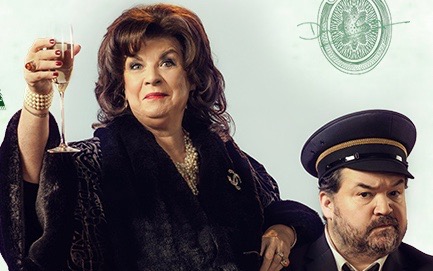
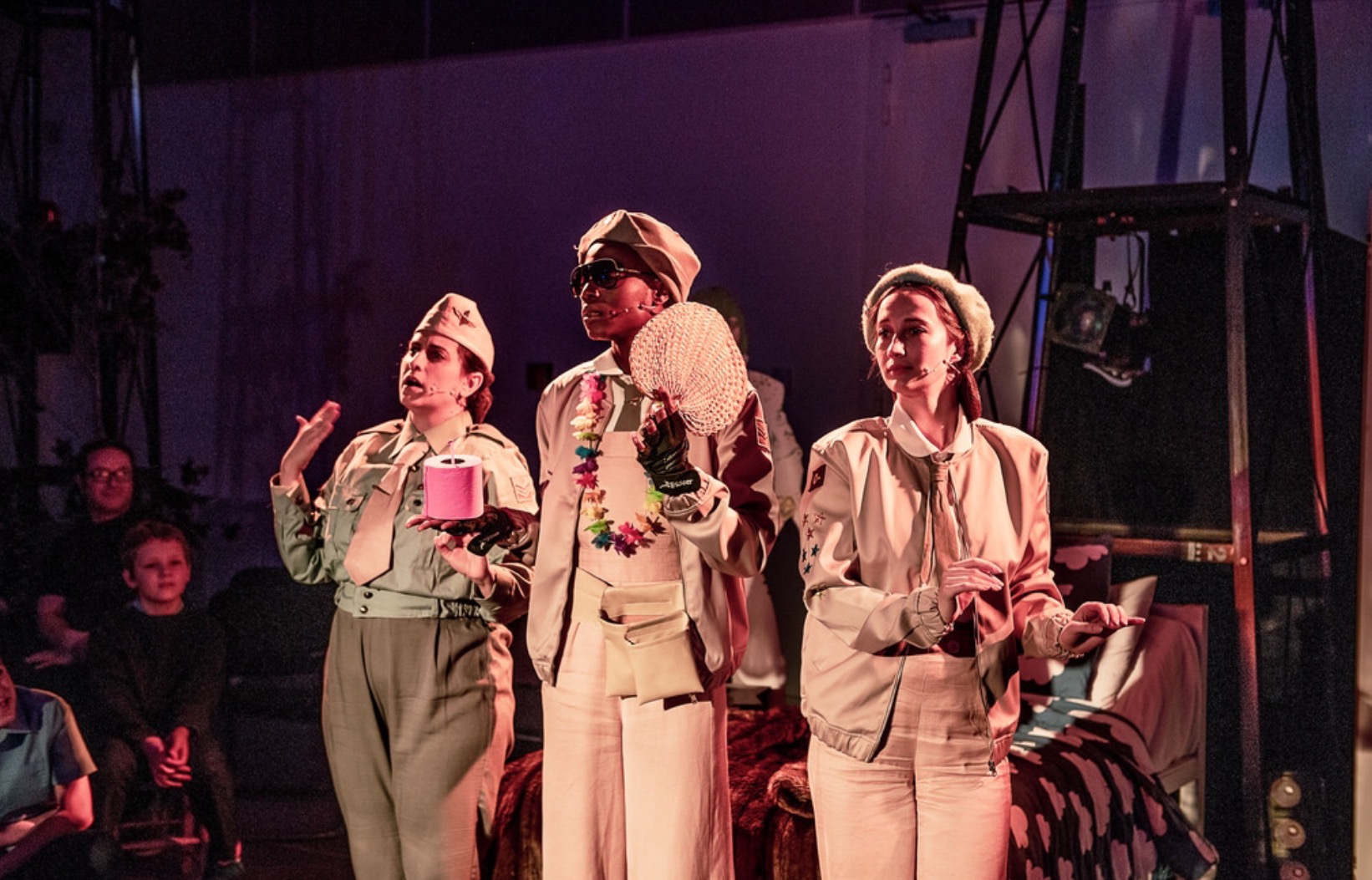
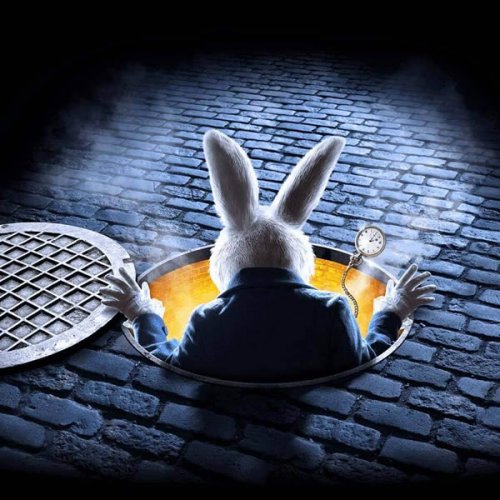
Opening in the West End with goth sass raised to 11, Beetlejuice The Musical is peppered with contemporary digs at the UK and other musicals. This includes filthy and hilarious jokes about Paddington that will make fans choke on their marmalade sandwiches.This production at the Prince Edward Theatre is full of life, even if its subject is death. Based on the enduringly popular 1988 film, the music and lyrics by Eddie Perfect and the book by Scott Brown and Anthony King gleefully tap into the original source, and while some elements are firmly established goth tropes, it doesn’t feel dated.The success of the evening is due mainly to David Fynn’s wonderfully manic performance as Beetlejuice, his connection with the audience firmly established from the outset in a striking opening that quickly wrong-foots the audience. Meta-theatre is joyously employed, and he has a striking Robin Williams-type energy that never drops throughout the show.All the principals are strong, especially Hannah Nordberg as grieving teen Lydia, with soaring vocals, and Aimie Atkinson’s superb life coach Delia. The duet No Reason, performed by Lydia and Delia, is a show highlight. David Hunter and Chelsea Halfpenny are perfect as the boring ghostly Maitlands, and Alisdair Harvey exudes great fun as dad Charles. What is particularly striking is how hard the ensemble works, with costume changes and character switches performed with aplomb and panache.It doesn’t break ground within the gothic musical tradition, the design is quite conventional, and occasionally the material is stretched a little thin. The Netherworld number What I Know Now, although beautifully executed, feels very much like filler. Fynn is also so charismatic as Beetlejuice that I occasionally found myself impatient for him to return on stage. However, it builds very well to the wedding scene and Beetlejuice’s final exit. Just as you thought Paddington was safe, it is worth being in your seat for.The show seemingly has a built-in fanbase and it’s wonderfully atmospheric to see some cosplay in the auditorium. It delivers exactly what everyone wants and should settle in for a long run.

Prince Edward Theatre, 28 Old Compton Street • 21 May 2026 - 17 Apr 2027

Thespians

There is a unique aspect to British comedy that perhaps does not translate well into other cultures. From Up Pompeii!, the Carry On films, Morecambe and Wise and many more, innuendo is king. Kenneth Williams famously said: “If I see an innuendo in a script, I whip it out immediately!” There is no chance of that with Mischief’s first musical, Thespians, premiering at the Mercury Theatre, Colchester. In fact, the puns are impossible to count in this glorious entertainment.We are taken back to the island of Icaria and the creation of theatre itself, meeting Thespis, widely considered to be the first actor, who becomes a hit at the Festival of Dionysia by stepping away from the chorus and engaging in dialogue as a specific character. The whole situation is spoofed perfectly by an outstanding ensemble. The book and lyrics by Jonathan Sayer crackle with jokes, while the music and lyrics by Ed Zanders are tight and witty, with poignancy when needed.There is not a weak link in the cast, and the lead actors are comedy gold. As Polly, the real talent behind the success, Claire-Marie Hall brings humanity and gravitas as everything escalates around her. Mia Jerome is outstanding as the seer Melampus, her visions reducing the audience to hysterics, while Luke Latchman and James Spence are wonderful as star-crossed lovers Atlas and Thespis.However, the evening belongs to the comic genius of Marc Pickering as Adonis – not his real name – who plays the delusional fish-out-of-water character to the hilt, physically and vocally perfect. Rhys Taylor is excellent as The Tyrant, campy and fun, bringing a pleasing Diana Rigg-like quality to the role, while Mischief stalwarts Matt Cavendish and Allie Dart are tremendously entertaining narrators.The musical numbers celebrate silliness while also moving the action forward. The Dionysia is staged like the Eurovision Song Contest, with different styles and genres, while the Old Man Tango is a delightful spoof of Cell Block Tango from Chicago. The pace never drops – assured direction from Robyn Grant – and the second act progresses brilliantly, with the pressure of fame and the threat of death hanging over the troupe. There are also plenty of theatrical jokes to keep fellow thespians happy.Performed on Jasmine Swan’s outstanding, colourful and highly functional set, Thespians could well join Mischief’s other successes in the West End.

Mercury Theatre - Colchester • 9 May 2026 - 23 May 2026

Equus

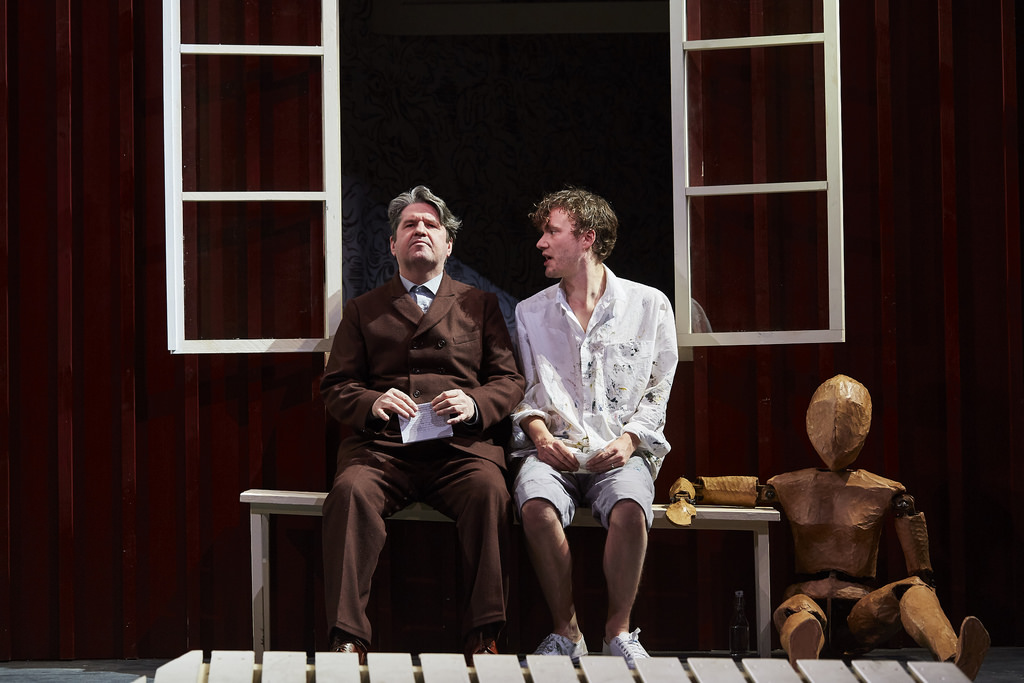
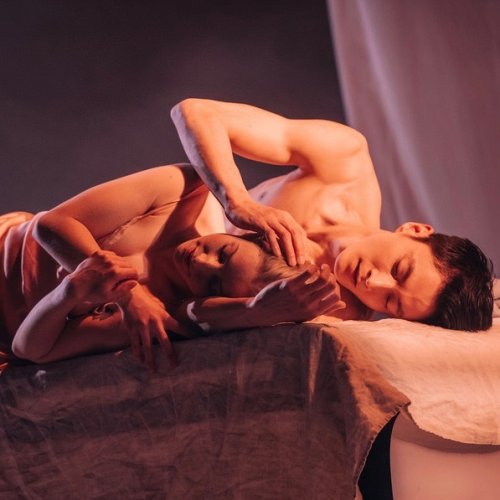
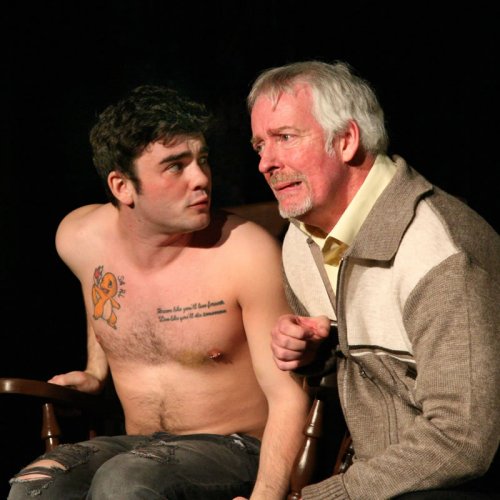
The origins of Peter Shaffer’s 1973 classic came from an anecdote he was told about a young boy blinding six horses in a stable in Norfolk. Driven to explore why that would happen, Shaffer created a struggle between children’s psychiatrist Martin Dysart and the troubled teenager Alan Strang.Staged originally with metal horses’ heads and hooves, symbolically representing the ritualistic nature of worship (and presented like that in the 2007 Daniel Radcliffe version), this stunning revival of Equus at the Menier Chocolate Factory eschews those symbols. Instead, it builds on the physicality of the equine ensemble, the horses represented by strong, muscular performers, with movement director James Cousins foregrounding the erotic, masculine appeal of Alan’s worship. This is the perfect venue for such an intimate piece of theatre. We are the congregation in this church, witnessing one young man’s rituals and world and an older man’s questioning of everything he once found true.The performances are excellent, headed by Toby Stephens and Noah Valentine. As Dysart, Stephens resists the urge many actors have to make him appear too buttoned up, too cool at the start of the play. His emotional distress is evident from the beginning, drawing a clearer line between his professional manner and his personal turmoil, making his final speech all the more devastating. As Alan, Valentine is wiry, crackling with energy and vulnerability, his defiance and obstinacy giving way to heartbreaking revelations. Amanda Abbington is a passionate Hester, and Colin Mace and Emma Cunniffe are powerfully convincing in their distress at their son’s actions and their desperation to explain why. But it’s the horses that hold your attention. They create the sea in the excellently staged beach scene, with Ed Mitchell a perfect Horseman/Nugget, the bodies ebbing and flowing, entwining and at times embracing Alan Strang.Lindsay Posner’s direction keeps the pace right, the debates are passionate, and the play is allowed to breathe and let the impact settle in. The staging is gripping, and even if the outcome is inevitable, you find yourself yearning for a happier conclusion. It’s like coming to the play anew, making fresh discoveries as this classic is brought to sensuous life.

Menier Chocolate Factory • 8 May 2026 - 4 Jul 2026

The Talented Mr. Ripley

Still known to many through the Patricia Highsmith novel and the film adaptation, The Talented Mr. Ripley arrives at the Mercury Theatre, Colchester, on its national tour. A rich psychological thriller, Tom Ripley is sent by financier Mr. Greenleaf to persuade his son, Dicky, to come home from Italy, where he has been painting and idle for too long. A trail of lies and deception is created, and Tom murders Dickie. As the net closes in, we find ourselves silently rooting for our anti-hero, wondering how he can get away with it. It’s a stylish adaptation by Mark Lelpacher, but suffers too much from directorial conceits that feel unnecessary and go nowhere, and a pace that is quite leaden, especially in the first half. However, it is held together by a strong lead performance by Ed McVey, always onstage, commanding attention through stillness, charm, occasional fits of paranoid intensity, and excellent psychological battling when he assumes the persona and life of Dicky Greenleaf. As Greenleaf, Bruce Herebelin-Earle drips with privilege, exuding confidence and arrogance, his ease making Ripley yearn to live that life of luxury. However, their friendship evolves very quickly, and we get no sense of trust between them. Maisie Smith does well with the thankless part of Marge Sherwood, the love interest, but she does bring some grit to the second half, though the character could have been feistier. The ensemble works well, delivering the minor characters effectively, but the narrative is often interrupted by a meta-theatre device of the actors shouting “Cut”, and rearranging scenes and furniture. This is, presumably, to show that we shouldn’t trust anything Ripley says, but it is never developed enough to become interesting, mainly being irritating.As in many adaptations, the first half suffers from exposition overload, and the second half fares better as tension rises, but even then, it feels overplayed, the ending taking some time to arrive. However, there are many flourishes of movement that delight, not least a scene in Venice where masks become pigeons, and Holly Pigott’s set allows gorgeous flow and movement of the company. Despite its shortcomings, McVey’s performance as Ripley deserves to be seen, the beating heart of a deceptive mind.

7 Apr 2026 - 11 Apr 2026

Teeth 'N' Smiles

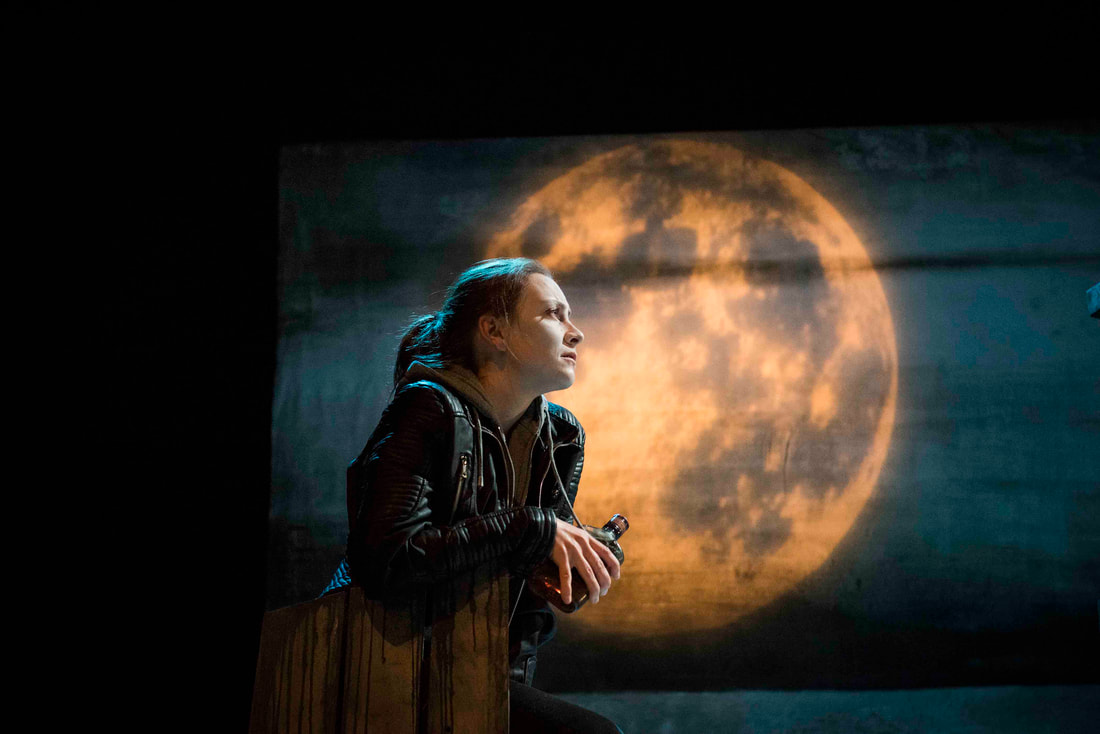
To commemorate its fiftieth anniversary, David Hare’s Teeth 'n' Smiles is given a rockingly good production at the Duke of York’s Theatre.It turns out to be a play of two halves. Whilst the treatment of women in the music industry is still pertinent and shocking, the play is dated. Set during the night of 9 June 1969 at the Jesus College, Cambridge May Ball, it often feels like a middle-class man’s view of the rock scene. Obviously, over the years, it has been surpassed by stronger examples, particularly Cora Bissett’s Edinburgh smash What Girls Are Made Of, forged from lived experience, and David Adjmi’s overlong Stereophonic that tackles the sexual politics of the era. But, in many ways, this play was the original gig theatre, and the band, especially in the superb central performance by Rebecca Lucy Taylor, bring the music and are the reason to see this play.As Maggie, Taylor inhabits the role, first seen carried onto the stage after being poured out from the touring van, reliant on whiskey to get her through the night. She captures the vulnerability of the role, especially when her ex, Arthur (Michael Fox), is present. She also contributes additional new music and lyrics (Maggie’s Song especially is a poignant ballad), and the feel of the tracks, originally by Nick and Tony Bicat, are given tremendous energy, the band caught between the end of the hippy dream and several years away from gob-spitting punk. They are a tight outfit and bring the play to life, although there are some stereotypes. Phil Daniels is hardly pushed as the Cockney, sleazy band manager, but Roman Asde does well as the anxious booker seduced by Maggie.Set just a couple of months before Janis Joplin’s untimely death, her shadow is cast over the play. But strangely, given that fact, and the ensuing drug taking and drugs bust, arson and theft that occur during the night, the play lacks any real jeopardy. Projections tell us what happened to the band afterwards, and, apart from one drug-related death, they all lived happily. It feels that the stakes were never raised high enough and certainly the break-up is not delivered strongly enough. However, the staging and design bring the music near, and, although you may have come for the play, you’ll stay for the band.

Duke of York's Theatre • 27 Mar 2026 - 6 Jun 2026

The Grand Babylon Hotel

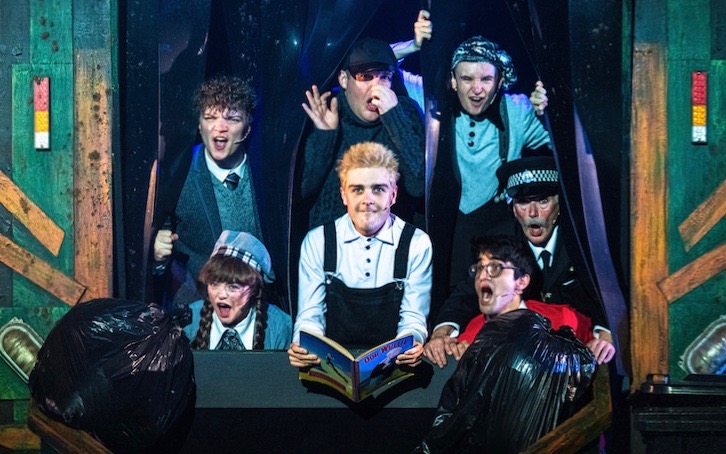
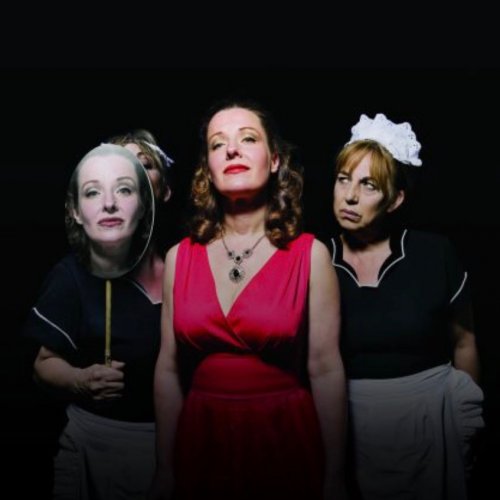
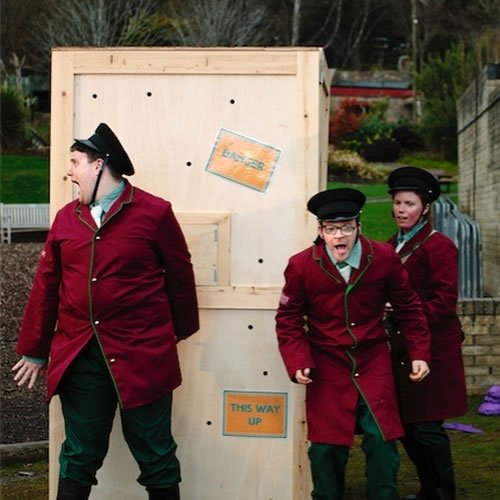
Claybody Theatre bring their adaptation of Arnold Bennett’s novel The Grand Babylon Hotel to the Mercury Theatre, Colchester, and it is a fun-filled, riotous evening of slick physical comedy.A cast of five perform Deborah McAndrew’s deft adaptation with panache and excellent comic timing. Shady business in the swanky Babylon Hotel is exposed when multi-millionaire Theodore Racksole buys the hotel outright simply to ensure his daughter gets the birthday meal she wants. The plot almost seems incidental to the characterisation, though, as events pile up and the chase begins. From a wonderful opening sequence of dancing chambermaids, exposition is delivered with fun and energy, and the pace never drops.As Theodore, Bill Champion is the eye in the storm of a madcap adventure – stylish and dignified, while also displaying impressive physicality and dance ability. Alice Pryor is equally effective as his daughter and soon-to-be plucky heroine, Nella, with on-point comic timing. Shelly Atkinson shines in every role she plays, especially the Germanic nanny Heidi, and Thomas Cotran oozes nervous sophistication, particularly as Prince Albert of Posen. But the evening really belongs to Michael Hugo, a comic chameleon who switches between his several roles with rapid ease, each creation a comic delight. His physicality is astonishing, and credit is due to movement director Beverley Norris-Edmunds and physical comedy director Nick Haverson for keeping the comedy crackling and the pace lively.The company clearly relish the material, and director Conrad Nelson’s wonderfully inventive eye is a constant source of delight. The lighting and projection, by Daniella Beattie, take us on a clear and graphic journey through the bowels of the hotel, while composer James Atherton supplies lively period tunes.It is a work I was unfamiliar with, but I would highly recommend Claybody Theatre. This production is in association with the New Vic Theatre. Catch it on tour if you can.

Mercury Theatre - Colchester • 26 Mar 2026 - 29 Mar 2026

Les Liaisons Dangereuses

Christopher Hampton’s Les Liaisons Dangereuses arrives at the National Theatre in a lavish new production with a cast and creative team of esteemed pedigree.The rivalries and the manipulations of the idle rich in France in 1782, as depicted in Pierre Choderlos de Laclos’s epistolary novel, require an intimacy and closeness, and the challenges of staging it in the large Lyttelton Theatre are met with a grand design and an abundance of movement and choreography combined with some sublime acting.Rosanna Vize’s exquisite set mirrors the audience, with an excellent ensemble of servants moving rooms and walls into place, with a huge chandelier hanging over them, a globe full of gossip and manipulation. Choreography by Tom Jackson Greaves brings great style, and I particularly enjoyed the army of servants, the men in black, prowling, smoking and eavesdropping on their masters and mistresses.Leading that sublime acting is Lesley Manville as the Marquise de Merteuil, a woman whose favourite word isn’t “revenge” but “cruelty”. She foregrounds her ability to portray cool, calculating characters, and is utterly convincing in her enjoyment of the havoc she wreaks in conniving with the Vicomte de Valmont to destroy lives. As Valmont, Aidan Turner brings out the comedy of the piece, with many a double entendre, sailing dangerously close to pantomime.Given his sex appeal, this is a strangely unsexy production. It all feels too cautious and unmessy, and when love intervenes and spoils their machinations, the emotional impact is missing. Darren Hand is particularly effective as young, initially innocent Danceny, and Monica Barbaro is excellent as Madame Tourvel, in love with both God and her husband, whom Valmont seduces for the sheer challenge of it. Hannah van der Westhuysen’s conversion from trainee nun to established vamp is a little too broadly portrayed, especially in a misfiring lap dancing sequence. In fact, as the play progresses, the dance sequences feel as if they are increasingly taking the place of dialogue, often interrupting the emotional building rather than fully enhancing it.Still, there is much to admire in Marianne Elliott’s confident production, and perhaps that is the problem: it shows rather than tells, and the emotional pay-offs don’t feel fully earned. However, the downfall of the Marquise de Merteuil is superbly played by Manville, and the masked ball framing of the show ensures the circle of bored corrupters will continue.

Lyttelton Theatre • 21 Mar 2026 - 6 Jun 2026

Kinky Boots

With music and lyrics by Cyndi Lauper and book by Harvey Fierstein, this musical began with an impressive pedigree. But over the years it has become a milestone musical of LGBTQ+ equality, and here at the London Coliseum gets the production it deserves.Based on the real-life story of a failing Northamptonshire shoe factory that saved itself from closure by specialising in making women’s footwear for drag artists, the story came to prominence in the 2005 film. With its message of “accept someone for who they are”, it tackles homophobia, transphobia and prejudice with a sequined boxing glove that packs a powerful punch. It also explores the danger of accepting a situation you’re not happy with, as Charlie inherits the factory and feels the weight of expectation to keep going and not let his community down.Of course, the success of every production of this show hinges on the casting of drag queen Lola, and here we have a true star in Johannes Radebe. Millions of Strictly Come Dancing viewers know he is a terrific dancer, but he has the singing and acting chops to fill the huge auditorium with personality. Lola is given stunning entrances that get roars of approval, but Radebe goes beyond the glamour and convinces as Simon, the shy, bullied man under the drag suit of armour. It’s hard not to take your eyes off him, he leads the company with strength and grace.No stranger to Saturday night TV audiences himself, former The X Factor winner Matt Cardle has built up an impressive musical theatre career since, and here has the tricky role of “straight” (in more than one way) man Charlie Price, and is equally convincing, as Charlie’s doubts and fear of closure increase. It’s a part that builds, and although Charlie’s homophobic hissy fit feels sudden and out of character, Cardle makes it work by portraying the stress Charlie is under really well. His vocals are excellent, especially in Soul of a Man.The leads don’t get away with stealing the show though. The supporting cast and ensemble are terrific. Courtney Bowman is outstanding as straight-talking and lovelorn Lauren, Scott Paige a gorgeous triumph as George, giving into his drag side with glee, Billy Roberts hugely convincing as misogynistic Don, until Lola zaps the toxic out of his masculinity, and Rachel Izen earns gales of laughter as Pat.The whole production feels as if it’s had a glow-up after its UK tour, and director Nikolai Foster fills the huge stage with energy and flow, performed on Robert Jones’s excellent design. It’s when Don brings on the Progress Pride flag that the message is delivered home, and when the flag takes its place in the curtain call, it’s a powerful statement against the voices who want to silence us all. With the world being as it is, this musical is an essential, uplifting tonic.

London Coliseum • 17 Mar 2026 - 11 Jul 2026

Marie and Rosetta

The journey to the West End stage has finally arrived for Marie and Rosetta, setting up church in the wonderfully intimate Soho Place. Sister Rosetta Tharpe – the “Godmother of Rock ’n’ Roll” – and her protégée, Marie Knight, are names everyone should know. This production restores those names in wonderful neon, as the women first meet in a funeral home – a safe space at a time when touring the American south was dangerous for performers of colour.In broad strokes, writer George Brant gives us the main events of their lives, but it is the music that elevates this production to something special. Rosetta was losing her gospel crown to “Saint Mahalia” (Jackson), whose pure church approach made her hugely popular. Rosetta had performed “dirty music”, played in places like the Cotton Club, and was too raunchy with her hips for many a saintly listener and viewer. Was church-raised Marie brought in to entice the core audience back? Whatever the reason, the combination of these two performers and the excellent band creates a toe-tapping, roof-raising, heart-lifting production that is impossible to resist.Beverley Knight, as you would expect, is stunning as Sister Rosetta. The strength, vulnerability and wisdom of a woman who has been in showbusiness and been burnt many times are all there from the opening. Her marriages foreshadow the abuse suffered by Tina Turner and thousands of women who worked – and still work – in the music industry, and the racism personally experienced. But through it all, it is the voice and the music that soar.Ntombizodwa Ndlovu is equally compelling as Marie – her nervousness at being in Rosetta’s presence, her strong faith, her concerns about the music and, above all, the love for the children she must leave behind to tour with Rosetta are all perfectly captured. As church and “dirty music” begin to reach an understanding and respect for each other, I Want a Tall Skinny Man brings the house down. The singing in this show must be among the best in London right now.And, in a way, there lies a slight problem. The singing is so fantastic that you want more, and Brant’s script can feel a little pedestrian in its exposition, particularly in the first half. It works much better in the second, when the text segues into songs teeming with relevance. However, this is of little importance as the intimacy and in-the-round staging bring us so close to the music and the women – excellent direction by Monique Touko. (A wonderful device symbolically introduces the piano and the guitar.)Lily Arnold’s design places us in the funeral home but opens out into various stages, remaining particularly effective at the poignant and tenderly played conclusion. Whatever your faith or beliefs, your soul needs this production – taking you to church with passion and outstanding talent.

28 Feb 2026 - 11 Apr 2026

The Manningtree Witches

On the surface, this is another in a line of adapted books at the Mercury theatre, and adaptations are all the rage at the moment. But this is a book, by A K Blakemore, of depth, and this powerful, emotive and superbly staged production is the best I have seen here for a long time. A co-production with Frantic Assembly, Scott Graham’s movement direction is as exceptional as you would expect from the company’s artistic director. Add to that the adaptation by the mighty Ava Pickett – whose wonderful, Essex-based play 1536 begins a West End run this summer – and the sensitive, exciting direction by Natasha Rickman, and you have a production that deserved its opening night standing ovation.For generations, our introduction to witchcraft trials began with Arthur Miller’s The Crucible. This British story, rooted in local history, flips everything away from Miller’s play and gives voice to the women – those murdered and those who survived.There isn’t a weak link among the cast. At the centre of the novel and play is feisty, strong Rebecca West, our narrator, accused of witchcraft. Lucy Mangan gives one of the best performances I have ever seen, exceptional in its understanding of the emotional arc of the character – a strength that refuses to be shaped by the men persecuting her and by her circumstances, yielding only when she absolutely has to.Estranged from her “bawdy” mother, Anna “The Bedlam” West – another outstanding performance by Gina Isaac – their journey from conflict and defiance to accepted love is wonderfully portrayed. Fiona Branson captures the fragility of the elderly Bess Clarke, while Amy Cudden is excellent, particularly as the bitter Priscilla Briggs. Mia Jerome, Maria Louis and Chileya Mwampulo bring vivid life to the village women.It would be easy to portray the men as simply evil – in particular “Witchfinder General” Matthew Hopkins – but the script, and Sam Mitchell’s performance, tease out the fear and insecurity of the man. The circumstances and restraints under which they all live – although far less oppressive than those faced by the women – are captured subtly by Gavin Fowler as a lovestruck John Edes, and by the multi-rolling Jack Gogarty, particularly as a beautifully human and perceptive doctor towards the play’s end.They are supported by a community chorus that fills Sara Perks’ outstanding set design with life and bustle, moving set and people beautifully. In many ways it reminded me of Beah Flintoff’s The Ballad of Maria Marten: both take a local story passed down and told by men and rework the myth to place women centre stage.As the play progresses, the battle for the soul becomes a powerful duet between Rebecca and Hopkins, and the segue into its contemporary relevance is handled well. We know Matthew Hopkins’s name, but not the women he murdered. Add Jack the Ripper, Peter Sutcliffe, Steve Wright and too many others, and it is a message we all need to hear.The entire run is sold out, proving there is a thirst for new work on the main stage here, and I hope this remarkable production gains further life.

Mercury Theatre - Colchester • 28 Feb 2026 - 14 Mar 2026

GLITCH

The Post Office Horizon scandal is ingrained in the minds of millions of people thanks to the TV series Mr Bates vs The Post Office. It may feel that there is nothing further to experience about the shocking miscarriage of justice, yet Rabble Theatre’s Glitch by Zannah Kearns, at the New Wolsey Theatre as part of their UK tour, proves otherwise. A powerful script and excellent production keep our shock and anger active.Focusing on the experience of sub-postmistress Pam Stubbs of Barkham Post Office, there is an almost forensic approach to the amount of information conveyed, but it’s delivered with crystal-clear clarity, and when it focuses on individuals there is an emotional depth that defies its 80-minute running time.The cast of four are excellent, a smooth ensemble who pay tribute to the victims but avoid stereotyping the accusers. The interesting aspect of Pam Stubbs is that she is a difficult, feisty heroine who manages to avoid traditional notions of “victim”. Sparky and barbed, Joanne Howarth is completely believable, thrumming with authenticity that keeps us with Pam throughout the play. The other three actors multi-role superbly, aided by a simple but effective design in which boxes contain costume items and totems that indicate the person portrayed. Laura Penneycard, with just a change of gilet, transforms characters. Naveed Khan, currently dazzling viewers in The Great Pottery Throw Down, displays his fine set of acting skills, from kind customer David to Sir Alan Bates, with whom Pam shares many a bloody-minded quality. Sabina Netherclift is outstanding in all her roles, from prosecutor to the widow of a Post Office sub-postmaster who took his own life. This really underlines that we still don’t know everything about this scandal, but we do know that at least 13 sub-postmasters have died.The design by Caitlin Abbott is powerfully simple, the lives in boxes symbolic not just of the huge amount of data, but the lives the Post Office seemed determined to pack away and lock up. Gareth Taylor’s direction is beautifully judged and sensitive, and the play grips us throughout.Pam Stubbs was angry that it took a TV drama to bring this scandal fully to light, and the main takeaway from this outstanding production is that none of the perpetrators is behind bars, having been found guilty of corporate manslaughter.

New Wolsey Theatre • 13 Feb 2026 - 14 Feb 2026

The Unlikely Pilgrimage of Harold Fry The Musical

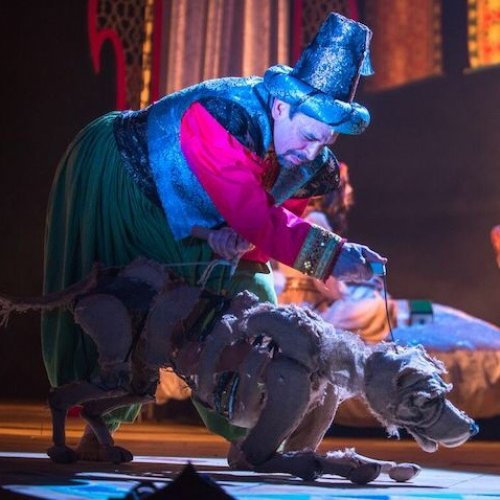
It’s always a risk to adapt a book as beloved as Rachel Joyce’s story of Harold Fry, an ordinary, unspectacular man who receives a letter from an old friend, Queenie, writing from a hospice where she faces her final days.As he goes to post his (very bland) reply, Harold is overwhelmed by a feeling to keep on walking from Devon to Berwick upon Tweed to make amends with Queenie for a past incident. He meets people along the way, until social media gives him fellow pilgrims, all seeking their own redemption. As he becomes more dishevelled, the protective layers he built around him become as threadbare as his shoes and clothes, and the shocking events from the past are revealed.The Unlikely Pilgrimage of Harold Fry at the Theatre Royal, Haymarket, is heart-soaring and heartbreaking in equal measure, and this beautiful, superbly cast production does perfect justice to the source material. The music and lyrics by Passenger give the show a folksy feel, suiting the folklore element of the story, and are reminiscent of another great musical, The Curious Case of Benjamin Button. In both shows, the fluid movement of the performers and staging marks the passing of time, and simple props become powerful totems of loss and grief. Here, a Cambridge University scarf is used to devastating effect.Each person Harold meets gets a great song, and I was initially concerned that the bar was set too high with the second number, the gospel-inspired Walk Upon The Water, with the outstanding Nicole Nyarambi raising the roof, the prolonged applause and cheering well deserved. But this concern was quickly banished by the other “turns”. Out Of Luck, peppered with a certain four-lettered word, is a joy. Daniel Crossley delivers perfectly as Silver Haired Gentleman, Harold’s advice allowing him to be free and open in his sexuality in a wonderful tap number. Noah Mullens, making their West End debut, is a haunting presence as The Balladeer, evolving into something else in Act Two. War Horse revolutionised puppetry in this country, and if you don’t fall in love with Dog, this may not be the musical for you!But none of this would work without the central characters of Harold and his seemingly sterile wife, Maureen, being perfect. Mark Addy is outstanding as Harold Fry, his “everyman” persona working perfectly as he takes us on the pilgrimage. Buttoned up, grieving, his barriers are delicately removed as the journey develops, a beautiful portrayal of English reserve and male silence breaking down. His song Dear Girl In The Garage is emotional, measured and heart-breaking. Equally outstanding, as always, is Jenna Russell as Maureen, the dam she has built around her emotions cracking as she accepts her grief and her part in what happened.The back story is devastating. Those who have read the book or seen the film adaptation will know that this is no cosy drama; it’s brutal and unflinching. But when Harold arrives at Queenie’s bedside, there isn’t, and shouldn’t be, a dry eye in the house.A welcome transfer from Chichester Festival Theatre, this is a West End must-see.

Theatre Royal Haymarket • 11 Feb 2026 - 18 Apr 2026

Kenrex

Small town America, a place called Skidmore to be exact, where nothing much happens. Or nothing much is supposed to happen. Until the arrival of the bully, Ken Rex McElroy, and his reign of terror over the residents of the town. Despite being indicted 21 times, McElroy was convicted only once due to the twisted skills of his defence lawyer Gene McFadin. Until the citizens couldn’t take any more and, after a night of terrifying violence and intimidation whilst McElroy was released on bail, the citizens took matters into their own hands. This gripping true-life story is brought to powerful life by an excellent creative team, with every moment gripping the audience from the outset. Told in the form of evidence given by county prosecutor David Baird, the stage pulses with energy and movement. The music by composer and onstage musician John Patrick Elliott pounds through the seats, building the tension up to breaking point.Performer and co-writer Jack Holden (written with Ed Stambollouian) brings every single character to life, not just the passing-through residents, but the lead characters of McElroy, McFadin and Baird, not just performing the roles but inhabiting them. It is a tour de force, his chameleon-like physicality making each character clear. As McElroy, he bends his body and lowers his voice deep into the bass. Then there is a flamboyance to McFadin that is cheeky and funny, whilst Baird tries to be the honest everyman, believing in the power of the law and decency. There are so many strong scenes, but when McElroy crashes the annual Punkin Show and seduces the singer of the national anthem, Tirena, and sets out his intentions, the scene is given extra chill by the fact she was 14. Becoming his wife, it’s almost as if the town sacrificed her hoping the Monster would be stilled, but speaking against him led to terrible violence. This production is the perfect synergy of performer, musician, lighting and sound. It is an ultimate example of theatrical storytelling.I didn’t expect to see the play of the year in December, I thought my mind was set, but here it is, smashing every high standard. The direction by Stambollouian is superbly paced, giving urgency yet also space for tension to grow and breathe. It observes classical theatricality, powerful storytelling enhanced by simple techniques that bring home the story. When the residents remain silent, Holden unplugs the microphones; it’s that simple and effective. Surpassing even their production of Cruise in 2021, this team deserve to win every award going.

The Other Palace • 3 Dec 2025 - 1 Mar 2026

Mother Goose

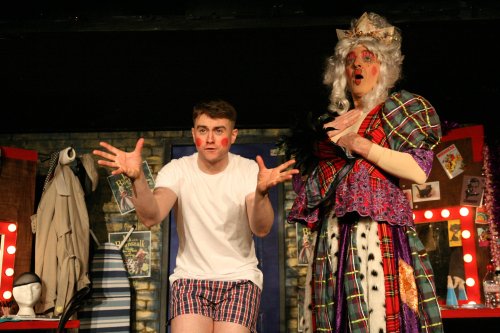
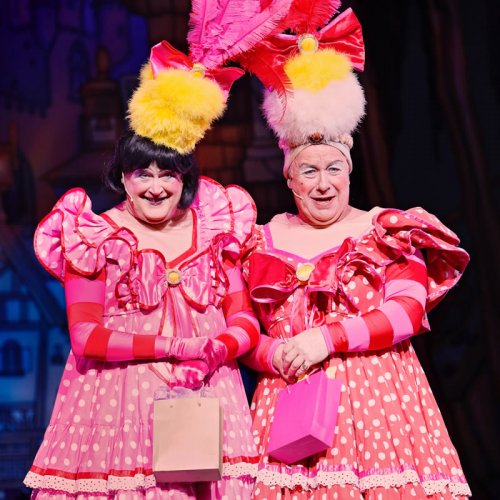
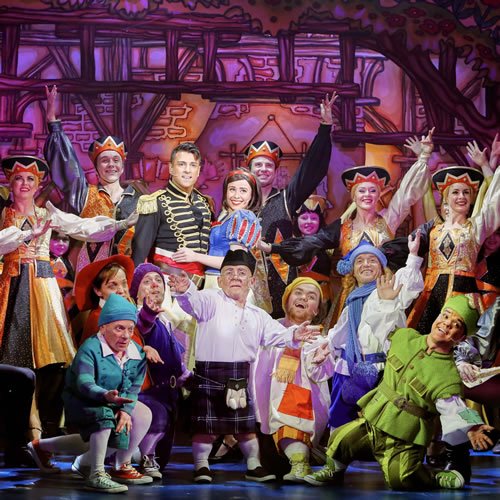
All the stops are always pulled out at the Mercury panto, and this year is no exception, with an added cause for celebration. This show marks ten years of the powerhouse panto duo Ash and Dale (Antony Stuart-Hicks and Dale Superville), who have elevated the panto at Colchester to award winning heights, winning the hearts of the community. Always a chance to showcase their talents, they excel here in one of the best Mercury Theatre pantos I’ve seen in my lengthy reviewing career. It is also one of the most magical and glorious designs, Jasmine Swan presenting gorgeous costumes from the very first minute, and the workshop have done a tremendous job on the set, aided by a vibrant and fluid lighting design.As Gertie Goose, Antony Stuart-Hicks remains, in my opinion, the best Dame in the business, making me always glad I’m not the bloke in the front row the Dame singles out. Pushing the envelope of adult humour, he makes ad libbing look easy, and his relationship with Dale is wonderful. As the Dame’s son, Billy the Goose, Dale Superville has many a show stealing line, waddling hilariously around the stage, and his connection with the children in the audience is always naughty and joyful. It is a cast of wonderful singers, not least the returning and superb Sasha Laroya who, as Fairy Fortune, leads us into a uniquely soulful version of the Python hit, Always Look on the Bright Side of Life. Jaimie Purden is an outstanding baddie as Baroness Bellinora Badapple, revelling in the role. Kemi Clarke and Daisy Greenwood are adorable as the love interests Bailey and Gracie. In fact, there is not a weak link in the cast, with excellent support right down to the panto chorus.If the plot is a little weak, especially in the first half, it does not matter, as the team have updated it and brought in the laying of golden eggs with skill and relevance. The second half is a total joy. It was a delight to see If I Was Not Upon the Stage performed by the four leads in ultra manic style – the house was brought down – and Ash and Dale sliding about in the ghost room bed was a feast of corpsing. Director Natasha Rickan has wisely let the fun expand in the hands of experts, but her flow of the stage and control of the material are to be applauded. Containing every panto trope you could want and wish for, it is five golden eggs from me.

Mercury Theatre • 22 Nov 2025 - 18 Jan 2026

Lost Atoms

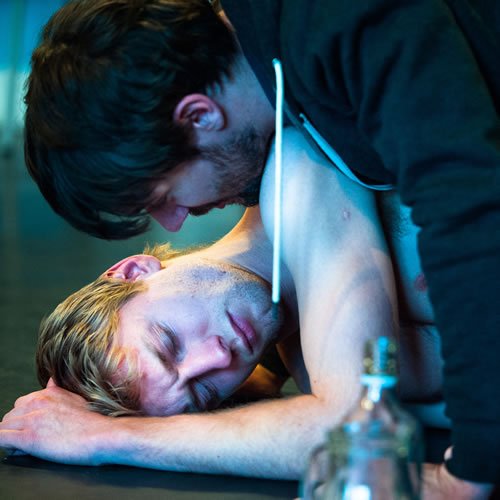
It’s always a pleasure to witness a Frantic Assembly play, their trademark physicality adding layers of meaning to any text.In Lost Atoms, we meet Jess and Robbie in their Mind Mausoleum, the set high with drawers and boxes that contain their life together and their memories. They climb, crawl, dangle, lie down and set the scenes as they relive their time together, often interrupting each other to correct the memory. It’s a deep dive into how they met and fell in love after an unlikely beginning; his admission of depression, their emerging love for each other, then loss pierces their world, followed by betrayal and ending.The staging is astonishing, the synergy of movement and memory sublime, and it's a perfect celebration of Frantic Assembly’s 30th anniversary. It is served by two performers who capture the differences, the unlikeliness of the relationship, and ultimately, the love. Joe Layton as Robbie, despite his confident strength and muscularity, captures perfectly Robbie’s vulnerability and loneliness, charting his way through an intense, volatile relationship with no map to guide him.Hannah Sinclair Robinson is equally mesmerising to watch, her contrasting attitude to life laying down a strong marker for their differences. When he wins £500 on a scratch card, their differences are amusingly exposed: he is The Lion King, she is Hamilton.Andrzej Goulding’s jaw-dropping set is effectively the third character. The wall of drawers contains memories, mementoes and delights. The actors balance off them, scale them and push chairs into place to set scenes. It’s a kinetic delight.With such a strong production conceit, there is the danger that the script won’t live up to the visual power, and at times, the constant movement feels a little like filler, stretching out the running time. But Anna Jordan’s script thrums with honesty and rawness, especially when loss and grief hit the couple in the second half. Interestingly, the most powerful scenes are when they sit and absorb bad news, the stillness making the grief palpable. Its exploration of memory, both muscle and mental, will live with you for a long time.

Mercury Theatre • 4 Nov 2025 - 8 Nov 2025

Teechers

The more things change, the more they stay the same is a maxim perfectly suited to John Godber’s Teechers. Written in the 1980s, it is now a staple of British theatre, and this Eastern Angles production, with subtle updates, powerfully demonstrates its relevance today.The story follows three pupils at a struggling comprehensive who, with the encouragement of their drama teacher Mr Nixon, stage their own end-of-term play about their life at the school. Although essentially a comedy, the piece is still a powerful examination of the inequalities in the education system, and a huge appreciation and call-out for drama in the school curriculum. A play within a play, it was heart-lifting to hear and see how engaged the large number of school pupils in the audience were.Three actors play the pupils and all the other people in their school world, and all three demonstrate superb characterisation, physicality and versatility. Isaac Franklin as Salty alternates between the pupil and Mr Nixon extremely well, showing how they are both affected by the challenges of comprehensive school life. Chileya Mwampulo as Gail is outstanding, and Eloise Richardson as Hobby is particularly strong as the headteacher – colours clashing but with a love for drama. What the three do particularly well is show the fear about leaving school as they move from reluctant learners to stars of the drama department. This is a moving cornerstone of the play that isn’t just delivered for knockabout comedy.The pace is excellent, allowing the play to breathe in moments when the poignancy is held, and delighting with a trip down memory lane. School is still recognisable to all who watch this production, and director and designer Jake Smith creates an environment that draws everyone in from the start.

Mercury Theatre • 17 Oct 2025

Breathe

After a long hiatus, it is so good to have Colchester-based professional company 3 Wishes back on our stages. Their revival of 4:48 Psychosis was an award winner at Colchester Fringe last year. Their interpretation of Hobson’s Choice in the summer threw new light on a classic text, and now they stage Breathe, one of the best new plays I have seen this year.Playwright Jazz Ely has constructed a superb play that looks at her own mental health issues and also how the systems set up to support people consistently fail. Sam and Callum hope to start a family, but her somatic OCD presents many challenges. Audacious in its comedy, she is serenaded by Michael Burst-Your-Bublé, a crooner who murders the classics in a hilarious style. There are many different approaches taken to the subject, and laughter dies as the seriousness of the condition is played out beautifully by this excellent ensemble.As Sam, Claire Walkinshaw is the heart of the play, and she is adept at handling the tonal changes with ease, delivering information in a lively performance that never loses sight of the key messages. The rest of the cast multi-role, and Ed Ismail is a strong, calm, patient presence as her boyfriend Callum, giving a performance full of dignity, frustration and support. Shania Grace Thompson beautifully captures young Sam, bringing shocking events from her childhood vividly to life. Adrienne Thornley is particularly effective as the therapist, and Lisa Wakley is excellent in every role.But it’s the ever-watchable Dean Bartholomew who almost steals it with his comedy skills, a brilliant Bublé and a particularly moving performance as Sam’s dad. They all serve the text with commitment and sensitivity, and the pace is spot on, aided by excellent movement direction from Tia Winterbottom.Director Wendy Smith has guided and shaped this team into crafting an unforgettable piece of theatre. The design by Jane Fisher has transformed the Headgate space, and the construction team are to be congratulated for their hard work. The lighting design by George Emberson is astonishingly good – the darkness in our mental health always there, but light always piercing and shining through.Written from personal experience, the strength of the play is in its avoidance of self-indulgence, instead being practical and personal, creating stage imagery that will stay with the audience for a long time.

Headgate Theatre • 14 Oct 2025 - 18 Oct 2025

Don't Look Now

One of the most famous psychological dramas for over fifty years, thanks to the powerful 1973 film, Daphne du Maurier’s original short story Don’t Look Now is the source and inspiration for this adaptation.John and Laura return to Venice, where they spent their honeymoon, to the same room in the same hotel. But in the ten years since then, they have lost their daughter, and the blame and grief are still palpable. A pair of mysterious sisters – one a psychic – see the child with them and warn the couple to leave Venice. A killer also stalks the city, and when John doesn’t leave, it is revealed that he too is psychic, haunted by his own visions.This production has much to admire, particularly in its atmospheric staging, but it never raises the stakes enough to become genuinely disturbing. Although not a ghost story, it lacks enough jumps and twists, and at 100 minutes without an interval, it is slightly too long for such a slim, predictable story.The cast work hard, not least in appearing in multiple spotlights at multiple points on the set. Mark Jackson skilfully conveys John’s trauma and breakdown, and Sophie Robinson really captures Laura, desperately trying to keep her defences in place after her world has shattered. They have to contend with some clunky dialogue; for example, Laura’s final speech points out the obvious in an awkward summary.Alex Bulmer is excellent as psychic Sister 2 and makes an effective duo with Olivia Carruthers. The rest of the cast multi-roll with skill, although some of the Italian accents make diction a little incoherent.As the narrative builds, it remains a little too polite – a little too “English”. Some uncontrolled despair could have broken through. The adaptation is quite traditional, and a more radical staging could have revealed greater depth.There is no denying, however, that this is a very watchable production. The lighting design by Jessie Addinall is powerful in its atmospheric intentions and is complemented perfectly by Jess Curtis’s set and costumes, and Daniel Denton’s video design.Fans of drama like this will leave satisfied, left to ponder who – and what – is the killer that stalks the couple.

New Wolsey Theatre • 4 Oct 2025 - 11 Nov 2025

Swallow the Lake

This latest Mercury Original continues the excellent support the venue has given to writers in bringing their work to the stage. Tessa Deparis’s effective play Swallow the Lake, produced in association with HighTide, is powerful in its gentleness.Joanna and Joseph have just relocated to a quiet town in Essex with their young children and are hosting their first dinner party. Beautifully structured, what follows is a series of flashbacks, from when they first met as children, returning to the dinner party and its aftermath. Yasmin Hafesji’s sensitive direction honours the fragility of the piece, as Joanna has suppressed the racism endured by her and her family, and those racist voices are becoming louder as she struggles to hold on to a stable life.The play is beautifully performed, not least by Lydia Bakelmun as Joanna, skilfully showing the danger and disrespect she receives, even though she is a doctor. Her stillness is the power of the performance: even when you may want her to shout louder, it is her dignity that is maintained as her world begins to unravel. Matt Jewson as Joseph matches her perfectly with a realistic portrayal of a man who doesn’t understand how his wife’s silence is undermining their relationship, and together they convincingly portray the pair as children and adolescents. Liam Bull multi-roles with ease, crystallising both casual and deep-seated racism, and Krupa Pattani is excellent as sassy female friends still unable to grasp Joanna’s attitude and shyness.William Hamilton Tighe’s elegant design adds to the nuances of the piece, and the action flows seamlessly from one scene to another, the themes becoming clearer as the play progresses. Perhaps occasionally Joanna’s anger and distress could be heightened, but the damaging effects of internalising racism – of accepting a standard of abuse just to survive – are powerfully conveyed.When Joanna reveals what happened to her brother, the title of the play is brought into crystal-clear focus. It’s a powerful piece that shows the lake of the title is racism itself.

Mercury Theatre • 2 Oct 2025 - 11 Oct 2025

Private Lives

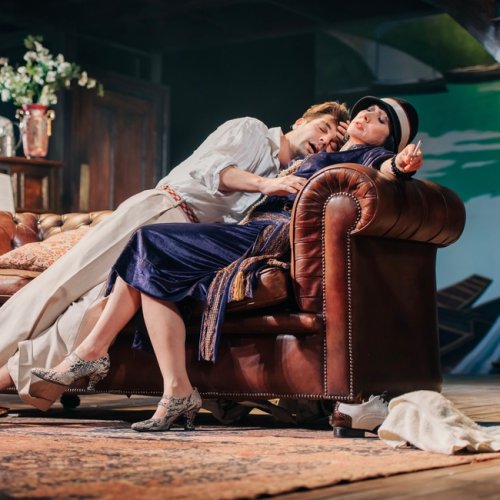
There’s an anticipation that a classic play such as this one will be “reinvented” in today’s climate. In an interesting programme note, director Tanuja Amarasuriya, winner of the RTST Award, was told by a producer: “I look forward to seeing what you do with that dusty museum piece.” She then defends its relevance, pointing out that toxic relationships abound and that opinions on social media are as strident as the play’s central relationship.Apart from an unnecessary opening song, which adds nothing to the show, she embraces the play’s roots but doesn’t manage to solve the problem that it shows its age – and that wife-beating played for jokes does not sit easily with 2025 audiences. The main problem is that her production is shrieky instead of zesty, lacking light and shade and any subtlety to explore the emotional minefield of obsessive love.This seeps into the performances. Noel Coward was a closeted gay man in 1930s Britain, and he created and played the part of Elyot when the play debuted. Maybe that is steeped in the DNA of the role, but Chirag Benedict Lobo’s performance is so camp and over the top it is hard to believe in his relationship with ex-wife and true passion Amanda. His single note is that of spoilt brat. Certainly, it gives Pepter Lunkuse little to work with, except to race towards over the top as well. There is no chemistry between them.Sade Malone gives a good performance as Sibyl, but again there is lack of nuance. Best of the four is Ashley Gerlach’s excellent Victor, really conveying his lovestruck innocence with strong comic timing. But the production is so strident we never really see the heartbreak under the selfish motivations of the main couple. Sensitivity about attitudes towards violence means that the fight sequences are a little insipid and telegraphed, even taking away an opportunity for the comedy to go dark. The second half also needs to pick up pace.Amy Jane Cook’s art deco set is gorgeous and functional, as are her costumes, but the wigs feel as if they are from a more modern age, featuring colours not popular in the 1930s.For me, the show is problematic as it is played in one pitch only, which is a great shame. As potent as cheap music is, it is the subtlety of the song that makes it memorable.

Mercury Theatre - Colchester • 1 Oct 2025 - 11 Oct 2025

Guys & Dolls

As has been the custom for the last few years, Frinton Summer Theatre shrugs off the confines of McGrigor Hall and closes with a musical in the Big Top near the shoreline. It’s a wonderful summer event, and this year’s choice of Guys & Dolls is a firm audience favourite.Directed by multi-award winner Janie Dee (including two Oliviers), expectations were high for this production. Unfortunately, the show fell a little flat on opening night, needing much more energy to fill such a large space, and hampered by consistent head mic problems – either switched off or too low. This is not to say that the company cannot achieve greatness during the run, but I can only review the performance I witnessed. And it was a nervy first night.There are many positives: Lenny Turner belts it out as Sky Masterson, Isabella Gervais grows into Sarah Brown after a nervous start, and Fabian Soto Pacheco makes a strong Nathan Detroit, capturing his mood swings well. Josephina Ortiz Lewis, however, is still finding her Miss Adelaide. She might benefit from a more flamboyant approach, and diction was sometimes unclear – though mic issues played their part.The ensemble works hard. Outstanding turns include Jack McCann as Nicely Nicely Johnson, who leads the show-stopping Sit Down, You’re Rocking the Boat with real verve. Yet even here the number was angled mainly towards one section of the auditorium. As the song is reprised, I felt there was a missed opportunity to reset the chairs and play it out to the whole audience. Sorcha Corcoran’s excellent set of larger-than-life dice and chips allows the action to flow, and Tracy Collier’s choreography makes good use of the space.The band is excellent, and the choir add depth and lift to the big numbers. It is in those show-stopping tunes that the energy lies – and that energy needs to infuse the rest of the production. Even allowing for a late start, at over three hours it’s a show that needs to, and surely will, pick up pace.

Frinton Summer Theatre • 26 Aug 2025 - 6 Sep 2025

Coming Out With Dr Who

This cramped little show fundamentally fails, as advertised, to explain how the iconic BBC science fiction series helped writer/performer S J Wyatt “come to terms with being a bipolar, queer, neurodiverse, wannabe activist” – although the psychiatrists they view as emotionless Cybermen would doubtless be interested in their repeated Mother/Dalek comparisons.Consisting of various reminisces that neither gel together nor build momentum, an unfortunately silence-laden “song” mid way, and a banal self-penned episode called The Biphobic Monster of Doom (performed by some innocent audience members), this is frankly disappointing.On the plus side, though, the sparkly home-made props are quite good.

Laughing Horse @ The Brass Monkey • 13 Aug 2025 - 24 Aug 2025

Singing Into the Dark

The sound of jackboots outside. A ruined theatre. An actor staggers into the gloom, clearly shocked and horrified by the sight of his fellow performers’ costumes and props, strewn across the stage like detritus. Then he notices us, an unexpected audience lurking in the literal dark, waiting for a performance. While, in truth, he is more the impresario and Master of Ceremonies than a performer, he feels obliged to give us one, defiantly recreating his missing friends’ acts while ever waiting for the return of those jackboots on the steps outside.That is the opening scenario of Singing into the Dark, a show loosely based on the fate of the Eldorado Club in 1920s Berlin – home to a “Kabarett” (cabaret) which had featured a pre-Hollywood Marlene Dietrich, singers such as Claire Waldoff, and the Weintraub Syncopators jazz band. With the rise to power of the Nazi party in 1933, however, the venue’s avant-garde proclivities became the outrageous talk of the town – until, that is, theatres and cabaret venues were shut down and their performers persecuted, forced to flee or simply “vanished” into what eventually became the prototypes for the concentration camps.This solo show, written and performed by Bremner Fletcher Duthie with great skill and dexterity, comes to Edinburgh with a certain reputation for greatness – and it is a reputation that is extremely well deserved. Duthie’s performance is a powerhouse, full of raw emotional power and heart; he possesses a remarkably strong baritone voice which seldom actually needs any artificial amplification. Arguably, he does not just sing the songs, he performs them – fiercely, boldly, sometimes almost attacking us with lyrics you do not always necessarily understand if your German or Russian is not up to scratch. Yet the sense of those lyrics remains clear and undeniable.As Duthie points out in his show notes, at one point the “actor” talks of the Nazi goal of security for Aryan German culture and the importance of the purity of the family – both biological and social. It is a collage of a speech made by Adolf Hitler on freedom and culture, along with one on the same subject made by an American MAGA activist. This may be a story set some 90 years ago, in a chaos that we might hope is safely “in the past”, but Singing into the Dark remains a worryingly relevant warning. As Duthie points out, those two speeches “fit together frighteningly easily”.There are certainly other current echoes: for example, when resurrecting the cabaret’s “disappeared” comedian – well known for his dangerous habit of forming his own opinions and crossing the line when speaking truth to power – Duthie’s character describes him as “a weapon of mass destruction”. These are no mere anachronisms; rather, they help underscore the timeless issues of individual freedom and the challenges of continuing to speak out and be true to ourselves.This is an extraordinary solo show, and a performance that deserves to be seen – a prime example of what the Fringe can bring to Edinburgh.

Paradise in Augustines • 2 Aug 2025 - 9 Aug 2025

I Regret This Already

Bennett Arron has been a professional stand-up comedian for almost 27 years but, as he admits early on, he hasn’t performed on stage for two years – for reasons he will touch on during his set – and so is actually ever so slightly nervous.Not that you’d have guessed from his demeanour. Arron appears remarkably calm and confident—though not in an arrogant way. To help bring his audience onside, he’s overtly self-deprecating about his driving skills and sex life, as you might expect from a middle-aged father with grown-up children (one of whom is in another Fringe show and helping out “the old man” with the flyers). He’s honest enough to warn us that the show will cover such delightful comedic subjects as dementia, depression and death. But that’s life, to rely on a cliché, and there are plenty of laughs – even if some depend on the apparent stupidity of Las Vegas audiences or people who come into the room about three-quarters of the way through, clearly looking for another show. Arron barely blinks and acts with both grace and decency – which suggests such interruptions may be part and parcel of performing in the Liquid Rooms.As with many comedy shows at the Fringe, I Regret This Already is strongly autobiographical, and Arron isn’t shy to name-drop occasionally. Hailing from Port Talbot in Wales, he claims connections with the likes of Michael Sheen, Rob Brydon and Sir Anthony Hopkins. The latter, in particular, is involved in one of the small regrets that make up the narrative heart of the show – Arron’s feelings of remorse and sadness as much about things he didn’t do (spending more time with ailing parents, for example) as much as the things he did. This, it’s fair to say, is common ground for most of us and certainly a solid basis on which to build a show.There are serious moments throughout – memories of loss and illness, and brief concerns about how we appear to have forgotten how to communicate with each other, especially online. But these are generously balanced by laugh-out-loud moments of observational comedy, along with numerous wry asides in response to the audience. All of which suggest that, despite two years away from the stage, Arron is still on top form and well worth tracking down in the warren that is the Liquid Rooms.

PBH's Free Fringe @ Liquid Room • 2 Aug 2025 - 24 Aug 2025

A.I. Campfire

Audiences coming for the “immersive experience” of A.I. Campfire are given a free marshmallow on a stick; alas, the flames projected onto the wall of the Harry Younger Hall (just off the Canongate) naturally lack the heat to toast them. Which is either a fundamental drawback or an ironic take on the potential limits of so-called artificial intelligence.Modestly self-described as “one of the Fringe’s first official A.I.-based shows”, A.I. Campfire is a return to humanity’s oral storytelling traditions – albeit now with an A.I. database as narrator, “born from the lost Green Men who conjure memories of Scotland’s spirits, like Selkies and Kelpies, while using a mix of software, animated classical art and film”.How varied the stories and their telling are from one performance to the next will only be clear to those attending more than once. From this individual experience, the narrator “Symbiolene” comes across as a rather crass storyteller, all too ready to underscore the moral of “her” tale at the end. Do we really need to be told that the traditional story of a Selkie, trapped in her human form by a selfish fisherman, is an environmental allegory about the dangers of taking from the sea without giving anything back? (And there was I thinking it was "about" social captivity, independence and the resilience of women.)That said, relaxing on beanbags in semi-darkness, surrounded by soothing music and narration, this is undoubtedly a gentle way to "come wind down" after a busy day on the Fringe.

Venue 13 • 1 Aug 2025 - 23 Aug 2025

Sauna Boy

There are times when, for whatever reason, it’s just too… “neat”.The “it” in question is Sauna Boy, a one-man show based on writer-performer Dan Ireland-Reeves’s experiences of working in a gay sauna. It comes to the 2025 Edinburgh Fringe on the back of a successful international tour, including a sell-out run at Melbourne’s LGBTQ+ Midsumma Festival. Closer to home, it earned Ireland-Reeves an Oscar Wilde Award for Best Writing at the 2024 International Dublin Gay Theatre Festival.Which, is absolutely fair: Ireland-Reeves’s script is sharp, insightful and surprisingly tender on occasions; it’s as strongly paced as the show’s pulsing soundtrack, and even dares to be educational – not least during a brief section where, in rapid succession, Ireland-Reeves succinctly answers “Eight Frequently Asked Questions About Working in a Gay Sauna”. Nor does he hold back in his performance; he imbues his various characters – primarily the small core staff at the sauna, as well as a few of the regular clients – with slightly more depth than you’d expect from their initially superficial “gay scene” personas.And yet, on occasions, the show feels just a little too honed; for example, there’s something just too “neat” in Ireland-Reeves’s time at the West End Sauna lasting one week shy of a full year. Not that I’m saying this isn’t true: it just has the feel of a writerly contrivance to give more impact to his narrative.Nicknamed “Danny Boy” by the staff, Ireland-Reeves quickly rose up the ranks to sauna manager and certainly appears to have taken the job seriously; if there’s one thing we don’t get distracted by in Sauna Boy, it’s any sense of the rest of his life outside the West End Sauna’s doors. (Given the mentions of 12+ hour shifts, this is hardly surprising. Nevertheless, at one point, it’s genuinely startling when Ireland-Reeves mentions choosing to leave his car in the car park and walk home to “cool down” after a particularly stressful day. He owned a car?)Ireland-Reeves has, undoubtedly, created a very enjoyable show; it provides a fascinating glimpse of a unique and self-contained world built on secrecy, desire and – at least for the sauna’s “regulars” – a genuine sense of shared history and community. Thanks to his skill as both writer and performer, we genuinely grow to care about the coterie of characters he describes, in no small way supported by finely tuned stage lighting and sound cues.I just wish everything wasn’t quite so… “neat”.

theSpace @ Surgeons' Hall • 1 Aug 2025 - 16 Aug 2025

Bing!

Written, performed and composed by Jason Woods, Bing! is classified in the Fringe programme under “Theatre”, “Solo Show” and “New Writing” – all of which are entirely appropriate. This is undoubtedly a new-to-Edinburgh, one-man work of theatre. But it’s arguable that he’s potentially missing out in terms of audience by not also including “Children’s Shows”, because I’m sure there’ll be many children out there who would be captivated by this particular magical fantasy tale – although some under-fives might find parts of it genuinely too scary.Woods, in neat suit and long dark coat, initially stands erect before us like some noble theatrical impresario but, as his narrative progresses, he increasingly roams the stage, never failing to hit his mark for a character-styled lighting effect or sound cue. Additional effects and a John Williams-esque orchestral score – also Woods’ work – add up to a remarkably cinematic experience for a one-man work of theatre.Woods’ “mostly true” story – only some of the dates, such as the 34th of October, make you question the scenario – is pure fairy-tale. Our central character, Jasper, is looking for “his true family”, if only to “see his face” in actual relatives. In the course of his quest, he runs into: a blunt witch (herself searching for the Chamber of Priceless Objects) whose favourite magic word is “Bing!”; a mysterious, incredibly intimidating dragon; a vicious boo-hiss queen; and a destiny which he neither expected nor wanted, but reluctantly – heartbreakingly – comes to accept. “You didn’t ask for it, but it was given to you anyway,” he’s told at one point. Joseph Campbell, to be clear, would be proud.Yet while Woods risks cultural cliché in his plot, the details are fresh, the wordplay divine, and the telling often self-mocking – overall, this is a lot of fun. The gratuitously American (and Scottish) accents help – although I can’t help but think that Sir Ian McKellen’s lawyers might want to take note of Jasper’s adopted brother, the self-obsessed, aspiring actor Casper, never one to avoid mis-speaking a long word when a short one would’ve done.Overall, this is a surprisingly uplifting, feel-good work, and a prime example of what a single performer – albeit supported with great material and finely tuned theatrical effects – can do on an otherwise empty stage. Woods leads us on a magical journey – which even younger people deserve to experience. Just beware the “pasture of the deadly coos”.

Greenside @ George Street • 1 Aug 2025 - 23 Aug 2025

The Cyclops

At least in some earlier promotional material, The Cyclops was promoted as a new (even “hilarious”) adaptation of Homer’s Odyssey, which details the ten-year journey home by the Greek king Odysseus and his ships following the conclusion of the Trojan War. Coming upon an island, his desperate crew’s hopes of finding helpful locals and fresh supplies are smashed – literally – by a murderous one-eyed monster (the titular Cyclops) and a band of rakish immortals.At a push, this version, set in a storm-lashed public house on the Isle of Mull, at least retains the spirit of the chaotic Greek pantheon that played with the fate of Odysseus and his crew. But here, we’re talking about six estranged young men in their twenties, coming together to mark the first anniversary of the death of one of their peers. Several switches to the ancient tragedy notwithstanding, the real meat of the show lies in the unspoken secrets and truths between the six men – at least until the alcohol starts loosening tongues.Devised by the cast, it’s arguable that each of the six actors on stage – an increasing rarity in these cash-strapped times – ensures they play to their strengths: Liam McCafferty gives particular value as the emotionally explosive Chris (who also doubles as Odysseus), while no one glowers quite as effectively as Derek Coyle. Yet the rest of the cast – Harrison Burnside, James Forrest, Thomas A Ross and Charles Robertson – have impact too, under the excellent direction of Frankie Regalia.

theSpace @ Symposium Hall • 1 Aug 2025 - 23 Aug 2025

Call Me Crazy

It is a brave choice for a monologue to thread its narrative frequently with: “But we don’t talk about that.”The particular “thats” in question are varied, but what they share in common are the ways in which women’s lives and experiences are so often denigrated or ignored by systems – especially medical systems – that are invariably designed by men.“Not being believed is part of the package,” performer and writer Olivia Ormond says at one point, as she condenses six years of physical pain – which doctors couldn’t explain or mitigate – into a sharply felt, direct-to-audience monologue. What doesn’t help her situation is that, for reasons she goes on to explain, Ormond had spent most of her life “trying to be smaller, to disappear” – physically as much as psychologically, with the operational scars to prove it.Yet now, for the sake of her own mental health, she needs to deal with the pain, to hopefully get it diagnosed and treated – she needs, in short, to be noticed and understood. But that also means being recognised as a person; as more than a set of symptoms, scan results and numbers. She needs to be actually heard in the silence that inevitably follows giving her medical history for the umpteenth time.Although based on Ormond’s own life experiences, this is far from a diatribe about medical gaslighting or the gender health gap – her approach is both subtle and rounded, as she reveals the numerous, sometimes contradictory layers of a woman so frustrated by the failings of the medical profession that she swore never to return to the “sticky blue seats” of the nondescript medical reception room – and yet, a year later, found herself back in their grasp once again.Ormond intertwines memories of childhood and of her relationship with her mother with some subtlety. As a writer, she gives herself room; as a performer, she reveals depth with minimum fanfare in terms of production. The set is a chair and clipboard; the lighting cues, under director Juju Jaworski, the only overt theatricality, naturally support the transitions in time and focus.Ormond doesn’t always project her voice to the back of the room – and it’s not a large room – but her movements and stillness are concise and telling, contributing to a performance that lingers in the memory far more strongly than you might initially expect.

Greenside @ Riddles Court • 1 Aug 2025 - 9 Aug 2025

The Boy from Bantay

Why did a young boy, born in the Philippines and subsequently brought up in Hawaii, fall in love with music composed by long-dead European white men? The answer – and indeed the consequences – are at the heart of Jeremy Rafal’s sparkling solo show, The Boy from Bantay. That said, for those in a hurry, he essentially answers the question in the first 10 minutes – because he first heard – and fell in love with – some of the most beautiful works of western culture thanks to their somewhat unexpected inclusion in, of all things, 1950s Warner Brothers cartoons.However, it’s definitely worth staying for the rest of the show. In some respects, Rafal’s subsequent musical biography isn’t particularly surprising. Through a mixture of sharply defined characterisations – of family members, friends and music teachers – plus extracts of the music he’s come to love, he succinctly summarises his school days, his continuing piano lessons in Hawaii, and his growing determination to become a classical pianist.Under the direction of Josh Boerman, Rafal successfully carries us along, but the fact remains that the potentially big emotional hit – that this plan didn’t ultimately work out – hardly comes as a surprise. After all, Rafal is not some globally famous soloist performing with an internationally acclaimed orchestra at this year’s Edinburgh International Festival; instead, he’s performing a self-penned one-man show in a relatively small, very hot room on the Fringe. Though it’s almost overlooked that he eventually did earn his doctorate in piano performance.A central on-stage metaphor throughout the show is the continuing tick of a metronome, used most frequently during the unending practice sessions that form the foundations of his art; a constant reminder, as he puts it, that time moves on with or without you. This line is potentially pushed a little too far on occasions, but equally we see Rafal’s character arc as he learns to not just live with this imposition, but to face it full on – along with the grief he had previously preferred to push away.Rafal is an engaging, full-hearted performer, and his story is one of incident and colour, told with passion, humour and skill. As a theatrical package, he and the show are pretty irresistible.

theSpace @ Surgeons' Hall • 1 Aug 2025 - 16 Aug 2025

A Noble Clown

Live theatre may be ephemeral, and yet it remains incredibly vital to our culture – as seen in Michael Daviot’s sharply observed take on the legacy of (John) Duncan Macrae.For just two decades following the Second World War, Macrae was one of Scotland’s most recognisable character actors on stage and screen – and yet now, nearly 60 years after his death from an undiagnosed brain tumour, he is fading into obscurity despite his significant role – as an actor, director and producer – in the development of a distinct “independent theatre style” in Scotland during the latter half of the 20th century.Originally performed to great reviews at the Scottish Storytelling Centre last year, this is a slightly cut-down version of A Noble Clown – the original, two-hour version included the dramatic pause of an interval, the ghost of which still remains here. We encounter Macrae in a “bit of a scunner” afterlife, flitting in and out of memories of his biggest roles – both on stage and off. This means we can shift, in the blink of an eye and some carefully choreographed lighting changes, from the memory of the 1960 Royal Court Theatre production of Eugène Ionesco’s Rhinoceros – starring Laurence Olivier, produced by Orson Welles – to a humble wonder at natural beauty while walking with his young daughters on holiday in Millport.As writer and performer, it’s clear Daviot knows his subject well, but he is also aware of the risks inherent in such autobiographical “tell, don’t show” productions – so he deftly leaves it to brief snatches of some of Macrae’s most notable roles – ranging from the serious (such as Inspector Goole in J B Priestley’s An Inspector Calls) to the comedic (Macrae’s numerous Hogmanay TV recitations of The Wee Cock Sparra) – to do some of the narrative heavy lifting.This exploration of Macrae’s life and career is not without its occasional sour notes: his occasional arrogance once successful as a performer – be it comparing a whole theatre company in Dublin unfavourably to himself, or deliberately upstaging his Para Handy castmates during a Radio Times photoshoot. Clearly, there’s much that’s barely touched on – the darker aspects of his marriage to Peggy, for instance – and we naturally yearn for more.Nevertheless, what we are left with is a strong sense of Macrae’s character and motivations, shared by Daviot with deftness, fluidity and without theatrical excess. One senses, however, that Macrae would have expected no less.

Scottish Storytelling Centre • 31 Jul 2025 - 14 Aug 2025

Steve Whiteley: A Mind Full

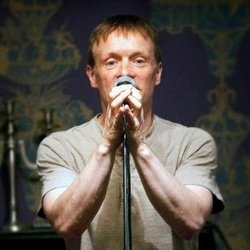
There’s a genuinely rough “work in progress” feel to Steve Whiteley’s A Mind Full, not least when he’s bantering with his tech guy over missed cues or missing picture files.Given Whiteley’s relatively recent diagnosis of ADHD, this doesn’t necessarily come as either a surprise or an issue; in fact, it feels appropriate, given his relatively early “morning after the night before” time slot and his location in what feels like the attic of one of the Old Town’s most atmospheric venues.A Mind Full is part stand-up, part confessional. Time and again Whiteley holds onto his microphone with both hands – like a singer emoting a ballad – as he explains how he’s tried down the years to fill the void he’s long felt inside.Coping mechanisms over the years have included drugs, money, music and film production, therapy, meditation and even (believe it or not) performing stand-up in order to find some validation and emotional stability. Some of these worked for a time, others were less successful – a few were frankly just embarrassing. (Comedy is not one of those: if you don’t laugh in Whiteley’s company, there’s little hope for you.)In terms of the show’s narrative arc, Whiteley is now much more self-aware than he used to be: understanding his intimacy problems and their root cause. He’s now more often in “rest and digest” mode than “fight or flight”, which may be odd for a stand-up, but is a valuable lesson nonetheless – not all laughs have to come from a stressed place.

Just the Tonic at The Mash House • 31 Jul 2025 - 11 Aug 2025

Andrew Doherty: Sad Gay AIDS Play

Mancunian sketch writer and performer Andrew Doherty clearly comes to the 2025 Fringe with a positive reputation based on his previous hit show, Gay Witch Sex Cult – he’s already attracting near sold-out performances, and there’s a lot of immediate love from the crowd. Thankfully, this is a gift he doesn’t squander; he effectively engages with his audience from the start, and builds on that foundation with real skill.Not surprising, really, as there’s a lot to love here: Doherty presents himself as a young man so enthusiastically in love with musicals – thanks to having discovered Six – that he now wants to share with us (in an audience research kind of way) a few scenes from his forthcoming Arts Council England (ACE)-supported musical, AIDS Actually. From the title alone, you might think this isn’t in particularly good taste, but (of course) that’s actually rather the point.And, at the risk of getting serious, this is clearly one of the issues Doherty is focused on: his character knows the kind of shows that he really wants to make, but his dependence on public subsidy means that ACE effectively call the shots – so when its increasingly demonic representatives, watching him via a conference call, tell him to “AIDS-it-up” and make his show more “Northern” (a challenge for someone from Manchester), he doesn’t have any alternative but to comply. This is combined with their ongoing insistence that he remains “non-political” – which, you could well say, is pretty hard to do when writing about a pandemic which effectively killed a generation of gay men. The challenges faced by public arts subsidies within an increasingly polarised social media are plain to see – and, in Doherty’s hands, also happen to be laugh-out-loud funny too.To be fair, not everything in this show is yet working on all thrusters – the subplot in which Arts Culture England apparently murders Doherty’s parents (to help give him the emotional trauma he needs to make “great” theatre) doesn’t quite land as well as you might think. And, in a purely technical early-in-the-run sort of way, Doherty’s conversations with a pre-recorded ACE demon are littered with extra-long pauses that can’t entirely be explained away by supposed issues with his broadband width.Nevertheless, if you’re looking for a laugh-out-loud show that sneaks in some surprisingly serious ideas behind the jokes, then it’s unlikely you’ll find anything better than this particular Sad Gay AIDS Play.

Pleasance Dome • 30 Jul 2025 - 24 Aug 2025

Will Owen: Looking Fab at Fifty

Dressed in shirt, tie and shorts – somewhat ironically looking like a schoolboy coming home after sports – Will Owen is really difficult to dislike. In fact, the only real criticism that can be levelled against him after nearly an hour’s worth of engaging comic banter is that his set actually has very little to do with the titular “Looking Fab at Fifty”.Mind you, he’s only 26. Most of Owen’s material focuses on how he’s never quite fitted in with the so-called gay scene, once he discovered it, and how, even though Grindr can help him find the man of his dreams, he’ll likely take a dive after the first date.The unexpected strength of Owen’s set is his audience interaction, despite him seemingly being terrified. On the night of this review, the audience happened to include half a dozen gay men, some of whom were in long-term relationships. Owen seemed genuinely pleased by this turn of fate and ticketing, asking about how they met and how they knew they’d met “the one”. All of which he then went on to use as an effective distorted reflection of his own experiences of dating and relationship building.Owen isn’t an in-your-face comedian: frankly, the voice and personality which ensured he never had to “come out” to family and friends certainly goes against that. Much of his material is sharply observed and delivered, but equally there’s a sense that he’s still holding back on us. A fault, but one that makes him all the more endearing.

Assembly Roxy • 30 Jul 2025 - 24 Aug 2025

Up

At its heart, Up is a story about how opposites attract. But it also touches on ideas around luck and fate – about choices and coincidences – in ways that are genuinely engaging, thought-provoking and, for lack of a better word, playful.The story focuses on what happens when Jamie – who believes she’s been extremely unlucky all her life – finds herself sitting next to “born lucky” Jay on a flight to Brazil—which, true to form, runs into extreme difficulties. Much of the narrative thrust for this show comes from the rhythmic returns to where our two-member cast – co-creator (with artistic director Douglas Irvine) Zoë Hunter and Michael Dylan – re-enact emergency masks dropping from above their heads, engines stuttering in flames, and hand baggage crashing to the floor. For, as they explained in an early “lesson” on the science behind powered flight, if something does go seriously wrong with an airplane, “gravity wins”.Depressing? Not a bit of it: there’s a lightness to proceedings, thanks to the way the story is told. Wilson and Dylan use numerous toy planes and cars, action figures (of various sizes) and small suitcases filled with knickknacks to illustrate and progress the narrative – what the publicity refers to as “a fantasy table-top exploration using object theatre” but arguably best resembles children playing with whatever objects come to hand. Nor does the set resemble a passenger aircraft; rather it feels like the small corner of one of those vast warehouses where the retrieved items from crashes are stored. Wilson and Dylan are surrounded by metal shelves filled with cardboard boxes, and a whiteboard; they spend much of their time behind a small collection of office desks, facing out to the audience.Its sense of “play” – in the childhood sense of the word – paradoxically may distance us from much of the reality of the situations we’re shown, but nevertheless helps us connect with the core emotional aspects of each character’s back story – in particular their past loves and traumas. It’s concise writing, combined with two energetic performances, which ensures we believe how and why these two people have met at the right – or possibly the absolutely wrong – time, and how arguably it doesn’t matter which.Notwithstanding the asides name-checking the ancient Greek concept of the “Unity of Opposites” or more recent investigations into people’s ideas of good and bad luck undertaken by Professor Richard Wiseman, this is a dynamic, entertaining and remarkably uplifting production.

Gilded Balloon at Appleton Tower • 30 Jul 2025 - 24 Aug 2025

Trygve Wakenshaw and Barnie Duncan: Different Party

Grareth [no, that’s not a typo] Krubb (Trygve Wakenshaw, in a suit that’s too small for him) and Dennis Chubb (Barnie Duncan, “the swarthy one”, in a suit that’s too big) are allegedly account consultants for Rucks’s Leather Interiors. However, this pair, happy to hand out their business cards to the audience as we enter, frankly struggle to get anything done, taking office incompetence to new heights of laugh-out-loud physical comedy. Though there’s also the occasional, often surreal, verbal comment thrown in for good measure: “Imagine a room covered in skin” sticks in the mind!Wakenshaw and Duncan are absolute masters at this kind of physical humour, not least for managing to get almost a couple of minutes’ worth of physical contortions out of a simple handshake. Yet, while the jokes keep on coming, they’re sensible enough to ensure we have sufficient pauses for breath – otherwise they’d probably lose half their audience to laughter-induced asphyxiation.The show is recommended for 12-year-olds and older, possibly because there are one or two moments of more risqué adult humour – an unexpected diversion into the lives of pigeons, for example, ends with the briefest moment of “coitus”. And yet many children would surely really enjoy this, not least because there is a genuine child-like feel to both Wakenshaw and Duncan’s characters. Also, the show is grounded in a series of easily understandable games – some taking “management speak” literally – which the pair perform with exceptional skill.It should be said that this is not a new show: it debuted in Edinburgh the best part of a decade ago, but it still feels remarkably fresh and exciting, with even a sense of some visual and physical improvisation – although I suspect that it’s actually choreographed to within an inch of its life. There are also several running gags – one involving coffee cups – which build throughout the show to the increasing delight of the audience.Wakenshaw and Duncan are, without doubt, an exceptional double act: indeed, with their tall/short aspect, they have something of a Laurel and Hardy vibe – albeit without the overt physical assaults. Yet it’s also clear that this is, in part, down to their ongoing success as solo performers – each has their own shows in Edinburgh this year, as well as another fully improvised duo performance later in the evening. As Different Party proves, when they do choose to work together, the result is magical.

Assembly George Square Studios • 30 Jul 2025 - 17 Aug 2025

Almost Impossible 2.0: Martin Brock

AI is, of course, something of a theme at this year’s Fringe – though for Martin Brock, a welcoming and astounding magician from Denmark, it’s all about being Almost Impossible.Which pretty much describes his show: smoothly performed card tricks (for the most part) that leave his audience numb, prompting successive thoughts of “How did he do that?” To be fair, the audience’s eardrums are also somewhat numbed by a near-constant musical background that’s perhaps mixed a little too high, particularly when Brock is explaining the difference between old Western card sharks – travelling from town to town and using tricks to cheat players out of their money – and a magician who necessarily uses some of the same sleight-of-hand techniques, but with the full awareness (if not understanding) of their audience.Although his poster shows Brock with playing cards just visible up his jacket sleeve, this isn’t actually the case during the show – for the very simple reason that he’s wearing a short-sleeved shirt. Nevertheless, he is still able to magically produce cards seemingly from thin air and – via a giant screen – perform some mind-blowing close-up magic that verges on showing off.He’s not one to shy away from the typical Fringe peculiarities of performing in what is, for the rest of the year, a university lecture room, but Brock has a genuine way with people – especially those he pulls from the audience to assist and observe specific tricks. It helps, of course, that he’s handsome, stylish and definitely sexy. Yet ultimately, it’s all about the “tricks” – a word that underplays the ingenuity and originality involved in both their development and performance.Like most magic shows, there’s an element of “just one trick following another”, although Brock breaks the mould slightly with a brief theme-setting video for a trick involving Himalayan singing bowls. That said, he undoubtedly saves the best for last, transforming a pack of entirely blank cards into a simple accompanying illustration of Frank Sinatra’s It Was a Very Good Year.As with all great magic shows, there’s a slight reluctance from the audience to applaud – partly to avoid disturbing “the magic”, but mostly because they’re simply dumbfounded by what they’ve seen. But without a doubt, Brock deserves all the applause he receives – and more.

Gilded Balloon at Appleton Tower • 30 Jul 2025 - 24 Aug 2025

Ironing Board Man

“Good luck explaining what this is,” Jody Kamali – creator and performer of Ironing Board Man – says at the end of the show. To be fair, he has a point: it’s just not one you’d expect a sweating, exhausted performer – who has genuinely put his all into entertaining us and is now desperate for a positive reaction and some great “word of mouth” endorsements – to make.But it’s fair to say that Kamali has a point. In one sense, this is an easy show to describe — a slam-dunk mash-up of cinematic superhero and romance tropes, performed with great energy and enthusiasm by one man and 10 ironing boards dressed in various outfits, overlaid with a montage of snatches of film dialogue, pop songs and specially recorded dialogue. But that description genuinely fails to do the absurdity and wonder of the show justice.Ironing Board Man is precisely the kind of wonderfully “fringe-y” Fringe show that appears increasingly rare in these cost-conscious days; a production based on the kind of idle thought any sensible but imaginative person might have towards the end of a busy, tiring day, and then dismiss with a head-shaking: “Naah!”But not only did Kamali have the thought – thanks to his wife hanging a blouse on an ironing board after she’d ironed it, apparently – he went on to create a profoundly absurd piece of theatre based on it, a work that blatantly riffs on (or rips off – “puh-TAY-toh, puh-TAH-toh”) plot points from Batman, Superman and Dirty Dancing. Plus Cocktail, Karate Kid, Top Gun, Titanic, Gladiator, The Matrix, The Lion King… You get the idea.In some respects it feels a bit of a mess; in others, it’s clearly a very carefully choreographed production that delivers surprisingly impactful moments of humour and pathos through the simplest of means. For example, Kamali uses sampled dialogue and song lyrics to get across significant narrative points and character story arcs. And yet, all we see before us are a few ironing boards decked out in dresses and wigs. It really shouldn’t work. But it does. Brilliantly.Kamali himself doesn’t have too much dialogue during the show: perhaps just as well, as he is physically always on the move, throwing himself around with little apparent fear of hurting himself.“Good luck explaining what this is,” he said. Well, it’s funny, it’s exciting, it’s ridiculous. I’d say that’s precisely what you should want from the Edinburgh Festival Fringe.

Gilded Balloon at Appleton Tower • 30 Jul 2025 - 17 Aug 2025

Benny Shakes: Slugageddon!

“Why are there potatoes there?” Not a question you usually hear before a show – even on the Fringe – but it’s an indication of the natural curiosity of a particularly young, uninhibited audience.Until, that is, the show starts with a CBeebies-style animation about Benny Shakes’ garden and his escalating slug problem. Suddenly the kids become very shy indeed. Thankfully, Benny has a child-like air that helps him relate well to under-eights – especially once he breaks the ice by throwing soft-toy vegetables at the audience and inviting us all to throw them back into a large bag acting as a symbolic compost heap: “the only time you can throw things at a disabled person,” he ad libs.Benny’s adaptability certainly comes in useful when, on this particular occasion, the multimedia elements of the show break down – ultimately requiring a full “switch off/switch on” reboot by the tech crew. That he’s able to keep the show moving, and his younger audience members engaged, is impressive. It also suggests he perhaps doesn’t always need quite so many visual bells and whistles to do his job well.Slugageddon doesn’t attempt to hide its educational remit: on-screen game Poo! Or Boo!, for example, offers audience members simple yes/no choices about what should or shouldn’t be put in a compost heap. Its most subtle lesson, though, is the least remarked upon – that we’re easily relating with somebody who happens to have cerebral palsy.(As for the potatoes? They’re part of a musical instrument. Obviously.)

Pleasance Courtyard • 30 Jul 2025 - 11 Aug 2025

Doktor Kaboom: Under Pressure!

Doktor Kaboom – AKA German-American science communicator David Epley – is everything you want for a family show: bright, bold, and educational in that most subtle of ways – by exciting kids’ imaginations and holding their attention for the best part of an hour. That he’s able to include one or two more risqué jokes “for the grown-ups” – nothing sexual, though; this is a clean, if rubbish-strewn, show – is a bonus.With his cool dyed hair, bright orange jacket, and a kilt made out of a German flag, “Doktor Kaboom – Man of Science” considers himself an excellent specimen of humanity who just happens to “speak funny”. That said, within minutes he has his whole audience enthusiastically shouting out either “Ya!” or “Kaboom!” in response to a promised or delivered explosion.That old BBC mantra – nearly 100 years ago, founding Director General John Reith defined the broadcaster’s role as being “to inform, educate, and entertain” – is undoubtedly appropriate here, but Doktor Kaboom adds a significant amount of fun and excitement to the whole endeavour. Most of the kids in the audience – and who knows, perhaps some of their parents too – are likely to have left the venue knowing much more about pressure – the titular subject of this particular show – than they did going in, and they had a great time doing so. Though doubtless they would also be a little bit jealous of the three kids – on the day of this review, Tom, Alex and Sienna – who were brought up on stage to help with some of the more impressive experiments. (Note to our younger readers: if you want to increase your chances of selection, persuade your grown-ups to sit you in the front rows.)In Doktor Kaboom’s world, science may be dangerous – but it’s also exciting. His experiments include crushing steel with nothing more than the pressure of the surrounding air, firing ping-pong balls out of a vacuum-filled cannon, and showing the full potential force of sublimation – that’s when a substance like “dry ice” (frozen carbon dioxide) turns from solid to gas without going through that boring liquid stage. Kaboom!Yes, there are some blatant morals “in the room” too: that it’s alright to be wrong in science, and that experiments may not always work on the first attempt, but the important thing is to work out what’s wrong and to keep going until they do – and when you succeed, the previous problems help build the audience’s anticipation. At one point Doktor Kaboom also reminds us that pressure isn’t just a physical force; that the stresses of life can bear down on any of us to the point we risk “bursting”. But, as one particular experiment proves, there is always strength in numbers; that opening up to others and sharing the load can make all the difference. You cannot be brave without being afraid.Certainly, you don’t have to be afraid in the company of Doktor Kaboom. An informative, educational and entertaining hour is guaranteed.Kaboom!

Pleasance Courtyard • 30 Jul 2025 - 25 Aug 2025

An Evening with Dame Granny Smith

There’s a simple way to judge how good a ventriloquist is: check who the audience is watching when the “puppet” is supposedly talking. If their eyes are on the puppet, everything’s going swimmingly; if it’s the performer, they’ve got a problem.Thankfully, David Salter has absolutely nothing to fear on that score. From the moment she’s introduced, the audience in The Wee Coo venue are totally focused on hearing the lifetime recollections and razor-sharp put-downs from the imperious, self-centred Dame Granny Smith.As she takes command of the stage, Salter is seemingly left floundering as a somewhat inexperienced and uncertain interviewer. It’s clear early on that this particular “grande dame” of stage and screen – whose vaudeville debut at age five (days) eventually led to her being picked to play the poisoned apple in Disney’s original Snow White and the Seven Dwarfs back in 1937 – isn’t one to take prisoners in her anecdotes or let loyalty to Pam (her former personal assistant of 24 years) get in her way.All this despite one obvious and unavoidable fact – Dame Granny Smith is – literally – a real apple, with her blank eyes and mouth flap the work of a few minutes with a peeler. Salter holds her in his hand, operating the mouth flap with his thumb. It’s obvious how it’s done – and yet we can’t help but “buy” the situation and the reality of her character.It helps, of course, that Salter is a naturally funny performer. It helps too that his show is filled with clever one-liners and comedic lines that stretch through the hour, building to a conclusion that takes things in a deliciously unexpected direction, ensuring An Evening with Dame Granny Smith is ultimately much more than a show with a single punchline – great though that punchline undoubtedly is.The twist is done lightly, with surprising subtlety, but gives the show emotional heart and really stays with you. Simply put, the result is a show that has as much to say about the art of ventriloquism as it does about the jaded vanities of an old theatrical star who is (frankly) well beyond her sell-by date. That’s a delicate balance to keep, but Salter makes it feel easy.And he even manages to play – albeit with assistance from an audience member – a ukulele. Brilliant.

Underbelly, George Square • 30 Jul 2025 - 25 Aug 2025

Calendar Girls The Musical

It’s that special time of year when the UK’s oldest professional summer repertory theatre stages weekly productions in Frinton-on-Sea, a jewel on the Essex coast. Steeped in tradition, and marking the debuts of many now-major actors, the company has chosen the perfect production to celebrate all things British.The now-famous tale of a group of Yorkshire WI members taking their clothes off for a charity calendar to raise money for the local cancer visitors’ centre has evolved into Calendar Girls The Musical, created by Gary Barlow and Tim Firth. Staged in the McGrigor Hall – home to the Frinton WI – and with music played live on piano by the wonderful musical director Neil Somerville, there is already a delightfully charged atmosphere as the show begins.And what a crowd-pleaser. One thing that impressed me is that the poignancy, and the horrendous effects of cancer, are not skimmed over for the sake of light entertainment. This is a confection with bite, and it’s served up by a very good ensemble with excellent leads. Shona White, as Chris – the naughty, rule-breaking WI member who gets the idea for the calendar – is perfect; many of her lines get cheers, and she is a smashing singer. As her grieving, sensible, more down-to-earth best friend Annie, Claire Carrie is a superb foil to Chris. Their friendship is totally believable.For me, Tracy Collier, as the “older” member of the troupe, stole the show, capturing perfectly the retired teacher whose put-downs, gruffness and jokes hit every mark. All of the women get a wonderful turn in the spotlight, especially in the beautiful, tasteful and heart-lifting calendar shoot scene For One Night Only, but it would be remiss of me not to mention Chris Garner’s quietly strong performance as John – the husband of Annie – whose death leads to the positive outcomes of the money raised.It’s not quite perfect: head mics would have made some of the lyrics clearer, the music occasionally overwhelms the vocals, a couple of cast members tended to swallow their words, and the pushing on and pulling off of the sofa was a bit distracting. However, Emily Raymond’s excellent direction leads to a triumphant production.This is no shop-bought Victoria sponge, but a production baked in the themes of friendship, love and good old British character.

Frinton Summer Theatre • 22 Jul 2025 - 26 Aug 2025

The Wellbrick Centre on Roswell Drive

Musical theatre appears to thrive on some of the most unexpected subject matters – the lives of poetic cats, the founding fathers of America, The Jerry Springer Show – so a new musical set in an NHS mental health centre doesn’t feel quite as extreme as you might think.Given its minimal cast and staging, this is a Fringe production which sensibly cuts its suit to match its cloth, but still ends up with something memorable. The cast of four actors are genuinely strong, especially when they have to double-bank as additional supporting characters. The featured songs by Greg Van Kerkhof and Ben Hawkin are strong and successfully push forward both character and action: a duet, “Share the Moon”, is a particular delight.All told, Julianne Chauhan’s script is remarkably even-handed in its approach to the subject of the NHS mental health service. While a strong “anti-psychiatry” argument is forcefully put forward by a diagnosis-seeking Sam (Heather Davidson), who sees herself as a “cult-classic anti-heroine”, it is balanced by the relatively successful recovery of depressed, agoraphobic Eddy (Robbie Hail), who manages to make a genuine recovery.The script even ensures that antagonistic authoritarian figure Dr Roswell (Steve Grant) has some moments of clarity and perspective, while Martin Maclennan finds truth in both a proactive care worker and a “selectively mute” patient. Admittedly, some occasional attempts to “go meta” – characters/actors referring to being in a musical – don’t quite hit the target, but overall, this is a roughly-hewn gem worth seeing.

Paradise in The Vault • 2 Aug 2024 - 10 Aug 2024

The Outrun

There was a lot of excitement around Any Liptrot’s 2016 memoir, The Outrun, which combined a searingly honest take on her alcoholism with atmospheric descriptions of her native Orkney. Eight years on, her story is back: as a film (the Opening Gala at this year’s Edinburgh International Film Festival) and a stage play as part of the Edinburgh International Festival.Although such introspective source material is not unheard of in “art house” cinema, it’s arguably more challenging when it comes to popular theatre, which generally craves drama and a sense of “aboutness”. True, there is a frail narrative thread: the lead character’s growing sense of disconnection; her feeling that Orkney’s open spaces are increasingly suffocating; her eventual realisation that experiencing “everything” in the bars and nightclubs of London doesn’t actually leave her with anything.But, despite Isis Hainsworth’s commanding performance throughout the play’s running time, it’s very hard to care, and her character’s isolation is underscored by sharing the stage with a nondescript chorus of nine actors—some of whom step forward to perform thinly-sketched school-friend, boyfriend, rehab peer, scientist.As if to compensate, this is a production full of gratuitous metaphors: be they in the script – how a repaired wall “doesn’t have to be perfect, just strong enough for the storms” – or the massive video montages of natural textures and blurred cityscapes created by Lewis den Hertog. From music and soundscape to physical choreography, there is much to impress, but overall it lacks sufficient humanity to make us really care.

Church Hill Theatre • 31 Jul 2024 - 24 Aug 2024

Love and Sex on the Spectrum

It’s four years since George Steeves brought his Magic 8 Ball show to Edinburgh, winning the heart and mind of at least this reviewer with such an honest, bold theatrical collage of spoken word and song narrating George’s somewhat confusing childhood and early adulthood as someone with Asperger’s. Love and Sex on the Spectrum is, in some respects, a sequel, given it continues with the previous show’s near-final big reveal that he’s actually gay. In form, though, this new show is quite different; not so much theatre as stand-up, with George re-moulding his material to fit the small rectangle of the room’s “stage”, while holding onto a microphone as his only prop. And you know what? For someone best known as an actor and singer, he’s remarkably good at it: there’s a real sense of energy in the room as he shares the often humorous, always authentic, ups and downs of his sudden flowering as a sexual being with a smartphone and a clear desire to catch up for lost time. (Swipe left!)Many people with Asperger’s are “late bloomers”, he tells us: George is honest in describing himself as both asexual (and desperate to be straight) for the first 27 years of his life. So the heart of this show is partly about how that – remarkably quickly – changed, and how trying to find “the one” for a longterm relationship can prove to be a particularly dangerous addiction for someone “on the Spectrum”, for whom restrictive repetitive actions are quite a thing. Even though, for a time, he thought he was “so picky” when it came to potential partners’ age, height and hygiene. At the top of the show, George apologies for all the American references he’s going to use. Thankfully, the likes of Justin Timberlake, Sex and the City and Glee are sufficiently well-travelled not to require too much translation: that said, various 1990s horror film references may be more challenging for some. In any case, despite some necessarily US-based specifics, George’s story is surprisingly universal; and one delivered with heart, skill and engaging honesty.

Laughing Horse @ Bar 50 • 4 Aug 2022 - 19 Aug 2022

Feeling Afraid as If Something Terrible Is Going to Happen

According to The Stage’s recently departed Scotland editor, Thom Dibden, comedy first overtook theatre as the largest proportion of the Edinburgh Festival Fringe’s programme during the 2010s—so is presenting a one-man theatre show about a comedian actually attempting to have a foot in both camps? It’s fair to say that it works—for the most part. Though that’s as much down to Samuel Barnett’s no-holds-barred performance, as Marcelo Dos Santos’s writing.This is a monologue, structured like a stand-up set, in which a somewhat neurotic, self-depreciating and self-sabotaging gay stand-up comedian – for whom rejection is his “safe space” – reveals his growing concerns and doubts about what appears to be an unexpectedly potential long-term relationship with “the American”—who is, of course, an intelligent, cultured and drop-dead-gorgeous adonis. Our stand-up – all too familiar and comfortable in a succession of seemingly meaningless one-night stands (except for friend-with-benefits Michael in Hampstead) – has difficulty coping when sexual stimulation isn’t the primary first-date aim.Even worse, though, is the American’s cataplexy, a medical condition that means laughing could potentially kill him. For our stand-up, who needs an audience to laugh, this is almost a deal-killer—except that, for once, he’s beginning “to feel things” and “not feel shit after”. Of course, the implied stability the American brings is also scary; and so our somewhat unreliable narrator naturally begins to self-sabotage again. The self-loathing gay might be a cliche you’d hope we’d have moved on from by now, but he’s drawn with depth, complexity and a genuine sense of the absurd.Barnett is absolutely fantastic here; he’s funny, charismatic and importantly connects with his audience immediately—despite having to perform “in the round”, rather than in a more traditional (and helpful) stand-up-facing-audience set-up. Director Matthew Xia clearly knows his stuff, but in the end it’s actually Marcelo Dos Santos’s script which feels more fury than sound. The end result is that the self-promoting producers of Fleabag need to move on further.

Roundabout @ Summerhall • 3 Aug 2022 - 28 Aug 2022

Moira in Lockdown

It must be a baker’s dozen years since Scottish author, playwright and performer Alan Bissett first introduced us to Moira Bell, his much-loved tribute to the hard-working, hard-playing, straight-talking working class women who surrounded him during his Falkirk upbringing. In this third – and apparently final – collection of monologues, we again find Moira ready to take on the world and its sister—and still sharing every moment with her best pal, Babs.The unseen, unheard Babs is, of course, ultimately just a theatrical device; someone for Moira to talk to instead of talking directly to the audience. Yet, on this occasion there’s an added frisson early on that this believably long-established relationship could be taken away from Moira, thanks to Covid-19 and Scottish Government instructions for everyone to stay at home. Of course, Moira’s back-to-the-wall willingness to take on all-comers is the constant powerhouse of Alan Bissett’s humour, but it’s clear he’s increasingly fascinated by the genuine subtleties of the woman now she’s 50 years old. Part of the attraction of Moira as a character – if not as a real-life neighbour – has always been her varying degrees of self-awareness; here, on more than one occasion, she’s occasionally pulled up short by momentarily seeing herself as others do. If she pauses for thought, though, it doesn’t follow that she immediately changes her behaviour. She still sees little point in most of Scotland outside of Falkirk, but following more than a year in lockdown – and also a year “on the wagon” – she has certainly become more aware of the passage of time and everyone’s ultimate mortality.As with the two previous shows, Bissett performs alone on stage as Moira with no attempt to drag it up like some Scottish answer to Mrs Brown’s Boys. Nevertheless, she is undeniably in the room, with Bissett’s performance honed and subtly guided once again by director Sacha Kyle. Story changes are indicated by no more than a brief dip of the lights, and a change of seat on stage. Yes, Bissett slips easily into other supporting characters – generally the poor men Moira runs into – but he never loses his focus, and is always in the moment with all the characters.Much of Bissett’s work – especially his novels – is about Scottish, working class men, but Moira clearly offers him a different angle to talk about the world. Not least because, while she may not be the most knowledgeable woman in the world – there’s a great joke about the Carpenters which deserves its repeated usage – Moira’s smart, and occasionally profound: not least about how, one day, all the strangeness of lockdown will just be a faded memory.

Scottish Storytelling Centre • 3 Aug 2022 - 23 Aug 2022

Ode to Joy (How Gordon got to go to the nasty pig party)

Playwright/director James Ley first gained some attention as a co-producer and writer of Leith-based The Village Pub Theatre, which provided performing space to a fresh band of actors, directors and writers. Learning his trade in an environment where humour and brevity were generally preferable, it was hardly surprising when Ley’s first major work, Love Song to Lavender Menace (about Edinburgh’s ground-breaking queer bookshop) combined wit and celebration with more serious intent.So it is with Ode to Joy which, as its subtitle rather gives away, explains how uptight late-20s Gordon – for whom any variety of sex has “never been a big part of [his] life” – decides he needs to change and (with some chemical assistance) become “Pig Gordon” at the world’s biggest and most iconic sex party—which is held every year within a former Berlin power station. Given the minimal staging — a few costumes on a rack at the back of Summerhall’s Demonstration theatre, a couple of circles chalked on the floor – this production relies on its four performers.Thankfully, they’re more than up to the task, proving that “show, don't tell” isn’t actually always the best way to push a story forward. Much of our attention is, of course, focused on Brian Evans as the titular Gordon—a minor legal officer in the Scottish Government, who’s happy to have learned so much on an LGBTQ working group, but is at least sufficiently aware that it’s not exactly experiencing the real thing. Evans gives Gordon the precise degree of rigid-armed, iPad-holding nervousness required to balance his otherwise wide-eyed, genuine likability; we can’t help but love him.There are, however, several moments when Marc MacKinnon essentially “borrows” the show as “Manpussy” (aka Tom) who – barred from the night club for not wearing “sporty” clothes, appears as the show’s Narrator—indicating, from early on, that the comedy here isn’t just dirty and outrageous, but meta. Manpussy may be miffed at being given the role, but the most outrageous narrator ever seen outside of a pantomime is equally upset if anyone tries to take it from him: “Do not manipulate them,” he says at one point, referring to his appreciative audience. “That’s my job.”Manpussy’s partner, meantime, is the apparently aptly-named Cumpig (also known as Marcus), who is both horrified and knocked sideways by Gordon’s innocence, and is the one to tell the newbie that he “can be anyone [he] wants”. He’s also a fair hand at Shakespearian emails – complete with emojis – which help push Gordon unexpectedly towards his dream party. And talking of party, the fourth – unspeaking – performer is Simon “Simonotron” Eilbeck, who is mixing an unmissable beat from the moment the audience starts to make its way into the venue, contributing a deeply-felt aural aspect to the show’s imagined world.Ode to Joy is about friendship, love and, yes, having fun along the way. Only one thing lets it down; a cack-handed, out-of-the-blue comparison of Gordon’s self-realisation on the dance-floor with an independence-winning Scotland that’s once again part of the European Union by 2029. I can just about ignore the hubris in Gordon’s declaration of a sex club as the true heart of Europe; but not the unsubtlety.

Summerhall • 3 Aug 2022 - 28 Aug 2022

One of Two

There’s significant anger in One of Two; a sense of injustice felt by a young man whose experience of the not-so-subtle cruelties and discrimination endured by disabled people is doubled—not just that experienced directly by himself, but also indirectly impacting on his more seriously disabled twin sister, Bec. As even writer/performer Jack Hunter tells us later, the opening is “a bit intense”, reflecting how “he’s not good on his own”.Thankfully, there’s also humour; and, although this work is presented as a solo show, Jack’s certainly not on his own this time—his “womb mate” Bec remains a significant presence through pre-recorded audio and video recordings, commenting on and berating him in that all-too-familiar sibling fashion. Developed in association with Summerhall’s Mary Dick Award, Playwrights’ Studio Scotland’s Disabled Playwright Programme, and disability-led Birds of Paradise Theatre Company, One of Two is an authored work that comes with a real confidence about what it wants to say and how it will say it—or, indeed, caption it.Jack and Bec were born nine weeks premature, and starved of oxygen at birth: as a result, both have cerebral palsy. Not the same kind or degree of cerebral palsy; poignantly, Jack relates how, when they reach secondary education, he feels guilty for escaping the isolation experienced by his sister simply because of “being slightly more able”. As they grow older, he is able to spread his wings, not least by moving on to study drama; Bec, who requires a powered wheelchair to get around independently, is “confined” by the decisions and lowered expectations imposed on her by reluctant teachers.Jack certainly doesn’t want to be perceived as being an “inspiration”. Because he’s such an engaging performer, you can easily laugh at his threat of physical violence to anybody describing him in such terms. But the anger is definitely there: at the lack of genuinely sufficient support in mainstream schools, the systemic expectation that disabled people should learn to cope, not to succeed. If there’s a lesson for us all, it’s not to accept mediocrity.

Summerhall • 3 Aug 2022 - 28 Aug 2022

W*nk Buddies

“It’s about us—together,” explain Jake Jarratt and Cameron Sharp, in their new play in which two drama students – straight “Jake”, gay “Cameron” – end up trying to sleep in the last free bed at an end-of-term house-party. They’re sort of strangers, despite being on the same course, and “emotionally tired” rather than simply drunk, but over the course of an hour we’re shown a night that might just make their lives better.Against a relentless background of mediocre dance beats, and muffled other-side-of-the-wall fornication, W*nk Buddies is a playful, occasionally touching exploration of two young men working out how the rules of masculinity apply to them: whether you’ve arrived at Uni from Durham, or just want to dance the night away in a local gay bar. The unsurprising revelation of the story is that both these men are “fish out of water” — Jake, the working class kid for whom Drama was originally the warmer-roomed option for Detention; and Cameron, forever the “poof” in a straight world. Both embody, and are fighting, certain stereotypes around masculinity, straight and gay—and the show goes some way to summarise these either through the occasional fourth-wall-breaking nod to the watching audience, or a dance routine — performed with what can safely be assumed to be a deliberate and endearing roughness. That said, football-speaking, beer-drinking ex-boxer Jake is already further from his safety zone than Cameron; the girl’s bedroom in which they’re both not sleeping is a spectrum of pink and Britney albums, and more cocooning than the local gay bar he once visited like a tourist.Scripted by both performers, W*nk Buddies – succinctly directed by Melanie Rashbrooke – understandably plays to both performers’ strengths, and fits its Fringe-friendly one-hour slot well. Yes, it arguably needs a more clearly sign-posted conclusion; and, without mikes, some dialogue was occasionally lost as the music was turned up-to-eleven. But as a heart-warming reminder of the need for us to both listen and explain our lives, W*nk Buddies is fine indeed.

Traverse Theatre • 29 Feb 2020

Mrs Puntila And Her Man Matti

Mrs Puntila and her Man Matti is that relatively rare thing for the Royal Lyceum Theatre—a star vehicle, rather than an ensemble production, that happens to have two audience favourites: Elaine C Smith (the titular Mrs Puntila), whose position as a Scottish national treasure and broad pantomime favourite has more to do with TV’s Rab C Nesbitt than her undoubted talents as a serious stage actor; and Lyceum audience’s own favourite Steven McNicoll (Matti).It’s a pairing, however, which not only doesn’t work, but fails to gel in remarkably uninteresting ways. McNicoll’s appreciated because of his expertise in marrying theatrical contrivance with layered humanity, so he’s ideal casting as much-put-upon chauffeur, and “voice of the common man”, Matti. Unfortunately, his performance can’t help but illuminate the limitations of Smith’s harsh, show-boating approach to wealthy landowner Mrs Puntila, which feels more suited to a few minutes on the variety stage of the nearby King’s Theatre than this Brechtian revamp of the Lyceum—except that it lacks the subtlety you’d expect even there. Smith opts to give us the flat boredom of a drunk who is just as grating when she’s supposedly sober; worse, given that she’s arguably best known for her work in comedy, Smith fails to “land” many of the play’s major comedic moments. As an example, her drunken outrage at the social injustices arising from a zero-contract, minimum-wage gig-economy really should come across as funny, given her position as a major employer, or at least deeply ironic. Sadly, the result is a lifeless “Isn’t this terrible?” feeling leaving you untouched, emotionally and (given this is Brecht) intellectually. Smith and McNicoll’s differing approaches (unfortunately mirrored in the rest of the cast) are symptomatic of a production with no firm idea of what this Scottish retelling is supposedly “about”— with director Murat Daltaban forced to resort to a scatter-gun approach of theatrical business to enliven Denise Mina’s meandering script: which, all too late, suggests Mrs Puntila as a perfect symbol of Scotland’s skewered land ownership. An insight, of course, given to McNicoll’s Matti.

Royal Lyceum Theatre • 28 Feb 2020 - 21 Mar 2020

Pride Plays

Edinburgh’s Traverse has long-championed new drama—indeed, the venue’s self-description is the simple goal of being “Scotland’s new writing theatre”. As a result, Traverse Theatre aims to give unheard writers access to its stages through either its own initiatives – such as flagship education project Class Act which, in 30 years, has developed more than 900 scripts – or cooperating with other theatre companies, including Glasgow’s world-famous A Play, A Pie, and a Pint. The specific focus of Pride Plays, according to Edinburgh-based co-producers Shift, was – is – “to give the stage to voices of a community who still feels underrepresented in Scottish theatre”. (The specific community they have in mind would appear to be LGBTQI+ identifying playwrights, clearly determined to legitimise the lived experiences of their peers.) These were, in one sense, nothing more than rehearsed readings, with scripts clearly held in the actors’ hands, performed on a stage empty except for a few chairs. Yet, thanks to skilled actors and focused direction, the results could still genuinely emotionally affect an audience. Natalie McGrath’s We’ll Meet in Moscow was essentially a monologue about a Muscovite lesbian who finds true love while fleeing across Siberia. Although I found McGrath’s script on occasions too needlessly verbose, there were numerous subtle decisions by performer Rebecca Elise and director Connel Burnett which helped “sell” the central character’s loneliness, joy and determination within the wider context of LGBT+ oppression in Russia. In contrast, Katie Gartlan-Close’s Cocoon focused on two women, Randy and Sophie, whose marriage is fractured by the latter’s desperation for motherhood, and an unexpected opportunity during a supposed holiday train journey between Vancouver and Seattle. Gartlan-Close isn’t afraid to use comedy as a means of punctuating the drama, something she has in common with Gabriella Sloss, whose 787 Blinks expertly explores the consequences of rape, women’s friendships, and positive relationships. In one sense it’s dramatically the strongest of these Pride Plays—somewhat ironic given that, bar one hint of bisexuality, the characters are presented as fundamentally heterosexual and cis-gendered. Dramatically, though, it's strong enough to slightly overshadow J D Stewart’s Elastic, which inventively (if not always clearly) explores the changing dynamics within a “ménage à trois” from the present day backwards in time.If nothing else, these Pride Plays are excellent calling cards for everyone involved: not least directors Burnett, Laila Noble, Sarah Masson and Jo Rush. They successfully create emotive theatre with little more than some chairs and a cast of young, talented actors who must be congratulated, not least for successfully embodying a range of clearly delineated, yet nuanced characters—ensuring that these new playwrights are not just worth listening to, they need to be heard.

Traverse Theatre • 14 Feb 2020 - 15 Feb 2020

Oor Wullie

Many Scots first experience of comics is likely to be two series published by Dundee-based D C Thomson in their long-running newspaper, The Sunday Post. These are "Oor Wullie" – the adventures of a good-natured, 10-year-old “cheeky-chappy” and his pals – and "The Broons", an extended tenement-living family. Both exist in the fictional Scottish town of Auchenshoogle—a bizarre cross between Glasgow and Dundee, where the 1960s never quite arrived.There’s little doubt of these characters’ iconic status: in 2004, "Oor Wullie" was voted "Scotland's Favourite Son", ahead of William Wallace and Sir Sean Connery. This year, a charity-fund-raising "trail" of artists’ statues of the wee lad sat on his bucket (the iconic image which usually begins and ends each of his one-page comic strips) raised smiles and money across every Scottish city. He was never, to be honest, part of my own childhood (my family wasn't the sort to buy either The Sunday Post or reprint Annuals) but for many he's a very definition of Scottishness.So, certainly fair game for a new musical, and it's a relief to say that the Noisemaker team of Scott Gilmour and Claire McKenzie have come up with a humorous take on the character that’s respectful and yet aware how this Peter Pan-like character relates to the real Scotland after 80 years in print. This isn't simply a musical set within the nostalgic monochrome world of Auchenshoogle, although it manages its fair share of catapults, dungarees and making fun of the local policeman; with a light touch, it has much to say about the reality of a multi-racial, multicultural Scotland.Indeed, while Martin Quinn gives us a perfectly loveable Wullie (all spiked blond hair and innocent anarchy, though never far from bursting into tears, especially in the face of parental control) the show’s principal protagonist is actually new character Wahid (Eklovey Kashyap), born in Scotland of Pakistani parents and the subject of constant, albeit largely verbal racist bullying. Seeking sanctuary in the school library, the mysterious librarian (who later turns out to also be the "Oor Wullie" artist) gives Wahid an "Oor Wullie" Annual as a way of seeing modern, real Scotland anew and also finding his place in it. It’s arguably very 21st century that Auchenshoogle is, in this show, an alternative dimension into which Wahid can enter, and Wullie and pals escape—all in search of Wullie’s famous "wee bonnie bucket", which (of course) symbolises both his – and Wahid's – ultimate control of their own stories. Too philosophical? Well, you're not likely to notice; there's plenty of fun to be had here with an exuberant cast and production that's full of energy and joy.

Multiple Venues • 23 Nov 2019 - 14 Mar 2020

The Stornoway Way

“We do not live in the back of beyond, we live in the very heart of beyond,” argues Roman Stornoway, a struggling musician and the central protagonist in Kevin MacNeil’s theatrical adaptation of his own novel, a “romantic tragicomedy” and arguably a literary description of the Outer Hebrides that’s far more honest than any picture-laden tourist guide. It’s also a novel about alcoholism, and how, “like all over-thinkers”, Roman proves “an enemy to himself”.Presented by Dogstar Theatre Company, there’s one distinctive aspect of this particular production: it’s all-female ensemble. Between them, its cast of three women introduce the characters and situations, play the roles, provide sound-effects and perform a number of songs, in both English and Gaelic, that are either heart-rending or morose, depending on your point of view. (“We’re Gaels: misery is supposed to cheer us up,” they say. They have a point.) It’s a script that’s gloriously not afraid of its innate theatricality – directly addressing us on occasions, and more than ready to milk the audience for humour. Naomi Stirrat is undoubtedly powerful as Roman, grandly expressing the man’s initial glamour and charm, while not overplaying the selfishness underneath; Rachel Kennedy does well as the ultimately good-natured friend – and never consummated love interest – Eilidh, although is clearly able to have more fun in supporting characters such as drinking companion Captain Moses and “Wee Free Kirk” representative The Reverend, ever ready to ensure that “proper values” are “thrashed into you”. Chloe-Ann Tyler, meantime, has the challenge of presenting the seemingly exotic Hungarian student Eva, a short-lived romance that ultimately ends with Roman thrown onto the street.There is much to enjoy here; not least the irreverent humour, and an honest look at the realities of alcoholism, a part of Hebridean life that one gathers some would prefer not to be shown at all. It’s also a story of people trying to work out who they are, even when “on the margins of the margin”, though there’s a bleakness in the realisation that it’s a challenge not everyone appears able to meet.

Multiple Venues • 12 Oct 2019 - 26 Oct 2019

The Panopticon

I well remember when Jenni Fagan’s explosive debut, The Panopticon, first appeared in 2013. Asked to review it, I unusually read the novel in one-sitting, consumed by not just Fagan’s brilliantly evocative prose but the depth and strength of her central character, 15-year-old Anais Hendricks, who has spent all her life in the Scottish care system—a system she refuses to either let define her as a person, or grind her down.Fagan has since published both a second novel (2016’s The Sunlight Pilgrims) and a poetry collection, but has returned to The Panopticon by adapting her own novel for this production by the National Theatre of Scotland. The result is, as literary adaptations go, a powerful, gripping and at times almost visually overwhelming experience, making particularly nightmarish use of Lewis den Hertog's video projections on Max Johns’ triangular-columned set. Yet it also highlights an imbalance that seemed far less significant in the original book: this is an ensemble production with an almost overwhelming star performer in its midst. Anna Russell-Martin holds our attention from the start as Anais, the girl who survives as much by telling stories to herself: not least her “birthday game”, imagining herself a different life right from a different birth. Sooner or later, though, the reality of her actual situation impinges, explained in terms of “The Experiment” being conducted by mysterious, black suited men in bowler hats. They watch her, constantly, or so she believes, trying “to see how much the human spirit can endure before it breaks”. The result is that she neither trusts anyone around her or gives ground when challenged. This has got her into trouble, of course; we meet her with just eight weeks before she’s old enough to leave care forever, but she’s on her last chance. Staff member Angus (Paul Tinto) – ex-biker gang, ex-soldier – wants to ensure she doesn’t go straight into adult jail, but the odds appear stacked against her, in part because of an alleged connection to an assault on a female police officer which left her in a coma. We’re not even sure whether or not Anais actually did it, given the two had “history” and she refuses to say either way.Angus’s furious defence of Anais in court not-withstanding, there are few occasions when the ensemble cast circling around Russell-Martin’s central performance have anything like her depth or strength; their roles are necessarily less detailed and nuanced, although it’s fair to say that the range of characters remains impressive. Overall, however, you’ll leave the theatre thinking, perhaps rightly, of Anais: the young woman who, despite everything, genuinely convinces us that she’s a good person.

Multiple Venues • 4 Oct 2019 - 19 Oct 2019

Fly Me To The Moon

Having this year reached the notable landmark of their 500th new production, the team behind the award-winning lunchtime theatre phenomenon that is “A Play, A Pie and a Pint” in Glasgow West End venue, Òran Mór, have spent much of 2019 resurrecting a few old favourites alongside some strong new work. Fly Me To The Moon, by Northern Irish playwright Marie Jones, was first performed in 2010; sadly, it remains all-too-relevant today.Loretta (Sandra McNeeley) and Frances (Julie Austin) are two underpaid social care workers who daily visit the unseen Davey, a disabled elderly man whose only pleasures in a seemingly joyless life are betting a few quid on the horses, and listening to his old Frank Sinatra records. The two women, meantime, are doggedly keeping their respective families’ heads above water, just about. While Francis is genuinely proud of one son, now earning some cash by flogging pirated DVDs, Loretta would honestly “get shot” of her unemployed, computer-game-playing partner except that her own kids “have got attached to him”.Then, off-stage, Davey dies—and Frances realises that, if they delay informing the authorities for a few hours, the pair can safely split the £80 of his pension that Loretta regularly withdraws for him from the bank every Monday. It’s just stealing from the Government, not Davey, she insists; and a stressed out Loretta eventually agrees. But then the temptation gets worse: on the day he dies, Davey finally wins big on the horses, meaning that if they keep quiet for the best part of 24 hours, they could easily afford to go on a colleague’s hen party overseas.In Sarah McCardie’s sharply directed production, McNeeley and Austin masterfully hold tight to the authenticity of their characters without ever risking the loss of our sympathies. Despite its potentially depressing subject matter, the soul-destroying poverty on the front line of social care and Meals on Wheels, Jones’s script remains full of life, energy and humour. Nearly a decade on from its original production, Fly Me To The Moon tellingly feels more timely than ever.

Multiple Venues • 30 Sep 2019 - 12 Oct 2019

Total Immediate Collective Imminent Terrestrial Salvation

It was the title, I must admit, which first attracted me to review Total Immediate Collective Imminent Terrestrial Salvation; its promise of combining "stage action and illustrated text", about "a man who manipulates a group of people to sit in a place together and believe in something that isn't true". It sounded either fascinating or pretentious, brilliantly witty or a waste of time. Unfortunately, it proved to be nowhere near as effective as presumably intended.It relies, to a large extent, on creating a kind of religious atmosphere as we gather together in a public space, brought together in to a circle to read from the hardback volume placed on every chair. This echoes the narrative of a man, following a near-death experience that killed his young son, seeing the end of the world in a predicted eclipse, but also the salvation of himself and his believers. We're not just the audience - we're placed in the role of those followers, expected to believe in every word we believe he has foreseen and written down for us.Much of this is symbolised in how we 'read' the story; we are told when to turn the page by cast members with a repeated, smiled "OK" that increasingly becomes condescending or strangely scary. It's a slow burn on occasions, as writer/ cast member Tim Crouch clearly underestimates how quickly some people can read. This is perhaps the most disturbing aspect of the piece – robbing reading of the individuality which so distinguishes it from the shared experience of performance. Time and again I felt restrained, pressured, oppressed by the lethargic pace of the production and inevitably, I resisted. I peaked ahead. Not much good did it do me. Illustrator Rachana Jadhav's work failed to impress anything beyond the realisation that a graphic novel which has to constantly name its characters from one page to the next has failed at the first hurdle of narrative continuity. Overall, this is a calculated, heartless affair. Now, perhaps that’s the point, though I place little value on the results. Portentous, pretentious and miserably inadequate, it essentially left me imaginatively... cold.

The Studio • 7 Aug 2019 - 25 Aug 2019

La Reprise Histoire(s) du theatre (I)

Theatre-making manifestos always make me wary, in part because I'm inherently suspicious of portentous artists in any field: "The aim is not to depict the real, but to make the representation itself real," says the Ghent Manifesto—er, what?! That said, the results of such "manifestos" can create work that's emotionally powerful, technically inventive and genuinely diverse—delightfully challenging both the "traditional" ways things are done, and the kinds of people actually doing them.La Reprise – "The Repetition" – is about the brutal, homophobic murder of Ihsane Jarfi in the Belgian city of Liège in 2012. The production has a traditional five-act structure, but in most other respects is far from typical: the first half, for example, puts the theatrical process centre-stage, including the audition process through which three of the roles were given to non-professional performers. On occasions, the mood can be quite light, although it's a dark humour. Liège, the former Steel capital of Europe, is now a city of the unemployed: brutal murder a perfect metaphor of its decline.The core of the play, devised by director Milo Rau and cast, is the titular repetition; an enactment of the events leading to Jarfi's abduction from outside a gay club, and the violent car drive that eventually led to the edge of town where he was beaten and kicked to death. Unfolding pretty much in real time, shown through a mixture of live performance and video, it's understandably tough to watch—even though it's necessarily choreographed in a way that’s so clearly dependent on the "victim" selling the impact of each blow by their reactions, as was explained earlier on. We're told that Jarfi's grieving mother was unhappy with how her son's life and death was put on public display during the subsequent trial, and I can't help wonder what her reaction was to the idea of this play. Sold to us as a means of witnessing and remembering Jarfi’s life and death, it's wrapped in intelligent theatrical philosophy, but still strikes me as hurtfully voyeuristic and focused too much on death rather than life.

The Lyceum • 3 Aug 2019 - 5 Aug 2019

My Land

I have absolutely nothing but admiration to the performers of Recirquel Company Budapest, given that some of their number must have spent their entire lives training their lean, muscular, sinewy bodies to do things that the human form is surely not supposed to be able to do. But just because they can do something doesn’t mean it’s intrinsically worth doing, especially when dressed up in a pretentious framework of confused human mythology and symbolism.Visually, yes, it can be stunning: not least when beams of light are revealed as the performers brush away sand from the rectangular sand-covered performance space in the centre of the stage. They also have some minor fun with a large, malleable mirror surface. Audibly, however, there are times when the accompanying musical score – which switches from drums to flutes and vocal chords with unfortunately all-too-predictable regularity – pushes past the point of cliché in marking out this supposed exploration of humanity’s cultural and mythical roots. Performed, it has to be said, by a remarkably white cast too. Let me repeat one thing: the performers are remarkable, whether giving the impression that they lack a few vertebra, juggling six or seven white balls at a time, or gymnastically dancing with a ladder. These are circus skills performed with skill, grace and a sufficient hint of just how difficult and dangerous they really are to achieve. It’s the pretentious, portentous framework that raised my heckles: also the potential sexism in that the lone woman in the cast of seven appears to be chiefly decorative, as the statue of a Greek goddess, and malleable to the desires of the men. Disappointingly, there was also a lack of any sense in the individual performers’ characters growing out of the supposed wider narrative, unless you count an apparent duel by juggling between two of the performers. So, although this is clearly an ambitious attempt at creating contemporary circus, much of it struck me as gilding the lily unnecessarily, and in the process missing the core wonder of the whole exercise—the brilliant, wonder-creating gymnastics on display.

Assembly Rooms • 3 Aug 2019 - 25 Aug 2019

Filament

Whether it’s because Hollywood has force-fed us with them for decades, or simply because the concerns of teenage life are pretty universal across most of the Western world, we’re all pretty familiar with the iconography of US High School movies. That, arguably, is why it makes a sensible choice of narrative theme for Los Angeles-based “acrobatic theatre” company, Short Round Productions, whose new show Filament brings real energy to some traditional circus iconography.Filament’s cast may not be doing anything technically innovative, but they certainly deliver with a great deal of flair, skill and enthusiasm. More importantly, Filament is imbued with genuine drama. A notable example being how Bekah Burke expresses her character’s genuine heartbreak at a failed romance in her aerial hoop routine. In contrast, contortionist Allison Schieler gives a wonderfully comedic performance as the quiet “mousy” girl who slowly reveals greater depths. Significantly, Mark Keahi Stewart, whose main skills on display are hand balancing and acrobatics, gives us the “jock” who realises he’s gay and in love with the allegedly physically inept “comedy relief”.Filament – presumably titled after the backdrop of bright lights from which the cast emerge and disappear – powers along strongly with barely a pause, its narrative plots slowly building within and between the moments when each individual performer get their chance to shine. Perhaps the biggest surprise is Oscar Kaufmann, playing the two-timing “jock” ultimately undone (and tied up) by his spurned girlfriends. An expert in the unusual Cyr Wheel (a massive single aluminium hoop within which he performs while rolling and spinning it around the performance area), you almost feel sorry that his character still gets their comeuppance (Almost!).There’s only one small complaint to be made about this production, especially when seen within the context of a traditional circus tent; Thanks to the positioning of the bank of massive lights, it’s clear that Filament is intrinsically designed to be viewed primarily from one direction rather than in the round. While you don’t lose that much when viewing from either “side”, it’s nevertheless enough of a consideration to be aware of where you sit.

Underbelly’s Circus Hub on the Meadows • 3 Aug 2019 - 24 Aug 2019

Kombini

Let's be honest here: I've never particularly liked clowns. We're not talking coulrophobia; I've never been scared of clowns, or ever found them creepy. I’ve just never found them particularly funny; and, from my limited experience of circus shows, their often total reliance on dull slapstick and victimising knock-about has always left me cold. All of which now seems beside the point, because – shock horror – I genuinely enjoyed Kombini, by Montreal-based Les Foutoukours.Perhaps it's because there's a genuine sense of old-school clowning here. There are characters; there's an emotional story, of sorts, supporting the physical comedy, the attempted balloon animals, the prodigious amounts of popcorn thrown about the place. In Rémi Jacques and Jean-Félix Bélanger there's a complimentary combination of experience and energy and, above all, intelligence and respect for their craft that would appear (at least for me) to make all the difference. There's a real sense of belief in what they're doing; these aren't simply men dressing up and mucking around. They're actors playing specific, deliberately devised roles. The show's scenario is simple enough, although technically (at least on the day of the review) one that starts when the pair join us while we're still queuing up to get into the venue. Kombini, once they realise they shouldn't just be sitting among the audience eating popcorn, is the story of two clowns, both hoping to escape the monotony of their everyday lives and, like any "resting" actor, waiting for the phone call from an agent or director that will change their lives forever. Alas, the only offer they receive is for a child's birthday party—cue malformed balloon animals. Jacques and Bélanger give us a robust mix of traditional circus skills – juggling, and superbly choreographed acrobatics – with a studied, Russian air, which holds the attention and delights in equal measure. Though ably supported by Félicie Wingerter’s bright, practical costumes, Francis Hamel’s unfussy lighting design and Alexandre Paradis’s emotive original score, it's the whole show that most impresses, touching with some real heart on the importance of love, friendship and the true meaning of success.

Underbelly’s Circus Hub on the Meadows • 3 Aug 2019 - 24 Aug 2019

Vigil

The International Union for the Conservation of Nature has, for many years, produced and maintained a “Red List” of species which are either already extinct or in danger of being lost. The list currently includes some 28,000 species, not counting the thousands more likely lost before we even know that they’re there. The current extinction rate, it's suggested, is up to 1,000 times higher than “average”; we’re in the sixth mass extinction in Earth’s history.Bristol-based Mechanimal’s new production, Vigil, is a cry for attention, a protest, and act of remembrance in anticipation of an all-too-possible ecological collapse. Performed and directed by Tom Bailey, it’s main visual feature is the projection of names from the Red List on a massive screen in an otherwise empty space. African Wedgefish, Purple Marsh Crab, Pecatonica River Mayfly, each change accompanied by the crack of a projector changing slide, although equally it could be the firing of a gun: Mediterranean Pillow Coral, Spiny Dwarf Mantis, Delicatessen Salamander. There’s an unexpected poetry in some of the names.Bailey, initially sat on a clear perspex box filled with animal bones, watching the names, eventually rises and starts moving around the room in an attempt to “impersonate” the listed species as best he can, although on occasions the staccato of names changes too fast for him to keep up. Later, he scatters the bones across the floor, in frustration and horror: “Everywhere I look, they’re disappearing,” he says. “All I see is their disappearance.” At one point, the soundtrack becomes that of the battlefield; is this suggesting humanity has, by its actions/inactions, declared war on life on Earth?Simply-focused, undoubtedly sincere, and at least superficially impactful, Vigil is ultimately an extended exercise in awareness raising, but it suggests no solutions to combat the continuing growth of the IUCN Red List. Nor does it answer perhaps the most obvious issue: that planet Earth has already survived FIVE mass extinction events during its 4.5 billion year history. Doesn’t that mean there’s a good chance that life – though not necessarily human life – will ultimately survive?

Summerhall • 2 Aug 2019 - 25 Aug 2019

Fox-tot!

There are two challenges at the heart of Fox-tot!, a new work from composer Lliam Paterson and director Roxana Haines for Scottish Opera. The first is arguably the most obvious: devising an opera short enough to hold the attention of children under the age of two. The other is more subtle: creating a story about change and growth that nevertheless means something to toddlers who still crave the security coming from repetition and familiarity.Paterson's story is about a kit (a young fox) sent by its mother to see and experience the world through the eyes of a cat, a frog, and a butterfly – each represented by a succession of puppets. As night turns to day – the Moon and the Sun represented by huge blue cloth and yellow fur balls – there's a split between the children and the necessary adults in the room. Most of the former unquestioningly accept the puppetry without question. It's clearly the grown-ups who are less sure about a giant butterfly with the head and tail of a fox!Designers Giuseppe and Emma Belli have created a delightfully old-school world of cosy armchair and autumnal leaves, against the silhouette of a city and the inventive designed puppets from Mervyn Millar for Significant Object. Singers Katie Grosset and Daniel Keating-Roberts are both engaging performers, especially welcoming for those audience members who are not yet always sure where to look when in a theatre space. Meantime, musicians Laura Sergeant and Michael D Clark perform Paterson’s engaging score – alternately percussive and atmospherically melodic – with an easy lightness of touch. The result is a surprisingly uncompromising, fully operatic experience.Inevitably, not everyone will be happy—some two year olds will have a tantrum, no matter how good the show is. Still, the so-called grown-up world of theatre and opera could well learn a valuable lesson from this kind of show: not least the positivity and enjoyment that comes from letting your audience play on, and explore, the "stage", sets and props afterwards. Definitely the kind of audience interaction that makes an impact!

The Edinburgh Academy • 2 Aug 2019 - 16 Aug 2019

Paris de Nuit

There appears, these days, to be an almost apologetic desire among directors and producers to find ways of presenting traditional circus acrobatics and high-wire acts with some added theme or layer of symbolism, as if the performers’ skills are no longer quite enough to hold an audience’s attention. Whether it’s ancient myths or the clichés of American High School movies, it can often prove more of a hindrance than an added plus for audiences.Bence Vági’s Recirquel Company return to Edinburgh with Paris de Nuit, a show which initially appears to be drenched, for no discernible reason, in the fantastical world of a 19th century Montmartre cabaret. Except, after an opening musical number slightly lacking some clarity to the vocals, the whole scenario actually starts to work, adding a layer of sleek, sexy sophistication to proceedings. Almost from the start, we begin to see the individual performers as just that—individuals – with distinguishable characteristics which, though necessarily played broadly, ensure that we engage with what’s happening on the stage.While arguably a succession of individual acts, there’s a delightful sense of momentum, with some cast members popping up to distract the audience while equipment is set up or dismantled; Whether that’s erotically presenting fruit jellies to the men in the front row, or just proving that an extremely tall, muscular man can walk in high heels if he wishes to. On occasions, there’s even a delightful mesh of a homo-erotically charged two-man trapeze act with a haunting song asking “What makes a man a man?” It’s a beautiful combination of subtle vocals and impressive physical strength and coordination.There’s humour too, not least from the female assistant slightly reluctant to support a guest juggler, although she subsequently performs a subtle dance and heart-in-mouth aerial act that’s genuinely touching. She’s a prime example of the breadth of this show’s emotional range. The only disappointment, is that it’s all effectively performed within a proscenium arch, rather than above and around the audience: but that’s presumably down to its particular venue.

Assembly Hall • 1 Aug 2019 - 25 Aug 2019

Son of Dyke

I have a slight confession of bias. Any show that warms up its arriving audience with music by Kate Bush has, as far as I'm concerned, already earned at least three stars - as well as my immediate goodwill.Of course, it's possible for the subsequent production to squander the latter and descend the star ratings. However, Son of Dyke, written and performed with charm, energy and real heart by Jordan Waller, doesn’t put a foot wrong.On the surface, this is an autobiographical study of Waller growing up as the gay son of two Lesbian parents, and his search for his biological sperm-bank-depositing father. Some might be offended by his self-comparisons to Jesus (though there are photographic reasons for this) or the fact that, while Waller was bullied at school, it wasn’t initially because of either his own sexuality or because he had two mums. Well, that did happen eventually; thanks to advice from his Kate Bush-loving, non-birth mother Dawn, Waller found a way to turn things round to his advantage.Deeper down, though, Son of Dyke is a tender, grounded show about grief. Waller’s sometimes humorous attempt to track down his biological father and then meet up with his previously unknown half-sibling are blatant attempts to fill the hole in his life left by Dawn’s death. Even more significantly, Waller decides to become a sperm donor himself: although one does wonder if that’s chiefly to get a great wank routine into the show, or to make a serious point about how much gay men now rely on the internet rather than their imaginations when it comes to reaching orgasm.You don’t need a father to still be a man, Waller insists more than once. For all the script’s witty gay asides, there’s plenty for “straight” audiences to enjoy. After all, grief and pain are common enough human experiences. Waller’s conclusion – to accept his losses and not let it stop him bringing more people into his life – may verge on trite, but is nevertheless a dash of wisdom that’s well worth remembering and sharing.

Underbelly, Cowgate • 1 Aug 2019 - 11 Aug 2019

Shattered

As a reviewer, there are several situations that I normally hope to avoid while covering the Fringe: it may surprise you, given that essentially I'm here to force my opinion on you, but what most of them share is a desire on my part NOT to be noticed. Stick me near the back, or behind the largest person in the room (assuming that's not me), so I can watch, listen and take notes in peace.That's obviously harder to do WHEN I AM THE ENTIRE AUDIENCE. I'm not sure why Gavin Lind, on the evening of my review, suddenly faced an audience of one, sitting there barely hiding their Fringe media lanyard. Yes, he's still – despite being in his early 40s – in the early stages of his comedy career, so extremely unlikely to have sell-out runs in Edinburgh. Yet. Maybe the listing – describing Lind as a "shattered, middle-aged, gay" – is putting of the youngsters, the hipsters and Guardian readers? Or perhaps it's his alleged reputation for being offensive, crude, but – unforgiveably – not funny?Important point to make here: my only source of information about the latter accusation is Lind himself, as he explained his relief that, sitting in the middle of the second row, I was at least not on the front row "Voodoo Seat" which had previously been occupied by hecklers, insulters and walking-outers. But let's be clear: Lind IS funny. Sort of like a South African with tinges of Australian Scott Capurro, being honest, although the irony is that Lind, like Capurro, will probably be at his best with an audience large enough to whittle down one angry walkout after another. I'm well aware that my 50 minutes of Lind is unlikely to be like that experienced by any other audience: at times it verged more on a conversation, albeit with one participant holding onto the "stand-up's crutch" of a microphone. But Lind has attitude, good material and an innate understanding of how to work his audience. Above all, he has the grit and determination to go ahead, even to an audience of one.

Sweet Grassmarket • 1 Aug 2019 - 25 Aug 2019

Sam See: Coming Out Loud

It's a fact of life that any standup on the Fringe who is neither white nor straight is likely required to spend at least part of their show addressing it. Sam See – working the room in a muggy Attic, immediately gaining some audience traction by offering to lightly spray them with cool water – is no exception. That said, he does appear to understand how being a gay stand-up from Singapore is a definite USP. Singapore, it turns out, doesn’t really "do" Human Rights that well, famously once described as "Disneyland with the Death Penalty". It's a country where a man, publicly declaring themselves on stage to be homosexual, genuinely risks arrest, imprisonment and large fines. Given how See likes to discuss his sexuality on stage (talk about what you know, right?), he has had to often officially "pretend" he's gay, even though he and everyone watching him knows it's the truth. This may help explain why, on seeing an audience member taking notes, he has to remember they’re a critic, not a government inspector.Lee comes across as honest, clever and (at the risk of being condescending) endearing. (Sexy too, especially if you like bow-ties.) But that doesn't mean he’s a push-over; there’s real steel in his comedic bones. There has to be: while it may be entertaining to learn about the full reach of police powers in Singapore when it comes to stage magicians, See doesn't shy away from the darker consequences of such laws and social traditions. Yes, he may detour for comedic affect into now "traditional" subjects for an Fringe show (Grindr and dating, for example) but never gratuitously.Performing comedy, Sam See tells us at one point, genuinely helped him come to terms with being gay, and he's happy that – in turn – being confidently "out" on stage, in LGBT-hostile countries, has helped some audience-members also feel a little bit better about themselves. He's not boasting; it explain what he does. Still, here's hoping growing audiences will discover that there's more to Sam See than "just" being the gay comedian from Singapore.

Laughing Horse @ The Counting House • 1 Aug 2019 - 25 Aug 2019

James Barr: Thirst Trap

James Barr is single. As a young, sexually available gay man, this is clearly a problem – or at least, it's a problem for the sake of his show which is ultimately about the ups and downs of dating. Well, that and an avocado metaphor, in which he's sufficiently invested to wear an avocado costume for the entirety of the show. (No idea how much that sort of outfit costs; he probably hasn't any money left).Although the avocado gag is a good one, there's a slight sense of it being an unnecessary crutch that Barr really doesn't need. He's more than sufficiently charming, witty and funny without it, although inevitably it does add a certain ridiculousness to the supposedly intimate table-for-two when he invites various audience members up on stage "for a date". Such audience participation can, of course, be risky. On the night of this review, the first "date" was in such a bad place following a relationship break up that Barr felt obliged to promise to buy him a drink afterwards.Nevertheless, it was an excellent example of how well Barr can take control of a situation and mine it for the best comedy he can without stepping across the line in to cruelty. Given all that, though, the most effective of the "dates" on stage followed Barr's decision to try being straight, asking a woman up to his intimate table-for-two (with the added security of a straight guy who's supposedly there to give him suggestions on what to say when the conversation dries up). Let's just say that, unsurprisingly, it's funny but doesn’t exactly work out.While it's a shame – and potentially ageist – that Barr just automatically ignores any "Daddies" (this reviewer included) when looking for date material among his audience (I'm not bitter, honest!), it's fair to say that his show is bright, cheery and cleverer than you might expect. Hugely original? Pushing envelopes? Arguably not but definitely refreshing and Barr has a clear talent when it comes to punchlines. Just a shame he doesn't ditch the avocado costume sooner.

Multiple Venues • 1 Aug 2019 - 25 Aug 2019

When the Birds Come

As might be expected, the environment – specifically, the “environmental emergency” we currently face – is one of the more notable themes running through this year’s Fringe. This play, written by acclaimed Suffolk-born playwright Tallulah Brown, views the consequences of climate change through the eyes of two children – Margaret and Stanley – living on the Alaskan tundra, awaiting the overdue resettlement of their indigenous community by the American government, in order to avoid ever-rising water levels. Margaret is almost 14, desperate to move to Anchorage and enjoy the comforts of city life; Stanley is younger, small for his age and “still a child playing imaginary games”. Cruelly, for reasons never quite explained, she’s convinced Stanley he’s responsible for the melting tundra, but she also has a plan: when spring comes, signalled by the annual arrival of great flocks of geese, they’ll both run away to the big city. Stanley has his doubts, but naturally enough he trusts her implicitly—she’s his big sister, after all. Deciding on a dry run, it’s clear he’s being led astray.The two soon become lost in the forest, without the stars to guide them. Eventually, they do make it back to their mother and step-father, but there are consequences: Stanley most obviously loses his trust in his big sister, while it’s becomes clear to everyone that Margaret is no longer one of the tribe and will – must – leave. So it should be no surprise when the play shifts forward, to that “faraway” (Not!) future of 2025/26, when Stanley, now a young man, reluctantly visits his sister, effectively “exiled” from her family in a starving polar bear-infested city.When The Birds Come envelops us in a world effectively and affectingly conjured out of words and sounds alone. The latter scene, significantly, isn’t simply an exercise in “I Told you so” for the characters, even though it presents a near-future scenario where “cities are unprepared” and “people are going to have to move”. Tallulah Brown’s point here is clear: climate change is real, and it will affect us all, sooner rather than later.

Underbelly, Cowgate • 1 Aug 2019 - 25 Aug 2019

Jon Long: Planet-Killing Machine

There are lots of words you can use to describe Jon Long, purveyor of clever gags and witty songs. He's undoubtedly pleasant company on stage: likeable, agreeable, personable, at times charming, and generally amiable, good-natured and gracious. He's also an engaging performer, compassionate and understanding of the world and why he should try to do better when it comes to the environment. I suppose what I'm basically trying to explain here is… he's nice.That's a word I usually try very hard to avoid; in part because of the general overuse that's robbed it of any intrinsic meaning, but also because its etymological origins are more unkind – back in the 13th century, it meant foolish, ignorant, frivolous or weak—none of which apply to Jon Long. Unless by "weak" you’re referring to the nerve damage in his left arm that means he's "partially disabled". He can still play guitar, though: and so accompanies himself through a succession of songs – although musical deviations from the chat that weaves around them is perhaps a better description.Admitting to "romanticising dystopias", and emotionally "shutting down" when things – such as environmental apocalypse – get scary, Long is nevertheless pleasantly honest company. Songs such as You Can't Recycle That – inspired by his time as a tour guide at a local tip (sorry, recycling centre) flow amiably into descriptions of embarrassing work situations. Admittedly, his attempt to engineer some audience competition (on the day of this review, the women definitely sang louder than the men, although that might be because there were more of them) felt a tad forced. As indeed was his succinctly rude opinion about joggers, to be honest. That it all seems so effortless is all to Long's credit, given that this is his full-show debut. Despite believing himself to be a natural pessimist, the simple fact is that the self-described "Planet Killing Machine" is… lovely company for an afternoon. You'll definitely leave his company feeling happier about yourself than you did going in, which is definitely a "win" and surely a recommendation worth splashing across all his posters in future.

Underbelly, Bristo Square • 31 Jul 2019 - 26 Aug 2019

Leo Kearse: Transgressive

Leo Kearse isn't, by his own admission, a 'woke' comedian. (Apparently he's got a lot of toxic masculinity – though he surely gains some brownie points for at least checking.) What he doesn't have, at least initially at this particular performance, is a spotlight; which is slightly ironic given he has this year made the 'leap' from one of Edinburgh's free fringes to a basement space run by one of the 'Big Five', 'Fringe-proper' promoters. It's a step up none-the-less, career-wise, although I do think Kearse can't be doing too badly, given the many riffs based on what happened in sunny, far-away holiday destinations. In most cases, the target of his humour is himself, though his self-depreciation clearly hasn’t been enough to avoid being (for example) thrown out of a hotel, or banned from his own venue while working in Perth, Australia. The irony in anyone that being told to leave an 'inclusive space' is not lost on him: nowadays liberals, he suggests, believe in everything except diversity of opinion. Kearse self-identifies (to use the popular vernacular) as a right-wing comedian, as someone who believes in small government and low taxation. While much of his early material focuses around being the son of hippy, liberal English parents who (bizarrely) settled in the west of Scotland, there's a sense here of trying to placate an audience who are not as hostile to him as he might fear. It's when he finally steps into the minefield of gender politics, and political correctness in the #MeToo era that things begin to get genuinely interesting. Even if he too easily plays 'troll'.A joke, Kearse points out at one point, is an awkward truth, and the best comedians – like the best journalists – are focused on holding power to account, whether that 'power' comes shaped as politicians, dictators or supposed social liberals who nevertheless sound like Mary Whitehouse. Kearse is definitely among the former, although perhaps his real challenge at the moment is that he's nowhere near as reactionary as some of his critics want him to be.

Gilded Balloon Teviot • 31 Jul 2019 - 25 Aug 2019

Titania McGrath: Mxnifesto

Titania McGrath may just be a young Kensington girl with a modest Trust Fund and a thirst for social justice, but she's in Edinburgh to make a difference, and inspire us common people to recognise the injustices of the 21st century patriarchy all around us. Indeed, having apparently conquered the world of social media, she's now set her sights on running the country, hence the Fringe launch of Shame UK, political "Party of the Woke".Originating as a spoof Twitter account, and then a book brilliantly satirising the millennial desire for intersectional victimhood, Titania's lecture-cum-spoken-word-performance has two things going for it. Firstly, the script: Andrew Doyle’s twin careers as playwright and risqué stand-up ensure a sharp, subtly-shaped hour that never wastes a moment on a cheap gag (although that's not to say there aren't any… they're just not a waste of time). Secondly, there's the performer: Alice Marshall proves beyond doubt why she's an award-winning comedy actor, embodying Titania without the knowing sarcasm that would have ruined everything.Like many iconic comedy characters before her, Titania's core strength is that she's totally unaware of her own ridiculousness: that for her to claim being a modern-day Rosa Parks, or Mahatma Gandhi, is laughable, and not just because she's "young and hot", so not like other veterans of the social justice movement. Occasionally, Doyle almost pushes Titania's lack of self-knowledge too far to be even momentarily believable; and yet there are equally the most subtle of references for an attentive audience to pick up on, to understand just how much Titania is the intolerant monster she's supposedly fighting. There's definitely an up-to-minute feel to proceedings: an opening video-montage, for example, (telling us there's "nothing to fear" in arguably the most fearful way possible) includes "our" new Prime Minister Boris Johnston outside Number 10. Yet there's also a sense of a long history of comedic fools behind Titania, with Doyle and Marshall providing a much-needed look at ourselves. So, as Titania says after performing one of her poems: "You’re Welcome."

Pleasance Courtyard • 31 Jul 2019 - 25 Aug 2019

Liam Malone: No Limbits

Liam Malone, it’s fair to say, is not backwards at coming forwards. Perhaps its down to his upbringing by parents who – given that their son was born without bones in his lower legs, which were eventually amputated – signed him up to every sport going, presumably in an attempt to instil confidence and a competitive spirit. Arguably, it worked: he’s a gold-medal-winning Paralympian, after all, who’s now determined for success on the comedy stage. Certainly it’s interesting to watch him before the show starts: he’s roaming around the front of the stage, dressed in dark t-shirt and shorts, prosthetics proudly on display. He’s sipping his pint, making small-talk with some women in the front rows—and, yes, there’s a noticeably high proportion of women in the audience compared to some other stand-ups I’ve seen in Edinburgh. He’s not just a pretty boy, though, as we soon learn: “Great to have all you fuckers here,” isn’t the most genteel welcome you’ll receive in Edinburgh during August, but it certainly sets the tone.As a standup, Malone is absolutely ready to take the piss out of the consequences of his impairments, and he has plenty of throw-away remarks about getting through airport security—something which his international sporting career has led to him doing quite a lot. Interestingly – it’s presumably a cultural thing with New Zealander’s – he has no hesitation about describing himself as “handicapped”: nor does this come across at all as an attempt to be a comedic bad boy, although that’s obviously a role he otherwise revels in: “I’m going to Hell,” he says on more than one occasion, smiling.Malone obviously wants to stand among the more provocative, boundary-pushing comedians of the world, enjoying our slight discomfort when he talks about the death of his mother from cancer, or about him getting into a fight with “little people” during the Paralympics. It helps, of course, that he’s sufficiently pretty and charming to get away with it, but he’s definitely also good enough in terms of material and delivery. Stardom, once again, clearly beckons.

Gilded Balloon at Old Tolbooth Market • 31 Jul 2019 - 25 Aug 2019

Chris Parker: Camp Binch

"I could be one of the Boys," New Zealander Chris Parker sings ecstatically at the start of Camp Binch, wearing a shirt and leggings echoing Elaine Stritch's iconic one-woman show. It’s a heady introduction to 'camp', and quickly followed by a screeching of tyres as Parker dons a wig to become the kind of straight guy who's just incapable of saying the word "gay" while still attempting to address the proverbial elephant in the room. Then there's another swerve, as we switch back to Parker, and enter the main body of the show: a biographical 'investigation' into the experiences he's had in life, complete with a succession of school-related photographs taken from the Parker family album. There's an early brush with show business in the form of a TV advert for milk, and then the unavoidable progress through a succession of schools, during which straight guys have "worked you out before you've worked yourself out”. Leading to his experience of being asked back, as a notable former pupil, to address its traditional "Leavers’ Dinner".Parker is full of sweaty energy, barely contained on his small stage, and ready with plenty of clever asides, not least his idea that nigh on any movie you can think of will be significantly improved by replacing one of the main characters with a camp gay old man. But there's a more serious point here too: that, particularly in his senior school years, he only survived the relentless homophobia prevalent in his rugby-loving, macho-straight New Zealand school because he was lucky enough to find a safe space in its Music and Drama Department alongside like-minded students.Parker’s clearly heartfelt response to the subsequent discovery that this department had been lost in an earthquake, robbing current gay pupils of an oh-so-vital safe place, arguably endangers the light atmosphere he's spent so long creating. Bringing back the ultra-straight guy wig (now identified as his school's headmaster) and ending on a song do at least ensure his hour-long show has a certain symmetry, but in an unnecessarily disconcerting way.

Assembly George Square Studios • 31 Jul 2019 - 25 Aug 2019

Marcus Brigstocke: Devil May Care

In a festival where comedians eager to share their personal histories, foibles and perspectives on the world can oft seem ten-a-penny, it makes a pleasant change of pace to spend an an hour in the company of Marcus Brigstocke presenting as Lucifer Morningstar, aka Satan, the Devil, etc, etc. And his commitment to the show is obvious as Brigstocke didn't reserve the red body-paint and horns for the poster photo-shoot alone! Admittedly, Brigstocke's not adverse to puncturing the make-believe if he thinks it'll get a laugh, especially once he starts sweating make-up into his eyes or fears his left horn may slip slowly down his face. (He's performing in a relatively large venue, but it's just as sticky and airless as required by Fringe rules.) However, the set up becomes clear early enough in the show - Lucifer has come to Edinburgh, a "city designed by Escher" because Hell is full. This should give you a sense of the often erudite nature of at least some of Brigstocke/Lucifer's asidesIt's our fault, apparently. During the last few decades we've lowered the bar to eternal damnation to such an extent that Hell is now looking "take back control" of its borders, although obviously not in a racist UKIP sort of way as even Satan has his limits. Thanks to the information overload of the internet and social media, none of us can forgive each other any more, with the result that something as formerly innocuous as putting your bag on a seat on a busy train is a sure-fire route to eternal flames and torture.Brigstocke spends much of his time showing how our ethical standards shift and evolve, not just over time but in our everyday application of them. And yes, Brexit, Boris Johnson and Donald Trump all crop up - sometimes before planned - but Brigstocke’s satire is intelligent, acerbic and spot on. It says much about the state of our world, though, when it apparently takes the Devil to tell us how to look after each other.

Pleasance Courtyard • 31 Jul 2019 - 10 Aug 2019

Pathetic Fallacy

Pathetic Fallacy, at heart, has a Unique Selling Point—the show’s creator, Anita Rochon, isn’t actually in Edinburgh. She’s decided to reduce her carbon-footprint by not flying across from Canada to Edinburgh for the duration of the Fringe, instead relying on a locally-based performer – a different one every performance – to be “Anita” in her place. On the day of this review, it was the delightfully bemused Welsh actor and director Gareth John Bale.Dressed in similar striped top to the Anita we saw on screen, Bale is stood in front of a green screen so that he can, in turn, be added to a set of pre-recorded visuals—following instructions displayed on a 'for his eyes only' monitor in real time. It’s certainly ambitious—there’s at least one moment when the 'main' screen went blank for a second or two, underscoring the bandwidth this whole exercise must use, but it’s clear that part of the fun for the audience is that the guest 'Anita' has no idea of what is coming either.This must surely be among the most blatantly 'educational' shows on the Fringe this year: while I already knew the meaning of Pathetic Fallacy (the attribution of human emotions to non-human objects or phenomena, like the weather), I hadn’t been aware of its original attribution, and I certainly left the show knowing far more about the naming of major storms than I did going in. This is fine in itself; all the same, there does feel, on occasions, an imbalance in favour of the pre-recorded and prepared—leaving pretend 'Anita' doing little more than trying to keep up.Technically impressive (especially when pre-recorded Anita was green-screened next to Bale on an aircraft and later in a cafe, talking about their lives), Rochon has developed a visually impressive multi-media experience exploring art, culture and our changing perspective on climate change. When she calls 'Anita' to see how the show went, it’s a timely reminder for us all to consider how we reconcile damage done to the planet simply by being here?

CanadaHub @ King's Hall in association with Summerhall • 31 Jul 2019 - 25 Aug 2019

Typical

Ryan Calais Cameron’s powerful new work plays with the meanings of its title in many ways: our central, point-of-view character has the “distinctive qualities of a particular type of person” and yet a representative symbol of much more than first appears. In less than an hour, we come to empathise with not just one full-of-life man, who’s nevertheless cracking at the edges, but with societal consequences for far too many others.Richard Blackwood may well be lying down, “asleep”, as the audience comes in, but after that alarm clock goes off, he’s full of energy and vigour, albeit with the lingering sense of his circumstances trying to make him old before his time. He’s ex-Army, separated from his partner and child, living on his own in severely reduced circumstances, but working and even more determined than before to enjoy the weekends. His mates are getting on, though arguably they’re more honest in accepting that they’re now “three old men chatting old shit”. Our hero, though, keeps on going.The initial focus of the play seems clear enough: the horrendous realities of racism potentially experienced by BAME military who, on returning to civilian life, find themselves attacked by some in the society they risked their lives to defend. Our man’s determined, however, not to react to the racism he encounters, whether it’s from the nightclub security man or the short-arsed “big man” who ultimately wins in picking a fight with the former soldier. Taken to hospital, he experiences different forms of racism; dangerously, for a man who has “a lot of words” but few that work for him.The evening ends in a police station, with consequences that are meant – quite deliberately – to shock, shifting the context of everything we’ve seen up until then. Cameron’s play may end as quite a blunt instrument, but beforehand it’s deliciously full of life, colour and a distinctive voice that Blackwood expresses with both physicality and subtlety. A short, sharp and memorable story of a life lived as well as it can in far from ideal circumstances.

Pleasance Courtyard • 31 Jul 2019 - 25 Aug 2019

LipSync / Cumbernauld Theatre

Biographical performances like LipSync, produced by Cumbernauld Theatre as part of their Invited Guest project, don't always have some obvious, political point to make; they're more often encouraging audience empathy, sharing someone's life experiences and view of the world. The nearest that this new two-woman show comes to point-making is when Kirsty Young, the subject of the piece, admits she wants to be more than just "a speciality market for giant pharmaceutical companies". For Kirsty has "CF", Cystic Fibrosis. Diagnosed in 1997, when she was eight years old and only interested in Boyzone, pickled onions and singing, the rest of her life has been increasingly shaped by the disease. (Not least that, according to current medical practice, she’s supposedly meant to be always at least two metres away from any other person with CF, her younger sister included.) There are simple diagrams explaining how people without CF can nevertheless be carriers of the mutated genes responsible; there are detailed explanations of hospital stays, of the anticipation and doubts about the latest Superdrug treatments. This is an emotive introduction to what the American writer Susan Sontag memorably described as “the kingdom of the sick”, filtered through the theatrical device of Kirsty sharing the stage with Alisa Davidson; both dressed identically, both sitting at hospital bedside tables, both either speaking simultaneously, or finishing each other's sentences. Directors Amy Angus and Ed Robson use a combination of lighting, subtle soundscapes and the heartfelt interaction between the two performers (who do not self-identify until near the end of the show) to envelop the audience in a world created from the fragility of Kirsty’s very real situation. "We don’t mean to frighten you," Kirsty tells us. To be honest, this show is scary only in the sense of how quickly we become intimately concerned with Kirsty's life and her "drowning from the inside". But, vitally, we also know not to pity her; to quote the Billy Joel song which punctuates the show: "I don't need you to worry for me 'cause I'm alright... Go ahead with your own life, leave me alone."

Summerhall • 31 Jul 2019 - 17 Aug 2019

Resurrecting Bobby Awl

"Poor Fellow." It's the briefest description given of Robert Kirkwood, and a repeated refrain throughout artist Brian Catling's theatrical sharing of this young man's story: the rise and fall of "Bobby Awl", the most famous – infamous – "street idiot" in 19th century Edinburgh. That "fall", we're told, was total: even the memory of him was quickly overshadowed by the fate of fellow "street idiot" and friend, "Daft Jamie"—famously murdered for cash by Burke and Hare.Working largely from a cheap chap book, published soon after Bobby Awl's death, and now held in Edinburgh City Libraries, Catling's first play is an exercise in sharing the basic facts of Bobby Awl's life and asking us to share those stories in order to bring the short-lived Robert Kirkwood (he was only 22 or 23 when he died after being kicked in the chest by a mule). To aid us in our own retellings, there's a real sense of fairytale: as a newborn, for example, he was kept warm in a large boot, hung over a smokey fire."Poor Fellow"? Quite deliberately, this retelling is made by women – Ruth Everett, Maisie Greenwood and Georgie Morrell – with some fun found in their relative abilities to "do" authentic-sounding Scottish accents. Significantly, we never, directly, see Bobby Awl on stage, apart from a cast of his skull made after his death: he's instead "present" through the creation of tableaux and the use of simple props, such as numerous cloth bags pulled inside and out. Catling's point is clear: stories are ultimately the only things that survive us after we die, especially once no one's left alive who actually remember us. It definitely helps that the play is presented within the constrained atmosphere of an old anatomy lecture theatre (albeit one in a former veterinary training college); with the audience looking down on the performers, there's that real sense of us dissecting Bobby Awl's life and times. Yet that's also a risk: the problem with site specific works, after all, is that they lose what's worthwhile when performed anywhere else. And what’s the point in that?

Summerhall • 31 Jul 2019 - 25 Aug 2019

Deer Woman

Her name is Lila, and she’s a proud Blackfoot woman, she tells us. Making a video to explain herself to her partner, or anyone else watching, she confirms that she knows what she’s going to do is illegal. But that’s not the same as being wrong. Lila knows that to find her younger sister’s killer and just let them "walk away" is wrong, and (as a former soldier, never "untrained") she knows what to do.Tara Beagan’s characterful monologue, performed with real heart, subtlety and intensity by Cherish Violet Blood, is the story of a woman seeking vengeance for the brutal murder of her younger sister, just one of thousands of Indigenous women recorded as missing or killed in Canada during the last few decades. The staging is pretty basic: just Blood, her smart-phone on a tripod, and two large screens behind her, onto which the camera’s view is projected. Except, under Andy Moro's uncluttered direction, these images are frequently manipulated and enhanced, yet never at the expense of distracting us from Blood's truthful performance. To explain herself fully, Lila tells the camera, and us, about her life, growing up in a trailer park, impoverished and all-too-often abused or molested by men. Thanks to Blood's low-key intensity, these dark moments hit home hard, as they rightly should, but are given their impact as much by the wider context of her childhood, becoming protective of her younger sister "Hammy", and bonding with her otherwise uncommunicative father during the first of several hunting trips to kill deer. Lila now believes, spiritually, she’s part deer. "Do you see my antlers?", she challenges the world.A cynic might suggest that Beagan’s script veers too much towards diversity and cliché; soldier Lila’s a lesbian, while her favourite “Aunt” was her mother’s gay hairdresser brother Gary. But Blood's performance gives Lila’s world real depth and validity, and offers a climax that just touches the right level of horror and validation. This is by no means the middle-class-targeted "pain porn" which Lila mocks at earlier: it’s life, sharp as her knife.

CanadaHub @ King's Hall in association with Summerhall • 31 Jul 2019 - 24 Aug 2019

On the Other Hand, We're Happy

"It looks nice. A nice place to live," says Josh, looking around the empty stage in the heart of Summerhall's temporary Roundabout venue. "Let’s do this," partner Abbey agrees, which is fine—we’re used to Fringe dramas with little or no props and scenery to either set up or take down. On the other Hand We’re Happy has all the appearance of being a two-hander character piece, mixing pathos and comedy with real skill.But writer Daf James is happy to plant a few surprises on us, not least when both characters suddenly turn to the audience around them, inviting opinions and even taking a vote to help decide what they should do when it comes to adopting a child. It's not your typical interactive Choose Your Own Adventure theatre - James is still very much in charge, using the couple to warn us that "this is a story about love, but sometimes we have to go dark." That's sometimes almost literal; other times, we're talking much more emotionally. Despite the artificiality, we care.Indeed, when Josh joyfully shouts out that he's been accepted by an adoption panel and will shortly become a dad, the audience are happy for him and applaud. Nothing, however, is simple. This is clear when it comes to meeting the mother who is committed to give away a child she nevertheless loves, in the hope that she will have a better life. There's some genuine fun from the unavoidable culture clash—him, a nervously comfortabe well off middle class man versus the working class "not backward at coming forward" Kelly, nevertheless determined to pull her life together. With an excellent cast – Charlotte O’Leary, in particular, emotionally grounds Kelly when the character could have been little more than a cheap “chav” stereotype – this is a drama that works well. Although perhaps James could've avoided the temptation of retrospectively overlapping events in the characters' earlier lives which, frankly, raises the spectre of coincidence just too much. It's a small quibble, though, about an otherwise succinct little drama that fits its running time almost perfectly.

Roundabout @ Summerhall • 31 Jul 2019 - 24 Aug 2019

For All I Care

For All I Care is, first and foremost, the story of two women. It is, however, also about the current state of the National Health Service and the promise made by its founders. First: Clara, shoplifting items requested by "the Devil" (aka local brute Diane) who sets herself on fire in a high street changing room. Second: mental health nurse Nyri, sleeping with a policeman half her age, and mourning the death of her mother.The nub of the story is when Clara becomes the patient to whom Nyri believes she has a duty of care, even though – sooner rather than later – the health authorities decide that Clara is a "low-risk" patient, meaning she is a possible threat to herself, but not the wider public. Nevertheless she is unfortunately taking up a bed in a "medium-risk" unit. An added complication comes when Diane gets involved with Nyri's uncommunicative teenage son, possibly providing him with drugs. However, this is essentially a subplot to the central story of two women trying to make sense of the world and their roles in it.Alan Harris's script is sharp, characterful and full of lovely little details: Nyri remembering her dying mother, for example, her "breaths out longer than breaths in," before they finally stopped; the slightly-nauseating, just-following-procedures boss, constantly clicking his pen; Clara's lightly-given assertion that "I don’t believe in anything because I can't afford to". Director Jac Ifan Moore has come up with a simple device to indicate when characters other than Clara or Nyri are speaking: performer Hannah Daniel simply speaks into one of three microphones hanging down from the ceiling in an otherwise dark, near-empty stage. There is, however, one all-too obvious problem with this minimal staging. It is true that performer Hannah Daniel succinctly distinguishes between Clara and Nyri using little more than a pair of sunglasses, accent, and subtle body posture—we never doubt who we're watching at any given moment. It's an excellent performance, but unfortunately marred by a lack of projection, especially in such a large performance space where noisy air-conditioning is a constant distraction. Long story short: Daniel needs to be miked up.

Summerhall • 31 Jul 2019 - 25 Aug 2019

Aaron Simmonds: Disabled Coconut

You’ll learn two things from Aaron Simmonds’ Disabled Coconut. The first is that you should never, ever get on the wrong side of his Gran on social media, because – age 84 – she’ll tear you down with 'pushing the envelope' wit. Secondly, the talent clearly runs in the family, as Simmonds – BBC New Comedy Award finalist and self-declared 'wheelchair enthusiast' – offers sharply-observed comedy grounded in his disability, but by no means limited by it.It’s fair to point out that Simmonds’ show probably shares many of the features you’ll find being performed by numerous other young, male stand-ups currently in Edinburgh. Not least, when it comes to talking about past, invariably failed relationships or an embarrassing 'first impression' introduction to his prospective father-in-law during last year’s Edinburgh Fringe. Simmonds talks about past gigs, including one for the BBC. He’s somewhat self-mocking about being gluten-intolerant, explaining why he feels it’s vital for us to properly fund scientific research into devising gluten-free pizzas that are actually edible.Yet disability is there throughout, not least in the title—inspired by the fact that, despite having cerebral palsy since birth, some other disabled people have accused him of 'not being disabled enough". Coconut is a racial slur used by some BAME people against those they consider non-white on the outside but, like a coconut, white inside. Simmonds is, to be honest, confused how this metaphor can possibly map onto disability. He's brilliant at finding a humorous side to being disabled, not least the realisation that his own personal parameters when it comes to 'embarrassing' are not the norm.When it comes to the reactions of non-disabled people to him and his girlfriend, Simmonds is focused not so much on their cringe-worthy idiocies, but in the ways he and his girlfriend hit back. They sound like a well-matched pair, with a mutually serious commitment to a good punchline. Amiable, likeable and with a commanding presence on stage, Aaron Simmonds is an exciting talent. But seriously – don’t engage with his Gran on Twitter.

Underbelly, Bristo Square • 31 Jul 2019 - 26 Aug 2019

Richard Stott: Right Hand Man

Apparently, Richard Stott got into comedy “for all the wrong reasons”; at least, that’s what the aforementioned Richard Stott says. To the great relief of everyone in the room, however, it’s clear he’s NOT in the wrong career. While Stott may open his hour with some light, fairly predictable banter about life as a Fringe performer, it does the job of relaxing everyone, swiftly and expertly. Which is surely what any professional stand-up wants.It’s also important as it establishes the foundations for what could be termed his USP (Unique Selling Point) as a stand-up—that he has Poland Syndrome. It’s a non-life threatening physical impairment – named after a doctor called Alfred Poland, not the country – most commonly characterised by underdeveloped chest muscles and short webbed fingers on one side of the body. TV presenter Jeremy Beadle, who died in 2008, was arguably one of the most famous people in the UK to have the condition; will Stott take on that position at some point in the future? He could well do.This show is not, however, some bespoke work of theatrical standup on disability access in the arts; it’s a show about a young man growing up with a condition that made him different, but not necessarily in the way you’d expect. He wasn’t bullied at primary school because of his small hand; not when he proved its usefulness in retrieving objects from cracks in the ground. It was only later in his life, following numerous operations to improve his posture and dexterity, that things began to change—and he began to understand what being disabled means, especially in show business.For, sad to report, it’s not been at all plain sailing: Stott admits that he’s had to deal with depression, struggled with body dysmorphia, and generally been disappointed by an adult world that’s proved far less accepting than the one he first discovered when he started out at school. That, I guess, is the “message”: which he presents with honesty, good humour and just the right level of annoyance. Definitely one to watch out for.

Gilded Balloon Teviot • 31 Jul 2019 - 26 Aug 2019

Don't Bother

It takes a certain bravery, or innocence, to name your debut full-hour show at the Edinburgh Festival Fringe Don’t Bother. Potentially, it's opening up a collective noun of own goals: "Don't Bother Seeing This Show," being just the most easy critical cheap-shot. Except, when it comes to Bróccán Tyzack-Carlin's poetry, spoken word and audience rapport, the obvious take-away is quite the opposite: "DO Bother To See This Show. Bother lots." Though some might suggest Bróccán’s a star in the making, I'd suggest he's pretty fully formed already, just waiting to be discovered by comedy's top astronomers. His voice helps. It's deep, characterful, full of colour and subtlety; the sort of voice you expect to soothe you on Radio 4, though perhaps not then panicking about the logical inconsistency of saying someone "looks like a million bucks". Or even "a million books". Talking of which, Bróccán shows he'd be a natural for the talking book of Enid Blyton's The Adventures of Peter Rabbit, although he might question some of the details! His own attempt at a children's book, called Happy as Larry, is delightfully sick, though arguably his best riff is about the many years of mental distress triggered by the T-shirt phrase: "Dip me in Chocolate and Throw me to the Lesbians." Bróccán successfully manages to wring much more material out of this than you'd think possible. Less showy, but equally good, are a series of poems about Apollo astronaut Neil Armstrong, spread throughout the show, that are essentially about ignoring both the external and internal voices trying to tell each of us: "Don’t bother" trying to achieve anything.Early on, Bróccán suggests he chose his show’s title as advice for us: "Don't Bother" looking for some unifying theme, or even connections between disparate examples of his writing, produced over several years. Except, properly modest writer that he is, he has found those connections, and played them expertly. And as a performer, he has just the right level of tact not to draw too much attention to the fact. Catch him if you can.

Underbelly, Bristo Square • 31 Jul 2019 - 26 Aug 2019

Normaler Than Everyone

It may be because of the stage productions and films which I saw growing up, but my innate and core expectation about musical theatre is that it tends to be on the big size, if not in terms of the number of people on stage, then at least when it comes to the scale of the emotions on display and the lushness of the orchestration. It's therefore pleasantly surprising to experience the one-man variety. That said, the emotions which composer/performer Brian Joseph shares are most certainly large scale - anger, grief, frustration and a tinge of disgust at himself. "I am the most ordinary person there is," he insists at the start. Yet the story he tells is both personally intimate and huge, like the life-altering experience of supporting his wife through the successful treatment of a remarkably rare cancer. She survives, and Joseph makes it clear that there's a happy ending. But nevertheless, he feels that the experience has left them with a glimpse of the void, of death, that most of us will never experience.Joseph is an accomplished guitarist and keyboard player, and his songs touch on a variety of styles - particularly when he opts to tell particular aspects of his life story through the filters of Hollywood film genres such as rom-com, Disney/Pixar fairytale and horror story. Joseph's lyrics are full of character, wit and the occasional twist, not least when he protests too much about being the life and soul of the party, or of being the one who will cope with the situation because he's the one who "will make the soup". He's the care-giver. He's the Dad. There's a sense that Joseph's turned this period of his life into a show for the same reason he documented his wife's illness and treatment through the lens of his old-school film camera: as a way of processing it all, of coping, of being "in control of the story". Many performers are doing something similar in Edinburgh just now. Some, arguably, will be better actors; none, though, are quite are so honest.

Gilded Balloon Teviot • 31 Jul 2019 - 26 Aug 2019

Cardboard Citizens: Bystanders

Bystanders begins with staging reminiscent of a police detective’s office – plain desks, a few chairs, and piles of boxes full of paperwork and evidence. This subtly adds support to the premise that, although performed by actors, this is a work based on the testimonies of real people—that Bystanders is, long-story-short, a work of 'verbatim theatre'. Except, after a deliberately flagged false start, we’re clearly told this isn’t the case.All the stories making up Bystanders are true, and a few may even be familiar to the audience, given they made the news. But we’re reminded that, with just one exception, the creative and production team only spoke with one of the six people featured, relying for the rest on court reports, official documents and speculation and imagination. Do they – do we? – have a right to do the latter? Their assertion is a clear yes, if it ensures a degree of authenticity, showing how homelessness can bring people down in both spectacular and unspectacular ways.Cast members Jake Good, Libby Liburd, Mark Locyer and Andre Skeete share the numerous roles, on occasions explaining that their characters are speaking in accents or foreign languages without trying to imitate them. They maintain a strong clarity throughout, despite the numerous scenarios and characters. If they play them broad on occasions, that’s not without effect—so used are we to Skeete playing former boxer Vernon, that it’s a genuine and humbling shock when we’re shown photographs of the real man. That’s important so that we’re reminded that these are real people, with real lives.Brought into shape by director Adrian Jackson and dramaturge Sarah Woods, Bystanders is a call to take homelessness more personally. Indeed, we’re shown people doing just that – like Jenny, the good-natured staff member at Terminal 5, setting up a crowdfunding campaign to help a man get back to Greece. That these different stories entwine towards the end might feel like narrative expediency, but this is about showing how none of us are really bystanders.

Summerhall • 31 Jul 2019 - 25 Aug 2019

Where to Belong

What makes a home? It’s one of a number of questions that Victor Esses asks of audience members as they come in, taping their responses for use later on in his show. And the interaction doesn’t stop there: towards the end of the hour, he asks us to consider if we had to leave where we live immediately—where would we go, what would we take, and who would be want to ensure were safe? These are all relevant, of course; to his own story as a gay man of mixed race and heritage, now based in London—where is home to him? How does he place his body in this particular performance space, in an former anatomy lecture room? His mother and her family fled civil war in Lebanon when she was a teenager; his father left Beirut when he was 12. Esses suggests that the many years of moving on, from France, to America and ultimately Brazil, may have contributed to his mother’s homophobia, racism and fear of change. Problematic: as he’s gay.Esses effectively uses a mixture of video projection, photographs, music and songs to expand on his background, to suggest what home means to him — chiefly for himself, but also his family. One of the most tender moments is from 2017, his first visit to Lebanon, during which he was able to FaceTime his ecstatic mother while going round showing her childhood home, now an artist’s flat and studio. It’s “the biggest gift I could ever give her”, and you can tell that means a lot, despite the many problems and barriers which stand between them because of his unashamed sexuality. Growing up, Esses watched lots of war films and Holocaust documentaries—why did so many of the latter’s victims not simply leave before it was too late? Now he has some understanding of why: he has found his own home in London, a point he makes while symbolically rearranging his props into a fortress against the underlying homophobia inside his own family. In all, a thoughtful, subtle reminder of how hard home is to leave.

Summerhall • 31 Jul 2019 - 25 Aug 2019

The Ugly One

At first glance, The Ugly One looks somewhat clinical. Becky Minto’s set is a mixture of white and grey blocks, the only colour coming from small fruit bowls placed on plinths on either side of the stage. There’s a conveyor belt to the rear, suggesting industry but lacking the oily dirt of machinery. When the cast appears, one by one, bringing on clear plastic seats, they’re uniformly dressed in suits—albeit pastel-coloured suits. Yet the tone of the next 75 minutes is clear from how the cast walk on, posturing and eyeing up the audience, daring us to laugh. And, we do; what follows is laugh-out-loud funny, with an ensemble skilled in teasing the most from their roles through body posture, facial expressions or dialogue. The situation is ridiculous, and is abstractly presented; yet we quickly accept Lette as a man who’s boss considers him too ugly to sell his invention (a new type of high voltage connector), a man who’s only married because his wife never looks him full in the face.Martin McCormick is up to the job of making us care about Lette, whose (fruitily portrayed) plastic surgery procedure changes him from being the ugliest man in the world to the most handsome… someone whose features are so entrancing that he can arouse anyone while going through the technical specifications of his connector. That he achieves this switch with pretty much nothing more than some added sparkly lipstick is remarkable, although McCormick’s undoubtedly supported by the assured comedic skills of Michael Dylan, who does double duty as Lette’s jealous assistant Karlmann and a rich old lady’s “awkward”, sex-obsessed son.Sally Reid plays both Lette’s apologetic wife and the aforementioned rich old lady with just the right level of impact, on occasions switching between the two at the drop of a feather bower. Helen Katamba, meantime, shifts effortlessly between stereotyped northern boss and the surgeon whose new technique becomes a global success. All the performances are, necessarily, broadly done: there’s not much subtlety to be found in lines such as “The fact is that you’re unspeakably ugly.” But, under Debbie Hannan’s excellent direction, the story is sharply told, and comes with all the speed you expect from the best Farces. Importantly, of course, this isn’t just about the laughs; playwright Marius von Mayenburg is taking on significant topics ranging from a loss of personal identity, the pitfalls of success and the cult of celebrity, and it’s clear that Maja Zade has done a great job translating the original into English. When an emotionally disintegrating Lette is on the brink of taking his own life, we’re emotionally committed to his situation. Just as we should be.

Tron Theatre • 4 Jul 2019 - 20 Jul 2019

Them!

First, let’s get the biggest disappointment out of the way first: Them!, a joint production between the National Theatre of Scotland, writer Pamela Carter and director Stewart Laing, does not (Spoiler Alert!) feature any giant mutant ants, except in a trailer for the original 1954 film. Second: this curiously intriguing show-cum-art-installation (alas) ends up being noticeably less than the sum of its parts, concluding with a dissipated whimper, not a focused bang. Carter and Laing's main concern appears to be about the narratives that we use to comprehend the world; specifically, the problem when an imaginative "what if", WHEN constantly repeated, inevitably becomes a predictable, restricting "must be" that's no longer fit for purpose. Initially, our way into this idea is through the cliches of a television chat show, part-Norton sparkle, part Oprah therapy. Our host is the delightfully "loud" Kiruna Stamell, keen to uncover the emotional roots (the "Man-opause"?) behind Guardian-reading director Laing suddenly wanting to make a musical action movie adaptation of "Them!".Things start to evolve when the deliberately stilted Laing, playing himself, says he's had enough and exits the stage, to be replaced by an all-together more impassioned incarnation excellently performed by Ross Mann. But the disruptions continue: one of the cast members, "Prof", joins "The Director" on the sofa, arguing that 1950s' attitudes to technology and the role of men and women in science, as much as the expectations of what happens in a modern action movie, are no-longer fit-for-purpose. Giant ants may have been an effective metaphor for change in 1954, but how about 2019?Or would AI-operated ant-like machines be a better metaphor? The nearest we get to this on stage are five young actors, playing self-adaptive robots representing some Netflix-owned Future. The questions continue when the intriguing figure of Toni (a startlingly compelling Rosina Bonsu) suddenly assumes the host's chair. It's Toni who invites us to move on to either Part Two of the show (a noisy night club, ear-plugs provided) or straight on to Part Three, where we can observe and follow some 150,000 leaf cutter ants from Trinidad in an extensive connection of boxes and tubes. Fascinating stuff, but in portraying a television studio the makers seem to deliberately opt for an amateurish camera crew. Despite most of the action being shown on a large screen, no real effort is made (until the end) to improve access by adding subtitles. Worst of all, after wandering round the ant complex, there was no firmly policed route back into Tramway. I ended up in the car park at the back of the building. Or was that actually the point?

Tramway • 27 Jun 2019 - 29 Jun 2019

Sea Changes

Jim Brown's Sea Changes is a play that delightfully and unashamedly embraces the info-dump, to the extent of having most of its characters directly introduce themselves to the audience, and then going on to drip-feed us, as and when required, with background details required by this introduction to the Fisheries Research Vessel SS Explorer, which carried out important maritime science between the 1950s and 1980s and is currently berthed in Leith, undergoing restoration.Back in the day, the ship was apparently crewed by many larger-than-life characters: engineer Wullie Gardner (a stolid performance from David Magowan) who knows every nut and bolt of the ship's engine but considers it sufficient that he remembers the names, if not the ages, of his seven children; the prematurely bald, inoffensive drink-loving Tommy Keir (an ever-delightful Charles Donnelly, always able to find emotional truth behind broad comedy); Hamish Munro (Chris Alexander), the good-natured cook with a nice little sideline in supplying Leith restaurants with fish; and the shy, somewhat defensive science student Aaron Presley (an endearing Gregor Davidson). Our way onboard, however, is in the company of Sean Docherty, who worked on the ship after a short spell in prison and, unusually, eventually made the leap across the significant (and clearly sign-posted) divide between lowly crew members and the regularly changing teams of scientists. Current drama student Charlie West copes well embodying a character whom we see at two distinct stages of his life: first as the settled scientist, husband and father who travels to Leith to see the Preservation Project for himself, then as the young “cocky wee sod” who initially came on board with no particular desire to be there. Director Mark Kydd casts well, keeps everything moving smoothly and makes the most of the venue—which is, fundamentally, a lounge bar. This includes the important contribution made by guitarist/singer Al Clement and fiddler Laure Paterson, two highly skilled and talented musicians just sitting by the side of the “stage”. Overall, the result may not be the deepest of dramas, but it’s certainly an enjoyable introduction to an overlooked part of Scotland’s nautical history.

Leith Dockers Club Ltd • 12 Jun 2019 - 14 Jun 2019

Curious Shoes

Curious Shoes is a show that's unashamedly dominated by the perceived needs of its target audience, people living with dementia, and those who care and support them. Devised by Magdalena Schamberger, it's a gentle, amusing, and uncomplicated hour of movement and song; a succession of skits performed with smiles and wide-eyed tenderness, held together not so much by a narrative arc but a repeated refrain of "Let's Go!" that promises some good times ahead. There's a strong whiff of Hollywood iconography too, with the show's four characters each based on film stars for whom shoes played an important role: there is Fred (Astaire, in the likes of Funny Face); Bette (Davis, in Now Voyager), Charlie (Chaplin, in City Lights) and Vicky (Page, in The Red Shoes). We're all on first name terms here, each of us in the audience given a name-badge on the way in; this enables "Charlie" and "Bette" in particular to welcome their new friends, to share names and the unexpected memories triggered by them. It's an appropriately low-key start to proceedings. I do find reviewing this show a tad problematic; I’m not, as yet, part of its intended audience, but from the reactions of those around me, Curious Shoes clearly reassured and inspired happiness among its largely female audience on the day of this review. To be honest, I found the constant smiles on the performers' faces at times unsettling, occasionally looking more like light concussion than genuine pleasure, but their interaction with audience members was genuine and trusting, not least during one popular section in which we were encouraged to help unpack bags and boxes full of various artefacts and accessories. A tender Tim Licata and charming Christina Liddell, as "Charlie" and "Bette", held the stage for much of the show, with invaluable support from the lean, hat-doffing Colin Moncrieff and enchanting Nicolette Macleod as "Fred" and "Vicky"; each resplendent in outfits which clearly defined them by different colours—Blue, Yellow, Green and Red, respectively. Macleod in particular contributed some genuinely touching songs, both as singer and musician—some new, others familiar and echoed among the audience. It’s a gentle journey, with moments of stillness and occasional slapstick, as our four characters get tied up in knots, both physically and emotionally.I did find the show slight too long; its undoubtedly "relaxed" pace took some getting used to. But, again, I'm arguably NOT the best person to judge; it held people's attention and, at the end, most audience members seemed in no hurry to leave, happy to chat with the performers for hours more. This is a show full of care, tenderness and understanding; a beautifully interactive response to a growing need among our ageing population.

Multiple Venues • 3 Jun 2019 - 6 Jul 2019

Us/Them

Arguably a surprise word-of-mouth hit during the 2016 Edinburgh Festival Fringe, this physical-theatre exploration of a mass hostage-taking returns to the Scottish capital with - thanks to the Children's Festival - a far greater chance of reaching its target audience of young people. Presented by Belgian "Art House" Bronks, Us/Them is a remarkable piece of theatre that expertly translates an inhuman ordeal through the language of the playground, into something almost understandable.Starting with an almost completely empty stage, focused performers Gytha Parmentier and Roman Van Houtven appear as eager-to-please children, frantic for attention as they draw out a chalk map of their school, 'School No 1 in Beslan', in the Caucasus. Significantly, there’s mention of a path leaving the school that weaves its way through the deep woods to the distant border with Chechnya, a strange land where there are suddenly no trees, where all the men are paedophiles and the women have moustaches. "Othering" is clearly a concern here, as fairy tales mix with the narratives of satellite TV news. And then the attack happens; arguably the one moment when the show's presentation deliberately loses clarity, the performers’ energetic shouts and running around lost under a loud soundtrack of Russian singing. Afterwards, we have to quickly play catch up, as the school-children, and many of their mothers, grandmothers and even fathers attending a special school assembly (nearly 1200 people in total) have been taken hostage by a group of Chechen terrorists. The siege will eventually end after three days, when Russian security forces storm the building using tanks, incendiary rockets and other heavy weapons. 334 of the hostages, including 186 children, were killed.Many dry facts about the siege, in particular the numbers involved, are repeated throughout Us/Them, although the reality is filtered through the numerous ways the two 'children' narrate the realities of the occupation, such as the ways in which, hands held high, they marked the passing hours of thirst, heat-exhaustion, and peeing. School classes become the filter through which they try to make sense of what's happening to them: PE is how they survive standing still and arithmetic lessons are how they attempt to work out the practical logistics of a varying number of terrorists keeping watch over more than 1,000 hostages. With the stage transformed into a cat's cradle of strings representing the terrorists' booby-traps, tied with easily burst black balloons as their bombs, writer and director Carly Wijs's production is certainly unafraid of moments of silence. Significantly, we're often told that something "didn't happen like that", but that’s the whole point. Powerfully performed, Us/Them is a very grown-up show that questions the simplistic narratives we easily rely on to describe ourselves and each other.

The Studio • 29 May 2019 - 31 May 2019

I Wish I Was A Mountain

It's appropriate that this particular production within the 2019 Edinburgh International Children's Festival is the only one slotted into the schedule for the Netherbow stage within the Scottish Storytelling Centre. For the most part, this is a story that's told rather than shown, with the staging there simply to support writer and performer, Toby Thompson (a former Glastonbury Poetry Slam Champion) in the telling—often in obvious ways, but sometimes by a more circumspect approach! I Wish I Was a Mountain is adapted by Thompson from Faldum, a fairytale (Although it features neither fairies, nor princes, nor princesses.) by the Nobel Prize-winning author, Hermann Hesse. Thompson presents it in a way that both personalises the story to him, and opens it up to his audience. He may come across as a gentle, slightly gauche man on stage, but there’s a subtle beauty to both just the story and the way it’s told, that holds your attention. Director Lee Lyford is to be congratulated for the dramatic focus he instils into the show.The show is filled with music and surprisingly effective mechanics, from a pop-up book to a series of model houses revealed one inside the other like Russian dolls. Anisha Field's set proves to be an effective backdrop, while lighting designer, George Seal, and sound designer, Jonathan Everett, make strong contributions to the overall tone. Nevertheless, it's the script that's most important. Significantly, Thompson often reminds us that the inhabitants of this particular fairytale are just like us, albeit without Facebook. (“Just faces. And books”). Just like him, too, slightly nervous, but wanting to please and be happy.I Wish I Was a Mountain is a fairytale about wishes and the extent to which we should always be wary about what we want - just in case we’re lucky enough to get it. In some respects, it's an oddly structured story, and Thompson works hard to soften the blow of the final quarter, during which millennia pass. Ultimately though, the story is an enchanting exploration of desire and possessing, and how once we've got something, we don't always want it anymore.

Scottish Storytelling Centre • 28 May 2019 - 30 May 2019

Super Human Heroes

Super Human Heroes from theatre group The Letter J (in association with Paisley Arts Centre) has a simple message: We all need to do our little bit to help make the world a better place, even if that's just by using less plastic or just being kinder to other people. We have a tendency to put our trust in heroes to save us, but the show highlights that this just isn’t good enough. Projected onto a central screen, a succession of made-up newspaper front pages underscore the state of the world; "It Just Got Worse" is arguably the most amusingly grim headline among them, if only because it's true! In any case, in response, three ordinary flatmates somehow manage to reinvent themselves as costumed superheroes: brilliant Captain Sunshine (Jon Bishop), question-asking Super Curious (Judith Williams) and the fast and furious Courageous Kid (Ruth Janssen). "The world needs saving, and this is what we’ll do!" they announce, before setting out to right wrongs and save lives. ....Until they find themselves out of their depth and it all starts to get too much.Superheroes are nowadays a pretty-mainstream concept, the stuff of blockbuster movies, but there's a sense here that Bishop, Williams and Janssen are assuming an audience whose knowledge of superheroes is somewhat less than the listed age-range might suggest. Yes, this results in some beautifully tender songs, performed by Bishop on guitar, where he ironically suggests "I'm a tough guy/Real tough". However, his assertion that "Superheroes with feelings/Can't save the day" is although arguably a suitably child-friendly comment on the dangers of toxic masculinity, but ignores the emotional complexity of an increasingly sophisticated superhero genre.Bishop sings, performs and provides the illustrations, Williams gives us some great comedy moments, while Janssen offers emotional collapse expressed through energetic choreography. The show is full of light, shadow and movement but, at least on the night of this review (with a largely adult audience), it left me emotionally untouched—and so not sufficiently distracted from the somewhat unsubtle arrival of the show’s "message" that we should all try to be Super Human Heroes.

Traverse Theatre • 27 May 2019 - 1 Jun 2019

Emil & The Detectives

I have a confession: I’d never previously heard of Erich Kästner's 1929 novel, Emil and the Detectives; It just wasn't a part of my childhood. But if this stage version (written by Nicki Bloom and presented by Australian theatre company, Slingsb) is anything to go by, that was definitely my loss. And not just because it broke the ground when it came to 'independent-children-versus-devious-adults' storylines. It also has much to say about friendship and community; What makes a town a town? What makes it home? These are questions asked early on, but our hero, Emil (excellently played by Elizabeth Hay, who captures his lonely bravery very well) has to leave "New Town" to answer them, heading for the nearby big city where his grandmother lives. He's given money to pass on, but this is stolen by a self-centred, untrustworthy man in a bowler hat who's in his seat. This is just one of the many roles played by Tim Overton, who frequently switches between beguiling innocence and snake-like maliciousness in the blink of an eye. The city-smart kids who come to Emil’s aid may initially be faceless cartoons, but using a mixture of projections, shadow-play, lighting effects and models, this production (directed by Andy Packer), creates wonder and magic out of the simplest of elements. Wendy Todd's and Ailsa Paterson's at-times sombre designs ensure items are frequently picked out of suitcases and cupboards with either humour or pathos, seamlessly textured by appropriately designed lighting (by Geoff Cobham and Chris Petrifies). Quincy Grant's lush, cinematic score, meanwhile, gives depth and emotional heart to the narrative, especially during those moments when Emil almost loses heart.While there are some sequences of outright physical comedy (For example, the car chase across the city with Overton constantly changing hats and characters), it's often the quieter moments that linger longest in our memory, not least when Emil finally returns home to a welcome he simply didn't anticipate. This is a satisfyingly exciting tale, inventively told, that speaks strongly about children’s conflicting need for, and fear of, their first steps away from their parents' protection.

Traverse Theatre • 27 May 2019 - 29 May 2019

The Duchess (of Malfi)

There's little doubt that The Duchess of Malfi has become the most popular and successful work written by the English Jacobean playwright John Webster. Its concise narrative, complex characters and at-times beautifully poetic language has ensured that the play continues to be revived across the centuries. As a result, it remains one of the finest examples of that oh-so-blood-soaked genre, the 'Revenge Tragedy,' beaten in fame only by Shakespeare's Hamlet. Whether or not Zinnie Harris’s adaptation, The Duchess (of Malfi), will feature so highly in her own oeuvre is a different question. There is much to praise here. For example, she deftly shows us the flowering of the now-widowed Duchess of Malfi, when Kirsty Stuart, a lady in red, finds her voice at a microphone under the spotlight. If much of Webster's poetics are lost in Harris's more modern dialogue, there are undoubted moments of modern equivalence, raising a smile if not a tear; "He strikes me as a common arsehole of the masculine kind," being just one example. Harris does tidy up some of the rough edges in Webster’s original, not least in making the Duchess the mother of twins - rather than three children - over a period of several years. It's within the characters that she turns the up dial; with the guilt and anger of the Duchess's two brothers, the "imposter syndrome" felt by her new husband Antonio (Graham Mackay-Bruce) and the guilt of hired killer Bosola (Adam Best). Dressing her characters in something approaching modern dress, Harris sacrifices period verisimilitude but gains dramatically from the current context of the #metoo movement. Make no mistake, this is a somewhat dispiriting and brutal story of a liberated woman brought down by the untrusting, fear-filled men around her. If Angus Miller feels slightly not yet up to the hard challenge of showing us the psychological breakdown of the Duchess’s twin, Ferdinand, it’s perhaps because he shares so much stage-time with George Costigan. As their elder brother (an abusive self-serving Cardinal) Costigan gives us a text-book example of how in acting less is so often more; There’s one line in particular which he deliciously downplays with both humorous and horrifying effect. This is a modern, stylish production playing off against Tom Piper’s off-white minimalist, multi-level set, and the use of brutally bold video projections (part newsreel, part stage description) is loud and sharp. As a cathartic tragedy, it’s by no means easy viewing, even with Harris’s use of her murdered female characters, washed clean of blood, as a chorus in the later acts. But, on the plus side, and unlike the original, Harris at least leaves us some hope.

Multiple Venues • 17 May 2019 - 21 Sep 2019

This Girl Laughs, This Girl Cries, This Girl Does Nothing

Three, as the song goes, is a magic number. From Three Little Pigs to the three wishes in Aladdin, the number between two and four has particular appeal in the stories, myths and fairytales we tell ourselves, in order to explain the world. So, it's no fluke that the core of Finnegan Kruckemeyer's fairytale-styled play This Girl Laughs, This Girl Cries, This Girl Does Nothing (touring Scotland in this new production from Stellar Quines) are triplets.Thrice upon a time, their story starts like Hansel and Gretel, abandoned deep in the forest, but quickly becomes about how each grows, matures and becomes comfortable in their own skin. Kruckemeyer's focus is on how, although looking almost identical, the three girls are very much their own selves, and respond to the world accordingly. Eldest triplet Albienne (Rehanna MacDonald) sets off towards the sunset, becoming Viking killer and much-loved baker; middle girl Beatrix (Kim Allan) aims for the sunrise, bringing colour and fun into otherwise grey lives; and youngest Carmen (Betty Valencia) stays put, becoming the perfect host.Each young actor is bold and heartfelt in their characters. The only visual differences between them are the colours of their striped socks. However, in this energetic production by Jemima Levick for Stellar Quines, there is no confusion or doubt, as we're told the triplet's individual stories in turn, with never a pause. Great support comes from Ewan Somers, who plays the triplet’s father and numerous other supporting roles when not acting as narrator – although it's important to point out that these three girls are as much the narrators of each other's lives as he is. Jean Chan's set is appropriately a nursery of toys, boxes and books on shelves, which becomes a succession of landscapes as and when required. As a work of theatre, the script can be accused of leaning towards "tell" rather more than "show," but Kruckemeyer’s understanding and use of the grammar of fairytales and childhood play is enchanting and ensures that this heart-warming story of self-realisation feels shorter than its 70 minutes running time.

Multiple Venues • 15 May 2019 - 1 Jun 2019

The Red Lion

There’s something reassuringly "classy" about this production of Patrick Marber's The Red Lion, now touring Scotland for the first time courtesy of Glasgow-based Rapture Theatre. Frances Collier's set (presenting the home changing room of a semi-professional football club in the North of England) is solidly "realistic" while still teasing us with little pieces of theatricality, aided immensely by Mark Doubleday's lighting which perfectly creates distinctive noon/dusk/night settings for the play’s three scenes.Under Michael Emans' focused direction, the cast are undoubtedly in a class above what might be expected of a production touring generally small venues in central Scotland. John McArdle and Brendan Charleston, unsurprisingly for anyone who has seen them before on stage, are superb as, respectively, kit-man Yates, full of weariness and hard-earned wisdom, and the team manager Kidd, the brittle personification of low-rent show-business. Between them is the most pleasant surprise: 2018 LAMDA graduate Harry McMullen, who more than holds his own against two experienced performers, creating in protege Jordan a strong yet fickle persona. Nominally, Marber's 2015 drama is about football, but from early on it's clearly about far more; a state-of-the-nation drama exploring the Thatcher-esque conflict over whether or not aspects of our culture can simply be bought and sold for hard cash. When Yates, a former player and a part of the team all his life, is finally goaded into explaining why he hates Kidd, he insists its because the manager doesn't love the club, dismissive of the many volunteers who tend the grounds and keep the whole enterprise going. The worst: "You don’t even love the Game."Kidd does love the game, even if he sees the Club first and foremost as a business that can advance his personal prospects... what he hates most is being considered an amateur. Jordan, despite his self-declared Christian principles against lying, keeps a secret from both men which ultimately brings all three of their careers in the Club crashing down. Yates's, meantime, for all his talk of team loyalty and tradition (going right back to him, as a baby, being washed in the changing room sink) seems almost infatuated with Jordan's talent and what it could mean to him personally.Marber’s characters are subtle, multi-layered and revealed as much more heightened than you'd expect; in that respect there's absolutely nothing to complain about. Where I have my own doubts (non-football fan that I am) is that the play sometimes feels as if it's more about the specifics of football than it needs to be. Given the potential that can be found in dramatic conflict between community and individualism, that feels something of a disappointment.

Multiple Venues • 7 May 2019 - 22 Jun 2019

Matilda The Musical

When Noel Coward warned a certain Mrs Worthington against putting her daughter on the stage, it's highly likely that he didn't have Matilda The Musical in mind at the time. For not only are its young cast members in the spotlight, they fully deserve to be there. That said, I do worry about the psychological consequences for any young girl who finds herself the focus of rapturous applause from a near-sold out Edinburgh Playhouse.As a performer, Freya Scott (playing the titular character on the night of this review) takes everything in her stride: more, she embodies the musical's distinctive mix of innocence and the grotesque, ensuring we immediately take the scripted precocious, five-year-old book-reader to our hearts. Scott's performance is tight, her voice clear and yet surprisingly emotive, whether she's singing about being "Naughty" or finding solace in the "Quiet". The rapturous applause she receives at the end is perfectly justified; it's an open wonder of this now-touring show that the producers continue to find such talented young stars. There's little to say about the show itself; Dennis Kelly's script feels more in keeping with Roald Dahl's original novel, at least in comparison to the film adaptation, while Tim Minchin's lyrics and score – if lacking an obvious "breakout" hit – nevertheless successfully build character, narrative and atmosphere. Although the sound system at the Playhouse on occasions sounds a bit tinnier than it should, there's an undoubted scale to this production which ensures its not swamped by playing in such a large venue. Rob Howell's set and costume designs, along with Hugh Vanstone’s lighting, all contribute notably to the whole story.Disappointingly, some ensemble songs (especially from the children) lack total clarity in diction and emotion, but overall the production is evenly balanced, with Elliot Harper (cruel head-teacher Miss Trunchbull) and Carly Thoms (kind teacher Miss Honey) finding nuances in their particular characters. Thanks to the strength of its original source, "Matilda The Musical" undoubtedly enjoys a narrative focus and relative complexity all too rare nowadays, especially in comparison to most jukebox musicals. Good show!

Edinburgh Playhouse • 2 Apr 2019 - 27 Apr 2019

(Can This Be) Home

It’s seldom fun to leave a venue thinking: "Well, that's an hour of my life I'm never getting back." Especially when some audience members stood up to applaud at the end. Nor is it fun to subsequently write a review that explains why; not least because it requires reliving the whole experience and attempting to explain that, while a performer may have something interesting to say, the way in which they do so… definitely isn’t.In the show notes, (Can This Be) Home is described as "not your average show", as "half music gig, half spoken word". What that official introduction fails to mention is the degree to which these two halves fail to gel, with Iceland-born Kolbrún Björt Sigfúsdóttir’s low-key poetry intercut, with the subtlety of a stopped cassette player, by Tom Oakes's somewhat gasping flautist reminisces. She speaks of that "wonderful feeling discovering somewhere you belong"; he talks of tunes and people encountered on his travels round Europe and, in particular, Scandinavia. Only towards the end do they perform together; too late. This is, of course, a Brexit show, scheduled for the eve of the day the UK was supposed to leave the EU. (Theresa May even screwed that up, forcing Sigfúsdóttir to read hasty updates from her notebook.) What we get are the thoughts of a woman who found a welcoming home in the land "of the Spice Girls and The Clash", who is now increasingly horrified by the "othering" of numerous minorities, including "foreigners". A woman who has comes to Edinburgh, where three in four votes cast were for Remain, to make her protest—talk of preaching to the converted!Sigfúsdóttir is described in those show notes as "a director, playwright and dramaturg", but she's not the most engaging of performers; I found her pious air of mannered nervousness distracting, and contagious. Oakes, meanwhile, has the air of a friendly dog but the confusing thing is, that for a show supposedly about connection and communication, there’s absolutely no chemistry between the pair on stage. While she performs, he reads a book; when he's playing, she's busy making clay models of a house. Frankly, the subtlety of symbolism here is topped by the red-lit stage when she gets really angry.Worst of all, for a show described as being "literally in the making since the summer before the vote", (and given the multi-national make-up of its contributors during the development process), you'd think it could've ended up a tad less low-tech (tape recorder, a splat of clay on the floor, small unfolded map and some polaroids), and less like something put together one rainy afternoon by a couple of complete amateurs.

Traverse Theatre • 28 Mar 2019

Get a Life!

The sketch show can be a difficult beast to tame. On the plus side, it can enjoy all the advantages of speed, with situations and characters broadly drawn and performed, and visited only long enough to give the punchline some... well, punch. On the negative, it can verge on being "bitty", of feeling disconnected and lacking a narrative thrust to carry the audience along to a hopefully satisfying conclusion. Swings and roundabouts, you might say.Playwright and novelist David Henry Wilson's solution to this, in a show written for actors John Shedden and Finlay McLean of Splinter Productions, is to lay down threads between the sketches, sometimes repeating or referencing previous characters, not least the gaunt skeleton who features so prominently in the show's publicity. Shedden and McLean also have some fun, not least in the two "interviews" with notable Shakespearian characters (Shylock and Hamlet) which are split across the two halfs of the show, in the latter sketch referencing the other roles they had played. Plus the show begins and ends with The Singer. Promoted as a "not altogether crazy look at a crazy world", this is arguably as much about "funny peculiar" as it is "funny ha ha"; Wilson is a writer clearly striving for more than just cheap, easy laughs, and the final twists in some of the situations portrayed here are more philosophical than laugh-out loud funny. Some, such as "Uptopia", about an alien form of life comparing our civilisation to its own, have all the surprise of a lesser episode from the old "Tales from the Unexpected"; others, most notably "The Death Artist", are perfect little diamond nuggets of drama. Some targets (for example, self-serving local councillors, lazy workmen abusing health and safety legislation) give proceedings a slightly conservative air, although mockery of some "Bring Back the Good Old Days" Old Critics balances things somewhat. The overall problem, though, is that while these sketches are, for the most part, "well made", there isn't anything that could be described as truly memorable. Get a Life! may look at the world, but has little of depth to say.

The Studio • 28 Mar 2019 - 30 Mar 2019

Fat Blokes

This is a Spoiler. It's about something right at the start of the show, so I'm not spoiling much, and I know I'm not alone in doing so. (Last year's review in The Guardian did pretty much the same as I’m about to, though I doubt for the same reason.) I'm making this Spoiler because this show made me angry, more angry than I’ve been for years. Not about its subject, unfortunately. About the show itself.So, the Spoiler. Fat Blokes starts when Joe, a large bearded man, begins to dance and slowly undress in what is presumably supposed to be a sexually provocative manner. Suddenly the lights snap up and the show's originator and "MC", Scottee, fiercely demands to know what we're finding so funny? Yes, some in the audience WERE laughing, and I couldn't say for sure that it wasn't in a somewhat mocking manner. But I wasn't. Personally, I find ANYONE trying to dance in a supposedly sexy manner more sad than either funny or sexy, regardless of how "attractive" they supposedly are. So Fat Blokes starts by accusing me, unjustly, I would say, of a specific, bigoted act, and also uses a cheap trick to attempt to entrap me. Just for a second, I was genuinely furious, which is not, it has to be said, an emotional state I often experience in theatres nowadays. (Arguably, that says more about most theatre than it does about me.) Scottee struck me as condescending, patronising and an arse. But, it did trigger another thought: I hadn't immediately accused those near me, who had laughed, of any form of unfair behaviour. Was I actually guilty by association?This isn't a work of theatre, at least in terms of it being a narrative told with dramatic import. Fat Blokes, for the most part, is a loud, bold cabaret of spoken word reportage interspaced and intermixed with Lea Anderson's complex choreography, during which these five plus-size men on stage are impossible to ignore. Given that a significant number of the cast are also gay, there's a temptation to suggest (another cliche, another intolerance?) that they’re for once actually flaunting their size, something they can’t necessarily do during their normal lives away from the sanctuary of the stage."This is fat rebellion," explains Scottee; certainly, it's an opportunity for us to hear these men's stories of childhood bullying, adult violence and their daily struggle to accept themselves and their bodies within a culture biased towards thinness. Thankfully, there are moments of joy, not least when the men feel strong enough in themselves to take off their smock-like shirts and dance, flesh boldly on show. I'm still angry though. And not entirely convinced.

Traverse Theatre • 15 Mar 2019 - 16 Mar 2019

Local Hero

When Edinburgh's Royal Lyceum Theatre announced that they were producing a stage musical based on the iconic 1983 Scottish film Local Hero, I must admit to wondering if it was (a) a sign that one of Scotland's most successful producing theatres had decided to play safe with a familiar brand; and (b) little more than an exercise in nostalgia. Let’s just say that, as a critic, I'm now looking out for anywhere selling humble pie.In many respects, though, I WAS right. The marketing (with a strong emphasis on that iconic red telephone box) deliberately stokes its audience’s nostalgia for the film. More importantly, Artistic Director David Greig and the film's writer/director Bill Forsyth have not attempted an update. While simplifying and focusing the story, they've ensured anyone fond of the 1983 movie will not be disappointed; the most striking differences are those of tone, not story. The humour is slightly more cutting; the men, boyish in Forsyth’s film, are a tad tougher, albeit still nowhere as mature as the women in their lives. Indeed, the undoubted star of the show, and effective co-lead within this consummately balanced ensemble, is Katrina Bryan as Stella, hotel cook and partner of the local hotelier. She alone among the villagers realises that the money from an American oil company, intent on buying the village to build an oil refinery, comes at too high a price. The significance in this is her perspective: Stella’s an incomer from Glasgow – a “blown-in” rather than someone born in the village. Bryan is a strong performer, but Greig and Forsyth give her – like many of the female cast – some great material. Back in 1983, Forsyth’s Local Hero appeared somewhat prescient, asking those materialistic, money-obsessed 1980s to take a long hard look at themselves. Nearly four decades later, its story of a Scottish fishing Village easily seduced by the big Bucks of an American Oil Company, touches on wider questions about value, quality of life, and the disconnect between what humanity can (or thinks it can) do to its environment, and what those ecosystems actually need in order to sustain themselves. It helps that Greig and Forsyth opt to keep this a period piece, before the rise of global social media. Director John Crowley and his team do well to suggest the film’s “gloaming” cinematography, by projecting various sunsets and aurora onto a planetarium-style screen, but arguably the surprise is Mark Knopler’s score. Though lacking an obvious showstopper, his songs feel familiar and dramatically satisfying, rooted in character and story. Wisely, he carefully rations the use of the film’s beautifully melancholic main theme, keeping it pretty much for the end where it undoubtedly works best.

The Lyceum • 14 Mar 2019 - 4 May 2019

The Funeral Director

In drama, an audience can either be ahead of what the characters know, or behind them, catching up; each approach has its dramatic advantages and disadvantages, but what is needed for either is clarity of approach. Iman Qureshi's latest play (winner of the Papatango theatre company's New Writing prize, and currently to be seen in a co-production with English Touring Theatre) unfortunately reveals too little to be genuinely surprising, and does so clumsily too.Ayesha is a British Pakistani who, with husband Zeyd, runs a Muslim funeral directors’ business in "a small divided town in the Midlands". Both business and marriage are in trouble: respectively, because of a lack of sufficient customers, and her seeming reluctance to have much sex, let alone children. Then into their lives walks distraught Tom, a young white man looking to arrange a Muslim funeral for his boyfriend, who has died after a drugs overdose. The crux of what follows is based on their refusal to perform the funeral, and Tom's subsequent decision to sue them for sexual discrimination. Even Ayesha's oldest (and once-closest) friend Janey, now a London-based human-rights barrister, reluctantly back in town to see her ailing mother, is appalled by their decision, and initially refuses to help. Yet here's the rub. Initially, we're given no firm indication of either Ayesha's or Zeyd's attitudes to homosexuality. Possibly quite deliberately, neither Qureshi's script, Hannah Hauer-King's direction or the cast's performance deny the possibility that the refusal is because Tom's boyfriend's death was, intentionally or not, a suicide. Later, when Janey suggests this could be their best form of defence, it seems all too obvious.That Qureshi attempts to discuss Abrahamic religions' attitudes to non-heterosexual relationships, and to do so impartially, without preaching, is admirable, but there's a sense of things being too tightly written to be entirely believable; or, indeed, sufficiently surprising to have real dramatic impact. (Not least the all-too-guessable "revelation" concerning Ayesha's and Janey's school-girl relationship. Janey's confession to feeling "like I'm a foreigner in the place I was born" is also breathtakingly unsubtle; so much for her supposed understanding of Ayesha's own life in the "small-minded, small-town backwardness" she herself was lucky enough to escape. Nevertheless this production has much going for it: Aryana Ramkhalawon (Ayesha) offers a portrait of nuanced sadness, which beautifully blooms in a heartfelt connection with Francesca Zoutewelle’s Janey. The two men may have less emotional room, but Assad Zaman’s Zeyd is a loving husband who’s neither bully nor monster, while Edward Stone’s Tom at last shines when Ayesha, attempting reconciliation, asks him to tell her about his boyfriend. The message: there are no easy solutions, but there’s still hope for us all.

Traverse Theatre • 7 Mar 2019 - 9 Mar 2019

Lost in Music

“The music I listened to between the ages of 11 and 21 probably affected by life more than pretty much anything else. It influenced how I dressed, how I spoke, and who I was friends with: it led me to books, films and artists I might never have discovered otherwise. For better and worse, it made me what I am today.” So you can become “lost” in music, and yet also “find” yourself through it.That, at least, appears to be the idea at the heart of the award-winning Magnetic North theatre company’s latest production, a collaboration between the company’s artistic director Nicholas Bone, composer Kim Moore, musicians and numerous young people. The result is what is apparently now called “gig theatre”: in which a dramatic story is told through words, songs and (in this case) some nifty video images created live on stage. There’s not so much set as set dressing—designer Karen Tennent drapes microphone stands and the instruments in ivy, with Simon Wilkinson’s lighting design suggesting a romantic folly in moonlight.The songs – written by Moore along with performers Jill O’Sullivan (violin and guitar), Alex Neilson (percussion), Emily Philips (violin and clarinet), and Claire Willoughby (violin and saxophone) – focus both on ancient Greek mythology and the complex relationships between two participating groups of secondary school students from Glasgow and Edinburgh (whose sampled voices are incorporated into several of the tracks) and the music in their lives. In terms of performance there is little to fault, technically; Neilson, in particular, creates a remarkable fluidity and range of percussive sound and rhythms, while the three women sing, speak and play with real dexterity. But (and yes, this entire review has been hurtling towards a “but”) while the folk rock music – arguably too reliant on reverb, and amped up too harshly – is a matter of taste, this certainly ranks among the least emotive and involving retellings of the Orpheus and Eurydice myth that I’ve ever come across. As for the brief, singular and unsubtle intrusion of the performers’ own thoughts on music and Greek myths, they are unexpectedly tossed into the proceedings like a large stone into the middle of a frozen pond, breaking the metaphorical ice and the strength of the whole piece. According to the programme notes, this production is the result of “over three years of development and workshops with young musicians”, some of whom join the main cast on stage for the alleged musical climax. Hopefully, they enjoyed the experience and have genuinely grown from being involved, for there was limited benefit from this Music not lost on its audience; sadly, a classic example of something being far less than the sum of its parts.

Multiple Venues • 1 Mar 2019 - 7 Mar 2019

The Gospel According to Jesus, Queen of Heaven

When Jo Clifford ("proud father and grandmother") first performed her play, The Gospel According to Jesus, Queen of Heaven, at Glasgow's Tron Theatre, it attracted both full houses and some 500 protestors outside the building. Nearly a decade later, the outrage continues: one petition, demanding that Edinburgh's Christmas festival apologises for including this "blasphemous" play in its 2018 programme, has attracted more than 26,000 signatures so far. Yet reviews continue to touch on five stars. The problem, though, is that both reactions strike me as having their foundations more in the play's subject (critiquing Christianity through a queer, and in particular trans, perspective) rather than the actual quality of the play itself. It's difficult otherwise to understand how anyone could become quite so impressed or incensed by this portentious, pretentious sermon performed with such soporific repetition that its hour-long running time feels interminable. Yes, there are a few, all-too-brief moments when genuine poignancy magically touches the heart, but they're fragile islands soon drowned under the rising water of uninspired Biblical plagiarism. "Beware the self-righteous and the hypocrite," our Jesus says. Perhaps she should add theatre critics on that list, but it's a dangerous assertion to make, given how close Clifford subsequently comes to glorifying the trans and queer. "Think poetically," she adds: yet there's little here that can be described as memorable, let alone "poetic". The script frequently lumbers as much as Clifford does physically around the long table which constitutes the "set"; the predictable recasting of familiar Biblical parables (a drunken "Queen" becoming the Good Samaritan, the prodigal son transitioning into a daughter, etc) alas retain their horrendous innate superiority. It would certainly be interesting to see this work performed by a trans actor capable of presenting this Jesus, less mannered, as distinctly less authorial. This may well explain its international success; as it is, if this "Gospel" has anything to say about the state of trans and queer rights in the world, it's that we're sadly still at the point where we'll praise something for being done at all, rather than for it being done well.

Traverse Theatre • 13 Dec 2018 - 22 Dec 2018

Mouthpiece

It's said that Edinburgh is a city, the size of a town, that feels like a village; or, in other words, the Scottish capital is sufficiently small and compact that you don't need all "six degrees of separation" to connect with its other inhabitants. Except, of course, Edinburgh has many "villages", social as much as geographical. Irvine Welsh's vicious Begbie, after all, is unlikely to know Muriel Spark's Miss Jean Brodie, especially in her "Prime". In many respects, the two principal characters in Kieran Hurley's Mouthpiece are just as unlikely a pairing: Libby, 46, a playwright who has lost her motivation to write, who's back living with her alcoholic mother somewhere within the city's respectable Radio 4-listening suburbs; in contrast there's Declan, 17, from one of the city's impoverished housing estates. They meet on Edinburgh's Salisbury Crags, when he stops her from jumping off the edge to her death; she, in turn, is entranced by his drawings, seeing in him a creative talent with the potential to flower despite his impoverished upbringing and volatile home life. So she seeks him out, gives him new art pencils and encourages him to draw. She takes him to see the Scottish Gallery of Modern Art, a place he didn't believe was for him, which he's amazed to discover is free to enter. Inevitably, the two grow closer: and, for at least its first half, Mouthpiece takes on the feel of an odd-couple romantic comedy, the pair's gentle ribaldry (of their musical tastes and dancing abilities, to name just two) slowly but surely demolishing their defences: until sex rears its head, of course, and suddenly the romance is gone. Hurley's Mouthpiece, the final work by the Traverse Theatre’s departing Artistic Director Orla O’Loughlin, comes with a certain level of self-awareness; the narrative's context, in part, is set by Libby's frequent references to the "rules" of drama and narrative, while the two characters' final confrontation is set during a post-show Q&A following a performance of Libby’s acclaimed new play, Mouthpiece... at the Traverse Theatre. Hurley’s point is clear: imposing narrative tropes on people's lives isn't always truthful. When Libby ends her play with the brutal death of Declan’s surrogate, he sees her as dismissing him... just like everyone else.O’Loughlin’s direction is unflashy, enabling Neve McIntosh and Lorn Macdonald to deliver two distinct yet emotionally authentic performances. Kai Fischer’s simple set successfully frames much of the action, while Kim Moore's use of sound and music supports the cast well. If the conclusion lacks a certain punch, it's arguably because Hurley can't go the whole way—after all, as an audience we’re consistently reassured by how we’re NOT sitting in an actual Q&A with the author.

Traverse Theatre • 1 Dec 2018 - 22 Dec 2018

Jack and the Beanstalk

What makes a "traditional" pantomime? It's certainly not just a case of blowing the dust off a 1970s panto script and hoping for the best; here, the Brunton’s now regular panto provider, John Binnie, writes and directs a new version of Jack and the Beanstalk that offers all the local references you'd expect, along with bold colours, numerous "Behind You!" moments, and comedy ranging from a cream pie in the face to light sexual innuendo. Yet it's equally of its time: most notably, with the significant role given to Jack's sister Jilly, played with considerable flair by Brunton Panto regular Eilidh Weir. Jilly is brave, bold and (much to her mother's disappointment) "scientific"; much more intelligent than Jack, she's full of questions and a determination to learn. So, definitely not the helpless damsel in distress. And yet the traditions of pantomime are strong: to her own surprise and horror, Jilly falls completely in love with Ewan Petrie's gloriously self-centred Prince Designer Labels, as he does for her... despite her being so NOT his "type". Thankfully, their gratuitous romantic duet is performed under duress, in a Big Cooking Pot while they're slowly boiled alive. Nevertheless, everything that's going on means that our titular Jack is ever-so-slightly on the back foot: Ross Donnachie is effective enough as the focus of our sympathies, albeit (at least this early in the run) sometimes a tad self-conscious during the dance routines. Sadly, he's almost constantly upstaged: by Jilly, by Graham Crammond’s solidly played Mither Mandy Moo Moo, numerous other broadly-outlined characters from Wendy Seager, and a pantomime cow with a penchant for lying in bed. A wonderfully loud production, it successfully distracts us from its inherent financial restraints. (The Beanstalk is done as well as last year’s somewhat bigger production at the Edinburgh King's Theatre.) Indeed, there’s only one serious scripted stumble: while it's definitely "traditional" to compare Jilly to a current politician, namely Scotland’s First Minister Nicola Sturgeon, it's surely not to have Jilly shout out for Scottish Independence. Good to have politics in a panto? Oh no it isn't!

The Brunton, Musselburgh • 27 Nov 2018 - 5 Jan 2019

Cyrano de Bergerac

The works by French poet and playwright Edmond Rostand, just one of the victims of the influenza pandemic which swept the world in 1918, are today largely forgotten; the one exception is his 1897 "heroic romance" Cyrano de Bergerac. Arguably the world's most famous play about "noses, war and love letters", Cyrano has enjoyed numerous revivals and adaptations on stage and screen, and been translated into English by authors including Anthony Burgess and Christopher Fry. Its "ugly duckling" story of a brash, strong-willed, poetic soldier forced by circumstances and self-doubt to write love letters, on behalf of a fellow cadet, to the woman he himself adores, has long resonated with audiences. Its innate emphasis on the power of words, however, has often proved problematic: arguably, none of the other adaptations have proved quite as "on the nose" (if you pardon the pun) as this Glaswegian Scots verse translation originally commissioned by Communicado Theatre Company for the 1992 Edinburgh Festival Fringe from the pen of Scotland’s inaugural Makar, Edwin Morgan. It's full of energy, emotion and some pretty forceful rhymes. This provides its own challenges, not least finding a cast capable of imbuing Morgan's audacious verse with emotional truth, and a lead actor with sufficient swagger, energy and stamina to play Cyrano – a character who, once he appears, is essentially on stage for the best part of three hours. Given the resources behind this new co-production between Glasgow's Citizens Theatre, Edinburgh's Royal Lyceum, and the National Theatre of Scotland, it's little surprise its cast are at home with the language; but its genuinely lucky to have Brian Ferguson, a charismatic actor with the sinewy energy to hold centre stage. Dominic Hill's familiar directorial style (he prefers a curtain-less stage, cluttered with tables, chairs, and costume racks, among which the cast mingle, sometimes wearing outrageous frocks and hairdos) fittingly focuses our attention on the words and emotions. Unlike its earlier run within the reportedly troubling acoustics of Glasgow's Tramway, here in the more traditional proscenium-arched Royal Lyceum Theatre, the cast are more clearly understood, at least emotionally, for it's fair to say that some of Morgan's vocabulary undoubtedly passes this somewhat middle-class Edinburgh audience by; but Lizzie Powell's lighting again superbly focuses our attention where it should be. If there's a potential failing in Morgan's translation, it's that he doesn't sufficiently cut back Rostand's early scene-setting; the story only kicks off once we understand the love-triangle between Cyrano, gauche lover Christian (Scott Mackie), and the object of both their affections, Roxane (a delightfully lucid, sharply nuanced Jessica Hardwick). Nevertheless, this production successfully imparts the original’s bittersweet tone: that only time distinguishes the superficial from the genuine, and often too late.

The Lyceum • 12 Oct 2018 - 3 Nov 2018

Arctic Oil

Watching Clare Duffy's one-act play "Arctic Oil", a particular phrase kept coming back to me: that mantra of 1960s' student protests and second-wave feminism, "the personal is political". Or, to put it another way, that people's – and especially women's – private, personal experiences are unavoidably entwined with larger societal, political structures. It's how this surprisingly tense, intergenerational showdown can touch on issues from global warming to the rise and fall of the oil industry.Duffy's chosen location is the bathroom of a house on a remote, and tantalisingly unspecified island, somewhere to the north of Shetland. As with the best dramas and sit-coms, it features two characters who are trapped in each other's company: physically, because the elder of the two, Margaret, has locked the very firm oak door and apparently swallowed the key; personally and socially, because they are Mother and Daughter, with a lifetime's resentments festering between them. Margaret's motivation is simple enough; to stop Ella from joining a soon-to-depart environmental protest ship that’s heading north to the Arctic.The younger woman, Ella, is herself a mother, but her baby son Sam is in another room, and apparently already a VERY sound sleeper. So, it's just the two of them: Margaret, who fears for her daughter's safety and the risk of her baby grandson losing his mother; and Ella, outraged by her mother's wilful interference in her desire to help draw attention to the environmental risks from the rigs drilling for oil in the Arctic. Ella sees her mother as part of the problem; Margaret believes that "certain people, of a particular disposition, will see apocalypse on every horizon." Director Gareth Nicholls ensures a naturally-paced drama here, with grounded, nuanced performances from both Jennifer Black (Margaret) and Neshla Caplan (Ella). Especially early on, though, it does feel as if they're fighting the set: designed by Gareth Nicholls and Kevin McCallum, it’s genuinely functional, and looks "lived in". Nevertheless, it's a tribute to his cast and Stephen Jones's edgy electronic soundtrack, that Nicholls is able to stoke up the tension in such a large space.

Traverse Theatre • 6 Oct 2018 - 20 Oct 2018

Scotties

"Best leave history in the history books—get on with living." That's what Glasgow teenager Michael (Ryan Hunter) is told by his well-to-do grandmother Grace (Anne Kidd), in Scotties. She's that rare animal: an active senior citizen who (against stereotypes) never reminisces about the past. He's a youngster with a poor opinion of the Gaelic language his parents Aonghas and Morag (Stephen McCole and Mairi Morrison) have tried to pass on to him. Both, according to this new play by Muireann Kelly and Frances Poet, are attitudes to life with real, negative consequences for their own mental health and sense of self; indeed, we're shown how Grace's difficult emotional relationship with her daughter Morag pretty well proves the philosopher George Santayana's famous belief that "those who cannot remember the past are condemned to repeat it". In the course of this 90 minute, one-act play, however, Michael does more than simply remember the past; while working on a school history project, he seemingly slips back the best part of one hundred years to live in it. He finds himself among a group of Irish potato pickers, working in and around the west of Scotland: being economic migrants, and Catholic among Protestants, they're viewed with hostility. This is where Kelly and Poet most risk rendering us insensible with their "subtlety", as they underscore, highlight, embolden and italicise the parallels between today's Brexit-dyed hostility to foreign workers (especially those looking and sounding different from us) to how Scotland reacted to the deaths, in 1937, of 10 Irish potato-pickers in a bothy fire. In contrast, the use of dreams to explain the time travel feels subtly done.Kelly, who also directs, plays with a variety of theatrical forms within a space where Simon Wilkinson's nuanced lighting can easily transform Charlotte Lane's apparently solid set into a ghostly, layered glimpse of the past. Just as layered is the script, which features three languages (Irish and Scottish Gaelic, as well as English) with the audience expected to work out what's going on from whatever dialogue they can understand. (Which, honestly, is easy enough to do, if you pay attention.) Arguably, this relatively "realistic" approach to Scotland's different languages is the most refreshing aspect of this particular time travel story.A grounded-ensemble cast do well in their various roles (doubling up when they have to) but special mention must go to Hunter, who imbues Michael's cheeky-teenager with more pathos than you might expect, and relatively professional newcomer Faoileann Cunningham, who excels as Molly, the lone survivor of an all-too-human tragedy which Scotland appears to have forgotten about quite deliberately. If nothing else, this play successfully resurrects its memory, for both its characters and audience.

Multiple Venues • 13 Sep 2018 - 6 Oct 2018

Nests

Within a cluttered clearing in some woods that's neither town nor countryside and so somehow feels like nowhere, an unnamed Man (David McKay) sleeps the sleep of the just-finished-a-bottle-of-gut-rot-cider. He's woken up – eventually – by the desperate exploration of his broken home by a starving 12 year old Boy (Ashleigh More), on the run from something so terrible that he can't – more likely won't – initially say what it is.This latest co-production by Scottish children/YA theatre company Frozen Charlotte and arts organisation Stadium Rock is an excellently-performed two-hander which raises some important questions – even if it doesn't answer them – about the support our society gives to not just its children but also their parents when times get tough. Debut playwright Xana Marwick's dialogue is suitably minimalistic, at times harsh; while director Heather Fulton does a great job bringing out the meanings between the lines, including an opening scene which runs without dialogue for several minutes, effectively building the tension to when the Man first wakes. There's a touch of the archetypal here; objects in Katy Wilson’s set are nothing more than flat cut-outs, while the Boy's "one friend" – a crow – is represented through Geraldine Heaney's video animation (continuously displayed on one of three television screens dotted around the Man's camp) and a soundscape by Matt Elliott & Dougal Marwick. Fighting against any potential flights of fancy, McKay and More keep their characters rooted in reality – physically, verbally, emotionally. More is particularly impressive, given that this is her professional debut; yet her gender-blind casting remains distracting—why didn't they just make the Boy "the Girl"? Marwick's script is not without problems; not only does it rely slightly too much on coincidence, it never focuses as sharply as it could on its supposed central question of where the duty of care for the most vulnerable in society actually lies. Nevertheless, she imbues her characters with an at times fascinating and endearing imaginative life; and, in this production, sees her words given an effective, nuanced production of which everyone can be proud.

Multiple Venues • 7 Sep 2018 - 29 Sep 2018

The Yellow on the Broom

It's just four years since Pitlochry Festival Theatre put on a production of Anne Downie's 1989 play The Yellow On The Broom, based on the autobiographical novel by Betsy Whyte about Scotland's Travellers in the 1930s. Given that it's a workmanlike script rather than a classic – notable more for its subject matter than anything remotely poetic – you might well ask why Dundee Rep's Artistic Director Andrew Panton has chosen to revive it again so soon.The obvious answer is that it's been a hell of a four years, and the play's focus on the treatment of migrants and minority ethnic communities strikes a significantly different tone in our Brexited, Trumped 2018, one that was almost unimaginable during VisitScotland's "Year of Homecoming" in 2014. The play highlights the hand-to-mouth, itinerant life of one particular Traveller family effectively enough, as they move from one site of agricultural labour to the next; what's more toxic now is the constant risk of hostility, bigotry and simple hatred that can come from landowners, police or local school-children. Both Whyte and Downie offer some colour, of course; one of the Travellers we see in passing is indeed a drunken thief, while the reality of domestic abuse (talk of a woman beaten by her husband because she once sat with her legs apart) isn't outrightly condemned. Also, main character Bessie and her parents do occasionally benefit from the kindness of strangers: not least the support of an encouraging headmaster, who recognises the Traveller's culture as part of Scotland's history; or the friendship of a Jacobite-obsessed laird largely mocked and rejected by his own class for being damned "eccentric". "Memory, unlike people, cannot be contained," says the older Bessie, played with reliable strength by Rep veteran Ann Louise Ross; but Panton’s decision to split Bessie's role in two, with the charismatic Chiara Sparkes as the young girl in most of the action (while Ross narrates and observes from the side) doesn't quite work as a theatrical representation of memory. Having some cast-members in multiple roles – Irene Macdougall plays seven parts, at one point switching from vindictive school-girl to bigoted teacher mid-scene – while focusing our attention on the Townsley family, nevertheless undercuts the wider community they're in. Kenneth MacLeod's set – a natural amphitheatre – is initially impressive, but also limiting when long journeys on foot are represented by the cast wandering its circumference. A mix of traditional music and new compositions by John Kiely successfully underscores a sense of community and culture. But the play’s unavoidably episodic nature, as we follow the Townsley family through the seasons, strangely lacks impetus, with a succession of dramatic moments ultimately just not joined up strongly enough.

Multiple Venues • 28 Aug 2018 - 29 Sep 2018

Paper Dolls

Paper Dolls is advertised as a one-man show, but the person standing in front of us for the next hour isn't the show’s performer, writer, director and producer Shaun Nolan; rather it's Billy, a young man who apparently decided to become a politician and sprouted his first pubic hair on the same day. It's quite good as first lines go, though arguably then slightly undermined by Billy not being sure whether the two were linked.Standing for election as a Westminster MP, Billy's campaign is initially somewhat sketchy, both within and outside of the story; until, that is, he decided upon the single issue that would help push his campaign forward. He chooses to push for unisex changing rooms within the Department Store where he works; a move which apparently raises a significant amount of controversy with local media, social media platforms and, eventually even some national mainstream news outlets. Over the course of a week, Billy learns much about the world, not least the near dozen other candidates also standing in the election.The most notable of these is the Conservative candidate (and Billy's most obvious "Frenemy") James. As with all the other characters, we only see James through Billy's eyes, and there are some reasons to doubt him for being a somewhat self-centred, unreliable narrator. Nevertheless the dynamic between the two characters is arguably the most interesting aspect of Paper Dolls, not least their momentary "Will they, Won’t they?" rendezvous in a gents toilet, full of narrative promise. In the end, though, James and the other characters are all there just to underscore Billy's own narrative, rather than explain their own. There’s an earnestness and presumption about this production that at times verges on the annoying; despite Nolan's on-stage presence and reasonable vocal talents, his own script ensures that it's neither easy to warm to Billy nor care much about his unisex changing rooms and the apparent animosity they inspire. To paraphrase the US radio presenter Ira Glass, Nolan’s taste is clearly excellent, but his work at the moment isn't really up to his own standards—yet.

Paradise in The Vault • 4 Aug 2018 - 11 Aug 2018

What Girls Are Made Of

The Traverse One stage looks more ready for a gig than a piece of theatre, but while music undoubtedly runs through the heart of Cora Bissett's latest, most autobiographical work, this is equally a heartfelt examination of parent-child relationships, presented with passion, tenderness and the fuck-you attitude of rock 'n' roll at its best. It's both specific in its details of the 1990s music scene, and universal in its recollections of growing up.To explain: clearing out the old family home in Glenrothes, Bissett – now an award-winning mainstay of Scottish theatre, as writer, director and actor – uncovered both her teenage diaries and the magazine and newspaper clippings that her late father had preserved. For Bissett's earliest professional performances, aged 17, were as lead singer of indie band Darlingheart. Signed to one of the big labels, they supported "posh" Radiohead and "Mockney" Blur. There was a buzz around Darlingheart; and, then, one failed album later, there wasn't. Screwed over by their manager, facing a massive tax bill with no money, the dream was over.Or, rather, it was just her first attempt, as following an attempted solo music career, aborted before it even began, she moved to London looking for success in life, music and love. Under the guidance of the Traverse’s departing artistic director Orla O’Loughlin, Bissett has now condensed all her teenage experiences into a piece of theatre where, sharply dressed in black jeans and t-shirt, she's once again the lead singer. The rest of the band – actors Simon Donaldson and Grant O'Rourke, with the percussive brilliance of musician Susan Bear – take on all the other roles, with alacrity and emotional commitment. The days of an NME review deciding a band's fate are long gone, of course, but there’s much here still relevant about the way the music industry and media can chew up and spit out young, fragile youth without a care. Yet that’s just details; the core story here is really about mums, dads and their daughters. That said, don't be in too much of a hurry to leave—you’ll miss seeing the Darlingheart video!

Traverse Theatre • 3 Aug 2018 - 26 Aug 2018

The Flop

It seems that Cardiff-based Hijinx Theatre Company are happy to take risks. Not when it comes to integrating professional actors with learning disabilities in their productions; that's been a successful, creatively fulfilling policy for years. Not when it comes to working with physical theatre comedy ensemble Spymonkey; Hijinx has long worked with the best. No, isn't the big risk here tempting fate by bringing a show to the Edinburgh Festival Fringe called The Flop?If it was a risk, then The Flop is one definitely worth taking, for this latest Hijinx/Spymonkey production is a brilliantly entertaining French farce that's well aware of its production shortcomings and exploits them mercilessly for great comedic purpose. What we might kindly refer to as the plot is inspired by the true case of the Marquis de Langey; back in pre-Revolutionary France, he was sued by his wife's family for failing to impregnate her. He was then forced through Trial by Congress to prove, under public legal scrutiny, that he was physically capable of consummating their marriage.The show takes the form of a fourth-wall-breaking pantomime, presented by six gormless players who are forced to work with a minimal number of props and costumes, in front of a wide wooden set which includes numerous doors and windows which, as in any farce, are used with great frequency. Almost from the start it's clear that the humour will be broad, unsubtle, and laced with anachronistic references by a sharp, on-the-ball cast and crew, underscoring the whole artificiality of the production, especially when some of the cast attempt to grab their moment in the spotlight. A great ensemble keep this deliberately shambolic show going forward at just the right pace, without losing any of the clarity that effective farces require. And, though it might seem strange to say it, the remarkably witty script - devised by the whole company – manages to sneak in a few serious points (“The Patriarchy didn’t give me pockets,” for example) that are played lightly but effectively. Definitely good fun if you possess a bawdy sense of humour.

Summerhall • 3 Aug 2018 - 26 Aug 2018

Mark Thompson's Spectacular Science Show

Mark Thompson is quite clear about what his (modestly) titled Spectacular Show isn't: "It's not a science lecture," he insists. "It's all about having a bit of fun with science." Though, obviously, it's fun with a "Don't try this at home" caveat, at least regarding some chemical reactions shown during the show. Science, he warns us all on several occasions, should be treated with respect— as the slight whiff of burnt man-hair reminds us! Yes, there's an educational aspect to the show, in that Thompson explains some of the basics of physics: that electrons repel each other; that some gases are lighter than air, and inert; that air pressure changes depending on how fast or slow air is moving. Thompson doesn't particularly go into details: after all, the average age of the audience was probably around six-years-old! You get the feeling that he believes the important thing at this point is the attention-grabbing spectacle, and connecting the "science" to things children can easily relate to in their world.Arguably, that's why the most successful displays involve everyday objects rather than complex mechanisms showing different sound wavelengths in a line of flames. (On the day of this review, the kids around me seemed pretty confused by Thompson bringing out his stylophone, while some of the grown-ups wriggled uncomfortably with their own spoiled childhood memories of Rolf Harris.) In contrast, across the board there seemed a genuine wonder at the water-absorbent crystals commonly found in babies' nappies, and real surprise when Thompson spectacularly showed us just how much stored energy there actually is in an individual jelly baby. Thompson is an engaging figure on stage, though consciously always a grown-up, rather than a sugar-rush CBBC presenter. As to whether such shows encourage any real interest in STEM subjects (Science, Technology, Engineering and Mathematics)... well, until someone starts keeping academically-defensible records over the long-term, it's surely not an unreasonable conclusion that they're unlikely to do any obvious harm. Especially given the many excited kids I saw leaving the venue afterwards.

Gilded Balloon at the Museum • 3 Aug 2018 - 26 Aug 2018

James Barr: Thirst Trap! – Free

Wonderfully unexpected opportunities can occur at the Edinburgh Festival Fringe; even more so at the 'Free' variety. You can be queuing for Stephen Bailey: Our Kid only to discover that, as he's away 'doing some TV,' his slot in the room is filled by another young, gay standup called James Barr. Curiously, as we shuffle in, none of us seems upset by the news, perhaps because no money has yet changed hands.Either that or a significant proportion of the audience already know Barr from his TV, radio and voiceover work for the likes of MTV, Bauer Radio and Heat magazine (clearly I’m not keeping up with Culture!) and trust him to offer reasonable value. While still relatively new to standup comedy, Barr clearly knows how to both work an audience and structure a show for reasonable narrative impact. If this particular crowd is slightly more inhibited than he's used to, it's likely down to this particular performance starting at 5.15pm rather than 9.50pm, with all the implications regarding inhibitions and alcohol consumption. Subject-wise, we're on pretty familiar ground; Barr's show is primarily about his (increasingly desperate) search for 'the one' and that perfect, long-term relationship with the man of his dreams. It's a desperation that can be triggered by a Royal Wedding (especially one involving a fellow red-head); it can inspire the fear that he's like an avocado dangerously close to its 'best by' date, ready to be rejected in Waitrose. The costume change involved may not seem particularly necessary, but his riff on being an avocado is a fine example of its kind, delivered with just the right level of innuendo. There are, of course, obligatory tales of dating apps, but arguably the most interesting moments are with the potential dates – ie, cute audience members – Barr brings up on stage. In at attempt to accelerate the intimacy between them, he asks some of the 36 questions devised by the US psychologist Arthur Aron to bring couples closer together. Despite the risks, this is when Barr proves he can stay absolutely in control, regardless of any weird material the public throws at him.

Laughing Horse @ The Counting House • 2 Aug 2018 - 14 Aug 2018

Scott Capurro: The Trouble With Scott Capurro

So what exactly IS the Trouble with Scott Capurro? Is it that this left-leaning liberal American (yes, he's the one, apparently) seemingly talks without pausing for breath? ("Are you keeping up or is this too fast?") Is it because his alleged raison d'être is using the blackest humour to "make the unpalatable, palatable"? Is it his glee when audience members walk out—which he achieves within ten minutes, on the night of this review?.Or is it that, despite engaging with nigh on every single remaining person in the room during the course of his wide-ranging monologue (some might use the adjective "rambling," but it's so smoothly done it feels like there's a route map somewhere), there was disappointment when the one person he doesn’t attempt to interact with in any way – that's me, by the way – happens to be a reviewer? Certainly he would know that someone from Broadway Baby was in the audience that evening; was I really that obvious, sitting in the third row, writing in my notebook without looking down?It may, of course, be that he got his fill of material from the rest; there is only so much material even he can fit into under an hour and the one thing you can definitely say about a Scott Capurro set is that he does cover quite a lot of subjects, even if some are lightning-fast asides before he swoops back to the main subject of the moment, which in this case was either his "big, black" Mexican boyfriend, his step-mother, or the Brighton gig where he ended up being half-strangled by an outraged audience member. Capurro is one of nature's sharpest raconteurs, yet there was a sense the night of this review that he wasn't firing on full cylinders; either that, or perhaps it’s just the wearisome consequences of marriage beginning to wear him down. Even that kind of Capurro, though, is still head, shoulders and a significant amount of upper torso above the competition—as he glances at us, daring us to be outraged. Some trouble is definitely worth it.

Heroes @ Boteco • 2 Aug 2018 - 26 Aug 2018

Tim Renkow Tries to Punch Down

Tim Renkow insists he’s spent the last decade on the comedy circuit trying to find a social or racial group that he’s NOT able to insult, because that would mean – as a disabled redneck from the Southern States of the USA – he had finally found someone worse off than him. But, no such luck. So he just has to start the show as he means to go on—punching up like the rebel he is.“All stereotypes are true,” Renkow points out early on; the difficult thing to remember is they don’t tell the whole story. So if people see his cerebral palsy and immediately put Renkow in the box labeled “the disabled”, it only seems fair when he returns the favour, most obviously with how some non-disabled people can appear so condescending, patronising or just damned nervous in his company. Mind you, his behaviour in lifts does sound a bit strong, though a lifetime of people calling me “brave” just for going about my day probably would make me a tad snappy too. As with any successful stand-up, Renkow’s gift is to show us the world from a different perspective, not least questioning why the designers of buses seem to assume that wheelchair users and babies will automatically get on well with each other. Yet if travelling on an accessible bus is now an increasingly common option for someone like Renkow, it’s still nothing compared with the delights of the London Night Bus in the early hours, and the archetypal characters you will meet there—not least the Lost Tourist, who will never see their life in quite the same way again. On the night of the review, Renkow did seem to have a few problems remembering where he was in the set, which he blamed on having earlier drunk Irn Bru for the first time. Although he did deliver a kind of inspirational message about seeing people as people, he was also sufficiently on a sugar rush to not take it too seriously. We don’t want Renkow becoming too friendly—where’d be the fun in that?

Monkey Barrel Comedy Club • 2 Aug 2018 - 26 Aug 2018

Midsummer

What a difference a decade can make. When, back in 2008, Midsummer was first performed within the intimate space of Traverse 2, the "indie-rom-com musical" seemed a surprisingly inconsequential affair, especially given it was co-created and directed by David Greig, who the previous year had enjoyed huge acclaim for the double-whammy of Damascus (about Western intervention in the Middle East) and a new adaptation of Euripides' The Bacchae starring Alan Cumming. Now it's 2018, and Greig is not only one of Scotland’s leading writers, but also Artistic Director of the Royal Lyceum Theatre, the Scottish capital's principal producing theatre. Midsummer, the small experimental musical co-created with Gordon McIntryre (of Edinburgh indie group Ballboy) and done very much "for fun", is now given pride of place in the Edinburgh International Festival, in an enlarged version performed within one of the city's most august (no pun intended) venues, the Hub. This is arguably the story of the Little Musical That Could, and it looks as if it's doing so all over again. Essentially, Midsummer is the story of Helena and Bob: she, a divorce lawyer; he, a small cog in Edinburgh’s criminal underground. They’re both 35, and beginning to question the course their lives. The pair meet in a wine bar at the start of Edinburgh's midsummer weekend (it's raining), get horribly drunk, have sex, and then assume they'll never see each other again. But we know they must, not least because their story is in part being told by older versions of themselves, clearly a couple. Indeed, the staging initially resembles a wedding reception or anniversary celebration.Greig's inventive, lively writing provides a strong foundation for an engaging cast, who are kept focused by director Kate Hewitt; yet the added joy really comes from McIntyre's songs. Some will make you laugh—not least that hangover song! Others make for pause and reflection. A decade on, Midsummer – now with a cast of just five (not including the rest of the live band) – has naturally, gracefully grown to fit its much larger venue.

The Hub • 2 Aug 2018 - 26 Aug 2018

Providence

"Life is a hideous thing," we're told by the lean figure of Simon Maeder, dressed for dinner and sitting in a leather armchair like some classic teller of ghost stories. We can hardly see him for the dry ice, but it's true that the man he's playing is like smoke himself, an author more famous now than during his lifetime, revered by many as one of the most influential writers of weird fantasy and horror.The Anglophile American author Howard Phillips Lovecraft is nowadays best known for "the Cthulu Mythos", the collective title given to numerous short stories and novellas in which he explored ideas of ancient, unknown Elder Gods and unspeakably horrific "Old Ones". Lovecraft's core belief was that human conceptions of law and morality were meaningless in cosmological terms, and that it was naive arrogance on our part to even think otherwise. This new play by Maeder and Dominic Allen suggests quite strongly that this particular perspective was probably a result of his snobbish character and even more restrained upbringing in late 19th / early 20th-century New England. Certainly there's evidence aplenty, which Maeder and his co-writer and fellow performer Dominic Allen gleefully present for our attention. Lovecraft was only four when his father was struck by mental illness. He himself had a mental breakdown at 18 and lived with an overprotective mother until he was 30. Allen and Maeder suggest that Lovecraft grew up into a self-loathing snob, ready to sing 'God Save The King' on the Fourth of July; a wannabe English gentleman for whom writing for money was unbecoming; an immigrant-hating white man whose "problem with New York City is everybody else".The pair happily point out the Lovecraftian paradoxes, not least him marrying a Jewish emigrant despite his self-published anti-semitism. Maeder's main achievement is bringing humanity to Lovecraft's gaunt image, whilst Allen is a bundle of energy and humour, constantly switching between supporting characters as and when required. While sometimes lacking narrative clarity, the overall result is a lively telling of a life that ironically reads almost exactly like an H P Lovecraft story.

Assembly Rooms • 2 Aug 2018 - 25 Aug 2018

A Joke

It was irresistible, I suppose: part way through Dan Freeman’s absurdist play A Joke, the acclaimed Scottish actor John Bett turns to his co-stars to start a joke with: "Doctor, Doctor". "Yes," reply Sylvester McCoy (the seventh Doctor Who) and Robert Picardo (the Emergency Medical Hologram, aka 'The Doctor', from Star Trek: Voyager). The moment does get a knowing laugh, but what's interesting is that it's by no means the biggest during the show.This is important; any accusations of McCoy and Picardo's presence being stunt-casting crumble away in the light of them firstly being so good on stage, and secondly attracting a far wider audience than just Doctor Who and Star Trek fans. McCoy's physicality and Picardo's verbal dexterity are perfectly matched by Bett's mastery of the play's razor-sharp dialogue and rapid-fire one-liners. "An Englishman, an Irishman and a Scotsman walk into a joke"; by far the biggest 'joke' about this particular cast is that the archetypal 'Scotsman' here is the only one NOT played by a Scottish actor.While the Fringe is surely the most open of all the Edinburgh Festivals, to the new and unexpected, there's also a place for something like this, where we can all genuinely relax in the hands of three skilled, experienced and relaxed performers who know what they're about. Under Tony Cownie's praiseworthy direction, there are no worries of a misjudged performance: just the opportunity to enjoy three actors who appear totally at one with their amnesiac characters as they argue, disagree and begin to work together in order to work out the 'who, what, where, when and why' of their situation. A Joke, naturally, has something to say about the structure of jokes: a punchline "has to punch"; you can either be in a joke or live happily ever after, but not both. Sadly, in explaining the joke, it's all too easy to suck the life out of it. And so it is here: pithy rapport not withstanding among the cast, this still ends up a play which fizzles out rather than deliver a memorable punchline.

Assembly Rooms • 2 Aug 2018 - 26 Aug 2018

Free and Proud

Perhaps it is because of the multi-show venue, or just the financial realities of bringing any production to the Edinburgh Fringe nowadays, but Peter Darney’s production of Charles Gershman’s Free & Proud is a stripped down affair. Two actors: Faaiz Mbelizi and Michael Gilbert. Two chairs which they bring onto an otherwise empty dark stage. The only theatrical support comes from Nicola Chang’s soundscape and Sherry Coenen’s subtle lighting design. Our attention is, necessarily, sharply focused.Which is just as well; Free & Proud is a deceptively concentrated emotional tour-de-force, exploring, in a mixture of almost interacting flashbacks, the story of a failing marriage. In so many respects it is a universal story, but what undoubtedly adds flavour and subtle colour to the mix is that it happens to be a marriage between two gay men: Nigerian physicist Hakeem and American data analyst Jeremy. So we see them meet, fall in love, marry, then begin to lose what was special between them when the underlying differences between them begin to grow. So far, so predictable. And yet... A central metaphor referred to throughout Free & Proud is of a dot moving on a line between two points; the inevitability of motion, and both the dangerous paralysis and potential for reinvention that comes from finding yourself stuck—whether this is in scientific exploration or a relationship. This can hardly be described as a play with excessive on-stage movement, but what there is (devised by Jess Tucker-Boyd) is narratively significant from the start, when we find the optimistic Hakeem on a bus chatting with an old woman while depressed Jeremy is stuck at home hating the spreadsheets on his computer.Although a sharply observed and subtly directed examination of the birth and death of relationships – both romantic and family – what makes Free & Proud really memorable are Mbelizi’s and Gilbert’s heart-felt, nuanced performances. Given that what we have here are, for the most part, two occasionally interlinked monologues, the success of this production is rooted in both actors being capable of sharing and playing with the emotional balance between their characters, all to the betterment of the act in its entirety.

Assembly George Square Studios • 2 Aug 2018 - 27 Aug 2018

Kaput

For anyone who thinks they don't make physical comedians like Charlie Chaplin and Buster Keaton any more, here's a word from the wise—which, in this context, essentially means anyone who has just come out of Kaput. Simply put, they do; and there is arguably none better, at the moment, than the larger-than-life Australian "acrobatic clown" Tom Flanagan, whose award-winning family show is contributing to a rise of kazoo playing among children! There are plenty of self-defined "family shows" in the Fringe nowadays, but Kaput combines simplicity and intelligence in a way that genuinely keeps the kids and accompanying adults laughing, albeit not always for exactly the same reasons. More than once, Flanagan subtly mimes something flying over his head, presumably referring to mildly naughty jokes which adults will see but their kids hopefully won't. That said, I'm assuming the red silk hanky hanging out of Flanagan’s back-pocket (a prop for later on) isn't in any way a reference to the hanky code common in the 1970s' American gay scene! The show's scenario is simple enough: Flanagan is the projectionist-come-handyman of a small provincial cinema (presumably back in the "silent" era) who accidentally puts a hole in the screen just before the 1.30pm showing of A Love Story. His attempts to repair the damage only make matters worse, and a succession of incredibly physical mishaps (as he tries to glue up some new paper to cover the gaping holes his "repairs" create) almost lead to the cinema burning down. The echoes of Chaplin and Keaton are clear, but lightly performed—and if you're a child, of course, they’re absolutely new. What makes Kaput so special is Flanagan's easy rapport with audience members of all ages—and it's not just because he initially offers popcorn as a bribe to keep us happy. When, out of seeming frustration, he brings an audience member up to help re-enact the film, Flanagan reveals a genuine talent for getting the best out of people who minutes earlier never thought they’d take part in a five-star Festival Fringe show.

Assembly George Square Gardens • 2 Aug 2018 - 26 Aug 2018

Police Cops in Space

It's obvious from the loud, excited audience in Assembly Studio 3 that London-based comedy theatre trio The Pretend Men – Nathan Parkinson, Zachary Hunt and Tom Rose – have returned to Edinburgh with something of a reputation, after previous critically acclaimed, sell-out performances of their high-tempo, cinematically-inspired Police Cops, and its unexpectedly 1980s "low-fi sci-fi" sequel Police Cops in Space. Tonight's audience is clearly expecting to have a really good time.We do. The humour – verbal, visual or both – isn't so much thick and fast as a constant downpour, leaving breathing between laughs very much a personal option. Pretty much all of the show is incredibly silly, but that doesn't mean The Pretend Men assume their audiences are stupid; the speed at which even the envelope narrative – set on a distant alien world where robots rule and humans are despised third-class citizens – is genuinely surprising. The Pretend Men clearly assume their audiences are sufficiently up to speed with the genre to know what's going on with a minimum of explanation.The main story, about the drunken son of a famed Police Cop in Space who comes to accept his destiny in the face of a murderous android, is iconic enough to be understandable – to the extent that much of the background is sketched out with a few scraps of dialogue and some moments of physical theatre, during which the cast seem willing to loose layers of clothing. This main part of the narrative is focused on Sammy (Parkinson) getting back to Earth; his pilot Ranger (Hunt) is no Han Solo, however, and the other characters (mostly Rose) aren't exactly Star Wars material either.The improbability and ridiculousness of some of the situations, plus the occasional "malfunctions" of props and costumes (inevitable, really, given the speed of the show), is such that even these three performers aren't always capable of keeping a straight face. But they’re lucky; with this kind of show, "corpsing", while still to be avoided, nevertheless enhances the mood, reinforcing the bond between the cast and audience. Simply put, we're all "in on the joke".

Assembly George Square Studios • 1 Aug 2018 - 26 Aug 2018

Tom Neenan: It's Always Infinity

Tom Neenan has been a regular Fringe attraction for several years now, bringing a succession of one-man pastiches - Edwardian ghost story, Vaudeville Horror tale, 1950s British Science Fiction, etc. – easily defined by their knowledgeable wit, focus on wordplay and speed of delivery. Yet while many of his previous central characters have been oblivious to certain of their own character flaws, Neenan takes this to a whole new level with his latest creation. . . . . Tom Neenan.Tom's girlfriend, Hannah, is missing; she vanished one day in a motorway service station, leaving only a cryptic text message: "It's Always Infinity". As any sensible, forward-thinking, feminist man would do, Tom has decided to both search for her himself (who needs Missing Persons?) and turn the whole experience into a multi-media theatrical work on the Edinburgh Festival Fringe. Which, of course, Tom sees as a perfectly proper response to the situation. But then Tom IS the kind of man who believes it possible for him to perform a scene that passes the Bechdel Test with flying colours.It's fair to say that on this occasion, Neenan, the show's creator, rather than Tom - the character, on stage – is flying without the reliable parachute of easily identifiable and mockable genre characteristics; It's Always Infinity is very much a character-based comedy where his strongest material arises from Tom's total blindness to his own failings, and just how ridiculous his thought processes and actions actually are. Arguably, Neenan occasionally over-eggs the point, not least at the beginning, but then again it's difficult to argue against a full room of people laughing at Tom's amazingly skewered idea of a perfect date. As expected, there is an entirely sensible explanation for the whole situation, which comes just as Tom is on the point of totally losing it on stage. Certainly, you can never criticise Neenan for holding back as a performer; his commitment to his characters is full-on, and he's always willing to let the audience decide about them—even as his scripts carefully guide us to the "right" decision about them, the outcome being clever, and thought-provoking.

Underbelly, Bristo Square • 1 Aug 2018 - 26 Aug 2018

Marmite

Marmite: it’s the breakfast spread that we apparently love or hate, and the word has – in that way the English language often does – subsequently evolved far wider metaphorical implications covering a whole host of things we’re unlikely to sit on the fence about. Which is why, it turns up here as the title of a funny, heartfelt story of love, sex and an ultimately doomed relationship between two young gay men.Eddie and Dylan first meet in a Wetherspoon’s in Bristol. They’re both on dates with other guys, but the pair end up going back to Eddie’s. This is the hesitant, "Aw, bless!" start of what appears to be a beautiful relationship; even Eddie’s bold-as-brass sister Rosie thinks his new beau is handsome. While she clearly loves her little brother, she ironically puts in motion a set of events that ultimately dooms the couple. After Dylan has moved in, she innocently asks whether or not they plan to be exclusive, and it's all too obvious that Eddie is shocked when Dylan doesn’t immediately say "yes". Co-writers and co-directors Hallam Breen and Phoebe Simmonds have come up with a tightly scripted, sharply observed tale playing with ideas of monogamy, trust and loyalty in a relationship. Admittedly, their conclusion is pretty obvious - if both partners are not on the same page in terms of how they see their relationship, this could lead to disaster. Not being written in the 1990s, though, we at least avoid either of the gay men dying. Spoilers: there's something approaching a hopeful conclusion, even if it's not the obvious Disney happily ever after.Of course, a big part of this production’s success is thanks to its cast. Jonas Moore easily embodies Eddie’s awkward anger and frustration. Meanwhile Matt Pettifor absolutely nails Dylan’s hot mixture of doubt and pretty-boy swagger. That said, both simply have to be at the top of their game, otherwise Rosanna Hitchen, as Rosie, would easily walk away with the show under her arm. A bright, bold and lively adventure in modern living.

Gilded Balloon Rose Theatre • 1 Aug 2018 - 26 Aug 2018

The Last Straw

People Show have been producing work for more than 50 years which, given the self-indulgence of People Show 130 (or The Last Straw, to give its more Fringe-friendly title), is something of a surprise. This is a work that’s needlessly puzzling, inherently boring and very occasionally startling in turns, although it's most often the latter for not particularly interesting reasons: an exercise in theatre-training that’s somehow escaped out into the real world. But what's going on? There's a man (Gareth Brierley), dressed in purple and pink; there's a woman (Fiona Creese) mainly in green. They talk, more or less intensely, for the best part of an hour, sometimes at each other, sometimes at where they were standing just moments before, sometimes into each others' faces. "Here’s a thing. Where are the Philippines?" he asks at the start, without thought of looking for a map. "With great stories come great truths," he adds, portentously. Frankly, it's too easy for the mind to wander, to become distracted by the setting, and what it contains. Within Summerhall’s Demonstration Room, where who knows what veterinary lectures were once given, People Show have created a circular performance space carpeted in shredded white paper. (Using newspapers might have been more symbolically appropriate, given the supposed theme here.) The space is partly illuminated by floodlights erected in four "corners". In the centre there's an erect door in a frame (which is opened precisely once during the show) with a dog-shaped draft excluder at its base. There's a fan, some heaters; and, distractingly, a hamster cage in the rear which is, annoyingly, not featured once, so why is it there? At one point Brierley tells the story of self-serving, authoritarian bears elected by warring squirrels who just want things to get better, while Creese tells of a lost grey parrot in the park, which she fears has been brutally killed by seagulls. Genuinely upset, she then repeats a happier version of events which Brierley whispers in her ear; and for one, brief glorious moment People Show 130 actually works. But, alas, it doesn't last.

Summerhall • 1 Aug 2018 - 26 Aug 2018

David Mills: Focus People!

David Mills is always well turned out: sharp-suited, finely tuned, sitting on his stool like some Easy Listening Singer from a bygone age. Indeed, there's something compulsively melodic about his laid-back delivery; his barely-pausing-for-breath monologue, with its near-poetic repetitions, deviations and call-backs to us, his "people". And, to keep the branding consistent with his poster, he enters holding a somewhat prickly plant: well suited for each other?Well, certainly one audience member thought so; clearly feeling somewhat exposed on the front row, a late middle-aged man attempted to Paddington Bear-stare Mills out, failed to put him off, and then left his wife to enjoy the rest of the show. That Mills won this "battle of the wills" so decisively, without fuss, proves that he’s not just a guy who's “smart and funny and looking dynamite”; he works well with his audience, not least (on the day of this review) another front-row-audience-member who had the seeming advantage of being younger, sexier and German.It's easy to list the subjects Mills talks about: the excessive number of promotional "weeks" in London; the countless Edinburgh Festivals, and his own history at the Fringe; the best things about Prison; the new perspective this London-based American now that he has dual (or should that be "duel"?) citizenship; the wonders of Stonehenge; Brexit; turning 50; and keeping young by having as much sex as possible; when being gay used to be cool; his Mother; the horrors of technology. But you have to listen, people, listen to Mills to get the full effect; there really is no alternative. Yes, there’s a genuine risk of Mills actually pulling some kind of inspirational point from out of his own (some might call "tawdry") experiences. Thankfully, he chooses to soften the sharp edges of this homily with his wonderful low-key mixture of charm, irritation and polite disdain. And then he exits – far too soon, we laugh – from Underbelly's Wee Coo performance space, with plant in hand. Hopefully, both will be sufficiently watered; they deserve it.

Underbelly, George Square • 1 Aug 2018 - 26 Aug 2018

Erewhon

Erewhon: or, Over the Range is a fantasy novel by Samuel Butler which, first published anonymously in 1872, presented itself as the experiences of its narrator on discovering the mysterious country and near-utopian community of Erewhon – an anagram of "nowhere" – which had largely abandoned the controlling influence of technology. Seen by many as a satire of Victorian society, Erewhon was praised by George Orwell and even referenced in a recent episode of Doctor Who.While undoubtedly following in the literary tradition of Jonathan Swift's Gulliver's Travels, Bulter's Erewhon lacks its iconic cultural status, meaning that a certain amount of contextual explanation is required. Adaptor and performer Arthur Meek is happy to provide this at the start of this co-production with Edinburgh-based Magnetic North: not least the narrator's imperialistic, mysognistic, homophobic attitudes which are neither to be applauded nor condoned. Meek, self-identifying as a white straight male, insists that he's in no position to either excuse or apologise for the consequences of British Imperialism around the world, especially with regards indigenous cultures. What follows, though, is the tale of a British explorer who, seeking adventure, unthinkingly – and only for time – "goes native". With some subtlety we're led into a scenario where first contact is effectively made by the native culture rather than the arch imperialist; much of the humour in this reworking comes from seeing our man "George" outraged that the imposition of culture and beliefs wasn't the other way round. When he finally rebels, he accuses the Erewhonians of being incapable of questioning the society and moral standards into which they were born—a charge equally applicable to him, of course! The USP of this presentation is that it is given as an old-school Magic Lantern show, albeit one reliant on LSD-illumination, the occasional use of an iPhone, and accompanied by pulsing, amped-up electric score performed live by Eva Prowse. While the disparate illustrative styles of the numerous artists responsible for the slides don't really add anything to the presentation, the mix of technologies on display is both entertaining and thematically satisfying.

Summerhall • 1 Aug 2018 - 26 Aug 2018

My Left Nut

"Bitter Sweet Symphony" by The Verve. "Fly Away" by Lenny Kravitz. Some song by the Spice Girls. My Left Nut's pre-show soundtrack alone does a great job of taking us back to 1998, although it's left to Michael Patrick to give us the geographic context of Belfast. Not the Belfast of the Troubles, or the signing of the Good Friday Agreement; this is the Belfast of an eight-year-old boy being told his father has died.In many respects, My Left Nut perfectly fits the blueprint for a show on the Edinburgh Festival Fringe. It comes with an innuendo-laden title and superficial subject - specifically, growing up with an enlarged testicle - which actually covers far deeper topics, such as mortality, or a boy growing up without the influence of a father. Not only that, it does so with real tact, literary skill and genuine understanding. The accompanying programme makes a point of noting this is the first play either Michael Patrick or Oisin Kearney have written; if nothing else, that suggests we have two talented playwrights here. Having a great script is one thing, but its value is limited without a brilliant performance and appropriate direction. As seems increasingly common in Edinburgh in August, the set here is a single wooden chair on an empty stage; it's thanks to Patrick's brilliantly engaging and energetic performance that we truly connect with both him and his mates – those "beautifully cocky, terrified guys" – as they attempt to discover how the world works and also how they can meet girls. Patrick, under the guidance of producer Una NicEoin, director Kearney and mentor/director Emma Jordan, easily holds our attention from start to finish.This is a show not only full of humour and buzzing energy, but also one unafraid to pause and give breathing space for those quieter, emotional beats that, once you connect the dots, properly show us Patrick's own growth from Sega "Streets of Rage"-playing eight-year-old towards an adult beginning to emphasise with his mother’s experiences. An undoubted and wonderfully entertaining tour de force that deserves to be seen sooner rather than later.

Summerhall • 1 Aug 2018 - 26 Aug 2018

Rik Carranza: Still a Fan

Rik Carranza is a Star Trek fan. Still. The title of this touching, heartfelt show rather gives that away, which is why it's initially a surprise when he tells us how at one point he boxed up all his Star Trek memorabilia and donated it to a charity shop. And then went on to become a football fan, because he wanted to be "normal". Yet the team he chose happened to wear red-shirts—coincidence?Carranza’s show may, on the surface, be about how he became a fan of Star Trek: The Next Generation (through its terrestrial BBC2 broadcasts on Wednesdays at 6pm, the BBC's "geek slot" during the 1990s, and also home to Thunderbirds, Buffy the Vampire Slayer and old Doctor Who re-runs). However, on a more fundamental level – and why you should consider seeing this show even if you don't self-identify as a "geek" or "fan" of anything, let alone Star Trek – it's about him finding a place in the world, and a family and community he can call "home". Carranza grew up in Edinburgh's Granton area, son of a Filipino father and Scottish mother. He offers some interesting perspectives on the different emotional cultures they came from, and how they reacted to the verbal and physical bullying that was a regular part of his life while at school. He also explains how Star Trek – with its multi-racial casts, occasionally profound ideas and less profound phaser-blasting space-battles – became an imaginative safe space. Except when it wasn't: a revealing moment is when he explains how Depression could turn even Star Trek's iconic "Live long and prosper" against him. Spoiler: it sort of all worked out in the end. Well, that's pretty obvious given that Carranza is standing on the stage in front of us, in fine spirits and with a Trek-loving girlfriend (sorry boys) in his life. That's good news for us, though: Carranza's a genuinely funny, amiable and honest performer, and his skill in teasing out the wider social implications of his own experiences ensures an entertaining hour in his company.

Gilded Balloon Rose Theatre • 1 Aug 2018 - 26 Aug 2018

Statements

Until relatively recently in Western society, children with physical, sensory or learning disabilities, or a wide range of neural and behavioural challenges, were either institutionalised in "special" schools or abandoned to the back of the classroom. Since the 1980s, a more "inclusive" ideology has brought children with Special Educational Needs (SEN) into mainstream education; arguably, the problem with this policy is that it's seldom, if ever, come with sufficient financial resources to make it work. Written and performed by Samuel Clayton, Statements is a one-man play which aims to explain the challenges of current SEN support from a wide range of perspectives: Clayton portrays a several teachers and support staff on the front line, parents, and – most importantly – three boys under the age of 10 with SEN. This is clearly a well-researched piece (Clayton has worked alongside children with SEN for several years) but the resulting knowledge is carried lightly and, despite the set consisting of a just a single wooden chair and a flip-chart, presented with significantly more "show" than "tell". Agency-supplied teaching assistant Chris, although by no means the first character we encounter, ends up being the link between the three boys with SEN, as he is assigned to each in turn despite a lack of support or training that could otherwise help him make a real difference to their lives. There's Daniel, who has Aspergers and a remarkable connection with music; Javid, the refugee with Down's Syndrome who has never been to school before; and Toby, whose anger issues are arguably best summed up in his comment that "It's hard to say sorry, easy to make a scene." Most of Clayton's targets are pretty obvious: not least the assertion that the use of professional acronyms, industrial terminology and grand-sounding initiatives can easily, dangerously turn "children" into "case studies". Beautifully written and directed, the show's simple staging focuses our attention on Clayton's respectful, distinct portrayals; an energetic masterclass in character performance. Despite its somewhat downbeat conclusions, Statements remains a poignant, ultimately exhilarating perspective on the world; most importantly, one that simply refuses to preach.

Gilded Balloon Teviot • 1 Aug 2018 - 17 Aug 2018

Space Doctor

This November happens to mark the 55th anniversary of the BBC broadcasting the first ever episode of Doctor Who, so it's hardly surprising that several shows on this year's Fringe have again opted to grab hold of this now-iconic part of British culture; indeed, the people behind Space Doctor even touch on some of the aspects which distinguish Doctor Who from other popular British TV shows like EastEnders—its active fandom base, for example.So this show begins with its audience suddenly playing the role of the audience at the 40th anniversary convention of Space Doctor, a (very) short-lived series apparently broadcast for little more than a minute on BBC2, back in 1978. This hasn't stopped at least one devoted fan, Nancy Adric, from organising annual conventions, and writing new Space Doctor scripts (although for copyright reasons she's changed the names of most of the characters and concepts). The suggestion is that she alone has kept enthusiasm for the long-cancelled show high among the guests and audience alike—albeit at gunpoint. Certainly there’s potential here: it was near enough on its 40th anniversary, after more than 16 years 'lost in the wilderness' as an ever-so-derided piece of cult TV, that the news broke about the BBC making a new series of Doctor Who. This is not, however, the fate for Space Doctor; we're promised a re-enactment of the first episode, but this stumbles on the not-so-shocking revelation that Space Doctor is actually real and that the biggest mistake the programme's producers made was to show just how low-budget the rest of the universe actually looks. What follows is an unsubtle parody of Doctor Who's vengeful aliens, 'celebrity historicals' (hello Henry VIII) and 'timey-whimey' plots; it has all the speed of the best farces, but lacks the clarity, sharpness, and slammed doors—like a rushed student revue where the cast are having more fun than the audience. As for the final plot twist about the relationship between time-travelling Space Doctor and Doctor Who, well… you’ve probably guessed it already.

Gilded Balloon Teviot • 1 Aug 2018 - 27 Aug 2018

Magic 8 Ball (My Life With Asperger's)

I'm sure that history will suggest otherwise but, after seeing George Steeves perform his one man show, I couldn't help but think that Stevie Wonder must have written his song "Lately" with him in mind. Its frequent reference to 'a man of many wishes' seems very appropriate, given what Steeves tells us about his young self—not least his overriding determination to enter (and of course win) US television talent show American Idol. Children very early on develop aspirations as to what they want to achieve when they grow up, and Steeves is quite clear about just how determined he was regarding participating in American Idol. As the show’s title suggests, this is partly because Steeves has Asperger's Syndrome. This pervasive developmental disorder – if you pardon the medical term – has had a signifiant impact on his entire life. While there's the possibility of a happy ending for this talented singer, actor and writer, it's not easy hearing about his slow and often painful progress through the American education system. With any show based on the performer’s own life and experiences, there's always the question of just how much has been tweaked slightly for the convenience of retelling. However the sentiment feels genuine here. Few people would choose to relate a moment when they almost made their mother cry, for example. As the show develops, Steeves reveals his amibition to raise more awareness of Asperger's, and to help 'neurotypical' people understand more about the condition. Steeves' message is very simple, of course - just treat people with Asperger's like… people.Steeves is a bold performer, a fine singer, and a survivor. He knows he's lucky - not least because, as someone categorised as “high functioning”, he's in a position to speak out for those who aren’t so lucky. There’s real anger too, not least about the current US administration. Thankfully though, he pulls back just enough to avoid the show becoming a diatribe. Yes, there's still much to do, but Steeves is doing his bit.

Gilded Balloon Teviot • 1 Aug 2018 - 27 Aug 2018

When You Fall Down: The Buster Keaton Story

If silent Hollywood star Buster Keaton is remembered for anything, it's his emotionless, mask-like expression; so the initial shock here is that this Buster speaks and smiles. "Yes, I have a voice. I've always had one," he says, which we soon learn was about him having creative control over his films—a significant issue for him given that the framework of the show is Buster introducing himself to his new paymasters at MGM studios. This new musical, written and performed by James Dangerfield, is understandably somewhat kind to its subject, focusing on seven important days between 1917 and 1927. Intentionally or not, this approach emphasises how Buster's career in cinema was synonymous with the entire industry: he came from a Vaudeville background, found his particular niche in stunt-heavy short films, and then worked hard to become one of the industry's biggest stars. As a coda, we also learn that his fame and success waned with the coming of sound, but he survived long enough to be "rediscovered" by whole new generations through television. There's nothing wrong in a musical having a bitter-sweet narrative, of course; and Buster's fate was arguably far better than that of his mentor in the business, Roscoe “Fatty” Arbuckle, whose on-screen career ended after a Hollywood sex scandal. Dangerfield's goal here, obviously, is to give some suggestion of Buster's motivations and focus, not least when budgetary constraints and a failing marriage contrive to knock him down for good. These range from a love of the camera, capable of bringing "to life whatever I can dream", to the sad realisation of his failing marriage: "She shopped, I drank." This show's problem, though, is that, with just one performer, there’s too little variety and conflict; some of Dangerfield's songs are really good, but here they risk blending together into blandness, in part because Martyn Stringer's pre-recorded piano/synth arrangements simply grate on the nerves after half an hour. And finally, while Dangerfield is a fine performer, he's no Buster Keaton—as becomes obvious from the inclusion of original footage of the man himself.

Pleasance Courtyard • 1 Aug 2018 - 27 Aug 2018

Expedition Peter Pan

"Grow up, mature, and come back when you have something to contribute!" It's not the most sympathetic way to address a young audience; nevertheless, it succinctly shows us the 'eat or be eaten' attitude of Eric (Lennart Monaster), who is one of five business-suited adults suddenly dropped into a strange world of bedside furniture and night-lights in this production of Expedition Peter Pan. Plus, as in the best pantomimes, it ensures a loud, fervent response—and not just from the children!Netherland's own Het Langland theatre company are by no means the first to play with J M Barrie's near-mythical 'boy who never grew up', Peter Pan; nor are they they alone in seemingly bypassing any need to even name-check Great Ormond Street Hospital (to whom creator J M Barrie gifted the rights to the character), let alone pay any royalties. Thankfully, though, they're also rare in actually focusing on the sense of fun in the original, rather than the cloying sweetness that attracted Steven Spielberg with his own take of a grown-up Peter Pan rediscovering his childhood. That said, adults reclaiming the joy of playtime is certainly at the heart of this piece: along with Monaster’s Eric, we have overwhelmed working mother Paula (Aafke Buringh), the self-doubting Thomas (Gijs Nollen), banker Martin (Folmer Overdiep) who had all his childhood dreams shattered, and Caroline (Kim Berkenhagen), who is forever overcompensating for being "too young". In the course of the show's 75 minutes, all five gradually, fantastically succumb to childhood—from the initial unexplained lego bricks, pirate cutlasses, marbles and paper aeroplanes, to a full-scale pirate adventure where Thomas just doesn't get the idea of being dead. Director Inèz Derksen and co-creator Christian Schönfelder have undoubtedly created a show with genuinely wide appeal: for the adults, there's the warm nostalgia of childhood fun and games; for children, the never-grows-old spectacle of supposed 'grown ups' not acting their age. Importantly, though, the cast certainly don’t hold back – as the men's sweat-stained shirts testify – and, combined with a bold soundtrack, they fully deserve their near-standing ovation at the end.

Traverse Theatre • 1 Jun 2018 - 3 Jun 2018

Mbuzeni

Part of the inherent challenge for Noel Jordan and the Imaginate team when putting together their annual Edinburgh International Children's Festival is their very diverse potential audience: after all, the theatrical needs of toddlers and pre-school children can hardly be more different than those for young adults. Nevertheless, South African production Mbuzeni – credited as being for 12+ years – seemed to attract a largely adult audience for its evening performance, which is arguably a shame. Not because it failed to match the expectations of such an audience: quite the opposite.The play – written and directed by the acclaimed young South African poet and playwright Koleka Putuma might have come in at under an hour, but is a concentrated delight of young black female voices singing, music and expressing themselves in the poetic tonal clicking language of Xhosa. Putuma’s focus on the imaginative lives of four young orphan girls, who regularly sneak into the local graveyard to play out their obsessions with burials, is both hugely effective and wonderfully affective. More teenagers should definitely see it.The staging is simple enough: a few blocks outlining locations, and a mixture of lighting and choreography signalling their movement around their own small world, alone and largely independent of the local "middle of nowhere" community which largely distrusts and rejects them. Putuma's ensemble cast – Thumeka Mzayiya, Awethu Hleli, Sisipho Mbopa and Nolufefe Ntshuntshe – superbly embody the physicality of young children, and yet chillingly can easily switch into representing both the old women of the village and the crow-like supernatural crones which inhabit their constantly morbid dreams. No wonder one eventually asks: "Can we take a break from funerals?"Putuma's script is both humorous and disturbing—from the young girls' idiosyncratic ideas of what Heaven is like (involving the likes of trifle, sunglasses, and "quiet") to their largely failed attempt to get help when they need it. To be honest, the plot's conclusion is by no means surprising, but the way in which the story affects the characters – who respond with a sudden maturity, very much belying their age – is undoubtedly moving and memorable.

Traverse Theatre • 30 May 2018 - 31 May 2018

Gretel and Hansel

Fairy tales survive because they can be constantly retold, uncovering new depths and relevancies to the world today. Thus Suzanne Lebeau's reimagining of Hänsel und Gretel – the story of two young children who, abandoned in the forest by impoverished parents, manage to outwit a cannibalistic witch living in a cottage made out of confectionary – finds fresh gold by shifting the narrative focus onto Gretel, and building up her sibling rivalry with The Little Brother.In this production by Montreal-based Le Carrousel, the heavy lifting is in the hands of cast members Émilie Lévesque and Jean-Philip Debien, who successfully embody the physicality and focus of young children. Somewhat unexpectedly, it begins with a description of Hansel's birth that is potentially more graphic than expected in a show deemed suitable for six-year-olds, but what many of its younger audience will connect with completely is the impact on the then-13-month-old Hansel, waiting in her high-chair for her favourite vegetable soup. Suddenly, she's the big sister, expected to be 'grown up'.Childish resentment, then, is key here. Yes, there is a lot more 'tell' than 'show' here, but the production makes the best of its stylistic choices, with Stéphane Longpré's set – 15 wooden highchairs, originally set in a circle – effectively used to represent forest, witch's oven or whatever else is required. Given that the story – translated into English by John Van Burek – is clearly being told in retrospect, there is a surprising amount of tension (not least when the two children are lost in the forest), despite it being clear that both characters must survive in order to tell the tale. Hansel may get all the sweets to fatten him up for the oven but, in this version of the story, it's Gretel who is given the most meaty character arc. If her journey is ultimately from resentment and jealousy to acceptance of her family and her place in it, the fact that she even considers NOT rescuing Hansel at least ensures that this retelling of an otherwise familiar story has a genuine grimness befitting its folk origins.

The Brunton, Musselburgh • 29 May 2018 - 30 May 2018

Stick By Me

Andy Manley is undoubtedly one of the treasures of Scotland’s current theatrical landscape, all the more so given his seemingly innate (but presumably hard-learned) skill in holding the attention of the youngest, most restless of audiences. His open, child-like manner is authentic and entrancing; he’s a genuine reminder of silent-screen comedy and expression, especially in this largely wordless, but nevertheless expressive, work co-created with director Ian Cameron and designer Katherina Radev.Stick By Me is promoted as being a new show “about friendship and play, and the importance of treasuring little things”. While this is certainly true, it is saved from being a diabetic peril by deeper resonances. Having successfully explored the limits of his playground, for example, an adult voice says “No!” every time Manley tries to step beyond the stage. Stick By Me is also a play about learning to understand boundaries and rules, not least those arbitrarily imposed on us by those in authority. While food for thought for most of us, that’s everyday life for any young child.Although Manley’s character isn’t allowed to leave the stage, he is free to look inside a large cardboard box which, to his initial puzzlement, contains nothing more than a single ice-lolly stick – the ultimate Amazon mis-match of packaging. This stick quickly becomes an imaginary friend, and Manley is spot-on with his embodiment of a small child matching postures and actions with the object of their affections. This again resonates well with the show’s intended audience; on the day of this review, the children were pleased to be given a lolly-stick of their own after the show. Yes, there is some broad sticky-related comedy early on – when we first see Manley, for example, his legs are taped to his chair – but that’s as much about breaking the ice as anything else. Supported by Will Calderbank’s charming musical soundscape, Craig Fleming’s unfussy lighting and Christine Devaney’s adept choreography, Manley and the team at Red Bridge Arts offers us an authentic childlike view of the world – full of excitement, energy and emphatic delight.

North Edinburgh Arts Centre • 28 May 2018 - 31 May 2018

Lolbot Wars

It’s ten o’clock on a Friday night in Brighton and Temple Bar is buzzing. Some of us have come here specificaly to catch Lolbot Wars: a comedy show based loosely around the structure of Robot Wars. Others were ushered upstairs at the last minute to pack out the room.In a lively, even rowdy atmosphere, we were entertained by compère and creator Elliot Wengler, plus four comics: Eliott Simpson, Simone Belshaw, Jamie Allerton and Mike Lash. There were some real highs over 45 minutes or so of free comedy – but unfortunately a few notable lows, too.The basic premise of the show is that four comedians battle it out in a series of head-to-head contests. There’s the battle round, where they tear into each other with inflatable weapons; the insults round, which speaks for itself; and the improv round, where they riff from words and pictures scribbled on cards by the audience. We didn’t actually get to see that bit.Wengler explains all this to us at the start of the show, reminding us about such joys as Hypno-Disc (Hypno-Disc!) and Craig Charles’s poetry, “The Pussycat’s withdrawn her claws, so it’s time to say goodnight from Robot Wars”.The line up of Lolbot Wars changes every night during its four day run, and there’s quite a bit of improv meaning each show will be different. It felt to me like tonight’s acts needed a little bit more time to bed into the set up. Maybe Wengler could have done a bit more to put them at ease, or pick the battles a bit more carefully. We all stumbled into an awkward moment during the insults round which could have been avoided.Luckily for all of us, Jamie Allerton was there to help us out. Allerton quite frankly stole the show (even if he didn’t technically win it). Where the other stand up sets held the stage, he owned it. A flurry of energy with a clever routine, he stormed into the room and changed the atmosphere. And when things slowed down during the insult battle with Mike Lash, he stepped up and turned the scene around admirably.Structurally Lolbot Wars needs a little more work: the battles lacked oomph (like Robot Wars itself, I suppose) and weren’t really long or interesting enough. And just when I had settled into a groove and was really enjoying myself the show just sort of stopped, ending on more of a whimper than a bang.Lolbot Wars was a decent hour of comedy, with some nice ideas and likable performers (again like Robot Wars, then). Craig Charles would probably be proud. Don’t stay at home like boring bores, get out to the Fringe and see Lolbot wars.

Laughing Horse @ The Temple Bar • 10 May 2018 - 13 May 2018

The Looker

The Looker is the surreal, dark yet playful story of Vida: a young woman who yearns to break free from the call centre and take control of her life.Stepping into the heat and shade of the Bosco Theatre in Brighton’s Old Steine, there’s a definite sense of breaking away from reality. The roar and chaos of the Speigel Pub quitens to a gentle rumble. With her clipboard and quick wit, a strange blue-haired character – face half-covered by a puppet-like mask – guides guests to their seats. Meanwhile, a sad looking puppet sits quietly in the corner, writing a letter to herself.Once everything is settled, the show begins and reality slips further and further away from us in an enjoyable and engrossing hour of theatre. There are dream sequences, and maybe even dream dream sequences, as well as mysteries and plenty of suprises on this surreal journey.Vida walks through a colourful cast of characters - including herself. She is an emotional anchor for the audience on a sea which can be hard to read; she is calm and serene while all around her is chaos. Although she is not without her mysteries. The puppetry behind her is beautiful to behold. Her movements surprisingly graceful and yet infused with a sadness and vulnerability.The other puppets and characters are full of charm and creativity, created on a shoestring (probably literally, actually) and are all the better for it. There’s the sock puppet bird, the pushchair motorbike, the bickering Sisters of Sleep, and the simplicity of an origami crane flying through the air. Oh, and the Morris dancing sheep, twacking banana skins against each other.The all-female cast of Sabotage Theatre deserve great credit for bringing so much life and soul into the production. They’re playful and busy, shaking the fourth wall to good effect. There’s a lot of fruit, too - much of it eaten throughout the performance (they’re probably so busy promoting and preparing that that’s all they get to eat all day).Different people will take different things away from The Looker. Its pleasantly ramshackle storyline lurches around with mystery, interest and plenty of laughs. However, it ends on a rather abstract note and perhaps leaves one too many questions about what messages, if any, The Looker was trying to convey.Stepping into The Looker feels like walking into another world. One populated by puppets and people and all sorts in-between, with magic and music in the air. And although there’s nothing magic about good puppetry, it sure can be spellbinding.

Brighton Spiegeltent: Bosco • 5 May 2018 - 13 May 2018

Eddie and the Slumber Sisters

Sometimes, when it comes to suspending our disbelief, we just have to go with the flow. In Eddie & The Slumber Sisters, for example, it is never explained why the guardian forces monitoring the dreams of children appear to resemble the Andrews Sisters dressed to entertain the US Air Force during World War Two, nor why they have an unseen superior called Charles; how many of this show's intended audience will have even heard of Charlie’s Angels? Yet, to their credit, the much acclaimed director-and-writer team of Gill Robertson and Anita Vettesse run with this USAF-vibe in both staging and front-of-house staffing, and it works. Additional support from the National Theatre of Scotland (co-producers along with Catherine Wheels Theatre Company) enables designer Karen Tennent to think more spectacularly; the result is a circular, revolving stage around which the audience sits on a variety of seats, chairs and beds, while four compass points are filled with either the Sisters’ scaffolding and technology or the titular Eddie's bedroom. The result feels genuinely spacious.Chiara Sparkes is suitably troubled as young Eddie, who has started having bad dreams – always starting at 2.17am – ever since her much-loved grandmother died. Those nightmares are becoming so bad that the detectors in Slumberland are showing readings of more than 29 points, although what that precisely means, and who is really in danger, isn't made clear. This is odd, given that the early part of the show is a tad too explanation-heavy as the three Slumber Sisters – Natalie Arle-Toyne, India Shaw-Smith and Colette Dalal Tchantcho – outline the scenario, along with some excellent close-harmony singing. Nevertheless, the psychological toll of the bad dreams is getting so bad for Eddie that the Slumber Sisters ultimately have to break all the rules, entering the real world in order to help – some confusion with an obviously fake Elvis Presley notwithstanding. The show genuinely takes flight in this latter half and the result is a genuinely affecting exploration of grief and why the desire to say goodbye isn't just something adults know.

Multiple Venues • 27 Apr 2018 - 3 Jun 2018

Creditors

August Strindberg apparently subtitled his play Creditors (in Swedish: Fordringsäxgare) a “tragicomedy” but, while David Greig’s 2008 adaptation does indeed contain a few decent one-liners to inspire laughter, this remains an all-too-easily depressing tale of individuals brought down by the forgotten or overlooked fracture-lines in their own personalities—not least their ability to easily forget how past actions always come with a price which has to be paid, sooner or later. A decade on, Greig – now well established as the Artistic Director of Edinburgh’s Royal Lyceum Theatre – has chosen director Stewart Laing to revive his version of arguably Strindberg’s most mature work, which is essentially a series of three concentrated duologues between young artist Adolph (Edward Franklin) and the mysterious visitor Gustav (Stuart McQuarrie), Adolph and his author wife Tekla (Adura Onashile), and Tekla and Gustav. What we witness is a slow but sure-footed exploration of jealousy, distrust and revenge that aims to be timeless and specific, although there remains a disconnect between those two aspects which is ultimately distracting.As someone genuinely unsure about the recent resurrection of “broadcast theatre”, which manages to neither transmit the unique atmosphere of live performance nor match the full cinematic potential of filmed drama, it feels strange to admit that some of the most effective moments of Stewart Laing’s directorial take on Greig’s script involve the audience watching the action taking place inside the beach hut (which fills much of the Lyceum’s stage) on a screen. In part, this is simply down to tight choreography which results in the camera operator providing some emotionally intense visuals of Tekla and Gustav, head to head. The real strength, however, comes from the cast: as is to be expected from an actor of McQuarrie’s skill, he is adept at shifting emphasis between stage and close-up camera work. While Onashile may lack obvious screen experience, she contains her performance well, providing us with a fascinating mix of vivacity and hurt as Tekla suddenly comes to recognise the author of her undoing. It’s a shame, really, that Franklin only has the opportunity to give us a somewhat theatrical stage performance as Adolph, restricted to using the broadest of performance strokes during his scenes with McQuarrie and Onashile.Less successful are the four young women, dressed as Girl Guides, who arrive on stage between scenes, perform some action – semaphore, or lighting a fire – and then leave, stone-faced and silent. Their costumes are indeterminately vintage, suggesting a 19th century Scandinavian setting that somewhat clashes with the ethnic-blind casting of Tekla. Clearly looking to emphasise the timeless themes of Strindberg’s classic, Laing ignores how often that’s paradoxically best achieved in the quite specific.

The Lyceum • 27 Apr 2018 - 12 May 2018

Gut

“In my day, we trusted people. We knew there were some bad apples but we thought most people were good.” So says Morven, grandmother of unseen three-year-old Joshua, in genuine frustration to his mother Maddy who, during the course of Frances Poet’s Gut, becomes increasingly neurotic about even the merest possibility that he was sexually molested by some unknown male stranger that Morven unthinkingly allowed to take Joshua into the supermarket cafe toilets.This isn’t about sexual abuse; rather, Gut is focused on a mother’s cracked trust in the people around her, and how the maternal instinct to protect can be taken to horrendous extremes. It’s about how the smallest doubt can undermine “gut instinct”, giving the equivalent of a super-growth serum to the concept of “stranger danger”. Yet, for much of the time, we’re easily on Maddy’s side; her fear – initially shared by her husband Rory – is understandable. Her growing uncertainty is all too credible, not least because director Zinnie Harris casts George Anton as the various other “Strangers” she encounters. For Anton does 'creepy' really well, whether playing a stoned neighbour, police officer, social worker or fellow parent. His habit of upturning boxes of nursery toys, left scattered across Fred Meller’s clinically clean set, is a visually succinct means of suggesting the disorder and danger from which Maddy believes she’s protecting her son. Here, Kirsty Stuart gives a layered, grounded performance as Maddy; she’s suitably balanced by Peter Collins, who as Rory has the far from showy task of embodying calm stability. Lorraine McIntosh, meantime, gives us a sweet, caring grandmother at a loss to her daughter-in-law’s reaction. Harris effectively underscores Maddy’s unease with sound samples from the old Charlie Says cartoon public information films which, arguably, scared generations of children – though not necessarily for the right reasons – during the 1970s and 1980s. In terms of the script Poet may ultimately pull her final punch – we don’t spiral down into the rabbit hole – but Gut nevertheless remains a startling, worrying essay on why trust in our fellow man is a requisite for civilisation.

Multiple Venues • 20 Apr 2018 - 19 May 2018

Passing Places

A road movie, according to Wikipedia, is “a film genre in which the main characters leave home on a road trip,” during which “the hero changes, grows or improves over the course of the story”. While its literary roots can be traced back to epics as old as The Odyssey and The Aeneid, it’s not the most common theatrical form, not least because multiple locations are more challenging to create within a singular performance space. It’s certainly not impossible, however, as this lively Dundee Rep revival of Stephen Greenhorn's “road movie for the stage” proves. Originally premiered at Edinburgh’s Traverse Theatre in 1997, Passing Places reaches its 21st birthday (once upon a time, the age of adult responsibility) in fine form. Yes, it occasionally betrays itself as a period piece, with references to Safeway supermarkets and Kate Adie (but with absolutely nothing said about the strength, or otherwise, of WiFi across the Scottish Highlands and islands). Yet in its focus on two young men trying to find somewhere they feel they belong, it’s timeless.Alex (Ewan Donald) and Brian (Martin Quinn) are our central characters here; desperate to escape from their hometown of Motherwell – “nothing but shoe shops and Burger Kings,” according to Alex – they do a runner with a state-of-the-art surfboard and head north in a clapped out Lada. Unfortunately, the board belongs to Binks (Barrie Hunter), Alex’s psychopathic gangster boss, who’s soon hot on their heels as the lads head north for Thurso, where the surf is up all year round. En route they’re joined by free-spirit Mirren (Eleanor House), and encounter a succession of life-changing experiences. These provide the ensemble cast numerous opportunities to outline some broad comedy; Greenhorn is no slouch when it comes to one-liners. This is particularly so for John Kielty, who on this evidence is potentially Scotland’s greatest as-yet-undiscovered Dame. Taqi Nazeer and Emily Winter skilfully delineate their succession of characters with some surprisingly subtle physical and vocal mannerisms – when not aiding Kielty in providing the live musical soundscape, off-stage. Meantime, Becky Minto’s set – fundamentally a false perspective road rising into the darkness – offers an expansive backdrop for a succession of locations conjured up in words and lighting. Though difficult to feel any tension in Binks’s on-off pursuit, director Andrew Panton nevertheless ensures a lively pace, and has cast extremely well. House imbues Mirren with a genuine sense of humour, while Hunter – though dangerously funny – never completely breaks the tone. Quinn and Donald successfully take on the challenges of their characters, ensuring that when the lights go down, we’re genuinely pleased that both have gained some understanding of where they belong.

Multiple Venues • 19 Apr 2018 - 12 May 2018

Winter Solstice

If theatre is home to lies that impart truths, then this Actors Touring Company’s production of Roland Schimmelpfennig’s Winter Solstice (translated by David Tushingham) makes no attempt to suspend our disbelief; the cast of six are dressed casually and, for the most part, sit around a group of tables on an “undressed” stage, covered with the detritus of paper cups, bottles of water, nibbles and scrap paper typical of any theatrical or television read-through. We’re introduced to middle-class intellectuals Albert (Felix Hayes) and Bettina (Kirsty Besterman) already bickering about who should chat with Bettina’s newly-arrived mother, Corinna (Marian McLoughlin). Part of the stress is thanks to them not yet knowing how long she’s going to be staying, although it’s likely to be until after their (referenced, but never seen) daughter’s birthday – some two weeks away. There are, of course, whole lifetimes of resentments and misunderstandings between the three, some of which are slowly revealed during the course of the play. What brings them into focus is the arrival of Rudolph (David Beames).Corinna met him on her snow-bound train; thanks to his chivalry to her in a time of need, she invited the lonesome Rudolph to join her for Christmas. He is undoubtedly elegant and distinguished, an excellent pianist, full of charm, modesty and learning. Yet there’s something about him which puts the increasingly stressed-out, medicine-taking Albert on edge; a potentially nasty undercurrent in some of his ideas and views about art, civilisation and the nature of humanity. Given his self-declared residency in Paraguay – though he’s clearly not from there – is there a hint of a Nazi survivor?Schimmelpfennig’s play works on several levels; most obviously, there’s the all-too-recognisable drama in a family stressed out by the self-imposed closeness of Christmas; in which the only seemingly happy individual is their young daughter, who we never see or hear directly. There’s the stylistic approach of the cast not just speaking their dialogue but also commenting on their thoughts and actions, informing us of the time of each scene, every moment, as events seem to hurtle increasingly towards a major crisis. And there’s a brilliant moment when the metaphorical rug is effectively pulled from under our feet. Simple choreography – the tables are at several points rearranged to indicate different perspectives on the narrative’s location – adds to what might initially appear to be a show with no obvious design, despite the subtle wit employed in the cast using “to hand” objects as props. Undoubtedly, director Alice Malin, in this touring revival, does a very good job ensuring a clarity and speed to proceedings that holds the attention, and lingers in the mind afterwards.

Multiple Venues • 21 Mar 2018 - 31 Mar 2018

Three Sisters

“It’s sweat on your brow that gives life meaning,” says one of the supporting characters in Chekhov’s Three Sisters, and it’s fair to say that, on occasions, there’s a distracting sense of effort being made by some cast members, which is not always comfortable for the audience. Yet one of the strengths of Lung Ha – Scotland’s principal theatre company for performers with learning disabilities – is that they’ve never shied away from taking on challenging work.Under Maria Oller’s nuanced, yet bold artistic direction, Lung Ha have tackled Chekhov before, but this large-scale attempt at one of the writer’s most iconic works – in a new version by playwright Adrian Osmond – arguably pushes some of its performers to the edge of their performance abilities. Equally, though, it showcases some true star turns, most notably by the three actors playing the titular sisters: Emma McCaffrey is the solid, reliable core of the show as unmarried schoolteacher Olga; Nicola Tuxworth embodies the frustrations of unhappily married Masha; and Emma Clark gives a nervous energy as youngest sister Irena. They are certainly given some invaluable support: an energetic Gavin Yule never fails to find some fun in Latin teacher Fyodor, who fails to notice – or, more likely, turns a blind eye to – Masha’s affair with the philosophically-minded Lieutenant-Colonel Veshinin (Paul Harper). Kenneth Ainslie’s painful-looking physicality, meantime, helps give a greater depth to what on paper is a far-from-sympathetic role as the sister’s foolish brother Andrey, whose weakness for gambling and lustful choice of the domineering Natasha (an at times genuinely scary Teri Robb) as his wife, ultimately fractures the sisters’ home and lives together.As one of the company’s “big” productions, Three Sisters benefits from its cast of 20; Oller again shows her skill in choreographing such a multitude on stage, with the support of movement director Janis Claxton. Designer Karen Tennent, who has worked often with Lung Ha, again produces an environment which is evocative of the late 19th century without being a slave to detail, with sufficient flexibility to represent both interiors and exteriors as required – helped, of course, by Andrew Gannon’s lighting. The live music, by Finnish composer Anna-Karin Korhonen, successfully evokes the melodies and melancholy of Russian folk tunes.Three Sisters is arguably about people straining against the societal expectations imposed on them, a theme given additional depth by the nature of its cast. Sadly, it’s impossible to ignore the wider context in which this particular production launched — namely Lung Ha’s controversial loss, and subsequent reinstatement, of regular funding from Creative Scotland. If nothing else, the timing ensured Three Sisters necessarily became a defiant reminder of why Lung Ha’s voice deserves to be heard.

Multiple Venues • 15 Mar 2018 - 28 Mar 2018

The Last Bordello

Perhaps it was tempting fate, but David Leddy’s decision to call his latest work The Last Bordello now comes with a certain irony, given that it could well prove to be his final production under the “Fire Exit” banner – thanks to the company controversially losing its modest, yet vital, funding from Creative Scotland. If this proves to be the case, he can hold his head high – this is a quality, albeit puzzling, work of theatre.Inspired by the life and work of Jean Genet, Leddy’s script takes no prisoners, from the start asking if “the Maestro” is wanking in the darkness of the auditorium. As the dark drapes part, a set of dusty white is revealed, a space which we soon learn is supposed to represent a 1970 Palestinian brothel on the final night before politically-motivated bulldozers move in to clean up the town. A young soldier is there “to become a man”, but is clearly out of his depth among the residents, who decide to spend this final evening reminiscing and inventing tales.All of this is by turns amusing and disturbing; all-too-episodic, but equally revealing as the alleged brothel stereotypes are in turn shown to be inventions, performances. Mood and tone are set by Nich Smith’s forthright lighting, while Becky Minto’s set is sufficiently flexible to remain suggestive of location and time rather than especially realistic. Danny Krass’s sound design, meantime, is both atmospheric and at times startling – quite deliberately, of course. Despite the air of unreality – at one point, the young soldier asks: “Are you guys surrealists?” – Leddy is able to turn up real dramatic tension in the room.That’s all the more impressive given how the final scenes of the play deliberately strip away layers of performance and meaning; essentially, Leddy’s pulling the rug from under us, and we’re left questioning nigh on everything we’ve seen up to that point. In some respects, this feels simply annoying, yet nor does it feel wrong. Vibrant, inventive and intelligent, this is precisely the kind of cutting edge theatre that Scotland needs. Creative Scotland take note.

Traverse Theatre • 21 Feb 2018 - 24 Feb 2018

H G Wells' The Time Machine

While not even Herbert George Wells’s own first dalliance with the concept of time travel, his 1895 novella The Time Machine has nevertheless become pretty much the definitive text on the subject – one television Time Lord notwithstanding. Certainly, it’s held to be among the earliest pillars of the science fiction genre, alongside Wells’ own The War of the Worlds and The Island of Dr Moreau, which essentially set the standard for alien invasions and genetics. Classic though it is, Wells’s The Time Machine is probably not everyone’s idea of particularly child-friendly, family entertainment; not least that nasty bit about the far-future underground-living Morlocks, monstrous descendants of the British working classes, essentially farming the gentile, upper class Eloi as cattle. The Scientific Romance Theatre Company, however, have an excellent solution. They treat the whole thing as a modern fairytale, tell it partly using puppets, and lighten the nastier moments with humour; some verging on slapstick for the grown-ups, some clever enough to keep the kids interested. Strangely enough, their approach genuinely works. Matt Rudkin plays the Time Traveller, as well as operating his own self-made puppet avatar within those scenes where the budget clearly doesn’t extend to completely changing their drawing room set; Rudkin may initially come across as slightly earnest, but soon gains the audience’s attention and affection. Meantime Rick Conte, equipped with a truly fabulous moustache, provides some depth to both “the Editor”, in the Victorian-set framework, and Weena, the young Eloi who the Time Traveller befriends some 800,000 years in the future. Deborah Arnott successfully gives housekeeper and a suspiciously trade-unionist-sounding Morlock leader real energy.Under the expert direction of the much-admired Andy Cannon, this speedy, take-no-prisoners adaptation of The Time Machine is respectful of H G Wells’s original tale while never taking itself too seriously. Importantly, recognising its own necessary limitations, it’s a production which brilliantly makes the best of them, not least giving its younger audience members numerous opportunities to stretch their own imaginations – and perhaps just pick up a few ideas along the way!

Multiple Venues • 17 Feb 2018 - 17 Mar 2018

The Belle's Stratagem

Writer and director Tony Cownie has established a particular niche at Edinburgh’s Royal Lyceum Theatre, taking potentially overlooked 18th century comedies (like Carlo Goldoni's The Venetian Twins) or modern works inspired by them (Liz Lochhead’s Thon Man Moliere) and giving them a distinctly Scottish twist. There are therefore few surprises in the staging of The Belle’s Stratagem, a comedy of manners – first performed in 1780 – written by the trailblazing, yet now largely overlooked, Hannah Cowley.Cowley must rank among the earliest women to write for the British stage, so it’s hardly surprising that Cownie retains – arguably sharpens – the play’s focus on women surviving in a male-centred world. At the heart of the action are Letitia Hardy and Doricourt, a young couple betrothed since childhood, who are now expected to marry. Just back from his Grand Tour of Europe, however, Doricourt finds Scottish women pale when compared to their European peers, and is totally unimpressed by Letitia. Outraged by such “indifference”, she schemes to subtly seduce the man after first driving him to hate her.Plenty of Cownie’s writerly and directorial tropes are on display here: not least Neil Murray’s colourful costumes, which are deliberately contrasted against his singularly two-dimensional, monochromatic settings based on period engravings. Cownie also gives the dialogue an invigorating brush-up into a more local (and, at times, distinctly modern) style, so that the whole play genuinely totters on the edge of Pantomime. (There’s even the sight of Steven McNicoll, as Letitia’s father Provost Hardy, doing a turn as dame when allegedly “disguised” as a woman during the all-important masked ball that is the heart of the second half.) There are definite opportunities, therefore, for some cast members to play to the back of the stalls, not least Richard Conlon as the misogynistic Courtall who, in a disappointing example of directorial restraint, isn’t given a moustache to twirl. That said, his character’s scheme – to seduce innocent Lady Frances Touchwood, recently married and new to Edinburgh High Society – brings us to an arguably more interesting subplot in which merry widows Mrs Racket and Mrs Ogle (a delightful Pauline Knowles and Nicola Roy) encourage Frances out from the stifling protectiveness of her man-child husband Sir George (a brilliant Grant O’Rourke). Angela Hardie and Angus Miller give some genuine depths to the relatively “straight” roles of Letitia and Doricourt, but there are plenty of delicious characterisations to enjoy around them, not least John Ramage’s gossip-obsessed journalist Flutter and McNicoll’s wheezing, dandruff-covered servant. Importantly, though, Cownie as director ensures that his ensemble nevertheless works well together, with the whole production remaining larger than the sum of its parts. Familiar in many respects, but fun nonetheless.

The Lyceum • 15 Feb 2018 - 10 Mar 2018

Showtime from the Frontline

Most stand-up comedy these days is based on the lives of the people standing behind the microphone, albeit reshaped to varying degrees to ensure their material matches the “rule of three” defining all the best jokes in the world – essentially a beginning, a middle and the wrong ending. Mark Thomas’s latest show, while obviously rooted in his own political standup, nevertheless furthers his move towards theatre – with at times quite devastating emotional intensity. Thomas’s new show – like previous works Bravo Figaro!, Cuckooed, and The Red Shed, all available on DVD – is based on his own experiences, and use a variety of theatrical techniques to make this more than just a stand-up routine. The focus is his time setting up and running a comedy workshop in the Palestinian city of Jenin, which is such a ridiculous idea on so many levels. It’s typical of the man to raise a metaphorical finger to Power – whether it’s that of the Israeli Government or the Palestinian authorities – but this is perhaps his most affecting production yet. In part, this is because Thomas shares the stage with two of the workshops’ participants, Faisal Abualheja and Alaa Shehad from the Jenin Freedom Theatre. He is careful to give them plenty of time on stage, whether playing themselves, other aspiring comedians or any of the people Thomas met in his time in Palestine. But it’s also because he is willing to push for an audience silence rarely found in either theatre or comedy – an absolute, hold-your-breath silence after he informs us that the young men we’ve just been told about, or seen on screen, are now dead. Thomas, of course, is expert at drawing us back to laughter, though there are some aspects of the show that may seem a bid odd; not least us applauding filmed excerpts from the comedy show at the end of the workshops. It makes a point none the less – how difficult it is for most Palestinians to travel outside their borders. Also, it is recognition of arguably a fundamental, political idea: that Palestinians can be funny – whether it’s about the generalities of life or the specifics of living under military occupation – all while dispelling a few patronising preconceptions along the way.Self-aware, self-mocking and ready to highlight their own absurdities, Thomas, Abudalheja and Shehad are engaging, intelligent and passionate performers. Like any comedy review, going into too much detail about their routines is dangerous – not so much a case of “spoilers” as plain theft. So, suffice to say, this is a show that undoubtedly informs, educates and entertains – and proof positive how, in some situations, comedy is the strongest defence any of us have.

Multiple Venues • 14 Feb 2018 - 21 Apr 2018

The Match Box

The central metaphor running through Frank McGuinness’s 2012 monologue The Match Box is almost breath-taking in its simplicity; it’s that all of us, all of our lives, are ultimately as brief, and unknowable in their duration, as a struck match. Repeatedly through this show’s 90 minutes running time, Janet Coulson strikes one match after another, letting some burn to their natural end, while others are blown out quickly. Too quickly, you might even say.Coulson plays Cal, who is alone on a small Irish island, the ancient home of her family. She worries that it’s so quiet there that she can hear herself breathe, which isn’t good for anyone. So she begins to tell us both what happened to her, and why she has reacted to life’s burnt matches in the way that she has done. So we learn that Sal once lived with her parents in a northern English city; that she got pregnant and subsequently chose to raise a strong-willed, independently-minded daughter called Mary. And then… well, “What happened, happened.”We learn, pretty early on, that a 12-year-old Mary was killed on the street, an innocent bystander in a foolish gun-wielding dispute within a criminal family which, for numerous reasons, would never be brought to justice by the Police. Subtly and with an often heart-wrenching authenticity, McGuinness shows how a single death has far reaching consequences, tearing the life out of not just mother but doting grandparents. He understands too how the last thing many a grieving person wants is to be comforted by the world; which is why Sal chooses to do her own thing.Richard Baron’s touring production for Firebrand Theatre is as muted as its largely empty cold-blue set, ensuring that our focus always remains on Janet Coulson, who gives a spell-binding performance as Sal – fully engaging our sympathies even while teetering on the edge of a nervous breakdown. McGuinness’s script is honest enough to say there’s never an end to grief, but with Coulson’s performance we sense Sal will keep going on all the same.

Traverse Theatre • 13 Feb 2018 - 17 Feb 2018

Rita, Sue and Bob Too

It’s 36 years since Andrea Dunbar’s breakthrough play announced the all-too-brief flowering of a new writing talent – “a genius straight from the slums,” as the Mail on Sunday snobbishly described her. A lot has changed since then; indeed, much has changed in the last year, after women – mainly women, but also a few men – finally called time on the sexual harassment and abuse of power long part of “the Business they call Show”. So, perhaps it was only to be expected that, initially at least, the Royal Court suddenly felt it unwise to revive a play which could be said to focus on a 27-year-old married man satisfying his lust with two naive babysitters – both “not quite 16”. Yet that’s arguably a misreading of even the play’s title—in which “Bob” almost sounds like an afterthought. This is, first and foremost, a play about the two young women, Rita and Sue, and their attempts to have some all-too-fleeting fun in a world unlikely to offer them any other prospects. Dunbar arguably shows us they’re exploited, but it’s economic as much as sexual; yes, Bob doubles Rita and Sue’s baby-sitting money as he takes them on a detour up the moor, en route checking how much they know about condoms and sex. When they leave school, the girls end up slaving away on a Youth Employment Scheme, a strike ironically cutting their paltry pay-packets even further. No wonder they look to Bob for excitement and adventure, but even he’s not always able to deliver, when a lack of work forces him to consider selling his love-nest car. Dunbar doesn’t judge; nor does she lecture. Her characters stand as they are, although it helps having someone like James Atherton – formerly of Hollyoaks and Coronation Street – as Bob, although he still loses our sympathies once he denies his actions. Yet the stars of the show remain Taj Atwal as the increasingly guilt-ridden Rita and Gemma Dobson as the far less guilty Sue; perfectly encapsulating their heady journey from fun-seekers to lost dreams.

Citizens Theatre • 13 Feb 2018 - 17 Feb 2018

It's Behind You!

Alan McHugh has played in enough pantomimes down the years to ensure It’s Behind You! reeks of authenticity, albeit the heightened theatrics of the genre. Set in the cramped dressing room of some impoverished provincial theatre – the star on the door is cut out of yellow paper – this two-hander proves to be a more subtle character piece than you might first expect, given the opening clash of Shakespeare’s Macbeth and a rubber chicken.McHugh and co-star Paul James Corrigan play Norrie and Nicky, respectively performing as the Dame and Simple Simon (brother of Jack, of Beanstalk fame). Things are not going well between them, however: 62 shows into the run, Norrie’s accusing Nicky of missing cues, going “off-book” and rushing through the show just to meet some film producers to help boost his day-time soap career. It’s done well enough, although Norrie’s bitchy dialogue and OTT-metaphors are all-too-low-rent drag queen, which one guesses is deliberate, given the two men’s diverging careers.For Norrie appears to be spiralling downwards into envy and resentment, the occasional full-on savagery clearly fuelled by his own personal insecurities about his past and future career. Nicky, in contrast, seems to be getting ready to fly the nest, escaping from this world of garish frocks, neon-coloured make-up, puns and predictable punchlines. (“Drum-tish!”) Yet it’s here that McHugh, for the first time, pulls the rug from under our feet. This isn’t, it turns out, just about professional jealousy; it’s about family. Once that angle becomes clear, the whole situation is given significantly more emotional depth. McHugh the performer is highly skilled at tongue-twisting panto craft; as a writer, he’s equally adept at exploiting those abilities for their full dramatic potential—the “shoe shine” sketch, which Norrie forces Nicky to perform, perfectly encapsulating a man suddenly terrified of losing everything he holds dear. It’s sharp writing that thankfully compensates for a couple of additional carpet-pulling revelations – not least about “Ashley” – which seem, at best, unnecessary and immodestly “right-on” distractions.

Oran Mor • 12 Feb 2018 - 17 Feb 2018

Knives in Hens

David Harrower’s debut play, Knives in Hens, made a big splash back in 1995, recognised as a modern classic which has since seen revivals by companies as diverse as the National Theatre of Scotland (in 2011) and, last year, Donmar Warehouse. It’s a brutal, raw script; a love triangle set in a mud-splattered rural world where superstitions are plentiful and a custom of hate is passed from one generation to the next without question. Our focus is first on the ploughman “Pony” William and his young, hard-working wife. We’re never told her name—ironic given her own innate desire to learn the world and understand God by naming things. (When her husband says she’s “like a field”, she insists: “I’m like nothing but me.”) Later, when she’s sent with their corn to the mill, she’s reminded to hate and not trust the miller, Gilbert Horn. Partly, it’s to ensure the miller doesn’t take more than his legally due share of their ground flour; partly, it’s because he’s a man who writes and reads. Ignorance and acceptance of “how things are” is at the core of the harsh world into which this Young Woman was born. Yet despite her own initial fear and revulsion of what putting ink on paper can do, the Miller successfully challenges and encourages this ploughman’s wife to start writing down her own words and thoughts, to find her own voice. It’s the beginnings of a secretive relationship with the Miller that’s far more than just sexual—although this is, of course, a part of it. In her blossoming as a woman and individual, she changes all their lives forever. Perth Theatre’s Artistic director, Lu Kemp, creates a stark, memorable production that expertly matches Harrower’s sparse, emphatic dialogue. She has cast incredibly well: Jessica Hardwick gives the Young Woman real heart and intensity; she instantly holds your attention, if not initially your affection. Rhys Rusbatch, meantime, embodies a weary sense of entitlement and suppressed violence, a husband who treats his horses with more care and attention than his wife. Michael Moreland, in contrast, gives us the initially defensive miller—a wiry man seemingly made of ground-down dust—who nevertheless sees something in the Young Woman that her husband doesn’t.Jamie Vartan’s brutal set – grey, stone-like, with a central performance area matched by a circular hole of darkness overhead – is impressive enough, but Simon Wilkinson’s subtle lighting – switching smoothly between a misty hoar, near darkness, and the golden hues of a beautiful sunrise – makes its strong geometric shapes even more memorable. This is a thoughtful, starkly beautiful production; an impressive calling card from the recently refurbished Perth Theatre, a welcome declaration of ambitious intent.

Perth Theatre • 1 Feb 2018 - 17 Feb 2018

The Lover

When watching the stage adaptation of any book, especially one I’ve not read, there’s often a question lingering at the back of my mind; would I appreciate this more, would I understand this better, if I had? It’s a telling distraction, of course; arguably, any stage adaptation should stand or fall on its own metaphorical feet as a work of theatre; if you need to bring background information to make the experience work, it’s failed.Not that this stage adaptation of Marguerite Duras’s memoir is a failure; it is beautiful to watch, a balanced combination of theatre and dance within a simple set of delicate drapes and monochromatic graphics. There is an equally entrancing soundscape of French and English pop that, while historically inaccurate for 1930s Vietnam, feels narratively appropriate. It’s a rare coproduction between three of the country’s most creative performance companies: Scottish Dance Theatre, Stellar Quines, and the Lyceum. Yet all through the 90 minutes running time, I couldn’t help wonder: What I was missing from the book? Worse: Why should I care? There is a potentially extremely involving story at the heart of The Lover, the memoir of a 15 year old French girl’s passionate affair with a 27 year old Chinese man; how her family’s poverty and his millionaire father’s expectations of an honourable marriage ultimately doomed their relationship. Apparently following the approach of the memoir, this stage adaptation by choreographer Fleur Darkin and director Jemima Levick avoids names and details of the individuals involved; only the Girl’s two brothers have names, but both are pretty much robbed of individuality by having all the characters’ dialogue pre-recorded, in female voices. The lithe, physical strength of the dancers is, at times, breath-taking; whether it’s Amy Hollinshead’s free-spirited Girl, Yosuke Kusano's lean and curiously vulnerable Man, or Francesco Ferrari and Kieran Brown as the Girl’s two extrovert, quarrelling brothers. There are occasions when the choreography is narratively succinct and far more effective than any written scenes could be; and yet, equally, there are also moments of cliche—such as the cast’s initial crawling entry onto the stage, which cuts at the ropes of suspended disbelief and leaves you wondering what’s fundamentally wrong with simply walking like a normal human being.For all the production’s promise of being “an irresistible blast of sensual heat for the dark days of January,” however, the reality is that The Lover lacks full-on passion, or a reason to care. Entwined, carefully choreographed bodies are not, in themselves, sufficiently erotic no matter how young and muscular they might be—not when the overall emotional experience they supposedly portray is deliberately kept at such a physical and emotional distance from us.

The Lyceum • 20 Jan 2018 - 3 Feb 2018

The Tin Soldier

It’s a real shame temporary roadworks make accessing this show’s venue ever-so-slightly off-putting; also, that the venue is still relatively new, especially when it comes to putting on festive fair, and is up against highly marketed venues such as the King’s. Nevertheless, if you manage to find your way to The Studio on Potterrow, part of the city’s Festival Theatre, you’re in for a show with more heart and thought than most.“The Steadfast Tin Soldier” was Hans Christian Andersen’s first children’s story, so it’s appropriate that Mike Kenny’s new adaptation is the foundation for Scotland’s leading disability-led theatre company Bird of Paradise’s first winter show especially aimed at children. The story was a childhood favourite of director Garry Robson, not least because it resonated with him because it had a “disabled”, abandoned hero—and a conclusion which, while sad, nevertheless felt emotionally “real”. This new telling, using a combination of narrative, original live music by Lauren Gilmour and Audrey Tait, and puppets by the award-winning Victor Nikonenko, retains both. Added resonance is given through the show’s framing device, in which the cast play a gang of outcast, disabled kids housed in “the Place”—an orphanage, although it’s location is left deliberately vague—who entertain themselves and bond over telling tales from a battered copy of “The Bumper Book of Children’s Stories”. We’re told central character Jack, played by BOP’s co-artistic director Robert Softley Gale, once hated, but now loves, the story of The Tin Soldier. Part of the reason why he and his slightly rebellious cast retell the story now is to explain why he changed his mind.The titular tin soldier is incomplete, made from “left-overs”, and thrown out of the nursery for being “different”; this production doesn’t hide the parallels to disability in even the 21st century, although the script successfully balances the original tale’s timeless narrative with more current concerns. The cast are uniformly engaging, although Caroline Parker is a particular vision in purple as the principal BSL-signer. The result is an engaging and satisfying piece of theatre.

The Studio • 7 Dec 2017 - 23 Dec 2017

Shona Reppe’s Cinderella

This revival of Shona Reppe’s acclaimed puppet retelling of the iconic fairytale is a fascinating jewel of a production, ideal for young children and families alike; subtle, succinct and aware of its narrative limits—unlike Cinderella, for example, we’re pointedly told that we’re NOT going to the Ball—while nevertheless confidently giving our imaginations enough room to play and become emotionally involved. Stripped of panto razzamatazz, this is among the best retellings I’ve ever seen.Experienced puppeteer Rick Conte has taken over performance duties this time round, entering with a duster and a friendly air. At least in terms of performance the show is just him, with the able support of some lighting and sound effects. He’s an articulate, delicate performer, capable of giving the delicate Cinderella puppet—made of rags and pipe-cleaners—a real sense of life and personality. In contrast, her abusive step-sisters—intent on spending their father’s money and snagging the Prince—are represented by a mismatching pair of silk gloves; one orange, one red. It shouldn’t work, but it does!It helps that Cinderella doesn’t actually say that much; her personality is expressed more through coughs and sneezes than speech, unlike the stepsisters who, while rough-voiced bullies, provide much of the comedy. Other characters are often more suggested than revealed, by either dialogue, sound or lighting effects; Conte himself becomes the handbag-using “fairy godmother” who decides to help make Cinderella’s wishes come true, while the dancing, entranced prince—presented in what’s essentially a dream sequence—is nothing more than a paper cut-out, made luminous with some ultraviolet. Our focus and sympathies, therefore, always remains on Cinderella. It’s not perfect, alas: the opening “fairytale” music is a tad disconcerting for anyone familiar with Philip Glass’s score for 1992 horror film Candyman. Repeated references to unseen Uber driver “Nigel” also feel forced and out-of-step with the show’s delicacy. Overall, though, the tone is pitched just right; sweet without being saccharine, and not afraid to revive some of the more gruesome aspects of the tale that others have sanded down over time.

Traverse Theatre • 7 Dec 2017 - 24 Dec 2017

Beauty and the Beast

There’s a deliberate cheapness to the temporary, painted proscenium arch erected in the Brunton’s theatre-space, indicative of this local panto’s rough ’n’ ready (and necessarily low-budget) approach that, when it works, nevertheless keeps its audience—on the night of this review, predominantly under the age of 10—genuinely entertained. And that’s without having to resort to any glittery special effects; simply having a cast member emerge from behind the audience has some amazed.Like so many European folk tales, the story of “Beauty and the Beast”—of how a young girl comes to love and save/tame a beastly man—has been pretty much trademarked in our imaginations by “the Mouse”. That said, this new version by Brunton-regular Mark Cox is less Disney, more “disnae”—and comes with an obligatory scattering of usually negative references to some of Musselburgh’s neighbours, such as Tranent, Prestonpans and Longniddry. Strangely enough, though, Edinburgh itself doesn’t get a single mention; a calculated slight, perhaps, to a Scottish capital that’s easily capable of overlooking its own neighbours?Anyway: James Boal plays Prince Hamish, all to aware of how dashing and handsome he is. While out “training” for the 400th Massive Muddy Musselburgh Marathon, he and his manservant Fraser (Raymond Short) cross paths with the husband-seeking Mordena (Julie Coombe). She suggests they get hitched, but Hamish declines; in iconic “scorned woman” behaviour, this sorcerer turns him into a hairy, howling beast. Only true love will break the spell, which is why Fraser persuades bright and bubbly Katie (Eilidh Weir) to stay at the Castle, along with “Auntie” Agnes Anderson (Keith McLeish) and her son Angus (Martin Murphy). The end result of this story is hardly in doubt, despite the best efforts of Mordena and her man-servant Murdo (Mat Urey) to stack-up the Boos. Nor does it help that Boal provides a far more nuanced Beast than supposedly heroic Prince, hindered by a black-out transformation that lasts too long. Thankfully, both Short and McLeish are sharply on-the-ball when it comes to keeping things moving, but one feels sorry for Murphy, all too often surplus to requirements in the side-kick stakes. Weir has a great singing voice, but lacks the opportunany emotional development.Unlike previous Decembers, this year’s Brunton production is remarkably short—two 45 minute halves. Even for a panto, it feels a tad insubstantial, although some obligatory scenes—such as the ghostly “It’s behind you!”—at least feel they have a place in the drama. Nevertheless, when the actors’ plot-driving dialogue is repeatedly drowned out by the crowd, it’s perhaps time to pause and enjoy the audience interaction, instead of rushing straight for the finale.

The Brunton, Musselburgh • 7 Dec 2017 - 6 Jan 2018

How To Disappear

As Scotland’s self-declared “new writing theatre”, Edinburgh’s Traverse does like to offer up an alternative to the pantomimes and decidedly family-focused fare on offer elsewhere around the city, while still utilising fake snow. Morna Pearson’s new award-winning play, How to Disappear, certainly fits the bill—even if, initially, it feels out of time. It’s no “I, Daniel Blake”, but Pearson’s focus on oppressive bureaucracy surely isn’t most people’s idea of festive fun.Admittedly, that’s partly because, almost from the get-go, How to Disappear is funny—surprisingly so. Owen Whitelaw has played quite a few intense, even violent characters in recent years, but he’s a revelation here: his Robert is a naively optimistic creature who is emotionally and intellectually focused inwards, a man-child who hasn’t left his bedroom for 12 years, or in two decades stepped out of the house that he shares with his younger sister Isla. Robert’s hair is matted, his skin cracked and peeling; as a social human being he is barely functioning. Enter his benefits accessor Jessica. Jessica’s determination—to (a) fill out her forms, and (b) prove that Robert is actually fit for work—is invariably played for comedy, as we see the unstoppable pigeon-holing mentality of the DWP crash against the seemingly immovable realities of Robert and Isla’s dead-end lives. Sally Reid has a real talent for landing the laughs without sacrificing any emotional realism, although it’s fair to say that she benefits from being given a character who is shown some depths from the start; sadly, in comparison, Kirsty Mackay is given little beyond shouty victimhood through which to gain our sympathies. All in all, How to Disappear appears to be an engaging, and finely tuned examination of mental illness and how people can all-too-easily “disappear” from society. Yet that’s not enough for Morna Pearson; she has a twist up her sleeve, and I don’t just mean the totally unexpected set-change, which designer Becky Minto should be praised for. To avoid “Spoilers”, I won’t say any more, beyond that the second half successfully establishes a radically different framework to explain what’s been going on. As theatrical conceptual breakthroughs go, it effectively underscores and adds pathos to the whole situation.Director Gareth Nicholls does an excellent job here, not least in keeping the play’s momentum going between scenes, which sometimes involve jumping back and forward over time while the cast shift props in the semi-darkness, our attention focused instead on the flickering digits of Robert’s bedside digital clock. Importantly, he ensures that the finale, while possibly too saccharine for some tastes, nevertheless effectively offers a resolution that fits the seasonal context of this production.

Traverse Theatre • 6 Dec 2017 - 23 Dec 2017

Tommy and the Snowbird

It’s said that actors should never work with children or animals, presumably because of their unpredictability and the extra work this requires. While usually focused on casting, this must also be extended to working with very young audiences, such as the advised “three to seven” year olds encouraged to see this Christmas offering from Scottish Youth Theatre. Young children, let’s be clear, can’t be guaranteed to provide the responses expected of them!The scenario, devised by the cast, is simple enough: Tommy (Jai Sharma) is stuck at home with itchy chickenpox, while brother “Big Bad Brian” (Michael Dallas) is heading off for a Christmas party where there’ll be loads of presents, games and food. Apart from his “new pals”—ie, us—Tommy’s only chance of “adventure” is the “secret” snowbird he helped make earlier. Being near Christmas, of course, when we’re led “into the back garden”, this Snowbird (Rachel Still) magically comes alive and transports Tommy and us to the Moon, where we meet a marooned astronaut and his shy alien pal. It’s all deliberately interactive; the children are expected to help unfurl the Snowbird’s wings, and help her flap them. They’re asked to help pick up a shower of soft meteorites that fall from above. There’s lots of running around pretending to be snowflakes and the like, all of which helps bond the audience as well as hopefully tire them out slightly so they’re not too fidgety. But there’s also some fine, subtler than you might expect performances—especially by Dallas, who doubles as the astronaut quite happy in his lot despite apparently having been on the moon for 30 years.Using gentle songs and large projected visuals, this is a show which successfully engages its target audience and encourages them to play together, think, and let their imaginations flourish. The only wrong-turn I felt, was at the start; when Tommy’s playing with various Star Wars figures, he suddenly reveals Luke Skywalker’s parentage. Perhaps it goes over the heads of the youngest children in the audience, but for those six and seven year olds? Spoilers!

Scottish Youth Theatre • 2 Dec 2017 - 30 Dec 2017

The Arabian Nights

Stories illuminate the truth, lies hide it; that’s just one of the lessons audiences of all ages can take from Suhayla El-Bushra’s energetic new adaptation of The Arabian Nights, brought to Edinburgh’s Royal Lyceum stage by director Joe Douglas; a suitably magical portmanteau of mythical stories within stories that offers a genuinely inventive, and refreshingly vibrant family entertainment for the festive season. Nothing quite like the desert sands to keep you warm in winter! For the grown ups, admittedly, there’s more to El-Bushra’s retelling of these ancient stories than just the entertaining rumination of a 2000-year old dog with serious flatulence issues. There are references to a Sultan’s capricious tyranny, where thousands of rules—most of them senseless—restrict everything from storytelling to being a girl. And there’s a coming-of-age narrative, where the previously irresponsible young Scheherazade risks everyone in order to entertain a grief-scarred Sultan every night with exciting and informative stories, in order to rescue her mother and the market stall owners imprisoned for no good reason. Admittedly, there are occasions during the first half when this over-arching narrative doesn’t feel quite strong enough to enable the show to truly fly, not without some pretty hard leg-work by its undoubtedly excellent cast—at least when compared to the gloriously vertiginous “stories within stories” sequence later on. Even so, there’s plenty to hold the attention of even the youngest audience member, not least the superb melding of ancient shadow puppetry and modern digital projection. This is a fun-filled production which feels modern and yet not disrespectful of the original stories in either intent or presentation. It’s a softened version, admittedly; Scheherazade (Rehanna MacDonald, who gives us a lively, appealing heroine) no longer faces nightly execution after her wedding night, for example. (A vindictive sock genie, meantime, sails close to the shores of Disney with its blue muscular appearance; indeed, the ubiquity of “the Mouse” in Western culture might explain why Aladdin gets a name-check and little more.) Yet some genuine jeopardy remains, thanks to Nicholas Karimi who, as the Sultan, gives a sufficiently nuanced portrait of one man’s power, reminding us of the sharp edge of the executioner’s sword that’s waiting just off stage. It’s important to note that the Royal Lyceum’s The Arabian Nights is an opportunity to see a far more diverse range of performers on stage than is often the case at Christmas-time; individually and together they prove to be extremely versatile—most have to play at least three characters—and funny. The overall result is a show that’s full of surprises, and just enough of a theatrical challenge for both children and adults alike.

The Lyceum • 25 Nov 2017 - 6 Jan 2018

Our Fathers

It’s mildly amusing to see two grown men briefly falling into a childish bragging-match about their fathers—one a retired Church of Scotland minister, the other a former Bishop. Yet that rather sums up Our Fathers; this new collaboration between two atheist sons of the clergy—Nicholas Bone (Artistic Director of Magnetic North) and Rob Drummond (Traverse Associate Artist, and award-winning playwright and performer)—is at best mildly amusing, and mildly thought-provoking.Bone and Drummond may be the only men on stage, but there’s a third non-believing son of the clergy in the mix; the 19th century author Edmund Gosse, whose memoir Father and Son explores his own evolving relationship with his fundamentalist preacher father Philip—a man who, while understanding science, believed in the Bible literally. Bishop Bone had recommended the volume to him—“I think you should read it, I think you’ll find it interesting.”—and Bone had, in turn, passed it on to Drummond, while wondering what his father had meant by bringing the book to his attention.Father and Son is an exploration of Bone’s, Drummond’s and Edmund’s relationships with their fathers, not least the semi-public up-bringings they each had thanks to their father’s vocations. (One example: Drummond admits that his school mates regularly sung “Son of a Preacher Man” at him.) Gradually we realise that, although recordings of both men are played between scenes, Bone’s father is no longer with us, and that this particular atheist son somehow regrets never having “come out” to him as a non-believer. Had that been why Bishop Bone had given him Edmund’s book in the first place?At one point Drummond goes as far as saying that Bone is “doing this show because you regret not having the conversation about the book”, which is mildly “meta” as we assumed some difference between the real men and their onstage personas. While the two men on stage are speedily and succinctly delineated—Bone the fastidious, “as-we-rehearsed” guy with the good-condition book, Drummond the more easy-going, over-sharer who writes notes in his copy, and demands to play Edmund at the last minute—their arguments about the show, and each other’s paternal relationships, simply feel “acted”.Karen Tennent’s set successfully evokes the Victorian classroom, albeit with fascinatingly lit objects on small tables dotted around it, while Scott Tynholm’s music adds some real emotional depth, but Our Fathers is a show that, while intriguing and excellently staged, nevertheless feel mildly tricksy for the sake of it. It’s an entertaining 70-odd minutes, but there’s no real emotional or philosophical punch; dramatically-speaking, the conflict between belief and paternal relationships remains sadly unresolved.

Multiple Venues • 21 Oct 2017 - 18 Nov 2017

The Maids

“We’re beautiful, wild, free and full of joy,” say the titular Maids, Solange and Claire, towards the close of Jean Genet’s 1947 drama, courtesy of Martin Crimp’s 1999 translation. Yet there is certainly little happiness to be found here, within the writer’s all-too-clear lament for the unfulfilled and powerless, the put-upon and taken-for-granted, who slowly but surely must be driven mad by the unfairness of their place in the world.Set within a lush, elegant Parisian bedroom—Kenneth Macleod creating a sumptuous set, all chandeliers, relief-work and a floor strewn with rose-petals—the first act is pretty much a two-hander, as we’re introduced to Solange (Ann Louise Ross) and her seemingly self-centred, overtly dramatic mistress (Irene MacDougall), bereft of a lover and bemoaning her maid’s “contamination” of her life. On the point of violence, an alarm goes off—which is when we realise that this is just an elaborate, and somewhat sadomasochistic, ritual played by Solange and her sister Claire while their mistress, Madame, is away. Clearly, this is neither the first time they’ve plotted Madame’s death nor the last that a mutual focus on detail has robbed them of the time to carry out the deed, ritually or for real. The pair aren’t just physically trapped in their “squalid and bare” bedroom at the top of the house, or metaphorically in a sisterly relationship in which love has been twisted into disgust; they’re stuck in their behaviour and natures, and that appears to be the worst thing of all. “It’s easy to be kind when you’re rich and beautiful,” we’re told, and they are neither.We don’t properly meet their mistress until the second half, when Emily Winter gives us a Madame who genuinely lives up to the clichés of the first act. Yet as she changes from one wig and dress to another, heading off into the Parisian night for a rendezvous with some overtly-romanticised lover, it’s clear that Madame is as much stuck in a role as the two sisters whom she regularly misnames. Though, of course, she avoids their visual fate; for, when not on stage, McDougall and Ross sit slumped on either side inside huge perspex boxes like lifeless dolls.Director Eve Jamieson’s production is tonally layered—at times angry, at others verging on the grotesque—and sumptuously lit by Tim Mascall, while David Paul Jones provides an impactful musical soundscape that holds your attention. Yet what undoubtedly raises this new production above so many others is the strength of the cast: three women who are each veteran, 18-year members of Dundee Rep Ensemble, bringing nuanced clarity to every moment they are on stage. 

Dundee Rep Theatre • 17 Oct 2017 - 4 Nov 2017

Thingummy Bob

There’s a wonderful clarity to Linda McLean’s short play Thingummy Bob, a firm favourite with Scotland’s leading theatre company for people with learning disabilities, Lung Ha Theatre Company. It tells a straightforward story with neither writerly fuss nor theatrical affectation. Nevertheless, you should never confuse simple for simplistic; it’s a production which touches on some pretty serious issues about our lives, memories and individuality, but does so with charm, humour and a lightness of touch.It’s also quite honest about what’s happening, with Gavin Yule introducing the cast (and himself) while succinctly explaining the characters that they’ll be playing. When it comes to numbers, Kenneth Ainslie ably meets the challenge of playing not just a male nurse, but also a female neighbour, an Elvis-loving policeman and an invisible dog. That said, Yule clearly and succinctly distinguishes between Lesley—the titular Bob’s wheelchair-using nephew in Australia—and a surprisingly articulate and self-aware CCTV system called Binox, which is supposedly keeping an intelligent eye on the comings and goings at Bob’s residential care home.The heart of this show, however, is in the capable hands of experienced Lung Ha performers John Edgar as Bob, and Emma McCaffrey as Gemma, a young woman who has known Bob all her life and is fearful of losing him to dementia. She clings to the hope that Bob still has some superpower, but the problem is that neither she nor anyone else knows what it might be. Bob, meantime, has lost something; he can’t remember what this “Thingummy” is, but he knows two things—that finding it will make him happy, and it’s not where he is now. So, accompanied by the theme to the film The Great Escape, Bob makes his way back to his old home, in search of the “Thingummy”. Desperately worried, Gemma and her mate Cap try to do the same thing, and it’s the latter half of the play which explores what happens next. It would be a massive spoiler to suggest whether or not Bob finds his Thingummy, so let’s instead give special mention to Mark Howie, Lung Ha’s resident funny man, whose character may have a limited vocabulary—for the most part, just “Aye!”—but lands each word with comedic impact.Lung Ha’s Artistic Director Maria Oller once again directs her cast with both an understanding of McLean’s characters and the abilities of her cast, encouraging Karen Tennant to design a startlingly impressive white and grey set which is necessarily wheelchair accessible. Along with Philip Pinksky’s distinctive musical score, the result is a remarkably focused and entertaining production which lightly touches on heavy themes, and leaves little confusion in its wake. Other theatre productions take note!

Multiple Venues • 14 Oct 2017 - 20 Oct 2017

Love Song to Lavender Menace

“Lavender Menace”, according to Wikipedia, were “an informal group of lesbian radical feminists formed to protest the exclusion of lesbians and lesbian issues from the feminist movement at the Second Congress to Unite Women in New York City on May 1, 1970”. James Ley’s new play, though, is not about them. Rather, it’s about another Lavender Menace; arguably, one that was just as passionate and significant—Edinburgh’s (indeed Scotland’s) first gay, lesbian and feminist bookshop.Edinburgh’s Lavender Menace was opened, by friends Bob Orr and Sigrid Neilson, in late August 1982—which, for context, was less than three years after the partial decriminalisation of male homosexual acts belatedly reached dour Presbyterian Scotland. This basement shop lasted a remarkable five years, before being reincarnated as the more prominently-located West & Wilde. Nevertheless, it’s Lavender Menace for which many Scottish LGBT people of a certain age—this reviewer included—have the greatest nostalgia; it was the first “safe space” where many of us could relax, without the stresses inherent in the city’s growing number of gay bars. It’s this role as “safe space” which lies at the heart of Ley’s play, set overnight in the bookshop just before it closes its doors for the last time in 1987. Fictionalised staff members Lewis and Glen are packing books into boxes, while also rehearsing a “homage” to the shop’s unseen founders—the writerly mechanism which Ley uses primarily to explain Bob and Sigrid’s story and how the shop came into being—ironically enough, after Bob’s previous small book-selling endeavour had been thrown out of the city’s LGBT centre for stocking Marxist literature and an allegedly blasphemous Christmas Card. Yet there is more to this play than just the dry history of a community-focused bookshop; Lewis, in particular, sees the closure of Lavender Menace as a sign of a future he doesn’t want, of capitalism’s “commercialisation of gay culture, and culture in general”—a gentrification that comes hand-in-hand with AIDS and Thatcher’s Government pushing through the discriminatory “Section 28” legislation. That’s the political, but there’s the personal here too: Lewis and Glen have known each other for many years and, while never “an item”, are clearly reluctant to admit their genuinely deep feelings for each other.The chemistry between the two characters is well served by Pierce Reed, as the mildly flamboyant Lewis, and Matthew McVarish as the much-more-easy-going “undercover heterosexual” Glen. The two also switch, with some skill, to other characters, both within the “homage” and outside: such as a “Hungry Bottom” policeman, and a closeted man spending an evening looking for the shop without finding it. (The shop sign was taken down every night; not just for fear of vandalism, but to avoid the paperwork that a permanent sign would have required in an architecturally protected area of Edinburgh’s New Town.) Both performers are funny, clever, and full of vigour. Mamoru Iriguchi’s set—chalk-sketched book shelves that magically illuminate with book-spines—is effective without being too specific. Undoubtedly, director Ros Philips keeps a strong pace, but there are nevertheless some moments when it all feels more like a succession of sketches rather than a tightly-bound, cohesive whole; that it’s trying to say too much when it really needs to say less, more clearly.

Multiple Venues • 12 Oct 2017 - 29 Oct 2017

Man to Man

There were a lot of expectation around this new Wales Millennium Centre production of Manfred Karge’s one-woman play, Man to Man. Back in 1987, Karge himself had directed a young Tilda Swinton in a career-establishing performance at the Traverse, in it’s former Grassmarket home. Yet in 2017, while Bruce Guthrie and Scott Graham have certainly given an engaging Maggie Bain an inventive and visually stylish staging, this version nevertheless fails to quite gel.Bain plays Ella Gericke, who is forced by financial necessity in 1930s Germany to take on the identity—and, more importantly, the job—of her dead crane-operator husband Max. Bain’s physically impressive as she switches from gentle, graceful Ella to a necessarily more wiry Max and to the other people in the story, her Scottish accent deliberately strongest when playing the workers in the pub that she can’t—as a man—avoid. She roams the near-empty stage, now an old man living on pension and beer; such a contrast to when remembering the princess fairytales of her childhood. Richard Ken’s set is large, though significantly empty except for a chair, a metal-framed bed and mattress. Just like Ella as Max, though, appearances are deceptive; the seemingly dull walls become fragile screens on which are projected Rick Fisher’s emotive lighting and Andrzej Goulding’s beguiling projections. Meantime Mike Walker’s soundscapes, be they muffled chatter or the distant thump of heavy artillery, add depth to the atmosphere. Surprisingly, the set itself is strong enough to support Bain as she clambers up and around during the action; there’s no doubt Guthrie and Gorham ensure we always have something to look at. Yet there’s a sense this visually impressive staging is nothing more than theatrical jazz-hands intended to distract us from an examination of gender identity which, while presumably radical in 1987, already now feels somewhat dated and all-too male-focused. Perhaps, in the end, it might have been better simply to trust Bain as a performer to carry the drama without the need for the likes of a digitally crumbling Berlin Wall in reverse.

Multiple Venues • 11 Oct 2017 - 28 Oct 2017

One Mississippi

There’s little obvious theatrical artifice on show; just four actors, in casual clothes, sitting or lying on the plain black floor of an empty stage as the audience comes in. Mariem Omari’s script, we read in the programme, is based on verbatim interviews with a diverse range of men across Scotland, which she believes confirms the increasingly held belief that Adverse Childhood Experiences (ACEs) are among the leading causes of substance abuse, depression and suicide.“Toxic. Complete carnage,” is how Scott Kyle—best known for playing Ross in the Outlander series—describes the relationships that grew up around the council-scheme-raised man to whom he gives a voice. But there’s no monopoly on abuse, as we learn. There’s Manjot Sumal’s comic book-loving asian youth, who doesn’t want to be the one who leads from the front—or even seen smiling in public—in case it attracts the attention of the red-faced bullies. There’s Adam Buksh’s Buffy The Vampire-Slayer-loving gay Muslim, and finally Mark Jeary’s Belfast born child of “The Troubles”. Given the self-imposed limitations on staging, director Umar Ahmed keeps everything moving at a good pace without ever losing focus, no mean feat given that the script constantly jumps from one man’s story to the next, with the other cast members suddenly playing parents, neighbours and others as and when required. Despite the seriousness of the subjects and experiences being raised, there are even plenty of laughs; not least the “David Lynch aspect of Belfast” where your neighbours could quite literally turn round and kill you, or Kyle’s “character” unashamedly saying: “I stopped self-harming when I discovered heroine”. The scariest thought, and arguably the only significant theatrical device through the entirety of One Mississippi, is the idea that the four men in front of us—abused and bullied as the “Faggot”, the “Ned”, the “Paki” and the “Fenian”—are not just opening up about their own childhood experiences, but doing so publicly. If nothing else, it’s clear that this doesn’t, for the most part, happen in real life—with all too deadly consequences.

Multiple Venues • 10 Oct 2017 - 14 Oct 2017

Without a Hitch

There’s no doubting the raw energy and physicality of this show, a work of dance theatre that definitely prefers choreography to speech, and uses it—along with some pretty stark staging and a thumping score—to great effect. Of course, given the almost non-stop power moves on display here, it’s amazing that any of the cast have the breath to speak, but that’s what skill, stamina and taking turns in the spotlight can ensure.We naturally first see the Rhythm Rascals at the supposed top of their game, in a visual staccato of poses and dance moves to a soundtrack of heavy beats and recorded audience fervour. This is soon contrasted with a glimpse of their lives off-stage: Manchurian Joshua Smith’s “Oh My Josh!” posting selfies in the bathroom; Swede Pontus Linder’s “Fluid Druid” and his deep-breath exercises; Antti Kyllönen’s “Antti Freeze” focusing on his wardrobe; and now-Dundee-based Latvian Oleg Kiricenko’s “Prime”—the supposed leader of the group—in the kitchen. They seem a disparate group, but not yet foundering.During the subsequent rehearsals, though, the cracks in this b-boy crew start to become clear. There’s Prime’s annoyance with Fluid Druid’s habitual lateness, taken as a sign of not taking the group seriously enough. There’s Oh My Josh’s declared belief that, ultimately, he’s like Superman—destined to go it alone. (It’s a good metaphor, at least until you remember the Justice League of America.) But it’s Prime’s idea of using a classical music remix that shows their future; Oh My Josh and Fluid Druid momentarily go with the idea, but Antti Freeze almost physically slaps them out of it. Although the story of the group’s fracturing is hardly original, there’s a genuine sensitivity in the portrayal of these strong young men’s relationships and dreams—not least the increasing clashes between their innate camaraderie and increasingly sweaty rivalries. Hip hop may not have a reputation for subtlety even in dance circles but here—most especially in group’s final, disastrous performance—Room 2 Manoeuvre prove its dramatic effect is far more powerful than you might think.

Multiple Venues • 7 Oct 2017 - 4 Nov 2017

Cockpit

Site specific theatre is nothing new in Scotland; from the numerous innovative creations by the likes of Grid Iron Theatre Company to much of the work by the “without walls” National Theatre of Scotland, performances in non-theatrical settings can ensure an impact—when everything works—difficult to reproduce within the safe traditions of the proscenium arch. The twist with Bridget Boland’s Cockpit, however, is that the specific site required is, in fact, a theatre.So, Edinburgh’s Victorian-built Royal Lyceum Theatre is itself part of the drama, playing a provincial German theatre soon after the conclusion of the War in Europe in 1945. It is bedecked with roughly-made signs—“No Fighting”,”No Carrying Firearms”, “No Knives Longers Than 3 Inches”—and littered with scattered possessions. Requisitioned by the British only the day before, it’s already filled up with roughly 1,000 DPs—Displaced Persons. “The whole of Europe under one roof,” as Deka Walmsley’s Sergeant Barnes describes it, one of two British soldiers in charge of preparing the DPs for transport East or West. Barnes is experienced enough to split up the different nationalities up, aware that former neighbours are likely to be the most volatile. (The exception: “Dutch, you can put them anywhere.”) However, Peter Hannah’s well-meaning, but weary Captain Ridley is determined to carry out his orders, splitting everyone on whether they’re headed for the American or Russian Zones. When told of the potential fear and violence this will cause, he insists that “Sooner or later they’ll have to live together.” It doesn’t take long for one of the DPs in his care to point out: “You British don’t understand Europe.”This is only one of many moments when Boland’s script resonates deeply; with the UK’s long-troubled and troubling view of a monolithic Continent, or today’s social-media-fuelled condemnation of anyone who doesn’t share your beliefs. “No man has the right now to be on the wrong side,” says one of DPs, as post-War retribution on Collaborators is demanded. “She’s too clever by half,” says another of an academic, echoing back to us in a distrust of experts and facts. Time and again, it’s difficult to believe that this oh-so-contemporary play was actually written in 1947! Taking the action beyond the Royal Lyceum’s stage, while also placing some of the audience on it, Wils Wilson’s production benefits from several emotionally committed performances from her 12-strong cast (not least Kaisa Hammarlund as former French Resistance member Marie, and Alexandra Mathie as The Professor) which, remarkably, feels even larger during the course of the action. Matt Padden does a great job in making us feel the passing of military vehicles outside the building, while Aly Macrae’s musical score—a mix of Eastern European styles, performed by the cast between scenes—gives the whole thing a contemporary vibe. When the possibility of Bubonic Plague raises its ugly head within the building, the quarantined DPs show what can be achieved by working together—contrasted against Captain Ridley’s frustrated “Democracy is what you’re going to get, whether you like it or not!” And when Sandra Kassman’s amnesiac sings from La Traviata, it’s proof that it’s not just common fears which can hold us together. The question the play doesn’t answer, however, is whether that’s enough.

The Lyceum • 6 Oct 2017 - 25 Oct 2017

Damned Rebel Bitches

Historically speaking, the original “Damned Rebel Bitches” were—according to the “butcher” Duke of Cumberland—the Jacobite women who marched behind their men in order to prevent them retreating. In Sandy Thomson’s inventively staged, full-to-bursting new work, the term is instead linked to sisters Ella and Irene—now in their 80s but recently arrived in America in order to find and rescue Ella’s missing grandson Cameron, from the clutches of “Super Storm Sandy”.At first glance Natasha Jenkins’ set is cluttered; early on, it’s even used to represent a life-time of possessions abandoned in Ella’s attic. As the show progresses, though, the cast inventively use the various props to help explain the sisters’ life, from being orphaned during the Clydeside Blitz of 1941 to being threatened by an armed mugger in New York. An order of sorts rises out from the seeming chaos, just as their story also emerges from the sometimes obtuse leaping back and forth along their busy lives, Ella’s age the constant statement at the head of each scene. To add to the fun, Ella—“Over 80 and still the bullied wee sister!”—is played by a veteran actress, the wonderfully energetic Tina Gray, while the role of older sister Irene is given to the considerably younger Eilidh McGormick. Both are brilliant in their respective roles—Gray particularly as the ever-so-young Ella—though this “age-blind” casting does feel a tad heavy-handed on occasion. The ensemble is completed by Jeremiah Reynolds—primarily as Ella’s grandson Cameron—and Geoffrey Pounsett as Ella’s Canadian husband Pete; they inhabit their numerous supporting roles with real confidence, energy and clarity. But they do have to work at it; this is a play undermined by Thomson’s well-meaning authorial determination to rip up every stage cliché about older women—“Every generation thinks they invented sex”—which sadly doesn’t benefit from the fresh, editorial perspective that a different director might have brought. There’s much to praise here, but this is a near-two-and-a-half hour-plus show which feels longer, and doesn’t need to be. 

Multiple Venues • 22 Sep 2017 - 7 Oct 2017

The Coolidge Effect

During the early years of the British Broadcasting Corporation, its first Director-General Lord Reith established the BBC’s mission as being to “inform, educate and entertain”. (Note: in that order.) Certainly, audiences will leave this new production—from Scottish theatre company Wonder Fools—having learned something while also being entertained. However, Reith wouldn’t have approved of the subject matter: this is a show about pornography, and society’s changed relationship to it in the internet age.We’re certainly given a steady flow of facts over the hour: that, every month, more people visit porn sites than Netflix, Amazon and Twitter combined; that men’s first exposure to pornography is now, on average, when they’re 12 years old; that, essentially, online pornography has replaced “behind the bike shed” as their main source of sex education. Oh; and that the Coolidge Effect is a behavioural phenomenon seen in most animals, and named after the former American President who once suggested that a rooster in a chicken farm wouldn’t have sex so often if it only had one sexual partner. To put it another way, males (and to a lesser extent females) will apparently keep sexually activity far longer if there is are numerous sexual partners available—it’s the variety, rather than individual factors, that keeps them (and us) horny. So the core question co-writer and performer Robbie Gordon asks us is simple enough: in this internet age, what happens when the potential variety never stops? What then? If one of the characters Gordon portrays is anything to go by, it’s far from pretty: “a constant craving for variety can take you to places you don’t want to go”.Co-written with director Jack Nurse, The Coolidge Effect is inevitably more tell than show, albeit with the neat trick of Gordon—a friendly enough persona, even when playing hooded rapper “Retrospect”—getting one scene performed by audience members. Some aspects are less successful—those dance movements, for example—but there’s no doubting this show is educational, informative and entertaining; Reith might not have approved, but it’s hopefully the start of a much-needed conversation. 

Multiple Venues • 20 Sep 2017 - 18 Nov 2017

Cilla – The Musical

Given that she’s such a much-loved public entertainer, an all-too-obvious challenge in creating a musical based on the early life of the late Cilla Black—born Priscilla Maria Veronica White—is that, while she certainly had some big hit singles—“Anyone Who Had a Heart”, “You’re My World”, and “Alfie”, to name just three—her back catalogue of really familiar hits arguably isn’t large enough to fill a two-hours-plus musical.Writer Jeff Pope, with directors Bill Kenwright and Bob Tomson, turn this to their advantage, widening the selection of songs performed on stage to give a fuller sense of the world—specifically early 1960s’ Liverpool; even more specifically the Cavern Club—out of which she was plucked by Brian Epstein. The first half of the show may all-too-predictably focus on the numerous ups and downs on her journey from office typing pool to centre-stage, but it does so efficiently and with a real feel of the nascent Mersey Beat that The Beatles would bring to the world.Yet there is also time to show us Cilla’s slow-but-growing relationship with Bobby Willis, who she would eventually marry and—following the death of Epstein—appoint as her manager. It’s all done with humour and a generally light touch, while not ignoring the background of religious bigotry between Liverpool’s Protestant and Catholic communities. While Bobby may well, on paper, feel somewhat two-dimensional, Carl Au breathes real passion into the man who, during the course of the second half, is willing to give up much in order to support the life and ambitions of the woman he loves. Andrew Lancel has “previous”, having played the titular Epstein—the Man Who Made The Beatles. Here, he’s not given an excessive amount to do; while clearly portrayed as the “other” important man in Cilla’s life, he’s resolutely in her shadow, with the show’s sometimes excessive use of spotlights resolutely focused on her. That said, Lancel at least gets far more stage time than any of the actors playing The Beatles, who at one point even play as Cilla’s backing band. Paul Broughton and Pauline Fleming, meantime, bring spot-on comic timing to the otherwise one-note roles of Cilla’s parents. The star of the show, of course, is Kara Lily Hayworth; discovered through an open audition, she has her own story of rising success and fame, and certainly gives us Cilla’s confidence, openness and strong vocals—if not always her occasional gentler moments. In one sense, that’s fine; early on Bobby praises Cilla singing “rock ’n’ roll like a bloke”. But it sometimes forgets that nigh on all of Cilla’s half-dozen hits were ballads.

Edinburgh Playhouse • 19 Sep 2017 - 23 Sep 2017

There Were Two Brothers

Part confessional monologue, part lecture and part nostalgic trip back to the days of the BBC’s Jackanory, there’s no doubt that There Were Two Brothers is a funny, personal—yet surprisingly universal—exploration of fraternal relationships. Not least the often unspoken truth that even the closest of childhood siblings can turn out to keep secrets from each other—but, if they’re lucky, will have the opportunity to get to know each other again as adults.Originally commissioned for the 2014 Glasgay! festival, it’s hardly surprising that a large part of this show’s focus is on Mark Kydd’s own personal journey from ‘theatrical’ eldest of five children, growing up in Dundee (decades before it redefined itself as the City of Discovery), to coming to terms with his sexuality within the nascent gay scene of 1980s’ Edinburgh. The unseen, but equally important figure in this story is younger brother Paul—born on Mark’s second birthday, a ‘present’ from his parents ‘whether he liked it or not’. Although happy siblings during childhood, adolescence soon begins to change things.Paul, we’re told, was ‘a dreamer’ who would lock himself away in his room listening to music; Mark, in comparison, was the shy boy who over-compensated by becoming a performer, albeit one who knew enough about school bullies to keep quiet about his ballet lessons—setting a precedent, like many gay men before and since, for him becoming quite ‘accomplished at keeping secrets’. These autobiographical elements are thankfully told with honesty and a complete lack of sentimentality, although you can’t help but smile at his wish he could ‘talk to my 10-year-old self; give myself a hug’. Mark’s life and relationship, particularly with Paul, are contrasted with one of Mark’s early literary discoveries, I Look Divine by American author Christopher Coe. This 1980s novel focuses on the life and death of ‘flamboyant’ gentleman Nicholas—beautiful, wealthy, hopelessly vain—seen through the eyes of his quiet, respectable brother. The sibling relationship, as much as the homosexuality, is what resonated with Mark at the time, which is why he successfully contrasts his own life with an imagined incarnation of the author, who died of an AIDS-related illness in 1994: now remembered in three words: “Wrote Gay Novels”.Under Ros Sydney’s direction, Mark is spot-on as a performer, just the right degree of camp when required; as writer, he’s honest enough to avoid any single moment of reconciliation, and instead focus on how he and Paul learned “how to be ourselves in each other’s company”. This may be a show about gay men—real and imagined—and their siblings, but it easily resonates with anyone familiar with the complexities of family life.

Bosco Theatre • 12 Aug 2017 - 19 Aug 2017

Stand By

There’s a real sense of excitement in the run-up to Stand By, not least thanks to the slightly-unusual venue—inside an Army Reserve Centre in the north of the New Town. Serving soldiers act as ushers, issuing us with the same single-earpiece headphones worn by police officers on duty. With the rhythmic pre-show music keeping the energy up, there’s a real sense of things all about to kick off.Except, Stand By is quite an appropriate choice of title; this show is focused on four police officers stuck in their van, waiting to be called in to support a police negotiator in a nearby block of flats who’s trying to deal with a hostage situation. When the action finally happens, it’s off-stage—suggested only by sounds, lights and the buzz of half-discernible radio messages in our ears. What we witness here are the sides of police work than don’t usually get shown. The waiting. The boredom. The personal doubts and annoyances. The all-too-real consequences. Natasha Jenkins’ set, a metal-framed abstract of a police van, is almost certainly larger than the real thing, and opened out even further early in the course of the play. However, although director Joe Douglas chooses not to realistically recreate the enforced physical intimacy between the four characters, the emotional consequence of them living in each other’s pockets are in full focus—from the not-so-gentle ribbing about who’s on tea-making duty, and the proper etiquette for buying cakes for everyone on your birthday, to not discussing the strain of the job on family. Writer Adam McNamara, who also plays lead officer Chris (aka ‘GI’), is a former Police Officer himself, so there’s a real sense of authenticity in both the situation, the characters, and the under-resourced reality of life in Police Scotland. Admittedly the language, although hardly pre-Watershed, has probably still been toned down for theatrical ears. McNamara is ably supported by Andy Clark as experienced officer Davey (aka ‘Sparkles’), Jamie Marie Leary as Rachel (aka ‘Morticia’) and Laurie Scott as former Met-officer Marty (aka, ‘McFly’). Their characters are strongly defined, but not without surprising details only revealed in extremis. As writer, McNamara is not above having his characters mock TV and film police dramas on the grounds of their dramatic cliches and lack of realism, but he’s arguably also guilty himself: a budding relationship between two of the characters doesn’t sit easily, but the seeming inevitability of its likely ending is frankly disappointing. Nevertheless, this is still a powerful, insightful drama with much to say and a bold, blackly comic way of saying it. 

Army @ The Fringe in Association with Summerhall • 11 Aug 2017 - 26 Aug 2017

Mia: Daughters of Fortune

This startling, if indistinct production from Mind the Gap, England’s largest learning disability theatre company, gets straight to its point, with cast members slipping into ‘Dear Diary’ mode to talk about love, sex and… babies. Obviously, this shouldn’t surprise us; a learning disability neither prevents hormones nor blinds people to popular culture—be that Disney’s Cinderella or a sexually-choreographed Britney Spears video. So why shouldn’t people with learning disabilities also want marriage and family?Unusually, the programme notes include the ‘relationship status’ of the cast—all four are in relationships, with one married and one engaged—along with their thoughts on possibly having children at some point. As the cast interact with an accompanying sound montage, or video each other to presumably give them some aspect of dehumanised objectification, we’re told statistics surrounding parents with learning disabilities that are truly astounding—that while the official estimate is 40%, advocacy groups argue that up to 90% will have had their children removed by social services. Officialdom’s default position: they simply won’t be able to cope. Mia: Daughters of Fortune is played in an empty space with just a few props, a video screen and a dot-matrix display on which a succession of ‘chapter titles’ are shown: Giving Birth to Ideas, Reality Check, A Day in the Life, etc. The show shifts promptly enough between scenes: from spoken word to dance (using the distortions of shadows to play with ideas of size and form); from scientific explanations of DNA to mock game show Don’t Drop The Baby. It’s a shame that the latter goes on a tad too long, dragging out audience members to ‘help’.Mia understandably focuses on the feelings of parents—and wannabe parents—with learning disabilities, including emotional documentary quotes from those emotionally hurt by their experiences of social services and the assumptions people make about their ability—or rather, inability—to successfully raise children. While pointing out that, in truth, none of us are ever really ready for parenthood, the show’s reluctance to tackle society’s wider prejudices head-on feels a bit like a pulled punch.

Summerhall • 8 Aug 2017 - 27 Aug 2017

The Amorous Ambassador

There’s nothing that says 'Edinburgh Festival Fringe' quite like the portrayal of sex on stage: that said, compared with many of the thousands of shows in Edinburgh this August, there’s an genuine old-school innocence about Michael Parker’s The Amorous Ambassador. Given that the show’s being performed in a church hall, perhaps it’s just as well that acclaimed amateur company Leitheatre have opted for a traditional farce to mark their 34th year on the Fringe.Admittedly, farces can bring their own particular problems. Derek Blackwood’s set, while it does the job, wobbles on occasions, although that’s probably inevitable given its scale and how many doors and French windows he’s had to include. When it comes to performance, farces also need a light but broad touch; while we have here a clearly talented, well-selected ensemble, there are nevertheless moments when the show doesn’t quite fly as delicately as it could and should. That said, this is likely to sort itself out as the cast get into the flow of nightly performances. The chief protagonist in The Amorous Ambassador is sex-obsessed philanderer Harry Douglas, a former senator who is now the US Ambassador to Britain. Featured in Parker’s earlier farce, The Sensuous Senator, Harry still has an eye for the fair sex, not least his new glamorous neighbour Marian Murdoch, whom he invites over in the belief that both his wife Lois and daughter Debbie will be away. A series of complications, however, ensure an ongoing flow of double entendres and innuendoes, slammed doors and missed encounters, misunderstandings and confused identities that no farce worthy of the name should be without.Many of the cast are clearly having a great time—not least Tim Foley, who appears to be channelling the late Clifton James (best remembered as Sheriff J W Pepper in Roger Moore’s first two James Bond films) as the conspiracy-seeking security chief Captain South. The result is a production that serves its material well; it may not be ‘pushing the envelope’ in any significant way, but it’s a fine example of its kind.

Inverleith St Serf's Church Centre • 5 Aug 2017 - 19 Aug 2017

Meet Me At Dawn

Zinnie Harris has five plays on in Edinburgh this August, including two within the Edinburgh International Festival’s theatre programme. While she may not yet be a household name, in the last couple of years alone her work has been recognised by the Critics Awards for Theatre in Scotland (CATS) as both much-in-demand writer and director. It’s unclear, however, to what extent her new play, Meet Me At Dawn, will add to her reputation.Certainly, it’s been given a fine production by the Traverse’s Artistic Director, Orla O’Loughlin, even if a cynic might suggest designer Fred Meller has literally thrown in the kitchen sink—half buried in a misty darkness which is then suddenly illuminated to reveal a craggy slab of rock, dusted with sand and surrounded by a glistening plastic sea. This is when two women stagger into view: Neve McIntosh as Robyn—frightened, confused, and ready to throw up—and Sharon Duncan-Brewster as her partner Helen—fired up, full of adrenaline at their predicament. Both the survivors of a boat accident.Given it’s a two-hander, McIntosh and Duncan-Brewster prove to be a well-balanced couple, their performances full of fear, anger and that deep-seated love worn down round the edges by everyday physical intimacy. But it is clear, from the start, that something is awry; they seemingly can’t stop talking and, while unsure if they’re on an island or further down the coast from their original starting point, seem stuck where they are. Except… that Robyn is haunted by the ‘muscle memory’ of being somewhere else, alone. Then there’s that ‘mad’ woman they meet, who we never see…To Harris’s credit, the strangeness of the situation draws you in—even all that business with the strange dry moth caught in Robyn’s hair—but it takes longer than it should for their situation to become clearer, with a script so full of words it feels as if the rhythms are much more important than any meaning. Nevertheless, as a touching portrayal of grief and loss, Meet Me At Dawn has real insight and authenticity. 

Traverse Theatre • 4 Aug 2017 - 27 Aug 2017

Gordon Southern: That's a Fun Fact!

Upbeat Gordon Southern may dress like the kind of supply teacher that the kids love to bully (his words) but, despite his repeated mantra of ‘Not Laughing, Learning’, his latest Edinburgh show is full-to-bursting with comedic gold, and undoubtedly perfect evidence (if we’re all being scientific) of why you should never underestimate the quality of what’s on offer from the city’s ‘Free’— to get in, if not to get out—Festivals.That’s a Fun Fact is a not-quite-year-by-year selection of notable events from 1989 to the present day; from the Fall of the Berlin Wall (which, Southern points out, the American political scientist Francis Fukuyama optimistically—or foolishly—described as ‘the End of History’) to 2016’s ‘popular’ votes for Brexit and Donald Trump. A sort of follow-up to previous show, Long Story Short, Southern includes both personal and global ‘highlights’—two Gulf Wars, the Fall of the Twin Towers, the death of Diana Princess of Wales, and his own marriage and more recent divorce.Each is the foundation for some tight comedic remarks, or a leap of logic connected with something said by a member of the audience, whom he cultivates with apparent ease. Of course, with less than an hour available to him, Southern has to be pretty selective; I wondered why 2010 skirts by without a mention of the launch of the iPad, given he’s using one to trigger his numerous musical cues. Or why he fails to draw more attention to August 1997 being his debut Edinburgh Festival Fringe. But then, he does seem a positive, forward-looking guy.New Yorker Claude H Oliver II once wrote a poem titled Today Is Yesterday’s Future—one of my own facts for you! OK, our Trump on Twitter present almost certainly isn’t the future many of us expected or hoped to see, even just a couple of years ago. Yet I’d suggest it’s a fact that, despite everything, we can all still look forward to the future. Why? Because Southern will be there making us laugh.

Frankenstein Pub • 4 Aug 2017 - 28 Aug 2017

Bella Freak: Unwritten

Unwritten, according to the flyer, is ‘a secret history of Scotland’; specifically, though, it uses the individual experiences of three disabled people to talk about Inclusive Education. It’s listed in the Fringe programme under Theatre (albeit with the caveat of ‘true-life’); yet it’s closer in form to Spoken Word: three people on an empty stage, talking straight at us with a minimum of theatrical effects in terms of writing and presentation.Stark? Certainly. Shocking? Occasionally. Memorable? Undoubtedly. There will likely be few shows on the Fringe with more authenticity than this. These are succinct, emotional stories of real lives, told by those who have lived them. They are people who learned by experience that ‘Special’ can be another word for ‘Second Class’. Until all-too-recently, ‘Special’ (ie, Disabled) people would vanish, into ‘Special’ schools and institutions. Policy has changed since the 1980s, but it’s debatable whether mainstream education even now is anywhere near as ‘inclusive’ as it should be when it comes to anti-bullying, child protection and disability. Sasha Callaghan and Stuart Pyper are graduates of the MA Creative Writing at Edinburgh Napier University, while David Nicol has performed in many shows by Edinburgh-based arts company ACTive INquiry. Callaghan’s stately delivery, of her childhood conversations with ‘the Dead’, seamlessly shifts back and forth between amusing—“The Dead are notoriously unreliable.”—and disturbing. With Pyper there is a sharper edge; not least because the adult diagnosis of his Autism is essentially proof that it should have been diagnosed earlier. Nicol, meantime, seems more matter-of-fact about how his varied experiences at school made him who he is. While there’s a clear structure to their show—with a repeated emphasis on them supposedly being ‘Special’—Callaghan, Pyper and Nicol don’t come to any definitive conclusion; after all, they’re still living their lives. Given current austerity-driven government policies, they’re not exactly optimistic, but haven’t given up on being who they are—and being accepted for that. Not as ‘Special’; just everyday, like everyone else—even if they’re performing on the Edinburgh Festival Fringe.

theSpace @ Surgeons Hall • 4 Aug 2017 - 12 Aug 2017

A Charlie Montague Mystery: The Game's a Foot, Try the Fish

What would an unpublished Agatha Christie mystery be like if, by some strange quirk of fate, its editor had given it over to P G Wodehouse for a final literary polish? Well, thanks to Tom Taylor, we now have at least an idea; a bit like one-man-show The Game’s A Foot, Try the Fish—a hit during last year’s Fringe, back again along with brand new adventure The Man With The Twisted Hip.Admittedly, one man’s homage is another man’s pastiche, but Taylor clearly knows what he’s writing about; so ‘rakish aristocrat’ (according to the Fringe programme) Charlie Montague is a naturally endearing character, a bumbling innocent abroad—well, Dorset—seemingly soon out of his depth. For Charlie, on a whim, has set himself up as a consulting detective. Some judicious advertisements in the morning newspapers speedily secure his first case—to prevent the death of failing actor, Rex Hamilton, and he speedily travels down to the Cliff House Hotel to join both intended victim and an entourage of potential suspects.That we have a reasonably positive image of Charlie is in no small part because, while he’s obviously our narrator, there appears to be no guile in the man as he explains the plot and performs the other characters, or at least those Taylor (as Charlie) can do voices for—an example of the script’s witty self-awareness regarding the limits of the “set” (a chaise longue on an otherwise empty stage) or its sole performer’s vocal range. Indeed, on occasions, Taylor’s a blur as he slips from narrator, to character, to speaking directly to the audience about their reactions.If Taylor has a potential weakness as a stage performer, it’s an apparent reluctance to ever look his audience straight in the eye. As a writer, however, he really excels; while some jokes are pretty obvious, others are far more subtly rooted in both narrative and character, often coming to fruition when you least expect it. The result: character comedy that, like Charlie Montague himself, is actually nowhere near as silly as you might think.

theSpace @ Surgeons Hall • 4 Aug 2017 - 26 Aug 2017

Caravaggio: Between the Darkness

“I need more light,” our protagonist Caravaggio says at one point, and it’s fair to say that the 16th century Italian’s use of light and darkness is one of his paintings’ signature features. This new biographical play, though, leaves no doubt that Michele Angelo Merigi da Caravaggio was more a figure of the darkness than the light—passionate in all matters of the flesh, quick to anger and absolutely bursting with self-confidence.It’s a challenge to make such a figure sympathetic, not least when we first meet him—on the run after having killed a man in a brawl—but Alex Marchi just about manages it, not least thanks to those quieter moments of genuine affection seen with his valet Francesco (one of several roles played by Danny Hetherington) and Lena (Dorothy Jones), a prostitute and artistic muse. Given we don’t see any of Caravaggio’s work—his paintings represented by empty picture frames—you do wonder what Richard Unwin’s amusingly camp Cardinal Del Monte gets in return for his patronage and support.“What you see in the painter you’ll see in the paintings,” we’re told at one point, as we follow Caravaggio from Rome to Naples—where he stays with artistic contemporary Carracci (Thomas Lodge)—and then to Malta, seeking further commissions and membership of the Knights of Malta. However, it appears that death and violence inevitably followed behind him, as he attempts to build up a sufficiently important artistic reputation to aid in his receiving a pardon from the Pope. He isn’t alone in having “a taste for slaughter and martyrdom,” though; and, it’s suggested here, that led to his death.As might be expected, this production plays a lot with light and darkness; too much darkness, perhaps, while the near-blinding of some audience members is presumably one of the unintended consequence of having to share a common lighting rig in a multi-show venue. Caravaggio's greatest anguish was that he believed God had given him the gift “to see”, but he couldn’t understand why; there’s surely no reason for a blinded audience to ask the same question.

theSpace on the Mile • 4 Aug 2017 - 26 Aug 2017

Lilith: The Jungle Girl

This acclaimed show from award-winning Australian theatre company Sisters Grimm clearly aims to put the “lion” back in George Bernard Shaw’s Pygmalion, through a startlingly amusing, messy and self-aware tale of a wild girl—raised, from the age of four, within a leonine pride in the heart of Borneo—who is captured by explorers and brought to 19th century Holland where one of the leading neuroscientists of the day attempts to “civilise” her.Sisters Grimm come to this story from a clearly queer angle, most obviously by having patriarchal self-centred Victorian gentleman scientist Charles Penworth played by a woman of colour—the delightful Candy Bowers—while the wild female creature from the jungle is actually the show’s co-creator, Ash Flanders—his nakedness ensuring there’s no audience confusion when it comes to the performer’s biological gender. Genevieve Guiffre, as Penworth’s “assistant” Helen Travers, meantime, is an almost non-cis personification of unrequited love, although she’s importantly up to speed with the latest campaigns by the suffragettes. A love triangle waiting to happen.For, as Travers points out to the supposedly “civilised” Lilith, awaiting the etiquette test that will award her Dutch citizenship (and therefore official human status), “We humans are a little competitive too, where mates are concerned.” Thanks to Travers’ goading, Lilith momentarily “regresses” back to her violent, animal self, but she finds no respite in either 19th century Dutch civilisation or the lion enclosure in Amsterdam Zoo—the lions there, born in captivity, know nothing of the jungle she grew up in, yet are still more lion than she’ll ever be. Lilith’s caught between cultures, and for a time lost. Under co-creator Declan Greene’s tight direction, the story is told quickly and clearly, with a script full of self-aware laughs about the artificiality of the production—though never at the expense of the characters themselves. Under designer Marg Horwell, everything in Amsterdam is either black like cracked bakelite or hospital white, while Lilith’s wildness is signified by bright pink mud that increasingly leaves the floor slippy underfoot. No wonder Bowers and Giuffre wear waterproofs and wellington boots; the show’s risk assessment must’ve been an interesting read. Yet there’s little doubt this approach to the story just feels right. Emma Valente’s startling animations and Pete Goodwin’s sound design contribute much to the production, flickering between humour and horror. This is a show which touches on many important subjects—cultural arrogance, the emancipation of women, a fear of immigration and a diluting of cultural identity—but does so with a deceptively light touch and a willingness to show how even a night at the opera can bring the least likely of people together. Brilliant stuff.

Traverse Theatre • 3 Aug 2017 - 27 Aug 2017

Jamie MacDonald: Designated Driver

Given that so much of the stand-up comedy you’ll find on the Fringe is blatantly autobiographical—at least to some extent—it’s not surprising that a lot of Jamie MacDonald’s material is grounded on him being ‘that funny blind guy’. He’s not afraid to milk his disability for comedic effect; but then again, the same can be said of his hometown of Glasgow, and the ‘Weegies’ who are, arguably, aggressively friendly at people.At the risk of getting all politically correct, this is just how it should be; MacDonald’s visual impairment is just an aspect of his life, not an all-defining description which bans self-mockery. His honesty and ‘let’s get on with it’ positivity certainly help reassure any potentially nervous audience members, who may be unsure if they should even laugh with a disabled comedian, let alone (on a few occasions) at some of the stupid things done by the man on the stage with a microphone and a white stick. Blind people, shockingly, have a sense of humour. Arguably, MacDonald is most assured when mining the comedic possibilities from his own life—not least his experiences of using public transport, an Everything-You-Can-Eat buffet, or a Scottish-Polish wedding with some truly excessive amounts of home-brewed vodka. Yet he’s no slouch when it comes to more fanciful skits, such as an all-too-imaginable ‘middle-class Jungle camp’ established outside Melrose after England closes its northern border with an independent Scotland. Or his conspiracy theory about the Government, with the collusion of the RNIB, aiming to stop blind and visually impaired people from ever reproducing. Given his expressed distaste for referendums—which he believes bring out the worst in people—MacDonald isn’t really a political comic; certainly not party political. Some, though, will argue that he’s actually making a really important political, cultural statement every time he steps on stage: that you don’t actually need to have functioning eyes in order to make people laugh. And you will; indeed, you’re quite likely to have a sore chest after this show.

Assembly Rooms • 3 Aug 2017 - 27 Aug 2017

Rhinoceros

Time and again during Zinnie Harris’s new adaptation of Eugène Ionesco’s famous farce, people tell each other not to be absurd. Obviously, it’s a not-so-subtle reference to Ionesco’s honoured place within the role-call of the post-War ‘Theatre of the Absurd’, but it’s also surely an apt description within this colourful, but somewhat slow production by Turkish director Murat Daltaban (of Istanbul’s DOT Theatre, co-producing with Edinburgh’s own Royal Lyceum Theatre).In Rhinoceros, human civilisation ends with neither a bang nor a whimper, but rather the low roar of the beast as, one by one, the inhabitants of a small French town start to mutate into rampaging rhinoceroses. Only dishevelled Berenger—who wanders into town the ‘morning after the night before’, covered in bird shit—is destined to be left (literally, as it turns out) the last man standing. There’s no particular reason given for why he’s immune to the change; that said, no explanation is ever proposed for the rhinoceroses in the first place, so it all balances out eventually.Ionesco was originally inspired by witnessing the rise of the far-right “green shirt” Iron Guard in 1920s Bucharest, but Harris and Daltaban have opted to give us a Rhinoceros for our times; the poster image gives the titular animal a Donald Trump-style quiff. There’s talk about journalists being flexible when it comes to facts, arguments over the nature of truth, and echoes of the social unrest seen in Turkey and Venezuela. Berenger is even accused of being a migrant, while the townsfolk get quite heated about identifying the differences between a European and Middle Eastern rhinoceros. Subtle it is not.A talented comedic ensemble equip themselves well here; Robert Jack, as Berenger, has a good line in incredulous disbelief, although the dramatic weight of the piece is carried by Steven McNicol as his friend Jean—most notably while transforming from man to beast. Nevertheless, the world they inhabit feels just too cartoonish to matter; Tom Piper’s white-walled set, shifting and shrinking as Berenger’s world gets smaller—is fascinating, but also literally overshadows the cast.

The Lyceum • 3 Aug 2017 - 12 Aug 2017

I Can Make You Tory

When you see Leo Kearse — and you should — there’s a very good chance it’ll be a four-star experience. Perhaps even five-stars, if he gets a good tailwind from an up-for-it audience and fewer distractions from passing venue staff, for whom having stand-up performed in the backroom appears to be an annoyance. However, I have to be honest about the show I saw on the night, rather than the one it’s 99% likely to become. Reviewing Preview shows is tricky, you see; especially on the Free Fringe, where everything’s that little bit rougher round the edges.“Are you ready to become more Right Wing?” Kearse asks enthusiastically, though it doesn’t inspire an energetic response given the lack of Tories — or at least people willing to admit to being Tories — in his audience. So it’s left to Kearse to explain how a Scottish, heterosexual white male raised in Dumfries, albeit by “hippy parents” who thought Leo an appropriate first name, appears to have committed the ultimate rebellion and become one of the few people on an Edinburgh stage this August to utter the words “Thatcher” and “hero” in the same sentence — and possibly mean it. Admittedly, Kearse is also the first to describe his show this evening as “a little bit of a shambles”; and yes, it did feel like a list — of reasons why he’s hacked off by Left Wingers, all desperate for something new to get pissed off about — rather than a carefully structured set.Nor do many of Kearse’s points — about the Benefits system, Gentrification or Global Warming — really hold up against detailed scrutiny or thought — although he’s always ready to throw in the occasional surprise to keep us on our toes. Alas, while Kearse does makes some good points about different levels of privilege and discrimination, he is unlikely to live up to the promise of his show’s title. Make no mistake, though: even when not firing on all cylinders, Kearse is a genuinely solid performer with just the right balance of on-stage bravado and self-depreciation. Adaptable, imaginative and totally assured.

Laughing Horse @ The Free Sisters • 3 Aug 2017 - 28 Aug 2017

Dickless

Fundamental Theater Project’s Dickless is a tale of rumours, girls, a headless cat and bizarre sexual conquests in the small-town of Dunningham. This is a one-woman show about gender identity and it is narrated from the perspectives of the main characters, Saff and Oli. It's a small stage at the New Town Theatre on which to perform and the set is sparsely arranged with only a chair as a set piece. It is to the credit of Lauren Downie's performance that she manages to make the different scenarios come alive in such a small space. Whether the scene shifts back to her home, to the pub, or onto the street, you are instantly in the moment. The depiction of the town and its various inhabitants is also well-drawn. It makes it easy for the audience to get a sense of place from the dialogue and characterisation alone.Dickless is written by the award-winning Aisha Josiah, and it is a naturalistic and unvarnished account of the types of characters that you would seek to avoid if they lived in your town. It's a play in two parts. In the first half, we get Saff's point of view as she tries to help her friend get revenge after her reputation is torn apart by a sexual experience that has now become something of an internet rumour. Saff is trying to lay low, having been caught out with someone else's boyfriend and the wronged girl is gunning for revenge. The boyfriend in question is Oli, and we get to see his perspective when the play shifts to the second act. Downie is convincing as both the male and female characters and she has to shift quite adroitly as the dialogue between the two quickens.The title of the show is, in effect, the driver of it, but it could be said that Josiah tries to pull the two elements together all too conveniently. As a result, I'm not too sure that I buy into the grand narrative about gender identity. But as a tale about revenge and the depiction of the impetuousness of youth, this works really well.

New Town Theatre • 3 Aug 2017 - 27 Aug 2017

Andrew Doyle: Thought Crimes

Andrew Doyle has, allegedly, lost quite a few friends this last year. Not because of some horrendous disaster, but thanks to his apparently unforgivable habit of speaking his mind in social situations and—in a world where anyone’s now a Nazi if they don’t agree with you—daring to express opinions that his now-former friends found personally insulting. Which, when you think about it, does sound a rather odd way of looking at things.Of course, going by his acerbic, forthright stage persona, you might be surprised that Doyle has any friends at all, as he flirts with a young man in the front row (willing to “completely exploit the guy’s ‘open mind’,”), equates marriage—be it straight or gay—with giving up on life, or realises that his 6.30pm time-slot at The Stand is probably too early to be saying some of the things he’s saying. Not that Doyle’s particularly lewd, but he’s always been one for pushing the envelope of comedic taste—“good” or otherwise—though never for a cheap laugh.As one of the men behind satirical news-reporter Jonathan Pie, it’s hardly a surprise when Doyle self-identifies as a socialist, but just because he has it in for Theresa May, Donald Trump and Tony Blair—attracting some peculiar American attention in the process—doesn’t mean he won’t also criticise, question or mock the Left—which is why he’s lost some of his Guardian-reading friends. Mark Twain once suggested that, whenever we find ourselves among a majority, we should take time “to pause and reflect,” but in our social media echo chambers that’s an increasingly unfashionable Thought Crime.All excellent food for thought, and actually quite important, but it does make Doyle sound worthy, if not a little bit dull; and that’s just not fair. The man is a marvel on stage; sharp, clever, mischievous with the audience and frankly THE number-one go-to-man whether you’re looking for a great one-two punchline, a slow-burning routine or an off-the-cuff response. As I wrote once before here: comedy gold.

The Stand Comedy Club • 3 Aug 2017 - 27 Aug 2017

Performers

One figure doesn’t appear in Performers, Irvine Welsh and Dean Cavanagh’s new play inspired by some of the behind-the-scenes stories surrounding the making of 1970 cult film Performance—in which a London gangster (James Fox) hides out within the mansion of a former rock star (Mick Jagger), with all the cultural clashes you’d expect when different social worlds and ideas of masculinity run into each other towards the close of the “Swinging Sixties”.Thankfully, if only for reasons of taste, we never see the film’s co-director, Edinburgh-born filmmaker Donald Cammell. Instead, our attention is on Burt and Alf (George Russo and Perry Benson), two well-turned-out, but otherwise low-rent members of London’s criminal fraternity. They’ve been invited for a meeting with Cammell who, in search of “authenticity”, has decided to cast real London gangsters in the film’s gangster roles. Unfortunately, he’s now stuck in an interminable meeting with Mick Jagger, although production “runner” and self-described “acolyte” Crispin (Lewis Kirk) sees an opportunity to help with the audition process.If you’re hoping for some sharply written, gritty collision between Waiting for Godot and Goodfellas, you’re going to be disappointed. Alf is clearly a good sort, amiable and proud-as-punch of his young niece (Maya Gerber) who’s working as Cammell’s secretary, but his interminable monologue is incredibly annoying—though not as arse-clenching as the so-called Sixties Cockney which sounds so cartoonish it saws through any ropes suspending your disbelief. The cast here are doing their best, but the script is frankly against them, while Nick Moran’s staging feels incredibly blocky and old-fashioned, even for the 60s.When it comes to portraying the straight white working class male, Welsh and Cavanagh have surely never been this bad before, stretching to reach levels of so-called comedy that even a contemporary Carry On… film would have almost certainly avoided. This is a lumbering, laboured farce that pathetically repeats the homophobic and racial slurs of the period without any comment, and considers Perry Benson’s naked arse a suitably fitting climax. Arguably, it is. Avoid.

Assembly Rooms • 3 Aug 2017 - 27 Aug 2017

Phill Jupitus Up the Stand

When Phill Jupitus commits to the Fringe, he does so 100 per cent. There are numerous opportunities to see him across this year's festival and with his main stand up show, he confirms that he is more than able to tackle the schedule that awaits him.He mocks himself as being the star of 'an ever diminishing number of TV shows'. He's a welcome addition to many a TV programme, but if the lack of commissions means that he has more time to devote to the stage, then on the evidence of this performance that's no bad thing. Jupitus acknowledges the difference between his stage persona and that of his TV one to good effect. He's very much aware that people will have wandered in off the street to see that 'man off QI' and are confronted by a shoutier version. He gives all present both aspects of his performer personality.He clearly loves Scotland and the festival in particular and this devotion forms the basis of this show. It acts as a love letter to the place and it's a love that clearly shows no sign of diminishing, nor is it one that he takes for granted. He opens with a couple of songs performed on the guitar. The first takes on a target for derision that you may never have previously considered. The second song's scorn is trained on a band that most would find it hard to disagree with Phill's viewpoint. These hit the mark and are great songs in their own right.Before he puts down the guitar and starts striding the stage like the comedy colossus that he is, he shows how the riff from Scotland's unofficial national anthem can be used as a deterrent in any tricky situation. If the first two songs were mainly there to lead to this punchline, then it was worth him bringing out the guitar for this pay off alone. A slip of the tongue starts him off on an impromptu Call My Bluff riff that is funny and shows his ability as a comedian to deviate from the script. When back on course, he repeats this same fluff. Eventually he regains his line of thought, not before he mockingly turns on the audience who cheer him for getting the line right. His routine about the chip shop around the corner from the venue, had you salivating and laughing at the same time. That's a sensual first for most in the audience. What he details doesn't sound like the most enticing meal in the world, but the way that Phill describes it, you wouldn't be surprised if M&S came calling for him to voice their next advert.The reminiscences about the first time he came to Scotland with Billy Bragg see him wander down memory lane with a affectionate look at all things Scottish. The Krankies are subjected to a waspish takedown. An easy target, yes, but funny all the same. The perils of having a beard and wearing a fleece in Scotland opens up the opportunity for a bit of mimicry and some note perfect impressions. He appears to be having fun with the material as he improvises a few elements that have him and the audience cracking up in unison. The show's big finale, sees him refer to a routine that he's done previously, on Live at the Apollo about his eldest daughter having sex with her boyfriend in his house. His youngest daughter had asked why she is the one that doesn't get mentioned in his act. He redresses the balance with a lovingly heartfelt piece about her. This is lovingly crafted hour of comedy that shows a performer on top of his comedy game. 

The Stand Comedy Club 3 & 4 • 3 Aug 2017 - 27 Aug 2017

The Rat Pack Presents...

If the illustrious names that have performed as part of The Rat Pack Presents is a guide, then it is worth heading along to the Cabaret Voltaire during this year's festival. As part of the Free Fringe, they have a great track record of bringing through acts who have gone on to bigger things. Sara Pascoe, Romesh Ranganathan, and Phil Wang are just a few few of the names that have played this night.Luke Stephen was the compere for the today's performance and his opening routine highlights the perils of being bald. Let's just say that there is not much sympathy, even from within the bald community. There was a great routine about Superdrug's liberal policy in giving out change and the unheralded Meal Deals that they offer. The first act was the Aussie, Daniel Muggleton, whose comedy was sharp and with a fine take on the cultural differences between his home country and the UK. He honed in on Brad, the Canadian guy sat in the front row and this was quite cutting to say the least. His observations stayed just this side of being affectionate. He abandoned the riff about relationships in favour of mining this comedy gold. This spontaneity highlighted someone that knows how to work a crowd. He is helped in that regard by the pocket of Aussies in the audience that could pick up on the cultural references that the other members might have missed. Jo Wells was bravely attempting a line of political humour that is a perilous game these days given the constantly changing landscape. He talks about having had. issues with a David Cameron fronted flyer at last year's fringe. When he offered the opinion that the Tories are almost accepted in Scotland these days, a heckler in the audience helps to modify that point of view. At first I thought that he may be one of the few Tory comedians on the circuit. Given that he has a show at the Fringe called 'I Hope I Die Before I Start Voting Tory' that notion was soon revised. The final act was Sarah Callaghan, who commands the stage like a seasoned performer. Her material starts off looking at her relationship and how that she is in love for the first time. This is not the type that is depicted in women's magazines but something a bit harsher. There is no doubting who is the dominant partner in that relationship. Her boyfriend gets it in the neck for his perennial lateness, which to be honest is annoying from anyone. There's a great riff on the ridiculous nature of ice cream names. Given the revolving roster of names appearing each day throughout the Fringe, it is worth dropping down from the beaten track to see what the Rat Pack has to offer. 

Laughing Horse @ Cabaret Voltaire • 3 Aug 2017 - 27 Aug 2017

Blank Tiles

It might seem all-too-witty for a SCRABBLE World Champion, when asked by the media for “a few words” on his victory, to admit 'I don’t really know any'. Yet, as this unexpectedly charming one-man-show by Dylan Cole reveals, the answer is all-too bitter-sweet.This particular SCRABBLE champion, Austin Michaels, has what appears to be rapid onset dementia. At his wife’s suggestion, he’s recording his memories but even that’s slipping. Austin sees this, nevertheless, as an opportunity to tell his story, from growing up with his SCRABBLE-fixated Granny to entering competitions and meeting his wife, Daisy. Cole ensures that Austin is likeable; geekish, obviously—a fan of Star Trek, Nat ‘King’ Cole, film noir and SCRABBLE—who, through learning more than 200,000 words rapidly, makes his way up the World rankings. It’s at a World Championship competition—the year is left unclear—that he first meets Daisy and what we learn of their early romance is endearing. Consequently later when he momentarily forgets who she is, it’s heartbreaking.Cole certainly knows his stuff; many of the symptoms of dementia are all too apparent here, like the repetitions (not just of familiar phrases but whole paragraphs) and his self-coping mechanism of writing down words on post-it notes to remind himself what he’s talking about. A couple of slips into film noir scenes—with Austin as the heroic private detective—are obviously more specific to this imagined character but they add a layer to his character, helping flesh out the world inside Austin’s increasingly “scabby” brain just as it’s shrinking (the disease proceeding faster that his doctor thought).One of the secrets of success in SCRABBLE is, apparently, knowing your anagrams. During the play, Austin is able to find a succession of messages in a single set of words on a large SCRABBLE board. Yet even that ability fades. Necessarily, because of the length of the play, Cole has to puts his foot down on the symptoms accelerator but the result is a touching study of a man holding on to the end.

Assembly George Square Studios • 3 Aug 2017 - 28 Aug 2017

The Road That Wasn't There

The truth about fairy tales, all too often forgotten by us grown-ups, is that the best ones are meant to be scary, albeit in an ultimately reassuring context. This is clearly something that Ralph McCubbin Howell understands well, in his eerie story of never-built roadways and lost towns, for New Zealand-based theatre company Trick of the Light. The result is a delightfully dark adventure, engrossing, entertaining and emotionally touching in equal measure.Within a set of draped maps, hanging like washing, we’re introduced to Gabriel (Paul Waggot), who is persuaded to return home to St Bathans, Otago, New Zealand (a former gold-mine town “by the upside-down hill”) to take care of his elderly mother Maggie (Ellie Wootton). Always slightly different, and full of fanciful stories, Maggie’s begun to steal a wide variety of maps from libraries and bookshops. Gabriel’s first reaction is to move her into the aptly-named Dusty Corners Rest Home, but after she climbs on the roof, Maggie decides it’s time to tell Gabriel about his father. At first Gabriel is dismissive of her story, of her discovering a road into town that, according to her parents, was never built—although it was marked on some maps 40 years earlier. Then she shares her meeting with handsome young man Walter, and his theatre-owning father, and how maps are key to accessing “the World that might have been”. When her “key” is taken from her, she draws her own map; this turns out to be a mistake which brings her to the attention of a malicious, monstrous version of Walter who’s determined to make her his bride.With McCubbin Howell himself providing a range of supporting characters, this small cast (under Hannah Smith’s pitch-perfect direction) successfully weaves a captivating, engrossing tale using a mixture of broad performance, puppets and old-style silhouette “animation” to tell Maggie’s story—each style distinctive in its narrative role and, with Tane Upjohn-Beatson’s evocative music and sound design, creating a whole bigger than its parts: a tad melancholic perhaps, but full of hope and understanding.

Assembly Roxy • 3 Aug 2017 - 27 Aug 2017

Phill Jupitus: Achtung!/Acting!

Very much in the spirit of the Fringe, Phill Jupitus steps out of his comfort zone with a show of improvisational comedy that sees him inhabit two wonderfully diverse characters that come alive thanks to the prompts of the audience. Jupitus takes on the role of Vernon Herschel Harley, an actor from the Alec Guinness school of the business in the first half, before he switches to play German WWII U-boat ace Korvettenkäpitan Kurt Schiffer, whose greatest achievement appears to have been that he sunk the Bismarck, despite that particular vessel being on his own team.Achtung!/Acting! is a largely improvised show and over the course of an hour the two raconteurs discuss subjects that vary from, Star Wars, Bjork, Bambi, Dick van Dyke, Margaret Rutherford, Stingray, and Troy Tempest. These subjects are all dreamed up by suggestions from the audience and this gives licence to Jupitus to riff on imagined showbiz anecdotes. Before he gets into character, Jupitus alludes to the previous shows which had not worked as well as he had hoped. On the evidence of this performance the idea works well enough. This is mainly because the audience try to play along with the conceit. It was helpful that this early afternoon show was post-lunch and a few of the more outlandish suggestions came as a result of cold drinks having been consumed by some of those present. Particularly those on the row in front of me, who laughed at their own suggestions and the interpretations in equal measure. You can imagine this show not working if someone wants to upstage the performer, thankfully that wasn't in evidence today. Jupitus is a master in controlling his stage and anything that wasn't in the spirit of the show was batted away with ease. The predictable fat joke arrives when someone asks whether Vernon Herschel Harley had ever done a slim fast advert. He slips out of character to berate the person who asked that and it is the last time we get that line of questioning in the show. The change of characters prompts Jupitus’ Harley persona to explain the nature of what a dresser does in the theatre. He invites, Nathan, misheard as Susan, to undress him and then transform him in the wonderfully absurd U-boat captain. This prompts a good level of innuendo and jokes at the expense of the willing volunteer. The second half has a darker turn as you'd expect from such a comedy creation, but it is sprinkled with some surreal moments. We learn that Schiffer used to manoeuvre his U-boat up the Thames and moor it before catching up with English wife, this despite in the midst of World War II. This enables Jupitus to joke about a part of London that he knows well.It's hard to predict what type of show you will get in the remainder of its run, that's very much depends on the type of audience that choose to watch this show. If you like improvisational comedy and are willing to play along with the joke, then prepare to have your flights of fantasy indulged by a master of his craft. 

The Stand Comedy Club 5 & 6 • 3 Aug 2017 - 27 Aug 2017

Matt Abbott: Two Little Ducks

Wakefield’s poet son may have a self-confessed tendency for lewd social observation but Matt Abbott is also an unpretentious recorder of life in the raw, with a talent for coming up with a memorable turn of phrase, an innate understanding of the full comedic potential in a forced rhyme, yet a commitment to being serious. He’s not one for an ungrammatical, self-regarding pause; like his miner ancestors, Abbott gets on with the job.Two Little Ducks—Bingo slang for the number 22—is a spoken word show with three main strands: an examination of why so many white working class people voted for Brexit; Abbott’s personal experiences of volunteering at “the Jungle” migrant camp near Calais; and the story of 22-year-old Maria, stuck in an unnamed English “tumbleweed town” with a self-centred man-child boyfriend and a going-nowhere job in a launderette. Abbott slips between these with little or no fanfare; he’s a poet who lets the work speak for itself, rather than buried under excessive introductory notes.Abbott is also brave enough to politely suggest early on that we don’t automatically clap after each poem, presumably to let his more serious words and their meaning settle in our minds. Unless the poem ends in a rhyme, that is: in which case all bets are off, and it’s almost certainly one of the funny ones that’s OK to applaud. Especially given that the realities of an overnight Megabus (from London to Leeds for just £3), or the echoes of a fight outside the chip shop across the street, are best appreciated from the viewpoint of not being there. Thanks to school, I’ve long been a firm believer that poetry isn’t written, it’s committed—and should be punished accordingly. Yet Abbott is precisely the kind of poet who, much to my own surprise, always changes my mind. Whether talking about “clothing spread like shrapnel”, or the Calais Jungle camp as an “eyesore of humanity”, his poems are free from writerly affectation, grounded in the ordinariness of street names and dates, in people’s language, and the personal details that can reveal so much. For example: Nan buys young Marie a fancy notebook, “but pocket-money paid for the pen”. Perfect.Perhaps it’s because Abbott IS genuinely committed, to his craft and to doing something to help his fellow humanity, but without ever losing his message in the anger. Or maybe it’s because he’s making some serious points, very well: that when we feel oppressed, we can easily forget our own privileges; and if we feel ignored—worse, dismissed and despised—then a whole class of people might just do the unthinkable. Vote Leave, for example.

Underbelly, Cowgate • 3 Aug 2017 - 27 Aug 2017

Seymour Mace's Magical Shitcakes from Heaven

The blurb suggests this is a show about nothing, but amidst the surreal humour there is a deeper meaning. The cliché about the tears of a clown rings true with a show that touches on the loneliness of being a comedian and depression, diagnosed in 2011. This might sound heavy going but it's not: Seymour Mace’s Magical Shitcakes From Heaven is a vehement two-fingered salute to the debilitating condition. It is a show of three parts. The first sees Mace enter the stage dressed in a chicken outfit, it's not clear why he's wearing this attire, but this is not questioned by the audience.He reveals a humorous and poignant set-piece with his sad-clown puppet. While this is being acted out on stage, a video shows snapshots of the happier times the pair had together. This highlights the duality of the show really well.Mace then strips down to his underpants for the next part of the performance, this prompts a member of the audience to call out that they “hadn't paid money to see him undress” It was a reasonably good-natured interruption, so you couldn't call this a heckle, but Mace responds in a way that makes it clear what the performer/audience relationship entails. The main part of the show is based around a book that Mace found in a charity shop. It's a self-help book for people who suffer with depression, Live Life Sunny Side Up by Jeremy Ville. The author's name and the tone of the book prompt Mace to show off his own version that's the antithesis of this tome. The hand drawn interpretations of Ville's book are spot on. If you hate this type of self-help book it'll make you wish that Mace's version was available after the show. We learn that being part of sketch group is something that Mace has always wanted to do, but when he tried to do so no one turned up for rehearsals. This is quite a revealing and poignant moment. It addresses the loneliness aspect of the show and that of being a comedian. The ridiculous nature of the two characters he depicts, takes us back into the comedic performance instantaneously with proficiency. Keeping all the elements and themes together is almost a juggling act for Mace, in fact that's the only piece of performance that we don't get. What we get instead is a quiz, ‘The Heaven Knows I'm Miserable Quiz', to determine who the most miserable person is in the audience. Phoebe and Clive battle it out for this honour. This again highlights Mace’s skill for improvisation. This is a tightly packed hour of comedy that could unravel at any moment. It doesn't. The finale involves more audience participation, involving almost half the audience this time. This element necessitates another costume change. I won't spoil the surprise and reveal what the theme or the costume is. Thematically this set piece tops and tails the surreal elements of the show quite well. Mace was nominated for the Foster's Edinburgh Comedy Award in 2015 there is no reason why he won't come into the reckoning with this show. Looking back on my notes it seems unbelievable how much he crammed into the allotted time and how much that it resonated with those present. 

The Stand Comedy Club 3 & 4 • 3 Aug 2017 - 27 Aug 2017

Victorian Gothic

Thanks to the numerous adventures of Sherlock Holmes, we arguably don’t have the best impression of the Victorian Police Detective—especially when it comes to either their intelligence or deductive skills. This is clearly something which Steven Langley—the writer, performer and producer of Victorian Gothic—aims to correct, presenting us here with a good, honest copper with heart, understanding and decency. (Even if his initial cry of “Oh God, I’m knackered!” might suggest otherwise.)This is—or, at least, seems to be—a public lecture by the Metropolitan Police’s Inspector Albert Thorne, grounded on a decade’s experience policing the impoverished, crime-infested East End of London during the final decade of the 19th century. As writer, Langley clearly feels he has to face up to another of our cultural expectations, given that it’s genuinely difficult nowadays to not see those fog-laden Victorian London streets through the cracked lens of “Saucy Jack”. Detective Thorne is no conspiracy theorist, however; for him, the impoverished, crime-ridden East End is the real Jack the Ripper. We learn much about the man in the course of the hour we spend together: the honest copper who works his way up the ranks, the family man who loves his wife (a Victoria to his Albert) and children, and feels responsibility for the police officers under his command—even annoying “Station Joker” William Smith. He’s presented, in no uncertain terms, as a reliable narrator, even when his dreams become somewhat fantastical, or the cruelty and violence of the East End verges into the obscene. “Skeletons in cupboards are not uncommon,” Thorne tells us. He appears to be an exception.As a performer, Langley is centred, succinct and always emotionally in the moment—without milking those several moments that teeter on the brink of Dickensian sentimentality. As a writer, Langley also effectively contrasts the good man Thorne with the evils of an incestuous, self-protecting Establishment. Despite this, though, the conclusion of the play lacks sufficient emotional and narrative punch which, given the many delights and horrors of the preceding hour, is rather a shame.

Sweet Holyrood • 3 Aug 2017 - 27 Aug 2017

Letters to Morrissey

Confession time: I’ve never been a fan of The Smiths or Morrissey. Oh, I recognise their importance in British popular culture, the innovative high quality of their work—but that doesn’t mean I have to like it. Perhaps I was just the wrong age; or, more likely, I wasn’t the right kind of indie kid who could grasp Morrissey’s fey persona and “fuck-you” attitude as inspiration to be themselves, to dare to be different.Many were, of course, including our narrator in Gary McNair’s latest one-man play. What is fascinating about McNair’s apparent belief—in Morrissey being someone whom his teenage self could relate to and seek guidance from—is how universal that searching for support and meaning actually is. Even though I’m someone who usually thinks of Morrissey only in terms of “flagrant narcissist” or “pretentious prat”, McNair’s solid foundation is the authenticity of his story’s emotional core; a reminder, certainly, “that other things are possible”, even if the reality seems that “some labels will just stick”, no matter what you do.The staging is simple, though it could be even simpler; the wall of bright lights and illuminated Smiths album covers (courtesy of Ana Inés Jabares-Pita) almost feel like an embellishment too far when you have a performer as strong as McNair on stage, although they do admittedly add a degree of atmosphere at set moments, not least the almost religious euphoria our narrator feels when he finally gets to see Morrissey perform live at Glasgow’s iconic Barrowlands. But this is ultimately about a writer/performer hitting all the right notes with a emotive coming-of-age tale (of sorts).Ably supported by Gareth Nicholl’s direction, McNair is well-skilled at squeezing your heart one moment, then making you laugh the next—all while standing in front of you, staring you straight in the eyes. You don’t even need to know who Morrissey is to really feel his story of the self-described “Boy with the Thorn in his Side”—a Smiths’ song-title, naturally. One way or another, we all have our own Morrissey. 

Traverse Theatre • 3 Aug 2017 - 27 Aug 2017

Scott Agnew: Spunk on Our Lady's Face

Burly Glaswegian stand-up Scott Agnew has for many years joked about “blow-job knee”—wear and tear arising from too much time on his knees providing oral sex. Following a somewhat frustrating experience while in Leeds—the details of which are best heard in his own gruff voice—it’s now happened for real. Hence tonight this self-described “36 year-old poofter” is a sitting-down-on-a-stool kind of stand-up.Last year, during his excellent Fringe show (and in an interview published by Scottish newspaper the Daily Record), Agnew “came out”. Not as being gay; that’s been part of his routine for years. No, this time he was letting the world know he was HIV positive. Thanks to the appropriate medical support—essentially one tablet a day for the rest of his life—his viral load is now “undetectable”, which he accepts is an odd word to associate with a man who’s 6 foot 5 inches tall. Here’s another; he says it’s the best thing that happened to him.Much of this show is essentially Agnew attempting to explain why, which, at the risk of “spoilers”, is essentially down to a fairly strict Catholic upbringing which gifted him deep reserves of self-loathing and self-hate that were only partially muted through using drugs and sex. Being diagnosed with a life-threatening condition apparently made him suddenly realise how much he wanted to live, and to do comedy. All of which is a win-win for us to, as he sidetracks into stories of some of his “stranger” sexual experiences. It’s the “dirty stuff” that Agnew does so well. Agnew is very good with an audience, even the slightly-rowdy, “cocky” male crowd likely to turn up on the first Saturday of the Fringe. Nevertheless, he keeps total control of the room, misbehaviour in the front row mocked and mined for more laughs. And, of course, if in doubt, he threatens—ever so “nicely”—to shag the offender. That usually shuts them up or, well… who knows? A win-win for Agnew either way.

Gilded Balloon Teviot • 2 Aug 2017 - 28 Aug 2017

5 Guys Chillin'

Many an article’s been written on how the gay scene appears dominated by drugs and sex. Once upon a time the dangers were alcoholism and being queer-bashed while cruising, but now some gay men prefer to attend ‘chillin’’ sessions in each others' homes where drugs and sex are always available, even if one often precludes the other. The corrupting hedonism of the gay ‘lifestyle’? A contributory factor in the continuing rise of sexually transmitted infections?Several books and plays have already been written about such chemsex parties, but Peter Darney’s award-winning 5 Guys Chillin’ arguably has the edge thanks to its ‘verbatim’ foundations. To be honest, others may have stronger or more overt narrative arcs, but there’s a real sense of authenticity in the dialogue here, and the experiences being retold, which gives an excellent cast something strong to work from. Admittedly, there’s some writerly stuff going on; in terms of age and ‘type’, this is a remarkably diverse selection of five gay men, which feels just a little too politically correct to be true.Who are our five men? Hosts J (David Palmstrom) and M (George Fletcher), hot ‘Daddy’ B (Gareth Watkins) and his ‘Twink’ partner R (a smooth, tanned Tom Ratcliffe), and late arrival PJ (George Bull). Over the course of the evening, the men talk, take drugs and get intimate. We learn quite a lot about the chill-out party scene (or ‘group sex sessions’ if you’re really old-fashioned, or just old), but the lack of story makes it hard to hold onto details. Except, perhaps, when B admits that being fisted was the nearest he’s ‘come to a spiritual experience’.That said, there’s still an obvious forward momentum, from the initial excitement of the men arriving, to the moment they take their first lines of coke, to the darkest hours when both the drugs and the stories get ever more serious. At one point you think matters are about to take a turn towards disaster, but the narrative is honest enough not to go for an easy Hollywood warning or bad turn. So even when one of their number is put out of action, the remaining four ‘keep buggering on’, either into maudlin disappointment or full-on sex. That’s drugs for you. These five guys are genuinely well drawn—unsurprising, given they’re based on men Darney met on gay hookup app Grindr—but there’s a sense this is written with some disapproval of the drugs while wider issues—’no asians’ racism, for example—are only briefly touched on while others still (ageism, body fascism, internalised homophobia, etc) aren’t even mentioned at all. For all its fun and darkness, 5 Guys Chillin’ feels like a well-meaning ‘safer sex’ campaign.

Assembly Roxy • 2 Aug 2017 - 27 Aug 2017

The Andy Field Experience

It's a hard task to sum up quite what The Andy Field Experience is about without using the words surreal and odd. Hilarious is another apt phrase that could be used. What the show is? It's a hilarious romp through the life of a comedian who is clearly going places. Whether his persona is real or affected for comedy purposes you can't help but be engaged with what he has to say.In the cramped confines of The Cellar in the Pleasance Courtyard, the audience laugh along with every surreal twist, turn and flights of fancy during this 50-minute show. It's a show that manages to reclaim the medium of PowerPoint from the kind of stultifying lectures and office presentations that have almost rendered the form meaningless.Using each slide as a prompt, we see hand drawn phrases, photographs, and titles that act as a launch pad for an insight into Field's crazy world. There are also a number of drawings that highlight his other talents, although I wouldn't give up the day job just yet to pursue a life as an artist. There's a clear nod to Vic and Bob, the doyens of this style of comedy with this visual humour. He sets up a number of gags that don't even need to be said, as the crowd are already on side and attuned to the comic's train of thought. Unsurprisingly there's a bit in the middle about hallucinogenic drugs, something which Field has dabbled in. It makes you wonder whether this is what Milton Jones would be like if he had his pick of the mushroom fields. It's a whistle tour of the PowerPoint and there is a danger of the show running over. This necessitates the need for Field to speed through the remaining slides, to get to the grand finale.For all Field's quirks, at the the heart of the comedy is the traditional aspects of the craft, the puns and gags. He gets away with telling the weaker gags by the way he delivers the punchline and almost goads the audience into laughing. That said there aren't many that fall flat.The ending ramps up the surreal nature of show even more and in a way that you couldn't predict. If you want to experience the world of Andy Field vicariously, this run at Edinburgh may be the last time you see him this close up. As he's an act that lives up to the pre-show hype. 

Pleasance Courtyard • 2 Aug 2017 - 27 Aug 2017

Andrew Maxwell: Showtime

When a comedian comes on clutching notes you would expect that you were about to watch something that was underdeveloped and in need of refinement. Notes aside, this wasn't what you got once Maxwell had finished sashaying around the stage to his entrance music.He delivers a confident performance (as you'd expect from someone who is at his 22nd Fringe) barely distracted by his notes. The same can't be said of the audience, who despite the usual reminders before the start, do their best to throw the comic. Someone's phone goes off and ruins a moment that he was building up to in the early part of the routine, Maxwell carries on manfully, but the momentum was lost a little through no fault of his own. In fact, it was a night of interruptions. Twice we heard what sounded like a baby noise. Surely that must have been a ringtone? There was also the poshest sneeze which was timed just as Maxwell was building to his big finish. Although annoying for the performer he reacts to these interruptions with good grace and makes light of them.The opening sees him dispense with the mic and try to deliver his set to one of the larger rooms at the Fringe. You worry that his voice is not going to last the evening, let alone the three weeks of the festival. We didn't have to be concerned for too long, as it was all leading up to a visual gag that needed the full use of his hands. It certainly was a big way to respond to a question that he gets asked a lot on Twitter. When he gets behind the mic his delivery is a mixture of parading around the stage and sedentary segments. He is seated when he delivers the more thought provoking moments of the show, of which there are many. While seated he evokes memories of that other Irish comedian Dave Allen, though Maxwell's drink looks like water and not Allen's trademark tipple. His latest show explores a number of themes, but Brexit is very much at the heart of it. The comedian gets the inevitable Trump joke out of the way early on and his routine is more a personal take on the the after effects of Brexit. He’s recently moved out of London, away from the 'liberal metropolitan remoaners', to Kent where he is now surrounded by Daily Mail readers that voted vehemently to leave. His new neighbours certainly sound ripe for lampooning.Where he lives and its proximity to Europe make his observations all the more precise. He's very much a europhile and a confirmed remainer too. This is not just because he believes that the French and Germans are good for comedy. His observations about the two countries are funny, but he strays into familiar stereotypes here. Although, having lived in Germany, he can speak from experience about the aspect of their character that he is sending up.He eventually talks about Theresa May and his analogy for the Conservative’s hollow General Election victory is an apposite summation of the result. He has an obvious love for his family and this is confirmed by his anger at a number of horrific events that have happened lately. When talking about his family we see a gentler side to his comedy, when he reveals that he has just became a father for the third time and that he has children born in three decades, that makes you feel for his concerns about the world.

Assembly George Square Theatre • 2 Aug 2017 - 27 Aug 2017

Who, Me

It’s four years since Rob Lloyd first brought this autobiographical, Doctor Who-related show to Edinburgh. Back then in August 2013, fans of the iconic BBC series were contemplating the then-recently announced news that their favourite Time Lord was going to change into Peter Capaldi. Here we are in August 2017; almost a month on, it’s still seemingly newsworthy that a certain space-time traveller will next year look and sound like Jodie Whittaker.While her 13th Doctor is briefly referenced on a few occasions, the core of the show is fundamentally unchanged; this is a journey back in time to 1996 Australia, where young, self-declared ‘drama nerd’ Rob Lloyd first discovered and fell in love with Doctor Who. Which, frankly, was about the worst time possible; after being off television screens for seven years, the alleged ‘failure’ of a TV movie starring Paul McGann had seemingly consigned the Time Lord to absolute television oblivion. The only thing more ridiculed than Doctor Who itself by this point was being a Doctor Who fan.Nevertheless, as Lloyd explains, that’s what he became, full of enthusiasm for the iconic BBC series and desperate to track down as many episodes, books and magazines as possible. The question Who, Me asks — not entirely seriously, as the answer is rather a foregone conclusion — is whether this major influence on his life and personality was ultimately good for him, or just a dangerous obsession. It’s not as if he doesn’t have ‘previous’ when it comes to such things — as a kid he was a big fan of Star Wars (which came back to haunt him), and then Sherlock Holmes.Lloyd is an engaging, energetic performer with a brilliant comedic instinct. Yes, his honesty borders on the dangerous — really, should anyone admit in public to having seen The Phantom Menace quite so many times in the cinema? But this show’s great strength is that you don’t need to know what The Doomsday Weapon is, or who The Carole Ann Ford Clinic is named after. That said, if you do, it just adds to the pleasure.

Gilded Balloon at Rose Theatre • 2 Aug 2017 - 28 Aug 2017

Knock Knock

It’s 54 years since the last conscripted British citizens returned to civilian life after completing their National Service. If a generation is 25 years, then that’s at more than two generations who have never faced the prospect of having to—between the ages of 17 and 21—serve in the British Armed Forces for two years. Whether or not you wanted to. Conscription, however, remains in place in many countries around the world, including Israel.Niv Petel’s acclaimed one-man show asks some simple questions with serious ramifications: how to raise a child if you know that, one day, their turn will come to hold a rifle? What’s it like to grow up in a society where you’re destined to be a soldier from the day you’re born? If theatre is about showing us other worlds in an empathic way, then Knock Knock is a valuable eye-opener, albeit not so much the experiences of the young, but for their parents who are left back home to wait for them to return. Alive, or not. Petel focuses on single mother Ilana and a period of around 20 years in which her only son Elad grows from giggling baby to weight-training young man determined to serve in a combat unit like his best friend. All mothers worry about their children, of course, but Ilana has particular cause; she worked as an Army liaison officer supporting parents and families who had lost sons and daughters in war. She knows what the death of a child does to them. Her greatest fear is of another liaison officer knocking on her door, to talk about her son’s death.Although we only ever hear one side of Ilana’s conversations, Petel’s tight writing ensures we can readily imagine Elad and their neighbours, while Petel’s assured performance—dressed in nondescript white t-shirt, combat trousers and army boots—enables Ilana’s generally optimistic character to easily come through. This is all the more startling during the brief gaps between scenes, when the passage of time is underscored by Petel’s remarkably mechanistic movements and sounds; the physical transformation of his appearance, through his changing body and facial expressions, is genuinely startling, and only goes to underscore the subtleties with which he plays Ilana.Rhiannon White’s costume and set—a plain white table, a chair and basket— are a perfect blank canvas through which Petel is able to draw us into Ilana’s story, and the life-changing dilemma she ultimately faces in deciding whether or not to let her adult son put himself in potential danger. Whatever your thoughts on her final decision, this remains a succinctly told story exploring an issue that will resonate with any parent.

C venues – C primo • 2 Aug 2017 - 28 Aug 2017

Richard Herring: Oh Frig, I'm 50!

The King is back, long live the King. After a couple of years away from the Fringe the self proclaimed, (although no one is arguing with this notion) King of the Fringe is back on familiar territory.This is a year of landmarks for the comedian. He is celebrating the 30th Anniversary of first performing at the Fringe. This is his also his 40th Edinburgh show in what is his 50th year. Oh Frig, I'm 50!, reflects on that milestone. It's a typical Richard Herring show that is thematically stitched together with a strong narrative arc. The jokes are funny, poignant and at times rude, but this is in keeping with what fans have come to expect. There is something for everyone in the packed out Pleasance One. The diehards who follow his every move will be aware of a number of the references that crop up in his show from listening to his podcasts. These are worth hearing again. Those not familiar with his act enjoy a number of the gags and the occasional deviations from the theme of the show. The way he works the room gets everyone in on the more esoteric material quite quickly. There are a number of call backs to his previous shows, in particular Oh Fuck, I'm 40! Having missed the previous festivals, he has given himself time to reflect on his earlier work and this is the first new show for a couple of years.A great deal has changed in ten years of the life of Richard Herring. He’s gone from going through the classic midlife crisis to being a happily married man with one child and another on the way. On stage, the character that he plays is almost an exaggerated version of himself and one that almost laments this change in his circumstances. Deep down you know that that Herring is happy with his lot, it is still a rich source of material for his shows as a number of the props on the stage highlight.What hasn't changed in the intervening years and that is so good about his comedy writing is that he fills his show with jokes that work in isolation and are funny in their own right. These are often picked up later on the performance and stitched together to form this beautifully woven show. He pokes fun at other more conventional comedians with their line of observational humour. He tries to do it and intentionally it's quite clumsy. Herring is such a master comedian that you know that he could do this type of comedy in his sleep but he aims for something more cerebral. You often come away from one of shows feeling both entertained and educated in equal measure. That is no different from tonight’s performance.Thankfully there is the promise of Oh Shit, I’m 60! Who knows what will change in that intervening period, but until then (and more in the intervening period) you can catch this thought provoking show from a comedian that is growing old gracefully, and that’s no bad thing. 

Pleasance Courtyard • 2 Aug 2017 - 26 Aug 2017

Ed Byrne: Spoiler Alert

Ed Byrne's latest show is based around the notion that as a generation we are all spoilt. Ed Byrne is spoilt. So too are his children. Though he justifies this by saying that he's giving his children the start in life that he didn't have. The trampoline in the back garden is one way he highlights the difference between his children's childhood and that of his own to good effect.It's these observations that form the basis of a show that's personal, but never self indulgent. This self awareness has the audience onside from the outset. The laughs are equalled by the nods of awareness from the audience at Byrne's perceptive observations of the ludicrous nature of our age. Byrne originally intended to call the show I’ll Millennial You In A Minute, but this as a title was considered to be 'off-puttingly baffling'. There is nothing baffling or off-putting about this show. The packed audience are treated to a one-hour tour de force performance from the master comedian. At the start he alluded to the fact that the first five shows needed to have the rougher edges honed, these bits weren't apparent tonight. In fact, the only misstep of the night was the from the tech guy who had forgot to bring out a stand for him to rest his pint. You get the feeling that he's probably the least demanding performer at the festival, so asking for this prop is no mere frippery. There is a good level of self-deprecation throughout the show from the Irish comedian, who even though he has successfully navigated his way through a career that most comics would kill for, he still seems to be grounded. He addressed TV fame in a humorous way. Also, the fact that his love for the outdoors has seen him successfully become a columnist writing about his passion. He acknowledged that this might not have been what his younger self would have envisaged as a career path. Equating the price of things, to the price of a skiing holiday, may set your teeth on edge when done by anyone else, but with Byrne you can’t help but indulge.There's a routine that he sets up talking about his son and an electric fence. This is almost abandoned as he veers off in a tangent. Given the consummate professional that he is, he manages to pull it back to the story that he'd set up. It was worth the deviation and the pay off when we arrive at its conclusion. There's the inevitable Trump joke and it's one that highlights another entitled person that fits in with the idea of that everyone is now spoilt. This is a thoroughly entertaining hour that shows a comedian on top of his game. The gags come thick and fast and leaves the audience with the feeling of being spoilt. 

Assembly George Square Theatre • 2 Aug 2017 - 27 Aug 2017

Angela Barnes: Fortitude

After sold out Fringe shows in 2014 and 2015, Angela Barnes is back with a new routine that is, at times, remarkably and worryingly prescient. Especially given the developments in the relationship between the US and North Korea in the last week.The show details a number of themes, one in-particular, is turning 40 and seemingly doing so without the usual clichés about midlife crises that come with that landmark. We get to hear self-confessed history buff Barnes' love of decommissioned nuclear bunkers, and the time that she spent in one as a present from her boyfriend celebrating her 40th. The mood of the birthday was tempered slightly by the news that Donald Trump was elected as president during their stay, which inevitably leads to a volley of abuse aimed at the leader of the free world. All well-deserved and lapped up by the audience. No doubt, when she put this show together two months ago, the two props of Raymond Briggs apocalyptic tale of a nuclear attack When the Wind Blows and the government information booklet Protect and Survive, were great comic devices to prompt her wanders down memory lane. Barnes apparently paid £60 on eBay to secure a copy of the pamphlet for the show. That may turn out to be a great investment on many levels. This part of the show feels almost educational and is very much on-point. There is a great deal of nostalgia throughout the set, no doubt aimed at the majority of the audience who are the same age (or older) than Barnes. Another one of the other realisations of turning 40 for Barnes, is not knowing the difference between good and bad poetry. This is one of the two things in her anti-bucket list. An ex-boyfriend who claimed to be a poet, but in reality worked for the council, liked the poems by Rainer Maria Rilke. The recollection of this leads to a deft call back later on in the set when she sums her own outlook on life. She bemoans that having reached 40 without children, the fact that people have no qualms asking her why that's the case. There is a poignancy in this part of the set when it is revealed that Barnes, who has no desire to have children, recently found out with a trip to the doctors that she would not be able to have them, even if she had wanted to.The leap from nuclear bunkers to the perimenopause may seem like a great one but the delivery and pace of the performance helps Barnes to do so with ease. There are a number of themes that the set addresses but Barnes manages to pull the threads together well and the show works as a concept. 

Pleasance Courtyard • 2 Aug 2017 - 27 Aug 2017

(More) Moira Monologues

Time has not withered Moira Bell, Alan Bissett’s 2009 tribute to the hard-working, hard-playing, straight-talking working class women of Scotland, and Falkirk in particular. In 2017, she’s still arguing with her neighbours (mostly about their noisy sex lives), giving people who disrespect her a piece of her mind, and knocking down any middle class pretentiousness with a single blow. And, as per usual, she’s still sharing everything with her best pal, Babs.But, there have been changes during the last eight years, especially for audience members who were lucky enough to see The Moira Monologues. Moira’s much loved Pepe has long ascended to Dog Heaven, the boys have moved on, and it’s eight years since ‘her’ Billy Lamont left her for another woman. Thanks to her eldest son, she’s also now grandmother to little Matthew, albeit a ‘Nan’ who still thinks she’s hot, and looking out for a man. But, as the second ‘episode’ of this new show adequately proves, the brave new world of online dating isn’t really for our Moira. As with The Moira Monologues, this new show is performed by Bissett alone with no attempt to drag it up like some Scottish answer to Mrs Brown’s Boys. Nevertheless, Moira is undeniably in the room, with Bissett’s performance honed and subtly guided here by director Sacha Kyle. Story changes are indicated by no more than a brief dip in the lights, and a change of location. Bissett even slips easily into other supporting characters—mostly the poor men Moira runs into—but never loses his focus. It’ll still be a strange day when we eventually see a woman play her. Much of Bissett’s work—especially his novels—is about men, but Moira clearly offers him a different way to talk about the world. Through her eyes he despairs, not just at town-centres filled with Pound-shops, bookies and hairdressers, but also stifled working class ambition—Moira ‘doesn’t see the point’ of Glasgow, let alone much of Scotland. Just never, ever take the piss, or you’ll be in trouble. Welcome back, Moira. We missed you.

Scottish Storytelling Centre • 2 Aug 2017 - 28 Aug 2017

Jan Ravens: Difficult Woman

Given the way that Jan Ravens effortlessly reels off her startling array of impressions it begs the question why it has taken so long for her to branch out on her own. This is her first Edinburgh solo show and it is a masterclass in biting satire, and comedy that deals with the more personal nature of being a 'woman of a certain age'.The show's title is inspired by Ken Clarke's waspish appraisal of the PM so it inevitably starts with Theresa May. The opening looks at the other difficult women in politics. The three female political leaders of Scotland get the Ravens treatment and her Diane Abbott is brilliant and a constant character that pops up during the performance. As ever the impressions are spot on and for someone that has been primarily on radio you take for granted that this is a voice-based act. Visually she manages to capture the mannerisms of the people that she is sending up to good effect. I'm not sure I'll be able to look at Nicola Sturgeon again in the same way after tonight's performance.The show doesn't just dwell on the political. The difficult women theme is broadened out in the middle part to deal with the difficulties of being a women of a certain age. This enables Ravens to run through her repertoire of impressions that are not just from the political sphere. There's a lovely tribute in the middle of the show to one of the great stars that we lost in 2016. I won't spoil the surprise of who it is, you need to see that in person. It's very touching and heartfelt and if the audience weren't on her side at that point, well they were from then on in. The routine about her fantasy shags, being replaced by a collection of fantasy pallbearers was really good too. Again, I won't spoil the surprises here by naming names. There is a great deal of empathy during this part of the show from the largely Radio Four friendly audience (this was confirmed by a call and response). Some may have been shocked by some of the words used tonight that may not have been used previously on that station. The strongest of swear words was used at the mention of Donald Trump, so that's alright.As it is the early part of the run, there was a bit of self-editing going on during the show, but this will work itself out in the coming days. It highlights the wealth of material at her disposal. It is fair to say that the impressions are matched by the writing. The material hits home on a number of occasions and avoids the issues that some impressionists have with regards to being all about the impressions and forgetting to write a show. It was a sell out tonight and I suspect that will be the case throughout its run. This is a show that needs to be seen. 

Gilded Balloon Teviot • 2 Aug 2017 - 27 Aug 2017

Geoff Norcott: Right Leaning but Well Meaning

There’s one point during Geoff Norcott’s latest show when it really flies, when you sense he really has most of the audience on his side — even though at least one or two of them must have seen him already use the material on his regular five minute slot on BBC Two’s The Mash Report. Not that the rest of the show is dull; quite the opposite. His low-key defensiveness genuinely gives edge to proceedings.It helps that Norcott’s a naturally funny man; never one to miss the chance for a joke. Yet his default attitude is best described as ‘wary’—softly spoken, self-mocking, and constantly trying to ‘work out’ his audience and the extent to which it contains ‘Guardian sensibilities’ he can then metaphorically poke with a stick. Although some of his targets are obvious — Jeremy Corbyn’s Labour party, Vince Cable’s Liberal Democrats — as a self-described ‘socially-liberal conservative’ he’s not happy with the current leadership of the Conservative party either, especially after their dismal election campaign and alliance with the DUP.Admittedly, the show is something of a mixed bag. Many of Norcott’s comedic routines are based on his family — especially his disabled, trade unionist father — or incidents which happened to him while he and his socialist wife were on holiday. Norcott also has some pretty good, solid material on the subject of recently becoming a father, and how it makes him feel — especially his confused reaction to whether or not he should equally share in child-rearing duties. But then there’ll be a swerve so sharp onto the subject of Donald Trump that’s even he knows the audience has noticed. What Norcott hopes to achieve, apparently, is to fly into somebody else’s echo chamber and engage in some light-hearted conversation without it descending into a shouting match. Against that standard, his current show would seem to be a success; on the night of this review no one in the audience proved willing to take Norcott up on his regular offer of a ‘heckle amnesty’. I’m just not sure whether he was relieved or disappointed.

Underbelly, George Square • 2 Aug 2017 - 27 Aug 2017

Lucy Porter: Choose Your Battles

Choose Your Battles is Lucy Porter's 11th Edinburgh Show and it's a wonderfully crafted hour that is both funny and, at times, a poignant look at someone who goes out of their way to avoid conflict.The poster for the show has Porter in a combative pose. Over the course of the hour this is shown to be totally against her nature. Even before the show begins to explore its theme, we see evidence of her gentle ways. A group of latecomers walk across the stage in full view of Porter. Instead of turning on them like a number of comedians would do, she welcomes them and explains to them the concept of the show, having already done so before they arrived. I'm surprised she didn't offer to hold their coats while they got themselves set. The show's title is inspired by a self-help book for parents that Porter had decided to read for inspiration because her two young kids had started to bicker and fight. This brings about some great observational humour about the nature of her parenting style.She draws on quite a lot of her home life for the show and her husband Justin Edwards is the butt of many of her jokes, but you can't help feeling some sympathy with him especially given his wife's forgetfulness. Even a near death experience involving Porter and her children is used for comic effect. There is a reenactment of the moment involving a member of the audience. He (Ronan) happens to be an actor that Porter failed to recognise at first. She assured us that this wasn't a plant. We believe her. Porter moves away from the personal to look at how easy it is today to be easily irritated, offended or wound up by people. She addresses social media and the perils of accidentally googling your own name. Again, this highlights all that's good about Porter's character as she addresses her online troll. There's a part in the show where the audience get the chance to evaluate two modern dilemmas, it is clear that Porter's audience are fully attuned to her point of view, apart from a few outliers. The overarching question that the show seeks to address is how do we know which causes are worth fighting for? This is something that may not have been answered by Porter, if the way that the set has been dressed leads us to believe. Still, even if that question might not have been answered this is still a treat of a show. 

Pleasance Courtyard • 2 Aug 2017 - 27 Aug 2017

Colin Hoult / Anna Mann in How We Stop the Fascists

Anna Mann is, according to herself, the greatest actress of her generation—a quote she can now legitimately edit for future Fringe posters with no fear of censor. Yet is this former star of “terribly polite” political play No More War, Please really the right person to show us how to stop the rise of right wing politics? After a glorious hour in her company, it’s clear to say that—wonder of wonders—she is.Given the seriousness of the global situation in which we find ourselves, Anna’s solution is to educate through verbatim theatre. On our behalf she has travelled the UK—well, a few places in England—to speak with ordinary people, and now performs what they said for our education. We have a welcome return of “57, white male man” Nick, with his vocal ticks and behavioural blind-spots; two northern ladies totally confused about the charities they support; and zombie-obsessed Nottingham hard-man Andy Parker. For balance, there’s one Cheryl Glass, a Labour Party Momentum member with clear anger issues.This gives Anna Mann’s creator, Colin Hoult, a succession of opportunities to stretch his acting chops. He does so with relish and a massive dash of welcome audience interaction. Anna may claim to have “literally done no research”, but it’s clear that Colin has—or at least spent some time thinking about the possibility that many of our fellow citizens feel left behind by the changing world, and aren’t happy about it. Anna Mann isn’t also above a few “clever” tricks to show us just how easy it is for us all to slip into Nazi ways of thinking. Always willing to “push the envelope”, not least when channeling Hitler, Anna Mann is happy to play with our expectations, and our willingness to do what we’re told—playing with that unbalanced power relationship between artist and audience. While her final solution to how we stop the fascists is all you might expect from this kind of show, it’s well worth thinking about all the same. She’s not just a pretty face, that Anna Mann.

Pleasance Courtyard • 2 Aug 2017 - 27 Aug 2017

Sarah, Sky and Seven Other Guys

“Ah yes. We loved Streisand.” It’s just one brief line in this new play from Liver and Lung Productions, but it’s fully representative of the script’s nuanced, aching understanding of human relationships of all orientations, in what (initially at least) appears very much to be a light-hearted stagger through the clichéd straight woman and her gay best friend scenario—you know, the one that will only end when one of them gets a boyfriend.Liver and Lung’s co-founders, Hannah Shields and Shafeeq Shajahan, here play Sarah and Sky, generally found on or returning to the bed which takes up most of the performance space and functions as either Sarah’s or Sky’s most private space. Yet in a quite deliberate stylistic decision, the pair are surrounded, from the start, by the titular “seven other guys”—the men (three topless, three dressed casually, one in a suit) who come and go from their lives without, for the most part, leaving much of an impression. Sex and relationships are literally hovering around them in the gloom.Of course, this format means that Shields and Shajahan have the best opportunity to flesh out their characters; the “seven” are essentially a succession of one-off cameos, with limited time and opportunity in which to leave any impression. It’s to the credit of both the script and performers that they do: we may be talking broad dramatic strokes here—asexual James, self-righteous Jorden, respectable city-worker Richard are just three examples—but all seven actors bring an energetic honesty to their characters, and in doing so give both Shields and Shajahan plenty of variety to play off against.Sarah hates being vulnerable (except when surrounded by “safe” gay men) while Sky—despite all the sex—is riddled with self-doubt after breaking up with his boyfriend Henry. So it’s interesting that she—the trainee lawyer to his alleged filmmaker—appears to be the one most likely to move on. That might disappoint some, but this refreshingly honest and playful production remains a delightfully bitter-sweet experience which makes you think while you smile.

C venues – C royale • 2 Aug 2017 - 28 Aug 2017

Snowflake by Mark Thomson

Snowflake, a new play written and directed by the former Artistic Director of Edinburgh’s Royal Lyceum Theatre, Mark Thomson, feels a necessity to explain its title right from the start; essentially, that the “millennials” who became adults during the 2010s have—thanks to their upbringing—an inflated sense of their own uniqueness and, as a result are less resilient than previous generations. (Which, of course, is arguably how every new generation has been described by their predecessors!)This urge to tell, rather than just show, betrays an earnestness in the production that ever-so-slightly rankles; Mark Thomson’s name may be on the script, but this is a work largely inspired by workshops of young people, for performance by The Network—a new theatre ensemble created by the Scottish Drama Training Network and Pleasance Futures to help young performers make the transition from training to work in the industry. There’s a lot of talent on show here—Shyvonne Ahmmad is particularly notable as central character Jax—but their characters’ blindness to their own privileges is frankly annoying.Nor does it help that there’s a genuine sense of Thomson, as both writer and director, throwing a whole sack of theatrical tricks into the mix. Some are well used; barrages of light and sound very effectively reflects how this millennial generation exist within a constant whirl of social media and shared information, and the pressures this puts on them to mine their own lives for material. Yet others are more questionable: a disconnected WiFi router represented by an apparently “isolated” blind person (stereotypically wearing dark glasses and using a white stick) is at best a joke in poor taste. Thomson has brought together a talented production—as well he might, given his own experience in the industry—with Alisa Kalyanova’s set and Taylor Buntain’s sound design working well to create an overall environment for the characters. This is certainly worth seeing, if only for the chance to catch a few potential future stars at the start of their professional careers, but it’s by no means the argument for its generation it wants to be. 

Pleasance Courtyard • 2 Aug 2017 - 28 Aug 2017

The Great Yorkshire Fringe New Comedian of the Year Final 2017

The finals of the Great Yorkshire Fringe New Comedian of the Year competition as ever throw up a talented assortment of acts. The winning honour went to Jack Gleadow, from Hull, whose brand of physical comedy is the clear audience and ultimately judges’ favourite. He crams a great deal into his five minutes; the reason for having a scooter around his neck becomes apparent when he brings on two members of the audience to help him depict scenes from a couple of movies. His routine about Tinder is excellent too.In second place, was the Geordie Anth Young, whose brand of comedy mines his own experiences with children, both the good and the bad aspects. His material is from a long tradition of northern gag merchants and on this evidence he has long career ahead of him.Tom King was awarded third place. The ex-nurse certainly doesn’t fit the bill as your typical member of the caring profession, with his large frame and hipster beard. His routines about his experiences in dealing with stool samples provoke reactions that range from queasiness to hilarity.Edy Hurst could count himself unlucky not to have been in the reckoning for the main honour with his music-based comedy. His excellent James Bond covers and audience participation work well in the allotted time.Another of the finalists from Hull was Gina Jenkinson, who performs under the name Kelli Taylor. This character-based comedy routines sees her take on the role of a hairdresser. Her view on motherhood is an interesting one, something that may alert social services. Scouser Mike Carter has a good line in self-deprecation. His distinctive look usually prompts jokes which he is happy to crack first. James Harkness, aka Dougie, could best be described as anti-comedy. That’s not a criticism, he is hilarious, often painfully so. There are no jokes as such, but his five minutes is a surreal and entertaining take on the persona of someone who looks like they have drifted in off the street from a shift at their local convenience store. A word too for host Mick Ferry who MCs the proceedings with all the verve and skill that you would expect from someone of his experience, also to the previous winner of the Great Yorkshire Fringe award Simon Lomas whose brand of fish-out of water comedy points to this year’s winner following in a tradition of deserved recipients of this award.  

Parliament Street • 31 Jul 2017

Talking Heads: ‘Bed Amongst the Lentils’ by Alan Bennett

Alan Bennett’s Bed Amongst the Lentils is one of the great observational pieces from the master wordsmith’s influential Talking Heads series. It’s a role that Maggie Smith played to perfection in the TV series; so tackling this play is an often-daunting challenge for any actor.This version of Bed Amongst the Lentils is produced by West Yorkshire’s Library Theatre Company and sees Deborah Kelly convincingly inhabit the role of Susan, who slowly seeks solace in a bottle of sherry or altar wine, when her choice of tipple has been consumed. It is a one-women show that focuses on Susan, a vicar's wife (Mrs Vicar) whose life of devotion to the service of a vainly insensitive husband sees her stumble into alcoholism and an affair with a shopkeeper (Mr Ramesh) in Leeds. Worn down by the fact that her life has not turned out as planned and the constant one-upmanship of the parishioners, we see her life slowly unravel over the course of the 45-minute play. There is redemption of sorts, but not from the church or her husband, but from Ramesh, in the storeroom upstairs above his shop. There is a good pacing to the performance and it allows for the great lines and observations to be absorbed by the audience. The stage is sparsely arranged, with only a table depicting religious paraphernalia to set the scene. The large glass of sherry is used perfectly to evidence Mrs Vicar’s decent into alcoholism.Even in such a small space, possibly the play could be amplified a bit more to drown out some distractions outside. That said Kelly does of good of projecting herself to make every little nuance of the script to be savoured and enjoyed. She holds the attention of the audience and her timing allows the witticisms to breathe.This performance is a worthy addition to the many interpretations of the great Yorkshire writer’s work.  

Parliament Street • 31 Jul 2017

Richard Carpenter is Close to You

There is a tongue planted firmly in cheek with this affectionate tribute to the music of the Carpenters and in particular the legacy of Richard, forever doomed to be the “other” member.Richard Carpenter is Close to You is written and performed by Matthew Floyd Jones, one-half of the excellent Frisky and Mannish. This show continues as a spiritual successor to the duo, carrying on their tradition of perfectly rendered parody songs. It’s a 55-minute romp, plus five minutes for laughs – of which there are plenty- that envisages the career of Richard Carpenter in the years after the tragic death of his sister Karen. It’s an existence that takes in cutting the ribbon at shopping malls, opening memorial gardens, working on tacky cable channels selling compilations of his band’s songs. All the while he’s toiling to get a debut solo album finished and listened to by a world that is more interested in talking about his sister. The show imagines a showbiz hell known as Purgatoria a place where the careers of the overshadowed other elements in famous families or groups are condemned to remain forever embittered about their legacy. This is a quest of sorts for a way out and for Richard to shape a life of his own, out of the shadows. It is also a chance for him to show that he was more than the piano-playing sibling of Karen. It is clear that the real life Carpenters’ lawyers could well have been taking a close eye on this show. Apparently Floyd Jones can only sing six words from the songs. That’s why we don’t get the exact songs; we get note perfect copies of classic Carpenters hits. It’s the opening of the show that highlights Floyd Jones’ talent for parody as spends time running through a medley of songs. For ‘Only Just Begun’, we get ‘It’s the Start’. ‘Rainy Days and Monday’ becomes ‘Stormy Nights and Thursday’. The words and titles may have changed but the tunes are all too familiar. There are unexpected character cameos that crop up along the way, which adds to the occasionally surreal nature of the show. It is clear that there is a deep affection at the heart of this, why else would you devote so much time to putting together a show like this if there wasn’t? Although Richard Carpenter is parodied to perfection the climax of the show does have warmth that certainly makes it a worthwhile journey for the character (and the audience too). It also contains a full version of a Carpenters classic; I won’t spoil the surprise what that is. It’s a show that helps to re-evaluate the significance of the Carpenters’ songs and that is not a bad thing. 

The Shed • 30 Jul 2017

Grand Old Uke of York

There’s a lot wrong with the world at the moment, but I reckon if you gave everyone a ukulele then you could go a long way to curing all that’s troubling.It's that sense of community spirit that pulls together an audience to witness nearly two hours of entertaining uke-inspired fun in The White Rose Rotunda. It was packed-out to see the local favourites live up to their pre-show billing as one of the picks of the festival. The “Titans of Tweed” walk out to Europe’s ‘The Final Countdown’ and that sets the tone for the night. They open with a “traditional ukulele folk number”, ‘I Predict A Riot’ by the Kaiser Chiefs before mining a collection of songs from a number of decades, but predominantly from the Britpop era of the 90s. Classics from Oasis, Blur, Pulp, The Beatles, Stereophonics, Prince, Bryan Adams and even Steppenwolf are repurposed for the thirteen-strong orchestra. It’s a night that also encompasses bingo, as members of the audience are given a card to tick off each song in the first half of the set. It’s the only disappointment of the night, as I thought that I had won. Seemingly, so did all the other audience members. There was even a race around the venue involving the two sound guys during their take on The Spencer Davis Group’s ‘Keep on Running’. Bonnie Tyler’s ‘Holding Out For A Hero’ sees Tim from the back row of the Ukes disappearing, to return in a superhero outfit as Yorkshire’s very own superhero: Flat Cap ManEven local celebrity Martin Barass was summoned from the audience to get involved to launch beach balls during ‘Great Balls of Fire’.If this all sounds chaotic, that’s because it is, but in a good way. Watching the Grand Old Uke of York is no passive experience for the audience. You are expected to get involved. While the chaos reigns, the band carries on. There is infectiousness about the way that the orchestra perform. If you took away all the theatricality, you would still have a very talented group of musicians, but it is the putting on a show makes nights in their presence all the more compelling. Given the logistics of the orchestra of that size they don’t go off for a deserved encore, but stay on for a blast through Free’s ‘Alright Now’ to finish off a two-hour set that disappeared in the blink of an eye.  

The White Rose Rotunda • 24 Jul 2017

The Lying Kind

“O, what a tangled web we weave,” Sir Walter Scott wrote in his epic poem Marmion, “when first we practise to deceive!” It’s a life lesson we can only hope unfortunate police officers Gobbel and Blunt—newly on the beat, it would seem— remember, given that the play’s Farcical succession of misunderstandings and physical injuries arise from their initial reluctance to quickly inform an elderly couple on Christmas Eve of the death of their daughter. Instead, they dither on the doorstep, arguing over who’s turn it is to ring the bell and so give the bad news—a situation complicated by the sudden arrival of Gronya, a vengeful woman looking to lynch a “resettled” paedophile whom she suspects “collaborator” police are preparing to extract to safety. No sooner has she moved on than the pair are faced with the elderly couple, the dementia-affected Garson and her husband, Balthasar with a dodgy hear, who immediately assumes the worst—though about their dog Miffy, missing for the best part of a week, rather than their daughter. First seen at the Royal Court Theatre in 2002, this new Tron production under director Andy Arnold gives Anthony Neilson’s script delightful West of Scotland accents, with a top notch ensemble led by Michael Dylan and Martin McCormick as the loveable but hapless bobbies who rapidly find their situation spiralling out of control. In many respects, The Lying Kind is everything you’d expect of a farce (not least by having an obligatory Man of God caught with his trousers down), yet it’s one that’s tightly written—no loose ends, nothing extraneous—and performed with the right deadpan touch and speed. If there’s a worry with The Lying Kind, it’s Neilson’s portrayal of Garson as a woman whose dementia returns her thoughts to an apparently brief sojourn on a cruise ship back in the early 1960s. Anne Lacey’s timing and physicality in the role are, of course, superb, but the script’s focus on her sudden amorous proclivities—especially to Blunt whom she believes is the ship’s captain—teeters uncomfortably into mockery of mental illness. What saves the day is the fact that, by the time we reach the climax, Garson suddenly appears to be the only sensible character left on stage. Anti-paedophile vigilantes and Lazarus-like Chihuahua notwithstanding, this gloriously naughty sitcom concludes with a life-lesson seemingly learned—that it’s always simpler to tell the truth even when, as one character admits, “it might be bollocks”. Except, there’s one lingering doubt left in our minds at the end; Gronya’s young daughter Carol at one point insists she’s been sexually abused by her mother’s brother. And isn’t believed. Truth, sometimes, doesn’t appear to be enough.

Tron Theatre • 6 Jul 2017 - 22 Jul 2017

The Waves on the Seas

A marriage isn’t just the joining of two people, or even two families—it marks the coming together of two communities. Or so we’re told, towards the end of Duncan Kidd’s latest play for the Leith-based Active Inquiry’s Flashback Drama group and Strange Town Young Company. For the Port of Leith has seen countless migrants settle there and others leave, a process which has undoubtedly left its mark on the history of its communities.The Waves on the Seas is the second of three “Leith Moves” productions, a social history project investigating and highlighting the significance of Leith Docks down the centuries. Unlike its predecessor, Tales From The Hanging Captain, it’s a promenade performance that jumps from one time and place to the another, though always with the clarity that comes from its principal focus—the diary of Luisa Rossi, a young Italian woman who unintentionally arrived in Leith, unexpectedly settled in the port and, through her cooking, made a home for her daughter—the home her own granddaughter now feels she must leave. The reality of migration is underscored by the cast introducing themselves and explaining their own personal journeys to Leith; out of this particular “Baker’s Dozen”, the vast majority were not born within the EH6 postcode, coming from elsewhere in Scotland (even Edinburgh!), the UK, Europe and beyond. For a group of non-professional performers, however, this cast smoothly shift from being themselves to the first of their respective characters, as we’re led into the main space and a simple, highly effective evocation of the hustle and bustle in the Port of Leith in the early half of the 20th century. Time and again the cast involved the audience—as newly arrived migrants with passport to be stamped, or as guests at an wedding reception—helping draw us into the entwining stories of Luisa and her neighbours; only one minor subplot, about “Donna—from the Telly”, fails to connect. Thanks to director Gavin Crichton, this excellent ensemble cast keep the action tight and focused, ensuring an engrossing view of Leith that certainly doesn’t outstay its welcome. 

Out of the Blue & Drill Hall Arts Cafe • 22 Jun 2017 - 24 Jun 2017

Bounce!

It’s fair to say that Bounce!, created and performed by French company Arcosm, is a delightfully playful blend of music and dance, performed with real skill and alleged wild abandon. Yet there’s also a real sense that it’s about something remarkably important—our innate ability to ignore, deny, distrust but ultimately overcome the mysteries and challenges that life throws at us—symbolised, on this occasion, by a giant box in the middle of the stage.Not that the four performers initially seem to recognise the box is even there. Two men, two women: two dancers in loose, casual clothing who commence some light-footed gentle choreography while chatting, accompanied by two smartly-dressed musicians who, between them and a sampler, begin to build up layers of rhythmic melody that are both energising and intriguing. There’s a genuine sense that the musicians don’t entirely approve of what the dancers are doing, or at least the way they’re doing it. But the dancers, totally at ease with each other, appear totally oblivious. The result is entertaining enough.It says something about even the youngest audience members that the first big laugh of the show comes when the male dancer’s increasingly free-flowing choreography sends him straight into the massive wooden box, also sending the female violinist to the floor among her scattered sheets of music. At first there is confusion and incomprehension; it’s only really after he crashes into the box a second time that its existence is fully comprehended, and even then it’s akin to a replay of that iconic scene from Stanley Kubrick’s 2001: a space odyssey when the apes first encounter the black monolith. What follows is a succession of actions, often repeated to great effect, as the four performers initially try to push the cube away, and then attempt to be the first to climb on top of it, repeatedly dragging each other down in the process. In the course of events, there are several opportunities for the performers to highlight the rhythms than can be found in repetitive laughter and the percussive slaps and beats of their bodies against the box. Beneath the countdowns that come with increasing menace, the four ultimately help each other onto the box, a triumph of cooperation. There’s no doubting the quality of musicianship and choreography on display here—often combined in truly impressive ways. Despite the relative lack of dialogue (and dialogue in English), there’s also a clarity to the “characters” we see, and how they react to the challenge of the box—be it frustration or curiosity. The result is a show that’s genuinely funny, a bit weird, and confident enough to wear its intelligence—both emotional and intellectual—lightly.

Traverse Theatre • 31 May 2017 - 1 Jun 2017

Falling Dreams

Recent years have seen a significant rise in the number of (usually) London theatre productions being transmitted live to cinemas and other venues across the UK. While clearly successful commercially, it’s a moot point whether an audience watching any stage performance on a big screen really are still enjoying “live theatre”, especially once those recording what’s happening on the stage begin to utilise the basic visual language—close ups, mid-shots, long-shots—of cinema.In Falling Dreams, created by Dutch company Het Filiaal Theatermakers, audiences are expected to watch a big screen, on which is shown the Alice-in-Wonderland-styled adventures of a 12 year old girl (played by Karin Jessica Jansen) who is so obsessed with sink holes that, lost in her daily routine of home and school, she unexpectedly falls out of the world as she knows it. Whether this is “just” a dream or a slip into some other dimension is never made clear, but it’s undoubtedly a coming-of- age experience of sorts for the not-yet- a-teenager.Falling Dreams’ unique selling point, however, is that all the visuals, music and soundscape, through which the story is told, somewhat expressively, are created live in front of us by the cast, using a mixture of costumes, scale models, video-editing and “green screen” special effects. While the visual tricks are, on occasion, resolutely low-rent, the final results are far better than you might expect. Also somewhat disconcerting; when watching the screen, as with any visual presentation, it’s easy for us to suspend our disbelief—and yet we can also see how artificial their methods of creation actually are.Falling Dreams can sometimes feel a tad too literal—the girl’s “mood swings” represented by her being on a park-swing, for example—and, just like the original Alice’s adventures, somewhat episodic. But the energy and commitment of the cast is clear, and there’s a rhythmic strength in terms of visuals and sound that’s quite enticing. Weird, but in a good way, as one young boy said behind me after the end of the show.

Traverse Theatre • 29 May 2017 - 30 May 2017

Glory on Earth

At one point during Glory on Earth, its two main characters—stage right, the young, romantic Mary, Queen of Scots; stage left, the firebrand Protestant preacher John Knox—are each writing letters to the English Queen, Elizabeth. Hers is full of hopeful friendliness and optimism; his, strident warnings of the dangers from a Catholic revival in Scotland. His letter is folded and sealed with burning wax; she instead uses a modern-day self-sealing envelope.That one short scene epitomises much about both Linda McLean’s script and Royal Lyceum Artist Director David Greig’s choices in bringing it to “his” stage. McLean follows many notable writers in reimagining Mary, with an opening that all-but name-check’s Liz Lochhead’s iconic 1987 play Mary Queen of Scots Got Her Head Chopped Off. But while Lochhead looked at the complicated relationship between Mary and her cousin Elizabeth, McLean instead focuses on the conflict between Mary and Knox: Catholic Queen versus Reformation Protestant; fun-loving youth versus dull-old middle-age; pragmatic compromiser versus religious fundamentalist; woman versus man. Admittedly, basing her play around this binary conflict isn’t without problems, given that McLean essentially criticises Knox for having “no greys” in just such a world view. As it is, Jamie Sives provides a suitably austere, condemning Knox (although his voice never quite fills the space as you feel it should), but—one moment of anguish about his dead wife notwithstanding—he has little emotional room in which to manoeuvre. Rona Morison, as the Queen, is obviously provided with more opportunities to gain our sympathies, but again there’s something in the portrayal that means we never entirely warm to her. Greig’s staging is clean and simple, the beautiful suggestions of arches from Karen Tennent matched by the bold, painterly lighting by Simon Wilkinson. Composer Michael John McCarthy also successfully emphasises the differences between Mary and Knox; he, associated with 16th century psalm-singing, she with a somewhat more diverse—and up-to-date—playlist. Sound is just one tool that Greig uses to highlight the continuing relevancies of Mary’s story; not least her stated intent to maintain Scotland’s links with Europe. That rings particularly true in the Scottish capital, where three quarters of voters wanted to remain in the EU.Much of this play’s energy comes from the constant interaction between Morison as Mary and her girl-band chorus of six, who play the Queen’s retinue, members of her Privy Council, and other characters when required. And yet dramatically the most effective scene remains the one-on-one meeting between Mary and Knox, without any witnesses; a reminder of how dialogue and acting alone can still hit the spot without need for other theatrical tricks.

The Lyceum • 20 May 2017 - 10 Jun 2017

Music Is Torture

“Keep going,” actor Andy Clark says repeatedly to the musicians behind the glass screen in the unsubtly-named Limbo Studio created on stage, ensuring that we find our seats accompanied by a regular single drum-beat. It’s hardly the most torturous of repetitive sounds around but, after just a few minutes, it’s a genuine relief when Louise Quinn’s play finally begins. But that title is almost a hostage to fortune; not torturous, but certainly tortuous.Clark plays recording studio owner Jake, who’s been working on the same album by the same band for the last 15 years. Success, after one hit single, has passed him by. This information is rather clumsily info-dumped in conversations between Jake and his dole-claiming, ciggie-rolling “mate” Nick, who generally wanders through life with all the empathy and swagger of a toddler. Annoyingly, it’s never once made clear why either Jake or “Dawnings”—the band, played by Quinn’s own group, A Band Called Quinn—are taking so long; why either, in fact, would put up with the situation. It’s a small detail that niggles, not least because it’s certainly not because “Dawnings” are rubbish. A Band Called Quinn, for the most part kept in the relative shadows of the recording booth, expertly perform an album’s worth of tracks which are, one imagines, meant to reflect and comment upon Jake’s gradual Mephistophelean fall when a joke dance track that’s the work of seconds—with the catchy, no-selling-out title “Kill Them All”—first of all becomes a You-Tube hit and then a big earner thanks to its alleged use by the US Government in its “enhanced interrogations”. If you’re not a fan of A Band Called Quinn’s velveteen guitar pop, however, this cross between gig and play can feel lethargic and lacking in dramatic pace, despite the best efforts of the cast (Clark and Harry Ward as Nick) and the impactful video projections devised by Tim Reid. Creative ennui may well be at the heart of what’s going on here, but it’s a challenge to show that engagingly on stage—bells and whistles not withstanding, this isn’t the best, despite some scene-breaking choreography which livens up proceedings and effectively shows rather than tells Jake’s internal conflict. This is a visually appealing, often funny twist on a familiar-enough narrative; and both Clark and Ward are excellent, the latter especially once he’s required to personify the more dangerous aspects of the world into which Jake has fallen. Music is Torture also plays well with the ways of social media but, in the end, this alleged insider’s view about the temptations of the music industry just doesn’t have the necessary lightness of touch.

Multiple Venues • 18 May 2017 - 1 Jun 2017

Daphne Oram's Wonderful World of Sound

In 1983, the BBC published a retrospective about “the first 25 years” of the by-then globally famous BBC Radiophonic Workshop. Written by co-founder Desmond Briscoe, the book was celebratory yet unavoidably biased, not least in how relatively little space was given over in the early chapters to co-founder Daphne Oram. This new play, written by Paul Brotherston and Isobel McArthur, is clearly an attempt to rebalance the history books in her favour.Yet it’s also honest enough to suggest that, while “the Workshop” is arguably what Daphne’s now best remembered for, it certainly didn’t work out as she’d hoped. Daphne had campaigned for at least six years for the Corporation to start experimenting with the creation of electronic music and sound. During the course of the play, we’re shown numerous examples of the blatant sexism and casual conservatism that stood in her way. Even when the go-ahead was reluctantly given, sufficient resources were not; and the Workshop was expected “to pay its way”, serving other BBC departments and “composing to order”. It certainly wasn’t the “laboratory of sound” in which Daphne could experiment for experiment’s sake, and she resigned from the BBC a year after the Workshop’s founding. It would be another woman, albeit one equally interested in sounds and their manipulation, who would put the Workshop on the map, when Delia Derbyshire “realised” Ron Grainer’s Doctor Who theme in 1963. Yet Delia also ultimately became disenchanted by the BBC’s bureaucratic mindset, leaving to carry on her own work. That’s another story, though; not least because, according to this play, and unlike Daphne, Delia did decide to work with Paul McCartney! This new production from Glasgow-based ensemble Blood of the Young, part of Tron Theatre’s Mayfesto season, attempts to tell Daphne’s story with theatrical equivalents of the tape-manipulation techniques she helped pioneer during her time with the Workshop. The heightened, sometimes staggered choreography between scenes doesn’t always work, however; it’s at best distracting, at worst verging on the laughable, undermining the mood previous scenes have spent time and effort to build. Yet it does display the physical skills of the all-male ensemble who brilliantly play all the characters which Isobel McArthur’s prim Daphne Oram encounters during her story.There are laughs, if relatively few quiet moments, but with Daphne Oram presented as self-aware narrator of her own story, ready to deny her status as an originator, there’s an emotional distance which leaves us untouched by Daphne’s belief that “Life is a process of clarifying your own waveform.” There’s much to enjoy here, not least Anneke Kampman’s live sound score, but the final result verges on less than the sum of its parts. 

Tron Theatre • 9 May 2017 - 13 May 2017

Joan Eardley: A Private View

The London-born artist Joan Eardley, who settled in Scotland to study and whose artistic career was cut short when she died—aged 42—in 1963, is best known for two very different subjects of her painting: the extraordinarily candid—albeit, at times cartoonish—portraits of the “weans” (young children) in the long-since demolished Townhead area of Glasgow, and the landscapes and seascapes from the small fishing village of Catterline, just south of Aberdeen.Although critically acclaimed during her lifetime, it’s fair to say that Eardley herself would probably be surprised by the continued attention paid to her work; public interest in a recent exhibition at the Scottish National Gallery of Modern Art was such that opening hours and dates had to be extended. Not only that, but the exhibition also provided a “hook” to hang this new play from Heroica Theatre Company, celebrating Eardley’s life and work: a play that will, for the most part, be performed “promenade-style” in selected art galleries around Scotland, including the venue of the exhibition, “Modern Two”. However, with no two venues being the same—either in size, style or layout—there seems little point in focusing particularly on the promenade aspects of the production; not least because, on the evening of this review, the show had settled briefly in the Hawthornden Lecture Theatre within the bowels of the National Gallery of Scotland in the heart of Edinburgh—as near a traditional seated venue as you can get without being a theatre. So instead of the audience following the cast around, the cast ran around the audience, not least as happy-go-lucky kids singing naughty songs. Joan Eardley: A Private View is the latest of seven plays written by Anna Carlisle for Heroica Theatre Company, supporting the company’s goal to celebrate the lives of “maverick and unsung women”. Admittedly, the extent to which Eardley herself fits this bill is open to debate; she’s hardly “unsung”, while the only obvious “maverick” aspect of her life would be her sexuality, although the word “lesbian” is used only once, and in relation to her aunt. The title remains apt, however; you leave this production with a real sense of having met the woman, and glimpsing her life and soul.This is thanks to Carlisle’s restrained script and a nuanced performance by Alexandra Mathie; thanks to both we experience the modest yet passionate woman whose passion for painting was to “capture the moment of ecstasy”. Mathie is ably supported by John Kielty and Ashley Smith, who between them play the small group of life-long friends. The result is undoubtedly one private viewing which fully deserves to receive as wide a public audience as possible.

Scottish National Gallery • 6 May 2017 - 7 May 2017

The 306: Day

The 306: Day is the second of a three play trilogy instigated by the National Theatre of Scotland, inspired by the stories of the 306 British soldiers that we know were executed by their own side for “military crimes” during the First World War. Writer Oliver Emanuel’s focus, however, is this time on the home-front; specifically, the women who work in the munitions factories, militate for peace and cope as well as they can.Last year’s The 306: Dawn was set within the trenches which split France from north to south, and performed in a Perthshire barn to which the audience were taken by coach (with an initial through-the-night performance timed to end at dawn). The 306: Day—once again a co-production with Perth Theatre and Stellar Quines Theatre Company, with the support of contemporary musicians from Scotland’s Red Note Ensemble—is set in and around Glasgow, while performed “in the round” within one of the function rooms in Perth’s historic Station Hotel. Which, alas, doesn’t always help with sight-lines.“We will be heard,” the nigh-on all-female cast sing, as Emanuel tells the bigger story of the Home Front and the War through both the emotional and practical consequences of three executed soldiers’ deaths for their families. Not that it’s necessary to have seen the first play; the focus here is firmly on the women: Gertrude Farr, the widow who loses her war pension because of “the manner in which (her) husband died”; Nellie Murray, the sister inspired to campaign for peace; and her mother Mrs Byers, whose denial of her son’s death seems part of her dementia.Amanda Wilkin brings a desperate nobility to Gertrude, countered by the all-too-shrill Nellie Murray (Dani Heron), who moves from one munitions factory to the next in the hope of stirring up opposition to the War. Alas, by 1917, she finds that many ordinary people’s determination to win is so deeply ingrained as to deflect argument; she ends up briefly in prison like her husband, a conscientious objector forced to make coffins for the Army. In a joke hopefully at the expense of our war-loving media, then and now, he’s editing a prison newspaper written on toilet paper. Steven Miller is the sole male among the cast, playing without exaggeration an assortment of characters from strong upright soldier to shell-shocked survivor. Quite rightly, however, The 306: Day belongs to its cast of five women (the others being Angela Hardie, Fletcher Mathers and Wendy Somerville); both individually and together, their voices come loud and clear in what is a musical in all but name, while their characters’ stories certainly linger in the memory.

The Station Hotel • 5 May 2017 - 13 May 2017

Travels With My Aunt

This is a homecoming, of sorts; the revival of a play, first performed at Glasgow's Citizens Theatre back in 1989, which subsequently enjoyed successful productions in the West End and off-Broadway. Adapted from Graham Greene's 1969 novel by Giles Havergal (who, alongside Philip Prowse and Robert David MacDonald, ran the Citizens between 1969 and 2003), it’s a work which inspires real emotional involvement despite relying on what could be dismissed as a theatrical "gimmick".Namely, the fact that all four of the cast play the central character Henry Pulling—frequently swapping mid-scene, while on several occasions doing so simultaneously. Despite this, and the speed at which it happens, there’s no confusion; each actor contributes some aspect to the otherwise bland figure of the 55-year-old bachelor, the retired (and retiring) bank manager whose only pleasure—at least until he's dragged into the bohemian maelstrom of Aunt Augusta and her adventures—was the cultivation of his dahlias. Only Ewan Somers, the youngest, draws the short straw in terms of having anything to say. What continuity there is comes from the other roles the four actors play; “Actor 1” Ian Redford, for example, successfully embodies Henry’s Aunt Augusta with little more than a lightness of voice and a certain delicacy in posture. Joshua Richards (“Actor 3”) seems to specialise in the “foreigners”, which unfortunately includes the African-born Wordsworth, Aunt Augusta’s devoted valet (and lover) whose clear-cut morality stands as a real contrast to the minor war criminal, smugglers and CIA operative which Henry encounters in his travels—the racial stereotyping of the “noble savage”, admittedly, probably being Greene rather than Havergal’s fault. The cast’s obvious versatility—Tony Cownie (“Actor 2”) successfully plays both a young American “gap year” student and her CIA-employed father, while Somers (“Actor 4”) at one point plays a randy Irish hound—supports a heightened theatricality reflected in Mark Bailey’s suitably indeterminate set, which is essentially a collection of necessary props rather than an attempt at defining a specific location. This works well with Tina Machugh’s lighting and Dylan Jones’ too-easily-underestimated sound design, which help ground the narrative in place and time. The cast’s choreography around the stage is also finely tuned by Kally Lloyd-Jones.Graham Greene is unlikely to be many people’s first suggestion if asked to name a comedy writer, but Havergal’s adaptation and Phillip Breen’s direction ensure sufficient laughs without sacrificing any of the play’s intrigue and the deeper moral issues which permeate the novel. Despite its post-Second World War setting, the ultimate success of this revival is showing the play’s continued relevance to today, both in terms of theatre and the world we live in.

Citizens Theatre • 3 May 2017 - 20 May 2017

Shirley Valentine

“I used to be Shirley Valentine,” explains the focus of Willy Russell’s 1986 one-woman play; a 42 year old Liverpudlian woman who, now that the children have flown the nest, is fed up with life as Shirley Bradshaw, and frightened of life beyond the kitchen wall with which she frequently engages in conversation. However, there’s a possibility of escape: an all-paid, two week holiday on a Greek island. She’s genuinely tempted to go.Three decades on, this story of the put-upon housewife, who again “falls in love with the idea of living”, still resonates with audiences (especially female audiences of a certain age) as much as it makes them laugh. It’s also a brilliant—and sadly all too rare—role for a maturer woman, although not one without its challenges; throughout it’s near two-hour running time, there is no one else on stage to hold the audience’s attention. No wonder it has attracted actors from Pauline Collins (who played the role in the West End and on film) to Meera Syal.This 2017 tour stars Jodie Prenger—“the People’s Nancy” in Cameron McIntosh’s 2009 revival of Oliver!—who is undoubtedly a strong stage presence, easily grabbing her audience’s attention from the start. Her comedic timing is also very good; there are points during Russell’s sharp-as- nails script where Prenger genuinely excels. Yet genuine charisma, stage presence and comic timing are not necessarily enough; there’s still something lacking about this Shirley. Strangely enough, Prenger often feels more emotionally truthful when Shirley is re-enacting other people: her husband, her children, the competitive neighbour or the former classmate with the surprising career.There’s little unexpected about this production, however; Glen Walford’s direction is unobtrusive, while Amy Yardley’s naturalistic kitchen—all yellow and orange faded to nicotine-stained brown—is solid enough to let Prenger actually make egg and chips live on stage. In contrast, the post-interval Greek shore is an abstract 3D cartoon of make-believe rocks and flat yellow and ultramarine, worryingly suggesting that—far from rediscovering life—our Shirley has fallen into fantasy-land.

King's Theatre • 2 May 2017 - 6 May 2017

Confessional

The comedic tone of David Weir's Confessional is clear from the start; as Schubert's beautiful Ave Marie fades into silence, "Good Catholic" Kevin—or, as he puts it, the "Oldest Alter Boy in Christendom"—is reluctantly about to confess his sins to Father Ignatius, who's also his uncle. A sudden lighting change, though, and Kevin is confessing to us—a Glaswegian Alfie who knows family is always stronger than the secrecy of the confessional.Edinburgh-born Weir’s first Scottish production is grounded on three comedic masterclass performances. Cameron Fulton is always ready with a cheeky grin, as we’re shown the ins and outs of Kevin’s growing pains and his struggles with the expectations of family and church. Yes, we’re supposed to love Kevin, but Fulton’s skill in encouraging certain audience members’ maternal instincts is undoubtedly genuine. Not that Fulton has it easy; there’s little time to relax, and not just because he’s centre-stage for nigh on the whole hour. No, he just happens to share that stage with Jonathan Watson and Sally Reid.Between them, Watson and Reid play a half-dozen characters, from Kevin’s parents and grandparents to various Priests and the girlfriend of his dreams who dumps him after just 56 hours. These characterisations can’t exactly be described as layered, but they’re full of energy and clarity and there are enough clever sharp lines to keep everyone happy. There’s even recognition of casting limitations–few “Play, A Pie and A Pint” productions have room for more than three actors—when Watson is momentarily faced with the horror of a potential scene featuring Kevin’s dad and granddad–both of whom he plays.However, Weir knows that the threat of such a scene is enough, and so relies instead on Kevin’s cheeky-chappy, smarter-than- he-appears comedic potential to keep the laughs coming. Some scenes—the son knowing more about contraceptives than the father, for example—are a tad predictable, but director Ryan Alexander Dewar has cast well, and ensures a tight ensemble on stage that successfully delivers a delightful essay on growing up, and finding yourself.

Oran Mor • 1 May 2017 - 6 May 2017

Charlie Sonata

There’s much to admire, to even love, in Douglas Maxwell’s new play at Edinburgh’s Royal Lyceum; a script full of humour and subtle characterisation, if not always clarity and sense, which director Matthew Lenton—Artistic Director of much-acclaimed Vanishing Point—has given a luminous staging, every character clearly delineated by casting and costume. Yet there are disappointments too: a script that’s too long, clunky in its metaphors, and guilty of “tell” rather than “show”.“Can this be right?”, our grey-suited narrator (Robbie Gordon) asks, as the titular Charlie Sonata wanders on-stage to start things off. Our narrator gets the last word too, albeit apparently providing audio-description for the hard of understanding, rather than adding any dramatic impact to what could’ve been a heart-rending moment. It’s not much of a role, admittedly; Gordon wanders on and off stage, often with a disappointed look in his eyes as if everyone has failed to make the grade, while that rhythmically repeated question—“Can this be right?”—loses more meaning every time it’s asked.While Lenton has gathered together an excellent ensemble cast, our eyes are necessarily drawn to lanky Sandy Grierson as our titular heroic drunk, Charlie Sonata—or “Chic” to his old university pals who, unlike him, have moved on from student days with careers and family. Seemingly always on the point of being about to lose his balance, or shit in his pants, Sonata’s the increasingly incoherent man you’d never want to speak to in a bar. Yet he’s fundamentally innocent in his outlook, at his happiest when dispensing shamanic advice about the best drinks to take for a perfect evening.With one of his best mate’s daughter in a coma after a road accident, “Uncle” Sonata is on an odyssey to bring her back, assisted by Meredith, the “tad manic” sister of one of the doctor, who is desperate to force life’s troubles into the fairytale template of Sleeping Beauty. Charlie’s journey is somewhat fluid, slipping between past and present, between university days and life as an alcoholic in a London graveyard. Ana Inés Jabares-Pita’s set, illuminated by Kai Fischer, is suitably abstract; filled with neon signs and a red telephone box pushed here and there across the stage.We’re promised an “apotheosis”—an elevation to divine status—but, while we do get one, it’s less impactful than it could be. For, while we’re told that Sonata was once a man of real poetry and potential, we’re never shown this to be the case. Even in the 1990s, Sonata is always the passive one, nodding at his pals’ ideas but never having the impact he could. A bit like the play itself, in fact.

The Lyceum • 29 Apr 2017 - 19 May 2017

Monstrous Bodies

Mary Wollstonecraft Shelley’s debut novel has become so iconic in Western culture that the word “Frankenstein” is now used pejoratively to describe any scientific or technological advance which either brings unforeseen dangers in its wake or breaks long-established taboos. Quite deliberately, though, there’s a strong sense of Mary’s original monster in Sandy Thomson’s new play, which she has both written and directed: powerful, lumbering but resolutely fascinating—if not always for the right reasons.Certainly, this is a production that aims for the epic while remaining resolutely grounded in the local, with Thomson leaping on the little-known fact that, in 1812, the then-14- year-old Mary was sent north by her widowed father (the philosopher and novelist William Godwin) to live with the Baxter family in Dundee; a family they had no obvious connections with beyond the fact that they were “wealthy enough to be considered eccentric”, especially concerning their radical ideas around the education and equality of women. However, this eccentricity proves to be a limited protection once society turns nasty.There is much in Mary’s story for Thomson to get her teeth into as both writer and director; it’s clear that she believes Mary’s two year Dundonian sojourn with the Baxters—and, in particular, the forthright Marianne (played by Irene Macdougall, with her usual fire and sensitivity)—was a life-enhancing experience, and a necessary eye-opener to the suffocating, potentially deadly excesses of 19th century patriarchy. When you add in a golden opportunity to quote the writings of Mary’s mother, the pioneering feminist and educationist Mary Wollstonecraft, there’s enough here for a genuinely emotive, thought-provoking piece of theatre. Yet this isn’t enough for Thomson, who contrasts 1812 with the fictional story of 21st century Dundee teenager Roxanne Walker (a taut Rebekah Lumsden). One of the “popular” boy in her class has taken a semi-naked photograph of her, unconscious after a vodka-fuelled party, and posted it on social media—the “Frankenstein” side of the internet, as you will. Thanks to support from pink-haired- don’t-care librarian Libby (the fourth-wall- breaking Elaine Stirrat), Roxanne finds the inner strength to stand up for herself, but this already feels like an important story that’s been done better, elsewhere.A truly impressive, buzzing cast (not least Eilidh McCormick as Mary) and beautifully-lit staging can’t distract from the occasionally glacially slow progression of both narratives, or the migraine-inducing soundscape and choreography employed to signify the shift from one to the other. Arguably, these are two thematically similar plays that, often with little subtly (not least Roxanne's realisation that “Maybe I need a monster.”), are unfortunately entwined to little obvious thematic benefit for either.

Dundee Rep Theatre • 19 Apr 2017 - 6 May 2017

Orlando

If the usual writerly advice is to always “show, not tell”, then biography is arguably one of the few artistic forms where a certain amount of direct author-to-audience explanation is permissible—even in a fictional biography such as Virginia Woolf’s Orlando. Edinburgh-based Some Kind of Theatre’s quirky, energetic production of Emily Ingram’s adaptation (which she also directs) arguably benefits from its audience being repeatedly addressed directly by Lucy Davidson’s bright-eyed “Writer”.Indeed, much of the texture of Woolf’s book is regularly hinted at thanks to the rest of the cast going well beyond their own dialogue, providing a degree of detailed audio-description to aspects of a scene beyond the capabilities of either set or performance space. This enables the company to instead concentrate their limited resources on a somewhat abstract tree, its branches heavy with pages from a printed book, and a giant wall covered by similar pages over which, in turn, childish drawings had been scrawled to give an impression of, among other things, the feel of industrial revolution. Woolf’s Orlando is essentially a literary critique of the past 300 years, its central conceit being the literary pretensions of the forever young Duke Orlando. Originally a favourite of Queen Elizabeth I—“the once great Queen” now “in the winter of her years”—Orlando survives into the early decades of the 20th century with barely a wrinkle. The only change regards gender; after falling into a deep “strange sleep” Orlando awakes to find he’s now a she. Elsa Van Der Wal provides a genuinely androgynous performance, shifting physicality from strutting young manhood to a more graceful womanhood without unnecessary exaggeration. Admittedly, while providing numerous opportunities to highlight the hypocrisies of society—then and now—when discriminating between men and women, the essential core character of Orlando remains unchanged, to the extent that you often wonder if it’s really that big a deal as everyone (bar Orlando herself) thinks it is. Nor is it entirely clear the extent to which Ingram believes Woolf’s Orlando is about sexual politics; the print-dominated set dressing emphasises the literary focus, but the frequent gender-flipped casting suggests otherwise. Then again, the latter might be less directorial flourish, more a case of limiting cast availability.Gerry Kielty, Cailla Makhmudova, John Spilsbury and James Sullivan provide some genuinely strong support in a succession of all-too-briefly glimpsed supporting characters, even if many—the male characters in particular—prove to be little more than pencil sketches at best, with an touch of pantomime exuberance. Otherwise, this is an entertaining, informed adaptation, which offers enough meat to satisfy the appetites of both those familiar with the book, and those who are not.

The Banana Skin • 18 Apr 2017 - 22 Jun 2017

The Edinburgh Easter Play

The Biblical narrative that is the foundation of the Christian faith has been described, on numerous occasions, as “The Greatest Story Ever Told.” Even if you accept this to be the case, however, it does’t automatically follow that it’s also bound to be the greatest piece of theatre ever performed, especially when done so by a largely amateur cast in the middle of some public gardens in the invariably breezy centre of the Scottish Capital.Admittedly, there’s a genuine sense of occasion, of “an event”, around this latest incarnation of what has become a regular Edinburgh tradition on Easter Saturday. With a cast of nearly 50, this annual single performance “Passion Play” would undoubtedly have a genuine sense of scale if it wasn’t dwarfed by both the openness of West Princes Street Gardens and the looming silhouette of Edinburgh Castle—a uniquely militaristic backdrop by any standards. In terms of the performers, admittedly, the heavy lifting is undoubtedly in the hands of professional actor Duncan Rennie as Jesus, who certainly shines with genuine self-belief. That said, many of the cast give sterling service, especially David McBeath as a burly Peter and Elaine Wallace as Jesus’s mother, Mary—who, in a change from previous years, is the principal narrator of the story in Kamala Jane Santos’s retelling of the story. In terms of the casting there are also some unexpected surprises: David Edie is a somewhat older than expected “doubting” Thomas, while Thomas Mugglestone proves (within the limited material he is given) to be a surprisingly young and almost sympathetic Judas, who at least is saved from being the universally despised traitor of some retellings. Producer and director Suzanne Lofthus wisely opted to have all speaking roles miked up to avoid the whole spectacle becoming a monotone shouting match. Admittedly, this led to some (potentially unavoidable) technical problems, ranging from unexpected signal cut-outs to the noise of the wind and mutterings from supporting cast members that we probably weren’t supposed to hear. Meantime, the show’s choice of incidental music—decidedly Celtic-tinged, albeit with often more of an Irish sensibility than the “pronounced Scottish accent” promised in the programme—was both atmospheric… and distracting, at least for a seasoned film soundtrack buff like myself.Theatrically speaking, though, this show’s main problems were inevitably linked to its outdoor, promenade nature; late to start, its two-hour running time proved decidedly lethargic. Nor did it make any notable use of its locations; the occasional shifts from one spot to another had little dramatic impact beyond undermining any narrative thrust that might have developed. As a retelling of the Greatest Story, this was a worthy effort, but certainly not life-changing theatre.

Princes Street Gardens • 15 Apr 2017

One Man Shoe

Children’s entertainer Jango Starr is a total clown, but that’s certainly not meant as a criticism; sans white-face, he instead relies on a pair of trousers just sufficiently baggy to be noticeable, a Chaplin-styled rolling gait, and an emotive face which slips between happy and sad without ever entirely losing the echo of the other. Still, he gets his laughs nonetheless—often from nothing more than the way he puts on a shoe.That’s before, of course, we discover that Starr’s also a master at juggling, magic tricks, and puppetry, all of which are used to great dramatic effect in this one man show. Starr initially appears as a somewhat shabby caretaker whose job is to make sure that, backstage, everything is ready for the next performance by the mysterious magician Fantastico. It’s clear, though, that there’s been some kind of dressing room party—it’s only much later that we realise the star attraction has left for a new life in Spain, leaving it to Starr to fill his top hat and tails. That Starr successfully takes on the role of the missing magician is all the more dramatically effective thanks to the emotional groundwork for this turn of events being established in a mildly disturbing (at least for the grown-ups, if not young children) dream sequence, during which the magician’s costume takes on a life of its own, dancing with Starr around the stage. It’s so simply and effectively performed; also, it’s deliberately unlike the earlier clumsy Starr, for whom life in general appears to be an unending struggle against inanimate objects such as hats, coat stands or his own shoes.For One Man Shoe, Starr has some great support, most obviously from director Gerry Mulgrew and his team: choreographer Janis Claxton, sound designer Philip Pinsky, and set designer Becky Minto. As a result, Starr is supported with a suitably effective, and yet thankfully non-distracting setting in which he is able to share his talents with an increasingly appreciative audience. Just be ready for the occasional discarded items which may be thrown into the audience!

Scottish Storytelling Centre • 14 Apr 2017 - 15 Apr 2017

Zombie Science: Worst Case Scenario

Almost at the start, Gilchrist Muir—here inhabiting the tweed suit of our lecturer, Glasgow University-based Theoretical Zombiologist Dr Ken House—insists that Zombies are not real. This doesn’t mean that we shouldn’t be prepared, however; the following hour proves to be a speedy, entertaining and generally thought provoking exploration of how modern science identifies and deals with any disease outbreak. (As well as how brutal some kids in the front row can be.)Certainly, there’s the whiff of a Royal Institute’s Christmas Lecture here, especially when Muir invites a younger audience member onstage to show how dirty their visibly washed hands can be under UV light. (Admittedly, the Donald Trump references wouldn’t get past the BBC’s editorial gatekeepers.) Yet the audience participation certainly isn’t gratuitous. It’s all part of how this show, devised by Time-Tastical Productions to help explain difficult science to the general public, easily introduces the scientific methodology used to identify sources, the means by which outbreaks spread, and how we can now use DNA analysis to devise a cure. On several occasions, Muir gives the audience opportunities to decide the “official” approach to dealing with the titular Zombie outbreak. This is when some younger audience members betray a decided tendency to favour “kill” over “cure”, suggesting an overt familiarity with movies and TV shows which also favour a bullet in the head approach. Muir appears genuinely shocked by this; in retrospect, though, this may be a deliberate ploy on his part to make us choose the options which actually lead to the worst possible outcome—reminding us, if nothing else, that the best intentions don’t always turn out well! Zombie Science: Worst Case Scenario has actually been around for several years now (an earlier version ran as part of the 2014 Edinburgh Festival Fringe), which means that some of the videos used feature original lecturer “Doctor Austin”. This isn’t actually a problem, however, as it undoubtedly helps “sell” the idea of a wider scientific investigation into zombieism, and that the Zombie Institute for Theoretical Studies in Glasgow isn’t just a fictional one-man-band. Yes, there remains a definite comedic element to some of the videos, but they’re framed in such a way that our belief remains safely suspended.Muir hardly ever pauses for breath—he comes across as the very embodiment of the slightly nervous, but terribly enthusiastic, academic—but it’s fair to say he quickly forms a strong connection with his audience, especially its younger members, and the result is an informative, educational and entertaining hour which definitely never outstays its welcome. What more could you ask for? Apart from, perhaps, a slightly more positive outcome for the zombie outbreak, of course!

Summerhall • 13 Apr 2017

A Stone’s Throw

A young girl, annoyed by being made fun of by her seven older brothers, joins in the family’s evening game of throwing stones and unintentionally shatters the sun from the sky, with obviously global consequences. Six months later, with the world constantly dark, she decides it’s up to her to fix what she’s broken—and so starts out on a quest to find all the pieces and put the sun back up in the sky.This delightful show is simply and inventively presented, using a mixture of props, puppets and overhead projections to tell the girl’s fairy-tale adventures. An early example is the girl’s seven brothers being represented by a variety of objects you can buy in any supermarket, while she herself is a small satsuma; this echoes the bright orange coat which performers Isy Sharman and Hannah Jarrett-Scott take turns to wear as the character. Amazingly, this constant switching of the girl’s role between the two actors isn’t at all confusing; indeed, it helps keep the show lively for its younger audiences.Like any fairy tale, there are moral messages to be found: most obviously, about the need to take responsibility for our actions, and also to look after our environment. As the girl sails with a pirate, helps a sea monster and wanders into the jungle with an absent-minded wildlife documentary filmmaker, we see a variety of all-too-human reactions to the loss of the sun—from a Blitz-spirit “adapt or die” lighthouse keeper, who keeps her light going by running on a giant wheel, to the stockbroker who insists that fragments of the sun are highly profitable. With an enticing mixture of the seemingly mundane and the slightly scary, A Stone’s Throw is an ideal hour’s entertainment for under fives, and thankfully has at least some humour for the grown-ups too. Most importantly, however, the story’s resolution isn’t simply the wave of a magic wand; we’re reminded it will take a lot of work to put the world back together again afterwards, and that’s a lesson well worth us all remembering.

Summerhall Place • 8 Apr 2017 - 9 Apr 2017

Isaac’s Eye

From the start of his exploration of the scientific method, through the prism of the 17th century rivalry between Isaac Newton and the now little-remembered Robert Hooke, playwright Lucas Hnath gets his retaliation in first. Just as Isaac Newton used the concept of an Ether-filled universe to explain how objects moved, despite (as we now know) there being no such thing, Hnath’s script purposely uses lies to “explain the things that are true”.The most theatrical “lie”, in this respect, is the meeting between a 20-year-old Newton, desperate for membership of the Royal Society (and all the social and scientific advancement that would bring) and Hooke, the rival who could help get him in. This face-to-face encounter takes up much of the play but, as we’re told on several occasions by the “Actor” (who introduces the play, announces scene numbers and becomes supporting characters as and when they’re required), it never actually happened. The men didn’t meet until much later, and their conflict was largely carried out via correspondence. So why does Hnath focus on a meeting that never happened, and the two men’s relationships with Catherine, the woman here who comes between them and yet never existed? Both highlight the contrast in approach between the two rivals; Newton’s rationalism, his conclusions largely based on reason alone, set up against Hooke’s empiricism, grounded in repeated—and repeatable—experimentation. Added to this is the presentation of Newton as almost autistic, contrasted with the drug-taking, womanising Hooke. One is disconnected from the world, the other dangerously involved—though each is certainly willing to “fight nasty” to get what they want.This production of Isaac’s Eye from the Edinburgh University Theatre Company, running as part of the Edinburgh International Science Festival, certainly has its plus points: Rob Younger is particularly engaging as the Actor, while Jacob Brown successfully embodies the gawky man-child whose self-belief—that his ideas are the ideas of God—has long-lost any innocent charm. Peter Morrison navigates us from initial antipathy towards Hooke to at least a better understanding of the man’s frailties. Sadly, Philippa Iles is given less to do; nor does she entirely convince us of someone who sees Newton as husband material. Hnath’s play comes with a swagger that Amy McMonagle’s production, directed by Carmen Macron, doesn’t always maintain, but it remains a fascinating exploration of how, ultimately, the universe inevitably outsmarts us all. The title comes from Newton’s idea of poking a needle into his tear duct to prove that light is made up of particles; that it is not, as Hooke believes, a wave. As the Actor points out, though, they were actually both right!

Bedlam Theatre • 7 Apr 2017 - 15 Apr 2017

A Number

In one sense, this Lyceum revival of Caryl Churchill’s 2002 play is exactly the “dynamic two-hander” described in the programme: the only actors on stage are Peter Forbes, as regret-filled father Salter, and Brian Ferguson as his son Bernard. Yet, as we move from one scene to the next—with an audience jump-inducing flare of light—we come to realise that Ferguson is actually switching between three characters, Bernard and two clones.His challenge, therefore, is to show both the commonalities between three genetically identical men and the very real differences in temperament that have arisen out of their very different lives. Much of the groundwork for this is, of course, in Churchill’s script, first performed just a few years after scientists at the Roslin Institute near Edinburgh had pushed cloning from long-established science fiction trope into reality in the form of Dolly the Sheep. Nevertheless, while Bernard 1 and Bernard 2 are both angry—specifically at their father—it’s the subtle nuances of Ferguson’s performance that distinguishes them as individuals. The exact cloning process that creates Bernard 2 and Michael Black, one of “a number” of clones which the scientists had created—unknown to Salter—is left sufficiently vague beyond mention of a few scraped cells. The emphasis here, of course, is on consequences, not least the unravelling of parental lies and the undermining of their sense of self. Bernard 1, who was put into care by a drunken farther unable to cope, is understandably angry that he was essentially “replaced”. Bernard 2, cloned some four years later, now feels like a copy created for a second try at parenthood. Given the scope of the play, many of the more brutal consequences arising from the discovery of the cloning happen away from Fred Meller’s starkly empty set; director (and fellow playwright) Zinnie Harris opts for a minimalist environment—bare room, just two wooden chairs—where atmosphere is expressed as much through Ben Ormerod’s strong lighting as Churchill’s script. This is most clear in the final encounter, between a humbled, emotionally drained Salter and previously unknown clone Michael Black, a happily married father of three children whose optimism is underscored by the warm sunshine bathing a room full of children’s toys. Like many of science fiction’s most important female writers who have also explored themes around cloning, Churchill’s authorial view on “nature versus nurture” debate appears to fall on the side of the latter; that, while our genetic inheritance is an important part of who we are, it’s by no means the defining factor—as emphatically underscored in this genuinely engaging revival of an intelligently written, emotionally authentic drama that’s far from being a clone itself. 

The Lyceum • 6 Apr 2017 - 15 Apr 2017

Girl in the Machine

The symbolism is hardly subtle; when we enter the Traverse Theatre’s principal performance space, we have to choose which side of a massive shipping container we sit next to. Impressively, this is then pulled to the side to reveal Neil Warmington’s minimalist set and the cast, Michael Dylan and Rosalind Sydney, frozen in an embrace as loving couple Owen and Polly. Our lives, we’re being told, are increasingly compartmentalised, contained and just like everyone else’s.But this happy contained world, in which the only furniture is four square seats which Dylan and Sydney leap upon and move about to represent different locations, is slowly but surely transforming, just like the Escher-like flooring and the three sophisticated light shades that close up into spheres. And the cause? A new digital “relaxation” device, “Black Box”, which Owen brings home from his work in a care home. He suggests it might help corporate lawyer Polly, ever-conscious of the ping of her work email, to lighten the stress that is clearly affecting her. And it does, noticeably.But… there is, of course, a “but”. Polly starts using Black Box more frequently, and it proves a slippery spiral down into addiction. Admittedly, we see that there are potential cracks in Polly and Owen’s relationship from the start: for example, she—unlike him—is absolutely fine with the microchips which everyone now must have embedded in their forearms, along with the legal requirement to keep their online records up-to-date. Owen, meantime, obviously feels out of his depth in Polly’s corporate world; he’s a care assistant who prefers dealing with the “body fluids” of sick and dying people. Staged as part of the Edinburgh International Science Festival, Stef Smith’s play is text-book science fiction, pushing an aspect of present-day life just that little bit further. She doesn’t give us a precise year, although director Orla O’Loughlin’s decision for Polly to use an iPad suggests it’s not too far ahead. (Strange how Apple’s iconic tablet can already look old-fashioned!) Yet the real concern here isn’t about “big data”, the loss of work-life balance. The big reveal is that Black Box can offer eternal life as a digital upload—an offer millions are willing to accept. If Smith’s reliance on stuttering, mechanistic dialogue is at times distracting, the “will she, won’t she” nature of Polly’s ultimate choice about the “Bliss” found in uploading herself nevertheless powers the narrative during its latter half, and encourages genuinely strong performances from the cast—including, it has to be said, the chilling tones of the unseen Victoria Liddelle as Black Box itself. Girl in the Machine is undoubtedly thought-provoking, emotionally haunting and genuinely revealing.

Traverse Theatre • 4 Apr 2017 - 22 Apr 2017

Cosmonaut

There’s always a risk attempting to present previously “unknown” stories as theatre. Especially when it takes time—the best part of a decade, in this case—for a show to reach the stage, there’s a risk those tales will have already spread through other means: documentaries, perhaps, or books. So any play must balance providing enough background details for the uninitiated in the audience with sufficient added value for those already knowledgeable about the subject.All this, ideally, without the heavy thud of the “info dump”, in which a cast end up telling us more than they show. Unfortunately, Francis Gallop’s new play for the Edinburgh International Science Festival doesn’t quite get this balance right; the cast of four actors here are required more often to declaim their lines to the audience than each other as characters, meaning that the human aspects of three entwined stories here are somewhat lost in a confusing melée of conspiracy theories, old-school state secrecy and references to Russian fairy tales. Less a drama, more a succession of speeches. The “unknown” stories Gallop aims to present here are about the “other side” in the space race between the USA and the USSR, whose respective rocketry programmes rose from the technological detritus of the German Third Reich. In particular, there’s the life of engineer and space pioneer Sergei Korolev, whose identity remained a state secret until after the fall of the Berlin Wall. Contrasting this are two young Italians, inspired by the launch of Sputnik 1 to create their own home-made radio tracking station and absolutely sure that they had detected several “lost cosmonauts” before Gagarin’s successful first orbit. Director Kate Nelson makes much of Ali Maclaurin’s set—essentially just a couple of stools, two tables moved around on castors (to suggest locations), and a huge circular screen on which a succession of visuals are projected to contextualise the scenes. She also uses the venue herself; younger male cast-member David Rankine is often found looking down on the others from a long balcony that stretches the length of this former veterinary school dissection room. This successfully underscores the emotional distance often existing between the characters, specially those played by Annabel Logan, with whom Rankine is most often paired. Rodney Matthew offers some real emotional value as Korolev; unfortunately, Gowan Calder is left with a succession of lightly sketched plot pushers; any impact she has is more down to the script’s deliberate repetitions than any individual characterisation. Which is arguably symbolic of the play as a whole; there’s definitely something of worth here, but it lacks sufficient emotional focus to build on a story that’s by no means as “unknown” as it once was.

Summerhall Place • 3 Apr 2017 - 5 Apr 2017

Dr Stirlingshire's Discovery

I’m not a fan of promenade performances, especially those involving the audience being led in a group from one set piece to another. Partly, this is about laziness and sore knees, but mostly it’s a genuine difficulty in maintaining a theatrical suspension of disbelief when the narrative momentum is fundamentally dictated by the walking speed of the group’s slowest members. Plus there are all the distractions of the selected venue, in this case Edinburgh Zoo.That said, this new joint production—by Grid Iron (specialists in site-specific theatre), Lung Ha Theatre Company (Scotland’s leading theatre group for people with learning difficulties), the city’s Royal Lyceum Theatre, and the Edinburgh International Science Festival—definitely has its good points. It makes effective use of Lung Ha’s unusually large ensemble cast, while very sensibly not abusing any of the Zoo’s resident animals in the name of cheap entertainment. Plus, at the heart of Morna Pearson’s tale is both an examination of the scientific method and a genuine emotional story of a sibling rivalry with very believable consequences. Famous cryptozoologist Dr Vivienne Stirlingshire (a believably brittle characterisation from Nicola Tuxworth) has returned from her latest expedition with a previously undiscovered member of the animal kingdom, although descriptions of the “Something Or Other” vary depending on who you ask. The Zoo’s director, her brother Henry (a deliciously OTT Antony Strachan), is at best sceptical, and—thanks to a deep-rooted rivalry grounded in childhood jealousy—decides to sabotage her great unveiling by freeing the creature from its wooden crate. Much of the subsequent story is essentially a stressed-out Vivienne and the zoo’s staff desperately trying to find it.Unsurprisingly, it’s the youngest audience members who regularly point out the Something Or Other’s distinctive purple “faeces” left behind in bushes, flowerbeds and along the sides of pathways. Compared to such scatological details, the visible hierarchy of Vivienne, her “assistant”, her “assistant’s assistant”, and her “assistant’s assistant’s assistant” seems positively sophisticated in comparison, and that’s before we sight strange hen and stag parties parading around the Zoo like its world-famous penguins. That said, the most sophisticated laughs happen in the Members’ House, when we’re briefly dragged into make up the numbers at a retiring zoo-keeper's leaving do.There are, admittedly, a few slightly-clunky moments when it comes to plot exposition, and some people might well argue against one keeper’s suggestion that zoos remain a longterm solution to an ever-increasing rate of species extinctions. The ending, too, is just as sweet as you might expect, with the two siblings finally enjoying some kind of reconciliation. Yet, given its child-like innocence, it’s fair to say there’s little here not to like.

Edinburgh Zoo • 1 Apr 2017 - 9 Apr 2017

The Nether

Science Fiction isn't the most common genre you find on stage; ironic, really, since it was Karel Čapek’s 1920 play R.U.R. which gave us the word “robot”, for example. Is it because we expect our “sci-fi” to come with spectacular (or, alternatively, laughably cheap) special effects difficult to produce (even now) live, on a nightly basis? Or that, somehow, most people believe that scientific speculation simply isn’t “serious” enough for “proper” theatre?By choosing to perform The Nether, Edinburgh-based Theatre Paradok capably remind us that science fiction doesn’t require the OTT visuals, and is perfectly capable of working with some really big and disturbing ideas. Set in an undetermined future, where trees appear to have largely died out—a detail that, while poetic, doesn’t quite feel ecologically believable—playwright Jennifer Haley’s focus is on a now-ubiquitous virtual reality, the Nether. Specifically, it’s on “the Hideaway”, a virtual pseudo-Victorian bordello in which, for example, a 65 year old university lecturer can anonymously “become” one of the young girls on offer.Our main narrative thread is a combative interview between Detective Morris (Eilidh Northridge) and the Hideaway’s creator Mr Sims (Bradley Butler). His performance is a good balance of smarmy confidence and feigned outrage, but Northridge arguably does better with the harder job; her character’s all-too-unhealthy emotional involvement in the case could be viewed wrongly as making her one-dimensional. Background is provided by flashbacks to both events inside the Hideaway and another interview with Doyle (a focused Angus Gavan McHarg), the above-mentioned university lecturer for whom the relationships inside the Hideaway matter more than even his family.Director Vlada Nebo stages The Nether down the middle of the venue, with audience seated on either side of Rui Zhang’s set; a plain desk and two chairs at either end for the interrogations, and a carpeted, more welcoming “virtual” space in between. For the most part this works, although the digital patterns on the floor are only clear to those sitting in the front rows. Admittedly scene changes, at least on the first night, take too long; it might have been better for cast members simply to remain motionless in the dark instead of noisily walking on and off.Haley’s script isn’t without genuine laughs, but these barely compensate for the disturbingly all-too-pertinent extrapolation of us fully interacting “without consequences”. Thanks to Brett McCarthy Harrop’s brilliant Iris, and Will Byam Shaw’s more hesitant “guest” Woodnut, we glimpse how “It’s OK to forget who you are and discover who you might be.” Unfortunately, all human behaviour still appears to be dominated by imbalances in social power, with consequences that can be genuinely fatal. 

Checkpoint • 28 Mar 2017 - 1 Apr 2017

Hay Fever

Dominic Hill, artistic director of Glasgow’s Citizens Theatre, apparently doesn’t like to constrain any theatrical experience with the blunt instrument of a rising or falling curtain; he clearly prefers both audience and cast to enter the theatre space more or less simultaneously—with things apparently starting only once everyone has turned up. Stylistically, this can work brilliantly well, but his imposition of the approach on Noel Coward 1924 play feels the first of several missteps.Not least because, between the second and third acts of Hay Fever (which translates, in this new co-production between “the Citz” and Edinburgh’s Royal Lyceum, to part way through the second half), Myra McFadyen—playing the much put-upon dresser and housekeeper Clara—emerges from behind a luxuriant dropped curtain in order to sing a medley of period songs. With no previous use of a curtain, however, this frumpy theatricality feels not so much a subtle means of indicating the change in tone for the finale, but simply a conspicuous way of hiding some necessary redressing of the set. Talking of which, Tom Piper’s set is an undoubted triumph; a solid-looking, albeit skeletal, wooden frame suggesting a country house, that’s dominated by an impressive curved staircase which is just perfect for making grand, theatrical entrances. And there are plenty of those; most, admittedly, made by the matriarch of this ironically named Bliss family, the faded actress Judith. If her sense of the theatrical is fundamentally annoying, it’s at least a characteristic shared by the rest of her family—her novelist husband David, “slapdash” artist son Charlie and self-obsessed (but at least slightly self-aware) daughter Sorel. This could be dismissed as, essentially, a story of comfortably well-off people with nothing better to do but play games with each other and their unfortunate house-guests. In that sense, the play certainly feel of its time, but it’s at least performed with some real physicality; in particular, Charlie Archer (as Simon) shows no fear when it comes to draping himself over the furniture or around the other actors on stage. And—on press night—there was also some impressive cast improvisation around a misbehaved item of furniture which arguably received the warmest audience reaction of the night.Yet that’s also rather indicative of a production not yet as funny (or as dramatically interesting) as it could be. There are undoubtedly great moments—one scene between Hywel Simons and Katie Barnet (as diplomat Richard Greatham and the cripplingly shy Jackie Coryton) is a comedy masterclass. Yet, with the exception of Pauline Knowles’ layered performance as the “disliked” Myra Arundel, there’s as yet little about this production that’s particularly memorable—the final curtain notwithstanding. 

Multiple Venues • 10 Mar 2017 - 22 Apr 2017

Girls Like That

Evan Placey’s Girls Like That (first performed at London’s Unicorn Theatre three years ago) came to Edinburgh’s Traverse Theatre—courtesy of the neighbouring Lyceum Theatre’s Youth wing—with added meaning. It can’t be coincidence that this new bold production, exploring gender inequality in young people’s online lives, opened on International Women’s Day. And, being Edinburgh, its “special” group of St Helen’s schoolgirls couldn’t help but echo the iconic Miss Jean Brodie’s “crème de la crème”.Except there is no Miss Brodie imposing her will on this group; that it’s up to the girls themselves—from preparatory class onwards—to work out their own hierarchies. And right at the bottom is Scarlett. So what happens—ironically enough, for the St Helen’s Girls, during a history lesson on the suffragettes—when a naked photo of Scarlett is leaked online? Will the “St Helen’s Girls” throw up a protective circle around her? No. Almost immediately, they’re bitching about her body, comparing breast sizes and body fat—and denouncing her as a slut deserving “everything that’s coming” to her.A succession of historical flashbacks notwithstanding—focused on times when Scarlett’s mother, grandmother and great-grandmother stood up for women’s emancipation—the play asks why “girls have become the arseholes the boys used to be”. But then, it appears that young people’s digital lives today are just as unequal as past generations: when a photo of Russell, the boy Scarlett is assumed to have slept with, appears online, he’s admired for his muscular nakedness and the size of his cock. The old cliche continues: a man who sleeps around is a stud, a woman who does so is a slut. Quite deliberately, Scarlett is the only one of the girls on stage that’s given a name; and, unlike the original production which necessarily restricted class numbers, here the Lyceum Youth Theatre can put up a cast of 20, crammed into the Lyceum’s smaller performance space and forming a brilliantly oppressive realisation of the mob mentality. Director/producer Rachael Esdale must be congratulated for successfully choreographing such a large cast, periodically called back to their old primary school playground rows by an ever-punctual school bell. Some notable performers notwithstanding, the strength of this production is in its near-perfect ensemble.Girls Like That touches on many issues: that said, its funnier than you might expect, and it’s a shame that not everyone in the cast manages to effectively land the more subtle punchlines. Overall, though, this production is a welcome reminder that today’s young women have somehow become so insecure and judgemental to become their own worst allies. Boys will be boys, we’re told, but do girls really now have to be like that too?

Traverse Theatre • 9 Mar 2017 - 11 Mar 2017

La Cage Aux Folles

There’s much to love about this new touring production of La Cage Aux Folles; gloriously Technicolor™ sets, gorgeous costumes, tight choreography, clearly enunciated singing, and a cast who inspire tears of both laughter and sadness. Yet, like Marmite, not everyone is likely to be impressed by Martin Connor’s version; for all its professionalism, there’s a disappointing lack of narrative focus, and our suspended disbelief is regularly cut down for the sake of a quick laugh.This is most obvious during the first half, when we unexpectedly find ourselves playing the role of late-night audience in Saint-Tropez drag nightclub, La Cage Aux Folles. John Partridge, as sharp-tongued artiste Zaza (aka Albin, the longterm partner of owner Georges), goes full-on Pantomime in terms of audience participation. Whether or not he’s deliberately biding time for some complicated set change happening behind the dropped curtain, Partridge’s hard-edged sarcasm is likely to have you either wetting your seat in hysterics or checking your watch and wondering just when the promised “serious bit” will turn up.Dramatically speaking, too, there’s a question of focus; as an intrinsically French farce, giving Albin a working class, north of England accent—while an interesting cultural contrast with partner Georges—is nevertheless... distracting. And when, exactly, is all this supposed to be happening? Partridge revels in occasionally dropping the odd contemporary reference—they mostly get big laughs, but undermine how events are surely taking place in a time before (for example) any restaurant would be full of diners with mobile phones more than capable of photographing a compromised politician out of their comfort zone. Who needs the press pack now? Undoubtedly there's much to praise; this is a touring production that, for once, isn’t lost within a cavernous venue the size of Edinburgh Playhouse; it’s big, brassy and full of confidence from the word go. Gary McGann’s set and costumes, allied with Richard Mawbey’s wigs and make-up are astounding, while Ben Cracknell’s lighting design is little short of painterly. Bill Deamer’s choreography, meantime, ranges from the stylish to the amusing, while musical director Mark Crossland—with just six musicians—manages to provide a full-bodied, orchestral sound that keeps clear of the cheap electronic and doesn’t lose the emotion.Unfortunately, Marti Webb has few opportunities here to make any real impression as restaurant-owner Jacqueline, especially given she’s up against the towering Samon Ajewole as stage-struck “maid” Jacob. Thankfully Adrian Zmed brings much-needed vocal tenderness and heart to Georges which Partridge—for all his witty one-liners—frequently lacks as Albin. This is a bold, fun-filled show, but one that needs a tighter grip on the emotional story at its heart. 

Edinburgh Playhouse • 7 Mar 2017 - 11 Mar 2017

The Play That Goes Wrong

The old showbiz adage that “the show must go on” is usually invoked—in the aftermath of some behind-the-scenes calamity—before curtain-up, but the point of The Play That Goes Wrong is that the cast of this “Cornley Polytechnic Drama Society” production literally keep going—increasingly frantically, though not without displaying physical and verbal dexterity—when things start going awry after the curtain goes up. They’ve started, so they’ll damn well finish!The Play That Goes Wrong certainly lives up to its name. Temperamental lighting and sound operator Trevor Watson (a brilliant Graeme Rooney) is forced to ask incoming audience members to check under their seats for a missing terrier answering to the name of Winston (along with his Duran Duran CD boxset which has also gone astray, probably coincidentally). The set—a country manor house sitting room, with raised platform stage left representing the library—isn’t finished either, much to the annoyance of stage manager Annie Twilloil (Katie Bernstein) who calls upon a tall member of the audience to help out. The play in question is a seriously minor country house mystery, “Murder at Haversham Manor”, the directorial debut of the Drama Society’s new guiding light Chris Bean (a tall, Basil Fawlty-esque performance by Patrick Warner). This so-called whodunnit has a remarkably small number of suspects, and a convoluted plot which necessarily relies on a lot of last minute explanations to make sense, but that hardly matters—it’s simply the foundation on which a laugh-out-loud succession of theatrical disasters play out, making Rowan Atkinson’s Mr Bean appear to be one of the luckiest men alive in comparison.Missed sound and lighting cues, malfunctioning sets, misplaced props, variable performances—the childishly stagestruck Max Bennett (Alastair Kirton) is a particular delight, in awe of the theatre space in which they’re performing)—and last minute cast-changes: The Play That Goes Wrong is a hilarious succession of mishaps, many all-too-easily anticipated consequences of earlier misfortunes. No sensible cast of professional actors would ever continue in such a situation, but the delight here is that these Cornley Polytechnic Drama Society players are sufficiently amateur not to know any better, and to keep on going to the bitter end. If there’s one slight disappointment, it’s that The Play That Goes Wrong includes an interval; some might argue this is a necessary pause for breath, but it comes across as an avoidable stutter which forces the show to restate its case a little too overtly. Like the festive BBC broadcast of this play’s “sequel” Peter Pan Goes Wrong, this particular Play would have benefited from having a straight-forward run from start to destructive finish. 

Theatre Royal Glasgow • 6 Mar 2017 - 11 Mar 2017

The Beaches of St Valery

Three-quarters of a century on, there are still stories of the Second World War that aren’t as well known as they should, but Stuart Hepburn’s new play—while promoted as telling the untold story of Churchill’s politically-expedient “sacrifice” of the 51st Highland Division, which he ordered to remain in France post-Dunkirk in order to keep France in the fight against Nazi Germany—is in actual fact a relatable “coming of age” story.For Hepburn’s way into the story is Callum Chisholm, and a succession of 17 letters he apparently wrote—though he couldn’t possibly have sent—to his younger brother Fergus. Our introduction to Callum is as a young man, fresh out of school, helping build the new A9 between Perth and Inverness. Full of wonder at the natural world around him in the Scottish Highlands, he’s content working with his school mates. They sign up to the Territorials as a lark, but of course it’s a decision that ultimately leads to them facing the unstoppable horror of the Nazi German blitzkrieg.Chased to the blood-soaked beaches of St Valery, the worn-down survivors of the 51st are finally forced to surrender, but it’s during the early stages of their forced march to Poland that real life offers an escape no fiction could match; Callum is helped to freedom by an ex-pat Fife miner called McLean and his daughter Catriona. On the downside, we lose sight of those east-bound 51st Highlanders, but it is here—while helping maintain and repair the tunnels used to aid escaping Allied personnel—that we’re able to see Callum emotionally grow into a man.Though initially played by Ron Donachie, most of the emotional heavy lifting in Callum’s story is in the hands of James Rottger, who ably portrays the young man who ultimately returns to St Valerey as an officer to find Catriona (Ashley Smith, who like Donachie smoothly takes on other roles as and when required) and their son, whom she named Fergus. With little beyond a couple of chairs as “set”, much of the context for events is given through back-wall projections and song, but the heart and humour of the story is firmly down to the actors on stage. As with any history, Callum’s story is necessarily viewed from today’s perspective—we’re told that the German commander to whom the 51st surrendered to in 1940 is the “not yet famous” Rommel, for example. If one aspect of the story’s conclusion is perhaps somewhat trite to modern tastes, The Beaches of St Valerey nevertheless remains a touching story of love and courage in truly horrifying circumstances; one that’s told succinctly, unsentimentally, and—above all—memorably.

Oran Mor • 6 Mar 2017 - 11 Mar 2017

Allan Stewart’s Big Big Variety Show

There’s one deliciously unique—sadly never repeatable—moment during the opening night of Allan Stewart’s Big Big Variety Show, when Stewart introduces the singer Susan Boyle as a surprise guest. Given the cardboard cut-outs and impersonations featured earlier on in the show, we briefly assume that this is just another sketch—until, like the Queen during the Olympics Opening Ceremony, the rug is pulled from under us… and we see it’s the real deal.The surprise works not least because one of the last times co-star Elaine C Smith performed in Edinburgh was as Boyle in I Dream A Dream—The Susan Boyle Musical. Expecting a joke, the audience clearly appreciate having the real thing—even if the musical accompaniment to I Dream A Dream sounds like it was made on a children’s toy, and the choice of song itself plays absolutely safe with audience expectations. In that sense, however, Boyle’s one-off appearance perfectly fits the formulaic nostalgia-fest that is Allan Stewart’s latest go at keeping old-school Variety theatre alive.Stewart—well loved as the Edinburgh King’s resident panto dame—opens the evening with a sparkly rendition of When You’re Smiling…, albeit with slightly altered lyrics suggesting that the best way to enjoy the show is to be ever-so-slightly tipsy. His opening Rat Pack skit, with added “Dean Martin” courtesy of long-standing panto-colleague Grant Stott, provides a lively (if hardly ground-breaking) start to a show that understands what its audience expects and competently delivers it. Although, to be honest, most of the “acts” do slightly outstay their welcome—a script editor wouldn’t have gone amiss.This is most obvious regarding the show’s big sketches—such as Stewart and Stott’s skit on still doing the King’s panto in 2037 (a depressing parade of jokes at the expense of older people), or the low farce of the “Macrobert Brothers” folk singers which proved nothing but an excuse to say “Big Boaby” and “Effin” as often as possible. Elaine C Smith’s flabby standup was only saved by a genuinely thought-provoking take on the misogynistic lyrics in 1950s romantic songs; sadly, she compares poorly with former Radio Forth DJ Stott, and his well-practiced skills as a raconteur. On the plus side, a lively four-song set by 1970s’ Edinburgh-born band Pilot kept this nostalgic audience happy, but Stewart’s drag act as Theresa May—singing a rewritten Bohemian Rhapsody—had little meat beyond the initial variation on his “Nicola Sturgeon as Wee Jimmy Krankie” panto routine. Stewart’s final musical medley proves where his real vocal talents lie; delivering entertainment that, if somewhat predictable, nevertheless proves to be a much needed winter warmer.

King's Theatre • 28 Feb 2017 - 4 Mar 2017

Death of a Salesman

The writer and historian James Truslow Adams once defined the “American Dream” as the potential for life to be “better and richer and fuller for everyone, with opportunity for each according to ability or achievement”. This remains an important part of America’s sense of its own exceptionalism from old Europe, with our hierarchies and class constraints. But there’s an obvious downside to that dream, the nightmare for those left behind by circumstances and ill-health.Arthur Miller’s Death of a Salesman takes a long, hard look at the American Dream, and finds it wanting. Titular travelling salesman, Willy Loman, firmly believes that success in life does indeed come through hard work, enterprise and being liked; it’s an ethos he’s attempted to personify, even though—as he admits to his long-supportive wife Linda—others seem to have found greater success with less effort. Living up to the Dream has also shaped him as a man and father, but it becomes clear that his two adult sons—Biff and Happy—are emotionally damaged as a result. This withering new production by Dundee Rep, sharply directed by Associate Artistic Director Joe Douglas, features a well-balanced ensemble cast who bring a real sense of truth to this troubled family. Nevertheless, the production’s ultimate success is down to Billy Mack as Willy Loman—and his full-on performance that’s layered and subtle enough to hold the balance between our sympathies and annoyance. For this is where a wider context comes to play: Willy Loman may be described as “exhausted”, as “only a little boat seeking a harbour”, but it’s clear to modern eyes that he’s living with dementia.Whether or not it’s Alzheimer's Disease, Miller uses dementia to show us not only better times in the salesman’s life (visits by his successful brother Ben, the younger Biff’s football success) but also his increasing inability to achieve his own ideal of material success and popular acclaim, and the all-too-real consequences of being left behind as a result. This downside to the American Dream is subtly given form in Neil Warmington’s set—especially in the chimney-smoking trashcans on either side that echo the “Hooverville” encampments of homeless people which grew in the aftermath of the Great Depression. There’s much to admire in this production: Irene Macdougall is particularly heart-felt in Linda’s stocking-mending devotion to her husband. Yet arguably the strongest directorial flourish is in Douglas’s casting of Ewan Donald and Laurie Scott as not just Biff and Happy, but also as two of their more successful peers. Unsubtly perhaps, we’re shown how in the American reality, success doesn’t just come from hard work and ability but also background and opportunity.

Dundee Rep Theatre • 22 Feb 2017 - 11 Mar 2017

The Winter's Tale

Shakespeare's The Winter’s Tale has all the characteristics of a Tragedy, as we speedily witness the horrendous consequences of King Leontes' groundless jealousy for pregnant wife Hermione and life-long friend Polixenes. A textbook case of “confirmation bias”, every counter-argument he hears is assumed false and further justification for his actions. By the close of Act Three (where the Lyceum slips in an interval), Leontes has lost his wife and son Mamillius, abandoned newly born daughter Perdita, and been seen as an unapologetic tyrant at home and untrustworthy friend internationally. If this was Tragedy, Leontes would be dead meat.But it’s not, so he isn’t. By this latter stage of his career, Shakespeare appears to have tired of simple genre expectations, keeping his source story’s 16 year gap between events in the third and fourth acts. As a result, The Winter’s Tale undergoes such a speedy tone change—from psychological tragedy into broad pastoral comedy—that you can hear the narrative’s tyres screeching. Or is that the roar from Shakespeare’s most famous stage direction?Thankfully, this new Royal Lyceum production, directed by Max Webster, knows when to be bold. Sharp-suited John Michie may be best remembered in Scotland for starring in a dozen series of Taggart, but proves himself here an utterly believable Leontes; his jealousy is deep-rooted, subtly-played and never less than shocking in its intensity. Secondly, Webster drops in the bear motif regularly (as, for example, a child’s “onesie”, in this modern-dressed version) without it being forced; this particular “Exit, pursued by a bear” works both in the moment and within the wider context of the whole play. Gender-flipping loyal nobleman Camillo into Camilla ensures that all the main characters initially aligned against Leontes’ male fury are female, a battle of the sexes underscored by the bold, colourful switch from Leontes’ court politics to Perdita’s music and dance festival. The odds may ultimately be stacked in the women’s favour, but it’s clear the extent to which Frances Grey’s noble Hermione and Maureen Beattie’s forthright Paulina are hurt being constrained by societal rules. Alasdair Macrae and other cast members provide a superb live electro-Celtic score which underscores this as a Scottish Winter’s Tale; thematically, its atmosphere is matched only by the strong east coast working class brogue gifted to the lowly Shepherds of Bohemia courtesy of James Robertson’s delightfully faithful Scots translation. Importantly, we’re already familiar with “soft” Scottish accents among the “nobility”, but Robertson’s dialogue provides more than just an opportunity for pantomime-styled comedy from Jimmy Chisholm, John Stahl and Brian James O’Sullivan. It adds a cultural layer to a production that would be genuinely the poorer for its loss.

The Lyceum • 10 Feb 2017 - 4 Mar 2017

69 Shades of Gay

“I’m so excited”—that iconic 1982 hit by the Pointer Sisters—is an apt intro to a show with a predominantly female audience that’s already wound up to have a good time. Certainly, there’s a strong whiff of the hen night, if only from the title—promising risqué sex-talk with a side-order of male mockery, rendered “safe” by it coming from an all-too-stereotypical, sex-obsessed gay man who references his sexual conquests numerically.For its Glasgow debut, 69 Shades of Gay has had something of a west of Scotland make-over, most notably in the casting of Gary Lamont, best known (locally at least) for playing hairdresser Robbie Fraser in BBC Scotland’s soap opera River City. This alone provides plenty of audience goodwill, but Lamont’s natural connection with his audience is instant; his 20-something Aiden really feels like a friend into whose flat we’ve all just arrived for a natter.“Funny story” is how Aiden always starts his anecdotes; certainly, they’re often laugh-out-loud material, even if the script—laden with one-liners—sails close to the rocks of misogyny when it comes to Aiden’s “best friend” Shelley, mocked for both her weight and emotional neediness. Yet Aiden’s not above bemoaning himself in similar terms; that he’s getting “older, fatter, bitter-er!” Thankfully, there are also moments when we see there’s more to him than just the hedonism. He really is looking for love—for “the One”—and it’s just a sign of the times that he’s willing to sleep with every man in Central Scotland until he succeeds.Except, of course, he apparently has—Aiden’s anticipating being asked to move into the “posh” North Kelvinside flat of current boyfriend Marcus (who is literally Mr Wright). In preparation, Aiden is cleaning his iPhone of all the gay apps, dick pics and phone numbers of his previous 68 sexual partners. But he can’t help but reminisce. We’re only told about the more obvious disasters, but while some are just a cheap punchline, it slowly becomes clear that “number 25”—a bow-tie-wearing, base clarinet player called Chad—is at least “the One” he hasn’t got over yet.That’s the dramatic core of the character, and the play. If the final resolution feels a tad ineffectual and undersold—more an excuse to karaoke It’s Raining Men while we all clap along—then 69 Shades of Gay more or less gets away with it, thanks to Lamont’s onstage presence and the script’s bravado in repeatedly breaking that theatrical fourth wall. (On numerous occasions, the house-lights are turned up so Lamont/Aiden can question us about our preferences in the bedroom.) This show can sometimes feel more like standup than theatre, although whether that’s just a way of papering over some less successful moments in the script, is not entirely clear. Overall, though, 69 Shades of Gay is sharp, knowing and certainly funnier than a certain erotic novel by E L James.

Oran Mor • 8 Feb 2017 - 18 Feb 2017

Cirque Berserk!

“Not a circus, it’s a Berserkus!” Cirque Berserk! boldly comes with two USPs. Firstly, in the name of “maximum thrills”, all-but-one of the acts perform without safety devices; and, yes, these days this may well raise some ethical concerns around people risking life and limb in the name of entertainment. Secondly, the show has forsaken the traditional circus Big Top to tour the nation’s theatres.This presumably offers some advantages, not least reaching audiences less willing to visit the muddy fields where traditional circuses have to set up home. Yet framing circus acts within a traditional prosceniumarch does has consequences, given that standard theatrical lighting rigs are generally designed to point down onto the stage. On the night of this review, the undoubted skills of strap acrobat Jackie would have likely inspired a more immediate and stronger audience reaction if smoke and poor illumination hadn’t left her almost invisible. Indeed, the lack of a roving spotlight left most of the show’s high-fliers in the gloom: a rare misstep in a production with an otherwise seemingly unstoppable momentum.There are no grand interruptions from one act to the next, or breaks in the pulsing music track, but within that context Cirque Berserk! nevertheless provides a wide variety of acts and tones: from the exuberant Timbuktu Tumblers to the characterful showmanship of Gabriel and Germaine (with their percussive use of Argentinian bolas); or from the contemporary vaudeville-styled clowning of Scotland’s own Tweedy to the balletic gymnastics of Columbia’s own Jose and Gaby. Oh, and it’s impossible to forget the testosterone-filled gymnastics by the Tropicana Troupe—seeing them, you’ll believe a man can have an eight-pack!While Cirque Berserk! is an excellent showcase for some truly talented performers—footjuggler Germaine Delbosq, for example—the show’s relentless pace nevertheless robs some acts of any impact: Zula, the “Mongolian master of the Tower of chairs”, for example, comes and goes in the blink of an eye. More stage time is devoted to a giant, sparks-shooting robot which crosses the stage for no obvious purpose beyond the initial “wow” factor of its appearance—or perhaps wonder at how Cirque Berserk! haven’t yet been sued by the makers of Transformers. Quite understandably, the climax of both halves of the show is the Motorcycle Globe of Death, a large metal sphere inside which up to four members of the Lucius Team reach speeds of up to 60mph. You’re unlikely to ever see anything else like this ever on a British stage; which, given the long-lingering aroma of motorbike exhaust, is perhaps just as well. Traditional British theatres are not, it would appear, quite as well ventilated as a Big Top!   

Festival Theatre Edinburgh • 7 Feb 2017 - 12 Feb 2017

Dusty Won't Play

18 years after her death, “blue-eyed soul singer” Dusty Springfield remains many things to many people—not least a gay icon, thanks to her emotional fragility and memorable OTT “look”—the panda-eyed make-up, the big-wigs and flowing dresses—which has inspired generations of drag queens. Yet recognition—and indeed appreciation—of her gay fanbase notwithstanding, Dusty isn’t remembered for political activism. Dusty Doesn’t Play, however, reminds us that the singer—or rather London-born Mary Isobel Catherine (“with a ‘C’”) Bernadette O’Brien—did attempt something that, even if she saw it as just “small p” personal, proved to be “large P” Political.Back in December 1964, Dusty and “her” band, The Echoes, began a tour of South Africa; they were deported early, having broken Apartheid law by performing to mixed race audiences. This all-too-brief, one-hour show by the late Annie Caulfield is essentially the story of the truncated tour, told at some indeterminate point afterwards and interspersed with half a dozen of Dusty’s songs—not all of which, it needs to be said, quite fit chronologically. This isn’t, by any stretch of the imagination, a musical—only one song (Dusty’s debut-solo album cover of Lesley Gore’s You Don’t Own Me) is used as a character moment. The other songs are largely just reminders of the few multi-racial concerts Dusty was able to play before the authorities put her under house arrest and prepared to expel her. (There’s no small irony, of course, that this show’s Glasgow audience is predominantly white and middle-aged.)The main dramatic thread of Dusty Won’t Play comes from the increasingly threatening presence of the South African security personnel, which climaxes with a truly scary event which—to the credit of everyone involved—is only mildly undercut by the memory of the whole narrative being told as a flashback. If Frances Thorburn gets all the attention for her fulsome performance as Dusty, she’s nevertheless ably supported by Simon Donaldson and Kevin Lannon, who provide sterling support—both acoustically as the Echoes, and dramatically when playing other characters as required. Donaldson, in particular, is particularly impressive in how he can switch from open friendliness to clear menace simply through subtle changes of posture and the application of a pair of sunglasses. Given the brief running time—and the decision to include so many of Dusty’s songs—it’s disappointing that Caulfield has too little time to discuss the consequences of the tour, both in South Africa and to Dusty’s career. In the end we’re only really left with the suggestion—which, at worst, verges on the trite—that, in the longer perspective of history, the cumulative power of small individual actions can be just as important as the big ones. Caulfield doesn’t in any way suggest that Dusty Springfield brought down Apartheid, but she at least recognises that Dusty made her own stand against it—and who knows how that might have changed things in the long run? 

Oran Mor • 6 Feb 2017 - 11 Feb 2017

The House of Bernarda Alba

If politics is about people—specifically the ever-fluctuating power imbalances between people in different situations—then Federico García Lorca was right to focus his “political” work on the domestic: there are no “institutions” more prone to power-struggles and conflict than our own families. This lucid translation by Jo Clifford offers us a timely reappraisal of Lorca’s final play, but it’s also an opportunity to appreciate the depth and clarity given to the text by its all-female cast and director Jenny Sealey, in a stunning co-production between Graeae’s Deaf and disabled cast and Manchester’s Royal Exchange Theatre.According to Wikipedia, the venue is the largest “in the round” theatre-space in the UK, but the Graeae team have filled it easily, despite Liz Ascroft’s set consisting of just seven wooden chairs—placed at the corners of a heptagon, linked to their immediate neighbours by simple illuminated lines and individually designed to reflect the characters of the women who sit on them. There are also two very low stools on one side; for “the staff”, notably Alison Halstead as head maid Poncia, employed by the household for 30 years and almost—just almost–able to speak her mind. “I am in command here,” Bernarda Alba insists, but even the twice-widowed matriarch is later forced to ask: “Why can’t I kill you with the anger in my eyes?” That most of her daughters’ acts of rebellion are small and inconsequential isn’t the point: whether it’s wearing lipstick, a bright coloured dress or taking off a prosthetic leg, it’s the act itself that’s worrying. No wonder Poncia sees around her “a house at war”. Sealey has brought together a brilliant ensemble, with Kathryn Hunter’s riveting Bernarda as its core; wiry, fierce, sometimes cruel, and yet protective too, Hunter seems ideal in the role. What Graeae theatre company more generally brings to the production is an added depth; not just a seamless incorporation of British Sign Language interpretation and captioning for the benefit of Deaf and hard-of-hearing audiences, but in using BSL as a dramatic tool. There’s no simpler way for Bernarda to express her power than by turning away from her lip-reading daughters; it’s so simply done, and yet so effective.   

Royal Exchange Theatre • 3 Feb 2017 - 25 Feb 2017

Thoroughly Modern Millie

There is, ironically enough, a lot that’s incredibly old-fashioned about Thoroughly Modern Millie; it’s a feel-good, song and dance show about a young gold-digger who, while seeking the security that comes from bagging a wealthy husband, instead discovers (spoilers!) that love actually is all-important when it comes to marriage—and never mind what Vogue magazine says! It’s also, unfortunately, a world where single young women who won’t be missed are liable to be “Shanghaied” into a life of prostitution by a Chinese white slave gang led by the malicious Mrs Meers, who does crude yellow-face to avoid the police.Given the recent theatrical controversy around casting white actors in asian roles, it’s unfortunate that this production doesn’t make a speedier effort to explain why a white woman has been cast as a seemingly Chinese woman. Nor does it help that Michelle Collins, the big name performer dropped into this relatively small role, opts for a gravelly accent so crass as to be largely unintelligible. Collins has given many excellent performances in her time, but this definitely isn’t one of them—suggesting that the light comedic touch which would energise this production simply isn’t one of her things. As it happens, the only dialogue more unintelligible than her own is that of Mrs Meers’s two oppressed henchmen (played by Damian Buhagiar and Andy Yau). This is because—in a brave, if somewhat curious nod towards realism—they speak and sing in Chinese. Unfortunately, a tiny screen and lighting choices which turn everything on it totally beige means that the show’s surtitles are completely unreadable. (Frankly, by this stage of the tour, this is something that should’ve been sorted out!)On the plus side, this particular production benefits from having a genuine star in Joanne Clifton; as the titular Millie Dillmount, she proves she’s as good a singer as she is a dancer—although, Racky Plews’ direction and choreography appear determined to pull its punches in this regard at every opportunity. One particularly iconic scene from the original film—featuring a lift that only works if you tap-dance—is included, but is set behind a screen at the back of the stage… making you wonder why they bothered recreating it in the first place. Ably matching Clifton is this touring production’s genuine find, Sam Barrett; he has the charm, dramatic voice and honest good looks to believably carry the role of Jimmy Smith—and, given that this is his first big tour out of Arts Ed, ably repays the producers’ trust in casting him as the object of Millie’s affections. Admittedly, there’s one occasion when Barrett is understandably overshadowed by Graham MacDuff as Millie’s boss Mr Graydon, whose drunken antics in the second act are a textbook example of how to steal a show. Given that the whole cast appear to have suddenly found their groove (after a somewhat lack-lustre and by-the-numbers first half), that’s a real achievement on MacDuff’s part. 

Edinburgh Playhouse • 31 Jan 2017 - 4 Feb 2017

Wonderland

Lewis Carroll’s Alice’s Adventures in Wonderland isn’t known for its plot; in fact, it’s essentially a succession of wonderfully fanciful sketches which happen to share some characters. Any theatrical adaptation must either attempt to embrace this episodic structure—as seen in the recent adaptation by Edinburgh’s Royal Lyceum Theatre Company—or impose a new narrative on top of the main concepts. 2011 new musical Wonderland: A New Alice clearly opted for the latter, with the show by Jack Murphy (lyrics and book), Gregory Boyd (book) and Frank Wildhorn (music) now given a British makeover by Robert Hudson for this debut European tour.Alice is 40, divorced, and newly unemployed; she’s oblivious to the attentions of her forlorn neighbour Jack, and instead waits for her manipulative ex-husband to come back and save her. Wanting to give up the real world, she instead discovers Wonderland—not out of boredom or curiosity, but to rescue her young teenage daughter Ellie, who has unfortunately followed a judiciously mannered White Rabbit down the liftshaft. Sadly, though, this potentially powerful maternal motivation is almost immediately squandered by an immediate reunion with Ellie, leaving the show then to rely on self-described fortune cookie homilies about finding yourself and an agitprop narrative against the tyranny of the Queen of Hearts (“The Queen is just one person and we are everyone else,” Alice naively argues at one point) that would’ve made 1980s Militant activists blush at the unsubtly of it all. Not that the show even holds tightly onto this conflict; instead, there’s a big swerve into the consequences of the now-female Mad Hatter becoming a tyrant the equal of the Queen of Hearts. “That’s how Power works,” we’re told repeatedly. But only in Wonderland—as this is a show which avoids having any relevance to the outside world. All of which might rather suggest that Wonderland is a bad show; far from it. A clear advantage of ageing the character of Alice is that it enables the director to cast a highly experienced performer in the role, and Kerry Ellis hits all the notes, both vocally and dramatically. That said, she has no time to relax while sharing the stage with either Natalie McQueen’s strutting Queenie-like Mad Hatter or the rotund delights of Wendi Peters’ all-too-briefly seen Queen of Hearts. This is a bold, colourful production, bursting with an energetic, sharply-focused cast including several stand-out performances among its ensemble. (Keep an eye out for Toyan Thomas-Browne, whose balletic grace and lightness is a joy; as well as the guileless physicality which Ben Kerr brings to the March Hare.)All the same, when any show labours the point of character self-realisation with several songs—I Am My Own Invention, This is Who I Am, and Finding Wonderland for example—it’s either dramatic overkill or a desperate attempt to knock La Cage aux Folles’ I Am What I Am off the top of the gay anthem charts. And, sorry—that’s just not going to happen any time soon. 

Edinburgh Playhouse • 20 Jan 2017 - 28 Jan 2017

We're Going On A Bear Hunt

You can always feel a particular kind of excitement in an auditorium, before “curtain up”, when a significant proportion of the audience are (a) less than five years old, and (b) waiting for quite possibly one of their favourite books to be recreated on stage. It’s an audience buzz that’s surely a gift for any cast, so it’s a slight disappointment that this touring production of Michael Rosen’s much-loved tale of exploration doesn’t quite seem to be able to make the most of it, even while relying on the kind of audience participation—Q&As, a lot of “It’s Behind you!” screaming, and some very big water pistols—not normally seen outside of the panto season.We’re going on a bear hunt.We’re going to catch a big one.What a beautiful day!We’re not scared.Admittedly, there’s plenty to enjoy. The sets and elements are bright and colourful; the songs and music lively and remarkably diverse in their cultural influences; and the successive barriers encountered in the family’s bear hunt—long grass, a stream, squelchy mud, a forest, a snowstorm, a cave—are recreated in ways that even the young audience can obviously relate to. The cast (who emerge from the back of the audience, supposedly looking for wildlife) are bright and friendly, especially Michael Jean-Marain as a particularly gangly, physically awkward Son, although the biggest audience sympathies are arguably given to musician Louis Gulliver King, who doubles as the family’s Dog, and a puppet baby shared among the cast. “Dad” Joseph Carey, while well-meaning, doesn’t quite seem “big” enough on stage to hold some of the audience’s attention, although Rebecca Newman comes across well as the Daughter who is sometimes determined to catch her father’s attention. We can’t go over it.We can’t go under it.Oh no!We’ve got to go through it!The script is careful enough not to add too much to the original narrative, although there’s a certain delight in concepts such as migrating moles. Quite rightly, the verbal repetitions at the heart of the original story are retained, forming reassuring links in an easily understood chain that is speedily reversed at the climax. The big reveal, while hardly surprising (given the title of the show) nevertheless has some real impact, although it can’t be said to be quite as scary as the characters’ own actions actually suggest. Thankfully, this definitely isn’t the kind of exit, pursued by bear, that William Shakespeare had in mind!Yes, this show could possibly be a bit broader and bolder, but there’s plenty of fun to be had here none the less.

King's Theatre • 20 Jan 2017 - 21 Jan 2017

Picnic at Hanging Rock

As titles go, Picnic at Hanging Rock is a fine conflation of the innocent and disturbing, although the cultural impact of Joan Lindsay’s novel is arguably more down to Peter Weir’s 1975 film adaptation than the book itself. Focused on a 1900 Valentine’s Day outing by some privately-educated schoolgirls into the Australian Outback, during which they and a teacher vanish without a trace, both novel and film deliberately play with ideas of truth versus fiction, in the process creating a sense of the uncanny that’s genuinely disturbing.A half century on from the book’s publication (and three decades after Laura Annawyn Shamas’s 1987 stage version), Edinburgh’s Royal Lyceum Theatre Company provides Scottish audiences with an opportunity to see playwright Tom Wright’s new telling of the story, directed by Matthew Lutton for Melbourne-based Malthouse Theatre and the Black Swan State Theatre Company. Significantly, the word here is “telling”—both the initial and final scenes are essentially monologues—shared among the cast of five women, dressed as schoolgirls and slowly making their way, step by step, towards the front of the stage. This may well be blatant “info-dumping” of the first order, but the energy, urgency and intensity of the performance—all present tense, leaping from one member of the ensemble to another—immediately holds the attention. Admittedly, there’s not much else that can; the set primarily consists of an otherwise empty space defined by plain, grey-wood panelled walls, with only Paul Jackson’s lighting, and J David Franzke’s increasingly repetitive soundscape to suggest the contrasts between these Victorian young ladies, in their stiff lace and corsets, and the ancient landscape into which they venture. Yet it’s generally enough; there are few theatrical achievements more praiseworthy than the ability to transform such an empty space inside an audience’s imagination.But there are also distractions, not least how cast members and props can effortlessly appear and disappear during the numerous black-outs which differentiate “chapters” in the story—the titles of which are displayed portentously above the stage. Alas, echoing the “all that is solid melts into air” aspect of the story, successive scenes often feel unfocused rather than mysterious, while a hard-earned sense of dread is occasionally sacrificed far too easily for the sake of the short-lived thrill of a gratuitous visual or aural “shock”.The ensemble cast are genuinely impressive, though Elizabeth Nabben and Amber McMahon are particularly memorable as (respectively) the snobbish headmistress Mrs Appleyard and the young Englishman who somehow manages to find one of the missing girls during his own search of Hanging Rock. Yet there is a sense that the script that these actors so powerfully bring to life is itself not quite focused enough. Picnic at Hanging Rock has potentially much to say about gender, budding sexuality, and the dangers from imposing one idea of “civilisation” onto an alien environment. That this adaptation opts to focus chiefly on a sense of dread is not, in itself, a problem; that it doesn’t always achieve it, though, is.

The Lyceum • 13 Jan 2017 - 31 Jan 2017

Cinderella

Pantomime, as we’re reminded by the Ambassador Theatre Group’s pre-show video (narrated by Brian Blessed), is a peculiarly British theatrical tradition, although it’s a shame that this somewhat generic introduction (unchanged since last year, and presumably shown across the UK) doesn’t recognise the particular Glaswegian accents of the long-established King’s Theatre pantomime. Or, indeed, what is surely the single-most important tradition for any panto—the fact that, for cast and family audiences alike, it is a personal tradition, an annual reunion under the pretext of some fairy tale.The shadow of the late, great Gerard Kelly—who headlined pantomimes at the Glasgow King’s for two decades—is slowly fading, as it must, with new traditions beginning to form. One obvious example of this is that Glasgow-born stand-up comedian and radio presenter Des Clarke—here in his fifth consecutive King’s Panto, once again playing Buttons—can now get genuine laughs simply from making overt references to previous shows, knowing that most of his audience will understand. Meantime, for a second year the show’s nominal headline act is Gregor Fisher, on this occasion teamed up with long-standing Rab C Nesbitt co-star Tony Roper as Cinderella’s “ugly sisters”, Euphemia and Lavinia. However, anyone thinking that this is the Gregor and Tony show is mistaken; while the audience laps up the pair (especially when they—inevitably—at one point slip into their Rab C personas), this new production of Cinderella is a surprisingly strong ensemble piece, with writer Eric Potts and director Morag Fullarton between them ensuring that the all-too-familiar story actually has some real dramatic cohesion and genuine characterisation. Gary Lamont, for example, has something to work with as Prince Charming’s slightly camp, list-ticking servant Dandini, a character that in other versions is often as thin as cardboard. Ian West’s choreography is of course full-on exuberance, but it isn’t just there for the sake of multi-coloured spectacle—the first meeting between Cinderella (a warm-voiced performance from Gilian Ford) and Prince Charming (Josh Tevendale) is the inevitable result of the choreography; it’s then up to the actors to utterly convince us about the reality of love at first sight, which (for once) they successfully do. Indeed, Gregor and Tony are used relatively sparingly—perhaps because of the time it takes them to get in and out of their increasingly OTT costumes—but while they clearly have the audience’s “warm” hostility whenever on stage, the show doesn’t “drop” in energy when they’re not. What helps the most, however, is that this production of Cinderella—unlike last year’s Snow White—doesn’t just feel like a generic show into which a few “local” references have been dropped in; this is a return, of sorts, to a genuinely Glaswegian panto not afraid to reference people and institutions close to home. The result is a genuinely heart-warming entertaining evening that you won’t find anywhere else—and that, surely, is the point. See you next year. 

King's Theatre • 21 Dec 2016 - 6 Jan 2017

Last Christmas

“I can be pretty dim, sometimes,” says Sion Pritchard as Tom, an office-working film school graduate who doesn’t, initially, come across as particularly sympathetic. “I can really be a c*** sometimes,” he adds—just to emphasise the point—as he moans about work colleagues and the office Christmas Party. But there are other stresses causing him to come out in a sweat; it’s Christmas Eve, he’s about to miss his train from London back home to Swansea, and he can’t remember where he put the wrapped-up presents which his girlfriend Nat insisted he do back in the summer. The pair aren’t communicating very well; when she tells him that she’s pregnant, the news essentially makes him run out of the house. On first sight, Tom is a self-centred, commitment-phobic misanthrope—so, what’s to like?Pritchard’s lilting Welsh accent, for one—and the full humanity he brings to Matthew Bulgo’s expertly crafted monologue, for another. Admittedly, it’s just as well these elements are so strong: Kate Wasserberg’s revival (for Cardiff-based Dirty Protest) has no set whatsoever, barely changes the lighting except to indicate the end, and avoids any soundscape beyond a pre-show medley of lesser-heard Christmas songs as featured in some off-High Street Pound Shops. The whole show essentially rests on Pritchard’s efforts alone, so it’s just as well he has such strong material to mould an increasingly sympathetic character before our eyes.It helps, of course, that much of the script is very funny: not just the shared horrors of the Office Christmas Party but also his increasingly drunken reunion with a trinity of old friends—still in Swansea, still defined by their playground nicknames (“Blanky”, “Bins”, and “Spanner”). What keeps us listening, however, is the slowly uncovered human story underneath; that, the previous Christmas, Tom’s father died—and he quite clearly hasn’t come to terms with it. Suddenly, his reaction to the news of his own impending fatherhood makes so much more sense; not least because, since he’s grown a beard, everyone says he looks so much like his dad—the father he misses and clearly feels unworthy of succeeding. At one point Tom tells us how his father never shouted at him when he came back home late, drunk or high on drugs—he’s just give him a look that clearly said: “You’re better than this.” That is, of course, the look Tom is now so desperate to see one more time; but that’s impossible, and this tender, heart-felt work is essentially about Tom having to come to terms with that. Yes, there are points when it all becomes a bit James Stewart in It’s A Wonderful Life—perfectly undercut by Tom then referencing… James Stewart in It’s a Wonderful Life—but the result is a touching, heart-warming study of a man coming to terms with not just the past and the present, but also opening up to the future. An apt tale for any time of the year, but especially Christmas.

Traverse Theatre • 14 Dec 2016 - 23 Dec 2016

Hansel and Gretel

Scottish writer Stuart Paterson now has a back catalogue of sufficient scale to warrant a revival or two; his adaptation of Roald Dahl’s George’s Marvellous Medicine is currently doing good business at Dundee Rep while, here, Citizens Theatre artistic director Dominic Hill gives fresh life to Paterson’s stage adaptation of the old German fairytale, first performed at Edinburgh’s Royal Lyceum in 1998.In most respects, Paterson’s script keeps close to the original, first published by the Brothers Grimm in 1812: a woodman’s son (Hansel) and daughter (Gretel) are left deep in the woods at the behest of their vindictive step-mother, and eventually fall into the clutches of a wicked witch in a sweetie-built cottage. Paterson’s version adds two things: firstly, a wider story arc concerning the escape a monstrous witch in ancient times; secondly, the idea that the child-eating witch is now the nominal head of a colourful circus, whose members search the woods for others to take their place in the witch’s oven. It’s this latter element that clearly most inspired Hill; the curtain is dominated by the huge face of a laughing clown, and the promise of “The Greatest Show on Earth” comes from the “Citizens Circus”! Also, given that Hill appears reluctant to start any show with a rising curtain, members of the circus troupe first appear, with baggy-trousered “Uncle Shoes” (a wonderful as ever Peter Collins) making mischief among the arriving audience. Quite apart from having genuine stage presence, Jack Dorning (as the acrobatic Rab) deserves praise for so effortlessly walking on stilts across the steeply ranked Citizens Theatre stage. The titular stars, meantime, are Shaun Miller (Hansel) and Karen Fishwick (Gretel), who effectively recreate the innocence and hot/cold emotions of childhood without ever feeling too sweet. Good value in terms of a boo-hiss villain is provided by Irene Allan who plays both the Stepmother and the child-munching La Stregamama, which we latterly understand to be different personifications of the ancient evil witch.Lizzie Powell’s painterly lighting, along with the harshly contrasting sets and costumes by Rachel Canning, combine with Nikola Kodhabashia’s score (largely performed live on stage, albeit always near the wings) to create a wonderfully strange world that’s as full of delights as it is fears. There are, of course, plenty of moral points made to: in some respects, this is a tale about growing up and coming to terms with loss—“Everyone leaves us,” says Hansel on more than one occasion, but equally Gretel finally embodies the belief “the courage and love that lives in your heart is the strongest magic in the world”. When a fleeing Gretel announces that she’s going to turn back and fight the witch, the audience can’t help but cheer. Full of incident and interest, this is a worthy revival of a show that just fits the Christmas period perfectly. 

Citizens Theatre • 6 Dec 2016 - 7 Jan 2017

Black Beauty

It’s a brave show which starts with the words: “I don’t like it.” It’s requires even more courage for a production, advertised as being “inspired” by the best-selling equine novel Black Beauty, to not even mention the title until well into the first half. Brave or, more accurately, confident; for this particular co-production between the Traverse and Red Bridge Arts is definitely sure of what it’s doing, and—for the most part—doing it extremely well.This is hardly surprising; Andy Cannon, Andy Manley and Shona Reppe are among Scotland’s top theatre creators, especially when it comes to new work for children. Their particular take on Black Beauty begins with the story of the McCuddy brothers (played with exquisite timing and engaging freshness by Cannon and Manley), who are—like the performers—both named Andy. (“It’s a family thing,” we’re told.) Alas, “The Famous McCuddy Bros Equestrian Illusionists” are essentially on their last legs—having not found work for a year, the pair have already sold their car (which is why their petite horse box is now stuck by the side of the Maybury Roundabout, to the west of Edinburgh) and are trying to eke out a small box of cereal between them for a week. It’s not enough, though; further possessions have to be put on sale, including their late mother’s favourite novel—which is, of course, Black Beauty. Stuck with nothing else to do, while waiting in hope for the one job-offering telephone call that will change their lives—sadly unlikely, as seemingly every panto in the land is looking for a pantomime cow—“young” Andy (Manley) insists that they begin to tell the story of Black Beauty, utilising a host of ordinary objects (including boots) as puppets to represent the main characters. Inventively and powerfully achieved, the pair utilise the full space of the Traverse theatre (including one middle row of the audience). Admittedly, Anna Sewell purists might well feel that this particular introduction to “the world of a horse” sands down most of the spikier moments of human cruelty featured in the novel. But then the real drama here comes from the ongoing stresses and strains that threaten to tear these two brothers apart, not least when the elder Andy (Cannon) begins to accept that “Nobody wants horses any more,” and that perhaps they should shut up shop for good. The titular Black Beauty, in many respects, is just the sideshow.Given that the Traverse is a proper producing theatre, this show is definitely not a pantomime, but it nevertheless borrows many of its most successful elements, from a simple “Oh No It Isn’t/Oh Yes It Is” moment to much-anticipated repetition of actions—plus some full-on panto-horse dancing. This particular horse is apt, though; the real narrative here isn’t Sewell’s Black Beauty at all, but a touching, subtly performed tale of two brothers who are determined to keep going no matter what the world throws at them, and who should perhaps be given more room to tell that story instead.

Traverse Theatre • 2 Dec 2016 - 24 Dec 2016

Snow White and the Seven Wee Muppets

Inside Out Theatre’s second pantomime for relatively news arts venue Websters (located in Glasgow’s Kelvinbridge area) is another self-consciously low-rent production which brilliantly manages to put a modern twist on a classic fairy tale while still delivering all the expected panto-thrills for its younger audience members—a combination of old and new that you arguably can only find on the panto “fringe” away from the city’s bigger, traditional venues.This Snow White lives in Pop Star Pantoland—a world where villainous step-mother, Spella Binding, chooses a decidedly Glaswegian personification of her iPhone’s Siri personal assistant to be her lackey. Later, Snow White is “done for” not with a poisoned apple but a virus downloaded onto an iPad (making you wonder why the producers didn’t try to get some sponsorship from the Apple Store on the city’s Buchanan Street); and that the only way her friends can bring Snow back to life is to “break her passcode” with the touch of true love. Yet there’s still a pantomime dame, with resident director Neil Thomas looking as if he fell into a cleaner’s cupboard as Mrs Marmite Muppet (and yes, Paul Harper-Swan’s script isn’t afraid to run with how people either love or hate the woman). Joanne McGuinness is precisely the kind of sweet heroine who’s suitable viewing for even people with diabetes, while Lee Reynolds gives the show great energy as Snow’s good-hearted best friend, Molly Muppet (who is seldom seen without one of the show’s few props, a shopping trolley). There’s still a villain to boo—the punk-goth splendour provided by the show’s dance captain Jamie McKillop, deliciously dismissive of “her” audience of “West End Weirdos”. The fact that the cast clearly get along well, at least on stage, is palpable. Then there are plenty of songs to clap and dance along to, arranged and often performed by musical director Alison Rona Cleland (who does sterling work as the show’s Siri-with-attitude). There’s even a wonderfully gratuitous “It’s Behind You!” scene set in nearby Kelvingrove Park, and of course a strong message of how friendship and goodness can make even the worst person see the error of their ways. Yet what is perhaps most innovative about Harper-Swan’s retelling of the Snow White story here is that there is no reliance on some manly prince to just turn up to save the day at the last moment; indeed, with the exception of two visible members of the Muppet family—both, due to cast limits, played by puppets—all the characters (if not the cast) are female. Presumably, this is the “twist” mentioned in the show’s publicity, but if that’s really the case then it genuinely feels inconsequential—the story works perfectly fine, and there’s no obvious sense of anything being missing. If you’re looking for a panto with a little touch of the fringe, then this is definitely the show for you. 

Websters Theatre • 1 Dec 2016 - 30 Dec 2016

Mamma Mia!

Reviewing Mamma Mia! almost feels like a lost cause; it’s an unstoppable global phenomenon and, if this touring production—setting up home in the Edinburgh Playhouse for Christmas and New Year—has any shortcomings, audiences love it none-the-less. This is despite this particular production not being best suited to such a large venue; regardless of the show’s reliance on Mediterranean blues and a bleached white set, it all feels a tad cold and small in what remains Scotland’s largest traditional theatre.Admittedly, when it comes to jukebox musicals, Mamma Mia! has a lot to apologise for, although it remains among best in breed—it at least has a genuine story, even if the central narrative thrust—20 year old Sophie wanting to find out which of three potential candidates is her father—could now be easily solved by a few DNA tests. (Mamma Mia!, it’s often forgotten, is set some time in the 1990s.) Thanks to a few tweaked lyrics here and there, most of the oh-so-well-known ABBA songs slot into their narrative roles effectively enough, although some remain slightly distracting while others are resolutely square pegs forced into round holes. (The Winner Takes It All is arguably the worst example.) In truth, Mamma Mia! demands a certain degree of forgiveness, but invariably gets it—partly down to nostalgia, but also because it remains a gloriously female-centric show.The scale of this particular touring production is best reflected in the live music, the “band” consisting of three keyboards, three guitars and some percussion. The overall sound of the show is closer to pop rather than full-blooded orchestra which, while fine for most of the songs, disappoints during the overture and other “orchestral” lead-ins. This also puts more pressure on the cast’s vocal talents which rest most strongly on Sara Poyzer as single mum Donna Sheridan and Lucy May Barker as her about-to-get-married daughter Sophie. Both have strong voices, although Barker’s has an unfortunate harsh edge on occasions; but they are, for the most part, stronger than the male performers surrounding them. Richard Standing, as Donna’s principal love interest Sam Carmichael, is arguably the strongest vocalist among the three “fathers”, but even he has few opportunities in which to flex his vocal chords. Given his ultimate role in proceedings, it’s unfortunate that we’re given little reason to believe in the chemistry between him and Donna. (In contrast, arguably the most believable relationships is that played between Donna and “impulsive” banking man Harry Bright—played by Tim Walton—during a playful take on Our Last Summer). The production’s habit of freezing certain characters in spotlights while another sings, doesn’t help build these connections.There are, of course, laughs to be had; not least from Jacqueline Braun and Emma Clifford as Donna’s old performing partners Rosie and Tanya, who are both seeking love in their own ways. Overall, though, this is a production that feels rather less than the sum of its parts; it hints at why Mamma Mia! is such a global hit, but doesn’t exactly explain how.

Edinburgh Playhouse • 30 Nov 2016 - 7 Jan 2017

Alice’s Adventures in Wonderland

As a rule, the best children’s stories—be they novels, comics or TV shows—all inspire the same question: “What on Earth were they taking when they came up with that?” The granddaddy of this, of course, is Alice’s Adventures In Wonderland, a genuinely creepy children’s story in which author Lewis Carroll plays with the weirdest logics and ideas.With something of the air of a summer fairground, Anthony Neilson’s new version—created with composer Nick Powell—pretty much sticks to the episodic narrative of Lewis Carroll’s original, although the start differs in as much as having a sleepy Alice bored not by her sister but the lesson from “Mr Dodgson”—presumably meant to be the man behind the pen name of Lewis Carroll—before she accidentally falls down a rabbit hole.While definitely not a pantomime, elements of that particularly rowdy form of theatre nevertheless appear to have crept in, not least the casting of Alan Francis as the brutish pepper-loving Duchess and the scatological consequences of the White Rabbit getting nervous. Importantly, though, there’s plenty here that’s pure Carroll, and it’s reassuring to see that the source material still inspires genuine laughs more than 150 years after its first publication.Of course, there are some aspects which are genuinely problematic when keeping so close to the original narrative; arguably, to modern eyes, Alice does sail close to being pompous and prudish—and in danger of losing our sympathies. Thankfully, recent Royal Academy of Music graduate Jess Peet provides a genuinely solid centre for this production show, contrasted against the numerous weird and monstrous characters revolving around her—all played by the show’s ensemble cast. There’s not always much subtlety to be had here; by keeping to the style of the original, Neilson has produced what almost feels like succession of sketches, some of which are undoubtedly funnier than others, while a few rapidly outstay their welcome. “It’s at times like this I wish I had a purpose,” says Alice at one point, and it’s difficult not to agree with her. “It’s been too long since we last had a song,” the cast insist later on. And quite rightly too.There are delights none the less: David Carlyle’s Welsh-accented Gryphon is a wonderfully lugubrious creation, all the more remarkable for being so unlike his boxing-gloved Mad Hare seen on stage minutes earlier. Gabriel Quigley as Queen of Hearts gives us a wonderfully self-focused, unhinged creation—especially during the croquet game in which they use flamingos as mallets. Tam Dean Burn’s Mad Hatter, meantime, is superbly rounded and entrancing, not least during arguably the most deliciously off-key song of the evening: If You Find Yourself On Speaking Terms With Time.All of this takes place within the visual delight of Francis O’Connor’s bold, candy-coloured scenery; focused on a circular raised plinth, the staging playfully extrapolates from Tenniel’s original iconic illustrations without slavishly copying them—which is entirely appropriate for a suitably delirious production which pretty much does the same thing.

The Lyceum • 26 Nov 2016 - 31 Dec 2016

Jack and the Beanstalk

There’s no doubting the energy in Edinburgh’s King’s Theatre before this show starts; many kids are already singing along to a soundtrack of current chart hits. And when the curtain rises, we’re into the first song and dance number with barely a pause for breath. Grant Stott, as black-clad villainous henchman Fleshcreep, may dance like a dad during his rendition of “I’m Sexy and I Ken it” (especially when compared to the nubile performers around him) but that’s obviously the point!This frenetic pace continues throughout the first half of the show: potential character-establishing plotlines, such as how kind-hearted Jack Trot attracts the eye of beautiful Princess Apricot, are dismissed in the blink of an eye. Admittedly, Greg Barrowman has definitely found his feet as principal boy while Rachel Flynn brings some genuine spirit to what—even by pantomime standards—remains underwritten and dramatically passive. Experienced performer Lisa Lynch makes the most of her “good fairy” role, although she’s hardly my idea of the “Spirit of Edinburgh Castle”. Yet the true stars of the show are (of course) Stott, Allan Stewart (an outrageous but never OTT Dame Tott) and Andy Gray (Farmer Hector), the latter appearing on a motorised toilet. This team have been fixtures at the King’s for the best part of 20 years; they revel in the script’s word-play, and are willing to highlight the ridiculousness of what they’re doing in the name of a good laugh.With some really big musical numbers—a farm-yard tweaked “Dr Doolittle”, for example, filling the stage with some really cute animals—the show never seems to take its foot off the accelerator. However, the arrival of the titular Beanstalk actually feels underplayed and, in these Health and Safety conscious days, there’s little climbing action to be seen. Yes, the show does provides a suitably impressive “Wow!” moment just before the interval, but that Beanstalk heralds the slower action to come.There’s still plenty to enjoy, of course, but even the Stewart/Gray/Stott front-of-curtain routines—necessary to keep the show going while major set-changes happen out of sight—go on just that little bit too long. Plus, while there are plenty of topical references—to Nigel Farage, Donald Trump, Brexit, etc—there’s a tiredness at the heart of recasting Scotland’s First Minister, Nicola Sturgeon, as one of the Krankies. With the main plot rather ineffectually dealt with, the saving grace of this show is the final sing-along, the full comedic potential of which is heightened by the brave decision to bring on four young members of the audience. It’s an old actors’ rule never to work with children, but Stewart and Gray are simply brilliant at making good-natured comedy gold from whatever the youngsters do—and, as a result, it’s pretty clear that everyone leaves Edinburgh’s King’s theatre having enjoyed themselves immensely.

King's Theatre • 26 Nov 2016 - 24 Dec 2016

George’s Marvellous Medicine

“Small boys are not to be trusted,” says the titular George’s gleefully malevolent Grandma in this new production—by Dundee Rep’s Associate Artistic Director Joe Douglas—of Stuart Paterson’s Scottish-tinged adaptation of this Roald Dahl tale. She’s right, of course; frightened out of his wits by her scary talk of insect-eating and having witch-like powers, young George Killy-Kranky decides to get his revenge by concocting his own version of her brown medicine, using a plethora of household solutions which, to everyone’s surprise, ends up giving Grandma a really different perspective on the world.The main challenge facing anyone adapting George’s Marvellous Medicine for the stage is that the original book is among Dahl’s shortest works, with pretty much a linear plot which doesn’t offer much variety beyond its initial big reveal. Of course, that could also be said of most fairy-tale based pantomimes, and there’s certainly a whiff of the kid-friendly anarchy shared by the best of that breed; Douglas’s production is big, bold and full of bright colours. The somewhat abstract set, designed by Ana Inés Jabares-Pita, enables the different rooms in George’s farmhouse home—open plane and outlined in neon—to appear from either above or the wings, as and when required. Thanks to lighting designer Mark Doubleday, the plain backdrop shifts through a rainbow of bold colours, reflected by the illuminated candy-floss clouds which hang above both stage and audience. It may not glitter like some “traditional” pantomimes, but it’s certainly memorable.The titular role of George alternates between Dundee Rep Ensemble’s two Graduate interns: Rebekah Lumsden (on the night of this review) and Laurie Scott, with whoever isn’t playing the role instead featuring as one of the colourful body-stocking-ed figures representing aspects of George’s imagination. Lumsden certainly nails the physicality of a young boy; more, she manages to ensure that George doesn’t simply come across as cruelly vindictive. Admittedly, she’s helped by the undoubted star-turn of the show—Ann Louise Ross excels as the seemingly immobile Grandma, shrunk within her oversized armchair, a gnarled vision of purple-hair. Emily Winter, meantime, gets some good laughs as Mary, George’s mother, as she slowly cracks under the strain of it all. Alas Ewan Donald appears to have been gifted the short straw as George’s somewhat naive and overly-enthusiastic dad. Irene Macdougall, meantime, may not revel in having “Giant Chicken” on her CV, but her arrival is undoubtedly the biggest moment of the second half, and her choreography ensures some real laughs from the youngest members of the audience.Big, bold and modern, this production of George’s Marvellous Medicine benefits from a strong cast who definitely make the most of what they're given. Nevertheless, the overall result feels at times slightly laboured and all-to-singular in its narrative for anyone above the age of 10.

Dundee Rep Theatre • 24 Nov 2016 - 11 Dec 2016

Green Tea

The master of the English ghost story, M R James, once described Irish author Joseph Thomas Sheridan Le Fanu as “absolutely in the first rank” among supernatural storytellers. His short story Green Tea is all the proof you need: a disturbing tale of an English cleric haunted by a dark, red-eyed monkey that only he can see, which goads him into carry out evil deeds. Le Fanu’s grounded approach means you can read the Monkey as either supernatural monster or the embodiment of personal psychosis. Either way, the story’s mounting sense of dread remains incredible.Sophie Good’s adaptation retains that feeling well enough, though most of the details have been changed. Our central character is now Edinburgh-based genomics researcher James Stevenson, who is working all-hours on what he believes could be a game-changing breakthrough. This alone puts strains on his relationship with boyfriend Andy, who is (for the most part) willing to support James in his career. But we’re told early on that this isn’t a love story, that “whatever he [James] got involved with consumed him completely”, and we—as audience—are put in the role of hearing their individual confessions as James’s deteriorating behaviour is matched by Andy’s increasing frustration at being unable to help the man he loves. While Good’s treatment of the Monkey veers towards the psychological explanation, the presence of an animalistic Sands Stirling in the room and sometimes scampering among the audience, plays sufficiently with the supernatural to stay unnerving. Not that there’s any time for us to relax; Joe Walsh, as Andy, is the first to appear and is already agitated and stressed out by what’s happened. This unfortunately means that neither the flashback to their first meeting nor their early bonding over banana-flavoured pancakes feel sufficiently tonally different from the anguish of the present. Calum Ferguson as James is a genuinely fragile figure who is emotionally collapsing into himself, his delicate frame contrasted with Stirling’s burly Monkey and even Walsh’s Andy, whose own emotional journey is somewhat truncated but none-the-less heartbreaking. Uncredited, producer Lara Wauchope has little to do beyond providing a succession of one-note, plot-advancing “characters”, but she imbues each with vocal distinction and the right level of energy. Good’s script still feels a tad loose—for example, there wasn’t sufficient thematic justification within the story for the spectral figure still being a monkey—did any of James’s genetic research involve primates, for example? Tonally, some scenes also felt too tonally the same, though director Jack Elliot deserves praise for utilising nursery rhymes and riffs on the “hear no evil” monkey to ensure an unsettling atmosphere. His use of sound and lighting, designed by James Renwick, (in a quite different space from the company’s usual home) was also highly effective. All in all, this proved to be a genuinely chilling hour—and I don’t just mean because of the freezing venue—and another success for this vibrant Edinburgh company.

Gayfield Creative Spaces • 22 Nov 2016 - 26 Nov 2016

The Rivals

First performed in 1775, Sheridan’s The Rivals remains surprisingly relevant, not least thanks to its inter-generational conflict. Director Dominic Hill’s tonal approach is most clearly seen in Lydia Languish; she may be dressed up in the finery of 18th century high society, but she acts like a 21st century 17-year-old, full of exaggerated “O-M-G!” posturing and a total belief in her own entitlement. Thanks to Lucy Briggs-Owen’s hard work, Hill is essentially guaranteed a huge laugh every time she appears on the stage.Lydia, we learn, is a voracious reader of romantic novels and therefore desperate to marry for love rather than money and status. She certainly has no intention of marrying the unseen Captain Jack Absolute, the preferred choice of her word-mangling guardian Mrs Malaprop and his father Sir Anthony Absolute. What neither Lydia, Mrs Malaprop nor Sir Anthony realise is that the aforementioned Jack (Rhys Rusbatch, with just the right level of twinkle in his eye) has already successfully wooed Lydia in the guise of the impoverished Ensign Beverley. Hill has opted to emphasise the artifice of the whole situation through Tom Rogers’ design; initially, the action takes place on an undressed stage with just a selection of tables and chairs, with wheeled racks of clothes that are moved around as required. As the play progresses, scenic drops descend, displaying the exteriors or the buildings in which the action takes place; plus, always, we view the action through a series of massive picture frames. As an audience, we can even see cast members wandering around the sides or rear of the stage; it’s deliberately unclear whether these are the characters keeping an eye on what's happening or just the cast waiting their next cue.Although this feels the right approach, given how the play is fundamentally about performance and deception, there’s nevertheless a sense of punches being pulled unnecessarily; that this “elegant comedy of manners” (at least, that’s how the production’s publicity describes The Rivals) is at its best when Hill’s choreography of the characters and actors feel more anarchic.If there’s a problem with The Rivals, it’s in its two subplots: yes, there is some thematic value in the troubling relationship between sensible Julia (a strong, nuanced performance from Jessica Hardwick) and her betrothed, Faulkland (a generally engaging Nicholas Bishop) who is constantly sabotaging the relationship by testing her devotion. Unfortunately the same can't be said for the other plotline involving Captain Jack’s bachelor friend Bob Acres—yes, Lee Mengo gives us an enjoyable performance, but his story never quite feels connected to the rest and its grinding inevitability ensures that The Rivals runs a real risk of outstaying its welcome, not least as it slowly engineers a happy ending for nigh on everyone on the stage. 

Citizens Theatre • 2 Nov 2016 - 19 Nov 2016

Jumpy

You get a strong sense of what Jumpy is going to be like from Jean Chan’s impressive set—two jumbled piles of household goods, surrounded by an off-kilter frame of plain wall. Tim Mascall’s lighting is also bold, colourful and dipping sufficiently to indicate scene changes while cast members enter and leave among the shadows. Nor does director Cora Bissett forget about our ears: with a soundtrack ranging from Janis Joplin and the B-52s to Neil Young and Gloria Gaynor, you can listen to the Jumpy playlist afterwards on Spotify. It’s big, bold and wonderfully self-aware. And trying just that little bit too hard.Jumpy is advertised as a comedy, and it’s certainly full of laughs, but all too many are resolutely rooted in sitcom cliché. Yes, April De Angelis must be praised for putting the fractious relationship between a mother and daughter—which you could easily imagine being at best a subplot in the likes of male-focused My Family—bang in the centre, but she employs too many aspects of the default sitcom which just feel unnatural; not least the “amusing” friend whose attempts at burlesque come with a demeaning desperation that’s hardly worth the one genuinely heartfelt line it inspires. Plus, surely in 2016, we can do better than mock the women of the Greenham Common protest camp for looking a tad masculine? Yes, Jumpy is a sharply directed, well performed piece; if Richard Conlon as divorcee Roland and Gail Watson as “best friend” Frances are occasionally a too big to be entirely believable, there are always the solid foundations provided by Pauline Knowles nuanced, unaffected performance as the stressed-out mother Hilary—reaching 50 and wondering what the hell happened to her hopes and dreams—and the understated support provided by Stephen McCole as her “chillaxed” husband Mark. The younger characters in the story are also served well; Molly Vevers gives real heart and depth to what could all too easily have been just another cliched angry teenager Lilly, while Keiran Gallagher (as monosyllabic goth boyfriend Josh) and Cameron Crighton (as the, relatively speaking, “maturer” Cam) hold the stage well. The young men aren’t really given that much to do, admittedly, but that’s because the genuine heart of the story is the troubled relationship between a mother inherently reluctant to let go of their child and the child increasingly desperate to be accepted as the young adult they’re in the process of becoming. It’s a story as old as time (or at least the 20th century), but that doesn’t automatically mean De Angelis is saying something profound by focusing on it. The script at times feels unfocused and tonally adrift, with only the director and her good ensemble cast holding things together. The downside is that, heartfelt laughs notwithstanding, this production can’t help but feels as if it’s just trying a bit too hard to be entirely successful.

The Lyceum • 27 Oct 2016 - 12 Nov 2016

Invisible Army

It’s not every play that starts with a reaffirmation of one of the basic fundamentals of theatre: that things which aren’t true can be imagined, and that what can be imagined can also be true. Yet there’s a sense that this new play from Terra Incognita, written by Victoria Beesley and inspired by the experiences of young carers, is quite conscious of how many of its younger audience members might not be natural theatre goers. This is about sharing worlds and experiences, of reaching out, and of celebrating both the artificiality and power of live theatre.It is, we’re told at the start, also the story of a boy, Robbie, and a woman, his mother. She has always believed that imagination is the most important possession anyone can have, and so Robbie’s early childhood was one full of games, stories, and wondrous flights of imagination. We’re also told that its a habit he finds hard to break; he’s a bit of a daydreamer. This is despite the consequences of “the Incident”, his mother’s stroke which changed the balance of their lives. Robbie now essentially cares for her 24/7. The heart of the play is Robbie’s belief that he’s finally become invisible, whether it’s to friends or the classroom bully; and, while we’re never entirely sure of the reality of this—a talking ginger cat isn’t usually an indicator of reality—the emotional truth of his situation certainly feels all too real. Composer Dan Beesley, providing a nuanced musical ambiance with his electric guitar, arguably isn’t the greatest actor in the world, but he certainly shares the stage with two dazzling performers—Michael Abubakar and Rosalind Sydney—who inhabit their roles totally. Sydney, in particular, excels in giving life to a succession of sharply defined characters; both, however, switch smoothly between in-character dialogue and Brechtian direct-to-the-audience narration. Invisible Army, admittedly, isn’t always an easy watch; tonally, it switches constantly from light-hearted comedy to serious drama, fantasy to the mundane minutia of our everyday lives. There’s one scene in particular which is emotionally brutal; arguably, its power is in the fact that it’s by no means a relief to later learn that it was only imagined. Although the choreography by Tony Mills feels sometimes intrusive, it’s equally vital—a visual metaphor of Robbie being pulled in numerous directions by homework, bullies and his own worries about leaving his mother alone unnecessarily. Director Emily Reutlinger has brought together a show which utilises its performance space well, with effective use of sound and lighting to suggest shifts in location and the emotional shifts in Robbie’s life. If there’s one aspect that perhaps doesn’t entirely work, it’s two short attempts at audience participation, although the participant was certainly gently handled on the night of this review. The titular Invisible Army are all those people, especially young people, who are “doing things nobody sees”. It’s sometimes said that no good drama comes from being “issue-led”, but Terra Incognita would appear to have proved otherwise thanks to their approach to the subject and the way it’s told on stage. The result is a work of theatre that’s both entertaining and thought-provoking in the best way possible.

Platform • 24 Oct 2016

Dr Johnson Goes to Scotland

A risk when putting any historical figure on stage—let alone a writer and thinker of the calibre of Dr Samuel Johnson—is that using their own words makes them appear less a dramatic character and more a walking, talking Wikiquote. Writer James Runcie attempts to work with this, by having the story told by Johnson’s “biographer” James Boswell and initially using the infamous Johnson quotes as theatrical shorthand to set up their situation. Nevertheless, by first emphasising the dictionary compiler as the barrel-chested embodiment of certain negative attitudes, most notably regarding Scotland, Runcie’s script means Lewis Howden has to work hard to convince us that his Johnson is actually a three dimensional person behind that singularly one-dimensional bluster. That Howden also appears to be channelling Robbie Coltrane’s caricature of Johnson in Blackadder The Third doesn’t help matters.Boswell—intent on convincing his mentor that “the noblest prospect which a Scotchman ever sees” ISN’T necessarily “the high road that leads him to England”—takes Johnson on a tour of Scotland and, in particular, the Highlands and Western Isles. With barely an hour’s running time, the play necessarily speeds through much of their journey, the verisimilitude of their depravations reduced to broad comedic effect. Johnson is painted initially as the clichéd English traveller abroad, who believes that “Everyone understands English if you speak loudly enough.” Yet, by dribs and drabs, the script does offer Howden and Simon Donaldson—a somewhat taut Boswell—real theatrical meat to bite into. “If you are so proud of Scotland, why do you live in London?” Dr Johnson asks at one point: whether its scripted or a decision by director Marilyn Imrie, Boswell’s response—that he wants “the best of both worlds”—seems deliberately undercut by self-doubt.For, whatever the laughs to be had in seeing this iconic Englishman in tartan drag or giving a hospitable woman the wrong idea about his intentions, Dr Johnson Goes To Scotland can’t help but come across as a post- (possibly pre-) Independence Referendum discussion of Scotland’s long-fractious relationship with its larger southern neighbour. “You make defeat sound romantic,” Johnson says to one of his hosts, increasingly confounded—as a self-identified Englishman—by the apparent willingness of the Scottish people to subsume themselves into a larger “nation”. And yet, the play also appears to accept that, while a dictionary can define a country or a language, it can’t define a people; inevitably, we all resist definition. Thanks to the play’s understandable emphasis on Johnson and Boswell, the obvious lack of quality roles for its two female cast is at least compensated for by their quantity—between them, Gerda Stevenson and Morna Young play 16 different characters, including the men’s two horses! When not landing some really funny moments, the pair provide some real emotional punch with their singing and musicianship. When Johnson says that “The melody can overpower the sense,” few in the audience are likely to disagree. 

Oran Mor • 24 Oct 2016 - 29 Oct 2016

Him

“It’s quite comfortable being old,” 80 year old actor Tim Barlow tells us at the start of his latest one-man show, a work co-devised with the writer Sheila Hill. Apparently, our “senior” years can be a more peaceful period in our lives, although there’s always a downside—not least that memory and mind are no longer as sharp as they once were. Certainly, this seems to be Barlow’s experience; realising that it’s taking him longer now to memorise lines—yes, he’s still a working actor—he went to see his GP, which led to an appointment at an Older Persons’ Assessment Unit and the eventual diagnosis of Mild Cognitive Impairment. Which, for all we know, is simply a medical term for the anger and confusion felt by older patients forced to do increasingly annoying and difficult mental tasks!Him is simply staged; in an otherwise empty space, there’s a chair for Barlow to sit on, a large screen for some video elements, and a double-bass—played live by Sebastian Dessanay, sometimes to mark an interlude in proceedings, other times to accompany what’s being shown on the screen. The heart of the show, however, is simply Barlow chatting to us, speaking with the distinctive nuance of those with a hearing impairment. He has the air of some gentle grandfather, with stories to tell.From early childhood to his decade or so in the British Army, and then his return to Civvy Street bang in the middle of Swinging Sixties London, hindsight paints Barlow as one of those lucky actors—never a star, but always in work. Superficially, Him is about his love of big band music, Blackpool’s famous Winter Gardens, and learning to live—indeed, thrive—with hearing loss. Yet, although there are obvious gaps—there’s no mention of how he met his wife, for example, she’s just suddenly mentioned at one point—the constant thread linking all his stories remains the two constants none of us can avoid. Ageing and dying.Although warm and charming, Him unfortunately lacks a final knock-out punchline—the sort of clear conclusion which ensures its audience has something to really remember as they leave the auditorium. As a theatrical work, Him is arguably best suited to a more intimate performance space; for despite Barlow’s best efforts, it all felt a bit small and insignificant on the stage of Traverse One.

Traverse Theatre • 20 Oct 2016 - 22 Oct 2016

Grain in the Blood

For at least some of its audience, it’s enough that Grain in the Blood reunites actors Blythe Duff and John Michie—long-time compatriots on STV’s Taggart. For the rest of us, this generally taut 90 minute tale by playwright Rob Drummond—previously responsible for experimental audience-participation works such as Fidelity and Bullet Catch, as well as the currently touring stage adaptation of iconic D C Thomson’s The Broons—is an engrossing drama successfully combining the deadpan humour of film noir with a whiff of rural folk mythology.Drummond certainly starts as he means to go on, the lights rising on Burt Mantle (Michie) scraping dung of his shoe: “That’s the problem with living out here,” says Sophia (Duff). “Shit everywhere.” It’s not just the obvious faeces, however; there’s plenty of emotional “shit” lurking under this failing livestock farm’s roof. Thankfully, Drummond isn’t shy of shading the serious issues with numerous grimly amusing one-liners, invariably delivered with deadpan faces by Duff and Michie—two performers totally relaxed and trusting in each other’s company. Veterinary Sophia lives on the farm with her 12 year old granddaughter Autumn and farmer “Aunt” Violet. The former is seriously ill with kidney failure; with her body having already rejected two previous transplants, Autumn’s only hope is that the father she’s never met—Sophie’s son Isaac—is willing to donate one of his own kidneys. Isaac, however, has been in prison for all Autumn’s life; when he does arrive at the farm on compassionate leave—albeit under Burt’s constant supervision—it’s really her last chance.Drummond dramatises the ethical problems well, not just in terms of the characters but also the wider culture in which they exist. Orla O’Loughlin’s direction is tight, ably supported by Simon Wilkinson’s emotive shadow-friendly lighting, a hauntingly distorted orchestral score and sound design from Michael John McCarthy and the contrast with Fred Meller’s solid but unadorned set.Duffy and Michie are the anchors of Grain in the Blood, full of subtle tiredness and determination; if Frances Thorburn (Violet) and Andrew Rothney (Isaac) have less emotional room in which to manoeuvre, they nevertheless feel real and convincing. However, it’s Sarah Miele (last seen in Edinburgh in Thon Man Moliere at the Royal Lyceum) who really lingers in the memory. Autumn is a mature-beyond-her-years child; one who swears like a trouper, knows when she’s being led up the garden path, and yet is still innocent enough to ignore the potential risks in a game of Truth or Dare.Grain in the Blood does, sadly, have one significant failing; a rushed conclusion which, while every element had been dutifully flagged up earlier on, nevertheless feels like an unearned authorial imposition—reliant too much on straight-to-audience tell-not-show. Nevertheless, strong performances from an excellently choreographed ensemble ensure that this is genuinely a production worth seeing.

Multiple Venues • 19 Oct 2016 - 29 Nov 2016

Walking on Walls

There’s no hanging about with Morna Pearson’s Walking On Walls; when the lights come up, we see a bespectacled woman observing a man who’s bound on an office chair, tape across his mouth and traces of blood on his forehead. “Hi. Hello. So I phoned the police, just so you know,” she explains, which—understandably—doesn’t seem to reassure him. At the very least the situation is a tad bizarre; while there are two characters on stage, only one initially does the talking.Few writers now approach costumed vigilantes—be they Batman or not—without at least some recognition of their personal demons. So it’s hardly surprising that Claire (though we don’t learn her name till towards the end) is quickly presented as a clearly fragile loner, obsessed with statistics and proud of the fact that her colleagues no longer ask her to join them in the pub after work. Unfortunately, for what feels like at least 20 minutes, we’re simply told this, with all the subtlety of the brick she used to knock the man—Fraser—unconscious. Even Pearson seems to recognise the potential risk here; at one point, Claire wonders if she’s telling him so much simply because he’s gagged. Thankfully, the play changes gear significantly once Claire takes off Fraser’s gag and the monologue becomes a dialogue. As she insists that he knows who she is—despite his initial protestations otherwise—it gradually becomes clear that Claire, who has “learned to live with anxiety”, is a much more believable psychological being than the opening of the play suggested: a victim of classroom bullying who has come home to settle some scores with her tormentors.Fraser has “moved on” from those days in quite a different way from Claire: “Shite happens when you’re young,” he insists, clearly baffled by the extent “Square Claire with the four-eyed stare” still obsesses about “jokes” and “fun” that he’d likely forgotten about by the next morning. Our sympathies, however, can’t really be with him; we’re given little more than hints that he’s someone who doesn’t consider the consequences of his actions on others, whether it’s hiding Claire’s clothes after a swimming class or not picking up after his dog in the park. He’s never been a victim, Claire insists, but does she protest too much? Pearson’s script ensures that it’s Claire who has the last word, but nevertheless lets us make up our own minds about whether she’s right. Under Rosie Kellagher’s direction, Helen Mackay and Andy Clark offer two excellent performances, Mackay in particular almost making us accept that massive opening monologue. Clark, meantime, does a lot even while mute on his chair, and lands a few darkly comedic moments with real impact. If there’s one problem, though, it’s simply the slight difficulty in believing both characters were in the same class at school—Mackay simply looks several years younger than her fellow performer.

Multiple Venues • 18 Oct 2016 - 22 Oct 2016

A Gambler’s Guide to Dying

This one-man show, written and performed by Gary McNair, won lots of praise during its initial run as part of the 2015 Edinburgh Festival Fringe. This latest tour round Scotland and beyond has enabled many more people to enjoy a beautifully-written, deceptively simple work which—part coming-of-age tale, part reminiscence of family—so expertly examines our need to have heroes and to be at the centre of our own lives.The titular gambler is the narrator’s grandfather, a man who says he placed a winning accumulator bet on the final result of the 1966 World Cup, and was subsequently beaten up for his treachery in the Gorbals. He’s also the man who, after being diagnosed with pancreatic cancer, places a bet that he’ll outlive the doctors’ estimates and see the first day of January 2000. The show’s setting is a carpeted living room, empty apart from a single wooden chair and numerous cardboard boxes—a home, and the detritus of a life, being packed away. McNair, once again under Gareth Nicholls able direction, proves an engaging narrator, easily inhabiting not just his grandfather but also his 13 year old self. The script is at times wildly comedic and self-referential, but it also gives McNair plenty of opportunities to show how expertly he can pull at our heart-strings. Anyone who has lost an older family member will recognise the confusion and upset the narrator goes through as his grandfather nears the end of his life.This isn’t just the story of a habitual gambler; it’s equally a celebration of storytelling, and an exploration of how fiction, truth and memory can be hard to distinguish—how we can all too easily end up considering “a version of a version of a man” rather than remembering “the complicated man he was”. As a performance the play carries itself lightly, using uncomplicated language and a minimum of staging to impart some really thought-provoking ideas about how we all are, in our own ways, gambling with existence every day of our lives, and that perhaps we should think more kindly of those who “need a bet to have hope”.

Traverse Theatre • 15 Oct 2016

Frost/Nixon

It was the head-to-head that, even at the time, seemed almost unthinkable; a televised face-off between British chat-show host David Frost—certainly at the time not exactly known for delivering hard-hitting journalism—and the former US president Richard Nixon, who had been ultimately forced to resign from the White House thanks to his involvement in the Watergate scandal. Peter Morgan’s award-winning play about the interviews (later made into a film) is a political thriller that, at times, is surprisingly funny; that, in itself, is by no means an easy thing for any director and cast to pull off.However, on a largely empty stage (with just a few chairs and a small table to serve as successive studios and recording locations), that’s what EUTC director Nathaniel Brimmer-Beller and producer Patrick Beddow manage to achieve. Their principle foundation are the show’s two leads, Callum Pope and Paddy Echlin as (respectively), Frost and Nixon. That said, Macleod Stephen and Rob Younger give equally valuable service as the liberal Americans Jim Reston and Bob Zelnick – Frost’s principle researchers, out for a full no-holds-barred apology” — although Reston doesn’t always appear entirely comfortable when serving as the play’s narrator. While, on occasions, veering dangerously towards the Churchillian, Echilin’s Nixon is no shallow impersonation; he plays the man with some insight and sensitivity. Pope’s Frost, admittedly, comes across as a tad posher than the man himself, but Pope successfully hints at the fragility beneath the sad-eyed eligible bachelor happy to chat up the socialite Caroline Cushing (an excellent Bella Rogers in arguably the most unforgiving of roles) while flying to the US. An unexpected casting decision—perhaps simply down to limited availability—pays dividends, however; Sasha Briggs is truly centred as Nixon’s chief of staff, Jack Brennan, to Sasha Briggs. Morgan’s script quite intentionally frames the Frost/Nixon interviews as a boxing match, with the two combatants centre-stage, supported by their respective teams in opposite corners. The tension isn’t always what you might hope for, admittedly—sometimes, it’s more a case of tell rather than show—but then it’s always a challenge to give life to a conflict when the end result is so well known. And Nixon was never going to go for “a cascade of candour”. Director Brimmer-Beller nevertheless makes good use of the cast and stage; the pace never drops, with all the major dramatic moments landed with real impact, even if the script has that predictable final “knock-out punch” appear almost from nowhere.Admittedly, there were some technical disappointments in the production; while the decision to use cameras to project the “television image” on the rear wall was inherently a good one, the results—even ignoring some apparent technical hitches on the night of the review—were generally too dark to be truly impactful. Nevertheless, this was an entertaining and extremely promising production of a by no-means easy script.

Bedlam Theatre • 12 Oct 2016 - 15 Oct 2016

Mischief

We’re somewhere among the Western Isles, and at least a thousand years back in time. Ronnat and her daughter Brigid live a simple life on a small island, looking after the cows owned by the monastery across the water. The cows are old, however; their milk is poor and increasingly hard to turn into butter, regardless of the old pagan spells spoken (in Gaelic) during its churning. While the two women have a settled life, it quickly becomes clear that it’s an increasingly fragile one; not least because the women’s few resources are being increasingly consumed by the unseen monks’ grand plans to create a new, beautifully illustrated book.And then a man is washed ashore, an escapee from slavery called Fari. “If he dies I have him, if he lives you have him,” says the young bone-collecting Brigid, but once the recovered Fari becomes the monastery’s boatman, regularly visiting the women for their milk and butter, he soon enough “has” both of them—independently. Inevitably—and, admittedly, bordering on the cliché here—the less careful Brigid subsequently bears his child, a son. Women are, of course, banned from the unseen “Monks’ island”—a source of “mischief”, according to its inhabitants. Yet they’re all too interested in this baby boy; Mischief’s final crisis arises when the monks claim the boy as their own on the grounds that he’s the child of their late Abbot’s child with Ronnat. (And a boy, obviously.) There’s obvious hypocrisy here that reflects on our own times, but the meat of Stewart’s play is the question of who gets to sets the ethical rules in a community. This is emphasised by director Gerda Stevenson’s use of music, poetry and movement—the entwining of Gerda in white cloth to symbolise her pregnancy, for example—which strongly suggests that the women are much more “at one” with the natural world, and themselves, compared to the largely unseen men who are willing to exploit their neighbours and use limited food resources in order to create “a blue no one has seen before” for “the Book”—almost certainly the iconic Book of Kells. A disappointingly heteronormative conclusion notwithstanding, Stevenson draws out some fine performances from her cast. David Rankine has that dangerous naive charm which makes him a believable lover of both women. Alison McFarlane may at times be too overtly strident as the teenager desperate to escape her life on the island, but blossoms in the latter stages of the play. However, the star performance is undoubtedly Elspeth Turner’s far from showy Ronnat; full of life, vigour, humour and anguish, Turner gives us a wise woman in every sense of the word, who is nevertheless willing to give up the people she loves in order to ensure their safety.

Traverse Theatre • 11 Oct 2016 - 15 Oct 2016

Crude: An Exploration of Oil

Edinburgh-based Grid Iron Theatre Company has long specialised in creating immersive, site-specific theatre. On this occasion, Crude is housed in the corner of one of the vast Sheds in the Port of Dundee, to which the audience travels by coach, on the way passing within sight of three nearby-stationed oil platforms. It’s not quite the same as being helicoptered out to a North Sea platform, but it leaves the audience sufficiently out of their usual comfort zone to ensure that even the opening of the Shed’s shuttered entrance has some impact. As we’re led to our seats along a wide path marked out by seemingly hundreds of white safety hats, towards a stage of scaffold behind which huge screens project an ever-increasing number of “Barrels Of Oil Extracted Since 7.55PM Today”, it’s looks as if something special is definitely about to start.Except, it never quite gels; the set—full of scaffolding, pipes and chains—is arguably too large for any Scottish theatre and yet still feels dwarfed within the venue. So, as a result, do most of the performances—not even Neil John Gibson’s deliberately larger-than-life Texan, who provides us with the introductory info-dump about the political and economic history of the Oil Industry, feels believably human.Given the scale of the oil industry, and its global influence, writer/director Ben Harrison creates his “Exploration of Oil” out of a web of entwined personal stories. So we meet the increasingly disgruntled North Sea worker slowly losing any emotional connection with his wife and daughter, the Nigerian desperately fighting against the environmental devastation caused by the foreign oil companies cutting costs in the Niger Delta, the environmental campaigner who ends up arrested in Russia, and the female oil company executive who won’t even argue with environmentalists unless they’re Vegans. In this vast echoing shed, however, these stories appear all too small and indistinct; that may well be the intention, but on occasions the sound balance makes it difficult to understand what was being said, which hardly helps get the message across. The most emotionally effective strand, ironically enough, is a series of verbatim quotes from survivors of the Piper Alpha disaster—in which 167 men were killed. These are spoken by successive members of the cast, repeating what they hear on a set of headphones, while holding a white protective helmet. Immediately, there’s a new significance to those helmets we passed on our way to our seats.There’s no doubt that Crude is technically impressive: Paul Claydon’s lighting and the throbbing music/sound design by Pippa Murphy are on occasions as startling as the graphics designed by Lewis den Hertog. Yet, while the cast’s performances are solid enough, there’s an unfortunate chill (both physical and theatrical) created by the venue which only Tunji Lucas, as Nigerian fighter Joel, manages to overcome, bringing a real sense of humanity and passion to his character. Crude is undoubtedly an interesting theatrical experiment that’s definitely worth experiencing, but it’s not always “interesting” for the best of reasons. 

Shed 39 • 8 Oct 2016 - 22 Oct 2016

[title of show]

If you’re a student theatre company with somewhat limited resources, but still want to try your hand at a reasonably successful Broadway musical, then [title of show] is arguably your ideal choice. It requires a cast of four—five if you include the musical accompanist—and not much of a set. Nor do you have to work hard to suspend your audience’s disbelief; this particular musical is all about its own creation as a last minute (well, last three-weeks) entry to the New York Musical Theatre Festival. Its characters are the show’s writer Hunter Bell, composer/lyricist Jeff Bowen, and two actress friends Susan Blackwell and Heidi Blickenstaff. Arranger and musical director Larry Pressgrove also gets a few lines here and there.This “meta” self-referencing—at one point, the cast admit that a proposed dream sequence is “self-indulgent bullshit”—is the source of much of the show’s humour, but it’s also how its creators build up to their serious point. As we see the show on the increasingly rocky path towards Broadway, friendships are tested and the focuses is on the importance of artistic integrity in the face of “Change It/Don’t Change It” investors and focus groups. The conclusion is that Hunter and Jeff would prefer their show to be “nine people's favourite thing than a hundred people’s ninth-favorite thing”.Of course, this amateur production of [title of show] lacks the original’s USP; the cast on the Bedlam stage are not literally stuck in a show playing themselves. However, this doesn’t really matter; an energetic, bright-eyed Ewan McAdam immediately engages as Hunter, and is well-matched by a somewhat more restrained performance from James Strahan; the pair bed down easily as the double act the show needs. This isn’t to ignore the excellent performances from Lucy Evans and Eleanor Crowe as Susan and Heidi, both self-aware of their roles as supporting characters in the show, who only get one chance to “hijack this page of the script” when Hunter and Jeff are in the wings supposedly networking with potential producers. Will Briant, meantime, provides excellent keyboard support as Larry, stuck at the back of the stage unsure if he’ll even be allowed to speak without union permission. Director Charlie Ralph has successfully brought together a tight, compact team; if the show sags somewhat in the latter half, this isn’t because of those on stage, who are fully engaged with their characters and successfully “land” their punchlines with real impact. But—yes, there’s a “but”—they’re not helped by the sound balance. Briant on electric keyboard is amplified; the performers are not, meaning their vocals are often swamped by the accompaniment. Given the “intimate” proportions of the Bedlam Theatre, it might seem odd to mic up cast members barely 12 feet from the rear seats, but given the strength (or otherwise) of their vocal projection, it would have helped ensure some clarity to their vocals. 

Bedlam Theatre • 5 Oct 2016 - 6 Oct 2016

The Shape of Things

Children are often said to be the most “difficult”—or, to put it another way, most honest—theatre audience performers are ever likely to face: they’re not “adult” enough to hide their boredom or loss of interest. Equally, though, they can be the most involved, if the show holds their attention. This is something Scottish company Starcatchers know very well, having spent most of the last decade creating performances specifically aimed at (arguably) the most challenging children’s audience imaginable–babies and toddlers.The Shape of Things, created by Starcatchers’ Ailie Cohen with Marc Mac Lochlainn of Irish children’s theatre company Branar Téatar, uses a mix of puppetry, music and staging to successfully hold the attention of an audience of children aged between six and 24 months (although those who seemed to enjoy the show most appeared to be around 12 months old). The audience is sat underneath a tree-like giant umbrella (which is actually made out of a parachute) from which hang strings of soft cubes and triangles. Our hosts—Saras Feijoo and Helen Gregg—are dressed like elves, the colours of their outfits matching those of their surroundings. Miguel Barcelo’s gentle music immediately creates a relaxing, curious atmosphere, in which the constantly smiling Feijoo and Gregg instantly form a connection with their young audience.The “story”, as such, is uncomplicated and gently repeated; squares and triangles are discovered, admired and then moved to one of three “homes” around the tent—the third becoming useful once an unexpected circle appears on the scene. However, any suggestion that this show is just about definition and difference is soon undermined by the genuinely attention-grabbing appearance of two puppets, Cubert the cube and Triantán the triangle who, while clearly different, end up playing and having a great time together. As performers, Feijoo and Gregg are relaxed and, while towering over their audience, remain friendly and welcoming, expertly ensuring that the necessary repetitions are unforced and grounded in the world of the show. And, of course, they are then the perfect hosts during the 10 minutes of interactive soft play that follows the half-hour performance, which enables many of the toddlers to finally touch, hold and explore the shapes they’d been keenly reaching out to for most of the duration!Undoubtedly a warm, well-balanced production with genuine appeal for its intended audience.

Festival Theatre Edinburgh • 5 Oct 2016 - 12 Oct 2016

The Suppliant Woman

In ancient Greece, it was the practice before any theatrical performance to name those citizens who had financed it, and for a respected citizen to give “the libation” to the Gods. 2,500 years after Aeschylus wrote his now largely-lost Danaid trilogy—only this first play, and a scrap of the third, have survived—director Ramin Gray resurrects this civic tradition with (at least on opening night) Willie Rennie MSP giving thanks to the show’s funders (most notably the paying audience, who provide £5 out of every £10 spent on the production), before pouring a bottle of quality wine along the edge of the stage.This remembrance of theatre as a civic ceremony is underscored by Gray’s casting of local Edinburgh people in its large chorus (led by the truly impressive professional actor Gemma May); thankfully, they provide a far-from-amateurish mixture of vocals, dance and movement under choreographer Sasha Milavic Davies and vocal leader Stephen Deazley. They are almost constantly accompanied by a rhythmic, nuanced score by musical director John Browne. The script, adapted here by David Greig, is equally rhythmic and heightened—spoken words and percussive score constantly entwined and supportive of each other. The result is a heartfelt, impressive theatrical experience, though aspects of its ancient roots can’t help but jar in the translation. Who can hear the name “Argos” and not think of a certain catalogue retail chain?The titular Suppliant Women are 50 Egyptians who flee from arranged marriages, seeking sanctuary in Greece, the home of their ancestor. This causes a real headache for the King of the Greek city Argos (Oscar Batterham): as he puts it, “to bar them brings horror, to welcome them brings war”, the latter with angry husbands-to-be already chasing the women across the Mediterranean. The King’s solution is to put the decision to a public vote—The Suppliant Women, apparently being the first written appearance of the word “democracy”. Following some impressive—albeit off-stage—oratory, the people of Argos agree to let the women in. The play’s questions around how communities welcome asylum seekers, and the extent to which the latter are pressured to “respect” their hosts’ culture, feel just as pertinent today as they were two and a half millennia ago. Yet, by choosing The Suppliant Women as his title rather than the Wikipedia-favoured title The Suppliants, Greig’s emphasis is clearly on those fleeing specifically misogynistic regimes throughout time. This is an in “interesting” choice given that the women—willing to kill themselves rather than be forced into marriage with men they despise—are nevertheless constantly reliant on men—their ship’s captain Danaus (a fatherly Omar Ebrahim), the King and even that most sex-crazed of the Ancient Greek Gods, Zeus, to whom the women constantly call upon for protection. Overall, this is an impressive, instinctive piece of theatre, but there’s inevitably one specific context in which it must be viewed. A couple of guest shows notwithstanding—including Dundee Rep’s touring production of The Cheviot, the Stag and the Black, Black Oil—this co-production with Actors Touring Company is effectively Greig’s calling card as the Royal Lyceum Theatre’s new Artistic Director. If nothing else, The Suppliant Women certainly exemplifies his early promises to open the Lyceum up to the wider city in which it is based, and to innovate and forge new creative partnerships—all while ensuring a continued relevance in the work to the world we live in today. The Suppliant Women is undoubtedly an impressive, distinctive introduction to Greig’s tenure; an admittedly somewhat startling promise of things to come.

The Lyceum • 1 Oct 2016 - 15 Oct 2016

The Course of True Love

Among the gifts bestowed on the world by the Edinburgh Festival Fringe is the one-hour slot, into which everything—stand-up, spoken word, circus, dance or drama—has become squeezed by market forces. Nevertheless, the obvious constraints are something which talented writers can utilise well. While David Leddy’s The Course of True Love owes its origins to Óran Mór’s A Play, a Pie and a Pint, rather than the Fringe, this 55 minute drama is an excellent example of a one-act play that’s compact, layered and dramatically satisfying.Out from behind the audience stagger charity boss Celia (Irene Allan), a dark-haired “woman in red”, with her three-piece suited co-worker Oliver (Mark Jeary). They’re both high on champagne and their mutual horror concerning the couple with whom they’ve just had dinner—his dead eyes, her gratuitous jewellery and tendency to play with her phone during the meal. This initially comes across as just the bitchiness of a “tired” woman and her gay best friend, but the first layer that’s peeled away is the identity of their host—an unnamed “developing” country’s vicious dictator who wants their charity to provide computers and software. (Oh, and to give him an Award.) Celia’s all to aware that the aid will be used to line the pockets of the dictator and his cronies, and destroy the charity’s reputation in the process; their problem is that said dictator is unlikely to take “No” for an answer.Celia and Oliver are therefore in her hotel room, supposedly to touch base with the charity’s (somewhat corrupt) board of directors but actually to work out some way to escape the hotel alive. Their options aren’t good, and the conversation quickly turns to more personal matters as a means of ignoring the dictator and his vicious-looking bodyguards waiting for them in the lobby. And so we learn that neither Celia or Oliver have been particularly successful in love: Celia’s commitment to the charity has cost her a marriage and a relationship with her daughter, and she now eats far too many microwaved meals while doubting her own abilities; Oliver’s male partner, meantime, has returned to Brazil, unable to accept that Oliver is actually deeply in love with Celia.Full of brilliantly crafted dialogue that’s funny, sad and often both, Leddy (here directing his own script) gets two heart-felt, nuanced performances from Allan and Jeary, who never let the pace drop and yet give the necessary emotional pauses just the right time to sink in. The overall result is an emotionally intelligent exploration of the challenges we all face when it comes to finding genuine human connection in a world where all the old rules about gender, sexuality and even boss-employee relations are increasingly difficult to grasp. If this doesn’t quite connect with the wider geopolitical aspects of international aid, the human story is sufficiently satisfying, not least because Leddy’s ensures a finale which at least hints at the possibility of two people finally escaping the social pressures and public expectations that have kept them apart for so long.

The Brunton, Musselburgh • 30 Sep 2016

Journey's End

R C Sherriff’s Journey’s End, inspired by his own experiences of life in the trenches during the First World War, stands as an authoritative exploration of men “in extremis”. As this measured touring production from Immersion Theatre shows, humans will find their own ways of coping in almost any situation. Nearly a century on from the play’s setting, Sherriff’s writing is a timeless appreciation of human bravery within the most horrendous of environments.That’s not to say the play doesn’t show its age; director James Tobias is arguably slightly too reverential towards a text which, by today’s standards, is sluggish and marred by a tendency to tell rather than show—not least when filling in the backgrounds of its main characters. This is particularly the case with Stanhope, the company commander who’s been on the Front for most of the War and continues to function psychologically only by drinking a bottle of whisky a day. “I’ve had my share of luck, more than my share,” he tells his second-in-command, the good-natured Osborne, at one point; it’s with an awareness that getting out the other side of the War looks increasingly unlikely. There’s little physical action in Journey’s End; a much-anticipated German attack is kept to the end and, even then, is played largely off-stage. The meat of Sherriff’s drama is therefore in the relationships between the five officers confined within the dug-out; not least Stanhope, arguably paranoid about the new young officer assigned to his company. Stanhope immediately assumes that Raleigh (who had previously looked up to him as a hero at school) is all-too-likely to write home to his sister—Stanhope’s unofficial fiancé—about his new commander’s tattered nerves and alcoholism. Stanhope is by no means an easy role to play, but there’s something about Tom Grace’s performance that initially lacks the depth to fully convince us of his tortured soul. Matt Ray Brown and Rory Fairbairn, in contrast—while having the seemingly easier task of bringing life to good-natured Osborne and young innocent Raleigh—both imbue their roles with a realism and understanding that’s genuinely moving. John Rayment as Trotter, who seems to measure his life in meals, lands his lighter comedic moments with real skill, while Alexander Tol gives a genuinely physical performance as Hibbert, the officer for whom everything is already too much.According to the programme notes, Journey’s End “was designed by Sherriff as an exposé of the senselessness of war – and as a warning against it.” The problem that any new production of this play now faces is that much of what it does has arguably been done better, and more speedily, in Blackadder Goes Forth. In comparison, Journey’s End feels at times ponderous, relying too much on the slow drip feed of small personal details to keep us interested. This is a fine production, but it occasionally fails to land its emotional punches with the full force they deserve.   

The Brunton, Musselburgh • 28 Sep 2016

Breaking The Ice

It’s fitting, in the weeks running up to the latest Arctic Circle Assembly (running from 7-9 October in Reykjavik, Iceland) that the team behind A Play, a Pie and a Pint opted for a new work focused on human exploitation of the Arctic. Instead of an issue-heavy drama, however, writer Kieran Lynn and director Tony Cownie clearly believe that people are more likely to take in something when they’re having a good time. The result is that Breaking the Ice is a sharp, if occasionally too obvious, political farce—as can be seen in Kenneth MacLeod’s set which, despite its limited scale, manages to include two doors enabling numerous entries and exits by the cast.Such a heightened dramatic form doesn’t necessarily make life easy for the actors, however; Steven McNicoll, as Frank, has to gain both our sympathy and understanding during the initial few minutes of direct-to-audience “tell not show”—it works, of course, when you have an actor of McNicoll’s standing on stage, but it’s still a risky shortcut. Frank, we’re told, is a geologist and last minute replacement for the UK’s Foreign and Commonwealth Office Chief Scientific Advisor. From the start there’s a sense he’s out of his depth; he’s still in his bathrobe, after having accidentally poured yogurt down his suit, and his speech—original draft left on the plane to Alaska—has yet to be re-written. A misguided expedition to find tea leads to a succession of encounters with local Alaskans—the burly shopkeeper desperate to see the local economy developed, an overly-keen green campaigner desperate to join the kidnap squad which snatches Frank off the street, the local sheriff, and the smooth PR woman clearly representing big business. Each offer him advice and suggestions about what he should say in his forthcoming speech at the international conference, although for most of the show it looks as if he’ll never get back to the conference in time.To describe Breaking the Ice as a fact-heavy farce unfortunately suggests it’s much less funny than it actually is, although the comedic energy is in part due to the sterling support McNicoll receives from Jimmy Chisholm and Nicola Roy who play all the other characters. It helps that all three have all worked together before—most recently in the Royal Lyceum’s production of Thon Man Molière—so seem totally relaxed in each other’s presence. Nevertheless, there’s a lingering query as to whether or not the production would have been improved if they could have afforded a larger cast. Lynn’s script is fast, funny and—to its credit—never sacrifices its serious intent for the sake of a quick laugh. The result is a comedy with something serious to say, but offering plenty of fun along the way to help the medicine go down.

Multiple Venues • 26 Sep 2016 - 8 Oct 2016

Dame Nature – The Magnificent Bearded Lady

Apparently, even circuses nowadays feel a need to satisfy the public’s desire to glimpse behind the scenes, to smell the greasepaint and discover how the magic happens. As an audience, we’re immediately addressed as the first lucky group to be invited – for a pre-curtain-up Q&A – into the private dressing room of Dame Nature, the Bearded Lady in Hannibal’s Travelling Palace. Unfortunately, the unseen Diego – who was going to field the questions, as Dame Nature isn’t supposed to utter a word – is a ‘no show’, forcing this somewhat nervous Bearded Lady to speak for herself.We quickly learn that she’s actually called Cheryl, and is married to the circus “owner, manager and head of HR”. We also learn that there’s more to a beard than just a mass of hair. It’s a state of mind; behind this particular beard isn’t just a woman but a bearded lady, one of a very select international sisterhood. This self-belief, however, is soon revealed to be more fragile than it first appears; a self-penned audition piece for RADA, for example, betrays a clear desire to be completely inconspicuous. And the more we learn about her relationship with her husband – “My biggest fan, and my harshest critic,” she says at one point – the more we’re left wondering whether Dame Nature is being “kept safe” from the world, or just being “kept”. Devised by dramaturg Laurence Cook and the company, including performer Tim Bell, this ‘one-woman’ show riffs off old Victorian music hall, but does so in some deliberately incongruous ways. Cheryl's hoard of magazines, through which she keeps on top of ever-changing fashion, are relatively recent; her chosen musical anthem is Whitney Houston’s “I’m Every Woman”. The disconnect is presumably to emphasise just how out-of-step Cheryl is for a world she only glimpses from the safety of her dressing room. It also underscores the rootlessness of her itinerant existence, as Hannibal’s Travelling Palace constantly tours the country; her only rock-solid reference point, in time as much as space, is the countdown to her impending appearance on stage. Nevertheless the disparities between the Victorian ethos of the freakshow and the modern day references to motorway stop-offs does sometimes jar, like a rough change of gears, and perhaps it would’ve been simpler to focus more on one time period. On the plus side, the decision to gender-flip the actor playing Cheryl isn’t anywhere so problematic: Bell may initially appear to be exactly what he is, a hairy bearded man wearing a dress, but his full-hearted, unaffected performance and the range of emotions he draws out of the script quickly distracts us from the fact. Initially amusing, increasingly disturbing, Dame Nature is an intriguing and generally thought-provoking piece of theatre.

Assembly George Square Theatre • 16 Aug 2016 - 29 Aug 2016

Arthur Conan Doyle – Man of Mystery

There's something wonderfully uncluttered and unpretentious about this particular wander down literary lane from the Mercators, one of Edinburgh’s oldest amateur drama clubs. Six performers, dressed up in an approximation of late Victorian/Edwardian dress, take it in turns to tell the biography of Sir Arthur Conan Doyle, with some quotes from the man’s work to provide a little more ‘colour’. That’s it; arguably it should’ve been listed under ‘spoken word’ rather than theatre’ – for, notwithstanding the occasional attempts at conversation between some of the participants, this is definitely an example of ‘tell, not show’. There’s certainly no attempt to ‘try anything clever’; say, for example, imagining Doyle’s most famous literary creation – Sherlock Holmes – trying to investigate ‘the mystery’ of his own creator.Except… what mystery? Although Fringe show titles inevitably have to be chosen some six months ahead of time – often well before the actual productions have been written – the reality is that “Man of Mystery” hardly seems an appropriate label for Doyle. The only puzzle presented at the start is the surprising fact that the author capable of imagining the iconic “consulting detective” (a man who considered emotions to be a distraction and hindrance to proper observation and reasoning) also personally believed in the occult and fairies at the bottom of the garden. Admittedly, Doyle was far from alone in the latter – particularly following the carnage of the First World War – but there’s simply no theatrical ‘meat’ here to satisfy anyone wanting some kind of answer to that particular conundrum. (A reference to Doyle’s disagreement with arch-sceptic Harry Houdini is notable by its absence.)Thanks to John Kelly’s diligent research, and the generally clearly-spoken performance by the cast, you’re bound to learn something new about Doyle: perhaps that he studied at the University of Edinburgh at the same time JM Barrie, creator of Peter Pan, and Robert Louis Stevenson; or that he considered his historical novel Sir Nigel to be the “highpoint” of his literary career.This is a straight-forward enough story, simply told, with neither rancour nor particular fire. For Doyle enthusiasts it arguably offers little, but for those curious to learn something more about the man behind Sherlock Holmes, this is at least a more entertaining way to accomplish that than just reading a page on Wikipedia.

Mayfield Salisbury Church • 8 Aug 2016 - 12 Aug 2016

Doug Segal: I Can Make You Feel Good

It’s apt, if a little predictable, that the pre-show music Doug Segal selects for his latest Fringe show is the classic James Brown track I Feel Good. On the plus side, that’s really about the only thing you can easily anticipate, as Segal – a warm, gentle giant of a Man in Tweed, easily mistakable for the lost son of Brian Blessed (minus the bellowing) – uses a combination of suggestion, psychology, misdirection and good old-fashioned showmanship to entertain and bamboozle his audience into genuinely feeling better about themselves.Certainly he’s not one to hold back from chatting with the crowd; indeed, much of Segal’s onstage success is based on how he (not-so-gently, on occasions) nudges any naturally reluctant audience members into relaxing and responding as he needs them to do. Audience participation is always a double-edged sword for everyone involved, but an undoubted joy in any Segal show – and a source of much of their humour – is how he reacts to the audience’s reactions to what he’s doing on stage. That’s whether we’re talking about a deceptively simple-looking mind-reading act based around cards which the audience are asked to fill in before the show (indicating what they think would make them happy), or a statistically highly improbably selection of cards suggesting that good things really do happen to people surrounded by good (rather than negative) thoughts. Derren Brown might, inevitably, get a name-check, in terms of what they both do, but Segal is undoubtedly a far less unsettling presence in the room – and also has a far more fulsome beard. You certainly don’t feel like pointing at him and shouting “Burn the Witch!” even when what he’s done seems frankly impossible without at least some supernatural technology.Between and during his various ‘tricks’ – to use the horrendously misappropriate phrase – Segal tells us about various aspects of happiness, including the results of decades of academic research into what makes us feel good – ensuring a show that’s “educational as well as ridiculous”. Feeling good, it would seem, ultimately comes down to being nice to – and making connections with – other people. Yes, winning the lottery might be a reasonably comfortable cushion on which to lay your head, but only materially. If you’re looking for a one-hour definition of feeling better about yourself, then you can’t go wrong with spending the time in Doug Segal’s company.

The Voodoo Rooms • 5 Aug 2016 - 28 Aug 2016

Jo Caulfield: Pretending to Care

It’s clearly an uncomfortable time of life for Jo Caulfield; a succession of musical heroes have died, she’s moved from middle-class Morningside to somewhat more “cosmopolitan” Leith – a process which forced her to make a host of decisions about a new kitchen – and a majority of the British population voted for Brexit. She doesn’t dwell on the last of these for too long – perhaps because the aftershock is still too raw, or she fears another complete change of Government between now and next week – but the cumulative result of all these factors is a stand-up comedian who is significantly more caustic and profane than you might expect from previous Fringe appearances.Caulfield has clearly reached a stage of her life where she can no longer be bothered pretending to care about things she doesn’t actually care about; and it’s really, really funny. Much of the fire in this show’s belly comes from her increasing resentment of the ever-growing industry in pretending to give a cat’s arse – not least because, unlike most Americans who appear to have an innate talent for such things, us British are simply rubbish when it comes to giving a shit. Especially in M&S.So Caulfield’s had it with the friend she helped through a messy divorce, only to see her apparently lose all her brain cells following some romantic love with a new man. She’s also frequently fed up with her husband, the near-constant butt of her routines, although it’s clear that she loves him, of course. Nevertheless, she has good reasons to ban him from watching Dragons’ Den; while he’s undoubtedly full of new business ideas, perhaps most are genuinely best kept that way – in his head, and just ideas.The only slight disappointment is Caulfield’s final routine – highlighting the numerous distinctions between real-live versus Hollywood Rom-Com. It’s an amusing enough riff, and certainly doesn’t outstay its welcome, but it comes with a whiff of being pushed into a vacant climax slot in the show rather than organically growing from what had gone before. Which is a shame. This is an excellent show, otherwise, from a performer who’s clearly on the top of her game.

The Stand Comedy Club 5 & 6 • 5 Aug 2016 - 28 Aug 2016

Poggle

“Poggle’s not scared of climbing trees,” we’re told early on in this beautifully clear and uncluttered piece of vibrant dance theatre aimed at very young children. Set in a pine forest – the backdrop of which is made out of a wall of 19 big building blocks – we are first entranced by the lyrical music played by composer Daniel Padden, who’s sitting on the set like some wandering minstrel as we come in. Then we’re introduced to the welcoming Vince Virr, initially rushing around the audience with his duster, before leaping head-first into the small box which represents his home. He has a slice of bread, but no honey to spread on it; when he sees a bee, he’s determined to follow it into the woods. There, he meets the mischievous woodland creature Poggle – a delightful Jade Adamson – who not only helps him find the honey but also overcome his fear of climbing trees, squelching in mud, playing and making new friends.Choreographed and directed by Natasha Gilmore, the two dancers’ movements are expansive, bold and capture perfectly those of small children; the pair appear perfectly balanced in a routine full of rhythmic, percussive patterns which, in Padden’s case, are enhanced by Alison Brown's cleverly-textured pine cone costume for Poggle which is augmented with small bells. Both Virr and Adamson take full advantage of the space available to them, and their physical exuberance is undoubtedly contagious if some of the bobbing toddlers in the front row are anything to go by. It is quite a loud show, however; very young babies might well find that a bit scary.That’s not to underestimate the impressiveness of the overall production; the set of building blocks, for example, are constantly moved and stacked in new patterns, and many are revealed to be filled with animals and items from the forest. Indeed, the audience – especially the children – are invited to explore the nooks and crannies of these blocks at the close of the show, encouraging them to overcome their own doubts and fears of “climbing the tree”. Talk about “immersive” theatre!Overall, Poggle is an exciting piece of theatre for toddlers and young children which doesn’t stretch youngsters’ attention spans too far.

Dance Base • 5 Aug 2016 - 21 Aug 2016

Fraxi Queen of the Forest

Some stupid adults, having forgotten what it’s actually like to be children, are often surprised, disturbed and horrified by the serious issues lurking in the heart of the most successful children’s stories. Fraxi Queen of the Forest is a prime example of this; a delightful child-friendly show which combines dance, bright costumes and an easily comprehensible fairytale plot in order to talk about life, death and how change is the only constant. That it does so in an engaging, life-affirming way is all to the credit of the team at Asylon Theatre and its artistic director Marta Mari.Writer Jack Dickson has created a simple story focused on a good-natured Ash tree – the titular Fraxi – whose life we follow from a small seed in the soil: "Without roots, it's hard to grow," we're told by our unseen narrator, nine-year-old Ashley. Nevertheless, through some lithe, light choreography, we see Fraxi rise and grow, until – crowned Queen – she eventually towers over, and protects, the rest of the forest. In particular, this includes an always-hungry caterpillar (the modestly named, eager-to-be-on-stage Mr HB Caterpillar, Esquire) and a young man – Woody – whose parents first met and fell in love beneath Fraxi’s branches, and whose love of trees ensures he becomes a forester. The story is performed partly through dialogue, and partly choreography; the latter, created in consultation with Monica D Ioanni, is often used to symbolically reflects the passage of time and the seasons. Agathe Girard here plays Fraxi with a genuine grace and humour, while Melanie Jordan switches smoothly between “HB” and other roles as required; the lone male in the company, Robin Hellier, provides a lithe strength to proceedings – primarily as Woody but also the seasons and the darker contribution to the plot; finally Amelia Szypczynska is the voice of Ashley, telling the story of her father, Woody. That this sometimes includes a plethora of facts, figures and explanations of the process of photosynthesis might seem odd or gratuitously “educational”, but then what child doesn’t want to share any facts that they have learned? It adds some real character to the otherwise unseen Ashley.Annie Hiner has created a range of lightweight, suitably colourful costumes for the cast, which simply and effectively reflecting both the passing seasons and their own changing nature. This is particularly notable after a dance sequence in which Fraxi struggles with – and is mortally wounded by – the dark, harsh personification of a disease affecting ash trees across Europe. Genuinely affecting, the story’s conclusion is softened by Dickson’s repeated references to the cycles of life: HB turns into a butterfly, Woody becomes a forester. “Nothing stays the same for long in the forest,” we're reminded more than once; it’s an ideal lesson for children that, sadly, too many alleged grown-ups seem to deliberately forget.

Zoo • 5 Aug 2016 - 14 Aug 2016

The Man Who Knows Everything

It’s pretty clear what kind of show we’re about to see when – as it becomes obvious that there isn’t actually a sufficient number of seats for all of the audience that’s turned up – an additional seat suddenly appears from behind the black curtain, with an expressive, otherwise disembodied hand pointing at it and giving a thumbs up.Barely has the audience then had time to settle down before Anna Larkin bursts out onto the “stage grass”. Flustered, she introduces herself as Ophelia – though, to be honest, she’s looking for another name. As the youngest daughter and least brave in her family, she’s now her ill father’s last hope, sent on a quest to find a magical golden feather from a magical golden bird which will apparently cure him. The problem is that she’s doesn’t think she’s brave enough to do the job and so needs some help. That’s when she conveniently meets the sock-washing Jack Stark who “modestly” claims to be the Man Who Knows Everything and can therefore help her find her prize. Both performers ensure that this is a children’s show bursting with wit, energy and a gentle self-mockery of the production’s somewhat limited special effects budget, and the occasionally necessary overacting. Larkin and Stark are a perfectly matched team, ensuring that there’s no chance of boredom setting in. Almost every line of dialogue inspires a laugh of some kind; those that don’t are usually covered with some kind of physical comedy. Much of the story is a succession of retellings of several classic folk stories, from Aesop to the Brothers Grimm and Hans Christian Andersen; each retelling is filled with “business” utilising their limited range of props and costumes to the best of their ability. Arguably the show’s biggest production number – after Ophelia’s initial quest is over – is a dramatisation of The Emperor's New Clothes, although this isn’t to overlook the success of the regular side-steps into some of the fascinating facts known by The Man Who Knows Everything – with the disgusting subjects of bogies and rhino poo invariably getting the children’s vote.This show is so smoothly performed at what appears like break-neck speed that it’s surely choreographed to within an inch of its life – no mean feat given the small size of the room. But there’s a freshness, an honest exuberance which is undeniable; Larkin and Stark are brilliant at turning what is essentially a nondescript function room into a magical playground filled with regal queens, foolish emperors and castle guards played by boggle-eyed sock puppets. It’s a genuine disappointment when the show comes to an end.

Sweet Grassmarket • 5 Aug 2016 - 28 Aug 2016

Dani Girl

Trust me, Fringe magic still happens. Just when you least expect it, you stumble upon a rough little diamond of a show, lurking within the depths of an old church, even early in the day. Pittsburgh-based Grandview Theatre Group's version of Dani Girl may be legally designated as an ‘amateur’ one, but it’s a production bursting with vitality (despite its undoubtedly morbid subject), exuding compassion and performed with speed, economy and a determination to never shirk from the cathartic.Starting as it means to go on, with nine year old Dani leading the funeral ceremony for the latest of her soft toys that she’s diagnosed with some form of cancer, Dani Girl speedily introduces us to Ralph – either an imaginary friend, a genuine guardian angel, or Dani’s imaginary and friendly guardian angel. She’s had leukaemia, on and off, since infancy; her fairytale-loving father couldn’t cope with the stress of it and left, while her mother clings with increasing desperation to her faith in both God and in “the Lord helping those who help themselves”. A depressing opening? Far from it: Michael Kooman’s sharp music and Christopher Dimond's take-no-prisoners lyrics ensure that, at least initially, Dani Girl is a remarkably playful, hope-filled story.It’s clear that Dani is an imaginative girl – inherited from her now-absent father, rather than a mother who insists that her daughter needs to take things seriously if she's ever to beat the illness and get back her hair. Luckily for Dani, she is suddenly forced to share her hospital room with Marty, a resentful boy with Hodgkins Disease who hides his deep-seated fears of the world behind a love of screen heroes ranging from Superman and Indiana Jones to Star Trek's Captain Jean-Luc Picard.Natalie Hatcher is perfectly cast as Dani; vocally and physically she has the movements and attitudes of a rather ‘young’ nine year old, and yet a strong voice capable of matching every lyrical challenge given to her. Cynthia Dougherty initially has less emotional distance to go as Mother; indeed, she only really has one song to call her own – “The Sun Still Rose” – but she delivers it with heart-breaking power. Conner Gillooly as Marty proves to be an excellent foil to Hatcher’s Dani – a tad curmudgeonly, yet still with that innocence shining through the cracks in his armour. The most exuberant performance, though, comes from Rob James, who plays Ralph and all of the other characters Dani and Marty's adventures require – a casting restriction that’s cleverly referenced in the script.Bursting with singalong melodies, witty lyrics and some surprisingly timeless cultural references (Star Trek, Star Wars and Ghostbusters to name but a few), Dani Girl is a surprisingly overlooked musical. Let's just hope that’s not the case with this particular production, which, despite its location and time slot, deserves really big audiences. Producer/director Stephen Santa and his team are doing great work that really should be seen.  

Greenside @ Royal Terrace • 5 Aug 2016 - 27 Aug 2016

Will Franken: Little Joe

There are two ways to reach the small room where UK-based American character comedian Will Franken is performing. The easiest route – albeit usually reserved for a quick exit – is to descend the stone steps from the pavement into the basement. The slightly more complex alternative is to descend from within the building. The latter, to be honest, feels much more appropriate. Attending a Will Franken show is like spiralling down the rabbit hole: it’s a trifle absurd, a tad confusing, and undoubtedly hovering somewhere between the justly confusing and laugh-out-loud genius.From the sound-effects-laden opening – filled with self-identified invisible people who aren’t really in the room – there’s barely a pause for breath, with a succession of sketches and characters inevitably slipping into each other, sometimes within seconds rather than minutes. There are repetitions, verbal gymnastics and repeated loops back to dialogue from earlier scenes; there are moments of strange, ethereal calm, almost immediately followed by behaviour that could almost be termed manic. It’s disconcerting but - for whatever reason - also really, really funny.In Franken’s world, troubled banks start sending out suicide notes to their customers; US fighter pilots are no longer sure who the enemy is, and there are mortifying results when a jetliner unexpectedly collides with a rainbow. Talking of crashing airliners, Franken offers possibly the most inventive 9/11 sketch ever – admittedly not a hugely varied competition, but none-the-less a sign that this particular writer/performer isn’t one to shy away from any topic. The titular Little Joe, incidentally, is either a rather disturbing Yorkshireman or some half-pig-half-rabbit abomination constantly spinning away in a nearby river. Or both. Time and space here are constantly mucked about with, not least during several sequences where Franken essentially puts himself on trial because of the very same sketch that’s actually taking place at the time.The best option for such a show is arguably to sit back and not think too much; to let it flow over you, including the limited audience participation section early on. “Where can a man go to be sexist?” might not be the best song ever written, but you’ll be laughing along – perhaps more in amazement than anything else, but laughing all the same.

The Stand Comedy Club 3 & 4 • 4 Aug 2016 - 28 Aug 2016

Samantha Pressdee: Sextremist

"Every woman is a riot," is roughly painted on the wall behind the stage area of this hidden-away New Town bar’s seldom used attic space. What we’re actually shown on a large TV screen is a group of women on a march who, after being stopped by the police, decide instead to do some impromptu sunbathing on Edinburgh's High Street setts. What’s the point? Well, all the women on this particular street march are topless.The inspiration behind the march, stand-up Samantha Pressede, is firmly of the opinion that women's breasts and nipples are nothing sexual – or at least no more inherently sexual than, say, hands. Women, she believes, should have as much right to go topless in public as men do; that it’s only the Patriarchy that sexualised women in such a way to keep their tops covered. To make this clear, after she arrives on stage like a gothic cheerleader, she performs a brief burlesque strip tease, and then carries on for much of her set topless – apart from those earlier minutes when she opts to cover her own nipples with life-size photographs of a man's. Oh, and just to make the point, written on her naked torso is written a simple, clear message: “Still not asking for it”. Samantha’s proudly from the Black Country, and so spends a few minutes explaining about where she comes from, as well as offering some translating services when it comes to local expressions. But soon the subject turns back to her own political journey to “here”: explaining how this particular anarcho-feminist isn’t against men per se, but is all for fighting the Patriarchy and the attitudes to the female body it perpetuates. Indeed, she clearly likes men; she feels sorry that cultural stereotypes mean that they're not allowed to show their emotions. During her 20s, Samantha's appreciation of men focused specifically on members of a succession of rock bands – few of which would appear to have bothered the national charts. But she wasn’t just another groupie, willing to do anything for a brief suggestion of approval. She genuinely likes sex, which perhaps is why she later opted for some therapy about her sex and love addiction.It may be because I'm a gay man, but the USP of Samantha Pressede isn’t that she tells jokes with her top off; that she’s some envelope-ripping, boundary breaking Sextremist. Actually, it’s that, regardless of the the bare flesh, she’s an “endearing” stage presence, happy to share her realisation that she can make and live by her own rules rather than anyone else’s. If that means she can actually get away with some material which a man never could – well, she’s not going to complain.

Just the Tonic at The Mash House • 4 Aug 2016 - 28 Aug 2016

Aidan Goatley: Mr Blue Sky

Aidan Goatley’s stand-up show isn’t, despite its title, about ELO; indeed, there’s no obvious guarantee that he will get round to telling us why he chose one of that band’s biggest hits as his title. What he does promise, however, is to talk about “the stuff you have to go through to get to where you are”; in other words, this is very much about the personal.Goatley, as he quickly points out, is not a youngster; stand-up comedy, arguably, was the only mid-life crisis that his wife would allow him to have. Given that he’s the epitome of a Brighton-living, socially responsible middle-class Englishman – who gets posher-sounding the further north he travels in mainland Britain – that mid-life crisis also reveals itself in the number of tattoos on his arms – still a work in progress, it would appear, given the protective cling wrap round one forearm on the night of the review. While admitting to a deep hatred of Bon Jovi, Goatley is hardly rock ’n’ roll – he’s a comic books geek who has somehow managed – in a relatively short time – to make something of a career for himself on the comedy circuit. There’s nothing particularly radical about his material, certainly in terms of subject – foreign travel experiences, an intimate medical procedure involving his reproductive organ, his problems when it comes to facing up to the Alpha Males of the world – but he tells each story with a real sense of freshness, bouncing well off audience feedback and even successfully incorporating the nightly sound of fireworks from the nearby Edinburgh Military Tattoo into his routine. He’s responsible too, checking the ages of some younger audience members to make sure he isn’t crossing some dangerous line.Goatley came to stand-up via scriptwriting, so you definitely know that, in his company, you’re in a pair of safe hands at least as far as the writing is concerned. His onstage persona is also well honed; for the audience, that’s happily reassuring and conducive to having a good time.

Sweet Grassmarket • 4 Aug 2016 - 28 Aug 2016

Joe Jacobs: Orthodox Joe

“Orthodox”, according to the Concise Oxford English Dictionary, is an adjective that suggests “following or conforming to the traditional or generally accepted rules or beliefs of a religion, philosophy, or practice”; when specifically applied to people, it implies they are “not independent-minded; conventional and unoriginal”, “of the ordinary or usual type; normal”. So it at first glance it seems to be a brave choice of adjective in the title of a debut solo show. In an Edinburgh Festival Fringe where everyone’s trying to out-outrage the outrageous (or at least come across as a tad outré), is attempting to be “normal” actually the most radical approach possible?Except, Joe Jacobs – coming to Edinburgh with the phrase “award winning comedian” already attached to his name – isn’t quite as “normal” as you might think. There can’t be that many middle-class, white Jewish rappers from Middle England among the Fringe’s thousands of performers, but arguably Jacobs’ act is sufficiently unusual to be – at least within the context of the Fringe – an absolutely typical example of what you can expect to find in Edinburgh during August. Indeed, it’s all too clear how “normal” – in terms of the Fringe – his act is; he opens with some recollections absolutely dependent on the well-worn cliches of angry locals encountered while handing out flyers, and his experiences of the unfriendly members of US Homeland Security.Jacobs is young, attractive, and comes with a certain degree of self-deprecation and knowing mockery – again, hardly rare concepts within Fringe Programme’s comedy section. So any hope for something different actually rests in his raps, most of which are quite deliberately unsuccessful – deliberate signposts in his personal journey towards the big time. Or not, as his Vanessa Feltz-inspired album tends to prove; given his background and passions, rap has proved somewhat challenging.Some of his tracks are more sharply realised than others; somehow, though, we don’t quite get to feel the depth of conflict going on inside his head between “the glamour of rap” and “the reality of life”, even though he goes into some detail about the crap jobs he’s undertaken of late – including some spreadsheets intensive office job from which he was eventually made redundant. Again, this kind of thing is pretty “orthodox” on the Fringe; Jacobs hasn’t quite yet found his comedic USP quite yet, at least when he’s not rapping.Joe Jacobs is funny, entertaining and ready to stir up some audience interaction, so he’s certainly worth putting some paper money into the bucket by the exit. As yet, though, he lacks that difficult-to-describe, but so obvious when it’s there, “something” that would make him a must-see stand-up. He may well get there but, ironically, it’s likely to require him to offer something much more unorthodox for the Fringe.

Frankenstein Pub • 4 Aug 2016 - 29 Aug 2016

Expensive Shit

Theatre audiences are, for the most part, quite comfortable with their self-assigned role of secret voyeurs of the people on stage who go about their lives with no apparent knowledge that they’re being observed. In this female four-hander, however, which is bubbling with energy and, at times, barely suppressed anger, theatre writer and director Adura Onashile makes us much more complicit.Designer Karen Tennent’s set is a simple framework which means, as an audience, we can’t not be aware of supposedly watching what’s happening through an invisible fourth wall or, given the makeup repairs the cast soon start making towards us, imaginary one-way mirrors. It’s only later that we realise that we’ve actually been cast as a different kind of audience.Expensive Shit is set in two locations: a generic present-day nightclub (which the faded posters suggest is in Glasgow) and the Shrine club in 1970s’ Lagos, where women came to stay under the protection of pioneering Nigerian musician and political activist Fela Kuti. The switches between the two are indicated chiefly through Simon Hayes’ lighting design and Matt Padden’s soundscape – subdued bass beats for the nightclub contrasted with Fela’s full-on Afrobeats. The common connection between these two locations is Tolu (a forthright Sabina Cameron) who in the present day is the self-mocking ‘Queen of the Toilets’, scraping a living from tips and selling cheap makeup essentials. Cameron’s three fellow cast members, meantime, switch from being young “women” desperate for the alleged life-chances arising from becoming some of Fela’s dancers, to supposedly independent modern “ladies” looking for a good time at the weekend. Back at the Shrine club, Tolu dreamed of becoming Africa’s first female band leader. It’s obvious that she doesn’t achieve this although Onashile’s script holds back on why until near the close in a pivotal scene in which Tolu essentially dares to raise her head in what – for all its supposed political and creative radicalism – remains very much a patriarchal community.Given the relatively brief running time, it’s inevitable that most of the characterisation is somewhat limited despite the best efforts of the cast to breathe life into them. Like some manufactured girl group (which is not an entirely inappropriate metaphor) during the Lagos scenes Teri Ann Bobb Baxter comes across as the gutsy one, Diana Yekinni as the bolshy one, and Jamie Marie Leary as the poor innocent who’s horrified to find “her name on the door” and therefore expected to trade her virginity for an improved social position within Fela’s commune.This misuse of women is contrasted in the modern-day club scenes with the implied voyeurism and the use of date rape drugs. There is obviously anger at the heart of Expensive Shit but while we are given a real sense of outraged women at last taking control of their own image, there’s nevertheless a sense that such anger isn’t enough, and the realisation that we haven’t progressed, as a society, anywhere as far as we might think we have done.

Traverse Theatre • 4 Aug 2016 - 28 Aug 2016

Alistair Williams: I've Started So I'm Finished

Alistair Williams is a bit of a lad. Among what appears to be a generation of young male stand-ups struggling to work out what it means to be a modern man in the 21st century, his pre-show music is the unashamed 1980s hokum of Guns ’n’ Roses and Welcome to the Jungle. Early on, it’s also clear that Williams isn’t afraid to repeat the misogynistic language of rap performers – until he twists and suggests that such vocabulary might be why women don’t like them. It’s a courageous example of attempting to have your comedic cake and still eat it, but not an approach guaranteed to quickly endear a female-filled audience to like him. He’s lucky, though, if only genetically; lean limbs, smooth tanned skin, luxuriant hair, and a brilliant smile – Williams is the comedy circuit’s answer to Tom Hiddleston.Williams comedy style has been described as “the ramblings of a moron”. Certainly, there’s no obvious structure here; his set is a game of joke tag as he moves from one subject to the next, often with only the most tenuous of connections. Living with drugged-up Australians in Croydon, the hidden flight costs charged by EasyJet, the problems he has with job interviews, and attempting to find a genuine career use for his history degree – to be honest, there’s nothing particularly outstanding or different to see here. Williams delivers his jokes at a steady pace; and if the show runs quicker than expected, he continues into his “extra material” to ensure he professionally fills his allocated time on stage. Some of his observations are amusing; a few are really funny. Alas, he doesn’t yet have enough of the latter to totally distract us from the less successful material. “Usually that jokes does better” might be a genuinely self-effacing throw-away line, but does he really want that to get a bigger laugh than his (presumably) long-worked-on joke? (Arguably, he should; the sense of truth and reality in that single comment was noticeable.)Occasionally, there are flashes of genuine brilliance here – not least when he explains how the ongoing Middle East crisis unexpectedly became the subject of discussion in the Bookies’ shop where he previously worked. Yes, Williams does occasionally dip his toe into more political areas, but he never dives in, and there’s seldom a sufficiently satisfactory pay-off in many of his observations to act as a genuinely dramatic punchline.Williams clearly has it in him to go far in comedy, but, at the moment seems reluctant to fully commit himself; there’s always the sense of some distance between himself as performer and us as his audience. The most successful stand-ups are the people we know – or at least think we know. At the moment, Williams is just a pretty boy who still seems to be playing at being a stand-up rather than being one: yes, he’s often funny, but he could be so much more.

Just The Tonic at the Caves • 4 Aug 2016 - 28 Aug 2016

Andrew Doyle: Future Tense

Andrew Doyle has now brought five solo shows to Edinburgh, each noticeably different in style and tone; even Doyle’s on-stage persona has shifted somewhat from one year to the next – although you could never accuse him of sliding all the way along the attitude spectrum to reach dewy-eyed optimism. Which is supposedly why, this time round, Doyle tells us he’s trying to “gee up” his set – as symbolised in the pre-show music selection (some upbeat 1980s pop rock courtesy of Huey Lewis and the News), the occasional Biblical quote, and his somewhat calculated attempts to crack a certain Edinburgh Fringe Award.Yet, as the near-finished tall bottle of cheap vodka on the small table suggests, Doyle is ever-so-slightly a bit of a pessimist, and there hasn’t been much to alter that in the news of late. The heart of Future Tense isn't the day after tomorrow; it’s the constant tension between Doyle’s repeated attempts to satisfy audiences which he thinks “just want to be cheered up”, and his involuntary slipping back into cynicism about the state of the world. Doyle has never shied away from referencing contemporary culture in past shows, but he’s seldom before been quite as focused on the current political situation as now. Frankly, he’s very good at it, even if you might hear an echo of a certain spoof news reporter whose debut Fringe show has been co-written by Doyle. Doyle is, of course, an excellent, original writer; his shows – even something as seemingly free-flowing as this – are very... considered. Also, his take on arguably orthodox, even predictable, subjects for comedy at the Fringe – the privately-educated 7% of the population who dominate our cultural and political elites, the family members you love but don’t necessarily like, etc – are memorable and highly original. (There’s one particular diatribe here which concludes with Doyle brilliantly pulling the proverbial rug from under his audience; you definitely need to pay attention at one of Doyle’s shows.)Yet never doubt that Doyle’s talent as a writer is equalled by his onstage presence; his acerbic, take-control approach which inevitably leads him to flirt with any man who happens to be sitting in the front row – ideally if they’re sat next to a female partner. Like some hard-eyed child, he’ll ask audience members those questions you’re really not supposed to, with an intensity that’s frankly difficult to resist – and chances are you’ll laugh precisely because he’s not asking you.Thought-provoking, laugh-inducing, and weirdly celebratory (despite everything), Doyle is very much on top comedic form.

The Stand Comedy Club 5 & 6 • 4 Aug 2016 - 28 Aug 2016

Bricking It

Several years ago, a couple of wannabe stand-ups decided to do a Free Fringe show based around some of the odd things their respective fathers had said and done down the years. Joanna Griffin, on the other hand, decided to bring her dad – 73-year-old Irish builder Pat – to the Fringe. The nominal “excuse” is that, in the name of finding some quality time together following the death of his wife and her mother, they decided to swap jobs – Pat learning to be a comedian while Joanna tried to learn how to build a brick wall.As ideas go, it’s as wonderfully weird and wacky as any you might find in Edinburgh during August. There’s no doubt they go with it, not least with the set and props – bricks and cement included – but also by offering cups of “builders tea” to the audience as they come in. As an idea, this “feel the fear and do it anyway” show – Pat does love his motivational quotes, you see – definitely has genuine potential. It’s just a shame that it’s not quite yet fully realised. Simply put, Joanna is rubbish at building brick walls; while Pat might have some potential as a storyteller, but definitely has no sense of timing when it comes to rattling off one-liners. Which, unfortunately, is what he really wants to do.The pair undoubtedly have a real chemistry, and it’s genuinely quite emotional when Pat, in particular, reminisces about a recent holiday they shared together. It’s clear that both, in their own ways, are still very much re-assembling their lives following the loss of the wife and mother who had been at the heart of their family. A woman who, undoubtedly, would have been horrified by the pair doing a show on the Edinburgh Festival Fringe. While the show clearly has something it wants to say about the right and wrong times in life to make plans – and whether the idea of making plans is ultimately more reassuring than the actual plans themselves – there must be ways in which such concepts can be more effectively scripted into the piece. Also, when it come to the basics, both Joanna and her dad should really be miked up, as too often what they were saying was nearly lost beneath the loud music and cheering bleeding in from other performances in the building.On occasions charming, at times touching, this is an enjoyable enough way to spend an hour – if only to get a free cup of tea. Nevertheless, it still has a work-in-progress feel to it; proof, if nothing else, that it sometimes takes more than just nine months to put a Fringe show together. Especially when half of the act is effectively a newbie.

Underbelly, Cowgate • 4 Aug 2016 - 28 Aug 2016

Wayne Carter Teaches You to Be Fabulous

The word “fabulous” is defined as being extraordinary and wonderful, and having no basis in reality. However, it’s a genuine stretch to describe Australian Wayne Carter as mythical – even if he’s a burly guy in a dress, ready to lip-sync and do some burlesque – given he’s performing in the basement of one of Edinburgh’s less notable bars.There’s a ramshackle air to proceedings, not least because – being a lone performer on PBH’s Free Fringe – Carter’s also his own sound mixer and techie. Lip-synching convincingly to an eclectic jumble of tracks – from Tom Jones’ She’s A Lady to Celine Dion’s All By Myself – is far harder than it looks, but as an opening number the routine lacks impact, relying too much on predictable sexual innuendo. “It’s a free show – you get what you pay for,” Carter adds soon afterwards: it gets a laugh, but you do wonder if such honesty on his part is actually a good idea in the longer term. Especially when Carter goes into fairly specific spiel about exactly how much it’s costing him to be part of Edinburgh’s 'free' Fringe – with the implication being that everyone should be digging really deep into the pockets as they leave the room.In an attempt to keep things fluid, Carter regularly takes a folded strip of paper from a bucket, on which is written a “never have I ever…” action or event which triggers some reminiscence from him or a story or two from the more willing members of his audience. His decision to mix these questions up from one show to the next is allegedly to help maintain his own interest, but when a few fairly low key stories come one after the other it does rather feels like Carter is losing control of his own show – which is never really a good sign. Even worse, though, is when he opts to invite on stage an audience member to lip-synch to Gloria Gainer’s I Will Survive – that universal gay anthem – and realises too late that, at least on the night of this review, the young guy is another Fringe performer who’s all too capable of totally upstaging him.Occasionally slightly bizarre, but for the most part fair-to-middling, Wayne Carter isn’t likely to set the comedy world alight. Not yet, anyway. As for being a lesson in how to be fabulous, it’s an absolute failure.

Laughing Horse @ The Newsroom • 4 Aug 2016 - 28 Aug 2016

John Gordillo: Love Capitalism

Despite the commanding tone of his show’s title, John Gordillo doesn’t actually come across as a fan of Capitalism as an economic and social system. Especially given the post-industrial-stage which Capitalism appears to have now reached, during this first quarter of the 21st century. This is, allegedly, the age when we’re expected to feel good about things – such as the numerous near-monopolies in our public transport infrastructure – that we have no choice about using. A sign of this is how we’re now – constantly – harassed by companies wanting us to feel good, and checking up on our experience in the name of caring when (of course) what they’re really up to is undertaking simple data-mining in order to sell on our details to advertisers. You know things have gone too far, Gordillo suggests, when you’re even asked to rate your “security experience” at Heathrow. Who in their right mind, he asks, would ever consider selecting the oh-so-positive smiley face after getting through security alive before boarding their flight?Gordillo comes across as a respectable, thoughtful middle-class Englishman, probably because he is one – a self-declared former pornography and escort addiction adding a little shade and colour. He’s not the cliche of some feel-good Guardian reader, however; nor is he someone who suggests violent revolution against the multinational corporations whose brands and dreams are pitched at us numerous times every day. With the earnest keenness of the recently inspired, he certainly wants to open our eyes to the ethical limits of capitalism; that once you commodify something within a consumer framework, value goes out the window. He resists using the cliché of “knowing the price of everything and the value of nothing”, but mines some real comedy out of the basic idea. That, for example, the Grand Canyon isn’t really something that should be judged on “convenience”; that such an awe-inspiring wonder of the natural world shouldn’t be reduced to star rating on TripAdvisor.Gordillo’s campaigning response to this particular symptom of Capitalism – seen in a closing video – is certainly amusing, although even in 2016 any stand-up still risks the malicious attention of gremlins when introducing any audio-visual aids to the stage. (This is particularly the case in any multi-show venue where the set-up/take-down period between shows is barely 10 minutes.) Luckily, though, the video display is a useful add-on rather than an absolutely vital feature of the show; the heart of the show is Gordillo’s intelligent, if not always laugh-a-minute pronouncements.

The Stand Comedy Club 2 • 4 Aug 2016 - 28 Aug 2016

Trash Test Dummies

There’s an anarchic edge to the Trash Test Dummies – as might be expected from a circus troupe who go on to perform a succession of tricks and humorous gymnastics using that most utilitarian of urban objects, the wheelie bin. So it’s no surprise that the three Australian performers – burly Jamie Bretman, wiry Jack Coleman, and somewhat gangly Simon Wright – are prone to start clearing up the seats as audience members are still piling in. On the day of this review, they even “borrow” someone’s sweets and a woman’s mobile phone, taking a few audience shots and selfies before returning it to her. Later, when they have a serious falling out over some unintended injury, the by-then sweating cast take to hiding among the audience.The show proper starts with a routine based on the idea of throwing an empty plastic bottle into a black bin-bag, although a series of misses and misunderstandings ensures that it takes several attempts before a younger audience member is assisted to get the job done. Following this, the focus shifts to three of the numerous wheelie bins on stage; each becomes a partner of one of the performers in an at-times almost balletic choreography of human bodies moving in, out and on top of the bins as they’re dragged, pushed and otherwise lifted around the stage. Performed with a minimum of speech – this is a physical comedy show – there’s no doubt about the circus skills each man brings to the stage, although I do wonder just how many accidents are going to occur now as kids attempt to climb into their own bins. For the duration of the show, though, the “dummies” certainly offer a playful way of looking at even the most boring household objects. Throw in some juggling, some physical comedy (which thankfully errs on the side of gymnastic rather than physical assault), easily identifiable movie references and lots – and I do mean lots – of coloured plastic balls, and the result is a show that barely pauses to catch its breath; a dynamic and fun show suitable for all the family.I don’t usually reference anything said by my fellow audience members in my reviews, but the grey-haired lady sitting next to me was enamoured by the show as much as the young girl by her side. Though not perhaps for the same reason; she admitted to me that she wished her local bin-men were quite as active and good-looking at the Trash Test Dummies!

Underbelly’s Circus Hub on the Meadows • 4 Aug 2016 - 21 Aug 2016

Last Dream (on Earth)

While categorised in the Fringe programme under theatre, this work – created and directed by Kai Fischer with contributions from its cast – is certainly not a play, at least in the conventional sense. Rather, it’s a soundscape, an aural collage performed live by two musicians and three actors sat in a row across the stage. Most of the show – percussion notwithstanding – is only accessible through headphones; certainly its most subtle nuances (as breaths merge into the sound of waves, for example) would be otherwise lost. This places the audience in an unusual situation; listening together, and yet listening alone, isolated.[Line change, does this work for you?] The creation of this feeling of isolation appears deliberate as Last Dream (On Earth) focuses on people who are alone and preparing for an incredibly dangerous journey in the hope of reaching some wonderful new future. Fischer combines reportage of the experiences of African migrants attempting to cross the 20 miles of sea to Spain, with the communications between the head of the USSR’s space programme, Sergei Korolev, and the man who became the first ever human to see our planet from space, cosmonaut Yuri Gagarin.It is by no means an obvious fusion, which is presumably why Fischer focuses on the sharp end of life in extremis, as Gagarin is thrust into orbit and the migrants attempt to cross the busiest shipping route in the world overnight in a small toy dinghy. Nevertheless, the connection feels a tad forced. Gagarin was a military pilot serving the Motherland (during arguably the greatest proxy war in human history) while the migrants, given false names to protect their identities, are desperately fleeing poverty, oppression, and violence. The only thing they all seem to share is a belief that, when facing the great unknown, doing something is better than doing nothing. Actors Michelle Cornelius, Kimisha Lewis, and Edward Nkom give voice to the participants alongside musicians Tyler Collins and Gameli Tordzro, who provide a remarkable range of sounds through guitar, percussion, and voice – all choreographed and augmented by sound designer Matt Padden. And yet, the most memorable point is an almost painful silence, representative of a five minute period when all communications between mission control and Gagarin were lost – when, despite being among an audience of more than a hundred people, we feel terribly alone, cocooned in our headphones with only the sound of our own breathing in our ears.This is also really the only moment in the performance when Fischer offers a genuine reason why this needs to be a work that’s performed live, rather than broadcast on BBC Radio 3. Despite some fairly effective back-projection and mood lighting on the performers, it is the silence – during which the performers simply stare, frozen, out to the audience – which underscores the need for us all to be in the same room, together, in order for it to make any sense.

Assembly Hall • 4 Aug 2016 - 28 Aug 2016

The Amazing Bubble Man

Underbelly’s largest venue is the huge tent – shaped like an purple cow tipped onto its back – that this year has been transplanted into the western half of George Square Gardens. Given its size, it’s initially surprising (at least to the uninitiated) that it’s the selected venue for a children’s show which is essentially about blowing soap bubbles. But it is, and just as well; a near sell-out, by the looks of it. The ‘room’ is full of kids, one of whom later reveals that he’s already seen the show more than once, so there’s clearly some repeat business here. That may well explain the level of excitement even before Louis Pearl – self-described as one of the world’s leading bubble-ologists – walks on stage.Louis Pearl blows bubbles. He blows big bubbles. He blows huge long bubbles, rippling with every colour of the rainbow. He blows bubbles with bubbles inside them. He blows bubbles with smoke inside them. He blows bubbles with, clearly, a gas inside that’s lighter than air so that they float slowly to the ceiling. He blows towers of bubbles on volunteers’ heads; he juggles bubbles and karate-chops them in two. Written down, it doesn’t actually sound like much, but with the cabaret-styled musical accompaniment of the talented Jet Black Pearl, this is a show that’s definitely much more than the sum of its parts. Or its bubbles. “I love bubbles more than you do,” Louis insists at one point. Many of the younger audience members fervently disagree, although it’s obvious to any outside observer that what most of the kids – particularly those sitting in the first few rows – really enjoy is bursting them. But there’s nevertheless a simple, wondrous simplicity to the proceedings; it’s spectacle, yes, but with just a hint of possibility. After all, who hasn’t blown bubbles at some point in their lives and wondered just how big they could possibly make them if only they had the right “equipment”?For this reviewer, arguably the most impressive example of the bubble science on display here is a smoke filled bubble which – somehow – Louis manages “to burst in slow motion”, the escaping smoke inside pushing down and out like a rocket exhaust. He points this out, but doesn’t go into any explanation of how; he’s more interested in the bubbles and ensuring as many children as possible have their moment of bubble triumph in the spotlight.Definitely a well-spent hour in the morning, and one that – apologies – won’t burst that fragile bubble of childhood wonder any time soon. Just be prepared to buy bubble bath on the way home!

Underbelly, George Square • 4 Aug 2016 - 29 Aug 2016

Scott Agnew: I've Snapped My Banjo String, Let's Just Talk

Scott Agnew is looking good, these days; whether that’s down to him drinking less is unclear, though it’s clearly a bit of a culture shock on the night of this review as it’s his first experience of doing a late Sunday night show at least several drinks behind most of his audience. But he’s certainly honest about it; open too about just how quickly he’s spiralling off-script, riffing with some of the more excitable members of a small but attentive audience. Not least the American who admits to understanding perhaps just 5-10% of what Scott’s says in his fairly broad Glaswegian accent.During some – though not all – of his past shows Scott has held back on “dropping the G-bomb”, i.e. coming out as gay, until well into the set. He’s well aware that, as a gruff six-foot-five Glaswegian, he’s not the stereotypical image of a homosexual Scotsman – and doesn’t like to waste any impact that delivering that small piece of information can have on an audience. Not on this occasion, though; he starts his routine by checking that everyone in his audience – especially the three men sat in the front row – know that they’re in for “a bit of a poof show” and not something to do with folk music. Though he’s not, to his mother’s alleged disappointment, one of those useful, stylish “decorating poofs”. This is just the first in a succession of tales and asides that cast him in a bleak light, ranging from the trials and tribulations of finding breakfast in early morning Glasgow to trying not to be a sex tourist in Prague. Another thread through this set is how Scott has been diagnosed with a succession of addictions which – he now realises – were more likely symptoms of a more fundamental condition, rather than isolated problems on their own. He still has a “bomb” of sorts, which delivers towards the end of the show, and it’s arguably the most thought-provoking moment of the hour. Overall, this holds together reasonably well as a stand-up show, but the real pleasure is seeing Scott surf on whatever unexpected waves his audience provides – and, on the night of this review, these range from seemingly unstoppable drunken hysteria in the back row to one man having to pop out to sort out his wife’s accommodation problems. Scott’s constantly on the ball, though; the older man’s heterosexuality is confirmed through his decades-plus Nokia phone being simply incapable of running Grindr.If you’re looking for smooth, word-perfect comedy, then this probably isn’t for you; if you’re looking for an honest good laugh, though, Scott’s definitely your man.

Gilded Balloon at the Counting House • 3 Aug 2016 - 29 Aug 2016

Johnny Cochrane: Appeal

When life gives you lemons, those with an optimistic, can-do attitude invariably suggest you make lemonade. Bright-eyed, eager-to-please Johnny Cochrane certainly embodies this positive approach to life, not least by capitalising on how his name sounds the same as O J Simpson’s famous lawyer Jonnie Cochran. Closer to home, this particular Johnny also opts to focus his debut Edinburgh Fringe Show (a genuine challenge, and now a vital stage in any stand-up performer’s career) on what makes a Hit Debut Edinburgh Fringe Show.To ensure he doesn’t wander off-subject – an apparent weakness that we sadly never experience – Johnny has prompt cards in his hands and a pre-prepared PowerPoint presentation which he asks an audience member to operate on his behalf. The point of both is to ensure he keeps to what he believes are the five vital ingredients for any Hit Debut Edinburgh Fringe Show. Namely: to be diverse, relatable, recognisable, political and sexy. He has diversity nailed, of course, being a mixed-race lad from Essex; there’s also little doubting his inoffensive “salt of the Earth” everyman persona. As for recognisability, presenting some of his previous on-screen appearances – which are not quite what you might expect – inspire many of the biggest laughs in the show.Yet, if Johnny is making lemonade, he’s still a tad too keen to dazzle us with cooking utensils; a few potentially interesting verbal flights of fancy are pinned down by PowerPoint like a butterfly collection. Also, though the screen is physically behind him, there’s a sense that Johnny’s actually hiding behind the technology; as if he doesn’t yet have full confidence in his own material. Another example is how gets members of the audience to read out positive comments about himself and the show; amusing once, perhaps twice (depending on the lack of performance skills being employed) but the repetition doesn’t hit the mark in terms of being funny.An unexpected feature of the PowerPoint, incidentally, is the occasional switch to an alleged live feed from a backstage CCTV camera; initially, this just seems to be an unusual way for Johnny to introduce himself before he actually emerges from behind the curtain – we get a glimpse of someone getting the adrenalin going, telling himself that it’s “time to shine”. But, as the show progresses, a backstage narrative builds up that brings the show to a somewhat unexpected conclusion. Alas, Johnny isn’t quite a sufficiently natural actor to totally hit the emotional mark with this, but credit for at least attempting something genuinely different.The more Johnny Cochrane relaxes into his material, and the less he relies on comedic crutches to support his humour, the greater his Appeal is likely to be. One to watch, definitely, but preferably not in PowerPoint. 

Pleasance Courtyard • 3 Aug 2016 - 28 Aug 2016

Jonathan Pie: Live

Pretend news reporter Jonathan Pie – the creation of actor Tom Walker – has risen to public attention, during the last year, thanks to a succession of videos on YouTube which allegedly reveal what happens in-between the regular “in the field” reports to camera that have become the basic vocabulary of television news. If you haven’t seen any of the Pie videos, the idea is pretty simple: invariably, what happens “off-camera” is that Jonathan Pie goes into an explosive rant about either the subjects he’s reporting on or the way it’s being reported by the mainstream media – of which he is, ironically, a part.Few of these videos have run for longer than five minutes, however, so the obvious challenge for Walker – along with co-writer Andrew Doyle – is how to expand the basic premise into a full hour for the Fringe without ruining it. The method they opt for is perfect; Jonathan Pie is brought into the studio as the last minute replacement for John Barrowman during an Edinburgh Fringe-based segment of the BBC’s annual Children in Need appeal. Given that most of the action in this live telethon is happening elsewhere, however, it becomes all too obvious that the man will have plenty of time “off-air” in which to get enraged.In part goaded by his unseen producer “and director, on this occasion” Tim (who I imagine to be about 21 and straight out of Oxbridge), and also by his ex-wife’s refusal to pass over their son for the weekend, Jonathan Pie is soon tearing into the need for charities, the ever-widening rich/poor divide in Britain, and why he really misses David Cameron and his supposedly “Green” government policies. The audience lap it up, though that doesn’t actually go down that well with the reporter – the more we applaud, he points out, the less he’ll be able to tell us in the time available to him.The big danger with Jonathan Pie is that it’s sometimes too easy to comprehend the sound and fury but not the intelligence behind it; for this news reporter is well aware of his own foibles – not least his weakness for “Ad hominem” attacks on people’s characters and attributes rather than their policies. That such “arguments” don’t actually lead to the kind of reasoned political debate that we so desperately need. And, as he’s all too willing to point out, of late it’s actually been those on the Left of British politics who have been most guilty of the bigotry they accuse of in others. “Just because you’re offended doesn’t mean you’re right,” he eventually shouts at us, after being forced to apologise for saying nasty things about his ex-wife on BBC premises. Arguably, it’s his attacks on those who are all too willing to be offended and outraged that is Jonathan Pie at his most powerful, insisting that genuine debate is at the heart of democracy. Bad, negative ideas should be shot down by good argument, he insists, not just banned. Unfortunately, democracy is just one of those wonderful ideas which always gets ruined once people – and, in particular, the Great British Public – get involved.Or a producer with a really naff idea about how to present the show which, ever the professional, Jonathan Pie feels obliged to carry out. Brilliant, funny, angry, and above all intelligent. 

Pleasance Courtyard • 3 Aug 2016 - 28 Aug 2016

Larry Dean: Farcissist

Male stand up comedians from certain parts of Glasgow often face a significant impediment; they can’t help but sound like Billy Connolly, and so inevitably find themselves compared with “the Big Yin” – especially when performing in old rival city Edinburgh. Larry Dean, however, doesn’t suffer unduly from any such comparison; he’s just as happy to play with the stereotypes of the “scary friendly” Glaswegian, just as self-effacing when it comes to his own foibles and failings, and perfectly willing to revisit a prostate check for the sake of a big laugh. Larry's a natural raconteur, which is all the more impressive when he “comes out” as being dyslexic and having a stammer.Arguably, though, Larry has two distinguishing features as a performer: one, he is arguably easier on the eye than Connolly ever was; and two, he’s gay – a fact he deliberately “just” drops into his set via the use of a personal pronoun. Thankfully, it appears that we’ve reached the stage of human civilisation where, at least to a keen Edinburgh Festival Fringe audience, the sexual orientation of the performer simply isn’t an issue. Perhaps it helps that he “can’t do camp”; that he comes across as just a funny, generally inoffensive young man who might make fun of his Mum’s accent but definitely loved his Gran. What’s not to love?Except, of course, being a homosexual Glaswegian does inevitably colour his experience of the world, especially since he’s once again single and so experiencing the new dating reality of mobile Apps like Grindr. You could argue that his material about “dating etiquette” in this brave new 21st century world isn’t that radical – even straights use the likes of Tinder now – but Larry shares his stories with a glint in the eye and uses them as compelling evidence of how different the world is now that everyone is apparently aware that sex happens. If there’s any point Larry appears to be making, it’s how he needs to get over his fear of emotions in general, and to better control his habit of ruining all those “nice” moments in life by involuntarily making jokes. Farcissist feels pretty free, flexible and relaxed – as well it should – but his return to an earlier story some 40 minutes later is a perfect example of how smoothly honed this show actually is.On the night of this review, Larry Dean wore long denim shorts and a white T-shirt with “Like It” written in large red letters. Like this show? I loved it!

Pleasance Courtyard • 3 Aug 2016 - 28 Aug 2016

Geoff Norcott: Conswervative

Geoff Norcott, as he points out quite early on in his set, has not been seen on television. On the face of it, this is a real shame; he's photogenic enough, and has the kind of sharp-witted jokes that would go down well on screen. Except… Showing remarkable restraint (or assuming that his audiences are intelligent enough to work it out for themselves) he resists labouring the join-the-dots – that the reason he’s not made it onto any of the panel games brimming with stand-up comedians is because his politics are considered “wrong”. For Norcott is a self-declared Conservative voter; he does insist, though, that he’s not a Tory.Regarding ‘the Tories’ he makes just as damning comments about Theresa May’s “Cabinet of James Bond Villains” as any so-called left-leaning comedian you might find on the Fringe. You sense this isn’t just out of some precautionary form of self-defence; he actually means it. Norcott is like many a politically-minded stand-up at the moment, desperately forced to tear up his script given the speed of political changes in the last few months, though Norcott admits to voting Leave himself. If he’s tough on the Conservative Government, though, it’s not because he thinks much of the alternatives. He’s quick enough to mock goody-two-shoe liberals and lovers of Owen Jones (the Guardian columnist). Yet a significant proportion of the show isn’t about such Westminster Bubble tittle-tattle; he instead tries to explain how the experiences of his life influenced his politics. Norcott makes something out of how he grew up on an estate – though not one which employed a gamekeeper – and is the progeny of a long line of Labour supporters. (His dad was a lifelong trade unionist.) He, himself, was a teacher and JobCentre staffer. Sweating away at the coalface of education and employment, however, has given him a significantly different point of view, on the balance between charity and tough love, than you might expect. There’s absolutely no doubting that Norcott is a funny guy; he’s good at setting up and delivering punchlines. If he occasionally asks – without a tinge of sarcasm – for his 'safe space', he’s equally open to feedback, designating the last quarter of the show with a Heckle Amnesty. In this respect, Fringe word-of-mouth is clearly spreading; while some early reviews noted a lack of audience come-backs; that’s shifting, not least because the show is beginning to attract people willing enough to publicly declare that they voted Conservative in 2015. It appears that even Norcott finds that somewhat disconcerting; but he’s clever enough to roll with it for some serious comedic results.

Underbelly Med Quad • 3 Aug 2016 - 28 Aug 2016

Laurence Clark: Independence

Some things never change; despite more than a decade performing stand-up, Laurence Clark still opens his set by drawing attention to his cerebral palsy: “This is just how I talk. I’m not pissed,” he explains, before the screen behind him reveals an image of him allegedly in an inebriated state. In an ideal world, you might hope that attempting to explain – even excuse – his impairment should be unnecessary; then again, it does get his first big laugh of the show, and relaxes the audience in for the next hour. So all power to him.Which, arguably, is precisely what Clark’s latest show is about: “independence”. He’s the first to point out that the word is slightly more loaded now politically than when he chose it back in January. However, Clark is being political only in the sense of “the personal being political”. Personal independence and his own limitations as a disabled person are now something he takes pride in, he tells us. Yet this wasn’t always the case; not least when he was growing up and a succession of well-meaning people (particularly the social worker he nicknames “Canadian Vicky”) forced him to practice for hours simple tasks – like drinking out of a glass – supposedly to help prepare him for living independently. No wonder “independence” seemed a scary thing.No one, Clark points out, is totally independent – presumably even Bear Grylls opts to buy bread from the supermarket most weeks rather than bake his own. The difference for Clark is that he has to regularly prove to the authorities the extent to which he needs support in order to live as independently as possible. This, arguably, gives him a viewpoint on the subject that most of his audiences will hopefully never experience, but Clark as usual is brilliant when laying out his experiences before us in a readily comprehensible, good-natured manner. Unlike many a stand-up who uses PowerPoint and videos as a crutch, Clark’s shows are still genuinely multi-media, with him frequently using visuals to land a succession of punchlines. (He also interacts this year with his “tech”, who manages to get a couple of lines. Stardom beckons. Not.)Clark continues to have plenty of hard things to talk about – from non-disabled actors “cripping up” and “stealing his act” to some slightly disconcerting experiences he had while gigging in New Delhi during the 70th anniversary commemorations for Indian Independence. Yet he remains, for the most part, a far from intimidating presence on stage, full of warmth and humour. This doesn’t mean that he’ll never risk making any of his non-disabled audience members feel slightly uncomfortable, but when he does it’s done with precision and just cause. 

Assembly George Square Theatre • 3 Aug 2016 - 28 Aug 2016

Colin Hoult / Anna Mann: A Sketch Show for Depressives

There’s surely no better sign that mental health issues – and depression in particular – are becoming more openly discussed than for the likes of Colin Hoult to come along and start taking the piss. Admittedly he does so through a particularly spectacular vehicle, the musical theatre performer Anna Mann, whose allegedly fulsome CV appears to be dominated by a succession of productions with preternaturally short runs – Aliens the Musical, Einstein’s Folly, Chairman Mao the Musical…Mann is not herself immune to the “black dog” of depression – not least because she’s a woman over the age of 25 (ahem!) in a profession that increasingly focuses on the young. So, she tells us, she joined a therapy group; as is her way, though, she quickly took it over and subsequently decided to turn some of the other attendees’ life stories into a series of potentially educational sketches and vignettes. Here, though, there comes a necessary health warning: despite what it says on the thousand t-shirts she had printed up before arrival, Mann has to admit that this particular one-woman show (if you don’t count her two black leotard-wearing assistants, played by Tom Greaves and Andrew Bridge) won’t actually cure you of depression.What follows is a succession of tightly-written character sketches, introduced with a costume change and some on-stage business – a dance perhaps, or some audience interaction. In hindsight, the show as a whole feels slightly jagged, stylistically speaking; in the moment, however, Hoult’s judgement is absolutely sound. Each of the characters is succinctly introduced and performed – the tightly wound-up PE teacher, the German documentary filmmaker who turns people’s anguish into comedy, and quite possibly the most cringe-inducing parody of a self-described 57 year-old white man looking for election to local government. At the same time, Mann herself is never far from a cursory interaction with an audience member: whatever their answer to her question, her response of “Fuck off! I Love It!” is the catchphrase we all quickly learn to love. A Sketch Show For Depressives has no easy answers, and mocks the idea that exercise alone can make you feel better. On the plus side, though, both it and Mann in particular are sure to make you laugh.

Pleasance Courtyard • 3 Aug 2016 - 28 Aug 2016

David Mills: Shame!

The sharp-suited David Mills is already seated on stage when his audience comes in, chatting with us, riffing along to a Barry Manilow hit; while he later insists that the role in life he wants to play is that of a 1950s US TV sitcom husband, there’s also a sense of him being one of those cool easy-listening singers who survived into the early 1970s. Mills doesn’t sing, but his barely-pausing-for-breath monologue – he doesn’t share the stage with anyone, people – is undoubtedly melodic, entrancing us as much with its deliberate aural repetitions, sweeps and flows as the dark wit and intelligence in what he says.As an American in London who’s now – to his clear horror – still trying to make people laugh in a dark room called the “Wee Coo” in Edinburgh – he is undoubtedly an outsider of sorts, a life role he often uses to comedic advantage, not least when displaying his own apparent lack of empathy with either his Muslim neighbour or the partner. He doesn’t like the word "boyfriend," though; he insists he's "not one of the good gays" and, aged – no, surely not! – 48, is old enough to remember when "gay used to be rock 'n' roll". Being the respectable homosexual with the excitable hand clapping just isn't him – although there’s a real irony in that he spends a reasonable proportion of the show telling us about the “learning experience” of being in Meryl Streep's latest film, playing – you guessed it – the “gay best friend” in "Florence Foster Jenkins", alongside Hugh Grant and Rebecca Ferguson. This is when he is at last able to move among the special people, the sons and daughters of the rich and powerful – his people, he believes, even if they don't immediately recognise the fact.With David Mills there's always an enticing whiff of irritation and disdain, that's ready to erupt should someone have the audacity to slip out for a toilet break halfway through the show – though it's nothing compared to the reaction when they return to their seat afterwards. Whether or not it's an affectation, his sharp-tongued delivery confirms just how at ease he is on stage, ready to deal with whatever his audience provides. Though, to be honest, he clearly believes that attack is the best form of defence, even offering some less responsive people in the front row the opportunity to leave the show without criticism. (He appears mildly disappointed that they stay.)Despite the show's title, David Mills doesn't appear to be the type of man to do shame; he remains a sharp player in the comedy arena, and well worth your time.

Underbelly, George Square • 3 Aug 2016 - 28 Aug 2016

Tom Neenan: Vaudeville

Tom Neenan appears to be making his way through the genres with his one-man/many characters shows: Edwardian ghost story in 2014, and 1950s-styled British science fiction thriller last year. In 2016, with Vaudeville, Neenan shifts back to horror, but specifically the portmanteau horror films in which several tales were linked together for a greater effect, a format made famous by the likes of Dead by Night and Tales from the Crypt.Entering the room, which has been plunged into total darkness, Neenan – allegedly celebrating his birthday all on his lonesome – is the security guard working in the old Vaudeville Theatre. He’s somewhat startled to suddenly find himself with an audience, and once it becomes clear that we’ve paid money (well, except for us reviewers) and are not intending to leave, Neenan decides to share some of the more famous stories about the place. The first focuses on a “magician, ventriloquist and weirdo” who’s dummy Mr Nibbles appears to have a murderous mind of its own, especially when it comes to getting rid of a rival for the affections of a beautiful singer called Doreen. This is followed by the tale of the celebrated actor who murders a horrendous theatre critic in order to safely perform his one-man production of Hamlet without fear of her scorn and ridicule. Finally, there’s the tale of young wannabe ballet dancer Kelly, who unwittingly makes a deal with the devil, which of course doesn’t end well for her. On their own, each of the stories works well, although the final one is arguably lower-key than you might expect, in terms of its wit and twist. But Neenan knows his subject well – in the best portmanteau horror films, the true climax is actually the final twist in the wrap-around narrative which, on this occasion, puts the audience – us – in a very different light.Once again Neenan performs all of the characters in the stories, each precisely focused around a particular accent, posture, character quirk or even their location on the stage. He impressively switches from one character to another, having conversations with himself that even on occasions include off-hand discussions about mistakes he’s made in performing his own script.Talking of the script, while there are still plenty of laughs to be had in Neenan’s much-loved wordplay and self-conscious recognition of the limits of the staging, the use of this kind of material is much more restrained – and, therefore, all the more effective. Even with Noonan, you can have too much of a good thing; it’s great to see his writing mature, with a greater focus on characters which – though not exactly drawn in three dimensions – are increasingly more than just flat jokes.

Underbelly Med Quad • 3 Aug 2016 - 28 Aug 2016

Mikey and Addie

Mikey and Addie is a story about two pre-teen kids who couldn't be more different – Mikey’s life is all about imagination and play, while Addie’s is focused on enforcing rules and regulations with a determination to be “the best playground monitor... ever!” Yet the first surprise is how Robert Alan Evans’ script – brilliantly performed here, solo, by Andy Manley (who initially comes across as some enthusiastic curator intent on creating a narrative from “small bits and connections”) – sets the scene within the significantly wider perspective of the solar system, before coming back down to Earth and Mikey and Addie's very different morning routines.The storytelling here is supported by a series of objects displayed on plain black stands, each slowly revolving like object d'art in ultra-chic art gallery: a glass bowl, initially full of crumpled tinfoil, that momentarily represents the Earth; metal flowers sprouting out of a metal pot; a NASA mug and a large spoon, the latter taking on the role of an astronaut out by Jupiter; a simple tinfoil plate; an oven glove. Under Andy Cannon's skilful direction, Shona Reppe's deceptively simple design remains sufficiently abstract to not distract our own imaginations as Manley creates a world for us along with its clearly delineated inhabitants.Categorised as being for age 9+, this show admittedly requires a reasonable attention span, plus a willingness to take on a bittersweet coming of age story. This loss of childhood innocence – the realisation that his mother had been lying to him for years – is purposely balanced by Addie's own journey towards being slightly less fixated on rules, and more open to the wonders of the world around her. This may not be the greatest dramatic journey in the history of theatre, but Manley's commitment to its telling ensures we really care. In some respects, this is down to the small, oh-so-human details in Evans’s script: Mikey’s mum keeping the important memorabilia of her life, including his birth certificate, in an old Quality Street tin; Addie loving underlining things, and being easily distracted display cases of dictaphones; that Mikey, on the day he bunks off school to get the bus to Glasgow, checks himself in the mirror before leaving and “tries to look older”.Immeasurably aided by a perfectly timed soundscape created by Danny Krass and the effective use of lighting (originally designed by Fred Pommerehn), Manley's performance is full of physical nuance and genuine childlike intensity. The result is a show that’s perceptively written, brilliantly performed, and definitely an hour well-spent – however grown up you might think you are.

Summerhall • 3 Aug 2016 - 28 Aug 2016

The Hairy Maclary & Friends Show

Making a musical out of poetic animal stories aimed at children is nothing new but, while Andrew Lloyd Webber opted to turn T S Eliot’s Old Possum's Book of Practical Cats into the somewhat plot-free, dance and song-dominated Cats, Matthew Brown has instead lifted the simple adventures of a scruffy long-haired dog and his pals into a brilliantly clear, constantly engaging show which, despite its hour-long running time, manages to incorporate the main plots of six of Lynley Dodd’s iconic children’s books.OK: with the Hairy Maclary series we’re hardly talking books the length of War and Peace, but there’s arguably still more “things happening” here than in the entirety of Cats. If that’s not enough to hold the attention, though, there’s also the bright, expertly designed set that’s a marvel of compactness, with numerous features folded in and pulled out as and when they’re required. While the musical accompaniment may appear pre-recorded, the speaking and singing cast are nevertheless bold in their performances and expert at holding the audience’s attention – no mean feet when many of the latter are under the age of three.Admittedly, the approach of Hairy Maclary and Friends is distinctly different from Cats, in which many of the on-stage characters “speak” directly to the audience. Despite their billing, the dogs – titular star included – are dogs which only move and bark. This new touring production of the musical safely rests on the shoulders of Carrie Mancini as the good-natured Miss Plum and Steven Hogan as the friendliest butcher shop owner imaginable. If Hogan can come across as a tad too saccharine on occasions, this is more than compensated by the genuine connection between Mancini and the audience – not just the children, but also all us “older children” (ie, adults) hiding in the back. Right from the off, she has everyone – and I do mean everyone – singing along, clapping hands and stamping feet in specific ways in order to indicate each of the books’ distinctive canine characters. The musical’s younger target audience can be clearly seen in its reliance on repetition and speed – though, of course, that’s also properly representative of the original books with their wildly memorable illustrations. If the performers performing the dogs (in full costumes and masks – no picnic when the weather’s as warm as it was on the day of this review!) have little opportunity to go beyond some basic doggie movements and barking, they at least have a few opportunities to quick-change into other roles – although the highlight must be three rather tall, skinny and disconcerted bees who are part of the supporting cast when Hairy Maclary encounters the busy-busy duck Zachary Quack. Big, bright and busy, this is definitely a show worth catching as it continues to tour Scotland.

Church Hill Theatre • 19 Jul 2016 - 19 Jul 2016

Tales From The Hanging Captain

If theatre is all about holding a mirror up to ourselves, then Tales From the Hanging Captain certainly makes the grade – it's the first performance piece arising from the three-year Leith Moves project which, thanks to Heritage Lottery Fund support, aims to explore the history of the Port of Leith (officially part of Edinburgh since only 1920) and share it – through a mixture of theatrical and community arts projects – with the people who now live in the area.Admittedly, this first play has a somewhat rough and ready feel, not least because it is formatted as a presentation by members of the Leith Historical Reenactment Society to regulars at the (fictional) Hanging Captain pub – and there's no obvious stage to distinguish performers from audience. The 12-strong cast, incidentally belong to two of Edinburgh's most respected non-professional theatre groups – ACTive INquiry and Strange Town. Early on the show makes a very good point about the missing voices of women in history – including these histories – by deliberately casting female performers in most of the male roles – "That's theatre, go with it!" being the response to one complainer among the cast. A cynic might suggest this was director Gavin Crichton (of ACTive Inquiry) and Associate director Steve Small (of Strange Town) making the best of some necessarily limited casting opportunities but, even if that was the case, it really works and enables some cast members – Lucy Hale, Gwen Currie and Megan Travers, to name just three – to shine. The roughness is also partly down to the script by Crichton, Paul Hughes and dramaturg Duncan Kidd; unfortunately it lacks a clear, strong narrative linking the three "forgotten histories" that are re-enacted for our entertainment – the seven-week Dockers strike in 1913, the port's whole-hearted involvement in the 19th century whaling industry, and the brazen hanging (less than two years after the Union of the Scottish and English Parliaments) of an English sea captain, partly in revenge for the alleged England-contrived failure of Scotland’s ill-conceived and near-bankrupting grasp for empire.Still, this is only the beginning; audience members were all handed a Hanging Captain-styled beer mat, on which to write details of their own Leith stories, along with contact details for the Leith Moves project. Leith is undoubtedly a town of stories and, from this limited run, ACTive Inquiry and Strange Town appear to be the best people to share them.

Out of the Blue & Drill Hall Arts Cafe • 16 Jun 2016 - 18 Jun 2016

The Wee One

The Wee One starts with a scenario familiar enough from numerous television sitcoms – a couple well into middle-age who appear to be stuck with an adult child who has failed to fly the nest. Admittedly, it’s understandable why Danny (Alexander Staniforth) hasn’t yet moved out; his mum Marie (Catriona Joss) is still happy to iron his shirts, cook his meals and pick up after him – simply because he’s their youngest child. Dad John (Philip Rainford), meantime, has the habit of pointing out that this particular “wee one” is now a 33 year-old banker who thinks nothing of spending £200 on an meal, owns a BMW (parked next to John’s own nine-year-old, second-hand Nissan Micra) and believes that the occasional present (invariably bracelets for her and cuff-links for him – all “9 carat gold”) are sufficient compensation for treating the place like a hotel.John’s frustration, however, lacks the oh-so-clever-clever spite of some sitcoms; Rainford, Joss and Staniforth present a family unit who clearly love each other despite everything. Arguably, the only extreme action that writer Philip Rainford provides is when John and Marie decided – on a whim – to rush away for a weekend at York Races, leaving Danny and his best friend Jenny (Emma McKenna) to fend for themselves with an uncooked steak and the realisation that the only phone number Danny has for his parents is their landline. (Regarding the former, their solution is to simply eat out; however, in “revenge” for leaving him in the lurch, Danny devises a way to kidnap his dad’s “ironic” garden gnomes – who then proceed to “send” John taunting postcards from around the world.Admittedy, this subplot doesn’t appear to go anywhere; yet, when one of the garden gnomes is unceremoniously returned, The Wee One takes a more serious turn, with an event that alters the family dynamic forever. Danny – who we’ve been led to believe is the titular “Wee One” in this story – suddenly faces the inevitable switch in parent-child relationships.The switch in tone is by no means an easy one, and the cast carry it off well, although the fact that Rainford suddenly starts addressing the audience in order to tell us about his early experiments in online dating and using “TubeFace”, while amusing enough, is still a slightly unfortunate exercise in tell-not-show. There’s some compensation, though, in seeing the growing relationship between John and Jenny’s widowed Aunt Geraldine (Wendy Barrett), which climaxes in a final scene set at the Glastonbury festival.Rainford’s script, while arguably verging more towards “page 3 of the Women’s Realm” than anything more extreme, is witty, warm and provides director Adam Tomkins with a firm foundation for an engaging production which, despite its low-rent realities, still has something to say about old punks not wanting to fade away entirely.   

Leith Dockers Club Ltd • 13 Jun 2016 - 16 Jun 2016

What Now?

There’s a definite shift in the second play in this double bill from Edinburgh-based theatre company Strange Town. This time round playwright Alan Gordon has worked with some of the company’s oldest, most experienced performers; surely this explains why the focus has moved on from the school days seen in What Next? to the heady delights of a pre-university/pre-adulthood gap year trip.“This is a story about people who make choices,” we’re told, somewhat ominously, as a cast of 20 delineate themselves into the 11 main characters and a chorus who frequently double up as supporting characters – while also helping keep the narrative going at a fair pace while explaining why certain dramatic choices have been made. (We’re told, for example, that cast members will not attempt any East European accents, as they would verge on being xenophobic.)There is a brusque confidence in both the script and the performances, in which numerous relationships – familial, social and sexual – are stretched and twisted into new forms. Arguably, you could make a list of the issues being raised here – not least what it means to be men and women in the 21st century, and how we’re supposed to relate to each other now that the “traditional” gender role models are breaking down. “We don’t just have to be one thing any more,” one character insists, on revealing that he’s slept with a guy as well as girls. “I don’t know how to be a man anymore,” his best friend says in return. All of this comes with a caveat, of course: “Change is scary,” we’re told – and that, perhaps, is the clearest thematic link with What Next?Importantly, there’s a real sense that these issues arise from the interactions of the all-too-believable characters on stage, rather than being imposed on proceedings by the writer. The cast also have a real commitment to their characters; yes, a few members still need to better project their voices against the production’s soundscape, but overall this was a remarkably professional production. Director Amy Watt should be congratulated for using the minimal resources at her disposal – the “set” is no more than some foldable chairs and some luggage – to choreograph her large cast to create a show with real clarity and energy.What Now? is not without its moments of preaching, but then that could be one of the points it’s trying to make – sometimes, like the “Smash the Patriarchy” slogans of protest girls band Kitty Punk, the next generation really have to make some noise to make their point.

Traverse Theatre • 10 Jun 2016 - 11 Jun 2016

What Next?

Strange Town is an Edinburgh-based company which offers opportunities for young people between the ages of five and 25 to fulfil their creative potential though drama and performance. Now well-established within Edinburgh’s theatre community, this includes the opportunity to perform on the stage of the Traverse, the city’s self-declared theatre of new writing.What Next? is the first of a double bill of one-act plays created by the playwright Alan Gordon for – and with contributions from – Strange Town’s older performers. Gordon himself is one of the Traverse 50 – a group of 50 playwrights mentored by the Traverse theatre during its 50th anniversary year in 2013. So there’s definitely a lot of potential here. Yet, despite some thematic similarities, What Next? proves to be a somewhat lesser work compared with the following play, What Now?For starters, What Next? is an all-too-unsubtle play about the issue of immigration, viewed through the prism of a school which has recently been forced to take in a significant number of pupils from one of their neighbours. While the newbies try to make friends, and negotiate existing relationships, the tensions caused by the perceived stretching of the school’s resources, are growing. “We have our ways, and you have to fit in,” one of the new arrivals is told by the charismatic (though increasingly tarnished) head boy Ziggy (Lucas McGregor). The metaphor is obvious. Perhaps too obvious.The play begins, however, with a scream – and the apparent death of new boy Nathan; what follows is an increasingly strained succession of flash-backs – each introduced by the dead boy (a focused Marcus Calderon, who need only to work on his voice projection to really be something special) as a means to highlight a different suspect. The problem with this is that Nathan knows full well who killed him – he was there, after all. Holding back this “final reveal” only gives the killer’s identity more prominence than it dramatically deserves, given that the play’s focus is clearly on the issues, not the people.Admittedly, there’s much to enjoy – many of the characterisations are sharply written and performed, and there were plenty of laughs, not least for the girl stressed out by being expected to do all her exams revision while still maintaining her online presence. It’s rare indeed to see any show with a cast of 27 (!) and director Debs Hahn does a good job of choreographing this ensemble from one scene to the next. Nevertheless, not everyone can have their time in the spotlight and even those who do have essentially just a short cameo in which to make any impression. As a result, What Next? feels more like a succession of scenes than a honed narrative with a firm sense of direction, which alas robs its final moments of the real impact they could have had.

Traverse Theatre • 10 Jun 2016 - 11 Jun 2016

The Great Illusionist

Part of the attraction of seeing magic tricks performed well – beyond the sheer spectacle – is trying to work out how they’re done. So The Great Illusionist, from Dutch company Het Filial theatermakers, initially draws us in by allegedly showing us “behind the scenes” of a magic show, albeit it with the unexpected sight of a magician’s white rabbit sitting on a dressing room table, carefully completing its make-up. It’s a puppet, of course, clearly operated – Avenue Q style – by cast member Ramses Graus; but then, isn’t turning a cloth puppet into what appears to be the show’s living, breathing fourth performer the greatest theatrical magic trick of them all? The Great Illusionist, however, is not the white rabbit; it’s the stage name applied to a magician who, from when he was a little boy, we’re told wanted to learn the trick of disappearing. Ironically enough, in order to achieve this, he has to spend his life learning the craft of magic and eventually becomes the world’s most famous magician – wowing audiences from London to Las Vegas with all the showbiz glitter and acumen he can muster. His story is delivered by Graus, director Monique Corver and musican/composer Gábor Tarján through a mixture of music, songs and magic tricks – some primarily there as a spectacle in their own right (with, in one case, effective lighting to recreate the look of early cinema), others just simple small parlour tricks used as an inventive narrative tool to help tell the story of the little boy who wanted to disappear. Darkly humorous, Het Filiaal’s production is an engaging, entertaining and never-ostentatious production which nevertheless offers moments of eerie ambiguity. Perhaps most impressively, though, while the show makes some effort to remind us that stage magic is all about psychology and “brain science”, it also reminds us all that – despite us wanting to know how the tricks are done – at some level we also want to be deceived, so that we can still believe in the magic.

Traverse Theatre • 3 Jun 2016 - 4 Jun 2016

Broken Dreams

“The here and the now is wow!” we’re told at the start of Broken Dreams. Yet, while it’s often suggested (not least in child-friendly theatre) that there are genuine benefits in reclaiming a child-like joy of “living in the moment”, this somewhat bizarre, intentionally shambolic and ultimately thought-provoking show from Belgian companies Kopergietery and Mambocito Mio suggests that doing so while ignoring our own pasts is ultimately a recipe for unhappiness.Things start oddly enough, though, with some form-filling and a not-always-clearly-sign-posted system by which audience members are encouraged to record their unfulfilled wishes onto a silicon chip attached to a small plastic duck, which is then swooshed along a long perspex tube of water into the performance space, which is focused on a decrepit Bedford van surrounded by mountains of cardboard boxes. The ducks continue to swim round the van in a metal conduit, the ornate means by which three audience members are subsequently selected – seemingly at random – to have their dreams come (sort of) true courtesy of the show’s six performers. Initially, this is very much done for laughs; on the day of the review, a young girl’s transformation for the day into “Beyonce, formerly known as Jessica”, is ably achieved through low-rent puppetry and a video camera. A boy’s desire to fly, meantime, becomes a slightly more serious point of contention between the romantics who dream it possible (and attempt to work out the mathematics to prove it) and the realist who believes she has a firmer understanding of the laws of aerodynamics and the difference between flying and falling.Given that the multiple-choice questions of the forms are fairly specific, it is clearly not too difficult for the cast to ensure that the final dream under consideration is about a young audience member’s first romantic kiss, the re-enactment of which brings to the fore the supposed underlying tension between the two main cast members: sole female performer Anna – nicknamed “the Mistake” by her mother, and forever missing her absentee father, whom she was told was a lost astronaut – and the childhood friend Hermé who has long adored her. Aimed at older primary school children, Broken Dreams is an energetic show full of chat, engaging audience participation, and some genuine moments of spectacle. However, what arguably makes the show more memorable is its bitter-sweet exploration of how we can’t always get what we want; that the glorious “anything’s possible” potential of childhood sooner or later runs into the growing realisation of the restraints and heartbreaks of approaching adulthood – and how we must necessarily find what happiness we can in whatever life brings our way. As a result, Broken Dreams is a far more mature and targeted theatrical work than the plastic ducks might initially suggest. Which, presumably, is the point.

Out of the Blue & Drill Hall Arts Cafe • 2 Jun 2016 - 4 Jun 2016

Fluff – A Story of Lost Toys

There’s a simple idea at the heart of Australian company cre8ion’s show Fluff; rescuing and giving a new home to lost and abandoned toys. It’s wrapped up in a brightly-coloured Play-School-esque world of animal-shaped lamps and toy boxes. Bizarrely, the main characters emerge almost like extrusions from the set walls – they’re dressed in exactly the same chessboard pattern, you see. Some grown-ups might find that a tad creepy, but the kids in the audience – this is a show aimed at four-to-eight year olds – seem to accept it with no problem, not least because with just a few physical contortions and sampled sounds, musician Peter Nelson has them genuinely laughing out loud. The other two performers – the show’s creator and designer Christine Johnston, along with choreographer Lisa O’Neill – are initially heralded by a series of pictures, posed with their small pram of toys, in various global beauty spots. They prove to be an effective double-act; tall, prim and proper Johnston with her very precise speech and inventive vocal gymnastics is ideally contrasted with the shorter, somewhat more truculent O’Neill who communicates chiefly through dance. After some play around lost and found shoes, the pair begin making up 10 tiny wooden beds that have been placed in a line in front of the stage. It is onto these beds that, one by one, a succession of rescued toys are placed, with an opportunity to see their sad tale projected onto a big screen via a succession of still images.One by one, 10 toys of various sizes, materials and designs are introduced, assigned a name, given an appropriate sound-effect, and put to bed. To avoid too much repetition at this stage, Johnston occasionally encourages younger audience members to provide appropriate sound effects, which Nelson samples and loops for added rhythmic effect during each toy’s “moment”. The toys, incidentally, include the titular Fluff (so named because it was sufficiently small to be sucked up by a vacuum cleaner), the always leaping-about Disco Frog, the anarchic head-banging Scary Cheeks, and the farting Humpty Hot Pants. The audience has to remember all their names, given that during a latter scene – when, one by one, the toys start waking up – the audience have to direct Johnston to the right toy at the right time.“Enough fun and games,” Johnston says at one point, but of course that’s not true and there are further shenanigans for everyone to enjoy. The result is an an energetic, theatrically clever show which offers Imaginate Festival audiences the delightful juxtaposition of cutting edge media technology with the genuinely timeless charms of hand-made, bespoke toys.

Traverse Theatre • 1 Jun 2016 - 5 Jun 2016

Walden

On 4th July 1845 – Independence Day, suitably enough – the young Henry David Thoreau went into the woods at Walden Pond, near the town of Concord, Massachusetts, and lived there for two years, two months and two days. He built his own home – a hut measuring 3m x 4.5m (10 x 15 feet) – growing his own food and generally trying to live, as he put it, “not… cheaply or dearly,” but “deliberately”.He certainly wasn’t a hermit; Thoreau welcomed visitors of all kinds to his woodland home, as well as the discussions they inspired. Nor was he completely beyond the noises of human civilisation; he regularly visited Concord and was well within earshot of a nearby railway line. Nevertheless, Thoreau believed that we needed to simplify our lives in order to better understand ourselves and grow, spiritually; that our days – and this was back in the mid-19th century, remember – had become too focused on the noise of business and geographical expansion. Unsurprisingly, his words still resonate with many people today.Nicholas Bone’s stage adaptation of Thoreau’s book, for his own Magnetic North theatre company, remains a timely work – seven years after its first Edinburgh performances. Bone’s chosen setting – designed in conjunction with the artist and architect duo known as Sans façon – is simple enough; an oval formed from two curved bench seats, defining a performance space empty apart from a small pile of fine sand. It is into this space that Cameron Mowat enters – having previously sat down with the audience. This is a back-to-basics idea of theatre; there’s little in theatrical props or “business” to detract from the spoken words, while the audience are all clearly visible to each other as well as the actor.And what words; you might not necessarily agree with either Thoreau’s observations or logic – his innate distrust of continent-spanning industry and commerce doesn’t necessarily chime with the mass-produced books without which he believed no “cottage” would be complete. Thoreau’s approach is an almost instinctual intertwining of detailed observations of the world around him, his own personal memories and experiences, and an awareness of history and symbolic meanings. Thanks to Cameron Mowat’s gentle, unforced performance and delivery, we get a real sense of Thoreau’s oh-so-American idealism as he rolls up his shirt sleeves to get started.On the whole the production works very well, although the hard wood seating for the audience grows more uncomfortable with every passing minute – though perhaps that’s deliberate. Significantly, Bone’s adaptation of Thoreau doesn’t linger too much on the man’s eventual reasons for leaving his lake-side hut and returning to sojourn among civilisation; instead, the final emphasis is on the value of living much more in the moment, and looking for the potential in ourselves rather than elsewhere.

Old Lighting Depot • 30 May 2016 - 1 Jun 2016

Constellations

Sometimes words feel unworthy of the task when it comes to describing and reviewing a performance, especially a dance-piece as vibrant, colourful and joyous as this. Until direct mind-transfer is invented, however, we’re stuck with words… so here we go!Aracaladanza are a Spanish contemporary dance company which specialises in show for younger audiences and their families. Constellations – arguably among the biggest shows at this year’s Imaginate Edinburgh Children’s Theatre Festival – is largely inspired by the surreal dream-like aspects of the 20th century painter, sculptor and ceramicist Joan Miró. It starts with the show’s five performers hidden behind a black drape, each holding a torch pointed at the audience like new-born stars against the stellar darkness; from this low-key beginning, the show slowly but surely bursts into spots and waves of vivid colour – purple, red, yellow, green, blue – and movement, occasionally slipping from live performer to cartoon projection on the rear screen, and then back again. There is a frenetic explosive feel to the whole thing: knitted balls grow in size; huge swathes of fabric move like the sea and are then pulled away like a never-ending dress. A trio of red balls of string become a charming puppet animal. There’s a dance sequence with what look like shuffling towels. Costumes stretch and alter the very shape of the human body in memorable and exciting ways. And, yes, some of the cast take turns to – seemingly randomly, though obviously not – ride a bicycle across the stage from time to time, although 21st century health concerns presumably stop them from smoking a fish while doing so for the full surrealistic touch.The uninhibited athleticism of the performers is ideally matched by a deceptively simple – and at times deliberately repetitive – choreography, while the whole package is wrapped up with some excellent use of lighting and a bold, rhythmic score that barely pauses for breath from one scenario to the next. There’s no real narrative as such; just an overriding sense of joyous play that young and old can understand, regularly punctuated by the kind of “wow” moments that must surely stay with children for all their lives. And yet there is still enough room for a genuinely explosive climax of colour and movement – though perhaps I’m betraying my age when I thought, leaving the auditorium, that Constellations must be a very time-consuming show to tidy up and pack away afterwards!

Traverse Theatre • 30 May 2016 - 31 May 2016

Traces

Traces is a theatre show with no obviously clear-cut beginning or end; if there’s a start at all, it might be when the two principal performers – Marko Werner and Michael Lurse of Berlin-based Helios Theater – walk among the waiting audience of children and adults outside the studio space, gaining our attention with the chime of a bell, then silently interacting with some of the younger children – making small patterns in sand on the table-tops, dropping a trail of small scraps of paper, or drawing chalk outlines round people’s feet on the floor. Yet, before that, one of the team had gone round recording some of the children saying their own names – sound samples which are later incorporated into the piece – so was that also part of Traces?Following the arrows we see drawn on the floor, we’re brought into the performance space, where a sometimes literally fascinating – if at times mildly peculiar – theatrical experience unfolds. Werner and Lurse (with constant, albeit generally low-key, musical accompaniment from Roman D Metzner, on the worn remnants of a piano) begin by scattering a trail of cut up papers on the floor, and then appear to start searching for commonalities, patterns and connections, drawing lines and circles between them.It’s when the pair start pouring fine sand on the floor, and begin highlighting – and then adding to – the patterns they see, that things get particularly interesting; here, Traces becomes much more obviously about the many ways in which we leave a mark in the world, as Werner and Lurse scribble out the sampled children’s names both in the sand and within a deliberately poorly drawn outline of a human figure against the rear wall. There’s something quite instinctual about the whole process, even when it is shaded through the pair’s changing role-games as Werner and Lurse exchange mimed characters just as quickly as they swap numerous hats. Finally, as they fully begin to interact with the audience, the pair invite some of the children to join in the fun; hesitantly at first, a few of the youngest do, making patterns as best they can in the sand and generally bringing the “official” performance to a close. This is a charming, inventive, even haunting example of physical theatre – and, like much of the Imaginate festival, ideal as a young child’s first theatrical experience. But it also has something for the grown-ups too, not least as those patterns in the sand continue to be made even as some of us begin to leave the building.

Festival Theatre Edinburgh • 30 May 2016 - 31 May 2016

Tales of a Grandson

There is much more to history than just learning dates and facts. Actually, that’s just learning dates and facts; history is about putting those dates and facts into some kind of story, albeit sprinkled with a good dose of “perhaps”, “maybe”, and “possibly” when trying to work out what may have happened thousands of years ago. So it’s absolutely apt that stories are at the heart of this enchanting hour during which an engaging Andy Cannon covers the essentials of Scottish history from before the Romans to (relatively speaking) the present, via the prism of an oh-so-special weekend back in 1976 when he stayed alone with his grandparents just outside Edinburgh.Cannon manages to embody his boyhood self without sickly affectation, in a show with just the right balance of speech, simple props and physical movement – a washing line of Scottish-themed tea-towels here, an interpretative dance by the president of the Morningside Historical Society there – as he shares his childhood interest in ruined castles and learning about the past. Cannon’s helped in this by the deceptively simple but highly effective musical accompaniment from Wendy Weatherby, her score supportive and never a distraction from Cannon’s tale. Cannon’s a lively – but never overbearing – performer who encourages sufficient audience participation to keep even its youngest members paying attention without turning the show into a pantomime. Nor does he forget the grown-ups, not least by including few nostalgic nods to Creamola Foam and Sunday-night BBC2 documentary series The World About Us. Interestingly, given the abundance of tartan on stage, he doesn’t ignore the so-called “Scottish cringe”; admitting that, as a kid, he believed everything big and exciting was happening somewhere else in the world. Except for Nessie, of course; Scotland at least had the Loch Ness Monster!“There’s no rush. History isn’t going anywhere,” Cannon’s grandfather told him, and there’s an obvious intention with this show to encourage us all to discover our own place in the great washing-line – sorry, timeline – of Scotland’s history. Yet, what’s perhaps most interesting, is how Cannon often plays with the malleability of memory. For example, he feels obliged (ironically, perhaps) to explain his childhood viewing of Doctor Who to the younger audience members (who might not remember the show from last year). Significantly, as any Doctor Who geek of a certain age (Hello!) will tell you, the episodes to which he refers – featuring an Earth-bound Doctor battling animated shop-window mannequins – were actually broadcast some six years before the supposed summer weekend he’s been talking about. History, like any other story, is clearly malleable in our imaginations; that doesn’t mean it can’t be still truthful. And, with Cannon in charge, also an engaging, exciting way to spend your time.

Multiple Venues • 28 May 2016 - 5 Jun 2016

The Story of the Little Gentleman

The physical core of the The Little Gentleman is a large wooden crate, addressed to the show’s venue, which is slowly revealed to include numerous small doors and openings from which unexpected balloons, dusters and a small cup of coffee initially appear. (Full praise to designer Karen Tennent for making this a reality.) Eventually, the titular Little Gentleman (Pete Collins) makes his first appearance, all smiles and out to make friends. However, in this adaptation of Swedish author Barbro Lindgren’s story (by Scotland’s award-winning Catherine Wheels Theatre Company), it soon becomes clear that making new friends isn’t going to be easy for him.Collins is an endearing performer, successfully using face and body to express his growing sadness and desperation as his various schemes to make new friends all fail. Then, just as he’s dozing, the Dog (Isabelle Joss) appears – excited by everything around it, and constantly on the lookout for biscuits. The Little Gentleman, while initially rather scared of this furry ball of enthusiasm – cue cartoon chase round and round the crate – has plenty of biscuits and gradually begins to realise that the Dog just might be the friend he’s been looking for. Yes, it might essentially be cupboard love as far as the Dog is concerned – at least initially – but the pair truly begin to bond through sharing some of the simpler pleasures of life, whether it’s throwing sticks in the park or sharing an ice cream.Aimed at four-to-eight year olds (primary one to three), this production is full of energy, but remarkably light on dialogue – unless you count Joss’s truly impressive range of dogged yells and yaps. Despite this, under Gill Robertson’s expert direction, the narrative makes its main points simply and without fuss, although the final breaking of the “fourth wall” – as the Little Gentleman begins to realise the friends he can make through sharing the Dog with others – does feel a mildly disconcerting given the previous opportunities to do so. Overall, though, this is another strong show from a company with a well-deserved international reputation in children’s theatre – and an excellent, if all-too-brief, addition to this year’s Imaginate Festival.

Multiple Venues • 28 May 2016 - 5 Jun 2016

George Egg: Anarchist Cook

Touring stand-up George Egg has spent – and, presumably, continues to spend – a lot of his life in hotels the length and breadth of the UK. As a result he has quite understandably developed a genuine dislike of what he considers to be over-priced, under-whelming hotel food. His solution, however, betrays an anarchic, can-do attitude; he simply opts to cook his own food instead, utilising just the available tools found in within most mid-market hotel rooms.If that seems just the hook for a joke, Egg spends the next hour demonstrating a basic level of hotel room cooking using irons, trouser press and kettle to produce a three course meal (Entreé, Principal et Dessert) which he then offers to the audience to sample afterwards. “This is actually happening, by the way,” he says. You have to agree with Egg that this isn’t so much a comedy show as a lecture; that said, it’s a remarkably amusing, deceptively simple demonstration, with Egg ably keeping on top of not just his subject but also those younger audience members who seemingly think they can carry on talking as if they’re watching television at home, rather than a live performance. Even though, on occasions, Egg has to resort to using some tools cunningly made from coat-hangers (for example, a basket to hold the fish meat when it’s boiled in a kettle), Egg’s real talent is in making it all look so remarkable easy. Occasionally you might wonder how many hotel rooms actually include more than one iron, or the actual effectiveness of using a hairdryer to make pop corn, but for the most part this all appears to be bang-on perfect for an hour-long show. The only possible exception is when it appears he really needs to get down to some serious food preparation, during which he distracts the audience with a short monochrome film, “The Artist”. It gets plenty of laughs, but it nevertheless feels a slight distraction – if you pardon the pun – from the main course of the show. The one issue that Egg doesn’t really address concerns the level of wreckage he potentially leaves in his wake – presumably he makes a genuine effort to clean up afterwards, but surely some hotels will have noticed at least the vestiges of butter on their irons after he’s left, or the remnants of a gutted fish in the rubbish bin? Especially given that he’s now touring a show about cooking in hotel rooms! 

Soho Theatre Downstairs • 20 May 2016 - 21 May 2016

Thon Man Molière

Never, ever underestimate the stupidity of the rich and powerful; that’s certainly one of the obvious lessons you can get from Liz Lochhead’s brilliantly funny take on the scandalous life and times of 17th century French playwright Jean-Baptiste Poquelin de Molière. It’s a view which arguably connects with a decidedly Scottish love of the roguish underdog, which in turn can occasionally twist into a determination to drag down anyone considered to be “a wee bit showy”. No wonder overtly Scottish (rather than British or English) writers, such as Lochhead, appear to have a genuine affinity with Molière’s writing.Written in Scots – frequently poetic, often brusque, and occasionally both – Lochhead’s approach – while very much her own – can’t exactly be called subtle; a point that’s fulsomely embraced by director Tony Cownie. Neil Murray’s monochrome set – all greys and line illustrations – only emphasises the Technicolor™ brilliance of his voluminous costumes. In addition, by casting Jimmy Chisholm as the overblown playwright, and Siobhan Redmond as the calming influence of his on/off lover Madeleine Béjart, Cownie guarantees that he has two brilliantly powerful, well-matched acting talents dominating the stage. Except that this is much more of an ensemble than the advertising – which emphasises Chisholm and Redmond – suggests. In particular, Sarah Miele – who amazingly hasn’t yet graduated from the Royal Conservatoire of Scotland – brings a genuine, natural depth to Molière’s somewhat emotionally fragile young wife Menou (who also happens to be Madeleine’s secret daughter). Molly Innes, meantime, expertly mines every bit of comedy out of her role as Madeleine’s servant Toinette, wiser than most to what’s going on around her. Her repeated – and soon eagerly awaited – catchphrase “I’ll no say it…” deserves to be on a t-shirt at once. Last, but by no means least, the ever-reliable Steven McNicoll, James Anthony Pearson and Nicola Roy provide invaluable support as Molière’s entourage of actors, ever hopeful of getting the better roles they feel they deserve – or, failing that, a shag. Subtitled “Whit got him intae aw that bother”, Thon Man Molière is laugh-out -loud funny, but it does lacks a certain dramatic depth; Madeleine constantly refers to Molière’s enemies and the risks he runs, but we never see them on stage – meaning we never have the opportunity to feel what’s actually at stake. Plus, on occasions, Lochhead blatantly cheats her audience; an arguably shocking, and potentially significant, pre-interval revelation is immediately dismissed at the start of the second half, which – at best – is disrespecting the audience. While, on occasions, the staging has the air of music hall on occasions, with cast-members temporarily acting near the stage lights as – behind the curtain – necessary set changes are made.Nevertheless, if you’re looking for a well-crafted script, brilliantly-performed, there’s little better around to beat Thon Man Molière. This is the final production in the Lyceum Theatre Company’s 50th anniversary year season, and is an undoubtedly fitting conclusion, not least for departing artistic director Mark Thomson. 

The Lyceum • 20 May 2016 - 11 Jun 2016

Living Like a Moth

There are some incredible strengths in this latest production from Edinburgh’s most inspiring new theatre company. The cast are really good: James Boal (Mr N Pattie) offers a layered portrayal of masculine vulnerability, well matched by the pleasing sweetness of Kate Foley-Scott’s red-cheeked Ms Runes; Rosie Milner is the personification of cool and dismissive arrogance as Ms C Rotum, while Lara Wauchope’s focused vitality ensures she’s the vital driving motor for the whole production. Beyond this astute casting, director Jack Elliot also very successfully makes the most effective use of Blazing Hyena’s regular venue (the Wee Red Bar in Edinburgh College of Art) including the on-site furniture, and must be praised for the apparently late-in-the-day decision (going by the company’s early promotional images) to have all the cast made up with white faces. Above all else, there’s an intoxicating air of uncertainty and menace – personified most clearly in Conor Mainwaring’s baseball-bat holding Nio Fectin – which holds the attention from start to finish.But – and, yes, there’s always a but – there are undoubted weaknesses too, nearly all of which can be laid at the door of playwright Sean Dennis Langtree. Living Like A Moth comes across as a wannabe Beckett-esque allegory of one man’s battle against cancer, written by a writer with really good taste but not yet the creative abilities to match them. The cancer allegory is most obviously seen in the characters’ names, which are not-at-all-subtle anagrams: N Pattie = patient, Hemco = chemo, Runes = nurse, Rotum = tumor, Nio Fectin = infection. There’s also an at-times almost unbearable earnestness in the attempted philosophising within this “cell-driven world”; a few moments which would have been risible without the heartfelt seriousness with which all of the cast approached the script. Over the course of some 80-odd minutes, we see our central character Mr Pattie knocked too and fro (occasionally literally) between the main aspects of cancer and its treatment – from the general weakening of muscle tissue to the loss of hair. There’s obviously some authorial wish to build a wider metaphor for life in general: “Nothing is easy; not least a rocky chair,” is a line given great import by the characters and yet remains – if you think about it – a remarkably strange thing for anyone to say.So, while Langtree’s script is genuinely thought-provoking, it’s unfortunately not necessarily in the best way. Giving artistic creativity to the embodiment of cancer, for example, feels an odd choice, while Ms C Rotum’s final interactions with “chemo” and “infection” do seem rather simplistic. The result is that Living Like A Moth, while clearly a very considered script, is unfortunately nowhere near as good as it thinks it is. Which is a shame, not least because of the energy and dedication the Blazing Hyena team have devoted to bringing it to life.

The Wee Red Bar • 18 May 2016 - 20 May 2016

Dirty Dusting

I must admit to feeling a tad confused after experiencing Dirty Dusting. Had I just watched a bold, empowering piece of feminist theatre, a searing indictment of ageism in the 21st century, or a comedy which felt like it had been written in the 1970s? Or, indeed, all three? Perhaps my confusion was partly down to the audience; predominantly made up of women aged between 35 and 60, there was a definite Hens’ Night “We’re here to enjoy ourselves, whatever happens” vibe, even before The Cure's “Friday I’m in Love” launched proceedings.Olive (Dolores Porretta), Elsie (Crissy Rock) and Gladys (Leah Bell) are three senior citizen topping up their meagre pensions with cleaning work in a large office block. Mocked as “the Jurassic Park Shift”, one Friday they learn that they’re about to be let go – to the obvious glee of their manager, vindictive Mummy’s Boy David (Lee Brannigan). While from slightly different classes, the three women have known each other for most of their lives – not least from their time together in the Girl Guides – and are always ready to watch each others’ backs. When they mistakenly receive a call intended for a local sex line, they're inspired to set themselves up as the “Telephone Belles”, in order to “clean up” some cash during their final weekend on the premises.Technically, it’s difficult to fault the script by Ed Waugh and Trevor Wood, even as it regularly totters from one well-flagged punchline to the next. The characters are strongly drawn, albeit largely two-dimensional. The ground work for every important plot point and supposed twist is clearly sign-posted; a faulty vacuum cleaner which becomes significant towards the end of the second half, for example, is prominent at the start of the first.And yet… for a show that’s largely about sex, there’s little or no rude language – bar a few occasions when it’s left to the audience’s dirty minds. More, the writers clearly believe that the very idea of old people having wild, injury-inducing sex is intrinsically, laugh-out-loud hilarious. Which, on this occasion at least, it would appear to be – although one guesses that’s down to the hard work of the cast rather than the script itself. Bell, in particular, excels in turning her cut-out character into a living, breathing person, while there’s real sympathy for Porretta’s Olive as she recounts her largely sexless marriage and the fleeting romance she enjoyed with a Scout Master called Arthur.It’s in showing what these women – and, by implication, most – have had to put up from belligerent, boring or unfaithful men, that the play offers any depth or meaning. It’s a shame that it so nearly hides this beneath the kind of kinky-dressed low-rent cabaret that Les Dawson and The Two Ronnies would have immediately dismissed out of hand.

The Brunton, Musselburgh • 16 May 2016

Role Shift

Glasgow-based Birds of Paradise Theatre Company continues to lead the way in producing theatre that’s fully accessible to people with physical and/or sensory impairments, both as creators and audiences. From delightfully rude comedy Wendy Hoose to the explosive choreography of Crazy Jane, and the assumptions-challenging Purposeless Movements, the company has shown how British Sign Language interpretation, surtitles and audio-description are theatrical tools in their own right, not just legal requirements.Ally (Robert Softley Gale, in a welcome return to the stage as a performer) and Bernie (Louise McCarthy) are on a luxury cruise liner, two apparent lost souls losing themselves within the thrills of the roulette wheel and drunken flirting with numerous sexy Mediterranean men. Initially on the side-lines of the stage, stuck on a box to raise her height, is Role Shift’s designated BSL signer Carrie (Natalie MacDonald). The first “role shift” in Lesley Hart’s honed script is seemingly small, yet fundamentally huge; Carrie – who, while interpreting, effectively becomes “everyone and no-one” on stage, translating without any inclusion of “he/she said” – finds herself central stage, thinking for herself and looking to influence the plot. It soon becomes clear, however, that she’s completely out of her depth, as Ally and Bernie start behaving in ways neither they nor she expects – with the two cruise passengers ending up having rampant sex, and then noticing not just Carrie but also the audience! Horrified by the idea that they’ve unknowingly become the on-board entertainment, Ally and Bernie undergo a final role-shift – they switch bodies. There’s no particular surprise that this is initially done for laughs, but the Birds of Paradise team are never fearful of following the inherent logic of any situation; both Ally and Bernie then revel in the experience of feeling their own bodies from the perspective of the other’s. Underneath the laughs and ribaldry, though, are more serious concerns; Bernie’s fears about her future are perfectly contrasted with Ally’s life-affirming sense of identity as a man with cerebral palsy – for, like Softly Gale, Ally has a speech impediment and uses a wheelchair. In its final few minutes Role Shift proves itself to be an unashamed call to arms on making the best of our lives, whatever numbers the roulette wheel of life throws up. The symbolism may be obvious – not least with Jonathan Scott’s roulette wheel-inspired set – but there’s little doubt that, with Role Shift, director Garry Robson has created a sparkling diamond of a show that’s as bold and brash as it needs to be, without forgetting to treat the issues of gender, sexuality and disability with both the seriousness and frivolity that they deserve. 

Oran Mor • 16 May 2016 - 21 May 2016

Avenue Q

All theatre requires some degree of “suspension of disbelief”. Avenue Q’s biggest “ask” of audiences isn’t just to accept that a majority of the show’s characters are puppets; it’s that these puppets’ operators are clearly visible beside them on stage. It helps, of course, that Avenue Q provides a really solid foundation on which to base any musical: a witty, acerbic and – above all – intelligent script, fused with a quality score and catchy songs by Jeff Marx and Robert Lopez – the man responsible for the vocal heart of Disney’s Frozen, and co-creator of The Book of Mormon. This second UK national tour by Sell a Door – directed and choreographed by Cressida Carré – is also well served by a great ensemble cast. Nevertheless there are several stand-out performances from Richard Lowe, Stephen Arden and Sarah Harlington, who between them carry off with real aplomb the show’s “tradition” of each performing two or more quite distinct characters. In Harlington’s case, she easily switches from the nasal tones of shy teaching assistant Kate Monster to the husky promise of the all-too-literally named Lucy the Slut; Lowe, meantime, hits exactly the right tones for naive young graduate Princeton and repressed gay Republican banker Rod; Arden’s strong voice covers not just Rod’s room mate Nicky, but also the porn-mad Trekkie Monster, and one of the chaotic Bad Idea Bears which cause so much trouble during the show. This cast’s clear talent, energy and enthusiasm are not without an obvious danger, though; given that they mirror the puppets’ expressions and movements, it’s all to easy to start watching the actors rather than the puppet characters that we’re suppose to be keeping our eyes on. Perhaps if the puppets were larger, this might not be quite such a problem; but this does feel like a show that needs to be physically bigger in some respects to fill a venue even on the scale of Edinburgh’s King’s Theatre. For example, the Sesame Street-styled graphics are uncomplicated enough, but the two screens on which they’re seen, hanging from above the stage, nevertheless feel somewhat small in proportion to the rest of the set, especially when you’re at the back of the Circle.The whole show is, of course, heavily influenced by iconic American educational children’s TV show Sesame Street; Marx and Lopez undoubtedly extract real musical theatre gold from its sweetly positive view of the world, as well as utilising its trademark interweaving of puppets, real people and actors as pretend characters. Yet, I still wonder just how much of this genuinely resonates with British audiences, especially those generations for whom Sesame Street wasn’t a regular aspect of their television viewing as children. Perhaps it’s time for a properly grown-up British musical inspired by Camberwick Green and Trumpton?

King's Theatre • 9 May 2016 - 14 May 2016

Gods Are Fallen And All Safety Gone

During the 2008 Spring Season of “A Play, A Pie and A Pint” at Glasgow’s Òran Mór, writer and director Selma Dimitrijevic presented audiences with a delicate, poignant exploration of the complex emotional dance between a mother and a daughter, not least the “panic desolation” which affects most of us when we realise that our parents “do not always have divine intelligence, that their judgements are not always wise, their thinking true” – what John Steinbeck described as the “fall of gods” in East of Eden, a line from which also provided Dimitrijevic with her title.Eight years on, and Dimitrijevic’s play is back on the road following a successful run during last year’s Edinburgh Festival Fringe. But there’s one noticeable difference from that original Òran Mór run; that featured two female actors – Selina Boyack and Anne Lacey – but this new tour deliberately casts men in the roles, while a real-life mother and daughter from the local area sit watching silently from the sidelines. However, that “noticeable difference” isn’t really noticeable for long; such is the low-key strength of Joe Caffrey's and Max Dunham’s performances (as mother and daughter Alice respectively), the gender switch actually helps underscore the universality of this particular situation, and is soon forgotten. Roughly the first half of the play is pretty much the same scene – mother and daughter discussing the weather, hot water, tea and an unseen aunt – reiterated with both subtle and not so subtle differences; by the third occasion, it’s clear that the daughter is irritated and frustrated by her mother, not least because she has the audacity to be less than perfect. The fourth and final scene, however, is quite different, not least because of mother and daughter actually have a proper, grown up conversation where few words are spoken, the pauses are long and yet so much is clearly said and understood. This is a sparse, minimalist production; a black, almost empty performance space within which Caffrey and Runham pace around between scenes, on occasions almost limbering up for a physical representation of their characters’ verbal and emotional dance. But that is as it should be; with no set or props (beyond a couple of mugs of tea), there’s nothing to distract us from a lean, sinewy script in which Dimitrijevic manages to transform everyday banalities into a deeply touching and layered meditation on love, loss and why we should all remember that, when it comes to family, there isn’t “always a next time”.

Traverse Theatre • 4 May 2016 - 6 May 2016

Second Hand

It’s not immediately obvious where Second Hand is located; Jonathan Scott’s set for this latest production in the Spring 2016 season of “A Play, a Pie and a Pint”, at Glasgow’s Òran Mór, feels like a bedsit – cramped, dull and worn round the edges. Yet it’s only through hints in the dialogue that we realise this is actually meant to be the back room of a small antique shop, albeit one that we’re told now holds more “second hand crap” than antiques.Its owner, 71 year old Jim (a twinkly-enough Finlay McLean), would probably include himself among that second hand rubbish now. However, much to his annoyance, his quiet morning is soon interrupted. There’s the annoying – but very much expected – arrival of home-help Alison (Elaine Mackenzie Ellis,who initially has little to do but is able to build up some pathos later on). However, the play effectively starts with the unexpected, through-the-roof arrival of an previously unknown squatter in the attic – 19 year old neighbour Ash (Cameron Cunningham) who, having nowhere else to go after being thrown out by his aunt further up the street, has been lurking among the street’s eaves ever since.The heart of Paul Charlton’s short play is how this odd couple – opposites in terms of attitude, understanding of the modern world, and (of course) age – eventually start to find ways to communicate, both in terms of emotions and their very different perspectives of a world in which – according to Jim – "people are not interested in beauty any more”. Especially when it’s old. For the most part Charlton's script is fairly light-hearted: it has fun with Jim’s dismissal of Ash’s “BBC Three-style comedy” which he insists requires a lobotomy, but there’s a tinge of sadness too in his assertion that he doesn’t believe in hope, “full stop”. But the pair eventually open up somewhat: Jim about how he still misses his wife of 45 years; Ash’s thoughts on the father he’s never known. Occasional confusions arise as they enter a kind of role-play for each other’s benefit; just enough, it seems, to help turn this wannabe Scrooge into someone willing to employ “the echo effect” – what you get back in life depends on what you put in – and meet the OAP across the road for a cup of tea. Director Mark Saunders keeps everything moving speedily along, and he’s certainly cast the roles well: McLean and Cunningham in particular gel well together. All the same, while entertaining enough, it’s lacking something to make it truly memorable. 

Oran Mor • 2 May 2016 - 7 May 2016

The Iliad

It says something about us as a species that one of our oldest myths, crystallised in the form of Homer’s epic poem Iliad, is about war – specifically the bloody climax of the Greek’s 10 year siege of the city of Troy. It’s also apt that this latest retelling, by writer Chris Hannan and the Royal Lyceum’s outgoing Artistic Director Mark Thomson, begins with the sounds of sobbing, and then a mournful lament as the cast slip from the almost timeless rags of modern-day refugees into the martial dress of 3,000 years ago. This, against Karen Tennent’s impressive set that’s half classical temple, half steel-frame – half-demolished by conflict.“We gods are jealous and petty and vengeful forever,” we’re told early on, as the Olympian deities are reimagined as uber-rich, self-fixated celebrities, all suntan lotion and gold-coloured bikinis as they sip their drinks on the beach, moan that “no one understands how hard it is to be us”, and gleefully interfere with the affairs of mortal men. Emmanuella Coles is so stunning as Zeus’s often betrayed (and invariably furious) wife Hera that Richard Conlon’s capricious man-child Father of the Gods comes across as little more than comedy relief. Yet this appears quite deliberate: Hannan deftly balances an expected emphasis on the dehumanising brutality of combat – excellently choreographed by Raymond Short, with blood literally flung across the participants by other cast members – with a clear expression of how women, regardless of their position, become little more than collateral damage in times of war.We’re also told, at the start of the second half, that “this isn’t about the Trojan Horse”; while robbed of a gratuitous spectacle arguably impossible to fit on the stage, this also means Hannan can end his near three-hour retelling of the Iliad before the all-too-bloody destruction of Troy and its inhabitants. Importantly, this shifts the emphasis onto an event that surprises even Hera; when the Trojan King Priam – undoubtedly Ron Donachie best moment on stage – turns his unimaginable grief and anger at Greek warrior Achilles (who has killed 16 of his sons) – into a genuine desire for peace and an end to the violence. There is much to enjoy about this production; Simon Wilkinson’s lighting design sets time and mood through brilliant use of colour, while Claire McKenzie’s vocal score – performed by the cast – is dramatically impactful. In terms of the rest of the cast, Ben Turner is a suitably testy Achilles (even if it seems a shame Hannan opts to ignore the homosexual overtones of Achilles’s relationship with Patroclus), while Benjamin Dilloway gives a real sense of nobility to Achilles’s opposite number, the ultimately doomed Hector. Yet, while the rest of the cast are at least adequate in their roles, there’s little sense of an effective ensemble pulling in one direction; this early in the run at least, it’s like watching a football team that’s unbalanced by several star players and only starts scoring goals during the second half. 

The Lyceum • 20 Apr 2016 - 14 May 2016

This Restless House

Theatrical serendipity currently means that, after some masculine brutality set during the latter stages of the ancient siege of Troy (in the Royal Lyceum’s new adaptation of Homer’s Iliad), a determined audience member need travel just an hour or so west to the Citizens Theatre to find out what happened next to at least some of the victors when they returned home.In outline at least, Zinnie Harris’s This Restless House follows Aeschylus’s 2,500 year old template – the three play Oresteia – clearly enough: in Agamemnon’s Return, the titular King of Argos comes home victorious from Troy to face the murderous wrath of his wife Clytemnestra, who has never forgiven him for sacrificing their eldest daughter Iphigenia to the gods in order to ensure victory. In The Bough Breaks, Clytemnestra’s bloody murder of Agamemnon is revenged by their surviving children – son Orestes, after whom the original trilogy of plays are named, and youngest daughter Electra. Finally, in Electra And Her Shadow, the pair must escape the Furies aroused by such matricide and face a judgement in which justice ends an otherwise endless cycle of revenge.Harris retains and reworks much of this – not least the traditional chorus, initially reimagined here as three reprobate “gentlemen of the street” all too willing to address the audience directly and throw in some local jokes as they “info-dump” the back story. Yet Harris’s authorial focus is starkly different from Aeschylus’s; her’s is on the women, not the men. In Part 1, the centre of attention is Pauline Knowles’s astounding Clytemnestra – furious, maternal, glamorous, sultry and often drunk. In Part 2, she shares the spotlight with Olivia Morgan’s Electra – a wiry, old-before-her-time survivor. In Part 3, our focus is chiefly on Electra, not least when she ends up hiding in a somewhat worn down psychiatric hospital.This is not to deny the importance of the men in the story: George Anton is a powerfully grizzly Agamemnon – a worn, tired and openly flawed giant in Part 1, reduced to a lonely, bloodied and unseen ghost in the later plays. Cliff Burnett and George Costigan have the right comedic edge as members of the chorus, although particular praise must go to Lorn MacDonald, whose switch from chorus member to the itch-wracked Orestes is so startling it’s hard to believe the two are performed by the same actor.Even during the first two plays, set in the years following the destruction of Troy, there is no real attempt here at period verisimilitude; director Dominic Hill opts for a worn jumble-sale approach to costumes, as the cast perform within Colin Richmond’s garage-like set which proves remarkably adaptable during the course of the three plays. Ben Ormerod’s lighting design, meantime, is superb; atmospheric and not afraid to paint with the brightest colours as we move from ancient Greek palace to forest dreamscape to psychological hospital ward. Combined with Niloa Kodjabashia’s inventive, live-performed sound design, this is an enveloping world which balances despair with optimisim, horror with laughter, and a real glimpse of justice and hope. A startlingly bold, inventive, and heartfelt production.

Citizens Theatre • 20 Apr 2016 - 14 May 2016

Mary Barnes

As a playwright, David Edgar long ago sped past the number of plays written by Shakespeare, but it’s fair to say that – while often making a big impact at the time – not many of his works have since entered the national repertory. This production of his 1979 play Mary Barnes is the first – amateur or otherwise – in many years, and not without good reason. Not only does the play’s focus on mental health issues make it a “difficult sell” to audiences even now, but its somewhat rambling, stuttered nature – as it strings together episodes from a six year period – makes it difficult to care about what’s happening. (Also, when it’s increasingly costly to put on any show, Mary Barnes’s Baker’s Dozen cast list is also, presumably a prohibitive factor, at least for commercial theatre.)The titular character is, of course, Mary Barnes; a middle-aged nurse who, for six years during the 1960s, moved into Kingsley Hall, a controversial residence/therapy facility in London where people were encouraged to work through their mental illness – in Mary’s case, schizophrenia – within a non-restraining, non-drug based environment, living alongside other patients and their therapists. Despite repeated references to this “community”, however – and the numerous opportunities to see the cast sitting around table for supper – the focus of this play is undoubtedly on Mary Barnes, and her journey from madness to creative artist. This somewhat reduces nigh on all the rest of the characters – arguably with the exception of her favourite therapist Eddie – to little more than bit parts, satellites orbiting and often eclipsed by the main centre of dramatic gravity. This aspect of the script is emphasised most obviously here by Caitlin McLean’s physically and emotionally fearless performance as Mary, which in turn is enhanced by director Daniel Omnes repeatedly ensuring that she’s nearly always the focus of our attention in terms of staging, framing and lighting. The nearest to her in importance is Rufus Love as Eddie, who manages to imbue his seemingly glass-half-full character with greater depths than his initial late-night entrance on stage suggests.The rest of the ensemble cast make the best of what they’re given in the circumstances – especially Verity Brown as the somewhat world-weary Kelly, Harry Whitehead as the “wired” Zimmerman, and Martha Myers as fellow mental health survivor Angie frankly an overt example of Edgar’s tendency here to “tell not show”). For the rest of the cast, alas, they generally fail to breathe full life into the light character sketches they’ve been given, in some cases appearing and vanishing after a few minutes, while leaving barely a trace. The multilevel staging used here is useful in delineating the characters, but the setting also distracts in its cluttered, all-too-literal representation of the suggested need to demolish something before rebuilding. This literalness also features in a video montage of wars and political protests that is used, primarily, to show the passage of the years – even though it’s difficult to connect any of those events to the seemingly insular lives of those living in Kingsley Hall, especially Mary. While there are moments of genuinely memorable theatre in this production, unfortunately they are few and far between; there’s also a slightly ponderous, all-too-earnest feel to the whole production which, unfortunately, means that you’re all-too-aware of every minute of its two-and-a-half hours running time. 

Checkpoint • 19 Apr 2016 - 23 Apr 2016

Right Now

First lines are important; as attention grabbers, but also as indicators of what’s to come, tonally at least. In Chris Campbell’s translation of Catherine-Anne Toupin’s A Présent, we have the seemingly innocuous “Have you been up long?” asked of Ben (Sean Biggerstaff) by his wife Alice (Lyndsey Campbell). True, there’s potential for mild innuendo, but initially this appears to be a serious play about a relationship heading for the rocks: a husband, working long hours and still bringing work home; a wife going stir-crazy in their apartment with only a crying (offstage) baby for company. We later learn that, while married for three years, the pair have known each other for seven – a dangerous time, it’s said, for relationships in which either one or the other partner might discover they have an insatiable itch to scratch.After two short scenes, however, Right Now makes its first apparent 90˚ turn in tone, with the sudden arrival of Ben and Alice’s previously absent neighbours from across the hallway; Juliette (Maureen Beattie), armed with pot-plant gift, and her barefoot, socially awkward (and still-living-at-home) son François (Dyfan Dwyfor). Beattie, from the word go, expertly milks the humour for all its worth, but with a deliciously troubling edge. When Juliette says to her son that he’d be “very comfy” in Alice’s home, it’s a sign of just how invasive these all-too-sociable neighbours are going to be. Yet no sooner do we expect Ben to reject these invaders when they come round for Friday night drinks, than we see him coming to like them, all the more odd given how not just François but Juliette’s husband Gilles (Guy Williams) are clearly eyeing up Alice. This is how Right Now continues, spending just enough time to lull us into some idea of what’s going on before the metaphorical rug is pulled out from under us. There are, of course, laughs in how disconcertingly honest Juliette and Gilles are about their own fading romance, but their open contempt for François and idolisation of his younger brother Benny – the perfect child who died in infancy – is telling. But as the tidiness of both flat and Ben and Alice’s relationship slip into chaos, it’s clear that their neighbours are simply revealing the unsatisfied desires and deep emotional fragilities that are already genuinely there.Unsettling, unnerving and yet totally engrossing, this menage a cinq is a theatrical car-crash only in the sense that it’s incredibly difficult not to keep watching; sharply directed by Michael Boyd and making full use of Madeline Girling’s uncluttered set and Oliver Fenwick’s emotive lighting design, the result is a brilliantly choreographed, emotional rollercoaster with a cast that can’t be faulted; and a narrative that provides just one surprise after another. It may be almost impossible to discern what is real and what is not by the end of the play, but that hardly lessens its impact. 

Traverse Theatre • 16 Apr 2016 - 7 May 2016

Ring Road

Ring roads are not usually places you go to; they’re a means of avoiding congestion, of giving a wide berth to somewhere. Or something. All of which are apt metaphors for Anita Vettesse’s new play; a sharply written, energetically performed story of three relationships that collide in a nondescript hotel room, by the garage, just off the ring road.The relationship that dominates is between primary school teacher Lisa and plumber Mark, the only two characters who appear on stage. She’s married to his brother Paul but there’s always been some undercurrent of attraction between them. Approaching her 41st birthday, all-too-aware that her biological clock is slowing down and that her husband’s sperm are not up to the job, Lisa has decided on Mark as the cause of a “spontaneous pregnancy”.The two other relationships are initially off-stage, and seen only from one point of view; not least the usual brotherly rivalry which comes with the added weight of Paul also being Mark’s boss. Much more troubling is Linda’s relationship with a husband she has “grown to love”, but now seems on the point of losing in her overwhelming need to have a baby.For most of the play’s running time, however, the focus is on Angela Darcy as Lisa and Martin Donachy as Mark; under Johnny McKnight’s expert direction, both are a real delight, throwing themselves (sometimes literally) into what appears to be a sharply written sex comedy with just a touch (as in McKnight’s own play for Random Accomplice/Birds of Paradise Theatre Company, Wendy Hoose) of underlying class conflict between a “snooty” middle class woman and a sticks-his-chewing-gum-on-the-bed working class man. Full comedic value comes from the all-too-mechanical gymnastics of sex, not least when a transfer from one single bed to the other – the hotel only had a twin room available – is required to avoid some annoying squeaking.What makes Ring Road so much more satisfying is when those two other relationships crash into this nondescript hotel room. It’s rare enough for any contemporary writer to get their head around how mobile phones really have changed our world – how, with only landlines, we used to phone places in the hope that the people we wanted to speak to were there. Vettesse, however, makes full use of how mobiles enable us to call people, no matter where they are – and, indeed, also use GPS-based apps to find out where they are. Best of all, while Paul’s first call arguably confirms our view of the character, the second lets Robbie Jack turn the tables, as Paul unexpectedly reveals his fears that Linda might be having an affair. It is here that the more serious, full dramatic impact of these characters’ lives is felt, and again it is performed with real heart and conviction. A poignant, remarkably grown-up conclusion to an entertaining comedy.

Traverse Theatre • 12 Apr 2016 - 16 Apr 2016

Lost at Sea

On 10 January 1992, the container ship Ever Laurel, several days out from Hong Kong en route to Tacoma, Washington, hit a storm in the North Pacific Ocean. A dozen containers were washed overboard, one of which contained 28,800 “Friendly Floatee” children’s bath toys that came in the forms of red beavers, blue turtles, green frogs and yellow ducks. For some unknown reason the container cracked open and the toys escaped, with the plastic ducks – their shape apparently offering the most water and wind resistance – ending up being washed ashore not only around the Pacific Ocean, but even eventually as far away as Ireland and the UK. For oceanographers it proved to be an invaluable opportunity to study and model ocean currents on a global scale.Those ducks are a significant inspiration behind this beautiful, endearing and fun show from Catherine Wheels Theatre Company, which underscores not just the fact that some 70% of the planet we arrogantly call “Earth” is, in fact, covered by water (in places far deeper than Everest is high), but that we’re all connected by it. This heart of this production – played out on designer Karen Tennant’s vast global map (onto which audience members are initially requested to place a small yellow plastic duck handed to them earlier before sitting around its edge) are the stories of just one connection between two people: the young man following his itinerant engineer father around the globe, who briefly becomes famous as “Duck Boy” after collecting almost 100 of the Friendly Floatee ducks from an Alaskan beach; and a similarly-aged girl living on Harris, Scotland, who becomes fixated on finding one of the ducks before they’re predicted to arrive on British shores.The first rule of beach-combing, we’re told, is that everything has a story; but arguably a far more important message comes later, that we shouldn’t take our troubles out on the ocean. The sea may not be the most instantaneous of communications – we hear of a message in a bottle which takes 11 years to be found – but it one that connects us as much historically as geographically. Under Gill Robertson’s uncluttered direction, performers Ashley Smith and Laurie Brown easily hold the audience’s attention, as we constantly flip between the two tales (each rooted in a small part of the set at either end of the performance space). It helps that there’s plenty of audience participation within the brightly-lit space, not least a game of Pass the Parcel which is used to reveal the fate of many of those plastic ducks during their years in the oceans of the world. Yet just as importantly, Morna Pearson’s sharply observed script is willing to pause for some quieter character moments, giving some depth and reality not just for the interest of the older members of the audience, but also to underscore the serious points that can, perhaps, only be so openly made in theatre supposedly aimed at children. 

Summerhall • 5 Apr 2016 - 7 Apr 2016

Neither God Nor Angel

There’s are plenty of laughs in this imaginary conversation between King James VI of Scotland – preparing in March 1603 to make his stately progress south from the Palace of Holyroodhouse to Westminster and the English throne – and a gawky servant boy called William. But – yes, there’s a “but” – it’s a shame that Tim Barrow relies too often on not just the highest in the land using the lowest vernacular, but also an increasingly clichéd self-image of Scotland as some proudly uncivilised and ungovernable-from-England nation. Whether self-mockery or self-congratulation, it’s really past its sell-by date.Jimmy Chisholm does a great job humanising the self-centred man hiding behind the monarch’s at-times-literal posturing, alcoholism, and innate sense of entitlement – a man used to getting whatever he wants even though it appears he’s never genuinely happy with what he receives. Chisholm is matched well by Gavin Wright as the former servant with nothing-to-lose, who ends up becoming the king’s lone drinking companion on that long night before the monarch’s departure for London. While clearly written to gain our sympathies, Wright ensures that a figure “too sweet for regicide, too green for blackmail” becomes more than just a gawky commentator on the unfairness of life.For every gratuitous example of “The final couplet is always a bitch”, Barrow’s script at least offers a more chilling reference to there being “ghosts here tonight, in your face”. And while few today surely fail to dismiss, as self-egotism, James’ insistence that he’s monarch “by Divine Right, not a whim of Westminster”, and that “King’s are born, not made”, we can surely still sympathise with a man who has feared assassins all his life, and is well aware of the personal price paid by whoever wears the crown. Like any effective “historical” play, Neither God Nor Angel may be set in the 17th century, but it’s very much a contemporary piece – and not just because of the anachronistic carpet on the floor of Jonathan Scott’s simple but suggestive set. (Chris Reilly’s lighting design, incidentally, excellently suggests a dark night illuminated only by a fading fire.) James refers to the bankers that have apparently sucked England dry during the latter years of Queen Elizabeth I’s reign as “devious bastards”. Discussing the planned union of his two kingdoms, James talks of finding “a Middle Way” to wealth and security. William, meantime, dismisses as “pish” his monarch’s “trickle down” theory of wealth redistribution from the richest to the poorest in society. All of which resonate with our present where, of course, another Elizabeth has sat on the throne for a very long time. This James is no Charles, however; while, as a critique of power and responsibility, Neither God Nor Angel sadly lacks both the hard wit and depth of Liz Lochead's Mary Queen of Scots Got Her Head Chopped Off – scarily, a work first performed some three decades ago.

Traverse Theatre • 5 Apr 2016 - 9 Apr 2016

The Silent Treatment

It has become traditional for Lung Ha Theatre Company – Scotland’s principal theatre group for people with learning disabilities – to present at least one large show every year that gives a role of some importance to every member of the ensemble. This is by no means an easy task, requiring both a script and a performance space capable of supporting nearly 20 performers of varying abilities and mobility. Nevertheless, such has been the quality of Lung Ha’s recent work, under the nuanced guidance of Artistic Director Maria Oller, that the company now finds itself welcomed on some of Scotland’s most important stages, including Glasgow’s Tron Theatre and Edinburgh’s Traverse.The quality of Lung Ha’s work also attracts some of the most innovative and exciting theatre talent in Scotland; in the case of The Silent Treatment, this is playwright Douglas Maxwell, whose recent successes include Yer Granny – an adaptation of Robert Cossa’s La Nona – for the National Theatre of Scotland, and the innovative Fever Dream: Southside for Glasgow’s Citizens Theatre. With Lung Ha, Maxwell appears to have taken on the challenge of writing a play with, for the most part, little or no dialogue; for some of Lung Ha’s most experienced performers, this takes their seemingly innate talent for comedy into a far more physical realm than ever before.Set within a sponsored silence in a school hall, in a remarkably realistic set designed by Jessica Brettle, the action launches with Nicola Tuxworth’s Billie being ejected after six minutes for unthinkingly saying “Bless You” when her boyfriend Arthur [Lung Ha stalwart Stephan Tate] sneezed. She decides, in anger, to undermine the whole endeavour – despite the fact that the sponsored silence is actually intended to raise funds for her own ill mother.What follows is essentially an hour of physical escapades in which Tuxworth and a lone accomplice attempt to ruin friendships and frustrate relationships by stealing people’s hats, lottery-winning scratch cards, and packets of biscuits. Further confusion is caused by the repeatedly unexpected arrival of four workmen [led by Mark Howie, sadly denied his usual opportunity to land a few verbal punchlines], distinctive in their high visibility jackets and bowler hats. Their presence in the room at first appears somewhat arbitrary and sometimes meandering, though (of course) this proves not to be the case later on.While a few performers’ movements are somewhat stilted, Janis Claxton’s choreography overall is effective, with several cast members excelling in their own little character-defining moments. Everyone, however, is aided by M J McCarthy’s almost hypnotic score, with its continuous, clock-based rhythms and overt tonal shifts to denote characters and mood. The result is an entertaining hour that, while not necessarily crystal clear in its dramatic intent, at least avoids the innate cruelty of slapstick and concludes with an upbeat moment that leaves a smile on everyone’s faces. 

Multiple Venues • 1 Apr 2016 - 9 Apr 2016

Uncanny Valley

In the near-century since Czech writer Karel Capek first gave us the word “robot” (in his play R.U.R.) to describe a manufactured human being, robotics and artificial intelligence have stepped from the most cliched science fiction into the world around us. So congratulations to Rob Drummond of Borderland Theatre Company, the Ayr Gaiety Theatre and the Edinburgh International Science Festival for providing a highly engaging, child-friendly exploration of what AI actually means – after all, given the rate computer technology continues to advance, it’s the next generation who’ll most likely have to deal with all its consequences!The term “uncanny valley” usually refers to how most people are quite happy with artificial beings that are either “barely human” (e.g. cartoons) or “fully human”; it’s when something “isn’t quite right” (eg, shop window mannequins, for example) that there’s a sense of “uncanniness” that leads to discomfort and even hostility. In Drummond’s new production, however, Uncanny Valley becomes a town, whose Mayor (a bang-on-the-mark Kirsty Stuart) decided that all artificial intelligence devices – “arties” – are dangerous and therefore has had them crushed and buried outside town. This is bad news for the new girl at school, Ada (a focused Pamela Reid); abandoned by both parents, she now only communicates with other people through her own self-programmed “artie” OKAY (Outstandingly Knowledgeable Android Youth). When this comes to the attention of the Mayor, a compromise of sorts is reached, thanks to the kindly teacher (played by Drummond) who is also our guide to the story. OKAY will not be destroyed if it can successfully pass for human in a Turing Test; unfortunately, Ada has just the weekend to program OKAY sufficiently well that it can prove it is “alive”. Performed with wit and élan on Fergus Dunnet’s minimalistic set (all darkness and neon blue panels) with easily understood character switches and plenty of audience interaction, this intelligent three-hander proves to be a surprisingly thought-provoking tale that nevertheless holds the attention of even its youngest audience members. While quite deliberately “about” some pretty important issues, Drummond never forgets the drama; arguably the most emotive scene occurs when a distraught Ada finds herself on the edge of town, among the half-buried wreckage of the other “arties”. Not all of them were totally destroyed; when Drummond can hold our attention with a conversation between two “arties”, he’s clearly doing something right.Of course, science fiction writers have long used robots and aliens as metaphors to explore the human condition; initially, it’s slightly worrying that this play suggests it might just be our ability to “make mistakes and be mean”. It’s more heartfelt conclusion, however, is that “the Category of Human is unstable” – that is, humans are the continuing result of our interactions with other people. At the very least, though, it’s hoped that the younger audience members will remember – as the play makes clear early on – that being human requires more than just reading and processing a tiny fraction of the internet!

Summerhall • 29 Mar 2016 - 31 Mar 2016

Little Red and the Wolf

Most of us come to fairy tales – folk tales in general – courtesy of their so-called “traditional” retellings by Disney or the local panto. So praise be to Dundee Rep and Noisemaker for offering a positively contemporary and wonderfully life-affirming take on the story of Little Red Riding Hood.In Little Red and the Wolf, writer and director Scott Gilmour initially plays this contemporary approach for laughs – post “huffing and puffing” wolf, the Three Little Pigs went into property investment, for example. Yet in the history class referencing other Wolf-related tales, we’re immediately introduced to one dissenting voice: young Red (Marli Siu, excellent when expressing bravery and fear simultaneously) is admonished by her teacher because she dares suggest that the grizzly fate of the Boy Who Cried Wolf “wasn’t the wolf’s fault”. In Fayble, though, wolves are always in the wrong.As are humans when they step into the wolves’ domain, but Wolf Mother's black and white perspective puzzles “weird” young cub Lyca (a touchingly sugar-free performance by Cristian Ortega). Given their mutual outsider status, it’s no surprise that Red and Lyca meet. Initially, they flee in panic but, by doing so, confound each other’s expectations. Despite the bigotries and prejudices on both sides – personified in Ann Louise Ross’s crossbow-carrying, sudoku-loving Granny – the two youngsters become friends. Nevertheless this newfound relationship seems doomed; the Big Bad Wolf is back – feared by humans and Wolf Mother alike.Bursting with energy, but not afraid to slow down for the darker, scarier moments – and yes, those are well achieved, even if you're not five years old – Gilmour’s script is always clear regarding action, location and the need for understanding over prejudice. Granny’s insistence that Red should always listen to her instincts might appear somewhat maudlin, but the story’s dramatic heart is what Red decides to dow when her instincts go against the perceived wisdom of her community. Possibly above the heads of its younger audience members, the show is also happy to revel in its own theatricality: whether it’s Billy Mack's self-conscious on-stage costume changes (primarily between the roles of Mayor and the teacher Dandy) or Granny’s admonition to Red: “What do you think I was whispering for? Dramatic effect?” Tyler Collins, Ewan Sommers and Rep stalwart Irene Macdougall round off the ensemble, each adept at switching between characters both emotionally and physically – with Darragh O'Leary's movement direction particularly effective for the wolves. The Rep's reconfigured stage – for this show, an empty square performance space surrounded on three sides by seating – becomes both a welcoming and emotive place, thanks in no small part to Richard Evans' effective design, Grant Anderson's subtle lighting and a truly immersive soundscape from composer Claire McKenzie, who provides a range of emotive, dramatic songs that drive the story along. Given that the cast take time to chat with the younger members of their audience before the show begins, and offer plenty of reassuring eye-contact during the scarier moments, this is undoubtedly an entertaining introduction to – and a reminder, for us oldies, of – the magic of theatre. 

Dundee Rep Theatre • 29 Mar 2016 - 2 Apr 2016

The Air That Carries The Weight

It is a tad ironic that, initially, the most overpowering element in this new show from Stellar Quines Theatre Company – established in 1993 to “celebrates the energy, experience and perspective of women” – is the work of the lone male listed in the show’s creative team. It’s the set; a beautifully decrepit cottage interior, filled with detail and a touch of wistful fairytale – Grimm, not Disney – surrounded by skeletal trees rising out of a water-like blackness. It speaks fluently of both past and present, of the relentlessness of nature and the obstinate lingering of humanity – and so, arguably, perfectly encapsulates the heart and soul of Rebecca Sharp’s poetic script. Admittedly, this shouldn’t come as a surprise; you don’t get second best when you employ the acclaimed artist and writer John Byrne.Even the best set in the world can be ruined by poor lighting, though; thankfully, Byrne and director Muriel Romanes are well-served by Byrne’s partner Jeanine (neé Davies). Different areas of the house come into focus as and when required, while the simplest effect suggests the turning path of a car’s headlights. Appropriately, too, the walls are on occasions illuminated with a succession of symbols – from the assured reliability of an Ordnance Survey map to the more runes of ancient civilisations; layers of reality revealed and subsequently hidden in symbols.Sharp’s play focuses on three women: the first to speak is Isobel, played with emotional clarity by Melody Grove. Isobel has been left the “awkward” to reach Argyle home of her childhood friend Yvonne; her annoyance at this for the most part masking her own grief at the apparent inevitability of Yvonne choosing to end her own life one Halloween evening.Pauline Lockhart as Yvonne retains a certain ethereal quality throughout, which is balanced by Stellar Quines stalwart Alexandra Mathie who brings a warmth to the third woman in the house, its former owner Marion Campbell. She wrote of the spirit world and ancient civilisations in both fact and fiction; and, it’s suggested, became a spiritual guide of sorts for Yvonne in her final days.What is not initially clear from Rebecca Sharp’s script is that Campbell was a real person, who died at the age of 80 in June 2000; the only obvious clue, for those unfamiliar with her work as an author and archaeologist, is a picture projected on the rear wall. Building a fictional world from her life and work is appropriate, given her own work, but not making her historic existence explicit is arguably a weakness none-the-less. Another is a lack of dramatic impact; for most of the time, the three women on stage address the audience rather than each other and, if this is thought of as a ghost story, it’s one without scares or even overt consequences. Engrossing and beautiful though this Stellar Quines production is, that’s not always enough to hold even the most vigilant audience’s attention for long.

Traverse Theatre • 24 Mar 2016 - 26 Mar 2016

International Waters

David Leddy’s apocalyptic fable International Waters certainly starts as it means to go on; loud and bold, with the memorable image of four gas-masked figures performing a tabletop fight to the death between Barbie dolls.These, we quickly realise, represent the struggle of the main characters to escape economic and societal meltdown on the “last boat out of London”. The four – a financier’s trophy wife (Claire Dargo), self-obsessed singer (Robin Laing), secretive senior civil servant (Selina Boyack), and conspiracy-fixated journalist (Lesley Hart) – are then confined, Big Brother House style, in the ship’s Caliban Room, ready to drink champagne and kick back while they sail to safety. Except… the four soon realise that they are far from safe. The boat is sailing in the wrong direction out to sea, dangerous wild animals have escaped from the cargo hold, and their foreign-sounding captain is demanding millions of dollars before taking them to safety in Mumbai.The dramatic meat of International Water is the constantly alternating power-struggles between these four members of the global elite as they attempt to work out what’s happening while also retaining some sense of control over events, whether that’s with money, charm, or a blinding sense of entitlement. The overall time-span of the events we see is less than 24 hours, but it is condensed with overt theatricality; not least through the repeated use of sudden, noisy black-outs and staggered flashes of frozen character tableaus reminiscent of some tightly-cut BBC Three drama. Meantime the characters’ brutal Lord of the Flies-styled collapse is startling, not least because Leddy delights in putting his characters through hell, physically as much as psychologically. Bodily fluids of all kinds are soon splashing across the luxurious suite – I’d hate to be whoever has to clean the cast’s costumes after each performance!An excellent cast give full life to a script that is full of deliciously ironic lines (“They can look up diarrhoea on Wikipedia while dying of it,”), the effective use of sitcom repetition (“Isn’t human psychology interesting?” the well-healed journalist keeps saying over the course of the play, with varying degrees of irony), and a high concentration of literary references ranging from Shakespeare to Ayn Rand. Yet this isn’t just some masturbatory exercise in literary appropriation. The inspired use of music – from old-time Southern USA to the Sugarcanes – adds to the overall sense of Leddy, as both writer and director, drawing together seemingly disparate aspects of our world for real dramatic effect.Ably supported by Becky Minto’s decadent set, Nich Smith’s lighting design and the almost overwhelming soundscape created by Danny Krass, International Waters is a stark tale, boldly told. It may initially feel like some darkly delicious rewriting of the drawing room comedy, but Leddy ensures that it ends up being something altogether much more serious and memorable. 

Multiple Venues • 23 Mar 2016 - 2 Apr 2016

An Evening with Phil Differ

Phil Differ is not someone you’d immediately recognise. Certainly Joan Collins didn’t, back in the day, assuming that – given he was standing next to Robbie Coltrane at some BAFTA ceremony in the 1980s – he just must be Billy Connolly. She wasn’t completely off the mark; the Glasgow accent’s certainly similar, and his range of comedic subjects is just as personally scatological. Differ is just as amazed as Connolly by the peculiarities of life, especially once you reach middle age. He’s just nowhere near as in-your-face; the speech is slower, more measured. He’s funny, yes, but there’s little of the Big Yin’s risqué sense of danger.This is, by no means, a bad thing, and suits Differ’s generally middle-aged audience well. You relax in his company, reassured that – whatever else may happen – he’s not going to deliver a comedic road crash. While Differ may be relatively new to stand-up comedy, his whole career – barring a few early years lost being demoted within the then-telecommunications section of the Post Office (later British Telecom, later still BT) – has been making people laugh. As a writer, producer and director working on many of Scotland’s most famous and popular TV shows – from Scotch & Wry and Naked Video to City Lights and Rab C Nesbitt – Differ has clearly picked up some tips from performers as distinctive as Rikki Fulton and Gregor Fisher.Admittedly, initially hooking a standup routine on how Glaswegians are “chuffed they didn’t make an arse of the Commonwealth Games” does seem a bit out of date, even though it’s just two years ago. A reference to the discovery of Gravitational Wave proves Differ’s keeping up on recent events, but he disappointingly doesn’t really do much with it beyond asking “So What?” On this occasion, performing in Musselburgh (rather than in nearby Edinburgh), he also seemed slightly lost without the easy fall-back crutch of the deep cultural rivalry between the Scottish capital and its western neighbour.Although promoted as a show of two halves – 45 minutes of stand up, followed by reminisces from his 35 years working in television – there was less of a change of comedic tack than might be expected; the unhurried delivery remained, and the peculiarities of his world view not that different either. Differ’s approach to life, as much as his work, appears to be summed up as: “Never try hard at something you’re not interested in.” Differ is amusing, certainly, but there are a few brief moments when you do wonder just how interested he really is in stand up comedy.That said, he does deliver some genuine laugh-out loud moments; some well-placed, well-timed and delivered punchlines. He may never be recognised as one of Scotland’s comedic legends, but he’s certainly worth catching if you can.

The Brunton • 19 Mar 2016

Rapid Departure

Most theatre audiences have an anonymous – some might even suggest voyeuristic – role, viewing the action on stage from the safety of a darkened auditorium. Not so with this latest touring production by Moray-based Right Lines Productions. The lights never go down, and the audience is very much a part of the action. Indeed, if you’re sitting in the front row, there’s a good chance you’ll be taking part!Despite having walked (on the occasion of this review) into an upstairs space at the Brunton theatre in Musselburgh, I and the rest of the audience suddenly become Boganlochan villagers sheltering in the local Village Hall – designated the local Emergency Rest Centre – from rising flood-water. The man nominally in charge is Eric (a suitably morose Ross Allan), an assistant grass cutter (seasonal) employed by the local council. It’s clear he’s not particularly keen on the responsibilities that fate (or “the Cooncil”) has placed on his shoulders; he’d much rather be at his dinner-date with Flora (an energetic Romana Abercromby), who runs local canoeing business “Go with the Flo”. However, with the Riverside Restaurant now effectively on the river bed, his job is to keep everyone safe and well, a clear challenge given the shortage of clean drinking water in the hall and the obvious limits of the DIY soup-making kit dropped down by a privatised Air Sea Rescue helicopter. So it’s up to retired (though hardly retiring) volunteers Gloria and Albert (two audience-engaging performances from Estrid Barton and James Bryce) to keep everyone’s spirits up – as well as helping Eric find the confidence to propose marriage to Flo. With the help of some audience-members, mail is received, food distributed and jumble-filled sandbags passed in a chain from one end of the hall to the other. A few attempted sing-alongs – including “The Muckle Spate of ’63” – add to the fun, as well as being a welcome distraction from Albert's impromptu lecture (number 17 in an ongoing series) about protecting water aquifers beneath the Sahara. Notwithstanding several overlapping romantic liaisons (plus the rivalry between Eric and self-consciously macho global traveller Connal, played by David Rankine), environmental issues are at Rapid Departure's heart. During the course of the show the dialogue touches on global warming, re-wilding policies, the development of renewable energy sources and the need for flood alleviation schemes (rather than just defence barriers which merely shift flooding problem elsewhere). It's a tad overtly educational on occasions; yet, equally, there's arguably no more more effective a demonstration of the consequences of increased flood waters than seeing cast and audience members play a game of musical chairs in which only the chairs are removed. All in all, this is an energetic, entertaining and thought-provoking story that never forgets where its dramatic heart should be.

The Brunton • 11 Mar 2016

For the Love of Cousins

In one sense this latest production from Edinburgh-based Blazing Hyena Theatre Company is nothing more than a theatrical game in which writer Jack Elliot creates a succession of clearly outlined characters and throws them one by one into the pressure cooker of a single room to see how they bounce off each other. However, even if you adopt such a mechanistic view, the result is undoubtedly sharp, funny, and all-too-believable – with an energy that’s never allowed to slump, not least thanks to the staggered introductions that keeps changing the mix of players “in the room”.Seven of the play’s 10 characters are biologically related, the titular cousins (including two pairs of siblings), with their life-long gripes and rivalries. (The remaining three characters are the partner of one cousin, and two “plus ones” whose unexpected presence ratchets up the tension.) Director Catherine Expósito expertly handles this large ensemble cast – a distinctive hallmark of the company’s productions – making full use of the venue’s space, and keeping things uncluttered and easily understood.With the characters all stuck in their Gran’s front room on the day of her funeral, Elliot’s script is grounded in the subtle – and not-so-subtle – power-struggles you find within most families. As a writer, though, he isn’t afraid to push his more gratuitous misunderstandings towards – and arguably beyond – their comedic limits. For example; uptight PE student Dana (a believably defensive character from Rosie Milne) is accompanied by her “best friend” Rachel. It’s immediately clear that Rachel is the partner of the not-yet-out-as-a-lesbian Dana. (Kate Foley-Scott, incidentally, makes the most of Rachel, willing to hide in general company but nevertheless ready to physically defend the woman she loves.) The joke, though, comes from the cack-handed attempt by youngest cousin Teddy (Nathan Dunn) to chat Rachel up, which leads to him naively pretending he’s a regular at her favourite bar, “CC’s”. Once the penny drops that this is, in fact, CC Blooms – one of Edinburgh’s oldest gay bars – Teddy grabs every subsequent opportunity to insist that he’s not gay. This is a running joke that arguably becomes tiresome very quickly, unless you choose to believe that, in fact, “he doth protest too much” and just actually might be.Unlike previous production One, Two, Three, Yippee! – which was formatted as a narrative being told to the audience – For the Love of Cousins isn’t particularly helped by its Art College bar venue; it’s simply distracting when cast-members bleed into an audience sat on the array of seats, sofas and stools dotted around the main performance area. Overall, though, this is an energetically-delivered production of a tightly written script – and the strongest indication yet of a young theatre company with an increasingly distinctive voice and definitely something to say.

The Wee Red Bar • 8 Mar 2016 - 11 Mar 2016

Iphigenia In Splott

In Greek mythology, princess Iphigenia is the eldest daughter of King Agamemnon, sacrificed to the goddess Artemis in order to allow her father’s warships to sail off to Troy. Admittedly, some versions include a last-minute rescue by Artemis herself, but Iphigenia symbolises a young woman sacrificed for the supposed greater good of her community.In this sharply-written, powerfully-delivered monologue from Gary Owen, a pitch-perfect Sophie Melville becomes our modern Welsh equivalent. Effie is more than happy to live up to her “stupid slag, nasty skank” self-description, not least with her unending cycle of three-day hangovers that are as much a badge of honour as a perverse survival technique to get through the week. She believes that we owe her, however; she’s here to collect. Yet the only actual payment Effie appears to want is our attention. The story she tells starts one Monday morning at 11.35am when, against all expectation, she wakes up sober. A few altercations on the dog-shit covered street soon get her fired up for an afternoon’s smoking and shagging with her “prick” of a boyfriend Kev. So far, so chav-spotting; but it’s that evening on the town which ensures Effie’s story gets more interesting.Essentially, she goes home with ex-soldier Lee, who’s been invalided out of the Army after an IED (Improvised Explosive Device) blew away his lower leg. Suddenly, for the first time, Effie feels that she is genuinely not alone; more, that she has a purpose in life, to make Lee better. Afterwards, back in her flat and waiting days, then weeks for him to text or call, she’s absolutely sober. This is no fairy tale; that said, many a woman in a Greek myth, she does end up pregnant. This is where we begin to get some genuine dramatic conflict, as Effie starts to pull herself out from her old world of drugs and alcohol – albeit not without complaints about losing control of her own body to the baby inside. Sadly, while it’s already been a bit of a rough ride, there’s little surprise that life’s going to get even rougher.Against Hayley Grindle’s plain black set, with only a “broken venetian blind” (made of white neon tubes) and three chairs, our focus is always on Melville’s eyes-to-the-audience performance. Sam Jones’s soundscape is so subtle that it’s barely noticeable, but always ready to support and guide us emotionally through Effie’s journey. Without a doubt, director Rachel O’Riordan has expertly brought the show together compactly and effectively. Of course, there’s a serious point to Effie’s story, with no attempt made to dress its blatant politics in ancient Greek myth; people like Effie feel that – willingly or not – they’re sacrificing themselves on the alter of austerity for the benefit of the rest of society. But, as life continues to bite what, she asks, will happen when the likes of her can’t take any more? 

Traverse Theatre • 3 Mar 2016 - 5 Mar 2016

Purposeless Movements

There’s a beautiful symmetry to this new production from Glasgow-based Birds of Paradise Theatre Company; the start and end deliberately remind us that the four disabled men on stage are professional actors. Yet they bring a personal reality to the work; each has cerebral palsy, what Wikipedia describes as a “group of permanent movement disorders”, symptoms of which “include poor coordination, stiff muscles, weak muscles, and tremors”. Or, to put it another way, what medical practitioners have long termed “purposeless movements”.Their uniquely individual ways of moving are emphasised from the start, as they each make their way from the distant rear of the stage up to the illuminated microphones at the front; Colin Young and Jim Fish on their feet, Laurence Clark and Pete Edwards in their wheelchairs. There’s no hiding from what this show is about. Admittedly, writer/director Robert Softley Gale certainly makes it clear: at one point Laurence – best known to many as a comedian – explains that people with CP often try to make non-disabled people laugh in order to deflect any unease about their “jerky movements”. Which, of course, is exactly what the whole show has been doing from the start, when the four performers – given their varying levels of clear diction – initially asked: “Are they having a laugh?” Yes, but in a good way. Purposeless Movements is a surprisingly funny show, albeit with a serious intent: to focus on the “honesty of this body” and how none of us should attempt to look “past” impairments to find the “man inside” but rather accept that those impairments are an integral part of who they are. “I am what you see” is one of the prominent “chapter headlines” – or potential campaign slogans, take your pick – projected onto the rear wall. (That’s in addition to the words spoken by the cast, of course; Birds of Paradise are always keen to integrate accessibility fully into their productions. This also explains the delightful presence of Amy Cheskin, officially on stage as a British Sign Language Interpreter, but who frequently joins in with the action and choreography.)Much of the show is drawn from the cast’s own experiences, which gives everything a firm grounding: Colin explaining his meeting with a patronising Equalities Minister; Laurence on how his second child, as a baby, found the jerky movements of someone with CP far more soothing than the gentle motions from a non-disabled babysitter; Pete – arguably with the most extreme CP, which requires him to be strapped into his wheelchair – wondering if it was perhaps time he stopped asking why his male partner of four years wanted to be with him.Beautifully lit by Neil Foulis, Purposeless Movements also benefits from having a live soundtrack – composed and performed live by Scott Twynholm, with Kim Moore – that ably supports, focuses and underpins the physical and emotional actions presented on stage. Overall, this is a genuinely engaging, touching and amusing production providing an honest, eye-openingnight to remember.

Multiple Venues • 2 Mar 2016 - 26 Mar 2016

King Lear

At the risk of sounding ageist, an immediate concern with any student theatre company taking on Shakespeare’s tragedy of tragedies, King Lear, is that it is in many respects a play about old age. Thankfully, despite its youthful cast, this particular production by the Edinburgh University Shakespeare Co. has an absolutely solid foundation: Will Fairhead, as Lear, embodies the shrinking posture and gentle trembling of a man worn down by time and mental anguish. Also, Ben Schofield and Tom Stuchfield as the Earls of Gloucester and Kent respectively – the former a courtier betrayed by his conniving illegitimate son Edmund, the latter a loyal soldier who disguises himself in order to stay at Lear’s side – also bring an authentic air of old age, embodying their characters with real sympathy and understanding.Director Henry Conklin provides us with a visually clean, unfussy production. The set is stark and simple, dominated by angular doors, raised platforms, and a plain metal throne – all silver-grey and light sky blue. The cast, meantime, spend much of their time standing still, a minimalistic choreography that turns each scene into a clearly defined tableau. This simplicity is carried into the costumes; the women are all dressed in black, the men in black trousers and white tops. Lear is distinguished from the rest by being dressed in increasingly grubby white, wrapped in grey; the Fool – Pedro Leandro, who brings a stand-up comedian smirk to the role – is dressed oppositely from the rest, with black top, white trousers and small blue hat.This visual clarity is obviously intended to help focus our attention on the characters, and – more importantly – what they say. It’s an entirely appropriate approach, except that – despite projecting their voices well – many of the cast’s diction is far from clear. There are exceptions, of course: Fairhead as Lear, and an incredible Marina Windsor as his loyal, but spurned, youngest daughter Cordelia, both clearly emote the poetry and emotion in what their characters say. It’s a shame, though; arguably the saving grace of this darkest of Shakespearian tragedy – its beautiful poetry – is too often sacrificed for the sake of speed and action.And this includes, somewhat strangely, the assumed big scene in the play; when the usurped king is left ranting and raving into the thunderstorm on the moor. Arguably, it’s the one time when Fairhead’s diction is lost in the fury of his performance, while Leandro also seems somewhat upstaged, especially once Macleod Stephen as Mad Tom – Gloucester’s legitimate heir, in disguise – leaps onto the stage with just shorts and dirt-paint to preserve his modesty. Overall, though, this version of King Lear is an impressive production, which clearly ensures that we don’t miss the main themes of the play – the fear that comes from growing old, and the inherent problems involved when it comes to any question of succession.

Pleasance Theatre • 1 Mar 2016 - 5 Mar 2016

At the Mountains of Madness

I’ve long been a fan of Howard Phillips Lovecraft’s At the Mountains of Madness, in which an Antarctica exhibition uncovers the still-living legacy of a previously unknown non-terrestrial civilisation. Time magazine once described the 1931 novella (which comes in at around 40,000 words) as ranking “high among the horror stories of the English language”, although – if I’m being honest – my own particular interest has always been grounded on Lovecraft’s ideas about ancient alien civilisations rather than his sometimes turgid, adjective-heavy writing style.So immediate praise for director Max Lewendel and star Tim Hardy (who co-adapted Lovecraft’s work for the stage) for performing a reasonable editing job which reduces the verbiage without sacrificing either significant plot details or the narrative’s overall tone. Hardy’s performance – this is, essentially, a one-man show with only a few occasional pre-recorded inserts from two other characters – is impressive technically, even if his character’s dramatic journey is necessarily muted by the decision to follow Lovecraft’s first-person-in-hindsight structure to the letter.The staging is simple and effective enough, with a few items dotted around the stage: a lecturn, a chair, a chest, a table on which sits an old radio receiver/transmitter. Hardy moves between these as required – the chest, for example, playing a role in one of the story’s most gruesome discoveries – while the words of other named characters are heard via the radio, most obviously the initial radio transmissions from the leader of the expedition’s advance group. A subtle touch is the formation of a pentagon – which becomes a significant feature in the plot – from the laying down of rugs on the floor.Significant contributions to the overall atmosphere come from Theo Holloway’s unsettling musical soundscape and Declan Randall’s lighting, which ably support both Lovecraft’s words and Hardy’s performance. Yet there are disappointments; while Lovecraft is famous for often not describing things, even the inclusion of some shadowy silhouettes might have aided the verbal descriptions of the monstrous creatures described here. (Though not, arguably, the giant blind albino penguins which have to rank among Mr Lovecraft’s less successful ideas.)The overall result is certainly gripping – and, yes, disturbing. Yet, while watching this Icarus Theatre Collective production of At the Mountains of Madness, there was one niggling question that was never entirely answered. The original novella is very much a tale that’s “told not shown” and, by following that format as closely as they do, you do wonder why Lewendel and Hardy are performing this on a stage rather than on radio. (A point rather underlined by the fact they were selling CDs of the soundtrack at the venue.) This is, undoubtedly, an impressive piece of storytelling, but it still strikes me more as performed reading rather than a genuinely dramatic adaptation.   

The Brunton • 26 Feb 2016

The Destroyed Room

With typical modesty (not), Glasgow-based Vanishing Point describe themselves as “Scotland’s foremost artist-led independent theatre company, internationally recognised and acclaimed for its distinctive, ground-breaking and visionary work”. This doesn’t mean they can’t be populist; their 2014 collaboration with Eden Court Theatre and the National Theatre of Scotland, The Beautiful Cosmos of Ivor Cutler, was a delightfully self-conscious work full of wit, pathos and humour. But they also produce more unorthodox works, of which The Destroyed Room is definitely an example. Sadly, a poor example.Three Vanishing Point veteran performers – Elicia Daly, Pauline Goldsmith, and Barnaby Power – step onto a set that has the air of a slightly abstract sitting room: sparse furniture, white walls and a small but significant collection of wine bottles. There are also two video cameramen, who capture the images of the cast that the audience can see on a large screen above them. We’re told that what follows will be an improvised discussion, triggered by a question that only one of the cast knows in advance: on the night of this review, “Do you think that we are happier nowadays?”Yet only the most naive viewer can believe that the following hour is largely improvised; almost immediately the conversation swerves, with all the subtlety of an ice-skating elephant, onto social media – specifically Facebook – and how “we see a lot of people’s lives” compared to previous generations. Then as the wine flows and the arguments get louder, it becomes clear from the anticipatory choreography of the cameramen that much of what the cast do is just as preplanned. Frankly, though, it’s difficult to see what point an ill-framed close-up makes, beyond poorly reproducing the experience of any live audience watching the recording of a television programme.To their credit, all three of the “cast” come across as distinctive characters. Goldsmith is all too ready to excuse her aggression as “passion” inspired by climate change, “the free movement of capital”, and the ongoing refugee crisis. Daly comes across as a self-pitying control-freak who really should keep off the vino. Power, meantime, is the “family man” – a term which raises the hackles of both childless women – with a “motorway car crash” inability to turn away from online execution videos.On it goes. Gradually, Mark Melville’s rumbling background score grows louder, as a reflective skin of water slowly begins to creep across the dark floor – presumably in an attempt to create some dream-like vision, but proving largely distracting for anyone wondering how thorough the risk assessment was beforehand.The actors, with some obvious relief, finally leave the stage, where-upon a sequence of the previously mentioned refugee images are projected on the paper-thin walls, before these tear and melt in a manner that’s almost visually interesting. The Destroyed Room is portentous, pretentious and pious. Worst of all, having left us contemplating those harrowing images of desperate refugees in the sea, the cast then have the audacity to come back to get their applause.

Multiple Venues • 25 Feb 2016 - 14 May 2016

Witness for the Prosecution

Arguably, the most important part of any Agatha Christie play doesn’t happen on the stage at all; it takes place in the rest of the theatre during the interval, when there’s plenty of fun to be had eavesdropping on an audience’s theories about the murder. Christie’s 1953 play, Witness for the Prosecution, is no different in this respect; Leonard Vole, the man in the dock for the brutal killing of an “elderly” spinster, is so clearly innocent – essentially a “friendly sort of chap”, according to his defence lawyers – that there just must be some underhand scheme going on.Having relatively recently served on a jury (albeit not relating to a murder case), I’m well aware of the inherent theatre that builds up in a courtroom; and how that’s partly down to the rhythm of interest switching repeatedly from prosecution and defence lawyers to the gadfly-like witnesses who appear briefly on the stand to give their evidence and then are never seen again. Christie presents this legal process well enough, not least utilising the old legal trick of a barrister “withdrawing” a controversial question while clearly hoping that its implications will linger in the jurists’ minds. Director and designer Kenny Miller holds the overall action together well enough, building resolutely to the final judgement. Yet he seems less inclined to prevent his cast – especially those who have the essentially small roles – from making them as big as possible; in some cases, such as Darren Brownlie’s nerdish scientist Mr Clegg, playing them outright for laughs. Of course, even though some of the cast double up in the minor roles (which has a relevance later on), it can work really well: Ann Louise Ross excels as both frosty Dr Wyatt and vindictive housekeeper Janet MacKenzie. Yet there are some queries about the staging, none-the-less, not least the slight confusion of having members of “the Dundee Rep Community” playing the jury at the rear while the witnesses look to the audience when giving their evidence. Also, having the barrister’s office set in front of the court – it’s drawn apart to either side when not required – is a tad ponderous as well as unsettling – what would happen if the mechanism broke?Tony Flynn is noble and sufficiently intense as defence barrister Sir Wilfrid Robarts, and the production actually makes something of his misogynistic attitude to Vole’s German “wife” Romaine (a finely judged performance, as ever, from Irene Macdougall). Yet, arguably, Robarts has little more depth than some of the characters who are on stage for a few minutes; a failing, arguably, more of Christie’s writing than the efforts of the actor. The play’s conclusion and its final revelations are both surprising and – arguably – too rushed, leaving little or no time to feel that justice has actually been done after all. Which is a shame; while an entertaining production, Miller seems more interested in presenting Christie’s criminal puzzle than trying to find any current relevance to the world today.

Dundee Rep Theatre • 24 Feb 2016 - 19 Mar 2016

Village Pub Theatre LGBT Innovators 2

The Village Pub Theatre’s second evening of short new dramas at the Traverse, in celebration of LGBT History Month, came with a wonderfully louche vibe, thanks to the easy MC-ing style of Miss Annabel Sings (and, yes, she does) of Edinburgh-based Dive Cabaret. It’s fair to say that she successfully used humour and song to ease the audience into six theatrical experiences which – typical of VPT – proved to be a wide-ranging and diverse collection.The evening started off, for example, with Sylvia Dow’s Initial Moves which, in pure Sesame Street-style, added some cultural flesh and bones to the initials LGBT. (“G”, for example, was a re-enactment of a scene from Basil Bearden’s 1961 British film Victim, in which Dirk Bogarde played an in-the-closet and married lawyer who goes after a blackmailer – apparently it’s the first film to use the word “homosexual”.) Next came Jonathan Holt’s Question 6, a glimpse into a form-filling future where homosexuality is once again the cause of official censor; while arguably saddled with an obvious “twist”, Holt nevertheless manages to end things on a more optimistic note than you might expect. Finally, Deb Jones Opium Den took us back to 1920s Paris where two madly-in-love women repeatedly contradicted and confirmed the explosive joy of their relationship. Following the interval, Sophie Good’s Are you a boy or are you a girl? gamely mixed verbatim quotes from LGBT people with the heteronormative boundaries of a primary school classroom where the word of the day was “normal”. In contrast, Ellie Stewart’s Burds in Space proved a touching exploration of the relationship between Sally Ride – who, in June 1983, became the first female American astronaut – and her partner Tam Elizabeth O’Shaughnessy. (Host Miss Annabel Sings voiced the concerns of many about this piece’s use of a stepladder, but a risk assessment had indeed been carried out beforehand.) Lastly, Louise E Knowles’s Meeting People is Easy showed us one man’s introduction to geosocial networking app Grindr, and how – despite what you might think – “It’s not just about sex”, but helping gay and bisexual men find some kind of community, however they wish to define it. Again ably directed by Caitlin Skinner, the six shorts relied upon a slightly bigger cast than the night before; Michael Dylan, Ikram Gilani, Louise Ludgate, Gilchrist Muir, and Vari Sylvester again proved they could deliver rounded and believable performances despite limited rehearsal time. So, if you’re looking for genuine theatrical talent of all kinds – except (obviously) set, costume, and lighting design – then keep an eye out for the Village Pub Theatre. And for the Traverse – which has long described itself as “Scotland’s New Writing Theatre” – which has given this talented collective an invaluable additional platform.

Traverse Theatre Bar • 23 Feb 2016

Village Pub Theatre LGBT Innovators 1

The playwrights, directors, and actors who constitute the loose confederation that is the Village Pub Theatre once again moved in to the more upmarket, city central Traverse Theatre café-bar for this first of two nights of new short dramas – performed scripts-in-hand – celebrating LGBT History Month. Themed around the topic of LGBT Innovators, this first night offered some excellent – and admittedly also a tad disappointing – theatre and spoken word.Following a roaming drag-inspired bar performance to Eurythmics’ pulsing “I Need A Man” by the deliciously rude-sounding Jen Der Fuc and Dick Le Dyke, the evening kicked off with two short dramas ably performed by Karen Fishwick and Vari Sylvester. In Where Are We Now?, writer Helen Shutt explored how innovators like David Bowie and Malcolm McLaren influenced other people’s lives; in Sugar, Giles Conisbee questioned why some people feel the need hold onto things as much as others feel the need to challenge them. Given their limited rehearsal time with both scripts, Fishwick and Sylvester’s talent as performers were clear, creating fully-rounded characters from the scripts in their hands. But in addition to sharing the same cast, both works – ably directed by VPT co-founder Caitlin Skinner – interestingly approached the theme of the evening through the meeting of different generations, and the passing on of experience from one to the other. The first half concluded with a spoken word performance by “special guest” Jo Clifford. Unlike the previous works which – given some of their references – had clearly been written in the previous few weeks, the Edinburgh-based writer’s poetic The Night Journey had its origins in a play – originally rejected by the Traverse Theatre decades earlier – about an updated vision of Danté’s Circles of Hell. Clifford is certainly an innovator, not least through her contribution to a body of theatrical work grounded in trans experiences. However, despite her own apparent renewed enjoyment of performing, she has numerous limitations in that role, not least an inability to project her voice to the back of even a relatively small performance venue. That her audience at one point burst into applause – when she had simply paused to take a sip of water – rather obviously suggested that she had lost their attention sufficiently for any silence to be taken as signifying the end.James Ley’s new “play to be read in bookshops”, Love Song to Lavender Menace, is well-named; enchantingly performed by Laurie Brown and Matthew McVarish, it may still be a work in progress, but it’s positive approach to the story of the innovative LGBT bookshop in Edinburgh during the 1980s proved to be a witty, energetic experience that promises much for its eventual full performance later in the year. The evening concluded with a brief, yet insightful, panel discussion featuring the evening’s writers and also – to many’s genuine pleasure – Bob Orr and Sigrid Neilson, the two founders of the Lavender Menace bookshop. Clearly startled by seeing themselves portrayed on the stage just minutes earlier, the pair were modest enough to insist that – if they were innovators back in 1982 – there are still plenty of LGBT innovators around today. Not least with the Village Pub Theatre.

Traverse Theatre Bar • 23 Feb 2016

My Name is Saoirse

Outside of the almost factory-like default setting of the Edinburgh Festival Fringe’s one hour time-slot (long-since exported around the world), it actually feels somewhat odd to leave an Edinburgh theatre space after slightly less than 60 minutes. Even more so, when it doesn’t in any way feel like an hour has past; which, arguably, is the first praise writer and performer Eva O’Connor’s deserves to receive – time genuinely flies in her company and the characters she’s created.First we have the somewhat lonely Saoirse, who lives with her farmer father and elder brother Brendan; her mother having died giving birth to her, Saoirse is beginning to realise that her dad is finding her physical similarity to his late wife almost impossible to bear. Second is her best friend and neighbour Siobhan – considered by many a bad influence and “Always a bit of a sore loser.” But she is Saoirse’s only escape from an increasingly distant male household; she is, suitable or not, a very-much-needed older sister.Writer O’Connor portrays both girls at various stages of their lives, growing up in 1980s’ rural Ireland. She imbues Saoirse, our narrator, with a steady – at times almost-elegiac – tone; Siobhan, in contrast, is defined through explosive bursts verging on wild-child caricature. O’Connor’s vocal control is excellent; even a brief cameo of a nurse from Northern Ireland is given a distinctive, believable accent which grounds the character in our minds.Much of O’Connor’s plot could be easily dismissed as nothing more than a rather predictable coming-of-age story in which, predictably enough, the more innocent Saoirse ends up taking a short trip to England for an abortion following a drunken one night stand with one of Siobhan’s “gentlemen” friends. Yet, O’Connor’s remarkably lyrical script deliberately chooses not to focus on any anguish that this good Catholic girl might have felt about choosing such an option. (That said, it’s all to easy to imagine the whole thing being immediately suggested and arranged by Siobhan.) Rather, our attention is kept on its longer-term affect on Saoirse as a young woman who, understandably, is desperate for her late mother’s approval, and must reach an important acceptance of her life.Very much like the patchwork quilt O’Connor/Saoirse is sewing together at the start of the play, My Name is Saoirse is much more than the sum of its parts; it’s a beautiful, fascinating theatrical experience which will linger in your thoughts – and it takes just under an hour of your time.

Traverse Theatre • 18 Feb 2016 - 20 Feb 2016

The Crucible

In the face of something terrible, we can either laugh or cry. For the audience watching John Dove’s new production of Arthur Miller’s The Crucible, the apparent choice is – more often than not – to laugh. Not least as the simplest and most logical defences against accusations of witchcraft are twisted into proof of guilt and murderous condemnation. But is the audience laughing from a “Horrible Histories” sense of moral superiority over simpler folk in simpler times? Or is it because – despite the play’s 17th century setting and the McCarthyism under which it was written – this remains a consistently contemporary work? Sadly, it’s not entirely clear.That this is a big show, though, there’s no doubt; arguably, it’s the pinnacle in the Royal Lyceum’s celebratory 50th anniversary season – with a cast of 19 on stage to prove it. Yet, while most scenes require Dove to choreograph no more than half-a-dozen characters at a time, he repeatedly acts like some Renaissance painter, placing his cast in relatively static poses within Michael Taylor’s bare-boned set. While this tableaux approach helps focus our attention on Miller’s words, that carries its own risk. It’s a slight exaggeration to say that the cast offer more American accents than there were British colonies in the Americas during the times the play is set, but it’s sufficiently true to nevertheless prove distracting.The casting is also somewhat unbalanced; although something of an ensemble piece, the role of “good man” John Proctor nevertheless does require a level of charisma and inner strength that Philip Cairns just seems to lack. In scene after scene, he is overshadowed by either the quiet dignity of Irene Allan as his wife Elizabeth, or the suppressed fury of Maghan Tyler as spurned lover Abigail Williams. Just like Nature, any drama abhors a vacuum, which is why this production’s attention consequently shifts onto, firstly, the excellent Richard Conlon as the Reverend John Hale – the minister from outside town whose evidence-based approach to witchcraft is fascinating for all the wrong reasons. Conlon fully grasps the dramatic opportunities arising from his character’s own belated awakening to the folly of what’s happening as the number of hangings rises – and creates a fuller, rounder human being than might first be expected of the man. Secondly, there’s Ron Donachie as Deputy Governor Danforth; he only appears in the second half, but is a huge presence, both physically and dramatically. It’s difficult not to take your eyes off Donachie as a performer; it’s equally hard not to be horrified by the certainty of Danforth’s statement that “who is not with us is against us”. There’s little doubt that The Crucible is a play that still has a lot to tell us about ourselves, and how we must constantly guard against fear, anger and the abuse of power by those who find themselves in authority. It’s a shame, however, that the motor of this particular production is, for the most part, barely ticking over.

The Lyceum • 18 Feb 2016 - 19 Mar 2016

Cock

In the run-up to Mike Bartlett’s play Cock opening at the Tron Theatre, a lot of people – myself included – clearly couldn’t help have some innocent adolescent fun with its potentially rude-sounding title. Frankly, the idea of respectable Glaswegian theatre goers having to call the box-office to buy “tickets for Cock” left a warm feeling inside during these cold winter nights; no wonder the theatre pushed for its own “wink-wink” hashtag #notaboutchickens.Arguably Bartlett’s choice of title is a double-edged sword; this is no sensationalist shocker, but rather a sharply written character drama that’s far funnier than you might expect. OK, it does include a quite graphic sex scene, but it’s one that’s described to us by two of the cast, who are fully dressed and not even looking at each other throughout. And yet, the title also feels right; for words are important – not least because Bartlett places his cast of four on an otherwise empty stage, with no set, no props, no costumes. With their stage limits defined by patterns of light on the floor (nothing too flashy from lighting designer Dave Shea), words are about the only theatrical tool any of the cast have. Three of the characters don’t even have names: only John, ironically enough, the one character who’s paralysing indecision – about whether to stick with longterm gay partner M or to set up home with female teaching assistant W – means he doesn’t know who he really is.Director Andy Arnold has assembled an excellent cast for this revival: James Anthony Pearson is outstanding as John, the character’s helplessness shining not just in what he says, but physically. Given his own body of work as a writer and director, it’s little surprise that Johnny McKnight manages to wring out the humour in the script. Yet he also quite subtly reveals the depths beneath M’s surface bitchiness, clearly a defence strategy within a relationship that appears increasingly lopsided and ultimately doomed to fail.In what’s otherwise a man’s world, Isobel McArthur delivers a heartfelt portrayal of an independent – yet somewhat lonely – woman who thinks she might, against all expectations, have found “the one”. The short straw, at least in terms of time on stage, is ably taken by Vincent Friell who provides some well-meaning foot-in-mouth support as F, M’s father, during what is surely one of the most unsuccessful dinner parties of all time.Some critics have taken badly to F’s essential insistence that John must either be gay or straight, assuming that’s the position Bartlett himself holds; and, of course, John himself denies that he’s bisexual. LGBT rights have, of course, changed significantly in the UK since 2009 when Cock was first performed, but that doesn’t actually alter what seems to be the real point being made here: that, for John, relationships are not a matter of gender, but who they are. And, equally, who he is with them. A valid point, surely.

Multiple Venues • 9 Feb 2016 - 27 Feb 2016

Blood Brothers

All theatre requires a certain suspension of disbelief, musical theatre even more so. Yet ironically, nearly 30 years on from its original production, the thing that continues to initially trip me up about Willy Russell's Blood Brothers is the apparently appalling state of post-natal health and social care in 1960s’ Liverpool. Was it really so easy for a poor working class mother like Mrs Johnstone to claim that one of her new-born babies had died? Was it equally that simple for respectable middle-class Mrs Lyons to suddenly have a son despite a stated medical history of being unable to carry a baby to full term?Of course, the separation of two baby boys, destined to grow up in different social classes is the necessary core of Russell's take on the old "nature versus nurture" argument. The life-chances of Mickey (the twin Mrs Johnstone kept) and Eddie (the baby she gave away) are shown most clearly in the reaction of the authorities when both boys are discovered throwing stones at someone's window. (Despite the best efforts of both mothers, but especially Mrs Lyons, Mickey and Eddie have met and become best friends.) With Mrs Johnstone, the policeman is full of threats of court summons and her children being taken into care; with respectable businessman Mr Lyons, it's just a polite drink and a joke about docking Eddie's pocket money. This latest touring production sees the triumphant return of Lyn Paul as Mrs Johnstone, a fine vocal performance that exudes the character’s fundamental warmth and determination to make the best life she can for her family. She is ably supported by Sean Jones, who brilliantly carries Micky’s fateful journey from energy-exploding seven year old to the numb ex-con who has lost his way. Joel Benedict makes his professional debut as Eddie, but carries himself extremely well – even if his character's life journey is nowhere as extreme as Mickey's. Danielle Corlass is initially somewhat light as the Blood Brothers' best friend Linda, who – from the off – is attracted to Mickey while not unaware of Eddie's own feelings for her. She comes into her own, though, during the second half, when essentially she becomes a second Mrs Johnstone, desperate to do her best for the man she still loves – even though he's hiding from her in his addiction to anti-depressants. Paula Tappenden, as the fragile Mrs Lyons, carries what is a somewhat unsympathetic role well, even if her final act in the drama is poorly-choreographed, requires the audience to be told about it. Interestingly, Kristofer Harding is ideal as the sharp-suited narrator, seldom off stage and yet only acknowledged by some characters at moments of highest stress.Bereft of big musical and/or dance numbers, Willy Russell's Blood Brothers is a remarkably intimate work that nevertheless doesn't feel dwarfed in a venue the size of the Edinburgh Playhouse. Which, possibly, is the least important reason why it continues to resonate and entertain audiences today. 

Edinburgh Playhouse • 8 Feb 2016 - 13 Feb 2016

Endgame

“Finished, it’s finished, nearly finished, it must be nearly finished.” Not, the words you generally expect to hear at the start of a play, but arguably the first proof of the dark, gallows humour which Samuel Beckett’s “a play in one act” provides – although it’s fair to say that on the occasion Chris Gascoyne, as the put-upon servant Clov, has already engendered quite a few laughs before he first speaks, thanks to his unbalanced, heavy-footed lumbering across the stage, and his gratuitously repetitive use of a stepladder to reach and pull back the curtains from the small windows above the action.Nearly 60 years after its first performance, Citizens Theatre artistic director Dominic Hill successfully shows that Samuel Beckett Endgame is as fresh and disturbing as ever; and, arguably, the most condensed situation comedy ever written – concentrated Steptoe and Son, just add water. Its four characters – Clov, his disabled “master” Hamm, and Hamm’s two elderly parents Nagg and Nell, who live their lives in two dustbins – are all trapped: physically, symbolically, emotionally, and even in what they say. Repetitions of actions or phrases are often what brings comfort and pleasure in most situation comedies – not least through an audience’s anticipation of them. Nevertheless, while quickly established by Beckett, the repetitions here prove a dry pleasure at best; as dry as the dust that falls, on cue, from the roof of Tom Piper’s grey-blue set, a near empty room worn down by time and the elements. Beckett’s Endgame is by no means an easy night out, but this production benefits from an excellent cast: David Neilson (on sabbatical from Coronation Street) is strong and hard as Hamm, a man whose sense of entitlement cuts like a knife. Peter Kelly and Barbara Rafferty, meantime, provide an all-too-brief double-act as the bin-bound Nagg and Nell, wringing the humour from their time on stage and yet not losing the sadness of their being lost in a present from which death would appear the only escape. And the shaven-headed Chris Gascoyne, of course, excels as Clov, owning the stage as he alone clunks around it, on occasions his glare challenging the audience through that supposed fourth wall. At one point Nell accepts that “Nothing is funnier than unhappiness,” and its fair to say that this production isn’t afraid to make us laugh, not least through some unscripted play with Hamm’s three-legged toy dog. But perhaps the biggest laugh, and the most hurtful, comes when Clov asks what keeps him there. “The dialogue,” Hamm replies.   

Citizens Theatre • 4 Feb 2016 - 20 Feb 2016

A Murder is Announced

Coming to a “classic” Agatha Christie whodunnit after a full day’s binging on the latest series of the BBC’s Silent Witness – oh, the life of a reviewer! – is, frankly, a culture shock. To see a crime committed and then solved primarily just through observation and reasoning – without any obvious call on even basic forensic evidence, modern surveillance techniques or immediate access to numerous law enforcement databases – actually feels rather quaint.It still works, of course; Christie’s talent as an author wasn't so much in her characterisations, dialogue or descriptive style – which, quite naturally, reflect the times in which she was writing – but her timeless ability to create puzzles grounded in an emotional reality which ensures they’re never complicated just for the sake of it. This means that, even if you’re already familiar with the solution, there’s still much to enjoy as you see Christie expertly and subtly put her puzzle box together before it’s pulled apart by her central detective character.In the case of A Murder Is Announced, Christie nominally assigns that role to her mild-mannered septuagenarian sleuth Miss Joan Marple. Yet, while this stage adaptation by Leslie Darbon (itself nearing its 40th birthday) significantly beefs up Miss Marple’s involvement in the plot – indeed, she’s gifted the final portentous moments in each scene during the first half – most of the on-stage detective work is shouldered by Tom Butcher (a former regular in The Bill), who appears to be transmitting Jim Broadbent as the typical no-nonsense Inspector Craddock.Now it’s fair to say that Miss Marple – except when reimagined into Margaret Rutherford – was never meant to be a domineering presence, but it’s still somewhat strange that in a production that’s deliberately labeled “A Miss Marple Mystery”, the least memorable link in an otherwise reliable ensemble is Judy Cornwell. While certainly not without stage presence, Cornwell frankly gives us few signs of Miss Marple’s sharp-witted and acutely lively mind; and, while she does flower briefly when delivering a few well-placed punchlines, those are too few and far between to balance things out. In any case, she’s also up against Sarah Thomas (as the somewhat absent-minded, live-in companion Dora “Bunny” Bunner) who proves far better at that sort of thing – as you might expect from a 25 years veteran of Last of the Summer Wine.It’s when Cornwell is up against Diane Fletcher, as the no-nonsense lady of the murder house Letitia Blacklock, that she seems most lost; Fletcher, in contrast, proves to be a rock-steady core for the entire production, and without doubt is this touring production’s principal saving grace. Among a cast who generally have to do the best with what they're given – the younger male actors, in particular, don’t really have that much to go on – she’s the real star. A shame, actually, that she wasn’t given a chance to play Miss Marple herself. Now that would’ve been interesting…

King's Theatre • 1 Feb 2016 - 6 Feb 2016

CauseWay

“A dastardly attempt was made in the early hours of yesterday morning by suffragists to fire and blow up Burns’s Cottage, Alloway, the birthplace of the national poet,” reported the Glasgow Herald on 9 July 1914. “The attempted outrage … to destroy a shrine that Scotsmen in all parts of the world regard as sacred has roused in the locality the most intense indignation.”Victoria Bianchi’s CauseWay is an active reimagining of that failed plot, the wider campaign for women’s equality which inspired it, and more general questions about the aims and methods utilised by civil rights campaigners down the decades. Quite deliberately, the play is given added poignancy by its scheduling – launching the spring 2016 season of A Play, A Pie and Pint (at Glasgow’s Òran Mór) on the birthdate of Robert Burns, during a year in which the commemorations of the First World War are likely to rise given as we approach the centenaries of some of its bloodiest battles. First on stage is the energetic Stephanie McGregor who primarily plays Ethel Moorhead; it’s her emotional journey, from bumptious ignorance to determined survivor of prison mistreatment, which forms the spine of the play. Beth Marshall, meantime, has the subtler task of giving life to Frances Parks, the more seasoned suffragette campaigner who devises the proposed arson on Burns’s Cottage. Not as an attack of the man himself, it’s made clear – even if he wasn’t exactly a feminist. It was an attack on a monument of the patriarchal Establishment that had deliberately twisted Burns’s words into a patriotism that she knows will lead thousands of young men to their deaths.This is one aspect of the play where hindsight clearly informs what’s going on, although CauseWay is never explicit about when it’s supposedly being “told”. Indeed, it’s intrinsic; Ethel’s grandstanding defiance in court, quoting Burns and imagining a “people of tomorrow” who will live “in a world of equality”, is clearly meant as a reminder of the numerous inequalities between genders, classes and races that still characterise our society, a century later. “A storm of change is coming,” we’re told, but given the need for ongoing campaigns for equal pay and equal representation in the major institutions of our lives, it’s a storm hasn’t left us yet.Director Debbie Hannan keeps things plain and simple, wooing us with old Music Hall numbers before the start, and later cheekily employing the audience in the role of – well – an audience at a public meeting against women’s suffrage, where some contemporary justifications against giving women the vote are rightly held up to 21st century ridicule. As performers, Marshall and McGregor work well together, also giving some “real welly” to a couple of Burns’s songs, but there remains the problem of the script’s all-too-strident call-to-arms at the close, which unfortunately risks the very danger that the script itself had raised earlier – of the message being lost in the way it’s delivered.

Oran Mor • 25 Jan 2016 - 30 Jan 2016

The Weir

If there’s one moment in this new production of Conor McPherson’s The Weir that encapsulates the quality of its cast and director, it’s towards the close when a moment of genuine emotional tension is deliberately punctured by what, in other hands, could be nothing more than a crass joke. Yet here, the moment is held just long enough to be effective, while the comment – in some respects coming as a genuine relief – remains grounded in the humanity of the character in question.At first this play might seem nothing more than a collection of mildly supernatural stories, told by a set of frustrated men out to impress a lone woman suddenly in their midst. Yet the tales, invariably, reveal more about the tellers than about the supernatural, and it’s clear that The Weir is a meditation on some pretty universal concerns: it’s “about” solitude, grief and the communities and relationships we make for ourselves as a consequence.Gaughan’s production, on the whole, is grounded in Francis O’Connor’s realistic set, although the choice to have the walls semi-transparent (depending on Simon Wilkinson’s lighting design, half revealing the wind and rain “outside”) is an excellent visual metaphor for the layers of reality that appear to break down in the ghost stories that are told.Gary Lydon excels here as garage-owner Jack, first on stage and making the journey from superficial grumpiness to a more subtle regret when admitting his decision to remain a relatively big fish in the small local pond. This puts him in immediate conflict with Frank Mccosker’s earnest Finbar, who made it all the way to Dublin and is now the most obviously successful among them – married, relatively well-off, and yet still clearly looking for some kind of validation. Despite everything, the pair are almost like brothers. Brian Gleeson as bar owner Brendan is a relatively quiet soul, but he effectively suggests the younger man’s frustration in his situation. In contrast, Darragh Kelly rises to the challenge of playing the kind-hearted Jim; the older man, brought down by caring for an elderly mother, could have been little more than a lost cast member from Last of the Summer Wine, but Kelly gives him real heart and depth. Yet it’s Lucian McEvoy, arguably, who has the most difficult role as the “down from Dublin” Valerie, given relatively little to do while the men talk around her – at least until she hits them and the audience for six with her own backstory.It’s not always easy approaching a play that’s already been described as a modern classic, but director Amanda Gaughan and her all-Irish cast offer a compelling justification of its status. With an innate understanding of the natural rhythms of the dialogue, the cast bring nuanced life to what at first might appear to be a collection of somewhat archetypal characters. And they come together effortlessly in a work that, while appearing simple to understand, has depths which linger in the memory long afterwards.

The Lyceum • 15 Jan 2016 - 6 Feb 2016

Aladdin

Strange Town is a theatre company based in Edinburgh which aims to “enable young people to fulfil their creative potential”, by providing five to 25 year olds with the opportunity to participate in the creation of new theatre. This particular production was by the company’s eight to 10 year olds group and… well, here’s the thing, it was rather good!Not that it particularly mattered; the audience on the afternoon of the review appeared to consist almost totally of proud parents, grandparents, siblings, aunts and uncles, and family friends of the 19 performers on stage. (No wonder it was a sell-out.) It was an easy room, in other words; one that would probably have accepted anything presented to them. (To paraphrase Doctor Johnson, they were the kind of audience who would have applauded a dog walking on its hind legs – not because it did it well, but because it did it at all.)The point here, though, is that things were done well. Of course, the children’s performances were basic – but they were word-perfect, clearly audible and landed all the necessary plot points and big jokes with some real impact. Flying solo, they also kept the show rattling along on stage with seldom a hitch; I’ve seen supposedly professional productions that have dealt with scene changes far worse than here. The 19 children in the cast were undoubtedly helped by Tim Primrose’s script. Sharply written, and sticking tightly to the main plot, not only did it actually make dramatic sense – unlike some professional pantomimes out there – it was also a solid foundation on which director Hazel Darwin-Edwards could hang simple, effective lighting changes, and the deceptively simple use of sound effects and repeated musical cues to indicate characters and get the laughs. Primrose also ensured that simple jokes – for example, the fact that everyone constantly pronounced the villain’s name wrongly, much to their annoyance – eventually led to an effective payoff before the close.All in all, the kids on stage were clearly enjoying themselves, and their happiness filled the small theatre and ensured a real sense of festive joy that no glitter-covered set alone could provide. 

Scottish Storytelling Centre • 12 Dec 2015 - 13 Dec 2015

Tracks of the Winter Bear

At a time of year when most theatres across the land are bursting with colour, raucous laughter and the panto spirit, it’s typical of Edinburgh’s Traverse Theatre, long-established as the Scottish capital’s home of new writing, to instead present a pair of one-act plays in which winter is a time to withdraw from the world and hibernate, a half-way-through-the-dark time best slept through.While playwrights Stephen Greenhorn and Rona Munro wrote their works separately, there are certainly common themes and imagery to be found on Kai Fischer’s simple transverse set which, viewed through fine gauze, splits its audience in two. Greenhorn’s first act begins with lovers Shula and Avril on the top of Edinburgh’s dead volcano, Arthur’s Seat, waiting for the first transformative snow to fall; Munro’s second act eventually shifts its action to an Edinburgh street made alien by its drifting whiteness. Both writers also reference the Regent, the city’s LGBT-friendly real ale bar, though it’s somewhat distracting that both writers believe it’s the kind of place that has regular karaoke.Greenhorn’s tale is essentially focused on two sides of a love triangle; old school friends Shula (an earnest Deborah Arnott) and Avril (a bright ’n’ breezy Karen Bartke) who have become secret lovers, not least because the latter is married to an unseen Craig. It soon becomes obvious, however, that Avril has, in fact, died; that, in an intelligent dramatic decision, Greenhorn shows us the story of this relationship backwards, possibly as Shula attempts to work through her grief and resist the temptation to just hide herself away from the world of “normal things”.Munro’s second act is also about how we survive the loss of a partner – the difference being that an echo of the dead man survives, briefly, in the body of a polar bear that ate him. Munro’s script is both more overtly humorous than Greenhorn’s and, arguably, more thought-provoking. The bear (a white-fur draped Caroline Deyga, all expressive body moves and subtle facial expression) processes experiences and emotions as tastes and smells – surprise is lemon and vinegar, guilt is mint, while home is shortbread made by someone who loves you. This bear of few words is matched by brash, self-centred seasonal worker Jackie (an excellent Kathryn Howden, who absolutely inhabits Munro’s jumpy dialogue); she’s just as out of her depth, far from the city lights, as the Bear is among human civilisation.Arguably, Greenhorn’s piece is a tad too episodic and right on in its social realism; aspects of the “love that dare not speak its name” plot, and references to lost benefits, feel more 1990s’ EastEnders than the Traverse Theatre in 2015. Munro’s magic realism, by contrast, feels far more fitting for the time of year – and even feels faster. Deep down, though, both works share an introspective regret that, while fascinating to watch, remain a tad depressing. 

Traverse Theatre • 9 Dec 2015 - 24 Dec 2015

A Belter of a Cinderella Story

When it comes to retelling Cinderella, two of the three most important roles in terms of plot and audience participation are Cinders’ best pal Buttons and her Fairy Godmother. Thankfully, this new show from Insideout Productions is blessed with a belter of a loveable Buttons, Dario Cacioppo, and a heart-of-gold Weegie “Fairy G Mother”, aka Jamie McKillop. The pair have “got” in spades the fearless performance style needed for panto, and are full of a contagious enthusiasm as they sing, dance (Cacioppo admittedly the better mover) and “land” those all-important narrative points.The third requirement is a suitably boo-hiss-able villain which, in Cinderella, is a role assigned to her “ugly” stepsisters. Full marks here for writer and director Paul Harper-Swan’s decision to go with the high-booted, leather-clad goth step-sister Whitney, performed by the show’s musical director Alison Rona Cleland with a pitch-perfect disdain at an audience she considers full of “West End Weirdos” and losers. With those three in place, the interesting decision to “cast” boggle-eyed puppets as two minor characters – other stepsister Brittney, and personal assistant Dandini – means that it’s not difficult for the titular Cinderella and her Prince Charming to be somewhat overshadowed. Shiny stars, therefore, to Joanne McGuinness who skilfully stays on the non-sickly side of sweetness as the good-hearted, bespectacled Cinderella. However, given that this particular production is laying the foundations for a panto “tradition” at a relatively new arts venue, the decision to cast any kind of “name” as the Prince is understandable. Gerard Miller is only likely to be familiar to regular viewers of BBC Scotland’s weekly soap River City (which he joined earlier this year), and he comes across on stage as being slightly bemused by the whole affair. The chemistry with his Cinderella is also more in the plot than between the two performers, meaning that it’s more difficult for older audience members to take this particular P Charming – the most fabulous prince in Panto Partick, apparently – as the object of Cinderella’s infatuation. As a whole this show is slightly too loud given the size of the venue – some small children were covering their ears when in direct line of the amps. The musical score – heavily influenced by rap and house – is performed with real commitment, but does lean on a somewhat eclectic mix of songs. Michael Jackson's “Thriller” is spot on for the necessary “Behind You” scene set in a spooky wood at night, but using the theme song of the most recent Bond film as a big romance number does – despite the mildly tweaked lyrics – feel somewhat disconcerting. Disappointly, there are no particularly big “wow” moments; even the transformation of Cinderella’s dress is upstaged by her fairy godmother’s wardrobe. Also, the decision to put the audience messages, birthday wishes and sing-along competition after all of the main plot has been tidied up does rather give it a “tacked on” feel, robbing us of a sufficiently happy-ever-after ending.

Websters Theatre • 6 Dec 2015 - 27 Dec 2015

Rapunzel

Like most of Scotland’s producing theatres, the Citizens Theatre does not, as a matter of principle, “do” panto. Yet magic acorns, audience participation and a plot-significant singalong are still on the menu this Festive season thanks to this impressive and at-times genuinely unnerving presentation of the story of Rapunzel by playwright Annie Siddons, directed by Lu Kemp.Rapunzel begins with an abandoned baby, discovered and raised by the herbalist Mother Gothel. Life is happy until a male visitor notes that Rapunzel is becoming an attractive young woman. In response Mother Gothel imprisons her daughter in a tower only accessible by climbing her increasingly long hair. Yet this isn’t the end of the matter; the tower is discovered by a wondering young Tuscan Prince named Patrizio. The pair immediately fall in love, a romance that both declare neither deliberate machinations nor simple misunderstandings can destroy.While, on this occasion, decked out in flowers, the Citizens Theatre is nevertheless adept at presenting both physical and emotional darkness on stage – all praise to lighting designer Lizzie Powell. This is entirely appropriate; as in all the best fairy tales, there are genuinely nasty aspects to this story – not least Gothel’s blinding of Patrizio. Siddons’ own particular take on Rapunzel is clearly that it’s a story about obsession: specifically, how a mother’s protective desire can turn her into a monster. Yet there are other obsessions on show here too: Rapunzel’s own preoccupation with romantic love, which almost kills her; a Tuscan Duke’s determination to find his lost son that near bankrupts his Dukedom; and even the desire for political power by Patrizio’s brother, Paulo.Kemp’s staging on Rachel Canning’s deceptively rough and ready set, full of nooks, crannies and access down below, is effective without being distracting; placing Rapunzel (an excellent Jessica Hardwick, last seen in the epic Citizens Theatre production, Lanark: A Life in Three Acts) on a swing raised up above the stage is a brilliantly simple way to represent her tower prison without building one.Ewan Somers – one of the Citizens’ current actor interns – is an excellent young lead as Patricio, albeit necessarily denied the audience appreciation directed towards kind-hearted criminal Ambrosi, played by an engaging Peter Collins. Yet the real plaudits must go to Wendy Seager; a seasoned performer in Scottish theatre for many years, here she excels as both the increasingly monstrous Mother Gothel and the endearingly obnoxious Tuscan Prince Paulo. It’s only fair that she’s gifted with the biggest Wow-moment of the production.For all its moments of darkness, however, there’s still plenty to laugh at here too – not least the blind Patrizio’s reliance at one point on a “Glasgow Kiss” to get him out of trouble, or the occasional “assistance” provided by a stony-faced stage manager. Nevertheless, when compared to most of the shows on in Glasgow this Christmas, the Citizens’ Rapunzel definitely offers a satisfyingly fuller festive experience. 

Citizens Theatre • 3 Dec 2015 - 19 Dec 2015

Ali Bawbag and the Four Tealeafs

Pantomime is arguably the most self-aware and self-mocking of theatrical forms, with the most successful shows seeing cast and audience mutually shattering any metaphorical fourth wall with what was once called gay abandon. This latest example of “A Panto, a Pie and a Pint” at Glasgow’s Òran Mór is a prime example of when it works brilliantly.Woodcutter Ali (an at times literally sparking performance by Frances Thorburn, in a Gerard Kelly-esque black wig) is financially-challenged – unlike brother Frank (Anita Vettesse), who married well and now considers Ali an unsophisticated bawbag – a Scots word for scrotum, generally used as a slang term for an annoying or irritating person (or, in 2011, a hurricane). Late one night Ali discovers the secret “Open Sesame” code for a lock-up used by a gang of robbers. He starts helping himself to the cash and valuables but his and his wife’s sudden good fortune doesn’t go unnoticed… The script by Dave Anderson (who does drag as Ali’s wife) and Gary McNair is sharp, makes narrative sense and is more than happy to draw attention to the production’s limitations – the 40-strong gang of robbers staying, quite understandably (given the cast of four), off-stage. It underscores those moments when characters gratuitously start providing the audience with necessary backstory, and revels in a villain (a delightfully leering George Drennan, who also doubles as Ali’s sexually-frustrated sister-in-law) who loves his overtly-complicated “theatrical” plans. And, of course, it drops in numerous opportunities for audience responses – which are repeated, with just a right level of disdain, until the audience remembers its role in the proceedings. Importantly, of course, given a writer and composer of Anderson’s talents, there’s a point being made here – as the audience singalong underscores, “Money is the root of all evil”. But it does so with lightness and humour, taking pot-shots at not just the aspirations of the nouveau rich – “This is what happens when poor people get rich quickly; they buy shite things” – but also the innate blindness of those who inherit money and yet still believe “You make your own luck” through hard work.The expectedly gaudy and cartoonish set by Jonathan Scott and OTT costumes by Sooz Glen are visually effective while ensuring no unfortunate pauses between scenes; this is an hour-and-a-bit show that rattles along at a fantastic pace, never letting a moment’s boredom set in while still giving the audience time to catch their breath between laughs. Rude rather than lewd, the fun comes as much from mathematical puns as it does nob jokes and contemporary references to the Krankies, the Chilcot Enquiry and local institution the Western Baths Club. All in all, a sharp, tightly-produced panto that’s definitely worth your time.

Oran Mor • 30 Nov 2015 - 22 Dec 2015

To Breathe

To Breathe starts with its six performers standing in a circle, staring at the audience, just breathing. Physically, they’re all quite different – five young women of various ethnic backgrounds and physicalities, and the lone muscular maleness provided by Lewis McDonald. It is an appropriately somewhat unnerving beginning for the show that follows, but it also underscores how the simplest of things – a breath – can actually encapsulate a wide range of different emotions, from calm wonder to primal anguish. Yet while each is singular, they also share enough to be a whole.That simple realisation, however, doesn’t mean that Theatre Paradok make things easy for their audiences; this is by no means an easy show to discribe, and the introductory blurb found on the website and advertising material is suitably vague – albeit verging on the egregiously pretentious. But that’s often the case when words are employed to describe something as uniquely physical and transient as movement and posture, where narrative is based not so much on events but passions and impressions. Nominally, the show is a somewhat alchemical exploration of the four elements, the changing seasons of the year, and the emotional growth of us all through our lives – at least, I think that’s what it’s “about”. This is achieved by a progression of set pieces, during which the cast often split into three pairs; while the choreography is often repeated between them, it’s seldom exactly the same, not least because of the unique aspects of the individual performers. Talking of the cast, these six dancers have a grace, physical control and innate trust in each other as performers which holds the attention; and they are working with a choreography that is always confident in its control of where we, as an audience, are looking.There are certain aspects of repetition, but such are the rhythms of life; humour too, although one duet between McDonald and Tiffany Soirat is a surprisingly lustful example of close-body choreography and the application of body-paint. Later, the stressful rush of modern life, and how it can all too easily lead to some of us being lost underfoot, is effectively realised within the spartan performance space; a stark contrast to Maddie Flint’s almost prehistoric-feeling grasping for fire in the near-darkness. Anna Elisabeth Tomsen effectively embodies moments of unnerving rapture, as she plucks light from above, while literally standing on the backs of her peers. That said, the choreography is good enough to give everyone in the cast their turn as the centre of attention: Adela Briansó and Erin Whalley are just as dynamic and emotive as the rest of the cast.Fast, powerful and ever-ready to surprise, To Breathe is a show that demands its audience pays attention; if it has a problem, however, it’s perhaps too abstract on occasions and it’s not impossible for the mind to wander. On the plus side, it’s also a show which doesn’t outstay its welcome, and leaves some truly startling images and sensations to remember it by.

Summerhall • 24 Nov 2015 - 28 Nov 2015

Cinderella

“Smells like Seton Sands” is precisely the kind of line you expect in a pantomime at The Brunton theatre in Musselburgh; it’s hooked on local rivalries, and grounds the ubiquitous fairytale of Cinderella in a somewhat Technicolor™ version of the East Lothian town. Indeed writer and director Mark Cox – best known to the wider world as tight-fisted Tam Mullen in the sitcom Still Game – shamelessly locates the whole story in a somewhat paradoxical version of Musselburgh with a Castle that’s home to Baron Dougall of Scoughall (a wide-eyed Sean Hay). Impoverished by the frenzied online shopping habits of his voracious step-daughters Dougaleena and Grizelda (a well-matched Richard Conlon and Mark McDonnell), he’s desperate to get one or both off his hands, so the arrival of Prince Jamie of Joppa (Blair Robertson), intent on finding a wife, is an ideal opportunity.Almost in passing, however, the Prince – Robertson giving “JJ” just the right degree of awareness at his own designer-stubbled, gleaming-toothed fabulousness – is almost immediately smitten by a passing Cinderella (a noble and prim Kirsty Halliday). Alas, the Baron’s own daughter has become her step-sisters’ skivvy, getting her to do everything from repairing their clothes to backing up their iPads. And they ensure that she soon “loses” her invite to the Ball where the Prince will choose his bride-to-be.You don’t expect subtle characterisation or narratives in panto; Cox’s Cinderella for the Brunton is cheeky, locally-rooted and broadly painted. A ghost-filled scene in the Sisters’ bedroom, for example, has absolutely no narrative point at all; it’s there simply to ensure some “look behind you” moments. As for the cast, they hit the right note for the most part; mind you, experienced panto-performer Derek McGhie as Cinderella’s best-friend Buttons (full name Buttons Buttons Buttons) is so up-front and in-your-face with his good-natured banter that even those sitting at the back of the auditorium probably have skin-cuts from when he shatters the fourth wall. Talking of which, some of the sets do wobble, but that’s hardly a criticism in this situation – the show’s unpretentious vibe is definitely part of its overall charm. And importantly, the production still delivers genuine “Wow!” moments when required – not least with the transformation from pumpkin into coach which ends the first half of the show on a definite high. The Brunton’s Cinderella isn’t subtle, but it isn’t supposed to be; this is big, boldly painted theatre for children of all ages; it doesn’t hang about and gets from initial set-up to happy ending with as many laughs, surprises and clap-alongs as possible. What else do you need at this time of year?

The Brunton • 24 Nov 2015 - 27 Nov 2015

One, Two, Three, Yippee

There is an intrinsic roughness to this latest production from Edinburgh-based Blazing Hyena productions: performed "in the round" in a student bar within city's Art College, the set is minimal while the only exit off stage is through the door from the building's vestibule. The audience are seated on a mixture of leather sofas, armchairs and plastic chairs, with some of the cast amongst them. Yet this soon doesn't matter; thanks to Jack Elliot's somewhat brutal script, and generally excellent performances from its cast.One, Two, Three, Yippee is the tale of the Gordon family; specifically three siblings – eldest brother Jonny (played by writer Elliot), and twins Andy and Anna. Introduced to us by a chorus of three "gossips" – allegedly waiting for a bus out of town that never comes – the Gordon kids are barely surviving in the impoverished small Midlothian town of Woodburn. Jonny earns a little cash selling cigarettes and drugs at the local high school – to staff if not the kids. Andy and Anna, meantime, aren't above nicking old women's bags in the hope of finding enough pennies to get drunk and pay the bills. Their mother is dead, their father out of the picture, though Jonny's hatred of the latter proves to be more prescient than it first appears.Cocky Jonny might appear a selfish wind-up-merchant who finds himself out of his depth with the local crime family – led by Kirsty Findlay's seductive "lady in red" Tracey – but Elliot (an excellent "Sailor" in Liam Rudden's Thief during this year's Edinburgh Festival Fringe) ensures that our opinion of Jonny's hostility shifts once we're introduced to James Gordon. Chillingly performed by James Boal, Gordon Snr is a Belfast hard man who soon sets himself up as the new crime king in town, brutally following up any threat he makes – even to his own children. Cassie Gaughan as Anna and Ross Donnachie as Andy both cope well with their characters arcs, although Donnachie arguably has the clearer journey to work on, from youthful innocent to the "dead behind the eyes" son so desperate to be like his father that he even starts dressing like him. Gaughan, meantime, has to work harder with less detailed and subtle material, but that could be said of the female cast in general. As a writer, Elliot does seem to be more interested in the men. Catherine Exposito’s direction is sharp and to the point, all the more necessary given how close the audience is to the action. She's cast well, and ensures a real sense of momentum throughout its running time. That the downbeat conclusion lacks a certain impact is thanks principally to having the whole story effectively told in flashback, but there are certainly moments throughout where cast, direction and script are touching on five-stars brilliance. A flawed, but promising work from a theatre company bursting with talent, energy and a genuine voice that's determined to be heard. 

The Wee Red Bar • 17 Nov 2015 - 20 Nov 2015

The Bruce in Ireland

“A truce is a truce, but war is war,” we’re told early on in Ben Blow’s history play focusing on the all-too-forgotten consequences of Robert the Bruce’s victory over the English army at Bannockburn. Yes, “Proud Edward’s Army” was sent “homeward to think again,” and the two monarchs agreed not to cross into either’s territory during the next 12 months. But there was another Edward to consider – the young brother of Robert the Bruce.Like the best Shakespearian villain, Gerry Kielty as Edward Bruce is someone you can’t not look at while he’s on stage, which is for most of this new production by Edinburgh-based Black Dingo Productions. Kielty has the swagger, the energy, the mojo. His philosophy is simple, though: the only reality is power – and you either take it or live under it. Given his early sniping at the new King of Scots, this Edward clearly has no intention of living under the power of his brother.So, in the name of opening up another front in the momentarily paused war against England, Robert agrees for Edward and his troops to “liberate” Ireland from English rule. There’s just one problem; Ireland is “a land with more kings than counties,” some of whom clearly prefer the English Edward in faraway London to the Scottish Edward who’s soon burning Ulster to the ground and slaying its people. His decision to claim the (“fairy-tale”) title of “High King of Ireland” goes down almost as badly as Edward’s plain assertion that “Your war is mine now.”One by one, we see Edward’s closest soldiers and allies injured and killed, though it is left to the singing milkmaid Failtrail, who becomes Edward’s consort, to underscore the point: that every form of violence and torture the Irish had taught themselves to fear from the English have instead come from their so-called Scottish “deliverer”. A totally believable Kirsty Eila McIntyre as Failtrail offers a deliberately lone female voice of reason in this otherwise testosterone world, with most of the cast (bar Kielty) doubling up as required. Director Kolbrun Bjort Sigfusdottir is clearly out to highlight the contemporary relevances of these medieval events; we see guns rather than swords, and relatively modern military uniforms while “off-stage” battles are suggested through a montage of Pathé-style newsreels. Tom Oakes’ immersive soundscape harshly underscores the action, although arguably the most effective aspect of the production is having the stage covered in straw and mud. It’s a bog through which all of the cast constantly have to squelch their way; arguably, the sound is a more effective underscore to the action than any of the rear projections of dead crows covered in flies.The unsubtle elements notwithstanding, this was an effective presentation of a thought-provoking work, from a company that clearly’s developing its own distinctive theatrical voice.

Assembly Roxy • 2 Nov 2015 - 5 Nov 2015

Cagebirds

Leicester-born David Campton, who died in in 2006, was a prolific British dramatist, especially adept at writing thought-provoking one act plays that make us laugh as much as we might shiver in fear. So, while not an obvious choice, there’s some merit in the Bedlam Theatre opting to run the Cagebirds up to Halloween.The play opens in what appears to be an office; with desks, telephones, a filing cabinet and loads of paperwork. Yet the six women in the room are somewhat birdlike, thanks to their make-up, posture and the feathers in their clothes. Indeed, before the lights went up, all six were standing on their chairs, asleep like birds in a cage. Room, cage, people and birds – it’s not entirely clear what’s what. What does become obvious is that they’re not even communicating with each other, each engrossed in a particular passion – food, make-up, illness, gossip, reactionary conservatism or just avoiding having any opinion at all. Yet despite all the preoccupation on display, there’s balance within the overall group – represented here by the smooth choreography of paperwork continuously passed between them. What brings this clockwork ecosystem to a juddering halt is the unseen Mistress’s introduction of the “Wild One”; from the start, the newcomer’s talking about breaking out of the cage and finding freedom again in the outside world. The others are not listening; they are “content”, according to the Mistress. To the Wild One, they’re so oppressed that they don’t even realise it.Director Marina Johnson delivers an extremely tight, and beautifully choreographed production in which a spot-on cast make Campton’s points without fuss or gratuitous exaggeration. Agnes Kenig is particularly good as “the Great Guzzler”, worried by the idea of smoked salmon becoming “a nightmare” through excessive repetition, and genuinely terrified by her glimpse of an outside world that’s “Too much, too many, too big, too far.” Much of our focus, of course, falls on the rebellious Wild One; Sandra Hoegl attacks the role with an almost palpable frustration, her distinctive accent marking her out as different as much as her clothes. The Wild One does, indeed, break open the cage door, but she makes the mistake of returning to help the others. They don’t want to follow, and the play remains ambivalent about why – the Wild One thinks they’re afraid, but what she sees as their prison, the Long-Tongued Gossip (an elegant Esme Allman) insists is their home. “Must I be caged because you lack willpower?” the Wild One asks. Her eventual answer is certainly not what she expected; a sign of what communities are capable of doing in order to survive.This is certainly sharp, powerful theatre which doesn’t linger or outstay its welcome.

Bedlam Theatre • 27 Oct 2015 - 31 Oct 2015

The Smallest Show on Earth

“Juke-box musicals”, which essentially use existing songs as their musical score, may strike you as a relatively modern theatrical phenomena – think Mamma Mia! or We Will Rock You, which premiered in 1999 and 2002 respectively – but the idea goes back much further. Wikipedia suggests that the term dates back to at least 1962, especially when describing Hollywood film musicals. Take, for example, 1938 film Alexander’s Ragtime Band; it features 26 pre-existing songs by iconic American composer Irving Berlin. The only difference from more recent juke-box musicals is that the adaptor of those songs and melodies happened to be… well, Irving Berlin.So, The Smallest Show on Earth – a new musical with old songs by Irving Berlin – has precedents, and proves to be disarmingly romantic – if not exactly more than the sum of its parts. It really shouldn’t work, of course; director and co-writer Thom Southerland merrily brings together a narrative based on a 1957 Ealing-styled British film comedy with some of Berlin’s extensive back catalogue. If, on occasions, Berlin’s smooth lyrics sound a tad off-kilter in provincial 1950s England, their vintage air at least matches the “triumph of the underdog” plot so beloved of post-war British cinema comedy.The story focuses on newly-weds Matthew Spenser – a struggling screenwriter – and Jean, who unexpectedly inherit a down-at-heals local cinema, “The Bijou Kinema”. They initially relaunch it as a ploy to raise the neighbouring Hardcastles’ offer to buy them out but – of course – they soon succumb to its charms and those of the eccentric “family” who work there.Haydn Oakley and Laura Pitt-Pulford are suitably likeable as the Spensers, and imbue their songs with real character and feeling. The show is undoubtedly helped by Southerland’s choice of material – the chosen songs work well in terms of both plot and character. Nor is he afraid to follow in Berlin’s own footsteps by quite radically reshaping the back catalogue for the good of the show. Liza Goddard may lack the bumptious eccentricity of the film’s obstreperous ticket collector Mrs Fazackalee (Margaret Rutherford) but, like the rest of the cast, she imbues her role with heart and feeling, using the limits of her voice as an intrinsic part of her character. Philip Rham and Ricky Butt revel as the pantomime-esque Hardcastles, but the show’s star turn is undoubtedly the lithe Matthew Crowe as the delightful show-business-fixated young lawyer Robin Carter.Like many a Berlin musical before it, The Smallest Show on Earth is determined to leave you with a smile on your face with its good hearted happy ending. In that sense, it does feel somewhat of its time, even if it’s not clear whether that’s the late 1950s or the 1920s/30s heyday of Berlin’s work. It’s an endearing production that’s undoubtedly worth seeing, yet it somehow lacks the level of dramatic clout to seriously make us care about the characters and the fate of the Bijou Kinema, which is a shame. 

Theatre Royal, Glasgow • 26 Oct 2015 - 31 Oct 2015

Panopticon

Panopticon, written and directed by second year University of Edinburgh student Liam Rees, is set in a women’s prison, into which well-meaning dramatist Julia comes to run a series of workshops involving six selected inmates. They’re a genuinely disparate bunch, including an unrepentant serial killer, a former female soldier, a journalist, and a religious zealot. Julia wants to help them reintegrate into the community and, also try to understand women otherwise out of society’s sight and mind. Although initially suspicious of Julia’s motives, the women come to rely on her workshops and occasional one-to-one sessions, if only to relieve the everyday monotony of prison life.In the cold, compact space of the Bedlam Theatre, their world was effectively presented in a semi-circle platform, a cage constructed out of scaffolding. Clearly, this echoes the 18th century idea of a “Panopticon” – a prison, devised by the philosopher Jeremy Bentham, in which every cell would be visible from a central point. Bentham’s idea was that, given how the inmates would have no idea whether or not they were being observed, they would always err on the side of caution and so moderate their behaviour accordingly. And, to underline this point, the cast do remain on stage all the time.Yet Julia’s initially fractious entry into this enclosed world – and her promise of creating “a safe place” for them to share and explore their emotions – is simply a trigger for a series of interrupted interactions which gradually crank up emotional tensions and conflict among the prisoners – except, quite deliberately, we’re denied an actual release – rather, male authority is simply reimposed.Incarceration, especially when linked with gender power politics and wider issues of mental health, is a potentially strong hook on which to explore characters and/or tell a story, but Rees often appears more interested in getting laughs from mocking academically portentous drama theory – “Nobody understands Shakespeare when they read him,” for example. Admittedly, these clearly appealed to quite a few members of this largely student-filled audience, but they did become slight distracting from a script that gradually lost its initial momentum. The cast, it should be said, were invariably spot on in their roles: Jess Haygarth, in particular, had a wonderfully controlled menace for Catherine Shaw, the serial killer who sees herself “a cat in a mouse’s world” and believes that, while patience may indeed be a virtue, “impatience gets things done”. Yet there are equally the quieter roles performed with restraint and understanding; not least Vincente Ochoa, as the put-upon, over-stressed doctor who somehow became more than just a cypher bemoaning lack of funding for the prison service.It’s a shame, though, that all this effort went into simply a one-off performance. Yes, it helped give the performance a sense of occasion, and guaranteed a sell-out, but that arguably should have been down to the drama on stage, not simply the rarity of its performance.

Bedlam Theatre • 21 Oct 2015

Hidden

One of the strengths of the Royal Lyceum Theatre Company during the last half-century has been its ongoing commitment to providing quality drama education and performance opportunities for generations of children from Edinburgh and beyond. This latest production from the Lyceum Youth Theatre is a valiant attempt to both celebrate the company’s 50th anniversary celebrations, and also showcase the talents of its current youthful participants.Given that the Lyceum theatre, like most 19th century venues, is said to be haunted – by the ghost of its first leading lady, and also some shadowy figure reported within the lighting rig high above the stage – it’s probably inevitable that energetic young minds – provided with all of the 19th century theatre building as their stage – would be inspired to create a Penny Dreadful-esque parade of white-faced, hollow-eyed Victoriana and supernatural goings on. As a piece of theatre, Hidden is literally meandering and, at first, seemingly piecemeal; the audience are led up and down through the warren of the building’s rooms, corridors and stairwells to various “set pieces” located within dressing rooms, on and beneath the stage, and in the now un-used upper circle high above the stalls. While some of the younger cast-members had only to stand still and expressionless while looking spooky in white makeup, others provided heart-felt performances with real power. Among the spooky onesies, flashing lights and malicious-looking Victorian ghosts, there are clearly some genuinely talented young adult actors within the company. Admittedly, there were some problems of access – as there are with any promenade performances; while the final climb, from street level all the way to the upper circle was deliberately stopped on each flight – if only to provide older audience members with an opportunity to get their breath back – the physical dimensions of the stairwell along with a relative lack of coordination among our nominal guides, meant that only those at the front of the queue were in a position to then see what was going on up ahead. Stragglers had to do with just what they heard.The ongoing importance of the Lyceum Youth Company to the theatre’s main operation can be clearly seen in the involvement, in Hidden, of the Lyceum’s soon-to-depart Artistic Director Mark Thomson, Christie O’Carroll (formerly of the Lyceum, now Associate Director at Reading Rep), and award-winning director Amanda Gaughan. Working with the young theatre company, they provided a somewhat more atmospheric tour of the Lyceum than that available during the annual “Doors Open” weekend; a reminder, if nothing else, of how there are stories to be told both on and off the stage. 

Royal Lyceum Theatre • 20 Oct 2015 - 24 Oct 2015

Loserville

“One day every company will fear a geek in a garage,” we’re told early on in Elliot Davis and James Bourne’s Loserville. This show’s been described as “a Grease for the 21st century”, albeit with its typical US High School tale – of rich, beautiful and cool kids who humiliate the clever, nerdy uncool kids – shifted to 1971. Arguably, the most important point of Loserville is that it’s the “uncool” kids who ultimately come out on top, finding love and success by not only remaining true to themselves but also inventing Star Wars – oh, and the internet – along the way!Edinburgh-based Allegro are an amateur musical theatre society which aims to present “lesser known musicals to Edinburgh audiences”; a noble ambition, albeit not always a guarantee of sold-out performances. Yet this particular production deserves good crowds; it’s bright, energetic and spirited, a production which sparkles with energy and some real talent. While many of the characters are overt stereotypes, this cast brings them to life with some real panache.Matt McDonagh excels as computer-nerd hero Michael Dork, attempting to find the means of enabling a network of computers to communicate with each other; physically and vocally, you feel that his shyness (particularly around girls) is physically painful. Tim Pearson as best friend Lucas Lloyd – whose novel “Galaxy Battles” might just sound a tad familiar – successfully never loses our sympathies despite the hurtful consequences of his character’s jealousy. And Rachel Aedy as new girl Holly Mason – sadly “cursed with brains and looks” – brings both stage presence and a powerful voice to proceedings. Admittedly, this production isn’t perfect; it’s difficult not to smirk at the costumes and choreography during a scene set in a planetarium. Also, some of the casting seems slightly awry; the likes of Cameron Kirby (as arrogant jock Eddie Arch), and Andrew Halley and Matthew Cleator (as Michael’s nerdish friends Francis and Marvin) appear almost cast against type; they’re good in their roles, but something doesn’t feel quite right. On the plus side, Andrew Knox as rather dim jock Wayne and Alison Wood as über top girl Leia excel during those relatively rare moments when they’re given the audience’s attention. To be honest, the Allegro staging is fairly basic, with abstract props and indicative flats rolled on and off in an occasionally distracting manner. When it comes to telling the story, a lot of the heavy lifting is actually down to Ross Imlach’s excellent lighting design. His bold choices when it comes to colour and layering light – for example, us seeing action further back on stage through silhouetted characters front of stage – ensure that what we see is never boring, always eye-catching and an active aspect of the narrative. Nevertheless, with a sharp live band in the pit, some excellent singing and effective dancing on stage, you won’t be wanting a “Ticket Outta Loserville” – you’ll be wanting one to see this excellent amateur production.

Church Hill Theatre • 20 Oct 2015 - 24 Oct 2015

Lord of the Flies

The first thing that strikes you about this new stage adaptation of William Golding’s classic dystopian novel is Jon Bausor’s astounding set: the huge section of a passenger jet, shorn in half and dropped onto a jungle-edged beach that extends right to the front row of the audience. Given recent images in our news bulletins, having luggage spilled around the wreckage like the guts of a pig is a sobering and unsettling sight, which composer Nick Powell’s discordant clash of rhythmic drumming and boys’ choir does little to ease.And then we’re off with a leap, with the introduction of two of the story’s main characters: sensible-headed Ralph (a likeable Luke Ward-Wilkinson), always keen to do the decent thing; and the overweight, poor-sighted, asthmatic bully-magnet Piggy (a deliciously annoying Anthony Roberts). Then more survivals turn up; all boys from a variety of different schools, but with the priggish, upper-class Jack Merridew at their head. He’s already so hyper that you’d think Freddie Watkins has nowhere to go emotionally with the character. Chillingly, though, he does; his portrayal of Jack’s descent into sweaty animalistic violence is the focal point of this production.In small ways this adaptation updates Golding’s tale – the inclusion of a selfie-stick here, a mention of jungle-based TV show “I’m a Celebrity…” there. The only jarring reminder of the book’s 1950s origins is the all-male nature of the schools and a later assertion that the boys should have put on “a better show” because they were British. Except, this is arguably an aspect of Golding’s tale that this production deliberately emphasises – the innate violence barely contained within the British class system. Ralph is the middle-class boy stuck between working-class Piggy – not afraid of demanding his dues – and upper-class Frank, who believes he’s entitled to be leader as he was a prefect at his school (as opposed to Ralph, who was elected democratically by all the boys). When the “blooded” hunters head off into the jungle, leaving Ralph and a few others on the beach, it’s primarily because of Jack’s disappointment in middle-class mediation. “I thought you were a decent chap,” he says. “We had a good gang.”Tightly directed by Timothy Sheader, his cast ably portray the boys’ initial optimism at having a fun time together in the sunshine, but almost immediately we’re shown warning signs – they tear up a book to help start a fire and, when that gets out of control, their “stamping it out” is choreographed and lit as an aboriginal dance. Yet arguably the most startling aspect of the cast’s performance remains at the close, when – spoiler alert! – in an instant, they switch from animalistic violence to guilty-children in the face of grown up authority and civilisation. Undoubtedly a stunning, exuberant production.

Festival Theatre Edinburgh • 13 Oct 2015 - 17 Oct 2015

Lot and his God

“I must learn to keep my mouth shut when there’s an angel in the room.” So says Lot in Howard Barker’s sexually-charged reimagining of the Old Testament tale of the last days of Sodom. To Lot’s anguish, the aforementioned angel – who has taken the name of Drogheda – has just rendered a rude waiter consecutively blind, dumb and deaf because Lot felt sorry for him. It’s not torture, though; Drogheda insists that it’s punishment for the filthy sins of the people of Sodom, the city from this angel has instructed Lot and his wife to leave…Lot and his God is not an often-performed play – in part thanks to its frequently challenging theological, philosophical and sexual aspects – so it provides an excellent launchpad for the Citizens Theatre’s “Up Close” season commemorating – during the theatre’s own 70th anniversary celebrations – the 50th anniversary of its taboo-busting offshoot, the Close Theatre Club which (until the early 1970s) enabled the company to perform plays otherwise deemed unsuitable for the general public at the time.While neither the first to appear nor speak – those accolades are given to the slovenly waiter (Ewan Somers), and the bullish Drogheda in his dusty, old long-tailed suit – the heart of Barker’s play is Sverdlovsk. We seldom if ever hear her name, though; even she accepts that her place and role in life is as “Lot’s Wife”. Pauline Knowles wonderfully exudes this cool and collected femme fatale who gets her kicks by challenging this particularly earthy angel, all the time in a tightly cut dress that’s just revealing enough to betray her black underwear. Little wonder then that Daniel Cahill’s Drogheda, glowering and moving with the muscular grace and brutal intent of a boxer, so quickly succumbs to her erotic charms. No wonder Lot himself – a lean, gad-fly Cliff Burnett providing a quite different style of explosive, contorted energy – builds himself up into a tizzy while imagining his wife’s liaison with an angel in his much-loved library.This is by no means a naturalistic piece of theatre; the setting is fairly timeless, albeit with a deliberately faded 1930s’ Hollywood vibe. In the Citizens Theatre’s stripped back Circle studio space, director Debbie Hannan successfully creates a deliciously seedy cafe with little more than a few tables and chairs, strewn with near-dead flowers. Part of the challenge given to the directors in this Up Close season was to only use props, furnitures and costumes already within the Citizens Theatre’s stock – and in such a way that they could be subsequently recycled again afterwards. Financial restraints notwithstanding, this minimalist approach works wonders here, helping emphasise how, when so little of civilisation is left, there is still human language and argument. Which, not to give away any spoilers, can even leave God speechless. 

Citizens Theatre • 3 Oct 2015 - 10 Oct 2015

Tribes

The family at the heart of Nina Raine’s Tribes is liable, at least initially, to make you yearn for the exit. Parents Christopher and Beth are both writers; he a pedantic academic never short of a criticism, she working on her “marriage-breakdown detective novel.” Son Daniel is on his 12th attempt at a dissertation while daughter Ruth sings arias in bars in an attempt to launch a musical career. You can’t help but think they deserve each other, though: loud, opinionated and constantly arguing, they duel with words as their weapon of choice.Except… when we first see them around the dinner table that doubles as their battlefield, there’s one obvious still-point: youngest son and brother Billy, newly returned from university and never quite a part of all the constant argy-bargy as he finishes his meal. There’s a simple reason for this; he’s deaf. Not that the rest of Billy’s family appear to recognise how potentially lonely this leaves him; deaf from birth, Billy was deliberately raised to use hearing aids and taught to lipread. The consequences of which will threaten to split the family permanently once Billy begins to assert his BSL-using “Deaf” identity with new girlfriend Sylvia – who, while born hearing to Deaf parents, now has a foot in both camps as she slowly but surely loses her own sense of hearing. It’s understandable why Solar Bear, a Glasgow-based company which aims to make theatre accessible for deaf people as both audience and performer, has resurrected this play. Nominated for both Olivier and Evening Standard Awards for best play, Tribes is very much about deaf people’s position within a hearing society. Indeed, Raine touches on numerous interconnected issues, from the limitations of a spatial, visual language to the seemingly inevitable hierarchies that have grown up within the deaf “community” itself. This production certainly has a strong cast: Richard Addison is consummately pig-headed as Christopher, while Janette Foggo offers a real sense of maternal instinct as Beth. Ben Clifford and Kirsty McDuff give us a believable pair of siblings, with Clifford effectively underplaying Ben’s drugs-suppressed schizophrenia. Stephanie McGregor, meantime, navigates the difficult role of Sylvia, who finds herself both outsider and mediator within this dysfunctional family. The focus of the production, however, remains on up and coming actor Alex Nowak as Billy; this young deaf actor is definitely one to keep an eye on.The play isn’t without problems; Raine’s script does saddle Billy’s siblings with more problems than is entirely believable, while the ending is undoubtedly more positive than seems sensible. This particular production, too, also opts for an overtly-realistic set for the family’s living room, which requires a pace-sapping restructuring between scenes, not least at the point when the action momentarily shifts to another location. Tribes nevertheless remains an example of perceptive, thought-provoking and instructive theatre worthy of all our attention.   

Assembly Roxy • 3 Oct 2015

The MsFits: Fur Coat & Magic Knickers

A criticism sometimes made about Edinburgh – especially by Glaswegians – is that, while the city appears sophisticated and morally upstanding, this is just a facade hiding a far more vulgar and immoral reality – that the Scottish capital is “all fur coat and nae knickers”. Fur Coat & Magic Knickers, therefore, is a play about outward and inward realities, and how they don’t always tally, with writer Rona Munro focusing on three Edinburgh women and how the disparate layers of their lives overlap.Which, if nothing else, makes this one actor-three characters show sound much more serious than it actually is; for not only does Fiona Knowles inhabit three women of disparate ages with heart, emotion and genuine delight, Munro’s script is chock-full of humour nevertheless grounded in situation and character.We’re first introduced to Rose, a sixty-never-you-mind mother so keen on recycling that even she refers to herself as Second-Hand-Rose. However, we find her in a posh department store changing room, awaiting the return of her always-smiling personal shopper Jenny, who is desperately trying to find an ideal outfit for what Rose keeps referring to a “hot date” – with taxi driver Tony – but is actually her daughter Libby’s wedding. As the pair go onto the shop floor, each with their own bespoke desperation, to find anything Rose might consider buying, the changing room is occupied by an elderly shoplifter, who always wanted to be Robin Hood rather than Maid Marion in childhood games and now realises that her appearance as “a respectable old person” is her best protection from store detectives and CCTV cameras.In addition to the artificiality of having one woman playing all three roles – so obviously any interaction between them is reported second-hand – there’s the added theatricality of each woman speaking directly and knowingly to the audience, even during a high-speed chase that takes the main characters from an out-of-town shopping mall to Edinburgh Castle rock during the height of the annual Military Tattoo. This can, on occasions, lead to a slippery grasp on our suspension of disbelief – not least the idea that any vehicles can move faster than 5mph in the centre of Edinburgh during the Festival – but Knowles is a consummate performer who pulls us into this world despite its innate artificiality. In many respects, the increasingly ludicrous nature of the unfolding plot helps.Fur Coat & Magic Knickers touches on many issues, not least about judging by appearances and finding worth in yourself. Unfortunately, on a few occasions, it does come across as an unsubtle public information film on behalf of Citizen’s Advice for anyone in denial about their credit card debt; nor does Munro avoid a succession of happy endings that could be too sugary for anyone with diabetes in the audience. Yet that’s a thought for after the show; while in their company, these three women – courtesy of Knowles – are definitely good company.

The Brunton • 1 Oct 2015

Waiting for Godot

There are many good reasons for launching the celebratory 50th anniversary season of Edinburgh’s Royal Lyceum Theatre Company with a new production of Samuel Beckett’s Waiting for Godot. The still-controversial work was barely more than a decade old when the building's current incarnation launched with A Servant o’ ‘Twa Maisters, a Scottish adaptation of Carlo Goldoni’s famous play. More importantly (at least in terms of the box-office), it proved a sufficient lure to bring award-winning stage and screen actors Brian Cox (a founding member of the company in 1965) and Bill Patterson back to the Lyceum’s stage.As down-at-heals Vladimir and Estragon – waiting by a tree in the middle of nowhere for the never seen Godot – Cox and Paterson are undoubtedly a well-matched odd-couple. Burly Cox is full of energy and enthusiasm, albeit with the gait of a small boy fearful of having been caught scrumping apples; in contrast, the more lugubrious Paterson inspires genuine sympathy for this worn down man with ill-fitting boots who wants nothing more than to curl up and hide from the world, and yet can’t keep away from his bumptious friend of some 50 years. To their credit, Cox and Paterson ensure that these down-at-heal tramps are no abstracted Laurel and Hardy, holding back sufficiently on the more overt vaudeville aspects of the work to remind us of the humanity found in these two old men.Importantly, director Mark Thomson – for whom this celebratory season marks his swan song as the company’s Artistic Director – doesn’t simply let this production slip into a star vehicle. Yes, Cox and Patterson dominate the posters currently plastered around Edinburgh, and have been doing most of the media interviews, but this Waiting for Godot is much more of an ensemble piece than you’d expect. As soon as he appears – riding crop in hand, dressed head-to-toe in expensively tailored black –John Bett simply dominates the stage as the itinerant Pozzo, the upper class master of the ill-named Lucky (played with a sufficiently restrained rigidity by Benny Young). Bett’s Pozzo is, without doubt, the character who most thinks the entire play is about him, and even Vladimir and Estragon fade somewhat in the glare of his sense of entitlement.Who or what Waiting for Godot is about has been the question on many people’s lips since the play was first performed. You can argue that Beckett is good with post-modern answers: “Nobody comes. Nobody goes. Nothing happens. It’s awful,” says Estragon, not-at-all about the play he’s in. “I’ve been better entertained,” admits Vladimir. What’s gratifying is that Thomson’s clean take on Beckett’s most infamous play makes at least one thing abundantly clear: “One is what one is.” Michael Taylor’s brilliantly simple set, which successfully utilises the deceptive depth of the Lyceum’s stage, underscores the wilderness in which these characters find themselves. Combined with Mark Doubleday’s unfussy lighting, the result is a production that certainly gets the Lyceum’s 50th anniversary off to a flying start.

The Lyceum • 18 Sep 2015 - 10 Oct 2015

The Cheviot, the Stag, and the Black, Black Oil

Arguably the most significant work of new theatre from “north of the border” in recent years is the National Theatre of Scotland’s Black Watch, an excellent example of inventive docu-drama and fourth-wall-breaking storytelling which justifiably garnered acclaim and numerous awards around the world. Yet, in many respects, John McGrath’s The Cheviot, The Stag and the Black, Black Oil got there first by about three decades, becoming the ancestor cell for a whole new style of indigenous Scottish theatre when first presented by 7:84 (a “left-wing agitprop theatre group”, if you ask Wikikpedia) in 1973.What is most startling about The Cheviot today is just how relevant, bold and enjoyable a piece of theatre it remains; if it was devised as a “State of the Nation” play in 1973, this vibrant, ceilidh-styled resurrection by Dundee Rep Ensemble proves its still very much on-the-money in 2015. Of course, Scotland and the wider world have changed significantly in that time, but the team at Dundee Rep have only needed to tweak the script – a Rab C Nesbitt reference here, a nod to last year’s Independence Referendum there – because, equally, so much about Western capitalism hasn’t changed at all.Nominally, The Cheviot focuses on how economic forces affected the Scottish Highlands and Western Isles from the late 18th century to the present day: a story, we’re told, that “has a middle, a beginning, but not yet an end”. It’s also a tale from which we’ve apparently failed to recognise past mistakes, and so continue to repeat them. “Have we learned anything from the Clearances?” we’re asked towards the close. Not just the 18th and 19th century removal – often violent – of the Highlands’supposed “redundant population” to make way for the “technological leap” of the Cheviot (a breed of sheep hardy enough to survive in the hills), but also the late 20th century’s Oil industry-inspired rises in house prices that forced yet more people to leave. There’s anger here, but also hope in those – mostly women – who protested and fought back. Nor is The Cheviot just about making fun of people with posh English accents; we’re reminded that the ruling class, whatever their nationality, are “not just figures of fun”. Yet there’s certainly fun to be had with director Joe Douglas’s production. With a bagpiper welcoming everyone outside the theatre (at least on the night of this review), the audience then discovers, as they come in to find their seats, that the nine-strong ensemble cast have already kicked off the party. This is a show that starts before it starts; seldom have you felt such a buzz from the word go. (Mind you, the free nip of whisky probably helps!) Additionally, and reflecting its original touring roots in some of Scotland’s tiniest venues, some of the audience are seated on the enlarged stage area throughout, albeit risking being dragged out for a dance or to help in the model recreation of a Highland glen. Other audience members are also invited out at the close to help read out the final lines of the play. That they don’t always do so very well – proving a need for professional actors – isn’t the point; it aptly underscores McGrath’s point that unless economic power is in the hands of the people, no culture is secure – be it Gaelic or English-speaking. 

Dundee Rep Theatre • 9 Sep 2015 - 26 Sep 2015

Edmund the Learned Pig

Barry Bonaparte’s Travelling Circus is in trouble. Its last surviving animals – the magician’s doves – have ended up in a pie. The memory man is repeatedly forgetting how to find his way home. The aerialist has vertigo. Destitution seems inevitable; and then, in the best fairy tale tradition, salvation appears in the unlikely form of a talking pig called Edmund. Never one to wallow in the mud like his siblings, the young Edmund taught himself to read and write and has now come to London on a “sacred mission” to find his missing brothers and sisters.This is the core of Edmund the Learned Pig, a delightfully vaudevillian floorshow for the older children among us. Featuring an atmospheric accordion-heavy score by Martyn Jacques – founder of alternative cabaret troupe the Tiger Lillies – and a no-nonsense script by experienced children’s writer Mike Kenny, the show successfully evokes the feel of this shabby troupe of 19th century travelling players. More, it offers a sufficiently understandable morality tale which touches not just on the corrupting allure of success (especially in show business) but also the need for each of us to be genuinely comfortable in our own skins. There is, for example, real poignancy at the point when Edmund, while recognising that he’s always been different, momentarily insists that he doesn’t want to be different.All this, of course, is somewhat ironic. The ensemble cast – Garry Robson as the Boss, Kinny Gardner as Mr Mesmo, Caroline Parker as The Missus, Annette Walker as Aeriella and Sally Clay as the “stage left” bearded lady providing most of the musical accompaniment – account themselves well in their clearly defined roles. Yet the heart of the show is, of course, a puppet. Thanks to Anthony Cairns’ superb manipulation of this suitably non-Disney-esque Edmund, however, there’s little doubt that the titular star becomes – at least for the duration of the show – a living, breathing character.Originally supported through the Unlimited programme supporting new work by disabled artists, Edmund the Learned Pig comes with British Sign Language incorporated into the action, with both Parker and Gardner taking turns to translate what’s being said. Such commitment to accessibility is, of course, to be praised; that said, there’s at least one moment when what can only be described as gratuitous “audio description” of some silent action jars with the integrity of the theatrical world created before us.Also, while the cast have all been involved with this show for several years, and so know it inside-out, there was a sense on the day of the review that they were still finding their way within yet another new theatre space; the choreography of movement felt a bit rough and ready during this early performance. Overall, though, this remains a stylish, warm-hearted show for all the family, told with real bravado. 

Summerhall • 24 Aug 2015 - 30 Aug 2015

The Fallen Angel Show

Vesper Walk describe themselves as a “quirky five to eight piece band performing art-pop music in a gothic style.” Founders and core performers Catherine Cowan and Lisa-Marie Baker have brought their latest project to Edinburgh, a narrative sequence of their songs which tells the modern fairy tale of a young pianist called Sarah, who is taken from a world where “beauty is known as kindness” to an appearance-fixated Hollywood in which beauty is simply “something to be bought and sold”.There is little or no preamble here: as the lights, unusually, rise on the audience, the group begins their first song and there is little or no pause from then on, each song introduced with the minimum of narrative and illustrated by a single projected image behind the band. There’s a strong whiff of cabaret here, but without the luxury of the lounge; the clock is ticking.Sisters Cowan and Baker are accomplished pianists and vocalists, who are ably supported by singers Gracie Falls, Amie Robertson and Joyce Griffiths on what, unfairly, must be termed “backing vocals” despite their intrinsic necessity. The ethereal atmosphere of many of the songs is enhanced by Lucy Charnock’s sensitive cello while Alex Staples on bass guitar provides not so much rhythmic power – that’s ultimately down to Edward Simpson on percussion and sound-samples – but invaluable, subtle “colour”. (Alas, he’s not the strongest of vocalists, but his contribution in that sphere is kept to a minimum.) A couple of songs inventively use clapping as percussion, although the band’s attempts to include the audience don’t really work.As with most fairy tales, we’re not talking about the most subtle of moral points being made here – though one does wonder if the uncredited statistics about women and beauty, which are projected on the screen at one point, come from America – not least because we’re told that “54% of women would rather be hit by a truck [my italics] than be fat”. Don’t we have lorries in Britain?So our notional heroine Sarah does become a plastic ghost of her younger self, forever striving to keep her youth and looks in the name of continued popularity and success in show business. Yet there’s little doubt that her true love won’t ultimately save her, meaning that the overall story arc linking the songs lacks sufficient drama – especially given that she has to rely on the advice of a narratively convenient fortune teller to point out what she must do. That Cowan and Baker are unable to resist having the climax happen “one stormy night” is just mildly disappointing. Still, fairy tales are where many of our most fundamental clichés come from!

Spotlites • 23 Aug 2015 - 31 Aug 2015

The Misfit Analysis

Theatre is, for the most part, about telling stories with the aids of actors, scenery and props; in contrast, stand-up comedy is usually about a single person sharing their perspective of the world – or at least giving us a heightened version of that perspective. While The Misfit Analysis is classified under Theatre in the Fringe programme, this show is arguably much closer in format to stand-up. “A live art exploration into the mind and experience of Cian Binchy” is the no-holds-barred introduction projected onto a screen. Binchy’s goal here isn’t to make some point through a fictitious narrative; instead, he uses a mixture of live action, audience interaction, props, animated films and videos to offer us some sense of what the world is actually like for someone with autism.It’s unfortunate, of course, that this requires him to spend quite a lot of his time highlighting and then undercutting the most commonly held – and inaccurate – ideas that most of us have about people on “the Autistic Spectrum”. Society, we’re told in no uncertain terms, has got the wrong end of the stick; it’s not that those with autism lack empathy or feelings, they just experience and express them differently. This means that The Misfit Analysis can be an uneasy experience for the audience, and not just those in the front rows who are “invited” on stage to participate in plate-spinning or a fake game-show highlighting the complexities of this particular learning difficulty.The sad reality is that, unless we know someone in our family or wider social circle who has autism, our most likely source of knowledge will be films like Rain Man and What’s Eating Gilbert Grape? – on occasions, the show is even “interrupted” by clips of Dustin Hoffman and Leonardo DiCaprio “doing” autism. For the more literary among us, of course, it might be Mark Haddon’s best-selling novel, The Curious Incident of the Dog in the Night-Time, or Simon Stephens’ stage adaptation of the book for the National Theatre, on which Binchy became an unpaid consultant. If nothing else, this show makes it clear – quite forcefully, on occasions – that none of this makes us experts. There’s only one expert about autism in the room, and we’re looking at him.It’s fair to say that the edge of Binchy’s satire feels like it draws blood, not least the short film in which we see how ill-suited he was to the gardening course that some well-meaning support workers recommended – when what he really wanted to do was get into the performing arts. There’s plenty of anger here too, not least at the many life opportunities denied to him, which the rest of us take for granted. But this isn’t simply a rant; this may be a “magical spinning journey” into how he experiences the “angry” world around him, but there’s also fun to be had and the undoubted conclusion of this show is that we are all outsiders in some way. Oh, and that having a learning difficulty is certainly no bar to being able to create genuine and effective art.

Pleasance Courtyard • 23 Aug 2015 - 31 Aug 2015

Jean-Luc Picard and Me

Recent cinematic reboots notwithstanding, there’s arguably at least one generation of television viewers for whom Star Trek’s starship captain of choice is not James Tiberius Kirk, but rather the noble, philosophical Frenchman Jean-Luc Picard, played for seven seasons and four feature films by Sir Patrick Stewart.This is certainly the case for Ellen Waddell, who first started watching – and fell in love with – Star Trek: The Next Generation at the age of seven. There were many reasons for this: it was set in space; some of the men’s costumes were (she later realises) pretty revealing; and at its centre is the fair, strong and commanding presence of Captain Jean-Luc Picard. Most importantly, though, as Ellen makes clear from the start, watching Star Trek: The Next Generation was one of the few things she was able to share with her dad. For, despite its title, this show isn’t just about how a fictional character from one of the world’s biggest media properties potentially helped shape a woman’s emotional relationships with a succession of “Romulans disguised as men”. There is a third, unseen on screen figure in Ellen’s biographical TED-style talk: her father. He worked away from home a lot when she was young, becoming an almost mythical figure in the process. When he was home, however, she tells us that he was a somewhat authoritarian presence; a man who, she later realised, viewed children as little adults and was annoyed when they didn’t behave accordingly. Watching Star Trek together was the nearest they had to a bonding experience.This is the emotional heart of Ellen’s story, which is amusingly wrapped up in how she contextualised her parents’ messy divorce through the prism of the Star Trek universe. She explains enough about certain characters for the non-Trek fans in the audience to clearly understand what she’s talking about, without ending up with some kind of kindergarten-level Star Trek ABC. That said, despite promising to do so, she doesn’t actually get around to suggesting why Star Trek: The Next Generation in particular is “the pinnacle of human civilisation”.Ellen’s story also takes in her time at university, where she admits she was a moderately successful student; then she reflects on her seven years on the road with Los Campesinos! (she played bass guitar) and how, back in Cardiff, she risked meeting up with one of her heroes, the author Neil Gaiman, who as it turns out gave her some very good advice about growing up – advice she’s happy to pass on. Oh, and there’s also something about how she tried to stop being angry at her dad, arguably her most serious moment in the show as she lets the penny drop in her audience’s minds.This is a well written monologue, though it’s not quite so perfectly performed. Ellen is certainly an engaging enough speaker but you are made aware of the script on the few occasions she stumbles over her words, and – at least on the day of this review – momentarily loses her thread of thought after being distracted by a passing emergency vehicle. On the whole, though, this is an entertaining and delightful way to spend an hour.

Stafford Centre • 19 Aug 2015 - 30 Aug 2015

Matt Abbott is Skint and Demoralised

Matt Abbott admits that poetry is a hard sell on the Fringe, impossible to talk about without coming across as pretentious – which may well explain why one of his bespoke marketing strategies involves offering free meat pies to those who tweet positively about his show. (Vegetarian options are also available, apparently.) He’s also aware that those people who do like poetry tend not to like football, and vice versa, so accepts that starting his set with a poem about football is rather shooting himself in the foot. Except, of course, that poem is an excellent example of why Abbott’s kind of poetry deserves to be heard.It’s a poetry of the streets. Quite literally; in many cases, as he reels off their names, you could probably follow his characters’ progress down the roads of Sheffield, Wakefield and other northern towns on Streetview. Abbott’s stories and narratives are very much grounded in real times, places like pubs and launderettes, and people. Hopefully, the name of “Barbara from Scarborough” has been changed, if not for rhyming reasons, to protect a worn-down woman merely guilty of a little extramarital one night stand. Abbott, who arrives on stage with a pint in his hand, is unpretentious, grounded and, at times, self-effacing – although his assertion that he doesn’t let negative reviews get to him does come across too obviously as a framing device for one of his lesser poems. That he is a talented writer is undeniable; he sees, in the smallest of ordinary details, those common aspects of our lives that speak to everyone. His surprisingly lyrical expression of those commonalities crosses both gender and age; possibly his most moving poem is focused on “John from Sheffield”, bewildered by the physical and social changes in his city whilst left emotionally blank as his – well, his late wife’s – possessions are auctioned off with little or no care.While there are relatively few glimpses of happiness in the show, it’s nevertheless strangely life-affirming. Abbott may well be ‘skint’ and ‘demoralised’ about the way the world is going under our current Conservative Government, but the nearest he gets to a party political broadcast is a poem linked with Labour leadership contender Jeremy Corbyn. It’s fair to say that Abbott is a political poet, at least in the sense that “the political is personal”; his first poem, after all, was a direct attack on the inherent absurdity of BNP-style nationalism. Sadly, given the rise of UKIP, it’s still as relevant as ever.Offers of meat pies (or vegetarian alternatives) notwithstanding, Abbott is a sharp, intelligent writer and an energetic performer; if you were seriously put off poetry at school, he is the man who might just change your mind.

Sweet Grassmarket • 17 Aug 2015 - 23 Aug 2015

Donald Does Dusty

Donald Torr was, apparently, the best big brother any little girl could have, especially growing up on the outskirts of 1960s’ Aberdeen. Unlike the other slightly older children on their street, Donald didn’t simply ignore and endure the young Diane Torr; conspiratorially, he relished her presence, sensing a kindred spirit. He also roped her into becoming audience, judge and jury for his carefully studied impersonations of Britain’s Queen of Soul, Dusty Springfield. As the years progressed, the “outrageous” Donald instructed his hockey-playing younger sister on the correct way to walk in high heels and be “a sophisticated lady” like his idol. In return he became her confidante and, thanks to his “keen sense of the perverse”, arguably a better male role model than their alcoholic father.Donald enjoyed a mildly successful career as a singer and dancer, notably with television dance-troupe “The Young Generation” into the early 1970s. From the photographic evidence, he was certainly an attractive young man. Yet despite roles in West End shows including Anthony Newley’s Stop the World, I Want to Get Off, fame and fortune didn’t knock on Donald's dressing room door. Nevertheless, he did fulfil his childhood dream of becoming a millionaire – thanks to previously unrecognised talents as an antique dealer and property investor during the 1980s.All of which is potentially quite interesting, if only from a historical context. Unfortunately, Donald’s not the person on stage; he died of “AIDS-related causes” in 1992, and we are even shown a glimpse of his funeral, or at least his coffin being carried in and out of the venue. It is left to Diane, who for more than 30 years has been a significant performer in New York’s downtown arts scene, to attempt to evoke his spirit. Apparently, they once considered doing a show together in which they played each other; unfortunately, circumstances mean we only get to see her play, celebrating him - and his idol, Dusty Springfield. This, though, is the main problem with Donald Does Dusty; it’s an uneasy mix of live performance and archive footage, some general to the times, the rest more specific to the Torr family or Dusty Springfield: family photos, publicity shots and clips from BBC variety shows (now with added description of the downfall of host Rolf Harris). We're shown newspaper and magazine cuttings; Donald's old Boy Scouts blanket, badges sewn carefully by hand, is held like some sacred relic. But these are all just hints, evidence of a life long gone, and their impact is curiously weakened rather than strengthened by some pretentious physical theatre and Diane’s initial drag-king appearance. There's a lack of context, not least the late 1960s decriminalisation of homosexual relationships in England and Wales, the shadow of which is surely a better explain for Donald's public presentation of himself as straight, rather than some delight in messing with people’s minds.All of this is uncomfortably interspaced by Diane miming to a few of Dusty’s 18 UK hit singles and a supposed interview with the star; it’s far from clear if she's performing as Dusty or performing as her brother performing as Dusty. Yet the least appealing aspects of this show are the erratic, uncomfortable attempts at audience interaction – the passing of high heeled shoes around the audience, the encouragement of us to write down messages to departed loved ones, the call to “dance like Dusty” at the rather lame conclusion – which drove several audience members away on the day of this review. As a performance piece, this show's pacing staggers like someone wearing heels for the first time, and that’s surely no way to celebrate the life of anyone.

Summerhall • 17 Aug 2015 - 30 Aug 2015

Rhymes with Orange

Every successful show needs a Unique Selling Point – or, put simply, a gimmick. Regular London-based event Rhymes with Orange – “a monthly spoken word night ... a place for stuck creatives and seasoned professionals to get on stage and show their poetic skills in front of a noisy, energetic & supportive audience”, it says on their website – hands out small, used orange juice bottles containing some granules – Salt? Rice? It was too dark to see clearly – which audience members are encouraged to shake noisily to show their appreciation. Weirdly, it does seem to work; there’s a real buzz in the room which Thomas Muirhead – the first performer officially on stage – manages to build upon with some skill.Muirhead is not the MC, though; this is essentially a tag event, with each performer introducing the next. No sooner has Daniel Piper started things off with the forceful lament of a man who realises he’s made a terrible mistake becoming vegetarian, then he’s introducing another “opportunity to see a little too much of ourselves in someone else”, courtesy of Rachel Malham's poetical letter to “her face twin”, the actor Maggie Gyllenhaal. (Malham is clearly something of a celebrity watcher; she later discusses kebabs and being friends with Kerry Katona, although we’re intended to realise that’s more in a “Facebook friends” sort of way which hasn’t been reciprocated by Ms Katona.)The flux of people onstage, and the shifting range of styles and subjects, is balanced by a clear structure to this show; each performed poem relates to the one before, if only as an opposite. Kim Pryor's lament about the lost simplicities of low-tech childhoods – “Do kids even sit on kerbs now?” – is immediately contrasted with Stevie Tyler’s more grown-up desire to find some "time to breathe" and relax within “an absence of noise”. Sam Wong – slightly confused by everyone suddenly going all formal and calling him “Samuel” – then relates the previously unrecognised contribution of one of Sir Isaac Newton’s university mates. Then follows a “special guest” spot by co-founder Chris Wolfe in which he explains why he was pleased one girlfriend left him for another woman. Kym Pryor and Ellie Dawes then highlight the conflict between astronomy and astrology, along with what both views of the universe unexpectedly share in common.There is plenty of humour here, along with literary allusions – such as a modern-day Peter Pan, whose “eat, sleep, rave, repeat” mantra hides darker longings – and a sometimes playful approach to the truth. Undoubtedly, these writers and poets perform with verve, energy and real commitment – the only shame is that there’s little or no time, underneath the spotlights and the shaking percussion, for any of these poems to linger in the mind.

Underbelly, Cowgate • 17 Aug 2015 - 25 Aug 2015

Wendy Hoose by Johnny McKnight

Glasgow-based Birds of Paradise Theatre Company is arguably Scotland’s most innovative and ground-breaking theatre company when it comes to exploring disability and producing fully-integrated performances. This can be experienced clearly enough in Johnny McKnight’s Wendy Hoose, a delightfully rude sex comedy in which Jake from Paisley (James Young) arrives at the Cumbernauld flat of Laura (Amy Conachan) in the hope of some no-strings sex – which, of course, doesn’t quite go according to either’s plans.Unlike most productions, where attempts to meet the needs of audience members with physical or sensory impairments are obvious add-ons, accessibility is built into this co-production, with Glasgow-based Random Accomplice, from the ground up. Indeed, it forms a vital part of the whole presentation. Having ‘surtitles’ above the set may not be that uncommon these days, but this show’s use of emoticons, animated symbols and font-changes to underscore particular points certainly is. Meanwhile, a British Sign Language interpreter is suitably incorporated into the scene, visible on Laura’s sound-turned-down bedroom television. The undoubted masterstroke, however, is the decision to let everyone hear the somewhat snobbish Audio-Describer, who essentially becomes an unseen third character begrudgingly describing what’s happening on stage, even though she clearly finds it all generally unbecoming for someone who was privately educated.This slightly edited version of the show – for obvious Fringe reasons, it comes in at under an hour – has never a wasted moment: the humour is razor-sharp, but McKnight is also willing to seriously examine the realities of first impressions, the vocabulary of class (particularly within Scottish society) and the ephemeral, ‘smoke but no fire’ context of so-called dating apps and text conversations. Obviously, too, it doesn’t shy away from the realities of disabled people’s lives, and the fact that most disabled adults want to – and do – have sex, with all the likely consequences shared by non-disabled people.Conachan and Young have now been with this show for quite a while, which is both an advantage and disadvantage; yes, they know these characters inside out and share an obvious chemistry on stage, which certainly helps sell the idea that Laura and Jake could have something special if they only tried. Yet the actors’ familiarity with each other also slightly undercuts those initial scenes where it’s all about nerves and the inherent ridiculousness of dirty talk – he with that notable bulge in his £120 skinny jeans, she with several bottles of red wine in the fridge.“Nobody knows what they want any more,” complains Jake, during one of those touching, intimate moments with Laura as he waits for his taxi back to Paisley. Well, I know at least one thing I want: lots more of this kind of vibrant, optimistic theatre!

The Assembly Rooms • 17 Aug 2015 - 30 Aug 2015

Village Pub Theatre

For those of you not lucky enough to live in Edinburgh all year round, Village Pub Theatre (VPT) is a regular “let’s put the show on here” brand of new theatre based in the function room of the Village Pub on South Fort Street, Leith. Their (usually) monthly shows offer new short works from local writers, performed by professional actors with scripts in hand and a bare minimum of props and rehearsals. It's all incredibly rough ’n’ ready, but when it works, it really does work – and, yes, that’s despite the juke-box music, chatter and general noise coming from the main bar next door. For this year’s Fringe, the VPT team have put together a programme of individually-themed events featuring a different roster of writers, actors and scripts each evening. Admittedly, the first night was unique in one respect: the performances were co-directed by Mark Thomson, whose normal business card identifies him as Artistic Director of the Royal Lyceum Theatre. Just for context: the following day, Thomson was due to start rehearsals with Brian Cox and Bill Paterson for his forthcoming production of Samuel Beckett's Waiting for Godot. His willingness to be involved with VPT is proof of how seriously Edinburgh’s indigenous theatre folk already take what’s happening here. As themes go, The Village Pub Theatre Will See You Now was not among their strongest, with most writers taking from it some aspect of ‘new beginnings’, either in terms of situations or characters. Jonathan Holt’s Singing Set Me Free was a humorous take on how men can find happiness by being in touch with their emotions, while Belongings by Belle Jones underscored the different levels of possession in our property-fixated world. Tim Primrose’s Pussywhipped, meantime, focused instead on a new beginning for a relationship between two women, one of whom clearly considers the other to be a social and emotional “doormat” – until the tables are turned, quite spectacularly. After a short interval, The Consecration of the Bishop by the acclaimed theatre maker Tim Crouch certainly grabbed the attention by disturbingly mixing the imagery of the anointment of a female bishop with the preparations for a suicide bomber – all in five minutes! In contrast, Sylvia Dow’s Annus Mirabilis was much more grounded in the everyday; a dinner date for two older people, Rose and Peter, who are each looking for some “agreeable company” to distract themselves from their post-divorce, post-bereavement loneliness.Initially, at least, Medio Pollito and the Jesus of Leith appeared to have the least connection with the theme of “new beginnings”, being essentially two boys telling different stories about their homes: one, a Mexican fairy tale about a one-eyed, one-legged “half chicken”, the other a version of Leith filled with bus shelter zombies, piss-smelling “superhero” Majestic Man, and the shaggy Jesus who stands outside a local pub with his dog.Together and separately, actors Jamie Scott Gordon, Jonathan Holt, Belle Jones, and Sarah MacGillivray gave energy and focus to their roles. All in all, this was an excellent taster for the season of work yet to come. Which is appropriate enough; by a show of hands, a majority of the audience had never been to a VPT event before. They will surely have been impressed by what they saw.

Village Pub Theatre • 16 Aug 2015 - 29 Aug 2015

To Space

Dr Niamh Shaw is that relatively rare thing – a skilled and engaging stage performer who also happens to be a scientist and engineer, with both a degree and PhD to her name. Clearly, she’s keen on spreading a greater understanding of science and the wonderful universe around us, though always with what could be termed a dose of scientific realism: for example, pointing out that the more we study the universe, the more complicated it appears to become. And that the more we look at the skies, the smaller we become as the universe just keeps getting bigger.To Space is an autobiographically grounded work with a touch of the Royal Institute Christmas Lectures, chemical experiment included – though there’s nothing that goes “Bang!”. She looks back at various moments in her life, providing documentary evidence with a host of old family photographs and extracts from her childhood and teenage diaries, projected on the wall behind her. Early on, she shares her memories of when her eight-year-old self watched Star Wars for the first time, and how the launch of the Millennium Falcon captured her imagination. When Han Solo powered up his iconic ship’s light-speed drive, young Niamh absolutely fell in love with space, travelling between the stars, and the idea that something like the Millennium Falcon could be engineered. So she decided there and then that she would become an astronaut in order to get into space. So Niamh worked hard at school, and went to university; most recently she spent several weeks on the Space Studies programme at the International Space University. But you can’t help but feel her disappointment when she tells us that her engineering degree and choice of PhD science subject don’t quite match what the European Space Agency (ESA) is now looking for in its future astronauts. Still, she has her own astronaut trainee uniform to show for her recent studies; it just doesn’t include the badge name of a particular future space mission.Today’s older Niamh may still be grounded, she’s nevertheless looking up at the stars in the knowledge that – thanks to the Hubble Space Telescope – we now know that what looks like even the smallest speck of black space is actually full of the ancient light of impossibly distant galaxies. What is it about space that appeals to her – to us all? It’s not exactly clear that she knows for sure, but she’s aware that desire to explore is a long-established human instinct. And that space has so much to teach us. 

Summerhall • 10 Aug 2015 - 30 Aug 2015

God's Waiting Room

Many religions insist that humanity was created in God’s image; others argue that, throughout history, the process has been the other way round. It’s certainly the latter case with University of Hull-based Z Theatre Company’s God’s Waiting Room: writer Matt Kennedy didn’t just get to play God at the keyboard; he plays the part on stage too – a weary, slovenly, stressed-out God who smokes too much and has relationship problems with his eternal teenager son Jesus (a convincingly wearisome Molly Robinson).We first encounter Kennedy’s God, though, in the guise of a somewhat forward waiter in a restaurant, where self-centred Jason (Alex Clegg) is meeting his girlfriend Hannah (Natalie Ireland) – on whom he cheated, twice, with a stripper the previous evening while on a mate’s stag night. Initially, his macho posturing suggests that Jason has no regrets; but then he chokes on a slice of Hannah’s well-done steak and suddenly finds himself in the titular waiting room where the future of his soul will be determined – assuming he doesn’t opt to give his soul to the Devil, whose office is just on the other side of the corridor. However, this show is nowhere near as serious as its Fringe programme listing suggest: the level of broad humour is epitomised in Hank (Matthew Adams, giving arguably the most subtle performance among the cast) who, after thousands of years’ sweeping of that purgatorial corridor, can’t even remember how he died – and yes, the large knife still in his back is about as subtle as this show gets. Performed with varying degrees of ability, God’s Waiting Room rather feels like it’s more fun for the cast and their mates in the audience than anyone else. Yes, it’s momentarily funny to see the Devil (Emma Bishop) reincarnated as a stylish “lady in red”, but given that much of her scene with Beelzebub (Danielle Harris) is an exercise in listing demon names (alphabetically, from A to P), there’s no sense of threat or danger, making it difficult to care. The characters are one-note, and there’s little sense of what’s at stake. Meantime, attempts at some more “relevant” humour – Edinburgh’s trams, the UK’s Conservative Government, etc – simply fall flat.Perhaps strangest of all, however, is when Kennedy as God suddenly breaks the fourth wall by addressing the audience directly. The point that God – well, Kennedy in his role as writer – makes is a good one, but it feels forced nonetheless, and more for his benefit than ours.

theSpace @ Surgeons Hall • 10 Aug 2015 - 20 Aug 2015

Tales from a Cabaret

The Creative Martyrs, that white-faced Laurel and Hardy of existential cabaret terrorism, are not men to be trifled with, as some rather talkative front-row audience members discovered during this particular performance of Tales from a Cabaret. But then, these particular Martyrs make it clear from the start that, as their audience, we have our own responsibilities arising from being there, and that it’s not for them to censor the stories they are about to tell. Famed for their subtly political songs, as ever accompanied by the surprisingly expressive combination of ukulele and cello, this latest example of the Creative Martyrs’ world view is an often-fascinating collection of tales and songs, delivered with a still, deliberate stage presence that’s impossible to ignore. There is something genuinely disconcerting and dehumanising about their way of describing the inhabitants of a city through the hats they wear. And then there’s their extended, audience-participation song on imposed and self-sanctioned surveillance – “You’re On The List” – which is all the more pervasive in our modern technological society.Their initially separate tales of a sensuous dancer, the “Glittering Raven”, and a daring escapologist – whose fates increasingly differ as we’re told of a free, anarchic cabaret scene being slowly and surely neutered and controlled by the authorities – are succinct, well-paced and worrisome not least because it’s not entirely clear whether they’re talking about 1930s’ Germany or present day Britain. The pair’s lament of the unsafe streets is genuinely moving – albeit balanced by the Creative Martyrs’ insistence that it’s time to fight back, then and now, with elegance. There is surely no stronger image than in their final song: “The Heart is a Revolutionary Cell”, though it’s of course rather scary that it has to be. This surprisingly subtle theatrical exploration of Weimar-tinged censorship and persecution is quirky, odd, and not a little bit weird. The Creative Martyrs are well worth tracking down, even if you might not sleep so soundly afterwards.

Voodoo Rooms • 8 Aug 2015 - 30 Aug 2015

Thrill-Seeking Pianist WLTM Like-Minded Audience for NSA Fun and Good Times

Some cabaret performers attempt to lull you into a false sense of security about what they do, but thankfully any audience finds out quickly enough what they’re going to get from that svelte and sophisticated gentleman about town, Mr Meredith. His opening rendition of the Doris Day classic Que Sera Sera starts innocently enough, but gets remarkably naughty very quickly. Which is just what we expect, of course; Mr Meredith, after all, is a master of audience banter, innuendo and smut, who takes a disarming, coquettish delight in the world and his fellow human beings.The title of his latest show is a bit of a mouthful – oops, innuendo can be like an STD, i.e. infectious – but Mr Meredith’s titular focus on dating, and especially how GPS-based smartphone apps have changed things, forms a strong enough backbone for what follows. A repeated theme – given how he’s unimaginably single again – is his genuine amazement at how technology has changed the whole dating scene; the “swipe left/right” nature of liking or disliking profiles on Tinder, for example, that enables you to destroy any self-esteem you might have from the comfort and convenience of your own home.But beyond the knob jokes which just keep on coming, his delightful, self-effacing songs – explaining why he has to get his “kicks”, how he fell in love with a Dalek, or detailing the embarrassing things we’ve all done while drunk – Mr Meredith has a life-enhancing message about embracing anticipation, grasping the therapeutic power of lying, and certainly not wasting our time looking for the next big thing. Admittedly, the holiday round the world by song is stretching the “dating” concept a bit, but any opportunity to hear Mr Meredith perform (and mistranslate) Non, Je ne regrette rien is well worth it.And yet… 3 stars. On the night of the review, Mr Meredith was forced – having started late – to curtail things rather abruptly (missing out his version of Bohemian Rhapsody, apparently). There was also a feeling that, given its slightly lush appeal, Mr Meredith’s 6.35pm slot at the Voodoo Rooms is just a tad too early in the evening, meaning it takes a bit longer than it should for him to warm up his quite sober audience. But perhaps worse, the keyboard is placed in a location which ensures that, whenever he’s performing a song, he’s out of the “spotlight” provided by this particular bar’s normal lighting. Which frankly doesn’t feel like him at all!

Voodoo Rooms • 8 Aug 2015 - 30 Aug 2015

Sweeney Todd

Stephen Sondheim’s score for his self-described “black operetta” Sweeney Todd, The Demon Barber of Fleet Street, must rank among his most complex and challenging works, if only in terms of its musicality and orchestration. So producers/directors Ben Pollard, Kerry Robinson and the students of Eltham College certainly can’t be faulted for bringing something easy to Edinburgh; that they don’t entirely succeed in bringing the show to full gruesome life, however, is as much about external circumstances as anything on the stage.On the plus side, the young cast includes some genuine stars: Ruari Paterson-Achenbach is an appropriately imposing, and psychologically-slow-burning, Sweeney Todd. Anna Toogood almost lives up to her surname as his partner in crime, Mrs Lovett, attacking many of her songs with real relish. Initially, at least, Anthony Hope as the innocent young lover Alex Zane doesn’t quite hit the right emotional register, but he seems to find his feet once interacting with Sarah Selley, who excels in the none-too-easy role of the young “caged” object of Zane’s affections, Johanna. In some other cases, though, the age of the youthful cast works against them, no matter how much they try. Ed Collings simply doesn’t project a sufficient level of decrepitude as the self-serving villain of the story Judge Turpin, although Finley Baldwin does offer an enjoyably snideness as the Judge’s henchman, The Beadle. Henry Wilson, as the other young innocent of the piece, Tobias Ragg, offers a gawky physicality on the somewhat cramped space (especially on those occasions when all 20 of the cast are on stage), but sometimes his vocals are swamped by the live band above the cast towards the rear of the stage. Indeed, while all the cast are miked up, the sound balance was, at least on the day of the review, initially all over the place – but that is occasionally the case in venues where there’s barely 20 minutes to remove one show before the next one is due to start.Phill Russell’s modular set is simple enough – a large box which raises some of the actors above the stage, with added steps on either side, which can be manipulated to present a variety of buildings. His solution to potentially the most challenging aspect of the set – the special barber’s chair which delivers Sweeney Todd’s victims to the bakery below – is reasonably effective, though its effect is marred by the all too visible way in which the “dispatched” cast members then walk off stage – which unavoidably undercuts the drama as much as the light percussion sound which supposedly represents a gunshot.Worth seeing, certainly, but this is a production that nevertheless feels a tad cramped by both the scale of the stage and the time restraints imposed by the venue.

C venues - C • 8 Aug 2015 - 15 Aug 2015

Dead Letter Office

Where do letters and parcels go, when – because of an incomplete address, or lack of forwarding address – they can’t be delivered? According to Catherine Expósito and Marli Siu, at least some end up being stored in the titular Dead Letter Office located on a remote, difficult-to-reach Scottish island, where James (with a layered performance from Blair Kincaid) has come in search of a letter sent by his mother.There are complications, though, as we learn. Charting the story behind the letter, originally sent some 24 years previously, the play uses a cast of colourful characters to tell the tale.There’s Emily (sympathetically played by co-writer Expósito), a rather flakey party-girl who’s madly in love with her letter-writing, soldier-boy Connor; and wannabe journalist Joanna (a feisty Kirsty Findlay), constantly leaving herself notes on her old-style dictaphone. Who these people are, and how they’re suddenly in this remote location is at the heart of this play, which effectively enough surrounds a pretty fantastical idea with an air of realism. The writers do offer some clues early on, not least by using period details to highlight discrepancies in settings, but in such a way that rather shakes our faith in James – who seems slower than most when it comes to working out what’s going on. There are also several flashbacks which, while adding some character background, don’t advance the story to any worthwhile degree – beyond giving some of the cast an opportunity to flex their acting muscles with another, very broadly painted, role. With suitably atmospheric sound design by Craig Black and simple, yet emotive music by Kirsty Findlay, this production by director Ian Dunn doesn’t push its main idea too far; indeed, it rather underplays it too far, robbing us of a sufficient sense of wonder at its potential. Instead, the whole story is played with both feet firmly on the ground. In addition, there’s one final twist, which does feel rather unnecessary, given the show’s earlier focus on telling James’s character arc. So while The Dead Letter Office is an interesting story which holds your attention, it doesn’t quite feel focused enough to make a real impact.

theSpace on the Mile • 8 Aug 2015 - 28 Aug 2015

Complex

A man is desperate for a job. Answering an online advert, he is surprised to discover that the interview will be carried out via video – now. This, despite him having no idea about what the job actually entails; the other person (who, because he’s wearing headphones, we never hear) repeatedly ignores the question or changes the subject. Instead, the man’s asked to talk about himself and, in the course of the following 50 minutes, we’re given an objective lesson in how “tell not show” is seldom the greatest approach to theatre.Written, directed and performed by Yuuya Ishizone, there’s no doubt his genuine commitment to exploring the modern world, along with a writerly skill in slowly peeling away the layers of one man's personal history in a way that’s understandable and intriguing. There’s some dry humour too in his appropriation of those classic – and justifiably feared – job interview standards; not least about what the man see as his main strengths and weaknesses. Certainly we learn much about this man: that he's 38; that his ambitious British wife is preparing to divorce him after just five years’ marriage. We’re left in absolutely no doubt about his determination to get his family – or at least his young son – back, but his problematic relationship with his fashion-designer mother – or is it is wife – suggests that he’s not actually the most reliable of narrators; the conflating of the man with his own father adds to the confusion.“Sorry, I talk too much,” the man says at the point when he begins to ask more forcefully for more details about the job he's supposedly being interviewed for. But little is forthcoming; it is a "complex" job, he is told, entailing various tasks, requiring him to commit 24/7, every day of the year with no time off for a holiday. And it’s a job that he hasn't recognised; a description which – if nothing else – suggests that what we’ve been watching up to now hasn’t been what it seems.As a writer, Ishizone is not one to miss out on current Western cultural references, be they Benedict Cumberbatch or US sitcom The Big Bang Theory. As an actor, his emotional range is also very good, although his accent can sometimes confuse. Overall, though, there remains the problem that, constantly focused on the MacBook in front of him rather than gazing anywhere in the direction of the audience, it’s difficult to emotionally connect with either the man or the world he inhabits. There’s a very thick fourth wall between him and his audience.

theSpace @ Jury's Inn • 7 Aug 2015 - 22 Aug 2015

Block

Block is a production that constantly surprises, though not always in ways that are comforting. Admittedly, it sets out its stall from the start, contrasting a villainous tough guy (Sam Sellicks-Chivers) with some gentle cabaret-style piano accompaniment. The former, as we’re told by the well-dressed Keiran Block (a roguish Max Russell), is his father Ray — petty criminal, fraudster and local ne’er-do-well who nevertheless likes to think of himself a modern-day Robin Hood, looking after not just his family but also the wider community in East Bristol.That Ray Block is willing to resort to violence to get his way, and considers anyone stupid enough to fall for any of his scams fair game, is explained economically enough in Act One (as announced by pianist Ben Cummings). At first glance, the rest of this criminal family are all-too-clichéd examples of crime fiction stereotypes; the alcoholic wife Hope (Tori West), happy to chat with a guy being beaten up in the basement, and the sexually alluring “apple of his eye” daughter Zoe (Emily Powell, who excels in several of the songs which punctuate the action). Yet Block Senior’s latest “scheme” is, at least, different: having picked up a legitimate contract from Bristol City Council to build a children’s playground in a local park, he’s furious to discover that the whole scheme was nothing more than a ruse by self-serving local councillor Avril Parsons (a lush Rochelle Oliver) to free up the land for future “gentrification” by profit-seeking property developers. Block decides to build the children’s play park overnight, right under her nose. The local children love their new playground. Justice, community and people-power are confirmed. Block might be a bit of a villain, but he still has a heart.Except… It’s at this point that writer/director Duncan Ellis very carefully pulls the rug — probably a “stolen magic carpet with dodgy plates,” to be honest — from under our feet. Characters become uncertain about where the plot is going, while the family’s “Case for the Defence” starts being presented in a variety of theatrical styles, from blood-smeared Greek chorus to 1960s alienation, with a somewhat different Avril Parsons played by another member of the cast. It’s all remarkably disconcerting; ironically enough, we can no longer rely on the “veracity” of the familiar narratives being presented before us in such a heightened theatrical manner. To their credit, the cast keep the show on a roll; Tim Brown, in particular, getting many of the best laughs with his succession of either perving or frantically nervous young men. Block is, like the man himself, a bit a scam, though whether it’s also a wholly satisfying theatrical experience is another matter.

theSpace on the Mile • 7 Aug 2015 - 15 Aug 2015

I Went To A Fabulous Party...

During the 2014 Edinburgh Fringe, What A Gay Play gained a certain amount of attention, given that its late-night scheduling and blatant use of the cast’s flesh on the flyers suggested some full-frontal male nudity. Audiences were generally appreciative; reviewers, less so. Never let it be said, though, that criticism will put a gay play down; 12 months later, with the support of the acclaimed King’s Head Theatre Pub in Islington, a re-cast, remixed version returns with what’s undoubtedly a more appropriate title: I Went To A Fabulous Party.Our host is Matt (Piers Hunt) who (for reasons still never quite justified) often ignores the theatrical fourth wall by chatting with front-row audience members and offering them sweets, while cleaning the home he shares with husband of four years Lee (Mark Ota). Lee has the flu, and is in no mood for socialising; yet, for Matt’s benefit, he promises to take his medicine and behave. Tensions rise almost immediately, though, with the first guest: camp, prudish Chris (Gregory A Smith) has long held an unreciprocated love for Lee and often regards Matt with hostility. Next at the imaginary door is handsome, gym-fit Darren (Luke Kelly), a work colleague Matt has invited because he’s new to the area. Then there’s Tom (Stephen Oswald), older and recently single again. Finally, a potential couple complete the set, although they significantly arrive separately: 19 year old Josh (Carlton Venn), for whom the gay scene is still all brand new, and then the potential object of his lust Paul (Ahd Tamimi), a part-time stripper. The scenes which follow – divided by moments of stylised, nightclub-illuminated physical theatre – show the course of the evening, during which alcohol is consumed, tongues are loosened and the men’s inhibitions are shed along with their clothes. Some old rifts are bridged, new relationships are forged – or at least suggested – and thankfully nobody dies. Good one-liners aside, there remains a lingering sense that the script still isn’t what it could be. It touches on serious enough subjects – the inherent narcissism of a hedonistic gay scene, the superficiality of dating apps, etc – but it’s not about them. Instead, Davies seems content to wind up some stock gay stereotypes – the gym-bunny, the bear, the twink – and, in the best sitcom tradition, let them bump into each in the hope something funny happens. Only Josh has anything resembling a character arc, ending up a much more confident person than when he first appeared.While meaning no disrespect to last year’s roster of actors, one thing definitely in the 2015 show’s favour is its excellent cast; appropriately more diverse in terms of age, race and background, they more naturally delineate and inhabit the characters in a way that’s easily comprehensible. Everything feels a tad tighter when it comes to the direction; and the nudity, while still present, has thankfully lost its Full Monty stench. Yet the retention of the scene in which a front-row audience member performs the role of visiting – and stripping – fireman still jars. That fourth wall is there for a reason, you know. I Went to a Fabulous Party is undoubtedly an entertaining night out; arguably, the only disappointment is that could still actually be a lot more.

C venues - C too • 6 Aug 2015 - 30 Aug 2015

Thief

Sailor – he had a real name once, but he believes “Sailor” suits him now – is a street hustler, thief and raconteur; the illegitimate son of a prostitute who has taken up his mother’s profession among the bars, dives and flop houses of the world. His virtues are simple: rent, sex and betrayal. He lives for robbery and the power that comes with it – sex, he is the first to suggest, is simply the means to an end. Power is his aphrodisiac – well, unless you also count the absinthe and drugs. As it is for all of us, he insists.Sailor returns to the Edinburgh Festival Fringe this year in a slightly new form; the role’s originator Matt Roberston and last year’s debutant Stephen Humpage are this August in Edinburgh joined by Jack Elliot, who performed this one-man show on the night reviewed. His Sailor is undoubtedly a more Scottish-sounding Sailor than the others; a slightly more humorous Sailor as well, in those rare moments when life looks to be good. Yet he’s no less the centre of attention; no less a frustrated individual – being a perfectionist in this world, he points out, is torture. Sailor is well aware of his numerous talents, is quite used to being looked at, and invites us to watch his life – the furtive sex offstage in the shadows, his times in jail where being sodomised by fellow inmates is perversely a rare opportunity for some kind of intimacy and an understanding that he is still alive. This is where we begin to truly see just how much Sailor – his activities risking a membership of the infamous 27 Club – is old before his time; and Elliot nails not just the superficial hardness behind the eyes, but the fragility of the young man’s self-worth and confidence.In a play inspired by the work of Jean Genet, it’s hardly surprising that Sailor carries certain lyrical pretensions, explained (if not excused) by a previous dalliance with some risk-loving Parisian poet. Simply staged, there remains a certain neatness to the plotting of the play, but there’s little doubt that once met, this particular Thief is – thanks to Elliot’s performance and Rudden’s script – one you won’t forget in a hurry.

Sweet Grassmarket • 6 Aug 2015 - 30 Aug 2015

39 Steps by Patrick Barlow

It’s fitting that, given how this is the centenary of its original publication by Edinburgh-based publisher Blackwood’s, that at least one version of John Buchan’s classic thriller The Thirty-Nine Steps has made it onto this year’s Fringe. But be warned; while clearly based on Patrick Barlow’s hit West End reimagining of the story (which, frankly, owes more to Alfred Hitchcock’s cinematic rewrite than Buchan’s original novel), this particular 39 Steps is presented at a frenetic pace by Little Theatre from Bucharest, Romania, and you’ll be spending at least part of your time reading the English language surtitles above the cast’s heads.This can be somewhat distracting, not least for their frequent errors – while “the Scottish swamps” is arguably a deliberately humorous mistranslation, other are no more than typing errors – “hoarse” rather than “horse”, for example. Also, the fact that – at least during this early performance – the surtitles were not always in sync with the actors on stage, didn’t help the already tenuous hold of the story being presented on stage. For what we’re watching is supposedly the filming of a version of The Thirty-Nine Steps, although the highly stressed director (Bogdan Talasman) can’t be considered a Hitchcock, beyond the fact that the small scale of his cast necessitates him playing one of the characters later on in the show, reading his lines of cue-cards.There’s a genuine physicality in many of the performances, presumably to help compensate for the language barrier: in particular Stefan Lupu (who plays the heroic, man-on-the-run Richard Hannay) frequently throws himself about the floor in OTT contortions, while the other four actors on stage focus on overt physical comedy. It all comes across – deliberately, of course – as loud but low rent, although there are still the occasional “home made” props which surprise because of their scale. That said, there’s no recreation of the Forth Bridge escape scene here – ironically enough, making this presentation of the story a tad closer to Buchan’s original!If the plot is sped through even quicker than in the 1935 film, what lingers is the potentially much more interesting relationships between the actors on this supposed sound-stage. Lupe’s somewhat vain leading man is clearly the lust object for the young actress (Claudia Prec), which doesn’t help his existing relationship with the older leading lady (Andreea Grāmosteanu). Also, there’s the much put-upon supporting actor (Viorel Cojanu) who clearly has little love for the alleged “star” of the movie. While neither an overt critique of the film nor original novel, these hinted-at relationships at least offer a limited emotional aspect among all the comedic thriller tomfoolery that The Thirty-Nine Steps now seems to be remembered for. 

New Town Theatre • 6 Aug 2015 - 17 Aug 2015

Doris, Dolly and the Dressing Room Divas

“Just go with the magic,” says one of the three singers on stage to a slightly reluctant compatriot. However, it’s as much an instruction to the audience, asking us to swap the chaotic delights of the Edinburgh Fringe for some gaudy Twilight Zone dressing room where echoes of Hollywood’s greatest female singers linger among the make-up and hair spray. Still, there’s showbiz magic here, aplenty: three captivating performers (nominally playing the make-up artists who take turns to embody their subjects); some extremely effective accompaniment from musical director Hilary Brooks on keyboards; and, above all, an intelligent reflection on the lives of some exceptional women, which is so much more than “just” a medley of their greatest hits.Despite the stars name-checked in the title, there’s little real surprise that the first subject is Frances Ethel Gumm, who was transformed by the Metro-Goldwyn-Mayer studios into Judy Garland. She more or less set the gold standard when it came to on-set histrionics, drug abuse and numerous failed marriages. Was Garland was forever seeking approval from an absent father via a string of good-for-nothing husbands – the only exception, perhaps, being her second, Vincente Minnelli? The couple met when he directed her in Meet Me In St Louis; with the simplest of twists, the film’s famous Trolly Song becomes about him. (The couple, of course, had a daughter: “Liza was a cutie,” we’re told, “but we’ll get back to her later.”)Doris Day, we’re told, was no less likely than Garland to “get all excited about nothing – and then married” to men who proved to be either abusive or after her money. A somewhat different squeaky clean diva is Julie Andrews, frustrated by being typecast as Mary Poppins, and yet capable of turning an innocent song into a really dirty one simply by removing some of the lyrics. This, however, proves to be a relatively brief, albeit hysterically funny interlude; switching the focus to Liza Minnelli reminds us how the “classic divas” of the past appear all too emotionally adrift despite their fame and fortune.All of which would be somewhat depressing if it wasn’t for the final diva on the list – Dolly Parton. Say what you like about her – and chances are, she’ll have already got there first, more wittily – she’s the diva who has somehow remained emotionally grounded and in control of her own destiny, ready to stand up for what’s rightfully hers even if it means refusing one of her songs to Elvis Presley. You can’t help by cheer.Unfortunately, of course, it’s eventually time for us all to return to Edinburgh, but not before all three performers – Frances Thorburn, Gail Watson and the wonderfully deadpan Clare Waugh – have proved their light comedic timing, brilliant singing and some genuine showbiz magic to a highly appreciative audience. Cliché or not, this is a show not to be missed.

Assembly Hall • 6 Aug 2015 - 30 Aug 2015

CELL

There is something inherently heartbreaking about the small metal-framed chair standing centre-stage as the audience comes in, but no more so than when one of the show’s co-devisers, Matthew Lloyd, walks on stage carrying the bald, spectacle-wearing puppet that becomes the central focus of the show. Gently placing this puppet in the seat, like a carer with an elderly patient, we are briefly informed – by a Stephen Hawking-styled computer voice – that this puppet represents Ted, a man who, on being diagnosed with the debilitating, incurable condition Motor Neurone Disease (MND), decides to stop collecting stamps from faraway places and visit them instead.This journey of a lifetime, which forms a large part of the show, includes shopping in the markets of Lille and finding romance in Venice over a shared interest in the books of Bill Bryson. Yet the most remarkable thing about this fairytale-esque presentation is that it uses such overt artificiality, the puppet being operated in plain sight by up to three people on stage, aided by the graphical simplicity of Japanese shadow puppetry on screens towards the rear, to communicate a story with real warmth and emotional impact.Scuffed knees notwithstanding, Lloyd and fellow co-devisers William Aubrey Jones and Molly Freeman are dressed in sober black; while this starkly contrasts with the whiteness of characters and props on stage, they nevertheless together achieve a theatrical metamorphosis in which they largely fade in significance while Ted and his pet goldfish becomes living, breathing beings. They are helped in this task by a subtle, supportive and enveloping soundscape, composed by Emily Appleton Holley, along with some beautifully effective lighting designed by Sherry Coenen. Yet it is Ted’s story – told, for the most part, wordlessly – that holds the attention. Even when the object of Ted’s romance is portrayed with nothing more than a head and a single white plaster hand, we believe it.Perhaps our affection for Ted is part-based on the puppet’s somewhat child-like proportions, its non-threatening appearance, and how the three performers excel in creating the subtlest of movement in the character. Yet, as the slowly developing shaking, tripping and dizziness suggest, Ted’s story has only one destination – and it’s not a good one. We aren’t presented with the most extreme consequences of the condition – the story stops at a point when Ted can still honestly say he is living with MND, not dying from it, and the show could have possibly had the courage to push a bit further – but there’s little doubt that his happy and sad story will linger in the memory. 

Underbelly, Cowgate • 6 Aug 2015 - 30 Aug 2015

Scaramouche Jones

‘God, what a day’ is the first thing said to us by Scaramouche Jones, the red-nosed, white-faced clown who – sensing the ghosts of an audience in his dressing room – decides to share the ‘epilogue of his life’. He’s in reflective mood, having just given what he knows to be his final performance. More, it’s just an hour before numerous bells and fireworks mark the beginning of the 21st century – indeed, of a new millennium. In a somewhat writerly conceit, those fireworks will also mark the centenary of his birth – as an unusually white-skinned, illegitimate child – to a gypsy prostitute in Trinidad.While clowns in British culture tend to be known for their physical tomfoolery and bumbling slapstick, this particular Scaramouche is of an altogether more silent, satirical variety of humour; fitting, given that the story he tells is as much about the globally turbulent 20th century as his own small life, blown back and forth across continents and nations by fate, happenstance, and a snake charmer with a love of Gilbert and Sullivan. It’s one hell of a story, though of course it enjoys the editing of hindsight: Scaramouche almost revels in how, aged just six, he became ‘an orphan, a slave and an exile’ within just one day. Ebullient though he is, he is still an unreliable narrator.Thom Tuck (of Penny Dreadfuls fame on BBC Radio 4) makes full use of the small performance area to reflect physically the tale he’s telling (even if he risks falling out of sight of some of the audience). Psychologically, though, this is far from being the story of some white-faced clown who slowly reveals himself as he wipes off his make-up; while there is, indeed, a scripted loss of the red nose, wig and ridiculous tailcoat, writer Justin Butcher is interested in how this man’s life experiences applied the ‘seven white masks’ which ultimately made Scaramouche Jones a successful clown.This is a story of life and death, of happiness and unimaginable suffering, of long-lost worlds that are beautifully created out of words – bursting with colour, noise and smells. In script terms, though, it is undoubtedly lopsided; almost the whole focus is on the 50 years that made him a clown rather than the half century he performed as one, and more could be made of marking the show’s end with the sound of fireworks. A very few stutters aside, Tuck inhabits the role with real humility, wisdom and a sufficient element of pleasant surprise at a world that’s ‘all so dizzily strange’. The result is some genuinely enchanting theatre. 

Underbelly, Cowgate • 6 Aug 2015 - 30 Aug 2015

Pip Utton: Playing Maggie

Margaret Thatcher was – still is, two years after her death – a divisive figure, loved and hated in equal measure. This aspect of her is a repeated theme in Pip Utton’s new show, in which he plays an actor who, in turn, is playing “the Iron Lady”. It’s found in the letters from audience members whose love or hatred of “That Woman” were confirmed by watching the same show; in “her” insistence that only divisive Prime Ministers have ever achieved anything. It’s also sensed in the relationship between this laboured actor on stage and his off-stage brother, who more than once asks: “Have you forgotten what she did to dad?”The format of this show is simple enough; we’re first introduced to the actor, preparing for another Thatcher show, as he reluctantly gets into costume – accepting that, given that she played the role of Prime Minister for 11 years, he can surely do it for 30 minutes. Then we get the start of the show, with the resurrected Thatcher standing at a podium reading from a well-defined script, and getting from this real audience the rumbustious applause she demands. Finally, it’s back to the actor again, conflicted over the consequences of Thatcher’s premiership – and, in particular, her battle with the National Union of Mineworkers – on himself and his mining family.What is somewhat remarkable is the section in-between, when “Thatcher” steps from behind the podium and microphone and starts taking questions from the audience – with, presumably, no firm idea of what’s likely to be coming. Utton remains consistently in character, discounting the Liberal Democrats for their “middle of the road” consensual politics, that gets them knocked down from either side, and not afraid to delay answering another with the classic politician’s response: “That’s a very good question. I’m very glad you asked that. Next!”From “her” insistence that men “are not a reasoned or reasoning sex” to a belief that governments are elected to govern and lead, not hold referendums all the time, it’s clear that Utton has definitely read up on Thatcher’s personal and political life, both as Prime Minister and after she stepped back from power. It’s genuinely not that difficult to believe that the Ghost of Thatcher is once again with us, even if the facial likeness is not; the shame, however, is that this slightly unbalances the show, since the actor we meet at the start and the end feels roughly sketched in comparison, little more than a framing device for the Thatcher Q&A.Nor is this particularly biting satire; yes, this supposed Ghost of Thatcher praises Nigel Farage for having a spine – “but it doesn’t reach his brain” – while warning of the dangerous emotions UKIP is encouraging, but the problem with showing both sides of a divisive figure like Thatcher is that you can end up feeling absolutely like the Lib-Dems: with a paralysing neutrality arguably not appropriate to the woman’s legacy. 

The Assembly Rooms • 6 Aug 2015 - 30 Aug 2015

Tom Neenan: The Andromeda Paradox

Following last year’s generally well-received comic homage to the Edwardian Ghost Story (The Haunting of Lopham House), writer and performer Tom Neenan shifts his genre gaze forwards to 1950s British drama and, in particular, the grandfather of television Science Fiction heroes – Professor Bernard Quatermass and his British Experimental Rocket Group. Yes, a few serial numbers have been rubbed off: Neenan’s principal character here is one Professor Bernard Andromeda of the British Rocketry Commission. Yet, as we find our seats, the air is filled with the machine-like rhythm of the Mars movement from Gustav Holst’s The Planets suite – the music which helped transfix British viewers during the initial live broadcasts of The Quatermass Experiment back in 1953.Neenan speedily lays down the humorous tone of what’s to come, with our narrator Andromeda repeatedly interrupted at the start of his tale by the final chords of Holst’s music. This proves just the first example of how Neenan recognises, highlights and plays with both certain science fiction clichés and the whole theatrical experience in which they’re presented. In fact, Neenan not only breaks the fourth wall of numerous occasions, but effectively draws some comedy from the way Andromeda 'copes' with how it’s done. Thankfully, the speedy, metronomic regularity in which the show’s many laughs arrive – either from the characters and situations being described, or the words Neenan/Andromeda uses – feels slightly less strident than with last year’s Lopham House adventure. Not that all of Neenan’s targets are entirely deserving: highlighting the often poor lot of female characters in 1950s science fiction is one thing, but it does rather ignore the extent to which Quatermass creator Nigel Kneale worked against the grain by deliberately giving women serious roles in his own scripts. Still, this might be in part down to Andromeda not just targeting the three 1950s Quatermass serials – or, more accurately, their simplified adaptations by Hammer Films. A top secret organisation which kidnaps Professor Andromeda – the British Alien Intelligence Taskforce – is just the most obvious of Doctor Who references here. Indeed, several elements in Neenan’s tale are arguably nicked straight from just one Doctor Who serial, 1976’s 'The Seeds of Doom'. Meantime, the titular Andromeda Paradox might have some Who fans thinking of a 'Moffat Loop', named after Doctor Who’s current lead writer Steven Moffat.What Neenan definitely brings to the table here – quite apart from an incredibly energetic stage performance, with characters clearly defined by voice or posture – is a focus on Andromeda’s troubled relationship with his own distant, unloving father, Horatio. At first this feels just like character-background, but he uses it well enough in terms of plot and narrative. What’s less clear, though, is what point Neenan’s trying to make overall – if any – beyond, of course, having some fun at the expense of an now presumed to be old-fashioned world of science fiction heroes and buried alien mysteries. Which is a shame.

Pleasance Dome • 5 Aug 2015 - 31 Aug 2015

George and Co (the Solo Tour)

At first it’s almost as if George Dimarelos has chosen to counter any preconceptions about loud Australians by opting for the least dramatic stage entrance possible; he’s already positioned by the mic stand as his audience find their seats, saying hello to anyone he recognises from that day’s flyer distribution. This is just a ruse, though; he asks for permission to sneak behind the black curtains to provide his own wrestling-announcer build-up in an attempt to generate some energy in the room. Which, sometimes, he even gets first time round, if the audience is willing enough not to disappoint.Dimarelos’ comedy is largely self-observational in subject matter and conversational in tone; that, presumably, is why he’s so keen to form a fleeting connection with some front-row audience members, by either asking them for ‘fun facts’ about where they come from, or for interesting details about how they met their partners. It’s a risky strategy, though, relying on the audience so early on: nondescript material saps the show of its initial buzz, while potential comedy gold (such as, on the day of this review, the man who was forced to sack his future wife because relationships weren’t allowed within the company they both worked for) easily shifts the audience’s attention away from the man with the microphone. So, to be honest, this show only really starts to build momentum once Dimarelos’ focus switches to himself: on being an ‘Aussie’ abroad; about his conservative Greek parents; on him being a ‘late bloomer’, at least as far as an interest in girls was concerned; and what happened when he first got drunk at the age of 15. This is when he explains what he believes to be his biggest problem; the fact that he tends to overthink things – whether it's how to respond to a text message (especially from a woman) or the social etiquette in male changing rooms.At least when it comes to his onstage persona, Dimarelos is precisely the kind of handsome, dark stranger that most people wouldn't mind chatting with in the bar. Once he finds his stride, our only potential worry as an audience is that he might trip over the mic flex coiled around the floor beneath his feet. Dimarelos has an genuine eye for everyday ironies, and a nuanced way of putting them into words – even if his habit of always giving three increasingly bizarre metaphorical examples to explain a particular point can get a tad predictable. That said, he undoubtedly ends his show with a very well placed callback, which not only gives a proper full stop to proceedings but also confirms just how well thought-out everything's actually been. 

C venues - C nova • 5 Aug 2015 - 31 Aug 2015

The Solid Life of Sugar Water

Graeae Theatre Company, according to the information sheet handed out before the start of the show, sees itself as ‘a force for change in world-class theatre – breaking down barriers, challenging preconceptions and boldly placing deaf and disabled artists centre stage’. While some of their productions have toured in Scotland before – most recently Blood Wedding, a co-production with Dundee Rep Ensemble and Derby Theatre – this may well be many people’s first encounter with the company. So thank goodness The Solid Life of Sugar Water proves to be such a bold statement, of both the quality of the company’s work and their emphasis on ensuring that it’s as accessible to as wide an audience as possible.Sugar Water is a surprisingly hard-hitting two-hander that initially appears to be nothing more than a somewhat dirty-mouthed rom-com; the opening scene has a young couple, Alice and Phil, unintentionally betraying their complete lack of understanding of what each other likes physically in bed. Yet, no sooner have we slipped back in time to their first meeting – in the queue at the local post office, where Alice’s initial reaction to Phil was mild annoyance at the size of his parcel – then writer Jack Thorne skilfully starts laying the groundwork for the bad thing that is yet to come, the event which has broken this relationship arguably beyond repair. At the start, of course, it’s all brightness and light: Alice quickly realises that she likes Phil – even if, physically, he has “the shoulders of a much younger woman”. Phil, meantime, finds her deafness “exotic”. There’s plenty of rude fun at this point; yet, as we progress through their first few dates (and the initial enthusiasm of their first lovemaking, to the accompaniment of Dire Straits), Thorne’s script hesitantly, but inexorably shifts us towards the very personal disaster which befalls them.Both Genevieve Barr (as Alice) and Arthur Hughes (as Phil) dig deep into themselves to personify the growing emotional disconnect between the couple, expertly charting the many misunderstandings, evasions and deceptions that ultimately undercut this relationship from the start.

Pleasance Dome • 5 Aug 2015 - 30 Aug 2015

Trans Scripts

One of the challenges of reportage theatre – works in which the words and experiences of real people are edited and put into the words of actors – is to justify the process as the best means of communicating those experiences to a wider public. Sometimes, it’s not at all obvious why the original recordings can’t be used directly. Sometimes, however, it can – not least because theatre is the most appropriate way to give a platform to people who would otherwise have no opportunity to let their voices be heard.At a time when lesbians, gay men and bisexual people are enjoying greater legal equality than ever before in many Western nations, Trans Scripts is a timely reminder why we shouldn’t forget the “T” in “LGBT”. The show is grounded on the life experiences and views of many “male-to-female” transgender people interviewed by writer and producer Paul Lucas. It’s interesting, however, to note how even that terminology is openly questioned by some in the “Trans movement”: refreshingly, this production accepts that there’s no single description of what transgenderism even means and that issues of surgery and womanhood are by no means clear-cut or agreed.That said, there are commonalities shared by the six characters we see before us: early childhood memories of feeling different, of learning stealth and subterfuge when liking “girly things”. We constantly flit between their own stories, but these are not isolated figures; the staging has each of these “characters” moving about the stage, responding to what the others say – some times quite forcefully, other times with just the smallest of nods or a reassuring touch. Americans, for example, can’t expect to get genital reconstruction paid for by a National Health Service, for example. Nor does everyone want to be noticed, or have front-row audience members feel their breasts; they just hope to blend into the wallpaper, to be invisible. Though, of course, being talked to is generally better than being talked about.The cast – Calpernia Addams, Catherine Fitzgerald, Jay Knowles, Bianca Leigh, Rebecca Root, and Carolyn Michelle Smith – are forthright, focused and frankly rather dazzling, carrying us from the bullying and name-calling at school to the empowering self-discovery that comes, for example, from driving home for the first time in your high heals. While there’s plenty to still worry about – from the airbrushing of transgender people and drag queens from LGBT rights once it was taken over by “gay white men” to how friends are sometimes lost because they don’t like being reminded of their own insecurities – there are also signs of hope, not least from future generations hopefully free of the bigotries of the past.Above all, though, Trans Scripts is theatre which – ironically enough – reminds us that, in real life, there are no simple universal narratives; that the only stories we should be forced to accept are those we choose for ourselves. 

Pleasance Courtyard • 5 Aug 2015 - 31 Aug 2015

May I Have the Bill Please? by Robin Mitchell

Like every other animal on the planet, humans need to eat in order to survive, but arguably no other species has developed such complicated social etiquettes around the consumption of food. Anthropologists will explain how, down the centuries, meals have been shared, though largely domestic affairs which have helped reinforce our place in the pecking order. This has become more complicated since some of our meals have shifted into the public space of a restaurant, where somebody else ends up doing the cooking and serving.As the title suggests, Robin Mitchell’s May I Have The Bill Please is focused on that potentially tricky point of any restaurant meal when the matter of payment arises. What is less obvious, at least from the advertising poster, is that the focus of the script isn’t the waiter, but on four diners – two couples who are on what we learn is a semi-regular meal out together. While they’re clearly known each other for years, that doesn’t mean sorting out the bill will prove easy. In some respects, this has a hint of Men Behaving Badly – albeit “10 Years Later”. It’s a situation comedy, grounded on solid characterisations, that exploits some all-too-believable cracks in people’s relationships while ensuring there’s no fundamental change to the characters by the close. The humour – and this is a genuinely funny show – simply comes from watching how the characters reveal themselves while interacting with each other.There’s no-nonsense Chris (John McColl), the self-declared “Pilton’s Poirot” who is determined not to pay an additional tip to the waiter when a service charge is already included on the bill. There’s his partner Sandra (Donna Hazelton), increasingly weary of his intransigence while proving equally stubborn – it’s she who determines that, on this occasion, everyone should just pay for what they ate. In marked contrast, there’s keen-to-please Michael (Edward Cory) and Emma (Lindsey Lee Wilson), neither as assertive as their friends, though not afraid to criticise them when Chris and Sharon pop outside for a nicotine boost.A few stuttered lines notwithstanding – and this was an early performance – the cast are uniformly focused; that said, arguably the hardest role is given to Blair Grandison who, as the waiter Samuel, ably portrays his growing stress behind a professional fixed smile. In a deft directorial stroke, he also shows all the audience members to their seats before the show starts, which helps make you feel a safe part of this particular lunchtime dining experience. Perhaps he deserves to be on the poster after all. 

The Boards • 5 Aug 2015 - 29 Aug 2015

When The War Came Home

It’s not often that I’m asked back to see a show, let alone because those involved have openly taken on some of the points I made in my review!When the War Came Home is a joint project by Edinburgh’s Citadel Arts Group and the WEA Playwrights Workshop, looking at how the realities of the First World War eventually “came home” to the people of Edinburgh and Leith – through the deaths of fathers and sons, the return of physically and psychologically-wounded soldiers, and the bombs dropped on the city from a singular German Zeppelin. In its original performances, director Liz Hare and her cast of four actors – playing a multitude of roles between them – did their best to contain the overly panoramic sweep produced by the show’s seven writers, but my principle criticisms of When the War Came Home were its overall length (at nearly two and a half hours) and lack of dramatic focus. Too many of the scenes seemed to be there because they’d been written for the project, rather than because they were actually dramatically needed.I’m pleased to report that this totally revised version (which comes in at just under an hour – or less than the original production’s first half!) is now a narratively sharp, emotionally impactful drama which touches hearts and minds through its simple, yet effective use of music, song and reportage.There are still, necessarily, fewer actors than characters, but the latter are more contained, making it easier to remember and care about those which remain. The cast, also, appear more comfortable and relaxed; the revised script even offers a clear emotional continuity between the different women excellently portrayed by Andrea McKenzie. Rob Flett and Mark Kydd, meantime, remain the strong pillars of this small ensemble, embodying both the bravado and fear of men going to war. And Euan Bennet still impresses with his vocal and physical versatility, whether as none-too-bright newspaper seller Norrie or war poet Wilfred Owen.Regularly punctuated with period songs which are used to cutting effect, the show definitely now benefits from the one scene which – hand held up – I particularly disliked first time round. I have to admit that John Lamb’s re-telling of the Zeppelin raid on Leith and Edinburgh – a scene I dismissed as a cack-handed attempt at politically-informed kitchen sink realism – now works perfectly as the dramatic core of the piece – the night, indeed, when “the War Came Home to us all”.It’s not often that I’m asked to give a show a second chance; it’s even rarer to see my concerns addressed and acted upon so diligently and effectively. The result is that the show’s obvious potential has been fantastically realised; I couldn’t be more pleased, and just hope that this won’t be its final run!You can read Paul's original review here: http://www.broadwaybaby.com/shows/when-the-war-cam...

Leith Dockers Club Ltd • 21 Jun 2015

Spring Awakening

German dramatist Frank Wedekind’s play Frühlings Erwachen – written around 1891 but not performed until 1906 – deliberately kicked against sexually-oppressive fin de siècle Germany. The play’s focus on nascent sexuality – plus rape, child abuse, homosexuality, suicide and abortion – made it a target for many censors since its first English-language production as Spring Awakening in 1917.Yet, arguably, the most surprising thing about the play is that, in 2006, it inspired a rock musical by Steven Sater (book and lyrics) and Duncan Sheik (music). Spring Awakening’s initial Broadway run won several Tony Awards, while there were four Olivier Awards (including Best Musical) following a short run in London’s West End.So it’s no mean feat that the Edinburgh-based MGA Academy of Performing Arts manages to present such a high quality production of Spring Awakening. Director Andrew Gowland’s production is simply staged; there’s no affectation for realistic scenery and, when not in a scene, the main cast generally join the chorus sat on rows of benches on either side of the stage – echoing an unfinished school games hall. The only downside to this is that, given how the soft rock score feels a tad more 1950s than 1890s, we do have to be told more than once that the year is 1891. But that’s arguably a fault of the musical, not this particular production.Neither self-conscious nor kitschy, scene changes are signalled simply through brilliant lighting design from Gerron Stewart, while the emotional impact of many of the songs is intensified by Jerome Knols ’forceful choreography. Importantly, a technically superb sound balance of the live band at the back and the miked-up performers up front ensures that there are no distractions from the story being told on stage.Thomas Docherty is well-cast as the headstrong, handsome and charismatic Melchior Gabor, and he enjoys a real chemistry with on-stage love Elly Jay as the somewhat naive Wendla Bergmann. The pair are already performers who it’s impossible not to watch while on stage, yet it’s fair to say that they have some real quality support. Tom Mullins expresses well the emotional journey for highly stressed and vulnerable “best friend” Moritz Stiefel. Laurie Coburn offers a mature sexuality as the Bohemian Ilse Neumann. Kieran Cooper gets some great laughs out of the piano-teacher-obsessed Georg Zirschnitz, while Jack Douglas sensitively gives real heart to innocent gay classmate Ernst Röbel, who provides a thematic subplot through his relationship with Jack Nixon’s deliciously manipulative Hänschen Rilow.If there’s one slightly problematic aspect of Gowland’s direction, it’s the decision to put the “boys” in primary school-styled shorts and blazers, while the “girls” are generally found in prim long dresses. Given the muscular maturity of some of the performers, the literal skin-tight trousers leave little to the imagination – an unsettlingly in-your-face sexualisation of childhood.Overall, though, this is a top-quality, edgy and raw production that’s a credit to the MGA Academy, its teachers and – most importantly – those students surely destined for great careers on stage and screen. 

The King's Theatre • 18 Jun 2015 - 20 Jun 2015

The Driver's Seat

Described as “a metaphysical shocker” on its release in 1970, The Driver's Seat was apparently author Muriel Sparks’ favourite amongst her own stories, in part thanks to the clarity of its present-tense realisation. In it, Spark tells the story of Lise, a woman in her early 30 who abandons life in an accountants’ office after 16 years, and deliberately reinvents herself as a garishly-dressed temptress travelling to some Mediterranean city to find “her type” of man.However Spark was, above all else, the Queen of prolepsis – the “flash forward”: early on, she reveals that Lise is heading, seemingly deliberately, towards a violent death. This is not a whodunnit, howver; The Driver’s Seat is a bracing, but nevertheless uncomfortable “whodunit” focused on alienation and control. So it’s a genuine pleasure to say that the National Theatre of Scotland’s Artistic Director Laurie Sansom – who has adapted the book and directs – has created an articulate and genuinely gripping drama which both enthrals and disturbs with equal force. The events of Lise’s final day are repeatedly unveiled to us in the manner of a police procedural, complete with a blank clock-face given changing projected hands as we progress through the hours leading to her murder. Not that there is much regard for traditional realism; plain tables and chairs are utilised to represent aircraft and taxis, with the latter’s routes shown to us on a map being highlighted by one of the cast and projected on the rear wall. Ana Inés Jabares Pita’set, costumes and video projection – the latter fed from several video cameras used by members of the cast – are deceptively simple means through which to tell the story, best symbolised by the perspex crime wall through which Lise’s identity as victim is first displayed, and which later partly shields her actual murder from the audience’s eyes.Not that Morven Christie’s Lise comes across as a victim; yes, she’s vulnerable, volatile and self-destructive, but she’s a dominating force all the same. Christie gives her a sense of a life half-lived that is engrossing, though she’s ably assisted by the rest of the cast – two women and four men – who between them play all the other people Lise encounters, as well as the police investigators dissecting and piecing together her final actions.Sansom’s choreography of his ensemble is strong: they move in and out of the light, always present on stage and yet not distracting from the rising tension as Lise’s death approaches. Each also benefits from having their singular key character; Sheila Reid, for example, excels as the seemingly naive Mrs Fiedke, who retains possibly one of Spark’s funniest lines: “I never trust the airlines from those countries where the pilots believe in the afterlife.”It’s a rare moment of release for the audience but, tinged as it is by the spectre of death, it nevertheless remains entirely appropriate, and a reflection of how so much of our fates is forever in the control of others. 

Multiple Venues • 13 Jun 2015 - 4 Jul 2015

Stand

“This is not just about me,” says one of the cast at the start and close of Chris Goode’s Stand. The six actors, sat on a line of stools, each on its own isolated platform, with their script on a stand in front, perform the words of six activists – or at least “people who act”. The aim, it would seem, is to use the words of real people to explore and share (and perhaps even explain) what it is that inspires “ordinary people” to “act” – whether it’s by making a stand against BP’s sponsorship of Shakespeare, animal experiments, or just speaking up against the selfish cruelty of other bus passengers.The six activists who are at the heart of this piece are a diverse lot, in terms of age, gender, race and class; yet there are suggestions that they were non-conformist from the start – standing out from their peers by reading a lot, or arguing against any authority from early childhood – generally, they were considered “an oddity”. Sooner or later, they picked on some cause, some injustice which inspired them to engage more actively with the world, and sooth the rage they’d increasingly felt – simply through the act of doing something. It might be just putting warning stickers on the windscreens of cars parked on the pavement, but the sense of empowerment was, we’re told, amazing.As a witness to the world of activism, Stand does offer some interesting points; that it’s all too easy to become obsessed by the wrongness you’re fighting; that, even if the change you want happens, you can't be sure it was your efforts which did it. “You have to take the issues seriously, but not yourself seriously,” one activist says. “You just have to start something and hope it works out,” says another. All food for thought, but what isn’t at all clear is why any of this is in a theatre. Stand fails to justify how staged performance is a better medium for such reportage than, say, a montage of the actual activists’ own recorded voices, which would likely reach far more people if broadcast on radio or YouTube. “When you’re playing me, be passionate,” says one of the activists, via an actor whose portrayal, while warm, is hardly energetic. Earlier, in a rare attempt at some theatrical staging, one interviewee suddenly has to pop off to “check (her) puddings”, and so the actress walks off stage – a device so mannered, unnatural and poorly lit to be annoying. Even worse, another cast member fails to naturally portray an activist’s clear reliance on “like” as a verbal tick – in her mouth, it not only sounds forced, but condescending. Stand has something of interest to say, certainly; but as a theatrical experience it’s radio. 

The Arches Arts • 7 Jun 2015

Yer Granny

Having enjoyed a relatively carefree childhood and colourful teenage youth during the 1970s, I’m often still annoyed by the apparent cultural consensus which dismisses those years as “the decade that taste forgot”. That’s perhaps why, from the start, Douglas Maxwell’s deliberately crude West Coast of Scotland re-imagining of Roberto Cossa’s La Nona – still, apparently, the most popular play in Argentinia – struck me as being just too brutally unsubtle for its own good.Not that there isn’t much to praise: this is a rare opportunity to see many of Scotland’s finest comedy actors together. Significantly, each is rewarded with at least one opportunity to shine on stage: Barbara Rafferty excels as gentile Aunt Angela, not least when she’s in a drug-induced frenzy, while Brian Pettifer revels in his belated appearance as decrepit, octogenarian lothario Donnie Francisco. Jonathan Watson, as the stressed-out patriarch Cammy, initially appears to be the calm centre around whom everyone else revolves, but he soon reveals too much of his inner self-loathing during soliloquies imagining conversations with HRH The Queen. And, of course, there’s Gregor Fisher as the titular Granny, an unrelentingly repulsive figure who doesn’t say much but remains the focus of attention whenever on stage. This flat-footed devourer of stew, hidden cakes, fresh rolls and packets of crisps is the gnawing black hole at the heart of an increasingly deluded and dysfunctional family. Maxwell has a great ear for Scottish patter, and gives the cast some cracking one-liners, but there’s just not enough going on to distract from the fundamental implausibility of the situation. Yes, the play’s main theme,of how poverty can debase the ties of family, is neatly encapsulated in a conclusion that’s more dark than comic, but the whole production nevertheless feels somewhat dated. Not because it’s set in 1977: Maxwell and the cast have some fun riffing on “future” developments that are in the audience’s own past – “Chips ’n’Cheese!”, for example, will never quite mean the same thing again. Unfortunately, Maxwell simply doesn’t go anywhere far enough to question the 1970s’ gender politics on display, leaving the excellent Maureen Beattie (as beleaguered wife and mother Marie) and stunning newcomer Louise McCarthy (as “dumb blonde” daughter Marissa) with little room for manoeuvre. Graham McLaren’s direction is tight, and the whole production, from the Glam Rock pre-show music to the audience’s exit to the sound of the Sex Pistols – a welcome reminder that 70s popular music didn’t actually stop in 1975 – has a thematic unity expressed most obviously in Colin Richmond’s hideously tacky set and costumes. Yer Granny is unapologetically populist, and will give many a great night out at the theatre but, as farces go, its a somewhat lumbering beast which requires its cast too obviously to push things on to where they need to be in order to land the next punchline. 

Multiple Venues • 26 May 2015 - 4 Jul 2015

Persevere

Site-specific works can be accused of relying on their location to do the heavy-lifting, theatrically speaking. Certainly, there’s no doubt that much of the dramatic resonance of Persevere, a new promenade performance created by Active Inquiry’s Flashback Drama and the Strange Town Young Company, comes from the location in which it takes place.Today the Drill Hall on Dalmeny Street, Leith, is a well-established, community-focused arts centre, home to a variety of local arts and media businesses including both theatre groups behind Persevere. One hundred years ago, however, the Drill Hall was – as the name suggests – official home of the 7th (Leith) Battalion of the Royal Scots. It was also the building to which, on the evening of Saturday 22nd May, 1915, more than 100 coffins were brought following the worst railway disaster in British history, at Quintinshill, north of Gretna. The crash, involving five steam trains, killed more than 200 members of the 7th Battalion, and injured even more. Given that the Battalion recruited its soldiers mostly from Leith (as well as nearby Portobello and Musselburgh) it was later said that no family in the Burgh – rich or poor – had been left untouched by the disaster. And in those long ago days before radio and television, it was to the Drill Hall that frantic mothers, wives and daughters had rushed, desperate for news of fathers, husbands and sons.Written by playwright Duncan Kidd with dramaturg Steve Small and a team of community researchers, Persevere – the motto of Leith itself – shows the impact of the disaster on the community through five people – a wife, a sister, a mother, a pacifist teacher and a recruiting sergeant. Each strand consists of three, brief tableau scenes – the first set before the soldiers’departure in early May, the second on the Saturday of the crash, and the third on the day of the mass funeral. Each takes place within a specific part of the Drill Hall; the audience is randomly given a first scene to attend, and then can choose which storylines they follow. Significantly – and quite deliberately – there is time to see just nine of the total 15 scenes on offer, meaning that – as in life – we never get the whole story. On the opening night – performed on the actual centenary of disaster itself – some scenes appeared to run more quickly than others, leading to brief pauses for parts of the audience. Yet the dramatic impact of Persevere was undeniable. Thanks to some excellent performances from a 24-strong cast of amateur actors, you felt a real connection with the distraught women who had attempted to identify their lost ones in the very hall we were standing in.Emotive, yet controlled, Gavin Crichton’s direction – not least the decision to signify the end of each scene with a simple, sung melody – ensure a somber atmosphere overall. Yet it’s arguably in the big scenes, when the whole cast and audience are brought together in the main hall, that the full human impact of the disaster truly hits home. No more so than when a single stretcher laden with a Union Jack is marched out of sight of the audience, and the accompanying funereal singing of the 23rd Psalm feels like a direct connection with the stricken families who were not allowed to attend the official mass-burial in the nearby Rosebank Cemetery and so conducted a funeral service in the Drill Hall. 

Out of the Blue & Drill Hall Arts Cafe • 22 May 2015 - 13 Aug 2015

No Nothing

Alan Spence is not the first to imagine a meeting between two famous people from different worlds, though there’s certainly a whiff of wishful thinking in this thoughtful, if a tad predictable bringing together of trade unionist Jimmy Reid – apparently the only “Communist” which moralistic commentator Malcolm Muggeridge would have trusted as Prime Minister – and the first Scottish National Poet, or Makar, of modern times, Edwin Morgan.Spence imagines the pair meeting in some timeless limbo, a way-station en route to an afterlife which neither particular believed in nor considered seriously when they died within a week of each other in August 2010. For reasons never entirely explained, both have been personified in their 1970s heyday, when Reid was gaining global attention thanks to his statesman-like leadership of the “work-in” on the Clyde Shipyards, while Morgan was making beginning to make some impact in cultural circles with his Glasgow Sonnets. In both cases, Spence has plenty of source material to go on, and it’s clear from early on that he firmly believes that both men considered ideas – and “the right words” used to express them – as very important. Of course, Spence can’t resist playing with the idea that Reid might slightly resent having to be a man of the people on the front line of social and class struggle while Morgan sat safe and comfortable in his poetic ivory tower, but it soon becomes clear that both men understand the need for the other in terms of imagining – and subsequently creating – a different, better future. This lively two-hander gives great opportunities for both Steven Duffy as a black-suited, swaggering Reid, revisiting his Upper Clyde triumphs, and Kevin McMonagle as the more melodious Morgan, wryly opening up his some of poems to reveal the memories and emotions which helped inspire them. Far more obviously, of course, it’s also an opportunity for Spence to look back over the last 50-odd years of Scottish and British history, and to show how even the staunchest socialist Reid – “I love Scotland, and the rest of the world – as a Scot.” – essentially made his own “journey to Yes” as he saw what happened to his country under “That Woman” and then – even worse – her successors in New Labour. “If she’s here,” says Morgan at one point of the famously shibbolethic Margaret Thatcher, “we know we’re in the wrong place.”Dramatically speaking, a potential weakness of the piece is that there are no fundamental conflicts between the two men on stage; any differences are of degree, and more in terms of personal identity – Morgan being arguably scarred, of course, by the fact that homosexuality was illegal in Scotland for the first 60 years of his life. On the whole, however, this is a bright, invigorating celebration of two men whose intelligence, wit and principles are are grounded in a common humanity.

Oran Mor • 28 Apr 2015 - 1 May 2015

The Venetian Twins

For some, he was “Italy’s Shakespeare”, “the Moliere of Venice”; yet it’s only relatively recently that British theatre audiences have warmed to work by 18th century Italian playwright Carlo Goldoni – specifically, his 1743 comedy The Servant of Two Masters, turned into West End gold as One Man, Two Guvnors, initially starring James Corden. Perhaps it’s a matter of translation; as a writer, Goldoni’s talents clearly lie in their tight dialogue and solid comedic structure rather any deep investigation of the meaning of life. If you don’t get the surface details right, there’s little else for an audience to grasp.Thankfully, director and adaptor Tony Cownie gets it right in this broad Scots reimagining of Goldoni’s post-Two Masters play, The Venetian Twins. You know from the start where this tale of mistaken identity and constant duplicity is going, thanks to the gaudy stage curtain, the accordion-led overture, and the gloriously Technicolor™ sets and costumes. This is a comedy that starts with a blocked toilet and language to match.It’s all, as they might say in Glasgow, pure dead brilliant; manic and grotesque, undoubtedly, but it’s performed with verve and a deliciously inviting artificiality – not just in the way various characters interact directly with the audience, but in how one of the lead characters suddenly realises just how unbelievable the situation in which he finds himself would appear if it was ever put on the stage. The 10-strong cast are uniformly on top form, although the star-turn is undoubtedly Grant O’Rourke as twins Zanetto and Tonino. He plays each with absolute precision, which is no mean feat given that he’s repeatedly expected to walk off the stage as one before almost instantly re-appearing – usually from the other side of the set – as the other. He is ably supported, however, by the cast around him, not least by a ginger-wigged James Anthony Pearson as the duel-obsessed fop Lelio (dressed in an ensemble that’s halfway between The Joker and Willie Wonk), who’s more adept at providing his own sound-effects for drawing out his sword than actually using them, and two delightful masterclasses in comedy acting from Scottish stage stalwarts Kern Falconer and John Ramage. Witty, sharp, and constantly on-the-ball, this is a quick-fire production with the quality of sexual innuendo found only in the best Talbot Rothwell Carry On… scripts. The production’s only downside is a somewhat overlong first act, and the slight interruptions required by the necessary scene-changes. Frankly, though, it’s a real delight.

The Lyceum • 24 Apr 2015 - 16 May 2015

Uisge-Beatha Gu Leòr / Whisky Galore

On 5th February 1941, during heavy gales, the cargo ship SS Politician ran aground off the Island of Eriskay in the Outer Hebrides. All the crew were rescued by local whisky-starved islanders who, on hearing that the ship’s holdheld 28,000 cases of "the Water of Life", took it upon themselves to salvage as much whisky as possible before British Government officials arrived on the scene.Six years later, Scots-born writer Compton MacKenzie published his fictional account of the incident, Whisky Galore; this, in turn, inspired the much-loved 1949 Euston Studiofilm – with added exclamation mark! In the early 1980s , a stage version of the story was performed, essentially, as a 1940s radio drama. By any standard, Whisky Galore has become an iconic tale of how the “little people” can still pull a fast one from under the nose of the most pompous of authorities. Yet this new adaptationby Iain Finlay Macleod – presented by the National Theatre of Scotland, Robhanis Theatar and Glasgow's A Play, A Pie and A Pint – is significantly different. While MacKenzie made a reasonable job of capturing the various accents of the area, and included many common Gaelic words in use at the time (the novel comes with a useful glossary), he was still essentially writing in English. Macleod's adaptation is the first to be primarily spoken in the islanders’native language, Gaelic.This immediately raises issues of cultural conflicts, which are underlined by MacLeod’s decision to set the play largely in the present day, in the fictional Outer Hebridean pub the SS Cabinet Minister – the name Mackenzie gave to his sinking ship. Initially bereft of whisky because of stormy weather, the somewhat despondent and bored locals are inspired by the arrival of a young Irish woman, in search of her Hebridean roots, to re-enact aspects of the famous story of the sinking.We soon realise that this telling of stories is important, not least because MacLeod chooses to critique the right of any outsider – Compton Mackenzie included – to take ownership of the islanders’own narratives, even if they’re more than happy to share them with whoever comes in through the door. The assembled cast of five actors is strong, especially Iain Macrae who plays local man Duncan as well as a host of other characters. Yet he and the rest are not always well-served by a script which takes too little from Mackenzie’s novel to really make you care about any of its characters and situations, while the echoes of such relationships in the present are too broadly painted to be taken seriously.Yet, there’s definitely a warmth here; this is a lively, light-hearted production with definitely good intentions. The only shame is that the necessary “under an hour” running time ensures the whole thing feels somewhat rushed; you’ll probably have a better sense of what’s happening within the 1940s narrative if you’ve seen the film. 

St. Columba's by the Castle • 20 Apr 2015

The Woman in Black

Written very much in the tradition of the suspense-filled, atmospheric ghost stories by M R James, Susan Hill’s gothic novel, The Woman in Black, has been adapted numerous times since its publication in 1983 –the 2012 Hammer Films co-production, starring Daniel Radcliffe, even inspiring a somewhat maligned sequel. However, this current touring production of the late Stephen Mallatratt’s 1987 stage adaptation reminds us still of the raw power of live theatre, and how our imaginations can be shaped through excellent acting, and the effective use of sound, lighting and staging.Hill’s novel follows the story of junior solicitor Arthur Kipps, sent to a remote small market town to attend to the affairs of a deceased client, Mrs Alice Drablow. While sorting through her papers in her remote house, Kipps uncovers the story behind a spectral woman dressed all in black, whom he saw both at the funeral and subsequently in the house – although at considerable cost. Mallatratt’s adaptation sticks to this story, but adds an interesting “envelope”. The play begins and ends many years later, with an elderly Kipps who has decided on a public telling of what happened and has hired an unnamed Actor to help whip it into shape. Over the course of several days, we see Kipps’story ‘re-told’as they rehearse.For a West End show, The Woman in Black does initially appear remarkably low-rent; a cast of two, and a staging consisting of a wicker dressing up box, a couple of chairs, some basic “wall” and a gauze backdrop which only later reveals a hidden room beyond. Yet this is theatre confidently playing games with the techniques of stage drama – not least by having the Actor takes on the role of Kipps while the elderly Kipps, despite protesting he has “no pretension or inclination to be a performer,”taking on all the other role. Well, except for the titular Woman in Black herself. Matt Connor as the Actor and Malcolm James as Arthur Kipps both give assured performances, with James in particular excellent with the initial “bad acting” that Kipps provides. The two are always clearly within the moment, whether it’s the ghost story being told or the supposed-present day theatre in which their rehearsals are taking place. The change between is often done with little more than a click of the fingers – and a startling change of colour palette thanks to Kevin Sleep’s excellent lighting design. It goes without saying, of course, that the often unsettling soundscape originated by Rod Mead adds significantly to the atmosphere. And the frights. The narrative of The Woman in Black is in many respects sufficiently iconic to risk ridicule and satire, but this touring production – closely modelled on the ongoing London turn, is evidence that it still has something to say to us all.

Multiple Venues • 14 Apr 2015 - 25 Apr 2015

Boys

Even the greatest of parties end with the hangover of cleaning up afterwards. For the four “boys”living in this particular Edinburgh flat, however, the mess they face is as much emotional as physical. The “end of days”are upon them; exams are finished, the lease ends in a week, and it’s time for just one more party before everyone moves on to – or at least tries to reach – the rest of their lives.Not that it’s easy for these boys: Benny has completed his exams, but is emotionally bruised by his brother’s suicide, barely coping with the world from a distancing position sat on top of the fridge. Cam is a former child-prodigy at the violin, on the edge of potential adult career greatness but feeling trapped by his talent. Party-loving Timp, meantime, is actually about to hit 30, barely content with a dead-end job alongside his girlfriend Laura, and already thinking of his next generation of flatmates. Finally, there’s quiet, world-weary Mack, who believes everyone should take responsibility for their own lives and finds himself increasingly in conflict with “grumpy frowner” Benny who wants to do “something” to make the world better. On the surface, Ella Hickson’s play is about emotionally stunted young men, and a party-animal student lifestylefuelled as much by hedonism and frustration as drugs. As a script, though, it has problems; despite some frequently amusing lines –“Why is there a naked girl in the bath?” for example – this play undoubtedly feels its length, sagging under the weight of its ideas and displaying an over-reliance on bin-bags as both physical props and all-too-obvious metaphor. Try as it might, this new production by Urban Fairytale Theatre Company and Tiny Fragments Theatre, isn’t able to compensate.Indeed, the companies arguably make things worse by choosing to add a pre-show “performance” in which the cast, mingling among an audience seated, cabaret-style, at tables (the venue is a function suite in Glasgow’s latest micro-brewery and bar), perform choreography suggestive of the party which takes place before the play starts. While clearly an attempt to make the whole experience more immersive for the audience, the clearest consequence is simply the addition of an extra half-hour to an already over-long production. That said, there’s still much to praise in this production: great use of music; an impressively realistic set; and the use of lighting and sound creates a genuinely immersive experience. Costumes too are on the ball: from Benny’s “I’ll become what I deserve” T-shirt to Sophie (the former girlfriend of Benny’s late brother, who has a secret relationship with Mack) clearly choosing to dress as Snow White for the flat’s last party). If Dan McIntosh is often too annoyingly nasal – admittedly, Benny’s not intended to be a particularly likeable character – then the rest of the cast offer some great peformances. Of particular note are Dionne Frati as Sophie, Sarah Meikle as Laura and Nikk Andrew Kay as Timp, whose confidence on stage belies the fact that he’s still currently finishing his HND in Acting and Performance. 

The Drygate Brewery • 7 Apr 2015 - 9 Apr 2015

Broth

It’s fitting that, this Eastertide, a resurrection of sorts lies at the heart of this latest collaboration between Glasgow’s Òran Mór and Edinburgh’s Traverse theatre. Unlike the original, however, its consequences swing violently between the comic and the brutal, and seldom in a way that uses one to build on the other. Broth initially grabs the attention: a bloody-headed man slumped over a kitchen table, an old woman sitting next to him eating biscuits, while two younger women stand horrified by what they see. As their conversation stutters forward, it feels like some dark sitcom; grandmother Mary appears totally oblivious of her husband’s dead body, while stunned daughter Sheena and granddaughter Ally repeatedly fall back on their own laughter-inducing catchphrases – not least Sheena’s frequent assertions that she’s going to be sick. Disappointingly, despite being a play predominantly featuring three women, Broth is all about the man dripping blood onto the tablecloth. The unexpectedly resurrected Jimmy, we discover, is a drunkard; worse, the self-declared hard man is – at best – “an old git who can’t hold his drink”. Like the overtly symbolic chicken stock bubbling away on the cooker, we quickly realise that Mary had finally reached boiling point after years of verbal and likely physical abuse. So when Jimmy staggered home from the pub, angrily demanding beans on toast rather than broth for lunch, she had finally lashed out at him, with the now blood-covered kettle in her hand.Ron Donachie is undoubtedly a genuine powerhouse as Jimmy; a barely contained volcano of rage at the world and those around him. Ironically enough, he benefits from having the most character development of all the characters, as we see the initially defensive, bile-filled bully finally comes to recognise the consequences of his actions on those closest to him. Kay Gallie as Mary successfully nails her passive one-liners – not forcing the voice of a world-weary woman, absent-mindedly wondering whether any other of the world’s religions could offer her a second (and presumably better) life. Molly Innes as Sheena, however, has little or no emotional room in which to move, stuck from the start in a shrill, repetitive hysteria. The same can be said for Kirsty MacKay, even though Ally technically has a rite of passage of sorts, as the young woman finally learns the whole truth about her grandfather. Yet, arguably, Vincent Friell as Jimmy’s mate Patch comes across as a more rounded character, the mate who’s well aware of Jimmy’s flaws, is clearly concerned about Mary’s safety, and yet isn’t willing to intervene directly.Domestic abuse, and its life-long consequences, are not the most obvious subjects for a comedic drama, even one as decidedly dark a one as this, but that isn’t Broth’s main problem. Fine performances and clear direction by Andy McNamee simply don’t compensate for a script which doesn’t quite make you believe in what’s happening enough to actually care about the people it’s happening to.

Oran Mor • 7 Apr 2015 - 11 Apr 2015

Fools

Fools and their stories were the theme of this latest set of short plays, dramatic monologues and glorified sketches presented in rehearsed readings by the Village Pub Theatre team, under director Caitlin Skinner. And they certainly came in many forms.Byline, by Helen Shutt, focused on two journalists who realise they’ve both been tricked into writing their newspaper’s annual April Fool’s Day story. Sadly, while clearly wanting to say something about the changing world of journalism, Shutt’s piece felt rather flat, given character chiefly through the work of performers Ben Clifford and Ben Winger.James Ley’s We Can Only Apologise, meantime, came across as trying slightly too hard, with extremely hung-over Lucy (Sarah MacGillivray) and Barry (Winger again) not quite reaching the over-the-top insults some might expect between a gay man and close female colleague. That said, the scene’s final twist did have punch, which was perhaps the point.Sophie Good’s two-hander Lucky Day, in contrast, was performed with minimum fuss. Essentially the tale of Lara (Liz Strange) trying to fool an old woman (MacGillivray) out of money, it was an interesting study in the changing balance of power and confidence between the two characters. Belle Jones’s Suffering Fools, meantime, was more concerned with initially fooling the audience with her tale of an abused young woman who finds unexpected salvation while sheltering from the rain with an old lady of the streets. Short and sweet, this was a concise work which neither outstayed its welcome nor felt too short.Interestingly, Belle Jones then turned performer with Coffin Talkby Grace Cleary, a widow’s monologue over the coffin of her much loved – though not particularly liked – husband Sammy. In one sense, this simply felt like the result of a writing exercise, but there was sufficient depth and character in this particular “merry widow” to be nobody’s fool.Last, but by no means least, the Two Bens returned in Louise E Knowles highly amusing GFN, a sketch which really benefited from the performers’natural double-act: Winger and Clifford played, respectively, “experienced” gay fox Steve, and freshly-Out gay fox Kenneth. Knowles’script proved an amusing and wry exploration of certain aspects of human relationships – plus giving an absolute corker of a Basil Brush-inspired joke.Unusually, for Village Pub Theatre, both sets of three performances were on this occasion shadowed by Pab Roberts, whose “comic poetry” is best defined by its increasingly bizarre imagery, the comic potency of rhyme, and an unnerving man-child innocence you can’t entirely believe in. Enjoyable, but – not least because he was reciting from memory, rather than reading from a script – he nevertheless felt somewhat out of place.

Village Pub Theatre • 1 Apr 2015 - 15 Apr 2015

Hedda Gabler

Many of the world’s greatest Tragedies – Shakespeare’s in particular – are grounded on the character flaws of their titular characters: Hamlet, Othello, Macbeth, and so on. However, although Hedda Gabler is undoubtedly the ticking time bomb at the heart of Henrik Ibsen’s revered classic, the numerous personal failings which contribute to the plays’unfolding tragedies are more evenly spread across the whole cast of characters – none of whom are entirely fault free. This is, by no means, a bad thing, per se, but being given little reason or opportunity to sympathise with any of the characters on stage is dangerous, especially in a production which feels a tad listless – as languid, indeed, as when we first see Nicola Daley as Hedda, lounging silently on a chaise-langue on stage while the audience find their seats. Daley’s portrayal of Hedda – married name Tesman, but still very much her maiden name Gabler in character, it would seem – is controlled, distantly aristocratic and unashamedly snobbish, offering us a morally ambiguous, genuinely unlikeable rebel without a cause who is fundamentally bored with what her suffocating life has to offer. It doesn’t help that, within the constraints of polite 19th century Hedda is at the mercy of men; yet she’s apparently a feminist icon of sorts precisely because she chooses to manipulate them in her turn, whenever she can. Significantly, you can’t entirely dismiss her opinion of the people around her: new husband George Tesman (a puppy-like turn from Lewis Hart) finds everything so “amazing” that it’s clear he’s dazzled by life and only sees what he wants to see – time and again, he just doesn’t understand his wife at all. Tesman’s Aunt “Juju” Julia (a prim, fussing Sally Edwards) is, meantime, the buttoned-up embodiment of respectable bourgeois society in a small Scandinavian university town. It’s left to a deliciously Mephistophelian Benny Young (as a somewhat lecherous Judge Brack) and the rigid-backed Jack Tarlton (as Hedda’s former love Eilbert Loevborg) to brighten up the stage with something approaching dynamism. This is director Amanda Gaughan’s first production for the Royal Lyceum Edinburgh, and it comes across as perhaps just too measured a take on the 2005 version by the Lyceum’s former Associate Director Richard Eyre. Yet it’s not without problems; on occasions, the actors seem determined not to look at each other, gazing outwards into space awaiting their cues, rather than ensuring their characters engage in conversation. Then there’s Jean Chan’s rather fragile-looking, quasi-realistic set. Dominated by glassless windows (allowing us to see through into the “hall” where some of the original play’s side-room action has been transposed), on the night of the review there were frequent occasions when the doors on either side opened unexpectedly for the cast. At the same time, the set did contribute to the production’s growing sense of claustrophobia, thanks to both subtle lighting effects and, of course, the simple fact that the main wall regularly moves closer to the audience between acts. As a result, when darkness falls at the close of the play, it still does so with some real power and emotion.

The Lyceum • 20 Mar 2015 - 11 Apr 2015

The Strange Case of Jekyll and Hyde

No less a figure than Inspector Rebus creator Ian Rankin once insisted that the only author to ever “nail” Edinburgh was Robert Louis Stevenson in his classic 1886 novella, Strange Case of Dr Jekyll and Mr Hyde. The irony is that Stevenson’s story – a modern myth if ever there was one – isn’t actually set in the Scottish capital.This is one aspect which writer Morna Pearson immediately rectifies in her reimagining of Stevenson’s tale for Lung Ha Theatre Company and Drake Music Scotland. The reason is as obvious as Becky Minto’s beautifully stark silhouette set; it successfully evokes the distinct architectural contrasts between the city’s prosperous but uptight Georgian New Town and the chaotic tenement poverty of the Old. Pearson goes further, though; Stevenson’s old bachelor Dr Jekyll (a remarkably restrained Stephan Tait) is now married with two children; and it is his daughter, Miriam, who is the focus of this tale.Pearson also intelligently opts to focus on an often-overlooked aspect of the original – the fact that the good doctor had been struggling against the restraints of Victorian decorum long before he used chemistry to free his inner Mr Hyde. By switching her focus to a female Jekyll, Pearson is able to make a real point about the physical and misogynistic “corsets” which women of the time were forced to endure. Emma McCaffrey is excellent as Miriam; yet she’s also a confident enough performer to give Mark Howie (as her brother William) the necessary space to show off his innate talent for landing a punchline. That’s the first of two unexpected aspects of this retelling of Stevenson’s tale; at times it’s genuinely, and quite deliberately, funny. This doesn’t mean it can’t still be serious and chilling when it needs to be – the decision to represent Hyde as a silent veiled “Woman in Black”, mirroring Miriam’s movements, is at times disturbing – but Pearson is experienced enough with Lung Ha Theatre Company to make use of the cast’s talent for humour rather than trying to fight against it. Secondly, and even more significantly, Pearson turns Stevenson’s arguably somewhat dour, Presbyterian tale into an unexpectedly optimistic one; if nothing else, this certainly fits perfectly with the aims of two artistic organisations which give disabled people of all ages opportunities in which to express themselves creatively.Director Caitlin Skinner definitely gets the best out of her many performers and creates a real sense of vivid city life in those regular moments when the whole cast of some 20 performers are on stage. Yet a major tool in her kit is the contribution made by the Drake Music Scotland performers positioned towards the back of the stage; under the guidance of the show’s composer Greg Sinclair, their aural contribution is absolutely fundamental to the atmosphere and drama of the story. A few line drys not-withstanding, this is a clever, complex and ably presented production which, in terms of its quality, truly merits its place on the stages of two of Scotland’s top producing theatres.

Multiple Venues • 19 Mar 2015 - 25 Mar 2015

The History Boys

The History Boys – at least according to the programme notes accompanying this latest tour – is “generally regarded as Alan Bennett’s masterpiece”. It certainly ranks among his most commercially successful works, with sold-out runs in the West End and on Broadway, an acclaimed film version (adapted by Bennett), numerous stage revivals around the world (including this latest UK tour, by Sell A Door Theatre Company), and apparent overwhelming public love, at least according to English Touring Theatre’s poll to find the “Nation’s Favourite Play”. And yet… this all seems somewhat unfair. Bennett has arguably written many far more concise and audience-stretching works. The History Boys, by contrast, is a forlorn love letter to a softened past, where even a 60 year old teacher “innocently” fondling the genitals of his 17/18 year old students is viewed as something negotiable. When one of the young characters chooses to define history as “Just one f***ing thing after another,” even that example of risquébluntness feels dated – and yet The History Boys was first performed just 11 years ago.Focused on eight boys at a North of England Grammar school preparing for their Oxbridge entrance exams, The History Boys is, to some extent, an exercise in contrasting different views of education. Inspirational old teacher Hector, played here with genuine gusto by Richard Hope, believes that all knowledge is intrinsically precious for its own sake. Young supply teacher Irwin, in contrast, focuses on knowledge’s utility, and how taking deliberately contrary positions can get you noticed. The Headmaster’s only interest, meantime, is in how the boys’ success could improve his school’s position in the national league tables. It’s left to almost the only woman of any note on the stage, the straight-forward teacher Mrs Lintott (a wonderfully wiry Susan Twist) to all-too-infrequently prick this masculine world’s numerous peccadilloes.Requiring eight young men in its cast, it’s fair to say that The History Boys already has a justified reputation for discovering new stars – the original cast in 2004 included Banished/Being Human’s Russell Tovey and Gavin and Stacey’s James Corden, while future Doctor Who Matt Smith joined the following year. What futures beckon for this line-up is, as yet, unknown but three of the younger cast stand out: Edinburgh’s own Alex Hope as the religiously-minded Scripps, Kedar William-Stirling as the sexually confident and active Dakin, and former - Hollyoaks regular Steven Roberts as “the youngest” boy Posner, whose singing and dancing routines are on occasions genuinely moving.Overall, this is a breezy, lively production presenting some excellent talents to the world, but if this is really the nation’s favourite play, then the nation really should get out to the theatre more often.

King's Theatre • 17 Mar 2015 - 21 Mar 2015

Beating McEnroe

Life was so much simpler, back in 1980. It was USA versus the USSR, BBC versus ITV, Odeon cinemas versus ABC. While, in the white-short world of professional tennis, there were just two ways of being a man. You could aim to be Bjorn Borg: the embodiment of polite, Scandinavian cool, incredibly “fit”in all senses of the world. Or you could opt for being John McEnroe: an “over paid, over here” Yank brat always ready for a fight – who just also happened to be one of the greatest tennis players in the world.The then-six-year-old Jamie Wood worshiped Borg, so it came as a considerable shock when, at the US Open in 1980, McEnroe beat his Scandinavian rival for the first and –thanks to Borg’s unexpected retirement from the game – only time. That wasn’t how he felt heroic stories were supposed to go, and the underlying thread of the grown-up Wood’s meaningfully daft show is how that traumatic realisation would influence the rest of his life.If nothing else, Beating McEnroe pushes the envelope of what a one-man show can be, given the amount of audience interaction from the start, when Wood –an utterly engaging performer, albeit initially dressed and chanting like some hippy meditation centre host– starts throwing tennis balls to the crowd. Unpredictable, often hilarious, and at points unexpectedly life-affirming, Wood uses a mixture of monologue, cartoons, audio montages (of 1980s music and commentary), plus some frankly bizarre choreography to peel away the tennis-related aspects of his childhood and teenage years. At times searingly honest – his brother’s voice highlighting how Wood would always “crack on the verge of winning” their tennis matches –you’re not always sure if you should laugh or cry. And then Wood does something frankly fantastical – often with remarkably willing audience-member providing visuals and/or sound effects – which leaves you laughing loudly.This isn’t Stand-Up, nor is it Drama. It does, however, borrow and mix aspects of both, creating an occasionally puzzling, incense-filled theatrical experience in which seeing Wood outline a tennis court with a trail of salt pouring from a container tied tightly to his head doesn’t seem that weird. If at times Wood’s theatrical concoction appears a bit random in its ingredients, the overall result certainly is not: this is a fascinating contemplation on masculinity and personal worth, and of the value in both individuality and teamwork. And it’s funny with it.

Traverse Theatre • 12 Mar 2015 - 14 Mar 2015

Edgar and Annabel

Only a clever or ignorant writer would deliberately choose to begin a play with that most egregious of sitcom clichés: “Hi Honey, I’m home.” So how to describe writer Sam Holcroft? Well, when the woman we see preparing food at the kitchen table turns to greet her apparent husband, the immediate puzzle is her surprise and horror. Then the man – clearly reading from the note-book in his hand – almost immediately starts to look like an inexperienced actor who has failed to get the cue he expected and isn’t very good at improvising.After the initial confusion, the couple’s scripted conversation – awkwardly delivered – proves to be utterly mundane, yet it is also completely at odds with how the two characters are physically reacting. And not just when the man’s talk of a salmon supper is immediately contradicted by her bringing out a cooked chicken from the oven. Clever, or ignorant of the basics of theatre?Disappointingly, perhaps, Holcroft chooses to info-dump what’s going on pretty much in the second scene when we learn that the couple, Marianne and Nick, are members of some underground political resistance movement operating in an Orwellian version of present-day Britain. Specifically, they’re pretending to be a perfectly “normal” couple – the titular Edgar and Annabel, loyal to the Government and never one to question the options open to them – while maintaining one of the movement’s “safe houses” with four gallons of petrochemicals under the roof. Marianne’s shock the previous evening was simply down to her having never met Nick before; turns out he’s an emergency replacement for the previous “Edgar”, who had unfortunately been arrested for making jokes about an impending election. As is made clear by their superior, the movement requires the pair – who initially have no love for each other – to make the best of the situation and, above all, to keep to the scripted dialogue that will hopefully continue to fool the computer algorithms which eavesdrop on every household conversation in the land.As you might expect in any rom-com, Nick and Marianne fall for each other, ironically just as their scripted relationship is beginning to fall apart. Their request to “go off-script” is refused, however, when the political situation worsens after the arrest of their political leader. This leads to undoubtedly the funniest scene of the play, when two other resistance members come round for a mock dinner-party, covering the noise of their bomb-preparations with some raucous PlayStation karaoke. This EUTC production has an able cast – not least Tom Trower and Florence Bedell-Brill as Nick and Marianne – and the script is delivered with sufficient speed and conviction to stop you thinking too much about Holcroft’s more obvious plot-holes – such as the nasty Government’s failure to use CCTV, or how the main character’s daily scripts are securely delivered and then disposed off. There is certainly real emotional impact mined from the simple fact of a stranger suddenly walking in the door as either the latest Edgar or Annabel. Clever or ignorant? Oh, definitely clever. 

Bedlam Theatre • 11 Mar 2015 - 12 Mar 2015

Chess - The Musical

There’s one thing I hate about musical theatre, which is especially common with “amateur” productions – there’s seemingly no way of stopping audiences full of family and friends from concluding nigh on every scene, every song, with a burst of applause. The stuttering result does little to help even the most modest of narrative flows.That said, everyone involved in this enthusiastic production from Edinburgh Music Theatre can hold their heads up high. Impressive thanks to its relative simplicity, the staging never looks cluttered despite involving a full cast of 40. The small orchestra of 11 players – partially visible at the back of the stage – also cope well with the score, although unfortunately lacking the punch needed for the really big opening of the second act. Still, Murray Head’s caustic take on One Night in Bangkok is a hard act to follow for anyone.Especially for Ali Floyd, who boldly grasps the Head-originated role of brattish American grandmaster Freddie Trumper. Floyd gives us the McEnroe-esque swagger and tantrums easily enough – you quickly want to slap his face – but it possibly takes longer than it should for us to see the man behind that “brilliant lunatic” facade. In contrast, Kenneth Pinkerton — as Trumper’s Soviet opponent Anatoly Sergievsky – benefits from his character’s more stoic nature, and is thus able to engender audience sympathy more quickly through his character’s self-doubts. Josephine Heinemeier as Florence Vassey – Freddie’s assistant, and later Anatoly’s lover – meantime negotiates the difficult job of journeying dramatically between the two men. While her voice can be hard-edged on occasions, it does suit the 1980s style of much of the score. Chess has undergone several significant re-workings since the launch of the original “concept album” back in 1984, so it’s only to be expected that director Michael Davies would bring a few “tweaks” of his own. His decision to split the role of chess Arbiter in two, though, is a puzzling one; it lends little additional strength to the production, except when the pair – Colin Richardson and Jennifer Good – assume god-like positions at the raised chess table, looking down on the characters and the drama unfolding below. For the most part, however, their alternating lines are simply distracting, their dual positioning seemingly more about shifting the gender-balance of performers on stage than maintaining any narrative focus.Where this production does slip-up slightly, though, is with its vocal and dramatic clarity; while all of the performers are miked up, there are plenty of occasions — during ensemble singing, duets, even solos – when their diction is sufficiently unclear to ensure certain important narrative points fail to connect with sufficient punch. Perhaps not a problem for those already familiar with the musical, but for a first-time audience member, it’s surely not a good sign to discover one of the American characters is a CIA agent by reading the programme notes, rather than from what they’ve seen and heard on stage.

Church Hill Theatre • 10 Mar 2015 - 14 Mar 2015

Equus

There's something particularly appropriate about experiencing Peter Shaffer's Equus at the Bedlam Theatre. It is a play, after all, in which a psychologist attempts to treat a young man who has a pathological religious fascination with horses. Given that Bedlam Theatre is housed in an imposing neo-gothic former church, which in turn was built on the site of Edinburgh's old madhouse, it would only require some nearby stables to be an almost perfect thematic match.Equus isn’t site-specific of course, although you could be forgiven for thinking this production is trying to be –the main set is little more than a slightly raised platform with railings and two wooden benches. It’s such a paired-back production that the cast, when not required, sit motionless in the gloom at the back and sides of the stage, awaiting their time to move forward into the light. But what light; much of the atmosphere in director Emily Aboud’s excellent production is down to her focused, symbolic use of colour – ranging from ultra-violet to blood red – against an otherwise blacked out Bedlam stage. The supporting cast provide fair performances, even those playing characters whose thankless purpose is primarily to nudge the narrative forward with important information. Equus is a detective story, after all. Not a whodunnit, obviously; we know the “who”before we even see him. Instead, the mystery to be unlocked is why; Equus’s narrative is Dr Martin Dysart’s attempt to unpick young Alan Strang’s psychological history and – despite his own personal career doubts – bring him back to some kind of “normality”…whatever that actually is. Equus is, therefore, essentially a two-hander, standing or falling on the strengths of the actors playing psychologist and young patient. Thankfully, Charley Cotton is authoritative as the psychiatrist Dysart; commanding our attention from the word go, he shows us the increasingly fragile man behind the professional demeanour with real subtlety and heart. Yet the true revelation here must be Douglas Clark as Alan Strang; extremely tall, gangly and physically awkward, he’s the epitome of the loud, dysfunctional, hormonal teenager. Clark also manages to be, on occasions, genuinely frightening without ever losing our sympathies. That he physically looms over most of the cast – including Liam Rees and Francesca Knope as Strang’s stressed-out parents – just adds to the overall effect.The horses that feature in the story are, of course, represented by four performers wearing wire-framed horse masks. Their balletic choreography is necessarily somewhat exaggerated, balanced precariously on the edge of laughable, but there is something sufficiently worrying out their appearance – especially in the freezing cold auditorium that’s become something of a Bedlam Theatre signature in the winter months – to still any laughter. Which is appropriate enough for a production which, while not afraid to enjoy the peculiar, nevertheless leaves a slight chill in the heart.

Bedlam Theatre • 3 Mar 2015 - 7 Mar 2015

The Judas Kiss

At one point in the first act of The Judas Kiss, Oscar Wilde admits to always having had “a low opinion of what is called action. Action is something my mother brought me up to distrust.” While a very Wildean comment, it does rather highlight playwright David Hare’s fundamental challenge on this occasion – how to hold an audience’s attention when your main protagonist is a passive fatalist and essentially too noble to be really entertaining.  That Hare never entirely succeeds is obvious; there’s very little suspense in either situation presented in the play – the first act focusing on the day before Wilde’s arrest for sodomy, while the second is set some months after he has left prison, essentially a broken man. In part, this is down to him so clearly delineating Wilde and the narcissistic young Lord Alfred “Bosie” Douglas that they have no room to surprise us. Given the play’s somewhat topsy-turvy West End history – critically mauled when starring Liam Neeson and Tom Hollander, critically praised with Rupert Everett and Freddie Fox in the lead roles – it’s clear you really do need to cast it just right in order for the play to properly bloom.  This is just as much the case with an amateur production, but EUTC’s Alvaro Gallego (producer) and Vlada Kravtsova (director) only gets things partly right. Despite having something of a stoop, the lean Nuri Syed Corser at least gives a precocious energy to proceedings as Bosie, roaming back and forth across the full-width of the stage in stark contrast to the other cast members who tend to stand in tableau formation. Yet, while Daniel Omnes successfully avoids the more effete clichés sometimes used to characterise Wilde, he only sporadically comes into his own in the second act, when a clearly fractured Wilde is beginning to comprehend the true reality of his situation. Even here, though, there are moments when Omnes is more focused on remembering what his character says and does than with what he’s feeling.  The rest of the cast give reasonable support, not least Joshua Zither (as Wilde’s oldest friend “Robbie” Ross) and Francesco Sarandrea, who genuinely excels as both “closeted” hotel manager Sandy Moffat and the somewhat more “relaxed” Naples fisherman Galileo Masconi. Adam Butler and Erin Reed do what they can with their brief, one-dimensioned hotel staffers Arthur and Phoebe, although their opening erotic dance routine is frankly a distracting and tonal mis-step from which it takes the production far too long to recover.  Things are not helped by the awkwardness of some of the dialogue; time and again, the cast appear too conscious of speaking over each other’s cues, with the result that the dramatic cut and thrust of their arguments never quite comes to life. Occasionally amusing, but seldom exciting, this production simmers but never comes to the boil.

Bedlam Theatre • 25 Feb 2015 - 26 Feb 2015

Jekyll & Hyde

Since its first publication in 1886, Robert Louis Stevenson’s Strange Case of Dr Jekyll and Mr Hyde has been adapted for stage, cinema and television hundreds of times. Its popularity among adaptors is in part thanks to its innate flexibility; Stevenson ethically complex presentation of “dissociative identity disorder” has always left plenty of room for others to fill with their own social, political and cultural ideas.Which, in part, is why this unfortunate misfire of a production by Sell a Door Theatre Company is so disappointing; attempting to expand and recast Stevenson’s tale as a wider warning against scientific orthodoxies which negate any responsibility for their consequences, Jo Clifford’s script is on occasions so cack-handed in its info-dumping, so amateurishly scatter-gun in its vision of “an alternative London of the future”– er, how can you even have an “alternative” to something which hasn’t happened yet? –that this production needs a captivating star turn to carry the audience along. Sadly, while there is indeed an outstanding performer on stage, Rowena Lennon is not the lead; she may have plenty of opportunities to show off her flexibility and range (from a weary Dr Lanyon to a hostile Eastern European bodyguard and asomewhat naive audience member who volunteers for Hyde’s music hall-esquedemonstration of his torturous proclivities), but it’s not enough to save the show. Clifford has, like many other adaptators, gone for a linear telling of the narrative where the dramatic tension comes from the rising conflict between Jekyll/Hyde as well as the prospect of justice finally catching up with both. With little direct sense of the growing public abhorrence of Hyde, there is little hope of the latter; Nathan Ives-Moiba's lithe, gymnastic portrayal, meantime, is sadly too emotionally one-dimensional to engage much audience sympathy with either Jekyll (a velvet-coated dandy with a new Romantic love of frilled shirts and lean flesh) or his wicked-grinned, fake-Cockney Hyde. That, in itself, is a worrying artistic decision on either Clifford’s or director David Hutchinson’s part; that a malign working class Hyde is contrasted with Jekyll’s well-spoken philanthropy. However, Clifford alone must carry responsibility for ensuring that the only two of Jekyll/Hyde’s victims we see on stage are both woman –the desperate “audience member”, and a gender-switched Lanyon, disgustingly given the added “burden” of physical impairment.That said, much of the production of the show is excellent: Richard Evans’revolving set – all scaffolding, steps and a cogs motif – enables some inventive choreography alone to distinguish between scenes, while Charlie Morgan Jones’atmospheric lighting does wonders.The script, however, is this show’s major failing, not least in its misfiring attempt to update Jekyll’s Victorian world with cash-machines and suggestions of criminal executions being on pay-per-view (with all profits going to Children In Need). These touches are achronistic in a world that still feels Victorian, with dialogue that sounds clunky to modern ears. Worst of all, how can anyone believe in a 2020 world where no one has ever heard of Stevenson’s Strange Case of Dr Jekyll and Mr Hyde? 

Brunton Theatre • 19 Feb 2015

The Caucasian Chalk Circle

There’s rumbustious joy aplenty in this new adaptation of Bertolt Brecht’s infamous examination of legality and justice. Constantly entertaining and frequently enlightening, its only real downside is it being a two-hour-plus show which undoubtedly feels like a two-hour-plus show.At the heart of The Caucasian Chalk Circle is the tale of Grusha, a kitchen maid in some East European Governor’s palace who, during an armed rebellion, rescues the Governor’s abandoned infant son Michael. Looking after the child as she flees the fighting, she comes to consider the boy as her own. Several years later, however, when a counter-revolution reinstates the old regime, she suddenly finds herself in court facing the Governor’s widow, arguing over who is Michael’s “real” mother.This being Brecht, of course, there are no attempts to encourage us to suspend our disbelief about what we’re watching: the Lyceum’s deep stage is scattered with Karen Tennent’s misleadingly chaotic mess of props and furniture; the growing baby Michael is a puppet. More, Grusha’s story is presented as a piece of village theatre; Brecht opens proceedings with a prologue in which an official attempts to settle the future use of some agricultural land. (Annoyingly, there’s no on-stage conclusion to this “narrative envelope” at the close of the play.) There’s much to love about this production, though; not least a uniformly excellent and (unusually, in these days of restricted budgets) large cast of 13 actors, some of whom mingle with the audience before the start of proceedings. Significantly, several roles are subject to cross-gender casting: Deborah Arnott excels as a thuggishsergeant; Shirley Darroch gives us a cigar-smoking Lex Luther-esque Prince Izbeki; and Jon Trenchard expertly balances between pantomime laughs and dramatic heart as the Governor’s wife. While Amy Manson’s wonderfully emotive Grusha is our initial focus — her guileless innocence, after all, helps highlight the all-too-selfish behaviour of those around her —the fact remains that Brecht effectively ensures the show can be stolen in the latter half by the singular judge Azdak – and, arguably, it is here, with an absolute barn-storming performance by Christopher Fairbank.While not a “musical”, this is definitely a “play with music”, and the Lyceum’s artistic director Mark Thomson strikes gold with his choice of an appropriately demented score by Claire McKenzie. Sarah Swire excels too as the indie-singer with attitude who acts as narrator from the stage, and ably switches between grunge, folk, blues, rock and tango whenever the narrative requires her to. Alistair Beaton’s witty, intelligent – albeit at times slightly unfocused – translation of (arguably) Brecht’s least cynical play clearly gives its cast a solid foundation on which to work. The only shame is that, sometimes, you can get too much of a good thing.

The Lyceum • 18 Feb 2015 - 14 Mar 2015

Fleabag

Unexpected pre-show choice of “Easy Listening” music notwithstanding, Phoebe Waller-Bridge’s Fleabag is an exciting theatrical ride, slipping from laugh-out-loud humour to the scary realities of modern living and of not being in control. Performed with theatre-filling energy by Maddie Rice, this particular one-woman show touches on many subjects that – bizarrely, even now – can still seem disconcerting when coming from the mouth of a young woman rather than a man – such as masturbation, bad feminism and doing nasty things to hamsters with a pencil.Rice’s journey over the show’s hour-and-a-bit running time is something of a stream-of-consciousness affair, starting and ending at a job interview which has just gone into a sexually confused tailspin. It’s fair to say that Fleabag isn’t in a particularly good place at the moment: her boyfriend has “comitted”one of his break ups (although the audience is left wondering if this time it’s the real deal), she has increasingly problematic relationships with her sister and father, while her best friend “Boo”– with whom she ran a guinea-pig-themed cafe – had accidentally killed herself. Clearly, this young woman – 26 years old, running out of money and direction –has a lot to cope with: her choice, though, is to “cope” by having sex. And alcohol. And sex – something, significantly, that she admits she enjoys more for “the performance” aspects rather than what it actually feels like, either physically or emotionally.Rice’s performance is endearing, feisty, and just edgy enough to keep things real; indeed, except for a range of off-stage sound effects and voices, it’s just her to entice and entertain us for the duration. The script she has to work with is sharp, though; it’s content to assume that its audiences will get what’s going on even if the young woman herself does not. Director Vicky Jones’minimal staging and lighting helps, ensuring nothing distractions from a character who is flawed and hurt by the world and yet still sympathetic.That a young woman would want a man “to fuck her, not make love”, and have sex with someone she didn’t even fancy that much, might still surprise some people. That this “modern woman”is damaged goods at the moment is obvious, but the strength of the play is that, by its end, we care much more about her than we are shocked. 

Multiple Venues • 17 Feb 2015 - 22 Feb 2015

Netting

They say that, while you can choose your friends, you can’t choose your family; even when you pick a partner, you have no say about the family that comes along with them.So, although the always-knitting Kitty has known Sylvia and Alison since they were young girls, she had no choice in them becoming “family” when they married her two sons. Yet she’s the sort of woman who gets on with life, whatever it throws at her. Even the reality of her fisherman husband and their two sons being lost at sea. Even suddenly finding herself united with her two daughter-in-laws in widowhood.On the surface at least, Alison is taking widowhood the worst. She and her son are staying in Kitty’s spare room rather than their own home. She’s sleeping till late afternoon, not bothering to even get dressed, while Kitty ensures that “the bairn” is looked after. Sylvia, in contrast, is the power-suited career-focused woman who insists that she’s getting on with things. Yet the fragility of their emotions are soon clear enough when united in each other’s company, with a bottle of alcohol. “One knock on the door and they’re gone,” says Sylvia of how she heard the news that she had always, to some extent, expected; what none of them expect, however, is the ring on Kitty’s doorbell which informs them how one body from the family fishing boat has been recovered. The three women now face an agonising, night-long wait until they can learn from the authorities which of them will have a funeral to arrange.Told across four scenes, before and after the funeral, the drink flows and the emotional cracks between the three women slowly come to the surface, not least thanks to Sylvia’s increasing demands for the others to admit that, just like her, they want the unidentified body to be their own husband. When Kitty insists that her husband always wanted to die at sea, and that she’s content with that, her air of “keeping busy” only breaks when she’s effectively asked to then choose between her two sons –something she absolutely, and with real heart, refuses to do. This is a poignant, heart-felt and emotionally honest play about family conflicts and those of us who are left behind. Gratifyingly, Morna Young’s script is not without its lighter moments, such as when the two younger women share their dreams of being either a glamorous Audrey Hepburn-esque widow or something resembling a black widow spider. It may be humour of a somewhat black nature, but it has the ring of truth to it that deepens the three characters and helps give director Allie Butler’s well-selected cast something to bite into.

Multiple Venues • 16 Feb 2015 - 28 Feb 2015

When The Rain Stops Falling

Those who don't know history, according to the Irish statesman Edmund Burke, are destined to repeat it, while the Bible insists more than once that the sins of the father will be passed on to his sons. Both seem apt expressions when considering Australian writer Andrew Bovell's inter-generational drama, When The Rain Stops Falling, which crosses the world from 1958 London to 2039 Alice Springs, and shows how the actions of one man can, like falling dominos, affect those as yet unborn on the other side of the planet.Bovell’s story is simple enough, but the manner of its revelation certainly is not; he shifts the action forwards and backwards through time, building up an intricate cats cradle of repeated ideas and expressions, ceaseless rain and a generational reliance on fish soup. Ingenious, perhaps; ambitious, certainly; demanding an attentive audience, undoubtedly—well, there’s nothing wrong in assuming your audience is able to think. Nevertheless, clarity is required, especially when the production can be charitably described as low-budget, in a small studio space with a minimum of staging. Here, we have a large table surrounded by seven disparate chairs, and a row of hooks on the wall for numerous white umbrellas which, when opened, reveal the time and location of a particular scene. It’s a straightforward “info dump”, but it does become annoyingly distracting as the action proceeds.The pivotal scenes take place in London in 1988, when 28-year-old Gabriel Law attempts one final communication with his emotionally-remote, alcoholic mother. Gabriel’s father Henry mysteriously vanished when Gabriel was just seven years old. Intrigued by seven postcards sent by Henry from Australia (which had been intercepted and hidden for years by his mother), Gabriel is now intent on following his father’s route in the hope of learning more about him—a quest that will have genuinely “life-changing” consequences.It’s not an easy tale to take in. Time and again, fathers disappear; mothers retreat emotionally; and there’s an unending sense of loss and loneliness, even though characters are seldom alone on the stage. Indeed, on occasions, characters from different points in their lives are on the stage at the same time, as if remembering the past or sensing what a predestined future is telling them. It’s a theatrical flourish, although there’s always a sense that all this would work better as a film. (Bovell has written quite a few of those, ranging from Strictly Ballroom to the Mel Gibson-starring Edge of Darkness.)The pacing, particularly at the start, is slow, but the cast are compelling and, while the reveal about Henry Law is somewhat predictable, it still carries an emotional punch thanks to the cast’s emotional commitment. And, contrary to the entrapping repetition of earlier scenes, the finale–when Henry Law’s grandson meets his own long-abandoned son—there is suddenly a sense of hope as behaviour patterns are broken and the title of the play at last makes some sense.

Tron Theatre • 4 Feb 2015 - 7 Feb 2015

Village Pub Theatre: Bill Murray Night

American film actor and comedian Bill Murray allegedly fields offers of work via a voice mailbox which, according to Wikipedia, “he checks infrequently”. This endearingly bizarre approach provides both the start and close of the latest collection of short performance pieces presented by the Village Pub Theatre.Located in the back room of a no-frills Leith pub, with their increasingly enthusiastic audience gathered on a gallimaufry of seats, stools and fold-up chairs—the lucky few in the “front row”relaxing on some slightly lived-in leather sofas—the lack of theatrical frills ensures that the focus of Village Pub Theatre is definitely on the writing and performance. (The home baking on sale at the back is just a brilliant extra.)Writer Sophie Good kicked things off well with a succession of messages on Murray’s answerphone from an increasingly delusional wannabe-Edinburgh filmmaker trying to get the star interested in his directorial debut, “Being Bill Murray”. Interestingly, another novice filmmaker hoping to pique the actor’s interest was also the seed of the final piece, although Lisa Keddie’s “Made Up Story”rightfully came up with a darker emotional punch.Between the two was a range of short works. In “Bob”, Samuel Jameson quickly sketched out what appeared to be the simple tale told by a retired postman entertaining his young granddaughter about how he once managed to better a garden full of hostile gnomes. Regular Village Pub Theatre contributor Jonathan Holt, meantime, offered a far more conceptual “Backstory”, in which three “characters”meet in Bill Murray’s subconscious, waiting to be used.Murray’s alleged habit of “gatecrashing”other people’s lives, and warning ordinary members of the public that “No one will ever believe you,”was given an emotive twist by Lousie E Knowles in “Life On Mars”, told from the point of view of a panic-stricken new father who meets the actor in the maternity ward. Last but one in the running order, J A Sutherland opted instead to focus on the implicit repetition at the core of the film Groundhog Day, in which a man dream-remembers a hellish “double date”with his supposed friend “Competitive Dave”. Though complete in itself, this scene clearly suggested far wider narratives which would be worth exploring further.Directed skilfully by Caitlin Skinner and Caro Donald, the cast of four did the writing proud. Samuel Jameson (who appeared in all the works bar his own) was particularly notable for his vocal flexibility and bodily physicality, while Jamie Gordon, Belle Jones and Elspeth Tuner all excelled in imparting the spirit of the writing and their wide range of characters. Excellent stuff. (And I don’t just mean the home-made cookies.)

The Village • 2 Feb 2015

The Real Inspector Hound

When reviewing a play – especially one verging on farce – where two of the main characters are professional theatre critics, it’s hard not to become a tiny bit defensive of the reviewers lot. Admittedly, this particular Tom Stoppard play (first performed in 1968, though originally conceived and written at least six years earlier) has plenty of other targets in its sights; not least the contrived elements of the Agatha Christie-esque “closed” country house murder mystery. Yet it’s the critics, Moon and Birdboot, who are essentially the main characters in The Real Inspector Hound, and neither is a particularly favourable portrait.Moon (a soberly suited Ben Horner, who certainly has “aloof” nailed) is the pretentious young literary scholar bemoaning his current position as overshadowed understudy to a missing-in-action reviewer by the name of Higgs. Birdbath (a deep-voiced Finlay McAfee), in contrast, is more tabloid, and clearly willing to use his position of “authority”in the world of theatre to wine, dine and bed a succession of suitably impressionable young female actors.Even though they don’t always bother to listen to each other, caught up – as they are –in the importance of their own thoughts, Moon and Birdbath at least agree on the “play within a play” they are supposedly reviewing. (Their negative view is hardly surprising, given that the play’s an amazingly trite murder mystery set in Muldoon Manor, a remote house surrounded by “desolate marshes”, “treacherous swamps”; it’s also inconveniently situated far from the neared road while being remarkably close to a dangerous cliff.) Dismissive of the blatant red-herrings and the likely identity of the murderer, the pair find themselves crashing through the fourth wall into the play, slipping into their roles as the action suddenly repeats itself. To say things don’t end well for either reviewer is hardly a spoiler. But then, these two critics make so such noise that they would nowadays have the actors – if not the rest of the audience – berating them for their arrogance. Speedily presented, this production by Edinburgh University Theatre Company is not without its problems; though word-perfect, some of the cast have yet to perfect the projection of their voices without appearing to shout (even though the 90-seater Bedlam Theatre is hardly the world’s largest auditorium), while the deliberately (one assumes) snobbish accents of the critics are not always clear. The over-acting of the rest of the cast – especially Joseph McAulay as a sugar-rushed Inspector Hound – is on occasions achieved more with confidence than precision, but praise is particularly deserved for Leyla Doany as Muldoon Manor’s gratuitously scene-setting maid Mrs Drudge, a Blackadder-esque “Mrs Miggins” whose take on the other cast members is a frequent delight. Overall, though, this was –despite the freezing nature of the venue on a wintery Edinburgh night – an enjoyable production, which certainly deserves a longer run. 

Bedlam Theatre • 28 Jan 2015 - 29 Jan 2015

Butterfly

Men – especially working class men from the West of Scotland – are not known for expressing their emotions, instead hiding behind either brutish silence or dry humour. Davie is very much in the latter camp, even taking supposed insults as compliments. Jamie, however, has reached a point where he needs some time away from all the false banter in order to think things through. The top of a 100 feet water tower, however, doesn’t provide the isolation Jamie hopes for, as a nervous and concerned Davie is soon clambering up after him.Set in 1987, Davie and Jamie are part of an ill-fated “work in”by staff of the Caterpillar factory in Uddingston which –despite being a profitable, going concern – has been unexpectedly earmarked for closure by its new American owners. For the characters, this seems like the end of the world: Davie accepts that, being in his 50s, he’s unlikely to work again, and faces the horrendous prospect of spending the rest of his life with his wife, Jessie. Jamie, meantime, fears a community robbed of its meaning, the closure having consequences for the whole local economy. “Bookies and pubs will be all that’s left,”he cries, angry and frustrated at decisions made by distant Americans and just as remote politicians.The pair, though, are more than just fellow workers; Jamie calls Davie “Uncle” although, as events on the water tower progress, some doubts are left in the audience’s mind concerning their exact biological connection. It takes a while, but Jamie eventually admits his big problem. Despite having grown up with – and being effectively engaged to – local girl Linda, a recent one-night stand in Aberdeen has left the girl, Janice, pregnant and determined to keep the baby. Jamie knows whatever choice he makes – to stay home or to move up north to a new life with his redundancy money – will hurt people he cares about. It’s left to Davie – who admits to also “straying”from the marital bed in the past – to somehow help Jamie come to a decision.David Thomson's lighting of Patrick McGurn’s simple set, allied with Andy Cowan’s scene-setting sound design, is unobtrusive, ensuring the focus remains on director Stasi Scheffer’s choice of actors. Paul James Corrigan(Jamie) and Frank Gallagher(Davie) are both regular cast members of BBC Scotland soap River City; their comfort in each other’s presence certainly contributes to a genuine sense of life-long relationships and love.Anne Hogg’s debut script is certainly an engaging two-hander, full of wry humour and heart, showing a good ear for what’s said and – more importantly not said – between men. Admittedly, it’s final point – that the closure of the factory is a potential new start rather than just an end – is somewhat trite, not least with Davie making too strong a play for “an analogy” concerning the titular butterfly. Overall, though, here is a writer’s whose work will definitely be worth keeping an eye on. 

Oran Mor • 26 Jan 2015 - 31 Jan 2015

Filter's Macbeth

The “Scottish Play” is among Shakespeare’s shortest, but for critically acclaimed theatre company Filter to edit it down to barely more than 90 minutes, without missing any significant narrative points, is certainly impressive. The result, though, at times feels too stripped back –certainly when compared with the company’s overtly chaotic, pass-a-pizza-around-the-audience take on Twelfth Night last year. With its lack of set and cast in casual clothes, its Radiophonic Workshop-esque musical soundscape by Tom Haines (suggesting both the Witches dank weirdness and, on occasions, the characters’internal torments), this production can comes across as a rather severe, experimental radio production rather than a stage performance.Yet there are certainly some overtly visual theatrical touches: during her first encounter with the doomed King Duncan, for instance, Poppy Miller’s Lady Macbeth is instantly pulling off his sweatshirt to draw hearts and crosses on his torso with a red marker pen. After Macbeth “has murdered sleep”, he washes blood onto his face rather than off, leaving him marked for the rest of the play. He plays blind man’s buff at the post-Coronation “feast”, for which Lady Macbeth prepares a sufficient number of party goody bags, each including a can of Coke and a packet of Cheesy Wotsits. All good fun, but it’s not entirely clear what the overall intent behind such flourishes actually is. Miller and Ferdy Roberts, as a scruffy, jean-wearing Macbeth, are the strong core of the performers, adept at taking Shakespeare’s verse and making it come across as dialogue –no mean feat in a play which has given the English language so many common expressions. Roberts comes across as a seasoned, but weary Macbeth, although he seems genuinely startled when given an unusual premonition of the future courtesy of another cast member reading from a dog-eared copy of Brodie's Notes on the play. There are certainly effective moments; there’s real emotional impact behind the simple act of switching off a baby monitor, for example. Yet, Filter’s reimagining of Shakespeare’s Macbeth singularly fails to provide a believable psychological explanation for Lady Macbeth’s all-too-sudden descent into madness (admittedly, a fundamental flaw with the play), while the final confrontation between Macbeth and a revenge-fuelled Macduff lacks any emotional clout. (Battles, even off-stage ones, are hard to accept when there isn’t a weapon in sight.)Overall, this is an interesting take on Shakespeare’s Macbeth, but it’s far from being an entirely successful one. 

Multiple Venues • 20 Jan 2015 - 7 Mar 2015

Faith Healer

Reality and performance lie at the heart of this solid production of Irish playwright Brian Friel’s Faith Healer. Certainly, they’re not the most comfortable of bedfellows, as evident in the four –sometimes supportive, more often conflicting – monologues which outline the 20-odd year career of titular faith healer Francis Hardy, his “mistress”(or wife, depending on whom you believe) Grace, and his manager and friend Teddy.First on stage is Sean O’Callaghan as Francis “Frank”Hardy, initially reciting –like some religious mantra –the place names of “all those dying Welsh villages” the three of them had visited over the years, setting up shop in the cheapest local halls Teddy could find. O’Callaghan certainly impresses; a large man, he appears worn by life yet not afraid to loom over the audience from the lip of the stage. Is Hardy genuinely gifted? Is he a charlatan? Wavering between “the absurd and the momentous”, even Hardy at times seems unsure.The second monologue is from Niamh McCann’s Grace, taking place at least a year after what appears to be a catastrophic encounter in a small bar in Ballybeg –the imaginary small Irish town which has featured in more than a dozen of Friel’s plays. She too recites place-names as a mantra, but it’s a psychological tool to maintain emotional balance in a life all too obviously framed by medication – the success of her recovery determined by the quantity of hours in which she sleeps, drinks or smokes. She is, even as a widow, someone whose “instincts are wiser than her impulses”. McGann’s performance is tight, and superficially composed, but the hurt of the character can be seen as she seemingly unwittingly contradicts many of Hardy’s previous statements.Following the interval, it’s time for us to meet the previously alluded-to Teddy, a flashy Cockney hustler with a heart of gold who, despite an innate tendency for showbiz exaggeration and flattery, is almost certainly the most reliable of our unreliable narrators. He knows how the most successful acts must have ambition, talent and a complete lack of intelligence; and how Hardy’s “brains castrated him”. Patrick Driver revels in the character, yet also finds the heart of the man who, perhaps unwisely, broke his oft-repeated rule of “friends are friends, and work is work” when it came to Mr and Mrs Hardy. While his tall tale of a bagpipe-playing whippet (with possible homosexual tendencies) provokes genuine laughs, Driver can still turn emotionally on a shilling, delivering real anger and loss in a heartbeat.The final word, of course, is given to Hardy, but it’s worth noting how all three characters appear within a somewhat spectral set dominated by the faith-healer’s advertising poster; thanks to subtle lighting by Tim Mascall, the somewhat clashing elements of home, pub and old church hall that Michael Taylor has created are emphasised appropriately during each of the monologues. Overall, there is much to appreciate in John Dove’s production of this play, but Brian Friel’s decision to avoid direct interaction between the characters nevertheless harms the play’s pacing and effectiveness, which Dove and the cast don’t entirely succeed in overcoming.

The Lyceum • 14 Jan 2015 - 7 Feb 2015

When The War Came Home

The First World War is often described as the first “total war”, that is involving the entire population, at home as well as on the battlefield. This new, multi-writer work attempts to bring this aspect home, not least by specifically focusing on the experiences of Edinburgh’s inhabitants.So we see how the assassination of Archduke Franz Ferdinand initially seemed an inconsequential thing to even a Scottish journalist, let alone respectable inhabitants of Morningside aghast at the idea of a newspaper produced on the Sabbath; how gung-ho patriotism, a sense of adventure, and societal pressure persuaded men young and old to sign up. And, of course, how the realities of war eventually struck home: the deaths of sons, husbands and fathers; the return of the physically and emotionally scarred survivors; the destruction from a singular raid by a German Zeppelin.Director Liz Hare and a cast of four actors, playing a multitude of roles between them, do their best to contain the necessarily panoramic sweep produced by the show’s seven writers, but a plethora of short scenes and under-developed characters suggest a need for a more brutal editing of the material. Particularly in the somewhat slow first half, certain scenes and events are simply unnecessary; not least the frankly one-dimensional conspirators ready to commit murder in Sarajevo. Certainly there is dramatic ambition here, but –with few exceptions –the writing simply doesn’t do it justice; worse, promising scenes are cut too short, while others’dramatic punch comes more from the subject matter and the hard work of the cast, rather than the words on the page.A prime example is John Lamb’s re-telling of the Zeppelin raid, given prominence just before the interval (and being printed in the programme). Attempting some politically-informed social realism, Lamb opts to throw in everything bar the proverbial kitchen sink —Post Traumatic Stress Disorder, the health side-effects of working in the munitions factories, the apparent loss of an only son, criminal looting, the attack itself…At times, the script is on the point of collapsing into satire; thankfully, the cast are able to hold it from falling. Talking of whom, Andrea MacKenzie is particularly heartbreaking as the distraught mother who lost her son in the 1915 Quintinshill Railway Disaster (a four-train crash, north of Gretna, which killed more than 220 Leith-based soldiers on their way to fight at Gallipoli). Euan Bennet, currently studying at the Royal Conservatoire of Scotland, displays a remarkable physical and vocal versatility, ranging from the none-too-bright newspaper seller Norrie to the war poet Wilfred Owen. Rob Flett and Mark Kydd also provide a diverse range of characters, albeit not always helped by their costumes or false moustaches. With a more tightly focused and involving second half, it’s clear that this show has promise; here’s hoping a more forthright editorial process could whip it into shape for a longer tour.

St Brides Centre • 14 Jan 2015

Slope

There’s a moment in Pamela Carter’s play Slope when the 19th century French poet Paul Verlaine, ensconced in a seedy London flat with his young lover Arthur Rimbaud, fears that they’re being watched.Contextually, it’s the paranoia of a weak, addictive man worn down by —and kicking against —the social expectations of the homophobic society in which he lives. Yet it’s also literally true; in the compact atmosphere of the Citizens Theatre’s Circle Studio, both actors are surrounded by an audience lining the walls in a single row, clearly visible and easily within touching distance. While, anywhere in the world with a WiFi connection, untold numbers of others can also be potentially watching this unfolding drama of two tempestuous and ultimately doomed relationships, courtesy of a live webcast.This is both the plus and downside of this new production of a play that, both in 2006 and now, has to shoulder the weight of an unnecessarily conceptual presentation courtesy of director Stewart Laing. Necessarily lit and directed as much for the cameras as for the live audience —who are deliberately (one assumes) robbed of the usual voyeuristic safety of a dark auditorium and can find themselves literally sitting next to the cast and in clear view —this new production totters between being live theatre repeatedly spoiled by the needs of the audience “at home”and a filmed drama with all the sloppy, amateurish framing and editing you’d expect from the earliest days of live television.Yet the strong, beating heart of this production is clear enough; it has a sharp, memorable script and an incredibly strong cast, each of whom is willing to push the emotional envelope until it near bursts. A gritty Owen Whitelaw as Verlaine successfully embodies the frustrated, violent man kicking against the confines and restraints of marriage, fatherhood and social responsibility —and who all-too-soon discovers that the “bad trip”of life with Rimbaud is equally as draining to his “sickly soul”. James Edwyn —incredibly in his first professional role —absolutely nails the sneering, petulant enfant terrible but not without showing an emotional fragility that ultimately saves the character from just being “a nasty, mangy dog”. Arguably, Jessica Hardwick, as the ‘wronged women’Mathilde Verlaine has the most difficult task, not least because her character is essentially only in the opening and closing thirds of the play. Her stage presence, however, and the subtle emotions seen in her face and eyes tell so much of the character’s inner turmoil and eventual determination “not to be remembered for this”. The irony, of course, is that Mathilde almost certainly is remembered as the unwilling and abandoned member of this menage a trois—not least because of Carter’s decision to follow the two poets to London which robs us of seeing how Mathilde copes and grows stronger as a result. Unfortunately, the undoubtedly powerful story of these three characters is undercut by its presentation, with some of the most important, powerful lines and moments deliberately delivered to camera —robbing the audience actually there —while viewers of the live stream can often fail to hear and see exactly what’s going on —though, certainly by the fourth live webcast the visual editing, if not sound levels, had improved. Overall, though, in attempting to serve two masters, this production fails to totally deliver for either.

Citizens Theatre • 12 Nov 2014 - 22 Nov 2014

Cardinal Sinne

There’s a strong whiff of Farce about Cardinal Sinne from the off; only that particular genre, after all, requires quite so many doors in a set—in this case three interior doors, one curtained-off recess and a pair of glass patio doors giving access to an unseen garden. This ensures that the characters have the means and opportunities to enter and leave the main stage without encountering each other, enabling the writer to build an increasingly unstable structure of ludicrous ideas and improbabilities.Farce, when done well, can be biting; and there is plenty of potential here. The titular Cardinal Sinne — an at times remarkably fragile Grant Smeaton, seemingly at the point of emotional catastrophe — is preparing to leave for Rome to help elect a new Pope. However, for the nominal head of the Roman Catholic Church in Scotland, the day rapidly unravels. When we first meet him, he’s almost on the point of acting “inappropriately” with a new young student priest — quickly establishing the fundamental conflict between the man’s sexual desires and his role as “an outspoken homophobe” within the Catholic Church. Then there’s the arrival of an alleged journalist, who turns out to be one of his old “conquests”, now out for recompense or revenge. Just to add to Sinne’s despair, there’s the late arrival of Monsignor Papaleo from a Vatican hierarchy suspicious of Sinne’s unusually liberal attitude to marriage among the priesthood. Very soon, Sinne faces conflicting demands to prove both his heterosexuality and homosexuality, and—as you would expect in a Farce — comes up with some typically cross-dressing stratagems to do so. As a Joe Orten-esque Farce, however, Cardinal Sinne is undermined on several fronts; despite a uniformly confident cast around him, Smeaton — as director as well as lead —seems unable to build up a sufficient head of steam for the action to properly teeter constantly on the edge of chaos. Not that he’s helped by writer Raymond Burke’s decision to deliberately pause the action throughout with a series of soliloquies, in an presumed authorial attempt to show the social and family pressures of Sinne’s youth which helped make him the man he became. But surely the whole point in Farce is that we shouldn’t wish to sympathise with the central character?It is also difficult, at this point of time, to watch any such production without relating it directly to the all-too-real fall of Cardinal Keith O’Brien, around whom similar accusations of “inappropriate conduct” with young priests eventually stained his reputation. Cardinal Sinne is not ashamed to riff off some of O’Brien’s more homophobic headlines and his receipt of a Stonewall “Bigot of the Year Award”, yet it also feels a repeated need (and not just for legal reasons, I’m sure) to remain a fictional work aiming to explore more widely “the institutionalised hypocrisy of the religious establishment as it tries to come to terms with sexual modernity.”This it does but — despite many laughs along the way — not quite as entertainingly as you might have hoped. 

Tron Theatre • 22 Oct 2014 - 1 Nov 2014

The Gamblers

Nikoli Gogol's The Gamblers (premiered in 1843) is relatively rarely-performed, at least in comparison with the writer's most famous work, The Government Inspector. Perhaps the latter is more popular because of its broad satirical brushstrokes, and the writer’s decision to ensure his audience is completely in on the deception at its heart. In comparison, The Gamblers is dryer, more ironic; its characters are less extreme, while the audience runs into the story’s big “reversal of fortune” at the same time as its victim.To what extent The Gamblers is a “classic” piece of theatre, however, is debatable. The team at Newcastle-based theatre company Greyscale clearly believe it contains a sufficient kernel of universal truth to make it so; that Gogol’s 19th century portrayal of professional card-sharks’ addiction to risk, gambling and deception is remarkably prescient in the aftermath of a 21st century financial crash largely founded on the testosterone-fuelled world of bankers and the institutionalised gambling of the financial markets; all of which were grounded on the idea that (as one character in The Gamblers puts it) “You can make something out of nothing”. No wonder then that one of the most significant supporting characters, amusingly portrayed by Zoe Lambert, is a banker by the name of Zamukhryshkin, protesting his moral and financial certitude while eagerly snatching money from all those around him.While this new translation by director Selma Dimitrijevic and Mikhail Durnenkov relies, perhaps too much, on making fun of long Russian names to get some of its laughs, the most questionable element of the actual production is the decision to highlight the masculinity on display by casting six women –albeit dressed in Wall Street suits that act as both armour and mark of status –to play all the roles. As “jokes” go, though, this doesn’t really go anywhere after the first five minutes, and while the cast — notablly Emily Winter as “gang leader” Shvohnev, find some depths in their characters, there’s little additional value to be had from the spectacle of women pretending to be men.On the plus side, Oliver Townsend’s unassuming set cleverly echoes both grim gymnasium and old-school men’s changing room – an atmosphere underscored by the action starting and stopping with the piercing blast of a whistle. An additional sense of its 19th century Russian location is added by an effective musical soundscape, much of which is performed live by the cast when not directly involved in the action. But overall, there’s a certain lack of focus in terms of gender, time and location; in attempting to emphasis the timeless, this production loses too much of the innate power that comes from being actually quite specific.

Multiple Venues • 22 Oct 2014 - 15 Nov 2014

Bondagers

“Nobody thought to save any of the roots,” says Sara towards the end of The Bondagers. She’s one of the six single women who we follow through a year’s hard graft on a 19th century Scottish farm, hired (or “bonded”) to labour in the fields of the great agricultural estates. At the time she’s talking of a medicinal herb uprooted by improvements made to a riverbank, but she could equally be discussing a way of life that, while back-breaking hard, would soon be consigned to the history books.Sue Glover’s script positively crackles with heart and depth; as we get to know these six women, we revel in how they both support and criticise each other in order to maintain their self-respect, and how they take pleasure in the world where they can in a cold, hard world dominated by unseen men–be they the “master” in the Big House, or the equally itinerant ploughmen and other agricultural workers who often try to take advantage of them. Much of the audience’s attention is justifiably placed on the excellent shoulders of Wendy Seager as the weary Sara and Cath Whitefield as her vulnerable daughter Tottie, whose learning difficulties leads her to being raped by the equally “not all there” ploughman Kello. Yet the others in the cast are worthy of praise too, not least Nora Wardell as Ellen, a Bondager who the previous year successfully made the social leap to become the white-skinned Lady of the House and feels socially dislocated as a result. Marvellous as Glover’s script is, this new production also provides some excellent theatrical visuals; not least the opening with all six women in long, rough-wool skirts and bonnets, moving towards the audience in a great line across the stage while reciting a spell-like invocation of place names. Jamie Vartan’s simple but effective set, which utilises the full — and surprising — depth of the Lyceum’s stage, along with Simon Wilkinson’s lighting of it, successfully evoke both barn and field as required; a landscape in which these women can seem both huge and vulnerably small. This long-gone world is equally evoked through its soundtrack; not just its distant echoes of crows, but Michael John McCarthy’s use of traditional songs sung by the cast with the heartfelt honesty of the moment.Importantly, The Bondagers is no simple social polemic; it is an invocation of a time, a place, and the people who lived and worked in it. But we are equally warned of how it is all about to change: “The key to progress is rotation,” Ellen says at one point, almost immediately pointing out that this applies as much to those who work the land as the crops they plant and harvest. It’s perhaps just a shame that, in an overtly writerly conceit, Glover gives Tottie a future vision of when she and the other Bondagers will be “ghosts in the fields”, a future time when “men with machines” will have no need, like them, for a full moon to take in the harvest. A world with no need for them; a world in which they would doubtless not want to live.

Lyceum Theatre, Edinburgh • 22 Oct 2014 - 15 Nov 2014

Kill Johnny Glendenning

Kill Johnny Glendenning is a play of two halves; each a brutally funny, finely-tuned treatise on the various overlapping hierarchies of power and violence that, while shaping our lives, can nevertheless be overturned unexpectedly. Their locations can hardly be more different: the first, a decrepit Ayrshire farm house reeking of pig-shit, incest and decay; the second a bright, upper-floor flat in Glasgow’s prosperous Hyndland district. Not only that, the two halves of this car-crash of criminal underworld violence, betrayal and twisted loyalties are presented non-chronologically; which admittedly makes sense, if only because of the number of bodies littering the stage before the interval.Giving us the apparent conclusion of the story first might appear an odd decision to make, robbing any second half of dramatic tension. Yet writer D C Jackson clearly knows what he’s doing, neatly and intelligently using this structure to give us more background, provide explanations and heighten the tension during the latter half precisely because we already know the level of violence which the main antagonist —the titular Johnny Glendenning —is capable of committing. If the passage of time is not always clear, this is only a minor irritation.On the surface, the conflict at the heart of this story is between Glasgow “businessman”Andrew MacPherson (played by Paul Samson, all tumultuous anger suppressed under the thin skin of a business suit) and the former Loyalist terrorist Glendenning (a fine-form David Ireland, who uses the small ‘human’details of the man that only heighten his violent aspects). The latter’s honour has been hurt by both a failed drugs deal that’s left him — unlike MacPherson —seriously out of pocket, and a Scottish press report labelling him as a ‘grass’. Thanks to the latter, the initial focus of the story is on Daily Reporter journalist Bruce Wilson (played just the right level of increasing frustration by Steven McNicoll), and two of MacPherson’s men initially sent to baby-sit him. These are the inherently good-hearted Dominic (Philip Cairns) and his mate “Skootch”(Josh Whitelaw) who soon finds himself totally out of his depth in a criminal world that doesn’t operate like his favourite video games.Things have not gone to plan, however, which is why we encounter Dominic and Skootch not in Bruce’s flat but the hellish farm, with the journalist tied up in a cupboard. Matters only continues to unravel as first MacPherson and then a gun-festooned Glendenning arrive on the scene, bringing violence in their wake. Yet there are also other conflicts and machinations going on between the characters, some of which only become clear during the second half. This is a fine piece of tightly-plotted writing, where even the most seemingly innocuous point both helps defines character and pushes the plot forward: MacPherson’s plea for “No more unexpected happenings”isn’t likely to be heard. Above all else, though, Kill Johnny Glendenning is incredibly, laugh-out-loud funny. Yes, the humour is necessarily dark, and even physically bloody, but it also intelligently reflects our celebrity-fixated times; not least by having a former loyalist paramilitary proud that his self-penned autobiography (also available as a self-read audio-book) just happens to be the most-shop-lifted book from Waterstone’s.

Lyceum Theatre, Edinburgh • 17 Sep 2014 - 11 Oct 2014

The Glass Menagerie

There are five characters in Tennessee William’s breakthrough “memory play” The Glass Menagerie. One is notable only by his absence; the husband and father who abandoned his wife and two children some 16 years earlier, a “telephone man who fell in love with long-distance”. Another appears only in the second half, a good-natured young “Gentleman Caller” who apparently “symbolises the long-delayed something that we live for”, though not necessarily what’s expected.For the most part, though, Williams’s play focuses on a family trinity which is slowly, but surely, breaking apart; our nominal “hero” Tom Wingfield, who at times acts like a stand-up comedian in front of a scruffy old microphone, and at others stands just off the set, observing what’s happening. He is, he insists, the opposite of a stage magician, “offering truth in the pleasant disguise of illusion”; and we are reminded of his role as both character and narrator constantly, not least by the repeated typewritten text projected above their heads like chapter titles in a novel. Tom shares a cramped St Louis flat with his fragile, vulnerable sister Laura, and his overbearing mother Amanda, a former Southern Belle who is increasingly cut adrift from the world, scraping a meagre living trying to persuade women to renew their subscriptions to The HomeMaker’s Companion. He works in a shoe warehouse, earning just $65 a week; nick-named Shakespeare thanks to his aspirations as a writer, Tom yearns for adventure and escape but can’t see how — unlike Malvio the Magician, who he saw in a variety show — he can “get out of his coffin” without removing the nails.Laura is mildly physically disabled, and to modern eyes almost certainly has some form of autism; painfully shy, she feels safe only when playing her old records and looking after her collection of small glass animals, the titular Glass Menagerie. Like any mother, Amanda is worried about her daughter’s prospects; the tragedy is that her old-school (even by 1930s-standards) attempts to ensure a good marriage are as frantic as they are pointless and doomed.Under the precise direction of Dundee Rep’s joint Artistic Director Jemima Levick, the poignant truths of this play are expertly handled by its cast. Robert Jack as Tom and Irene Macdougall as Amanda may benefit from having the play’s most grandiose moments, but praise is especially deserved for Millie Turner as Laura, who delicately evokes our sympathies without our pity. Thomas Cotran also gives good-heartedness to what is essentially a cameo as the family’s much-anticipated Gentleman Caller, Jim O’Connor. If there’s one slight misfire, it’s ironically with Alex Lowde’s set; though both memorable and simple, it’s undoubtedly larger than one might expect and, with its surrounding screens of multi-colour lights, somewhat fails to properly suggest the shabby back-lane apartment where the action is supposed to take place. Sometimes, you can take knowing theatricality a tad too far.

Dundee Rep Theatre • 3 Sep 2014 - 20 Sep 2014

1984

When a work of fiction becomes so iconic a cultural “classic” that it’s known and understood by people who have never read it, it’s unsurprising that a few inaccuracies creep in. Such is the case with George Orwell’s dystopian novel Nineteen Eighty-Four, published in 1949 and adapted numerous times since then for both stage and screen.Possibly the most common assumption is that Orwell set his story in the-then futuristic — and now three decades past — year of 1984. In fact, his nominal hero Winston Smith is uncertain of when exactly he’s committing the “thought crime” of writing a diary – “It was never possible nowadays to pin down any date within a year or two” – while the novel’s often ignored appendix on “The Principles of Newspeak” suggests (at least to some) that even the year 2050 might actually be in the narrative’s “past”.Robert Icke and Duncan Macmillan’s 2013 stage adaption of Orwell’s novel, originally a co-production between the Headlong theatre company, Nottingham Playhouse and the Almeida Theatre, and now touring the UK, makes much of being the first adaptation to incorporate the appendix. So from the start, it deliberately plays with the idea of the book as “a vision of the future, no matter when it’s read”, with the majority of the cast playing not just characters in the novel but also members of some book club considering the story of Winston Smith in an undetermined future. The result is a curiously timeless work, which builds on the simple repeating of choreography and conversations, drawing meaning from both their repetition and the smallest changes which alter everything. Time is itself somewhat truncated and re-edited, just as the ruling Party attempts to edit and reduce history and language; yesterday, today and tomorrow all seem to slip and slide, and the audience holds on to the snatches of the children’s rhyme of Oranges and Lemons which are heard frequently throughout the drama.This 1984 is no more an easy watch than Orwell’s book is an easy read — and I don’t just mean because of the frequent flares of bright lights at the audience which accompany some necessary black-outs on stage. This adaptation rightly questions truth and fact, the nature of surveillance (with the audience all too obviously cast in the role of voyeurs), and makes us emotionally complicit in the bespoke physical and mental torture Smith — played with slowly building sympathy by Matthew Spencer — encounters in the infamous Room 101, at the hands of the rock-faced Tim Dutton as Big Brother's helper O’Brien.Over the years, some snobbish critics have refuted the idea that, with Nineteen Eighty-Four, Orwell wrote a Science Fiction novel. This adept and thoughtful stage adaptation proves once and for all that he did: for like all the best SF, it creates a world to highlight and make us think about our own, and not least to question complacencies about our own freedoms and the merits of those people and organisations who increasingly hold power over us in our technological and interconnected world.

Citizens Theatre • 29 Aug 2014 - 6 Sep 2014

David Kay

Successful stand-ups usually have a memorable on-stage persona; it may be manic, taciturn or just ‘nice’, but it’s what they’re remembered for. David Kay comes across as someone who’s fundamentally bashful; his hand nervously fingering the microphone stand, his gaze falling more often on the floor than at the audience in front of him. He’s an unassuming, passive figure whose mantra about most things in life appears to be: “Nothing we can do about that.” Bizarrely, it works — especially in such a potentially cavernous space as the Assembly Rooms Music Room, surely one of the least conducive venues for intimate comedy in the city.Indeed, Kay recognises this from the start, suggesting that the venue was a deliberate choice on his part to ensure that his audience doesn’t “roast” in the heat. Given some of the subterranean sweat-boxes many of us will have endured during the last few weeks in the name of comedy, this opening gambit works like a dream; he’s got the audience’s gratitude from the start.Kay’s material, for the most part, is mild, cutting edge only because it doesn’t appear to be cutting edge. Observational material about the changing weather this Fringe (Summer, Monsoon and Winter in just three weeks) or the opening ceremony of the 2014 Commonwealth Games are entertaining enough, though they perhaps only really come alive when tinged with mild annoyance—arguably the height of Kay’s emotional commitment—at the reorganisation of Glasgow’s transport infrastructure for the duration of the festival of sport. Kay’s undoubtedly at his strongest when he gets into his flight of fancies; the wee man with his head in the clouds, talking about popping down to London to have a “deep and meaningful debate” with David Cameron about Scottish Independence which, if nothing else, shows how words and phrases can lose any meaning they might once have had through their unceasing repetition. He gets his laughs by treating the serious lightheartedly (such as the impending Independence Referendum) and considering the seemingly inconsequential in the most earnest manner possible. His riff on a “bad” childhood experience making some rice pudding—which, he insists, was so traumatic it’s why he took up a career in comedy—is undoubtedly the highlight of the show.And yet. Despite various television appearances in recent years, Kay is arguably not such a household name (even in Scotland) to get away with doing just two gigs in the Assembly Rooms’ biggest space. He does well, but there were times when he felt like a small stone being thrown into a large, still lake. Maybe he shouldn’t be so keen to move out of those smaller, albeit sweatier, rooms just yet. 

The Assembly Rooms • 19 Aug 2014 - 20 Aug 2014

merry christmas, Ms Meadows

During the last few years, the Belarus Free Theatre company has built a strong reputation in issue-based theatre, utilising a wide range of performance techniques to frame and express their chosen subjects in a forceful, memorable manner. Admittedly, they can be somewhat off-putting at first; the break-neck speed with which this cast of nine forcefully speak in their native tongue is frankly disconcerting, matched only by the flashing of the English language surtitles above their heads. Premiering in Edinburgh, this new show focuses on the entwined issues of gender and sexuality, based on a variety of real-life stories from Africa, Asia, Europe and America. The initial — and titular — hook is Lucy Meadows, a transgender teacher working in an Accrington primary school, who was found dead following a wave of media interest in her transition. The company’s initial simple staging of chairs certainly echoes a school classroom, albeit with copies of the Scottish Daily Mail — the English edition was among the newspapers criticised by a coroner for their “character assassination” of Ms Meadows — hung on the seats. Yes: the symbolism in this show can be that transparent.Much of this work focuses on the various ways in which those who do not easily fit the binary male/female heterosexual ‘norm’ have been — and still are — persecuted by societies and individuals around the world. The show is a global tour that takes in both Oscar Wilde and the often brutal experiences of gay men in Russia’s prisons. It touches on the original myth of the hermaphrodite and the realities of life as one of the Hijra, the transexual and transgender individuals who exist as “a religion, a tradition, a history” within the Indian subcontinent. It also takes in the Albanian tradition of women who choose celibacy and take on a man’s role in the community: for some it’s a way to avoid an arranged marriage, but for others it’s an economic and cultural necessity in a society where ongoing blood feuds can apparently lead to a family’s male members being destroyed almost overnight. As a theatrical documentary this has plenty of passion but it all too often lacks focus and precision; having two cast members outline the medical details of creating male and female genitals while performing some rhythmic tap-dancing is ultimately just baffling in terms of what might be achieved. That said, there are some genuinely humorous moments; while it is perhaps invidious to focus on a single performer, a particularly memorable point of the show is when Pavel Radak-Haradnitski spouts a stream of Christian heteronormative dogma while dressed in black tights and a sparkly black dress, and performing lewd dance movements in front of audience members in the front row.The message of this show is that there are “no real women, no real men”, just people who deserve the chance to be more than the functions of their genitalia without a need to justify themselves. An excellent message, to be sure, but as a work of theatre this is something of an explosive misfire; worth seeing, certainly, but something which could’ve been so much better.

Pleasance Dome • 19 Aug 2014 - 25 Aug 2014

Kiss Me Honey, Honey!

Kiss Me Honey Honey! appears to be attracting a decidedly local crowd of middle-aged women, at least if this performance is anything to go by. That’s hardly surprising; its two stars, Andy Gray and Grant Stott — both “men of a certain age” — have been solid fixtures of the King’s Theatre Edinburgh panto for what feels like generations. This ensures a very loyal audience that will be up for some fun from an unexpected summertime performance from these comedy favourites.Certainly the pair bring a boisterous stage presence and obvious chemistry to the show, along with a pantomime willingness to break the fourth wall frequently if they believe they can wring a few extra laughs from what might be otherwise only a mildly amusing line or situation. Nor are they afraid to opt for the “jazz hands” of extraneous physical “business” to cover the more boring bits, such as Gray’s increasingly panic-induced confusion of wigs and hats while Stott is rapidly explaining an overly complicated plot point which, in all honesty, is as unimportant as it is dull and contrived.Gray plays Ross, the workaholic refugee from a messy divorce; Stott, a rather innocent and naive mother’s boy called Graham. Both are punch-drunk after being hit by life (one truism at the heart of this play is that, while 40 may be the new 20, “50 will always be 50”) and they have ended up neighbours in a rather dubious bedsit by the name of Maudlin Manors. Unexpectedly, Ross and Graham bond over a shared love of Dame Shirley Bassey and determine to grab life by the horns again.The story is told clearly and tightly; between them the pair play a host of broadly painted and humorous characters. Yet this could hardly be a more different show from Philip Meeks’ previous Fringe hit, the subtle and restrained Murder, Marple and Me; Kiss Me Honey Honey! is as loud and brash as the girl from Tiger Bay herself, swerving from broadest physical innuendo to moments of real despair and personal loss, then back again. While Gray and Stott (who is not, for the most part, known as an ‘actor’ outside of the panto season, though on this evidence he should be) acquit themselves well, there’s nevertheless a theatrical queasiness from doing so many tight U-turns. The tightly held ‘hurts’ of both characters, those personal struggles which led them to Maudlin Manors in the first place, deserve better than to be overrun by some pantomime dame foolery 30 seconds later.

Gilded Balloon • 17 Aug 2014 - 24 Aug 2014

James III: The True Mirror

If we’re to believe Rona Munro, the third James Stewart to rule Scotland was the country’s answer to England’s Edward II; a monarch who, while undoubtedly a man of culture and learning, lacked any political sense and too often let his passions rule his head when it came to the men and women who received his grace, favour and loins.This royal man-child certainly has great charisma; Jamie Sives’portrayal is part Dougray Scott, part Robert Downey Jr. Yet the unconscious egotism which can be cute in a toddler pales when embodied in a muscular, tattooed ruler of a nation. Especially when he becomes more concerned with having a choir and orchestra follow him around - so he has an uplifting soundtrack, whatever the situation - than ensuring his people have enough food to get through the winter. Arguably, the only people to fully understand James are his wife, Margaret of Denmark (played here with a genuine nobility by Sofie Gråbøl) and his aunt Annabella (a role which gives Blythe Duff a rare opportunity to flex her comedic acting muscles, albeit leadened by memories of past strifes). They both love James without necessarily liking him—unlike Daisy, the naive young laundress who becomes the King’s mistress and clearly believes that he’s besotted with her beauty.Munro deliberately presents Queen Margaret as the exact opposite of her husband; restrained, realistic and concerned with the duties of state. Nor is she a doormat; her husband’s mistreatment of their eldest son, the future James IV, leads to an official separation, with Margaret establishing a court in Stirling Castle while James remains in Edinburgh. The core of the play is when, after several years, James gifts Margaret a costly, but (for the time) high quality Venetian mirror. She genuinely likes the woman she sees in the glass; he sees a man who doesn’t match the idea in his head. She is comfortable in her own skin, discarding the baubles of jewellery as unnecessary ostentation; he falls deeper into self-loathing and paranoia.And it is, through the perspective of this supposed outsider, that Munro gives voice to many sentiments which have come to dominate the independence referendum. “You’ve got fuck all except attitude,” Margaret says at one point to the assembled Scottish nobility, when her initial offer to sit on the throne in lieu of her husband is rejected. Following a stirring, romantic speech, however, she turns them round: “There’s no sense of being frightened of what you don’t know. It’s time to walk out in the world again and find out,” she adds, to roars of approval as the new Queen in Parliament. Stylistically, this production has quite a different feel to the previous two, not least by having the cast on stage dancing and partying as the audience comes in. In terms of costume and set dressing, there’s also an even more timeless presentation, crystallised when the ‘traditional’ musicians on stage deliver a foot-stamping take on one of the Human League’s biggest hits.This is a play very much about choices, and both the highs and lows that come from having the self-belief to make the difficult decisions that need to be made in the hope of a better future - and the need to accept the responsibilities that come with them. Timely for all of us on these islands, not just in Scotland.

Festival Theatre Edinburgh • 11 Aug 2014 - 22 Sep 2014

James I: The Key Will Keep The Lock

This trinity of new plays by Scottish playwright Rona Munro are a timely study of nationhood, identity and the consequences of political actions. They’re also surprisingly educational, even to most Scots who know little more about these first three Stewart monarchs than anyone else in the UK. Yet, arguably, these men are the first links in a chain that would lead to the union of the Scottish and English crowns and, a century later, of the two countries’parliaments.Played to an extent “in the round” - some of the audience are seated high to the back on the Festival Theatre’s stage - all three plays are staged on a harsh, simple set that reflects the medieval country’s cold stone castles; everyone overshadowed by a giant sword which rises from the ‘ground’as a startling monument to violence and control.Reflecting the period in which its set, the first words we hear are neither Scots nor English, but French; the action starts with a small number of Scottish nobles bravely taunting their English captors after a battle in which England’s sickly Henry V - surely a deliberate nod to that other writer of “history plays”, William Shakespeare - lost to the French. He calls them traitors, however; for he holds, as his “guest”their young monarch James I, captured at the age of 12 and now - 18 years later - about to be sent home to “give England its peace”with its troublesome northern neighbour.The play is very much about identity, and slipping off passivity; after 18 years largely held in Windsor Castle, James I the man realises he has to positively win the respect and fear, if not the love, of his rambunctious subjects. As one character points out, however, “There’s a lot of royalty in Scotland,”not least the great families which had effectively ruled Scotland during James’s enforced absence. James I’s main legacy to his successors would be the creation of a more assertive monarchy, and we see the bloody consequences of that on stage as James - his initial hesitancy and growing confidence portrayed strongly by James McArdle - ultimately destroys those who threaten his position. One can’t help by feel genuine sympathy for Gordon Kennedy’s Murdoch Stewart, the regent whose weary acceptance of what needs to be done is matched only by the waspish anger of Blyth Duff’s Isabella, who keeps just the right side of a certain Lady M of Shakespeare’s invention.Significantly, for a play that’s so much about men, it is Duff’s Isabella who gets the final word; and they bode ill for James. “The wheel turns”, she says; and, if you’ve read the notes, you’ll know exactly how.

Festival Theatre Edinburgh • 11 Aug 2014 - 20 Aug 2014

James II: Day of The Innocents

We don’t see one of the most important events in the life of James II, just its immediate consequences; a hurried, chaotic, almost dream-like explosion of fear and movement following the assassination of his father, James I, and his capture by the new regime. Young James was barely six years old at the time, and by a circuitous route we learn that the subconscious memories of that night continue to haunt his dreams for years afterwards - as well they might. One sequence of actions is repeated almost word-for-word, suggesting not just his own reluctance to let go of the past but also how little appears to change in 15th century Scotland. Unlike its predecessor, which effectively focused on an inexperienced man claiming his birthright and learning the pragmatism of cruelty, James II: Day of the Innocents focuses much on this particular monarch’s minority, during which a somewhat bullied and abused child became the political puppet dragged into the ongoing struggles between the two families, the Livingstons and Crichtons. Importantly, director Laurie Sansom avoids the inherent limitations of casting a child actor by utilising - so obvious when you think of it - a puppet which is operated by various members of the cast including, on several occasions, Andrew Rothney who expertly plays both James’growing strengths and his remaining insecurities.The narrative-driving imbalance at the heart of James II: Day of the Innocents does not, however, come from the feuding Scottish nobles, but rather James’childhood friend William Douglas, played energetically by Mark Rowley, who copes well with the growing egotism which ultimately leads to disaster. For, as the by-now old and mad Isabella Stewart (Blythe Duff) points out to him: “A King has no friends.”Inventive use of simple props - not least the variety of trunks which are put to numerous uses (including the often-relied upon hiding places for the young James II) - combined with simple lighting and driving soundscapes ensure that this production is a vibrant affair, although the first half somewhat stands alone with its repeated cycles of nightmares and the changing details of the death of James I - the precise telling depending on whether it’s by a friend or foe of the late king. The most startling performance, though, is by Stephanie Hyam; here, for the most part, she plays James II’s young but brave French bride Mary. When we first see her, however, it takes real effort to even remember that she had been on stage less than 15 minutes earlier as James II’s psychologically lost mother. As in the first play, we are once again told that “A good life is invisible unless you own the land you’re buried under”; this is still very much a world where a man’s worth is judged by martial achievement, possession of land and money, rather that personal qualities such as talent and character. It’s fair to say that the play shows, rather than tells, just how dry and dangerous that kind of thinking is; that it encourages a cycle of violence with terrible consequences - not least suspicion and a wish for revenge - which is no way to build a nation.

Festival Theatre Edinburgh • 11 Aug 2014 - 21 Aug 2014

Gary Little: The Thing Is

Gary Little isn’t. Little, that is. He’s big; tall, muscular, with not an unshaved hair on his scalp. Looking at him you have absolutely no doubt that he’s a man who can take care of himself, and that’s even before you hear the strong Glaswegian accent. Not some refined West End or Bearsden accent either; Little comes from those parts of the city where the C-word, as he reminds everyone, is just another word for “man” — and he’s not in the mood to restrain himself in so-called polite Edinburgh Fringe society. So, compared with many of the stand-ups who have come to Edinburgh during August, Little’s a physically intimidating sight. This may explain why he deliberately chooses to open his show with such a seemingly innocuous subject: the etiquette of taking your dog for a walk in the local park. That said, it’s typical of the “hard Weegie” image that he apparently won’t let himself be slighted by anyone in front of his dogs.At one point Little suggests that his show is just an excuse for him to shout, but that’s somewhat unfair; he’s a great storyteller, ready with laugh-out-loud observation of men and women, and already skilled at pacing his narratives to build up their potential. Thanks in no small way to his general demeanour, Little’s set also feels very grounded, even when he’s actually moving several stages beyond reasonable reality — no more so than when describing the numerous negotiations and changes in his life once his cuddles-loving girlfriend moves into his flat.The honesty of Little’s observations and stories constantly comes through, not least when he’s talking about the drinking and drug-taking of his earlier years, and the depression he also experienced during his life. It plays well against his hard man image: I’ll certainly won’t forget the story behind him finding “a Snickers in a Mars Bar wrapper”, for example.If there’s one disappointment, it’s that Little appears determined to leave the stage with a positive, up-beat message for his audience to take home with them. That’s a shame, because it feels like an unnecessarily epilogue after the genuine comedic sucker-punch involving an unforgettable stag party visit to a certain visitor attraction near Krakov in Poland. Maybe I just don’t want him to spoil his hard image too much.

The Stand Comedy Club • 4 Aug 2014 - 25 Aug 2014

God's Own Country

“Gossip,” we’re told, “travels fast in a valley.” There’s certainly plenty of gossip about lanky farmer’s son Sam Marsdyke, as he’s the first to admit to us. It’s only as his tale progresses that we, as an audience, begin to realise that some of that local chit-chat might well be justified.God’s Own Country is adapted by Kyle Ross and Joel Samuels from the acclaimed 2008 novel by Ross Raisin. In this new production presented by Fine Mess Theatre, Ross and Samuels are taking turns playing Marsdyke; on the night of this review, Samuels was on stage, and certainly showed the acting range and power to create a whole theatrical world. As in the novel, Marsdyke is our sole narrator; any sense we get of the world and the people in it — his monosyllabic father, his former peers at school, the city-folk incomers, including his new neighbours’ 15-year-old blond daughter — are presented through his eyes, his vocabulary and his sometimes poetic imagination.It is simply staged; the set is just a black box to sit on, surrounded by some hay. The focus is therefore kept on Marsdyke and what happens. This is a world all in the present tense, but it’s the details rather than the whole picture which fascinate him the most; not least when, while having a conversation with the girl next-door who has clearly captured his heart, he can barely drag his attention away from the millipede inching its way up her leg. It becomes clear — to the audience, if not to Marsdyke — that the 15-year-old girl is at least initially interested in him because she’s bored and wants to rebel against the snobbish parents who, having dragged her all the way from Muswell Hill to Yorkshire (Devon having “reached saturation point” apparently), have warned her to keep her distance. Marsdyke, as his story unfolds, is the very definition of an unreliable narrator, yet while we may well question our sympathy for the young man by the close, there’s certainly no doubting the quality of this as a piece of theatre.

Zoo Southside • 1 Aug 2014 - 25 Aug 2014

3,000 Trees by George Gunn

“When a man starts a war against the State, it’s a war he cannot win,” says our nominal hero Willie McKay at the point in this play when the writer presumes we will sympathise with him most. For McKay is a man with a mission — specifically, to uncover government plans to build a nuclear waste dump at Dounreay, but more generally to hold power to account — who finds himself stuck in a small petrol station shop in the far north of Scotland, waiting for the rain to stop and a flooded road to reopen so he can then drive to his death in a state-sanctioned assassination that will be made to look like suicide. McKay is a good natured man; true to his native roots, he does what he does even though he knows that the Secret British State he’s fighting against has, in his own words, become “trigger happy”. Given the love and affection shown by Kirstag, the young graduate and family friend who’s minding the petrol station shop and the clear menace personified by the supposed whisky-seller (or, according to McKay, MI5 agent) “Sinclair Oliphant Esquire”, if this was a completely fiction story, we’d be bound to be on McKay’s side —wouldn’t we?Except, of course, George Gunn’s 3,000 Trees makes no apologies for being more than just a made-up story; it is, to all intents and purposes, a light fictionalisation of the circumstances around the mysterious death, in April 1985, of the lawyer and Scottish nationalist Willie MacRae. Indeed, it’s one of two plays on the subject which have popped up in this year’s Fringe. Nearly 30 years on, MacRae’s death in a car accident on a remote Highland road remains a subject of speculation and conspiracy, fuelled not least by the repeated refusals of British and Scottish officials to support a full and open public enquiry into what happened.Undoubtedly, there’s lots to praise in this production. Gunn writes passionately, sharply, and often quite beautifully; though he also falls for the poetic fallacy that referencing classical mythology automatically makes your own work more meaningful. McKay, personified by Jimmy Chisholm (undoubtedly one of Scotland’s finest character actors at the moment) certainly engenders our sympathies – but then, he’s supposed to. Helen Mackay, meantime, is bright and powerful as the enthusiastic Kirstag Mackenzie.Co-producer Adam Robertson as Fettes-educated 1980s spy Oliphant — think Midge Ure meets Freddie Mercury — gamely tries to suggest that McKay is simply delusional and suicidal.Gunn writes from an opinionated perspective: he clearly feels MacRae/McKay was murdered by the State; that he was a noble, selfless man — beset by some personal demons, perhaps, though most of those were no more than post-mortem smears by a fourth estate which has proved itself just as corrupt as the other three. Now, there’s certainly nothing wrong in having and expressing a strong view on what happened to Willie MacRae on Good Friday evening back 1985, but here it seriously hampers the drama. The characters have little or no room to manoeuvre  “When the legend becomes fact, print the legend,” says a character in The Man Who Shot Liberty Valance. Still, that doesn’t mean the legend is true.

Gryphon@WestEnd • 1 Aug 2014 - 24 Aug 2014

Casting the Runes

For several decades, it was the habit of the acclaimed medieval scholar Montague Rhodes James (who died in 1936) to entertain his Christmas guests with an especially composed tale of the supernatural. Many of these remain classics of the English ghost story genre, with one, Casting the Runes, providing the inspiration for the much-loved 1957 British horror film Night of the Demon.Box Tale Soup are not the first to bring Casting the Runes to the stage, but they certainly achieve it in their own particular style, which for those unfamiliar with their work can be a tad unsettling to begin with – not least the performers’ habit of entering and leaving the stage with the company’s iconic suitcases containing their costumes. Initially this, and some overtly sinister music at the start is just too obvious and simplistic but, quite quickly, Antonia Christophers and Noel Byrne pull their audience into a clearly defined world that becomes increasingly unsettling. Byrne plays Professor Edward Dunning, a scholar (most of M.R. James’s heroes tended to be academics) and a firm sceptic when it comes to all things supernatural. His troubles begin when he rejects an academic paper on alchemy written by the mysterious Mr Karswell, whose dabblings in the supernatural may be more than just madness. Christophers plays most of the supporting roles in the story, including Dunning’s main ally, Joanna Harrington, who believes that her late brother was an earlier victim of the alchemist’s machinations after giving his book a scornful review. In this, it should be pointed out that Box Tale Soup follow the lead of Night of the Demon, as in the original story the only female characters mentioned are someone’s wife and Dunning’s “Char woman”; indeed, Joanna becomes even more important in this telling than in the film. The mysterious Mr Karswell, meantime, is represented by a silent, gaunt puppet which is used sparingly and to chilling effect. Arguably the human heart of this story is the startling disintegration of Dunning’s beliefs and confidence, portrayed with real commitment by Byrne. While Box Tale Soup do initially tease the audience with questions of whether everything that’s happening is genuinely supernatural (or just Karswell proving how good he is at psychological warfare), they – like the film – eventually come down on the side of the supernatural. That said, the exact nature of the ultimate threat is never defined. Some of the supporting characters may be realised with the broadest of strokes (and accents), but there’s no puppet demon here. The sharp, economical writing may sometimes lack M.R. James’ voice (or even some of the good lines from the film adaptation), but this is certainly a brave – and largely successful – attempt to bring a classic horror story to new audiences.

theSpace on the Mile • 1 Aug 2014 - 23 Aug 2014

18b

Regulation 18b of the Defence (General) Regulations 1939 is a now little-remembered piece of legislation which came into force just before the outbreak of the Second World War. It enabled the British Government to imprison, without trial, “any person to be of hostile origin or associations or to have been recently concerned in acts prejudicial to the public safety or the defence of the realm.” By 1940 some 1,000 men and women — chiefly Nazi sympathisers (such as Sir Oswald Mosley and members of his British Union of Fascists) and certain foreign nationals living in the UK — were being held indefinitely under the terms of Regulation 18b. To put a human face on Regulation 18b, this new production from the Nottingham New Theatre imagines three women being interviewed by the officials charged with deciding whether or not they should be released. That two of the internees — upper middle-class wife and mother-of-two Violet Mortimer, and the scatterbrained actress Millicent Bowe — openly declare fascistic sympathies is startling to 21st century ears. In contrast, the early sections featuring German-born Johanna Mauer, who was working as a secretary in a Government department when arrested, initially tugs on our sympathies in a world where immigrants continue to be the subject of heated debate and abuse 60-odd years later. Questioning them are Charles Lyon-Jones and William Thompson, an unlikely pairing whose good-cop-bad-cop relationship, as scripted by Jake Leonard and director Tess Monro-Somerville, highlights the conflict between focusing on the administrative process and remembering that real, living people are involved. Structured around a succession of scenes, we skip back and forth between the three women’s cases; yet, while keeping things ‘interesting,’ this hardly contributes to a clear timeframe. We’re told on several occasions that it’s been a long day but there’s little to indicate that those comments themselves all were said within a single 24-hour period. The cast are uniformly good in their tight, RP accents (where applicable), though Ben Hollands’ deadpan turn as Thompson certainly gets the most laughs — and yes, despite the subject matter, there is some humour to be found here, not least when he’s left alone with the nervous chatterbox Miss Bowe. This isn’t just a lesson about some historical curiosity; we’re clearly expected to draw parallels between then and now, in terms of publicly-expressed xenophobic attitudes and successive governments’ attempts to extend detention periods without arrest in the name of preventing acts of terror. What’s chilling, of course, is that as this play makes clear, the questioning really had little point; rightly or wrongly, these women’s guilt had been determined on the day they were arrested.

Zoo • 1 Aug 2014 - 25 Aug 2014

Factor 9

If this show was a stick of rock, it would have “Anger” written all the way through it in blood red: specifically anger at the medical, commercial and political establishments in both the US and UK which, during the 1980s, allowed thousands of haemophiliacs to be infected with Hepatitis C and/or HIV – with horrendous consequences for themselves, their partners, and their families.Stewart Porter and Matthew Zajac here ably perform a collage of scenes which mixes the personal testaments of two men living with haemophilia and a dramatised global medical history of research into haemophilia. The latter includes the subsequent production, distribution and use of blood products, at least some of which were contaminated by their origins in US prisons. Early on, writer Hamish MacDonald makes the point that some of the earliest research into haemophilia during the 1940s was carried out by medical staff on prisoners in the Nazi concentration camps. One specific consequence of this was the development of the Nuremberg Code, which set out basic ethical principles concerning the use of humans in medical experimentation. The first–and most important–of these is “voluntary consent; a person must be capable of making an absolutely informed and uncoerced decision about the risks and benefits of taking part in experimentation. As this play shows, that code was breached, quite deliberately, during the early days of research into HIV and AIDS--right here in Edinburgh.Factor 9 is not an easy watch, especially when it channels the experiences of Bruce Norval and Robert Mackie–two lives stunted and almost destroyed not by their particular genetic condition, but by all-too-human prejudice, ignorance and fear; in one man’s case a potential nursing career ended when he was suddenly considered an "unacceptable infection risk" during the early years of the spread of HIV. It's a terrible reminder of a time not long ago, when society's fear and prejudice made life almost unbearable for its most fragile members. But there was worse to come.Given the numerous facts, especially dates, involved in explaining this under-the-radar scandal, it's useful that director Ben Harrison opts to include them in atmospheric video montages by Tim Reid, projected onto a grid-like set that's one part old medical laboratory, one part hospital waiting room. Yet there are other reminders of the passage of time, including the regular ringing of a telephone, to indicate that another person affected by the contamination scandal has died. As we're told in no uncertain terms, Norval and Mackie are increasingly rare among (as one official memo described them) "these unfortunate individuals"–they're still alive.Unlike the majority of shows on the Fringe these days, Factor 9 runs for more than an hour, but still feels in some respects too short, with one revelation being almost overshadowed by the next. But perhaps that's missing the point: it's these people's stories that are important – as import as the need for us to remember that, whatever the cause, ends never justify means.

Summerhall • 1 Aug 2014 - 24 Aug 2014

3,000 Trees: The Death of Mr William MacRae

Sometimes, we can miss what’s important. A few audience members in front of me were still sufficiently engrossed in their pre-show conversation to miss the muted sound of two gunshots that signals the start of the play. Perhaps the low volume was a deliberate choice by writer and performer Andy Paterson; to point out the wider Scottish public’s consistent failure to even notice what he clearly believes to have been the state-sanctioned murder of the lawyer, anti-nuclear campaigner and prominent Scottish Nationalist William “Willie” MacRae in April 1985.Yet he missed something himself; at least a few audience members left wondering why the play is titled 3,000 Trees; no explanation was given. At best, that suggests an author too close to the subject matter to remember some theatrical basics. At worst, it’s an author just as guilty of making “a bonfire of the Truth,” as those who allegedly killed MacRae. Given the current strife in the Middle East, perhaps the role this particular “Jacobite in the dress of a Glasgow lawyer” played in creating mercantile law for the state of Israel — where those 3,000 trees were planted — isn’t quite as “right on” as it used to be?Despite some obvious sartorial effort to get MacRae’s scruffy appearance, referenced in the show with “fag-ash on the jacket, lunch on his tie”, Paterson is no lookalike of the late Willie MacRae. But, his doesn’t stop us getting a strong sense of the man and his wry humour, or at least a sense of MacRae the mythic, self-declared “Scottish Patriot” and wily “Enemy of the British State”, whose “first blot on his copy book” was his open support of Indian nationalism whilst serving in the Royal Navy.As an actor, Paterson is undoubtedly a compelling stage presence full of heart and vigour, particularly when — in some indeterminate purgatory Twilight Zone — MacRae is given an opportunity to have a final drink or three and explain himself. As an author, he’s sufficiently honest to recognise some of his subject’s contradictions: “If there’s one thing I do, I grandstand” he says as MacRae. This was a man who too often fooled himself that he was “the flame, not the moth”.The other play on this year’s Fringe inspired by MacRae’s death relies on the fictionalisation employed by its writer, George Gun. Meanwhile, this in-your-face, fact-based approach risks undermining its case through speculation — questions are raised about MacRae’s alleged homosexual tendencies and facts which inconveniently don’t fit the idea of a murderous conspiracy are dismissed or rejected. For example, after 25 years the burglar who murdered the anti-nuclear campaigner Hilda Murrell some months before MacRae’s death was eventually sentenced in “cold case” conviction.Nevertheless, this is certainly a powerful piece of theatre, although the flow is somewhat hampered by Paterson frequently bursting into song. The montage of Oi Polloi’s song “Willie MacRae” is also hindered by the screen being placed where almost none of the audience can see it clearly. Yet the song, and indeed this play, prove one thing: the story of Willie MacRae is worth remembering, whatever you believe actually happened on that Good Friday night back in 1985.

Sweet Grassmarket • 31 Jul 2014 - 24 Aug 2014

Four Screws Loose in The Big Screw Up

“Are you ready to party?!” blares the PA at the start of the show and the audience roars in the agreement. Yes, four man comedy team Four Screws Loose definitely have developed a Fringe following, as demonstrated by their sold-out performances.Yes, they’re full of energy and clearly happy enough to show a bit of flesh during the necessarily quick costume changes between sets. They sing, they dance (enthusiastically, if not quite up to Strictly Come Dancing standards of choreography) and revel in the absurdity of some of their sketches. They’re like four enthusiastic puppies just desperate to be hugged - especially Joseph Elliot, who manages to carry gamely on with the show on crutches, having broken his foot (though we’re not told how or when), even putting them to good use in some of the more exuberant dance routines. Now, I happen to be old enough to remember when television variety shows such as Crackerjack! and The Two Ronnies took popular songs of the day and wrote new ‘amusing’ lyrics to their melodies—for the most part, to be honest, this was more often ‘miss’ than ‘hit’. So to see it revived here is disconcerting; yes, there are some genuine laughs to be had with the opening series of warnings about misusing smartphones—all sung to tunes by Abba—but the problem is they are somewhat throwaway lines. Funny, but nothing exceptional. Invariably, the cultural references these four guys latch onto are those to do with popular music and the trashier end of the television schedules. It soon becomes clear that many of Four Screws Loose’s musical sketches are grounded on inappropriate matchings of musical styles and situations: a polite village community choir like you’ve never heard them before; a death metal band with serious rehearsal issues; a battle of the musical stars done in the style of a Pokemon game. Two sketches do stand out, however. Firstly there’s “Jeremy Kyle: The Panto”, which sees its host (a satanically dressed Richard David-Caine) and Prince Charming (possibly Conan House’s best role in the show) questioning a sluttish Cinderella (Elliot) about allegations that she’s been sleeping with Buttons (Thom Ford). Then there’s the genuinely clever retelling of the Nativity Story, “sponsored by iTunes”, which with its incredibly fast-cutting between a host of familiar songs (a hell of a copyright payment, unless they’re crossing their fingers and claiming “fair usage”) is a consistent delight.Whatever else you can say of Four Screws Loose, speed is always of the essence; this is light, fun and entertaining stuff and they perform it well. But beyond remembering having a good time, not much of the show lingers in the memory afterwards.

Assembly George Square Gardens • 31 Jul 2014 - 25 Aug 2014

Tim Renkow: At Least Hell Has Ramps

Tim Renkow has cerebral palsy. Understandably, the condition forms a significant part of his comedy, not just in terms of how he appears and moves on stage, but also his attitude to life, and how he responds to the often patronising ways in which non-disabled people react to him. From early on it’s clear that Renkow isn’t someone to sit back and turn the other cheek. “I’m an ass-hole,” he says more than once, in a set littered with examples of how he embarrasses, make fools of, or otherwise takes advantage of those non-disabled people who are either desperate not to cause him offence or just want him to go away.It’s through the prism of his particular experiences that Renkow offers some genuinely funny and edgy insights into some of the bigger issues of the day: religion, racism, and homophobia, for example. He’s not gay himself—in fact, he’s annoyed with “the gays” who, thanks to their rainbow flags, have taken all the colours, leaving nothing for “the cripples” to put on their own flag. (Not that they have one.) Some of his ideas are genuinely side-splitting, not least his suggestion that we shouldn’t attempt to wipe out racism in one go, but opt instead for a more gradual approach, weeding them out generation by generation until there’s eventually only one racist guy left on the planet.Renkow informs us in the latter part of the show that he is genuinely trying to be a better person, if only for the benefit of his new girlfriend. Yet you quickly sense that he misses some of the trouble-making he can get away with, not least with those people who appear to be fixated on when he’s going to die. Given that Renkow’s just 24, you can sort of forgive him for wanting to shock those who “subtly” ask how long “people with your condition live”. And that’s one of Renkow’s great gifts. Yes, he’s at times hilarious; clever, on top of things. But there’s something about his personality that ensures you have a strong urge to forgive him for whatever he says. 

Heroes @ The Hive • 31 Jul 2014 - 24 Aug 2014

Old Folks Telling Jokes

As a card-carrying, paid-up member of the Grumpy Old Men squad, I occasionally look at all those fresh-faced stand-ups staring out from the posters plastered across the city like Seborrheic Eczema each August and wonder… What the hell can those kids possibly know about anything?Yes, it’s ageist; needing a fire extinguisher next to your birthday cake doesn’t automatically imply the wisdom and understanding on which all great stand-up is rooted. Yet judging by the four acts making making up this particular show, some old folk certainly can tell jokes, although it clearly helps to have an ageless devil-may-care attitude to the restraints of polite society. This is essentially a showcase for a rotating cast of performers with their own shows in Edinburgh this August. Such compilations can be mixed affairs, but the choice on the afternoon of this review was certainly diverse enough in tone to keep things lively. As MC, Lewis Schaffer certainly gets things off to a “bad” start with his take-it-or-leave-it approach; he’s so bare-faced in his American Jewishness that you can’t help but laugh, even when he’s potentially insulting you. Yet it’s possible that Schaffer has met his match in Lynn Ruth Miller; in her allotted 10 minutes this spry, petite 80-year-old (she started doing stand-up when she was 71) talks mainly about her succession of husbands, but is quick with the one-liners. Charmian Hughes, in contrast, comes across as a gentler soul who’s happy to share her accumulated “wisdom”–although, marriage also features quite prominently. Not that she isn’t angry about something; the “obligatory middle-age haircut” after you reach your 50th birthday clearly rankles.“New Age Pensioner” Ronnie Golden brought this particular show to a musical close, and was proof positive that not everyone gets mellower as they grow older—they just get angrier. Admittedly, while appearing all rock ’n’ roll, Golden admits to being a big fan of “Country and Western” (as it used to be called), albeit with the wisdom that comes from age to know that when a song title is good, you sometimes don't need to bother writing the rest of the song.Someone once said that inside every old person is a young person wondering what the hell happened. On this evidence, you can definitely include those who take to the comedic stage in their far-from-twilight-years.

Just the Tonic at The Community Project • 31 Jul 2014 - 24 Aug 2014

Aidan Killian: Jesus Versus Buddha

Irish comedian Aidan Killian certainly cuts a surprising figure with his new show; not so much for the long, simple robe he wears, but the fact that he’s shaved off half his beard and long hair to approximate, depending on the angle, the aesthetic simplicity of the Buddha and the singularly messianic follicles of Jesus—a weird theological spin, you might say, on Batman’s Two-Face.Not that Killian mentions his appearance; nor does he apologise for having early on decided against comparing and contrasting Christ and the Buddha in some shoddy X-Factor style sing-off kind of thing. Instead, he hopes that, through thoughtfulness and humour, explaining both men’s philosophies, he can inspire a change of consciousness among his audience and so send us out into afternoon Edinburgh better placed to help change the world for the better. From bemoaning how adults lose children’s innate "in the moment" truthfulness, to discussing the passing success of a 10 day meditation course, Killian clearly wants us to think about the restraints in which we bind ourselves. Yet the bread and butter of the show is when he gets into the clear similarities between Christ and the Buddha (both, he points out, titles to be earned, rather than given) and their theologies. Given that we know little of Jesus’s life between the ages of 12 and 30, Killian quite rightly asks us to consider some of the unsettling consequences of Him possibly travelling to India. Did He learn His theology from the Buddha's own disciples? Or did He find His own way to the same beliefs, suggesting that they might possess some eternal Truth?Perhaps the funniest, most emotionally committed points of the show are when Killian, bemoaning the numerous different versions of the Bible, then goes on to provide his own somewhat more “fruity” translations. Especially that point when it comes to Jesus—homemade whip in hand—choosing NOT to forgive the Bankers in the Temple; as an ex-Banker, attacking the corporate financial world and the evils it has done to people’s lives seems to be safer ground for his humour.And this is the thing; any first show can be “difficult”, but there were a sprinkling of moments where Killian simply lost his way—with some camouflaged better than others. For whatever reason, this debut performance did not show Killian on top of his material; he even seemed somewhat unsettled by the physical height of the stage in comparison to his audience. Given his experience and career so far, there’s no doubting that he’ll become more relaxed and confident about this material—and “own” it, rather than just “performing” it—as the Fringe progresses. Which is all to the good. There’s certainly plenty here to find enjoyable, and not just because of his personal charm. 

Heroes @ The Hive • 31 Jul 2014 - 24 Aug 2014

The Pure, the Dead and the Brilliant

The Fringe’s late-summer position in the calendar means that few of those who visit the Scottish capital ever experience one particular form of indigenous theatre — pantomime. Yes, you can find it in theatres the length and breadth of the British Isles every Christmas, but there’s a particular Scottish accent to the ones in Edinburgh, Glasgow and even beyond the Central Belt. The Pure, the Dead and the Brilliant mines some of that great theatrical tradition, and not just because the cast includes Elaine C Smith (as Banshee), who has numerous King’s Glasgow pantomimes on her CV. From the off, Paul J Corrigan as Bogle is interacting with the audience, encouraging louder and louder responses; the energy of the acting and the broadly painted characters and storyline would do any Scottish panto proud. I do not mean anything negative by that comparison. The same goes for pointing out that the roots of Scottish literature — not least the ballads and fireside stories that enraptured Burns, Scott, Buchan and a host of writers down the centuries — have featured faerie folk and supernatural creatures either intruding into the domain of men or luring innocents into strange faraway worlds. The central conceit of Alan Bissett’s new play — that a host of supernatural creatures might suddenly take an interest in the coming Referendum on Scottish Independence — is therefore wonderfully Scottish. One Hogmanay “after the bells”, Bogle (a spritely Corrigan) welcomes into his home three guests — the dour Banshee (all West-coast wifie), sultry Selkie (a shimmering Michele Gallagher) and the demonic Black Donald (Martin McCormick). Despite protestations against talk of politics and religion, the issue of the Referendum soon arises, along with the realisation that a Yes-voting Scotland turning away from its past could mean the world becoming “too real” for the Faerie folk to survive in. So, following an Emergency congress of the Parliament of Scottish Faeries, it’s decided that the supernatural creatures will assist the “Just Say Naw” Better Together campaign; not through the grief of history (as the Banshee suggests) or seduction (as the Selkie believes), but through fear. As Black Donald tells the crowd, they need to exploit people’s insecurities. “Too wee, too poor, too stupid.” It’s been said by some writers that no great drama can come out of being “issue led”, but that’s not necessarily the same thing as being great theatre. No one involved in The Pure, the Dead and the Brilliant — here on the Fringe thanks to crowdsourced funding — is sitting on the fence when it comes to the Referendum, but there is plenty to enjoy in this show even if you don’t agree with some of its political points and assumptions: undoubted passion and commitment, a staging which is sufficient to make the points needed and Bissett’s ear for the vernacular that’s at times poetic, crass and both at the same time. By including a straw poll of voting intentions as part of the show, it would appear that The Pure, the Dead and the Brilliant is preaching largely to the converted. But, thankfully, not for the most part by being offputtingly preachy.

The Assembly Rooms • 31 Jul 2014 - 24 Aug 2014

Playdough Face

Scheduling is an often overlooked aspect of the Edinburgh Festival Fringe, not least by venues attempting to squeeze in as many popular shows as possible. However, unlike terrestrial television channels—where items must be nominally matched against the potential live audience—other factors clearly influence the decisions being made—such as fame, infamy or a promoter at the top of their game. To put it another way, it's how the sequence of delightful, yet occasionally venomous, songs that form the spine of Playdough Face can be savoured at a child-friendly lunchtime.Australian Claire Healy is a singer-songwriter who is happy to share some of her thoughts and experiences of the world; two a penny, you might say, on the Fringe, and you’d be right. Yet there are probably few who do so with such beguiling charm, or by encouraging audience participation with bribes of chocolate digestives—and we're not talking a supermarket's own brand either!Healy begins with a tight, sharp song highlighting some of the stranger news stories you might find in an average edition of the Metro newspaper. As the show progresses, though, both the topics and the songs get weirder. There's her fear of her goldfish, Gavin; her frustration with real-life princesses who, unlike the Disney characters of her childhood, “are a bit shit”; the fact that some of her "Facebook friends" have lives which wouldn't even make sense in an unending Charles Dickens novel. Plus, there's the heartfelt realisation that some popular—that is, cheap and gross—Australian alcoholic beverages, and the resulting hangovers, are ideal metaphors for some of her ex-lovers.Yes, Healy's the kind of woman who believes that, after a messy break-up, the best therapy is to write an angry song about it and then sing it to the ex's friends and immediate family. "Most things in life should be done through song," she says at one point; though you're never entirely sure if the stiletto anger isn't just a humorous touchstone. Healy has a better voice than she sometimes lets on, keeping the most operatic moments back simply to raise a laugh. Her keyboard accompaniment is suitably restrained, delicate and emotive when required. The result is a sparkling diamond of delicious innuendo, presented with a heart and clarity that's simply enchanting. Whatever the time of day.

Sweet Grassmarket • 31 Jul 2014 - 24 Aug 2014

The Beta Males Sessions: Richard and The Storybeast

In addition to their main show at the Pleasance, the writer-performer foursome known as the Beta Males have split into pairs to do something a bit different in the afternoon. On this occasion, we’re talking the pairing of Richard “I’m a nice person” Soames with the ebullient creature of narrative peculiarities that is generally known as the Storybeast–but also, apparently answers to the name of John Henry Falle.For the most part this show almost comes across like two well-matched halves of two different one-man shows, as Soames and the Storybeast alternate behind the microphone (albeit occasionally providing the other with some off-stage sound effects when required). On this evidence, Soames' main speciality is the delivery of succinct and somewhat off-kilter monologues – one example being the internal monologue apparently going on inside his head during his day-job as a teacher at a girls’ school, others being various characters’ attempts to justify actions which even they’re beginning to realise are totally bizarre and spiralling-out-of-control. The Storybeast, meantime, would have been an absolute delight on the old BBC show Jackanory. He is a shaggy ball of enthusiasm not least during his (only slightly) modernised and condensed retelling of the Old English Saga of Beowolf, which forms an episodic spine for the hour. On other occasions, as the Storybeast extravagantly draws out his notebook from the depths of his trenchcoat, you never quite know what you're going to get; beyond, perhaps, an implicit warning about “the dangers of creative writing”. The Storybeast’s most surreal tale is undoubtedly The Bus Who Fell in Love with a Man, but Soames near matches him with his own take on Edwardian Antarctic explorers, inane game shows, and a cocky “ladies’ man” with a fixation for whales. Both teeter on the edge of ridiculousness but never fall over into it.Entertaining, benign, yet just a tad outré, Richard Soames and the Storybeast are definitely worth tracking down within the non-Euclidean geometry of this particular venue!

Laughing Horse @ Espionage • 31 Jul 2014 - 24 Aug 2014

The Pitiless Storm

For all its claims of being a one-man show, the stage can get pretty crowded during The Pitiless Storm.David Hayman plays Bob Cunningham, a life-long West of Scotland socialist, Union man and Unionist — “fighting a class war, not a nationalist one,” as he puts it — who, on the eve of being presented with the Order of the British Empire, faces an emotional crisis of belief and self-confidence which sees him ultimately complete what’s now referred to in pro-Scottish Independence circles as “the journey to Yes”. Most of the play is set in the half-hour or so before Bob has to make a speech to a gathering of old friends and colleagues. As he goes through his prepared speech for the benefit of the sound technician, he is frequently distracted by memories of past successes and failures — not least him getting into a fight with some university students during a 1960s peace rally.There’s more than just the techie’s voice in his ear: there’s that of his idealistic 17-year-old self, still keen to change the world and all too ready to point out the limits of the “slowly slowly catchy monkey” approach to social change. There’s his late father, Bob Cunningham Senior, who after a major stroke could only say the word “No” during the last 10 years of his life. And, most significantly of all, there’s his life-long love Ethel, who we gradually learn left him after he refused — on the principle of socialist solidarity — to join her on a peace march against a Labour Government. As he later points out, though, it was a Labour Government led by the man he now calls “Tony ‘Criminal Liar’ Blair”. Bob is a man who has spent all his political life fighting Scottish Nationalists, or “Tartan Tories” as he calls them, so by background and upbringing he’s no friend of Independence. Yet as the minutes tick down to when he has to give his speech, the cracks in Bob’s self-esteem become all the more clear; hurtling towards his 60th birthday retirement, Bob often doesn’t even recognise his reflection any more, and had failed to see the slow progression of changes that have turned the world he knew – the one run from Westminster – upside down. Thus, he asks to simply be allowed to think again.Given Hayman’s own similar “journey to Yes”, it is surely no surprise that he gives a blistering, heart-felt performance here, putting all his emotional weight behind Bob’s final wish to “take responsibility for who we were, who we are and who we want to be.” Whatever your own point of view on the impending referendum, however, there’s no denying that The Pitiless Storm is a powerful example of theatre that’s full of humour and spirit.I do have one criticism, though. While announcing a post-show Q&A session is usually the signal for a mass stampede to the exits, it is somewhat bad manners not to give at least a few minutes’ pause between performance and discussion to allow those who want (or indeed need) to leave to do so.

The Assembly Rooms • 31 Jul 2014 - 24 Aug 2014

Zombie Science: Worst Case Scenario

“There has not been a single incidence of Zombieism anywhere in the world to date,” according to Doctor Austin of the Zombie Institute for Theoretical Studies, but “this doesn’t mean we shouldn’t be prepared – just in case.”Worst Case Scenario is one of two “spoof” lectures inspired by the subject of zombies, though its later time-slot is indicative of its slightly more serious intent when compared with the Brain of the Dead lectures which take place earlier in the day. This means that there’s plenty of audience interaction for the “grown ups”: ball-throwing, lessons on how to properly wash your hands; and shooting at zombies with a tennis-racket cross-bow. But actually, for all the humour and echoes of the Royal Institute’s Christmas Lectures, this show is pretty much a proper introduction to the scientific process used to deal with real-world epidemics and pandemics–identifying the cause of the outbreak, working out how it’s transmitted, and whether its possible, through effective clinical trials, to properly develop vaccines and/or antibiotics capable of dealing with the problem of, in this case, zombie infection.This is the show’s undoubted strong point; underneath all the fun and games, we’re actually being taught something serious about not just science but the scientific method. Although the rather reckless choices that the audience make on the night of this review rather suggest that attempting to contain an imaginary outbreak of zombieism in Scotland is not as easy as you might think. Though it is interesting to note that some of the quietest people in the audience turn out to be the most bloodthirsty and reckless – who’d have guessed it? Doctor Austin is an engaging, slightly mannered guide to the world of zombieism, interacting well with his students—sorry, his audience—and holding their attention throughout. Some of the CCTV videos he uses to explain the various factors in investigating a zombie outbreak are little gems, and there’s no doubting Doctor Austin’s commitment to mentioning as many zombie film titles in his presentation as possible. Informative, educational and entertaining; what more could you ask for?

C venues - C • 30 Jul 2014 - 25 Aug 2014

Scott Capurro Islamohomophobia: Reloaded

Age hasn’t softened Scott Capurro; nor, it has to be said, has marriage. That said, you do get the sense that a part of him still can’t quite believe that, as an openly gay man, that bastion of civilisation is now a legal option for him—not just in the UK (well, technically England; Scotland’s legislation will not really kick in till early next year, fact fans) but in parts of the US too.As a relatively newly-wed, it’s hardly surprising that Capurro talks quite a lot about his husband—a big dark Brazilian, apparently. But before you worry it’s not in a cute, cuddly sort of way. Capurro is still the kind of comedian who wants us to feel bad about what we’re laughing at; and he’ll keep riffing on a particular routine until he gets the laughs he wants. And deserves. Islamohomophobia: Reloaded is a second attempt at a show cut short last year by a pretty serious illness. In the course of a frenetic hour Capurro covers pretty much all the bases you might expect of him: racism, bigotry, homophobia, abortions, war in the Middle East, religious tracts, paedophilia in the Catholic Church, the death of his mother, and so on–all told with such speed, bravado and absolute commitment that you’ve barely gasped at one outrageous comment before the next is either being flung in your general direction, or cast away as a glorious aside. Everyone and everything is a legitimate target, including himself, not least because he genuinely finds everything funny–even if you suspect it’s in an “if you don’t laugh, you’ll cry” sort of way. Although his tales of a disastrous gig in Cardiff might suggest otherwise, when Capurro is on form—as he was tonight—he’s an undoubted masterclass in audience interaction, gloriously pushing all the right buttons to ensure that any particular rudeness is forgiven—whether you’re the cute young buck in the back row or a 60 year old sitting in the front.Despite all the razor-sharp quips, there’s one moment in this show which–by Capurro’s standards at least—verges on the maudlin, when he suggests that marriage to his big black Brazilian genuinely saved him. But the moment doesn’t last; Capurro is simply setting up a soccer-punch of an observation that leaves the audience roaring with laughter. And loving him for it.

The Assembly Rooms • 30 Jul 2014 - 24 Aug 2014

Andrew Doyle: Zero Tolerance

During the last few years, Andrew Doyle has made a name for himself as a frequently hilarious, sharply intelligent, and fearless comedian, ready to push his audiences’ tolerance of “bad taste” to the limit. Once, it led to him getting someone’s pint in his face—caught on video and forever now on YouTube. Yet last year’s Fringe sadly lacked his acerbic take on the world; in retrospect, his new show has been worth waiting for.Never before has Doyle seemed so on fire, so self-assured and at one with his stand-up “voice”. He bounds onto the stage and barely pauses for breath during the next hour, except for those moments when opening and drinking a bottle of wine or attempting to calm himself down through some fall-back “observational comedy” about the futility of toasters. As a writer Doyle’s confident enough to remind us that this is a scripted show, not least by pointing out the deliberate “lull” that occurs about two-thirds of the way through when the jokes and laughs are deliberately fewer to give some extra punch to the eventual comedic climax. Yet Doyle is also a sufficiently experienced performer to make you think it’s all completely off-the-cuff, not least through his smoothly delivered reactions to what’s happening in the audience. (It goes without saying, of course, that Doyle is almost immediately flirting with a cute guy in the front row–even though the girlfriend is sitting next to him.) Previously, Doyle has often rejected the tag of being a “gay comedian” who talks about “gay issues”, instead insisting that he’s a comedian who happens to be gay. On this occasion, he’s gone the other way; the inspiration for this show is allegedly the circumstances in which he was dumped by his boyfriend of seven years—and how he feels about it. This emotive subject—we’ve all been there, surely—provides the main narrative line running through the show. As a conceit, it works very well, even though—as one audience member said after the show: “Have I just paid good money to provide Andrew Doyle with some therapy?”If you’ve seen Doyle’s previous shows during the last few years, you may well recognise some familiar riffs—his anger at the misuse of the English language, for example—but seldom have they been so finely tuned or sharply delivered as here. Doyle really should be playing in a much bigger room; as many people as possible deserve to enjoy such comedy gold.

The Stand Comedy Club III & IV • 30 Jul 2014 - 24 Aug 2014

Jamie MacDonald: That Funny Blind Guy 2 - The Good, the Stag and the Ugly

Being visually impaired, Glaswegian stand-up Jamie MacDonald definitely brings a new meaning to “observational humour”. If nothing else, this latest show from “that Funny Blind Guy” proves two things; that there’s definitely more than one way to see the world and that being blind doesn’t mean you can be any less than a ‘tool’ than anyone else. OK, three things: that MacDonald is also brilliant at finding, exploring and sharing the humour in his life and the world around him.Admittedly, as the user of a white stick, MacDonald can possibly get away with comments that ‘non-impaired’ comedians might not. As an example, much of the opening of MacDonald’s set is dominated by his one attempt at learning to ski, in part inspired by a mate’s insistence that he’d be rubbish at it. MacDonald successfully mines his own experiences to great comic effect, not least when it comes to the dangers he faces “flying solo” while “on the pull”. Given that he’s in his 30s, you might be wondering when MacDonald is going to settle down, but he accepts that he’s still enjoying life too much just now to think about marriage and kids, assuming he can find a relationship which works. This isn’t a particularly structured show; it’s more a ramble, with one subject leading then leading on to the next. Still, on various occasions he returns to the theme of how easy it is for non-disabled people to slip from being helpful to patronising, this certainly isn’t a show “about” disability. It’s a perceptive and boldly humorous take on what it’s like being a man who still wants to enjoy life as a party.

Assembly George Square Studios • 30 Jul 2014 - 25 Aug 2014

Des Clarke: The Trouble with Being Des

The Trouble with Being Des, according to Des Clarke, is that he has an inner demon man child inside him which makes him “weird”—not least within the context of growing up in a high-rise flat in Glasgow’s notorious Gorbals district—and liable to say the wrong thing. For any reviewer, though, the Trouble with Des Clarke is that it’s nigh on impossible to review one of his shows and give any sense of just how genuinely funny he is.You can list the subjects he talks about; it’s a long list, from the Commonwealth Games (and how most Scots are genuinely surprised that we didn’t fuck them up) to his dislike of airport shops, from why he isn’t a golf-loving Alpha Male to schoolyard nicknames and the agonies involved in getting his first “proper haircut”. On paper you can see how he mixes in a few topical subjects with his own personal take on experiences that are surprisingly universal (though even Clarke seemed surprised at just how many people in the audience on the night of this review had their school jotters covered in unused wallpaper—is that a peculiarly Scottish thing?)On paper, though, such a list lacks any of the life that Clarke brings to the stage. Clarke’s a self-confessed fidget, of course; on this occasion, he’s even invested in a natty stool in the vague hope that, by forcing himself to sit on it, he can save at least some of his audience from whiplash injuries as he roams from one side to the other of the “Goth’s bedroom” of a set. (He likes the chandeliers, though.) Such roaming is simply an expression of his seemingly unlimited energy; he is an explosion of movement and words. A stereotypical Glaswegian in that respect; you just wonder how he manages to remember to breathe.Recognising—indeed, to an extent, revelling in—his own “weirdness”, Clarke does then take the unexpected step of assuming that at least some of the people who come to see him must be a bit weird themselves, and so indulges in a bit of audience participation with a survey that—again, on the night of this review—resulted in material he insisted he couldn’t really top. Except, of course, he did; though one does wonder if it might be worth him paying the people concerned to turn up most nights, just in case…Clarke isn’t a “dangerous” comedian, unless you’re worried about losing bladder control from laughing too much. He’s a constant delight, though, and well worth catching if you can.

The Assembly Rooms • 30 Jul 2014 - 24 Aug 2014

Laurence Clark: Moments of Instant Regret

We all have them, if we’re honest; those moments in our lives where we’ve reacted without thinking and “put our foot in it”, slipping from innocent victim to outright offender in the eyes of society (or at least all the people around us). Lawrence Clark certainly has, although the ones he admits to in his new show are invariably complicated by both his cerebral palsy — which, for reasons that become clear only later on, he still feels a need to explain at the top of the show — and other people’s reactions to him as a “disabled” person.Part of the problem, Clark admits, has been his past habit of listening to the part of his personality which he personifies as Chip his Inner Monkey. As on previous occasions, Clark’s new show is audio-visual, performed in front of a screen on which illustrative material is projected; the difference this time being that, throughout the show, he is able to have a conversation with this on-screen, foul-mouthed animated monkey dressed in exactly the same clothes as him. Clark accepts that he’s sometimes been guilty of assuming he’s being patronised even when he hasn’t been — what he classifies as “encounters with good intentions” which have contributed to his own personal aversion to “nice”. Yet, on numerous other occasions, it’s been all too clear that he has indeed been patronised, especially by those people in the service industries.Confidently delivered, this is a sharply written show with intelligence, wit and a good dollop of self-realisation; indeed, Clark is confident enough at one point to deliberately put his audience on the spot, the point of which will hopefully linger in the memory after the many great punchlines have gone. After all, regrets — as Clark points out at one point — are only really regrets if you don’t learn from them.

Assembly George Square Theatre • 30 Jul 2014 - 24 Aug 2014

Zombie Science: Brain of the Dead

Growing up as a kid in the 1970s, my first experiences of academic lectures were either snatches of TV programmes aimed at those studying courses with the Open University (thankfully, all that now seems to be done by DVD or online) or the annual Christmas Lectures broadcast from the Royal Institution. When it came to the latter, I remember watching many a fine academic find themselves outside their comfort zone, not only having to deal with practical demonstrations which helped visualise the points they were trying to make, but also the assistance of rather polite children.There’s a whiff of those halcyon days here in the nightly lectures provided by Doctor Austin of the Zombie Institute for Theoretical Studies, which is hidden away in the depths of the University of Glasgow. He’s got the threads; he’s got the knowledge, and he’s got his advice-filled business cards for every occasion. Brain of the Dead is one of two “spoof” lectures inspired by the subject of zombies; as the title suggests, it’s pretty much a beginners’ guide to the human brain, some of which are shown on screen outside of their skulls. Yet, by focusing on four main characteristics of the iconic zombie of popular perception—stumbling movement; aggression; constant hunger; an inability to speak—Doctor Austin does effectively give a lecture, albeit a frequently amusing one. Nevertheless, a lot of his time is spent explaining the various parts of the human brain which are most involved with these zombie-like characteristics, and also some of the consequences of them going wrong.Unlike some lecturers I knew while at university, Doctor Austin is willing to take comments and suggestions from his students – sorry, his audience – and usually comes up with a funny response or two himself. As with the Christmas Lectures, there are certain props and demonstrations for which he requires assistance, but a word of warning here: if there are any kids in the audience, you’ll need to be fast if you want to be a volunteer. Those small little humans can stick their hands up quicker than you would believe. Especially when it might just involve hitting a zombie over the head with something heavy!

C venues - C • 30 Jul 2014 - 25 Aug 2014

Dane Baptiste: Citizen Dane

Dane Baptiste is a confident performer. Neither annoyingly cocky nor desperate to please, he has the easy knack of interacting with his audience, verbally bouncing off them to great comic effect. That said, he has a specific story to tell; the show is called Citizen Dane for a reason. The spine of this show is his own life, focused most sharply on his ongoing quest to find a way and a place in which he could “fit in”; a process which involved attempting to find the right kind of role models and heroes to confirm his own his place in the world.Arguably, much of Baptiste’s material could be described as standard stand-up fare; a lot of what he covers is about relationships (especially within families), job applications , and his youthful “chocolate chip on the shoulder”. Oh, and human (especially male) genitalia, of course. Yet his presentation is both personal and mellow, though this shouldn’t lull you into a false sense of security. Baptiste can still throw you some genuinely wonderful observations that are best heard in their original context. And he’s already gifted when it comes to confounding audience expectations about where a particular story might go.Given his background—his parents emigrated from Grenada to the UK in the 1960s—Baptiste necessarily touches on racism, easily unpicking the simplistic fears arising from immigration-inspired xenophobia which appears to be rising in parts of the UK. And he also accepts the materialistic personality of his childhood self.The picture you have of Baptiste by the close of this show is of a man with his head firmly on his shoulders, who has come to some conclusions about life but is still prepared to learn and to then share what he has learned. Nuanced, thoughtful, and sharper than you might think, he’s a talent who is definitely on the way up. That this is his first solo Edinburgh show is quite remarkable.

Pleasance Courtyard • 30 Jul 2014 - 24 Aug 2014

Tom Neenan: The Haunting at Lopham House

“What is it that frightens you?” Tom Neenan asks at the start of this one-man pastiche of an Edwardian ghost story. He introduces himself as a young widower by the name of Leopold Clark, who thinks of himself as a rational man and is ready (for both intellectual and financial reasons) to take on the challenge of investigating the apparently haunted Lopham House in Norfolk on behalf of its new owner, the ridiculously wealthy Lord Franklyn.So far, so The Women in Black (sort of). As a writer however, Neenan is clearly in love with puns, word play and the occasional odd turns of phrase. He’s also familiar enough with the expected clichès of such a tale – the fractious locals, mysterious happenings and characters who turn out not to be what they seem – to have some fun playing with and against the audience's expectations. To be honest however, Neenan's frequent reliance on getting laughs from words having multiple meanings, or on taking their meanings literally, becomes a tad wearisome after 15 minutes. It often feels as if a perceived metronomic demand for laughs forces him to include set ups for punchlines when there really is no narrative need for them. The occasional Eric Morecambe-style waggle of his spectacles notwithstanding, you might even wonder what point, if any, Neenan is trying to make here. Making people laugh is obviously important in such a show, and Neenan is adept at anticipating the length of pause to accommodate an audience's laughter so that they don't miss anything important. Some of the funniest elements of the show come from the characters that he's created – confidently portrayed, it should be added, with Neenan using the most concise verbal and physical “ticks” to differentiate them from one another. Yet this doesn't detract from the fact that the most effective linguistic humour comes in those moments when his characters “accidentally” slip into using what can only be described as extremely post-Edwardian vocabulary. Entertaining enough, with some sound-effect inspired “jumps” to frighten those of a nervous disposition, this is an enjoyable enough way to spend an hour. The show’s saving grace, however, comes right at the end: not because it’s all over, but because Neenan suddenly offers as an epilogue a character-based moment which is genuinely touching. 

Pleasance Courtyard • 30 Jul 2014 - 25 Aug 2014

Stephen Bailey: Neon Heart

Stephen Bailey—all silver dickie bow tie, floral grey suit and camp demeanour—is clearly in love with love and romance. It’s why his show is called Neon Heart, for one thing; and why the occasional warm-up guy for Loose Women audiences is not quite so good when it comes to breaking up with and forgiving his ex-boyfriends.Bailey comes across as a good natured young man, with the kind of well-balanced “lovely” family which would normally be the death of any comedy routine. Just scratch the surface, though, and thankfully there’s at least the hint of some unresolved familial conflicts—not least the fact that his mother allegedly keeps a large picture of his sister and pet dog in what used to be his bedroom, but is now her “office” following his career move from Manchester to London.Yet, while there are occasions when Bailey is clearly trying to come across as a bitchy gay—when talking about his first romance, age 15-18 (aka, the “High School Musical Years”); his protective dad taking him as a child to an audition for the musical Annie; or his general attitude to ex-boyfriends (“I hate them, and blame them.”)—the punchlines just don’t seem to land with sufficient emotional impact. In contrast, a potentially interesting family dynamic—“My Dad loves me, he’s just not proud of it”—is cast aside far too promptly.Given that its still early in the run of his debut solo Edinburgh Fringe show, it’s possible to forgive Bailey for nervously checking his watch every 10-15 minutes, though the uncharitable might wonder if he’s not quite sure that he has enough time or material for the rest of his hour slot. Confidence will come with practice, however, and—a somewhat overcooked moral message at the close notwithstanding—this is an entertaining enough way to spend an hour in the afternoon.

Gilded Balloon • 30 Jul 2014 - 24 Aug 2014

Quentin Crisp: Naked Hope

This excellent one-man show from Mark Farrelly portrays the transformation of Denis Charles Pratt, born in suburbia, into Quentin Crisp. It aims to share his philosophy of finding happiness through living in the here and now.The hour-long show is split into two sections: the first is set in England and is all pastels and browns. The second, in America where Farrelly re-imagines one of Crisp’s shows, includes a Q&A section which requires a real member of the audience to read the cards. This is a well-structured piece of writing; the first section fills in the necessary biographical details of Crisp’s life and how he had long tried to avoid “getting mixed up with real life”: of how his mother “protected him from the world” while his father “threatened him with it”. In itself, this throws up some almost unbelievable scenes: it’s genuinely difficult to take seriously the idea of Crisp volunteering to join the Army at the outbreak of the Second World War, but apparently he did!Crisp was no friend of gay liberation, finding sex a “wanton form of self-enjoyment” and “the last refuge of the miserable”, which he could only justify for a time by linking it with money—hence his relatively short-lived career as a rent boy. He accepts that, as an effeminate homosexual, he was for a time desperate to find “the great dark man” of his dreams while knowing that such a man would not be interested in an effeminate homosexual. Frustrating? But that was only when he didn’t understand what a lifetime experience eventually taught him; that there is no “great dark man”, and that cultivating your own identity is much easier if you immunise yourself to “the pathology of love”.In many respects, you’d think it must be easy to create a witty, informative and slightly shocking “crash course in ‘Crisperanto’”, simply because the man left so much good material behind him: “Old age is not for sissies,” or “if at first you don’t succeed, failure may be your style.” Yet in both script and performance, Farrelly nails far more than just Crisp’s wit here; in a well-mannered way, you learn to sense the genuine intellect and heart and mind of a man who was far braver than many of us would like to think. Crisp may have long craved the high of “exhibitionism,” preferring the fantasies of Hollywood to the “bad acting and no plot” of real life, but I’m sure he’d have been taken at least a little bit by this encapsulation of his own life and times.

Gilded Balloon • 30 Jul 2014 - 25 Aug 2014

Tragic Magic

Four times Scottish champion of close up magic Michael Neto is an assured and amiable stage magician, whose slight of hand is smooth, assured and doubtless the result of decades of practice. He is not, however, quite so assured an actor, which is a shame; for this is an otherwise perfectly judged balance of spoken word and stage magic.Neto is Alan Sparks, who briefly found fame as one of "The Impossible Five” magicians ‘super group’ but, following an accident on stage, was forced to start his career again from scratch, performing close-up magic on street corners and at the kind of birthday parties where he faced the “entitlement, poor manners, snotty noses and sticky hands” of an “artillery of children”. While protesting that he's not a dancing monkey, Sparks at least accepts that he's still doing what he loves most in the world.Well, except for Emily, who he met on a Glasgow street one day when a trick went slightly wrong, and who had since supported him through good shows and bad. But, as he admits, no relationship is simple, and it becomes clear that his constant desire to impress her with better and more amazing tricks doesn't lead to the result he was hoping for. As a mixture of theatrical storytelling and stage magic, Tragic Magic is fairly simple in its form; Alan Sparks, somewhat nervously, addresses the audience directly while either demonstrating tricks or using them to underscore a narrative point (and, at one point, playing on an audience's uncertainty about whether to applaud or not after a trick). For the most part this works very well, but–at least on the opening night–there was a sense of the words being consciously remembered and performed by Michael Neto rather than just spoken by Alan Sparks. With any luck, though, Neto will relax into the role; in any case, there's absolutely no doubt that his execution of the stage magic is exemplary–and worth the admission price alone.

Scottish Storytelling Centre • 28 Jun 2014 - 4 Jul 2014

Lifeline

Phil Roach isn't the first man to be dumped by his girlfriend and realise his life isn't quite working out as expected but, as Julian Wickham's "Lifeline" quickly shows, he's possibly the first–in what even he later admits to be an act of madness–to print up and distribute thousands of flyers around Edinburgh with his phone number and the simple message: “Are you Lonely? Call Phil, day or night, Here to talk.”Pretty soon he begins to receive phone calls, though the first–from Mistress Andrea, who's keen to invite him round to her dungeon–shows that even this somewhat unconventional attempt to communicate with other people can be all-too-easily misunderstood. Once his flyer 'goes viral' online, the number of calls increases exponentially, ranging from simple childish abuse to the seemingly desperate plee from an ex-banker who is contemplating suicide. The play shows us some of the most important people who get in touch with Phil during the course of the next 12 months, with at least a few returning to update him on their progress. For the most part, it's good news, with many of the callers simply grateful for Phil being someone they could talk to when they most needed to. That said, I couldn't help wonder if, at any time, Phil had been called up by the likes of the Samaritans demanding to know what counselling qualifications he possessed!Writer-director Julian Wickham opts for a simple enough setting; Phil, played with earnest puppy-dog lovability by Euan McIntyre, sits on his sofa to the left while his callers appear and disappear on the right; two people in conversation and yet distinctly separated all the same. On occasions this staging risks staleness from repetition; weirdly, the disconnect is most successfully portrayed when Phil and rich widow Rebecca (played with an enticing calmness by Chenai Mautsi), are physically sat on the same sofa and yet still in two different worlds.The message of the piece is perhaps too forcefully underscored when Phil is picked up by a television chat show to tell his story, but with the cast doing well to outline their characters in the limited time available to them, this is an entertaining and thought-provoking examination of the modern human condition. Not least where the people that mean most to us may be on the end of a telephone line.

South Leith Parish Church Hall • 20 Jun 2014 - 22 Jun 2014

In My Father's Words

Louis is one of Canada's most respected teachers of classical literature. His particular area of expertise is Homer's The Odyssey, an epic poem he views as being about memory, the home and a son's long search for his father. So there is a certain irony when Louis–hardly the most sociable and relaxed of individuals–is required to take on responsibility for his ailing father Don, a man he hasn't seen in 15 years and who is rapidly succumbing to dementia.With his teaching commitments, Louis can't provide full-time care, even assuming he wanted to–which, apart from a sense of family obligation, he doesn't. So he reluctantly takes on the practical, worldly-wise Flora (a name itself reeking of historic and literary associations) as daytime cover. This is fortuitous, if only because she’s able to recognise that Don isn't simply gabbling nonsense; suddenly, he's speaking Gaelic.Here, other writerly comparisons comes to play; Louis is supposedly working on a new translation of The Odyssey, although he’s years beyond his deadline. Clearly, his struggles to translate Homer—to get inside the head of the Ancient Greek writer—are meant to parallel his own lack of communication with a father he never particularly liked and a man he’s beginning to realise that he didn't really know at all. Reluctant at first to even try, the “self-absorbed intellectual”(Flora’s description) begins to warm slowly to his father’s carer and, at her suggestion, even begins to learn some Gaelic in the hope that he can gain some understanding of his father before its too late.Lewis Howden gives the initially isolated Louis a human depth audiences can sympathise with, while Muireann Kelly is not afraid to show the sharper edges of the generally homely Flora, determined to match-make a reconciliation of sorts between father and son but not afraid to speak her mind. Yet it’s the writer and actor Angus Peter Campbell who has the greatest challenge in connecting with the audience, not least because the majority of his dialogue is in Gaelic, requiring non-speakers to follow the translation projected on the large screen above Fiona Watt's rough-worn set. Thanks to the cast, In My Father's Words is–despite all the potential literary artifice–an engrossing story that lives and breathes and leaves a warm memory. 

Tron Theatre • 19 Jun 2014 - 28 Jun 2014

Somewhere Under the Rainbow - The Liza Minnelli Story

If I told you there was a Liza tribute act at the Fringe, you'd probably expect sequins, smoke, mirrors, lights, kick lines and, of course, an awful lot of dancing around chairs. Cillian O'Donnachadha's new production, a biographical musical exploring the life and times of one of Broadway's best-loved performers, doesn't include smoke or kick lines, but does include sequins galore - and that's no bad thing.Sharon Sexton stars in this one-woman show as Liza Minnelli herself, recounting the years building up to her status as one of the most celebrated performers of the twentieth century, and her battle to escape her mother's shadow, both in her private and public lives. Liza's story is given to us with honesty and (for the most part) historical accuracy, and Sexton's portrayal of the superstar's mannerisms and singing style are close to perfection.We meet Liza in her dressing room, preparing for an unnamed performance. Her age is not given (probably for the best, as Sexton is a good few decades Minnelli's junior, the time is not set, but the story loses nothing in Sexton's portrayal - if suspending disbelief has ever been difficult, then it's not here. The story is interspersed with songs from the back-catalogue of hits that the Broadway Baby made famous, including ‘Some People’, ‘Maybe This Time’ and ‘Mein Herr’ - and some that aren't actually from Cabaret. That said, the lack of her most famous number - the title from that same musical - leaves the audience wanting that tiny bit of razzamatazz that the show misses.The other thing lacking is a live accompaniment, which may have strengthened the sound of the whole show. That said, there is something more intimate about leaving Liza with her audience and nobody else cluttering the stage, though the use of spotlights during the sung sections means that this switch from the private to the performing Minnelli means that a piano, or similar, alongside her on the stage would have been no bad thing.Similarly, her obsession with her mother leaves little room for the other side of Liza’s life - her men. While her passion for Judy Garland is not unfounded, the influence of her four husbands on her life should not be ignored.But all that aside, this is a wonderful little show, full of heart-wrenching emotion and laugh out loud comedy. If life is a cabaret, then Liza’s is the most powerful of them all.

Landor Theatre • 12 May 2014 - 17 May 2014

The Libertine

“You will not like me,” insists John Wilmot, second Earl of Rochester, at the start of The Libertine; not so much presented an unreliable narrator, more the self-created bad boy of Restoration England, determined to be the centre of attention at all times and horrified when one of his companions in wit and hedonism, the playwright “Gentle” George Etherege, fictionalises him in his own play, The Man of Mode, and dares to make the self-declared rake and libertine “endearing”.While Etherege aptly recorded the hedonistic age in which he lived, Stephen Jeffrey’s play (originally performed in 1994, and filmed 10 years later with Johnny Depp in the lead role) suggests that Rochester—atheist, drinker and energetic lover of both women and men—was far too busy living life to excess to spend any time preserving it for eternity. He was a man who always needed to “go too far”in terms of public decency, an addict for theatre because only in the artifice of the playhouse can he feel anything. Of course, as the play certainly doesn’t attempt to hide, Rochester ultimately paid a high price in terms of his health and relationships—dying, presumably of alcoholism and syphilis, but perhaps also of being shunned by his peers, aged just 33. Jeffreys’ The Libertine is neither a celebration nor a condemnation of the man, but therein lies the danger of following Etherege’s lead and presenting Rochester as some ultimately loveable rogue. Thankfully, in this excellent stripped-back revival, director Dominic Hill’s choice of a sharp-edged Martin Hutson in the lead role ensures that, no matter his smile, we’re always aware of the man’s predilection for self-destruction, narcissism and cruelty; of the emptiness that lies underneath the man’s undoubtedly attractive swagger.Hutson rightfully dominates the stage, even when in his pale-faced decrepitude, but its worth mentioning the fine support he receives from an ensemble cast including Gillian Saker as Rochester’s mistress Elizabeth Barry and Lucianne McEvoy as his wife Elizabeth Malet. Elexi Walker, as Rochester’s (and, indeed, the King’s) favourite whore, Jane adds real flesh and spirit to what could easily be a cliché, while Tony Cownie is always a pleasure to watch, whether as the mouse-like Etherege or the morose painter Jacob Huysmans.Hill’s production is—in common with many recent productions at the Citz—deliberately stripped of artifice, and all the more effective for it. From the start the audience is faced with a sparse set onto which the cast bring on and then carry off basic props when no longer required; a space where characters lurk among the upstage shadows when not required; and where illustrative backcloths (designed by Tom Piper) slide stage right and left to indicate interiors or exteriors. At the close, Hutson as Rochester asks if, as an audience, we like him any better now; while the jury may be out on the man and his life, there is surely little doubt about this ebullient, nuanced and vigorous piece of theatre. 

Multiple Venues • 3 May 2014 - 31 May 2014

Pressure

Us inhabitants of the British Isles can spend an inordinate amount of our time discussing the weather, yet it doesn’t automatically follow that our “four seasons in a day”climate is also a great subject for drama. It’s to writer and lead actor David Haig’s credit that his new play Pressure proves such an instantly gripping and exciting work, despite a necessarily strong reliance on some pretty arcane meteorological terminology.Haig is helped, of course, by the situation he’s writing about: the impending launch of Operation Overlord, the long-planned Allied invasion of north west Europe that would ultimately decide the outcome of the Second World War. His chief protagonist is Scottish meteorologist Group Captain James Stagg, the man representing Britain in the small team brought together to advise General Eisenhower on when to launch “D-Day”. But there’s a problem: US meteorologist Irving P Krick fundamentally disagrees with Stagg’s assertion that foul weather on Monday 5 June 1944 will make D-Day impossible. Even Stagg accepts that Krick’s arguments are convincingly based on numerous precedents; it’s just his 25 years experience of British weather—“a climate of surprises”—and his conviction that the influence of higher-altitude wind speeds must be factored in, that force him to a different conclusion. As both writer and performer, Haig speedily and succinctly introduces us to Stagg and the challenges he faces as “a scientist, not a gambler”forced to provide certainties for military generals when he believes he can only offer educated guesses. Abrupt in manner, and not one to waste words unnecessarily, Stagg is the personification of a pressure-cooker, well aware of the vital necessity of his work and yet also conflicted by fears for his wife and soon-to-be-born son. However, Haig’s greatest achievement as the writer of Pressure is in how he successfully utilises the unavoidable depression that follows all the high pressure surrounding the storms; for, once Operation Overlord swings into action, Stagg and even General Eisenhower (a gritty Malcolm Sinclair) are left on the sidelines as events unfold beyond their control on the other side of the Channel. Haig takes this opportunity to give space to his characters, now facing up to the realisation that everything is likely to change from then on, and how not everyone will be invited to see things through to the end.Staged in a single room—soon dominated by the regular huge weather maps which arrive, full of dramatic import, at regular intervals—Haig is well supported by director John Dove’s choice of cast; in particular, Laura Rogers as Kay Summersby, mechanic-come-personal assistant to Eisenhower, who manages to form a genuine friendship with Stagg. Thanks to Haig’s sharp writing and the cast’s conviction, it’s genuinely possible to forget any personal knowledge of how D-Day actually panned out; the result is some genuine edge of the seat drama with real heart and soul.

Multiple Venues • 1 May 2014 - 28 Jun 2014

Dear Scotland

As part of its contribution to the many debates in Scotland during 2014—sparked into life, of course, by this September’s independence referendum—new National Theatre of Scotland artistic director Laurie Sansom and his team invited 20 of Scotland’s leading novelists, playwrights and poets to pick a single portrait from the Scottish National Portrait Gallery’s dazzling choice of subjects and to give them a voice, through a monologue delivered by an actor.Divided into two tours, performed on alternate nights by a cast of nine actors (with additional audios performed by the chosen subjects themselves), the audience is led around the gallery in small groups. This wasn’t always easy for some of the older, frailer audience members–arguably more thought should have been put into using the Gallery’s lifts. Also, for some, the Gallery offered too many other distractions for some stragglers; for the most part, though, there was a genuine sense of travelling, of walking through both geography and time. The chosen portraits ranged from Mary Queen of Scots to Queen Elizabeth II, from Robert Burns to trade unionist Jimmy Reid; the writers from A L Kennedy and Louise Welsh to David Greig and Hardeep Singh Kohli. Some of the authors, clearly fans of their selected subjects, offered nuanced impersonations; others kept their own voices. Some spoke of the choices the peoples of Scotland face in the widest terms—A L Kennedy’s Robert Louis Stevenson, for example, asks us to “Indulge wrongs less and see them more.”Others directly addressed the yes/no choice facing Scottish voters in September with both wit and passion: from Peter Arnott’s almost apoplectic Sir Walter Scott (“Whisper it. Without the Union, there is no Scotland”) to Liz Lochead’s angry nationalist Robert Burns (“Look to the future! Show her what trust is: Gie Her a Yes Vote!”). By its very nature, the venue—like any portrait gallery—is defined by its intrinsic focus on the portraits of individuals: kings and queens, generals and soldiers, politicians and campaigners. Yet, arguably the most thought-provoking of the monologues in this eclectic “pic ’n’mix”were those which focused on the people almost edited out of the bigger picture: such as Jo Clifford’s brazen and bold soliloquy for the naked, faceless woman in the background of Alexander Moffat’s famous painting, Poets’Pub.A dizzying experience, all told: not least getting your head around the idea of the actress Maureen Beattie speaking the words playwright Rona Munro has put in the mouth of the poet Jackie Kay, as sculpted by the artist Michael Snowden. On occasions, the actors appear to be deliberately “cast”against type, in terms of both gender and race; but these choices, by co-directors Catrin Evans and Joe Douglas, are in keeping with the overall diversity and richness of the piece and are a positive reminder of the many, many lives that have contributed to Scotland in 2014 and will continue to contribute for many years to come.

Scottish National Portrait Gallery • 25 Apr 2014 - 3 May 2014

The Beautiful Cosmos of Ivor Cutler

When the Glasgow-born poet, playwright, song-writer, musician, cartoonist, humorist and story-writer Ivor Cutler died in March 2006, the nation’s obituarists remembered an “unassuming master of offbeat humour”, and “one of the great British eccentrics”, the “unlikeliest of cult heroes” whose child-like “wonder at the world” attracted generations of admirers from Bertrand Russell and Paul McCartney to the DJ John Peel and discoverer of Oasis, Alan McGee.So, it’s only to be expected that any theatrical work inspired by Mr Cutler’s life and work is unlikely to be like “Mama Mia”. Indeed, this new production from writer/director Matthew Lenton and his team at Glasgow-based Vanishing Point is delightfully self-conscious of itself as a work of theatre; not least the decision to frame the whole piece within recreations of interviews between the actor Sandy Grierson, researching the role he will play, and Mr Cutler’s long-term partner and stage-collaborator, the poet and artist Phyllis King.Grierson’s performance as Mr Cutler is undoubtedly the linchpin of this new work. Despite physically being much taller and leaner than the man who once shared the bill with the Jesus & Mary Chain and Sonic Youth, Grierson morphs into Mr Cutler’s person with startling ease, although he has great support too from the five-piece band and also Elicia Daly who, for most of the time, provides an “alternative”narrative voice as Phyllis King.In structure the show is a simple enough chronological retelling of Mr Cutler’s life, illustrated by some of his most famous songs and poems. Anyone with some knowledge of the man will be aware of the necessary simplifications the Vanishing Point team have necessarily made–not least when it comes to truncating the 30-odd years he spent as a teacher, or the man’s extensive back catalogue of album recordings.But this isn’t intended to be a straight-forward documentary. We see sound-effects being recreated on stage by the cast, while many of the “characters”with which he interacts have a tendency to be aware of their primary narrative functions; and, of course, at one point, the audience is left staring at a darkened stage, listening just to the voices–apt enough for a man who’s initial fame came from “appearing”on BBC Radio.On occasions as disconcertingly dreamy and unpredictable as the man himself, this musical play necessarily takes a more serious turn in its second half, playing on our expectations of how the show ‘works’in order to deliver an emotional sucker punch connected with Mr Cutler’s gradual slide into dementia. Overall, however, The Beautiful Cosmos of Ivor Cutler is a charming, quirky and delightful celebration of a man whose determination to be his own man remains a lesson to us all.

Multiple Venues • 9 Apr 2014 - 3 May 2014

The Best of Village Pub Theatre

Edinburgh’s revered Traverse Theatre has, for many years, defined itself as “Scotland’s new writing theatre”, regularly giving over its stages to a variety of new voices and performers –including the theatrical equivalent of a comedy club’s “open mic spot”. By financial necessity, this has contributed to a tradition of ‘rehearsed readings’, which have enabled new writers to get their work performed in public – albeit minus scenery, costumes and actors who have memorised their lines.Yet a remarkable truth is that, with strong direction and skilled performers, ‘rehearsed readings’can be just as powerful a theatrical experience as a “fully staged”production; indeed, they can be even more engaging, not least because the audience has to be altogether more committed to suspending their disbelief and using their imaginations to see past the casually-dressed actors wondering about a bare stage with just the script in their hands. This strange truth has been proved beyond doubt by a week-long ‘residency’at the Traverse by the Leith-based Village Pub Theatre, a small group of Edinburgh-based writers, actors and directors who, some two years ago, set up regular rehearsed readings of new work in the function room of the Village Pub on South Fort Street. Settling into their new home in “Traverse Three”(otherwise known as the stage of Traverse One!), the team presented a succession of hour-long ‘plays-in-progress’covering a range of styles and issues, from romantic comedy to a serious examination of masculinity in the modern world. Saturday evening’s grand finale, by contrast, was a “best of”selection from the 70-plus short plays presented in the Village Pub’s function room during the last two years, along with some of their innovative ‘Twitter plays’–yes, quick-fire dramatic pieces of no more than 140 characters. It’s fair to say that there was an end-of-term exuberance to proceedings in Traverse One, as co-founders James Ley (writer) and Caitlin Skinner (director) presented the eight short pieces and revelled in not being distracted by the slamming door of the ladies’toilet –one of the few apparent downsides to their regular home.Given their tight character-count, most of the Twitter plays were essentially jokes, if only in their ‘twist in the tail’ structure, and Morna Pearson’s “Of The Green Kind” initially suggested that the longer pieces would follow a similar tone – with her humorous take on how an alien lurking in the woods effects three very different young women. But the mood changed almost immediately with Ellie Stewart’s “Scotneyland”, a take on the ‘Disneyfication’of Highland culture which, although expertly outlining its two characters and situation, felt too much like a section of something longer. Louise E Knowles' "The Beginning and the End", by contrast, was a compact expression of a long, loving relationship; touching without being overtly sentimental. Sylvia Dow’s “Larkin’About”, meantime, brought the first half to an enigmatic close.At one point in the evening, Ley suggested that he’d been inspired to set up the Village Pub Theatre primarily as an excuse to get his own work performed; sneaking it in, like shit in a sandwich, between more wholesome layers. The lie to this was shown with his own short piece, “Alison and Paolo”, a tenderly presented hotel-room liaison between a young Spanish man and a widow in search of affection and her own identity while on holiday with her grown-up children. Poignant and beautifully subtle, it lingered in the memory and perhaps overshadowed much of what was to follow. Catherine Grosvenor’s “The Berwick Bunny”, for example, had its moments of humour and character, but with its tales within tales was hard to hold onto; Colin Bell’s “Bunny and Amora”, equally, failed to leave much of an impression. It took the increasingly gross concept lurking behind Sophie Good’s “Ham”to give an attentive audience the sucker-punch finale it needed. Performed by seven excellent actors, with clearly strong and nuanced direction by Skinner and Caro Donald, it’s fair to say that the Village Pub Theatre have conclusively proved two things: that neither script-in-hand performance nor the one-act play are in any way inherently second-best; and, more importantly, that the Village Pub Theatre is clearly a new theatrical powerhouse that deserves far wider recognition.

Traverse Theatre • 5 Apr 2014 - 7 Apr 2014

The Pitchfork Disney

There’s no doubting that Philip Ridley’s debut play, even now, feels like a strange beast; a modern fairytale of two infantalised and orphaned twins, Presley and Haley, somehow isolated from the world and spending their time sleeping or gorging on chocolate and horror stories.In this new production by Glasgow-based Heroes Theatre, both Alan MacKenzie and Lucy Goldie seriously impress as these agoraphobic, self-medicating modern-day Hansel and Gretel; excitedly telling tales to each other to keep the world outside at bay, not least those featuring rabid dogs, child-killers and nebulous foreigners. It’s a surprisingly verbal play, full of images that leave a bad taste in the mouth; yet the worst thing is how MacKenzie and Goldie perfectly inhabit that lack of understanding of personal space that’s inherent in children and yet disturbingly erotic in adults. It visualises, very simply, the unhealthy basis of their lives.For a time, you wonder how their apocalyptic visions of the end of the world –and their survival, because of their inherent goodness – marry with the mundane day-to-day necessity of popping down to the shops for fresh supplies of Cadbury’s Fruit ’n’Nut. But it’s perhaps best to let go of such realistic concerns early on; not least when watching a set consisting of a single red leather sofa and walls made of glittering silver strands.Unsettling, and yet darkly beautiful, this new production of The Pitchfork Disney is an exciting sign of a new creative company which has certainly hit the ground running. “You know how easily horrible things can happen,”says a despairing Haley at one point. And they certainly do once Presley –lonely as Haley sleeps –effectively drags the mysterious Cosmo Disney off the street. Lean, mean and disconcertingly wearing a sparkling red jacket, this cockroach-crunching showman doesn’t have a broken bone in his body or a filling in his mouth. He’s beautiful, he knows it and, as a result, doesn’t want to be physically touched. Not by Presley, anyway. Stephen Humpage brings a sharp edge to Cosmo, not least when you can see him beginning to work out how he can get Presley out of the way and so have Haley to himself.

Tron Theatre • 25 Mar 2014 - 29 Mar 2014

Union

Big, bold and buxom; playwright Tim Barrow’s Union, directed for the Royal Lyceum Theatre’s artistic director Mark Thomson, starts as it means to go on, with blocks of “scenery”designed by video artist Andrzej Goulding bedecked with his faded, worn representation of the Union Flag. Such projections are one of the constants of this particular production, often startling in their simple symbolism; and, yet equally distracting –not least that glitch in the “rain”that stutters at regular intervals whenever its used.Which is apt, in one sense; for this play judders from one dramatic tone to the next, attempting to balance personal tragedy with bawdy humour and national politics with cock-jokes. Time and again, Barrow grasps for the artistic heights by borrowing the words of classical poets, before falling back on getting laughs from posh people swearing – a technique that would have made even Ben Elton blush while scripting Blackadder. The story behind the surprisingly shaky Union of the Scottish and English Parliaments under one flag in 1707 is a subject obviously now laden with real significance given how its future will be decided by this September’s referendum. Apparently, Barrow’s original motivation to write the play three years ago was when he realised how little he knew of this historic event, and he was subsequently inspired by the larger-than-life characters he discovered while doing his research; from the whoring Duke of Queensberry, leader of the Scottish negotiators, to the laudanum-addicted Queen Anne. Oh, and one Daniel Defoe; still years away from making his name with Robinson Crusoe and earning a meagre crust as a spy and messenger striding between the English Establishment in London and the pro-Union Scottish nobility. Barrow rightly recognised that the history of this Union would make a great story; it’s just not one he does justice, and a host of bright, yet-finely judged performances from the likes of Liam Brennan, Tony Cownie and Ifan Meredith do little to cover the play’s lack of focus, especially in its over-long and meandering second half. Nor can Barrow seem to resist the clichéof bringing the high and low of Scottish culture together in a pub of the Royal Mile, or assuming that every woman –even the Queen herself –is a prostitute of one kind or another.Talking of which, the supposed emotional heart of the piece is the ultimately doomed romance (so clichéd, that’s not even a spoiler) between the wigmaker, poet and pamphleteer Allan Ramsay (a stunning performance, albeit for all the wrong reasons, from Josh Whitelaw) and the prostitute Grace (a sadly underused Sally Reid). It’s clear that Barrow hopes to compare and contrast their all-too-human story with the wider political shenanigans between the English and Scottish political elites actually could be.Union has its plus points, of course; Barrow’s sense of language is fruity and lively; the production is easy on the eye, and there are moments of dazzling energy and real delight for the audience. Yet there are also too many longueurs when you lose interest, and begin to think of the opportunities the writer missed. Which is never a good sign. 

Lyceum Theatre, Edinburgh • 20 Mar 2014 - 12 Apr 2014

This Wide Night

A common factor in the best sitcoms–and dramas, for that matter–are situations from which the characters can’t escape, most notably from each other: the binds of family (take your pick from Steptoe and Son to Only Fools and Horses and Our Family), the necessities of conflict (Dad’s Army) or perhaps because they’re physically locked up together in a prison cell (Porridge). Those restrictions are frustrating, of course; but they also, strangely enough, simplify the world for the characters, who can find security and comfort in their situation.Chloe Moss’s This Wide Night had me thinking of the iconic prison sitcom Porridge a lot, even though–on this occasion–the pair of characters are (a) female and (b) no longer detained “at her Majesty’s pleasure”. Yet nigh on all the action we see is set within the isolating, cell-like restraints of a bedsit–the reality of a so-called “studio flat”. And there is still that generational difference; Elaine C Smith is 50 year-old Lorraine, a mother missing the child taken away from her, who “inside”looked after young former-drug addict Maire. Played with perhaps too much brute force by Jayd Johnson, Marie is still “just a wee bit lost”and–whether she likes it or not–we realise she needs a mother’s love.While it has its moments of comedy, This Wide Night is a grim enough two-hander, showing us the character’s attempts to establish new lives outside of prison. That Marie–who has slipped into prostition–is fearful of everything outside the flat is obvious from the word go; grabbing a knife or glass bottle to defend herself at the first knock on the door. Lorraine, on the other hand, is initially defined by her dreams of finding work and reconnecting with her adopted son. Looking from the outside, both appear to be heading for a road-crash.It’s through the small details that Moss brings life to her characters: for example, Marie’s envy of a primary school contemporary whose mum worked in Greggs and was able to “put cream cakes in her packed lunch”, or Lorraine’s unhurried assumption of tidying up duties in the flat. Smith is particularly impressive when it comes to “less is more”, giving a depth to Lorraine’s low-key stillness. Yet, despite the talents of the cast, an illuminated pizza box seems about as far director David Greig dares go when it comes to energising the first half of the play. It’s only towards the close, when it becomes clear the pair are still absolutely dependent upon each other, that things seem to come into focus–when you really begin to care about these two, vulnerable women.

Tron Theatre • 20 Feb 2014 - 15 Mar 2014

The New Age Labrador

Singer-songwriter Shaun Shears sort of fancies himself as a 21st Century reincarnation of the medieval Troubadour, travelling the country performing his songs about life, love and sex to whoever will listen. Unfortunately, it appears that his spell-checker couldn’t cope with this idea, suggesting labrador instead–hence the title of his debut Fringe show. A shame, really; not least because Shears doesn’t appear to own a dog, and so is surely flirting with a breach of the Trades Description Act Despite his 21st-century affectations, Shears is an old-school singer-songwriter; his lyrics are very much based on his own life experiences, and are performed with a roughness that won’t be everyone’s cup of tea. His between-song ‘banter‘ is also a thousand miles away from the meek platitudes and worthiness you get from most of today’s pop stars. Shears feels a need to explain, with sometimes painful honesty, their origins and how performing them can be a sharp reminder of the often mournful and dark times which inspired them. For audiences not used to such directness, Shears’ directness is rather unsettling. But that is how it should be; for the one unavoidable fact about Shears is that he’s in a wheelchair, thanks to his cerebral palsy and arthritis. And yet, such disabilities do not hamper or factor in performance; it is at all times his obvious creativity and determination to be given a chance that shines through. It’s other people who would seem to have the problem, not least those he talks about who give him the evil eye for daring to sing along to prerecorded musical tracks. The fact that Shears is very much in control of their composition and creation doesn’t seem to change some people’s opinion that he’s essentially just doing karaoke. But that is so, so wrong; Shears is sharing his life, singing about his hopes and fears, the good times as well as the bad. Plus, of course, about the family and friends who have helped keep him going through his darkest moments. It may be somewhat trite to say Shears’ show is life-affirming, but it is.

Unknown • 20 Aug 2013 - 24 Aug 2013

Landfall

The idea of some supernatural being falling down to Earth and helping change the lives of us mere mortals is a powerful myth that resonates down human history, from the biologically peculiar trysts of randy Egyptian and Greek gods to Superman and David Bowie's The Man Who Fell To Earth. Yet so iconic is this narrative (let's face it, even quite a few religions have followed a similar storyline) that any new retelling really needs something special in order to make it memorable. Which, alas, is where Unsolicited Artists Theatre Troupe from Memphis, Tennessee, come a bit of a cropper. The supernatural innocent on this occasion is the North Star, tricked down from the sky by the jealous sisters Wind, Water and Ground - portrayed, Greek-theatre style, with flowing robes, stylish masks and some 'expressive' physical movement which keeps just to the fringes of risible. 'North' crashes to Earth in the form of a young teenage boy, bereft of either his memories or any ability to use contractions in his speech. Left for dead by the three sisters, he eventually awakens and makes his way to the house of a local wildlife ranger. Here, almost immediately, he becomes the source of conflict between one anguished man, his wife and his rapidly maturing daughter.At one point Water suggests that North will 'burn everything he touches'; this anticipates a threat which disappointingly never materialises, even though on occasions North's touch is shown to be hot enough to burn. Admittedly, the ranger's decision to eject North from his home does trigger a series of events which will alter that family's dynamic forever; not the least because he himself realises the difficulties of navigating the land around him without reference to the unchanging North Star above his head.Just like most supernaturals who fall to Earth, there comes a time when they must return to whatever celestial sphere they call home. There is some emotional poignancy as North realises why he must re-assume his responsibilities in the heavens, but the lesson learned by the three elemental sisters - that we all have to work together to stop things falling apart - is frankly trite and distracting. Some heart-felt performances notwithstanding, this is a pretty forgettable fallen star.

Unknown • 19 Aug 2013 - 24 Aug 2013

A Reason to Smile

Two wooden chairs, some books, an otherwise empty stage. This is the performance space, full of latent potential, in which we watch the relationship between Jo (Lucy Ioannou) and Christopher (Connor Chambers) flower and then die, just a few weeks short of their planned wedding. This comes as no surprise; the audience knows it's been doomed from the start, given that the action starts with their final row. The story of this relationship is marked out with a mixture of flashbacks, most obviously starting with when they first meet in a library - Jo seeking inspiration for her writing, Christopher a volunteer working there while deciding what he wants to do with his life. Slipping back and forth in time, we slowly see the signs that things are not going to end well: his choice of a loyal dog as favourite animal compared with her 'tasty' chicken; his desperate hope that going down the pub could make things better, her self-absorbed excitement at how Charles Dickens tortures his lead characters; her insistence that he's always the first to say 'I love you'; the fact we don't consciously hear her say it to him at all. The unravelling of the relationship is also expressed through passages of physical theatre, in which the pair perform an uncomplicated, robust choreography which effectively enough demonstrates their shift from initial, passionate physical intimacy to a growing hesitancy and ultimately resentment and revulsion - certainly on her part. Though Christopher is no angel, it's good to note that A Reason To Smile doesn't shy away from the responsibility Jo has for what happens. Admittedly, there's a certain earnest quality about the piece, not least when you realise that Ioannou is not only the writer, but also co-directed and co-choreographed the piece with Chambers. Both acquit themselves well, however; they own their characters and bringing a palpable dynamic to the stage. There's genuine talent here: precisely the kind that the fringe can be so good at showcasing.

Unknown • 19 Aug 2013 - 24 Aug 2013

Matt and Ian's Improv Show

Comedy improvisers Matt and Ian are sensible enough to start their show with what the unkind might describe as their get-out clause; they admit, from the start, that they ‘might fail terribly’. However, the implication is that, if they do, the audience will be at least partly to blame, given that they’re the ones providing the ideas the pair will be working with. Whether this warning is at all necessary is an interesting point, as Matt and Ian certainly seem able to weave some enjoyable comedic moments out of what the audience provides.It’s clear that Matt and Ian have an instinctive understanding of what the other is thinking; no less so than when they’re performing as the two-headed Zoltan, the mystic responding to randomly selected questions written down by the audience before the start of the show. There are the occasional slip-ups, of course, but that’s hardly surprising when you begin to realise that even the most vanilla of audiences seems unable to resist trying to trip the pair up in some way. From a scene where Matt and Ian have to ensure each line of dialogue starts with the next letter in the alphabet, to Ian guessing the audience-chosen attributes of three party guests, Matt and Ian don’t do anything particularly unusual in terms of either wordplay or physical clowning. What they do, they do well, though; they maintain an infectious sense of fun at the ridiculousness of it all and ensure their audience feels involved. Improv shows obviously succeed or fail on the ability of the performers to cope with what’s thrown at them; at least superficially, this is a form of comedy where the audience is much more in control. But with that power comes responsibility, a fact the audience tends to forget. Matt and Ian’s finalé involves the pair attempting some ‘proper’ acting within an improvised scene, with the catch being that, if the audience starts laughing, Matt and Ian will get squirted by large water pistols. With the audience as both judge and executioner, it’s hardly surprising that the pair reach the end of the show somewhat soaked - but it’s all in a good cause.

Unknown • 18 Aug 2013 - 25 Aug 2013

Jon Ronson - The Psychopath Test and Other Real Life Mysteries.

Given that, at one point, Jon Ronson describes himself as 'essentially [just] a humorous journalist out of his depth,' you might be surprised that the Cardiff-born writer and documentary filmmaker proved to be one of the Assembly Rooms genuine blockbusters, with the queue for his one-appearance-only turn snaking round the side of the venue like a constipated anaconda. His appeal could seem even stranger, given his somewhat shambolic, un-starry appearance on stage - with just a bottle of water and a couple of his books on the small table next to him. But Ronson undoubtedly has a way with words, not least in his opening unpublished tale about when his then nine-year-old son nagged him for the swear word worse than 'f***'; Ronson eventually told him it was 'limone' (the Italian for 'lemon'), and then felt incredibly guilty about lying to him (His son, of course, did eventually learn of the 'C word', and how to use it at his father). Though still best known for his book The Men Who Stare At Goats - about the US military's investigations into New Age concepts and potential applications of the paranormal (it inspired the film starring George Clooney) - Ronson's main focus on this particular afternoon was his 2011 book, The Psychopath Test, in which he examines the apparent growth in the number of recognised mental disorders;the revered Diagnostic and Statistical Manual of Mental Disorders (DSM), published by the American Psychiatric Association, has expanded significantly during the last century. Are mental disorders and syndromes genuinely increasing, or does the increased thickness of the latest (fifth) edition of DSM actually betray an innate tendency for psychiatrists to label everyday reactions to life as actual disorders, to reduce people to diagnoses?One of the people Ronson met while researching the book was Tony, who had been advised to feign madness to get off a long prison sentence for GBH, had successfully done so, and then ended up being held in high security Broadmoor Hospital for an even longer time. As Tony explained to Ronson, it's far more difficult to convince people that you're sane than that you're mad; especially if you're classified as a psychopath. As Ronson suggested, a diagnosis of psychopathy almost seems like a psychiatrist’s easy way out; if you tick enough boxes in the standard ‘Psychopath Checklist’ (and quite a few business leaders do, apparently), the one can simply shut down any need for further diagnosis.Ronson is an engaging and self-mocking speaker, capable of getting across some quite complex and stimulating ideas succinctly and with humour. Despite his own apparent anxious nature (at one point, using the DSM, he self-diagnosed himself as having a dozen disorders – though he didn't mention if a fear of public speaking was among them), several hundred people were more than happy to listen to what he had to say on a Sunday lunchtime in Edinburgh.

Unknown • 18 Aug 2013

Story's End

Even on paper, this 'reconnaissance mission into the no-man’s land where death borders storytelling' has the potential to be either really good or a recipe for self-indulgence; a multimedia combination of live music, film and spoken word on the subject of death. Thankfully, the creative forces involved, while coming from quite distinct disciplines, are very well matched; from 'folk noir' pioneers The Dead Man’s Waltz and 'weird fantasy' author Hal Duncan to animator Mark Weallans, filmmaker Johnny Barrington and visual artists Cat Ingall and Kate McMorrine. The hook for Story's End is not so much death itself (described in the publicity as 'the one plot twist that none of us can ignore'), but the stories we tell about it, which are designed either to inoculate us against thanatophobia (that's an irrational fear or death, by the way) or, for a whole host of reasons, to actively increase it. Starting with a rapid clip-reel of violent deaths from cinema (which out of context have the air of a Road Runner cartoon), the audience is soon entranced by stark, monochrome images of a wild-haired, skeletal figure walking near-naked (he's wearing boots) through a deserted island landscape. Identified as No Naked Rambler, this figure appears to be a writer; at times we see him scribbling on paper, his hands blackened by ink, then screwing up abandoned page after page of his work until he's almost drowning under the rising paper.Significantly, this 'writer' is indeed a real writer; none other than award-winning fantasy author and published poet Hal Duncan, who braved a Scottish winter during the filming (yet who now appears fully-clothed). Duncan intermittently steps up to read some of his work while The Dead Man's Waltz provide a nuanced, melancholic musical accompaniment. Both Duncan's stories are framed as modern fairytales, with 'The Toymaker's Grief' in particular a poignant portrait of those whom Death leaves behind. In contrast, 'The Boy Who Loved Death' is a much harsher, satiric rewriting of the high school massacre as mind-game. Big on atmosphere, Duncan's stories are well balanced by The Dead Man's Waltz' own songs, with their wistful mix of folk ballad tradition and European cabaret; anyone at all familiar with their work should enjoy the fuller, broader soundscape thanks to this show's inclusion of a two-man brass section. On the whole, this is a haunting, somewhat impressionistic work that's strong on sound and image if not direct narrative. It is, however, undoubtedly a memorable way to spend an hour; catch it while you can.

Unknown • 14 Aug 2013 - 18 Aug 2013

Our Father

Honesty's important in stand-up; so's making stuff up, obviously, but audiences can generally sniff out if the person on stage doesn't – at least for that moment – believe in what they're saying. So, Londoner Kirsty Marsh and Welsh-born Blod Jones are perhaps wise from the off to admit that their show is still very much 'a work in progress', that they're trying things out in front of a live audience just to see how it goes, to hone it either for hometown of London or for the Fringe next year. It's the kind of thing that the 'free' model allows people to do.Alas, much of this show, at least as it stands, just doesn't work; not least when the pair – and Marsh in particular – stray from the core idea of the show, which is essentially sharing some of the weirdness that both their dads have done down the years: dressing up as Santa in the summer; wandering round a hotel naked, or choosing a rather inappropriate online dating profile name.Some of the pair's anecdotes are genuinely amusing, but they too often lack a good punchline and stand like islands amid the still waters of turns about Jones' ginger hair and the things Marsh would like to do to George Osborne. There's also an unsettling distancing effect thanks to the pair, for the most part, referring to their fathers by their first names, rather than just 'Dad'. Perhaps it's necessary for Marsh and Jones because they don't want audiences to confuse the two, but it doesn't help build the fundamental relationship between the pair on stage and their subject. Also, including some of the odd things Marsh's 'father-in-law' has done seems a bit of a cheat, and hardly worth the effort given it's really little more than pointing at him and going: 'Isn't that a little bit odd?'On the plus side, Marsh and Jones are reasonably good at reacting to their audience; on the day of this review, they played quite well against some of its younger members – essentially presenting themselves as a warning about not what not to do with their lives. Whether that included putting on a lunchtime show on the Free Festival, however, wasn't clear.

Unknown • 14 Aug 2013 - 25 Aug 2013

The Ivor Novello Story

‘A successful bachelor is always a puzzle to others,’ says the singer James Dinsmore, playing the composer and actor Ivor Novello. That’s probably the closest – indeed, the only – reference which writer John Cairney makes concerning Novello’s homosexuality. Which might strike you as odd; but then, as biographies go, the emphasis of this concert piece is quite definitely on the man’s music rather than his sleeping arrangements. An artistic decision, of course; but one that does rather gloss over the emotional realities behind Novello living with the actor Bobbie Andrews for more than 30 years.Admittedly, at times there seemed to be more in the Ivor Novello Story about his mother Clara than the man himself. An internationally-renowned singing teacher and choral conductor in her own right, she is positioned as his principal inspiration, not just the source of the music which surrounded Novello from his earliest days but also (apparently) the object of affection in some of his earliest lyrics. Indeed, the only other notable woman mentioned in the show is the besotted fan who, during the Second World War, stole petrol coupons to follow him touring round the country. A court decided that Novello was also culpable and eventually sentenced him to a month in prison.This is very much a concert performance; Dinsmore is joined by classically trained singers Daisy Henderson and Taylor Wilson, with Bill Kean providing a simple piano accompaniment. Yet, while Dinsmore is essentially always Novello, the others are at best symbols of the other characters in this story, chiefly there to perform the Novello-penned songs which punctuate the piece. Repeatedly, it must be said, with all the subtlety of a full stop, as the audience bursts into applause after every song.Overall, this feels a rather uptight retelling of a man’s life, lacking any obvious drama or conflict. Yet there are nevertheless one or two moments of genuine emotional power. One such point is at the close of the first ‘act’, when the cast recount the first performance of Novello’s first big hit–’Keep The Home Fires Burning’. At its first public airing, Novello was apparently amazed at how quickly people picked up both the tune and words; it was almost as if ‘they already knew it’. Almost a century later, many in the audience ably proved that people (at least of a certain age) still do; almost certainly the kind of immortality that Novello himself most wanted.

Unknown • 12 Aug 2013 - 14 Aug 2013

Easter Eggs

There's an unfortunate earnestness to this short piece from the Bangor English Drama Society, as they attempt with both script and performance to be all grown up and serious about something that really isn't quite up to the mark.The focus of Easter Eggs is one day in the life of a middle-class family: lawyer Andrew Dean and his wife Yvonne, a former dancer, are looking for a fresh start now that their two children are, supposedly, flying the nest– though, with Sophie just started at university and graduate musician Rory still dependent on them financially, there are a range of emotional and financial tensions on both sides of the generational gap. Throw in a little angst and sibling rivalry, and there should be plenty going on to hold the attention.Unfortunately, there are too many distractions: the staccato of fade-to-black scene changes; a young cast with, for the most part, a limited emotional connection with either their own characters or each other; plus too many story elements deliberately placed in the drama like lighthouses (oh, the symbolism of that broken fridge!) rather than rising naturally from its narrative. That the whole familial situation is even described by one of the characters as little more than a 'hangover of adolescent anger management' is somewhat ironic, given the somewhat portentous aspirations of everyone involved.Nominally, the excuse for the title is one of the catalysts for some mind-numbing arguments; a single Easter Egg from Rory's unseen girlfriend. (The rest of the family assume that, en route, Rory ate any other eggs he'd been asked to pass on.) Given how the script clearly makes attempts to claim some current relevance (if mentioning Facebook covers that), it's a shame that there's no obvious attempt to riff off a more modern meaning of the term – Easter Egg as a secret, hidden extra often found on DVDs and Blu-Ray discs. The nearest we get is towards the close when Rory is persuaded to sing a new song he's learned. It seems to be a reminder to the other characters of his good points, but unfortunately comes far too late for the audience to really care.

Unknown • 12 Aug 2013 - 24 Aug 2013

A Hundred Minus One Day

Playwright Idgie Beau sets out the parameters of A Hundred Minus One Day quickly and economically; 20 year old Jen, who has lived away from home for many years, has returned to her old family home and childhood bedroom to spend her last few months being looked after by her dad. Diagnosed with an incurable illness, Jen believes she's already travelling light but, no sooner has her dad left the room do we get to the twist; her past literally comes back to 'haunt' her in the shape of her childhood imaginary friend, Daphne.Performed by Beau herself, Daphne is a chaotic force of childhood exuberance, who almost immediately nags and ultimately persuades Jen to enjoy at least one night out on the town, recapturing the fun of childhood with the added pleasures of alcohol and sex. Yet, if Jen is able, in her last few months, to rediscover the carefree enjoyment of life lost by growing up too soon in the wake of her parents' bitter divorce, poor Daphne is forced to do some growing up of her own, not least recognising her own mortality. After all, what happens to an imaginary friend when the person doing the imagining dies?In terms of both personality and costume Beau dominates the stage, but she forms a great double-act with Steffi Walker as Jen, the pair carrying the audience from laughter to solemnity and back again. There's good support too from Tom Eklid as Jen's dad, left uncertain and at times almost punch-drunk from what's happening to his daughter. Winnie the Pooh is referenced repeatedly through the piece, a reminder of the immortality that can exist in childhood memories. A A Milne is, of course, also the source of the title: when Pooh insists: 'If you live to be a hundred, I want to live to be a hundred minus one day, so I never have to live without you.' Yet the reality of life, as this play so ably points out, is that we do have to live on without the people we love and make the best of life. A sharp, heartfelt drama which doesn't dare outstay its welcome.

Unknown • 12 Aug 2013 - 24 Aug 2013

Poems and Pots

John Rivers is the first to admit he's not an entertainer and that Poems and Pots isn't a 'show' as such, but hopefully a relaxing opportunity to tease out and encourage the creative connections between poetry and pottery. As an introduction, he explains his own history; he's a potter who has exhibited his work for 30 years at the West End Fair and has also taught poetry to adults for 20. This is an attempt to bring both of these parts of his life together, both physically (some of his most recent work have been poems inscribed into fired clay) and metaphorically. Initially, this very much feels like an evening class for the silver-haired generation. Rivers has to work hard to overcome most of the participants' natural reticence among strangers, encouraging them to feel confident enough to examine a poem and attempt to unlock its meaning and form through group discussion. To his credit - especially in light of the intimacy that comes from there being a relatively small number of participants - Rivers is good at encouraging the participants to open up about their own reactions to a poem and to read blind (i.e. without the additional context that comes from knowing the identity of the poet–in this case, Sylvia Plath). Having briefly outlined how poetry 'works', Rivers then balances this with some explanation of the pottery procedure, including the millions of years of geological processes required to create the basic clay in the first place. Pottery, he believes, was the first human art form which actively transformed the materials used; his emphasis, to an extent, is how poetry too can take simple words and transform them into something full of emotion and cadence. How far you may successfully go with this metaphor is debatable, although Rivers makes good choices when it comes to the poetry that supports his argument through their subject matter, ambiguities and forms. Even if the styling of his ceramics are not quite your thing, his enthusiasm for both art forms is certainly palpable.

Unknown • 12 Aug 2013 - 17 Aug 2013

The Perilous Botanical Expedition

In May 2013, David Piper - the modestly-titled ‘Global Ambassador’ for Scottish boutique gin producer Hendrick’s - accompanied master distiller Lesley Gracie and celebrated adventurer Charles Brewer Carias (a 21st-century reincarnation of the great, independent Victorian explorers, right down to the moustache) on an expedition deep into the Venezuelan jungle. There, they searched for adventure, enlightenment and new "botanicals" with which to spice up the gin-making process.Held as part of Hendrick's 'Carnival of Knowledge'–a series of discussions upon a wide range of subjects, held within a rather posh Georgian townhouse - Piper was the first to admit that this was going to be a rather 'strangely-shaped beast of a talk'. Given that many in the audience had already taken up the offer of handling a variety of South American creatures in the downstairs bar - including several snakes, a chameleon, a couple of large snails and a rather hairy spider - such mention of the beastly went down a treat.Given that Hendrick's brand is so consciously linked to twee victoriana, this trip was clearly designed to appear a jaunty, gentlemanly expedition. In practice, it appeared to walk a tenuous line between research trip in earnest, and a questionable excuse to blow the natives' minds with never-before-seen ice cubes. Nevertheless, Piper’s adventure raised some interesting questions, not least about the limits of language when it comes to accurately communicating what something tastes like, from person to person and culture to culture. Likewise, we pondered the reason why, though we cannot necessarily justify why some things taste better than others, we simply decide that they do.The talk also acted as a glimpse, if a somewhat foggy one, into some kind of Lost World; the Hendrick's team (which included a medic, a photographer, and various other supporting characters) stayed with villagers who have lived deep in the jungle for thousands of years, attaining a harmony we in the 'civilised' world have sort of lost. For Piper, his time with them was certainly memorable - particularly that spent with a small tribe who have abandoned their ancient hunter-gatherer ways only with the last generation. It was clear that for this travelling band the expedition offered both an important insight into the anthropological, and a sometimes-unsettling glimpse back through human history. Whilst chock-full of engaging anecdotes, this talk also unintentionally hinted at a kind of neo-imperialist surveying of the world for private commercial gain from a ‘sophisticated’ which, to be honest, left a slightly bitter taste in the mouth.

Unknown • 11 Aug 2013

Patrick Monahan and Bob Slayer Set a World Record!

It was wonderfully refreshing to come upon something on the Fringe that, by its very nature, had blown the one hour slot to smithereens; further, that tapped into a reserve of fun and ridiculousness that's all-too-often missing from the Fringe these days. Simply put, comedians Bob Slayer and Patrick Monahan had decided to try and break the world record for a continuous hug. Last year, stand-up Sanderson Jones had managed 24 hours, but those at Bob's book-less Bookshop on the evening of 7 August saw the pair get past 25 hours, 25 minutes.Slayer is an Edinburgh-based comedian who admits to only setting up his own venue because he'd been banned from every other one in the city (as well as from many in Australia and Norway – he gets around, you know). With a post-hug drink in his hand, he added that, given the current competition, he'd been forced to 'hug a better comedian' to attract an audience. Clearly, it had worked. To describe this 'show' as, technically, a rambling mess rather misses the point; this was the ultimate in improvisation (or the worst version of the Human Centipede ever– take your pick) with the pair high not on alcohol (although Slayer soon started to correct that oversight) but adrenaline and a lack of sleep. With another show happening in the back room and the likes of comic actor Miles Jupp, mentalist Doug Segal and the Scotsman's doyen of comedy Kate Copstick dropping in, it actually felt like you'd dropped into a rather rowdy party rather than a ticketed show.Yet, in one sense, Edinburgh's one hour rule was still there; Slayer had to point out that a different show did, technically, start at midnight. Given its near-identical roster of participants, though, it proved somewhat difficult to see the divide.

Unknown • 7 Aug 2013

A Play With Songs ... and Music and Film and Dance

Playwrights’ Studio Scotland is an independent development organisation for playwrights, working with them across the country, including through its talent development programme. As part of its aim to celebrate, promote and develop Scotland’s rich culture of writing for live performance, it has organised a series of discussion sessions (at the Traverse) and workshops (at Fringe Central) enabling established professionals to share some of their thoughts and experiences.This well-attended workshop focused engagingly upon the processes and challenges of creating multi-media work, especially involving people coming from different disciplines and creative cultures. Director, actor, musician and writer Cora Bissett – perhaps best known for the award-winning Road Kill – opted to explain the process through an interesting personal example: her show, Whatever Gets You Through The Night, brought together 20 writers, bands and performers to create a montage portrait of Scotland between the hours of midnight and 4am. (You'll be able to catch its Fringe debut at the Queen's Hall towards the end of the month.)An enthusiastic speaker, Bissett explained how she had devised the concept for the show and then approached a core group of contributors to help her make it happen. She also took some time out to give us examples of her working approach to mixing and matching styles and art forms, finding ways for actors (who are innately good at forming very open relationships with other actors, quickly) and musicians (who tend to channel their creativity more tightly through their music) to work in the same room. To further illustrate the process, Bissett played excerpts from two of the songs written for the project, and then asked for people's impressions of how they might be used theatrically. While no one specifically came up with the scenarios she used in the final show, it was interesting to note how close most of the suggestions came in terms of emotional tone. Although Bissett was willing to offer attendees a further opportunity to actually create some work using the same processes she had instigated, the eventual choice was made to conclude the workshop with a short Q&A session (Perhaps the fact that there was, disappointingly, only about 15 minutes left was a factor in this). Interestingly, the questions raised focused on largely practical issues, such as applying for public funding and ensuring copyright issues were sorted from the start. In terms of the bigger picture, Bissett left everyone with a reassuring thought; the idea remains key. Although having a recognised track record helped her get Creative Scotland funding for Whatever Gets You Through The Night, such kudos is no alternative to being absolutely enthusiastic about whatever project you're working on: an optimistic and uplifting note to finish on.

Unknown • 6 Aug 2013

Robin Ince - Importance of Being Interested

The British geneticist and evolutionary biologist J B S Haldane once stated his suspicion that 'the Universe is not only queerer than we suppose, but queerer than we can suppose'. To be sure, it's also incredibly difficult to fit the Universe into one of the 55 minute slots that have become the industry standard over the years. But then, as Robin Ince admits, he once did a four hour show and even then did not have sufficient space-time to squeeze in everything he wanted to say. Ince comes with a track record in stand-up, but his passion is clearly sharing his belief in the importance of the human imagination, albeit a scientific imagination. His heroes all share that spark, even if Charles Darwin possibly took his self-declared talent for 'noticing things' to extremes when it came to his later researches into barnacles and earthworms. But Ince's point is that, even as an elderly man, Darwin (at one point imaginatively portrayed by Ince as a wannabe stand-up) was still 'interested' in aspects of the world around him. As, indeed was the American theoretical physicist Richard Feynman, possibly most famous for his aptly-titled book, 'The Pleasure of Finding Things Out'.Children, including his own son, may understand this pleasure, but Ince believes that too many people (although probably not that many in his audience) become more and more scared of showing their ignorance as they get older, and so stop asking questions altogether. Not only is this sad in so many ways, but it's also worrying, given that a genuinely informed population is also one that's more likely to question those in authority over them.Ince is a passionate, informed and honest communicator who'll be the first to admit that quantum theory is counter-intuitive; that 'Wrong is not a level playing field'; and that he doesn't intend to wait until some life-changing, personal disaster occurs in order to keep noticing, thinking about and appreciating the world around him. Perhaps best of all, Ince is great at the off-kilter argument - such as why you owe it to your mother to make the most of your education (think size of the brain versus that of the human birth channel), and why bananas are just not as good as apples. After even just an hour in Ince's company, you'll have laughed and learned; that's not a bad combination, is it?

Unknown • 6 Aug 2013

Everything That Happened in the 20th Century, Seen Through the Eyes of a Liar

Mike Shephard likes his history and, as a cash-conscious volume-drinker, the prices of rounds of drinks have always easily segued for him into historical anecdotes from the relevant year in order to impress (or not) whichever female member of the hospitality sector was behind the bar at the time. Shephard admits that he liked his history old and worn, however; people in the past were easier to get on with, for one thing. Inevitably, however, general price inflation took a round through the £19 barrier, forcing Shephard to start learning some 20th century history and this debut Fringe show is partly based on the results of his research.Significantly, Shephard's neither into received opinions nor the Big Man Theory of History, although he admits that it’s certainly easier to make jokes about the likes of Churchill and Stalin than, say, the results of the 1911 General Election. That's perhaps why he begins his focused show discussing the 1980s TV series 'Allo 'Allo, which was set (if you're too young to remember) against the backdrop of Nazi-occupied France. If nothing else, the fact that the subject was deemed suitable for a sitcom shows how 'history' is far from set and can be rewritten in many different ways, even if it's just to create some catchphrases or deliver a cheap punchline.Having got the 'great-branding' Nazis out of the way early on, this self-described ‘cider socialist’ then widens his scope to the whole of the 20th century–10 decades of ideological battles. Time and again, he tries to show how the history that we've learned was nowhere near as inevitable as we might assume it is– and why we should always invoke the melodic name of Nedeljko Čabrinović (who had a somewhat failed role in triggering the outbreak of the First World War) when it comes to the great cock-ups by our friends. Shephard appears to have a positively Reithian approach to stand-up; keen to educate, inform and entertain his audience rather than necessarily get them to love him. But that's strangely reassuring; and you'll certainly learn something new in his company!

Unknown • 5 Aug 2013 - 25 Aug 2013

That's Not How You Spell Pedantic

Life's not easy when you're a pedant; not that you see yourself as being pedantic, according to Jim Higo, a self-described 'punk poet, social commentator and general irritant'. Pedantic is how other people describe you (though hopefully not in a list handed over to you by a girlfriend who's just about to dump you). You're just a perfectionist, claims Higo, slowly being ground down in the hell of other people getting the little things – especially grammatical things – wrong.It's fair to say that 'language criminals' feature heavily in this entertaining show, which could be described as a solo, Grumpy Old Men-style rage through the irritations of the modern world. Of course, Higo is enough of a writer to be aware that any 'living' language is a constantly evolving thing - especially when you're dealing with as omnivorous a tongue as English, which has consumed words, phrases and concepts from around the planet. That doesn't mean he has to like it, though; as he points out, the misunderstandings arising from getting the grammar and spelling wrong when it comes to 'helping your Uncle Jack off a horse' are best not discussed in public. Higo's a wiry soul, bursting with energy and fully committed to his cause, though there's definitely a twinkle in his eyes; no more so than when he's offering up possible examples for a manifesto which, regretfully, will demand the return of capital punishment (albeit only for people doing really annoying things, such as: waiting at the bus-stop for 10 minutes but only looking for change after the bus has arrived; putting time-limits on the availability of 'all-day' breakfasts; or crashing two perfectly good words together in order to 'chillax').Interestingly, it was clear on this occasion that Higo wasn't entirely preaching to the unconverted; his 'A to Z of irritations' (no surprise that 'A' was for misplaced apostrophes) and 'Top 10 Facebook Frustrations' were warmly received by the audience, and not just the older members sitting at the back. Lol, as Higo almost certainly wouldn't say.

Unknown • 5 Aug 2013 - 23 Aug 2013

Chops

Chops is not a piece of naturalistic theatre, but then that's hardly to be expected, given that this 'linguistic farce' by Brooklyn-based artist Kirin McCrory, performed by an all-female cast from Sweet Briar College, Virginia, is clearly focused on using its somewhat mannered language to express the emotional restrictions within prosperous American high society in the latter years of the 19th century.Set in late 19th century America, it's the story of Marg (played with a calm assurance by Molly Harper), a supposed black widow who is despised by so-called polite society for her loose morals and enticing ways - not least because she had recently taken another’s husband for her own. The anger of society is personified most clearly in the self-appointed top dog, Oliviette (played with a imperious menace by Catherine Ramos): from the start she is a self-centred, cruel and snobbish woman, even telling one of her female acolytes, Katereel (a homely Charlotte Gibson Hopkins) ‘If your parenting is so substandard, feel free to imitate mine.’ (Though that is a dismissal she will later come to regret). What complicates matters, pushing events towards catastrophe and inviting a baying mob to Marg's front door, is the covered corpse in the front parlour. Marg's most recent husband is dead and the general assumption among the community is that it wasn't by natural causes.So the conflict is drawn out, the focus placed on cutting, sharp dialogue reflecting the shifting balance of power between Marg and Oliviette. The minimal staging draws focus to the linguistic nature of the production; there is simply a small selection of chairs, a frequently used tea-set, and a table that acts as a purse-holder. There is also an emphasis on creating almost static tableau, with little separating potentially violent characters from each other. Little violence actually happens on stage, however, and when it does happen it's committed by Oliviette.The various twists and turns in the story are not without some interest but at around 90 minutes this two-act play feels somewhat drawn out on occasions and certainly claustrophobic in the world it creates for us; in terms of being a farce, it never quite gets its boiler up to full steam. This is despite two of the minor characters being performed by hand-puppets; an interesting decision, but it sits ill with the general tone of the piece.

Unknown • 5 Aug 2013 - 9 Aug 2013

The Sunday Assembly

It's said that the Devil has all the best tunes, but why shouldn't the Godless also enjoy the fun and sense of community that comes from gathering on a Sunday morning to enjoy coffee, cakes and pastries, a bit of group singing and hearing some interesting speakers? The Sunday Assembly - its motto being to ‘live better, help often and wonder more - is the latest flowering of what the tabloids have quickly labeled the ‘Atheist Church’. True, the running order is pretty much based on a standard protestant service, with singing, readings and a 'sermon'. However, the focus is very much on celebrating life, without any need for a God or an afterlife. As co-founders Sanderson Jones and Pippa Evans point out, it's all too easy for us to let slip the realisation that most atoms in the universe aren't having anywhere as near much fun as the ones in our bodies. Even on the Sunday Morning after the first Saturday Night of the Edinburgh Festival Fringe. Jones is the first to admit that the Sunday Assembly has caused some controversy, not just with certain religious groups (which you might expect) but also some atheists who find its focus on what people believe in, rather than what they don't, unsettling. (It probably doesn't help that, with his biblically-proportioned beard, stand-up Jones has the appearance of a happy-clappy preacher). Yet it's fair to say that it's difficult to resist the buzz of anticipation and excitement in the hall, as Jones welcomes you in at the door. Perhaps it’s the building itself: Edinburgh adds to the Sunday Assembly's tradition of unusual venues with its choice of a bingo hall. (That said, they seemed unaware of it's previous existence as the Scottish capital's last surviving porn cinema).The Morning Assembly's readings (on 4 August) came courtesy of the poet Kate Fox, whose 'Lots of Planets Have A North' riffed off ideas of identity and location, while 'One in a Million' saw her take a delightfully statistical approach to finding the right man. To many people's genuine surprise, the 'sermon' – not that it was termed as such – was delivered by newly affirmed UK-citizen Sandi Toksvig, who offered some amusing reflections on life and how it's really important not to be so focused on the small details that you miss the greater miracles of life going on around you. (Oh, and that too much human history has been wasted by people fighting over who has the better imaginary friend). As with any religious service, the Sunday Assembly has a capital-lettered Message, but it's neither hectoring nor a promise of more jam tomorrow; it's simply an emphasis on fostering in ourselves 'an attitude of gratitude' (not least during a short moment of silent reflection) and to remember that Life is what makes our matter, matter. Certainly, as you step back out into Edinburgh, it's a thought worth holding onto.

Unknown • 4 Aug 2013 - 18 Aug 2013

Death Ship 666

Death Ship 666 is Airplane meets Titanic; an exuberant rollercoaster ride of humorous grotesques, which revels in its own clichés and absurdities. It's also a delightful (some would say long overdue) deconstruction of one of the most successful films of all time – and, crucially, a show that ensures you'll never be able to take the original quite so seriously again.The titular Death Ship 666 is a new luxury liner that's still only half-built when it leaves port on its maiden voyage to the Bermuda Triangle. Among the passengers is our narrator, Grandma, still in her 20s and desperate to have a child (so that they in turn can have a child and so ensure she can live up to her name). Unfortunately, her villainous husband John has no thoughts for her, concentrating instead on the faulty wiring that will destroy the ship as part of his master plan to ruin the upper classes. He's unaware, however, that a couple of the ship's super-rich investors have also determined the vessel will never reach its destination, as long as they can avoid the unwanted attentions of a 10 year old wannabe detective who's on their tail. Of course, as the ship heads towards disaster, Grandma unexpectedly finds true love with the ship's dashing young Architect, but his own past is catching up and the bears (yes, bears) are out for revenge.Harrie Hayes as 'innocent' Grandma and Mattias Penman as the dashing Architect are, for the most part, the calm centre around which the rest of the cast–Andrew Utley, Carrie Marx, Lydia Hourihan and co-director Michael Patrick Clarkson–flit successfully between several roles apiece, never confusing the audience in the process. Written by Michael Clarkson, Paul Clarkson and Gemma Hurley, Death Ship 666 is patently absurd, but it's performed with absolute commitment, clarity and gusto; a whirlwind of comings and goings which never confuses or distracts. Admittedly, while the script does include some memorable one-liners ('I want you to draw me like one of your French buildings,' comes to mind), it's fair to say that the characters and situations are necessarily created with the broadest of strokes. Yet this hardly seems to matter; from start to finish, this show is pitched perfectly to entertain an audience which even gets to feel involved, albeit only as 'steerage'.

Unknown • 4 Aug 2013 - 25 Aug 2013

Magic Faraway Cabaret

Now enjoying its third year in Edinburgh, the Magic Faraway Cabaret has a reputation for presenting the best burlesque, variety and sideshow skills available in the Scottish capital. By its very nature, it's a fluid, changeable beast, dependent on who's free on the night, but it's a welcome opportunity for audiences to sample a number of the acts performing elsewhere at Fringe. The one 'still' point of Magic Faraway Cabaret is, of course, the personable form of Dave the Bear, a master of ceremonies who is as skilled at working the crowd with words as he is at provocatively peeling off a glove with his teeth. Along with sound-man and self-described 'old-fashioned gay' Mister Meredith, they are the naughty-but-nice heart of this particular cabaret. Not that there's really such a thing but (for the sake of argument), a 'typical' Magic Faraway Cabaret begins with a sexy song by Dave the Bear and then a programme alternating between burlesque and musical/variety performers. On the particular evening for this review, the burlesque performers gave a good indication of this art form's range: Eliza DeLite was a graceful dancer, feather-fanning her way through Rhapsody in Blue; Diva Hollywood presented a Burlesque transformation inspired by the fairytale of the Little Mermaid; while Aurora Galore ripped the stage as (according to Dave the Bear) the 'fiercest thing out of Croydon'. In contrast, there was music from the ukulele-playing Tricity Vogue (sharing her sexual history in one two minute song), the aforementioned Mister Meredith asking 'What is a Man?', and a short sample of comedian and political activist Kate Smurthwaite's observations on life, American ex-husbands and pathetic online death-threats.Part of the fun is that there's little or no indication of what you'll get on a particular evening until he or she walks on stage, but it's fair to point out that the Magic Faraway Cabaret generally provides a lively assortment of entertainments and is definitely worth considering if you're looking for something a little saucy, a little lively, and someone who might just be the next big thing.

Unknown • 3 Aug 2013 - 25 Aug 2013

Magic Faraway Cabaret

Cabarets are, by their very nature, fluid and changeable beasts, especially those in Edinburgh which act as convenient samplers of what’s available elsewhere on the Fringe. They also come with a certain risk, of course; the potential to be somewhat piecemeal affairs, especially if they lack an entertaining and sympathetic host to hold it all together. Thankfully, Magic Faraway Cabaret has, in the personable form of ‘Dave the Bear’, a master of ceremonies who is as skilled at working the crowd with words as he is thrusting his posterior out for a spanking during his own bearlesque routine.On its opening night, Magic Faraway Cabaret was essentially about two worlds crashing together; that of Burlesque and song. First on was the doe-eyed Velma Von Bon Bon who, channelling Scooby Doo’s non-blond, was then transformed by a mysterious drink into a bottom-flashing, booty-shaking explosion of red and black leather. She was followed by the self-described, ‘old-fashioned gay’ Mister Meredith, whose self-penned lyrical celebration of having sex with as many men as possible is perhaps best summarized by ‘anyone will do’. Next up was the stylish, evening-dress sophistication of Bouncy Hunter, whose graceful burlesque perfectly complemented an often overlooked musical number, ‘Whatever Lola wants, Lola gets’. Says it all, you could say.The focus of the evening then returned to music. First was Claire Benjamin entertaining the crowd with her ‘Noel Coward meets Pussycat Dolls and Village People’ routine; somehow, that song about the Young Men’s Christian Association will never be quite the same again — proof of something rather special. In contrast there were the short, snappy songs of geek-boy Owen Niblock, whose musical jokes invariably raised a laugh or three.The pendulum then swung back to burlesque, with Dave the Bear returning to the stage for a frightening (well, at least to one young guy in the audience) rendition of ‘Why don't you do right?’ — an old song made famous, he admitted, by a certain Jessica Rabbit. However, even that alluring cinematic femme fatale would have been overlooked once the striking jungle woman Diva Hollywood stepped on stage, which she dominated to a soundtrack of Richard Strauss (Also Sprach Zarathustra; you know, the opening to 2001: a Space Odyssey) and the Troggs’ ‘Wild Thing’.All in all, the Magic Faraway Cabaret provided a lively assortment of entertainment for an appreciative crowd. Judging by the range of talent on its 2012 debut, this is definitely a show to keep an eye on in the coming weeks.

Unknown • 3 Aug 2013 - 25 Aug 2013

Ginger Nation

Canadian Shawn Hitchins bounces onto the stage with puppy-like energy, rushing straight into a 'blond, brunette and a ginger' joke to make the point that, as 'a person of primary colour', he knows there's genuine prejudice out there. Not least the major sperm bank in Denmark which recently announced it was no longer taking sperm from ginger-haired men, allegedly because of a 'lack of demand' for that particular 'product'. Hitchins, as it soon becomes clear, is ginger and proud; days earlier, he'd organised an ad hoc Ginger Pride march in the city centre, attracting far more media attention than the annual LGBT Pride march held at the same time in Glasgow (but that's the Fringe for you). So it's hardly surprising that much of his comic material is rooted in the 'gingerism' he has experienced in life, as well as the startling sense of anonymity he experienced the first time he arrived in Scotland. Yet the crux of Hitchins' show is actually far more personal than the colour of his hair. Three years ago, a lesbian couple wanting to start a family asked him to be their sperm donor. Annoyingly grateful to be asked and incredibly pleased by his hitherto unrecognised virility (as the prospective mother became pregnant on the first attempt), Hitchins successfully plays with some pretty grandiose plans for his personal global campaign to repopulate the world with redheads–creating his titular Ginger Nation. Given Hitchins' determination to remain a 'gold-star' gay (ie, one who has never slept with a woman), he's able to 'milk' plenty of comedy from the necessarily complicated and socially awkward procedures involved in getting some sperm from a gay man to an expectant lesbian (including the remarkably non-erotic distractions arising from certain women's ideas about appropriate bathroom decoration). Yet, while any stand-up worth their sodium chloride is able to distill comedy from what life gives them, Hitchins is a brave enough performer to not just hit the audience with a genuine emotional blinder, but also to successfully pull them back into the safety of laughter afterwards. Unlike the birth of a child, this show won't change your life. It remains, however, a sharply observed, delightful delivered and wonderfully humane hour in the company of someone who has taken to heart a few important life lessons along the way.

Unknown • 3 Aug 2013 - 24 Aug 2013

Paul Dabek - Stand Up and Be Conjured

According to the neat-suited Paul Dabek, the Magic Circle demands that all its members must include a card trick at some point in their act, otherwise there's a terrible risk of 'magic' becoming interesting. Strange as it might seem, that's precisely the kind of sharp-edged, self-deprecating humour that Dabek uses so successfully to charm his audience. When he's not castigating them for forgetting to applaud, of course.Dabek belongs to the more forceful, prickly style of stage magicians–it's little surprise that Paul Daniels gets a (slightly rude) name-check, and it's not just because they share a first name. Unlike Daniels, though, Dabek has the clear advantage of being much easier on the eye and possessing an energetic charm which makes it easy for him to take charge as soon as he steps up on the stage. You might not be able to relax entirely, especially if you're sat near the front, but you immediately sense that that, with Dabek, you're in for an entertaining time.He works the room with consummate ease, sizing up the audience, drawing them in and flirting outrageously with the likes of Becky from Melbourne, to whom he returned repeatedly during the show, building up a comic riff that has the audience in stitches. At the same time, there's no doubt who's in charge; on the night of this review, he successfully turned 'the room' very quickly against the heckler in its midst. If you're looking for astounding and over-the-top magic tricks then Dabek's focus on ropes, disappearing bottles and lost banknotes inside fruit will impress only with the fluidity and 'how did he do THAT?!' ease with which they're performed. It's significant, however, that he initially appears to be in no hurry to do his first trick; as the title of this year's show suggests, Dabek is flexing his comedic muscles with considerably effective results. Whether you're talking about off-the-cuff asides, or running gags such as him including 'arty' mime and dance in order (supposedly) to justify some Arts Council funding, Dabek will have you in the palm of his hand. In a good way, of course.

Unknown • 3 Aug 2013 - 25 Aug 2013

Young & Strange - Magic, Illusion and a Hate for Each Other

Most magic shows you find on the Fringe nowadays are necessarily intimate, close-up affairs – not least because of the size of the available venues, budgets and the 'close magic' effectiveness of many of the tricks (a standard box of cards is not easily seen from the back of a large hall, after all). So, if nothing else, Richard Young and Sam Strange must be praised for successfully filling what must surely be the largest venue currently hosting PBH's Free Fringe; not only that, for bringing a taste of the big, bold and brash stadium-magic show – bombastic music, sweeping lights, huge props, OTT gestures and all–too Edinburgh.With decades of performance experience between them, you can't really fault what Young and Strange do, even if many of the tricks are simply their own variations on pretty familiar routines. On the downside, even if you're in the first few rows of seats, you're still some distance from the action happening up on the stage; as a result, the impact of their smaller, 'slight of hand' tricks feels somewhat lost. The idea, too, that after some initial success as a magic duo, there was an accident and serious falling out, only gets them so far before it runs into the simple reality of this show not being a one-off reunion, but actually a three week run. Young and Strange do work together well, though; Strange appearing the more showbiz of the pair, determined to put the best spin on their TV career so far (with a Powerpoint demonstration to prove it) while Young dreams of performing more sophisticated magic tricks and (quite possibly) a quiet life. Their on-stage bickering rises naturally from this contrivance; it's just a shame that their renewed friendship at the close comes across as simply an excuse for what is certainly a remarkably simple, yet clearly effective final trick – one that, ignoring all previous warnings, Young and Strange quite rightly encourage the audience to record.

Unknown • 3 Aug 2013 - 23 Aug 2013

Alexis Dubus - Cars And Girls (2013 version)

I first saw Alexis Dubus perform in 2008, when his 'A R*ddy Brief History Of Swearing' provided an interesting spine on which to hang some very funny material – and a justification to use some swear words, of course. Having missed some of his more recent Fringe appearances, I approached this new version of 'Cars and Girls', foolishly assuming it might be something quite similar: a topic upon which to hook a stream of jokes. I was wrong. Not for nothing is this categorised in the Fringe programme as spoken word, rather than comedy. Not that Dubus isn't funny; he is. It's not only the humour of his story that helps keep his long poem on the road - along with wit, sentiment and a gift for easily creating memorable characters in a few lines - but it is also the heart; his earlier show might have been about something interesting and important, but this show is about Alexis Dubus, and is all the more entertaining for it. The joint focuses of his tale are, of course, the titular cars and girls, and specifically the problems he's faced dealing with both over the years. He starts with a trip he made down to the Mediterranean, hitch-hiking with a young woman and experiencing firsthand the strange quirks and eccentricities of the long-distance lorry drivers who carried them on their way – such as gentleman Tony, who could nevertheless point out every 'bang house' (brothel) in Spain. This story is heartwarming in its expression of the kindness of strangers, but also a reminder of the fickleness of love: Dubus was dumped by the lady in question soon after they returned to London.Further tales tell of Dubus’ short gap year (well, five months) taking in the sights, sounds, smells and tastes of numerous distant lands including Patagonia; falling in with another young lady, and soon discovering the disastrous consequences of trying to keep a holiday romance alive once back in grey old London; and a roadtrip crossing the States - destination: the annual week-long Burning Man Festival, held on the dry lake of the Black Rock Desert in northwestern Nevada. Their 'wheels' were far from reliable, but carried them to somewhere memorable, nonetheless.Is this 'a tale of redemption, forged in stupidity,' as advertised in the Fringe programme? That probably goes without saying, but it's also told with alacrity, panache and real feeling. Well worth seeing.

Unknown • 3 Aug 2013 - 10 Aug 2013

Chris Coltrane: Compassion is Subversive

Last year, with Activism is Fun, comedian Chris Coltrane explained how he had returned to political action after years of apathy, not least because – thanks to the likes of direct, peaceful protest devised by UK Uncut – he had rediscovered how much fun it could be (turning branches of Starbucks into creches, for example). His show this year rather lacks that biographical narrative; this is much more a facts and figures show, to the extent that he has to hold notes; though that sort of works. You sense he's not just making this all up off the top of his head. Still, that doesn't mean you're not going to have a fun time. While Coltrane clearly admits to some leftist leanings and particularly targets the Conservative-led Government practising the old 'divide and conquer' routine - 'workers versus shirkers', 'strivers versus shirkers' , to distract everyone from their 'one rule for you, another rule for us' agenda - he's no less harsh on boring-to-tears socialists. Ed Balls (is his surname really that much of a problem?) and the Monty Python's Life of Brian tendency in the Left to keep splitting into smaller and smaller factions are skewered. Interestingly, the Liberal Democrats don't even get a mention, suggestive of how irrelevant Coltrane considers them to be. You can sense Coltrane's genuine incredulity that we have come to the stage where showing any kind of compassion for our fellow citizens goes so against the current political orthodoxy that it can be thought of as 'radical'. This isn't just in matters of economics, either; in connection with the equal marriage campaign, he has one section of the show highlighting a top five of the 'Homophobic Things that Conservatives Say'. Admittedly, this is possibly where he's at his most partisan, given some of the stupid things that Labour and Liberal figures have said about homosexuality down the ages. If he has an obvious failing, it's that he continues to offer a metropolitan-centric, UK view of the world in the capital city of a country where the NHS hasn't been privatised, where many current policies of the UK government are not applicable, and which might not even be a part of the UK in a few years time. Jokes about Edinburgh's unpredictable weather are all very well, but it's definitely not London out there.

Unknown • 3 Aug 2013 - 24 Aug 2013

Other Voices: Spoken Word Cabaret

This all-female spoken word cabaret claims to offer 'a veritable smorgasbord of poetry'; yet even though it is, to a certain extent, a daily-changing 'sampler' of numerous performance poets with their own shows on the Fringe, it's definitely a show which can offer you something a lot more filling and satisfying than just a few literary amuse-bouches (not in the least due to sweets that they pass round the audience at the start).On the day of this review, the self-described 'effulgent' MC Fay Roberts, in her lovely dress and red top hat, set out the premise of the show and mixed humour and pathos in a delightful bilingual poem about a recent trip to France. Any expectations the audience might have had of poetic propriety were soon blasted away by 'filthy' Mel Jones, with her sensuous persona poem recanted using the voice of a woman yearning for sex in her 20th floor flat. Another highlight is a ‘found poetry’ piece, compiled using un-spellchecked extracts taken from the CVs submitted by hopeful games-makers during last year’s Olympics (one memorable example is the line "I's pays attentions to details"). Next up was Singapore Poetry Slam winner Stephanie Dogfoot Chan, who admitted that she writes poetry ‘to say the things she can't say in real life.’ Despite a bolder political edge to some of her work, Chan was perhaps the weakest speaker of the show; at one point it took me quite a few seconds to realise that she'd finished her poem and was now introducing the next one. Admittedly, she was still somewhat out of breath, having clearly hot-footed it from her own show in order to take part.Unlike many of the spoken word shows on the Fringe at the moment, Other Voices deliberately retains a daily open mic slot; whilst this adds a certain unpredictability (and potential awkwardness) for the organisers, it can mean someone totally unexpected has a real chance to shine. Or for a 'token male' to read their slightly rude Haiku. Or, as it happened on this occasion, both.It was then up to the 'scrumptious' Tina Sederholm and 'featured guest' Hannah Jane Walker to take a lens of lightheartedness to more serious, introspective subject matter.Sederholm self-depreciatingly offers advice to parents on what to do if they discover that their newborn child has been born with the incurable syndrome otherwise known as 'being a poet'. Walker humourously highlights her own feminist failures in criticising 'dolled up' women.By its very nature, Other Voices will be a changeable feast from day to day. As an opportunity to catch up with some of the most interesting performers around, it's a valuable thing to have.

Unknown • 3 Aug 2013 - 26 Aug 2013

We Are All Orange Ghosts

Popular culture often gets derided by critics because, unlike many of the so-called ‘great’ works of art (you know, the ones that allegedly make you look good when ‘appreciated’), crowd-pleasers are genuinely loved and enjoyed by lots of people. It's possible to argue, though, that we're actually better judged by what's genuinely popular with the masses rather than what's necessarily acquired by Tate Britain; not least because that popularity suggests there must be some wider cultural resonance underneath.For spoken word poet and Canterbury Laureate Dan Simpson, there's such a subtext in Pac-Man - one of the earliest popular computer games when such things were still largely confined to big clunky machines found in arcades. But it is not the ever-hungry, yellow Pac-Man which is the focus of Simpson's new show; it's the four 'ghosts' which are Pac-Man's opposition in the maze. Specifically, the Orange Ghost.Launched in Japan in the early 1980s, Pac-Man was a truly global phenomenon, translated into numerous languages during its history. As Simpson points out, however, the Orange Ghost was always 'the odd one out in the family'; called things like Stupid, Slow, Cry Boy or Clyde. It was also, despite any suggestions to the contrary, programmed to run away from Pac-Man at the last minute rather than move in for the kill; just as well, of course, as either the last ghost destroying Pac-Man or Pac-Man destroying the last ghost would automatically end the game. Utilising a mix of 'lectures' (jacket on), poems (jacket off) and a short SF story written when he was 10 years old, Simpson explores the idea that we're all Clyde at times, feeling that we're being forced down the wrong path in the maze that is life, hemmed in by emotional walls constructed by ourselves and by others. Simpson is honest enough to admit that, for much of his young adult life, he was stuck in that maze thanks to various weird decisions he'd made as a teenager - no longer able to openly embrace the things he loved as he had as a child, and ashamed of his geeky interests (Star Trek: The Next Generation, for example). It's all quite clever, frequently amusing; not least his use of a flip-chart as an aide memoire to perform another poem. There were also the small plastic models of Clyde (as seen in the show's posters), who bizarrely added real pathos to the proceedings with their fixed, identical expressions. This is a show which certainly makes you think about Pac-Man in a different way. On the afternoon I saw it, Simpson seemed to be just a little bit too hurried in his delivery - not always pausing for breath between poems and subsequent monologue. But perhaps that's only to be expected; once you start a game of Pac-Man, after all, it's non-stop all the way!

Unknown • 3 Aug 2013 - 18 Aug 2013

Björn Gustafsson

From the start, I must point out that I fully accept that standing up on a stage, making people laugh in a foreign language, even if it's the 'lingua franca' of the western world (ie English) seems incredibly tough. So 10 out of 10 for effort, Björn Gustafsson. Of course, until this Fringe, I'd never even heard of Gustafsson, not being in the habit of YouTubing Swedish comedy and having missed his apparent 'big break' adding some mild hilarity to that most somber of affairs, the Eurovision Song Contest, a few years back. However, if he's genuinely 'Sweden´s funniest guy’ then I'm not exactly encouraged to check out that beautiful country's comedy circuit. When the biggest laugh of the night comes from an off-the-cuff response to sound bleeding through from the venue next door, it's perhaps time to work a bit harder on your own material. Also, while it's honest to admit that you're just 'trying out material' written on the day to see what works, that might not be what a paying audience might want to hear, even at midnight with drinks in their hands. Perhaps recognising the limits of his English, significant parts of the material is dependent on him either singing 'la la la' for a long time, or some dirty (seated) dancing as he remembers losing his virginity while visiting Edinburgh several years before. But it's no excuse for an excruciatingly poor Indian impersonation which probably would have had even Peter Sellers blushing in its ineptitude. Annoyingly, there could be a good show here: not that you'd guess it from the publicity, but this show is, to all intents and purposes, a double act with Gustafsson sharing the stage with his brother Oskar. This taller, slimmer (some might even say better looking) Gustafsson is clearly a talented guitarist, pianist and singer in his own right; and he's not that bad at telling a joke, when supposedly forced to do so while his brother disappears off stage for no discernible reason. Perhaps it was just the early hour, but there were a few small moments between them when it was possible to discern potential comedy gold in their brotherly relationship. But sibling rivalry, alas, is not something either Gustafsson would appear to excell at.

Unknown • 2 Aug 2013 - 12 Aug 2013

Macbeth

Returning to, and re-staging, the "classics" is not without challenges, not least because they were often originally written at a time when actors were considerably cheaper to hire than they are now. Through their combined resources, Perth Theatre and Tron Theatre in Glasgow have gathered together a cast of 15 for this new joint production of William Shakespeare's Macbeth, but even that relatively large number are required to double or triple up–on occasions, casting one character aside before assuming another simply by throwing one coat off-stage before catching another that's thrown to them. In several respects, however, director Rachel O'Riordan turns this restriction to her advantage; the three witches, for example, are played by three male cast members, meaning that even when they're playing members of the Scottish nobility–Lennox, Ross and Caithness–there remains an echo of the weird sisters in their movement and expression that turns the witches from fly-by-night instigators of misrule into a more lingering, evil presence. With the rest of the cast slipping from one role to the next, the audience focuses all the more on the continuity provided by the actors who singularly play the main roles: Macbeth, Lady Macbeth, Malcolm and Macduff. And, in addition, the gender-recasting of the witches means that, thanks to an edit which shifts Lady Macduff's murder off-stage, Leila Crerar as Lady Macbeth gains all the more attention as the only woman we see in the flesh. And this, alas, is part of the problem. Crerar's Lady Macbeth is presented like some feral wild child, little more than a good-time party-girl who goes too far and psychologically cracks up almost immediately. Of course, the Tragedy of Macbeth is one of Shakespeare's most male-dominated plays, but this production's deliberately dirty, sweaty masculinity–in which the two strongest colours are the warm red of blood and the cold grey of stone–unbalances the story too far. Even then, there's something not quite right; Keith Fleming's Macbeth is certainly a believable medieval warrior, with the physique and expression of a rugby player slightly past his prime, but some of the other younger noble warriors look just a little too lean and 21st century to totally suspend the disbelief. The final challenge that a play such as Macbeth throws up is its language; arguably, this is genuinely Shakespeare's most popular work, given how so many of its phrases and expressions have long-since run free through British culture. This makes it all the more difficult for the actors to reclaim them as living, breathing dialogue, and certainly not all here achieve this; while Fleming certainly has a feel for the dramatic poetry of Shakespeare's words, others still seem more focused on delivering the words accurately, in the right order, rather than them being a means of expressing their characters'inner thoughts.

Unknown • 2 Aug 2013 - 17 Aug 2013

In Tune With Dementia

It has been said that the one ‘mercy’ dementia offers is that the person who has it doesn’t know they do; so it is with the emotive subject of this solo play written and performed by Cheltenham-born writer and actor Howard Timms. Reflecting back on his mother’s latter years in a care home, slowly but surely losing the memories that ‘made her smile unique’, this is as much about the thoughts and feelings of those who see the person they knew slowly fading away into a second childhood. Although, as he explains, he could occasionally reconnect with the mother he remembered by singing her favourite songs. With a simple enough collection of props to suggest his mother’s room in the care home, the focus is very much on Timms as he talks about his mother’s last few years, slipping from present day hindsight to the stressed days of visiting his mother and never knowing what to expect. On good days, she’d remember both Timms and other members of the family; on bad days she could barely remember who she was, let alone who’d she’d met. Initially, it has to be said, the frail, falsetto voice Timms gives his mother is somewhat distracting and clichéd. However, it grows on you and is nuanced with thought and memories, such as when he relates the occasion when his mother had a stroke and was not expected to survive a second. As it turned out, she did; indeed, she was able to enjoy a remarkably carefree second childhood for the best part of five years. At the time, Timms was determined to ensure she was happy; if that increasingly required him to metaphorically walk in her father’s – his grandfather’s – shoes, then so be it. Timms does a good job of suggesting the frustration, agony, and occasional elation that comes from sharing time with someone with dementia. He also has a good singing voice, whether as himself or his mother and a natural ability to quickly switch from one voice to the other without losing momentum or narrative clarity. The simplest of changes help underscore who’s who; his mother, for example, is always sitting under her warm blanket. Dementia is far from a fun subject, but Timms’ treats it in a touching and respective manner; yet I wouldn’t expect anything less from someone who has been in that situation. After all, when it’s come to dementia, he’s reporting from that most personal and complex of front lines.

Unknown • 2 Aug 2013 - 10 Aug 2013

Gay Straight Alliance

In some 4,000 High Schools across the US, you’ll find a Gay Straight Alliance (GSA) group. Established to bring LGBTQ pupils and their heterosexual friends together, the aim is for GSAs to create ‘a warm, welcoming environment’ in which a wide range of issues can be discussed. The GSA which currently meets in the basement of the Phoenix Bar on Broughton Road shares pretty much the same goal; except it’s for adults, and chiefly uses comedy.Unlike last year’s inaugural GSA, which featured three US performers for the whole run, 2013 sees Veronica Elizabeth (fresh from winning Best Stand Up at the LA Comedy Festival) MC a changing gathering of LGBT stand ups and LGBT-friendly straight performers each evening, meaning that while you may not know who you’re going to get on the night, you can be assured it will be an invaluable sampler of what can be found on the Fringe. Elizabeth is a chilled and diverting raconteur, who started the hour riffing on how Americans are so conspicuous in the UK, before focusing on the stresses of online dating sites, and what she thinks about puppy love. She then handed on the microphone to Joe Sutherland, the kind of young comic you really want to hate (or at least check their ID to ensure they’re old enough to be in a bar on their own), but can’t help but admire for their charm and humorous self-confidence.Christian Reilly then brought his guitar to the stage. He turned out to be a real money-saver, by condensing all the songs of Bruce Springsteen, the Red Hot Chili Peppers, and Mumford & Sons into a few minutes. Reilly is clearly a gifted musical comedian who’s not afraid of going to the edge of good taste; his papal rewriting of Dolly Parton’s ‘Nine To Five’, for example, is among his less risqué works.The final act on this particular night was UK-based Canadian Dana Alexander, who exchanged Toronto for Tottenham and always now recommends people google a place before settling there. The cost of train tickets seemed a particular bug-bear on this occasion, but she was certainly a confident and relaxed performer.With its changing mix of performers from both sides of the Atlantic, this year’s GSA is much more on top of British cultural references than last year’s all-US team. That said, Elizabeth had an endearing habit of referring to ‘Scottish’ and ‘British’ as if they were distinct nationalities (when, of course, the former is–at least for the time being–a subset of latter). Perhaps she was just trying not to use the word ‘English’ within earshot of an upstairs bar filled, on the night of this review, with large numbers of football supporters disappointed by yet another Scottish defeat.

Unknown • 2 Aug 2013 - 26 Aug 2013

Gay Straight Alliance

Nominally, a Gay Straight Alliance is a pupil-based group found in some (though sadly too few) US schools, which meets regularly to discuss issues around homosexuality in order to increase understanding and reduce bigotry, ignorance and bullying. However, the Gay Straight Alliance which has recently set up home in the basement of the Phoenix Bar on Broughton Street has added a slight twist to this; yes, it’s about dispelling stereotypes, but it also has the aim of ‘proving that gays and straights are equally awful’. It does this through some excellent humour.This particular Alliance consists of three stand-up comedians from New York — a lesbian, a straight woman and a gay man — who have come to spread the word in the old country. Though, as Veronica Elizabeth notes, she was initially wary of Scotland given her ‘Angela’s Ashes’ experience of visiting the old ancestral home in Ireland. Taking in subjects ranging from travel (especially Japan) to the stresses of online dating sites, Veronica is a relaxed and amusing raconteur, who certainly opened many of the audience’s minds to an often overlooked aspect of the Diary of Anne Frank.Passing the microphone on to Alyssa Wolff proved an interesting change of tone, as her onstage persona is deadpan, verging on intimidatory. Introducing herself as Britney Spears, she is the “token straight” of the three, who nevertheless loves the gays, not least because she believes they make far better boyfriends without all that vagina-fixation. Alyssa is not afraid of the long pause and is she’s experienced enough to make the most of its comedic possibilities. She’s not afraid to give her audience time to laugh during her tales of daytime TV, the silly things all men say and her disregard for childhood imagination.Last, but by no means least, is Kenny Neal, a self-declared SF/horror geek who can’t help but wonder where all the gay ghosts and zombies are. Although describing himself as having been an effeminate boy, he now believes he can now ‘pass for straight’ (especially if he’s wearing the right cap), although he accepts that sooner or later he’ll out himself, usually by how he reacts to any woman. Still, at some of the audience discovered, he likes to think he’s as respectful to the feelings of straight men as they are to women’s! Although there’s occasionally a sense of cultural references losing some power in their translation into British English, this particular Gay Straight Alliance are a well-matched trio who create a show that has a strong sense of unity despite their individual styles and points of view. Although it may not present itself as being the most radical of comedies on the Fringe this year, it’s arguable that — by avoiding being either too earnest or politically correct, and instead focusing on people just being people — it ends up being precisely that.

Unknown • 2 Aug 2013 - 26 Aug 2013

French Kiss

One of the delights of the Fringe is that it can throw up the unexpected; so, for example, the first time I hear a delightfully bad-taste joke about a recent double suicide in one of Edinburgh's top hotels isn't from any of the ‘edgy’ comedians clogging up the Scottish capital at the moment, but a rather delicious example of lounge cabaret. Kiss & Tell Cabaret consists of singer Melinda Hughes, accompanied by composer and pianist Jeremy Limb, with Andy Tolman on double bass and Jamie Fisher on drums. There is nothing strident about their performance, what is presented is simply a series of witty, original songs with a subtle, light jazz arrangements which prove to be a far sharper satire on the rich, upper classes than anything some strident 21st century answer to Ben Elton could deliver. Hughes takes on the role of a vacuous socialite who's feeling 'the Crunch'; not only is she forced to tour her show, but she even has to wear her stylish little black dress more than once–her own take on recycling, admittedly. She's also been forced to downsize everything from her house and car to shopping in Asda and forgoing those regular holidays in Mustique. But she's a trooper all the same, albeit one more at home in Sloane Square than the countryside, experiencing a moment of almost biblical rapture when told, by her long-suffering accompanist Jeremy Limb, that Edinburgh has a branch of Harvey Nichols. The light sophistication of Kiss & Tell Cabaret enables them to just about get away with songs about treble-dip recessions and disaster tourism in all the world's trouble spots, not least because they're knowingly dressed up in the style of George Gershwin and Noel Coward. Hughes' anecdotes between the songs add a certain charm to the proceedings, as well as explaining (apparently as much for the benefit of her musicians as the audience) the show's title. Hughes is a classically trained singer, so her diction and projection (especially on some of the more tongue-twisting songs) ensures that a less than acoustically ideal venue doesn't ruin the experience. Limb, Tolman and Fisher provide just the right level of disgruntled support (even when, for one song, they are forced to wear berets and strings of garlic). It's a quality show that, perhaps, could just do with being a bit later in the evening.

Unknown • 2 Aug 2013 - 10 Aug 2013

We, Object

‘We, Object.’ It can be said in many different ways, implying many different meanings. Yet the five women who make up Figs in Wigs are clear about one thing: this is a show about objects that we and they have taken for granted, but not about small things. That said, almost each of them at some point in the next hour is accused by the others of letting the side down by suddenly bringing some kind of ‘wee object’ onto the stage. No one’s perfect, it would seem, and standards can too easily slip if you’re not constantly paying attention.Figs in Wigs appear to specialise in a particularly measured (the unkind might say slow and laboured) form of wordplay and visual punning; a projected slide show, for example, proves to be a series of images of playground slides from around the world–which are just about visible on the performance space’s unfortunately black-draped backdrop. Nor are they afraid to highlight how some terms for bovines and canines have been appropriated as derogatory, misogynistic terms against women. But just when you think things might be getting a bit more serious, it’s time for some rather rigid, group dancing. Possibly but not always with fart cushions. The show is also, in a clearly ironic way, intended to be a strip tease of sorts; when they first appear, they're dressed in baggy white 'forensics', distinguished only by each having a different large letter on their back; for much of the show their positions mean they spell one word and then another at the close. At various stages they strip off another layer, before putting back their front bumbags from which many an object is drawn. To be honest, there’s a certain surprise that this kind of thing is even mildly amusing. But to the performers' credit, what they do is almost unimaginable except on a stage, in Edinburgh during August. Like the Frida Kahlo eyebrows painted on each performer’s face, it's at the very least distinctive.

Unknown • 2 Aug 2013 - 24 Aug 2013

Godspell

Stephen Schwartz’s musical about Jesus might not be quite as famous as Andrew Lloyd Webber’s counterpart, but it’s just as notorious. Taking a group of people, inserting Jesus into their lives and watching as he teaches, through song and speech, the words of the Bible, the show itself can make for uncomfortable viewing, especially with it often being accused of being too ‘happy-clappy’.This is not so for Stage by Stage’s production. Featuring a selection of students from the stage school, it is what you’d expect in that context - a very good school play, but nothing groundbreaking.Where these actors really shine is in their dance, performing complex routines surprisingly well. Vocally, few performers actually wow, but the actress playing Jesus had an incredible belt that would probably make Idina Menzel herself jealous. Also referred to as Laura, she did exceptionally well at leading the show through its journey from initial hope to crucifixion - her shining moment being that incredibly moving final scene on the cross.There is a lack of consistency in quality throughout the piece, with different cast members showing off very different skills - some more suited to dance, some to singing. The decision to split the roles of John and Judas (normally doubled) meant more members of the cast got to show off their talents, though left the latter somewhat ignored until quite late on in the show. Similarly, a lack of awareness of the backgrounds of characters and their individual stories meant that a lot of songs and monologues had to be taken at face value, making the show more like a song cycle than anything else; it struggles to form a coherent plot-line in what is already a difficult musical to follow for the uninitiated. The mish-mash of fashions, though visually stimulating, left many loose threads that were never explained away, perhaps the fault of over-complicated direction rather than lack of thought.Stage by Stage’s Godspell is by no means a bad show, it is just a stepping stone for bright young things as they work their way up - both in age and in skill - and is probably best suited to enthusiasts rather than someone seeking a way to kill an hour in the morning.

Unknown • 2 Aug 2013 - 21 Aug 2013

Rick Kiesewetter: Chink

Identity is a complicated matter for Rick Kiesewetter; not least because, as he points out from the start, his Asian face doesn't match most people's expectations of his adoptive father's German surname. But his background is more complicated still, as he outlines having an adoptive Italian mother and an upbringing in small-town America. If you then add the many years he has lived in the UK, including time in Manchester and London, and his marriage to a French woman... Well, no wonder his accent can be difficult to place, capable of shifting across oceans, national borders and London travel zones in a single sentence. So you'd think that Kiesewetter would either be (a) confused or (b) possess a rich, uniquely personal seam of material from which to hone his act. It's therefore slightly disappointing that his set is both. Yes, there are some pretty funny and thought-provoking observations about him growing up as a Bruce Springsteen-singing redneck kid, or about his determination to reinvent himself when he first came to the UK, overcompensating by trying to get what he thought sounded particularly English-sounding words into any conversation. There must surely be more comedy gold to mine from his participation in the 1990s 'physical' gameshow Gladiators. Yet Kiesewetter opts to spend some of his time talking about his inability to grow any body hair except round his genitals and about his confusion at street signs in London outlining when he can –and can't– park. Such routines can't help feel a tad generic compared to his more personal material. Kiesewetter is an amiable performer, though; smartly dressed and disgracefully far too young-looking given he's no spring chicken. There's certainly something to be said for stand-ups having had a life before getting on the comedy circuit. Some of his anecdotes have genuine heart too, such as his tale of a geriatric Parisian dog finding a new lease of life in the countryside; others, though (such as his riff on name-dropping more famous comedians) just fall a bit flat. All told, this is an enjoyable enough hour, but as his soccer-punch of a conclusion proves, his most powerful material is quite definitely rooted in the comedy that sheds some light on his personal, multi-national heritage.

Unknown • 2 Aug 2013 - 25 Aug 2013

Sandel

‘I’ll save you yet,’ says the precocious Antony Sandel to the object of his desires, David Rogers. But it’s not as easy as he thinks. When they first meet, Tony is a talented young teenage choirboy at St Cecilia’s College in Oxford and David a car-racing undergraduate; in other words, the gap between them is far wider than the number of years alone suggests. By the time Tony inadvertently ends up threatening both their futures (thanks to some loose talk with journalists – some things never change, eh?), it’s just as bad. Their positions as school head boy and teacher make their slowly maturing physical trysts even less acceptable to society at large, the kind of betrayal of the teacher-pupil relationship that continues to generate public prurience to this day. And that’s even before you add in the small fact that, being set in the early-to-mid 1960s (the original novel, by Angus Stewart, was first published in 1968), homosexuality is still illegal. To fit into the typical fringe hour-long slot, adaptor Glenn Chandler (who also directed the production) has necessarily been forced to pare down this notorious gay novel to an on-stage threesome. The forthright and cocky Tony Sandel is made a tad more likable thanks to Tom Cawte’s nuanced performance; the uptight David Rogers portrayed by Ryan Penny is endearingly fragile; and David’s old school and university friend Bruce Lang is played with a subdued Wildean demeanor by Calum Fleming. Bruce has a “knack of arriving at just the right time” to pull the breaks on proceedings and not just out of envy for his friend’s aptitude of finding love.This staging by Boys of the Empire Productions is appropriately restrained. The stage is empty apart from a desk which doubles as both a chapel organ and hospital bed, a couple of chairs and a wooden bench which, upside down, doubles as a punt. This lack of distraction allows the audience to focus on what remains at the heart of the piece: a sensitively revealed romance between two young men in love. If that’s still controversial, 45 years after the book’s publication, you might wonder just how far we’ve really come.

Unknown • 2 Aug 2013 - 24 Aug 2013

The Year I Was Gifted

The anthemic song 'We've Gotta Get Out Of This Place' by The Animals sets the scene for this one-woman, biographical monologue by the writer and performer Monica Bauer. It's 1969: the world is divided between Protesters and the Establishment, Vietnam is going down badly and a 15 year old Bauer is determined not to spend her 16th birthday stuck in the Polish district of Omaha, Nebraska. Instead of living where the unprocessed detritus of the animal slaughterhouses flows straight into the Missouri River, she's desperate to 'find her tribe' in what she already terms 'Arts Land'. The possibility of escape materialises, against all the odds, in the shape of the then Interlochen Arts Academy (now Interlochen Center for the Arts) in northwest Michigan. It's far from easy for the 15 year old Bauer to apply, not least because she has to be slightly 'inventive' with the truth of her talents and interests. She is amazed to be accepted on a scholarship, albeit one which only covers half the cost, requiring some creative searches for money elsewhere. That she does eventually reach the institution - its motto, 'Guiding America's Gifted Youth' - isn't the end of her troubles, however. At times feeling like Piggy in The Lord of the Flies, it takes the support of gay student Bill Sherwood (who would direct the film Parting Glances) to see her through the worst.The crux of this story is not simply about a poor working class girl trying to make it in the arts; it's the personal dilemma she faced, aged just 16, at the close of the academic year. Essentially, it was whether she should censor herself (with the chance of ensuring her continued attendance at Interlochen) or stand up for the 34 of her fellow students who were expelled on account of their homosexuality (this is 1969, remember: even the arts weren't so liberal then). It's the moment when Bauer had to decide what kind of artist - what kind of person - she wanted to be.Bauer is an engaging enough performer, though there are some notable writerly ticks on display, such as her repeating of certain phrases with the emphasis on different words, as if trying to drain every last meaning out of them. The staging too is minimal, though there are two somewhat puzzling fade-to-blacks during which Bauer slips behind the black curtain, only to re-emerge seconds later unchanged. There seems no real reason for this; surely just simple actorly pauses would been sufficient to signify her story's change of place and time and would have been far less distracting.

Unknown • 2 Aug 2013 - 25 Aug 2013

Alistair Green: Ping Pong

Ping Pong is an energetic game usually involving two or four people, but this latest stand-up show from Alistair Green is very much a one-man endeavour, with the only significant badinage between him and the audience being while he's welcoming a few late-comers. Otherwise, it's Green all the way; leaping from subject to subject, tossing comments and one-liners to the audience but never quite building up the kind of long serve you might hope for.His material is good, though; the kind of genuinely funny and thought-provoking musings that Green makes his own, whether it's about comedians not being allowed credit or wondering why people seem to be so aggressive these days. Turning to Reality TV and a recent royal birth is possibly too clichéd already, though Green at least gives these subjects a slight twist with his doubts about the importance of such people being 'nice'. Yet, no sooner has he started building up a comedic momentum than there's a dramatic pause and the monologue has turned to a different topic; local shops, the complications of mother-son relationships, or how joining any protest march inevitably leads to you compromising your individualism.Possibly the most effective section of the show is when Green admits that, although he's now reached the age where medical problems are a growing concern, in some respects life is so much less stressful now he no longer cares about body hair sprouting in unexpected parts of his body, or people noticing certain stains on his clothes.Yet some things do still get to him; for example, the slippage in the use of the word 'rape' or the fact that he can no longer claim to be a 'geek' in the modern, Hollywood meaning of the word. These are the moments when Green really flies; for the rest of the time, it's simply an entertaining and amusing enough hour but not the speedy game you might have expected from the title.

Unknown • 2 Aug 2013 - 25 Aug 2013

It Goes Without Saying

When Broadway veteran and world-famous mime Bill Bowers starts his show talking about sitting in a Hollywood make-up truck at three in the morning, with Hugh Grant to his left and Donald Trump to his right, you could be forgiven for thinking that you’re in for little more than an hour of polite kiss and tell about that old business they call show. Bowers, though, has other ideas; knowing that the first question most people ask him is ‘why?’ he became a mime artist, the focus becomes significantly more intimate and personal. Through the use of some subdued lighting and his own physical dexterity, Bowers easily pulls his audience into the small town in Montana where he grew up, a big and quiet landscape populated by people who were equally huge, silent and not good at expressing feelings. A world in which, for example, his clinically depressed father once hired a pilot to write ‘I Love You’ in the sky rather than say the words directly to his wife; ‘Easier done than said,’ as Bowers says. Given that background, is it really any surprise that he became a mime artist?Bowers is a sufficiently skilled storyteller, combining both physical movement and words, to ensure that such a connection doesn’t err close to triteness. More than sufficient, in fact; time and again, as he describes his family, his neighbours, his school-day, and then his early career, Bowers proves himself to be a winsome narrator, capable of switching between the comedic and the tragic with an astounding fluidity and delicacy. This is a show which speaks of a far wider world while remaining remarkably specific and individual, not least his own growing realisation that he was ‘different’ from the other boys, and quickly learned to keep his creative urges ‘to himself’. Luckily, one notable teacher, referred to only as ‘Mr D’, encouraged him out of his shell, suggesting he joined the school drama club–or ‘Gay Headstart’ as Bowers now thinks of it–and then helped him find his professional calling in ‘the Art of Silence’. Bowers’ subsequent tales of college and then the many years spent learning and practising his craft right across America, are often funny in their ridiculousness, yet also profoundly moving given Bowers’ own personal losses during and after the HIV epidemic in the 1980s.Like any storyteller, Bowers sees connections and continuities in his life, but the overriding impression is one of joy and celebration of it all, the good and the bad. As a result, this must surely be among the most feel-good and life-affirming productions on the Fringe and surely the only one to also remind us of the genuine expressive power of the simplest of gestures.

Unknown • 1 Aug 2013 - 25 Aug 2013

Kevin Shepherd: Confess Nothing - Free

In the past Kevin Shepherd has apparently used his Fringe shows as a kind of confessional, finding thoughtful humour in his past social and legal misdemeanours. This year, though, he's had enough of that; instead, he's out to share and discuss opinions. Mostly his own opinions, of course; that said, he's not one to miss out on the comic potential from audience members and their reactions (or lack thereof) to what he has to say. Shepherd's first opinion is probably as overtly 'political' as he gets; by suggesting that people's opinions are not actually worth that much- after all, thousands of people marched through London and in other cities across the UK opposing British forces going into Iraq, and yet all those opinions were simply ignored by one man, just because he happened to be Prime Minister. So, in the greater scheme of things, Shepherd suggests, the only real value in opinions is how they can provide a means of judging whether anyone you meet could be a friend. Or not, as the case might be.Not all opinions are the same, however; Shepherd breaks them down into three scales. There are the large opinions; about love, religion, race. There are the medium opinions, such as his own dislike of 'amateur drunks' and the cathartic violence of taking a sledgehammer to an old garden shed riddled with dry rot; and then there are the small opinions which, ironically enough, are probably the most important, as they're about the tiny, nitty-gritty of everyday life shared across race and creed. Of course, each 'layer' of opinion is the starting point for Shepherd to launch into a humorous routine, but he's not against riffing of a few selected audience members for added results. Shepherd is an open and honest performer, though he can be thrown slightly off target by, for example, people at the back of the room rather noisily (and insensitively) selecting their next Fringe experience. That said, Shepherd's greatest skill is creating visuals, using just a few apt words or a telling phrase to place some rather unsettling images in his audience's minds. And that's my opinion on the matter.

Unknown • 1 Aug 2013 - 25 Aug 2013

Desperately Seeking the Exit / Free Festival

Heard of screenwriter William Goldman's rule about Hollywood? 'Nobody knows anything.' Yes, despite people having made movies for more than a century, still no one knows exactly how to make a successful one. Supposed sure-fire hits can bleed dollars by the millions, while the weirdest long shots – say a small comedy drama starring Rosanna Arquette and an up-and-coming singer called Madonna - just occasionally win big. To put it another way: for every Heaven's Gate, there's a Desperately Seeking Susan. As in Hollywood, so on Broadway and in London's West End. When the American writer and performer Peter Michael Marino came up with the idea of a 'gritty' musical adaptation of Desperately Seeking Susan, anchored to the back catalogue of Blondie, he wasn't the only one to think it would be a success. Producers, financiers and the rights holders all jumped on board, despite Marino not having a particularly large CV. Given the quality of talent that subsequently became involved, the general view was that this was surely money safely in the bank. The show was savaged by the critics and ran for just four weeks in the West End in 2007. There's some irony, then, in the fact that Marino's one-man show giving his take on the whole sorry escapade from page to stage has not only toured internationally, but also enjoyed a longer run in the West End than the musical it is nominally about. But that's just the way it is.There's probably a simple reason for this: Marino's show is clearly focused, a singular vision compared with the directionless, committee-written horror that Desperately Seeking Susan: The Musical became in London. More importantly, despite the physical and psychological toll it apparently took on Marino, it's also a remarkably positive story, told with élan and without rancour; this is no self-satisfied rant about how everyone mutilated his baby beyond recognition. Even if that had been a legal possibility.Most importantly, this isn't simply the story of a musical flop, of interest to only musical theatre geeks. At the heart of Marino's story is the sad failure of many genuinely talented and creative people to communicate with each other and to work towards a common vision. While Marino wrings plenty of humour out of the many cultural and language differences between a largely British production team and his 'loud' American self (even though he's a self-declared 'Angloholic'), the real lesson about the whole affair is from the apparent reluctance or inability of individuals, including himself, to say precisely what they actually felt at the time. We can all appreciate the consequences of that.

Unknown • 1 Aug 2013 - 25 Aug 2013

Kevin Dewsbury Out Now

Kevin Dewsbury is a bloke. He likes football, beer and... sexy men. Yes, Kevin Dewsbury's sexual orientation is the big twist in his new show, the supposed unique selling proposition (USP) of this particular stand-up. However, given that this USP is flagged up rather early on in the show, you might wonder where he has to go with it. Plenty of places, as it turns out.Yes, Dewsbury's gay, and he knows – indeed, revels in – the fact that he doesn't conform to many of the gay stereotypes. There are some good reasons for his 'straight-acting' attitude, which he is honest enough to explain. (No spoilers, but they do include a Catholic upbringing and a wife). Though, as Captain Hindsight might say, there were clues about his 'preferences' that just didn't seem to be noticed at the time, such as his childhood choice to stay indoors singing musical numbers rather than always playing footie outside. This, however, leads us to what is actually Dewsbury's real USP as a stand-up comedian. It goes without saying that he's an assured presence on stage, ready with seemingly off-the-cuff one-liners and great punchlines to longer riffs (such as his appointment to the Gay Agenda Committee for the Promotion of Homosexuality). He's also happy to accuse his audience of having far dirtier minds than him when they laugh at his carefully placed innuendo, but the pleasant surprise is just how good a singer Dewsbury actually is. As he sings along to a backing track, the act comes with an appropriate wiff of the most horrible gay bar karaoke imaginable, yet Dewsbury can certainly deliver a tune and his self-penned lyrics provide some sharp observations on the most important things in the gay world – coming out, getting revenge on ex-boyfriends, etc. While many of his observations on life are sharp and on the ball, it's the songs that will perhaps linger longest in your memory.

Unknown • 1 Aug 2013 - 25 Aug 2013

Luke Wright: Essex Lion

‘Officer don’t be a Benny/the thing we saw was MGM-y.’ Last year, some campers in Clacton thought they saw a lion. In Essex. Obviously, they couldn’t have, but the incident and subsequent coverage–it was obviously a slow news day–inspired performance poet Luke Wright to look at the world afresh. Thus he does so, repeatedly, with a skill and depth that belies the at-times unforgivingly metronomic force of his rhyming couplets. Cards on the table: I’m not, usually, one for poeticals - by which I mean those pallid, pretentious souls so far up their collective derrières that they can’t even speak their own work without those unexpected... pauses and... delays. Thankfully, Wright is not among their number; quite the opposite. His work is sharp, clear and unpretentious in its use of all kinds of language; if, on occasions, his writing verges towards the sentimental, it’s usually within an entirely stomachable context, such as ‘the vice of nostalgia’ felt when reappraising childhood memories of watching BBC’s Sunday drama ‘Lovejoy’, which was filmed near where he grew up. Wright can come across as a cocky soul at times, but that self-assurance quickly relaxes even a slightly stressed audience; and, for all that bolshy swearing and those humorous introductions, Wright can be a tender soul at times. This remains true whether he’s discussing the memento mori of old rock ‘n’ roll bands reforming to exploit the nostalgia circuit, or dedicating one poem–‘These Books Aren’t Made For Walking’–to everyone who has cried in the dressing rooms of H&M because of cool, fashionable items of clothing they just can’t wear. Individually, his poems are entertaining enough, but Wright works well at placing them in a sequence which flows naturally, taking in politics (not least his fear of being taken in by Nigel Farage when he’s least expecting it), family history and class expectations. When, at the close, he returns to the subject of that Essex Lion, it feels very like the end to a satisfying and entertaining time in his company.

Unknown • 1 Aug 2013 - 26 Aug 2013

The Pyramids of Margate

While the BBC's iconic sci-fi series Doctor Who is currently one of the biggest, most popular shows on television at the moment - and it's likely to be everywhere this November, when it marks its 50th anniversary - the clichés of the Doctor Who geek (or 'Whovian', as they've become known) remain strong. David Kennedy, the focus of this one man play written and performed by Martin Stewart, certainly lives up to those expectations: he's forty, single, works in IT (for Thanet District Council), is ever-so-slightly fixated on the 1970’s Doctor Who of his childhood and has social difficulties when it comes to most one-to-one, face-to-face interactions - though especially those with a rather beautiful young Polish woman at work called 'Aggie'. His ineptitude when it comes to making small-talk is underlined even more by his other chief obsession, the search for the radio 'noise' from the sky which suggests that there is intelligent life out there. He's a 'Setizen', offering up his laptop's spare data crunching capacity most evenings to the Search for Extraterrestrial Intelligence (SETI), in the hope of discovering the biggest conversation ever.Down on planet Earth, though, David has problems, not least whether he's just messed up his one chance of a date with Aggie after his over-the-top impersonation of a 1973 Doctor Who villain called Omega, during an after-work drinks session. This highlights writer Martin Stewart's perceptive use of Doctor Who's iconography, given that Omega has, at that point, just discovered that he no longer physically exists - important, since David himself admits to feeling black and white compared to everyone else's high definition Technicolor. Delivered as a lively, stage-filling monologue, The Pyramids of Margate is the heartfelt story of a lonely man still attempting to cope with the loss of his mother nine months earlier, retreating either into memories of his one attempt at writing a Doctor Who script or his childhood enjoyment of 'Journey Into Space', his favourite ride in Margate's long-since abandoned pleasure park, Dreamland. Either that, or his hopeful dreams of historic glory when, against all statistical evidence to the contrary, he is the one who helps prove the existence of alien intelligence in the universe.Martin Stewart's script is tight and, for the most part, very good at showing rather telling; also, while the included 'facts' about Doctor Who are pin-point accurate, you don't actually need to be a Whovian to enjoy David Kennedy's story. As a performer, Stewart is good at engaging with the audience, a lively, sweating presence who generates real sympathy for his character's foibles and fractured dreams. Which makes it a slight shame that the whole show ends with something of a whimper; a switch to gratuitous info-dumping which isn't quite gratuitous enough to make it fully work.

Unknown • 1 Aug 2013 - 25 Aug 2013

Burton's Last Call

Nearly 30 years after his death, Richard Burton still stands tall among the ghosts of Hollywood, the poor boy from a Welsh mining village whose acting talent and ambition took him to not just the heights of his profession, but also celebrity and notoriety – most obviously through his tempestuous relationship with (and two marriages to) Elizabeth Taylor. George Telfer is no lookalike for Burton, but in this beautifully performed, intimate one man show, he near-perfectly embodies the man who was born Richard Walter Jenkins, showing us his many passions and complexities. As an audience we've somehow found ourselves invited into Burton's dressing room, half an hour before he goes on stage in the Broadway production of Equus. Telfer works this concept well, naturally riffing on anecdotes to accommodate late arrivals and his favoured audience members. For, with a glass and bottle of vodka nearly constantly in his hand, it appears that a stage-frightened Richard Burton is in a chatty, reminiscent mood, happy to explain himself and a life lived hard but lived well. Given its format, this is a surprisingly adept example of 'show', not just 'tell'; yes, we are directly told the outline of Burton's life, as well as about the siblings, teachers and mentors who recognised his ‘Gift’ and helped him escape the world of poverty into which he'd been born. But it's in the personal doubts, the passions and (not least) the personal comparisons with Taylor's own 'privileged' upbringing that we learn even more about a man who was '(for) most of the time... a pretty decent drunk'.Luck and talent can be dangerous, we're told – and it's obvious Burton had both in spades – but, if his relationship with Taylor was too often just a competition to find out 'who could scream the loudest', there was also the sense that the man Jenkins rather than the actor Burton never fully escaped his origins.By setting the play at such a particular point of Burton's career, we are of course bereft of its final ending – not just his death, but his latter-day successes on Broadway and on film (most notably his final role opposite John Hurt in the acclaimed film adaptation of George Orwell's Nineteen Eighty-Four). But that, perhaps, is for the best; as Telfer's Burton leaves the dressing room for the unseen stage, we're left remembering a man who was very much alive.

Unknown • 1 Aug 2013 - 24 Aug 2013

Roll It in Sequins

There's a playful, rough-round-the-edges physicality throughout this new show by Megan Heffernan and Sophie Fletcher. Performing against the backdrop of a roughly-painted office space, the pair – individually and together – create a plethora of amusing, easily identifiable characters during their supposed 'magical journey to the centre of an office'. There's a depressed receptionist apathetically decrying her untapped potential while doing nothing about it; the 50-year-old spinster and head of HR who spends her time dreaming of writing an erotic novel; the none-too-bright Tiffany who nevertheless seems to prosper through her habit of seeing a grievance in every situation. There are many, many more, performed with unashamed glee and a glint in the eye from their obvious absurdity; no more so than with the business consultants from hell, the 'tits in skirts' otherwise known as 'The Balls Busters'. Full of motivational business -peak (such as their 'pioneering Grievance Resolution technique', discovered while doing something unmentionable in Syria), the Ball Busters' bravado and high-fives help punctuate the whole show. While anchored around a supposed progress 'down the corporate body' from the boardroom to the front door, Heffernan and Fletcher successfully transport the audience around the world. In one sketch, a character shifts from office to airport to Mexico to the African desert in less than a couple of minutes, the transitions in space and time sign-posted with little more than a few words and some physical 'business'. There's an irresistible child-like logic to the whole show, with characters and situations occurring whenever they're required, rather than because of some expectation of realism. The presentation might not actually be as completely seamless as they hope, but the fun is in not minding about it. A few ideas could be said to outstay their welcome – Heffernan going cross-eyed while miming to 'I Can't Take My Eyes of You', for one – though that might simply be in comparison with the speed of the whole endeavour, which seldom hangs around waiting for you to get bored. Just a word of warning; while there definitely IS a 'fourth wall' in this office, it's not one either performer is afraid of crashing through! There's no doubt, though, that Heffernan and Fletcher have a real gift when it comes to pulling an audience into their strange and exaggerated world.

Unknown • 1 Aug 2013 - 25 Aug 2013

Oliver Meech: When Magic and Science Collide

Science reveals, magic conceals, but both can inspire a sense of wonder, according to stage magician Oliver Meech. Dressed in a white lab coat, his aim is clearly to inspire some of that sense of wonder– either that, or a breakout of discussion groups afterwards focused on 'how did he do THAT?!'.In-keeping with his scientific theme, Meech places many of his magical tricks within a context of time travel, parallel universes and super-advanced technology. Even without those explanations, his presentation is smooth; if you're at all sceptical about such ideas (most commonly found in science fiction, but subject of debate among real scientists), then your sense of wonder will surely be even greater.Most stage magicians are fond of some audience participation and Meech is no exception, although how he selects his 'assistants' is often on the deliberately contrived side; for example, organising an 'Evolutionary Olympics' between six audience members randomly allocated some bizarre future mutations. That said, Meech is not the kind of performer who uses those he brings up on stage as comedy foils, and you might even get to taste the delights of his 'Snackomatic' device (which, frankly, looks suspiciously like a rolled up piece of paper). Possibly the cleverest part of Meech's show is his 'ever-evolving card trick', one element of which changes every performance following suggestions from the previous day's audience. On the day of this review, it had been decided that he had to perform the trick while (a) skipping and (b) making a balloon animal. To everyone's surprise–though perhaps most obviously his own–he succeeded in successfully selecting a card chosen by a young lad from the audience. That's not the clever part, though; having noted down some new suggestions (including a coffee grinder, a shark tank or balancing a pineapple on his head), Meech promised to post up pictures the following day for people to see which he had chosen. Quite possibly only a small proportion of that day's audience will actually do so, but it certainly helps keep Meech in their mind.

Unknown • 1 Aug 2013 - 25 Aug 2013

Rob Lloyd: Who, Me

This is not the first time Doctor Who has been put on trial. Back in the mid-1980s, its then perilous position within BBC Drama was even echoed by a 14 episode storyline called The Trial of a Time Lord. To younger readers, I know this seems unbelievable; these days, Doctor Who is such a mainstream success that the announcement of a new lead is considered suitable material for a special TV show broadcast live on both sides of the Atlantic. Yet, there was indeed a time – you might know it as the 1990s – when the only thing more ridiculed than Doctor Who itself was anyone admitting to being a Doctor Who fan.Yet that was exactly the point when a young, self-declared nerd called Rob Lloyd, beginning a drama course in a small town in New South Wales, discovered Doctor Who. As he's the first to admit, Lloyd has 'previous': as a kid he was a big fan of Star Wars, then later Sherlock Holmes and he remains, absolutely, a 'drama nerd'. But it was a certain time travelling Doctor from the planet Gallifrey which has stayed with him the longest, quite possibly shaping his life and personality. Whether that's been a good thing is nominally the subject of this show. Within an imaginary courtroom set inside his own mind, Rob Lloyd asks if the Doctor has been a good or bad influence. If the eventual 'judgement' comes as no surprise, the result is a vibrant, heart-felt cacophony of nerd (to borrow his own phrase) which is hugely enjoyable–even if you're not the kind of person who knows your third Doctor from your tenth, or what a 'Target novelisation' actually is. That said, if you do happen to know who Carole Ann Ford is, then you're in for a treat.Of course, there is one 'elephant in the room' that Lloyd can't–and doesn't–ignore; his physical similarity to "the Tenth" Doctor, aka Scots-born actor David Tennant. It's genuinely disconcerting at times; this is no mere fan impersonation, but a nuanced performance that undoubtedly matches the boundless energy and verbal dexterity of the original. It also ensures that, just like a certain Time Lord, as an audience you just want to join him for the ride.

Unknown • 1 Aug 2013 - 25 Aug 2013

Way Back

Beachy Head in East Sussex has the tallest chalk sea cliffs in Britain, offering some fabulous views along the south east coast and across the English Channel. This is not however the main reason for which Beachy Head is now famed; sadly, the cliffs have become the third most popular suicide spot in the world. Which, as Carol - a member of Beachy Head's ever-present Chaplaincy team - admits, is terrible: only the third? On the Tuesday night the story takes place, Carol has her work cut out, with not one but two potential 'Jumpers' on her watch. There's Miles, a former chef at the nearby restaurant, who is suicidally depressed and guilt-ridden after the death of his partner in a car crash. In contrast, there's Randy, the self-obsessed, Jagger-styled lead singer of never-quite-made-it rock band The Mammary Glands, angry at his fall from fame and initially outraged by the lack of any press in the vicinity. Carol is faced with the hard choice of who she should try to help first, which is by no means as obvious as it might appear.Way Back is a humorous, dramatic three-hander which constantly switches point of view between the internal monologues of the characters, each enjoying their moment in their own spotlight - a simple enough theatrical choice which nevertheless underlines how we're all the main character in the stories of our lives. On occasions, writer Daniel Henry Kaes makes gold from this, contrasting what the characters feel about a particular situation to either humorous or more serious effect.The performers are well cast: Aynsleigh Turner brings an earnest fragility as Carol, while Matt Lim has a bottled physical energy as Miles. Stephen Bermingham particularly impresses, not least because he successfully masters the the delicate balancing act required to show the immature person hiding behind the paper-thin rock-star cliche.It's no spoiler to point out that neither Miles nor Randy jump off Beachy Head; the crux of the play is how this one night in Carol's and each others' company changes their lives in other ways; there are other kinds of 'leaps' we can make in life. If the conclusion veers towards the trite - about the importance of us being there for somebody - it's not entirely without conviction, and an able cast certainly carry it off with some elan.

Unknown • 1 Aug 2013 - 25 Aug 2013

Tyke Rider: A Yorkshire Lass's Driving Adventure from the City of Angels to Graceland via the Big Easy

It was the 13th century Persian poet, Islamic jurist and theologian known to the English-speaking world as Rumi who said that ‘travel brings power and love back into your life’. It certainly made something of a difference to the journalist and ‘migrated daughter of Yorkshire’ Nadia Brooks who last year went on a 6,000 mile road-trip round America, in the process escaping her small apartment in LA (the trigger being the Alan Bennett-esque vision of an old Jaffa Cake left under her Ikea sofa-bed) and her well-meaning Gran's totally groundless match-making with the actor Jake Gyllenhaal. With a 1980s upbringing dominated by US films and television – she admits to having a fixation on Knight Rider and ‘The Hoff’– Brooks quickly discovered that much of the US of A looks exactly like a movie set, though one significantly lacking the presence of a director to shout ‘Cut!’ when things get scary. Though, as becomes clear, the wannabe serial killers were clearly outnumbered by some very genuine and loving people. Clearly, Brooks is not by profession a performer, even if she did unintentionally end up playing a waitress in a indie movie she'd offered to work on as a script supervisor. She is, though, an open and unaffected speaker. Given her career background, the show is well written and – an attempt at audience participation notwithstanding – successfully holds together much better than you might expect from what could potentially have been little more than an arbitrary succession of fleeting anecdotes. It's a shame that some of her comedy riffs don't really hit you full on. Brooks is just a tad too self-conscious and self-depreciating for her own good, but by the end of the show there's a satisfactory reminder of the true value of perseverance, trust and belief in ourselves that warms the heart, even early in the morning.

Unknown • 1 Aug 2013 - 7 Aug 2013

Scott Agnew - Something's Gotta Give

There’s a point in every show when stand-up Scott Agnew drops what he calls ‘the G bomb’; that is, he mentions that he’s gay. Given that Agnew is six feet five inches tall, burly and with a strong Glaswegian accent, he knows that this can come as a genuine shock to some people, not least those with somewhat clichéd ideas of how a homosexual man (even one from Glasgow) might appear and behave. Especially when–unlike last year–the gay men’s world doesn’t then go on to form the backdrop for the rest of his act. Yet it’s fair to say that Agnew does sort of play up to one stereotype; the dour Scot who feels he’s a luckless bastard, his hopes for a more positive future ground to dust not only by ‘the little things that send you mental’, but also the hell that is other people able to turn even his smallest of personal victories stale. These can range from the purveyor of expensive chips ‘n‘ cheese up at this year’s Rock Ness festival to the Twilight Zone time-keeping of Citylink coach drivers; or even whatever well-meaning journalist decided to place Agnew at number 20 in the Scotland on Sunday list of Eligible Bachelors of the Year.Agnew comes across as a natural, relaxed raconteur, self-effacing (he says he ‘falls in love like a drunk falls into a hedge’), mock hostile to anyone who admits to being English (or at least from London) in the audience, and yet able to riff and build on how his life hasn’t quite worked out as he might have once hoped. There is real heart in his stories, but they’re presented with consummate skill; what might appear to be a simple throwaway remark can return and return, each time with added punch and laughter.Agnew has come to a conclusion about life that it would be unprofessional to reveal in a review; but I can say that it enables him to neatly tie up the show in a way that echoes its beginning and gives the whole show a satisfying narrative shape. It also, quite probably, leaves a smile on your face as you depart the venue.

Unknown • 31 Jul 2013 - 25 Aug 2013

Dan Nightingale: Love in the Time of Cholesterol

Dan Nightingale wants us to like him. And so, to lower his audience's defensive barriers, he's initially depreciative about his own flyer, in particular its 'overzealous' quotes and a main photograph (taken the week he'd lost his glasses) which looks so unlike him that someone on the street had earlier tried to give him a flyer for his own show. It's important, of course, that we do like Nightingale. After all, the show is rooted in his relationships: those of the past - with both 'highly-strung' former girlfriends and an absent father - and his present connections with his sister, young nephew and a grandfather in his early 90s. The focus of the show is nominally on why Nightingale's been 'properly single' for five years (no sympathy desired, though he's good at fanning the flames among the women in the audience), punctuated only by a few delightfully termed 'starter relationships' with a profile on Match.com to show for his efforts. However, the show does cover a broader range of subjects, not least the conflict within a man who, while fearing he's now being left behind by friends settling down to raise families, still continues to enjoy the significantly greater amounts of free time and income he has at his disposal. Nightingale's a comforting presence on stage, even though there can be a sharp edge to some of his playful audience interactions. If the Fringe is indeed, as he says, like a convention for stand-ups who don't believe they're as famous as they should be, then good word of mouth should help him rise up the rankings. If there was a fault with this particular preview performance, it was towards the close, when Nightingale tried to illustrate his genuine love of stand-up by talking about a debut performer at a Mancunian comedy night he MCed. By quoting a little too much of it almost verbatim, Nightingale unfortunately distracted the audience's attention from his own abilities, which is a shame: this boy could indeed go far.

Unknown • 31 Jul 2013 - 25 Aug 2013

The Alleycats: Contemporary a Cappella

You’d be forgiven for assuming that the top British universities these days offer a BA (Hons) course in A Cappella Singing and you’d also be forgiven for assuming that that means I don’t like a cappella groups. I do. They’re great. They combine singing with beatboxing and a rather odd conception that singing without accompaniment equals sexy. It does. Sometimes.The Alleycats, a group from the University of St Andrews, take a cappella and add white sneakers, moving very quickly into heavily choreographed routines and making their performance visually as well as aurally stimulating. The result is impressive in that it doesn’t affect their singing at all: they succeed in belting out lines as if they were born to dance. It’s unimpressive in that it’s often messy. The mistakes are basic things - kicks aren’t in line with each other, movements don’t quite happen fully in-time - but at least the claps don’t become a canon of echoes.Dancing aside, the music is performed competently and has some shining moments, like the performance of ‘Respect' that forms a finale, or some of the medleys in the middle. Audience interaction at any kind of musical event is guaranteed to cause problems; expecting a room full of amateurs who aren’t experienced a cappella stars to clap and stamp in time did lead to a rather messy penultimate number, which was a shame. Vocally, however, there is very little to wow the audience. They could afford to take more risks, but they could also afford to watch their voices.British universities do not offer a BA in A Cappella, but they probably should, and this lot should consider taking that course... at least for a term or two.

Unknown • 31 Jul 2013 - 13 Aug 2013

Snow White & The Seven Dwarfs

The Glasgow King’s Theatre panto, which last year marked its half century, is a much-loved institution in the city. Yet it’s at real risk of being overtaken by the numerous other shows currently flourishing on and around the Clyde.It doesn’t help that – unlike its namesake in Edinburgh – the Glasgow King’s is still bereft of a well-established, loveable cast, and the reassuring sense of continuity that comes from them being there year in, year out, regardless of the story. To put it another way, the Glasgow King’s still desperately misses Gerard Kelly, who dominated the venue for decades until his death five years ago. Of course, Kelly was that unique combination of a locally popular performer who also happened to be genuinely brilliant at what he did. He could never simply be replaced, especially in so short a time. That said, the producers do have a potential successor in the shape of standup and local radio presenter Des Clarke. He has in spades the cheeky charm and charisma ideal for the traditional loveable sidekick – on this occasion, Snow White’s “best pal” Muddles. However, the production company now producing the Glasgow King’s Panto – Ambassador Theatre Group subsidiary First Family Entertainment – clearly don’t trust Clarke to be the star name, instead preferring to drop in performers rather than invest time and resources into establishing a new team. Last year it was Edinburgh-born Greg McHugh (aka Gary: Tank Commander); this year, a panto stage return (after his fulsome appearance in the National Theatre of Scotland’s production of Yer Granny) of Rab C Nesbitt actor Gregor Fisher. Fisher has the audience almost immediately on his side as Hector the Henchman, the not-so-evil sidekick to wicked Queen Morgiana – a delightful Juliet Cadzow who, in the best King’s tradition, plays her role as both English and posh. Yet it’s all-too-clear that Fisher’s relying on his own resources and the audiences’ general goodwill rather than finding anything particularly funny in Eric Potts’ frankly by-the-numbers script. Indeed, a few disparaging local references notwithstanding, this Snow White could arguably run almost anywhere.Also, there are occasions when it doesn’t even make sense; we’re told that the Dwarfs are desperate to win the final of “Caledonia’s Got Talent” – itself an already past-its-sell-by-date attempt at contemporariness – in the hope of becoming rich. This, despite the fact that we’ve already seen that they work in – and own, we assume – a diamond mine! Talking of the Dwarfs, they’ve been so absent from the show’s publicity that it’s actually a genuine surprise when they get their first big (sic) entrance just before the interval.As a panto, the Glasgow King’s Snow White & The Seven Dwarfs is bright, loud and noisy, but it’s less than the sum of its parts and trying just a little too hard. That’s a real shame; not just because of the history of the Glasgow King’s Panto, but because of the genuine talent that’s on the stage this year.

Unknown • 1 Jan 1970

I Love You, You're Perfect, Now Change!

I Love You, You’re Perfect, Now Change is a director’s dream. It’s a musical whose rights allow you to actually do something other than a straight performance of its book, there’s flexibility in how numbers are performed, and most of all there’s loads of room for artistic license.Off-Broadway’s longest running show is less a story, more a collection of scenes and songs in a narrative arc from first date to marriage to finding love in old age. Most often it is performed with a cast of four, although Viva Touring have chosen a cast of ten for this production, citing too many talented auditionees as their reason.It certainly works in the bigger ensemble numbers. A strong ‘Prologue and Cantata for a First Date’ shows this off well, as do later songs - ‘Wedding Vows’ and ‘I Love You, You’re Perfect, Now Change’ being other good examples. Unfortunately though, it seems that this doesn’t translate as well to the smaller songs, performed by between one and four people - as is the case in the majority of the musical.For such a supposedly strong group of performers, two or three particular actors are used far more than their colleagues. I Love You, You’re Perfect, Now Change is famed for having a particularly hilarious script and well-written, humorous songs, but much of the comedy is lost behind badly-attempted American accents and voices which weren’t quite up to the acrobatics required by the score. This isn’t true across the board - ‘Hey There, Single Guy/Gal’ is performed with verve and is brilliantly funny - but it is the case in a number of sketches and songs.It’s well directed, though nothing new has been done here. We have a fairly straight performance for one with so much freedom, but it is let down by the wild difference in its cast’s talents, not to mention a violinist who was seemingly unable to keep up with the music (or play many of the lines at all).In this case, I Love You, You’re Perfect, Now Change is a show to watch for its brilliant script and songs, not for its performance. This one isn’t quite up to scratch.

Unknown • 1 Jan 1970

Showchoir! The Musical

I'm one of those people. Those people who like that programme about that show choir at that American high school. It’s an auto-tuned, smalltown-girl-hits-the-big-time, emotional roller-coaster, where jocks are friends with nerds because everybody lives happily ever after, via Lady Gaga and The Rocky Horror Show.Yeah, I'm a Gleek. I'm a bit of a muso too, occasionally. But you don't have to be a Gleek to enjoy Showchoir!, in fact as long as you like musicals, then you'll probably love this show. Essentially, it's a giant parody of everything Broadway, West End and thespian. And American. Especially American.The ensemble, brought to the Fringe by the same people as Sunday in the Park with George and Wasted Love, present this New York cult hit. Jake has had a dream, a dream of a show choir, and through mockumentary, song and dance, One Academy Productions takes us through the rise and fall of a show choir destined for the big stage.The musical has been imported directly from New York, and the script and songs are marvellous, accompanied mostly by a piano and occasionally making use of other instruments. In particular the opening number is great, satirising the majority of songs from the shows since... well... ever. It is clear that these performers' strengths lie in their singing rather than their acting, though that's not to say the ensemble is by any means bad in between the musical numbers, it's just not their forte.If it wasn't for some occasionally slow scene changes, character dropping and awkward blocking, this would be a near-perfect show. Particularly well-used devices are the two mirrors, allowing for some great mockumentary scenes where the speaker actually has their back to the audience, visible through their reflection. This works well, but in a space like C +2, can occasionally become awkward, with audience craning their necks to see exactly what's happening. All in all, movement works pretty well in this space, and actors manage to dance their way around without too much trouble, though this is clearly a show meant for a larger space.Showchoir! is an absolutely hilarious parody of a musical, full of brilliant one-liners. It's a Fame for this generation, taking what Glee has done and creating a musical with real talent and no auto-tuning. Most importantly it's a refreshing take on an age-old tradition of actors playing actors. Forget Glee, this is a lot, lot better.

Unknown • 1 Jan 1970

One Man and His Masks - Arthur: Britain's Making

Imagine if David Starkey did a Fringe show. With Gary Lineker. And masks.I know, rightUnfortunately that’s exactly what this performance is like. It’s all about Arthur, the man, the king, the legend. It’s about what he was, what he is remembered as. It’s an interesting idea - Arthur presented as a sports broadcast via mask-people.Except that these masks don’t get worn. They sit there like mannequins, and this one-man show includes the performer speaking to them. And stroking them, and spinning them and altogether not wearing them. It reminded me of the fairly creepy hundreds of Venetian-style masks my mum used to collect and hang on a wall of our house, except these masks are beastly big, and altogether frightening.This performance can be very patronising - telling us things as if we are children, breaking it into bite-size chunks in a way that makes it feel that if we were given all the facts in one go, we might not understand it. The positive is that our performer is really passionate, really he is, but he’s the only one.So how does Arthurian legend translate to sports broadcasting? Well it doesn’t, entirely, but medieval battles took place on fields, right? And football, rugby, cricket... they happen on fields too. Right. Insightful.About halfway through the performance, as the stage is evacuated, and me being the only one in the audience, I burst into rapturous applause - it was over, and sooner than expected too. Fantastic! Except. Wait. My relief passes. This isn’t over, there’s twenty minutes left. ‘So ends the tale of Arthur,’ I’m told, ‘but the legend lives on’. And then he starts to sing.Maybe I missed something at this performance, but unfortunately it comes across as a poor attempt to combine two passions with a love for masks and throw everything together in a show. Probably best these passions are kept closeted for now. Or forever, in fact.

Unknown • 1 Jan 1970

Asher Treleaven: Matador

Matador, you say? As in, red capes and bulls and Spanish people? For an hour? And it’s comedy?Thankfully, the matador pretence is dropped in the first ten minutes of Asher Treleaven’s set, timed pretty perfectly to when the joke was just beginning to get overused. Our (actually Australian) comedian then begins to talk about racism. This isn’t a racist set; this is anti-racist. It starts talking about various examples of racism and how frustrating they are, with plenty of jokes and impressions in between. The problem is that after an hour, race jokes, be they racist or anti-racist, become tired. Treleaven knows this, I think, since he started talking about racist sheep.This is an enjoyable set down at Pleasance, with plenty of back-and-forth cries of ¡Olé! from performer to audience to lighten the mood, but it isn’t fall-off-your-seat funny. In fact, often it’s just pleasant enough to grin at. What is a refreshing change is that this is a very likable comedian, not one who is irritating or seemingly egotistical. Worth a watch, certainly, but not the best thing you’ll see this Fringe.

Unknown • 1 Jan 1970

The Boy With Tape On His Face

We are warned at the beginning of this show that audience interaction is imminent. Some people shift nervously, others try to make themselves more noticeable, but we all are intrigued. This tension quickly dissipates as the traditional charm and contemporary humour of the production takes over. The show returns for its second year at the Fringe and it still does exactly what it says. Instead of speaking, The Boy - Sam Wills - uses the power of imagination, some ropey props and the sheer influence of eye contact to communicate a whole range of emotions. It’s sarcasm however, that dominates, as he squints and stares with an intensity that you are simultaneously amused and slightly scared by.This is much more that a mere mime show. It is meticulously structured, from the Amelie style music to the carefully selected participants. There is not one aspect that hasn't been painstakingly thought through and agonised over and so to call this show original would be an understatement. By bringing the inanimate to life, such as turning shoes into a singing Stevie Wonder or transforming a ball of plasticine into a romantic – if a tad creepy - rendition of Ghost, there is an air of magic about the show. Through his jokes and jibes, Wills is careful to retain an innocence and sweetness, particularly in a scene where he awkwardly woos an unsuspecting woman by holding her hand and devising a red rose entirely from tape. Adorable.The concept is simple but the execution is deceivingly complex. Wills is a captivating presence and the show could easily fall apart if it wasn't for his personality. You perhaps would not expect something so clever to produce such unadulterated and uninhabited laughter. But that would be to mistake low-tech, DIY beauty for unordered chaos. Don't let the tape fool you, this boy knows what he is doing. The show does not fail to impress, baffle or capture your imagination and the element of surprise is never far away. In this case, actions truly do speak louder than words.

Unknown • 1 Jan 1970

The Improverts

It's not that The Improverts aren't funny. Occasionally they are, a fair bit of the time they deserve at least a smirk. But the rest of the time they're predictable, their comic timing is off or the pressure of improvised comedy seems to become too much.The idea is simple enough, and certainly not unique. A group of comedians-cum-sketch actors play a number of 'games', the premise for each set by audience suggestions, and scenes continue for a set amount of time until somebody from the troupe calls time and they move on. Predictably, for a group of five men, humour often ends up being either sexual or slapstick. Easy forms of comedy that guarantee laughs, sure, but also laboured. You can see it coming from a mile off.We're greeted by an over-emphatic MC, who explains how it all works before introducing the rest of the Improverts themselves. The night I went, the first game was a storytelling one, where four of the group would stand in a line facing the audience, and each speak for as long as the fifth member has his hand on their head. Make a mistake and the audience will cry "Die!" and you will be knocked out. Simple enough, but the Improverts seemed to become so caught up in trying not to get caught out, that they forgot to be funny. It was slow, boring and uninteresting.Is it ever too soon to make a joke? Some comedians will tell you no, because if you don't get the material out there, someone else will. An audience suggestion for 'cops' during the 'Alien Interview' game led to the entire game being based around the London riots - on the day they spread from Tottenham to other parts of the capital. I'll let you be the judge of whether it was all a bit early.The Improverts might be predictable, and they might have their distasteful moments, but they are sometimes funny. Catch it if you have nothing else to watch, but certainly don't stay up so you can make it to Bedlam after midnight.

Unknown • 1 Jan 1970

Andrew Doyle's Crash Course in Depravity

As soon as Andrew Doyle came on stage, donning rubber gloves and attempting to do unsightly things to a cuddly toy, I had a feeling things weren't going to go very well. This is a show which explores the weird and weirder world of depravity; however, this theme is merely a decoy, an excuse for Doyle to needlessly explore the crude side of sexual perversion, which in turn produced 'jokes' that were so obvious they barely registered as funny. The sporadic and random nature of his material is too loosely connected to anything, therefore the concentration of the audience was lost instantly.In fairness, Doyle has clearly read up. The show is littered with references to the saucier historical figures, such as Caligula and the Marquis de Sade, but he neglects their full comedic potential and instead merely relies on their reputation to get him a quick and unfulfilled laugh. Doyle's main weakness, though, is his lack of conviction, which is overcompensated for by being overly controversial. In order to pull such shock value off, it is fundamental that you are committed to what you are saying and an audience will follow, but there was a consistent sense of doubt that eradicated any sense of camaraderie between him and us.This is why his many laboured attempts at audience participation were painfully unsuccessful. Interaction is a tricky beast and unless you are 100% confident that you can engage and deliver, it should never be attempted. Sadly Doyle fell into this trap of escaping his material and unfortunately presumed a relationship with the audience that had never been established.Although his comedy is misjudged, the style and format of the show is unconventionally slick for a Fringe stand-up, perhaps owing to the show’s director, Scott Capurro. He is a confident presence and there are glimpses of charm at times; it just seems that his material is meant for a completely different comic. Doyle tests and prods the boundaries of acceptability, but by the end I had learnt nothing about depravity and even less about the art of comedy.

Unknown • 1 Jan 1970

Conference of Strange

Conference of Strange is in the form of a lecture, and it’s 30 minutes (not an hour as billed), and it opens with a woman ironing a projection screen, and then the air, and then almost ironing her face. Strange.It starts fantastically comic, but towards the end of this brief performance lecture on life, sexuality, humanity and contraception the tone turns. It suddenly is politically charged, it’s making a statement, and this jars. It’s like a backwards bathos, and I’m not entirely sure it works. Our performer is very funny, she’s physically and vocally great, but over time this becomes tired, the same jokes get used, and - oh wait, why on earth is she taking her clothes off?The power of this piece is also in its technical achievement. A projector screen provides the lighting, and inventive (though probably not original) use of it to draw on or around our performer is great, but she’s also very often standing in the wrong place.That’s not to say this isn’t entertaining. If you’ve nothing better to do, get along to it - it’s free after all.

Unknown • 1 Jan 1970

Outside

Nick and Andrew are brothers, but that doesn't mean they're alike. Nick is too scared of the outside world, traumatised by something or someone; Andrew is desperate for a life outside of his apartment. Andrew meets Lily, Nick starts to feel alone.It's a basic enough premise, and not a bad idea either. The problem is it's been done before, and this time it's just not that well executed. This is a new play, and while the writing itself isn't horrific, it feels that Dutch Courage Productions have brought something to the fore that isn't very well directed, and is predictably and unsubtly acted.This may seem a little harsh. There are moments of promise, and occasional well-executed drama. In particular the relationship between Lily and Andrew can be very effective, but other configurations- be they Nick and Andrew, or Nick and Lily, or all three together, or a monologue, or a moment of silent acting, there just seems to be something missing. Later in the play, there is a change in tone as it suddenly becomes very philosophical and poetic, but not in the best way. What seems to be a burgeoning story of love in the face of difficulty becomes something entirely different. Do you sympathise with Nick or Andrew? Both? What about Lily?Outside isn't a greatly thought-out production, and occasionally blocking can feel stunted - particularly the need to walk across the stage to exit and re-enter seconds later between scenes. This cast of three do work well together as a team, and there is a respect for one another on the stage - each giving space and having an understanding of who should do what when - but that said it all feels a little over-rehearsed. The lines are said, but there is nothing behind them. It is emotionally immature: scared, angry and upset rather than anxious, wrath-filled or sorrowful. It's a shame, but I'd rather stay outside of Outside.

Unknown • 1 Jan 1970

Anton's Uncles

Whether you know much about Chekhov or not, Anton’s Uncles still has something for you. This is a remixed version of the playwright’s Uncle Vanya, although that’s not to say there aren’t plenty of references to his other works. An aficionado of late-nineteenth century Russian literature will appreciate the in-jokes, the swift references, and as a result you’ll probably find that different parts of the audience laugh at different points during this delightfully comical show.Theatre Movement Bazaar’s ‘remix’, then, is presented as a physical theatre piece. The set is built at the beginning of the production before our eyes, but sadly after the first fifteen minutes you’re likely to have seen the majority of movements that are going to be employed. What seemed to be a stunning way of presenting physical theatre and making it accessible quickly becomes tired and slightly gratuitous, and sadly doesn’t develop. I can only watch actors do a spin for seemingly no reason so many times.That’s not to say that there aren’t moments of sheer brilliance. Props are used very well (especially a carpet to spin one actor in a circle), and there is a lot of comedy here. All the characters are strong, the actors performing confidently and passionately. What this company have done is made Chekhov something easy to enjoy and understand. There are moments when I wished the story would move on - there is also only so much scene-change dancing one can take - but all in all this is a pleasant enough production

Unknown • 1 Jan 1970

I am Google

I am Google is listed as Comedy, Interactive and Stand-up. To a certain extent it is, but had it been listed in the Theatre category it might have been a little more accurate. Don't get me wrong, Kingswell Productions' one-man show is funny, but its potential lies in the character of Google and who he is and could be.Our host enters through the same entrance as the audience. Google welcomes everyone into his flat and sets up his home around us. After a few minutes he begins, talking through a number of fairly predictable jokes. The character asks if we have viruses and checks if anyone is a bot and so forth. It's a bit geeky, but easy enough to follow for the technologically challenged.There is a narrative to this show as Google explains his recently failed relationship with Twitter, who has run off with Facebook, and talks to his friends IMDB, Wikipedia and Yahoo. It's a one-man performance that could be transferred to a piece of semi-interactive multi-role theatre. This is especially obvious towards the end when the mood turns from comedy to a more poignant one and the jokes wear thin or disappear entirely. Google is a confident performer and fairly funny, but his jokes are obvious and overused. Currently the show feels like an over-extended segment from a stand-up set, that becomes tired after about half an hour. With a rewrite and a decision made as to whether this is dramatic or comedic, this could one day be a great show.

Unknown • 1 Jan 1970

Principal Parts

Principal Parts is a play within a play... within... a play. It’s 1934, and a production is being staged of the 1914 assassination of Archduke Franz Ferdinand, kicking off the First World War. They’re also putting on a play. Or so it seems.You’ll be forgiven for being a bit confused, but I promise you this works. Henry David’s script employs great bathos and builds a fantastic comedy of errors, though not without its darker moments. Professor Mehmedbasic, staging the production of the 1914 events, introduces and closes the play, giving his account of all he has directed for us. A quote on the company’s programme, and one used in the production, sums it up perfectly: ‘some facts maybe, but no truth at all.’ This isn’t pretending to be historically accurate, it’s being entertaining.It is a witty script, and for the most part well-paced, though occasionally the speed with which lines are delivered can make the performance feel a little over-rehearsed, but this perhaps befits the nature of the production. There were a few oversights on props that could have been easily rectified - baguette ends are ‘sandwiches’, fig rolls are ‘baklava’, but in the end it doesn’t really matter. It is the absurdity and ridiculousness of the characters and their situations that makes for a great show here. In particular, Alice Allemano as Ana brings together the five men under her control, somewhat, in a fantastic performance; she perfectly combines the absurdity of the plot with the seriousness of the subject matter.This is a funny, enjoyable production. Occasionally the energy may be misplaced, but it doesn’t really matter, because nobody’s very likely to leave this show without a smile on their face.

Unknown • 1 Jan 1970

A Clockwork Orange

Do you love Alex? Let me tell you, if you are going to put A Clockwork Orange on, the audience simply has to love Alex. If they don't then something will be missing for the whole performance, something that means Anthony Burgess's powerful tale of every postwar government's dilemma - letting people (or nations) choose to be evil, or forcing evil out of them - might be lost.Believe me, you will love Alex.Burgess' novel, later made into a film by Stanley Kubrick, presents the story of young Alex, a 'droog' in a future world where violence and terror rage forth and people are scared to go out at night. He and his three accomplices march their way through their city raping and murdering until Alex's leadership is questioned by his friends, and they plan their own coup d'état.Action to the Word's all-male production is marvellous. It's remarkably visual, aurally stimulating and profoundly moving. There is a lot of respect for Burgess's novel as well as Kubrick's long-banned film version, and the original ending has been retained. Metrically, all performances are inspired by Shakespeare, with the Russian-English patois Nadsat rolling off their tongues in a mastery of rhythm you'd be hard-pressed to find elsewhere at the Fringe. Stylised dance sequences make the violence oddly beautiful, coming together to music by Beethoven, updated to electric guitar. When the violence goes from stylised to bottle-smashing rape, however, it is horrifying - but I challenge you to try and take your eyes off the stage.Martin McCreadie's Alex is genuinely loveable, although this can take a while to develop. His monologues are impeccable and he never breaks form in a role where offstage is a rarely granted breather. He leads Action to the Word through one of the most energetic productions I've ever seen, as the Ode to Joy becomes sinister and drug-filled milk better than wine. The entire company is well-directed and well-choreographed, and they work together magnificently; McCreadie in particular is seemingly able to create any emotion, and manipulate empathy out of his audience. This is an all-male take on the play, and if you think the homoerotic element - because startlingly erotic it certainly is - will get tired, then don't. It might have its moments of gratuity but its subversion later in the play is utterly terrifying, questioning the power and ethics behind psychiatric treatment and its effect on mind and body. It is magnificent - you might question why Burgess didn’t do this himself.Go. Go and see this triumphant horrorshow. And see it again, and again, and again.

Unknown • 1 Jan 1970

Batman! Holy Spoof Musical Batstravaganza!

This full house was eager to be entertained by a certain caped crusader. However, what proceeded was a bitter disappointment. Normally a quick synopsis of the script would appear here, but I honestly don't know what happened. There were some Bugsy Malone style gangters and quite a lot of running around, The Joker and Catwoman were there for a while and then everything was sorted out at the end. No amount of catchy theme tune could resurrect such a cul-de-sac of a plot.Despite his reputation, in this show Batman was far from omnipresent. He was too much of an absence on-stage which meant that elongated and stilted scenes with more minor characters tested too much of the audience's patience. Endless attempts at cheap gags became tedious, as the people texting throughout would probably testify. Robin, however, redeemed the show by echoing a spoilt child, desperate to gain independence from a patronising Batman. Whilst being both adorable and comical, the fact that his comedy stood out so much proves the script’s lack of attention.In order to make a successful spoof you need to know the original material inside-out. Unfortunately, any shred of authenticity in this piece had been replaced by insipid and generic performances which did not even attempt to inhibit the characters we recognise. The musical aspect of the show is just as underwhelming, as is the painfully awkward and verbose dialogue. An obviously enthusiastic cast has been wasted in a show that needs more conviction and a lot more practice.

Unknown • 1 Jan 1970

Daughter of a Cuban Revolutionary

Cuba. Or ‘Coo-ba’, if you’re saying it right. Marissa Chibas’ one-woman show is all about Coo-ba. But it’s also about ‘recuerdos’ (memories). This production is a story, told with the utmost energy and vigour, all about what it is like to be the daughter of a Cuban revolutionary (if you hadn’t figured that out yet).You can see straight away that this is Chibas’ story. With a transfixing gaze, the play opens as she tells of how she is drowning, how her life is flashing before her eyes. ‘Me acuerdo!’ she cries, remembering her father, or her mother, or how she first visited her motherland of Cuba. We are told all about parties she attended, her first dance lesson, her father’s death, her mother’s manner. These are precious memories, and they are told with a passion that never falters, remarkable as this is a show that has been running on-and-off for over five years.Chibas is a natural actor and she has a remarkable ability to take on the physicality and voices of many people from these memories, instantly becoming a parent, or a distant relative, or a complete stranger. She has conversations with herself, and conversations with people who aren’t there. You’d be forgiven for forgetting that this is a one-woman show, forgetting that there aren’t a whole list of actors filling the fairly bare stage with her.There are moments when the pace lulls, but they are only temporary. I found myself, for the first time this Fringe, not even checking my watch. This daughter of a Cuban tells the story of the revolution - as it rose and as it fell. She is easy to follow. She is historically accurate. What were most memorable for me, however, were the moments of joy. Rather than building a happy wall to be subverted and broken down, Chibas leaves these recollections happy. A party when she had her first dance lesson was just that, it isn’t poignant or sad. It is what it is.And that, quite simply, is what Chibas’ performance is. It is what it is and what it is is captivating and utterly transfixing. A job - no, a vocation - well done.

Unknown • 1 Jan 1970

Moll Flanders

It’s been said before, it will be said again, people will say it for years and years to come. Shows at the fringe shouldn’t last more than 90 minutes.Of course this isn’t a hard and fast rule. There’s a theatre show that is going on all night, there’s a dance event that goes on for as long as you can dance; the fringe is open to all sorts of new drama and new possibilities and there should be allowances made for very long or very short drama. But if you’re going to jump over my 50-minute attention span - let’s be honest, you’ve developed it here too - then you better be doing something pretty freaking incredible.This production of Moll Flanders isn’t awfully executed, but it’s not amazing either. It’s not a brand new adaptation, but its cast just isn’t up to standard. Everybody except Suzie Marshall, that is, who is fantastic in her portrayal of Flanders herself. The story, if you don’t know it, is about a girl born in Newgate Prison, who sleeps her way around society, eventually descending into thievery again. That’s the Cliffnotes version. Edinburgh Theatre Arts have the two-and-a-half-hour version.The problem is the ensemble seems too big, considering some actors take up three or four roles, and others only one or two. They’re of wildly varying ability, some unable to decide what accent they’re trying to put on, others failing to provide basic skills on stage. And don’t get me started on the songs.Okay, I am going to get started. We’re presented this play in more of a musical format, though without band, and without expectation of applause after each song. The a cappella numbers are sometimes well-executed, but to be frank, you shouldn’t sing a cappella unless you’re incredible. It’s difficult enough to do, and singing in key seems to be a privilege reserved only to a few people. Otherwise, expect every other note to be met via glissando. It’s all a nice idea, just not a great execution.If you love Daniel Defoe’s novels, then you’ll want to see this, and I don’t want to tell you not to. It genuinely can be enjoyable, especially Marshall’s performance. But if you don’t, you’ll find much better works out there, and trekking across Edinburgh to this production really won’t be worth it.

Unknown • 1 Jan 1970

PCUK - A Midsummer Night's Remix

Now I'm all for messing with Shakespeare. I love it, I've done it before and I'll probably do it again. The beauty of out-of-copyright writing is that you CAN mess with it. But there's messing and then there's corrupting.It's not that a hip-hop-cum-street version of A Midsummer Night's Dream is a bad idea, it's just that it's not well-executed here. If you don't know the story then essentially you have the immortals and the mortals, and, through a bunch of tricks in the woods, all hell breaks loose, with Puck and Oberon grinning away in the background. Sort of. Shakespeare likes to make things more complicated than that.At it's heart though, Midsummer is all about relationships and misplaced trust, and at that level this production is effective. The use of hip-hop stretches to dance-offs and rap battles to settle disputes - a nice touch but often the dancing can feel placed into the script rather inelegantly. The performers are largely talented but there are moments of mis-timed dancing too, which is a real shame.The script perhaps jars the most. It is occasionally witty but the attempt to fuse early modern English with modern street talk (well, street talk from five or six years ago) just jars. I often find Shakespeare in a regional accent works well and it does here, but the flipping back and forth in syntax and style can become difficult to follow.Dancing ability far outweighs acting, but this is a dance company so that is both to be expected and easily forgivable. That said, the players are a great group and the play-in-a-play they put on towards the end is funny and entertaining, if not quite the 'rapera' (rap opera) we were promised. This is a nice take on one of Shakespeare's best-loved comedies and not altogether terrible; it just needs a little longer in the rehearsal room.

Unknown • 1 Jan 1970

Tim Clare: How to Be a Leader

Power corrupts, whether you are a totalitarian dictator or a comedian trying to win over a room of comedy-hungry punters. So how should you handle it? Well, Tim Clare has the answers, in a PowerPoint presentation guiding us through the many rules of leadership. The steps are varied and may include the incentive of receiving a Kinder Egg if you laugh the hardest, deconstructing the skills of a 'bi-polar' Willy Wonka, or making a Facebook page for a mass suicide event.Clare is painstakingly thoughtful and his attention to detail is evident throughout. Similarly, his ability to mix elevated and verbose language with more low-brow epiphanies such as ‘leaders are fit’ illustrate his dexterity with words. He switches comfortably between characters; from a creepy megalomaniac emailing a real life 'spell lady' to what can only be described as a historical rapper. This last character particularly stood out as it brought together the some of the clunkier aspects of the show, using his knowledge, wit and language to form a much more coherent result. Hearing Elizabeth I wax lyrical about her mother-flipping feminist status is hilarious and surreal in equal measure.As impressive as that is, Clare becomes tangled in his own concept, and his inflexible adherence to this heavy topic produces difficulties with his material. The numerous references to obscure examples of leadership become more reminiscent of an arrogant history lecturer than a comic. His dedication to a well-researched show means he becomes lost in his own narrative and neglects time for solid jokes. With a style of comedy that is neither shocking enough to be controversial or ironic enough to be quirky, his comfortable presence is at times a neglected consistent.Although the material produces sporadic chuckles rather than consistent roars, Clare manages to recover from his mistakes. Like a true leader, he takes us through the ups and downs of life with confidence and experience, and ensures we we still trust him by the end.

Unknown • 1 Jan 1970

The Observatory

Finch is in emotional turmoil. He is a soldier in a war that seems unjust and corrupt. His family is disintegrating before him and he is being accused of first degree murder for a man he shot at a checkpoint. Even more complications arise when his criminal case is passed on to Beaumont, a notoriously unfair and psychologically violent officer.These scenes exploring military authority and bureaucracy are combined with a meta-narrative as the man we saw die in the first scene lives on as a posthumous narrator, guiding us through the futility of violence and pointing out our finite existence. This is a collision of worlds and cultures which works as an interesting concept and to a large extent fulfils the company's ambitious claim that they are focused on 'asking the right questions of our audience, rather than dictating the right answers.’Sadly, there is a however. This potentially engaging relationship between victim and soldier is sidelined too often. In a play that moves extremely quickly through its plot, difficulties unsurprisingly arise in the exploration and portrayal of characters. Beaumont is depicted almost as a Blackadder villain which conflicts with early descriptions of him as threatening and vicious. The odd and inappropriate 'comedy' he introduces undercuts the tension that the rest of the cast work so hard for.The aesthetic and tone of the performance cannot be faulted and should indeed be celebrated. With low-tech staging and sparse lighting there is an intentional uneasiness that resonates, perhaps because the cast is constantly present on stage, eagerly watching, just as we are. The script is stodgy and confused in parts but the overall effect of the ensemble cast is powerful. Gunshots are recreated by mass clapping and chants are beautifully harmonised to create a haunting effect as the words 'we're happy here, we've found our home' linger uncomfortably in the air.The torture of British soldiers is fairly unknown territory in theatre and this production ensures that the roles of justice and morality dance together to highlight such horrors. Despite a few misjudgements, The Observatory certainly succeeds in engaging the imagination of its audience and gives an important insight into the fragility of man.

Unknown • 1 Jan 1970

Beowulf - A Thousand Years of Baggage

If there’s a book you’re guaranteed to come across in a literature degree, it’s Beowulf. Lecturers will tell you how stunning it is, historians will gasp at its insight into early medieval legend, archaeologists will argue over how to date the one manuscript we have of it. It’s also the epic poem that for a thousand years has struck terror into students’ hearts - how on earth am I supposed to study something written in Old English?!Well a group called Banana Bag & Bodice have brought along a new take on Beowulf, with the aid of Seamus Heaney’s translation, that will make everything easier to understand. The form of telling this story is unlike one you’re likely to have encountered: it’s part song-play, part musical, part cabaret and part poetry reading. It’s an interesting take on a very interesting poem. (Yeah, I’m one of the nerds that actually likes Beowulf).Three story-tellers, who also assume roles in the performance, introduce the work to us, as well as the literary background and some scholarly debate. A band, comprised largely of brass and woodwind instruments, provide backing, while Beowulf is a permanent part. This isn’t a straight re-telling: the company have given some of their own additions to make things more interested - including a rather odd fact that Grendel’s mother reveals about her son - but it is a charming performance nonetheless. Singing is fantastic across the board, especially a song in the text’s original language towards the end.The main issue this ‘play’ has is that it’s a little unusual, but there are few negatives in the actual performance of the piece. Occasionally the songs can stunt the movement of the story, making moments like Beowulf’s arrival into the land that the monster Grendel is terrorising a little overdrawn, but there is also sensitivity to the mood of the audience in the way the piece is performed. All are confident, if over-dramatic, though this befits the nature of the text they are working with. Catch it if you can, but I promise it’s not everyone’s thing.

Unknown • 1 Jan 1970

Constance & Sinestra

When someone sits down to write a musical, it's rare that they dream up a piece of work that is befitting to a small performance space, shying away from spotlights and microphones and a 1500-seater auditorium. Refreshingly, Alexandra Spencer-Jones (writer) and Patrick Gleeson (composer) have done just that, and tell you what, it works.Their musical opens with two girls - Constance and Sinestra - sat centre-stage, a projector overhead setting the scene for the story that is to commence. They've recently lost their mother, now stuffed by their taxidermist father to remain forever in a corner of their home. When neighbours drop by to check on the children, temptation to step outside their house starts to rise, and what follows is a thrilling and sometimes upsetting combination of Tim Burton and Hansel & Gretel, with plenty of music in between.As a musical, Constance & Sinestra is far more than another Tim Burton-like piece, but the company themselves make the comparison to his work. This story is like a Grimm fairy tale, where what could have been charming and uplifting is subverted and suddenly dark. It's still a pleasure to watch, and musical numbers blend marvellously as they vary between teary laments and comedic character pieces.Rather than simply singing, actors also take part in much of the music-making. Some songs are accompanied only by a backing track - a shame - but others involve actors playing a combination of a piano, cello and the double bass over or instead of a backing number. This actor-musician divide is wonderful when actually used, it's just not utilised enough. In particular, Tom Whitelock's Hale could be further established in the play. Whitelock's cameos on the main stage as a door could easily be transferred to the creation of other human props, while his brilliant background movements on the piano and his creation of sound effects with all manner of objects are, I fear, lost in the emotion and drama of the rest of this musical.Constance & Sinestra takes a while to get off the ground but when it does it's great. It's not confusing, but it does introduce ideas that could be developed further, like Hereford and the Mad Dad's rapport. The problem is that a lot of good ideas aren't fully realised. Perhaps this a by-product of time restrictions at the Fringe? This show clearly has a lot of promise, and in later incarnations will surely become even greater as it is stretched and thickened out further. For the time being, Spencer-Jones and Gleeson have provided Action to the Word and the rest of Edinburgh with a beautiful little show, which isn't anywhere near as frightening as it may at first seem.

Unknown • 1 Jan 1970

Lysistrata the Musical

According to the women of Greenham, sex is power, sex gives women leverage and sex makes men vulnerable. Three facts which they are not afraid to exploit - all to help bring peace to the world, of course. Flying High Theatre Company have, somewhat bizarrely, merged the Greek plot of Lysistrata with the Greenham Common Protests of the 80's. Lysistrata, the front-woman of this bolshy troupe, ambitiously leads her fellow women in a solid declaration of abstinence, a gesture to make the men in charge more open to change, which in this case addresses the possession of nuclear weapons in Britain.Unfortunately, the tone of the play is haphazard and the plot is sidelined far too often and an ill-fitting and awkward humour takes priority. It's hard to know whether the show is tongue-in-cheek or just slightly off-kilter, which immediately confuses the audience. The level of sexism present didn't seem era appropriate for the Thatcher years and instead would have suited a more 60’s revolutionary setting. Too many liabilities are taken with the plot and, at times, I was asking myself quite literally, what is going on? Similarly, the script spent so much time explaining what was happening in the present that the context of why the women were so impassioned was lost on me. The story barely explored any more than 'women want power – women get power'.However, there are some performances which rescue the show from being generic. Many of the characterisations aid the transition from ancient to modern seamlessly, particularly Myrhinne (Evie Parker) whose manic charm and loyalty to the cause has an air of Stacy Solomon about it. Similarly, Lysistrata (Christie Rolley) is a confident presence who leads the women as efficiently as she leads the audience through the story. The songs, composed by on-stage pianist Jack Quatron, complement the performance well and although some voices shake from time to time they help the cast gain a stronger authority on stage.Frustratingly, any exploration of feminism or sexism remains at a superficial level and it hardly breaks the boundaries of social change. But it's not meant to. There were a few glitches and awkward scene changes, but it was nice to see such optimism by a young cast. It's primarily fun and imaginative and although it probably wasn't what Aristophanes had in mind, it is in no way offensive.

Unknown • 1 Jan 1970

Stories from the Middle

Contrary to what some critics might suggest, it’s not a comfortable experience seeing someone ‘coming off the rails’ on stage, especially when they’re clearly talented and - usually - good at what they do. However, US-born/London-based stand-up Luke Capasso was clearly not having a good day on Sunday. It certainly didn’t help that numerous members of his audience came and left pretty much as they pleased, often quite noisily; that his attempts to engage with members of the audience after giving them chocolate floundered on the simple fact that they couldn’t answer with full mouths; that too many of his cutting comments about fatherhood and parenthood provoked tumbleweed silence from a small Sunday afternoon crowd clearly not that interested in being there.Which is a shame, for two reasons. Firstly, Capasso comes with a genuinely different background from most of the stand-ups seeking fame and fortune in Edinburgh - few of the youngsters slotted into the big comedy venues have racked up six years in the US military, for example. This gives Capasso an edge of machismo that he’s happy to play up to; though the surprise is that he’s genuinely far more handsome and engaging than the ‘police mug-shot’ on his posters and flyers would suggest. On this particular occasion, his taut, muscular frame couldn’t compensate for the overt lethargy that robbed his routine of any momentum. Even pausing to take a sip from his glass of water took just a few seconds too long. Secondly, Capasso’s material is actually very good: often self-deprecatory, his take on family, relationships and our default denial of our own mortality showed intelligence, wit and some passion. But, half-comatose from (apparently) a lack of sleep, it was only when Capasso was able to hide behind his guitar that he seemed to gain some real confidence in what he was doing. Unfortunately, on this occasion, it was simply too late to get more that the politest splattering of applause from an audience all too eager to leave.

Unknown • 1 Jan 1970

Wild Allegations

Matthew John Curtis is famous. He’s the young, handsome star of a successful, if critically unloved, sitcom. Everyone loves him. Well, everyone except his brother Alex, who thinks he’s the true source of Matthew’s adored ‘persona’, and his girlfriend Theo, who thinks he’s a hypocrite for continuing to do work he repeatedly says he hates, while rejecting any opportunity to do something different. So, initially at least, the Matthew we see is very much through their eyes; the self-important actor who plays just one character — himself — and, despite evidence to the contrary, is simply too afraid to do something different.Separately, Alex and Theo entice the young, somewhat naive journalist Caitlyn to spend time with Matthew in order to research and write up an expose on the ‘real’ man behind the star image. For Alex it’s about revenge, an opportunity to at long last escape from the shadow of their mother’s favourite son. For Theo it’s about forcing Matthew to become more truthful to himself and to ignore the advice of his numerous fans. As this worthy, if not radical play by David K Barnes and David Leon goes on to prove, we all need to be careful what we wish for, as we might get it — an increasingly trite truism, perhaps, but that doesn’t make it any less true.The main cast — Freddy Goymer (Matthew), Jack Wilson (Alex), Ellie Allum-Marshall (Theo), and Jenny Jope (Caitlyn) — are adept at revealing the hidden layers of their characters as the story progresses, with Jope, in particular, notable for her growing understanding of Matthew’s situation and the true motivations of Alex and Theo. The supporting ‘chorus’ of four actors who play all the other roles are adept at providing the broad brushstrokes of character required, even if most of them are little more than one-dimensional cartoons.The staging is extremely basic — a necessary evil in these days of multi-show venues — but while the cast generally maintain a real momentum between scenes, there are the occasional moments of prop-setting-up where this falters. Also, the opening performance was marred by a few miss-timed lighting cues that did the cast on stage no favours — though to their credit it didn’t seem to put them off their stride. Overall, this is an interesting, if not outstanding, examination of what it’s like to be close to celebrity.

Unknown • 1 Jan 1970

Laurent Piron - Unusual Day

Are our lives ruled by fate or chance? It’s hard to decide most of the time but even harder when a stage magician is making the seemingly impossible happen before your eyes. Tall, blond, handsome (and from Belgium, which is certainly different) Laurent Piron is an eye-catching figure on stage. The sleeveless suit jacket certainly helps, given that — combined with his rolled up shirt - it clearly shows there’s nothing hidden up his sleeves. He commands your attention from the start, thanks to a confidence that’s clearly been honed by several years’ worth of travelling the globe as a street magic performer. The show is initially framed as if Piron has just returned home and has found, to his surprise, that an audience is sitting there, earlier than he expected (somewhat ironic on this particular night, given that he started later than advertised because of the previous show). He asks the audience for a few moments to get himself sorted, though the decision to make a cup of tea is, of course, merely a hook on which to hang a sequence of tricks. Then a nasty credit card bill forces him to start turning strips of newspapers into money (an interesting take on Quantitative easing; the Bank of England might be interested) - all seemingly simple tricks, yet amazing enough to ensure the audience sometimes forgot to applaud! The show is essentially a collection of Piron’s favourite tricks strung together as an attempt to illustrate the various moments in his life when either luck or fate helped push him towards performing magic tricks — when his five year old self was brought up on stage to help a magician with a trick, for example, or one particular Friday night with friends when he was introduced to the many magical ways you could magically disappear a handkerchief. At times, though, this concept doesn’t seem quite strong enough an idea to maintain the show’s forward momentum; Piron is therefore reliant on the ‘wow’ factor inherent in his seemingly predictive abilities and a particularly neat trick with a Rubik’s Cube. Which, to be fair, is generally more than enough to keep his audience entertained.

Unknown • 1 Jan 1970

Michael Pope is Gay for Pay - Free

This gig is a total surprise – just what the Fringe should be. Despite being classed as comedy in the Fringe program and having a title and image that make it look like something else entirely, Michael Pope is Gay for Pay is in fact spoken word - a simply told tale of the time when Pope got employed (basically by accident) as an operator on a gay sex phone line. He turned out to be very good at it.Storytelling is a peculiar art, and Pope is very good at this too. He has the necessary qualities: an agreeable voice that is a pleasure to listen to, not too much emphasis so as to be jarring and not so soothing as to make you drift off. It helps that he has a good yarn to tell. Phone sex, or ‘the theatre of the imagination,’ as Pope’s boss Barry dubs it, is a fascinating subject, and Pope balances humour with drama well.He is a gracious performer with a light touch. There was a loud drunk woman in the audience who disturbed everyone by talking but Pope was able to carry on without missing a beat. Despite disruption the audience are captivated throughout, hanging on Pope’s every word. The only quibble would be with some structural decisions: the black telephone which appears near the end of the tale might have been introduced earlier to help the shape of the story and the ending could have had more weight.Pope has another claim to fame, as a visionary filmmaker and also director of Dresden Dolls music videos. He has not promoted himself, or this show, by using this connection at all, but it’s worth mentioning here because it may make more people go to his gig, and that would be a good thing. Highly recommend you go and hear what Pope will say for pay.

Unknown • 1 Jan 1970

The Long and the Short of It

From the start Richard Purnell (the short one) and Gary From Leeds (the horribly tall one) insist that their teaming up as ‘360 degree poetry consultants’ is not a gimmick. The pair believe that their ‘clients’ are best served by delivering snappy, humorous yet seriously thoughtful spoken word. The main thing in question is their work. Their serious height difference has nothing to do with it, even if it does look good on the flyers.From warnings of heavy assonance to the willful quoting of Sylvia Plath in a public area, Richard and Gary are a well matched pair; Richard does the beauty while Gary focuses more on the main ethical issues of the day (from Gary Lineker’s tan to Sigmund Freud’s only ‘Knock Knock’ joke). Yet, in a BBC-inspired attempt to inform, educate and entertain their audience, they together make effective use of charts and Venn diagrams to point out how a love of poetry can make us all winners in the game of life.They also explain how poets acquire a sensitivity to death (mourning the death of celebrities is a speciality), an understanding of the vagaries of public transport (which poets are forced to use because they can’t afford to own a car) and an awareness of the numerous allergies/maladies which inflict us all. Add to these three circles the spheres of lust and resentment, and you have a surprisingly familiar-looking Venn diagram defining where the true poetic sweet spot lies.Quickly establishing a good rapport with their audience — at one point developing a rather peculiar limerick from their suggestions — it’s fair to say that Richard and Gary are very good at showing by example the genuine virtues of poetry. Whether we will ever see, as they hope, ‘a future free of the fear of poetry’, is another matter — but if all poets were like Richard and Gary, it could well happen.

Unknown • 1 Jan 1970

An Audience With Tomás Ford - Free

From the start, you know that Tomás Ford isn’t your ordinary late night showman. It’s not just because he near deafens you with a wall of live-mixed electro punk, but that he chooses to say hello to the whole audience and shakes their hands, individually — a way of checking out who he might play with later on, perhaps? Whatever his reasons, it’s a signal that things are just about to get a whole lot weirder — that he’s cut off the sleeves of his silk dressing gown.Given the title of the show, it’s clear from the off who holds the dominant position in this particular relationship. Any audience must simply accept when hinted-at psychological histories threaten to derail what Ford allegedly wants to be an evening of nice songs — including an energetic cover of Kylie’s “Can’t Get You Out of my Head”. Yet when, in a fit of apparent distraction, he bounds onto one of the audience’s tables, you can’t help but see he really appreciates the genuine yelp one woman gave.Ford is undeniably physically fearless; there are no half-measures with him, whether he’s wooing a girl or hugging a man at the back as an apology for inappropriately suggestive behaviour mere moments before. There’s no doubting Ford’s prodigious theatricality — though you can tell he’s more at home in the less formal set-up of late night music venues compared with a traditional theatre. Nor is there any doubt about his ability to woo a crowd to the extent that they’re willing to carry him — literally — above their heads by the close of the evening.Yet, while there’s a deliciously unsettling sense of melancholy to his show, there are occasions when the sheer volume — both aural and visual — is just too high, too persistent, too unrelenting. Sometimes, even for Mr Ford, less can be more.

Unknown • 1 Jan 1970

Riot! The Musical

Fringe regulars may remember the moment towards the beginning of last year’s Festival, when performers, media and audiences alike slowly caught wind of the London riots, following them on smartphones and Twitter and fearing whether they would pick up in Edinburgh. For the Londoners amongst us, it was a scary time - and for those in the cities affected by the riots, a stain on the history of Britain.Directed and written by Florence Odumosu, the musical explores the lives of four young people as they get caught up in the riots, flicking between group numbers and solos in the short 35-minute piece. Use of non-naturalistic movement, coupled with dance in the songs helps to make the music feel a part of the show, rather than separating songs and spoken sections out too definitively. With that in mind, however, many aspects of this show feel distinctly grounded in school-level drama, with techniques and ideas thrown together like an A Level devised piece.The standout performance comes from Matthew Leggett, by far the strongest in the cast. In his dance it’s obvious that he’s choreographed the show, and in his acting there are clear seeds of talent that will likely make him a name to look out for in the future. Where he is let down is by the material and by his castmates, who don’t quite match his commitment to character or song. This may have been aided by the lack of live music - the programme describes Riot! as a rock opera but it feels more like a set of vaguely rockish songs thrown together around a theme, sung to backing tracks.The main issue with this show is its reactionary nature and its naivety. Responding to the London riots with three working class and one middle class character giving their stories does do a lot to explain the working man’s plight in modern Britain, but it also doesn’t give a realistic picture of the microcosm of people that looted the streets of cities up and down the country; it lacks a wider understanding of the problems facing Londoners and other city-dwellers of every background, no matter what their class. What the show gets right is not to glorify the rioters, but what it gets wrong is to fail to delve too deeply into any particular story or thread within its material - leaving, thousands of gaps in the process. What we’re left with is a superficial and altogether workshop-like performance, that at 35 minutes in length is about as satisfying as a tiny canapé, when what you really want is a three-course meal.

Unknown • 1 Jan 1970

Party Worth Crashing

Where Theatre In Heights' production of this new musical is strongest is in its capacity to entertain. The part-song cycle part-play has its brilliantly funny moments, and without a doubt has been musically directed with skill by Robert Newth. That said, a severe imbalance in volume (the piano often drowning out the rest of the band and all the singers) damages the performance, and quite often singing conventions found in musical theatre have been thrown together without much thought as to whether they actually click. Approaching the show as a play with songs and building from there, as it seems Theatre In Heights have done, has worked for the most part, but the scenes between songs sadly lack the 'oomph' they need to pull the show together.Blythe Stewart's direction is not without fault but is overall quite strong; it seems that the actors don't quite live up to her intentions, with sloppy movement often ruining sharply directed scenes. A potential solution to this problem would have been found simply in decreasing the sheer level of movement in the show - actors very rarely stand still, if at all, though this does provide a welcome visual feast. In contrast, emotionally, actors don't quite commit enough, leaving many songs short of the pull they may have intended.All that aside, however, this is a competent production, and the repeated theme 'Twentysomething' (no, not the Jamie Cullum song) is by far the best thing about the show. Ella Vize's performance in particular enchants, though there are strong contrasts in quality of performance across the cast. Mitch Miller in particular has one of the stronger voices, but his awkward physicality sadly prevents him from fully captivating his audience. This team may be one to watch, but this show probably isn't.

Unknown • 1 Jan 1970

Clinton the Musical

How many US Presidents does it take to run a country? Three, apparently - and in the late 90s that was Bill, Billy and Hillary Clinton. I can hear your confusion. Egdoh Theatre have, in their musical satire on all things Monica Lewinsky, Newt Gingrich and Kenneth Starr, double-cast one of the most sexually deviant presidents in American history.In this production, the 42nd President of the United States of America has two personas. His professional, public self, Mr William Jefferson Clinton, and his sexually active, third-basing-with-an-intern self, Billy Clinton. It’s a distinction that works well, combined with some excellently-written Book of Mormon-style numbers.Clinton: The Musical comes off best in its musical numbers, with its Scottish and UK-based performers being tightly rehearsed. In particular, Royal Conservatoire of Scotland/RSAMD graduates Ruthie Luff (Hillary Clinton) and Stephen Arden (WJ Clinton) give standout performances, keeping the vocals punchy and the satire strong. Luff in particular wows with her belt, especially in her slower number towards the end of the show, as she debates her reaction to her husband’s infidelity.Some elements of the show become tired - Hillary’s desperate affection for Eleanor Roosevelt becomes overly predictable, as does the constant debating between the two Bills. The distinctive musical numbers do a lot to stop the hour-long show becoming repetitious, especially in the hoe-down number and the finale, all impeccably led by Musical Director Gavin Whitworth.One cannot help but feel this is a show more suited to a larger stage - the Gilded Balloon’s Nightclub space does provide substantial audience numbers, but at the expense of stage space. This is a shame since when the company are on stage everything feels a bit cramped. That said, the space is used very well, and the use of the auditorium is effective.Overall this is a strong performance, with excellent characterisation and satirisation of the leading political figures (including Monica Lewinsky) in the late 90s attempted impeachment of Bill Clinton. Perhaps this still feels like the first workshop of a new musical, but with work it could well be remembered as the premiere run of a new smash hit.

Unknown • 1 Jan 1970

Murder, Marple and Me

Despite a long and successful career in both British film and theatre, Dame Margaret Rutherford is now best remembered for a role she didn’t, initially, care for at all — Agatha Christie’s Miss Marple. Rutherford would play the spinster detective in four films during the 1960s, in the process becoming more famous and popular than ever before, but it seems she only agreed to do the first because — if you pardon the vulgarity of it all — she needed the money (she’d even done some television — imagine!) This is just one of the personal insights we get into the life and times of the actor, in this nuanced play by Philip Meeks. Another is the fact that Christie herself was initially unhappy with the casting of Rutherford in the role — partly because the actress essentially played herself, but also because Rutherford had publicly declared her dislike of the film’s “sordid” subject matter. Yet, against all the odds, the two women became genuine friends, a puzzle of human nature within which Meeks unwraps another, far more personal mystery.According to Meeks’ play, Christie was intrigued by Rutherford, genuinely liking the actor’s innocence and lack of guile, but also fascinated by the shadow of a hidden past that Rutherford initially refused to talk about. Nowadays, of course, the truth Rutherford believed so potentially scandalous is just an early part of her entry on Wikipedia, but it’s fascinating none-the-less to think that the old-style school-girl persona that we all know — all hockey sticks and late-night suppers — was actually a deliberate construct, created to protect herself from the personal and family consequences of a terrible tragedy.While Janet Prince may lack the distinctive jowled features of Margaret Rutherford, she is adept with posture, movement and tone of voice, successfully channeling not just the often-childlike actress (with her favourite toys) but also Christie and the character that nominally linked the two — Miss Marple. The audience does have to pay attention; on occasions, Prince switches between all three characters quite rapidly, but she easily ensures that their identities never blur. It’s an enchanting performance.Tightly directed by Stella Duffy, this is a no-thrills piece of theatre that delivers a warm and engaging portrayal of a human being who dealt with life in the best way she could. Apparently it was well worth it — the life of Dame Margaret Rutherford, after all, was “glorious”.

Unknown • 1 Jan 1970

I Am, I Am

Take two of Cambridge’s Footlights, give them guitars, throw them in front of a crowd full of people and watch the magic happen. It’s what the guys behind I am, I am have done and it’s worked out pretty well for them.The premise is simple enough - musical comedy, accompanied by guitars and the occasional dance, all delivered by fairly stereotypical public schoolboys from Cambridge itself. It works exceedingly well and there wasn’t a heckler in sight; that in itself is, quite simply, testament to these lads’ ability to keep their audience on-side. Evidence of this came in an accidental World Wars joke during an improvised number. What might have been met by cries of horror got instead a friendly guffaw from the girl who the joke was aimed at (followed quickly by a request that reviewers ignored it... sorry).Highlights include that particular improvised number and the opening dance routine which set the mood for the evening. Where they particularly succeed is in their little asides - whether they’re rehearsed or not, I have no idea - that fill in between numbers, or even between lines of songs to take social awkwardness to its next level. It’s a charming and thoroughly enjoyable take on musical comedy, if nothing new.There is a comfortable chemistry between the hosts and their songs flit between adorable and absolutely hilarious, between two lines long and five minutes of comedic joy. The combination of talents isn’t groundbreaking and their music and singing isn’t exceptional in quality, but the way it’s pulled together makes for a hilarious hour of entertainment that cannot fail to make you grin - if you’re not too busy laughing, that is.

Unknown • 1 Jan 1970

The Curious Couple from Coney

The exquisitely moustached showman Donny Vomit was just 14, visiting an Oklahoma County Fair, when he saw a man swallow a long balloon. Enraptured, he was genuinely disappointed to later learn that it was, of course, a magic trick — a deception. That today he chooses to open the show with that same trick is precisely to reassure the audience that everything else which follows — no matter how strange, odd, weird or bizarre it might appear — is all done for real.Vomit — he insists it’s an old family name — later moved to New York, discovering the unique world of the Coney Island entertainments and the 'carnie' shows where all the ‘tricks’ were real. It was here that he teamed up with the beautiful ‘Princess of Peril’, the ‘world’s most adorable sword-swallower’ Heather Holiday — and, after some 4,000 performances there, the couple have brought their astounding skills to Edinburgh.The pair have an interesting dynamic. Vomit is on stage the whole time, does all the talking (‘Don’t know whether to clap of throw up?’ he asks the audience at one point) and performs some genuinely awesome ‘tricks’ — such as his update of the old ‘Human Blockhead’ in which, instead of just hammering a nail up his nose (though he does that too), he uses a power drill. Heather Holiday, by contrast, says nothing, often departs the stage (sometimes for a glitzy costume change) and even acts as glamorous assistant — when she’s not swallowing a variety of swords or throwing knives, of course.The dynamic works well, though; Vomit quickly builds a good rapport with the audience, while Holiday retains her air of mysterious, wondrous beauty. Audience members are, on several occasions, dragged up on stage to check the quality of the swords or to participate in a knife-throwing act — although, on this particular night, a young lad called Dan bravely volunteered in order to advertise his own Fringe show.The ease with which Vomit and Holiday perform their outstanding acts — adding in plate spinning and a hula hoop routine just to keep themselves amused — is breathtaking. Less so is the Burlesque interlude provided by, on this occasion, Legs Malone. Despite the close historical interplay of the ‘freak’ and Burlesque shows, this seems an unnecessary pause - a lone, out-of-place titillation at odds with the main thrust of the evening.Definitely not a show for the squeamish but, if you’re looking for a display of rare skill and talent, you’re unlikely to find anything to rival it at the Fringe this year.

Unknown • 1 Jan 1970

Xavier Toby: Binge Thinking

A dinner party and a stand-up comedy performance might not seem to have much in common - and, in social terms, they don’t - but Xavier Toby gamely welcomed his first Edinburgh audience into the room as if they were dinner-guests just taking their coats off in the hall. Once settled, though, his small-talk swiftly veered towards dolphin sex, alcohol and female backpackers - perhaps that’s what Toby thinks Fringe audiences expect from an Australian stand-up, even when it’s only 6pm?Toby’s far from being a shrinking violet - both physically and in terms of personality - so this opening routine risked crossing the line into conspicuous self-denigration. Yes, it relaxed the audience into the show, yet it failed to balance the decidedly one-sided narrative that followed.At the heart of Binge Thinking is a global truism; that those who open themselves up to the wider world - in Toby’s case, by travelling the globe as a stand-up comedian (rather than as a fully qualified, but very unhappy, civil engineer) - soon find unbearable the company of those who stayed at home, settled down and became narrow-minded and ‘boring’. Unfortunately, Toby chooses to show this with an increasingly predictable progression through all the unthinking, reactionary bigotry which he clearly despises in his fellow Australians.As a result, his just-too-neat-to-be-true dinner party rapidly moves from cooing over baby-pictures to discussing the big three No-Go areas of dinner party etiquette - religion, politics and money. And then, without segue, heads straight on to foreigners, global warming and gay rights. We’re not given any insight into why his now-former friends and their partners (succinctly represented by different brands of alcohol) have these reactionary ideas, beyond some talk of intellectual numbing and a focus on worldly goods; and always, of course, we’re left with Toby as the stand-alone, right-on, lone liberal and good guy. Amusing rather than laugh-out-loud funny, this show definitely has its heart and mind in the right places and Toby is a genuinely engaging performer. Unfortunately, his delivery at points feels constrained by the show’s central motif, while its well-meaning conclusions - though fervently delivered - risk coming across as a tad glib.

Unknown • 1 Jan 1970

Paul Dabek - Nothing Up My Sleeve!

Can a magician’s hand really be faster than the human eye? Paul Dabek may well use that serious question as an excuse for a simple physical joke, but by the end of this excellent show his audience is left in no doubt that it must be — there’s no other possible explanation for the deceptively simple tricks with hankies, ropes and £10 notes that Dabek performs with an almost surreal disdain. Not that he’s unaware of his own talent: ‘It’s not much, but I think I do it quite well,’ he says at one point, while later bemoaning one particular prop for costing £20 and only doing one thing. It’s all part of Dabek’s genuine charm, not least when a lack of immediate audience reaction after one trick suggests to him that maybe spending five years of his life practising it wasn’t really balanced by one man clapping on his own.Yet if the tricks are deceptively simple, so is their presentation. Dabek belongs to the more forceful, spikey tradition when compared with some of the other magicians currently in Edinburgh — it’s no surprise that Paul Daniels gets a name-check (though so does Derren Brown, which would seem to be a common habit among magicians currently in Edinburgh). Despite this, his rapport with the audience is immediate and good; within seconds of being in his company, you know you’re in for a good time. From attempting ‘extreme balloon modelling’ with his thumbs tied together with pipe cleaners to stork-like physical contortions, Dabek commands the stage and leaves his audience both amazed and entertained. He also has the unforced ability to return to certain audience members throughout the show, building seemingly one-off humorous asides into proper, full-blown riffs that have his audience in stitches. Talking of the crowd, woe betide any audience member brought to the stage (to act as his ‘glamorous assistant’) who makes the mistake of standing in his key light. Or, indeed, he who risks heckling from the back of the room. If Dabek’s hands are faster than the human eye, so are his witty comebacks.

Unknown • 1 Jan 1970

The Drowsy Chaperone

You may have heard of a play-within-a-play but a musical-within-a-musical is another matter entirely. The Drowsy Chaperone, presented here by the Edinburgh University Savoy Opera Group, was awarded reams of Tony and Drama Desk Awards when it premiered on Broadway and has since, a bit like its subject matter, become something of a cult phenomenon. It follows the story of a host known only as Man in Chair. The Man in the Chair (or MC... see what they did there?) talks about all things Broadway, playing the soundtrack to his favourite musical - the Drowsy Chaperone - to the audience, explaining his love for the craft.It’s a musical theatre aficionado’s dream, and EUSOG do well to pull it off. Vocally, the musical is sung to perfection, Roz Ford in particular belting her way through the score at a considerable volume, succeeding to drown out the rather loud band in a way most of her co-stars didn’t quite manage. As the fiancée of Frank Derrington’s Robert Martin, Ford’s performance as Janet van de Graaff is fantastic - a combination of wit and poise perfectly complimenting the rest of the action.Where the show pulls itself down is in its simplicity. It feels as if the choreography and the direction have been kept basic in order to guarantee the cast have little chance of making a mess of the whole thing. That in itself is fine - the old maxim that it’s better to do something simple right than something complicated wrong still stands - but it’s a shame in the show’s most famous song Show Off, when Ford isn’t actually given much opportunity to do so. Nobody is really expecting Sutton Foster’s famous performance, featuring backflips, quick changes and cartwheels, but something a bit more daring than what was presented wouldn’t have been a bad move. That said, Ford’s vocals in themselves showed off enough to allow for a hearty cheer from the audience, both in her encore and at the end of the song.This is a very competent and strong performance of a well-loved musical, that deserves all the praise it can get. Performances across the board are strong and there is no weak link pulling the production down. Some cast members shine in individual sections, and there is nothing lost in the comedy by keeping it simple, ultimately that is what this musical sets out to do - make you laugh. And laugh you shall.

Unknown • 1 Jan 1970

Have a Nice Life

In these increasingly cash-strapped times putting on any musical on the Fringe is worthy of praise, even if — with a cast of six accompanied by electric piano and drums — the depth and quality of sound on show here is necessarily shallower than you might hope for. Have a Nice Life — book by Matthew Hurt, music and lyrics by Conor Mitchell — shows the consequences of a new arrival, Amy, turning up at a long-running therapy group. It’s their 24th weekly session and therapist Patrick — who clearly has emotional and psychological issues of his own — struggles to integrate the new arrival into a group when her very presence upsets its already strained dynamics. There’s Chris, the hopeless romantic who still lives with his mum, uncomfortably sat next to Frank, the cocksure postman who later insists he attends the group just to pick up emotionally vulnerable women. There’s Jackie, an incessantly chatty and somewhat absent-minded mother of three who met Amy on the street a few days earlier and declared her a new best friend; she’s sat next to Jean, who sees all other women — and especially Amy — as a threat, given her lack of luck so far in finding men who won’t stray. At the far end of the room, almost permanently wearing sunglasses, is Barbara, a women with anger-management “issues” who is legally obliged to attend the group for reasons initially unknown to the others.For the most part, the cast ably bring these initial stereotypes to life, giving a more rounded sense of the fragile human beings underneath their self-imposed masks. That said, they often achieve this despite the music and lyrics rather than because of them. Mitchell is clearly a fan of Sondheim, but all-too-clearly lacks the ability to produce a genuine ‘showstopper’ song that can be remembered more than a minute later, and doesn’t actually impede the emotional narrative flow in the process. Nor are the cast particularly helped by this production’s flat, all-too-rigid staging; would any kind of genuine therapy group really place all its chairs in a row, rather than a circle?Something of a slow-burner, Have a Nice Life is an entertaining enough way to spend 80 minutes, but it’s unfortunately weighed down by a sense of it presenting a lot of potent talent that’s just not quite kicking off.

Unknown • 1 Jan 1970

Rob James: Magicana

The downside of performing in a multi-show venue must surely be that you may have very little time to set up a show beforehand — often little more than 10 minutes — while always keeping an eye on the clock (or, in this case, a carefully concealed iPhone) in order not to overrun your allotted slot. For audiences, the downside of attending a multi-show venue is that there’s invariably a rush to get them in and out of increasingly airless rooms, complicated further when a mix-up at the box office ensures more tickets have been issued for a particular show than there are seats in the auditorium.Yet, if magician Rob James felt under any pressure, it certainly didn’t show. His relaxed manner quickly put even the grumpiest audience member (ahem!) at ease or, rather, in a continuous state of bewilderment as James went on to prove why we should never trust a magician (they make fake things look real and real things look fake). From undoing the seemingly strongest handkerchief knots to repeatedly stealing an increasingly flustered audience member’s watch and wallet, James is a personable source of amazement. Many of the tricks in this show have a long pedigree; most obviously the old cups and balls routine which James theatrically “refused” to perform, instead getting a lady from the front row up on stage to give it a go. Certainly, James is a magician who is keen to get his audience involved — even this reviewer was invited on stage at one point (press badge around his neck). One unexpected risk of this kind of audience participation is, as shown during his opening show, that his lunchtime patrons need to work on it a little more — one woman in particular seemed literally stunned when asked to perform the unfeasibly difficult task of choosing a number between one and nine!James’ act is neither Las Vegas-scale spectacle nor a cynical reinvention for some post-punk generation; his focus is very much on sharing with audiences some of the most historic and traditional magic tricks around. That he performs them with such an effortless and amiable demeanor makes you truly believe that he isn’t interested in showing off how clever and skilled he actually is — he just wants to share a little magic.

Unknown • 1 Jan 1970

Fork - Electro Vocal Circus

Presumably the mention of Katrina and the Waves, Lulu or Bucks Fizz will have a reader questioning why they’re making an appearance in a review about a cappella electro singing. The truth is, the UK’s never been too good at Eurovision. Of course, we’ve won with those acts once or twice, but the fear of ‘nil points’ is one that strikes every aficionado of the competition with dread.Fork are not Bucks Fizz. They’re not Katrina and the Waves. They’re certainly not Lulu. But there is something strikingly Eurovision about the Finnish foursome, clad in metal and leather and screaming out ‘HELLO, EDINBURGH!’ at the start of their set, awkwardly flirting just like any Eurovision presenter worth their salt. That element never fades, but, thank the European Broadcasting Union gods, they’re an awful lot better.Everything, Fork claim, is produced live. Through the magic of technology, loop effects are combined with reverbs, echos and god knows what else to create an aural feast like nothing you’ve ever quite experienced before - that much I can promise. If the thought of an a cappella group fills you with frightening images of a small army of first year Oxbridge students, ‘ba-ba-ba’ and ‘ding-ding-ding’-ing their way through this week’s Top 10 then you have little to worry about. Fork couldn’t be more different.For one thing, they’re not 19. They are almost 100% pitch perfect, with the exception of one number, during which it was difficult to tell whether there was a fault with the in-ears as opposed to the soloist’s inability to sing in the same key as her friends. The beatboxing is entirely flawless, and far beyond anything any spotty teenager could produce and though the setlist might leave something to be desired, it’s difficult not to grin your way through this show.Admittedly, it often feels like these singers aren’t trained (the actual solo lines not being as strong as their backings) and quite often they seem lacking in vocal technique, but the strengths of this troupe far outweigh its weaknesses. Despite some rather awkward talking sections between songs, it’s impossible not to enjoy Fork’s electro vocal circus. It’s difficult, in fact, not to sit in awe of the sounds they make, or the astounding skill of their technicians to live-mix the music. Fork is one Fringe experience that everyone should have.

Unknown • 1 Jan 1970

Irreconcilable Differences

There's one small, very special audience that most of us will be legally obliged to join at some point in our lives — a jury. Yet, despite the overt theatricality of any courtroom in the UK, there’s at least one thing you won't be asked to do — to decide whether someone lives or dies.Yet that’s the challenge facing any audience for Irreconcilable Differences. Polly and Ben have been married for 17 years; clearly, there must have been some good times, but those are all-too-easily overshadowed by plenty of bad — the fights, the affairs, the abuse, the suicide attempt, the living separate lives in the same home. The night after Polly's first book launch, the pair are both seriously injured in a car crash, from which only one of them is likely to survive. Here, on some limbo stage, the pair have just an hour to put their side of the story and persuade the audience that they deserve a chance to live.Linked together by the long thick rope tied around their wrists, Laura Kelly (Polly) and Killian Sheridan (Ben) forcefully present two people who feel little tenderness for each other, but nevertheless retain that level of mutual understanding that comes from having spent so much of their lives together. As they flash back and forth through the years, invariably to the events and affairs that show each other in the worst light — 1992, 1996, 2002: "You and me and even numbers," Ben says at one point — we learn the sad story of an imperfect marriage in which both participants ultimately felt trapped as they changed and grew apart.Although not told chronologically, there is a strong emotional core at the heart of this narrative that cranks up to an almost impossible release; this ultimately puts the onus on the audience to choose in favour of either Polly or Ben — even if you don’t feel particularly keen on either. Excellent theatre, which certainly puts the audience on the spot.

Unknown • 1 Jan 1970

Ward and Bartlett's Double Impact

If comedy often rises out of adversity, could this help explain how Northern Ireland has proved such fertile ground over the years — from Frank Carson and Roy Walker to Patrick Kielty and Jimeoin? It’s safe to say that two new additions to the list of Northern Irish comics must surely be Ruaidhri Ward and Micky Bartlett. They are both relaxed and engaging performers; indeed, the pair share a confident, relaxed delivery along with an ability to easily deflect hecklers when required. Their material is sharp.While referencing the Troubles — after all, it was part of the world they grew up in — both men’s comedy focuses on more all-embracing subjects, including family and, most notably, the foibles and foolish things straight men do. That said, they’re far from identikit; Ward is more multimedia, with a ‘not quite a Powerpoint demonstration’ that includes online game Draw Something. Ward then progresses on to a tour of Northern Ireland’s famous sectarian murals which, bizarrely enough, now feature significantly in Northern Ireland’s tourism industry. Making the most out of what they’ve been given — it’s certainly a lesson Ward and Bartlett have picked up on.Performing separately, Bartlett is definitely more self-deprecatory than Ward, not least when he focuses on his teenage experiences of drugs, alcohol and sleepwalking — leading to, shall we say, some pretty close encounters of the paternal kind. There’s also the no-small-matter of why he hasn’t had a girlfriend for ages, which constitutes a large part of this particular set, much to the pleasure of the audience, it must be said. Nor is he one to ignore where he’s performing; while riffing off the fact that he’s recently put on a few pounds, he grounds himself with a salute to Edinburgh’s obese inhabitants who, logically, must be consuming loads of calories in order to stay so fat despite having to walk up the numerous hills in the Scottish capital.It’s fair to say that Ward and Bartlett are already stretching to the limit the venue allocated to them on the Free Fringe. Here’s hoping greater comedy success comes their way very soon.

Unknown • 1 Jan 1970

Company

Following last year’s success with Sunday in the Park With George, The Royal Conservatoire of Scotland’s OneAcademy Productions have returned to the work of Stephen Sondheim in this year’s annual C venues showcase, presenting an impressive and delightful production of Company as their centerpiece.Featuring students from the Conservatoire, Company comes much closer to a professional West End production than it does a Fringe show, taking Sondheim’s music and performing it with style and verve. The performances are tight - assisted, no doubt, by ex-Traverse Artistic Director Dominic Hill’s supervision as director.Douglas Walker shines as Bobby - perfectly capturing his place in the social circles of 1970s New York City, both as a perpetually unmarried bachelor and as everybody’s best friend. ‘Being Alive’, was incredibly moving - leaving only a few dry eyes in the audience and proving why Sondheim and Hal Prince finally settled on it as the show’s closing number. Though the part is double-cast, I have full confidence that the strength of Hill’s direction behind Walker’s performance means that Adam Clark’s too would give a superb reflection of Sondheim’s work.Hill’s production takes great detail over the dating of the musical, as well as the use of clever stagecraft that works fantastically - props appearing out of nowhere from the crowd of friends sat upstage of the main action, voyeuristically observing Bobby’s movements. Similarly, Lynne Bustard’s choreography manages not to cross the line into too much, decorating the bigger numbers perfectly.Jocelyn Regina’s April is brilliantly comic, as is Kylie McMahon’s Amy - both roles that are also double-cast across the run. The latter gives a particularly hilarious performance in ‘Not Getting Married Today’, though occasionally lost in the speed of the song - an altogether forgivable offence. Amy Brewer’s Joanne is cuttingly sarcastic and her performance of ‘The Ladies Who Lunch’ created the perfect tone for the show’s ending.OneAcademy’s Company is a magnificent portrayal of 70s middle class America, performing one of Sondheim’s best-loved musicals without an ounce of amateurism in sight.

Unknown • 1 Jan 1970

Age of the Geek

You know you’ve experienced a genuine one-man Fringe show when the guy who’s been performing on stage for the previous 50 minutes has to jump down, run to the tech desk at the back of the room and turn the house lights back up. It gives a homely feel to the whole experience. After all, anything too brash and hi-tech would simply feel too testosterone-filled to be truly ‘geek’ in the modern sense of the word.Although the show’s blurb suggests Hayden Cohen might attempt to explain the rise of the geek - or human 2.0, where brains and attention-spans knock mere brawn into a cocked hat - instead this is a run through of what being a geek means in the modern world, from a love of ASCII Art (pictures made up of letters and symbols typed on a page) to the ability to play the themes to computer games and science fiction TV shows on a Stylophone.A mixture of spoken word and songs, Cohen shows real wit and understanding, not least with his rewriting of Rudyard Kipling’s ‘If’, and his ‘confessional’ about being more into Star Wars than Star Trek.Given that geeks are sometimes assumed to be completely wired up when it comes to technology and computer software, Cohen goes against expectations with his more serious-minded ‘re-telling’ of a parallel world’s equivalent of Facebook, and how the ‘liquid gold’ used to store its data eventually escapes into the environment with irreversible consequences for humanity. Some would argue that such a sci-fi idea is geek-central, but the serious point Cohen’s making is far more human: that we should control technology, rather than being controlled by it.Coming across as a genuine and likeable individual, Cohen anchors the show with vocal and guitar skills that are better than he wants you to expect. The result is an entertaining show that has something to say but does so without excessive force. As you’d expect from a geek.

Unknown • 1 Jan 1970

Kin

Three tables, each filled with the paraphernalia of different daytime meals; on each table, there’s an hourglass, progressively smaller. From the start, the staging of this piece focuses the audience’s attention on the passage of time, complemented very well by an aural patchwork of people half-remembering old songs. Yes, there’s a sense of loss, yet there’s also a feeling of genuine contentment about lives well lived. Kin is about many things, but they are all hooked on the changing relationship between people and their parents at the point when childhood stands ‘right next to’ adulthood — that is, when a middle-aged ‘child’ has to take responsibility for an increasingly elderly parent. Of course, that common point in our lives touches on so many other issues such as our own fears about growing older, our increased reluctance to discuss or even consider death — be it that of our parents or even ourselves — and the surprising emotional realities between siblings when it comes to family. The performance is grounded on video interviews with five people, all well-established (if not publicly known) in British theatre. Some of their parents were very much alive at the time of filming, others had lost one or both parents within the last few years. The five interviewees’ contribution is, for the most part, measured and contemplative, at times all too aware of the subjects they deliberately don’t want to talk about but know they should. Yet there is one heart-rending sequence in which the actor and director Alison Peebles expresses her own fears and guilt over not being physically capable of helping her mother. Describing herself as a ‘conduit’ between those on screen and the audience in the room is the Kin project’s creator, Donna Rutherford. Although her presence can sometimes seem a tad unnecessary, in fact Rutherford’s comments and songs provide the necessary punctuation for the piece, setting the context and establishing its tone. She is the constant reminder of the need to face up to, if not yet fully understand, the consequences that a whole host of societal issues have on family relationships — from increasingly later parenthood to improved healthcare — that result in parents and their children spending much longer in each others’ lives than was once the case. In a nitpicking way, there are a few minor technical issues; for example, at one point, one of the three screens zooms in on a particular image, but is clearly on a default setting and so misses the person in the frame. However, as a few sniffed back tears in the audience suggested, this is an emotionally profound work that deserves to be experienced.

Unknown • 1 Jan 1970

Just a Gigolo

Among the delights of the Fringe are the opportunities it occasionally presents to see quality performers in more intimate, personal projects. A case in point is Maurice Roëves, a popular character actor best known for his roles in Tutti Frutti and The Last of the Mohicans — though he’s also one of the few British actors to have appeared in both Star Trek and Doctor Who. Now 75, Roëves takes to the stage in Edinburgh in the part of an Italian gentleman of the same age (and former officer in the Italian Bersaglieri) by the name of Angelo Ravagli. It’s 1959: Ravagli has come to La Fonda Hotel in Teos, New Mexico, to barter with its owner, the Greek exile Saki Karavas. He wants to return home to Italy and is willing to sell Karavas nine paintings that will become increasingly valuable thanks to the identity of their creator, the author D H Lawrence.But weary Ravagli also has a story to tell Karavas — or, rather, the audience who sits increasingly uncomfortably in Karavas’s place, especially if you’re in the singular spot Roëves chooses to focus on. This is a last-ditched attempt by Ravagli to justify himself as being more than ‘just a gigolo’; for Ravagli had a long-running affair with Lawrence’s wife Frida, and is generally regarded as the real-life inspiration for the ‘energetic’ gamekeeper Mellors in Lawrence’s best-known novel, Lady Chatterley’s Lover. ‘We will do what we have to do,’ he says at one point, albeit with some remorse for the friend he betrayed — the friend Ravagli still felt some anger towards for standing between him and the woman he loved (and, after Lawrence’s death, would marry). Writer/director Stephen Lowe knows his Lawrence — too well, perhaps. This has the advantage of being a different and unusual angle from which to approach the author and questions about adultery. Yet, despite Roëves’ best attempt, this does come across as too much like a lecture (complete with slide show); it certainly doesn’t help that the venue is one of the University of Edinburgh’s lecture halls where this reviewer personally sat through many an interminable hour a few decades back. Monologues are by no means an easy form to master; they require a particular strength and life to keep an audience’s attention focused on one individual and, despite his best efforts, Roëves just doesn’t quite hold it together. Even his accent occasionally falters, and you’re never quite sure if some of the disastrously distracting verbal stumbles are deliberate or not. Worst of all, we never even learn for sure from this monologue if the sale of the pictures is made — it’s only when you read the programme notes that you learn Karavas did indeed buy the paintings and then spent the rest of his life offering them to the British Government in return for the Elgin Marbles. An interesting fact, but certainly not enough to raise this particular theatrical experience above the tragically dull.

Unknown • 1 Jan 1970

Activism Is Fun

Chris Coltrane is the first to admit that any political radicalism he might once have possessed had faded over time, thanks in part to a depressing sense of powerless after the UK went to war in Iraq despite more than a million people marching against it. Possibly, though, his energies were simply diverted into a more personal defence of his bisexuality. Coltrane spends much of the opening few minutes of his set pulling the rug from under the usual bi-phobic criticisms - that bisexuals are "greedy", "unable to make up their minds" or just gays who are "confused or in denial". It’s a subject that seemed to unsettle some of the older audience members; have they forgotten that the “personal is political”?Despite not being “a natural rebel”, protesting Coltrane is now back with a vengeance — he even hands out a list of “recommended reading” to all his audience after the show. So, why the change? There's one obvious reason: the 2010 election of a Tory-led UK Government with a severe austerity agenda that has cut spending on disabled people and those on low incomes while letting vast corporations avoid paying billions of pounds in tax. The latter clearly vexes Coltrane; time and again, he returns specifically to Vodafone's £6 billion tax bill and how that would have funded the vast majority of cut services. Yet it’s clear that the really important factor in Coltrane's renewed radical streak is down to him finding a form of civil protest that’s positive, creative and above all fun — whether it’s turning a branch of NatWest into a children's library or seeing ITV 1’s Loose Women crying for revolution on afternoon commercial television. Forget petitions, or marching and waving placards; protest works for Coltrane when it’s “lovely”. So, for example, when a religious fundamentalist group starts intimidating prayer groups outside a London abortion clinic, the best way to fight the hate is by having a party, preferably with a Samba band and a few hundred willing participants. Coltrane is an open, warm orator with a quick turn of phrase and a sharp eye for the idiocy of those in power, reminding us of a simple truth — that even the most feared, oppressive forces collapse when enough people simply no longer take them seriously. War or free Maltesers for All? There’s a victory in even the question being asked. At the risk of being pedantic, though, there are a few niggles that Coltrane might address: a few early mentions of "evening" in the routine seemed out of place, given that the show started at 2.15pm. More importantly, Coltrane needs to remember where he is at the moment; in this neck of the woods, the likes of the NHS and schools are under the control of the decidedly non-Tory Scottish Government.

Unknown • 1 Jan 1970

From Houdini to Potter

Yorkshire-born Chris Cassells seems such a trustworthy young man that it’s somewhat disconcerting to realise that he’s already recognised as a rising star among the UK’s stage magicians - a group of individuals whom Cassells admits lie, cheat and deceive for a living. But they’re also a secretive bunch; not just about how they perform particular tricks but also what compels them to follow such a life of lies in the first place. Intrigued? You will be; Cassells is, if nothing else, a bit of a tease.Cassells’ Edinburgh debut sees him introducing some of the most notable stage magicians of the last hundred-odd years, and performing his own versions of the tricks most associated with them. Disappointingly, perhaps, this doesn’t mean Cassells starts with escapology; while Houdini remains the most infamous of escapologists, it’s less well know that he began his stage career as a card trick magician — the modestly titled King of the Cards, no less.Actively involving members of his audience throughout the show, Cassells informatively and entertainingly moves through the decades in the process showing how fashions have changed when it comes to stage personas — slipping between the most self-centred, self-important magicians and stage mentalists (such as the now largely forgotten Chan Canasta, who was a big UK and US TV star in the 1950s and 1960s) to much-loved figures such as David Nixon and Tommy Cooper, whose greatest skill was to make what they did seem even more incredible by initially pretending to get it mundanely wrong.Despite Harry Potter’s real-world origins in an Edinburgh coffee shop, the bookend inclusion of a fictional young wizard in a list of stage magicians might seem somewhat opportunistic; and whether or not you accept Cassells’ reasoning is up to you. Nevertheless, starting with one Harry and ending with another does give the show its shape, and few could argue that Harry Potter isn’t as famous as Harry Houdini. Cassells has other reasons, but it’s best if you find out those for yourselves; if nothing else, you’ll discover an engaging and entertaining performer who is clearly destined for greater things.

Unknown • 1 Jan 1970

Allotment

At the heart of Allotment is a simple, visual metaphor: the burial and later uncovering of objects in the earth that clearly mirrors the suppression and later resurrection of memories, resentments, and frustrations from the lifelong rivalry between two sisters, Dora and Maddy.On paper it sounds rather trite, even gimmicky, given that the drama - in the grand National Theatre of Scotland tradition of ‘theatre without walls’ - is performed (regardless of the weather) on an actual allotment. But here’s the thing, it works - both practically and emotionally - as part of a touching, surprisingly dark drama that’s really rooted in its remarkably enclosed, private space.Dora, the older sister, controls more than just the potato varieties planted every year; clearly she believes that Maddy, quite possibly left with learning difficulties after a childhood accident, requires almost constant supervision. Innate sibling rivalry and mutual annoyances notwithstanding, both their lives have become as entwined as the fruit, vegetables, and weeds in their little plot of land. We learn little about the outside world, not even about Dora and Maddy’s parents, but then that would be as distracting as the unreachable boys in the nearby school glimpsed by the characters early on from the roof the allotment hut. (Given that Inverleith Allotments are across the road from Tony Blair’s old school, Fettes, this is a detail that helps root the story in the here and now). This is perhaps the most wonderfully unexpected facet of Allotment; despite being staged in the open air, with all the sensory consequences that come from that decision, this feels like a remarkably enclosed drama, focusing on two people increasingly trapped by — and yet reliant upon — their mutual dependency. This is a sharp, emotionally concise script — ably and energetically performed by Nicola Jo Cully and Pauline Goldsmith — that, unlike some site-specific work, fully benefits from its unexpected location. The free cup of tea and cream scone handed out at the start was also a nice touch, potentially lulling the audience into expecting a lighter drama than they actually received. Just one thing, Edinburgh: it really doesn’t reflect well on those of you who complained that the tea wasn’t Earl Grey.

Unknown • 1 Jan 1970

Land of the Dead / Helter Skelter

Neil LaBute's companion plays Land of the Dead and Helter Skelter explore a sudden change in life situations, portrayed through the lives of two couples. One meet after Christmas shopping, lunching and talking about their lives; the other part on an autumn day, one to a clinic and one to his office. They explore their relationships in conversation - to each other, or to the audience. The plays are usually presented together (indeed, they originally were so), and The New Salisbury Players have added the twist of using the same man in both, with his female counterpart changing actor between plays. This pair of plays was a celebrated one when presented by the Gate Theatre a few years ago and, sadly, it's only the text that bears any similarity between the productions.The New Salisbury Players' acting is rather wooden and forgettable. The direction takes some interesting steps that could be promising - using the same male actor in both plays, for example, or the physicality behind moments of built and then dipped tension that LaBute's script so expertly presents. Unfortunately though, all the passion and power of LaBute's writing is not only forgotten once the actors step on the stage, it's also trampled on over the course of the performance; this isn't even bad in the 'really funny' way. Stray away, lest you find yourself wishing you, rather than see this show, were in the land of the dead.

Unknown • 1 Jan 1970

Nggrfg

As a show, NGGRFG has one obvious problem: people are either uncertain how to say it, or are simply reluctant to say out loud the two words it represents, because — quite understandably — it’s now generally accepted in polite society that ‘Nigger’ and ‘Fag’ are insulting and beyond the pale. Even the venue staff preferred to spell out the title before taking the tickets. Yet they are just words; it’s the racism and homophobia they represent that are the real targets of this challenging, and yet surprisingly life-affirming, hour-long show.Written and performed by the engaging Berend McKenzie, we are given glimpses of a life shaped by overt racism and homophobia. McKenzie plays Buddy, a coloured boy adopted by white Canadian parents, which immediately marks him out as different and so a possible target for life’s bullies. He likes to skip, though even as a seven-year-old is clued up enough to know that this is not something to admit to in front of the other boys, especially given the rope’s spangly pink tassels (he inherited it from his sister, who was ‘moving on’). We learn that he’s dismissed by teachers as being too ‘flamboyant’; that his attempts to hang out at a High School party with cool punk girl Melanie McDougal ultimately leads to trouble. Later, while trying to make his way as a young actor, we see how his career options are shrinking by the day, given that he’s either ‘not black enough’ or ‘too gay’ for the few black roles available at the time in Canada.Deliberately, these scenes from Buddy’s life are not told chronologically; under McKenzie’s energetic and gripping portrayal, we leap forward and backwards through Buddy’s life, deliberately experiencing the many lows before thankfully a character-affirming high lets us leave with some home in our minds. While a simple production — essentially it’s just McKenzie, and a chair, a few props and some sound and lighting effects — the result is a life-affirming story of how it’s possible to both face down the bullies and remain true to yourself.

Unknown • 1 Jan 1970

Scotland in Song

It’s no small challenge to summarise a country and its history in a single hour, which is perhaps why Carolyn Anona Scott and Jack Foster instead choose to pay ‘homage’ to Scotland’s story through the traditional music, stories, ballads and songs that have been handed down from generation to generation. However, truth be told, that’s no unbiased history. Both singers accept that the likes of William Wallace and Robert were no angels, and that Bonnie Prince Charlie was, in the words of contemporary folk musician Dick Gaughan, the ‘Italian-born feckless piss-artist son of a London-born aristocrat of part-Scots ancestry who claimed the Divine Right to be the King of England’. However, the Scotland presented in this hour is still the romanticised Highlands of ancient myths, fairy folk and noble warriors (thanks to Robert Burns and Sir Walter Scott). It is still the tale of a people never utterly defeated in battle but ‘bought and sold for English gold’ by a ‘parcel of rogues’ in 1707, with no mention of how an earlier, aborted attempt at empire-building in Panama had almost bankrupted the country. Whole centuries are swept by in seconds, while the serious social and cultural changes of the Scottish Enlightenment and Industrial Revolution are overlooked all too predictably in favour of the Highland Clearances, although this is arguably because traditional folk music lost its grip in the growing industrial and commercial cities of the 19th and 20th centuries. It’s significant that the only recent music we hear comes from musicians like Brian McNeill and Hamish Henderson, who are very recognisably working in the tradition of Burns. However, Scott and Foster’s assertion that this music is ‘authentic’ comes across as a tad off-key. Compared with what? Is the music of internationally-acclaimed Scots like Sharleen Spiteri, Charlie and Craig Reid or the late Martyn Bennett any less genuine? In terms of their craft, however, there’s no doubting that both Scott and Foster are accomplished performers, even if you sense they’re speaking a memorised script in between the songs or selected verses. Particular moments to enjoy were Foster’s seemingly subdued, but innately muscular version of Burns’ ‘Scots Wha Hae’, and Scott’s mix of various versions of Robert Tannahill’s famous song, ‘The Braes of Balquihidder’ (the basis for ‘Wild Mountain Thyme’). Individually, and together, they presented songs - some older than the city itself - which had even some of the audience singing along. Some great songs, certainly; just take the history with a grain of salt.

Unknown • 1 Jan 1970

Love Child

Love Child is the story of two women - a mother and daughter - who have never met; the former gave the latter away at her birth, the daughter returns to seek out her lost parent. So far so good, and the construction of the play manages to prevent what is essentially one long conversation from getting boring, interestingly book-ending it with monologues, first by the daughter, and later by the mother.The Australian two-hander is exceptionally well-written, tangling and untangling plot lines stylishly and with considerable attention to detail. Similarly, the language used in the writing crosses boundaries, successfully taking wild metaphors and images and inserting them into day-to-day conversation, making you question why you don’t speak like that all the time, rather than alienating its audience. Where it falls down is in its altogether quite stunted twist towards the end that appears out of nowhere and is not quite as effective as it could have been. As a whole, the show felt over-rehearsed and tired, lacking some of the energy it needed to pull itself up in quality; similarly, some of the more powerful monologues within conversation didn’t feel sincere, but rather rushed and lacking the required emphasis to get their messages across.The promised profundity behind the play, or at least implied if not promised, isn’t quite found in its actual performance. The subject matter is interesting. The ways of dealing with the situation are interesting too, but the actors prove that this particular topic finds it very easy to fall into cliché. The language breakdown at the end of the play proves this perfectly - coming in too fast and feeling altogether disconnected from the rest of the piece.The individual performances aren’t bad, though, and both women do an excellent job of jumping through emotional hoops on this rollercoaster of an hour, maintaining attention in what could easily be a boring play.

Unknown • 1 Jan 1970

An Evening With Dementia

In his book about the onset of his wife’s dementia, former ITN journalist John Suchet explained that the one ‘mercy’ he could see about the condition was that the person with it was unaware of its full effects. But is that really the case? An Evening with Dementia — written and performed by Trevor T Smith — is an informed, informative expression of the inner thoughts and struggles of an elderly man who has dementia.Opening with Smith sitting alone, speechless and seemingly oblivious to the entering audience, he slowly struggles to speak. However, there is no mockery here; the man’s insistence that he doesn’t suffer from dementia, he just has dementia, is important — though it gradually becomes clear that there is much about life that pains him. ‘You don't always remember what you remember’, he says more than once — and the audience knows he’s not aware of the repetition, or of the number of times he mentions he used to be an actor. Nor can you be ‘a companion to yourself’, he insists, when you can no longer even remember what you used to like thinking about. As all but his oldest memories are lost, he’s terribly aware that he’s losing his relationship with himself, that he’s no longer safe in his own hands.Suchet and Smith clearly agree to a degree, though; at various points, the old man explains how he’s frequently visited by a younger man (who he thinks might be his son), who sometimes brings along an old woman in a wheelchair. He is amazed at the younger man bursting into tears simply because on one occasion the pair didn’t want to give each other a farewell kiss; it’s to the audience to guess that neither he nor his wife now recognise each other.In the course of one hour, Smith shows us many aspects of this old man’s life, in particular the numerous ways he still tries to make sense of a world that’s filled with ‘ridiculous’ things like collapsible walking sticks and is increasingly populated by total strangers. From his expertise in giving ‘irrelevant answers’ to pretending to be deaf, he makes a point of repeatedly telling people to treasure old things — not because he used to love antiques, but because ‘You can’t be too careful with euthanasia about’.This is undoubtedly an intimate monologue, but it’s not without humour along the way, especially in the way Smith ultimately justifies the ‘man speaking to audience’ structure within the story. Like any good drama, though, it nevertheless confounds expectations, not least when the former actor ponders on how he now understands Shakespeare’s words in King Lear: he ‘would mean it now’. While he still easily remembers the speeches, he’s well aware that playing the role is now out of the question, given that he’d be unable to remember where to stand on stage — or indeed where the theatre was.There is no happy ending, of course. Gradually, the light around this old man fades and he is left all by himself in his ‘presentness’ — with little knowledge of the past and little fear of the future, he sits ‘with a silent mind and a silent tongue’. Undoubtedly, though, his audience leaves with a slightly deeper understanding of the very human reality of a condition that, sadly, many more of us will have to face — directly, or indirectly — at some point in our lives.

Unknown • 1 Jan 1970

My Stepson Stole My Sonic Screwdriver

Like much of the comedy currently clogging up Edinburgh, Toby Hadoke’s latest show is fundamentally about the man on stage, about his life experiences and his personal relationships (such as splitting from one partner, but gaining another). Unlike most, however, the filter through which all this is processed isn’t sport, politics or the latest celebrity parties. It’s Doctor Who.Don’t worry though, this isn’t some nerdfest filled with incestuous references to episodes broadcast 30-plus years ago. A couple of fan-friendly in-jokes notwithstanding, Hadoke is careful to ‘fill in the necessary details’ about any specific Doctor Who references. As a result, the audience can easily enjoy his recollections about how his interest in the programme helped shape his life - not least him somehow managing to fit in watching two episodes of The Seeds of Doom (a 1976 serial featuring giant man-eating alien plants) on his wedding day.Yet this show is about so much more than even that amusing level of Doctor Who nerdism. Hadoke spends much of his time on his relationship with his kids, about him desperately trying not to be like his own absent father. Of course, much of this attention is focused on the titular stepson, who happens to be deaf. While this fact mostly inspires some great one-liners about learning sign language, Hadoke is not afraid to pull at the heart-strings too. He’s happy to pause while a silent audience absorbs the poignant fact that his stepson will never hear that iconic Doctor Who theme tune.Nevertheless, like most kids of his age in 21st century Britain, Hadoke’s stepson is a Doctor Who fan, dressing up in his Matt Smith costume, while inventing sign language to describe Cybermen and their ilk. The young lad’s even showed an increased interest in watching the ‘classic’ (ie, 20th century) Doctor Who on DVD, in the process helping Hadoke reappraise some of his less favourite stories. Yet, while this is great news for Hadoke, it’s not without risks; especially the apparent inability of his new wife to distinguish between a ‘toy’ (anyone else’s sonic screwdriver) and a ‘collector’s item’ (Hadoke’s previously unopened sonic screwdriver).Funny, yet poignant; imaginative yet with the ability to kick you where it hurts. This is a comedy show that makes you feel as much as you laugh. And those are rare, even in Edinburgh.

Unknown • 1 Jan 1970

The Curious Incident of the Dog in the Night-Time

Given that the original award-winning novel by Mark Haddon is told from the very singular, focused perspective of a 15-year-old boy on the autistic spectrum, it’s surprising that there are a growing number of theatrical adaptations doing the rounds. While it’s the current National Theatre production in London (adapted by Simon Stephens) that’s getting all the media attention and acclaim, it’s clear from the near-full auditorium at Augustine’s that it’s not the only take on this book that is getting noticed.Told by a youthful but genuinely talented cast, all dressed in simple black, this adaptation (running at under an hour) is a necessarily speedy affair, with tight choreography used effectively to express the too-busy, too-noisy world that constantly threatens to overwhelm the central character, Christopher. Unlike the National (which solves the question of a narrative taking place largely inside Christopher’s head by presenting the story as a ‘play within a play’), Big Spirit Theatre’s director/choreographer Becky Lee opts for a divided persona, with Josh Sharp (particularly effective when displaying the innocent, yet obdurate Christopher) sharing the narrative duties with the decidedly more muscular Brendan Lucia as ‘Christopher’s Mind’. Far from a distracting presence, Lucia is effective as both a part of the ‘chorus’, and standing apart from the rest of the cast as they take on characters ranging from fellow school pupils to commuters on the Tube. It is somewhat ironic, given how Christopher and Christopher’s Mind repeatedly remind the audience that he doesn’t like fiction or metaphors (because, unlike maths, they’re not true and so therefore lies), that this show uses choreography, symbols, and broad-stroked lighting so effectively to give colour and depth to its narrative. Yet, at its close, a small dissatisfaction remains; though Christopher’s condition necessarily means that he finds it difficult to process and understand emotions, that doesn’t mean the audience shouldn’t be allowed to feel more about the events portrayed before them. Confined by its limited time slot, there is a sense that this production risks being more haste, all speed.

Unknown • 1 Jan 1970

Alan Bissett: The Red Hourglass

‘O wad some Power the giftie gie us/To see oursels as ithers see us!’ wrote Robert Burns in his famous poem To A Louse, apparently inspired by seeing the insect roaming over the hat and hair of a young lady sat in front of him one Sunday in church. Much quoted, less understood, the poem’s a prime example of Burns‘ understanding of human nature and his imposition of that onto the animal kingdom. Author and performer Alan Bissett, however, has gone one step further with his new set of monologues; in The Red Hourglass, he’s not just observing the non-human creatures in some scientific experiment (the audience are repeatedly reminded that they are in that role), he IS them.Initially sat on his haunches on a chair — hunched, head down, features lost under a black hoodie — Bissett is an immediately disturbing presence on stage, even before that mischievous yet hard-eyed smile encapsulates his first character, a Scottish house spider who acts as our introduction to the arachnid worldview. Skillfully, Bissett pulls his audience in with humour, not least his take on that almost-mythical encounter between Robert the Bruce and a determined spider. Yet this arachnid gadge’s ‘Gothic sensibility’ is as much a lure as anything else: spiders and flies are in an acceptable predator/prey dynamic — we’re left in no doubt that humans are the arrogant bullies who, despite being outnumbered by spiders by 1,000 to one, still think they’re in a position to dictate terms. With the simplest of costume and accent changes, Bissett successfully inhabits a succession of creatures under the scientific spotlight. These include a nervous, Scorpion-fearing Italian-American Trap spider worried about his wife and 3,000 kids. Then there’s a macho Venezuelan Tarantula, full of the spirit of South American revolution, whose hatred of Hawk Wasps has spread to war on all insects. And finally, the titular character, the Black Widow Spider with her red hourglass marking, is presented as a guilt-ridden, self-disgusted Southern Belle who believes she deserves to be in a place where she can hurt no one. But she still has her eight eyes on that Tarantula — well, she just can’t help herself...Although each of these monologues can potentially stand on its own, weaved through them is a subtle narrative arc that effectively builds to a conclusion that pulls no punches about Bissett’s view of nature — human or arachnid. Excellently written and performed, this is definitely a work that holds you in its web — and a worthy successor to Bissett’s previous hit, The Moira Monologues.

Unknown • 1 Jan 1970

Chris Cross: Loose Cannon 2012

There are many things you can say about Chris Cross; that he’s a shrinking violet is not one of them. Coming across as some devil-may-care, ‘just arsing about’ Geordie answer to Russell Brand, Cross not so much intrudes into the audience’s personal space, he actively bounds across it, tweaks the audience’s nipples and invites them to lick his own in return. Sitting towards the back of the room is no guarantee of safety either.That’s when he’s not telling straight men to kiss each other; that, willingly or not, they actually do says much about Cross’s strength of personality and the brutal realities of audience peer pressure, especially in a pub venue late in the evening. ‘They’ve been great; they could have been you,’ Cross says at one point, demanding plenty of noise as his two most recent ‘volunteers’ return to their seats. A relieved audience is happy to oblige; just because, at the time, Cross is tied tightly into a straitjacket, doesn’t mean they feel safe.Cross is the kind of performer who delights in throwing himself out of the plane without bothering with any kind of parachute; his recent challenge to Mike Tyson (getting the former boxer to put him in the strait jacket), feels typical of the man - being both inspired attention-grabber and ‘crazy sh*t’. Yet his innate success is down to being able, against all the odds, to come across as pretty unthreatening - the scruffy puppy you can’t help but love despite it having just pissed over the living room carpet.Make no mistake, however; Cross is an experienced, skilled and exceptionally talented performer, whether it’s confounding with some close magic tricks — which he dismisses as not even being part of his show — and his focus on contortionism and impressive escapology. Seeing Cross actively dislocate his shoulders is not for the faint-hearted, but the rush of seeing him succeed is undeniable. Once seen, Mr Cross will never be forgotten.
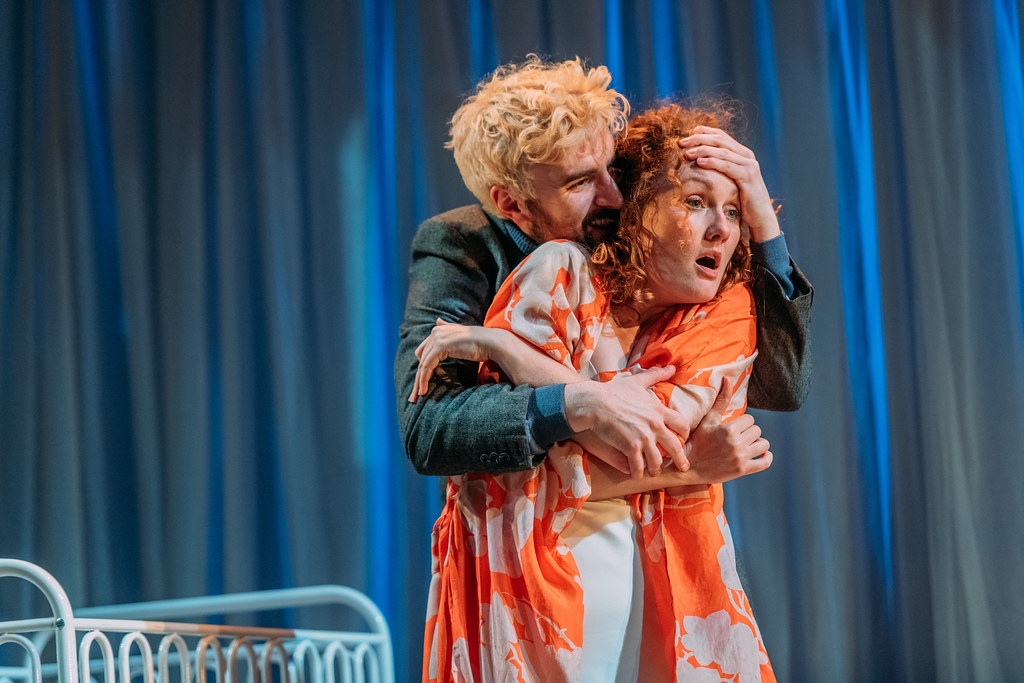
Unknown • 1 Jan 1970

Damien Crow: The World According to Damien Crow

Mid-afternoon, an audience of just 10 people is not what most standups would want to see in front of them. Damien Crow is different. He welcomes small crowds because otherwise it would just be like being in a branch of Starbucks, full of “dick-sucking corporate whores.” However, like much of the following hour, you quickly sense that the point of the exercise is that Damien Crow protests just a little too much to be believed.Damien Crow is Chris Forbes’ personification of a wannabe Goth; a dark-clad satire of lanky teenage self-delusion, rebellion and faux-non-conformity struggling to find something genuine to kick out against and cursed with a loving, supportive middle-class home in prosperous Milngavie, near Glasgow. Crowe wishes he had a more traditional dad who, after a couple of drinks, would beat him instead of expressing his undying love (and subsidizing his comedy gigs). He also clearly wishes he didn’t have a bored tech guy who keeps interrupting the demonstrations of his “genuine” psychic abilities. Then there’s also the question of his best-mate and fellow band-player, Gordon Mitchell, who embarrassingly turns up in flip-flops and summer shorts to join in the show’s unexpected accordion-finale. Being a Goth, Crowe insists, is not easy; it’s a full-time commitment, a lifestyle choice that has real consequences, from not being seen in public eating ice cream to listening to really noisy music. To keep himself focused, he has a self-penned list of “things that are black or dark in nature like my soul”, but it’s a list that rapidly runs out of steam - which the show risks doing on several occasions. Sadly, a particularly good point - how is it people get mocked for dressing up as Goths or Star Trek heroes but not footballers? - is undercut by the repeated focus on the unfairness of being a Goth in (pretty expensive) trainers. Forbes is a naturally gifted performer, but overall the show is as anemic as his white-powdered face. Like many a self-absorbed teenager, Crowe is definitely more tolerable in small doses.

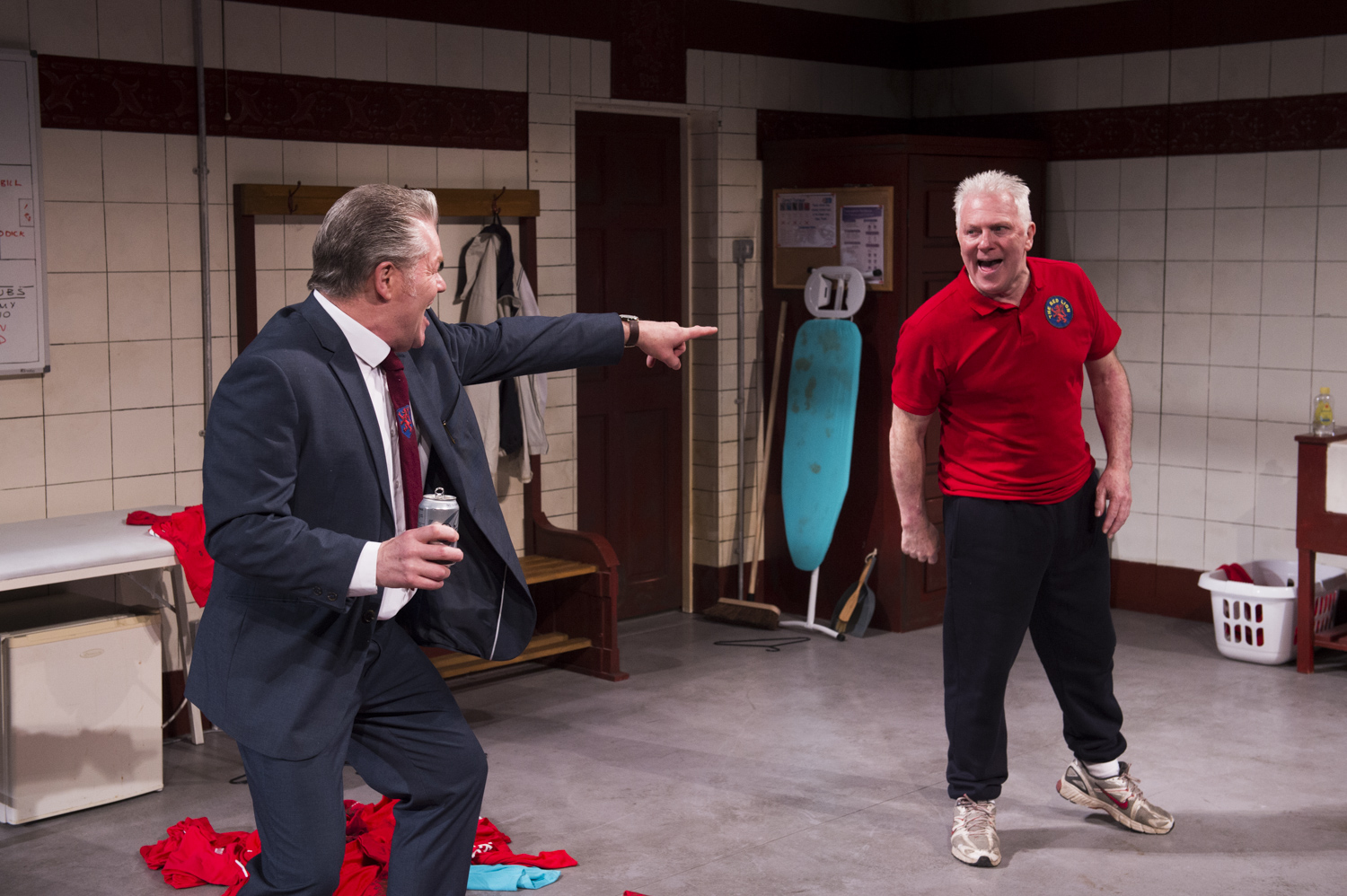
Unknown • 1 Jan 1970

Other Voices: Alternative Spoken Word Cabaret

Other Voices promised much — ‘comedy, politics, naughty lyrics, free sweets… And a veritable smorgasbord of poetry antics’, but the most significant terminology on its title-board was the now seldom-used word muliebrity meaning ‘womanly qualities’ or ‘womanliness’. It’s fair to say that the ‘other’ in Other Voices is largely female.Which is fine more than fine, actually; the audience can enjoy both the delicate, yet inner steel found in MC Fay Roberts’s poetry and the work of Lucy Ayrton as well as the ribaldry of Ruth E Dixon, who delighted the audience with her heartfelt song, ‘Camping and Vaginas Do Not Mix’.Not that the show was an entirely male-free zone. Roberts was grateful for Richard Herring mentioning the show on his Festival podcast, and she welcomed two men up during the show’s Open Mic section: Ant Smith almost raised the concrete rafters of the venue with his song about why he got married — its chorus: ‘Happy to be your plaything, happy to be your toy’ gives a good sense of its tone — while Tony Higson perplexed and amused the audience in equal measure with his increasingly weird analogies to describe love.But then it was back to the women with the self-described as a ‘big, ballsy loud feminist’ Hannah Eiseman-Reynard and her tales of growing up in north London with a double-barrel name and a moving take on the usage of the word ‘love’ in a relationship — ‘Test its weight, heavy as marble, fragile as an egg-shell’.The ‘evanescent’ Sarah Thomasin then shifted the focus onto the merits of eating Vegans -yes, eating people- getting a “lesbian” haircut, and arguing forthrightly about the continued validity of poetic forms.The final performer was the ‘intractable’ Chroma Quint — yes, even MC Roberts admitted they were attracting the more unusually named performers this time round. The self-described space geek read from her self-published collection of poems written in the form of letters, between planets like Pluto, explaining its “demotion” from full planetary status and between the International Space Station and NASA following the decision to end the Space Shuttle Programme.Other Voices promised a ‘veritable smorgasbord of poetry antics’ it’s fair to say, its performers delivered exactly that, with wit, humour and style.

Unknown • 1 Jan 1970

Montmorency

There’s a long tradition of the gentleman thief - not least in Edinburgh, the city of Deacon Brodie - so it probably seemed apt to bring to the Fringe an adaptation of Eleanor Updale’s Montmorency series of novels, in which a gentleman-thief eventually becomes a spy for the British Empire. However, by focusing on the character’s origins in Victorian London, and ending shy of even the first novel’s conclusion, this ends up being a somewhat unsatisfactory tale of duplicity and moral choices.After he is horrendously injured by falling into a grinding machine during an attempt to outrun the police, a common thief known only as prisoner 493 is saved by the pioneering surgeon Doctor Robert Farcett. Although sentenced for two years in Pentonville Prison, the man who takes the name of Montmorency (the name on the bag with him when he was caught) is frequently showcased by Farcett at scientific conventions, and it’s during one of these events that he hears of London’s new sewer system.Realising that the new sewers could serve as an ideal route in and out of people’s homes, Montmorency spends his time in prison wisely, learning to conduct himself like a gentleman under the tutelage of long-term prisoner Frank, aka Freakshow, thanks to his various disabilities. On his release, Montmorency begins to cultivate his two personas, with the Opera-attending gentleman’s lifestyle financially supported by the burglaries conducted under the guise of the latter. Frank, meantime, begins to collapse psychologically at the very thought of being released from the institutionalised lifestyle he has known largely from birth. Nor does he survive that long in the big wide world, becoming involved in one of Montmorency’s robberies and ending up being arrested for the accidental killing of the lady of the house — a conclusion that tests the morals of both Dr Farcett and Montmorency and, we are led to assume, finds them wanting.Ignoring the somewhat abrupt and extremely unsatisfactory conclusion to the play, this production nevertheless includes several stand-out performances, not least Matthew Hopkinson’s muscular, yet subtle presence as Montmorency. Philip Dunster also gives real depth to the initially zealous, self-centred Dr Farcett. However, both are understandably outshone by James Blake-Butler as Frank, a man who — initially physically, later psychologically — has the most moving personal journey of all.

Unknown • 1 Jan 1970

Re-Animator The Musical

You know something's different about a show when the people in the first three rows - also known as the slosh pit - are issued with cheap Scotland-branded ponchos. Given that the George Square Theatre does not have a reputation for a leaky roof, this can mean only one thing: it's likely to get a bit messy on stage. Indeed, the first burst of stage blood sprays out across the crowd within a minute of Re-Animator: the Musical bursting into glorious, 3-D life. Before curtain down, copious amounts of internal organs and bodily fluids are set to follow - thrown, sprayed, and vomited from the stage. As forms of audience participation go, it is fairly unique, but it clearly adds to the excitement among the decidedly younger crowd as they willingly cloak themselves in plastic.Re-Animator: the Musical is based on the cult film that, in turn, is inspired by a short story by the horror fantasy writer H. P. Lovecraft. Herbert West is a creepy medical student with dubious credentials who is obsessed with trying to bring back the dead, although it’s somewhat disconcerting that, in this production, he looks rather like a bulked-up Daniel Radcliffe dressed as one of the Men in Black. While starting his researches with small animals (rats, rabbits, his roommate's cat) West realises that proper scientific recognition will only come when he successfully reanimates a human being, and so drags in his roommate Dan Cain (also a talented medical student with a reluctance to let people die) as his co-conspirator. Unfortunately, there's one small problem: the generally violent and uncontrollable nature of the reanimated corpses. West, of course, is absolutely confident that he can sort that out in time. After all, when getting Cain to read his scientific notes, he insists Cain does so out loud... Because he likes the sound of his own words?Re-Animator starts off fast and furious, and then builds to a crescendo with a body-count that even the most vicious Jacobean revenge tragedy can only dream off, given that the corpses keep on moving. But this is not without problems; for a time the show becomes little more than a disjointed series of sketches doing nothing more than drench the aforementioned slosh pit with as much fake blood and gore as possible, while the cast (in various stages of undress and bodily mutilation) run around like they're in some Hammer film/Benny Hill farce.Director Stuart Gordon brought the original film to the screen, but is perhaps just too close to the material for its own good. While the cast acquit themselves well, there are times when the clarity of the story is lost in all the noise. Even the rotund form of George Wendt (formerly Norm in Cheers) as the University Principal, who ends up as a lobotomised, re-animated corpse, sometimes seems genuinely stunned by what’s going on around him.Re-Animator: the Musical certainly isn't subtle, and at times it's not even that funny, but as a fond homage to the golden age of horror it's certainly an enjoyable night out. Just don't wear your best clothes if you want to sit anywhere near the front.

Unknown • 1 Jan 1970

This Is Soap

This is Soap takes improv comedy to a new level - forget sketch shows, musicals or short-form games... no, This is Soap gives you a soap opera, a whole episode in an hour. Taken from audience suggestions, a soap opera forms before your very eyes, something of a mish-mash between Coronation Street and Eastenders. The result, the afternoon I got to witness this, was Amish Girls Gone Wild.As a group the Soap bunch work exceedingly well together, taking extreme care not to step on each other’s toes, but not without a fair bit of blocking each other’s progress for comedic effect. A particularly hilarious moment was the insistence that another member of the group should sing a song at the end of the show, leading to a rapturous finale that provided one of the funnier moments of the hour.From a comedic standpoint this isn’t the funniest show you’ll find at the Fringe, but it is might be the only improvised soap opera you’ll ever find and that in itself deserves some credit. As a concept, they get the style down perfectly. It really does feel like a badly-written 90s soap, full of grating accents and poor archetypes of characters - everything you could ever want. They also succeed in avoiding smut - the technique resorted to by an awful lot of improv troupes to catch quick laughs. It isn’t possible for a show at 1pm and by not doing so they fit themselves perfectly into a family category, suitable for all. Their funnier moments come in ‘Little Soap’, the short-form improvised games that come in as ad breaks between scenes, breaking up the action before it gets tiresome.What this lacks is an injection of comedy that would probably come from a more extreme take on the genre. A little more in the way of screaming arguments, impossibly ridiculous death sequences and, of course, characters leaving in taxis might make this a parody on all things Walford, but it actually comes closer to falling somewhere between a BBC sitcom and The Archers.

Unknown • 1 Jan 1970

Des Clarke: Final Destination

Particularly when compared to the polite folk of Edinburgh, Glaswegians have a reputation for talking. Loads. Des Clarke, who grew up in one of the city’s much-maligned tower blocks, certainly matches the stereotype, in that he simply doesn’t stop. How he fits in time to breathe is amazing enough; that he is consistently, and sharply funny is all the more incredible.Nominally this show is about the journey from his birth to here, but Clarke’s never far from the topical; understandably, much of his opening 10 minutes is focused on the Olympics and the success of fellow Scots such as Chris Hoy and Andy Murray. However, it is equally forward-looking, not least when considering how the organisers of the 2014 Commonwealth Games in Glasgow must be feeling after a certain Opening Ceremony devised by Danny Boyle. Clarke also shows just how he can think quickly his feet, whether it’s welcoming latecomers into the room or responding to a slightly dodgy microphone as revenge for comments about North Korea.Admittedly Clarke’s routine seldom strays from safe topics: jokes about either the trams or the two pandas at Edinburgh Zoo are to be expected, while complaints about the weather are surely mandatory. He also covers family eccentricities, the problems in personal relationships, Glaswegian bigotries, the challenges of remembering your many pin numbers and passwords, plus the weird things we accept about hairdressers, dentists and opticians.It’s all done at breakneck speed so his audience often has little time to breathe between laughs. Yet, thanks to his choice of subjects and his upbeat, self-deprecatory tone - “That’s a clever joke,” he says at one point. “Unusual for me.” - there’s never a sense of scattergun repetition.The final destination of this particular comedic journey is only a few weeks ago, when Clarke followed Scottish actor James McAvoy in the Olympic Torch Relay through Glasgow. Genuinely touching and yet also incredibly funny, it’s a masterclass in how to structure and breathe comedic life into a moment and definitely leave the audience wanting more.

Unknown • 1 Jan 1970

Doug Segal: How to Read Minds and Influence People

If we believe everything we see, at least on the video screen, the stage mentalist Doug Segal can get from his hotel bed to the venue — stopping off mid-route to buy a lottery ticket — in under 90 seconds. But if his first Edinburgh audience was willing to take that old-school cinematic routine with a pinch of salt, their amazement began to grow soon enough when — having chosen six people at random to each come up with a single number between 1 and 49, those numbers were on the lottery ticket in his wallet. However, as Segal pointed out (before anyone, in what was a genuinely “lively” audience, asked), being a mentalist doesn’t mean he can predict the actual National Lottery results. He can, however, predict people thanks to his understanding of statistics, marketing and subliminal messages — oh, and also a little cheating and lying. Unlike many mentalists, Segal promises to let the audience know how he does what he does; he shares, for instance, some of the simple visual and behavioural ‘tics’ that giveaway a liar. He also shows how it’s possible, through little more than basic wordplay, to implant an impression in someone’s mind so they really believe they see something that isn’t there. The truth, though, is that these are simple crumbs to pull the audience into his power; most of his routines — in particular his repeated ability to seemingly read a word in somebody’s head, and then teach an audience member how to do so too — seem to defy a rational explanation. And one is so overly complicated that you can’t help but think he’s really showing off. He’s not the first performer on this year’s Fringe to compare himself to Derren Brown — in this case, Segal insists he has ‘better hair’, though he’s arguably far more personable, even when quite blatantly negotiating with the audience between going for a ‘standard’ ending (requiring mild applause if it goes right) and a stupendous ‘Hollywood’ closure (demanding a standing ovation) to a particular routine. Naturally, the audience always opted for the Hollywood option; just as Segal, presumably, wanted them to.

Unknown • 1 Jan 1970

Arguments and Nosebleeds - Free

Arguments and Nosebleeds is becoming a little nugget of tradition, a one-off poetry performance — now in its third year — that gives a platform to a host of Scottish poets, along with other guest performers. Sadly, this year the advertised Cynthia Carle was unable to attend due to illness, but last year’s BBC Edinburgh Fringe Poetry Slam Winner Cat Brogan gamely stepped into the slot and performed very well. Most notable was a poem she’d written just a few hours earlier, inspired by her being knocked off the BBC Radio 5 Live news agenda — she’s campaigning against new squatting laws — by the death of the first lunar astronaut Neil Armstrong. The poem was poignant, intelligent, emotive and, above all, fresh.Unfortunately, the rest of the show couldn’t quite live up to this. Host Robin Cairns is a comradely soul and his work is witty, tightly-written and enjoyable enough to hear: his Johnny Cash remix (A Boy called Amadeus), his critique-lyrics to the Benny Hill TV theme, and his ‘nothing obscene’ poem which proves to be anything but. Yet his choice to open with a poem inspired by the Scottish capital’s former Conservative Councillor Moira Knox feels past its sell-by date on so many levels. Not least the fact that no one in the audience knew who she was.Even organiser Jane Overton’s dry humour — offering “a few minutes of bile and disfunction” to help lighten the mood — at times felt all too rhythmically repetitive; a pattern followed by Chris Young with his forceful enunciation (his love poem to “My hairy lady” inspiring the most positive audience reaction).Now that spoken word and poetry have their own section in the official Fringe brochure, it’s important that Scotland’s burgeoning scene maintains a foothold in the capital during August, and events like this are one way to do so. However, aside from promising rib-bursting hilarity which failed to materialise, is audience unfamiliarity really any excuse for a ‘best of‘ package?

Unknown • 1 Jan 1970

Executive Stress / Corporate Retreat

Taking immersive theatre to the next level, Applespiel have launched into this year’s Fringe with a set of corporate seminars, designed to improve everyone’s awareness of themselves and their strengths in the workplace.The premise, then, is simple enough, and what follows is an ensemble production in which members of the audience are used as ‘contestants’ in different games. The Australian company have a slight bit of drama that runs through the piece - a sort of subplot that centres around the relationship between a couple of the characters - but it is far from taking centre stage and in itself doesn’t contribute much to the show as a whole. This is an experience rather than an emotional ride - and in that, feels like it lacks any point.Using the audience as contestants works well, but the scoring system means that one member of the audience can very quickly take the lead and leave everyone else behind. It also feels like a gimmick rather than any kind of meaningful escapade, also leaving the show lacking in any ‘oomph’.Ultimately, they do do well to control the audience, and Applespiel are clearly talented in creating immersive work. This one, however, doesn’t quite hit the mark.

Unknown • 1 Jan 1970

The Last Days of Judas Iscariot

Is Judas Iscariot the ultimate fall-guy, unfairly damned for his necessary role in what was once called The Greatest Story Ever Told? Is his sin — of “selling out the Son of God” — absolutely unforgivable, even by a God of Infinite Love? Cunningham, a young female lawyer with a clear grudge against monotheistic deities, forces a highly reluctant court in Purgatory to hear her appeal on behalf of Judas Iscariot who, after 2,000 years, still lies in a catatonic state in Hell. Playwright Stephen Adly Guirgis is the latest in a very long line of writers who have deliberately imagined the afterlife in terms of a warped reflection of their own present day world. So Guirgis’s vision of Purgatory is downtown New York, replete with plumbing, a movie house and an all-too-American weakness for litigation. This is entertaining enough to start with, though it does get somewhat repetitive and bubble-gum sickly-sweet by the close: when you get St Monica reincarnated as mouthy urban white trash and Pontius Pilate as a golf-fixated executive, you begin to realise that Mother Teresa got off lightly with a few lame jokes about her deafness and her willingness to take money from dictators. This is a play with plenty of small character roles for those wanting a small moment under the stage lights; there are numerous court officials, bit-players and witnesses for both the defence and prosecution, including the aforementioned Mother Teresa, Caiaphas, Sigmund Freud and Satan. Because of this, previous professional productions on both sides of the Pond have tended, for budgetary reasons, to require actors to play more than one role. To their credit, Theatre Oikos (based at Bradfield College) at least present a full young cast, numbering more than two dozen people, which is an increasingly rare sight on the Fringe. Given that the play is essentially set within a courtroom, this wide and varied casting helps ensure the piece doesn’t feel quite as claustrophobic as it could have done. Yet this is, on occasions, a somewhat erratic production; some performances from the ensemble cast on their opening show were less forced and distracting than others, although even the best were prone to the occasional slipped line here and there. The likes of Jack Sieff (as prosecuting counsel Al Fayoumy) and Harry Gaff (as a suave, sophisticated yet undoubtedly chilling Satan) held the audience’s attention while they were on stage, while Eleo Tibbs and Harrison Charles enlivened the broad strokes outlining (respectively) Mother Teresa and Freud. Jacob Crossley does what he can with Judas Iscariot, given the character’s generally passive, flashback existence within the play.Overall, though, there’s a sense that the cast had not quite “got a hold” on the full dynamics within the play, with character’s revelations failing to inspire sufficient empathy or disgust. Which, given the subject matter, was a shame.

Unknown • 1 Jan 1970

Casablanca: The Gin Joint Cut

Casablanca: The Gin Joint Cut comes to the Edinburgh Festival Fringe with a strong pedigree and reputation, built on its debut as part of Glasgow’s Òran Mór’s iconic A Play, A Pie and A Pint and its subsequent success at the Tron Theatre and elsewhere in Scotland. As a result, few other Fringe shows this year will have such a lavishly detailed (albeit still small) set, nor such an accomplished trio of actors who each bring the right level of humour and seriousness to this classic story of lost and rekindled love.Set within the framework of a small theatrical company presenting an adaptation of the iconic film, this is part-homage, part all-out spoof, but possibly done with slightly more love than the West End’s re-imagining of Alfred Hitchcock’s The 39 Steps. So, following some initial banter between the performers — with Clare Waugh clearly desperate to get out by impressing a big agent rumoured to be in that evening’s performance — it’s on with the show. Casablanca, 1941: Nazi Germany has overrun most of Europe. Rick (performed with an impeccable impersonation by Gavin Mitchell) runs a café bar that welcomes any and every lost soul — from petty criminals to refugees and anti-Nazi rebels looking for safe passage out of Europe to America. The latest in the latter camp is the escaped resistance leader Victor Laszlo, and his wife Ilsa, Rick’s ex-lover in Paris from just before the city fell to the Nazis.While Mitchell plays Rick throughout, the other main characters are shared by Waugh and a necessarily light-footed Jimmy Chisholm — with chaotic-looking costume changes only heightening the fun. The frustrations of working within such limitations are ably expressed through a host of physical and verbal comic flourishes — never overplayed — including a few digs at the smoking ban which so distinguishes modern Scotland from the golden age of Hollywood.At only one hour, the show necessarily edits the film down, but it keeps the story’s emotional keystones intact and the audience is left with no doubt that the whole enterprise is done with real love and affection for the original. Clearly, everyone involved believes this is a story worth retelling. So, to misquote the film: Play it again, Sam.

Unknown • 1 Jan 1970

Sammy J and Randy - The Inheritance

The Australian duo of musical comedian Sammy J and puppeteer Heath McIvor - best known for his purple puppet Randy - are now experienced Fringe regulars who, quite rightly, are more popular with each successive show they bring to the Scottish capital. Yet, when even a good Sunday audience of around 200 people barely fills a third of the seats in the Underbelly Cow Shed, it does seem a tad self-defeating.That said, the pair soon make you forget the echoing emptiness; this is a show that, from the start, grabs the audience’s attention, tickles its sensitive parts and leaves them in no doubt that they’re safe in two pairs of very talented hands. The writing is sharp; even newbies in the audience can get a succinct measure of the show’s two main characters from the briefest of conversations overheard before they’ve even appeared on stage.The Inheritance is the simple story of flat-sharers Sammy J and Randy, initially depressed by the realisation that their lives haven’t advanced one jot since the last Australian census which, unlike the UK’s, takes place every five years. Then, fortuitously, Randy’s old uncle dies, requiring the pair to travel to Britain to claim Randy’s inheritance. However, there is, of course, a duplicitous backstory to be uncovered that could end their friendship. Told through a heady mix of songs, current one-liners, snappy dialogue and a repeated willingness to break the fourth wall, this may not be the subtlest of comedies. It is, however, thoroughly entertaining, with a pace that’s utterly irresistible and a command of the comedic pause that’s second to none. That they also ably incorporate into the show the random elements that come from any live audience is also praiseworthy - not least when, after a scene during which they’d supposedly knocked down someone while driving without due care and attention, the audience member they turned to one night just happened to be an off-duty policeman. This is definitely a worth-seeing show; who knows, perhaps all those empty seats at the back of the Cow Shed will eventually be filled. They certainly deserve to be.

Unknown • 1 Jan 1970

When Holidays Attack

Given the importance many people put on their annual holiday — the glittering gift to themselves for enduring the hard slog of everyday life for the rest of the year — there’s certainly potential in a show about when things go spectacularly or embarrassingly wrong. So, it’s a shame when you leave this kind of show with a sense of ennui mirrored by the sudden heavy rain pouring down outside the venue. In theory, When Holidays Attack certainly has potential; four, interlinked narratives based on Andrew Cox’s own experiences of travelling the world, and the mistakes he made from which he hopes his audience will learn important lessons: to plan the trip from the airport to the hotel with precision; to choose the hotel with care; to not pick up mysterious objects in the bedroom without switching the light on first; and to always check the weather before heading out on a long trek. All quite sensible advice, but it wasn’t really the basis for an hour-long spoken word show.Cox was born in the US, spent his first seven years in Scotland -inheriting a love of talking, he said - then moved to Australia, subsequently gaining that nation’s well-known tradition for wanderlust which has since seen him - and his wife - visit more than 40 countries around the globe. Whether these are actual ‘holidays’ is a moot point he doesn’t answer, as we’re given no idea of what his actual ‘day job’ is. As a seasoned traveller, Cox clearly speaks with genuine experience — and had some fun with the rest of the world’s apparent reliance on globe-trotting Australians as their ‘canary in the mine’ when it comes to deciding if some foreign locale is worth visiting or not. However, while Cox is a fine enough writer, on the evidence of this show he’s neither a stand-up comedian nor a particularly gifted raconteur; while his stories certainly have a clearly defined emotional narrative at their core, it’s ill-served by Cox’s own level of delivery, which all too often lacks the emotional punch his stories deserve.

Unknown • 1 Jan 1970

Alistair Green: Jack Spencer - Why Anything?

While Green’s professionalism for going ahead with his solo performance with a tiny audience is worth a mention, this shouldn’t distract from the most important point: that his tale of a somewhat shallow, media-obsessed UK stand-up talking earnestly about overcoming his sex addiction is a sharp and amusing reflection of our celebrity-fixated, ‘journey of discovery’ times. British audiences of a certain age may never quite forgive Green for what he does to an old childhood icon but, while he’s certainly exaggerating his picture of drug-fueled debauchery behind the facade of old-school family entertainment, it’s by only a matter of a few degrees.Through the re-reading of old diaries, guest appearances, and an exclusive glimpse of a scene from a self-penned play about his sexual addiction, we learn that Jack Spencer is by no means a cuddly stage presence, although his vacuous belief in how love and music alone can solve all of Africa’s problems is all too plausible.Deceptively light and frothy, this is a well-paced piece of theatre with a sufficient number of overt gags to hold an audience’s attention. However, if there’s one section of the show that definitely would have benefited from a larger audience, it was the faux audience Q&A; despite Green’s best efforts, an audience of three just wasn’t going to produce the results he was hoping for — especially given the vocal slippage that changed “What is your favourite film?” into “What is your favourite fruit?”This is certainly a show worth seeing; let’s just hope Tuesday night’s poor turnout is the exception rather than the norm for both Alistair Green and his creation Jack Spencer.

Unknown • 1 Jan 1970

Uninvited

As I walked into the theatre... yes, I know what you’re thinking, it’s a horrible reviewer cliché but bear with me. As I was saying: as I walked into the theatre I was greeted by laughter. Are they laughing at me? At someone behind me? No, they’re laughing at the stage and the three ‘Bouffons’ on it, flirting with audience members, waving with their extravagantly long fingers, stroking their padded stomachs, touching themselves inappropriately...That fabulous absurdity doesn’t ever really stop. Fat Git, famous for their contemporary eccentricity (don’t listen to me, their programme says as much) have put together a fantastic adaptation of Peter Mortimer’s novella of the same name, that only makes me want to go out and buy it. The story follows a character, wonderfully named ‘Me’, who finds another man, ‘Him’, in his house when he comes home from work. What follows is a long chase where police are called, Me runs around and then falls asleep, and Him wanders around cooking dinner.Individual performances are great, if nothing to write home about. The strength really comes in the power of the performers when they work together onstage - the Bouffons running around Me and the police officers, for example - or the work of set and costume design that use Bedlam’s large stage to great effect. The band also creates an incredibly impressive underscore that maximises the power of every scene in an inventive, if not original, way.It’s difficult to sum up a show like Uninvited - absurdism is not exactly prime target for simple summations - so I’ll return to my cliché. As I walked into the theatre I heard laughter, and as I walked out, I continued to hear it too. A wonderful little show from a theatre company that is definitely one to keep an eye on. See it, and see it now.

Unknown • 1 Jan 1970

Legs 11

In an increasingly categorised Fringe (this year added Spoken Word to an already multi-colour-coded Fringe programme), it can still be a delight to come upon a show that just doesn’t quite fit any of the boxes. Legs 11 is precisely that: part monologue, part wannabe cabaret; part personal memoir, part unintentional promotion for Pretty Polly stockings. It references shadow-puppetry, audience participation, and just a hint of burlesque, yet remains delightfully unclassifiable. (Except it is, of course, listed under ‘Theatre’.) ‘Live artist’ Tom Marshman is an engaging, if not in-your-face performer, although it’s fair to point out that the venue’s former role as an Anatomy Lecture Hall in Edinburgh’s old Veterinary School initially undercuts the warmth of this particular piece. It comprises of a deliberately staggered series of steps outlining his personal journey ‘from leg shame to leg fame’ or, as he alternatively suggests, ‘from surgical stocking to Pretty Polly stocking’. Marshman’s central point — that most of us pay far too little attention to our legs and the role they play in our lives — is symbolised by how, when he looks at his legs now, he can remember the happy, hyperactive child he once was, as well the sullen teenager he later became. He also remembers the times when his legs let him down; he remembers the varicose veins that, aged 35, ultimately kick-started a new confidence in (and understanding of) his own self-image.The hook for this whole project is, of course, the fact that soon after that medical operation, Marshman entered the open competition to become Pretty Polly’s new ‘ambassador’. With a little help from a lot of friends, he made it through to the final ‘legs 11’ — the final public online vote suggesting he has the sixth-best legs in the country . To be fair, it’d be a cruel audience that would deny that, on legs alone, he almost certainly should have won. At times cheeky, and a little bit ramshackle, the only disappointment about Legs 11 is that some dramatic moments, such as the memory of one particular teenage sleepover, lack the true emotional punch they deserve. Overall, though, this is delightfully unexpected.

Unknown • 1 Jan 1970

Macbeth

Arguably the most famous Scottish story written by an Englishman is re-imagined as One Flew Over The Cuckoo Nest by the National Theatre of Scotland, and showcases a remarkable solo performance by Broadway and Hollywood star Alan Cumming. Opening with a confused, blood-stained man (Cumming) being examined and inducted into a largely bare psychiatric ward, the production offers us a personification of confusion as the patient’s blood-stained suit is removed and placed in evidence bags by two medical staff (Myra McFadyen and Ali Craig). This is performed silently; it’s not until the pair of orderlies are about to leave that Cumming's startled query — “When shall we three meet again?” — starts us on our increasingly precipitous fall into one of Shakespeare's darkest Jacobean tragedies — with, uniquely, all the main characters portrayed by Cumming’s patient. In other words, the familiar narrative of Shakespeare’s Macbeth is recast as a distorted reflection of this patient's unsettled mind, and of the events which have led him to being detained under the gaze of largely silent medical staff and unceasing CCTV coverage. This ploy is not without its strengths; the non-Shakespearian “business” that’s strung through the performance give us an opportunity to compare the murderous Thane of Cawdor with this most fragile of fractured men, not least because they are free of the necessarily broad vocal and physical brushstrokes that Cumming employs to distinguish the players in “the Scottish Play”. When it comes to distinguishing between all the other characters, Cumming relies on his vocal register, his box of amusing Scottish accents and a few simple props — Macbeth’s dynastic rival, Banquo, for example, is always holding or throwing an apple into the air, while the children are represented by a baby doll or a small knitted jumper. It sounds contrived and mundane, yet the end result is truly breath-taking in its simplicity. There’s one notable dialogue scene when the visual cue distinguishing Macbeth and his wife is the positioning of the towel covering the actor’s nakedness — vertical for Lady Macbeth, horizontal for her husband. That said, the best example of a how seamlessly Cumming combines voice, choreography and props is a particularly sexually-charged encounter between the pair during which we see how a doubtful Macbeth is wound up to his murderous purpose by his alluring wife. Although he’s in fine physical form, Cumming’s wiry frame and the psychiatric hospital setting — tall, tiled walls; the barest of hospital beds; a bath; and constantly roving CCTV cameras — means that this production presents us with a more fractured, vulnerable Macbeth than we are perhaps used to. Murderous and tyranical this Thane of Cawdor might well be, but he’s also much more of a lost soul who, having passed what he feels is the point of no return, sticks to the path he has chosen for better or worse. One issue that does not rear its head, as much as might have been expected, is the play’s take on what fundamentally is English-backed regime change in Scotland. Given that Cumming publicly supported the launch of the SNP’s pro-independence campaign earlier in the month, you might have expected a more despicable portrayal of an English army lifting Birnam Wood towards Dunsinane. The truth, though, is that while Macbeth is well known in theatrical circles as “the Scottish Play”, its story is far more personal and universal than geographical. Wisely, Cumming and the National Theatre of Scotland have kept away from making any such superficial connections.
Unknown • 1 Jan 1970

Markee De Saw & Bert Finkle

When does real life stop and the cabaret begin? Or the cabaret stop and real life return? On this occasion, Markee de Saw and Bert Finkle offer no simple or easy answers in this intimate, though perhaps too brightly lit city centre cafe venue. Soot-covered Finkle (keyboard player) and the burnt-edged dress of de Saw (vocalist and mean player of the saw) are on the stage from when the first audience members arrive; he reading a book, she reclined on a sofa, resting her eyes. And there appears to be no obvious trigger for when Finkle begins to assemble his keyboard, or signal to de Saw that it’s time to get ready.There’s an air of tension between the two performers, with their burnt-out 1920s air; a doomed couple who, at one point, we’re told ”met in a dream and continue to argue which is the dreamer and which the vision”. This underlying tension — expressed as much in dramatic silences as in meaningful glances between the two — is shadowed by a pervading sense of something terrible having happened. We’re given a story found in books, and expressed in song — with no pause for breath or applause — yet there’s one burnt book de Saw is reluctant to touch — with crushed ashes between its covers.de Saw’s melancholic voice is strong, while her companion’s keyboard skills are light and suggestive. Together, they shape and adapt an eclectic collection of songs, ranging from the “Hungarian Suicide Song” made famous by Billie Holiday to works by Simon and Garfunkle, Bertolt Brecht and Kurt Weill, and even Shirley Bassey and the Propellerheads. On paper, it seems a ridiculous idea, but the choices work well, the pair sharing an increasingly unstoppable narrative momentum expressed through these little nuggets of character-infused song. Even the normally jocular Winter Wonderland has a bleaker edge with de Saw and Finkle. The conclusion, when it comes, retains the ability to surprise; not least because it leaves the audience is left with that same original question — when does the cabaret really end and real life return? There’s no obvious answer, as Finkle resolutely fails to leave the stage or take a bow. But there is an acute delight in the question being asked.
Unknown • 1 Jan 1970

Any Objections?

Can you do anything of theatrical note in under 10 minutes? Is there a place for a theatrical equivalent of flash fiction, whether as a testing ground for new writers or as a form in its own right? Given the evidence of the first night of Any Objections?, the answer would seem to be a resounding “Yes, but...” Any Objections?, curated by Rachel Lynn Brody and Matthew McVarish, offered writers from around the world an opportunity to touch on the issues of LGBT rights in general and the question of equal marriage in particular — the latter point explaining why the cafe venue’s tables were dressed up like a wedding party. As a rehearsed reading, this was a theatrical experience that required more than the usual suspension of disbelief from the audience, though it’s worth pointing out how well the young cast — Alisa Anderson, Adura Onashile, Dimitry Ser, and Kamal Hussain — acquitted themselves in a diverse range of roles. At times having an “off-stage” cast member read out the stage directions verged on distracting audio-description, but the overall approach undoubtedly helped focus attention on the actual writing. Thursday night’s debut performance was the first of two alternating programmes mixing work by ‘novice playwrights’ with (for lack of a better term) specific axes to grind and several more-established writers keen to engage in the subject. As a result, it’s a bit of a bumpy ride. There are times when characterisation is ignored in favour of the issues; for example, in Jack Dickson’s externalised argument between a priest’s ‘Heart’ and ‘Conscience’ about whether he should officiate at a gay wedding. Or an Anonymous Indonesian writer’s take on breaking religious and cultural traditions. Yet, issue-led melodrama undoubtedly has its place; C K Gogo’s Just Maybe brilliantly mixed verbatim speeches (including Zimbabwe’s hate-filled President Mugabe) with simple physical staging to make its life-affirming point — clearly and unapologetically.On an emotional level, though, there is still something to be said for the approach taken by Christine Jones, exploring the emotional universality within the relationship of an elderly male couple, and Paige Zubel, focusing on one man’s fear of public display of affection. While there’s something to be said for arguing the issues, and casting a spotlight on people’s hatred and fear, there is nothing more important than reminding ourselves that this is all, ultimately, about people.

Unknown • 1 Jan 1970

Harold and Maude

Inter-generational relationships are always controversial, especially when questions of predatory abuse arise in these Savile-dominated times. Yet it’s fair to say that the love-story which forms the heart of Harold and Maude — the growing relationship between death-fixated, 19 year old Harold (Tommy Bastow) and the full-of-life, take-every-day-as-it-comes Maude (Vari Sylvester) who is just shy of her 80th birthday, does come across as a genuine attraction of opposites, with the promise of both participants benefiting from each other’s company. In that sense, this has the potential to be a truly timeless tale, but there is nevertheless a strong sense of this being a period piece; and not just because it was openly adapted by Colin Higgins from his own screenplay for the 1971 film directed by Hal Ashby. In this revival, director Kenny Miller retains several things that date the piece: mentions of a war that can only be the Second World War; the presentation of an agency-based model of “computer dating” as some bizarre novelty; and, most of all, a scene when Harold looks desperately for a phone to make an emergency call — these days, like everyone else, surely he’d use his mobile? (Or, as this is distinctly placed in the US, his cellphone.) The resulting air of unreality is emphasized by the Miller’s staging. Harold’s world is a minimalist one of blood red walls and black furniture, populated by heightened characters such as his mother (Anita Vettesse) and a psychologist (Richard Conlon) whose deliberately mannered performances are a cartoon that heightens the more chaotic, pastel reality of Maude’s world. This is fine as far as it goes; who would deny that, when you’re in love, the rest of the world seems less real? Yet there is a risk when these two worlds necessarily collide; it is significant that Maude meets Harold’s mother only when her own home is packed away, and therefore nearly as minimalist as the world Harold comes from.The central performances by Bastow and Sylvester are the anchor of this production, even if Sylvester does seem a tad young at times to be playing a 79 year old. Bastow does a good job in revealing the layers in maturing young man, as much with his body as a few words. This is just as well, given that the production’s final emotional punch lies on his shoulders alone; and he acquits himself well.

Unknown • 1 Jan 1970

Running On The Cracks

Children’s and young adult’s fiction have long been populated by orphans, characters who are both usefully free from parental restraints while also cut adrift from the traditional safety and security of the family unit, often left to make their own way through a confusing and frightening world. Such is Julia Donaldson’s 15 year old protagonist Leonora, or Leo, when we first meet her; an orphaned Anglo-Chinese daughter of two musicians, on the run from a disinterested aunt and creepy Uncle John, whose habit of staring at her while she’s asleep has shifted from unsettling to abusive. With nowhere else to go, she heads for Glasgow, hoping to track down her paternal Chinese grandparents, who she has never met thanks to a family rift before she was born. Leonora soon runs out of what little cash she had, quickly reduced to stealing donuts from 13 year old paperboy and wannabe gumshoe detective Finlay. Before too long, she’s taken in by one of the city’s marginalised inhabitants; the generous, but unpredictable Mary, who spends her Disability Living Allowance on biscuits, cat food and Johnny Cash records. With the help of Mary and an ever-keen Finlay, hoping to make amends, Leo begins to make some progress in tracking down her family among Glasgow’s Chinese community, unaware how every move they make increases the likelihood of her Uncle catching up. Part detective story, part thriller, this fast-moving co-production (adapted from Donaldson’s novel by the Tron’s Artistic Director Andy Arnold and directed by Katie Posner, Associate Director at York's Pilot Theatre) almost literally hits the ground running. For the next 80 minutes it seldom lets up; on occasions, shifting from one scene to the next with such haste that you feel its strong cast have little chance to breathe between switching characters. (While a superb Jessica Henwick and engaging Grant McDonald play Leo and Finlay throughout, all the other characters we see are performed by Suni La, Gaylie Runciman and Stephen Clyde.)In some respects, this production feels like a modern-day Dickensian tale of self-discovery, in which an innocent child finds themselves hiding amongst the lower orders—in this case, the Buckfast drinkers and mental health service survivors seldom promoted by SeeGlasgow.com. Yet, by choosing to make Leo the centre around which everyone else circles, this adaptation rather robs her of the full opportunity to grow emotionally, at least to the extent that we see Mary and Finlay influenced by her.

Unknown • 1 Jan 1970

Calum's Road

Although based on true events, the story of Calum’s Road is so unique that it comes with a strong sense of some greater story being told, one of mythical proportions. This isn’t just a tale of one man’s determined labour to keep his family, community and culture together, but also the universal stories of leaving and returning, of the power of memory and the past to still affect the present. It even touches on the uncaring blindness of distant authorities that, for example, decide to build a road only so far and then stop nearly two miles from a community which, at the time, consisted of around 100 adults and children and, just half a century later, had crashed to just two—Calum and his school-teacher wife.It’s fitting, therefore, that David Harrower’s script (based on the book by Roger Hutchinson) instills its characters with certain iconic personas; the hard working crofter turned road-builder, the fiercely independent daughter, the returned exile, and so on. And, given its Hebridean location, the story flows and turns between past and present like the tide, building a narrative force through the reiterations of family sayings, and the rhythmic retelling of particular scenes and aspects that echo the old Gaelic work songs. The staging by director Gerry Mulgrew, however, is sharp and clear, even as an excellent cast of six switch between the main characters’ childhoods and parents. That one man successfully carved almost two miles of road out of the rocks and trees of north Raasay is remarkable, almost unbelievable to urban eyes, but while this production touches on the familiar touchstones of Highland and Island culture—depopulation, injustice, and decline—what comes through most strongly in this production is a sense of hope. Calum Macleod—crofter, fisherman, postman, lighthouse keeper, knitter and road-builder—might appear to be some Don Quixote railing against the inevitable, but even though his work (which the local council belatedly resurfaced and sign-posted) is now chiefly a visitor attraction, the audience is left with a sense of that with people like him, such island communities can still have a future.

Unknown • 1 Jan 1970

Let The Right One In

There is one word that, quite deliberately, is never uttered by anyone on stage during the National Theatre of Scotland’s Let The Right One In—vampire. The much-older-than-she-looks young girl Eli may burn in direct sunlight and bleed profusely if she enters a room uninvited; she may need to drink human blood in order to survive, but she’s “not that”. When our nominal hero—lonely, bullied 12 year old Oskar—asks what the difference is between her and “that” unspoken noun, she insists its because she chooses not to be “that”. Just as, you might say, John Ajvide Lindqvist refused to conform to the clichés of vampires when writing his novel and the screenplay for the 2008 Swedish film adaptation. The danger of such an approach, of course, is becoming “that” thing most mocked by the genre’s fans; sanitized horror “for people who don’t actually like horror”. Both novel and film managed to avoid this; thankfully, so does Jack Thorne’s new stage adaptation for NTS—and not simply because it effectively opens with a remarkably realistic spurt of jugular blood. Christine Jones’ set—a wintry scene consisting of some forty denuded trees, a lonesome street lamp and the forlorn skeleton of an outdoor climbing frame—suggests an unsettling fairytale world in which the everyday world of home, school and corner sweetshop (represented by props pulled on and off the stage by the cast) only partly intrude. At the heart of this story are relationships; most obviously between the unworldly Eli and lonely, bullied Oskar, but also between Eli and Hakan, who their neighbours assume to be her father. While Rebecca Benson and stage newcomer Martin Quinn offer remarkably physical performances as Eli and Oskar, the tragic heart of Let The Right One In rests on Ewan Stewart’s restrained performance as Eli’s human guardian and protector. It is by no means an obviously sympathetic role, not least because Hakan clearly fears Oskar becoming his replacement, but Stewart manages to make us feel for a man who will do the most terrible things in the name of his (unreciprocated) love for Eli. Given that this production is the work of the NTS’s big guns—director John Tiffany, for example, will be forever linked with its early global hit Black Watch—it’s perhaps surprising that Dundee Rep is hosting the only scheduled run of Let The Right One In. Hopefully, like Eli herself, this production will travel the world a bit further in the years to come.

Unknown • 1 Jan 1970

Crime and Punishment

There’s a brazen, wonderfully self-conscious theatricality in how director Dominic Hill approaches Chris Hannan’s new stage adaptation of Fyodor Dostoyevsky’s iconic novel, Crime and Punishment. It can be seen in the lack of a rising curtain to signify the start, with cast and some stage-crew initially wandering onto the bare-walled stage in dribs and drabs to chat and seemingly get things ready, all while the audience are finding their own seats. It can be seen in how that same cast, when not involved in the main action, act like a rowdy chorus at the back of the stage, providing mocking comment, musical soundtrack or sound effects as and when required. And, of course, it can be felt in Adam Best’s performance as student drop-out Raskolnikov, as he boldly addresses the audience directly from the start. Suspension of disbelief can be dramatically fertile ground, however; this is no literal, historically-accurate recreation of 19th century St Petersburg, but in emotional terms in hits the bulls-eye. The inherent poverty of this world is realised in the disparate collection of ill-matching, second-hand chairs and tables, a springless couch, and in the characters’ worn and rumpled clothing–some of which looks as if it could stand up on its own. And the inner confusion in Raskolnikov’s mind is ably augmented by the percussive babble from the rest of the cast, in a soundscape brilliantly orchestrated by composer Nikola Kodjabashia. Raskolnikov is driven by an arrogant self-belief in his own greatness to commit a double murder; as this happens in the first 15 minutes, with a breath-taking abstract simplicity, the theatrical meat of the story is in what follows. Not the detective story, although that forever lurks on the edge of the stage in the shape of Porfiry Petrovich (an excellent George Costigan, who balances the humour and tragedy of the piece well), but in Raskolnikov’s total and absolute failure to deal with the psychological consequences of his actions. In some respects, Crime and Punishment can almost be seen as a rewriting of Shakespeare’s Hamlet, albeit with all the mental anguish and procrastination coming after the murder has been committed rather than before. Many of Raskolnikov’s long internal monologues from the book are here transformed into mighty stage soliloquies, performed by Best with both subtlety and intensity. Yet the most poignant fact at the heart of this production is that, for all Raskolnikov might think he is alone in the universe, the reality of the staging ensures that he never is. The rest of the 10-strong cast are always there in the background, in the shadows, or right beside him, ready to catch him should he fall.

Unknown • 1 Jan 1970

In Time o' Strife

The Pathhead Halls on the corner of Commercial Street and Broad Wynd, Kirkcaldy, Fife were built in 1882, originally as a theatre and music hall although one room was later used for many years by a Spiritualist Church. Yet it’s perfectly feasable that it also could have been used for public meetings during the ill-fated miners’ strike of 1926. It’s therefore a genuinely cogent location for a revival of an all-too-overlooked work of Scottish theatre. In Time O’ Strife was written by Fife miner Joe Corrie and initially toured around Scotland during 1926 by a band of amateur actors to help raise funds for soup-kitchens for striking miners and their families. Yet it was also an attempt to communicate with the wider public and tell their side of the story–about the stoic refusal of mining communities, in the aftermath of the General Strike, to work far longer hours for half their previous pay. To re-humanise, in other words, the people damned by a unity of mine owners, politicians and newspapers fearful of Marxist revolution in the coalfields. So there is certainly passion to be found in this tale of families holding out against starvation and poverty; authenticity too, as Corrie was a born-and-bred member of the community he boldy put on stage. This is arguably on a par with Sean O’Casey’s Dublin plays in terms of its political import, if not necessarily its artistic technique. And yet, unlike O’Casey’s work, this powerful, working-class drama has been largely overlooked. This “remix” by director and designer Graham McLaren, for the National Theatre of Scotland, is only its second revival in almost 90 years. The vibrancy of this production is undeniable, thanks to both the music provided live by a three-piece band (who give some of Corrie’s own poetry, and a few traditional songs, a right ol’ kick up the arse) and the decision to express parts of the emotional narrative through brutal, thrawn choreography (created by Imogen Knight). On occasions it’s uncomfortable viewing, thanks to that very humanisation of the people, families and communities which, six decades later, Thatcher would declare “the enemy within”. Yet McLaren’s “remix” often abandons the moral complexity and subtlety of the original, not least by adding a montage of audio and visual sound-bites from the 1984-85 miners strike. It would be easy to dismiss this play as nothing more than an historical curiosity, a proto-“kitchen-sink drama” from decades before that particular genre became fashionable. Yet, even if it’s not the best of that particular breed, this is a story that needs to be told and, on the whole, is told with heart and vigour.

Unknown • 1 Jan 1970

Enough Already

Written and animated by the alleged French “polymath” François Sarhan, Enough Already incorporates live music, theatre and film in a frustratingly pretentious, paralysingly dull and dangerously tedious farrago that has the air of the Emperor’s New Clothes in both its form and intent. Seriously overlong, and failing to engage at almost any level, this is a serious waste of the time and talents of a lot of individuals, not least the foley artists Julien Baissat and Céline Bernard, who supply a host of sound effects live on stage for almost the entire run. It’s an impressive feat, but the question remains as to why its done at all; possibly, it’s intended as a distancing device, but it’s all too easy to forget that they’re there at all, especially once your attention is fixed on the poorly projected, pedestrianly shot film which unfortunately makes up most of this work. At the core of the action is Claudio Stellato as the wide-eyed Bobok, a man frustrated by the vageries of the world–failing lights, a collapsing table, an amorphous sofa–who withdraws into the world as explored in the absurd encyclopaedia of Professor Glaçon, which is repeatedly illustrated by what in the UK is undoubtedly referred to as Terry Gilliam-esque animation of cut ‘n’ paste imagery. Alas, Stellato has little or no stage and screen presence, failing to inspire any audience sympathy or understanding; in short, it’s difficult to care about him and his journey, while the animation is singularly unfunny and boring. Weird just for the sake of it, there’s a love-story of sorts, with Magdalena Steinlein as a supposedly blind street-singer who–for no obvious narrative reason–becomes Bobok’s lover and supposed disciple in his fruitless attempts to turn Glaçon’s imaginary world into reality. But while Sarhan is clearly attempting to create a dream-like state in which to explore ideas of fanaticism and acts of terrorism and disruption, this is an all-too mannered work that’s simply annoying in its attempts at satire, not least the tale of a time when Bankers were poorly paid and had to take up other jobs, especially in opera houses. There are moments, admittedly, that inspire interest; the dream-trees–or tree-like dreams–that are represented by incredibly cheap, yet disturbingly unhuman, costumes. And, when Bobok has returned to his flat (and the stage), there’s something genuinely unsettling in his growing awareness of the Red Note Ensemble and foley artists who are providing the soundscape of his life in words, discordent music and sound effects. But, to be honest, this is just too little, too late.

Unknown • 1 Jan 1970

Red Shoes

Glasgow’s Tramway has a reputation for cutting-edge visual and performing arts; so it’s something of a radical change for them to join Glasgow’s other theatrical venues with a festive show of any kind, not least one clearly aimed at providing younger audience members with something a bit different from the traditional pantomimes to be found in the city centre venues and at the SECC. Possibly because they know they’re entering what is already a competitive performance market, the chosen image on the posters and programme is of a cheerful cartoon girl in red boots (with an Aardman-esque robin sitting on her bobble hat) marching up a winding road, with the smoking towers and glittering skyscrapers of some great city in the background. Judith Williams’s Red Shoes, however, is neither the cheery, accessible pantomime that such an image might suggest, nor does it entirely fill the somewhat cavernous main Tramway space, even if Williams and four musicians–who provide an almost continuous, and invaluable soundtrack to the whole story while also playing a supporting cast of animals–do a pretty good job at holding the attention of the more restless audience members for nigh on an hour. In part inspired by Clarissa Pinkola Estes’s feminist classic Women Who Run With Wolves, this Red Shoes is perhaps best suited for older children and adults who are already familiar with the original Hans Christian Andersen fairytale and so able to understand some of the narrative leaps that are not so clear here. To its credit, Red Shoes is a powerful bringing together of music, movement and song; Williams delivers a measured, at times disturbing performance as the innocent young country child, born close to nature, who is lured to the city by its bright lights and wealth–symbolised by the titular red shoes which, once she puts them on, make her dance continually. The music, composed by Kevin Lennon, shifts from bird song to jazz, while the set–at times more art installation than kitchen sink realism—is lit with some originality by Paul Sorley. There is much to impress in this show, not least Lennon’s frequent costume changes and the relaxed performances of the musicians, but there’s a lack of theatrical magic at this show’s heart, while the conclusion is perhaps just too trite for its own good. “Be The creature you are,” is the moral message delivered with little subtlety; in that respect at least, the show is certainly true to its own nature.

Unknown • 1 Jan 1970