Reviews by Laura Pujos

No Sugar No Milk (Prototyping)

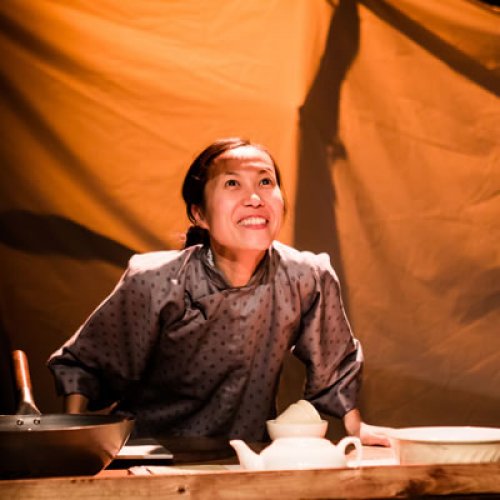
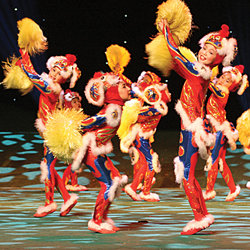
No Milk, No Sugar drops us into a bustling cha chaan teng – a casual Hong Kong-style diner and a convenient platform for telling stories about home.Blending cinematic martial arts styles with slapstick comedy and acrobatics, this is physical theatre that wears its Hong Kong identity proudly, performed with such physical commitment you feel sore watching it.The problem with No Milk, No Sugar is that it is all foam and no coffee. The premise never develops into a meaningful throughline beyond serving a bun to a customer. The one female cast member is expediently used when someone needs to be theatrically thrown across the stage – a missed opportunity for a deeper storyline.While the chopstick swordplay and “how many bodies does it take to change a lightbulb” gag fit the diner setting, other moments feel like pet projects parachuted in – a beatboxing alien, for instance, that is neither humorous nor relevant.Taken in isolation, some set-pieces are mesmerising, such as the bubble-balancing dance that follows one fighter’s “death”. But any effort to find meaning is hurriedly undercut when the entire cast reappears in the next scene without explanation. Despite infectious enthusiasm for the craft of clowning, it is this grab-bag approach that keeps No Milk, No Sugar from landing a fully satisfying narrative.Still, as a showcase of Hong Kong’s eclectic theatre scene – part circus, part kung fu movie, part comedy sketch show – it is vibrant, athletic and impossible to watch without a grin. You just might leave wondering if the show needed a little more story, and a little less sugar rush.

Assembly George Square Studios • 8 Aug 2025 - 17 Aug 2025

Rhys Darby: The Legend Returns

Was it really 13 years ago that we last saw Rhys Darby perform live? You wouldn’t know it by looking at him – careening across the stage in skinny jeans, a tight black tee, and a much fuller, blonder hairstyle than before – this Kiwi comedy icon remains gloriously ageless.Best known for his roles as band manager Murray in Flight of the Conchords and the gentleman pirate in Our Flag Means Death, Darby now turns his talents to single-handedly thwarting AI-led dystopia, in his first stand-up show in over a decade: The Legend Returns.Darby himself is keenly aware that time is creeping on, opening with observational musings about his place in the modern world as an ageing tech-obsessed dad, using absurd metaphor and loop-station hijinks to get us on side.Despite smoke machines to hint at his professional success, Darby relies chiefly on simple, self-made charm. In a masterclass of sound-effect-laden storytelling, he 'skrrrts' around the stage, weaving apparently disparate anecdotes into a tightly structured story of his own future heroism, with crowd-pleasing callbacks and drone impressions connected by absurd run-on metaphors. It’s silly, yes – but also sharp as a Tesla Cybertruck.When the occasional joke falls flat, Darby gives a knowing goofball grin to earn instant forgiveness from his audience. Groan-worthy Roomba puns aside, Darby is as good as he always was – with an untamable physicality that is both endearing and attention-grabbing.Darby’s latest offering may be nothing more than an hour of escapism from reality – but, armed with the intensely human, low-tech charm of someone making chopper noises into the mic, he proves it’s duly needed.Rhys Darby might not save us from the robots – but, for a bit, he’ll at least make you forget they’re coming.

Pleasance Courtyard • 1 Aug 2025 - 10 Aug 2025

Mythos: Ragnarök

Mythos: Ragnarok is exactly as listed – Viking gods settling their scores via high-octane wrestling. There’s gratuitous violence aplenty, but a compelling storyline elevates the chokehold.The lead protagonist is Loki (writer-performer Ed Gamester) – a charming, quick-witted hunk, just sly enough to narrate himself into hero status. As our guide through this world of Norse gods and title belts, Loki pulls the strings while pretending not to hold them. Mischief is his weapon of choice, and he uses it to dance around more muscular opponents – giving us a 360-degree view of his fan-club-worthy abs.Odin, played by Howard Drake, is a heavyweight force, and the supporting cast handle both mythological exposition and grapples with equal finesse. In a crash course on Norse mythology, we meet Baldr, Frigg, Hel, and even a thick-headed Thor who wields his hammer like it’s the only tool in the shed.This is no ordinary wrestling match. Alongside spectacular bodyslams that shudder through the tent, there’s a surprisingly coherent tale of shifting allegiances and family feuds, with a bit of underworld death magic thrown in. The agile pacing flips between dense mythic setup and sheer, adrenalised chaos. Immaculate arena staging allows the cast to get lost in their own lesser fights without ever pulling focus from the main action.After four successful Edinburgh Fringes and a world tour, Mythos levels up to the Underbelly Circus Hub on the Meadows, giving the production the gravitas it deserves. The story-heavy opening is a bold choice given the cabaret noise bleeding in from next door, but once the fighting kicks in, it’s pure adrenaline.I learnt things and I gasped – whether because of my investment in the story or because someone just got thrown on their back at terrifying velocity, it’s hard to say. But certainly, you’ll be both intellectually stimulated and slapped right in the lizard brain.

Underbelly’s Circus Hub on the Meadows • 1 Aug 2025 - 23 Aug 2025

The Anti "Yogi"

In The Anti “Yogi”, Mayuri Bhandari takes a graceful but firm swing at the yoga-industrial complex – and lands it.This solo theatrical show weaves together dance, drama, multimedia and a transcendent live percussion score from Neel Agrawal to unpack the contradictions of Westernised yoga culture through the lens of Bhandari’s Indian-American Jainist identity.With lithe physicality, Bhandari plays a younger version of herself – dancer and yoga practitioner – navigating the spiritual emptiness that often fills Western yoga spaces: all figure-hugging aesthetic, no awareness.Effortlessly transitioning through yoga poses and varied character work, Bhandari dramatises the absurdity of practising yoga with classmates who treat it as little more than a way to burn off their kale smoothies.In reflective moments, she calls on the wisdom of Hindu deities, instigating a conversation between Buddha and an LA-accented Krishna to explore what happens when a spiritual practice rooted in compassion, discipline and devotion becomes a commodified lifestyle.In her fiercely choreographed portrayal of the goddess Kali – a figure of both destruction and renewal – she strikes a powerful symbol of cultural reclamation, set to Doja Cat’s provocative Paint the Town Red.Reminding me of a dramatic Hollywood version of Nadia Gilani’s book The Yoga Dissident, Bhandari’s takedown of whitewashed yoga is equally biting in its critique. Though intended to awaken ‘wogis’ (white yogis) to the error of their ways, the show isn’t patronising; it’s immersive and emotionally alive, drawing us into the struggle to decolonise and re-centre a practice that’s been stripped of its soul.If at times the show over-explains, its impassioned, richly layered story asks no forgiveness. Instead, Bhandari is resolute in her message: yoga is not a £100 pair of leggings set to a playlist of lo-fi mantras in a sage-filled studio. It is a spiritual discipline. A radical act of mindfulness. A practice of compassion and non-violence towards all beings. Exactly what we need most.

Greenside @ George Street • 1 Aug 2025 - 23 Aug 2025

Swamplesque

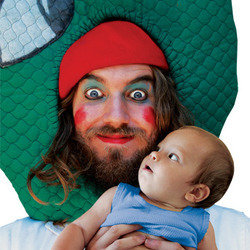
For those who like their burlesque queer, chaotic and dappled in green lighting, Swamplesque delivers. Unofficial and unapproved it may be, but this Shrek-inspired fever dream is now in its third year at the Fringe – and if the raucous, packed-out Assembly Hall crowd is anything to go by, its cult status is well and truly locked in.Cut-price Shrek is the show’s centrepiece, smeared in green facepaint, gurning and rollicking around the stage in varying degrees of undress, alongside a tattooed Lord Farquaad, vocally talented Fiona and impeccably dressed drag Dragon.Shrek’s graceful solo choreography is often undercut by salacious slut drops and whirling nipple tassels, earning hollered hysteria from the crowd. Taking turns, the cast mimes along to movie soundbites before erupting into semi-relevant pop hits – some mimed, some mic-ed – all featuring a fair amount of strutting, stripping and gyrating from scene to scene.Some transitions are clunky, with recorded soundbites butting awkwardly into Top 40 bangers, but moments of inspired nonsense make for a highly entertaining evening. The Gingerbread Man’s gumdrop tease, backed by the Pussycat Dolls’ Buttons, is a personal highlight, while the Mirror Man’s aerial rope work is a dazzling treat, even if it serves more as shiny filler than theatrical storytelling.The show’s commitment to queer joy, body confidence and all-out expression is where its real heart lies. There is something undeniably powerful about the whole messy package. Still, after being urged by Shrek to fuck Trump and free Palestine, you realise Swamplesque wants to be more than a drag-strip spoof. Whether it earns its political mic drop moment is up for debate.Having upgraded to a venue as massive as Assembly Hall for this year’s Fringe, it’s hard not to wonder whether a smaller, sweatier space might better suit the show’s swampy weirdness. But despite any misgivings, its current popularity cannot be contained.Is Swamplesque getting a little stagnant? Maybe. But trying to critique it feels a bit like protesting nudity at a Magic Mike concert. It’s not exactly deep – but I’m probably the only one taking notes.

Assembly Hall • 31 Jul 2025 - 24 Aug 2025

Dan Rath: Tropical Depression

Dark, deadpan and deranged, Dan Rath’s Tropical Depression isn’t comedy that tries to win you over... it’s comedy that stands there in your kitchen, holding a bag of compost, asking if you believe in fate.Armed with ADHD gags, rogue one-liners and a brain that seems to ping off in five directions at once, Rath jumps laterally from musing about Sardinian goat farmers to his own introversion, using each oddball observation as a tie-in for some surprisingly poignant reflections – on masculinity, mental health and the importance of community – before promptly getting distracted and moving on.Cutting a socially awkward on-stage presence – a self-identified cuck who gives off “beta energy” – Rath’s comedy persona belies a much deeper confidence and self-awareness. His signature Aussie upwards inflection gives even the bleakest punchlines a tinge of optimism, or at least some ruminative open-endedness.Often tapering off mid-thought, and all the funnier for it, each of Rath’s jokes comes punctuated by an obligatory hair ruffle and an unsmiling expression. Rough crowd work kicks in “a quarter of the way through” – whether a calculated gamble on the audience’s tolerance for awkwardness or a form of sick self-punishment is unclear.Despite appearing rattled when his ad-libbed jokes don’t quite land, we get the sense that the anti-punchline is the point. His whole shtick is comedy at his own expense – he’s “not doing well, folks”, after all.Beyond a few Southern Hemisphere-specific references, Rath’s idiosyncratic humour – self-deprecating, imaginative and occasionally profound – mostly translates with ease. He's bound to make you squirm before he’ll make you think.

Monkey Barrel Comedy (Cabaret Voltaire) • 31 Jul 2025 - 24 Aug 2025

Ten Thousand Hours

Australian acrobatics troupe Gravity and Other Myths return to Edinburgh with their international smash hit Ten Thousand Hours – and if you’ve ever wondered what the human body can achieve through a great many hours of dedication, this show is your answer.At first, the performers seem a little serious – but for good reason: their blank faces reflect not smug ambivalence but extreme concentration as they begin to climb onto each other’s backs with feline grace in a tense game of one-upmanship.Without any rigging or equipment, the eight-person troupe use their own bodies as scaffolding to enact increasingly advanced acrobatics: walking towers, human trapeze, elevated somersaults. The moves are executed with utmost precision yet somehow have a playful suppleness, as if they hadn’t trained the same action for months on end. The ease with which they move through the air is almost frustrating for a ground-dweller like me.In the background, a digital timer flickers between numbers one and ten thousand – a nod to the years of sweat and repetition needed to achieve this kind of mastery. We’re even given glimpses of moves in their raw, beginner’s form before they bloom into polished, airborne versions – a rare gift in circus arts.There’s no single star here; every member matches up in skill, strength and precision. But there are moments of individual brilliance: one woman with nerves and thighs of steel returns to the floor to perform various dance styles, taking cues from the audience to showcase her versatility.If anything, the show could lean into more narrative threads like this, allowing us to feel invested in one person’s struggle or triumph – but Ten Thousand Hours doesn’t really aim to make heroes. It’s a celebration of collective effort, of bodies in absolute trust, where the perfect act is built as a team, one exhausting, painstaking hour at a time.Ten Thousand Hours was one of the best acrobatic performances I’ve ever seen. And judging by the gasps around me, I’m not the only one left breathless.

Assembly Hall • 31 Jul 2025 - 24 Aug 2025

100% Badgers with Matt Hobs

Equal parts stand-up, wildlife seminar and love letter, 100% Badgers sees comedian and PhD graduate Matt Hobs showcase his deep affection for Britain’s most misunderstood mammal, in a fusion of badger facts, sharp jokes and winning West Country charm.Only at the Fringe could you squeeze twenty people into a tiny karaoke booth and call it a show – but the sweet-natured Hobs makes it work. In his warm Bristolian manner, he instantly wins his miniature audience’s affection, earning belly laughs to fill a much larger room.Despite the tight squeeze, there’s no awkwardness, just a generous, self-deprecating host refreshingly free of swagger. His hand-knitted badger hat and badger-crested cardigan complete the picture of a man who truly, unapologetically, loves his subject matter.Yes, it’s a show about badgers – but this is no gimmick. The visual presentation, combined with Hobs’ unhurried storytelling, teaches us everything we need to know about the species, from the rare ginger badger to the macho honey badger. And, between the cheeky punchlines, there’s a genuine environmental message, urging fellow badger lovers to help conservation efforts by reporting roadkill or emailing MPs.This isn’t a show for kids – Hobs admits he doesn’t like them much – but there’s plenty of dry humour and unexpected laughs for grown-ups. At £2.50 RRP, there’s more value per gag than many of the acts in the bigger, pricier venues.As a result, 100% Badgers is massively oversubscribed. To avoid both yours and Nice Guy Hobs’ disappointment, be sure to buy your ticket in advance.

Laughing Horse @ City Cafe • 31 Jul 2025 - 24 Aug 2025

Darren McGarvey – Trauma Industrial Complex: The Live Show

Glasgow’s Darren McGarvey has long been a sharp-tongued commentator on class politics and economic inequality. In his latest book and accompanying talk, Trauma Industrial Complex, he turns the scalpel on pain, dissecting his own experiences of poverty, addiction and homelessness, and how society rewards the inauthentic performance of it.Part spoken-word takedown, part academic lecture, the show is a compelling and well-written insight into how trauma gets commodified – traded in for cultural capital, manipulated for applause, and often simplified into a neat, three-act story. But McGarvey isn’t interested in the bow-tied finale. He’s more concerned with the messy, non-linear and often unsatisfying truth of trauma recovery.If he cuts too deep in places, McGarvey makes up for it with the arresting cadence of his rap persona, Loki the Rapper – using lyricism to confront his fury, not just at his own past, but at the systems that continue to exploit it. These moments throb with energy, but within the show’s broader thesis, they become more complicated. We are forced to ask: is he simply feeding a crowd hungry for pain narratives? Is this catharsis, or just another transaction?He knowingly plays on our discomfort here, wanting us to squirm in our new self-awareness. In slyly turning the mirror – on himself and us – the show gets its edge.Elsewhere, he offers fragments of his present life – his struggle to feel joy, to regulate his emotions – as part of the recovery process. Despite saying he won’t, eventually he does: he delivers an indulgent tale of past traumas, set to tense music. The room shifts, uneasy. Our reaction is precisely the point: McGarvey gives us what we want, to show us what it costs.Smart, clear and keenly argued, this is not an anti-woke polemic. McGarvey is suspicious, not cynical – wary of how trauma narratives get hijacked, but empathetic towards those genuinely trying to heal.As Akala does with racial politics, McGarvey does with poverty, addiction, class and inequality. His delivery style – channelling a winning combination of Scroobius Pip and an affable sociology professor – is rewarding. He challenges us not just to listen, but to ask why we’re listening. And what, exactly, we’re expecting to get out of it.

The Stand Comedy Club • 31 Jul 2025 - 12 Aug 2025

John Robertson's The Dark Room

There’s something oddly nostalgic about The Dark Room, John Robertson’s interactive live-action video game slash cyberpunk dystopian nightmare.Like a battered VHS tape, it feels both like a relic and a collector’s item. A Fringe fixture for over a decade and touring globally, The Dark Room has gained a cult following of Twitch streamers, bearded men in band tees, and young students with a masochistic streak.What happens in The Dark Room? You play. You die. You try again. Or someone else does, shouting commands to navigate the hellish, low-res world of an 1980s text-based adventure game, hoping to escape the room and win the £1,000 prize, or, more likely, a consolatory baguette.Audience participation is the blood in this machine. “Use door.” “Go north.” “Punch wall.” are our commands and – in all but a few exceptions – lead to our inevitable death. Don’t fret though, pretty soon, you’ll be gleefully chanting “YOU DIE. YOU DIE. YOU DIE.” at the next person.Lit by atmospheric torchlight, Robertson’s stage presence is half stand-up, half Viking warlord, his iconic silhouette the result of a set of spiked shoulder guards and a head of greasy blond locks. His ability to hold the room in an intimidating death stare is what keeps the whole thing from collapsing under its own weirdness.That, and the voice – so hoarse, so guttural. I wonder how his vocal cords can withstand one whole month of this. Then again, this is nothing new for Robertson. He’s been roaring at Fringe-goers for a decade, and he’ll probably outlive us all.A masterclass in crowd work, Robertson commands the room expertly, riffing on generational divides and gaming nostalgia, from Zelda to Sonic. It’s a bonding exercise disguised as carnage. You enter as individuals and leave as cult followers.Chaotic and completely unhinged, The Dark Room isn’t for everyone – but for those it is for, it’s a rite of passage.Long may it scream.

Gilded Balloon Patter House • 30 Jul 2025 - 24 Aug 2025

Toussaint Douglass: Accessible Pigeon Material

Toussaint Douglass arrives on stage like a man obsessed – with pigeons, mostly. Binocular-wearing and twitching with anticipation, he guides us fellow birdwatchers to our seats, as we enter into his natural habitat. His winsome energy soon infects us all and, within minutes, we’re throwing bread rolls at the stage with abandon, willing the show to start.He wasn’t lying about the pigeon material. There’s a lot of it. But there’s also so much else: Nan’s immigrant origin story, an emotionally elusive dad, and a psychiatrist girlfriend who makes all the diagnoses. From family dynamics to love languages, Douglass pecks through it all with the confidence of a South East London pigeon – bold, unruffled, and weirdly magnetic.Cawing, clowning and occasionally hollering, Douglass couldn’t be more amped up on his ornithological subject matter. We follow his moves keenly, hanging on each gag. When audience interaction slows the pace, Douglass’s confidence keeps things flying.From pigeon to robin to the Caribbean’s Plumbeous Warbler (!), birds are more than a punchline for Douglass – they’re thematic scaffolding for comedic reflections on love, modern masculinity, and the things men rarely get to say out loud.This is a generous, original and properly funny show, from a performer who gives a lot – not just in movement, but in food for thought. Accessible pigeon material? Absolutely. But also: universal joy, laughter, and a weirdly moving tribute to both birds and the people who make us who we are.

Pleasance Courtyard • 30 Jul 2025 - 24 Aug 2025

Out of My Head – Alan Watts is Alive and Well... Dead

Alan Watts is about to die. We meet him amidst a thunderstorm on his last day on Earth, 16 November 1973 – the whisky bottle within arm’s reach marking the occasion or simply passing another Tuesday.In his one-man homage, Jeremy Stockwell channels the much-loved “spiritual rogue” – his monologues challenging conventional thinking while he unashamedly downs another drink and reminisces about his success. He dispenses life advice with the confidence of a man who’s been married three times, fathered several children, and still hasn’t kicked the habit. Stockwell’s familiar cut-glass accent and languid delivery cause you to lean in, even as he’s dismantling the idea of spiritual authority.Mid-reverie, however, Alan is ambushed by a cramp. The fourth wall crumbles. “The show must go on,” Stockwell assures us. Is this a real slip, or a clever turn in the script? Impossible to tell at this point, leading to a little genuine jeopardy.The performance then veers into semi-autobiography, with Stockwell emerging from behind the guru character to share his own history: acting gigs, medical troubles, and the creeping solitude that comes with age. Alan and Jeremy become two sides of the same coin – both chasing meaning while wrestling their own shadows.It’s not all existential pondering. Stockwell delights in a bit of chaos, at one point opening the floor up for an audience Q&A with Alan. “What brings you joy?” one earnest punter asks. Stockwell’s reply is so perfectly pitched – equal parts Wattsian insight and cheek – that for a moment you wonder if the real Alan has popped in for a curtain call.Pleasing a small crowd of ageing hippies and me, the show will have Watts fans nodding sagely at the philosophy and reflecting on their own guru relationships. There’s enough bite in the writing, and enough self-deprecation in Stockwell’s delivery, to keep the show from sliding into incense-scented sentimentality.This isn’t a guru’s sermon, or even a biography. It’s one man’s theatrical reminder that the line between wisdom and bullshit is thinner than we’d like to admit – and that even the gurus are just muddling through, same as the rest of us.

Pleasance Courtyard • 30 Jul 2025 - 25 Aug 2025

Level Up!

Level Up!, with its youthful cast and high-level concept, feels like a rookie player tackling hard mode – all ambition and big ideas, but lacking the prowess.“Life: the video game” sees three friends – Jo, Raff and Bobby – sucked into a games console where each must forge their own path through a surreal, challenge-filled virtual version of Life: Jo hacks the game’s coin system, Raff flings herself into the quest of saving the world, and Bobby becomes a conceptual artist after losing his purpose.Along the way – passing a dizzying parade of musical songs – we leap from climate collapse to crypto profiteering, with even a dedicated number about Satoshi Nakamoto, the mysterious creator of Bitcoin. To give credit where it’s due: it’s probably the clearest (and catchiest) explanation of crypto-mining you’ll ever hear.Guiding the three mates through ‘Life’ is a trio of game assistants – a cheesy, toe-tapping chorus who act as both commentators and chaos agents. Their presence is pure panto, and it works, in a knowingly silly way. But the show’s shifting tone is hard to keep up with – one moment earnestly rhyming about the state of the planet, the next leaning into market crash explainers, then suddenly breaking into a Texan-themed line dance.The cast as singers are vocally impressive, though lack the full-bodied commitment required for the show to level up, unsure – like us – whether they’re in a brilliant cringe-embracing satire or a slightly cloying student revue.There’s no doubting the ambition here – it’s an elaborate mash-up of musical theatre, gamer culture and economics lesson. The LED screens were a neat investment, but its young, inexperienced cast, already overstretched with a full album of concept songs – seems ready to buckle under the weight.Still, if you’re up for a meta-musical with a crypto crash course, a climate change cautionary tale, and a musical dance break or two – Level Up!’s creators may inspire you to press “continue”.

Gilded Balloon Patter House • 30 Jul 2025 - 25 Aug 2025

Hold On To Your Butts

You don’t need to have rewatched Jurassic Park before seeing Hold Onto Your Butts – but you’ll certainly be glad if you did. Produced by NYC-based team Recent Cutbacks, this chaotic, cut-price tribute to Spielberg’s dino epic is one of the most joyfully silly hours of theatre currently stomping around the UK.Scored by the nostalgic Jurassic Park theme tune… on kazoo, naturally, Jack Baldwin and Charlie Richards take us into the gloriously low-budget world of Jurassic Park – supported by gifted dino-imitator and Foley artist Charlie Ives. Together, the innately likeable trio retell the entire film with full-throated commitment and infectious glee. Every prop is repurposed, every sound made live, and every character – from little Timmy to the ever-seductive Dr Ian Malcolm – gets their own ridiculous moment in the spotlight.Armed with little more than a cardboard set of headlights, two palm leaves and an umbrella, Baldwin has the most fun it is possible to have reproducing Nedry’s iconic dilophosaurus attack, while Richards gets serious as gameskeeper Muldoon hunted by velociraptor.Ridiculous, yes – but also surprisingly slick. The trio, with masterful gracelessness, juggle voice work, physical comedy, sound effects and scene changes with wild-eyed energy and faithfulness to the film. Ives, in particular, merits attention at the side of the stage for her array of slurps, squelches, moans and roars, earning her moment of glory as the bloodthirsty T-Rex in the thunderous finale.While some visual gags land better than others, there’s an undeniable charm in the show’s DIY aesthetic. A traffic cone and bike helmet become a prehistoric predator, a disembodied tie is the fated ‘blood-sucking lawyer’, and an unbuttoned shirt with breathy tone makes for an uncanny Dr Malcolm. And, within it all, tiny black picture frames ambitiously recreate blockbuster cinematography without the price tag.Devised in NYC and evolving over the past decade to become a cult favourite, this family-friendly show feels tailor-made for fringe theatre. After its London run at the Arts Theatre, it takes its place at the Pleasance Courtyard for the Edinburgh Fringe Festival – and, if there’s any justice, word of mouth will see it pack out night after night.

Arts Theatre • 12 Jul 2025 - 31 Aug 2025

Noughts & Crosses

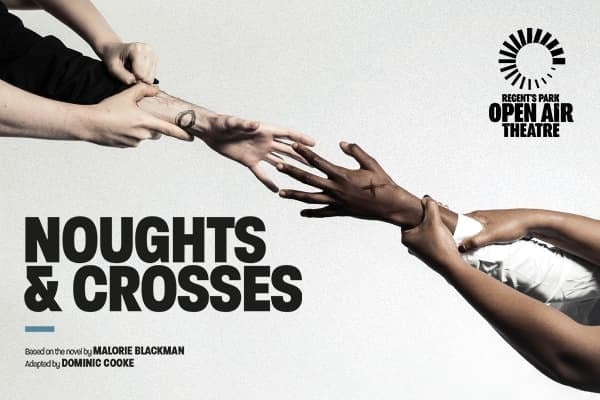
London in summer is like no place else on Earth – a warm and bustling metropolis blooming with the unexpected and the beautiful.Regent’s Park Open Air Theatre is one such summer surprise: a 1,240-seat, tree-lined amphitheatre where birds swoop overhead and the city fades into the greenery. Until late September, it hosts an ambitious programme of theatre, music and dance – and this month, Malorie Blackman’s Noughts & Crosses takes centre stage.Adapted by Dominic Cooke and directed by Tinuke Craig, the production reframes Blackman’s bestselling YA novel as a breathless, tightly wound tragedy. Knowingly echoing Shakespeare’s Romeo and Juliet, two young lovers are divided – not by family name, but by a flipped racial caste system. Here, the white Noughts are the oppressed working class; the Black Crosses, the ruling elite. The result is a sharp, unsettling allegory that still hits hard, more than 20 years after the book was first published.Noah Valentine and Corinna Brown lead a large, energetic ensemble as Callum and Sephy, lovers caught between affection and ideology. The chemistry between them feels urgent and true, while the surrounding cast observe the action from above, intensifying the already simmering tension.The set is all industrial metalwork – stark, functional and imposing in equal measure. Crisp sound design punctuates the story with public broadcasts and propaganda, disrupting the intimacy of the central romance with a creeping sense of political doom.Though billed as a teenage love story, Noughts & Crosses delivers something weightier – a bold, politically charged fable staged with wit, clarity and care. Performed under an open sky and flanked by trees, it’s exactly the kind of dynamic spectacle that makes summer in London worth sticking around for.

Open Air Theatre, Regent's Park • 28 Jun 2025 - 26 Jul 2025

Our Cosmic Dust

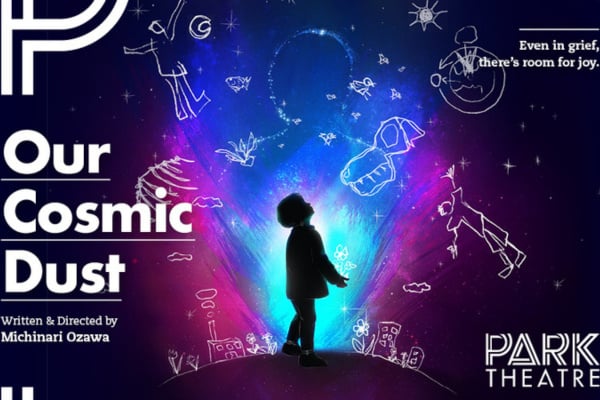
Even to read the basic premise of Our Cosmic Dust is to successfully capture the imagination: Acclaimed Japanese playwright Michinari Ozawa uses haunting puppetry to chart a young boy’s cosmic journey through grief, as he grapples with the death of his astronomer father.If that summary alone is enough to compel you to book a ticket, your instinct is a good one.Authentically sweet and unexpectedly moving, Our Cosmic Dust explodes to life with the playful earnestness of a kid intent on solving the mystery of life. That young boy is Shotaro – voiced and masterfully puppeted by Hiroki Berrecloth. We follow him as he embarks on a search for the soul of his late father, moving from the crematorium to the planetarium, pursued by his frantic mother Usami, played by a sympathetic Millie Hikasa.Along the way, we meet a series of humourful and well-crafted characters who retell their run-ins with Shotoro, unhurriedly adding their own poignant – but never clichéd – musings on death.Living up to its astronomic theme, Our Cosmic Dust uses an immersive LED screen as a backdrop to manipulate space and time. With flawless execution, the players are whipped between worlds – between memories, sketches and the entire galaxy – uncovering hope and meaning behind the stars. Impressive sound design further sucks us into the portal of Shotoro’s prodigious mind, evoking the same limitlessness of looking up at the night sky. With this surreal view and the distance created through Shotoro’s puppet, the audience is given the space to explore death from a new cosmic angle, considering how grief lives in the blurred space between past and present – memory and reality. Sometimes, when all we have left of a person is what we remember about them, then holding on – to a silver tooth or a fading star – can also be a part of letting go.Despite premiering two years ago in Tokyo, Our Cosmic Dust still feels fresh and undiscovered. I encourage everyone to go see it while they have the small window of opportunity!Our Cosmic Dust runs until 5 July 2025 at the Park Theatre, Finsbury Park.

Park Theatre • 2 Jun 2025 - 5 Jul 2025

In Other Words

A tragic romance story about dementia set to the backing track of Frank Sinatra’s Fly Me to the Moon, In Other Words is a veritable tearjerker.The four-time Molière Award-winning play, written by Matthew Seager, explores the lives of married couple Arthur and Jane, as they hop through time to narrate their earliest meet-cute and subsequent years together.Even knowing little about the show beforehand, it is clear from the start that the tale is a fated one. The set design is stripped back, save for plush lounge chairs and dusky lighting that reveal hints of nostalgia, aligning with the script’s old-school romance.At first, our characters sway to Sinatra’s tune while gazing into each other's eyes. Soon, however, Arthur’s disease takes hold, our actors are thrown into strobe lighting and sound distortion, and we shift back in our seats.As each scene tracks further and further towards Arthur’s decline, the pair’s love is tested. The only levity comes from the couple’s overarching narration at critical moments. Beyond that, the script reads matter-of-fact, like the neurologist’s diagnosis, with rare moments of deeper musing. In Other Words risks becoming too dry and numbing in parts.The actors, however, keenly shake us back to life, with Matthew Seager as Arthur showcasing versatility as he battles through fear, anger and confusion, all while clinging on to his soft, self-deprecating character until, finally, he gives way to bumbling catatonia. Lydia White as Jane is equally sympathetic, in a beautifully stoic portrayal of bereavement.Should you ever see this play, make sure you take tissues.

Multiple Venues • 19 May 2025 - 24 May 2025

Giant

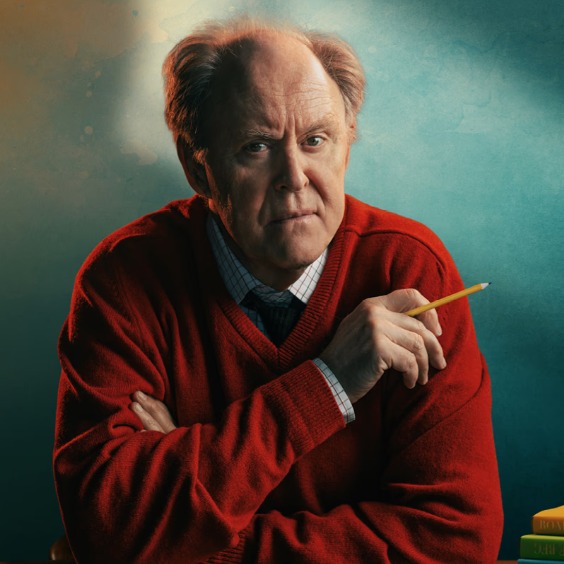
This is your second chance to see the Olivier award-winning Giant in its 14-week limited run on the West End: a gripping new play that brings to light the dark views of children's author Roald Dahl in his later years.You might be forgiven for thinking a dead writer’s views would not provide the most gripping theatrical material, but you’d be wrong. Mark Rosenblatt’s provocative script is unafraid to air one of the most stirring debates of our time: between those sympathetic to the plight of occupied Palestine and those aligned with Israel following centuries of Jewish persecution.Dahl, a left-leaning former Second World War fighter pilot, had a unique and decidedly problematic view on things. If you see Giant without knowing much about the author’s much-maligned views, you might find yourself forgiving his stubborn stance - at least at first.John Lithgow, voted best actor at the Oliviers for his role, does a stellar job of distilling Roald Dahl’s sharp character. Spirited, eye-twinkling charm rises and falls like shadow theatre on his pallid face, persuasive despite an underlying menace that ramps up towards the final act.Hollywood actor Aya Cash is a strong addition as Jessie Stone, the Jewish American publisher tasked with extracting a public apology from Dahl over a troubling book review in which he described Jewish people as a “race of cowards” following Israel’s siege of Beirut in 1982.Stone visits Dahl’s home alongside British counterpart Tom Maschler, played by Elliot Levey, who prefers to stroke his client’s ego rather than accuse him of bigotry. The pair play well off each other - Maschler as the linen-clad voice of pragmatism, and Stone as the hard-pressed yet principled driving force of the show, deeply disturbed by Dahl’s rhetoric and unwilling to give him a pass.What ensues is an enthralling debate that spirals when Dahl is cornered and reveals his unpleasant side – something we might revel in in his books, but less so in real life.The production, directed by Nicholas Hytner and designed by Bob Crowley, is rich yet stripped back, centred in Dahl’s living room as it undergoes renovation. This pins the focus almost exclusively on Dahl’s hulking frame at his dining table as he frets, grumbles and points his arthritic fingers excitedly at anyone brave enough to question him.While Dahl delights in the debate, those around him recoil and pander. Dahl’s linguistic dominance is inarguable, tilting the balance of the debate and forcing us to consider the power dynamics at play - even if Dahl himself is too big to see sense.

Harold Pinter Theatre • 26 Apr 2025 - 2 Aug 2025

Tender

Written by Eleanor Tindall (Before I Was A Bear, Soho Theatre) and directed by Emily Aboud (Lady Dealer, Bush Theatre), Tender is a turbulent sapphic meet-cute searching for stability.Nadi Kemp-Sayfi plays Ivy, the unhinged and unhappy girlfriend of Max with thoughts of the grotesque, while Annabel Baldwin plays Ash, the recently single drifter who visits Ivy’s cafe for company.The two women command the minimalist space, creatively playing the voices of the male characters and weaving their drama with an urgency at odds with the silken, yellow softness of the space.When the two strike up a relationship, they are both in need of tenderness. The men in their lives have both disappointed and hurt them, leaving them hollow and fearful. Ivy’s unstable mental state and Ash’s loneliness make for an interesting dynamic, but it’s hardly the healthiest of romance stories.Focused on preoccupations of London life – expensive coffee, pretentious dinner parties and binge drinking – the story risks being run-of-the-mill, but the unhappiness built into this way of life is sure to resonate with many. Tindall’s dialogue is nicely crafted and lighthearted despite the intense themes. And though the fantastical body horror elements are sometimes hard to grasp, their presence gives us a sense of Ivy’s desperation.At its essence, Tender is a meet-cute, but if you were looking for a light sapphic romance, this is not it. Instead, we are given a more realistic insight into two turbulent lives searching for romance in a grey world.

Bush Theatre • 19 Nov 2024 - 21 Dec 2024

Statues

A beautifully devised piece of theatre from award-winning playwright Azan Ahmed (Deen & Dunya, The Father and the Assassin), Statues is a whipsmart production that uses hiphop as the dynamic vehicle to reflect on loss, self-expression and the marginalisation of British Muslim voices.Held in the Bush Theatre's intimate Studio, Statues feels both fresh and established, benefiting from Ahmed’s urgent voice and the Bush’s talented production team.Firmly grounded in South Kilburn (or SK), Ahmed stars as Yusuf who is grieving the loss of his father while navigating his first week as head English teacher at a new school.While touching on displacement and inequality, Statues focuses on the issue of supposed radicalisation within his community, through the generations.While steering an unruly new student away from ‘radical’ thoughts, Yusuf finds his father’s old mix tapes for the first time. In this, he learns that the man he knew only as a statue was once an aspiring rapper standing up against oppression and racist skinheads on the block.An internalised fear of expressing Islamic thought and political identity has shaped Yusuf’s life, so that when the new student seeks to call Hamlet a radical, Yusuf rushes to silence him. When the opinionated student gets referred to Prevent – the government’s heavyhanded attempt to rehabilitate people susceptible to radicalisation – Yusuf knows he messed up.A short, sweet and timely production, Statues successfully balances joyful entertainment with political commentary in a way that is never forced. Add to this the playful lyricism of his father’s old mix tapes and you have a near perfect play, with laugh out loud moments courtesy of Yusuf’s father’s best friend, Oman, played by the talented and likable Jonny Khan.For fans of both NWA and Asian culture, it’s a must-see.

Bush Theatre • 9 Oct 2024 - 9 Nov 2024

The Real Ones

A meaty feast of new theatre from playwright Waleed Akhtar, The Real Ones is a fast-moving and impassioned exploration of platonic love, tackling themes of identity and sexuality that Akhtar previously nailed in his Olivier-award-winning play The P Word.Spanning over a decade in the lives of best friends and wannabe playwrights Zaid and Neelam, The Real Ones tracks the pair’s unique experiences of love and loss from their student days to their mid-thirties. A story of British-Pakistani identity, homosexual awakening and motherhood, The Real Ones is far-reaching in its goal, grounded by the curative theme of friendship.With a runtime of two hours and no intermission, The Real Ones is not worried about throwing audiences in the deep end. Luckily, the swift current of the story carries us through easily, buoyed throughout by star performances from Nathaniel Curtis (It’s A Sin) as Zaid and Mariam Haque (Black Mirror) as Neelam, supported by Anthony Howell and Nnabiko Ejimofor as the duo’s love interests.With minimal staging and costume changes, the focus remains on the stars throughout as they effortlessly elevate Akhtar’s whip-sharp dialogue with maturity, understanding and good comic timing.Bring a friend, and possibly a tissue or two, for this intimate exploration of two lives intertwined.

Bush Theatre • 6 Sep 2024 - 19 Oct 2024

A Night with Janis Joplin

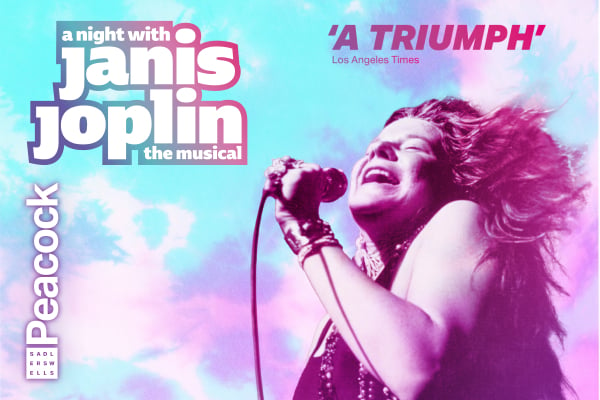
A music-filled biography of the life and musical influences of Janis Joplin that sets the house on fire.While the Rolling Stones and the Grateful Dead get much of music history’s credit, A Night with Janis Joplin reminds us that one of rock music’s biggest pioneers was female, with a musical dedication to Janis Joplin and the soul, blues and jazz singers that influenced her.Rising to fame with her uniquely husky sound and radiant stage presence, Joplin is well-deserving of a musical with her name on it. Played by the technically perfect Mary Bridget Davies, Joplin performs belter after belter with the backing of her band and the crooning ‘Joplinaires’ before talking through a few of the most seminal moments of her life and career.Though the production only briefly touches on Joplin’s story, prioritising back-to-back records over a narrative arc, A Night with Janis Joplin does well in recognising the influence of black musicians on Joplin’s sound, with insight into the inspiration behind many of her popular records.Heavily influenced by soul, jazz and blues artists of the time, the rock star proudly shares the stage with the soulful and well-choreographed ‘Joplinaires’ – who transform to portray talented stars such as Betty Davis and Nina Simone. Aretha Franklin too makes a memorable appearance, played by a gifted Kalisha Amaris, who hypes the audience with an uncanny sound and some serious wig-shaking.Given authenticity by the ageing hippies in the audience and the Joplin family watching from the wings, A Night with Janis Joplin is a true dedication to the singer’s memory, now seeing its UK debut after a run on Broadway.Fans of the 60s and the rock n roll era will want tickets to this one. Set in the unassuming Peacock Theatre on King’s College campus, this production feels like a grassroots gem, and though Davies could be accused of overdoing it with Joplin’s infamous wail, the energy of the production more than makes up for the odd garbled lyric.A Night with Janis Joplin does the unexpected, turning a restrained theatre audience into a booty-shaking collective, dancing in the aisles to the spirit of Etta and Aretha as much as the rock icon herself.

Peacock Theatre • 21 Aug 2024 - 28 Sep 2024

I’m Gonna Marry You Tobey Maguire

Coming in hot, direct from sold-out New York previews, I’m Gonna Marry You Tobey Maguire now graces the London stage for a limited six-week run.Fresh and fun, with the energy of having just landed in London, this production is a whirlwind of late 90s nostalgia dripping with everrelatable teenage angst.Despite only being 14, Shelby Hinkley’s love of Tobey Maguire verges on problematic. We meet Shelby in her basement bedroom flicking through Cosmo and marrying off her Furby to a merman figurine. She dreams of prom, finishing high school and snogging Tobey Maguire. So far, so relatable.But it’s not as simple as all that, because Shelby has a big secret, one that even the other Tobey Maguire Fan Club members don’t know about.We do though. The elephant in the room is in human form. The solvent sniffing, fake Stockholm syndrome-suffering Tobey Maguire, handcuffed to a pole in Shelby’s basement.A compelling premise, heightened by intimate staging, 90s musical references and a great comic lead in Tessa Albertson’s Shelby.The polychromatic set does a convincing job of 90s teendom, expanding beyond the stage so that the entire Southwark Playhouse is plastered in Tobey Maguire magazine covershoots. Even on a toilet break, we are forced to consider the extent of Shelby’s obsessive love and Tobey’s washboard abs.Though playful in its costume choices and whip-sharp dialogue, darkness seeps in. References to Shelby’s neglectful mother and her bullying peers cause us to empathise with our teenage kidnapper, looking past the glossy veneer to consider how obsession can be a coping mechanism for trauma.A wailing Shelby goes from girlish giggles to creepy cackles in seconds, having us wonder whether she’s evil, unhinged or simply struggling to manage her adolescent hormones.An original work by American playwright Samantha Hurley, the show feels fresh, despite being set 30 years ago with an abundance of retro references to Shrek and Avril Lavigne thrown in.Despite being an American transfer, the show certainly translates. Even Brenda de Cankles’ cornhole reference is too good to drop. If you want to meet Brenda, Tobey and Shelby for a playful yet edgy 90-minute production, get down to the Southwark Playhouse Borough within the next six weeks!

Southwark Playhouse - Borough • 28 Jun 2024 - 10 Aug 2024

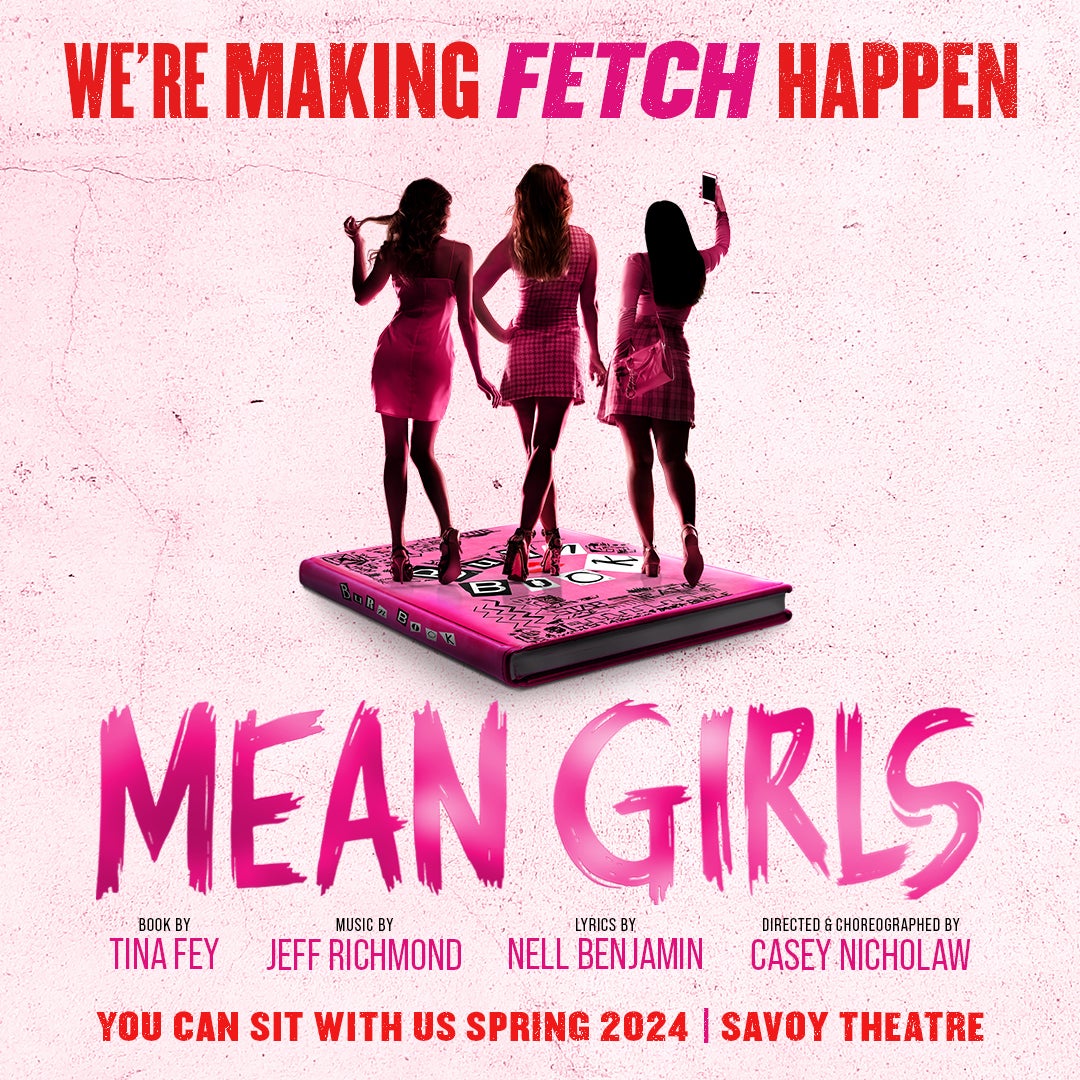
Mean Girls

Twenty years after the original picture, new school starter Cady Heron comes to the West End stage with a high-shine musical adaptation of Mean Girls.The musical we didn’t know we needed, Mean Girls is a joyful throwback to a simpler time, when a burn book was the ultimate evil and wearing a spinal brace at prom was the worst thing that could ever happen to you.A mainstream sensation of the early 00’s, Mean Girls the movie brought teenage girls, boys and grown adults together to laugh and cringe at the laws of the jungle that is American high school.Since 2004, many things have changed but the fluffy, pink themes of Mean Girls remain relevant and the jokes still land too. The world, if anything, has gotten quite a bit meaner, making us nostalgic for the lighthearted reprieve of hot girl bullies straight out of early noughties cinema, with the bonus of music.Enter, Mean Girls the Musical.The talent of Tina Fey is all over this one, backed by the songwriting skill of Nell Benjamin (Legally Blonde) and the trusty directorship of Tony award-winning Casey Nichoslaw (Book of Mormon). Fey’s husband Jeff Richmond also produces a complimentary musical score, while Scott Pask’s innovative set design brings the whole thing to life.Though it sticks closely to the original plot, only the very best jokes from the movie make it into the show, leaving room for inspired lyrics and fresh one-liners. This musical reimagining sees ‘The Plastics’ as intimidating and as scantily clad as they were twenty years ago, but with a touch more self-awareness. With 18 original songs in the show, lyricist Nell Benjamin deserves extra applause. Expect surprising bangers such as Apex Predator and Sexy, alongside the rather less compelling Whose House is This and More is Better, which carry through thanks to the ensemble’s high-energy choreography.Lighthearted but not empty, Mean Girls is all about female friendship and growing up. Clever Tina Fey is pro-woman and it shows, satirising the unique pains of being a teenage girl, while also pointing fun at the worst girlhood traits; vanity, bitchiness and people-pleasing among them.The songs reflect this, allowing Janis (played by Elena Skye) to lead in several numbers, while Gretchen Wieners (played by Elèna Gyasi) gives a surprisingly poignant turn in What’s Wrong With Me. Other notable performances come from the sequin-covered and conceited Regina George (played beautifully by Georgina Castle) and ‘too gay to function’ Damian Hubbard (played by the vocally talented and hilarious Tom Xander).Avid fans of the original Mean Girls will find it hard to fault this live production and all others can revel in its joyful energy, glitzy costume changes and the spirited all-cast dance numbers.

Savoy Theatre • 6 Jun 2024 - 16 Feb 2025

Lie Low

A year has passed since her home invasion, but Faye isn’t sure she’s over it. Suffering from insomnia and living in fear of a masked man who haunts her nightmares, Faye takes matters into her own hands. Enlisting the help of her estranged brother Naoise, Faye tries a form of immersion therapy that requires Naoise to hide in her wardrobe and Faye to take off her pants. So far, so… strange.A perfect balance of light and dark, Lie Low had me laughing away goosebumps in the first minute. From a fast-paced dance number with Duck Man, straight into a booming psychiatric evaluation, it’s clear from the get-go that Lie Low will be perfectly unhinged, just like its main character Faye, played by Charlotte McCurry.With her unique breed of Irish lyricism and dark humour, playwright Ciara Elizabeth Smyth commands the Royal Court’s upper stage for a full seventy minutes. Her depiction of victimhood and perpetration is as nuanced as it is funny, and her playful handling of complicity and delusion is acted out perfectly by a bold, wild-eyed McCurry.As the siblings volley blame, Thomas Finnegan’s delicate comic timing as Naoise gives us laugh-out-loud moments, while poignancy comes in the subtext of their disagreements. The play asks: who do you support in a he-said/she-said injustice? Whether you agree with Faye’s black-and-white view of sexual assault or Naoise’s somewhat greyer view, Lie Low forces us to peer closer at Faye’s righteous toxicity as much as Naoise’s supposed misdeeds.That the turning point for Faye comes at her brother’s humiliation is uncomfortable, leading us to question our assumptions about right and wrong and what it means to be mentally stable if we lack compassion and kindness for others.Like the best dark plays, the ‘happy’ ending is open to interpretation.For me at least, Lie Low serves a dark cultural critique on the growing division between men and women fed on mutual anger and fear, which leaves no room for sensitivity.Perhaps the allegory here is to resist falling for gendered arguments of who's right and who's wrong, and instead hold ourselves accountable to truth. Even if that means, unlike Faye, owning up to one’s delusions, rejecting bias and apologising for our indiscretions.

Royal Court Theatre • 22 May 2024 - 8 Jun 2024

Spirited Away

Prepare to be swept away with the magical spirits, river gods and squeaking sprites of Yubaba’s bathhouse for a timeless adaptation of the classic Japanese animated film, Spirited Away.A soon-to-be sellout success (I’d bet money on it), this stunning live-action production performed by the original Japanese cast honours the West End with its international debut, turning the London Coliseum into an enchanted forest for three months only.Supported by the deep pockets of one of Japan’s largest film production companies, this no-expense-spared production is a treat for anime newcomers and avid Studio Ghibli fans alike. The gorgeous costumes, adorable puppets and fluid transitions go hand-in-hand with rotating doors and revolving set pieces to make you feel as if you are moving through a dream world, raptly following the fantastic coming-of-age story of Chihiro as she undergoes initiation into the otherworldly bathhouse.The choreography is equally mesmerising, meticulously devised to allow the oversized cast to flow as one across the stage. Standout performances include the contortionist agility of Hikaru Yamano as Kaonashi (No-Face) who slinks across the stage with silent menace and the dynamite physicality of Yuya Igarashi as the three-headed Kashira. Skilled puppetry meanwhile brings life to Hayao Miyazaki’s ‘Boiler Geezer’ Kamaji and Haku’s dragon form, not to mention Yababa’s harpy bird servant and the much-loved soot spirits.A feat of creative engineering as much as beastly puppetry, you’ll be wide-eyed throughout, invested in Chihiro’s growth journey as much as the fates of all the characters who get eaten by No-Face, enlarging his threatening form until he almost subsumes the entire bathhouse. Hats off to the production team and director John Caird for creating a show that truly lives up to the magic of the animation, succeeded by a live orchestra that brings to life Joe Hisaishi’s original film score.Note: The show is performed in Japanese with English subtitles embedded each side of the stage.

London Coliseum • 30 Apr 2024 - 24 Aug 2024

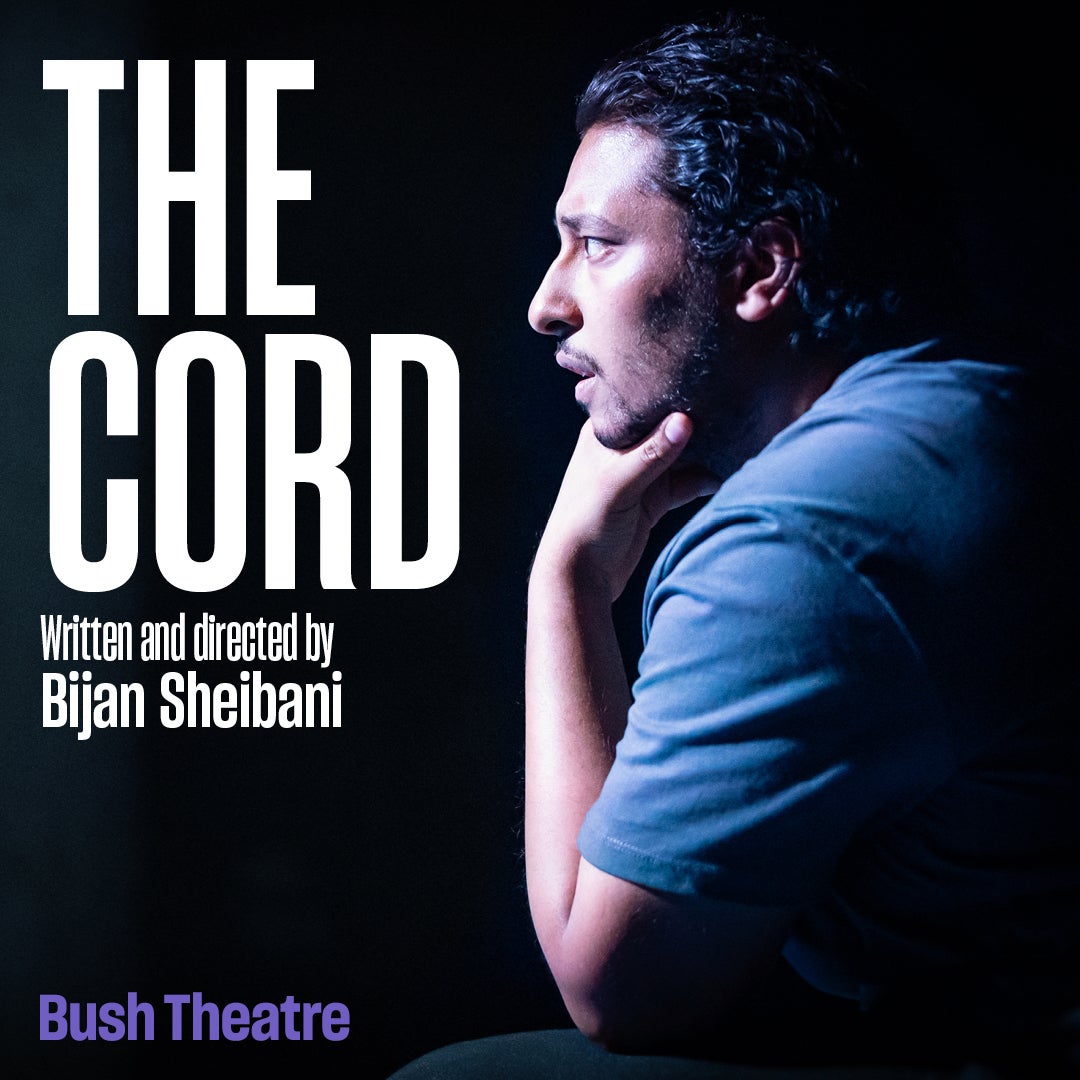
The Cord

Theatre in the round (well, square) at the Bush Theatre, The Cord is a powerful realist drama about the unshakeable bond of motherhood and the tests of being a new parent, written and directed by Bijan Sheibani (Netflix’s One Day).The Cord centres around new father Ash, played by Irfan Shamji, who, feeling boxed out of the loving bond between mother and newborn, struggles to come to terms with his new supporting role. Petty arguments fuelled by sleep deprivation ensue, calling to mind all of our own worst frustration towards our partners and the question of who, if anyone, started the fight.The relatability of The Cord is largely what draws us in and, while the language centres around the everyday – around Christmas dinner and mastitis – the bare staging and absence of props give the production a metaphysical dimension. Ash’s philosophical ponderings fall on wife Anya’s deaf ears, but, to us in the audience, these questions – in tandem with cellist Colin Alexander in one corner – strike a chord. “Can you imagine not feeling separate from anything else?” Ash asks, talking about a baby's seamless connection to his mother. “Like when you smile at a baby," he continues, "It feels the smile. It is the smile. Likewise, when you are sad…” The beauty in this line of thought is clear, but later, when we learn about Ash’s fraught early days, we can reflect on its tragedy.Mimicking how Ash resents playing second string in his new family, he too plays a secondary role in the story. Over and above a story of fatherhood, The Cord is about the deep emotional bond a mother has with their child. Though now a grown man, Ash still cannot free himself from his own mother’s pain and anguish, or the inadequacy he feels as a result. But, in his efforts, and by releasing his own anger, he and his family find hope.

Multiple Venues • 12 Apr 2024 - 25 May 2024

Two Strangers (Carry a Cake Across New York)

A hopelessly romantic modern musical that'll leave you beaming throughout, Two Strangers is all you could want from a feel-good evening of musical theatre.Boasting witty dialogue and belter performances from the talented Dujonna Gift and Sam Tutty, Two Strangers tells the heartwarming love story of two people from world’s apart falling gradually into love. The production, debuting at London’s Kiln Theatre in 2023, has received much acclaim in its short history, now moving seamlessly into position as an easy West End hit.As the spoiler of a title suggests, the show follows two strangers on a mission to move a cake across NYC. Native New Yorker Robin and bubbly Brit Dougal are the mismatched pairing, thrown together for the wedding of Robin’s sister and Dougal’s (much older) dad.Following the trope of any good rom-com, there’s no instant attraction between the pair, and Dougal’s guileless, puppy dog act rubs cynical Robin up entirely the wrong way. With time and a fair bit of lyrical convincing from Dougal, Robin begins to embrace the cliché NYC experience, duetting with Dougal on the subway, in a Brooklyn bar, a tuxedo store and a Chinatown restaurant. Quite the journey… and all in one day!While the musical numbers give goosebumps, at times, the static blocking and uninventive lighting do little to enhance the show, leaving us to rely on Gift and Tutty’s impressive vocal power and emotional depth of character to pull us through.Luckily, with two such talented leads it’s easy to ignore the lack of good choreography. Going from a radio debut to the West End is no mean feat, and it’s my hope that the longer the production runs, the more it will mature into its West-End-worthy status. To satisfy audiences paying Piccadilly prices, surely one decent dance number is not too much to ask?

Multiple Venues • 4 Apr 2024 - 31 Aug 2024

The Dream of A Ridiculous Man

An one-man adaptation of the Fyodor Dostoevsky short story of the same name, The Dream of a Ridiculous Man comes to the Marylebone Theatre stage with all the pertinent of its day: 1877 pre-revolutionary Russia.The story centres around a depressive protagonist moulded for contemporary UK audiences into a nihilistic bookshop-working hipster from Hackney. Our quintessential Londoner suffers all the trappings of capital life; the painful commute, the miserable weather, the senseless traffic, and, much like us all on a Thursday evening, is at the end of his rope.Seeing only darkness, our suicidal man, played by the mercurial Greg Hicks goes from pub to pub in search of meaning before falling into a blissful dream. After thirty minutes of pure existential misery in monologue form, utopia cannot come sooner. The faultless lighting, sound design and back-lit set, formerly monochrome and morose turn bright. Hicks’ character is flown off to a far-off island where – he is enlivened to find – that happiness is a basic human right and kindness and compassion are essential qualities of the peoples’ nature. From then on, we are bound to our dreamer’s fate, shuttled through the performance with movement and song to keep us guessing.Trite though it may be for anyone who already believes in the redemptive qualities of kindness and love, for our main character it is a spiritual epiphany. However, just when we think our man has found redemption in waking life, we are met with a grievous truth.We are told of how, through our man’s lustful actions, the dream’s paradise has turned sour, developing previously unknown notions of fear, jealousy and shame. With malice in their hurts, the islanders lose the innocence of universal love.It is this parable that highlights how all lives have meaning, and our impact should not be underestimated. Our fearful, ashamed protagonist, in hating himself, brings hate into being. But through suffering, he learns. And the lesson, for him, is to start by loving what’s within.If you tire of brooding philosophical works, Dostoevsky and this play will likely not appeal. But if you’re anything like me and love a bit of existential angst and spiritual becoming, then this ridiculous man you will love.

Marylebone Theatre • 21 Mar 2024 - 20 Apr 2024

Duke Bluebeard's Castle

Duke Bluebeard’s Castle is a one-act Hungarian opera saturated in symbolism. Composed by Béla Bartók and written by poet Béla Balázs, the opera has just two singing parts; the titular Bluebeard, played by brilliantly talented bass John Relyea, and Bluebeard’s latest wife Judith, played by mezzo-Soprano Allison Cook*, who has just eloped with him to his castle.Finding the castle cold, dark and with numerous secret rooms, Judith beseeches her new husband to unlock his doors with feminine wiles and an open heart. By seductively crawling upon their long dining table, Judith skillfully pries her way into Bluebeard's heart, though seemingly barred by tragedy and an unforgivable past, ignoring her cruel husband's earth-shaking protestations.Though outsized by Bluebeard, Judith insists on opening each door, no matter what horrific truth lay behind each one. Each door opened reveals more of Bluebeard’s vast kingdom – a torture chamber, an armoury and a blossoming garden too – and the test of Judith’s love intensifies as she uncovers realities of Bluebeard’s close relationship with war, violence and corruption.Though more sickened with each revelation, she staggers on in her search for Bluebeard's truth and he softens through her efforts. In offering up her own heart unconditionally, she finds an entry point into his.As well as being an incredible story, Duke Bluebeard’s Castle is supported by a sensational composition. Led by Russian-American conductor, Lidiya Yankovskaya, the orchestra expertly draws us into a raw immersive experience, with the rising tension of the woodwind section and the anxiety inducing palpitations of drums making me wish I had sat closer to the pit to better feel the vibrations on my skin.Performed in the original Hungarian, translations projected above the stage ensure our comprehension. The opera is only semi-staged but the pared-down set design and thoughtfully added prop pieces combined with a compelling musical score make it easy to stay absorbed in the action. *On the night, Allison Cook was taken ill but her replacement Jennifer Johnston did a flawless job with just a two hour rehearsal, supported by staff director Crispin Lord who walked the actions with real intensity. Though it was both a little jarring and disappointing having the role of Judith split into voice and action, knowing that a lot of time had clearly gone into staging and rehearsal, by suspending disbelief, the fable-like message of the piece flowed unimpeded.
London Coliseum • 21 Mar 2024 - 23 Mar 2024

Cold, Dark Matters

Cold Dark Matters is the story of a writer. Ostensibly, not the writer Jack Brownridge Kelly, but his strikingly similar Cornish character Colin.A dark satire performed at the Hope Theatre with murmurings from the downstairs pub adding to the ambience, Cold Dark Matters begins with Jack, the writer himself, instantly likeable in that jittery apologetic way of the English, as he prepares us for the lonely yarn he’s about to spin.Told through an extended monologue with a few, well-played West Country voices for range, Cold Dark Matters, takes us on a rural writer’s retreat where a shed becomes a central and juicy metaphor for many of the play’s themes. The shed is a mundane thing, standing isolated with space only for one person, full of mysteries only accessible to the imagination. The shed is a metaphor for writing itself.When Jack enters character, we lose the bumbling authenticity of Jack and gain the jarringly non-distinct perspective of Colin. With Colin as a buffer and the shed as our vocal point, it is easier for Jack to explicate the hopes and fears of an isolated writer seeking inspiration and community. But bearing a writer's heart is a rough process involving existential pain as much as flames, moonshine and splinters.Though we are watching Colin, we are actually watching Jack stage his coldest, darkest matters. Tellingly, it is Jack who takes us to the play’s denouement, playing an anonymously sent audio file entitled ‘real ending’. This final snippet of truth in Jack’s tale brings about devastation, seeing our writer faced with an existential crisis that he tries to play off as ‘not real’.The blasé ending, while whimsical, leaves us wanting. Jack seems to want to brush the play’s key themes of death and loneliness under the rug. Forget about it, Jack says, I made it up - it’s not real. In doing so, our attention is drawn to the art of story. We are left with the layered question of the story’s purpose: if Jack made it all made up, what, if anything, is real?

The Hope Theatre • 12 Mar 2024 - 23 Mar 2024

Harriet Dyer: Mother

Keeping stand-up weird since 2013, Harriet Dyer is everything I love about the Fringe. Where else could you be in a basement full of people applauding moth impressions? Nowhere, that’s where.Thankfully, Harriet Dyer understands our needs to get unhinged at Fringe, offering up tales of Cornish lobsters and childhood traumas, all broken up with some exemplary moth impersonations.Watching Dyer is like watching our brains on fire, every self-deprecating thought and internal question that flies about in Dyer’s head gets amplified by the mic. This could be jarring for fans of linear narrative forms but it’s also a refreshing reflection of our flappable inner monologues, and hilarious too.But Dyer is not your average neurotic, her musings always leaning towards the surreal and extraordinary rather than the everyday. We hang on every word as her West Country stream of consciousness takes us on a winding journey to all corners of her childhood upbringing and adolescence, learning how to be (and not to be!) along the way.Featured across the BBC and on mental health podcast Make Me Better, Harriet Dyer is a key name in the neurodivergent comedy scene. And though mental health is a theme for Mother, it’s also a deeply personal show about family and how your experiences make you. The moral of the story being, if you come up against Dyer and her brightly-coloured family, they will win.

Multiple Venues • 23 Aug 2023 - 27 Aug 2023

Beyond Boundaries

Three distinct dance acts bring the unexpected to the stage for Beyond Boundaries, a show billed as a time-travelling showcase of Scottish hip-hop dance. If one act is not for you, then Beyond Boundaries will delight thanks to its wide variety of performer styles, all tied together by a golden thread of street choreography and hip-hop beats.The show starts with solo dance piece, Asili (meaning ‘origins’) performed by Dorine Mugisha as an exploration of identity and culture through physical self-expression. Originally from Tanzania, born and raised in France and now living in Scotland, Mugisha expresses a multitude of cultural experiences, with formal training in hip-hop and African choreography. Initially bound by the limitations of Classical dance traditions, Mugisha moves erratically, using pace to defy expectations while also imbuing a sense of unease. The latter parts of her performance however see her embrace her heritage and alternate dance traditions to find freer expression with mind-blowing choreography that finds flow, feminine power and defiance. It’s a truly breath-taking work that sets us up for the rest of the show.Beyond Mugisha, dance duo Nevil Jose and Ursula Manandhar present their work Reflection, also looking at cultural conflict and the pursuit of freedom in movement. The narrative arc of ‘Reflection’ is riveting, easily seen through the changing expressions of the two dancers as they go from the trappings of tradition to a freer selfhood that allows them to finally dance together in joy.The third and final act is Broken Circuit by Max Evans which takes an entirely unexpected avenue by looking at the potential for AI to fulfil the human desire for connection. It’s an absorbing and often comical work that takes us on a journey into the metaverse through well-choreographed flow.Though varied, each act showcases connection through culture and together they work to redefine Scottish culture and bring us together in the process.

Assembly @ Dance Base • 22 Aug 2023 - 27 Aug 2023

Jazz Emu's Pleasure Garden

When I saw the playbill for Jazz Emu: You Shouldn’t Have, I couldn’t get my hands on tickets fast enough. I imagined it would be some surreal musical take on love and geekery, and I was keen. Unable to get tickets however, I settled for Pleasure Garden, his late-night standing set at Assembly George Square, hoping some of the billed magic might be found there too.What I found was a tongue-very-much-in-cheek variety show headed by Jazz Emu, the viral comedy character played by Archie Henderson. Fans of Jazz Emu and his self-described “unpretentious pseudo-comedological proferrings” will delight at the opportunity for an intimate arrangement, but I was left wanting for both pleasure and garden in this late-night parody jazz act.What is offered is some very on-brand musical comedy that toes the line between nonsensical and silly. The enthusiastic audience, perhaps too young to have heard of Flight of the Conchords or Tim and Eric, keenly attempt to dance to a song about the pagan origins of Christmas while others stand at the edges wondering where the melody lies.To say the best song of the set was one about a tiny snake perfectly sums up the surface-level appeal of Jazz Emu, while the flat-viewing song for musical nerds showcases the band’s niche comic taste.Aware of his own privilege and playing off it, Jazz Emu uses his platform to mock a scammer with the song My Brother, and to riff off the fact that he has a lot of money with a song about money that he forgets the lyrics to. Credit to the band Cosmique Perfectión who may not seem overly enthused to be there but play well to prop up the ego of their complacent frontman.Towards the end of the performance, Jazz Emu thanks us for supporting experimentation in the arts but this ultimately feels like an apology for making us pay for something so under-rehearsed.

Assembly George Square Studios • 17 Aug 2023 - 26 Aug 2023

Dungeons 'n' Bastards: An Adam Riches Gameshow

Channelling Westeros with a lower-budget wardrobe, Adam Riches brings his Game of Thrones themed game show to an audience of ‘bastards’.While the show has its hitches, including easels that don’t stay up and an audience that has no concept of blocking, Riches wins us over early on with his louder-than-life Lord Stark character who authoritatively demands our participation. Keen audience involvement means that momentum suffers at points but competitive chants of Sean and Bean on either side of the room serve to fill the gaps. Without the crowd’s readiness to get involved and covered in vegan ham, Dungeons & Bastards would fall flat. Thanks to Riches’ impressive authority of the crowd, however, the show manages to scrape by as enjoyable, despite the unoriginal gameplay that lacks any reference to Dungeons & Dragons.Though Riches himself states that Dungeons & Bastards is un-reviewable, the post-10pm scheduling means that the crowd is ready to forgive its faults. Judging by the warm stench of his faux-fur cape and rasping voice, Riches has had a heavy Fringe thus far, consisting of alcohol, cigarettes, and throwing his voice to sell-out audiences. You may choose either to admire his dedication or call out his folly.Come expecting a level of ridiculousness that will make your jaw ache from either laughing or grimacing, all dependent on your tolerance for silliness. Alcohol advised.
Monkey Barrel Comedy • 17 Aug 2023 - 27 Aug 2023

Wet

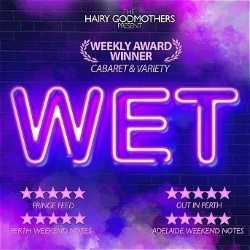
When you think of cabaret you might think of bawdy strip teases, caricatures of femininity, and lewd jokes. Wet delivers much more than expectation, adding heart, intellect and genuine eroticism to proceedings.Settle in for an evening with an ensemble of five wet, female-identifying acts – including your MC, ‘Moist Cooch’ – who hail all the way from Australia to bring a late-night romp that bravely tackles difficult and emotive topics such as beauty standards, motherhood and race.The show’s message of pussy empowerment and bodily ownership is well considered, and the nudity feels political rather than self-indulgent. Created by a group of women who call themselves The Hairy Godmothers, Wet understands that female bodies can be titillating as well as philosophical.We are treated to original songs, modern choreography and a sexy science lesson teaching the paradox of Schrodinger’s Pussy. As well as being hilarious, Wet is also emotive and shocking in its no-holds-barred discussion of taboo subjects.Though the performance is largely geared towards women, regardless of gender, you’re sure to giggle, cry and applaud your way to bodily autonomy, safe in the hands of the Hairy Godmothers from Oz.

Gilded Balloon Patter Hoose • 15 Aug 2023 - 27 Aug 2023

Declan

Vulnerability and sexual awakening go hand in hand in Declan, an unnerving one-man play set in rural Wiltshire.From the very start, it’s clear that Declan is not a light-hearted story of sexual discovery. The stage is led bare but for a plastic shopping bag and one low-wattage bulb, under which our muddied main character bobs in and out of view, battling visions of his past.Jimbo’s intense energy coupled with his childlike puzzlement makes for a charged viewing experience, played to perfection in a lilting Wiltshire accent by writer-performer Alistair Hall.Dressed in a stained white t-shirt, Jimbo spills all about his fragmented sexual experiences, exploring the shame and confusion of his childhood through extended monologue. If at times the format runs a little dry, the intimate storytelling ability of Hall carries it through.The entire tale is told through the naïve lens of Jimbo who frets and grasps for clarity amidst flashbacks of pained experiences with an abusive father and avoidant mother. Jimbo’s world stretches no further than Swindon, or possibly Bristol, conveying the trappings of rural life.Shame and judgment haunt Jimbo and as he grapples with ghosts, trying to figure out what happened to his best friend Declan years ago. And though there may not be a neatly tied conclusion, in telling his own story, Jimbo learns to trust his own judgment even if that means placing blame at the foot of his family.

Underbelly, Cowgate • 15 Aug 2023 - 27 Aug 2023

Ceilidhs (Scottish Dancing)

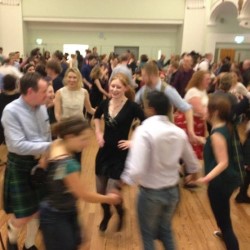
A traditional dance class running from 9pm to 11pm daily, the Ceilidh is a sweaty fun-filled session in the extravagant grand hall of the Royal College of Physicians, featuring a live band and teacher.A must for anyone new to Scottish culture, the daily Ceilidh is the perfect opportunity to bounce away the evening in the company of a joyful crowd.Despite the firm – somewhat old fashioned – insistence that men and women partner up where possible, the ceilidh is a dance practice for all. My session had people from all walks of life, clueless tourists as well as locals with existing expertise, making for a diverse, if slightly chaotic, first experience with this famous Scottish dance.Throughout the evening, you’ll learn five or so different dances, including a dance featured in Four Weddings and a Funeral and international additions from America and Israel. And though the lack of precise direction is at times frustrating, this Ceilidh is a fantastic introduction to the style. Be prepared to step on a few toes before eventually picking up the moves through the power of repetition. The footwork is simple and the skipping intuitive, so all you need at Ceilidh is the bounding energy to carry yourself through.

9 Queen Street • 5 Aug 2023 - 26 Aug 2023

Vix Leyton: Antihero

Welsh comedian and popular podcaster (The Comedy Arcade) Vix Leyton has the gift of affability. You’d have to be in a really bad mood to heckle her, such is her bright-eyed goodness.Though doubtful of having any kids herself, Leyton relates most keenly to ‘people of the child-bearing persuasion’. Her set is geared towards women but is highly relatable to anyone who’s seen or been on a stag do, to anyone who has ever dated, or had a mother.Despite the watershed not usually being a problem for Fringe acts, it’s a light relief to attend a lunchtime set and enjoy an hour of cheerily optimistic stand-up devoid of the dirty jokes and crude quips happening later on (Prince Andrew Tate Appreciation Hour, I’m looking at you!)Leyton’s is the purist stand-up comedian I've seen in years. Her idea of being bad is pretending to be pregnant at family gatherings, but she admits her mother has a meaner streak. Though Leyton can feel herself leaning towards eccentric bad-mouthery in years to come, for now, she sticks firmly to smiles, people-pleasing and PG comedy.If you’re after some innocent laughs and can forgive her ‘Aussie intonation’, where every observational statement becomes a question, then Vix Leyton could be for you?

The Stand Comedy Club 3 & 4 • 4 Aug 2023 - 27 Aug 2023

Rave

Absolutely not what you are expecting. Infinitely better. Rave is an immersive psychedelic experience you can exit at any time, but I highly recommend you don’t. It’ll suck you in and spit you out, arguably as a better person than you arrived.Billed as live music, Rave sets strange expectations for itself. People who come for a rave, hoping to gyrate in a dark room and forget their problems, will be disappointed by the traditional seated arrangement best suited for a piece of introspective theatre. But Rave should certainly be taken in sitting down, as you’re bound to melt into your chair and lose yourself within Pharos’ psychedelic projections.The audience are likely to talk over the visuals to flirt, murmur and order more drinks, but sit up front and their voices become mere echoes to the consuming focus of the screen and music. The takeaway is transient, very much a reflection of your own thoughts, your deepest and darkest desires reflected back to you.To watch Rave is to experience your own humanity. The natural world on screen is overlaid and manipulated. Clouds morph into faces, waves curl into logarithmic spirals, mountains diffuse into fractals, and the line between humanity and nature disappears. You’ll witness the psychedelic implosion of human civilisations through time, returning to the baseline of the enduring natural world to set you straight again.Using waveform technology to pull at the back the layers of our consciousness, Edinburgh-born musician/producer Fraser Lawson (artist name Pharos), converts graphic data into sound, turning waves of light, frequency and amplitude into music and enabling us to make multi-sensory connections with the landscapes on screen.Benefiting also from the insane acoustics of the century-old brick arches of The Caves venue, Rave adds another dimension to the hair-raising percussion, synth and keyboard melodies that speak distinctly to us and our position in the space.With multidimensional trickery and euphoric beats, Lawson teases us into remembering our deepest connections, to Earth as well as the scariest and freest parts of ourselves. But Rave only works if you tune in to the frequency of the artist’s truth, recognising his innate desire to connect with the world around him, and then our own.It’s about the subjectivity of experience, but also the universality of it. As the set draws to a close, the screen subtly zooms out, as if to remind us that this is not real. Then the full screen is restored, and we realise; we are living it – the mind-bending reality that Lawson presents is our own everyday reality, the biggest trip of all.When someone rises at the end of the show and yells ‘that’s dangerous, that’s fucked up’ followed by a woman spontaneously bursting into tears, my review had pretty much written itself. But to lead with that would be to do this piece of art the biggest disservice that anyone could do. So, I’ll just end with it instead.

Just The Tonic at the Caves • 3 Aug 2023 - 26 Aug 2023

Stay Big and Go Get 'Em

At times hard to follow and at others uniquely resonant, Maggie Widdoes’ one-woman show Stay Big and Go Get ‘Em is the perfect example of how the Fringe brings what you least expect, at the time its needed most.Instantly likeable with her wide-eyed energy and unapologetic physicality, Widdoes prefaces the show by saying it is NOT stand-up, but rather a comedic life story. With our expectations set, Widdoes loops us in on her bumpy life path thus far, going from fretful pre-schooler to Korn-loving ‘Good Time Girl’ to the self-aware adult she is today.With the frenetic energy of someone you won’t be surprised to learn has ADHD, an easily distracted Widdoes does herself a disservice by trying to fit so many ideas into one hour. By the show’s end, there are a million ideas scattered across the floor, many of them references to American pop culture that don't necessarily travel that well. While some might find Widdoes’ truth nonsensical and a little perverted, her unabashed telling of her deepest fears and desires makes us all that little less ashamed of ourselves in the process.Skilfully delivered with a linguistic precision that sometimes feels too well rehearsed, Stay Big and Go Get ‘Em is anything but thrown together. It’s a carefully thought-out exploration of life in all its intricacies, with baby Widdoes at its centre, growing and learning in each moment.The show tackles some dark themes, including depression and suicide but stays buoyant with the aid of multimedia slides showcasing cartoon characters in compromising positions. Childlike but mature, chill but not, smart but dumb (by her own measure), Widdoes’ show exemplifies her own contradictions and finds acceptance in the process.And as her therapist says, that is OK.

Just the Tonic at The Mash House • 3 Aug 2023 - 27 Aug 2023

The Death of Molly Miller

First featured as a radio drama on BBC Radio 4, The Death of Molly Miller now takes to the stage with its plucky hostage comedy that addresses pertinent social issues.One evening a thief breaks into a penthouse suite on the hunt for jewels. The house is Molly Miller’s, a D-list celebrity and social media influencer best known as a contestant on dating show The Love Shack. Before our thief can leave, Molly returns home to an axis-tilting confrontation.Billed as a social satire, The Death of Molly Miller is also a riveting comic drama that’ll keep your attention throughout. Tackling contemporary issues such as addiction and inequality, the show also takes aim at pop culture, reality TV and the toxicity of social media, all powered by a whip-smart script.Performances from Esther-Grace Button and Matthew Greenhough work in perfect contrast, with Button’s Molly Miller a self-assured and sassy Northern gal, and Greenhough’s thief an anxious gambling addict at the end of his rope. Desperate in their own situations, our characters try to figure out a solution that doesn’t result in violence. Futile maybe; funny and unsettling certainly.The Death of Molly Miller is one of two Wound Up Theatre productions on the Fringe this year, the other being Tones: A Hip-Hop Opera which tells one man’s story of growing up black in Britain.

Underbelly, Cowgate • 3 Aug 2023 - 27 Aug 2023

Laura Davis: Well Don't Just Stand There Dancing

With the brash vocals of an Australian zookeeper addressing an unruly tour group, Davis commands the room, immediately taking charge with her distinct brand of offbeat comedy. Throwing light and shade, Davis also offers us a softer side, dedicating the show to her late friend Paul and the many in-jokes they shared. Having previously performed this show in character, Davis now drops the shtick (but keeps the hat) finally ready to show her audiences the real Laura.Thankfully, the real Laura is just as odd as what I imagine her stage persona to be. As Laura, she tears off her shirt mid-set and mounts a central pillar to show us how good a demagogue she could be. Gawky but loveable with an understandable aversion to the world outside, Davis keeps us safe within her clutches, touching on widespread topics, from 'paedos' to the unethical nature of zoos.Never predictable and enjoying her forays into uncharted territory, Davis wonders if her set isn’t more of a manifesto than a comedy. And though she argues that people can’t tell when she’s joking, I’d say she’s hilarious throughout.Keenly aware of herself, Davis also discusses her inability to connect with people off-stage. In understanding her limitations, however, Davis endears us to her further, humble and unpretentious in her manner, and all the funnier for it.

Monkey Barrel Comedy • 3 Aug 2023 - 27 Aug 2023

One Way Out

Winner of the 2023 Edinburgh Untapped Award, One Way Out is a powerful exploration of the injustices suffered by the Windrush generation, through the lens of four boys from South London.Written by Montel Douglas, One Way Out bounds with unmitigated energy and never feels overly sentimental thanks to fun dramatic choices that showcase a love of grime, video games and girls.A fair number of laugh-out-loud moments help the heavy stuff to land with greater impact. Just when we get comfortable with the group’s brash humour and cheeky sensibilities, we get thrown into adulthood and the harsh realities of Windrush through Devonte’s story.The performance is well paced and delivered, with an infectious energy that sees us root for the four boys as they dance, flirt and teeth-suck their way through their last year of college. Just as their energy is infectious, their sense of helplessness is too.Though many people have heard of the Windrush scandal, its reach is downplayed. HMT Empire Windrush carried over 1,000 Caribbean legal migrants to the UK to help fill post-war labour shortages, a symbol for the migration of over 524,000 Commonwealth migrants who entered the UK up until 1971.The failure of authorities to properly record passenger details from 1948 to 1971 came to light in 2018, resulting in forced deportation rather than an admission of wrongdoing on behalf of government.In One Way Out, Devonte undergoes this same fate, having to leave behind his mother who has kidney failure, his family and friends to ‘return’ to Jamaica.Produced by Theatre Peckham, an established community theatre promoting young voices and striving for social change, Douglas' play spells out the issue a little obviously, but with empathetic performances across the board.Despite a lack of control over their fates, the boys share a feeling of optimism, exaggerated through innocent friendships and ambitions to go into business, magic and the family trade.And while the ending seems to fade out without an ample conclusion, this feels more like a dramatic choice to acknowledge the lack of justice for Windrush victims.

Underbelly, Cowgate • 3 Aug 2023 - 27 Aug 2023

Fall and Flow

Telling five short tales from the mystical fictional world of Jianghu, Fall and Flow showcases the beauty and physicality of Hong Kong theatrical traditions in combination with Théâtre de la Feuille’s Parisian polish.Director Ata Wong Chun Tat, having studied under Jaques Lacoq in France, works with a combination of Eastern and Western influences. The performance draws on pop culture iconography as wide-ranging as Stephen Chow and Charlie Chaplin, fusing kung fu comedy and slapstick under the atmospheric brick arches of Underbelly Cowgate. Loosely influenced by Chinese feudal history between ~1000 BC–280 AD, Jianghu is a mythic world in which many Chinese kung fu, mystery and romance stories take place. Rich in conflict and fantastical happenings, Jianghu is the perfect setting for theatre.Among the common themes of Jianghu are the forces of good and evil, which the ‘Jianghu-xia’ – knights and wanderers – must reward or punish with violence if necessary. The first story of Fall and Flow is the Godfather and the Swordsmith, telling of the Godfather’s scorn for a Swordsmith who made him a sword he couldn’t unsheathe. The wrath of the Godfather falls upon the Swordsmith and his family and a fight to the death ensues. Representing this binary further is a simple yet effective monochrome wardrobe, featuring layered black robes and linen scarfs to create a textured tapestry thrown into shadow by severe lighting. Contrasting props include a thick white rope and golden fans that find multiple purpose, while a single musician heightens the drama with command of traditional Chinese strings and percussion instruments. The stylised effect is enchanting, drawing us into the stories of Jianghu.While you may not be able to tell where one story starts and another ends, the overall milieu of Fall and Flow is consistent and the fight for good over evil is one we can all follow, even if the two sides – for good reason perhaps – are not always explicit.

Underbelly, Cowgate • 3 Aug 2023 - 27 Aug 2023

Ben Target: LORENZO

Award-winning performance artist and comedian of Fringes gone by, Ben Target, welcomes us with coffee on arrival into the Anatomy Lecture Theatre at Summerhall, a delightfully old-school venue with wooden horseshoe seating, once used – presumably – for human dissection. Despite the friendly atmosphere Target creates, death has already crept in.It’s not only the venue that suggests death is lurking, for early on we are also asked to consider our own dream demise. As we contemplate our own mortality, Target deftly sweeps us up in his narrative with the artful rhythm of a conductor, finding cadence even when letting in latecomers.Without the expensive-looking carpentry bench and shadow-art displays, Ben Target’s Lorenzo would still have substance. A heartfelt true story about providing end-of-life care to a family member during COVID, told in such a way that is never predictable and always, oddly, a pleasure.The show’s subject matter is nuanced and fresh in its telling. Uncle Lorenzo, we discover, is a Cantonese-speaking immigrant with a criminal upbringing and Ben, his privileged, bisexual nephew. Through this odd dynamic, we learn a lesson in Eastern carpentry, the art of caregiving and the indignity of dying.As a touching and precisely crafted send-off for Uncle Lorenzo and Target’s late director Adam Brace, Ben Target succeeds, also gifting us in the meantime with more gratitude for life and love.

Summerhall • 3 Aug 2023 - 27 Aug 2023

AL! The Weird Tribute (And How Daniel Radcliffe Got Mixed Up in This Nonsense)

Combining two of his great loves – Weird Al Yankovic and Harry Potter – Steve Goodie creates an all-out musical performance with some killer lyrics and accordion skills. A show for children and adults alike, AL! The Weird Tribute is one you can sing along to, and get a bit raucous at a pre-noon showing.Stretching Microsoft PowerPoint to its absolute limit, Goodie engages with the cartoon versions of Weird Al and Potter, controlling the slides in just his socks with remarkable pacing.What results is an incredibly charming show, made all the more intimate by Goodie’s positive energy and rapport with his first-name-basis crowd. Even if you arrive not knowing Goodie, you’ll leave as friends, warmed by his playful energy and musical talents – but don’t let him fool you, he’s a wizard on the accordion as well as the guitar.If you’re a fan of either Weird Al or Harry Potter – or God forbid both – you’ll love this hour of high-energy entertainment. And while the content depends a little on your knowledge of Yankovic’s back catalogue, Goodie’s performance ensures the songs are kept current with references to TERFs and Twitter.Goodie can be found promoting AL! The Weird Tribute and his earlier kids’ show Vampire's Ball: Ultimate Halloween Party! across town and is a genuinely lovely guy who deserves Fringe recognition.

Laughing Horse @ Bar 50 • 3 Aug 2023 - 27 Aug 2023

Rosco McClelland: Bring Out Your Dead

Glaswegian comedian and popular Twitch streamer Rosco McClelland enters clad in a denim biker vest and a spider’s web tattoo coning one elbow.As soon as McClelland opens his mouth to reveal a gravelly accent and surreal observational humour, comparisons to fellow Glaswegian Billy Connelly are inevitable. McClelland’s tough-guy routine, however, is uniquely his own, with an extra dram of winsome charm.For all except royalty, Bring Out Your Dead is an inclusive show and McClelland saves his ire for just one subject: King Charles. Instead of commenting on ‘issues that don’t relate to [him]’, McClelland prefers to opt for neutral territory, riffing on bendy buses, drunk antics and dentistry.The main purpose of the show seems to be to provide solid entertainment rather than to share personal stories, and though he throws in some new gags, McClelland seems to be playing it safe, already backed by loyal fans and a 10,000-strong following on Twitch.Strap in for a show peppered with multimedia, lyrics from The Proclaimers, and slug content, all tied together by a born performer who oozes confidence despite unforeseen audio glitches.Tech issues notwithstanding, Fringe veteran McClelland is a dream to watch, taking charge despite an admission that the show is usually much better. Thankfully, the crowd doesn’t care, happy just to be in McClelland’s loud, lairy but loveable presence.

Monkey Barrel Comedy (The Hive) • 2 Aug 2023 - 27 Aug 2023

Woodhill

LUNG Theatre’s Woodhill is not an easy watch but a worthy one. Highlighting the very real failures of the UK’s prison system through visceral choreography, this award-winning verbatim theatre company tells the stories of three troubled men who all died in the care of HMP Woodhill, narrated by the grieving families left behind.But the story is clear: These three men are not the only ones.In its voiceover, Woodhill demands answers. Answers to burning questions like: What is the justification for using public money to line the pockets of private security companies ahead of adequate social care funding? Why has the prison population doubled since Thatcher? What happens when we don’t tackle societal epidemics of addiction and mental illness in our young people? And, why is it that suicide is one of the biggest killers of young men in our society?Woodhill asks all this and more, using dance to express the implicit violence behind the government’s inaction. The families of the dead perform their dance of pulsating grief, stuck without answers, while their accusatory voices rise up against the complacent prison guards, lawyers and judges involved. The dancers recreate simulated strangulation in dusty beams of overhead light, self-administrating a fatal dose with the jerk of a neck, knocking desperately on bars to be seen or heard.In its darkness, Woodhill looks for light, but optimism is found wanting. Instead, Woodhill brings into question the extreme lack of mental health funding in wider society. Without a social safety net, prison becomes inevitable, leading society’s most damaged people down a one-way path to addiction, self-harm, mental illness and suicide. The entirety of Woodhill is a statement of blame but also a call for reform. All thirty-three men mentioned deserved more. As a society, we can no longer ignore men’s mental health and pretend that incarceration is a solution.The show ends with a direct call to join the fight with Inquest, the UK’s only charity investigating state-related deaths in the search for truth, justice and accountability. By joining the call, we help shine the light in the right place; firmly, squarely on a broken system that needs fixing.

Summerhall • 2 Aug 2023 - 27 Aug 2023

Alice Fraser: Twist

Having never seen Alice Fraser before, I was apprehensive about what to expect from her comedy. Would she fall back on jokes about fuckboys and millennial culture for an hour, picking at her flaws for laughs as so many female comics do? I hoped not and was not left disappointed.In fact, Alice Fraser: Twist is sublime, blindly traversing the alien territory of being a mother and a comedian, staying true and funny throughout.Fraser is forced to reveal that she’s not a bad mother, though she does agree that motherhood has changed her; that she never used to be that comic. She never previously discussed body politics or gender, but now she must, for the sake of her sanity.In this way, she talks out on the unfairness of a culture that overvalues the start-up bros of the world while devaluing the mothers who birthed them. Her metaphor about the working world being like having a go on the trampoline is sheer genius, succinctly demonstrating her understanding of how feminism f***ed us, and our children, by forcing us to outsource the world’s most important role - raising children.Having worried that motherhood would make her less funny, Fraser mimics her audience’s own fears. Can she really make childbirth funny we wonder, when it’s all blood, goo and hormones? But, under oath from her friend to tell the birthing story, Fraser summons the courage.What results is both hilarious and moving, and rather than being unrelatable, shows itself to be a fundamental part of our human experience – the origin story of every one of us – yet one that is rarely discussed. In telling her truth, we are forced to see the role of a mother and her value more clearly, without any note of sentimentality or smugness.By breaking up the mature humour with light ad segments – where we’re pitched mad-hat products from an alternative dimension – Fraser creates a show that understands its depth while keeping us – and herself – as comfortable as possible.The five stars then is for the bravery of taking on a subject that NO ONE talks about truthfully, of questioning where value lies in our culture, and of making motherhood funny.Yes, there is a twist and yes, it did make me cry (I never cry).

Underbelly, Bristo Square • 2 Aug 2023 - 28 Aug 2023

Krystal Evans: The Hottest Girl at Burn Camp

The Hottest Girl at Burn Camp is a mom-centred stand-up set that unpacks the trauma of being raised by a bi-polar parent with a balance of darkness and sharp humour.In talking of her working-class upbringing, Evans is quick to admit that the name Krystal has its stereotypes. One American audience member helpfully describes the name as having ‘trailer park trash’ connotations, an assertion which Evans doesn’t try to deny.Having set the tone for the show, Evans keys us in on her childhood growing up in the US, charting movements from town to town to outrun her mother’s destructive behaviour. Often, however, the drama had a habit of catching up with them and the scars remain prominent.As the show’s subject matter gets weightier, Evans maintains deadpan delivery, a character trait she ascribes to her difficult upbringing. But Evans’ unsmiling expression also works well to build in a level of unpredictability, setting us up for a number of unforeseen laughs and gut punches.While others remark on the bravery of addressing such traumatic subject matter, for Evans it seems a sort of catharsis, and she deems it necessary, as the only one who can tell this particular story. Rather than follow in her mother’s footsteps, Evans would rather share her shortcomings without malice or bitterness and, in the process, heal as a person.A show that is as much for her audience as it is for herself to process the past, we are grateful to be a part of it. In charting her rollercoaster journey into adulthood and motherhood herself, we gain insight into what makes Evans so self-aware and cynical, loving her all the more for it.

Monkey Barrel Comedy (The Hive) • 2 Aug 2023 - 27 Aug 2023

Papillon

Knowing nothing about Papillon is how I entered… it’s also exactly how I left.The work of Canadian experimental arts company We All Fall Down (WAFD), Papillon brings us three dancers, three musicians and a stage. What ensues is a human canvas upon which you can paste your own desires, fears and beliefs.Inspired by chaos theory and complex mathematical equations I later learn, Papillon asks what – if anything – can we predict in a world governed by unpredictability?The dancers move individually, in their own worlds, playing with diverse styles and pacing to keep us rapt for the full hour. I attempt to ascribe meaning to the fierce facial expressions of Nindy Banks and her electric intensity, imagining intimacy between Mecdy Jean-Pierre and Maude Laurin-Beaulieu, two of the most captivating dancers I’ve ever had the pleasure to watch. My intellectual mind oscillates from considerations of gender, race and sex, never settling on one. Though the three dancers exist within their own spheres, they are pulled into sync at various moments, sharing brief physical connection and fleeting eye contact. The music meanwhile is common ground for all of us, a hypnotic soundscape produced by Roger White and his band who blend discordant electronic beats with jazz, hip-hop and drum’n’bass. At some point, I realise that my inability to ascribe meaning is kind of the point. The effort is the art. Sweat stains the dancers’ clothing and drips freely from proud chins, pushing the bar of physical expression to its limits. And though I leave clueless as to the intentions of director Helen Simard, I understand that where our minds land is where the truth lies. We want the dancers to connect, we want them to fall into a pattern, we long to understand. Which means, ultimately, your guess is as good as mine!

Summerhall • 2 Aug 2023 - 27 Aug 2023

Junk Monkey

Have you ever had an all-consuming infatuation? Have you ever lied to a crush? Have you ever betrayed your boyfriend for a woman?Junk Monkey’s Olivia Mcleod has.Told with an upbeat radiance that is hard to turn away from, Junk Monkey is a one-woman show about romantic obsession. Played by Aussie writer-actor Olivia Mcleod, our protagonist wastes no time in charting her fictionalised life story, moving back and forth through time to share the details of her first kiss, first boyfriend, earliest lesbian interlude and current Sapphic crush, May.Intent on riding the rollercoaster of a new relationship, Olivia follows May to her Opera recital and then to the after party, with her flatmate Quentin in tow as her wingman. The quick pacing and flashback sequences do well to keep us absorbed in the action despite minimal props or staging.Through the play’s collection of romantic anecdotes, we learn about obsession and co-dependency even while our protagonist remains addicted to validation from others. Seemingly high-achieving and capable, Olivia gives us flashes of deep anxiety that other people help distract her from. When Olivia remarks on May’s brilliance and beauty, we as viewers imagine her to be describing herself.Revealing all her innermost desires, fears and anxieties through extended monologue, we learn that Olivia has grown up within relationships, only learning about herself in relation to others and never needing to face herself alone. The destructive behaviour here is played with a light touch, allowing Olivia the enjoyment of new love and self-discovery without forcing the writer’s message.Beautifully told, Junk Monkey shares the struggle to maintain a sense of self in relationships, with humour and hope.

Gilded Balloon Patter Hoose • 2 Aug 2023 - 27 Aug 2023

Tones: A Hip-Hop Opera

Uplifting and bold, Tones is one-man’s lyrical life story growing up in the ends, exploring black identity in a UK culture obsessed with class and race.Actor, writer and so-called rapaturg Gerel Falconer achieves no mean feat, spitting the lyrics of his life story for a solid hour, pausing only for the odd beat change. Falconer’s bars blend hip-hop, grime and drill to allow for introspection without being sentimental, using humour to reel us in and tragedy to upend our expectations.The room is stifling hot and Falconer is dressed as Jerome in a heavy black hoodie with golden Phantom-style mask to hide half his face. Nevertheless, he raps unfazed, injecting energy and passion into his storytelling, with impressive comic timing and cadence throughout.Lyricism bounces around the room as Jerome navigates his childhood path to self-discovery. We hang on every word as he tells of growing up in Halston, Hackney with his wealthy white friends and commanding Uncle who serves as his mentor. We see our character question the stereotypes put upon himself and his friends and family, feeling shame in his attempts to assimilate and confusion at being ‘too white’ for his black friends and ‘too black’ for everyone else.Though Tones is a play about one man’s struggle, it stands for the bigger problem of social disenfranchisement for black British youth, a problem which Falconer and London’s Wound Up Theatre highlight through their work.Wound Up Theatre has another play at the Fringe, The Death of Molly Miller, which similarly takes on challenging subject matter through comedic theatre.

Pleasance Courtyard • 2 Aug 2023 - 28 Aug 2023

Attenborough and His Animals

Clownfish Theatre’s Jonathon Tilley and Jess Clough-Macrae overact the premise of this kid-friendly show, to the delight of kids and grown-ups alike.The real David Attenborough (and his animals) are no-shows at The Gilded Balloon, meaning it'll take some deft physical theatre and a wild imagination to reconstruct the billed show.Without costume changes and very few props excluding a cursory banana, it’s remarkable how the duo can keep their young audience rapt for the full hour. The eloquent, chino-wearing Tilley softens us up with a faultless impersonation of Attenborough but it is co-star Macrae who steals all attentions with her near-infinite repertoire of animal impersonations, made memorable thanks to an unsurpassed energy and off-the-wall facial expressions.Three-toed sloth yes, but certainly no one-trick pony, Macrae growls and squawks and hisses her way to the total embodiment of crab, Komodo dragon, meerkat, kookaburra, blue whale and beyond, silly but committed throughout.Together, the two have a stage chemistry that is a joy to watch in its primeval purity. When Macrae plucks termites from Tilley’s arm or sucks at a lock of his hair as an orangutang infant, there’s an intimacy that is both human and not.At the very least, Attenborough and His Animals is a well-spent hour of silliness, but more than that, the show has the capacity to move us, touching on deforestation and plastic pollution and pulling unexpectedly on our heartstrings with that damn emotive orchestra soundtrack.

Gilded Balloon at the Museum • 2 Aug 2023 - 26 Aug 2023

The Great Ruckus

Award-winning writer Izzy Tennyson returns to the Edinburgh Fringe in the shadow of her previous show Brute to tell the story of two dissimilar sisters who must navigate strained relationships with self-possessed relatives in the wake of their mother’s death.Tennyson, who also plays Jo, offers her lines with whip-quick delivery, barely giving us time to digest the words before a new character takes over with another frustration to share. With themes of death, class and family, The Great Ruckus has much potential to be moving, but confusion is more likely felt due to the sheer number of characters played by the two actors.Though the comedy sometimes gets lost within extended back stories, Tennyson’s writing is incredibly astute, performed with good timing and commitment from main characters Jo and Ida (who also offers up a range of cracking regional accents).The production has an added layer thanks to original hand-drawn cartoons in the style of Ralph Steadman, giving The Great Ruckus the maverick feel of Fear & Loathing in Las Vegas, led by our protagonist who spits long diatribes at the audience like a Welsh Hunter S. Thompson on a lot less drugs.Considering that Tennyson is early in her career, the cynicism in her writing may feel unwarranted, especially as she touches upon the uselessness of a Durham University degree and the shame of stacking shelves at Waitrose, with limited empathy for other family members.Nevertheless, if you can pin your ears back for this wordy marathon of a play, you’ll get Dickensian insight into the pessimistic complexities of the young in our age of individualism.

Pleasance Courtyard • 2 Aug 2023 - 28 Aug 2023

Dough

Much like a dramatisation of a family game of Monopoly, Dough looks at money with a kind of argumentative helplessness. Written and directed by Molière award-winning David Lescot, we follow main character Me, played by New York’s Zach Lusk, who resents the capitalist game and the parents who force him to play it, arguing and sulking his way through a lifetime condensed into one hour.That’s not to say Dough is not enjoyable. It’s a slick hour of entertainment, made to sparkle with professional pacing from Compagnie du Kaïros’ cast of three, with impressive range from co-stars Matthew Brown and Hannah Mitchell who play as many as 40 characters between them.Bound up in its own momentum much like today’s financial markets, Dough is unstoppable, barely giving time to pause and think. Perhaps this is intentional, a reflection on the way many of us live our lives, slaves to a system that bleeds us dry. Without the time to contemplate, however, none of us has a chance to think differently. Me goes from one failed love affair to another, reluctantly adding child support to his long list of outgoings, seemingly learning nothing beyond the power of money.Working-class characters and communists are played for laughs and lack compassion, in comparison to Lescot’s alter ego who is judged more lightly than he deserves, a victim of his middle-class privilege.Even the decrepit funeral director played by Brown saves his monologue to talk of the economic challenge of selling coffins. This moment has the potential to serve as a philosophical turning point for our protagonist as he enters the latter stages of his life, but all it does is instil more money-grabbing fear in Me.Despite the promise of Dough, the writing isn’t as deep as one might hope. Rather than being a sharp takedown of capitalist culture, instead, Dough reaches only slightly below surface level to grasp at a handful of slimy dollars.

Pleasance Dome • 2 Aug 2023 - 28 Aug 2023

Planetarium Lates: Pink Floyd's The Dark Side of the Moon

Released in 1973, The Dark Side of the Moon is an album that transcends time, appealing as much today as it did in the days of experimental prog rock. The eighth studio album of Pink Floyd is also their most critically acclaimed; its triangular prism refraction seen distorted across the bellies of men well into their 60s, the rainbow curving as metabolism slows. The album itself however refuses to age.A high-concept piece of art drawing from the mental health issues faced by former band member Syd Barrett and the pressures of the band’s success, Dark Side is at times chaotic but always resonant. Featuring classics such as Money and Brain Damage, the album considers the dark authorities in our lives and their influence on madness and violence.First launched in the London Planetarium back in 1973 – despite a boycott from members of the band in protest of the ‘psychedelic space rock’ image they rejected – it seemed fitting that the album would return to space to celebrate its 50th anniversary, though this may be divisive among die-hard fans. Nevertheless, experiencing the album backed by a spellbinding visual accompaniment projected onto the newly-fitted planetarium dome is worth the small betrayal. Adding to what is already an epic psychedelic experience, the visual element allows us to truly immerse ourselves in the album’s futuristic themes, journeying through geometric worlds in outer space, in harmony with the strings, keys and synths so significant in our cultural canon.It’s one of the UK's most influential albums, shaking up radical structural norms as much as traditional musical theory. In analysing the meaning of life and the passage of time, Floyd asks of us “Why should I be frightened of dying?" You've got to go some time, after all.

Dynamic Earth • 1 Aug 2023 - 26 Aug 2023

Think

Think is a powerful piece of new writing from Evangeline Osbon, recent graduate from the Academy of Live and Recorded Arts, in collaboration with MindOut Theatre. Impressively, Osbon also doubles as the play’s director, and even triples as a performer in its multi-roling ensemble. Her short play charts anorexia nervosa sufferer, Jay, as he journeys into an inpatient unit. There he befriends Molly – who has spent years in and out of the facility due to her bipolar disorder – and, aided by this unlikely friendship and a diligent healthcare plan, starts off on a path of recovery.The show navigates its distressing topic material with touching honesty and a passion to inspire open conversation about mental health. Seeking support for the problems at the heart of the play is actively encouraged, with leaflets available at the end of the show to anyone affected by the raw performances of its cast, particularly Stefan Race in the physically and emotionally demanding role of Jay. Osbon’s Ana (shorthand for ‘anorexia’), the voice of Jay’s illness personified, is another standout performance. Her more stylised choreography, moving in tandem with Jay, provides a dynamic contrast to the naturalism of the rest of the piece.Theatre like Think is hugely important, and should be mandatory viewing for anyone without much experience or understanding of severe mental health disorders. Eye-opening and informative, this play really does make you think, addressing the need for public understanding and sensitivity when it comes to such issues. Even the sufferers, Jay and Molly, are able to educate each other on their illnesses. Jay can't understand how Molly can be depressed when she’s ‘so beautiful’, which of course sounds ridiculous to Molly. Similarly, Molly’s initial grotesque insensitivity regarding Jay’s anorexia is a revealing reflection of people’s lack of awareness and empathy regarding eating disorders, heightened to show the farcical nature of such attitudes but nonetheless based in reality.It's not a two-hander, though; the ensemble multi-role convincingly as a variety of characters that make up Jay and Molly’s network, including the unit staff, his sister and her boyfriend. The unwavering support of those close to Jay and Molly, despite all difficulties, is exemplary and very moving; there was some audible sniffling coming from the audience at the end of the piece. Daily inspirational quotes on a whiteboard and colourful primary school-esque furniture make up Think’s simple and versatile set, which is manoeuvred in slick scene transitions, using original music to memorable effect. The unit appears so conscious of avoiding feeling clinical that it is almost patronisingly welcoming. Ultimately, though, Think presents a positive experience of institutionalisation. In reality, such resources are enormously oversubscribed and under-funded, and many people don't manage to get the help they desperately need. The first step in rectifying the situation is breaking down the stigma surrounding mental health, and Think is an inspiring one in the right direction.

Paradise in The Vault • 5 Aug 2017 - 12 Aug 2017

The Duke

Greeting you with a handshake as you enter, Schôn Dale-Jones and his piece, The Duke, warmly invite you to participate in a really special experience. This sense of intimate connection, established with every single member of the audience, embodies the personal nature of the show.At its generous and open heart is an exploration of Dale-Jones’s relationship with his mother. She calls him with the distressing news that she has broken the porcelain figure of the Duke of Wellington on horseback bought by Dale-Jones’s father in 1974 for £750 (and worth over £8000 in today’s money). Two other seemingly disparate stories are touchingly interwoven: Dale-Jones struggles with a film script that has been his labour of love over the last ten years, and listens to radio reports on the perilous passage of migrant boats from Turkey to Greece. The refugee crisis was highly topical when The Duke originally came to the Edinburgh Fringe as a piece of new writing in 2016. One might expect it then to feel slightly rehashed, but the tragic plight of millions displaced by deadly international conflicts should not have left our minds, and in this respect The Duke is still hugely pertinent. This show has an important message, and is inventive about how it gets its audience to engage actively with it. Dale-Jones encourages the audience to dig deep at the end of the performance to raise money for Save the Children. Choosing what you pay, rather than having money donated from ticket sales, forces you to directly and personally confront your conceptions of value. It’s hard-hitting social commentary with a real emotional pull. Luckily, as it's a one-man show, Dale-Jones is wonderfully endearing; you can't help but like a performer who enthuses about how lovely his audience is. This unscripted comment was one thing he said that I felt certain he really meant (within a show that professes to blur fact and fiction), with nothing of the throwaway sense of the stand-up comic warming up the crowd. The storytelling is enchanting, set to a slick soundscape that Dale-Jones himself controls (for financial reasons, he quips) and manages to never let get in the way of his narration.A First Fringe Award winner in 2016, The Duke is still every bit as emotional and imaginative, apposite and evocative. Catch it in its Edinburgh Fringe reprise before it moves on to other venues including London’s Royal Court Theatre later this year.

Pleasance Courtyard • 5 Aug 2017 - 27 Aug 2017

DROLL

Award-winning theatre company Owle Schreame performs a series of very droll ‘drolls’: short, illegal comedies from the 17th century. There are around 30 texts they hope to get through over the course of the festival, and they are the first group to perform some of these rare nuggets of theatrical history in almost 400 years.The droll(s) performed vary every night, but the one that I saw, The Humour Of John Swabber, is the raucous and spirited tale of a seaman and his quarrels with a barber. With the song Cigarettes And Whisky, the performers immersed the audience in a kind of drunken tavern atmosphere from the moment they walked in, a pre-state that blended seamlessly into the actual performance of the droll. In fact, to distinguish pre-state and play does the show a disservice; everything about Owle Schreame’s production rejects theatrical formality. Chatty, musical, and theatrically self-aware, the entire show is driven by improvisation that could rival an improv troupe. The actors feed off the audience, dispensing with dramatic boundaries, and the audience’s engagement with this playful informality is richly rewarded by our inclusion in DROLL’s mad world.Forgotten lines and actors restarting scenes, having to clear up onstage mid-performance to avoid being penalty-charged by the venue, and one of the actors acknowledging his mum in the audience are made moments of hilarity. DROLL’s rough-around-the-edges style is its charm. The actors fully embrace a no-holds-barred approach to performance, unafraid to get their hands (and faces!) dirty. Artistic Director Brice Stratford’s commitment to exaggerated voices and movement, in the titular role, breathes vigorous life into what have lain for centuries as essentially old and dead texts. Now it seems they were only dormant. The company’s passion for reviving what are actually fascinating pieces of dramatic history, as well as being silly and coarse, ensures these short play pack a mighty punch.They were truly fringe pieces of theatre hundreds of years ago, and it seems fitting now that these drolls feel utterly at home at the Edinburgh Festival Fringe. Although the circumstances of their performance are less perilous now, in 2017, ‘It’s Fringe, anything could happen!’

theSpace on North Bridge • 4 Aug 2017 - 12 Aug 2017

Man and Boy

Man And Boy is a perfectly poetic way to punctuate an otherwise hectic day at the Fringe. The premise of the show is that a “middle-aged English fat bloke” called Robert Cole reads out a selection of poems from his newly published collection London Poems, joined by his nephew Ed, and later in the run, his son Maurice.The poems are divided into three sections, Family, Form and Fate, separated by brief musical interludes, with Ed on keyboard. The set-up is beautifully simple. The two men sit in front of you, void of a stage, while a table of poetry books and family photos construct their set. The small space heightens the intimacy as Cole shares with the audience snippets of his life. There's something so calming, amongst the bustle of the Fringe, about just sitting and listening for 50 minutes, letting his words wash over you. The poetry collection itself is “grounded in geography”, the people and experiences that Cole connects with and a, somewhat surprisingly green, London landscape. Despite a background in finance, Cole writes not about the city grind but uses the natural world as a springboard for thinking about the human journey, with both its wonders and sadness, and reflecting tenderly on family. Cole’s writing displays influences including Philip Larkin, and employs a variety of technically challenging forms such as the sestina and the villanelle, but is unpretentious and absolutely not limited to poetry fans. One could go away and plumb the poems’ depths at greater length, but they also have an immediately aesthetic quality. Cole’s straightforward, conversational style of expression and attention to sound patterning work well in spoken word performance, enhanced by the musical element of the reading. Understated and unusual, Man And Boy achieved a stillness and tranquility in the room that is probably hard to find elsewhere at the festival. The abstraction of the show's title captures the universality of the thoughts and feelings Cole explores, that will leave you feeling both happy and sad, much like life itself.

theSpace @ Jury's Inn • 4 Aug 2017 - 26 Aug 2017

The Breakup Monologues

The Breakup Monologues is billed as a comedy chat show hosted by BBC Radio 4 regular Rosie Wilby, discussing all things breakup with ‘other top comedy, theatre and spoken word acts’. Or perhaps I should say usually hosted by Rosie Wilby. On the day I saw the show, Wilby had taken the day off, and comedian Paula Varjack was acting as her stand-in.Joined by Carmina Masoliver and then Catherine Duquette, Varjack led an hour that felt less chat show and more slightly awkward interview. The set-up was very informal; at the start those involved in The Breakup Monologues were sitting in the audience, and several members of the actual audience wandered in late. The show itself was similarly relaxed.In fairness, it delivered pretty much what the title advertises: a few people talking about their past breakups. However, the tone didn’t quite manage to strike that of friends convivially chatting about past relationships; no-one in the show knew each other and there was a slight but unignorable sense of discomfort.Catherine Duquette looked far more at home in front of the audience than Carmina Masoliver, and her breakup story was quite a rollercoaster, with some funny moments. She, unfortunately, couldn't quite make up for the fact that the whole set-up felt like I was just listening in on people trying to work through their breakup issues. If you have a craving for the gossip of complete strangers, then perhaps this is the show for you. Sadly, there was little of the comedy and none of the dynamism that I had hoped for. I felt that The Breakup Monologues overall failed to shed any new light on its engaging initial premise of the difficulty of navigating the endings of relationships. It failed, even, to particularly entertain.I acknowledge that, on the basis of the changing daily line-up of guest speakers, there is scope for variation in the quality of the show, and perhaps I attended on a particularly lacklustre occasion. The saving grace of The Breakup Monologues is that it is part of the ‘Free Fringe’, however, I would certainly feel dissatisfied if I had bought a ticket. Moreover, there's little point in excusing sub-par shows just because you can't technically ‘not get your money's worth’ when there are plenty of great shows on the Free Fringe. Maybe seek out those instead.

Laughing Horse @ The Counting House • 4 Aug 2017 - 12 Aug 2017

Alice Marshall: Blood

Alice Marshall is a master of character comedy. Her new show Blood (Best Comedy Award winner at this year’s Brighton Fringe) introduces us to a whole host of fascinating individuals: Greta, an anti-love ‘relationship guru’; Maria, a Spanish airline hostess; Unity, elderly, rich and writing her memoirs; Louise, socially awkward to almost inhuman levels; and Simon, a fully inhuman bird of paradise.Her commitment to her characters is joyous to witness, and their distinction from each other is capably enacted. In only an hour she truly transforms onstage; it sounds like a hideous cliché but watching a seemingly normal video Alice Marshall and then a live Alice Marshall in an outlandish persona, you might genuinely think they were different women. Physically and vocally she is an outstanding performer, and the characters she has created are equal parts fascinating and bizarre.The show is structured by intermittent video clips, entitled ‘Love’, ‘Mating’, ‘Confidence’ and ‘Drinking’, which space out Marshall’s character performances and give her time to change from one to the next. The costume and props element of her show is a great visual aid, absorbing us in the absurd spectacle. She also uses the space and audience interaction effectively to really involve everyone in the show, and multimedia to ensure it doesn’t feel repetitive, predictable or dull at any moment.Named as one of the Guardian’s 2017 acts to watch at the Fringe and one of The Independent’s top female comedians of 2017, Alice Marshall is set for a very bright future. Christopher Hitchens, take note of this funny woman.

Just The Tonic at the Caves • 3 Aug 2017 - 26 Aug 2017

Thom Tuck: An August Institution

Thom Tuck’s stand-up show, An August Institution, opens with an extended maths joke, which sets the tone for an hour of fairly niche humour. In this territory, Tuck is at his best; a geeky and somewhat odd approach to comedy works well for him. When he tries to engage with broader topics, however, he ceases to be funny, and his heavy-handed and, at times, insensitive treatment of some material feels really uncomfortable. Particularly problematic moments include a gag that belittles and disregards the seriousness of alcoholism as an illness, and another that generalises that all Uber drivers are immigrants. This latter skit grew from the idea that Tuck ‘likes being right’, claiming to have a talent for guessing the drivers’ nationalities based on their names, but here Tuck really gets it wrong.Quite a considerable portion of the show’s material centres on Islam, including the show’s big reveal, but its inclusion in the show comes across as gratuitous, capitalising on topical politics without really saying anything. Many comics this year at the Fringe are, unsurprisingly, addressing ISIS and talking about Islam (some in brilliantly important ways, such as British-Kurdish comedian Kae Kurd) but Tuck, a white non-Muslim comedian, is ill-positioned to make half the jokes he does. When he quizzed the audience on the five pillars of Islam, it struck a jarring chord; it was unclear why this was such a focus of his show alongside anecdotes such as about DJing a midday roller-disco.The Mail on Sunday’s branding of Tuck as ‘the next David Mitchell’ led me to expect some erudite political commentary blended in with the silliness of Tuck’s clown-like character. Previously part of The Penny Dreadfuls, Tuck is now in his fourth foray into solo comedy at the Edinburgh Fringe. When his set ran slightly short, on a suggestion from an audience member, he performed a snippet of material from a previous showl Thom Tuck Goes Straight To DVD. That show earned him a Best Newcomer nomination in 2011, and just five minutes of it were so much better than An August Institution that I almost felt annoyed that Tuck’s clear capability of writing good material was somehow lost with this show.

Heroes @ Dragonfly • 3 Aug 2017 - 27 Aug 2017

Best of Edinburgh Showcase Show

Have a bite to eat and take a seat – you're in for a treat. The bustling Pleasance Courtyard hosts this lunchtime show, presenting a selection of bite-size stand-up performances. The line up changes each day, but on the bill when I was there were Mark Simmons, Eleanor Tiernan, Matt Richardson and Jo Caulfield. The audience was treated to a packed hour consisting of four mini stand-up sets, compèred by the equally funny Ian Smith.The show is billed as ‘great value’, with the ‘best’ comics Edinburgh has to offer. This is a big claim, but if the other days offer a similarly notable line-up then the Best of Edinburgh Showcase Show’s promotional self-confidence is not misplaced. Now in its fourteenth consecutive year at the Edinburgh Fringe Festival, it’s a great opportunity to see some rising stars of the comedy world.Many of the comedians involved have other solo shows on at the Fringe, so this compilation show is truly a win-win: if you find yourself without the time to see several different individual shows then you get a 5-in-1 hour of entertainment, and if you’re looking for shows to see and you enjoy the performances then there will be several you can add to your list.The variety of the comedians’ stand-up styles - from one-liners that take unexpected twists to more anecdotal storytelling - give a diverse sense of what the Fringe has to offer. My only grievance was that Ian Smith as the compère was so funny I almost didn't want him to bring any of the acts on, and during the acts’ sets I found that I didn't want those to come to an end either, and when Smith returned to the stage the whole process would begin again. Infuriating.Best of Edinburgh Showcase Show basically does what it says on the poster/flyer/ticket. A simple concept, but highly effective and entertaining, it was a far better use of my time than seeking out an overcrowded café for lunch.

Pleasance Courtyard • 3 Aug 2017 - 27 Aug 2017

James Acaster: The Trelogy – Recognise

James Acaster is a comedian who, for many, requires no introduction. He has achieved enormous success at the Fringe, with the shows he has brought to Edinburgh over the last five years earning a record-breaking five consecutive nominations for ‘Best Comedy Show’. He has become a regular face on television on comedy panel shows such as Mock the Week. He’s on the cusp of becoming a household name across the country. All things considered, I’ll be perfectly honest and admit that there’s probably not much I can say about him that hasn’t been said before, especially of a trio of shows that repeats material from his last three Fringe hits.Recognise (2014), Represent (2015) and Reset (2016) make up 2017’s The Trelogy, performed on consecutive nights. The first of these, Recognise is delivered in the character of Pat Springleaf: a man whose wife has just left him and who believes he is an undercover cop currently posing as a member of a drug ring. Acaster’s comic charm is based in the persona he inhabits onstage. Here, I don't mean Pat Springleaf specifically, but a version of James Acaster that he has cultivated for comedy: gawky, characteristically dressed in slacks, and reminiscent of a collection of the nation’s geography teachers. It gave him a unique style when he broke into the comedy scene, and is undoubtedly still a key selling point of his act. His material itself is consistently hilarious, too, particularly in the unexpected nature of its humour, often generated from almost nothing. Seemingly insignificant everyday things like buying a banana in Prêt à Manger are made side-splittingly funny, over-analysed to the point of spoof. Still, it's chiefly something about his delivery, his distinctive rhotacism and deadpan facial expressions perhaps, that has so captured the attention of the British public. There is a danger of Acaster as a performer slipping into a parody of his onstage self, of pushing the initially original persona beyond believability and into gimmick. However, there is still enough Recognise-able truth behind his observations to feel relatable, and the fictitious nature and wacky ingenuity of his stand-up allow for a slightly heightened performance state.Individually, Recognise is an animated stand-alone hour of stand up comedy from a titan of the Fringe. In combination with the rest of The Trelogy Acaster’s shows Represent the evolution of his stand up from 2014 to 2016, and Reset the clock on his material. An excuse to retell old jokes perhaps, but his are, after all, pretty good ones.

Pleasance Courtyard • 2 Aug 2017 - 25 Aug 2017

Gráinne Maguire: Gráinne with a Fada

Gráinne Maguire’s stand-up hour, Gráinne with a Fada centres on the comic’s own identity. An Irish immigrant in London, she grapples with what her nationality means to her through the medium of comedy.The show’s title places Maguire’s name at the heart of her set. As the audience enters the Gilded Balloon’s turret, The Ting Tings’s That's Not My Name plays, with various unfortunately incorrect ways of saying ‘Gráinne’ overdubbed: her endless struggle with non-Irish folk encapsulated. The title seems to make an attempt to provide some guidance on the name’s pronunciation, highlighting the fada (the acute accent in Irish Gaelic) on the “a”. However, to a Brit unfamiliar with this Irish name, the fada would most likely also be a mystery, and so Gráinne only adds to the confusion already caused by the disparity between spelling and pronunciation. As she thus further asserts the Irishness of her name, she refuses to lessen her identity despite her cultural disorientation in England. We are forced to learn to pronounce Gráinne correctly, and acknowledge and accept its foreignness. Perhaps the key takeaway from this Irish immigrant comic, then, is acceptance of others, particularly pertinent in this post-Brexit world. In Gráinne’s routine she rejects the idea that she comes pedalling a message, but in a neat bit of paralepsis she puts one across anyway without losing her ditsy informality.This is a particular skill of hers, and perhaps what defines her style of comedy. Her material is relatable, unexpected and current, all at the same time; she has gags about this summer’s Love Island on ITV2 and labels both Tony Blair and David Cameron ‘messy bitches’. It feels idiosyncratic and fresh, and demonstrates her ability to crack jokes in and on a range of tones and levels. She touches on the trials and tribulations of dating, family, feminism and current affairs handling them all with conversational warmth and a light touch. Her anecdotal and self-critical style of stand-up comedy is deftly interwoven with the political.Her flustered character onstage pulls her off on frequent tangents but these always ends up leading smoothly onto the next thing, so the audience buys it. This balance of structure and spontaneity incorporates too her flamboyant and sometimes wild habits of gesture. At times she is almost uncomfortable to watch but she owns this as a joke in itself and there's a boldness to that. 

Gilded Balloon Teviot • 2 Aug 2017 - 28 Aug 2017

Kae Kurd: Kurd Your Enthusiasm

Kae Kurd has the self-possession and charisma of a seasoned performer, which is particularly impressive given that Kurd Your Enthusiasm is his debut Fringe show. In his stand-up routine, Kurd combines the personal and political – a fusion that characterises his very identity, as part of the largest ethnic group in the world without an independent country and as a Muslim. He doesn’t miss a trick, and uses in his material as an opportunity to both inform and entertain.With an almost laddish swagger, Kurd delivers an hour of consistently sharp commentary on Britishness, multiculturalism, activism, social mobility, and extremism – to name a few, which his infectious energy and cheeky grin keep from ever becoming too sombre. Addressing the increase in open racism and hate crimes post-Brexit and Trump, Kurd’s strikes me as a necessary voice in comedy in current times; the events in Charlottesville particularly poignantly indicate the relevance and pertinence of comedy shows like his. It sometimes seems very hard to laugh about serious matters, but Kurd’s lampooning of ISIS had the audience in stitches. Kurd Your Enthusiasm served as a fantastic reminder to not give into terror and that laughter is the best medicine.The acuity of Kurd’s material was matched by his quick-wittedness when improvising, for instance off the back of audience comments. In fact, the audience was singularly vocal in nature, facilitated by Kurd’s effortless talent for engaging and involving those he’s addressing. He demonstrates a talent, also, for impressions and accents, which add range to his show. His slick set covers a diverse range of issues, too, spanning his sense of embarrassment when he was growing up about being an ethnic minority, and now about being someone who asks for soya milk in coffee shops (due to his lactose intolerance).Kae Kurd celebrates standing out from the mainstream in an industry mostly dominated by white men, and we should celebrate him as a brilliant new British comedian (except if he messes up, then he can be labelled Kurdish or Muslim instead, as he quips). Kurd Your Enthusiasm delivers joke after rapid joke, to the point where your stomach will hurt from laughing, as well as a fresh perspective on important topics. Already a recipient of a Best Newcomer nomination in the 2016 Chortle Awards, Kae Kurd’s comedy career looks set to really take off.

Pleasance Courtyard • 2 Aug 2017 - 27 Aug 2017

King Lear with Sheep

The bard gets replaced by the baaard in Missouri Williams’ eccentric production King Lear With Sheep at The Courtyard Theatre. However, whilst there’s plenty of sheep thrills in this ewe-nique premise, its short running time and lack of ideas beyond the main concept mean that it doesn’t quite bleat the competition.Alasdair Saksena’s Director greets us at the start of the performance, looking just a tad sheepish. His farmyard cast – from Shetlands to Whitefaced Woodlands – are apparently late. We wait in anticipation for the main event. Will there be any sheep at all, or is it just one big joke?Of course it’s just a ploy and the herd do all enter the “stage”, fitted out as an actual sheep pen. Let’s make it clear, there are real, live sheep in this performance. Sheep wearing tiny crowns, ruffs and robes. As Saksena tries to rally his cast into their roles, Cordelia is taking a dainty dump in a sparkly cape and Edmund is bleating at the Earl of Gloucester. It’s a spectacle that is at times deeply hilarious in its absurdity. Lea Dalisser, Lolita DS Valeera and Emily McCarthy have captured the bizarre concept well with their cute costumes – the horned King Lear’s tall crown particularly amusing in its grandness. As the cast remain entirely silent and indifferent to Saksena’s demands whilst he towers above them swearing and fuming, our Director begins to act out scenes from the play all by himself – of course using lambic pentameter. But whilst Saksena gives the one man Shakespeare thing his all, it soon begins to feel slightly stretched, even at the half hour mark. Although watching a sheep in a tiny crown never gets tiring, the attempts to turn the production into something - dare I say - a bit meatier, falls down. With an initial concept as out there as this Saksena is forced to try and outdo himself in energy levels alone, replicating the madness of Lear but also highlighting the lack of anywhere else for the play to go after revealing its big gimmick.Whilst not quite the new fleece of life some might be hoping for then, Williams’ production is still a breath of (slightly manured) fresh air in this strange harmony of animal and man onstage. Saksena may take the only bow of the night, but you can be sure he exits pursued by a sheep. 

The Courtyard • 12 Aug 2015 - 16 Aug 2015

Bears in Space

King Joffrey, a Scottish koala bear and a Jane Austen loving, guitar-strumming narrator walk onto a spaceship. No, it’s not the start of a Ross Noble joke, but just some of the bizarre characters on display in Collapsing Horse’s latest production Bears In Space, now playing at the Soho Theatre. (Ok, King Joffrey’s not really in it, just actor Jack Gleeson playing the deranged dictator Premier Nico, amongst other outlandish characters). It’s no wonder Gleeson came back from his supposed acting self-exodus for this – a play that’s practically bursting with ideas; a honey pot of comedy, thick with wit and absurdity.But this is a four man cast, not just Gleeson’s game, and each member shines in this tale of puppetry and planets. The Story Keeper (Cameron Macaulay) introduces us through song and eccentric outbursts to the narrative - that of two bears in… that big starry celestial thing we call space. Then, fed through chapters and spools of story we follow the fate of these friends – the aforementioned Scottish koala (Aaron Heffernan) and his Russian polar bear spaceship comrade (Eoghan Quinn).Suddenly unfrozen from a cryogenic sleep after many thousands of years, the pair must investigate a nearby suspicious planet in the hope they can bring back enough energy to get their ship moving again. Most importantly to our loved up Celtic Koala, they must prevent their frozen Captain (the voice of Genevieve Hulme Beaman) from melting and spreading the dreaded “illness” that forced her to freeze herself in the first place.If the plot sounds whimsical then its playful style forged by Director Dan Colley only enhances the frenetic silliness of it all. Most of the characters are indeed puppets handled on stage Avenue Q style by switching cast members – which whilst appearing slightly raggedy and in need of some TLC (Tender Loving Carebears) are expertly modelled by the cast. Aaron Heffernan’s strong range of comedy accents in particular is impressive, but everyone pitches in with their own creative twists. One specific scene when our Russian bear is thrown into jail is full of hilarious moments, as we’re introduced in quick succession to several boisterous puppets from an Irish emu and a Spanish bear with barely any time to (ahem) paws for thought.Indeed, the sheer glee of the whole thing knows no bounds. There are projections on sheets and sudden songs and pictures rolled up to depict endless backdrops of dusty planet. If it all feels a little bit makeshift and lo-fi then that’s seemingly the idea. Much like the puppets themselves Quinn’s play may be slightly rough around the edges, but its utter likeability wins though, from one zany puppet packed interlude to the next. 

Soho Theatre Downstairs • 3 Aug 2015 - 22 Aug 2015

Little Malcolm and his Struggle Against the Eunuchs

In this 50th anniversary production of David Halliwell’s comedy Little Malcolm and His Struggle Against The Eunuchs at The Southwark Playhouse, Soggy Arts invite us to visit the confused world of Malcolm Scrawdyke once more, and it’s every bit as frenzied, vibrant and hilarious in the present day as it was some half a century ago.Malcolm Scrawdyke (Daniel Easton) is a visionary art student who’s just been kicked out of art class by his supposedly vendetta driven art teacher. He’s also a self-deluded fraud, a cowardly conjurer of empty words and promises. Set in Huddersfield – “the centre of everything” – we enter Scrawdyke’s miserable room of mouldy mattresses and freezing cold as he contemplates his next moves with his dim-witted cronies Wick Blagdon (Laurie Jameson), Irwin Ingham (Barney Mcelholm), Dennis Charles Nipple (Scott Arthur) and daydreams about the love of his life Ann Gedge (Rochenda Sandall). Together, out of sheer excitement of being part of something, they form the right wing Party of Dynamic Erection, plot to kidnap their teacher, and generally be noticed by, well, anybody.In a time of protests, riots and extreme views found at the click of a mouse Halliwell’s script rings true even so many years on. And yet even though it has the sense of male frustration felt so keenly in earlier films such as Scorsese’s Taxi Driver, the bumbling, not-quite-all-there mentality of Scrawdyke’s companions-turned-extremists feels much closer now to comedy genius Chris Morris’ recent film Four Lions, another tale of four equally incompetent yet mildly dangerous radicals. Just like in the Brass Eye comedian’s film there are a lot of very funny moments amongst the darker ones in Director Clive Judd’s production. Easton’s Scrawdyke brings an entire town to live inside his bleak four walls full of his own deranged thoughts and stories, and his eager friends lap up each bizarre fantasy more than the last. The characters are excellently cast by Matthew Dewsbury - Arthur’s lanky, geeky and belligerent Nipple (ahem) is a real highlight, but each of the party, particularly Easton and his tired and at times entirely maniacal Scrawdyke, builds a presence that are a joy to see tear and scream up the stage.Whilst Little Malcolm has mercifully been cut from Halliwell’s original six hour running time to a more manageable three, there are still stretches when spending so long in Scrawdyke’s room feels restless, almost claustrophobic. Jemima Robinson’s set design is to the point in building on this atmosphere – the walls are scribbled with chalk figures and buildings of a fairy-tale city that seem to have all come from Malcolm’s frantic imagination. Yet even with occasional moments of unrest the play is an energetic romp full of daft, sly touches - dark yet ultimately very, very funny.

Southwark Playhouse - Borough • 8 Jul 2015 - 1 Aug 2015

After Party

In a cavernous corner of the Dragonfly Brewery in Acton, London, Franz Schubert ponders life, death and music. It’s not the first place you’d imagine finding the famous Austrian composer nearly 200 years since his demise. And yet in After Party musical theatre company Re:Sound manage to bring the ghosts of Viennese past alive and before our very eyes in style, all amongst the hustle and bustle of a modern English pub.Set in October 1820, After Party faintly follows the fateful evening Schubert and chums joined together in a Viennese drinking establishment set on celebrating love, art and freedom. Before the evening had ended, the close knit group were arrested by the Austrian secret police, never to meet again. As is fitting for a post Schubertiade party (a gathering held after another party to celebrate Schubert and his music – this guy was popular) there is a lot of merriment to be had. Whilst Schubert (Jonathan Ainscough) struggles with his soul, his friends Mayerhofer (Rebecca Lea), Vogl (Oskar McCarthy) and Senn (Eloise Irving) just want to drink and live life to the fullest, if being a little pretentious whilst they do it. We’re all invited to join in on the fun – there’s a limericks game, an old fashioned game of copycat and, of course, song sheets are passed around to be sung along to. For what would a Schubertiade follow up be without a few songs? The cast leap into each rendition with great enthusiasm, and in keeping with the setting, sing in German, although the audience are allowed a little more leeway, with the translations provided. There’s no doubt of the musical aptitude of the cast too, as at times, piano, violin, horn and even harp are interchangeably played with gusto and soprano notes hit with ease.The setting of the Dragonfly only enhances this feeling of being invited to a secret party, as we huddle in chairs around the centre performers beneath the wooden beams of this former 17th-century coaching inn. Normal punters pass bemusedly in and out by the performance, and whilst this adds to the occasion it might be wise to find a space that allows punter and performers to exist harmoniously, especially when they get louder as the evening progresses. However, give or take a few rowdier customers in the background who at times may have been one movement short of a sonata, in general the audience remained too captivated by our protagonist and friends’ antics to care.Jonathan Ainscough draws this attention as only someone who looks scarily like the spitting image of Schubert can, taking us into the dark shades of genius whilst lively performances such as Lea’s Mayerhofer provide the light. In a relatively short space of time we’re transported through scenes from Vienna’s desperate days, into a story and performance you’ll feel compelled to raise a glass to. 

Multiple Venues • 29 Jun 2015 - 20 Jul 2015

Twelfth Night

Iris Theatre’s promenade production of Shakespeare’s comedy Twelfth Night is a sumptuous romp around and inside the magnificent St Paul’s Actors’ Church in Covent Garden which, whilst not quite adhering to the great Bard’s more intricate comedy twists, still delights and enchants with its merry mischief on many levels.The play, which sees twin brother and sisters Sebastian and Viola separated after a violent storm and all manner of mayhem ensue from Viola’s decision to disguise herself as a man back on land is brought to life in the gardens and within London’s 17th Century Church. As a glorious summer promenade after every few scenes we’re invited to walk along to our next snatched seats to catch a glimpse of the following mirth. Underneath a tree, perched amongst the rose bushes or, during the play’s climax, on the pews inside the imposing church itself – each movement, although occasionally held up by slower paced audience members, adds to the bewitching quality of Shakespeare’s identity swapping play.Said play’s heroine Viola is played with confident straightness by Pepter Lunkuse, but it is the bumbling pair of drunken Sir Toby (Robert Maskell) and foppish fool Sir Aguecheek (Henry Wryley-Birch) that steal the show. That is, when it isn’t being stolen by the wretched and largely hilarious mishaps of Malvolio (Tony Bell), whose strained Yorkshire tones and stuffed belly give a more bumbling and less prissy insight into the play’s misunderstood antagonist than in previous iterations and portrayals.However, whilst the ragtag trio just pip the rest to the post, Director Vik Sivalingam’s casting is sublime, with all the cast feeling right at home in their characters - leaving us to get stuck into the intricacies of Shakepeare’s mischievous comedy.It’s a beautiful, wistful setting for a text that is often drunk on its own tomfoolery. Benjamin Polya’s lighting is rich and dreamy, with lights poking out from trees or slowly dimming to darkness inside St Paul’s itself, as nature’s own light gradually fades out around us. Composer Harry Blake brings us into and out of scenes with a gathering of accordions, ukuleles and hummed notes as we walk, and in the summer glow it really does feel like waltzing into a fairy-tale.The only slight trip in this otherwise fun frolic is that supposed twins Sebastian and Viola look very much nothing alike even beneath matching cloaks and hats – fine and inconsequential for most of the venture, until we’re supposed to believe that the rest of the characters can’t tell them apart. Nevertheless, it’s a minor point for a well-known tale and one that’s told as well and dressed as prettily as Iris Theatre’s Twelfth Night.

St Paul's Church, Covent Garden • 24 Jun 2015 - 24 Jul 2015

Clarion

Like the best headline grabbers, Clarion, a play at the Arcola Theatre about a fictional hated British newspaper, shines the most when full of punchy, clever zingers striking left right and centre column. When it does eventually begin to drag, it’s because the play forgets the golden rule of its own subject - keep it simple. However, apart from the odd lengthy scene, this doesn’t stop former journalist turned playwright Mark Jagasia’s first play from being, for the most part, immensely fun to watch.There’s no doubt that Jagasia has sifted through hazy memories of his print days for his playwriting debut, with hilarious consequences. There’s the usual obvious hint at what’s really being referenced – The Guardian becomes The Sentinel and so on – but unlike Great Britain, another modern satire about the British newspaper scene by Richard Bean, Jagasia thankfully doesn’t linger too long on making obvious insider jabs about his former industry.Instead we’re rapidly thrust into the mad world of print by Clarion’s egomaniacal editor Morris Honeyspoon (Greg Hicks). Hicks’s Morris is a swearing, paranoid, Roman-helmet-wearing delight to behold, his eccentric twitching mouth spouting all the best (and filthiest) lines. As we follow Jagasia’s tale of a day in the life of a tabloid newspaper that goes terribly wrong, it’s Hicks who lights up the stage time and time again. Credit is of course due to Jagasia for putting the words in Hick’s mouth, but Hicks also deserves applause for spitting them out with such ferocity.As the play progresses, Morris reminisces about the “gold old days” with his trusted second in command Verity Stokes (Clare Higgins) but it’s what that really means in a post phone-hacking world that slowly comes to the fore. Higgins’s Verity is a grizzled limping ex war correspondent who splutters drunkenly, but war isn’t in the past for the play’s characters. For nationalist Morris, it’s on the streets every day – mosques against churches, terrorists against civilians, immigrants against “proud British folk”. For whining intern Pritti (Laura Smithers) it’s the old, traditional vanguard of the press against the new, young, trendy way of Buzzfeed, Twitter and social media. And for the formerly prestigious reporter Verity, now sunk to tabloid finger pointing, it's whether to keep quiet and stay loyal to her lowest common denominator employer, or reveal a devastating secret that could destroy everything she now exists for.Music and sound designer Neil McKeown’s booming chords in-between scene changes continues the ominous military presence, as The Clarion's symbol, a Roman emperor's helmet, gleams ever present in the sidelines of the increasing tension. Near the end, Clarion, perhaps fatigued from juggling so many issues, begins to falter – the final scenes that intend to shock are at too slow a pace to register at the same level as the previous breakneck repartee we've become accustomed to. Nevertheless, Clarion stillserves up a slice of bloodthirsty hot-tempered chaos that is rarely off the mark, and very often close to the bone.

Arcola Theatre • 15 Apr 2015 - 16 May 2015

The Anatomy of Melancholy

Space operas are so 1970s. In intellectual, grown-up 2014, we need our oeuvres and opuses to do more than just take us to a galaxy far, far away. Which is just as well, as company Bodycorps have come up with an intriguing proposition – The Anatomy of Melancholy, an opera exploring how or if it’s even possible to tackle 21st century depression. Beat that, Han Solo.Entering the eerie, pillared basement of Testbed1 in Battersea, there seems like no better place for such an intense production. And The Anatomy of Melancholy certainly burns with a dark severity. The story follows the languishes of a young man (John Lattimore) who has become so hopelessly depressed that even reading is joyless and draining. Members of his family, from his father, (Mark Beesley) to his Grandmother (Janet Henfry) are increasingly worried about whether he’ll ever come out of his dark slumber. But the young man continues to sink ever deeper.As the rather clinical title may suggest, the idea for this production came from a 17th century book of the same name by Robert Burton. It’s a text that was one of the first to dissect in detail the notion of melancholy as a palpable thing. Inbetween operatic verses, the Grandmother tells us about how within a healthy body lies “four humors” or temperaments – “blood, yellow bile, black bile and phlegm”. Their presence or absence can determine what kind of a person you are – and black bile is supposedly plaguing our weary protagonist. Four actors (Raphaela Papadakis, Anna Harvey, Donna Lennard, Dario Dugandzic) take up the roles of the humors and join in operatic chorus interwoven around the troubled family unit’s saga. It’s an intriguing choice of staging that helps in terms of adding more voices to the fray, but the four supposedly unique characteristics of the humors don’t really come across, a bit of an opportunity lost.Perhaps though the four humors are too busy filming and singing to actually convey any personality. For, as well as strong operatic singing accompanied by a full nine piece set of onstage accomplished musicians, there are also moments where our protagonist’s despair-ridden frame is filmed live from various intimate angles by the onstage cast, with the videos projected onto screens. These moments waver, as most technological gimmicks do, just slightly over the line of being mildly unnecessary. However it does all come together for one brief instant - when screens are pushed together and our youth’s face becomes projected over himself, appearing to drown in its own image - a very moving and troubling visual metaphor. And there’s more where that came from.“The Sorrows of Young Werther”, terracotta soldiers, ancient prescriptions, cutting-edge genetics – there’s a hell of a lot of subtext and thought built into The Anatomy of Melancholy. No wonder our protagonist feels so overwhelmed – I think I do at some points too. But John Lattimore remains incredibly compelling as Depression’s conduit, so genuinely portraying a sense of despair that I almost began to worry for him. And yet, nearly all of this thought-provoking reflection is undone by the fact that a screen projecting the words the cast sing is so difficult to see if you aren’t sitting near the middle, half of the performance is spent craning and squinting at the ceiling. If it’s possible for this irritating defect to somehow be rectified, The Anatomy of Melancholy has the potential to be a really unique production with something substantial to say about one of our nation’s most taboo topics. Sorry Yoda, the bar’s been raised. 

Testbed1 • 22 Oct 2014 - 12 Nov 2014

Romeo and Juliet

The Temple is the thing at this unusual production of Shakespeare’s Romeo and Juliet -Temple Church that is. One of London’s oldest churches used way back when as the city’s headquarters for the Knights Templar, the Temple for one week only becomes a backdrop to tell one of love and tragedy’s oldest tales. Antic Disposition have commandeered a fantastic space to perform the story of two star-crossed lovers; but this alone is not quite enough at times to make it as striking as one might have hoped.Nevertheless, when first walking amongst the cobbled streets that lead to the archway of the ancient Round where our production coyly awaits, it’s difficult not to be swept up in a completely different world. Crusading monks and courting Princes, lowly serfs and trotting horses all flash by as you enter the stone-walled quiet of the Temple. Amongst the seats and the central platform used as a stage lie stone effigies of fallen Knights, and tablets decreeing courageous names from glories past line the walls – a very fitting setting for two warring families from Verona. And yet, what’s in a setting? At times it feels as if even more could have been done to bring alive this amazing location. Juliet’s entombment as she waits to awaken to her Romeo works brilliantly in such a space, Tom Boucher’s lighting really bringing a sense of chilled and deathly calm as her sleeping shadow plays against the Church’s walls. However in the famous balcony scene, instead of viewing our Juliet high up in the heavens within one of the Temple’s alcoves, she merely stands on a slightly raised platform on stage. As the higher crevices of the Church are used briefly later on, it’s not because of inaccessibility that such an important scene wasn’t given the same treatment, and it’s a shame that there wasn’t some way of adding an extra bit of magic and spectacle to one of Shakespeare’s most well-known scenes.The Church’s domineering presence may be felt throughout this review as well as the performance itself but that’s not to say that the actors don’t flourish of their own accord too. Dylan Kennedy plays the lovesick Romeo with an earnest yearning and he and Bryony Tebbutt’s Juliet make a believable infatuated duo. Helen Evans’ Nurse channels the comedian Catherine Tate more than a little but adds some light fun to the play, and Russell Anthony’s Friar Laurence gets the most laughs for some excellent comedic timing of lines. The cast is a small one, to the extent that some characters are seemingly resurrected from the dead near the end to play someone new. Sometimes this can also be felt in the lack of passion and mystique that such a play of romance, lust and love should evoke – it’s almost as if directors Ben Horslen and John Risebero have left all the mystery and grandeur to the setting.Antic Disposition’s production is at once an enchanting way to tell Shakespeare yet at the same time a performance falling on its own stunning sword. The Temple is a triumph, but this Romeo and Juliet falls just short of the greatness that such a space commands.

Temple Church • 30 Aug 2014 - 7 Sep 2014

The Bastard Queen

My appreciation for the acting in The Bastard Queen was matched by my strong distaste for the actual play. As apocalypse dramas go, it’s pretty standard; the last few people on earth bicker over food, question morality following the annihilation of humanity, and revert to religious superstition and violence in the absence of order. The banal dialogue is interspersed with random acts of violence. The Bastard Queen is the squalling, bastard child of Lord of the Flies and Mercury Fur, inheriting the innovation of neither parent.It is a testament to the actors that this play is predominantly a watchable experience. Dialogue is delivered with a lightness comes close to dredging wit from the dull script and, crucially, you believe in the closeness and camaraderie of the group. The four survivors are effectively living a fantasy in order to manage the boredom and fear of their daily existence; the boys watch a cardboard box avidly, fighting over the ‘remote’ (a scuffed slipper). Tins of baked beans and dog food are transformed into slices of oozing pizza. The fantasy is acknowledged as such, but accepted as a necessary element of the routine. When a heavily pregnant girl stumbles into their camp, this predictable, if precarious order is shattered. One girl persuades the sceptical others that the child is key to the survival of the group, the heir to a new age. The superstition takes on a sinister edge when the newcomer loses her baby, her worth is questioned, and the others go to extreme measures to ensure their future survival.The problem with The Bastard Queen is its indeterminable tone. The miscarriage of the baby is followed by a dance sequence, accompanied by jaunty music, in which the others put balloons under their shirts (where would they find balloons in an apocalyptic wasteland, anyway?) and pop them with needles. A scene in which a girl is held down by three people and raped is concluded with peals of laughter from all involved, included the assaulted victim. The intention of such sequences, I can only assume, is to show the nihilistic lawlessness of this new world – constricted by neither taboo nor morality.Unfortunately, there is nothing behind this fashionable existential nothingness, the drama is based on a premise as unconvincing as the dodgy balloon baby belly. Sarah Kane is a playwright who can get away with such paradox and excess, as is Philip Ridley. The Bastard Queen, on the other hand, wears proudly on its sleeve the immature desire only to shock the audience. I wasn’t in the least shocked, only mildly nauseated.

theSpace on Niddry St • 18 Aug 2014 - 23 Aug 2014

Dame Diana Rigg: No Turn Unstoned

It was an interesting prospect to write about Dame Diana Rigg’s Edinburgh Fringe debut (at the age of seventy-six), in which she muses on the role of the theatre critic. No Turn Unstoned is, as Rigg describes it, purely intended as a form of ‘entertainment’ but it’s more of a lecture, or reading, than anything else. The atmosphere is genial and convivial. Rigg narrates perched on a stool, occasionally turning to her notes for guidance, speaking to the audience as though to friends over a meal at home.No Turn Unstoned is based on Rigg’s 1982 book of the same name in which she canvassed hundreds of her fellow actors, searching for the worst reviews in the history of the profession. Her research led her as far back as ancient Greece and Rome and the earliest dramatists. Rigg traces for us the art of criticism from 540 BC to today, interspersing the historical background with choice stories and quotes, either from her own experience, or those that she heard which had particular appeal. This history is informative, and occasionally interesting – we learn that even Shakespeare had his detractors, and that critics have often been proven wrong by the public response to a play (e.g. Ibsen’s Ghosts) – but often lacking warmth and enthusiasm.Rigg is by far at her best when not needing to be reminded by her notes. When she takes her glasses off and shifts her weight to the edge of the stool, you know you’re about to be given an interesting, moving, funny or juicy anecdote about her many years in the profession. It is in these moments that her passion for her craft and for her fellow thespians really comes across. We learn what it was like to work with the greats, from Olivier and Gielgud to Vanessa Redgrave and Elizabeth Taylor. Rigg doesn’t spare herself, either, recounting her harshest reviews and her disastrous attempts at prompting with delight at her youthful inexperience.Interestingly, Rigg includes no good reviews from the critics, and though she speaks witheringly of them at times, she does also offer them some defence, claiming that criticism is an integral part of the theatre, and that the English know that failure is an important part of success (unlike the Americans).For anyone interested in the history of British theatre, this is an entertaining hour – Rigg has not failed us there – full of wonderful, priceless stories about the theatrical profession and those who practiced it. When Rigg is really swept away by a particular memory it can be magical, but sadly these moments aren’t quite frequent enough. 

Assembly Checkpoint • 14 Aug 2014 - 23 Aug 2014

Pre-View:

Though not a play in the strictest sense, this showcase of extracts from the Playwriting MA at Edinburgh University offers a compelling insight into the program, via the portfolio of selected students. Professional actors and a director collaborate on a rehearsed reading of a student’s work in progress and present the result as part of the festival. The resulting effect is understandably a little rough around the edges, yet it provides an insight into the creative process that audiences are often denied.On the night I attend, the astutely chosen plays show great variation in style and content: one, a farce about an ageing pantomime dame who longs to play Cymbeline rather than Cinderella, while the other details a suicide prevention mission undertaken by a murderer in a women’s prison. As the director of the program quips during the interval between the two plays, ‘And now for something completely different!’ Never have truer words been said.There are no costumes or lighting effects, the set is limited to a table and a few chairs and all the actors carry scripts, so questioning the artistic or character decisions for both plays is unfair. What the evening does provide is a glimpse of exciting future work in its infancy, an opportunity for collaboration between professional actors, industry professionals and emerging student playwrights.Charlotte Laidig’s Dame is a madcap caper through the absurd world of pantomime, featuring clueless agents, aggrieved pantomime horses, divas and downtrodden Drama students. Laidig’s writing has a light, assured touch and the comedy sequences show a lot of promise. Jacqueline Crichton’s Numb had the difficult task of following fluffy comedy with a gritty social drama about one prisoner’s desperate attempts to provide a listening service to suicidal inmates. Maureen seems to show no remorse for her crime, yet the warmth and empathy she shows towards the other female prisoners complicate any opinion we may have on her morality. Maureen’s complicated relationships with her troubled roommate Hannah and prisoner officer Howard are sensitively explored, Crichton refusing to pass judgment on the innocence or guilt of any of the trio.Pre:View provides an intriguing peek behind the stage curtain at the playwriting process, that in turn cultivates the work of graduating students.

Traverse Theatre • 11 Aug 2014 - 18 Aug 2014

Mae Martin's Workshop

Canadian comic Mae Martin is workshopping a new show at this year’s Fringe, using the audience as guinea pigs to try out some new material. It’s very informal, with Martin chatting away and telling stories as though she were speaking to her mates, but this works with her own quirky and endearing stage personality. She’s someone whom you feel you might really quite like to be friends with.Martin’s homeland of Canada proves to be fertile comic territory and her impressions of the strange Canadian women she grew up around give rise to a few good laughs; there’s definitely scope for development here as she touches on the cultural differences between her adopted and home countries only for the briefest of moments. A large part of the material, and that which works best, is based on Martin’s own childhood; Martin claims that Canadians are over-sharers who are in the business of making the British feel uncomfortable and she is only too happy to continue this trend. Her parents loom large: her mother in particular is the inspiration behind many of Martin’s amusing anecdotes. Martin has some excruciatingly embarrassing stories to recount as a result, most memorably those which concern her early sex education and the mythical aftermath of orgasm; sadly Martin’s mother set her up for a lifetime of disappointment in that regard.Sex, dating and relationships are a recurrent theme, and Martin has developed a good story involving her online dating profile. She admits to having dated both men and women and once or twice brings up the theme of sexuality and labels. It’s clearly something she’s interested in and passionate about, and there is the sense that this could be the ground for some interesting new material. Martin could work more on linking each anecdote so that it flows more smoothly into the next, but that will come with time and practice as she works out the arc she wants her show to take. There are some great moments here, Martin is clearly one to watch. 

Cowgatehead • 2 Aug 2014 - 24 Aug 2014

Hold for Three Seconds

Hysterically funny, slightly weird and yet highly enjoyable, Hold for Three Seconds is a new comedy about three strangers trapped in a lift on the thirty-second floor of a building and the effect that being forced to co-exist in such a small space begins to have on each of them. Each of the three young actors demonstrates perfect comic timing. Reece Connolly is particularly good as the suave yet camp Tom, doing a hilarious impression of sending messages by carrier pigeon. Only once, early on, do the actors overreach, as their characters’ reaction to their newfound situation borders on the hysterical; it feels forced and a little unbelievable, which is a shame when the rest of the piece is generally very well-balanced. The show’s title comes from the button in the lift that must be pressed for three seconds if the occupants wish to communicate with the outside world. Luckily this show is billed as comedy rather than theatre, for the jokes and humorous set-pieces are where it is strongest. Although a reference to ‘Schroedinger’s Lift’ gets a big laugh, the moments where it tries to get any more philosophical or existential line are a little woolly; ideas are introduced only to be unsatisfactorily explored. Over the course of the hours they spend in the lift we learn a little about the characters, but it is only that of Tom that is fleshed out to any real degree, with the other two simply bouncing off him. There is an excellent dynamic between the three however: Becky Rourke is good as the woman caught between two rather overwrought men, complete with withering glance and oft-raised eyebrow, while Aidan Peppin is endearing as the bemused and rather put-upon ‘Michael’. The breathing technique that the latter adopts to calm himself down is one of the comic highlights of the evening. As a comedy show, Hold For Three Seconds delivers on every level; there’s barely a moment when the audience isn’t laughing out loud. Yet in trying to raise some of life’s more important questions only to skate over them so quickly, it often feels more like a strange blend between comedy and theatre, and doesn’t manage to strike quite the right balance between weight and levity.

theSpace on North Bridge • 1 Aug 2014 - 9 Aug 2014

Domestic Labour: A Study in Love

A domestic drama in a literal sense, 30 Bird’s abstract piece circles themes of cultural identity, sex, politics… and who does the washing up.The question of ‘women’s work’, of domestic chores and childbirth, set apart from the perceived masculinity of the revolution in Iran, is a recurring motif. Domestic Labour tells the fragmented tale of an English woman, her Iranian husband and their daughter, set against the burgeoning feminist movement of the 70’s and its impact on household life. Despite the intriguing premise, the story doesn’t progress beyond a stream of individually interesting vignettes that don’t quite hang together.The stage is cluttered with mundane household appliances that are transformed into instruments of war, a vacuum cleaner is hoisted onto the shoulder like a rifle, a bike is firmly wedged into the slats of a portable radiator, the tyre inflated until it explodes violently. The three female performers raise dust tornados with each dancing step, mimicking the clouds and debris of explosions, except that the dust comes from vacuum cleaner bags rather than bombs.This gently innovative use of props makes for an interesting spectacle, even if at times the precise motivation remains unclear. I am still baffled as to why at one point the actors take their trousers off and run around the stage like children playing tag. I’m also unsure what was intended during a moment in which vacuum cleaner dust is blown into one actor’s face as she frantically pedals the bike, yet it made for an intriguing visual, if one deeply uncomfortable for any asthmatics in the audience. A television screen shows clips of Johnny Guitar, the only western in which two women have a gunfight. This perhaps invokes the idea of women’s rights being a form of militancy, the introduction of women into a previously masculine sphere. Many fascinating ideas are raised by the production, but once these issues are invoked there is very little development beyond that. This slightly scattergun nature is unfortunately a frequent shortcoming of a play that, while visually compelling, remains too opaque and abstract to truly warm to. 

Summerhall • 1 Aug 2014 - 23 Aug 2014

Wishful Thinking

Jen Brister is cynical, apathetic and demotivated. She professes to just love ‘showing off’ and that she’s not a ‘political’ comedian; she’s far happier yelling at the politicians on the TV and then going to have a lie down than actually doing anything about what makes her angry and fed up.In fact, Brister has written a whole new show in which she unleashes those frustrations to savagely brilliant effect. She takes on the Daily Mail, UKIP, immigration, racism, democracy (or lack of it) with verve, passion and no small dose of sarcasm. Brister declares she is too old and tired for sex - she’d rather have a bacon sandwich - but she’s so exuberant on stage you find this difficult to believe. Trying to work out how she’s ended up more interested in the opening hours of IKEA than trying to change the world, Brister looks back at her teenage years; traditionally fertile ground for comedy and so it proves here as Brister remembers a particularly excruciating few years as a result of excess body hair. If you’ve seen Brister before, you’ll know that a show of hers wouldn’t be complete without an appearance from her Spanish mother, she of the strongest of accents and extra vowels in the strangest of places. You feel as though Brister could write a whole show featuring this passionately left-wing Mediterranean woman who can’t bear to hear the name ‘Thatcher’ and yet married a conservative Englishman. Wishful Thinking certainly doesn’t disappoint on this front and also sees Brister do a great take on the accents of her favourite Scandinavian drama series as well as a winning impression of a German lesbian she once met in a bar in Berlin. Yes, the gay women will leave satisfied – there are some cracking jokes about lesbian sex in particular – but there’s also a particularly funny story involving the word penis and Brister strikes just the right balance with her material. As Brister herself knows only too well, getting off one’s arse and making it out the front door can often be hard work. But if you make it to Wishful Thinking, Brister’s combination of hilarious impressions, political rants, astute observations and infectious energy will make you very glad you did. 

Whistlebinkies • 1 Aug 2014 - 24 Aug 2014

Chef

Sabrina Mahfouz’s talent as a poet shines through in her latest play, Chef, and Jade Anouka gives a stunning performance in the titular role of this one-woman piece. Mahfouz has an ear for rhythm and rhyme – for the way words fall, slip, slide and tumble – the way they build and build, and then come crashing down around you; much like the world, like life.This chef knows only too well what it’s like when life deals one blow after another: to discover your true passion only for it to be taken from you, to be constantly abandoned, to be a woman in a man’s world, to be a woman in prison. There are plenty of ways to die and yet still be alive, as her drug-addicted boyfriend once told her. Yet, while Chef has many dark moments, and Anouka recounts the hardships of this young woman’s life with a raw intensity that is often painful to watch, Mahfouz balances this with humour, joy, and incredible beauty. Anouka’s expressions of glee and sheer delight as she speaks about the food she used to prepare are infectious; her face lights up as she invites us to think about the simple perfection of a peach. What we eat and our relationship with food says much about who we are. Chef reminds us of this as Mahfouz’s language assaults the senses. Food is a powerful metaphor and vivid image throughout – from uneaten, congealing takeaway to a voice that is described as ‘sweeter than Manuka honey on iced mango’.Chef offers an interesting perspective on the lives of inmates at a time when prisons are overcrowded, suffering budget cuts and restrictions on books. Mahfouz explores ideas of freedom and friendship. Even behind bars, opportunities can be found and the women still hold tight to their dreams, however simple. One prisoner’s desire to be known and liked for herself is particularly poignant, hinting as it does at a lifetime of hurt – common to many of these women.New writing of this calibre is rare. Mahfouz’s command of language is by turns shocking, astonishing, and breathtaking, each sentence perfectly calibrated and each pause judiciously timed. Combined with Anouka’s brilliant turn as the chef, this is an outstanding piece of theatre. 

Underbelly, Cowgate • 31 Jul 2014 - 17 Aug 2014

The Carousel

Death always makes us think about life. In Québécoise dramatist Jennifer Tremblay’s new play, an unnamed Canadian woman tending to her dying mother is moved to ask questions about three generations of her female relatives and try to make sense of how her family history affects her place in the world. As she delves into the past she uncovers dark secrets of alcoholism, violence, abuse and abandonment which throws her into turmoil and threatens the hitherto secure relationship with her own two sons.Maureen Beattie is exceptional. Not only does she play the troubled main character, but she’s also mother, grandmother, child, grandfather and uncle, seamlessly switching between roles. One moment she hurtles around the stage in childish glee, the next she’s an old man wondering where he has left his bottle of drink. But even the eminently watchable Beattie cannot save Tremblay’s play. She is trying to write about mothers and daughters, about their intertwining relationship, the idea of “succession and source,” but the text is too dense, too convoluted and simply too much of the central character’s stream of consciousness for the audience to follow. It was difficult to work out whether what Tremblay was trying to say was either new or interesting. There was some intriguing symbolism, however, particularly of gates opening and closing and of the Quebec Route 138, the major road on which so many incidents affecting the lives of those in this family have taken place. There was some sense of the wild, abandoned Canadian landscape, but Tremblay could have developed this further. Aside from Beattie’s performance, perhaps the best thing about this production was John Byrne’s set design and Jeanine Byrne’s lighting. There was fairground music, there were twinkling lights, there were flashing mirrors and optical illusions. There was a real feel of both the wonder, darkness and threat of the fair, and of the enticing nature of the carousel in its centre.It’s disappointing to leave the theatre with no real sense of what you’ve just witnessed, but sadly what little plot there is feels overshadowed by the complicated method of delivery. 

Traverse Theatre • 31 Jul 2014 - 24 Aug 2014

Reduced Shakespeare Company in The Complete History of Comedy (abridged)

The title of Reduced Shakespeare’s show is accurate to the point of pedantry. The trio faithfully follows the comedic trajectory from its (literal) birth, to yer-mum jokes (the nirvana of mirth). The result is unfortunately rather bland, with little ingenuity and even less originality.Any attempts at comedic subversion is limited to a postmodern ‘Why did the chicken cross the road?’ joke. “Why don’t we cross the road? We’re waiting for the chicken”, they quip, attempting to send up Beckett. The joke may have had more weight if Godot was, in fact, a postmodernist play. Fart jokes and slapstick pratfalls make the comedy accessible – no audience member is ever in any danger of humour going over their heads – if puerile.The only truly affecting moment comes in a ukulele ditty praising the work of comedians past and present. The slight pause given after the mention of Robin Williams is beautifully understated, a respectful tribute that doesn’t overplay its hand.It is easy to engage with the warmth of the comedian’s gentle, effusive personalities. Nevertheless, History of Comedy is dated and predictable – a formula of comedy that ought perhaps to be relegated to the historical archives.

Pleasance Courtyard • 31 Jul 2014 - 25 Aug 2014

Zoe Lyons: Mustard Cutter

A recent move into a posher area of town provided the inspiration for Zoe Lyons’ brilliant new show, which is based on snobbery, class and Lyons’ own worry that she doesn’t ‘measure up’. Well, Mustard Cutter is sure to see her outperforming most other comedians on the circuit.One of the things that makes Lyons stand out is her ability as an actress. She uses her voice and facial expressions to great effect, able to make each character she portrays - from the little old lady who mistakenly wanders into a Brighton rum bar to a horsey-faced saleswoman at Tiffany’s - instantly three-dimensional. Lyons never allows an anecdote to overstay its welcome; often you wish some of the characters would hang around a little longer. Lyons is brave, too, and not afraid to tackle some of the big issues of the day. She mentions the forthcoming Scottish referendum within the show’s opening moments, with a particularly amusing description of the changes it would wreak on the map. In her sixty minutes, which really fly by, Lyons covers equal marriage, UKIP, immigration, ageism, sexism, misogyny (and more). Yet, because she illustrates each observation with such witty, cynical and frequently self-deprecating stories, this is a form of social commentary that you really don’t want to miss. Lyons’ experience is evident in this show, as each segment flows smoothly into the next, once or twice building into a particularly absorbing, or even quite moving, story. Immigration leads to cheese and cheap booze, French supermarkets and a side-splittingly funny defence of the merits of drinking wine from a box instead of a bottle. Experienced enough not to labour her point, and yet clever enough to keep reminding us of it, Lyons (a self-confessed ‘stealth snob’) consistently returns to her main theme, and you realise that each element feeds into it in some way, even if it’s not immediately obvious. Mustard Cutter feels like a particularly cohesive and well-thought-out show as a result. This is comedy that makes you think.From the ‘Bible of Bile’ (Good Housekeeping magazine) to the homosexuals’ responsibility for putting lobster on the plate of every man, from alcoholic Disney to Martin Luther King’s dream kitchen, Mustard Cutter is an utter delight from start to finish. 

Gilded Balloon • 30 Jul 2014 - 24 Aug 2014

Suzi Ruffell: Social Chameleon

An epic march through Paris searching for the grave of someone called Jean-Paul Satre just to please an ex-girlfriend is one of the many very funny and brilliantly recounted tales in Suzi Ruffell’s latest show, Social Chameleon. The title refers to Ruffell’s claim that her social anxieties and self-consciousness mean she’s never comfortable being herself; she’s always taking on different personalities to please others.This provides Ruffell with excellent comic material as we are given stories ranging from the excruciatingly embarrassing event that is bra shopping to the effects of fourteen whiskey and lemonades on her sixteen-year-old self. The latter results in a particularly good rendition of a popular rap song which you ought to make every effort to see. We learn what Ruffell and the Mona Lisa have in common and what’s really inside the manual that lesbians receive in the post after they come out. Much of Social Chameleon is about the perils of growing up and the accompanying feelings of unease and uncertainty – and Ruffell has some great stories about being embarrassed by her family, making a fool of herself in public and fear of missing out – but the show also has a serious, grown-up edge to it. Ruffell incorporates the hot topic of feminism with an amusing, but pointed, reading of the film Grease. The question of sexuality also neatly fits in with the theme of change and being oneself, and, while Ruffell has some great quips about gays and rainbows and coming out, here, too, there is a weightier angle. Ruffell herself is a confident and assured performer, but maintains an air of self-deprecation in keeping with the ideas of awkwardness and insecurity. Social Chameleon is very slick show with every anecdote fitting well into the central theme. Ruffell has clearly given the material and her message a great deal of thought, and it shows. She makes you laugh – a lot – but there’s more there if you care to look for it. 

Assembly George Square Studios • 30 Jul 2014 - 24 Aug 2014

Show Off

If a cabaret act is consciously, deliberately devoid of talent, does that excuse it from criticism? It seems reductive to point out that the mono-browed, pink-wigged Figs in Wigs cannot dance, play music, tell jokes, make art or do the hula hoop – for that is exactly the point. Or at least, I hope so.The show opens with a madcap dance, performed as each Fig gazes intently into the glowing screen of their iPhone. The theme, as one Fig helpfully details later on in the show, is ‘Social Media and Narcissism’. The art section of Show Off is focused on the selfie, or the ‘Facie’ as the Figs insist on calling it, apparently due to the word’s hilarious resemblance to ‘faeces’. “Everyone is doing Facies. Dogs are doing Facies, cows are doing Facies”. The audience is encouraged to take ‘Facies’ on our smartphones; possessing only a Nokia 3210 I cosy up to my neighbor for a photo. The Figs unveil the portraits they have drawn of one another (Fig.1, Fig.2… this actually caused me some mirth). While we are admiring the paintings, the Figs pass around refreshments (“Paint water - you are drinking the essence of our Art”) that luckily turn out to be iced coffee.Following the art section is the amateur circus skills section. In the sequence called ‘The Most Nervous Woman In The World’ they juggle with scraps of coloured silk, talking about their neuroses: “I worry that people de-friend me on Facebook, I worry that I am not photogenic…” Then there is a hula-hoop marathon to the soundtrack of the Venga Boys ‘We Like To Party’. The stage isn’t quite big enough for five hula-ing Figs, so the hoops crash into one another and the Figs at the back get hopelessly tangled in the fringed stage curtain. I could continue to list bewildering things, from cow costumes, to a dissection of anatomy jokes, to more jokes about poo and willies.The Figs have centred their show around the fact that they are neither particularly funny nor talented. They confess in a deadpan manner having hired someone to teach them how to tell jokes, but that this person was unsuccessful. At the end of the show I was in perfect agreement with this assessment, but that rather begs the question of why any of us bothered turning up. This may be self-aware clowning and astute silliness, but it also fails to amuse.

Pleasance Courtyard • 30 Jul 2014 - 25 Aug 2014

A Split Decision

This topical drama casts Scotland and England in the roles of bickering husband and wife, mediated by a third party functioning as both marriage therapist and collective child of Britain. While the analogy of the union as a marriage on the rocks is far from an original one, the dialogue is sparky and fast-paced with touches of sly wit. I loved the idea of Caledonia using his Norwegian friend Sven as an emotional crutch in anticipation of his divorce. On the other hand, Britannia’s appreciation of Caledonia for his whisky and shortbread is symbolically weak – a little more creativity wouldn’t go amiss here.Neither marital party comes off well in the piece. Husband Caledonia is a potty mouthed, tartan clad, booze-guzzling waster devoted only to his pub, his chips and the football. Wee wifey Britannia is an iron faced matriarch with a bust like the prow of a Tory blue warship, her voice ringing with perfectly enunciated condescension. The sympathetic, naturalistically portrayed therapist jars against the bombastic exuberance of the couple. The result is laughably unsubtle, the couple reduced to the most unflattering of national stereotypes; a more nuanced approach to both characters would better suit the ultimately earnest intentions of the play.The show seems unsure whether it wants to be deft, if talky, referendum satire, or a pantomime with all the sophistication of shortbread dunked in a mug of tea. The premise and script have some promise, so it’s a shame that the result is one of confusion rather than illumination.

The Assembly Rooms • 30 Jul 2014 - 24 Aug 2014

Outings

Coming out is a life-changing experience. Everyone’s story is different and intensely personal, but what never changes is that, for everyone who isn’t straight, coming out never stops. Outings is a new play inspired by Tom Daley’s YouTube coming out video and is based on real-life stories crowd-sourced on the internet. The excellent core cast of four (who happen to all be comedians) is joined by a guest performer for each show, and they all play multiple roles, from real-life figures such as Harvey Milk and Ellen Page to the boy or girl next door. Or under one’s own roof.Many of the tales recounted are incredibly uplifting, with better reactions than those coming out had ever hoped for. There are plenty of funny stories, too, particularly of one gay man who felt his mother’s response so relaxed that he insisted they act it out again with the reaction he had expected, just so he could play the queen! But, of course, Outings also reminds us that it’s incredibly hard for many gay, bisexual and transgender people to admit their sexuality, not only to themselves but to others, and that many are disowned, kicked out, bullied or worse.The writers Thomas Hescott and Matthew Baldwin include an interesting and engaging range of stories, with a mixture of character and pace, ensuring that our attention is held throughout. Some can be summarised in a sentence, or a word, which have their own power, but the most memorable are those that are given time and space to breathe, where we get a real sense of the people involved.A particularly haunting tale is that of a married couple who are described as living in a metaphorical “cupboard under the stairs”. They hide there together, trying to keep his homosexuality a secret, and it’s painful to listen to the woman’s life crumbling around her while he feels his is just beginning as he starts to act on his true feelings. Outings isn’t above exploring how comings out can affect other people, even though it also ironically dramatises the common litany of responses most people tend to hear. The word confession occurs once or twice during the play, and we are reminded that homosexuality is still illegal in some countries and thought of as a sin by many, yet the overwhelming message of this important new play is one of celebration of the diversity of the human experience. Outings is an intricately woven tapestry of stories that creates a colourful picture of humanity. Whether gay or straight, life is a mixture of highs and lows, of intense pleasure and pain, but none of it is worth it if you can’t be open and honest about who you are.

Gilded Balloon • 30 Jul 2014 - 25 Aug 2014

Scenes from Hello Again

This show is a work in progress and has been reviewed with that in mind. Director Tania Azevedo presents a work in progress showcase of the musical "Hello Again" to the Blue Elephant Theatre, providing a few slivers of inspiration amongst a still roughly hewn smattering of songs and stories.Michael John LaChiusa's original work that Azevedo builds upon is an adult musical fantasy from the distant, distant past of 1993 that looks to a slightly older nineteenth century play "La Ronde" by Arthur Schnitzler for its inspiration. None of this particularly matters, because we're all here for the theme - the highs and lows (quite literally - wahey) of sex. 'Fess up. It's what drew you to this very page. Ten characters, in ten scenes set throughout the ages, getting down to the 'ol horizontal hokey cokey. Except of course, as Azevedo's production is currently a work in progress and therefore a few scenes short of ten, this version of "Hello Again" is very much the dramatic equivalent of a premature ejaculation."Sounds like my kind of show!" you say, excitedly. Well yes, there's still several highlights to enjoy in this trembling young version. LaChiusa's dialogue is at times hugely comical and the actors certainly help this come alive, particularly in an amusing scene between a college boy (Joshua Brant) and his nurse (Ella Vize), who grows increasingly rampant as time ticks on. It's difficult to gage how well these characters will grow into fully formed people rather than flagrant sex bots as we only have a few scenes to judge them on, but at least the comedic timing rarely falters and the chemistry between each lover is so aflame that I made a nervous mental note of the nearest fire exits within the first twenty seconds. As for the elements that still need some work, the biggest aspect is probably the changing of scenes. At the moment, it seems to consist of the whole cast going "walk-walk-walk-pause in the spotlight-pretend intellectual stare at nothing-walk-walk-walk" at various rates across the stage. Just about passable once, but very soon it gets tedious, and rather than connecting each scene together, only serves to make them seem random and detached. However, this is undoubtedly an element that will be developed in time to make the production flow better as a whole.The music itself although not entirely catchy is played with some verve by the pianist and on the whole sung well by the cast. Whether this can become more than a few smutty jokes elevated to a entire song-sheet remains to be seen for now, but with the talented and enthusiastic cast it shouldn't be too difficult to turn this wide-eyed work in progress into a filthy old fully formed strumpet.

Blue Elephant • 24 Jun 2014 - 28 Jun 2014

The Flying Roast Goose

Against a backdrop of terror and war comes The Blue Elephant Theatre’s The Flying Roast Goose - the affecting tale of one woman and her winged companion told in a charming and often completely ingenious way.Set just before and during the Japanese invasion of Hong Kong, the play follows the story of a happy go lucky Cantonese chef (Paula Siu) living in the city as her day to day life slowly turns from the gleaming chop of the chef knife to the dark stomp of Japanese soldiers. With such a rich and complicated subject to cover you might be surprised to learn that the Flying Roast Goose only has three cast members – but this in fact works to the play’s advantage. Whilst Siu stays constant in her role, actors Kristoffer Huball and Jane Crawshaw switch roles interchangeably, from silent beggars to outspoken soldiers and puppeteers to projectionists. It’s a clever move that means the audience is always focused on the chef’s personal story but also that the production has space in the form of two actors to try out exciting new ideas. Beautiful little projections of a bustling Hong Kong are spotlighted on a billowing sheet, explosions pounding the streets and buildings are visualized by a wonderful slow motion flight of cups and plates controlled by the camouflaged cast. Little delights and flashes of inspiration pepper the story, supplying a satisfying chocolate box of treats to feast on – just when one sweet vignette is fulfilled, another melts into its place.And what of the goose of the title? It’s not just some soldier’s supper. The aforementioned puppetry comes into play in the form of a fully formed goose puppet with snapping beak and extendable wings – and a Huball and a Crawshaw admirably sharing honking and waddling duties. The affection shared between both chef and pet goose is striking and at times surprisingly emotional, a credit to the entire cast’s hard work and physical theatre expertise. Particular credit must be given however to Siu – not just for her amazing facial expressions that one cannot fail to warm to, but also for her conception and development of the piece from a 10 minute performance some years ago to a fully fledged and very accomplished play today.There are one or two small flaws – a character with a Welsh accent doesn’t quite work and feels a little out of place, one or two of the sequences feel a little overstretched – but in the sumptuous soup of the whole show, these are but a few grains of uncertainty. Siu has created an endearing snapshot of human adversity against the odds told in a very unique and personal way, that delights and surprises as much as it educates.

Blue Elephant Theatre • 3 Jun 2014 - 21 Jun 2014

Bash: Latterday Plays

Monologues are a difficult thing – too short and it’s easy to feel cheated out of admittance to a fully formed performance, but too long and it’s hard not to become apathetic to the storyteller or – even worse - just plain bored. Thankfully the monologues and duologue in Neil Labute’s Bash: Latterday Plays are so carefully constructed that neither problem is applicable – like a certain bowl of cereal in a fairytale about a golden haired house invader, every second spent in the cast’s company feels just right.Although moving from The Old Red Lion Pub to Trafalgar Studios in the West End, Labute’s production has thankfully lost none of its intimacy. The set remains bare throughout the performance except for a wooden doorway and several sawn up chairs stuck in various angles to the floor. Appearing like flailing limbs clawing up from the underworld, it’s an intriguing choice by set builder David Houghton that brings an eerie feeling to proceedings before the performances even start. Then with a booming maelstrom of noise it begins. And goodness, are these stories dark. If you’re of a nervous disposition you might do well to bring a pillow to hide behind – this is a play that really illustrates the power the imagination can bring to a string of carefully chosen words. The tales are just the best kind of dark however – it’s Coen brothers dark, Irvine Welsh dark – everything is tinged with a soft filter of comedy, before the chaos kicks in. Labute really has a way with words and of finding the crux of a character in a very short space of time, but a lot of credit must be given to the cast for bringing these creations to life. Whether they’re a businessman from Utah retelling a chilling incident in a Las Vegas hotel room (Philip Scott-Wallace) or a young woman remembering an overly intimate relationship with her junior high school teacher (Rebecca Hickey), each member plays their character with insight and often great subtlety. Tom Vallen’s gripping performance as a jockish, bigoted young Mormon is a particularly terrifying highlight, his bride to be’s (Dani Harrison) nervous patter running alongside only emphasizing the dominance of her fiancé. It’s powerful stuff that noticeably, when the particularly darker elements of the story are introduced, has the entire audience on tenterhooks, crucially keeping them there until the next beat, the next storyteller.Throughout the three separate tales Labute mixes elements of Greek mythology into the specific location of Utah to weave an enigmatic tapestry around a hot and wearied America we’ve heard examples of in the news and read about in literature from Capote to Steinbeck, but never seen so up close and visceral. It’s a primal play drawing us into the hidden evils that exist all around – yet even in its darkest moments, it’s very difficult to look away. 

Trafalgar Studios • 13 May 2014 - 7 Jun 2014

Dead At Last, No More Air

Playwright Werner Schwab was just 35 when he died from what must have been quite a drinking spree after a New Year’s Eve party in 1994. It’s maybe uncomfortably ironic that the one of the last plays he penned was titled “Dead At Last – No More Air” but then if uncomfortable is what you’re looking for, Just A Must’s English language premiere of Schwab’s play is your kind of show.There’s a semblance of a plot in which an arrogant director takes on a fat and aging playwright’s work with a host of similarly pretentious actors, only for them to be replaced by old age pensioners from a nearby home – but it doesn’t really matter. There are many, many lines of dialogue between all of this happening and many of them quite delightfully incomprehensible. I say delightfully because it’s clear from the dialogue that Schwab longed to be part of the grand tradition of surrealism that hails back back to the likes of Alfred Jarry and his seminal work King Ubu, and in Dead At Last he certainly does his best to continue the lineage of nonsense at any possible opportunity. All the tropes are there – a play within a play to keep everything wonderfully meta, scatological and sexual images, social classes not behaving as they should – so far, so ticking the box of academic interest. However this is surely the problem with Just A Must’s production; whilst the actors clearly relish their ridiculous roles, from an audience point of view there isn’t much else to take from the performance - save a feeling of intellectual inspection. Perhaps that’s enough to take from a play that so clearly doesn’t want anyone to enjoy the experience too much. The actors put on and take off wigs as they please, the cleaner, a character touted as a leader for the new world old age pensioner order, enters in one scene wearing an inflatable dress, the playwright, bullied by all of the other actors, quite visibly wets himself on stage. The cast go along with the absurdity gleefully, but clearer signs of Director Vanda Butkovic and Designer Simon Donger interpreting Schwab’s play from a greater creative context might have given Dead At Last more of an edge, rather than reading the text at face value. The cast throughout the production, for example, generally use the multiple airbeds on stage as chairs or sofas. Eventually they do form part of a funny visual expression of death, but it takes until the final act for them to become anything more than stage furniture. When Jarry’s King Ubu premiered in Paris, a riot broke out at the end of the performance, the play itself outlawed from the stage for its seemingly abhorrent concept. Sadly for all of its eccentricities and anti-theatre roots Dead At Last, or the English language version anyway, would raise at best an intrigued eyebrow rather than a pitchfork – a workshop in a form not seen often in theatres today, but not a masterclass.

Camden People's Theatre • 6 May 2014 - 17 May 2014

Good People

South Boston, the place of ‘cahs’ instead of ‘cars’, is the all-encompassing setting for Good People, David Lindsay-Abaire’s fascinating story of pride, poverty and the past. However, as we follow its inhabitants trudging through their everyday lives, it’s clear that rather than merely a backdrop, the city is also a restraint that grips each of them and never quite lets go, no matter how hard they try to leave it behind.Moved from a sell-out run at the Hampstead Theatre to the glitzier Noel Coward, the play loses none of its small town heart. ‘Southie’ Margaret, played by a frenetic Imelda Staunton, is down on her luck and her rent pay when she loses her job (again). With news from her cackling friend Jean (Lorraine Ashbourne) that her old boyfriend Mike (Lloyd Owen) is back in the neighbourhood and – of all things – a doctor, she decides to seek him out on the off chance he might be able to find her a job. But, as they meet for the first time in nearly three decades, they realise what different paths their lives have taken, and must face the secrets they’ve hidden from themselves.Let’s get the obvious out of the way quickly – Imelda Staunton is brilliant. Fuming and gesticulating her way across the stage like a passive aggressive whirlwind, her performance of Margaret is one of bitterness and anger paired with straight up hilarity. She duly doles out the harsh truths and blunt put downs with gleeful impishness, which works particularly well alongside Owen’s seemingly lackadaisical, yet in reality uptight, Mike.The rest of the cast each bring their own insightful quirks to the play – Susan Brown’s bemused Dottie and her rabbits made from plant pots notably increases the laughter levels every time she appears – but the play is ultimately about Staunton and Owen’s tightly wound Margaret and Mike, forced to pace the stage together.As for pacing in the play itself, the first ten minutes feel as drawn out as the slightly ropey Bahhston accents. However, the second half comes alive with rage, revelations and rabbit smashings. Lindsay-Abaire’s dialogue is on the whole punchy – only on certain occasions do some scenes feel overly lengthy and even then they are often brought back into focus with a quick joke or a shift in tension. Above all it is his wonderfully realised characters, the ones that we are uneasy to truly laugh at because in their desperate sarcasm we see something we recognise, that stay with us until the end. They might well yell and scream in that big brash accent, but it’s the deep seated agonies those shouts are covering that makes this a truly captivating tale. 

Noel Coward Theatre • 16 Apr 2014 - 3 May 2014

Once We Lived Here

All That Jazz. Food Glorious Food. Gotta Fix The Pump. In an increasingly strange game of “guess the odd one out” most will probably come to the conclusion that the latter is the oddity, owing to the fact that the first two are songs from musicals. They would be wrong on both counts (it’s actually Chicago’s offering as I haven’t seen it performed live – I’m a cruel kind of question master) because GFTP is in fact a song from the new Australian musical now hitting UK shores – Once We Lived Here.The song title may give clues as to what to expect from this original production – its brash, in your face down to earth cheerfulness is so Aussie I almost expected Harold Bishop to pop by asking if he could borrow the Vegemite, mate. It all occurs (give or take some dreamy flashbacks) over a long hot weekend in Victoria, as the three children of the McPherson household are united for the first time in years at their family home, a sheep shearing station in the outback. Their mother Claire (Simone Craddock) is quietly falling deeper into illness, whilst Amy (Melle Stewart), the headstrong eldest who has battled to save the farm through drought, bush fires and recession, must finally face up to the reality of her situation, and some family truths along the way.So far, so Australian Chekhov, those with a theatrical disposition may think. But “The Kookaburra” this is not – for although there’s mystery and intrigue and romantic triangles, there’s also great warmth and plenty of that aforementioned rough Aussie humour too. Whilst slacker brother Shaun (Iestyn Arwel) jokes about not having any herbs “in liquid form”, wannabe socialite Lecy (Belinda Wollaston) greets old flame Burke (Shaun Rennie) with the to the point “Well thank God I got a Brazilian last week”. Each actor deals well with hopping from light comedy to brooding solos to quirky numbers, Wollaston in particular nailing the self-centred Lecy to hilarious effect. The songs in themselves range from the toe tapping to the somewhat indistinguishable, but given some pep by a live band. It’s unlikely that people will be holding up the song list in years to follow as the benchmark for all musicals to come - apart from GFTP, obviously, which will become Australia’s new national anthem.By the time the second act comes the plot begins to feel more predictable, and everything rushes quickly into a melodramatic conclusion. Writer and director Dean Bryant’s script shines most when the characters are given space and time to reveal their quirks and eccentricities, which are nearly forgotten amongst the ramped up drama of the final half hour, saved only in the last few reflective minutes. However, the sheer enthusiasm of all on stage, and the likability of the characters created makes this musical a hugely enjoyable watch, and certainly the best musical about pump mending I’ve seen in at least a year. 

The King's Head Theatre Pub • 2 Apr 2014 - 26 Apr 2014

Kim Edgar

Kim Edgar is one of Edinburgh's homegrown jewels. A teacher turned full time musician, she has garnered a dedicated fan base. This is evident from the very familiar atmosphere of the concert. However, our religion of choice is music and we play witness to some heavenly delights on this warm summer evening at the close of the Fringe. First to note is her poignant lyrics, drawing on life events such as the birth of her niece (in attendance) or pressing issues like domestic abuse or the objectification of women. We even enjoy a number about her hopeless gardening attempts, which prove themselves quite the opposite when Edgar proudly presents a basket of vegetables from her allotment to a new mailing list member. Everything has this glorious personal touch. We have a raffle for Amnesty International, the concerns of whom are also approached in song in the touching 'Arms', which appears in Edgar's 2012 album 'The Ornate Lie'. All are conveyed with an achingly honest voice, tinged with the softest of Scottish inflections. Edgar alternates between acoustic guitar and piano, which she plays with delicacy. As she tunes her guitar we are treated to the dreaded balloon joke, which receives many a groan. As a tribute to her work in the community, Edgar played a song composed by her students from Broomhouse, as a part of the BIG project. We were told of her work with the Burns Unit, a collective counting Edinburgh stalwart King Creosote amongst its members. She has also recently joined Germany-based Irish and Scottish band Cara, which will take her off touring central Europe in October. The standard never slips, and we were perpetually spellbound by Edgar's gorgeous songs and singing, as well as her anecdotes and introductions to each piece. Sharp songwriting and soft singing border on the ethereal as Kim Edgar carries us through the light and dark (mostly dark, she admits). We finished on some requests from Edgar's family members, which was fantastic as they allow us to see her showing off her unique and delicate voice on a familiar palette, 'Sunshine on Leith' for one. This is sparkling talent from a wonderful musician.

Unknown • 24 Aug 2013

Emilie Autumn

This was a struggle to write as I'm finding it difficult to justify spending any more time thinking about such a horrible waste of three hours. I don't believe my senses have ever been so assaulted by one group of people. Emilie Autumn's powerful, versatile and often gorgeous vocals are put to use in howling, screeching and, for the sadder numbers, croaking, as we are taken through a cross section of musical theatre, burlesque for the underage and low budget glam rock in her 'Fight Like a Girl' tour. Rather than a gig, what ensues is a bizarre gothic pantomine with hardcore chamber music and a loose storyline; Autumn and her dancers the Bloody Crumpets are inmates at a mental asylum wittily called 'The Asylum for Wayward Victorian Girls' in case you miss the clothing and musical references to what era they were going for. It also seems to be a brothel. One dancer struts around with a pirate sword for some time whistling 'What do we do with a drunken sailor' to no purpose other than making some vague reference to illegality and debauchery. The general themes tend to be being caged and vulnerable but with this amazing inner strength that will one day burst out and make you a badass; the golden stuff of angsty teenage daydreams, seemingly put together with such an audience in mind, who don't mind that the songs are sometimes just husky whispers and painfully throbbing bass. Autumn goes from melodramatic sorrow to baring her imaginary claws in the blink of an eye. It's a little hard to take one way or the other. The centrepiece of the stage is a huge structure that the performers spend half their time scrabbling up and down, not quite so sexily as they might have foreseen. This fills in the long gaps between songs along with some feather fan dancing. Worst of all is perhaps the 'Rat Game’ that consists of Crumpet Veronica getting a girl up on stage to kiss her, and making the audience shout 'corrupt me Veronica', presumably because homosexuality is rebellious! In the little research I have embarked on, Autumn claims to have a great feminist concern - sensationalising lesbianism and getting naked on stage does not scream feminist to me. There is a blissful interlude after having tea spat at us; they were probably tired from playing on their climbing frame. As for our finale, Autumn and her henchwomen march along the stage, very pleased with themselves for the refrain 'one foot in front of the other foot in front of the one foot' and so on. This goes on for longer than you would think possible. It was at some pace I put one foot in front of the other and got the hell out of there. The kind of messages Autumn is sending feels incredibly contrived and the vampish Victorian style has the potential to be so much more than this tacky spectacle.

Unknown • 23 Aug 2013

Something Beginning With

Jake and Ollie have gone underground. Hiding out in Jake’s car, surviving on whatever they can scrounge or steal from nearby supermarkets, it soon becomes apparent that they are running away from a serious crime.John Pessol and Davy Quinlan make a good duo in this minimalist two hander, the dialogue flowing naturally enough to forge a genuine connection between the two actors. The actual script on the other hand is often puerile and never quite as funny as it thinks it is. The drunken oscillation between moments of intense dark drama and dick jokes was enough to make you dizzy: in trying to be a ‘dark comedy’ Something Beginning With managed neither caper nor tense thriller. The squeaky clean image of the boys didn’t quite match with the constant swearing in the script. Ollie also came across as far too young firstly to be realistically Internet dating, also to be considering proposing to a girl he met on the Internet. Yet perhaps that added to the sense of youthful naivety and ultimately sense of a life wasted.There were some entertaining comedic moments, explored mostly in the sequence showing Jake’s irrational fear of bears breaking into the car. The comic timing was great in that instance but occasionally gags were quite laboured and extended on for far longer than necessary.Excellent chemistry between Pessol and Quinlan meant the play was pacey and adequately beguiling, unfortunately what lost my attention were the Inbetweeners-style gags and patchily uncertain tone suspended between high drama and farce.

Unknown • 20 Aug 2013 - 24 Aug 2013

Titus

I have never resented a show so much for the hour I lost in enduring it. I pity the people who also paid in money as well as minutes. The only positive thing about the show was its venue’s proximity to Cowgate’s busy roundabout so I had some heavy traffic to play in after the show.The audience was clearly comprised purely of friends of the cast: this was made evident on two occasions. Firstly: in-jokes. The actor playing Lucius quipped, ‘We all know Shakespearean tragedies have happy endings, right Sam?’ ‘That’s right’, answered Sam, seated in the front row. Secondly, targeted advertising for other shows. Plonkus (no, seriously) a son of Tamora (who in this version is inexplicably called Kaine) says ‘Sorry we’re late, we got stopped by this group of incredibly well-dressed people who gave us all this paper’, before holding up flyers advertising The Pirates of Penzance. Given that the majority of the audience were dressed as pirates, I saw fairly quickly what was going on.I felt like the only uninitiated member at the gathering of a particularly humourless cult. I would have felt left out but I’m not sure I wanted to be involved.I thought it couldn’t get any worse: then they started singing. Lucius and Kaine’s eldest son Narcissus - who are embroiled in a gay subplot that I’m not even going to comment on - duet on ‘I Know Him So Well’. They cannot hold a tune. It is unfortunate. Narcissus also speaks in cod Confucius-style platitudes such as ‘Heavy is the tree that has heavy branches’. Ridiculously melodramatic performances were the least of this cast’s concerns.Sweaty innuendo coated every line of speech. Here is an example: Kaine does something sassy; Titus exclaims ‘I like a woman with spunk’; she replies ‘I don’t have any spunk’; he says, ‘Would you like some?’ Then they have sex behind the giant pie her sons are cooked inside. Then Lucius and Narcissus walk in. Then there may be another musical number, I couldn’t tell because I had my head in my hands.Lavinia (who is called Alexandra in this version) is a bratty sex fiend who squalls ‘DADDY’ far too frequently. After her rape and mutilation, in which her tongue is cut out and her hands sliced off, she appears onstage in a bald cap with full vocal capacity. Then each time she enters she is wearing a variety of extravagant wigs.I get occasional stress nosebleeds in reaction to emotional or physical trauma. I got a stress nosebleed from the sheer anxiety of this show. Yeah, that happened. Titus happened. I was there. I wish I wasn’t.

Unknown • 20 Aug 2013 - 26 Aug 2013

Theatre Uncut: Dalgety & Fragile by David Greig

Theatre Uncut is one of the few good things that has come out of the knock to public spending put in place in 2010, said to be the worst since World War II: it is from these cuts that the company gets its name, as a kind of protest against austerity equalling the limitation of creativity. It is also very impressive in what is manages to achieve on a nonexistent budget, and fills the room with supporters of the arts who get a sense of being on the brink of something special.The company has, in its three years, approached a number of its favourite dramatists to write short pieces for them to perform and to make available, rights free, across the globe. One such playwright is David Greig, whose short works Fragile and Dalgety are being presented by Theatre Uncut in a double bill this Fringe.Much in line with the spending cuts, we are given only one actor for the two characters of Fragile, and so we take the role of Caroline, reading our lines from a screen. This provides great entertainment for an audience already enthused by its close quarters with such a vibrant company. In the play, the character we adopt is representative of the immovable majority of the UK, accepting of the political state of affairs, feeling it beyond reach. Our resonant voices are many against the confident single note of Jack, played with great strength by Syrus Lowe. As we read our lines self-consciously, Jack's are driven and passionate, the sound of committal to a cause. Fragile is a short, sharp and impactful - just what is needed to rally an army.On the long stage we are seated around, our attentions are then directed towards the other end, for Dalgety, based in the bay of the same name, across the Forth from Edinburgh. It is certainly not a happening place, which is excellently put across in the police station setting, where there is little to report in the way of crime or indeed the social lives of the constable and sergeant on duty. The two, very different and excellent fun put together, are then thrown into absolute madness as the play reveals its absurdist intent. Though enjoyable in its ridiculousness and clear in its message, Dalgety does not pack quite such a punch as Fragile. Yet it is truly forceful theatre, engaging through to the end and again acted with great sensibility by Lesley Hart, with wonderful comic feeling from Johnny Bett.These two pieces stand in their own right as highly worthy of your time and attention and together are a pretty formidable force. Never mind those cuts, theatre's doing just fine.

Unknown • 20 Aug 2013 - 24 Aug 2013

Doc Brown

Ben Smith is a unique breed of comedian, drawing on his by no means small talents as a rapper and lyricist to create something of genius in his stand-up. Though the man professes that the geek lies strong within him, Smith is as smooth and suave as could be, even turning a spilled cup of water and the subsequent arrival of a man with a mop into a part of the show, easily as hilarious as the scripted components. Very quickly our sides are aching; endless convulsions of laughter are hard to fight back.A self-confessed failed rap star, Smith takes the genre's standard worst offences and mocks them gloriously. It's hugely satisfying as it feels like he is speaking out against the misuse of a skill he clearly loves.Like his sister, novelist Zadie Smith, Doc Brown is talented with words and wordplay, which is evident in the densely packed show, drawing laughs from all levels of humour. One wonderful example of this diversity is his explaining European policy to his nether regions in order to calm down and continue chatting up ladies in clubs. Along the same lines are his digs at the horror of getting caught 'slipping', or not being gangster enough.As a mixed-race Londoner, of Jamaican and Irish descent, Smith also has freedom to play with some delicate topics. As a clearly level-headed guy, racism is also a notably comfortable area to go into, especially in a rap which is again a mockery of haters who go to far. In fact, most of his criticisms and jokes are directed at ignorance and stupidity, which is incredibly refreshing to hear. Where many black comedians might feel compelled to say a certain something on race, Doc Brown makes it his own to great avail.Discussing the plight of dogs since the 60s, a modern rapper's formula for success, the questionable friends his daughters have been making and the fascists of Topman, this is quite possibly the most articulate, intelligent source of laughs you will ever encounter in the medium of rap – mostly because the rest of the rappers out there don't like getting laughed at so much. A gentleman in high-tops and charming stage presence, you'd be a fool to miss Doc Brown this Fringe.

Unknown • 19 Aug 2013 - 25 Aug 2013

Rabbitskin by Dominic Grace

Rabbitskin is a glorious demonstration of simple storytelling, weaving a touch of magic into the everyday tale. A lamb amongst wolves, Joe, is the centre around which this touching and intimate experience is created. Our storyteller is incredibly likeable, with an awful lot on his mind, which makes for some exceptional tales that never fail to captivate. We follow Joe's childhood in Leeds with his proud Irish father and bullying brother through scraps of memory; little details of places and moments in time, things that only a tender-hearted character like Joe would note, as well as smatterings of borrowed anecdotes of his mother who died when he was little.The compelling style of talking and drifting off and heartwarming nature of our sole character Joe - performed with great delicacy by Luke Adamson - makes even an account of dishwashing absolutely glorious. His being incredibly sentimental, loving his books and family immensely, makes him a closely comparable figure to Chbosky's wallflower Charlie. As the young man tells us about the boy who came before, we watch him growing up, making his reluctant progression towards the frightening truth of the Joe we see before us.This kind of playwriting is the meat of great literature, something we savour and actively don't want to come to an end. However it does; the sweet and poetic nature of Joe's books and protective father fall hard on the pavement of the real world, cruel and unforgiving as it is.The tales are homely, dipping into folklore, a retelling of the tales before tales, and a distant echo of the oral tradition that saturates Joe's Irish heritage. We hear about hunting rabbits, household routine as well as small snippets of the life of his father, an interesting character in how he is depicted, indicated to us only by the strong Irish accent, easy confidence and posture into which Adamson slips with ease.One criticism I might note is that the climax has the potential to pack a greater punch as it is saddening rather than shocking. However the simplicity of boy and chair, table and strewn books, plays a wonderful backdrop to the elaborate images our storyteller conjures for us. Here, paring excellent writing with all-absorbing acting, is a beautiful piece of theatre.

Unknown • 19 Aug 2013 - 24 Aug 2013

The Paper Cinema’s Odyssey

The sound of the sea lapping at the sides of Odysseus' boat is our first step into the world of Homer's Odyssey, as imagined by delicate weavers of visual tales The Paper Cinema. The great epic rumbles into life with one foreboding note of violin. Our performers, all five of them, sit somewhat pell-mell in the foreground of the stage, with an array of camera equipment, scenery, cardboard characters and instruments arranged around them.The story would have been impossible to portray in its entirety while still granting us an opportunity to revel in the impressive feats of animation coming to life before our eyes. Black ink drawings are scrawled with fountain pen as the credits fade into view, and we are introduced to our characters. A personal favourite is the portrayal of Penelope's suitors as sinister wolves with great snarling snouts, whose appearance is accompanied by a burst of sinister waltz and jazzy melodica.The many cameras create for us a black and white richly penned world where everything from a boar hunt to the wrath of Poseidon is filmed to the heights of cinematic stylistic effect by two perfectly choreographed puppeteers; they almost seem to be conjuring spirits with their swooping and intricate motions. This is given the strength of a blockbuster with a contemporary classical score by three musicians who convey depth of feeling worthy of an entire orchestra.Telemachus, Odysseus' son, is also given an excellent modern twist with contemporary technology weaved into the mix, which still leaves the most memorable parts of Homer's masterpiece untouched, such as Cyclops' island and the wrath of Poseidon. Athena's owl is an image frequently returned to as a silent indication of the tale unfolding, which is otherwise entirely free from narration or dialogue.The most notable aspects of the Paper Cinema is its great movement and fluidity, a liveliness not easy to bring to cardboard cutouts. The performers are a crucial point of interest in the show and altogether hugely talented group. This is well and truly epic.

Unknown • 17 Aug 2013 - 25 Aug 2013

Pippin

A version of the musical first performed in the 1970s, Pippin has a certain campy charm. The alarming plot twists and bizarre events perhaps have a surreal, avant-garde effect on the Broadway stage – but on an amateur level the production has a danger of becoming merely ridiculous.The essential conceit is the reimagined life of Pippin, son of Charlemagne, following his forays into war, education and love in search of resolution. The story is told by a troupe of travelling performers (in the vein of the commedia del’arte tradition) led by the enigmatic Leading Player, who try and steer Pippin onto the right track – or throw him off it.It is all incredibly cheesy, plus the production is unfortunately peppered with technical issues rather betraying its amateur nature. However, there were some standout performances that really carried the musical and every note and jump is imbued with so much enthusiasm it is difficult to dislike.The actor playing the Leading Player would make a fantastic Emcee in Cabaret; his choreography is generally on point and he has a charismatic swagger, particularly in the opening number. Other strong performances come from the actresses playing Fastrada and Lewis, who generate most of the laughs in the show. Fastrada’s rendition of ‘Spread A Little Sunshine’ was a highlight, conveyed with a real bitchy glee.The actor portraying Pippin came across as quite naïve and unsure, which worked well at the beginning of the production and in his character’s moments of uncertainty, though in general the performance was perhaps a bit immature for a lead role.An exuberant performance of an often overlooked (in the UK, at least) musical: decidedly fluffy but spreading a little sunshine nonetheless.

Unknown • 16 Aug 2013 - 20 Aug 2013

Our Glass House

Wester Hailes, a suburb of Edinburgh, is about as much of a potential tourist destination as the moon. Off the beaten track, yet only a thirty-minute bus ride out of the city centre, Wester Hailes is the setting for Common Wealth’s site-specific drama concerning domestic abuse. Constructed around a series of verbatim accounts from male and female survivors of domestic abuse, it feels almost trivialising to call Our Glass House ‘immersive’ theatre: aligning it in the same vein with Punchdrunk’s masked hedonism and glamour seems inappropriate. Our Glass House is not casual spectatorship of a series of detached encounters: it is an assault on the senses.A normal house, on a normal estate just outside of Edinburgh. Slightly down at heel but clean and calm. Children play on the street. We enter the house in pairs and in doing so enter the world of six vulnerable individuals. A man makes a video diary in a room full of broken furniture; a child wanders around in a school uniform; a pregnant woman feverishly wrings out wet clothes; an Indian woman mutters words I cannot understand, sorting through her jewellery box; a teenage girl practises pole dancing in a room plastered with pictures ripped from Zoo and Nuts magazines; an older, refined looking lady wearing pearls anxiously looks out the window.There is a small garden with clothes flapping on the washing line and the words ‘YOU ARE HERE AS A WITNESS’ inscribed on the wall. It is impossible to remain detached, everyone is involved or implicated in this incredibly involving show which makes a science out of the voyeur. Many vignettes staged are very difficult to watch - yet it seems cowardly to turn away. By making Our Glass House such uncomfortable viewing, Common Wealth are reminding us that it is so easy to close our eyes to the reality of domestic abuse thus allowing the vicious circle to perpetuate.Something difficult to get right with ‘immersive’, site-specific theatre is striking the balance between individual sequences and fluid narrative - it is easy for the action to descend into unrelated, incoherent fragments. Our Glass House have countered this by having a very free structure: you can wander around the house at your leisure yet occasionally the stories collide into collaboration. A tension-filled mealtime: each person cringing in expectancy of a criticism or a blow. A vicious soundscape made up of crashing plates, books being thrown and the aggressive ticking of a typewriter. At the climax, the actions bleeds out of the house into the street showing that violence cannot be contained within walls and impacts on entire communities.After the experience (calling it a show seems to imply a factor of enjoyment or entertainment), a representative from Women’s Aid, the creators, actors and observers gather in the living room for a post-show discussion. The directors talk about the nucleus of Our Glass House, which was first performed in Bristol, and invite the watchers to contribute threads of discussion and ask questions: an incredibly compassionate, responsible way to close the pages on such an affecting experience. One director asks, ‘If you saw something, heard something, that didn’t seem quite right, if you suspected someone was suffering domestic abuse - would you report it? Or would you consider it to be not your business?’ This is a question we need to ask ourselves.A harrowing, invasive play that challenges the voyeur to take responsibility for the things they witness. There are no innocent bystanders in domestic abuse.

Unknown • 13 Aug 2013 - 25 Aug 2013

1,000 Suns

If you like your musicals with an unhealthy dose of American cheese (from a can, naturally) set in a post-apocalyptic wilderness, then 1,000 Suns will set your world on fire. The town of Radiation Springs is isolated in a barren crater following a nuclear disaster, with the townsfolk developing extra limbs or succumbing to radioactive bouts of coughing. The adolescents of the town are idealistic and dissatisfied with life, looking for a better world beyond the wasteland in which they live. The cast of nine, plus a two-man live band, have the distinct advantage of being so photogenic they appear permanently airbrushed. They are also vocally strong - impressive considering the lack of microphones - though the content of most of the songs is so saccharine it would rot your molars.The script and storyline are also predictable as Scottish rain. From the good little church girl falling for the James Dean lookalike from the wrong side of the dustbowl to the fate of a character who develops an ominous cough twenty minutes in – the sheer obviousness of the plot is thrown in the face of the audience with all the subtlety of a flyer handout on the Royal Mile.Despite all of this, I must admit I was charmed. For the same reason that millions tune into Glee, and with the same spirit and irrepressible peppiness that spawned an army of High School Musical brats, sometimes people just want escapism. At the Fringe there is more than enough dark, edgy material around, enough dead babies to depopulate China and enough hypodermic needles to deflate a bouncy castle. So sometimes it’s plain soothing to be lulled away by gentle folk-pop music to a world of cosmetic dentistry, where trios of American girls-next-door sing ‘We live in a crater wah-ah-ahh’.Yes – the white picket fence is dismantled, the wah-ah-ahh girls are justly ridiculed by the ‘rebel’ kids of Radiation Springs, who are obviously the renegades because they wear leather jackets and jeans and have piercings. Duh. They also occasionally drop the f-bomb just to reiterate that they are bad-asses. Go see 1,000 Suns for an enjoyable evening of teenage Yank angst, just remember to brush your teeth after.

Unknown • 12 Aug 2013 - 24 Aug 2013

Punk Rock

I shouldn’t blame the cast of this version excessively for how little I enjoyed Punk Rock: I should instead take it up with Simon Stephens. I found the unoriginality of the themes catatonically dull, the script and dialogue achingly obvious. Punk Rock is what you might get if you ate The History Boys, Lord of the Flies and a couple of series of Skins, then vomited them out in a puddle of teenage angst.But enough trashing the script, which actors unfortunately have only a degree of control over - though perhaps it would have been better if they had dispensed with the play altogether and just sat in a circle eating candy and talking about their feelings.A group of sixth formers from Stockport congregate in the school library to assert social hierarchy and generally be nasty to each other. There’s William, awkwardly endearing pathological liar; Bennett, bully and general shit; Cissy, his girlfriend who doesn’t really have any defining features aside from being blonde; Tanya, who at some point gets spat on; Chadwick, who isn’t spat on but is ritually humiliated in other ways involving lipstick; Nicholas, who seems a fairly decent guy but is underwritten; finally Lily, the new girl who apparently has nice hair. Gallons of teenage angst simmers and explodes into some entirely predictable violence.The difficulty with Punk Rock is, for a play so dependent on distinct hierarchy, the respective statuses of the characters are justified in neither text nor performance. Why is everyone so scared of Bennett? Why is Tanya still friends with Cissy when Cissy never defends her? Why is everyone morbidly obsessed with Lily? New-kid novelty just doesn’t cover it.The actors do their best with uninspiring, cookie-cutter roles. William is appropriately geeky and unhinged, Bennett your archetypal bully, Lily the ‘mysterious’ new girl. That’s all I can say really, the cast accurately portray this stereotypical band of teens in all their beige mediocrity. I felt both angry and bored.

Unknown • 12 Aug 2013 - 17 Aug 2013

A Genteel Tipple Through Gin in Literature

Arriving at Hendrick’s Carnival of Knowledge early was a good decision, as there is plenty to observe even before the talk starts. Housed in a beautiful Georgian New Town building, everything from the furnishings to the bar staff is tricked up to look turn-of-the-century - tailcoats and grandfather clocks abound. Sipping on a St-Germain-de-Pres (gin, elderflower, chilli tincture, cucumber and egg white – unexpectedly delicious), there are even topical suggestions on a chalkboard in case witty conversation runs dry, such as: ‘Is sex more exciting between the pages than between the sheets?’ and ‘What would be more useful, Dorothy’s slippers or a Swiss Army Knife?’ Appetite whetted, the actual talk unfortunately lacked many vital ingredients. The history of gin from juniper water to Mother’s Ruin, from Hogarth’s Gin Lane to prohibition rotgut distilled in bathtubs, was fascinating but fleeting. I could have done with a lot more depth and insight into how gin has evolved. The interspersing literary allusions on the other hand were laboured and fairly obvious, name-dropping F. Scott Fitzgerald, Dorothy Parker, Hemingway and Ian Fleming- a not entirely earth-shattering addition. Our hosts also chose to cheerfully ignore the fact that Bond’s gin of preference is reliably Gordon’s. Speaking of name-dropping, I know that the venue is the Hendricks Carnival of Knowledge, but the amount of times the hosts managed to slip in an ‘Enjoy with HENDRICKS gin’ was so excessive I became tipsy from hearing the word repeated so frequently. In addition, the talk was pretty dependent on the (very fashionable) assumption that all writers drink and that if one is teetotal one is a lesser artist. Which, as I said, may be fashionable, but is also absolute balderdash. While the links between gin and literature were far from fully mined of artistic potential, no detail has been spared in the ‘extras’ surrounding the event. I could happily spend the whole day in that front room drinking White Ladies (gin, sugar, lemon juice and egg white) and talking pseudo-intellectual rubbish. It is a very pleasant way to spend an evening, but far from an informative one.
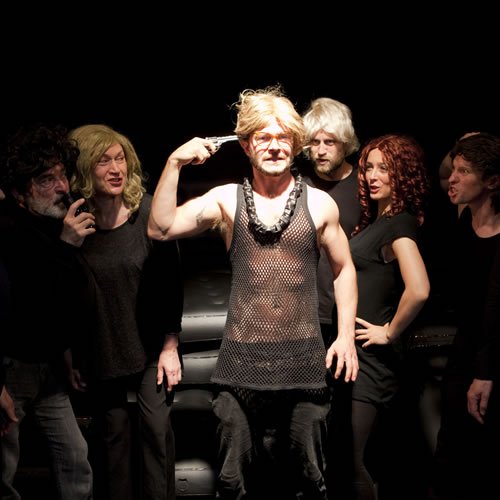
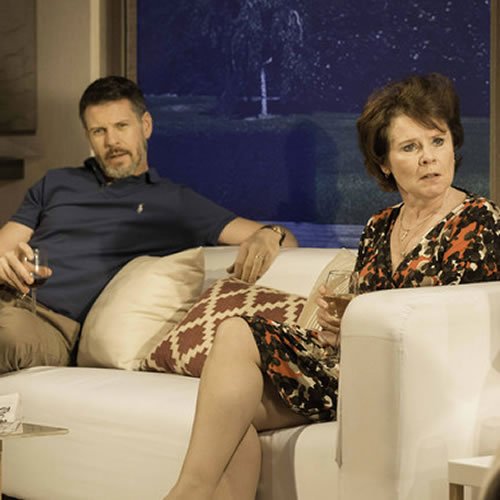

Unknown • 11 Aug 2013

DNA

The premise is mildly interesting: a group of feral, amoral teenagers kill a classmate and attempt to cover up the murder through ever more elaborate schemes of deception. A variety of character types are present: the alpha; his harem (not literally, this is not one of those plays) of devotees; the garrulous girl; the sinister loner; the sadistic girl, who you just know used to cuddle her pet rabbits to death. However, as a tale of savagery and the end of innocence, DNA isn’t quite as daring as it’s trying to be.The actress playing Leah easily has the lion’s share of lines; her scenes with the silent boy are one-sided enough to be considered monologues. She conveys the neurotic nature of her character well enough, though many of her jokes fall flat - more work needs to be done on comic timing in order to turn her scene-long anecdotes from a vague stream-of-consciousness to something more compelling, with more clear direction. When the dead boy turns out to be less dead than expected, things take a turn for the grotesque. The main issue with the script is its unclear intentions. If you consider the play at face value, the narrative seems clumsy and insensitive; however, if it is intended as a satire of broken youth that we should feel alienated and distanced from, it indeed achieved that. Yet the alienation made me care not a jot for the characters and, by extension, the play.DNA seems to be trying to emulate The Lord of the Flies, yet ultimately lacks the pathos and horror that the show needs in order to work.

Unknown • 11 Aug 2013 - 17 Aug 2013

Withered Hand

Withered Hand, the stage and band name of Dan Willson, was welcomed by a ravenous crowd at the Queen’s Hall this Fringe. His melodious charm has earned him a solid fan base, whose backgrounds and age-range are refreshingly diverse. Showcasing a number of new songs from his upcoming album, he apologised for having taken four years to complete it. No apology was needed after he got going, his signature warbling voice a welcome sound, as well as the unmistakable thundering feeling that runs through these incredible new additions to his repertoire. After support acts Second Hand Marching Band, Eugene Kelly and King Creosote (an enormous treat in his own right), we were more than warmed up for Willson, who was accompanied on stage by almost every act that had preceded him. This made for some musical chaos and major excitement in the crowd, justifying the 'ramshackle tag' Willson tells us he is trying to shake off. He performs a good few of the old favourites, such as the thumping melody of 'Heart Heart', the pulsing and driving rhythm of 'New Dawn' and softly pacing 'Providence'. The first two turn into major stomping shout-alongs, making it no surprise to us Withered Hand newbies that last year's gig saw four fans chucked out, another even needing resuscitation in the toilets. The main music focus does however fall upon Willson's new pieces, many of which are absolute corkers. 'The King of Hollywood' is one of his rockier ones that feels careless and throwaway, much like the edgy lyrics suggest. 'Black Tambourine' is a huge and buzzing success with the crowd. There are also much darker numbers, the standout of which has to be 'California'. It is songs like these that demonstrate best the power of Willson's trembling, soft vocals, which carry such heavy melancholy gorgeously.

Unknown • 10 Aug 2013

Ulysses

I have the utmost respect for this stage production, which succeeds in drawing out the story and comedy of one of the most daunting pieces of 20th century literature without marring or making a foul attempt at the genius of the text.Necessarily, to make it more apt for the stage, rather than presenting the constant internal monologue of Bloom's ponderous misery, they have deviated from the stream of consciousness style. However it is brought into the production at moments to emphasize Bloom's enormous enjoyment of simple pleasures, like food. This paralleling of Joyce's style provides something of a window into how to appreciate the humour of Ulysses.There is less of the frustrated intellectual Stephen Dedalus and Buck Mulligan gets what feels like only a fleeting glance. However this serves the purpose of allowing the sensual Mrs Bloom a constant presence, with the marital bed always on stage, often with Molly lounging in it. This is a fantastic touch, drawing attention to what really occupies Bloom's mind and the looming adultery of his wife. In Joyce's Ulysses she is only truly given voice in its final chapter, but the play injects little snippets of Molly in between scenes, frequently undermining her husband or pining after a man or two.Nausicaa, featuring young Gerty Macdowell, is a memorable passage in the novel and fantastic start to the second half of the production. Little could be more explosive than sexual frustration and public exposure, performed to hilarious perfection.Running throughout the production, much as its lyrics weave through the book, we enjoy music from the choir of Blazes Boylan, Molly's sleazy lover. The repetition of 'Those lovely seaside girls' is one of many loyalties to the art of Joyce, which make this production feel like a celebration and tribute to the work rather than a mockery. Ulysses is above all a hugely entertaining tale and an excellent piece of theatre.

Unknown • 9 Aug 2013 - 26 Aug 2013

Ménage à Trois

Put simply, Claire Cunningham has with Ménage à Trois created a unique way of movement using her crutches. Half dance, half silent storytelling, Cunningham constructs a world in which the two sticks of metal which support her have as much agency as two people. Aided by dance partner Christopher Owen, Cunningham - who is disabled, but the show is about so much more than her being a disabled artist - navigates desire as a woman already physically dependent on something, so is wary of emotional dependence. Ménage à Trois is extremely technically impressive, especially the more acrobatic movements and lifts. However, it deals as much with story and thought as movement, so for a dance show the pace was actually quite ponderous, with a lot of emphasis on repeated gestures and lingering looks between Cunningham and Owen. The physical dance sequences were stunning; it would have been great to see more of them. The piece heavily utilised special effects, including projections. While it created an interesting aesthetic, I felt this technological wizardry was unnecessary for telling the story: if not inherently distracting to the narrative, it had a tendency of relying on arbitrary smoke and mirrors. A video game sequence at the beginning, in which Cunningham uses her crutches as facsimile rifles to blow up projections, didn’t quite work for me. In general, I think Ménage à Trois would have been more powerful if it had stripped back on the technology and concentrated on Cunningham’s raw performance. ‘Sometimes I feel like a machine. I forget I was made to touch skin, to feel heat… I wasn’t made to click. But with you I click… Like a clique, a trio, a Ménage à Trois’. A thoughtful, gently-paced exploration of the three elements present in Cunningham’s relationship with her own body.

Unknown • 9 Aug 2013 - 25 Aug 2013

Why We Make Mistakes

If you are yet to travel down to the Hendrick's Carnival of Knowledge, I encourage you to. Upon arrival, one discovers a surrealist salon, offering oddball events such as Victorian paper collage classes lead by impeccably-dressed representatives sporting waistcoats and bowler hats to boot. In the parlour bar, generously garnished cocktails are mixed to the sound of prohibition era tunes tumbling out of the music box.At the sound of the gong, we are invited upstairs away from this gay frivolity to partake in more intellectual matters. 'Why We Make Mistakes' is a talk hosted by Yuka Igarashi of Granta magazine - a quarterly showcasing the best of new writing. As an Assistant Editor, Yuka is well-positioned to discuss those textual mistakes that our minds actively ignore, and the discussion includes a number of activities to demonstrate these theories.As well as mistakes in writing we look into optical illusions and lapses in concentration, explored using short stories of gentleman pickpocket Apollo Robbins. The arrangement is relaxed and discussion stimulating; with the audience sat upon comfortable chairs around a number of little tables, smaller conversations are encouraged by organic division into smaller groups. Tongues are loosened even further by our complimentary Hendrick’s gin and tonics.Like most of the events at Hendrick’s Carnival of Knowledge, the main focus falls upon the literary, and Yuka tells us of the incredible lengths she goes to in order to circumvent her biologically-hardwired autocorrect. We have a chance to try our own hand at editing too, as she shares with us the very piece she was given to edit in her interview for Granta. It might sound dull, but the sheer number of mistakes, plus their diversity of style, were pretty astonishing.Not only were we given an engaging talk on the peculiarities of the human mind, but an enormous appreciation for the skill behind editing: a highly enjoyable and potentially valuable experience.

Unknown • 9 Aug 2013

53 Minutes about 52 Sheep (60 Minutes Long)

Danish comedian Valdemar Pustelnik creates a picture of general discontent in his first English stand-up show, delivering laughs as big as the man himself. The show is hugely satisfying in its everyday subject matter, for example starting off with his resignation to turning thirty and the sad realisation that he is now too old to die young.Effortlessly, this charming and rather gruff man turns what could be a very creepy story into a ludicrous anecdote, such as segwaying from listening in on his neighbours into a rather ridiculous analogy involving rivers and zebras. The hot girl next door is one of a number of characters used by Pustelnik to hold up a mirror to the mediocrity of his life, to which we can - most of the time - relate.Growing up in the Danish countryside is another topic touched upon, as well as being the son of a competitively embarrassing mother who, Pustelnik tells us, did everything in her power to deny him his masculinity. This leads us inevitably to kids and the overambitious and naive expectations he has for his own future children. His plans sounded so much more terrifying than his own childhood; where we would expect the reverse, we see a continuation of the previous theme, creating a wonderful ironic dissonance between the two skits. It is not the most ambitious of comic material but Pustelnik explores these subjects with simple and leisurely observation, edged with a unique quirkiness that warms the entire audience.On top of all this, there are indeed some sheep thrown in there. The oddities of the show are brilliantly put across and Pustelnik's sheep are one of his many highlights. I have a lot of love for this show and you certainly cannot regret spending a happy hour with this brilliant character.

Unknown • 8 Aug 2013 - 24 Aug 2013

Secret Opera Society

The Secret Opera Society event at restaurant Centotre brings together music and cuisine in a stunning fusion of Italian culture with a strong Scottish sensibility and humour. The waiting staff at Centotre were joined by the Secret Opera Singers, taking the ‘singing waiter’ concept to new operatic heights.After being seated, tearing savagely at focaccia like the hungry students we were and feeling very underdressed, we saw head waiter ‘Valentino’ take to the stage: the space between the tables. With a sense of profundity, he explained gravely that opera is the most beautiful music, and that the most beautiful music must be sung ‘in Italiano’. Naturalmente. He then proceeded to sing La Donna E Mobile. It was indeed beautiful. The high ceilings of the restaurant made for wonderful if unconventional acoustics, and the columns and frescoes decorating the space added to the Mediterranean atmosphere.However, this evening was anything but traditional and grandiose: after Valentino’s tour de force, a verbose young Scottish waiter began insisting he could sing much better, launching into a rip-roaring rendition of ‘500 Miles’ by The Proclaimers. Injecting humour was a shrewd move, as it transformed what could have descended into an elite evening of high culture into a show appealing to everyone. ‘La Donna’ was in fact more my glass of prosecco than ‘500 Miles’, but the latter immediately got the audience on the side of the performers. The rest of the show unfolded in a mixture of the profound and the fluffy, the comedic and the sincere, as plates of delicious food were produced by real waiters, thankfully: I had been dubious of asking a singer to perform a tricky aria and simultaneously dole out tiramisu. A giggling waitress was cajoled into singing by Valentino, who later in the evening revealed himself to be actually from Aberdeen and therefore as Italian as a deep-fried Mars Bar. He pronounced her yowling attempts at scales into the microphone as ‘bella, mia cara!’, before telling her to sing a song ‘in Italiano’. The scalded cat impression melted into a heartbreakingly lovely soprano as she performed Nella Fantasia, a classical crossover song, followed by an aria from Puccini’s Tosca.There were plenty of numbers catering more to a cabaret audience, with the duet ‘Tonight’ from West Side Story and a few songs from Les Miserables providing some lighter entertainment. While this made the show appeal to a broader audience, personally I could have done with a little more opera: it was all great fun, but I wish that the skilled singers from ‘Secret Opera’ had tackled something more challenging, and perhaps lesser known. Even so, for some fantastic food in an even better atmosphere, with serenades from truly talented performers, look no further than the next Secret Opera at Centotre. Bellissimo.

Unknown • 7 Aug 2013 - 21 Aug 2013

Red Riding Hood

Why are we so drawn towards the darkest corners of humanity? Red Riding Hood takes the familiar childhood story down a dark and sordid path. In this adaption Red, who is played by director Lydia Georgiou, is the abandoned child of Wolf. We watch as a cast of wound-up toys jitter into life, seeming to represent the fragility of this fairytale happiness that comes crashing down with the horrifying death of Red's mother only minutes in.It is an intense hour. Few words pass on stage, instead a haunting and ominous soundtrack guides the narrative. Your uneasiness is given no opportunity to abate as we watch Wolf quickly turn into a wretched demented beast and lure No.2, the nameless mistress, into his clutches. Wolf's contorted and animalistic demeanor is repulsively sinister yet undeniably enticing, as he is both predator and first victim of this tale. Both No.2 and young Red demonstrate this strange draw beautifully. Red and Wolf examine one another through dance and movement, 14-year-old Red the picture of youthful curiosity and playfulness. The incestuous implications hang over the performance, adding enormous tension to the seductive play between Wolf and Red. Suggestive of their sensuality, the two women of the play are constantly and ravenously eating, be it apples two at a time or an entire basket of cookies, the crumbs falling unnoticed over No.2's dress. I am loathe to call it an undercurrent, as sexuality is never tiptoed around, but desire builds to breaking point in this dance of play and seduction and with uncontrolled emotions and suppressed anger comes violence, the horror of which the audience has been lying in wait for. Knowing what is coming builds fabulous suspense.One thing that feels a little too bizarre is No.2's descent into madness. Though at times affecting, it is hard not to think of Andy Serkis' Gollum as she battles with herself on stage. It is at times highly effective to evoke nervous laughter in order to paint fractured characters, but the laughs were a little too forthcoming, making her a less tragic and more a figure of fun. Nonetheless, this is brave and disturbing theatre, as beautiful as it is bold.

Unknown • 5 Aug 2013 - 24 Aug 2013

The Canterbury Tales

Geoffrey Chaucer is a tricky writer to read, let alone convey in a coherent dramatic narrative. The densely archaic language, the context of long forgotten rituals and outdated customs, not to mention the lack of easily accessible mirth in many of his comic tales, present a real challenge for an acting group to convey The Canterbury Tales in a manner which fully engages and entertains the audience. Unfortunately, this retelling of a selection of Chaucer’s tales did not quite succeed in the task, the meaning remaining as opaque as a pint of darkest Edinburgh Deuchars. Running Torch Theatre Company presented three tales: The Man of Law, The Pardoner and The Franklin’s Tale. The multitudes of characters are represented by the troupe of 15 young actors donning hats and shawls of varied provenance in order to illustrate role changes. While the actual implementation of this device was slick and well rehearsed, the energy and focus remaining high throughout each scene, character and tale changes, I was dubious as to how effective the actual device was. Some of the more eccentric costumes, such as an Austin Powers-style pink and orange floral blazer, and a furry Cossack hat, had no connection to Chaucer’s characters and proved more of a distracting than a means of helpful differentiation.The modern touch ran throughout the show, which may explain why the ensemble launched into a spontaneous rendition of Single Ladies (Put A Ring On It) during one of the tales. Save a few exceptions, the actors seemed unsure of how to deliver their lines, reciting the archaic language with a lack of confidence that often hindered understanding of already convoluted storylines. Some of the broad comedy in The Canterbury Tales was conveyed successfully through broad caricaturing and slapstick, though overall the production oscillated between the extremes of serious morality fable and farce with an overall lack of conviction in either. A cheerful and energetic attempt, though one which unfortunately tripped too often on the minefield that is Middle English literature.

Unknown • 5 Aug 2013 - 10 Aug 2013

My Journey Throughout China

In this very special and understated recital, we meet Dong Yi, internationally renowned zheng soloist, and experience the exquisite sound of the world's most popular Chinese instrument. This is a return visit to Edinburgh for Dong Yi, having performed here a great number of times in during her studies at the University of Edinburgh. She also has the great honour of having been the first female soloist to perform in the Great Hall of the People, Beijing.The zheng, or zither, is a wooden stringed instrument, with eighteen or more strings, which has been recorded in Chinese history for more than two thousand years. It is laid flat on a stand, and played from a seated position. Dong Yi showed us the finger extensions she uses to strum, fixed in place with medical tape and sometimes removed for the softer pieces. Much like a harp and guitar combined, she runs her hands over the zheng with hypnotic skill.We go through half a dozen solo pieces, some modern, others untouched by composers and left just as they were found in the folk tradition of the far corners of China. 'Spring Dawn on Snowy Mountain' is a beautiful Tibetan piece, said to welcome in the new season, and each song is steeped in history, which Dong Yi imparts with keen interest before commencing our musical ingratiation. With some traditions learned and history absorbed, we are then taken to the Tang Dynasty with excerpts from 'Princess Wencheng', the story of which is quite as fascinating as the music. It is not, however, purely traditional music at the Glamour of Jasmine Chinese Arts Festival; on certain dates Dong Yi will be performing with Julia Somerville on the clarsach, and there will also be the opportunity to see her in joint recitals with Eddie McGuire at 'Music of Two Nations.'

Unknown • 5 Aug 2013 - 22 Aug 2013

The Medicine Showdown

Part of the American High School Theatre Festival, The Medicine Showdown is performed by a promising and lively bunch from the US, showcasing their talents and best Old South accents in this story about going against the masses.The production is set in Georgia in 1918 and tells the tale of one doctor's battle to keep the hugely popular Dr Edgerton's Medicine Show from coming to town and putting its people at risk of the flu pandemic, which in all reality killed tens of millions of people across the globe. The battle of one against an ignorant majority is loosely based upon Henrik Ibsen's Enemy of the People, with an Old South twist; not only is the agitator Dr Hill a woman in a conservative Victorian community, but her bid to ban all public gatherings includes Sunday church services, which brings all manner of hysteria and blasphemy accusations crashing down on her.The week-long battle leading up to the show is interjected by Dr Edgerton's show itself, which is all bells and whistles and very little medicine. This makes for excellent diversion and keeps up the pace of the action. Bursts of song, dance and shameless product placement on behalf of Edgerton allow the cast to really show off their talents, where the parallel storyline only grants that opportunity to a few key characters - though these few carry along the driving force of the plot brilliantly. It is however up to the supporting cast, largely made up of Edgerton's extensive entourage, to provide comic relief from the looming threat of Spanish flu. This includes everything from Siamese spiritual dancing, tap and washboard music, as well as a hilarious mind-reading diagnosis of the audience.Though there was the occasional blunder with lines and some of the more serious scenes were performed a little stiffly, The Medicine Showdown is undeniably wholesome good fun.

Unknown • 5 Aug 2013 - 9 Aug 2013

Synergy

'Do you realize you are being conditioned?' the audience is asked over and over in the course of the play. Coming from the small but persistent voice of Synergy's token misfit, this question takes the form 'Why are you not questioning this limited existence you are living?’ Two ragtag gangs, much like the Lost Boys, live alternate lives in light and darkness: one talks blindly of theories and perception, the other watches the world in silence and awe. The innocent and childlike creatures are performed by an incredible group who are endless entertainment to watch; the stage comes alive in light, the hum of keen voices fill the darkness. With an oppressive mother figure hanging over, they do not challenge these existences, until one misfit puts a spanner in the works.It is a stylish little play set in an isolated and almost dystopian playground. Although friendships visibly divide it, shown by their differing painted faces, there is a familial wholeness to the group as though they mean everything to one another. It is curious to watch as they actively limit their senses, and the peals of laughter that break out when the lights fade suggest a playful and lighthearted community faced with no heavy burdens. The arrival of the misfit is a cause for much distress, as her challenge to the blissful norm appears threatening.The play makes a valid point about how easily we can hide from the consequences of our words, an excellent example being the ease of spreading opinions over social media. Synergy's mother figure discusses the vulnerability of her clans if they were to see and speak, yet their ability to hurt others is not restricted by blindness. The clan in darkness therefore, would perhaps be more effective if they did not recognise one another's voices, but even then, a nameless voice can be as hurtful. Similarly, absence of words does not avert misunderstanding in visual communication. It is however a fact of growing up, that one must face the consequences of ones actions. This is a very refreshing and interesting piece of escapist theatre.

Unknown • 5 Aug 2013 - 10 Aug 2013

Paradise

The lives of a group of strangers clash on the London Underground. There’s a northern lad talking to anyone who’ll listen (and indeed those who don’t) about his band The Slave Boys; a skittish French woman; a couple so incompatible you wonder that they share a bench, let alone a bank account; a folk duo and an oddball hen night. Made up of a series of vignettes, much of the action involves people shouting at masked figures but receiving no response.There’s a seat that stretches and contracts like a concertina, a blanket made out of newspapers and a guitar-playing duo singing snatches of popular songs from the last 30 years. The strumming along to Heart of Gold/ Let It Be/ Firework was an atmospheric way for the audience to enter the space - one of the girls in particular had an absolutely incredible voice – but the music was in no way tied to the action and felt disconnected.Northern lad made for an energetic joker, keeping the energy of the piece high, which was made more impressive by the fact that for extended periods of time he was the only one speaking. However, the repeated refrains of ‘LEEDS LEEDS LEEDS YURKSHIRE YURKSHIRE’ did begin to grate. His fairly one-sided conversation with a bemused French girl was quite sweet, though with her limited English I was skeptical as to how she even made it onto the Underground.Other vignettes were not nearly as developed: the music duo talking about kicking somebody out of the band was pretty self-indulgent and tedious; the couple taking someone else’s kid out to the zoo was also not particularly compelling, mainly because the characters were so teeth-grindingly nasty.I did however enjoy our working class hero’s tube journey with his dementia-suffering mum, who still thinks that he is a school boy and reminds him not to be late for tea as she’s cooking chicken goujons - his favourite. The various disparate stories connect at the end with a degree of success, uniting in the aftermath of a violent accident on the underground. This did a fairly adequate job of tying the narrative strands together but still felt like lazy scripting.A moderately entertaining mishmash of stories and anecdotes with mask work, a bendy bench and some nice guitar playing.

Unknown • 3 Aug 2013 - 25 Aug 2013

The News at Kate 2013: My Professional Opinion

Arguing with idiots is how Kate Smurthwaite describes her profession as a left-wing political activist. When it comes to political stand up comedy, The News at Kate is the cream of the crop. A fixture at the Fringe since 2009, this year's focus falls on political opinions; where we get them from, how we make them heard, and how to have the final word when called upon to defend these views.Smurthwaite discusses her experiences in the media, and the tactics that she employs to breeze through even the most aggressive debates. For example, being an atheist on The Big Questions, which is mostly occupied with theological issues, is of no consequence. Less momentous a subject, but alternately monumentally funny, is TV’s Dawn Porter and her many misadventures. We explore her hypocrisies, a stab or two at feminism, and the mighty Smurthwaite versus Porter debate at the Women of the World festival 2012, boldly taking on the true big questions in life, such as sparkly vaginas.Also brilliantly self-deprecating, she paints a hilarious portrait of home life with the 'witch' of her critics' creation, and introduces us to the surprisingly likeable 'Extreme Kate', or megaphone-wielding beast of Tory nightmares, who bawls wildly at the opposition. This is hugely entertaining in its own right, as all her aggressive shouting is made up of entirely valid and sensible points.The show is not just about being a badass however; the infinitely wise and resourceful internet once again impresses us as the main authority on opinion-forming. The show is structured around a wikiHow step-by-step guide, through which Smurthwaite tells us many an example of ill-founded opinions and utter rubbish set loose in the mass media.The humour is witty as hell, dealing as coolly with sex as with the hottest of topical debates. There's a great deal of brilliant nonsense in there too, including impersonations of Tory MP Nadine Dorries and the highs and lows of fan mail (as well as hate mail). Bang-on humour, big topics and easygoing delivery make this top-quality stand-up from a lady who knows a thing or two about making an impact.

Unknown • 3 Aug 2013 - 24 Aug 2013

Dr Professor Neal Portenza's Interactive Goat Hour: There are no goats and the show is only 54 minutes long, excluding the bonus minute

Dr Professor Neal Portenza has more titles than I would give stars. At first glance there remains a promising idea of a fun character hanging about him, dressed in lab coat, in-patient garb, red beret and slathered in make-up. Unfortunately, his potential is never fulfilled, as in the course of the hour the Doctor/Professor/Comedian does very little in the way of comedy.This is an interactive show, a fact which keeps us fairly occupied, as we are given a small remote control to submit our votes to the question on the projection slides. These are fairly basic nonsensical questions like 'who was Jesus’s fay-vrit disciple?' with answers like 'Dingus' available to us. If these were supposed to be guiding the show along, we were sorely disappointed, especially after such great importance placed upon the authenticity of the voting system. In reality, nobody really cares what boxes they tick, because all the options are disappointing and negligible.Intended to be bizarre and aimless joy, the fun is spread pretty thin, getting truly boring at times and it takes forever to come to the jokes, which end up not being worth the wait. The effort gone to for each little flourish of comedy detracts from what should be effortless nonsense.The hecklers definitely provided the most fun, who Portenza at first worked with as willing participants, but after having armed the audience with a box full of stress balls to lob at him, it became pretty impossible for him to reign things in and continue with the show, which was grinding to a halt with his poorly disguised attempts to cool the hecklers in their self-perpetuated fun. I can't blame them; no one else was providing anything in the way of amusement. Dealing with these guys certainly didn't help his likeability, so we were left with the scraps of what might have been a passable show on a good night.The blurb includes the disclaimer 'certainly not for everyone'. Ball fight notwithstanding, I am in full agreement.

Unknown • 3 Aug 2013 - 24 Aug 2013

The Winter's Tale

Tread The Boards theatre company’s retelling of Shakespeare’s The Winter’s Tale begins in World War II-era Britain, featuring Leontes as a military general with a stiff upper lip and a short fuse. The court of Sicilia is given its strict hierarchy through a military rather than a royal context; a detail which translates well, adding layers of meaning to the explosive and often violent events comprising the first half of the play. John-Robert Partridge (who also directs) plays Leontes with lion-like brute force, literally knocking the pregnant Hermione to the ground. The vitriol, aggression and tragedy of the austere first half is dizzyingly countered by the tone of the second, which takes a different turn entirely. Bohemia, 15 years after the death of Hermione and the loss of Perdita, is reimagined as a psychedelic 1960s fever dream set alternately in Ireland and the West Country, if the accents are any indication. There’s a lot of (unsurprisingly rather broad) ‘Ah to be sure, to be sure, ‘tis a beautiful diddly-i-day’ talk, as well as some sheep chasing. The Winter’s Tale is frequently classed as one of Shakespeare’s ‘problem plays’ due to the huge divergence of tone between the two halves; an issue this production exacerbated by the sheer quantity of Oirish tomfoolery, flower headbands and flares present in Bohemia. However, that’s not to say that this wasn’t all great fun, including even dance numbers accompanied by the tambourine. The intrigue, jealousy and attempted infanticide of the Sicilian court was portrayed through sensitive and passionate performances from the whole cast; Catherine Prout’s charismatic Hermione and Daniel Gates’ impressively subtle characterization of the innocent young prince Mamillus were particularly strong. The second half featured somewhat successful translations of Shakespeare’s ubiquitous tropes - including incredibly transparent disguises, improbable coincidences and clownish country folk, which were fairly engaging but lacked the passion and intensity of the first scenes. This is a lively, fun production, which unfortunately highlights the problematic shift in tone present in the original play by the very act of setting a grim military court alongside a pastoral hippie trip. But don’t worry, Florizel says relax.

Unknown • 3 Aug 2013 - 10 Aug 2013

A View from the Bridge

My ear for accents is pretty poor; I think that Dick Van Dyke does a passable Cockney. So as to assess this show accurately, and crucially the Noo Yoik accents, I brought my American friend along to pass judgement. We were in agreement that this young company from UCL pulled this off incredibly well, sounding as though they were born and bred in the Big Apple. No one does (comparatively) modern tragedy on epic Aristotelian scales quite like Arthur Miller, so it is always interesting to see fresh takes by new companies on the pathos and flawed heroes that are the bread and butter of the genre. Eddie (Adam Pabani) was the cast standout; a compact mass of repressed desire and culturally-confused ideas of justice. He articulated perfectly Eddie’s desperation, caught between filial and romantic love for his niece, Catherine (Marina Hopkins). Hopkins was a winning, lovable Catherine, but didn’t quite convey the two states the character oscillates between of girlhood and womanhood, causing so much emotional turmoil to her uncle. Beatrice is a role easily overshadowed by the bigger players but Melissa Taylor’s Brooklyn housewife had a shrewd intelligence. Bar Alfieri, only she seems to see events unclouded by bias, seeming aware of approaching catastrophe when others remain oblivious.Unfortunately, the nuanced portrayals of the Brooklyn set were complemented by the overegged characterization of the characters newly arrived from Italy. Marco sounded more Eastern European than Italian and while his hulking immigrant had plenty of brawn, the brain aspect of a fairly complex and multilayered character was unfortunately lost. Rodolfo was also slightly lacking in subtlety, a cartoonish portrayal of a flamboyant Italian.The slowly building tension was strongly conveyed; the moment when Marco demonstrates his physical strength to Eddie by lifting a heavy chair with one hand was particularly overlaid with menace. Less effective were the arrest and fight scenes which felt unchoreographed and clumsy - sitting on the end of a row I was in danger of being knocked out of my seat.The relationship between Eddie, Catherine and Beatrice carried the piece, Miller’s dialogue perfectly pitched and delivered. A very classy production.

Unknown • 2 Aug 2013 - 16 Aug 2013

Titus Andronicus

Shakespeare's most violent and harrowing play has been given a 1980s London twist by Hiraeth Productions at this year's Fringe; it works so well it becomes hard to pull the two concepts apart. A leather couch draped in an English flag grounds us in a London flat for each dramatic scene, comparing the great power of the Roman Empire, to the empire of the streets of London. The similarities in respect, revenge and honour are surprisingly resonant, as skinheads take the role of Roman soldiers, Moors are Jamaicans and Goths by ethnicity become goths of subculture.The Emperor Saturninus alone is suited up, much like a drug lord in composure and dress, as well as being the only one in possession of a gun, suggesting his superiority of power and means more than anything else.The shocking violence of both Titus Andronicus and turf wars complement one another, as the extremity of Shakespeare's play parallels the extremist political and racial views much associated with revival skinhead culture of the 1980s. Music from the period is injected to excellent effect, conjuring an image not only of the era but of the jarring styles of the goths and skinheads.Hiraeth are to the best of my knowledge true to the original script, save a few modern profanities, which cut through the elevated English with great impact. Such interjections feel only natural in response to the rape and mutilation of Lavinia, carried out to the upbeat synthpop of Human League, which in its place is extremely sinister. Most painful of all is her being discovered by her brother; the stream of red from her muted mouth is more distressing than any death in the play could be.The temptation to use gallons of blood in this most bloody of plays is resisted, and hence can be seen in a peculiar way as tasteful; both as a high-minded performance of gang wars, and a hugely expressive production of Shakespeare. Titus Andronicus is faultless and horrifying; a test to your moral strength as well as your stomach.

Unknown • 2 Aug 2013 - 24 Aug 2013

Just Conversations

Part of Just Festival, discussions are being held in St John's Church throughout the course of the month, targeting important, interesting and sometimes controversial matters under the name of Just Conversations. I attended 'Does Slavery Exist in Scotland Today?' which approached the dark matter of human trafficking in our community.The meeting was led by a number of esteemed professionals; chair of the discussion was Sheriff Rita E A Rae, with guest speakers Detective Chief Supt Gillian Imery and Jeremy Alford of the charity Hope for Justice, which deals specifically with survivors of human trafficking. With authorities on the procedure of the Scottish legal system and its attendant law enforcement agencies alongside Alford's wider perspective upon the issue from around the UK, the discussion was highly informative and engaging. We explored the lengths to which trafficking is present, what signs to look for, and what aftercare is available to those caught in the middle. What garnered much interest was the widespread ignorance of this problem among the employers of those victims of trafficking themselves. Overall, this proved an interesting and enlightening event.Of course, with such a vast variety of topics for discussion each day, no review can truly encapsulate the experience of Just Conversations. Addressing the issue of human trafficking proved less of a debate, more an opportunity to raise awareness. In contrast, one of the previous debates, entitled 'A World Without Religion', brought together representatives of Christianity, Humanism and Atheism in healthy discussion (whilst also selling out within the first week of the festival). The program of topics to be discussed each day can be found on the website and so if something does catch your eye, do book in advance.This is an excellent chance to engage with hot topics, with a whole host of professionals who are authorities on the subject put at your disposal for 90 minutes. There is also ample opportunity to ask questions, as the seminar is fairly small.

Unknown • 2 Aug 2013 - 26 Aug 2013

Northanger Abbey

Five puppets on stands line the stage and a suitcase. Two actors step out and begin ceremoniously constructing the props, drawing our focus to the modest creations: a candelabra of slotted cardboard for example, the flames alone given a coat of colour. The puppets too are minimally decorated, but with brilliant detail like cardboard shaving curls, ribbon, lace trim dresses and book-page lapels. This costume is also sported by the actors and gives the show a childish but charming style, much like the character of Catherine Morland, our unlikely heroine. With Northanger Abbey originally a parody of the gothic novel, Box Tale Soup have embraced the humour and made it their own, playing up Catherine's 'silly woman who reads novels' stereotype, accompanying each opening of 'Mysteries of Udolpho' with ominous musical accompaniment and a ravenous reader. The many paper mache faces bring a sense of the fairytale to the play, much assisting in absorbing us into Catherine's wild imaginings, which eventually lead her astray in the Abbey itself. The actors, man and woman, play primarily the roles of Catherine and her suitor Henry Tilney, while all other characters take the form of puppets, giving the impression that the reality of love is what brings Catherine to her senses. For those unfamiliar with Austen's first novel, this production would be an excellent way to familiarise yourself. The play succeeds in condensing the tale without losing its heart and maintains a pace that is entirely engaging without rushing or dragging us through an entire novel.It is also incredibly playful. A carriage ride with the rather disagreeable John Thorpe is demonstrated by actor and puppet bouncing along on the suitcase, one straining away from the other. Some aspects of the book, such as the General's overbearing character, are exaggerated visually with his large and looming puppet portrayal. Others, such as the note in the chest, is unaltered and performed to wonderful effect. The acting is seamless and the set up entirely unpretentious. Taking a beautiful and inventive approach to the classic story, this is a gorgeous piece.

Unknown • 2 Aug 2013 - 10 Aug 2013

Our Fathers

The relationship between child and father is creatively a well-trodden path, so kudos to Babakas for not only finding original angles to explore in their fact-meets-fabrication production Our Fathers, but also making it astonishingly affecting.Sofia Paschou, Bert Roman and Mike Tweddle, playing versions of themselves, reflect on their bond with their respective fathers in response to potential impending fatherhood for Mike. As Mike is gay and the opportunity comes in the form of a woman he has never met, his boyfriend Bert is understandably skeptical. Sofia is more supportive, mainly because she is scoping out the audience for potential dates (apparently not having a car is a deal-breaker).Bert isn’t particularly chatty, preferring to express himself through movement, often employing an energetic, joyful jumping choreography sequences - the significance of which becomes movingly apparent at the end. Bert is virtually estranged from his father who is unwilling to accept his sexuality; the discord between them is a constant presence in the sound of unanswered Skype dialing tones.Sofia’s father - and the main man in her life considering how often he calls her during dates - is a larger than life Sinatra-obsessed Greek, aptly personified by a 15 foot-high projected shadow. When a family tragedy reduces this shadow down to smaller than human-sized, Sofia is able perhaps for the first time to play the adult. Mike’s last memory of his father is of saying his last goodbyes in hospital, aged ten or so and only being able to think of an emotional scene from Neighbours. He tries to reconnect with his father via postcards and old VHS tapes of his father in Africa, yet tangibly craves a physical presence to give him advice as he faces becoming a father himself. The three actors based these stories closely on their own experiences which, rather than making them sentimental or indulgent, adds a clarity and wicked humour to the piece, as well as a genuine fondness.After the show, I talked to a fully-grown man in tears, thinking of his daughter on her first day of nursery across the other side of the country. Then I called my dad.

Unknown • 2 Aug 2013 - 25 Aug 2013

4.48 Psychosis

For anyone following British theatre of the last two decades, Sarah Kane’s is a legacy which is impossible to avoid. Her swansong, 4.48 Psychosis, is both a detached and dazzlingly lyrical study of mental illness, and her own suicide note. It is one of those rare plays which is both impossible and inappropriate to take out of context; that being a piece first performed posthumously in the year 2000, the script written shortly before the author’s suicide. These unique circumstances have often divided critics, who question quite fairly the possibility of aesthetically and critically judging something so viscerally personal.It is therefore a notoriously challenging play to do well. Quite apart from the risk of being upstaged by the ghost of Sarah Kane; the bewildering structure, lack of narrative and constant hops between naturalistic and poetic language often prove tricky to successfully adapt into something resembling commercial theatre. Luckily, Fourth Monkey’s astute attempt directed by Steven Green is sensitive, frightening and delicate, with an impressively light touch for such an intimidating script.It is visually stunning, the square lights in the floor cast a cool blue glow - a literal interpretation of the repeated image ‘Hatch opens, stark light’. The tones of the play are all an icy blue; creating an ethereal effect supported by the tattered garments, occasional set of wings and dramatic shadows around the eyes. Yet the calm, powdery blue is also instinctively linked with hospital gowns.Co-director Charleen Qwaye deserves particular acclaim for her beautifully crafted movement and dance sequences, which segue throughout the play in a mixture of the elegantly balletic and violently staccato. The focus is on one solitary figure; but the other twenty actresses representing the voices of her mind contort and writhe in a seething mass of bandaged limbs and dishevelled locks, lifting the protagonist and tearing at her clothes and hair.The dialogue never forms a conversation; it is more a tense push-pull confrontation between each raucous facet of the protagonist’s sanity. The voices compare symptoms and prescriptions; at which the others clap and cheer as though at some malignant game show. ‘Weight loss, anxiety, inability to reach orgasm... 12 Prozac and 8 Temazepam!’ This hideous one-upmanship offered a terrifying view of the lengths people will go to compulsively self harm; I felt queasier with each symptom and drug listed. A blindfolded figure announced with an unseeing smile; ‘I gassed the Jews, I slaughtered the Kurds, the Killing Fields are mine. When I die, I’m going to be reincarnated as your child. I’m going to make your life fucking hell.’ It is a nightmare, it is terrifying.Charlie Bate, the actress playing the nameless lead ‘Voice 1’, tackles both the poetry and pornography of Kane’s prose with aplomb; her voice aches with vulnerability, but is still silvery clear. The repeated refrain, ‘At 4.48’, is gradually amended with a weary sense of the inevitable; ‘At 4.48; comes clarity, I shall sleep, I shall speak no more’. Both the horror and the beauty of the script are as stark as frost patterns on a window; the lines shimmer in the air. 4.48 Psychosis offers a truly subjective, personal, perhaps isolated case of trying to carry on with the business of living when sleep is unreachable and even breathing causes pain. At the end, the curtains opened and the lights came up to tears on my face.

Unknown • 2 Aug 2013 - 26 Aug 2013

The Seer

The brief yet astonishing creative career of the ‘enfant terrible’ of French poetry, Arthur Rimbaud, is explored by Penn Dixie Productions’ frankly eye-opening production The Seer. The title is I presume named for the poet’s self-description in a letter as a ‘voyant’, intimating a state more transcendent than that of mere artist. Rimbaud was undeniably an artistic prodigy, a precocity that attracted the attention of acclaimed yet discontentedly bourgeois poet Paul Verlaine. Verlaine left his wife Mathilde and newborn son before the pair of libertines embarked upon a torrid affair that scandalized 1870s Paris, an affair punctuated by absinthe binges and occasional murder attempts. A modern-day Rimbaud scholar functions as storyteller to the truncated events, his thread of narration frequently interrupted by the interjections of Rimbaud himself, as well as the personification of Rimbaud’s younger self as a poet. The clear separation between Rimbaud the artist and Rimbaud the man, to the extent of being performed by two different actors, becomes of particular importance in the denouement, which details the poet’s abandonment of his literary career and ‘artistic suicide’ at the age of twenty. Rather aptly for a story about the father of surrealist poetry, the play is very odd indeed. Sinister figures lurk in the shadows, wearing grotesquely shoulder-padded military jackets reminiscent of the terrifyingly square bodyguards featured in another classic oeuvre of French batsh*t crazy, Sylvain Chomet’s ‘Belleville Rendezvous’. The Rimbaud-obsessed narrator delivers Mathilde Verlaine’s baby while she lies prostrate reading a modern biography of her husband’s teenage lover. This baby, embodied by a doll, follows Verlaine occasionally smacking him with small plastic fists in a reminder of his abandonment. Verbal testimony at Verlaine’s trial in which he is accused of sodomy is given by a gigantic manifestation of Rimbaud’s anus, created by a table turned on one side. Then Verlaine’s baby emerges from the anus. Then the face of Verlaine’s wife, shrieking ‘My baby!’ On greater reflection, I’m not really sure the word ‘odd’ does justice to the many startling things in The Seer. According to the Fringe guide, The Seer contains ‘Explicit language, a very large puppet asshole, much kissing of all kinds, and a bare ass.’ So if you are offended by any of these things, you should perhaps give The Seer a wide berth or risk suffering coronary thrombosis though indignation. While I’m still not (and probably never will be) precisely sure what I just saw, The Seer was hilarious and clever, featuring some truly spectacular absurdist performances. Though rather unsurprisingly the large puppet asshole totally stole the show.

Unknown • 1 Aug 2013 - 25 Aug 2013

Severe Blether Warning

It is a blessing that this show is in a pub as a drink or two may be needed. Half of the performance was the product of audience banter, with little assistance from the comedians on stage.First we meet Jonny, championing 'Is it just me?' jokes that go to every dark corner of humanity including the Megabus, internet dating, and farts, the latter of which we are given a number of impressions. I'm fairly sure a monkey could stand on stage and make fart noises too. Toilet humour and a brief tasteless attempt at racism made it an altogether juvenile set. We then were greeted by John, who we welcome with his deadpan delivery. All is looking up for the show as we joined in his reminiscence of childhood in Edinburgh, a wedding in the Botanical Gardens, and love when the vanilla jokes go wonderfully sour. However, things take a turn for the worst with the introduction of some personal sex jokes which were as uncomfortable for the audience as it clearly was for him. This was worsened by their graphic nature and the faltering of his poker-faced composure in the delivery of phrases like 'I ejaculated all over the pillows.’Last was Andrew Sim, the show's saving grace. His opening number was the cause of genuine hilarity, bringing to the audience a great deal of relief. Having introduced himself in a bright flamboyant fashion - much to the surprise of the audience who had been seated by the same fairly meek boy just half an hour before - he set about telling us about his background, building his stories of family strife to the definitive goal of cracking wise, giving his set the structure that the rest of the show is certainly missing. Not only this, he plays off the audience with confidence and adds a touch of amateur dramatics when the mood fits. Though Sim is definitely one to look out for in the future, one out of three cannot justify the hour. If you go at all, don’t go sober.

Unknown • 1 Aug 2013 - 26 Aug 2013

Chalk Farm

Chalk Farm is the first high-profile piece of theatre to consider the consequences of the riots and looting that ignited main cities in Britain last summer. I find this fairly surprising, as the events feel like particularly fertile grounds for the sort of social commentary drama currently in vogue. The play is a two-hander telling the story of Maggie and Jamie, a single mother and her only son living in Chalk Farm and how they are caught up in the tumult. What was highly effective about this play was that it avoided judgement of either camp; demonising neither the council flat ‘chavs’ deemed responsible for the destruction, nor the occasionally patronising efforts of politicians to explain events.The play starts off with teenaged Jamie explaining what the riots were not about: race, consumerism, materialism, anger at politicians, anger at parents, anger at the privileged, boredom. Instead, they were about ‘everything and nothing’. While I appreciated the fact that the riots weren’t given a neat, one-size-fits-all formula for occurring, Chalk Farm went far enough in the other direction so as to venture nothing tangible about the events. To all intents and purposes, Chalk Farm is less about the week London burned and more about a mother realising her son is no longer a baby and questioning how much she really knows him.Thomas Dennis as Jamie and Julia Taudevin as Maggie had excellent chemistry, Taudevin demonstrating lioness-like ferocity in defending her cub; the way she physically crumbles on the realisation that her son is not as innocent as she believed is very affecting. I would however have liked more interaction between the pair, as their accounts were addressed predominantly to the audience rather than to each other – though perhaps this was intended to highlight their increasing isolation from each other. Dennis excellently conveyed the transition stage of adolescence, stern-faced man one minute, grinning boy tucking into cheese and pickle sandwiches (crusts cut off) the next. As someone with a brother of similar age, Chalk Farm hit the nail on the head with the character of Jamie and the often contradictory nature of growing up; suddenly responsibility and choice are available to you, but are you mature enough to handle it yet?An immediately striking thing about Chalk Farm that cannot be left uncommented on is its set. Dozens of CCTV screens are set up behind the actors, bathing them in cold bluish light, beaming out images of fire, shadowy figures and static, then a close-up of Jamie’s face, transformed in its fury and stripped of any childishness. As an angle and commentary on why humans feel the desire to destroy, Chalk Farm washes its hands of any definitive response. As a family drama and an exploration of innocence and experience, Chalk Farm sets the stage alight.

59E59 Theaters • 1 Aug 2013 - 8 Jun 2014

Robin (A One-Man Comedy)

In this rather indie-style, little comedy, Robin is a lonely continuity announcer with only his imagination to comfort him. Running off with confidence on the most bizarre tangents, this show pulls exceptional comedy from gloriously mundane places. The audience is given a fly-on-the-wall view of a day at work for Robin, who keeps an inordinate number of eggs in his coat pockets. An odd and fairly plain guy at first reckoning, we are drawn into his imaginary world of crazed Robin fans, exciting and interesting friends and his own interpretations of the shows he is announcing. This is all leading up to the great premiere screening of 'The Ring' which, you can imagine, he manages to botch up completely and fix again, like in a good kids movie. Hence it is a wholesome story, cleverly connecting the most distant pieces of the show together, and throwing us off his track, so we are in complete awe of him as the show comes to an end. Performing an awkward persona can make an audience uncomfortable if it feels like the comedian is too vulnerable, yet whether tongue-tied or accidentally mashing eggs all over his face, Robin is teetering around loss of control and highly loveable for it, as he can't even impersonate the confident man of his aspirations. His attempts to keep these dialogues going with his friends of figment are pitiable and yet excellent fun. The wordplay is exceptional. Any point in the show where we feel the action dwindling or relevance drifting is brought back and blessed with greater hilarity than could be thought possible in his grand finale. We watch as just a change in inflection places all significance on the subtle repetitions of a crucial sound, unnoticed the first time round. Incredibly clever and full of heart, this is one to revel.

Unknown • 1 Aug 2013 - 25 Aug 2013

Hag

Baba Yaga is a character featuring in folk tales from most European cultural traditions; a grotesque old woman who eats children then retains their skulls for macabre light fittings. The Wrong Crowd presents a lively take on this legend, telling the tale of the only child, Lisa, who has ever managed to escape the jaws of the hag. This Baba Yaga is Scottish, linking the Celtic vernacular tradition to its European contemporary - a fine touch. The masks in Hag are exquisite, particularly that of Baba Yaga herself who looks like a terrifying haggis; if haggises had rows of discoloured molars perfect for child munching. If Yaga is a relation to Hansel & Gretel’s gingerbread hag, Lisa’s stepsisters have walked straight out of Cinderella via Dame Edna - if the bouncing curls and diamante cat-eye spectacles are any indication. Hag is a deliciously dark bit of storytelling, the suppleness of the tale is evident in the way the audience can cower in horror and in the next instant be laughing at some wry truism. ‘I shall always keep you safe’, promises Lisa’s mother to her daughter, ‘What a lovely sentiment’, snarks Yaga in her dry lowlands brogue. Laura Cairns embodies the role of Baba Yaga with reptilian physicality, scuttling around the stage like Kafka’s beetle. The offal-ey looking mask is strapped onto Cairns right hand, the base of it joined onto a ‘spine’ affixed to Cairns’ back, enabling unsettling dexterity of movement. Sarah Hoare’s Lisa is a wide-eyed, innocent, yet refreshingly ballsy heroine who beats up the Ugly Stepsisters when they’re mean to her and outwits Yaga at every turn. She was far more satisfying to root for than the traditional milksop female protagonists of the genre. The denouement of the show features a delicately harmonised folk song ‘Oh for a home under the ground’ as Lisa buries the skull of one of Yaga’s child victims, reaching closure for her ordeal and achieving peace. It is a beautifully eerie finale to this sophisticated re-imagining of a familiar folktale.

Unknown • 1 Aug 2013 - 25 Aug 2013

Where the White Stops

ANTLER have created the story of a girl called Crab (Jasmine Woodcock-Stewart) who lives in a snowy wilderness with her brother Narwhal (Daniel Ainsworth), who one day leave the safe confines of their village, stepping over the forbidden line, to find out where the white stops. With four actors, one small light and an excessive amount of knitwear, a whole ­alternative reality is created.I really can’t articulate how creative this show is: put it this way, they simulate a full-blown snowstorm with only their voices and the artful flapping of coats and scarves. What’s more, you believe it. The musical accompaniment is provided acapella by four ­harmonising voices and is reminiscent of a good film score, always present in the background helping to create effect and atmosphere without being obtrusive. Where The White Stops is just as much a feast for the eyes as the ears. The intense physicality of the production is immediately notable, characters lift and throw one another as though they are as light as flakes of snow; each movement is ­impeccably choreographed. On their epic journey through the wild, Crab and Narwhal ­encounter even more bizarre characters, from the diffident Wodwo (Nasi Voustas) and the one-armed carpenter Brown (Daniela Pasquini), to tyrannical, feather-bedecked King Soft Face (Ainsworth) and his intended bride Elja (Pasquini). There is a strong sense of the fantastical and the fairytale about Where The White Stops, though it is far too bizarre to fit into any ­traditional fairytale mould. The lawless lands of the White are plagued by a fearsome Beast who must be placated ­occasionally with human ­sacrifice. The ominous presence of The Beast on the edges of the stage is genuinely unsettling; keeping appearances brief and shadow-shrouded was a good decision. The audience only gets glimpses of it so can be fully invested in the characters’ fear of this unknowable devil.Created and expanded from a childlike story, conveyed with minimal props, non-existent set and a compact team of actors, Where The White Stops does more with virtually nothing than far fussier, more cluttered ­productions. Funny, clever, ­creative, absorbing, oddly ­entrancing.

Unknown • 1 Aug 2013 - 25 Aug 2013

Breaker

This tale of small island intrigue and memory, penned by Icelandic author Salka Gudmundsdottir, translated and brought to the stage by Scottish director Graeme Maley, transcends the linguistic and cultural leap to create a compelling narrative.Daniel, a postgraduate drifter, gravitates toward the remote island his grandmother grew up on. Exploring a seemingly deserted schoolhouse, Daniel gets more than he bargained for when Sunna, the reclusive schoolteacher, apprehends him. What follows is a taut, ominous exploration of claustrophobia in small communities and the myths generated in the wake of traumatic events.Both actors are discernibly Scottish, not only in accent but frequently also dialect. I didn’t realise the cultural origins of the story until I looked it up following the show, I was impressed by how neatly the story about a remote Icelandic community transferred itself to the context of the Scottish Hebrides.Daniel (Iain Robertson) and Sunna (Isabelle Joss) clash from the off about the appropriation of cultural heritage, what right one has to stories which are not theirs. The tension between the pair is kept on a knife edge, though Sunna being so fierce and Daniel so ineffectual does seem an imbalanced conflict - she frequently threatens to remove him from the room, and could easily do so, but never goes through with it. The more romantic interlude to me felt disconnected, one can only buy into it if you accept that in this case rage and apparent hatred equals intense sexual chemistry: something in this case I remain skeptical of.Also problematic was the fact that I was far more interested in Sunna’s history than Daniel’s: I found the sections of the play dedicated to him trying to uncover his grandmother’s secrets tedious and the character generally hapless.An interesting ghost story with plenty of spine chills, tension and intrigue - but unfortunately lacking several elements to make it truly compelling.

Unknown • 1 Aug 2013 - 25 Aug 2013

From Where I'm Standing

A bomb explodes in the British Embassy in Mumbai. Meg’s dad, Adesh, who she hasn’t seen in a decade, is seen trying to run from the scene just before the bomb explodes, so she is hauled in front of the police for questioning. This story is interwoven with snapshot scenes both past and present; Adesh’s memories of his adolescence and growing political consciousness in school politics class; Meg’s future relationship with a man who has sworn to bring the world back together by shunning social media. Themes of parenthood, connectedness, rootlessness and political disillusionment are briefly flirted with but ultimately From Where I’m Standing comprises far less than the sum of its parts. Early scenes show Meg’s father as a schoolboy in 1997 Southampton on the eve of the Blair election and the start of his relationship with goody two shoes girlfriend, Hannah, who will become Meg’s sole parent when Adesh skips the country either to find himself or to escape from British politics. Adesh’s frustrations with the Labour administration are never elaborated on after the first few scenes; his disillusionment seems to culminate in his part in the Mumbai bombings, however the character or story arc does not even begin to justify this, which makes for quite an unsatisfying ending. The theme of connectedness and technology is picked up by the use of iPads as hospital monitors and TV screens, a clever touch illustrating the conundrum of modernity: we can stay in touch with people with a tap on a screen but rarely make physical contact any more. :DELIRIUM: makes a point of emphasising their ‘explosive physicality’, so I was surprised not to see more creative uses of movement. Bar an effectively simple lift accompanied by a cannon firing paper to symbolise the bomb exploding, physicality is limited to twirling suitcases and finding ever more creative ways of getting out of bed. Some of this stage business was effective, some merely looked quite messy and pointless. While the frenetic pace and interesting set aesthetics meant the show rattled along and didn’t drag, there was little emotional payoff accompanying the dramatic, bombastic events. The scene in which I felt most connected to the characters was Adesh’s conversation with a Welsh traveller, Kia, in the embassy line - though this sense of connection was woefully brief. For a show illustrating the importance of keeping in touch, I felt strangely alienated.

Unknown • 1 Aug 2013 - 25 Aug 2013

Boris & Sergey II Perilous Escapade

Boris and Sergey are back for the sequel to their Vaudevillian Adventure, which premiered at the Fringe last year. In this episode, Boris embarks on a bumbling rescue mission to save Sergey from Hell. In the hands of some very talented, solemn and smartly dressed puppeteers, the two leather creatures are given a life of their own entirely. Much of the comedy is drawn from this complete dependency on the puppeteer and upkeep of the character's 'soul'- or lack thereof, in Sergey's case. The original show was excellent and was one of the best shows that I saw last year. However, Perilous Escapade spends far too much time recapping the first show, for the supposed benefit of those who haven't seen it. Though I needing some refreshing myself, I still found some of it quite confusing and pointless. This takes far too much time and comes after a very lengthy introduction and voiceover skit that doesn't get much of a response. From past experience, the most successful aspects of Boris and Sergey were their loveable and deceitful characters, brought out best by their roundabout conversations and fumbled attempts at swindling the audience. There is a lot less interaction in this show, as the puppets are separated for most of it. Instead, what is left of the hour is filled with some admittedly very cool action scenes - especially done to the soundtrack of Awolnation or Requiem for a Dream - which gave the puppeteers an opportunity to show off their skills. Unfortunately there is just far too little comedy, emphasised by the audible appreciation of those titbits we do get fed, such as the brilliant River Styx boat scenes, and Boris' butterflies.'We'll have to make a third one', they say in the disappointing conclusion, but if they continue on this gradient, there won't be much left to review.

Unknown • 31 Jul 2013 - 26 Aug 2013

Paul Zerdin: No Strings

When a performer reaches a certain level of stardom, the reviews may come in easier than ever before; with prime venue, time slots and media attention, life is made all that much easier. Far from belittling the five stars I am giving, I simply mean to say that it takes a true showman like Paul Zerdin to make classic jokes a rollicking success time and again. When the show kicks off, the small space of the Gilded Balloon Nightclub allows for an up-close and personal meeting with ventriloquist Paul, his filthy-minded puppet Sam and other equally dysfunctional friends Albert and Baby. Much of the show consists of a rather dismayed Paul arguing with his puppet. The humour is quick, light and lithe, disarmingly predictable and inevitably coming back full circle to kick Zerdin himself in the rear. It is a well established routine, performed to a tee and woven together with some fantastic recurring jokes. One such joke is that which was never too far from our minds and therefore ripe for the picking: the ventriloquist-puppet relationship: 'What's got into you tonight?' ‘Your fist.’ Yet it's not all about the puppets. Along with much abuse of the front row, including a mind-reading act that seems to out everyone’s inner devil, Zerdin delivers a number of anecdotes, discussing the potential for havoc in a ventriloquist's everyday life - for example, the endless winding-up of his three year old nephew. Among the most impressive skits has to be his adoption of not two, but four different voices engaged in tense discussion, which Zerdin of course performed faultlessly. With Sam as his debauched alter ego, he takes every liberty open to puppets for wicked ends. The final act, which I will not ruin for you, is practically human sacrifice, and an absolute belter. The full package!

Unknown • 31 Jul 2013 - 25 Aug 2013

The Appalling Carly Smallman

A tiny disclaimer for you: appalling is the buzzword for this show, however the lady who bats it about is pretty nice, really. The atrocities in question are mostly sexual endeavours, of which we don't go into too much detail despite her declaration at the offset that she's a girl who likes to get to the nitty gritty. If you were expecting whips, chains and criminal records, you may be disappointed by this news. However the title gives the show a very fun and variable subject on which to tear off on some hilarious and often completely unrelated topics.The front row is cause for many of Smallman's digressions, but her easy manner allows for lots of fun to be had in this way. One poor man was time and again the centre of laughs for being so startled- proof that at least some of the more conservative might find her truly appalling.Smallman delivers some poignant messages to us through the medium of song; a few brashly written pieces on her guitar on all the most important topics in life like love, unsavoury love, snogging taxi drivers and being painfully middle class (the lyrics of which are pretty bang-on, I might add). We are even treated to a spot of spoken word, the hip and modern way to rant.The material sticks mostly to the glories of lying, dating, single life and being self employed, moving out and getting men. The stories are sometimes appalling, but unfortunately the punchlines are often missed because of their delivery, in or out of song mode. We also get the slight but persistent feeling we are being measured up; perhaps we did not measure up to the most terrifying of Smallman’s escapades?Basing an entire show around appalling things is setting up for quite a big shocker, but this is hearty stand up comedy which delivers good honest laughs.

Unknown • 31 Jul 2013 - 25 Aug 2013

The Thinking Drinkers Guide to Alcohol

I am still amused at the bravery (idiocy?) which compelled the thinking drinking duo to pull me out of the crowd to participate in their show, Broadway Baby lanyard clearly visible around my neck, notepad and pen in hand.In a quick rundown of alcoholism over the last few millennia, the first beverage covered was beer. We were treated to a rapid history, from claiming that Jesus’ miracle was in fact turning water into beer and that Our Lord was undeniably an ale man, to talking about the Benedictine monks who were the first brewers. Then, one man came in dressed in monk’s robes to show the audience how to brew beer. Due to his vow of silence, the other man did all the talking. I was hauled out by the silent monk (‘Oh he’s picked a girl... again’) before a pungent mix of hops, oats and yeast was sprinkled into warm water; I was then rather suggestively shown how exactly to employ the handheld electric mixer. For my assistance, I was gifted with a bottle of ‘Bishop’s Finger’ beer, a drink whose dubious name is surpassed only by its foul flavour.Attempting to prove that artists produced far superior work on narcotics than stone cold sober, the pair held up some Picasso reproductions which they claimed to have been painted when Picasso was ‘off his tits’. Right. They then held up another picture, ‘discovered buried in the British museum, a Picasso that the public has never seen before’, and painted during a time of alcoholic abstinence. It was a scrawl of a penis. After that startling cultural discovery, it was concluded that alcohol is in fact awesome and should probably be compulsory.Next came spirits: vodka, rum, whisky, gin and absinthe. With shots circulating of each, my memory fails me of what happened next. I doubt it was hilarious. For strictly mercenary reasons, I would endorse this show for those on a tight budget. Where else in Edinburgh are you going to get five shots and a bottle of beer for a tenner? The show itself is irrelevant.

Unknown • 31 Jul 2013 - 25 Aug 2013

The Pin

Sketch comedy has the virtue that some bad material does not have to drag down the good stuff. The Pin needs no such saving grace, as it is from start to finish a rollicking success of character comedy that sits comfortably as one of the best sketch shows I've seen at the Fringe.There are two lads in on this action and together, they have the same comedic dynamic as Pinky and the Brain. Alex is the Brain, annoyingly self-confident and constantly exasperated with Ben, who alludes every once in a while to being the autistic protagonist from The Curious Incident of the Dog in the Nighttime. This relationship alone is a ripe playground for comedy and is returned to time and again as we are set up to anticipate the opening night performance of Alex's play, 'The Vicar's Secret'. In arguments between the two, Ben's face is the centre of laughs; never have I heard so much laughter spring from extended and absolute silence on stage.Alex's character drives and promotes the show, pushing the catchphrase 'Wow, that’s a real Pin moment' on us, which Ben gloriously messes up. Instead he returns to the line at the most inappropriate of times, undoing everything Alex is straining towards. Ben instead expresses great confidence in the comedic success of finding crocodile lookalikes in the audience - there's an app for that, you know.The golden moments of this show come by the bucketful, often in the form of little loving moments of Ben for Alex, who shirks his pawing and nuzzling quickly in favour of taking over the world, one West End at a time. The pair also prove their talent for impressions and observational comedy; in just one hour, we meet budding actor Frank Lampard, a fairly representative Ed Milliband and a riddle master with mental block, before taking part in the fantastic half-baked Pin Quiz, which includes answers such as 'Sorry?'. This is bang-on comedy, wholly taking the audience in with endearing characters, a bundle of wit and timing that the Swiss would envy.

Unknown • 31 Jul 2013 - 26 Aug 2013

The Bunker Trilogy: Morgana

The Fringe is an incredible month for theatre but boy does it have some soulless venues. Hotel conference rooms, broom cupboards, university lecture halls with wheezing air conditioning like an arthritic elephant. It is therefore a treat to enter a space so fully imbued with the atmosphere of the play it is hosting - even if in the case of The Bunker Trilogy: Morgana, that space is a clammy bunker in which you are immediately required to get more intimate with your neighbours. Two love stories intertwine in the claustrophobic confines of a World War One trench; Arthur and Lancelot yearn for Gwen left behind in Cornwall; Gawain chases the semi-mythical whistling French girl who may or may not be the spirit of Morgana le Fay. Three school friends are the only ones of their Arthurian boyhood order left standing and are coming to realise that childhood games of the Knights of The Round Table bear little resemblance to world warfare. The beginning few scenes of banter are somewhat reminiscent of Blackadder Goes Forth: Dan Wood playing earnest leader Arthur even has a look of Tim McInnerny. Sweet yet innocent of both women and war, James Marlowe’s Gawain may not be a dyed-in-the-wool Baldrick but is undeniably the clown of the threesome. Finally, Sam Donnelly’s brooding Lancelot tends to hide unspoken desires for his best friend’s girl behind an aggression peculiar to repressed private-school boys. The bickering and music-hall songs dynamic of the men soon gives way to more fantastical elements; Serena Manteghi’s Gwen floating around the bunker singing old Cornish folk songs, is a very solid manifestation of the life the three soldiers have left behind. The relationships between the characters are clearly and sensitively drawn, years of friendship are made apparent through an awkward hand on a shoulder or a half smile. Gawain’s stilted admission to Morgana that he loves his friends is deeply moving. Transitions between scenes I felt could have been made crisper and more interesting - especially considering that the short vignette nature meant there were a lot of them. I also found the denouement of both love affairs a little unsatisfying, not to mention that Manteghi’s Morgana and Gwen remained little more than enigmatic ciphers conjured up through the imaginations of men. Nonetheless, Morgana is an engrossing, charming riff on an ancient legend, married neatly with an account of claustrophobic desperation and the longing for home, the past, or something that never existed in the first place.

Unknown • 31 Jul 2013 - 26 Aug 2013

Ladyboner

Tucked away at C Nova is Lisa-Skye, brightening things up with her discordantly sunny personality, sure to bubble over out of her gothic shell at any moment. Fitful bursts of pantomime are followed by lacklustre sprinklings of confetti. Having introduced us to her lovely metronome, she dictated to us many a witty rhyme like an Alice in Wonderland who never quite removed herself from the Mad Hatter’s Tea Party.Ladyboner celebrates the gothic and reveres the queer, especially when it comes to sexual tastes and all things pleasurable. Importantly, the show is not overly vulgar or single-minded in purpose. With the occasional 'oh dear god's that the title promises, Lisa-Skye keeps things moving with anecdotes of life back in Australia and the increasingly violent hipster war, among other topics.She opens with a little homemade art and very kindly gives us a safe word in case things get a bit 'much', which was a stroke of genius, encouraging some willing participation later on. She has a lot of fun with us without asking too much at the saucier parts. It's quite an intimate set up, and Lisa-Skye can be hugely commended for keeping awkwardness well at bay, maintaining cracking patter with the audience to carry it through even the most twisted findings of her 'sexual imaginarium'.However, I would comment that the bizarre stories, which are indeed very interesting, do sometimes restrict the relatable humour Lisa-Skye turns to most. Still, she's not scared of letting her crazy out and is highly loveable for it. Ladyboner delivers the kind of buzz you get from only the best nights with pals. A great show-lady: a fab show.

Unknown • 31 Jul 2013 - 26 Aug 2013

Jigsaw - Jiggle It

You probably know Jigsaw from their very sassy posters: Tom Craine, Nat Luurtsema and Dan Antopolski, all in power stance, looking cool, suave and sexy. Try to remember this image as they commence the destruction of any such ideal with a shatterproof ruler and enough insulin to cure a diabetic rhino in Jiggle It. There is probably more dancing, singing and rapping than I have ever seen in a sketch show, which makes for a ridiculously high-energy performance.Money, more importantly the lack of it, is a running theme throughout, and leaves us wishing Jigsaw really did make adverts for a living. However, revenge is undoubtedly the greatest driving factor for hilarity, weaving a few strands of story throughout the hour and dragging one poor audience member along for the entire show. Luurtsema spends most of the show answering to the name, ‘Anus’ and is entirely her own hilarious undoing for one such bit of storyline. The rest is unadulterated madness.Gags come fast and furious. We jump from some surprisingly tuneful singing (about hayfever, no less) to war drama, to the untold benefits of owning a Toyota Prius, building up a fantastic menagerie of craziness. The three fool around like big kids, working a great dynamic between them, each playing the goat in turn; sometimes desperate, often gullible and always the virgin. Previously a couple, Craine and Luurtsema add a little real-life interest to the mix; knowledge which makes it all the more hilarious when she is mercilessly spanking him with the aforementioned ruler.Along with pure silliness are some highly articulate one-liners to catch us off-guard. A few fumbles only add to the lightning speed chaos, such as faceplanting from a wheeled trolley, and substituting missed cues with, we suspect, even better recovery banter. Super fast, super fun comedy, with Super Mario sketches to boot and a real life kind-of-celebrity ex-couple to gawk at. Jigsaw can certainly piece it together.

Unknown • 31 Jul 2013 - 26 Aug 2013

Slapdash Galaxy: 3D

Bunk Puppets returns to the Fringe with a whole lot of cardboard and tinsel, bringing us shadow puppetry at its most inventive. Two brothers leave their war-torn planet in search of someplace to call home and find a number of adventures along the way. The plot is placed on the backburner, however, as visual storytelling takes pride of place in this gem of a show. The slapdash part is wholly embodied by Jeff Achtem, who races all over the place to build this experience, providing sound, light and smoke effects, character voices and his own loveable character. The mutton-chopped, raggedly dressed gent mutters and chuckles to himself throughout, as though brewing up some wonderful treat for the audience, whom he wins over with a blend of grandfatherly tale-telling and boyish enthusiasm. The firm and fast friendship is no doubt helped along by hand torch lighting effects and impressive shadow play from the word go. The set is deceptively simple, yet its tricks are cleverly revealed throughout the performance. Some of the hand puppets too are impressive creations, if you can draw your eyes from the screen to admire the scrappy creatures. Always corresponding brilliantly to the action of the show, the soundtrack is itself noteworthy, which includes many an epic or classical theme as well as some more eclectic spacey pieces, in line with the offcuts and cardboard which make up the performance. The show opens with some cleverly projected Star Wars style titles. It is unfortunate, however, that at this point the story slows to a crawl, where impressive puppetry and amusing asides are thinnest on the ground. This does allow time to appreciate the art of it and become absorbed in the universe of puppets; it's just a little too much time. Slapdash Galaxy contains some of the best audience participation I have seen in three years at the Fringe. Baddies take every shape from balloons and people to 3D space pirates. Every shadow becomes a playground. To see it feels like being a part of something wonderful. Immersive, delicious to watch and a great pleasure to experience.

Unknown • 31 Jul 2013 - 26 Aug 2013

Devil in the Deck

Paul Nathan awaits his audience at the door to the theatre, shaking hands, kissing cheeks and dishing out hugs like a good old-fashioned American charmer. Guitarist John Anaya plays away in the shadows of the stage as we wait, setting a sensual and mysterious tone. From such beginnings we are set for a very stylish show and at no point are we disappointed by the strapping pair, who swindle us with cards, seduce us with music and enchant us with alluring storytelling.We are quickly told what we are to expect, that 'This is not a magic show', as magic and cheating are not the same. However there is still a great deal of incredible card tricks in there, including naming the entire front row's cards and transporting cards to impossible places. A massive bonus and equal portion of the show, we hear tales about love, deception and the good that can come of the devilish.All of Nathan's tricks are filmed on a little table he produces for each trick, and screened to one side of the stage for those further back. Yet neither the close critical eye of the front row nor the rest of us on camera surveillance could catch his double card pickups, even when being talked through how the tricks are done. Testimony to the utter amazement of the audience, and personally my favourite moment is when Nathan asks us all to take a look in our pockets, where we would find a deck of cards... to which everyone shuffles in their seats to ensure that they have not unwittingly had strange hands in there. He meant our wallets, sadly.These fantastic displays are interwoven with the story of Nathan's cursed life, sparked by his mother's superstitious nature, and his predicted early death. The stories follow these predictions as they come true, all the way up to his twenty fourth birthday, and take us from New Orleans to Georgia, Pamplona and London. This is storytelling at its most hypnotic and seriously smooth magical trickery.

Unknown • 31 Jul 2013 - 25 Aug 2013

The Babysitter

The Babysitter, an original InDepth play written by Breman Rajkumar, is a very modern living-room drama, delicately mapping the peaks and troughs of drama in a dysfunctional yet simultaneously typical modern family. The script is dazzling, with a keen ear for naturalistic dialogue, managing to convey the voices of the child Ri (Thisakya Dias) and teenage Nikki (Katie Caddick) without condescension. It is also incredibly funny.The play benefits from having a simple premise explored in increasingly creative ways; Sara (Emer McDaid) and Jay (Will Kelly) are interviewing Aaron (Angus Imrie) for the post of full-time babysitter for their epileptic infant, Ri. Complicating matters is their belligerent 18-year-old daughter Nikki, who is determined to go to any lengths to prevent Aaron from getting the job.As any babysitter knows all too well, looking after somebody else’s kids has the potential for awkwardness at every stage, from unwisely giving them enough juice to induce a sugar meltdown to accidently teaching them phrases such as ‘knob jockey’. The Babysitter takes an unsentimental look at the pitfalls and rewards of childcare, with moments of genuine hilarity peppering the action. While a subplot featuring the parents’ attempts to monitor surveillance over their wayward teenager felt quite contrived, a plot device rather than a believable sequence of events, this was a minor criticism in an incredibly fluid, witty and compassionate play. There wasn’t a weak link amongst the cast who all delivered spectacular performances, though particular recognition must go to Dias, an adult actress who gave the most uncontrived and honest portrayal of a child I perhaps have ever seen. Caddick and McDaid have excellent chemistry as the sniping mother and daughter and Kelly is a deadpan triumph as the laconic Jay, a character who could easily have been upstaged by the more colourful female personas. Imrie is also impressively subtle in his portrayal of a likeable guy thrown into a madcap scenario, functioning frequently as the only voice of reason among chaos.With The Babysitter, InDepth are also raising awareness of epilepsy, a condition rarely explored in theatre. It is a credit to both the playwright Rajkumar and actress Dias that this portrayal of childhood epilepsy is neither maudlin nor preachy; the issue does not dominate the play but considers the effect of the condition within the context of family dynamics. The Babysitter is not a play purely about epilepsy, but a complex web of parent-child relationships asking some very pertinent questions as to how one should raise their children, and when it is imperative to let them go.

Unknown • 31 Jul 2013 - 25 Aug 2013

Robin Hood

Pantomime is traditionally seen as more of a treat for the kids than the adults, but after hearing the raucous laughter from nearly every adult audience member in the building at some point during Robin Hood, this reviewer was left wondering just why on earth that’s been the case for so long.The story is simple – Robin Hood has to thwart the evil Sheriff of Nottingham at several turns and save his true love Maid Marian - but the characters are outlandish and hilariously vivid. Naturally, there’s a vindictive Spanish cleaning lady called Consuela and a Scottish Merry Man called Alan McDale, who is desperate for us all to hear him sing Mull of Kintyre. Anthony Spargo shines as a wonderfully over-the-top Sheriff, and is reminiscent of Hugh Laurie in Blackadder with his melodramatic yet hopelessly pathetic swarthiness. The star of the show however, as has been for the past seven years, is undoubtedly actor, writer and this year director of the pantomime, Andrew Pollard. This time round Pollard plays the buxom “Nursie”, who in traditionally glorious drag sports costumes ranging from a ludicrous human thermometer, to a worryingly tight Girl Guides outfit. With such a talented writer and actor at the helm the evening was always going to be entertaining – but even my high expectations fell short of mark. There’s in jokes, gross jokes, ad libbed jokes, silly jokes, cheesy jokes and even one or two risqué jokes. There are sword fights, fireworks, ventriloquism and bags of audience participation. And what about those songs? Not the original yet somehow lacking half-hearted attempts in this show stopper. All of this year’s hits get a look in, from Friar Tuck rapping Rizzlekicks’ ‘Mama Do The Hump’ to Nursie outdoing Psy with ‘Gangnam Style’ and many, many more besides.But what of the traditional panto? Is it all lost in the need to get adult side’s splitting? It’s fair to say that younger children will be a bit non-plussed for at least some parts of the show as the gags fall thick and fast about everything from The Olympics to even the Greenwich Theatre itself. However with sing-alongs, actions and shout-outs, there’s still enough of a balance here for everyone to enjoy something throughout the night.Funny, smart, toe-tapping and sometimes just plain bonkers, Robin Hood is the gift that keeps on giving this Christmas. It’s nothing short of a miracle that Andrew Pollard is able to come up with a production that feels so fresh year on year. Can it get any better than this? I’d like to say “Oh yes it can”, but I really can’t be sure.

Unknown • 1 Jan 1970

Angel Cake

It’s the end of the world as we know it at the Camden People’s Theatre, but hey, at least there are biscuits. As the audience we are ushered into a dimly lit lounge-come-tepee setting by our host for the night “Sophie”, played by Rhyannon Styles. There are tea and biscuits, but this is no ordinary get together. We’ve all come, Sophie tells us, to celebrate the last hour before the world ends. “Ends how, exactly?” you may wonder (and well you might ask!). It’s never fully explained, but this is no bad thing, adding an aura of mystery to the proceedings instead.Those periods of mystery are punctuated by Sophie as she reminisces over her life, plays musical chairs (with herself) and asks the audience to join in on a game of Pass The Parcel. At first there’s a feeling of awkwardness in the room as us conservative audience folk prefer to watch rather than interject, but soon everyone gets into the spirit of the apocalypse in some way or another. It’s these moments, where strangers interact with each other that creates an atmosphere of reality to our supposed fate. Hunched over cushions on the floor, the audience become characters in Angel Cake just like Sophie, producing a refreshing feeling of being part of the performance as opposed to sitting as a crowd of strangers watching the same scene from afar.And what of our predicament? Styles plays storyteller of the world’s impending doom skilfully, plucking rich stories of mankind’s and specifically London’s recent reaction to the apocalypse from the air and leaving them to float above our heads as vivid vignettes. It’s the little details, such as a man proposing to a complete stranger on the Circle line, that really brings us into a parallel world of madness and chaos, yet strangely, still manages to show us the human side of it all.What isn’t so human is the interweaving storyline of Sophie and her troubled relationship with her parents. Ironically for a performance piece where everyone knows the ending from the start, little progress is made in terms of Sophie as a character. Whilst there are some touching moments, her reflections never take us further to truly reveal any more about her situation – as she starts to become more wild and frantic, is she regressing into a child or does she as a character simply have some form of mental illness? These components do not sit well with the rest of the performance and actually sometimes feel like padding to give us needy survivors our hours’ worth of trauma.That said, these few issues do not take away from a play insightful enough to cast transitioning artist Rhyannon as a young girl and surreal enough for it to work. The ending may feel more of a fizz than an almighty explosion but it’s only because the journey to the climax is, in the end, much more interesting and rewarding – and not just because of those delectable biscuits.

Unknown • 1 Jan 1970

The Dreamer Examines His Pillow

The Dreamer Examines His Pillow is one of the earlier stage plays written by John Patrick Shanley, the playwright best known for his Pulitzer Prize and Tony Award winning stage play Doubt: A Parable. That the playwright still had nearly three decades of plays to write and awards to win when he finished The Dreamer is quite apparent when watching it being performed. Just as Shanley had greatness yet to come when he penned this tale of male angst in his homeland The Bronx, so too are there flashes of brilliance in this production at The Old Red Lion Theatre. However, there are also moments of jarring inertia, when the audience is left to wonder whether we are to believe or even care about each character’s plight at all, because they are just so emotional and despairing that it becomes a little too much to handle.Tommy, played by Kieran Moloney, is at what could be described as a bit of a loose end. He’s painted a rather unflattering and worrying self-portrait, and sits looking at it in his dump of a flat on his threadbare sofa. His ex-girlfriend Donna (Stacie Bono) bursts into his flat and his life again to supposedly tell him to stay away from her sister, but really to stare at the man she still loves and wonder with fear if he will turn out just like her deadbeat Dad (Jason Will). The play centres around Tommy’s inability to make things work in his life and whether the love of Donna, and in parts his possible future self in Donna’s father, can save him or only cause more anguish. Tommy is a poetic soul, and Stanley’s soliloquies for the character are full of images so vivid you can taste them, with Moloney’s unhinged performance even making this reviewer forget the stage and feel a little uncomfortable to be in a room with him. However, everyone in Shanley’s world here is poetic – and it comes to a point when you begin to wonder if the reason why no one is able to succeed out of the three is because they’re so damn busy standing around and shouting melodramatic non sequiturs all the time rather than getting anything done.That’s maybe a harsh statement, as when you look past the outbursts there’s an interesting line of reflection on the role of love and family to be followed in The Dreamer. Designers Celestine Healey and Emma Witter have created a cavernous pit of a home for Stanley’s characters to interact (and despair) and that only seems to intensify this feeling of being on the edge of love and hopelessness and works well as a habitat for Tommy’s feelings of rootlessness. There also are very occasionally some twangs of dodgy Noo Yoick accents amongst all the reflecting, but this doesn’t particularly affect or alter the intense atmosphere created. Instead, Shanley’s desire for everything to be at fever pitch all the time, something he would tone down considerably by the time he wrote Doubt: The Parables, wears down the audience until they are left feeling as tired and dazed as the play’s central character.

Unknown • 1 Jan 1970

The Boy Who Was Woody Allen

The problem with starting a play with a man dressed in a moose costume explaining his life story to the audience is that, other than being a little odd, a high level of weird has already been reached right from the very beginning – leaving actors struggling to top it without seeming desperate, in turn encouraging rather awkward silences. The Boy Who Was Woody Allen unfortunately has this very problem, and although it does have possibly the best moose costume I have ever seen, it also suffers from its need to out-weird its own weirdness, turning something that should be surreal and silly into something that is just a little boring and cringeworthy.There are times when the weirdness works and James Phelps, who plays Woody Allen, (and who also may never be named without the addition that he also played the prankster Fred Weasley in the Harry Potter films) works his acting socks off to achieve this. The story goes that after a careers talk at school Catholic James O’Leary has an epiphany and decides not only that he wants to be Jewish, but that he wants to become Woody Allen. Phelps’ angsty hand-wringing impression of Woody Allen is pretty spot-on and delivers several chuckles throughout; it’s just a shame that in general the rest of the cast are unable to come up with the comedy goods when Phelps isn’t onstage. Instead we are treated to dodgy Irish/EasternEuropean/German accents that begin to grate rather than delight, a pity when all of the cast are clearly so enthusiastic about their roles.Even Phelps occasionally loses his place, which emphasises the strange rawness of the performance – at times it felt like the cast forgot to go to their dress rehearsal and were just blindly pushing through on a wing and a prayer. Perhaps this is a little harsh as there were very few hiccups in the performance I saw, however nothing seemed to gel particularly well together, which no matter how surreal the comedy is supposed to be can only lead to uneasiness amongst audience members. It’s possible that this is partly down to the script which jumps from “controversial” comedy to Jewish humour to well, moose costumes, rather randomly. Playwrights David Simmons and Geoff Marrow clearly like to add a bit of shock value to their comedy as shown by their previous writing collaboration “Obits”, a play about famous dead people, but here it can sometimes feel a little forced, such as the continuous jokes surrounding a patisserie that sells bread in the shape of genitals that go into all kinds of wrong. If you’re Jewish you may want to give this an extra star, (unless you detest Jewish stereotypes then you will probably want to stay well clear) as there’s a lot Yiddish oy veying going on that got several belly laughs from those who could understand what was happening. There are, then, definitely some laughs to be had at The Boy Who Was Woody Allen, but for a true comedy great you’d probably be better putting on Annie Hall, I hear the Woody Allen in that one is almost like the real thing.

Unknown • 1 Jan 1970

The Route To Happiness

The Route To Happiness is a musical in its purest form, in that it is purely music. It’s a feat tricky to pull off even if you’re BBC comic songwriter Alexander Bermange and have been writing songs professionally for donkey’s years as the pacing has to be just right - otherwise the songs begin to all sound the same and you start to wonder whether you’ve accidentally walked into the choral version of purgatory. Thankfully Bermange’s skilful composition never reaches those Dantesque lows and generally achieves the varied musical styles he is looking for between each character. However, with songs names such as “A Fateful Meeting” and “Better We’d Not Met” by simply reading the list of musical numbers through you’ve pretty much already digested the ins and outs of the plot, a fault not due to the lack of spoken dialogue in-between but because the songs in The Route To Happiness commonly don’t progress any further than the one idea that their title is written from, although there are some witty one liner lyrics.Indeed, there are several witty lyrics, helped immensely along with the calibre of cast in tow. We follow the interweaving lives of three present-day Londoners in pursuit of their perspective dreams, whether it’s love for Lorna (Shona White), money for Marcus (Niall Sheehy) or fame for Trinity (Cassidy Janson). Each actor has had a score of successful West End roles before from Wicked to Les Miserables and it definitely shows, with everyone hitting their notes easily, no mean feat as Bermange has not written a musical that keeps the actors always safely within their musical comfort zone (and rightly so). Whilst it’s great seeing and recognising the same overly ambitious dreams that we all secretly share brought alive on stage, the problem with focusing each particular dream on one specific character is that it makes everyone very one dimensional. This is just about acceptable for wealth obsessed Marcus and fame-mad Trinity – played with absolutely hilarious melodrama by Janson – but it becomes a lot clearly stereotypical when Bermange is writing for lovesick Lorna. It’s not really the fault of actor Shona White; she gives the role her all, but rather the character of Lorna herself. Lorna is fed up of men who cheat, are gay, steal the remote, watch football, and oggle porn. Lorna loves shopping, has loads of handbags and wants to dance to Take That all day long. Lorna is a little dull.If you can look past the clichés especially surrounding your typical woman and just take The Route To Happiness as a fun, mildly catchy collection of songs then you’re in for a great time. I’m not sure I found complete happiness at the end of the night but I did find a way of passing an evening rather enjoyably, and who could really want for more than that anyway?

Unknown • 1 Jan 1970

Mat Ricardo's London Varieties

Variety shows were once all the rage – make or break performances where talent was snapped up and audiences were left almost bewildered and stunned by the wonderful trinity of lights, noise and action. Things have changed. Today their most public outing is Britain’s Got Talent, a cynical show that allows women singing Phantom of the Opera in the style of a dog and a flatulent man called Mr Methane to ridicule themselves in front of an audience that may well be confused, but only at whether the word “Talent” is actually a codeword for “Problems” that had accidentally been left in during a late night production meeting. Thankfully there is still someone out there that “gets” the power of a proper variety show, and his name (or at least his stage one) is Mat Ricardo.Ricardo is known by the strange moniker of “The Derren Brown of Juggling” and whilst there weren’t any instances of convincing us that the apocalypse had arrived by throwing some coloured balls in the air, the patter is as polished as any practised showman and his tricks (especially one involving juggling bowling balls in the air) do have a definite element of theatricality to them. It’s all very professional and snappy, and gears the audience towards what’s to come, as any good compère should.And what is to come is anyone’s guess, as each monthly instalment, as is the nature of variety shows, has a completely different mix of entertainers and comedians. On this occasion we were treated to comedy musician Elliot Mason bemoaning us in strained tones on the rebranding of Jif to Cif and Magic Circle member and award winning magician Pete Wardell confounding us with illusions in the first half alone. The real highlight of the night however was undoubtedly the headliner The Boy With Tape On His Face, who, although running through some old material, still brought the house down with his style of mimed comedy and witty household props, especially due to many of his invited audience member guests being partially inebriated by this point in the night.In-between the magic and the miming, Ricardo turns Parkinson and interviews a celebrity performer of some sort on stage. On this occasion, his guest was comedian and intermittent pub landlord Al Murray. Whilst it was interesting to learn that Murray can do an exceptional sound effect of a car boot opening and that he used to know Stewart Lee from his time studying at Oxford University, amongst all the hilarity and kookiness of the rest of the show the slow talk show pace doesn’t quite fit in. It also means that the special guest doesn’t actually perform anything in the show, which if anything just feels like a missed opportunity when the guests are generally from show business. The success of a variety show resolutely depends on the combined quality of talent throughout the night and here The Mat Ricardo Show fared very well, with The Boy With Tape On His Face sharply bringing up the average. In the end it’s a polished, enjoyable tour de force with the occasional dip, but a damn sight more talent on offer than anything Simon Cowell’s produced in years.

Unknown • 1 Jan 1970

The Improsarios (London preview)

As of late there has been an increasing number of acts hopping onto the improvised performance wagon at the Edinburgh Fringe Festival, to the extent that you might start to flinch at the amount of well rehearsed spontaneity you can find around just about every corner. There’s improvised trials (Instant Order: Trial By Audience), an improvised Newsnight (Marcus Brigstocke Presents Unavailable For Comment) and naturally, improvised performances of Jane Austen classics (Austentatious). So with more people than ever making a living out of making things up, where do The Improsarios, an improv group from London that have been performing since 2008, fit in? I watched The Improsarios at an Edinburgh preview show in London rather than their main show at the Fringe but, as with all improvised shows, it shouldn’t really matter where you see them – every show is supposed to be completely different from the next anyway. The gimmick here is that the audience comes up with a one-word title and the group then perform three very different short plays based around that word. For us the word was “Danger” – something you’d think any self-respecting improviser should be able to make an interesting hour out of (I really wished they’d picked a more sadistic audience member’s suggestion of “Chicken”). Indeed the first playlet was full of danger, as a man met with the kidnapper of his wife and found out that the kidnapper wasn’t quite as unfamiliar as he first seemed. Our second slice of surprise didn’t work quite as well as the actors struggled to find a main dramatic issue to focus on – was it a sister’s admission she was being hit by her partner or the fact that a pair of siblings’ parents and family life were falling apart? It was telling that the final play that really showed off the actors’ skills and clear experience in working with each other was also the most comedic one of the night. Whilst elements of the first two mini scenes were involving in their own way, I still feel improv works best as it was conjured up all those years ago on TV in Whose Line Is It Anyway?, with witty off-the cuff and often absurd moments that a script writer would never have thought of. That’s not to say that serious drama doesn’t have its place with improvisation, but it’s a much more difficult beast to get right – the skill becomes less in thinking of something ridiculous than of something realistic, which there are already plenty examples of in Edinburgh without the element of surprise. Saying all that The Improsarios should be applauded for their decision to not just take another improv comedy vehicle to the Fringe, and there are glimmers of something really special at the heart of what I witnessed in a basement in Dalston – I just wish that they sprinkled a few more gags here and there to pacify my inner Clive Anderson fan.

Unknown • 1 Jan 1970

The Speed Twins

Three undead lesbians walk into a bar. It’s not quite the joke we were expecting, but this surreal new play from Maureen Chadwick, the bolshy writer and creator of TV dramas Bad Girls, Footballers’ Wives and Waterloo Road follows the trials and tribulations of two women in love who have been fighting their feelings for each other against the need to live a “normal” heterosexual existence all their lives. So far not so surreal you may say, until you factor in that the debates over sexuality and normality are raging as our characters have indeed died and are trapped in the mysterious purgatory of “The Gateways” nightclub, otherwise known, as drunken Charlie Chaplin lookalike Ollie remarks as “dyke heaven”. The stage’s battered old bar and clanky old jukebox serves as an effective backdrop, then, to three very different women united by their issues caused by being gay and female in the modern world, each with their own coping strategies. The aforementioned Ollie (Amanda Boxer) is happy to drown her sorrows in drink and cigars, whereas Queenie (Polly Hemingway) at first appears reluctant to admit she has ever had feelings for another woman – that is until the secret love of her life Shirley (Mia Mackie) pops into the homosexual shindig. Isn’t it always the case that of all the undead lesbian hangouts in all the underworld she had to walk into mine? Maureen Chadwick has certainly had some fun writing the script of The Speed Twins as it’s full of zingy one-liners and bitchy putdowns that keep the pace fresh and the laughs steady. Alcoholic Ollie gets the lion’s share of funny material but when needed, Polly Hemmingway’s Queenie can rip anyone to shreds with just a flick of the hair and an evil stare. Mia Mackie occasionally comes across as wooden compared to the other two, and for all the embraces and lovelorn looks, it’s sometimes difficult to imagine her character and Hemmingway’s in any kind of lustful whirlwind romance – Mackie’s Shirley is a little too earnest to find entirely endearing and the chemistry between the pair isn’t quite there. Still, Chadwick has done it again in creating a fully rounded world based on intelligent and for the most part interesting women, rather than the all too often two dimensional cardboard cut-outs that can sadly stand for female characters even now. Whether it quite manages to hit the mark between entertaining and thought provoking or not all the time, there’s a lot to like in The Speed Twins, whether it’s the witty quips, copious amounts of onstage drinking or simply the bizarre picture of Charlie Chaplin and a Beauty Queen having a waltz to some retro 60s pop music.

Unknown • 1 Jan 1970

Francis Rufelle

Ah, Paris. The bright lights, the secret passageways, the.. Aristocats. Tony Award winning singer and story teller Frances Ruffelle gives voice to these and many more of the City of Light’s nuances in a night of surprises, soliloquies and smoky nostalgia. Set amongst the stunning backdrop of underground cabaret venue The Crazy Coqs, Ruffelle swoons and parades for the audience in ripe old coquettish French style, whilst her upbeat live house band funk and trill in the background. And whilst there are occasional moments of soloing from the impressively put together group of musicians, their role is clear – to provide the rhythm and beat that Ruffelle needs to put on a spectacular show. And put on a show she does. It’s not a surprising fact to learn that Ruffelle played the very first staged performance of Eponine in Les Miserables some years ago – she was born to interact with an audience and tell a story on stage. The story she has to tell us this time around may be a very simple one – her love of Paris through the ages – but she does this in remarkable song snapshots that represent both the old and new France, an auditory scrapbook of faded glamour and wistful romance. The eclectic list of songs don’t always rest on the familiar Gallic tones of classic French songstresses like Édith Piaf either, as Ruffelle also stretches the theme to include songs from Paul Simon and yes, those famous symbols of France, the Aristocats. In the main this doesn’t distract from the night – France is a varied place afterall, with many influences and influencees, although it would have been pleasant to hear a few more French melodies alongside the more poppy and rocky elements of the evening, if only to watch the amazing Art Deco stylings of the performance space come alive with some appropriate music. There are also moments when Ruffelle’s theatricalities slightly grate, so caught up in the ooh la la and va va voom of French living is she that the audience, slightly more restrained individuals, can’t always keep up with the exhibitionism. However, if the finale is anything to go by, where the majority of onlookers were shouting for an encore louder than a group of French Revolutionists bellowing for an uprising, it’s clear that, en generale, Frances Ruffelle and her backing band illuminate Europe’s most enigmatic city with wit and colour, and only a hint of garlic.

Unknown • 1 Jan 1970

Joan Collins: One Night With Joan

The claws may not be fully out for this night of name dropping and gossip mongering with the Queen of Dynasty, but there’s certainly still a lot of fun to be had, especially if the crowd is full of as many cheering and slightly delirious fans as its first night. The premise, as the title may suggest, is fairly simple. Over the course of two hours (and there’s an interval included in that too), Hollywood star Joan Collins recounts her life to us enraptured folk in the audience, whilst naturally sipping a white wine in-between. There isn’t much else to the set to speak of, apart from a phone used slightly over zealously as a prop by Collins on several occasions, but when you’ve come to see the woman who’s rubbed shoulders with the likes of Marilyn Monroe and Elvis, everything else onstage is probably going to pale in comparison anyway. And there are indeed plenty of stories of said shoulder rubbing, some of them genuinely intriguing, others not quite hitting the punch lines as hoped. It takes a while for Collins to settle into her groove, moving at first uneasily between her quite clearly scripted lines, and the video clips and pictures of her days of glory. This almost threatens to make it feel less like “One Night With Joan Collins” and more like “One Night With Joan Collins Reading Some Prepared Statements About Joan Collins” but, thankfully, as the night carries on, and we move into her Dynasty years, things seem to come a little more naturally for our onstage confidante, and everything flows much better. However, the night doesn’t focus entirely on American soap operas. Although it’s hard to call the evening an entirely personal performance, as polished and scripted as it is, we do also get a general picture of Collin’s life alongside her memorable roles - from her early fixation with acting, to her father’s worry that she would never settle down, and, of course, her numerous marriages and divorces. There’s also room for some wonderfully British self-deprecation, rare to find now in most Hollywood actors, as our host bigs up the many “serious” roles she’s taken on as an actor, whilst clips from flop The Empire of The Ants flash up in screen. The evening ends with a quick Q and A picked by Collins’ fifth husband Percy Gibson, who also directed the show. Several beaming fans stand up to ask their question, and really, amongst all the staged anecdotes, this is what the show is all about – devotees getting to meet and learn a little bit more about their idol. Even if you have heard all the tidbits and tales before, there’s still something exciting about hearing it from the same mouth that spitted “I'm glad to see that your father had your teeth fixed; if not your tongue” in full scale multicolour bitchiness. If you’re an Alexis addict then add an extra star to the rating, but if you’re only mildly curious about Collins, then this probably isn’t going to be enough to change your mind.

Unknown • 1 Jan 1970

A Beginner's Guide To Betting

Vladimir McTavish reminisces over his gambling follies in 2011; that lead him to despair over a betting addiction; that lured him in with beginner’s luck; that proceeded to tease and torment a humble Scot who was merely attempting to save money to fund the Fringe festivals. McTavish’s accounts of foiled bets are sincere, open and frank — qualities which beg the audience’s attention and make for captivating storytelling. What can be more cathartic for McTavish than recounting the time when jackpot winnings on a successful horse bet are unable to be collected because you’re now travelling into a foreign country where betting is illegal? A problem shared is indeed a problem halved, yet McTavish’s humorous anecdotes that cleanse the addict’s palet do become an opportunity for McTavish to didactically rave about the British nation’s cultural affairs. Political material in a comedy performance must be handled delicately in order to avoid boredom or even worse, an unamused audience, which unfortunately McTavish only borderline creates. A Beginner’s Guide to Betting has the wonderful touch of the personal and does offer some killer lines — McTavish makes the hilariously true point that introducing the minimum price for a unit of alcohol in Scotland will be the only way people realise what a unit of alcohol actually is, and it won’t be the bottle of wine they’ve imagined it to be. However, McTavish does stray into unwanted comedy sketch material territory. How can a full audience appreciate gags about the Scottish Premier League when they’re made up of Brightonians who’ve chosen not to watch the Champions League on their Saturday night? Some jokes get lost but the ones that find their way hit target perfectly.

Unknown • 1 Jan 1970

A Midsummer Night's Dream

The Chyngton Youth Academy made up of 11 to 15 year olds performs this seasonal Shakespeare favourite with enthusiasm and fervour. The interlude to the performance shows us an impressive piece of film footage that encapsulates the warring inhabitants of Athenians — whether they are the courts of Theseus and the reluctant Hippolyta, the servants of Oberon and Titania, or the lovers, continuously sniping. It sets the tone, relaying to the audience that this performance is one of conflict and confusion that must be resolved. Emily Burgman wonderfully portrays Helena’s grievances towards her unrequited love and an erupting jealousy to the desirable Hermia. Her portrayal of Helena reacting to the simultaneous love of Lysander and Demetrius conveys the essence of midsummer hilarity and madness that make A Midsummer Night’s Dream so deliciously charming. Jessica and Towner and Callum Wright performing the roles of Titania and Oberon respectively, create a fantastic sphere of passion marred with conflict as they plot against one another in pursuit of the Changeling Child. Their intimate trysts where they reminiscence of simpler, more peaceful times, implode into anger as neither one of them will agree to give up the child. Their performances are a testimony to the talents of young children, and are a commendable exhibition of direction. The hilarities of midsummer repose are best conveyed however, by the workmen and women of the court of Athens. Marianne Beard leads the Mechanicals and displays Quince’s failed attempt of creating a tragic-comedy theatrical debut worthy of the court of Athens. Beard’s mixed portrayal of exasperation with the Mechanicals, terror at Bottom’s ass-face and ignorance of one’s own disastrous play reminded the audience of the comical charm that is an important ingredient of midsummer magic. I do question the company’s decision to perform Shakespeare. Some killer comedy lines were evidently lost on young actors as they tried merely to remember and exclaim their lines amidst the confusion of centuries-old syntax. Nevertheless, the performance demonstrates the budding talents and charismas of young people, and it is fantastic to see youth actors immersing themselves in the world of Shakespeare, though you could find yourself aching for the abilities of older, more experienced performers.

Unknown • 1 Jan 1970

Carmen

In introducing Carmen, director and conductor Peter Knapp states that the aims of his adaptation of Georges Bizet’s opéra comique is to take a classic; re-write it, and hope that it appeals to a wider audience. Knapp’s efforts to recreate the opera in English are not wasted. Impact Opera’s production of Carmen is nothing short of a work of art that integrates the subtleties and intricacies of character, seen in Prosper Mérimée’s novella, as well as exhuming the energy, vibrancy and passion of Bizet’s original opera score. Enchanted by the unattainable femme fatale gypsy, Carmen, Daniel Hoadley’s portrayal of Don José skilfully weaves in the Don’s woeful ignorance of Carmen’s fiery and volatile love, as well as evocating an inexplicable lusting that eventually sends the Don close to insane. Hoadley superbly and expertly executes the inner torments of Carmen’s design through a powerful array of spine-tingling opera, and a stage performance that manages to express a man’s desperate, futile attempts to rationalise the untameable and irrational Carmen. Amie Clapson is a stunning success as the self-serving and wild Carmen, whose charm and bewitchery ensure that the men of Seville find themselves dominated by the petite Clapson, a voice which rules supreme over the auditorium and demands the audience even fall for her charm. Clapson’s pitch-perfect soprano voice dances between taunting Don José whilst imprisoned by him, and then powerfully moves to expressing the pain and restrictiveness of a monogamous relationship with Don José. Clapson’s versatility as a singer ensures that her portrayal of the capricious Carmen is masterful. The supporting cast should not go unmentioned; incredibly talented, at times they almost steal the attention away from Carmen and Don José’s romance, particularly Amaia Azcona Cildoz playing Micaela, the orthodox forgotten flame of José, and Melanie Long, whose mezzo-soprano voice goes beyond expectation and already sky-high standards. Impact Opera’s production of Carmen is a spectacular tour de force, brilliantly entertaining and engaging. Minor technical difficulties that speckled the perfection of the production can be forgiven, in what is most certainly a first-class performance. Knapp’s idea to reconstruct the opera in English is innovative and commendable.

Unknown • 1 Jan 1970

Faulty Towers the Dining Experience

The Faulty Towers Dining Experience at The Thistle is a scrumptious tour de force as the performers from the Interactive Australian Company effortlessly emulate the beloved Basil, Sybil and Manuel from the celebrated television show of the 70s. Dining at Faulty Towers is a personal, intimate dining event that promises outlandishness and chaos as soon as Basil derogatorily scrutinises you and your fellow diners, commanding that you leave the concourse of The Thistle and enter the private, Faulty Towers suite. Basil treats the diners and Manuel alike with a similar contempt and impatience reminiscent of John Cleese in the television series, and guests roar with laughter at the anticipated complications that arise from Basil managing the dinner. Manuel is delightful, and his spectacular misunderstanding of the English language contrives nothing but sympathy as Basil angrily despairs at communicating with him. The duo’s chemistry is alive as ever as master and servant collaborate to poignantly expose the somewhat childish vulnerability of Manuel and the hilarious insanity of Basil. Sybil is wonderfully portrayed as the woman whose livelihood is constantly under threat due to the incompetence of Basil and the inappropriateness of Manuel; ‘sit the napkin on the lady’s lap’ and ‘lay the napkin on the lady’s lap’, are two simple instructions that become fraught with misinterpretation. The personal interactions between her constantly following up and pacifying Basil and Manuel’s actions further aid to create an engaging audience, united with laughter, each member able to leave their delicious meal with a unique, Faulty Towers anecdote of their own. Basil is a difficult character to portray, and sometimes leans towards caricature rather than mimicry, although the cast should be commended for their attention to detail regarding their detailed study and replica of the personal habits and gestures of Basil, Sybil and Manuel.

Unknown • 1 Jan 1970

Filthy Weekender Comedy

The idea behind this event was not particularly original. Get a bunch of stand up comedians together; ask them, and the audience, to discuss their ‘filthy stories’. Add in a stag party to abuse and ridicule and you have all the ingredients of a run of the mill comedy show. The reason why this show was so much better; was the ambitious performance of Phil Kay, who intelligently deconstructed the conservatism of the preceding acts and created a space for intellectual engagement. There were some excellent, funny moments from all of the acts. Particular highlights were Rich Perry reading passages directly from an anti-smoking manual and John Tansy talking about genocide in the Bible. Claire Parker, a self-identified post-op transsexual, was funnier when she was talking about quantum physics and the shipping forecast, than when she directly referenced her sexual identity. The best moments happened when the comedians used oblique, ostensibly unfunny, material to create humour. The endless references to stag nights, dog’s erections and bowel movements were both unfunny, and in a sense, not all that filthy, to describe an event in those terms almost negates the ability of the comedians and the audience to become shocked, the expectations are there already, there is nowhere for the humour to go. The final act, Phil Kay, came on stage with a strange, twitchy attitude, using the space in an intensely physical way, deconstructing his own act, and the acts that had gone before. In response to heckling about his recent on-stage ‘breakdown’ he replied with an improvised song which more than combated his critics. This performance exposed the sneering conservatism of much comedy, and hinted at the true ‘filth’ in evidence at this show, not the jokes about lap dances, but the schadenfreude of an audience waiting to see a man fail. This awkward and electrifying experience was unmissable.

Unknown • 1 Jan 1970

Hanks & Conran: Pigs In Blankets

Hanks & Conran’s talent lies with their likability; the comical duo, real names Susan and Lou, are so charmingly charismatic and amiable, that their comical routine lies second-best to their winning personalities. Controversy occurs in the duo’s performance, talk of Myra Hindley and psychopathic behaviour are mentioned; but it quickly dissolves into nothing more than a brief acknowledgment. The tone of the performance is misconstrued – do Susan and Lou wish to stimulate the darkest corners of my humorous capacity, or do they wish to genially chat with each other about their personal friendship? Which is what they choose to do. Too much of this show depends on observing the problems that each woman will encounter in her life – how do I lose weight? Do I have a good body? How many calories are there in a banana? How do I know if my date likes me? and not enough rests on the anecdotes and experiences personal and unique to the performers, and new to the audience. Although chuckling at the execution of these gags, (which for some time have caused contemporary audiences to anguish at the abilities of female comedians), I wished for Hanks & Conran to push the boundaries, fully expose their intimacies and have me roaring with laughter at the completely unexpected.

Unknown • 1 Jan 1970

I Am Google

Craig Shaynak personifies the world’s largest search engine in order to illustrate our dependence on technology and our profound ability to inanely pester the web for song lyrics, card tricks and directions. However, as Shaynak points out, we’re actually fairly competent in basic research skills, so resorting to the web at every twist and turn of a conversation on our android phones is unnecessary. Shaynak engages with the audience as soon as we ‘log onto’ our Google Gmail, and offers some insider’s information and gossip about the other web giants – it’s witty and you start to feel curious and inquisitive about the personas of the otherwise inanimate websites we use every day. However, the performance did lose some of its pace and momentum, with Shaynak repeating previous gags without creatively building on them to encourage more laughs. Shaynak asks the audience to search Google Maps, use Google Translate, yet seems to surrender to hecklers who doubt the authenticity of his mandarin translation, relinquishing the facade of Google and slipping back into a general stand-up comedian mode. Nevertheless, Shaynak’s material cannot be criticised for its lack of originality, and I implore the Facebook procrastinator, Google dependent, Twitter addict 21st century man of technology to meet the globe’s most experienced researcher who spends his life sacrificially aiding the trivial needs and ponderings of others. A performance that will only get better.

Unknown • 1 Jan 1970

Mae-Day: I’m Not Waving,I’m Drowning

Mae Martin gave an enchanting performance. She played cute and adorable, disclosing personal titbits of information about her awkward adolescence and recent move to the UK. Her songs were funny and endearing, including my personal favourite about the zombie apocalypse being a really good excuse to take revenge on a lazy housemate. She was excellent when marrying pop culture with confessional, observational comedy. There were recollections of former camp counsellors, primary school teachers and ‘tight bun’ hairstyles. Martin’s wonky impressions of Julia Roberts and the photocopied Don Cheadle hand outs were pitched just right. It was a hot and humid room, and one audience member had a choking fit, but Martin handled it skilfully, showing her ability to react well under pressure. The audience enjoyed the show, and even though the heat caused it to finished ten minutes early, there was a really good atmosphere following the performance. One thing that threw me – just a little ¬– was her stance. The entire show, whenever she wasn’t playing her guitar, she had one leg up on a chair which bothered me for some reason. It drew the eye to the artificiality of the performance, breaking the illusion of an intimate conversation which the rest of her act effected effortlessly. I think that off note was enough to rescue the set from being twee. That, and all the ‘fuck’s.

Unknown • 1 Jan 1970

scrublands

There is an ambition to this performance that is admirable. The original music by Peter Copley, played by the Bergeson Sextet, is remarkably powerful. The setting of the old police cells underneath Brighton Town Hall has the potential to invoke sensory and psychological terror, and there’s an expectation that this will be something out of the ordinary. From the crumpled, stained bits of paper that constitutes the programme, to the instructions that the audience ‘needs to be on their guard’, as they might be asked to move quickly, or change location at any time; there was a sense of mystery and danger. Unfortunately, the moment the guide slammed the door shut; locking us into the room, all promise of presence and atmosphere was left outside. The main content of the piece is a long – a very long – monologue. The actor who performs the work was also the author, and there was something slightly jarring about the space he has given to his own work and the sheer length of time the audience are expected to stand and watch him perform. The words are almost meaningless, billed as a ‘psychotic’ journey; there are allusions to mental disintegration, biblical quotes, descriptions of the eponymous scrublands and a refrain about breakfast. The effect was sub-Beckettian. Follow several ludicrously banal expressions ‘Here’s meat, sweet deliverer, here’s meat’ and ‘Thrust up to the piss-taking air’, some audience members left. The guide’s occasional movements through the packing crates, on which we were invited to lean, were haphazard and unrelated to the main action. It was difficult to suspend disbelief. As a work in progress, it has several great moments. The music is evocative and works well in the space. The visual art is also effective and the show has the potential to be interesting and challenging, however, last night’s performance needed more work.

Unknown • 1 Jan 1970

The Cheeky Chappie

Based on the life of the highest paid comedian of his time and Brighton local, Max Miller, the strength of The Cheeky Chappie is in the sensitive acting between the two protagonists, Miller and wife Kathleen Marsh. Shifts between comedy and tragedy are so delicately handled, even the most intense drama is tempered by moments of quiet affection. Such as a beautifully observed scene in which Miller and Kathleen arrive on their honeymoon, their nervousness offset by a visual gag bouncing on the hotel bed, repeated to poignant effect later between Miller and his secretary Ann Graham.Tonight this ensemble cast were note perfect, switching between modes, songs and scenes with deftness and grace, providing a strong impression of the theatrics and gossip backstage in the music hall. It’s enhanced by the slightly wonky live piano and the minimal, but carefully chosen period props.Jamie Kenna playing Max Miller is an incredibly versatile performer, and the audience responded enthusiastically to his infectious energy during his comedy routines. But this is balanced by tragedy behind the scenes. The intrigue, hinted at the beginning of the play, concerning Miller’s mysterious mistress. Repeated jokes become significance once their origins are revealed. Laura Martin-Simpson’s performance as Kathleen Marsh is tight and controlled and heart-breaking in contrast to Sarah Moyle’s frank and direct drollness as Ann Graham, both perfect counterpoints to the strange, yet brilliant Miller.Though the writing relies a little on stereotypes of the tragic clown, and some of the plotting is a touch slight, Kenna’s ability to respond intuitively to the audience, and the careful character shading, combined with a real sense of the music hall, lifts this show above the ordinary.

Unknown • 1 Jan 1970

Twelfth Night

The Duke of Illyria, Orsino, is madly and unrequitedly in love with the Lady Olivia. His servant, Viola, masquerading as the masculine footman Cesario, declares his love to Olivia and unfortunately gains the lady’s favour for him-herself. Hilarity ensues. Twelfth Night is possibly Shakespeare’s greatest comedy that unfortunately loses its comic tone in a performance that modernises the play. I felt that the performers performed well but did little else to make the characters their own or bring Illyria to life in Queen’s Park. What is so damningly wrong about the Such Stuff Theatre Company’s interpretation of Twelfth Night is that the humorous flavour of the comedy is manhandled during its directional distribution to the actors; all characters should be equally centred around the comic core of Twelfth Night and represent it duly. Although the play concerns the love affairs of the protagonists and the mischievous shenanigans of the servants which act as a subplot, Twelfth Night is essentially an ensemble piece. I wondered if Feste’s singing and melodies on the guitar were too seriously distracting for a play that must keep a comical, rhythmic beat flowing, whereas these musical outbursts could be more fitting on an indie stage in a different Brighton venue; the lower class female characters spoke with an unnerving, brassy Eastenders accent that distracted and annoyed me to no end, and Olivia and Viola’s meetings were too solemn, too claustrophobically shrouded in melodrama and slacking in pace, that they could have hopped over and become one of Shakespeare’s tragedies. The cast failed to value the comic centre of Twelfth Night, thus leaving characters like Sir Andrew and Malvolio who played on the humour eccentrically and demurely respectively, subsequently disaccorded with each other and the overall tone of the play. The price is £12 to watch Twelfth Night at Queen’s Park—however, you can stand behind the two foot fence at the back of the designated audience space and watch it for free. As well, the usher will give up trying to discourage those who haven’t paid waltzing in and out of the open auditorium area, leaving paying audience members fuming and agitated. I also watched the fantastic production of Twelfth Night by the Festival Shakespeare Company at St Ann’s Well Gardens a few weeks ago that left standards high, yet unfortunately unmatched.

Unknown • 1 Jan 1970

Captain Ferguson's School for Balloon Warfare

Despite the unwieldy mouthful of a title, Captain Ferguson’s School For Balloon Warfare turned out to a be a surprisingly simple, sweet tale of an affable American officer trying to adapt hot-air balloon technology for military purposes during WWI. Captain Tom Ferguson made a charming storyteller, interacting directly with the audience as though they were his platoon of cadets, asking one man to demonstrate the SOS signal with two flags only to declare his attempt was more akin to ‘Help, I’m on fire’. Though intended primarily for pre-teens, adults with an interest in US military history during the early 20th century may also find the play entertaining. Falling into neither of those categories, neither the twirling of Ferguson’s impressive moustache nor his battle strategy charts particularly amused me – but even so I warmed to the character’s idealism and passion, so was willing to invest in his story. Hailing from Kansas, Captain Ferguson had been passionate about two things since he was young: the United States Army and flying. Building kites as a boy with a Chinese neighbour from his hometown, Ferguson found a dream that stayed with him throughout his adult life. The play follows his attempts to convince the military bureaucracy of his scheme, the training of his recruits, and the offensive in France.With some meticulously constructed props, including a wartime transistor radio, and stunning multimedia effects projected onto the back wall the production was incredibly well-crafted aesthetically. The props were very effective in helping to tell the story, but were understated enough not to overwhelm the piece with flashy effects. The scene when Ferguson ascends in the balloon in front of a background of stars, talking quietly about the joy and peace he finds in flying, is both visually stunning and moving.The show would be perfect for precocious history enthusiasts and also provides interest for parents. My sole complaint is that I felt the tragic denouement was unexpectedly dark, a little at odds with the playful, happy-go-lucky tone of the rest of the play.

Unknown • 1 Jan 1970

Titanic Sinks Titswilly

The ludicrously titled Titanic Sinks Titswilly had such an embarrassing moniker I felt compelled to whisper the name under my breath at the press office, trailing off at the end to mumble something more like ‘Titanic Sinks Tiiii’. Titanic Sinks Titswilly unfortunately went the proverbial tits up.It follows the shenanigans of a London theatre director who moves to the titular (no pun intended) town in The West Country - aka somewhere west of the Big Smoke and south of the M4 – and gets roped into the local am-dram performance of Titanic. To be fair, it takes itself about as seriously as Boris Johnson on a zipwire; the whole thing is farcically peppered with randy farmers and cowpats. There is nothing wrong with farce; however, the humour in Tit-Sink-Tit (as I have now christened it) was astonishingly puerile, revolving around ridiculous accents, ‘comedy’ falls, and inexplicable Irish country dancing.When the comedy wasn’t busy trying unsuccessfully to make a 10-year-old boy laugh, it wasmaking the kinds of hilarious funnies that get stand-ups in trouble with feminist journalists. Bending over to pick up something, the female director is surprised by one of the country yokels in the cast shuffling up behind her and labouring to unbuckle his belt. When she looks up in surprise to find a farmer pressed up against her pelvis, he sighs despondently ‘Arrrrr I ain’t as quick as I used ter be’. I wasn’t sure whether to cry or get out the pitchfork.Like the slowest, most overcrowded Great Western service,Titswilly is both dull to experience (unless you have a decent book) and tells you exactly where it is going next with unsubtle passenger announcements. Like the Titanic, I was hoping that it would prematurely sink without a trace halfway through its voyage - no such luck.

Unknown • 1 Jan 1970

My City Saturday

At Gryphon Venues, instead of your humdrum paper ticket stub, you get a glittery poker chip. Not to keep, I disappointedly hasten to add, but still exciting. The show sadly had neither the anticipated gambling theme, nor quite the sparkle. Focusing on a posse of Edinburgh teenagers, portrayed by a posse of Edinburgh teenagers, the multilayered narrative was ambitious, but unfortunately the actors lacked conviction.On a Saturday morning in Edinburgh, in between chilling out at McDonalds, friends’ houses and the bus stop, a group of friends discover that among the other shenanigans of the night before, one of their friends has gone missing. What could have been a tense thriller is buried under less interesting subplots, like the missing girl’s best friends going outfit shopping for another party.A few of these trivial scenes were funny - such as the girl who dumps her boyfriend by outing herself as a fake lesbian so as to let him down lightly (poor guy) and subsequently kisses his best (male) friend. After some pretty justified teasing from her best friend, she announces ‘I hate you!’ to which her friend retorts ‘Well at least you don’t love me.’ There was also a vaguely entertaining discussion about the superiority of bulimia over anorexia: ‘Then at least you get to eat something’. While these quips prompted chuckles from the audience, it was hollow laughter and the exchange did little to dispel the shallow image widely held of adolescents.While the illustrations on a PowerPoint to the side of the stage showing the location of different scenes were detailed and clever, they were the clearest indication of setting as the dialogue didn’t give much away. Also, the revelation of the fate of the missing girl would have been underwhelming if I hadn’t forgotten that she was missing altogether.My City Saturday was trying to draw many threads together, to tell lots of interlinking stories surrounding the central mystery of the missing person, but lacked the energy and conviction to do this successfully. While bringing such a large young cast to the Fringe to put on such a complex project was impressive, the play could have been so much more if it had limited itself to fewer stories and really fleshed out the characters and main plot.

Unknown • 1 Jan 1970

Translunar Paradise

Translunar Paradise is a phenomenally creative show. However, what makes it stand apart from the multitudes of spark at the Fringe is its sheer competence and slick execution. This is professional theatre of the highest standard - each gesture and sound is meticulously choreographed and efficient, no movement is surplus. The Lecoq-trained mime trio owe a great deal of inspiration to Eastern European symbolic theatre, heavy with gesture and shaded in sober tones of grey. The deft use of almost grotesquely expressive handheld masks enabled the actors to flit between their aged and youthful counterparts with all the delicate transience of memory.It has a wonderfully simple plot focusing on the reminiscences of an old man (played by George Mann, who also wrote and directed the piece) recently bereaved of a lifetime well spent with his one true love (Deborah Pugh). Kim Heron completes the piece on accordion and vocals. The tenderness of the couple is better expressed through their silence, the swells of the accordion and understated vocal accompaniment expressing a thousand words. The ethereal name is taken from W.B. Yeats’ poem The Tower, where he writes ‘Being dead, we rise/ Dream and so create/ Translunar paradise’; it is an exploration of ageing and grief, and the fascination with the intangible spirit of a lost love who remains forever out of reach. Although there are so many stunning sequences it is impossible to describe them all, one particularly stands out. Seeing the apparition of his deceased wife, the man tries to touch her and the woman dances out of reach, detaching her aged mask from her face so the man is reaching between her two ‘faces’. This illustrates that, although he sees her clearly, they will never again touch. It is desperately moving scene in which the hopeless yearning for someone you know to be gone is keenly expressed. Though Translunar is ostensibly a play about bereavement and loneliness - the tick of a clock in an empty house, intuitively making two cups of tea when only one is needed – it is never maudlin. There is a delicate sense of hope that both prompts tears and enchants.

Unknown • 1 Jan 1970

Angels

Angels had quite an esoteric plot from the word go. Solitary security guard Nick Prentice is hauled in before a 1984-esque interrogation to be questioned about pushing an acquaintance off a car park roof; he is held under suspicion due to the smutty soft-porn he writes as a hobby, only to then be rescued by none other than Scarlett Johansson. Iain Robertson has a beautiful Scottish brogue - virtually the only thing that prevented me from dozing off - but even his charmingly enunciated consonants couldn’t guide me through the complete bewilderment that was the plot.I get the impression that watching Angels under the influence of some kind of narcotic substance may have been a wise idea; perhaps then I would genuinely have seen Angels, which would have been a small commiseration.Isolated moments in the play - such as when the metaphors in the script took a break and I could actually understand what was going on without the need to smoke something – managed to convey a fey kind of elegance. Robertson’s sublime vocals made a three course meal plus ice-cream of lines such as ‘My feet donnae ken where they’re puttin’ themself’. Prentice, when played as a wide-eyed dreamer rendered speechless by the guitar shaped goddess that is Scarlett Johansson, was endearing. For a while.What the connection was with Danny Glover (the roof-jumper); or the relevance of the Scottish Inquisition who interrogated Prentice; or the celestial appearance of a celebrity guardian angel, I have not a clue. It may be an old-fashioned notion, but I prefer stories that provide a general coherence to proceedings. Though Robertson should definitely have his own radio show.

Unknown • 1 Jan 1970

How Much is Your Iron?

Reviewing a play by Bertholt Brecht presents some immediate difficulties as, according to the author’s intentions, whether one enjoys the play means zilch, as he believed that theatre is intended to educate and provoke debate as opposed to entertainment. So saying I didn’t find the first half of the play particularly diverting would probably be water off a duck’s back for the German playwright. Nonetheless, I found this production of How Much Is Your Iron quite imbalanced between the two halves, flawed, but with some strong performances and social issues intelligently conveyed.Dansen is an exceptionally dim pig farmer who becomes embroiled in a rural contract with a mysterious stranger - an intimidating enigma - who demands friendship and favours in exchange for dubious protection. While the actor playing The Stranger was impressively thuggish, his clenched jaw and serial killer eyes provoking genuine fear, I found Dansen’s over-exaggerated facial expressions highly irritating, though probably adequately caricatured to serve Brecht’s purposes. I suppose I can hardly blame the actor for despising the character, but Dansen’s hyperactive delivery and eye-popping made it quite tempting.The second half was far more nuanced, mercifully focusing on Dansen’s neighbour Svendson and his Faustian pact to carry on selling his iron to the dubious Stranger, despite the mounting suspicion regarding the latter’s nefarious nature. The scene where the stranger pays Svendson with bloodied money and then goes off to batter another neighbour with the iron bar he has just procured is beautifully symbolic of Svendson’s culpability in the deeds of The Stranger and effectively transmits Brecht’s intended message.

Unknown • 1 Jan 1970

Continuous Growth

Continuous Growth is a saga spanning the lifetime of Scottish everyman Andy: from falling in love in Year 4; through university; an unnecessary shotgun wedding; economic boom and bust; to falling in love again on a beach in Thailand. It appeared to define its plot by authority of the game Consequences, in which each participant writes a name, job title, action, place, et cetera on pieces of paper that are circulated around, creating hilariously scrambled stories that make very little sense, such as: ‘Nick Clegg the magician goes to the hairdresser to buy some tropical fish’. Continuous Growth seemed to unfold with about as much logic and coherence.Andy was fairly sympathetic if a little simple and emotionally sterile, with an astonishing lack of interest in his children, who were conveniently absent for plot purposes for most of the play. This is perhaps fair enough, as I think infanticide would have been justifiable for both the ten-year-old ADHD wannabe rapper and the Hello Kitty obsessive; I know I wanted to strangle them both. The wife wasn’t much better: having married Andy due to a phantom pregnancy (by another man), she leaves him decades later for the same man to set up a hippy yoga retreat. The one moment that is supposed to endear her to the audience is the sharing of eye contact with a fox, which is subsequently flattened by the shiny bonnet of Andy’s bank manager’s Mercedes-Benz. Deep.I was possibly most upset by the truly terrible wigs in the production, of which they seemed to have an unlimited supply. None looked convincing, fit well, or were in shades consistent with natural hair follicles. With the constant doubling up of roles, I understand the need for differentiation. However they should have relied on acting talent and characterisation, as opposed to distracting wigs.Andy and his childhood love declare their affection for each other by sharing the last Rolo of the pack, a gesture as sickly as the chocolate. The idea seemed incredibly hackneyed and sentimental, and was made even more ridiculous by how seriously the moment is taken. Purely for the appropriation of a candy advertisement in place of genuine emotion – avoid.

Unknown • 1 Jan 1970

Stripped Back Blues Guitar Duo

Early afternoon jazz runs the risk of coinciding with an early afternoon sugar crash; it’s possible that mellow blues might prove more soporific than scintillating. The Dixie-voiced duo (who are actually Edinburgh-based, but sound more Louisiana than Leith) luckily have both talent and charisma in spades.‘Stripped Back’ is certainly an accurate description as the set was pleasantly unfussy, comprised of electric guitar, acoustic and vocals. Though the singer was recovering from a sore throat, and apologised in advance for mangling any high notes, I found the vocals pitch-perfect. Drink in hand, low lighting sympathetic to hungover faces, the venue was a great place to unwind, the set providing a relaxed atmosphere regardless of the audience’s intentions, whether paying attention to the music or just catching up with a friend.Playing a mixture of covers and original material, songs covered both conventional love themes, like ‘Mary Jane’, which the vocalist joked was ‘a string of clichés set to a tune’ as well as more serious social commentary. ‘Mister Business Man’ attacked city boys with ‘their bellies full of oil and pockets full of lies’, and ‘Possessions’ was a wry look at materialism, ‘buying things you don’t need with money you don’t have’. My favourite was ‘Maybe Baby’, which wasn’t groundbreaking in content, but I just enjoyed the way Andy McKay-Challen pronounced ‘Mebbe Bebbe’ in a Caledonian burr.For butter-soft and velvety blues with diverse influences ranging from the Stones to Jimi Hendrix, go see Hot Tin Roof to add a bit of jazzmatazz to your afternoon.

Unknown • 1 Jan 1970

That Old Noir Magic - A Film Noir Jazz Journey Into Night, in Story and Song

As an avid fan of old noir movies, crooked cops, and general hard-boiled quick witted cynicism, needless to say I was looking forward to this show. The compere had obviously done his homework; the performance was a love letter to the noir genre comprising clips of movies, songs sung accompanied by a live band, little vignettes of noir movies, plus some original scenarios created by Dani Iannarelli following along the noir vein.This was an interesting concept, but one that did not entirely pay off. Iannarelli was helpfully joined by four talented musicians whose renditions of classic noir themes such as A Foggy Day and Laura were the highlights of an otherwise uninspiring performance.Each song was followed by a cryptic movie quote – theme from the Maltese Falcon, a clip of Humphrey Bogart saying ‘Now you are dangerous’ – and some wry observation by Iannarelli about the untrustworthy nature of the femme fatale, delivered in a barely audible growl, hat pulled down over his eyes. This was initially atmospheric, but it quickly became irritating – cliché after cliché layering over one another in a mess of mumbling noir generalities. I wasn’t the only one rolling my eyes as Iannarelli growled for the nth time about the beautiful seductress with the face of an angel and a heart of ice.While providing a diverting sort of checklist for noir aficionados, this production had zip in terms of plot and was about as noir as a meringue.

Unknown • 1 Jan 1970

Belt Up Theatre's Outland

Something consistently excellent about Belt Up’s productions is their dedication to preserving the illusion. For a company which has made an art of audience interaction (and frequently participation) this may seem like a contradiction in terms. Yet from the moment you are ushered into the softly lit, whimsically decorated rooms and settled on to chairs, sofas, or the floor, by a member of the cast – not once do you witness any member of Belt Up out of character. There is no awkward getting into position at the beginning, no clumsy curtain call to break the spell that what you are seeing is not real. This playing with fantasy and reality is a recurring theme of Outland, based on the life and stories of Reverend Charles Dodgson, more commonly known by his nom-de-plume Lewis Carroll.The production dances between Carroll’s twilight years at Oxford, spent reminiscing with alumni Muriel and Arthur whom he had known as children, and his forays into Outland - a world of his imagination in which battles are fought, monarchs are crowned, and grand adventures are had. There are many allusions to C.S. Lewis, also an Oxford academic, and his mirroring fantasy world of Narnia, which can be reached through a wardrobe. The fact that Lewis wrote nearly half a century after Carroll seems to matter little; when half of the play is set in an epilepsy-induced imaginary land, concepts of time and space diminish in importance.There is an enchanting moment when, looking for playmates with whom to hunt the Snark (a terrifying creature, though not quite as bad as the frumious Bandersnatch), Serena Manteghi (playing Muriel and Sylvie) points to the audience and suggests in accurately childlike tones ‘What about them?’ To which Dominic Allen, playing Carroll, replies in wonderment; ‘You can see them too?’ It is an exquisitely charming idea and really explores the topsy-turvy nature of the imagination. To Lewis Carroll, the world of Outland is beginning to appear more lucid than real life. ‘How boring the real world must seem to him’, wonders Muriel, watching Carroll succumb gratefully to his visions of Outland.I was expecting a little more darkness from Outland. There were archery competitions, jam tarts and un-birthday picnics aplenty but I was expecting a lot more of the sinister rumours about Lewis Carroll to be mentioned. The exact nature of his close friendship with Alice Liddell (the namesake of his most famous work) often provokes controversy. Outland sidesteps this question, portraying Carroll as a Peter Pan-like figure, a man who has little interest in the adult world and who enjoys the company of children for their purity of imagination. Belt Up’s trio of shows this year includes The Boy James about J.M. Barrie, so evidently themes of age and imagination transcend between the plays.My inner ghoul was sated however by a full rendition of Jabberwocky, recited as the space was plunged into darkness and wreaths of smoke. This was hauntingly beautiful, and a better indication of Carroll’s surreal psyche and state of mind than a full doctor’s report.‘God loves animals, sinners and dreamers’, Carroll says softly; at once defending his retreat into dreams, and coming to terms with his own mortality. Fantastical, fanciful, enchanting.

Unknown • 1 Jan 1970

Faust/us

The ‘multimedia’ production of Faust/us, for a 40 minute show, has an oddly leisurely opening. The play begins with a full rendition of ‘Que Sera Sera’, before a voiceover dialogue deliberating how to best keep an audience’s attention, the consensus of which was lots of action, and nothing too ‘arty’. The irony is that the following three-quarters of an hour comprised of some deeply pretentious theatre. A one-man show detailing the life of Dr John Faustus, from cradle to condemnation, is an ambitious project. Unfortunately, this version falls short, descending into a strobe-lit hell of sweaty torso and looped footage of rolling eyeballs.Flitting back and forth between Wittenberg and pearly gates, Mephistopheles and Gretchen (Faust’s wife, who was either a nun or just had a taste for wimples) - the show was simply too fragmented and esoteric for my taste. Furthermore, the screaming and images of self flagellation began 10 minutes into the production, so when Faust was actually summoned into the pits of hell (right as the end), it took a while for me to notice. There were no peaks and troughs to speak of, so the plot was a little difficult to discern beneath the clips of teeth tearing at meat, high pitched peals of telephones and general hysteria.If you are feeling particularly sinful, I recommend you go and see Faust/us for a quick dose of recrimination after which you can emerge, cleansed by the sheer visual and aural assault of your Catholic guilt. However, if your conscience is clear, I recommend that you steer clear.

Unknown • 1 Jan 1970

NOLA

An acronym of New Orleans, Louisiana, NOLA is a surprising theatre documentary following the devastating after effects of the BP oil spill crisis. After studying footage of interviews with fishermen, oil-rig workers, activists, toxicologists, lawyers, and housewives, the actors play the real characters within the story, which is as easily cinematic as any Hollywood disaster movie churned out year after year. This created an incredibly dense production, especially for someone with a basic a knowledge of the crisis.The screen behind the actors introducing each character had the air of a slightly amateur GCSE powerpoint presentation. However, this did not detract too much from following the story, as each character was distinct enough to barely warrant an introduction.It was not so much entertaining as informative, with the accounts of numerous people blending together to form a detailed narrative from the moment of the disaster to the present day. The interviews with the men working on the oil rig were immediately arresting, telling accounts of jumping 100 feet off the burning rig into the sea, the oil content so high that the water was catching alight. Possibly the best thing about NOLA was the breadth of evidence provided; all aspects of the disaster were covered, not merely the diesel-encrusted pelicans, footage of which was broadcast worldwide. A toxicologist delivered a lecture from TEDtalks about the political chemistry of oil and how disasters such as the BP catastrophe may be an incentive to wean the USA off their damaging dependence on oil. A fisherwoman from Gulf described various attempts to strain the oil from the water: the ‘soft boom’, which soaks up the hydrocarbons; and the ‘hard boom’, which is suspended on the surface of the water to prevent the oil on the surface going into the bay. A marine biologist then described the damaging effect of the dispersants used to break down and ‘sink’ the oil, and the resultant increased toxicity in the water as the particles disperse.NOLA took the best aspects of an interesting politics lecture and Coast documentary and made them into ta taut, compelling piece of theatre. To go into a show and come out feeling ten times more intelligent can only be a plus.

Unknown • 1 Jan 1970

Storytellers' Club

Storyteller’s Club was the friendliest stand-up night I’ve ever been to. It was also located in what appeared to be a cross between an igloo and an inflatable beehive. Or, as one storyteller put it, exactly like being digested by the Michelin Man. In this weird and wonderful venue a medley of comics, who on the night I went seemed to be predominantly Australian, told stories about Chance Encounters they had had.The format was simple, but the stories were entertaining, affectionate and occasionally salacious. This was despite the compere Sarah Bennetto’s disclaimer that the theme for the following night was Secrets and that to avoid any libel cases they had banned all press. So I’ll skip any details which may trigger legal ramifications.James Dowdeswell told an anecdote about meeting Stephen Fry in Waterstones, and in a desperate and misguided attempt to impress him with his vocabulary, greeted the man with ‘Ah Stephen, I heard you were lurking around here’. Dowdeswell was henceforth christened ‘The Lurker’ by Fry.Michael Burke told a slightly more alarming story about being abducted in Malaysia and managing to escape by appealing to his kidnappers’ sense of morality. Then Matthew Highton talked about an encounter with Meatloaf on Hampstead Heath persuading him to bludgeon to death a gaggle of geese. The impression of a dying goose was, I imagine, accurately portrayed, but Highton laboured the honks a little too long.After that came my favourite storytellers of the evening, the five man improv group The Noise Next Door (I thought they were also a boy band from the mid-90s but whatever) who created a musical tale prompted by audience suggestions about little Jimmy the herb packer who goes to Mars with Edward the Potato King of Russia in order to discover a new genre of herb. Rounding off the storytelling was Steve Coltrane; his tale of heckling Boris Johnson for his tardiness in coming back to London #riots 2011 - ‘had a good holiday Boris?’ - was relayed as a fond memory because the other 100 people in the crowd had exactly the same idea. Call it community bonding.It was far more genial than any comedy gig I’ve seen after 10pm, if just as intoxicated - but in a happy rather than mardy drunk fashion.

Unknown • 1 Jan 1970

Jimmie MacGregor - A Gathering of Songs, Stories and Famous Folk

This perma-tanned, white-toothed Glaswegian folk powerhouse produced an evening of (very few) songs, details of his exploits with various celebrities and other anecdotes from his long and varied career. It was an indulgent look at a life and at times the show became a replica of that moment an over-eager acquaintance insists on showing you all 500 of their holiday snaps. That is, if he went on holiday with Elizabeth Taylor and John Wayne: just two of the famous faces who cropped up. This was tailored to an audience of die-hard Jimmie fans, most of whom had probably followed his career since 1950, so it was fairly indulgent and nostalgic. Despite MacGregor’s no-nonsense delivery, the show quickly became unbearably misty-eyed.Proving himself a bit of a polymath, not only did MacGregor forge a successful folk career spanning half a century: he also dabbles in pottery, produced shows for television and Radio Scotland, including ‘The West Highland Way’ and ‘MacGregor’s Gathering’. He was also awarded the MBE in 1994 for services to Scottish heritage and culture. Though undoubtedly very busy, as the slideshow showed he still found plenty of down time to hang out with celebrities.While his anecdotes, which included giving Elizabeth ‘wee Lizzie’ Taylor a traditional metal Celtic brooch (as she stood dripping in diamonds) and reassuring the mighty John Wayne before an interview, were reasonably interesting in that they concerned famous people, it was difficult to shake the feeling that the show was little more than a dramatic reading of MacGregor’s autobiography.

Unknown • 1 Jan 1970

China Red

A long-winded titled, but undeniably talented, the Beijing Students Golden Sail Art Troupe brought a splash of colour to a typically grey Edinburgh morning. Precociously skilled in traditional Chinese folk dance and music; the show was a spare 40 minutes, yet stuffed with dazzling choreography and composition, not to mention absolutely stunning costumes.‘China Red’ opened with an 11 strong band playing what looked like banjos, a xylophone, and a variety of stringed instruments in a performance of military precision named ‘Blooming Flowers’. The dedication and physical control was typically Chinese, qualities we have come to expect from the global giant since the opening ceremony at the Beijing Olympics in 2008. Most of the music was consciously nostalgic, harking back to a folk tradition centuries old and a reminder of China’s rich history.Another highlight of the show was the more modern-flavoured ‘Popcorn Dance’, performed by a troupe of enthusiastic kids in ruffled, candy-coloured costumes imitating popcorn kernels popping with the tick-tacks of a tap shoe. This was a crowd pleaser, the many parents in the audience (who I think outnumbered casual spectators) whipping out cameras to capture the moment.The group numbers were breathtaking ensemble achievements with the dancers holding orange fans and moving in tandem to imitate flickering flames, or mimic the fluttering of birds’ wings. A solo dancer performed a routine inspired by ‘peacocks flying high in the sky’, and though it was beautifully choreographed and elegant, it didn’t hold quite the same level of energy as the other acts.China Red also looked West for inspiration. A Lady Gaga soundtrack provided a jarring contrast to a group dance performed in traditional Chinese costumes, and one pompom-twirling cheerleader act came straight out of an American high school movie. While these numbers are fun, and suggest a youthful desire to mix things up, I found the dancing and music infinitely more moving when the students stuck to their own rich cultural roots.

Unknown • 1 Jan 1970

Still Life (or Brief Encounter)

Dead Posh’s production immediately struck on a winning note before the play had even begun, endearing themselves to hungry reviewers by providing Tunnocks teacakes and plastic cups of Tetleys. This meticulous attention to detail was for me the best aspect of the production; yet it was a case of style over substance, as I found the characters universally a little soulless.Laura and Alec are far from the most interesting star-crossed lovers in theatre; lacking the youth, verve or violence of Romeo and Juliet; plus the stilted dialogue and classically British repressed sexuality are famously easy to parody. Yet the actors playing the leads managed to convey even less life than the script gives. The title ended up being depressingly apt; there were points where I would have preferred to watch a bowl of fruit, rather than two actors struggling to meet each others’ eyes. Noel Coward got round the problem of having two astonishingly wet leads by having more lively peripheral characters; played right, one outraged squawk from Myrtle Bagot the refreshment lady, as her beau Albert the stationmaster pinches her bottom, can bring the house down. This was not quite the result, Myrtle’s chiding coming across as the resigned chiding of an old married wife; even the less tortured lovers in ‘Still Life’ couldn’t quite shake off the Madame Tussauds waxwork impression. However, it cannot be ignored that the production was aesthetically stunning. If as much time had been spent on Laura’s characterisation (instead of her floral tea dresses and victory rolls) she would have elicited more of the sympathy necessary for the pathos of her character. The world of the station refreshment room was entirely complete and very convincing, from the Bath buns on the counter to the flowers on the table; frankly, the artistic director should have taken a bow at the curtain call along with the cast.

Unknown • 1 Jan 1970

A Taste o' Scotland

I have never been to a show which opened with the distribution of Nairns Oatcakes and sachets of Quaker Oats porridge. Unfortunately, the snack-based factor was also the highlight of Tackety Boot’s painful hour-long set. Roy’n’Rab, an ‘acoustic duo with a comedy slant’, were down one man for unexplained reasons, but this can only be considered an advantage. One man singing about Gay Roosters, Car Boot Sales and the Irish matchmaking festival Lisdoonvarna (where single women come from far and wide to lay a nice farmer), was quite enough for one afternoon.Tackety Boot started with a rather touching disclaimer. He claimed that his children had put him up to the job, that he didn’t consider himself a great guitarist and that he just ‘banged away at chords’. He wasn’t interested in receiving a penny profit from the show, hence why, on writing to Scottish enterprise giants Walkers and Quaker, he had received a mountain of shortbread and oats instead of funding.This endearing quality did not take away from the fact that ‘A Taste O’Scotland’ was overlong, peppered with vague anecdotes which were only slightly preferable to the songs, if just as sentimental in quality. Audience embarrassment peaked when Tackety donned a hat shaped like a roast chicken and sang ‘Gay Rooster’ accompanied by the squeaks of a rubber rooster.Out of the four people in the audience, including someone who was patently another reviewer, a couple sitting near to the front were clapping and singing along to ‘Whiskey in the Jar’, so a target, if possibly niche audience has been reached. I don’t know whether it was all the singing about whisky, or just the exhausting effect of coarse chords mingling with a coarser voice, but as I left the venue into blessed sunlight I was desperately in need of a drink myself.

Unknown • 1 Jan 1970

Panning for Gold

In my experience of bluegrass, there is usually a lot of plaid and a smattering of Stetson hats among both band and audience. While not one member of the country/folk band was lacking a hat, to my relief the audience had not adopted this Wild West-themed attire. What they lacked in cowboy credentials, they made up for in enthusiasm: the venue was full to bursting and the crowd were clearly having a fantastic time. There was even a very insistent foot-tapper sat behind me whose every knee twitch sent me a few centimetres out of my seat.Regaling the audience with their own material alongside covers of bluegrass and country western classics, the five multi-talented band members delighted with some energetic and truly infectious tunes. Each member of Goldrush introduced a bandmate, which was a nice touch. There was also plenty of banter between songs which never outstayed its welcome and their anecdotes were genuinely funny.For diehard country-western fans, Goldrush offers a fantastic set with a mixture of covers and their own original material which stood up admirably next to established songs. Meanwhile, for bluegrass first-timers, Goldrush give a great introduction to the genre.

Unknown • 1 Jan 1970

Chapel Street

Blisteringly funny, audacious, and moving, watching Scrawl’s Chapel Street (written by Luke Barnes) is akin to taking a shot of vodka, followed by a bottle to the face. Following the disillusioned Joe and Kirsty on a binge-drinking bender of epic proportions, their initially unconnected monologues of university dreams and deadbeat ambition collide in a heady combination of piss, beer, and shaving foam.Two microphones and one luggage trolley - overloaded with deflated balloons, discarded shoes, and empty bottles - comprise the set. Both characters appear isolated in the cavernous vastness of the space; their separate streams of consciousness layer over each other, interrupting but never meeting.They are dissatisfied: Kirsty is sick of her shallow, party-going friends; the way her teachers don’t treat her seriously; she has dreams of studying psychology at university, but is uncertain of how to make that a reality. Joe is everything she doesn’t want to become: a binge-drinking no-hoper who still lives with his mum.The language is lyrical, yet viscerally honest. When sex isn’t quite going how Joe had planned, he says to himself: ‘Flip her over, like in American Pyscho, yeah!’ Meanwhile, Kirsty confesses unabashed how her first boyfriend’s attempts at intimacy left her not turned on, but bleeding. Delivered with the utmost conviction, their irreverent statements on life are shocking, but often hilarious.When their disjointed narratives finally meet, when boy meets girl, events do not unfold as expected, and each character is irrevocably changed by the experience. Yet it was just one of a thousand nights drinking on Chapel Street.

Unknown • 1 Jan 1970

Female Gothic

Female Gothic is a treat of a show for anyone as macabre-minded as myself; but then again I compulsively watch plane crash documentaries. Scratch that, it was a cracking show for anyone who appreciates suspenseful storytelling with a delicious tingle of horror; Rebecca Vaughan managed to make her show impressively scary for a brunch time slot.I had half expected re-hashed versions of classic Gothic tales, such as Bluebeard, or equally an amalgamation of wailing maidens plus locked doors plus things that go bump in the night - elements that crop up in your standard, humdrum, run-of-the-mausoleum Gothic story. So I was pleasantly surprised to find that all three stories were unfamiliar to me. The first was a tale of a dead girl promised in marriage and subsequently abandoned, coming back to haunt her faithless lover. It reminded me of Emile Zola’s Therese Raquin, with its eerie portrayal of the dead coming tangibly back to Earth in order to wreak their vengeance. The second owed a lot to The Curious Case of Doctor Jekyll and Mr. Hyde with its scientific elements, exploring the fundamental concerns that arise when man plays God. The final story was introduced as a personal memory of the narrator and was perhaps the most unsettling due to its denial of any kind of explanation or closure. In essence it was a jazzed-up haunted house yarn, but Vaughan brought some unexpected elements and twists, alongside a truly visceral sense of horror, to the narrative.For a morning show with all the shivers of a midnight witching hour, Rebecca Vaughan is well worth a watch. Don’t get nightmares...

Unknown • 1 Jan 1970

Criminals, Lunatics, Women and Idiots

You have to hand it to this motley crew of Ottawa teenagers - feminism is a tough topic to broach in youth theatre. This production, that goes from the suffragettes to sexism in the office, has a lot of heart; however, the mediums of song and dance didn’t seem particularly compatible with the subject matter. It is a brave choice of subject, but the piece lacks the subtlety necessary to both move and adequately inform the audience.The delivery was fairly monotonous, and the actors didn’t so much create and inhabit characters as describe well-known historical events – ‘Hi, I’m Emily Davidson, and I’m real mad that women haven’t got this vote yet. The races? Sure, I’d love to go!’The physicality of the young performers was impressive; they danced, cartwheeled, and hoisted each other high into the air. While this made the show far from staid and static, at times I was unsure as to whether I was watching a cheerleading routine or a play about the feminist struggle.The individual manifestos of each performer at the end were a nice touch of honesty, succesfully expressing the need to get young people passionate about the feminist cause: ‘I am in a play about feminism because I want my little sister to have the same opportunities I have’; ‘I am in this play because I want to be judged on my brain, not my bra size’. For a student group, Criminals, Lunatics is a great achievement in its tackling of tricky subject matter that most adolescents wouldn’t touch with a bargepole. However, the production was far too based on the presumption of tell, not show. It would have been a far more interesting and hard-hitting piece if the group had focused on creating subtler characters and scenarios, and not tried to cover quite so much, as the show ended up being a fairly generalal portrayal of women’s suffrage over 200 years in the span of less than an hour.

Unknown • 1 Jan 1970

Dirty Blood

Sam and Emma’s Mum has cancer. She needs a transfusion - and needs one from the rare blood type of AB negative. Joe is a match. He is not allowed to donate because he is in a homosexual relationship with Sam. Even for those in monogamous relationships, current policy denies active homosexuals from donating.This is a controversial enough topic to dominate a play, yet the production managed to be about so much more than a socio-medical policy. It could have very easily become a vehicle of controversy, but to the credit of the company, family and relationship dynamics took centre stage. I was incredibly impressed with the easy chemistry between Sam and Joe; in my experience, far too often in theatre the token ‘gay’ couple is limp-wristed to the point of caricature, with the feeling that if there is no simpering the sexual orientation of the characters is not sufficiently clear. However, the dynamic between the couple was affectionate and loving: altogether healthier than their heterosexual counterparts, Emma and her flash boyfriend Charlie.Charlie was a character of unprecedented disgustingness even from his first interaction with Sam, cutting him off with a cruel ‘Already heard the Queen’s speech this year’ and a fey gesture. His infidelity to Emma was later shown with graphic candidness; dressed only in miniscule underwear, he chucks an evidently used condom into a bin. Though Emma was far from an angel - enticed by the wealth and security Charlie’s high-flying career was able to give her, and selfishly leaving all responsibility for their mother with Sam. Despite her unattractiveness as a character, she did not deserve the extent of bad karma coming back in her face. As such the audience were unwilling to indulge in the slightest schadenfreude at her ultimate betrayal, which was truly horrible.Dirty, in the coarse sense of the word, yes - Sam opens the play with a monologue on pubic hair, asking why it isn’t treated with the same care as the hair on your head, despite all hair follicles being made up of the same formula of keratin. This makes parallels between the clean, donate-able blood of heterosexuals and the ‘dirty’ blood of homosexuals. Dirty, but at the same time thought-provoking, serious and tender.

Unknown • 1 Jan 1970

Cubicle Four

Cubicle Four is comprised of a trio of duologues set in the eponymous hospital cubicle. The first deals with a man and his grandmother after she has broken her hip; the second features brothers with minor injuries after having escaped from an unsuccessful heist; the final part -which I found the most interesting - was the monologue of a woman visiting her paralysed, vegetative husband. The relationships between each pair were clearly drawn - from the slightly reluctant student not particularly wanting to be stuck in hospital with his garrulous grandma, but still feeling responsible for her, to the two men who, despite not being blood-related, were as close as siblings.However, despite the strong, sympathetic acting, the script was very weak. I often felt my attention wandering, the stories and scenarios not compelling enough to hold my concentration for the entire runtime. This was not the fault of the actors, who universally did their best with some quite banal material. In the second scenario, in particular, the pace was sluggish, the story never gathering enough momentum to actually become watchable. There were some nice moments between the brothers, the younger thanking the older for always being there to watch his back – but these were brief oases in what essentially was a desert of dullness.The final part reached what can almost be described as a climax, as the wife went from talking about the TV licence to screaming in frustration at her effective widowhood for over a decade - unable to move on, as her husband is still breathing, but also unable to carry on with life as before. This could have been deeply moving, but instead came across as shouty. By the end, I felt as boxed in as the situation.

Unknown • 1 Jan 1970

What's He Building in There?

The absurd and often hilarious What’s He Building In There? from STaG productions opens with a sawdust-spattered man lovingly caressing a chair, and only gets weirder after that. There are six characters in the show: The Carpenter; The Wife; The Friend; The Friend’s Wife; The Manager... and of course The Chair. An introverted loner has found true love with a plain wooden chair he has crafted and is desperately trying to hide this extra-marital affair from his wife and friends.Despite the obvious concern about forming attachments to inanimate objects, the play’s real horror is that the seemingly normal characters are arguably more unhinged than the chair-loving Carpenter. In a nightmarish dystopian world not far removed from our own, all importance is placed on status and material acquisition. There are strong 1984 overtones, as people spy on each other whilst aspiring to remain invisible. As The Friend’s Wife (played with Stepford Wife polish by Hannah Merriman) points out: ‘People are beginning to notice.. It isn’t good to be noticed.’Although this may not sound like a recipe for humour the laughs were thick and fast, particularly in reaction to the slapstick hilarity of The Friend and The Manager, two characters with incredibly grotesque physicalities. During a perfectly pitched scene in which The Friend is trying to seduce The Wife, Jock Maitland performs what can only be described as a striptease, armed with a slithery tongue that would make Hannibal Lecter wince. When he hears The Carpenter return, The Friend tries to escape only to become entangled with the furniture. He is finally caught in a compromising position hopelessly entwined with The Carpenter’s ‘only love’. The chair, that is.The character of The Manager, played by Richard Cullen, made all my childhood fears of clowns resurface with his garishly painted face that was mobile as rubber and appearing about three times the normal width. His gestures, not to mention his eyebrows (that deserve a standing ovation of their own), were as rich and expressive as mime; there was definitely a hint of Marcel Marceau about his borderline terrifying smile.Sam Gregson (The Carpenter) and Harriet Bolwell (The Wife) were more recognisably human and therefore sympathetic, struggling to survive and stay unnoticed in a bewildering world. Gregson somehow managed to make his furniture fetish more tender than disturbing, which was truly quite an achievement. Even The Chair got a well-deserved bow at the curtain call.

Unknown • 1 Jan 1970

A Modern Town

A Modern Town is a very 21st century fable of Newton Bassett, a tourist hotspot which has fallen on hard times, and its efforts to draw in visitors; a sink or swim initiative which will pit small businesses against greedy corporate enterprises and divide families. I am making this all sound far more dramatic than it actually is; but A Modern Town is in essence a smart, cleverly woven tale of greed and business ambition in middle England.Joe Webber has inherited his father’s store, and is feeling the pinch: no-one comes to his Newton Bassett store save the dwindling locals, things aren’t looking good. Then a team of grey suited investors arrive... The set was pleasingly detailed with an attractive store sign (which changes halfway through as part of the store’s revamp) and industrial aesthetic which suited the warehouse location. The blocks on the set floor were portable enough to be quickly shifted, allowing for speedy scene changes. The naturalistic acting was on the whole effective; a particular standout was Joe’s girlfriend Sally, who was sympathetically portrayed and more rounded than the other inhabitants of Newton Bassett, who were consistent, but you knew so little about them that they were more like cameos than characters.The initially light and buoyant tone took a dark turn, as the impact of Joe’s Faustian pact with the out-of-town investors takes its toll on the economic and mental health of the other Newton Basset-ers. Their futuristic plans to turn it into ‘Britain’s first truly modern town’ felt suitably ominous, but the dystopian element felt oddly divorced from the underwhelming squabbles of the first two thirds of the play.For a subtle, thoughtful take on the politics of business and the damaging effect of nationwide enterprises on the individuality of small towns, go see morality tale A Modern Town.

Unknown • 1 Jan 1970