1 Star Reviews on Broadway Baby

Caligari

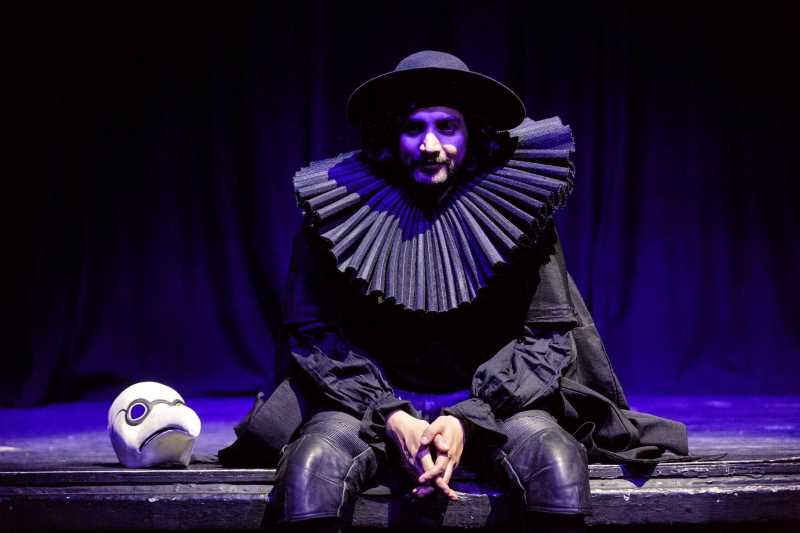
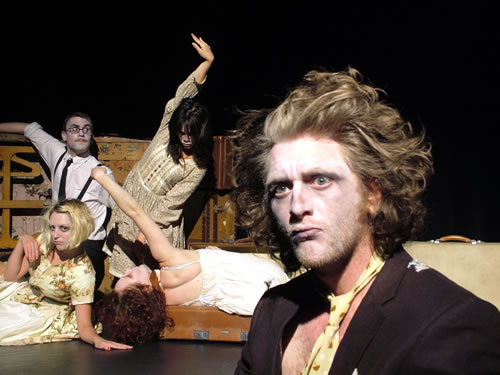
Caligari, an eerie, darkly comic, metatheatrical riff on Robert Wiene’s silent film The Cabinet of Dr. Caligari, takes audiences to Weimar Germany – sort of – into the central themes and messages of the post-war classic – kind of – in order to say something supposedly new, using concepts from the 105-year-old original as the backbone for this new play-within-a-play’s meaning.We are presented with a chorus of nameless narrators, all of whom have been affected by the tyranny of Caligari, as a character within the play but also as a symbol of the long-known interpretation of Caligari as a corporate metaphor for power, corruption, and unwanted authority. They must take it upon themselves to tell the story their way. The 2020s may be as fitting a time as any for a play like Caligari, which revamps and re-explores the prescient messaging of the film, which has been called the first ever horror movie and a game-changer for cinematic expression – after all, we have more than enough hideous and maniacal leaders in the world. That said, this play offers nothing apparently new in either style or substance.The Cabinet of Dr. Caligari is regarded as both a staple of German Expressionism and a cultural landmark of Weimar Germany. The critical consensus is that the film is a potent synthesis of motifs about authority, aggression, and delusion, largely inspired by European war governments, casualties of WW1, and what Siegfried Kracauer analysed as a subconscious desire in German society for tyranny. All of these themes are apparent in the film, a gorgeous exemplar of theatrical mise-en-scène which tactfully celebrates its own performativity – as well as its innate anti-imperialist and anti-capitalist commentaries. The film remains a political and cultural landmark about innocents caught in the line of fire of aggressive forces and corrupt power structures. Who is forgotten and left behind?Caligari – the play – cherry-picks significant themes from Wiene’s classic and delivers a lacklustre retelling with very little thought of its own. Striking make-up and some compelling performances cannot save the production from clunky direction, heavy-handed exposition, overblown delivery, and missed opportunities for a more physical, Berkoffian approach to the storytelling. The Fringe is no stranger to retellings or to repurposing classic texts to tell new stories and explore new dynamics, but the central take-away of Caligari – which the script wastes no time in pressing upon its audience – is something already fully explored in the original. What is new here?There is certainly a play to be found – a new story to be told about the other victims of Caligari’s hegemony. But this production’s endless starting and stopping, its repeated breaking of the fourth wall, and its disruption of narrative flow suggest a dearth of ideas rather than engaging metatheatrical trickery – as it might have been perceived a century ago, around the time The Cabinet of Dr. Caligari was released. The Pirandello-esque aimlessness of these characters feels less like a charming cerebral thought experiment, crossing the boundaries of reality and fiction in pursuit of greater meaning, and more like an exhausted gimmick that brings little to the table. Indeed, very little, to the Caligari debate at all.

theSpace on the Mile • 18 Aug 2025 - 23 Aug 2025

Tristan Wolfe – Break:Out

I don't usually condone audience members interrupting a show. However, when his one-liner makes me laugh more than the act's material, you know there's a problem.The good thing about this show is that it’s clear effort and heart have gone into it.With all honesty, the show reminded me of a bad X Factor audition, except unironically. A naive singer steps up in front of a small panel to judge them. The panel knows it’s not great, but the singer continues until the inevitable gasp of laughter because it’s just a little too awkward.This show had all of the above – singing (yes, really), silences, awkward laughter – and here I am giving my decision at the end of it.The usual comment after a bad singing audition is, “You need to do something else with your time.” With the heart and effort that Tristan Wolfe clearly possesses, maybe it’s time for a career rethink.

Laughing Horse @ City Cafe • 13 Aug 2025 - 24 Aug 2025

Agent Red's AUDITION

Reviewers never set out to tear a show apart, we want to be entertained. But our job is to give an audience a realistic expectation of whether a show is worth their money and time, and sadly, on occasion, we will stumble across a show somewhat lacking in artistic merit. Enter Ruth Rosie.Ruth opens Agent Red’s AUDITION with an overview of what awaits us: one audience member will be interviewed in front of a green screen and then superimposed into a video of a completely different scene. Ruth proves not to be a natural performer as she nervously ambles her way through an unscripted introduction, sharing how she was a Fringe-goer who had an idea so exciting that she dedicated herself to writing and learning the complex tech requirements to make it a reality.To her credit, the idea is promising, and in the hands of a charismatic performer with a team of experts supporting her, she may well prove to be an able producer. But as it transpires, this is the closest Fringe show I’ve ever seen to being The Room, except our auteur lacks Tommy Wiseau’s magical touch to make a disaster into a cult smash.Nearly everything that could go wrong here goes wrong, and yet it appeared to run smoothly for her. My friend was selected to be the ‘candidate’ and was briefed in private while the audience was ignored, when there was no reason to exclude us – the first of many extended periods of dead air. She was then involved in a prerecorded video interview with an actor, where she was presented the opportunity to give generic scripted responses to questions about whether she would make a suitable secret agent.We were then subjected to a video lasting over ten minutes of Ruth explaining in excruciating detail the challenges she faced along the way – how she learned coding, issues with the tech, and the plethora of curveballs that every Fringe show faces but usually has the grace to conceal from audiences in favour of putting their best face forward. Were this script a Facebook post for the select audience of her friends and family, it would be TL;DR a mere 5% in, but being subjected to her joyless ordeal became one in its own right for the audience. And so, when the video ended and she continued with live updates of issues since the video was shot, this just added insult to injury.Finally, we made it to the headline event where we could assess whether the ends justified the means as we watched the eight-minute video into which the auditionee was inserted. We were warned in advance that she would appear ‘ghostly’, but she was basically transparent, sitting awkwardly on the end of a table while prerecorded actors played out a meaningless scene around her, with a handful of lines randomly interjected by our spectral addition. It was only after we left that my friend pointed out that it wasn’t even her featured in this screening.Agent Red’s AUDITION is a strong idea, bringing modern concepts and tech to the festival at the beginning of the AI and accessible high-production tech revolution. Sadly, though, the premise fell into a woefully underqualified pair of hands. Here’s hoping future iterations can drag it closer to its potential.

The Speakeasy at The Royal Scots Club • 5 Aug 2025 - 24 Aug 2025

Dead Animals

The Edinburgh Festival Fringe can be a brutal environment. There are thousands of productions competing for attention and not everyone can return a winner.The ambition and exuberance of a young company coming to Edinburgh for the first time, therefore, has to be admired. However, much as I wanted to like Dead Animals, the production needs to be urgently and drastically rethought. The premise, the script, the performances, the relationships, the staging and the direction all require root and branch rework. It is sincerely hoped that this very likeable cast and crew return another day.

theSpace @ Surgeons' Hall • 12 Aug 2024 - 24 Aug 2024

We Are, in Fact, the Problem

That most middle class of events, the dinner party, can be a night of stimulating conversation, wonderful company and dramatic revelation. Sadly, however, the dinner party at the centre of this play is none of the above.Sheffield University Theatre Company invites us here to attend a dinner party. The dinner table is set or rather, the set is a dinner table, and the chairs are laid out, four along the table and the rest in what turns out to be a sparsely populated auditorium. We meet four young women aged 20, formerly school buddies and now coming together to share updates on how their lives are progressing. As the evening unfolds, old tensions rub against new possibilities in their relationships.But the conversation is mind-numbingly dull, discussing no real issues of interest or consequence, with no human interest uncovered. Words flow like gravy, splattering everywhere, and the result is a horrible mess.One might assume that a play about a dinner party, set at a dining table, might at least include a good dinner. Instead, guests are presented first with two prawns in a cocktail, and then with what seems to be steamed vegetables. Are they all on a diet? The paltry fare on offer at least matches the paltry nature of the conversation. Much of the early talk is about parents. The retired ones who have bought a boat. The rock-and-roll banker. Why are students so often desperate to talk about their parents on stage? I suppose it at least reciprocates some parents’ desire to talk endlessly about their children. But it makes for dull conversation. The rest is little better, be it the speeding tickets or the gay partners. The actors, even the classy Liz, do not seem able or particularly willing to engage us with subtle characterisation or emotion. The most interesting bit is a discussion about how fast turkeys can run.It hardly seems a good idea to annoy the audience before the performance even starts. I queue up with a handful of others, who look like they might be parents of the cast – the people who have travelled up, booked expensive accommodation, and supported their daughters' play by coming along. The door is flung open and the Producer appears, barking a request for tickets. I explain that the very efficient venue staff have already done that bit. We all troop in to find that the best eight seats, the only ones with a good straight view of the stage, have been commandeered by Producer and friends. My judgement is made on what comes from the stage but, when an audience (partly of parents?) is treated with such contempt at their entrance, why should I be surprised that a lack of consideration continues into the performance?If I had been invited to this dinner party, I would have offered to help with the washing up as a pretext, jumped out of the kitchen window, over the bins and vaulted the fence to escape. The same opportunity is sadly not afforded to me as a spectator, and so I am left enduring a tale, told at a dinner party, signifying nothing.


theSpace @ Surgeons Hall • 21 Aug 2023 - 26 Aug 2023

Jazz Emu's Pleasure Garden

When I saw the playbill for Jazz Emu: You Shouldn’t Have, I couldn’t get my hands on tickets fast enough. I imagined it would be some surreal musical take on love and geekery, and I was keen. Unable to get tickets however, I settled for Pleasure Garden, his late-night standing set at Assembly George Square, hoping some of the billed magic might be found there too.What I found was a tongue-very-much-in-cheek variety show headed by Jazz Emu, the viral comedy character played by Archie Henderson. Fans of Jazz Emu and his self-described “unpretentious pseudo-comedological proferrings” will delight at the opportunity for an intimate arrangement, but I was left wanting for both pleasure and garden in this late-night parody jazz act.What is offered is some very on-brand musical comedy that toes the line between nonsensical and silly. The enthusiastic audience, perhaps too young to have heard of Flight of the Conchords or Tim and Eric, keenly attempt to dance to a song about the pagan origins of Christmas while others stand at the edges wondering where the melody lies.To say the best song of the set was one about a tiny snake perfectly sums up the surface-level appeal of Jazz Emu, while the flat-viewing song for musical nerds showcases the band’s niche comic taste.Aware of his own privilege and playing off it, Jazz Emu uses his platform to mock a scammer with the song My Brother, and to riff off the fact that he has a lot of money with a song about money that he forgets the lyrics to. Credit to the band Cosmique Perfectión who may not seem overly enthused to be there but play well to prop up the ego of their complacent frontman.Towards the end of the performance, Jazz Emu thanks us for supporting experimentation in the arts but this ultimately feels like an apology for making us pay for something so under-rehearsed.

Assembly George Square Studios • 17 Aug 2023 - 26 Aug 2023

MacBeth

Some say that when actor-managers were struggling for money, they used to turn in desperation to the one play that could always guarantee an audience. As a result, those actors who feared for their pay packet were spooked if they heard this play being rehearsed in the wings. For this reason, or maybe another, the name of the play became the unluckiest thing to say in a theatre. Actors instead referred to it as “the Scottish Play”. Its true name, of course, is MacBeth. The play is classic Shakespearean propaganda in deference to the earliest of Stuart kings, and quite a slap in the face to the real Mac Bethad mac Findlaich, a well-respected Scottish warrior King who ruled quite effectively from 1040 to 1057. But hey, that’s the power of theatrical interpretation.Bathway Theatre Company is an offshoot of the thriving drama scene at the University of Greenwich. The head honcho is clearly Jess Bee, who is writer, director, and plays Lady MacBeth. The group’s intention is to create a “strange little show”, a one hour MacBeth presented in modern language with a non-binary lead. London’s Globe Theatre seems to have been trying to do something similar recently, so Bathway are in good company.The modern language is dreadful. Out goes “Tomorrow and tomorrow and tomorrow”. In comes “I’m not meant to say but you will be Thane of Cawdor”, together with “Keep Calm and Carry On” plus quite a lot of swearing. MacBeth describes Lady MacBeth as “the mac to my cheese”. At one point a character says “this ain’t Shakespeare, darling”. Quite. In a play all about murder, such handling of the language seems well fitted.At one point, the three witches jive to Very Superstitious. The lighting turns off and on again at the start of each scene, with a bit of green thrown in for the witches. I am reminded of Grotbags.As the eponymous Thane, Aster Scrivens-Blackler is very serious and intense - and quite effective in developing tension and character. Other cast members are less convincing, although clearly enjoying themselves to the full. I never realised Malcolm was quite so lusty.And yet I thoroughly enjoy the whole thing, sat as I am amidst a handful of Greenwich students and a Maltese family freshly flown in. I like the bit when papier-mâché heads of those murdered are thrown onstage. And the bit when Lady MacBeth says “Out damn spot” while wearing a polka dot dressing gown. There is some real Fringe spirit here - a group of university students who are trying to do something different and thoroughly enjoying themselves along the way. The Fringe is about taking chances in what you see, watching that which is dreadful but performed good-spiritedly and without pretension alongside the surprise treasures in backwater venues. On that basis, this MacBeth is definitely no tragedy.

Greenside @ Infirmary Street • 14 Aug 2023 - 26 Aug 2023

Nul Points

This show deserves as many points as its title says. Drawn in by the false promise of a show about the Eurovision Song Contest, Martin Blackburn's Nul Points is a tumultuous story of a toxic friendship group that seems to go through everything from career jealousy to addiction. Directed by William Spencer, its relationship to Eurovision is tenuous at best, taking a backseat to the soap opera drama that makes up the rest of the show. Set over the course of 11 years, Nul Points tells the story of a friend group against the backdrop of multiple Eurovision finals that are hosted by Josh (Kane Verrall), an avid Eurovision fan who uses the contest as a way to deal with his insecurities and mental health issues. Passage of time is indicated by the swapping out of the logo for that year’s contest over which plays the music from that year’s winner. The show is slow-going and painful to watch, made more so by the shoe-horned Eurovision references and trivia whose explanations don’t make their inclusion any funnier. The constant fighting is exhausting to the point that it has us convinced that these people hate each other, and any moments of warmth feel disingenuous. The characters are irritating, quick to accuse each other and fight to the point that even the rare light banter they engage in isn’t enough to suggest that they actually like each other, never mind are friends. None of them are likeable and it’s difficult to force yourself to feel sympathy for any of them. They are the kind of people to be avoided at all costs, and their entitlement is nauseating, especially Josh and Daz’s (Marcus J Foreman) entitlement to roles in their friend Kat’s (Charlotte East) show, on the basis of again a sense of friendship that at no point materialises. And it gets progressively worse, a show that would benefit from the absence of a second act. It’s one of those shows that throws issues at the plot in the hope of making one of them stick - drug addiction, mental health, suicide, MeToo - without having a meaningful discussion about it and so apears to use these subjects as a way to give the actors to fill the time that they are onstage and the constant blame game among them about each of these subjects is simply concerning. Amid all of this negativity, East really shines in her role, and in such a mediocre production, she proves herself to be so far above average that it makes no sense as to why she is in this show. East brings such professionalism and emotional complexity to the character of Kat, showing us the complexity of the character's emotional journey in everything she does, and becomes the one thing in this show worth watching. This show has so many negatives, less in the execution and more in its delivery. The script is - to put it nicely - flawed which sets this show up to fail from the start. Nul Points is just time that you will never get back.

Union Theatre • 20 Apr 2023 - 20 May 2023

Romeo and Julie

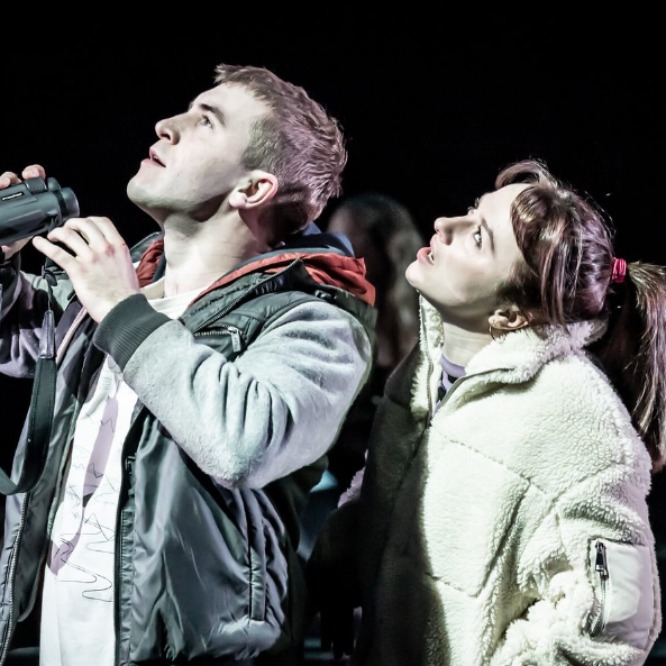
You may assume a play with the title Romeo and Julie, that is billed as a “modern love story inspired by Shakespeare's Romeo and Juliet”, would include elements recognisable from the classically tragic love story. With Gary Owen’s new play – now at the National Theatre’s Dorfman – such assumptions are proven wrong. Romeo and Julie barely nods to the tale of the star-crossed lovers. If the plays passed each other on the street, this new play wouldn’t even acknowledge its nearly-namesake. Put simply, Romeo and Julie bears as much similarity to Romeo and Juliet as the cigar does to the Prince of Denmark.Romey, oh…We may be diverted from this surprising comparative void if Owen was saying anything original in its place. Instead, it’s a disappointingly vapid tale of two Welsh teenagers – one clever but cold, the other stupid but caring – who play pretend Happy Families for a summer before moving on with their respective lives. Romeo (Callum Scott Howells), pronounced like the suffix to Alfa, not the prefix to Montague, is 18 year-old single father to Niamh-y (long-hand for Niamh). The baby is the result of a one-night stand (two, if you count the morning, he tells us).Niamh’s mother – without relevance to the plot, and barely mentioned – changed her mind about keeping the baby. So ‘good old brain-of-sludge-heart-of-gold-Romey’ stepped in and took the baby to live with him in his alcoholic mother’s small flat, where he sleeps on the bed settee.The hinted-at impoverished childhood is the implied reason for his lack of education. In turn, this lack of education is implied as the reason for his premature fatherhood. The play is not subtle with its use of stereotypes and does nothing to thwart them.His mother Barb (Catrin Aaron) is unsupportive. She wants to deliver the baby to the “social.” Though he is drowning under the strains of parenthood, Romey refuses. He just “really really loves her” he wails. In the manner of all light-on-reality characters in all throwaway dramas. Julie, 8Writ large are the signs of how life contrasts for Julie (Rosie Sheehy). She lives in a house. (2 x posh points.) On a nice road. (Make that 4.) She attends a Welsh language school. (Double to 8.) She is doing Physics A-Level. (Move over Kate Middleton.) Julie’s ambitions are as huge as Romeo’s world is small. She stares towards the passing space station, dreaming of the life spent studying the Theory of Everything to which her conditional Cambridge offer will undoubtedly lead. Meanwhile, Romeo walks the baby round a building site “with the prossies” and wonders how he can afford more nappies. In place of warring Veronese families, the three parents here are merely pencil sketches of statistics. Character traits are exposed but never explored. Striving to put Julie through schooling has made Julie's father Col (Paul Brennan) ill. We don’t know how or with what. “You hear him cough in the morning” is the only reference given but never revisited. Anita Reynolds plays stepmother Kath (these are not the most inspiring of character names). For no reason at all, she is a carer and delivers a “poor stay poor while the rich get rich” monologue that neither fits or is followed through. And the impact on Romeo of the childhood neglect from an alcoholic mother bears no relevance.Job doneThe kids meet in a café. He wants to sleep. She wants to study. After some awkward childish flirting, she offers to babysit this stranger’s child. She positions it as a way to fulfil some community volunteering requirement for one of the other, non-Physics A-levels she may be studying. No offence is taken.As Romeo goes to rescue his drunken mother from the other side of Wales, Julie is left alone to babysit. We can only assume it’s a breeze for the non-maternal inexperienced child.He returns and naturally, has the horn (??). They fuck. They run out of condoms but are still horny. So they do what any already struggling teenage father and Cambridge-bound student would do. They fuck a fourth time.Cue 10 minutes spent confusing sex for love. They talk about staying together as a young family in Splott. Her parents, angered at the thoughts of her life wasted, throw her out. His mother, excited by the idea of guilt-induced benevolence, takes her in.She finds it difficult to study. She drinks wine with the alcoholic. She begs to go back home but is refused. Meanwhile he finds it difficult to manage baby’s teething. He learns that Cambridge has a better University than Cardiff. He begs for a shag but is refused. And they decide that life should go back to how it was before. Job done.‘Gay Best Friends’It’s difficult to see Callum Scott Howells without feeling the surge of love we had for him as It’s a Sin’s Colin. Whether because of that or not, he wears the persona of straight boy Romeo like an ill-fitting shell suit. There are constant arguments about whether straight actors should, or even can, play gay roles. Less spoken about is the same question in reverse. This is understandable when only yesterday, all men (actors) were assumed to be straight. Today sexuality is visible everywhere. And the difference is about more than just levels of camp. Howells’ Romeo comes across as a ‘straight-acting’ gay. He tries too hard, continually smacking lips, arching eyebrows, chewing cheeks, and shifting crotch. He delivers lines out to the audience like the “bants” of a cheeky chappy, but with an underlying wink of a shared secret.Rosie Sheehy’s Julie is petulant, self-important, immature and thoroughly dislikeable. She tells us she is more intelligent than her tutor, in the way stupid people remain forever unaware of their own stupidity.Her bonding with the baby is never shown. Her difficult decisions are easily made. Her choices come with no dramatic consequence.Julie ostensibly falls in love with the sensitive caring nature Romeo displays as a father. As many gay men will recognise, she has really found a Gay Best Friend. Uninspired and unsubtle Rachel O’Riordan’s direction is uninspired, and unsubtle. The sparse staging seems built for its ease of touring adaptability. Between scenes, cast members roll over tables and spin chairs as though each scene change is a physical warm-up. When not performing, they sit on chairs facing upstage. It is the stuff of student handbooks circa 1995. To be fair, there is little she can hang on to thematically.The programme contains a jumble of articles. The history of Splott. Welsh language preservation. Accessible higher education. All interesting. To a point. None particularly relevant. Certainly not explored with any depth. This is not an adaptation of Shakespeare’s play. It is not a Shakespeare interpretation or modernisation. It couldn’t even be thought of as written ‘after Shakespeare’. Owen has taken the title, bar a couple of letters, and gutted the rest. He’s forgotten to replace it with anything of any real depth, character, meaning, or purpose. What remains is less of a Shakespeare plot, more of a soap storyline. And one that’s quickly forgotten.

Dorfman Theatre • 21 Feb 2023 - 1 Apr 2023

Chekhov's Dildo

Play with Chekhov at your peril, children. Although, as a title, Chekhov’s Dildo is clever – saucy enough to garner attention, while giving those who understand the reference a warm glow of satisfaction in places the dildo generally does not reach – the play itself transgresses five out of the six of the man's other, 1888, rules of great storytelling, as well as that most famous of all, alluded to above.So let us start with reference to Uncle Anton's dictat about never introducing something into a play unless you mean to use it. Opening the programme, we discover an entire page – one fifth of the contents – devoted to 'a note' from director Merle Wheldon-Posner on the subject of 'Navigating Intimacy On Stage'. We have not simply had 'intimacy' introduced, but thrust at us, at some length. More of that dildo later, however.The best that can be said about this Merle's attempts at 'navigation', is that she simply cast and directed the hour to have no intimacy at all. Which seems a great shame.What we have is two young people (according to said programme, pronouns she/her and he/him) in their underwear, on and/or near a double bed. They speak lines about sex they have had. But there is no connection, no chemistry, no intimacy. And, in a two hander that is all about that sex they have had, why they had it, how they had it and how it was used and abused between them, this is tantamount to directing a vegan version of Babette's Feast with a cast of anorexics.The production – and I do feel that it is this production, its direction and its casting, rather than the writing – betrays a comprehensive lack of respect for and/or understanding of a word that comes from the Latin 'intimus', meaning 'inmost'.But let us move on.Of Chekhov's six rules, Rule 4 Extreme brevity. is more or less adhered to by writer Rex Fisher. An hour might not be 'extreme' brevity, but it is mercifully short.Rule One - Absence of lengthy verbiage of a political-social-economic nature - is, however, buried under a limp heap of cliched sexual and personal recriminations that would not have looked out of place in something written forty years ago. As indeed it was. And frequently much better than this. If women – intelligent, young women – have not yet got past the cliched misandry that is the self-serving dramatisation and sexual politicisation of personal hindsight, then there is no hope. Interestingly, the play is written by a man. I do not know enough about him to speculate as to what drove him to write this.Rule Two - Total objectivity - is tricky at the best of times, but here, the objectivity-obliterating agenda grows, like a bad smell, in the room and in the performances until it is all that is perceptible.Rule Three - Truthful descriptions of persons and objects – of course, these characters are fictional so there is no objective truth. She is clever, sparky, strong. He is about to get tenure, dominant, arrogant. See above re agenda. The performances-by-numbers (albeit watcheable and assured) and the utter lack of any sense that these two even knew each other, let alone shared a sexual history, mean that disbelief is never even on tiptoe, let alone suspended.Rule Five - Audacity and originality: flee the stereotype - as our hour totters down a dramatic road so often travelled there are service stations and huge illuminated signposts every few yards, (In brief: he was her tutor... they had sex quite a lot... she got a low grading for her paper... now she feels he abused her... so she is going to expose him as the predator she thinks he is and ruin his career through the power of posting a video of their recent encounter on TikTok.) Chekhov's Dildo flees audacity and originality, embracing the stereotype with a wholeheartedness that would disappoint old Anton.Rule Six - Compassion - in a piece so agenda driven, there is no room for compassion. Not even the view from both sides could be squeezed in here. But then Rule Four allows for little exposition time. So let me provide some compassion. The set was clever and accessorised with Chekhovian reference. The dildo was impressive. I would very much like to see both performers in something else. I absolutely love the notion of people from completely outside the theatre world writing for the stage, as happened here. And there were some others in the audience who seemed to empathise with and enjoy the performance very much.

The Hope Theatre • 2 Feb 2023 - 18 Feb 2023

Pick n Mix

Have you ever got that feeling of frustration when watching a TV show or a play, when the characters make bad decisions or could resolve their problems if they just talked to each other? When watching Kat Rose-Martin’s Pick N’ Mix these feelings are not only present but amplified to the point where any meaningful discussion or analysis of the social issues is overshadowed. When Olivia (Charlotte Ellis), her sister Kim (Natalie Davies) and best friend Alisha (Sonia Wrightson) are impregnated by the same man, their friendship and lives are put to the test as the girls deal with issues of contraception, sexuality and teenage pregnancy. This show falls prey to the problems of high school drama classes; a play that takes serious issues and uses them as a dog whistle to increase the drama onstage while only giving surface-level attention to it. In this particular instance, it creates frustrating observations and realities like the fact that Olivia is meant to be underage, but nobody seems to care that the 19-year-old in the situation - Jordan (Morgan Scriven), who knew she was underage - basically assaulted her because she technically isn’t able to consent, but she is blamed for the encounter and not him. It all goes downhill from this point. Pick N' Mix appears childish from the start, with a quaint mundanity that slowly spirals into unnecessary and difficult-to-watch drama. It is Rose-Martin’s script that is the crux of the problem, to the point where it appears that every scene is trying to contain more angst and drama than the last. The characters themselves are unbearable, especially the three girls who devolve into catty behaviour and throw away their long-standing relationships with one another over a guy. It’s just unpleasant to watch. This show appears like it's going to be a quirky, coming-of-age comedy, but it tackles its issues in such a way that they have to appear trivial (which they are not)for the plot and the script not to suffer and become nothing short of infuriating. The ‘tell not show’ nature of the play is inherent in Alex Chisholm’s direction, in that opportunities to make the show more interesting through the use of theatre tech are missed. Madi Omatseone’s pastel design and set suggests that this show will be a lot more light-hearted than it actually is. The multiple uses of the three crates, however,  is clever and leads to incredibly smooth scene transitions that allow the rest of the show to keep its momentum. A show that most definitely doesn't pass the Bechdel test, Pick N’ Mix is an unbearably pro-life soap opera, except live on stage which unfortunately means you can’t switch to a different channel when it comes on. This show would be completely pointless if not for the fact that it would make for a great PSA for the importance of contraception.

Pleasance Theatre • 24 Jan 2023 - 4 Feb 2023

Kerry Jackson

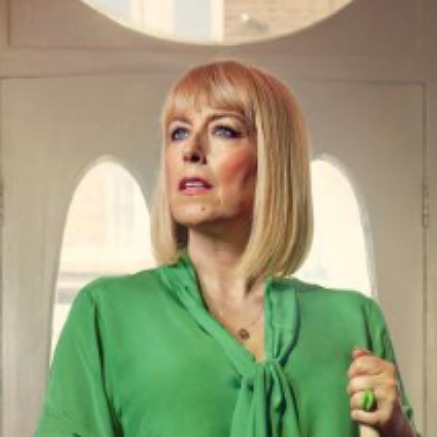
Many years ago, I employed Fay Ripley to do a voiceover for a TV ad. She was fun, chatty, and had a keen ear for the subtleties of language delivery: a joy to work with.I say this not to name drop, but to give a review that includes positive and negative elements. Having watched Ripley play the eponymous role in April De Angelis’ new play, Kerry Jackson, this historic compliment was the only positive thing I could say with any honesty.Kerry Jackson starts from a weak idea which has been badly written, then hammily acted, loosely directed, and thoughtlessly designed.But as I say, I really liked Ripley when we did that ad.A weak ideaHarsh words, so let me break it down, starting with the idea.Proud Essex girl Kerry Jackson has just opened a tapas restaurant near up-and-coming Walthamstow Village. She is in her early 50s, has no husband, no children, and no regrets. Forthright in her views, confident with her sexuality, she is aware her tendency to be ‘loud’ makes her difficult to like. Naturally, she is right-wing in both the political and ideological sense.Middle-class Stephen is a Professor of Philosophy who lives locally with his pre-University daughter, Alice. He is important on the residents’ committee, writes the occasional piece for the Village News freesheet, and wears cardigans. Passing the time since the recent death of his wife, he and his daughter discuss etymology.Unsurprisingly he is a typical leftie do-gooder. Alice lives to be even more woke than him.Throw in a homeless man who uses the area behind the restaurant as his toilet. He reads books: a good man to whom bad things happened. He is also a drug user and can be threatening: a bad man who deserves to be homeless. Maybe.Add a black chef: a not-quite legal immigrant. Have the reason for the illegal status due to the intellectualism of her father. That’ll shock ya.Finally throw in an Alpha male. A bloke for whom sexism is idle banter, opinions are just words, and self-awareness is psychobabble. Make him an ex-copper with an ex-wife and an ex-drinking problem. Give him ‘proper lads’ as mates: include a guy able to fix the restaurant’s fridge.If they sound like a group of thinly drawn characters with the most basic of weak, cliched back stories, I have described them perfectly. What happens when you throw these unreal people together? Well, nothing much. Certainly, nothing you couldn’t already predict.Polarised views are stated, but not debated. Gaps between ideology and behaviour are shown, but not acted upon. Characters air histories without invitation or context, and without being listened to. And Kerry and Stephen fuck.And that’s it. Imagine an episode of Miranda that was rejected for being too unsubtle. Cross it with an episode of Steptoe and Son that forgot to contextualise the uncomfortable comment. What you’re left with is two hours of shouty predictability that lacks reality, humanity, or anything of any interest.Badly writtenApril De Angelis seems to have forgone the idea of dialogue or interaction in her script. Instead she has a list of strong opinions that she wants to include. She packs them into cumbersome paragraphs and forces them out of characters’ mouths. Speeches appear from nowhere and then disappear without comment. We are told how people feel but never shown. Emotional truth is disregarded in favour of character summaries.Into this hollow pastiche of conversation, controversial statements are thrown, in an attempt to prove the comedy of the play’s billing. Lines about a three inch clitoris aren’t not funny because they’re shocking, they’re just not funny. Alarm bells should really ring when the play opens with Kerry telling the story of how she employed the chef. She is telling the story to the chef she employed. The chef listens. It bears no sense of conversational reality. And it sets the style used throughout the play.Later, Stephen tells his daughter how much he misses his wife. They compete over who is grieving more. She says it must be her because he has his yoga. He says he only does yoga because his wife suggested it might help. The conversation moves on to another topic.When Stephen tells Kerry she makes him feel alive again, it comes out of the blue. There has been no chemistry between them. Their relationship has not developed. But it is not unexpected. They are two characters of the same age who are both single. Forget truth, dramatic structure means the two must become one. Though they repeatedly tell us that their arguments get them off to the wrong foot, they have never argued. They have just said some stuff. And so some other stuff just happens.Hammily actedWith such little substance to work from, it’s unsurprising the actors don’t fare well. I doubt anyone could do better. Ripley’s Essex drawl is affected and makes some of her lines inaudible. When reaction does come from the audience, she talks over it, perhaps just dying to get to the end. There is no spark between her and Michael Gould. His Stephen is wooden and unemotional. His passionate views are delivered without passion. His grief displayed without sadness. The others fare slightly better. Alice whines with idealism, unaware of the privileged position from which she views the unfairness of the surrounding world. In her first professional role, Kitty Hawthorne just about manages to make us not hate her.As chef Athena, Madeline Appiah seems the only one aware of others on stage. Instead of just speaking, she listens. Instead of just acting, she reacts. That such basic acting technique stands out, says much about the low benchmark set.Loosely directedI will be brief, as befits the nature of the direction.As a drama student, you get tasked with performing many scenes in a range of styles. Generally these are done with one or two other student actors. You help each other learn the lines and agree the technicalities of staging and blocking. Aware of the fragility of an actor’s ego – especially a student actor’s – and with no outside director, making any comment on the actual performance of the others in your group is done only when imperative. Even then, it is wrapped in cotton wall and walked over a bed of eggshells. Anything that is just acceptable and that doesn’t ruin the scene goes unmentioned. It will do.This appears to be the approach to direction taken here.Thoughtlessly designed The action splits between Kerry’s restaurant and Stephen’s kitchen; both sharing a revolve that turns between scenes. The restaurant is a small space that seems cramped though it is empty aside from three tables for two. The kitchen is cliché nouveau riche, representing character with SMEG fridge and oak table. These are sitcom sets that might have been quickly thrown together from basic mood boards. Little if any of the action is site-specific. The revolve quickly becomes distracting. Though as it signifies getting ever closer to the play’s end, there is some pleasure to be taken from its movement.Incredulous When the basic foundations of a play’s idea are weak, it is hard to make anything good of it. When the writing, acting, and directing matches the standard set by these foundations, there is no hope.This is a play – and a production – that would struggle for a high mark as a student piece. It is incredulous it has been given a run at the National Theatre – even if it is the smaller Dorfman. Closing the space over the Christmas period would do more for theatre than running this play does. Fay Ripley recently spoke about the stage fright that has stopped her performing in the theatre for 30 years. Sadly, I don’t think this choice of play – and the reaction it is likely to have – will do anything to appease that anxiety in the future.

Dorfman Theatre • 10 Dec 2022 - 28 Jan 2023

Everybody Wants To Rule The World

Like most dystopian stories, Simon Perrott’s Everybody Wants to Rule the World has a basis in reality which forces us to reflect on the issues of today. However, the execution of the premise lets the show down.Set in a world that is reliant on a corporation, Zamanon.com (doesn’t take a genius to solve this particular anagram), Keith (Derek Oppong) is visited by the companion AI Rupert (Radostin Radev), and tells a story about a a time in the past when he learned the truth about the society that they live in.This show is a sitcom. A complex exaggeration of issues that we face today, a discussion, a revelation of context - absolutely nothing else happens. The play is so naturalistic that the more abstract aspects appear completely out of place as if they were wedged in as an afterthought to create some variation. At the least, these moments are missed opportunities to show us something more about the world or an opportunity for action, because otherwise we are just watching a slideshow set to music, something that gets old very quickly.There’s a lot of information in this show, which is incredibly specific, and so it takes a lot of time to explain, meaning that there just isn’t enough time for anything else to happen. It’s understandable what Perrott is trying to do, but it just doesn’t work as an interesting piece of theatre. This show would be better as a novel, where the context could be properly explained and developed instead of simply taking the place of a narrative. There isn’t much of anything else because of this; we don’t see any action or believable character growth except in the dialogue, something that the show is overly reliant on.The fact that the ending is definitive makes it less interesting, but this is characteristic of the rest of Perrott’s writing. There isn't a lack of information, but this means that there is no ambiguity and no opportunity for tension to build up. The only thing we don’t know is who initially sent Rupert, but even that reveal isn’t particularly surprising. The show lacks conflict and despite the fact that we know that there’s this evil corporation controlling everything, we don’t really see it happening apart from the characters telling us that it’s happening, so despite the fact that it’s meant to be a threat, it’s hard to take it as such.Everybody Wants to Rule the World is based entirely on telling rather than showing, which reduces the play to its dialogue, making it feel incredibly long. Prescott fails to create the Orwellian nightmare that this play has the potential to be and just winds up as one of the dullest pieces of theatre imaginable, which is counter-productive if the aim is to get us to care about the issues raised.

The Bridge House Theatre • 6 Sep 2022 - 10 Sep 2022

I Love the Sound of Breaking Glass

I never felt unwelcome at the Fringe until this performance. I will not blame a cast of young actors for parents who turn queuing into an elite social occasion. Nor will I blame them that I was asked three times to move as yet another latecomer wanted my seat (although I didn’t realise you could be sitting in somebody else’s seat in a theatre with unallocated seating). But this young company and their teacher-directors certainly must take responsibility for what comes from the stage. And it was not good.Wellington Theatre Collective comprises Sixth Form students from Wellington College, a co-educational independent school in Berkshire for pupils aged 13-18. In this show, produced by Head of Drama Nick Huntington and co-directed by his colleagues Melissa Price and Rachel Taylor, we are presented with a cafe where customers appear eternally trapped. So far so good. First we see a movement piece showing the range of customers. Then we see the cafe being created. A series of vignettes follow, where we see relationships play out within subsections of the clientele, interspersed by a repeated moment of breaking glass. This moment seems designed to replicate the breaking of each relationship. But the whole thing never really goes anywhere. It is at best dull, at worst dangerous.The most concerning aspect of this production is its apparent attitude towards sexuality. In the two groups where characters are (it seems strongly implied) gay, the company seems determined to mock and sneer. We are confronted with Harry, the rugby thug’s imitation of a camp gay Scot, his mincing and pouting topped off by a scarf wound around his neck and a book called ‘the sweet pornographer’. That sort love porn and scarfs, don’t they? The actor who plays Harry (and pulls focus throughout) is the selfsame one who speaks (in an English accent) for the Company at the end of the performance. Then there are Kurt and Dillon, a pastiche of a frustrated and closet same-sex relationship, arguing over a camel. These are all crass lazy stereotypes. Is this form of toxic masculinity a Wellington thing? I cannot see how it reflects well on the College.There were other groups too in the dull cafe – yah cyclists who dominate the talking, an elderly couple where he ignores her, a Liverpudlian cafe worker, an American detective. Lots of people calling each other “Mate” although “yer wee slag” and “bitch” also make an appearance. What lovely words to hear from young mouths. But not one character offers any depth or vulnerability, any sensitivity or charm. There is a single movement piece based around the breaking glass. It is nicely lit and elegantly performed. But it gets repetitive after the fifth time.The last Wellington College company I met at the Fringe were charm itself, their work The Frozen Deep thoughtful and carefully crafted. This time, I had the impression you didn’t just need to buy a ticket to be welcome at this event, you had to pay the school fees too. Sorry chaps, I can’t afford them. And if this is what they produce, that’s not much of a disappointment to me.

theSpaceTriplex • 8 Aug 2022 - 12 Aug 2022

The Glass Imaginary

An improvised play inspired by the works of Tennessee Williams, The Glass Imaginary exposes the problems inherent in improvising tragedy. I do not wish to disparage those involved, as no matter how hard they try, I don't believe their abilities as actors, writers, or directors would salvage a work such as this.The play begins by one of the performers asking for an object owned by a grandparent of an audience member. For the performance I watched, this object was referenced twice in the whole show, and in passing comments. It’s likely the object is more to provide framing for the actors. For us in the audience, its inclusion seems unrelated to the plot. The general structure of the play involves one of the actors becoming a neutral narrator, and describing the scene that is to follow. I will come onto the problems this creates later.To describe the experience in one word would be simple: awkward. Every scene seems to lack movement. None of the actors are sure of where things are or should be going, so there is a lack of emotional weight. It all seems somewhat purposeless, and this makes the performance really drag. The most awkward moments occur when actors begin to speak at the same time, with one having to stop talking. It all feels like someone has forgotten their line, but no one remembers the rest of the plot. All the actors seem scared to commit to anything big until the last moments of the performance. If these moments are more present, perhaps it would be more engaging.Williams’ tragedies have slow-burning plots and lots left unsaid, but with huge payoff. All the dialogue and scenes lead to the final revelations and conflicts. In The Glass Imaginary, the scenes feel out of place, with no real bearing to the ultimate plot. The ending, at least from the performance I saw, came out of nowhere, and lacked any feeling of satisfaction or payoff. It feels so jumbled because there is no plan before the performance. The characters feel confused because they are formed by their actor and the multiple narrators. A particularly bad example in the show I saw was a narrator saying the final scene would be in complete silence; the actor onstage began speaking mere seconds later. If the actors have an opportunity to discuss with each other how they want to shape the story once the framing device has been given, that could improve its issues with direction. Also, the multiple settings for multiple scenes seems to cause more issues than it’s worth. A single setting, with characters coming in and out, would be more organised, and not out of character for Williams’ works.The dialogue feels as if it's trying to be profound, but only achieves such weight on sparse occasions. Improvisation lends itself to comedy, where outlandish lines are funny in their absurdity. Here the dialogue comes off very strangely. The worst example was a character describing someone's hands as "soft as a newborn dog's".This is a hard performance to watch, but I do think there is the potential to improve the show. Maybe there is the possibility for a great production, but I was just unlucky.

Greenside @ Infirmary Street • 5 Aug 2022 - 27 Aug 2022

Spoons

Brenda (Jacqueline King), a marriage counsellor, is faced with multiple challenges. Firstly, in the form of a married couple that cannot stop fighting in their sessions. Secondly, she meets a new friend, Nita (Valerie Gogan) that pushes her outside of her comfort zone. If the show tries to say anything, it is done in such a British and minimalist way that it's practically imperceptible. We keep waiting for something interesting or a conflict to start the action, but alas we are not given that pleasure. The show focuses a lot on the counselling itself, which in the end is not that important. If the relationship between Brenda and Nita were focused on more rather than the after thought that it is, then perhaps this show wouldn't have the issues it does.The characters are all one-dimensional; they don’t have any particular depth and any growth is imperceptible. If anything, it appears like the Canter chose four British stereotypes and forced them to interact, resulting in this play. Brenda herself is an incredibly vanilla character, and although that is the point, it is an incredibly strange choice for the persona of a main character. Her entire personality revolves around the fact htat she's incredibly closed off, which makes it very difficult to empathise with her. By the end, she is meant to be more ‘fun’ because of Nita’s influence, but the fact that we don’t particularly see much of a change in Brenda’s behaviour, in the end, it just doesn’t make sense. It just happens. The relationship arc between Brenda and Nita is underdeveloped and doesn't reach a point where we could believably say they are anything more than friends.This is an incredibly poorly written show. Even though I will not get those 50 minutes of my life back, you hopefully will be able to save yourself from watching Spoons. Incredibly slow, this show is not worth a second glance.If the colour beige was a show, Jon Canter’s Spoons would be it.

Gilded Balloon Patter Hoose • 3 Aug 2022 - 28 Aug 2022

Dom Juan

When Molière’s Dom Juan first said that hypocrisy is a fashionable vice, I can’t imagine he was meditating on future iterations of the eponymous play such as the production at The Vaults Theatre. That three-hundred and fifty-seven years later, a staged performance of Dom Juan - which so conspicuously draws on the unaccountability of powerful men, and the politics surrounding the inequality of the sexes - could so ostracise the women from the action of the play, and with such prominence - is glaringly unavoidable. Made even more lamentable by the fact Anastasia Revi (the director) considers her piece to follow ‘the end of a male-gazing patriarchy…’ Nonsense! How much more of the male gaze could have been subtended when one actress was given no text at all, but entirely decorative status? Billed as the ‘Illusion of Love’, Signe Preston ambled down the aisle from time to time, mute, adorned in an array of - what I can assume - were intended unironically as sexy or libertin outfits, but instead looked like Halloween-costume angel/devil hand-me-downs. The scorned newly-wed Donna Elvira, (Fanny Dulin) looked two times too old to play the role. Elvira’s tirades of admonishment of Dom Juan’s actions should bring a youthful tone of defiance and dignity, and echo the reprehensive moral clout of Jodi Kantor & Meghan Twohey’s She Said on Weinstein & #MeToo. Dulin performed on one-note, in a girlish tone; these sections then seemed trivial, less important than the male-only sequences, and I think were cut in translation.One must remember that at the time of its première, Molière’s Dom Juan was heralded as controversial, perhaps even an invective on the French court. Its writer was criticised for dicing with and against the power structures of patriarchy, which subtended royal circles, the church & French households alike. His ingénue roles have thus long been a complex gift for young actresses to play with - and remain parts of great humour, and (sadly) politically relevant in today’s society. Yet, in this Vaults’ production, the actresses were positioned always to the sides of the stage and were offered little in the way of comic action, while the men rarely erred from the middle. Other female action was given to the male actors dressed as women, a touch that would usually please this reviewer,, but incomprehensibly squeaky voices felt like an infantile directorial choice - not to mention how this classic offers the men plenty to do already…I spent most of the evening grimacing as the ever-continual dirge of the actors shouting over the music quagmired the play in incomprehensibility. I’m unsure as to what the director thought this music served? What a shame, when the original prose offers us such an eloquent and ever-cutting assessment of the époque, words that carry such an intriguing valency in our own times. As a result of the music, the quality of listening between the actors was also woeful, and thus the world on stage became very disengaging for the audience. It is said of the double act that subtends the narrative that Dom Juan carries the wit (the words), and Sgnarelle, the folly of the piece (the physical comedy). However, Sganarelle (David Furlong) was far more interested in entertaining the audience directly, and did not play status to Dom Juan (Dimitri Jeannest); and so the title character never felt dangerous or authoritative enough to make the narrative work.When the Pierrot figure (Nathan Ricard) arrived on the gondola in a mask, I was, for a moment, excited to see some of the forms contemporaneous to the writing of the original. However, this was not to be… The odd mistake, an audience enjoys; it keeps the theatre a live art. But consistent clumsiness, prop-malfunctions, and bumping into the furniture multiple times in this sequence was all-too-amateur for a paying audience. I hasten to add, this was most probably not aided by the action being pulled backstage by a cluttered, impractical, and ugly set-design. Even on a political level, this section fell foul of a recalcitrance to lazy tropes, namely a Northern accent used as a substitute for a simpleton. Unsurprisingly, I did not care to see the original-language production, but question whether they would have used a ‘South of France’ accent to imply the same here.One thing you could not fault the production for was its energy; the actors never relented. But at times, whooping and jumping made adept actors look as if someone had allowed them their first go on the stage. It was chaotic, and it seemed as if they had run out of ideas. When the self-edifying Je Ne Regrette Rien false ending came in - my hope for it finishing was all too sweetly soured by having to endure a further two acts. At that moment, j’ai tout regretté… If this production were reprised, the Byronic sequences of Dom Juan as a fop meditating in his valet’s lap offer a potentially interesting development of class-gender play in the piece, and echo historical interpretations of the figure. Indeed, the latent bisexuality and selective femininity of the figure is something which the Patrick Marber adaptation touched on so adeptly in David Tennant’s incarnation. But even if the Commedia dell’arte ideas were promising, a gender-crossing ensemble positive, and a bilingual language-switching cast full of beans, ultimately - on every level - this production was a veritable massacre of a classic. Marketing itself on a connected Europeanism, but reaching no further than hackneyed clichés, it was so poorly constructed that I laughed throughout, and for all the wrong reasons.

Multiple Venues • 11 May 2022 - 29 May 2022

Manor

A fierce storm. A group of opinionated strangers. A past-its-best Manor House, home to a past-her-best Lady Diana (not that one). Circumstance. Characters. Conflict. A dramatic set-up that seems all too familiar.If you have never consumed any television, film, or book at all… like ever in your life… the events of Moira Buffini’s new, though far from original play, Manor, may come as a surprise. But if you are, well, alive, there’s a fair chance you’ve seen this done before. Only better. Much, much better.149 ½ minutes too longFor the first minute or so, there’s a great deal of promise as the majesty of designer Lez Brotherston’s just-pre-dilapidation English Manor House is revealed. It is part-authentic, part-cartoon, part-fairground ride. It leads to small gasps of wonder from the audience.The brief reverie is shattered by caterwauling. Owen McDonnell is the Lady of the Manor’s husband, cradling a gun as he dances to rock. His character notes may summarise him as a soon-to-be-murdered-but-maybe-not-really, ex-one-hit-wonder, bit-of-rough-turned-middle-aged-mushroom-taking-has-been. Or Pete. Though his diction is unclear and his “on drugs” acting, questionable, this may be just first night nerves. After all, the set looks so good…The performance proves to be more portentous of the remaining 150 minutes. 150 minutes may sound longer than two and a half hours. It certainly feels it.The, erm, “plot”There’s little more to the “plot” than was in my introduction. Little that’s either surprising or useful. It is more like a group of unfinished works-in-progress, thrown together, hoping for the best. To show willing, let’s follow the advertising and focus on the easier-to-sell ‘stars’ in the lead roles.Ted (Shaun Evans) is the leader of Albion, a party who take the misguided patriotism of the disenfranchised and massage it into racist, sexist, violence, and fascism. He is one of the strangers seeking – or in his case, demanding – shelter at the Manor for himself, his deputy Anton (Peter Bray) and his girlfriend Ruth (Amy Forrest). Though Ruth – who is blind… obviously – arrives later. He has left her in the car.Has Ted beaten Ruth? Are Anton and Ruth in love? Why does Ted have so much control over Anton? Nobody is asking any of these questions. The answers are blindingly obvious (no pun intended).Adolf FarageIf Evans is tired of being cast as every mother’s favourite from playing the pre-John Thaw John Thaw in ITV’s Endeavour, you can see why he jumped at this role. On paper at least.Ted might be imagined as a terrorist in politician’s clothing. A suave, smooth-talking, boy-next-door whose appeal makes him even more dangerous. In fact, there is no grounding to his character. He spends his time either shouting for no reason or trying to fuck Lady Diana (again, not that one). And he does neither with much feeling. He has the appeal of Adolf and stirs as much fear as Farage.There is the germ of a thought here about how we see bravery in the historic battles fought by the English, but only violence in the actions of the contemporary self-proclaimed patriots. Given more time, with characters given more depth, it could be a provocative comment on the state-of-the-nation.But it appears Buffini may have got side-tracked. Or bored. Pick-and-mix controversyCasting one character aside, Buffini delves back into the pick-and-mix of controversy to create another out of a single-dimension. Eventually, everyone in the Manor reveals their unsurprising cliché. It’s like a group of attention-seeking children, all professing to having migraines more deserving of sympathy than the others’ headaches.It’s a rollcall of top ten tired traits. The friendless only child. The lesbian teenager. The gay vicar. The single mother nurse (studying to be a doctor). The outcast. The orphan ex-criminal (with a heart of gold). The drug-addled has-been. The wife-beater. The political extremist. The less-abled woman.Sometimes you need a cliché or two for the audience to ‘get’ straightaway. But this could be a reunion for short-lived EastEnders’ characters. Or every plot line involving Ian Beale.At least a soap opera spreads things over months or years. Buffini crams it all into a couple of hours. They have no room to breathe, let alone develop. You won’t believe in any of them. Even if you did, you won’t like them.Don’t tell me moreThose ten traits cover nine characters. (I say characters. They’re more pencil sketches than anything fully drawn.) That’s because the political extremist is also the wife beater. Though I doubt you needed me to tell you that.The tenth is Lady Diana – a name used solely to amuse us. This is the standard of the jokes dribbled out occasionally, appearing as awkward, unwanted, and uncomfortable as Meghan Markle at the Daily Mail’s front desk.Diana is played by Nancy Carroll, known for playing Anne Tennant in The Crown. I have no idea what Anne Tennant is known for. Carroll says – there is no delivery, comic or otherwise – most of these gags.Diana used to be a rebel. She likes sex. She’s rubbish at business. She’s scared of being alone. She loves the Manor. She doesn’t know how to love.We know these things because she tells us. Like we know she wants to fuck Ted because, a propos of nothing, she invites him to her room and can’t keep her hands off him. They nearly fuck on the kitchen table yet display no spark, no chemistry. They tell us they want to fuck, so our belief is unimportant. This is an approach taken throughout.Character contradictionIt’s how we discover her daughter, Isis – “the God, not the terrorist organisation” elicits no more laughs – doesn’t have any friends. “I don’t have any friends”, Liadan Dunlea reads from the script before adding the not-too-unusual statement “I’m 20 years old and I still live in this house”. Somewhat contradictory to this characterisation, she proceeds to snog the face of the girl she has just met. The kiss comes from nowhere. It has no purpose or passion. But for the remainder of the play, the girls’ handholding tells us they are in love.The play is a litany of such contradictions and conversations, with unmotivated actions, unprompted back stories, and unclear arguments. There are declarations of love, threats of violence, religious debates, extremist views and two deaths.And not a moment of drama.To The Manor BoredEven the strength of the set loses its shine. Director Fiona Buffini (yes, the sister) makes no use of the surroundings. She plonks her characters around meaninglessly as though her only objective is to achieve clear sightlines. Much of the action takes place downstage of the actual set, as though they had forgotten to include the most important parts of the Manor in its design. They may as well be performing on another show’s stage.The writer doesn’t seem to know what this play is. The director doesn’t seem to have looked any further than a manual on blocking. The actors – bless them – rarely give anything but the words on the page. And the words aren’t great.If they don’t know what the play has to offer, how are we supposed to know? As comedy, it can’t decide whether to be farcical, dark, or satirical. By half-heartedly attempting to be all three, it succeeds in none. As political argument, it offers no more than a tabloid headline. Before moving on to another and another and another.In trying to be all things, Manor really has nothing to offer at all. See this and you will be going To the Manor Bored.

Lyttelton Theatre • 23 Nov 2021 - 1 Jan 2022

Comedy Hypnotist and Mentalist Mark Knight

Mark Knight had the honour of performing to a packed-out room, clearly up for a fun Friday night of Mind Reading and Hypnosis – any Edinburgh performer’s dream scenario. I thought he may have been venue staff before he actually introduced himself a minute or two after wandering on stage and rambling aimlessly, and it became apparent that the show had, indeed, already begun. He had all the gravitas of someone who was on stage for the very first time, rattling uncomfortably through an unscripted introduction, while rocking unsteadily on his feet.To call this a ‘comedy’ show is the most amusing aspect of its design. There were no jokes, no attempt to engage the audience, just a ten-minute anecdote with unnecessarily detailed information about the varying levels of trance one can experience. He finally completed his lecture and invited volunteers on stage without a request for applause. He did the same magic trick, five times on four different people, making three blunders along the way that he was unable to cover. He dismissed his last volunteer, who he had failed to ‘read’ for a second time, saying “That’s not a first, by the way.” Unsurprising.Knight then moved on to the hypnosis, introducing it with the entirely inaccurate statement, “Everyone can be hypnotised”. He got the volunteers to fetch their own chairs from the side and set them up on stage haphazardly, in one of the more baffling scenes I’ve witnessed in a hypnosis show. Now, one hour is not a long time to deliver a hypnosis show. Every minute is precious. It was 35 minutes into the show before Mark had anyone entranced. To his credit, he had two (possibly three) people hypnotised out of nine volunteers, but this is more a testament to the their power than his induction script or delivery.There were some strong reactions from the volunteers and the room was certainly laughing by the end, as the hypnotics ‘mind read’ the audience, ran exercise classes and talked like aliens. The atmosphere was shy of the potential created by the strength of the volunteers and the suitability of the room for a memorable hour, but nonetheless, the audience had fun for 15 minutes.He picked one girl to remain on stage for a final display of magic and bizarrely seated her with her back fully to the audience, before umming and ahing an irrelevant story about a local 19th century murder and describing four suspects. He asked her to ‘read his mind’ to work out which of the unrelatable characters committed the murder. After she had told him, he then removed an envelope from a pocket to reveal the name matched. It was quite unremarkable.This show doesn’t really know what it wants to be, and it fails at every angle it attempts. Its only redeeming feature is that Knight successfully induced a hypnotic trance and, by its nature, live hypnosis is funny. But the hypnosis element is unadventurous, the performer altogether lacks charisma, stagecraft and initiative, there are no jokes, and I’d go as far as to say the magic is the second worst I’ve ever seen on stage.

PQA Venues @Riddle's Court • 15 Aug 2019 - 26 Aug 2019

Drowning

“I am not a bad person”. The nurses responsible for the deaths of at least 49 patients at the Lainz Hospital waste no time in protesting their innocence. Seeking to understand more about the women behind these murders, Drowning pledges to explore their mindsets and backstories, but “not the why”. Creating four characters from composite research of female murderers currently behind bars, Jessica Ross presents a group of almost unbearable clichés who spend an hour unpacking the predictable life traumas and circumstances that have led to their status as killers.Ross’s excavation of these women sadly sticks closely to what we might expect. They are not psychopaths – they say they believe their work stopped suffering – but then they really do appear to enjoy it. There is no nuance in the characterisation, nothing that we haven’t seen committed to screen a great many times before. Starting out with the day to day of hospital work and criminal activity, the second half sees the nurses break out of scenes to soliloquise. Over-explaining their respective traumas – child abuse, adulterous spouse, suicidal single motherhood – these sections are not written or delivered in such a way that builds any sort of empathy or emotion. There is something interesting in that these lost souls gravitate to a comforting saviour, a leader in Head Nurse Waltraud, but again this is wasted by explanation of her own motives. Though Ross claims not to explore “the why”, she spends a great deal of time doing just that. But there’s a step missing. The weakness in Ross’s writing is to leave out how these traumas lead to the extreme action of murder.There are gems of intriguing ideas within the script, but sadly they are utterly bulldozed by Steven Roy’s heavy handed direction. The staging is hardly inventive, and movement between scenes is anything but slick. Using 80's pop hits in the transitions sets an inappropriately upbeat tone that is so difficult to get on board with – because a connection to the characters has never been constructed. The actors too have been directed with a wildly aggravating tone in mind. Presumably afraid of naturalism, Roy creates a highly stylised and grossly melodramatic setting that severely inhibits enjoyment. Words that should be meaningful or imbued with emotion are instead wasted as increasingly alienating drivel.The acting style of this show is quite closely reminiscent of the way the inmates perform in Chicago, proudly and almost inhumanly showcasing their terrible deeds. But there, the over the top performative nature is necessary because of the jazz club setting. Here, the exaggeration distances these women from the reality of the situation, which is strange considering that the show is marketed on the fact that it is based on true events. The result is something far closer to an old fashioned American soap opera than anything theatrical, a disappointing piece to see programmed in such a prestigious space.

Pleasance Courtyard • 31 Jul 2019 - 26 Aug 2019

Peter Gynt

There was a time not long ago – when Facebook and Google weren’t even words – where we watched TV and learned from it, absorbing any new knowledge we discovered as fact. Not just the clever stuff Maggie Philbin said on Tomorrow’s World either, anything that was new to our own small worlds. It was back when Big Brother was a term only discussed by bookworm nerds between chess tournaments (I imagine!) and no one talked of “creative license” or “fake news”. For anyone now over 40, chances are that back in the dark recesses of the mind, is a hidden folder of Search Results, storing facts we can’t explain, but wholly believe. It’s why we know that divorce papers can legally be served on Christmas Day (Den and Ange), that drugs are bad and make you foam at the mouth (‘Noooo Zammo’); and that a stroke causes your head to lean to one side and your arm to stiffen (‘Helen Daniels’). It’s also – thanks to Julie Walters in Educating Rita – why you likely know that Ibsen’s Peer Gynt is a notoriously difficult play to stage and as Rita suggests would be better “on the radio”.Nothing more is said about this socially accepted view of Ibsen’s problem play, that was originally written as a five-act poem in 1867. Depending on your own social environment, your personal literary reference library and your proximity in life to the ruminating time allowed to a student, you may still not know why this is a widely accepted truth about the 19th century five acter. Ever mindful that no one wants to risk being accused of having an inherent prejudice, allow me to give you enough bullet points to save face if the subject ever comes up over cheese and nibbles: There are far too many characters than is necessary Around 40 named or speaking – with another 40 or so needed for the many crowd scenes. The names are vague but the roles in this most recent production, aside from Gynt and his mother, are more than fully representative. From drunken angry wedding guests (who dance badly and sing whilst, in this production, balancing on the back of a truck), to a single parent immigrant family (that isn’t me being racist – it’s how they introduce themselves). There’s an array of trolls – female, male, beautiful, ugly, two-headed or pig-nosed – and their dinner party guests and slaves. And of course there’s singing cowgirls, part human-part soil mystics, hyenas, Donald Trump… Think overall of a mash-up between Benetton and The Greatest Showman. Fortunately, most roles can be double cast. Few would notice. Unfortunately, that’s due to most roles lacking any dimension. Or depth. Or purpose.The sets are of a global scaleFor over three long (long, long) hours, we go over three continents – both on land and at sea. Within those continents, there are more individual settings than even the grand nature of the Olivier stage can squeeze in as the aforementioned wedding lorry, hills, forests, golf courses, houses, human world and troll world all seem to be on endless conveyor belt of scene changes. As a play, it’s a bit shitIbsen wrote the piece as a five-act poem intended to be spoken not performed. The reception to the poem was hostile, the quality of poetry lambasted, and Ibsen’s defence – ‘it is poetry; and if it isn’t it will become such” possibly wanting to add “cos my Dad said it is and my Dad is better than your Dads at poems that’s what everyone says so shut up”– showed signs of taking it to heart. It was revised for the stage nine years later. The stage burned down after less than 30 shows in its initial run. Omens.The rambling ‘pre-Billy Liar, Billy Liar’ style follows the young man Gynt’s wild fantasies as he makes up worlds where he can be a hero, can be famous, can be in a play about himself (I know. Very meta). It was Ibsen’s last piece to use poetry both in the script and as visual and dreamlike metaphor throughout. Not long after came the work he is best known for – The Doll’s House, Hedda Gabler, The Master Builder – and whilst it may be sacrilegious to say, it’s because of the impact of those dark pieces that we still have to put up with the earlier bollocks. But it’s as though a different writer. Doing the try-outs before the successful stand. By rights it should have been burned with the notes. Being positive, I suppose it is possible to make something out of the vague fantastical nature of the arcless story, not being anchored to any specific time, place, or culture in society. Put in the right creative hands – brave, young, risk-taking game changers (I wonder how The Jamie Lloyd Company might approach it) – there could be the potential to make the work’s lack of structure and general vacuity work to its advantage. With no restrictions there can be no limitations – creatively, visually, surreally. But it’s sadly just a thought. For this production, you can almost smell the comfortable leather of the well-worn, neatly fitting gloves wrapping the safe hands this has been secured to. Returning to the Olivier stage after 2018’s soundbite-heavy, insight-light political yawn I’m Still Running, David Hare is here using his ‘adapter’ quill (or being ‘after’ if you must, though this current term seems rather unnecessarily tautological to me). I would love to say he is back to form. He isn’t. Heavy with clunky self-parodying speeches, dialogue that jars for being too precise to be conversational and with too many cultural references that are specific to different times rather than timeless (from Brexit to the Bouncing Bomb – something for everyone?) – all pointed and underlined as though written for and by a Pantomime Dame. I suppose there was a clue in the clever renaming and the Scottish setting – no one pronounces their ‘t’s in these Scottish accents it seems – ooh, that’s clever.Hare is partnered with his long time collaborator Jonathan Kent; a pairing that worked fantastically well in 2016’s Young Chekhov Trilogy. But neither seem to push each other creatively and, after a expectation raising striking opening when James McCardle returns ‘from the war’ as though stepping out of the clouds, creativity is replaced by money and pace confused with rushing. Instead of bringing energy, the actors (and set) just seem to be racing for the exit doors from the moment they come on stage. Though I can’t say I blame them.Hare and Kent clearly had the idea that social media usage has resonance to this notion of creating stories about ourselves. Stories that are better than reality and only need to be believed in order to be true. Whilst I don’t disagree with the conceit, it’s a bit No Shit Sherlock; hardly the new news that they seem to think it is. It’s like when your Mum starts texting and uses LOL to offer condolences, or your Dad instas your baby photo. The combined 140 years age of writer and director is experience to be respected and revered. But their output here is aged and irrelevant for a theatre audience today that won’t respect you just because you tell them to. That time not long ago that I mentioned is long gone. This is theatre that is out of touch and should just go quietly back with it.

Olivier Theatre • 10 Jul 2019 - 8 Oct 2019

I am a Camera

I Am A Camera was an ambitious undertaking, and unfortunately this time it didn’t pay off. Some plays just don’t stand the test of time and this was one that perhaps should remain in the archives. To give the actors credit, they delivered a show. Lines were learnt and scene changes were smooth but if you can picture the German version of 'Allo 'Allo then you won’t’ be far off.It was obvious that none of the actors were German and there is nothing wrong with that, but the amount of ‘zees’ and ‘vees’ became unbearable. And dropping an ‘und’ into most sentences didn’t help with authenticity. Unfortunately for the show, the accents were too bad to surpass, slapstick at best and borderline racist at worst. This is unacceptable for contemporary theatre and with better directing and more focus on setting the scene well, this could have been wholly avoided.There wasn’t a single character to latch onto and every comeuppance seemed well-deserved. It veered on the political, but there wasn’t enough context to make it interesting or particularly understandable. We were presented with a group of people who seemed to dislike each other, and there was no chemistry to be found on stage. This may have been in-keeping with the 1950s propriety of when it was first performed, but with a bit of clever adaptation it could have been tailored to a contemporary audience. Given this, it was quite a shock when the two main protagonists hooked up. This was a little confusing as the only momentary glimpse of sexual tension came from Christopher (John Black), the lead, play fighting with Fritz on the bed. We all understood that the housekeeper was supposed to be shrill, but it was quite unbearable when she was hamming up the accent to a cringe-worthy level. Unfortunately, her entries on stage served as more of a hindrance than a help in moving the plot forward. Sally Bowles was funny but there wasn’t enough time to make us feel for her situation. Although, having said that, it dragged so badly there was no further time wanted and we almost didn’t care for any further explanation. Blue Devil Productions are known for delivering great Fringe shows but someone really should have stopped this before it made it to the stage. The delivery must be noted though, as clearly a lot of time and hard work had gone into rehearsing the play and the lines were delivered, but as a stage performance there does need to be a little more depth than just lines well said. For anyone interested in the story, I would highly recommend staying at home and watching Cabaret, a far better adaptation. 

Rialto Theatre • 4 May 2019 - 26 May 2019

(Can This Be) Home

It’s seldom fun to leave a venue thinking: "Well, that's an hour of my life I'm never getting back." Especially when some audience members stood up to applaud at the end. Nor is it fun to subsequently write a review that explains why; not least because it requires reliving the whole experience and attempting to explain that, while a performer may have something interesting to say, the way in which they do so… definitely isn’t.In the show notes, (Can This Be) Home is described as "not your average show", as "half music gig, half spoken word". What that official introduction fails to mention is the degree to which these two halves fail to gel, with Iceland-born Kolbrún Björt Sigfúsdóttir’s low-key poetry intercut, with the subtlety of a stopped cassette player, by Tom Oakes's somewhat gasping flautist reminisces. She speaks of that "wonderful feeling discovering somewhere you belong"; he talks of tunes and people encountered on his travels round Europe and, in particular, Scandinavia. Only towards the end do they perform together; too late. This is, of course, a Brexit show, scheduled for the eve of the day the UK was supposed to leave the EU. (Theresa May even screwed that up, forcing Sigfúsdóttir to read hasty updates from her notebook.) What we get are the thoughts of a woman who found a welcoming home in the land "of the Spice Girls and The Clash", who is now increasingly horrified by the "othering" of numerous minorities, including "foreigners". A woman who has comes to Edinburgh, where three in four votes cast were for Remain, to make her protest—talk of preaching to the converted!Sigfúsdóttir is described in those show notes as "a director, playwright and dramaturg", but she's not the most engaging of performers; I found her pious air of mannered nervousness distracting, and contagious. Oakes, meanwhile, has the air of a friendly dog but the confusing thing is, that for a show supposedly about connection and communication, there’s absolutely no chemistry between the pair on stage. While she performs, he reads a book; when he's playing, she's busy making clay models of a house. Frankly, the subtlety of symbolism here is topped by the red-lit stage when she gets really angry.Worst of all, for a show described as being "literally in the making since the summer before the vote", (and given the multi-national make-up of its contributors during the development process), you'd think it could've ended up a tad less low-tech (tape recorder, a splat of clay on the floor, small unfolded map and some polaroids), and less like something put together one rainy afternoon by a couple of complete amateurs.

Traverse Theatre • 28 Mar 2019

I'm Not Running

You know you’re guaranteed to learn something watching David Hare. Example: from the programme alone here, I discovered it would take a double page spread – given prominence through nice art direction and a clear separation from the rest of the company biogs – to list every play he has been involved with over the his 50 year career. Whilst this is a slightly odd treatment that might well be unprecedented for the NT, it would seem petty to mention, if it hadn’t stuck with me for two reasons. On the one hand, the implication given of elitism and the pomposity in the way it enforces a positive prejudice seems at odds with the man who repeatedly cries J’Accuse to New Labour for ripping out the heart of socialist principles. More simply, it turns out to be the only thing you’re likely to have learned by the end of this sadly underwritten, underacted and undernourished waste of time that is as current, but much less intelligent, than the original series of House of Cards (which would be a far better thing to spend your time watching).Hare’s skill as a political writer – both for TV and the (mostly National) Theatre – is in putting a fictional scenario into a factual environment and making us question what we know by blurring the boundaries between the two. From Kinnock’s demise as Party Leader, to the (mis)use of the “immigration issue” during Brexit, his themes are always those being discussed around offices and pubs right now. Of course, today’s issues don’t just disappear when they are no longer headline fodder for the Daily Mail, but with no fresh insight to be offered in the entirety of I’m Not Running, this might as well just be the topics that didn’t make any of his other work, held together with sticky tape and left to hang in the hope that they will create enough resonance to put aside issues of quality. The roll call of Issues Lite reads like a list “Things You Always See In An ITV1 Political Drama”. Lack of women in power. Parliament as dated Gentlemen’s Club. Youth involvement in politics. Tradition and heritage used as unlockers to power. Barriers to independent voices in parliament. Single issue campaigning. And of course the NHS – with specific focus on the emotion-inciting debate over keeping local and lovely hospitals that are inefficient to run or replacing them with the cold and corporate blocks that are… well, you’ve heard it all before. There’s no new point to be made here – which is exactly my point. And that’s the unsubstantial level of both content and tone to drearily fill the time ahead as you watch the woman you recognise from the TV show Doctor Foster (no, unfortunately not the one you’re thinking of, the other one) either shriek, mumble or grunt her way through to making a decision on whether if she’s going to be running. Or not running. For Prime Minister, that is. She says she isn’t. Or at least she isn't intending to. But she might be. She decides by the end and tells us. It’s really no more gripping that that sounds. Supposedly at its heart is an unbelievable and uncorroborated undying love between the Independent MP, Pauline (no one gets named Pauline any more) and wannabe PM, Jack Gould (Alex Hassell, relishing the chance to show off the tips he picked up from “Playing Blair on Stage – A How To Guide”) that gives reason enough to time hop between ‘97, ‘07 and ‘18 (the ABC of New Labour) and meet an array of characters whose depth and emotion if combined would still struggle to create a single character with three dimensions. Clichés are raised, soundbites are spat and issues are tabled. All are left splutteringly untouched. Personal histories are dealt with through those excruciating speeches you want to escape when hearing the alerts such as “But don’t you remember… It was a warm night… You had the lamb...” Or “You’ve always been confident… I’ve never been confident… It’s probably because many years ago...” The scene where Pauline meets Sandy (Joshua McGuire who takes best of a bad bunch award for at least seeming to try) that leads to her to politics and him to give up his PR career with The Labour Party to join her (for no logical reason), is so terrible that you hope to discover its irony. Without any visible prompting to it, he monologues to her that he’s in hospital because he’s gay, was visiting his mother who he hates / loves, so got drunk enough to suck a man’s dick in an alley, which led to being beaten up due to the man being straight… ‘Oh and I must tell you’ he adds (though I am paraphrasing), “I feel so guilty now I’m here. And I really shouldn’t tell you this. But I just have to. You see. I’m… Closing!… This Hospital… DOWN!!!!!Most odd of all is that nobody involved in this entire production seems to have noticed its, shall we politely say, shortcomings. Coming from Sydney’s Belvoir St Theatre, Director Neil Armfield and Designer Ralph Myers seem to have taken no more than the success of Neighbours as an indicator of great British dramaturgy. Armfield doesn’t trouble us with silly things like tone, pace, light or shade, letting the actors wander aimlessly, lost on a stage that is far too big for them to manage. And Myers erases any last hope of offering a ballast, instead he has thrown together a three-walled room, clearly without reference to scale of the Lyttleton stage, so it just seems to be plonked in the middle, making the smallness even smaller and the aimless become lost. I can only assume National stalwart, Jon Clark, purposefully misplaced his lighting design to blind the left side of the stalls during the never-ending penultimate decision-revealing scene out of pity for us. When this run is over, there’s not a single person involved that I could see, who wouldn’t be best advised to ignore the title’s sentiment and start running. Running as fast and as far as possible from this sorry shambles that’s best for all if soon-forgotten.

Lyttelton Theatre • 23 Oct 2018 - 31 Jan 2019

Paradiso

Our Theatre’s Paradiso is ostensibly a puppetry show about three men of different nationalities, reflecting on the last days of their lives before moving onto paradise. Unfortunately, in actuality it is a difficult to understand play about two old men leering at a woman, trying to intimidate a new arrival they see as a threat, and then being waved through to paradise by an angel who takes their vices off them first. The three men are portrayed by puppeteers using their own hands and legs, along with unarticulated heads and torsos. The puppets didn't seem necessary to tell the story, especially considering that the one woman in the cast didn't have one. Additionally the angle of the lighting, combined with the characters frequently wearing hats, meant that it was often difficult to see the puppets’ faces. The play is predominantly physical, with short, easily understood dialogue in each character’s language (eg the oft repeated Italian “Bonita amore mio!”), so the relationships between the characters are clear throughout. However, the movement between scenes is often confusing, and there were two intervals of what looked like shadow puppetry on the back drape that were difficult to relate to the rest of the action. The play begins with an old Italian and an old Frenchman sitting in the lobby of what appears to be some kind of hotel, served by a woman with 'comically' padded breasts and behind. The first scene was based entirely around her picking things up off the floor for the pair of old men, and them leering at her whenever they thought they could get away with it. Needless to say, this is not funny and nor is it the basis for a comic scene. The situation doesn’t improve when an English man (also a puppet) arrives and the two men take offense to the server’s apparent interest in him and his apparent lack of interest in them. Unfortunately, the plot does not develop much further. The ‘humour’ was almost exclusively based on the old men harassing either the server or their new companion and didn't land. And the ‘paradiso’ element at the end of the play is inexplicable and infuriating, considering how badly the characters treat the server as well as the angel played by the same actress.Watching Paradiso was painfully awkward from the beginning, but as the characters continually failed to develop and the plot failed to challenge the characters' sexism, it only got worse.

ZOO Charteris • 19 Aug 2018 - 27 Aug 2018

Departure Date

Departure Date is a comedy about death that sadly lacks life. Set, script and performance all contribute to a limp forty five minutes, written by Paul Vitty and presented by Venture Wolf. A dull and unassuming bachelor, David, lives in ‘contentment for self-loathing’ and has accepted life as a stream of mediocrity. One morning when rummaging through his mail, he finds a letter from the hospital, detailing that due to a clerical error’ they regret to inform him he has only one day to live. In an odd final act, he decides to dedicate his last hours to seducing Helen, a woman he admires from the office and, on the suggestion of his friend Liam, he hires a prostitute to ‘practice on.’ David does not seem particularly panicked by the news that his life is coming to an end. He may as well have opened a gas bill in this unremarkable opening scene. Though his persona is designed to be flat, this has the unfortunate effect of draining all energy from the stage. I didn’t find myself feeling much concern for David, or any of the other characters in fact, all of which lack depth. For instance, after David’s lacklustre introduction, his sister Sarah enters. Her signature quality is that she talks a lot but has little to say, thus failing to add interest. In addition, Liam extends not much beyond a typical lad’s lad and his only standout trait is a bizarre dislike of accurate watches. Vitty’s comedy seems to struggle for humour. Sexual jokes from Jodie, the prostitute, were so embarrassing that I couldn’t even laugh in shock and was left wincing. The script builds to a frantic climax when David must hide three women in his apartment without allowing each to know the other is there, but this desperate situation lacked the urgency it needed for comic effect. Most of the play’s action was bizarrely confined to a small sofa in the corner of the stage. It would of course be unfair to extend this criticism to the actress who bravely performed on crutches, but the rest of the cast seemed to inexplicably limit their use of the stage space in general. In the case of Helen, a costume choice of skyscraper high heels left the actress looking a little wobbly as she walked.Ultimately, a play about a choicely boring individual needs other excitement to colour the performance. Departure Date fails to achieve this, leaving a disappointingly empty comedy

theSpace on the Mile • 3 Aug 2018 - 25 Aug 2018

Best of Burlesque

In the resplendent surroundings of the Assembly Speigeltent, a pumping rendition of Cherry Bomb blasts out the promise of an hour of alternative grandeur. Unfortunately the hour which follows is frustrating and mediocre at best.Promise of a high quality display of dance becomes as flaccid as a wet cloth as our compere for the evening – Miss Cherry Bomb – struts on stage in a McDonalds' chips and burger headpiece and screams into her microphone. With quite literally one of the most awkward and irritating elements I’ve ever encountered to a show, she inexplicably demonstrated hyperbolic fake orgasms. The audience interaction was clunky and futile – she asks who our burlesque virgins in the audience are, to which almost half raised their hands. Rather than follow this up and give an indication of what would follow, teasing these newcomers to burlesque with the splendour of its art, she simply moved onto the next topic of conversation. On introducing the second act of the evening, she forgot who they were and had to revert to some paper at the side of the stage – an insult to both the act, and to the audience. Miss Cherry Bomb's recurrent topic of conversation was to body shame herself for being overweight and continually talk about how much food she eats. This is completely unfitting for a performance showcasing the fine art of burlesque, which celebrates the body in all its various forms. Further, she asked the audience to shout out where they were from and then lost interest, advising that she’d been ‘doing' accents all week, and couldn’t be bothered to do it again tonight. And then to the performers. With the promise of Best of Burlesque, and an assertion that these acts had been flown in especially for the show, my expectations were high. As a lover of burlesque, tease and the beauty of physical movement, excitement grew that the introduction was simply an ironic comedy mechanism and that the performers would now blow my mind. That didn’t happen. If this show had been introduced as amateur performers showcasing new skills, one could have been more generous and expectations would have been adjusted. However the performance had been branded as contemporary burlesque.The first act was a performer hailing from Moscow, entitled Cabaret. The movement was stilted and ungainly and about as seductive as standing in a puddle with a hole in your shoes. When the audience barely reacted, Miss Cherry Bomb roared on stage and demanded that we make more noise, as ‘there’s nothing worse than when you get your clothes off and nothing happens’. But she was wrong – what was worse was paying £16 for a ticket to have to watch this performance. The second act was labelled nerd-esque, and relit that tiny flicker of hope that this had all just been a build up to something spectacular. However as the second act came on stage adorned in a white bed sheet with two tent poles in it, awkwardly waving them around, a knot formed in my stomach that wouldn’t unfurl until the end.Further acts followed, none of which raised the bar – as they ineptly utilised blue feathers and other accoutrements to taunt the audience. The concept of the vaudevillian Molly House performance, featuring a non binary performer, could have been clever - but the performance came across as inelegant. The audience had to be cajoled into making any noise at all, and seemed bewildered at the acts they were experiencing. Unfortunately, they would have left both wanting and confused. Neither in a good way. This show features a cast and compere which change nightly, so there's every chance future audience members may land on a good night. Unfortunately this reviewer did not.

Assembly George Square Gardens • 2 Aug 2018 - 26 Aug 2018

George Michael Is Greek

I realise I’m breaking the Greek code by saying this, but George Michael is Greek is quite possibly the most underwhelming show I’ve ever seen. I understand I’ll need to explain my reasoning for this, but if you are even the slightest bit dubious, by all means, please do go and see for yourself. The show starts with a solid premise — we all love George Michael so the mere mention of his name is enough to please an audience. But if you think you’re going to hear anything of interest about George Michael, think again. The show takes on a whole different lease of life, discussing why there are so many Greek men named George and highlighting many famous people with Greek heritage. There is so much material to play with here, and a lot of comedic potential, however the punchlines in this show fall flat as there is no attempt to create any suspense or surprise. The audience is left confused as to whether they should laugh or cry. A tiny room in the City Cafe, with no tech facilities, is always going to pose a problem for a performer. However there are ways to style it out so spectators don't feel like they’re sitting in a lecture theatre with a newly-qualified tutor who's fumbling over their buttons. Dimarelos either doesn't know these ways or has decided not to utilise them. Had he intended the show to be deliberately blunderous, it would be a stroke of genius but the reality is the set lacked the finesse an Edinburgh show requires. The show does pick up right at the end when Dimarelos takes us through the decades, from the 1950s to the present day using music, dance and jokes. Perhaps the performer should incorporate more physical comedy into his act as this is clearly where his strengths lie. This isn't enough to redeem the set though and ironically we're left with one of the most Hellenic performances you could possibly see — an epic Greek tragedy.

Laughing Horse @ City Cafe • 2 Aug 2018 - 26 Aug 2018

Stand and Deliver

There is something sad about leaving Stand and Deliver, accompanied by the sound of the Adam Ant song referenced in the title of the show. Tobacco Tea Theatre’s piece never really rises above the laziness that the use of this song suggests on behalf of the creative team, but then, it doesn’t appear to try to do so.The play’s plot is deceptively simple. In the 1730s, two politicians plot to seize the deed to a valuable spice island, their plot thwarted by a highwayman – a roadside thief who has acquired their deed. A price is on this man’s head, and there is only one woman brave enough to stop him, or possibly join him. After her dark backstory is laughably revealed through an expositional encounter with a prostitute, this woman sets out to find the highwayman; a lacklustre quest aiming for and missing thrills, comedy and any sense of adventure. One of the taglines being used to sell Stand and Deliver on the Royal Mile this Fringe is the phrase 'Tarantino meets Blackadder'. It is hard to say whether this is more of a lie or an insult. The piece aims to emulate Blackadder, perhaps, but favours pantomime tactics over the sharp comedy associated with Rowan Atkinson’s television masterpiece. Each of the cast’s performances is slightly more ridiculous than the last, leaving us with caricatures that do not leave a lasting impression and rarely provide comic relief.And Tarantino? Well, past some transitional music that is ripped straight from the films Reservoir Dogs, Kill Bill and Django Unchained, and some red lighting states, there isn’t a lot to back this claim. The genre is crime, sure, but the dialogue is rarely snappy and never interesting. The music itself attempts to drag the piece into modernity in the first half, then drops this idea in favour of a western theme. The rest of the music is lifted from Ennio Morricone’s songbook. Every artistic choice is ill-conceived - indulgent to the point of despair over a lack of any consistency in style.Sadly, this is one of the worst types of show that can be found at the Fringe. A simple, inoffensive piece of new writing that steals from a wide range of source materials, collating it into a show that is cliched and boring. This lack of originality is surely a cardinal sin in such a prestigious environment? With the motto of the festival this year inviting us to step 'Into the Unknown', Stand and Deliver feels ludicrously out of place.

C venues – C • 1 Aug 2018 - 27 Aug 2018

Terror Tour

As an aficionado of all things Olde Edinburgh, there are a few basics I've come to expect from an underground tour. An immersive experience; a bit of history; scares; laughs; and a sense of trespassing into another time and place are necessary for their success.My experience of Auld Reekie’s Terror Tour was immersive, but one got the distinct impression that we were inconveniencing the tour guide, Christel. We were running late from the beginning, which is understandable in the first week of the Fringe. However for the duration of our tour, she frequently made reference to the fact that she was running late and had another tour subsequent to ours, as we were hustled through the six vaults with barely time to reflect. This meant that we weren’t given the opportunity to fully settle into that immersive, spine tingling head space where our brains would conjure up spooky sights and sounds which we’d reimagine for years to come.In terms of history, I left knowing more about the guide’s personal life than I did about Olde Edinburgh. A few crumbs of history pertaining to the vaults were presented, however this could have – and indeed is – executed much better throughout the city on other tours. I was also surprised that despite our tour guide advising us that her other job was making historical clothes, she was one of the only guides on the Royal Mile dressed in ‘civvies’. Further enhancing my discomfort on the tour was Christel’s penchant for touching the male members of the audience intimately. Twice I observed her suggestively run her hands over the chest of a male audience member. She lifted the top of another male when demonstrating how a torture device would work. And she ran her walking cane up the inside thigh of another male. All three displays were significantly out of place in the context of this being 2018, when consent and personal space is the order of the day. I was left with a distinct lack of terror at the culmination of the tour, as I hopped down Edinburgh’s highest step, back onto the cold cobbles of Blackfriars Street. What is terrifying is that, at a whopping £16 per ticket, this tour is the most expensive of its kind. There are other far slicker, well executed tours close by which cost less and achieve all of the elements that fans of such events rightly expect to enjoy. Unfortunately this felt like an add-on afterthought to the Auld Reekie brand, rather than an attempt to create something new for the Fringe. What a missed opportunity, especially for the audience.

Meet outside Tron Kirk at Auld Reekie Tours Boards • 30 Jul 2018 - 2 Sep 2018

Exit the King

For those who pertain to be students of the Theatre of the Absurd movement prevalent in the 1950s and 60s, there is nothing of value to you in this review. Reading further would simply be a pointless waste of your time. Though as the main focus of the movement is inevitable pointlessness – of life, death, and the 100 minutes that this particular night at the National Theatre has to offer – I am aware my advice may actually heighten their interest. Such a delightful irony if they find my words as insufferable as I found those of their respected Eugene Ionesco. Those who know and love this clique-like introspective style will be as excited as a lack of care allows them to be, by the news that one of the playwright’s pieces that isn’t Rhinoceros is having its debut at the National Theatre - only 56 years after being written and 55 since its last professional London staging (1963, Royal Court, Alec Guinness in the role of King). Reason enough to award 5 stars to Patrick Marber’s paceless direction. Five stars to Rhys Ifans’ failed attempts to add a third dimension to King Berenger. And five stars apiece to the largely unengaged individual performances given, in place if any idea of an ensemble.And these awards may well be right.I should state I have no knowledge of this style of theatre other than it meaning something really really clever. And that you have to be really really clever to get it. So as a Virgin of the Absurd (in so many ways), I possibly have no right to give an opinion on it. If this were playing at this year's 'Festival of Really Really Clever Theatre and Stuff that Will Bore the Trousers off Many’ then I may agree and pass my invitation to this made-up dreary Festival to one more intelligent than me.But this is our National Theatre where anyone disappointed to not get a ticket for the now sold out deliciousness of The Lehman Trilogy downstairs may take a punt at the offer of the plenty tickets here. So it's unashamedly those eyes that I cast upon this and the positive is that I have found the answer to a previously raised assertion that "there are worse ways to spend 100 minutes this summer”.For the majority of the real time that unfolds, we are in what may well be the last room standing in both the castle and the kingdom of 483 year old King Berenger. Not even a fourth wall remains as Derek Griffiths’ Guard introduces us to each player with all the passion and depth one would expect from a first time reader of autocue. The two Queens arrive, extreme in their opposing styles as to demonstrate the need for both heart and head in life. Indira Varma’s Queen Marguerite is all long black dress, high black hair, higher upturned nose and maintains a haughty disdain throughout for some unknown reason, whilst attempting a poetic delivery to her words that have no poetry to play with. On the other side of the unsubtly shoed foot, Amy Morgan is either tearlessly crying, heartlessly giggling or drippingly gushing at the King as the younger Queen Marie so we know she is the one he fucks. And to add extra weight to her representation of love, she wraps it all in an oddly bad French accent that seems to have been learned from a five minute listen to 'Allo 'Allo. The overall effect recalls best buried memories of the ‘babes’ from The Benny Hill Show, given a couple of speaking lines and a tighter T-shirt as pretence of being a character rather than the butt of what we now call appalling sexism.Completing the rather scant Court of the King are Adrian Scarborough’s Doctor cum Astronomer – who seems at home with a double entendre, hidden meaning and a possible back story that never goes anywhere. And Nurse / Lady in Waiting / Cleaner, Juliette – who Debra Gillett just has a ball with, face adorned with zombie white panstick, she never misses a chance for a pratfall in this Mrs Overall homage.Together they set out make the King accept his time to die is coming in 68 minutes. Then 58 minutes. 30 – it’s like watching the ticking hands of a clock that seem to go slower and slower with every tock. He doesn’t want to. Then he accepts his fate. Then changes his mind. Then… well anyway he eventually dies. All too slowly. Over a seemingly endless dirge delivered with waving arms aplenty by Queen Margeurite whose end of every sentence I wanted to punctuate with applause in vain hope it was the final word.And that is it. That’s the point. A quick glance at Wiki shows this seems a fair representation of the Theatre of the Absurd’s focus on the pointless inevitability of our empty lives and deaths. To that end, it may make a great subject for the final paper for the Engish Lit BA student and be the stuff of wet dreams for those who believe theatre to be better the more exclusive a club it remains.I accept the sneers of these people for my lack of understanding or appreciation for the form but I care little. For everyone else, the only absurdity here is if you still wish to waste your money and time watching what should be best left locked in a library. On a 2018 stage it is simply dated, unnecessary, best to be avoided pretension.

Olivier Theatre • 26 Jul 2018 - 6 Oct 2018

Knights of the Rose

"Tell it not in Gath, publish it not in the streets of Askelon" (II Samuel 1:20) is a line that does not appear in Knights of the Rose. It’s surprising really: it would have been a suitable recitation following defeat on the battlefield. With bromance in the air King David’s lament for Jonathan would not have been out of place ether, given that the adoption of the former’s tactic of sticking the person you want to dispose of at the front of the battle came in handy. However, the coherence of that scenario would have gone completely against the grain of this dire concoction.Clearly those stories were not on the curriculum when creator Jennifer Marsden pieced this contrivance of childhood recollections together. As she says, "Many of the poetic quotes used in the dialogue were memorised from school days or from my love of poetry and verse over the years". Clearly she has a good memory and extensive research skills. In the programme, “Literary References (in order of appearance)” take up three pages. There are eighty seven of them with just under thirty coming from the plays and sonnets of Shakespeare. Others whose works were pillaged include Chaucer, Marlowe, Omar Khayyam, Kipling, Marvell, Byron, Wordsworth, Keats, Dylan Thomas, Capellanus, Abraham Lincoln, Longfellow, Henry James and many more. Music credits number a mere twenty seven. Amongst them, Bon Jovi is a clear favourite with Blaze Of Glory; Blood On Blood; Always; Bed Of Roses and This Is Love, This Is Life, but epic songs from Black Sabbath, Bonnie Tyler, The Hollies and Uriah Heap also contribute to the potpourri. Numbers from Mozart and Purcell give a period ring, despite a century’s separation. There’s even an Irish folk song. To prove that the Knights also picked up some foreign culture while rampaging around the battlefields of Europe there is a pub-scene rendition of Je Cherche Après Titine. Not wishing their knightly credentials to be in doubt, there is also a devout rendition of the medieval Templars’ Crucem Sanctum Subit, which seemed rather inconsistent following an earlier appeal to the power of the gods. It’s as well that the vast array of material is thus catalogued and acknowledged otherwise this literary hotchpoch would have been an unadulterated act of monumental plagiarism, a crime that Marsden, as a barrister, would no doubt be anxious to avoid. As it is, the eloquent words of the the world’s literary greats are simply abused, bastardized and taken out of context on a level that only priestly absoluton might forgive. Her selection of quotations would make a demanding quiz night of naming the author and the work and arguably be more fun, especially with music bonus rounds thrown in. Meanwhile, back on stage song cues proceeded from the interesting to the predictable, through the contrived to the embarrassing and ultimately to those that induced laughter. In true literary tradition, Knights of the Rose requires a ‘willing suspension of disbelief’. Details of the storyline are not worth outlining here: just make something out of knights, princesses, battles, lovers, family rivalry, localised bawdy behaviour and death, then put a narrator in charge. What is hard to imagine is how the work must have passed through so many hands without someone calling a halt to it and why director and choreographer Racky Plews ‘was truly inspired’ when she first read the script and ‘jumped at the chance’ to work on it. There is no quality of authorship, no evidence of play-writing skills and no originality here, which is perhaps why Marsden styles herself as ‘creator’. Any consolation that might derive from the ability of the band and cast to belt out some resounding tunes or from the actors to give worthy performances is rapidly eroded by the overwhelming cringeworthiness of this folly. It is no more successful than the attempts of medieval alchemists to produce gold.

Arts Theatre • 29 Jun 2018 - 26 Aug 2018

Creation Song Norse Myths Storytelling

I’m happy to admit that my knowledge of Norse mythology is patchy, but becoming more familiar with what was advertised as a fusion of "ballad song, galdr chant and ancient Eddic poetry" seemed like an opportunity worth taking up. However, I found myself quite surprised to witness a spectacle lacking in nearly all aspects of theatrical accomplishment. The basic set up of Creation Song Norse Myths Storytelling is a one-woman show, where a storyteller of old takes their rapt audience through some of the foundational stories of an ancient culture. Alison Williams-Bailey as our ‘Skald’ is dressed in flowing robes and carries an imposing antler-topped staff, making her initially convincing. At the show’s beginning, she made an impressive entrance, singing and moving slowly through the audience to take her place. After this though, the problems began. The stories themselves were difficult to follow, with an unrelenting repetition of the phrases "and then", "and so", followed by the introduction of another character and/or another ancillary detail. This detracted from the thrust of the stories and turned what might have been a three-course meal into pottage. At the level of narrative, this rapid conveyor belt of information was largely lost on me and, I fear, lost on the children the show was partly aimed at. There were problems with execution too. With frequent mistakes in delivery, the performer often backed up and repeated, introduced accidental spoonerisms or glossed over lines they could not remember with clumsy approximations. Perhaps even worse, the performer on occasion utterly broke from character when things didn’t go according to plan, mumbling ‘need to get that right’ or signalling to a member of the audience with a sternly pointed finger that the door to the theatre needed closing. Admittedly, there were attempts at humour with anachronous mentions of "steam trains", "estate agents" and jokes about the puppets Sooty and Sweep. If all the references were contemporary, then this breaking of historical conceit might have worked to create a knowing counterpoint between the world of the storyteller and our own. But mentioning 80s ITV puppets and locomotives that fell out of use by the 60s left me wondering what world the performer thought their audience was living in. The result of all these issues was that we never got to know who the character of the storyteller was or was meant to be. And, if you can’t believe in the storyteller, it is much harder to believe in the story.Overall, this show is in desperate need of a writer and director to achieve variety and clarity at the level of narrative, as well as consistency and purpose at the level of performance.

Junkyard Dogs • 4 May 2018 - 1 Jun 2018

Nina Conti - Work In Progress

Nina Conti, now a household name from multiple television appearances, has done great trade tonight packing out London’s premier temporary fringe venue – The Underbelly at Southbank. Her blurb boasts ‘astonishing spontaneity, side-splitting characters and brand new surprises'. Well one out of three is correct. By surprise you mean how damn surprised I was about how horrible this show was. I was told after the show that ‘spontaneity’ was supposed to convey to punters purchasing their tickets that the show was improvised. If it was improvised it was without a doubt the worst improvisation I have ever seen (also ‘spontaneity’ does not equal ‘improvised’ so this falls somewhere between shoddy and intentionally misleading marketing). If it was not improvised then I am even more baffled because the show was, as mentioned, astonishingly, side-splittingly horrible. Nina Conti has built a reputation on her indeed hilarious ventriloquism act. While I haven’t caught it before, I believe she lead a mostly willing audience member onto stage where they don a mask allowing Nina to speak for them with hysterical consequences. If you were expecting this on purchasing your ticket you’ll think you’re in luck upon entering the theatre. A pair of the infamous masks are pre-set on stage. The first couple of minutes of the show involves them and it is moderately funny. A good warm up for what we expect to be much the same. Unfortunately you will probably spend the rest of the hour waiting for them to come back and pleading with whatever applicable deity that Nina will stop making leukemia jokes while dressed as a human-size, dead-eyed primate. Once she takes to the stage, the masks are quickly whisked off backstage while she spends the hour not doing any ventriloquism, but instead rolling on the floor gasping for air in the too-hot costume and swearing at the audience and technician. You might, like the dozen-or-so punters who went off to grab a drink mid show, be fairly confused when Nina gives up on life half way through the show and instructs the technician to play a song while she takes an ‘on-stage interval’ sat in a chair for five minutes doing absolutely nothing. You might also be slightly disappointed to find out the punch line to every single joke is essentially ‘f*** you then.’ And you might at the end of the hour think I simply cannot, CANNOT have paid £20 for this? You would not be alone. By far the funniest jokes of the night came from some poor man she pulled up from the audience to take the heat off her having to perform for ten minutes. While he sat and did all the talking she just occasionally chimed in with obscure sexual innuendoes.If Nina wants to reinvent her comedy as the worst form of improvisation in the land then be my guest. But trading off her name and reputation to bring you a show that despite the blurb promising “experimenting with new ideas and some old favourites” is 99% just new ideas and sadly not good ones. If ‘work in progress' is her angle I’m afraid the tickets are going to have be free, or at most a fiver, and her show description should not suggest the ventriloquism act you know and love but instead a hedonistic monkey with another monkey strapped to its arm giving members of the front row the ‘double monkey treatment.’ This mostly involves you telling Nina your job while she operates the mechanics on two monkey masks both telling you that your job is (paraphrasing) ‘f***ing stupid.’ She doesn’t even do two different voices for the monkeys. If you’ve got to the end of this review and you’re confused, I understand. I’m confused. By the look of half the audience, as dead-eyed as the monkey, they were confused too. Let me summarise; don’t go and see this show unless it is free and the other option is a just-for-fun root canal.

Udderbelly • 28 Apr 2018 - 1 Jul 2018

Elaine Davidson's Kinky Freakshow

Elaine Davidson is something of an Edinburgh icon. She can be regularly seen performing on the Royal Mile and is hard to miss; her multi-coloured hair and several hundred piercings make her a unique sight. She holds the Guinness World Record for “Most Pierced Woman’ and has been featured in documentaries, movies and TV shows.Her show begins late and our first sight of Davidson is when she pops her head out from behind the curtain to ask why the music isn’t playing and if the audience are in yet. Shortly after, Bonnie Tyler’s Holding Out For A Hero begins playing at ear-piercing level (no pun intended) and Davidson enters clutching two LED whips. A spectacular visual to open the show you might think? Unfortunately, it seems that Davidson doesn’t actually have any skill with the whips and spend the entire four minutes of the song thrashing the whips around somewhat enthusiastically whilst walking around a table draped in red velvet before finally introducing herself.It’s a sparse crowd in Greenside tonight and Davidson asks each of us our name and where we’re from before picking a chap from the front row to assist her in getting out of her voluminous skirts. Much like the opening act, this goes on for far too long and the audience begin glancing at each other. At this point, I get the impression that we’ve all decided that this is unlikely to be a very slick or professional show but I’m still in the game; the freakshow hasn’t started yet and I’m optimistic that she can turn it around. I’m wrong.Once Davidson has been stripped down to a lycra bodysuit and a tutu, she pulls back the red velvet to reveal an array of dildos, fake vaginas, whips and assorted other BDSM gear. Again, I’m hopeful that these are just silly props as she grabs a sword and proceeds to insert it through her tongue and twist it for a bit. It’s clearly a pre-existing piercing rather than a gory skewering but it, at least, qualifies as freakshow. However, there’s not much to it and she quickly moves on to the real meat of the show; clambering all over her volunteer and occasionally displaying the various ways that she can insert a selection of sex toys into each other. It’s uncomfortable viewing, not because it’s overtly sexual or challenging but because the volunteer looks so embarrassed. At one point, Davidson makes him clutch a fake vagina as she thrusts a dildo into it before forcing him onto the floor so she can straddle his face. There’s no art or finesse to what she’s doing; it’s just a woman rubbing herself over a man and, every now and then, presenting sex toys to the audience for us to acknowledge that yes, that’s certainly a large dildo you have there. Around this point, a man in the front row makes for the exit and I watch him go with a pang of jealousy.There’s a couple of other attempts at freakshow; Davidson hangs a mirrorball from one of her clitoral piercings and swings it about for a bit and later hangs a canister from her septum. Each feat would be impressive if it wasn’t presented with such a lack of showmanship and she constantly has to demand applause. In between each of these she returns to her volunteer who is superhumanly patient in his tolerance for being humiliated.Elaine Davidson’s Kinky Freakshow is a car crash of a performance; there’s no structure and no real entertainment. At the end of the show she apologises if she upset anyone with her sexuality and hopes that we weren’t offended. Having worked in and reviewed cabaret and performance art for several years, I’ve seen it all and, although I’d say I’m pretty unshockable, I was a little offended at just how bad this show managed to be.
Greenside @ Infirmary Street • 21 Aug 2017 - 26 Aug 2017

Mind-Goblin

Thisis a solo show where the Korean dancer and choreographer Lee Kyung-eun, inspired by the shamanic gut or rite to expel ‘goblins’ or evil spirits, aims to turn this around and suggest that acceptance of all sides of our psyche is better, thus balancing yin and yang. Unfortunately Mind-Goblin is a disappointing show which does not work at any level.Mind-Goblin, a translation of the Korean Dokkaebi (spirits or goblins who are grotesque but humourous), does not really work in English since we never use such an expression. ‘Devils’ might be better? No doubt, the supernatural explanation for mental problems reflects Korean beliefs but one would expect, in the 21st century, a deeper psychoanalytical exploration too. Self-doubts, angst and all the psychological traumas are sadly lacking in choreography that is oversimplified and inexpressive. At the most basic level, whilst playing both possessed and exorcist, it is often unclear which Lee is at any one time.Lee has an androgynous appearance with her breasts bound flat and it is to be lauded that she is attempting to challenge the Korean perception of what a female should be. She has a strong physique and athletic ability, particularly notable when she undertakes yogic positions and a head-stand, but much more is needed in terms of an artistic production.The lighting is poor, either ineffectively dim, or bright for no obvious reason. The backdrop screen is sometimes struck by the dancer causing it to wobble, but it is unclear if this is an accident or not until the end when ripples spread across. Towards the end, a viscous black liquid slowly leaches out of her mouth; it’s a startling visual image but sadly not enough to save this show.

Dance Base • 16 Aug 2017 - 27 Aug 2017

Cashmere

Narrative direction is hard to achieve but is essential to a good musical. Most of the problems with this show can be attributed to a lack of it. Cashmere attempts to create a feeling of corporate coldness, but doesn’t have either the visual design or the musical chops to back it up and spends more time engaged in sentimentality than it does in any message about society’s focus on aesthetics. Add this to a lack of comprehensible lyrics and you’re stuck with a far cry from anything coherent or cohesive.While sold as a dark look at the cosmetics industry, Cashmere is really a story about relationships. Though partly about a comically evil cosmetics company called Sedièrre, it’s mostly about a love triangle between the head of that corporation, her fiancée, and her fiancée’s ex-boyfriend. Right off the bat, this feels unnatural because there’s no chemistry between any of the actors who are meant to be clamoring for each other’s affections.However, it is the disconnection between the love triangle and the corporate narrative which kills any sense of unity in this show. This latter piece, which is about a group of interns investigating Sedièrre’s illegal activities, invests in music and aesthetics that feel empty, rather than emotional. This is further amplified by the absurdity of Sedièrre’s actions: the major reveal that the company has been kidnapping interns to perform illegal cosmetic experiments on them feels like it belongs in an episode of Adam West’s Batman rather than a dark, serious musical.There are also technical issues, insofar as I could not hear a significant portion of the lyrics. Any song with significant use of percussion drowned out the voices of the actors to such a degree that for much of the time I felt absolutely lost as to what was happening in the story. The use of a live band adds a lot of energy to the performance of a musical, but in return you need either to use microphones or to be sure your actors can be heard over them; in this case, the band was often out of time and out of tune which affected the rhythm of what vocals I could hear as well as the choreography.Shows often feel a need to make an impression at the Fringe, and one way to do that is by putting in a message that is unique. Cashmere tried to cram in multiple messages as well as maintain a clichéd love story and it is all the worse for that. It tried to be both cold and compelling, as well as warm and loving. A show can have both, but this one did not.

Greenside @ Infirmary Street • 14 Aug 2017 - 19 Aug 2017

Teahouse

This adaptation of the modern Chinese drama Teahouse does not work. The original play, written by Lao She and first performed in China in 1958, had over 60 characters played by individual actors. The Y-Y Company has tried to whittle this down to two characters on stage, all while retaining the same narrative, this decision that has made the play completely incomprehensible. The resulting confusion is not aided by the English subtitles on screen, that accompany the Chinese acting, as they often skip past entire slides, leaving out whole sections of the already ropey narrative. The set design is quite elaborate, with authentic Chinese furniture and tea paraphernalia, but the huge backdrop of a projected moon moving through the lunar cycle is left completely unexplained.As well as being impossible to follow, the drastic reduction of actors has also taken away any semblance of drama or entertainment from the play. For the entire performance the teahouse manager Wang discusses with a long-standing member of his staff the memories they have of what went on at their premises at three points in Chinese history. Yet, despite both cast members being on stage at all times, there is hardly any actual dialogue. Instead, for the first half of the play, because Wang says he cannot remember what happened long ago, the other un-named character recounts in monologue the individuals that used to populate the teahouse at the end of the 19th century, and then in the initial years of the Republic of China. We witness this for a while, scrabbling unsuccessfully to keep up with all the interlinking character names popping up on the subtitle screens, including very nondescript ones like ‘Trader’s Son’ or ‘Woman’. Then, Wang at an unexpected point states that he can remember what happened from there onwards. Here springs in the only switch in the play: Wang suddenly takes over the extended monologue, referencing from there on a time just after 1945 in the teahouse, and the other actor broadly remains silent for the remainder of the play. There might be something in this performance for those who have seen the original play, but even then, it is likely only to be a badly translated written summary on a subtitle screen.  

Greenside @ Nicolson Square • 14 Aug 2017 - 18 Aug 2017

Demise

Demise was its own demise. Its blurb promised to ‘challenge […] views of prostitution.’ It could have been a sensitive, well-informed, empathetic theatrical exploration of sex-work that debunked the prejudices so frequently assigned it. It was none of these things. It wasn’t even the ‘black comedy’ by which it self-identified.As the audience walked in, the performers dotted the stage, underwear-clad and heavily made-up, flicking through choreographed movements that physically demonstrated the employment of the women here characterised. I couldn’t help but hope that this was not just an opportunity for attractive young girls to prance around stage half naked. However, that hope was to be thwarted, because it never became much more than this. The performers, and the company in general, fell into the easy trap of thinking that swearing lots and being as profane as possible equalled humour – which it doesn’t. It is not even shocking, or interesting. It’s just crass, unless done with a knowing wit and quick tongue. The writing was not only excessively and unnecessarily rude, it was also clunky. Devised theatre will often come up against this criticism – hell, even writing at the Royal Court sometimes has bizarre plot devices included in a frantic attempt to draw the play to its close – but conversations in Demise came from nowhere, and never went any further. Nor did they escape cliché. Oh, a sex worker who ‘wasn’t always like this’ and was once her parents’ darling, only to be swept up in a drug addiction, and who suddenly feels the need to confess all this to the conveniently-included new girl in the brothel, towards whom she had previously displayed evident dislike? Sure. A grieving father and his rebellious, sex-worker daughter? Original.Scene changes were sloppily done in blackouts, and actors were never entirely comfortable onstage. Demise needs to go back to the drawing board before it emerges for performance again.

theSpace @ Surgeons Hall • 8 Aug 2017 - 12 Aug 2017

Tinder Rehab

A friend of mine and I were recently chatting about how – even today – sexism is still very much in existence. Unfortunately, this archaic viewpoint reared its ugly head today: combine that with what I can only describe as the worst show I have ever seen at the Fringe, and you have a rough summary of Tinder Rehab.A triple threat of lacking humour, prehistoric viewpoints and a general bore to the content set this production apart from the rest. Created by Bentley Browning (cue an overworked and puerile joke about the derogatory usage of the word ‘bent’) the piece aimed to detox the audience from their Tinder addiction using a supposedly comedic twelve step process. Patronising millennials and modern technology? What a wonderfully original idea!After a particularly tedious version of Human Tinder in which a female audience member had to physically swipe between three male ones, Bentley thought it acceptable to physically place a ‘Reserved’ sign onto the girl’s chest until after the show. Even after time to reflect on this I am still at a loss as to what he had hoped to achieve, other than the symbolic, metaphorical and literal objectification of women. Sadly, though, this theme seemed to continue, and crept up in a good majority of the dozen steps he feebly tried to advocate. It crawled in when he asked an older member of the audience if she was her husband’s sex slave, and it popped up when he made crude and insensitive remarks about previous dates. Furthermore, in a futile attempt at a confidence-building step, Bentley went around the room and gave us a compliment to which we had to reply, “I know”. It turns out that I “take six women at once” – I won’t mansplain why this is degrading; there is enough of that in the show.Using a disproportionate and uncomfortable amount of audience participation to fill the void of time, Bentley gets us up on our feet to flirt with other audience members whilst putting on a somewhat irrelevant twitch. Great. At some point he places a piece of rose quartz in his underwear as part of an alternative method of finding love (because of course love and affection are just glorified versions of pulling women, no?)I was actually quite incensed when I left. Not only did I feel an hour of my life been wasted, but it had been filled to the rafters with nothing but personified ignorance and poor taste – and that’s without even mentioning the paedophile jokes that lurk in the script as well. The same friend as before asked me my initial impressions – I told her I thought it to be a frankly pathetic excuse of a show; I suggest his next twelve steps involve learning to become a functional and polite member of the 21st century. Even if you ignore the audacity of the material, very few gags hit the mark and, being purely technical, his comedic timing could have done with a watch. Though the technology might be new, there is nothing modern about the opinion: easily the fastest swipe left of the year.

Sweet Grassmarket • 7 Aug 2017 - 20 Aug 2017

Porn

Porn is a musical that aims to show the emotional side of those working in the adult film industry. The writer’s note explains that there are themes of “drugs, homelessness, victimisation, sexism and legalisation”. It is a shame that none of these was particularly apparent or thought through.The show opens with the protagonist, Chase, being beaten up by his drug-dealer’s (emoji-mask wearing) thugs for not paying his money. Chase is encouraged by a non-descript, assumed sex-worker, who is possibly his girlfriend, to call a number which lands him at a porn studio. What follows is essentially Sister Act in an adult film studio, as he hides from his debt and conceals the truth from his new colleagues.I can see what Porn aims to be: a heartwarming production that shows adult entertainment workers as pained humans with real and tough life problems that refuses to be smutty or crass. I can only say that this show missed the target by quite a large margin. It sits in a desolate no-man’s land that isn’t funny or poignant, heart-warming or raunchy. I found the opening held a modicum of promise: sexual moans and groans played from a speaker, forming a rhythm that developed into a grunting overture of sorts, which I liked. This promise was swiftly shattered in the opening song and the remainder of the show continued in a pretty unimaginative fashion. The accents were inconsistent, with half being Scottish and half being American with a poor, thick New York accent thrown in for good measure. Despite ambiguous relationships and a timid attempt at the humanisation of those who work in the porn industry, the performances themselves were tired and weak. There were several points where people who were singing together were not in time with one another, lyrics were forgotten and characters would change their accent the moment they started to sing. The cast acted as though they had been given a tranquilliser prior to the performance. I'd be surprised if they wanted to be there any more than me, because they certainly weren’t showing it. There were also embarrassing and uncomfortable moments in which the lights were poorly operated: a blackout mid-song and full house-lights during a scene transition. The musical styling showed glimmers of potential in the incidental music or the introductions to songs, reminiscent of the electronic soundscape of The Curious Incident of the Dog in the Night Time. Again, this didn’t last for long with the songs seemingly all written within the same octave.No matter what you expect Porn to be you will be disappointed as it achieves precisely nothing. I cannot in good conscience recommend that anyone pay to see this show.

SpaceTriplex • 5 Aug 2017 - 25 Aug 2017

I'm Always the Bridesmaid

Halfway through David Tsonos’ tedious and rambling show, a former boyfriend, one of the many trotted out as a manifested recollection from the trio of bridesmaids, appears before us with his all-time football score achieved during his childhood. Does this live to satisfy? Unlikely. Does it advance the act? No. But it is indicative of the play in front of us, which also peaked in its infancy. I’m Always the Bridesmaid seeks to pluck a low hanging fruit – the toils of relationship woe – and reproduce its qualities for the better, but succeeds in only weaving a patchwork of tired clichés and double-entendres. It may appeal to those new to theatre, but even as a free show I cannot recommend this. In the hands of writer David Tsonos, it emerges as a ramshackle play, riddled with isolated and benign gags, which ultimately surrenders to garden variety formula notwithstanding audience displeasure.The premise of I’m Always the Bridesmaid is simplistic: three jaded bridesmaids list their romantic tragedies whilst multi-role actor Corin Rys Jones performs as their former lovers. In itself, this could have worked, but what was delivered unfortunately plodded sluggishly on, incessantly listing the well-known problems of dating. The demeanour is morose, battling to keep an unmoved audience engaged with both inherently flawed dialogue, tepid acting and no overarching conceptual gratification. There were some brief spells where it looked to be improving, but it petered out, unwilling to relinquish its stubborn reliance on hackneyed convention.Somewhere in this muddled, painful, mistimed medley of a play are performers aspiring to be recognised. Kirsten Z. Cairns, the actress who portrays Stephanie, is most deserving of immediate praise: she demands no special privileges yet provides a glossy presence unique from her fellow actors where she brings a little ray of hope amidst the turbulent storm around her. The same cannot be said for Maria Shehata (Chevon), whose unwillingness to drop the condescension does not see her take the role seriously, though this likely stems from the script’s inhibitions. The sole male of the cast, Jones, delivers the most versatile range in acting, but not to any eminence. Rather, he inhabits a jack-of-all-trades role that doesn’t see him graduate within the very narrow confines he is afforded.Bereft of any innovating qualities, I’m Always the Bridesmaid is a cataclysmic failure. The writing lacks subtlety on any level. And the dialogue is littered with unnecessary sentiments that should have been left to evolve within the performance, with lines like “A team is only as strong as its weakest player” and “That’s so melodramatic!” ironically foreshadowing the play’s major defects. More problematic is its attempt to aggressively explain away the reasons for relationship failure in a fragile pursuit of rectifying mankind’s inherent dating woes that have plagued the face of the Earth for years, and will likely persist for decades to come. In this respect, I’m Always the Bridesmaid is neither original nor revolutionary. Rather, it is patronising and sexist to both genders without taking any responsibility for its atrocious scripting.
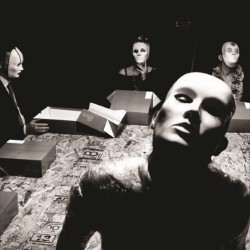
Bar Bados Complex • 5 Aug 2017 - 26 Aug 2017

Electra

Electra has been exiled and married off to a peasant. Secretly, she seeks to avenge her father Agamemnon’s death after a brief reunion with her long lost-brother Orestes. This retelling of Euripides’ Electra from Aristeia Theatre Company gives you the basic lowdown on what happens in this ancient Greek tale, throwing in a few painful monologues charting how mentally ill the starring character is. And that’s pretty much it.The Chorus of four girls did well enough in talking us through the narration of the storyline; however, there was excessive pausing and a lack of pace with the dialogue, accompanied by a repetitive speech pitch-pattern which made it tiring to follow.. The actress who performed as Electra could have been watchable were it not for the mumbling and a lack of any recognisable character journey. Her monologues felt like an exposition of the thesaurus – saying the same thing over again with sentence after sentence using different synonyms for ‘stagnant’. The four lead actors playing Electra, Orestes, Clytemnestra and another whom I can only assume was the peasant Electra had been forced to marry (he had about three lines and the action on stage gave little in terms of clarifying that for the audience) all had the same impassive emotional state the whole way through. This was a big space to be performing in, perhaps the audience would have been able to hear the actors better in a smaller sized venue as then the laid-back, subtle performance styles of the lead actors may have an opportunity to more profoundly affect their audience.I’m afraid that I could not recommend this production to anyone up at the Fringe this year. I was turned off by frilly poetic language which felt as if it was there just for the sake of it. I did not feel exposed to Electra’s suffering, neither was I brought a new perspective on Electra’s madness as the production promised. The monologue to Aegisthus’ head – represented by a paper crown on the stage floor – had me close to tears for laughing, which I do not believe was the desired effect. It clear that this young cast did what they could, but this show does need work.

theSpace @ Symposium Hall • 4 Aug 2017 - 12 Aug 2017

We Are All Going to Die

We are all Going to Die is a devised piece by Dead Person Productions. The story follows eight people that are stranded in an Arctic research base. They seem to be looking forward to either starving to death or catching hypothermia. The story also features a dead body, played by a living actor who repositions between scenes. Likely this was intended as a way to make it easier on the other actors, since it did not seem to serve any other artistic purpose. The characters discuss what to do with the dead body but quickly abandon that storyline to pursue several different plots that do not seem to connect.All in all, I had a hard time understanding who the characters were, why they were even in the Arctic research base, but perhaps most importantly, where the story was going. Transitions between scenes felt like they were happening because someone had finished performing their given time on stage, and not because they actually had any reason to leave. Actors delivered their lines, but seemed out of connection with each other, and thus couldn't manage to form believable relationships. It would be good for the actors to consider how their characters are changed by the situations they are exposed to during the piece, because, at the moment, they don't evolve over the course of the show. Halfway through the performance the dead bodies start piling up. At that point, the remaining living characters seemed to find a reason to constantly be shuffling them around, although the convention of the bodies being able to move by themselves had already been established (slightly confusing but all right). The script features a lot of death, some heated debate about Monopoly and puns. A lot of puns. The whole piece seems to lack the basic understanding of what makes interesting theatre, most of the scenes were stationary and there was a complete lack of dynamism between the actors. We are all Going to Die lacks emotional life. 

theSpace on North Bridge • 4 Aug 2017 - 19 Aug 2017

Five Encounters on a Site Called Craigslist

After an hour of a narcissistic one man show, we were left with the dilemma of whether to applaud the honesty of Sam, or be totally appalled by the stark exposure of his personality. It was difficult to distinguish whether the sleazy persona which greeted you on arrival and thanked you upon leaving was an act, or whether it was the real Sam throughout the show as he narrated five sexual encounters he had experienced on a site called Craigslist.The performance largely depended upon audience participation. While partakers were enthusiastic and seemed open to anything, the interaction seemed unnecessary; a bizarre miscellany of balloon popping, voice recording and carrot peeling distracted from Sam’s stories, rather than enhancing them with immersive sound effects. Sam challenged his assistants and his audience to answer many of the 36 questions which are designed to form the basis of a deep, meaningful relationship between two people, based on a study. His attempts were bold, but the pushy delivery designed to ensure comfortability had mixed results.Aside from Sam’s offbeat transfer of information, the show as a whole lacked cohesion, linked only by the countdown of the five encounters. There seemed to be no correlation between the props and his stories, besides the fact they added to the absurdity. His candid, often crude, discussion of sexual acts was interspersed with Sam seeking reassurance from the audience that they were alright and that they didn’t have any questions – though there were probably many unspoken queries. Casual nudity was unnecessary even to the avid theatre-goer, and it was more a display of egotism than a portrayal of courage in its rawest form.The point may well have been to see how close a room full of strangers could get over the course of an hour in a ‘safe space’. Though the experimentation had the potential to be interesting and produce surprising results, there was no conclusion to the show and the audience were left rather alienated from Sam and his experiences, especially his odd delivery and conversational tone when discussing sex. He may have brought the audience together, but it was only due to the shock at his distasteful portrayal of personal experiences.

Zoo • 4 Aug 2017 - 28 Aug 2017

A Waste Land

“It’s time to take your pill,” says the director, before handing me a tiny white tablet that she assures me is made of sugar, while clearing chairs to create a dancefloor. Maybe it was a placebo effect of the pill, but A Waste Land, billed as an “electronic dance opera-odyssey through T. S. Eliot’s iconic poem” became one of the most ludicrous half hours of my life.A Waste Land follows a genderqueer Tiresias through Donald Trump’s America but the poem, performed by Brooklyn’s self-proclaimed Kween of Electronic Dance Opera, Eri Borlaug, was completely drowned out by the relentless sound of electronica and irritatingly, none of the stunning prose from the iconic piece of literature was allowed to shine - a disservice to the care and consideration that Eliot put into this work, regarded as one of the most important poems of the 20th Century. Such a shame because I could see the fusion of electronic music with T. S. Eliot having so much potential.During the course of the show, Eri de-robed a number of times in order to embody different characters. But perhaps the one, and plainly unnecessary, character was that of a butt-naked man pleasuring himself — a moment that was greeted with both shock and sniggers. No direct parallels were made to the current Donald Trump era aside from a brief montage of the US president’s unphotogenic face — disappointing, as I was looking forward to a poignant moment in light of the current political climate. Strobe lights, smoke and multimedia installation montages flooded the room, all executed by the same director who handed me the anonymous pill, but not a single person felt compelled to stand up and dance. Moreover, if a rave was the aim of the game, then the basement of Moriarty’s wouldn’t be top of the list.Eccentricity is a word that can be used to describe Fringe — one of the only cultural festivals where madness can teeter on genius but unfortunately this was not one of those occasions.That being said, I did not hate it. It goes so far past the line of terrible, that it almost becomes numbing. Without a doubt one of the weirdest shows you will see at Fringe this year. 

Laughing Horse @ Moriarty’s • 3 Aug 2017 - 20 Aug 2017

It's My Funeral and I'll Throw Glitter If I Want to

Isobel Marmion's one woman nervous breakdown, entitled This Is My Funeral and I'll Throw Glitter if I Want To, was a disturbing and joyless foray into a mind no one present wanted to delve into.The conceit: Marmion, after suffering episodes of meningitis, appendicitis and self-loathing, finally elected—in a rare moment of clear-sightedness—to arrange her own funeral. The resulting show was an hour-long self-eulogy that frequently bordered on the pointless, and consisted entirely of unrelated, appalling vignettes.The show combined music, interpretative dance and stand-up. First then, the stand up. While the majority of the jokes were DOA, some managed to scrape together a few laughs, including one gag about how apparent cancer symptoms, to Marmion’s relief, were actually just the side effects of a severe, deadly depression. I laughed, but I wasn't convinced I was supposed to. The rest of the jokes were similarly ambiguous. In one uncomfortable outburst, Marmion demanded a couple leave if they couldn't stop their uncontrollable giggling— for a nominal comedy show, this was a strange gamble which didn't pay off, further alienating the already miserable audience. Maybe it was a genuine confessional, and “one-woman show” literally meant “one woman, alone in a room”—in that case, we were all suckers for turning up. The show included some more experimental set pieces, beyond the souring attempts at humour. These were bold but ineffective. At one point, following a segment on the pains of going into labour, Marmion "gave birth" to a bag of potatoes, though it was impossible to extract any salient points from her root-based histrionics. Meanwhile, an extended strip sequence made me feel less like an attendee at a comedy night and more like a captive to a deranged exhibitionist. While genuine weirdos like Candy Gigi own such surreality, Marmion’s phoned-in kookiness ended up flatlining.There were also several feeble attempts at crowd work. In one segment, Marmion brought three people on stage to role-play her unsavoury male suitors. Inevitably, she blew the opportunity to finally eke a laugh from the by-then half-dead audience, failing to dredge up anything witty to say to the participants. A self-eulogy at the end, delivered by two more volunteers, was saccharine and self-congratulatory, and included the righteous “yeah my friends find me incredibly annoying, but I can do what I want”; I found myself wishing she couldn't.Isobel Marmion's show eschews meaningful introspection in favour of empty, draining spectacle. Unless you hate laughing, give this one a miss.

Laughing Horse @ The Free Sisters • 3 Aug 2017 - 15 Aug 2017

The Principle of Uncertainty

Making a show about science interesting to a general audience is an extremely difficult feat. You risk losing anyone without a scientific background in the details, and condescending to those who know what you’re talking about. I appreciate the effort. However, The Principle of Uncertainty managed to do both and present an unengaging show to boot.The Principle of Uncertainty is a story about a woman struggling to deal with the loss of her daughter, but it never really seems like that, and it doesn’t present itself as such. The show is really about an introduction to quantum mechanics lecture that is made for people who fundamentally don’t understand what quantum mechanics is, by a woman who is extremely interested in her subject matter. It’s reminiscent of any university student’s first lecture, one where the lecturers seem less interested in teaching you subject matter, but instead trying to tell why you should study the subject that they like. I didn’t mind this when I sat down in my first university lecture, but for an hour of entertainment, it just isn’t engaging. I am not a science student, but I have a basic understanding of what quantum mechanics are and how they function within the world of physics. And for me, a lecture explaining the idea that electrons act as both a wave and a particle, and that the observation of an object on a small enough scale means that we can’t know it’s velocity was just condescending. And I can only imagine how terrible it would be if I studied science.Beyond this, the show sinks into hard sentimentality. The lecturer connects the idea of uncertainty to the death of her daughter, that up until the moment of her death, she didn’t know what that death would mean. The energy changes at that point from being quirky and silly to being borderline maudlin. And while the lead performer, Abi McLoughlin, does a great job, it isn’t enough to make this tone shift work or to make either part by itself functional. This show is hard to watch, and an earnest performance isn’t enough to save it from being simply unenjoyable. 

Sweet Holyrood • 3 Aug 2017 - 27 Aug 2017

Thom Tuck: An August Institution

Thom Tuck’s stand-up show, An August Institution, opens with an extended maths joke, which sets the tone for an hour of fairly niche humour. In this territory, Tuck is at his best; a geeky and somewhat odd approach to comedy works well for him. When he tries to engage with broader topics, however, he ceases to be funny, and his heavy-handed and, at times, insensitive treatment of some material feels really uncomfortable. Particularly problematic moments include a gag that belittles and disregards the seriousness of alcoholism as an illness, and another that generalises that all Uber drivers are immigrants. This latter skit grew from the idea that Tuck ‘likes being right’, claiming to have a talent for guessing the drivers’ nationalities based on their names, but here Tuck really gets it wrong.Quite a considerable portion of the show’s material centres on Islam, including the show’s big reveal, but its inclusion in the show comes across as gratuitous, capitalising on topical politics without really saying anything. Many comics this year at the Fringe are, unsurprisingly, addressing ISIS and talking about Islam (some in brilliantly important ways, such as British-Kurdish comedian Kae Kurd) but Tuck, a white non-Muslim comedian, is ill-positioned to make half the jokes he does. When he quizzed the audience on the five pillars of Islam, it struck a jarring chord; it was unclear why this was such a focus of his show alongside anecdotes such as about DJing a midday roller-disco.The Mail on Sunday’s branding of Tuck as ‘the next David Mitchell’ led me to expect some erudite political commentary blended in with the silliness of Tuck’s clown-like character. Previously part of The Penny Dreadfuls, Tuck is now in his fourth foray into solo comedy at the Edinburgh Fringe. When his set ran slightly short, on a suggestion from an audience member, he performed a snippet of material from a previous showl Thom Tuck Goes Straight To DVD. That show earned him a Best Newcomer nomination in 2011, and just five minutes of it were so much better than An August Institution that I almost felt annoyed that Tuck’s clear capability of writing good material was somehow lost with this show.

Heroes @ Dragonfly • 3 Aug 2017 - 27 Aug 2017

The Fungasm Gameshow

Where to start with The Fungasm Game Show? It’s hard to know, when our hosts clearly don’t have a clue either. Whilst fun and chaos often go hand in hand, here it felt like the former was discarded in favour of the latter.There’s plenty of razzle-dazzle onstage to match the glitter and sequins of the cocktail bar in which we are sat; glamorous assistants move exciting set pieces back and forth as required, and our hosts are suited-up in spangled jumpsuits and funky wigs to match. Big smiles are a-plenty, which is great to see, but unfortunately these do not make up for the lack of charisma from our compere Ray, despite best efforts from his co-host Gloria. It’s always hard to warm up a crowd for a variety show in the middle of the day, but today the banter with the audience repeatedly falls flat.Spinning the wheel of fortune (although fortune in this case is something of a misnomer), possible games can range from bizarre originals, such as Dance For France and Is It Mayo?, to racy pastiches on well-loved classics such as Stars In Their Eyes and Countdown (no prizes for guessing what the pun is here). Whilst, at first, audience members were fairly willing to participate, when a spin of the wheel resulted in Lose £5 and the poor subjects were made to stand on stage until one of them awkwardly produced a tenner, volunteers became noticeably harder to find. I must add, I don’t know if this was returned at the end of the show, but it certainly alienated the room and made any form of recovery a difficult task.I was desperate for this to be a joyous celebration of all the tacky things we love about our game shows, but there were just too many things going wrong to enjoy. Music cues are missed, prizes are lost backstage and contestants are either trodden on as hosts forget they’re still there or pushed backwards as microphones are repeatedly thrust into faces.A show that relies exclusively on audience participation is going to be different every day, but this means it’s even more essential to have a solid foundation on which to begin. I really, really wish I could tell you to go and see this for a piece of cringeworthy, so-bad-it’s-good cabaret variety, but I have to review on what I saw and this was simply not the case.

Paradise Palms • 3 Aug 2017 - 25 Aug 2017

Common

Within the first five or so minutes of Common, a large chorus of people wearing shrubs, trees and animal heads over their faces chant menacingly, a woman in her fineries introduces herself to the audience as a whore, liar, thief and cunt, and a young boy talks to the robotic crow on his arm that is his dead father. After that, it really starts to get confused.In an age where social media makes the role of a critic questionable, it's still surprising to see the anger people seemed to vomit out about this new play at the National during previews. With so much inexplicable terror in our lives becoming an all too common real occurrence that makes the notion of solidarity the only glimmer of positivity, such vilification for a play that is acceptedly messy and overblown, but inoffensive (other than for its unnecessary use of swearing for sake of impact) in its far too many themes seems astonishing. So what is all the fuss about? Even for someone like me, who may be accused of ignoring any word count limits in reviews, the main problem is trying to explain exactly what it is supposed to be about as it seems to change its mind and its style every few minutes. The title refers to common land being enfenced at the turn of the 19th century in order that the gentry could command taxes. So that could be the catalyst for presumed-dead woman returning from the devil city London to her female lover (and her incestuous brother), who's also the Queen of the aforementioned ritualistic killing pagans, who are fighting the filicidal Lord of the Manor, who lusts for the presumed-dead woman and so saves her after she's dead. Or not dead. That makes it sound much more linear than it is and I'm not sure if it contains spoilers or if it's even correct. But either way, trust me, you're unlikely to care.It's as though writer DC Moore was writing a number of different plays that someone picked up and assumed were just one. The changes in plot and style don't seem to be for any purpose or to be linked and so we just stop trying to make sense of it. One minute we have to the menacing scenes akin to The Wicker Man with intestines pulled out of a murdered man, the next we have pantomime mugging to the audience ("Who's this lot out there" and "You know don't you Madame"). And the language uncomfortably shifts between rhyming couplets, overblown prose, sitcom and profanity (after 20 derivations of "fuck" and a "bucket-cunt", there's no further to go). Can one assign a link between style, language and purpose? Possibly. But really, can one be bothered?There are some fine performances. Anne-Marie Duff as the liar Mary is watchable enough though seems most comfortable when breaking the fourth wall – possibly because she is at least commenting on the shambles rather than being in it for a time. Current National stalwart Lois Chimimba brings the same playfulness to Eggy Tom and Young Hannah as she showed in both Peter Pan and wonder.land. But Cush Jumbo as lover / sister / Pagan Queen seems a wasted talent, doing all she can to put colour and life into a character that has no consistency or believability in its arc. In fact, pulling out any performance seems a little patronising to the actors. I'm sure if they were asked to read the lyrics of a gangsta rap interspersed with a nursery rhyme and a seventies porn script, they would also do a fair job. You just wouldn't want to sit through it for two and half hours.There are going to be comparisons with Salome – the other 'unusual' piece in rep at the Olivier right now – and the two will no doubt be held up as questions of Rufus Norris' current programming policy. My argument for Salome was that, no matter what else, it offers some huge visual theatrical moments. I find it harder to find an argument here. It's not for an audience to try and assign its initial purpose or point or forgive it for boring us. It's not enough to fill the stage with people wandering off and on as background.. or set... or (at a couple of times) trees. Which goes back to the point of the social media outcry – be annoyed by Salome and debate it, but I find it hard to even care enough about Common to merit it with any sort of passionate opinion. A waste of talent, a waste of a possible point and a waste of anyone's time.

National Theatre • 5 Jun 2017 - 5 Aug 2017

Anatomy of Dating

This is a disappointing show, billed online as storytelling comedy. What it is, is a person flicking through a PowerPoint presentation, occasionally making comments, but for the most part just reading off the slides. The premise of the show is that Caroline Ryan is trying to trying to understand what makes people both young and old tick when it comes to dating. She asks how men and women differ in this regard. Are men cruder than women? Are men more deceptive than women? She tries to get to the bottom of the matter and determine which sex is ‘the worst’ at dating.Unfortunately, Ryan doesn’t do a great job of presenting this information – and most of what she has to say comes off as an uninteresting slog. The few good punch lines that appear in the show are not even Ryan’s own; they’re pick up lines that she’s recycling from audience submissions from her shows at Dave’s Leicester Comedy Festival. From time to time she’ll say a few words to a cardboard cutout skeleton set up across the stage from her (‘Bob’), but these bits of banter seem a bit unnecessary, and aren’t very entertaining either.To be fair, you’ve got to admire Caroline Ryan for getting up and putting this show together. One could only hope, however, that she’d gotten some better material, or at the very least a more fleshed-out story. What she presents in Anatomy of Dating just feels stale and cliché. As a whole, this feels like a very mild and shallow overview of something that most (if not all) people already have experience with. We already know that guys are creeps. We already know that Tinder isn’t a particularly classy way of finding a partner.

theSpace @ Surgeons Hall • 23 Aug 2016 - 27 Aug 2016

The Magic Cave of Salamanca

This was a hugely disappointing hour of theatre. Overall, it was less a comedy of errors than it was merely an error in comedy. The production is described on the Fringe website as being “an exciting, lively and colourful production”. I must regretfully inform you that this is not the case.The play is an English language adaptation of “La cueva de Salamanca” by Miguel de Cervantes, the author of Don Quixote, and it is put on by Off World Productions. If you decide to go see this play, I recommend that you bring with you a set of low expectations. The play is not particularly funny. The costumes are low budget and simply don’t make sense in terms of where the production is set. For example, there’s a man dressed in the costume of a Roman soldier, when the play is set in Spain. Really, only the costumes of the prostitutes are accurate. Some of the actors are just wearing street clothes with striped ponchos. The effect was underwhelming. La cueva de Salamanca is supposed to be filled with light hearted interludes. The Magic Cave of Salamanca is a production consisting solely of these interludes. They are meant to be diversionary theatre -- “truly Fringe theatre”, the play describes itself -- but these are not comic gems. This night’s audience was rarely laughing at the jokes performed up on stage. Several people left over the course of the play. The actors often made winking jokes to the audience, breaking the fourth wall, joking about how bad the play was. This wasn’t funny so much as it was annoying. One got the feeling that the actors were delighting in wasting the audience’s time. This wasn’t helped by the fact that the acting on the whole was just very poor. There were even moments when some of the actors appeared visibly bored.Overall, this is a very amateur production and I cannot recommend that anyone go see it. 

Quaker Meeting House • 22 Aug 2016 - 27 Aug 2016

Collateral Damage

The programme for Collateral Damage states that, while the play was written in 1999 in response to contemporary issues, it “has many resonances for us today”. Yet this production fails to resonate.It’s Daniel’s 50th birthday, so he and his wife Leonie are preparing for a dinner party. In the other room, a television blares news coverage of the war in Kosovo. The couple, recently over a rocky period in their marriage, begin to argue, with opinions on the war acting as the epicenter of a much larger ideological conflict between the two. By the end, the war and the relationship are shown to mirror each other, in several ways.While an intriguing concept, the play is too short to pull off the comparison with any subtlety. Much of the play is simply exposition: talking about their relationship, or talking about the international tensions in the post-Cold War world. Actual conflict doesn’t begin until 15 minutes in, which is a tremendous portion of a 40-minute show. From there, it accelerates too rapidly, flung forward by lines that lack any human quality.Performances do little to convince the audience that these two characters are anything other than shills for a political point. Neither Chester Parker and Jana Doughty follow the emotional peaks and valleys of their characters, creating a jarring disconnect between action and audience. This makes the rather extreme climax feel unearned, and even inappropriate.Collateral Damage cannot connect the past and the present. With an argument formed in fumbling lines and unconvincing performances, it becomes hard not to feel that the conversation in the play happened in a different world, one where the US was uncontested as a dominant superpower and ‘Islamic extremism’ had not yet become a buzzword. Dulled by bare structure, basic dialogue and unconvincing performances, the bombs that Collateral Damage attempts to drop are mere duds.

The Royal Scots Club • 22 Aug 2016 - 27 Aug 2016

God's Anointed

Grace and Laurie are two friends who decide to become prophets, in order to disprove the dying words of their friend, Eve, who recently committed suicide. Reading Eve’s suicide note changes their world views entirely, in an attempt to dislodge the perceived haunting presence of Eve, they decide to attempt to disprove Eve’s belief that there is a God, and he makes people evil. They decide to try being good and evil, one each, becoming “Gods Anointed” prophets.The two lead actors really struggle with the heavy dialogue. Both are unable to inject variation into their tone or delivery; they have calm mode and shouty mode – that’s about it. Also, Laurie has a bad case of wavy hands. It takes half the show for anyone who can act to get onstage, and then they get killed off pretty quickly. There are long chunks of the show that take place on the floor of the stage, which are invisible to anyone behind the front row. Thank god for the tech indicating when people were murdered.The lead characters have to be absolute idiots for the plot of the show to make any sense. These university students get the slightest whiff of an alternative world view and they are tearing their hair out trying to convert to it. The script is dragged down by verbose and badly poetic dialogue – that would be hell to deliver even as a monologue – but is rammed awkwardly into conversations between Grace and Laurie. A lot of what they do is stand around and talk about the ‘philosophy’ behind the plot.Then the script goes off the rails. A scene starts with Laurie narrating his evening being evil becomes interspersed with Grace asking questions about how the scene progresses, changing and influencing Laurie and eventually bursting straight into the scene itself. From where? Was she hiding behind a curtain at the student bar, the walk to Laurie’s flat and during the seduction scene? Furthermore, thematically, the script shows a nasty romanticism of suicide during the finale of the piece, when the suicidal Eve is described as having “too much soul”.The script is littered with problems, painful dialogue and is not saved by the performances of the cast. I am unable to recommend this show to anyone.

Greenside @ Infirmary Street • 22 Aug 2016 - 27 Aug 2016

Grandad Died

A grandad may have passed on, but he wasn’t the only thing that died on stage. Toad Pit Theatre have committed murder with this lurid, self-indulgent drama and weak allegory on the outcome of the EU referendum. The boorish antics of the quartet gives birth to a tactless attempt at satirising the UK’s decision to leave the EU that indiscriminately derides Britain’s elderly population in the process. A good idea gone horribly wrong, Grandad Died arrives in a symphony of babbled lines and all too frequent pauses to fill up their time on stage.The play opens with Brian, a gloomy representation of the fearful Brexit campaign dressed in a potato sack, shredding newspapers and discussing the prospect of leaving with his companion Aaron; their destination and departure date is unclear. Conversely, their often mentioned adversary, the “people over the hill’, is an obvious metaphor for EU nationals. With the inclusion of further characters, the dialogue improves slightly – suggesting that these actors would do better in another production, preferably one which doesn’t roll as many gutter balls as this – but does little to repair the overall damage. Mary, the play’s voice of reason, arrives too late and too short to make any lasting impact. Indeed, her only role is to offer a botched derision of the media’s scaremongering in strikingly hypocritical fashion. Deriding popular news outlets, the drama tries to encourage the audience to think for themselves. But no matter which way you voted in the referendum, you won’t be impressed with the outcome of Henry Aspin’s hackneyed play. All politics aside, it is fair to say that Grandad Died is not engaging enough to grace the Fringe. With its needless use of pauses, feeble script and tedious pace, the cast waste their 40 minutes on stage clowning around, inventing badly constructed social buzzword love letters as they attempt to tackle the state of modern society in a pretentious display of self-congratulation. The play is billed as absurdist comedy, but this merely masks their misemployment of an act which simultaneously wants to be a political satire and doesn’t. The coup de grace came in the form of a ballroom waltz around the stage to purvey the clichéd trope that two is better than one/that the UK needs its European partner, but this dance holds absolutely no relevance to the storyline whatsoever.In its entirety, Grandad Died amounts to little more than a botched, ego-centric mess focused on director Henry Aspin. This is nothing other than a demonstration in unearned self-importance, a turgid display that attempts to lecture its audience with cheap, watered-down life experience whilst completely oblivious to its overinflated ego. The result sees the sophomoric theatre group arrive as nothing more than a condescending bunch of toffs trying to play divide and rule in proletariat politics whilst lording over the working class and elderly as though they have no common sense.  

theSpace on the Mile • 22 Aug 2016 - 27 Aug 2016

Shakespeare Tonight

In Shakespeare Tonight, the famous playwright gives his first ever television performance on a talk show with host Martina, only to be confronted by his so-called ‘enemy’, humanist writer Francis Bacon. The idea in itself is a bit gimmicky, and it is so poorly executed that it is just unconvincing.The presenter Martina (Priscilla Fere) definitely looks the part, glammed up in a shimmering red dress with perfectly coiffed blonde hair; yet she fails to play the Diva she is portrayed as physically, seeming just too nice and just too timid to tackle the roll head on. It’s all very tentative. Shakespeare has been comically contemporised, complete with hipster topknot and frilly shirt. He is certainly an eccentric, but he is just altogether too unlikeable and smarmy. The entire spectacle is a little cringe-worthy, leaving one wondering who the target audience is, as the host cross-examines Shakespeare on aspects of his life. The fake rivalry between the smug and inexplicably silly Francis Bacon (Garry Voss) and Shakespeare is rather trite, fuelling the plot with very little drama. The plot is mediocre at best, with very low stakes and a real lack of intensity. The majority of the jokes fall flat due to poor delivery, and to not being that funny in the first place. Lines, meanwhile are clumsily recited, lacking any of the spontaneity that creates authenticity. Shakespeare Tonight was an astoundingly amateur production for a professional company. The play itself is extraordinarily dull and insignificant, with no clear aim – and this is coming from someone who cares about the subject. If the objective was to amuse, it fails to do so; if it is supposed to educate, it does this in a confusing and often inaccurate way, so this too fails. Of the Shakespeare-related shows at the Edinburgh Fringe this year, I would suggest that Shakespeare Tonight ought to be avoided.

Paradise in Augustines • 22 Aug 2016 - 27 Aug 2016

Communicate

Spot the cliché. James (Toby Vaughan) likes superheroes, video games, and not talking about his feelings; Heather (Olivia Elsden) likes berating her partner, talking about their future baby, and berating her partner some more. It’s hackneyed stuff. And it’s worse onstage than when described.Now, lazy characterisation isn't a problem per se. Clichés — when part of an otherwise powerful, well-written, or just brainlessly fun story — can be forgiven. But with a play like Communicate, such laziness is too prevalent to be ignored. Take the play’s dialogue, for example, which, described as generously as possible, lacks polish. James is apparently a great lover of superheroes, never seen without his Silver Surfer t-shirt or a full-body Spiderman suit. Yet at one point the scriptwriter has confused a superhero’s catchphrase — ‘It’s clobberin’ time’ — with MC Hammer’s. It’s an unimportant detail, sure, but symptomatic of a pervasive lack of care.Another example: there's an excruciating scene wherein James plays on his Xbox, and Vaughan is forced to deliver a monologue so stereotypically, embarrassingly ‘gamey’ that it’s almost unbearable. He does his best with the material, but his character, it seems, has changed from a soon-to-be father in his late twenties into a twelve year-old boy during the scene transition. Another vacuous stereotype — check. The three actors — Vaughan, Elsden and Gareth Watkins, who plays James’ dad — gave decent performances, individually. There is, however, a fatal lack of chemistry onstage. In theory, the relationships we see are between a romantically involved couple, and between a father and his son. Yet if the dialogue didn’t say so, you might not guess they’re meant to be so close. With Vaughan and Watkins’ conversations, especially, lacked spark. It never felt like a father and son arguing, or reminiscing, or helping each other through the grieving process; it was just two people standing on stage, delivering their lines not quite to each other. There are moments of good acting, and a couple interesting emotional beats. There are moments, too, of humour. And there are moments which have the shape of humour, but aren’t funny. But there aren’t enough of these moments to make the play itself any good. Communicate limps along until the end, when, before it lets us go, it concludes with a smug, unearned twist that’s almost clever. But it’s so cheaply constructed and glibly delivered as to be thoroughly anticlimactic.

C venues - C nova • 21 Aug 2016 - 29 Aug 2016

Single Varietal

Bob Stourton has an orchard. This orchard makes cider, specifically Hambledon Gold Single Varietal Cider, a famed brew from South West England. Bob dies and suddenly his children, Molly and Tim, are thrust into the care of the smallholding, and conflicts grow over its handling. Unfortunately what follows is an utterly joyless 45 minutes.They’re not sure whether to sell off the orchard to Tamara Cavalier, the CEO of Euro-Artisan Ciders, for a healthy price because the cost is disrespecting the wishes of their late father. While negotiations happen and deals crystallise, they wassail - an ancient custom of reciting verses and singing to the mother tree of an orchard before a season - along with their boozer companion and Bob’s oldest friend, Knocker.A variety of themes - tradition and globalisation, familial strife and ownership, and even death - are on offer. Yet all are treated so gracelessly and so tediously that the shallow approach wears thin in just five minutes, making the rest an appalling spectacle to behold. Even Jack English’s accordion playing can’t mitigate the plot. The wassailing, a fervent call to spirits, ranks as one of the worst moments in play. This should make clear what this production is like. Every point of wit, every display of character is stamped out by clunky dialogue and clunkier delivery. Aside from the ruddy Toby Greenfield (as Knocker), everyone is infuriatingly tiresome and purposeless, shuffling to the side of an already claustrophobic space when their scenes end. Their idling when out of character is more authentic than anything they’ve been trained to do.Unfortunately awful and just like cider, I don’t much care for Single Varietal. It’s an effortless production and I don’t mean that as a good thing. The team behind it need to work a lot harder if they want to survive in the cut and thrust of the Fringe.  

Spotlites • 16 Aug 2016 - 19 Aug 2016

John Knox

If you want to see a show that constructs John Knox as a talking point for oversimplified political views, may I suggest Mary Queen of Scots got her Head Chopped Off? It’s not on at this year’s Fringe, but is commonly done in Scottish secondary schools and universities, where you can see similar production values and performances in a script that doesn’t use one of Scotland’s most controversial historical figures as a tool for the American political right.John Knox, a new play by Jerry Averill, shows what would happen if the Six Characters in Search of an Author showed up to help a struggling playwright make an ideological revelation, a la Christmas Carol. The invitations to comparison with, especially, the works of Lochhead and Pirandello are unfortunate for the production, as both Six Characters and Mary Queen of Scots have vastly superior scripts with totally contrary ideologies.Plot-wise, the play revolves around the aforementioned writer (Elizabeth Averill) who is writing a play about John Knox, but struggles with the seeming inconsistencies in his words and actions, until the characters in her play come to life and teach her the true meaning of justification by faith alone. By teaching the playwright about Knox’s life and his relationship with God, the characters help her gain a clearer insight into the way her work should proceed.The writing lacks subtlety on any level. The dialogue is full of things that should be left to performance, with lines like “I’m so confused!” And there are so many straw man versions of Catholic theology that it’s practically a fire hazard. More upsetting, the play attempts to, rather than reconcile Knox’s good and bad elements, aggressively explain away anything that doesn’t fit the play’s understanding of the reformer. So the ‘monstrous regiment’ is redefined and refuted by historical context, and Knox’s avocation of violent resistance is totally glossed over. Most egregiously, there’s an appeal to comparison between the Tudor Monarchy’s authoritarian rule and the current government of the United States. The subtitle suggests that the play is asking whether Knox is a “Bigoted misogynist or champion of freedom,” but the product clearly knows what it wants the answer to be.The performances aren’t much better. The actors play it big, as though to a much bigger audience than was in the modest church hall, but somehow lacked feeling. Phillip Todd, playing Knox, was a particular disappointment. John Knox was like a 16th century Malcolm X, known for his charisma and inspiring public speaking, even while advancing extreme views. Todd never approached that level of emotion or dedication. More generally, my excitement at finally hearing convincing American accents was undercut by all the time they spend using those accents while playing Scots. And none of the cast seem able to remember the dates they are supposed to rattle off while telling Knox’s biography, a significant failure.Even as a free show, I cannot recommend John Knox. Its self-righteous ideology is only aggravated by poor performances and an in-your-face script. There are better things to see at this year’s Fringe.

Buccleuch Free Church • 15 Aug 2016 - 19 Aug 2016

Steele Edge: Martial Arts Illusion Show

Steele Edge: Martial Arts Illusion Show bills itself as “a dynamic fusion of physical excitement and visual wonder” but it’s more of a bizarre fusion of vague ‘oriental’ stereotypes, slow motion fight scenes and mediocre magic.Opening with a choreographed display by two, admittedly talented martial artists, the show takes its first dubious turn when Jason Steele and Joanne take to the stage. Steele himself makes for an impressive enough presence; he’s tall, handsome and wearing a fabulous robe. His assistant Joanne however is dressed in what I can only assume they found by Googling “Chinese Wig” and setting the results to ‘Price Ascending” before pairing the results with a silk bathrobe. In today’s climate of cultural sensitivity, it’s an outfit that would get her banned from every student union costume party in the country. I guess they spent the entire budget on weaponry and the fantastic Chinese Dragon that appears early in the show.We are then subjected to a series of illusions that draw polite applause except for the routines featuring swords or sharp sticks where the audience is genuinely concerned that Steele might actually hurt someone. Not due to the inherent danger of the trick – it’s just that you can imagine it going wrong pretty easily.A card throwing bit simply shows that, for tonight at least, Steele isn’t actually very good at throwing cards and he has to send the one audience volunteer of the show back to his seat with polite, disappointed applause.One major illusion draws laughs when the foot of the hidden assistant is clearly spotted as he climbs into place. It’s not the first time an illusion is spoiled by bad stagecraft but it’s the most blatant.I don’t doubt that Steele is an accomplished stage magician but this show is a terrible vehicle for his skills. Too much emphasis on the theme means that the illusions take a back seat to the muddled fight scenes and overbearing soundtrack. The finale feels in need of a better trick and just when I thought we might be about to see a genuinely spectacular reveal, the show ended. I did like the dragon though.

theSpace @ Venue45 • 15 Aug 2016 - 27 Aug 2016

Alice and the Dream Child

Transforum Theatre’s adaptation of Alice in Wonderland sets the Lewis Carroll classic in a mental hospital. This is an intriguing choice from the outset, not least because of Carroll’s widely known drug addiction. With Alice already a play conceived out of the immediate effects of LSD consumption, a more overt interaction with Wonderland and the psychotic effects of mental illness is an interesting premise.“I would rather know my own story than invent it,” Alice suggests. Unfortunately I’d rather watch the play I know than watch this version. Natalie Rosmarin’s script is far too weak to revolutionise the familiar story. Adapted plotlines are vague and unexplained. We learn that the White Rabbit’s anxiety is down to him being too “late” for his dead daughter, but that character development soon disappears. So too does the protagonist’s storyline – Alice is admitted to the psychiatric ward due to physical abuse from Charles (a superfluous character addition originally made by Tim Burton’s film) but despite the potential grit this relationship offers, it all disperses too quickly. Nothing is developed, nothing is resolved: one moment Alice is captured, the next she is free, with little drama in-between. In short, this is a messy reimagining, turning the already surrealist tale into further nonsense.The lacklustre dialogue is crucified further by the direction and performance. While original lines and characters are immersed within a hospital scenario, the magic of Wonderland is lost – the eight-strong cast prance around in black, turning awkwardly between scenes. While some hope comes from Liz Woodard’s characterisation of the White Rabbit, the necessary humour usually elicited from the Mad Hatter is lost as Molly Millsaps multi-roles. Anna Gallucci and Rebecca Rand do well to mirror each other as Alice and Dream Alice respectively, but unfortunately their tone throughout is one of constant whinging – they would have done well to adopt a more naturalistic delivery.Too much is expected of the audience in this short production – the set is non-existent, costumes are lacklustre and performances are poor. There are ten adaptations of Carroll’s classic at this year’s Fringe, don’t see this one. 

Greenside @ Nicolson Square • 8 Aug 2016 - 20 Aug 2016

At War With Love

Ambitious in its intentions, At War With Love uses a selection of thirty-two of William Shakespeare’s sonnets to form a narrative set against the backdrop of the First World War. What with the continuation of World War One commemorations taking place in this centenary anniversary year of the Battle of the Somme, tied to the events marking the four hundredth year since Shakespeare’s death, it would appear that the piece has chanced upon the perfect time to tie these two areas of literary and historical significance together.In itself, the concept is not necessarily a bad one. And indeed, there is merit in reformulating and re-presenting existing texts to draw out some new shades of meaning. The application of Shakespearean texts to more modern times and places has a respected and well-established history in the theatre. The problems in this particular performance are rather more fundamental.Opening with Sonnet 30, an apt choice, with its themes of remembrance of friends lost and the consolation that a lover might bring, the performance seems to begin slowly. Billed as a ‘strongly physical production’, the initial elements of physicality lack clear definition and intention, and accordingly appear somewhat half-hearted, struggling on this occasion to really add value to the language. Indeed, rather than communicating through movement, the physicality of much of the piece consists of repetitive hugs, lifts, touches and kisses – fairly arbitrary gesturing which at times detracts from Shakespeare’s grand verse due to its lack of depth and conviction.This is a piece which, first and foremost, should celebrate the writing of the poet, and leaving aside the physical movement, this is the greatest disappointment. Despite clearly having taken much work to structure the piece, the meanings and nuances of the words themselves all too often fail to shine through in performance. In the condensed form of the fourteen-line sonnet, each word is an artefact, but here the delivery shows little variety of intonation – indeed, the very similar performances of the various sonnets leads to something of a destruction of their differences, as the staging and physicality fails to take account of their nature as individual pieces with characters of their own.Adding into the mix a lack of detail in unison movement sequences, a use of audible breath more at home in the rehearsal room, stultifying background music affecting the piece’s pace, words drowned out by music during battle episodes and some abrupt technical transitions, it seems as though the piece does ‘remember not the hand that writ it’ (Sonnet 71). Indeed, the experience was too much for some, and the irony of seeing at least three people snoozing during the line ‘keep open heavy eyelids to the weary night’ (Sonnet 61) was not lost. A disappointing presentation of a decent idea – if you want to fall in love with Shakespeare, perhaps look elsewhere.  

Greenside @ Nicolson Square • 8 Aug 2016 - 20 Aug 2016

The Gayest Thing You've Ever Seen

Claiming to be the gayest thing in a room full of LGBT people in a gay bar (although straights are welcome too) is quite the boast. In the case of Martin J Dixon it is also entirely untrue. The most under-rehearsed thing I’ve ever seen, the least entertaining thing I’ve ever seen... these are far more likely possibilities.Dixon can be found in the basement of CC Blooms this month vying for the title of the Gayest Thing you’ve ever seen in his stand-up,-please-sit-down-again set. He tells unengaging stories of rim jobs, coming out and BDSM interspersed with repetitive, poorly sung musical numbers with bad dancing and high heels he can’t seem to walk in. The performance opens with Dixon telling the audience to imagine him rising from the floor. During the performance I saw he genuinely had to restart multiple times as he had forgotten what he was meant to do. This self-apology continued throughout the show with him trying to reassure the audience that he ‘can do better than that’ on multiple occasions.It was unclear exactly who this show was aimed at. Anyone who isn’t a homosexual cis male seemed to be excluded from his definition of gay. The LGBT community that the show it categorised under expresses itself as just a lonely ‘G’. But for his gay male audience members he patronisingly asks if they’ve heard of ‘Grindr’, an absurd question to the audience of an LGBT fringe show. The material itself was unremarkable, perhaps said by a different performer there may have been some level of humour, but Dixon appears to be a have a remarkable gift as a naturally unfunny person. Throughout the show’s hour-long duration there were many audience members – who I became increasingly jealous of – as they made the smart decisions to jump ship and walk out. Although Dixon came across as well-meaning and is probably a perfectly lovely person his show is not worth the time or effort to attend. 

CC Blooms • 6 Aug 2016 - 28 Aug 2016

Imaginary Porno Charades

Imagine taking seven of the most gratingly hyperactive and sexually frustrated boys you were at school with aged fourteen. Now give them a few beers, the bodies of middle-aged men and a room full of people in front of whom they can make penis jokes and hump each other for a whole hour. That is essentially what you get when you buy a ticket to Imaginary Porno Charades.The show’s premise is made clear in the title really: two teams compete against each other in a charades battle that sees them mime the titles of made up porn films, most of which are mildly amusing puns on regular films. The audience are in no way involved in guessing the games, nor do they know what the films being acted out are. The moment that has the potential to act as a punchline - revealing the title of the porno being enacted - is never provided due to the fact that it is usually screamed unintelligibly by one of the teams. As it is, the show is neither witty nor entertaining. The best joke of the night was delivered by an audience member. It must be noted that the performers taking part change for different performances, although all panelists in this show were regulars. On the night in question, the total lack of any effort towards diversity on the panel of seven white male comedians made the endless masturbation mimes not only tedious but unpleasantly aggressive. The hour dragged on in a tiresome, testosterone-fuelled and sickeningly self-congratulatory circle-jerk of boys club humour that was neither inclusive nor clever. What feels really surprising is that no one has told the creators of Imaginary Porno Charades that, while it looks like a potentially fun game to play with friends while enjoying a few drinks in the privacy of your own home, it is a terrible idea for a show. The format of the show inherently hinders the delivery of any actual jokes and the panelists on this night displayed an alarmingly low level of natural wit. Maybe save yourself the hassle of walking out and just give it a miss. 

Sweet Grassmarket • 5 Aug 2016 - 27 Aug 2016

The Shakespeare Club

In the programme, The Shakespeare Club promises to be a somewhat cheesy, yet harmless play about finding oneself through Shakespeare’s characters. Instead, it’s a poorly-cooked mess of ideas.The hour-long show – which two people wisely used as an opportunity to doze off – includes an underwhelming performance of the whole first act of The Tempest, with Ariel (Vianna Mabanag) as the only character who’s even mildly credible. This is followed by a dry factfile about Shakespeare which any audience could look up on Wikipedia. Next comes a poorly articulated rap battle of Shakespearean insults, concluded with what was effectively a transcription of the ending of The Breakfast Club. The jokes fall flat and it’s painfully obvious that the actors are merely regurgitating their lines instead of truly connecting with their fellow actors in the moment. This resulted in a real lack of integrity in their performances and a sense of having rote-learnt their lines just before the show. Ferdinand especially stumbled on his lines. Why they reattributed the lyrics of Full Fathom Five to him instead of Ariel, nonsensical decision that it was, will forever be a mystery. The Shakespeare Club has far too much air in between words, resulting in a painful awareness of metre that should be seamless and of the incredibly slow passage of time. The company seem too self-absorbed to withstand a hardy Fringe audience. They make far too many appeals to pathos, aiming to win their audience’s sympathy with a generic appreciation of theatre, one which “allows them to be themselves”. The effect is rather cloying and disproves the programme’s claim that we automatically “love hearing everyone else’s story.” Clearly, making it to the Edinburgh Fringe is a big deal for the group, but it would have been more interesting if they had come up with something more original and coherent, rather than simply playing off the fact that they were attending, and using the clichéd concept of spending their whole show pretending they were deciding what they were going to perform for their Fringe show. The show was very underwhelming, and so an idea with plenty of potential was subsequently wasted. 

theSpace @ Venue45 • 5 Aug 2016 - 10 Aug 2016

Vivaldi for Breakfast!

Vivaldi for Breakfast is an interesting attempt to dramatise the enigmatic life of notorious Baroque composer, Antonio Vivaldi, as he worked in the famous Pietà orphanage for young girls in Venice. The subject matter, as someone interested in classical music, proved promising. The reality of the performance, however, was somewhat disappointing.The performance was incredibly amateur, from the writing, which had a tendency to endlessly recycle lecherous, puerile and facile jokes that were not particularly funny the first time round, to the acting, which lacked commitment and any real profundity of understanding of the characters and their plights, resulting in a lack of emotional range. The playing too, although very pleasant, lacked the passion that so characterises the composer’s work, and therefore failed to do justice to the fascinating life and power of the protagonist. Although conceptually interesting, Vivaldi for Breakfast failed to deliver a performance tailored to any particular type of audience. For someone coming to appreciate the music, the playing and singing was underwhelming, with numerous moments that lacked support, phrasing or shape, in addition to questionable tuning at times, in addition to more technical slips, such as in incredibly famous Winter. Largo section of the Four Seasons. Nor is it aimed at people for an introduction to classical music and Vivaldi’s work, with one audience member calling it ‘uncompelling’. The blatant sexual references throughout also made it inappropriate for children, although the nature of the jokes were too childish to extract much laughter from the audience. Most of the gags were met with stony silence, with the greatest chuckle being at the arrival of a delivery man wearing a baseball cap, breaking the convention of period dress.Vivaldi for Breakfast is the product of amateur fumblings into the history of music, with nothing lucrative being gained from this exploration, and it commits the horrific crime of passing up the golden opportunity to engage new audiences in classical music, due to its tendency to drag on. Furthermore, the themes, which were of a sexual and church-bashing nature, seemed inappropriately serious and distasteful for a ten o’clock show. The epilogue that tied together this musical patchwork was also a disappointing end to an already ill-paced show, trying to pass off forty five minutes of the historical inaccuracies of the plot as fact, with no artistic merit in this pursuit. More passion, commitment and vigour to wake up the already drowsy audience would not have gone amiss. 

Sweet Grassmarket • 5 Aug 2016 - 12 Aug 2016

The Country Wife

The Cambridge University Amateur Dramatic Club’s adaptation of the restoration era comedy The Country Wife moves the action to modern American suburbia, but keeps the period’s signature blend of complicated character relationships and bawdy humour, along with the era’s sensibilities. This interesting blend lead to comedy that was either horribly outdated or totally inappropriate and not carried with enough talent to justify those jokes.The characters were often one-dimensional caricatures that fail to scan as effective parody or charmingly silly. There was an Italian-American stereotype so outdated that I’m frankly impressed that he made it through the performance without getting deported based on the American Immigration Act of 1924. There was a camp side-character (think the guy in the control tower from Airplane!, but subtract the self-awareness and add 35 years) who nevertheless was one of the more reliable performances in the cast. And a woman whose whole shtick was that she was not a woman, but a man in a overly-tight dress and bad wig doing a falsetto, which might have been funny for five minutes, or in the 70s, but was instead a regular character and treated like a fount of comedic gold.The implementation was not more innovative. There is a sequence in which Mr. Pinchwife, who is, of course, jealous of his wife, nevertheless has to bring her out of the house. But he doesn’t want her to be seen. His solution is to dress her in a full burqa, leading to (by my count) three different jokes about terrorists blowing up buildings. I don’t want to imply that any subject is totally taboo. But if one is going to joke about a world-changing tragedy, I expect it to be done with subtlety and intelligence. Instead we got offensive generalisations about Muslims, followed by a second joke about how offensive the former was, as if hanging a lampshade on it makes it less problematic. It didn’t work.Many old plays have their issues, and that hasn’t kept us from enjoying them. Clever performers can work around outdated content while still delivering the heart of the play. I’m distressed and disappointed to see that The Country Wife not only plays into ancient ideas about sex and nationality, but seems to support twenty-first century modes of discrimination as well.

theSpace on the Mile • 5 Aug 2016 - 27 Aug 2016

Giacinto Palmieri: Nietzsche, Women and I

Italian comic Giacinto Palmieri, in this hour of comedy, tries to draw comparisons between himself and renowned misogynist and philosopher, Friedrich Nietzsche in their approach to us womenfolk as romantic prospects. The show was clunky and a little awkward at best, with many of the jokes falling flat. Palmieri, somewhat unforgivably, makes countless sexist comments, and remarks about what can only be described as domestic violence that go unelaborated. In the tiny room of the Free Sisters, the seven audience members had to sit through an uncomfortable hour listening to quite disturbing autobiographical comments from Palmieri.Palmieri began by illustrating Nietzsche’s own dry proposal to a woman he had barely met by getting an unsuspecting female audience member to read out an entire letter whilst he made very banal interjecting jokes, which were clunkily and awkwardly delivered. Palmieri went on to discuss his own “marriage-like” relationship of eight years, insulting the woman before telling us a story of him throwing her out of his (thankfully parked) car, failing to acknowledge the severity of the action, or implied violence. He treats this action as normal human behaviour, just as he fails to bat an eyelid when he recounts the tale of kicking his ex’s fridge in. This made for a lot of uncomfortable squirming and glancing around the audience, who thankfully didn’t share his rather warped sense of humour. For someone with such disturbing stories and feeble material, Palmieri seemed ridiculously confident in his delivery. The jokes in the final section on “impossible women” fell very flat, and at many times over the hour, nobody but himself seemed amused by his material. For someone who has apparently “found himself” through comedy, the results are very poor: Palmieri doesn’t appear to be a particularly good comedian, and his storytelling shows a lack of understanding of his audience. He seemed very disconnected from the whole room, making far too many assumptions about the people there, in addition to accusing women on numerous occasions of being ”cockteases”. Nietzsche, Women and I made foruncomfortable and distasteful viewing. Palmieri seems to have a lot of bottled up anger and resentment towards the women in his life, and uses this opportunity as a form of therapy session. I suppose a few questions have to be asked about someone who compares their love life to a man who died sad, mad and alone in an asylum.Palmieri’s set was poorly structured, poorly delivered, making far too many audience assumptions, and frankly, just really creepy. As a woman, I would have felt incredibly uncomfortable had I attended alone. 

Laughing Horse @ The Free Sisters • 4 Aug 2016 - 28 Aug 2016

Lewis Schaffer: You Are Beautiful

Early on, Schaffer decided that the show wasn’t going so well. And shortly after that, he appeared to give up. Throughout, there were occasional glimpses of the show he was ostensibly meant to be performing; I suppose it was just bad luck that he decided not to bother.Instead, I was treated to an utterly tedious, rambling performance. Over the course of an interminable hour, Schaffer — with a conspiracy theorist’s penchant for grand, bland assertions — held court on the invalidity of modern physics, the error of wearing glasses and the stupidity of Einstein, Hawking, and Woody Allen. There’s nothing perceptive about these meanderings; nothing funny either.As he prattles, Schaffer rejects the traditional performer-audience divide to cultivate an uncomfortably intense relationship with the crowd. He spurned the stage entirely, preferring to wander up and down the aisle between the seats, or to perch with one knee on a seat in the unoccupied front row; and almost every line of the show was delivered as he looked deeply into someone’s eyes. At one point he decided to “take a break” and sat amongst the audience for a while. The line between performer and audience was so blurred, in fact, that it was an audience member’s wit that won the biggest laughs of the night, not Schaffer’s.And sure, maybe it’s more opaque performance art than standup comedy. It’s obviously meant to be aggravating, challenging, and excitingly unconventional. But for most of the show I just felt nothing — not anger, not sorrow, not pleasure, and certainly not (God forbid!) mirth. All I felt was a persistent sense of boredom, coupled with a niggling certainty that I could better spend my time doing absolutely anything else.When the laughter finally came — the show picked up a little in the final ten minutes — it was too little too late. I understand that Schaffer’s not really going for ‘comedy’, as such — that much is obvious. But in the absence of much else, the lack of many real laughs was sorely felt. Schaffer (more than once) bemoaned the fact that this was the worst show he’s done. It’s possibly the worst I’ve seen.I really don’t know what happened to Schaffer. Coming off the back of a widely acclaimed show at last year’s Fringe, Schaffer is not enamoured of this taste of success. He wants to perform shit shows, he insisted; that’s where he’s most comfortable. I suppose he’ll be pretty happy with how this one went then.

Just the Tonic at The Community Project • 4 Aug 2016 - 28 Aug 2016

The Improv Musical

The Improv Musical from the University of Warwick return for their third stint at the Fringe, and while providing some light and silly entertainment, fails to land any punches either through character, story or music.We’re greeted at the beginning of the show by our host for the evening, who opens proceedings by explaining the format of the show and goes on to introduce us to this evenings troupe. Once they have assembled he takes audience suggestions on a theme, two characters we’ll see in the show, the title of the first song and the title of the show. The troupe were given pretty solid material for the show we saw: a celebrity cruise ship with one character who screams every time they found something interesting and another who is a talking hat stand. I could see some great jokes coming from that material. It was frustrating that suggestions were thrown out because they’d been done previously. When the mental asylum, as a location, was suggested we were told it had been done a couple of days previously. This was understandable because perhaps it would be too fresh in the minds of the performers to create a fresh perspective (although this would be a sign of a very talented troupe). However, when later rap was dismissed as a song-genre on the same grounds, it seemed ridiculous to deny the new audience.Straight from the off it seems like a bit of a shambles. The troupe appear unprofessional as they sit at the back chatting amongst themselves – one assumes about the show – but this takes the magic out of the ‘improvisations.’ I have seen plenty of other troops assemble in silence, and even if you need the preparation time it would make more sense to create the show from audience suggestions while the company are backstage and can chat to their hearts content. Throughout the show we see them laughing along to jokes, lounging in the chairs, talking, swigging Iron Bru, and generally serving as a distraction.In terms of the overall show there’s little to praise. Obvious jokes are thrown away or wasted – such as the screaming character. The actress who played her seemed not to understand the difference between interesting and exciting, and instead of screaming at mermaids who appeared on the ship (interesting), screamed every time she got to steer the ship (exciting). At the end a ‘round up’ montage included two characters going off and starting a cleaning-products company. Having gained a few cheap laughs during the show by using the phrase ‘bang and the dirt is gone,’ now would have been a great time to throw in a pun. But no such luck. The humour seemed very alienating, as if they were trying to make each other laugh more than the audience. Musically, it was again shambolic, neither the pianist not the cast were willing to follow each other and bland, repetitive melodies prevailed. Attempts at harmonising, or back-up singing, were lost because they were half-arsed and extremely quiet. Any that got through were just repeats of whatever they did last time. The lyrics were the only redeeming element of the show, and had moments of being amusing, but were inconsistent.The story itself left a lot to be desired, with gaping plot holes and confusing changes in direction. There were at least a half dozen plots going on, none executed fully. As far as I’m aware, you’re meant to follow whoever brings you into the scene, yet the members of the troupe seemed so keen to impose their story ideas onto the others that they frequently would just start playing whatever character they fancied. Later in the story a few actors conspired together to kill everyone – which proved tricky as they managed this only to realised that they had at least 15 minutes left of their hour and they had no cast left to continue the story. A convenient plot ‘twist’ followed that managed to revive all the dead people so they could finish up.The Improv Musical is neither professional, nor impressive, nor particularly entertaining. Laughs from the audience seem almost accidental and occasionally awkward. They have a lot to work with a fairly good set-up, so they need to brush up their act, memorise their tropes and start working with each other more.

C venues - C • 3 Aug 2016 - 29 Aug 2016

Intergalactic Nemesis: Twin Infinity – A Live Action Graphic Novel

Intergalactic Nemesis was like being trapped in a lift that wouldn’t stop going up or down, it made me angry on so many levels.Billed as a real-life graphic novel, the cast stand behind microphones as comic panels are shown behind them and a foley artist makes effects, all accompanied by a live piano. It’s meant to capture the Golden Age of American radio when Superman was shouting “up, up, and away” and it at least it achieves this by being bloody awful.The script is utterly baffling in its banality. The entire show has the same beat: character goes somewhere, other character tells them to do something, character does that, then deus ex machina. The plot is paper-thin but also manages to be amazingly difficult to follow. Twin Infinity is actually the third part in a trilogy but this isn’t made clear in the marketing. The show expects you to have a working knowledge of the first two acts.Characters are introduced left, right and centre, with no explanation of who they are and we are expected to care about them. There is an entire subplot that revolves around knowing who a twin sister is but only the name is mentioned and nothing else. At first, I thought it was maybe a bit of trolling, like turning into a serial midway through, but it’s bad writing and unclear marketing to blame.The show is littered with jokes so lame I could feel the audience squirm in embarrassment. The humour on display is so basic that it rarely follows any of the rules. This stuff might fly at comic-con but a Fringe audience is going to be way sharper. The problem is compounded by the actors and the others on stage constantly gurning after every lame duck. Gurning after a bad joke doesn’t make it better: that’s why Christopher Eccleston isn't Dr Who anymore.It’s also far too long at an hour and a half. If I had paid for a ticket, I would have walked out when it passed an hour. I wish I had because in the last act they manage to introduce an ethnic sidekick that’s so bad and so embarrassing it would make Spike Milligan blush.There is nothing to recommend this show: it’s shallow, racist, and puerile.

Pleasance Courtyard • 3 Aug 2016 - 29 Aug 2016

Insomnia

It’s said that two fasting, sleepless nights are all that separates us from savagery. And the play I saw last night, Insomnia, devised by ZLS Theatre, is well endowed with the kaleidoscopic disorientation, claustrophobia and the downright maddening of such an eventuality. So far, so good.Yet, after a strange and rather muddled start, which involved the audience being ushered down the steps of the bunker-like Brunswick Cellar Bar, and then to scattered seats, mine was facing a wall, by a very camp collective - improvising, muttering, half greeting - we were very soon plunged into a drama of machine-like formalism. Off shuffled our welcoming posse. Our hosts included a portly gent in a silver frog suit and a cardboard masked, Miyazaki version of Widow Twanky, who were only to be replaced by similar- or the same?- characters but with a stiffer, more sombre tinge. These persons installed themselves in niches on opposing sides of the chamber and from these, enacted repetitive vignettes of slow, oh-so-slow unveiling. Round and round we went, all, naturally, in a strict round-robin order. It was like a check-in at a Fancy Dress Anonymous meeting. Sets of amateurish stop-frame animations and films -the dreams of the dream-people?- provided momentary relief, if not illumination, before we were again subjected to more ponderous exposition. Ok, we get it, somebody or something can’t sleep. This till half time.On our return, a public headcount revealed that we’d only lost one of our select audience but it also added to a growing feeling of being strapped in for the night. Thankfully, the pace did quicken and when, mid-act, the cast began thumping and moaning in concert, the doldrums were replaced with disquiet. Without doubt, Insomnia took some making. It has a surprisingly large cast if you include the films and many minutes of tailor-made sub-Clangers animation. Content-wise, however, it is beyond quirk. It’s frankly barmy. Marry this to its cog-like staging and even the most brilliant actor would struggle to breathe more than melodrama into these fractured soliloquies. It’s like…. well, insomnia. But not in a good way. At times it felt like a Be Kind Rewind remake of Inside Out, but without the former’s zany wit and the latter’s intelligibility. Announced as both multimedia (ok), and multi-sensory (what – eyes and ears?), Insomnia is a very long hour and a half, and certainly the longest I have ever spent with a silver frog in a basement. If this were to be my nightly fare, I would definitely be reaching for the sleeping pills. The hard work and flashes of invention in its jamboree of symbols -for instance, a surprisingly elegant recorded piece which might have been written by a young Jeanette Winterson- sadly, do not succeed in throwing light on this universally hated condition.

The Brunswick • 6 May 2016 - 22 May 2016

The Suicide

Russian playwright Nikolai Erdman's original script for The Suicide was seen as such a strong satirical attack on the Communist Russian Government that it was branded ‘dangerous’ and ‘anti-Soviet’, banned and led to Erdman’s arrest and the murder of its director, Meyerhold. Such is the power of intelligent satire. Now at the Lyttleton, director Nadia Fall says that Suhayla El-Bushra’s version of the piece isn’t just a translation, but “a new play in its own right” – and it’s a play that seemingly throws out any important comment on society to become a puerile, base comedy led by pantomime characters in the style of a facile sitcom. With no intelligence to be found, it misses any swipes at modern culture and instead succeeds in using the act of suicide as little more than a foil for gags.The sitcom style is set up from the outset with Sam and Maya in bed interspersing conversation about Gregg’s with a quick synopsis to let us know that after losing his job five years ago (not clear why), Sam has now lost his benefits too because he was late to sign-on. (Don’t worry that this wouldn’t happen – it’s the beginning of an entire script that is laced with inaccuracies, inconsistencies and other plot holes.) Javone Prince (him from The Javone Prince Show) delivers his lines as plosive-heavy weak stand-up material – more to the audience than to his wife – slam-dunking punchlines with the subtlety of a first-timer at an Open Mic Night. As he walks out to “get some peace”, ‘hilarious’ confusion ensues as suicide is incorrectly assumed to be his plan. When a YouTube clip of him contemplating his life on the roof of the Clement Attlee Estate goes viral, a string of half-baked comedy characters walk into his flat (no keys needed on this rough estate, of course) to talk him into taking his own life to help fulfil their own obviously selfish needs.It’s a train ride of every light stereotype you can think of relentlessly appearing to a ‘boom, tish’ drum beat, a nod and movement to the audience and a light flash (think sitcom guest star turn circa 1975). Each has their bit of stand-up and farce to play out – not above pratfalls, compromising sexual positions and innuendo – before leaving just as hurriedly to tag the next appearance. From ‘frazzled social worker’ (“I'm surprised you're not all hanging from the rafters”) to ‘big-breasted nymphomaniac’ (“I'm in love with You... suf” is her clever wordplay) and ‘street poet turned overnight success’ with his tribute rap #EndingIt (horrendously performed at the end of the first act with out-of-tune backing singers and out-of-time dancing – oh and don’t question how the fame happened in the space of an hour either).We also have the ‘filmmaker activist’ who wants to document the fatal act and sports a tattoo of Thatcher on his stomach “so every time I wank, she gets it in the eye”. None of the names or backgrounds of the characters really matter. They go on and on and on and all with that level of humour or gimmick. There’s of course a politician too, who’s likely to be corrupt and a German lady who displays her hairy armpits – it really could be the cast of The Benny Hill Show.It may be pertaining to comment on the pressures of a herding society. Or maybe on the power of social media when it gets out of hand. Or perhaps the lack of political support for those who are unemployed or have mental health issues. But it actually has nothing to say and no depth, originality or care with which to say it. It’s end-of-the-pier humour where actual suicide is only touched upon as being something as simple as swallowing a handful of pills and falling asleep. It plays for laughs in the way of an amateur copying of Mrs Brown’s Boys (which I accept is a very popular comedy style, so if you find that a bit highbrow, then The Suicide may well be up your street) – even including a filmed skit of This Morning as “A Boob B C Production” where ‘Phillip’ calls ‘Holly’ a “cunt” and then they move in to each other to have sex. The sort of skit that may be made up at a drunken student party that seemed hilarious when stoned.But it's not just unsophisticated attempts at comedy – they've thrown everything they could think of into this to make it an even weaker and messier variety show. As well as the aforementioned rap, there’s cover version singing, drum solos, dance breaks, video projections, religious pastiches and an unnecessarily huge set that raises and lowers the other floor of the block of flats; unnecessary as most of the action is spent walking in and out (and in and out) of Sam's living room ‘box’. In fact there's so much going on that the only saving grace is that the first hour and a half of Act One does pass by quickly, though the second act is so structurally messy that even this doesn't help.After sitting through all of this and hearing the guffaws at the shock value of the naughty words by the young and the older middle-class in the audience (the latter demographic surely meant to be the barb for much of the original satirical comment?), it feels offensive that they then try and shoe-in some comment about greed overlooking any sympathetic understanding of suicide. Perhaps I have lost my sense of humour and I don't think that such subject matter needs to be handled delicately – or even seriously – but it needs to be handled, rather than just plonked in and left with no care. This piece does nothing for theatre, makes no point (other than one you try and force on it about social media perhaps) and is just the crassest sort of comedy that feels at least thirty years old and should be consigned to history. If this is your sort of comedy, you'd still be better off seeing a stand-up routine than this mess.

National Theatre • 20 Apr 2016 - 25 Jun 2016

Punning Linguist

Heart-wrenching, harrowing, ill-fated, anguished; these words would not at all be out of place in a review of a Shakespearian tragedy but alas, this was no evening of star crossed lovers and unrequited affection but an unfortunate attempt at a night of stand-up comedy.I didn’t envy the poor man for having to stand in front of an audience of five, two of which he appeared to already know, and deliver what I assume was his first ever live gig, but what I really wish was that he would have tested out his material first before putting us through one of the most cringe-inducing excuses for a comedy show that I may have ever had the displeasure of sitting through. A particular low point was his series of jokes about menstruation that was met with a wave of near-silent groans from his female audience members and a look of sheer embarrassment from his only male. This was only closely to be followed by his rather bizarre rap from the perspective of a head louse. When you base your show largely around the classic one-liner format, delivery is key but sadly this punning linguist was no showman. His main redeeming feature was that he appeared to be a very nice man, which meant we couldn’t laugh at him but neither, thanks to his jokes, could we laugh with him. Though to be fair not all of his lines were horrendous, but the crucially placed pauses where he should have waited for the audiences’ pennies to drop were overtaken by a rattling off of jokes and puns that were often too rushed or obscure for anyone to keep up with. He would occasionally stop to look judgingly at his crowd for not musing at his jokes, often because they weren’t particularly funny, though this could have been more a sign of nerves and inexperience than the aloof reaction of a seasoned comedian with a rapier wit.As he mentioned on several occasions that his day profession was a teacher, it only seems fair to give him a ten out of ten for effort. But sadly, his funniest joke was the one that came out of the cracker.

The Brunswick • 22 Mar 2016 - 27 Mar 2016

Jeepers Creepers

Marty Feldman's style of comedy - and indeed his story - is of a very specific time in the annals of British entertainment. With elements of slapstick, surrealism, buffoonery and double entendre - along with a wonky eye that did more to harm his ego than his success or memorability - his work and his life aren't that dissimilar to his peers that we call great comedy masters today: such as Peter Sellers, Spike Milligan, Peter Cook and, of course, The Monty Python team. Even if you're less aware of Feldman himself - playing a somewhat supporting role in history to those other names as he chased a dream to the US with ultimately little success (other than in Young Frankenstein, the film that arguably made his name) - knowing he is in such company might lead you to expect (correctly) that his is a similar tale of a tortured soul with many psychological problems hiding behind his talent.With Terry Jones (Monty Python stalwart and sometime writer and performer for Feldman himself) directing this intimate two-hander in the Lounge at The Leicester Square Theatre, and written by Robert Ross (who has also written about the likes of Frankie Howerd, Sid James and Steptoe and Son) you may expect that the hands of these experts would have created a tragicomedy of an exemplary knowledgeable standard. So it comes as a depressing shock to find that Jeepers Creepers (the product of this meeting of minds) rarely makes you laugh and never makes you care enough about the characters to find the story tragic. The only tragedy here is that anyone thought that a script that seems to have been written with little knowledge of the form of the spoken word, and directed without light or shade, tone or pathos - or even an awareness of the basics of sight lines - should have a place in a theatre in London's West End.The last few years of Feldman's life are told here through both monologue and the conversations he has with his wife Lauretta (though these are less conversational in tone, more a structure to allow them to explain moments in history), who was the 'Beauty' to his 'Beast' and stuck with him through his various addictions to women, to alcohol and to fabricating his own life story. The set is as bare as the depth of the dialogue - ultimately comprising just a bed that acts as different rooms over the years; the flat they moved to in the US (to find his fame) to the hotel he stays at in Mexico to shoot the last (abandoned) movie he was making before he died. In such a claustrophobic setting, we can understand why she struggles to accept his 'dalliances' and, if we didn't, it is spelled out for us by the speedy flipping of tone in their conversations that go from demonstrating their love ("Why do you stay? You make me laugh") to their frustrations ("Do you want me to do this now - all those late night phone calls and furtive tiptoes?!") in a blink of an eye and with just a look of dismay - no reality or believability in how the emotions go there and back. Poor Rebecca Vaughan (playing Lauretta) unsurprisingly seems to have run out of ways to look dismayed after the first 10 minutes or so - and without substance in the script to help her, you feel she has done her best, but the emotional cupboard is all too quickly bare.It's unsurprising that Ross says that the initial scripts had the piece as a one man show - he added Lauretta's role later - as the scenes with the two of them seem to have been fitted in after notes were given. So can we expect more from Marty's monologues (at times directly involving the audience, at others, seemingly soul-searching to himself) to make us laugh or understand the pain of his demons further? Unfortunately, with weakly written gags which I understand may be actual jokes that Feldman made but that just don't work in either humour or delivery ("it's a fundamental issue - bless you" and "being insured in case I 'figure' myself - as opposed to 'disfigure' - keep up" stand out as punchlines that don't punch or get a response), we can't side with the 'clown' and so have little chance of caring enough to share the tears behind his mask. It makes it all the more uncomfortable when he is reading his side of his big interview with Merv Griffin - the first laughter I heard in the show was in the pre-recorded responses of the audience at that interview. Again, maybe that is partly due to the humour not travelling well through time but I suggest that is all the more reason to work harder on the delivery (both verbally and physically) to make us as the audience understand that and keep us on side.Perhaps Jones was in fact too close to the man and lacked the time to distance himself enough to realise that this needed work. I wonder if, for him, his personal reminiscence and recognition of the story has somewhat overshadowed the need for the direction to ensure this is shared with a wider audience who weren't there and know less. It is difficult to see exactly what direction has inputted - the jokes rarely 'land', the delivery is largely lethargic and repetitive, even the staging and blocking for this (acceptedly challenging) small venue seem without thought; with only two people in front of me, I was unable to see a great deal of the action.I'm sure that Ross' many books are well-researched, informative and possibly well-written (I haven't read them). I'm sure Jones cares deeply about the story of his friend Feldman and hence wanted to help bring it to stage (even using his name on the press is a draw for audiences). And I'm sure that David Boyle (as Feldman himself) does a fair impersonation of the man. But knowledge, caring and impersonations do not alone make for a well-written, directed or performed play that respects its audience. At one point, when talking about who would play him in a film of his life, Lauretta says to Marty, "You won't even get Mickey Mouse if you carry on like this". It's supposed to be an insult, but in this play of his life, they may have been better served if the Mouse had helped - at least it would have had a bit of Disney to brighten the dullness.

Leicester Square Theatre • 28 Jan 2016 - 20 Feb 2016

The Great Gatsby

Even if you don't know the whole story of F. Scott's Fitzgerald's classic 1925 American novel, the chances are you'll still be aware that it's an homage to the decadent, glamorous party lifestyle of post-WWI America – oozing with sexuality and debauchery in its comment on the importance society assigned to status at that time (arguably not that different to the showbiz world we see in our tabloids today). That glitz and glamour seem an ideal starting place from which to create an immersive theatrical experience for any audience – so it's all the more surprising that this premiere by Blackeyed Theatre eschews all that, with a production that seems to want to distance the audience so far from any party atmosphere – indeed any atmosphere at all – that we are left feeling cold and empty rather than swept away by the dream.We are told – narrated – the story by another outsider to this world, bondsman Nick Carraway, recently moved next door to the mysterious and much vaunted Jay Gatsby and the endless parties for the rich and famous that he hosts. Through Nick's eyes we see (or rather, we hear... we constantly hear) how the shimmering veneer of society is but a fragile cover for dysfunctional relationships and complex but unresolved emotional needstates, and how the desire to be popular doesn't necessarily lead to being liked – by others or ourselves. The alluring Gatsby is at the centre of this world – the tragic hero who, whilst arguably just wanting to be liked, remains largely unknown, unloved and ultimately losing all he worked for as the world he has created slowly disintegrates around him.In adapting the story for the stage, writer Stephen Sharkey says he was challenged to "convey the driving, forward momentum of the tragedy while... giving us time to observe the rarefied air of that particular place and time, the 'jazz age'". Writing about the approach taken, Director Eliot Giuralarocca clearly understands the need to bring to life these opposing worlds, acknowledging the "cynical detachment is mixed with intrigue", "the moral emptiness that lies just beneath the shimmering surface" and his approach to "serve the material theatrically... with moments of heightened realism and sensuality".It's an ambitious plan to combine both worlds evenly and have the desired effect on the audience, and they have clearly used some theatrical trickery to achieve this. The problem is that there is little consistency to the use of these signifiers and so, rather than help to create atmosphere or emotion, they feel disjointed and interruptive. It's a small cast of only seven, so the immediate challenge is how to convey the huge mix of people that society brings and the detail that makes it seem so exciting. They attempt this by continually pointing at the audience and telling us what and who they can see – and what (and who) they are doing. They tell us and tell us and tell us and tell us some more – listing names, activity, times of day, weather and even asking over our heads for a pen at one point. Boy do they like to tell us enough to make sure it really sinks in just in case we missed the first few times. And as they're seemingly locked into this style of telling us rather than, say, showing us, they also apply it to their own character development far too often – as soon as we meet Daisy (the object of Gatsby's affections) she TELLS us "I've had a very bad time and I'm pretty cynical about everything". Maybe that's helpful shorthand for the students of the text who are watching on the expected school trips – but the rest of us end up feeling as though we are watching others watching others and then being told about it, rendering us emotionally cold and unable to empathise.Having decided this is the way to create the social glamour, they then set out to detach us from it – as seems to be per plan. As well as their primary roles, most of the cast play multiple smaller parts that pass us by indistinctly with little more than a change of ill-fitting costume (the nurse in particular seems to be wearing an outfit made for a pantomime dame) so we don't really know or care who they are, only realising this is a loss when a couple turn up as key players in the denouement. They all sing or play songs and music from the era at various points – sometimes as background to a scene (it's a party so here are some singers singing in the corner), sometimes to build dramatic tension (an oft-repeated mischord throughout Act 2 as the tragedy reaches a crescendo) and, on at least one occasion, to replace script (in a most bizarre way to introduce Gatsby's version of his own life story, they decide against monologue and instead have the cast become clown like animal shapes before breaking into a music hall style performance of The Shark of Araby). A sign telling of the impact the music has is when the use of Irving Berlin's What'll I Do does little more to the audience than cause murmurs of "That's the Birds of a Feather song innit?" which, whilst possibly not easy to avoid, at least begs the question of why they couldn't find any other song of the period that wouldn't detract in this way. Or was the rest of the music so not thought through that they just didn't care?The set itself is pure white and offers many different levels in which to set "any place, any location" as the story demands – but with no clear borders or sections, it remains just ANY place, a merging blank canvas with no obvious delineation. Occasionally – again, not consistently – lighting is used to help create atmosphere (one particular location is signified by a pair of watching eyes on a back screen that turn green when jealousy is discussed and later, for anger, glow red) and environment (falling triangles represent rain – though lighting seems unnecessary for the heavy humid atmosphere of the summer and the tension that brings).It all adds up to a disruptive execution of a story that we are primarily being talked to about. Intending to use theatricality to disarm the audience from the superficial world of glamour would be admirable. But here we haven't seen or felt the glamour (rather we have just been endlessly told about it) and there is no consistency to how the disruptions are being used, or even why. We are left feeling we have been talked at for a couple of hours with a series of cartoon visuals all illustrated differently. The whole thing needs someone to look at it and be strict about the original objectives, throwing out any device that doesn't achieve these. Without doing this, you just end up with too much being thrown in without enough thought being applied – so creating a heady and over complicated cocktail that lacks both the fizz and the substance required for any of Gatsby's parties.

Greenwich Theatre • 6 Oct 2015 - 10 Oct 2015

Tim Drain: I Know How to Make the Women I Sleep with Laugh

I went into Tim Drain's show fully prepared for some offensive stuff. Like, really offensive, "did he just say that" stuff. The flyer for the show boasts a no holds barred set, which means it's a total shock to the senses for the mild-mannered man to take to the stage in silence, sit down and produce a script. Where's all the devil-may-care, Brendon Burns-esque bravado which was stamped across the promotional material?Drain seems less occupied with delivering offensive material and more concerned with apologising for it. By prefixing all of his digs at royals and politicians with 'possibly', Drain adds an uncertainty which means his jokes fail to land with the impact he intends. By doing this it seems as if Drain is questioning his own material, which in turn gears up the audience toward a negative response. The riskiest it gets is Drain joking about visiting the sexual health clinic or working with children, but even then it feels fairly tame. Katie Hopkins gets several mentions, but without any real follow-on as if her name alone is enough to warrant the set shocking.A lot of Drain's material seems to be untested in a comedy venue, with anecdotes involving some kind of funny remarks he and his mates made on a trip to Ibiza which fail to land outside of his friendship circle. His friend apparently does a good impression of David Attenborough, but as the audience don't know Drain's friend this is hard to judge, and Drain's joke on finding feminists in the wild doesn't work regardless of Attenborough accuracy. You probably had to be there to find a lot of Drain's pithy remarks to his friends funny.Stand up is an incredibly difficult undertaking, and especially at the Fringe some acts will fall by the wayside. Drain has good potential in his puns, but his observational material relies on too much context which weakens the punch lines. Unfortunately this, and his underprepared material in a festival where comedians have been learning their sets for months prior, means Drain is not quite ready for the world of stand up.

theSpace @ Surgeons Hall • 25 Aug 2015 - 29 Aug 2015

The Graduettes

The Graduettes starts with a great farce premise: flatmates wake up on Christmas morning to find their home robbed and their landlady dead on the floor. There's also a visit from a judgemental in-law planned, an intrusive ex and a policeman who's related to said dead lady. A lot of plots going on at once means it's in danger of getting messy, which is precisely what The Graduettes goes on to do. From so much promise the farce devolves into a sloppy play, with running between rooms substituting for any actual jokes in the script.The cast vary in levels of comic acting. Whilst Rachel holds up a baffled straight guy role whilst also becoming ruthless in her attempts at concealing the body, the rest of the cast fumble around the stage either winking to the audience after every joke or overacting so badly I want every scene to be their last appearance. No amount of gasping on the actress’ part can save her character Grace from being instantly detestable. True, farces work well with a good idiot or villain to root against, but Grace is written as such an insufferable prat it's not even entertaining. The timing for most of the jokes is way off, and the blocking is still messy. In a farce in particular it's vitally important to know where everyone should be on stage for physical comedy, whereas here characters walk in front of one another awkwardly and crowd the space.The script isn't entirely clear in the plot and unless characters state their relations to one another whole chunks of development and backstory can be lost. There was a major character point about one of the lead roles which I didn't even know was the case until reading the press release again after the show. The script needs a good edit as some moments of escalation seem completely unnecessary, and the resolution isn't worth all of the build up.

theSpace @ Surgeons Hall • 25 Aug 2015 - 29 Aug 2015

Captain of the Lost Waves: Unsolved Mysteries

One of the songs included in Captain of the Lost Waves: Unsolved Mysteries is titled A Song No One Wants to Hear. Despite what it may seem from this, the Captain is apparently unaware that this is the show that no one wants to see. Included on the back of their flyers is a quote claiming that the show is hypnotising. Indeed, I tried to hypnotise myself so that I would not have to suffer through the entire performance, but was as unsuccessful in this attempt as they were at putting on a bearable show.If you read the description of it, which is the only way to even somewhat determine what it is meant to be about, you will learn that this is the tales and songs of an intergalactic time detective. In theory, this sounds slightly bizarre but also potentially fun and fascinating. Without the help of a flyer or the fringe website, this show is a very different situation. The Captain is a man dressed in anachronistic, vaguely piratey clothes, who prances and trips (literally trips; I am concerned about the health and safety policy in the venue) around the stage singing.This description still could be fun, in theory. But it's not. It's painful to watch, and I'm not just talking about the multiple times the performer snags his feet on his mic cords. In terms of acting, the persona of the Captain is one of utter overblown and patronising cheesiness, like Willy Wonka combined with the pediatrician you were scared of as a child. With either his guitar or ukulele, whichever is relevant for the song at hand, he sidles up to the audience, staring them down with an attempt at a knowing smile. Perhaps this show is billed as a 'feel-good' performance because he has misread the indulgent smiles people force upon their faces in an effort to get him to leave them alone. There is absolutely a role in theatre to make your audience uncomfortable, but generally this should be something done on purpose, for a purpose, not just because of a badly acted persona. Added to this bewildering cocktail is a strange little child dressed up like a clown crawling around and through chairs, accomplishing more of the same discomfort.Technically, the Captain's voice itself is not awful, and the music is too simplistic to truly be offensive. But the songs are filled with awkward pauses, like an aspiring poet trying to be deep, and he affects a disconcerting warble to his voice every few lines. Lyrically, the songs make no sense. One could argue that they are not meant to make sense, but instead of coming across as charmingly eccentric, they instead become disconcerting and tedious. I am under the impression that moments of the show were meant to be funny, but Fringe performers should note that having the people on your production team, who are wearing t-shirts for your show and ripped the tickets for it, laugh does not mean that everyone else will be fooled into believing that you've done something amusing.The best part of the show was when the Captain got distracted and broke character to give a rant on the increasingly corporate nature of the Fringe. However, as this was not a Free Fringe show, this did not ring particularly poignant, but at least it was nice to hear a genuine emotional expression after 40 minutes of labored overacting. But those few moments of relief are not worth seeing the rest of the show.

SpaceTriplex • 25 Aug 2015 - 29 Aug 2015

Patrick Kielty: Help

Television personality, Patrick Kielty, attempts to revive his stand up career in what is billed as a fresh hour of comedy. Ominously, he admits three minutes in that ‘there is no show because he is happy’. He’s rich, he’s a household name, he’s married to Kat Deeley and so he sets out to prove the apparent inverse relationship between a comedian’s happiness and how funny they are.Most of the material is surprisingly impersonal, pull back and reveal stuff. We have Irish stereotypes and pops at Scottish nationalism, ‘People’s Republic of Sturgeon’ and ‘How is that oil price working out for you by the way?’ Then there’s the recurring routine on, would you believe, the Irish fixation with potatoes. The differences in customer service between Northern Ireland and the US are given an airing before we’re reminded that folk in his second home in Los Angeles enjoy therapy… Irish people are ugly and talk too much… more stuff about potatoes… and a ‘topical’ section on Oscar Pistorious.Admittedly he did tell a much more personal story about how he met with his future wife, but it petered out in to an unremarkable celebrity anecdote. There was a promising moment when he started to talk about religion “We got married in a Roman Catholic Church in Rome. I don’t even believe in God.” but then came another celebrity anecdote and something about keeping the wedding out of the papers. Moments later he exclaimed, “I’m an Ambassador for the Prince’s Trust. I don’t believe in the Royal Family.” and my ears pricked up, only for Kielty to move on to something safer straight away. This is not the edgy comedy with which Kielty made his name in the 90s.Easily the best thing about the show came towards the end. Audience members were asked to submit advice to Kielty on how to stay happy in the future. “Do pass on Kat’s phone number to me if it doesn’t work out for you.” Got the biggest laugh of the night. 

Assembly George Square Studios • 24 Aug 2015 - 30 Aug 2015

Death Actually: A Necromantic Comedy

Death Actually sets out to bring 'lethal puns and dead funny songs' in a larger than life musical. What the audience gets instead is a hammy play with a contrived plot and songs which are few and far between. The puns can be lethal, but most of them are too weak to even warrant a groan.The biggest nail in the coffin for this piece is the complete lack of energy from the cast. I couldn't pick up a cast list but this was perhaps for the best, as nobody stands out in this lacklustre performance. The script has a few good jokes but they're masked behind so much rambling and unnecessary build up that by the time it reaches the punch line, the emphasis is lost. That's without factoring in a cast who deliver lines as if they gave up on the show a long time before it reached Edinburgh. The chemistry between Jack and Belinda is barely there, and her drunken acting involves kicking around the stage in a way that implies less intoxication and more Bambi trying to walk on ice.The overall show is pretty embarrassing to watch, especially when the blood packs give a more colourful performance than the actors. The songs feel overlong, and could do with an occasional verse being cut for the sake of keeping it peppy. The same could be said for the script, which has so many different plots being added that it's hard to keep up with anyone's motivation. The introduction of Hell as a place for hipsters is clever, but fails to make sense when Satan decides he wants to be nice, but also wants suffering, but also wants to kill the demons who cause suffering. I'd explain it better if I understood what was going on half the time during this show.The show does have one moment of redemption, in which the vampire countess ruthlessly delivers "that" speech from Love Actually with a Death Actually twist. It's a neat little bit of parody, although it doesn't really deliver more than one joke in the form of replacing 'love' with 'death'. It's followed up by a similarly gentle song parody, and then a further ten minutes of redundant material. Why didn't they end it on the parody note? It was bleak, but it would've beaten the overlong ending the writers went for which tied up loose ends in a way which suggested bad pantomime instead of dark comedy. This show needs to desperately shake its rigor mortis and inject some energy into the performance, because right now it's all a bit of an overwrought mess.

Paradise in Augustines • 24 Aug 2015 - 30 Aug 2015

The Ted Bundy Project

Killing most of an hour, and murder to sit through, The Ted Bundy Project does bait-and-switch on its audience. Anyone who shows up expecting that this solo piece will in some way explore the string of homicides committed by the title figure, one of America’s most notorious serial killers, will instead get something else. And that something is a messy collage of ‘audio art,’ YouTube video, prop manipulation and recitative so dull as to invite fantasies of bodily harm. On yourself. Like puncturing your own eardrums.Presenter Greg Wohead, a Texan transplanted to London, wears tennis whites, something Bundy used to do, to appear unthreatening to potential female victims. Whispering in a flat monotone voice, Wohead greets the audience with an opening monologue listing basic facts about Bundy: murdered 30 women, was tried and sent to death row, was fried in the electric chair in 1989.In 2012, as he will tell you more than enough times during his ‘project,’ Wohead discovered Bundy’s final taped confessions about specific murders – a ploy to delay execution – posted on YouTube. This led, Wohead says, to his ventures into some dark nether regions of the Internet, where he found snuff and necrophilia videos and the reaction videos of people recording themselves watching the gore. Wohead’s reaction to those reactions is the show, a flat 53 minutes of nothing much. (Ushers warn patrons beforehand that there is violent material. There isn’t. It’s just a hollow tease.)Tugging constantly on his white tennis shorts, Wohead takes his time taping out rectangles on the floor and placing within them objects meant to hint at Bundy’s crimes: a length of rope, handcuffs, a woman’s handbag. Wohead wears earbuds plugged into a small tape recorder clipped to his shorts. Sometimes he seems to be speaking Bundy’s words from that last confession, but it’s hard to hear (from the front row).Next to the laptop Wohead employs to cue up video clips of young men recoiling in horror and vomiting as they watch something we don’t see, he has a turntable on which he drops the needle on incongruous 1970s pop tunes, including Hall and Oates’ 1977 hit You’re a Rich Girl, all originating from the decade of Bundy’s crimes. Wohead tells us one bit is a ‘dream dance sequence’, but he just stands there, motionless.About 40 minutes into this, when you hope in desperation that he will reveal that it’s all a tribute to Andy Kaufman and that the tedium will be broken by a group-sing of Day-O or the theme from Mighty Mouse, Wohead starts over from the top, repeating his opening speech, word for word. Oh, how very performance-art-circa-1981. Been there. Yawned at that.

Zoo Southside • 23 Aug 2015 - 29 Aug 2015

The Wendy House Trilogy: Edmund

This is a show I really wanted to enjoy; each part of the production tries very hard to achieve an ambitious vision, but don’t quite make it.Despite marketing itself as a homage to Lewis Carrol, Edmund contains no reference to the story of Edmund from The Chronicles of Narnia – the closest it comes to this is when this show’s protagonist looks in a wardrobe and puts on a fur coat, flirting with the character of ‘Lucy’ (his sister in the Narnia books), in a situation which is surprisingly unaware of its incest.We are invited into a bedroom of an old house, where an old woman, Wendy, lies dying and refusing to go to hospital, taunted by a vengeful spirit, Linda. Edmund is Wendy’s grandson, who is stuck with trying to organise care for the dying lady. That is the serious storyline. There is also an almost farcical plot-line with a bureaucratic care-giver Nurse and his lying, salacious and kleptomaniac assistant, Lucy, which culminates in an argument over her love and a debate over euthanasia. If this sounds confusing and difficult to blend together, you’re right to think so.Wendy, the old lady in the bed, is not actually in the bed. The show opens with Edmund talking to her and the vengeful spirit Linda who answers for Wendy. However, it took me an alarmingly long amount of time to realise Edmund and Linda were not talking to each other. The show is full of moments like this – poor choices that leave it hard to follow and even harder to believe. Particularly the point when Lucy is stealing jewellery and attempting to seduce her way out of trouble by lying seductively across the bed, everyone forgetting that Wendy should be there.The poor script is not salvaged by good performances of the characters. Of the three actors, all of them stumble over lines. Edmund has an inability to make eye contact with anything, struggling the most with his lines. The care-giver is the only convincing character in the show, though the same actor’s performance of the man in the feather boa (don’t ask) never ascends above tired stereotype. Linda and Lucy are performed by the same actor, with little differentiation between the two. Linda’s only purpose seems to be to spit sarcastically about plot developments, which would probably only make sense if you had seen the rest of the Trilogy. Additionally, the actors seem ill-prepared to be onstage, both Linda and Lucy wearing the same necklace and bracelet, making the scene when Lucy steals jewellery look ridiculous, as she is already decked out with the nicest jewellery onstage.The technical design suffers from the constant use of flickering lights, which make watching the show incredibly uncomfortable. The immersive set is impressive, though the floor isn’t flat, thudding and moving under the actors’ feet during inappropriate points of the show. Whilst trying to think of a redeeming factor for this show, I settled on the sound design, precisely because I didn’t notice it – though this may mean there was no sound design at all. This is fairly indicative of how difficult it is to watch this show.

Greenside @ Infirmary Street • 17 Aug 2015 - 29 Aug 2015

Showbiz, or, Repeat Until Funny

A comedy that ironically centres around two failing comedians should find humour in the ineptness of these characters. Sadly Showbiz, or, Repeat Until Funny does not achieve this and we are left awkwardly watching the actors fishing for laughs in this disappointing production.The show tries to showcase 'many kinds of comedy from the broadest to the most sophisticated.' Unfortunately all this does is make the production seem like a jack of all trades but master of none. Joke after poorly constructed joke is delivered along with lazy one-liners and very unconvincing slapstick, provoking no more than a nervous giggle in response. What is confusing is that the show attempts to parody the comic genre by taking a very literal interpretation of the 'death' of a comic. As this is so unsure, we have no idea if we are supposed to be laughing with or at the characters. If the overriding joke is that the two failing comedians are rubbish then it needs to invite us to laugh at them.One joke in particular was outright distasteful. A recently resurrected clown bursts in on an argument between the two comedians. He begins to call them "mummy and daddy" and then, as "mummy" is on the floor crying in terror, the clown unbuckles his belt and shouts "I'll show you where babies come from!" If sheer filth is the intention, then stick to risqué dirty material, don't resort to rape as a cheap way to make a joke.The script leaves a lot to be desired. The dialogue seems to copy a bad sitcom and the plot consists of little more than exchanges of nonsense over and over again. Maybe this is the point but there is absolutely no variety in the tone of the piece. It is quite simply dull. The characters - one a grumpy cynic, the other a babbling optimist - are so flat and one dimensional that we have no emotional investment in them at all.That pretty much sums it up. The appearance of a random clown really tips the balance from confusion to utter dumbfoundedness and I struggle to find any discernible point to this show whatsoever. 

artSpace@StMarks • 11 Aug 2015 - 29 Aug 2015

Death and the Maiden

Ariel Dorfman’s Death and the Maiden is one of my all time favourite plays; it is a beautifully written text, teeming with monologues many actors would dream to get their hands on. Yet Edinburgh Graduate Theatre Group (in their 51st year at the Fringe) take this exciting and gripping play, and manage to turn it into one of the most cringe-worthy productions I have ever seen.Death and the Maiden is set in Chile in 1990, after Pinochet’s rule has ended. Paulina (Rhiannon King) is a former political prisoner, now married to Gerado (Gregor Haddow). Gerardo brings a kindly stranger into their home, Doctor Roberto Miranda (Chris Pearson), who Paulina is convinced was her torturer. As the night unfolds, Paulina takes Roberto prisoner, threatening his life until he confesses to her torture. It is an incredible script, a powerful three-hander, with an interesting socio-political context. However, I would urge you to read the script, rather than see this production.The limitations of the fringe force groups to be imaginative, and whilst at times ideas do not quite live up to expectations, it makes for interesting theatre. Claire Wood (director) instead opts for total naturalism, meaning that the constant breaks in immersion make the production seem amateur and underprepared. The sound effects are unnecessary and often laughable, while the impact of the meticulously detailed set and various lighting states are shattered when coupled with stock-image projection (meant to be a window), bizarre staging, and a pantomimic style of performing.The acting was by far the worst aspect of the production, and I found myself squirming whenever the Rhiannon King (Paulina) spoke. King has a gift of a part, yet managed to reduce Paulina from a three dimensional character to a gibbering wreck, bordering on a comic portrayal. I found her key monologue difficult to listen to as King littered the speech with awkward pauses and painful delivery. Haddow and Pearson are marginally more watchable, but none of them have the depth to be able to do these characters justice.The acting, coupled with dire scene changes (including a stage-hand coming on to plug in a camera to a projection, giving the whole thing a feel of school assembly) makes for a truly terrible show, and I was thoroughly disappointed. Running at 1 hour 45 minutes, this is a long production for the Fringe, and one that is certainly not worth your time.

The Royal Scots Club • 10 Aug 2015 - 15 Aug 2015

Five-a-Side Theatre

“Join our storytelling team as they use innovative improve [sic] techniques to craft a narrative from audience members’ true stories,” boasts the Five-a-Side flyer. Imagine the disappointment when, far from this promise, you are subjected to five students dressed in cheap Disney princess costumes, telling a story that is not only not improvised but is also mind-numbingly poor.It seems Five-a-Side have a very loose interpretation of what improvisation is – traditionally, a long-form improvisation show would a) take several suggestions from the audience, b) work completely from scratch to use said suggestions, and c) maybe make the audience laugh. It’s not that Five-a-Side don’t achieve any of these things - they don’t even aim for them. We’re introduced to the five Disney princesses - Pocahontas (or ‘Pokie’), Snow White, Rapunzel (of Tangled), Merida (of Brave) and Tiana (of The Princess and the Frog) – and they promise us a story, created uniquely for us. They promise to break down the boundaries of race, gender and class. It’s hard to tell who the piece was intended for – the four-year-old girl in the front row didn’t seem like the target audience for later sequences about drinking and partying, but the rest of the (adult) audience were bored witless.The cast took one suggestion from the audience. “Give us an object that’s special to you!” Somebody, after a thick, uncomfortable silence, suggested a hat. The hat did feature in the story that followed, but in scripted sentences where it could have been replaced by literally any other object. The mess of the main performance could have been forgiven if it had been genuinely improvised, but for a scripted play, it had no redeeming features.The princesses blunder from scene to disjointed scene, some which are assumedly badly sign-posted flashbacks. It’s hard to tell if any character work has gone into the performance - although the actress playing Rapunzel does maintain a bright, feminine tone of voice throughout, that’s basically as far as it goes. Five-a-Side is free, so you won’t waste your money, but you’ll want to claw back the time you spend watching it.

theSpace @ Surgeons Hall • 10 Aug 2015 - 14 Aug 2015

Never Mind the Pollocks

Jim Higo and Miki Higgins present their double act poetry, comedy and sketch show which is intended to be ‘a satirical look at culture and the arts’.If satire is indiscriminately insulting any famous comedian, performer or artist they can think of then Higo and Higgins have hit the nail on the end. But highlighting the vices of individuals or institutions is only part A. The second, crucial, element is that it should be done by exposing the chosen subject to ridicule. Sadly Higo and Higgins spit vitriolic hatred for ‘the arts’ without an ounce of wit. On their publicity material they proudly proclaim, ‘we’re not bitter or jealous’ – but they certainly come across as both. In part I think this is deliberate: there are elements that suggest what they’re going for is satire towards themselves as much as anybody else in ‘the arts’. For example Higo constantly interrupts his own diatribes with a very flat refrain of, ‘When will I, will I be famous?’ Sadly they have no chemistry as a double act, no witty punchlines, no wordplay and no amusing anecdotes.I’m not convinced that even Higo and Higgins know what they are trying to do in this confused and dull show. It’s also clear that they’re under-rehearsed (continually speaking over each other), lack confidence (stumbling words) and alienate their entire audience within about two minutes by showing no warmth and whole heap of hatred. The longer the diatribe continues, the less funny it is. Student actors, community theatre groups, spoken word poets and contemporary artists all come into the line of fire; even the humble reviewer is not safe. The duo are visibly tense on stage and seem to be just as depressed delivering their bile-filled material as we are listening to it.

Cabaret Voltaire • 8 Aug 2015 - 29 Aug 2015

Australia: A Whinging Pom's Guide

If Dan Willis is targeting the annoying Australian Uncle demographic with his show Australia: A Whinging Pom’s Guide, he’s got it completely spot on.Dan Willis appears to be ‘that Uncle’. That Uncle who emigrated once (hoorah) but then came back (nooo) and chose to talk at you about it for an hour (save me). Willis is that Uncle who keeps referring to a poorly constructed PowerPoint presentation in order to embellish his already dreary points.As we move from aesthetically displeasing slide to aesthetically displeasing slide, Willis covers an impressive amount of Australian culture. From food, to romance, to politics. I wouldn’t blame you if you found yourself switching off in each one to watch the guy in front fidget.If the lacklustre PowerPoint isn’t outdated enough, the Yorkshire comedian shuffles through his MP3 in one section and makes jokes about Peter Andre in another. A couple of anecdotes hit: the Aussies’ approach to serving vinegar is mildly amusing for instance, as is the moment when he recalls being attacked. By his audience, you ask? Well, mostly magpies, but yes, also by an audience member at a past gig.What’s more, Willis keeps referring to the success of aforementioned past gigs in attempt to salvage this one: ‘this joke tore the house apart in Melbourne’, he claims, before casually mentioning he’s buddies with successful comedian Greg Davies. Casual name drop, immediate respect drop. Instead of a concise and snappy set, Willis decides to edit next to no detail out of his copious tales. We get departure times, arrival times, travel distances - the whole laborious lot.Perhaps this was entertaining to the few Australians in the audience, who Willis pestered and patronised with questions that he already knew the answer to. A few generalisations are always entertaining, but an entire hour full of them? This really was a lazy, dull attempt at stand-up.The worst part was when photos of his daughter popped up on the PowerPoint before the money collection at the end. Just no.

Liquid Room Annexe • 8 Aug 2015 - 30 Aug 2015

No Strings

No Strings tells the unoriginal tale of two, middle-aged married people hooking up for one night of meaningless, pure sex, with Shona looking to get back at her cheating husband and turning to the more experienced Jamie for that satisfaction.With stilted dialogue and an odd structure, the writing was very rough around the edges. The script wore its heart on its sleeve and not in the endearing sense. No attention had been given to the possibility of subtext which heavily contradicted the motives of the characters, who wanted an uncommitted; no strings attached one night stand. Jamie in particular, who in one minute wants to preserve the anonymity with his latest lover, completely abandons his rule in the next with next to no development that justifies such a jump in his character.To their credit, the actors tackled with the difficult dialogue to try and make it remotely natural, but even then they couldn’t save it, and there performances as a result felt badly paced and painfully artificial. Kirstin Northcote, who plays Jamie’s wife Louise, was arguably the better performer of the group, who despite all odds, managed to maintain some naturalism, but was regrettably underused across the entire production.Scenes ended in odd places, others didn’t even feel relevant and dialogue jumped around rather abruptly without development. The relationship between Jamie and Shona never really surpassed anything beyond the sexual, and though that may have been the point, if it was this wasn’t made clear in performance.The ending had the potential to be the most interesting part of the play, setting up a completely unexpected twist that could have thrown the legitimacy of one of the characters into question. But instead it was treated as a final, completely unnecessary gag, with what I assume was a director cameo.The recurring issue with this production is the writing, and though in its current state there are a lot of problems, with some heavy editing and refining of the dialogue, everything else should fall into place. 

theSpace @ Surgeons Hall • 7 Aug 2015 - 29 Aug 2015

Bear Hug

Billed as a rom-com, Bear Hug looked to be a pretty safe bet for some laughs – described as a story about how coming out is easy but how getting back in is harder. As a new piece of writing by Rory Mackenzie as part of The Mermaids Arts Fund, from The University of St Andrews, I was hoping for some fresh and hilarious take on a coming out story.The story takes us to a house party. Alex is back from uni for the holidays and can't quite believe that his parents have agreed to let him have a house party. What he doesn't know is that they think their son is gay and have decided to use this fancy-dress party to go incognito and find out the truth. Little do they know that Alex is relying on the party to tell the girl he loves how he feels. Along comes his best friend Tim, who decides to tell girl, parents and everyone else that Alex is indeed gay. Once it's out, there's no controlling the rumour mill as Alex tries desperately to protest the truth. There are several fundamental things wrong with this play and a couple that go even deeper than that. First off it's not new material as I hoped. The writing is nothing new at all, really. The gags have all been done before and the humour is tired because of it. To be frank, I didn't laugh once. If you are going to mention coming out on your flyer, you are inevitably going to attract a gay audience and therefore you must be pretty sure on your point of view. Terms like ‘shirt lifter’ – and worse – are thrown around pretty flippantly. The acting seems to be based on the concept of each actor adopting one comedic tic and repeating it. This means that Tom Giles' Tim spends 99 per cent of the show with an expression of slack-jawed, open-mouthed humour as Isabelle Arnson's Anna repeats a coquettish lip-licking after every line. To call it tedious is putting it lightly. This is like one of those bad late-night TV sitcoms you watch when nothing else is on. Except you can't switch this off half-way through and decide that you might want to go to bed after all. 

Paradise in The Vault • 7 Aug 2015 - 22 Aug 2015

Aidan Killian: Holy Trinity of Whistle Blowers

Aidan Killian is not the kind of performer to shy away from big questions. This August he is back in Edinburgh with a stand-up show-cum-sermon, centring on the actions of Julian Assange, Chelsea Manning, and Edward Snowden.The show’s title should set off alarm bells for anyone familiar with the arguments around surveillance and civil liberties more generally. ‘Holy Trinity’ suggests a sort of noxious elevation of individuals to figures of worship and, sure enough, Killian does just this.First up for discussion is Wikileaks founder and hacker Julian Assange. Killian’s argument about the Australian seems to be based on the sexual allegations arising from his time in Sweden and the integrity of the prosecution process. Because of Assange’s role in exposing classified documents and providing an avenue for others to do the same, the accusations against him, Killian argues, must be bogus and fabricated. Assange is incapable of doing wrong. Next is Chelsea Manning, who was known as Bradley when serving in the US Army. Again, the personal and political is conflated, with Manning’s experience as a transgender individual and victim of institutional homophobia in the army somehow exempting her from any criticism. A similar tack is taken with Snowden, whose 18-month separation from his partner being indicative of the nobility and self-sacrificing nature of his cause.Keeping aside for a moment any ideological or political persuasions, Killian makes a number of glaring factual errors, which on their own don’t undermine his argument, but are indicative of a wider malaise. First, there’s the omission of the fact that the Swedish charges against Assange are to be dropped this month, whether he is guilty or innocent, as the statutes of limitations on the accusations are set to elapse. Secondly, Killian says that footage released by Manning (played at the end of the show) shows US helicopter operators targeting and killing not only Arab men, women, and children, but two American journalists – the pair were in fact Iraqi freelancers working for Reuters. And when discussing the Snowden files, there is no mention of the release of a cache of unredacted documents which reportedly (though not confirmed) put the lives of US and UK agents in the Middle-East in danger. But the unintended, possibly negative ramifications of the actions of these three whistleblowers are never referenced. Killian’s pseudo-liberal, anarcho-spirituality lacks the nuance to deal with such complex issues.Of course, there’s the obligatory reference to the Israel-Palestine conflict. But instead of taking a balanced view of it, Killian once again fudges the conversation with a banal discussion on the definition of the word ‘missile’. His consideration of the Bilderberg Group and capitalism is equally heavy-handed; the message is that people in positions of power and the media are the bad guys (conveniently excepting the journalists and newspapers who published the whistleblowers’ material in the first place), and that capitalists are evil – there is no grey area. But the obvious rejoinder to this is that you cannot live in the West in the 21st century and say you have nothing to do with capitalism. It’s like saying you’re not a mammal because you don’t believe in it (and no, this is not an apology for the damage done to individuals in capitalist societies).Far from encouraging a fresh take on all these issues, Killian’s approach is blinkered and ultimately regressive. As a performer, he displays neither the ironic, sub-textual playfulness of a Stewart Lee, nor the rampant commitment of a Bill Hicks to carry this off. The show is set up as comedy, but what few gags there are fall flat, or are overwhelmed by the sanctimonious tone. One thing you cannot deny about Killian is his earnestness. He does not seem like a bad person by any means and seems to genuinely care about these subjects. And whether you agree with him or not, live comedy, a medium essentially about freedom of expression, needs to be able to address the issues Killian takes up. But absolutely not like this. Broadway Baby Radio interview with Aidan Killian

Heroes @ The Hive • 7 Aug 2015 - 31 Aug 2015

Two From Texas: New Plays in Performance

Why go to the trouble of raising the funds and making the trip to the International Collegiate Theatre Festival, only to present plays nobody back home would want to see, much less the spoiled audiences at the super-competitive Fringe?Two from Texas: New Plays in Performance came to Edinburgh from Stephen F. Austin State University in Nacogdoches, Texas. There is a small but well-regarded drama department at that school, one that’s turned out lots of good actors and writers working in American regional theatre. You wouldn’t know that from the two plays they brought on show for a short run (now ended) at this summer’s ICTF. They weren’t exactly sterling examples of Texas theatre talent, on either the page or on the stage.Hate Mail was written by the university’s playwright-in-residence, Jack Heifner, whose Vanities, starring a very young Kathy Bates, enjoyed a five-year off-Broadway run back in the 1970s. Billing Hate Mail as a “tribute” to playwright A.R. Gurney, Heifner has copied the style of Gurney’s loathsome Love Letters, that two-hander epistolary horror that serves as a vehicle for pairs of fading actors who’ve lost the ability to memorise (or are too lazy to).Hate Mail covers a lifetime of sour correspondence between Penelope (Katt Akin) and Danny (Erik Freels-Vargas), a couple of spoiled rich kids who claim to despise each other but continue to pen missives full of insults in the pre-email era. Reading from scripts, Akin and Freels-Vargas are unseasoned actors still unsure what to do with their hands and feet. (Director Angela Bacarisse let them get away with far too much aimless wandering.)The two gave sing-songy recitations of Heifner’s turgid dialogue, replete with cringe-making terms such as “fag hag” and “big black buck.” If Heifner wanted us to grow fond of Penny and Danny as they matured and formed a friendship, each dipping in and out of homosexual relationships (he calls her a “fat dyke,” she calls him a “faggot”), we did not. They’re horrible people and this play belongs in the dead letter office.The second offering from this group, Mom and Dad, by Allison Day and Nick Pinelli, was no better. The gimmick was to have a young man, Jason Trevino, play the mother, and a young woman, Malena Gordo, portray the father in a rocky marriage. Putting him in a pink T-shirt and her in a blue one was the extent of creative choices by the design team.There was no attempt to explore gender identities in this piece. The playwright had “her” become hysterical and “him” fail to understand why. The attitudes were archaic; the dialogue pocked with clichés. The acting – well, these kids have a lot to learn yet. A disappointment in every aspect.

theSpace @ Venue45 • 7 Aug 2015 - 11 Aug 2015

Chipped/Drift

Chipped/Drift is a double bill of short pieces with a high school cast all the way from the USA. Chipped discusses how we use technology to communicate. Drift takes a look into the lives of the young and homeless in New York City. This seems, at first, to hold a lot of promise: if anyone’s equipped to open up a discourse on these compelling issues, it’s young people, isn’t it?It’s a shame then, that neither of the pieces were written by the young casts starring in them. Forrest Musselman’s Chipped is cringe-inducingly dated, lamenting the perils of texting too much and warning about the dangers of computer viruses and pop-up ads. It’s not a surprise that the cast struggled to show much showmanship or enthusiasm - while in some cases, nerves got in the way, the main problem was that given the play was written almost a decade ago, the tech-based issues it covers are from a generation older than that of the teenage cast – most of whom will have grown up with things like texting and internet shopping as a norm. The show comprises a series of scenes presented as an online video channel – the audience are encouraged to ‘click the link’ to move to the next scene. Even if this medium of web entertainment wasn't already long dead, it wouldn’t have made for a slick or consistent piece of theatre.Where Chipped is embarrassing, Dennis Bush’s Drift borders on insulting. The structure of the piece is interesting. It is made up of monologues that explain how each young character came to be homeless, and between the monologues there are segments of choral speech. The stories themselves, however, are unconvincing and under-researched – it seems impossible that Bush has taken a moment to look into the reality of being young and homeless. Again, with no real characters to connect to, the cast flounder.Staged as part of the American High School Festival, it seems almost cruel to have brought this teenage cast halfway across the world only to perform this duo of unfathomably poorly-written pieces.

theSpace @ Venue45 • 7 Aug 2015 - 11 Aug 2015

101 Reasons Why I #@%$ Katie Hopkins

Though billed as theatre, 101 Reasons Why I #@%$ Katie Hopkins is essentially a lecture on odious media figure Katie Hopkins, complete with biography and PowerPoint presentation, but sadly little analysis or engagement.Large portions of the show consist of reading out Hopkins’ shocking tweets or quotes, and then reading out what Internet commenters and more established performers said in response. Rather than just moving on to the next quote, deeper engagement with only a few of Hopkins’ positions by way of original commentary could have lifted these sections. The jokes are largely obvious or rely on more unoriginal devices, such as the old “here is a list of things I hate” contrivance, or using Internet memes unironically as punchlines The show also undermines itself in two key ways. Firstly, it clearly aims to hold the moral high ground by condemning Hopkins’ fat-shaming and ableist remarks. But it also slutshames her with a tabloid picture of her having sex and appropriates a quote from another source to call her a ‘c**t’ and a ‘wh**e’. A superfluous tangent about Ann Coulter features a transphobic remark about her possibly being a man. The result is that later attempts at sympathy for Hopkins seem insincere.Secondly the show ends by advising that we simply ignore Katie Hopkins, when its own existence stands in contradiction to this message. No attempt is made to solve this paradox. The show recommends one thing whilst charging eight pounds a ticket for doing the exact opposite, and indeed contributing to the problem it ostensibly tries to alleviate. As art or as entertainment there is nothing to recommend about this show.

Sweet Grassmarket • 6 Aug 2015 - 30 Aug 2015

Grounded

Grounded is written, performed and directed by Linda McDade. Perhaps it is the fact she has taken on all three of the important creative roles that she has lost perspective on this show. It is supposed to be a girl’s journey through life, shown only from her bedroom. But how much of her life we are witnessing isn’t made clear.According to her Leonardo Di Caprio wall calendar, it is just a couple of months, but given that the show opens with her playing princesses with her stuffed monkey and closes with her stumbling home drunk, this seems like a surprisingly short amount of time for such a turnaround.Halfway through the performance I begin to wonder whether McDade has ever actually been a young girl, or whether she has somehow completely forgotten what it was like. Otherwise how else can she justify this cliché-ridden, emotionless representation of what growing up is like for a young woman? The character cries under her bed sheets, protesting that nobody understands her; she says that all she wants is a boyfriend to share popcorn with; she is scared of starting high school. While these may be things that some young women feel, there is no emotional nuance in this piece whatsoever, no justification for these feelings. Perhaps it is the lacklustre acting that makes it so unbelievable, but the material itself is certainly lacking any depth – and, actually, substance. The script is almost non-existent: most of the show consists of McDade playing with her toy monkey (including one particularly alarming scene where she goes in to snog it, but the less said about that, the better) and pouting and sighing at varied intervals. There is no insight and no originality.The best thing I can say about this show is that it is only half an hour long – and you get a free lollipop. But all in all, it made me feel exactly how I felt about being grounded when I was a child: it’s boring and pointless. 

Spotlites • 6 Aug 2015 - 31 Aug 2015

Awakening, Sweet and Sour Sensory Composition

Immersive shows are one of those strands of theatre which can be either spectacular or absolutely appalling. Unfortunately this show falls into the latter category. I can honestly say that I have never in my life felt so uncomfortable during a show. Maybe I didn’t engage or embrace it as actively as was expected but throughout, I became more and more tense and in pain as I prayed that they wouldn’t come anywhere near me.With immersive shows it is vital that trust is built up between the performers and the audience. However here the three actors, with no hesitation, start grabbing audience members from the very beginning; lifting their hands up and slapping them down, getting them to stand up and dance and sitting next to or even on top of them. At first what seemed bizarre soon became incredibly unsettling, so much so that I wanted to get up out of my chair and run.The medium can be a great way to provoke your audience and create different atmospheres. Many of the best deliberately try to make their audience uncomfortable and scared, to shock them out of their comfort zone. But these shows have a point and reason to be doing this. Instead here, we see the three actors aimlessly wondering around, performing random, abstract actions which seemingly have no correlation between one another. Therefore, their crossing of social boundaries before implementing a bond between them and the audience, and the combination of weird costumes, music and movements, provide an extremely unpleasant experience which doesn’t provoke any thoughts or reactions other than ‘get away from me’.This is one of those pieces where it is very subjective and each person’s experience may be entirely different, but the freeform structure, absence of narrative or obvious theme and crossing of social boundaries meant I found little to enjoy from this performance. 

Spotlites • 6 Aug 2015 - 22 Aug 2015

Paintings and Cake

Do you like weird and impenetrable absurdist drama? The kind of play that seems to bend time with its slowness? Do you find pleasure in watching characters say meaningless things to one another, repeating them, not for emphasis, but for some confounding attempt at profundity? Is it easy for you to summon empathy for actors who garble their words, miss their cues, speak without actually moving their lips and make no attempt at vocal expressiveness? Who utter dialogue in the flat tones of the robo-voices who ring you at dinnertime on behalf of bogus real estate schemes and fake sweepstakes? Are you OK with sitting in a below-ground space that’s as airless as a boxcar? No, really, do you find it mentally stimulating to test your limits of claustrophobia in a room so hot it feels like the anteroom to purgatory? Have you been craving an alternative to the well-produced, expertly acted, beautifully written plays being staged elsewhere at this year’s Edinburgh Fringe? Do you need an hour of wooden acting to remind you what good acting looks like? Is it on your to-do list to witness a production in which the actors look like they need a hard scrubbing? Would you be interested in seeing three performers engaged in some new form of Method acting that requires them to wear filthy costumes? Have you dreamed of watching a play with no-name characters (they are called A, B and C) who gabble on about being trapped inside Monet paintings (much the way you are trapped inside the venue) and who sometimes cram their mouths full of pastry? If you said “yes” to all of these, Paintings and Cake is the perfect play for you.

C venues - C nova • 5 Aug 2015 - 31 Aug 2015

These Troubled Times

Troy Diana’s comedy These Troubled Times focuses on Charles (John Curtis), an openly gay man who arrives at his brother's family home to babysit his niece and nephew. Upon arrival, strange incidents begin to unfold and he soon finds himself getting more than what he bargained for. The intimidating black and white image of the dog on the front of the flyer filled me with anticipation with actually what this play was about. I was expecting a sinister dark comedy; an exploration of homophobia that would be intriguing. However, I couldn't have been more wrong! The show heavily relies on theatricality and comedy that is on the verge of being a parody. The arrival of an extremist Christian neighbour, Mrs Raymond – played by Troy Diana – sets this up from the start, with over-the-top gestures and wide eyed expressions I began to think I was getting more than I bargained for. I had to put aside the the flyer, it was too confusing with regard to what I was actually seeing. At this point an alien had invaded and the family dog had been thrown at the window. Yes. Really. Images of the family plus boyfriend (Miguel Belmonte) ready with kitchen appliances to take on the extraterrestrial, and the tying up of Mrs Raymond may have mirrored that of any kidnap movie. But it was deprived of energy and I found myself stuck in limbo land trying to understand whether this play was a parody or a comedy. Monarch Theatre have an idea here but alterations and changes need to be made to reach an audience, the publicity communicates something completely different and that is why I came away feeling just as confused as I was at the beginning.

C venues - C nova • 5 Aug 2015 - 22 Aug 2015

Disorder

Disorder is a play about mental illness that attempts to portray the realities of living with bipolar disorder, as well as the long term effects of the condition, not only on the sufferer but their relatives as well.Unfortunately this confusing piece fails in its laudable aim, due to a bad mixture of cliché, poor dialogue and sexism. Alice is a hardworking, ambitious and obsessive mother who loses everything to mental illness. However, this is only made clear by reading the show’s publicity material, as bipolar is hardly alluded to at all in the stilted, meandering and dull script. The figure of the disease is portrayed by a suited man who at first appears to be Alice’s boss and who also doubles as a narrator. Through some fairly cheesy staged movement he becomes the literal puppet master for her life but he would quite as easily represent the figure of work or evil capitalism. There is nothing explicit in the performance to make it clear that he is the physical presence of Alice’s illness, until the last scene, when her son takes on her burden and confronts the spectre.The premise of Disorder is extremely sexist, as Alice is essentially punished for being a successful career woman. She loses everything because she spends every minute of her time working, ruining her relationship with her husband and son who (in another spectacular cliché) run into the arms of a pretty young nanny. The fact that the figure of Alice’s disorder is also her boss muddles the premise further as it rather implies that she wouldn’t have suffered from bipolar if she hadn’t pursued her career.There’s also a bulky door standing in the middle of stage, separating Alice’s current location (incarceration in a mental home) with her memories of the past. The split stage is entirely unnecessary, cramping an already small space, so that movement is extremely limited. The script plods along interminably with very little compelling action to sustain our attention, the actors too lethargic to pump life into the flaccid dialogue.The figure of the boss/bipolar disorder/narrator intersperses the scenes with equally turgid poetic quotes and pretentiously convoluted passages of description that are at odds with the colloquialism that otherwise typifies the writing. References to Munch’s Scream and quotes from T S Eliot’s The Wasteland are probably intended to create links to a wider cultural context of works, those that deal with themes of mental distress and psychosis, but are crowbarred in so clumsily they only go to confirm the play’s complete failure to add any original insight on the subject.James (Alice’s husband) moves and reacts infuriatingly slowly, while both actors struggle to convey a naturalistic sense of intimacy between the couple. Alice’s voice is shrill, in what might be an attempt to convey her strained mental state, but her stilted movements lack variety and it is not clear that she is anything other than overtired. She eventually resorts to tragic gurning as her world falls apart around her, for seemingly no other reason than that she hasn’t been around enough.For a production that is designed to break down the stigma of mental illness Disorder is disappointingly melodramatic. Haunted by the past, Alice is trapped in a hospital indefinitely and the individual complexities of bipolar disorder are left completely unaddressed, with little attempt made to portray how many people learn to cope with the illness. 

C venues - C nova • 5 Aug 2015 - 31 Aug 2015

Jim Higo and Miki Higgins - Never Mind The Pollocks

Jim Higo and Miki Higgins are, in one word, brave. Onstage, Higgins unfortunately had her leg strapped up from an injury and not, as one might be led to believe, from the bullet wound where the pair shot themselves in the foot when they committed to this show.Throughout their hour, they claim all art is rubbish. Poetry, painting, sculpture, music, theatre, comedy, film and television - all “rubbish”. Higo and Higgins neglect to realise that their audience is presumably one that enjoy and, more importantly, appreciate “art” as they dismiss it all childishly with an air of undeserved superiority.Many comedians have made their name in antagonism – Jack Dee, Rhod Gilbert, David Mitchell; the list goes on. A vital component of their success is substance; the ability to analyse something to within an inch of its life and extract every last joke, surprising the audience with their wit, rage and shrewdness. Higo and Higgins instead take a blanket dislike of all art, “just because” with no considerate justification like a child who hates broccoli only because they’ve never tried it. It’s not only regular targets like Jack Whitehall, Danny Dyer and Miranda Hart but spoken-word sensation Kate Tempest is criticised for her accent, The Stranglers – a bastion of English punk since the 1970’s, with 23 Top40 singles - are picked on because of a single lyric and Picasso? Well he’s “just s**t”. This show is gobs of pedantry bound together with facile playground imitations. Wit, keen observation and depth could make the pastiche successful but the pair rarely demonstrate a fraction of the talent of their targets. This is an hour-long study into the cultural Napoleon complex. Whilst dismissing the success of others, Higo regularly repeats BROS’ “When Will I Be Famous?” (with a cavalier attitude to tune and key) and reminds us he did “three years in drama school” but his plea for recognition errs of the side of genuine desperation. The pair appear embittered, ignorant and generally unfunny rather than cutting and Wildean as they apparently aim for – though they probably think Wilde is rubbish, too.There are a couple of good jokes and some of Higgins’ interspersed songs show a glimmer of the talent and in-depth vitriolic analysis required in a show of this type but these moments are brief and throttled by the more irritating sections, including one entirely worrying and unnecessary exchange about using alcohol to get women to sleep with you.This show could work, but it needs work – an aspect of the creative success the pair paradoxically hate but also strive for. It will come as no surprise that the pair dislike reviewers and I’m afraid this time, the feeling is mutual.

Tea Pot • 25 Jul 2015

PratFall

A 'pratfall' refers to the slapstick action, common in clowning, of falling and landing on the buttocks. Pratfall doesn't so much as fall flat on its arse as on its face. Glasgow-based Threadbare Jugglers may tout themselves as performers dedicated to 'creating new exciting performances' which blend 'physical theatre and circus skills with contemporary theatre styles and aesthetics,’ but Pratfall delivers on none of these promises. Andrew Barrett and Lee Partridge don't seem to have grasped the truism that if comedy isn't funny, it ceases to be comedy. The same is true of entertainment generally, and Barrett and Partridge fail to entertain with impressive consistency. Set in a scarcely believable dystopia in which the government has declared clowning illegal, Pratfall follows the prognostications and procrastinations of Balderdash (Partridge) and Piffle (Barrett) as they despair, deliberate and dilly-dally in the face of the new law. Amid a stage more untidy than most teenagers’ bedrooms, the pair select disguises in order to hit the street incognito, their red noses negating any chance of these proving efficacious. Barrett and Partidge have so many props that they can't even find them amid all the unartistically arranged clutter that litters their playing space. Even when they do, the succession of cringe-worthy gags that ensues almost brings vomit to my mouth. Some of these one-liners might have come off if they'd been left at the level of physical comedy but, true to form, Barrett and Partridge deliver their punchlines like nails in the coffin of comic effect. In fact, the jokes are so bad that, at least during the performance I witnessed, the clowns failed to raise so much as a titter from their audience. Perhaps Barrett and Partridge's brand of obsolescent slapstick (commedia dell'arte it is not) would have come off in a more intimate environment; here it withered before a near-empty theatre, but I suspect that even in more auspicious surroundings, this production would have fallen flat. 

theSpace @ Symposium Hall • 18 Aug 2014 - 23 Aug 2014

The Unholy Trinity

I’m not quite sure why The Unholy Trinity calls itself horror. “Be warned,” says the programme, “the sights you are about to see are not for the squeamish or the delicate of stomach.” There are surprises in the production — including some unusual costumes and a striptease no-one bargained for — but horror is not among them. I guess squeamish can mean several things.Of its three short plays, the first may be the least coherent. It tells a kind of meta-story about interviews for the third member of the company, beginning with the strangling of a candidate — apparently the sixth in a row. Disturbing. But don’t worry! Abel (Sam Burns) reassuringly informs us that she’s still alive. Then Lili Thorne (Helen Stirling) enters. According to the programme, “she has a hefty dose of female fatale... with a strong emphasis on the fatal!” After the cast members shuffle off following her audition and we sit through a painfully long transition, she returns — in lingerie and a butterfly-like cape! These soon disappear, along with most of her clothes, except nipple caps and thongs. I looked around the audience in consternation. I was the only person there alone, which is a distressing way to see your first striptease.In the second scene we witness an improbable kidnapping. While Burns is off to fetch tea and Oreos for his prisoner, the man (Jon Lane) tries to escape, and to prevent further attempts his chair is fastened to the ground. Fortunately, the block supposedly screwed into the floor later visibly lifts off it – an example of the kind of technical difficulty the production struggles to overcome. But Lane doesn’t notice. By that point he’s busy masturbating to a replica of Mr Snuggles, his childhood teddy bear. “You’re my dirty bear...!” he says while Burns is out. “You’re my teddy slut...!”Before the third play, in another warning about the horrors to come, Lane offers us an opportunity to leave. Who would take it? Onwards we fly. This segment is as close as we come to character development or, for that matter, plot: a sinister ex-boyfriend breaks into a couple’s house with dark intentions. A secret is revealed. Tensions run high. Do not quail, however, at the thought of someone stabbing someone else on stage. The thoughtful actors turn their bodies to show you that the knife doing the stabbing is actually — wait for it — reversed, fatally undoing whatever tension this segment (by far the most successful of the three) has managed to construct.“If you have enjoyed tonight’s offerings,” the programme says, “and would like to be informed of future atrocities...” I guess atrocity can mean several things.

theSpace @ Symposium Hall • 11 Aug 2014 - 23 Aug 2014

Dead Fresh

The promotional blurb for Dead Fresh warns you that missing the secret of this dark comedy (or perhaps missing the comedy itself – there’s some pronoun confusion in there) ‘could be fatal’. Fortunately, they’ve already revealed the secret (it’s a corpse) in the previous sentence. Go on, scroll down and check. Unfortunately, the play is written in much the same way; one humourless, plotless scene follows on from the next, with seemingly no relation to what happened before or what will after.The ‘plot’ concerns five students sharing a flat, who meet for the first time during Freshers week. They go out, they get drunk and then, when one of them takes a boy home, he ends up dying on her mid-shag. It’s a moderately interesting premise, even if Downton Abbey did it first, quicker and far, far better.The characters are not so much paper-thin as soggy papier-mâché being washed away with every paltry attempt at a joke. There’s Sarah, the poor girl who ended up with a corpse for a lover, who could serve as a sympathetic straight-woman if she didn’t hyperventilate her way through every scene; Kat, an amoral drinker who can’t keep a solid characterisation for more than a page of dialogue; The German One, who had a name, but was really only defined by the flag he wore on his t-shirt; The Posh One, ditto but with a short skirt and the most stilted delivery I have ever heard at Fringe; and Phil, a stoner wearing tie-dye, whose actor, by displaying some actual talent for physical comedy (however misplaced it was), throws his fellow performers under the bus.If the characters are weak, the story is worse. The script plummets into a plot hole barely ten minutes in. “Can’t we just call the police?” wails Sarah, beginning one of her squeaky panic attacks. The answer is, of course, yes and the script doesn’t come up with a way to get round it. Is it possible that five university students wouldn’t realise that accidental death isn’t criminal? Then again, five university students came up to Edinburgh with this travesty, so perhaps my expectations are too high.You can see where they thought the gags would come, but either the writing or execution lets them down in every case. In one scene, the students all attempt to drown their sorrows, miming drinking from real, empty bottles – one actor forgot to take the lid off hers, but swigged away. All of the potential farce from disposing of a dead body vanishes the moment you realise there’s no body at all – perhaps it’s a relief that they don’t attempt to mime moving it, but it leaves us with a very action-less play.After the first ten minutes the rest of the play focuses on getting rid of the body – or rather, throwing around stupid ideas for how to do it until one is plucked at random for a rushed and incompetently delivered climax. That the ending still managed to disappoint after the woeful scenes preceding it is testament to how little thought went into every part of Dead Fresh. 

theSpace on North Bridge • 11 Aug 2014 - 21 Aug 2014

Rants, Bantz and Comas

“Happy families are all alike, but every unhappy family is unhappy in its own way,” wrote Tolstoy. Across the theatrical canon – from Shakespeare to Chekhov to Tracey Letts - there are hundreds of examples of how theatre can effectively utilise the drama and comedy inherent in the family unit. Unfortunately, Z Theatre Company’s Rants, Bantz and Comas adds little that is enjoyable or insightful to the well-populated genre of the family saga.Two estranged sisters, Diane and Denise, meet in hospital over the body of their father, who has been injured in a car accident. Diane is a homemaker, Denise an ex-drug addict and their respective partners, Kevin and Keith, attempt to mediate between the warring sisters. Diane’s daughter, high-powered divorce lawyer, Katie, and her ‘posh’, un-macho husband, Andrew, arrive later and add further tension.There are multiple problems. This is a university production and everyone looks the same age. Of course, actors can play roles very different to themselves very successfully, but in Rants, Bantz and Comas, nothing in the performances indicates the larger life experience that some characters have. There isn’t even an indication given in costumes or make-up. This is confusing: for half of the play I thought I must have got things wrong and that Diane, Denise and Katie were all sisters. Additionally, Diane and Denise (the sisters) have different accents, which is never explained. I can’t help wondering why a more suitable script, one that worked for the ages and backgrounds of all the cast, couldn’t have been found or written.The script itself is dull and full of clichés. At one point someone mentions that the sisters are acting as if they are in a soap opera; this is exactly what it feels like we are watching. No themes or issues are explored outside the little dramas of this family, and even this drama is unsatisfying: it meanders along, never building to anything cathartic. Issues crop up – for example, Kevin has spent £300 on something unknown and Diane thinks he is cheating – but they do not appear to have any impact on large sections of the play. Relationships are miraculously repaired, fall apart and then repair themselves again for very little reason.Every unhappy family might be unhappy in its own way, but the family unhappiness of Rants, Bantz and Comas has all been done before and in most cases, done much better. 

theSpace on North Bridge • 11 Aug 2014 - 21 Aug 2014

Hamlet

I really hope there wasn’t an adult in charge of this. If there was, why didn’t you tell them what they were doing? Rarely has the text of Hamlet been altered with such baffling disrespect. In this production FramBag Theatre have rearranged it to fit some deranged teenage political fantasy-land. Beautiful, beautiful passages have been cut. This is not Hamlet. This is some of Hamlet appropriated by misguided adolescents, bereft of the full functioning of their prefrontal cortices.No ghost. No skull. No “What a piece of work is a man!” The cheek of depriving an audience expecting Hamlet of these lines renders me mute with rage and confusion. No suicide.Horatio says “to be or not to be”. And he’s a woman. Pretty much everyone who is at least occasionally a good guy is a bad guy who tortures people. These torture scenes are squirmingly awkward. The climax is some kind of extended Nazi orgy in a disco. Someone does a freaking handstand. All to a soundtrack as crassly adolescent as the material it accompanies.I’m rarely tempted to heckle at a play, but here I could barely contain myself. “I can’t hear you!” “That’s not the line!” “I can see you in the wings!” It really is absolute twaddle. I don’t mind texts being altered, as long as there is value in the action: as long it is really well thought out. The changes here render the story incoherent. Why not just write a new piece with your ideas?These criticisms must be viewed in context: “I must be cruel, only to be kind”. When I mention the lack of a fully functioning prefrontal cortex, I’m not suggesting collective brain damage. It has been suggested that the prefrontal cortex isn’t fully developed until an adult reaches their mid-twenties. These guys are all about eighteen. Young people make terrible decisions. Some terrible, terrible choices went into the making of this production, but they were made by young brains. Who knows? In a few years’ time maybe they will look back and think: “how did we think those were good ideas?” and go on to make something better. For anyone interested in Hamlet, avoid this show. For anyone interested in the developing brain’s capability for baffling incompetence - this one’s for you.

theSpace on North Bridge • 11 Aug 2014 - 16 Aug 2014

Pieces of Eight

Aberdeen’s Literal Lines bring their confused and incoherent sketch show to Edinburgh for the first time. Over fifty unrelentingly dismal minutes, the cast of five prove just how difficult it is to bring successful comedy to the Fringe in a display from which no-one emerges with much dignity.The sequencing is bizarre. The first sketch is the best: two sisters chatting about their lives in a café. Morag Skene and Yvonne Heald raise a couple of laughs, although the majority of the sketch is delivered in impenetrably thick Scottish accents that seem almost deliberately difficult to understand for anyone not used to the dialect. After about ten minutes of this, the lights go down and a wholly different premise takes up the rest of the show: Jeremy Kyle goes back in time to solve disputes between historical figures. Why this wasn’t a single sketch is baffling; after seeing three quarters of the show devoted to it we’re left questioning whether the opening sketch ever happened or if it was just a nightmarish hallucination.The ‘Jeremy Kyle in History’ premise was generally woeful and stretched thinner than Kate Moss on a diet. Elizabeth Reinach, who also wrote this section, sits backstage behind a giant cutout of Kyle, visibly reading the lines from a script without any charisma or sense of comic timing. The rest of the cast do their best, but even they look embarrassed by the end. It’s not offensive or childish humour that’s the source of the awkwardness. In fact, it’s precisely the opposite: every joke is obvious, every line is played safe and the whole experience is desperately devoid of humour. The historical costume changes are so elaborate that after each sketch the lights come down for minutes at a time. Whilst this would normally be a source for complaint, here it’s a blessed relief from the onstage action.Pieces of Eight is an appallingly unfunny sketch show from grown adults who really should know better. 

Greenside @ Nicolson Square • 11 Aug 2014 - 16 Aug 2014

Rock Trial

Forget the defendant, it is the cast of this excruciating production who should be in the dock. In Trial by Jury, Gilbert and Sullivan created an operetta with a farcical plot which is taken seriously by the characters. Before us we have a farcical performance which cannot be taken seriously by anyone.For reasons best known to themselves, Accend Productions decided to turn this delightful Victorian piece into a rock opera imaginatively named Rock Trial. To this end they have a rock band on one side of the stage which murders the original score at a consistently and uniformly uncomfortable fortissimo, penetrating the stone building to Paradise at the Vault, below, where I heard it the following evening while trying to follow a play.As the intention is presumably to bring the work into the rock age, a consistency of costumes might have been appropriate. However, the members of the jury enter in drab Dickensian garb, while the usher looks like a butler. The defendant‘s jeans and T-shirt might suit the period, although they look contemporary. The Plaintiff’s dress fits the period but the interpretation of the role is wide of the mark. The pièce de résistance of the wardrobe, however, is the ill-fitting Elvis Presley-style, complete-with-silky-cape, chest-revealing number worn by the Judge. The humour of this work is meant to be in the libretto, not the costumes!The Defendant makes a valiant attempt to give a credible performance and has a voice that handles most of the music. Thereafter, the singing is full of flaws. The register of several of the songs seems inappropriate to the performer’s voice, including the Usher, who is hesitant and stiff while looking nervous and ill-at-ease; not a good combination for someone who has to boldly proclaim, “Silence in court!” Meanwhile, Judge Elvis fails to appreciate the tempos of several pieces and is consistently off key. His attempts at hip thrusts and gyrations are simply embarrassing. The majority of the soloists have timing and tuning issues which reach a climax in the complexA nice dilemma we have here,in which Angelina, the Plaintiff, seems determined to out-sing all the others with the higher reaches of her dominating soprano. As the innocent and virtuous jilted bride for whom we are all supposed to feel sorry, I have no idea what she was doing gyrating around the pillar in her opening song accompanied by the bridesmaids in pink boas. A venue of this size would not normally require the use of microphones. Here they are needed for singers to be heard over the band and are to an extent in keeping with the rock format. However, there was a significant lack of hand-held microphone technique and passing them from one singer to another was clumsy and distracting.All the subtlety of Sullivan’s music is lost in the transformation to the rock form and nothing in this version matches up to the sensitive dynamics and varied time signatures of the original. Similarly, Gilbert’s libretto is largely lost through poor diction, making the story difficult to follow if you don’t know it.Having survived to the finale and given our token applause we were then subjected to a totally unnecessary reprise. This production is a trial indeed but one for the audience.

Paradise in Augustines • 4 Aug 2014 - 10 Aug 2014

The Chronic Single's Handbook

If you’ve been looking all over the Fringe for some misogynistic bullshit, you need look no further: Randy Ross is your man. His show is good value for money too, because I can guarantee that these fifty excruciating minutes feel more like several hours. During this time, Ross takes his audience on an unerotic journey through his attempt at erotica, based on actual unerotic events.Ross has previously criticised reviewers who have not enjoyed his show as having their ‘panties all in a bunch’, considering their distaste to be a result of frigidity. I am anything but a prude, it’s just that I don’t find any amusement in - and am certainly not turned on by - hearing this man describe himself ramming his genitals into his girlfriend’s mouth as she gags and tries to push him off. Yes, they were engaging in submission and domination, but he denies her request for a safe word and breaches the trust of a girlfriend who to his surprise (but nobody else’s) leaves him immediately after this incident.This man’s incapacity to understand or treat women as human beings is so great that it is hard to believe that this performance is not a joke; a character comedy poking fun at its own horrendous lead. At one point, Ross complains about only being attracted to women whose moods are variable, because they are too much to handle. When he tries dating a ‘boring’ and ‘stable’ woman, however, he is frustrated that she cannot handle his variable moods. His hypocrisy is boundless. Yet, even if it were a parody, this show would be unsuccessful: the room is near-silent for the entire performance. Not only do we not laugh with Ross, but he is so deplorable that we cannot even laugh at him.To make even worse what is already an irredeemable show, Ross is neither an engaging performer nor a skilled writer. Alongside the misogyny, he spews out cliché after cliché in an aggressive yet monotonous voice. The Chronic Single’s Handbook is of use only if you desire to learn how to repel women, and indeed people in general. It is by far the worst show I have seen at the Fringe. It’s not me, Ross, it’s you.

theSpace @ Surgeons Hall • 4 Aug 2014 - 16 Aug 2014

Hamlet Private Eye

Fringe wouldn’t be Fringe without its many questionable adaptations of Hamlet and this one definitely raises a lot of questions. Primarily, why would anyone want to inflict this monstrosity on the public?Set in New York where Hamlet is a private investigator, Ophelia is a phone sex worker and Yorick is rambunctiously camp, there is absolutely nothing positive to say about Hamlet: Private Eye. With an atrocious plot and terrible writing, the play is doomed from the start and Shakespeare must be turning in his grave as his masterpiece gets massacred.The ridiculous storyline follows “Private Eye” John Hamlet and his sleazy sidekick Horatio as he investigates his father’s murder. Along the way, Ophelia is kidnapped by the evil Gilda and Rosie, while her brother Laertes is killed. The resulting showdown results in most of the cast being shot: thank god.Not even the best of actors could salvage this trainwreck; these actors were most definitely not the best. The acting style was awkward and forced: the actors may as well have been robots reading straight from a script given their monotony and lack of emotion. They didn’t appear to be enjoying the performance at all, which is completely understandable. There are some plays that are not up to scratch but have potential; this is certainly not one of them, as no amount of work would be able to improve this disaster of a production. Overall, this show should be steered well clear of in favour of virtually any other Fringe show this year. The festival has its fair share of badly done adaptations of Hamlet, but this one really takes the biscuit. There’s something rotten in the state of theatre, and it’s Glass Dagger Productions.

theSpace on North Bridge • 4 Aug 2014 - 9 Aug 2014

Conversations with Boring, Ugly People

A decent show is worth the price of a ticket and a bad show isn’t, but in the case of Conversations with Boring, Ugly People, I’d pay good money not to have to watch this exercise in pointlessness. With a title like that, you’d better be good, but unfortunately the ear-bleedingly abysmal script isn’t the slightest bit relevant or amusing. The cast may be young, but they aren’t so young that they can be forgiven for not having the good sense to run like hell the minute someone mentioned an interpretive dance number involving mobile phones.The writer of this show possibly learned about playwriting from watching PSA videos made to teach children not take drugs from strangers while crossing the street. Whole forests must have been destroyed to produce dialogue this wooden. The plot centres on a group of university students who talk and act like high schoolers and for some reason all work in an Amazon call centre located on their school campus, (please explain), while attending yoga classes and therapy sessions in their spare time. The message – oh, there’s a Message all right – is essentially: these damn kids with their iPhones and their Facebook and this Tweeter thing! They don’t know how to have real human relationships! Now get off my lawn! Dearest darling scriptwriter – your jokes about posting on Instagram are incredibly tired. They are exhausted. Put them to bed.The actors are certainly trying, but there’s not much that can be done with a script this achingly clichéd. They at least should have protested against the dance number and lip-synching – preventing the opening musical sequence alone would have been a triumph for the arts. There are conversations worth having about the effect of technology on relationships, but this one has been had and had plenty. If you’re looking for a piece of theatre exploring communication technology, go find a production of Sarah Ruhl’s delightful play Dead Man’s Cell Phone. As for this show – it’s boring, it’s ugly, it’s horrible. Run like hell.

theSpace @ Surgeons Hall • 4 Aug 2014 - 10 Aug 2014

Monster Madness

I love monsters. I genuinely do. They can be the single most fascinating form of aesthetic and artistic expression to help understand fears in society and to achieve catharsis from trauma. To look at how a monster stands in for fear or political power imbalances makes it a wonderful allegorical tool. The same goes for comedy: in comedy you can say things that might otherwise be too outrageous. Marrying monsters with comedy therefore has the potential to be both subversive and hilarious.All Saints Academy's monstrous offering as part of the Fringe’s America High School Theatre Festival is neither funny nor scary and lacks any insight or punchline. In Monster Madness the bickering Miss Terious (see what they did there?) and Mister Grimm guide us through a set of original sketches which evolve around everyday people or situations. These are then turned on their heads by monsters intruding on them: an estate agent gets into a pickle when Count Dracula shows up, the Bachelorette with Frankenstein's Monster, a mummy as housewife and mother - you get the picture.The idea is already thinly spread across five sketches but never gets realised because the direction doesn't trust the power of the various comedy genres - Monster Madness' slapstick is not silly enough, the one-liners don't zing and the self-aware ramblings are overexplained.The show, under the supervision of Paul Hughes, features a cast of young amateur performers deprived of an opportunity to demonstrate their talents; the lack of reflection and responsibility on the director's part in greenlighting the sketches in this form and then exposing the young people to an audience at an international festival is quite frankly staggering.Disappointingly, Monster Madness is not the roaring romp it should have been.

Church Hill Theatre • 4 Aug 2014 - 7 Aug 2014

National Loaf

There’s a sort of delicious irony to queuing for a show about rationing whilst watching one of the cast frantically stuffing their face with crisps. Sadly for National Loaf, this was as amused as I ever got.At first glance, the premise of the show seems promising - roguish slacker Captain Johnson must attempt to shepherd the pompous Colonel Huffkins through an official inspection whilst concealing the grey-market activities of the sassy local womenfolk. It’s a story which one could easily see as an Ealing Studios classic but National Loaf fails to rise to the occasion in almost every way.This is one of the most lacklustre productions I’ve seen in nearly ten years at the Fringe. Where the lines should be delivered with a whip-sharp rhythm, the predominant sound here is a wheezing air-conditioning system punctuating the awkward pauses between mistimed, unfunny lines. The generic Northern setting seemed to serve no purpose but to impose the need for badly-executed accents on two-thirds of the cast. The script was full of one-note characters and hints at plot twists which never went anywhere. The only (vain) attempt at characterisation came from Joey Thurston as Huffkins, with a supposedly ersatz Colonel-Melchett; the only energy from Jessica Flood as Maggie Baker whose periodic shouting fits at least stopped me from falling asleep.I may be wrong; the dull, sluggish performances on display here might be some clever attempt to recreate the torpor of people who’ve been underfed during years of rationing, but I doubt it. The costumes are nice, the hair well-styled and the poster-packed set provide some welcome distraction during the fifty minutes of drudgery. For that they get one star. But, as with rationing, less of National Loaf is definitely more.

Paradise in The Vault • 2 Aug 2014 - 17 Aug 2014

Stuart Laws When's This Gonna Stop? (1hr Show)

Irritating stand up from an irritating man. Stuart Laws is like the kid at school who used to get picked on so now he just picks on everyone smaller than him. In this case; his audience. He moans and whines when people don’t find his jokes funny and creates an infuriating atmosphere. Of course much of this is intentional from the man who’s named his stand-up ‘When’s This Gonna Stop? (1 hour)’ but that doesn’t make it any better.From an ill-conceived never-ending gag about a spider, to the infuriating talk about ‘our generation’ aggressively directed at the older victims in the audience; Stuart Laws’ When’s This Gonna Stop? (1hr Show) dulls and infuriates in equal doses. Laws comments on the 90’s and 00’s generation of young people to which he belongs, by examining stereotypical traits of a disaffected youth in what seems like an attempt to both simultaneously undermine and prove them. But the result is merely a clumsy shit-fest cluster-fuck centred around 9/11 and social media. There are plenty of things to despair of in the 21st century. But rather than comment on them and pastiche them in smart and witty ways like successful comedians do, Laws merely becomes an example of them and forces you to be a part of it, taking pictures of you with him on his irritating shit-ride. Then there’s irreverent jokes about German cookie hunting, but they’re just not very funny and they come at a point when your patience is already wearing desperately thin.As a social experiment it might have more merits but even then there’s a lot of room for improvement. As stand up its horrible and weak and often far from enjoyable. Laws does get some laughs out of the audience, (thank god!) and he’s not entirely untalented but to sit through a whole hour of Stuart Laws’ stand-up is hard work. Some people may well like some of his social commentary as it festers in unattractive spores throughout the show and consumes you like a virus. But for this reviewer, the air outside and away has never felt so pure.

Banshee Labyrinth • 2 Aug 2014 - 23 Aug 2014

Good Morning, Campers

‘I do say, give us another!’ is the tragic cry of mediocrity from an improv show that is several decades too late for salvation. Marching out on stage in their matching red blazers, the campers deliver an abysmal performance that emerges as one of the worst Fringe shows this year in an act that is worse than Highlander II, and that’s saying something.Good Morning, Campers hinges upon the audience’s participation for their impromptu routine. You write down phrases on pieces of card before entering which get read out during the performance as part of the act in their series of audience ‘games’. Whilst a good idea, the execution of this is poor. Likewise, the alphabet game is clever but not funny, and it becomes clear that halfway through they’ve already planned out what phrases to say in advance. Even if you have the urge to shout so many inappropriate things when the audience is called upon, the cast makes sure not to take certain answers. If ‘herpes’ is rejected on the grounds of being ‘too far’ then I hate to imagine what would happen if you were to shout out the c-word. Because the campers are stuck in the fifties, the humour is way too tame to be amusing let alone funny. The only plausible illusion of being set in the past is created by the archaic stereotype phrases such as ‘Jolly good’, and ‘Tally-ho’ that don’t even match the right century. Good Morning, Campers panders to the lowest common denominator, that makes it barely passable as a free fringe show. The patronising and clownish nature of the act is exacerbated by morbid slapstick and tiresome puns that begin to resemble a primary school trip to the panto as audience members trade lollipops for their self-respect. The accent game is disastrously inaccurate, whilst the show ended with an impromptu séance about Nelson Mandela which resorted to flatulence jokes halfway through. The final nail in the coffin was the painful send-off song that had me silently tying my own noose in the back row.Dire, with absolutely no chance of saving itself, Good Morning, Campers is a lost cause better left in the past. Definitely not worth a free lollipop, this is will rob you of an hour of your life you will never get back nor want to get back. Stay away at all costs, or risk losing more than your self-respect.

Laughing Horse @ Bar 50 • 2 Aug 2014 - 15 Aug 2014

These Is You're Lifes

Sometimes a show just leaves you in despair and unfortunately These Is Your Lifes is one of them. An attempt at stand up comedy from Patch Hyde and David Hardcastle barely succeeded in ever raising a laugh in the painfully lengthy fifty minute set.One of the multiple flaws is that there were huge sections in which there was a complete lack of direction and it appeared to be simply the ramblings of the two characters without any clear attempt at comedy. On the surprise occasions that either meandered into a narrative, it took so long to get to anything that vaguely resembled a punchline or conclusion that all attention had been lost. Or there was no apparent punchline and we are still left waiting for it when the narrative has ended. The set could have been vastly improved by shortening most sections, sharpening almost every joke and increasing the density of gags in the writing.The material itself lacks any comic ingredients: no identifiably funny premise, no wit, no larger-than-life impressions, no astute observations, not even any wordplay. Any material that could have been vaguely entertaining was usually butchered via a delivery that lacked timing, composure or any real conviction.The two were embarrassingly upstaged by hecklers in the audience who displayed admirable (and superior) sharpness, wit and timing. The go-to response from the two men was simply "Fuck off!" which aptly displays their vast inventiveness, though the timing could not be faulted. One section, in which a male audience member is forced to play Juliet in the balcony scene, was similarly embarrassing as they ripped into him for not being a good enough actor. The sketch relied on its drag element, something which might raise a chuckle at the start but not enough to carry a whole section.The two should probably stick to their professions of graphic design and fudge-making, because on the evidence of this show, there appears to be little hope in the world of comedy. It is free, but save your energy, there is not a lot to see here.

Laughing Horse @ Jekyll & Hyde • 1 Aug 2014 - 24 Aug 2014

Candide: The Optimist

This is a one man production of Voltaire’s Candide, a satire about a young man who believes firmly that this is the “best of all possible worlds”, despite the increasingly horrific events unfolding in his life. Dave Nelder plays an incongruously Scottish Voltaire, who narrates the tale, as well as the various characters in Voltaire’s story.Changes in character are indicated by the donning of small props such as glasses – which are occasionally forgotten – and the putting on of a variety of different voices and accents, the quality of which would embarrass even a father reading a bedtime story.Nelder’s production at times verges on the absurd. When he produces a handkerchief that is allegedly blood-stained, but has clearly been poorly coloured in with red felt tip pen, I start to wonder whether I have in fact missed the point, whether the entire production is actually an ironic postmodern take on the state of modern amateur dramatics. It becomes increasingly hard to escape this suspicion. Possibly when Nelder laughs at his own jokes, apologises for fluffed lines and accurately acknowledges the poverty of his ability with accents, he is breaking down the fourth wall and giving an audience an insight into the frailty of theatre as a medium. Possibly. Or possibly this production is just really bad.This is the type of show that you could see transcending its own awfulness and becoming a cult classic, favoured ironically by young hipsters, were it not for the fact that after about twenty minutes it begins to drag appallingly.The one advantage of this was that by the time it was over, I was so glad to emerge into the real world that I wasn’t nearly as upset as I should have been about having devoted more than an hour of my adult life to watching a man in period dress make substandard jokes about UKIP in between bouts of sword fighting with himself. I suppose the ever optimistic Candide is right: there is a positive side to every story.

theSpace @ Jury's Inn • 1 Aug 2014 - 12 Aug 2014

Making Light

Naomi Paul does not so much make light of topics as make them dull. This bizarre piece, which defines itself as both comedy and theatre, is made up of anecdotal narratives and comments which are of less than anecdotal interest.Part of Paul’s problem is her decision to maintain deadpan delivery throughout the performance. Whilst I am sure that this is a considered artistic decision, her observational style does not suit such monotonous presentation. Deadpan delivery can be incredibly effective, but it is a hard technique to get right and requires top quality writing. Unfortunately, Paul has neither the stage presence nor the material to pull it off.Not only does Paul fail to be funny: she also fails to be interesting. The audience sits in an awkward silence as she recites stories with no narrative drive and makes a limp attempt at addressing topical issues. The three songs performed in Making Light, each a social commentary, are neither amusing nor insightful. Paul sings (badly) of library closures and political hypocrisy, spouting well-worn clichés entirely lacking in wit. The music is as poorly composed as the lyrics are sung, whilst the choruses are so long and unmemorable that it is impossible as an audience member to meet Paul’s request to join in.The piece as a whole is as terribly put together as each individual element. Incredibly brief musical interludes are used between anecdotes. Given that Paul’s stories and musings are all spoken from her perspective and driven by narrative, the use of this device serves only to sever her stories and disrupt the flow of the piece, preventing the audience from becoming invested in anything Paul has to say.At one point, Paul informs us that when attempting to attend a creative writing course, she accidentally showed up for a flirting course instead. I left this show wishing desperately that she had not missed the former. 

theSpace @ Surgeons Hall • 1 Aug 2014 - 23 Aug 2014

Faith

Faith is based on the story of Imber, a village which had the misfortune to be located too near to a military base on Salisbury Plain. On All Saints Day, 1943, the people were summoned to a meeting in the village schoolroom and given 47 days’ notice to evacuate. Most residents, including the vicar, reluctantly went along with this, seeing it as their contribution to the war effort, although there were some dissenting voices who protested in vain.NM Generation is a student-run company which started “when Luke Nixon and James Mudge decided that they wanted to write their own plays and break away from the usual constraints of the theatre; being constantly directed by somebody else.” They bill themselves as “one of the youngest theatre companies at the Fringe,” although given the number of school groups around they must be one among many and are actually aged 16-18. The show is peppered with the interspersed mystery of the vicar’s son, extended to the point where it ceases to be interesting. The ongoing saga of the loathsome couple’s wedding plans has a similar effect. The portrayal of the characters resorts to stereotypes, whether it be the vicar, the Hooray Henrys, the village locals or the members of the armed forces. The pace is slow and the plot is tedious and drawn-out, and just when you think it is all over, there is an epilogue which the play could do without.Naturalism is not easy, especially for young and inexperienced actors, and experience is exactly what this cast does not have. This is a very poor choice of genre given the ages of the adults they play. These youngsters who are clearly ambitious and have some ability are attempting to run before they can walk. What they need is precisely what they have rejected: some constraints and a director.

theSpace on the Mile • 1 Aug 2014 - 9 Aug 2014

Can't Stay Away!

Can’t Stay Away! is a farce centred around an immigrant worker from Eastern Europe who has saved up some money and just wants to return home. He goes on an endless journey, encountering travail after travail as he attempts to hitch-hike his way back to his family with a sackful of gifts. Along the way, he gets robbed by bigoted youths, gets tricked by a malicious barmaid, but also befriends a kind son of a rich banker who goes out of his way to try and help this unfortunate traveller.Most of the attempts at humour in this show come from crude caricatures and outlandish misfortunes that happen to the implausibly credulous main character. It abounds with faux-Eastern European accents, mishaps due to cultural differences and cheap physical gags. Though the show packs in a lot, nothing works and the baggy plot which tries to incorporate too many strands becomes ungainly and repetitive. The production seems to be aiming deliberately for an over-the-top Laurel and Hardy-style slapstick, but the jokes rarely work and little is redeemed in return for the show’s lack of nuance.The cast is very big and it becomes flustering for the audience to watch them stomp on and off the stage: with there being frequent and rushed scene changes, the hyperactive movement becomes distracting. The audience is hammered on the head with the message that bankers are self-serving, greedy bastards, that UKIP supporters are nasty bigots, and that not all immigrants are scrounging benefits from the state. But nothing is added to these sentiments by putting on an entire play about them. At one point, the players make a gratuitous ‘we’re-at-the-Fringe’ metatheatrical joke, with allusions to performers handing out flyers on the Mile, but the gag feels desperate and the laughs were weak. It is an overall unpolished and rather chaotic production.

theSpace on Niddry St • 1 Aug 2014 - 23 Aug 2014

Adventures of the Singing Acupuncturist: Big O Finds Her Soul

Thankfully, there was no combination of singing and acupuncture. And that’s where the relief ended as far as Adventures of the Singing Acupuncturist was concerned. Olivia, the singing acupuncturist in question, took us through her life story via monologue and the adaptation of popular musical classics in a show only made less painful to watch by the lack of needles involved.It’s not like Olivia has had a boring life; far from it. She has lived in Korea, New York City, Switzerland, the UK and struggled with her dual identity as both American and Korean. Her monologue, however, was boring, self-absorbed and vain. A running joke throughout the show was that she ‘stopped ageing’ after 28, as she added an uncomfortable and unnatural wink as she refers to herself as ‘28 and two thirds.’ Her conclusion to her insecurities boils down to this: she lives in Las Vegas now, where she can have plastic surgery to alter anything she dislikes about herself. A dismaying conclusion to a show that markets itself as ‘for the whole family.’Things only got worse, with an attempt at encouraging the audience (of which there were three of us) to engage in therapeutic laughter. An awkward chuckle was about as far as it got. A sound therapy mantra was also forced upon us, involving words written on laminated paper that we were expected to repeat back to her– part of her new sound therapy exercises.It was altogether an awkward experience for all involved. Her rendition of I Love to Laugh was painful and she destroyed Don’t Stop Me Now, completely out of time and often out of tune. Tripping up over her lines, over-theatrical and over-dramatic, there was very little that was actually enjoyable about this show, which more closely resembled a self-involved monologue of her life story punctuated by karaoke and embarrassing dance routines than a musical theatre performance. At least there wasn’t any acupuncture in this show but I can’t say that the result was much less painful for it.

Just the Tonic at The Mash House • 1 Aug 2014 - 24 Aug 2014

Alasdair Lists Everything

If you go to see a show called Alasdair Lists Everything for an hour, you can probably expect to spend an hour watching and listening to a guy called Alasdair listing things. For an hour. Not listing everything, clearly. You can’t do that in an hour. But listing a whole load of stuff, randomly. That’s exactly what you get at this Free Fringe event, so in one sense it does exactly what it says on the tin.But strange things happen in this show. Time warps and stretches. I came out thinking, ‘That’s one hour of my life I’ll never see again.’ It wasn’t and it was. Seven times I looked at my watch. Seven times it seemed to be slowing down at an increasing rate. Those sixty minutes are right up there in the Top Ten Longest Hours Of My Life. At least paint dries unevenly: there was nothing uneven about this show, just one man, one mic and one endless list of nothing. It was interminable. Except it did end and I could escape, following those who had walked out some time before, and some time before that. I don’t know when: I lost track of time. Somewhere around, “having your left foot amputated.”I tried to use it as a meditative exercise, except Alasdair kept interrupting. I tried to just let the sounds flow over me, but there was nothing beautiful or lyrical about any of it. I tried to watch the audience, but the blank faces offered nothing. So I just watched and I listened. “Over-chlorinated swimming pools… the sourness of banana skins.” Someone tittered, more than once. That unnerved me.I’m sure some might argue this is a serious existential piece. Others may find it hilarious. I like the concept: in the right hands it may be side-splittingly funny. But watching Alasdair Tremblay-Burchall list everything – for an hour – just reminded me how depressing dead theatre can be. Just as well he didn’t have a bucket at the door – I might have dipped in.

Freestival St Mary's • 1 Aug 2014 - 24 Aug 2014

21 Things You Should Know About Toronto's Crack-Smoking Mayor

The idea of a comedy play that's centred around something we are all really familiar with at the moment - ‘listicles’ - is quite intriguing. I see them pop up all the time and often they are an amusing, or at least an entertaining way to pass five minutes or so.On that premise, Canadian playwright Jason Hall has written a script that attempts to expand on that idea, turning what would be a humorous online listicle into a fifty-minute mock seminar of sorts, with solo-lead Rose Johnson playing the part of the public speaker who uses the list to rally support for Toronto's infamously "colourful" mayor, Rob Ford. Johnson’s character, a Canadian barmaid working in Scotland, has ended up speaking publicly for both sides: Canadians in Scotland are both for and against Rob Ford as mayor. As she prepares for the upcoming speech in front of the "for" group, cracks start to appear as she can no longer stand behind what she is saying. There's kicking off of shoes, drinking of whiskey and a spat with her tech guy, after which she sloppily finishes the list, no longer seeming to remember which side she's talking to. Johnson has a smiling determination that is, at times, suitably intimidating, but beyond that she doesn’t have much more to bring. The repeated nose-pinching and deep inhalations become repetitive to the point of irritation and show very little depth of character. This should be a part that Johnson can really get her teeth into as an actor, but she gets nowhere near. The breakdown from perfectly poised and prepared to drunkenly sloppy and honest is what this play relies on. Without it, it's basically just a slideshow of funny or ridiculous Rob Ford quotes. I did laugh - but I laughed at Rob Ford. Which I don't think was the point.I left without a clear idea of what Hall was trying to say with this piece. Sitting on the fence is all very well, but at least make it clear that that's what you're doing. When you comment without saying very much at all then you leave the audience rather underwhelmed. Quite honestly I'm unable to see what I got out of this play that I wouldn't get out of the equivalent Buzzfeed article.

Sweet Grassmarket • 31 Jul 2014 - 24 Aug 2014

Will Mars: As Good As My Audience

The premise of the show is simple; Mars has abandoned self-doubt and concluded he is a good comedian; he’s decided that this one is on us; the audience, to enjoy the show or not.With a laid back and conversational tone Mars shares anecdotes about rough gigs, misadventures at adventure theme parks, and how his friends and family consider him weird for not being married and having children. He walks us through the transition from a life where he made all decisions ‘with his dick’ to making decisions with his brain, and how he wishes he could go back to the way it was.Half the show was dedicated to telling us about his shortcomings; it’s not that he’s anti-feminist, ‘it’s just not his fight’, that he doesn’t recycle; he’s balding and ageing. Then the other half of the show seems to be dedicated to him providing lengthy and explicit details in all of the physical qualities Mars wants in a woman. Mars likes tits. We receive a lengthy description of all the difference kinds of tits Mars has encountered, and which ones he prefers. He wants physically fit women. No jokes here, just explanation.Normally the art of self-deprecation warms an audience to a comedian; relating to their self-doubt or appreciating the vulnerability they’ve exposed. Sadly in this show when Mars pointed out his shortcomings we could only help but agree with him that they were as much.This show, while quite conversational, was devoid of jokes. The irony between Mars’ shortcomings and what he wants/expects in a woman seemed lost on him. At one stage Mars congratulated a man in the front row on scoring the fit woman he was with, as if she couldn’t hear him. Mars’ world view; one where women are stupid, men talk shit so they can get sex, where women are somehow obliged to be pleasing to Mars’ specific tastes, was thoroughly depressing. This show lacked wit, imagination, self-awareness, or amusement. This was a mundane and depressing hour that destabilises any hope for humanity one might harbour. 

Just the Tonic at The Tron • 31 Jul 2014 - 24 Aug 2014

Ant Dewson and Mark Silcox: Life in the Bus Lane - Free

Everything seemed against this performance from the start. This particular performance was beset by a daytime crowd of drunk teenagers to complete the scene, though they left halfway through, along with over half of the rest of the 40-strong audience, rocking the bus-cum-venue as they left. This was not a good day for anyone involved.Ant Dewson writes mildly cheeky musical comedy, revolving around domestic themes of unemployment, soiled underwear, the sexual exploits of family members, masturbation and paedophiles. He met the Fringe-approved target of at least one mention of Jimmy Saville, though missed the opportunity to slip in a Rolf Harris reference. Maybe it was the setting, or Dewson’s near manic obsession with rhyming couplets, but the ‘dirty’ themes outlined in his ditties just made me feel even more ill.After a solid 15 minutes of near-identical musical numbers Dewson handed over the mike to Silcox and things took a turn for the worse. Silcox, devoid of any movement or facial expression, delivered his material in a barely audible monotone. While a fair bit of it was lost to the footy crowd cheers outside, I think Silcox was trying to tell us something about the glory days of being among the few who understood how to command Windows to show Print Preview. We hit perhaps the deepest pot hole of the show when Silcox explained that he should have got a better response to one of his jokes, repeating the punchline and being met with silence once again. He went on a little later to explain to us the theory of relativity. No jokes, just a demonstration using beer cups. Why did this happen?Maybe this was a subtle experiment in anti-comedy that flew over the heads of all of us. It’s hard to say. Either way the performance had most of us eyeing off the emergency exit.

Laughing Horse @ The Free Sisters • 31 Jul 2014 - 24 Aug 2014

Jim Holland: Shoegazing

Jim Holland is an introvert who likes hats and two-toned shoes. He also likes metal music but doesn’t like the lighthouse family. He had a girlfriend but she left him but its ok because he’s got a new one now and she bought him a pair of tap shoes and even paid for some lessons for him. He’s not very good yet but he likes doing it. You’ll get to hear all about these things and much more for a whole forty five minutes in Jim Holland: Shoegazing.Watching Jim Holland is like getting asked out for lunch by a friend who instead of having you there to enjoy your company has really just got you there so they can whine about their problems, bore you with the most mundane of interests and then get you to pay for it all. They should probably consider seeing a psychiatrist, but instead they use you. That’s Jim Holland’s ‘stand-up’ that’ll cost you as much as £7.50 and eat away an hour of your life. Maybe if you’re a struggling introvert yourself this would be good for you to go to. A little morale boost of look he’s introverted. I’m kind of introverted too and he’s on a stage. Maybe I can be an introvert on stage too. Sadly, none of Jim Holland’s jokes work. A few come close in that the writing is pretty much there but Holland’s performance is not at all engaging.

Just The Tonic at the Caves • 31 Jul 2014 - 24 Aug 2014

Referendum and Dumber

Referendum and Dumber, from Ten Clowning Street, is irredeemably awful. It has to be one of the most shockingly one-sided and tediously unfunny shows that has ever disgraced the Edinburgh Fringe. The title suggests that it’s a comedy about the upcoming Scottish referendum. In reality it’s an hour long advert for the SNP with appalling jokes and overbearingly simple satire. The entire ethos of Referendum and Dumber is that the Scots represent the zenith of civilisation while the English represent its very nadir, an idea delivered with so little wit or irony that it beggars belief. The swaggering bullyboy patriotism would be threatening if it wasn’t so boring.The premise is a deadly dull allegory; Bananaland is tired of being ruled by Great Plumdom and they want independence. The citizens of Great Plumdom all smoke cigars, which are as big as Cuba, and have so much money that it’s falling out of their underwear. Occasionally they carry swag bags, just in case we are ever confused as to whom we are meant to be backing. Then we see the guys from Banana Land. They are happy go lucky partygoers. They blow bubbles and make animal shapes from balloons. The idea; an independent Scotland will be one endless party while the alternative is basically slavery.Perhaps the show could have gotten away with its mind-numbing political simplicity if it had actually ever been funny. I didn’t laugh, I didn’t even smirk but I did groan. A lot. I've had beatings where I groaned less than I did during Referendum and Dumber. The jokes are stale, underwritten and repetitive. Every ten minutes we get another dance sequence which adds nothing to the show, least of all laughter. There were improv bits where the only people laughing were the performers themselves, as though they could not contain their own appreciation of their own wit. I, however, found it surprisingly easy.One might reply that Ten Clowning Street are just being silly and irreverent. But silliness can only work if it is combined with innocence. Think Charlie Chaplin. This show however is so self-congratulatory and so self-satisfied that its silliness fails to be endearing becoming instead unbelievably irritating. This is a comedy show that ultimately aims to get your cheers rather than your laughter; an aim which should be viewed with suspicion if not contempt. After a while the word ‘rally’ began to swim in my head like an earworm. At one point the leader of Great Plumdom, Darth Cummerbund, is asked what he thinks about immigrants. He replies that he hates all of them because he’s a big, nasty racist. But then he would say that, wouldn’t he? He’s English. Later on the leader of Banana Land, Alex Fishpaste, is asked the same question. His reply may be the comedic surprise of the century. “We welcome all foreigners of course,” he says. The irony obviously eludes the cast. They are trying to persuade us that Scots are the most inclusive people in the world in the middle of a show that is one of the most tribal, exclusive and hate-filled imaginable.‘Thinking is boring,’ claims one of the English swine. The accusation is rich coming from Ten Clowning Street, who from the evidence of this show might just be entirely devoid of thought. Indeed Referendum and Dumber is a revelation as to just how stupid stupid people can really be. The result is a show where the sheer amount of idiocy, vitriol and smugness is astounding. However, the show does achieve something. It proves Dr Johnson’s dictum that patriotism is the last refuge of a scoundrel. But then he would say that, wouldn’t he? He’s English.

New Town Theatre • 31 Jul 2014 - 24 Aug 2014

The Interview

A quick glance into the Fringe brochure may lead an innocent punter to think The Interview is an intriguing show. It’s on at the Underbelly, the poster is enticing, the description even more so. It boldly professes to be a serious issue play about the ‘use of enhanced interrogation techniques’ and ‘America’s insipid and ridiculous gun laws’, claiming to be a ‘non-stop assault on the issues the play examines’. However, the issues the play examines are not assaulted but rather exploited in glamorised violence, tastelessly and repetitively. Instead of highlighting points of discussion, The Interview goes so far out of its way to shock people that it loses track of where it has come from.The opening moments reveal the following set up: a man is tied to a chair. Two sadistic officers harass him. Two similarly sadistic soldiers follow their officers’ orders. The man is tortured in a series of beatings, the officers consistently asking ‘how do you like me now?’ or other such melodramatic, clichéd utterances. The language throughout is masculine, aggressive, and resembles a bad imitation of David Mamet. A tacky slideshow pops up to communicate to us that the man in the chair has been drugged. High and onstage alone, he rambles on about his mother, bipolar disorder and Satan. Some discussion of God is thrown in for good measure and then one of the officers returns to undergo a very implausible moral crisis about his occupation. Soon, for reasons unexplained, things descend into bloody violence.All of the characters are undeveloped, unpleasant and uninteresting. It’s difficult to know how one should feel when watching a character who’s forged no connection with the audience be brutally tortured. The interviewee goes from a pathetic victim to a lunatic without showing any traits worthy of love or respect along the way. If this choice was supposed to be funny rather than heart-wrenching, the intention was lost on me.The Interview indeed also describes itself as ‘a bitingly dark comedy’. The two soldiers list all the different torture mechanisms that they are considering in rapid fire succession which descends into a kind of farcical double act. But, the sadistic jokes, which are not funny to begin with, don’t get funnier with exhausting repetition, funnily enough. Some moments are amusing, but more for their implausibility than for their humour. The acting on the whole is very competent, but suffers justly under the strain of the confused direction. ‘End torture’, the actors urge at curtain call. We can all agree that this should happen, though I can’t say that it was this particular piece of writing that swayed us. Like Tommy Wiseau, the auteur behind The Room, the actor/writer/producer of The Interview greets us as we leave the theatre. He informs us that he’s actually alright and we mustn’t think he’s been scarred by the experience of playing the prisoner. If only so much could be said of his audience. The Interview sells itself as a play about investigation techniques and torture. In reality, the issue is ill-investigated and the play is torturous to watch.

Underbelly, Cowgate • 31 Jul 2014 - 24 Aug 2014

Blind Hamlet

Anyone expecting anything like Hamlet will be sorely disappointed. This apparent take on the Shakespearean tragedy centres on a man who has never seen the famous play because of his poor vision, but whose voice we hear on a sound recording. The writer fondly murmurs, not about Hamlet, and not about very much at all. We hear memories of ashtrays, playwriting, and his wife, with the drawl of a man appreciating his life even as it becomes hindered by his fading sight. These musings are interspersed with a surprising amount of attention on the audience, some of whom are called up to the stage by the ‘stage manager’ to respond to the writer’s statements in their own way.The result is neither a touching exposition on a man’s slow loss of sight, nor a clever play on audience expectation. It isn’t very much of a show at all – more of an overhead conversation with a not-very-interesting gentleman at a nearby table. The smartest thing the show does is call itself something as enticing as Blind Hamlet, when the only mentions of the play are concerning the writer’s lack of familiarity with it, or a couple of recordings of “To be, or not to be”. The show’s publicity is simply misleading, claiming to retell Hamlet as an ‘interactive theatrical battle’. One wonders if Blind Hamlet was put on in its present form merely to avoid a hefty cancellation fee when no one finished writing the promised script.Some moments aim at humour, usually when the recorded voice appears to engage in conversation with the live audience. Something nearing laughter would occasionally emerge from the rows behind me, but it was always from the same two seats. It is simply not the endearing piece it assumes to be.The audience games that end the show presumably aim at some poignancy or other, regarding awareness of the people around you when we have the gift of sight and sound to connect to each other. But it comes across more like a get-to-know-you drama workshop. The huge reliance on input from potentially dull theatregoers also doesn’t assist a show that is already limp.The vaguely meta-theatrical musings and half-baked audience participation don’t really warrant an hour of anyone’s time at the Fringe. One wonders why the company bothered at all.

Assembly Roxy • 31 Jul 2014 - 25 Aug 2014

Mrs Thundercünt's Splooge Adventurers!

I think it’s fair to say that there are issues with your sketch show when the funniest thing that happens is that a man fingers a swiss roll.Did that shock you? The QMU Comedy Society certainly hope so. I mean, I was certainly shocked by the opening of the show. Can you believe it, Mrs Thundercünt's Splooge Adventurers! opens in a doctors office?! Such sparkling originality! In what will surely be remembered in the annals of comedy history, the doctor spits water in his patient’s face and the patient then proceeds to make his way into the audience(!!) and screech about how he doesn’t want to die. It’s an apt opening for a sketch odyssey into the puerile and uninspired, one which gives the impression that a bunch of friends watched The Hangover one time and thought ‘that, but shorter’. But believe me, I wish the crass material was the biggest issue.The show trundles along with a multitude of problems. Both lines and chairs are stumbled over. The punchlines are weak or non-existent. It’s so far, so unfunny. The show is bilge but it’s forgivable - these are university students who are still honing their craft. The sketches might offer up a couple of amusing moments and I can leave disappointed but comfortable in the knowledge that the troupe will improve for next year. On top of this, the target audience will of course expect this childish humour given the title of the show. Then something happens. About a third of the way into the show, a man hits a woman.And everything changes.I hasten to add that there’s no actual physical contact, but this is besides the point. We move swiftly on to the next scene, an examination of what just happened by the cast. In one of the shows countless self-referential moments, there’s general agreement by the ensemble that the slap was not OK (they are right). Where is this dark turn leading? I’ll give away the punchline - it turns out the slapped woman wrote the sketch because she recognised she was being annoying. Apparently it’s acceptable for annoying women to be slapped.I am sure that this was not the intended message. It was just one of the multitude of risqué jokes gone awry due to a young cast lacking the wit or experience to successfully pull them off. There is both power and insight to be had in tackling sensitive subjects with comedy, the problem here is that there are no subversive messages (or at least discernable ones). The slap acted as an epiphany, opening the audience’s eyes to the amount of sexism existent in the show. The women, generally fulfilling the roles of sexy assistant, sexy secretary and breast-haver, are spanked, mocked and objectified in lines such as “her ass be red raw”, “bitch”, “f*ck off you feminist dyke”, “bitch” and “thank God, she was such a fussy bitch”. This is to say nothing of the race jokes and how they banded about the word ‘faggot’.This review may feel like it contains too many spoilers, but after watching this assault on taste, I want to remove all the shock power from the show. Without that, there’s nothing. In my heart of hearts, I know that Mrs Thundercünt's Splooge Adventurers! is not intended as a malicious venture. It’s ignorance. I don’t care though - these people should know better. 

Just the Tonic at The Mash House • 31 Jul 2014 - 24 Aug 2014

Ernest; or Much Ado About Muffins

From the outset, this musical adaptation of Oscar Wilde’s 1895 play The Importance of Being Earnest was just bad and unfortunately, not the kind of bad production that you’d recommend your friends watch for a laugh. It begins with a confusing piece of exposition that sees a man at his laptop transformed into the role of Jack Worthing. Framing the show around a modern setting isn’t something especially uncommon – the 2014 production at the Harold Pinter theatre utilises this device in the form of an Amateur Operatic performance – but there is so little information given about this present-day Worthing that it renders the sequence redundant. When the character returned at the end of the performance, I assumed we were to be given more to work with but unfortunately this was not the case and I was left bewildered as to why the present-day framing device had been utilised at all.Tales Retold and All-In-One Theatre take a cast of well-established actors but fail to use them to their full potential. Many of the cast members do not seem comfortable singing or acting through song and this gives the show an amateur feel. It doesn’t help that the bland songs leave little opportunity to show off any vocal flair and seem to be shoehorned into the show rather than appearing to occur spontaneously. Direction is also particularly poor during the musical numbers, with characters resigned to pacing the width of the stage because these numbers do nothing to enhance the narrative. Lyrical highlights include, “He’s mine! He’s mine! He’s mine!” for an entire song as Cecily (Catherine Hayworth) and Gwendolen (Cassandra Foster) argue over who is really engaged to Ernest.There’s probably something niggling you about the title of this show- why Much Ado about Muffins? Aside from a couple of references to Algernon (Simon Kingsley) being a glutton and eating a muffin in one scene, there’s no reason at all. There’s also no reason for there to be an Andy Warhol-inspired portrait of Oscar Wilde at the back of the stage which throws the period of the production off-kilter but I suspect that has something to do with the aforementioned present-day exposition.Fortunately there is a moment of relief during an exchange between Cecily and Algernon. Both Kingsley and Hayworth gain laughs with their expressive acting style and together raise the standard of the performance thanks to their charisma. This is short-lived however and we soon return to the poorly paced, dull production that tries hard to be funny but misses the mark due to a lack of comic timing.A musical adaptation of The Importance of Being Earnest is a fantastic idea but this is not the way to achieve it. Overall, a disappointing production.

C venues - C cubed • 31 Jul 2014 - 25 Aug 2014

The Edinburgh Revue Stand-Up Show

Every art needs its new generation of practitioners. Without new blood, old crafts like spoke-shaving and hedge-laying will die out. It warms one’s heart, therefore, to see the fresh young faces of Edinburgh students as they step forward to join the massed ranks of the stand-up comedians. It is good, too, to see university revues fostering standup as well as sketch comedy; Edinburgh is not alone in this, and increasingly student sketch troupes are using the Fringe to provide a structured context for individual comics. These are often very inexperienced performers, but if the Festival is for you an opportunity to spot the stars of the future, then such lineups represent a rich hunting-ground. If, however, you are looking for more polished material, then they may well not be worth the risk.The current offering from the Edinburgh Revue is likely to satisfy neither of these desires. Following what seems to be an emerging trend, all but one of the five students performing that afternoon above the Beehive pub opted for a deliberately awkward, low-energy style. This can work well in moderation, but in four sets back-to-back it can become rather trying. The lineup was very poorly chosen in this regard, as was the order in which it was presented. The decision to open with the least confident performer (James Mackintosh) was very unwise, while Jodie Mitchell, the most able of the group, was relegated to penultimate position, leaving the show to finish with Adam Todd, whose frankly grating, whining delivery killed off what was left of the momentum.To be fair to the young novices, they faced a tough little audience on a hot afternoon, some of whom were unresponsive to the point of resistance. The absolute failure of the compere to establish or maintain any audience energy did not help matters. It was not a setting to inspire confidence, and one could hardly blame Mackintosh for swallowing his words and retreating into incomprehensibility, as he struggled through the whole of his section on midget gladiators. I doubt I would have been able to stay on stage for as long as he did. Then again, I have never proposed to entertain a room full of people with my comic observations. One couldn’t help but wonder where these performers had tested their material, as they surely must have done before attempting the Fringe, and how it could have met with sufficient success to convince them to put it on display. The audience may not have been enthusiastic, but they were far from hostile; when a comprehensible and amusing moment occurred, they were ready to enjoy it to the full. It was not an angry or offended audience which left the room above the Beehive pub, but a disappointed one, whose indulgence had been exhausted.The young standups of Edinburgh University are brave, intelligent, and inventive. Their experimentation should be encouraged, and for that they require an audience. Just don’t let yourself be part of it.

Scottish Comedy Festival @ The Beehive Inn • 30 Jul 2014 - 24 Aug 2014

Emilie Autumn

This was a struggle to write as I'm finding it difficult to justify spending any more time thinking about such a horrible waste of three hours. I don't believe my senses have ever been so assaulted by one group of people. Emilie Autumn's powerful, versatile and often gorgeous vocals are put to use in howling, screeching and, for the sadder numbers, croaking, as we are taken through a cross section of musical theatre, burlesque for the underage and low budget glam rock in her 'Fight Like a Girl' tour. Rather than a gig, what ensues is a bizarre gothic pantomine with hardcore chamber music and a loose storyline; Autumn and her dancers the Bloody Crumpets are inmates at a mental asylum wittily called 'The Asylum for Wayward Victorian Girls' in case you miss the clothing and musical references to what era they were going for. It also seems to be a brothel. One dancer struts around with a pirate sword for some time whistling 'What do we do with a drunken sailor' to no purpose other than making some vague reference to illegality and debauchery. The general themes tend to be being caged and vulnerable but with this amazing inner strength that will one day burst out and make you a badass; the golden stuff of angsty teenage daydreams, seemingly put together with such an audience in mind, who don't mind that the songs are sometimes just husky whispers and painfully throbbing bass. Autumn goes from melodramatic sorrow to baring her imaginary claws in the blink of an eye. It's a little hard to take one way or the other. The centrepiece of the stage is a huge structure that the performers spend half their time scrabbling up and down, not quite so sexily as they might have foreseen. This fills in the long gaps between songs along with some feather fan dancing. Worst of all is perhaps the 'Rat Game’ that consists of Crumpet Veronica getting a girl up on stage to kiss her, and making the audience shout 'corrupt me Veronica', presumably because homosexuality is rebellious! In the little research I have embarked on, Autumn claims to have a great feminist concern - sensationalising lesbianism and getting naked on stage does not scream feminist to me. There is a blissful interlude after having tea spat at us; they were probably tired from playing on their climbing frame. As for our finale, Autumn and her henchwomen march along the stage, very pleased with themselves for the refrain 'one foot in front of the other foot in front of the one foot' and so on. This goes on for longer than you would think possible. It was at some pace I put one foot in front of the other and got the hell out of there. The kind of messages Autumn is sending feels incredibly contrived and the vampish Victorian style has the potential to be so much more than this tacky spectacle.

Unknown • 23 Aug 2013

Titus

I have never resented a show so much for the hour I lost in enduring it. I pity the people who also paid in money as well as minutes. The only positive thing about the show was its venue’s proximity to Cowgate’s busy roundabout so I had some heavy traffic to play in after the show.The audience was clearly comprised purely of friends of the cast: this was made evident on two occasions. Firstly: in-jokes. The actor playing Lucius quipped, ‘We all know Shakespearean tragedies have happy endings, right Sam?’ ‘That’s right’, answered Sam, seated in the front row. Secondly, targeted advertising for other shows. Plonkus (no, seriously) a son of Tamora (who in this version is inexplicably called Kaine) says ‘Sorry we’re late, we got stopped by this group of incredibly well-dressed people who gave us all this paper’, before holding up flyers advertising The Pirates of Penzance. Given that the majority of the audience were dressed as pirates, I saw fairly quickly what was going on.I felt like the only uninitiated member at the gathering of a particularly humourless cult. I would have felt left out but I’m not sure I wanted to be involved.I thought it couldn’t get any worse: then they started singing. Lucius and Kaine’s eldest son Narcissus - who are embroiled in a gay subplot that I’m not even going to comment on - duet on ‘I Know Him So Well’. They cannot hold a tune. It is unfortunate. Narcissus also speaks in cod Confucius-style platitudes such as ‘Heavy is the tree that has heavy branches’. Ridiculously melodramatic performances were the least of this cast’s concerns.Sweaty innuendo coated every line of speech. Here is an example: Kaine does something sassy; Titus exclaims ‘I like a woman with spunk’; she replies ‘I don’t have any spunk’; he says, ‘Would you like some?’ Then they have sex behind the giant pie her sons are cooked inside. Then Lucius and Narcissus walk in. Then there may be another musical number, I couldn’t tell because I had my head in my hands.Lavinia (who is called Alexandra in this version) is a bratty sex fiend who squalls ‘DADDY’ far too frequently. After her rape and mutilation, in which her tongue is cut out and her hands sliced off, she appears onstage in a bald cap with full vocal capacity. Then each time she enters she is wearing a variety of extravagant wigs.I get occasional stress nosebleeds in reaction to emotional or physical trauma. I got a stress nosebleed from the sheer anxiety of this show. Yeah, that happened. Titus happened. I was there. I wish I wasn’t.

Unknown • 20 Aug 2013 - 26 Aug 2013

Rave Generation

To describe this show as a love letter to drugs would probably undersell the level of pro drug propaganda that this tripe puts forward. Rave nation seeks to show the audience that MDMA and the rave culture is applicable and appropriate for all. Telling the story of how James, a primary school dance teacher, got arrested and his rationalisation of this. The plot is thin and the acting even thinner. I simply don’t believe that people would react like this in the situation they are proposing. This production reinforces stereotypes and uses pretty much every cliché about drugs and teachers possible. The uptight headmistress who is lonely and lives with a cat, the female teacher from the army that turns out to be gay and the stoner dance teacher. I think people would have got up and left if they hadn’t warned everyone at the start never to turn around as there were lasers in the show: apparently we may have been blinded. This in hindsight might have been preferable rather than to continue watching the drivel on stage. Part of me understands the reasoning behind a play like this and I think that is also why I found it so poor because, yes, there are a plethora of shows about the horrors of drugs and how they will truly destroy your life. So in some sense a tongue in cheek look at the lighter side of drugs seems valid but this show goes about it in totally the wrong way. However all this paled in comparison to how the show finished. Yep, you've guessed it, a rave broke out - or at least would've done had it been a rave. Instead we were treated to a laser show for 5 minutes with the actors appearing on stage twice to dance about a bit. Surreal, unnecessary and extremely self indulgent. Somehow, all this managed to occur in the space of thirty five excruciating minutes. Introduction, conclusion. Nothing between - it all passed in a drugged-up haze.

Unknown • 20 Aug 2013 - 26 Aug 2013

Magpie & Stump Are Chairman Lmao and the Lolitburo

'We're from Trinity College Cambridge', says Harriet Cartledge, introducing herself, three other comedians (John Howe, Vishal Patil and Ken Cheng) and their stuffed Magpie. Not so much a comedy collective as a University Challenge team – even including the mascot – Magpie & Stump are Cambridge's oldest comedy society. Being the oldest, it turns out, is not the same as being the best. The atmosphere in the room is intensely awkward, with heaps of dead air and joke after joke falling flat. These guys die more than Sean Bean. The central plank of Cartledge's material is a series of observations about advertising. Anyone noticed how advertising has created artificial needs to sell stuff? she asks. Well, yes actually, everyone has. Howe does have some jokes and one or two nice call-backs as he goes on, but they are few and far between and delivered with a timidness that puts the audience on edge. During each set, the other three comics sit behind twiddling their thumbs and looking at the floor: they seem embarrassed to be in their own show. Patil went for a Milton Jones-style set made up entirely of puns. He stops to appraise each one, like someone who knows they can't skim stones looking wistfully across the water just in case. Some of his lines are very good and his set has clearly taken some writing, but most don't quite have that click you want from a pun-run; and some of them I had heard before. Cheng - this evening's special guest - is a more confident comedian than his peers and uses the awkward tension of the room to breathe some laughs into the gig. When he tells the old generation in the front row - at least some of them are the comics' parents - that they might enjoy using Snapchat to send 'dick pics', the show probably reaches its peak. But it is the very same section of the audience that already gave the show its most accurate review. Patil, during his set, clocks that one of his puns is received with a nod rather than a laugh. 'Yep, that was constructed into a joke' he says. 'Sort of,' comes the reply.

Unknown • 19 Aug 2013 - 24 Aug 2013

Stand Up Sat Down

St Andrews student Matt Gibson talks about life with Asian parents, being unable to seduce girls and those annoying things in life. Supported by friend Ollie Leonard, the pair are obviously out of their depth at the Edinburgh Fringe and are both awkward and struggling somewhat on stage.Gibson nervously takes to the stage with all the enthusiasm of a wet mop. His inexperience definitely shows, as he seems to lack any comedic timing whatsoever. His line delivery and storytelling abilities desperately need some work as he in no way engages the audience but rather seems to talk at us in a monotone voice.His set is very repetitive and he always seems to fall back on the fact that he’s Asian; there’s no originality here at all. Jokes about being able to do all his homework fall flat on the less than impressed audience. He includes some out-of-the-blue derogatory remarks about his girlfriend and his mother which border on being downright sexist. They in no way suit his sweet and rather innocent persona and so they scream of trying too hard, while lacking any sort of imagination or creativity.The highlight of the show (if you can call it that) was the song at the end about everything that annoys him. From American teenagers to vegetarians, again, Gibson’s work is highly unoriginal and uninspired. This is not helped by very amateur keyboard playing and rather out of tune singing voice.The problem with Matt Gibson’s show, more than anything, was that it was dull. Very dull. From its bored and lazy attitude to his clichéd and overused jokes, Gibson had nothing to offer.

Unknown • 19 Aug 2013 - 24 Aug 2013

Beijing Cake

Some cakes are just disappointing and better left unmade. Beijing Cake may have once stood a chance but this new show by Rachel Kauder Nalebuff hasn’t got anything interesting or funny to say about American and Chinese cultural exchange. Year of the Horse Theater’s production is awkward, oddly abrasive and generally very uncomfortable for everyone involved.American diplomat Lori, as disgustingly perky as Meg Ryan in a romantic comedy, arrives job for a new job in China. Lori wants to assimilate into the culture fully. She’s pregnant and decides to give her son a Chinese name, much to the consternation of her Chinese doctor. The actress playing Lori is quite likeable, but her character is insufferable. She’s the archetypal Stupid American Tourist and isn’t treated with any warmth or insight, so we’re left without anyone to care about or root for. Lori starts out endearingly ignorant and selfish and stays that way. By the end of the show, we’re sick to death of her. While the actor playing her young son is excellent at playing children, little Li seemed like he was about four years old, so imagine my shock when it was announced that he was headed off to college. That’s either one very precocious or very immature kid. The most awkward issue here, however, is Beijing Cake’s casting decisions for the Chinese characters. The show is set in China. Some of the characters, like Lori’s translator and Chairman Mao himself, are meant to be Chinese. Year of the Horse Theater apparently lacks any Chinese actors and instead uses black actors. There’s nothing wrong with equal opportunity casting, but just exchanging one minority for another and then making absolutely no mention of it in the show is uncomfortable, especially when the white American characters are played by white Americans. Beijing Cake might be trying to say something about stereotypes, but just what that might be is never clear. The costuming, (why is everyone wearing matching silk mock-Chinese pantsuits?), doesn’t help and neither does the made-up ‘Chinese’ language used onstage. Less than halfway through, a group of Asian people sitting near me got up and walked out.For a comedy that’s supposedly about stereotypes, Beijing Cake is chock full of stereotypes that it never bothers to send up, leaving everyone feeling very anxious. This chipper but hopelessly unfunny show seems to have no idea that it’s offensive. Avoid this like a mouldy moon cake and go find one of David Hwang’s confections instead.

Unknown • 19 Aug 2013 - 24 Aug 2013

Darren Maskell: A Woodlouse Trapped Underneath a Glass

A Woodlouse Trapped Under a Glass is almost so bad that it’s good, except it’s not quite there. Instead, it’s just a one-man show that is mind-numbingly bad: smacked in the face by a man made of concrete bad.The performance is so completely devoid of structure, direction or any sense of humour that it’s difficult to argue that it qualifies as a show at all. Maskell either bumbles around stage trying to do something with a stupidly enormous and pointless array of props, or reads - without more than the odd glance at the audience - from a writing pad. If he had more stage presence, this could almost be developed into some kind of farcical joke but he really does just say ‘er’ too much to be able to hold anybody’s attention.I’m just not really sure what happened. Maskell made eye contact with his spectators briefly when he read out some chat up lines that he’d made up – they fell fairly flat – sometimes he made a recurring joke for very long periods of time by trying to climb into a moth-eaten sleeping bag on stage and failing. Sometimes he just faced the wall while the audience watched scenes from the Olympics playing on his laptop which was sat on a chair on stage, once he tried to play ‘My Heart Will Go On’ on the recorder. I think the joke was that he couldn’t really do it, but it didn’t make anyone laugh.Though mercifully short, this show is overwhelmingly tedious. The random and the absurd can often be a source of hilarity but A Woodlouse Trapped Under a Glass is just a mumbled mash of a performance. There’s a distinct lack of professionalism, evidence of rehearsal or indeed any effort to engage the audience and the result is uncomfortably boring. You will leave feeling dazed and oddly confused because you feel mildly guilty about the fact that there is just not one good thing about this show that you can dredge up to justify the time you spent sitting through it.

Unknown • 19 Aug 2013 - 25 Aug 2013

Deimos

A ‘journey into fear’, Deimos succeeded in one single respect: to instil the everlasting terror of anything billed at 2 hours 50 minutes. Comprised of three desperately uninspired one-act plays - Dorian, Demeter, Diadem - a single narrative unveils itself, connecting them together with all the subtlety of a brick in the face. Dorian manages what I thought was impossible: to make Oscar Wilde bland. We follow Dorian Grey, obsessed with his youth, acting like a scumbag. Then dying. I can’t bring myself to spend any more time on it. In Demeter, phantom figures plague the crew of a ship, picking them off one-by-one. Why? No idea. Diadem: things happen. In a prison. Except it isn’t a prison. Something to do with pharmaceuticals. Oh I give up.How could this last so long? How, in God’s name, could so little happen in such a long time? I didn’t think it possible to go nearly three hours without feeling a single emotion other than mind-numbing, soul-crushing boredom. There is not one single iota of nuance in script, direction or performance and the mere recollection sends a cold chill down my spine. Somehow every performance managed to be simultaneously under and overacted. It was truly a theatrical miracle. Wooden yet ridiculously over-the-top, it was as if everyone had been directed to move no part of their body apart from their face, with which they wildly over-compensated. A particular highlight was the utterly glorious expression etched onto the face of one of the Demeter phantasms: supposedly malevolent, actually aroused.I didn’t care about any of the characters, nor was it clear why any of them were doing anything. Paradoxically, it was too short. Events and characterisation occurred with no rhyme nor reason and, what little explanation there was, was so one-dimensional that it would be too obvious even for children’s television. I think most of the time was taken up by melodramatic pausing. White Ink Theatre’s mission statement states that they wish to give the audience the chance to re-examine themselves through exploration of psychology, yet there is no depth to their analysis. It barely brushes the surface. I’d sooner re-examine the price of the ticket.The only redeeming feature of this show is that it mercifully ended thirty minutes earlier than billed. Utter dross.

Unknown • 19 Aug 2013 - 24 Aug 2013

Bruce Dingerdik's Top End Tour

If you thought that ‘Neighbours’ was about as mundane as Australian stereotypes got, then you were wrong. In this excruciatingly unfunny show, Bruce Dingerdik tries to reinvent musical comedy theatre by getting the audience involved.The problem is Dingerdik barely qualifies for musical comedy in the first place, because all he does is sing out of tune to a karaoke soundtrack. His idea of getting the crowd to join in was to hand out a dozen maracas at the start of the show and then implore his petrified audience to shake them around a bit. To complete the failure, Dingerdik’s four songs – themed variously on such erudite subjects as how Yorkshiremen and Australians are different, how Scots and Australians are different – were lyrically bare and comedically disastrous.Dingerdik is the comedy creation of Danny Payne, but the whole pretence just seems like a misguided, low-quality folly. Between his musical outings, Dingerdik attempted to play with some light stand-up, which consisted of a series of dialect-themed puns, all of which fell flat. Most of his subsequent gags revolved around heavy drinking and some extremely dodgy material about the newly tightened Australian immigration laws. His Scottish accent – which he insisted on rolling out on more than one opportunity – was abysmal.To complete the bizarreness of the evening, everyone in the audience was given a can of Fosters and a goody bag during the final song. Despite the gifts, this reviewer was left relieved that the show lasted only forty-five minutes.

Unknown • 18 Aug 2013 - 26 Aug 2013

The Emma Packer Show - What's the Point in Living If You Can't Cha-Cha-Cha?

The Emma Packer Show is audaciously bad. Packer certainly doesn’t lack confidence; she commits to each of her character studies to the point of aggression. During this uncomfortable and unstimulating hour Packer presents us with: Beverly a tight-dressed Essex girl; Margaret a severe etiquette-mistress; Kay Greenwood a Daily Mail toting pensioner; Amy Jones a chav; and Susan Cavanaug, an Australian saleswoman. These characters are wholly uncreative and show a staggering lack of imagination. Not only are the ideas for the characters themselves tired and clichéd but the writing itself lacks any three-dimensionality. Each conforms exactly to the stereotypical image we have of them, never challenging those fixed identities or ironically undermining them. These characters are also joined by several others projected onto a screen whilst Packer makes her costume-changes. One is a librarian, who wears a buttoned up shirt and cardigan and speaks in a hesitant, raspy voice. This type of unfair stereotyping is possibly admissible in, say, a sketch show where the quick characterisation is a means to a different, funnier end, yet here it’s the end in itself. We’re shown the character for several minutes and then it leaves the stage or screen. Nothing more. On top of this, the show is needlessly offensive. In one section, several audience members are branded ‘sluts’; other characters are variably homophobic and racist. Susan Cavanaugh even goes so far as suggesting that 9/11 might not have happened if the pilots had brought snacks packed in Tupperware. In better hands, this might have been part of an ironic insight into the offensive psyches of the characters, but here it feels woefully misjudged. There’s an inconsistent amount of audience interaction throughout - whilst Packer’s early incarnations roam amongst the chairs confronting us and ad libbing, as the production continues she becomes more static. Rather than building to any particular narrative or conceptual conclusion, it just stops. In the first few minutes, Packer comes over to me, shines a light on my notebook and examines what I’d written so far. I’m only glad she didn’t ask me at the end.

Unknown • 14 Aug 2013 - 24 Aug 2013

Medea

Many readers will be familiar with the experience of almost falling asleep in a lecture theatre; it is probably less common for the urge to arise while a Greek tragedy is in full swing, but this is the intriguing situation in which the audience of Assembly's Medea risk finding themselves. And although accommodation for the month of August is admittedly expensive, there are cheaper places for an hour's kip at this year's Fringe.The subject matter of the play is gripping – a family in turmoil, political exile, a deranged bloodlust. Unfortunately the company consensus seems to be that the best way of bringing the long speeches of classical verse to life is to speak them directly to the audience, often immobile, one after the other after the other. Stella Duffy's irritatingly 'relevant' translation, with its constant references to 'refugees' and the 'stateless', doesn't help a great deal, reducing a complex work of poetic exploration to an hour-long Amnesty International advert. There's a cheap but bulky set consisting of a couple of stone-clad archways either side of a big red sun, to let you know that a) we're in Greece and b) Medea is in some vaguely-conveyed way connected to the sun. The generically beady boho costumes mean it's hard to tell if we're actually in Greece after all – it's just about possible that this is deliberate.Perhaps most baffling, however, is the fact that all three male characters are played by the same actor, in similar outfits, with an only slightly moderated gruff and angry voice. His take on Jason in particular seems to place us in a particularly shouty corner of Albert Square – these scenes, unwittingly funny and unintentionally soapy, had the unfortunate effect of making me mentally alter his lines to fit the play's confused, but occasionally small-time gangland tone: 'Gerroutof my palace!' ''appy Christmas, Medea,' or, in a summary of his underlying character imperative, 'Shut it Medea, you slaaaag.' Which probably wasn't what Euripides had in mind.

Unknown • 13 Aug 2013 - 24 Aug 2013

My Name Is Christian Grey

‘Ouch is a four letter word’ cries Bobby Finn, aka sexual deviant and lothario Christian Grey. Ouch is certainly one way to describe the performance. Painful to watch and cringe-worthy to the extreme, My Name is Christian Grey is a show that will certainly not have you coming back for more.Bobby Finn presents the ‘real’ man behind the fictional character of E. L. James’s best-selling novel ’50 Shades of Grey’. Telling us about his life on an Australian sheep farm and secret pop-star career, we hear about the goings-on of the libertine that E. L. James decided to leave unsaid. He’s different from the man in the book, he assures us and is ‘just like you’. If you’re a fan of poetry that a fifteen-year-old teenage boy would graffiti on the back of a toilet door then maybe he is like you but for most of us, he could not be more offensive.Finn’s performance is uninspired. Taking the already rather trashy book (let’s face it) and adding only crude remarks and cheap jokes, Finn succeeds only in alienating his audience. This is a hard task as judging by the title of the show, the audience are expecting it to be a little naughty and outrageous. However, without a note of irony or even any wit or sophistication whatsoever, people were visibly wincing at his stories. I wouldn’t normally mention this, but such a large proportion of the audience left the room that it is definitely noteworthy. The only credit I can give to him, is carrying on with such loud and off-putting disturbances. My name is Christian Grey is brash, crude and unoriginal. Talk about all pain and no pleasure.

Unknown • 12 Aug 2013 - 24 Aug 2013

Songs for a New World

Songs For A New World was Jason Robert Brown's first produced show. It's unique--hard to describe but full of beautiful music. He has said of the piece, that it's 'about one moment. It's about hitting the wall and having to make a choice, or take a stand, or turn around and go back.' This particular production made me want to choose to run screaming out of the theatre and forget that it ever happened. There were so many things wrong from top to bottom, I don't quite know where to begin. The venue is a church which, considering that the show has songs about Jesus, was either a brilliant or terrible choice. The set is simple, full of small props that are supposed to mean something--except we don't know what. They shine flashlights at you, turn on twinkly lights and expect you to be moved. I was not. There are four actors, each trying their best to convey a bevy of emotions--sadly none of them had any stage presence and some struggled to hit the notes so the only thing I felt was the need to leave. There isn't a band, just one lone pianist, accompanied by the actors who take it upon themselves to be the percussionists using bongos and tiny egg shakers. Here again we are faced with a big problem--the actors appear to have no rhythm. They are shaking and tapping with all their might, just not in tempo with the singer or the pianist. At one point my companion and I debated taking the shakers away from them but thought it best not to disrupt the catastrophe happening before our eyes. I'm a huge fan of Jason Robert Brown, he writes music and lyrics that speak volumes especially at different stages in ones life. He also tends to use a lot of Jewish cultural references, New York accents and yiddishisms. The cast struggled terribly with this, unable to imitate or bring to life the characters as they were written. Being that I know the show well I found it horribly painful listening to them butcher songs so dear to my heart. This is a complicated show when done well, so in this state, you really had no idea at all what was happening. With actors who can sing but definitely couldn't perform these songs, using a stage that was supposedly full of symbolism that wasn't in any way symbolic--well, you basically end up with a huge mess. I can only hope that no one sees this show for the first time with this cast, because they do it absolutely no justice.

Unknown • 12 Aug 2013 - 17 Aug 2013

A Young Man Dressed As a Gorilla Dressed As an Old Man Sits Rocking in a Rocking Chair for Fifty-Six Minutes and Then Leaves... 5

Before this show, every time I walked past the nondescript sign on Nicolson Street imploring me to give the Scientologists a try, I was tempted to stop. Although I've never joined a cult, I've always been fascinated by them - we've all heard the stories about naked dancing and ecstatic sex with strangers. Well, ladies and gentlemen, I've now been through the looking glass and have lived to tell the tale. So how was it? Do I now believe in nothing but the collective divinity locked in all living matter? Am I certain of Enlightenment if I keep up the monthly payments to an account in Gran Canaria? No, unfortunately nothing that exciting. At least Jim Jones and David Koresh kept the name of their movements vague enough to retain an element of mystery. This cult, on the other hand, does precisely as advertised. The enraptured devotees howled with joy when their eponymous hero came onto the stage, dressed in a gorilla costume and a tweed jacket. He then proceeded to sit down on a rocking chair and began rocking. And that's it. But that wasn't it, was it? For while an uninitiated observer like myself just saw a man in a cheap outfit on a chair, those who truly understood the transcendental importance of his actions were transfixed. Large sections of the audience rocked backwards and forwards in time with their master. At various points, people erupted into impromptu applause. But the object of their attention took no notice. How could he? His cause was too sacred to pause for even a moment. So he kept rocking.There were sceptics. After about ten minutes people started to drift out. But the movement would not broach dissent. 'Judas!' came the call from the faithful. 'Apostates!' Even I caught a lash from their barbed tongue. Hearing me make a disparaging comment about their leader to the friend sat next to me, a girl turned round in her chair, quite of her own accord, and chastised me: 'This is the best show of the Fringe! You're ruining it for yourself. If you open your mind, you'll enjoy it.' Pointing out that each was entitled to their own opinion she retorted that 'yes, you're allowed to not like it.' Though by her tone it was clear she thought I was deranged. When the prophecies were realised, there would be no mercy for people like me. And so it went on, for about an hour. People made offerings: pairs of glasses or spare jackets. Each time the crowd cheered. At one point someone came back from the bar with a pint and reverently left it by the rocking chair. Eventually, as suddenly as he had appeared, the hallowed shepherd got up and without even glancing at his flock, left the stage. He had done what he could. Now it was up to the masses to spread the truth themselves. I left, making sure I wasn't being followed and headed straight for Nicolson Street. After surviving this, the Scientologists would be a doddle.

Unknown • 12 Aug 2013

Easter Eggs

There's an unfortunate earnestness to this short piece from the Bangor English Drama Society, as they attempt with both script and performance to be all grown up and serious about something that really isn't quite up to the mark.The focus of Easter Eggs is one day in the life of a middle-class family: lawyer Andrew Dean and his wife Yvonne, a former dancer, are looking for a fresh start now that their two children are, supposedly, flying the nest– though, with Sophie just started at university and graduate musician Rory still dependent on them financially, there are a range of emotional and financial tensions on both sides of the generational gap. Throw in a little angst and sibling rivalry, and there should be plenty going on to hold the attention.Unfortunately, there are too many distractions: the staccato of fade-to-black scene changes; a young cast with, for the most part, a limited emotional connection with either their own characters or each other; plus too many story elements deliberately placed in the drama like lighthouses (oh, the symbolism of that broken fridge!) rather than rising naturally from its narrative. That the whole familial situation is even described by one of the characters as little more than a 'hangover of adolescent anger management' is somewhat ironic, given the somewhat portentous aspirations of everyone involved.Nominally, the excuse for the title is one of the catalysts for some mind-numbing arguments; a single Easter Egg from Rory's unseen girlfriend. (The rest of the family assume that, en route, Rory ate any other eggs he'd been asked to pass on.) Given how the script clearly makes attempts to claim some current relevance (if mentioning Facebook covers that), it's a shame that there's no obvious attempt to riff off a more modern meaning of the term – Easter Egg as a secret, hidden extra often found on DVDs and Blu-Ray discs. The nearest we get is towards the close when Rory is persuaded to sing a new song he's learned. It seems to be a reminder to the other characters of his good points, but unfortunately comes far too late for the audience to really care.

Unknown • 12 Aug 2013 - 24 Aug 2013

SeKret

SeKret is the first solo work of Taiwanese dancer Wu Tsai-Lin and aims to show us the meta of Mother Earth in dances based on earth, fire, water and so on. This is a fairly cliché concept and when delivered with uninspired choreography is an extremely dull watch. It was immediately clear that the choreography had not been created for, or properly adapted to, the performance space and within the first five minutes around 50% of the audience felt the need to move seats in order to properly see the dancer.The choreography was also incredibly boring. There are of course advantages to repetition and motif, which can be very helpful in cementing recurring themes, however the extent of it led to dry, uninteresting work. There was no exciting or impressive movement in the piece and the dancer rarely left the floor. The fact that the majority of choreography focused on highly intricate movements left me longing for a leap or an arabesque. Wu Tsai-Lin is probably a very good dancer, but the choreography totally failed to showcase this.Choice of costumes was quite strange, for example in the water section Ms Wu looked like a perspex porcupine. The costume was effective in dim light as it reflected the blue glow very well, but when the lights came up it was laughable. The red hair extensions worn to represent fire also looked tacky to the point of hilarity, despite their being the main feature which allowed me to identify this element. The wardrobe is perhaps owed some credit for providing some light relief from the drudgery of the choreography, but I am not sure it was intended to be ridiculous.The set and lighting was a total mess and although allowances must be made as this was the first performance, the amount of errors was embarrassing. Stage hands frequently ran out twice or even three times to adjust the set and it was clear that it had not been properly explained to them. Lighting cues often came early, reverted to the previous light and then changed again. Much of the lighting actually failed to catch Wu Tsai-Lin at all, making it very hard to see what was happening on stage. A couple of technical errors would be understandable, but this piece was riddled with them, which looked very unprofessional. This said, the technical errors were honestly a breath of fresh air as they were probably the most interesting thing about this piece.It does not surprise me that three people left this performance half way through; I wanted to leave too. Unimaginative and dull, SeKret could easily put you to sleep.

Unknown • 11 Aug 2013 - 17 Aug 2013

The High-Schooler's Guide to the Galaxy

Claiming to 'hilariously' address the issues of high-school and create a helpful guide, Memorial High School from Houston Texas have come to the Fringe Festival with their show entitled The High-Schoolers Guide To The Galaxy. However, unlike its namesake it is neither a helpful guide nor is it funny. The show effectively breaks down into a series of 'chapters' that are intended to take high school apart piece by piece with two narrators providing the audience with commentary on the scenes and advice with how to negotiate them. As a premise, it is one that has a lot of comedic potential, so it is therefore a shame that none of this is realised. The first chapter is a guide on to how to deal with gym class, involving a loudmouth gym teacher who has no emotional depth barking at various hapless students to 'run it off'. Unoriginal doesn’t even come close to how often this trope has been used and even by repetitive standards this was a bad one. This was swiftly followed by a skit about how to dress which could have been taken straight from Mean Girls, the message being either conform or risk being ostracised. Positive stuff. This procession of rehashed film and television ideas from the last twenty years continued, taking us through dating, fights (containing a particularly heinous David Attenborough impression) and a grouchy lunch lady who felt like she had been ripped straight from The Simpsons. Whilst this stereotypical comedy is bad, it wouldn’t have been such an issue if the narrator's commentary on the skits had been infused with even a semblance of humour. There was a moment right at the end of the play where I thought that they had actually made an interesting and surprisingly self-reflective point. The on-stage characters whom the narrators were supposedly advising throughout said that the guide was useless as all it did was make them more scared of high school. This goodwill was quickly washed away, however, when the whole cast immediately broke out into the Harlem shake. Excellent for bored office workers and Youtube addicts, not for the stage at the fringe festival. This show was bad; not because the jokes were and always had been unfunny, but because they have been told so many times before that they have lost all comedic value.

Unknown • 5 Aug 2013 - 10 Aug 2013

A Midsummer Night's Savoy

Advertised as A Midsummer Night’s Dream with the music of Gilbert and Sullivan, A Midsummer Night’s Savoy is actually a bizarre tale of love and trickery, with only tenuous links to Shakespeare’s original in the form of some character crossovers. Nonsensical, utterly charmless and embarrassingly bad, this is definitely a show to miss. The script is badly-written and full of bad theatre clichés. At one point two of the characters, the Lords, make a huge scene out of trying to be in the foreground in a desperate attempt at comedy. Clearly the creative team thought this would be funny, but I couldn’t help but roll my eyes and let out a sigh. Equally the large amount of mimed interruptions to songs reeked of GCSE drama and was very embarrassing. Some of the songs make no sense within the context of the story, and it seems that the writers simply chose their favourite songs from the Gilbert and Sullivan repertoire and forced them into the story. When Aline sings after her confession of love for Alexis, Fair Moon to Thee I Sing is a poor song choice as it has no link to the storyline. In addition these are consistently badly sung and, almost without exception. Women sang with breathy tones and didn’t seem to understand how to fully use their voices at the top of their ranges, while men relied too heavily on vibrato to mask their technically weak voices. Singing is relatively strong in the four-part harmony sections, however is not strong enough to make up for the failures of soloists and single-gender choruses. The acting is also pretty terrible. Diane Kerr, as the wood mother is particularly bad, with eyes darting anywhere but at the character she addresses, and bizarre inflection in her lines. Graham Webster as Alexis could easily have been confused with a plank of wood, and Iona Edmonstone as Buttercup struck a surprising balance between in-your-face irritating childishness while acting and uncharismatic, dull singing performances. The lighting was boring and didn’t change significantly enough for anyone to notice. This was a real shame as it could have been used to great effect to differentiate between scenes, given the lack of set. Another issue was that characters who were meant to be dressed identically were donning different outfits. The fairies used far too much glitter and looked like children playing at dressing up. The importance of good costume in a visual spectacle had been totally overlooked. The whole affair was messy and very amateur. The fringe brings to light a multitude of extremely talented amateur creators performers who display their work with professionalism and aplomb. Here, this is not the case. Embarrassing and awkward, A Midsummer Night’s Savoy is an ill-conceived and poorly-performed waste of time.

Unknown • 5 Aug 2013 - 10 Aug 2013

Shhhh - An Improvised Silent Movie

I watched Shhhh in a state of complete bafflement. And not in a good way. This was bafflement bred of boredom; bafflement bred of a play that tried and failed miserably to string together anything coherent. Given its premise, Shhhh is, I suspect, doomed from the beginning. Let me explain how the show works. At the start of the performance, two actors stand on stage. They stand in front of a black, translucent screen, upon which, later, silent-movie style subtitles are projected. One actor has a blackboard; one has a sign inviting us to write an occupation on the blackboard. Whichever occupation the audience chooses becomes the title - and, supposedly, dictates the improvised plot - of the improvised-film style play to follow. The audience of which I was a part, after a false start with 'The Cobbler', settled on 'The Tattoo Artist'. It's impossible to judge Shhhh on 'The Tattoo Artist', given that every audience will choose a different occupation, so every performance will be different. However, given that it must be almost impossible to improvise a coherent, hour long silent-film-play on the spot at all, let alone one that sticks to the theme, I can't imagine that any performance in this run is worth watching. The cast themselves seemed aware of this problem. In the opening five minutes or so, they certainly kept to the theme. We watched various characters mime coming into what we understood to be a tattoo parlour, mime the reception of some mimed tattoos and mime-exit. The rest of the show went in a blur. I remember several awkward 'Meanwhile...' subtitles, some supposedly hilarious men-impersonating-women gags and very little else. The plot was difficult to follow, the mime was inept and lazy and the theme of 'The Tattoo Artist' barely perceptible. What's worse, the subtitles which sporadically pop up on the screen are often either misspelt or conspicuously lacking a word or punctuation mark. 'The famiy is reunited' was the most obvious; the bizarrely colloquial 'Few minutes later' less so, but still irritating. Given that this show claims to be 'inspired by the film and ambiance of the silent era', the least it could do, surely, is capture the tone and language of the silent film subtitle. Shhhh claims to be 'suitable for people of any nationality as well as those with hearing difficulties'. I disagree - particularly with the latter claim, given that the tinkling piano music that accompanies is the only element that successfully evokes the silent film theme. Improvised comedy is difficult at the best of times; this is surely one of the worst.

Unknown • 5 Aug 2013 - 24 Aug 2013

Dead Famous

Imagine if Edgar Allan Poe and Marie Antoinette presented an hour of painfully terrible stand up, inviting guests to join them to plug their equally terrible shows, read poetry and generally annoy the meager audience. Now imagine two of the least talented, least funny people to ever tread the boards playing Poe and Antoinette and you have Dead Famous.Thank God this show is free because no one in their right mind would ever pay to see it. This is the ramblings of a man with a terrible American accent, a boring voice and even worse jokes accompanied by the high pitched wittering of a co-host who can only be described as the most annoyingly grating woman on the planet.The show kicks off with these two chatting to the audience about absolutely nothing, accompanied by no laughter whatsoever from the audience. Each day, they invite two guests to plug their own free fringe shows, most probably because even these two narcissists can’t fill a whole hour with their pointless babble.The quality of the two guests will ultimately differ from evening to evening, but when introduced by Elise Harris and Paul Wady, it’s likely that they’ll not be amazing. They’d also have to be absolute stars to be able to drown out the constant jabber coming from Harris in the corner or to make up for the absolute horror that is the rest of this show. If I wanted to have shows plugged to me, I’d walk down the royal mile. Guests to Dead Famous will only be there to desperately try and get you to their shows, so if you’d rather not be tortured with that experience – steer clear.This show is completely and utterly pointless, devoid of any and all talent and a bore to sit through. You would have to pay me a lot of money to make me go back and watch it again. Their inane twaddle will leave you desperate to join Harris and Wady’s characters in the silence of the grave.

Unknown • 3 Aug 2013 - 24 Aug 2013

Dobbing and Hamdi

This show is billed as ‘an original and refreshingly intelligent two man stand-up showcase.’ There are two men and they do stand up. As for the other statements, Trading Standards might have something to say about that.Aggressively officious Pete Dobbing corrals the crowd into their seats at the start, forcing them to fill up from the front. When I sit on one of the comfier seats at the rear, due to a lower back problem which I explain to a miffed Dobbing, he tells me if I’m not willing to sit in a hard-backed chair I must go to the back of the queue of people coming in. I reluctantly humour him and find I sit almost exactly where I had been to start with. This pointless exercise begins what turns out to be another pointless exercise for the next hour.First up is Welshman Omar Hamdi whose delivery sometimes veers towards that of Michael McIntyre. But unlike McIntyre, less than two minutes in Hamdi had already dropped a string of expletives – which he continued to do.His topics covered a well-worn and obvious route, but he has quite a lot of energy which a fair amount of the audience seems to enjoy and laugh along with. A bit of audience banter at the start though has a menacing air when he picks on a young-looking teen. A sick royal family quip towards the end of his set quite rightly doesn’t go down at all well with anyone.They say there’s never a truer word spoken in jest and in the course of his subsequent turn, Dobbing reveals how he enjoys wearing a Bluetooth headset and Lycra shorts while riding his small fold-up bike and that ‘I have trouble focusing at a deeper level.’ Like the audience then, who mainly look bored or actually leave.The highlight is provided by a drunken bloke who wanders in because he’s looking for his mates Tony and Briony. With perfect comic timing, the bloke says: ‘Oh, it’s the wrong show.’ Cue fits of laughter.I tried to objectively rate the show despite the ridiculous and unnecessary rudeness Dobbing proffered at the start but my mind often wandered during the hour and I rarely even tittered, let alone guffawed. To make sure it wasn’t just me who thought it had been a poor show, I listened to people’s reactions on the way out. I heard one chap in his early 20s say to his group: ‘That was horrendous.’ It was a sentiment echoed by most of the audience. It wasn’t original, nor refreshing and not particularly intelligent.

Unknown • 3 Aug 2013 - 24 Aug 2013

Going Dark!

At the start of the show I heard some people remark that they had seen Beth Vyse last year and had come back. I can only say I will not be repeating their mistake. This show was a confused, chaotic, thoroughly unentertaining mess. Vyse plays dying actress Betsy Lyn, as she relates her life and its various bizarre ups and downs. We meet ‘wacky’ characters from her life including a Rastafarian doctor, a set of blind Chinese twins from China’s Got Talent and a taxi driver who donates body part to celebrities. All are played by Vyse. None of them are funny. Most of them are offensive. A particular highlight was when one of the blind Chinese boys started singing, grabbed a reluctant audience member and proceeded to hump him while he tried desperately to flee.There is a multimedia aspect to this show. Using images and video clips projected onto the screen Vyse attempts to further the narrative. Quotations from Shakespeare are occasionally displayed though they never seem to relate to what is on stage. Occasionally the projections are used so that Vyse can have character interaction in this one woman show. Using video clips and previously recorded dialogue, digital Vyse interacts with real life Vyse, all in character of course. Sometimes there is a man on a bus narrating, for no apparent reason. I almost want to congratulate Vyse for putting herself out there to this extent. Then I remember that she cost me an hour of my life with this show. Though Vyse may be a talented and outrageous performer this show does nothing to show it. Though listed as a comedy this show quite simply wasn’t funny. It wasn’t shocking or provoking. It was just cheap, with fake testicles hanging out of shorts and plastic vaginas thrown with wild abandon. There really isn’t much else to say about this show. The barely existent plot is terrible, the humour doesn’t work and it was horrible to sit through. The worst thing about this show is that though there were undoubtedly some offensive parts, I didn’t leave offended. I simply left bored.

Unknown • 3 Aug 2013 - 24 Aug 2013

The Full Bronte! Literary Cabaret

“Faster than pen can set it down, came panic, rushing, crushing—a blind, selfish, cruel chaos.” So wrote Charlotte Brontë about the fire that engulfs a theatre in her novel, Villette. If it was this particular bit of Brontë upon which cabaret corps Scary Little Girls drew their theatrical inspiration, I can honestly state that they captured every element successfully. For a show ostensibly inspired by some of the most important imaginative minds in the literary canon, this cabaret displayed a mind-rottingly low level of originality and engagement with its supposed source material. Every element of content was either plagiarised, irrelevant or belaboured to the point of nightmare. The show was opened with a rendition of Kate Bush’s Wuthering Heights. The show was then interspersed by another rendition of Kate Bush’s Wuthering Heights, another rendition of Kate Bush’s Wuthering Heights and a final rendition of Kate Bush’s Wuthering Heights. Whilst it may be supposed that such total lack of imagination may be played for laughs, such was not the case and the laboriousness of listening five times over was compounded by consistently off-key vocals. Furthermore, despite leaning upon this appropriate yet unimaginative choice with corpse-like heaviness, the show managed to screw up the lyrics within the first five words.When variation was introduced into the musical repertoire, it was enragingly irrelevant and symptomatic of the show’s wider disregard for its alleged inspiration. The fact that the Brontës are from Yorkshire and that Pulp and the Human League are also from Yorkshire does not qualify as pertinent link. Similarly, the fact that one of our cabaret characters claims Cornish identity does not excuse the fact that there are genuinely more jokes in the show about Cornwall (reaching such dizzying heights of sophistication as to call a mouth a ‘pasty-hole’) than about the Brontës. Considering the fact that upon my bookshelf rests a book in which Juliet Barker manages to conjure up 1003 pages upon the lives of these literary sisters, it is asking a miniscule amount of any hour-long show to offer more accurate content and an insight with more penetration than the fact that the Brontë’s mother was – surprise, surprise – from Cornwall!Our performers compound their problem of irrelevancy with some exceedingly transparent plagiarism. In their billing, Scary Little Girls compare themselves (immensely flatteringly) to comedy greats French & Saunders: Is it not at least astoundingly coincidental, then, that our host Branny – an obese, hat-wearing West Country woman with SEN – is remarkably similar to the Pairtree Farm residents – two hat-wearing, West Country women – from French & Saunders’ own show; and almost identical to French’s character, Rosie – an obese SEN West Country woman – from Saunders’ Jam & Jerusalem. Despite practically making a comic carbon copy of three established comedy characters, the Full Brontë still managed to communicate them joylessly; Branny was played without any sense of heart or warmth. In those incredibly scarce moments where jokes did present themselves, they were universally killed off by terrible timing or excruciating execution. Moments such as those where Branny crawled three feet around the side of the piano to chuck some paper into the face of our musician; or compere Monika de Plume dashed in screaming ‘No no no no no no no’ to cover up a weak cover of Black Lace’s ‘We’re Having a Gang Bang’; are about as accomplished as those jokes seen in a sixth form pantomime. Compere de Plume repeatedly apologised to our audience for the conduct of her co-stars and ironically this could not have been a more apt act. The Full Brontë is dishonest in its disregard for the sisters themselves and drearily unfunny in itself. Perhaps it is our turn to draw inspiration from Charlotte Brontë’s imagining of the burned-out theatre: As ‘extinct and forgotten’ with the ‘crowd all vanished and gone.’

Unknown • 3 Aug 2013 - 24 Aug 2013

The Trojan Women

The plethora of shows promising a ‘fresh take’ on a much lauded classic has reached fever pitch and it wouldn’t be surprising if a new Adaptation category was inserted into the Fringe guide to house them. How does Syracuse University’s The Trojan Women fare in amongst the Shakespeare, Sophocles, and Stoppard? Not well.Following in the tradition of Greek tragedy, the Roman Seneca’s most renowned work is laden with death and vengeance, charting the plight of the Trojan women in the wake of their city’s destruction. With source material this rich in dramatic potential, you have to wonder where it all went wrong. There’s a patent respect for the text on display here, but this works against a show that feels like a half-baked academic exercise. Banal motifs straight out of a GCSE Drama textbook are thrown in at every opportunity; discordant ensemble wailing gives way to the drudgery of a rhythmic ‘heartbeat’ effect. By the time you realise they’re using the colour red as a blood metaphor, you’ll start to wonder whether they’re doing it on purpose.Emotional range is an alien concept to a cast doing their best ‘angry’ or ‘sad’ impression at all times, both of which come across as a sort of irksome whinge. The delivery is so stilted that characters blend into each other, functioning as a drab ensemble that will hardly leave you gushing with empathy. Moreover, the young actor portraying Agamemnon completely lacks gravitas, perpetually shifting his weight from foot to foot, every inch the nervous student desperate for his scene to end. He does, however, alongside others, display an admirable command of verse; we must be thankful for small mercies.The company’s approach to staging does nothing to elevate this production; an optimist would declare it simple, forgetting that in skilled hands, simplicity is not synonymous with dreary. The stage is bare but for a box in the centre that serves no purpose other than providing a surface for various actors to slam their fists upon incessantly, in a feeble bid to appear intimidating. Curiously, most of the male performers are sporting Mafioso suits, while a couple are in jeans and a hoodie. The reason behind this choice is something the show never bothers to address, but you get the disquieting sense that it’s some ham-fisted attempt at establishing contemporary relevance. It’s doubtful that this tripe would have been relevant in Grecian amphitheatres, let alone today.

Unknown • 3 Aug 2013 - 8 Aug 2013

How to Avoid Making an Entrance of Yourself

Dot Howard’s entrance doesn’t come until right at the end of the show, which is exactly what you’d expect to happen in a show entitled How to Avoid Making an Entrance of Yourself. Purportedly addressing self-doubt and the anxiety of live performance, we’re made to sit through nearly an hour of the duo zipping themselves into bags and squirming about on stage, paintbrushes being chucked at us and a vague monologue on love.Dot remains off stage for the majority of the piece, her disembodied voice accompanied by Signalong, a kind of sign language interpretation which is a manifestation of Howard’s fear of revealing herself. When she does appear on stage she ties her hair in front of her face or wears a paper bag over her head. The point is obvious and over-laboured; it takes real courage to put yourself out there on the stage as a performer but this idea alone is not enough to sustain a show of this length.Beyond this comment on performer anxieties there’s no narrative, no structure and little to hold your interest as the minutes slowly drag by. Howard could well be a talented performer but there’s simply no way to tell from this performance: she never gives herself the opportunity to demonstrate her acting skills, spending most of her time in that bag or secluded off stage.Towards the end of the show Howard decides to break things up with a drawing session. Howard sprawls across a Pilates ball in a skin-tight red jumpsuit and we’re handed charcoal and paper. It actually comes as quite a relief to have a little break from the performance, although it does feel like this was a convenient way to fill up time. In fact, the whole show could be described as filler; Howard’s show fails to impress on content and entertainment value and, to be honest, I can’t think of any reason why you’d want to go and see it.

Unknown • 2 Aug 2013 - 25 Aug 2013

Flyerman 2 - This Time It's Funny!

The title of the show, Flyerman 2: This Time it’s Funny is perhaps a little misleading. For its first part, despite a quick reference halfway through the 50-minute sketch show from the comedy duo, Steve Davis and David Kurk, about how they were taking on the personas of people at the Fringe who were flyering, this part of the title seemed to bear no resemblance to the rest of the show. The second part of the title, This Time its Funny, I am afraid, was a little too far from the truth.Unfortunately, the piece seemed to lack direction. Sketch artists can sometimes struggle to connect their work, making it one whole piece that flows seamlessly. This was certainly true of Davis and Kurk in this show, where each sequence seemed to be stranded and quite misplaced. An example of this was when the audience were asked to stand up if they had a birthday in the last year (inducing awkward titters) and then everyone was asked to sit down unless their birthday was that day. The lady who did indeed have a birthday that day was merely applauded and then the show continued. This felt badly mistimed.The material that they had written did not seem to resonate with any part of the audience, resulting in many of their jokes falling flat. Although they had previously written the script for the show, Kurk seemed unsure of his lines and quite regularly tended to stumble over them. There was a period in the show where they promised the audience an improvisation, asking the group of 20 of us for ideas. ‘Lulu’ and ‘Afghanistan’ were among some of the suggestions. However they then flipped the piece of paper over only to discover ‘yesterday’s’ ideas, and therefore were able to return to a prepared script. There was some awkward back and forth between the two characters- their continual jokes about money and who was paying for whom became quickly tiresome. The cardinal sin of a comedy show is to not make people laugh and this duo failed to rouse any significant laughter in their audience. Perhaps next time, it will be funny. But then again, perhaps it won’t.

Unknown • 2 Aug 2013 - 24 Aug 2013

I Heart IKEA

I Heart IKEA aims to explore the idea of love being achievable via a handbook, evoking love’s unpredictability and the pain it can bring. In reality, it is an utterly charmless and enormously aggravating love story which fails to deliver on any of these goals. The characters are extremely under-developed, which makes it impossible for us to sympathise with their story. Since the show starts with the meeting of the two characters, we have no understanding of how the event changed them or feel any sympathy with them as individuals. We never find out anything about their pasts or even their personalities, leading to a spectacular lack of audience engagement. It was very difficult to root for them or care what happened in their story because of the two dimensional way in which they are written. About 80 percent of the abhorrently cheesy dialogue consists of famous lines from film, music and literature. This got a few laughs at the start, but the joke very quickly wore thin. It should also be noted that wooden delivery of the opening lines from ‘You’re The One That I Want’ was not enough to convey panic and despair effectively and completely undermined the characters’ emotions. The entire story became a total joke and any serious moments fell totally flat. After the first ten minutes of this ridiculous style of dialogue the play became extremely irritating and the characters were very easily hated. Lack of sympathy with the story was not helped by its unconvincing actors. Delivery was completely wooden, which is especially surprising considering that its male lead also wrote the show and ought to have the passion properly to portray his own creation. Facial expressions rarely changed, making it difficult to gauge what the characters, and by extension their audience, were meant to be feeling. Both actors’ eyes were unfocused and constantly shifted from place to place, never stopping to make contact with the audience’s gaze in moments of direct address or to look at each other during their dialogue. The male lead spent most of his time looking at the ground, rendering him impossible to read. One scene was so bizarre and awkward that I feel it requires mention; the two leads each picked up an IKEA lamp from their set and proceeded to treat it like a lover. This was a hugely misguided attempt at representing their feelings for each other that made me very uncomfortable. Interacting with inanimate objects can be understandable but in this context, spooning and making out with a lamp definitely was not. Awkward and extremely cringeworthy, everything about I Heart IKEA is abysmal.

Unknown • 2 Aug 2013 - 14 Aug 2013

The Violinist

In a new play by Matthew Kirton, the ageing Jack Goodman is trying to attend his daughter’s violin recital at the Royal Opera House, before being detained by two detectives unusually interested in his daughter and the origins of her musical talent. The opening scene took you through the relationship between daughter and father, which was essentially a bit trite and twee. The subsequent scene, consisting of a confrontation with the detectives, came across as more of an interrogation scene in a modernist or absurdist comedy, clashing with the more naturalistic style of the previous scene. The plot then unfolds as disturbing details are unearthed regarding Jack Goodman’s past. Whilst the central premise is cohesive, too often the production fell into dangerously sentimental territory and seemed to inform you of how you should be feeling at certain moments without letting you decide for yourself. The violin music interludes, pinpointed by serious faces staring off into distances, slowed down speech and accounts of nostalgic memories were one example of this. The script itself was also flooded with clichés, featuring lines like ‘This isn’t a game, it’s my life’ during the interrogation scene. The scene itself was a cliché that hadn’t been played or experimented with beyond what you would get in any TV police drama. There was too much repetition of ‘Let me see my daughter’ or ‘I demand to be let out’ and other uninteresting requests. It certainly didn’t make for a believable or suspenseful viewing experience. This was partly due to the acting. One was all too aware that the actors were delivering lines and waiting for cues rather than reacting to each other in character. James Aaron’s performance as the interrogated Jack Goodman was simply unconvincing and underdeveloped. Aaron was gasping throughout to illuminate his old age and poor health, which prevented variation. Victoria Goodman was played sweetly but her character on the page left much to be desired; she remained the innocent beacon of talent throughout, more a symbol than a character in her own right. The two detectives were sharp and entertaining enough although this quirky acting style clashed with that of the father and daughter - however this fault lies more with the script and the direction. On top of this, there were several other aspects which came across as amateur which could have been easily avoided. Along the back of the set were cardboard cut-outs with luggage drawn onto them which were neither relevant nor visually appealing. The grey paint used to show Jack Goodman’s old age had only been applied to the top of his head rather than the hair in his ponytail. These neglected details became somewhat distracting. Sadly but aptly, this shaky production of The Violinist ended with a shaky bow.

Unknown • 2 Aug 2013 - 10 Aug 2013

Whodidit

The question that arises during the viewing of Whodidit, a spoof murder mystery that riffs on long running mega-success The Mouse Trap among others, is not the eponymous one but a more profound, introspective one; why? Why have they done this? Why, for all things high and mighty, is this play so bad after 24 years in development? And why, for the love of all things past, present and future, all things dead, living and yet to come, all things that lie under the stars and majesty of heaven, am I here?Ham-A-Lot Theatre proclaim their show will captivate, amuse and titillate. That it is absurd, zany and full of innuendo. Whodidit does not and is not any of these things. It will bore, depress and anaesthetise. It is sullen, sour and empty. Even the innuendo, which is seen by some as the lowest and easiest form of humour, fails to hit a single mark in this nosedive show. Allow me to recite one such joke to you here; “if the murderer didn't come through the front door, he must be a back door man!” That, my fellow Fringers, is as an astute an example of Whodidit as I can muster. A tired, offensive, historic colloquialism about homosexuality.As you read, picture me sat in Pleasance Courtyard, sucking hard on five cigarettes at a time, draining beer after beer after beer, clawing desperately at the wooden table as I search my notes and memory for a single moment of joy in this show. Alas, I cannot find one. Looking through my notes the only discernible sentence I can find from the mad scrawling of pain that covers every page is one sentence, 'what is happening?!'The writing in Whodidit is of a standard so low it's hard to even describe it as something that has been written. The acting, from a troupe who I assume are a local amateur company, is lifeless, painful and wretched. I feel genuinely upset to see these people wasting their precious time. These innocent people with hopes and dreams mindlessly throwing themselves around in search of a laugh. The only perk of this show, if I am forced to admit one, is that it runs 15 minutes shorter than advertised.Avoid. For your own sanity. Please.

Unknown • 2 Aug 2013 - 10 Aug 2013

Bookshop Midnight Mayhem

It’s a rare occasion when the audience is funnier than the performer. Bob’s Bookshop is a space hired by the ‘performer’ not to actually do a show or entertain his audience like you would imagine, but instead is a place for his friends to go at the end of their shows and get drunk or tell crude stories. It was possibly the least funny and least entertaining hour of my life. Perhaps the few other comedian friends of Bob Slayer’s had a good evening, but they could have gone literally anywhere for that hour and it would have the exact same experience. As for the rest of us, it was a horrific and diabolical hour of bad humour, crudity and - I quote one woman upon leaving - a ‘horribly disappointing end to any day’.I’m unsure what Slayer thinks running a comedy show should be, because that was certainly not one. Lazily slouched in a chair all night, sometimes with his trousers buttoned and sometimes not, he encouraged his audience to pass round the microphone and share their thoughts and stories. Unluckily, not everyone in the room was a comedian and neither were many of them particularly interesting. The highlight of the hour was another comedian making a plastic bag look like a jellyfish, accompanied by a hilarious jellyfish voice (which merited the one-star review, well done jellyfish man).Perhaps I’m being unfair. Bob Slayer did bless his audience with one of his own jokes, and I’m going to ruin that right here. He tapes a penis to the microphone.Bob warned his audience-friends at the beginning of the show that he was banned from most Fringe venues, and the only way he could perform this year was to hire his own place. He also mentioned the cost of hiring the venue as well as how expensive his doorman is. He explained these things in the panicked moment he realised half his audience were about to walk out. The frantic scrambling for his donations bucket was a little less than professional and begging isn’t exactly an attractive quality.Do not waste your valuable Fringe time on such an appalling, crude and lazy show. Unless you’re an acquaintance of Bob himself, it’s absolutely not worth the breath.

Unknown • 1 Aug 2013 - 26 Aug 2013

Shelby Bond: People Pleaser

Shelby Bond is a self-professed ‘nice guy’ who suffers the wrath of a world that never repays his kind. One of life’s hapless victims; presumed to be gay, unable to dig drugs and never appreciated for his efforts to ‘save people’, Shelby just can’t get a break.Shelby explores failed relationships with crazy women and their strange sexual preferences. He explores the effects of having a Hell’s Angel for a father on his attitude towards drugs. He provides an instruction manual on decoding the language of intoxication and demonstrates his complex relationship with SIRI, the Iphone’s Artificial Intelligence persona. The show is incoherent in parts; a slide show of pictures of drunk people at their absolute worst seems only loosely connected to Bond’s personal narrative. Perhaps it was meant to create some sober reflection for the extremely drunk late-night audience Bond was playing to. At the end, Shelby suddenly switches to a bunch of one-liners that had nothing to do with the rest of the show. It ended with a demonstration of how a People Pleaser hits on a woman in a nightclub, involving a hapless audience member. It didn’t make sense, nor what it was clear what Shelby was getting at.The show fails to lift beyond well-worn comedic material about being American, how stupid drunk people are and a few sordid sexual encounters- it added nothing to these tropes. Bond’s self-effacing style should have evoked at least sympathy if not amusement from the crowd and it achieved neither. This was not the night for Shelby to get a break. The rowdy crowd battled him for attention, turning it more into an open mike event than a one-man stand-up routine. If I’m not mistaken, a large chunk of the crowd were there because Shelby had bought them drinks earlier; in line with his people-pleasing persona but still an odd way to fill a room. One can only hope things will get better for this people pleaser.

Unknown • 1 Aug 2013 - 25 Aug 2013

Pete Cain: Everybody Out!

Pete Cain, London’s wicked working class hero brings his manifesto for the future of the United Kingdom to the Assembly Rooms, in an attempt to solve each of his audience member’s problems through his radical, politically incorrect propositions. Unfortunately Cain, a ‘recovering (from last night) alcoholic’, manages to advocate racism, anti-monarchism, the legalisation of drugs, misogyny and authoritarianism in a set more suited to a Working Men’s Club in Millwall. Starting in a very calm and accommodating manner, Pete Cain collects the issues and irks of his audience, with a warm demeanour. The rest of his set is an attack on the politics and government structure of the United Kingdom and a series of cheap, ignorant solutions for several world problems. Including banning burkas in order to ‘liberate women’ and the sale of the Queen because ‘tourists like her’, Cain’s comments are controversial, though far from funny. A lot are just statements and sadly rarely contain any redeeming irony or sarcasm.Cain uses weak statistics to back up ill logic. Tackling religion, he believes he is going to create ‘Cathinbujewbudisratisfarianism’, a cocktail of all of the best points of world religion. His anecdotes that come out of this decree though are his belief that he can solve all Middle Eastern issues by blanketing the area with bacon sandwiches. Cain then goes on to announce that he’d like to keep the religion that allows you to have up to four wives, though identifies this as probably being the main reason why Muslim men turn to jihad.Cain’s poem about the C word, a tool he uses to ‘desensitise’ his audience to his overuse of the swear word is tedious, immature and feels like it could have been written by a fourteen year old on a school playground. Cain’s legalisation of drugs, but punishment for overuse or becoming a ‘c*nt on drugs’ caps off a poor show, with Cain alluding to the reintroduction of Capital Punishment for people who ‘act like a c*nt’. His love for this word is in no way charming.Cain does get a few cheap laughs from his audience, though finishes by allowing one audience member a free pass back into his new country because of her ‘nice ‘t**s’ You would expect more from a seemingly seasoned veteran of the circuit. I don’t see why distasteful, sincere ignorance and childish swearing should make a highly rated comedy routine.

Unknown • 1 Aug 2013 - 25 Aug 2013

Jeff Mirza: Meet Abu Hamsta and Paki Bashir-From Allah with Love

When you get more laughs from riffing off your audience in the first five minutes then you do for the whole rest of your show, you know something’s wrong. Indeed, the greatest achievement in Mirza’s show is that he epitomised the very worst of observational and character comedy.Mirza portrays a variety of characters in this show, all of them Pakistani. These include a halal meat fast food shop owner and a Muslim Cleric called Abu Hamsta. While these characters are different, the jokes they both told were too long, too reliant on obscure and bizarre references and too often ended with a damp squib of a punchline. While the costumes and voices may have changed, the style and indeed quality of comedy did not and each character is another nail in the show’s coffin, with your hope of anything better coming along waning gradually throughout, until you wish you had brought a more exciting watch, so often will you be looking at it. Various situations Mirza talks about, such as being searched at American airports on account of his ethnicity, or the ‘peculiarities’ in Sharia law and how it is viewed in Britain, have become tired subjects at best. Not that they can’t be funny, but Mirza’s decision to simply repeat jokes and retell stories and situations that have been batted around comedy circuits for years means that he has to try and do something new with this material and he simply doesn’t.Many comedians struggle with their delivery and that is indeed a key part of the show. Mirza’s problem, however, was slightly more worrying in that the weakness was in his material, which simply was not funny enough, or even edgy enough to warrant laughs for shock value. The main issue in this instance was the failure to do the most basic thing: write funny jokes and deliver them in a funny way. Mirza’s material was flimsy and disappointing, and his deliveries, whatever hat he had on or shirt he was wearing, were all poor as well.

Unknown • 1 Aug 2013 - 25 Aug 2013

Jimmy Savile: The Punch and Judy Show

You can imagine how it might have happened. Down at the pub a few months back. A couple of friends sat downing the dregs of their third pint. Someone switches the bar’s TV over to the news. The BBC's in crisis, the nation in shock. 'I know', says the first. Let's call him Mark. 'This whole Savile thing. What if we make a fringe show about it?' The second, Tom, looks sceptical. Mark is undeterred. 'Seriously. What if we got puppets. Like those old Victorian ones. Everyone likes puppets.' Tom stops staring at his pint glass and smiles. He's being won over. 'Or' he smirks, 'we could not have puppets and bullshit the audience instead. They got lost in a fire or something? It'll just be just like Savile. He bullshitted. Satire. Let's not have puppets.' Mark gets up from his usual chair in the corner of the room and comes back with a pen. They might not have had paper, but they used napkins. ‘So, let's talk plot.' 'What plot?' replies Tom. 'Savile had clearly lost the plot when he was abusing all those kids, so let's just not have one. We can just improvise. You've improvised before, right?' 'Sort of...' begins Mark. 'You remember when I got pissed at Dave's and pretended to be Thatcher? I can do her. I mean, it's only really one voice and sounds nothing like her. But who cares? I can put on a black sweater and be Louis Theroux. And act posh with a wig and be a BBC guy. That's the whole cast right there.' 'Great!' replies his friend. 'I mean, thinking about it mate, all your impressions sound the same and your idea of improv is just to ramble inanely about something completely irrelevant before hiding round the corner. Oh, and if you forget what's happening, just ask me in front of the audience what the next scene is. I'll have one of these napkins on a chair next to us so we can check, just to be sure. Really, it's all pretty awful, but Savile was awful too.' 'Talking of which', he continues, 'I've watched that Theroux documentary a few times, so I can take on Jimmy himself. My gran's from Leeds, so I can do the accent. And if things get awkward I can just make one of my signature off-the-cuff witty remarks. Like asking a guy in the audience to fill me up. You know...like sex.' Mark seems impressed: 'And if you get the chance, you should pretend to grope a girl and say she's thirteen. Satire, mate.' 'Nearly done' smiles Tom. 'How long should it be?' Mark pauses. 'How about twenty minutes, but advertise for forty? It's not fair, but do you think Savile was fair? Didn't think so. Cutting-edge comedy. And the tickets? Pay as much as you like at the end or £5 in advance?' 'Perfect, mate. This whole drama lark is easy. You wonder what all the fuss is when we can come up with this over a pint.'

Unknown • 1 Aug 2013 - 26 Aug 2013

Multi-Levelled Morons - Free

To give a show this title, considering the easy barbs that could be made at its expense, is perhaps brave. To then produce a show utterly devoid of wit or true inventiveness to go with this title is just, well, moronic. The duo Ste Price and Tim Wilderspin, performing one set of stand-up and one set in character each, clearly believe that by being as bizarre as possible their comedy is exciting and innovative. It is neither.The show began with Ste Price awkwardly fiddling with the microphone stand whilst desperately failing to engage the audience. Most of his set revolved around trying to satirise observational comedy, a worthy target but only if done with sharp humour and no little skill, neither of which Price possesses.Next up was oddball tramp Nigel Death (Wilderspin). Nigel is the leering drunk in your carriage on the last train home that you hope doesn’t kick off or take a piss in the aisle. Well it turns out it would be far worse if he got up and started a stand-up set. A particular low point was when he put in a set of fangs and begun thrusting his grotty crotch into the face of a woman in the audience. This was ostensibly meant as a mockery of the current craze for ‘hunky vampires’ but just came across as pathetic.Price then returned to the stage in the guise of Simeon Gold, an irritating ham actor intended to be a parody of haughty thespians but carried out with none of the requisite ability. He proceeded to act out a sequence of short plays each with an overblown message attached. The last one told of how Lennon and McCartney met and formed the Beatles, during which Gold routinely - but not deliberately - mixed up which way round the two musicians played their respective instruments. The moral was some conceited nonsense about the 1960s counterculture. It should’ve been to learn your left from your right. In very relative terms, the show’s strongest section was Wilderspin’s stand-up. Considering his partner’s distaste for the form, his set oddly consisted of observational if slightly maniacal comedy. His riffs on organ donor forms, call centre workers and Edwin Starr’s ‘War’ were passable but nothing new or particularly promising.The title seems to suggest that there is some level of knowingness behind the bizarre idiocy. Even shambolic acts can be hilarious if the audience feels the comedians onstage could get it right if they so chose to. Yet this doesn’t hold true for material this poorly written and performed. Multi-Levelled Morons is a desperate, tedious, and embarrassing mess.

Unknown • 1 Aug 2013 - 25 Aug 2013

PussyFooting

The absurdist mantle is an invaluable crutch for this play. It occurs to me that any criticism I should level against it will meet with outcry: ‘You just didn’t get it. The dialogue isn’t banal; absurdism is about trying to find meaning where there is none of be found. The characterisation isn’t thin; absurdism prizes an unsympathetic protagonist. The acting isn’t terrible: absurdism!’ Faults of the cast cannot be confused with tropes of the genre. A situation may be absurd, but an audience cannot be expected to care if the characters’ responses do not conform to any humanity with which we’re familiar. The show advertises itself as a dark comedy but this piece lacks both the Schaden and the Freude. The situations presented are never bleak or poignant and the jokes never funny because we care so little about the characters. Played with pantomime ostentation across the board, their dialogue, saturated as it is with platitudes and reticence, is so unbelievably contrived that one wonders if the actors have any experience of normal conversations themselves. Pussyfooting tells the story of five friends who all seem to hate each other. The women have cursed feet over which they have no control and gee, they’re such burdens on their bacon-winning men! A boon for feminism everywhere, I think you’ll agree. Taken to the edge of a cliff by errant hooves, Letty begins to get introspective: ‘Maybe we have no control over anything at all…’ Deep, right? A few scenes later, our resident douchebag Jack evolves into sexual aggressor. He blames his feet, which in light of Letty’s prior comment surely divorces him from any responsibility for his actions. His victim, and the girlfriend who has just caught him, then run off a cliff to leave him free to carry on his sexual perversions elsewhere. I think the script just lent sympathy to sexual assault. Or maybe Letty’s words are a deliberate irony and the play an advocacy of responsibility for one’s actions (an interpretation which, by definition, isn’t particularly absurdist)? So does that make the supposedly palatable character Sophie secretly in favour of her earlier cat-murder, which she, too, blamed on her feet? Such implicit contradictions expose how abhorrently written was Helen Monks’ script as it chased after the absurd, a theory far more complex than she gives it credit by writing some dross about ethereal cliff-diving.I have a word limit and I’m struggling to contain my ire within its parameters. Yet picture a stage around which the cast dance as they draw the set on chalkboards and say the word ‘fucking’ repeatedly. Congratulations, you’ve just covered half of Pussyfooting! As for the rest, you can probably write it yourself, as long as you remember to keep your characters obnoxious and your dialogue offensive: ‘What did I tell you about being a retard?’Drivel.

Unknown • 1 Aug 2013 - 26 Aug 2013

Tristan Garrel Cambridge

Part of the duty of a Fringe reviewer is to tell the entire world when they’ve found the worst act in the festival, so that the rest of the public can avoid it and save themselves. Well, world, here it is, the bottom of the festival. I have planted the Broadway Baby flag into its desolate ground and claimed it for the empire, and I’ll be damned if anyone else takes the credit for my discovery.Although you wouldn’t have known it, this was supposed to be a showcase of stand-up comedians performing on the Free Fringe. From what I could tell, Tristan Garrel Cambridge was supposed to be some sort of comedic persona-cum-compere for the afternoon, though the only segment actually pertaining to the title of the show involved an incredibly awkwardly narrated and badly made PowerPoint Presentation that bore no relation to anything else that happened within the hour. I’m still not sure what the purpose was in showing us that, to be quite honest.Most comedians would struggle to perform properly to an audience of three, but then again, most comedians would manage to get through the first two minutes of their set without mentioning tampons. Sadly, Alan Burns couldn’t resist the temptation to unleash his best feminine hygiene gags upon the audience, and didn’t have the nous to change to lighter subject matter when he met an impenetrable wall of silence.Tom Walsh seemed to be walking the thin line between providing a satirical mockery of bad comedians and just being a bad comedian. His set, painfully stretched out for twenty excruciating minutes was centred on a series of bafflingly poor one-liner jokes and awful physical comedy. His impression of Clint Eastwood involved riding a chair, puffing on an imaginary cigarillo and then misquoting Dirty Harry.Whatever you decide to see this Fringe, just make sure it’s not this. I’m tainted by the experience, but you still have time enough to save yourselves.

Unknown • 1 Aug 2013 - 17 Aug 2013

Love

A contemporary reinventon of Shakespeare's sonnets was always going to be a risk. In this case it is one that doesn't pay off. Slow, loosely directed and at a terrible venue, this production is more of a tragedy than a love poem.The show has us following a couple as they traverse the different stages of a relationship - meeting, falling in love, breaking up and getting back together – almost exclusively using Shakespeare's sonnets as dialogue. The idea has some scope for success but was poorly executed with bad use of the source material and direction that lacked discipline.The play clocks in at just under 45 minutes, but even so is slow and lacking in energy. Added to this there are several segments where the actors spent ages putting on or taking off an item of clothing which slows the pace down further and seemed unnecessary.However my biggest gripe is the general disregard for the verse the show was based on. All sense of stress and metre were thrown out as some of the most beautiful poetry in the English language was simply quoted as if it were the phone book. Rather than letting the words tell the story, the performers tried to force it out using too much expression and not trusting the dialogue.This was all exacerbated by a poor choice of venue. Whilst I hesitate to criticise a show on its location a combination of constant drumming from another room throughout and a lack of staff on the doors (about halfway through someone knocked on a door loudly and asked to be let in) as well as terrible acoustics, managed to make the show even harder to follow.I don't like to be so negative about a play but this is a poor piece of scripting, directing and acting. Couple this with the terrible venue and a relatively steep price of £10 for a standard ticket and there is no way I could recommend this show.

Unknown • 1 Aug 2013 - 25 Aug 2013

Gravity Boots

Gravity Boots is an absurd nonsensical comedy show playing at the Gilded Balloon. The basic premise is that an inventor created a contraption that produces and tells stories, then stores them in differently coloured light bulbs or ‘story bulbs.’ His two cats, Strog and Duffy, who are also the two musicians for the show, turn mischievous and decide to try out the contraption for themselves.The result is a show that felt like improv gone wrong. It’s as if when planning this show they wrote down extremely random things on slips of paper, put them in a box, shook it around, and dumped it out. Whatever order they fell in, that’s what they would do. The premise is flimsy at best with absolutely no through line, except two guys with fuzzy ears and tails attached to themselves.The performances might have been more enjoyable in a number of ways. When characterising a stereotype by using an accent, it helps if those accents are different. It also helps if an actor can hold a straight face at his own jokes. The token female of the group seemed to have no purpose other than to be the butt of sexual jokes, especially in a song about an eagle sexually attacking a pelican, rather than contribute to the production despite how very dismal it was.The two young men who act out the stories from the ‘story bulbs’ wear an all white costume consisting of a turtleneck shirt and long johns. The costume distracted more than helped their efforts at humour, primarily because they changed costumes for nearly every scene. There was no need to provide a boring ‘blank slate’ that made me feel like I was watching them awkwardly perform in their underwear. Really, all it managed was to make them sweaty.If you like seeing strange unrelated things happen, then this is probably the show for you. Otherwise, skip it.

Unknown • 31 Jul 2013 - 26 Aug 2013

In Two Minds

Choreographers Chan and Cunningham want to show you their inner dance and say that ‘dance is more than aesthetics’. Unfortunately, this show lacks all aesthetics. I was excited to see the mixture between two great choreographers and expected a powerful combination of dance techniques from the East and West. Instead I felt it was pretentious and pointless. The dancers are probably very good, as is listed in the extensive program handed out at the beginning of the show, they just don’t get to shine.This is a show about schizophrenia and is based on dance movement psychotherapy and the healing power of dance. Although it has the best intentions and a good concept, the result is that you feel like you are watching dance exercises on stage. There is quite a lot of sitting around, for example, when the dancers are copying each other, sticking out their tongues and making childish sounds. It makes me wonder if it is therapeutic for the dancers involved or if it is supposed to benefit the audience. If that is the case, I hope the dancers felt good, because it didn’t reach the audience.The show starts with three performers entering the stage singing/whispering Twinkle, Twinkle Little Star. Somehow this song has become a theme tune for every performance dealing with mental issues, a bit of a cliché. Two more dancers appear and all of them start to perform twitching and robotic movements, without a doubt symbolising how hard it is for some people to make a connection. The concept of feeling alienated and cut off from society is then explored when one dancer loses touch with the others.The second half of the show involves Cunningham sitting on stage performing spoken word along with a video projection of herself, it is far removed from the first half, showing how different her mind is from Chan’s. Repetition is used, Twinkle Twinkle Little Star appears again, and Chan and Cunningham repeatedly ask the question ‘What are you doing?’; I asked myself the same question on the way out.

Unknown • 31 Jul 2013 - 10 Aug 2013

Pigmalion Zoo

The posters for Pigmalion Zoo simply advertise it as ‘A New Play’ with no trace or clue as to who may have written it. Having watched Pigmalion Zoo I can now understand why a writer would refuse to take credit for a play that can only be described as the theatrical equivalent of a punch in the crotch. That’s of course assuming that the play had a writer at all, which from the evidence is highly questionable.It is ostensibly a satire on the highly corporate nature of the modern world. There is a minimal amount of exposition included in the programme which is genuinely tantalising. The line ‘God has been found dead in a Sainsbury’s car park’ particularly stirred my desire for dark comedy. However, apart from repeating the exposition from the programme word for word in the play itself there was absolutely nothing more said about it. This is no exaggeration. There was nothing said about it. What happened onstage had no discernible relevance to what the play was meant to be about. In fact it had no discernible relevance to anything.There was one exception. The traditional saying of grace at the dinner table was replaced by the mad singing of advertising jingles. This is not a bad way of making a relatively simple point, that Coca-Cola has replaced God. For some reason this singing kept going on and on, kept getting stranger and stranger until the joke was utterly dead. All satiric intent was lost amidst animal-like howling and bizarre dancing. This flogging of a dead joke was presumably done because it was deemed too funny to drop, too ingenious not to ram repeatedly down the audience’s throat. Maybe if we scream it louder people will finally get it.What we have instead of relevance are random bursts of loud music and bad dancing which were not only inexplicable but also incredibly annoying. What was even worse than this annoying filler was the degradation inflicted upon the daughter. She grovels and crawls like a dog (oh! So maybe corporations make us rather beastly? How insightful) in a see-through plastic suit wearing red lingerie underneath. The way she is treated by Angel Carrousel’s Pigmalion was quite simply vile and depraved, inspecting her body like a puppy on show. This behaviour was never explained and one can only surmise that its inclusion in the play was based upon the desire to be deliberately repulsive. Congratulations. It worked. A depressing, badly-acted cesspit of drivel, Pigmalion Zoo is not worth recommending even to your enemies.

Unknown • 31 Jul 2013 - 26 Aug 2013

Neil Hickey: Escape Artist

They say that comedy is all about the delivery and no-one proves this more than Neil Hickey, whose show is a prime example of one that could be perfectly competent, but which is reduced to an hour of awkward giggles and looking at the time all too often.Many comedians ridicule their own profession and the stereotypes it has. While most comedians’ claims to be resolving childhood issues with their comedy may well be true, we can normally laugh at their deliverance of this line, and believe it to be a ruse or simply a throw-away line. With Hickey, however, this appears, in a beating-you-over-the-head-with-the-fact way that really doesn’t offer an alternative, to be the solemn truth. While Hickey claims to only mention the issues concerning his family in passing, in reality these ‘short’ moments drag on for minutes, interrupt what little flow there is in the show, and almost come out like an apology, as though Hickey himself feels that the show is poor and feels the need to explain to the audience why he wrote it in the first place.Hickey reveals these issues about halfway through the show, and it is then that the various elements of the show come into focus. From his rambling, aimless introduction about how this is his first Fringe and how his previews got booed and heckled (a great way to build up his audience’s confidence), to his rigidly scripted and line-by-line routine, I felt throughout that, while the jokes themselves were actually quite good and quite clever, any humour the routine contained was massively hindered by Hickey’s overly-rehearsed, rote-learned delivery, as well as his limited volume settings. He talks either in a quiet monotone, or incredibly loudly. All comedians have a script, or at least notes, but there is a world of difference between learning a script line by line and rehearsing and learning your material to the point where you can deliver it in a natural way. Hickey’s show, therefore, really does seem like a man attempting to come to terms with family issues and tragedy through comedy, and while it is of course ok to both claim this and to actually do it, the show should not simply be a reflection of that. Unfortunately, Hickey’s over-reliance on a word-by-word performance style, as well as a lack of charisma in his stage persona, hamstrung any chances of success this show had. Rare moments of Hickey’s actual personality and raw comedic talent shine through, but they are not enough to save him. While performing the show may well help him personally, watching him simply recite jokes does not make for an interesting or particularly amusing hour.

Unknown • 31 Jul 2013 - 26 Aug 2013

Mammoth

From Eastern Finland comes Mammoth which is most definitely an acquired taste. A bizarre meta-play, we follow Jessica and Fergus - a dysfunctional couple - who have lost their bond with their son and wish to stage a play to understand better why they have failed as parents, while their child will watch from a webcam. Or so I was led to believe, because I'm not sure that happened. The son was barely mentioned for the rest of the piece and, instead, things fell out like so: Jessica was continually talking to an actor dressed as a 'therapy dog' called Baxter, who could only be understood by her. Baxter ran away and then came in stark naked. Jessica and Baxter then sing a song called 'Mammoth' in front of a powerful fan, after which Fergus returned and gave Birthday-Suit-Baxter a sausage which he duly ate. Both Baxter and Jessica then climbed into a tent, followed by Moira (Jessica's mother) who who wearing a purple lycra onesie and spraying people with a water pistol. Finally, Jessica grew a tail.At one point Moira says of the audience "People are obviously deeply confused". You're damn right, Moira, I was! Now I have never been married, nor do I have children and so I might suffer from inexperience, except I doubt it because this play is anything but mature. There is incessant chat about weeing in one’s trousers, long periods where nothing happens, and parts where the actors talk over each other. Jessica's lines were so often delivered to the floor that it sometimes felt like the audience had been completely forgotten. Why the nudity? A dog still has hair and since we don't really think of dogs being naked the absence of clothes added nothing. I believe the point of it was that some people belong in a different age and that today we ignore nature in favour of a constant search for wifi or phone signal. I for one belong in the 1940s and felt that if there had been more of a focus on this theme it might have provided a redeeming feature.Unfortunately, though, the cast really don't do themselves a favour by being in this play. I may not be married myself but my parents are and I have met hundreds of couples who deal with their problems in ways that exclude water pistols and therapy dogs (whatever they are). It is with a heavy heart, then, that I report that Mammoth is a colossal failure.

Unknown • 31 Jul 2013 - 25 Aug 2013

Bridge to an Island

‘If others can write about it so can I’ says the main character in Bridge to an Island. A dubious line, it reveals a fantastically naïve philosophy. Sadly, not everyone can write. Tragically, Out of the Trunk Productions really, really can’t. The concept is under-developed, the characters pitiful stereotypes and the dialogue clichéd. In fact, clichéd doesn’t quite cover it: the script is simply a regurgitation of platitudes lacking in any real substance. Self indulgent and painful to watch Bridge to an Island left me at a complete loss.It’s New Year’s Eve. An unspecified ‘Girl’ is singing Auld Lang Syne to herself for no particular reason. She is also angry, very angry - again for no particular reason - and intends to write stories to cheer herself up. I must admit I am unsure as to the mental state of the Girl. The piece might have made more sense if she was obviously psychotic. She tells us about her childhood where her dream was to bring the characters in her favourite stories to life. As she begins to write, we see the characters in her scenes brought to life on stage. Mainly love stories, they begin to take on a disturbing end and the Girl rips up her paper explaining that she ‘never meant to write it like that’. This happens on a predictable loop.Each story is a replica of the next. We are taken through some dark material which only makes the experience more cringe-worthy. The characters are almost identical in their development, differing only in situation and sexuality (and costume). It doesn’t help that they are played by the same two actors who are simply not up to the task of multi-roling. The writing lacks any understanding or emotional depth, doing an injustice to material that is naturally serious and should be extraordinarily emotionally charged.Bridge from an Island betrays a shocking lack of understanding of what makes good theatre and, more importantly, what makes a good script.

Unknown • 31 Jul 2013 - 26 Aug 2013

Tobacco Merchant's Lawyer

You know that uncle you have who doesn’t know when to stop talking? Who assumes you’re interested in every conversation he had with every person he spoke to today and thinks his jokes are bit funnier than they actually are? Imagine that relative up on stage, pretending to be an eighteenth century Glaswegian lawyer and you’ll have a fairly accurate picture of what awaits you at a performance of The Tobacco Merchant’s Lawyer.This one-man show is the story of the immoral and impecunious lawyer Enoch Dalmellington, as he struggles to pay his debts and marry off his daughter. He’s not a particularly likable narrator and the fact that he presents all of the people he speaks about as two-dimensional caricatures makes it hard to invest in the story at all. The humour of the play seems mostly to derive from the fact that Dalmellington doesn’t believe in predictions of the future that the audience know to be true - the existence of cars and televisions - and the occasional juxtaposition of words that rhyme such as ‘hither’, ‘thither’ and ‘dither’. John Bett, playing the out-of-pocket lawyer, seems to assume that the way to make his delivery interesting is to emphasise every second syllable, regardless of whether he’s decrying his monetary woes or celebrating a marriage. Though Dalmellington undergoes considerable changes in fortune throughout the show, he doesn’t develop at all, with each scene being delivered in the same tone of mild and genteel surprise. I’ll admit that one episode involving a tartan garter managed to make me smile but that’s not nearly enough to redeem the show. I can only recommend The Tobacco Merchant’s Lawyer if you find your talkative uncle endlessly fascinating, or are genuinely amused by the fact that they didn’t believe in TV in 1793. Otherwise, it isn’t worth sitting through.

Unknown • 31 Jul 2013 - 25 Aug 2013

Friends with Benefit Fraud

Now, here’s the thing: I really wanted to like this sketch show. Sketches are difficult things to write. They’re difficult things to perform. And, at times, they can be difficult things to watch. Unfortunately, this was one of those times. Staple/face have really tried hard. You can tell from their nervous, sometimes rushed performances. Their enthusiasm is obvious, and if used properly it could have been quite infectious. It wasn’t. Instead it was a little bit off-putting. It resulted in either an overly-loud delivery of lines, or an uncertain, apologetic dashing off stage. At some points I even saw some members of the group silently mouthing along with the words. These members are, I assume, the writers. And, in all, the writers did a pretty lousy job. Most of the skits we were shown didn’t seem to go anywhere, and if they did they invariably had a dull, weak punch line. One sketch in particular, which was set around a breakfast table, ended with such awkwardness that it ruined the entire atmosphere. I was actually enjoying this one, until it ended. As I looked around the room I saw people uncomfortably clapping their hands, and checking their watches. Staple/face’s influences are obvious. An attempt at ‘A Bit Of Fry & Laurie’ type humour is made, with members of the troupe sometimes addressing the audience directly, providing us with alternate endings and faked arguments. But, unlike Stephen and Hugh, they seem unsure of themselves throughout, and hesitant to make these surrealist jokes work properly. They clearly enjoy shows like the ‘The Office’ and ‘Extras’, and all over-use the classic ‘uncomfortable face’ that Gervais has made himself famous for. They say in their publicity material that they liken themselves to Mitchell & Webb, but they lack the practice, finesse, and comic timing needed to be realistically compared with these two. And maybe that’s the problem. Perhaps all Staple/face needs is a chance to practice their material a bit more. Give them the opportunity to hone their act and, who knows, they could become the next ‘Smack the Pony’, or ‘Monty Python’. But I doubt it. What successful sketch shows have that others lack is a sense of fun. For instance, if a mistake is made on stage you want your audience to think “Oh! Look, he’s fluffed a line! Isn’t that funny!” instead of “Oh dear, he’s fluffed a line. That’s a shame.” You achieve this by being open to improvisation. By knowing your scenes so well that if something does go wrong you can easily, and amusingly, fix it. It’s all about making the audience feel at ease, without that comedy cannot work. When I was watching Staple/face I was not at ease. I felt uncomfortable, embarrassed, and bored. It is a pity. I really wanted to like this sketch show.

Unknown • 1 Jan 1970

Pretty When I'm Drunk

Structuring a review is basically fairly straightforward. Say what you liked, what you didn’t like then sum up with your overall impression. Done. This approach will see you right for 99% of theatrical productions but there are some which resist such simplistic analysis. Then there’s Pretty When I’m Drunk.This is a hard review to write because I’ve 500 words to fill and almost nothing I enjoyed. There isn’t a character who didn’t grate on my nerves (the exception being Big G who was merely a cardboard cutout cliché). The plot is an ill-conceived mess which goes from irritating to incoherent and finally, with a lazy ‘twist’ in the tale, infuriating. The ‘comedy’ script relies on the assumption that shouting something over and over makes it funny. It feels like a play that's fallen victim to the biggest trap of student theatre; written by friends, performed to friends and with no-one to say ‘no’ until it's far too late.What really bothered me, though, was that it feels like a play that hates women. Two of the actresses are treated throughout as cleavages rather than characters, a particularly misogynistic scene having one, barely squeezed into costume, hold her boobs together in prolonged freeze-frame while the two male leads fiddle frantically with their crotches. The others are either bizarre and ill-judged racial stereotypes or screeching harpies. The female dialogue consists almost entirely of bitchy sniping and what parts of the play aren't shouting or snarking are pointless booty-shaking. (The male parts, by the way, are little better; irritating but not insulting)You’ll doubtless think I’m being unreasonably harsh. I know Hard as Snails didn't set out to make a bad play. But I believe Fringe theatre is a chance for new talent to shine and, for many, it’s their best hope for discovery. Plays like Pretty When I’m Drunk create a perceived amateurism which keeps people away and costs other shows the audiences they deserve. I should, in fairness, mention that the majority of the audience seemed to quite enjoy it and, given the rash of five-star audience reviews below, I am willing to concede that I might be missing something with this play. Therefore, I issue any readers a challenge. Check out the production company’s own blog, http://hardassnailsproductions.blogspot.co.uk, where you can find snippets from the script and a full nine-minute video of the scene highlighted above. Then you can judge for yourselves. Just don’t say I didn’t warn you.

Unknown • 1 Jan 1970

Doctor Darkling's Device

‘Dr Darkling’s Device’ was supposedly a play set in a future in which dreams are prohibited, with the ‘Psi-Police’ monitoring any illegal dream fabrication. John Lang’s character Dr Darkling is allegedly an outlaw who has created a machine which can fabricate dreams. I’m using words like ‘allegedly’ and ‘supposedly’ here because this is what little understanding I gleaned from the programme, sad to say none of this fairly complicated but interesting plot was communicated to the audience. The play began with a few magic tricks performed by the silent character of Dr Darkling; unfortunately a few of these went wrong but at this point I forgave him that, it was early on and surely could only get better. However it turned out this was probably the high point of the play and it proceeded to disintegrate from here. A one-man production in which Lang had one line, it relied heavily on rather poor technical elements such as voice overs and sound effects. But when there was music in the background, the movements of Lang made more sense; it was during the totally silent scenes in which Lang, for no apparent reason, moonwalked and shimmied around stage that it all began to get a little nightmarish. The ‘physical theatre’ element mentioned in the programme was a term, I now realise, which was loosely used to define the peculiar body ripples and Mexican waves that the dumb-founded audience witnessed. I’m an open minded person, I’ve seen my fair share of unusual interpretive dance, physical theatre pieces and bizarre contortions. However, these experiences have all had a purpose and drive: a plot. So far I have mentioned a lot of criticisms of this piece, but all these things (even the disturbing octopus arms) could be excused if there was a reason for them, if they made sense in the story. I haven’t given any context for when these ‘dances’ were used because I can’t. I don’t understand why or at what point in the storyline these bizarre undulations became necessary and considering the play was made up solely of them it’s difficult to really talk about anything else. It’s this that for me is the greatest flaw. Without a clear motivation, especially given it was a one-man play, it feels self-indulgent and arrogant, so the play becomes all about Lang showing off his strange flexibility and passion for body rippling (to truly understand these moves please watch the trailer on High Hat Theatre’s website). Perhaps there was a deeper political message about the constriction of individuality within our society, or the repression of dreams and ambitions in youth – I was certainly expecting there to be given the clear potential the story had in the programme – but sad to say I either missed it, or it got lost in the ‘John Lang Show’ celebrating his ability to prance around stage and talk to boiled eggs. Don’t ask me to explain the relevance of the egg, I have no clue but apparently they played a big role, just not quite big enough to be seen past Lang’s ego. This sounds harsh I accept, but I'm afraid I can’t really end by giving any positives, I truly struggle to find any. I suppose the fact I was drawn there, the curiosity the blurb sparked in me is a positive, the potential this plot had to go places and explore interesting themes is a credit to High Hat Theatre. But I’m afraid Dr Darkling certainly left me in the dark.

Unknown • 1 Jan 1970

Laughter on the Brain

Billed as ‘Comedy show meets science experiment’, I was pretty excited about Laughter on The Brain. A shame then that, despite having the word ‘laughter’ in the title, this is an obnoxiously dull hour. Not even school-science-lesson dull, as there’s no way an adult audience will have learnt anything they didn’t already know. Kate Webster’s script attempts to use Caitlin Ince as ‘Left-Brain’ and Dominic Ridley as ‘Right-Brain’ to cheerfully explain the brain-chemistry behind what makes us laugh, and how we understand what’s funny. Unfortunately her understanding of funny seems to be to have Ridley’s ‘Right-Brain’ character speak only in in pathetic puns, desperately trying to raise a titter and break up Left-Brain’s insatiable stream of patronising primary school facts. Most of us know what neurons are thank you, and don’t need a mobile phone signal analogy to explain them to us. Poor Ridley gets landed with such comedic gems as “ bees don’t have knees? Buzz off!”. From lateral functionalisation to behavioural contagation, the formula applies - Left Brain earnestly delivers explanation of not very complex scientific concept, employing clunky metaphor for good measure: Right-Brain delivers rubbish one-liner: Left-Brain rolls eyes: nobody laughs. Some way through it becomes clear that Left-Brain and Right-Brain are also meant to be in a relationship. They start to pretend to be brushing their teeth or doing some washing, conversation none-the-less following the pattern above, and theres a particularly awkward scene based on a Star Trek Kirk vs Spock metaphor for their relationship - because they’re opposites you see. Left-Brain is taking a PhD (“which stands for ‘perpetually having doubts” - nobody laughs), whilst Right-Brain loves to go out to comedy gigs (name-dropping comedian after comedian isn’t particularly funny either). Then Left-Brain reveals she’s pregnant, basically so that Webster can write about some cool experiment she’s seen where babies look at pictures of cats, and do some vague philosophising about the similarities between stand-up comedy and ‘peek-a-boo’. Oh, and tell us that when babies laugh it’s just wind - yawn. Caitlin Ince and Dominic Ridley can’t be blamed for this dire writing/directing combo. They’re as likeable as their characters allow them to be and show a little comic potential when released from them in an audience-participation scene. There’s also a couple of nicely judged moments between them - such as the Left-Brian Right-Brain waltz. There was a cameo from Eddie Izzard (through the speakers), so I did laugh a bit, and a true story about a blind climber who harnesses electrical impulses to climb by taste, so I guess I learnt something. Apparently Cicero said that a joke comes from expecting one thing and getting another - the void between expectation and reality being where the laugh is. I was expecting some interesting scientific nuggets put across in a hilarious way from Laughter on the Brain. Instead I got this, and there’s nothing but disappointment in that void. I would have learnt more and laughed more if I’d stayed home and had a lazy Google. When you do so, look up Eric Weihenmayer and go to babylaughter.net - that’s pretty much everything this show has to offer.

Unknown • 1 Jan 1970

Amongst Friends

There is something rotten in the state of Hampstead. It comes most recently in the shape of April de Angelis’ new play, which takes us into the gated community apartment of Lara and Richard, an agoraphobic journalist and her politician husband turned writer. Enter their dinner party guests, Caitlin and Joe, she a nurse who specialises in breasts but who is also a budding writer, he a drugs counsellor with a nice turn in cynicism and laconic opposition to all and sundry. Any play featuring three middle-class writers, one of them a politician, and a drug counsellor ought to serve as a warning. But wait.Enter Shelley (Vicki Pepperdine), the uninvited guest of the piece, a mother from the nearby council estate - different class, geddit? - seemingly obsessed with her dead son Lee, blown up in Iraq for the want of a jacket. And whose fault was that? Well, Richard the politician of course. And didn’t his journalist wife Lara brand him ‘rat boy’ in her rag, and sow the seeds of his destruction by creating a self-fulfilling prophecy? And didn’t dinner party guest, breast-specialist nurse Caitlin, cause the boy psychological conflict by taking him to bed? If An Inspector Calls comes to mind, banish it immediately. This is vastly inferior stuff.The trouble with Amongst Friends is that from the very first moment you meet them, you never believe in any of the characters. They are so one-dimensional as to almost slide into oblivion through the grooves in the polished wooden flooring of the apartment. Helen Baxendale and Aden Gillett as Lara and Richard, and Emma Cunliffe and James Dreyfus as the guests, struggle with some of the worst dialogue I have heard on the stage in a long time. Baxendale, particularly, has a hard time of it, trying to make something of a journalist too terrified to leave her flat and face the outside world (would that there were more like her). When her husband gives his credit card details to their uninvited guest so her non-existent charitable organisation can extract five thousand pounds from his account, she makes no effort to stop him. And this, minutes after she has viciously tried to eject the scheming visitor. Then, incredibly, their unlikely and uninvited nemesis is allowed to sit down and stay for dinner. So much for secure, gated communities.My greatest sympathy is reserved for Vicki Pepperdine who, as Shelley, has to play one the most bizarre and unbelievable of the characters. It comes as no surprise - and frankly, it is of not much interest either - that her son never existed. In one excruciating scene, she puts up her hood and becomes his lost spirit. Oh, and there’s a change in the lighting to accentuate the mood. When, shortly after the interval, one of the characters leaps off the balcony to a certain death, one wishes the rest of the cast would follow, along with everyone else connected to this abysmal production (excepting the set designer - it is excellent).Amongst Friends was simply not ready to put on the stage. How it got past the first day of rehearsal must remain a mystery. Perhaps motivation took a back seat, perhaps no-one spotted the dire dialogue. Though I can’t believe it. The play was commissioned, perhaps for some writers a bad thing. In the programme notes, Hampstead Literary Manager Neil Grutchfield in interviewing April de Angelis asks her what she sees as the responsibility of a playwright. Her answer in part is to show ‘this feeling I have about the world that I am experiencing’.I would suggest that the next time Miss de Angelis writes a play, she uses her experiences to write about real people who have real feelings and real failings. To use cardboard characters to make a socio-political point is simply not good enough.

Unknown • 1 Jan 1970

The Wordcatcher

It's not often that I walk out of a theatre baffled, perplexed and a little angry, but that's how I felt when I left Smoking Apples' new production, The Wordcatcher. Was I angry at myself for not 'getting it', or at them for 'not letting me get it'? Having had a good ponder, I'm still none the wiser. Billed as a mix of puppetry, live music, storytelling and physical theatre with a PG certificate, I'm just not sure what audience this was aimed at – children, adults, or both – or what it was trying to say. Molly Freeman plays Emma, a young woman who has lost the ability to speak although she loves books and always has her nose in one. She stumbles across George (Matt Lloyd), a shy boy who can't read but loves numbers, and a nameless busker (Hattie Thomas), a woman of few words who lets her sax do most of the speaking for her. These three interact together, often through stylised movement, with two puppets: there's a tiny Emma, kitted out in big Emma's clothes and with similar hair, and an annoying crow who just seems to flutter and peck around and adds nothing to anything. With no plot as such, and a badly looped soundtrack, they gesture, talk and play music, but with no discernible meaning. Now, don't get me wrong: I'm not against non-linear plotted pieces at all and love a bit of experimental theatre, but it has to leave you feeling something other than just puzzled and faintly annoyed. I 'got' that it was a very gentle, near comatose love story between bookish Emma and autistic George, and that all three were strangers who had difficulty connecting with other people. I didn't get the presence of the puppets (what did tiny Emma bring to the piece, and that bird..?) or the significance of Emma's sudden rushed and desperate outpouring of words towards the end. Had they been locked away all the time in the suitcase she clutches to her breast, and was it meeting George that had allowed them to come tumbling out at last? When I saw this piece at the Warren, there were only adults in the audience and I do wonder if it would have held a young child's attention or not. I suspect not.

Unknown • 1 Jan 1970

The Kiosk: A See, Do, Connect Experience

By equity rules if there are more cast on stage than audience you don't need to perform. This cast definitely don't need to perform as there are only 3 of us and I wish they hadn't. The Kiosk is a contemporary dance piece by 4Motion Dance Theatre Company who are, according to their programme notes, the resident dance company at The Firestation in Windsor. A spooky voiceover informs us that some time in the unspecified future the world has been taken over by an evil communications company. The mobile has destroyed our communities and the telephone kiosk lies dormant. It seems that the world has been split into three awful stereotypes; drunken tramps who like to blow bubbles, some sort of cult dressed in white that worships the kiosk (why?), rebels dressed in denim wearing 'Occupy' masks and the robotic communications people, smiley on the outside evil on the inside (made obvious to the audience - in case they couldn't work it out - by the use of black shirts). Whilst watching I assumed this was a student group and the dancers were still in training. I singled out one who had some raw talent and who I thought might make it with further training. On discovering they were a professional company I was shocked. The standard of dance technique for a professional dance company was dire. The choreography was repetitive and unoriginal. I found the use of masturbation (particularly the accompanying sound effects) and endless sexual thrusting in front of the audience childish. The narrative was repetitive with cyclical sections of each of the four types of future human taking it in turns to perform sections. The only time there was anything different and interesting was when two dancers played vicious guard dogs. Their blurb promised visual projections but I must have missed that bit. This is also billed as a see, do, connect experience, implying it's an immersive experience. It is not.

Unknown • 1 Jan 1970

Poe

This is a spectacular butchering of Poe. As I walk in everything seems quite promising. Statue like figures are placed among the pews. Chiming, clicking and eerily loud breathing fills the air and the church setting promises a chilling performance. Sadly, aside from names and other vague references this is where any resemblance ends. They claim to have ‘based’ the performance on the work of Poe, but I left marvelling on how loosely this term can be employed.William sits on stage amid the whirring sounds in the air, telling his tale of woe and subsequent solitude. He gains a visitor every-time the clock chimes. Each of them trails a brutally maimed snippet of one of Poe’s stories. Where is the macabre atmosphere, the gothic and the tension? Every new tale adds to the general confusion and no true narrative is achieved, as there is too much going on. The only thing aptly presented is a disagreement between the cast as to which story to choose, an argument which was clearly never resolved. The acting ability is a mixed bag. The more major roles perform well, but an intermittent problem across the board is a lack of annunciation. The most offensive scene is their re-jigging of ‘The Fall of the House of Usher’. Lord Usher and his sister Madeline visit William. What follows is appalling, with the ‘ill’ Madeline flirty and petulant (for most of the original she is supposedly dead). While Lord Usher does not display the psychological illness central to the story and is acted with the shrill vigour reminiscent of a school play. Their saving grace is beautiful singing. The four actresses harmonise sublimely and I could not understand why they had not used these talents more. They also try out a more physical kind of theatre, with less success. Their acrobatics are clumsy in places and I could not see the relevance. Added like a cherry on top, there is no real thought as to the interaction with the stories. If they tone it down, use just one or two stories and utilise their truly angelic voices this could have potential, but there needs to be some ruthless decision making and a lot of thought to tempt me back to another performance.

Unknown • 1 Jan 1970

Cruising

As the producers of the recently abandoned Spice Girls: Viva Forever on stage can surely testify, crafting a perfect musical takes more than placing some catchy tunes amongst a threadbare narrative. It requires strong and reliable characters within a gripping plot to distract the audience from the absurd premise of people breaking into song to express their glee or sorrow. Set on a cruise ship during a science fiction convention, Cruising appears to have a premise that holds plenty to sing and dance about. Penelope Conway is a washed-up has-been actress who was once the star of a cult TV show. She’s on the ship with her new husband whom she met through an arranged marriage to boost her fledging career prospects. A young couple are also aboard and are desperate to conceive a baby. When the four protagonists cross paths, everyone is in for more than they bargained for. It’s difficult to know where to begin with this haphazard and slapdash piece. From its camp and whimsical outset, it’s fairly easy to both guess where the plot is going and ascertain the causes of the characters’ strained relationships. This may be permissible in this context, but these two-dimensional caricatures are so obnoxious, clichéd or just plain dull that I soon found myself wishing for an iceberg to bring about their premature demise. I simply didn’t care about any of these individuals and the hour I spent in their company could not have been over sooner. Unfortunately, the narrative is equally weak and does little to compensate. An attempted murder plot appears and disappears within a scene and is swiftly forgotten about by all concerned. The piece incessantly ponders on Penelope’s background and the mechanics of her TV show; this is a time-consuming irrelevance as the convention aspect of the plot is inconsequential. These issues are accentuated by a hundred other plot holes big enough to sink said ship. Why does OAP Penelope think that a marriage will help boost her non-starter career? How are people able to just walk onto each other’s balconies? Throughout, Cruising feels like a student essay hurriedly prepared the night before hand-in day. That being said, there are a few laughs to be found along the way. Unfortunately, the humour was found in the failed attempts at emotional earnestness through the histrionic musical numbers. The sudden tonal shifts from the fluffy and substantially skeletal dialogue to supposedly deep and reflective torch songs were awkward and embarrassing. Delivered through singing voices that wouldn’t ‘make it through to Boot Camp’, these musical maladies are particularly evident in scenes towards the end of the piece. Here, a real life tragedy is callously shoehorned into the storyline in a pathetic attempt to provide a profound resolution. Aghast and horrified, one character squawks “Is it even real, what I’m seeing in front of me?”. They took the words right out of my mouth. Swerving uncomfortably from kitsch ostentatiousness to self-reflective transcendentalism, Cruising attempts to be a breezy folly but provides a lingering headache. Jump overboard before it’s too late.

Unknown • 1 Jan 1970

Housemates - The Sitcom

As someone who has worked in conflict mediation between cohabiting individuals, I was eagerly looking forward to seeing Trapped Wind Productions’ “Housemates – The Sitcom”. My time spent in this field exposed me to the good, the bad and the ugly of individuals sharing a living space and the comedic possibilities seemed endless. As reality television has shown us time and time again, what is more funny than pushing a load of relative strangers into a confined space and watching them turn on each other? “Housemates – The Sitcom” follows four housemates of varying social backgrounds over a weekend in which one occupant moves out and another moves in. Split in two halves, each segment of the piece is similar in style and length to a television sitcom. Fundamentally, the piece is unsuccessful through its sitcom premise. The first part of this portmanteau stands for “situation”. As someone who has both lived in various houseshares and has worked with people struggling in such a set up, the situations on which this play is based are shallow, random and have no basis in truth whatsoever. I’m sure that nobody was expecting a humorous docu-realist portrayal of people living together. However, comedy needs to have some grounding in reality in order to provide laughs, especially when dealing with a subject that is as true-to-life as the fundamentals of cohabitation. The two-dimensional characters have not been credited with so much as an ounce of nuance and effectively blurt their life stories to each other as soon as they walk onto the stage. There’s the ‘sensible one’, the ‘everyday bloke one’, the ‘irreverent older woman one’, the ’crazy young guy one’ and the ‘nice but dim one’. Far from being a criticism of the banal types found in many sitcoms, this play appears to simply kowtow to the worst aspects of its generic forbearers. The second part of the sitcom portmanteau means “comedy”. This is a major problem for “Housemates – The Sitcom” as it is desperately unfunny. Whilst there are clearly attempts at humour throughout, most were greeted with a mere spluttering of acknowledgement from the fairly packed audience. Many of the punch lines were cringeworthy in their predictability and the players themselves often seemed embarrassed to be delivering them. Rushed and with little acknowledgment for conventional and sensible narrative structures, the piece is stifled by failing to note the difference between televisual and theatrical forms. Whereas the TV sitcom can utilise a great number of short scenes through the transition of the quick cut, the regularity of scene changes in this piece broke the flow. It seemed like there was a thirty second scene change after every three minute scene and this quickly became irksome and monotonous. Whilst some of the performances were passable, no amount of good acting could save this piece from its awful script. Overall, “Housemates – The Sitcom” is a tedious experience shared with irritating individuals. Ironically, this is much like inhabiting a houseshare itself. Stay at home.

Unknown • 1 Jan 1970

From Kabul With Love

Many will argue that the beauty of Performance Art is that the possibilities are endless. After watching ‘From Kabul With Love’ I am ready to dump the artistic concept once and for all. Never before I have I been so bewildered in a theatre. So where to begin? I gathered that the idea of this piece was to start up a discussion about Western conceptions of the East and the absurdity of war, but ultimately, the whole performance became very muddled; the concepts, the audience, even Edina herself. This is mainly due to the fact that despite being a great belly dancer, Edina is not a very good actor, and her performance was essentially a bizarre patchwork of confusing anecdotes and monologues. It was an uncomfortable experience to say the least, especially as the performance suffered some technical difficulties. That said, there were some good parts in ‘From Kabul With Love’ - the performance features a live band who were excellent and as I said before, Edina’s dancing I cannot fault. At one point she performs a belly dance wearing a mask of David Cameron’s and who wouldn’t enjoy seeing the Prime Minister with slinky hips? But this was not enough to save the entire show. I feel that I have been rather harsh in this review but I honestly believe that ‘From Kabul With Love’ is not ready for audiences yet. The performance needs a stronger sense of direction if it is to achieve a profound reaction from the viewer. I was lost the entire way through.

Unknown • 1 Jan 1970

The Last Tuesday Society: Crowley Cinematography

Oh dear. Poor Gary Lachman... Nothing went right for him this evening. Technical hitches plus an uncomfortable atmosphere of both social and climatic heat. Really though, he should have done better. The man was reading banal facts off a sheet of paper – facts that anyone could have found on their iPhones – and did not have even a semblance of charisma to back it up. The unprepared speech was interspaced with the projection of old horror films, for which he scarcely offered commentary. The films were simply left to play, out of context, for the audience to make their own impressions. The funniest moment of the evening probably came from the audience members surrounding me. Each time the man behind me sneezed, the man next to me covered his nose with his jumper for fear of infection. Offended, the sneezing man told him with a passive-aggressive smile that he was sneezing into his arm, and that there was no need to be so cautious. Hilarious. Oh right, the show... Hmmm. I’m glad I didn’t have to pay £10 for this, because I would have had to ask for my money back and have an awkward exchange with the lovely people who run the venue. As I left, there was a sense that everybody felt the same. I have some sympathy, but ultimately Lachman should not have been this unprepared. Disappointing.

Unknown • 1 Jan 1970

The Making of a Woman

A closed wardrobe and a lit keyboard was the opening state for The Making of a Woman, a piece which aimed to tell the story of a man discovering his feminine identity through the clothes he wears and the heroines he admires. The barely-there story was loosely strung together by recognisable Rodgers and Hammerstein show tunes, including large musical sections from The Sound of Music, South Pacific and The King and I. Grégoire Aubert seemed to fulfil his performing dream by belting out his favourite show tunes, but not to the benefit of the audience. The singing, although not dreadful, was coarse and pitchy, and resulted in some cringe-worthy moments. Glitzy dresses, shoes and props were used to decorate Aubert’s singing but did not add anything dramatically to the structure or content of the performance, which lacked both plotline and character. I was initially excited by the thought of quick changes and clothes being animated on stage, but I was soon disappointed. Costume changes were slow and awkward and inconsistent as to whether or not they were done in front of the audience or offstage. Changes that were hidden from the audience, behind the large wardrobe left the auditorium in dead space, except some loud piano playing to attempt to cover it. These sloppy changes were heightened even more by a flashing torchlight from behind the wardrobe and the odd body part of Aubert accidentally popping out from one side. However, changes on stage were not a lot better. There was a particularly painful silent episode where Aubert put on a pair of silk gloves, only to take them off a minute later. Also, I couldn’t help but feel constantly nervous that six-foot Aubert would stumble out of his stilettos or trip up his dress. He may have sang ‘I Have Confidence’ from The Sound of Music but his physical movements were far from it, as they were clumsy with lots of melodramatic arm waving. Compliments go to Ellen Campbell on the keyboard, whose bright playing accompanied the performance. Perhaps, a more obvious interaction between performer and musician would have been interesting to explore, as well as, the creation of a musical score that could run throughout the whole piece in order to eliminate the awkward silences. Audience members could openly see the page turning of the sheet music from the keyboard downstage, and for me these white pages became a marker for how much longer I had to endure. A stronger story and character is desperately needed in this musical. Favourite show tunes are not enough for a piece that aims to say so much about identity, sexuality and discovery. The Making of a Woman has a great Vintage poster design which may seem alluring to a hip Brighton audience, but unfortunately the show itself was self-indulgent and slow.

Unknown • 1 Jan 1970

Ben Elton - The Musical

The show is set entirely to parodies of songs from well-known musicals and classic 80s pop hits. This was not endorsed by and does not feature Ben Elton. Before the show begins there is an audio introduction by Dan Thomas, during which he says “an hour of this shit to get through”. It’s usually a mistake to try to lower the audience’s expectations but in this case it’s very sensible.The show is supposedly set in 2015. Labour are still in power and Tony Blair is still Prime Minister; apathy rules; Ben Elton is a rich successful writer of books and plays while Andrew Lloyd Webber hasn’t had a hit musical in over ten years. Lloyd Webber decides that nothing’s been right since Mrs Thatcher left Downing Street so he attempts to combine with her to form some super-being who will make use of Ben Elton to turn people back to the Tories. Ultimately, Elton resists this and writes his own musical, which is intended to encourage people to become politically active again.The plot is largely irrelevant as it’s mainly an excuse for Dan Thomas to sing, dance and mimic pop stars of the 80s. Mostly he’s extremely unfunny although his Kate Bush, Elton John and Abba impersonations are not bad. He clearly does have talent but he really needs better material than this. Not recommended.

Unknown • 1 Jan 1970

Alfred Williams Tells A Joke

One joke drawn out for an hour by adding lame gags and consciously clever word play.Parts of the show suggest Alfred could be a decent story teller but his material lets him down.Alfred claims to demonstrate the forgotten art of the pub raconteur but he's like none I've encountered. Yes he seems like a nice guy but there is little passion in his delivery and little of interest in his tale.The hour is hard work for the audience and comedian. His extremely rushed delivery of minutely detailed description is hard to enjoy. With an hour to fill he could slow down and work on presenting his story in a more interesting way.The tiny audience responded to the puns with a few giggles and groans.

Unknown • 1 Jan 1970

SPREAD

A female trio perform a series of hammed up sketches intended to explore the relationship between women and food.Using a mixture of physical theatre, sketches and music this production confounds its audience. Don’t expect any narrative or coherence from this show. The few ideas that exist are over worked, tasteless and very thinly spread. A woman in her underwear, wearing a pig’s nose and singing out of tune whilst wobbling about on stage, is a case in point. The show explores body image angst in rather obvious ways. It paints a depressingly shallow and inaccurate picture of woman past and present, and it will take far more than the seriously chanted verses to add depth to this work.This piece of theatre is as puerile as the cheap gossip magazines that it pokes easy fun at. The two minute solo performance of eating packets of quavers can only be described as painfully dull and the Nigella Lawson dance and karaoke number did little to relieve the suffering. The banging house music from the show upstairs made me assume that other people in the Zoo Southside were having a good time. On a positive note the audio recording of a recipe played during one of the costume changes was at least informative and the show lasted a good bit less than the advertised hour. The idea of watching three girls often scantily dressed and playing with food may sound appetising, but beware this show is indigestible and you’ll leave with a bad taste in your mouth.

Unknown • 1 Jan 1970

Beckett in a Bucket

This is an impenetrable play of few words.Only the cast appear to understand and enjoy this grim and confusing story. Two patients, a nurse and a door confound the audience. Fifty-five minutes from the start nothing is clearer and we leave the theatre in stunned silence. Although none of the characters are appealing, Sally should be recommended for her hard work in the role of Boon. The awkward design of the set must have added to the confusion for those whose views were restricted. However, balloon popping is cleverly incorporated to wake up sleeping members of the audience.If, as claimed, this company pushed the boundaries last year, then with this offering they’ve gone completely off the map. It will only appeal to the masochistic theatre goer.

Unknown • 1 Jan 1970

Iron Brew

A can of Iron Bru, a sugary gas-filled concoction known across the land as fizzy pop, is presented to theatre goers as they take their seats for Roar Productions’ Edinburgh offering Iron Brew. It is at this point that the sweetness ends and the two actors launch into an angst-ridden performance which does little to redeem a script which started life as a rejected strand of the TV hospital drama Holby City.Before the show started we were told by the stage manager (almost incidentally and not as part of the show) that the action takes place on the roof of a hospital in Canada. From here on in the actors slap the audience with one harrowing experience after another. Trish (Victoria Johnston) has been told that after her next session of chemotherapy she’ll no longer be able to conceive or be left with “any tits”, as we are brutally but passionately informed. Suzie (Hayley Rudd) is Trish’s doctor, though I assumed for the first part of the show that she and Trish were both patients in some kind of mental hospital judging by the passion with which the lines were delivered. Both actors take it in turns to give us their full range of emotion, which is great. However someone should take these young actors in hand and advise them that it is not necessary to do so just because you can.Some of the writing is genuinely intriguing, but when put together in this way I left the theatre feeling like I’d seen some kind of Theatre of The Abused. It intrigued me as to why this play was called Iron Bru, as apart from the free can and the bottle on stage the only reference came when Trish informed us that she was going to count the bubbles once she’d stopped counting the stars. For the power of the acting and some of the writing it is easy to see that this company is capable of much better things. Perhaps the next time the writer has an idea rejected by a TV company he should take the hint.

Unknown • 1 Jan 1970

Songs For a New World

Songs For a New World is a perennially popular Fringe favourite, a revue of cabaret numbers by Jason Robert Brown loosely themed around the American experience. It feels that the company here have picked it off the shelf, hoping for a cheap and easy ticket to Edinburgh. There is plenty of effort; they are trying very hard; but it is an uncomfortable school-play of a show, empty vocals interpolated with painful attempts at harmony.Though the singing is weak, the acting is bad, and not for a moment could anyone come to believe in the reality of the characters, played by the cast of five young actors. Indeed it’s hard to tell who or what they were supposed to be. On the song Steam Train, about a basketball prodigy, some humour is made of the actor’s lack of skill, co-ordination, physicality or charisma; it is a poor apology for falling so far short of what performance demands.The four-piece band are competent, but are kept offstage, which is a poor decision considering that almost no effort has been made with the set, costumes, lighting or choreography, leaving very little to look at. The microphones clicked and buzzed in and out of function, and sound levels fluctuated clumsily throughout, though this may have been a temporary glitch.All in all, I’d give this one a miss.

Unknown • 1 Jan 1970

Wyrd Sisters

An am-dram production in a church hall, this show comes from another world entirely to even the worst of fringe shows: a world where a serviceable witch’'s hat can be made from a cone of black paper and stick-on glitter; where people stand in horizontal lines, over-acting, pacing and delivering dialogue to the back of the hall; where smoke machines hiss and Mrs. Simpson from the WI plays the oboe: Stephen Berkoff this ain’'t.Initially, it'’s all rather quaint. The company'’s enthusiasm and blissful ignorance of the rudiments of theatre (accidentally) conjure a Wodehousian idyll of tea with the vicar, dotty housewives and cake stalls. A soldier enters, wearing a plastic helmet and a home-made tabard covering jeans and t-shirt, and the thought occurs: are they taking the piss? Is this an inspired send-up of all things am-dram? An inner voice, like the itchy fibres of a noose around your neck, drones, “no, no, no. This is tragically sincere.The story is adapted from Terry Pratchett’'s novel, and a few of his better lines have made it into the script, giving a few chuckles for some. But the adaptation leaves the story almost incomprehensible. Scene follows scene, new characters appear, an endless stream of performers litter the painfully drab stage, nothing amounts to anything.The venue is a good mile from the centre of town. The play is billed as 90 minutes but drags on for 2 painful hours, adding insult to injury. Do not waste your money on this appalling play.

Unknown • 1 Jan 1970

The Audition

Ant & Elephant present this never-ending tale of the desperation of today’s actors.Lauren (Katherine Kitsis) has dreams of becoming a great actress. Upon meeting Stella (Naomi Martin), a sociopathic director, at a highly unconventional audition, she is tested on just how far she will go to make her dreams come true.The Audition fails to deliver on nearly every level. The script is trite and drags on for what feels like ages. The “exercises” assigned by Stella (describing a painful childhood molestation and taking heroine to name a few) quickly go from tragic to ridiculous. Kitsis’ Lauren has so many over-the-top nervous breakdowns that I kept finding myself wishing they would just hurry up and kill her off. The only redeeming qualities were Martin’s convincing portrayal of the evil Stella and the musical accompaniment by equally talented cellist, Robert Baldock. Unfortunately, it wasn’t enough to make the show tolerable.

Unknown • 1 Jan 1970

What The World Needs

Oh Dear.BroadwayBaby.com is pleased to announce a competition to find some new swear words. The English language's profanities do not begin to do justice to how awful this show really is.The two actors can have one star for their enthusiasm, but whoever wrote this pile of [your new word here] needs to get some help as soon as possible.Rushing in and out of the studio room at the Zoo, a manic depressive seeks help from his sadist friend. There's an awful lot of anger and shouty behaviour, but really the show just doesn't amount to anything.Save your money.

Unknown • 1 Jan 1970

The Time Step

The brilliance of the Edinburgh Fringe is that you can see things which blow you away in the most unexpected of places, and things which are awful in the most anticipated. Today I was cruelly disappointed in what I was sure was going to be a good work. With Linda Marlowe, Josie Lawrence and puppeteers Blind Summit involved how could it go wrong? Yet The Time Step shows that even with the most appreciated talent, if the writing is as loose and silly as this is, then there you’re in for a dully infuriating time of it. Cid and Ginger are a mother and daughter locked in a malevolent yet co-dependent relationship. Set in a lurid pink bedroom we see the two of them fighting over Tony, Ginger’s child, with disturbing yet in the ending depressingly predictable consequences. Although there is one moment of interest in this play revolving around Tony (which as the highlight of this production I am loathed to give away) this is a piece which has no empathic characters and as such it is hard, neigh impossible, to feel for anyone involved in this dysfunctional story. The audience is therefore left watching 3 people and a puppet child (a stylish if slightly superfluous addition) that one has no feeling for what-so-ever and it becomes frankly interminable. With such a parlous script, the actors are left with little to work with, and sadly are not able to infuse any humanity into these two dimensional characters. The emotions are often contrived, and they do not seem even to be connecting with one another, leaving very little for an audience to want to watch.The artists involved in this production and the space, set, lighting and costume are all of the highest standard. This is why it is so depressing when on leaving this show, one feels as though it’s all been a waste. Instead please go and see a little show with a third of the money but triple the writing talent and reinforce what the Fringe is so unique at.

Unknown • 1 Jan 1970

I Wanna Be Loved By You

Who really was Marilyn Monroe? Sadly after seeing I Wanna Be Loved By You I’m still as clueless as when I went in. Confused and awkward this is an unfocused show which has some interesting ideas but fails to follow through on any of them. Which is a real shame because Marilyn Monroe is probably one of the most intriguing Hollywood stars of them all and a fascinating subject for such a piece. Five performers lead us through a series of scenes which take us from the beginnings of vulnerable Norma Jeane and follow her as she bed hops her way into Marilyn Monroe. Although her mentally ill mother is mentioned, I Wanna Be Loved By You puts the majority of it’s focus on Monroe’s relationships with the men who shaped her life and so we have Arthur Miller and Joe DiMaggio represented here briefly as well. Representing not one, but three icons on stage is a daunting prospect for any performer or company. The About Turn Theatre Company seem to have dealt with this by completely ignoring that they are supposed to be presenting accurate representations of people on stage. The movement and voices are all completely neutral indeed the performers are called by the names of these people but have none of their characteristics. This may have been a justifiable decision (three actresses play Marilyn so it’s obviously not supposed to be naturalistic) but it doesn’t come across clearly enough about what the reason for this decision is and as such this appears to be an entirely half hearted production. Indeed the whole of this show seems to suffer from an absence of the passion which was so indicative of its subject. Although there are some devised moments of interest within it (the press sequences are energetic and pacy) these are not enough to lift the energy of this show. The space is far too small for the five performers, and their entrances and exits seem clunky and should have been made much smoother. I Wanna Be Loved By You should have been a captivating journey. Sadly instead of asking probing questions about Monroe’s life, this show simply recreates what happens to her and so by the end we are no closer to understanding this woman who captivated so many.

Unknown • 1 Jan 1970

Under Milk Wood

Well meaning but blank voices speak lines of densely poetic language trying but failing to connect with the power or rhythm behind Under Milk Wood, Dylan Thomas’ perceptive and often comic, examination of Welsh life. Thomas’ compassion for the small dramas of the everyday and belief that what is commonplace unites us is underscored by the delicate beauty and transformative power of the language he bestows on each inhabitant of Llareggub (the joke is in reading it backwards). Sadly this transformative power is not self evident in Shed Theatre’s production. Originally a radio play and then adapted for the stage and screen, Under Milk Wood is an orchestration of voices, images and sounds that conjure up the dreams and waking hours of an imagined Welsh seaside village from sunrise to sunset. Shed Theatre have tried to bring Thomas’ text to light with a number of theatrical devices saying that ‘the actors use contemporary dance to great effect to bring the dream sequences alive’ and ‘unusually, the entire cast is on stage at all times making for gutsy chorus moments’. Unfortunately I cannot say that either of these things occurred. The movement sequences were wishy washy and brief and the chorus moments obscure in placing, and usually performed with a half hearted sighing not ‘gusty’ roaring. Moreover the chorus standing limply along the edge of the stage are looking out in what I can only imagine is supposed to be a ‘neutral’ fashion. Having a chorus on stage can absolutely work but they have to be engaged at all times, living and breathing the story and constantly communicating with the audience. Instead what transpires is blank staring which is quite off putting and not a little dampening.All lines are spoken in a... line by line... different actor... line by line... different actor... process and so the rhythm of the language is never played with or varied and the young cast are unable to infuse Llareggub’s colourful inhabitants with life in this halfhearted landscape. Instead of this being due to a lack of talent however, I believe that it is down to misguided direction. Under Milk Wood is an incredibly difficult play to stage and with this English sounding and static presentation of text, a limp chorus and halfhearted musical and movement moments, Shed Theatre have well and truly bitten off more than they can chew with Thomas’ ‘Play for Voices’.

Unknown • 1 Jan 1970

Macbeth

The word “Macbeth” originally became unlucky in theatres as it was such a guaranteed hit at its time, that if the current production was running badly, the theatre would simply resort to Macbeth the following week to draw the crowds back in – leaving actors and directors without jobs. So what happens if Macbeth is a disaster?! I am loathed to be too critical of this production; after all, this is an American High School production and almost everyone involved was doing it “for fun”, but at the same time there were parts of this hour and a half that I’d crave to have returned to me.The director makes note in the program that he had set the play in contemporary surroundings. When the houselights dimmed therefore, I was thoroughly looking forward to seeing what ideas he had come up with – knives, hoodies, perhaps even set as if in the style of the race for the American presidency! Who knows, there are endless possibilities. I was unfortunately left very disappointed left wondering whether this comment was a typo – apart from the very non-descript costumes and a rather tame torch, there was very little at all to suggest that the premise of modernisation had existed the director’s mind. Indeed, the decision to replace swords with daggers seemed to be associated more with convenience than thoughtful reclassification.However, undoubtedly the most frustrating point about this production was the inexplicable “atmospheric” music which was played, as if a soundtrack, throughout the play and turned gritty Macbeth monologues and emotional scenes into nigh on farcical derision. It sounded like the MD had also taken a few too many ideas from a piece of composition in “Meet Joe Black” at one stage as well! I would be doing a disservice to the La Salle players though if I claimed that on the line “You lack the season of all natures – sleep”, I’d duly obliged and nodded off! On the whole, the young performers grasped the difficult skill of speaking verse, and Valentine Szlashta is an inspired Lady Macbeth, bringing the cold, unflinching, steely determination of her character to the fore, whilst Kathryn Ryan (Hecate) clearly has potential. There were also some brilliantly choreographed fight sequences.Unfortunately though, by 11.45pm I’d had enough of three witches calumphing on stage like hippopotamuses, infuriating whispers of disrespecting students behind me, dreadful lighting – the gaffer tape on stage was lit better than the actors’ faces, and melodramatic deaths where screams of “I’m dying” wouldn’t have felt out of place. Somebody call Macbeth.

Unknown • 1 Jan 1970

James Smiley: Public School Twat

James Smiley, Public School Twat is described as 'One young man. One Bill Hicksish black jacket. Hopefully more than one joke. Join James and his twisted observations on drugs, sex, the universe and matron in some very posh stand-up'. Maybe not the show for everyone, but certainly sounds like there might be something in it for others who have suffered James' cruel fate of having been born well off and sent to public school.Most of the audience did look like they came from James' social bracket, so one might have thought that he would be on safe ground. However he fails to live up to his billing. His observations are twisted only in the sense of the contortions that he puts himself through in order to read his act from some crumpled bits of paper. You may think that this is an attempt to be endearing but it is soon revealed that he actually doesn't know his own material and is really reading from those bits of paper. Deeply insulting to a paying audience, even if half of them are your friends and former teachers. James confesses he doesn't know his stuff as it written on it on the way to Edinburgh, having decided that his previous material 'wasn't suitable'. But does he really think his new material about Jim Davidson being a racist and not trusting women because they bleed for 7 days without dying is suitable? What was the earlier material? Knock knock jokes? Oh and James, a hint for future reference: half all Fringe tickets are sold to locals so there's a good chance that some are in the audience – if you're going to slag off the Scots, you'd better be a hell of a lot more smart and funny in the way you do it.Apologies if this seems harsh. In his favour, James does show signs that he might have nice delivery and style if he had any material. At the moment though the advice for James would be to get down to somewhere like The Stand Comedy Club and spend time watching and learning. Once you think you can see how to control an audience, maybe think about writing. Once you've written and you think you can perform, go do an open mic in a nasty 'working class' comedy club in front of those 'youths of the state'. If you still think you want to be a stand up, think about coming back to Edinburgh. Until then, avoid this show.

Unknown • 1 Jan 1970

The Lion and the Jewel

I’d love to tell you all about this production of the Lion and Jewel at Zoo, but its actually proved very difficult to find any information as the company didn’t provide a press release or programme. This is symptomatic of a production that did not come across as being completely ready for a Fringe appearance. It is also listed under musicals – despite having no songs and limited musical content.The Lion and the Jewel is a play from the 1960s by Africa's major dramatist, Wole Soyinka. It is set in an African village in which Sidi, the Jewel and village beauty is being courted by Lakunle, a young teacher, who has been influenced by western ways. Baroka (the Lion) is village chief and Sadiku, the eldest of Baroka's wives, conspire to bring Sidi to Baroka, each for their own reasons. The show is presented by Netela Theatre – Dalia – a group from Jerusalem, with Ethiopian and Palestinian actors. Without a programme or the explanation above, or an understanding African village life it was hard to engage with the story – particularly in understanding if there was significance in the casting of Baroka and Lakunle who were both played by (I presume) Palestinian members of the company.There were some spirited performances – particularly from Sidi and those playing the school children. However, the staging was not working well and an extended pause in the middle of the performance for a small set change was excessive. The music selected to accompany the show was also bizarre – at one point moving into what sounded like a theme from a 1980s Sci-fi tv show.I would have liked to see this play brought up to date to reflect the company playing it - the entry in the Fringe programme draws connections between the traditional African culture and western values and the parallels that this has for the performers as Ethiopian and Palestinians, but these don’t seem to have been played out in the production. With some more work along these lines, combined with more confident staging and more fitting sound, the show could be much improved.

Unknown • 1 Jan 1970

Theatre of Sex

Franny Winters and her husband Harm Groespecker bound on stage to the music from The Avengers. She is clad in a black shiny catsuit, he, nipple tassels (amongst other things, mercifully). They sit at a table set for aftenoon tea and start to tell us some of their respective life stories. Thus we learn that she was part raised by confused wolves (“I was a very hairy child”) and his father invented the reusable condom. Together They have founded the Academy of Sexual Confidence and are here to enable their audiences to lose their inhibitions.The laughs come thin and slow in this piece. It is classed under Theatre and completely played in character but obviously it is meant to be comedic in intent. Unfortunately the approach works against this. Confidently and consistently played, the laid-back Harm and the brash, sassy Franny together just never really get started. There are a few good gags which it would be unfair to quote but everything is unrolled at such a slow pace that interest is very difficult to sustain. That said, an audience full of clones of the lady sitting directly in front of me would have rocked the building. Also Steve from the audience handled himself (as Franny and Harm might put it) with aplomb and some dignity in what could have been a very embarrassing participation situation.A short interlude, mainly designed to enable the gangling Harm to change into the cheapest gimp suit you have ever seen (how many have you seen?), features the sweet-faced and equally sweet-voiced Lara Conley, dressed as a ladybird, why not, singing a self-penned folk/country ballad. The one star is for her.

Unknown • 1 Jan 1970

Creation and All That Jazz

Ged Mann’s apocalyptic comedy has some nice ideas and a few smile-worthy gags, but the plot is obvious and its actualisation painful.On earth, a scientist discovers while staring at a wrapper for his favourite chocolate bar, that everything on earth has a secret bar code and, by extension, a use by date. Flash back a few billion years and we are told the tale of one entrepreneurial son and his divine cronies. J.C. Construction won the contract to create planet earth, but with a team made of Jesus, Ghandi, the Buddha, Lucifer and the Grim Reaper, various ideological differences arise and damage control must be employed. A termination date is agreed upon and 2008 signals the “end of the world as we know it.”Though the premise is quite interesting, Mann’s script rarely surpasses the predictable and, at an hour and a half, watching this play is a bit of a slog. Avoiding the clumsy scene changes, in which all characters traipse off and then back on the creaking stage, might have significantly shortened its run time, but there was also too much shouting throughout and Saul Murphy’s direction was seriously inadequate. The one redeeming feature was Clair Griffiths’s power-hungry Lucifer, mostly because her angry tirades made her look like she wanted to be on stage about as much as I wanted to be in the audience. Were the world really about to end, I would not recommend passing your last moments in this makeshift theatre.

Unknown • 1 Jan 1970

A Broad Abroad

This one-woman show about travelling the world to find a moment of peace tries hard but suffers from too much content and too few moments of empathy.Gaby Ford sounds like she’s had an interesting life: she moved from New York to Italy to teach dance, tried acting, became a voice-over performer for porn, then searched for her soul in India and now travels the world with the multi-lingual theatre company she founded. This is all fascinating stuff for a memoir, but trying to pack it into a one-hour show, aided only by a tub of “sound effect” munchies, is far too ambitious.Directed by Dyanne White, ‘A Broad Abroad’ races through potentially funny scenes and as such fails to fully engage its audience. Without hearing her life story, one can tell that Ford is a natural performer, but her energy is not enough to carry this show through excruciating audience participation and self-indulgent digressions. Working too earnestly for both laughter and sympathy, this broad abroad ends up seeming a little pathetic.

Unknown • 1 Jan 1970

We Smell Like America

When a group bills themselves as “the self-proclaimed greatest improv comedy team in America,” you have to question why they can find nobody to quote but themselves. Sadly, after seeing them, you’ll have the answer. Returning after a (presumably “self-proclaimed”) successful run in 2006, California Polytechnic State University’s comedy team are once again offering fifty frustrating minutes of long-form improv.These “awesome” and “sweet” saying youths bound onstage and explain that instead of the tried and tested ‘Who’s Line Is It Anyway’ formula, they will be asking for words to inspire monologues, and from these monologues, they’ll draw inspiration for scenes. In the show I saw, Andy was selected to perform said monologues. From the offered words (‘bumble-bee’, ‘handbag’ and ‘Starbucks’) he rambled through a series of stream of consciousness anecdotes, causing little more than the odd chuckle. The scenes that followed were only slightly better. One brave performer attempted a Scottish accent, which deserved a few laughs, and there was a cute cat scene that made me smile, but on the whole it was an embarrassment to the Fringe.Perhaps these criticisms are a little harsh as the cast of nine certainly displayed impressive energy and I must admit there were those in the audience who sounded like they enjoyed it far more than I did. However, judging by the frequent camera flashes and the utter silence of the spectators on my side of the room, I’d hazard a guess that these were people the performers knew. There are some cheap laughs here and a handful of performers with potential, but next to other improv teams displaying their wares at the Fringe, Smile and Nod seem pitifully immature.

Unknown • 1 Jan 1970

Plastic

Performed in the Pleasance Undergrand, 30 Bird’s multimedia production is undeniably aesthetically pleasing. However, in attempting to address transsexuality, plastic surgery, religion and Middle Eastern gender politics in just fifty-five minutes of movement and video, it manages to say nothing much at all.Supposedly inspired by the story of a man who wants to become a woman and looking at Iran’s conservative legal attitude towards transgender issues, Plastic sees four technically talented performers lead the audience to a tea party, a urinal, a collection of blinds and a pickling lesson. That’s about it. The items used to signify gender (high heeled shoes, tea cups, bananas and floral print) are at best obvious, at worst utterly cliché, and the separation of the audience into men and women at the beginning of the show seems absurdly uninspired. No effort is exerted to make any of the performers signify other than their anatomical sex; even when one actress has her breasts bound and it seems we might see some gender dysphoria, when she turns her heavy make up, pencil skirt and stilettos allow for no ambiguity. The dialogue is divided between tired references to women doing the cooking and unimaginative questions about the effects of a sex change operation. At no point does the performance address the psychological state or attempt to explore the lived experiences of transgendered individuals, and it seems far more time was spent choreographing the meaningless imagery than researching the supposed content. Moreover, while the Undergrand is an interesting space and must instantly appeal to performance art groups, nothing in this production justified its setting so even the choice of venue seems to have lacked basic consideration. From the publicity, it seems Plastic could be a poignant examination of important topics, but due to poor research and little inspiration the actual performance appears entirely vacuous.

Unknown • 1 Jan 1970

Coitophobia

Maria Robert’s Coitophobia doesn’t know what it’s about. Ostensibly concerned with domestic violence, it heavy-handedly tries to lump in comments on sex, radicalism, capitalism, disability, tranvestitism and teenage pregnancy. The result of this odd combination is a structurally-confused melodrama that frustrates as much as it irritates.Clichés abound as Coitophobia rampages through its various narrative strands, the central one being aspiring writer Katie’s affair with Clive, whose publisher wife burns him with cigarettes. The fundamental problem, though, is that as an audience we have no sympathy for these characters. We just don’t care. Perhaps the only exception to this is the relationship between Katie’s cross-dressing son, Tom, and his friend Jo-Jo, which is played tenderly and shows promise. However, these people are basically a group of power-and-sex-obsessed, opinionated morons, whose lack of integrity negates any emotional or ideological connection.If this play hadn’t tried to approach quite so many Big Contemporary Issues, if it had side-stepped trite, clichéd and – at points – insulting dialogue (‘I’m not stupid, I’m disabled’), and if it had taken us through with significantly more structural clarity, there may have been something worth watching. As it stands, there is not.There must be talent here. The programme biographies show that the vast majority of those involved are trained professionals. Corinne Handforth, Freddie Machin, Helena Coates and Allie Bell are all clearly capable actors. But, whatever talent is present, Coitophobia is a poor showcase. Nor does it adequately explore the issues it sets out to discuss.

Unknown • 1 Jan 1970

Assassins

Assassins is arguably one of Sondheim's finest musicals. It opened at Playwright Horizons in 1991, and then in London at the Donmar Warehouse in 1992. I was there, it was a moment I remember to this day. Assassins combines the patriotic pomp of Americana in its score with the gritty dissonance that clearly identifies a Sondheim score. Assassins - both failed and successful - may not sound like ideal material for a musical, but this ain't camp froth. Sondheim presents the lives and possible motives of nine people who have attempted to murder a president of the USA. Sondheim wraps up with the most fanciful JFK conspiracy of all, turning the show on its head.But here's the rub. Whilst this may be the finest musical of the musical of the 20th Century, Bablake Drama fall very short of serving it justice.It's an amateur production, but that cannot excuse some pretty basic faults. For instance; this is a musical. Perhaps they could cast people who can sing in tune? It's also polite to stick to the melody as written, rather than changing the score. Getting to a couple of specifics - but there are way too many notes to list all here - Sondheim is known for his ability to progress the narrative through a lyric; but this demands that the performers properly annunciate the songs lest the meaning be lost in a mumble. Sadly, that happened way too often. I also thought they were strangling a cat behind the curtain, until it became clear they had an oboe in the four-piece orchestra. The acting is all over the place, and whilst one cannot expect an amateur company to rise to the level of The National, nailing their feet to the floor may reduce the temptation to go walkabout whilst delivering a speech.But that said, there were keen moments of joy. Adam Fray as John Wilkes Booth carried the whole book repository scene, restoring my faith in youth theatre. In fact, Fray was probably the most promising performer in the show. Richard Perry as Sam Byck also gave an engaging performance, which stood way above the panto happening around him.Perhaps some things will be fixed with more rehearsal and just standing still to deliver a line will aid the performances. But learning to sing might be a tall order given the remaining length of the run.

Unknown • 1 Jan 1970

Oliver Maltman's Little Black Book

I can't help thinking that somebody, somewhere must have watched Oliver Maltman's show, Little Black Book, before he brought it up to Edinburgh; but clearly didn't have the balls to tell him it just wasn't funny.Maltman's comedy is character based, and this show was delivered by four of his grotesque creations. The Bank Manager from Theydon Bois; an American redneck called Bobby Donker; Professor Warwick Castle whose accent jumped skittishly between plumy R.P. and Kenneth Williams' East End, and a German performance artist who attempted to cure afflictions through mime.The real problem is that the material he's working with is shoddy. It's pretentious and self-indulgent and barely raises a titter. The characterisations occasionally got interesting, particularly the nutty professor, but by this point the audience were elsewhere. Possibly wishing they'd stayed in the bar and had another pint rather than joining the few that had ventured into this hot room.

Unknown • 1 Jan 1970

Xenu is Loose! Cower puny Humans as the Dark Prince of the Galactic Federation rains Atomic Death once more upon your Pitiful Planet - The Musical!

I lowered my expectations dramatically during the opening scene of Xenu is Loose when the smoke effect obliterated the audience's view of the action for at least a couple of minutes. It was quite farcical to watch the actors try and make sense of their performance through thick fog, but in retrospect it may have worked out better if this smoke screen had lasted the entire performance; if only to shield us from the mess going on up on stage.Xenu is Loose attempts to satirise the Scientologists' greatest fear that an evil alien overlord will return to Earth, but the use of the word satire seems completely inappropriate as it implies that humour is deliberate, and in this show the only laughs are due to the sheer awfulness of it all.All the classic mistakes of amateur dramatics are here. Awkward pauses, anticipation of each other's lines and standing in a row as though queuing up to deliver words. Much of the dialogue was garbled or poorly projected into the back of the stage, so if it was a comedy, I missed the punchline. Looking around the theatre at the horror on the faces of my fellow audience members, I was not alone.I have my suspicions that the creators of Xenu are trying to spin this out as a cult rock opera in the traditions of Saucy Jack or Rocky Horror - but at one point, when the doctor broke into a song involving CCTV surveillance, I could have sworn I heard the opening bars of 'I'm Reviewing The Situation' from Oliver. Very rock 'n' roll.I had high hopes for Xenu, given the rich comedy vein that is Scientology and the fact that Collapsible Theatre have in the past done well at the Fringe, but this production wasted the opportunity.

Unknown • 1 Jan 1970

A Murder Of Crows

It’s difficult to gauge how the audience is supposed to react to this tale of a bungled heist presented by Crumpet Theatre Company. I think it was a comedy, but I attended on one of those Edinburgh occasions when the cast almost outnumbered the audience. The masking of the skylights had fallen down in the previous show ruining the first scene which I assume were supposed to take place in blackout. Both cast and audience were nervous, and as a consequence laughs were thin on the ground – well, positively anorexic, actually.Charlie (James Manning) and Frankie (Luke Murray) screw up a robbery, and for reasons too complicated to go into here Frankie ends up dead (this must be one of the shortest appearances on the fringe by any actor, ever.) Thence the plot spins off into a tale of retribution, attempted murder, bombs and guns, as Lillian (Katie Pickering) and Amy (Rosina Cochrane) get involved in a bid to retrieve diamonds from inside a mutilated corpse and not upset the eponymous Crow gang.The young amateur cast attack this nonsense with gusto, but some of these lines are unplayable or sayable (“the only crack around here is the one in my arse”). Director Daniel Cope hasn’t made the best of what is admittedly a difficult space, and some strange decisions have been made in rehearsals. Why, for example, is there no wine in the wine glasses, but plenty of stage blood in the corpse (maybe the same substance could be used for both)? Why does everybody keep wandering aimlessly around when they’re speaking? Why do the scene changes take so long when there’s so little scene to change?These guys are only here for a week, and I’d love to be able to tell you to go and support them. There may be a few more laughs with a larger audience, and if the actors would get over their nerves and actually look at each other from time to time, who knows. But the truth is, when one of the characters shouted “How did I get myself into this mess, everything was fine this morning!” I nodded heartily and put my notebook down in case the other four members of the audience thought I was the director.

Unknown • 1 Jan 1970

The Macbeth Conspiracy

You know you’re not in for a conventional approach to the Scottish Tragedy when the “Tomorrow, and tomorrow and tomorrow” speech opens proceedings. It’s then quickly apparent that there is no real supernatural element either, as the lines of the three witches are shared between one actress, Malcolm and someone else. So far, so intriguing. Surely, you feel, we will soon realise where we are, who these characters are, what they’re hopes and aspirations are – you know, the stuff of lucid, watchable drama.Nope. Challoner Theatre Company have made the assumption that everyone in the audience will know the original Macbeth, and therefore be able to marvel at the ingenuity of this cut and paste version. Wrong. I do know the original very well, but I have absolutely no idea what was going on at all. Where is Duncan, the king? Does Macbeth kill him to become king – we don’t see the scene. Any way, King of what, or where – judging by the costumes and hairstyles a rather dull episode of The Sweeney: “Shut it, Macduff, you slag”. How does his wife know he’s been promised the kingship – we never see her getting the news. Why is Banquo impersonating Edward Fox? Where is his son? Why cut some of the greatest writing for the theatre in any language ever but retain almost in its entirety the tedious scene between Macduff and Malcolm? Why is the famous dagger Macbeth imagines handed to him by another actor and then toyed with. In answer to the question “Is this a dagger I see before me?” I wanted to shout “yes, you thick Thane”. The subsequent speech, one of the most brilliant in the entire canon, was rendered absolutely nonsensical. Don’t get me wrong, I’m no purist. I saw a wonderful 45 minute Othello done by kids earlier this week. It too was cut and changed about, but it made sense. This, on the other hand, is the most pretentious rubbish and unintentionally hilarious. Shakespeare never actually called the supernatural hags who get his play going witches. They are either the weird sisters or the weird women. Here we have only one, and when she is referred to as the weird woman it makes her sound like the dotty neighbour who lives down the street or a renegade for Blackadder: “there be two things ye should know about the weird woman, first, that she is weird…. etc etc”.It’s all a terrible shame, because some of these guys can act. John Flower is pretty truthful, but he is hampered by the style of the production which renders soliloquy impossible. Rather than address the audience he stares shiftily at the floor when he speaks. Plus points…. er, the stage fighting is very good. And it’s short. And it closes on the 13th. The production’s great idea, that we should wonder who actually killed Duncan to become king, is lost in confusion and up-its-own-kilt cleverness. Suffice is to say there’s a surprise ending. But whoever dunnit, there’s only one victim, and I can still hear him spinning in his Warwickshire grave.

Unknown • 1 Jan 1970

24/7/52

Director/performer Bill Aitchison addresses the audience at the beginning and asks for their co-operation. We are told we will be asked to hold on to and pass back props to him. More importantly he also hands out ten tape recorders, which are set off in sequence. Each plays a different soundscape, with gaps of silence in between. Aitchison explains that the show will finish after an hour, or when all the tapes finish, which ever comes sooner.You will gather from the above that this is a rather unconventional piece of theatre. It is Aitchison’s task to perform a certain activity each time a particular soundscape kicks in on its respective tape recorder (God, this is so hard to explain!). Those tasks seem very random; reading out word definitions from a dictionary, flirting with a member of the audience, explaining the book of Genesis whilst dressed as a vicar, making a salad, washing his hair... you get the picture. As the bites of sound cut in randomly he never knows what he is going to have to do and when, and sometimes has to multi-task if soundscapes coincide.There is a bit of blurb in the program which will help you to understand the point of all of this. My problem with it is really that Aitchison is not a good enough performer to carry it off. It was the first performance I saw, and he seemed nervous, but he isn’t sharp enough at ad-libbing or physically compelling and agile enough to make the physical elements work. Some of it is intriguing, but really, reading out definitions of words at random is going to be dull even if you don’t read them badly, which he does, with longeurs in between whilst he finds the next word. This just perversely flies in the face of any concept of performance or theatricality.There is also one excruciatingly loud sound effect which I came to dread as I was sitting next to a speaker. Really, it hurt my ears. In what universe is it considered okay to do that to your audience in the name of entertainment and charge them for the privilege?If you like this sort of stuff, it’s an interesting concept. If not, there are 2049 other shows out there for you to choose from this year, none of which will cause you physical discomfort.

Unknown • 1 Jan 1970

The Vortex

It’s quite tough to know by what standards to judge performances in Edinburgh. There are professional actors here doing shows with big budgets, drama students, university groups, kids and amateur groups all operating on a shoestring. It seems only fair to make allowances according to the level of experience, resources and ambition.Centre Stage Theatre Company is, I believe, a university group. They have chosen to stage Noel Coward’s play The Vortex, the only one in which he tackled the issues of homosexuality openly and not in witty code as in some of his other plays. Though it deals with a serious issue, it still sparkles with Coward’s extraordinary wit and style.But not here. There comes a point when making all the allowances in the world cannot excuse what went on on that stage last night. There was no program available, so I don’t know who directed. I only assume someone must have because they had obviously told the actors what gestures to make on each line (or rather, half a beat after the line). All the actors without exception shambled about, misinflecting, downward inflecting, dropping cues, bumping into furniture, and looking at the audience when they weren’t involved in the dialogue. Think Acorn Antiques. But much, much, much worse. A character actually excused herself to answer the telephone before it rang. By the second act, there had been one laugh, a phenomenal achievement with this script. It’s akin to doing The Life Of Brian to stony silence.Okay, these guys are amateurs, but have they (especially their director) never SEEN a play before. Do they not realise that lining nine actors up in a straight line to do a scene does not lend itself to naturalism? Do they not realise that acting at any level needs you to understand what you’re saying? Do they not realise that they need to have some kind of energy, some kind of desire to be heard and seen? Do they not know that you should cast actors who look vaguely appropriate for the parts? When one of the characters was described as “frightfully good looking” never, in the history of audiences watching plays has there been so much disbelief being suspended. The ethos of this company was best summed up when one actress gave us a particularly hammy and flouncy massacring of one of Cowards best exit lines and someone in the lighting box tried to start a round of applause. How mind-bogglingly, pathetically, naffly lacking in self-awareness is that. No matter how many allowances one can make, the bottom line is these people are charging you money to watch this, and as consumers you should be warned.Never, ever, under any circumstances put these daughters (and sons) on the stage (any stage, any time, any place) ever, ever again, Mrs Worthington.

Unknown • 1 Jan 1970

Unnatural Acts

Marsha (Jessica Martin) and Elliot (Jason Wood) are flatmates. He’s gay and pushing forty. She’s still in love with her ex, and is devastated to discover he is sticking by his new girlfriend because he has got her pregnant. Marsha really, really wants a baby because, of course, a childless woman is the saddest thing on earth. Though not as sad as being gay and forty, apparently: “for gay men life never climaxes, it just sort of peters out”. Guess where this plot is heading.Chris Bartlett and Nick Awde have written quite an interesting script which has potential to be funny. I say potential, because as performed by these two, laughs are thin on the ground. I have to say that this appeared to be the most under-rehearsed show I’ve seen in the last four weeks, at least that’s the excuse I’m making for them. Dropped cues, lines fluffed, trampling over each other’s laughs and lines, no sense of playing the audience or comic timing. What was director David Giles doing in the rehearsal studio?The script has some interesting things to say about friendship and the way men and women relate to each other, but for me the way they fall out big time after they have sex for the first time was contrived and forced. It builds to an interesting idea for the climax – whether or not Marsha turns out to be pregnant is in doubt and could potentially decide whether they remains friends, but again there is a distinct lack of tension and suspense.What it has nothing new to say about is what it is like to be gay in the twenty first century. Wood’s Elliot is a mincing monster, totally obsessed with cocks and bums and by the fact he’s getting old and therefore staring at loneliness. He seems to accept that this is to be the lot of gay men everywhere, and is surprised when an eighteen-year-old boy chats him up in a bar. He’s outraged that said teenager thinks Steps sang the original version of Tragedy and not the Bee Gees. “What did you do?” asks Marsha. “I fucked him anyway” comes the reply.Makes one proud to be gay.

Unknown • 1 Jan 1970

The Talented Mr Ripley

Okay, this is always a tricky one. These performers are school kids. They have taken on Phyllis Nagy’s adaptation of Patricia Highsmith’s novel of deceit and manipulation and bring it to the Fringe. They are only here for a week, and it must be an awfully big adventure. But the bottom line is, it is also plain awful.I can’t blame the performers, they are so young. Indeed a couple of them, Rosie Tressler as Emliy Greeleafe and Caitlin Jones as the charmer Tom Ripley’s Aunt Dottie look like they may have some talent. I note that there is no director credited in the program. I assume it was a teacher. I assume these youngsters have been studying drama. However there is little evidence of this on the stage. The staging is appalling. Characters meander on and talk at each other but no one is listening on stage. No one has given these young people any guidance, not a sliver of stagecraft. The all shuffle nervously from foot to foot, stare a the floor when they aren’t talking, deliver all the lines in the same monotone, uninflected way. Whoever was in charge should take responsibility for this. The kids look unbearably nervous, and their state of mind won’t have been eased by several punters walking out not long after the beginning.What is annoying is that nowhere in the publicity is this described as a school’s production. There are so many plays to choose from up here the public has a right to know what they’re getting to make an informed choice. In any case, I have seen some amazing school’s productions in Edinburgh, this is just a very bad one. In the Fringe program the production is referred to as an “official sell out show, 2007”. Really, THIS production, with these actors sold out in 2007? If that is not the case then the blurb in the brochure is misleading at best.

Unknown • 1 Jan 1970

Zigger Zagger

What seems like a brilliant night out at the Village Hall sadly doesn't cut it in the competitive world of the Fringe, and for this reason I think Sawston Players and Dramawise may be out of their depth in Edinburgh.Zigger Zagger is their tale of Harry - a typical teen who spends his life of the terraces, torn between satisfying the demands of his elders or the far more appealing but rebellious world of his friend Zigger.Whilst this scenario has promise, Peter Terson's script doesn't really reach any dramatic conclusions, and you're left wondering 'what was all that about, then?'Performed by a mixed group of young and, ahem, more 'mature' actors, it's a cast of thousands in Fringe terms. They create an excellent feeling of being on the Terraces, but the amateur nature of the performances and exaggerated characterisations (such as grotesque gay stereotypes) let this production down.

Unknown • 1 Jan 1970

The Bonnet Blue

To be fair, the programme and the press release had provided an “Artistic Health Warning” which pointed out that the 5633 Theatre Company accepted no responsibility for complete loss of faith in musical theatre resulting in attendance at their performance of The Bonnet Blue. Unfortunately their quip was intended to refer to the first few minutes of their show, not the entire hour, but they where hostages to fortune, as what developed on stage was jaw-droppingly awful.The premise of the show was that The Bridgend Musical Society are rehearsing a musical and it is not going well until one of the cast finds a dusty manuscript called The Bonnet Blue and they decide to do that instead. The Bonnet Blue appears to be something about Scottish history and pride, but it's pretty badly drawn to make much sense of it. There are programme notes describing brave choices and life-affirming stuff, although I didn't see an awful lot of evidence of that in the performance.As reviewers, we tend to judge amateur groups on different criterion than the professional theatre companies in town; you can accept a little shaky acting or unsure delivery provided it's done with enthusiasm and it's entertaining. But in comparison with other amateur shows that have presented their work in Edinburgh, The Bonnet Blue is just a Village Hall production.The Studio space at Augustine's is wide, but the centre of the stage is difficult to work around due to a pillar directly in front, and the fact it is significantly shallower than the left and right. So what you don't do is create an arch of chairs in the middle, effectively cutting out 75% of the stage, and deliver most of the show in the three feet available behind the pillar. But that is exactly what 5633 Theatre Company did. Some scenes where unintentionally farcical. At one stage Nancy kept asking “Is Peter not coming?“, and rather than being off-stage, Peter was staging stage-left. I wanted to shout, “He's over there!” Shortly after, Jennifer asked “Does anyone know what we're doing?“, I resisted the temptation to reply “No“. All the musical numbers were delivered to a backing track, which was piped in at an unbelievable volume. This meant you couldn't hear much of the vocals on stage, and the poor old lady in the row in front of me spent most of the show with her fingers in her ears. In retrospect she had the right idea.Their plot, being based around rehearsals for a musical, allowed them to spend much of their time reading their dialog and lyrics directly from their scripts, but this meant their performances were wooden and delivered straight into a sheet of paper. Unfortunately when they did do scenes off the book, they then forgot lines or cut across each other.By the end of the show, any semblance of a plot is abandoned and replaced with a string of musical numbers and jingoistic flag waving. The old lady's ears were bleeding and I had my fist in my mouth wondering whether the original musical that the Bridgend Musical Society had rejected might have been a better option afterall.

Unknown • 1 Jan 1970

Druthers

The lights dim on a large space, cluttered with old suitcases and junk. A series of disheveled backcloths hang from the rafters. Suddenly, the space is filled with the noise of chaotic sound effects and a combination of violent images and sketch-based animation is projected onto the largest of the screens. The screen is then snatched away, through the letterbox of a door that has been hanging behind it. A wooden trunk begins to open centre-stage. A projection onto it cleverly reveals the person inside. Voiceover: “If I could just find something, anything...“. Promising, watchable stuff, but that's where it ends. I have detailed the opening of 'Druthers', as it's one of the only parts worth watching.The first five minutes of this production are so full of promise, that the remaining hour is cruelly disappointing in comparison. Frustratingly clichéd lines mix with achingly unoriginal movement sequences. Scenes go on for far too long. Characters are criminally underdeveloped. I'm not too sure I *want* to watch a man dance about in his underwear with no particular purpose, or no impetus to do so. I don't want to hear Shakespeare's words ripped out of context and thrown in for cheap laughs.The lead cannot carry the piece by himself, so it is more interesting when the other performers finally take to the stage as a group. However, the only compliment I can give them is for their evident confidence and enthusiasm.The use of mixed media in Druthers should be interesting and certainly had that potential. Unfortunately, I found very little to enjoy in this production. A bit more imagination and a lot more heart would have gone a long way in helping improve it. As it stands, if you had your druthers you'd be best off giving it a miss.

Unknown • 1 Jan 1970

Escaping Hamlet

Hamlet longs to escape his destiny to rule Denmark, dreaming of becoming an actor. Performing in English, an international cast tell his story in a new surreal adaptation.I had high expectations for this production, considering the enviable publicity campaign, which reeks of style and quality. Unfortunately, this set the audience up for a fall. From the start, Escaping Hamlet has a decidedly amateurish feel. Where costumes could have seemed lavish, poor sound and lighting failed to garnish the aesthetic sufficiently, making the production appear rather unfinished. The use of drag feels awkward, instead of humorous. What could have been a pleasant homage to Shakespearian acting tradition, instead made me feel a little uncomfortable.For some reason, the decision was made to add music in the form of continued repetition (in different forms) of the song 'Somewhere Over The Rainbow'. This, a song so overdone that appearing once would have been annoying. Escaping Hamlet uses the song so many times, I worried my ears might bleed to highlight their discomfort.What is frustrating is that at times there is the sign of some interesting direction, but it never comes to much. Perhaps there are moments that would be improved had the piece been more thoroughly rehearsed. One moment which *does* succeed is Hamlet's play. Performed with a good sense of classical humour, the actors do well to produce a pseudo-puppet show that both intrigues and amuses. This one scene is not enough to make the play bearable and Hamlet's line “All my life I've tried to put on a play and it never worked” never seemed to ring more true.

Unknown • 1 Jan 1970

1984, A Comedy

Well, that’s a lie. I can’t help but wonder how this show came about. “Hey I know! Let’s take Nineteen Eighty-Four - you know, that book about a future in which an omnipresent, omniscient dictator commands a world transformed into a grey, humourless dystopia - and turn it into a comedy! What a really zany idea!” Eurgh. Orwell must be spinning. I don’t know which was worse: the lack of acting ability (with one exception) or the painfully unfunny attempts at satire. It was too much and at only an hour long the damn thing seemed interminable. Let’s start with the word “comedy”. Now, I think the comedy part of this show was supposed to be the references to (nearly) current events. We had Peter Mandelson, the credit crunch, the NHS, the expenses scandal, Alan Titchmarsh (no, I don’t see it either) and Tony Blair. OK, but none of those things were around in 1984. Have these people read the book or just gone on Wikipedia to find out the central points and cobble together a script that’s supposed to be funny? If you’re going to make 1984, A Comedy, then set it in 1984 with the world that Orwell created. There are references to Britain and Dover. No. In 1984 there are only three continents – Oceania (to which Britain belongs), Eurasia and Eastasia. They are basic errors, just the same as setting a play about Margaret Thatcher in, say, the eleventh century. It doesn’t work and I have a sneaking suspicion that this is aimed at an audience who know of the existence of 1984 but have never read it and do not know its nuances. They might enjoy this swill but those of us who have studied Orwell’s magnum opus and know it intimately are left shaking our heads in disgust. Having said that, there were some moments that raised a smile, such as the back page of a copy of The Times displaying the words “this page does not exist” – that’s the essence of what this show should have been, but I’m afraid that’s about the only highlight. Well, that’s if you don’t count the fact that from my vantage point I could spy a very stylish blue plastic bag and a broom leaning casually against a wall backstage thanks to a curtain that had been left drawn back. That was nice. Some parts of this show just didn’t make any sense. There was one scene in which O’Brien and Winston don masks to hide their identities so that they may speak about rebellion without fear of reproach. Er, except they have their names emblazoned on the chests of their overalls, so it’s not anonymous at all. As for the acting, well, the less said about that the better. The actor playing Winston must have been on something. Nobody’s that shrill when completely compos mentis, and with the exception of O’Brien, who seems to have some skill, was the best of a bad bunch. The girl playing Parsons was just wooden, flat and monotonous. She was objectionable. Syme and Julia were barely noticeable, and that’s not good for one of the two central characters. In short, a cast who would not be out of place as walk on roles in a low-budget horror film. Thinking of seeing this? Don’t bother.

Unknown • 1 Jan 1970

Balloon Boutique

This show claims to use “extreme balloon modelling” and this is as much of a joke as its claim to be a “stunning piece of physical theatre for all ages”. Wearing somewhat unnerving masks the show begins slowly, an old woman contemplating life while another figure wriggles around in a massive body balloon. With a balloon that size this had to be a good show, with all kinds of mayhem and fun. Sadly no, the large balloon was discarded straight away along with most of the entertainment. The balloon shaping ability of this cast of two, who clearly believe themselves to be apt enough to put a show with their abilities, unfortunately have only accomplished the early stages of the talent, inflation and popping. How deflating. The show was conducted in mime which worked appallingly, the stage presences were unsuitable and it became jarring to watch the clunky and edgy movements used in an attempt to fill the tedium. The old lady at the start was unnervingly maltreated by her husbands’ repeated condescending mimes. Her actions on-stage gave more of a sense of dementia than what it was attempting to convey, a longing for a happier life. Suddenly the show reverts to the past. We move to a beach in the 1950’s crudely represented by an old radio and dull selection of Elvis Presley tracks. The music was jumpy enough to keep us on edge but contrasted poorly with the lack of anything interesting happening on-stage. The edgy and clunky mimes involved inflating a balloon to represent a beach ball, and apart from standing on the pretty balloons and making them go “pop” that was possibly the main feature of their “extreme balloon modelling” on-stage. The girl meets a character stereotyped straight out of Grease and they fall in love. From here the story gets a little odd. A child is represented using crude puppetry, but he explodes and is mourned by the John Travolta lookalike jumping up and down like a petulant child. It must have meant something, but the audience next to me had fallen asleep so they didn’t mind. This carried on to what I must staggeringly believe was the artificial balloon insemination of a balloon child that led towards a miserable balloon miscarriage. Oh dear. Now it transpires that it’s clearly not “theatre for all ages”. In the end he gives her lots of balloon puppies to compensate for his inability to inflate in the bedroom and she goes mad and turns into a spinster. Well that’s what I made of the story anyway. At the end they bring onto the stage a genuinely impressive 1950’s balloon motorbike in some kind of sick, “this is what you could have watched us make”, joke. At the end the mimes try to appeal to the children as they forgot to do that earlier. As a treat, children in the audience are handed the puppies which earlier tormented the mouldy old woman. Smile kids!

Unknown • 1 Jan 1970

Bedtime Stories

Just what else can you do with a bed? Bedtime Stories brings nine short vignettes that aim to explore just that. Bickering couples, a nervous salesman and an unfortunate wolf all manage at different times to re-frame the purpose of that most important piece of furniture found in every home.The broadly loopy pieces, written by the performers, are just long enough for a single themed joke in each. In a case of misplaced intentions, a family surprises their son in bed for his birthday but mistake the car magazine in his hand to be pornography. The drippy, liberal parents drag out the euphemisms; 'flogging the bishop' 'Choking the Chicken' 'Stroking the dolphin', turning themselves on to the embarrassment of all. In another, a middle aged misogynist cites women's many faults from the enormous carbon footprint of their bra burning conflagrations of the 60's to their inability to solve a problem without talking about it for hours and having a good cry. There's titters, a few guffaws at lines but not a lot of laughter.Common to these clunky pieces are the dribbling endings lacking a 'button' to cleanly segue to the next. Luckily the audience is rescued from staring blankly at the performers at the end of each by the lights cutting out in time. It is said that writing short scenes that work is a difficult task and this group provides ample evidence to show how true that is. Notwithstanding some hammy acting (the grandmother, the hooker, wives) and frequent sound and light miscues, a few good ideas manage to get tossed up out of the flotsam. In one straight scene, a couple delight in the easy way they can shut people out of their lives with the press of a button. The snooze button and cell phone off-button provide certain liberty. But with this they ponder the consequences of ignoring, of shutting others out, of not taking responsibility. Yet another posits a funny question; just what did the Big Bad Wolf do while waiting for Red Riding Hood to turn up? I always assumed he practiced being Granny, but here we find a few quirky alternatives.The actors playing the wolf and the misogynist are the bright sparks here but not enough to put a fire under the group, despite plenty of enthusiasm from all. The reason clearly being that the show, billed as 'British Writers in their Element', resorts largely to elemental, clichéd comedy. There's a lot more you can do with a bed.

Unknown • 1 Jan 1970

Beggars Belief

Looking for a break from the more filthy, vulgar, invective-laced offerings of the fringe? Feel like something, say, divine? Clean? Well, have I got the show for you. Beggar's Belief, billed as a comedy but closer in genre to a teen Christian drama, will fulfill your curiosity to see acts on stage which are not completely depraved. As a bonus you will likely completely purge the desire to see anything else in this genre for the rest of the fringe, indeed, for some time to come. The problem begins with the premise: Why does God let bad things happen? The issue is not the question asked, it is the lack of any reasonable stab at the answer. The narrative broadly concerns the unstaggering plight of a small cadre of friends; Tom and Harry (she's a girl, silly) are platonic but secretly desire each other. Ed is enjoying a conversation with God in his dreams but is confused as to the meaning of it. James is cheating on Helen with Rachel. The group comes together to play a Power-Puff Girls version of Monopoly as the above situations unwind. In one of the 'Why does God let bad things happen' segments, we learn that Harry's mother is in hospital and she wonders why her mother suffers. Tom answers predictably to this class of perplexing questions of fate, i.e. in a completely vague manner. “Why her?” asks Harry. “Everything happens for a reason” replies Tom. Another rhetorical bon mots trotted out later goes something like this; how can you judge god based on his ability to do the logically impossible? When Helen confirms her suspicions of James' lustful wanderings, she gets quite upset. That's all really. She just gets quite upset. “You're not going to make me more impolite than I've already been” she says. In the depraved fringe version she'd chop off his penis and feed it to the hamster. But we aren't watching a depraved fringe version are we? This is the real deal. But wait. Something does happen: James gets knocked down that night. Want to know why? Helen had told him to piss of and die and then assumes that her statement somehow led to his accident. I'd go into the problems with the rest of the episodic plot but it would be like relaying to you moment to moment CCTV footage from Christian camp. But it is astounding in places. Tom announces that after 9/11 and the London bombings there was a huge decrease in the suicide rate. I can only assume he meant that God has a plan for all of us and nothing quite as creepy as it sounds. The problem with this play is that the question that runs through it remains largely unanswered or expanded on or thought about or delved into. When Ed asks urbane Tom what to do about his sudden theophany, Tom suggests that he read the bible and pray. A great setup like this provides enormous opportunity for comedy, character revelation and plot development. But this story line just peters out. With nothing critical at stake, we are left with a luke warm, wheezing story with no discernible context. The work comes across as a loosely strung set of ideas resulting in a passive audience experience. An unreasonable chunk of the play, for instance, is taken up with the Monopoly game with no real progression. Any deep issue is addressed with the kind of irritating, condescending nasality you'd get from a strident, moralizing pastor. The staging is awkward. The Temple theatre at C Cubed has several church pew rows that do not rake. If you're caught in one of these you miss any action below the waist. Not that there was much of anything going on down there, but when the actors sat, only their heads were visible. I do have to say that the audience present appeared to enjoy the show and that there were few walkouts so I will have to submit that there is an audience for this piece and would likely appeal as a play for younger students in a religious school. The playwright does show an ability to capture young voices on stage and future work will likely reflect improvements on plot and character development. But I do think with this work that the audience deserves better in terms of a believable plot and story. For a play centered on a very deep question it deals with its topic in a very trite and loose manner that fails to be compelling or ask questions of its own. The play is appropriately titled 'Beggar's Belief' which means that which is not quite credible. I concur.

Unknown • 1 Jan 1970

Bloodbath - The Musical

I had high expectations of Bloodbath The Musical - everything from their high-profile casting to glossy programme gives the impression they've spent some money on this show, and that's a rare thing at the Fringe. But my hopes were sadly dashed within the first few scenes, and I really did struggle to stick with it until the end; others in the auditorium didn't manage that longevity.The show itself inhabits the territory associated with teen horror flicks. There's a serial killer in town called the Waterman, and he's bumping off nubile cheerleaders in droves while the local police force are clueless as to the culprit. Many red herrings are thrown in as possibilities until the final twist reveals the killer before they high-kick off the stage.From the start there was a real sense of 'an event'. You're marshalled into the theatre by a rather rotund law enforcement officer and greeted by a thumping 3D soundscape. Clearly they are trying to create a parody of both the horror film genre and the Broadway musical, but the resultant bastard child was terribly malformed. It's grasping at the coattails of The Rocky Horror Show and Hedwig & The Angry Inch in an attempt to become the next cult rock-opera, but it fails because the story isn't as strong as Rocky, and the music poor next to Hedwig. It's getting attention due to the stunt casting of Anthony Costa, ex-boyband member of Blue. He was billed as the school heartthrob & quarterback, but age and waistline make that a very unconvincing sale. There's titillation in the form of the cheerleaders, but it smacks of exploitation when their prom dresses are see-through. It just seemed gratuitous and unnecessary. Much like the attempt to shock, with one quite unbelievable dance routine in which the police officers do formation Nazi salutes and goose-stepping. It was at this point that the walkouts started, and I wondered whether they were trying to create the worst show ever made in some kind of confidence trick, much like The Producers' Springtime For Hitler.The set, designed by takis (and it seems there is a contractual obligation to use his name in lower case), consists of an arc of rotating flats, black on one side and mirrored on the other. It probably looked good in the model, but in execution some panels were better framed than others and the mirrored sides where covered in hand prints and marks - which just made it all look a bit scruffy. This wall of flats produced a very binary landscape that got pretty monotonous to look at after a while and the cast battled on occasion to keep the panels in the right position.I'm struggling to find the positives. The cast had a pretty good pedigree, and the lights where nice, but the show is riddled with unsubtle cheap gags and unsympathetic characters. The comments on leaving the auditorium kind of summed it up for me, as one girl behind me turned to her boyfriend and said 'I hope that's the worse thing we're seeing, 'cos it can only get better than that.'

Unknown • 1 Jan 1970

Destroy Powerpoint

Hmm. With a title like this I was expecting a comic polemic bemoaning the stifling insipidness and omnipresence of PowerPoint. That might be worth a quick look, don’t you think? Who knows, it might even be insightful, cleverly written and blisteringly funny. At least it’s not ANOTHER show about the credit crunch/the recession/Facebook etc. It sounds refreshingly new. Let’s go and see it! No. Destroy PowerPoint is in fact the apogee of tedium. The entire show (billed at an hour long) consists of just one man, David Gaffney, standing on the stage in front of a screen and beside – you’ve guessed it – a laptop with PowerPoint running. Not quite the image I had in mind for a show with a title as patently anti-PowerPoint as this. Anyway, Gaffney tells short stories, about 8 in total, that all revolve around the software in some way. Yes, you did read that correctly. There’s a thunderously dull story in which someone called Bob and someone called Tanya do something unremarkable and there’s a pointless little tale about PowerPoint being used in some presentation or other to the nuclear industry. The others were just as interesting. One little yarn involved a man who ran his own small company from his shed having to give himself a PowerPoint presentation to comply with health and safety regulation. It was riveting, so riveting in fact that I was very nearly roused from my torpor. The main problem was that there was nothing in the characters that I could warm to or come to loathe and consequently I didn’t give a toss when they did anything or something happened to them. There simply wasn’t enough time to develop them and so no connection was made. It’s like passing a stranger in the street. He could walk into a lamppost and because you don’t know him you shrug and laugh. The whole show was also very much an in-joke for those who work in an office, but it was nothing like The Office. Even people who had been on a factory floor their entire lives could relate to that because we all know someone as painfully awkward as David Brent and as zealously loyal as Gareth. This, however, had none of that programme’s wit and unconventional charm. It was just boring. Boring. Boring. Boring. Mercifully, it ended 15 minutes earlier than had been advertised and that is perhaps the saving grace. Gaffney himself seemed very friendly and good natured. He smiled a lot, he laughed and he seemed like someone with whom you could happily share a pint but his show and its concept were dire. And he charges for this. Maybe it’s just me but if you, like Bob, are the “King of PowerPoint” you might enjoy this and disagree with everything I say. That’s up to you, but I advise those of readers who reside on this normal plain to give this show a wide berth.

Unknown • 1 Jan 1970

EveryChild

Opening with a trio of beautiful ballet dancers, I was prepared to be pleasantly surprised by this musical update of the medieval morality play 'Everyman'. Sadly, this was nowhere near the case. For those not familiar with the story, the basic premise is that God becomes angered with Man's bad behaviour and has Death bring 'Everyman' to him to settle the score. What follows is a tale of sin and repentance in the good, old fashioned, fire and brimstone way. Basically, it's a sermon. Now, a sermon set to music? That should raise the tone of the piece right?!Wrong. This is 'American Pie' meets 'High School Musical'. The opening number should be big, bolshy and attention grabbing but with a tinny, midi backing track and lack-lustre ensemble singing, it falls short and stays there. Singing needs to be drastically improved all-round, with the main character of 'Everychild' barely hitting a single note correctly. 'Everychild' is played as a loud, obnoxious party-animal, which is fine, but he never actually lapses in this characterisation, even when he's meant to be repentant. He's irritating and unlikeable. 'Fellowship' is meant to be the joker of the piece and I assume he was probably quite funny. If only he'd projected his voice and actually enunciated any of his lines, I would have been able to hear them and have a little giggle. As for turning the Angel Gabriel into simpering, half-wit Angel Gabriela... the less said the better. The tantalising glimpse of a clarinet in the hands of 'God' made me sit up in my chair, only to be disappointed when it is used to blurt an out of tune 8-note scale at the end of a song. It has to be said though that, were this a dance show, it would deserve 4 stars hands down. My word, these kids can dance! There are some simply stunning ballet compositions by very talented young ladies but, sadly, even this cannot elevate the tone of the performance. As many mistakes as this show has, I was actually quite enjoying it and was even impressed by learning that the script and songs are original and created by the students themselves. And then the Scottish 'cousins' came on stage. You're IN Scotland. Edinburgh, the capital city, in fact. Therefore, you'd assume that it would be prudent to actually LEARN to do a Scottish accent if you're playing a Scottish character. Not these guys, nope. They plough on with stereotype after Scottish stereotype and to be honest, it's boring and a little insulting. This was only highlighted further by Death's line; 'I cannot take one more Scottish folk song cliché'. Amen to that, sister. Actually, Death came as a welcome relief... and I'm not just being literal here. Anna Kerr (Death) absolutely saves this show. She's wonderfully dark and cynical and is the only person who captivated me fully. She has a strong singing voice and stage presence to, ahem, die for. Following in her footsteps is Faith Connor (Good Deeds) whose soaring soprano voice left me open-mouthed and enraged as to why she had only been given a solo 5 minutes from the end. These two girls are truly talented and made the best of a weak show.'Everyman' was a diatribe meant to strike fear into sinners and cause them to repent and follow the Lord. 'Everychild' is a bedtime story that would put anyone to sleep.

Unknown • 1 Jan 1970

Once Upon A Time: Naughty Fairy Tales Your Mother Never Told You

What was it Margaret from The Apprentice said about Edinburgh University this year? 'Perhaps it's not what it used to be...'. I shudder to think what she'd say about Oxford and Cambridge after watching this less-than-stellar production from 'Two Shades of Blue', a collaboration between both the Universities Light Entertainment Societies.The rough concept of 'Once Upon a Time: Naughty Fairytales Your Mother Never Told You' is to take some well know nursery characters, such as Prince Charming, Pinocchio and Puss in Boots, sex them up a bit and stick them in an adult adventure. As show ideas go, this is pretty good, and you'd think there's plenty of fun to be had in this world. However, fun this show certainly is not, with this production failing to amuse on almost every level.The opening song and dance routine is lacklustre, without even a backing track to sing along to. The students lack any kind of conviction in the characters they're portraying, almost looking embarrassed to be on stage in the first place. There's no voice projection, no signs of any stage blocking, no set (despite several messy scene changes?), but worst of all, no attempt to get any laughs from the audience.The script isn't all that bad, with some nice ideas such as the Prince Charming who thinks he's James Bond, and the smug 'Mirror Mirror on the wall' who only answers to questions that rhythm. Unfortunately the cast fail to breathe any life into these characters with no enthusiasm on display whatsoever. Only one actor comes out of this Titanic mess with any dignity. Prince Charming (sorry, no cast list given) is at least aware he's in a comedy, and tries to raise a few laughs with a decent performance. But without any backup from his cast mates, he's fighting a losing battle.Some of the dialog really resonated with the audience though, with 'Oh it's hopeless, we're never going to get out of here', and 'I can't believe I'm still stuck in this horrible room when I could be doing something exciting' prompting eight people to leave.The cast even had the cheek to sing about 'going to the pub to get drunk' in the second song of the night, which thankfully was the closing number. The only way they could redeem themselves would be to take the remaining audience to the pub with them, buy several drinks, and say 'Sorry'.

Unknown • 1 Jan 1970

Rosencrantz And Guildenstern Are Dead

I attended this production as possibly the only person who was not a blood relative or class mate of someone connected to the show. Understand then, this was a home-crowd who appreciated everything that happened on stage whether or not it had any artistic merit.The play originally premiered at the Edinburgh Fringe on August 24th, 1966 before transferring with the National to the Old Vic in 1967. The plot follows the childhood friends and supporting characters to Shakespeare’s Hamlet – the story forming around the 'unseen' elements of the Bard’s work.As arguably one of the greatest plays ever written about acting it is a must-see for any child, teenager or adult who involves themselves in the performing arts, however, ‘must-see’ does not mean ‘must-perform’ – professional actors with a vat of life experience and a unique ability to channel emotions have gone mad attempting to stage this piece correctly, but, The Meadows School have attempted to perform the piece using only schoolchildren. This production would not do Mr. Stoppard proud. The effort to creatively cut the play from a three act masterpiece to a tidy 75 minutes has predictably failed. The direction was non-existent, and in fact, hampered the young actors in their connection to the text. The casting was not good, but probably the most entertaining part of the show – Rosencrantz, Guildenstern and Hamlet all being female and wearing make-up yet constantly being referred to as men. Tyler Fitzgerald as the player made me laugh a few times and at least showed that he had begun to understand Stoppard’s complex dialogue.The design and lighting were very, very poor – everyone looked a little silly in a Victorian / pirate costume and one could suggest that just actors in black t-shirts would add more to the aesthetic experience for the audience. The lights failed to light sufficiently brightly and Rosencrantz definitely did not wear purple eye shadow. Or nail polish. My irritation with this production is not with the students. It is with the people who bring them to the biggest Arts festival in the world to perform a play that they have little hope of understanding or playing well. I agree that young actors are achieving more and more remarkable things every day, however, this is a seminal piece – one that is a challenge for professional directors to take ownership of. Asking young performers to explore the absolute stratosphere of emotion is downright irresponsible and potentially emotionally harmful.This attempt to stage this piece has failed and perhaps the teachers in charge of this school should go back to the drawing board for next year and choose something more achievable. I want to see young contributors from The American High School Theatre Festival doing work that means something to them and that they connect with.To the young performers on stage do note that this is “no criticism – just a matter of taste”, come back next year with something you want to perform, on a level you can perform it and if your teachers offer suggestions – just remind them that “I prefer a story with a beginning, middle and end”.

Unknown • 1 Jan 1970

So He Made Me Some Soup ... And Other Tales

This show really intrigued me. The Fringe brochure blurb was suitably ambiguous, only hinting towards the play's theme being the exploration of nostalgia. In essence the plot, though you might not realise there is one, centres around the life of 'Lily'. We follow her from birth to death in, what could have been, a poignant piece of theatre looking at the journey of life but unfortunately, all poignancy has been thrown out of the window here.The cast of three females give good performances, you can really see that they are doing their best with the material, but the direction is absurd and leaves the whole thing feeling confusing and farce-like. There are some tragic moments in this woman's life, particularly her abuse as a child at the hands of her stepmother. To be fair, this moment is handled well; the mother and father being portrayed by puppets, the narrative changing to a sinister, fairytale-like chant as the child is slapped, but the next scene eradicates any sympathy that may have begun to muster in the audience. There is some fantastic lighting effects to set the scene as being a battlefield. The girls don aprons. Obviously, 'Lily' was a nurse during the war. The script becomes touching as it describes the way 'Lily' falls in love with a badly burned patient, tending to him every day, never seeing his face until she removes his bandages. Heart-rending, right? Well, don't worry, you wont feel any of that pesky empathy for much longer than that because then, the direction has the cast peeling bedsheets off to reveal male blow up dolls that they writhe around with, kissing and licking them in a grotesque manner.In short, any moments of tenderness are rendered ridiculous with bizarre physical inserts like dances around a coffin or that simply horrendous blow up doll fiasco. It may be bearable but for the fact that these inserts drag on for what seems like an age and only serves to make the audience uncomfortable and fidgety. The whole thing needs balance. The girls do a fantastic job at portraying their roles, no matter how ludicrous, and should be praised, especially for the hilarious old gossips they depict gabbing around a table. But there again, the shock we get listening to them relate the sad news that 'Lily' now has Alzheimer's disease is lessened by the scene dragging on for too long after it, lapsing back into the 'safe zone' of comedy.It could be one hell of a show, with no dry eyes left in the audience and every single person going home and calling their Grandmothers, Mothers and oldest friends. That's what nostalgia encourages for me. This piece, however, instilled absolutely no feeling of nostalgia in me at all. I had no sympathy for the sad story of 'Lily' and it didn't in any way leave a lasting impression which, with better direction and a little more tenderness towards the script, it most definitely could. It could be one of those shows that really makes you think. All it left me wondering was how I could get that 45 minutes of MY life back.

Unknown • 1 Jan 1970

The Caucasian Chalk Circle

The story, set in 18th Century Georgia, is a morality tale about Grusha, a servant girl who unwillingly rescues a baby during a political uprising, and devotes her life to raising the child as her own. Once order is restored, the ownership of the child is called into question when its biological mother, the Governor's wife, wants him back.Brecht uses the 'play within a play' structure, as we start off with a band of folk singers assembling to tell us the tale. The opening is impressively choreographed, with one folk musician becoming two, then gradually more join the party until the entire cast of 20 fill the stage, erupting into a joyful Russian styled song and dance routine. After this energetic display, the lead musician is urged to tell the story, and so he begins 'Once Upon a Time...', and with a change of lights, we're now into the events he's singing of.After such a promising start, the production goes downhill rapidly as the line delivery and acting ability during the play's dramatic scenes is extremely poor. Few of the actors seem aware that in order for the audience to hear them, they need to project their voices, which were all but drowned out in the first 15 minutes by the noisy air-conditioning unit. Whether this was the fault of the venue, or the stage manager, the actors need to be prepared to adapt to the space they're performing in. However, once the unit was switched off, it appeared to make little difference to the overall delivery anyway. Entire scenes were performed with the actors facing away from the audience, with dialog either mumbled, or barked out with little thought as to what was being said. Huge pauses are left between lines in what was either under rehearsed or vastly misunderstood sections of verse.The cast is mostly made up of aspiring actors from Iceland and Sweden, with a few Brits thrown in for good measure.Given that English is not the first language of many of the cast, it's commendable to attempt to perform this modern classic, but the end product is flat, with no real command of the language in a dramatic context.The singing talent, original music and lavish period costumes are not enough to rescue this production. Overrunning by 30 minutes, this show is a long two hours with no interval.

Unknown • 1 Jan 1970

The Rubbish Show

While the usual argument of why comediennes are not prevalent at the Fringe has yet again reared its ugly head, another, of whether there is enough provision for children at the festival – and whether they should be brought along to enjoy the spectacle – is one that has been more under the radar. If children, and their parents, are to be rewarded for their trip to Edinburgh with top-quality entertainment, than they would be best advised steering clear of The Rubbish Show, which unfortunately goes a way towards living up to its name.The main issue with this show, which involves the ‘heroic’ crew of the Starship Thingy battling to save the universe against the ‘evil’ Morgoon and the show’s protagonist Little-Boo, is that it suffers from an extremely limp and incoherent script. This culminates in the spoof television show which will decide the difference between good and evil and condemn Morgoon to a cocktail of oblivion and having rubbish thrown at her in a Shariah-law style punishment. Despite the cast occasionally delivering believable performances, especially from show jester Little-Boo, there is far too much in the way of forced audience interaction, sloppy off-scene changes, throwaway one liners and unconvincing acts of evil. The Rubbish Show itself is a poorly crafted gameshow involving dance-offs and quizzes which look like they have been composed as an afterthought to fill the hour. One to miss, I’m afraid.

Unknown • 1 Jan 1970

A Team - The Musical

Another year, another series of ‘words that shouldn’t be followed by ‘the musical’: The Musical’. Nine times out of ten these are just gimmicky shows with the sole aim of getting people in and making money (as if anybody in Edinburgh makes money). And A-Team: The Musical is not the one exception.Gareth Kane (book, lyrics, star and producer) freely admits to being a huge A-Team fan since his schooldays and that’s the biggest problem with this show. The jokes are the product of the kind of slavish devotion that might entertain other A-Team fans, but not a general audience. And even then, most of the jokes are so tired that the best they could have done with them is a three-minute sketch that wouldn’t be out of place in a student comedy revue. The real irony is that the comedy derived from the TV show (the car chases, the gunfights, the explosions) can’t, by its very nature, translate to stage but that doesn’t seem to have stopped Kane from trying.Then there’s the misnomer of this show being called a musical. I counted five songs, one of which was essentially just the original theme to the TV show. The music is unadventurous and occasionally pre-recorded, the lyrics are weak and an ill-informed rap number left the audience feeling awkward rather than entertained if the strained applause is anything to go by.Generally speaking, the cast is nothing special. Vincent Jerome does a fine Mr T impression and Matt Addis’ Colonel Decker is clearly a lot of fun to play. But there’s very little chemistry on stage and no-one has any give with the material to turn around and do something interesting with their part.This is the kind of show one expects to see students performing for their friends in the back room of a pub; it would be funny because the audience would know the cast. But here, at one of Edinburgh’s most prestigious venues, it’s got more ham and cheese than a croque-monsieur and none of the flavour. This is possibly entertaining for fans of the show as dedicated as Kane clearly is, but otherwise you’ll love it when the plan comes together… but for all the wrong reasons.

Unknown • 1 Jan 1970

Calling for Silence

I have never been the sole member of an audience before. When I am told that I will be the only person watching Calling for Silence this evening, I am rather apprehensive. The flyer tells you very little about the show, only that it will be ‘an intriguing project journeying into the unknown... an exciting new experience’. I’m nervous that having their only spectator scribbling away in the front row will be off-putting for the actors. I needn’t have worried. There are no actors in Calling for Silence. Nor is there any set. The show starts with a traditional blackout, then a slow rising of the lights on stage. Suddenly, the house lights are switched back on and the tiny room buzzes under fluorescent bulbs. I sit for five minutes, ask for the air conditioning to be turned down, flick through my notebook and check my watch before I realise the show has actually started. For twenty minutes I listen to the erratic hum of the air conditioning and some birdsong that somehow finds its way to the windowless room in Jury’s Inn. After twenty minutes the house lights are switched off, the warm glow of stage lighting rises once again. Then it’s over. Tentatively, I clap. The press release handed out afterwards tells us that this show is inspired by Beckett’s ‘Not I’ and is an exploration of the question ‘what is theatre?’ Sparked by a discussion at school, students Jess Rankine and Victoria Wareham have brought the empty stage to Edinburgh, removing both actress and text that appeared in Beckett’s play. Their argument is that anything can be considered theatre as long as it is placed in the context of theatre. Pretentions aside, this show unfortunately just reinforced for me the fact that we were sitting in a conference room on the 8th floor of a hotel, not a theatre. Another consideration that I had the liberty to work out is that they are charging £5 for the privilege to sit in silence – that is £1 per four minutes of silence. Though I am unsure of its groundbreaking impact on theatre (a similar thing was brought to the Fringe a few years ago, only it was an hour long), Calling for Silence is a welcome opportunity to escape the rush and racket of the royal mile. But you could equally hide in the café of Edinburgh’s Library for just the price of a coffee.

Unknown • 1 Jan 1970

Cammy and Phil's Late Night Nonsense

Imagine being sat in a stand-up comedy show where the comedian in question makes one faintly amusing joke. They then repeat this joke approximately thirty two times, and hope that it will continue to do the trick; whilst playing a couple of sketchy chords on a guitar. Well, if you enjoy the thought of this scenario, then I can strongly recommend ‘Cammy and Phil’s Late Night Nonsense’.When an audience unwittingly outstrips the standard of comedy via their inability to function, then perhaps it is time to consider a re-write; and one would question Cammy’s decision to rely upon a near comatose individual armed with a skipping rope to provide the beat to his latest lyrical delight.I have hinted at the prominence of drunken behaviour both on and off stage in this performance, and perhaps this is only to be expected at this time of night; but one would hope that the marginally more sober viewers might expect something that the performers themselves had arranged for their entertainment. Unfortunately for Cammy and Phil, however, the sozzled audience members who may have enjoyed their evening are unlikely to be able to recall the experience the following morning.In order to not sound completely caustic, it is fair to say that a considerable proportion of the audience seemed to be having a good time – bopping along to Cammy’s ‘music’ or smearing themselves with hefty quantities of Savlon cream (don’t ask). Had they been reviewing the show, perhaps still in their inebriated states, I am sure they would wax lyrical about the songs recounting quadriplegic canines and tragic mental breakdowns. I, unfortunately, cannot share their enthusiasm; and can only heartily encourage potential audiences to drink plenty before considering this show – it certainly seems to provide the optimal method of enjoyment.

Unknown • 1 Jan 1970

Dusk on the River Nile

For the first fifteen minutes of Dusk on the Nile, it’s near impossible to work out what’s going on. We’re whisked from a serious man in Egyptian dress, to a group of dysfunctional actors in black. It’s all very confusing, and there is another of these strange jumps to come later, when the gods Isis and Osiris interrupt a performance of their story in order to tell it properly. Dusk on the Nile is (I think) the story of Isis and Osiris, their marriage, Osiris’ murder and Isis’ journey to find him again. The frame story of actors is unnecessary; it is not returned to at the end, and since Osiris’ story is not completed either, it makes for pretty unsatisfactory viewing.The acting is clunky and awkward; particularly in the scenes between the four actors where emotions feel forced, sudden anger flaring for the sake of some drama, without motive or point. Things get a bit better once Isis and Osiris come on. Ziggy Heath as Osiris brings some strength to his performance, instead of empty posturing, while Catherine Bennett as Isis comes close to real emotion.The use of lighting and sound to create different settings is good, especially in a night-time scene of crossing rivers. A falling flat was dealt with swiftly and professionally. The scenes involving ‘seductive’ dancing are cringe-worthy, though that’s not to say they aren’t atmospheric. Who knew the ancient Egyptians drank Californian white wine?This strange combination of the ancient and the new is mirrored in the writing. The language at times strains towards the poetic, and the actors show they are aware of this through ponderous voices and vaguely spiritual expressions. Between arcane language and storytelling, a forceful expletive will suddenly erupt. If they’re really angry, they might use two. Seth, Osiris’ brooding, murderous brother, calls his goddess assistant a bimbo: Osiris uses more ‘f****’ in one sentence than is grammatically possible. This use of language is totally jarring, and replaces any real effort to find a way of expressing strong and violent emotion. This is an hour of your life you will never get back, at dusk or any other time of day.

Unknown • 1 Jan 1970

Frankly Outrageous

'Frankly Outrageous' tells the tale of Frank, Chris and Tom, three dodgy geezers united by childhood friendship and a murky incident from the past which comes back to haunt them at the wake of their friend Bob, with which the play opens. It is a loud, testosterone-doused crime drama with little in the way of nuance, originality or relevance. The British gangster has so much dramatic potential (as 'Sexy Beast' and the superb Mark Strong BBC series 'The Long Firm' demonstrate), but 'Frankly Outrageous' is a dull, paint-by-numbers corpse-and-cash affair with a fantastically self-indulgent central performance. Mike Weedon's Frank flits between psychotic fury and almost Kenneth Williams-esque cooing ('Ooh, aren't we the precious one!') with no middle ground to provide any emotional depth or verisimilitude. The plot is banal, the humour pat and the twist at the end a slap round the audience's weary chops. One senses that writer Calolm Macgregor, who also plays Tom, intends the play to be more than three men shouting about money over their fish and chips and to grapple, instead, with weightier themes. For instance, the play raises the interesting conflict between Tom's shame of his working roots and Frank's sanctimonious pride at having overcome them, but it does so little with it. The play purports, in the programme, to 'explore the human psyche revealing how social status, geography and misfortune can lead to power struggles, wrapped in greed', but it boils down to a self-made bald man shouting at two friends and fleecing them out of money he doesn't need, like a sort of crazed Del Boy. The play could go so much further with these universal notions of revenge and greed coloured by a modern-day working-class chippiness, but favours tiresome histrionics and superficial platitudes.If you want to watch three money-fuelled middle-aged men shout at each other for an hour whilst strutting about the stage in sharp suits (presumably from Moss Bros, judging by the advert in the programme), then this is the play for you. But I'm afraid I found this an unsatisfying, unironic and mildly unpleasant piece of work that thinks it's cleverer than it is. A bit like Frank himself.

Unknown • 1 Jan 1970

The Gilded Red Cage

I actually feel guilty about disliking this play so much. It’s about a blind Slovakian pianist abandoned in America by her jet-setting lover, her eyesight cured but her life stuck in a rut of dog-walking anomie. Taking the form of a tragic biography in monologue format, the basic material is clearly supposed to inspire feelings of pathos, sympathy and regret. I'm sorry to say that the only thing I regretted is that The Gilded Red Cage wasn't shorter, clocking in at a chunky hour-and-a-half – a long time in Edinburgh, especially for a piece which felt so flat, static and dramatically lifeless.Its last segment is a second monologue, delivered by the erstwhile boyfriend, which has something to do with the Velvet Revolution – a thick accent and halting delivery made it sadly difficult work out what else – and for what I can only hope were intentional dramatic reasons, the entire section is read from a printed script.The female actor is quite good, especially as English is not her first language, but it's a shame she had to appear in such a dull, dour play. Occasional stabs at humour are mostly stifled by the weight of glumness, a lack of vitality which functions as an Iron Curtain between the performance and its audience.It's all rather reminiscent of the stacks of misery memoirs you can buy in Tesco, called things like My Uncle, the Devil and There Was Never Any Toast For Jeremy. The tendency to look away from suffering is a sad human failing, but the tediousness of a narrative like this makes our basic inability to care a little more comprehensible. Which is a depressing thought.

Unknown • 1 Jan 1970

Green Eggs and Hamlet

'Green Eggs and Hamlet'. 'Hamlet: Blood in the Brain'. 'Hamlet for Girls'. 'Hamlet, the End of a Childhood'. 'Hamlet! The Musical'. A quick flick through my guide reveals at least five reworkings of Shakespeare's finest at this year's Fringe. I've just seen one of them - 'Green Eggs and Hamlet', courtesy of Bath University Student Theatre, but it has none of the wit, rhythm or charm of the Dr Seuss stories its title threatens to parody, let alone do anything vaguely original or amusing with the source material. The acting is dry and stiff with the odd garbled line, the casting defies logic (Hamlet looks the same age as Claudius, if not older; the same actress plays Ophelia and Gertrude - unless that was a deliberate, Oedipan nod that I missed) and, most importantly, it is not funny! I don't know who produced the 'Seussian' dialogue, but it sounds like a bowdlerised bastard version of the original with very little sign of Dr Seuss, and the only sprig of physical humour is the sight of the Dane in a blonde wig and black dress as a sign he's gone mad. Ha!I feel dreadful, because the cast have obviously put a lot of effort into this and it is not an easy play to tackle in any form. This version does not have to even approach emulating the likes of Ron Daniels and Mark Rylance, of course it doesn't, or even 'The Lion King' (the pre-eminent example of how to rework Shakespeare for children), or even 'Hamlet 2', Steve Coogan's misjudged attempt to break Hollywood, but, as an hour of entertainment on any level, I'm afraid this fails.But why update 'Hamlet' at all? Who is this aimed at? The world is saturated with remakes, tongue-in-cheek and otherwise, and unless it is an outstandingly innovative treatment of one of the most parodied plays in history (you are already in a field of five here in Edinburgh), why bother? Write something yourselves, Bath University Student Theatre: there'll be one more piece of new writing, one fewer Hamlet rehash, and everyone will be better off for it. Now, who's for 'Titus Andronicus On Ice'?

Unknown • 1 Jan 1970

Hotel Nowhere

Cardinal sin number one of site specific theatre: Picking the wrong site! Despite the fact that Hotel Nowhere actually takes place in a hotel, and the fact that B.E.D.S. put on the play in a blacked out conference room (despite being listed in the festival program as a site specific piece) within the Jury Hotel is problematic and flat out boring. Had the piece been in an actual hotel room with a small audience cramped in, the uneven acting would have been less astringent, but as it was, every poor directorial decision just compounded the piece’s problems. The text itself has some punch, where what starts as a telephone conversation between two guests in the hotel transforms into a rather depressing affair for a young politician reeling from a recent personal tragedy. But the cast simply does not breathe enough life into the story (they also run into a roadblock of multiple scenes happening simultaneously), where it often feels like everyone is always waiting for... their... next... cue. And while this vocal fumbling is going on, I kind of wished it were in an actual hotel room, because I’d just be able to turn on the television so I could drown out all... of... the... awkward... Pinter...-esque... pauses.

Unknown • 1 Jan 1970

Joe Power - The Man Who Sees Dead People

Here was the biggest audience yet. Not surprising, given how Joe Power works. Loss is universal, and so is the desire to overcome it.A heartbeat soundtrack on entry. Just to remind us of how thin is the veil? How close we are to the loss of life? Then he arrives, and it is surprising how untheatrical Joe Power is - and how low the emotional temperature remains.After saying what he will do, Power throws out some questions. Anyone here from Australia? A blank. Anyone - in the name of M...dead in the spirit world? A woman agrees she has a dad in the spirit world. Surprise. But no one has ever strangled anyone, no matter how much Power emphasises this. Five minutes later the woman recalls she has a relative named M.. but it’s too late to use this now...Anyone connected to a Paul? Surprise, someone is. Having got an audience member to reveal some personal details, Power just says that the relative wants them to know that they are OK on the other side and ‘Thank you for talking with me’. He moves on. One woman was asked ‘if there was a doctor?’ ‘I’m sorry, I’d need more than that’, she said. ‘I’m not that good, love’, replies Power. Well, he said it.Then follows aura readings. ‘I’m pretty good at relationships, I think’. ‘You have a fine blue aura, and you will be successful in what you do’. Right, that seems insightful. What was interesting was how pleased the audience seemed to be with so little. I had thought that I might feel a tingle up my spine. That something might happen to make me doubt my rationalism. But nothing. It was really all pretty basic and boring.Nothing happened here to make me think any connections had been made. There were far too may ‘no’s when people were asked questions. What I believe impossible still appears impossible. People will be reassured by the experience, here, but only if they are very willing to be reassured.Those who wish to seek solace in the supernatural are free to - but I was quite uninspired and bored.

Unknown • 1 Jan 1970

Ladies of the Sacred Heart

Not another comedy about nuns! I cried, being one of those people who don’t find nuns intrinsically amusing, but I must confess I found it difficult to suppress a giggle when the lights went up and I saw the icon of Ronan Keating placed so reverently amongst the candles centre-stage. I was won over immediately with the warmth and sensitivity of the opening sequence which interwove stories of nun existence with their morning prayers, passing thoughts from nun to nun with Ericksonian word-snatching and well-rehearsed grace.Unfortunately there is little to praise in the remaining hour of the show. While all three performers are potentially fine comic actresses, the script was simply too tired to be funny and the mysteriously-undefinable plot left confusion rather than hilarity in its wake. The Ronan icon was ruined by its use in a trite joke (and wasn’t there something similar in the Vicar of Dibley?) and with the first glimpse of a pink translucent vibrator the audience's hopes of an original or funny show curl up for the winter.The frigid (and mysteriously English) Sister Mary the Superior is played by a particularly brave and consistent actress, while Maud the Guinness-swilling horny one with her pronunciation of the Bible as bib-lea got the loudest laughs from the audience. The three actresses dealt well-enough with their characters for one to wonder why they had agreed to be in the production, whose overall effect is one of a sort of female-led best man’s speech without the wedding or the free champagne to justify its existence.

Unknown • 1 Jan 1970

Laundry of Life Pegged on the Line

Dee Mardi gives us a cabaret of life, with the twist that everything is related in some way to laundry pegged on the line. As each item of clothing is removed from the rotary line she flits between theatrical monologues and cabaret songs. It tries to provide an hour of contentment for us all, to give us a fresh and enlightened way of looking at the world in a light hearted display of entertainment using her different abilities.Though each line is delivered with the endearing smile of a woman who wants us to enjoy her musings on life, they remain as unimpressive as watching the cotton wash. Pride oozes from this lady’s original work as each monologue and song is delivered with the confident belief that it is an astounding revelation that has been wittily coupled to a strong metaphor. This is the element that makes the show embarrassing as we see an ‘unappreciated housewife’ who wants more than her lot. While doing the washing one dull day she’s looked at the laundry and become convinced that what she is doing is hugely fulfilling. Buoyed up by the revelation that there might be some intrinsic philosophical value to the middle class existence she didn’t stop thinking and now we have this. The thoughts are not special, funny or entertaining, there is simply nothing to them. Every person encounters the little pithy ideas that pop into our heads when we’ve got nothing else to think about, but we also know they are too rubbish to be forced on other people. Her abilities are not fit for a multi talented solo performance cabaret, with a weak and croaky voice that made me cringe at any loud or high notes. The keyboard player looked on as he must do every single day with the thousand yard stare of a prisoner of war. She broke down the fourth wall by dragging a couple onto the stage and plonking them into a washing basket to tell us about the female G-spot. Her resulting message was that the G-spot should be under the man for a stable relationship, proving the messages were not even well thought through as well as being shallow. This woman’s confidence does not change the strength of the show in which the strongest feeling to rise out of the boredom was pity.

Unknown • 1 Jan 1970

Love Bites

This bewilderingly unpleasant piece of new writing aims to explore our relationships with food, and with each other. It centres around an unsympathetic, dysfunctional couple – the incommunicative and increasingly abusive Stephen, and the insecure and pathetically needy Claire. Although we trace their relationship from the first date to their increasing descent into mutual antipathy and boredom, it’s impossible to understand what keeps them together, given how profoundly unlikeable and clearly incompatible they are. Their interactions become increasingly nasty, as Stephen alternates between harassing Claire about her weight, and forcing food on her in ways that become tantamount to assault. In between these repulsive vignettes are interjections from an unnervingly frenzied TV chef, who bombards the audience with cheap food-based innuendo and pointlessly long recipes. The combination of bad writing, poor acting, slow pacing, and generally objectionable content meant I couldn’t wait to leave the (uncomfortably intimate) theatre, above all to escape the lingering smell of ketchup and curry sauce that had been gratuitously smeared across the stage.

Unknown • 1 Jan 1970

...In for a Pound

The room is the size of your average school drama studio. The audience is full of adoring parents and polite friends. Some of the actors can act; others cannot. I haven’t seen a play like this since I was in sixth form, maybe even before – and I didn't want to again. Surprisingly, though, LIP Theatre Company's slacker comedy, … In For a Pound, is not touring, as I genuinely thought whilst watching it, from a local school, but is the product of university students from Dundee, performing in a nice venue at the cost of eight quid a ticket. The play's bizarre and ill-realised narrative revolves around one man's mission to buy a packet of cigarettes. Finding himself one pound short of the packet's price he sets out to retrieve some money he lent to his housemate, who lent it to her friend, who used it to buy liquorish from the mafia. Dangled from this structure like a rack of freshly slaughtered lambs are a number of scenes that progress to no logical conclusion, and that sometimes deviate into unwelcome asides, such as a near-incomprehensible scene in which two mafia thugs beat up a Rubik's cube enthusiast, for no reason, symbolic or entertainment value that I could identify.The play has two fundamental problems. The first is that the company have not selected, or at least not conveyed, the mode of theatre they're working in – the actors seem to be aiming for something like naturalism, but the play is, quite deliberately, a farce – they should either have toned it down or, preferably, really hammed it up; gone for bigger, knowing they lack the delicacy to achieve smaller. The second is that the premise is complete nonsense. Why does he need to go visit the mafia to get a pound coin? The characters do not live in poverty, nor does the money appear to symbolise something. So why go? Why not just go to a cash machine and get some money out? Yes, there are problems with the quality of both performance and dialogue, but if a play has some inventive ideas and enthusiastic production, such things can be forgiven. The thoughtlessness with which this show is put together is insulting to the time and expense of the audience.… In For a Pound is a mediocre GCSE play or a bad A-level one. In the latter scenario the students involved get marks ranging from F to B across the cast, peaking at the play's saving grace, a pair of female mafia henchmen with excellent comic timing. You don't get into this play for a penny, or even for a pound – it costs an hour of your life. And not even a poorly conceived trip to see the mafia will give that back to you.

Unknown • 1 Jan 1970

Odd Man Out

Peter Tate writes, directs and stars in this cacophony of self-indulgence. The unnamed man wanders into the performance space and babbles on without direction for 25 minutes whilst staring into middle-distance. He covers the stench of humans, the moon's selfishness, a reluctant cat to whom he wishes to feed its own eyeballs and his ex-lover who has left him (a wise choice on their part).I was the only member of the audience and not once did the performer make eye contact with me, making it very difficult for me to connect with him on any level. Usually when I am the only member of an audience I feel sorry for the performer(s), this time I only felt sorry for myself. If I had to compliment the piece I would have to settle with 'blissfully short'. At 25 minutes you can be thankful that though the man's monologue verges on unbearable, he doesn't keep you that long, leaving you to get on with more worthwhile things in your day.What is most disappointing is that while Tate is an accomplished actor, his talents as a writer or director are clearly far less developed. I am left entirely bemused by the critical acclaim he has received elsewhere. Perhaps Odd Man Out is a blip on what could be a very successful career.From any piece of theatre I want to be able to take something away with me, even if it is just a single thought. I failed to detect the purpose of Odd Man Out. If we were supposed to feel sorry for this solitary character, this is quickly overridden by a distracting sense of unease which pervades from the moment he starts talking about the aforementioned cat.Consider yourself forewarned.

Unknown • 1 Jan 1970

Sans Mots

Physical theatre can be beautiful and evocative and stimulating without the need for dialogue. The premise of Sans Mots, or 'without words', offers a platform to showcase the best of physicality without dilution by speech. Unfortunately, it was a wasted opportunity.Instead of forgoing words altogether, our valiant one man performer (Matteo Cionini) mixes interrupted speech with infantile nonsense and imbecilic mutterings in an attempt to communicate where his physical expression falls down. The nonsense-speak concept could have fitted in with the theme of 'without words', but needed more intelligent structure and forethought.The principal skill of a mime, or indeed any actor of physical theatre, is precision. Where words are not available to communicate meaning, the audience relies on the exact expression in the face and body to follow a story. I have never seen a less precise physical performance. The endearingly floppy Cionini appeals to the audience like a lost puppy as he tries to make them understand that he wants them to sing happy birthday. Until that point he had been merely bouncing ineffectually around a sparsely and enigmatically decorated set.Two of the three sketches played by Cionini are inspired in their conception, but all are sadly lacking in execution.

Unknown • 1 Jan 1970

One Man and His Masks - Arthur: Britain's Making

Imagine if David Starkey did a Fringe show. With Gary Lineker. And masks.I know, rightUnfortunately that’s exactly what this performance is like. It’s all about Arthur, the man, the king, the legend. It’s about what he was, what he is remembered as. It’s an interesting idea - Arthur presented as a sports broadcast via mask-people.Except that these masks don’t get worn. They sit there like mannequins, and this one-man show includes the performer speaking to them. And stroking them, and spinning them and altogether not wearing them. It reminded me of the fairly creepy hundreds of Venetian-style masks my mum used to collect and hang on a wall of our house, except these masks are beastly big, and altogether frightening.This performance can be very patronising - telling us things as if we are children, breaking it into bite-size chunks in a way that makes it feel that if we were given all the facts in one go, we might not understand it. The positive is that our performer is really passionate, really he is, but he’s the only one.So how does Arthurian legend translate to sports broadcasting? Well it doesn’t, entirely, but medieval battles took place on fields, right? And football, rugby, cricket... they happen on fields too. Right. Insightful.About halfway through the performance, as the stage is evacuated, and me being the only one in the audience, I burst into rapturous applause - it was over, and sooner than expected too. Fantastic! Except. Wait. My relief passes. This isn’t over, there’s twenty minutes left. ‘So ends the tale of Arthur,’ I’m told, ‘but the legend lives on’. And then he starts to sing.Maybe I missed something at this performance, but unfortunately it comes across as a poor attempt to combine two passions with a love for masks and throw everything together in a show. Probably best these passions are kept closeted for now. Or forever, in fact.

Unknown • 1 Jan 1970

Julius Caesar - Free

Shakespeare can be hard to do at the Fringe, and even harder to do in an hour. But while this cast clearly believe in their production and put effort into their roles, they can’t save what is all too often a poorly thought-out and poorly directed production.This company reimagines the action of the play in an Aztec-style matriarchal society, but the problem isn’t that the concept doesn’t work in principle. Its world of double-crossing, gossip and verbal pomp makes it ideal to set in a female-dominated world where words are as powerful as actions. I was certainly imaging how intimidating my own mother could be when watching this play that entirely fails to make its various leaders believable. It is disappointing to find lackadaisical movement, poor use of voice and weak body language routinely preventing us from buying into the concept.In other places cast members misdirect their energy. Too many a scene was ruined by shouty, screamy or whiny reading of the verse which shows a cast willing and wanting to give the words emotion and meaning, but sadly without the guidance to carry it through successfully. Many lines even became incomprehensible due to the delivery.Similarly bad choices include final lines spoken mid-death, rich with ham but little else, and the use of long spears during the fight scenes which was messy, unrealistic, and dangerous to boot.There were some promising performances, and it must be stressed that there were many obvious attempts at engagement with the text - this isn’t a lazy company. Ultimately, however, none of the performances were fleshed out enough to prevent this play from just categorically missing the mark.

Unknown • 1 Jan 1970

Outside

Nick and Andrew are brothers, but that doesn't mean they're alike. Nick is too scared of the outside world, traumatised by something or someone; Andrew is desperate for a life outside of his apartment. Andrew meets Lily, Nick starts to feel alone.It's a basic enough premise, and not a bad idea either. The problem is it's been done before, and this time it's just not that well executed. This is a new play, and while the writing itself isn't horrific, it feels that Dutch Courage Productions have brought something to the fore that isn't very well directed, and is predictably and unsubtly acted.This may seem a little harsh. There are moments of promise, and occasional well-executed drama. In particular the relationship between Lily and Andrew can be very effective, but other configurations- be they Nick and Andrew, or Nick and Lily, or all three together, or a monologue, or a moment of silent acting, there just seems to be something missing. Later in the play, there is a change in tone as it suddenly becomes very philosophical and poetic, but not in the best way. What seems to be a burgeoning story of love in the face of difficulty becomes something entirely different. Do you sympathise with Nick or Andrew? Both? What about Lily?Outside isn't a greatly thought-out production, and occasionally blocking can feel stunted - particularly the need to walk across the stage to exit and re-enter seconds later between scenes. This cast of three do work well together as a team, and there is a respect for one another on the stage - each giving space and having an understanding of who should do what when - but that said it all feels a little over-rehearsed. The lines are said, but there is nothing behind them. It is emotionally immature: scared, angry and upset rather than anxious, wrath-filled or sorrowful. It's a shame, but I'd rather stay outside of Outside.

Unknown • 1 Jan 1970

Strip Search

Now I’ll be the first to admit, sometimes seeing a beautiful person performing on stage can lift your overall enjoyment of a show. So it comes as somewhat of a surprise that watching a perfectly sculpted piece of flesh strip down to bare all was one of the most embarrassing shows I have ever sat through.Damolo Onakedo is a stripper and an actor who, along with writer Peter Scott-Presland, has created this voyeuristic piece of theatre. It follows Onakedo’s life through childhood, his years as a teenage prostitute, the time he served in Iraq and his coming to terms with his sexuality. Between each vignette, Onakedo has a little pout, wink and dance aimed at the audience and teasingly removes another piece of clothing.Onakedo’s performance is awkward, confusing and very hard to take seriously. While he’s stripping off and playing with the audience he is in his element, but the cliché that strippers are only good for one thing is very much highlighted whilst he stumbles through the dialogue. To be fair, he is not helped by some clunkers of lines such as “I cried for love.” Whilst performing his most intimate moments it’s hard not to be caught up in the embarrassed giggles coming from the audience at the fact we are watching a semi-naked man describing a horrifically violent incident with the words “his brains looked like cat food.”Even more disturbing is that Onakedo seems to be quite pleased with his work as a teenage prostitute and gloats about his conquests as if we are supposed to be impressed. Meanwhile his performance as the child version of himself is embarrassingly awful and feels like a weak spoof of Michael Clarke Duncan in The Green Mile. Onakedo is a brave man for this performance overall (he is literally alone and naked on stage for a large majority) and he gives it his all but he has put his trust in the wrong place with this awful show. Whilst our final image is of Onakedo wiping his bottom with the Union Jack he might consider doing the same with his flyers so people have a better understanding of what to expect from the show.

Unknown • 1 Jan 1970

Bouncers

If you’re someone who enjoys crass, puerile humour, then Bouncers will appeal to your tastes. If you’re someone who has an inclination towards decency and a degree of intelligence in their comedy, then you will find this play vile.Bouncers is set over the course of a Friday night, following three groups of people – a party of women celebrating a 21st birthday, a group of lads out on the ‘raz’, and the bouncers themselves – as they all converge upon the Mr Cinders nightclub. Aside from a few sexual innuendos, a couple of fights and a few urine-orientated jokes, it’s difficult to imagine much more material being extracted from the night club format that hasn’t already been covered by Phoenix Nights. It seems the play’s writer, John Godber, struggled to think of anything else either.The play sells itself as ‘instantly recognisable to anyone who has ever been part of the club scene’. Certainly, there are elements recognisable from any night out in a big city - the pulsating music, the occasional grind, unctuous bouncers, and a threatening atmosphere – but simply noting these down and presenting them to a sober audience (and how I wish I was inebriated) can hardly be considered worthy of an hour’s stage-time.Further, I cannot remember the last time I was in a club populated solely by the octogenarian cast of Coronation Street. The cheap and unoriginal use of northern accents and northern stereotyping becomes hackneyed very quickly. Godber’s plays, the programme tells us, ‘are well known for their use of northern accents and dialect’- but even if he is from Yorkshire himself, it is a travesty that he has been allowed to lazily exploit this prejudice for so long.Sexual innuendos are rife within this production. I quickly became bored at the erection jokes, lost hope as one actor hunched in a corner of the stage pretending to masturbate rapidly, and grew contemptuous at the Swedish-themed porn film re-enactment (Godber again using that slightly xenophobic gimmick of poking fun at accents). The less said about the vulgar scene where the bouncers rent out a Postman Pat video because it contains a ‘pussy’, the better.It is difficult to know what this play wants to be. If the show is trying to provide a profound social commentary – which at certain points it certainly attempts to do – then it defeats itself with its own insincerity and churlishness. If this play is attempting to be a satire then one has to ask, with shows such as Geordie Shore and The Only Way is Essex (programmes beyond satire) already exhibiting the worst of social behaviour, what use could Bouncers serve? As it is, this play wouldn’t even be fit as a sordid addition to the Carry On series.

Unknown • 1 Jan 1970

Four For Jericho

'Israel/Palestine'. 'Tongue firmly in cheek'. Yeah. Re-read it if you have to. Tall order, eh? A difficult path to navigate just writing a play that doesn’t come out a little bit antisemitic, anti-muslim, Zionist, Orientalist, anti-Western, pro-Western or just muddled. There’s so much in which to get entangled. Playwright Richard Fredman, wisely steers clear of this and, if anything, his portrayal of the engaged parties is mainly fairly reasoned, relates a lot of facts and is only slightly partial. The play, however, is guilty of crimes of a more theatrical nature.Englishman Michael Crossley (Paul Brendan), Sunday School teacher and subject to a recent break-up with his spouse, sets out for the Holy Land to bathe in the River Jordan near Jericho. Cue lots of solemn singing of upbeat gospel hymn ‘Joshua Fit the Battle of Jericho’. As naif-acting as a cultural prism, he bumbles through Israel/Palestine, enraptured first by Orthodox Jews at the Mount in Jerusalem, saves a Palestinian’s family from the imminent bulldozing of their house and manages to engender a situation only a hapless Englishman in a farce-with-a-message could. By gunpoint he ends up driving a car towards Jericho with a Zionist settler Jew on the brink of going into labour, the Palestinian whose family he saved and an anthropologist-cum-activist. There's a ridiculous 20 minutes where everybody switches places in a moving car and they have a go at making fun of those crazy stereotypes. And then there's one of those denouements, where the metaphor of the situation in Israel/Palestine hitting a brick wall is hackneyedly alluded to by the car literally hitting a brick wall. And then exploding.Watching the company bring all this to life is akin to running your fingernails down a blackboard for an hour. Except it's actually like doing that, but with your teeth instead. Everything, apart from the self-consciously solemn bits, is mugged to the audience and overacted to the point of almost parodying the Legs Akimbo educational theatre satire in the BBC's 'The League of Gentlemen'. Brendan's cultural naif schtick wears thin after 5 minutes, thus making the remaining 55 minutes where the other characters relate information about daily life in Israel/Palestine a lesson in how to patronise your audience. It's thoroughly brilliant way to undermine the interesting facts it tries to impart. The scenes which take place in cars - which is much of the play - are depicted by four upright blocks the characters sit and jiggle on, whilst wacky 'ethnic' chase music/travelling music plays behind it. When something of consequence happens - in order to show that it is important and serious and we must pay attention because we can't tell what is important as we the audience are simple folk who sometimes forget to even keep breathing - these blocks are picked up by the actors and waggled above their heads for a bit in slow motion before they fall about onto the stage. It's not just how patronising this play is. By making it a farce, this production belittles a thoroughly complicated conflict. Larger-than-life wacky characters are not just difficult to watch on stage, their unreal portrayals mark them down as eccentric individuals, not as synechdoches able to stand in for the situation as a whole. If the thrust of your piece is a message about Israel/Palestine, you'd best make them real people who feel like they're part of the conflict. Their motives thus become part of their individual insanity, rather than something affected by the societies they live in.And at the end, masked in a terrible production and laugh-less comedy, the message gets lost. The message about the hundreds that die over the idea of Israel/Palestine.

Unknown • 1 Jan 1970

Fear and Misery of the Third Reich

You know you’re onto a loser when (and I counted) five audience members are asleep during your one-hour production. You know you’re onto an even bigger loser when your production is taking place in the mid-afternoon – the one time of day when no-one has a reasonable excuse for being tired. Unless you suffer from narcolepsy of course. So, provided that the audience were not comprised almost entirely from a chance reunion of the Narcoleptic Freedom Fighters (go team!) this was a pretty bad sign. In the true spirit of Brechtian interaction, the cast realised this and all but gave up on us halfway through.With Brecht our attention is necessarily drawn to THEMES over narrative: and the THEME here is that Nazis are pretty bumout blokes. The success of any Brecht play rests on how this central message is dealt with – and here our sleuth of a director has looked for clues in the title. Realising that a Third Reich was probably needed somewhere down the line, they found a picture of Hitler and looped recordings of his speeches as the audience entered. TICK. Similarly, realising that some fear and misery were also pretty much essential, every single character was directed to metronomically swing between these two extremes. Waa waa oooh some Nazis waa waa waa. TICK. Sherlock’s been doing some nifty business today.Some of the blame unfortunately has to lie with the performers, each of whom have their moments but none of them have the requisite versatility to successfully pull off a number of Brecht’s warchetypes. The problems of this production can be nearly summed up through the prevalence of accidental verfremdung. The politically dubious S&M scene (complete with matching leather shorts throughout) and comic-book ‘gulps’ after hearing some bad news did more to alienate me from the production than any of the cunningly literal direction.There were some nice touches dying to get out. The handing out of porridge oats conceptually linking us to the pigs being fed was far too warmly received by an audience who were desperate for some attention. Sadly almost all of the ‘waa waa ooh some Nazis’ business was directed inexplicably at the door. They must have really wanted to leave. And after 45 very long minutes; we did so gratefully.

Unknown • 1 Jan 1970

Singapore

Warm, sunny afternoons in Edinburgh are rare and precious. I wasted one. Through no fault of RJ Thomson, we started 20 minutes late. He opened by saying that this was not so much a performance as a press conference. We were in a lecture theatre. This was billed as a piece of conceptual theatre. The idea is to talk about a play, not see it. The play, such as it is, is outlined on a board. The play is Singapore, the place. The characters are everyone who has or will be in Singapore. It runs from when the name Singapore is first used to when it is last used. After introducing this idea the author invited a member of the audience out to read a piece of his writing, a manifesto on the theatre of the impossible. Then he started a question and answer format where both sides have to ask and answer a question. This time just him and the volunteer. This was followed by handing out a hongbao, the traditional chinese red envelope, containing a crisp fiver, to everyone present. This was accompanied by the wish of ‘Health, happiness and prosperity’ to the recipient, appropriately offered in two hands. I suspect that this was partly to offset any demand from the audience for a return of their admission price; if you were a concession you had even made a profit.Now we heard that RJ Thomson had married a girl from Singapore in February. In this section and the following Q+A session he introduced a number of epithets, some more pretentious that others. I will not repeat them but the crux appears to be that life, like plays, is contradictory and that we discover this as we live. This is not news. At least he admitted that the play echoes Singapore in smelling of ‘rotting jungle vegetation’. We closed with a toast in ginger tea to the ghosts of Singapore. I wish him well in his marriage and future life in Singapore but I don’t need to waste a sunny afternoon in a subterranean lecture hall, nor does he, and he knows it.

Unknown • 1 Jan 1970

Sweet Charity

Northern Theatre Company take the classic musical Sweet Charity and transpose it into the gay scene of modern day New York with an almost entirely male cast. Young rent boy and hired dancer Charity decides he's tired of life as a prostitute and goes out in the search for love.Set against the backdrop of a filthy male urinal, Sweet Charity is one of the most offensive and utterly horrendous shows I've ever seen. What’s most irritating is the overarching lack of direction. What were the audience supposed to be thinking? Is it intended to be a ghastly stereotype of homosexuality? How did the scene in the Roman spa EVER get past the editing? Why are they miming props? Why does a character come on in jeans and a hoodie halfway through? Are we supposed to empathise with the infuriatingly tawdry Charity? Are we supposed to empathise with the young actors who looked like they wanted the ground to open up and swallow them in every single scene? I saw this show on its opening night and a lot of things went wrong. Not willing to review it on such a shoddy performance, I attended the second night. Oh dear. If anything, it was worse.Sweet Charity contains every outdated gay stereotype there is, it is poorly researched and downright awful. It suffices to say that if a rating of no stars was available Sweet Charity would be struggling to fight its way out of negative figures.The acting is limp and unremarkable, the dancing is unimaginative, boring and executed with zero precision, the singing is often out of time and tune and lacks the vitality of the once-vivid and energetic musical that is now forever sullied in my mind. The less said about the diabolical synthesizer that accompanies every number, the better. (Though I must thank whoever decided to change the setting from parping, deflated brass on the first night to the far more sensible piano on the second). This theatrical travesty is truly, unabashedly awful.The only redeeming feature of the whole musical is the acting of the young man who played Oscar. He was competent but definitely stood out against the background of bumbling inadequacy.Conceptually, a gay version of Sweet Charity could work very well if the right thought, attitudes and sensitivity were applied. Unfortunately none of this was done and what results is an abysmal hour of devastatingly offensive and magnificently bigoted theatre that will have you in hysterics at its terrible execution. When a botched sound cue gets an applause, you know your audience is against you.They say that charity begins at home, it should have stayed there. If you want to see the cringe of the Fringe this year, go - just don't forget to feel thankful that you're not one of the poor boys roped into this frankly embarrassing show.

Unknown • 1 Jan 1970

Turandot

It is often easy to think that a top quality set and good technical support can make a performance great in and of itself; shows like Turandot exist to demonstrate that this is not the case. In the beautiful New Town Theatre with a wonderfully inventive set and often-wonderful live music and projection, Turandot still manages to perhaps be the most hopelessly ridiculous piece of theatre I have ever seen.The play’s plot seems to be a documentation of Puccini’s conception of the titular opera, whilst providing an abstract glimpse at the plot. However, this is a plot lost almost entirely in a ridiculously episodic and peculiar set up. A very odd cast, complimented by the most dead pan narrator I have ever heard, expose these moments in the opera and the story behind it with utterly ridiculous stunts; a series of dolls on sticks march across the stage, a drag queen decapitates and injects a series of fruit and a woman gets her breasts out in a final scene that had no punch whatsoever. What any of things have to say about the cryptic narrator’s points about Puccini and Turandot is very much open to debate beyond murder and riddles, and there is no greater paradox than this show’s very existence.There are a variety of scenes that crawl to a sluggish halt long after they should have been euthanised. A scrap between the two male cast members, and their drunken rendition of ’Nessun Dorma’ particularly spring to mind. There were a variety of times I scanned my fellow audience in desperate hope somebody else was looking around for somebody to share in their vexation.The show brings up some fascinating points here and there. But for whatever reason something has gone horribly, horribly wrong, and a piece of disjointed and flawed theatre, trying to mask these issues by seeming ‘avant garde’, has been allowed to take to the stage.

Unknown • 1 Jan 1970

Will Gracie - In the Closet

Will Gracie’s hideously self-indulgent cabaret act is a test of patience for any audience member who sits through the entire achingly unfunny 50 minutes. Needless to say there were a couple of audience members who had had enough and headed to the nearest exit at the sign of yet another video of Gracie dancing in his hot pants on a static-filled 80s video of Top of the Pops.Gracie begins the show with an awkward rendition of the Wonder Woman theme tune, and he goes on to tell us of his obsession with the camp heroine when he was a child. This begins a long, drawn out process of talking about all his favourite things from his childhood with the occasional very weak joke thrown in for good measure. He also gives us renditions of some of his favourite songs from the 80s and tries unsuccessfully to get the audience to clap and cheer along. It gets tired very quickly. There is going to be a very limited audience for this show: those who are easily pleased by remembering something long forgotten from the 80s, and perhaps a handful of gay bears who are a little more forgiving of the shows flaws. For the rest of us it feels that you are sitting in Gracie’s bedroom, uncomfortably watching him singing along to his favourite CD’s, and just when you thought it couldn’t get any worse, he brings out the home videos. I’m sure Gracie will be very pleased to have me highlight that he was a backing dancer for the likes of Kylie, Pink and various other pop singers at one point in his life. He was also in a Nescafé advert. So, naturally he presumes that because the audience has parted with their hard-earned cash that they must all be here to watch him in an endless number of videos of his career. The name dropping becomes embarrassing because Gracie doesn’t actually have any interesting stories to talk about. As you struggle to figure out which dancer he is in the videos and then come to realise you are sitting watching a Nescafé advert, it makes you wonder, what do I care?

Unknown • 1 Jan 1970

Absolutely Amazing Adventures of the Singing Acupuncturist - Free

It isn’t often as a reviewer that you come across a show with absolutely no redeeming qualities whatsoever. Unfortunately, the Singing Acupuncturist was among them. This show, from planning to execution, was abysmal and close to unwatchable. The show followed the experiences of Olivia the Singing Acupuncturist who is attempting to get away from her balanced Acupuncturist life and accomplish her dreams of singing and performance on a Broadway stage. This dream is beginning here at the Edinburgh Fringe Festival. It ends here too. The Singing Acupuncturist is a generous title as Olivia lacks the ability to sing at all. The performer’s renditions of popular songs were appalling. These warbles managed to be out of key, out of tune and out of time with the backing music all at once. This lack of vocal talent was paired with some of the most awkward dancing ever to be seen on stage. At one point Olivia had to be prompted on lyrics and restarted the song. This lack of preparation is simply insulting to an audience. Worse than this there was absolutely no reason for her to sing these songs. They came from nowhere, interrupting her monotonous monologue. More painful than the even the vocal performance was the acupuncturist’s terrible acting. Olivia plays various characters that either hinder or aid her dreams. Every one of these painful personalities had the same voice and posture. When she was not playing characters Olivia droned on with an awful script that discusses the importance of her dreams and artistic ambition. ‘I’ve seen dreams that move mountains,’ Olivia proclaims looking up at the sky. I can assure you that this woman’s dream to become a performer is not one of those. Free is too much to pay for this show. At the end Olivia tells us to tell our enemies if we disliked the show. Don’t worry Olivia, mine will be queuing round the block.

Unknown • 1 Jan 1970

3D Hamlet: A Lost Generation

I wanted to give this a one-word review, but Broadway Baby reviews can’t contain profanity and I have to do everything I can to make sure nobody wastes their money on this.It’s marketed as 3D – it isn’t. On entry the audience are given a pair of glasses; not the Avatar-watching type, but the ‘90s red-and-blue ones which don’t work. Combining a projector screen with a thrust stage is also a terrible idea, as two thirds of the audience can’t see what’s happening on it. Projection issues needn’t be a huge problem, especially as the 3D bit only lasts for about five minutes – but it is representative of the overall lack of thought in the production.But there is a huge problem with the show, and it lies with the script. I will readily admit that Hamlet is an extremely difficult play to cut well, but there are no excuses for this abject failure. Act V is almost completely gone. Hamlet doesn’t die (!), nor does Claudius or Gertrude – there is no resolution at all. Given the extent to which this play tries to be all the famous bits of Hamlet with nothing in between it’s incredible that they passed on ‘goodnight, sweet prince’.And what has been left behind is bizarrely rearranged. Ophelia’s scene of madness is delivered to Hamlet, which makes a nonsense of their relationship. Hamlet now overhears all sorts of things that confuse his later actions. His soliloquies are all out of order, as if they were interchangeable and unrelated to the rest of the play. To somebody who knows the play well, this is baffling; but to anybody unfamiliar with what’s going on I imagine the it will be rendered utterly unintelligible.The aesthetic is a kind of tawdry American modernity, with suited elders, and hipster youth attached to their mobile phones. Projections of tabloid frontpage splashes related to the plot and arbitrary video clips of moments from the News of the World phone-hacking scandal add nothing but confusion to proceedings. It’s not that a surveillance-culture take on Hamlet is a bad thing to do, as recent National Theatre and RSC productions have proved. However, it makes no sense at all to take this approach to the play while also stripping every political aspect from its scenes - any concern for the state of Denmark (which nobody remarks is rotten) is completely cast aside.The acting isn’t necessarily bad, though Hamlet is prone to quizzical, overemphatic gestures and sometimes came across as having an imperfect grasp of the script. The Hollywood input of Alec Baldwin’s ghost of old Hamlet is largely wasted. The vision proper is reduced to a video message projected from Horatio’s smartphone, and has so many echo effects and distortions applied to it that it may as well be anyone. Though there are some positive points to this production, they are combined in such a way as to cancel each other out, and after that they still have to wrestle with the towering incoherence of the tattered script. Worse than the fact that the show doesn’t have any claim to being 3D, it doesn’t have a claim to the inherited prestige and selling-power of calling itself Hamlet.

Unknown • 1 Jan 1970

Banter Into Bed

Banter Into Bed is an appalling excuse for a comedy as there is a vast lack of humour and a misunderstanding of the word banter. Two members of the audience had the right idea as they awkwardly scuttled out of theSpace on Niddry Street within the first ten minutes of the play. The show is well rehearsed, but unfortunately rehearsals were not time well spent as this show still manages to be perfectly horrendous.Z Theatre Company are a group of drama students from Hull University who enlighten the audience with a tale of a young woman faced with the torment of finding a boyfriend. This simple concept becomes ridiculous as her mother and sister constantly tease her about a non-existent sex life and tell her the only way a woman can have a home after childhood is with her respective partner. Banter Into Bed is supposedly mocking the hype and expectancy of dating at university, but this message is left somewhere in Hull as the show simply comes across as a banter-free disaster without a message in sight. The performers are not awful and some, such as the character of Catherine’s mother, do get a small chuckle from the pained audience. Despite being an all-female cast, except for one, the show does portray male characters; normally this would not be a problem yet the half-hearted attempts at impersonating men are sloppy and uninteresting. Z Theatre Company are a group of young actors who are by no means talentless; they are simply being led in the wrong direction by a script which feeds on stereotypes and predictable jokes. They are committed to the roles and enormous effort has gone into this production, but there is no way that the show, or the pulling technique titled Banter Into Bed, is heading for success.

Unknown • 1 Jan 1970

Ophelia

Ophelia is a strange concept: take what is widely considered to be Shakespeare’s masterpiece and try and rewrite it yourself, using lines from the original plus a couple of other Shakespeare favourites for good measure. Ophelia uses lines from Hamlet to shift the focus onto the tragic female character of the play. Her affection and anguish are examined in detail and extrapolated to the point that her usually-inevitable fate is altered. If ever there were a case for ‘if it ain’t broke, don’t fix it’, then this is it. Clearly, unusual interpretations of Shakespeare can be successful but when the desire to be different overpowers the sense of narrative then the production will lose its audience.The play is, understandably, mercilessly cut to fit a 55 minute slot; to the point that we feel we are watching a storyboard of the play; Rosencrantz, Guildenstern and Laertes are all cut. This would have been a challenge enough for the most experienced of Shakespearian theatre companies but to then change such a well-known story so drastically is a complication too far. The director should have realised that his actors have enough difficulty with the language as it is (the often heavily-accented metre hacks out most sincerity) and that the small stage space would make events such as Ophelia’s resurrection(!) immensely difficult to portray. With such an evidently small budget, the production was too ambitious. As a result, simple technical issues were carelessly neglected; the sound of the wind howling is on loop. Surely it’s no surprise that the audience does notice the silence as the fifty-second track rewinds to start.For such a radical change in concept, the actors seem almost humorously flippant. Initially, Ophelia’s performance seems remarkably restrained but as the drama increases she remains strangely unaffected. By the close of the play, the audience’s sympathies are with the actress over the character. How could her eyes continue to portray the vigour of a character that should have died an act earlier?

Unknown • 1 Jan 1970

Wretch

Written, directed and performed by Gari Jones, Wretch is clearly a deeply personal project. It professes to be an examination of the human condition, asking if we all have an inner wretch, some dark shadow within us that drives us to depravity and evil. It also promises to examine the question of personal autonomy and our desire for transcendence, apparently, but instead is nothing more than a series of rambling monologues with occasional karaoke numbers and offensiveness.Wretch is, quite frankly, deliberately unpleasant. It contains drug use, self-harm, two instances of auto-erotic asphyxiation and interminable soliloquising. Any of these could have been a dramatic moment in a better-written play, but the vulgarity of this performance and the unsympathetic mess that is our protagonist strips them of emotional significance and makes them feel like self-conscious attempts to be shocking. The performance is clearly not meant to be taken entirely at face value; there are moments of comedy perhaps intended to contrast with the sheer ugliness of it all. Two of the more egregious examples would be when Jones mimes along to a death metal cover of Britney Spears’ ‘Everytime’ and later when he dons a dress and warbles ‘You Are Beautiful’. With moments like these I wondered if the performance was in fact nothing more than a strange joke, but there is a horrible sincerity to Wretch that makes it only more painful to watch. The monologues do have a kind of lyricism to them, mumbled and rushed as they are, and there’s even a hint of metre and rhyme, but all the attempts at wit or profundity are drowned in a sea of florid prose.The show opens with Jones pressing his face against a wall of cellophane before he tears this apart, awkwardly, with a kitchen knife. The set revealed behind it is a filthy, mouldering flat with a filthy window and mirror which he speaks to and through respectively. The lighting is more impressive than the show deserves, pulsing in time to rather obvious music choices; it seems almost needless to mention that Nine Inch Nails played quite a large part in the soundtrack. There are projections, pictures and animations that are often well-made but their only real triumph is that they offer a brief distraction from the performance itself.I considered it my duty as a reviewer to stay until the end. I recommend potential audiences skip it from the start.

Unknown • 1 Jan 1970

Beef

When I was handed a flyer for this production on the Royal Mile I thought it looked like an exciting, new and interesting show. I was very disappointed. Beef is a modern day twist on Noah’s Ark. As the rain falls heavily and a storm grows, strangers begin to take refuge in The Oaks, a house owned by Rachel and Mark at the top of a hill. As nerves begin to build, Mark reveals the ‘secret’ that he’s been withholding all day - he had a dream about a cow. This cow is later seen by Mark as he is out driving in the storm, meaning that everyone on earth will die in a flood except those residing in The Oaks.Confused? Yeah, so was I. I assume the story was inspired by movies such as The Day After Tomorrow and Final Destination but with no adventure or action. The writing is stagnant and weak with little progression and no climax. There are massive holes in the script which need to be covered, and the end came rather abruptly. The premise of the story has potential but it needs a lot of work.The acting was unfortunately average and some of the devised ensemble work was dated. To show the passage of time, the actors moved from tableau to tableau as blue lights were faded up and a cheesy soundtrack played. Every time the script was paused for this I was cringing. New writing and devised work should be original and fresh, but most of the action in Beef was old-fashioned. The New Theatre was an award-winning company at this year’s National Student Drama Festival, and is well known for producing excellent student work at the Fringe. I expected a lot from Beef, but I felt let down.

Unknown • 1 Jan 1970

Brotherly Love - Free

Barry and Ian are two estranged brothers in their late middle-age. Despite roughly the same upbringing, they couldn’t be more different. Ian is a successful barrister, Barry is wild and crazy. Ian is in a seemingly-committed relationship, Barry is wild and crazy. Ian is embarrassed by his working-class roots, Barry is wild and crazy. This level of careful characterisation is pretty much typical of the quality of the rest of the show.The play is billed as dealing with the complex relationship between the brothers but comes off like badly written A-level drama. The situations the characters find themselves in are awkward and unrealistic (one particular low-light being seduction over a game of online poker) and, just when you think you understand a character, some wildly unlikely revelation flies in to turn things on their head. And if you think that packing an entire weeks’ worth of Eastenders-style angst into an hour-long show would make it compelling, you’d be wrong.The cast don’t help the material either. All of them are professional actors so it seems bizarre that neither of the male leads can really act. Why a moderately successful character actor like David Schaal (you may recognize him from recurring roles in The Inbetweeners or The Office) is stomping around a scratch-built stage above a pub is a mystery. My only guess is that he’s attempting to break out of his vulgar Cockney type-casting by showing he can play a different sort of character. Sadly it doesn’t work because he can’t. Jan Hirst as Carla tries to make the best of her role but, as a foil to the brothers, there’s very little she can do.Right or wrong, Brotherly Love feels like a half-baked effort. It does perform the worthy role of giving people somewhere to shelter from the rain but that’s about all it accomplishes. Not worth the price of the ticket.

Unknown • 1 Jan 1970

Darkness

The pedigree of Darkness was obvious, having been written by previous Fringe First winner Jonathan Lichtenstein. Unfortunately this production, from script down to simple blocking, was more than a massive disappointment. The show is supposed to focus on Yann, a young, Muslim (apparently, I didn’t hear it mentioned during the show) man moving to a forest with a family of religious fundamentalists. It doesn’t. It instead investigates the trials and tribulations of what I assume is Wales’ most insane family who clear fallen trees for a living. The family are ready to celebrate Ascension Day but the daughter Caitlyn has brought her new boyfriend Yann up for a trial day with the family business.The plot of this show is meandering. The characters are schizophrenic and shift from deep discussions and towering dialogue about the oncoming rapture to pleasant conversation about the flavours of crisps. The whole thing is overloaded with issues and can’t decide which way it wants to go with them. The race and religious issues surrounding Yann are pretty much left dead in the water towards the end of the play in favour of coverage of the father Huw’s religiously inspired insanity. There is a brief mention of Tony, one of the brothers of the family, being suicidal that is left hanging, totally undeveloped, in the middle of this mess of a play. These script problems were compounded by the performances. The characters switch from light-hearted chatting to explosive anger in seconds for no apparent reason apart from being crazy. This is particularly true of Tony who was between evangelical preacher and someone who needed a straight jacket for the entire show. Caitlyn seemed to be confused whether she was a wilting flower who was embarrassed about sex due to her religious background or happy being with her boyfriend Yann. This was not aided by Yann talking about his sexual exploits with her in front of her family in a way no normal person would. The only redeeming feature was the performance of youngest brother Dan, an everyman who simply wanted a route away from his mental family.Finally, there were problems with the direction. Often characters would deliver lines with their backs to the audience. This, along with atrocious accent work, made some lines indecipherable. The pacing also required attention. The actors would rocket past important plot points without a thought. Yann, in anger, shouts at this dysfunctional family ‘This is it!’ Unfortunately it is, and people have paid for this displeasure.

Unknown • 1 Jan 1970

Romeo and Juliet

It is generally accepted that the best facet of Shakespeare’s work and what has made him stand the test of time is his verse. One would therefore have to question the logic behind staging a re-telling of one of his most famous works of verse that is a re-telling in the literal sense. ‘Explain the plot with numerous obtuse and utterly incomprehensible diversions’ appeared to be the alternative brief of this production; if it was, it was a success - but this is the only aspect in which it could be described thus.The madness took place on a deep stage dotted with a drum and two microphones. We open on a song punctuated by off-putting thumping drums and wails from the two performers David Fereira Bastos and Sara Ribeiro. They then grab their microphones and clumsily move them around from unlinked to unlinked scene. On house right a man stood at a desk, iPad and laptop in hand and provided the ‘accompaniment’ of clicking, buzzing, echoed shouting, and ominous electronica; to call it music is ambitious.So much of this production is disconcerting: the crass and unnecessarily sexualised performances; the reeling from verse into howls that are a parody of powerful acting; and ridiculous affected modern lines and references. The frankly excruciating elements of attempted audience interaction (where Ribeiro claims to channel the undead spirit of Jim Morrison… me neither) or silly fourth wall breaks stand totally at odds with the fantasy world created in the esoteric elements of dance or physical theatre. The constant bobbing ‘drunken uncle at a wedding’ dancing from the electronic desk is a distraction throughout.Spectacularly, this apparent attempt to cut away all that makes Shakespeare great in favour of just explaining his story has actually made said story incomprehensible. You have to ask what on earth the point was. There are a few elements that worked, such as the well-controlled lighting and the moments when the sound appears by chance to be in time with what is happening on stage, but these moments are scant few and the show so clustered and cluttered that they fly by, the only facet of this interminable hour and a half that does.The death scene is probably one of the most climactic endings in theatre. Inexplicably this company elected not to finish there, but instead extend a performance that needed no extending with a semi off-the-cuff (in the sense that it was mumbled and nonsensical) storytelling section that fell flat because no audience member felt comfortable or engaged enough to reciprocate. ‘Great art’ should never be a euphemism for unwatchable theatre and if it is, count me out of both.

Unknown • 1 Jan 1970

Billy Watson - Sex, Drugs and Marriage - Free

At the start of this show Billy Watson talks about cocks and pubes and soon moves on to describe a tedious pursuit of pussy, which would presumably not be half as tedious if he ever realised that "pussy" is typically part of a human being. I looked on in envy as a couple left early in the show.He talks of his early girlfriends, with such choice statements as "I waited until her sixteenth birthday before I penetrated her" and "I put her on the pill" as if these women weren't people in their own right who could make decisions about what happens to them.He manages to be a little bit funny when he lays off the misogyny to explain why you can't learn to play the guitar when you're on LSD, but returns all too soon to tell us about his failed marriage. While it is not impossible to relate your wife's mental health issues in stand-up, Watson manages to be neither funny nor sensitive. He pats himself on the back for not leaving her while she is ill, but spends a fortune on adult chat lines.He also veers into racism (because obviously only offending women would not be sufficient) asserting that 90% of Turks are retards because they can't speak English and more than half of Americans are on anti-depressants. He returns to his favourite theme when he has the epiphany that the world would be a better place if "birds" would just "let us fuck them more".There were some men in the audience who laughed, but this show is a sad demonstration that there are still people who regard women as fucktoys and little else, objects that are disappointingly high maintenance when they malfunction. My advice to Mr Watson is to stay away from women if he dislikes them so much and my advice to potential audience members is to give this show a wide berth.

Unknown • 1 Jan 1970

Alice's Adventures

It seems like a disaster waiting to happen, giving a huge cast a tiny budget and a drab church to perform in. Still, one would hope that because Alice in Wonderland has already been done so much, anyone putting it on now would feel an obligation to do something interesting with it.No such luck. It seems as though The Flying High Theatre Company’s only preparation for getting up on stage and bastardizing a much loved book was to stick pipe cleaners onto their hairbands. Even the babies weren’t impressed. After half an hour of brave watching, a clever boy in a nappy began to wail his displeasure giving his lucky parents a get out of jail free card – the three of them pelted for the door, leaving the rest of us sunk in jealous despair.It should not be so difficult to please children with Alice in Wonderland. All that is needed is to be able to identify who is who and hear the lines. However the costumes were so terrible that no one could identify who the girl in the white capris mingling with the kids was - she turned out to be the White Rabbit. The mingling was saddeningly half-hearted considering the size of the cast – if you’re going to interact, then get more people out there and actually leave an impression!Tweedle Dum and Tweedle Dee stumbled over their lines. They did not compensate for this with anything that was interesting physically – no lovable bumbling, no rolling on the floor bickering. They just stood there, lemon shaped, trying to remember if they had to say ‘contrariwise’ or ‘nohow’.The rest of the acting was similarly clumsy, perhaps with the exception of the leftmost daisy in the flower garden scene - of course her ability was entirely irrelevant wedged as she was between copious other other less gifted flowers who introduced themselves turn, by turn, by turn, by turn, by turn….

Unknown • 1 Jan 1970

The Letters of Jane Austen

It is a truth universally acknowledged that the personal letters of a notable literary figure can be an illuminating insight into their thoughts and give us a vivid image of their character. Going by this recital of Jane Austen's selected personal letters, therefore, you would think the woman an incorrigible bore. Even if more interesting letters had been selected, what is the point of watching them performed instead of reading them? How dramatic can 50 minutes of letter reading be even when the material is exciting?And it is really unexciting. Uncontained Arts have looked at the corpus of Austen, a novelist of enormous wit, psychological, and social insight, and chosen to take from it a series of dull accounts. What offends most about this choice is that the popular conception of Austen's novels as just a silly sequence of frivolous gossip-mongering around social events is unhelpful enough and yet it seems to be precisely this image of Austen that seems to so delight our performers. Thus we have the young Jane's recounting of her nascent crushes and provincial social mingling, performed by two actors in bonnets who alternate sections presumably because one actor doing it would have melted our eyeballs with boredom. They brightly chorus the signature of Austen, ‘J.A.’, after every single letter with a maddeningly smug regularity. The problem here is that this is a record of events, not thoughts, while it is Austen's thoughts that might interest us and not her pretty everyday everyday life.The performances are driven by the maxim that highly active eyebrows can make leaden material more interesting. They actually make it more irritating. The delivery, similarly, is so bright and chirpy to make up for the quotidian banality that one might be lead to fear for Jane's stability. They attempt to break up the tedium with Victorian comic songs, but being Victorian they are themselves pretty tedious and of the ‘Whoops, You Left The Oven On, Mrs Brown’ variety. Incidental music is also provided, a wash of elevator muzak.I would at least applaud the performers' enthusiasm, but since the letters are being read off printed sheets I can't even credit them the effort to learn their lines. This whole affair tells us nothing new about a great author and, worse than that, insults her by perpetuating her worst stereotypes. If you're an Austen fan, the letters are all free online. Knock yourselves out, don't get knocked out by this.

Unknown • 1 Jan 1970

Titanic Sinks Titswilly

The ludicrously titled Titanic Sinks Titswilly had such an embarrassing moniker I felt compelled to whisper the name under my breath at the press office, trailing off at the end to mumble something more like ‘Titanic Sinks Tiiii’. Titanic Sinks Titswilly unfortunately went the proverbial tits up.It follows the shenanigans of a London theatre director who moves to the titular (no pun intended) town in The West Country - aka somewhere west of the Big Smoke and south of the M4 – and gets roped into the local am-dram performance of Titanic. To be fair, it takes itself about as seriously as Boris Johnson on a zipwire; the whole thing is farcically peppered with randy farmers and cowpats. There is nothing wrong with farce; however, the humour in Tit-Sink-Tit (as I have now christened it) was astonishingly puerile, revolving around ridiculous accents, ‘comedy’ falls, and inexplicable Irish country dancing.When the comedy wasn’t busy trying unsuccessfully to make a 10-year-old boy laugh, it wasmaking the kinds of hilarious funnies that get stand-ups in trouble with feminist journalists. Bending over to pick up something, the female director is surprised by one of the country yokels in the cast shuffling up behind her and labouring to unbuckle his belt. When she looks up in surprise to find a farmer pressed up against her pelvis, he sighs despondently ‘Arrrrr I ain’t as quick as I used ter be’. I wasn’t sure whether to cry or get out the pitchfork.Like the slowest, most overcrowded Great Western service,Titswilly is both dull to experience (unless you have a decent book) and tells you exactly where it is going next with unsubtle passenger announcements. Like the Titanic, I was hoping that it would prematurely sink without a trace halfway through its voyage - no such luck.

Unknown • 1 Jan 1970

Practice, Memory and Song

Bath University’s Student Theatre Society presents the story of a struggling writer, aided by three contrary muses, desperate to create the best work of fiction ever to be performed - a promising premise. Unfortunately, the company fails to impress time and time again.The script is poorly written with stabs at failing humour that add absolutely nothing to the piece, but rather waste fifty minutes of the audiences’ time and money. Costumes and props looked very unprofessional; the props were handmade and looked like something a 5-year-old child created in an art lesson. The costumes of the three muses comprised of jeans and a white top, each with a print representing their specific trait: a piece of paper with writing on it for Practice; a thought bubble for Memory; and a musical note for Song. All of these would be unnecessary had the actors embodied their characters. These aspects of the performance simply managed to make it look shoddy, much like the script itself.The acting, in combination with the embarrassing script, finally topped off the high school drama vibe already hanging in the air. It is always suspicious when a company continuously alludes to practitioners and acting techniques within a play, but it is even more so when they are alluded to in such an amateur way. The blocking was unstructured as the three muses appeared to simply wander around the stage; their physicality was the only element of characterisation that was more apparently developed. Song continually swayed from side to side in a distracting way, while the other two muses often stood with arms crossed. The other two parts were played as well as the script allowed.I do not like to be negative about a piece that the company have spent time and effort in devising and, while I am aware that the company is not professional, I believe Bath University Student Theatre Society could have pulled something a little more impressive out of the bag. Perhaps the company could use the help of the muses themselves next time.

Unknown • 1 Jan 1970

A Little Perspective with Imaan

In an attempt to dispel ignorance, Imaan Hadchiti explores public reactions to his restricted growth. Through a mixture of live comedy and video footage, he wants to show the audience what life is like from his point of view. He used video footage of people asking him ignorant questions about his height and laughed about how he had found a legal loophole which meant he didn’t need their permission to be in the show. The set was extremely bland, Hadchiti recycling the same gags again and again. After mentioning the people who tried to pick him up and tell him how cute he was, he decided to take the show in a different direction in order to prove himself the antithesis of cute. He certainly succeeded in this ambition, making jokes that were offensive and completely inappropriate. Claiming that he doesn’t like political correctness, he certainly veered as far away from political correctness as he could manage. After taking a poll of the audience, it seemed like the majority were there because he had enticed them in by flyering. The show was billed as showing what life was like from the perspective of someone with restricted growth. What it didn’t mention was that he would make offensive jokes, declare that people who are religious are wrong and joke about his use of drugs. The funniest part of the show was a quip made by a member of the audience, and I doubt many of them would have been there if they’d known quite how terrible the show was going to be.

Unknown • 1 Jan 1970

A Dastardly Fiction

A Dastardly Fiction tells the story of a struggling author’s ill-advised deal with a demon and the ensuing consequences. Unfortunately for the production, I am not summarising as that is the only aspect of the plot that was clear.In their publicity it states that A Dastardly Fiction is a ‘dark comedy…that makes the audience both laugh and think’. However, it is very difficult to do this when the audience is confused from about five minutes in. The problem wasn’t the lack of plot, but rather the fact that there was too much of it. A wide variety of new points keep being introduced and ham-fistedly dropped in, from lesbian relationships to existentialism - two things that I did not expect to find co-existing in this play. The main issue story-wise is that, whilst A Dastardly Fiction is clearly trying to be meta in getting its characters to question their own reality, it makes the mistake of going too far thus simply confusing the audience. This meant that any edge that the play might have had gets lost because the story can’t be taken seriously and therefore it is impossible to get invested in it.There are also significant issues with the acting. For a play that is well into its run there are a lot of line stumbles and mistakes, to the point where it simply feels unpolished and almost as if parts may have been improvised. Too often it was difficult to know where to look as the actors constantly pulled focus away from the dialogue in an attempt to look like they were interacting, but simply upstaged their colleagues.A Dastardly Fiction is billed as a parody. However, it is unclear what exactly it is meant to be a parody of. Even if it was clear, due to its extremely poor delivery and message I’m not sure that it would make any difference.

Unknown • 1 Jan 1970

Rookie Mistakes

There’s a something heartbreaking about seeing a bad show - it really claws its way into the caverns of your soul and ceaselessly picks away at it as you feel grief for the people involved in the comedy car crash. It’s even worse when the performer seems to be a nice chap and so it is with great pain that I report that likeable Ethan Addie’s show, Rookie Mistakes, is dismal to the acutest degree.Having to refer constantly to notes during a stand-up show about your life is something that can be overlooked if the quality of the comedy is of a high standard but Addie is not even on the comedy chart. He rolls through his life and adventures as a young, gay Australian man, constantly having to remind himself of what he wants to talk about next, but never really reveals anything about the world he inhabits. His sexuality is the sole theme of Rookie Mistakes and Addie crafts nothing other than anecdotes about rent boys, Grindr and gay nightclubs.His delivery is of a similarly shoddy standard. He stretches out his set-ups to an outrageous length and then quickly rattles off his punch-line, regularly laughing afterwards as if to let the audience know that that particular joke has now been told. So poor is his performance that it is difficult to see if any work has been put into his writing or his act as a whole. His chatty, laidback and natural choice of performance style does not come across chatty, laidback or natural – it comes across as uncomfortable, stiff and unfocused.

Unknown • 1 Jan 1970

High North Movement

Remember when Mimi from RENT held a large performance protest and it was brilliant because we could all see the sense of irony and sarcasm behind it? High North Movement is this without the irony or sarcasm. It is essentially Liv Hanne Haugen performing expressive dance for a political purpose.But what this purpose was is a question I am still asking myself. It was apparently a protest against the oil companies taking over most of northern Norway, but this was lost over long anecdotes of stories with friends and an excessive description of her Russian sister-in-law.There is a weird use of entrances and exits and no one turns down the microphone during costume changes so we can here the entire thing through muffles and rumbles.The first ten minutes of this presentation are given stood behind a lectern and we feel like it is a well-read dissertation on contemporary dance (complete with the degree phrase ‘and I quote’) before Haugen finally emerges from behind her stand and starts to perform movements that lead us to wonder if she’s serious.She is.As the accompanying PowerPoint shows us, Haugen is no stranger to dance protests like these and has performed them to bewildered looking politicians and executive directors around the globe. As the power point finally starts to recite a peculiar translation of a poem, it says ‘O Lord’, and by that point I think, ‘you said it sweetheart.’Eventually she has some interesting experimentation with language and pitch that are worth regaining interest for.Finally, we are all encouraged to join in as an audience and move together before settling down to some dried fish and in my mind I thought, ‘we are doing the hippy version of the hokey cokey at the most awkward birthday party in the world.’

Unknown • 1 Jan 1970

Mark Little: THEbullsh*tARTIST

Mark Little's career has spanned many successful years in television and theatre and he has also brought several shows to the Fringe before. There is no doubt that he is an entertaining man with a lot of experience. However, The Bullsh!t Artist is a lazy show which rests on the laurels of his role in Neighbours and spends over half of its running time warming up.Little spends over half an hour asking the audience where they're from, establishing that everyone is British and repeatedly saying, 'Well, isn't this rather international.' This joke recurs at five minutes intervals throughout the show and when he finally announces that his material is going to begin, it becomes quickly apparent that there isn't any. Firstly, he opens the floor to the audience and asks if they can get any questions about his role in Neighbours out of the way. There are no questions, a situation which Little appears to find very embarrassing. His content attempts to tackle modern comedy, the way people bug him about being in Neighbours and his age. He has a confident style of observational comedy, but it fails to hit the mark. At a moment where there is a particular lull, he brings out his more controversial material; however, this doesn't sit well with the crowd and when a 9/11 joke goes sour he dismisses it with the bizarre statement, 'Let's not worry about Blair killing all those Iraqis then.' The most successful moment of the show is when he performs his spoken word, as it is the first time during the show that the crowd has not interjected at any point.There's a possibility that the small audience, dispersed thinly across the large venue, didn't help the atmosphere of this show; they were rather unwilling to cooperate and the heckles came thick and fast. Little generally managed to take these comments on the chin, but after a few walkouts and intentionally audible yawns it was evident that he no longer was holding anyone’s attention.It's a shame that Little doesn't draw more on his wealth of performing experience for this show; it relies far too heavily on people already knowing who he is and on simply stating that the show is bad for comedic effect. It's possible that this show will not find its ideal audience in Edinburgh this year, unless it is sufficient for you to have been in the presence of a self-professed 'soap legend.'

Unknown • 1 Jan 1970

Medicine Show

When you’re promised with a show that “aims to cure your everyday ailments and add a little colour to a bleak looking world”, it’s easy to be optimistic. Good fun, physical theatre, a company not taking itself too seriously: a refreshing and light-hearted way to spend an afternoon. So it is with regret that I have to report what Mr and Mrs Clark actually present is a mishmash-cabaret-style-dance-piece-with-live-music-sort-of without direction, or a discernible structure or any compelling theme.A little seed of dread was planted as soon as I was handed a raffle ticket walking into the rather intimate auditorium. Audience participation? In the “dance and physical theatre” category? The audience was summoned up again and again to be “cured” of imaginary ailments, such as incompatibility with a partner (we were all strangers after all) and “wonky auras”. The reason no victimised audience members pulled their hamstrings trying to copy a particularly complex move was because the vaudevillian couple weren’t really doing anything very complicated – or even that interesting - at all. The worst was a bit where someone was tied to a chair with bandages. The couple then proceeded to sit on her, give her funny glasses to wear and some flowers to hold. I couldn’t work out whether the poor woman was laughing or crying.There was the odd redeeming moment in the potential of a parody-style acrobatic sequence that showcased the couple’s obvious physical capabilities, which made the rest of the show seem rather unnecessary. Indeed, the audience members ended up being the more successful performers of the afternoon: watching two strangers trying to assemble a tent onstage is quite amusing.It was this apparently unplanned and slapdash feel that made the whole concept so disengaging. The odd bit of singing, the odd bit of guitar-playing and some atrociously delivered lines all contributed to a mélange of seemingly ill-rehearsed material which, unfortunately, wasn’t very funny at all.

Unknown • 1 Jan 1970

Dream/Life

A new play written by Lou May Miller, a modern take on Pedo Calderon’s ‘Life Is A Dream’ ,finds an early grave in this debut performance by Kudos. “All of life is a dream and dreams are nothing but dreams. Sigs wakes from a dream to find he is lord of all he surveys. Sigs wakes from a dream imprisoned in a cave”. But as he wakes from strings of nightmares, the audience are left in this wake, catching mundane wisps of love stories, men in white coats, changing identities and further plot complexities which serve no other purpose than to aid confusion.This performance should never have been allowed past the school gates. As it turns out, Kingston university is to blame for letting this performance loose on the public, robbing unsuspecting Fringe-goers of their time and money.Its one saving grace is that it is actually less than the hour slot it is billed under, so although I can empathise with such lines from the script as "there's no time to lose" and the response "I've lost it already" it is less painful to relate to upon checking the time leaving the auditorium.Somebody needs to tell them that absurdism is not a synonym of terrible. It certainly takes influence from surrealism as what is dream and what is life completely merge in this piece. It is difficult to distinguish between the two, but this is the concept at hand, albeit fogged by weak direction that does not test this enough. The design concept is also under-worked; on the one hand there are flashes of colour, on the other clinical white costumes. Had the acting not been completely awful, I think the show would still have failed to grab me as the clunky verse was awkward to follow and was stylistically dull, unoriginal and mind-numbingly boring.Who knows what happens in this play? I doubt the cast really do and I can only hope the director had a better idea, although from watching it, this is also doubtful.

Unknown • 1 Jan 1970

All Star Stand-Up Showcase - Free

As you enter the bar you are encouraged to take a drink; do, you’ll need it. I wish I’d taken a shot, no a double, make that a triple to take the pain away. In fact I wish I’d never left the bar... the banter would probably have been better. Any old pub landlord can make sweeping generalisations and crass out-of-date jokes that weren’t even that funny when Jade Goody was alive. That is exactly how host Rick Molland started his show referring to the bald bloke sitting at the front, who would later, Rick blurted, be taking ‘Make a Wish’ donations. Believe it or not, this was him making some astute observational humour compared to the deluge of banality that followed. ‘What’s your name, where are you from?’ hung in the air as he hunted out nearly every individual or couple sitting in the audience, searching for something to throw his clichéd lines at. This was the warm-up guy.The remaining acts were a mixed bag who all, extremely irritatingly, decided to ask the same questions to the same audience, demonstrating how ad-hoc and thrown together this comedy showcase was - none had been present while the others were performing. By far the best of a bad bunch was Chris Linburn who at least attacked his set with some gusto and provided some semi-intelligent deconstructive definitions about deconstructive comedy. The headliner, Nick Sun, confessed to only having come to this Showcase to practise which jokes not to include in his own Edinburgh show, of which there were plenty. Indifferently he admitted that he’d performed 56 gigs in Edinburgh in the past 8 days and was beyond caring what this audience thought. He’d lost his impetus, lost his drive and was not even sorry for us, the audience, losing 60 minutes of our life.You’d have had to have spent the last ten years drifting on a frozen iceberg not to have heard of any of this material before: Edinburgh’s long running tram consternations, American tourists marvelling at anything older than 5-10 years, and your home town being described as a fat woman’s flabby gentialia. All of these ancient topics contributed to the deep freeze the audience endured during this stagnating hour of hackneyed un-hilarity. Rick Molland should next time try not to book comedians with the idea that an All Star Stand-Up Showcase is a place to come and practise then purge your failing material.

Unknown • 1 Jan 1970

Dad Doesn't Dance

The idea of searching for a lost parent is particularly fertile territory. So it is disappointing to report that Nora Brown’s one-woman show is an utterly barren fifty minutes that fails to live up to any promise of the subject matter.The premise is simple. A dancer from Winnipeg looks for her father and this takes her through different men, including past lovers, in her search for her history. As Brown explains, she engages in solo dance routines. I initially thought these scenes were supposed to be a parody but the tone was serious throughout. The moves are heavy-footed and – especially during the tango – ridiculous. They do not add anything to the script and indeed detract from its delivery.The show rises or falls on the story itself and it too is found wanting. We are dropped in medias res but Brown never makes us care about the character’s upbringing or lack of father. She just needs to find him and any potential empathy is therefore lost. All the characters seem narcissistic, inhabiting their own isolated bubbles where real-life concerns simply don’t matter. Some of the accents are horrific, varying from comedy Italian-American to Midwest within a matter of words. While I’m not calling for some hard-nosed kitchen sink drama, the lack of any engagement with reality wholly breaks the suspension of disbelief. The pace is leaden and the script filled with extraneous details. Instead of adding tension, it bored. Ideas are repeated to us till tedium sets in. Brown’s performance is curiously sterile – dancing seems to substitute for any emotional displays.This is a poor performance of a poor script that definitely needs an editor. Brown wrote and designed the whole show and her closeness to it clearly shows. With a clearer focus, there is a needle of a performance about loss and yearning waiting to be dug out; it just requires someone with a great deal of patience to dive into a very large haystack.

Unknown • 1 Jan 1970

Medieval Miracle, The Fall Of Man

Medieval dramas are an odd beast and very difficult to put on. The language is difficult, the drama staid, the scenes incredibly familiar to us all: the fall of Lucifer; the eating of the apple; the casting out from the Garden of Eden. To justify putting them on you really need a good idea as to how and why you’re going to do it. This production, in lieu of ideas, simply abandons one play out of boredom and then starts a new one, before abandoning that one too. The York Cycle is disjointed as it is, moving from the creation of the universe to the Crucifixion in just a few scenes. To stop halfway and move straight into a very short bit of the completely different play Everyman before morphing into The Chymical Wedding, without any warning, beggars all sense.And this isn’t where the confusing logic behind the show ends. In case we thought attempting to do all the medieval plays in 45 minutes just didn’t afford the company enough material, the actors enter halfway through reciting Wilfred Owen’s great anti-war poem Dulce Et Decorum Est. Why? I am struggling to work it out. I mean, yes, the fall of man was bad and the First World War was also bad, but I need a little more justification than that before I accept the need to thrust the phrase ‘Gas! Gas! Quick boys!’ in the midst of medieval alliterative verse. As for the verse itself, there’s no attempt to make it interesting for a modern audience, the tricky Middle English turns of phrase needing a whole lot of push, even from professionals, to turn into dynamic, vibrant dialogue. The woodenness on display here, however, makes it thud on the Vault floor. Adam and Eve greet the news of their banishment from Eden with the vague perturbment of a couple being told that the garden centre is closing in half an hour.The pace is grindingly slow even given the short run-time, with endless scene changes leaving awkward gaps. The singing of ‘Adam lay ybounden’ was similarly unsure and uneven; this was amdram with the emphasis on am. By not committing to any one play the company come across as not trusting any of them to be worth showing in their entirety and, quite apart from the lacklustre theatrics, remove all the dignity from these great old tales. I applaud the effort, but this play is in a well and truly fallen state.

Unknown • 1 Jan 1970

Cucu-rucu-cu in the French Alps

A warning to all of you out there who want to try your hand at story-telling comedy: please have a story. I feel as though this advice went clearly amiss on Marie, whose vague ramblings failed to amount to anything at all.Marie got to know each member of her audience. This was nice at first but towards the end it felt as though she thought she knew us a little too well, making annoying assumptions that couldn’t be pulled off comically. She would also almost always refer to us by name, but would either get it wrong or be unsure about it - very irritating.The name of the show related to a phrase she would shout whenever something bad would happen. She then made half the audience shout ‘aye!’ and the other half ‘paloma!’. It didn’t work. We didn’t know what it meant and we didn’t care. Most of what she said was about skiing and France, which was simply uninteresting if you knew nothing about skiing. Or if you did for that matter. There was no narrative arc to her story, it was told as you might tell a friend you wanted to bore. She even began one story with ‘this isn’t funny but….’. She also made a few unfunny, irrelevant sexual references and innuendos, which I deemed totally inappropriate for a small audience that was mainly aged 60 plus. The show was pointless, not funny and a real effort to listen to. One to definitely miss.

Unknown • 1 Jan 1970

Half a Person: My Life As Told By The Smiths

Pop band related shows seem to be something of a trend nowadays. Although I am a fan of both Queen and ABBA, I shudder at the thought of having to sit through We Will Rock You or Mamma Mia. A play inspired by and containing the music of The Smiths seemed appealing to me. You don’t get much darker stuff than The Smiths, I thought, I better be prepared for some serious emotion.I thought wrong. The script was weak, predictable, and completely over-sentimental, which was the show’s main downfall. Tragic things did happen to our protagonist, William, but they happened for absolutely no reason. He falls in love with a girl he has no obvious chemistry with; his best friend dies. But why? So that these things could be vaguely related to Smiths songs. The best example of these random events is William’s last visit to his best friend Rick, in which Rick asked William if they could have sex. We never really found out William’s response either way; the incident or anything remotely related to it was not mentioned before or after. I had no idea what the piece was trying to say.Joe Murray, sweet as he was, was not particularly strong. As the only actor in the play he did little to recreate the situations he was talking about. Occasionally he would have to act out other characters. He achieved this just by speaking in a slightly different voice each time. I was confused as to whether or not he was trying to play them or simply distinguish them from himself. This may have been due to the quality of the script, as these other characters only had about 15 lines between them. Either way, it was uninteresting. I can only suppose that Murray was cast due to his slightly Morrisey-esque voice, which always came as a slight pleasurable relief from the dire script and acting. This does not make the show redeemable however, any Smiths fan would enjoy hearing the songs if they were well sung. We may as well have been at a mediocre Morrisey tribute act.To me, it felt like the playwright, Alex Broun, had tried to squash huge themes and ideas from Smiths songs into a very tiny box and they just were not fitting. I’m pretty sure the audience were solely Smiths fans, but I wouldn’t recommend it even to them.

Unknown • 1 Jan 1970

Pinch in Love

The poster tagline to Pinch in Love is ‘However appetising the baby may look, the answer is no to cooking it!’ It’s a sinister slogan that promises a darkly comic play full of humour, but alas. Pinch and Seedy are two toddlers, jealous of their new baby sister who has taken all of their mother’s attention away from them. Talking with the intelligence and philosophical framework of adults (and audience members), they scheme to kill her, but find it harder than they imagined as they circle around finding any excuse to continue discussing proverbial dribble for an hour. So a little like Hamlet - but rubbish.There are subjects thrown up in the air during Caroline Mitchell’s play that could be well addressed had they been portrayed more as drama rather than discussion. The Stewie Griffin-like toddlers talk about the newborn baby as an ‘immigrant’ and have unnatural hatred towards it, but never is the subject dealt with in a manner other than merely describing the situation on stage and suggesting (only missing a massive banner) that it’s an allegory. The issue here isn’t necessarily that there’s no discernible conflict at the centre of the play, it’s that it lacks the humour or charm that it desperately needs. While I thought the four actors generally acted well, they couldn’t give life to the flabby script that just went on and on and on. There was a moment during Pinch in Love where I thought ‘this must be over soon'; I was fifteen minutes in.

Unknown • 1 Jan 1970

Tibetan Book of the Dead: The Musical - Free

The title of this particular show may lead you to expect certain things that the final product fails to deliver in every way. Intended to lead you gently and supportively through the process of death, this production leaves you clamouring for the end. This show is completely baffling, embarrassing, and pointless. I’m not sure whether it was supposed to be tongue-in-cheek or deadly serious; either way, there was something I (and, by all accounts, the rest of the audience) just wasn’t getting. There was no single redeeming feature about this production; it didn’t even have the common decency to be hilariously bad. It was just terrible.The show consists of one man taking on a multitude of indefinite characters delivering monologues about death. The monologues are neither poetic nor revelatory and the whole piece feels devoid of dramatic merit or purpose. We learn nothing new about the process of death or how to deal with it. Combined with the indiscriminate style and tone of the production, one leaves the theatre feeling entirely unsure of how to react.The directionless monologues are separated by short ‘musical’ interludes (I use the term ‘musical’ as loosely as possible). The sole performer constructs his backing tracks on stage with a loop machine, paying scant attention to the very basics of rhythm, tone, and tune. Once the overly loud tracks were completed, he then began ‘singing’, or rather screaming, ‘you are all going to die’. I defy anyone to decipher the purpose of any of these abstract tangents.There is, of course, the possibility that this is all a hoax and the performer is fully aware of the atrociousness of his show and it is supposed to be amusing. Yet, as I mentioned before, aside from occasional titters borne of awkwardness, this piece is in no way hilarious. The production feels as though it has been cobbled together last minute from a jumbled selection of ideas; either that, or the actor lost a bet and his forfeit was to stand onstage and waste everybody’s time.

Unknown • 1 Jan 1970

2 Facedbook 3

Being lecherous can be funny but if the letch is a winner it can come off as, well, perverse. This is where 2 Facebook 3 presenter Jools Constant finds himself. His anecdotes about how he pulled a 20 year old Australian blonde-bombshell off the back of finding out he was to be a Grandfather sets the tone for his routine: lots of tragic stories about him succeeding with girls beyond his reach. For a show so dependent on the audience’s trust in him, Constant completely fails to establish a positive relationship.The main premise of the show is that the audience are invited to Facebook Constant and he promises to work off whatever he is sent. He describes this as “cutting-edge”, but 2 Facebook 3 is far, far from cutting-edge. Social-media, whilst certainly a generation-defining phenomenon, is not new in 2012; politicians use it, big corporations use it, my Grandpa uses it - it’s not exactly an underground movement. Furthermore, he doesn’t work off it; he simply reads out what has been posted on his wall and then returns to his triumphant tale about how he once slept with a girl half his age.When he finally does try and interact with his audience it is little more than ‘Have we got anyone in from America?’ There were; he made a comment about Americans being fat and it felt like we had inadvertently fallen through a worm-hole and landed in Butlins circa 1962.This could be a better show, deserving of a better rating. If Constant quit the lechery and made a valid attempt to find comedy in what he was being sent there could be some superb spontaneity to his show. He doesn’t. There isn’t.

Unknown • 1 Jan 1970

Metamorphosis: A Return to Presence

This is difficult to write. Not only because I don’t enjoy ripping apart a production, but because when it comes to a solo show it’s a very personal criticism, even more so when it applies to firmly held spiritual beliefs. However, it has to be said, matter of fact, there’s a great deal of pretension and very little genuine product in this unfortunately painful performance.Ridade the free dancer promises an enthralling, personal tale of self-discovery. Apparently in touch with her past lives, Ridade professes clear insight into the possibility of enlightenment, advocating a life free of needless wants and values. To some reincarnation is a genuine spiritual belief and I’d rather not delve into the question here.Beliefs aside, the concept of reliving past lives and benefiting from the experience of a multitude of personas is an interesting premise. If only there had been less insincere posturing and more genuine acting that could truly revive characters of the past, there might have been an engaging story here somewhere. Instead the text is delivered through dry and didactic monologues, through which Ridade seemed anxious and uncomfortable, shifting in her stance, revealing cracks in her grand and serene façade.Snippets of past lives portrayed Ridade as a warrior, a merchant, and newly born girl growing up in a contemporary world, struggling to communicate. These recollections were expressed through dance, of a sort; needless arm waving; mechanical, clunky pirouettes; wooden, inelegant posing. There’s also some singing but I’d rather not talk about it. Besides the ineptitude of the performance, any sense of flow and concentration was lost as prolonged costume changes broke up the scenes with awkward gaps of silence in the darkness. These actually became a relief as the show progressed.Ridade is trying to communicate the need for spiritual and internal calm, healing through positive energies, and letting go of greed, ego and the self-satisfied compulsion for success. Yet, for all her declarations, this solo performance reeks of hubris and a lack of genuine human feeling, self-questioning and essential communication with the audience. Not once in the monologues did Ridade address me, look me in the eye and express real belief in the words she preached. Instead her eyes glazed over the heads of the audience, cold, unconnected and unfeeling.

Unknown • 1 Jan 1970

Freaks at the Movies - Free

The big songs of stage and screen are being presented at the Laughing Horse Free Festival by the Cabaret Freaks. This show combines hits from Sweeney Todd, Labyrinth, Rocky Horror Picture Show, Chicago and Cabaret with a juggler who doubles up as an MC for the evening’s events. Sounds good so far one might think, but the Laughing Horse must have gone mad with this not-so-freakish show. It was a disappointing send-up of things that have been and are still being done much better elsewhere.The Cabaret Freaks could have turned it dark, spurred on by some of the great songs they were attempting to sing. Ben Hughes-Games plays the tunes on an underwhelming keyboard, while Jake Wheeler, Rebecca Haselhurst and Jasmine Smart wear garish wigs as they belt out the numbers. Haselhurst has the strongest voice, Smart’s interpretation of ‘All That Jazz’ from Cabaret lacked conviction - Liza Minnelli she is not - and Wheeler’s voice is painfully dull, lacking in any colour.If the Freaks were not your cup of tea there was always the juggler, Tom Hunt, to fall back on. And fall he did; every fill-in act seemed to go wrong. Audience members brave enough to volunteer during his acts may want to take life insurance out before coming to see this show. A volunteer from the audience called Jason narrowly escaped a nasty accident as he tumbled off Hunt’s shoulders during a unicycle act. This uncertainty as to whether he could pull the acts off showed in his own self-conscious humour. A joke about feeling the ‘shaft’ of his unicycle reared its ugly head twice in the show - suggestions on a postcard for any new gags please.I struggled to find a narrative or even a point to the whole affair. Ending with a medley of songs from Abba and the Spice Girls added to that confusion. As you scurry out cast members threaten to squirt you with a water pistol unless you hand over your hard-earned loose change for their donations boxes - not impressed.

Unknown • 1 Jan 1970

Land of the Dead / Helter Skelter

Neil LaBute's companion plays Land of the Dead and Helter Skelter explore a sudden change in life situations, portrayed through the lives of two couples. One meet after Christmas shopping, lunching and talking about their lives; the other part on an autumn day, one to a clinic and one to his office. They explore their relationships in conversation - to each other, or to the audience. The plays are usually presented together (indeed, they originally were so), and The New Salisbury Players have added the twist of using the same man in both, with his female counterpart changing actor between plays. This pair of plays was a celebrated one when presented by the Gate Theatre a few years ago and, sadly, it's only the text that bears any similarity between the productions.The New Salisbury Players' acting is rather wooden and forgettable. The direction takes some interesting steps that could be promising - using the same male actor in both plays, for example, or the physicality behind moments of built and then dipped tension that LaBute's script so expertly presents. Unfortunately though, all the passion and power of LaBute's writing is not only forgotten once the actors step on the stage, it's also trampled on over the course of the performance; this isn't even bad in the 'really funny' way. Stray away, lest you find yourself wishing you, rather than see this show, were in the land of the dead.

Unknown • 1 Jan 1970

Drop It

The memories of two people, Merridy and her father, are explored in a new devised piece, but the American company lagom’s work left me feeling confused about its narrative aims and lost in its method.The structure of the piece lacked focus or direction. One minute Merridy’s father is dying of cancer and the next the audience is thrust into a game of ‘what would you take from your house if it was burning down?’ Objects were used to tell the story - a small figure of a man, a scarf, a knife and several shots of whisky for the audience to knock back – which were intriguing but ultimately their relevance escaped me. While there was something to be said for the premise of one character telling the past memories of two people, and the interesting array of eclectic items in the space, there was little else that held my attention. An old-fashioned lightbox in the otherwise dark space was an imaginative image, but this alone does not suggest physical theatre and I was hoping for more physicality in the storytelling.As for Merridy’s performance, she is simultaneously welcoming and aloof and her presence on stage ends up feeling distant. The show’s concept originated as a deconstruction of Anton Chekhov’s The Cherry Orchard, which might have been intended to be cutting-edge and experimental, but its frustrating execution sent it straight over the top.

Unknown • 1 Jan 1970

Hanks and Conran - Pigs in Blankets

It is surprising to see Hanks and Conran screw up the duo dynamic entirely. Susan Hanks and Lou Conran provide the most lacklustre and low-energy comedy set I’ve ever seen. They have their set ‘characters’, Hanks is the no-nonsense pessimistic one whilst Conran is the bubbly off-the-wall one. However, the bickering and bantering that arises from this unlikely duo is completely unentertaining: Hanks shoots down Conran’s mad ideas and Conran constantly bounces back amidst snide petty comments about each other’s weight. The whole set follows this formulaic and unoriginal construct. The jokes are poor, comically worthless, simple and constantly repeated throughout the show. There is no element of finesse or complexity to the humour. These two are more like bickering past-their-peak women you might find in a dark corner of a Wetherspoons on a Saturday evening rather than supposedly worthwhile comedians. Jokes peter out and are rarely allowed to flourish, comic timing is all over the place and their relationship with the audience is a sketchy one at best. There are a few giggles to be found but no more than mere titters amongst a sea of awkward silences and dying gags. The worst thing is, it is possible to see what the pair are trying to get at. Watching them struggle through an entire set that more able comedians would have been able to make only vaguely amusing is a painful experience. The whole show descends into further banality when unsuspecting audience members are yanked onstage to take part in the shared death of the routine, leaving audiences perplexed, unsatisfied and itching to leave.

Unknown • 1 Jan 1970

Bellylicious the Sequel - Confessions of a Belly Dance Diva

Sequels can be risky when they have the hype of a previous show to live up to. Not to worry, belly-dancing diva Galit Mersand reassures us that this isn’t Lord of the Rings and so, thankfully, we don’t need to have seen the first one. This was the only moment in the show that made me giggle. Unfortunately, from that point on Mersand provoked laughter for all the wrong reasons.There’s no doubt that Mersand can belly-dance and she shimmies and shakes her way about the stage with an energy that is enviable. Mersand’s show promises to make the audience rethink the way they view belly-dancers. She argues forcefully that men sexualise belly-dancers and that it isn’t a dance form which is respected. Mersand may have a point in her attempt to claim belly-dancing as an art form, but she would be better off showing this by just dancing, rather than lecturing her audience about it. Had she simply danced she might have merited another star, but her show consists of only a few dances put together with unforgivably bad jokes, terrible singing and an unnecessary amount of costume changes.Mersand’s uninspiring jokes about sex fall flat and there were often prolonged periods of silence during which she waited patiently for us to reluctantly clap. The execution of the entire thing was shockingly poor. ‘It’s the first night’, she explained. Even her dance sequences are overly long and the story they attempt to tell is often lost, making the dancing itself appear ridiculous. The fact that it was the first night couldn’t justify Mersand’s attempt at singing, especially as she admits that she is not a professional singer. This is insulting to an audience who have paid good money.There was one more song before her concluding belly-dance number which turned out to be a not-so-subtle plagiarism of the Wicked song ‘Popular’. In Mersand’s version the lyrics change only slightly into a song about learning everything it takes to have ‘sex appeal’. Not only is her singing abysmal, but this song completely undermines the feminist point she’s been constantly rambling on about. If this is meant to be ironic then Mersand’s humour doesn’t pull it off. The problem is that despite her rants against the sexualisation of belly-dancers she ends up withholding the values she rails against.Mersand can belly-dance but that appears to be where her talent ends. If you enjoy awkward silences and out-of-tune singing then go for it, but my advice is that even belly-dancing fans will want to give this a clear miss.

Unknown • 1 Jan 1970

A Good Catholic Boy

As a recent ex-Catholic, I know there’s a lot of material to be got from the Catholic Church, whether you’re a member or not. Unfortunately, despite the title of his show, this did not seem to have dawned on Massimo. Few jokes were made at the expense of religion - or, put it more simply, few jokes were made. Whenever ‘the message of Jesus Christ’ came up Massimo sounded more like a preacher trying to be down with the kids than someone actually trying to be funny. There’s a good - if pious - punchline somewhere in the biblical mess that makes up the first ten minutes but his exceedingly poor timing condemns it and he then crucifies with repetition. There is no miraculous resurrection to follow. Perhaps it should have been a relief then that his material moved swiftly away from religion. However, given that Massimo then covered material that was decades out of date - Elton John? Gay? Who knew! 70s-style objectification of women? Hilarious! - it felt more like a tour through Dante’s Inferno. A repeated set piece on ‘taking it up a level’ only sent it spiralling down further. For the final minutes of the set Massimo took it to the ninth circle with an uncomfortable and objectionable routine on Hitler. Much of Massimo’s material consists of stories about his mother, which is full of affection but without an apparent joke. He claims he stopped using ‘dirty’ jokes to live up to her expectations; the result is a set only a mother could love.

Unknown • 1 Jan 1970

Dearly Departed

It takes a special show to make the journey to the Church Hill Theatre worthwhile. This is not that show. The CHT is off the edge of the Fringe map, me hearties, and here be dragons. Or, more specifically, performers from The American High School Theatre Festival.Dearly Departed was everything I’d hoped it wouldn’t be, but I’ll begin with the slowness. The pacing was terrible. Almost every scene in the play was hampered by that awkward... gap... between lines which haunts amateur drama. This wasn’t helped by the audience (apparently all AHST Fest actors and friends), who insisted on applauding and whooping loudly, at length, after every single scene - for an hour and a half.Then there’s the script. Dearly Departed is ostensibly a comedy about grieving and the funeral industry, but The Loved One this ain’t. Attempts at ‘black comedy’ are painfully misjudged; a skit about multiple miscarriages (‘better luck next time!’) made me wince. The humour is hopelessly localised ‘in hilarious redneck tradition’ as one-dimensional caricatures of Southerners stalk back and forth berating each other for not going to church regularly enough - for an hour and a half. That said, I did quite enjoy the bit when Royce’s mother yells ‘you got Beez-ul-bub in you, boy!’ at him across the car. There seemed to be a lot of scenes set in cars. Two plastic chairs and some bad ‘wheel’ mime and suddenly there’s no need to worry about blocking – swell trick, huh? When the second half descends into emoting, I began to miss the comedy. This show is not worth the trek to the venue. Avoid.

Unknown • 1 Jan 1970

Doll

A strange mixture of Frankenstein, Pygmalion, and softcore erotica lies at the heart of this debacle of a play from Inverness playwright Liam McCormick. At the age of 18, Ethan falls for a sex doll or, as he calls it, a ‘love doll’, called Monica, the ‘only woman I’ve met with a soul’. However, after a five-year anniversary, fearing she might run off into the sunset with another man he decides that the only way he can truly connect with his beloved is to ‘become plastic’.Somewhere buried inside this play is a concept screaming to get out – perhaps Ryan Gosling’s recent film Lars and the Real Girl, about another man who falls for a sex doll, is the spiritual precedent here – but this is a play so confused in its execution the concept couldn’t possibly get out. Was it a commentary on how we judge one another? Was it a diatribe against the sexualisation of women by men? Your guess is as good as mine.It has about as much dramatic tension as a trip to the supermarket; at least I couldn’t wait to see what happened next, as it was so hilariously performed I smiled the whole way through. The acting is poor throughout, from Ethan’s emotional flatness to the frankly nervous Victor Frakenstein-like plastic surgeon (geddit?), and at points actors began to veer off into different accents (they speak of both the British NHS and paying in dollars). Dialogue is expositional at best and has sexual frankness that is staggering: at several points the sexdoll becomes animated and you feel like you’ve stumbled into a scene from Fifty Shades of Grey. And even though it has an ending predictable from about twenty minutes in, the conclusion is so daft that you can’t take your eyes off it – and that may not be such a bad thing.

Unknown • 1 Jan 1970

Michael Downey - Standing Up Again

This is a proper throw back. Back in 2002, Downey made the finals of BBC's So You Think You're Funny?, alongside John Bishop and Jimmy Carr, demonstrating his ability to drop the funnies big time. Ten years on and having been hugely impacted by an unfortunate car crash, Downey returns to the Fringe.Frankly my overriding emotion is one of sadness both for his loss and for what we can only presume is comedy's loss, too. For Downey stands up a meek version of his former energetic self, lacking material, and what he does deliver he does so with barely any comic timing. The show seems like a startling peer into the psyche of a man who has suffered loss, and experienced trauma.Downey's material is lateral, unimaginative and rarely breaks smiles. He spends far too much time documenting what was clearly a terrible period personally some ten years ago and the car crash that left him severely injured. Without making his unfortunate situation relatable, comic or ironic, the show is merely recounting an awful accident, which is awkward at best. It seems the comic has struggled to find potential new material from the accident and instead relies on a lot of mediocre puns. In a bizarre turn of events, Downey responds to this vacant decade by playing clips of himself from ten years ago, when he was featured on televised, successful shows.The mood during these clips, which he repeats three or four times, whilst dropping in limp references to this better time, is awkward, confused. Ten years of minimal to no public appearances seem to have tainted Downey's self-belief in his comic sense and I'm unsure he has yet got to grips with his voice and style again.Some new material gained decent laughs, but there wasn't nearly enough of this to make up for the majority of the show. It seemed clear that he has thoughts about making a return to the circuit, but any new material will need to come complete with his old-style delivery and a dose of confidence once again.I want to underline that Downey's potential for greatness is still there somewhere; he just needs to sit down and reclaim it. With said reclaiming, it would be great to see him back to his previous form in years to come.

Unknown • 1 Jan 1970

Swedenborg, the Devil and Me

Gregory Akerman’s set is a slightly awkward one to review - nearly the entire thing is based around one terrible write up he received for one of his shows. The claim contained in the review was that Gregory Akerman, due to his lack of any ability as a stand up, was in fact both evil and the devil. Shocked by this revelation, Ackerman has gone out to try and discover if he could actually be the devil. I will say this right now: he is not evil, and most definitely not the devil, but he is God-damned awful.When a stand up begins his set by talking about his brother’s botched suicide attempts and the way he exploits them to get girls, you know there is something horribly wrong. However, when this material is delivered in Akerman’s unchanging, dull and lugubrious tone it becomes close to unbearable. This monotonous mumbling is then paired with the terrible, ill-conceived dialogue sections which surface throughout. These conversations, both parts delivered in his soporific dirge, are Akerman’s attempt to add some variation to his set; not only does he use this set up three times, he spins them out for what feels like an eternity and when the punchline does eventually come it turns out not only to be unworthy of set up, but of being told at all.Akerman’s set is filled with intellectual jargon relating to his quest to discover whether or not he is the devil (although for his information it is Hebrew and Greek gematria and not Aramaic that causes the Number of the Beast to be the equivalent of the Emperor Nero and it is pronounced Ahura Mazda not Mazdu; yes he really does talk about both). This kind of intelligence can add greatly to a set if it has a point. Unfortunately to make it work there needs to be jokes, or at least lightheartedness, to parallel the cleverness - Akerman’s torturous delivery does absolutely nothing to inject humour into these dusty subjects. When he reaches his joining of the Swedenborg Society (a group dedicated to Emmanuel Swedenborg, the man who mapped heaven and hell) to learn the secrets of the Devil, the show reaches its absolute nadir, with no humour to be found amongst the anecdotal deluge. Greogory Akerman is not the Devil and this is not hell; this is purgatory, a place where time stands still and not one jot of humour can pierce the tedium.

Unknown • 1 Jan 1970

Reclamation

In a passionate display of the spoken word, Joe Hakim, Mike Watts and Ruth E Dixon provide an insight into a world of low self-esteem, loneliness and anxiety. The performance straddles the border of the self-indulgent and the offensive, leaning more and more towards the latter as time goes on.The threesome presented themselves as attempting ‘to find a sense of identity in a world that is growing ever more fragmented and chaotic’ through a mix of comedy, poetry and live theatre. It is hard to see where the live theatre was involved and the comedy was few and far between. They started by telling the audience that they were from Hull, and wanted to present a different side to the city than is commonly observed, they then began to list reason after reason why we should never visit Hull.In her introduction, Dixon expressed her frustration with the fact that as women got older they were no longer valued in the media. The performance was then filled with the theme of ‘if you’re not famous you might as well be dead’, as Dixon went on to recite her offensive poem ‘weather girls need to have tits’.The audience fluctuated between about 4 and 11, as some decided the performance wasn’t worth their time. It is clear that the cast care a lot about the spoken word, but unfortunately the show is clumsily put together and fragmented.

Unknown • 1 Jan 1970

The Madness of King Lear

Were I a paying customer in the audience of The Madness of King Lear, I would have walked out when Lear - Leofric Kingford-Smith – began his imitation of Rammstein using Shakespearean script, sub-basement growls, and industrial metal backing music. Others left earlier, barely a few minutes into the strained, hoarse King Lear dialogue, others much later as Fool – the show’s director Ira Seidenstein – dances purposelessly around the stage, arms flailing with near-parodic melodrama. It’s an irredeemable production, an insult to the time and expense of the audience, to its subject matter of madness and death, and to Shakespeare’s script.The two performers play Lear and his Fool, with Seidenstein also swapping roles to occasionally play Lear’s daughters. This is, in theory at least, a perfectly good way of mining King Lear’s most interesting themes – the interplay of foolery and madness, the mocking and mirroring of the powerful – for an hour’s content. However, it’s executed in the worst imaginable way – blustering and soulless, with little artistic direction, often stationary staging and dialogue so oniony it makes your eyes water.Kingsford-Smith’s style is to read against the rhythm of the text, delivering every line with the most arbitrary of verbal ticks. He often extends vowel sounds as if this were a catalyst for extra emotion; at other times he thumps the lines into a dull staccato. At its best it’s corny, at its worst incomprehensible, while all the time it has the patter of a badly read Victorian audio book. At the start of the hour it’s dull to hear Shakespeare delivered with such flatness, but as King Lear’s mental illness escalates it veers towards offensiveness as the imitation of the ill cannot help but be insensitive.Seidenstein is racing him to the bottom. He reads the Fool’s line as if from the page, not from the soul, and delivers them like a lecturer picking out a string of quotations. His dancing, of which there is much, is perhaps the show’s worst stylistic feature, clumsy and undemanding like a character’s victory dance on some Windows 95 computer game. Where Kingsford-Smith spits his lines out, Seidenstein seems to breathe them in, keeping them to himself. In doing so he destroys the wit and liveliness of the Fool, smudging the mirror that foolery holds up to its audience. It’s as meaningless as it is muddy.The elephant in the room is the pair of Japanese kimonos that Kingsford-Smith and Seidenstein wear throughout, an aesthetic choice irrelevant to staging, setting or performance. One is left to suppose that the orientalism adds an off-the-peg artistic mystique, something that will leave a slightly bitter taste in the mouth of anyone with even the slightest post-colonial sensibility. Perhaps, though, it is the production’s saving grace that it did not pursue this theme further, its attitude – or lack thereof - towards mental illness boding badly for its sensitivity.This is Shakespeare with the heart ripped out, lacking in meat, lacking in guts, and absent of brains. They’ve butchered it. And it’s us who have to eat up the entrails.

Unknown • 1 Jan 1970

A Romance of Asian and Western Classical Voice

Florence Foster Jenkins is alive and well and living in Edinburgh. She, you may recall, was an eccentric American millionairess convinced of her own greatness as a soprano. She hired Carnegie Hall in the 1940s, at the age of 76, and filled it with loyal fans who saw the spectacle of her awfulness combined with her sublime confidence. Her few recordings are classics of unintentional comedy.Truthfully, Khor al Ming, from Singapore, is only a pale ghost of Jenkins. She has all the requisites of poor intonation, poor timing, lack of acting ability, lack of pitch, poor diction and inability to sustain notes, but lacks the energetic enthusiasm which made Jenkins great. It was Flo, after all, who threw out roses to the audience, and then, carried away, threw out the basket.Ms Khor’s programme combines Western – Bolcom, Foster, Debussy, Weill – and Eastern songs from Japan, China, Hong Kong and Malaysia. The Eastern end is fairly Westernised, conventionally tuneful but with some sparse quarter-tone grace notes. These would be more effective if some of the Western tonal notes weren’t themselves flat.The voice is what used to be called silvery - thin, floating, lots of vibrato - but gave out at regular intervals. It was like listening to a boy soprano whose voice was breaking. It may be that this was the result of indisposition, as the frequent but discreet hawking between numbers suggests, but this reporter can only record what he heard.It would help to know what the songs were about, or even the lyrics, but there is hardly any chat between numbers and what there is, is inconsequential. The programme’s no help either. Ms Khor has not learnt her numbers - or even her spiel, which she reads doggedly off a music stand. Getting rid of it might establish some connection with the audience.On the plus side, she is ably supported by piano, Chinese flute and drums; we should hear more of them. In Kuda Hitam, from her native Singapore, Ms Khor is animated, moves well and is clearly enjoying herself, but it is too late to save the show.

Unknown • 1 Jan 1970

Treasure in Clay Jars

Treasure in Clay Jars is listed in the Theatre Section of the Fringe Programme. It is about as theatrical as a Sunday morning visit from the local evangelicals.The title comes from 2 Corinthians, Chapter 4, Verse 7. That should have been warning enough. Could Yale Divinity Students deliver what the Fringe programme promised, an exploration of loss, violence, camaraderie, and maybe some light puking? No they could not.The company, Ezekiel Bread, consists of Kate, Charlie, and Justin, who are personable enough. The show even opened quite promisingly, with a medieval jig of mouth trumpet and belly percussion. There was a disconcerting questionnaire passed round for the audience – mainly pious Edinbourgeoises from the local congregation – to fill in: ‘What is faith in the twentieth century?’ or ‘What did you have for lunch today?’ I passed on both. The attempts to improvise a discussion of faith in food metaphors based on audience answers was spirited, but had the dead hand of ecclesiastical humour all over it. The trio’s main section was serio-comic sketches on life in Yale Divinity School, a subject of hardly urgent interest to any outsider. I couldn’t help thinking that the doubts and tribulations of these well-mannered, well-fed students were something of a luxury, not to mention a bore. And it went on and on. Microphones and sound systems failed and sketches obstinately refused to take off because the cast still had scripts in their hand. However, behind it all there was an unspoken assumption of rather smug superiority, even where confessions of lapses from virtue were intended to say, ‘Actually, we’re just the same as you.’ If these three came to my door on Sunday, I would slam it in their faces. Thank God it’s only on two nights.

Unknown • 1 Jan 1970

We Are Not Here

Milan based Babygang theatre present an experimental exploration of self in a messy production which says nothing worthwhile, barely scratching the surface of anything other than aesthetic pleasure, and shock for the very sake of it. Edward Bond, Sarah Kane and dare I say it, Samuel Beckett seem to be heavy influences upon this production, but these heavyweights all rooted their product in genuine insight.I could not see at any point during this production any artistic merit whatsoever, other than a demonstrable admiration for their contemporaries’ work, which they duly copied with nothing new to say.Throwing lumps of bread around and dusting each other in flour whilst pulling various poses and wearing odd, tramp-themed clothing, the four major characters managed to keep going for over an hour; although it didn’t appear that I was alone in having no idea what they were doing. At best, the production tried to represent human nature in conflict, perhaps the slapstick movements and erratic choreography aimed to demonstrate the emotions of loss, lust, hopelessness.A lone guitarist in the corner entirely drowned out any discourse. It didn’t help that when characters did vocalise, it was often jargon, misspent sounds, presumably the acoustics of existential thought.Their understanding of Beckett seems strewed, considering his influence on the work. ‘Beckett left us at the end of the world’ they scream; yes, he did, and it seems unlikely this production will ever do more than vacantly comment on his themes. After a mock-rape scene and the throwing around of some more flour,the lights went down in order to experience ‘something different to nothing’. Without understanding the subtle rawness evident within a Beckett production all that can be created is copycat fodder. We Are Not Here is a chaotic and insulting mess.

Unknown • 1 Jan 1970

Nick Hayman: Middle Aged, Useless and Talented! - Free

In the press blurb for his show Middle-Aged, Useless and Talented Nick Hayman compares himself to Tommy Cooper and Norman Wisdom. The contrast does not leave Hayman in a positive light.Hayman’s brand of musical comedy - which revolves mainly around his piano-driven ditties and one-liner jokes - comes across as dated and timeworn, rather than cheeky or funny. He kicks off the show with a painfully bad attempt at topical humour - jumping on the Olympic comic bandwagon with a set of physical comedy jokes that bombed. The rest of the show was ostensibly about the issues surrounding middle-agedness, though his material veered on and off topic and rarely made coherent sense. The anchoring elements of the act - Hayman’s original songs and musicianship - might have lifted the rest of the show, had they been of any considerable quality. Alas, his songwriting was pitifully ham-fisted, his technical skill nothing special.What Hayman imagined was witty social commentary about becoming middle-aged was, in reality, poor jokes delivered with bad timing. A particular nadir was the song Dirty Lying Rat, written about Nick Clegg, which appeared seemingly randomly in the middle of a set of jokes about a musical zoo.His rapport with the audience, too, was damning, since he failed to strike up any sort of engagement from the four people in attendance. At several points, the show paused whilst he consulted scripts or rearranged his sheet music - though the absolute low point was a minute-long spell through which he struggled to hang a replica skeleton on a microphone stand.In many ways, criticising Hayman’s show feels like shooting fish in a barrel. As an audience member, it was embarrassing to watch - a middle aged man floundering on stage, trying desperately to emulate his comedy heroes.

Unknown • 1 Jan 1970

Golden Gloves

It is rare that, as a reviewer, to see a show that struggles even to reach the praise of a single star. Golden Gloves, however, makes a very good case for the absence of any rating at all. What I saw was enough for one to take a wide birth of The Bongo Club around 7-8pm. Golden Gloves consists of four vignettes involving boxers at various points in their career. Whether it be the fresh-faced newbie, the aspiring champion, the seasoned veteran caught in a fixed match or the tired stalwart looking for a final blaze of glory, Golden Gloves takes traditional tropes and doesn’t do anything new with them at all. The fresh-faced newbie is beaten about and finally uses a unique technique to succeed. The aspiring champion moves up through the ranks even against his overbearing parents’ wishes. The seasoned veteran has a big dilemma and a seedy lifestyle and the tired stalwart has an epiphany involving a painfully long dream sequence with inflatable gloves and an a cappella rendition of ‘My Way’. Even describing all this does not spoil the plot for it is safe to say there is nothing of the sort present. Jokes are crafted out of thin air and find no place in the story; the script relies on quick scenes and easy laughs from swear words to ever get a chance to be anything more than a brainstorm of relevant words, and the performances are so poorly directed towards any semblance of humanity, or any well-constructed absurdism, that we are left wondering who cast these four in the first place.The cast grips onto live music and squeezes it for all it’s worth, often without discretion. It is always there and often a bit messy. The same can be said for the lighting design, which has inspired ideas that just do not work in the way you imagine they were designed to, but at least it tries to make a silk purse of an otherwise particularly hairy sow’s ear.This is not a show to see if you want a ‘so bad its good’ production. Golden Gloves is so awkwardly juvenile in its structure and lack of restraint that it leads to a general feeling of wanting to look away, finally cemented in the quite frankly racist stereotypes that parade through the world championships. I sort of wish the painful audience participation had extended far enough to include us being knocked unconscious instead, for even that would have been more enjoyable.

Unknown • 1 Jan 1970

Fat Whore

When at least half the audience refuse to clap at the end of a comedy show and then gather in groups outside to discuss how they hated it you can say one of two things about the show. Either it was of such iconoclastic brilliance that it is wholly misunderstood or else there is something very wrong with it. After events as described above I’ve thought long and hard about which category “Fat Whore” falls into and it is the latter.Comedian Kristine Levine, the self-titled “fat whore”- all her family are fat whores she tells us- presents a comedy show like no other. Her autobiographical routine focuses largely on her 13 years working as a shop assistant in a porn store in her native Portland, Oregon during which time she dealt with a range of clients, including the crazy, the junkie and the dead.She tells stories of such a gross-out sexual explicitness they make Frankie Boyle look like he should be on Jackanory. They won’t be to everyone’s taste, indeed they may not be to most people’s but the greater problem is that they’re just not funny. We sat through anecdotes about oral sex and the state of her vagina waiting for the punchline; it never came. This is not comedy so much as dirty talk.It is not prudish nor oversensitive to find jokes which place the blame for rape upon the victim highly offensive. Levine’s routine is littered with such jokes. As she summed it up herself, if you don’t want to get raped “don’t get drunk where strangers can f*** you”. She mocked the British laws which state that inebriation can negate consent to sexual activity and suggested that any woman who got drunk at a man’s house and then awoke to find that he had had anal sex with her while she was unconscious should “walk it off”. It was not rape, it was “a fun Tuesday”. She threw in various other witticisms to the effect that paedophiles only abuse pretty children and took great pleasure in telling how she had divorced her unfaithful husband while he was in a psychiatric ward after a suicide attempt.I really wanted to like Kristine Levine. She’s a bold female comedian in a festival where that is all too rare. She’s confident in her body and has survived and come out triumphant from what has clearly been a challenging life. Unfortunately, liking her is impossible. Her crude material will be distressing to many and simply isn’t funny.

Unknown • 1 Jan 1970

Fragment

A Mused Collective’s interpretative dance to live music attempts to ‘connect a disjointed world with pillows, neckties, a French horn, and groovy beats.’ This turns out to be both an incredibly bold and highly improbable statement made by a bunch of girls who, clad in purple satin pyjamas, lie in a heap upon the floor. Using a pillow as their main prop, they perform an all smiling synchronised pillow dance that turns nasty when they realise that there are not enough pillows to go round. Like a children’s playtime with pillows instead of toys being thrown out of the pram, the performers’ pouts are indicative of this naive and unimaginatively choreographed show. Well rehearsed but unbelievably repetitive, this show doesn’t so much ‘connect a disjointed world’ but demonstrate the pointlessness of existence; especially when this group of performers are meant to be the pioneers of hope and salvation. Even when one of the girls removes herself from the dance sequence to spout some existential trivia, the show fails to have a point or a purpose. Creating a blues band on a sound loop with a guitar, a French horn and some maracas was its one saving grace until, and pardon the pun, even that started to repeat. Implausible theatrical choices made to get rid of the newspaper (another remedial prop) and childish attempts to inject some humour into the show, ensured that the only people left smiling in the theatre by the end were the performers.

Unknown • 1 Jan 1970

Angus and Cameron: Village Idiots - Free

Angus and Cameron have clearly worked hard putting this sketch show together but the results are far from entertaining. Suspicions were first aroused upon sight of the duo’s garish clown costumes, worn without the merest hint of irony. It was downhill from there, as the pair careered through a series of pun based anecdotes, each more painful to watch than the last. Perhaps their routine would have raised a smile fifty years ago but squirting the audience with water pistols just doesn’t cut it anymore and even the children seemed bemused by their juvenile efforts.Worse still was the choice of subject matter; the show hit a new low with a confusing skit in which various audience members were goaded into acting out the interaction between electrons and protons. As lovely as it was to have my knowledge of subatomic particles refreshed, the actual humour was somewhat hazy. By the end they were wheeling out ancient doctor, doctor jokes.The cherries on this proverbial cake, however, were the all too frequent instances of thinly disguised Jimmy Carr and Two Ronnies material; Angus and Cameron clearly watch their comedy, they just shouldn’t be doing it. If you want the perfect demonstration of how not to do a sketch show go along and take note, otherwise steer clear of these village idiots.

Unknown • 1 Jan 1970

Lewis Schaffer: No YOU Shut Up! - Free

Lewis Schaffer’s schtick is that he is an ex New York Jew making his way in this strange foreign land and hating every minute of it. His loathing is as boundless as the ocean and encompasses women, black people, Jews, Scots, English - if it can be described as a demographic then it is ripe for the picking on from this vitriolic shambolic comic.Schaffer begins his set by describing how various reviews have given him one star - and then he proceeds to show us why. He looks sharp - in a dark suit and shiny shoes, welcoming people into the venue like some creepy avuncular car salesman - but he is spiky, not astute. His mic technique is poor, his voice muffled as he waffles into the microphone. His thoughts are an incoherent stream; the occasional vulgar one liner is thrown into a whirlpool of unconnected abuse. At one point he asked a man whose friends attended last year how they had described his act. ‘Rambling, vulgar’ was the reply. It is pretty apt.He kept on checking the time to see how long the set had been. ‘It’s slow’ said one punter in the front row, perhaps trying to make the ordeal end sooner. The whole piece is muddled and awkward.Schaffer has made it clear that making people uncomfortable is his thing and his material seems to divide the crowd. He declares at the outset that the young women in the audience are not his target demographic, so jokes about women being ‘stupid f--king c--ts’ are lost on me due to the inadequacies of my gender, I suppose. However, while some are sniggering, the young men who came with me are not laughing. The problem isn’t that he’s reductive and vulgar, the problem is that he’s unoriginal and unfunny.

Unknown • 1 Jan 1970

Computer Programmer Extraordinaire

Raph Shirley is not funny. This show was a bonding experience for the audience. Maybe not for the silent majority who left in the first half hour, but when the rest of us left the venue I felt that frisson of compassion which passes invisibly between co-sufferers.Shirley is a semi-character comic. At least I hope he is. His character is an unpleasant, smug, petty-minded, delusional geek who thinks he can make it as a stand-up. I’ll give him the benefit of the doubt and assume this isn’t quite his day-to-day personality, but its still a problem. It’s possible to win over the audience while blurring the line between real comic and fictional anti-comic. Ed Aczel does this well, to choose one example, but Raph Shirley doesn’t.Bad slapstick comedy is rarely funny. A description of bad, gross-out slapstick comedy is frequently worse. I’ll share one of Shirley’s attempts at self-deprecating humour with you. Don’t worry about me ruining it – I promise that knowing this ‘joke’ in advance won’t affect your enjoyment of the piece. It involves Shirley describing the worst thing he ever did: last year’s show. He explains that he only had one audience member, a 90-year-old war veteran. During the set, Shirley fell over and landed face-first in Mexican food. Then he stood up again. Then his trousers fell down. Then his underwear fell down. Then he defecated. Then a piece of tortilla chip fell from his face, grazed his penis, and landed in his ‘poo poo’ (as Shirley calls it, repeatedly) ‘like a kind of re-enactment of The Passion’. He then fell over, again, landed on his faeces, and the tortilla chip lodged itself in his anal cavity. Then the war veteran died. Then Shirley’s parents came in.While he was explaining this at length, another five people left. I began counting the seconds until I could join them. Do not watch this show.

Unknown • 1 Jan 1970

It's Grimm Up North

It’s Grimm Up North presents a Fringe first through the medium of animated comedy: simply playing just under an hour’s worth of television, what would amount to the first two episodes of a TV series. The production team member who introduced the animation described it as a ‘labour of love’ and that much is evident as animation is not an easy medium. Unfortunately, as soon as the opening credits were rolling, it was fairly evident that the only people who would love it were those involved in the piece.Animated comedy can be enormously successful when it is well crafted, witty and well produced. It’s Grimm Up North is none of these things; it is crass, crude and largely in bad taste.The series is set in the fictional northern town of Hardington with Episode One introducing us to supermarket owner, and only meat supplier to the town, Gideon Gold. His sinister personality is apparent from the outset and is only confirmed by the discovery of his crippled daughter and violent reaction (involving a flamethrower) to her suitor. Episode Two moves the audience to a hairdressers in the same town, where Billy Roundy is shown repeatedly lying about being terminally ill to female members of staff in order to seduce them into having sex with him before taking compromising pictures on his mobile phone. The characters are vulgar, uncomfortable to watch even in two-dimensional form and at times so unintelligible that it was a struggle to decipher any meaning. I feared it was merely personal taste that precluded my enjoyment of the piece, but the reactions of the rest of the audience were more often noises of discomfort than enjoyment at a piece of comedy.I had hoped It’s Grimm Up North would be able to redeem itself with some references to the fairytales of the Brothers Grimm to which the title alludes. Unfortunately there was only one reference, though quite heavily veiled, to Rapunzel in the tower. Sadly her story did not end happily ever after and neither did mine.

Unknown • 1 Jan 1970

Terror On Presley Beach

This show suffers from a major conceptual problem. In trying to replicate shoddy 50s B-movies, and doing so badly, dottyb/Robot Parrot productions serve us with a double-whammy of well-intentioned naffness.A group of excitable teens bop their way through an aptly bizarre sci-fi romp. With rock’n’roll music and a missing scientist who turns up in the unlikeliest place, you’d be forgiven for confusing Terror on Presley Beach with Return To The Forbidden Planet, except Terror lacks the extra layer of Shakespeare humour. Elvis, Boris Johnson and a gorilla make unexpected cameos, but serve to further disintegrate the already diffused plot.Another issue with the air of self-conscious gaudiness is the resultant quality of music and lyrics. It may well be intentional, but the lyrics are star-shatteringly bad. This reviewer noted down some favourites, including: ‘we’re surfing aliens from another world’, ‘tell us’ apparently rhyming with ‘ballast’, and ‘Johnny Machismo / Ooh ah ooh wee / Johnny Machismo / That’s me’. The music, in a loving and close parody of early Elvis, serves its function but is overly repetitive, with excruciatingly long intros leading to long periods of uncomfortable silent bopping.The songs were by-and-large barked by the cast, whose vocal lines were too low to project nicely. Bucking the trend was the unfortunately named Jonathan Ross, who gave a convincing Elvis impersonation and shone as the nervous youngster Frank.If you have a particular fondness for campy sci-fi then you might be able to bear this show. If you can deal with light-up talking alien heads, that would be a plus. I for one groaned my way through 45 minutes of bad jokes and lurid costumes, and felt thoroughly discombobulated by the end.

Unknown • 1 Jan 1970

A Theory of Everything - Free

Someone should tell Danny McChrystal that having a blokish demeanour and a regional accent doesn’t make you a comedian. You need some jokes.Far from providing a theory of everything, Scouser McChrystal’s show is merely a theory of how not to do stand-up. To begin with, it seems he wasn’t expecting us. Even if an audience often comes as a surprise at the Fringe it should be a nice surprise, not one that leaves you scrabbling for material from the moment the show starts. McChrystal made weak attempts to procure this material from the audience with some unimaginative questions: ‘Have you been watching the Olympics?’; ‘Do you like TV?’; ‘Where are you from?’, the answer to the latter on one occasion provoking the reaction ‘No jokes there.’Unfortunately, there didn’t seem to be any jokes anywhere. McChrystal worked his way through his list of easy targets – priests, Australians, the Microsoft Office paper clip – searching in vain for a punchline before settling for branding each in turn as a ‘f*cking idiot’ followed by a strange high-pitched chuckle. Even Michael McIntyre, perennial dartboard of the bitter comedian, was in the firing line - there McChrystal was pushing his luck. He may not be to everybody’s taste but you don’t see McIntyre asking the audience for the time because he’s run out of material.In fact, McChrystal had run out of material before he started. He even donated the first 10 minutes to his mate, Andy, who at least had the decency to admit his jokes were uninspired at best. The show’s indubitable highlight was the watch of a man in the back row beeping on cue during a half-hearted Star Trek gag. That’s the kind of timing McChrystal could do with. At least he had the decency to admit that.

Unknown • 1 Jan 1970

Justine and Tony

The Fringe throws up some odd but good things, some odd but bad things, and quite a few thuddingly normal and bad things. Justine and Tony doesn't seem to exist for any reason at all. It's a comedy set in the van of a Mancunian odd-job man Tony as he drives his wife Justine to an audition. There are doubtless meant to be funny lines. They passed me by. We might be expected to laugh at Tony's shell suit and 80's wig. We do not. Perhaps the miming to classic rock tracks was supposed to entertain us. I don't know. The writing doesn't go anywhere, establishes nothing but the most commonplace of wife/husband bickering, and is thunderously unfunny.There is a whole lot of bad miming of car doors, the steering wheel taped to the front of the set is ridiculous, and it is consistently improbable that anyone could drive a van whilst behaving like Tony in this. It is unclear what the writers of this play wanted to achieve, and it aims so low that even reviewing it seems a little unfair, like excoriating a nativity play. Writing plays and acting in them is clearly harder than anyone involved had imagined, and more effort will be required next time.

Unknown • 1 Jan 1970

The Room

The Room is one of the worst films ever made. Really. It is terrible in every aspect. The dialogue is awkward and stilted and the plot makes no sense at all. It features some of the worst acting in the history of cinema. The plot, though I hesitate to call it that, centers around Johnny, played by Tommy Wiseau who wrote, directed, produced and starred in this travesty, and his selfish cheating fiancée Lisa. Punctuated by semi-pornographic sex scenes and bad catchphrases, the story relates the collapse of their relationship as Lisa becomes restless and cheats on Johnny with his ‘best friend’. Random characters with no discernible reasons for being there appear sporadically along with obscure plot points that are mentioned once but never have any effect.Having said that, watching The Room is another matter. As long as you see it in a massive group of people who are all extremely inebriated and you are fine with offensive diatribe shouted at a screen, you’ll enjoy this immensely.Here are some of the rules, though if you intend to see the film I recommend you find the full list online. At various points throughout the film the décor features spoons - it looks rather like someone went to IKEA and never removed the sample picture from the frame. Take advantage of this, bring plastic spoons and throw them at the screen whenever they appear - it is immensely satisfying. Another fun Room activity is to shout ‘because you’re a woman’ at any moment it feasibly makes sense. When Lisa is told by her mother she cannot support herself it is ‘because you’re a woman’. You get the idea. When one of the many random stock footage shots of San Francisco appears on screen make note of it by shouting ‘meanwhile, back in San Francisco’. The list is very long and should most definitely be consulted before the show in order to get the most out of it. Also if you are a Room Virgin, make sure to bring someone experienced with you - it’s more fun if someone knows where everything goes.If seen in controlled circumstances (read drunk) the experience is entertaining. Keep in mind you will not enjoy the film, but the camaraderie that emerges from such obsessive group hatred is oddly engaging and makes for an enjoyable night out.

Unknown • 1 Jan 1970

Mary - A Musical Play

There could be an incredible musical story in the tragic rise and fall of Mary, Queen of Scots, leading from her ascension to the throne to her eventual abdication, imprisonment for 19 years and subsequent beheading upon the order of her cousin, Elizabeth I. That is what the children of Lochaber High School presented at this year’s Fringe, showcasing a new musical play written by Ian Welch and George Young. With a cast and orchestra of 26 children, this has been a huge undertaking for the school.To all intents and purposes this play was supposed to tell the story of one of Scotland’s most enigmatic monarchs, but poor direction from Jacqi Hume made it a flop right from the word go. My one star is for the children, for turning up in force and being there to represent their school. It is not for the production team, who missed an opportunity to find a real energy amongst their young cast. Good direction could have brought the best out of these youngsters. So where did it all go wrong?The characters lacked conviction and ensemble numbers were tweed and limp, when the music and words were surely strong enough to push forward with something much more bold and epic. ‘Well that’s ok, I’ll just follow the story,’ I hear you say. Most of the dialogue in-between songs was completely inaudible with the cast mumbling their lines so far back on stage that they were almost out the fire exit. Again, directors: what were you thinking? These guys needed to be up front with a crash-course in projection under their belts.Then there were the stagehands and the blackouts. I should have started a tally for how many times we were plunged into darkness while the stagehands were trundled out once again to move a table and some plastic tubs (how very 16th century) a few inches in preparation for the next scene. The play would have been much stronger if they didn’t need to worry about the set moving around.Technically the show also failed. The lighting design was bizarre - it was as if all the lights were pointing in the wrong direction. At one point, a light came on as if to illuminate something stage left, but it actually put the spotlight on a random member of the audience. Some of us turned around as if to expect the man to get up and be part of the performance, but he just sat there bemused.After an hour and a half of this musical play, I almost wanted to swap places with Mary, as she took her fateful last steps. It was a shame that this production didn’t live up to what could have been.

Unknown • 1 Jan 1970

New Gondoliers Play Mediterranean Homesick Blues

What do you get if you mix Gogol Bordello with Bob Dylan, but without Dylan’s lyrical genius? The New Gondoliers. It is not a combination that works.Hailing from Croatia and Slovenia, the New Gondoliers are at least capable of playing their instruments, but apart from this there isn’t much else going in their favour musically. Lyrically this was a disaster, with clumsy, wince-inducing rhymes; too often they tried to make couplets out of words like ‘Stonehenge’ and ‘reservations’. Further adding to this problem was the delivery style of lead singer and rhythm-guitarist Alan Celić. It was akin to Dylan in that it was slow and deliberate, but being so it placed extra emphasis on what he was warbling.The singing itself was not without its problems. It is not necessary to have a good voice to sing good music - take Dylan or indeed Morrissey for example - but whilst not the best singers, at least they hit the right notes from time to time. Celić was flat from start to finish, even when he delved into a pseudo-Tom Waits growl during a spotlit solo set (something which defies belief). Some might say that the set was ironic but the only time it seemed to be was during one song about Zinedine Zidane and Paul Cezanne. This was only because it was difficult to believe that it could be anything else.Allowances could have been made if they were perfect instrumentally, but whilst they were capable musicians, there was nothing revolutionary in their repertoire and too often it was gratingly generic.

Unknown • 1 Jan 1970

We Got Rhythm

According to the publicity, We Got Rhythm ‘smacks the audience in the face with a satirical spectacle of choreography, slapstick and farce’. I may have been watching a different show as none of these things were true. Apparently a political satire, We Got Rhythm possesses no discernible plot or characterisation. A vessel for a hard-hitting message more than anything else, we are dragged through a crude script only to be confronted with the revelation that ‘we are all drones’. Cutting edge stuff.I was genuinely looking forward to an energetic slapstick show with vibrant choreography, but what I got instead was a string of dull dialogue scenes devoid of direction. The ‘choreography’, too, must be placed in commas so inverted that they almost go full circle. In total the dancing added up to about two minutes of the show, which was performed with about as much energy as a rock and with all the sharpness of a sponge. Near the end of the play one lame joke was cast out about the choreography, but it did absolutely nothing to excuse what had come before. Though not always atrocious, the cast generally gave a second-rate performance. It seemed that they had received little in the way of guidance.Expecting a 45 minute show, it was a shock when the end slapped us in the face after barely half an hour. Dazed and confused, it took a while for the audience to realise that it was time to go and that there wasn’t a clever twist waiting in the wings. One flustered couple asked ‘Did we come to the right show?’ and I honestly didn’t know how to answer. I felt cheated and would not blame anyone for demanding a refund if they could.Overall, We Got Rhythm is boring and underdeveloped. More pie-in-the-face than stab-in-the-back, any controversy is lost through sheer heavy-handedness. Dull and dated, allegedly the show has been ‘lost since the 1930s’ - it should have stayed that way.

Unknown • 1 Jan 1970