Reviews by Louisa Lord

Tina C's 20:20 Vision

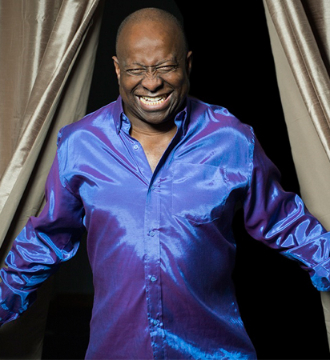
Tina C is the American multi-award winning country music singer and comedy alter ego of the English comedy writer Christopher Green. Brighton Spiegeltent was packed full with followers of Tina C as this character has built up a cult following in the comedy world over the years and the busy audience showed she has plenty of pulling power. In Tina C's 20:20 Vision, it’s her ambition to run for President in the next American elections and 'make America great again'. The show starts when Tina enters the room through the audience, singing and creating a high energy presence, making the audience laugh from the very offset. Dressed in sequins, the highest heels and cowboy hat, Tina C takes to stage and we hear her plans to become the next President in the White House. The show is peppered with well-written satirical songs sung in true country style, including Am I Spending, Am I Breathing? The multi-talented Tina doesn't only sing her songs, she also plays the guitar and piano. In this politically themed show, Tina sends up Brexit, religion and politics in a way that only a character like this can. Some of her throw away lines are absolutely first class. There were also extremely funny observations about Brighton, which the Brighton Fringe audience completely related to.Tina C is a captivating, glamorous character whose cheeky non-PC views and capitalist thoughts kept us fully entertained and laughing throughout. The hour show goes by very quickly and the big number for the finale got everyone singing along. As Tina C left the stage the way she came, through her adoring audience, I think we were left wishing Tina C actually could run in the next American election. We currently have a reality TV star as American President, so why not sequin wearing, country singing, all-American gal Tina C? If you get the chance to see Tina C's 20:20 Vision then don't miss it.

Brighton Spiegeltent • 31 May 2018 - 2 Jun 2018

The War of the Worlds

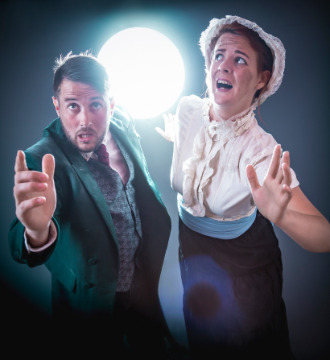
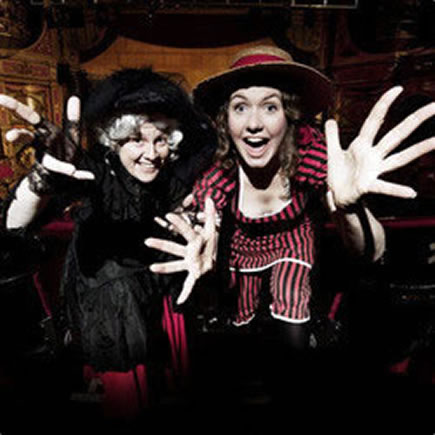
There have been many adaptations of the book War Of The Worlds by H. G. Wells, the ultimate sci-fi tale of Martians coming to invade Earth. Orson Welles, Jeff Wayne and Steven Spielberg have all famously turned at their hand at it, but at this year's Brighton Fringe the award-winning performance group The Pantaloons presented their very own unique adaptation of this famous piece of literature.Whilst the audience took their seats the cast of four actors were already on stage, and warmly welcomed everyone as they arrive. Then, once the show started, three of the four cast members picked up instruments to begin the opening song which immediately created an amusing atmosphere; we quickly realised that this will be the story of War Of The Worlds with a comic twist. Wells' story is then performed with the four performers playing all the characters. I thought this was going to be quite confusing trying to keep up with the quick changes, but it was done incredibly well and it was incredibly funny as a result, especially when the odd moustache kept falling off. The cast are not only good at acting, they’re also very good at improvising, especially when there was a little technical problem with the sound during the show, and their ad libs to the audience throughout the show were very quick and smart. Even though The Pantaloons' version of War Of The Worlds remains faithful to the original book, humorous references are made to popular sci-fi films, including Men In Black and ET. When the Martians appear in the show, the effect is done simply, yet effectively, with just a blackout and a suspended swinging light bulb whilst dramatic music is played by the cast. It doesn’t sound like it should work, but it really does. The multi-talented cast are so high energy and enthusiastic it’s hard not to be drawn into their farce-like interpretation of the story and they work together extremely well in this ensemble piece. Unfortunately, this was the very last performance of The Pantaloons' War Of The Worlds or I would highly recommend seeing it.

The Warren: The Hat • 25 May 2018 - 28 May 2018

5 Encounters on a Site Called Craigslist

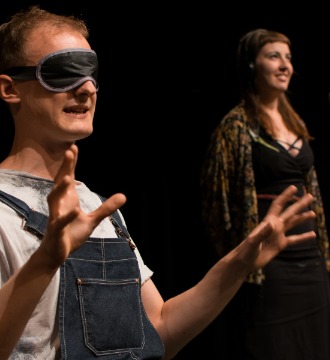
Craigslist, for those unfamiliar, is a site where people can advertise jobs, sell things and also meet people for 'casual encounters' – which basically means no strings attached sex, so I was unsure what to expect from the one man show 5 Encounters On A Site Called Craigslist by Sam Ward.At the top of the show Ward asks us to remove our shoes – not sure why, but it was quite nice. He then tells us he has had encounters with women, but these are five stories about hook ups with men. He asks if we have ever heard of the social researcher psychologist Arthur Aron. Aron came up with 36 questions to ask your partner to help you find real intimacy and love. I’m not really sure why this was relevant as Ward didn’t want intimacy with the people he was advertising for on Craigslist. Unless his idea of intimacy is a hook up in a public toilet.Audience members were asked to join him on stage to help him tell the stories of his encounters, which included them peeling a carrot, rubbing pants on a microphone to popping balloons. This was confusing and distracting to his stories. However all five encounters were more or less the same. The strangers came and left.In one part of the show, the audience were asked to write on paper what they regretted not saying to someone. You had to to start it by writing 'I just wanted to say' then pop it in a box if you didn’t mind it being read on stage. An audience member was used to read them out, but Ward self indulgently started shouting about himself over them. Upsetting, as some people had clearly poured their hearts out in what they had written and it couldn’t really be heard.This was followed by Ward unnecessarily taking all his clothes off. I’m guessing it was to bare his soul or maybe he was hoping someone in the audience might be his next encounter. The hour and five minute long show over ran by 20 minutes and I looked forward to putting my shoes back on.If Ward really wants find love and intimacy with the 36 questions he discussed throughout the show, I’d suggest not going on Craigslist. I think the show was meant to be like group therapy, but I came out more confused than I went in.

Marlborough Theatre • 11 May 2018 - 12 May 2018

A Beginner's Guide to Bondage

Fifty Shades of Grey was the bestselling book that gripped the world with its stories about Mr Grey and his sexual appetite for pain and pleasure. I found no pleasure in the book and after several chapters gave up. So when I went to see the one-woman show A Beginners Guide to Bondage by Sara Mason I wondered if this would be more pleasurable. At the beginning, Sara tells us that the real life world of BDSM and bondage is nothing like the book Fifty Shades of Grey. She says you don’t have to be mentally damaged or rich, like the book's main character Mr Grey, to be into the lifestyle. Through PowerPoint and props, Sara tells us about the real life experiences of her alter ego - the dominatrix Mistress Venetia. Dressed in thigh high boots and PVC, she recreates the scenarios of her dungeon and talks about all kinds of clients she has encountered in a very amusing, but informative, style. One minute the audience are laughing and the next gasping with some of the things her clients like for sexual pleasure. Members of the audience volunteer to help Mistress Venetia and are led around like dogs on leads and others are spanked. This makes the rest of us roar with laughter. It’s all done safely and no one is really hurt. Via PowerPoint we learn about different types of sexual deviancy and the audience seemed to be listening intently and learning a lot.Mistress Venetia is very high energy, but tells us spanking someone for hours can be exhausting. The dark point of the show is when she tells us about a client who killed himself. This makes the atmosphere serious and silent, but quickly Mistress Venetia takes control again and makes us laugh with her ideas for new sex toys. Sara Mason has written a show that's informative, fun and a little bit naughty. She’s a natural storyteller.

Laughing Horse @ The Quadrant • 7 May 2018 - 3 Jun 2018

Bin and Gone

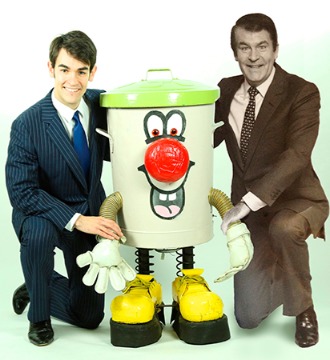
People of a certain age will remember Ted Rogers hosting the quiz show 3-2-1 on Saturday nights. It ran for ten years, between 1978 to 1988, with an audience of 14 million viewers. It had cryptic clues that were almost impossible to solve. You could have won a car, but if you lost you got the infamous Dusty Bin. Basically, Dusty Bin was a Bin with a face that moved across the studio via remote control and he became a TV star. But times were simpler then and the world was a more innocent place.How did Ted Rogers get to become a household name, how did he end up working with a bin and how did things go so wrong? Bin and Gone is a one man show written by Tom Glovers and performed by Danny Rogers, son of the late Ted. With a basic set and minimal props, Danny takes you on a roller coaster ride of his late father's struggles in both show business and family life. Most of us just remember Ted Rodgers as a game show host, but before that he worked as a comedian, impersonator and singer with some of the top performers of the day, both here in the UK and America, including Bing Crosby.Danny Rogers uses impersonations throughout this show. He impersonates the different people in his father's life. These aren’t the best impressions, but that’s not important as it doesn’t stop the emotion of the piece coming through. The life of Ted Rogers unfolds in front of you and you discover he was so much more than 'Mr Saturday Night'. Along with the comedy came the tragedy and we learn how that affected Danny Rogers' life as a little boy. When Dusty Bin makes an appearance on stage the audience was intially thrilled, but we soon then learned of the love/hate relationship Ted Rogers had with his metal co star.The show is an hour long and, in that time, Danny Rogers has so much feeling and passion in his performance that it’s clear he misses his late father. This tribute he has written does him proud. I recommend going to see Bin and Gone if you were a child of the 70s and 80s. I would also recommend taking a hanky. You’ll need it as you’ll be laughing one minute and crying the next. Ted Rogers may have 'bin and gone' but he's certainly not been forgotten.

Sweet Dukebox • 7 May 2018 - 12 May 2018

Dave Benson Phillips: Christ, I Thought He Was Dead!

Dave Benson Phillips used to be on children’s TV all the time. Most of us remember him from the classic show Get Your Own Back where kids could get to gunge their parents or teachers. His career was going extremely well until internet trolls proclaimed he had died. To further the trolling, they pretended to be his agent and got his shows and appearances cancelled because he was dead.Dave Benson Phillips wasn’t dead, but everyone thought he was. He even called Chris Moyles to get on Radio 1 to prove he was alive, but was told "Don't be so sick. You are pretending to be him. Dave Benson Phillips is dead". Christ, I Thought He Was Dead is a one man show written and performed by not-dead Benson Phillips. It's about how his showbiz career was almost ruined by internet trolling. He tells his journey via PowerPoint and props. From his first performance as a boy with a rubber chicken, to getting on TV then becoming friends with Johnny Depp.When the effects of internet trolling comes up things become very dark – the mood changes and you realise how someones livelihood can be ruined by cruel insensitive people. However Benson Phillips still gets everyone to laugh again, especially when a bucket of gunge was brought out. Throughout the show Benson Phillips shared his showbiz anecdotes in a way that made it comfortable for us to ask questions, creating a fun and relaxed atmosphere. So I’m pleased to report that Dave Benson Phillips is very much alive and still a great entertainer for both children and adults.

Sweet Werks 1 • 6 May 2018 - 7 May 2018

Doppel Dietrich

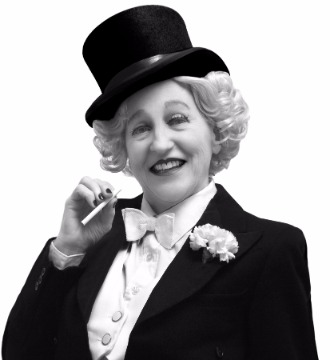
Marlene Dietrich was born in Germany in 1924 and became a huge movie star in America back in the days of the Studio System. She was a strong independent woman. She answered to no one and even said "NO" to a request from Adolf Hitler - if you think strong, independent women are only a recent thing then you are very wrong.Doppel Dietrich is a one-woman show with Patricia Hartshorne who looks uncannily like Dietrich as she takes to the stage. Hartshorne plays the part of narrator and Dietrich in a very informative and entertaining way. The on-stage costume changes are very well choreographed and the changes between narrator and Dietrich are seamless and easy to follow. Bonding and engaging with her audience with ease, Hartshorne takes us on a journey of the rise of Dietrich’s fame from a young girl to an old lady. This is done through stories about Marlene and her infamous songs which Hartshorne sings and sings very well. When Hartshorne sings the song Where Have All The Flowers Gone?, a song that Burt Bacharach wrote when he worked with Dietrich, there was hardly a dry eye in the house.There were fascinating stories in the show about how Dietrich would not be controlled by men or anyone else. She was the controller of her destiny and even told Hitler she would not leave Hollywood to return to Berlin when he requested she came back.In fact, she became an American citizen and made a significant contribution to the war effort there.The show is a great tribute to Marlene Dietrich and in the short interval the audience could be heard busy discussing the facts that they had learnt about this movie star.It’s obvious that Patrica Hartshorne is very passionate about the subject of Marlene Dietrich and has done a lot of research on her subject and this shines though in the show she has created.

New Steine Hotel, Bar and Bistro • 4 May 2018 - 3 Jun 2018

An Actress Prepares

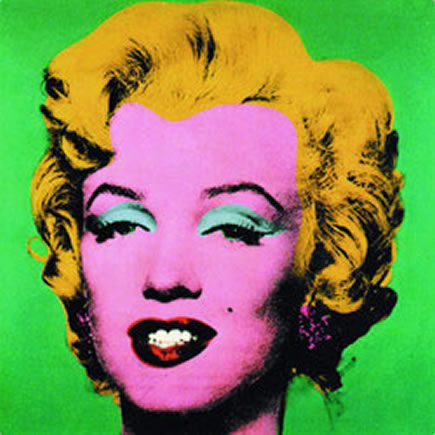
Irina Diva performs Marilyn Monroe’s last given interview in an unfurnished black box of a stage, with a pair of heels and a blonde wig the only objects in a timeless space. Diva is small, dark haired and wiry, and she speaks with a thick Bulgarian accent – she is not trying to be Monroe, but rather to bring her words new life. This accent brings an interesting, foreign quality to the language and gives it an imaginative placelessness that would have been lost with a forced American accent. She performs the monologue, which ranges over such subjects as childhood, stardom, success and happiness, with an intensity and dramatic flair that set her out as an innate actress. All her actions are poised and full of energy, there is nothing loose or baggy about this performance and she doesn’t totter once in her four-inch heels. In the second half of the show, a silent man (Graham Elwell) comes on and helps dress the actress. Throughout this, Diva faces away from the audience – we see her bodice being zipped up, her shoes slipped off and swapped for the other pair, her fishnets pulled up, but we do not see her face. Although Diva’s voice is wonderfully expressive, and it is easy enough to hear what she is saying, some of the vitality of the first half is lost with the loss of her animated face. It puts the audience in a state of anticipation, and when the blonde wig is finally put on and the transformation complete, we expect the performance to move into a new gear. What follows is a comment on Monroe’s powerlessness and confusion in her final years. The show is sadly too short to do justice to either actress, (when I saw it, it ran to only half and hour) and the noise from the bar outside can be distracting at times. If this was turned into a full-length show it could be unmissable, as the subject and performer are both vitally gripping. Still as it is, it is a highly wrought and intense show - worth seeing.

Unknown • 1 Jan 1970

Ali Cook: Pieces of Strange

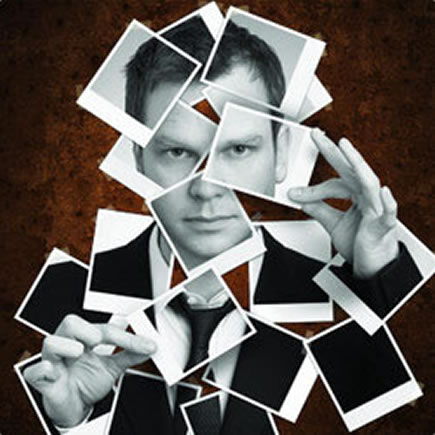
Looking more like a cheeky London chap than a mysterious magician, Ali Cook blends comedy and sleight of hand to create a great show that will keep you laughing and leave you speechless.Cook’s easy-going patter and use of audience involvement immediately endear him to the crowd. The first half of the show, following an incredible trick involving a duck and chicken, relies heavily on his comedic abilities, combining jokes on fatherhood, smoking, depression, and gently teasing audience members. These small routines inevitably result in a trick, and though most are traditional sleight of hand - producing things from behind ears, pulling goldfish from thin air - they are all astonishing. Only occasionally can you predict what will happen next, and even when you think you can see how it’s done it’s impossible to pinpoint it. Then come the truly astonishing acts, during which the audience’s laughter abates to nervous giggles and then gasps. Cook’s mindreading abilities are unfathomable, and even when you think the trick is over, there is another revelation to makes you rethink all that has come before. His razorblade act provokes mixed audience reactions – those that don’t use their hands to clap have them over their eyes. The finale, a variation on Houdini’s famous escape from a locked water tank, is the climax of the show and a fantastic note to end on.If you like comedy and magic, and don’t mind getting a little splashed, then this is the show for you. If you don’t like any of these things, go anyway and sit at the back – you might not get wet, and Cook will convert you.

Unknown • 1 Jan 1970

Angel City

In Sam Shepard’s vision of a self-destructive Hollywood nightmare, art, consumerism, film and popular culture are used and abused to hallucinatory effect. Rabbit Brown arrives at a failing LA film studio to save the day, or rather to create a disaster big enough to save a film project worth billions. The characters descend collectively into madness, if they were not already mad. Peculius Stage brings Shepard’s poetic script to life with sizzling vitality. Each actor fully inhabits his own warped character; whether they are spitting words at each other or desperately monologuing, it is the poetry and language that dominates. From the fast-talking producer Lanx to the cynical drummer Tympani (for whom ‘good moods are worse than plasticine cups’), the characters are all actors in one way or another, furiously calling for attention and each playing the impossible roles assigned to them by the company. The West as a place for ‘looking inside yourself’ becomes more than just a metaphor as the characters start to act out their fantasies. Tympani (Ben Salter) becomes a diner chef, frying eggs on his drums, Lanx (Tyrone Huntley) furiously punches the air as a boxer, while Miss Scoons (Elle Nunn), a secretary combining 50s pin-up and a Barbara Cartwright novel, crawls around on the floor as an Irish nun. Rabbit too falls and during an intense and violent battle of words between him and the green-skinned, wild-haired Wheeler (whose costume is reminiscent of The Mighty Boosh’s Old Greg, with all the weirdness intact) the audience is left wondering who they can trust. This tightly controlled production’s small stage and tiny auditorium increase the feeling of claustrophobia. The script has been heavily edited - perhaps this is what creates the confusion; however, the story lends itself to kaleidoscopic jumble and is unlikely to be any clearer, even in its full form. This is one of the strangest plays I have ever seen, but extremely gripping for all that. A wonderfully surreal and messed-up trip.

Unknown • 1 Jan 1970

Anthony Burgess 'A Clockwork Orange'

Fourth Monkey’s Clockwork Orange smolders with a visceral energy that flares into violence at the slightest excuse. Telling the story of Alex, a young vicious thug, and his friends who rape, abuse, beat and kill without hesitation, the play assaults the audience’s senses. It uses a mixture of powerful classical music and thumping dance beats, combined with soft filament bulbs and flashing strip lighting to keep the audience in a constant state of discomfort.Like Alex during his later Ludovico Treatment – which robs him of the ability to do wrong – we are unable to look away from the violence and horror. A blood-stained umbrella is put to use in a rape scene, realistic vomit bubbles into a bowl but the audience watches on, transfixed. Through the mayhem, Amy Brangwyn’s Alex swaggers and leers, demanding and receiving attention and respect from both ‘Droogs’ and audience – she is a dominating presence in any scene. Brangwyn is just as believable as a blubbering, sycophantic wretch, capturing perfectly Alex’s mixture of vulnerability and hatefulness. The rest of the cast create a strong, menacing chorus. Individual characters feature briefly and melt back; Mr Deltoid (Bianca Beckles-Rose) is a slimy representative of good no better than evil, Dr Brodsky (Ellen Rose) moves like a lascivious puppet.The violence can become too much, giving the piece an unrelenting single tone. This is offset by Gianni Tozi’s Chaplain and F Alexander, played with a gentleness that is a welcome relief from the rest of the play. Occasionally the cast bursts into raucous, swaying song: combined with the checks, buckles, puffed sleeves, hoods and harem trousers of the costume, this lends the show a dark carnival atmosphere. Even their curtain call packs a punch. This is a powerful, demanding adaptation of Anthony Burgess’ classic, and is not to be missed.

Unknown • 1 Jan 1970

The Ark

A mismatched group of animals wait in the shadow of the wave, facing the prospect of being left behind. A tortoise, a chicken, an elephant, a lion, a fox and a hare all queue patiently. Not forgetting Anthony, the ant. Act One productions doesn’t fight stereotypical animal characterisation. Tom Wansey plays a finickity old Tortoise who can’t say his ‘r’s, while Ciaran Price enunciates fully as the conservative blue Elephant. Sophie Brown’s opening sequence as the hare is beautifully choreographed, and she brings this balletic ability to the rest of her performance as a refreshing addition to the other characters who have been waiting for so long already (the hare of course fell asleep on the way). This use of animal cliché is not overdone, but used intelligently to lend a warmth to the production and raise a laugh from the audience. There is a particularly wonderful sequence in which a dramatic fox (Rhys Williams) recounts the trials they are holding to pick the two best examples of each species; foxes must outfox each other, snakes be the most slippery, rhinos the most thick skinned. This is all enabled by the well-designed set – posts and ropes become boats, boxing rings, jungle vines and oars and are manipulated with skill and precision. Music from the onstage musicians (who double as a trio of hilarious news-reporting fish) supports the drama, and often swells into song – ‘the animals went in two by two’ becomes ‘the animals waited in the queue’ and haunts the production. Funky Time is also a real pleasure. The tie-died boiler suits that each creature wears are creative genius on the part of the costume designer; perfectly customised to create a vibrant group, each suit is individualised according to their species, with an umbrella as a tortoise shell, rags as tails and carefully furred ears.This is a beautifully conceived production that brings the physical and the fable together to create a funny and touching show. Working in jokes about the bankers and coalition governments, The Ark turns a modern eye to the old tale and winks.

Unknown • 1 Jan 1970

Asbo Fairy Tales

A heavily pregnant fairy, a yuppie Goldilocks, a Jeremy Kyle-style King chatting to a jilted Snow White, Burbery-wearing rats. These are all guaranteed to get laughs as the young cast move through the different tales, each with a modern-day twist for Britain’s ASBO-culture. Though the sketches are predictable, they are enjoyable, and easily play with stereotypes of Britain’s yoof with knowing references to cider and fags, skins, skunk and daytime TV. The young cast obviously enjoy what they’re doing and this enthusiasm gives the show a vitality and energy that keeps the pace snappy and the sketches slick. The parade of familiar stereotypes becomes slightly dull after a while and since the cast is obviously skilled, it seems a shame they haven’t stretched themselves to explore more real characters.With their nice middle-class accents, their constant mockery of chavs in hoodies and cider-swigging single mums becomes a stereotype in itself, which makes the final sketch all the more refreshing: a neo-hippy Goldilocks squats the 3 bears’ house to create a peace commune for educating the common people - when the common people arrive, her disgust is tangible, and she is shown for the pretentious girl she is. Moments like this show the wit and intelligence behind the play, while the range of accents and characters used by the cast suggest that they could all go on to do much more creative shows in the future. Characters such as Pot-head Jack and his mum in Jack and the Weedstalk are particularly well done.At times funny, with many clever elements to its design and script-writing, this show doesn’t quite fulfill its potential. The cast’s Fringe future looks bright.

Unknown • 1 Jan 1970

At the Broken Places

The mixture of teenage angst and guns never ends well, but proves to be a gripping formula for TV, film and drama cashing in on the world’s fascination with high school shootings. This sobering production by Savio(u)r Theatre Company (a company which includes actors from both America and Britain) holds back from depicting the shootings themselves, but instead shows us a community struggling to face up to its past twenty years later. On the twentieth anniversary of a fatal shooting, Sierra High School is organising a play reenacting the tragedy that has made their school synonymous with violence for so many years. A wearied headteacher, a zealous father of a dead son, a fanatically religious mother, and a drama teacher in way over his head, are some of the adults who fight themselves and each other on the edges of this planned production. The young cast, who weren’t even alive at the time of the shootings, are dealing with their own crises of self as they try to embody their parents’ twisted classmates. This makes for a gripping and emotional play, and Joseph Horton’s script tempers teenage melodrama with adult cynicism, creating a well-balanced and tightly written piece. Though the school and event are fictional, extracts from the diaries of the killers at Columbine and other schools have been used to give the monologues a rawly visceral quality. Jamie Biddle pulls off these speeches as Nic-playing-Kit with the manic enthusiasm of a kid who plays too many computer games. As the play progresses and Nic gets more involved in Kit’s character, and the dead begins to influence the living a little too much, Biddle’s performance can err towards the pantomimic. The quieter Eli (an excellent Kieran Hennigan) becomes much more interesting next to his brash friend, giving the audience an opportunity to consider the potential within ourselves to become killers. These are just a couple of the intense performances that make this such an involving piece. Zoe Swenson-Graham displays extraordinary skill, switching between the over-enthusiastic teenage Melissa and Kim McDonald who desperately clings to her faith at the expense of her daughter. Clare Latham is spot-on as the headteacher trying to hold it all together, while John-Christian Bateman is an intensely emotional Ed Marks, unable to let go of his dead son. Some of the looks and glances exchanged cannot have been scripted, and are the result of either brilliant direction or an innate ability for naturalism in the cast. Other directorial decisions enhance the atmosphere; using audio footage from real shootings for scene changes grounds the play in reality, while having the whole cast on stage at all times, scribbling at the back like school kids creates a claustrophobia and intensity the play needs. This is a slick and well-put together production that leaves room for thought.

Unknown • 1 Jan 1970

Author

An author, two actors and an audience member discuss Tim Crouch’s last play, an unnamed and violence-filled two-person production whose effects on the actors and writer are slowly revealed.Placing the actors amongst the audience, Tim Crouch blurs the line between performance and reality, at first unsettling us, then lulling us into a sense of jovial companionship as the actors unfurl and engage with the people around them, constantly checking that we are okay, can see, are enjoying ourselves. Gradually, we become aware of darker associations between the characters, relationships in which we’re no longer willing to be implicated. The Author sucks you in, carrying the audience along on the soft-voiced poetical story-telling of its four main characters. Tim Crouch, playing himself, weaves images skilfully in the air, and though the script constantly forces interruptions, it rarely jars and the actors swap lines like trapeze artists; pauses leave the audience dangling, wondering who will go next. Although initially Esther Smith seems a little vapid and uninteresting next to the weightier male actors, her physical imitations are powerfully visceral and shocking, suddenly bringing visual violence into the softly-lit auditorium. Violence is an undertone throughout as the language becomes cruder and the descriptions increasingly shocking and graphic. The climax of the piece is told in total darkness, Crouch’s disturbing confession carrying across the space.There are unexpected musical interludes, odd music choices (The theme tune from Taxi I was informed by my neighbour) that shake the audience out of the experience and provide a background for awkward chatter. The lights fade, flash and rise randomly – sometimes (as with Crouch’s confession) these increase the drama, but other times they are distracting and confusing. Audience participation is encouraged, but when it is not directly called for, the actors don’t really know what to do; when an elderly gentleman asked if they could speak up, he was told that they were going to follow the script, and ignored. Dependence on audience means this production will change and develop as the run goes on, but it will undoubtedly remainan unsettling and gripping piece of drama.This is a play about the insidious effects of extreme violence in theatre: on the writer, on actors, and on the audience, playing with this old device to new effect. The Author brings horror unflinchingly into the room, seating it next to us, forcing us to look it in the face and accept a Malteser afterwards.

Unknown • 1 Jan 1970

'Ave a Banana: A Knees Up Through Time and Space

Make sure you are on time for this show: you’ll get enough exercise during this hour-long musical romp without sprinting down Nicholson Street beforehand. If you do arrive, sweaty and out of breath, someone has had the genius idea of creating fans from fliers, so you can keep cool even as you whoop, sing, wave and get your knees up. Nana, Rosie, Cyril and Beryl lead a willing audience through a mixture of traditional music-hall numbers and re-workings of newer songs, teach us what to do in time-travel emergencies, and how to cure a dreadful time-travelling disease that is a bit like the bends. The audience barely need encouraging to join in, and even if they did the warm and cheeky smiles of Rosie (Amanda Gettrup) and Nana (Jools Voce) would have them immediately on side, singing their lungs out. Their patter between songs is a jolly cockney mixture of ‘good ole’s and ‘golly gee’s that draws the audience in, and there’s a good deal of comic ad-libbing. Seiriol Davies, the only man and a singular piano-player, is brilliant as musical backbone and straight(ish) man for the others to bounce off. He laughed so often that I was unable to tell if he was corpsing or if this was just part of his character. Whatever, the audience love him and laugh along. Beryl (Antonia Mellows) is a timid companion to the other larger than life characters. The audience joins in with the sing-songs from a song-book slideshow. Such classics as ‘Knees Up Mother Brown’, ‘Roll out the Barrel’ and ‘It’s a Long way to Tipperary’ get a raucous outing - you can see why the venue have put them high above and away from the other shows! One of my particular favourites is a music-hall version of ‘Anarchy in the UK’ - who knew anarchists were so cuddly? Only one song falls slightly flat: Nana’s rendition of ‘Rehab’, lyrics re-imagined as ‘They tried to make me go to Hastings’ seems more contrived than the rest - 1066 seems a long way to go for a short song about bingo trauma. Underbling and Vow have created a show that is jolly good fun and a rollicking laugh - it will get you on your feet indulging in the kind of silliness you thought had been left behind in the good ole days. Those days are back!

Unknown • 1 Jan 1970

Babbling Comedy: The Perfordian Show

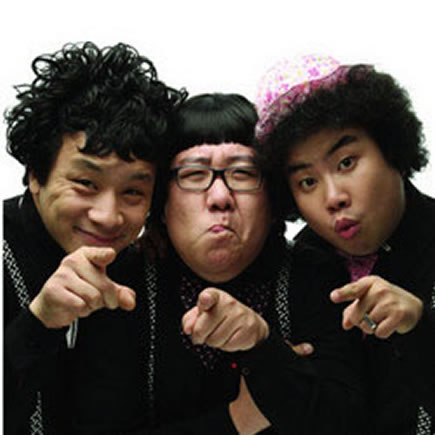
From the moment they step on stage, these outsize babies have the audience laughing uncontrollably. Even those who normally can't get past a grin are giggling. This troupe from Korea use mime, juggling, face-pulling and farting as they explore a toy box full of strange objects with the boundless enthusiasm of small children to create a show that never gets boring. The objects, ranging from loo-seats to extension leads, are the only props in the show, but it doesn’t need any more clutter - the performers are big enough to fill the whole stage with their energy. Loo-seat becomes magnet, just as other objects are transformed out of the ordinary to the audience’s great amusement. As well as these moments of imagination and wordless-comedy there are a few magic tricks to rival any magician at the Fringe and great juggling routines. At one point, someone starts to beat-box, building up beats, imitating planes, lorries. His skills are best on show as he imitates different dance styles and a dance scene is truly impressive (think Beardyman but fatter and wearing massive boxers held up with braces). This eventually develops into a full-blown juggling/beatboxing routineAll this is done without words - baby babble dominates and when a word is used it is garbled and barely recognisable. This only serves to increase the comedy, aided by their endlessly flexible faces. Despite the language barrier, there is an immediate and easy relationship between the performers and audience - at the end of the show there are handshakes and high-fives, and everyone leaves grinning.

Unknown • 1 Jan 1970

Bound

On the first day of their holiday, the mismatched crew of The Violet are forced to set sail once again, pushing further and further out to sea in their search for fish that will save their parent company from bankruptcy and thus ensure their futures. Bear Trap’s first production is a vital and engaging piece of theatrical brilliance that leaves you in your seat, shaken and stunned. It asks what love, family and loyalty mean today from a starkly original angle. The play advertises itself as ‘six actors, five chairs, one table and an ocean’ – this simplicity of set is one of the strongest aspects of the play. With no unnecessary clutter to distract from the characters, the stage is left free to be filled with their visceral energy, there is nothing for them to turn to except each other. The scene changes are smooth and almost dance-like, each one accompanied by a haunting sailor’s song sung in swelling harmony as they lift and shift the scant furniture to move from galley to skipper’s cabin to the bare deck of the ship.This is an ensemble piece in every way, yet no man is subsumed to the group, remaining vitally separate while tragically bound to one another. As they press further into the ocean and tensions mount, we see each character become more sharply defined against one another. Loud-mouthed Graham (Joe Darke) is in turns infuriating and genuinely likable, clashing against the wearied older Alan (James Jaggs), whose age and love for his wife set him apart from the rest. Dan Smith’s performance as Welshman Rhys is powerfully conceived. While no character can be defined as one thing in this play, Rhys is a study in human complexity, and Smith draws out his rage, compassion and fierce feeling for what is right in a delicate, lilting accent. The character of Kerdzic could have descended into Polish immigrant stereotype, but Tom Bennett keeps him real and sympathetic. John (James Crocker) and Woods (Jesse Briton) show the complex relationship between skipper and first mate, a friendship being tested to the extreme. Darkly serious scenes are often lightened by a cultural misunderstanding or undercut by a well-timed joke or bathetic comment. This brings welcome relief as the play heads towards its devastating conclusion. Recent East 15 graduate Jesse Briton has produced a script that is near-perfect; without triteness or sentimentality it is both poetic and visceral. I cannot stress highly enough that you go and see this show – this is not just an exceptional Fringe performance, but one that has broader significance in contemporary British Theatre as a whole.

Unknown • 1 Jan 1970

Cabaret Whore Encore! - Free

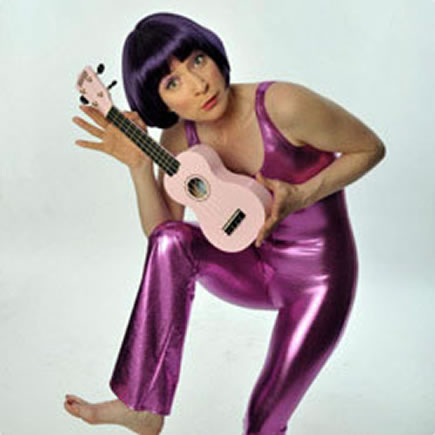
Sarah-Louise Young channels four very different, equally hilarious and rather odd women in this cabaret spectacular. From Bernie St. Claire, the aged diva with a Brooklyn slur, to La Poule Plombee, the masochistic French songstress, Young inhabits each of her characters to excess, shedding real tears and nailing the different accents, even when singing. Her strong acting and talent for imitation creates a hilarious range of parodies (the hysterical Australian spiritualist raging about sheep is particularly wonderful) that nevertheless rise above parody to become real characters in their own right. Carsha, dressed in a pink catsuit, is a quiet, warm antidote to the brasher characters, swaying with her oo-kelele. What all four characters have in common is Young’s powerful singing voice, with its impressive range and ability to fill the space, whether she is singing jolly rollicking tunes or melancholy ditties. She also creates an immediate rapport with the audience that lasts through all the characters, and leaves people feeling very generous at the end of the evening. I think most of the audience would join me in my disbelief that this is a free show – it is as good if not better than anything you’d pay to see in the Fringe. Warm-hearted, hilarious from start to finish, this is a show that will be full night after night, so get in there soon!

Unknown • 1 Jan 1970

Calling for Silence

I have never been the sole member of an audience before. When I am told that I will be the only person watching Calling for Silence this evening, I am rather apprehensive. The flyer tells you very little about the show, only that it will be ‘an intriguing project journeying into the unknown... an exciting new experience’. I’m nervous that having their only spectator scribbling away in the front row will be off-putting for the actors. I needn’t have worried. There are no actors in Calling for Silence. Nor is there any set. The show starts with a traditional blackout, then a slow rising of the lights on stage. Suddenly, the house lights are switched back on and the tiny room buzzes under fluorescent bulbs. I sit for five minutes, ask for the air conditioning to be turned down, flick through my notebook and check my watch before I realise the show has actually started. For twenty minutes I listen to the erratic hum of the air conditioning and some birdsong that somehow finds its way to the windowless room in Jury’s Inn. After twenty minutes the house lights are switched off, the warm glow of stage lighting rises once again. Then it’s over. Tentatively, I clap. The press release handed out afterwards tells us that this show is inspired by Beckett’s ‘Not I’ and is an exploration of the question ‘what is theatre?’ Sparked by a discussion at school, students Jess Rankine and Victoria Wareham have brought the empty stage to Edinburgh, removing both actress and text that appeared in Beckett’s play. Their argument is that anything can be considered theatre as long as it is placed in the context of theatre. Pretentions aside, this show unfortunately just reinforced for me the fact that we were sitting in a conference room on the 8th floor of a hotel, not a theatre. Another consideration that I had the liberty to work out is that they are charging £5 for the privilege to sit in silence – that is £1 per four minutes of silence. Though I am unsure of its groundbreaking impact on theatre (a similar thing was brought to the Fringe a few years ago, only it was an hour long), Calling for Silence is a welcome opportunity to escape the rush and racket of the royal mile. But you could equally hide in the café of Edinburgh’s Library for just the price of a coffee.

Unknown • 1 Jan 1970

Cardboard Metropolis

“This is life!” says Troy, spreading his arms wide, encompassing the tiny stage littered with advertisements and crumpled pearls of wisdom, reaching towards the slightly baffled audience. The Cardboard Metropolis is a one-act black comedy which pivots around the vacant character of Troy, a wide-eyed street kid who only speaks in advertising jingles. Around him circle the predatory characters of Jim (Alistair Faiers) and Vanessa (Natalie Rossetti), marketing executives of Corporation Incorporated, desperate to move Troy (Fergus Nimmo) from his impotent advert-worship towards the ultimate consumerist aim: buying. On the edge hovers Mr Zed, a dreamy, plum-voiced philosopher-cum-street-sweeper, who writes down pieces of wisdom that are either ignored or appropriated by Troy as yet another advertisement.Consumerism, a faltering economy, the symbolism of a city suffering from drought, all suggest a hidden political message, yet I was left struggling to find one beyond the tired cliché of ‘consumerism isn’t fulfilling us’. In this dystopian future, the spiritual is just another product, and there is no alternative to consumerism; Schrodinger’s cat cannot escape Felix and Iams. Explanations are rarely given and sugar-sweet switches suddenly to violent aggression. At times I felt as confused as Troy looked, stranded on stage being yelled at like an abused hobbit by the previously-beguiling Jim.Although Faiers is slimily convincing as grinning advertising executive, these violent switches between positivity and anger feel laboured and unbelievable. As the play progresses however, both Faiers and Rosetti become more comfortable in the double-dealing natures of their characters. Nimmo plays the semi-lunatic worryingly convincingly, and in the interactions between Troy and Vanessa, a real claustrophobia and sense of danger is created. It is in these small moments, when the characters actually engage with one another, rather than shouting or moralising, that the play really works. At times laugh-out-loud funny, and at others totally baffling, The Cardboard Metropolis is a brave piece of new writing that ventures somewhere into the absurd.

Unknown • 1 Jan 1970

Carnival Knowledge: Love, Lust and Other Human Oddities

When Naomi Grossman’s second self-penned show, Carnival Knowledge, premiered in LA, it enjoyed a sell-out, twice-extended run, and the actress was nominated for best solo performance at the LA Weekly Theatre Awards. You can see why. Carnival Knowledge: Love, Lust, and other Human Oddities is a tight, slick one-woman show which moves at the speed of a rollercoaster as Grossman takes the audience on a ride through her previous relationships. Ranging from a monosyllabic grad student, to Mexican arch-angel, with an exposed democrat, well-hung septuagenarian and home-owner from Ranch Cucamonga amongst others along the way, Grossman’s list of ex-lovers is long and hilarious.She populates the almost-empty stage with well-observed, perfectly executed imitations; whether she is sitting splay-legged, chewing open mouthed, speaking with a laconic southern drawl or sensuous Spanish accent, Grossman’s control is absolute. Her language shifts between the crude and the poetical, whilst her physical humour leaves the audience horrified and in stitches; her flexibility and comic timing is a winning combination. Given Grossman’s talent and control over her form, the use of a voice-over feels superfluous, particularly at the moments when she carries the signposts of her life from one side of the stage to the other; a device that splits the show into episodes, it would have been less jarring had she just read the titles aloud. The show has been sold mainly on its sex, but although this dominates much of the action, and often generates the biggest laughs, the piece is equally defined by its search into the meaning of love at all ages. Grossman’s show is funny, intelligent and at times moving, perfect for anyone who has ever been in a relationship or is about to embark upon one.

Unknown • 1 Jan 1970

Cautionary Tales

Hilaire Belloc’s Cautionary Tales were written in the late-19th century and have been in print ever since. People never get tired of reading about Matilda who told lies and was burned to death, or of Jim who ran away from Nurse and was eaten by a lion. Newbury Youth Theatre’s latest interpretation brings new life to the tales and is a perfect treat for all the family. The ashen-faced, wild-haired children and the three judges of the Children’s Correction Institute retell the stories with energy and vitality.The set and costumes are reminiscent of Edward Gorey’s dark and scratchy illustrations – everything is a little messy, a little off kilter. Mary Bunch who likes to munch, Jim Brown who runs away to town, and Louisa Green who’s really mean and the rest of the children are all brilliant – this is youth theatre at its best – and could teach some professional companies a thing or two about ensemble acting.At the beginning some of the words are lost in general shoe-shuffling, but as the play progresses, this becomes less of a problem, and the original rhyming text is given a powerful new energy, with perfect comic timing. The wonderfully puerile humour has even the adults sniggering, and the cast clearly relish their roles, throwing themselves across the stage, creating new and interesting stage pictures. Small hiccups are dealt with professionally and the actors don’t avoid eye contact with the audience, infecting us with their enthusiasm. My only criticism is that it runs a little too long; they can’t resist extending it a little further than necessary and though this is redeemed by the final joke, it still feels as though it should have ended five minutes earlier. This is minor compared to the brilliance of the rest of the play. With a lion, tea, crayons up noses, a saxophone solo and an African tribal chief this show lacks nothing. Bring friends, cousins, widow aunts: anyone who was ever a child.

Unknown • 1 Jan 1970

Commedia of Errors

Shakespeare’s Comedy of Errors tells the story of separated twins: Antipholus of Syracuse and his servant Dromio find themselves in the city of Ephesus, not knowing that this is the hometown of the brothers from whom they were separated in a shipwreck many years ago. When the friends and family of Antipholus and Dromio of Ephesus discover the twins’ Syracusan counterparts, the mishaps that arise from the mistaken identities lead to false accusations, arrests, exorcism and near-seduction. The confusing story is perfectly suited to the bright colours and slapstick comedy of Commedia del Arte. The numerous beatings, exaggerated innuendoes and archetypal characters need a committed cast to pull them off and the actors never shy away from taking these elements to their extreme. Though the masks are dispensed with after the first scene, the elastic faces of the cast grimace and pucker, stretch and gurn to great comic effect.Some of the more physical moments need a little extra work, but this tentativeness will be ironed out over the course of the run. In the scenes of slapstick violence – enhanced by the whistles and wooden claps of the on-stage musicians – it is the characters of the two Dromios that dominate. Not only are these twins physically identical, but Jackie and Claire Mosteller are equally impressive in their poise, comic timing and acrobatic ability. They have a vital energy that makes them the pivot in all scenes in which they feature. Often the Shakespearian language can come out garbled, and although the play is meant to be pacy, some of the actors need to slow down and consider the meaning behind the words. That said, the script is supported by the physical direction, and there are many notable performances particularly the larger than life Antipholus of Syracuse. An enjoyable and entertaining Fringe experience.

Unknown • 1 Jan 1970

Conical Decline of Everything

Headless Doctor presents us with the absurdist tale of Luma and Taph, two workers who spend everyday collecting four gallons of water and bringing it back. Everything is done with precision and a resignation that begins to shake in the face of violence and promise of revolution. Then a traffic cone appears and changes everything. The two characters complement each other perfectly: the dutiful worker and the one with ideas above and beyond his station. Abie Rahman plays Luma with a trembling terror that shows itself in every twitchy movement and wide-eyed blink – her habitual expression of horror never gets boring and she manages to be both comic and pathetic. Miranda Prag as Taph is slightly less successful, at times coming too close to acting the stereotype of ‘the revolutionary one’, lacking real depth. Unlike Luma, her character is not developed at all. It is hard to empathise with her smirks and unshakable indifference to the Leader. The moments of violence, executed with a grim satisfaction by the Warden (Sarah de Quidt) are well done. When an entire bottle of rice is poured viciously into Taph’s upturned face, the audience are all involved, sitting on the edge of their seats as she gargles, wondering when it will stop. This explains why the production team chose to use rice instead of water in the bottles, but the excess left on stage is an irritating background of white noise for the rest of the performance. This has all the trappings of the absurd: minimalist set, unexplained situation, the unrelenting tedium of everyday life and a menacing, unseen ‘Leader’. As a piece of absurdist drama, it really succeeds, getting laughs and leaving the audience a little thoughtful. Miranda Prag’s script is well written, making it easy for the actors to give natural performances. The script is well supported by the music, which adds to the dark yet comical atmosphere of the entire production.

Unknown • 1 Jan 1970

Crying Cherry

The Crying Cherry is the story of twins, Anaki and Kitano, destined to kill one another. When their mother hears this prophecy, she sends Anaki into the mountains to die; instead he meets someone who saves him and ultimately enables his destiny.Ian Bok and Maarten Heijmans graduated from the Amsterdam school of Arts with this show in 2007. Since then they have taken it to Prague, Dublin and Amsterdam, winning awards wherever they go.High-concept physical theatre, The Crying Cherry is performed almost entirely in faux-Japanese gibberish, and Bok and Heijmans have the audience utterly agog for every head twitch, guttural utterance and finger flex. New characters are brought to life through the simplest change of posture, and the actors imbue even the most recognisable stereotype with a sympathetic humanity. Geisha, samurai, dragon, crow: Bok and Heijmans embody them all as they jump, stretch, flip, spin and kick across the stage, defying gravity, sweating in polyester. It is astonishing and hilarious, and the combination of slick choreography and clowning is exhilarating to watch. Throat singing, body percussion, beat boxing and mime are yet more examples of the many talents employed in creating this whirlwind of a show.These guys deserve every award they’ve got, and will hopefully pick up more while they’re here.

Unknown • 1 Jan 1970

The Cure

Jude and Dylan have been friends since school. Now at university their relationship is closer than ever, except Jude is a lesbian and everyone thinks Dylan is gay. Working on an upcoming piece of performance art, they are constantly interrupted by the disturbingly violent Joe and Dylan’s well-meaning estranged father. The intensity of Sibthorpe and Batey’s performances gives the play a vitality and raw energy, pulling the audience along at a rapid pace. Sibthorpe is exhausting to watch; the character of Jude is manic, passionate, uninhibited, and she dominates the stage, at times tenderly pleading, at others laughing brashly as she stands pantless over her friend’s face. Sometimes this intensity can become a little too much, and the audience longs for the tone to change a little. Moments of relief come in the rare scenes when Dylan is alone. Batey is the perfect match for Sibthorpe’s restlessness: calm, reserved, he is the solid centre to the piece. As both characters battle their insecurities and pretensions, we are drawn in and long for resolution.Joe is the implacable strange flatmate that everyone knows. Reminiscent of Brian from Spaced, only less endearing, Hanes gives him an unsettling intensity that prevents him from being just a peripheral character. He provides a pivotal insight into Dylan’s character when he asks ‘do you actually like me?’ – we are swung from irritation at his character to a recognition of Dylan’s patheticness and unintentional cruelty in hanging out with someone he doesn’t actually like. George Pott’s father is another excellently observed piece of characterisation, inciting both pity and irritation from the audience.The show is tight, but can sometimes veer into the over written: too clever for its own good. Existentialism in the form of a revolutionary speech by Camus is interesting, but feels close to cliched teenage angst, or a revolutionary spirit that is not quite of this century. That said, the final scene using the speech is a powerful insight into Dylan and Jude’s relationship and leaves the audience wanting more.

Unknown • 1 Jan 1970

Dead

Based loosely on Ibsen’s ‘When We Dead Awaken’, ‘Dead’ follows artist Pauric Fermoy back to Ireland, his pretty young wife in tow. A self-imposed exile for thirty years, after his painting ‘The Virgin Vagina’ caused widespread outrage, Fermoy returns for a retrospective and encounters more living ghosts from his past. This is a very language-driven play, and Mark Elliston’s script crackles with vitality and wit. David Verrey as the irascible Fermoy relishes the one liners and obscenely lyrical insults that litter his speech, and these are a joy for the audience too. Lead Fintan McKeown was forced to drop out just over a week ago, leaving director Verrey to take his place, and though his performance is a little exaggerated at moments and some of the lines are too carefully recalled, this relaxes as the play continues and Verrey’s Fermoy is a powerfully realised character for less than a week’s rehearsals. His young Essex wife Adele is played utterly convincingly by Sophie Austen, who brings out both the naivety and frustration of the young woman married to a cynical and self-involved old bastard. As the play continues we are introduced to characters from Fermoy’s past. Elliston transforms Ibsen’s hunter into a predatory photographer, whose quick-fire exchanges of wit and insult with Fermoy are astonishing. Michael Power gives his character just the right mixture of feral cruelty and clear-headed insight to make Adele fall for him and the audience forgive him his sins. Deirdre, Fermoy’s lost muse, is played with a mad intensity by Mary Ryder, and though her acting and commitment never wavers, her accent is patchy to say the least. The set is minimal, as is usual for a Fringe production, and though this was sufficient to create the mood of a pool-side hotel, the play could have done with a little more variation, or perhaps added detail. The music that intercuts the scenes is interesting and modern, and provides the perfect pause between the wordy scenes. This is a highly achieved piece from a talented cast and playwright that should go on to bigger theatres and larger audiences.

Unknown • 1 Jan 1970

Deepchurch Hollow

Like all good horror-plays, Slippery Rock Theatre’s production of Deepchurch Hollow relies on odd noises, half-glimpses and the gradual increasing of tension to keep its audience on the edge of their seats.Alice Deepchurch (Jessica Kowach) has been pulled out of a secure mental institution and taken back to the hidden room in her family house where as a child she was locked for hours and experienced visions and hallucinations that have haunted her for years. Her social worker, convinced she is psychic and not mad, has assembled Alice’s sister, doctor and civil war experts to find out the truth. David Skeele’s play is perfectly paced, with gradual revelations that suddenly illuminate various characters and their secrets while keeping the audience in a state of suspense. Melodrama is all part of the genre, and is tempered by the cynical characters of Dr Steiner (Zach Nading) and Camille Deepchurch (Jackie Freeman). Camille is a bitch, but Freeman inhabits her so well that you can’t help almost admiring her. Kowach is the vehicle for this suspense and she plays the traumatised young woman perfectly, trembling and uncertain, keeping all eyes on her as she rolls, screams, cries and whispers. Skeele has created characters with sympathy: the dumb and dumber Seth and Tad, two civil-war nuts who re-enact battles for fun, could be annoying, but their kindness and passion for their subject is endearing and they temper the claustrophobic intensity that has been building to this point. The production is performed in a church hall, but would have been perfect in the actual church, with gothic pillars and the cold, damp air. Despite the lack of help from the surroundings, the production still manages to scare, using only a door and grave stone as props. The door becomes the focus for all the audience’s terror and we almost forget we are in a theatre at all. The gruesome and terrifying climax leaves the audience shuddering, and unprepared for the final surprise...This is a tight and well performed production that had me covering my ears and closing my eyes, and is well worth watching for a change to the more ‘artsy’ fringe shows. Just make sure you don’t have to walk home alone.

Unknown • 1 Jan 1970

Departures

Through a series of encounters and conversations in Airport waiting lounges, the storyline of John Godber’s Departures moves from gentle comedy to drama as the characters’ frustrations and desires slowly defeat them. Jim (Jonathon Taylor) is the managing director of an unspecified firm. He spends his life in airports, despite his terror of flying. We watch as his desire for the supple young PA, Zoë (a coy and intelligent Gabrielle Choo) grows; we watch as his relationship with the wife becomes increasingly strained. These two central relationships are surrounded by a host of other well executed characters, each with their own goals; Eva the Czech hooker, Steve, Jim’s philandering financial director, Annie, Jim’s daughter in love with a man older than her father.The young cast navigate their way through the nuances of the script and handle both the comedy and the drama with an impressive maturity. Taylor plays the wearied Jim with astonishing maturity, and manages to show the successive shifts in his character without being too obvious or descending into mid-life crisis stereotype. His character carries the entire play - in such a wordy play the challenge is to control both the language and emotion of the scene. There are quite a few stumbles and garbling of lines, but for the most part Taylor manages this excellently. The scenes with Choo are well-balanced: Choo manages to be alluring without being slutty, bringing out the quiet intelligence of the character. With a bare set and minimal costumes, the show depends heavily on its cast to carry the script, which for the most part is successful - though scenes with Eva (Sarah Callaghan) are slightly on the pantomime side of things. Excellently garbled airport announcements give the setting an air of authenticity. This is a strong production from a young cast.

Unknown • 1 Jan 1970

The Divine Tales

Best friends Jess and Gem, two struggling actresses, decide to go their separate ways after yet another unsuccessful audition and a bed fiasco. In search of success and spiritual enlightenment, Jess goes to LA, and Gem to India, but things are not as easy as they anticipated. The two friends complement each other on stage, and share an excellent sense of comic timing. Jess (Jess Luisa Flynn) is a larger than life character ready to sell her soul to any corporation, while Gem (Gemma Stone) is a born-again-Buddhist, struggling to keep her calm. Both play a host of characters in each other’s journeys: Stone is a slimy LA producer who slinks around the stage, while Flynn plays a gap-yah-inspired pot-head and a grimy-fingered guru who opens Gem’s third eye.The show doesn’t flow, and this is its fundamental problem. While the characterisation is good and some of the scenes funny, the format means they are split up into unsatisfying little chunks, while the scene changes between them are protracted and dull as the two actresses scrabble for yet another costume change. The set is well-designed and beautifully painted, while the small venue creates a necessary intimacy that allows both actresses to interact with us. If the scenes could be joined better, this would be much more enjoyable to watch. The Divine Tales is a fun and simple show, whose cliched moral message is one we can all empathise with.

Unknown • 1 Jan 1970

Dr Bunhead is Volcano Head

The stage looks like a science teacher’s nightmare: covered in tangles of wire, buckets and bins, the tables overflowing with mysterious bottles, flasks, gas-torches, tubes and an occasional jelly baby. Amid this mayhem presides Dr Bunhead (aka Tom Pringle) whom kids may recognise from Blue Peter or Brainiac. Manic, excitable but always in control (you hope) Pringle is a force in himself. After warming the audience up by teaching some observational techniques, Pringle leads into his first experiment, which involves a bang. A very big bang. In fact, much of the show involves bangs of some kind, and the kids love them, the bigger the better, whooping and shrieking. Without getting bogged down in scientific jargon, Pringle goes through the different elements that make up a volcanic explosion, starting with pressure. First he explodes a latex glove off his head, next a hot water bottle using liquid nitrogen. Bang, BANG! The experiments are just dangerous enough to have everybody on the edges of their seats, without ever being really worried for their safety. Throughout all the experiments, Pringle keeps up a relentless patter, talking us through what he’s doing, making jokes and sometimes talking to himself. When a glow in the dark liquid is compared to alien pee, or a frothing flask (demonstrating the pyroclastic flow from a volcano) to volcano diarrhoea, Pringle gets an uproarious reaction from the audience. Sometimes Pringle’s manic side crosses from funny to worrying and he can’t quite hide his exasperation at the techies back stage or the sound and lighting guys. This was the first show, so things were bound to be a little off-kilter, but instead of moving on, Pringle had a little jokey rant at the sound guys and by the end the laughter of the audience had worn a little thin. Most of the time though, he keeps us on his side. This is obviously a very demanding show and Pringle is a whirlwind keeping it all together. We are shown a tornado flame on stage and such incredible effects are my favourite points of the show, unlike the children sat in my row: ‘I liked the bit at the end best’ says Lawrence, 7, and his little sister agrees. They’re talking about what is possibly the biggest bang of the show: a coke bottle full of liquid nitrogen exploding inside a bin. BOOM!‘I’m starting school tomorrow’ says Madeleine, 5. Hopefully her teachers will have learnt some lessons from Dr Bunhead, because his show is a fantastic mix of the funny and the incredible, igniting an interest in the explosive side of science for all ages, even the old codgers at the back.

Unknown • 1 Jan 1970

Dusk on the River Nile

For the first fifteen minutes of Dusk on the Nile, it’s near impossible to work out what’s going on. We’re whisked from a serious man in Egyptian dress, to a group of dysfunctional actors in black. It’s all very confusing, and there is another of these strange jumps to come later, when the gods Isis and Osiris interrupt a performance of their story in order to tell it properly. Dusk on the Nile is (I think) the story of Isis and Osiris, their marriage, Osiris’ murder and Isis’ journey to find him again. The frame story of actors is unnecessary; it is not returned to at the end, and since Osiris’ story is not completed either, it makes for pretty unsatisfactory viewing.The acting is clunky and awkward; particularly in the scenes between the four actors where emotions feel forced, sudden anger flaring for the sake of some drama, without motive or point. Things get a bit better once Isis and Osiris come on. Ziggy Heath as Osiris brings some strength to his performance, instead of empty posturing, while Catherine Bennett as Isis comes close to real emotion.The use of lighting and sound to create different settings is good, especially in a night-time scene of crossing rivers. A falling flat was dealt with swiftly and professionally. The scenes involving ‘seductive’ dancing are cringe-worthy, though that’s not to say they aren’t atmospheric. Who knew the ancient Egyptians drank Californian white wine?This strange combination of the ancient and the new is mirrored in the writing. The language at times strains towards the poetic, and the actors show they are aware of this through ponderous voices and vaguely spiritual expressions. Between arcane language and storytelling, a forceful expletive will suddenly erupt. If they’re really angry, they might use two. Seth, Osiris’ brooding, murderous brother, calls his goddess assistant a bimbo: Osiris uses more ‘f****’ in one sentence than is grammatically possible. This use of language is totally jarring, and replaces any real effort to find a way of expressing strong and violent emotion. This is an hour of your life you will never get back, at dusk or any other time of day.

Unknown • 1 Jan 1970

The Fallen

This is a tightly performed and sensitively directed play about the process of bereavement and post-war trauma. With many shows at the Fringe dealing in some way with the Iraq war and its fallout, this show, performed with powerful conviction by its young cast, tackles the subject from another angle: those families left behind. A man (Thomas Bell) has returned home from war with no memories of his former self. His wife and son (Niall Bletchy) struggle to recognise him behind the rocking, mumbling shell. Thomas Bell is deeply convincing as the man, and uses Toby Quash’s tight script to his advantage, bringing a heightened intensity of emotion to the language. His committed performance goes so far as to make the audience worry for his safety as he throws himself around the stage, against floors and into baths. His quiet and saddened wife is another strong presence on stage; Izzie James has a simplicity of style and warm tone that give us an alternative world to nightmares and shelling. The former get worse as the man slowly begins to remember his own part in the atrocities that led to his memory loss. This regaining of memory is aided by a host of white boiler-suited figures who collectively push and harry him. These figures become more and more human as they move from within his mind to representing the other families effected by the loss of loved ones in war. The most moving scene in the whole show is silent, backed by soaring classical music as each figure steps forwards and creates a small freeze that seems to sum up the everyday moments of bereavement: trying to open a jar, attempting to fasten a necklace, collecting two cups of tea instead of one. In all these isolated instances, someone is vitally missing. Although it could have tackled the issue of war more directly, instead of its general soliloquies on loss, this doesn’t remove its power, only its selling point. The show is deeply moving, and a real triumph for the young cast whose control and passion are remarkable throughout.

Unknown • 1 Jan 1970

Figs in Wigs

Figs in Wigs sells itself as ‘an abstract piece of theatre reflecting facetiously on the absurdity of modern-day living’. Abstract is an apt word, as I’m not entirely sure of what the show’s storyline is, or if it has one. We start with a woman on stage: green wig, pink dress, oddly shaped bag. More women appear, in red wigs and there is a scene set in a speed dating session. Most of the story is told through the medium of dance, as in the speed dating scene, where men (thankfully without wigs) appear to dance with the chairs to delightful French pop. In a show with so much dancing, the music becomes a central element and all the tracks in this show are well chosen and enjoyable to listen to, enhancing the facetious atmosphere of the piece. Unfortunately, none of the cast are innate dancers and the choreography, though it can be interesting at times, often lacks imagination.One of the best moments is when the men and women act out a series of encounters between the sexes to the voice over of a kissing-coach from the 1950s. These moments are touching and comical but feel disjointed from the rest of the play. Most of the play, in fact, feels like a series of disjointed sketches on the subject of love and finding ‘the one’, while the continued use of the woman in the green wig (Rachel Gammon) suggests a storyline, leaving us searching desperately for something that just isn’t there. Between different dances (the electric-kiss dance is particularly good), saxophone solos (Oli Roy provides some fun jazz riffs), swimming routines and reading cryptic love notes, a cake on a trolley is wheeled around the stage. This happens so often that it begins to take on a greater significance, finally culminating when Gammon eats the entire thing on stage as the rest of the cast perform a bizarre dance around her dressed in flowery swimming caps.That the cast switches characters every night explains some of the lack of characterisation, and indeed confusion. They do this, I am told, for two reasons. Firstly, this is the story of how the search for a ‘one true love’ becomes narrower and narrower and everyone must have the experience at some point. The other reason is that it’s not physically possible for one person to eat an entire dark forest gateau every night.

Unknown • 1 Jan 1970

First Love

'What goes by the name of love is banishment, with now and then a postcard from the homeland, such is my considered opinion, this evening.' With Beckettian dry humour and a tendency towards the obscene, Gare St Lazare brings us First Love, the story of a young man banished from his family home upon his father’s death. Spending his evenings alone on a bench, he meets Lou-Lou, a woman he cannot seem to escape and who eventually takes him home. Gare St Lazare have considerable experience in staging Beckett, and this show comes towards the end of a successful tour of Beckett’s Trilogy that they have taken all over the world. Using the text verbatim, with no additions or ornamentation, Conor Lovett performs on a stage stripped, like the show, to its bare essentials. Decaying stone staircase, scuffed black floor, the curtain at the back raised to reveal the packed-away clutter of other shows. This lack of props is a strength, as the text speaks for itself. Lovett performs it with a sensitivity to Beckett’s language and brings it to life through gesture and mime. Often with lengthy monologues, empty posturing can make the performance dull, but Lovett never falls into this trap. His actions, without appearing over-thought, are always deliberate and serve the story he is telling. Occasionally he will hold a pose a little too long, but this is quickly forgotten when an extended grip on a stew-pan is flung away purposefully, or perch on a bench is stepped out of elegantly. The use of certain forbidden words cause gasps from some members of the audience, but no one seems shocked when we are directly insulted later on – there is a ripple of subdued laughter. This kind of laughter is engendered more than once; there is never a moment when the whole audience laughs, but different people recognise different elements in the script, and respond to them individually. This is the strength of Beckett’s text and Lovett never over-does a pun or bathetic comment, never forces the humour. Lovett’s performance is wonderful to watch, his expressive face and gestures bring us with him into parlours and graveyards, engage us fully as we watch him carve names into cowpats. The character is recognisable and removed, as he is both attracted and repelled by Anna (her name is changed, in true-Beckett style, half-way through), we see the inseparable natures of love and excrement, birth and death. For some audience members this might be a little too long – at 75 minutes it stands out from most shows on the Fringe – but I felt it was the perfect length for its engaging and powerful performance.

Unknown • 1 Jan 1970

Five Clever Courtesans

With Belle Du Jour a literary phenomenon and more and more women modelling themselves on the porn industry’s feminine ideal, it is the perfect moment for a play about the lives and lovers of history’s most celebrated courtesans. Venus has brought back to life five of her most valued representatives for just one evening: Nell Gwyn, orange-seller turned King’s top mistress, Veronica Franco a 16th century poet-courtesan, T’zu-Hsi the concubine cum dictator, Cora Pearl the erotic delight of 18th century Paris and Skittles, a Victorian dominatrix. All tell their own tales, dressed appropriately to their profession. Starting with a screeching Venus, the play can only improve, and it does. The women take it in turns to stride the stage, boasting about their skills. Emma Kate Baxter is reserved and elegant as Veronica Franco, who escaped being burnt to death by the inquisition because her influential lovers stepped in on her behalf. T-zu-Hsi (Ava Lyn Koh) is a forceful presence on stage, uninhibited by the fact that all she is wearing is a single red ribbon. Her sharp voice too is a relief from the single tone of some of the other actresses, whose breathiness and purposeful pauses don’t make them sexy, just annoying. Nell Gwyn (Georgina Panton) also escapes this trap: her cockney voice and bouncy stage presence are enlivening, unlike the heavy-footed movements of the ‘seductive’ actresses. The script is baggy and far too long – it could have been cut by half. After the stories of the five women, I wondered how they would drag the play on for another 40 minutes. It descends into repetition and squabbling. However, it is here that the meaty questions are asked: whether these women actually enjoyed what they did, if glamorising prostitution is a good thing, and whether women in modern society have a positive choice over their own sexual habits and bodies. Mostly though these issues are skimmed over, undermined by a saucy pun or simply left hanging. A gratuitous lesbian make-out session takes place, they all talk about how revered and envied they were in their own time, and everyone strokes themselves as they speak. This is far too often the standard action accompanying the women’s speeches, as well as lip-licking, sitting spread-legged and flicking their hair. This could be fine, but it is overused and gives the characters a unity of tone and action that is dull and clichéd. This show can’t decide if it wants to be a play about female empowerment or a titillating late-night burlesque show for the intellectual gentleman. It doesn’t fully manage either.

Unknown • 1 Jan 1970

Hamlet for Girls

Abi wants a baby. She really really wants a baby. Hamlet for Girls spans about three years in the lives of four friends, as Abi (Lizzie Conrad) and her husband David (Dewi Hughes) move through IVF treatment, hurdling auditions, promotions and arriving finally at a difficult realisation. Heather (Elena Popovici) must choose between love and poetry, and marriage to a drunkard. Hamlet for Girls asks how late is too late? The endless trials and conversations are carried out on a tight stage setting and the pace is kept slick throughout as scenes overlap neatly or play out simultaneously, cutting between a nineties bar, dingy cafe and indeterminate ‘home’ spaces. Considering how close all the actors are, there are a bit too many ‘phone’ scenes, the ring tones can get a little annoying and some actors don’t quite manage to convince that there is someone else on the other end. Elena Popovici does not fall into this hole; convincing throughout, she is constantly engaging to watch, and though I wouldn’t go as far as saying she has a ‘Mona Lisa smile’, she does have a real subtlety of expression, capturing changing emotion beautifully. There is clear chemistry between her and Jean-Paul (Timothy Randall), and their scenes are tight, escaping some of the cliches and soppiness of the other couple’s exchanges. Although Abi and David’s struggle is a moving one, their characters are hard to empathise with as the ‘I want a baby’ element tends to dominate, and we’re not shown a more interesting side to their personalities other than occasional hints at past abortions and absent fathers. At the beginning it feels very much like the actors are reading from a script, but as the play progresses everything becomes much more natural; as the cast get more involved, so do the audience. The music is a little distracting and badly chosen for some of the scenes, but this never undermines the acting or emotion of the scenes. Apart from occasional Shakespeare references, Hamlet for Girls doesn’t really have much to do with Hamlet, and its women issues surrounding marriage, career and babies feel a little dated. It is nevertheless a well-performed and engaging production.

Unknown • 1 Jan 1970

Ovid's Metamorphoses

Pants on Fire Productions place Ovid’s Metamorphoses in a 1940s world of bombers, wireless, BBC accents and gas masks. The tales, familiar and new, see Io raped in a blackout, Echo re-imagined as a can-do washerwoman, and Icarus in leathers and goggles.Starting with Juno and Jupiter fighting over whether women or men receive the most pleasure from sex, the play goes on to show Jupiter’s illicit love affairs and the brutal revenge that Juno visits on her rivals. The 40s setting works best when it is used to support the content of the stories; using silent film to portray the Narcissus story, or having air raid sirens replace the Sirens of Theseus’ journey enhances the drama and comedy; however, the clipped 40s accents the actors force on themselves are unnecessary and often constrain the emotional range of the language. Lucy Egger’s original songs in the music-hall tradition are wonderful, and there are a few tunes to really look out for - the heart-beat song at the beginning and Mercury’s (Eloise Secker) song - but all too often the cast seem under-rehearsed, and the songs out of their range. Jo Dockery is powerful as a furious, ranting Juno and dominates the stage beside the lesser gods and mortals, while Jonathon Davenport is a lecherous and charismatic Jupiter. Puppetry, music, dance, comedy – the production is a bursting and bustling show that tries to be everything. While they don’t always achieve the heights they aim for, they come damn close.

Unknown • 1 Jan 1970

Patrick Monahan - Stories and Tales for Kids, Who Can Run Faster Than Snails

Patrick Monahan’s show is a great piece of interactive storytelling that has children standing on chairs waving their arms wildly to be picked to help Monahan tell the story of a young shepherd boy and his flock of magical sheep. This interactive element is a double-edged sword. Though the children clearly enjoy taking part in the story, holding rivers and making evil monster noises, Monahan has trouble communicating his instructions to the kids on stage and remaining engaged with the rest of the audience. At times it feels like a slightly frantic drama class, in which no one quite knows what to do - some of Monahan’s routines are strained for time, the kids are too shy to really join in, and the audience to the side of the stage can barely see anything.That said, Monahan is a skilled performer. When he does tell the story he has the audience listening attentively, and there are some excellent moments of ad-libbing that have the kids in stitches. He talks a little too much and too fast for the really little members of the crowd, and tells jokes clearly aimed for the adults that don’t quite reach their mark. He is quite fierce and though his physical comedy has much of the audience shrieking with laughter, this could be scary for really young kids. Monahan’s skill lies in creating a really good relationship with his audience, and giving children what they want (water pistols, kung-fu fighting). It is a real shame that during the performance that I saw, he ran out of time, despite frantic attempts to move the pace along. This is something that will hopefully be ironed out in the future, though the interactive element means there will always be uncertainty. The show is a fun and chaotic way to spend the afternoon, but will only be really rewarding for those who get involved.

Unknown • 1 Jan 1970

Pinocchio

Indefinite Articles bring Pinocchio’s tale to life in a carpenter’s workshop, the familiar story helped along by the shouts of the audience. Pinocchio is discovered inside a piece of wood, and on the way to his first day at school he is distracted first by snow, then a circus, then led astray by a beguiling fox. Through a series of lucky mishaps, Pinocchio is reunited with his father for a happy ending.The endlessly versatile set transforms into snowy slopes, a rocking ship and a theatre for shadow puppetry, while Steve Tiplady’s dexterous hands bring to life gloves as French acrobats, a green peg as the talking cricket, brushes as a tricksy fox. The use of the various tools of a carpenter’s workshop to create the characters is innovative and a joy to watch - it reminds me of the way children play and Tiplady has the same rapt involvement. Pinocchio is a beautifully carved head and his body is the most inventive piece of puppetry I have ever seen. The relationship that grows between him and Liplady is delicately conceived, with all the difficulties of a real son-father relationship. Even as the audience are entering, they are absorbed by what is happening onstage - by beautiful clarinet music as Gepetto tidies his carpenter’s workshop and saws a branch into pieces. Steve Tiplady is warm and slightly gruff as Gepetto and the show starts slowly as he draws the audience in, engaging everyone in conversation, raising that favourite subject of birthdays and presents. Throughout the show, the audience is encouraged to participate, to shout out their suggestions and experiences - issues such as the first day of school and how to make a small boy go to sleep raise a volley of hands. This is miles away from the frenetic Disney version, and it seems almost sacrilegious to bring it up as Tiplady’s show is gentle and beautifully crafted, devoid of any cartoon garishness.

Unknown • 1 Jan 1970

Rosie Wilby - Further Science of Sex

Dressed in lab-coat and goggles, Rosie Wilby is here to inform us about what makes us tick – the whys and wherefores of lust and love for people of all sexual persuasions. Wilby is a very natural performer, and builds a rapport with the audience easily, but it is a shame that there are so few of them, and so unhelpful in their contributions. When dealing with the lack of response to some of her audience-directed questions, Wilby demonstrates confidence and skill as a comedian, and although most of her questions are relationship-based, none overstep the mark and leave the audience feeling uncomfortable in their seats. Her style is rambling and friendly, and she weaves the science and the comedy together skilfully, guiding us through the history of the science of arousal and sexual practise, using personal anecdotes along the way. Some of the things she tells us are truly interesting – look out for the graphs comparing women and men’s arousal patterns – and many lead on to well-crafted jokes. Mostly it is smiles rather than belly-laughs, but the response rate isn’t up to the standard of her delivery, which is consistently good. Rosie Wilby has produced a well-rehearsed and interesting show, and deserves larger audiences than she has.

Unknown • 1 Jan 1970

Silken Veils

Starting with a runaway bride hiding in a closet, Silken Veils moves into the past, using projection, shadow play and puppetry to recreate Daria’s parents’ love affair in Iran over the course of the 1970s revolutions.Each element of this finely-woven play supports and reinforces the others. Though the animation feels a little too modern, reminiscent of computer game graphics, it helps set scenes in a very different past and creates a dynamic backdrop. The play works best when it is simply the shadows and the puppets on stage. Cady Zuckerman and Warren St. George II as Daria’s mother and father convey emotion through their profiles alone and they use the poetic language of the play without a hint of falsity or pretension. This language, drawing on Rumi poetic tradition, separates the past from the very modern, American present, where the bride and spurned groom argue across closed doors with fierce and often funny passion. Leila Ghaznavi, also the playwright, is powerful as the confused Daria, both as child and adult. Her skill as performer stretches to dancer and puppeteer and it is she who holds the play together, on stage for the entire time, drawing the thread of the story along. The puppets are beautifully crafted and it is a shame that the seats for the audience are not more banked in the venue as often the puppetry is hidden by the heads of those in the first row. This is just a niggle, as the puppets are manipulated to reflect the emotion of the shadows to excellent effect. It is not entirely clear why both puppets and shadows are needed; both are so wonderful to watch that they can distract from the other. Behind the dialogue, traditional music plays almost unnoticeably, it blends so well with the scenes. This is a carefully put together production, with a moving storyline that carries the audience along, unconscious of time passing.

Unknown • 1 Jan 1970

Stick Man Live on Stage!

Stick Man has just gone out for an innocent jog, when suddenly he is snatched up by a dog. Stick Man’s unwelcome adventure continues as he becomes a girl’s pooh stick, is used in a Swan’s nest, floats out to sea and is used as a bat in a game on an unknown beach. This production is saturated with jaunty music and excellent lighting. The audience is transported along with Stick Man on his journey as the stage moves from dappled green to submerged in blue light, the sound of the river bubbling over the music. The snowing scene provokes oohs and aahs from all ages. This rhyming story is told through exaggerated facial expressions and silly accents, while actions are often accompanied with whistles, tinkles and cymbals. These all combine to keep the young audience engaged throughout: though there is the inevitable wriggling, the huge audience seem entirely captivated by Stick Man’s struggles. The show doesn’t try to pander to its adult audience, and this is one of its greatest strengths. Though there are occasional jokes thrown in slyly for the older crowd, the actors never forget their real audience, and the jokes about weeing and bums get laughs from everyone. There’s also the perfect amount of audience participation, with much pointing and yelling of ‘over there!’ and even a giant game of catch.At the beginning, some seemed quite scared by the silhouetted trees and slightly spooky green lighting - a couple of children had to take their mothers home. But by the end, the crowd of children sitting near me loved the whole experience. ‘I liked Santa the best’ says Katie, 5, ‘And the big stick man.’ Her mum sums it up: “Magical.” This is the perfect lunchtime show, but be warned: you’ll be humming the tunes all afternoon.

Unknown • 1 Jan 1970

Dildon't!

In Reading, a shady man is walking the streets, dealing toys. Sex toys. The competition is Glen and Mim’s recently opened shop, Tits for Tat, which sells new and used sex toys. When a huge black antique dildo goes missing, and becomes the weapon in a series of gruesome murders and everyone is implicated. The singing strap-on (aka Adam D. Felman in the corner playing a piano with a strap-on at a jaunty angle on his head) provides atmospheric music behind many of the monologues, and is a dead-pan presence throughout. Lester, the romantic necrophiliac, Mrs Tibbs the blind old ex-pornstar, and Toad the nervous conman, are presented well, with conviction and excellent comic timing – with the audience so close, and laughing in their faces, it is admirable that the actors managed to keep straight faces - most of the time. Alex Whyman was great as the timid Lester, and his song, ‘Dead girls don’t say no,’ is a definite highlight of the show. Glasseye (Dino Kazamia), the gun-happy American detective sent to set Thames Valley Police straight, is an energetic, powerful presence onstage, engaging directly with the audience and comic chiefly for his brilliant parody of the typical TV American detective. Being so short, the storyline is quite simple and underdeveloped, and at times feels more like an extended sketch than a play, or a series of comic character portraits. For what it is though, it is good, and provides light evening entertainment before going out for more drinks. It was sold-out when I went to see it, and the audience seemed to love it. Despite the toys, this is no show for all the family, though it is a lot of fun.

Unknown • 1 Jan 1970

Wau Wau Sisters' Last Supper

Starting with a school-girl strip routine that ends in crucifixion, The Wau Wau Sisters’ Last Supper continues at a strapping pace, moving from Southern Country Singers to Hippy-chicks and finally cave-girls in a series of frantic burlesque numbers. The banter is unapologetically crude. The jokes centre on religion, incest, sex and more sex, and while there are some witty elements and great moments of apparent improv, the content has mostly been heard before. Nothing is extremely shocking in what they say, though some of the stunts they pull are acrobatically astounding, and their final routine on the trapeze will leave you wide-eyed.The sisters are impossible to dislike, and the audience, a little boozed, warms to them immediately; everyone is willingly on their feet at the end, swaying and following the sisters’ instructions. The best moments are the songs and the stunts, or the singing-during-stunts; they are the very first acro-band we’re told, which means they play guitar and sing in impossible acrobatic positions. Though the moments when they get men on stage are funny, I would prefer to see more of just the sisters, and the second time they get men up for a Bacchanalian ritual is far too protracted, and almost boring towards the end. This show is for the most part great fun, and though it’s nothing really new, you will leave smiling.

Unknown • 1 Jan 1970