Reviews by Leon Conrad

Borges And I

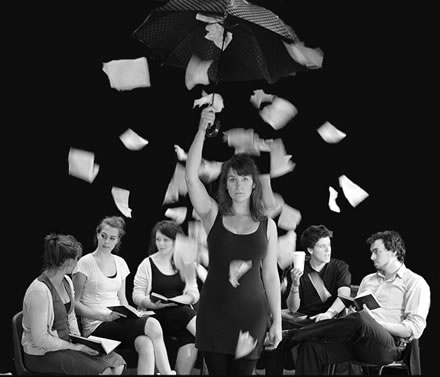
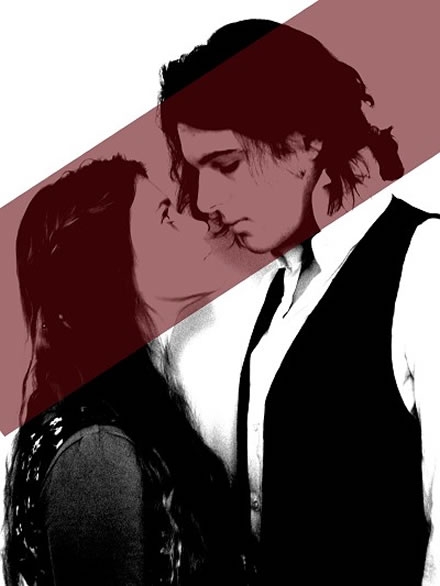
Their flyer is designed like a book which unfolds into a poster. Their poster design features a shower of letters. Their set is constructed out of books, words, pages, paper. Borges would have loved it.Jorge Luis Borges, the Argentine writer whose imagination and fascination with books inspired many readers, writers and bibliophiles around the world is the central focus of this play. Around it fit situations all linked to a book club. Two members fall in love, events in one member’s life mirror events in Borges’. Libraries and librarians feature and words are spun out vocally, colliding with words in print … seen, sculpted, imagined, envisioned.Idle Motion, the Oxford-based physical theatre company behind this production are to be commended for their dedicated, insightful, inspired and joyful approach, which made the play a delight to behold. They weave together a Lecoq-influenced theatrical approach with contemporary dance and some very inventive lighting effects and a magical use of set. Particularly effective are the ways in which books are used metaphorically as stepping stones or pathways for the imagination throughout, sometimes revealing, often supporting, always enhancing the action.Where this production fell short of excellence was in the danced sections, where the demanding slow passages were executed with love and great attention to detail. While the choreography appeared deceptively undemanding, it was challenging, and the actors, who are to be commended for pushing themselves here, lacked the physical strength to make the action transcendental. The rest of the show was so good, they raised the bar of expectation … it’s a real shame this technical aspect let them down. Nevertheless, I, for one, emerged inspired, and would love to see them explore work in this vein further – I wonder what they would do with a dramatisation of Canadian author Thomas Wharton’s work, which is inspired by Borges, but takes it much further. Whatever Idle Motion are, they’re definitely not idle. They’re inspired, energetic, committed and professional. Definitely a company to keep an eye on.

Unknown • 19 Aug 2013 - 25 Aug 2013

Pages: Promised Land

A fringe show with four writers, three directors, two composers, a cast of fifteen and an even larger production team sounds like a recipe for disaster. When you think of everything that could have gone wrong, it could so easily have been more than disastrous, but it wasn’t. MokitaGrit Productions have succeeded in tying these elements together to bring something new and exciting to the international theatre scene. They have come up with a unique blend of theatre and musical theatre which defies narrow interpretation. Their newest production is, simply put, original and unique, and that makes it very exciting. It’s the story of George, a claustrophobic recluse, who interacts with the outside world via the adopted persona of a newspaper agony aunt, a role he has taken over from his sister, who married and migrated. Or at least, that’s the story George tells – the rest of the cast take on roles of people trapped in their problems. Whether they are real people or whether they are figments of his imagination or creations which emerge from his dreams is a riddle deliberately left unsolved for the audience to work out. This is the crux behind the dramatic tension which permeates the piece, as four stories are played out against the backdrop of George’s routine. The stories are well-crafted and blend together successfully, which is a credit to the vision and production talent of Joe Fredericks, the Concept Director and particularly talented composer who conceived of this piece. His ability to bring together the work of so many people and weave it seamlessly together is admirable. Like George, the main characters in the stories are trapped in their own worlds – reacting to social pressures, lonely, isolated, in search of meaning and intimacy – and when the moments of release come, they are literally touching. Dramatically, the dénoument is inevitable. And despite the deep exploration of qualities of metaphysical time and space in the production, there is but one way out. What saves the show from being predictable is the drive and passion behind the music – the unique blend of musical theatre and theatre which is a key part of how this piece is structured. The songs which frame the stories are performed flawlessly by the strong cast members, all able to use their voices with versatility and pizzazz. With no vocal coach on the production list, it is a heartening testament to musical theatre training and the sharp ears of casting director Ellie Collyer-Bristow. The cast members sing, whisper, croon, belt and punctuate the drama, accenting and contrasting with the intriguing sound sculpture by Tom Martin which also acts as an intriguing framing device within the piece, producing atmosphere, evoking setting, and adding to the dramatic experience in yet another form. There was more that could have been done in terms of integrating music and sound with the progress of the story – but the piece clearly worked on its own terms and certainly provoked a number of stimulating conversations afterwards – the themes still bouncing about in my head musically and dramatically as I write … who makes the promises behind the ‘promised land’ of the title, why do we buy into them, and what happens when we choose not to – do we just end up replacing one set of ‘promises’ with another? And what is the result of taking a cynical-realist view (as one of the characters - Poppy in Poppy’s Promise – does) of labeling the ‘promised land’ unreachable and giving up? Is she being honest, or defeatist, or is she just reflecting one aspect of a complex thought-process going on in George’s head which is part of an extended journey towards a solution to his internal metaphysical crisis? The most satisfying answer I found was not in the dramatic climax of the story, but hidden in the musical setting of the final piece – it’s just one of many possible answers you could take away. What works about the whole experience is its open-endedness, its playful premise that there is an expectation of a ‘promised land’ of theatrical development inherent in the theatrical experience, and of musical composition. To use this structure, to bring things to a close in seemingly perfect cadences, musically and dramatically and yet still compelling so much individual interpretation from the audience is not just three hours of darn good theatre … it’s a work of genius.

Unknown • 1 Jan 1970

The Spanish Tragedy

Kyd’s Spanish Tragedy is a product of its time – socio-political, full of double-entendre, the themes of revenge and retribution and scenes of killing all the more poignant on stage against the backdrop of contemporary religious conflict and persecution, public hangings and brutal executions. It is a complex story, replete with sub-plots, two plays-within-plays and more murders, suicides and self-mutilations than many Greek tragedies, not to mention some extreme political machinations. All this is contained within an outer frame story, innovative in its time, and seen as the inspiration for the ghost in Shakespeare’s Hamlet. At the start of the play, the personification of Revenge meets the ghost of the Spanish officer Don Andrea, who was all set to marry the King’s niece, Bel-imperia, but was killed by the Portuguese Prince Balthazar before he was captured by the Spanish. Revenge surprisingly reveals the dénoument, promising that Don Andrea’s ghost will see justice done. The play unfolds, with Revenge appearing at key moments to twist and turn the plot towards a bloody and gripping end. On the way, the play covers Bel-imperia’s fickle fixation on Horatio, the young Spanish officer who was her dead fiancé’s best friend, who brings her news of his death. He is killed for political reasons, to make way for an marital alliance between Spain and Portugal so Bel-imperia can marry Prince Balthazar, who killed her fiancé. Bel-imperia tries to resist, but after being imprisoned by her brother, she pretends to go along with it and ends up avenging both the death of Don Andrea and Horatio. Sub-plots cover (a) the political machinations of Bel-imperia’s brother, Don Lorenzo, aided by his servant Pendringano, and (b) Horatio’s father, Hieronimo’s quest for justice. This sub-plot impels the latter half of the play along, from the moment Hieronimo discovers his son’s death. During the performance, two plays-within-plays are performed at the court, which challenge directors in their deliberate bivalence and obscure symbolism. With the contemporary relevance of them fading, in this production which does not pretend to be informed by historical accuracy (fair enough), they merely provide a light and welcome respite contrasting comedy with brutality to heighten the drama. In this production, Helen Goddard’s set design and Emma Chapman’s stark, highly-effective lighting both work together to create space within space, beautifully bringing to life the internal and external stages on which the drama is played out.The sound effects and use of sound within the production are worthy of a special mention. They work to underscore the drama at key moments in an electrifying way. While they sometimes substitute for the intensity of the dramatic exchanges on stage in the early part, they increasingly support them as the play develops. Other aspects are less successful. Unbalanced casting by Janine Snape and lack of attention to detail in terms of direction from Director Mitchell Moreno results in some actors being able to make Kyd’s blank verse come alive, others making it sound like the shipping forecast. The more experienced actors deal most ably with the text, but even then, at times miss opportunities to use rhythm to highlight meaning – at least in the performance I attended. The choice to stage it in contemporary costumes works, but the use of props is ill-thought-through and the timeframe woolly to say the least. This is not a production for purists. The original text is more brutally cut in this production than any of the violent acts depicted on stage, with seemingly arbitrary choices made and opportunities to include some of the most poignant lines from the additional text supposedly supplied by Ben Jonson swept away. If you’re going to tamper with the original text and use modern costume, why retain words like ‘taper’ when the actor is clearly holding a torch? Why Revenge has to be dressed as the 1930s children’s character ‘Amerliaranne’ – or at least a figure of childlike innocence delighting in arbitrary violence – and the ghost as a would-be 1970s ‘Action Man’, I don’t know. I just didn’t get it. Perhaps I was trying to read too much into it – but some would argue that that’s exactly what Elizabethan theatre is all about. The play is definitely worth attending, if only to witness Dominic Rowan’s performance as Hieronimo, the touching scene between him and Richard Clews’ Bazulto, Hieronimo’s utterly convincing suicide and the visually and theatrically stunning end which makes good use of the loading bay with its menacingly slow electrically-operated creaking metal door and the alley layout of the Arcola theatre.

Unknown • 1 Jan 1970

scratch (work in progress)

Sometimes raw, rough shows, performed on a knife-edge are the most gripping. This was certainly true in the case of the first part of Unpacked’s double-bill ‘scratch’ performance which took place in the foyer of the Pleasance Theatre, Islington. ‘The Show Must Go On’ featured an unforgettably hoarse, foul-mouthed, cigarette-smoking, whiskey-drinking tramp of a tranny singer puppet and a band of musicians, with a band comprised of a piano (full iron frame, hammers, dampers, action and strings), laden with musical saw, motor horn and a whole load of toy instruments masterfully played along with electric keyboard, which provided the vamp for a singing number. The interaction with the audience was spot on, the very real drama of getting the piano frame into the theatre up the stairs gripping. I wouldn’t have wanted a single thing changed. Aimed at adults, it worked perfectly as a late-night show. 5 stars for this. The second half of Unpacked’s performance was full of potential. Aimed at a different age group, of teenagers, rather than adults, it showcased a ‘scratch’ performance of a well-informed story of a teenage puppet who sought escape in rock music, blogging and Manga. These escapist activities were driven by a desire to escape a nightmare home life, where she was bullied by an archetypical wicked stepmother, with an obsession for hoovering. One person’s noise is another person’s nightmare, and more could have been done with this theme throughout the show. While the puppetry skills were strong, acting skills were not convincing enough. This show has great potential for development into a TIE piece, as it showed that a lot of research had gone into it. It was well-informed and worth taking further. 3 stars for this. Kudos to both The Pleasance and The Suspense London Puppetry Festival, which is set to become a biannual event (hurrah!) for supporting companies such as Unpacked try out new ideas ‘for real’. The range of shows, workshops and seminar included in the festival was impressive and it was great to have such a wonderful showcase for some very talented performers and puppetry companies out there. Long may it continue.

Unknown • 1 Jan 1970

the brain

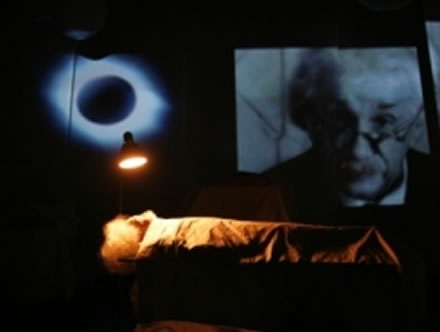
In a clinically white setting, with full-length white fabric backdrops suspended from rig to floor, among boxes draped with white sheets, lies a lifesize puppet of Albert Einstein. As the play begins, two puppeteers dressed as scientists enter and impersonally start to record their observations. Another scientist enters secretively and removes Einstein’s brain. So starts Inkfish’s production, which plays with the notion of humanity and inhumanity through the medium of puppetry. The story unfolds as a slow-moving ideological narrative which centres around the Russell-Einstein pacifist manifesto drafted by Einstein and Bertrand Russell, backed by 11 international scientists, including Einstein, who signed it a few days before he died. The show charts Einstein’s development from his early days at the patent office in Bern to his marriage, the founding of the ‘Olympia Academy’ and a glimpse into the world of its weekly meetings, a fabulously entertaining demonstration of the theory of relativity, the Einsteins’ move to Berlin and their eventual arrival in New York, the outbreak of war, the Nobel prize, and Einstein’s demise. To chart this story, the Inkfish puppeteers are not clad in traditional black, but are all conspicuously dressed in white. They use video cameras to record events. They chart data on clipboards, and use computers to control events. Their stance is impersonal rather than inhuman. By contrast, the puppets in this production really come alive. The construction of the 3-dimensional puppets of different sizes is first class, and the manipulation professional. The company also uses 2-dimensional puppets made of vintage photographs. At a distance these work well, but when magnified through video image projectedon screen, every detail shows up, and the rough edges of outlines where backing material is visible behind the figures detracts from the final effect, particularly when contrasted with perfection in terms of the 3-dimensional figures. Nevertheless, inventive and well-designed theatres within suitcases and clocks worked very well, echoing the nature of Einstein’s work and life which crossed boundaries, and informed by a personal quote by Einstein, ‘If only I had known, I should have become a watchmaker.’ While there were moments of great beauty in this production, and digital imagery and film footage was put to good use, the show as a whole moved slowly, and seemed to be more of a proud exhibition of an extended foray by a team of researchers into a picture and movie archive than a dramatic narrative at times. By contrasting inanimate puppets with humans and juxtaposing that partnership on a polarised examination of humanity vs inhumanity, the relationship between the human and the inanimate, the puppeteer and the puppet, the video camera operator and the image-capturing device is inevitably brought to the fore … while the puppetry skills succeeded in transcending the mundane, revealing a subtle message of what humanity at its best is capable of, the skills of the video camera operator, unfortunately, did not manage to reach this level, resulting in a jerky and unsatisfactory quality to the onscreen image projected via a live feed, and the disharmony between themes of the impersonal vs the inhuman jarred. It is strange that, given the name of the show, more was not made of the story of what happened to Einstein’s brain after his death – a story full of adventure, intrigue, mystery, and a compelling narrative between opposing forces of scientific interest and basic human values. Nevertheless, the show raises important questions which sparked debate among audience members afterwards - Was Einstein a puppet manipulated by forces greater than himself? Are scientists all-powerful? And how do you define humanity? Isn’t scientific rigour a valid human pursuit? After all, it’s what spurred Einstein on, isn’t it? To have achieved so much with a puppetry show is no mean feat. Both Inkfish and the team behind the Suspense London Puppetry Festival are to be congratulated heartily for their dedication and commitment to addressing these themes.

Unknown • 1 Jan 1970

The Three Stigmata of Pacman

In this one-hour show, talented Ross Sutherland brings philosophy, physics and fun together to create a highly entertaining view of contemporary society, which transcends the obvious, scintillates with originality and packs a hard-hitting intellectual punch with the feather-light levity of a cotton-ball souflée aerated by a child’s laughter. The premise of the show is a chronological journey through key stages in Sutherland’s life – his career as a journalist at Metro, and his professional and personal relations with his open-plan-office colleagues at the Daily Mail; his budding career as a performance poet; his forced return to his family home in Coggeshill, Essex and his ‘bed no bigger than a cake tin’ after cutbacks render him jobless, and his eventual return North, bringing things full circle, ending where he started in terms of space, but having moved forward in time, as a changed person – not least because of a time capsule he’d picked up at Whitechapel market. This living metaphor is a prop he uses artfully and disingenuously to try to build a better world. He uses it to actively symbolise the power people have to throw away the dysfunctional and build a better future, should they choose to use it. On the way, he manages to entertain, challenge, and more importantly, perhaps, engage his audience emotionally. Sutherland is well aware of the rhetorical power he has, but he never abuses it, something which is greatly to his credit. After a couple of virtuosic displays of the force of his rhetorical arsenal power had hit the audience, they burst out into spontaneous appreciative applause despite themselves, almost caught unawares by his brilliance. His comedy comes at you from outside the field of play, from where you’re least expecting it. His associative play on words and images which compared the Trojan war, consumerist branding and Blairite warmongery is astute and sophisticated, the power subtly disguised through the use of wit and humour. The same can be said for his masterful literary manoeuvres around the whole ethos of totalitarian regimes. The theme of time travel inevitably touches on the theory of relativity, but Sutherland takes relativity one level further, debating relative moral values in a stroke of literary and performance genius which sees the traditional tale of Red Riding Hood masterfully reworked to provide one of the most entertaining pieces of one-man-showmanship I have ever witnessed. Another highlight is his protracted virtuosic retelling of a shopping expedition into the heart of Coggeshill. His shabby appearance and unique idiolect which makes certain terms come out of his mouth strangely – with laissez-faire sounding very like something to do with a cross between a film featuring a loveable sheepdog and Eddie Izzard, or his pronunciation of interlocutor conjuring up images of liquor stores, are endearing rather than annoying. The digital backdrops of images, diagrams and video footage which come in at particular points to accompany his monologue are sophisticated and work well, as do the simple musical backing tracks he uses under some of his performance poetry, both providing variety and colour which underscores and amplifies the points Sutherland makes without ever appearing amateurish or distracting. The yellow-jawed pixel-munching video game character referenced in the title makes several appearances on screen towards the end of the show in a poetic visual montage which is as effective as the script. The religious references are less obvious – something I missed completely, it must be said. ‘Oh, we are future’s fools’, he rants, and then disarms the audience with a smile, admitting that for all his wisdom and his way with words, he is just as foolish as any of us, winning his audience over with his considerable stage presence. Catch this show if you can – it’s worth making the effort. I could say you’d be foolish not to see him, but then, I’m tempted to adopt a Sutherland smile and add, you’ll never know either way unless you do.

Unknown • 1 Jan 1970

The Petty Concerns of Luke Wright

Luke Wright is a talented performer who plays as much on his baby-faced good looks as with the words and styles he uses. In this hour-long one-man show, he looks back on ten years of performance experience, in which he has tried on the labels of performance poet, poet, and stand-up artist, among others. Some suit him more than others. You could be forgiven for thinking he was eight when he started. It turns out, he’s a Mondeo-owning pater familias, angst-ridden at balancing the traditional role of the lone-voiced poet, decrying stereotypes and fighting against the tide and finding himself in a situation where those stereotypes have crept up on him unawares, while trying to poke a finger at himself in fun at the same time. His attempt to deal with this situation seems to be the raison d’être of this show. His problems of being a contemporary poet, supposed to be above the mundane, yet obsessed with ego-surfing (googling his own name and analysing the results), his black moments of ‘poet’s block’, described in his memories of staring at a Lido and thinking ‘that Lido is a metaphor for … for … for … for …’, his bemused wondering why 10 seconds of bare-arsed cheek by another Luke Wright are more effective in pulling in YouTube viewers than 10 years’ output of this Luke Wright’s tongue-in-cheek verse are his petty concerns. They are moments which could have had universal appeal, and yet they failed to go beyond the sphere of Luke’s own experience to reach out to the audience. Thankfully, this self-concerned pettiness mostly motivated the stand-up part of this show, which did generate some laughs, but not guffaws from individuals in the audience. His greater talent at producing scathing contemporary social commentary came shining through in his poetry, despite some over-fast delivery. Haunting lines like ‘she made Desiree look like René Descartes’ were counterbalanced with others such as ‘to be is not to B&B, especially when it smells of wee’ or deliberately antagonistic similes such as ‘as sure as Scousers can’t take a joke’. Wright was at his best when he displayed and analysed text stanza by stanza on the screen behind him, whether deprecating his own early work in jest, or cannily, yet humourously, analysing a passage from Philip Larkin’s ‘Docherty and Son’ – sitting metaphorically slightly at odds with the point he wanted to make about fatherhood, yet still putting across an intelligent interpretation. He was infinitely capable of entertaining as a poet, referencing John Cooper Clark, and creating character portraits in his poems which were worthy of Dylan Thomas. I wanted more of this – the humourous analysis and sharing of poetry –and less of the stand-up (as did the member of the audience beside me to whom I got talking afterwards). There are plenty of people doing stand-up, perhaps because there’s an easier audience to target than the audience for performance poetry. It turned out that my neighbour had turned up having read about the show in Chortle. He left unfulfilled. While I applaud Wright’s exploration of the potential to bring both forms together, the stand-up hat doesn’t fit him as well as the poet’s frilly shirt. Ego, humility and hubris were supposedly the themes of the show. Well, there was plenty of the former (which isn’t a bad thing if you’re a performer, as long as it’s tempered with a good dose of technique, talent and temperament) and quite a bit of hubris, mainly leaking through a lack of attention to detail in direction by James Grieve. The use of digital media (PowerPoint slides and video footage) added variety, but the use of 2005 data to illustrate a story set in 2007 detracted from the credibility of both story and performer. The unpoetic, habitual and ill-thought-through use of gesture served to underscore the theme in ways I suspect neither performer nor director would have wished. Luke Wright’s talent deserves a better showcase – finding the right vehicle for it continues to be a challenge he meets with admirable tenacity. This show is a step further along the road towards meeting it.

Unknown • 1 Jan 1970

Once Upon a Time at the Adelphi

The name alone conjures up nostalgia, decadence, style and class … and this show delivers. It’s a musical theatre show in traditional Rogers & Hart / Hammerstein style, which follows the course of two main love stories, both played out against the backdrop of the Adelphi hotel, Liverpool. Yes, Liverpool … and why not, when regional pride seems to be the exception rather than the rule in contemporary theatrical writing. At the present day Adelphi, Jo and Neil, two front-of-house staff members are in a quandary … he’s leaving for Japan and has asked her to follow him. Does she sacrifice career, familiar surroundings, and the delights of Liverpool to follow him? The question is left open as the other main love story, set in the past, unfolds and eventually helps Jo come to a decision. The setting of the musical, and its chosen traditional musical theatre genre, inevitably invite comparisons with – not least – Grand Hotel. And the comparisons check out. The score works – it’s inventive, yet traditional. The libretto is strong, and the songs are not just set pieces – they move action forward. There are amusing minor characters, and sub-plots. The piece is so strong it demands to be seen in a large-scale theatre with a professional cast, inventive lighting and set. It’s no surprise the show worked at the Liverpool Playhouse, where it was first presented. This London performance is a chance for musical-theatre fans in the capital to see why this musical received a Theatrical Management Association Award for Best Musical Production in 2008 and a WhatsOnStage nomination in The Target Live Best Regional Production category in 2009. The low-budget fringe production is full of stark contrasts… of retro black and white, modernistic Art Deco, light and dark, high and low, front and back, as well as contrasts in period. In theatre at its best, as in all other artistic media, stark contrasts of the kind on which this piece is built inevitably take on a symbolic role, enabling us consciously or unconsciously to transcend dualities of life, our hopes and fears, acting on us like metaphysical Symplegades, the clashing rocks through which Jason had to pass through in one piece in order to get to Colchis to retrieve the golden fleece. While the contrasts in this production fall short of realising their symbolic role of a magical threshold leading to a heroic, transcendent and potentially transformative rite of passage, they certainly provide a full evening of rousing tunes, great music, and strong performances in intimate surroundings for a fraction of the price of a West End show. The Union Theatre, tucked away under a railway arch in Southwark, is too small for this show. Although Steve Miller’s lighting design and Geri Spencer’s costumes seem constrained in this production – perhaps by budget, but certainly by space, the energy of the youthful cast of 19 with a band of four musicians makes up for this and the show succeeds in exploding out well beyond the confines of the space. Tellingly, however, Jodie Michaels, in the cameo role of Thompson’s Mum, steals the show, with exceptionally clear resonance, strong vocal technique, majestic stage presence and near-excellent diction. More artists of her calibre and experience performing in a bigger space are exactly what this show needs. If value for money is your litmus test, you can’t go wrong. If theatre is about a transcendental experience for you, then you might choose to wait until this show hits a bigger stage. Alternatively, you could, as I did, just judge the laudable fringe production on its own terms and enjoy it for what it is … and what it foretells. If you do go, I hope, for the show’s sake, and yours, you get the chance to dine out on having seen the show at the Union before it 'got big'.

Unknown • 1 Jan 1970

Richard III

There are places which have unquestionable resonance. Places of pilgrimage, such as Mecca, Lourdes, Jerusalem. Places of history, such as the Coliseum in Rome, the Pyramids of Giza, the Alhambra in Granada and ... the Tower of London.Theatre-loving pilgrims flocked to the Tower last night to see Shakespeare’s Richard III performed on a site which resonates with the echoes of the political alliances, power struggles, violence and murderous acts which feature in the play. In a unique creative meld in which different times and spaces came together as one, the audience is able to see the imprisonment of the young princes re-enacted before their eyes, while looking out onto the little doorway in the White Tower where they were later immured.This production brings Shakespeare’s account of Richard III’s Machiavellian ascent to power to life. After a short and suitably stentorian preamble by an authentic yeoman, the audience is catapulted into a world of modern day office parties and politics. The play is transposed brilliantly into the modern-day corporate world of hostile takeovers, back-biting career ladder climbing and ruthless self-serving profiteering and inevitable redundancies.Much attention is paid to animating textual detail and making it relevant to modern life. Richard’s ‘victorious wreaths’ are party hats in the context of the dénouement of a drunken corporate celebration. Richard uses a mobile phone to instruct his henchmen to do his dirty work. The textual treatment, however, seems weighed on the side of easy wins.Despite the actors’ familiarity and ease with delivering Shakespearean language, changes that fitted brilliantly into the visual world of modern business fell short of containing the breadth of Shakespeare’s original. Nevertheless, the inventive staging of scenes such as the ghost scene in Act V compensated for this to a great extent.There are the inevitable cuts - inevitable because of the extreme length of the text. For instance, the loss of one of Clarence’s two murderers robs the scene of the subtlety humorous pathos of the original.This is not to say humour was lacking in the play, but the humour was dark, ironic, imbibing its bitter taste from the shadows of the stone walls in which it was played out. Nicholas Kempsey as Queen Margaret stole the show with her phenomenal characterisation of the dowager queen.As the play reached the interval, audience members were caught up in the drama — in more senses than one. They were literally imprisoned in the Tower, unable to leave until the Ceremony of the Keys had come to an end. Not that anyone wanted to leave. The entire audience trooped back happily to watch the drama unfold in the second half.What’s next in Love&Madness’s quest to revitalise dramas by staging them in places which resonate with their main place of action? A Man for All Seasons in the Palace of Westminster? Shelly’s Charles I at the Guildhall? In the immediate future, it’s Dario Fo’s Accidental Death of an Anarchist – at the Waterloo East Theatre (5-10 April 2011. Pay what you can on Tuesday 5th). Hopefully they’re already in discussions to stage it at Scotland Yard. After that, who knows? The Divine Comedy … in paradise? Whatever it is, if this production is anything to go by, it will be staged with dynamism.

Unknown • 1 Jan 1970

A Pirate's Life For Me!

It all started well enough. The audience entered. Two-sided cards were laid on chairs – skulls on one side, crossbones on the other. Two actors, who turned out later to be narrator-storytellers were asleep. Then they woke up. The outlook darkened progressively from there. These performers’ characters were supposed to be a husband and wife – he, a grumpy old man, she the power behind the throne. Unfortunately, the male actor chose to infuse his character with boredom and depression, rather than grumpiness, and the rest of the cast had to struggle against the wave of gloom that poured onto the stage while the storyteller couple set up the story, his contribution as effective as a hole in the keel of a seaworthy ship. But after a while, things started to look up when the cast announced that, at crucial moments in the plot, the audience were going to be asked to vote for whether they wanted the story to go in one direction or another. So that's what the voting cards were for. Interesting – everyone was keen to play along. And the story began. There were elements of this production which clearly showed that thought had gone into the planning – a lot of thought. Household items such as waste paper bins and hat stands were used inventively and textile hangings served to provide flexible changes of scene. The costumes were innovative – most of the players were dressed as ‘baddie’ pirates on one side and ‘goodie’ sailors on the other. ‘Ooh good, we get to boo the baddies and cheer the goodies,’ the kid in me piped up. The story was set for the goodies to set out to discover buried treasure, followed by the pirates who were trying to get it off them. The kid in me still bravely refused to buy into the pessimism which had started to settle again when the actors, following unsubtle direction, hampered by the costumes, had to walk on or offstage backwards, bumping into things, depending on who they were representing. But the naïve euphoria didn’t last long. There was no booing and cheering at all. Then a moment of choice came. Yay! We got to choose, to get involved! Where would the plot end up? Well, port or starboard would have been good, but the two directions available only seemed to go progressively backwards or downwards in terms of energy flow, as it didn’t seem to matter at all to the cast where the story went – apart from one choice which left two lovers in a sub-plot unrequited towards the end. An attempt at getting the audience up to dance in the middle ended up with one lone kid trying their best, then sitting down. Mr Grumpy gave up when everyone else in the audience refused to cooperate. The show went on. The problem with getting kids – and grown-ups for that matter – involved in an interactive show is that they have to be engaged in the drama. What they contribute has to matter to how the story unfolds. Arbitrary fence-sitting in terms of open-ended choices is a great democratic idea, but it just doesn’t work dramatically – or at least it could if you show some commitment. The show just went on – and on. The audience sank deeper into the depths of the ocean of despair, hitting the bottom when they heard the lyrics to the songs (which had some catchy music with lots of potential, actually – the composer should try their hand at some musical theatre, but get a different lyricist). In a ‘You’re the cream in my coffee’-type love ballad, the lovers sang ‘I’m the carrot,’ ‘You’re the peas.’ … ‘I’m the picnic to your fly.’ And what self-respecting pirate would sing, ‘Yo ho ho, and a rum tum tum, there’s nothing better than sucking my thumb’? Ah … it was supposed to be comedy … I nearly cried, and not from laughter. Two cast members with snorkelling action that had to be seen to be believed lifted the action and the show beyond a no-star rating … Captain Redblood, the Pirate Captain and the actress who played the double characters of Peg Leg Percy and Tina the Preener. Both had voices that carried well, made the most of their characters, and she put some effort into putting the love song across in both the characters she played, with everything from costume, stage direction and Mr Grumpy working against her. The audience surfaced as the show eventually crashed into port, with none of the audience members (perhaps even the cast) any the wiser why a pirate’s life was so great … since the ones that had all the fun were the ‘goodie’ sailors, who confusingly weren’t pirates, but went ‘Har’ in good pirate fashion with everybody else. There are some great professional interactive kids’ shows on the fringe and some truly magical ones. As far as I’m concerned, this production, regrettably, or at least the performance I saw of it, currently can’t be counted amongst them.

Unknown • 1 Jan 1970

Beachy Head

Two film-makers, filming the lighthouse on Beachy Head for a documentary about lighthouses unwittingly come back with video footage of a man’s last moments before committing suicide by jumping off the edge of the cliff. On the surface, this show is about suicide and the gap it leaves in the lives of people who are left to deal with the aftermath. But deeper down, it is about much more. It takes a lot to attempt to explain the inexplicable, and Analogue, the company behind this production, transcend the sensitive subject matter and create an exquisite theatrical experience about the value of life … love … creativity … art. They don’t stop at doing it beautifully. They do it exquisitely. The action revolves (literally and figuratively) around several characters brought together in a random manner by this calculated act of suicide. The dead man’s widow; the coroner, the film-makers and the presence of the deceased who continues to have an effect on their lives.Combining pre-recorded video footage and live recording filmed during the performance, Analogue create images and illustrate concepts with skill, depth and feeling. The technical aspects were honed to perfection. I have never seen video used more effectively in a staged production. The set is highly mobile in construction and very moving in use. Pieces of furniture are used as deep visual metaphors which enhance and underline the transmission of production values. Lighting is equally effective. Making a direct connection in script, on stage and with the medium of film between a flickering light bulb and the light of a star, for instance, Analogue bring to life the device of using light to highlight subtext in the plot. There is much to take in in this play of contrasts – themes of completion, leaving unfinished business behind, and bringing things to completion, for instance – continue to haunt my mind as I write. Analogue deserve to scoop up a stack of theatrical awards for their work. This is a highly innovative and polished production.

Unknown • 1 Jan 1970

Boy In Darkness

Titus Groan, heir to the great crumbling kingdom of Gormenghast is fourteen. He escapes from the castle and wanders out into the desert, where he finds a group of changelings with animalistic attributes who draw him into their world. But where do they come from? Are they projections of his inner psyche? Are they manifestations of his feelings about the duties he hates? Or do they work on another level? The answers are out there, and the highly innovative production becomes an individual transformational adventure for each and every member of the audience. During the play, Titus meets Hyena and Goat, is tested and found worthy to be brought before The Lamb. With childlike innocence, they tremble at the name of The Lion, but childhood also has its dark side, as does humanity … is it madness, genius or mystic vision? See the show and decide for yourself. But the show doesn’t end when the lights come up, for the real adventure (which is optional) starts outside in the dark. If you like what The Terrible Infants have done over the years, you’ll love this. It was one of those legendary ‘hidden pearls’ the Fringe is all about. Curious Directive are nudging up there with the best. It’s no surprise they’ve been notching up nominations for awards left right and centre for their work.Any fan of Mervyn Peake’s work is in for a treat. In the writing, C S Lewis meets Blake and both are transcended by hallmarked poetic prose which takes your breath away, and leaves the eyelids of your soul gaping wide in awe.The only thing drawing this company back from a five-star rating is their current limitation in terms of projecting vocally beyond ‘barely audibile intensity’ in competition with the air conditioning in the venue – so sit in the front row if you go. I'm sure that they have the potential to do so. The puppetry element is understated and innovative. Curious Directive’s production is not pure Peake, but it is so steeped in his world, it becomes so. It is inventive, physically rich, multi-layered, intelligent and classy. From before you step into the theatre, strands are spun which travel through the very first scene. The elements connect to each other to weave a web which Titus and the audience have to navigate as they travel through this Gothic adventure story. The web of drama is only fully-formed once the adventure is complete. Each element is worthy of an award in itself. The actors’ make-up is particularly visually compelling. I look forward to seeing more of their work.

Unknown • 1 Jan 1970

Brocante Sonore:The Mechanicians

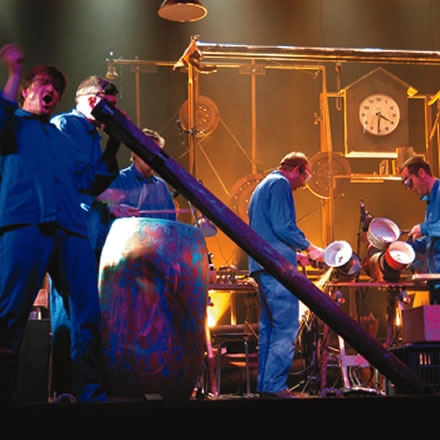
In an abstract space evocative of a garage, mechanic’s workshop, engine room, and/or horologist’s studio, the members of Brocante Sonore conjure up music from a range of things, from bric-a-brac to conventional instruments.Brocante Sonore fit comfortably into the heritage of the ‘musique concrète’ movement. In contrast to other groups, such as Derek Shiel’s Sculpted Sound, which leans more towards classical music, Brocante Sonore lean more towards theatre. Both find common ground in performance art.The pieces they play are not musically sophisticated. This is not a Stravinsky or George Crumb concert, but the group does what it does very well, and their technical skill is phenomenal, especially when playing drainpipes, nails, metal chutes, and where multi-player co-ordination is involved. Their timing is impeccable, their stage antics highly entertaining. The sense of ensemble is comparable to that of the Berlin Philharmonic – and there’s no conductor.Theatrically, however, the group pay lip service to narrative, with poorly-defined characters and a lack of development in terms of the relationships between them. More attention to detail here would lift the group beyond the competition and take their work to a much higher level. That said, an hour of fun and humour is guaranteed.

Unknown • 1 Jan 1970

Bully

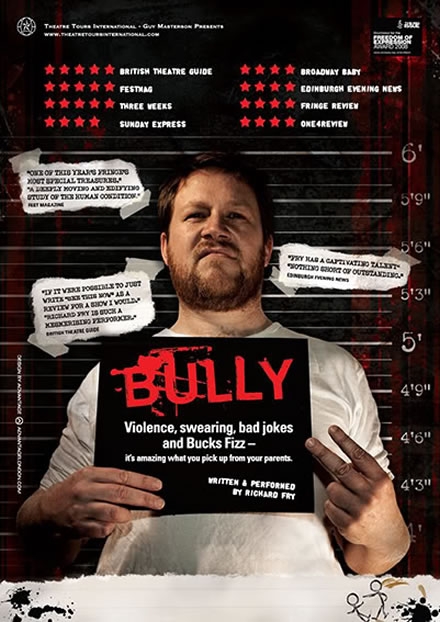
A harrowing first-hand account of a cycle of transformation from victim of circumstance to victim of fate told by a character who just wants to find a quiet spot where he can just belong (to paraphrase a line from the show).As he travels through the story, visiting childhood experiences, first crushes, first love, there is just enough variety of pace and rhythm to maintain the audience’s attention. Fry’s idiosyncratic poetic storytelling style adds both lightness and gravitas to his story. He fires off the arrows of big emotion with understated genius, launching pauses and unspoken words with the skill of an Olympic champion. The simple emotions, however – the simple comfort derived from feeling the heat of the sun on his nose, or the feelings that paddling with minnows and sticklebacks raises - are launched too quickly to hit their mark with the same precision.The horror and angst of some of the experiences Fry describes are delivered with a smile and a highly individualistic sense of humour, hitting the mark best with the wry punch that comes from where you’re least expecting it.

Unknown • 1 Jan 1970

Cardenio

It’s billed as ‘The Tragicomicall Historie of Cardenio’, a lost play said to be written by Shakespeare and Fletcher, reconstructed here by Dr Bernard Richards. Tragically, there was very little comedy in this performance, and opportunities for it abounded, with all the cross-dressing and gender confusion, not to mention opportunities for bawdy jokes about bestiality … and comic interludes for shepherds and the lovers’ parents which all could have been milked more. The story is taken from an episode in Cervantes’ Don Quixote. It tells of a Duke (Don Henriquez) who does a Don Giovanni act and seduces a working class girl (Violante) under the promise of marrying her, then abandons her, only to fall in love with an upper class girl (Leonora) who is about to marry a young nobleman in his service (Roderick). Henriquez snatches Leonora away from Roderick. Violante runs away, disguised as a shepherd lad. A chase ensues. Henriquez’ brother tries to sort things out, and takes his brother’s side, until the truth about Henriquez’ actions is revealed and the tables are turned on him. When Henriquez turns his affections once again towards Violante, this allows the young lovers Roderick and Leonora to be reunited, and everything settles down happily in the Spanish sun.There is more to this play than meets the eye – and the company failed to bring out the tremendous contemporary drama in phrases such as ‘tyrant God!’ Add this to softly-spoken dialogue, strange mannerisms, with Don Bernard, Leonora’s father, bouncing about the stage like Tigger and quixotic pronunciation (‘victuals’ rather than ‘vittals’, for example) and I was left feeling I’d rather read the play than see it acted in this way.Attention to period detail was inconsistent – a quaint affectation in the programme of using a period font and applying Mr to all actors’ names whether male or female referring to the convention of having male actors play female parts was balanced by some strange decisions regarding costume. Whereas I grant it is impractical to go to the lengths of ensuring seams are hand-stitched in a low-budget student production, the use of modern rick-rack, elastic and shirts with metal lacing holes, in combination with specially-made costumes and well-chosen fabrics for the nobler characters shows an unfocused approach that hampered the communication of this story to the audience. It deserved better treatment.

Unknown • 1 Jan 1970

Cocorico

From their first entrance, comic duo Patrice Thibaud and Phillipe Leygnac had the audience in hysterics. By they end they got a standing ovation. ‘Thibaud and Leygnac’ doesn’t have the familiar ring of ‘Morecambe and Wise’, ‘Laurel and Hardy’, or ‘Abbott and Costello’ but they have all the class and quality to be counted among the great classic comedy duos. In classic style, Leygnac takes on the persona of a passive, straight-faced sidekick musician – a brilliant pianist in his own right, as a silent partner, he almost steals the show, but provides the perfect foil for the zany, bumbling goings-on of Thibaud to shine through.The ingredients are simple, but this French duo apply the genius of French chefs to the comedy duo recipe and come out with the stage performance equivalent a multi-Michelin star meal. In a series of short sketches, which take on classic film, silent movie, situational comedy, physical comedy, slapstick and farce, the duo keep the audience entertained and teetering between awe and laughter for well over an hour.While technical aspects of the shadow theatre medium they explored in their act were unfocused by comparison to their physical versatility, the show on the whole was a success, and the short sketches, while lacking a continuous narrative, had enough in terms of character interchange and exploration of relationship between the comedians to maintain interest and energy.

Unknown • 1 Jan 1970

Crime Of The Century

“Dan! Keep safe!” the show starts … but how? How can a youngster be safe if they can be knifed on their own doorstep? This is the unfortunate reality of contemporary society – not just in large cities.Chickenshed attempts to raise awareness of the issues surrounding this problem through this production. Ground-breaking in terms of inclusionist and socially-aware theatre, they pack quite a punch with this production. It starts with a recording of a man reciting a list of questions – surtitles are used throughout as an inclusive device. The piece goes on to recreate scenes, or rather the emotional states which lie at the root of typical stages which people go through in the journey towards perpetrating extreme violence. The individual scenes are performed with deep insight, professional movement which combines mime, dance and physical theatre. They include ostracisation, domestic violence, bullying, lack of discipline in school, peer pressure. The action moves into a theatrical scene of street violence which is more shocking in the argument which justifies it in the eyes of the perpetrators than the physical act itself. It’s followed by a moving depiction of the loneliness and isolation of incarceration. The still actor, immobile in the space, framed by a rectangle of light shows the build-up of frustration in a victim of the social system so clearly the audience members could reach out and touch it. Inevitably the cycle comes round again, with anger unable to find any outlet apart from violence, leading to more frustration. It’s an age-old problem, but Chickenshed tackle it in a sensitive, contemporary way. This is not just a local problem. It’s a social one that goes much wider. The script is strong and has enormous street cred. There is a reference to internationalism in the mention of ‘feds’ alongside references to ‘police’. Digital imagery, a pulsating soundtrack, strong, heart-felt dance and well-chosen comments from experts punctuate the script. It could have been a recipe for disaster, somewhere between documentary and theatrical posturing. It is to the actors’ credit that they manage to transcend the obvious and bring these disparate elements together to make a great piece of theatre. The last scene, notable again for its intense stillness, will stay with me for a very long time. In the meantime, the warning which opens and closes the show, ‘Keep safe!’ is a warning well-heeded.

Unknown • 1 Jan 1970

Faust In The Box

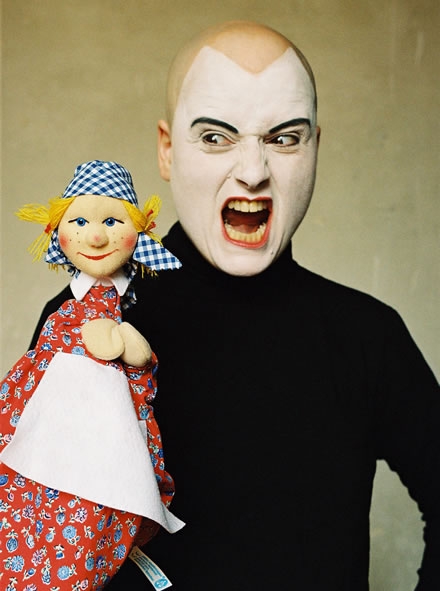
Bridge Markland performs his own version of Goethe’s Faust in a maverick combination of blank verse and pop song. A cardboard box with a window cut out of it provides the stage, platform, puppet theatre and backdrop to his antics.Markland, made up in stark white, clothed in black jump suit, sometimes takes on the characters in the play himself, and sometimes has them appear as glove puppets. He skilfully switches from character to character, and his puppetry skills are effective and credible. Somewhat disturbingly, he mouths the words of text which are interspersed with song lyrics. The lip-synch approach avoids backing tracks and is brilliantly timed, but Markland’s mouthing fails to hit the mark in terms of the energy of real speech and this comes over to spectators. The antiquated linguistic style of the original text sits at odds with the interspersed music, but it grew on me.

Unknown • 1 Jan 1970

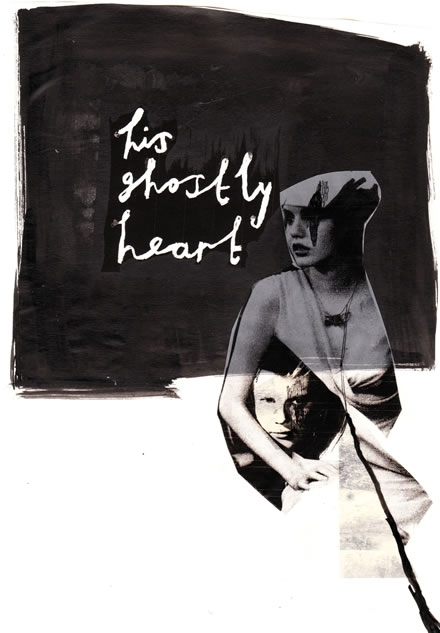
His Ghostly Heart

It’s a conventional play with a difference … acted out on stage, with an audience seated front-on … in the dark. It’s an experience.The writing, by Ben Schiffer of E4’s ‘Skins’ is tight and cinematic. Scenes shift seamlessly from one to the other, with the flight paths of thought routes being navigated along so clearly, there is no concept of not being on autopilot. There’s no feeling of ever being lost in the dark. We always know the system is working. Cinematic references abound – mainly in terms of structure but also in content, providing a strange subliminal foil of a light-dependent medium which is in contrast with and ultimately weakens the effect of the physical ambience. For the actors, the dark becomes a place to hide, to explore, to talk, a place to heal, a place to be comforted, a place to be cleansed. It’s safe enough for the audience – a captive group of voyeurs, spying on the unfolding dialogue of a complex relationship, which takes place in the bedroom but spins in and out of different timeframes and different life stages in the lives of two characters – Tom, played convincingly by James Rose and Daisy, played rather reticently by Marina Niel.The characters are complex and well-defined in terms of writing. She is portrayed as an intelligent, but manipulative bitch. He as a happy-go-lucky maverick … until the literary camera angle changes, the author zooms in on a different aspect and allows the audience to see things in a different aspect of darkness. In a passage in which Daisy reveals she has embraced Jesus Christ, Tom distractedly toys with his mobile phone, the screen shining in the dark – seeing the light – yeah, yeah.It rather destroys the impact of the line, ‘you always have to turn the light on again eventually,’ which is exactly what happens – predictably, at the end.Is this best experienced as theatre or radio play? While the actors’ movements could be seen, given the lighting state, the voice was the primary conveyor of text, action and emotion, and both actors failed to deliver as fully as they could have both in terms of vocal variety and projection. It’s a bit confusing, and it’s meant to be – but the audience isn’t left in the dark for too long. ‘You always have to turn the light on again eventually.’ The playwright applies the line to his own writing, eventually revealing all, tying up loose cables, connecting loose ends to join a full circuit. By the end of the play, Schiffer thankfully avoids the obvious and comes to define dark differently … in an intriguing and original twist on the theme.Perhaps this would be better experienced blindfolded, in a different staging configuration. Without involving the audience fully in the experience, without depriving them fully of the sense of sight, the answer to the question which Schiffer raises in his play, ‘Where are we most who we really are?’ unfortunately remains in the dark for the duration.

Unknown • 1 Jan 1970

Iago

An ambitious one-man show, in which Martin Aukland, as Iago, acts out single-handedly the story of his machinations against ‘The Moor of Venice’, outlining how and why he sets up a trap into which his victim falls headlong.Shakespeare’s original is a multi-layered work which takes the power of speech to influence and manipulate to its limits and beyond. Aukland’s characters are credible, on the whole, apart from Othello’s accent, and the adaptation of the script, which keeps the main characters’ main speeches, with Aukland playing all of them, well-crafted.With a powerful narrative that depends so much on delivery and perception of words, the onus on the performers in a conventional production to bring to life the silences between the words is great. Even more so in a one-man show. Aukland’s performance almost gets there. I really believed that Othello was strangling Desdemona towards the end. Up to then, I found it more difficult to imagine the presence of the other characters.The minimalistic setting and well-chosen sound effects were atmospheric and worked very well. Shakespeare-lovers will not be disappointed with this original and compelling version of Othello. Familiarity with the original is essential in order to appreciate this version.

Unknown • 1 Jan 1970

Inventing The Sky

Russian dance company Rain People are to dance what Picasso is to art. They redefine the boundaries of dance performance. Their performance has an improvisatory quality to it which flows beautifully. Their classical training and extreme agility and control allows them to start by presenting a piece which represents a day at the seaside. It looks like real life, but is so subtly choreographed and acted you smell the sea. Towards the end of the number, which is played out to the soundtrack of waves breaking against the shore mixed with a modern Russian pop ballad, two members of the company find small lightweight plastic bags on the beach and blow them into the air, responding to their movements with agility and total concentration. They dance everyday life and make it approachableThe next piece takes the performers on a train journey, in which they use individual metal frames that move on wheels. These become compartments, carriages, with which the dancers interact, playing with the idea of boundaries of space. When balletic moves or poses incorporated into the piece, they are executed flawlessly in classical techniqueThen they take their audience to a party – with tables and chairs on wheels being rolled on and about the stage. The ensemble work is tight, the emotional content clear. Faultlessness is the quality they bring to every piece – and it gets better. They continue to dance a social commentary on contemporary life, with men in black taking on sinister resonances when pitted against the world they live in, in contrast to a young woman with a supermarket trolley. The metaphor is left brilliantly open-ended, nothing is explicit. It is the simple moves that really show that Rain People are in a class of their own. They really know how to glide – in a perfectly executed slow walk, the perambulate around the stage in complete technical mastery. You cannot tell where one movement ends and the other begins. A well-chosen and sound-sculpted soundtrack which ranges from found music, recordings of the natural world, electronic music compositions and arrangements of Bach swells and grows throughout the performance to provide a challenging and transformative climax. Subtle and effective lighting effects add to the total theme of excellence.

Unknown • 1 Jan 1970

Jewish Chronicles

In a musical style reminiscent of Claude-Michel Schönberg ballads, Daniel Cainer sings his big, broad Jewish heart out to entertain, engage, enlighten his audience.His songs tell stories – stories of his family, his experiences of them, their experiences of life. It’s not so much his songs or his stories. It’s the way he tells them which gives them a universality which allows anyone to find common ground within them. His bright, innocent blue eyes and wry, impish grin belie the maturity of outlook this guy brings to the stage as a secret weapon. In his introduction to his first number, ‘God Knows Where’, a song about relocation, Cainer moves from the physical to the metaphysical in an easy, conversational style which wins his audience over straight away. His comic timing is subtle and reeks of experience which belies the ease with which he throws lines out into the audience, hooking them in one by one. It’s a joy to watch him do it, and an even greater joy to be reeled in. With lines like Oy gevalt! Oy vez mear! For every moment of joy there’s a corresponding tear,’ this good Jewish boy draws liberally on his heritage in a tongue-in-cheek way which you can’t help but fall in love with. Jew or non-Jew, it doesn’t matter. It’s a universal show. However, if my nonagenarian Jewish grandmother-in-law had been at the show, she would have loved to have busied herself thinking about fixing him up with a nice Jewish girl. You’ll find lots to laugh at, and maybe something that will bring a tear to the eye in this show which starts with unassuming beginnings and grows into something much larger and much more significant. You don’t even have to know Yiddish – by the end, you’ll have learned some, as Cainer explains terms, and their subtext in his inimitable style, making the introductions to the songs, and the interspersed comments he sometimes throws in part of the act. Lighting effects aside, Cainer has his own star quality. Disarmingly shabbily dressed, he magically creates a vocal beam of light and reduces it to a spark which shines on in heart and soul long after the last note of his song has died away. Although his voice tired by the end of the show, with an element of creak coming in at the ends of phrases, it was still good fun. And as he said himself, it takes place in a dry room with air conditioning. Given some venues I’ve seen shows in, that is definitely a plus point. *Plotz = collapse in Yiddish.

Unknown • 1 Jan 1970

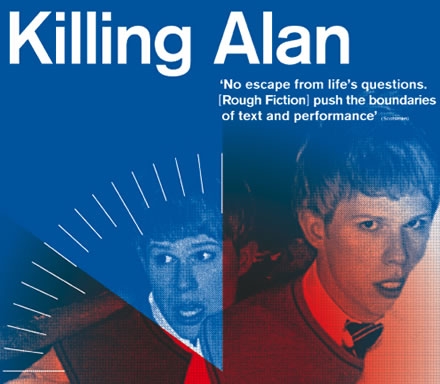
Killing Alan

A highly challenging story which draws on the Arthurian story of Gawain and the Green Knight, and references many others. The central character, Alan, is challenged to a game by his brother after the death of their parents. Sibling rivalry emerges, which pushes both of them to the limits of acceptable behaviour and beyond. As others look on, Alan is challenged to stab his brother in a scene which deliberately references the story of Cain and Abel. The brother survives and orders him to meet him in a year’s time to receive a reciprocal blow which his brother says will kill him. Time passes and Alan travels to the appointed place. He has three days to wait. The story flows on. The blow falls. Blood is shed. The play ends.Rough Fiction and South Hill Park, the team behind this production bring the varied skills of acting and puppetry together in this work. The puppets are manipulated expertly and are used to reflect Alan’s inner voice(s). It is an effective theatrical device. The ensemble work within the company is strong, enabling quick scene and costume changes to happen onstage with the minimum of fuss and maximum effect.

Unknown • 1 Jan 1970

Lost World

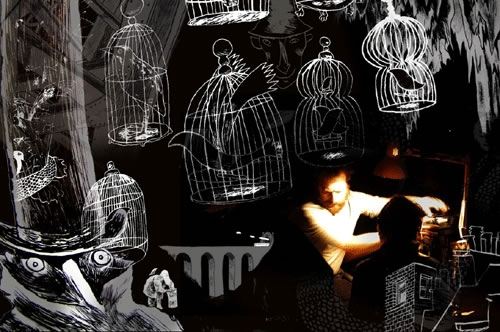
Arthur Conan Doyle’s story of The Lost World is brought to life using live animation and music by the members of The Paper Cinema. The story was told visually in as an animated film which was created by two animators using cardboard cut-outs drawn in black and white mainly against a black background. The scenes were played out in front of a video camera and transmitted to a large screen onstage via a live feed. The piece had the strange quality of a Méliès film mixed with an animated comic strip. It was essentially a silent film, with a soundtrack improvised live to a pre-set structure by one musician with several instruments and the aid of a recorded looping machine. The music stayed stuck in four-four time until it changed about two-thirds of the way through the piece. This lack of variety in basic rhythm didn’t help advance the story. Nor did the animators’ choice not to use words as chapter headings or to pinpoint key moments of dialogue, as in many silent films. There was no narration, and only a few words were shown on screen either to frame the beginning and the end of the piece, or in the context of illustration. Thus, the audience generally had to follow the thread of the story in images alone. It is billed as a show for children aged 8+. Most people managed to and the older children in the audience enjoyed the scenes which involved trekking through the Amazonian jungle in search of dinosaurs and fighting with savage gorillas. The images were created in the same black and white pen and ink style, and although the scale of the pieces differed, and the amount of images shown was impressive, the way they were used failed to push the boundaries of the genre. The two performers never used more than four pieces of paper at any one time, and most of the time limited themselves to two or three. Scene changes were most effective when using cut-outs, in which one image was viewed through another and a pan effect led us through the cut-out. Another thing the animators experimented with which was particularly effective was to use different light sources. However, after a while, the limited techniques and materials used became repetitive, the use of an unchanging background (apart from an initial patterned image which was more effective) dragged on. There was no exploration of live drawing, for instance, no use of colour, gels, or in-depth exploration of different qualities of paper – opaque, translucent, transparent. The show could have done with more variety of this kind. And the finished quality of some of the scenes left a bit to be desired. While small-scale blemishes would not necessarily have been noticed, bent edges, rough cut-out marks and rippled air bubbles on paper glued onto backing card appeared larger than life on the big screen. They could have been effects used consciously, but unfortunately they were obviously not. Despite limited variety in the musical soundscape, the retelling as a whole was completely devoid of emotion. Technical execution left a lot to be desired, with images falling short of the edges of the screen and animators’ fingers creeping into shot unintentionally.The Paper Cinema would do well to look at work done by German artists who work with paper and projection – Gisela Oberbeck, or Angelika Hoffmann – if they wish to push their boundaries further.

Unknown • 1 Jan 1970

Lotte's Gift

This recipe for an autobiographical slideshow sandwich with musical filling could so easily have turned out to be unappetising. Like all top-notch meals, however, quality depends on a mix of good, fresh ingredients and natural talent. The elegant, understated set, tastefully edited visual stills and video footage and simple costume are a good start. Karin Schaupp, the attractive young classical guitarist who performs in this one-woman show, has natural talent to spare. Mix it with the secret ingredient of music, expertly played, and you have a hit on your hands.The show tells the life story of Karin’s grandmother, a sweet-voiced lady who provides the inspiration and foil against which we trace Karin’s own development. We hear of her grandmother’s experience of living in wartime Germany, her first love, her marriage, her bravery, her fortitude, her courage when faced with her fate as a victim of circumstance. This could so easily be played as a harrowing tale of domestic abuse, or people’s inhumanity to other people – Karin’s greatest achievement is in not doing so. She gives thanks that against this background, she still felt she grew up in an atmosphere of love.Karin’s guitar playing is excellent, her characterisation of her grandmother convincing. And her grandmother’s life story gives Karin perfect opportunities to insert pieces from her repertoire which acquire a subtext which works very well. She specialises in sweet, lyrical sounds, perfectly judged in terms of a mix of subtle dynamics and racy rubato. Mistress of the subito piano, she keeps the audience spellbound. Where this hallmark playing style lets her down slightly is in her arrangement of Albéniz’ Asturias. The fiery gypsy music background which inspired this piece would give it more gravitas, coming as it does at a point in the performance when Karin is giving a tribute to her mother – her parent, and teacher – a difficult mix if ever there was one. A bit more of the struggle, and a bit less of the saccharine love and respect would have added drama at this point, which could easily have been resolved later. The Spanish fires failed to light up this side of their relationship.The show opens and ends with a direct address to the audience, but is played out mainly as a dialogue between Karin and her grandmother. There was not enough difference in tone between the two when I saw the show. Both devices sounded too scripted and tended to be slightly exclusive in performance terms, particularly in the beginning and end sections. On rare occasions, towards the end in particular, both characters used asides to include the audience and the whole piece lit up.

Unknown • 1 Jan 1970

Martin 'The Falsetto' Milnes

Martin Milnes is a unique talent – with an exceptional voice and good vocal technique to go with it. His pianist, quiet and unassuming, supports him well, and shines in his own right. Why this pair feel the need to include laughably bad jokes, an incongruous set and costumes and desperate linking dialogue, I can’t understand.The introductory sequence, Martin’s stock gestures and idiosyncratic French which welcomes you (Bien VA NOO), could have been struck quite happily. It was not a good start, but then he opened his mouth and let one soaring, spine-tingling, body-thrilling sexy high note out – and the show really began.This is a high-class talent that deserves to be repackaged as such. There is huge potential here to ditch the gimmicks and cheap comedy and go for class. The quality of the performance demands that the plastic buttons and flowers be replaced with more cut crystal. Martin’s vocal presence is amazing and wins the audience over. The pianist successfully helps build the rapport with the audience. Martin runs the gamut of Operetta (Gilbert and Sullivan) Musical theatre numbers (Gershwin to Bernstein via Rogers and Hammerstein), and Opera (Traviata, Fledermaus, etc.). It’s a good mix of well-known familiar tunes and some lesser-known gems. To sing at high energy, giving off firework after vocal firework, with only a small break in between, for an hour, without the aid of a microphone thankfully, finishing off with one of the most technically demanding arias in the coloratura repertory, and to do it night after night is impressive. There is definitely scope for improving things – the duets were less than crisp in terms of articulation and timing. Characterisation was one-dimensional and all Milnes. Far more emotional colour was needed. The humour of Fledermaus was indistinguishable from the pathos of Nancy’s As Long as He Needs Me and the emotional tone of Pie Jesu. But all Martin has to do at this stage in his career is hit a high note and you forgive him everything. And when he goes into belt quality, the sound hits you like a hot stone massage – invigorating, revivifying, regenerating. It’s definitely a show to catch, and if you catch Martin this early in his career, you’ll want to follow him all the way through.

Unknown • 1 Jan 1970

Matthew Sharp In ... Finklestein's Castle

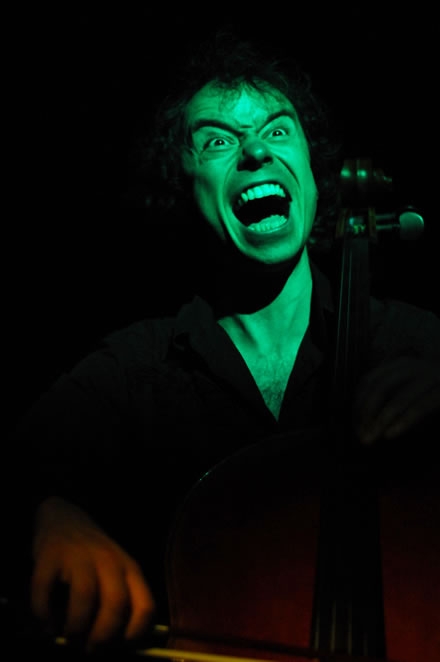
With deliciously ridiculous names, fantastic situations, a plot that would make Ian Fleming grin with delight, and toothpaste taking on a significance you would never credit it with, Matthew Sharp takes his audience on an adventure which includes an operatic aria to die for, superb cello playing which he performs nonchalantly while maintaining casual conversation as easily as you or I would count to three with our eyes closed. The performance is mesmerising and Sharp’s multi-tasking skills extremely impressive.There is a small link between Finklestien’s Castle and Sharp’s other show on the fringe this year, but they are both stand-alone shows and while Johnny’s Midnight Goggles is slightly more virtuosic and polished (he’s been doing it for longer), both can be enjoyed on their own merits. It is telling that while most people’s journeys to the Edinburgh Fringe goes in a ‘bottom-up’ direction, Sharp’s is unique in that his journey seems to have gone in a ‘top-down’ direction. His quality performance is informed by experience as a cellist with the Royal and Liverpool Philharmonic Orchestras, playing under great conductors and on cross-disciplinary projects with musicians such as Django Bates. He also has a career as an opera singer, working as a soloist with Opera North, and other companies, giving him the opportunity to work with world-class directors. To have absorbed all this, and fed it back down into his work, and put on a fringe show informed by this kind of input is impressive. To be able to see it for around a tenner, give or take a quid, is a privilege and and a delight. Worth every penny.

Unknown • 1 Jan 1970

Matthew Sharp In ... Johnny's Midnight Goggles

He’s a velvety-voiced opera singer with a voice to die for. He’s a classical cellist who has performed as a soloist in many of the major concert halls in the world. He’s a theatrical storyteller with a demonically cunning way with words. What Matthew Sharp is doing on the Edinburgh Fringe, I don’t know.Actually, I do … he’s doing a damned good job entertaining people with his unique blend of musical storytelling, opera and performance art. In this show, he tells the story of Johnny, who’s been taken into another world, leaving Matthew behind to go after him and rescue him – and the world, it turns out – in the process.Sharp creates a fantasy world all of his own, into which he takes the audience as he explores it. It’s a world full of mavericks and improbable happenings – cities that come to life in a world overlaying our own; black camels that foretell doom; and playful little vignettes which he tosses up like a light virtual salad to break up a beautifully-balanced adventure story, never ever making a meal of things.His playful connection with the audience is beautifully judged. This is a gem of a show. Don’t miss it.

Unknown • 1 Jan 1970

Mother/Son

Jeffrey Solomon’s play is a tour-de-force of skilful writing and performance. The show smacks of class. Reflecting a dual coming out story, Solomon plays the characters of the gay son, coming out to his parents for the first time in his twenties, and the domineering mother, who has to come to terms with all the things that plague domineering mothers with gay sons … no grandchildren … fear of contracting AIDS … having to face the monsters of realisation that her son could end up as a character in the horror stories she’s heard related to gay culture … the guilt of maybe contributing to the terrible fate of her son’s gayness … the desperate attempt to cling to the idea that it might be a passing phase … that marriage or counselling might solve the issue … But gradually, over time, we see the two of them adjust … the son has to adjust to the fact that now he’s out to his mother, that involves a new level of trust and communication. The mother takes some tentative steps towards trying to make sense of something she’d never imagined she would have the courage to face, and going on a journey she never imagined she would take. This is a real-life journey many people in a homophobic society in which there is an increasing gay liberation presence have had to face, and continue to face and it is to Solomon’s credit that his dramatisation and performance of the journey touch on all the salient points without ever slipping into melodrama. There is drama, emotion, pathos and bathos galore, but it never goes over the top. The quiet, understated way in which the themes and events are put across is all the more powerful for that.Tears are guaranteed, as is laughter. What’s more, there is the potential for you to be moved with the experience affecting your life beyond the play. This is one of the rare plays which has the power to stay in the hearts and imaginations of all who have seen it. It is one of my highlights of the Fringe so far.

Unknown • 1 Jan 1970

Noir

Airealism attempt to mix circus and theatre to tell a tale of love gone wrong. Drawing their inspiration from film noir, they tip a cursory nod at narrative, using it as a lame excuse to show of a pretty standard range of aerial circus skills. Are they good at what they do? Definitely. But did they push boundaries and have the audience sitting on the edges of their seats, biting their fingernails? Not in the performance I saw. While there were no safety nets, and the performers could have fallen at any point if they put a foot wrong, it didn’t look unsafe. There was no sense of any danger. Ropes didn’t fray. Hoops didn’t come apart. The only departure from convention was to have the trapeze flying over the front row of the audience. It was effective but left anyone in the middle and back of the hall wanting more.People carrying umbrellas walk about barefoot to a soundtrack of rainfall. Characters give each other and the audience long, lingering stares. A red scarf is taken from one girl and given to another one. Jealously arises. But is that sufficient reason for someone to climb up a wall? Perhaps. It didn’t seem so – particularly when set to ‘Don’t Get Around Much Any More’. Even climbing up a wall can be considered ‘getting around’. More trapeze, hoop, rope and ribbon tricks follow.The wall (which is really a cargo net fastened to the back) is hooked to the backs of three performers who move up and down stage tied to it - why? Who knows. Maybe they were prisoners of love. The love story goes unimpressively sour, leaves one performer strung up – in more senses than one and the rest of the cast glaring impassively at the audience. I expect more from a cup of black coffee, let alone a show full of skilled performers which have come together to perform ‘Noir’.

Unknown • 1 Jan 1970

One Up One Down

In this highly energetic performance, dancer-actor John Macaulay welcomes the audience and ushers them in, attempting to build up a friendly rapport. It feels rather like stepping into a US shopping mall, where politeness and over-white-bright smiles glisten on the outside, and boredom and emptiness gape dark on the inside. This, it turns out, is exactly what the intention is.In this performance, dance, song and performance poetry (rather good performance poetry, as it happens) are used to make a hard-hitting social comment on materialistic values in contemporary society – from credit crunch to catwalk; sales to self-worth. The conceit of having three mirrors in the background designed to reflect the audience and their values on stage is intriguing, but when the three female dancers appear, and are themselves reflected in the mirrors, the metaphor collapses. The mirrors are later covered up with white cloth.There is a certain lack of consistency in the production. While the costumes are worthy of special mention – fashionable outfits in wonderfully coordinated pink and black, the dancers’ ensemble work is poor. Their singing works better in stylised numbers than in freeform scat passages. The dance number which has them wearing pink rubber gloves with one dancer parading the carcass of a chicken which has to be unwrapped from layers of cling film packaging, into which it is lovingly restored at the end of the number, falls short of being moving, shocking or funny. It has nothing of the raw quality of extreme Butoh, nor the gravity-defying quality of classical dance. The quality of the dance is eerie at best, but mostly bland – maybe the chicken had cold feet. It was hard to tell what the concept behind this piece was. However, other numbers, particularly where the dancers use their eyelids and evoke belly dancing with the music, but play against that with their bodies, are very effective.The best part of this performance is the way the poetry is performed. John Macaulay brings Tawona Sitholé’s words to life, Sitholé bringing every trick out of the bag, allterating to the extreme, drawing on exaggeration, irony and hyperbole as if they are second nature to him. It is an impressive marriage of talents which results in a commanding performance.

Unknown • 1 Jan 1970

Platform 88

You know what it’s like when you arrive in a strange place, and have to ask for help in a foreign language? The only person around is someone who looks strange, unfamiliar, different – someone you’d never talk to in a million years back home … but you need help, so you ask for it, and find yourself on the adventure you’ve always been looking for, but which you thought would never ever happen? This production depicts that journey – and much more.It is a beautiful depiction of a serendipitous connection made on a train platform – platform 88 – between two women. One, played by Chantal Mailhac, is entangled in issues. She seems to live on the platform, twists dreams into being from twine and sings a Lebanese lullaby. The other, a traveller, played by Janaina Tupan is stranded on the platform. Her stiff, aloof, distant demeanour subtly transforms over the course of the hour-long show. And inevitably, her transformation has its effect on Mailhac’s character. There is a beautiful integration of movement and narrative in this production, directed by Sebastien Loesener. The sculpted proportions he creates from the theatrical space in the way he positions the characters have a strong sense of sacred geometry to them. The company members are all graduates of Etienne Decroux’s International School of Corporeal Mime and the style of the show, which is a mixture of mime, physical theatre and simple contemporary dance, reflects their training. Their backgrounds are all different and the internationalism of the company is strongly reflected in the production values, which have a universal quality.The subtleties of the visual and textual metaphors used are heart-warming. From the telephone cord which connects the characters to the outside world, to the string which binds them to each other, creating a network which starts off isolating the characters, then providing them with a means of communication, from which point they are able to break free.

Unknown • 1 Jan 1970

Rachel Rose Reid: And They Lived ...

Rachel Rose Reid is a young storyteller who places herself firmly within a long tradition of oral storytelling. Winner of the Young Storyteller of the Year award, storytelling is embedded deep in her bones. As a spoken/sung word performance, it comes across well. As a theatrical performance, less so, but Rachel clearly states that it is neither – it is storytelling. Her show is cosy, coaxing, comforting. Within a black box, with minimal lighting effects, Rachel Rose Reid uses classic storytelling techniques to direct the audience’s gaze inwards into their imagination, rather than directing them to view a theatrical production on a stage with set, costumes, lighting, script. All she uses is her voice, demonstrative gestures and some well-chosen phrases. Like a siren, she draws the audience in at the beginning to join her in a journey which concerns endings. So do all fairy tale characters end up living happily ever after? It’s a theme Rachel plays with, and invites the audience to make their own connections. Songs lead into stories, drawn from different cultures. Rachel’s voice is powerful and can easily carry over air conditioning and the sounds of audience participation. In the first story, from Canada, princess Ma’ada achieves the happy ending, but what is it that creates that happiness? Bang. Rachel Rose Reid uses the ending like a spark to set off a moral firework of a question: To what extent does her happiness depend on other people’s unhappiness? The question is left for the audience to answer for themselves. Then follows a short detour into the world of the Italian folk tale via a collection gathered by Calvino and published as a book which Rachel holds in her hand. She tells the tale with wry humour starting by reading aloud from the book, and continuing in the oral tradition. She holds the book – and the audience’s attention. The story works, the ending ridiculous in the context of how the story unfolded. Or is it? Is there any one particular way to achieve happiness? With the phrase, ‘some people say that true balance is about finding the darkness in light and light in darkness’ she launches her retelling of the Greek myth of Persephone, the most engaging story of the set. Retold in a complex manner, it allows listeners to really ‘get’ the complex relationships at play between the protagonists. The ending of the story is the same – but the characters each see it in a particular way. It is a powerful retelling, which works particularly well due to the heightened emotional content which Rachel gives it, without ever going over the top. Rachel ends with an endearing story from Polynesia about a giant who sings to the moon – the show flows out with Rachel singing a song, which the audience follow out into the moonlight, the moon seems to shine brighter, the audience lives … well, if not happily ever after, then most certainly enriched.

Unknown • 1 Jan 1970

Ragamala Dance Presents Yathra (Journey)

The world-class Ragamala Dance Company returns to the Edinburgh Fringe this year with a soul-moving performance of South Indian Classical Bharatanatyam dance. Their programme this year is made up of three pieces, each portraying different aspects of Bharatanatyam. The first – a Thillana called Kunthalavarali – is a joyous dance piece which features rhythmic and sculptural responses to music. The footwork is awesome, the hand gestures expressive, the eye movements arresting, the body work inspiring. Put together, they achieve a coordinated artistic whole which sings ‘joy’. When these dancers dance ‘joy’, the lights shine with it, the bells on their ankles tremble with pleasure. Complex cross-rhythms inspire more intricate footwork. The music swells – the dancers hold Krishna’s flute and the audience is immediately ushered into Krishna’s presence. Rapturous applause from the audience greeted the end of the piece. The second, an Abhinaya (literally an ‘offering’ or ‘transmission’), Vazhi Maraittirukkude (The Path is Hidden) is a moving story highlighting discrimination against lower caste in 19th Century India, which features a setting to music of a poem which dates from the 1830s by Tamil poet Gopalakrishna Bharati. It tells an episode from the life of an enlightened Tamil, Nandanar, a low-caste devotee of Shiva. This is a solo dance piece by one of the company’s Artistic Directors, Ranee Ramaswamy, which features the storytelling tradition of Bharatanatyam dance. The story is explained in word and gesture in a short introduction, making it easy for the audience to follow during the retelling in dance. Ranee is an awe-inspiring performer. Her ease of movement and faultless transitions from one position to another have a timeless quality which allows her to capture eternity in her flow. As she dances, her hands become extensions of her gaze; her eyes reflect the thoughts in her heart; her being: the personification of her soul, and she forms a living connection to the universal within us all. She becomes more than a storyteller – she realises her calling as a priestess or enchantress. The third piece, from which the event takes its name, completes the programme in an extended part-work. Last year, Ragamala performed with Japanese drummers. This year, their performances feature live music from some very accomplished musicians – husband and wife team Shubhendra Rao on Sitar, a pupil of Ravi Shankar’s, and Saskia Rao with the intriguing and haunting sounds of her Indian cello. Saskia’s instrument is a one-of-a-kind creation specially made to express the soundworld of Indian music. Made to different dimensions than the classical cello, as we know it, it is the only instrument of its kind in the world. On the classical cello, the unfretted neck allows performers to explore the microtones of Indian ragas, but this instrument has an additional string which increases its range and is fitted with another group of strings which cross below them which can be finely tuned and which resonate sympathetically when the main strings are played. The tuning relationships are intricate and allow a breadth of expression and sound quality unmatched by any other string instrument. This allows the sound world of the percussive sitar to be evoked and complemented by the bowed-string soundworld of the cello. Together, they form an intriguing duo. Add to this sound world more expressive dance, which tells the journey of a human soul, from birth through life to death and rebirth and you get, once again, a work of outstanding originality, which is one of Ragamala’s hallmarks. Being and becoming meet in sound and gesture. Life is recreated with such energy and vigour they made me feel glad to be alive. Death came peacefully, and movingly, with innovative choreography by Ranee Ramaswamy which went far beyond the standard Bharatanatyam stock gestures – in dancing death, Ranee brings life to a living tradition of dance, which was ultimately about rebirth, into which it inevitably flowed. For this is what the show can achieve in a receptive audience – the power to be made alive, to cast off an allegorical skin of being and to be reborn. It is no surprise that Ragamala's performance features in the Festival of Spirituality and Peace which takes part within the Fringe. This is much more than just entertainment. It is universal ritual, revival, regeneration. You are rarely likely to get so much for the price of admission to see this. Don’t think twice about it … book to see Ragamala’s Yathra now.

Unknown • 1 Jan 1970

Rapunzel And The Tower Of Doom

This one-man show features engaging storytelling with a fruit and veg theme. It’s ably told by Andy Lawrence and a cast of adorable puppets who take on the main roles in the classic fairytale about the princess with golden hair who is trapped in a tower by an evil witch, but is eventually rescued by a handsome prince. By the end of the show you’ll probably know more than you knew about Rapunzel the vegetable and certainly more than you ever wanted to know, but that’s no bad thing. There is something for everyone in the production: enough visual antics to appeal to younger viewers, enough contemporary references to appeal to older kids and lots that grown-ups will find appealing. The structure of the show was a bit carrot-like: top and middle heavy, and the middle a bit long, but the end tapered out well, with some unexpected twists and turns helping the story advance towards its end. Despite the show’s theme, the wordplay was never corny and appealed to a cross-section of ages in the audience. There was quite a bit of direct interchange with the audience, which was very effective and which they youngsters in the audience squealed with pleasure at.Lawrence’s puppetry skills are admirable and varied, and had his audience enthralled. However, despite defining the main characters easily by focusing on a certain sound or accent, there was some inconsistency in terms of the characters’ voices, with Mr Brusseltop coming over as a strange F1 hybrid of Russian, Scots and English, and the Prince ending up being transplanted from Spanish to Scottish linguistic soil and back again at alarming rates.For maximum effect, sit in the front rows or along the side edges, or keep to the back if you want to just sit back and enjoy the show in a more passive way. Either way, you are unlikely to be disappointed.

Unknown • 1 Jan 1970

Rapunzelstiltskin

Storytelling and theatre meet in a comic theatrical retelling of two classic tales retold with fun and vigour. The first is the story of Rapunzel, the girl with hair far longer than the longest piece of spaghetti you've ever seen. The second is the story of Marisol, a poor girl who has to spin straw into gold and is helped by Rumpelstiltskin, the little elfin creature who demands a very heavy reward in return. The team behind this show weave the tales together and come up with an entertaining show full of enough unexpected twists and turns to keep audience members of all ages on their toes. There are enough familiar reprises of comic material and catchy theme tunes and actions to keep younger members of the audience amused and engaged as well. The cast admirably gets the grown-ups to join in with gusto. While the script was original, varied in pace and full of dramatic twists and turns, other elements of the production were severely unbalanced by contrast. The costumes were amateurish by contrast with the script, and while the pantomime-style characterisations were painted larger than life and with loads of energy by all, other elements were less balanced. While Nick Blakely's comic timing was well-judged, Henry Steele's mime skills were definitely less so. But everything paled into insignificance beside Sarah Amankwah's performance as Dame Gothel, who ended up stealing the show - well worth the price of the admission ticket on its own. A good morning's entertainment all in all.

Unknown • 1 Jan 1970

Room On The Broom

Tall Stories is a company that has made a name for entertaining children and family shows. This year, they bring Julia Donaldson’s rhyming story to life in an entertaining stage adaptation in which the audience sees the witch travel across the skies on her broom with her cat to the back of beyond to fight a dragon. On the way, she meets a dog, a bird and a frog, who end up going on the adventure, working together to bring about a happy ending. Tall Stories seem to have waved their own magic wand over this production, which works on every level. There are songs which had the otherwise noisy audience of young children sit spellbound, hanging on every word. The absolutely adorable dog puppet steals the show. The staging is strong, and convincingly enables actors to inhabit both earth and sky simultaneously. The set is magical. Any problems with audibility seemed to have been sorted out. My one gripe with the show is that in a large theatre, outside the songs, the younger members of the audience fidgeted and lost attention. Opportunities for interaction between the actors and the audience were missed. The action took place solely on stage, with no attempt made to include the audience until the end, and no attempt made by the actors to travel out into the auditorium during the show. Far from breaking the spell, more interaction with the audience would have enhanced the magic.

Unknown • 1 Jan 1970

Scottish Dance Theatre - A Visitation

A10-strong cast from the Scottish Dance Theatre start off this performance with a still-life scene, a sculptural montage, in which all the characters appear in the same light. As the performance progresses, it becomes clearer through a combination of movement and costume that the cast is divided between the living and the ghostly. The concept of this performance piece is to tell a story of ghosts, spirits and skeletons who weave their way through the lives of the living in various ways. The performance is technically accomplished, with dancers shining most in the smaller combinations, in which two or three dancers combine their individual forms and techniques as they move, transform, ungroup and regroup to create sculptural pieces of aesthetic quality which shows off some expressive choreography by Norwegian choreographer, Ina Christel Johannessen, particularly in the subtle hand gestures used.Midnight arrives and four extra cast members join in, in the form of dressed mannequins, with which the ghostly dancers interact, as soulless bodies. The dance has poise, delicacy, refinement. The lighting scheme is intriguingly unilateral, with flickering neon bars adding to the eerie effect and strong lighting lines coming in from sharp angles, accentuating shadows against bright light, creating a parallel shadow narrative on the backdrop. More could have been done with this. The company excels in technical execution, with the large space enabling the dancers to travel well, fully using the width and depth of the stage. However, the choreography does not favour the vertical field in the same way. In the performance I saw, the lifts, when they came, seemed earthbound, and given the subject matter, the performance could have benefited if they had been lighter. The inspiration comes from the work of Bruno Schulz, specifically a book of his short stories, ‘The Street of Crocodiles’. Schulz was a cosmopolitan Polish writer killed during WWII, whose writing is complex, multi-layered and has a typically dark emotional side to it. Only the ghost of emotional expression flitted across the dancers’ faces at odd moments, then left. The qualities of their movements were expressive and varied, but the emotional impetus from which they arose were unclear, as was the connection between the work and Schulz’ writing.

Unknown • 1 Jan 1970

Scottish Dance Theatre - Luxuria

Nine members of the Scottish Dance Theatre company take to the stage to dance. They enter individually, wearing string-ribboned costumes, evocative of lacing on seventeenth century costume, corsets or straitjackets. Each thrashes about in a light spray of top-lit smoke. They form four pairs, with one isolated male dancer set apart from the rest. The themes unfold – restriction, union, binding, bonding, connection and isolation – interpreted in movement which draws on a mix of classical and contemporary dance techniques with a nod in the direction of acrobatics and Latin American dance. The initial jerky, whirly movements speak of Attention Deficit Disorder. The spins have none of the spiritual quality of whirling dervishes to them, the quality of insanity they evoke has none of the extreme insanity of demonic or shamanic dance.The dancers exhibit a moving tenderness in the quality of their movements, and their distant, withdrawn facial expressions suit the piece. Consciously, much is made of the contrast between thrashing, pulsating movements, and standing erect, but restless and panting. Unconsciously, involuntary hand pulses show telling signs of tension amongst the performers. The ensemble numbers are the most effective, apart from one section which has the dancers bouncing up and down in different combinations in time to the music. A discrepancy between dancers of putting the preparation or the leap on the beat made for an uneven ensemble where the jumps were evidently meant to be executed in tandem. The soundtrack was inconsistent – most of the pieces being pseudo-baroque, with the exception of a bit of salsa music. This presented an opportunity for the choreographer to explore an interesting 4-some combination which worked very effectively and the experience was all the more effective for having the music and dance at their most coordinated.There is a pause in the music, the dancers go on whirling, the music changes – the dancers still whirl, then discover the music’s changed. This emphasis on the dancers’ inner soundworld being at odds with the soundtrack emphasises the feeling of madness which grows, until at the end of the piece, escape is found by releasing the ties which bind in terms of costume in favour of an exploration of union in pairs which look either dependent or co-dependent, with dancers exploring different aspects of body balance, trust, physical support and dependency. The piece is a stalwart of the company’s repertoire and - apart from some serious wobbling in solo numbers and extreme pliés - is well executed, but on the whole, the dancers failed to transcend the technical level to achieve something more meaningful.

Unknown • 1 Jan 1970

The Best Of John Betjeman

Across the time span of two hour-long performances, Lance Pierson performs a selection of Betjeman’s poetry. The first programme, in the earlier time slot, covers Betjeman’s output from the early years to WWII and includes Slough, the well-known poem which starts ‘Come friendly bombs …’ and a poem called ‘A Subaltern’s Love Song’, better known for the refrain within it which plays on the name of ‘Miss J Hunter Dunn’. The second programme, in the later time slot, covers the remaining part of his life, up to his death in 1984.Lance Pierson is surprisingly good at what he does, which is bringing Betjeman’s poetry to life. He does it in his own individual, personal style. It is individual, idiosyncratic and it works. What he doesn’t do, and all credit to him, is try to be John Betjeman. He doesn’t need to. He has the measure of the man and brings Betjeman to life through his poetry, his words and some well-chosen comments which are concise, apposite and relevant. Lance uses the space well, and characterises with versatility. He has a wonderfully rich voice which fills the room effortlessly, and which he colours with a full palette of qualities and sounds. It works beautifully. His articulation is excellent. He infuses Betjeman’s poetry with vivacity and energy which is a joy to hear. The choice of music and style of performance is terrible in this context, but thankfully it is only played at the beginning and end. For people who have seen one programme, and wish to book for the other, Lance is offering a festival deal allowing people to book half price tickets for whichever show they haven’t seen, honouring whatever discount they may have had. You can’t go wrong.

Unknown • 1 Jan 1970

The Brothers Lionheart

Lindgren’s classic story of bravery and self-sacrifice is retold with cinematic scope and vision in this adaptation by Lionheart Productions and The Pleasance Theatre. The story centres around two brothers who end up going on an adventure they would not wish on anyone … which tries them to the utmost, and from which they eventually emerge transformed. They fight a great battle, and win over the forces of evil in a classic David and Goliath type confrontation, but end up wondering about the ultimate cost at which their victory is won. It is a story which works on a very deep level. The book, by Swedish author Astrid Lindgren, better known in England for her Pippi Longstocking books, is a masterpiece and the fictional land of Nangijala she creates is worthy of a place up there with C S Lewis’ Narnia and Tolkein’s Middle Earth. Lindgren tackles universal subjects of life, death, duty, self-sacrifice, nobility, good and evil in a manner at once approachable by children and as classic as Anne Holm’s ‘I am David’, or John Boyne’s The Boy in Striped Pyjamas and thus goes far beyond its target audience. This subtle adaptation of the original ably moves the story along, stopping only to highlight elements essential to the plot. The minimal set is used inventively, with scene changes being realised with speedy magic and ingenous use of resources.It's bad points are a lack of attention to detail and basic stagecraft, however, end up making many aspects of the production unfulfilling. However, a moving and stirring blend of music and good use of digital projection add lustre to the production. The literal-minded in the audience may spot holes in the interpretation (riders describing their journey at night, while digital images projected depict a daytime journey, for instance), these seemed to have no affect on younger members of the audience, who relished the fight scenes, comedic cameos and high-impact moments, of which there were enough to keep the youngsters entertained. Whether they added to the finished product is a moot point. As a young audience member behind me stated after the show had finished, ‘It was good, but it wasn’t the best.’

Unknown • 1 Jan 1970

The Lamplighter's Lament

Three versatile performers tell the tale of a solitary lamplighter, an endearing character who lives by the sea alone, sleepwalks, enjoys music, food and drink, follows the news in the paper and … has a sea of emptiness inside him. The performance is about the creation of that sea, how he navigates it and what is drowned within it.In a series of beautiful theatrical images, magically lit by the performers, snapshots in a typical day in the lamplighter’s life are created using sleight of hand, magic, puppeteering and some cleverly created impressions of the sea, waves and tides. The story is told through a combination of music and flashbacks illustrating scenes occurring in the lamplighter’s mind. The choice of music is sometimes jarring, the narrative of the song which opens the show at odds with the thrust of the play. However, the timing is impressive, the concept ambitious, and although it doesn’t always hit the mark, and should be viewed as ‘work in progress’ rather than a finished show, there are some poignant moments which shed interesting light on the potential this show has.

Unknown • 1 Jan 1970

The Origin Of Species By Means Of Natural Selection Or The Survival Of (R)evolutionary Theories...

Director Daniel Goldman and Multi-talented musican-actor-storyteller John Hinton join forces again after their collaboration on ‘Crunch!’ – the history of the apple told in an hour of fun-filled storytelling. This year, they turn their talents to Darwin - from his formative years at school to just after the publication of the first edition of ‘The Origin of Species’.John Hinton’s subtle writing is matched by his winning and engaging interaction with the audience to create an hour of good old-fashioned fun. Witty, clever, absurd, the jokes spring out at you when you’re least expecting them. Musical comedy delights abound, including a fabulous patter song and hilarious characterisations. Darwin’s frieds, family, colleagues and rebutters come to life in an unforgettable manner, all larger than life, and all created with comic genius which never fails to hit the mark. Grown-ups will love it. Kids will adore it. A gem.

Unknown • 1 Jan 1970

The Puppet-Show Man

An entertaining hour of fairy tales drawn from Hans Christian Andersen’s collection. Familiar favourites like The Ugly Duckling, The Emperor’s New Clothes, The Steadfast Tin Soldier join with lesser known ones such as The Nightingale and The Shadow to form a cohesive collage.Flattering Panda, the company behind this show, is to be commended for exploring different theatrical techniques to tell these stories. The array is impressive. The tale of The Ugly Duckling starts off as a Jackanory-type retelling, with glove puppets appearing behind a raised screen. When the puppeteers’ heads appear as well, they make the audience howl with laughter. The puppet theatre then transforms into a shadow theatre screen for The Shadow, a drawing canvas for The Nightingale, a doorway for The Steadfast Tin Soldier.There’s a surprise around every corner and a laugh behind every comic scene.It’s a shame that Flattering Panda chose to use live music scored for violin, cello and electric piano which – I’ll be kind here – just sounded amateurish and drowned the performers’ voices in places. It would have been better to invest money spent on instruments, scoring, and performers’ accommodation on getting a recorded soundtrack done more professionally. The disparity in quality between theatrical and musical performance was disturbing.

Unknown • 1 Jan 1970

The Rap Guide To Evolution

There are big names behind this show which starts with some stunning visual film sequences from the Wellcome Trust. Dr Mark Pallen, author of The Rough Guide to Evolution, made sure it had sufficient scientific rigour and it stars Baba Brinkman, one of the world’s great intelligent rappers. The show sets out to do two things – make a comparison between the evolution of Rap and Darwin’s theories of evolution; and portray both sides of the ongoing creationist / evolutionist argument. It does so in a mixture of PowerPoint slides (yes, typical of scientific conferences – text-heavy, featuring quotes from Darwin, read out verbatim or paraphrased) - groan; original and parody rap numbers – great; conversational narrative - fast! The pace of the show goes at the speed of … well, almost as speedily as you’d need to travel to get from dinosaur to twitterer in 5 minutes. Slackers beware – the words come fast and furious and almost feel like a bombardment of Socratic dialogue at some points. You need to listen very carefully to follow the thread of thought, which is logical and well-presented. There are moments of relief, but I did feel a bit as if Baba was rushing to cram seventy-five minutes worth of material into a sixty-minute slot. What Baba does is amazing – his knowledge of rap genres and styles is encyclopaedic (the guy’s done a degree on Chaucer and rap, for heaven’s sakes)! He’s obviously read up on the evolutionist arguments. He does indulge in laying logical traps for the audience to fall into, failing to sufficiently define terms such as ‘nature’ or ‘Africa(n)’ until after he’s laid out the arguments, which leaves the potential for audience members to be drawn down familiar paths only to find out they’ve had the ground (whether logical or high moral or other) removed from under their feet. It’s a suspect strategy, but it eliminates the chance attentive listeners will opt out from the beginning if they don’t buy into the given definitions of terms, or at least, as I did, listen with caution to his arguments while his terms remained undefined.His most interesting – and original – argument has to do with the link he makes between a Canadian study of homicide statistics and the rap phenomenon. He is keen to explain, not justify, he says, then comes out with statements like, ‘Darwin’s left Freud in the dustbin,’ which he then explains and ends up justifying … brilliantly.The show ends in a flash of verbal fireworks, with Baba exclaiming, ‘the truth hurts – that’s how evolution works.’ He likens truth to acid burning into the mind to dissolve pride. With the enthusiasm of a zealot, however well-presented his arguments are, he is in danger of dissolving people’s hopes, dreams, crutches along with their pride. Whether he ultimately succeeds in his aim of presenting evolutionism in a light so inarguably appealing that people totally embrace it – and Darwin’s utopian, universalist ideals which stem from it – remains to be seen. He certainly provides a volatile and unstable catalyst for the process.

Unknown • 1 Jan 1970

The Shadow Orchestra

Xavier Mortimer is a talented magician-musician-mime artist and clown. Think David Copperfield, Marcel Marceau and Paul Daniels rolled into one. While he is an illusionist, what you see him doing will have you believe he can really do magic – real Harry Potter stuff, right before your eyes. His skills are amazing. He can pluck soap bubbles from the air, play with them, then … POP! … they disappear. Blink, and he’s changed costume and you never notice a movement. A tap of his wand, and music appears – literally. His elements are not just musical instruments or traditional circus and magic tricks, such as the diabolo which he does use … he plays with air and toys with shadow. And these are his real strengths. Mortimer manages to draw out a piecemeal magic sketch show for an hour by interspersing live tricks with scenes acted out in front of a white screen, with his shadow orchestra, an intriguing ensemble of three players which are independent visual doppelgängers or doubles. Sometimes sinister, others benign, never mirroring each other, the ensemble of shadows and live performer combine to produce something which will have you wondering for a long time afterwards how he did it. Mortimer’s performance wasn’t faultless, but it was incredibly entertaining. Not quite the new Marcel Marceau, in terms of mime, and more of a showcase taster of skills than a subtle narrative structure, but it worked very well on its own terms.

Unknown • 1 Jan 1970

The Timekeepers

Humour is at its most poignant against a background of human tragedy. This play draws on this tried and tested recipe in its structural concept, which is based around a classic comic duo pairing, but set in a concentration camp. With strong narrative, inevitably the show hits harder and digs deeper, but not as deep as it could.Homosexuals and Jews - two groups who suffer from persecution under the Nazis are represented by the personas of Hans and Benjamin, who find themselves working side by side in a watchmaker’s workshop in a concentration camp. Slowly, they develop a friendship which ends up being severely tested at the end. How they cope … well, you’ll have to see for yourselves.Obvious and unsubtle puns about time at the beginning of the play develop quickly into meatier explorations of themes such as trust and intimacy as it evolves. The theatrical space is invaded by the real fear of the threatened death of the two characters, or Benjamin’s even greater fear he might survive to find his family killed. Ever-present, also, however, is the hope of living, if only to find loved ones still alive. Hope of life and fear of death lend the text a heightened sense of reality which is underscored by references – textual, aural and live – to opera, a heightened art form in its own right, a common interest which helps build a bridge across the river of prejudice which separates the two prisoners.The operatic element is where the play was at its weakest, although the deliberately ‘weak’ live performance was the strongest of these weak points, and the vulnerability the actors brought to their renditions of Verdi was very poignant. Verdi is pitted against Puccini – Don Carlos against La Bohème – and a mini war breaks out against the backdrop of the larger battle being fought beyond the camp. The excerpt chosen from Don Carlos worked relatively well, but set up an expectation of self-sacrifice for anyone familiar with the opera. By contrast, ‘Recondita armonia’, the tenor aria from Tosca comparing the relative merits of two different types of women was chosen to feature towards the end of the piece. If the subtext was to highlight the relative beauty of the two oppressed parties, then the choice seemed rather forced. ‘Per me giunto’ from Don Carlos, the baritone aria on a theme of self-sacrifice would have seemed a more logical one to go for when the chips were down, with the writer then providing a twist in the plot. Or if the Puccini card had to be played, ‘Ha piu forte sapore,’ Scarpia’s aria from Tosca, in which the tyrant argues that conquest is preferable to romance, or ‘Ch’ella mi creda libero’, Johnson’s aria from La Fanciulla del West, which he sings as he prepares to die, praying that his loved one doesn’t find out all could have been found a place. I couldn’t figure out the reasons behind the choice, and whether the recordings used were strictly period, I can’t say. I suspect not. The play successfully addresses the point in words that prejudice is more ingrained than one might think and it continues to rear its ugly head. Unfortunately, it failed to do so in music, at least in the opinion of this reviewer.

Unknown • 1 Jan 1970

The Wind In The Willows

This is a very clever, wonderfully traditional, old-fashioned theatrical adaptation of the timeless classic tale of life by a riverbank. The perfectly-balanced cast of 10, in sumptuous, no-expense-spared costumes which were a joy to behold, treated us to an enchanting production set in the 1920s. My daughter (10) and I both loved it. We felt for Moley; abhorred Mr Toad's behaviour; were sorry for the shy, retiring, lonesome Badger; were amused and slightly alienated by Ratty ... and we hated, but also admired the charleston-crazed weasels. The production was enhanced by a beautifully crafted and near-perfect set with the only out-of place elements seeming to be the mugs in Ratty's house. All the best bits of the story are gathered together here ... a completely convincing yet also amusing theatrical evocation of a lazy English riverside scene; Toad's caravan trip; his motor car escapades; his grand escape from jail dressed as a washerwoman and the final grand battle to reclaim Toad Hall back from the weasely squatters who'd settled in in Toad's absence. Journeys within the story gave the cast ample opportunity to explore the whole of the auditorium, and interact brilliantly with the audience. Definitely one to take kids of all ages to this year on the fringe.

Unknown • 1 Jan 1970

There Are A Thousand Ways To Kneel And Kiss The Ground

A bed, a body covered in a fire-black veil, a single rose, long-stemmed, green-leaved in a slim vase at the foot. The dancer-poet wakes, statuesque as a Greek goddess, the fine drapery of the veil cradling her finely-featured body like the caress of shadowlight. She rises, bathed in exquisite light, part of a luminous narrative devised by visionary Graeme Reid, and dances, sings, whirls, shares poetry, then returns, as statuesque as ever to a veiled sleep.There is a a subtle understated beauty to this show which is hard to capture in words. Helen Fost of Temenos Theatre who created and presents this piece does it particularly well in the moments of Sufi whirling she incorporates into the show. Her spoken word presentation of the words of Rilke and Rumi in Butoh-inspired dance is less convincing. The movements are less fluid, and the vocal phrases lack a sense of line. While stage-whispered text came across clearly, there was less resonance in more quietly-spoken voiced lines, which created a temporary barrier to perception it would have been nice for the audience not to have to try to surmount. The title of the show was curious in relation to the work presented – for only once did Fost choose to make contact with the floor with any part of her body apart from the souls of her feet, and most of the time, the thrust of the action was outwards and upwards – any direction but down.The soundtrack is drawn mainly from the works of Arvo Pärt, although his tribute to Britten which would have fitted perfectly into the overarching theme of the work was surprisingly not used. The song by Sarah McLachlan worked less well by comparison.While the performance had moments of great depth, they were not carried through across the extensive periods between them, and while the dance has the inherent potential to reach much further across the footlights, it was the magnificent lighting which ultimately lifted this show beyond a 3-star level to do the job the performer should have been able to do unaided.

Unknown • 1 Jan 1970

Trapped

Blurring the boundaries between theatrical performance and dance, this artful show mixes different styles of movement with poetry, dialogue and brilliant choreography to produce a compelling narrative which outlines the fight of individualism against collectivism. The state is out to get your brother, but you just want a quiet life. Your wife fears for your life. The henchmen of the state are after you. Where can you go that's safe? Who can you turn for help? It’s no wonder you feel trapped. Choreographer Maresa von Stockert takes a deep delight in exploring all facets of the relationships within this story of oppression, submission, revolution. She has her dancers climbing up the walls of metal cages like human baboons, dancing with tables and shirts in a laboratory scene, resisting arrest, and clinging to each other in desperate love. Filing boxes and concertina files expand to try to absorb the dancers, to compartmentalise them, to trap them, but they are compelled to break free – but the exploration of the topic of freedom is subtle. For one it is breaking away from the monotony, for another it is immersing himself in it. The range of expression von Stockert and the Tilted Productions dancers portray through their bodies is awe-inspiring. Add to that some beautifully crafted scenes using filing boxes and OHP, film tape and lighting, and there is much to please, delight, challenge, entertain, surprise, particularly at the end, when a welcome change brings about … well, that would be telling. Definitely worth seeing whether you’re into theatre or dance. It works equally well on both levels and that’s saying something.

Unknown • 1 Jan 1970

Twine

‘Tortoise in a Nutshell’ tell the story of a little string boy who is left out of things, so he goes off on an adventure of self-discovery and returns. When he gets back, he’s changed, and ends up changing the lives of those around him in the process. This is the core of this story which is framed in a rather nebulous frame story which introduces some comic characters, sets up a tea party, before launching into the main part of the action, and fizzles out towards the end, with both stories merging.The team of three young actors, musician and a puppeteer lead the audience through the plot they’ve brewed up. A tea party is about to take place. We’re invited, but the occasion is unclear. With not quite enough mad surrealism to be able to match the Mad Hatter’s, the enthusiasm and verve with which the cast throw themselves into the show saves it from matching Boston’s.The idea of brewing a story, and using the sensory aromas of different teas to conjure up different types of stories worked really well and more could have been done with this. The story of Twine was conjured up magically, and the play could have started here. The best bits were when bits of stories within Twine’s story were acted out. Suddenly the energy levels rose, the performances came alive. Twine was never really convincing as a character – and he could have stolen the show. Had the puppeteering skills been extended across the company, rather than being limited to one person, and more attention given to animating the puppet, the journey he took would have been more credible.Nevertheless, there was much to amuse and entertain … an inventive set, some dire French, rich music coaxed out of limited resources stretched to their limits, a wonderful crowd of comic characters who kept coming in at the wrong times and being sent off again eventually found their place as the audience for a paper puppet theatre show at the top of a tree. Although the company seem capable of producing it, there is currently not enough emotional or physical audience involvement to keep kids – or adults, for that matter – focused for an hour.

Unknown • 1 Jan 1970

Zeitgeist

It starts with a chalk circle traced upon the ground. Ritualistic. Primal. Within, seven dancers crouched in foetal position, skin whitened, hungry for the attention of light, which pours down on them. Then two glowing eyes appear. They approach and reveal themselves as two globes of blue light in the hands of a dancer. Incantatory, Bacchae-like, violent, controlled, ritualistic, the dancers re-enact the angst of the modern age using the timeless language of the body.Like the German-based Russian company Derevo, the Australian-based company Zen Zen Zo draw their inspiration from Butoh, but take it towards Cabaret in places and beyond in both directions towards myth and fantasy to explore inner space through their manipulation of outer space and vice versa.Babies play with spittle, which dances in the light. Vocal lines dance through the air as forms pulsate with stillness. A rock beat begins. Music which can only be described as Shostakovich inspired by Pachelbel played in plinky-plonk digital tones down a telephone line, mixed on a multi-track by George Crumb drifts out towards the audience, then fades.A sultry figure slinks across the stage, in a sexy red number, her stiletto heels making love to the floor as she crows ‘Dream a Little Dream of Me’. Perfect, until the beat was broken by the pair of look-alike dancers who followed her. The rock beat builds, and the most moving number unfolds, primal forms rising and dipping like the tide, glowing with energy, haunting in their engagement with space.Despite the fact that the lines of the final ensemble number were not as finely aligned as they could have been, the overall arch of the programme was perfectly conceived. This was particularly impressive in what is essentially a retrospective 'best of' selection programme. A late-night show which is well worth staying up for. This is raw, imperfectly perfect theatrical dance by a world-class company. Catch them when you can – you’re in for a rare treat.

Unknown • 1 Jan 1970

East 10th Street

Life in a rooming house in New York’s East 10th Street is the subject of this gripping one-man show, which is billed rather pompously as a ‘self portrait with empty house’. After experiencing the show, I can see why. Edgar Oliver recreates his experiences in exquisitely-chosen words. His prose flows seamlessly, beautifully crafted, with not a word wasted, every syllable a brush-stroke. Like a Cezanne painting, the lines, contours and colours are perfectly balanced within the confines of the frame. And just like in a Cezanne painting, where the brushstrokes are limited, similar, yet containing and infinite variety of pressure and length, so Oliver modulates his voice in a distinctive and highly individual style that defies definition. It has a repetitive pattern, but is not monotonous. It would drive a public speaking instructor mad, but is fascinatingly compelling to listen to. His idioms and ways of pronouncing certain words are quixotic, eccentric and ultimately very endearing. Were it not for his exquisitely resonant and strongly-grounded voice quality, revealing the strength of the man behind the fragile façade, his repetitive sing-song delivery would never work, but it does. It is gripping, haunting, mesmerising. As the show starts, music underscores his voice, and then his voice becomes the music. The lighting scheme creates the effect of being in a cave or an underground amphitheatre, with the actor inhabiting both the central space and its perimeter. Oliver stands in a ring of light and has his audience spellbound as he transmutes everyday experience into tales of mythic dimensions. Gesturing as if casting a spell using words of power, Oliver incants the words that weave the tale of how he and his sister ended up in the East 10th Street building with the oddest and most surreal bunch of eccentrics you have ever come across – all frighteningly real, recreated before the audience’s eyes with nothing but words. Oliver conjures into life this surreal mix of characters seemingly jumbling up the worlds of Cervantes’ Don Quixote and Peake’s Gormenghast, with a touch of Ovid’s Metamorphosis and placing the resulting alchemically-created beings in the heaving metropolis of New York. There’s Oliver’s sister, Helen, an eccentric visual artist, who casts the I Ching regularly and is chased out of Paris by rats; Freddie Feldman, the midget Kabalist; grey-clad Edwin Landner who has eight padlocks on his door; bath towel-clad, bulbous-bellied Mr Supter, who isn’t really who they think he is; Jason, the twenty-year old Greek god lookalike who arrives for a dinner party and ritualistically lies on the floor and goes to sleep before the first course is served … and many more besides, each more eccentric than the other. Oliver is a rare talent. He manages to distil the essence of traditional storytelling, and recreate it in a scripted show, delivering it as a flowing intimate conversation. The ease with which he pulls this off belies the incredibly complexity and skill it demands. It is no surprise he is known as a living legend. He not only deserves the accolade, he embodies it.

Unknown • 1 Jan 1970

Don Quixote - Theatre of the Blind

Unlike ‘His Ghostly Heart’, another play on the Fringe which is played out in the dark, where the stage is darkened and the audience can make out the actors’ forms, in ‘Don Quixote’, audience members are each given individual face masks and experience the whole story in the dark, even though the actors are moving about in normal lighting conditions. Audience members are blindfolded, then led to a seat. The process is respectful and safe, geared to individuals’ speed and comfort levels. There is, for those who want it, an option to cheat and peek out of the top of bottom of the masks (I didn’t). The story unfolds through sound effects and dialogue, the main differences between this and a radio play being the feeling of being in an alien environment and the sensory experiences which the actors use to bring the drama to life. The dialogue comes over in a variety of US and UK accents. Some of the main scenes are recreated (but not the windmill scene for some strange reason). However, all told, it was effective and different. The effects were inventive and involved all the senses apart from sight and taste. The experience could have been made more extreme in some cases, the limitations being the ratio of players to audience, and some inattention to detail in terms of sound effects – the horses’ hooves, in particular, grated with me. Pretend horses just sound like two coconut shells being tapped together to make a ‘clip clop’ sound. Real horses have four hooves and make a ‘clippety-clop’ sound. It’s a small detail, but in the dark, aural perception is heightened and it really makes a difference, particularly when you know Quixote is riding a horse and Sancho Panza a donkey, but you only hear a single 'clip clop' pattern. This is one of those weird Fringe productions to catch if you want to experience something out of the usual.

Unknown • 1 Jan 1970