Reviews by Liam Heraghty

Do Rhinos Feel Their Horns or Can They Not See Them Like How We Can't See Our Noses

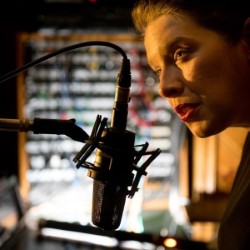
Do Rhinos Feel Their Horns or Can They Not See Them Like How We Can't See Our Noses may be in the running for the Fringe’s wackiest title and the show itself is an equally playful joy to watch. A self-professed riff on Eugene Ionesco’s absurdist satire of fascism, Rhinoceros, the company runs wild with artistic licence.Two friends (played by Cheryl Ho and Shannen Tan) record a radio show about an epidemic of “rhinoceritis” that hit Singapore in the 80s. At first the sudden arrival of rhinos in town reads as a metaphor for fairly standard social shifts and tensions between the young and old in a time of industrialisation. The spectre of Covid looms large with the discovery that the rhinos used to be humans, and our reporters are eager to assure us that this “is definitely not a disease or contagion”. Much of the show feels like an exercise in media manipulation, with the cast fabricating sound effects to transport us from a zoo to a cafe to a riot with little more than a microphone, some balloons, and their bodies. It could easily remain as a commentary on hypernormalisation and manufactured consent but the company isn't content with such a simple conceit, shifting the focus to animal rights, dehumanisation, and capitalism.There’s little doubt that prior knowledge of Singapore’s history and politics would make for an even richer reading of the play but the company provides more than enough to chew on. Our radio hosts provide an ever-shifting narrative in which nothing can ever really be believed.The real achievement is that they do all this armed with rhino masks, sweets for the audience, and a game of keepy-uppy with balloons. It’s playful, political, specifically Singaporean but speaks to the world we live in. If we have to live through another pandemic, I hope it’s as fun as this one.

Summerhall • 15 Aug 2023 - 27 Aug 2023

La codista / The queuer

La codista / The queuer is a deceptively simple show about a woman who waits in line for other people. It is a proper job though, recognised by the Italian state. €10 an hour, rain or shine, and you’ve got to be prepared with sensible shoes and plenty of layers. And this show has plenty of layers.At first it seems like an homage to Beckett as performer, Marleen Scholten, diligently does her time in the queue, flanked by invisible idlers that leave her isolated in the cavernous Main House of ZOO Southside. The queue becomes a microcosm for society, where Scholten revels in a routine of existentialist observational comedy punctuated by prolonged periods of silent waiting. There’s no doubt she’s a charming performer, only occasionally do you wonder where the time or the story is going.There’s a definite attempt to turn the act of waiting into something noble, swerving from a sense of community to boomer-esque complaints about headphones and group chats that leave us more disconnected than ever. Underneath the archness there’s a hint that this is just a coping mechanism to justify capitalist exploitation. Scholten waits in the queue for those who can pay for it: she waits in line for people to buy iPhones and Beyonce tickets, she waits for them to collect prescriptions and she waits so they don’t have to put up with mindless bureaucracy. She’s paid to solve an artificially created problem.At points it feels unbelievable. There’s no way anyone actually does this as a job. There’s no way this actually provides anyone with some deeper existential meaning. And then Scholten reveals the last layer of the play.But if you want to know what it is then you’ll just have to wait and see.

Zoo Southside • 4 Aug 2023 - 17 Aug 2023

Soldiers of Tomorrow

Soldiers of Tomorrow tells the story of Itai Erdal’s conflicted relationship with Israel, specifically his time as a soldier and the prospect of his nephew’s future as a soldier of tomorrow. It’s a charged topic and Erdal does a commendable job of outlining the plethora of opposing opinions and emotions at odds with one another. As he explains: Israel was once Palestine (ruled by the British), but before that it was part of the Ottoman Empire, before that it was Byzantine, before that it was Roman, before that it was Israel, and before that it was part of Egypt. Who gets to claim this part of the world as their own? Whoever has the biggest military by the looks of it.Even the most potted of history lessons can become dense and sadly Soldiers of Tomorrow falls victim to this trap. It often feels as though it needs some extra breathing room that the Fringe simply doesn’t allow. Erdal uses an array of toy soldiers to stand in for his army buddies, which occasionally helps bring his stories to life but unfortunately Erdal’s is a more talented storyteller than puppeteer – some of the toy soldiers are simply too small to properly capture the imagination. Emad Armoush similarly injects the piece with a beautiful musical accompaniment but his role and presence in the show feels like a missed opportunity. He hints at his reasons for leaving Syria but never speaks again. Dialogue between an Israeli and an Arab doesn’t seem to be an option or even a possibility. The focus is firmly on Erdal’s guilt and turmoil, struggling to reconcile the reality of antisemitism and the subsequent belief that historical suffering made Israel “the most moral army” with the reality of having to watch Palestinian children die. His belief that leftists need to be in the army so the right-wing don’t commit atrocities is firmly shattered and it more than hits home.Erdal does a good job of explaining his perspetive but it feels like only half the story is being told. Dialogue may not happen in the show itself but hopefully it will spark one amongst the audience.

Summerhall • 3 Aug 2023 - 27 Aug 2023

America Is Hard to See

The Edinburgh Fringe is awash with shows designed to shock and push our buttons. For the seasoned Fringe-goer, the merry-go-round of attempted provocation can become tiresome but America Is Hard To See stands out from the crowd. Recognising that to err is human, but to forgive is divine, the creative team ask if it’s possible for us to forgive the unforgivable.Based on interviews with sex offenders living in a rehabilitation community called Miracle Village, Travis Russ’ production is unflinching in the face of monstrousness, but also exemplary in its profound empathy. It manages to navigate the seemingly impossible task of humanising the abusers and respecting their boundaries, whilst also recognizing the victims’ trauma. There’s never just one version of events, and multiple truths coexist onstage. It’s complex. It’s hard. It asks us to be better, with the genuine belief that we can be. Who would have thought a play about paedophiles could be the most optimistic show of the Fringe?Russ’ thorough research has been brought beautifully to life by the ensemble, who effortlessly inhabit different characters and recount their own experiences on research trips to Miracle Village. However it’s Priscilla Holbrook’s music that elevates America Is Hard To See to another level. Borrowing from Methodist hymns, the original music has a rustic, rough-around-the-edges feel; whilst pulling at the heartstrings and manipulating us just like the charming protagonists. From sunny Miracle Village to damp Cowgate, music brings together the judgemental and the judged. The central piano acts as an unobtrusive metaphor for the human condition - a little broken, but still able to produce something beautiful.If ever we needed a reminder of that, it’s now.

Underbelly, Cowgate • 1 Aug 2019 - 25 Aug 2019

CONSPIRACY

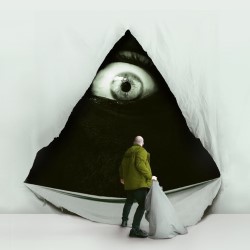
You are watching three actors sat at a table. Their names are Rose Wardlaw, Azan Ahmed, and Shannon Hayes, or at least that’s what they say. There is a thick beige curtain and a smaller curtain directly behind them. What are they hiding? What’s behind the curtain? We need to know! They’re obsessed with a photo. I won’t tell you which one, but you’ve probably seen it before (it is everywhere!). Every detailed observation leads to a conspiracy which goes right up to the top! You know who I’m talking about… Joshua Pharo’s flickering lighting design and Kieran Lucas’ sound design ramp up the air of intrigue, as if we can’t quite believe what we’re experiencing – is it some alien or government interference? Jack Perkins has written some snappy dialogue which spirals into increasingly incredulous complexity, yet with each revelation the energy seems to stagnate – each shock yielding diminishing returns. It’s as if they become stuck in the web of intrigue they weave for themselves.Perhaps all this dialogue is a red herring to keep us distracted from the truth. The beige curtain remains closed. What’s behind the curtain? Some plot twist? Some experiment in form? Something which will make us re-evaluate everything? There must be something that will blow the show itself wide open.I loved Barrel Organ’s previous work. I’m looking for the thing that made them so distinctive, but the liveness and layers of meaning are not there. No, it must be! I want to believe. I want there to be more. This can’t be it! Can it?

Underbelly, Cowgate • 1 Aug 2019 - 25 Aug 2019

Bible John

In the late 1960s three women were murdered by an Old Testament quoting serial killer by the name of Bible John. At least, that’s the story the media circulated. No one knows if his name was in fact John – the Barrowland Ballroom, where the murders took place, wasn’t the kind of place where people used their real names. No one knows what the killer looked like. No one knows if it was one or several killers. The only thing we do know is that the murdered women, Patricia Docker, Jemima McDonald, and Helen Puttock, went out to dance and lost their lives.Fast forward to the present day and Bible John has never been caught. Four young women bond over their fascination with true crime stories and reconstruct the Barrowland murders to find the missing piece of the puzzle. Charged with anger and anxiety they rattle off their theories, piecing together the facts. The frenetic dialogue feels like a relay race with the ensemble supporting each other to get to the finish line and finally find closure. Using every trick in the theatrical book to explore every dead end and red herring, the show is subtly suffused with complexity. Why do the white women trust the police but the women of colour don't? Why do true crime stories always focus on the murderer and never the victim? And why is it always men that kill women?There can't be a neat happy end. That would be disrespectful to the victims and it would be a slap in the face to all the women who live in fear that they might go out dancing and not make it back alive. So instead of coming up with a contrived conclusion they throw subtlety out the window and let loose their righteous anger. Apparently there's nothing to be feared, only things to be understood. Bible John proves that’s not always the case. There is nothing to understand here, no overarching order to the chaos. Just a cold case without an answer; an open wound that won’t heal; a background hum of fear that can’t be drowned out. And it is exhausting.

Pleasance Courtyard • 31 Jul 2019 - 26 Aug 2019

User Not Found

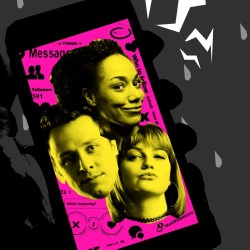
Amid the hubbub of cafe chatter and the hiss of milk steaming a mobile phone vibrates with messages of condolences.Terry (Terry Donovan) is about to get a lesson in 21st century grief - his ex-boyfriend, Luka, has died and left Terry in charge of his social media accounts as his ‘online legacy executor’. Should they be preserved or deleted? And how does Luka’s online persona match-up to Terry’s remembered version of him?Chris Goode’s monologue meanders down memory lane, gently exploring loneliness, grief, and intimacy in an age where we’re supposedly more connected to each other than ever. The unhurried pace allows Terry’s mourning to develop naturally, finding meaning in the mundane as bereavement is wont to do. Terry’s stream of consciousness is mediated via a set of headphones to each audience member who’s also handed a smartphone that pings with notifications and allows us to see the virtual traces Luka has left behind. Far from being a gimmick it’s ideally suited to placing the audience into Terry’s isolated position whilst being surrounded by other people experiencing the exact same thing. The layered sound design complements Terry’s performance whilst also gently reminding us that the reality we’re experiencing is just as airbrushed as the Luka we see on our screens. With the lighting design less is more, using only a few table lamps, fairy lights and hidden colour strips to add to the atmosphere and plunge us further into Terry’s internal turmoil.Theatre is ultimately a form that depends upon human interaction to survive and director, Daphna Attias, clearly understands this, guiding Terry’s performance with the technology to create a quietly profound meditation on intimacy. In the end it seems that the fundamentals of loss and grief never really change, all that does is the tools we have at our disposal to cope with it. Phones may be good but they’re no substitute for holding someone’s hand.

Traverse at Jeelie Piece café • 3 Aug 2018 - 26 Aug 2018

Cock, Cock... Who's There?

Cock, cock… Who’s there? is a multimedia, autobiographical documentary-cum-social experiment all about writer-performer Samira Elagoz’s relationship with men after being raped. In absolutely no way is it an easy watch, whether it’s the extreme sexualisation of her as a teenager or the well-intentioned, though deeply problematic, conversations with friends and family on the day of her ‘rape anniversary’. And that’s all in the first 10-15 minutes. At the centre of the show is Elagoz’s description of how she stopped being able to fully connect with men and started to ‘experience men experiencing me’ instead. The multimedia aspect not only gives us an insight into this dissociative state of existence but also throws the male gaze back at us to startling effect. Every apparently innocuous word and gesture from supposedly ‘nice guys’ are suddenly charged not only with aggression but the very real and threatening possibility of violence. At once they feel remarkably artificial, insultingly performative and loaded with ulterior motives yet also all too real and commonplace. Every man and teenage boy should watch and learn from it.While this is a vital education for men and seems to have been therapeutic for Elagoz, there’s the uncomfortable question of if Cock cock... simply dredges up trauma for the women in the audience without any any sense of care or support for them. I won’t mansplain if this is empowering or constructive for women but it’s a point that needs raising.What ultimately can this review bring to the conversation? It feels wrong to try and judge a piece that ultimately forces me to look in the mirror back at my own male gaze. So how am I meant to respond? In horror, I suppose, though on the other hand we all know that this is reality – post #MeToo ignorance isn’t an option, but it’s one thing to know something in the abstract and another to actually experience it.

Summerhall • 3 Aug 2018 - 26 Aug 2018

[insert slogan here]

I’ve got a lot of love for YESYESNONO. I can’t think of another artist or performer who creates such intimate spaces as Sam Ward and [insert slogan here] feels like the older, slightly more cynical but no less sincere sibling to 5 Encounters on a Site Called Craigslist.Sam lies on the yellow floor, the beach, whispering into a microphone. I can’t make out all the words over the Ola Rae’s swelling, synth score but that’s ok. It’s not the words or the substance itself that really matters but what we’re feeling. A video of a young boy playing on a beach is projected on the back wall and everything feels… Well for me it felt safe, an hour of quiet respite in such an emotionally draining festival. As Ward (and the Volvo adverts that inspired the show) notes: “To feel. To really feel is a rare thing these days.”It’s difficult to describe [insert slogan here] because there’s no real plot or narrative holding it together, just Ward’s warm and playful presence and his attempt to recreate the magic of advertisements, evoking meaning and emotions out of nothing. Traces of 5 Encounters on a Site Called Craigslist crop up with Ward gently inviting audience members on stage to build cars and sandcastles, dance and lay out candles whilst teasing out ruminations on love and what home is. The sincerity isn’t quite undermined but is certainly countered by the fact that these intimate moments are filmed, simultaneously making the audience the most important member of the show but also commodifying them. The onstage presence of the sound and video artists lays bare the magic of manipulation but it doesn’t stop it from being any less effective. If anything it makes the whole experience significantly more complex and difficult to digest.Some reviews have argued it’s all about intimacy, or the attempt to really get to know someone, others have said it’s an attempt to reclaim the power of marketing to more utopian ends. I’m not sure I agree with them, [insert slogan here] could easily be called [insert interpretation here] as it doesn’t feel like it’s ‘about’ anything except what we bring to it.

ZOO Charteris • 3 Aug 2018 - 19 Aug 2018

It's True, It's True, It's True

What does the transcript of a 17th century Italian rape trial reveal about the state of the world nowadays? That, despite 400 years of supposed social progress, the impulse to blame rape victims and protect the perpetrators doesn’t seem to have disappeared. In a festival full of testimonials and denouncements of violence against women, It’s True, It’s True, It’s True, presents us with perhaps the earliest: that of baroque painter, Artemisia Gentileschi, who bravely defied norms by prosecuting her well-connected tutor and rapist, Agostino Tassi. Performed by Sophie Steer, Kathryn Bond, Ellice Stevens the trio quickly reveal the double standards at play in the Renaissance and contemporary legal systems with every one of Gentileschi’s claims disputed, pored over and distorted beyond recognition.Tassi, in the employ of the Pope, is unsurprisingly given the benefit of the doubt and spared from facing the consequences of his bringing to mind a worrying amount of modern example such as Brock Turner. Steer, as Tassi, is full of quiet menace and uncannily evokes the unearned overconfidence of a man who thinks he’s beyond reproach. Like RashDash proved in Two Man Show, it seems the best way to properly interrogate toxic male behaviour is to get a woman to play one.BREACH have certainly made a name for themselves with their distinctive style: reconstructing historical events from verbatim documents to interrogate the present and using theatre’s theatricality to explore the arts’ ability to reframe the narrative. It’s True, It’s True, It’s True, is perhaps the clearest example of this with the trio reconstructing and deconstructing Gentilsechi’s paintings to highlight importance of including female perspectives to get closer to the truth. As with all of BREACH’s work the truth is a slippery thing and the company refuse to end on an easy-to-digest note, attempting to redefine Gentileschi as the groundbreaking artist and woman she was rather than reducing her to her victimhood. It’s True, It’s True, It’s True is brilliantly intelligent, multi-layered and charged with moral outrage – let’s hope time is well and truly up for men like Tassi.

Multiple Venues • 2 Aug 2018 - 26 Aug 2018

One Life Stand

After their five star runaway success with All We Ever Wanted Was Everything, Middle Child were always going to suffer from difficult second album syndrome and it’s a real shame that One Life Stand just doesn’t have the same magic spark. I wanted to love One Life Stand, I really did. There are possibilities of a fantastic play about the promises and pitfalls of monogamy, but the end result is simply patronising and shallow.In what feels like an anxious attempt to be a ‘zeitgeist-y’ writer, Eve Nicol covers everything from zero hours contracts to social media socialism, cat GIFs and sexual liberation. All interesting subjects, but here they compete for time and space leaving none of them satisfyingly explored. As a result, any possibility of character depth or development is sadly lost. The central relationship is rendered dramatically inept by the fact that nothing is actually at stake; neither of them are happy together and we’re left wondering “Will they, won’t they?” or “When are they going to split up?”. Additionally, much of the dialogue falls into the trap of telling rather than showing us what the characters are feeling, which adds to the sense of being talked at rather than being engaged.It doesn’t help that James Frewer and Honeyblood’s music jars with the narrative and doesn’t contribute much - except a longer running time. The company should be praised for branching out and continuing to experiment in their mission to reinvent musical theatre, but unfortunately it just doesn’t complement the tone, narrative or characterisation. Having seen the heights this company can soar to, it’s disappointing to see they’ve lost touch with what made their work special in the first place. Fingers crossed they find their spark again; the Fringe is duller without it.

Roundabout @ Summerhall • 1 Aug 2018 - 26 Aug 2018

Square Go

What’s a ‘square go’? Noun: A rammy. A stramash. Fisticuffs. A fight by the school gates. A rite of passage. A chance to prove yourself.Square Go convincingly showcases Gary McNair and Kieran Hurley’s status as two of Scotland’s leading playwrights with their foul-mouthed love letter to Scottish boyhood. It’s exciting and refreshing to see a piece that is so unapologetically sweaty, sweary, and Scottish, a great big middle finger to ‘proper theatre’. McNair and Hurley’s text is a complex celebration and searing criticism of Scottish masculinity, On the one hand, it’s a joy to take in the filthy lyricism that implies anything can be an insult with a Scottish accent and enough imagination, whilst we’re also acutely aware of the culture of casual cruelty, emotional insecurity and blatant homophobia present that congeals into a cesspit of toxic masculinity.Scott Fletcher and Gavin Jon Wright effortlessly inhabit the young schoolboys Max and Stevie, awkwardly fidgeting and puffing themselves up with false confidence, eager to prove themselves and one-up the other. Finn den Hertog’s direction makes great use of the Roundabout space, making the evening feel less like a piece of theatre and more like a trip to a boxing match with the audience encouraged to take part in the schoolboys’ ritual torment. It’s great fun, I defy you not to enjoy the cheering and jeering, together with the lingering question of whether we can be better than this and break the cycle of violence. With this in mind, Square Go becomes much more than just a story of two schoolboys dealing with their insecurities and trying to prove themselves. Rather McNair, Hurley and their whole creative team seem to be speaking to a nation that’s facing the very real prospect of standing on its own two feet and reinventing itself. It would involve removing a lot of cultural baggage and rejecting countless stereotypes – but if a pair of schoolboys can do it, anyone can.

Roundabout @ Summerhall • 1 Aug 2018 - 26 Aug 2018

Alice Fraser: Ethos

What does it mean to be human? Can a machine learn to be human? Or failing that can it at least learn how to be funny? That’s Alice Fraser’s main objective and constitutes the basic framework for her new show and though Fraser herself admits it’s a tad gimmicky, her monotone AI companion (called Ethos) proves to be the ideal straight man in this unconventional comedy duo, or rather the ideal straight robot. With this setup, comedy and storytelling are the tools of choice to investigate what it means to be human in all its irrational glory. Touching on race, religion, sex, art, and more instances of oh-so-human hypocrisy than you can shake a stick at, Fraser certainly gives us and Ethos plenty to chew on. Fraser is a bubbly, welcoming presence flitting from story to story in a free-form tumble turn of words and ideas with plenty of jokes thrown in for good measure. Her style is self-avowedly post-modern and she takes geeky glee in deconstructing her already self-deprecating set, which not only succeeds in getting a few giggles but also makes you feel smarter for having listened to it. Her AI sidekick on the other hand is wonderfully deadpan and pedantically subverts the punchline and our expectations, making our own inherent ridiculousness all the more apparent.It’s a welcome change to see a comedian who doesn’t need to resort to being shocking or outrageous to please a crowd though sometimes she either goes too far or doesn’t go far enough with her self-deprecation and deconstruction with a few too many jokes landing in an awkward middle ground. Her indecisiveness provides her with plenty of strong material but I’d love to see her go all out and pull no punches in the future.

Underbelly, Bristo Square • 1 Aug 2018 - 27 Aug 2018

Everything Not Saved

What can you remember from five years ago? Or five days ago? Five minutes ago, even? What can you be absolutely sure, beyond all doubt that you remember? MALAPROP Theatre’s new show Everything Not Saved takes the scientific theory that on a neurological level memory and imagination are exactly the same, open to endless manipulation with sometimes amusing, sometimes chilling results.Everything Not Saved is less of a play and more of a variation on a theme with a series of sketches that exemplify our everyday amnesia, with the past, truth and history moulded and modified to fit the present situation. It’s territory that’s ripe for theatrical interpretations, with the slippery dialogue constantly playing mind games with us. Police extract false confessions and film crews rewrite national history, for all of them the truth isn’t an ideal but an afterthought. The ideas are interesting but they are hamstrung due to production’s tendency to tell rather than show which suggests a lack of confidence in the audience’s ability to understand the central concept and its multifaceted implications. It’s a shame because there’s so much scope for exploration and complexity but the end result feels remarkably timid.It’s heartening to see theatre embracing sci-fi, even if the scenarios presented seem eerily close to reality in our ‘post-truth age’, and it’s exciting to imagine what the world and ourselves will look like. I’m looking forward to seeing what MALAPROP will come up next, with their distinctive style and sense of humour, but I hope whatever they do they do it boldly and trust the audience to keep up with them.

Summerhall • 1 Aug 2018 - 26 Aug 2018

Buried: A New Musical

Buried certainly made a splash at the Fringe last year, winning awards left, right, and centre, and deservedly so – Tom Williams and Cordelia O’Driscoll’s new musical is quirky, witty and oozing with black humour. It’s the classic boy-meets-girl story with a twist: when serial killers Rose and Harry meet for their first date, both of them went into it expecting to find their next victim but left having found true love. The Bonnie and Clyde-esque murderous road trip that follows provides ample hilarity but the show’s heart lies in the (potentially worryingly relatable) interactions between Rose and Harry as they let their psychopathic guards down, allow themselves be vulnerable for once and fall in love. Such a profound investigation into the nature of love is what separates Buried from many of the other, somewhat shallower, comedy musicals that populate the Fringe.Lindsay Mannion and Sebastian Belli are utterly charming as Rose and Harry, perfectly capturing the awkwardness of first dates and the getting-to-know-you stage whilst also delivering some of the blackest of comedy with the lightest of touch. Cool, suave Patrick Bateman types they are definitely not. The small venue and investment in radio mics allows the pair to focus on subtle character development and comic timing rather than having to concern themselves with belting out the songs, a strong decision that adds to the production’s intimate charm. The ensemble do a fantastic job, easily evoking a whole host of characters ready to keep the show from getting overly dark or sentimental with the intermittent comedic interlude.On the whole, Buried is a welcome addition to the list of great British musicals. In a time when American musical juggernauts like Hamilton and Wicked dominate the West End, it’s refreshing to see something so quiet, contained, and unreliant on flashy gimmicks steal an audience’s heart. Buried left me grinning from ear to ear from start to finish and I’m willing to bet the rest of the audience was as well – may it play forever!

Underbelly, Bristo Square • 1 Aug 2018 - 27 Aug 2018

Chase Scenes

Chase Scenes is exactly what it says it is: 60 scenes in which performers create a variety of famous and original chase scenes, filmed lived onstage and projected onto screens at the back wall. No setup, no climax, just three women in a relay running from a whole host of changing unseen pursuers. Presented as part of Summerhall’s laudable CanadaHub season, Chase Scenes feels like a combination of performance art, physical theatre and live cinema thrown together onstage. Sometimes funny, frequently unsettling and eventually exhausting for actors and audience alike, it’s a solid concept that doesn’t quite manage to sustain its hour-long slot.Created and performed by Ming Hon, with Hilary Anne Crist and Alexandra Elliott also performing, the trio of women alternate as camera operators and the various pursued women in front of the camera. Using every trick in the theatrical and cinematic book, with the help of some simple props, clever camera angles and an ever-shifting lighting design the trio of performers demonstrate a mini masterclass in media manipulation.It’s striking to see the piece operating on multiple levels, not just the onstage action and the film on screen but also the various filmic influences and references that they make and comment on throughout the show. Though we never see a pursuer, all too often the gut response is to assume it’s not some CGI explosion or a monster but a man. In a Festival full of responses to #MeToo, Chase Scenes comes at it sideways using the classic trick that anything the audience can imagine is worse than anything the artist can hope to show. However, given recent events, it seems the day-to-day reality is much worse than any of us (read: men) could have ever imagined.

CanadaHub @ King's Hall in association with Summerhall • 1 Aug 2018 - 26 Aug 2018

UNCONDITIONAL

There’s a lot going on in the world at the moment, isn’t there? So many stories needing to be told, so many national myths being rewritten, so much is constantly changing that any attempt to make a coherent artistic response feels futile. Mother and daughter duo, Stephanie Mueller and Josie Dale-Jones, know this to be all-too-true but rather than letting themselves get overwhelmed and paralysed by choice they use this as the starting point for their new show UNCONDITIONAL with some mixed results.The pair blend fact and fiction in a playfully postmodern and self-aware style, frequently breaking the fourth wall and slipping in and out of character to comment on their attempts to make this show in the first place. Mueller and Dale-Jones are excellent character actors, easily evoking a variety of vibrant and believable characters before switching back to their storytelling personas. There’s something special about watching an actual mother and daughter performing together, the same shared gestures and subtle similarities add comforting warmth to a show that could easily be depressing and one-note given the subject matter but mercifully the duo avoid that trap.While the pair succeed in capturing the confusion of the modern age, they end up tangled in the web of narratives they’ve spun, bringing in such a myriad of ideas, characters, plots and subplots that none of them succeed in making much of an impact. Ultimately the pair are a joy to watch as storytellers but unfortunately UNCONDITIONAL left me cold.

Pleasance Courtyard • 1 Aug 2018 - 26 Aug 2018

Signals

There are shades of Beckett but without the plodding pretentiousness in Signals, Footprint Theatre’s new show all about human connection and the search for life beyond Earth. Two unnamed scientists (refreshingly played by two women, Eve Cowley and Immie Davies) are on the night shift, poring over piles of data and endlessly waiting for a reply to all the messages humanity has thrown out into the cosmos.Fuelled by bottomless mugs of tea and biscuits, the women fill their time with trivia games, petty arguments, and philosophical ruminations. What would you ask the aliens? How would we understand each other? What defines us as human beings? Signals may technically be ‘sci-fi’ but it’s remarkably human and down to Earth in its focus on the women’s friendship in the face of infuriating bureaucracy and existential angst. Despite the limited space and spartan set, the world evoked by the script and actors is highly believable, rich with details (complaints about their boss are excellently observed) and a consistent internal logic. The short run-time means the show feels almost in a rush to get everything said and done, which somewhat sacrifices the atmosphere of eternal waiting. We get close but not quite close enough to really feeling the dead-end drudgery of their work and so their attempts to fill the time and silence, though enjoyable to watch, don’t have as much impact.Nevertheless, Signals is an accomplished piece of work from Footprint Theatre that shines a light back on ourselves in our search throughout the galaxy. “The search defines us” believes one of the scientists, but what will we discover?

Pleasance Courtyard • 1 Aug 2018 - 27 Aug 2018

Daughter

I hated Daughter. I think, no I seriously hope, that I was supposed to. I’m still grappling with what I actually think of it but what I do know is I’ve not felt so viscerally angry after a piece of theatre before.Adam Lazarus steps onstage, dressed with pink fairy wings, telling us how much he loves his daughter and starts showing some of his dad dancing. It’s cute but in the back of my head I know this is all a carefully curated act to convince us that he’s one of those perennial ‘nice guys’. I can feel Adam Lazarus the performer trying to convince us not just that we’re supposed to like him, that we are like him. He almost succeeds as well, his portrait of casual, hypocritical and oh-so-blissfully ignorant misogyny cuts deep, starting on the gentler end of systemic gendered violence in which we are all uncomfortably but irrefutably complicit. Anyone in the audience who’s been on the receiving end of invisible but all-too-real systemic violence can see the slippery slope from a mile off: the women, the ethnic minorities, the LGBTQ folks, we’ve zoned out, we’ve seen and felt it all before, and we know it’s only going to get worse. The straight, white men? They’re laughing along with Lazarus. And then we watch him beat up a sixteen year old. No one’s laughing anymore but it’s too little too late.Until then, I thought Daughter was a seriously clever piece of theatre. It continually asked us where we draw the line when it comes to gendered violence and how much we’re willing to apathetically accept as ‘normal’. And then we watch him beat up a child. By anyone’s standard that’s a pretty clear line, isn’t it? Infuriatingly it lazily lets the audience off the hook. It sets the bar so low that not beating up a child is presented as the bare minimum requirement to not qualify as some kind of monster. The man onstage starts off as just that, a man who’s also a bit of a monster but the man at the end is a grotesque, fundamentally unforgivable caricature. We stepped out of the grey area a long time ago and all the knotty, uncomfortable questions that Daughter threw at us in the beginning are rendered toothless and easy to answer. So why can’t I get it out of my head?Ultimately I’m not quite sure what Daughter wants to achieve but it’s needled its way into my head and I can’t get it out. It feels like it wants me to be a worse person, to sink to Lazarus’ level and sympathise with him. My only response is “No”. I seriously hope that’s the answer he’s looking for.

CanadaHub @ King's Hall in association with Summerhall • 1 Aug 2018 - 26 Aug 2018

Lights Over Tesco Car Park

Robert says he saw strange lights over Tesco car park. He believes he’s been contacted by aliens. We are assured beyond doubt “ALL OF THIS IS TRUE”. We never get to meet Robert, but that’s no matter; Poltergeist Theatre are at hand to investigate and reconstruct these sightings, playfully inviting us to ask what we choose to believe.Brought to life by a wonderful ensemble (Alice Boyd, Julia Pilkington, Rosa Garland, and Will Spence), the company gets the audience involved in their search for the truth without ever feeling forced or unnatural. Robert’s not alone in his sightings after all so we can choose whose other stories we hear, work out who in the audience is in fact an alien in disguise, and even have a dance to David Bowie.The aesthetic is endearingly kitsch and creatively low-tech, with phones and sweets turning into UFOs and a single cap and microphone to conjure Robert onstage. It’s a little stroke of genius, after all if we can suspend our disbelief to create Robert onstage prompted by just a cap and microphone, so why couldn’t we also believe that he also saw aliens? In a distressing time of post-truth and polarization, Poltergeist Theatre provide the ideal antidote in their playful docu-comedy that never takes itself too seriously and treats the audience with nothing but love and respect - it feels like nowadays one of the most radical things you can do is to simply be unashamedly and unironically lovely. Lights Over Tesco Carpark has been a real breath of fresh air, and it's shows like this that revive me during such an overwhelming Festival.

Pleasance Dome • 1 Aug 2018 - 27 Aug 2018

Celebration

The central aim of Celebration is “to give anyone who can't quite believe the world they live in something to believe in” which is a brilliant intention and starting point but it often feels that creators, Ben Kulvichit and Clara Potter-Sweet, got overexcited with ideas in trying to bring this idea to fruition. There are some moments of pure joy but they’re generally lost in a series of sketches that never quite cohere into something greater than themselves.Students at Warwick University, Kulvichit and Potter-Sweet are certainly intelligent theatre makers but seem more concerned with trying to prove how smart they are rather than focusing on making sure all the disparate segments of Celebration work together. There are some dance sequences that are fabulous fun and properly tap into the childlike joy that Kulvichit and Potter-Sweet seem to be aiming for but then some of the dialogue feels much more like a forced kind of childishness rather than simply felt. Additionally, some of the monologues and games that they play feels slightly tacked on in a homage to companies like Barrel Organ and Secret Theatre rather than feeling like an organic and essential part of the show.There is one section that was absolutely lovely and reminiscent of childhood and secret hiding places that only children know about. Kulvichit brings a huge, papier-mache dolls house that the two of them crawl into to share stories and images of their ideal world. Funnelling a microphone into their hiding place allows us to hear their secret conversation with amplified intimacy and the effect is heart-warming and nostalgic.Kulvichit and Potter-Sweet have the seeds of a beautiful and potentially transformative show in their hands but Celebration in its current form feels like it’s trying to be three different shows and can’t quite decide which one it wants to be. I’d love to see it again once they tap back into the childlike wonderment that sparked it in the first place.

Zoo • 15 Aug 2017 - 28 Aug 2017

Give Me Your Love

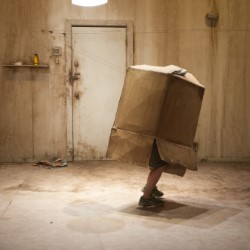
A dirty, disused room, empty except for a box with lots of holes in it. What we don’t know is that Zach, an army veteran played by David Woods, is hiding inside the box and refuses to come out of it. Friends and family bang on the door, at their wits end trying to get him to come out and what ensues is a darkly comic yet tragic portrayal of a broken man, desperate for love and help but who’s ultimately met with fear.Zach has heard of a radical but controversial new treatment for post-traumatic stress disorder: MDMA. His wife, understandably, is sceptical and reels off all the typical arguments against any form of drug use while his friend tries to help him but ultimately ends up being just as hopeless as Zach’s wife. Jon Haynes plays both Carol (Zach’s wife) and Ieuan (his friend) and we never actually see them onstage, only as voices from behind the door which leads to a slightly surreal theatrical world as time becomes fluid in between dialogues while we, along with Zach, experience it as one continuous event. It has the subtle effect of mirroring insomnia and the subsequent distortion of reality that occurs post-trauma and puts us in the same headspace as Zach. Woods’ performance is incredible – he never leaves the box yet manages to convey a huge range of emotions with his body as he moves around the stage, backs into corners and shrinks into himself to hide from the world.This is also a quietly political show that really feels like a snapshot of austerity-hit, Brexit-voting Wales, from Carol’s distrust and contempt towards Cardiff (where the drug trials take place) to the shameful lack of mental health facilities. It also makes us reconsider how we think of veterans and how ‘heroes’ are never allowed to be weak or vulnerable to the extent that Zach wishes he could’ve ‘died a hero’ rather than to suffer this level of degradation. The answer seems to be that he needs to learn to love himself again, but that’s impossible until society gets over its ‘fear of the unknown; not just of the effects of the drug but of the situation that people who need help are in’ as Woods says in the show programme.Ultimately Give Me Your Love ingeniously tackles society’s stigma of mental health with humour and plenty of tenderness. We could definitely use more of that.

Summerhall • 15 Aug 2017 - 27 Aug 2017

Anyone's Guess How We Got Here

Barrel Organ’s new show Anyone’s Guess How We Got Here feels like a natural development of the company’s practice and philosophy whilst also managing to delve into a very different tone and genre. Anyone’s Guess, like their previous works, Nothing and Some People Talk About Violence, mixes the personal and political with a self-consciously theatrical style that foregrounds theatre’s liveness. Similarly it approaches plot in an unconventional way, more elliptical and reminiscent of Alistair McDowall's Pomona than the fragmented Some People Talk and Nothing, resulting in a form that complements the show’s homage to the mystery, haunted house and road trip genres.It starts off as a road trip, with two young women (Bryony Davies and Rosie Gray) playing a game of ‘Fuck, Marry, Kill’. The fact that they are genuinely playing the game and reacting adds brilliant element of spontaneity to their performances whilst also providing some much-needed lightness to some dark and heavy themes of debt and grief. It’s a technique that’s used more subtly and sparingly than in their previous work, which makes sense thematically and dramaturgically but there was a part of me that wanted to see more of these two women’s friendship as Davies and Gray are such watchable performers.It then veers off into more Twilight Zone-esque territory as Davies visits her childhood home from which she was evicted when her family couldn’t keep up with mortgage repayments and the piece turns into a political, haunted house story. Davies is encountered by ghosts from her past and monsters under the floorboards as she tries to exhume a terrible secret from the past. Two strips of LED lights and a suitably creepy sound design transport us into the house, a liminal stage where past and present, reality and fiction all start to look very similar.Anyone’s Guess is a seriously clever piece of theatre, intelligently opting to tackle debt and grief in a more roundabout and indirect way rather than as a piece of on-the-nose political theatre. At times it feels like the company is still finding its voice with the piece, but this is perhaps to be expected as it’s been created by a different writer (Jack Perkins) and directors (Joe Boylan and Dan Hutton), and if anything, this has made me more excited to see where the company will end up next.

Zoo • 13 Aug 2017 - 28 Aug 2017

Is Your Online Reputation Hurting You?

The Cabaret of Dangerous Ideas is an initiative set up to ‘take the academics out of their ivory towers and engage with the public’. The format could easily turn into a dull lecture but compere, Susan Morrison, ensures that the audience are comfortable talking back to the speaker and injects the evening with some self-deprecating, suitably tone-lowering humour to make the potentially dense subject much less intimidating. Furthermore the move from the yurt in St Andrews Square to the basement of New Town Theatre lends a much more intimate feel to the evening and reminds us that this is, in fact, a cabaret rather than a lecture.Nicola Osborne is no stranger to the Cabaret of Dangerous Ideas and she’s a wonderfully witty and engaging speaker, sharing personal stories as well as some hilarious (if, at times, terrifying) industry anecdotes. She encourages us to consider just how much personal information about us exists online, whether by our own choice or not, and what information can be extrapolated about us from seemingly innocuous information and devices. There are some inevitable horror stories and examples that will seem like dystopia to some and utopia to others – Eternal Sunshine of the Spotless Instagram and Wi-Fi-enabled kettles being used in cyber-attacks were some personal favourites.However it’s not all doom and gloom. Osborne is quick to remind us that we only ever notice when things go wrong and ignore the majority of time when the internet and technology work marvellously to our benefit. You may be creeped out by Google and Amazon’s algorithms working out what you might like to buy but it’s better than being bombarded with completely random suggestions.At the end of the day Osborne is an excellent advocate for common sense on both sides of the issue: yes we should make sure to check our privacy settings but we also shouldn’t let fear of technology get in the way of us ruining our lives. 

New Town Theatre • 11 Aug 2017

MINEFIELD

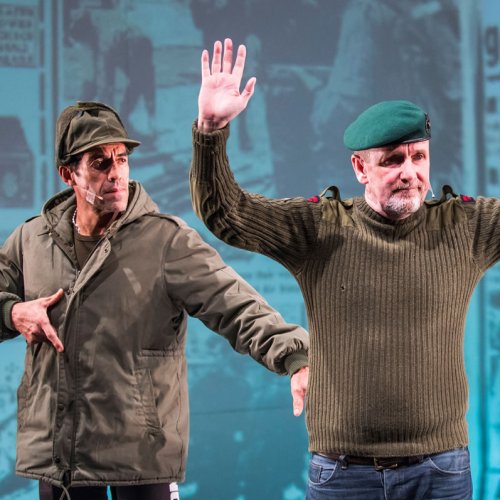
It’s hard to tell what kind of show MINEFIELD is trying to be. No one can deny that director, Lola Arias, is bold for choosing to have six veterans, three from each side of the Falklands/Malvinas war, appear together on stage to discuss their accounts of the war. No one could ask for a more honest, raw or complex account of the war, however, some of the further directorial decisions complicate the subject matter and show. This results in its audience being left with conflicting thoughts and feelings that are never quite resolved satisfactorily.Viewed as a piece of political documentary-theatre, it’s incredibly intellectually stimulating as we’re provided with a whole host of different experiences, from soldiers who were conscripted to those who joined of their own accord. This is aided by some visually striking uses of live-filmed projections in which the veterans film and interview each other and present photos and documentary footage from the Falklands/Malvinas.This otherwise strong theme is complicated by the performance’s overt attempts to draw its main focus onto the veterans themselves, bringing the performance into the distinct realms of drama-therapy, as it examines their lives following the war and how they both have and haven’t moved on. There are some interesting moments, including a point in which one of the British soldiers recounts the story of an Argentine soldier dying in his arms with the calm, matter-of-fact tone of a BBC presenter right after showing us a video of himself recounting the same story 30 years ago in which he broke down in tears. It’s a striking comment on how we move on and bury our emotions.The use of these two distinct approaches to post-conflict theatre results in a very disjointed overall dramaturgy, equally denying the audience and veterans true catharsis, presumably to avoid simple resolutions or easy-to-digest arguments considering the complexity of the subject matter. While it’s understandable from this point of view, as well as out of respect for the veterans’ own boundaries of what they’re prepared to do and share onstage, it is ultimately frustrating to have so many issues raised, partially explored and then ignored. It makes sense on a conceptual level but the jury’s out in terms of how effective it is.I will admit that my own, recent, experience of living in Argentina this year has undoubtedly influenced my own response to MINEFIELD. As a nation the UK doesn’t remember or particularly care about the Falklands/Malvinas conflict, which is also only partially explored in the piece, and as a result of having had to confront our history there was a part of me that wished it would go further in its analysis of not only the conflict but also how the two countries remember it.At the end of the day Arias and the veterans have created an incredibly ambitious and clever piece of post-dramatic theatre but it feels like in trying to please everyone and avoid offending either side they have limited their own potential.

The Studio • 6 Aug 2017 - 9 Aug 2017

The Believers Are But Brothers

The stage is awash with cold, blue LED light. On a screen we see a screensaver suggestive of rivers of blood. On a smaller screen a young man plays shoot-‘em-up video games. In the back of our minds we already have an idea of what The Believers Are But Brothers will be like: violent, brutal and graphic. However writer and performer, Javaad Alipoor, takes this preconception, grapples with it and proceeds to expand and subvert it as he delves into the internet’s heart of darkness.In a mixture of poetic, almost Biblical, and intellectual language Alipoor both plays and analyses the angry, young men who feel abandoned by society and find a sense of belonging online. After all, the internet allows us to connect with people faster than ever and Alipoor ingeniously draw a comparison between young men being driven to offensive message boards and forums with the UK and US governments putting all suspected terrorists in the same prison thus creating the ideal breeding ground for ISIS. It’s a beautiful and completely accessible piece of writing but at no point does Alipoor claim to have an answer to these problems, he merely wishes to ensure we understand and challenge our preconceptions.To do this Alipoor deploys a theatrical device that I’ve never seen used before and that is, frankly, an inspired decision: sections of the show and dialogue with the audience is done over a Whatsapp group that we’re added to in the queue to the venue. This could easily be misconstrued as a gimmick but given the subject matter of Believers it makes perfect dramaturgical sense, allowing us to experience the feeling of being an individual in something greater than ourselves. Also given Amber Rudd’s obsession with shutting down end-to-end encryption like Whatsapp it’s a brilliant move that lets us understand how a tool most of us use in everyday life can be weaponised to bring radicals together.There are several other strands to the show that add extra depth and complexity to the show, from Alipoor outlining the inherent difficulties of researching and making this show to the mysterious man behind the screen who only interacts with us anonymously via the Whatsapp group. All of these components make Believers incredibly intellectually and dramaturgically satisfying but some of the individual stories he tells of radicalised young men are sometimes cut too short as we’ve just started to engage with them.Nevertheless this is an important show, not only providing a snapshot of areas of the internet that some would call a cesspit but others call home but also successfully charts where we are as a society and just how we got here.

Northern Stage at Summerhall • 5 Aug 2017 - 26 Aug 2017

This Is Not Culturally Significant

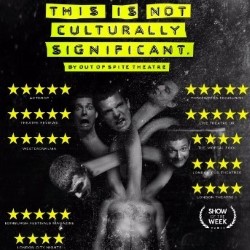
This is Not Culturally Significant is an incredibly rare thing indeed. It’s a show that has so incredibly fried my critic-brain that star ratings don’t seem fit for purpose anymore, This is Not Culturally Significant somehow manages to reject and transcend them.The other question is just what on Earth it’s actually about. It’s a hypnotic performance, properly the kind you can’t stop watching but I’d be a liar if I pretended to know what any of it means, although part of me feels that may be the point. Duh, it’s called This is Not Culturally Significant, any attempt to review, critique or quantify it is doomed from the get go.Adam Scott-Rowley is everything, a force of nature, electric, impossible to look away from and he also seems to play everyone, or rather, grotesque, bouffon style characters from every strata of society. It’s, at turns, hilarious and repulsive, showcasing some of humanity’s very darkest sides and exploring territory that most artists wouldn’t dare touch with a barge pole. Summoning up a kaleidoscope of different characters, from a failing porn actress to a lecturer on spiritualism to a homophobic man and his wife, watching Scott-Rowley shift between them at lighting speed feels like witnessing the exorcism of a schizophrenic spirit.Some have noted the fact that Scott-Rowley is completely naked for the entire hour-long show but this actually seems like a logical choice and is surprisingly unremarkable. Covering up his flapping genitalia with a pair of boxers ‘would have broken his line’ as the lady next to me said and ruined the audience’s suspension of disbelief. There’s definitely some truth to this as the nudity makes him a blank canvas and perfectly able to play anyone and everyone.As well as being culturally insignificant, it’s also intense, terrifying, genius and the kind of show that could only exist at the Fringe. Necessary viewing but not for the faint-hearted. 

Gilded Balloon at the Museum • 4 Aug 2017 - 26 Aug 2017

£¥€$ (LIES) – Ontroerend Goed
What is money? For Belgian theatre group Ontroerend Goed, money isn’t actually metal coins or pieces of paper with numbers printed on them, no, money is so much more than a physical object. Money is trust. And the more you invest in trust then the more you get back. This is the simple (yet dangerous) premise that £¥€$ (LIES) is built on.The Upper Church at Summerhall has been transformed into a casino, with audience members split into small groups to play at betting tables with a croupier to guide us through the next 2 hours of being the 1%. Naturally, you have to spend money to make money and as money is trust we have to deposit our own cash in order to play the game and win big - this motif continues throughout the whole show, subtly yet undeniably manipulating us to risk more and more for greater returns. The cast speak in unison, welcoming us to the show and explaining the rules of the game. Along with the rotating, monolithic stock market index in the centre and the dimmed lighting, this introduction provides a somewhat cultish atmosphere as we’re encouraged to worship money and the pursuit of it. The game starts off nice and simple with casino chips representing our capital and dice rolls representing our luck in investments. As the game progresses we move from investing in real goods to service economies and then eventually into abstract concepts with ever higher risks and returns. The company cleverly make sure each aspect of the game corresponds to an element of the financial world, making a seemingly impenetrable subject engaging, if not entirely understandable, and thus further mirroring the complexity of investment banking.However, in the back of our minds we all know that this bubble is eventually going to burst. I’m sure we could, theoretically, break the game’s mechanics so as to avoid a crash but as we’re all split into separate groups with no way of truly comprehending the bigger picture, the game’s design ensures that we only ever think about ourselves. This is a seriously clever piece of theatre that plays you as much as you play it, effectively highlighting the structural problems of modern day capitalism without ever resorting to preaching or attempting to provide a solution other than to continue playing the game and invest in “trust” again.

Upper Church @ Summerhall hosted by RBC • 4 Aug 2017 - 27 Aug 2017

Prom Kween

From the producers of bold, subversive and wonderfully camp comedy musicals: Margaret Thatcher: Queen of Soho and How to Win Against History, Prom Kween certainly has a lot going for it and looks promising to fans of the genre. So it really is a shame and a let-down that the new offering lacks the level of wit and self-awareness to be considered in the same league.The basic premise is that a non-binary high school student wants to become Prom Queen but is such a ‘nobody’ that they have no chance of beating the popular, obvious choice, Lexi. There are some inspired comedic moments, courtesy of Lexi, who is a terrifying mixture of Theresa May and Regina George from Mean Girls, and in her own words, ‘like a Disney princess but not as racist’. There are some other highly amusing stereotypes and subversions of them, from the high school jock and nerdy sidekick to the gun-toting, white supremacist, homophobic policeman and parents that liberals love to hate. It’s notable that the actor playing the RuPaul-inspired drag queen compere is the one to provide the most insightful observations and is, arguably, the most realistic character of them all. This is highly commendable and encouraging to see as it does go some way to providing a somewhat accurate voice for some members of the LGBTQ+ community. This is especially the case in the moving final moments when they pay tribute to the true stories that inspired the show and the horrifying homophobic massacre in Orlando last year.However, this is also where some of the issues with the show start to emerge: the company clearly have enough wit and intelligence to recognise and mock the problematic cultural influences that inspired Prom Kween but in some cases it only perpetuates them, especially the transphobia that is so prevalent in drag culture. The main character being non-binary feels tacked on and poorly realised while the majority of the jokes and songs seem designed to cater for straight people who can then pat themselves on the back for being so understanding and open-minded. By playing into certain stereotypes, the cast and creative team do both the straight and LGBTQ+ communities a disservice.It’s clear to see just how good Prom Kween could be, which is frustrating as I genuinely wanted it to be an uplifting and empowering experience for the LGBTQ+ community. Unfortunately, like so many high school students, it’s had a crisis of identity and can’t decide what it wants to be yet.

Underbelly, Cowgate • 3 Aug 2017 - 27 Aug 2017

John Robertson: The Dark Room

There are many different kinds of video games: roleplaying, shoot-em-up, strategy, the list is endless. More broadly speaking, however, there are two basic kinds of game: games where the objective is to win and games where the objective is to keep the game going for as long as possible, where the simple act of playing is more important than the end result. John Robertson: The Dark Room belongs to the latter category. While our attempts to escape The Dark Room are ultimately futile, in the process of trying, and failing, we have a fantastic time and learn a lot about who we really are.Dressed like a kind of budget death-metal singer, Robertson takes impish pleasure in singling out audience members to work out what path they’ll take to escape The Dark Room, in the style of text-based adventure games from the eighties. Don’t worry if you’re not an avid gamer or think that reference sounds a tad niche, the game’s mechanics become remarkably clear after the second (maybe third) time that, as Robertson puts it, “Ya die, ya die, ya die, ya die, ya die!” If that sounds terrifying then, fair enough, there is a lot of chanting, screaming and more than enough opportunities for you to reveal just how awful a human being you really are.John Robertson: The Dark Room is about as close as you can get to joining a cult without actually signing away your entire life and eternal soul. He has an undeniable cult following (the woman sat next to me was on her 15th viewing in four years) and it’s easy to see why – provided you’re not faint-hearted and enjoy unrelenting failure. Trust me, it’s fantastic, or have I just been indoctrinated as well? You’ll have to try to escape The Dark Room if you want to find out for yourself.

Underbelly, Cowgate • 3 Aug 2017 - 27 Aug 2017

How to Win Against History

When viewing a show as celebrated and adored as How to Win Against History there is always the risk that it’ll never be able to live up to the hype. Such concerns were quickly dispelled after the first song in Seiriol Davies’ masterful musical.How to Win Against History is all about the life of Henry Cyril Paget, the most fabulous aristocrat you’ve probably never heard of. He enjoyed living lavishly, dressing up in women’s clothing and putting on extravagant plays that no one came to see. After his death, aged 29, his family attempted to destroy any memory of this blemish on their reputation and succeeded until Davies and the creative team decided to fill in the blanks that history tried to erase.In doing so, they rail Britain’s stiff-upper-lip attitude, patriarchy and the challenges of ‘making it’ in the arts using all the subversive wit and humour they can muster. They also add in plenty of fabulous Gilbert & Sullivan-esque, music-hall style songs that not only fit Paget’s doomed dream of ‘mainstream success’ but also subvert and mock Britain’s own culture and history.Davies may be the undisputed star of the show as Paget, but Matthew Blake certainly gives him a run for his money as everyone from Paget’s discontented wife to a ham-Shakespearean actor, accompanying Paget on his extravagant endeavours. Meanwhile, Dylan Townley provides pitch-perfect musical support whilst never letting himself fade into the background. Verity Quinn’s design and Dan Saggars’ lighting perfectly evoke the dilapidated glamour of Paget’s unconventional Victorian lifestyle. Alex Swift’s direction is subtle and unobtrusive, though influential with every scene, transition and musical number effortlessly flowing into the other. Eve Leigh’s dramaturgy ensures not a moment of stage time is wasted. All of this results in a show that’s not only outrageously fun to watch but also has some seriously intelligent arguments bubbling away underneath the glitz and glamour.

Assembly George Square Gardens • 3 Aug 2017 - 27 Aug 2017

Nerdf*cker: a solo play with bad boundaries

Cameryn Moore has made a name for herself as one of the Fringe’s great taboo busters, especially on the subject of sex. Nerdf*cker, like her previous Fringe show Phone Whore, deals with unconventional desires in a refreshingly frank manner whilst also tackling the thornier issues of the commodification of desire and the exploitation of women in sexual environments. All of this makes it sound incredibly serious, which it most definitely is not. No, Nerdf*cker is a highly amusing and engaging character study of a woman with low self-esteem, searching for self-worth in all the wrong people and places and getting herself into situations that range from bizarre at best and exploitative at worst.In this particular situation we, the audience, are visitors to some kind of convention for geeks, nerds and cosplayers to live out their weirdest and wildest sexual fantasies, waiting to see a chess match played on top of a naked woman’s back in a ‘fusion of flesh and furniture’. The problem is we’re early so Moore’s (notably unnamed) character has keep us entertained and she is definitely not used to being the centre of attention, preferring to work silently behind the scenes. I did mean it when I said it’s a bizarre setup.However this approach certainly pays off as Moore uses this outrageous scenario to give a voice to the voiceless and objectified whilst also inviting us to reconsider what we think of as ‘normal’ in terms of sexuality and attraction. Moore’s script has an effortlessly natural sounding quality and manages to weave in insightful observations about unconventional attraction, double standards within the geek community and critiques of the commodification of desire underneath a layer of slightly nervous chitchat. At times this can feel somewhat aimless but as the show progresses we’re given enough clues about the characters on the other side of her mobile phone to realise the extent to which the naked woman is being knowingly and unknowingly exploited. Overall Nerdf*cker isn’t quite as bracing as Phone Whore but proves itself to be an important addition to current conversations about sex, relationships and power.

Sweet Grassmarket • 3 Aug 2017 - 27 Aug 2017

Mies Julie

Yael Farber’s critically acclaimed Mies Julie has returned to the Edinburgh Fringe and it’s easy to see why, with its incisive portrayal of colonialism, gender politics, and white privilege it’s arguably more relevant now than when it first premiered in 2012.By relocating Strindberg’s 1888 play about an aristocratic woman’s relationship with her male servant to post-apartheid South Africa, Farber dusts off the play’s fusty depictions of gender and class politics to reveal something altogether more raw, erotic and complex. Hilda Cronje’s Julie is sometimes painful to listen to, not because of a poor text or performance but because of how spot on her representation of white privilege is. At turns she recognises her family’s guilt and the blood on all their hands, desiring to break away from her own history yet totally blind to the reality of her (black) servants’ lives and her own privilege in even having the option to leave in the first place.Bongile Matasi as Julie’s servant and lover, John, fizzles with anger at the injustice and humiliation of his circumstances in the ‘New South Africa where miracles leave us exactly the same’. He’s clearly the victim but Matasi never panders to the audience’s sympathies, letting us simply watch and understand how both sides are now in an impossible situation. John justifiably wants the colonists to leave so he can reclaim the land that rightfully belongs to him while Julie has spent her entire life in South Africa and doesn’t know where she would go. The pair are incredibly watchable, especially in some of the stylised movement sequences that, for a change, actually depict sex as something sexy rather than fumbling and awkward. The pair resembles a game of cat and mouse with each side grappling for power over the other and personal acts become intensely political as Julie screams ‘My womb, your land grab!’. It’s a shattering criticism of possessive relationships, whether they be between a man and woman or between oppressor and oppressed, there are multiple layers that Mies Julie can be read on.

Assembly Rooms • 3 Aug 2017 - 27 Aug 2017

Enterprise

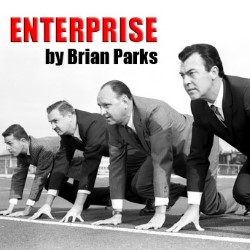
Americana Ad Absurdum Productions certainly lives up to its name by combining America’s most-loved export, free-market capitalism, with some surreal and absurdist humour. Imagine Glengarry Glen Ross written by Eugene Ionesco and you’ve got an idea of the kind of rapid-fire dialogue that ends up folding in on itself, weighed down by the characters’ reliance on finance jargon that doesn’t mean anything in the real world let alone the world of the play.Writer Brian Parks paints an evocative portrait of the finance world with the characters’ nonsensical macho bravado, unchecked arrogance and blind worship of money and free-market economics placed centre stage. All of this belies a deep insecurity about the stability, viability and future of not just their careers but their entire ideology and belief in an industry that is spiralling out of anyone’s control. There’s a clear sense that everyone is only looking out for themselves, willing to do anything to get ahead which results in some hilarious one-liners that, worryingly, you could imagine the current President of the United States saying in complete seriousness.It certainly makes sense to utilise absurdism to try and make sense of this ridiculous reality we currently live in but, given the current state of affairs in the world, much of the satire is rendered either out of date or simply lacking enough bite to actually make an impact. When one character says “It’s OK to care about other people but everything in moderation”, it’s much tamer and more generous than a satire about the business world ought to be. Additionally the overall production is very staccato, with many short scenes interrupted by slightly too long blackouts and many of the punchlines failing to land. Overall Enterprise is an amusing show that ends up presenting a more favourable version of reality rather than effectively satirising the one we live in.

Assembly George Square Studios • 3 Aug 2017 - 28 Aug 2017

Pixel Dust

Pixel Dust is a rare thing: a piece of theatre about the internet that isn’t utterly technophobic. That shouldn’t feel like something radical but, sadly, it is and it’s hugely refreshing to see a piece of theatre that isn’t hell bent on decrying the evils and dangers of social media that we’ve all heard before.Cleverly, it anticipates all the arguments that are levelled against digital natives, namely that we’re addicted to our phones and that Google knows everything about us and throws it back in the faces of Baby Boomers and Gen Xers to show that the exact same criticisms are applicable to them. It actually sets the stage for us to have a meaningful conversation about the internet in all its true complexity. Unfortunately there are some elements to the script and production that keep it from living up to its full potential.Simone James plays Ella, or Dani or Kaylee depending on who she’s talking to either online or in the real world, and writer Clare Bayley uses this to explore the central theme of identity. However she also goes a step further by introducing the fact that Ella, a woman of colour, is the adopted child of a presumably white mother and uses the internet to track down her family and discover her true identity and who she really is. It’s an interesting conceit and an interesting way of exploring identity and the internet in all its complexity but the plot resolves a bit too easily and neatly for it to be believable. This is also not helped by the fact that it feels like two different stories joint together halfway through without enough cohesion to make it fully work. Furthermore James proves herself to be a capable actor but sometimes the persona she plays online can is sickly sweet, like a digital Disney princess, lacking depth that may have been an intentional decision but one that comes across as grating and irritating rather than adding to the production.In the end Pixel Dust definitely represents a step in the right direction for the future of theatre and the internet but some more work is needed to make this specific show go viral.

Assembly Roxy • 3 Aug 2017 - 27 Aug 2017

Amy Conway's Super Awesome World

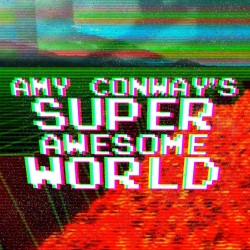
Amy Conway’s Super Awesome World is a hidden gem of the Fringe that starts off all fun and games (literally) before delving into an account of living with depression that is so heartfelt and honest that it left this stony-hearted critic a tearful mess.The show is based on Jane McGonigal’s theory that video games may be the answer to making us less depressed and more fulfilled. It may sound ridiculous but it actually makes a lot of sense. In a video game you have a feeling of achievement and control of your destiny, it provides positive feedback and it helps teach you that failure is not the end of the world. McGonigal has proposed that treating aspects of our lives as a game may make them less daunting and more manageable for people suffering from depression. It’s not just an exciting theory but a brilliant launch pad for Conway’s own show in which the audience play games to get to know each other and help Amy get through everyday situations.Conway along with director/video designer, Rob Jones, effectively evoke the saccharine world of classic Nintendo games with saturated red, blue and green lights and some 8-bit video tutorials on a 90s style TV set. It immerses us in a world that’s full of opportunity and failure that only means playing again, whilst also allowing moments of darkness to bubble up from below the surface. Conway involves the audience in a number of games designed to mirror classic Nintendo challenges as metaphors for dealing with depression and as a means of bringing us together as an audience to create an environment where we feel safe and supported. The video element includes a well-meaning but fairly useless sidekick (which any gamer will recognise) who ingeniously stands in for friends and family providing platitudes, making you both laugh and reconsider your own actions and attitudes towards mental health issues. This is complemented by Conway describing her experience of volunteering for the Samaritans and the dilemma of how to help someone with mental health problems. By treating it as a game, it suddenly becomes far more manageable and the acceptance of failure comes a lot easier.By the end, we’ve been through so much together that being invited to share our own experiences feels neither forced nor insensitive and the final moment that made this show about depression stand out from all the others for me as we all stood together, not one of us alone.

Summerhall • 2 Aug 2017 - 27 Aug 2017

Testosterone

Testosterone is a touching, funny and incredibly brave piece of theatre from Rhum and Clay Company and Kit Redstone. It chronicles his experience of physically transitioning from female to male and the social minefield of modern masculinity that he’s had to navigate.The show is set in a men’s changing room where all the social norms are explored with wit and some excellently expressive movement sequences in which the ensemble deconstruct and analyse what we consider typically male behaviour and interactions. It’s a highly effective technique, allowing us to see just how absurd these rituals really are and helping us understand Redstone’s own frustrations of how to ‘pass’ as a man. Bell Hooks once said that “The first act of violence that patriarchy demands of males is not violence toward women. Instead patriarchy demands of all males that they engage in acts of psychic self-mutilation, that they kill off the emotional parts of themselves.” The company have clearly understood Hooks’ point and in every scene they reveal another aspect of the violence and emotional repression that modern masculinity demands, from the traditional macho man to the modern metrosexual.The stage design ingeniously traps Redstone in his own personal hell, the gym’s male changing room, with an enormous mirror dominating the entire back wall which distorts the appearances of all the actors onstage. This distortion further emphasises the ridiculous everyday performances and overall bravado of male interactions. This, along with Redstone’s heart-warming rendition of I wanna be like you from The Jungle Book, means that we’re rooting for him and the final stage image is probably one of the most striking and moving that you’ll see at the Fringe.The only downside is that some of the sections feel slightly rushed and would benefit from more space to breathe and develop. Fringe time restrictions have had an unfortunate effect of making the show feel ever so slightly incomplete, with the feeling that it’s missing an extra scene or two to finish the whole thing off.However this is a minor quibble and the show is sure to introduce you to a radically different and insightful perspective. With Testosterone, Rhum and Clay have proven themselves to be one of the most exciting and engaging theatre companies currently working in Britain.

Pleasance Courtyard • 2 Aug 2017 - 27 Aug 2017

Foreign Radical

Theatre Conspiracy’s interactive show, Foreign Radical, is more than likely to mess with your moral compass. We, the audience, are ultimately responsible for determining if a man is or is not a potential terrorist threat, with our own beliefs, actions and loyalties scrutinised, thus altering what information we are privy to and what scenarios we get to witness. This definitely makes for a unique experience but time and space restrictions result in a show that feels cut short too soon, just as we’re starting to delve deep.We are instantly presented with a naked man of Middle Eastern descent, forced to stand with his hands on a desk and completely submissive to us and the all-seeing CCTV camera. After much suitably uncomfortable silence, sentences in Arabic and Farsi are projected on the walls, we’re then given instructions in English directing us to the next room if we didn’t understand the original text. It’s a cleverly manipulative technique to make us aware of the extent of racial profiling going on, not just in the show, but in the real world as well, where even knowledge is suspicious. Add in all the design elements (sound, lighting, video and set) and you have and incredibly uncomfortable atmosphere, reminiscent of dramas such as 24 and Homeland, putting us on-edge and suspicious of everyone.After some unconventional getting-to-know you games, we’re separated into different groups, with different tasks to do, depending on how ‘paranoid, suspicious or radical’ we are (whatever that means to the powers that be). It proves to be an enlightening experience in which we find ourselves sharing more than we may have expected. This is compounded by the fact that we then are charged with determining if the aforementioned naked man is a terrorist threat or not with limited and crucially conflicting intelligence.This is the point at which the dramaturgy and game mechanics slightly fall apart. In the context of a predominantly liberal arts festival, the audience is largely biased towards presuming innocence rather than guilt and the lack of context or understanding of the threat he poses means there’s less at stake for us as decision-makers. It’s also a no-win situation that’s been set up: if we’re correct in his innocence then we can pat ourselves on the back for being so liberal and tolerant but if he does turn out to be a terrorist then is the piece condoning invasive mass-surveillance? It’s a dramaturgical and ethical issue that is not easy to resolve in just 75 minutes.Overall Foreign Radical is an ambitious piece that forces you to ask many uncomfortable questions but is, at points, a victim of its own ambition.

CanadaHub @ King's Hall in association with Summerhall • 2 Aug 2017 - 27 Aug 2017

Blow Off

Blow Off is part concert, part theatre and deals with one woman’s journey to committing an act of terrorism. It’s certainly exciting, but Julia Taudevin’s story doesn’t delve deep enough into the psychology of extremism nor does it explore the circumstances that foster extremist views nearly enough, resulting in a show with plenty of anger but very little coherence.Taudevin introduces us to the unnamed, unremarkable woman walking down an unnamed and unremarkable street that we’ve walked down a hundred times before. It’s an interesting idea that allows us to fill in the gaps, but doesn’t entirely work in the context of the whole show. What follows is a fragmented portrait of the woman’s life, going to work for a faceless corporation, trying to talk to the cleaner and being assaulted in the street by an unnamed and undescribed man. All of this is performed with incredible energy from Taudevin. The band’s riotous music definitely adds to the sense of impending catastrophe, but the sound rendered parts of the script painfully screechy and other parts inaudible. Rather than contributing to the anarchic environment, it turned out to be more of a distraction and actually pulls you out of the action instead of immersing you in it.Additionally Taudevin seems to have picked more targets than can be dealt with satisfactorily – reeling off all the evils and injustices of modern society, the audience is overwhelmed (presumably intentionally) meaning the show feels more like an angst-ridden teenage rant, rather than a legitimate portrait of the road to radicalisation.It is definitely a brave piece of work with some fantastic technical aspects; the microphones allow Taudevin to emphasise her exhausted breaths as she whispers her thoughts for all to hear, and the striking lighting design adds to the livewire experience whilst also creating new locations with ease. However, none of these aspects make a satisfying substitute for the lack of characterisation and clarity in the plot. Blow Off is certainly full of sound and fury, but most of it ends up signifying nothing.

Traverse Theatre • 22 Aug 2016 - 22 Aug 2016

If I Googled You, What Would I Find?

It’s a troubling question and most of us probably don’t know the answer. Most of us probably don’t know just how much of information about us can be found online, so what can we do to manage our digital footprint and what are the implications of having our data available online? The Cabaret of Dangerous Ideas are here to find out with the help of Nicola Osborne from the University of Edinburgh.Osborne is an excellent speaker, making sure to keep the technical jargon to a minimum to ensure the audience is engaged and can contribute to the conversation. This is one of the defining features of the Cabaret of Dangerous Ideas, it may invite academics but it is definitely not a lecture theatre, they encourage questions, conversations and the exchange of ideas so that we can find more answers and more questions. With a topic as vast as the internet the Cabaret of Dangerous Ideas is the ideal forum to find out where our data can emerge from (the Electoral Register may have already made your address available to find online for starters) and the potential benefits and disadvantages of sharing our data. Osborne is also clever enough to avoid some of the tabloid scaremongering that could dominate a conversation such as this and reveals a collection of hidden gems and curiosities, for example the NHS has been exploring how to use digital data to better diagnose and predict future illnesses and ailments in patients. However it’s far from a one-sided argument with Osborne herself noting the flaws and potential issues with the examples she provides, if your medical data were to be made accessible then health insurance companies could massively abuse that power. No one in the audience ever said it was an easy issue to debate, after all the internet is still incredibly young and experiencing huge changes with each new technological development.It’s a fascinating discussion that could go on well beyond its hour long time limit and in an age where the internet will become ever more prevalent in everyday life, Osborne’s talk should be taken to every school in the country so everyone knows what they’re dealing with. After all, the internet is a tool that can be used for good and bad so it’s up to us to know how to use it.

Stand in the Square • 21 Aug 2016

The Lady Vanishes

The Lady Vanishes is one of those shows that doesn’t fit into simple categories. Instead it takes some of the best bits of different styles and genres to form something completely different and the result is utterly beautiful and haunting.Inspired by Victorian photography which seemed to reveal images of ghosts and spirits living amongst us, Dudendance have taken those images and transposed them into the Haining House and Estate in Selkirk for a site-specific dance piece that is a feast for the senses. Guided around the estate we see ghosts all around us, acting out moments from their day to day lives in slow motion with incredibly controlled movements seemingly lost in time. One stands motionless looking across the lake, another collects wood, one sits at the window reading a book – all typically banal actions that are suddenly rendered fascinating. The ten ladies never speak allowing us to project our own thoughts, ideas and speculations onto them. Are they the same woman? Did they live at the same time? What were their lives like? We’re allowed to choose and that’s part of the beauty of the piece – there’s no story to try and latch onto rather it is a pure experience of time, memory and history.There are plenty of ghost stories performed during the Fringe but Dudendance have gone one step further by bussing the audience out to Selkirk. The grand country house, the expansive grounds, forests and lake not to mention the sensation being outside to hear the animals and experience nightfall in real time forms an integral component of the show.There’s a noticeable sense of trepidation at the beginning in which no one in the audience really knows what we’ve let ourselves in for and part of me wonders how different the experience might be if it were experienced individually as the group mentality seems to be to clump together for safety. Nevertheless it’s a phenomenal, genre-defying work that deserves more than a three night run at the Fringe – I can’t wait to see what they come up with next.

Summerhall • 13 Aug 2016 - 15 Aug 2016

Stories to Tell in the Middle of the Night

Stories to Tell in the Middle of the Night is both exactly what it says it whilst also proving to something rather different altogether. Armed with just a few microphones and moveable desks writer and performer Francesca Millican-Slater tells us “I’ll take you through the night. Its highs, its lows. Those frustrations. Turn on the light. Look at the time. We’ll populate the long dark hours and the small light hours with stories. People.” And so begins our journey through the night full of bizarre tales and characters.We’re taken through an unnamed city and made privy to domestic arguments in 24 hour supermarkets and unlikely romances as “hands brush reaching for the milk” before moving on to some altogether more morbid and sombre stories. There’s the woman in a call centre, working her way through the infinite numbers to try and find someone she knows, the man stuck in a pie factory looking for meaning before being transported to peep shows and other places that you won’t see in daylight. It’s an imaginative twist on dark bedtime stories, making them about anxiety, insomnia and loneliness which is ably supported by lighting and sound designers, Ben Pacey and Iain Armstrong. The near constant electric hum and the artificial fluorescent lights manages to create a disconcerting atmosphere but it’s never quite creepy enough to properly get under your skin.Additionally there are a few stories that feel like natural points to end the show but it keeps going on with sadly diminishing returns. Nevertheless it’s an engaging and evocative performance that remind us that “What we see at night looks very different to during the day” before reminding us that although the night is full of urban horrors, the sun still rises, we’ll make it through to the other side and we’ll be able to reconnect again.

Summerhall • 13 Aug 2016 - 28 Aug 2016

Panti: High Heels in Low Places

Panti Bliss has had a whirlwind of a few years and, naturally, she has more than a few fabulous stories to share. After calling out homophobes on national television, becoming embroiled in multiple lawsuits and appearing on more talk shows and interviews than you can shake a stick at, she’s here in Edinburgh to expose the latent homophobia that’s still found in the UK and Ireland.As you would expect from performer Irishman, Rory O’Neill, he dominates the Traverse’s stage in full drag - a charismatic force of nature to be reckoned with, poised to rip apart the patriarchy and its everyday microaggressions that continue to plague the LGBT+ community. Part TED Talk, part confessional, with a short drag act thrown into the mix, Panti more than delivers in her incisive and informative (not to mention hilarious) performance. However it has to be said that the format feels a bit too restrictive for Panti’s boundless and raucous energy. She may be a figurehead and spokesperson for LGBT+ liberation, but she’s an entertainer above all else - as her freewheeling stories and razor sharp one liners go to show. What’s more, a certain mixture of raunchy wildness is crucial to making a drag show work, which Panti provides in spades, but the nature of performing on the Traverse’s main stage means that much of the show feels a bit too tame.Nevertheless it’s entirely worth going to see the show just to be in the presence of Panti, she is truly unique and I defy you not to fall in love with her. The relationship between her and the audience is so effortlessly intimate that sharing stories and experiences feels completely natural and everyone gets a chance to share an embarrassing story or two – although no matter what, Panti’s grande finale will always take the cake...So if you’ve never met a bona fide “national fucking treasure” here’s your chance – I promise you won’t regret it.

Traverse Theatre • 8 Aug 2016 - 14 Aug 2016

Tank

Breach Theatre blew everyone away with The Beanfield last year, and their new show, Tank, is no disappointment, retaining their distinctive brand of semi-devised/semi-verbatim theatre with a clear political edge. Tank is based on transcripts from a NASA-funded set of experiments designed to teach dolphins English and the imagined relationship between researcher, Margaret (Victoria Watson), and a dolphin named Peter (Joe Boylan). It’s sure to be one of the most bizarre starting points for anything you see at the Fringe.Not content to just recount the story, the company also make sure to deconstruct how narrative and history are moulded by explicitly stating what is verbatim and what they’ve had to make up for dramatic purposes. Two additional actors, Ellice Stevens and Craig Hamilton, debate the validity of Margaret and Peter’s relationship and if this experiment is even worth continuing, whilst they perform what can only be described as a dolphin/human love dance (trust me, it works!) allowing us to view the performance from multiple perspectives. In yet another stroke of genius, the directors include video projection at the back wall to provide us with Peter’s voiceless perspective, Dorothy Allen-Pickard’s video deserves particular praise for the fact that the majority of it takes place underwater, and I shudder to think how complicated that must have been. The company also uses this to interrogate how language can be used as a tool for violence, as Margaret injects Peter with LSD, telling him, “Don’t even think in your own language. English, all the time!” The beautiful thing is that all of these layers and issues exist simultaneously, smashing together past and present, fact and fiction.It’s an incredibly strong production that solidifies Breach’s reputation as one of British theatre’s rising stars. There are only a few minor issues with audibility in the tiny Pleasance Jack Dome, as well as the inevitable death of Peter feeling rather rushed when the company had been emphasizing the slow torture he was suffering. Nevertheless it remains a strikingly original and bracing production that is definitely going to mature and develop as the run continues.

Pleasance Dome • 7 Aug 2016 - 20 Aug 2016

Deal with the Dragon

It’s a familiar scene to many a Fringe-goer: a black-box stage, a chair and an actor with his story. But what an electric, even dizzying story Deal With the Dragon turns out to be. The basic synopsis (trust me, you’ll need it) is that a frustrated artist, Hunter, in San Francisco is struggling to meet his deadline for a career-making exhibition. Fortunately his gay, German friend Brenn is on hand to help, with the only minute problem being that Brenn is also a fire-breathing dragon to whom Hunter sold his soul as a child. Throw in Gandy’s story, Hunter’s artistic rival with a whole host of sub-stories and characters to encounter from his experiences in rehab and you’re in for a rollercoaster ride of a show.All the way from the USA, Kevin Rolston’s one-man performance for First Sprout Theatre is unforgettable for his sheer energy and ability to evoke distinctive, engaging and utterly unique characters – he’s a true powerhouse and a force to be reckoned with. Unfortunately the speed with which he switches characters means that we spend a bit too much time playing catch up rather than being able to fully immerse ourselves in the story and simply enjoy it. Additionally the somewhat sprawling narrative bears some similarity to a set of Russian dolls, adding to this disorientating feeling.Nevertheless Deal With the Dragon is still not one to miss, it’s the kind of madcap show that could only really exist at the Fringe and despite the number of hilarious though unnecessary digressions it still remains a joyous hour and ten minutes. Yes, there are a few issues, but when you’re confronted with an oh-so-fabulous and witty, gay dragon do you think anyone will really care? Given Rolston’s natural charm and unmissable energy I’m willing to bet you’ll love it.

C venues - C nova • 5 Aug 2016 - 29 Aug 2016

Blank

Nassim Soleimanpour is known for his intelligent plays that have no need for a director, designer or even rehearsals. No, all that’s needed for one of his plays to be performed is an actor and an audience (okay, and a technician if we’re being pedantic) – it’s a trick he used in White Rabbit Red Rabbit and while Blank develops on this form it also remains too distanced and acknowledges its own intelligence far too much to make a lasting impact.The play ostensibly deals with the nature of storytelling and allows a member of the audience to become The Character with the rest of the audience is cast as the writers of The Character’s life and future. Soleimanpour is clearly one of the most intelligent playwrights on display at the Fringe, gradually picking apart and subverting theatrical conventions whilst also providing the actor, The Character and the audience plenty of room to play and make each performance completely unique. As we get to fill in the Blanks surrounding The Character’s life, future and eventual death, inevitably, no two performances will ever be the same. Soleimanpour recognises this fact with humility and self-deprecating humour admitting that he’s “probably the third best playwright in the room”.There’s no denying Soleimanpour’s technical ability to challenge our expectations and keep us interested: employing an actor who has never read the script before and is as much in the dark as the audience creates a collective feeling of anxious excitement. However, the novelty does wear off fairly quickly and, unless you’ve been picked to be The Character, the show does start to drag a bit too long. There are far too many variables at play to pinpoint any specific issues, as the show is largely dependent on the actor, The Character and the audience embracing and working with the material we’re given. That said, the structure we’re given is a bit too stifling and self-aware for everyone to properly play and enjoy the possibilities. Ultimately Blank is an interesting companion piece to White Rabbit Red Rabbit, but it still requires some work.

Summerhall • 5 Aug 2016 - 28 Aug 2016

Back of the Bus

Java Dance Theatre have somewhat sworn myself and the rest of the audience to silence after the triumph that is Back of the Bus so as not to ruin the wonderful surprises in store for you all, on this bus journey unlike any other bus journey you’ve been on before. The morning commute will never be the same again.The basic premise is that you are driven around Edinburgh on a double decker bus, with some weird and wonderful visits from some of our fellow commuters - where you are definitely expected to get involved. The dancers on the bus create such vivid and distinctive characters that you know them intimately by the end of the performance, despite them saying little or nothing to you. You just need to join in the dance and they’ll take you on a mystery tour that’ll make you feel like a kid again, rediscovering our city and its inhabitants. For the purposes of Back of the Bus, definitely ignore the stranger danger advice you were told as a child and just join in with the ridiculous, giddy fun that’s waiting for you.The choreography is incredibly accessible, opting to evoke characters and shine a light on how ridiculous people actually are rather than trying to propagate a specific idea or agenda and the dancers deserve the highest praise not just for their technique but also their ability to encourage the audience to play along with them. Furthermore the soundtrack is a joy to listen to, fittingly reminiscent of the film Amelie as Back of the Bus makes us look at the city from a completely different perspective just like Amelie did with Paris. Java Dance Theatre have dramatically altered what a dance show can be by making it site-specific, promenade and interactive whilst never getting stuck in its own head – I’d love to see how the piece could change (or not) as it moves from city to city. Either way, Back of the Bus is the epitome of what the Fringe stands for: a bonkers experiment that is also an absolute joy for the cast and audience. You’d be mad to miss it!

Assembly George Square Gardens • 5 Aug 2016 - 28 Aug 2016

Lines

Lines is a touching spoken word show surrounding the diverse lives of people travelling along the London underground. The characters repeat “It’s not somewhere you go to / It’s something you go through” and we’re bombarded with a flurry of movement and a cacophony of voices that cover people from every class, background and race.The ensemble works together excellently, giving us insights into their lives in rhyming verse that lends a beautifully musical quality to the overall show allowing the actors to almost tag-team their monologues, seemingly casual but tightly choreographed. It’s a testament to the ensemble that something so structured feels so natural. It’s nigh on impossible to pick out any one standout performance, as the company have created clear and distinct characters that you feel you know personally after just a few lines – after all, they’re the people we see every day but never quite manage to connect with. When they’re not acting in the scene the actors can also be seen at the back of the stage providing live musical accompaniments, sound effects and more. This greatly helps the pacing and poetic quality of the show. Another special mention has to go to Kiaran Kesby’s lighting design, which casts multiple shadows of the company onto the back wall and evokes the sensation of being surrounded by endless hordes of people going to and fro.The only issues with the show emerges towards the end, after they start discussing terror attacks on the tube and the characters start attempting to connect with each other in the wake of disasters. Where the company had previously embraced the fragile connections between the commuters, the final scenes are much more concerned with ensuring there are no loose ends, which somewhat defeats the original premise of the show. It’s an understandable idea but unfortunately it’s not executed well enough for it not to slightly jar with the rest of the piece. Nevertheless this remains an insightful and imaginative piece that showcases some remarkable talents.

Rose Bruford @ Upper Church, Summerhall • 5 Aug 2016 - 15 Aug 2016

On the Conditions and Possibilities of Hillary Clinton Taking Me as Her Young Lover

On the Conditions and Possibilities of Hillary Clinton Taking Me as Her Young Lover definitely wins the title of most intriguing show title at the Fringe, and it’s definitely worth seeing for the demented, skewed logic of why Richard Meros, B.A. should be Hillary Clinton’s young lover.Taking the form of a comedy lecture, Meros describes his thesis as “the New Gettysburg address of American politics”, so you know from the outset that he’s utterly deluded. This is a madcap rollercoaster ride through the world of global and gender politics shot through with some ingenious logic with bizarre conclusions. Meros’ basic argument is that Clinton running to be President of the United States goes against everything people say she can and should do, ergo she should also take a young lover to eclipse any scandalous outrage Donald Trump could ever dream of releasing upon the American public. Hailing from New Zealand, Meros outlines why he, a well-educated, non-smoking, teetotal, white male from a neoliberal, capitalist, Westernized country should be the one to form a rather different Trans Pacific Partnership with Mrs Clinton and unite the Millennials with the Baby Boomers. It makes sense if you completely ignore all the gaping holes in his logic, but then again it takes a lot of intelligence on Meros’ part to act this stupid.It’s an engaging, if slightly terrifying, performance – after all you are trapped in a tiny lecture theatre with a madman – and you even get the opportunity to become part of his campaign to become Clinton’s boy toy. We get to film his video proposals and you also get a postcard to send to Hillary for America to advocate Meros’ aptitude as a piece of arm candy for Mrs Clinton.It’s a terrifying thought that this Kiwi’s politico-sexual quest could actually save democracy from implosion, but rest assured that Homeland Security is “keeping an eye on him”. I’d recommend you keep an eye out for him too as he’s one of the performers that you absolutely should not miss.

Summerhall • 5 Aug 2016 - 28 Aug 2016

Machina

In the prologue to Malcostume Compagnia Teatrale’s show Machina, the company explains that the word ‘machina’ roughly translates to machine or structure and the company’s name ‘Malcostume’ also translates to badly behaved. With this in mind, it’s clear that company’s intention is to subvert and challenge the traditional format and structure of commedia dell’arte. It’s an interesting and amusing concept that I’d be intrigued to see developed further but, unfortunately, a few troublesome components mean that it doesn’t entirely work together as a whole.Machina is performed by a single actor with the aid of multiple screens behind him, onto which videos of the whole dramatis personae are projected (also played by the same actor). It’s a striking and original concept, certainly pushing the bounds of what commedia dell’arte can be or do – traditionally actors would play multiple roles by switching masks, but this takes it to the next level, resulting in some fantastic comedic moments. The actor both adheres to stereotypical plots and the stock characters of commedia dell’arte, such as the swaggering and arrogant Capitan and the cantankerous old man, Pantalone, whilst also commenting on the structures and mocking the characters that he’s playing. It’s funny, but it is never entirely clear what the company hopes to achieve, other than make us consider narrative structures and commedia dell’arte as a contemporary art form.Additionally, there are some technical issues that detract from the performance. For example, as Machina is performed in English and Italian, there are surtitles projected above the stage, meaning one can either watch the energetic performance or read the surtitles to know what is being said, which interrupts the flow of the performance. Also, many of the voiceovers for the projected characters are much too loud and the sound quality is rather poor, making it difficult to understand what they are saying, while blocking the sound of the actor onstage.It’s a shame that these technical issues arose, because Machina is an imaginative piece of theatre that does push the boundaries of how classical and contemporary theatre styles can coexist; it just requires more rigour and reworking.

Zoo • 5 Aug 2016 - 29 Aug 2016

Margaret Thatcher Queen of Game Shows

Ding dong, the witch isn’t dead! And this time it’s definitely cause for celebration! After her previous success as an ‘international cabaret superstar’ Maggie is back in business with her brand new game show that’ll briefly make you cheer for the 1% and austerity – being part of the ‘Nasty Party’ has never felt so good.Accompanied by her glamourous assistants, Gove and Osborne, Maggie takes us on a rollercoaster ride through post-Brexit Britain, pitting the Strivers against the Skivers in a series of increasingly ridiculous games. With games such as Check Your Privilege and Wheel of Misfortune, here’s your chance to indulge your secret desire to destroy the NHS (figuratively) and rip up the European Convention on Human Rights (slightly more literally). Naturally who wins and who loses is completely arbitrary but in classic Maggie fashion she’ll make you ask if you really care anyway (Spoiler Alert: You probably don’t).The comic interplay between Maggie and the whole host of political cameos is a side-splitting treat to watch, from a messianic Jeremy Corbyn to a rap battle with none other than Angela Merkel. The tech team deserves a huge amount of praise for their perfectly timed sound effects and voice overs that ensure the laughs come thick and fast along with some delightfully awful singalongs. Additionally the gaudy and over-the-top set and lighting design ingeniously parodies our most loved Saturday night game shows and helps keep Maggie’s political commentaries undoubtedly tongue in cheek. Despite all the laughs from the supporting acts, rest assured that Maggie firmly and unapologetically remains the star of the show – she’ll hurl insults at you with a knowing grin on her face and you’ll love her for it. To put it simply, it’s not subtle and it’s definitely not PC but it’s also everything you didn’t know you wanted!

Assembly George Square Gardens • 4 Aug 2016 - 28 Aug 2016

Counting Sheep

Counting Sheep is a theatrical triumph that throws the audience into the centre of the 2014 Ukrainian revolution. In slightly over an hour and half we eat, we dance and we riot together, playing witness to the horrors of state-sanctioned violence against its own people - it’s an invigorating experience that properly connects you to the other members of the audience and reminds you of humanity’s capacity for compassion in the face of unspeakable suffering.Lemon Bucket Orkestra create a raucous atmosphere and it doesn’t matter that they’re screaming instructions at you in Ukrainian, the atmosphere in the crowd and the projections looming above the stage provides all the information you really need. Also when you’re handed a riot shield you generally don’t ask many questions, you just get stuck in – as well as recreating the experience of being in a riot it also reveals the ease with which people can slip into a mob mentality. Everyone in the crowd gets involved: building barricades, dishing out food to the crowd and even joining in the funeral march for our fallen brothers in arms, it’s amazing how quickly you feel connected to everyone else in the show and the strong desire to protect each other when the riot police arrive.Directors Mark and Marichka Marczyk have created a unique experience that cuts through the media reports and reminds us of the human experience of revolt that we rarely see in Britain. There are too many creatives involved to credit but every component works together seamlessly to create such an all-encompassing experience: the sound and lighting highlights the brutality of revolution and the projections remind us to think and consider why the revolution is taking place and what everyone is fighting for in the first place.It’s sweaty, it’s sweary, it’s uplifting and it’s everything theatre should be and more – everyone, everywhere should see it.

Summerhall @ The King's Hall • 4 Aug 2016 - 28 Aug 2016

Attrape Moi

Quebecois circus group Flip Fabrique fill the massive Assembly Hall with awe and joy at their contemporary circus skills. Blending elements of traditional and contemporary circus Attrape Moi follows a group of friends and focuses more on getting to know these characters and the ties that bind them rather than trying to create a single overarching narrative via some mesmerising and death-defying feats. It’s a slightly alternative approach but it pays off with the audience left feeling a deep personal connection to all the performers not to mention the obvious delight at their superhuman abilities.The show manages to pack in everything from beat-boxing diablos and hula hoops, to gravity defying somersaults on trampolines to name just a few. One of the most remarkable acts is when two of the performers fly through the air on a single aerial strap with a grace that would be more commonly found at the ballet – it’s a spell-binding dance in the sky (but please spare a thought for the invisible stagehands who are the people really leading this dance). Indeed the trust between the performers is tangible rendering their performances even more of a joy to watch and it makes their distinctive characters even more likeable – it’s remarkable just how intimately you feel you know them all after just one hour. One final point that has to be made about the performers is their incredible clowning and slapstick comedy skills – it seems some people are just born disproportionately talented but fortunately we get the pleasure of witnessing these superhumans.All in all, Flip Fabrique are definitely a company to keep an eye out for and Attrape Moi is definitely not to be missed. It’s a cliché but true to say that there’s something for all the family here including an amazing soundtrack that provides the perfect, thumping beats for the edge of your seat stunts and shifting to a hilarious rendition of Barry Manilow’s Copacabana that’s nothing less than a delight to everyone. What more could you ask for?

Assembly Hall • 4 Aug 2016 - 29 Aug 2016

Blush

Nowadays, stories of celebrity nudes abound, attracting much unwanted media attention and accusations of who’s to blame flying in every direction. Blush imagines what it would be like if that happened to you, or your sister, or if you were in some way responsible – what would you do?Charlotte Josephine’s script follows six unnamed characters all linked in their experiences as victims, perpetrators and bystanders of revenge porn. Josephine and actor Daniel Foxsmith deliver powerhouse performances, shifting between each character with astounding clarity. We’re immediately hit over the head with details of how one woman’s sister has been the victim of revenge porn and the systematic injustice that protects the perpetrator and leaves her “feeling like she’s been raped 30,000 times”. We meet the woman who ends up sending nude photos out of a lack of self-confidence and a desire for some form of human connection in the modern world. Conversely we see the men who start of as ‘nice guys’ slowly become the perpetrators of online abuse despite their apparent concerns for their wives, daughters and sisters, as well as their constant need to suppress their cruel, basic instincts. It’s a bleak and brutal situation, making us question if things will ever change. All of this is aided by director Ed Stambollouian, and designer, James Turner’s, decision to keep the actors on stage at all times, under constant scrutiny from cameras and the audience. It’s fast-paced and relentless, with the performances, sound and lighting designs all working in harmony to make sure we’re left on the edge of our seat at all times.It goes without saying then that Blush is not an easy watch, but it’s also an absolutely vital and timely show that everyone needs to see. The slippery slope of social media, double standards and the systematic injustice of a sexist society are all exposed and it’s overwhelming to say the least with one character finally admitting “I don’t know what we do now.” After all, what can we do when everyone loses but nobody wins? Fortunately, Josephine is smart enough to know that there is no simple answer, but also that the solution rests in being brave enough to start a dialogue in the first place.

Underbelly, Cowgate • 4 Aug 2016 - 28 Aug 2016

Leaf by Niggle

Leaf by Niggle is a little-known allegory by J.R.R Tolkien, beautifully brought to life by Puppet State Theatre. Unfortunately if you’re expecting a tale of hobbits, orcs or elves then you’re in for disappointment. Likewise if you’re hoping for a puppet show; but, as our narrator Richard Medrington points out, that’s pretty fitting for a story all about disappointment.The story follows the eponymous Niggle as his attempts to complete his artistic masterpiece are routinely interrupted and thwarted by meddlesome neighbours and faceless powers beyond his control. You see, Niggle is excellent at painting leaves, it’s just painting trees that’s his issue and no one seems to recognise his talents or the value of his art. It’s a lovely allegory for Tolkien’s own struggle to complete The Lord of the Rings and the show’s creative team have effectively and unobtrusively incorporated their own tales of artistic talent cut short and left unrecognised.The show is staged with charming simplicity and every object onstage is imbued with double meanings, belonging both to Medrington’s ancestry and autobiography as well as serving the plot of Tolkien’s enchanting tale. The warm lighting design and subtle sound design places us in Tolkien’s study and sets the steady, unhurried pace for the rest of the show before moving on to conjure up the fantastical worlds of Niggle’s imagination. However these components would be meaningless without Medrington’s stellar performance, he has the audience eating out of the palm of his hand as he outlines his family’s artistic tendencies and ponders what could have been if their talents had been discovered and nurtured. It’s with remarkable ease that he slips between characters, creating an amazingly detailed portrait of each individual by the simplest of means.Leaf by Niggle is a show that’s sure to creep up on you and, much like the protagonist, you’ll see that it’s a little hidden gem.

Scottish Storytelling Centre • 4 Aug 2016 - 28 Aug 2016

In Fidelity

Rob Drummond is known for being one of Scotland’s most experimental and accessible theatre makers and his new show In Fidelity is no exception. Taking his inspiration from diverse sources like Take Me Out and Charles Darwin’s theories about evolution and the survival of the fittest plus more than a little bit of real life experience Drummond attempts to answer some of the fundamental questions about love, relationships and fidelity but he needs some help from us...Inviting two single strangers onto his dating show, Drummond asks us to evaluate our own relationships from multiple perspectives: are we genetically hardwired to cheat or remain faithful? What attracts us to someone else? Is romance dead nowadays? How much has the internet influenced modern relationships? It’s beautifully open ended and welcomes insights from the audience as much as from Drummond himself, even going so far as to finding the longest surviving couple in the audience to ask them what love is. On the surface it seems like just a bit of fun and some may write it off as a gimmick but on a deeper level it’s also an incredibly brave decision on Drummond’s part to let the show depend on complete strangers but it completely and utterly pays off in the end.However there is no denying that Drummond is firmly in the driver’s seat, reassuring the participants that they don’t have to answer any questions they don’t want to and making sure there’s a safe, comfortable atmosphere in which everyone can contribute. Furthermore he manages to balance the moments of insightful honesty from himself and other audience members with the perfect mixture of wit, wisdom and analytical speculation.In an age where Tinder and the internet are decried as the death of romance being a part of In Fidelity will make even the most stone hearted cynic in a hopeless romantic.

Traverse Theatre • 4 Aug 2016 - 28 Aug 2016

Dolly Wants to Die

To say Dolly Wants to Die is a dark comedy is like saying water is wet: the irreverent jokes come left, right and centre, but only a few of them properly hit their target. Set in a children’s playroom, filled with oversized books, toys and cigarettes to keep in proportion with our protagonists Dolly, a foul-mouthed and suicidal social justice warrior, and Mr Bear, a pacifist teddy bear who has taken a vow of silence and has a more than mild addiction to cocaine. It may contain children’s toys but it is definitely not for children.The reason for Dolly’s suicidal depression is that her owner, Sue, is 22, has just graduated from university and has moved back home because she can’t get a job, meaning Dolly has inherited Sue’s jaded and pessimistic outlook. The ensuing hour consists of Dolly ranting about all the problems that face modern society, covering everything from the evils of cultural appropriation and sexism to the deep-rooted corruption in politics, the media and basically every institution at work in the modern world. They’re all generally amusing observations but none of them are particularly original, and since we’re never offered any real alternative position to Dolly’s all the millennial angst and anger gets a bit tiresome and repetitive.It’s clear that the company want to make the audience think about the state of modern society, even going to so far as to implicate the audience in Dolly’s continually thwarted suicide attempts: after all, she has no internal organs, blood or windpipe, which renders stabbing and strangulation a tad ineffective. It’s clear that the company have a lot to say and wear their beliefs on their sleeve, but for all that they mock and critique contemporary problems they are also at fault. There’s something distinctly uncomfortable about seeing depression and suicide used for comedic gain, and the fact that Dolly’s depression is magically fixed thanks to Justin Bieber is quite frankly unhelpful for removing the already damaging stigma surrounding mental health. Dolly Wants to Die still requires a lot of work.

Underbelly, Cowgate • 4 Aug 2016 - 28 Aug 2016

F*cking Men

What to expect from a show called F*cking Men? Yes, it is ostensibly about sex, specifically gay sex, and as you’d expect it’s ripe for memorable one-liners like “I’m not gay, I’m in the army.” but it also lays bare the fragility of modern masculinity and the defence mechanisms they use to deny these deep-rooted issues. It takes the tired and stereotypical narratives about gay men and the stock characters that inhabit them and slowly rips them to shreds before your eyes – where you once laughed now you see the sad truth that’s all too familiar for the gay community.Writer Joe DiPietro achieves this in a striking manner, namely: rather than focusing on one specific character he provides us with snapshots of interconnected homosexual encounters that invariably revolve around sex. Furthermore the three actors, Haydn Whiteside, Harper James and Richard de Lisle, play multiple roles that resurface and interact across the ten scenes – to give you an idea, a soldier solicits a rent boy, who then has sex with his tutor, who has sex with a married man and so on until we come full circle. It’s a brave move that takes a while for the audience to get used to but has fantastic results in the long term. What’s more, the dialogue is incredibly snappy and loaded with subtext, brought fully to life by the actors under Mark Barford’s direction. We may only encounter these characters for one or two scenes but by the end we feel that we know them intimately and they’ve ceased to be the stereotypical sex-obsessed bi boy or the married man who just sleeps around to ‘keep up’ with his anti-monogamy partner. The production may tell us a lot but also shows us plenty without feeling the need to explain what we’re meant to think. Can you receive oral sex from a man and still call yourself straight? Does being gay mean you have to reject monogamy? And for that matter why do people have sex anyway? Is it because “it’s fan-fucking-tastic” as one character puts it? The creative team are right in their confidence to leave these questions unanswered as there are as many answers as there are people. What they are clear in saying is that we need to stop putting gay men into boxes and let them be who they really are, because right now everyone’s pretending and no one’s winning.

Assembly George Square Studios • 4 Aug 2016 - 29 Aug 2016

A Simple Space

Gravity and Other Myths are the future of contemporary circus and their show A Simple Space is utterly unmissable. The genius of their show lies in its simplicity – surprise surprise – dispensing with characters, narrative and anything that you would think belongs in a traditional circus. Using just their bodies and an electric drum kit the company of acrobats play games and compete with each other (and occasionally the audience) to create an amazingly relaxed yet gripping and playful performance.The games and competitive format is incredibly effective as it morphs from a seemingly simple game that even we could try (and most likely fail at) into a series of increasingly impossible acts reserved only for the superhumans of the circus. Also the electric drum kit adds an extra layer of excitement to the performance – in one game the acrobats line up to perform back flips in time to the drums and as the beat gets faster and performers get knocked out of each round we’re left on the edges of our seats. All this and we’ve not even reached the most spectacular feats of their acrobatic skills yet – it seems this is just a warm up. By the end of the show we’re left in absolutely no doubt that gravity is just one of many myths for this company as they effortlessly jump from human tower to human tower, and create webs of spiralling human jump ropes.A final special mention must go out to the lighting design as it’s another perfect example of the show’s beautiful simplicity. About six tiny lanterns are suspended on four poles at each corner with the performers turning them on and off to create simple yet striking images while subtly drawing attention to the performers’ incredible skills.If by some travesty it isn’t sold out then book a ticket now, if they are deservedly sold out then beg, borrow or steal a ticket!

Underbelly, George Square • 4 Aug 2016 - 25 Aug 2016

Glasgow Girls

2005. The Home Office has just declared a number of war torn countries ‘safe’ and Britain’s refugees are being forcibly removed from their homes and deported. Unfortunately the Home Office hadn’t anticipated a ragtag resistance from a group of schoolgirls who would later become known as the Glasgow Girls.It goes without saying then that Cora Bisset and David Greig’s musical retelling of this real life story is the perfect feel good antidote to anyone worrying about the current state of Britain. Its loveable characters and rousing songs prove to be more than uplifting and gives you hope in ordinary people’s ability to enact political change.The cast are admirable in their energy and excellent comic timing though it must be noted that the characterisation does descend into easy stereotypes at points which may provide ample comic material but also seems to be used for easy laughs rather than any dramatic need. Additionally the nature of transferring this story into a musical is that the complexities are rendered incredibly simplistic and doesn’t allow for many grey areas in such a black and white production. For example the Home Office raids appear to be based on Michael Jackson militaristic dance routines with the cast singing “There’s nowhere to run / There’s nowhere to hide.” While it’s a fantastic visual spectacle it feels like it’s taken the easy option only offers a one-sided argument. Elements of complexity emerge from the characters of Noreen, a woman who lives in the same estate as the Glasgow Girls, and their head-teacher who both highlight some of the structural difficulties and problems that the young schoolgirls aren’t yet old enough to understand.Nevertheless one has to remember that this a musical that doesn’t necessarily strive for strict realism, considering the naive perspectives of the protagonists. Despite the fact that it simplifies many of the issues it is still impressive that it’s dealing with such current and important issues with such a popular form to engage with a wider audience. It’s a welcome addition to the collection of politically engaged musicals and I’m intrigued to see what comes next.

Assembly Hall • 4 Aug 2016 - 28 Aug 2016

In Tents and Purposes

First things first. In Tents and Purposes is, for my money, one of the most intelligently and unashamedly silly shows on at the Fringe right now. The concept is that graduates Libby and Sam encounter a Fortune Teller who prophesies that one will be rich, find the love of her life and pretty much everything will be amazing, while the other will lose everything and die a dramatic death. So far so formulaic but this is where the show jumps into a league of its own.In between snapshots of the following ten years after the prophecy, actors Roxy Dunn and Alys Metcalf break the fourth wall and explain their creative processes and what they hoped to achieve from the show. Now the alarms bells starting ringing as soon as the words “Brechtian alienation device” was uttered but what emerges is a completely self-aware and self-mocking show. Writer Roxy asserts that she ‘used multirole-ing so that the audience doesn’t get emotionally involved with the characters’ but Alys is pretty sure that they just didn’t have enough money to pay for three actors – Brecht is spinning in his grave right now. Think of it as a philosophical Play That Goes Wrong with prophecies, accidental mime and a little bit of time travel. Did I forget to mention that there’s a Cher number in which they repeat the whole show with minor (but hilarious) differences?It’s fair to say that in the wrong pair of hands the entire show and concept could fall flat on its face but Dunn and Metcalf have such natural chemistry and work as a perfect comic duo that it completely and utterly works. Dunn is the ideal straight man to Metcalf’s wacky ruminations and attempts to insert mime into what’s meant to be ‘a serious piece of theatre’. That’s before you acknowledge just how cleverly constructed the script actually is – they’ve anticipated any criticisms and thoroughly mocked themselves before anyone else could and it’s an absolute joy.To paraphrase Cher ‘If you could turn back time, you’d go and see this immediately.’

Assembly George Square Studios • 4 Aug 2016 - 29 Aug 2016

Jonas Müller Regrets Writing This F*cking Masterpiece

Have you ever met someone so beautiful that you didn’t know what to say? And then have you ever found yourself just saying ‘Yeah’ to everything that they say because you’re too fixated on how unbelievably beautiful they are? Tim Honnef has been there and apparently that’s how he ended up performing Jonas Muller’s F*cking Masterpiece. Admittedly it’s an amusing introduction and setup but it’s fair to say that alarm bells start to ring when even the performer of a one man show starts rejecting any responsibility for the show.Honnef turns out to be a lovely and engaging performer, asking the audience questions and making them a key part of Muller’s F*cking Masterpiece that charts his depression and obsession with his childhood love Lize. There are some lovely moments in the script and performance in which Muller/Honnef pin down the insanity of modern life from the lies we tell ourselves with our online identities to our apparent ability to stay ‘connected’ to others long after we’ve seen them in person. Muller’s F*cking Masterpiece subverts and plays with the audience’s expectations, as everything is not what it seems: Honnef wears a mask of Muller’s face and we can never be sure if the photos he’s showing us are actually the people he says they are. It’s an intriguing and disorientating journey through his life but the meandering style and the multitude of digressions means that we’re never quite sure what he’s trying to get across, which may be the point but it still remains very ineffective in making the audience properly engage with the material.There’s no denying that there’s intelligence at work in this show but by never settling on a definite subject or having a clear reason for the various theatrical devices it renders much of the original ideas obsolete. It’s a shame because it feels like there are a few cracking shows hidden here that are waiting to be released. Ultimately it proves itself to be another contender for best show title at the Fringe but Jonas Muller Regrets Writing This F*cking Masterpiece is sadly a sometimes touching though mostly baffling show.

Underbelly, Cowgate • 4 Aug 2016 - 28 Aug 2016

Outside the Box – A Live Show About Death

Death is a funny thing when you think about it: it’s the only certain thing in this world yet the majority of us deny its existence, but as performer Liz Rothschild points out, if we don’t think about death then we also don’t think about life. Rothschild is a celebrant; she performs non-denominational or even religious funeral services and last rites, so we’re in the more than capable hands of an expert. With a surprisingly upbeat yet welcome perspective on death, Rothschild takes us on a whistle stop tour around the globe, pointing out the sometimes weird and mostly wonderful, but always insightful, worldviews on death.During the course of the performance lecture, filled with apparently light-hearted anecdotes that belie great profundity, Rothschild gently challenges our preconceptions of death and, more specifically, our reluctance to discuss or even consider its inevitability – did you know, for example, that 70% of people in the UK leave no will or letter of wishes? If that’s a shock to you, then Rothschild’s show may turn out to be very necessary viewing. Aided with some startling figures, wonderful music and a rather large arts and crafts project (she’s been weaving a wicker coffin onstage over the course of the run), Outside the Box: A Live Show About Death proves to be a hidden gem of the Fringe. Rothschild is also a delightfully engaging performer and consummate storyteller, inviting an intimacy that makes the whole performance feel like you’re in her living room rather than a lecture theatre, as well as playing a whole host of characters with remarkable clarity and energy.On the whole Outside the Box is a remarkably refreshing and important show, gently dancing on the line between playful irreverence and necessary solemnity – it’s a beautiful reminder that life and death exist on different sides of the same coin, and we have to accept one to truly appreciate the other.

Summerhall • 4 Aug 2016 - 21 Aug 2016

Diary of a Madman

Little remains of Gogol’s original short story, Diary of a Madman, with Al Smith taking much artistic licence in updating it to post-Brexit Britain and turning it into a story of nationalism and traditional values in an increasingly modernised and globalised world. Instead of an underachieving and unloved civil servant, Smith’s ‘Madman’ is a painter for the Forth Rail Bridge named Pops Sheeran (Liam Brennan) whose life is turned upside down by the arrival of Matthew (Guy Clark), a student from the University of Edinburgh, sent to test new paint that’ll cost Pops his livelihood and much more. It’s brimming with questions and ideas about class, generation gaps and national identity (to name but a few), but it’s also remarkably funny.Smith, and director Christopher Haydon, skilfully let the social interactions between Matthew and the working class Sheeran family play out, letting the comedy emerge naturally as the social divide becomes increasingly obvious, and Pops’s world gradually collapses. Brennan delivers a barnstorming performance as the tragic Pops, going mad as he stays the same, using the same paint and paintbrushes as his father, in a world that seems obsessed with modernising. A special mention must also go out to Louise McMenemy as Pops’s teenage daughter, Sophie, and Lois Chimimba as her friend, Mel for their terrific comic performances as two girls who feel the world has nothing to offer them. This is a timely piece of work that slides from comedy to tragedy seamlessly, and simply offers a portrait of where we are as a country right now, rather than attempting to offer any easy answers.The only issue with Diary of a Madman is that it runs the risk of conflating madness with Pops’ nationalism. By labelling Pops as the titular “Madman” for holding on to his traditional, old-fashioned values, one has to wonder if the production actually serves to give a voice to a whole section of society that feels they’ve been let down and left behind. It’s a tricky question, and each person will naturally have different responses, but no one can deny the bravery of the Gate and Traverse Theatre’s decision in asking these questions in the first place. It’s an urgently needed show that may not answer all our questions, but certainly asks the right ones.

Traverse Theatre • 4 Aug 2016 - 28 Aug 2016

Being Norwegian

Being Norwegian is a play that follows Sean and Lisa as they talk throughout the night, gradually getting to know each other and growing as confidants. It’s billed as being “a tender and funny one-act play, from acclaimed Scottish playwright David Greig” so it’s fair to be excited about it. Unfortunately the production doesn’t manage to live up to any of the hype – though there are funny moments it’s unclear whether any were intentional.To be brutally honest, it’s not clear what Axon theatre hoped to achieve from staging this, frankly, uninspiring play. David Greig is an excellent playwright but Being Norwegian is definitely not his strongest. In fact, one is left with the feeling that they just decided to put on a play for the sake of it and thought “This will do.” I’m sure there are multiple valid reasons as to why they chose this play and that they thought long and hard about their aims and intentions, but none of them have come across in the lacklustre performances.Actors Tom Hurley and Sarah Bennington seem to suffer from a distinct lack of direction, rendering much of the dialogue incredibly awkward to sit through. Though there’s a lot of subtext to be played with, they’re never given a chance to shine. Neither of the characters seem to listen to each other, with Bennington providing a lifeless litany of what “being Norwegian” means, which just turns into a list of national stereotypes, as Hurley awkwardly shuffles around the stage not knowing how to react. It’s difficult to tell if this dynamic was a decision or not by the director, Peter Scott, and it’s a shame because there are moments - albeit fleeting ones - in which the actors show potential. This is compounded by the fact that the production has nothing else to rely on but the quality of the script, actors and direction – none of which seem to be on the same page. The result leaves very little idea of what “being Norwegian” actually means.

Gilded Balloon Teviot • 3 Aug 2016 - 10 Aug 2016

Abandoman: Life + Rhymes

A totally unique and mind-blowing musical comedy experience, if you’ve never seen or heard of Abandoman before then here is your chance to rectify that. The completely improvised hip hop duo from Ireland are occupying the iconic Underbelly cow with their very loosely autobiographical show Life + Rhymes – it’s fair to say that, on paper, everything about it shouldn’t work and I’ve never been happier to be proven wrong.Rob Broderick bursts onto the stage, greeting us all like the a combination of hip hop legend and Irish nan quickly establishing himself as the dominant vocalist of the duo with Sam Wilson content to stay in the background, for now, with his keyboard and sound desk. The pair waste no time in getting the audience pumped and ready for the ensuing madness before cracking into their first songs to tell their life stories (Warning: May Include Artistic License). From humble beginnings as an entrant to talent shows organised by the parish priest and being scouted by the one and only Louis Walsh before to international fame and a search for Broderick’s father Abandoman strap us into an improvised rollercoaster that you’ll be lining up to ride again.On the night I saw them, they sang about Toblerone addictions, hot dog costumes and concession tickets to name a few – a word to the wise, the weirder your suggestions the better, Broderick and Wilson delight in it and as an audience member you’ll get to marvel at their skills even more. That’s the not so simple joy of this dynamic duo – they respond and interact with such effortless ease you’d think they’re psychic and you would never believe that this could be improvised unless you heard the suggestions right in front of you. Well, you’d better believe your ears and see them for yourself.

Underbelly, George Square • 3 Aug 2016 - 29 Aug 2016

Loyiso Gola: Dude, Where's My Lion?

Loyiso Gola is a rare kind of stand-up comic. There’s no doubt that he’s practised and polished his material but his performance is so natural and relaxed that you forget he’s doing a set and think he’s just having a chat with you, with a few fantastic stories thrown into the mix.Hailing from South Africa, he picks apart our notions of racism and British awkwardness with childlike glee and disarming common sense. A word of warning: if discussing racism makes you uncomfortable then this show is definitely not for you, no stone is left unturned and Gola piles on the details with a mischievous grin on his face that’s hard not to love – he knows it’s hard to hear but we also desperately need to hear it. If, on the other hand, you’re up for a playful dissection of varyingly racist encounters and ridiculous examples of British people putting their feet in their mouths in attempts to be PC, then you’ll have a great time and come back begging for more!The show may only last an hour but it completely flies by, with Gola comparing and contrasting the audience’s childhoods with his going to school in a largely Muslim school, resulting in some hilarious stories – trying to fight off bullies during the call to prayer was a particular favourite. The dialogue moves so effortlessly between diverse subjects and observations that you don’t want the show to end, or if it really has to then you’d want to hear him talk some more in the pub afterwards.Overall it’s a fantastic and eye-opening show; sometimes you need an outsider to point out just how ridiculous you are and Gola does that with pleasure. He has so many important insights and performs with a rare confidence that leaves me very excited to see what he comes up with next.

Pleasance Courtyard • 3 Aug 2016 - 29 Aug 2016

Faslane

On the surface Jenna Watt’s new show Faslane sounds like it should be a simple comparison of the reasons for and against renewing the Trident nuclear base; it turns out to be just as tricky and knotty as its subject. The divisive nature of Trident means that any piece that tackles it is sure to be equally controversial, yet Watt manages to debate with herself and others with remarkable objectivity and clarity, providing a running list of references and redactions so as to protect her family, friends and complete strangers who live, work and protest at the base.It’s not an outwardly emotional performance as Watt remains firmly in control of herself throughout the show, rarely letting us in to see any anger or confusion. Instead she distances herself from the issue, making sure to outline which opinion belongs to which specific person and reciting these memories and conversations as if she were a fly on the wall rather than an active participant. Admittedly it’s somewhat difficult to get used to but the audience quickly settles into it, leaving them more able to approach the issues with greater objectivity.Watt is also notably skilled in blending personal and political narratives and perspectives; thanks to these interviews mixed in with soundscapes of political debates we can understand that Faslane means many different things simultaneously without having to be contradictory. Yes, for some it is home, it’s their job, a completely necessary defence and insurance but we can also understand that to others it’s an unnecessary evil, a weapon of mass destruction that allows us to bully other countries. When presented with the myriad of perspectives and facts and stories it’s easy to understand why Watt has been so torn in declaring her support and opposition to Trident and it could be argued that by being stuck in the middle she’s actually paved the way to a much more fruitful and interesting discussion.

Summerhall • 3 Aug 2016 - 28 Aug 2016

A Boy Named Sue

A Boy Named Sue written by Bertie Darrell provides an interesting insight into the experiences of members of the LGBT+ community, played with great energy by the cast of three. Standing on a bare stage, director Claudia Lee is clearly smart and confident enough to let the script and actors shine without any gimmickry.Jack Harrold as “Sue” easily steals the show, being not just the most engaging and strongest written character with some fabulous one-liners but he is also the actor who seems to be the most comfortable inhabiting his character’s skin. Although the flamboyant and witty Sue can veer towards caricature at points, Harrold’s impeccable comic timing and barely contained anxiety (like a tightly wound spring ready to go off) brings a much needed and understated honesty to the show. On the other hand Oseloka Obi, as the angry and insecure Ian, and Charlie Jones, as the homeless and underage rent-boy, Louie, have slightly more challenging parts to play in the show and consequently seem to be finding their feet. It feels like Darrell has tried to tackle a few too many issues and has relied on a few too many stereotypical narratives about the LGBT+ community – you can tick AIDS, rent boys, transvestism and overcompensating masculinity off the checklist amongst others. As such we only ever receive glimpses of these characters and their inner lives rather than going much beyond the surface.On the whole it is an admirable production which commendably brings to light many issues that members of the LGBT+ community already know too well. However one can’t help feeling that one hour doesn’t prove to be enough time to properly tackle these issues in the depth and care that they deserve, indeed, by the end one is left with more of a feeling of resigned helplessness, rather than hope that the characters’ situations will improve.

C venues - C nova • 3 Aug 2016 - 29 Aug 2016

Helen Duff: Come With Me

Helen Duff has gone from strength to strength, after her hilarious yet heart-breaking Vanity Bites Back show last year. She’s proven herself to be a veritable master of shamelessly silly yet socially conscious clowning in Come With Me.Where Vanity Bites Back dealt with Duff’s experiences with eating disorders, Come With Me deals with orgasms, relationships and female empowerment, but her distinctly subversive and interactive style remains, using laughter to reveal something altogether much more profound. One could very easily describe Come With Me as a clown show about orgasms but that’s far too reductive for such a brave, beautiful and bloody brilliant show.Dressed as a bright blue sperm, Duff bounds onto the stage singing Salt-n-Pepa’s classic Let’s Talk About Sex before moving on to tell her own hilarious and cringe worthy stories, oh and she also dresses up as a vagina (the costume was adorably made by Duff and her mum). It could all be horrendously uncomfortable but Duff’s perfect mixture of self-deprecating charm and childlike exuberance means she we’re like putty in her hands.The Gaulier-trained Duff is reminiscent of other contemporary clowns such as Trygve Wakenshaw and Doctor Brown whilst also retaining her completely unique identity – if you liked other contemporary clowns then you will love Helen Duff.It’s also important to note that she’s no stranger to audience interaction and gleefully convinces us to contribute to the story, from asking us to describe orgasms to giving Duff impossible tasks, culminating in one of the most boldly ridiculous yet joyous finales anyone could ask for. All I’m going to tell you is that there’s party poppers, mangoes, Super Soakers and much much more. Duff is ridiculous, honest and utterly inspiring – I can’t be the only one who thinks Duff would be the best sex ed teacher anyone could ask for.

Pleasance Courtyard • 3 Aug 2016 - 29 Aug 2016

From the Mouths of the Gods

The ever experimental Flanagan Collective is back with their new show, From the Mouths of the Gods, all about maths, free will, and determinism, with a little bit of kissing thrown in. It’s certainly an interesting group of topics to explore, but unfortunately it all becomes a bit too wrapped up in its own thesis to completely engage and excite the audience.The Flanagan Collective follow in the footsteps of many other experimental theatre groups by inviting a different actor to perform each afternoon, with some help from a volunteer in the audience. It’s a brave move, and in a show dealing with randomness and probability. it’s a stroke of genius to randomize the actors as well. But, unfortunately, it slightly falls flat, as the script doesn’t seem to let the actor engage the audience in any great depth. There are moments that do invite discussion and debate such as if we believe in God and how we come up with our moral compasses, but they come across as forced and disconnected with the rest of the show, even though it does eventually become clear why they were included. Furthermore the complex, and sometimes wordy, arguments being discussed can trip up the cold-reading actor, meaning the show’s flow gets interrupted a bit too often. It’s definitely worth noting that each performance is inherently and irrevocably different with each random pairing, so there are bound to be better and worse performances – fittingly, it is down to the luck of the draw.It’s a shame that it doesn’t particularly work in practise, as it’s a very striking and well thought out concept that’s bursting with potential. However, it still feels like From the Mouths of the Gods is more of a work in-progress rather, than a fully fledged piece of theatre.

C venues - C nova • 3 Aug 2016 - 29 Aug 2016

Infinity Pool: A Modern Retelling of Madame Bovary

What to expect from Bea Roberts’ modern day update of Flaubert’s classic novel Madame Bovary? Instead of surrounding herself with romantic literature to distract her from the banality of provincial, rural France, Roberts’ Emma is an all too easily recognisable Bridget Jones-esque figure, believing she can buy herself happiness in the form of designer dresses and new shoes, and going so far as to reinvent herself with an online alter-ego.It’s a clever and understandable adaptation. After all, modern readers remain fascinated by and identify with Flaubert’s Emma and her dreams of a life less ordinary – in today’s celebrity-obsessed, endlessly photoshopped world, it is hardly a surprise that the character and story continues to resonate. Roberts has clearly taken her inspiration from modern day cyber culture in which we’re bombarded with unrealistic images and impossible expectations, giving us the illusion of human connections whilst making us feel lonelier than ever. As such, Roberts’ Emma is deprived of a voice, with videos, projected images and synchronised onscreen dialogue used to tell the story. Using this technical wizardry, Roberts manages to recreate the multiple fictional worlds that we invent on the internet, from her illicit online messages to shopping sites filled with models she can only dream of being.On the technical level, it is very impressive and an interesting insight into imaginative ways of using different types of projection as a storytelling device. But the nature of the performance is such that the audience is kept at arm’s length, and thus never fully engages or empathises with Emma. We only ever view her through a screen, and we’re aware that it’s never the real Emma we see. One has to give Roberts’ creativity some credit, but, unfortunately, the technical innovation isn’t a satisfactory substitute for proper engagement with Flaubert’s sad and deluded heroine.

Bedlam Theatre • 3 Aug 2016 - 29 Aug 2016

Nel

Nel is a charming little love letter to cinema that follows foley artist, Nel, on her misadventures with her insufferable aunt, demanding boss and a hopeful screenwriter. For context, Nel is a single woman who lives with her pets and is perfectly content to focus on her career so, of course, she must be miserable and ends up reinventing herself to appease her overbearing friends and family. That’s the basic story but the really interesting thing is the style the company of four use to bring it to life.Using an enchanting mixture of live music, foley and puppetry the company transform Nel’s banal day-to-day life into a kind of live film. It’s not surprising that the company have chosen to use foley (the art of creating cinematic sound effects with everyday objects) as it lends itself to rendering the everyday into something extraordinary on a limited budget, cleverly mirroring the story of Nel reinventing herself.It’s a wonderful experience seeing the construction and artificiality of foley whilst also hearing the end result of screeching tyres, windows smashing and many more but at times the show becomes slightly too concerned with the style rather than the substance. There are a couple of musical interludes from the cast members that are perfectly enjoyable and showcases some of their multiple talents but unfortunately they don’t add anything to the plot or characterization and actually ends up slowing down the overall pace.If you have any interest in seeing a masterclass in onstage foley then Scratchworks Theatre Company are not one to miss, also they’ve created one of the best and funniest onstage credit rolls at the Fringe. Ultimately it’s hard not to love the socially inept Nel and the fantastical worlds she creates but all the whimsy and humour isn’t quite enough to make up for the lack of thematic clarity and shaky dramatic structure.

Pleasance Dome • 3 Aug 2016 - 29 Aug 2016

Karen Hobbs: Tumour Has It

There’s a specific challenge involved when reviewing autobiographical shows surrounding horrendous personal suffering, in this case performer Karen Hobbs’ diagnosis and treatment of cervical cancer. One the one hand, you can’t deny the inherent bravery and honesty that went into making Tumour Has It, not to mention the obvious challenge of finding the fine line between treating the subject lightly and reminding the audience of the importance of getting themselves tested and how to remain strong.Hobbs has no difficulty in finding the ridiculous in her pain, as she readily admits, recounting us with tales of being stuck in a MRI scanner for three hours with Bad Day by Daniel Powter blaring and being rejected for TV interviews for ‘having too much hair for a cancer sufferer’. The material is ripe for gentle mockery. After all, humans do ridiculous things when forced to face their mortality. But Hobbs seems to be finding her feet as a performer to make it all work. While her nervous energy makes her an endearing force to the audience, it also means that she has a tendency to rush ahead and doesn’t give the audience enough time and space to laugh, meaning that a few too many jokes end up falling flat. It’s a shame because it’s clear that with some more time and experience she’ll also grow in confidence in herself to just let the story shine and the comedy emerge naturally. However she also proves herself to be a distinctly imaginative theatre maker, employing a whole host of weird and wacky props to pepper her sometimes surreal stories. Special credit must also be giving to the sound and lighting designers for using minimalistic tech to maximum effect, perfectly evoking just the right mood and atmosphere for Hobbs’ performance. On the whole it’s a strong concept and Hobbs is clever and self-aware enough to see the funny side of her story, while also not letting us ignore the tough side of living with cancer. Give her a bit of time to practise and it’s sure to be fantastic.

Underbelly Med Quad • 3 Aug 2016 - 29 Aug 2016

Dusty Horne's Sound and Fury

Do you know what a foley artist does? No? Well here’s your chance to find out from Hollywood’s unsung hero, Dusty Horne. It’s 1963 and in this interactive performance lecture, Dusty explains that foley is the art of reproducing and enhancing sound effects for film and TV (often via some unconventional and unbelievable methods) and, as she is the person behind the movie business’s sound effects, and we’re invited to learn some of the tricks of the trade.As Dusty says, the art of foley is something that can’t be fully explained on an intellectual level; it needs to be experienced to be understood or even believed. Armed with a set of keys and walking sticks she manages to evoke the enormous Roman army from Spartacus. A celery stick stands in for a broken neck, and for the grand finale we have the chance to join in the magic, which I’m not going to spoil. It’s very interesting to learn about foley and there’s a childlike glee in not believing your ears but the downside is that the foley proves to be much more captivating than the story that runs parallel to the lecture.To explain, Dusty and her assistant Nicholas recount their Hollywood experiences and behind-the-scenes gossip that informs some of the clips that pepper the performance. Gradually the strains in Dusty and Nicholas’ relationship become clearer and we learn of Dusty’s anger towards the studio executives and unreliable directors who hung her out to dry. While this is a good foil for a foley class and adds extra layers to the show the somewhat melodramatic narrative and performing style, whilst amusing, turns out to be a slight distraction.Ultimately it’s very technically impressive and a highly enjoyable, eye-opening (or rather ear-opening) show. However it cannot be denied that the foley is most definitely the star of the show and one is left wishing for slightly more sound and a bit less fury.

Pleasance Dome • 3 Aug 2016 - 29 Aug 2016

Labels

Joe Sellman-Leava has lived with labels his entire life and he also has to live with the consequences of them. He knows they can be helpful: his dad uses them to find reduced items in the supermarket. But they can also backfire.His dad’s Indian surname was another label, one that marks him out as different and ‘one of those foreigners’; his label stopped him from getting a job and so he changed his name. A new name, a new label and, at last, a job. This wasn’t at the time of Enoch Powell’s ‘Rivers of Blood’ speech in the 60s, this was in the 90s. With wit, charm and a lot of sticky labels, Joe recounts his experiences of growing up mixed-race in a Britain that has always defined him as something else.The minimalist lighting and sound means Joe and his stories take centre stage, with the audience on three sides to create a genuinely intimate space. This allows him to create a meaningful relationship with the audience as he invites them to become participants in the show, all the more effective for moments like an unbelievably uncomfortable Tinder chat. He also proves himself to be a masterful impressionist, reminding us of Enoch Powell’s scaremongering that “In this country in fifteen or twenty years’ time, the black man will have the whip hand over the white man.” before moving on to more recent comments made by Nigel Farage, Katie Hopkins and the like. Also the fact that he’s such a naturally likeable performer makes hearing the racist rhetoric he’s endured all the more abhorrent. Labels may have premiered at the Fringe a year ago, but in light of recent events it’s sadly more relevant and important than ever; if we’re lucky enough to have more talents like Joe spreading the message of tolerance, then there may be hope for the future.

Pleasance Courtyard • 3 Aug 2016 - 29 Aug 2016

Playing Maggie... The Iron Lady

Fringe favourite Pip Utton returns for his superlative performance of Margaret Thatcher in his enlightening and intimate show Playing Maggie…The Iron Lady. However this isn’t just a simple impersonation: this show operates on multiple levels with Utton first playing an actor named Simon, who in turn is preparing to play Maggie, allowing Utton to explore multiple perspectives and make us think more deeply about the issues raised in the show.It begins with Simon opening up fan mail, with audience members praising his performance and proving how much of an evil witch she was or what a wonderful leader she was, depending on the writer’s point of view. It’s an ingenious way of making us consider our own internal biases, forcing us to consider the rest of the performance with an attempt at objectivity. What follows is a short speech from Maggie and then a 40-minute Q&A in which we see that Utton doesn’t just play Maggie, he is Maggie. Answering questions from the audience, he displays such a deep understanding of her and is completely immersed in the little-known and lost facts, so his answers come effortlessly and are completely believable.However the show jumps into a different league when Utton switches from playing Maggie to Simon, debating the ethics of playing Maggie in the first place – it’s certainly a twist that will make your head spin and demands you reconsider everything you thought about the Iron Lady, Utton and the show itself up until this point. In a heartbreakingly poignant confessional Simon informs us of his own working-class background and his conflicted feelings about the closure of the mines and his new status as a class traitor for playing the Evil Milk Snatcher herself. It’s a masterstroke that mixes the personal and the political together whilst also making us reconsider our own views. There aren’t any easy answers because they simply don’t exist. Utton just asks us to consider all the points of view regardless of our own political persuasions.

Pleasance Courtyard • 3 Aug 2016 - 29 Aug 2016

World Without Us

Ontroerend Goed’s World Without Us imagines a future in which humanity has simply ceased to exist, and it’s surprisingly soothing. Rather than dwelling on the details of this extinction or apocalypse, the company is more interested in the philosophical questions of what our absence would mean for the rest of the planet and what (if any) trace would be left of us. The result could be described as a theatrical cousin to Stanley Kubrick’s 2001: A Space Odyssey, with its calm pace and serene outlook in the face of the vastness of time and space alongside its refusal to offer easy answers as to what it all means.Valentijn Dhaenen, invites us, on a largely bare stage with a monolithic structure in the centre (in yet another nod to Kubrick), to imagine the minute details of this new world, of rats and insects reclaiming the spaces we inhabited and the slow erosion of the theatre we’re sitting in, as well as the massive philosophical questions that this new world poses. A world without humanity is also a world without human concepts such as time; 500 years (or 25 generations to humanity) can be summed up in a single lighting transition until only the theatre’s emergency light is left on before we’re plunged into darkness. The effect of all this is that it is more truly immersive than most traditionally ‘immersive’ shows.However, this serenity seems to belie some more pressing concerns of the company, namely: if humanity does indeed manage to leave behind a legacy, what will it be? Bookending Dhaenen’s monologue is the content from the Voyager space capsule with messages of peace and greetings in multiple languages at the beginning and images of humanity’s scientific discoveries and a letter from President Jimmy Carter at the end. This tangible evidence of humanity’s attempts to maintain a legacy long after its extinction perfectly contrasts with Dhaenen’s musings to make us wonder if it’s even worth worrying about it. Like I said, it doesn’t offer any easy answers but much like Kubrick’s masterpiece it’s all the better for it.

Summerhall • 3 Aug 2016 - 28 Aug 2016

Dust Never Settles in Torchlight

NakedFeet Theatre’s Dust Never Settles in Torchlight is a short and sweet reimagining of a selection of Greek myths. Whether or not you’re familiar with the myths of Echo, Narcissus and Pygmalion, the physical theatre involved is utterly captivating and the imaginative lighting design (the stage is almost entirely lit by hand-held torches) transports you to another world.The movement itself is fantastic and the performers are clearly very talented, gliding across the stage with amazing grace and fluidity; the company seem to be perfectly in sync. This, coupled with the torchlight, left me astounded, so it was a shame that it doesn't blend seamlessly with the storytelling. At points the narration feels clunky and interrupts the action rather than enhancing it – in such a kinetically dynamic and visual show, stillness is a hindrance. Additionally, the company don’t entirely commit to the whole lit-with-torches shtick and the moments of still narration are performed with a general wash rather than in the magical torchlight.But there are some beautifully evoked moments in the show, especially in the myth of Narcissus, as the nymphs dazzle and distract Narcissus, leading him to the lake where he sees his ghostly, ethereal reflection. NakedFeet Theatre are clearly talented and creative, I was just left wishing they’d play to their strengths and give us more of their mesmerising movement.

theSpace on Niddry St • 23 Aug 2015 - 27 Aug 2015

Owen Jones: The Politics of Hope

In Owen Jones: The Politics of Hope, Jones proves himself to be an engaging and eloquent speaker without any airs of pretension. In fact he’s quick to mock himself and the Right’s image of him as the “princeling of the Far Left elite” which imbues his words and message with a sense of real honesty.He’s also quick to outline the recent failures of the Left, namely: its overly defensive and passive attitude and its lack of any clear alternative to the Conservative manifesto. However Jones wisely chooses not to dwell on the past, citing Einstein’s assertion that madness is doing the same thing and expecting a different outcome, and so moves on to look at the future and how we can take effective action against the status quo.Jones then discusses Milton Friedman’s economics and the Shock Doctrine, explaining that the most effective way to enact radical change is for a crisis to emerge that will shock everyone into action (bear in mind that it’s a bit more complicated than that but that’s the basic idea). With this in mind, Jones points out that radical change in our society is indeed possible if we take action but he is also clear that it needs to come from a grassroots groundswell. Here Jones draws striking parallels between the YES campaign in Scotland and the rise in support for Jeremy Corbyn, with their clear political and ethical standpoints as well as their desire to engage with the disenfranchised who wouldn’t normally engage with politics.The talk ends with Jones stating that he’s hopeful for the future as young people and those who were once called apathetic become excited and inspired by politics before moving on to a Q&A session which he approaches with intelligence, passion and good humour. What more could you ask for?

The Assembly Rooms • 23 Aug 2015

Vanity Bites Back

Vanity Bites Back is a clown show about anorexia. If that sounds dark to you, then you’re kind of right - it blurs the line between comedy and tragedy to tremendous effect. Helen Duff’s show mocks our Great British Bake Off obsessed culture and our schizophrenic relationship with food, whilst tearing apart our expectations of women and the concept of perfection. Duff plays Jill, a Nigella Lawson style TV chef, and is an incredibly playful and generous performer, offering us biscuits as we enter and inviting us to play games (my personal favourite was guessing what food she was impersonating).Duff creates a character that is as heart-breaking as it is hilarious, searching for self-worth in the perfect cheesecake. We’re by her side as she smashes a tower of biscuits to bits and attempts to melt a block of butter without an oven or microwave in sight. Sometimes it’s quite terrifying being in this tiny room with a madwoman, but this is one of the most necessary viewing experiences I’ve seen at this year’s Fringe. Every step of the way, you see the pain involved in not being able to talk about her anorexia and lack of self-esteem; by the end, your perspective will have completely changed.Duff delivers a whirlwind performance that will only get better as she gains more experience - there are points when she seems to be finding her feet with audience interaction - but she is definitely not one to miss this Fringe. If you are a fan of Gaulier-trained clowning such as Red Bastard or Kraken, then Vanity Bites Back will be right up your street. And as with this style of show, the more you put in, the more you get out. My only piece of advice is: take the biscuit.

Gilded Balloon • 16 Aug 2015 - 30 Aug 2015

Not So Native Now

Not So Native Now is a talk about multilingualism as part of the Cabaret of Dangerous Ideas, engaging and inviting the audience to consider our preconceptions about bilingualism and language learning alongside new findings from leading researchers.Professor Antonella Sorace is a highly engaging and witty speaker and manages to explain complex theories and research about cognitive functions in a way that is accessible for us mere mortals. The overarching point of her talk is that learning a language as an adult fundamentally changes your brain and its cognitive functions, meaning that in order for one language to get better, the other (native language) will have to get worse as the brain juggles different grammatical structures and a completely new vocabulary. However Professor Sorace is quick to highlight that a bilingual brain is not equal to two monolingual brains and that our desire for perfection is entirely misplaced. There are numerous benefits of bilingualism that Professor Sorace points out and tells us stories of bilingual immigrant children who end up performing better in some tests at school than their native speaking monolingual counterparts.There’s no denying Professor Sorace’s ease with the audience, but I felt that many of the ideas she discussed were skirted over and the talk itself was too short – 30 minutes long, followed by a 30-minute Q&A session. A longer talk and shorter Q&A would have allowed her to explain her ideas about the changes that occur in the brain, societal misconceptions and the political role languages play in the world in greater depth as well as making it feel less like a simple TED talk. These are interesting ideas that naturally spark a lot of questions and debate but unfortunately a greater amount of time and explanation is required to fully engage with all the issues at hand.

Stand in the Square • 15 Aug 2015

Transit Cabaret

Transit Cabaret by Six Faux Nez is described as 'A silent show, like a silent movie, a clever, poetic and festive mix of music, gesture and underground cabaret-theatre. Or a tragic-comical hymn to life performed by five rather witty, buffoonish clowns' – part of which is true. There is definitely music, buffoonery and a silent show aesthetic, but the wit and poetry are sorely lacking.Visually, the production is incredibly striking – on a vast, bare stage the clowns emerge from the darkness and proceed to create fantastical spaces out of nothing. A table that was once a bed becomes a boat and finally a prison. The clowns glide across the stage like otherworldly creatures bringing dark, musical mischief wherever they go. It’s just a shame that such a visually impressive show fails to connect to the audience. Part of the problem is undoubtedly the huge space that elevates and distances the audience from the action, making us cold spectators rather than active participants desperate for more. This, along with the largely wordless performances, means that the subtleties and intricacies of the narrative and performances are lost.That being said, there are some wonderful moments, even if they never seem to properly connect as a coherent narrative. A woman gives birth with reams of red cloth pouring out of her; a couple flee on a boat, drawing the view from the porthole onto the wall; and an orphaned baby floats in the ocean. I struggled with the narrative as the performances required greater articulation but the closest I came to understanding it was: a woman gives birth; people get jealous and try to steal the baby, leading to them killing each other for it; dead clowns become angels and watch the rest of the carnage ensue; baby is left orphaned, floating in a bucket in the ocean; the end. I’m sure there was more to the show than that, but the crucial details were lost due to an overall lack of clarity in the performances and the seemingly nonsensical sequence of events, leaving us largely untouched and unmoved.

Zoo Southside • 7 Aug 2015 - 15 Aug 2015

FEAST

Clout Theatre prove themselves to be and provocative theatre makers in their new piece FEAST by challenging theatrical conventions as well as ignoring the age old advice not to play with your food. A wordless triptych about the evolution of humanity and society, with food used as the central image, FEAST seems to be a blank canvas that allows us to project whatever meaning we want onto it. Bursting with ideas and desperate to use as many theatrical devices as possible, it tries to tackle too many issues, meaning it gives us lots to chew over but nothing to truly satisfy us.From the beginning, the absurdist company seem intent on making the show as unpleasant as possible, playing gratingly loud insect noises as we enter and wait for the show to begin, for no apparent reason than to give us tinnitus. What follows is a barrage of images evoked by the actors’ energised physicality with a whole shopping trolley full of food at their disposal. In a wordless show, the visuals have to be utterly clear but sadly I found FEAST quite hit and miss. There are some powerful and thought-provoking segments but they are rarely developed to have more depth and the company swiftly moves on to something completely different. One segment seemed to show humanity’s dependence on food as the actors desperately waited for cornflakes to fall from the sky before moving on to attempted cannibalism – an interesting portrait of our insatiable hunger and potential lack of humanity in desperate situations. But then they portray food as a luxury rather than necessity as regal music plays and an exquisite banquet is revealed in an attempt to comment on the class system. Being only two of many ideas on offer (and there’s everything from plastic surgery to GM crops in this piece), though they were interesting, I would have preferred more discussion and depth to fewer issues.All in all the company are evidently imaginative and ambitious in their work; shocking the audience with the grotesque, pushing their bodies to the limits of masochism and finding a metaphor for every kind of food imaginable. If you love work that refuses to explain itself and leaves itself open to countless interpretations then you’re likely to enjoy FEAST but if, like me, you prefer context and clarity then FEAST is definitely not for you.

Zoo • 7 Aug 2015 - 31 Aug 2015

Lungs

Lungs is a) a remarkable piece of writing by Duncan Macmillan and b) a remarkable show brought to life by director, George Perrin, and actors, Sian Reese-Williams and Abdul Salis. A 70 minute two-hander, Lungs follows a couple debating whether or not to have a child and the subsequent twists, turns and developments in their relationship.Macmillan instantly hits us over the head with ‘big issue’ as the man and woman (unnamed in both the show and script) discuss climate change, their environmental responsibility and carbon footprint and the ecological threat a child poses to the planet. As the woman says, “I could fly to New York and back every day for seven years and still not leave a carbon footprint as big as if I have a child.” Macmillan certainly doesn’t hesitate to present us with worryingly relevant questions as to how to deal with this impending catastrophe – should we implement a one child policy? Who are the right people to have children? Could eugenics actually be a viable solution? Macmillan gives us no answers and the show is all the better for it, acting as an eerily accurate mirror to ourselves rather than providing a clear-cut point of view. Admittedly, there is a slightly awkward gear-change as the play stops being a debate about society and climate change and starts to become a dissection of a relationship, dealing with people and events rather than ideas. However, with writing this good, one is hardly likely to complain.In a stroke of genius by Perrin, the action takes place on an empty stage, unrestrained by any attempts at realism: the actors’ costumes remain the same, and instead of demonstrating where they are (whether that be IKEA or in bed), they simply tell us, moving in time with their emotional states and rhythm. It’s a startlingly simple and wonderful trick that means the show never loses its pace and runs without an ounce of fat on it. There is a reason why the moments of silence are so potent: we become so used to the characters thinking out loud, talking like real people with unfinished ideas, interruptions and backtracks, that it’s impossible for us not to identify with them. Macmillan has a perfect ear for how we speak.Simultaneously side-splitting and gut-wrenching, Lungs is a play that grips you to the very end and then gets under your skin. In mirroring us so perfectly, the couple becomes any couple – who we are, who we were and who we may be – so their struggles become our struggles. We all have questions that need answers, but Macmillan certainly won’t be the one to supply them.

Roundabout @ Summerhall • 7 Aug 2015 - 30 Aug 2015

The Hogwallops

The Hogwallops is a joyful show for all the family that combines astounding acrobatics, physical humour and a heartfelt story meaning there is something for everyone. The show follows the Hogwallops family on the father’s birthday as they go through an ordinary day with the most extraordinary circus skills.The performers immediately engage the audience, inviting us to sing happy birthday to the father and they create a clear, if simplistic, image of who their characters are thanks to their dynamic body language that more than makes up for the poor volume and vocal clarity. If anything the dialogue is somewhat incidental and mainly exists to fill the gaps during scene changes in this hugely visual and physical show.There are some fantastically imaginative segments, ranging from a trapeze being used as a washing line, as the mother tidies up and bemoans about her endless housework to a hilarious juggling act. But the crowning glory has to be the ageing father’s aerial act; I wonder how many circus shows can claim to have a zimmer frame used in a trapeze act?The performers happily embrace the unexpected. There were a couple of mistakes during one of the juggling acts but it was of no matter as they made it work for their characters and made the show stronger for it. It’s these moments of spontaneity that prove who the ones to watch are and The Hogwallops definitely come under that umbrella.I was left with a massive grin on my face, long after the show and The Hogwallops will captivate audiences of all ages with its magical wit and charm.

Underbelly’s Circus Hub on the Meadows • 7 Aug 2015 - 29 Aug 2015

64 Squares

'Welcome to my mind. Sorry about the mess.' Rhum and Clay Theatre Company have no need to apologise, as their new show 64 Squares is a joy to watch, starting with a bang and continuing with a frenetic energy that never drops. On the surface, 64 Squares may be a show about chess but, on a more profound level, it’s about free will, memory and identity.We’re introduced to the character of B on a ship to America. After being imprisoned and tortured by the Gestapo he tries to piece together his memories. B is portrayed by actors Julian Spooner, Matthew Wells and Roisin O’Mahony, and together with musician Fred McLaren they work in perfect harmony to evoke a mind on the verge of implosion. The Lecoq-trained company use their impressive mimetic skills and simple props to bring B’s ever-changing memories to life. Chess, a game in which there are countless actions, reactions and chain of events, acts as a metaphor for B’s traumatised life and fragmented memories.McLaren’s percussive score is as integral to the storytelling as the striking visuals and the actors’ direct address, all of which is used to extraordinary effect. The music and live sound effects, also created by McLaren, provide us with the primal, emotional side of B’s consciousness that comes straight from the gut and is incapable of expressing itself through language. By the end we’re left shaken and doubting our own abilities to understand our memories and the stories we create about our own lives. This is an ironic turn for a company that has clearly mastered the art of imaginative storytelling. 

Underbelly, Cowgate • 6 Aug 2015 - 30 Aug 2015

A Girl is a Half-formed Thing by Eimear McBride

A Girl is a Half-Formed Thing is definitely not an easy watch, though ‘listen’ might be a better description, as Aoife Duffin delivers a highly unsettling stream-of-consciousness monologue about the titular Girl’s life, suffering and eventual suicide. Annie Ryan’s adaptation of Eimar McBride’s novel is incredibly bleak and disturbing to experience whilst providing an excellent insight into a fractured and depressed mind.Aoife Duffin is a tiny figure on the vast Traverse 1 stage, enveloped in darkness with only a single pool of light that serves to suggest everything from a womb as the Girl remembers her infancy, before turning into a void for her subconscious and then the sea in which she drowns, lost to the world. In this abyss Ryan’s text comes into its own, as Duffin demonstrates the musical rhythm to the Girl’s stream-of-consciousness as ideas are left unfinished, memories resurface and she captivatingly evokes a wide range of characters with little more than a slight change in tone or posture.There’s no denying that Duffin delivers a powerhouse performance, but some aspects of the production left me feeling cold. The Girl describes everything from sex and kissing to drowning in such an alien way that it may be possible to empathise but it’s difficult for the audience to truly understand what is going through her mind. The addition of the proscenium arch reflects this, giving us the feeling of watching the Girl from a distance; as she drowns, she seems like an exhibit in some alien aquarium rather than an actual person that we can relate to, and the effect is utterly hypnotic yet disconcerting.Objectively this is a wonderful marriage of text, performance and design that confronts us with the bleak reality of depression, but the alienating techniques employed in the production means that it’s easy to appreciate Duffin’s virtuoso performance but hard to be swept away with emotion. Considering, though, the context of a show about suicidal depression and loss of identity, this could actually be viewed as a success.

Traverse Theatre • 6 Aug 2015 - 30 Aug 2015

Not the End of the World

Not the End of the World is based on the novel by Geraldine McCaughrean which reimagines the story of Noah’s Ark from the point of view of Noah’s daughter, Timna, as she grapples with her beliefs and the roles biblical society has ascribed to her.No-one can accuse Youth Music Theatre UK of lacking ambition, as there are a number of technical challenges within this musical. For example, there’s the problem of creating the ark full of animals and a biblical flood, which director Charlotte Conquet tackles with gusto and imagination. By utilising the cast’s youthful physicality and puppetry to suggest animals alongside plastic sheets, projection and original music by Sonum Batra to bring the flood to life, Conquet certainly provides a visual spectacle for New Town Theatre’s vast stage. Thematically Not the End of the World deals with meaty issues and questions womankind’s obedient role in a heavily patriarchal and religious society which poses yet another challenge for the young cast. Oh, and did I mention it also features original songs performed by a cast of over 40 kids? Ambitious indeed.Unfortunately the principal actors don’t seem quite mature enough to sufficiently tackle these issues and give the show the sense of apocalyptic urgency that it needs in order to be believable. Part of the problem is that the majority of characters are very two-dimensionally written and appear only to exist for Timna to react against and to highlight the themes (Noah is portrayed as an unquestioning zealot and Timna’s brother, Shem, appears to be nothing more than a hyper-macho wife-beater). The chorus effortlessly fills the stage with energy (at the beginning of the show in particular) but at times they seem to lack direction or a clear motivation to be onstage other than to add to the visual spectacle.All in all one has to praise Youth Music Theatre UK for choosing to develop a new musical with challenging themes rather than simply regurgitating a pre-existing musical like most youth theatres but Not the End of the World requires some more direction and refinement in order to fulfil its potential.

New Town Theatre • 6 Aug 2015 - 16 Aug 2015

Man to Man

Manfred Karge’s Man to Man is described as a modern fairy tale that follows the life of Ella, a woman who disguises herself as her dead husband in order to survive under Nazi and Communist rule. This forgotten gem is revived by Bruce Guthrie and Scott Graham from Frantic Assembly with a tour-de-force performance by Margaret Ann Bain.Karge’s script certainly is a knotty one and continuously challenges the audience with its debates about politics and ethics, as well as its structural and tonal shifts. Ella isn’t easily categorised; by turns she’s a vile accomplice to Nazi atrocities and then simply a desperate survivor who will do anything to keep her head above water. Margaret Ann Bain delivers a masterclass in technical skill, effortlessly conjuring characters and switching from jocular stories about Nazi rule to wistful dreaming about seeing her dead husband again. Karge’s work has clearly been influenced by Brecht and so demands a more demonstrative acting style in order for the piece to work, which means we can appreciate the technical skill, storytelling and consider all the political questions at hand, but we never feel completely in the moment with Ella. Being the survivor that she is, she always keeps us at arm’s length.Graham’s experience with physical theatre group Frantic Assembly is evident in this production: every theatrical trick is deployed to tell the story in the most imaginative way possible. Lighting, sound, projection, a set filled with hidden compartments and a whirlwind of physical theatre (no part of the stage is left unused) mean we’re taken on a theatrical journey from start to finish. But I must admit there were times when I wished for a few moments of unfussy stillness to let Bain talk to us on the same level.Though I was left cold on a personal level due to the lack of connection or understanding with Ella, Man to Man is a very clever and tightly choreographed production that shows off the virtuosic talents of everyone involved.

Underbelly Potterrow • 5 Aug 2015 - 31 Aug 2015

Fashion

St Andrews Revue’s new sketch show Fashion is a fun and enjoyable way to spend 50 minutes, but it’s not going to split your sides or radically change your point of view. The four comedians (two male and two female – finally some gender balance!) evidently have good comic timing and funny ideas and insights even if they aren’t entirely original. That being said they are still quite young comedians finding their voice so it’s somewhat to be expected that some sketches are stronger than others.The sketches themselves cover a nice variety of topics and styles from the playfully surreal – in which there’s a good-cop/bad-cop interrogation over who finished the milk – to some predictable political satire. Sadly the revue chose some very easy targets including a bumbling Ed Miliband, Tory posh boys and Germany’s dominance in the EU, peppered with World War 2 jokes of which we’ve already heard in some variation before. No, it’s not particularly insightful, but it is amusing, testament to the revue’s comic timing and comfort in working with each other rather than competing for laughs.Holding these disparate sketches together is a central, self-referential storyline about the troupe’s private dynamic and the (sometimes surreal) trials and tribulations of bringing a show to the Fringe. It’s admirable that the troupe are confident enough to mock themselves; the risk pays off, providing the audience with running jokes and the chance to get to know the players better.Ultimately Fashion is enjoyable and the comedians show great potential: they just need a bit more time to find their feet and work out exactly what kind of comedy they want to create rather than the slightly scattergun approach they’ve taken.

C venues - C nova • 5 Aug 2015 - 22 Aug 2015

Some People Talk About Violence

With the title Some People Talk About Violence one would be forgiven for thinking Barrel Organ’s new show is serious and depressing. It’s not. Despite dealing with institutional violence it is incredibly playful and galvanising, leaving the audience shaken, with questions but no answers, and cementing Barrel Organ’s reputation as one of the cleverest and most exciting new theatre companies working in Britain right now.Some context is required in order to explain this wonderful show: There are six actors in Barrel Organ who play the four characters on a rotating basis; they don’t know which part they’ll be playing until they’re assigned one by the audience. What follows is a series of monologues from A Girl, Her Brother, Her Mother and The Narrator about watching repeats of The Big Bang Theory, family and the near impossibility of understanding someone else interspersed with drama games. This unconventional form means there’s the constant feeling of spontaneity – no one knows exactly what will happen and the atmosphere is electric. The performers’ lack of professional training (the company was formed by University of Warwick graduates) means that they actually talk to the audience like real people, complete with ums, ers and interruptions which only makes the actor/audience relationship more intimate.Another surprising aspect about Some People Talk About Violence is its apparent lack of (obvious) violence. Instead the company seems more interested in the little, everyday acts of violence that we probably never even notice and the societal structures that drive people to commit acts of violence in the first place. While the monologues show the characters trapped inside their own personal bubbles, incapable of understanding each other, the drama games provide us with a shot of adrenaline as the characters finally connect, even if it is in a twisted and violent way. We gleefully watch two performers playing slapsies when they attempt to outdo each other in describing the horrendous and hysterical acts of violence they committed to the previous audience. The effect is both hilarious and disconcerting as we’re forced to question our attitudes to violence as well as our roles as spectators and accomplices in such acts. The best thing about it is they don’t supply us with any answers.Some People Talk About Violence is a beautifully crafted and layered piece of theatre, and with 36 potential casting combinations I will be certain to see these gifted theatre-makers again.

Summerhall • 5 Aug 2015 - 23 Aug 2015