Reviews by Nancy Napper Canter and Tristram Fane Saunders

Spring Awakening

Spring Awakening is a touching and affecting musical. In 1981 Germany, the bubbling sexual curiosity of a small town’s teenagers mixed with a neglect to sexually educate them leads to disastrous and heart-breaking consequences. This production is the perfect example of how music can make you feel not only emotions but thoughts, and of why musical theatre is incredibly valuable as an artistic medium. The production never fails to explore its heavy subject matter sensitively, with a depth of emotion which brings tears to eyes and shudders to spines.The show’s music perfectly epitomises the raw emotion running through the narrative, and the cast more than do justice to it. Every number is vocally spot-on, shiver-inducing, and leaves you wanting more. Particular highlights are the harmonies of Touch Me performed beautifully by the ensemble as dialogue plays out over the top, truly setting the haunting tone of the show. Tom Chippendale’s Melchior and Katherine Growney’s Wendla are mesmerising as they perform The Word of Your Body, and I believe every single word they say. Stephen Johnson’s performance of And Then There Were None as Moritz had me resisting the urge to punch the air in its early moments.This production is worth seeing just for the musical score, but on top of that, every character is portrayed maturely by the cast. Stephen Johnson is especially nuanced as Moritz; a stand-out performance. Tia Hyson portrays Martha, who deals with abuse from her father, and while most of the time her performance is convincing, there are moments that this wavers. However, perhaps this is simply due to the constraints of the script; the only qualm I have with Spring Awakening is its lack of focus on Martha’s storyline, which perhaps deserves more time. The staging and set, too, work very well for the production. Having the entirety of the cast constantly present at either side of the stage adds to the environment of close scrutiny in which the teenagers are living. However, this does mean that any movement at all from the sides draws attention away from the centre of the stage. In a musical which requires such close concentration, any small distraction shatters the magic. This does happen on a few occasions; the size of the venue isn’t quite appropriate for the scale of the production.This is two hours that deals with sensitive themes and ends far too soon, on a bittersweet note. I would recommend this production both to fans of the musical and to those who have never seen or heard of it before. – And even to those who would not normally go to see musical theatre!

Greenside @ Royal Terrace • 21 Aug 2017 - 26 Aug 2017

Plan B for Utopia

How do we start a conversation about a better future without sounding like dreamers? This is the question that Joan Clevillé Dance’s Plan B For Utopia tries to answer as its narrative weaves and floats through a postmodern landscape of dance, storytelling and physical theatre. This piece is fun, visually stunning and, simultaneously, a confrontation of some very important ideas.Joan Clevillé and Soléne Weinachter use their bodies and voices to display an unyielding optimism in the face of hopelessness, inviting the audience, too, to emulate this drive. The optimism displayed by Weinachter especially is constant, even becoming grating at times. It is, the piece seems to say, we who create our own happiness, our own Utopia. The performance is about never giving up hope, about picking up the pieces of a broken dream, and about persevering with human relationships.This on stage relationship is electric. The chemistry between Clevillé and Weinachter crackles as they dance together and discuss the future through small moments of dialogue, and at one point, a charmingly executed list of fears. It is smaller moments like these that really gives the performance its integrity; indeed, I would have happily watched an hour-long piece consisting of merely their dance, storytelling and dialogue.The piece does lose some of its power and focus in trying to be too many things. While the idea of the performance is to translate large global challenges into the more manageable and accessible language of physical performance, ironically the nature of the piece makes some moments inaccessible. It switches hastily between on-the-nose lines directly conveying philosophies, to largely impenetrable sequences of physical theatre which are slow and harder to watch.Plan B For Utopia is certainly a production, then, for those who enjoy the postmodern. However, despite a few inaccessible moments, it is also for those who enjoy a moving love story. It challenges and pushes the boundaries between theatre and dance, in doing so creating an electric, heart-breaking narrative. The question that we are left with is: when your hopes and plans come crashing down, “do you pick up the pieces and try again?”.

Pleasance Courtyard • 21 Aug 2017 - 27 Aug 2017

Heroes

Exploding Whale Theatre’s coming of age romp Heroes is set against the backdrop of Bowie’s rise to superstardom in 1972. A time when Bowie was inspiring misfits and outsiders to release their inner selves, and while the bright lights of the city seemed so much more adventurous and exciting than small town mundanity. This ideology, and the pitfalls that come with it, is what the play is about at its core; in the end, reality will slap you in the face, no matter how bright the lights of your dream are.The Rise And Fall Of Ziggy Stardust And The Spiders From Mars was used brilliantly as a soundtrack; it added just enough to the emotion and drive of the play, without overshadowing any performances. In fact, the admirable energy of most of the actors matched the high octane sounds of Bowie pretty well.Some fantastically raw and human performances from the three leads, the lost teenage misfits Billie (Bebe Barry), Joe (Henry Lewis) and Tin-Head (Gregory Birks), should not go unmentioned. Their chemistry was great, their dialogue was slick and playful when it needed to be, and their characters were well defined and believable. Joe and Billie’s rough and tumble physicality with each other was full of energy and pulled off perfectly. Tin-Head was just heart-breaking, all the more so for his occasional moments of endearing humour. However, there were some less convincing moments from the four London squatters (Julian Bailey-Jones; Dan Ciotkowski; Elinah Saleh; Hester Tallack) who could have done with being a little rougher around the edges.Parts of the story let down the play as a whole. In an otherwise mature and affecting piece of theatre, the miraculous friendliness – and smugness – of Pinkie and her gang was a little sugary. Perhaps, however, the unrealistic nature of these characters is the whole point; they come to symbolise the naïve expectations of those who run away from home to look for big-city excitement.There were some great scenes which were jam packed with gusto and enthusiasm. The play does this very well, mirroring Bowie’s music in how it amps up the atmosphere to a joyous racket, and then pulls it right back down to a sobering reality.Overall, some exciting new writing which sensitively deals with some serious issues. If you’re a Bowie fan, this is definitely one to see.

theSpace on the Mile • 14 Aug 2017 - 26 Aug 2017

Twenty Something

Morning People Productions’ self-written and self-directed Twenty Something is a wonderful, shrewd new play about the whirlwind of realities and disappointments in young adult life, set to an angsty soundtrack and showcasing some brilliant young talent. Nancy Hall and Lynton Appleton play siblings Maisie and Noah, who we join for a prickly family dinner scene interspersed with punchy flashbacks.The realities of living with a mentally ill family member are explored with heart-breaking honesty. The play moves from moments of mundanity, to incessant sibling-bickering, through to some very raw and pregnant pauses. All is pulled off with impressive credibility by Hall and Appleton.Indeed, their brother-sister chemistry is brilliantly watchable, from whiny teasing (some wittily written dialogue) to a high-energy rough and tumble scene in which chairs are brandished and tackles attempted. This is executed with convincing playfulness, although perhaps a bit more oomph was needed here to bring the play to a crescendo.There is an almost constant switching from this playfulness to an air of coldness and distance between the two, and this is what the piece really plays on at its core. Because of the relatable mundanity - “You didn’t buy this wine from the garage, did you?” - the more raw and real moments hit hard.The many flashbacks work well to not only play out the narrative but to keep the content engaging and pacy. Transitions are slick and lighting and sound (Charlie Davis) merges perfectly with the action to create an effective atmosphere. Staging and set is simple and effective, apart from some interesting staging during an interview scene in which I couldn’t see either actors’ face and so wasn’t sure really worked.Ultimately, Twenty Something goes to show just how much you can do on a smaller scale, even when at a Festival dominated by those with larger budgets and platforms. Funny, heart-felt and moving, this is more than worth getting up early for.

Greenside @ Infirmary Street • 14 Aug 2017 - 26 Aug 2017

10 Rillington Place

10 Rillington Place is successful in creating a chillingly uncanny aura; a domestic scene is twisted from the familiar into the unthinkable. Telling as true and horrifying a story as the serial murders by John Christie at 10 Rillington Place is no easy job to do well. However, Jan van der Black and Penny Gkritzapi make a strong attempt in their exploration of the infamous killer’s psyche. Van der Black’s bumbling older man, busying himself about the room with tidying, folding and offering “a nice cup of tea”, while rambling about stories from the past is oh so familiar to most of us. An underlying chill creeps beneath the surface of this familiarity and reveals itself at just the right number of moments as Christie’s murderous past is recounted.The pace is slow and consistent, trundling along like the old man himself, until sudden bursts of energy later in the performance which are genuinely rattling. These moments should have been complimented by the occasional overlapping soundscape consisting of a crying baby and a desperate mother, but sadly they were in fact let down by it. The recorded background sounds came off as a bit more Drama GCSE than hard-hitting dark theatre.There were other unsteady moments, for example Christie’s one sided conversations with his “patients”. However, ultimately the anecdotal nature of the play enabled this to work: the killer’s patients made a larger impact as empty seats, ghosts, than they would have as physical bodies. The lack of these physical bodies also steered the production away from an unnecessary focus on gore.What was admirable in the end was an acceptance of the very human nature of evil. It can be dangerous to separate the idea of evil from humanity, and 10 Rillington Place handled this excellently. The exploration of the memories and motivations of Christie did not try to make him into the trope of an evil character – not all murderers are Silence of the Lambs-esque mad men wearing skins in the basement. In presenting his human thoughts and emotions, the production addressed the potential for evil in all of us.And for this it was all the more disturbing. If you are in search of a raw, sobering performance which is in need of fifty minutes of close concentration, this is the play for you.

SpaceTriplex • 7 Aug 2017 - 19 Aug 2017

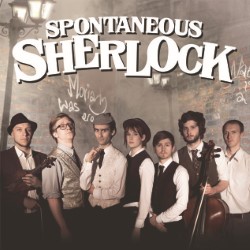
Spontaneous Sherlock

As this Victorian romp reaches its climax and Sherlock Holmes whips a ladle out of his jacket to use as a weapon with a cry of “Good thing I sleep cook!” I am holding my sides and marvelling at the fact that this show is free. Free! A small but charming cast expertly multi-roles as Sherlock, Watson, Lestrade, Mrs Hudson and a host of ensemble characters to the music of their brilliantly spontaneous band. All this occurs whilst navigating the difficult task of creating a story arc surrounding a title randomly suggested by an audience member. Tonight: Sherlock Holmes and the Mystery of the Black and White Horse. It is undeniably funny from start to finish.The self-consciousness of an improvisational performance is often the aspect that creates the most comedy, and here that self-consciousness was delivered in buckets. The cast really make the most of misunderstood lines – “An old duck” instead of “A hole dug” – and give each other hell on stage. It was around the point that Sherlock catches a bullet from the villain’s gun, prompting the outraged reaction of “I’m sorry but you cannot catch a bullet!” that the audience completely lost it.Flashbacks and cutaways were used generously to side splitting effects. – One that sticks in mind is a mini flashback to the night before the events of the play take place, wherein Sherlock pours a whole pan of coq au vin onto Mrs Hudson, who is sleeping in the bath. As the flashbacks continue to occur they honestly only get funnier – the company get away with really indulging in them.What was especially brilliant about this performance was the cast’s ability to weave a story through connections and references to earlier events. Seemingly unimportant (although hilariously crafted) characters miraculously appear to save the day, as do initially innocent seeming kitchen utensils. It is not only the quick-witted connections and links that are impressive, but the fact that the climactic scene – Sherlock and Watson racing through an underground tunnel system and crashing at an intersection – was actually quite exciting, and not a rushed loose end tie-up job which you find all too often in long-form improvisation.Continuous references to Lestrade as “Coffin Greg” were particularly entertaining – a joke that continued until the end and did not get tired. This production managed to get by on clever laughs, rather than cheap ones, and it is absolutely no surprise that it was packed out – again, free! Silly but intelligent, this will honestly have me coming back for a few more performances (it is, of course, different every time).


Liquid Room Annexe • 5 Aug 2017 - 27 Aug 2017

Stuck in ze Bunker With You

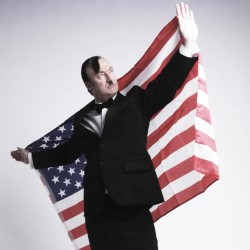
Frank Sinazi, the “Leader of the Iraq Pack”, is a smooth-talking American entertainer who will not only occasionally burst into song, but also into some loud episodes of a slightly dodgy German accent. In a space which I would describe as a little too glitzy to be a bunker, Frank and the hilarious Eva Von Schnippisch guide us through an evening of laughter and music. All the classic hits such as I’ve Got You Under Berlin and We Could Be Fuhrers feature in this meeting of two things that really, really shouldn’t work together, but somehow do.Some of the jokes made are definitely in bad taste but the show very much does what it says on the tin; no one attending is expecting a 100% PG performance. Plus most of the jokes are genuinely funny, which enables the pair to pretty much get away with it.In fact, the humour points out some modern political issues and actually makes some sobering points about current world leadership if you really think about it (not that you have to, of course - sit back and enjoy the show, by all means). Although jokes about Brexit and Donald Trump have pretty much been done to death now, within the context of a man dressed as Hitler singing WWII-themed songs in a bunker there was sort of something new to be gained. A comparison, maybe? Perhaps a comment on how ridiculous our state of political affairs is becoming?Particular highlights are lyrics such as “and so I face the iron curtain”, and Eva’s ukulele tunes, which are another thing that definitely shouldn’t work but somehow really fit into the jam-packed evening. The commanding demeanor of Frank and Eva on stage keeps the audience engaged (hopefully not out of fear) and there’s some pretty run-of-the-mill audience interaction, including a very keen young man being tied to a chair by Eva, but this still prompts laughs aplenty. This is what I imagine to be the best bunker experience one could have. Go along for some raucous laughs, great punchlines and a blast from the past with a twist.

The Voodoo Rooms • 4 Aug 2017 - 27 Aug 2017

Elixir

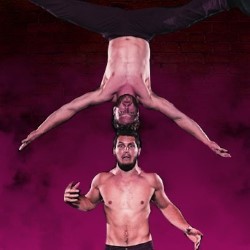
This is what the Edinburgh Festival Fringe is all about. From countless overheard snippets of audience conversation after the show, I think I speak on behalf of all of us when I say that we left having been thoroughly flirted with and won over by Head First Acrobats. Everyone had a fantastic time. The energetic Thomas, Cal and Rowan just kept on wowing, performing clowning, acrobatics and dance which got more ridiculous – and impressive – as the night went on.The outside world seems to no longer exist. The atmosphere created inside the tent is electric, tantalising and sexy with subtle smoke, bold lighting and an intricate set all coming together to fantastic effect. The outrageous audience interaction causes torrents of gasps and laughter. A circus more than worth visiting.The premise is intriguing and fun: a lab in which three scientists experiment with various elixirs, using themselves as guinea pigs. Their aim: to create the elixir of life. The outcome: circus chaos and zombie breakdancing with periods of comedy clowning and prank playing that give way to moments of jaw-dropping acrobatics. I sit open-mouthed for longer than is socially acceptable at one point as Rowan evolves from dumb clumsiness into an all-guns-blazing Cyr wheel routine.These in-between moments of silliness perfectly outline the strong performances which occur while the acrobats are supposedly under the influence of the elixir. Although these slower moments sometimes go on for a little too long, the boys have charm in buckets and the “wow” sections more than make up for any small lags earlier in the show.I leave feeling utterly pumped and, not to mention, a little in love. If you are keen to be blown away by something fun, sexy and stunning, go and see this show.

Underbelly’s Circus Hub on the Meadows • 4 Aug 2017 - 26 Aug 2017

Changelings

Pucqui Collaborative’s Changelings is a thoughtful story about two very different existences colliding and attempting to translate one another. Totally immersed in the midst of a deep jungle and surrounded by birdsong and running water, we encounter the meeting of Mowgli (Nicole Palomba) and A Midsummer Night’s Dream’s Puck (Robin Ian HallSmith), a character displaced from his usual forest haunt to a less familiar but no less magical setting. He grants Mowgli the ability to communicate with him, and so follows fifty minutes only occasionally let down by a slowing in pace and dialogue which made the production feel heavy at times.Palomba in the role of Mowgli is entertaining and touching – although the growls and snarls she adds into her speech are sometimes silly, ultimately the inclusion of animalistic noises undermines the power of conventional human language and draws attention to the validity of other modes of existence. The high, pathetic howl which Mowgli lets out to express the feeling of being exiled from his pack could be a more accurate representation of sadness than the word “sadness” itself is; ‘“sad” is too small’, he says.HallSmith’s swaggering know-it-all Puck jelled well with this boyish Mowgli – Puck's arrogance had the suggestion of a youthfulness and naivety, too. Indeed, their compatibility was the soul of the performance. The gradual understanding and friendship which builds throughout is nuanced and genuinely heart-warming, achieved through small moments like the throwing and catching of stars from the night sky, a simply lovely interaction executed with fluid physicality and playfulness. A production which begins with difference ends with an expression of what it is that links humanity – a desire to have family, to run with a pack. This togetherness could have been rushed and sickly, but I think what pulled it back was the naivety of Palomba’s Mowgli with the initial reluctance and arrogance of HallSmith’s Puck.The production creates its own bubble of time and space, outside of any familiar timeline, which is part of what makes it so charming. The focus is purely on the heart breaking self-consciousness and depth of the characters, even when lacking an intricate context or timeline. A playful exploration of existence and reality is achieved through the very human experience of Mowgli as Puck helps him realise that he, too, is a story. – In the end, aren’t we all?

theSpace on North Bridge • 4 Aug 2017 - 26 Aug 2017

Hide

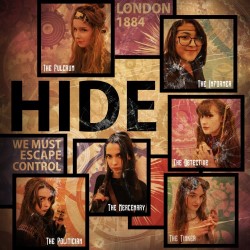
As a big fan of The Strange Case of Dr Jekyll and Mr Hyde, I was very excited to see Boiling Point’s spin-off. It plays with some of the main themes of the original story: a concentration on the splitting of personalities and the dangers which ensue. However, I felt that the darker side of the Jekyll and Hyde concept was not touched upon at all; the enemy in this production was the state, rather than any inner darkness. What was so fantastic about the original – the idea of a hidden dark side and the temptation to set this loose - was completely lost.As a narrative and concept in its own right, it is uninspiring, unfortunately. Its saving grace was its high quality production value; visually, the play is stunning. There are vertical bars of bright light on stage, and huge steampunk costumes, with goggles and cogs and the whole shebang. The music is powerful, and accompanies sections of physical theatre and dance. All of these factors are genuinely a joy to watch and add a much needed difference in pace to the performance.The show continues to visually excite with a particularly stunning section of shadow puppetry to tell the original tale of Jekyll and Hyde. This was a totally appropriate medium with which to tell the story and fit in very nicely with the steampunk aesthetic; definitely the highlight of the piece.The high energy of the six performers was engaging at first. However, it became less inspiring as it continued in a very one-note manner. There was a lack of conviction from the six, which was perhaps why at times it was hard to tell the characters’ personalities apart. Some stronger directing was needed here in order to pull off the ambitious writing. Doing justice to the intricacies of the characters is vital to the working of the piece, I imagine, and sadly this was not achieved; there was not enough light and shade, and so the crescendo at the end felt forced.Aesthetically, this is faultless, and the concept was more than enough to reel me in. However, I felt slightly let down by the execution and lack of engagement with the core ideas of Jekyll and Hyde – which could have been brilliantly used in the setting that the play creates. The production was ultimately let down further by the lack of nuance from the performers, despite their admirable and boundless energy. 

theSpace on the Mile • 4 Aug 2017 - 25 Aug 2017

Absolute Improv!

Absolute Improv is on the whole a light-hearted and enjoyable experience without a bad bone in its body. The show’s four performers are likeable, confident and slick with their improvisation, and their audience interaction does a good job of getting the house excited. There were certainly lots of giggles and laughter, but it was never quite hysterical.The four improvisers are clearly funny people who often came out with gems, both within the games and without. However, the actual games played really let down what could have been a fast-paced and punchy show. Moments that would have been funny for a few seconds go on for too long: a game where the performers sang Eurovision song contest-style numbers based on subjects that the audience suggested continued for three whole songs, really losing its momentum by the end. Here, perhaps the audience suggestions let it down a bit too, though – the final song had to be improvised simply about ‘France’. There was one game which was a hit, though, to give credit where credit is due. A couple from the audience – Jason and Gemma – were chosen and a scene was improvised around how and where they met in real life (Wetherspoons, two months ago). The couple were given a bell and a horn, and had to make the appropriate reactionary sound to the events being improvised in front of them; if it was accurate, ring the bell. If inaccurate, the horn. You get the idea. This set up led to some pretty funny scenes, where the actor playing Jason guessed Gemma’s favourite drink and had to correct himself six times as the horn was continuously sounded. “A nice pint – a glass of white wine – a tequila shot? – a shot of Sambuca maybe?” This game was very good for bringing out sharp wit and showing that the improvisers could roll well with the punches. Absolute Improv is a great show to start with if you’re new to improvised comedy, but from my experience there are funnier improv shows on at the Fringe. It’s not a terrible way to spend your early evening, though.

theSpace on Niddry St • 4 Aug 2017 - 26 Aug 2017

A Charlie Montague Mystery: The Man with the Twisted Hip

If you are in search of some polite 1930s garden-party-esque comedy mixed in with a hilariously self-aware performance, this is certainly a play to catch. Tom Taylor is an amorphous delight to watch as he carries the audience through a fast paced one-man murder mystery. We join Charlie Montague at the opening of a new modern art exhibition. Befuddled by both the artistic and the murderous side of proceedings, Montague embarks on a journey to find an art thief and a murderer.The characters are as varied as they are ridiculous. Taylor seamlessly switches between them with apparent ease, from softly spoken female characters, to the rakish and charismatic Montague, all the way through to gruff, seedy men with Chinese tattoos. He expertly fleshes out these often stereotyped murder mystery caricatures. At times I found myself with a bit of whiplash, but ultimately this is part of what makes the performance so transfixing. It is a joy to watch him draw attention to the multiplicity of his performance - “I’m worried he may have schizophrenia” – “Oh, I hope we’re all OK.”.Although the pre-planned punchlines prompt a smattering of laughs, most of the comedy comes from Taylor’s self-deprecating humour. He uses slips of the tongue to his advantage, pointing them out and responding to them in character to hilarious effect. Latecomers to the show who couldn’t find seats were acknowledged with some impressive improvisation (“Do you want to just be part of the show?”).The occasional too-early blackout, however, was confusing. Was this deliberate? - Part of the humour? Was it a genuine mistake that Taylor then went on to quip about? Either way, these could-be technical difficulties did not quite match up to the humour of the rest of the piece. In the end though this was more than made up for - merely a minor quibble.This play twists the murder mystery genre to produce fifty minutes of zany and quick witted fun. A genius performance. It certainly left me keen to try out Taylor’s other Charlie Montague offering at the Fringe.

theSpace @ Surgeons Hall • 4 Aug 2017 - 26 Aug 2017

Avocado!

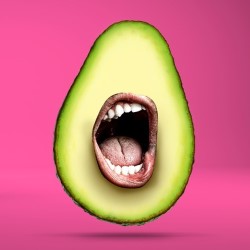
In today’s climate of brunching, Instagram-obsessed millennials, and in a time where avocado-hand and avocado-shaped walkie-talkies are an actual reality, there is plenty of opportunity to take the piss. This is exactly what sketch comedy duo Dave Christie-Miller and Max Norman do. It’s very funny most of the time, but can be one note, and some of the gags were a bit easy.Nevertheless, Dave and Max thunder into their Fringe debut with some great performances, mercilessly taking the piss out of themselves and the other app-reliant, self-centred youth of today. Painfully relatable, tragically relevant – and although I would have said this was probably one for twenty-somethings, there were quite a few older audience members who were also loving it.Highlights were priceless impressions of Severus Snape and Hermione Granger in a coffee making class, in which the brewing of the perfect caramel macchiato vanilla flat white (???) was likened to the most complex and dangerous of potion making. Quips about ‘basic-bitchness’ were a little unoriginal – although maybe I’m just salty because if I’m being honest with you, a caramel macchiato vanilla flat white would probably sit pretty well with me.Sometimes the audience participation worked, and sometimes it was a little pointless and used for guaranteed laughs; although to give credit where credit is due, when isn’t a confused and put-on-the-spot man who just wanted to sit back and drink a beer while watching some comedy funny?One occasion on which two audience members were called up to participate in a Ready Steady Cook sketch in which they must choose the perfect (awful) superfoods to blend together into a “delicious” meal was very good, and the improvised comments from Dave and Max on the side-lines worked really well (“They actually expect us to hoover afterwards”). Avocado! is definitely relatable, often clever, and funny stuff.

Sweet Holyrood • 2 Aug 2017 - 27 Aug 2017

Notflix

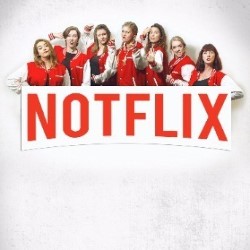
In a Fringe riddled with long-form improvisation – especially musicals – this is one of the stand-outs. An all female cast creates an entirely improvised musical based on an audience member’s film suggestion. In this case, Casablanca. Part of what made this brilliant was that most of the cast had never actually seen Casablanca, and so all they had to work with was that it was set in, of course, Casablanca, a common setting was Rick’s bar, and that it was about fighting Nazis with passports and love.The range of musical genres made this a particularly enjoyable show – I was just starting to get comfortable with the traditional Broadway style music, when out of the blue came a hip hop number: He’s Not a Nazi, He’s Actually a Really Nice Guy. This kept the audience on their toes and is a great example of how Notflix isn’t just another improvised musical at the Fringe.The performances are slick most of the time, but any looseness only made it funnier; seeing the actors snort through their lines or correct other cast members is one of the integral reasons why improv is so funny. The singing, too, is consistently brilliant – the quality of this alone was enough for you to enjoy the whole show thoroughly.Aside from the looseness at times, there were a couple of moments where the pace was a bit too slow, which was the only let down. There was one idea that was explored twice in different songs, meaning that the plot was a bit stuck in a hole for a while around the middle. However, this block was confidently kicked through eventually, leading onto a brilliant tie-up: a misfit Nazi soldier leaving the ranks to join two rogue brothers who decide to fight the Nazis with love – and guns – and who speak in tap-dance morse code. It is little strokes of genius like this morse-code language that tipped this performance from good to fantastic.Genuinely worth a watch, and much better than an afternoon in spent bingeing on Netflix shows, dare I say it!

Gilded Balloon Teviot • 2 Aug 2017 - 28 Aug 2017

A Lizard Goes a Long Way

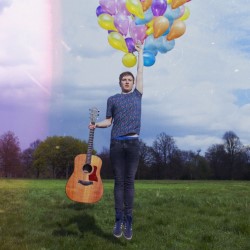
Raising a laugh and a lump in the throat all at once is a good trick – possibly the best. Gecko makes it look easy. A gifted young comic songwriter with charm and style to spare, his clever lyrical conceits and easy-going acoustic melodies have already won over fans including John Hegley, Ed Sheeran and Radio 1’s Huw Stephens.Gecko’s debut hour at the Fringe is hardly mould-breaking musical comedy, but what sets him above many of his contemporaries is his restlessly inventive approach to character. There are songs here in the voice of a minor figure in Veronese’s painting The Wedding at Cana, the Tooth Fairy and a panda at the Edinburgh Zoo. Donning three pairs of sunglasses, he becomes a bug living on the face the post-apocalyptic earth; there’s an environmental message to it, but Gecko’s knowing self-deprecation keeps any hint of sanctimony in check.Tech is used sparingly, but effectively. Gecko argues with his soundsystem, and it argues back - its occasional interruptions have a hint of HAL-9000 about them. Meanwhile, a few well-chosen soundbites from recent news reports and political speeches play out over his intros and outros, offering a sharp counterpoint to the whimsical naiveté of his music, and highlighting the show’s thread of millennial anxiety. One song offers what may well be the defining chorus of a generation: “When you’re alone and out in public / for longer than you planned / take your phone out of your pocket / and just stare into your hand.”Too young to remember life before modems, he wryly lectures the audience on recent history: “There was a time before the internet, when if you wanted to send an email you had to attach it to a pigeon.”At times, his more sentimental material can teeter into twee, and listing the show in ‘spoken word’ rather than music or comedy is disingenuous, but these are only minor quibbles. He offers a refreshingly honest reason for appearing under the ‘spoken word’ banner: “It makes me eligible for more awards.” He deserves them.

Pilgrim • 6 Aug 2016 - 27 Aug 2016

Alexis Dubus Verses The World

“I’ve done absolutely no flyering for this show,” says Alexis Dubus, “so I have no idea why you’re here.” On the evidence of …Verses the World, he’s not entirely sure why he’s here either, but we should be very glad that he is.Better known for his tres chic comedy alter-ego Marcel Lucont, Dubus is also a talented comic poet. While he won plaudits for his sleek 2013-14 stand-up poem Cars and Girls, his 2016 outing has more of a cobbled-together feel. Loosely following the theme of international travel, it’s equal parts comedy, poetry and song. As a comic poet, Dubus he has a good deal of formal nous (as proven by a deft, filthy poem about bananas in ballad-metre), but his material occasionally feel a little slack; a Noel Coward-esque ditty about a belching masseuse begins well, but outstays its welcome.The poems are presented as the main attraction here, but Dubus’s verbal acuity and skilful wordplay is sharpest in his stand-up. His immensely likeable, laid-back persona puts the audience almost too much at ease; presented as throwaway introductions, his well-crafted zingers occasionally sail over the audiences’ heads.At their best, his songs aim for something more than a series of jokes. Things You Didn’t Need to Say is amusing, surprising and ultimately rather moving; beginning as an observational riff on grammar pedantry, it morphs into a touching snapshot of a failed relationship. The theatrical touches work well: Dubus enters in a tatty velvet suit, playing the world’s smallest ukulele, and immediately has the audience eating out of his hand. The show as a whole would benefit more from these moments, and could use a tighter structure. Dubus acknowledges his haphazard approach to sequencing his material: after a brilliant musical number, he quips, “You’d think that’d be the end, wouldn’t you? It’s not.” Unfortunately, the poem that follows it comes as an anticlimax. …Verses the World finds Dubus as witty and engaging as always, but this feels like a transitional show for him; it will be fascinating to see where he goes next. It may not be the final destination, but it’s a charming piece of in-flight entertainment.

Voodoo Rooms • 6 Aug 2016 - 28 Aug 2016

The C/D Borderline

“It is not possible to obtain any As or Bs in this paper,” drones the teacher’s pre-recorded voice. “If you work really hard, with a lot of luck, you might get a C. But you probably won’t.”The latest solo show from spoken word artist Paul Cree is as beautifully well-observed as it is blisteringly funny. It takes place in the hellish world of male adolescence, a world reeking of Lynx Africa, where frail bravado hides a constant, crippling fear of social exclusion. It’s a world of coded distinctions: college vs 6th form, jungle vs indie, the D grade that means unemployment vs the C grade that could open the doorway to a job as a junior sales rep at a shop in Gatwick Airport. Cree completely inhabits his (possibly autobiographical) character, a struggling student at a third-rate college. He and his friends are all studying towards GNVQs, “but none of us knows what that stands for.” In his hip-hop-inflected monologue, Cree manages the difficult balancing act of creating gripping, articulate poetry without compromising his young character’s tongue-tied voice. When a beautiful girl makes it clear she’s interested in him, all he can summon up in reply is: “Yeah, I’ll, uh, like… go out with you, innit.” But the awkward kiss that follows – his first – is brilliantly captured in a series of off-beat similes: “We start to sync like those weird pulsating starfish at Brighton sealife centre.”Like his peer-group, he’s so afraid of saying the wrong thing that he just parrots his friends’s comments back at them: in one scene, they sit around repeating “yeah, yeah, sick, yeah,” at each other in an endless feedback loop. Cree’s clear-eyed recreation of the awfulness of teenage life may leave you wincing in recognition.His total dedication to his character’s voice means he occasionally finds himself trapped at the same pitch and delivery, which slows the pace of a few of his slice-of-life vignettes. For the most part, however, it’s a bravura performance that deserves to reach a far larger audience. The C/D Borderline is a nuanced and richly detailed coming-of-age story, the diary of the kind of kid who Adrian Mole would cross the road to avoid.To put it more succinctly: it’s well sick, mate, yeah?

Pilgrim • 6 Aug 2016 - 27 Aug 2016

Til Debt Us Do Part

For many, the Edinburgh Fringe is a joyous escape from reality. While pouring away money on overpriced pints, or shelling out a small fortune on accommodation, most people try to keep their fiscal worries out of mind.But not Tina Sederholm, an author and poet who’s determined to get to grips with filthy lucre. Her new show riffs on a quote from Robert Graves: “there’s no money in poetry, but there’s no poetry in money either.” Sederholm attempts to prove Graves wrong, but doesn’t quite pull it off.Til Debt Do Us Part falls awkwardly between genres. Anyone hoping for a funny, informative insight into economics (after the manner of Radio 4’s Simon Evans Goes to Market) will leave not much the wiser. Sederholm adopts the character of a fusty male professor for the show’s “educational” sections, but these comic vignettes offer few laughs and little information. Meanwhile, those looking for poetry will find the show light on verse; Sederholm spends more time talking about her struggle to make a living as a poet than sharing her poems.As a piece of autobiographical story-telling, the show’s first half is hampered by Sederholm’s performance style. Her 15 years in teaching have left their mark on her delivery; whether sharing the details of her life or explaining her thoughts on debt, she tends to oversimplify, speaking down to the audience in a way that distances her from them.In her poems, this distance disappears (particularly in a piece about her compulsive trips to Starbucks), but elsewhere her spell-it-all-out approach may leave you feeling more like a pupil than a confidante: “Could it be that making myself happy in the short term was making me unhappy in the long term?” she asks, before adding, in case we haven’t quite got it: “Yes, it could.”The last fifteen minutes of the show, however, change everything. In an intimate anecdote about a holiday with her husband, Sederholm finally opens up, speaking honestly and engagingly with her audience. The moving, powerful account of a miscarriage which then follows culminates in the most powerful poem of the show, set in a hospital ward after her “evacuation” surgery. It’s in a different league to everything that went before it, and shows that Sederholm is capable of resonant, emotionally charged writing. It’s just a shame it takes so long to get there.

Banshee Labyrinth • 6 Aug 2016 - 28 Aug 2016

Sage Francis and B Dolan Present: Strange Speech, Famous Development

You can tell a lot about a show from its audience. At Saturday’s performance of Strange Speech, Famous Development, you could tell a lot from a single audience member: Scroobius Pip, nodding along and stroking his beard in the sixth row.Fans of the London-based spoken word artist (and occasional chart-nudging rapper) will be on familiar turf here. Like Scroobius Pip, emcees Sage Francis and B Dolan are steeped in early hip-hop, treating it with an almost religious reverence – there’s even a poem here about Wu Tang Clan’s Old Dirty Bastard. Like Pip, these Rhode Islanders straddle the border between rap and spoken word; they’ve toured the country as rappers, but this is their first Fringe appearance and it’s solidly under the banner of poetry, albeit cut with the flavour of an underground rap-battle. Francis and Dolan tout a kind of spoken word that’s always seemed a little alien on this side of the channel: self-deprecation is out, and earth-shattering epiphanies are in. The grandiosity is all too easy to criticise, and constantly pushing for that top gear can lend the lyrics a certain sameness: when Dolan tells us that “impossibilities are opening like wormholes” in one poem, it dampens the impact of his next poem’s reference to the “stardusted impossible infinity of a launch into infinite space.”On paper, it’s all a bit OTT. In performance, however, it’s electric. Francis, a fierce and passionate communicator, had the audience hanging on his every word (although those words lost some of their impact when he segued into song). Frequently dark and unsettling, his hard-hitting verses are based around a raw emotional core. He’s not averse to humour, either: “Music is my only psychiatric drug,” begins one verse, before continuing with a Tom Waits leer, “and you’re a pill I’d like to slip under my tongue.”Francis is the more consistently impressive wordsmith, but Dolan has the show-stealing poem. After a brief disappearance, he took the stage in an absurd stuntman’s costume (lovingly sewed for him by his grandmother) to deliver an elegy on Evil Knievel’s uneven life. Dolan finds room for nuance and contemplation amidst the bravado: “Somewhere between heaven and the landing ramp is the calculated risk.” Another poet would have undercut the subject with irony, but Dolan makes the case for Knievel as a hero for the present day. Just as Homer sang of the strengths and failings of Achilles, Dolan proves himself a modern-day myth maker, and gives the broken, elderly Knieval a tragic grandeur. It’s all delivered with such sincerity that it’s impossible to raise an eyebrow. “He was not a good man, but he was a great man.” A line you might have heard a hundred times before, but here it still brings a lump to your throat.

Stand in the Square • 5 Aug 2016 - 27 Aug 2016

Marcel Lucont's Whine List

Marcel Lucont is one of the great comic characters of the new millenium; a soft-spoken Gallic egotist with bare feet beneath his blue suit, and a large glass of pinot noir permanently in hand. He’s the creation of the (non-French) Alexis Dubus, and his shows have, for many years, been a highlight of the Fringe.Whine List is a welcome return to Edinburgh for Lucont, after a year of adulterous flings with other festivals (“Yes,” he murmurs, as if to a jilted lover, “there ‘ave been others”). His pre-written material includes some excellent riffs (Lucont’s explanation of why Brexit is like “sex with someone you despise” struck a chord with the crowd),but the majority of the show is dependent on the audience’s contributions. Before entering the venue, punters are polled about their worst day at work, worst sexual experiences, and other whine-worthy topics, so that their written responses can be projected onto a screen and treated to Lucont’s scathing analysis. In his words, “it’s like a group therapy session, but with everyone just a bit more depressed.”Dubus has the gift of being able to think on his feet – as proven by his appearances at the stand-up-improv night Set List – but the Lucont persona doesn’t lend itself enormously well to audience back-and-forth: in the performance I saw, the crowd were somewhat shy, even sheepish, when called on to interact with him. He’s on safer turf when sparring with other comedians, as in his 2011 chat show.However, the varied format of the show offers a refreshing change of gear whenever his chats with the audience start to wear thin. Between the “whines”, we’re treated to a Sinatra-esque musical number about ejaculation, and an an excerpt from Lucont’s autobiography – a wonderful flight of fancy, which sees the young flaneur running away to join the circus. The latter was perhaps more eloquent than amusing, but entertaining all the same.Despite its focus on improvised badinage, the real highlight of this show is its least spontaneous segment: a glossy short film in which Lucont muses on the English character, while interviewing the denizens of a crap seaside resort. Dubus has a gift for skewering the more parochial elements of the national psyche, and this uproariously funny mockumentary will surely have any TV producers in the audience taking notes: with the shadow of Brexit looming, it’s the perfect time for Lucont to make a barefoot leap onto the small screen.

Pleasance Dome • 3 Aug 2016 - 28 Aug 2016

Ad-Lib: Spontaneous Genius

'Who are you here for?' asks the Assembly ticket-tearer as he works his way through the sizeable queue. The answer showed little variation: Given the absolute mania Doctor Who inspires - and, indeed, Sherlock - what hope did the Frank Skinner fan base ever stand against the Stephen Moffat army? Such imbalance might seem a flaw in the 'Ad-Lib' format. Promising 'surprising conversation' between the nation's 'most creative minds' and 'the sharpest comedians in showbiz', 'Ad-Lib' combines voices that might not otherwise be heard in tandem. With a demand for one voice so much greater than that for the other, you might assume that the format would crumble. Moffat certainly seemed to hope so. Luckily, however, Skinner lived up to his role as a 'sharp comedian'. This, combined with the unpredictable nature of the 'ad-lib' element, prevented the show from dissolving into a Moffat adoration fest. Indeed, what did emerge turned out to be even more interesting than what I assume 'Ad-Lib' had originally envisaged. In the place of the (slightly limp-sounding) promised 'surprising conversation', the Skinner and Moffat edition of this show treated us to some surprising antagonism. As a huge Doctor Who fan - an interest which saw him miss his son's first steps - Skinner ostensibly presented no threat to Moffat's empire. Yet Skinner's sin - aside from being witty, boyish and impossible to dishearten - lay in his audacity: Moffat couldn't bear the fact that Skinner dared to express some criticisms (otherwise known as opinions) about Doctor Who. Chatty observations about his dislike of 'sex' in the programme were met with a mixture of disdain and defensiveness. Moffat took on a 'who the hell is this guy?' sort of tone. This led to the beginning of a bizarre battle of wits. When Skinner told a self-deprecating anecdote about meeting Prince Charles, Moffat attempted to better it with a self-congratulatory anecdote about meeting Prince Charles. The 'Whovian approval' in the room meant that for many, nothing Moffat can do or say could be wrong. Skinner was well aware of this, remarking at one point, 'I'm aware that every time I speak, the crowd is saying, "let Stephen speak". But fuck you.’ The energy in the room made for great entertainment.Every Ad-Lib event will of course vary, but it wasn't just the antagonism that made this a good show. The format itself is very effective. Audiences often have more questions than there's time for and while this was the case in this instance, Ad-Lib dedicates a considerably greater amount of time to audience questions than your usual spoken word event. This ensures that we really do get a chance to witness the speakers' off-the-cuff persona throughout the show. It's a great opportunity for fans - or for anyone looking for a break from the otherwise often very polished word of Fringe comedy.

Unknown • 21 Aug 2013 - 25 Aug 2013

The Way to Keep Him

This play has a great plot. Grieved by her husband's infidelity, the virtuous Mrs Lovelace goes to the house of his mistress, Mrs Bellmore, to confront her. Yet upon arrival, she is met by two surprises: firstly, that Mrs Bellmore has no knowledge of Mr Lovelace; secondly, that behind the glamour the famous widow-cum-mistress (a sort of eighteenth century It Girl) is in fact very sympathetic. An unexpectedly warm friendship ensues and when it emerges that Mr Lovelace has in fact been deceiving both of them - lying to his wife; using a pseudonym with his mistress - the two women scheme to bring about his humiliation. There's some great acting on show here from Cheltenham Ladies' College. Mrs Lovelace is truly pathetic: her wide eyed earnestness ever convincing, never cutsie. Hers is a focused, intelligent performance - you can really hear her understanding of the language. The spicier role of Mrs Bellmore is also excellently portrayed. She's excellently snappy and sophisticated, and manages to be fast-talking without gabbling any of the lines. Smaller roles are just as memorably good: while the sometimes hysterical servant woman Mrs Malapert is played with an obvious enjoyment in the humour, the actress playing Sir Brilliant Fashion deserves particular credit - acting the forward, flirtatious rake in brilliant fashion. If some of Mr Lovelace's lines are a little redolent of reading, gems such as 'It is not material, where a body eats' in response to his wife's request that he dine with her still raised a deserved laugh. Indeed, the audience are very much on Team Mrs Lovelace. As a result, the message at the end - that it is equally the fault of the wife if her husband is unfaithful - left a bitter aftertaste and one that made me think that, particularly from an all girls' school, playing it straight was perhaps a curious choice. Overall, however, this is a very impressive show: lively, amusing and intelligent.

Unknown • 20 Aug 2013 - 24 Aug 2013

Steve Bell: Rose Bladder - How did Cameron get to look like that?

Given that Edinburgh is something of a Glastonbury equivalent for guardianistas, Steve Bell's show seethes with lively, middle-aged enthusiasm. Yet the first face we are greeted by is not Bell's, but David Cameron's: Behind the ample assembly stage shines a huge close-up of the PM. As Bell points out, the strange little smile playing on our leader's lips makes him look a lot like Frodo Baggins in this snap. A degrading comparison? At least Frodo doesn't have a condom on his head. Anyone who's seen his cartoons will know that Bell is a genius. He not only possesses a fantastic wit and a highly attuned political ear, but his ability to incorporate such sharp references to art and literature betray impressive cultural expertise. His six years as an art student are evident in his repeated recycling of pre-Raphaelite paintings; Millais' Ophelia is a favourite. Cartoons of Blair as an electricity pylon, meanwhile, demonstrate a comic imagination few can rival. In person, predictably, Bell can be very scathing. Though it's with more amusement than aggression that he calls David Cameron 'a Tony Blair tribute act', and Blair before him 'a Thatcher tribute act'; a solemn undertone definitely emerges when he describes how terrifying he found his first Tory conference, armed with only his small sketchbook against the 'Tory psychopaths' surrounding him. We get a great insight into the research process behind Bell's cartoons; the fledgling sketches, the early ideas, the campaign posters, the photos. And, wonderfully, several of the photos he shows us make the images we've come to associate with his cartoon style look more like honest portraits. We see, for example, the rare snaps of Thatcher and Blair that capture for all to see their 'mad eye'. We also get a hilarious zoom-in on Cameron's chin, which, as Bell notes, shows 'no visible hair follicles.' Cameron really is shiny and smooth. That's why he made such a good jellyfish. Bell demonstrates all the sensitivity, wit and dedication you'd expect. What you wouldn't necessarily expect, though - and what makes this event so brilliant - is Bell's theatricality. He's wonderful. In fact, Bell is so comfortable onstage that it's hard to believe he was, as he claims, a terrible teacher. Take his accents; of course Bell is good at accents - you might recall the image of chimpanzee-Bush coming off a plane: "Yurp? Is this Yurp? Are these Yurpeans?" Yet simply having a good ear doesn't guarantee that you'll be able to pull off any accent as consummately, nor act out a cartoon strip-script with such brio as Bell displays. Particularly memorable is Bell's rendition of the strip in which William Hague froths at the mouth during a speech about his Europe obsession. It's irresistibly funny. What makes this show perfect is Bell's perfect balance between the cynical, the amusing and the disturbed. Take the mixture of absolute joy and horror he communicates in response to William Hague. Bell goes into hilarious paroxysms of delight - 'Aahh! Yay!' - at the prospect of a Hague news headline: yet another chance to draw the Tory minister’s bizarre stubbly head. But it is, of course, with a considerable amount of irony that Bell remarks that Hague's face is so much fun to draw - that he is 'a gift from God.' Bell's work is ultimately tragicomic. But with his big, hearty, infectious giggle, Bell convinces us that it's one we can laugh at. He's a joy to behold.

Unknown • 20 Aug 2013

Hashtag #DoubleStandards - Twitter on Trial

Presented in a university lecture hall, Hashtag Double Standards: Twitter on Trial is a talk given by Paul Motion, a solicitor since 1984 with an interest in social media. He's not, as he iterates to us, providing legal advice here - though as it turns out, given the rapidity with which one misjudged tweet might result in prosecution, some of what he says might turn out to be personally useful to any prolific tweeter in the audience. What Motion is here for is a discussion, and the ease with which the talk opens up into just that is a testimony to him. Motion clearly has expertise; he is calm, authoritative and forthright in his views. But he's not intimidating: we believe him when he says that this lecture is about not 'lecturing' us.Motion's argument - eloquently presented and convincingly illustrated - is that often judges apply laws to Twitter that betray a lack of understanding of social media. His main gripe, it emerges, is with the repeated use of 'Section 127'. This, Motion emphasizes, was created in 1935 to monitor the use of a publicly-funded service providing one-to-one communication: the telephone. It's not appropriate to a public forum like Twitter or Facebook, Motion insists. For people such as Daniel Thomas - who jokingly tweeted that Tom Daley could 'bum' his boyfriend as consolation for fourth place - sensible rationale eventually prevailed: The charges were dropped. Others, Motion hints, have not been so lucky. Such a discussion might seem fairly out of context at the Fringe and while it admittedly isn't fringe-central, the issue over the criminality of sick jokes is, as Motion points out, certainly relevant at a festival in which comedians such as Kunt and the Gang are not only given a public platform, but applauded. When you compare this to Matthew Wood, who, in October 2012, was jailed for 12 weeks because he had tweeted rude jokes about Madeleine McCann and April Jones (Section 127 in full swing), the #doublestandard is not hard to see.

Unknown • 20 Aug 2013 - 21 Aug 2013

The Reluctant Doctor

'Fed up with grim, hand-wringing, one-man shows?' asks this production's flier: 'Go and see something funny.' While this production of Moliere's farce isn't laugh out loud amusing, it is certainly a refreshing antidote to bad stand-up, which is what 'grim, hand-wringing, one-man shows' connotes for me. This show has its share of bad actors, but the relaxed, friendly, slightly serious tone at the Quaker meeting house and its theatre ensured the audience was in a generous mood. The Reluctant Doctor tells the story of a vindictive wife who, to spite her wife-beating woodcutter husband Sganarelle, convinces two men who are in desperate search of a doctor that her husband is a miracle physician. Hilarity, of course, ensues: the bumbling fool Sganarelle, believed to be a genius, is given the task of curing a young girl named Lucinde who is suffering from inexplicable dumbness. Her inability to speak, it turns out, is not a matter of conventional illness but lovesickness: forbidden by her avaricious father from marrying her love Leandre, Lucinde is feigning illness to avoid her father's proposed marriage to a wealthier suitor. In the words of Lucinde's wise nurse, 'happiness excels riches'. And, of course - with the aid of Sganarelle and the timely death of a wealthy uncle - it all ends happily ever after. The acting isn't by any means perfect, with some bizarrely misjudged emphases and frequent over-enunciation redolent of the classroom read through. There are, however, exceptions and this, combined with some excellent directional touches, was enough to make it worth watching. The cute set - a tree and a toadstool that doubled up as a table and chair - combined with the sound of creaking branches and birdsong, proved surprisingly effective at evoking the woodland scene. A further fine directional touch takes the form of an unexpected freeze frame towards the end, which works a charm. More importantly, however, the actress playing Leandre is truly excellent - sympathetic and dignified even in a ridiculous wig and sunglasses, she compels whenever she's on stage. The moral of The Reluctant Doctor is, it emerges, forgiveness - I was willing to forgive this show its flaws for the moments that lift it.

Unknown • 19 Aug 2013 - 24 Aug 2013

Piracy! Comedy on the High C's

Pirates, exclamation mark. Eighteenth century pirates, eager to corrupt (in more ways than one) a Royal Navy ship under the command of the 'hapless' Captain Trumpeter. Murder, love, songs, a girl disguised as a boy. Romance. Sword-fights. Swashbuckling. Let's face it, though, this show was never meant to be plot-centric. The most gripping of the plot lines revolves around the aptly named Lady Vanity - the Captain's daughter - who has left Horatio, a visiting admiral attributed with 'a sex fixation', weak at the knees. No, not plot, but humour, is this show's strongpoint. Or so it thinks. In its quest to be 'Blackbeard meets Blackadder', Piracy! is littered with try-hard references to popular culture, politics and what seems to develop into a token bid at feminism. There's a Marxist pirate (to think!), a Spanish aristocrat called Antonio Banderas and a captain's daughter who irately challenges the traditional female role in the wooing process. There's faux-realism, some sad efforts at clever meta and, hitting the reference at its cultural peak, repeated jokes about Keira Knightley's acting in 'Pirates of the Caribbean'. These jokes are tired and largely unfunny, but at least it's clear that the cast are revelling in it - you can almost hear an echo of all the 'wouldn't it be funny, if... 's from rehearsals. Sadly though and unlike the cleverly crafted silliness of Blackadder, the attempts at humour in this show felt more like a bunch of anachronistic references, shoe-horned in for laughs. There is, predictably, also a lot of bawdy humour. Disturbed mid-kiss by an intruder, the sexually forward admiral's daughter replies to the question, 'Halt! Who comes there?', with, ‘No one yet [Sigh.]’ Bawdy humour is, of course, part of the Blackadder-esque package, but it still seems a shame that, as a result, a show which might otherwise have appealed to children is instead wasted on a young crowd. Indeed, the one child I spotted in the audience looked decidedly bored. Further, of the many 'catchy songs' it boasts, the only one I can recall is a rendition of the Beegees' 'Tragedy', with the chorus of 'Tragedy' replaced by, you guessed it, 'Piracy!'. It is, at least, complete with synchronised dance moves and live guitar playing - for which they deserve some credit.While cringeworthy, I can't fault the cast's energy or dedication (which, though often alienating, is also occasionally energising) and the confident Pirate Queen certainly has some stage presence. However, if you're looking for some decent comedy, don't head for the High C's.

Unknown • 18 Aug 2013 - 24 Aug 2013

Cape Wrath

Cape Wrath is an intimate one man show. It consists of performer Alex Kelly sharing with us the story of his grandfather's solitary 'jaunt' to Cape Wrath - the most Northern point of Scotland - by public transport and Alex's own experience of the same journey, made as an act of remembrance after his grandfather's funeral. The intimacy derives not only from the fact that Cape Wrath takes place on a small bus. It derives equally from the fact that Alex's storytelling technique is very personal, very confiding. This, combined with the close observation of detail he recounts, gives the show the charmingly personal feel of a diary reading.In fact, at times it almost is a diary reading: since Alex's grandfather wrote letters to his wife detailing his trip, we are treated to a visceral insight into his experience. In the letter with which Alex opens the show, we learn details about the bus his grandfather boarded, the age and appearance of the other passengers, their brief conversations - details, in fact, that sound like banalities, but in fact make for very engaging listening. I particularly enjoyed the frequent description of meals - of the apricots, the wholemeal loaves, the marmalade. Alex's grandfather, it becomes apparent, liked to finish his picnics with two squares of dark chocolate. At the precise point in an hour-long show in which the audience lags a little, Alex asked, 'Would anyone else like two squares of dark chocolate?' A bar was squared and handed around. It was sweet in both senses. There are also moments of humour which, like everything about this show, are very gentle. With his jokes about his emergency purchased, ill fitting weatherproof trousers, his turn-ups and his rain-related traumas, Alex is definitely a Howard Moon to other shows' Vince Noir. He's touchingly middle aged - and at times, remarks about the weather really do slip over into banality. This is not to say that he did not occasionally make me laugh - or chuckle, at least - out loud. His amused observation of the sheer unlikeliness of Scottish place names such as 'Rubh 'an t-socouch chtais' and, later, his short riff about the gesture made by drivers to hitchhikers, both got the bus gently wobbling with laughter.Given that the show takes place in a bus, Alex's movement is minimal. It is, however, also very well judged. Beginning in the passenger section with us, Alex then moves to the front passenger seat, then the driver's seat - with each position complementing the point at which he's at in the narrative. He also occasionally looks outside as he describes the landscape through which we imagine the bus is passing and even does a few voices. Such small touches keep the show lively. Indeed, rather than restrictive or gimmicky, the bus setting is perfect. The show ends with the least awkward audience participation I've ever experienced: where so often a performer's attempt to involve the audience feels forced, thanks to the intimacy of the bus, it feels very natural. While moments of the show's nostalgic tone are touchingly sad - it is, ultimately, a nostalgic bus trip up memory lane - everyone files off the bus smiling.

Unknown • 9 Aug 2013 - 24 Aug 2013

Shhhh - An Improvised Silent Movie

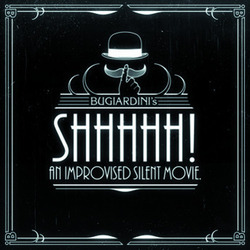
I watched Shhhh in a state of complete bafflement. And not in a good way. This was bafflement bred of boredom; bafflement bred of a play that tried and failed miserably to string together anything coherent. Given its premise, Shhhh is, I suspect, doomed from the beginning. Let me explain how the show works. At the start of the performance, two actors stand on stage. They stand in front of a black, translucent screen, upon which, later, silent-movie style subtitles are projected. One actor has a blackboard; one has a sign inviting us to write an occupation on the blackboard. Whichever occupation the audience chooses becomes the title - and, supposedly, dictates the improvised plot - of the improvised-film style play to follow. The audience of which I was a part, after a false start with 'The Cobbler', settled on 'The Tattoo Artist'. It's impossible to judge Shhhh on 'The Tattoo Artist', given that every audience will choose a different occupation, so every performance will be different. However, given that it must be almost impossible to improvise a coherent, hour long silent-film-play on the spot at all, let alone one that sticks to the theme, I can't imagine that any performance in this run is worth watching. The cast themselves seemed aware of this problem. In the opening five minutes or so, they certainly kept to the theme. We watched various characters mime coming into what we understood to be a tattoo parlour, mime the reception of some mimed tattoos and mime-exit. The rest of the show went in a blur. I remember several awkward 'Meanwhile...' subtitles, some supposedly hilarious men-impersonating-women gags and very little else. The plot was difficult to follow, the mime was inept and lazy and the theme of 'The Tattoo Artist' barely perceptible. What's worse, the subtitles which sporadically pop up on the screen are often either misspelt or conspicuously lacking a word or punctuation mark. 'The famiy is reunited' was the most obvious; the bizarrely colloquial 'Few minutes later' less so, but still irritating. Given that this show claims to be 'inspired by the film and ambiance of the silent era', the least it could do, surely, is capture the tone and language of the silent film subtitle. Shhhh claims to be 'suitable for people of any nationality as well as those with hearing difficulties'. I disagree - particularly with the latter claim, given that the tinkling piano music that accompanies is the only element that successfully evokes the silent film theme. Improvised comedy is difficult at the best of times; this is surely one of the worst.

Unknown • 5 Aug 2013 - 24 Aug 2013

10 Films With My Dad

Some stand-up shows boil like Vesuvius – scorching hot, wild, unpredictable and slightly terrifying. 10 Films With My Dad boils like Campbell’s Chicken Soup – warm, comforting and vaguely nostalgic. The laughter might never erupt, but it bubbles gently throughout.Goatley is charming and reassuring from the beginning, promising the crowd that ‘there’s a happy ending.’ For certain punters this introduction should be taken as a warning. This is not a show for the unsentimental. Did you cry at Toy Story 3? If so, you’ll probably enjoy 10 Films With My Dad. However, one weakness of Goatley’s act is a pronounced tendency to milk this sentimental vibe. Does the show really need to be illustrated with cutesy family photos? ‘Here’s my seven-year old daughter... Here’s me as a toddler in my lucky wellies...’ The footage of Kimble the Dog was enough.Aidan Goatley’s debut solo outing has clearly been a labour of love. Aidan’s ex-Navy dad never expressed his feelings openly and so father and son only really communicate through their shared love of films. The show is a chronological journey through ten crucial films for Goatleys Sr and Jr, aided by excellent use of music and enjoyably dodgy use of projection. Too poor to pay copyright for official film-clips, Aidan has roped in his friends (and dog) to re-create key scenes. The arc of the show is well-constructed; picture of film poster, explanation of film’s personal significance, clip from remake starring cute doggy, repeat. In other hands this neat structure could grow tiresome, but Goatley keeps the momentum rattling along. However, a good knowledge of classic blockbusters is essential. The reference points aren’t obscure (John Wayne, Jaws, Indiana Jones, The Blues Brothers), but those outside the filmic loop are likely to lose interest. If, however, you’re a slightly soppy film-buff with a fondness for The Blues Brothers, then 10 Films With My Dad is certain to bring a tear to your eye.

Unknown • 3 Aug 2013 - 25 Aug 2013

Ceilidhs in Lauriston Hall

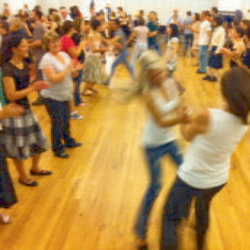
Uninitiated to the world of sweaty, foot-stamping organised dance most of us would rather watch Scottish Highland music than participate in it. Yet much of it begs participation. With lively, accelerating runs and little, waltzy triplets Gaelic music asks to be danced to. But, of course, not all of us know how.Lauriston Hall’s caller, Ken Gourlay, whose job it is to instruct the crowd before and during each dance, faces a clear dilemma in managing the mixed-ability Fringe-going audience. He has to be clear for newcomers without sacrificing the whirling atmosphere expected by old hands. People’s enjoyment of their evenings vacillates enormously depending on how solidified their expectations are. To account for these discrepancies, Broadway Baby sent ceilidh novice Aliya and award-nominated calling tutor Tom to Lauriston Hall’s ceilidh so they could compare notes and dosey doe the reviewing responsibilities.Tom:Given the wealth of creativity and innovation in other genres at the Fringe, I should have been a little disappointed with this ceilidh. The accordionist didn’t define his phrases clearly making our musical cues as dancers unnecessarily difficult to follow. His only support was a drumkit and bodhran, the second feeling a little redundant next to the first. A proper rhythm section is crucial for most good dance bands, especially at ten quid a ticket.It’s also fashionable for callers to write or adapt dances to fit their style and persona. But Gourlay’s are all text-book, as if to give newcomers and tourists the quintessential Scottish ceilidh. Yet he lacks the clarity and precision needed to help inexperienced dancers, over-relying on the more experienced attendees to instruct newbies. This creates a nice atmosphere of camaraderie, certainly, but it’s difficult to know whether this is by accident or design.For all this, the ceilidh actually delivered surprisingly well on its promise of a fun evening of dancing. Its fast but accessible sets were planned well enough to help the crowd embrace a bit of energetic confusion, getting some things wrong but having a great time willowing their way through the night.Aliya:It was evident, even to a first-time Ceilidh-goer that the band left something to be desired. The evening’s bagpipe interlude was frankly terrible and it was often difficult to discern whether the music was in two or three time making collisions and mishaps all too frequent.In order to deliver a truly Scottish experience to a wide-eyed tourist it would have been helpful if there had been a bigger bar and more exciting lighting. Lauriston Hall demands kosher behaviour; the bourgeois surroundings blandly forbid the immersive ceilidh spirit a beginner looks for.Nevertheless, like Tom, I enjoyed myself. If the magic of a ceilidh lies in its reliance on the participants, this ceilidh was given every support it could want. People of all shapes, sizes and nationalities were throwing themselves into the steps sweating into their kilts and tottering away on inappropriately high-heeled shoes. It is regrettable that the incongruity of the surroundings prevented the evening from embracing its modern face – the ceilidh felt more like the cold preservation of a great, dying tradition than an active member of a very real revival.

Unknown • 2 Aug 2013 - 24 Aug 2013

Beside the Greenside

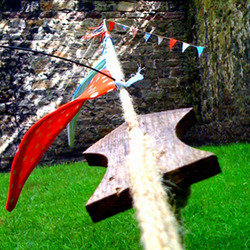
Despite the promise of five ''appenings' on the poster, on arrival at Beside The Greenside, it is immediately clear that very little is 'appening there at all. Situated on a small patch of grass behind a church, Mardy Arts' artistic residency feels more like a dressed-up entrance to a car park than an artistic event. Certainly, there's nothing to really dislike about it. But nor is there much to feel anything about.Mardy Arts aren't aiming to excite – we are greeted on arrival by the encouragement to 'come and potter and ponder'. This is, of course, fine, and could even be refreshing at a festival as frenzied as the Fringe. Yet the fact that 'come and potter and ponder' are the very words that appear on the poster feels symptomatic of a lack of creativity or spark at the event itself. Indeed, none of the 'appenings show much creative thought. The promised 'Bunt Fest' simply consists of lots of colourful bunting, the 'Hole in One' putting post was almost imperceptible since no one was playing on it, and 'The Pottering Shed', - a headliner of sorts - is just a small shed filled with items familiar from charity shops: A small, grubby disco ball, a mask, a fake fiver, a painting of a cat - all, I was earnestly informed, were genuinely from charity shops. It's nice to think that so many charities have benefited from this event. But with little to distinguish 'The Pottering Shed' from a real charity shop, I couldn't help but feel that the charities are really the only ones benefitting. The most lively part of 'Beside the Greenside' is 'The Jamboree Tent', a modest yellow marquee next to 'The Pottering Shed' in which three or four very amicable friends of Mardy Arts drink tea. There's a very genial atmosphere in there and they really do offer you tea and biscuits, as the poster promised. But the word 'Jamboree' is as superfluous and misleading as the event as a whole is underwhelming. In fact, contrary to the sign outside 'The Pottering Shed' that reads 'Nothing is Difficult', it's a struggle to think of anything worth drawing attention to at 'Beside The Greenside'. It calls itself the Fringe's best-kept secret, but there is in fact very little to tell.

Unknown • 2 Aug 2013 - 24 Aug 2013

The Boss of It All

The 'office comedy': mastered in 'The Office' and storming the Fringe this year in Blam!; here that well-loved genre takes on a new guise in the first theatre adaptation of Danish film director Lars Von Trier's The Boss of It All. All office comedy is inevitably concerned with the challenge of being a popular boss; the difficulty of integrating while in charge. The wit and imagination behind The Boss of It All, however, make it completely refreshing. Ravn (Ross Armstrong) has the boss schtick down to a T. He's efficient, he's popular and his good reputation can even weather the distribution of redundancies and cancellation of office trips. It sounds too good to be true but, unlike David Brent's delusion of popularity, Ravn's is completely real: his staff really do love him. Ravn's situation, however, is not without fallacy: it depends on the fact that he isn't seen as a boss. For Ravn has always pretended to be taking orders from an absent superior: a company manager whose character he has constructed - differently - for each worker via email. When a business deal demands that this boss materialises in the office itself, Ravn still can't come clean. Instead, he hires Kristoffer (Gerry Howell), an out of work actor, to play the role. Gerry Howell as Kristoffer is excellent. Naively inspired by the commission - 'It's so Gambini!' - Kristoffer is both puppyish and pretentious. He's wonderfully infuriating as an egocentric actor, yet it's a delight to watch when he turns out to be completely adept at the role. The ease with which Kristoffer masters the art of nonsense office jargon and leadership bravado sees the writing covering well-worn ground - targeting boss, office, and theatre. But it's laugh out loud nonethelesss. Kristoffer's interaction with the staff breeds some less familiar gags and, thanks to the fantastic staff cast, these are some of the best scenes. While Kate Kordel's Lise - sexy, disdainful, convinced she knows the truth - perhaps pushes Kristoffer to the most predictably unlikely feat (no spoiler), our credulity is (willingly) pushed even further by the demands of the bereaved Mette, played with excellent mania by Anna Bolton. James Rigby, meanwhile, manages to pull off terrifying menace and violence with exactly the right amount of cartoonish comedy in the character of Gorm - he's equally good when playing an inoffensive translator in the business deal scenes. But Tom McHugh is the star. In the role of the painfully timid staff member Nalle, McHugh is so anxious, so obedient, so completely pathetic. McHugh has the perfect face for such a man; the perfect brow, the perfect bowed head. He's absolutely nothing like the Icelandic big dog bully businessman Finnur, who is trying to buy Ravn's company. Finnur is aggressive, sarcastic, witty, disdainful... so different, in fact, that I failed to realise McHugh was playing both roles until over halfway through. It's amazing what a change of footwear, the addition of a pair of sunglasses and a suit can do when you've got such a good actor. While excellent, this show is not flawless. Ross Armstrong as Ravn never quite nails the comic timing the writing demands. Further, the mysterious Voice, which introduces, occasionally commentates, and concludes the show - with the tone of an apathetic chorus member - is not quite as amusing as I wanted it to be. That said, maybe I just didn't like him because I sensed he was ultimately the boss of it all. Though quite heavy on ideas and concepts, The Boss of It All aims and manages to be essentially lighthearted. It's a joy to watch and, for my money, the best office comedy on at the Fringe this year.

Unknown • 1 Aug 2013 - 26 Aug 2013

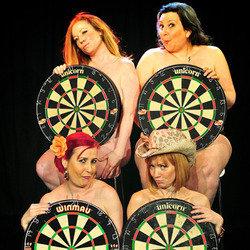
Darts Wives

The writers of Darts Wives bring a new concept to the comedy circuit. Their sketch-style comedy centres on four insipid, fame obsessed and greedy wives of darts players: the DWAGS (their coinage). These DWAGS, unlike WAGS, are one big happy family. They look out for each other, they advise each other on sponsorship, they keep each other sane when the pressures of their husbands' profession becomes too much. Or so they claim. As the show progresses, it quickly emerges that they are in fact all attempting to jeopardise one another's chances of winning the ultimate DWAG glory. This, of course, is becoming the DWAG of the world darts champion. The DWAG is certainly a fresh concept. Its execution, however, is disappointing. The majority of the jokes are completely unfunny. Particularly the sex jokes. There is one notably boring dragged out gag about one of the darts playing husband's hairless testicles, a photo of which, thanks to the machinations of one of the most repulsive of the DWAGS, has been published in the press. For some reason, the hairlessness is meant to be a particular source of hilarity. It all just feels immature - and even had the joke been better constructed, it would still have flopped. The sketches vary considerably depending on whom they involve, however. Some consist of all four DWAGS, some of only two of them and often of an individual DWAG with her husband. The latter category falls flat every time, largely thanks to the aforementioned lack of success with the sex jokes. While the fact that the husbands are played by the same women as the DWAGS - in deliberately pathetic disguise - has some comedic potential, it is undermined by the weakness of the jokes. At one point, one of the DWAGS does a terrible rap to entice her man. It is meant to be hilariously embarrassing. Instead, it is embarrassing full stop. I wasn't surprised that people left at this point. This is not to say that I cringed throughout. The friendship portrayed between the two sister DWAGS breeds some nice moments - largely because the actors' own friendship shines through so warmly. There was a delightful moment of corpsing between these two when, in a sketch in which they are both being DWAGS, it became apparent that a moustache one had worn in the previous sketch was still clinging onto her costume. This bred amusement both onstage and off. Their chemistry, however, is not enough to sustain the show.While the crude jokes so often missed the mark, the most daring joke in the show - about a tumour - turned out to win them, deservedly, the biggest laugh. Although it was delivered with a coy, semi-apologetic acknowledgement that some might find it a bit risque, this was unnecessary. Had the show risked such dark humour more often, a better time would have been had by all. Furthermore, despite the apparent attack with which the concept of the DWAG is launched, its comedic value isn't really pulled off. Halfhearted jokes about the illness 'Dartisis' singularly fail to amuse, and the satire on WAGS and WAG culture isn't realised sharply enough to justify the ticket price. While not a totally dislikable show, Darts Wives strays far from the bullseye.

Unknown • 31 Jul 2013 - 26 Aug 2013

Amazing Amber

One of the most memorable pieces on show at Amazing Amber is a beautiful piece of genuine Baltic amber containing a small, perfectly preserved fly. A fly which, in some bygone century, had made the mistake of flying too close to the sticky resin on the bark of a tree. Or so they thought for a good century and a half: in 1993, it was discovered that the fly was a fake. And as this news hit the media, audiences flocked to the cinema to watch a film depicting a bunch of scientists who use DNA extracted from amber-preserved insects to bring dinosaurs back to life. What this exhibition manages so beautifully is to demonstrate just how important amber has been not only to the (scientifically flawed) plot of Jurassic Park, but to so much of our culture. Amber garners multifaceted interest in the world outside of the National Museum: while its glowing beauty - which is evident wherever you turn - sparks commercial interest, its preservative properties garner interest among scientists and sci-fi directors alike. One of the strengths of Amazing Amber is that with displays covering two hundred and thirty million years, the exhibition has something for everyone. While film fans gravitate towards the short film, Jurassic Park: Fact or Fiction?, those with a keener interest in history can learn about the role of amber in early medieval Scotland. Jewellery lovers, meanwhile, can test their perceptiveness at the display of (mainly polyester) fake beads.And yet with this exhibition, I doubt interest will be so polarised as to claim its credit is in having ‘something for everyone’ - this perhaps undermines its cohesiveness. Because every inch of the exhibition is presented with such excellent attention to detail - with a perfectly judged info/display ratio - it feels more as if everything is for everyone. As a result, you learn a lot. You learn about green Mexican amber, fluorescent blue amber, amber that looks like nothing more than a few tiny grey pebbles. There is amber to touch, amber to scrutinise under microscopes, amber references to read in excerpts from Arthur Conan Doyle. Anyone out there who believed they could come and learn the secrets of dinosaur-revival might leave this exhibition disappointed in the properties of amber. For everyone else, Amazing Amber completely lives up to its title. An exhibition displaying blobs of fossilised tree resin sounds like unlikely Fringe tip-off. But an hour at Amazing Amber is as interesting and lively hour as any show out there.

Unknown • 29 Jul 2013 - 1 Sep 2013

Totally Tom

Totally Tom are a slick and ambitious duo. Not for them the half-arsed series of unlinked ideas which make up other sketch shows. Instead, Totally Tom have written a tight sketch-based prison drama with dozens of characters and no set. Scenes and characters change every few seconds, but their Pyjama Men-ish like talent for sudden and rapid characterisation ensures the audience are never lost. However, the neatness of the sketch-narrative proved to be one of the show’s stumbling blocks. Although the sum effect is very entertaining, there are few sketches which stand out as memorably funny on their own.This is not to say that Totally Tom aren’t great fun – Tom S had me in stitches as a fingerless convict explaining the art of flameless poi – but I couldn’t help feeling that the concept was holding them back. Watching the show gave me the impression that unrelated and better sketches had been sacrificed for less-good sketches that happened to fit in with the plotline. Many of the funniest moments came when the Toms broke away from the prison setting. For instance, Tom P catching sight of ‘the coolest guy in the prison’ leads to a brilliantly weird flashback showing the cool guy’s life on the outside, with Tom P as his adoring girlfriend and Tom S as the inaudibly cool biker, complete with James Dean pout. It’s a great moment, playing off the ‘awkward sexual chemistry’ that Totally Tom boast of on their flyers. Much of the show is rather hit-and-miss, but the duo’s breakneck pace means that if you’re not enjoying a sketch it’ll only be a couple of seconds until they do one you like better.

Unknown • 1 Jan 1970

Jenny Fawcett

Louise Ford’s character Jenny Fawcett has an earnest, alarming smile, slightly mad eyes behind unsexy specs and a gurgling voice. She reminds me of a schoolgirl or, more specifically, of Shirley Henderson’s Moaning Myrtle. She’s also hilarious. Tap dancing features heavily in Jenny’s show. The first embarrassingly enthusiastic bout transports us to the day her graceless dancing won her a talent competition on a cruise ship. Confronting specific audience members with their own names is a familiar trick for a comedy act that seeks to unsettle. When Jenny Fawcett, towelling her armpits down after this first intense burst of tap, looks up and says, ‘aright Ben?’, it’s the best I’ve ever seen it done.The talent show anecdote is just one in the brilliantly bizarre array of stories Jenny recounts for us. They often spiral in enjoyably unpredictable directions; a description of her degenerate uncle leads to a particularly amusing role-play on a Japanese train. Her anecdotes are also frequently interrupted by equally curious digressions - ‘anyway, that’s by the by’ is a bit of a catchphrase. If Jenny were real, she would be unbearably frustrating. As a character act, I loved her. Jenny is very plucky - the sort of person who’s not afraid to touch an audience member’s bum. Several audience members’ bums, even. If her appearance and chirpiness are reminiscent of a schoolgirl, Fawcett’s strictness - ‘Ben, I’m not sure you’re getting it’ - is more like a trainee teacher. The multi-faceted Jenny is by no means a realistic character, but she is fantastically funny.Given the high standard of the wit, I found Jenny unnecessary clownish at times. Granted, a lot of her funny faces are funny: the demonstration of the time she fell in love ‘while eating an orange like an apple’ is both gross and irresistibly funny. However, Ford doesn’t need to resort quite so frequently to sticking out her tongue, simply because she can do better. Jenny Fawcett is a fantastically imaginative and witty creation. You should definitely go and meet her.

Unknown • 1 Jan 1970

Mark Watson's Edinborolympics

Last night’s Edinborolympics was a beautiful, glorious shambles. It overran by more than half an hour, leaving the stage soaked in beer and strewn with frozen veg. One member of the audience sat behind me spent the whole show whispering ‘this is mental, this is completely mental’ to her partner in tones of hushed and incredulous awe. Even if Seb Coe doesn’t ban this show (as Watson fears he might), it’s quite possible that the Pleasance staff will.The premise is simple: three comparatively famous comedians compete in tests of their mental and physical prowess, while Watson provides a running commentary. Wednesday’s Olympians were David O’Doherty (Ireland), Richard Herring (GB), and Al Pitcher (New Zealand). With patriotic pride swelling their bosoms, these men maintained the international reputation of their homelands by proving their skill at admin, bucket-wearing and ‘having a good name,’ amongst other equally important activities. Oh, and there’s a violinist underscoring it all with emotive music. Watson claimed to have hired a three-piece band, and that two of them phoned in sick. I still don’t know whether this is the truth or a joke. What I do know is that the sight of David O’Doherty Usain-Bolting his way through the backwards 100 metres, accompanied by solo violin, is beautiful, majestic, inspirational and eye-wateringly funny.What’s odd about the show, besides everything mentioned above, is the seriousness of the competitors. The Edinborolympics have far more in common with The Crystal Maze or Takeshi’s Castle than with QI or Mock The Week. Though they’re not averse to the occasional mid-round quip, the competing comedians generally leave most of the joking to Watson, as they focus on really wearing those buckets, and stuck in with categorising that veg. It would perhaps have been nice to have a little more verbal wit from the contestants - much of the show is essentially spontaneous physical comedy - but that would have ruined the visual treat of watching people doing deeply silly things in a deeply committed way. Besides, Watson does an excellent job as sports commentator; he explains the freshly made up rules and offers human-interest stories for the contestants (Pitcher’s leg injury earned real audience sympathy), all the while keeping a handle on proceedings and an eye on O’Doherty’s cheating ways. The show is a bit disorganised and baggy (it over-ran by half an hour, after all) but that’s part of the charm. And the admin pentathlon is the funniest thing I have seen this year. The Edinborolympics are worth the ticket price for that alone. Go. Watch. Do your country proud.

Unknown • 1 Jan 1970

Baby With the Bathwater

There’s a difference between absurdist theatre and ridiculous theatre. Baby With The Bathwater calls itself the former. However, in this production at least, it’s definitely the latter.It’s difficult to summarise this play without resorting to the repeated use of the phrase ‘and then’. This is because there’s just far too much plot. In the first half, Helen and John give birth to a baby called Daisy, whom they struggle to love. And then a nanny arrives out of nowhere and seduces John. And then a second character arrives out of nowhere and steals the baby. And then she gets hit by a bus. In the second half, we gain six more characters and lose any remaining interest. Lots of people walked out.The show sprawls on for an hour and a half, becoming less and less coherent as it goes on. As a result, it has a strange lack of momentum. Early on, I hoped that the moments of comedy might be its saving grace - some of the dialogue is in fact quite witty. Helen’s suggestion, for example, that the baby is ‘just smiling to humour us,’ made me smile. Most of the time, the comic moments prove as unfruitful as the rest. In fact, a lot of the scenes in the second half - particularly that in which we meet Daisy’s closet lesbian headmistress - feel like bad sketches.Though the acting is poor, there is something likeable about the cast; it’s the direction and the script that make this play irredeemable. The play’s basic message seems to be that bad parenting has a negative effect on a child, but it’s difficult to tell. The longer it went on and the more ideas it tried to cram in, the more apathetic the audience became. It would be very difficult to recommend this show.

Unknown • 1 Jan 1970

Treasure Island

Dominic Allen’s adaptation of this old pirate classic is fast paced and good fun. What with the looming threat mutiny and the Blind Spot, the pursuit of hidden treasure and Jim’s coming of age, the pirate ship is a busy place - and, in this production, an entertaining watch.The acting is of a good standard overall. Jim Hawkins, whose soliloquies keep us in the know, is a likeable hero - small and earnest, he’s a convincingly vulnerable new cabin boy in the midst of the mayhem. Long John Silver has a nice glint in his eye as he invites Jim to ‘come and ’ave a yarn with ole John’, but could have done with a little more charisma. Similarly, Israel Hans doesn’t quite manage the swagger he’s aiming for. However, the cast as a whole are appealingly energetic; their palpable enjoyment is infectious.There’s a lot of plot to cram in, so it’s not surprising that the story feels slightly rushed in places. Or, for that matter, that some of the younger audience members were a bit restless towards the end. The nice humour manages to keep things lively. The comic potential of Blind Pew’s blindness is exploited to the full and so too is that of the cheese-obsessed Ben Gunn.If the acting is occasionally a bit shouty, the technical side of things is excellent. The sound effects heighten the excitement of the numerous fights as gunshots reverberate around the stage. The thing I enjoyed most of all, however, required no overheads: the singing. The pirates’ frequent bursts into song provide a sort of aural backdrop to the show as a whole, and it’s very effective. Scene changes became enjoyable in themselves for this reason. This Treasure Island is an entertaining production, if not quite smart as bait.

Unknown • 1 Jan 1970

A Funny Thing Happened On the Way to the Forum

The 1960s hit A Funny Thing Happened on the Way to the Forum is a fast-paced, rollicking farce. Borrowing a few of Plautus’ stock characters and adding some American twentieth century wit, the script is good fun, if no particular vehicle for showcasing three-dimensional acting talent. Suitably jolly and energetic, this production isn’t a must-see, but there’s a palpable sense that everyone’s having a nice time.When the Shed Theatre Company cast first bursts into song with the famous opening number, Comedy Tonight, it’s irresistibly reminiscent of a school play. This is perhaps the inevitable result of having a stage overly crowded with actors of an average age well under twenty. However, while the show never quite shakes off this school play atmosphere, it’s definitely better than most school productions.Ben Jacobs as Pseudolus, the manipulative slave at the heart of the plot, is likeably jaunty. Jacobs certainly has the confidence necessary for the part - he’s something akin to the show’s anchor. Libby Smith also delivers an excellent depiction of snootiness in the part of the neglected wife Domina. But Jacobs and Smith, though good, are slightly overshadowed by Trystan Surawy-Stepney, who plays Hysterium. It helps that Hysterium has some of the best lines; nevertheless, Surawy-Stepney deserves credit for his lovely comic timing. His delivery of, ‘Nevermind who she is. Who is she?’ and ‘I meant to say ‘Yes’, it just came out ‘No’’ made me laugh out loud.It’s not a particularly slick production. If you look closely, the dancing obviously doesn’t have the polished synchronisation of a professional production and several of the actors fall into the trap of over-enunciating their lines. Overall, the direction is of a good standard. The three doorways onto the stage, for example, allow for a nice flow of movement in a play whose fast moving plot makes this particularly necessary.A funny thing happened at the end. No particular fan of musicals, I felt a pang of unexpected pleasure when the familiar tune of the opening number returned to conclude the show. The energy and high spirits of ‘A Funny Thing Happened on the Way to the Forum’ makes it difficult not to like.

Unknown • 1 Jan 1970

Jackson Voorhaar's One True Love(s) - Free

Jackson Voorhaar’s set details the things he loves and loathes. He tells us about his relationship-destroying passion for the South American prog titans The Mars Volta, his love for travel, his affection for his yoga instructor girlfriend. However - though he doesn’t mention it - it’s clear that his one true love is his hair. There is extensive flicking. Yes, his long mane of curly locks is worthy of admiration but, like the show itself - I grew to dislike it.Voorhaar promised a set of swearing and filth. This he delivered - but the problem was that it just wasn’t funny. His discussion open relationships made me cringe rather than laugh and while Voorhaar thought we were silent because we were offended, we weren’t. We were silent because we weren’t amused. A formula quickly emerged: Voorhaar would tell a potentially offensive joke, apologise, - ‘I do occasionally take it too far, I’ll be honest’ - and then begin another. He also made extensive use of pickups linking back to jokes that weren’t quite funny enough the first time. After a while, I stopped listening.It isn’t all bad - Voorhaar’s self-mocking cries of, ‘Pow! Fucking comedy joke, in your face’ made me laugh. Unfortunately this turned out to be a rare occurrence. Voorhaar concluded his set on a charmless note - ‘this is the worst pub I’ve ever seen in my fucking life’. It’s never convincing when a bad workman blames his tools, but particularly in this case; its setting - the Yurt at the Free Sisters - is one of the nicest things about this gig. I didn’t loathe Voorhaar’s set, but it’s not worth seeing. There are sex jokes aplenty, but not a lot of wit.

Unknown • 1 Jan 1970

Dave McNeill: Canoe Ride 3000

Dave McNeill oozes conviction. He drips and glistens with it. Well, it’s either conviction or sweat. Dave’s abundant perspiration is just one of the reasons his beloved gives for rejecting his marriage proposal, along with his paranoia, his belief in wild conspiracies and the fact that he’s “a complete dickhead.” As any jilted lover would, Dave responds by canoeing to China to find the man who pissed through his letterbox the previous night. All this is feverishly explained by a wildly twirling and thrusting McNeill, in a narrative mode somewhere between bug-eyed tirade and interpretive dance. From here, things become a bit surreal.This is not a show for those who fear audience participation. More than half the audience were dragged onstage at different times to represent Indonesian meals, Mancunian footballers and other obstacles along Dave’s path to fulfilment. In his delivery and comic style McNeill is not unlike a more manic version of Anchorman’s Ron Burgundy, sharing his ability to state the bizarre with a stern-browed self-assurance. “Canoes first developed independent thought in 1989,” he tells us, and for half a second we believe him.That said, McNeill’s melodramatic shtick does risk becoming tiresome. His repeated use of the same superhero-movie-trailer voice slowly wanes from funny to grating and the audience’s laughter was noticeably less raucous towards the end. However, it’s hard to fault the energy and commitment of this inventive and surprisingly slick one-man-show. You could argue that the puppet-based drum’n’bass retelling of Robin Hood drags on a bit, though not without admiring it for having happened at all. His style of humour may not be for everyone but if you like your comedy surreal, sweaty, overblown and loud then McNeill is definitely worth checking out.

Unknown • 1 Jan 1970

Davey Connor, Lucy Beaumont and Ed Patrick - The Big Comedy Showcase Show

When your lineup is three unheard-of comedians, and your venue is the Gilded Balloon’s tiny “Wee Room”, calling your show ‘The Big Comedy Showcase’ is actually a pretty smart move.Davey Connor is a textbook compere, though an almost entirely jokeless one. Connor began proceedings by asking almost every member of the audience “what do you do?”, or “where are you from?” or “have you travelled far?”, and not once following up on their replies with a punchline. A cruel critic might suggest that Connor has cribbed his material from Prince Charles, but that would do Connor a disservice. His mellow approach to hosting successfully put the audience at their ease within seconds and he warmed up throughout the evening, earning a few substantial laughs with later material about hermaphroditic baby snails.Ed Patrick crushed the relaxed vibe which Connor set up. An anxious performer, Patrick seemed disconcerted by the awkward silence which greeted one punchline about overweight women. “Just having a laugh,” he wheedled, “it’s important to have a laugh.” Some of Patrick’s material was disappointingly familiar, particularly one line which I have heard in different forms from 3 different comics over the last year. Patrick has one very, very funny skit about bad erotic writing, but this was the only highlight in an otherwise very uneven set.Lucy Beaumont was a lot better. Using her thick Hull accent to her advantage, Beaumont turned out a well written and largely Hull-centric set including an excellent piece of ‘found comedy’ reading selected bizarre highlights from a genuine takeaway pizza menu. It would be nice if her different riffs fitted together more neatly – her set was marked by a number of sudden changes of direction – but this is really just a quibble. Beaumont doesn’t engage with the audience as successfully as Connor, but succeeded in winning them over on the strength of her material alone.

Unknown • 1 Jan 1970

Mary Bourke: Hail Mary!

It’s a relief when Mary Bourke promises that she won’t be doing any clichéd ‘female comic’ stuff. It’s a surprise, though, when she tells us that her set is a massive phallus rammed full of jokes. This subversion of expectations is something of a trademark. If at first the audience weren’t quite warmed up enough to laugh, by the end, she’d definitely won us over.The massive phallus of jokes is the first in a series of daringly crude gags that Bourke throws in at cleverly chosen and completely unexpected moments. As Bourke points out - with frequent comparisons between herself and Tony Soprano - it’s difficult to sound menacing in her soft Irish accent. However, where her stand up is concerned, I don’t think this is a complaint. As she lilts a DSK joke, a Gaddafi joke and a fleeting gag about rape convictions, you get the feeling Bourke really enjoys the contrast between her inherently soothing intonations and her more unsettling material. The audience does too.However, Bourke’s set is far from characterised by its crudity. A lot of her stuff is based on subtleties. This is particularly true of her spiel about comedic irony. ‘Being ironic,’ she remarks, ‘means never having to say you’re sorry’. Bourke makes us think about what’s acceptable and unacceptable in comedy; about what makes some of her material ‘too edgy for Edinburgh’, while others get away with much worse on the grounds that they’re ‘being ironic.’ She concludes this thoughtful discussion with a joke about Mein Kampf. Bourke is an expert at combining crude and clever.Not all of her material got laughs. This didn’t, however, make Bourke uncomfortable - she strikes me as someone who isn’t ruffled by anything. Ten years of stand up has, she tells us, rendered her dead inside. Like a lot of good gags, I suspect this is at least partly based on the truth. If not ‘desensitized’ as she claims, Bourke does have a slight coldness. It’s not entirely appealing, but it is useful when a joke doesn’t get much of a response. Graceful and composed, Bourke is very controlled as a performer, and very clever. Just occasionally, I found her air slightly self-satisfied. But perhaps the strength of her set lets her get away with it. Her eyes glint like her rings when she knows she’s telling a good joke. She’s almost always right.

Unknown • 1 Jan 1970

Lord of the Flies

This is a decently acted production of Lord of the Flies staged by Beacon Theatre Group, an amateur company of schoolchildren. It would have been perfectly fine, were the young actors capable of projecting properly. They weren’t. This was due partly to the cast and partly to the venue. In a well insulated 50-capacity studio somewhere they might have got away with it, but in the cavernous vaults of Paradise in Augustine's, the awkward stage-shy mumblings of half the cast dissolved before they reached the punters. This often ruined what would otherwise have been very good performances. A well-cast Simon added real pathos and depth to the play, but poor blocking and quiet delivery meant that many of his lines were lost. There were notable exceptions; Piggy and Ralph were both generally audible, and Jack Merridew was consistently loud and clear though his delivery could have used more variety – it would have been nice to see a hint of vulnerability beneath the blustering villain. Piggy was a real stand-out, offering an engaging and distinctive reading of the role. His confident cockney charm and striking physicality made him a far more watchable performer than the other less charismatic Piggys I have seen elsewhere.There were a few interesting directorial touches, particularly in the show’s use of music; blues slide-guitar provided incidental backing in key scenes, and there were a couple of memorable sung interludes. But setting these aside, the direction is frequently poor. One slightly distasteful moment when a boy adopts a “native” accent to speak to Merridew, calling him his “massa”, was made completely nonsensical by the young actor’s delivery; he spoke the lines in the same English accent he had used throughout the play. This turned Merridew’s reply – ‘why are you putting on that accent?’ – into a bizarre non-sequitur. A good director should have spotted this and pointed it out to the cast. Small problems like this abound throughout the show. In other circumstances, this cast could have managed a rather good production of ‘Lord of the Flies’, but this year’s effort cannot be considered a success.

Unknown • 1 Jan 1970

Tartuffe

The most prominent feature of this production’s adaptation is its swingin’ sixties setting. A pre-show video gives us a bit of context: a Folgers coffee ad; an extract from ‘Father Knows Best’; a few Beatles clips. The famous footage of Thich Quang Duc setting fire to himself at Saigon is in there too, as are Nixon and Martin Luther King, and crowds of Vietnam protestors. A ten minute long pre-play video is probably always a bad idea. Here, the gravitas of the pre-show video served only to make this gag-a-minute adaptation even more acutely embarrassing.The programme would certainly have you believe that the American sixties scene evoked has great relevance; Elmire and Dormine, we learn, ‘have progressive views on the rights of women’. Granted, the show is ostensibly set in the sixties: Tartuffe is a hippy, Valere is a Beat Poet, and there are lots of flared trousers flapping around. But the production’s engagement with this troubled decade is superficial at best, cartoonish at worst. Had it been entertaining, though, this might not have been a problem.The jokes were cringe-worthy. I didn’t laugh when Cleante, whilst trying to convince Orgon to drop Tartuffe, ate mayonnaise spoonfuls straight from the jar. Nor did I smile when Tartuffe put mayonnaise in his fruit juice. What about the time when Mrs Pernelle, during a serious discussion with Orgon, gets a blob of cream on her nose - and doesn’t realise even though all the other characters try to tell her? Needless to say, no. It wasn’t hilarious.This was compounded by the fact that the gags also distracted us from important bits of plot. In what should be a tense scene between Tartuffe and Orgon, the five characters playing Tartuffe’s disciples (‘a band of hippies’) ruin the moment by sporadically echoing Tartuffe’s words. When Tartuffe argues that ‘a wife can sway her husband’s mind’, the disciples cry ‘sway!’ in unison. Nothing about this show is subtle.There were glimpses of redemption. Melissa Feris does well in maintaining her dignity as Dorine the maid, which is really saying something, considering hers is the line ‘you deserve to be Tartuffe-ified’. Jack Davis as Tartuffe has nice command of the rhyme, and the cast as a whole buzzes with energy. But this isn't enough. If you like mayonnaise based jokes enough to make the trek to Church Hill Theatre, I’m not going to stop you. But if you’re interested in Moliere’s Tartuffe, don’t bother.

Unknown • 1 Jan 1970

Dirty Hands

Only a few things feel strained in this transposition of Les Mains Sales to 1982 Northern Ireland. Resentment directed against Hugo - who’s originally a member of the bourgeoisie - is explained by making him an ‘intellectual American rich kid’. It’s convincing enough, but a little laboured. Most of Satre’s excellent thriller, however, is preserved with panache; whatever this production’s flaws may be, it makes up for with its style.The entire cast is excellent. I believed Hugo was a thinker; he made ponderings such as, ‘murder, it’s abstract’ sound heartfelt and complex. Hannah, his sexy, meddling wife, is superb too - we’re never quite sure whether to trust her. The unblinking Mariel, with her slow speaking authority, makes lines like ‘Go. Get him,’ exciting. Mariel oozes cool - perhaps even a little too much cool.Every combination of actors is a strong one. Mariel and Hugo’s mysterious first scene immediately draws us in; Hugo and Hannah’s flirtations are ominously compelling. Moriarty’s first appearance - ‘Why was I disturbed?’- is as exciting as intended, and his pivotal scene with Hugo is properly gripping. It was as if the audience was holding one, shared breath in anticipation.The direction is expertly judged. Bold lighting is cleverly used to accentuate the time shifts and the use of the door to the theatre as an entrance does make it feel real. So too, does the lack of curtain call. It’s stylish, even if it meant the audience - accustomed to anticipation - wasn’t sure if the play was over. This is a play about missing and taking chances. The production is slick, gripping, and elegant. Don’t miss your chance to see it.

Unknown • 1 Jan 1970

Nights at the Circus

You should brace yourself before seeing Nights At The Circus, and not just because of its circus setting. Adapted from Angela Carter’s 1984 novel, it follows a troupe of circus entertainers journeying from London to Siberia. The social tensions of the eighties - notably regarding sex - surface vividly along the way. Carter’s novel is unrestrainedly daring. Bringing it to the stage was never going to result in a comfortable experience.This production has a lot going for it. Shala Isis is captivating as our heroine, Fevvers. A girl who sprouted wings (‘fevvers’) during puberty, Fevvers is the star of the circus. In her corset, platforms, pink fishnet tights and peroxide hair, Isis’ Fevvers has a Lady Gaga like charisma. Playing this cockney Venus demands gusto, and Isis delivers. What’s more, with her appealingly husky voice, Isis realises Fevvers’ affectionate, sympathetic side just as believably as her tougher, more assertive one.Scott McGarrick as Jack Walser suffers by comparison. Walser, a journalist looking to write a feature on Fevvers’ enigmatic past, is an outsider among the circus troop. He should, therefore, be a figure for the audience’s sympathy. But McGarrick doesn’t quite manage this. His Walser struck me as weak and bumbling, where he should be shy and charming. I wasn’t convinced that a girl like Fevvers would fall for him.This production certainly captures the darkness of Carter’s imagination. Much of clowns’ speech is so mirthlessly bleak that it could easily provoke a phobia of clowns. The bitter, knowing delivery of the line, ‘a child’s laughter is pure until he first laughs at a clown’ still haunts me. But the clowns aren’t even the most shocking thing that this show has to offer. After the nightmarish realisation of the story’s most chaotic and violent scene, I was actually relieved to see them.It’s an ambitious choice of show and, despite some of the weaker acting, one that this production pulls it off with panache. I should warn you, however, that Nights At The Circus is a lot to take in in one night. It isn’t a show for the fainthearted.

Unknown • 1 Jan 1970

Barry Morgan's World of Organs

Barry Morgan’s act rests heavily on double entendre. If you don’t find puns on the word ‘organ’ funny, his hour slot won’t be your thing. Weirdly however, that doesn’t mean you won’t find yourself laughing. Barry himself seems in a state of permanent delight throughout. It’s hard to say which brings him more delight, playing the organ or playing on the word ‘organ’. While we watched his bejeweled fingers lovingly caress the keys of his Hammond Aurora Classic on the projector behind him, his face contorted into an open-mouthed grin. Occasionally blowing kisses at the audience, Barry invited us to be as enraptured by the music as he is. The attempt is strangely compelling. With his chirping Australian accent and unquenchable enthusiasm, Barry buttonholed the audience. It’s impossible to take your mind or eyes off him. The sunshine continues when Barry stood up from the organ for some organ-themed stand-up. Barry’s breed of Southern Australian humour is at times outrageously unsubtle. In the slideshow used to illustrate Barry’s choice childhood memories, photos of sausages rudely adorned with pineapple slices weren’t the only squirm-worthy feature. This, however, is the only aspect of the show that could be called clichéd. Barry himself is unlike any other performer I’ve seen. His moustache, sideburns, and memorably healthy head of hair, combined with a faux naivete reminiscent of Johnny Depp’s Willy Wonka make him irresistibly memorable. He is also fantastically camp: organ playing is occasionally put on hold for a spot of modeling. There was giggling all round. Though amused, the atmosphere never particularly relaxed. Some shoppers were even sufficiently weirded-out to actually walk out, catalyzing a moment of discomfort from our seemingly unfluffable host. Barry did, however, quickly recover, - ‘Come on Barry, get it together, darling!’ - and mostly, the audience’s unease was slickly exploited. The reaction of Barry’s victims to the question, ‘What’s your postcode?’ is, I suspect, a guaranteed source of laughs night in, night out. Barry Morgan’s show is grotesque but undeniably funny. When he lifted up the ‘organ cam’ to his face, granting us something akin to an oversized Skype with his nostrils, teeth and ‘tache, I laughed uncontrollably. Barry’s world of organs is an unlikely niche, but one he fills expertly.

Unknown • 1 Jan 1970

Sally-Anne Hayward: The Inbetweeny Lady

It’s not why she’s called the Inbetweeny Lady, but Sally-Anne Hayward’s set details what happened to her in between last year’s Edinburgh Fringe and this year’s. It’s very heavily dominated by the death of her father, starting with the phone call that saw her make a rushed exit from 2011 Edinburgh Fringe Festival. Hayward’s openness is likeable and sympathetic. Her show is enjoyable, but not unmissable.Hayward’s pitch is very conversational. This would be fine, but the set verges a little too often on plain old chat. Of her trip to Australia, for example, she tells us that she really liked the sun there and the relaxed atmosphere. Her comments on drugs - being stoned ‘is ok, but doesn’t really suit my lifestyle, I’ve got things to do’ - are similarly banal. Material like this definitely could have done with a bit of comedic bite.The more obvious moments of stand up comedy are much more entertaining. Ironically, Hayward is particularly funny when emphasizing the banality of some of the chats you find on Facebook. She also has some nice shticks about grammar pedantry at inappropriate moments and her hunt for alternative employment. The teasing job applications she reads us are amusingly silly.Some of the gags - including one about a hands free phone - are too predictable to get laughs. Hayward also has the unusual habit of laughing at her own jokes. This isn’t as bad as it sounds, but is a little awkward if the audience isn’t laughing along with her. Even more unusual for a stand up, though, is the fact that Hayward makes us feel she’s really opening up to her audience. Her recollection of the grieving process after her father’s death feels honest and in no way exploitative.Hayward is perhaps held back by a slight lack of confidence. Nonetheless, her gentle humour is refreshing and easy to watch. Her set is touching, if not especially witty.

Unknown • 1 Jan 1970

All in the Timing

If one ignores the grating scene-change muzak, this was a rather good production – four short comic plays from David Ives’ All In The Timing, plus another from Mere Mortals. The show is quick and well directed, with minimal props and staging used to good effect. It’s also a very good choice for this company; despite his widespread critical acclaim in the US, David Ives has never reached the same levels of success in the UK. Shows such as this are arguably why the American High School Theatre Festival exists, offering the chance to see a young American company performing important American writing on this side of the Atlantic. The acting is consistently decent; there are no real weak links in the four-handed cast, although Dan Igl’s relaxed and naturalistic delivery led him to swallow the occasional line. However, more could have been done to draw out the humour from these pieces. Though the company’s admirably deadpan delivery was refreshing (I have seen All In The Timing painfully overacted elsewhere), the pacing of the scenes often meant that good jokes skirted by unacknowledged. The script has a number of very funny moments, but there were times when last night’s performance failed to capture them.The plays themselves are, surprisingly, not quite as funny as their reputation suggests. The ideas are great: dating for mayflies; the day-to-day lives of immortal monkeys typing Hamlet; the last day of Trotsky’s life (ice-axe still lodged in his skull). However, the execution stands for improvement. Ives’ self-conscious cleverness won’t be to everyone’s taste, and All In The Timing’s one-act plays often feel like five minute sketches dragged out beyond their natural length. This is most noticeable in the opening play, Time Flies’, which begins strongly, but slowly fizzles out rather than coming to any dramatically satisfactory conclusion. Nevertheless, if you’re in the mood for seeing David Ives performed well, Jefferson High School’s All In The Timing fits the bill perfectly.

Unknown • 1 Jan 1970

I Am a Moon

‘I Am A Moon’ was inventive, memorable, well-acted and hopelessly crippled by technical difficulties. Normally I would turn a blind eye to these, but the show is only running for two performances and these issues almost certainly won’t be sorted out by tomorrow.The show is several kinds of strange. It begins with a overweight Asian actress playing bass clarinet while dodgy projections of space judder their way across a screen behind her, largely blocked out by her silhouette. This introduces the main theme of the evening: obstructed projection. Almost all of the dialogue in ‘I Am A Moon’ is in Chinese, and for most of the evening the surtitled translation was hidden behind body-parts, suitcases, lighting rigs and clarinetists. A shame, as much of the acting was superb. During one particularly impassioned speech, the only visible words were “yellow bell”, “great wall”, “erotic” and “scientifically”.The plot follows a rather episodic three-strand structure, tracking the lives of three central characters: overweight clarinet-playing Angela, a chap in his underwear identified by the projection screen as “AN ASIAN MAN”, and the ASIAN MAN’s estranged childhood friend, Jimmy (only present as a prerecorded projection). Angela’s poignant, articulate and wildly funny dissection of social insecurity was the highlight of the show, while the ASIAN MAN’s account of falling in love with his favourite porn-star was strangely compelling, if a bit worrying.The quality of the translation is frequently bad. One example: In what would have been a dramatic highlight, a Chinese pop-star gives a beautiful and deeply unsettling account of watching a careless woman’s hands on a piano. With each touch, he tells us, it was as if he heard the sound of burning – a soft ‘sss... sss’. Whoever programmed the subtitles clearly thought that onomatopoeia doesn’t work untranslated. To help us past this impenetrable language barrier, “Sizzle!” is projected in large letters, complete with quote marks, every time the actor makes this sound. This could have been so good. Sigh. Or rather, “Sigh!”

Unknown • 1 Jan 1970

An Eggcellent Adventure

To the side, a three-piece band play smooth jazz-pop. Onstage, a group of children in swimming caps stand huddled, trying to decide what makes life worth living when you’re an egg in a fridge awaiting death. One might say they’re having an eggsistential crisis. The thought of watching a musical performed by primary school kids would normally send me running for the hills, but An Eggcellent Adventure was really rather cute. The eggs were endearing, the tunes weren’t unpleasant and Marston Millier was fun as the mysteriously English egg-murdering ‘French chef’. I also learnt a surprising amount about eggs. Did you know that salmonella can live inside the shell as well as on the outside? No? Well there you go.Despite the fun, there were considerable problems with audibility. The script has some very entertaining moments, such as the surreal cannibalism conversation held between a bunch of grapes eating a banana and a banana eating a bunch of grapes. Unfortunately, we can’t hear what the bunch of grapes is saying and the comedy is lost; this issue was more pronounced during the songs. However, there were a number of exceptions. Starring as Zoe the suicidal egg, and as ovular superhero Ego Egg, Divers commanded the stage with confidence and style. She has a fine singing voice and successfully captures the drama of her songs, particularly on ‘Hard Boiled Blues’. Though the standard of singing was generally good, more dramatic energy would have been welcome. The two eggs who sang ‘I’m so scared, what a fright’ and ‘I’m so angry, I’m so mad’ in the opening number did so beautifully, but it would have been nice if they had acted out the feelings as well as following the melody. The producers of An Eggcellent Adventure made a mistake listing their show in Theatre rather than Children’s shows. I wouldn’t recommend the show as a piece of theatre for adults, but your six year old will love it.

Unknown • 1 Jan 1970

Jay Foreman's Mixtape

Simultaneously endearing and unsettling, Jay Foreman is an extremely talented comic songwriter who is becoming progressively better. He certainly has some impressive tricks up his sleeve; interrupted by a latecomer, Foreman ‘recapped’ the gig by playing his last song again in under ten seconds. He didn’t skip a word. It was a moment typical of his set – great comedy underscored by real musical talent. Foreman has a surprisingly beautiful voice, with an impressive range and a knack for delicate delivery. He also knows how to milk this for laughs, as in The Sooty Song, where his incongruously tuneful screams of fear had the audience in stitches. The tunes are great as well and show a degree of musical experimentation far beyond the typical ‘four chords and a knob-gag’ structure.In fact, some of his songs are barely comedy songs. Foreman’s humour takes an unusual line, aiming for melancholy or childlike whimsy rather than out-and-out belly-laughs. Though this approach works as it is, it would be more effective if he had the confidence to leave it unexplained and unqualified. After one rather Spike Milligan-ish ditty about his favourite balloon, Foreman felt the need to grin sheepishly at the audience and apologise, ‘I was so stoned when I wrote that.’ It got a laugh, but undermined the aura of oddness which was just starting to gather around the room. The best moments of Mixtape are those where Foreman strays furthest into the realm of the weird, as he does in his bafflingly plotless mid-set performance poem, or in ‘Skin Sofa’, an Ebay sales ad for a sofa made of living, sweating human flesh. A disgusting idea, but a highly original, well realised and wickedly funny one.His more conventional comedy songs – though still very entertaining – are generally his weakest. Opener ‘What Else Has Dick Van Dyke Been?’ gets away with simplicity through some well-judged mild audience interaction, but Youtube-hit ‘Stealing Food’ came across as disappointingly ordinary when heard alongside the rest of the Mixtape. I look forward to seeing Foreman again when he’s perfected his act and has a little more faith in the originality of his material. In short, bring on the weird.

Unknown • 1 Jan 1970

Catriona Knox - Hellcat

First impressions can be misleading. The mawkishly patronising, ‘hello darling!’ with which Catriona Knox greeted each one of us made me feel tense rather than amused. While her first character, Nico the Glasto 1979 performer, is intentionally irritating, I found that choice irritating. Nico convinced me that I just wasn’t going to click with Catriona Knox’s humour. How wrong she was. Knox’s impersonation of Andy Murray’s mother Judy changed everything. Knox’s Judy is cross with Sue Barker, she’s cross with Andy’s girlfriend Kim, and she’s particularly cross with Kim’s hair, but what enrages her most of all is the possibility that Andy might never triumph in a grand slam. Impersonating a mum so aggressively ambitious for her son that even her hairstyle is calculated to maximise his chance of winning, Knox showed her brilliance. She even managed a physical likeness. Another strong ad hominem attack came in Knox’s sharply observed imitation of Jeremy Hunt’s wife, whose every other word was ‘absolutely’. The best parts of the show, however, saw Knox depart further from reality. In what could loosely be called a parody of young children’s behaviour, the in-character Knox recounts the traumas of Nap Time, Gym and playground social play. The catch? The entire monologue is in the weary tone and language of a frustrated middle-aged woman. Had all Knox’s characters been as original and delightful as this, I would have given her four stars.A few of the more obscure characters lost the audience a bit. The sight of Knox, playing an overexcited European newly wed, shimmying seductively against an uncomfortable audience participator didn’t raise laughter. It did, however, impress me by its sheer daring. Knox maintained these fearlessly raised stakes - her next character invited an audience member to show his boxers. There was something strangely heroic about such confidence. At the close of the show, Knox returned to the biblical gag with which she began. This time, however, the daring saw things go a bit awry. When Knox asked one audience member his opinion of ‘the gays’, the pause that ensued was dizzyingly awkward. I’m all for risks in stand up, but not if they risk making the audience feel like panicking rather than laughing. Perhaps this was just bad luck. At her best, Knox’s superb wit filled me with admiration.

Unknown • 1 Jan 1970

Shirtwaist

Shirtwaist is a brilliant piece of grim theatre. It’s no easy feat to pull off a one-woman play based on a story as emotionally laden as that of the Triangle Shirtwaist factory fire, but here the tragedy is communicated with acute sensitivity. If the play itself is too upsetting to be called a pleasure to watch, there is certainly something akin to pleasure to be found in watching it done so well.Jane Bowie, as the one woman, has complete command of the stage. The first half hour - in which she details her parents’ move from Scotland to America, their struggle and their new life there - is extremely poignant. The narration demands great shifts in emotion; overwhelmed by the memory of the song her mother used to sing, her wistfulness - ‘I didn’t know how I remembered that…’ - switches suddenly to anger at the fear that her pain is being exploited. The metamorphosis is totally convincing.The transitions between the telling and acting of the story are also seamless. As she recounts the moment of disaster, she vividly transports us to the scene at Triangle Shirtwaist itself. She chokes on the smoke, shouts in panic, weeps with fear. It was neither the first nor the last time I felt like weeping with her.Watching her story and her increasing vulnerability, I felt like I had become one of the journalists myself, feeling almost guilty that she should be laying herself so emotionally bare before me. Her enraged question, ‘What do you mean, ‘What happened in March 1911?’’ encapsulates the double layer of exploitation she suffers. First capitalised upon by the factory owners who paid overtime in apple pie rather than money, she now relives the experiences at the demand of two journalists looking for a scoop. It’s powerful stuff.The script isn’t Shirtwaist’s only strength either. Lighting is used expertly to compliment changes in her mood. Music, too, is very effective: often abruptly coming to an end like the jolt of waking up from a dream. Appropriate, for a tale that documents so bitterly the collapse of one family’s American Dream.Bowie was clearly exhausted by the end, thanking us breathlessly for her well deserved applause. Shirtwaist is a story of injustice; Bowie does it complete justice.

Unknown • 1 Jan 1970

Hannibal Buress: Still Saying Stuff

Hannibal Buress is a really chilled-out entertainer. Mockingly anti-climactic from start to finish, his set meanders with what seems like nonchalant ease. This is no doubt aided by his slow, South Californian drawl, which makes words like ‘goofy’ and ‘dude’ sound positively melodic. He makes great comedy look effortless.Buress’ style and attitude are so distinctive that jokes covering familiar ground felt fresh. He’s not the first to mock the British for our superfluous use of the word ‘literally’. However, he is the first to make it sound original and witty. Gags about the Olympics - particularly a riff on the ‘last place dude’ - were also hard-hitting if predictable hits.However, the show also encompassed material you’re unlikely to find anywhere else. Buress has an eye for the illogical, which emerged in a series close observations. His teasing analyses of the story of Jesus and the relationship between Miss Piggy and Kermit the Frog, had the whole room shaking with laughter. Buress also has a good habit of concluding anecdotes not only with unexpected words or phrases, but also with a slight raise of his voice. Anti-punchlines such as, ‘I appreciate your candour’, or ‘he was her confidant’, were delivered in a deliciously inconclusive way. The audience laughed all the harder when, after a suspenseful pause, we realised we’d ‘been had’ - to use a favourite phrase of Buress’ - and that the joke was already over.Buress’ relaxed drollery also meant that the transition to more cutting material was seamless. His recollection of the car crash he experienced on his twenty-ninth birthday - including a few repeated digs at US healthcare - didn’t lack bite and neither did his more racy confessions. Yet his mellow delivery meant his set was never unsettling. It felt like nothing Buress could ever say would be inappropriate.The packed house was so won over by him that, by the end, people laughed when he wasn’t even joking. Lulled into a state of relaxed amusement, I could have listened to him all night. You should literally go and see Hannibal Buress.

Unknown • 1 Jan 1970

Lisa Scott Sings Blues and Jazz

Lisa Scott was introduced by her venue manager as having ‘been here for many, many a Fringe’, and Scott is indeed showing her age as a performer. This shouldn’t be a bad thing. Many jazz musicians become progressively more accomplished until the day they die, developing a richer and more complex relationship with their material through each performance. Lisa Scott has not.I love jazz, I love blues and I found this show profoundly depressing. To a certain extent it does what it says on the tin; Lisa Scott does sing some jazz and blues standards. The set falls heavily on the accessible side of mainstream: ‘Summertime’, ‘My Baby Just Cares For Me’ et cetera. Scott’s singing is generally in tune, though entirely colourless (ignoring the occasional mid-line Louis Armstrong growl). The band is competent, but not to a professional level. ‘Summertime’ was drenched in an outdated and unpleasant keyboard synth effect. The sax solo on ‘Cry Me A River’ was soul-cripplingly dull, following the sung head’s melody line almost exactly note for note.Each song sounded like it had been played the same way, year after year, until everything resembling joy and spontaneity was dead. In one of her few moments of conversation with the audience (Scott was generally taciturn between songs) she made a passing reference to ‘getting it wrong’ while apologising for ‘doing it differently to how we did it before.’ This made me sad. Trying to do things differently (and enjoying getting them wrong in the process) is surely what jazz, and music, and life are all about. One particularly striking moment came when Scott began to introduce the next number and her keyboardist brusquely corrected her mid-introduction, before she could begin singing the wrong song. Apparently he had to interrupt her, otherwise (God forfend!) the order of the setlist might change. Both songs were on the list already. Next to each other, in fact. The sheet music for both was already open on the keyboard, but even the possibility of an impromptu decision brought the show screeching to a halt.Scott is evidently a pleasant person. Her set ran to time, and was performed without obvious mistakes. She is clearly popular among her audience of friends and locals; the group behind me, having spotted my reviewer’s lanyard, began to whisper “that was phenomenal!” as loudly as they could. But I see no reason why anyone who is not a friend or family member of Scott’s should ever pay to see her perform.

Unknown • 1 Jan 1970

Camille O’Sullivan: Changeling

Go and watch Camille O’Sullivan. Go and watch Camille O’Sullivan and sit in the front row. If you’ve seen her before, all you need to know is that she’s as good as ever. If you haven’t seen her, read on. Camille O’Sullivan is one of the finest cabaret singers working today. It’s not just the voice, although the voice is phenomenal: a smoke-stained Irish growl shifting from a roar to a whisper in the blink of an eye. It’s not just the wickedly surreal stage chat. It’s not even the choice of songs, though she does have great taste: expect a mix of David Bowie, Arcade Fire, Radiohead, Jacques Brel and the weirder edges of Tom Waits. It’s what she does with the songs.O’Sullivan really knows how to mess with other people’s material. She warps and twists songs with such passion and devilish glee that even die-hard fans of the originals happily swallow their complaints. Her unaccompanied rendition of Jacques Brel’s ‘Amsterdam’ is the best thing I have ever seen on a stage. Strange and unnatural things happen to Dylan’s ‘Don’t Think Twice It’s Alright’, which alternates between hushed melancholy and deafening barroom swagger, culminating in a vicious solo from her saxophonist. It’s a moment typical of the evening, with Camille ducking out of the way to allow each of her talented band members a chance to display their chops. She’s also one hell of a performer, creating a self-contained narrative with every song, often using the bizarre paraphernalia which litter the stage. She begins Tom Waits’ ‘When the World is Green’ by introducing her ‘friend from Dublin’, a caged plastic songbird that twitters disconcertingly throughout the song, almost but not quite in tune with her glockenspiel.Even in a large venue like the Assembly Rooms, she manages to create the sense that she’s conspiring with the audience. During a stunning ‘Red Right Hand’, she whispered ‘this is a bit embarrassing – I’ve lost my glass’, before turning away to glug half a pint of wine from the bottle. Only one feature of this show could be deemed less than good: much of her priceless mid-song chatter was spoken to the audience off-mic. Though this created a warm sense of inclusion for most of the audience it left the poor guys at the very back always hearing the laugh but never catching the joke. Let’s hope she mics up in future. In the meantime, go and watch Camille O’Sullivan. And sit in the front row.

Unknown • 1 Jan 1970

Peter Buckley Hill and Some Comedians XVI

This is the show that started the Free Fringe, hosted by the man who started it. Some comedians – normally performers from other Free Fringe shows – do some comedy while Hill himself comperes in between. There’s an ever-changing line-up and the quality of the acts is variable, but the first two stand-ups on Tuesday night were really rather good: Aidan Goatley gave us an impressive snippet of material from his solo show, Ten Films With My Dad, followed by Gerry Howell. Goatley has the charm of the born loser – he explains that all his friends went on to exciting careers after university, while he now works in a pet shop. Gerry Howell is an original and idiosyncratic performer whose oddly paced delivery often edges towards anti-comedy. Howell was up second, having originally third on the bill, but bumped up after the second comedian failed to turn up. Claiming that he was doing the set of “the second guy, word for word”, Howell had the audience in stitches as he began to criticise “that third guy” (himself) for being weird, overly complicated and not having enough punchlines. Confusing, hilarious stuff.Buckley Hill is a brilliantly shambolic performer. The possibility of his set falling apart or grinding to a halt is one of the things which makes him so watchable and he plays up to this. When one joke failed to go down well he excused himself, explaining that ‘sometimes I come onstage and say the right thing, and sometimes I don’t.’ Subsequently when one running joke began to drag, he turned to the audience for an opinion – “Is that as far as we can take that one?” – and was answered in the affirmative with a resounding cheer. Seldom does a comedy audience acknowledged a joke’s waning funnyness with so much enthusiasm and charm. Speaking of which, it’s worth mentioning that this gig had the best crowd atmosphere of any show I have seen at the Fringe. Audience members whooped and hollered with a fervour that might puzzle the uninitiated. A single rhetorical question about piracy led to a hilarious impromptu debate between two punters about whether a piratical social structures are democracies or oligarchies. The high-brow tone for the evening well established, Buckley Hill maintained the energy by singing a self-penned ditty about Fermat’s last theorem. His songs are, in their own small way, brilliant. Under The Aardvaark proved a favourite with Tuesday’s crowd.The show is two hour-long halves, separated by an interval. Sadly, the quality of the second half was far worse. Due to the absence of a pre-booked act, Hill asked Sam Brassington, a young comic who happened to be sat in the audience that night, to fill in. Brassington deserves sympathy for being asked to perform at short notice, but his set was underwhelming. His race-related material met with an icy reception and although his ‘honky rap’ section was intelligently written I have seen the concept executed better elsewhere. Headliner Dave Williams also failed to impress. A regular at ...Some Comedians for the last 16 years, it seems Williams was booked out of habit, rather than on the strength of his material. Williams floundered while trying out new edgy material, followed with some audience-baiting: “Question yourselves a bit”, he said, ”you’re laughing at rape jokes.” Not all of them were. His off-the-cuff riffing about clothes fared better, which suggests that William must either put a lot more work into the rest of his new material, or ditch it completely.

Unknown • 1 Jan 1970

Marek Larwood - Typecast

This is a loud and silly show. If you’ve seen the anarchic sitcom We Are Klang you’ll have a vague idea of what to expect; Larwood played a loud bumbling idiot there and he does here too. This is largely the premise of the show: Larwood realises only ever plays bumbling idiots (proving the point with a showreel of his career to date) and so he decides to expand his dramatic range in order to escape the horrific disease of being Typecast.This becomes a rich source of self-referential comedy, as we follow Larwood’s fictional attempts to relaunch his career through acting, stand-up and appearances on TV panel shows. Needless to say, Larwood is unsuccessful, as each new attempt only reinforces his public image. Much of the show is a kind of ritualised humiliation, with Larwood the perpetual fall-guy to his bored and cynical assistant Sophie. The interaction between comedian and assistant is very funny indeed, but the show is a bit of a mixed bag.The humour is very broad. Larwood enters the room with toilet-roll stuck to both his shoes, makes crude comparisons (“it’s worse than the time I shat myself so hard that I forgot my own name”) and generally chews the scenery for an hour. Larwood is aware of how over-the-top his show is, and unafraid to share this joke with the audience; ‘You’re right,’ he explains mid-set, ‘those were back-to-back dick jokes’. Though energetic, Larwood’s show is not particularly original. It’s easy to generalise about this, but Larwood seems to think that he’s the first person to have come up with several rather predictable ideas. Using a projector to poke fun at Google’s predictive search has been done before and better. Ditto the generic ‘observational comedy without jokes’ routine. One genuinely surprising skit involving Larwood’s panel-show appearance proves a highlight, but other segments (like ‘Sir’ Stephen Seagal’s acting lessons) frequently come across as lazy. If you’re a fan of Larwood then Typecast is definitely worth seeing, but it’s unlikely to win him any new admirers.

Unknown • 1 Jan 1970

Rubberbandits

Not long ago, the Rubberbandits were just a couple of schoolboy pranksters. It’s not difficult to imagine. Larking about on stage, the musical Irish comedy duo are cheeky and reprehensible, but also obviously clever and perversely appealing. The sort of youngsters teachers hate for wasting their potential. Their schooldays behind them, Dave Chambers and Bob McGlynn are now being given a stage to flaunt their mischief. Unsurprisingly, they’re loving it.Menacing and iconic with their topless, skinny white bodies and concealed faces, the Rubberbandits have something reminiscent of Alex and his droogs. Masks are always unnerving, and the duo’s plastic bag balaclavas are no exception. Nor is their threatening appearance much deflated by the duo’s cheery admission that their trademark plastic is both inconvenient and uncomfortable - one frequently bending over to shake out the ‘sweat pools’ on his chin. Why the bags? ‘It makes us irresistible to the ladies,’ they tell us. ‘Women love shopping, and we look like shopping.’ It’s not the only moment of wit.Their songs are occasionally unexpectedly sweet, and often horrible. Smiling Ivan details a friendship struck up in a playground with a boy who fell off his swing. Its lyrics are touching and uncharacteristically PC - including the line, ‘I’d love to get him drunk but he’s only six years old.’ The duo’s schoolboy charm makes the ditty believably innocent, though bandits themselves can’t seem to agree on this. While one defends its integrity, the other complains that it’s ‘all sexy-paedophile-y.’ In the end, it’s difficult to know which to believe. Most of the time there’s no such ambiguity. A song about a girl in a club - There’s no way I’m riding you/ Unless I’m on bags of glue - is downright horrible. Liar liar Danny Dyer is hate filled and garish, Spastic Hawk puzzlingly faux-naif. Despite their ugly direction, though, there’s something intoxicating about the Rubberbandits’ unrestrained energy. When they played Horse Outside - the Youtube hit that launched them - the energy was at its most infectious.You won’t find cries of ‘Up da RA!’ or ‘Feel that base in your fanny!’ anywhere else at the Edinburgh Fringe: watching Rubberbandits raving under pink spotlight transports you to a totally different kind of festival. If you let your eyes pan out though, we’re still firmly in Edinburgh. Shouts of ‘One more song! One more song!’ weren’t enough to convince me that the mostly static audience, though enjoying it, was partying with the abandon invited by the Rubberbandits. One day, perhaps.

Unknown • 1 Jan 1970

Well Done You - Free

‘Well Done You’ calls itself a character sketch show, but Lucy Trodd and Ruth Bratt are in character even when not doing sketches. This is a nice touch - it ensures that the chat in between is often as funny as the sketches themselves. There’s a running joke, for example, that Ruth comes from the comedy circuit and Lucy, the serious circuit. The gaps in Lucy’s understanding of how to do comedy are very amusing, as are the jokes about ‘getting into character.’ Teasing and affectionate, Trodd and Bratt are an appealing duo.The sketches themselves are good, too. Particular hits included one about a couple of hilariously dim wannabe-lads at a stag do, a sketch entirely revolving around a fart joke and one set aboard ship with some excellent prop gags. They’re never realistic, but several of the skits are clearly observational; after one involving two stupidly deliberative Americans, Ruth comments, ‘I used to live in America - I know all these people.’ However, my favourite sketch was one of most surreal. It consisted simply of two madly unkempt airhostesses, shaking and laughing madly. The audience was laughing too. Though the humour is often silly, it’s silly in a controlled way: Trodd and Bratt remind me a little of clever schoolgirls. They’re also the first people I’ve seen who use the customary request for money as an opportunity for jokes. This is a sensible move. Theirs is the best - and most middle class - plea for bucket-money at any free fringe event I’ve seen. Even if some of the sketches are a bit clichéd, Well Done You is a well-done show. It’s worth watching.

Unknown • 1 Jan 1970

Dearly Departed

It takes a special show to make the journey to the Church Hill Theatre worthwhile. This is not that show. The CHT is off the edge of the Fringe map, me hearties, and here be dragons. Or, more specifically, performers from The American High School Theatre Festival.Dearly Departed was everything I’d hoped it wouldn’t be, but I’ll begin with the slowness. The pacing was terrible. Almost every scene in the play was hampered by that awkward... gap... between lines which haunts amateur drama. This wasn’t helped by the audience (apparently all AHST Fest actors and friends), who insisted on applauding and whooping loudly, at length, after every single scene - for an hour and a half.Then there’s the script. Dearly Departed is ostensibly a comedy about grieving and the funeral industry, but The Loved One this ain’t. Attempts at ‘black comedy’ are painfully misjudged; a skit about multiple miscarriages (‘better luck next time!’) made me wince. The humour is hopelessly localised ‘in hilarious redneck tradition’ as one-dimensional caricatures of Southerners stalk back and forth berating each other for not going to church regularly enough - for an hour and a half. That said, I did quite enjoy the bit when Royce’s mother yells ‘you got Beez-ul-bub in you, boy!’ at him across the car. There seemed to be a lot of scenes set in cars. Two plastic chairs and some bad ‘wheel’ mime and suddenly there’s no need to worry about blocking – swell trick, huh? When the second half descends into emoting, I began to miss the comedy. This show is not worth the trek to the venue. Avoid.

Unknown • 1 Jan 1970

Hamlet and Other Theatrical Nightmares

This show is an odd mix, performed by the American High School Theatre Festival. Three short pieces of comic meta-theatre by different playwrights, tied together by the loose and dangerous theme of ‘why acting can be rubbish’. First there is a list of ‘fifteen reasons never to act in a play’, then a nightmare sequence in which an accountant finds himself forced to take the stage, and finally the fifteen minute abbreviated Hamlet from Tom Stoppard’s ‘Dogg’s Hamlet, Cahoot’s Macbeth’. It’s a swift, funny and well choreographed show; all three plays are performed with aplomb and the crowd blocking in ‘Fifteen Reasons’ is particularly neatly done. Of the three, ‘Nightmare’ is by far the most interesting. The ‘Fifteen Reasons’ are fun but a bit shallow and Stoppard’s ‘Hamlet’ is impressive rather than entertaining. In the ‘Nightmare’ section, George, a young introvert who abandoned his plans of monastic life for accountancy finds himself in an incomprehensible theatre world where one play melts disturbingly into another, in which he is forced to play the lead. George is a wonderfully strange and very watchable comic character, his odd speech and mannerisms falling halfway between Mike Myers and Siri. Members of the supporting cast frequently came across as wooden, though this is perhaps understandable given the fact that many of them, according to the programme, are acting for the first time in their lives. Not a groundbreaking show, but a neatly directed and enjoyable one.Also, a word of warning: Church Hill Theatre is a long way away, half an inch below the very bottom of your Fringe map. These bold actors go where cartographers fear to tread and for that I salute them.

Unknown • 1 Jan 1970

Celia Pacquola - Delayed

I’d never been enticed by terrible dancing before I saw Celia Pacquola. Sharing her top tips as to how to win the game Ugly Dance Moves, Pacquola establishes a charmingly silly, playful tone. She maintains this throughout the show, even when her material centres on less superficial topics. It’s a delight to watch.An Australian who has lived in Britain for two years, Pacquola does some lovely observational gags about the transition across continents. She riffs, for example, on why Tiger Airlines is a poor choice of name, and the immense power wielded by flight attendants. Her unselfconscious girlishness also allows content that might seem crude from someone else to be appealingly cheeky. The slightly ruder content even provokes a little giggle of excitement from her. She is, for example, visibly tickled by the phrase ‘shit hatch’. A little too much, perhaps. Not that there is anything smug about this amusement - it’s mainly endearing.Her schtick about sustaining a long distance relationship is also nicely judged. Frank rather than whiny, Pacquola isn’t looking for sympathy votes. This, of course, makes her much easier to sympathise with. She also varies the pace - at one point launching into a brilliantly unexpected burst of intense self-analysis, sparked by the comment that some fathers prefer their dogs to their children. I would in fact have liked more moments like these - moments where Pacquola showed herself to be more than just a talented observational comedian. Pacquola’s comedy is imaginative, clever and silly simultaneously. With her wide grin and open face, she seems thrilled to be able to share it with us. I thoroughly recommend seeing her.

Unknown • 1 Jan 1970

BDOOL (Best Days of Our Lives) - Free

James and Craig - the comedy duo behind Best Days of Our Lives - earn their stars as much through likeability as humour. The show only very loosely sticks to its professed theme of schooldays; Best Days of Our Lives feels more like a showcase for some assorted funny ideas than anything more unified. However, I didn’t begrudge James and Craig for straying from the classroom, nor the occasional dips in the standard of their comedy. The congenial pair was amusing and friendly; they made us laugh in the way that a couple of friends in a pub might. Given the bar in the corner, the free entry, and the scarcity of audience members, this was entirely fitting.The structure of their set was clunky: we had a bit of stand-up from James, a bit from Craig and then a few sketches from the pair. James’ anecdotes about his recently shaved beard were gently amusing, though my heart sank when this moved on to the inevitable, ‘I’ve never been good at chatting up girls’ schtick. Well-advisedly straying a bit more from the path, Craig’s Kafkaesque narrative about the time he woke up as a moth was enjoyable. Particularly in Craig’s case, the school gags - mainly detailing his career in The Wiggly Worm Gang - were wormed in slightly awkwardly. However, this didn’t matter, as enough of an audience/performer rapport had been established early on to put everyone in a forgiving mood.They sustained the atmosphere during the sketches, too. A doctor/patient sketch mocking our mania for diagnosis was funny, as was the scenario about a liberal father’s reaction to his son’s coming out as straight. While the series of David Attenborough skits were a bit of a flop, James’ impression of a sobbing man seeking to buy a cuddle from a man selling puddles was simply adorable.It won’t blow your mind, but if you have an hour gap at five past one in the afternoon, I see no reason not to fill it with Best Days of Our Lives.

Unknown • 1 Jan 1970

We Love Comedy

When a show is going badly, repeatedly telling the audience that they’re a tough crowd only ever exacerbates matters. It makes the lack of laughs more noticeable, the comedian look bitter and the audience feel insulted. At We Love Comedy, the audience’s failure to laugh definitely wasn’t our failing but that of the comedians.Compere Jools Constant did the opposite of warming us up. His teasing of individual audience members was uncomfortable and unfunny. Too often, his insults lacked punch lines - it felt more like straightforward bullying than stand up and remarking that it was, ‘a tough room tonight’ only made us even more reluctant to contribute. Unsurprisingly, ‘I’m going to try and involve you cause you don’t want to involve me’ also failed to work the comedy magic.The acts themselves weren’t much better. A free gig is definitely a good place to test out material, but I was surprised that much of their material had even got to the testing stage. The first act, shifting awkwardly onstage, used his five minutes to tell us some clichéd jokes about the Olympics and Fifty Shades of Gray. Jane Walker’s material was similarly tired - discussing weight, aging and friends with babies - though I did enjoy her joke about ‘squirrel hair.’ Newcomer Jordan Turner was at least more original, but lacked the confidence to even get through his allotted five minutes. Perhaps the final act didn’t have much chance given his predecessors; his slightly offensive set - containing lots of sex jokes and a particularly uncomfortable attempt to get the audience involved - was, however, depressingly unfunny in its own right.Though the refreshingly confident Jenny O’Sullivan managed to provoke proper applause, she was the only one. I didn’t blame people for walking out. I do love laughing, but this show reminded me why ‘we love comedy’ just isn’t a generalisation it’s possible to make.

Unknown • 1 Jan 1970

The Table

This puppet’s nose isn’t growing when he comments that The Table is,‘difficult to put your finger on, as you’ll discover when you try and tell your friends what you came to see.’ I couldn’t have put it better myself. To start with that admission feels like a cop out. It is a cop out, in fact. But its worth it if it maximises my chance of selling you the show.The Table centres on a beardy puppet operated by three completely visible puppeteers. Gruff, cynical and wry the puppet is deliciously frank about his situation. Gesturing at Nick, who is crouched to control his feet, he remarks that without the table, ‘I’d be on the floor, and he’d be fucked’. He’s in the know about his mechanics, too. ‘I can change all my parts,’ he tells us, ‘Oh yes, Madam - all my parts’. Meta-puppetry has never been so bold.The puppetry is so slick that I was surprised to discover that the show is partly improvised. The puppeteers’ improvisational skills aren’t just limited to moving the puppet, however. Their humour is charming too. When, recovering from a particularly adventurous departure from the table, the puppet remarked with relief, ‘We’re back in England’, the faux pas was rightly pointed out to him. The puppet nearly fell on the floor in embarrassment. Later, when ‘feeling sick’, he commented, ‘it’s that Haggis I had for lunch. In Scotland.’As with all theatre, the show engages with ‘the illusion of life.’ It’s strangely thrilling when the puppeteers rest the puppet down and continue to mime as if he’s still in their hands. And I was filled with genuine suspense whenever the puppet teetered on the edge of his table. So when, knocking his head, the puppet remarked, ‘there’s nothing in there’, I was laughing partly at myself.Given all these references to the creation of life, it’s surely no coincidence that the show involves quite a bit about the Bible, if mockingly. But if there are moments of philosophical depth in The Table, there are also some crap one-liners. Crap one-liners are great sometimes. When the puppet commented that for the part of Moses, ‘you need a puppet… or at least a very wooden actor’, it was definitely one of those times. The comedy of much of the puppetry is also funny in a nicely elementary way. Watching the puppet running on a treadmill, falling off a treadmill, being, ‘man on a record player’ and dancing (“I feel a lot more sexy than normal”) made me laugh like a five year old.My only criticism is that the show could have been slightly shorter. Very occasionally, it seemed to lack direction, and cutting it a little might have solved this.At times, the Table is breathtaking - people were not only gasping, they were breaking into spontaneous applause. At others, it felt like it might fall apart. The best semi-improvised puppetry is like that though. This is an absolute triumph.

Unknown • 1 Jan 1970

Crab House - A Bloody Cabaret

Musicals bring me out in a rash. I hate them with a deep, profound, physical hatred. Actually, that’s not quite true. I only hate bad, clichéd, sentimental musicals. But I’ve seen dozens of the damn things and only three which weren’t awful. Having just seen Crab House, I’m willing to add a fourth.Crab House is like a deranged hybrid of Sweeney Todd and Little Shop of Horrors – which are, incidentally, two of the three. The plot is as wildly improbable as you could hope. It’s set in prohibition-era New York, where struggling writer Tim and his domineering partner Ruth have just settled down. Leaving Illinois in with hopes of recession-busting entrepreneurship, they’ve bought up a failing seafood restaurant, which continues to fail despite doubling as a speakeasy. But after a freak accident, the crabs and the profits mysteriously begin to grow.Crab House turns its small cast and budget into one of its strengths. The only piece of set is also the only instrument; with its lid down, the pianist’s baby grand also serves as the Crab House cocktail bar. It’s a nice bending of the fourth wall, which becomes even nicer halfway through the show when Tim hears the piano and notices the pianist. ‘Who’s this guy?’ he asks. Ruth identifies him as ‘Clyde, our new Australian barman,’ and from this point onwards he is, pouring drinks and providing a sardonic commentary on the action as it unfurls. The music isn’t hugely original – the vocal melodies in particular are often rather derivative – but the score is jaunty and enjoyable, with a couple of memorable standouts. The music is at its best when it leans closest to the alternative cabaret aesthetic that Crab House seems to be aiming for. There are some real flashes of brilliance; “Repetition” has a distinctly macabre Dresden Dolls vibe and “The Darkness of the Tank” sent shivers down my spine. The lyrics are frequently very funny; ‘all we need are customers,’ sings Ruth, ‘but all we have are sad-looking malnourished crustaceans’ - top stuff.There were, however, a few technical issues; the piano is mic’ed up too loudly and frequently drowns out the singing. With only a piano as accompaniment audibility shouldn’t really be a problem. It was here, which was slightly disappointing. Also, at the risk of revealing a serious pedantic streak, I’ve got to mention that the plotline isn’t entirely coherent. For example, why do larger crabs equal sure-fire business success? There are other issues, but it’s hard to explain them without giving away too much – one crucial murder occurs near the end of the play without any convincing motivation. These quibbles aside, Crab House is a great show and almost certain to win you over – whatever your views on musicals or seafood might be.

Unknown • 1 Jan 1970

Birth Order

Rachel Anderson needs to find a more balanced middle ground for her material. Too much of Birth Order is either disappointingly mundane or awkwardly provocative. The show begins with a couple of jokes from the latter category, including one gag about Katie Price’s son and another about John Leslie’s alleged sex-crimes. The lines aren’t bad, but Anderson doesn’t quite pull off the delivery when handling ‘edgier’ material, hindered by the bubbly Geordie stage presence she works so hard to establish. She’s far more successful when tackling safer topics; her well-written skit on the disappointments of life in Deptford is certainly chuckleworthy, if not exactly groundbreaking. Tellingly, her funniest bits have nothing to do with the show’s central concept. The difference between older and younger siblings is a subject that could provide a rich vein for humour, but Anderson doesn’t succeed in mining it. Instead, she seems overly reliant on ‘found comedy’, quoting from various books on birth order, and later reading long chunks from a guide to kissing. Her selections were amusing, but more original input would have been welcome.She also struggled to deal with audience interaction. When she announced, half-joking, that ‘there are more oldest children than any other birth order in the world,’ and one member of the audience cried out ‘what about younger children?’, the riff descended into dodgy mathematics and the joke died somewhere in the confusion. Anderson clearly has potential, but Birth Order had the feel of a 25-minute set stretched out into a 45-minute show, dragged down by its own filler. One to keep an eye out for next year.

Unknown • 1 Jan 1970

Nick Page: My Glorious Hypothetical Life As a Eunuch

This is frighteningly honest stuff. Nick Page may be a self-confessed arsehole (three ex-wives, seven ex-fiancees, once murdered a dog, etc.) but he’s a likable performer. Unlike so many comedians who claim to have screwed up their lives, Page appears to be telling the truth. With deadpan delivery and pitch-black humour, Page leads us through a no-holds-barred narrative of his life, highlighting the various moments when he has been a dick. Though Page’s anecdotes aren’t always laugh-worthy, the audience are hooked throughout. He’s aware of his own powerful ability as a storyteller and admits that he has mostly used this skill for nefarious purposes (sleazing his way onto daytime TV, mis-selling people car insurance, etc.) Like I said, he’s a bastard, but watching him lay out his cards on the table is a funny, cathartic, and very entertaining process.So far, so good. The first half of Page’s set is fun and distinctive, but nothing exceptional. It’s also, if you’re of a conservative disposition, slightly hampered by the sheer wickedness of the things he admits to having done. Like, for example, sleeping his wife’s sister on the day of her father’s funeral. From another comic this would be a ludicrous set-up, from Page it’s an apologetic statement of fact. However, things change in the second-half when Page’s life descends into a Kafkaesque legal hell with hilarious results. Having committed some kind of serious fraud (Page is hazy on the details), he’s sentenced to either a thousand-pound fine or a month in jail. He chooses the month in jail and spends the next two years trying to get himself imprisoned for the free food and luxury sports facilities. This real-life glimpse into the legal system is bizarre, eye-opening and unbelievably funny. It’s also impossible to do justice to in a review. Page’s show may bear little relation to its Fringe programme description (there’s not a single eunuch gag) , but it’s all the better for it. Go watch him - his skit about living in Gloucester and being forced to make friends with the sort of people who live in Gloucester, is worth the price of admission alone.

Unknown • 1 Jan 1970

Rob Auton: The Yellow Show

Yesterday I watched a man in a yellow coat talking about his favourite colour for an hour. It was the best thing I have ever seen on the Free Fringe. There are very few shows which change the way you see the world. The Yellow Show is one of those shows and the change is literal as well as metaphorical. Upon entering the crypt you are presented with a pair of “yelevision” spectacles, lovingly handmade from yellow card and decorated with black permanent marker. You’ll have to forgive me if I start to sound sentimental over the course of this review – I was watching everything through gold-tinted glasses after all. The show’s set is a testament to what you can do with a little creativity, a lot of passion and no budget, right down to the individually-painted copies of The Yellow Album stacked by the entrance.The Yellow Show is a strange and magical experience, a refreshing escape from reality. Leaving cynicism at the door, Auton has created a beautiful place where sponges have minds and the world is just a little bit brighter. It’s hard to explain the show without it sounding like some kind of idyllic primary-school activites session. It isn’t. I’m still not quite sure what it is, but it’s not that.Rob Auton is a distinctly weird man. His material falls somewhere between comedy, poetry and lunatic raving. There are a lot of terrible acts who advertise the same mix of genres, but in Auton’s hands it becomes something simple, original, optimistic, life-affirming and, of course, deeply silly. Now, I don’t want to give you a false impression of the show. The Yellow Show is frequently rubbish: the puns are terrible from the outset (“Yellow,” he greets us, “and yelcome...”) and a single rhyme on ‘maroon’ is stretched into a three-minute poem which doesn’t correspond with any artistically recognised definition of ‘good.’ However, this rubbishness, this wildly successful rubbishness, is what makes The Yellow Show unmissable. To criticise this show for its moments of bizarre whimsy would be like heckling Tommy Cooper for sometimes messing up his magic tricks. When Auton reaches his final poem ‘Why Yellow’, the show moves beyond inspired surrealism and becomes something unexpectedly moving.

Unknown • 1 Jan 1970

Adele's Heart

Adele’s Heart is an immensely powerful new play by renowned Italian playwright Giampiero Rappa that is unafraid to tackle large and difficult issues. In an unnamed country a civil war has torn society apart, leaving only a few scavengers who hunt for food, tend their wounds, and try to avoid the falling bombs. We meet two of them: Lucas and Adele. Wrapped in sleeping bags, on an entirely empty stage, they argue, flirt, cry, and attempt to entertain one another. In other hands this scenario could easily have become dull, but I spent the duration of Adele’s Heart unable to tear my eyes away from the stage, a testament to the excellent performances given by both leads.The play is not unlike a standard dystopian survival thriller, a la Mad Max, I Am Legend, or almost anything by John Wyndham. What sets it apart is the believability of its characters and setting, and the line of naturalistic wit that runs through it. The pessimistic, creative, and melodramatic Lucas provides a lot of this. After dissecting his own personality during one loud, funny, and rather existential row, the bombs begin to fall and Lucas starts crying. ‘I’m not crying because I’m frightened,’ he explains, ‘I’m crying because I’ve got a sh*tty character’. It’s a moment typical of the show, always working within a recognisable framework, but constantly able to surprise.The script, however, needs some work. It’s difficult to tell how much of this can be blamed on the translation, which is normally fine, but evidently not by a writer with English as a first language. There are plenty of minor but awkward slips: ‘in spite on everything,’ for example, or ‘curse you out’ (for ‘swear at you’), and attempts at impassioned profanity that probably flow in Italian occasionally sound stilted in translation. Then again, good English swearing can take a lifetime to master, and this is only a minor flaw in an otherwise gripping show.

Unknown • 1 Jan 1970

Luath Book Banter at Henderson's

First, a warning: This event has been slightly mis-advertised. The show’s description in the Fringe Programme (under ‘Spoken Word’) suggests that ticket-buyers will see a veritable smorgasbord of “debate, poetry, fiction and politics from Luath authors”. A kind of best-of showcase from the fringe of the Book Festival is implied. In reality, each dose of ‘book banter’ is a different one-off talk given by one or two authors, tackling one of the above themes. Each event will be entirely different, so the star rating above should not be taken as an overall value judgement. It is essential that you visit the website of local publisher Luath (luath.co.uk) and check the event listings before purchasing tickets for one of these talks. Now that’s done, we can move on to the review. Phew.Monday’s talk was given by actor (and Luath-published memoirist) John Cairney, best known for his one-man show about the life of Robert Burns. Cairney is a hopelessly sentimental luvvie of the old school, but a gripping speaker. His talk was a chronological history of his life as an actor, focussing on his highly successful stage-roles (when Arthur Miller directed The Crucible, Cairney played Reverend Parris), and dealing lightly with the B-movies and creature-features which form the bulk of his film career (Jason and the Argonauts, The Devil-Ship Pirates, Spaceflight IC-1, etc).Cairney is given to hyperbole; at one point during the evening, he claimed to have “been to every country in the world except for Chile, all for the sake of Robert Burns”. A cynical audient might wonder what the crowds thought of Burns in Burma, but it’s impossible to be cynical when listening to the man speak. Cairney’s life is a fascinating one, and he rattles through events with the flair of a natural raconteur, beginning with his earliest forays into performance, and his memory of the first time he was told that he would become “an ac-TOR.” His description of trying to lose his Glasgow accent (“Glaswegians are born with slightly too much tongue in their mouths”) provided one of the show’s drollest moments, and was greatly appreciated by the audience. Monday’s crowd had clearly been won over before Cairney opened his mouth; many were familiar with his stage work or had read his memoir, ‘Greasepaint Monkey’. This allowed Cairney to take liberties with his listeners, indulging in a few deeply thespy flights of fancy. “Think red”, he commanded us, “imagine the colour red. Good. I can see it in your faces. That’s acting. That’s the power of acting. Red is martial. Blue is hope. Green is peace. Yellow is... nothing at all.” All in all, a most colourful experience.

Unknown • 1 Jan 1970

Jen Brister - Now and Then

With an intense stare, Jen Brister describes her set as ‘a beige lesbian in a darkened room.’ ‘There won’t be any thinking’, she adds, in a similarly combative tone, ‘this show is entirely about me’. Her aggressive and forthright style didn’t put me at my ease, but she’s undoubtedly a talent.Brister’s latter comment about her show is only half right. Her set is definitely very thought provoking, but it really is almost entirely about herself. Much of this relentlessly autobiographical humour made me laugh; the re-enacted conversations with her heavily accented Spanish mother were, I thought, the show’s highlights. However, this egotism grates after a while.The catalyst for the show, Brister tells us, was turning thirty-seven and the feelings of anxiety and inadequacy it provoked. Brister does a lot of complaining about the aging process. Her gags revolving around her fixation with the inability of her now thirty seven year old body to produce enough moisture are funny at first. However, like her extended grumble about growing up in a house adolescent brothers, the rants aren’t funny enough to justify their sheer length.The moments when Brister departs from the topic of herself are truly refreshing. Brister’s remark that her show doesn’t deal with the big issues is brilliantly disproved in her material about Catholicism. It is both excitingly fiery - ‘Catholics don’t like people’ - and thoughtful; she explains with eloquence that she has problems not with religion itself, but with an institution that tells you who you can and can’t fall in love with. More material like this would have made the show both more balanced and wittier. It’s worth noting that Brister’s favourite joke in her set - a well crafted gag about the differences between radio 1 and 4 - isn’t a self-referential one. She too is aware, it seems, that complaints about her life aren’t necessarily the best way to fill a set. Brister’s attitude towards the audience meant that I never quite relaxed - I found her frequent comment, ‘I know some of you are looking at me thinking…’, both unnecessarily hostile and alienating. However, Brister, who really throws herself into her comedy, is an impressive comedian nevertheless. She’s got a lot not to complain about.

Unknown • 1 Jan 1970

Roisin Conaty: Lifehunter

Roisin Connaty may describe herself as ‘almost good looking,’ but she has a weapon of attraction quite independent from her sunny, open expression or her bleached blonde hair. Roisin Connaty is gorgeously funny.It’s refreshing to see a set that claims to be unified by a theme and delivers. Connaty’s is a good one too: she’s interested in the pursuit of happiness. Because, as she points out, we’ve come up with various solutions to the question, ‘What can I blame my malaise on?’ Starting with those who blame unhealthiness, Connaty’s observations are both surprising and spot on. Take, for example, her description of the pumped limbs of gym goers as ‘curly.’ It’s funny because it’s perfect. Her material about religion is similarly delightful - Connaty’s expert hands lend this oldest of topics a new lease of life; she’s just as witty when discussing the less likely solutions. Connaty is perplexed and depressed by those who seek happiness in bumhole bleaching. It’s as amusing as she is bemused.Connaty also gets the balance just right between autobiographical and observational comedy. She’s endearingly open about her unhealthy tastes - ‘I’m a Grade A drunk’ - and her views on relationships and having kids. The autobiographical stuff is accompanied by some great bits of dramaturgy too. Connaty treats us to impressions of being horrendously drunk and horrendously bored, of unhappy dancing in clubs, of children who talk frustratingly slowly, of the angry ram she faced when on holiday. Though often silly, her comedy is always neatly structured, but it looks effortless. She’s a Grade A comedian.Connaty ends on the sort of humiliating anecdote that most people would be embarrassed to repeat even to themselves. Often in stand up the recognition of a joke provokes one laugh - not so here. Connaty’s triumphant finale caused proper, uncontrollable laughter. She’s original, sparky and irresistibly amusing - I didn’t want her set to end. If you seek happiness at Roisin Connaty’s gig, you’re sure to find it - for an hour, at least.

Unknown • 1 Jan 1970

Computer Programmer Extraordinaire

Raph Shirley is not funny. This show was a bonding experience for the audience. Maybe not for the silent majority who left in the first half hour, but when the rest of us left the venue I felt that frisson of compassion which passes invisibly between co-sufferers.Shirley is a semi-character comic. At least I hope he is. His character is an unpleasant, smug, petty-minded, delusional geek who thinks he can make it as a stand-up. I’ll give him the benefit of the doubt and assume this isn’t quite his day-to-day personality, but its still a problem. It’s possible to win over the audience while blurring the line between real comic and fictional anti-comic. Ed Aczel does this well, to choose one example, but Raph Shirley doesn’t.Bad slapstick comedy is rarely funny. A description of bad, gross-out slapstick comedy is frequently worse. I’ll share one of Shirley’s attempts at self-deprecating humour with you. Don’t worry about me ruining it – I promise that knowing this ‘joke’ in advance won’t affect your enjoyment of the piece. It involves Shirley describing the worst thing he ever did: last year’s show. He explains that he only had one audience member, a 90-year-old war veteran. During the set, Shirley fell over and landed face-first in Mexican food. Then he stood up again. Then his trousers fell down. Then his underwear fell down. Then he defecated. Then a piece of tortilla chip fell from his face, grazed his penis, and landed in his ‘poo poo’ (as Shirley calls it, repeatedly) ‘like a kind of re-enactment of The Passion’. He then fell over, again, landed on his faeces, and the tortilla chip lodged itself in his anal cavity. Then the war veteran died. Then Shirley’s parents came in.While he was explaining this at length, another five people left. I began counting the seconds until I could join them. Do not watch this show.

Unknown • 1 Jan 1970

Sara Pascoe - The Musical!

In her white shirt, grey knee length skirt and black brogues, Sara Pascoe looks like a schoolgirl. This is intentional - as well as her outfit, much of her set evokes the schoolgirl she once was. Sara sums up Sara Pascoe: The Musical! as ‘Adolescence and Women In the Media’. Both titles are accurate - neither conveys how great her show is.Pascoe remarks that she hasn’t had a particularly unusual life. This is true. Lots of people could tell similar stories about their vegetarianism, unpopularity at school, teenage crushes, first experience of drugs, and so on. However, the trick is in the telling. Pascoe has a wonderfully slow, frank way of sharing anecdotes. With her wide-eyed earnestness, sentences like, ‘you will not have heard of him because he is not successful’ become very funny. Her repeated use of the phrase, ‘and also…’ is also strangely effective at peaking our interest. And also, while it’s often annoying when people’s sentences go up at the end, when Pascoe does it, it’s delightful. A lot of her set feels like enthusiastic schoolgirl gossip. Of course, Pascoe is much, much sharper and wittier than a schoolgirl. This is what makes her set so amusing.The girlish Pascoe not only has the enthusiasm of an unselfconscious schoolgirl, she also has the boldness. Discussing the common fear of female comedians doing jokes about periods, she remarks, ‘I can say the word, ‘penis’. But if I say, ‘period’, it’s not ok.’ She then launches into some period-related anecdotes which are definitely better than ok. Looking around, it was clear that the audience was amused rather than afraid.Perhaps as a result of her girlishness, Pascoe’s anecdotes often feel touchingly honest. However, like all the best gossip, the embellishments are as important as the truth. Departures from reality are neatly woven in to great effect and the songs - some of which are like hilariously sinister asides - also keep the pace nicely varied.I can’t think of anyone who wouldn’t enjoy this show; though Pascoe remarks on its lack of ‘joke jokes’, there are even a couple of great one-liners. Not all of her material is particularly original - vexed rants about the Haagen Datz advertising campaign and about women’s magazines feel very familiar. Thanks to her sparkiness, however, this doesn’t really matter. Sara Pascoe’s days of unpopularity are firmly over.

Unknown • 1 Jan 1970

Josh Widdicombe: The Further Adventures of...

Josh Widdicombe has an immediately likeable stage presence, engaging the audience from the outset. He gets the topical/satirical material out of the way first, dispensing with the Olympics and the banking crisis in the same sentence, before moving on to what he excels at – observation.In an overpopulated comedy landscape, where hordes of unfunny men crawl the wilderness like malformed MacIntyre-like zombies, it can be difficult for a really talented observational comic to get ahead. But Widdicombe might make it. He has that rare gift for spotting the ludicrous in the mundane, making modern life itself the punchline. Widdicombe’s reflections are genuinely original, pinpointing everyday oddities we choose to ignore and drawing them out for inspection. Breakfast cereals, adverts on ATMs and the presence of hardback books in pubs are all put on trial, and the results are as funny as they are eye-opening.Several of Widdicombe’s best jokes rely on relatively obscure reference points: a source of great comedy, but also a potential hindrance. When one audience member replied to a question about British breakfast cereals by confessing, ‘I’m an American, I don’t have any idea what you’re talking about,’ Widdicombe admitted that a lot of the show might go over their head. While the specificity of references to Wingdings, Kellogg’s Start and The Crystal Maze can be hilarious for those in the know, it can also ruin the punchline for those who aren’t. Nevertheless, Widdicombe’s remarkable charm and charisma are enough to keep the audience on his side throughout, even though they may find themselves unsure what it is they’re laughing at.

Unknown • 1 Jan 1970

This Arthur's Seat Belongs to Lionel Richie

Come and watch a decent comedian in a spectacular location. Barry Ferns is gigging daily atop Arthur’s Seat, the highest point of Holyrood Park. His set is only fifteen minutes long, but the set is only a small part of the show. Even once you’ve completed the climb, you still have the ‘pre-show queue’ to look forward to. At the summit Ferns has constructed a ramshackle wooden doorframe, where people queue in order to have their hands stamped (“this ink belongs to Lionel Richie”) and be admitted ‘into the venue’, where they can enjoy the tiered seating lovingly provided by nature. It’s a beautifully surreal moment.Ferns’ set is alright. His pre-written material is perfectly fine, but his real talent is for audience interaction – putting people at their ease, establishing a rapport and providing a platform for that day’s deeply weird mountain-goers to amuse each other. For example, Ferns began one skit by claiming to have never realised that there were still people called Jesus. Suddenly, he was interrupted by two men from Ecuador and Spain, who both explained that they were Jesus. They were invited onstage and encouraged to arm wrestle, before setting aside their differences with the help of a small boy-translator, re-named by Ferns as the King James’ Bible. When Ferns flowed back into his pre-written ‘Jesus in an airport’ stuff, he seemed aware that it couldn’t top the strangeness of real life. The mountain is the headline act; Ferns is just the compere.Go to this show. It’s worth the journey. I may be no athlete and may have lungs decayed by tobacco and cheap theatre smoke effects, but the walk from base to summit only took me about twenty minutes. You have no excuse for not climbing it. The path on the way up is beautiful, the view from the top is beautiful, and the mountain is an actual volcano. What more could you want?

Unknown • 1 Jan 1970

Believe - Starring Shane Dundas from the Umbilical Brothers

For the first ten minutes, Shane Dundas’ material revolves entirely around his fear of a solo show. Accustomed to forming half of a double act, he confides in us that when alone on the stage he feels, ‘like a chicken in headlights’. He anticipates that his nervous awkwardness will prevent him from achieving that elusive but all-important rapport with the audience. Jokes like these are only funny if the act does in fact manage to totally dispel these fears. This, sadly, didn’t happen.In hindsight his milking of the ‘I’m too nervous to succeed’ joke is tragic, smacking of self-fulfilling prophecy. At the time, it was charming enough. Dundas took nice advantage of an opportunity for some ad-lib when a woman in the audience started to cough in the middle of the calming breathing exercises he had us doing. His faux-sincere, ‘Have you breathed before?’ made everyone laugh.It’s difficult to pinpoint why exactly Dundas goes wrong, but wrong he goes. It didn’t help that the majority of his jokes weren’t funny, of course. However, more damning was more the way in which he dealt with the poor reception that turned people against him. With vicious circularity, the more threatened Dundas felt by the audience’s negativity, the less funny he became.The watershed moment was probably when Dundas was upstaged by a nine year old. Irritated by his question as to whether she knew the nursery rhyme ‘Twinkle Twinkle Little Star’, her condescending reply of ‘I’m not that young’ firmly established the status quo. Other hecklers were less subtle. When Dundas asked the audience whether they wanted to see the corpses he played in his career as an extra, one man replied loudly, ‘No.’ Unlike the nine year-old, Dundas had no come back.As hecklers turned into walkers, Dundas crumbled further. Having finished a Jesus joke that saw three people leave before the end, Dundas complained that if the deserters had stayed a bit longer, they’d have realized that the joke was actually quite inoffensive. In other words: if the walkers stayed, they wouldn’t have left. Dundas didn’t bother coming up for an excuse for the disappearance of the next five people.The sad truth was that for most of the second half of the show the only people laughing were laughing amongst themselves, independent of the gig. Dundas never really believed in himself. By the end, neither did we.

Unknown • 1 Jan 1970

Peer Gynt

Peer Gynt is, according to our storyteller, ‘the most self-centred, egotistical liar in literary history’. This, however, certainly hasn’t put Kare Conradi off Ibsen’s play. His obvious enthusiasm for this Norwegian classic makes him the perfect person to relay it; he’s a story-mediator as well as teller.Perhaps compensating for the fact that ‘most Norwegians only know the first two lines of ‘Peer Gynt’, Conradi seems to know it inside out. He reminded me of a lecturer - a talented, devoted lecturer, whose passion for his subject is palpable. Conradi’s research is obvious; he’s even been to several of the places where the play is set. It’s not difficult for Conradi to bring this material to life. Much of it, it seems, is his life.With his warm voice and friendly demeanour, Conradi creates a nicely intimate atmosphere. It’s not all easy listening, however - Conradi often breaks into surprisingly long (and beautiful) bursts of Norwegian. He also constantly shifts between acting, telling, and giving us his analysis of the story.Despite his manifest expertise, Conradi’s not pompous with his interpretations. He’s not trying to assert his superiority, and character analysis is often no more sophisticated than: ‘he’s jerk, a nincompoop.’ What’s more, Conradi doesn’t claim to have all the answers. Of the section in which Peer meets some monkeys he says: ‘I don’t know what that scene is about’. It’s endearingly low-key, but there are also moments of drama. Frequently running around the stage, Conradi even climbs the lighting rig to emphasize Peer’s heightened emotion as he falls in lust. Energetic and compelling, Conradi’s a natural storyteller.It’s not the most thrilling event at the Fringe, nor the most accessible, containing aphoristic lines such as ‘being oneself means slaying oneself’. It doesn’t help, either, that the sweltering heat and darkness of the space make it a slight effort to maintain concentration. However, none of this is the performer’s fault. If the unlikely prospect watching a lively rendition of Peer Gynt by one of Norway’s most renowned actors appeals, I recommend going.

Unknown • 1 Jan 1970

A Young Man Dressed As A Gorilla Dressed As An Old Man Sits Rocking In A Rocking Chair For Fifty-Six Minutes And Then Leaves While A Viking Does A Cryptic Crossword

This show is exactly what it is. More accurately, it’s exactly what you’re afraid it might be. Expect very little from the performers, besides the above. Like any good comedy gig, however, in AYMDAAGAAOMSRIARCF56MATLWAVDACC it’s the crowd reaction that really matters.The crowd at AYMD… were the most enthusiastic Fringe audience I have ever seen. For the full show, walk-outs were traitors, sabateurs were shunned and those who brought the performers offerings of food and booze were heroes.The gig was defined by a weird football-match-meets-Sunday-communion mentality. Let’s say that the status quo is “a crowd sitting watching the people above doing the stuff that it says in the title.” People are surprisingly conservative. We liked the status quo and enjoyed maintaining it. But anything which genuinely added to the performance or made life easier for the performers was greeted with rapturous applause; when someone brought the gorilla a pint, the cheers could be heard from Princes Street. When someone stole the Viking’s crossword, it was all the Underbelly staff could do to hold back the lynch-mob.No-one was quite sure what was happening, but whatever it was we sure as hell didn’t want to get in the way. Nobody likes a show-off. The few audience members who were considered to be acting up too much were met with howls of derision; “It’s not your performance!” bayed the mob (ourselves included). That gorilla really rocked that rocking chair and anyone who interrupted his beautiful pendular swing was clearly a prat. I mean, the guy who tried to feed the gorilla a banana clearly had their heart in the right place, but drawing attention to the rubber mask’s inflexibility just wasn’t right. However, one brave audience member was met with real respect. Noticing that the Viking’s shield-cum-crossword-table was beginning to droop (balanced on his knees for the previous 37 minutes), they volunteered as a human support, kneeling down to prop up the precarious tabletop.The best works of theatre are inexplicable, untransferrable experiences. When people ask you why The Table is just a puppet on a table, or what The Boy With Tape on His Face actually does, the only response is that you had to be there. If you weren’t here, please accept my heartfelt condolences. Next year, I know where you’ll be spending the best fifty-six minutes of your Fringe.

Unknown • 1 Jan 1970