Reviews by Charlotte Monk-Chipman

27 Wagons Full of Cotton by Tennessee Williams

In 1930s, post-recession Mississippi, a young woman’s husband returns home following the outbreak of a fire at a nearby cotton gin; suddenly, a huge workload lands right in his lap. Do two wrongs make a right? Someone clearly seems to think so. Fox and Hound Theatre company are to be applauded for this powerful production, which directly wrestles with the issues of rape, abuse and mental health.The unquestionably highlight has to be Helen Fox’s Flora Meighan. Fox gives a brave, professional, and extremely moving performance; so immersed in the character that even during her bow she clearly struggled to smile. Her piteous Flora is complemented by Codge Crawford’s vile Jake Meighan and Stephen Caruthers’ truly disgusting Silva Vicar - both are disturbingly believable. A very strong cast indeed.In contrast to the rest of the production, the sound clips involved are fairly mediocre – the recorded voices used towards the beginning become quite jarring and strange. Though disappointing, this was easily forgiven as the play got going. The space lent itself well to the very simple staging, with absolutely no more than was necessary, and intense lighting enhanced the uncomfortable action onstage. The actors made the most of the space: the scene was convincingly naturalistic yet still extremely dynamic and engaging. All this was accompanied by a brilliant wardrobe that was utterly on point, even down to tiny details such as the filth on Silva’s forearm. Well thought through, and very authentic.This play was certainly gripping throughout; my attention did not waver even for a second. Perfect for both Williams’ fan or newbie, the script is faultless and the actors do not disappoint. This is a truly compelling piece of theatre - I booked tickets for the company’s other Fringe production at the first opportunity! 

Greenside @ Infirmary Street • 5 Aug 2016 - 27 Aug 2016

In Utero

Over scrabble, Jenni and David discuss their excitement about meeting their ‘perfect’ baby; then receive the news that the pregnancy is high-risk. “Is the baby going to be okay?” … “Am I going to be okay?” … “Are we going to be okay?” We watch as their relationship is stretched to its limits, effectively interspersed with recordings of true accounts from people who have tested positive for fetal anomalies. What is the right decision? No one has any idea.Alfereti is an incredibly clever writer. Having the plot flit between the innocent scrabble scene, and post-news chaos means that the story is all the more painful for us, with dramatic irony almost making the happiest scenes the most unbearable. She and Tabrizi, however, though by no means weak, are not strong enough as a cast to satisfy the piece’s significant emotional and psychological demands. Somehow their relationship is not quite believable; at times their scrabble session seems more like a first date than a relaxed game at home between two people who are in a long, serious relationship. Expressions of intimacy come across light and unconvincing amongst the tense, serious subject matter.This play could, and should, find a way to be heartbreaking. The quick transitions between scenes, with simple costume additions and the movement of two chairs, are smooth rather than distracting - all of the different aspects of the show successfully flow together. Though the casting isn’t ideal for this particular piece, the show as a whole is certainly moving and enjoyable - unless enjoyable is not quite the correct word. Thought provoking? What would I do in their situation? What would you do? You might just change your mind.

theSpace @ Surgeons Hall • 5 Aug 2016 - 27 Aug 2016

And They Played Shang-a-Lang

The show is narrated by a theatre director who is reflecting on his school days in 1970’s Edinburgh. The theme of leaving childhood behind to make the sometimes difficult, often silly transition into adulthood is a good focus as it is something that we have all been through.For those who lived through that time, the show is a wonderful jaunt down memory lane and the golden oldies sung throughout will no doubt be all too familiar to children of the 1970’s. Even though some of the references may go over younger audience member’s heads (carnation milk?! Scotland winning a football match?!) there’s plenty of stuff in there that anyone who made it through their teen years will recognise; from being bullied into spilling every detail of your (tedious) love life to all of your friends to the mammoth devastation experienced when that boy you like didn’t come to the party. The play also touches upon darker subjects, particularly the first encounter with death. This brief interlude includes a funeral and full-cast performance of Bohemian Rhapsody which is beautifully staged and sung to perfection.The cast are excellent and the typical school girls and boys that they portray, each with their own customised school uniform are instantly familiar, as are the frankly terrifying parents. The audience were tapping their toes and singing along throughout and seemed to thoroughly enjoy the slideshow of old photos of familiar Edinburgh scenes which played on a loop before the show began - a thoroughly enjoyable night out.

The Assembly Rooms • 13 Aug 2014 - 24 Aug 2014

Welcome to Terezin

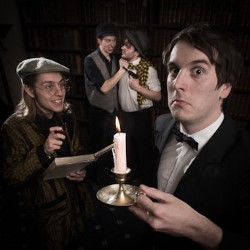
It’s 1944 and the Red Cross have finally been permitted to visit Terezín, an internment camp for artistic Jews in Czechoslovakia.The old and sick have been shipped east, the morgue has been rebranded as a school and a star of the silver screen has been recruited to make a documentary. The only thing left to organise is the entertainment.Yvonne Arnaud Youth Theatre take us on a journey as the prisoners struggle to decide what to do, when in reality the luxury of choice has long since been taken from them. The sheer scope of issues covered by the play is remarkable considering its short timeframe; the value of hope, the benefits and pitfalls of collaboration and the power of love are all explored thoroughly without seeming heavy-handed or anything more grandiose than part of the daily torment experienced by the inhabitants of the camp.The comedic and tragic elements are expertly measured and Philip Glassborow’s writing is wonderfully cutting and witty, delivered expertly by the young cast. The music is almost note-perfect throughout, making this a production to be proud of for the company. Of particular note are the young men playing the guard, the rabbi and Kurt Gerron, all of whom deliver excellent performances. We see the the malice and all-too-comfortable Marlene Dietrich impersonations of the guard, the rabbi’s defiance and theological postulations, and Gerron’s position as a man driven to desperation. The cast is excellent, the songs are excellent and the show is excellent. This is undoubtedly well-trodden ground but the experiences of those who went through the Holocaust are approached in a revelatory way in this production. 

Gilded Balloon • 12 Aug 2014 - 24 Aug 2014

The Other Guys: Afternoon Delight

The Other Guys: Afternoon Delight is an enjoyable and light hearted a capella show. These boys from St Andrews can certainly carry a tune and they manage an enjoyable balance between comedy and high quality performance.The group are at their best when performing parodies of popular songs – something that not many student a capella groups at the Fringe offer. My personal favourite was a hilarious adaptation of Coolio’s Gansta’s Paradise. There are also original compositions – another rarity for a student group. Certainly, if you have seen a lot of student a capella this festival and are starting to feel jaded by it, The Other Guys offer something fresh.Having said this, the professionalism apparent in other shows is somewhat lacking. The song changes are rather bumbling and the dance routines could definitely be more exciting. Nonetheless, when things do work, they work very well and it is hard not to be engaged by the group’s energetic performance. Musically, there is an excellent range on offer from Scottish traditional ballads to recent chart toppers. The harmonies are assured, if at no point particularly ground-breaking.The Other Guys’ afternoon offering will not bore you, but it will not blow you away either. You won’t go away raving to your friends about it, but you certainly won’t begrudge them the price of a ticket.  

The Boards • 11 Aug 2014 - 16 Aug 2014

John O’Farrell: 25 Years of Writing Stupid Jokes

In John O’Farrell’s 25 Years of Writing Stupid Jokes, he tells the story of his comedy career: first as a writer on the likes of Spitting Image and Have I Got News for You and then as a novelist, a broadcaster and a public figure. This is a nostalgic and whimsical hour, with some interesting observations and wry asides.Amidst the story of O’Farrell’s career there are enjoyable tangents which tell of the back story to various well known comedic episodes. For example, O’Farrell tells the story behind the conception of Spitting Image’s famous portrayal of John Major as a grey man. There are amusing run-ins with major political figures and it is fascinating to get the behind-the-scenes stories of things you remember seeing on the news. O’Farrell’s story of his journey from earnest teenage boy, worshiping his comedy heroes, to his position right at the heart of the comedy world is extremely endearing. O’Farrell’s delivery is assured and entertaining and his love for his subject matter is obvious and infectious. He has an encyclopaedic knowledge both of comedy and of politics, and you cannot help but trust his judgement on both. In all, this is an enjoyable trip down one man’s memories, with many amusing asides and valuable lesson to be drawn along the way.

The Assembly Rooms • 9 Aug 2014

Al Murray: One Man, One Guvnor - Special Previews

Al Murray’s One Man, One Guvnor is only in its preview stages, but already it is a spectacularly funny set. Murray’s premise is that he intends to set up a new government, using the audience as his Parliament and the front few rows as his cabinet. As part of this, it is of course vital that we get to meet the cabinet and much of Murray’s show is dedicated to engaging with and mocking anyone brave enough to venture into the front seats.Much of the show is based around this interaction. While Murray is clearly using this as a springboard for his prepared material, it still makes the show feel impressively spontaneous. His conversation with the audience is raucous and exciting, giving the whole show an anarchic feel. Despite this, we never lose the sense that Murray is completely in control, both of his material and of the audience.Murray’s Pub Landlord character being as it is, there are jokes which skate dangerously around the topics of race, class and gender. However, these are saved from potentially misfiring by Murray’s strong self-awareness and sense of irony. This is not a man hurling abuse and creating controversy for its own sake; Murray is a master of subverting expectations and playing his jokes on several levels.The show is not perfect: there is the occasional lull and sometimes Murray dwells on the same joke for slightly too long. But for a preview, this show is highly impressive. This is an energetic and exciting hour and a half and the atmosphere that Murray succeeds in creating in the room is exceptional. Go along and have a taste of it yourself.  

Assembly George Square Gardens • 7 Aug 2014 - 24 Aug 2014

The St Andrews Revue Present: Prom

The St Andrews Revue’s offering to this year’s Fringeis everything student comedy should be. It is acutely observed without being cynical, self-aware without being self-congratulatory, and above all, extremely funny. The show loosely follows the four cast members in the run up to prom, with many diversions along the way. There are parody songs, time travelling sketches and probably the only joke about the Scottish referendum that I have seen this Fringe which succeeds in being both original and funny.Each sketch sets up the next one, with recurring motifs throughout. This gives the show a coherence and sense of professionalism that is often lacking in student comedy. Prom does not feel like a series of disjointed sketches, but rather an overarching narrative. This makes the wide variety of topics covered all the more impressive: somehow a show which takes in everything from long distance relationships to the invention of the mug seems cohesive and well-balanced. The cast are extremely strong: wry and self-aware, with excellent timing and a great eye for a punchline. They are gently self-mocking, but also highly professional in their execution.If there is one piece of student comedy that you should see this Fringe, Prom is it. One of biggest laughs in the show comes from a parody song concerning the group’s inferiority complex with regard to the Cambridge Footlights. On the evidence of this show, I’m not sure they need to worry.

Paradise in The Vault • 4 Aug 2014 - 10 Aug 2014

Paul Savage Finds Every Joke in the Bible

Accompanying Paul Savage on his quest to find every joke in the Bible is an enjoyable way to spend an hour. There isn’t anything particularly revolutionary in his set, but there is a steady stream of laughs and Savage held my, and the audience’s, attention for the full hour.Savage knows his audience as well as he knows his Bible: perfectly pitching his jokes within the bounds of what will be found acceptable, always with a wry self-awareness. There are a few sharp observations and amusing new takes on the material and Savage’s obvious nostalgia for his childhood makes for an enjoyably light-hearted journey through some of the grislier parts of the Old Testament.Unfortunately, Savage’s attempts to get the audience to participate often fall flat, indicating perhaps that he has not quite succeeded in creating an engaging atmosphere in the room. Having said this, he deals with the audience’s reticence well, swiftly segueing into the next joke.In all, I enjoyed Paul Savage’s comedic take on Biblical scholarship. His treatment of the material is affectionate and gently comedic. This isn’t an angry Richard Dawkins style rant at the absurdities of religion, nor is an attempt at conversion. Rather, it is an engaging and affable labour of love by a man determined to find comedy in the most unlikely of places.

Dragonfly • 2 Aug 2014 - 23 Aug 2014

Quiz in My Pants

For any unassuming festival goer in search of a laugh, there are a whole host of shows willing to part him from ten scottish pounds and provide no such thing. Quiz in My Pants, then, is a wonderful surprise. Not only is it free, but it is by far the funniest show that I have seen this week.Quiz in My Pants takes a panel show format. The host, Nicola Bolsover, is joined by two teams of two guests - all performing their own shows at the festival - who engage in a series of comedic games with the audience’s help. Admittedly, these games vary slightly in quality: a round in which the contestants pose quiz questions to the host is not particularly strong. But when the laughs do come, they come thick and fast.The contestants are sharp and astute, easily bouncing off each other and the audience. But their chance to shine comes properly when they are asked to perform five minutes worth of stand up each, with points awarded to the funniest team. Peter Antoniou’s cynical psychic comedy stood out for me as particularly witty and intelligent, while James Loveridge’s story of how he became an internet viral sensation had the audience in floods. I laughed more during the twenty minutes in which these sets were performed than I have done throughout the whole of many hour long shows.This is a show which manages to combine off-the-cuff highbrow wit and games in which the contestants must mime words to do with pants without either ever feeling awkward. If you like either, or both, of these things, then I cannot recommend this show highly enough.

Cabaret Voltaire • 2 Aug 2014 - 23 Aug 2014

James Loveridge: Funny Because It's True

James Loveridge’s Funny Because It’s True is indeed funny and is presumably also true. So far, so good. In a pub basement, audience members overflowing the chairs set out onto the floor and window ledges, Loveridge delivers one of the most amusing shows I have seen this Fringe.His stories come from his own life, primarily from his childhood and time at university, and he is not afraid to share his most embarrassing experiences for the sake of a laugh. Throughout, there is an endearing undercurrent of affection – for his family, his friends, his girlfriend. This is a man who loves people, delights in their oddities and idiosyncrasies and wants to share this delight.Loveridge’s timing is exceptional; he knows exactly where in a joke to place the punchline. He often sets up the expectation that he will take the easy route out of a joke, then subverts this expectation to excellent effect. His delivery is charming and affable, and I have rarely seen a comedian so adept at using silence to draw laughs from his crowd.This undoubtedly the best free show that I have seen at the Fringe. It also drew more laughs than many of the paid shows which I have attended. Loveridge is shameless, without the sense that he is playing the shock factor for laughs. He is sentimental without being mawkish. In all, he is well worth your time.

Laughing Horse @ Jekyll & Hyde • 1 Aug 2014 - 24 Aug 2014

Candide: The Optimist

This is a one man production of Voltaire’s Candide, a satire about a young man who believes firmly that this is the “best of all possible worlds”, despite the increasingly horrific events unfolding in his life. Dave Nelder plays an incongruously Scottish Voltaire, who narrates the tale, as well as the various characters in Voltaire’s story.Changes in character are indicated by the donning of small props such as glasses – which are occasionally forgotten – and the putting on of a variety of different voices and accents, the quality of which would embarrass even a father reading a bedtime story.Nelder’s production at times verges on the absurd. When he produces a handkerchief that is allegedly blood-stained, but has clearly been poorly coloured in with red felt tip pen, I start to wonder whether I have in fact missed the point, whether the entire production is actually an ironic postmodern take on the state of modern amateur dramatics. It becomes increasingly hard to escape this suspicion. Possibly when Nelder laughs at his own jokes, apologises for fluffed lines and accurately acknowledges the poverty of his ability with accents, he is breaking down the fourth wall and giving an audience an insight into the frailty of theatre as a medium. Possibly. Or possibly this production is just really bad.This is the type of show that you could see transcending its own awfulness and becoming a cult classic, favoured ironically by young hipsters, were it not for the fact that after about twenty minutes it begins to drag appallingly.The one advantage of this was that by the time it was over, I was so glad to emerge into the real world that I wasn’t nearly as upset as I should have been about having devoted more than an hour of my adult life to watching a man in period dress make substandard jokes about UKIP in between bouts of sword fighting with himself. I suppose the ever optimistic Candide is right: there is a positive side to every story.

theSpace @ Jury's Inn • 1 Aug 2014 - 12 Aug 2014

Pathos: Can You Kill for Love?

Once Pathos: Can You Kill for Love? hits its stride, it is an enjoyable and moving performance. However, the showstarts with its weakest material, and for the first ten minutes, I was concerned as to what I had got myself into. At the show’s opening, we are presented with a mime in which two children meet and fall in love. Physically, the performance was fine. However, where there would usually be spoken words, we were instead treated to an increasingly grating series of squeaks, which reminded me unfortunately and irresistibly of Pingu.Luckily, from then on the show began to improve dramatically, dealing subtly and intelligently with its subject matter. Pathos is a series of free-standing pieces of physical theatre, united by the theme of the destructive power of romantic and sexual love.Throughout, images are projected onto the backdrop, sometimes merely echoing the themes being covered by the two live actors, sometimes interacting with them. At their best, these are beautifully done and highly moving. At their worst, they feel a little cartoonish. However, they are consistently timed well with the musical accompaniment to the show, which contributes greatly to its atmosphere.Visually, some of the performances are among the most stunning that I have seen at the Fringe. The two performers move well together and the different pieces are varied enough that the performance does not become monotonous. Having said that, this variation does mean that some are better than others and some pieces are just not quite good enough to justify their length. In all, this show is a highly varied one. At times it captures something wonderful. At others it verges on the ridiculous.

theSpace @ Symposium Hall • 1 Aug 2014 - 9 Aug 2014

Blues and Burlesque: Happy Hour

Blues and Burlesque: Happy Hour is an enjoyable, if not particularly spectacular, way to spend an hour. The show opens with Pete Saunders on keyboard, singing a variety of cabaret songs. Saunders has a delightfully gravelly voice, and this opening went down well with the audience. This is followed by some musical numbers from hostess Vicious Delicious and 2013 Burlesque Games winner Scarlett Belle. These were enjoyable, although the dancing was perhaps slightly under-rehearsed.Things went downhill with the arrival of guest magician Paul Dabek. Theoretically, Dabek’s performance should have been fine. His tricks were nothing special, but his stage patter was amusing and engaging. However, despite the fact that there were clearly many laughs coming from the audience, Dabek inexplicably took it upon himself to incessantly berate the audience for not laughing. This got really very tiresome, and I was glad to see the end of his set.The burlesque itself, from Serena Del Fuego, was impressive and exciting and she held the audience’s attention extremely well, engaging particularly with those on the front row. However, this made up a very small proportion of the show.In all, there is nothing particularly wrong with Blues and Burlesque. The performances are perfectly acceptable and never feel like they are trying too hard. However, this show could easily be much more exciting, and lacks the flair needed to make is something really special.

The Caley Bar • 1 Aug 2014 - 23 Aug 2014

Semi-Toned: Toned Up!

If you like a capella, see this show. If you like dubstep, rap, pop or rock music, see this show. Essentially, if you have ever listened to a piece of music and had any response other than wanting to tear your own ears off, you will probably find something to please you in Semi-Toned’s set list.Indeed, perhaps the most impressive thing about this show is the variety of music that is covered. Radiohead mixed in with Olly Murs, Jay-Z with Paolo Nutini. One moment, you could hear a pin drop in the audience amidst a choral ballad, the next the whole room is clapping along to Muse’s Knights of Cydonia. All of this creates an excellent platform for the different talents which have come together to form this group and soloists are carefully paired with songs best suited to their voices for maximum effect.Despite the impressive standard of their performance, there is the impression that this is not a group which takes itself too seriously. Those on stage are clearly having a great time and so we do too. The choreography is some of the most slick and inventive that I have seen from an a capella group at the Fringe, striking just the right balance between professionalism and comedic charm.Musically, the group does not let itself down. The harmonies are tight and inventive and the soloists commanding. Occasionally, the soloists could perhaps benefit from a microphone to lift their voices above the rest, but this is really only on the very odd occasion and does not detract from the atmosphere of the show as a whole.This show is charming and light, but with the occasional performance that is genuinely moving – the choral arrangement of Radiohead’s Motion Picture Soundtrack springs to mind. It is professional, but never loses the sense of self awareness and fun that is necessary in any student a capella group. This is perhaps the best example of a show of its kind that I have seen at the Fringe and more than worth your time.

theSpace @ Symposium Hall • 1 Aug 2014 - 9 Aug 2014

The Onion of Bigotry - A History of Hatred

With The Onion of Bigotry, A History of Hatred Black Dingo Productions and the Kielty Brothers have created an engaging and largely enjoyable piece of theatre. Four actors, each assuming the roles of various figures in the history of Scotland, guide the audience through the nation’s past in an attempt to peel back the layers of Scottish sectarianism and seek out its rotten core.Without question it is a huge, dark topic to tackle in a mere hour but the light-hearted narration sprinkled liberally with musical numbers keeps the play from becoming too heavy. The songs themselves are intelligently crafted and the musical numbers generally well-performed, although the choreography, when used, is basic to the point that it almost does not merit inclusion. The witty lyrics were met with audible chortles from the audience on more than one occasion and almost always with that intention. A particular highlight was a number recounting the unfortunate fates of the various King James’ of Scotland. The cast harmonises well and the vocal range of the multi-instrumentalist narrator is impressive.Whilst a basic knowledge of Scottish history would definitely be needed to be in on all of the jokes, there’s enough silly stuff in there too for the less well-versed and for those simply keen to get an insight into the nation’s history, the show is ideal.Travelling through time of course presents difficulties in relation to costume and set but the apparent absence of either worked against the company in this case. It was at times a little difficult to see past the actors’ own clothing and with only a few chairs used as props, the grandeur of the venue was a constant competitor for the attention of the audience.By the end of the show, however, both the actors and audience were chanting along to the wonderful common sense solution offered up by the cast to the problem of sectarianism still very much alive in Scotland today.

just Festival • 1 Aug 2014 - 25 Aug 2014

Challenge Accepted

With five minutes or so of light-hearted banter at the top the show, Simon Caine successfully had the audience not only relaxed, but ripe with anticipation. Unfortunately, despite the comic’s best efforts, this was never fully satisfied.Caine’s bumbling style was initially charming rather than irritating. However this ‘typical awkward-guy’ delivery, started wearing a bit thin and more often than not, the ‘ooops-I-made-a-mistake-but-it’s-actually-intentional’ bits came off as exceedingly laboured. There was an excellent piece about society’s obsession with watching videos of cats on YouTube - which I dare say a fair few members of the audience, including myself, could relate to. There were also a number of interesting and amusing observations on a range of subjects, from children’s toys to London life. Caine managed to make light of the fact that we were all seated in the corner of an Indian restaurant which piped its traditional music into the room for the entire show, creating an atmosphere that was unusual but not unpleasant. The early audience interaction provided a running joke that appealed to everybody, however this wasn’t enough to make the show anything other than just okay. There’s a lot of promise here but a bit more practice on both the writing and delivery fronts is most definitely needed.

Suruchi • 1 Aug 2014 - 25 Aug 2014

Mark Nelson: Please Think Responsibly

Mark Nelson instantly puts me at ease as he bounds onstage. His delivery is confident and relaxed and he interacts well with the audience members he picks out for attention. There is nothing particularly ground-breaking in his set, but the laughs come regularly, I find myself onside from start to finish.Much of Nelson’s material is on the theme of growing up and taking responsibility for one’s self – a common theme for many comedians at the Fringe this year. However, his endearing self-deprecating humour manages to make it feel fresh. Similarly, there is material on the Scottish referendum which feels less hackneyed than that of many, since Nelson succeeds in giving his stories a personal touch.Nelson is just controversial enough to keep things interesting, but never oversteps the mark. His social observations are sharp, as are his musings on everyday life. He has a unique turn of phrase which transforms observations which would have been mundane into quick-fire jokes which have me nodding along.Above all, Nelson is a highly likable comedian. His refusal to take himself seriously chimes well, and his love for what he is doing is highly infectious. Whilst it is unlikely to have tears pouring down your cheeks, this is a charming and enjoyable hour of comedy, and you could do a lot worse with your time and money.

Gilded Balloon • 31 Jul 2014 - 25 Aug 2014

Fred MacAulay: The Frederendum

At the risk of damning Fred McAuley with faint praise, this is an extremely competent set. At no point are the laughs uproarious, but he frequently raises a smile and a chuckle. There is the sense that we are in safe hands, but it almost feels too safe.The show is executed with professionalism and aplomb. McAuley ties his material together impressively, and the whole thing has a polished feel to it. So what is missing? Perhaps it is the fact that pretty much every comedian at the Fringe has had his five minutes’ say on the independence debate, but nothing in McAuley’s set feels particularly new or exciting.There are some amusing anecdotes about his altercations with individuals in high visibility jackets, and an encounter with Scotland’s first minister. The whole independence debate is treated with an enjoyable sense of absurdity, with neither side getting let off lightly. McAuley’s love for his home country shines through, and there is a charming undercurrent of affection running through the show. Indeed, this same sense of amiable mockery is apparent in McAuley’s interaction with his audience members.This is a good show, but that is about as far as it goes. I can think of far worse ways to spend an hour, but having said that, I can also think of several better. 

The Assembly Rooms • 31 Jul 2014 - 24 Aug 2014

The Church of Zirconium

The Church of Zirconium is a piece of new writing by Will Farrell and Milo Gough which invites us into the world of a poorly run cult populated by the charmingly gormless, the easily led and the downright stupid. As a satire it is not particularly sharp and certainly aims at an easy target, but the play is good fun and keeps the audience laughing throughout. For those enticed by an (almost) celebrity appearance, the disembodied Great Leader of the cult is voiced by Rich Fulcher of The Mighty Boosh.As a whole, the cast are engaging and extremely energetic, occasionally at the expense of naturalism. Every now and again, some members do overact slightly, pushing the comedy over the top and losing what should be easy laughs. However, for the most part the balance is just right.Perhaps the highlight of the play is its set: the sparsely decorated stage coupled with the show’s location in The Caves really adds to the atmosphere and makes the action feel highly realistic. There are also some well-judged multimedia touches and amusing prop- and costume-based gags. In all, visually, the play is extremely strong.The Church of Zirconium is not a particularly clever or striking piece of satire. It will not open your eyes to the shady world of cults, nor even give you a new perspective on, well, anything really. But there are some decent laughs and the story told is light and enjoyable enough to get caught up in for an hour.

Just The Tonic at the Caves • 31 Jul 2014 - 24 Aug 2014

Oliver Meech: When Magic and Science Collide 2.0

Oliver Meech’s offering to this year’s Fringe is intriguingly listed under “Cabaret (Magic, Science)”. One could be forgiven for thinking that, just as in one of the opening tricks, the show’s producers opened a dictionary at random and haphazardly selected three words in order to form their concept. However, in Meech’s show, these disparate disciplines come together perfectly and his childlike yet informed passion for all three is infectious.So what can you expect? Essentially, just short of an hour’s worth of well executed tricks, easy charisma and wonderfully absurdist asides. Admittedly, the magic is of varying quality; one particular piece of mathematical trickery was almost laughably easy to see through. However the final flourish fuelled by audience participation was remarkably well executed. Nonetheless, whilst it would be hard to come away dumbfounded by the tricks, Meech’s stage patter more than makes this show worth your time.If you aren’t a fan of audience participation, this one may not be for you. However, it is worth giving a chance; Meech is not out to embarrass or belittle his participants, but rather to share his enthusiasm directly with the audience.What makes this show unique is Meech’s ability to convince of his competence and professionalism, all the while conveying a sense of childlike wonder and enthusiasm. There is a clear impression that this is a man who is fascinated by his material and loves to share it. With such an engaging delivery, it is hard not to be enthused.This is an extremely enjoyable romp through science, magic and the science of magic, and you could do a lot worse than joining Meech as he attempts to “rewrite the laws of physics in a damp cave”. Ambitious, yes. Hilarious, certainly.

Just The Tonic at the Caves • 31 Jul 2014 - 24 Aug 2014

The Durham Revue: Shenanigans

On the day that I saw it, The Durham Revue was a victim of its own small audience. Jokes which were well formed and intelligent received little in the way of response, since there were simply not enough people in the room to create an atmosphere conducive to comedy. Admittedly, some sketches were not particularly strong, but in many cases the material warranted a larger audience.The performers are at their best in their shorter sketches and the largest laughs come from the one-liners. Often however, the longer sketches seem to flag, their premises not quite strong enough to carry them through. Nothing in the show feels particularly new: we are presented with jokes about champagne socialists, the pressure placed upon the children of doctors, and other similarly standard premises. Nonetheless, there are some sharp observations. The writers clearly have a keen eye for puns, and often find a new angle from which to view their admittedly rather prosaic comedic targets. Interspersing sketches with short bursts of blaring pop music which fits the theme of a preceding sketch is a stroke of genius, and does much to preserve what atmosphere can be mustered in a room that is mostly empty chairs.In all, there is nothing in this show which will have you in fits of laughter. But it is a solid hour of entertainment and there is some exciting fresh material here. The thing that would improve this show most would be a larger audience. So get yourself a ticket, as much for the sake of everyone else who will see it as for yourself.  

Underbelly, Cowgate • 31 Jul 2014 - 24 Aug 2014

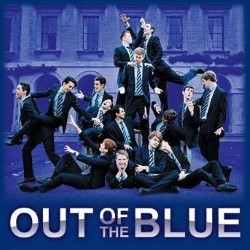
Out of the Blue

Out of the Blue, Oxford’s all male a capella group, have many things to offer. Their show is polished, musically assured and visually impressive. There are moments of comedy, moments that are genuinely moving and moments where twenty grown men from one of the UK’s most prestigious universities bound around the stage pretending to be monkeys.But while those monkey impressions will be permanently and inescapably etched into the minds of all those who witness them, what stands out most about this show is how much fun everybody – both onstage and in the audience – seems to be having. The boys’ enthusiasm for what they are doing – and they must be enthusiastic to have found the time to perfect such complex routines – is infectious, and the atmosphere in the room is electric.Musically, the set is impressive. The group’s voices blend well and the harmonies are complex and often highly inventive. Song choices vary from Moulin Rouge to Amazing Grace, with Tight Fit and the Human League getting a look in along the way. The choreography is equally excellent: dad dancing transformed into an art form.Despite being part of one of the most successful and well established shows at the Fringe, these boys do not take themselves too seriously. Which is lucky given that they are essentially a group of grown men dancing around with no shoes on, singing their way through the musical works of Shakira. It takes a special kind of self-confidence to make that work and Out of the Blue manage it masterfully. Get down to the box office and book yourself a ticket. If you come out smiling, you can thank me later. If you don’t come out smiling, I’m afraid there is no hope for you.

Assembly George Square Theatre • 31 Jul 2014 - 25 Aug 2014

Saint-Exupéry, a Pilot's Story

The African Sahara, a wrecked plane, a stranded pilot and a vastness of sand. Vagabond Productions’ play Saint-Exupéry, A Pilot’s Story begins full of promise of adventure and drama. Whilst the title suggests that this play will be an exploration into the life of Saint-Exupéry, what actually follows is an adaptation of his most famous work, The Little Prince, peppered with a few facts and anecdotes. Realistically, this is probably what the majority of the audience would be looking for and was, for the most part, delivered in a touching and funny way.We listen as Saint-Exupéry in his pilot’s jumpsuit raids his childhood chest of treasures, pulling out different masks and assuming figures from his past that eventually winded up as characters in The Little Prince. Then the Prince himself appears to engage with these strange creatures from the land of adults.The play, like the book, touches on some big themes: the nature of love, the gulf of understanding between adults and children and the ridiculousness of adhering to social codes for propriety’s sake. The juxtaposition of the Little Prince’s inquisitive nature and inborn wisdom with Saint-Exupéry’s ‘more important things to be concerned with’ nature is engaging. However, the formula of delivering an anecdote about a character and then seeing the Little Prince meet this person becomes repetitive within half an hour.A further unfortunate point is that the character of Saint-Exupéry never quite manages to justify his presence in the play. He is the author of a beloved book but, as an individual, he is not well-known and the grumbling, grouchy delivery of his life’s story does nothing to alter this. Even the actor sounded bored. It is always tricky to judge how much prior knowledge one’s audience has, but the solution is definitely not to constantly repeat what has already been said to the point that such repetition overtakes the narrative duties themselves.Does it match up to the book? Well, no and really, how could it possibly? Still, more often than not the charm of the book translates well to the stage and the use of silhouette and props is at times quite beautiful. Besides that, the scene between the Little Prince and a fluffy desert fox is nothing short of an absolute gem. There are worse ways to spend your afternoon than re-exploring a childhood favourite.

Assembly George Square Studios • 31 Jul 2014 - 24 Aug 2014

Camille O’Sullivan: 10

You can’t help but wonder how many people fall in love with Camille O’Sullivan during her show each night. I know it wasn’t just me; from the standing ovation at the end, the audible gasps during the more impressive numbers, and the fact that during the quieter songs, the audience are not just silent, they barely move.Camille has been entrancing audiences at the Fringe for years now, and the magic shows no signs of fading. She has performed at Glastonbury and the RSC and this year she is back with a show that is as dramatic and exciting as ever. Her singing holds the room entranced. When the applause comes at the end of her songs, you can almost feel the tension breaking. Her songs are by turn dark, angry, sad, joyous and beautiful and her voice adapts perfectly to each. When she has the audience sing quietly and beautifully the final refrain of her final song with her, it is hard to believe that this is the same woman who, just a few minutes ago, performed a dark and dramatic cover of Port of Amsterdam, lit by a single spotlight and accompanied only by the percussion of her own feet.Visually, the show is stunning. The lighting is unique and exciting, adding much to the atmosphere. The stage is beautifully dressed, littered with fairy lights, dresses and other paraphernalia. These adornments could easily seem self-consciously quirky, trying too hard, but somehow they just work. Her band are excellent - extremely competent musicians able to adapt easily to the many and varied styles of music on offer in the show. Camille is a singularly engaging and entrancing performer. It is impossible not to be moved by her voice and her showmanship. You won’t find a more riveting show in Edinburgh, or anywhere else, this August.

The Assembly Rooms • 30 Jul 2014 - 24 Aug 2014

Alex Williamson: Dumb Things I've Done

Alex Williamson is energetic. He is loud. He is exciting. He is also not particularly funny.Williamson has been described as a YouTube sensation, and indeed most of his material does feel like it would be better suited to being apportioned out in five minute bursts, vying with cat videos and Buzzfeed for your attention.There are songs about Internet porn and attempting to chat up older women. Neither are particularly funny. There are no attempts to subvert expectations or set up misdirection, just half-hearted gestures towards shocking the audience which largely miss their target.Williamson’s spoken material is marginally better, although still relies on shock factor more than anything else. Yet at the same time, he fails to be particularly shocking. Occasionally, there are bursts of misogyny which do annoy me slightly. A lot of women come under fire for being “sluts” and similar, often described with the graphic and enthusiastic imagery of a thirteen year old boy trying to show off to his friends. But I do not find myself laughing at his subversion – his controversy is standard issue stuff, and you could get the same for free standing by the bar of any pub in the world if you go on the wrong night.None of Williamson’s jokes bomb catastrophically, but they all feel a little half-baked. In the absence of wit or sharp observation, he has edgy and allegedly shocking topics of discussion. Unfortunately I, along with much of the audience, am pretty difficult to shock with such predictable material, and so all his posturing fell on deaf ears. Again, he is irresistibly reminiscent of a thirteen year old showing off to his friends because he knows what sex is. Unfortunately for Williams, for the rest of us got over this novelty years ago, and it is just old news.

Gilded Balloon • 30 Jul 2014 - 10 Aug 2014

Paul Chowdhry: PC's World

Paul Chowdry is perhaps one of the most interesting comedians at the Fringe this year. His material is fast paced and edgy, dancing along the thin line of what is and is not acceptable material for comedy with gleeful abandon. Indeed, when Chowdry does seemingly overstep the line, his strong sense of irony and obvious self-awareness mean that he almost always gets away with it. His delivery is also very charming, which probably helps.Race, class, paedophilia – Chowdry never shies away from a topic which might cause offense. However, his material is sharp and intelligent enough that it never feels forced. There is never the impression that he is relying on shock factor for laughs, merely that he delights in finding the comedy amidst taboo topics.As a performer, he is engaging and energetic, haranguing audience members who get up to go to the toilet and refusing to let his targets sink back in their seats and be forgotten about. Sometimes, his jokes seem a little laboured: too long will be spent interrogating a particular audience member, for example. However, most of his material is fast paced and witty.At the end of his set, Chowdry succeeds in drawing together the various themes and recurring motifs of his material to provide his final flourish. This gives the show a coherence and sense of direction that is often lacking in the lacklustre ramblings of less experienced comedians.Indeed, it is Chowdry’s professionalism and confidence that shines through above all. This is a man who knows which jokes work and how to deliver them, judging the mood in the room impressively. Whist never extraordinary, this is a competent and assured performance.

Assembly George Square Studios • 30 Jul 2014 - 10 Aug 2014

The Axis of Awesome: Viva La Vida Loca Las Vegas

The title of this show is not nearly the best thing about it, but it alone should be enough to send you scurrying straight to the box office.The Axis of Awesome are the comedy band behind the viral internet video Four Chord Song, and no doubt they sell many tickets off the back of it. “We know what you are here to hear”, they tell the audience at the start of the show. But those who come along in search of four or five minutes worth of familiar tunes will find themselves getting far more than that for their money.From the moment that the house lights go down and the band bound onto the stage to the blaring sound of Katy Perry’s Roar, punching the air and high-fiving the audience, it is clear that this is going to be an infectiously energetic show. The Axis of Awesome launch straight into their opening number: the Coldplay/Ricky Martin/Elvis mashup which gives the show its name. The parody is sharply comedic, musically impressive and hilariously physically accurate. This sets the tone for the rest of the performance. Some songs are stronger than others, but when they hit the mark, they really shine. Dubstep, Boybands and Game of Thrones fans are just a few of the disparate targets that come under fire. The lyrics are witty and the musical parodies are disconcertingly well done.The songs are genuinely impressive, but the most enjoyable aspect of the show is the easy rapport which the three band members have with each other and with their audience.It isn’t the most groundbreaking comedy show ever to grace this city, but in terms of sheer unadulterated fun, you probably won’t witness much better than The Axis of Awesome this Fringe. Only the most curmudgeonly of audiences could fail to be moved by the band’s infectious energy. Come for the four chord song, stay for pretty much everything else.

Gilded Balloon • 30 Jul 2014 - 24 Aug 2014

Paul McCaffrey: Paul Or Nothing

“You’ve proved my point: nobody has any respect for me”, McCaffery laments as four latecomers traipse across his stage to their seats, interrupting his flow. But by the time the hour is up, we have seen conclusive evidence that he is wrong: I leave with a great deal of respect for the writer and performer of such an enjoyable set.Paul McCaffery is rather older than one would usually expect the protagonist of a coming of age story to be. Nonetheless, this is what his show feels like. His delivery is charming and affable, as he leads us through his life with self-deprecating humour. Stories about his recent marriage and the merits of new-build housing mingle in with anecdotes about drinking games and going to the toilet somewhere you shouldn’t after a night out.McCaffery’s personable delivery and improvised asides make his show feel spontaneous – more of a conversation than a prepared set. Having said this, there aren’t many huge laughs, just a steady stream of chuckles. When the big laughs do come, they are often as the result of something said by an audience member rather than McCaffery himself.Paul McAffery’s show is a wonderful mixture of youthful exuberance and weary nostalgia. Both are very amusing. See this show for an engaging and affable journey through the life of a man who is, like so many others, still coming to terms with adulthood.

Assembly George Square Theatre • 30 Jul 2014 - 23 Aug 2014

Mark Dolan Changes the World

The show opens with Dolan asking whether anybody in the audience is married. A vague muttering of assent from the crowd. Dolan eagerly picks up on this lack of enthusiasm, wondering what this says about the desirability of marriage.At this point, I am very much not on board. This is a joke so hackneyed that not only have I already heard it several times before, I have heard it twice already this week. I slump back in my chair, preparing myself for an hour’s worth of identikit material from the collective creative Ikea of stand-up comedy.Luckily, Dolan neglects to live up to my opening snap judgement. His material is witty and easy to listen to, skillfully mixing the personal and political. His central premise is that there is much wrong with the world, and he intends to recreate it from scratch. This allows for an enjoyable mixture of amusing grumbling and wide eyed idealism. His prepared material is not uproarious, but at no point did I find myself shifting in my chair and checking my watch. Dolan manages to be mocking without cruel, taking his victims in the audience along for the ride rather than leaving them standing on the curb to be ridiculed by the rest of us. There is a sense that Dolan loves meeting people through the shows, and gets genuine enjoyment out of sharing his comedy with them. With this the case, it is hard for that enjoyment not to be infectious.Yes, there are shots at easy targets: jokes about the Scots liking Gregg’s and similar. But there are also moments which are sharply observed. This is not a show which will revolutionise the way you think about comedy, but it is well judged and charming, and there are much worse ways to spend an evening.

Gilded Balloon • 30 Jul 2014 - 24 Aug 2014

Nish Kumar: Ruminations on the Nature of Subjectivity

In an ideal world, I would use the word “meta” to describe this show. Unfortunately, as the ever pessimistic Kumar himself is keen to point out, we do not live in an ideal world. We live in a word where the word “meta” has become synonymous with “pretentious”, and this show is anything but. Nonetheless, I feel honour bound to use the word, since this is inescapably a comedy show about doing comedy.But more than that, it is a comedy show about race, identity, love and disliking the Big Bang Theory. Kumar flits smoothly between charmingly self-deprecating personal anecdote and astute social commentary and is just as at home discussing the pitfalls of free market capitalism as relating a holiday with his girlfriend. One moment, he engages the audience with his sharp intellect, the next, he has them laughing in bemusement as they recognise his irrational emotions as their own.These disparate themes come together under a clear overarching discussion of the ways in which we form and justify our opinions, an excellent concept which holds the show together and gives a sense of coherence to what could otherwise be aimless, but still hilarious, ramblings. Kumar’s message is important, erudite and well considered. Admittedly it is not particularly ground-breaking, but this is a stand up show not a Nobel address.In a city that seems to suffer from a biblical scale plague of stand-up comedy, Kumar’s show is full of surprises which succeeds in making it stand out. His delivery is engaging and passionate. For laughs alone, this show is worth your time and money and if that isn’t enough for you, there are a few thought provoking moments chucked in for free.

Pleasance Courtyard • 30 Jul 2014 - 24 Aug 2014

NewsRevue 2014

NewsRevue 2014 is impressive, very impressive. This is almost certainly the most slick and professional show that you will see at the Fringe this year. It is also one of the most amusing. NewsRevue is a Fringe institution, which looks back over the biggest stories of the past year through a series of sketches, songs and one liners which are inventive and well judged, always skating just on the right side of what is tasteful.Most impressive are the songs: parodies of hits from the past year and beyond, often sung in the guise of a notable public figure. From selfies, to Putin, to the NSA, no subject is safe from the cast’s musical treatment. The songs are masterfully done, and have the audience gasping when the punchlines come.The cast are as exceptional as ever. Will Mulvey is superb in the role of the wheedling man-child Nick Clegg, which regular Fringe-goers will recognise as having been solidly funny for at least three years now – poor, poor Clegg. Meanwhile, Matt Lee-Steer’s Michael McIntyre impression is unnervingly well done.NewsRevue 2014 is extremely competent and extremely well timed. More importantly, it is extremely fun. The punchlines come thick and fast, and at no point does the action lull. In terms of jokes per pound, you won’t find better value than this in the whole of Edinburgh this month. Yes, apart from the free shows, obviously. But don’t get smart with me. Leave that to the NewsRevue team.

Pleasance Courtyard • 30 Jul 2014 - 25 Aug 2014

Christian O'Connell: Breaking Dad

Here’s the thing: if you are going to base a stand up show around ways in which you and your father are different, it had better be something pretty special to avoid falling into cliché.Sadly, Christian O’Connell fails to produce anything particularly ground-breaking. There are the classic “back in the seventies, men were real men” jokes, interspersed with some fairly standard issue stuff about the difficulties of raising children and maintaining a marriage. We also get some none too surprising material concerning his hatred for the teenage boys who will later date his young daughters which feels a little old. At times, O’Connell’s material is so predictable that you can almost recite his punchlines along with him.Nonetheless, there are some big laughs here and there, and occasional moments of genuine tenderness. O’Connell is at his best when regaling the audience with personal anecdotes. He, unsurprisingly for a radio DJ, is an excellent storyteller and keeps the audience engaged with his amusing asides. His presence onstage is engaging and his interaction with the audience well judged. There is the impression that, had he a better premise, he could produce an hour’s worth of excellent entertainment. Sadly, however, this set misses the mark.The show is not awful. Only once or twice did I feel the urge to glance at my watch and there are many amusing moments. But in a city where stand-up comedy can be found in any room fit for human habitation – and indeed many that are not – you could certainly do better with your time and money.

Underbelly, Bristo Square • 30 Jul 2014 - 16 Aug 2014

How to Succeed in Business Without Really Trying

Durham University Light Opera Group’s production of How to Succeed in Business without Really Trying is a masterfully polished piece of theatre. Simon Finch plays J. Pierrepont, a window washer who, with the assistance of the self help guide that gives the show its title, climbs his way through the ranks of his company, finding love along the way. It doesn’t sound like much and indeed, on the list of reasons to go and watch this show, the plot is languishing somewhere at the bottom.At the top of the list, we have Susie Hudson’s choreography, which at times drew gasps from the audience and would not look out of place on a West End stage. The cast members are impressively skilful dancers and, for a student production, the dance numbers have an astonishingly professional flavour. Musically, the show is equally strong. Occasionally, the volume balance between the singers and the band could be better but this is largely not a problem.The acting, while not as revelatory as the choreography, is still strong. Sarah Slimani as cigarette girl turned secretary Hedy LaRue gives the stand out performance. She is loud, brash and exciting but never slips into caricature. Having said that, the show shines above all as an ensemble performance, with many actors playing several roles highly successfully.How to Succeed in Business without Really Trying is funny and charming, with moments which are genuinely impressive. This show won’t change your life. But when it is such good fun, it doesn’t need to.  

C venues - C • 30 Jul 2014 - 16 Aug 2014

Chris Kent: Corked

Corked is a nostalgic and affectionate romp through Chris Kent’s childhood and formative years. Whether he is playing pranks on his brother or getting into altercations with the benefit fraud police, Kent has the audience right on side. His stories are charming and engaging, and it is hard not to emerge with a smile on your face.Kent is an extremely endearing performer. His best moments come when telling personal anecdotes about his friends and family. When he regales us with stories about taking his dog to be put down with his father or being on the receiving end of banter about the footballer Ryan Giggs from his friends, not only does he draw huge laughs, but he also creates an easy familiarity with the audience.There are none of the hackneyed Scottish independence/UKIP/inset-topical-gag-here jokes which seem to have wormed their way into every show in the Fringe, like parasites sapping away any semblance of originality. Rather, we get fresh and original material about an ordinary life observed in an abnormally amusing fashion.This is not an edgy show. But it is also not a show which is trying to be edgy. Kent finds amusement in the everyday, and in doing so has created a show which is fresh and exciting compared with much of that which is on offer at the Fringe. At times, the pace of the material could be faster, but the show is certainly never boring and is well worth the price of a ticket.

Gilded Balloon • 30 Jul 2014 - 25 Aug 2014

Hardeep Singh Kohli: Hardeep Is Your Love

Full disclosure: I came very close to tears during Hardeep is Your Love. This caught me rather off guard. I don’t make a habit of welling up during stand up shows, even ones with quite such spectacular puns in the title. However, this show is something really quite special.Hardeep Singh Kohli’s offering to this year’s Fringe is a trip through his romantic history. Along the way, we get jokes about his hometown Glasgow, his sexual prowess, and the personal lives of the audience, all of which go down a storm. He has an excellent eye for the absurd, and often comes at familiar topics from a completely unexpected direction.In between the laughter, and indeed often mingled in with it, are stories of genuine power. Singh tells of growing up with no romantic role models of his own ethnicity, of the feeling after his divorce that he had had his chance with love, of the excitement and the terror of new romance. This is an incredibly emotionally honest show, and Singh’s connection with his audience is extremely powerful.Singh captures something incredibly beautiful and human in this hour long show, yet somehow also has time for a slew of one liners, topical gags and ridiculous sex jokes. See this show if you want to laugh, cry or watch a man pretend to orgasm in front of a packed out audience and somehow not make it awkward.Essentially, if you have ever cared about anyone, ever, then you will find something to care about in this show. If you haven’t, then it is probably even more important that you see this show.

Pleasance Dome • 30 Jul 2014 - 25 Aug 2014

Live Forever

It is 1997, and Princess Diana has just died, leaving the country in a state of hysteria. This new one man show takes us through the event’s aftermath and its impact on the emotional life of one ordinary man as he wonders what the ensuing outpour of national grief says about our society.Francis Tucker‘s performance makes the show. He skillfully keeps pace with the monologue’s swift changes from hilarity to sadness to hysteria and back again. Physically, he gives an extremely compelling performance, seemingly addressing each member of the audience personally as he bounds erratically around the stage, capturing the pent-up energy of his character.Occasionally, the narrative drags a little, but this is usually quickly followed by a change in pace or direction. Despite the occasional lull, by the time the show reached its finale every single member of the audience seemed to be completely engaged with the events unfolding onstage.Robert Farquhar’s writing is witty, caustic and sarcastic, yet also captures the vulnerability and frailty of his protagonist. The script is elegant but unforced, with a unique and interesting turn of phrase. At its best, it feels spontaneous.This is a highly engaging performance in which the personal and political collide, each throwing light on the other. Farquhar has perfectly captured how it felt to be in a specific place at a specific time and at the same time managed to say something universal.

Pleasance Courtyard • 30 Jul 2014 - 25 Aug 2014

Julie Burchill: Absolute Cult

For those familiar with the actual Julie Birchill, literary wunderkind and hedonistic hellraiser, the content of Tim Fountain and Mike Bradwell’s play will contain few surprises and many delights. For those unfamiliar, the changing screen featuring photos of Nigella Lawson next to Lenin and an Israeli flag draped over a leopard-print sofa serve as ample indicators of the eccentric, raucous, often controversial and always unapologetic character who is to occupy the stage for the following hour.The play begins with an answering machine message from Julie’s exasperated accountant which ends just before the lady herself bursts through the door laden with the spoils of her holiday. From then we are regaled with anecdotes, observations and general gatling-gun babble from Julie whilst she prepares for a lunch despite near-constant interruptions from her accountant, a retailer looking to buy her house and a casting agent for Celebrity Big Brother. Throughout all of this Julie is liberally swigging vodka and taking, in a variety of ways, really quite a lot of cocaine.Local references go down well with the audience, as do many of Julie’s frankly outrageous comments on everything from transgenderism to religion, via Nandos. Venomous comments about fellow journalists are equally hilarious for those familiar with the victims. The crassness of her manner and sheer unacceptability of the majority of Julie’s opinions in our uber-PC society force the play to walk the line between humour and offensiveness, but the combination of script and delivery ensure that the audience is allowed to laugh out loud at the ridiculousness of Julie, rather than laugh along with her.Undoubtedly the highlight of this play is the towering performance given by Lizzie Roper. To not only be the only actor onstage for an entire hour but also to do so in the guise of such a potentially unlikeable character is no mean feat. I doubt that there was one person in my showing who did not find themselves utterly seduced by the magnetism that Roper had lent Julie. In the few minutes where we are allowed to see through her titanium shell of self-assurance, we are able to feel a kind of empathy with this wild, witty woman.Is Julie a comic character? Yes, Is she a tragic character? Absolutely, but despite all of her failings, she is, in some ways, inspirational. Catapulted into a rich, middle-class world where she might as well have been an alien from a very young age, she has remained totally, rigidly herself where many would have softened into banality: that is impressive.

Gilded Balloon • 30 Jul 2014 - 25 Aug 2014

Aaaand Now For Something Completely Improvised

Aaaand Now for Something Completely Improvised is a solid hour of good fun. There are very few moments that are hilarious and very few that fall flat, but overall I, and the audience, was kept entertained throughout. The show begins with suggestions from the audience for the title, key plot point and main character of the play. From then on, the action proceeds uninterrupted.There are not many individual jokes in the show that are particularly exceptionally witty or clever. When they do come, they are usually the product of one member of the troupe, Chris Turner. However, in terms of energy and engaging performances, the whole troupe is extremely strong. I was particularly impressed by the way in which they succeeded in bringing the audience suggestions together in the final scene, just when I was wondering how things could possibly be resolved. There are a few decent musical improvisations, although again nothing spectacular. There are also moments of satire which mingle in with slapstick. On that note, there were several children in the audience who greatly enjoyed the absurdity of the whole thing. This is not a show designed for children by any means, but it is highly accessible for them and completely appropriate for any age.In all, Aaaand Now for Something Completely Improvised is charming and enjoyable and likely to keep you entertained throughout. Yes, it could always be cleverer. Yes, it could always be funnier. But it is extremely good fun, and by merit of that alone deserves your attention.

Pleasance Courtyard • 30 Jul 2014 - 25 Aug 2014

Smashed

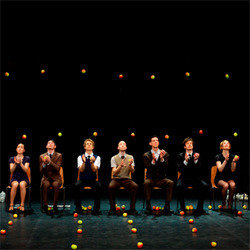
If you have any preconceived notions of what a juggling show ought to be, you should probably drop them here. Smashed is unlike any juggling show I would have expected. Indeed, it’s barely even a juggling show - although the skill displayed is second to none. The juggling is a springboard for these nine performers to explore the boundaries between patterns and disorder, composure and insanity, juggling, theatre and dance, using 80 apples and a lot of teacups.Sections of the performance were hilarious, but Smashed is not just a funny show. It pays homage to dancer and choreographer Pina Bausch; the opening sequence involves a line of performers in formal dress stepping in time to music hall song, flashing comic expressions at the audience. Less fun than this arch display of skill, but equally Bausch-inspired, are the sinister tones of the performers’ relations to one another, often explored through gender imbalances. The two women of the troupe attempt a simple juggling routine and are interrupted by gangs of men taking away their agency, forcing them to move without autonomy. Next, the women stuff apples in their mouths and lower themselves on all fours to crawl, gagged, before a line of men making frantic patterns with apples on their backs. The soundtrack is Stand By Your Man.Such serious stuff is punctuated by a mad hatter-esque tea theme. One performer delivers a maniacal monologue about English tea-time (this was supposed to be light-hearted, I am later told, though I found it terrifying). When the meaning of the production’s name finally comes clear, it is glorious to behold. The performers smash everything with reckless abandon: they even begin to eat their apples, chomping as they juggle, until the juice dribbles down their chin. The nasty elements are still there, though; we see them jeering at each other, humiliating and humiliated, willing one another to drop their apples, and then wilfully dropping things. Soon chaos reigns, and everything is smashed. Finally, among the rubble, the opening sequence is played out, and, gingerly, they start again from the beginning, deftly stepping around the debris on the floor and smiling sheepishly at the audience.There is never a quiet moment in this production. The mood is by turns sweet, funny and menacing; the juggling extraordinarily skilful. If you’re not prepared for it, it can get a bit incomprehensible at times (exploring misogyny through juggling? Who knew) but at no point is this performance anything other than thoroughly engaging.

Unknown • 3 Aug 2013 - 26 Aug 2013

The Project

I was not too surprised to read that The Project was specially created for the Edinburgh Fringe: it has that 'experimental' feel. A theatre company puts on a reality show which attempts to rehabilitate unknowing participants with conditions or traumas, and the show centres around their rehabilitation 'process'. In this show the participant is Amelia, a young woman whose lips have turned yellow due to an inability to process the grief of her father's death properly. The other actors are in competition with one another to 'win' by being the primary player in facilitating her recovery. We, the audience, are of course complicit in this ethically questionable process by watching and creating - they tell us - a higher viewer demand with every show.The Project is ambitious. It tries to challenge our conceptions about the nature and purpose of art and theatre and to make us think about our role as a participating audience in any work of art. ‘This is not a performance’, we are told. Later, ‘You are a part of this project’. It's thought-provoking stuff. Having said this, The Project's message does feel a little overdone. It's not that unusual for theatre to make its audience think about the purpose of theatre. We hear a long monologue about the words ‘I love you’ being a cliche, an attempt to live up to a romantic ideal. The idea that language prescribes thought isn't really revolutionary enough to warrant so long a speech, surely? However, the idea, if not the most original in conception, was very well-executed. This is an immaculately put-together piece of theatre. The actors are strong and there have been some excellent directorial decisions. The space has been used to its full potential; the performers sit in the audience, taking notes, addressing us directly, always keeping us aware of our active presence in the project, never letting us sink back into passivity. The use of physical theatre really adds: the actors applaud the confused and scared Amelia with blank faces, dancing around her, forcing us to think about the manipulation of vulnerable participants for our entertainment.This is an engaging and thoughtful piece and, amid the chaos of the Fringe, raises some pertinent questions about our motives for enjoying theatre at all. If you want to be challenged, to be made self-aware, and to watch a well-designed performance, you could do a lot worse than this.

Unknown • 2 Aug 2013 - 26 Aug 2013

Squish

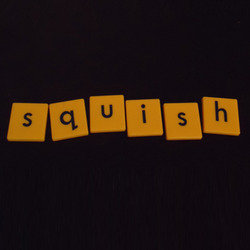
For thirty five minutes, dancer Tony Mills does not leave the confines of his squash court, drawn in red lines on the floor. His solo dance theatre piece – consisting of monologue and movement – explores the pressure to be successful, and, as we might expect, the disappointment and disillusionment that comes with striving to have it all.He begins by changing out of his sports clothes to the sound of motivational speeches. From his briefcase he pulls an alarm clock, a line of cut-out people, an apple and a heart shaped boiled sweet. These are the parts of his life he is looking after, juggling. The track gets stuck on the word ‘winning’ as Mills begins to dance.Squash is often associated with businessmen and professionals; the squash court symbolises the quest for success and the competitive instinct which is supposed to make us win at life. Mills dances with grace, charting a frantic attempt to play the game of winners as he bashes his head against a wall and chases an ever-elusive spotlight. “Oh come on!” he cries out as he fails, repeatedly, to remain in the light: when he does finally manage it he curls up on the floor, defeated by his own triumph.His sequences are peppered with visual puns, in a not-always successful attempt at comedy. The point that Mills is making is fairly predictable, and does not develop much further than the primary observations, but he carries it off with refreshingly innovative movement, athletic grace and a vibrant energy.Right til the end, Mills keeps smacking his head against a wall until, exhausted, he finally reopens his briefcase; the apple is rotten, the alarm clock rings incessantly, and the people are no longer holding hands. He has lost the game. A life in hot pursuit of success is not sustainable, we are told, in what turns out a thoughtful and energetic piece of dance theatre.

Unknown • 2 Aug 2013 - 17 Aug 2013

Baby Loves Disco

"I wuv you" murmured a girl on the dance floor as she collapsed into a boy's arms. Further discussion was halted as she proceeded to show the depth of her affection by chewing his nose. Meanwhile elsewhere on the dance floor an argument was about to break out between two dancers. Several patrons were enjoying the music while lying on their stomachs. Fortunately at this point club staff quickly stepped in- chewer and chewee were gently parted and returned to their respective parents and the argument was defused by finding an extra balloon. This is "Baby Loves Disco", a parent and child dance event being held in Electric Circus, one of Edinburgh’s thriving night clubs.To describe “Baby Loves Disco” merely as disco dancing would be to do it a disservice. There’s dancing aplenty on the main dance floor for those so inclined to boogie (or crawl) on down but within the other rooms of the club there’s a whole mini family festival. A particular highlight was the craft room where, led by Alison and Alex from Doodle Ducks, we decorated rather natty disco glasses using feathers and stickers. Leaders in all the activity rooms did a good job at involving children of different ages. For those who want to do their own thing there are rooms for dressing up, filled with costumes and elaborate wendy houses, a room with healthy snacks at child-height, and a dim room with cushions and stories for those who are partied out.Parents sick of the dulcet tones of Barney the infuriatingly smug dinosaur will be pleased to hear that the tunes spun by the DJ are kid- friendly adult songs. Indeed the playlist, with plenty of upbeat ABBA and Beyoncé, wouldn’t look out of place at a grown-up cheese night. The night club too has retained some vestiges of its normal life in the funky lighting, though parents should have no fears that their darlings might crawl into something untoward; the club is immaculately clean with thoughtful toddler-friendly touches such as potties available in the toilets.Parents need to be aware: this is no disco day care. There are large signs around explaining that parents need to stay with their children and that’s very much the ethos under which the whole thing is run; this is not entertainment for children to keep them out of their parents’ hair but rather entertainment which families can enjoy together. One particularly encouraging thing to see was the number of dads; several I spoke to said they felt a bit awkward at traditional more mummy-dominated parent and child events.Occasionally it would have been nice to see some of the “Baby Loves Disco” people perhaps start a game with the children in one of the play rooms but I think they were very much trying to give families some space. This is gratifyingly creative bonding fun for parents and young children. At this disco nobody puts baby in a corner.

Unknown • 2 Aug 2013 - 25 Aug 2013

Rob Carter: Murder (and other hobbies)

Much of Rob Carter’s chat centres on being awkward and posh. ‘I’m a bit of a bad-arse beneath the cashmere’, he said, speaking of the difficulties of growing up on the estate – his country estate – and running away from his parents’ house as a child to set up in the new annexe. The characterisation is very bland, so much so that it can be hard to laugh with him. The stand-up is punctuated by frequent songs. The first one begins with Carter’s love of murdering his childhood friends as a rainy-day pastime. This was funny; the gentleness of the music and Carter’s mild-mannered tones set an unexpected backdrop for casual murder. After this, though, the songs began to feel more and more tired. The lyrics were funny, but the persona – an awkward young middle-class man attempting to be smooth with ill-fitting prose lyrics, bad metaphors, and underwhelming attempts at romance – has been done before, most notably by New Zealand duo Flight of the Conchords. The audience interactions are a bit awkward and not in the same amusing way as the awkward lyrics. Carter never really gets us on side – he’s a bit too good at the spoilt-posh-boy act – and when he (very mildly) put down a member of the audience, he immediately apologised with a ‘no, not really, I’m just joking’. The show ends with Carter prancing around in a tight cat costume, singing the lyrics ‘I’m pretending to be a cat, I’m just pretending/ I’m not actually a cat’ to a tune from Cats. (‘This is what it’s like if you follow your dreams!’ he cries, in yet another reference to his own life). This move falls a bit flat – he’s asking us to feel sorry for him after an hour of jokes revolving around sitting in his parents’ flat in London doing nothing much. I want to like him, but his style just doesn’t quite allow for it – rather, he comes across as a bit self-indulgent. Basically, Carter’s material isn’t bad, and his song lyrics are in places funny. However, his stage presence leaves something to be desired and the awkward-posh-man trope just doesn’t feel fresh. It all feels a little two dimensional: maybe he just needs to be a little bit nastier.

Unknown • 1 Aug 2013 - 25 Aug 2013

Knee Deep

Australian acrobatic quartet Casus start their performance as they mean to go on: with an unshowy display of brilliance. Emma Sarjeant walks on stage, quietly places three cartons of eggs on the floor and walks along them with perfect precision. She is joined by her three teammates and what follows is a remarkable and fascinating acrobatic display. These four performers push human strength and physical versatility to the utmost, not hiding their fragility, always keeping us aware that at any moment one of them could falter.The theme of the show is eggs and like the eggs they use as props these bodies are fragile, easily broken with just one slip. Over the eerie music and through the lights we can hear breath thumping and see muscles straining; from the top of a swaying human tower an egg is dropped and it splats, hard, into a bowl. The tension is spellbinding, but it is interlaced with a gentle and innocent humour too.The show is an hour of electrifying intensity and astonishing acrobatics. Set in the round, on a small, sparse stage, there is no smoke and mirrors, no masking the sheer human effort involved here; these are four people stretching their bodies and testing their relationships to the utmost. The performers’ interactions are totally compelling – their sequences seem to tell stories, and they push one another into position with total trust. The bond these four share binds the show with humanity and care, each individual interaction conveying trust and humour.Knee Deep is an extraordinarily human display of ability and fragility. The acrobatic skill alone should be enough to draw a crowd – some sequences are quite literally breathtaking – but these four have something that runs far deeper than physical aptitude, and it is totally mesmerising.

Unknown • 1 Aug 2013 - 26 Aug 2013

The Bitches' Box

New Zealand comic actors Emma Newborn and Amelia Guild have brought to the Fringe a show about life on a Kiwi farm, as told through the eyes of its resident dogs. We meet a pair of Jack Russell bitches in heat; a gangsta housedog (or housedawg) and a retired old military Labrador. They tell anecdotes, converse and scratch around in a convincingly doggy fashion; it is unsurprising, then, that most of the humour centres on sex, bottoms and other animalistic gags.The pompous old Lab, Montgomery-Smith, is the funniest character by far. Emma Newborn drools what could literally be buckets of spit onto the floor, eclipsing the contents of her speech with her contorted face. To begin with, all of the other characters have us howling with laughter, but it must be said that after the first quarter of the show the novelty wears off; jokes that centre on the dirty sexuality of the bitches and the yappy horniness of the terriers get a bit ruff, like any humour based on shock factor is bound to. Fenton, the rapping housedog, was never funny to begin with; the trope of the un-cool gangsta is long overdone. There wasn’t that much of a narrative, and sometimes the script seemed to get a bit lost; it was hard to sniff out the purpose of an emotional monologue from the old bitch Red about a dog she slept with who was shot.It wasn’t un-funny – at points it was pawsitively hilarious – but the jokes didn’t go much farther than the dirty, doggy toilet humour which is most obvious for canine subjects, and since there wasn’t much plot, by the end it all got a bit tired.Both actors do a great job of imitating their subjects, creating believable characters for the different dogs: even though not always great, they are a likeable pair. This show may not be the dog’s bollocks, but it is a tail-wagging fifty minutes of doggy-style fun.

Unknown • 1 Aug 2013 - 23 Aug 2013

Gagging for Attention

There are various ways you can sell your comedy show in the Fringe programme. You can list your appearances on BBC Three or quote past reviews. Or, as the DMU Footlights have done, you can point out that the price of a ticket for your show (£3) is less than the cost of a pint.This is an unpretentious little show. Four student comedians plus a compere each perform a stand-up routine of about ten minutes. There’s a broad linking theme of social awkwardness but each comedian seems pretty free to go off in their own direction. This could be a recipe for flabbiness but beneath a slightly bumbling surface there is a surprisingly tight and funny show.Much of the credit for that must go to the compere, Matt Holmes. With a nice line in self-deprecating humour he radiated amiability. He was quick on his feet too, bantering with two New Zealanders in the audience. Although he described himself as looking like Hugh Grant after a stroke, his strong audience rapport and light intelligent wit put me in mind of a young Dara O’Briain.The comedy here isn’t pushing any boundaries. A lot of easy and slightly hackneyed subjects were covered by the comedians: racists on Facebook, the creepiness of the Build-A-Bear Workshops, sexual health at university. In one of the weaker sets a joke about not being gay was uncomfortably long. In the main though the comedians poked fun with a light touch and the audience very much on their side. This is the sort of show to which you could bring a broad-minded grandmother. True, there’s the odd masturbation joke but, as Ben Hustwayte ably demonstrated in a brilliant routine about working as a bin man, this is friendly comedy.Holmes urged the audience to tell their friends about the show because “tomorrow it might be really good”. He does the show down; it’s really good today. The lineup changes every day but if the future comedians keep to the same standards then this is a show to see, and for less than the cost of a pint.

Unknown • 1 Aug 2013 - 25 Aug 2013

Julien Cottereau: Imagine Toi

Julien Cottereau wins over his audience within seconds. Childlike and immediately likeable, he arrives on stage in flares and a silly hat, sweeping the floor with an imaginary broom. He follows with a captivating mime act, in which he cleans the stage and has a small fight with some chewing gum. Within ten minutes it’s easy to forget that he is miming, and you can fully believe that he is stretching a piece of gum into a skipping rope, or having a scuffle with a barking dog. The sound effects are flawless: the clown's comic facial expressions barely flicker under the strain of enormous explosions. It’s hard to believe that these noises are coming from his mouth and not a sound-system.Cottereau’s manner is nothing short of enchanting, like an extra-loveable Mr. Bean. The children in the audience are absolutely thrilled, so swept up in it that they begin talking out loud. “Did he mean to do that?”, the child behind me asks a parent as Cottereau drops the imaginary ball he is kicking. Another child is brought up on stage to kick around a make-believe football, and his excitement at being up there is infectious; the audience mood is gleeful among adults and children alike.There is more audience participation, but it all involves grown-ups; a good move, but very slightly less lovely than the one with the child. There is a touching love story as Cottereau attempts to charm a young woman from the audience, taking her out dancing and looking bashful as he attempts to kiss her; the task of shooting a sick dog is given to another audience member, who is sent away in disgrace after her callous action. There is a bigger storyline involving two adult audience members, which goes on perhaps a little long, but which is still largely entertaining. Even the scary bits are charming. The best part comes when Cottereau, after a nightmarish scene trying to escape sinuous, hissing creatures, decides he has had enough, gives an audience member his hat, pushes him on stage, and sits down in his seat. He then directs him in his very own sweeping act, to everyone’s amusement.Cottereau plays like a delightful child, immersing his audience entirely in his world of joyful imagination. I have rarely ever been so thoroughly delighted by a show. If you want to see something that will leave you with an enormous smile on your face and laughter in your heart – in fact, I have a grin on my face just writing this review – Julien Cottereau is the one for you.

Unknown • 1 Aug 2013 - 26 Aug 2013

Interrupted

This is the Edinburgh debut for Anglo-Spanish physical theatre company Teatro en Vilo, and they have made their arrival with panache. Interrupted, a devised physical theatre piece, traces the mental breakdown of a successful businesswoman with a stressful lifestyle. The storyline is well-paced, and the protagonist’s gradual loss of control totally believable. The cast works well together, moving themselves and the set with a relentless rhythm which reflects the unstoppable march of our protagonist’s mental disarray.The use of physical theatre itself is not always innovative – people have pretended to be cars before – but it is, nevertheless, dependable and effective. As our protagonist loses her grip on reality, hands appear from nowhere to move inanimate objects before her eyes; here, the physical theatre takes us inside her head as she slowly unravels.The highlight of the piece are the caricatures, which are frequent and creative. Noemi Rodriguez Fernandez’s comic acting is particularly excellent as the eccentric Raphael, a cleaner and a waitress by turns. The office setting, done so many times before, is fresh and funny, and though it uses stock office characters there is no sense of cliché. The comedy by no means distracts from the dark elements of the plot, either; the distress of our heroine (Andrea Jimenez Garcia) as she begins to realise she is losing control of her life is very convincing, and the charting of her breakdown makes for totally gripping viewing.After the descent into madness, the climactic ending is strangely peaceful, if perhaps a bit of a cop out. Had it not been given so neat an ending, this witty and well-paced look at mental illness might have bordered on the heartwrenching. As it is, we are left with the impression of a slick and intelligent production and a capable cast.. This production is not groundbreaking, but it is thoroughly entertaining.

Unknown • 1 Aug 2013 - 26 Aug 2013

Exposed

Exposed is one of the slickest productions I have seen. Bursting with energy and hard to categorise - it’s what the Fringe is all about. The choreography is fast, changing and innovative, and video and sound combine with physical theatre and testimonials to create an energy which is electric, almost manic. It is not, however, the easiest to enjoy. The company are not afraid to challenge their audience. They force us to think about the impulses we stifle and to consider the consequences of relinquishing that control. At one point we are given two minutes to do whatever we want to the actors - two audience members take this opportunity to push cans into the actors’ hands whilst another ties their shoelaces together. Not much else happens, we’re a bit of an inhibited bunch it seems, but you can see how far it could go.The subject matter is fragmented, touching on the phenomenon of clubs - where people lose control in a designated space and inside a four-hour slot - and on the reckless rush of impulse buying. This is a show which makes you think and dazzles the senses, but sometimes is a little over-manic. It would be improved if the actors could relax a little more into the rhythm of the production.Although it is intense it does attempts comedy at times, to varying degrees of success. Most effective were the autobiographies: there is a woman who wants to smother her baby to stop the crying, a policeman who has the urge to batter criminals, and a nurse who only stops herself from hitting her colleagues because of the fear of losing her job.Through all its exploration of societal controls on impulsive behaviour Exposed focuses on the violent and the extreme; we see very few of the innocent, joyful urges which are suppressed, but it works. For a while the end point isn’t entirely clear, are we being encouraged to release our urges more often? “I have to put all my personal feelings in a sealed jar and do what I’m told” rages the violent policeman. So many of the impulses presented in this production are dangerous, how should we know when to suppress them and when to release them? However, the Impulse Collective aren’t here to tell us the answer to that, they are just posing the question.

Unknown • 1 Aug 2013 - 26 Aug 2013

Glenn Wool: This Road Has Tolls

Glenn Wool’s show opens with a rock video of moshing puppets. The song’s lyrics run ‘now you’re messing with a son of a bitch’ and Wool’s hairy head bobs up and down on screen. My heart sinks. Wool is known to be a pretty funny comedian. What’s happened?However, as soon as he strides on stage, looking for all the world like Hagrid’s rock’n’roll brother, there is no time for dismay. He immediately begins to abuse the audience. ‘If you didn’t find that video funny, what the fuck is wrong with you!?’ he starts and we’re all in hysterics.Wool has an easy rapport with his audience. His voice booms like an apocalyptic preacher and his face beams as though we’re all his favourite disciples. How much he has us in his grip becomes apparent when no one raises their hand to admit they were beaten as a child. He responds with elaborate insults, an aggressive stance and a twinkle in his eye. We love it.The show winds up from the general to the personal. Wool, a Canadian living in the UK, gives an outsider’s perspective on the royal baby, Margaret Thatcher’s death (‘I thought she was IN Iron Maiden’), Operation Yewtree, and the horsemeat scandal. Throughout this he takes frequent steps back to deconstruct the comedic process and to show some awareness of the political ramifications of what he’s saying, making his dodgy jokes that bit more acceptable – such as an improper use of the letter Q making you ‘Qatarded’.We really get going when we hit the anecdotes, which are consistently entertaining. Taking a plane with a slipped disc, staying in a hotel with unexpectedly low prices, delivering stand-up to a room full of Jewish pensioners: each story delivered with high theatricality, an entertaining scorn for stupidity, excellent timing, and a good dose of self-mockery.The show’s title doesn’t feature that much, apart from in the declaration that airports are his hometown, but it doesn’t matter. The material is a little disparate, but, strangely enough, this is what brings the show together. As Wool admits himself, there isn’t anything to round this show off perfectly; so he falls back on puns and ties it all together with a return to Tie-land.

Unknown • 31 Jul 2013 - 26 Aug 2013

Barry Castagnola: The Donny Donkins 'As (hopefully soon to be) Seen On TV' Show

Barry Castagnola has summed up all of the most depressing things about Fringe comedy with his newest character. Donny Donkins is a failing comic with no talent and delusional aspirations. He has spent money he doesn’t have to come to Edinburgh to showcase an ability he doesn’t have and he is desperate for approval. This entire show is dependent on its context; it surely couldn’t work outside the Festival. Donkins talks naively of his ‘five year plan’ to make it big and calls his inane jokes ‘edgy’.At first, it is very funny. This is astute satire and Castagnola pulls off his bumbling persona very well. But after a while, as Donkins looks hopefully and then miserably, at his cue cards, the hilarity of his badness begins to fade. There is only so long you can watch someone pretending to be terrible and desperate before you stop finding it funny and start feeling terrible and desperate yourself. Within fifteen minutes the comments about losing the audience begin. About forty minutes in, Donkins’ desperation descends into hysteria. ‘Please be nice to me,’ he sobs, ‘there’s a reviewer in tonight and I’ve borrowed so much money to be here.’ The laughs are sparse.The problem with this show is that the character is a fantastic concept for about ten minutes. After this, the misery is infectious. The running joke of Donkins having just found out that his dad isn’t his real dad became actively upsetting. The real low point happened when an audience member had to guess how many tries it would take Donkins to find a card in a pre-recorded magic trick. In the video, our magician walks into a letting agency, asks the agent at the desk to think of a card, and begins to pull cards off the deck one by one, every time asking if this was the right card. It takes him forty eight cards to find the right card. After half an hour of similar gags, this wasn’t even awkward any more. It was downright boring.Donny Donkins is a great spoof on the Fringe comedy scene and the show contains good variation between cringe-worthy stand-up, terrible character acts, songs, video clips and two interviews (which really were funny). The problem is that it gets tiring quickly and when there really are so many depressing and desperate comics to see in Edinburgh, even an ironic one can only be borne for so long.

Unknown • 31 Jul 2013 - 25 Aug 2013

Poopiedoopiedoop

Poopiedoopiedoop began on a highly optimistic note. On entry to the Wee Room, Wilford Crabble and Christine Dixon, our performance duo, greeted us with stickers, bubbles and bags of enthusiasm. The children were already excited, and the adults couldn’t really help a giggle either. We were off to a scrumptiously silly start.The show begins - and ends - and fills its middle with - fart humour. King Poopalot is the smelly ruler of the land, and his piggy companion is Mr Ploppy. When Mr Ploppy gets kidnapped by the evil Ginger Ninja, we are led on an adventure across sea and jungle to win him back. The show has all the components of a great children’s story. A courageous crew are selected from among the audience to help the adventuring Pirate Captain across the seven seas; more little explorers are brought up to hike and hack their way through the Monkey Jungle Kingdom; the friendly Skinny Ninja trains some youngsters in martial arts, and finally, as the evil Ginger Ninja's trousers fall down, everyone gets to pelt him with coloured plastic balls. Young children cannot fail to be stimulated, and most of them were exuberant (though two, in all the excitement, were reduced to tears). But I'm afraid to say the same could not be said for the adults. This is not an intrepid adventure tale. Crabble and Dixon describe what they do as 'hilariously silly', and 'fun for kids and parents alike'. Silly it is. But it isn't captivating, or particularly hilarious, and it does not make an effort to stay in character or suspend the disbelief of any but the youngest of children. Watching King Poopalot stride around on stage, the main thing that came to mind was my dad in a makeshift cape pretending to be a magician at my sixth birthday party. These two felt much more like children's party entertainers than theatre performers.Poopiedoopiedoop takes every separate element of a good children's show and mashes them all together, but doesn’t provide much of a narrative: the purpose seems to be to assault children's senses with all the stimulating stuff possible until they're forced to have fun. Some of it is even a bit lazy; the random national stereotyping, for one, and the voiceover telling the story without much expression. The accents seem pointless: why is the castle guard African American? Why do the pirates sound Irish? What's up with Skinny Ninja's bad Japanese accent and missing definite articles? Having said that, it does work for the kids. Most of them are absolutely enthralled: they fall to heckling the performers, and even suggesting alternative endings to the story. "He's locked in the dungeon!" one child keeps insisting, "You need a spade!" Dixon quickly buys a spade. "This is not a choose-your-own tale, but okay. Hello Mr Shopkeeper, may I have a spade?". The performers make every effort to involve their young audience in any way possible. Their enthusiasm and energy cannot be faulted: it's just a pity that they didn't try to engage with their own narrative as much they did with small children.Poopiedoopiedoop did, in part, live up to its blurb: it is 'hilariously silly', but only for four year olds. It just seems a bit of a shame that it has such limited appeal. If you'd like to take your small children there, they will probably have a fun time (if they aren't crying). But you will be bored to death. Unless you really, really love fart jokes.

Unknown • 31 Jul 2013 - 25 Aug 2013

Chris Henry: We Need to Talk!

Chris Henry would be the first person to admit that the words “we need to talk” do not inspire confidence. In fact, if Henry’s experience if anything to go by, the moment the last syllable of the phrase is uttered you should kiss your loved ones goodbye and dash to the nearest nuclear bunker taking only a lifetime supply of milk chocolate. In Henry’s life “we need to talk” has variously preceded being dumped, becoming bankrupt and falling out with his father. Rather than wallowing in self-pity, however, Henry has picked himself up for his first Edinburgh full-run solo show and set about exposing to his audiences the sheer evil of that seemingly innocuous phrase.Set in the atmospheric, if slightly stuffy, setting of The Free Sister’s yurt, Henry’s routine is an enjoyably schadenfreude-filled romp through his life. He is very much in command of the material with various “we need to talk” moments providing a nice shape to the routine. Particularly fun was his breakneck trot through his failed love life. He was quick on his feet bantering with the audience even if much of the impromptu material was a little old: the Greeks have no money and the French always surrender- who knew? There were no moments of hysteria although a multi-cultural afterlife mash up was inspired. In the main though this is the sort of comedy which chugs along contentedly.Derailing this was some off-colour material. Call me a bra-burning, knitted-yoghurt-wearing feminist – no, honestly do, I’d be quite flattered- but I don’t find Rohypnol jokes funny. Add to this a Joseph Fritzl joke and a bad taste comparison of a girlfriend and used car and it left a bitter taste in the mouth. As Henry said at the end of the show “It’s good to talk” and in the main it’s good to listen to an hour of well-crafted highly professional comedy. There’s just the odd subject where maybe it isn’t quite so good to joke.

Unknown • 1 Jan 1970

I Heart Hamas: And Other Things I'm Afraid to Tell You

It will come as no surprise that this is a controversial play. Surely not since Ravenhill’s Shopping and F***ing has there been a play title that will so instantly polarise. Jennifer Jajeh, writer and performer, is clearly aware of the controversy she’s courting with; I Heart Hamas: And Other Things I’m Afraid to Tell You is the first play I’ve ever attended where a voiceover at the beginning of the play asked audience members not to engage the performer in unsolicited political discussion after the show. True, like much of the show, this is done in a light, jokey way, but scratch the surface and there are deep, contested issues at play.Jajeh isn’t sure quite who she is. She’s a Christian Palestinian- American, she knows that much, although she’s more often mistaken as Hispanic. Long experience has taught her that mentioning she’s Palestinian is generally a risky move in America; people either smile nervously or else engage her in political discussion. So, part of the long tradition of those dealing with the emotional baggage of being part of a diaspora, she returns to her parent’s birthplace of Ramallah in Palestine.In this one-woman show Jajeh makes the brave decision to play all of the twenty or so characters she meets on her way, from the kids selling gum at the side of the road to the Palestinian woman from a previous audience who just couldn’t believe that she was happy being single. This could have been cringe-worthy, but Jajeh plays each character with such a clarity and focus that it becomes a triumph.She plays herself very much as an innocent abroad, and at times a rather petulant one, whose main interest at the start of the Second Intifada is whether it will stop her popping over to Jerusalem for late night parties. Her wide-eyed naivety makes her an effective guide to a complex political situation, but I wondered to what extent it truly reflected her character. Beneath the apparent guilelessness of this show sizzles an urgent, burning political piece of new writing. Helped by some highly effective sound design the tension is slowly cranked up as her encounters with Israeli forces become increasingly dangerous.The play is encumbered by some unnecessary and distracting dramatic devices: the whole conceit of having Jajeh answer questions telepathically transmitted to her by the audience was out of place in a play that was otherwise so full of truth. Similarly, a pretend jokey chat with her technicians when they supposedly couldn’t find a map with Palestine on it felt laboured.The title is no mere hyperbole; as Jajeh admits at the end of the show ‘Do I hate all Israelis? At times, yes’. Some people will find this so offensive that they will want to stay away. For the rest, see it. This is the best kind of political theatre: it seduces you with vivid characters and leaves you walking out of the theatre - at least for that moment - convinced by the inescapable logic of the message.

Unknown • 1 Jan 1970

Leather

Start a play with the dulcet tones of Jeremy Kyle castigating some hapless father and you’re making a statement: this play will be unlike the home life of our dear Queen. In case you were in any doubt, there’s a large pile of drug paraphernalia in the corner and a stolen red leather sofa in the middle of the stage..This sofa turns out to be considerably more trouble than it’s worth. One of a consignment taken in a lorry heist by small-time criminals Gaius and Timmo; as word gets round the criminal underworld, so Gaius and friends find themselves in considerable difficulty. The owner of the sofas, aided by his henchman, is remarkably keen to recover them and willing to engage in extreme violence to get what he wants.In the main the play seemed to be aiming for a gritty realism. At times though this was drowned out by noise both literal- unnecessary loud music and flashing red lights punctuated every scene change, seriously breaking the flow at the beginning- and metaphorical. Why for instance did some scenes have members of the cast standing around mute with tights over their heads? It just served to clutter and confuse..Martyn Horner-Glister’s Boss, the ruler of this criminal underworld, crackled with intelligent menace. In the final scene, where he leant over Gaius and crooned “Daddy knows”, he was both repulsive and strangely compelling. Fantastic stuff. Among other cast members though there was an awkward division between naturalistic acting and a heightened, exaggerated style. Tension, which should have slowly ratcheted up, instead peaked and fell too rapidly..This is a work of new writing by Dean Graham, a young writer who is definitely one to watch. At its best plumbing the very blackest of humour in a brilliant scene with Danny Ridleigh as a vet with a decidedly whimsical response to being threatened with a gun, ‘Leather’ ultimately straddles realism and black comedy uneasily.

Unknown • 1 Jan 1970

In a Handbag, Darkly

There are some plays where one longs to discover what happened after the final curtain fell and others where things seem quite satisfactorily resolved. I had always placed “The Importance of Being Earnest” in the latter category. It is testament then to the brilliance of “In a Handbag, Darkly”, a farcical sequel presented by Broken Holmes Productions, that I will never again look at “The Importance of Being Earnest” without feeling there is something slightly missing.The plot, as one would hope, is absolutely ludicrous. It begins on the same evening as “The Importance of Being Earnest” ends, with both Algernon (Robin Johnson) and Jack (Toby Bradford) discussing with their respective butlers quite why the last line of “The Importance of Being Earnest” is funny. As an audience it is clear at once that we are in the hands of a master; the author, Robin Johnson, far from falling into the trap of slavish copying of Wilde, has instead engaged in a loving but acute dissection of Wildean language and plotting. A sly reference to The Picture of Dorian Gray provoked howls of laughter from the audience.Will Naameh plays both men’s butlers –at the same time- in a comic tour de force. It turns out that butlers are surprisingly useful, not only able to hide dead bodies but also ‘in emergencies, create them.’ Thus it is but a step for both Algernon and Jack to resolve, independently, to kill the other that night at Victoria Station cloakroom. And dear reader, it will hopefully not surprise you to know that it just so happens that Miss Prism, her conscience pricked by the day’s events, recalls that there was a second handbag also left in the same railway cloakroom. It should come as no further surprise that pretty much the entire cast of “The Importance of Being Earnest” also, for one reason or another, find themselves in the railway cloakroom. Cue every trope of farce you can imagine and the introduction of a (speaking) character Wilde unaccountably left out: the second handbag.In the hands of a lesser playwright and cast this could all have become embarrassingly hammy. This however is the leanest type of comedy, without an inch of flab or filler; every line is either a punchline or else building to an explosion of verbal fireworks. There can be no higher praise for the cast than that every one of them does the script absolute justice. From the hilarious scene changing to the precision with which every head pivots as yet another person arrives at the cloakroom, this is first class stuff.Though the programme described the play as “an impertinent epilogue” it seems the company undersell themselves. This is the sort of witty, erudite, thoughtful comedy which I think Wilde would have very much enjoyed.

Unknown • 1 Jan 1970

Am I Good Friend?

Deep in the cellars of the Café Voltaire a science experiment is taking place. Yve Blake wants to know what makes a good friend and with the aid of video projection, props and audience participation she embarks on ‘a pie chart filled adventure full of surprises’. Am I Good Friend? - I’m not sure what happened to the ‘A’ in the title; I think it may have hopped out with excitement- is a semi-autobiographical show by Blake, a performance artist from Australia.If you're the sort of person who considers any time before 5pm during the Fringe to be best spent in a darkened room nursing a monumental hangover than Blake’s brand of lunchtime bubblegum-pink fun will not be for you. There is, however, something refreshing in her sheer naked enthusiasm. Ever since her friend Martha made the mistake in Year Five of naming Ginger Spice as her favourite Spice Girl, Blake has worried about whether she too is secretly a bad friend. Quickly devising an eight-point checklist of what makes a good friend - good friends are inter alia sympathetic, good listeners and give good presents - she bounces about the stage running through her checklist and co-opting members of the audience to test her on her ‘good-friendability’. Also helping her through her checklist is the clever use of video projection, with sketchy cartoon characters acting out moments from her life and video interviews with her friends and family.The routine lags in the middle as Blake goes through her checklist and there are moments when the audience laughs dry up. This is very much a show where the laughs are caused by the sheer exuberance of Blake’s character rather than any jokes she tells. At times the craziness may start to grate; a running gag about finding the “chicken of mystery” in order to discover the true meaning of being a friend lost me in its zaniness.Towards the end there was a surprisingly poignant moment as Blake remembered a depressed friend she’d fallen out of contact with. The truth, as Blake ultimately learns, is that no one is a perfect friend. It’s unfortunate that she doesn’t end here but instead tacks on another audience participation section about the chicken of mystery.Am I Good Friend? is a marshmallow of a show: great fun in the moment, leaving no bitter aftertaste but not something you’ll likely remember two hours afterwards. Still, anyone who can get an entire audience to give a rafters-raising cheer every time they hear the word data must be doing something right.

Unknown • 1 Jan 1970

Porphyria

Sometimes your dreams coming true can be the very worst thing that could happen to you. Never have mother’s words to be careful what you wish for been more apt that in C.J. Wilmann’s haunting new play, performed by Nottingham University’s New Theatre.Reginald Blake (Nick Jeffrey) is a bored man in a humdrum marriage. His relationship with his unnamed wife (Liz Stevens) comes with every sit-com cliché in the scriptwriter’s book: she nags him to take out the rubbish, he puts it in the wrong bin; she gives him the choice of what to have for supper, by the time he’s decided she’s started cooking the other thing. They play Scrabble and can’t agree if “seldomly” is a word. Blake’s one consolation is the fantasy woman who fills his dreams. One day he awakes to find that his fantasy woman (Genevieve Cunnell) has stepped out of his dreams and is now his son’s au pair.So far the plot seems firmly situated in Saturday night sit-com territory. With the appearance of the au pair, however, things take a much darker turn as Reginald starts to discover the price that attaining the dream woman will have on his marriage and his sanity. This is brave, dark stuff, for the most part handled well by Wilmann. The difficulty lies in the transition from comedy to psychological thriller; the change is simply too sudden, which throws the pace of the play. Wilmann adapted Porphyria from a longer play he had written and it shows. It's a great shame, because the later thriller scenes are genuinely disorientating and creepy, if a little too heavy on dramatic devices. The very final scene provides an unsatisfactory conclusion that feels tacked on.Reginald Jeffrey gives a thoughtful performance as a cheerful everyman whose decline is all the more frightening. In the early comedic scenes he does have the unfortunate, occasional tendency towards exaggerated face-pulling. The two women both have to contend with parts that are thin and flat in comparison to Reginald; both imbue them with considerable vigour. Stevens makes the interesting decision to play the wife as a passive aggressive ice maiden, an unsympathetic portrayal that swings the audience’s allegiance very much towards Reginald.This is a play which, like a dream, promises much and comes tantalisingly close to delivering. The cast give nuanced performances, there is some clever writing, and the Rubiks-cube-like set is a treat. Ultimately though, it ends in a bit of a disappointment.

Unknown • 1 Jan 1970

Monski Mouse's Baby Disco Dance Hall

I have faint memories of being taken to a children’s dance and movement class when I was about two. My overriding recollection is of a strong smell of indeterminate soup- the venue was the local church hall- and of a playlist which consisted of “Row, row, row your boat” and “Wind the bobbin up” played at a funereal pace and deafening volume.How times have changed. Monski Mouse’s Baby Disco Dance Hall represents the new face of parent and child dance events complete with tunes you can actually dance to and some join-in gestures more exciting than winding up obsolete pieces of mill machinery. Monski Mouse herself – dressed in a perfect 1950s polka dot dress and with two buns on her head like mouse ears- is the DJ, spinning a mixture of adult dance favourites and up-tempo children’s songs. Parents still feeling a little delicate at that time on a weekend morning need have no fear that they will be forced into frenetic dancing; equally if your little one is seized with the urge to really shake his or her stuff then that’s welcome too.Things have advanced from the draughty church hall too. This baby disco is held in Assembly’s Elegance, a glittery circus type tent which captivated many of the children. There’s just the right sort of space for dancing but with mirrored booths around the outside for those wanting to sit the dance out. Thought had been given to the youngest non-dancers, with a cushion area for those who preferred to enjoy the music while lying on their backs. One couldn’t have asked for a better venue.Given the short length of the disco- only forty minutes- it’s a pity that there weren’t more opportunities for children to interact with Mouse and her two dancing helpers, Casey and Laurie. For most of the dances Mouse gave some suggestions for actions but her helpers who mingled with the dancers were curiously quiet and passive. At times the atmosphere fell a little flat, as parents and children waited for encouragement that they were doing the right sort of thing. Songs such as “Locomotion” where a definite action was suggested were noticeably more upbeat and tempted even the most shattered parents to join in.The atmosphere lit up at the end when Mouse set down her DJ’s headphones and joined the children on the dance floor. She has a winning smile and a look as close to a human Minnie Mouse as is possible without Disney’s lawyers hunting her down; it’s no surprise that she was a hit with the children. This quirky event was clearly a hit with parents too, who were reveling in a hip and modern experience with not a boat or bobbin to be heard.

Unknown • 1 Jan 1970

A Dirty Martini

Daarrling you simply must see A Dirty Martini. It’s a play about the Bright Young Things put on by some vair brainy people at Trailblaze Theatre Co from Brighton. They devised it too, can you imagine, based on the work of that nice Evelyn Waugh. And the best part is - and this is simply spiffing - the audience get to decide what happens. No honestly, every now and again they stop and Mr Waugh (he’s played by the rather delightful Jonathan Craze) comes on stage and gives the audience a choice about what they want to happen to the characters next. Imagine! And they do it awfully well too (I’ll stop now).The plot, about a young ingénue introduced to the high life only to eclipse her introducers, can hardly be described as original. No matter, what distinguishes this play is the zest and precision of its cast. Interactivity in theatre has rarely been managed as sharply as here: flags were placed on the tables around which the audience sat and used at the requisite moments to cast a vote. An interactive horse racing scene was superb. The meta nature of the piece, with Waugh as the writer commenting upon the foibles of his Bright Young Thing characters, was cleverly thought through and did well to capture the sardonic nature of Waugh’s prose.Each of the Bright Young Things was a treat, even if the cut-glass accents wavered at times. Charlotte Blandford was superb as the gloriously acidic Elizabeth, a social butterfly ‘renowned for giving no good advice whatsoever’.Within the ensemble there was a responsiveness to each other that was a joy to watch and that came into the fore when responding to the audience choices. Some of the dancing could have been sharper – though the Charleston is a notoriously difficult dance to get right - but with sheer vim they carried it off. Gwen, the ingénue, was played with an innocent charm by Rosanna Elliott.I was having a whale of a time until the last five minutes. The ending, which popped out of nowhere, suddenly struck a darker tone. Waugh, true, was known for his dark commentary, but it was undershot by a wry wit. This ending was violent and humourless and the writer’s commentary upon it rather trite and preachy; it felt as though Edward Bond and a vicar had stumbled into the party by accident. Due to the interactive nature of the piece I can’t be sure that this ending is repeated every performance - I very much hope it’s not.You understand daarrling: the play’s an absolute hoot until the end and then everything becomes vair dull.

Unknown • 1 Jan 1970

Lady M

This is Macbeth as you’ve never seen it before, through the eyes of Lady Macbeth’s surprisingly up-beat lady-in-waiting (de Bruijn). Reduced to a single scene by Shakespeare, she is very welcoming towards the audiences who have come to hear her side of the story. This is a woman who, as the play Macbeth starts, is battling chickens in a coop. As Macbeth and Banquo walk on the heath, she is sorting through pigs’ ears in a barrel. Unconcerned by political machinations, her principal interest in the arrival of Duncan is what to cook. In the wrong place at the wrong time however, her story slowly intertwines with that of her mistress. By the end, with an impressive coup de théâtre, the lady-in-waiting’s importance is all too obvious.It is easy for reinterpretations of classics from another angle to veer into GCSE creative writing territory, a trap which Lady M avoided. Although, as she wryly remarked, character development is normally the privilege of principal characters, the lady-in-waiting was a nuanced character. This characterisation was helped by de Bruijn’s strong physicality and inventive use of props, transforming a white wooden chest by turns into a chicken coop, bed and dining table.Comparisons with other bit-part-from-Shakespeare plays are inevitable. The script, by de Bruijn, Radna Diels and Annechien Koerselman, lacks the depth and wit of Stoppard’s Rosencrantz and Guildenstern Are Dead, yet it has subtleties of its own. Within the lady-in-waiting’s plea for recognition there was an underlying question about the relegation of domestic, and particularly women’s, work to the margins of theatre.

Unknown • 1 Jan 1970

Comedian Dies in the Middle of Joke

Clues that Comedian Dies In The Middle of Joke would not be a typical show appeared early. I was led to a stool clustered round one of many small tables by Ross Sutherland, writer and performer, and there found a peroxide wig and an enigmatic instruction to put the wig on and be prepared to interject at a given point.The set-up of the play needs some explanation, if only so future audiences can avoid the confusion experienced when I was there. The year is 1983 and the scene is the Crack-Me-Up Comedy Lounge in a reconstruction of the moments before the murder of Joe ‘Pops’ Pooley. There are seven near-identical reconstructions in total and between each one the audience moves round the room from table to table. At each place on the table there is a menu card with character details and instructions for interactions; one person from each table also has the opportunity to play Pops himself, reading from an autocue. Essentially imagine a cross between a team-building murder mystery weekend and an improv show, and you’ve pretty much got Comedian Dies. Explaining all this takes an uncomfortably long ten minutes at the start of the show.How enjoyable the remaining 50 minutes are depends largely on the acting skills of your fellow audience members. This is of course the curse of interactive theatre: if you’re fortunate enough to see the play with a bunch of people who can follow what's going on and play their part with gusto then it’s very entertaining, if not then by the end of the show you may be wishing you were the unfortunate Pops. At the Edinburgh Fringe, where you’re never more than five feet from a thesp, you’ve got a good chance of finding yourself with the former. Even so there were moments when the play stalled as those playing the comedian struggled to follow the autocue.The play’s pace suffered from the repetition caused by the seven reconstructions. Although the ending of each was slightly different, as we moved closer to the point of death, too much of the play was Pop’s script repeated over and over. The script was deliberately cringe-worthy recalling a sort of lacklustre Bernard Manning and, although that was amusing at first, by the fifth or so retelling it began to grate. There was a lack of narrative urgency and the end, when reached, was more of a whimper than a bang.Whether or not you enjoy this depends largely on your attitude towards interactive theatre. This is not a show for wall-flowers, nor for those who feel they’ve only got their money’s worth if they see the actor doing plenty of acting - Sutherland is on stage for less than a quarter of the show. Instead, go in with an open mind and your best heckles prepared, and enjoy the sort of kooky off-beat theatre for which the Fringe is famous.

Unknown • 1 Jan 1970

Letter to the Man (from the Boy)

It’s an intriguing concept, though not a new one: if you could write a letter to your future self what would you want to tell them? Henry Raby, poet and performer, uses the idea as a springboard for a series of spoken poems covering both his childhood and his hopes for the future. He invites the audience too to use the provided pen and paper to write their own letter to their future selves during the show. True it’s a little gimmicky, especially where mock-profound topics to write about were picked out of a box, but Raby’s charm kept it just the right side of awkward.Raby reminisced with warmth and without either the self-congratulation or the faux naivety which can haunt solo artists talking about their early years. These were raw, often funny memories of teenage parties ruined when someone took out an acoustic guitar and using four cans of deodorant before going on a date with a girl. The rhymes sometimes were a little contrived; mist rhymed with kiss and water with torture and Raby might have been freer to display his lyricism had he dispensed with such a narrow rhyme scheme.Raby’s background in protest poetry was plain to see. It’s unfortunate that at the beginning of the show when discussing his early childhood memories he employed a pace and volume better suited to exhorting men to man the barricades. Much of this may have been nerves - the audience was small and the room suffered from severe sound leakage from what appeared to be a rave next door - but it was an awkward disjuncture between style and content. He eased into the performance but particularly in his more political poems still had a tendency to lapse into a declamatory style. His easy charisma was on display as he invited the audience to share their letters; had he let this into his spoken word performance more it would have helped create the atmosphere of enchantment that his poems deserve.At his best there were glimmers of Simon Armitage in his wry Northern observations. Raby is an artist still developing and quite literally finding his voice, not yet quite the man, but definitely a boy to watch.

Unknown • 1 Jan 1970

Owen and Bettesworth: Sung and Unsung

As far as I’m aware the Fringe brand, although complete this year with a Cyclops yellow cat wearing a pork-pie hat, has no theme song. This marketing oversight has however been remedied by Laurence Owen, the sung half of Owen and Bettesworth: Sung and Unsung, with a song about the Fringe so brilliant it should immediately be adopted by the Fringe Office and broadcast down the Royal Mile. I cried with laughter at his witty yet loving description of Edinburgh in August – the hills, the crowds- and his acute dissection of the Fringe programme including ‘that Physical Theatre bit that nobody ever actually really reads.’The Fringe song represented the high point of an uneven show. Oli Bettesworth in the unsung half of the show delivered a grumpy old man routine which belied his youthful appearance. There were some giggles in his rant about the inanities with which people greet each other in offices; overall though the downbeat nature of his stories made it a little too awkward to laugh. He accurately described himself as ‘quite a depressing person’ and didn’t help matters by studiously avoiding any eye contact with the audience and ending his routine with a discomfortingly angry anecdote about a heckler in a previous show.Acting as compere, Lindsay Sharman though short on actual jokes, did a good job in livening up a very small audience. Her address to the empty chairs - her ‘legion of invisible followers’ - was a masterclass in how to make the best of a difficult situation. Unconnected except by their genius, Owen’s songs variously lampooned religious schools, stalkers and seaside towns. The Spaghetti-Western soundtrack version of a chugger’s appeal for money was a particular treat. These are songs which seduce with their tight melodies and clever wordings and then deliver a glorious shot of pure dark satire. If ever there was a performer who will soon be snapped up by radio comedy and hit the big time it is Owen - see him now while you can.

Unknown • 1 Jan 1970

The Last Fairytale

Imagine a story with two puppets struggling for consciousness, a sinister East-End Orator, and an arty pinch of German Expressionism and what do you have? A modern fairytale that aims high, but ultimately gets lost in the woods.Things didn’t start off well. Two smurf-blue puppet characters - played by Cat Sheridan and Jack Westgate - slowly awoke and tried to make sense of their situation. The emphasis here is on slowly. For some time they staggered about, limbs flailing distractingly. The effect was clearly supposed to suggest the movement of puppets, but the gestures were too loose; this made them appear jelly-limbed, as if they were standing on a vibrating washing machine.The principal problem was that the performances during the first one and a half fables were, dare I say, wooden. This was all part of the point, after all they were playing puppets. But watching a performer flop about with a blank expression for an extended period of time while a crackly voice reads a story doesn’t make for engaging theatre.Linking sections between the fables were provided by The Orator (Adam Cunis), a character somewhere between the emcee in Cabaret and a cockney circus barker. Cunis made the mistake of confusing volume with menace, delivering his speeches in a guttural bellow that was evidently as uncomfortable for his vocal cords as it was for the front row.Things picked up as the puppets gained consciousness. Sheridan in particular captured a child-like wonder at the world and there were some touching moments of physical tenderness between the two puppets.Throughout the play the influence of German Expressionism was plain to see. This is a difficult style to master and the design team must be praised for their attractive use of projections and lighting. When stars appeared an exclamation escaped from the audience, as the stars perfectly captured the appearance of expressionist beauty in the mundane. The weighty themes of man’s capacity for self-determination when removed from the divine maker clearly underlay the script, though these were sometimes over-laboured.Atlas Theatre, a new group, are to be commended for their ambitious attempt in their first play. Unfortunately the magic wasn’t there.

Unknown • 1 Jan 1970

Proof

A play about the search for elusive maths formulas sounds about as exciting as handing out flyers at midnight in the pouring rain. If, however, there is a play by a student company in the Fringe this year with more captivating and exciting acting than “Proof” I will eat my (metaphorical) rain hat.The plot is elegantly simple. Catherine (Melis Aker) is a twenty-something college drop-out trying desperately to care for her brilliant but mentally ill mathematician father (Andy DeLeon). Following her father’s death Catherine is then forced to confront her father’s twin legacies to her; mathematical brilliance and a predisposition to schizophrenia. To get to this simplicity February 30th Productions, made up of students and recent graduates from Tufts University, have made some significant changes to David Auburn’s play. A scene from the Act Two has been moved to the beginning of the play and, most radically, the play ends at the end of Act One. Not having seen the original play I am loathe to make a comparison; what I can say is that this is a piece of exceptionally taut writing which raises questions about the nature of sanity and legacy without offering any easy answers.Among a very strong cast Aker gives a stand-out bravura performance as Catherine. This is a character who must in the space of fifty minutes run the full gamut of emotions, being as convincing wise-cracking with her sister as she is groping in the terrifying blackness of possible insanity. It is testament to Aker’s skill that she had the audience hanging on her every word from the moment she rushed on stage concerned about her father to the final shocking revelation. Praise too must go to DeLeon for a sensitive and haunting portrayal of mental illness.“Proof” is that most frustrating of things for a critic: a play where there is nothing to criticise. I sat there wishing I could find at least one niggle, but it never emerged. The set, though spartan, is well-used and dynamic blocking breaks up what could otherwise become a sedentary piece. Even the sound used to cover scene changes was inspired; rather than music a hypnotic voice muttering mathematical reasoning and theorems.I left feeling genuinely disappointed that the play was over. Proof of the play’s genius is ever there was one.

Unknown • 1 Jan 1970

The Intervention

A family gathers together to stage an intervention for an alcoholic son. Mother and father can’t stand their son Zac and don’t seem much keener on each other. His second-best friend is babbling about the locked door and his aunt appears to be using the opportunity to show off her descriptive writing skills. Meanwhile proceedings are supervised by an AA counselor who is way out of his depth. What could possibly go wrong? Well, as it turns out, quite a lot.Dave Florez’s new play at first appears to be pitched somewhere between black situational comedy and farce, peopled with a thoroughly dislikeable group of middle-class Chicagoans. Around half-way through there is an abrupt gear change- too abrupt in fact- and suddenly Zac’s description of the intervention as “a David Lynch version of a Bar mitzvah” seems somewhat understated.Revelation piles upon revelation until ennui sets in. Revealing the nature of these revelations would spoil them, so may it suffice to say that a theme done to death on the Fringe is once again dredged up, dealt with in a trite and rather sensationalist manner. There is an interesting point to be made about the ways people try to escape from family- Zac’s drinking certainly seems to be as much life-sustaining as life-destroying- but it gets lost amidst the onslaught.The saving grace of the play is the excellence of the acting. Though the cast may be made up of those better known as comedians they tackle the dark stuff as well as the funny. Even towards the end, where the plot twists called for the actors to do a great deal of standing up and shouting, their responsiveness to events was a joy to watch. Amongst a uniformly strong ensemble cast Jan Ravens stood out in particular as the mother, Martha, a woman whose pursed lips and tightly crossed legs spoke volumes. Florez wrote the play with Phil Nichol in mind as Zac and there was a concentrated energy to his performance that did much to avoid his lengthy monologues lagging.Despite the fairly significant flaws in the script this is a play worth seeing for the acting alone. You just may need a stiff drink afterwards.

Unknown • 1 Jan 1970

Monkey Poet's Murder Mystery

When a group came into his show mistaking it for the one on next door, Matt Panesh, aka Money Poet, didn’t bat an eyelid. Instead, keeping in character as Homer, he extemporised a few lines of perfect verse to direct them to the correct location. It was a moment of sublime genius in a show full of moments to treasure.Somewhere between a stand-up routine and a spoken word performance, Monkey Poet’s Murder Mystery starts as an account of Panesh’s most recent spoken word tour of America. With a jaunty pace, he tells of his surprisingly successful gig in Indianapolis - turns out that contrary to stereotype Midwesterners are open to some Bush-bashing - and a disastrous one in Los Angeles. Panesh has a talent for capturing voices which is evident from the off. From the moment that he swung effortlessly from concerned London friend to offended redneck it was apparent we were in the hands of a master.After a bewildering visit to a Los Angeles massage parlour, things take a surreal turn as Panesh is invited to a party which turns out to be a veritable Who’s Who of poets past and present. With Dylan Thomas as his guide Panesh is introduced to a Brummie Shakespeare who advises him that ‘fanny is funny’, propositioned by an effete Wilde and insulted by T.S. Eliot. There was a discipline to each performance and a clarity of thought that made each character recognisable from the shortest of snippets. Panesh was aided too by a strong physicality; his bellicose limping Byron was a particular treat.All these voices did occasionally drown out Panesh’s own. He showed at the beginning he could be hilariously funny just as himself and I would have liked to have heard more of what this poet made of the literary pantheon before him. As a Dorothy Parker fan I also had a slight niggle with the way she was portrayed; in reality she was far from the wimpy wallflower as played by Panesh.Though he claims to be a ‘doing poet’ rather than one who studies poetry there is clearly a substantial body of knowledge and thought behind this show. Panesh wears his learning lightly, casually and unpretentiously throwing out allusions to create a richly textured piece which can be enjoyed on many levels. I feel sorry for the lost group who left - they missed a cracker of a show.

Unknown • 1 Jan 1970

Centralia

There is surely a rich vein of theatre in exploring why people choose, despite advice, to stay in dangerous areas affected by major natural disasters. “Centralia”, by Superbolt Theatre, never quite gets to grips with the question but its gentle examination of three Americans who remain in a condemned town provides a surprising number of laughs and some moments of well-observed tenderness.A fire has burned in the coal mines which run under the town of Centralia, Pennsylvania for nearly forty years. Government relocation grants and toxic clouds of carbon monoxide have persuaded most of the residents to leave but an embattled few remain (this much, incredibly enough, is actually true). The three remaining inhabitants of Centralia, Jennifer (Maria Askew), Norman (Frode Gjerlow) and Alastair (Simon Maeder) have come to Edinburgh to publicise their story.Most of the laughs come from intentionally gauche behaviour of the three Americans on tour. There’s no special insight in this, though the group’s insistence that they were delighted to be in ‘Edinburg’ [sic] brought laughs of recognition from the audience. In a Fringe where you could paper the Royal Mile with flyers from shows promising to expose the gritty side of prostitution, it’s rather nice to watch Ned-Flanders lookalike Norman try and fail to recreate popular tunes by clapping his hands. Askew, Gjerlow and Maeder did well to maintain this loveable naivety; towards the end, as they revealed the emotional costs of living in a ghost town, there was palpable sympathy from the audience.Where the cast really distinguish themselves is in their exceptionally creative use of props. This was real theatre magic: two torches became a car negotiating a pot-holed road; an LP cover held in front of an actor’s face transformed her into the mayor. A sharp use of physical theatre helped to fill in the backstory of the town, though it was a pity that the characters’ motivation for remaining was never properly explored.It is always difficult to end a piece like this where inventiveness has taken the place of a driving narrative. “Centralia” took the rather curious step of ending on a long interpretative mime. As one would expect from actors trained at the Jacques Lecoq Theatre School the mime is superbly executed but that doesn’t get around the awkward question of why? Up to this point this has been the tragicomic tale of three American eccentrics- why were they now writhing and contorting?Centralia is a slow burn, which ends on an unfortunate fizzle. It merits seeing though for pure creative spark.

Unknown • 1 Jan 1970

Firenado! The Sketch Show

It's what a performer does in adversity which really shows their true colours. When Andy Higson and Stephen Matthew found, on what was their first performance of Firenado!, that they had no music to cover the scene changes, they hummed it instead. It sounds a bit silly. It was a bit silly. But also just great fun. A truth which pretty much sums up the show.This is a refreshingly unpretentious sketch show. The sketches are short and the premises easy to grasp. None of the subjects are terribly original - what’s that, ad men are shallow and lie? - but there’s a charm to this. Unlike so many sketch shows, you know when you’re supposed to laugh and, by and large, you do.Unfortunately the flip-side of this unpretentiousness was some pretty ropey production values. The room in which they were performing had no back stage, which can’t have made things easy, but that meant that discipline, and in particular not whispering to each other between scenes, was all the more important. Also, even for a first performance there was a lot of corpsing.The boys were at their best doing sketches that were completely daft. Want to see a man think up a host of themed words related to penis against the clock? You’ve got it. Some of the political material dragged a bit but this was more than counterbalanced by gems such as a spoof meta-sketch.If you're on Princes Street around tea time and fancy some clean good-natured giggles, you could do a whole lot worse than heading along to the RAOB Club and seeing Firenado!

Unknown • 1 Jan 1970

Champion of Champions!

“Has anyone been watching the Olympics?” called out story tellers Macastory at the beginning of the show. Down to the tiniest tot the audience roared with laughter. Of course we’d been watching the Olympics. Even the most sport-phobic troglodyte had surely picked up on the Murray-mania sweeping Scotland. Champion of Champions!, performed by Ron Fairweather and Fergus McNicol of Macastory, is not about the champions of today however, but rather the champions of myths and legends.After a slow start – the joke bickering between Fairweather and McNicol may start to grate on parents and the selection of children from the audience took unnecessarily long- the pace picked up as silly costumes were donned and the story of Cu Chullain, champion of Celtic myth began. Inventive use was made of puppets and a shadow screen by Macastory along with a copious amount of audience participation. Tired parents be warned: the required audience participation is highly active. At times it felt like I was watching more of the show standing up waving my arms than I was sitting down.The show makes stars of the children chosen from the audience who represent the three mythical champions. A personal bugbear of mine is children’s shows where children are selected from the audience and then left to flail about aimlessly on stage unsure what they should be doing. There was no such problem here; the children were well-guided and seemed to be having a whale of a time, to the extent that one got a little too into character when given weapons and had to be discouraged from hitting Fairweather with a - cardboard - hammer.Champion of Champions! is more story-telling than educational theatre and parents looking for their little ones to be taught the historical background of the Olympic Games will likely be disappointed. Not that the parents there seemed to mind; the kids were obviously having a great time.The Fringe programme probably overstates the suitable age range of 5-12 years; 5-9 years will be the group who will most enjoy this. Though there were younger children in the audience a few became restless during the quite long stories. Older children may find all the joining in and gestures a little embarrassing and silly. For parents worrying that their 5-9 year old children are vegetating in front of the television during the summer holidays this is an entertaining show to get them up and active and introduce them to some first-rate storytelling.

Unknown • 1 Jan 1970

The World Over

No one could accuse St Andrews Mermaids for lack of ambition. The World Over, which tells of the travels of Adam (Magnus Sinding), lost prince of Gildoray, calls for theatre on an epic scale, with multiple shipwrecks, a flying sequence, a host of monsters, and an awful lot of swordplay. One of two approaches was open to the Mermaids: either attempt to recreate the epic with high production values or else keep the audience so entranced with the magic of the piece that they were willing to use their imaginations. Sadly they did neither.The script - written by Keith Bunin - is pretty much a Comedy of Errors/ Tempest/ Hamlet/ Odyssey/ Candide mash up. This is the theatrical equivalent of ordering a double cheeseburger with extra gherkin, topping it with glacé icing, coating it in multi-coloured sugar sprinkles, and then deep frying and garnishing with a sprig of parsley. There were some interesting ideas behind all this, such as questions about the price of seeking destiny to the exclusion of living in the moment; at times, these glimmered through. For the most part, however, they were lost under a hodgepodge of conflicting influences and language that awkwardly combined the modern and the Shakespearean.The style of the show suffered from a lack of direction. At first I thought the intended tone was light, a spoof of the unlikely coincidences and formulaic situations that feature in Shakespeare’s comedies. Then came the flashback scene where Adam was from his mother’s womb untimely ripped. Thankfully, this wasn't played for laughs - but with a bit of shrill squeaking from the Queen and some awkward fumbling, it certainly wasn’t played for drama either. Various other scenes of dramatic importance were similarly thrown away. Things weren’t helped by one actor who garbled his lines to the point that they were incomprehensible. And, for the love of your chosen deity, could the director not have found music, sound effects, someone dragging their nails across a blackboard or anything else to cover the endless semi-blackouts as the cast clumped, not in character, off stage?The energy of the cast is faultless; each playing multiple roles, they bounded about the stage without let up There were some strong solo performances that introduced much needed levity. Simon Lamb did a marvelous turn as a villager saved by Adam from a griffin, only to be more interested in whether he could eat the griffin for his tea. Cara Mahoney was also an amusingly foul-mouthed Queen.The play’s most inexcusable feature was its length. Starting at 10.25pm, it was an hour and a half long and it overran considerably. There was no compelling narrative to drive the piece nor characterisation to sustain it. Adam just washed up on yet another island. By the end, forget the play, I would have been quite happy if the world had been over.

Unknown • 1 Jan 1970

Poe's Last Night - Free

Ideally Edgar Allan Poe’s works should be read in the dead of night, in an armchair by a crackling fire with the slow tap of wintry branches against the window. All credit to David Crawford then for performing his one-hander about Poe’s final hours in a unevenly lit bar with no more than a few feet to move about in, at quarter past one in the afternoon. It is testament to his skill that, by and large, he pulls it off.Crawford cuts an impressive figure as the dying Poe, ravaged by years of alcoholism and loss. “I have become insane, with long periods of horrible sanity” he announces at the beginning of the play and there is no doubt that Crawford successfully inhabits the tortured soul, his narrowed eyes scanning the audience in search of invisible enemies.The title is slightly misleading- this is not so much a show about Poe’s mysterious death from unknown causes as a rambling reflection by Poe upon his life and the loss of the women he loved. There is some exceptionally evocative writing here, masterfully blending lines from Poe with original writing. Occasionally in the lyricism some of the clarity of the story is lost; those unfamiliar with Poe’s life would do well to quickly look it up before going for fear of being left behind.Interspersed in Poe’s life story are some of his poems. Fans of Poe are unlikely to be disappointed; all of the classics are here, recited by Crawford with a keen ear for Poe’s rhythm and imagery. Those unfamiliar with Poe may find the poems rather long and wonder quite how they fit into the broader narrative of his life story.The joy of Poe is its glorious overblown grotesqueness. It’s unfortunate then that the production didn’t wholly capture this. A shiver ran down my spine during a story of live entombment but across the piece as a whole there were insufficient thrills. I wanted to tingle with Gothic goosebumps but instead got the odd pimple. Crawford was fighting an uphill battle against the venue but he could have helped himself by not pacing like a caged bear. Doubtless he was trying to convey the turmoil in Poe’s mind but, combined with delivering much of the second half looking at a point above the audience’s heads, it broke the all-enveloping bond between storyteller and audience which is needed for effective supernatural horror.At the end of the show Crawford explained that the piece was a work-in-progress and sought suggestions as to how to improve it. A brave and humble move from an established actor and one which uses the Free Fringe to its best advantage, testing work before an audience who can choose how much to pay. “Poe’s Last Night- Free” is not yet the Gothic nightmare it needs to become but it shows terrifying promise.

Unknown • 1 Jan 1970

Fat Whore

When at least half the audience refuse to clap at the end of a comedy show and then gather in groups outside to discuss how they hated it you can say one of two things about the show. Either it was of such iconoclastic brilliance that it is wholly misunderstood or else there is something very wrong with it. After events as described above I’ve thought long and hard about which category “Fat Whore” falls into and it is the latter.Comedian Kristine Levine, the self-titled “fat whore”- all her family are fat whores she tells us- presents a comedy show like no other. Her autobiographical routine focuses largely on her 13 years working as a shop assistant in a porn store in her native Portland, Oregon during which time she dealt with a range of clients, including the crazy, the junkie and the dead.She tells stories of such a gross-out sexual explicitness they make Frankie Boyle look like he should be on Jackanory. They won’t be to everyone’s taste, indeed they may not be to most people’s but the greater problem is that they’re just not funny. We sat through anecdotes about oral sex and the state of her vagina waiting for the punchline; it never came. This is not comedy so much as dirty talk.It is not prudish nor oversensitive to find jokes which place the blame for rape upon the victim highly offensive. Levine’s routine is littered with such jokes. As she summed it up herself, if you don’t want to get raped “don’t get drunk where strangers can f*** you”. She mocked the British laws which state that inebriation can negate consent to sexual activity and suggested that any woman who got drunk at a man’s house and then awoke to find that he had had anal sex with her while she was unconscious should “walk it off”. It was not rape, it was “a fun Tuesday”. She threw in various other witticisms to the effect that paedophiles only abuse pretty children and took great pleasure in telling how she had divorced her unfaithful husband while he was in a psychiatric ward after a suicide attempt.I really wanted to like Kristine Levine. She’s a bold female comedian in a festival where that is all too rare. She’s confident in her body and has survived and come out triumphant from what has clearly been a challenging life. Unfortunately, liking her is impossible. Her crude material will be distressing to many and simply isn’t funny.

Unknown • 1 Jan 1970

An Evening with Jay Sodagar

Jay Sodagar came on stage apologising. He had chosen the title of his show before he had found out what time he would be on. Starting at 10.45pm it was, he acknowledged, difficult to claim it was really an evening with Jay Sodagar. More like a night.It’s a risk for a comedian to start off with an apology and Sodagar was unlucky enough to have an audience that, even taking into account the vagaries of the Free Fringe, was unusually awkward. Various people came and then noisily left. A large group, considerably the worse for wear, appeared to want to start their own gig in the middle of his.What was needed was a comedian with strong stage presence to wrest back control of the show. Sodagar seemed thrown, the structure of the routine slipping away from him. His conversational humour slipped too easily into pleasant but not really funny chats.When he did occasionally get onto prepared material it was thin stuff. It was undoubtedly a tough crowd, but it was hard to imagine any of the punchlines standing out even with a better crowd. Sodagar ended a long section on the genesis of the Free Fringe by urging people to consult the online accounts of the Underbelly. A potentially fruitful comparison of virgins and Virgin trains just tailed off. Meanwhile, a section on rape would have been better left well alone.Sodagar’s main strength is his charming, and disarming, honesty. He was far and away at his best just being him, commenting with a little smile on the goings on in the room. I was in stitches with an entirely impromptu riff caused by one of the bar staff entering to change a beer keg. He said himself that this was the weirdest show he had ever done and maybe later in the run he will ease into his material, pruning the dead wood and getting a stronger grip on his audience.People looking to spend exactly what the title promises - an evening (well, maybe a night) with Jay Sodagar- will not be disappointed. And that’s not to be sniffed at, because he is a really nice and funny bloke. It’s just a pity that he couldn’t translate his nice blokeishness into a show.

Unknown • 1 Jan 1970

Huggers - Free Festival Family Fun

I imagine as a children’s performer you’re probably prepared for a great deal. Shouty children, crying children, children who say they didn’t want to be at the stupid show anyway they wanted to be at home playing Xbox etc. What you’re possibly less prepared for is for a child to tire of shouting insults at you and, in a stage invasion, punch you squarely in the crotch. So the very highest praise must go to Nik Coppin, compere of “Huggers- Free Festival Family Fun”, who, upon being assaulted during what was really quite a funny joke about superheroes, simply smiled beatifically and carried on. It is the mark of a true professional, running what was a very tight show, to genially continue as a child repeatedly head-butts you. “Huggers” is a cabaret/ comedy show for families with four different acts each day, all performed on the top deck of a (stationary) bus. Kicking things off in fine style was magician Stu Turner. He nicely blended comedy and magic, keeping the children agog with pacy card tricks and a nice line in slapstick humour.Mr Snot Bottom’s humour could be fairly accurately determined from his name. The simple fact is most kids go wild with hysteria when adults say the words “poo” or “boogie” and Mr Snot Bottom (Mark Trenwith in dull adult world) exploits this to its full advantage. There’s little for adults here, some of whom- and some older children too- looked a bit uncomfortable at the non-stop scatological humour. Perhaps a long section on things disappearing up people’s bottoms and people rubbing their bottoms on each other- though wholly innocent in delivery- was ill-judged for a show where parents didn't know what to expect in advance. Next up were Maurice and Belvedere (Ged Cogley and Jamie McCarney) two theatrical hams who encouraged the children to participate in a suitably silly poem about ghosts, complete with outlandish gestures. They earned the biggest laugh of the show from the parents with an impromptu 'King of the World' skit triggered when the music from 'Titanic' drifted in from outside. Performing on the top deck of a bus with a low ceiling and a spread-out audience is no mean feat and of all the acts Peter Camblewell, another magician, struggled most with the challenging sight lines. His was a brand of illusionistic magic which, obviously enough, relied on the audience actually being able to see what was happening. As a moderately-sized adult sitting half-way back I struggled to see his rope and ring trick and the children behind me became notably restless. All in, an enjoyable hour of varied family fun. And to the parent who asked if I had brought the head-butting child along myself to test the performers, the answer is no. Even reviewers aren't that cruel.

Unknown • 1 Jan 1970

Miss Havisham's Expectations

Linda Marlowe’s one-woman shows have become something of a fixture at the Fringe. She continues her romp through the great female characters in literature in Miss Havisham’s Expectations, in which she tackles Dickens’ jilted bride.As recent television adaptations of Great Expectations show, there is a tendency to either play Miss Havisham as a witch-like crone wallowing in cobwebs, or as a misandrist ice maiden. It’s a testament to director Di Sherlock’s sensitive script that both extremes are avoided. Instead, the Miss Havisham that emerges is undoubtedly a deeply flawed character, but also witty– her description of the death of Nancy in Oliver Twist as ‘cheap melodrama with a dog and all’ is brilliant- and genuinely, if pervertedly, tender towards her daughter Estella. When Marlowe picked up the stuffed little girl’s dress that represented Estella and held it delicately in her arms, a strangely touching moment occured. Although you wouldn’t want Miss Havisham to be your mother, she’d be a rather exciting to have as an eccentric aunt that popped round every now and and again.Though naturally focusing on the story of Miss Havisham as written by Dickens, the play does a good job of setting her within a broader context of Dickens’ attitude to women. Sir Dick, as Miss Havisham calls him, had a private life far removed from the Victorian moral ideal that he preached, a point that is well-illustrated in a series of short anecdotes, told with a deliciously raised eyebrow and asides.If the ending feels like a bit of a damp squib, you can probably blame Sir Dick for that. Although the play does away with the sickly Victorian morality that marrs Miss Havisham’s final days in Great Expectations, it substitutes it with a somewhat unnecessary supernatural scene.On occasion, during Miss Havisham’s dabblings in the occult, the acting tipped into exaggeration. But if you can’t be ever-so-slightly hammy when playing Miss Havisham then when can you? You have to go into this play in the right state of mind: imagine gas lights flickering (this is no slur on the lighting, which by and by is excellent) and abandon yourself to seventy minutes in Miss Havisham’s captivating company. In this year of Dickens’ bicentenary, Miss Havisham’s Expectations may just be the closest you can come to experiencing the magic of Dickens’ famous readings of his work for yourself.

Unknown • 1 Jan 1970

Hoof Hoof

Euripides’ The Bacchae. You know the one; smidge of inadvertent filicide, mass drunkenness and a whole load of orgies. It doesn’t exactly scream Watch with Mother. So it’s a bit of a mystery why Parker Rees Rubini decided to adapt The Bacchae into “Hoof Hoof” a play suitable for children. And even more a mystery that it was marked as suitable with parental guidance for 0+.The tale of the wronged god Dionysius and his vengeance upon the people of Thebes is given an incongruous cuddly frame by two satyrs, captured by an evil Cyclops, who beg their father to tell them a story. Somewhere into the mix the god Dionysius himself emerges complete with maenads and so the story unfolds in a mixture of song, dance and puppetry.The many songs were enjoyably bouncy but, despite the nice touch of handing out lyrics, a combination of overly loud instruments and no attempt to involve the audience meant that children were robbed of the opportunity to join in. There’s plenty of suggestive writhing by the maenads but nothing worse: a sort of semi orgy. Which is of course the worst kind. And was calling Dionysius “the God who comes” a double entendre or just an unfortunate oversight? Less funny were the sections where the maenads ran around the audience in the dark while loud music played, scaring the child sitting at the front.The two young satyrs, played by Richard Mifsud and Joe Rubini, clop merrily about the stage wearing impressive 70’s platforms. They have an innate likeability which does much to redeem the show and paired with the fleet-footed Dionysius (George Russell) there was nice contrast between their boyish if petulant enthusiasm and the god’s snaky charm. All music was created by the cast onstage- the style was described in the Fringe programme as “punk-folk”, two words which, rather like children and Euripides, don’t usually go together. While the playing was flawless it was unfortunate that the group singing was not always in key.Other elements of the play felt unpolished. A crucial scene towards the end occurred in near-darkness. The shadow puppet work was frankly sloppy with hands, feet and a torch all poking out from behind the curtain and puppets that were much too small to tell a story.There is much to like in Hoof Hoof, with a young, musically talented cast. Unfortunately the schism between source material and target audience is too great, leading to a play which satisfies neither young nor old.

Unknown • 1 Jan 1970