Reviews by Susanne Crosby

Lessons from Teacher x

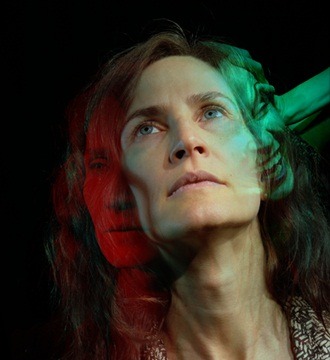
Cam is a school teacher looking for love, but also Crystal, who is a ‘cam girl’ - an online erotic model and occasional dominatrix for money. It’s clear this is a choice: Crystal offers Cam empowerment, making her something Cam is unwilling to give up. Barbara Smith is an interesting performer, drawing attention with a strong stage presence.The overarching story is, however, predictable, even if the final scene feels unlikely. There are some interesting aspects to the narrative: Cam’s need for Crystal, and the increasingly frequent shifts between the two personas. This backstory piques interest. However, there are issues, including an overuse of modern references, which risks alienating parts of the audience; an elaborate set featuring huge red chess pieces that suggest symbolism but feel disconnected from the narrative; and periods where Smith spends time behind a screen, leaving the audience looking at an empty stage, or on the floor, affecting sightlines.Smith handles accents well, but some of the characters within the multi-rolling story would benefit from further development and physicality, which would improve their authenticity. A mid-show line prompt underscores the need for more rehearsal. The production would also benefit from more focused work on the script and staging.

The Lantern @ ACT • 25 May 2026 - 27 May 2026

LIGHTHOUSE

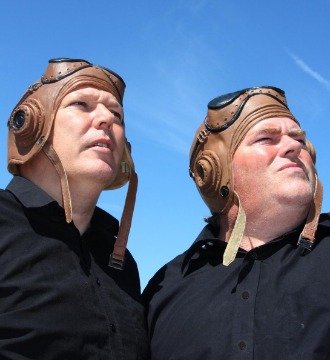
Three men in a lighthouse on an isolated island, the storm raging outside: it’s a strong setting for a tense, contained drama. Two seasoned keepers initiate a new trainee, and, over the course of a few days, the shifting power dynamics between them emerge. When an impossible stranger arrives with a temptation none of them expect, those dynamics twist in unsettling ways.The central section of the play is the strongest, with believable, truthful power plays that feel grounded in character. The opening, however, leans heavily on exposition, and the dialogue here would benefit from further shaping to feel more natural. When the men discuss their shared experiences of the First World War, the material doesn’t land with the emotional weight it seems to be reaching for.Staging-wise, there are moments that could be refined: one actor sits with his back to the audience for a noticeable stretch, blocking sightlines and diluting the tension between the characters. The final development introduces more questions than answers and may be a step too far, potentially distracting from the stronger work earlier on. The final twist adds intrigue but risks overcomplicating what is already a satisfying psychological battle.Still, Lighthouse has atmosphere in spades and a story worth telling. With some tightening of the writing and staging, it could beam brightly among the Fringe Festival’s darker dramas.

The Rotunda Theatre: Squeak • 23 May 2026

Poppies

Whether to wear a poppy or not, whether to commemorate and honour those fallen in battle: two close friends find themselves on opposite sides of the argument, becoming increasingly entrenched and embittered. It’s not a simple answer. It’s not just a piece of red paper for which you put money in the collection pot. It’s not just an older veteran reaching an important birthday, prompting the British nation to send birthday cards. Because there is more than one nation: Jim is English, Johnjoe is Irish.First shown at Camden Fringe, this version is even tighter and more refined. This is beautifully rich writing in which not a second is wasted in either construction or production. Strangely, the fact that it is a comedy makes it more accessible, rather than diminishing the weight of the subjects it contains. Johnjoe and Jim play versions of themselves, and much of the content is inspired by true events, which gives it even greater gravitas.They joke about giving us an hour of political theatre, telling us it is about men’s mental health, toxic masculinity, and identity, but the lightness and laughter twist like vines through the play until the more serious refrain - “it’s about poppies” - resounds from both men for very different reasons. The irony lands like a punch: it is so clearly about far more than poppies, or any emblem. It invites probing questions that leave their indelible mark long after the play ends. On a larger scale, how can anyone support the symbol of an empire if their best friend comes from a culture subjugated by that empire? How is supporting and commemorating the fallen in the armed forces of a country not also supporting the killing they perpetrated? And if your best friend was on the other side, how could you support what your country stands for?This cleverly written play is told with character-driven fluidity, even when jumping in and out of multi-role situations that intercut conversations with perfect timing. The performers feed off each other with remarkable ease; movements and words come as naturally as breathing. The production is tightly choreographed and directed with lean precision, yet still feels authentic, grounded, and real. Jim Spencer Broadbent and Johnjoe Irwin, who also co-wrote the piece, have eked out every possible angle, yet the humour never undercuts the drama; instead, it deepens the emotional impact.Throughout the journey with these friends, sympathies shift, tilt, and veer between them at different moments. It builds towards an unexpected ending that lands with quiet devastation, elevating this far beyond the usual Fringe fare. What it manages to convey about identity - the desire to belong to something and to feel valued - in such a seemingly effortless way is nothing short of extraordinary. An acutely observed story of belonging and relevance, told with authenticity and power - unmissable.

The Rotunda Theatre: Squeak • 23 May 2026 - 25 May 2026

Krapp's Last Tape

It’s striking how completely a full character can be conjured in almost complete silence. Ross Ericson holds the stage effortlessly with a combination of stillness and a glimpse into his inner thoughts through subtle physical shifts. Never has a man eating bananas been so gripping. It’s almost unnerving, yet he draws us into his world with no invitation or coaxing: by simply being.Samuel Beckett’s one-man play, alongside his other work, can be taken on so many levels. A man confronting his own past and reflecting on his life is the uppermost, yet like his other work, this stays with you long after it’s finished. Like great art, this reflects back to us all, challenging us not only to see the man at the desk but to see our own lives through this prism. He listens to the tape of his 39-year-old self reflecting on the year with so many different reactions: much of what the tape tells him has been lost to him, including a word which causes him to pause the tape to look up in the dictionary. Thirty-nine is a significant year for him, being the year he lost his mother.The tape is eloquent and also hints at depression, which looks like it has gripped the man we see before us. Yet it’s hopeful of the future, believing he is at his writing peak and that things will continue to get better and better from here. The pivotal point is the discovery on the tape of a romantic encounter, which changes the man before us, as he had not remembered this; and now repeatedly relives it. We are left reflecting on his choices and perhaps our own in the derisory tape he tries to make for this year, which he gives up on.He wears his emotions, rather than speaking them, yet in that subtle and restrained way in which he meets the world. This play offers us a mirror to ourselves, at whatever point we are in our lives when we meet it: whether we are the hopeful young one with aspirations and plans, or the older one reflecting on our choices. It subtly asks us about regrets: the choices we made when younger which have led to where we are, and recognises how harshly we sometimes judge ourselves. Aside from the strength of the play itself, Ericson gives a masterclass in subtle, natural, yet powerful acting.

The Rotunda Theatre: Bubble • 5 May 2026 - 12 May 2026

Medium

Isaac Freeman’s Medium offers an intriguing glimpse into the fascination with Victorian spiritualism. Set in 1875, the play unfolds while preparing for a séance where two renowned mediums confront unsettling truths. Freeman’s script captures the era’s language and atmosphere with commendable authenticity, immersing us in a world where belief and deception intertwine.The production’s attention to period detail is evident, from the set design to the costuming, effectively transporting viewers to a bygone London. The addition of the smell of incense is a lovely touch. The performances are intense, with the actors delivering their roles with conviction, particularly in the more suspenseful moments, although sometimes the words spoken seem incongruent with the actions.The play is based on accounts written at the time and the people referenced in the play are all real, which adds to its fascination. It also leaves open-ended answers as to whether there is any truth to the spiritualism of the time.However, while the tension builds steadily throughout the play, the climax doesn’t quite deliver the emotional payoff one might expect. The pacing occasionally falters, and certain elements feel drawn out, leading to a conclusion that, while intriguing, leaves some questions unanswered.Medium is a commendable effort that showcases Freeman’s potential as a playwright. The production’s strengths lie in its atmospheric setting and strong performances, though the narrative’s resolution may leave some seeking a more definitive conclusion.

Grania Dean Studio (Lantern Theatre @ ACT) • 16 May 2025 - 18 May 2025

Murder at the Manor

Murder at the Manor starts strong with a witty nod to 1940s film noir, complete with detective narration and moody intrigue. Billed as The Play That Goes Wrong meets Clue, it promises sharp spoof but delivers obvious farce instead. As it spirals into innuendo and slapstick, the noir charm is lost.Brenna Simpson stands out as Detective Fred Herring, delivering a delightfully over-the-top performance, including a succession of hidden moustaches. A couple of solid gags spark laughs, but not nearly enough to carry the full show. With more focus and restraint, it could be a Fringe gem.

The Lantern @ ACT • 10 May 2025 - 26 May 2025

With Ruby and I

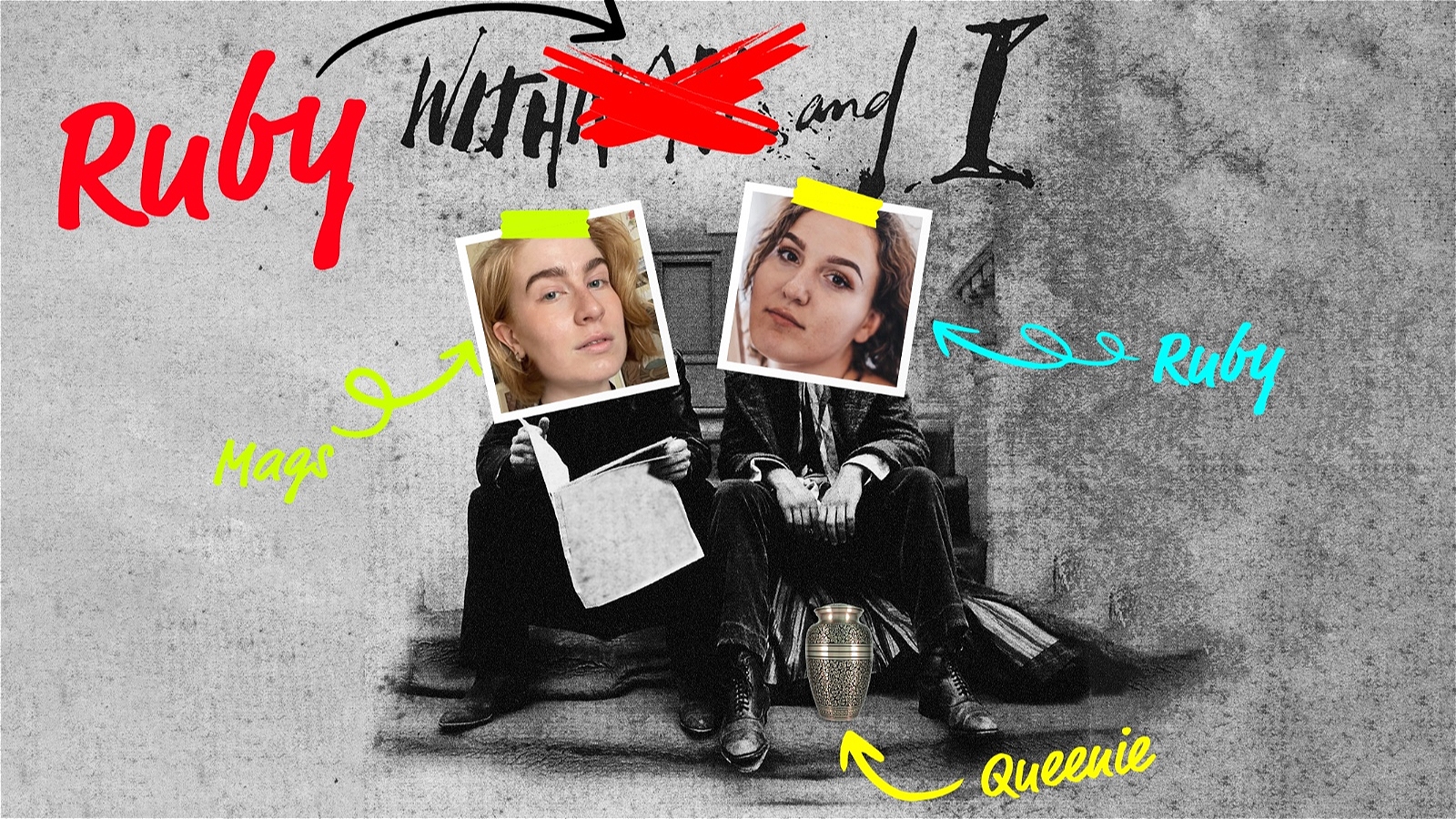
Mags’s mum has recently died. A onesie is draped on her chair, which nobody sits in, with the urn placed there throughout the show, as if somehow she is still present, an extra character. Mags and Ruby are in their flat. Ruby quickly moves in, with a gesture that might seem supportive, and with a couple of quotes from the film Withnail and I we think this is a play about two young women boozing and taking drugs. And then it twists into something else.One of the interesting things about this show is how surprising it is, even changing genre from beginning to end. Just when you think you know what to expect next, the story moves in a completely unexpected direction. It’s incredibly funny throughout, but even the humour shifts - from out-loud guffaws to very dark comedy towards the end. We quickly realise this is a play about obsessive relationships - but no, it’s a play about toxicity in friendships and becoming so incredibly intimate and intertwined with another person that you almost see them in the mirror instead of yourself. Then comes the coercive control, and you realise the person you’ve felt sympathy for is not only damaged, but so much more.The acting is exceptional. Rach Mullock plays Mags, grieving and desperate to be loved, living life almost vicariously through the feisty, outgoing and deliciously self-assured Ruby, played with dark intensity by Lexi Pickett. The only other human character is Tony, played by Sam Cartwright, Mags’ wannabe boyfriend and more, who portrays the gawky ex-soldier who is not very good at flirting - or loyalty. Each of them embodies their character from head to toe, with complex, layered and emotional portrayals. Ruby’s multifaceted and surprising nature intrigues and entices - her charm oozes, even as her presence indicates both passion and danger.Corrina O'Beirne’s writing has a grounded authenticity and goes in completely unconventional directions. Much like Ruby, this piece refuses to be pigeonholed. It is a dark play, but it draws you in like the sweetest of treats and won’t let you go until the end, where you are left still thinking about it. It is quite simply exceptional, and not to be missed.

The Lantern @ ACT • 3 May 2025 - 24 May 2025

Almost Famous

An actress alone on chaise reminiscing about her life suddenly becomes much more interesting at a pivotal point in the show where the penny drops as to what is going on. We meet Emily, an actress in her later years, getting ready to go to an audition for a part that has just become available because another actress has died, for which she is gleefully very sorry of course. She is star of stage and screen, starting out at Blackpool but quickly destined for the West End, then Broadway, then Hollywood. Her stories are elaborate and lovely until suddenly we are invited into hear about her life more intimately and then everything changes, as she recounts parts of her childhood and how she left home to change from Charlotte into Emily, who she holds as different personas. Here the story gets deeper and more intimate and real, including a description of a sexual assault that affects her for the rest of her life, and is acted with an authentic mixture of shame, betrayal and hindsight awareness.This is written in a really interesting way and acted with realism and genuineness. The piece also has some interesting things to say about both acting and the actors’ life: “when did it become a career instead of a calling”, and about growing older: “no-one sees you when you’re old – they just see an old person”. The parts get smaller and thinner as actors get older, they don’t want to take yet another part about dementia but of course they will because that’s all that’s being written these days. This is a lovely little show, very funny and thought provoking, and well recommended.

The Actors - Theatre • 3 May 2025 - 4 May 2025

Becoming Maverick

Starting with a child discovered locked in a trunk in 1919, this one-woman show tells a hard-hitting story of triumph over adversity. The stories she recounts of growing up in an orphanage with cruel overseers are reminiscent of the hideousness in Jane Eyre. When she runs away, she reinvents herself, setting her on the path to a completely different life.Becoming Maverick is not for the faint-hearted, with brief scenes of rape as well as child abuse in the orphanage. If you’ve never seen anything with this subject matter, it might be profound. However, the style is at times quite sensationalist, with melodramatic poses. Rather than letting the material speak for itself, it often becomes overstated. The writing is also a little overblown - much of it rhyming and often too florid, as if trying to be poetry, while the use of second-person address doesn’t quite land.The denouement is satisfying and interesting, delivering a little “aha!” moment and providing the strongest part of the piece. It serves to inspire the tale. However, there is a coincidence which stretches credibility, some improbable occurrences, and the timing of a key historical context is not mentioned.Overall, this is interesting, but it needs to be more than that in order to be shocking. It feels as if it still needs some work.

The Actors - Theatre • 3 May 2025 - 4 May 2025

Before You Go - A new musical

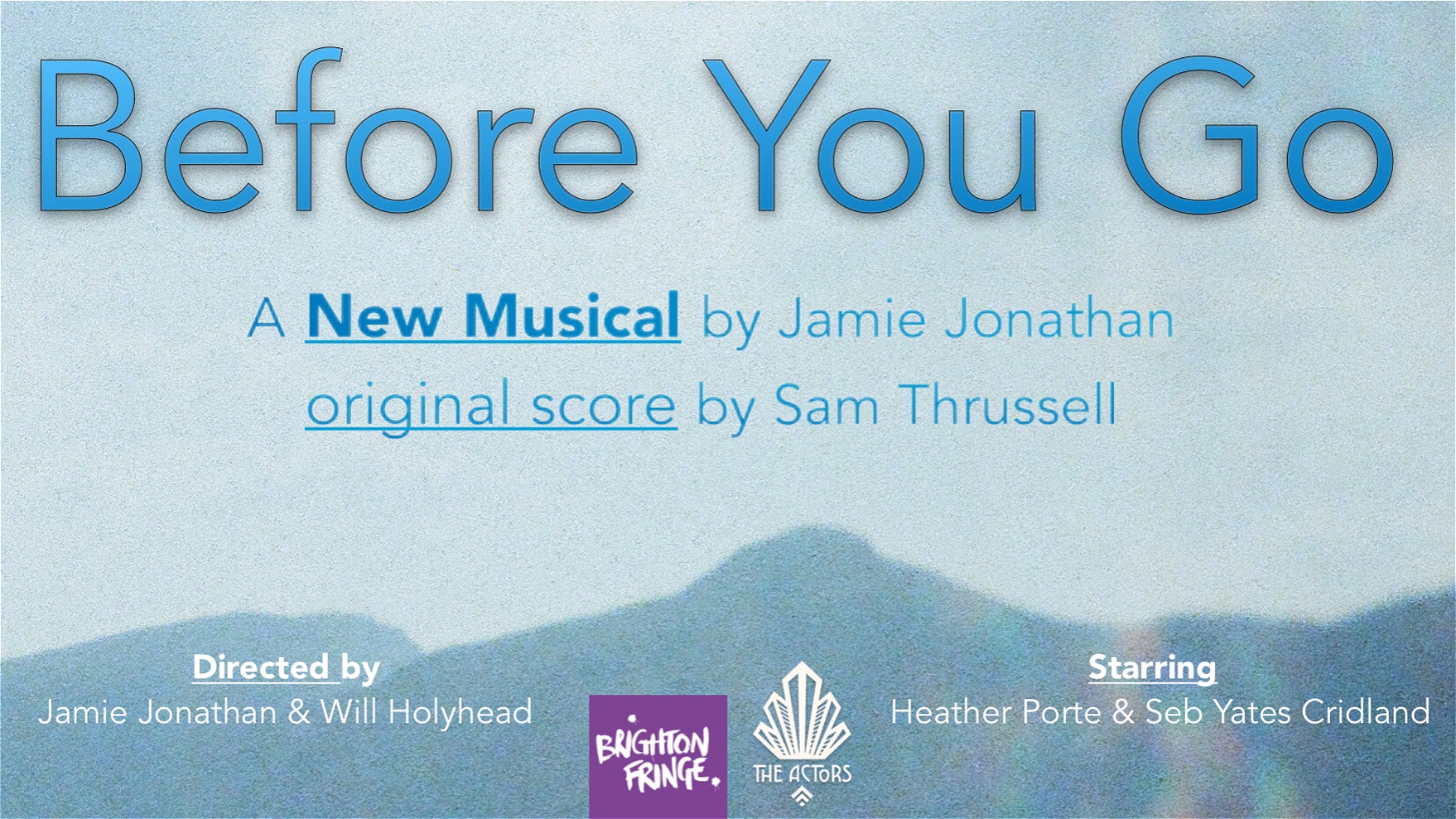
A nervous young man stands on stage with a guitar at a microphone, ready to perform. For a second we wonder if this will permeate the performance, making it a quite anxious watch. Then he introduces himself: Mark. We realise we’re the audience at an open mic night, which he’s never done before. It’s a tricky thing, to start a play with a nervous character alone on stage, but the result is so authentic we become nervous for him. We’re on board, rooting for him, sailing the seas of this part of his life as he lives it; laughing, cringing, crying and everything in between.This is a stunning production. It’s so understated that it grabs you by both the heart and mind unawares. The story unfolds in a natural, grounded way, with both funny and tragic elements finely balanced. Seb Yates-Cridland as Mark and Heather Porte as Jenna are so easy with each other; their falling in love is wonderfully believable and just the right amount of sweet. The way they play with each other’s hands, folding into each other, is acutely well played and incredibly real.There’s a moment where Mark steps outside himself to sing and watch what’s going on that is utterly gorgeous and inventive, characteristic of the beautiful direction throughout by Will Holyhead and Jamie Jonathan, who also writes. There is no fat in this play, no fluff. It is pure and lean, with genuine emotion throughout. Almost every moment is a standout. It’s as if you need to hold your breath while you watch.The story is also an important one, told in a fresh way: how grief changes us, what it’s like to miss someone so much it hurts like a physical pain. And how, as Jenna says to Mark, maybe we should focus more on the living part and less on the dying part. Heather Porte plays a strong and determined Jenna, with an unquenchable zest for life and a subtle layer of vulnerability. Seb Yates-Cridland brings a reserved, emotionally taut Mark to life — full of grief at the start and trying to find his place in the world. Together, they are magic. Watching their story unfold is gripping and, let’s not forget, also incredibly funny.The writing is gorgeous, balancing the poignant, profound and seriously funny. Themes return and feel new each time, shifting with the emotional landscape.The music, by Sam Thrussell and sung by Seb while playing acoustic guitar, is sublime. The melodies are fresh and the lyrics help Mark express what he feels but cannot say. Even the way he performs the songs changes as he moves through grief and healing.This is brave, raw, and at the same time polished, authentic and utterly captivating. It encourages us to keep dreaming, and to live a little. It’s incredible, profound and magical — and so humble and modest it has no idea how good it is. An utter joy.

The Actors - Theatre • 3 May 2025 - 4 May 2025

C'est Magnifique

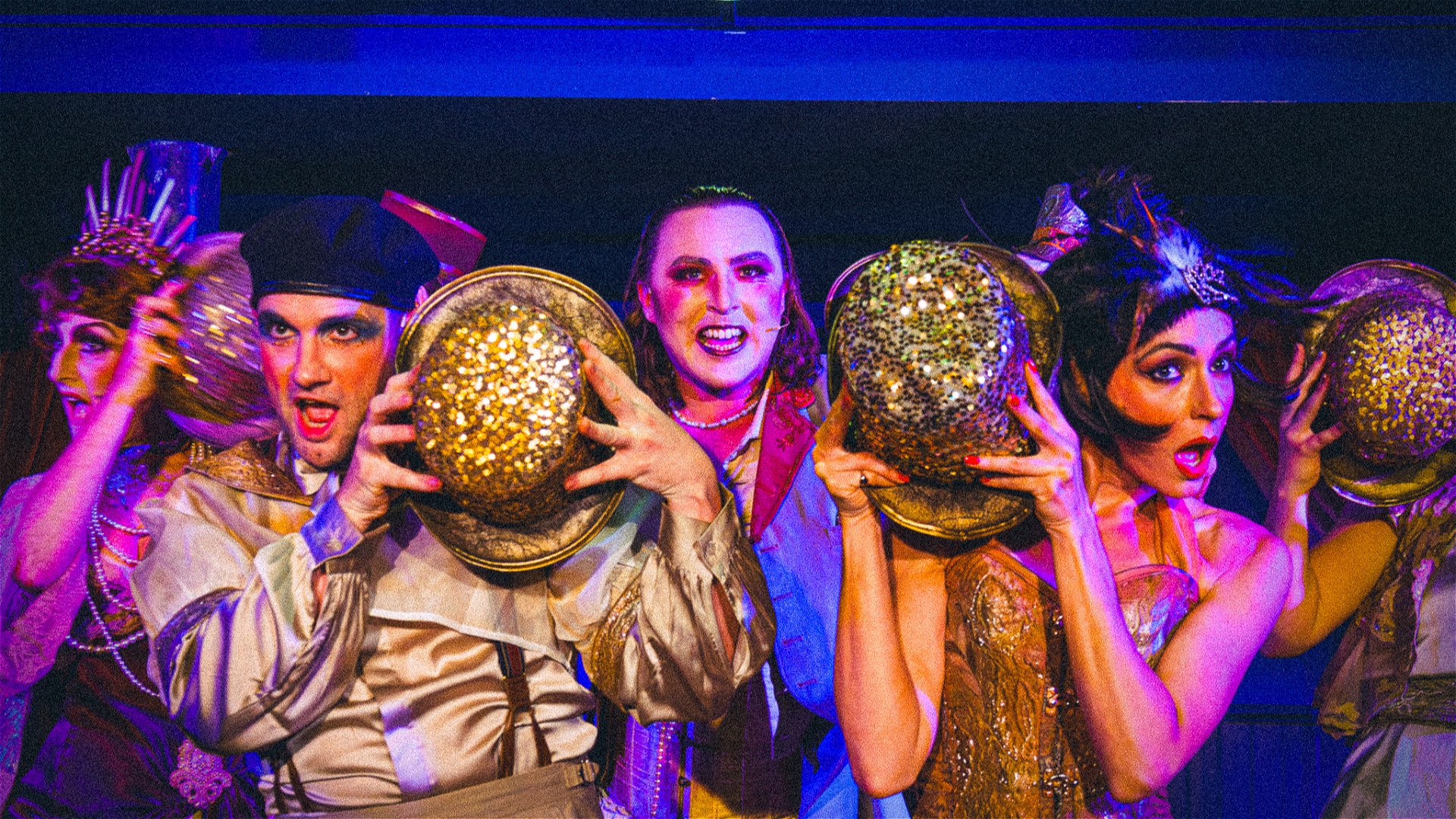
It’s rare to find a show that has absolutely everything, is literally all singing, all dancing, with copious handfuls of magic sprinkled on it – yet here it is. C’est Magnifique is just that. They call it their love letter to all things musical theatre, but it is much more than that: with host Cyril’s introduction at the beginning inviting everyone to say “Here it is right” along with him, the troupe give us permission to leave everything outside and just be who we are. Here, we are allowed to enjoy the moment, in the cabaret to surpass all cabarets.In fact, if you ever wanted a glimpse of what it must have been like in Berlin in its early 1930s decadent heyday, this is likely to be as close as you can get. It’s deliciously delightful, naughty and a little risqué, in a sizzling glittering pot of understated quality. The vocals are truly sublime. All have different qualities and tones; they also blend exceptionally well together, creating soaring, interesting and glorious harmonies with live music backing. The choreography is incredibly well done, authentic cabaret style and time period, which is a joy to watch – including the French Madame Babette singing almost upside down at one point.One of the many super-skills they have is the uncanny knack of knowing exactly which numbers to put where: the ability to interweave the fast-paced, highly choreographed pieces between wildly different solo songs; contrasting the fun or the frivolous with the deeply poignant and moving in a way that absolutely works. Each individual song has been given detailed treatment, from Money from Cabaret, performed with a tambourine-timed percussion segment which is gorgeous, to a duet tap-dancing routine and dance with lifts lasting all the way through I Got Rhythm, which is fabulous. Their timing throughout is impeccable.There are so many standout moments as every individual piece is stunning; and humour and jokes are the sprinkles of fun and joy in everything they do. There are singing suitcases and shoe percussion, plus a glittery top-hat dance, and it’s the energy they give to it all that makes it wonderful. These six performers are all very different but add their uniqueness and all their contrasting qualities to the mix to make something greater than the sum of its parts. Everywhere you look there is something interesting going on in the shapes, physicality and facial expressions. The sea-faring segment – including a Titanic moment – is utterly hilarious and a fantastic highlight.Each of the six – Conor Baum, Nathan Potter, Jodie Harrop, Emma Edwards, Hannah Semple and Jack Thomson– play a different character with authenticity and verve, each with their own particular mannerisms which complement the whole. Their expressions are hilarious, especially Conor as Cyril the Emcee with camp swagger and confidence, addressing everyone as “Ladies and Gentlemen, Gays and Theys”. The way they deal with hiccups is so professional you are never quite sure whether those moments have been planned as part of the show – but a show like this needs to appear slightly flawed to laugh at itself. It’s the imperfections that actually make it perfect. Head on down there, join in the experience: it’s magnificent.
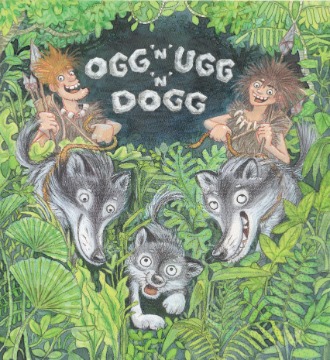
Multiple Venues • 2 May 2025 - 30 May 2025

Mettle

Nicholas Collett tells a moving true story of his father, who served in the Royal Navy during the second world war, almost as an oral history encounter in this one-person show. Using models and simple props such as his sister’s dolls’ house, complete with little figurines, or a whisky bottle that later becomes a submarine, he recounts how his father first opened up about his wartime experiences.The first half of the show moves very quickly - sometimes a little too quickly - between different time periods as Collett tells an intertwined story of his childhood and his father’s life. The second half is where it comes alive, as he recounts, with palpable emotion, his father’s service on board HMS Vanessa, including a detailed retelling of a significant encounter.As a piece of theatre, this is very measured and well rehearsed. There are impactful moments of real quality, but the tempo rarely changes, giving it a slightly lecture-like quality. Collett is also quite open about his agenda to ensure these stories are remembered – a laudable aim – though the ending is clearly designed to elicit a particular emotional response.Overall, this is an interesting piece, told with true feeling, about a time that is slipping from living memory. Worth an hour of your time.

Grania Dean Studio (Lantern Theatre @ ACT) • 2 May 2025 - 4 May 2025

Idle Women

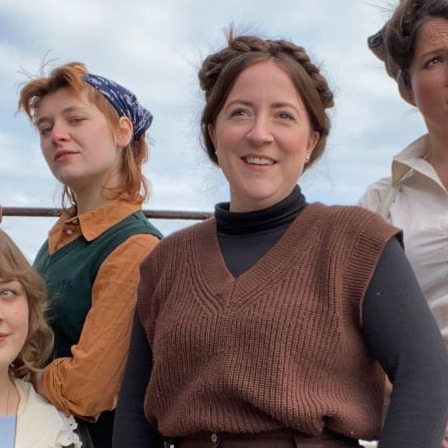
Inspired by a photograph and an article on women of the waterways in the Second World War, Busy Lizzies Theatre Company and Long Way Home Productions collaborated in creating this new musical about four women from very different backgrounds on a canal boat in 1942. There is much already known about those who continued in various ways on the Home Front, including various incarnations of land girls, but very little in the public consciousness about these women who had to be incredibly tough both physically and mentally, living on a boat which passers-by could easily mistake for a jolly jaunt or lazy work. Hauling coal, physically turning the boats with poles, and dealing with over one hundred lock gates between London and Birmingham were all tasks for women who had been used to running a home and family and knew nothing of manual labour.This is a well researched piece which acts as the crucible for the snapshot of these four women’s lives, and a fascinating watch. The style of telling: grounded and down to earth with almost a folksy charm, suits the piece perfectly. Live accomplished musicians accompany through all the songs and also add live soundscaping which is a nice touch. The atmosphere they create between them: the actors and the musicians, fill the story with heart, warmth and longing. It’s cosy, earnest and very sweet, almost too much so, and will melt those that come to watch who are seeking nostalgia.Edna, played with fierceness and a no-nonsense attitude by Emma Baars, is the Captain of the boat, with Ginny played by Elizabeth Kroon with sincerity, sensibility and sensitivity as her experienced second. Two new recruits arrive: Meg, played by Maple Preston-Ellis trying to hold on to her decorum and looking like she sleeps with Good Housekeeping underneath her pillow. Her wide eyed innocence and questions about how on earth they go to the toilet on the boat and the resulting song about exactly how to use a bucket, is hilarious. The other is Ruth played by Catriona Judt who has a completely different background to the others, more used to certain areas of London and the shadows, and she and Meg bring their secret love on board which causes some interesting sparkles for them all to address. Aaron Coomer has such a gentle presence in his brief moments as Alfred, with a perfect German accent, and glorious singing voice. There are frequent songs and all the voices are pitch perfect and strong, blending silkily together in two, three and four part harmonies.There is so much to love about this show, and while the characters do tip into stereotype at times, their stories are beautifully told. The points these characters make about gender roles are very relevant, for both then and now. “Doors have been left open for women” says Ginny, and the sharply astute Meg returns with “doors have been absentmindedly left ajar”. The lyrics in the songs are so well crafted, such as “paper love” in the letters they receive, connecting them to their loved ones and the wider world. It’s a show to leave you smiling and thinking, with some of the songs in your head for a goodly while to come.

Ropetackle Arts Centre • 1 Dec 2024 - 1 Dec 2024

Homestead

Homestead is a powerful drama that grips you instantly and doesn’t let go. Based on the famous classic The House of Bernarda Alba by Frederico Garcia Lorca and backed by his Estate, Homestead already comes packed with kudos and status. Steven Dykes’ adaptation has transposed the original Spain to rural Texas in 1956, which works incredibly well: it enables Hispanic influences which echo the original, and adds a religious Deep South to the 1950s claustrophobic element which scores through the piece likes words in a stick of rock, working beautifully with the flavour of the original.From the outset, the entrance of the women all in black, except for the two servants in grey plus aprons, deferentially standing at the back, it’s apparent after only five minutes who they all are. The singing with religious fervour is at once beautiful, mesmerising and haunting: a perfect opening to the play, setting the tone instantly. This matriarch has just buried her husband, she and her five daughters are praising God, and sadness is not allowed as it would be seen as a challenge to His plan. There is nothing weak or emotional in this tableau, each daughter and each servant making her personality apparent in the way they move, facially, and the way they worship. And the focal point of this whole family is Lilian Beckman: the mother, played by Deborah Kearne, who is a tour de force in this role, a restrained ferociousness coming off her in waves. Her strength of character is a cornerstone force and the play builds and builds until others either melt around her or break themselves on her granite. There are so many fascinating things at play here: Lilian Beckman is determined not to be seen as weak following the death of the man of the house, and is going to run a tighter household, and wants her daughters all separated away from the evils of the town, particularly men, or at least the ineligible ones. Contrast that with the house full of young women who are desperate for life and love and in the heat of the summer they are boiling past a simmer; and you have characters on a collision course where you almost can’t bear the tension but are so gripped you can’t look away. There are some challenging scenes in the play, in the way the mother gains control of her daughters: one particularly where each of them have totally different reactions to a shocking scene, showing exactly how Mrs Beckman has managed to play one off against the other. Yet the tighter she squeezes, the more some of them try to wriggle free from her grasp: something she is unaware of, even when servant Birdie warns her. The tableau pictures they create between them are both beautiful and eerie, the use of the table is genius, and watching someone breathe in one scene responding to the soundscape has never been so captivating. The daughters secretly listen to the radio, to “honky-tonk” they are not allowed to hear, then accidentally tune into a station playing Elvis: a brilliant addition, as it is so well documented about his effect on young women particularly, in the age which discovered teenagers, in a house where no emotions and no bodily awareness is allowed. A house which only shows love through love for the Lord: where the mother only touches them when they are on their knees in response to praying or asking for her blessing or forgiveness. In deeply religious households it’s easy to imagine this is the way it was for decades, and possibly still is in some places, which gives the play a timeless quality. This is a production where everything works to the highest imaginable standard: the direction by Conor Baum is sublime. There is a sweet flavour of Tennessee Williams in this play, and a welcome reminiscence of the Clint Eastwood film The Beguiled. It’s also rare and very welcome to see such an incredibly strong play with all women characters: and each of them played flawlessly by a universally astonishing cast, with Deborah Kearne at the helm in a perfect portrayal of toxicity disguised as care. It’s simply brilliant, faultless and timeless.

Brighton Open Air Theatre • 20 Aug 2024 - 22 Aug 2024

One Way Mirror

Jonathan Oldfield brings an intriguing one man show to the stage: sitting in his living room watching the world go by behind his one way mirror out onto the world, safe in the knowledge that he can see out, but cannot be seen. It goes from intriguing to bizarre when he tells you this is a true story – not based on a true story, but actually what happened. Yet the way he has designed this is interactive, involving the audience at pivotal moments. Sitting behind the mirror – a big glass pane in the centre of the stage – he tells three stories from his grey notebook. His writing is richly embroidered with visual and auditory descriptions that bring the story to life in the imagination. The first is a ‘bin man’, emptying the bins; then a man carrying a white plastic bag dressed in a suit jacket and jogging bottoms; the third is about the fast-food place opposite him called “Binge” that serves spicy fried chicken which isn’t quite spicy enough and crispy chips that aren’t quite crispy enough. At a point in each story, the audience is instructed to make a choice as to what he should do: to intervene and interact, or to stay concealed behind the mirror. The choice is made through a very clever set up using pictures on audience members’ phones. Coming out from behind the mirror; his overarching story within these episodes is also very bizarre: having moved into this new flat just before lockdown happened and then being stuck inside alone for the duration. All this is recognisable of course, but the addition of the one-way mirror looking out emphasises the isolation and separateness from the rest of the world. He talks of his other acting work on Zoom and having to be several someone elses as his only interaction with people taking a toll on his own identity and ultimately losing himself in physical and emotional health issues. It also moves from the surreal to the creepy when he finds a mysterious book about magic mirrors, and gets an audience member on stage to read out the other end of a phone conversation when he is trying to find out about it.Jonathan is a wonderfully confident performer with a rich tapestry of images created by crisp writing and a clear voice. It’s a well crafted piece overall, although there was a moment of leaving the stage bare for a little too long and starting the show wearing an eyemask has the unfortunate effect of distancing the audience from the show, although his subsequent warmth repairs that. The clever effect of this show is that you can take it on many levels – as just a comedy, or, asking profound and important questions about whether you take part in people’s lives, or take part in your own life, or just watch. Do you abdicate responsibility for other humans when you know them, or even if you don’t, and how much responsibility to take for your own actions. It raises important questions about the effect of being cut off from other people, especially to those who live alone: as experienced as part of lockdown. The audience are invited to choose to be a watcher or be watched, to see or to be seen; and then experience the consequences, with another audience member brought on stage to fulfil a magic role. It’s certainly a unique show; and one that asks interesting self-reflective questions of the audience experiencing it.
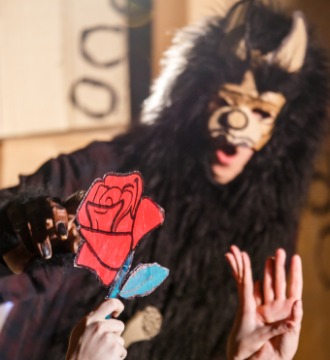

The Actors - Theatre • 23 May 2024 - 24 May 2024

Great Britons

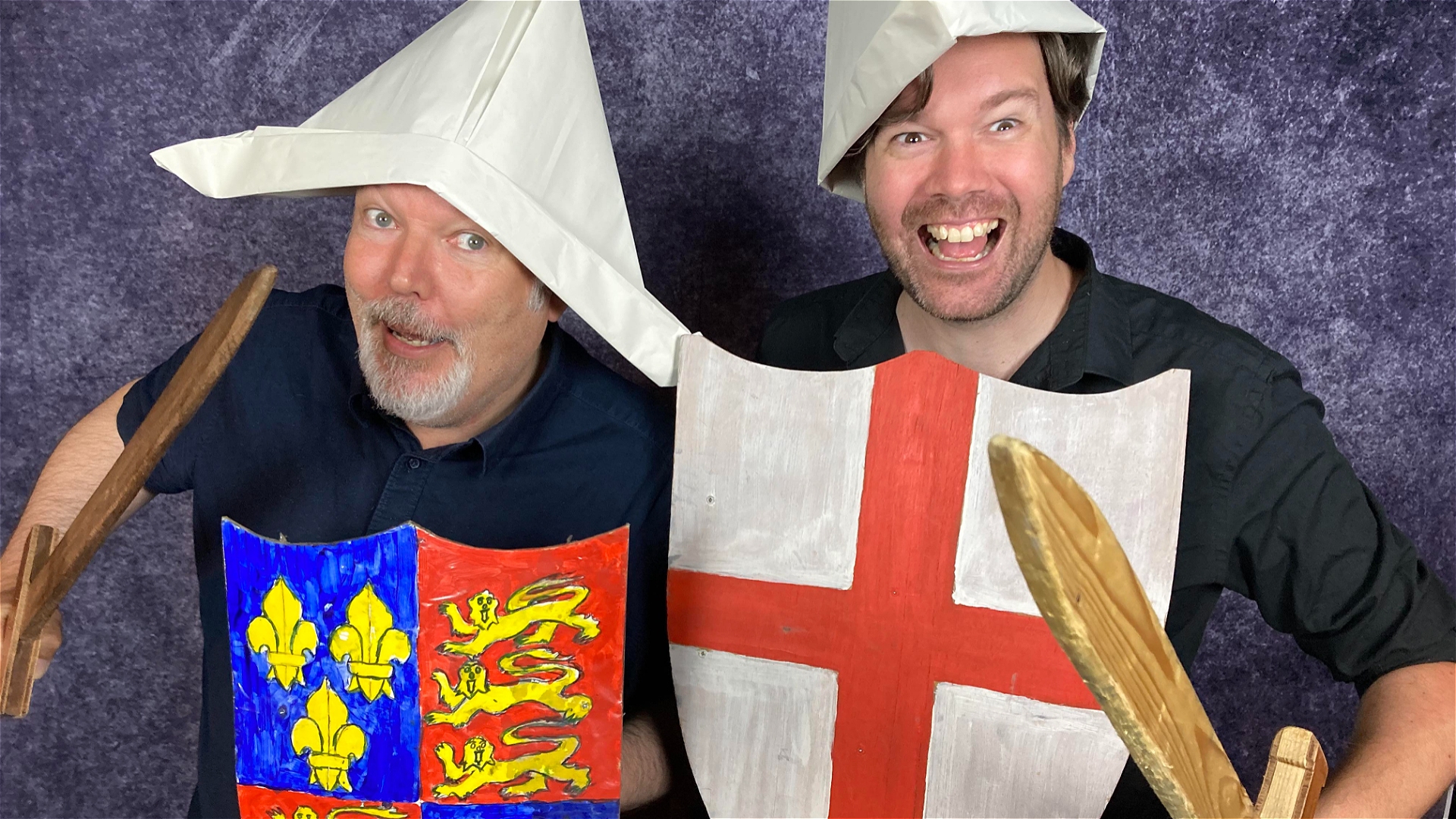
Great Britons starts with pomp and ceremony music setting the scene with a little row of Union Jack flags hung against a black backdrop. But it’s important to not be fooled by the humble setting as this is the unique style of The Foundry Group, with their irreverent approach to conventional story telling that inevitably makes stories more funny and interesting.This new show created by acclaimed writer Brian Mitchell, who also performs, and Joseph Nixon of The Shark is Broken: also the writing collaborators on Who Is No. 1? is a romp through a few famous Britons “who have actually saved the Country” as mini history performances that are actually both hilarious and fascinating. Murray Simon performs alongside Brian in an effortlessly easy partnership where the fun they are having performing is cracklingly infectious to the audience. Their trademark of looking as if they don’t really know what’s going on while clearly knowing exactly what is going on is something they excel at, making the audience feel at ease within the apparent chaos. There is also always room for ad libs which make it fresh and interesting each time. They have a wonderful way of bringing classic British humour in to everything while also making it current, plus family safe while cutting and clever. This is a double act which doesn’t follow the old convention of one ‘straight man’ either – all in all, they have succeeded in bringing classic British comedy up to date, which is an amazing feat. The first hero of ‘derring do’ is The Duke of Wellington: the most famous English Irishman as they sing, with words written out for the audience to join in the chorus. Rather than tell one tale through and then another – which would be boring – they interweave them, including Alfred the Great, references to T E Lawrence, Robert The Bruce, and Horatio Nelson - and a surprise ending. The detailed sketches of parts of their lives are told with facts which they actually make sound interesting, unlike many people's experiences of history lessons, plus the addition of funny asides, or making fun of other characters such as “porcine featured Napoleon”. Virtually every type of joke and humour is added into the mix from clever double meaning words to slapstick wooden sword fighting worthy of primary school playgrounds. One of the many standout moments is Horatio Nelson (Brian Mitchell) meeting Lady Hamilton (Murray Simon) which could easily be mistaken for a Morecambe and Wise sketch, including the Eric Morecambe’s trademark use of his glasses: this really is laugh out loud funny and so very satisfying to watch as it’s done so well. Their multi-rolling is fabulous, mainly using just hats - some home made with newspaper, and their influences can be seen from so many different classics across British comedy: from Monty Python right up to present day. This show is perhaps best described as Morecambe and Wise meets the Horrible Histories TV show with a beautiful blend of both.

Ironworks Studios (Studio C) • 12 May 2024 - 12 May 2024

Coleridge-Taylor of Freetown

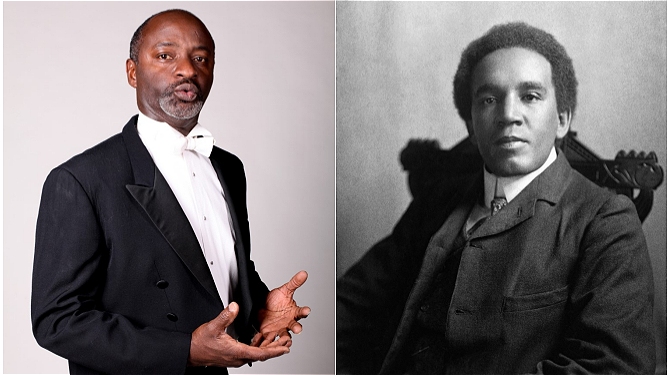
We meet George Coleridge-Taylor terrified and hiding while bullets are heard loudly around him. He is a retired Diplomat now Philosophy Professor and this is Fourah Bay College in Freetown, Sierra Leone, in the midst of civil war, and rebels have taken over the college. George reflects on his life and how he got here, talks of his childhood and every part of his life from young to old, moving easily between the extra multi rolled characters while always returning to his central one. Taya Aluko who also wrote the piece, plays George and all the other roles, changing physically between them in front of us. He has a natural skilled ease as an actor who knows he is good at his craft. However, there are several stumbles in lines with self corrections or checking with the accompanying musician Allyson Devenish, who plays lightly and beautifully in the musical pieces. Although it is not seen, there are quite graphic allusions to the repeated abuse and rape of the woman who the rebels capture and hold captive in the next room to George. The soundscape is evocative and works incredibly well throughout, as does the various lighting states, helping to indicate times of day as well as the difference between fantasy and reality. George feels powerless to do anything to defend or support this poor woman and can’t cope with what’s happening to her, so during the times she is being violated he escapes into a fantasy world where he is touring the world giving concerts using the music of his uncle: the famous composer Samuel Coleridge-Taylor. Taya Aluko has a lovely rich tenor voice, with warm tonal qualities and is pitch perfect.In the Q&A after the show Aluko talks of the real George who wrote a memoir, which furnished much of the content, supplemented with extra research. The story of him being at Fourah Bay College and hiding from the rebels is absolutely true, but the woman is a metaphor for the horrors perpetrated so often in war situations. There is a rich exploration of Sierra Leonean history and exposing corruption, however it’s so packed and in a non-linear narrative so anyone not already knowing about this period of history would be left feeling slightly confused: like they had seen a movie based on a book where they needed to read the book first. It’s clear that a lot of work has gone into this but the lack of certainty in lines gives rise to a feeling of unease; a lack of feeling confident in the production, as well as the profound discomfort of what’s happening to the woman we can only hear and never see on stage. During the Q&A Aluko mentions this is a work in progress, which is another problematic element, as this obviously has potential to be a really good show and aspects of it are there already, but by no means all of it, and that affects everything. It should also have been made clear at the outset that this is a work in progress, to do less is misleading the audience.

The Rotunda Theatre: Bubble • 10 May 2024 - 26 May 2024

Natal Attraction

This debut solo show by Katherine Kotz about five women and different aspects and attitudes to motherhood is certainly ambitious, and highlights some thorny and some hilarious areas of women’s lives. Katherine’s talent is to effortlessly become these women, multi-rolling simply yet cleverly fully fleshed out characters complete with back stories and accents which are exceptionally good.The first one we meet is the first time mum to be, complete with bump so realistic it fooled many in the audience, noted by the reactions when she removed it. The audience play the part of her colleagues to whom she is giving a presentation. She is trying to be the professional woman at work and for people to ignore her belly bump, but she eventually addresses it, recognising herself as the “elephant in the room”. Her ambivalence reflects many ambitious women’s realities of wondering whether they have to give up their career or whether they will be replaced by younger model “Luci with an i” who can’t even spell her own name properly. Luci looks like “a laminated Barbie Doll” she says with resignation, and that she always thought that babies were something that happened to other people, “like Salsa classes, or dogging”. The second character is a Northern woman who has decided she does not want children – breaking a taboo which is seldom talked of; a secret opinion shared by many women but rarely admitted to as there is so much stigma attached to it. It’s fascinating to hear from such a character with openness and compassion, and to be reminded that in any decision made, there are losses to bear. The third character is an Aussie new mum whose baby is not going to get in the way of her online influencer presence and career; while the fourth is an exhausted mum of two whose life seems upended as a result of her children. The last one is also a mum with many other things on her plate and these last two have some profound and interesting things to say about motherhood and the impossible balance of bringing up children and influencing or supporting them in exactly the right way, and the critical toll it takes on a woman’s self-esteem to give and give and not be replenished. Yet all performed with humour and confident gentleness, as well as astute perceptiveness.Katherine’s comedy balanced with nuance, depth and pathos is perfectly timed throughout the whole show, and the material is both clever and laugh-out-loud funny, as well as being original and packed with punchy line upon line. Katherine is genuinely and uniquely entertaining, and has created completely relatable characters who are instantly recognisable. She excels in the character work yet the show does lack a certain cohesion, even though there is a link between the first and last stories, it would benefit from a way of finding a thread throughout: something to connect them, beyond women being viewed very much through the prism of reproductive functions. It’s like a lovely roast dinner that needs gravy to bring it all together. It’s good to have the modern changing of costumes on the stage, however, the changes exclude the audience rather than include them. If the changes were simplified and the audience was either included by talked to, or had something else to look at while the change was happening, it would instantly step this up a gear. The audience can keep up if just a coat or jacket has been changed: especially when Katherine’s physicality changes with each character. This is a lovely show and there are some great guffaw moments and some with poignancy: it also has the potential to be even better.

The Rotunda Theatre: Squeak • 8 May 2024 - 28 May 2024

Strange Orbits

A couple celebrate their tenth wedding anniversary; their understated surroundings ooze of comfort and wealth and no hardships. They are very much in love, snaking around each other playfully and lovingly, reminiscing about meeting, gently disagreeing about the music they want to play: to dance or to soothe them, and agree a compromise. But this is no ordinary romantic evening of celebration: they are two of the first colonists to settle on Mars, to try and make it habitable. He: Jasper, is a tech billionaire, and she: Lily, is an exceptionally clever and forward thinking engineer, who started as his employee. They continue to work side by side, supporting each other and being each other’s biggest allies. They watch the Mars sunset on the bright orange sands and watch the little blue dot of earth in the sky, against the backdrop of stars from this unique perspective. The writing style, however, is an interesting choice. Much of it is written in Shakespearean style language, including some sections in rhyming couplets. Some of the words are rich and poetic and the imagery is beautiful, but the style, without any explanation of anything to do with Shakespeare or that time period throughout the whole play, is a little odd.It’s a very interesting premise: nuclear war has destroyed virtually all life on earth and this finally galvanised those in power to action; to send the bright and the brave to Mars to make it habitable for human life. There is much technical discussion about how they do this, and as writer Carly Hendricks who also plays Lily is a former SpaceX engineer, what they discuss sounds completely credible without losing the audience in techno-jargon. Then everything changes, as they suddenly get a message from earth – the first in five years, from what should have been a dead or dying planet. This is the catalyst for a world revelation from Jasper, followed by a personal revelation, which rocks the foundation of everything that Lily has believed and known for the past 12 years: a profound betrayal, even though Jasper states very good reasons. This sparks the unearthing of cracks under the veneer of their relationship: where Lily feels unheard, not respected for her qualifications and knowledge but merely regarded as a spouse to support him. His reliance on data and facts overrides his hearing of her ideas and instincts: a familiar argument in many a relationship. The message is finally played and adds another layer and decisions which will affect everything. There are many concepts brought up in this play which spark interesting debate. What will inspire people in the world to finally collaborate and solve climate crisis, and can it be solved? Is it only war that brings us together? Will the people with money and power actually listen and respect the guidance they are being given with projections based on what is possible, not just facts? Is it all fate anyway, is it all simply decided? These are big important questions and setting it within a love story makes it accessible, but, this varnishes over things with platitudes and reassurances. It’s a tricky if not impossible task to show the entire arc of a relationship with all the emotions felt by two humans in one hour, and the resolution was rushed and seemed inauthentic and a little forced. Carly as Lily is a joy to watch, the emotions emitting so clearly from love to betrayal to despair and everything in between: a very empathetic and genuine performance. Overall, a very interesting piece.

The Rotunda Theatre: Bubble • 6 May 2024 - 12 May 2024

Magpie

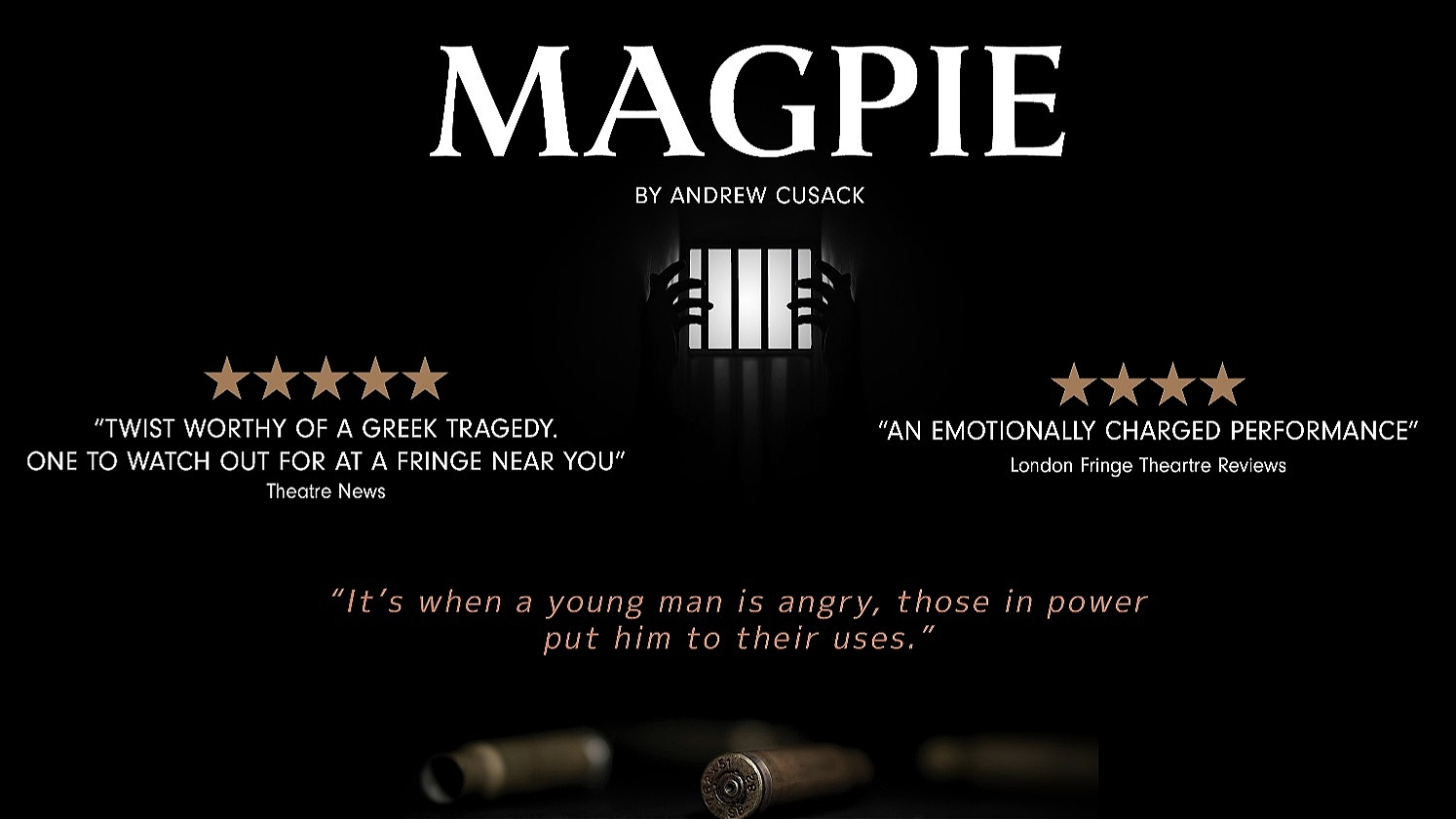
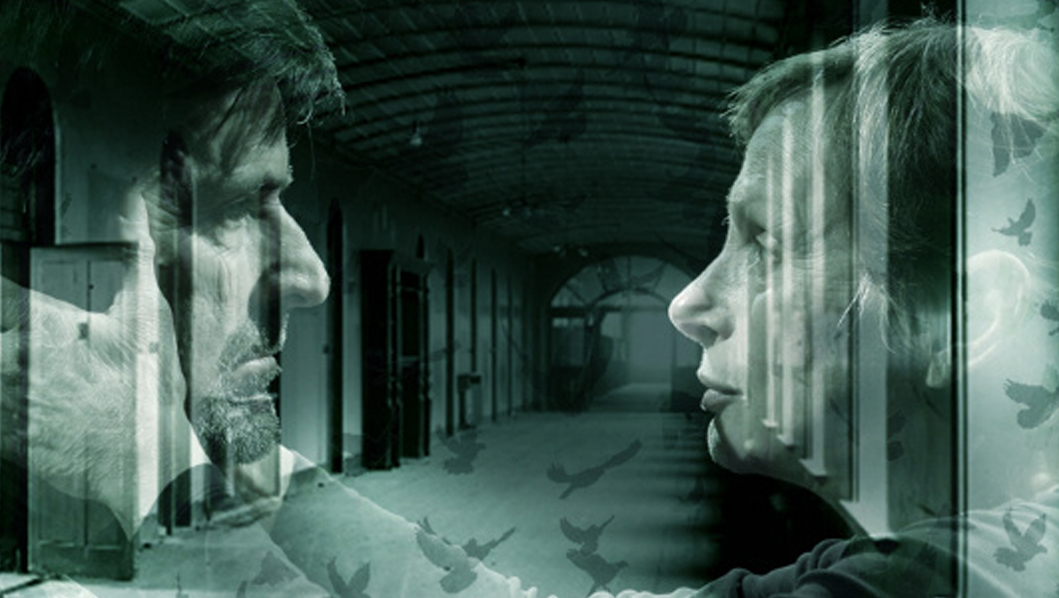
In a cell strewn with straw, Michael Murphy sits on a basic mattress, chalks up the days of imprisonment on the wall; looks in his notebook and scribbles in it with his pencil. It’s a bleak and intense opening on a scene which only holds two more items: a chamber pot and a tiny metal food container. It is 1923 and we are in Ireland: a country divided by civil war. The soundscape including dripping water and subtle lighting colour changes hold the mood of each moment throughout. His decent into nightmares bathed in red are guttural and shocking. He talks to the persistent Magpie, outside his cell window, at times tormented and at times soothed by the presence of the bird who is the omen of “one for sorrow”. He names the bird Jamie for reasons that become clear later in a poignant and heart-breaking moment.This is a very personal story, a crucible of humanness in the midst of a divided country showing the cost of divisiveness and war. It’s also the story of how men, especially brothers, communicate with each other – or don’t, and what in this case happens as a result. Michael is so entrenched in his anger and pain that he only know to hit out at those around him, especially his brother Patrick who is the guard in the jail, and at the Priest who comes to see him. These verbal and sometimes physical barbs result in totally realistic brother punches and fights. This is an extraordinary and excellent piece of theatre, in every respect. The story unfolds with the two brothers on opposite sides of the civil war: the youngest and the eldest in a huge family which only has the two of them and their Ma left in it. They have always been on opposing sides: Michael having signed up at 16 to fight for King and Country in the First World War, and called traitor by Patrick. “we pick sides” he says, while Michael points out that everyone is “sticking so hard to their truth”. Carrying the trauma of war on his return and being called traitor by his community, Michael changed sides. His anger was used against him, to manipulate him, to give him two unspeakable orders. Yet halfway through these he reaches his capacity: “all these orders – I couldn’t follow another one”.The two brothers are incredible: Andrew Cusack, who also writes and produces, plays the angry, sarcastic and deeply pained Michael, while Johnjoe Irwin plays the stoic, barely holding it together Patrick. Despite their antagonism, the care and despair between them is palpable. Ronan Colfer, who also directs, plays Father Kelly, in a charged scene where he offers Michael time for confession and prayer yet ends up sharing his own feelings as the man behind the robes: “as a man I don’t feel much of anything anymore, how could I”. Michael asks him if he understands death, with the most beautiful line: “do you know what it’s like to be letters on a stone melted by the rain”. This is an intensely powerful piece told in a visceral, gritty and authentic way, with a story born from Andrew’s own family and real knowledge of these things happening. It’s challenging and uncomfortable at times yet essential viewing. This is a journey of raw emotion and power, and the final understandings and empathy in the last ten minutes elevate a breathtakingly exceptional production to a must see. A stunning production, which is quite simply flawless.

The Lantern @ ACT • 3 May 2024 - 5 May 2024

Ingoldsby Legends

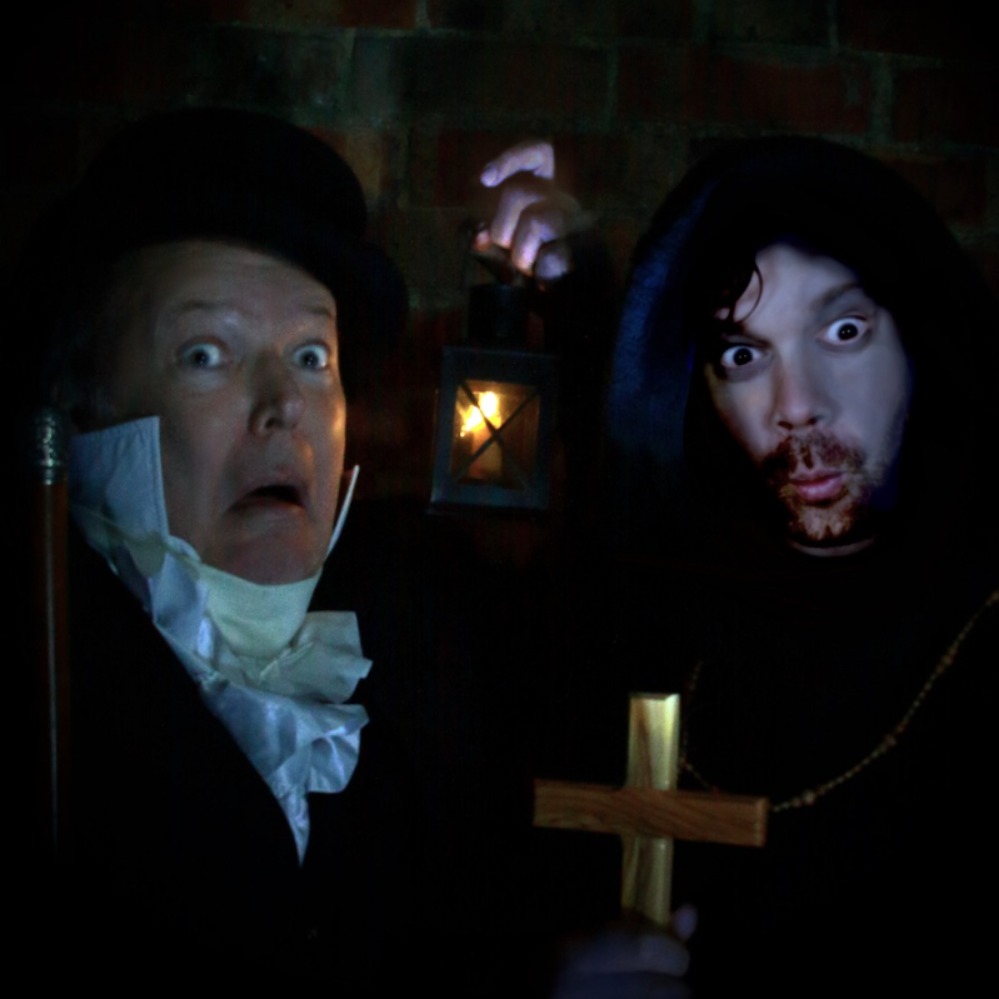
There is something gorgeously comforting about a show that within five minutes of beginning you know you can relax and enjoy, because even the things that are ad libbed and unscripted are slick and professional, including anything that appears to go awry. Don’t be fooled by the humble setting and two lecterns. This latest offering from the inimitable, unique troupe that is The Foundry Group is fabulously fast-paced, jam-packed full of content and brim full of hilarity.Reverend Barham, (Murray Simon), introduces the story: telling us of Thomas Ingoldsby who has inherited a trunk full of antique manuscripts with accounts of ghostly ghoulish tales all told in verse. He introduces Mr Ingoldsby, (Brian Mitchell - who also co-wrote the piece), who then insists that all the grisly rhymes in the trunk are all in fact true. They then tell some of these tales together, playing all the parts with truly hilarious results. It’s as if someone put The Woman in Black in a blender with Morecambe and Wise and this is the result.There are many levels on which to take this: the performances, use of incredibly inventive props, including appearances of a cardboard fish and Bagpuss, and everything in between. The almost slapstick chaos makes it on face value belly-laugh and guffaw funny. The use of sweeping brushes as horses including taped-on tiny lights for eyes on one of them is one of many standout moments. But it’s also incredibly clever. The staging, the quality of the whole piece, even the choice of props, including the scale of the props compared to each other, are chosen with such consideration and care: they have thought of every aspect. Everything that could have been made funnier or more detailed has had that treatment. They have a wonderful way of changing character just by changing hats, so you know instantly who they are. The voices and physicality change to match, with crazily comical results, and the whole piece builds and escalates to a satisfying and not entirely anticipated ending. Murray Simon's performance of a Welsh woman being courted, while wearing an ill-fitting Welsh hat, is another standout moment.The writing by Brian Mitchell and Joseph Nixon is also is multi-layered. The tales are all in glorious rhyme, but it’s also evident that a great deal of research has gone into these tales, which are of the 18th Century style, including using pieces of language from that time – which are then explained very comically on held-up pieces of paper as the story is told. These stories are a great throwback to the ghostly folk tales made into films and TV in the 1970s, and this show would have fitted right into that short story genre, almost having a feel of that period. The writing is rich and clever and laden with imagery as well as hilarity.The Foundry Group once again have created something truly different, authentic, and utterly bonkers. They have a style that nobody else has: they break the fourth wall so beautifully; they listen to the audience and take them along for the ride, all the while looking like they are having an absolute ball; being fabulous at something they truly love. Long may they continue to think up new ways to entertain us in such a fantastically special way.

Presuming Ed • 4 Feb 2024

Tea & Toast Present: The Museum of Relationships

Improvising a whole rom com style comedy show around audience suggestions is not for the faint hearted, and this group’s approach is relaxed and confident. Before the show starts they pass slips of paper around the audience asking them to write down an item they had left after a previous relationship. They then collect the papers and put them into a hat for part two of the evening. The first 20 or so minutes is based on reading an old holiday postcard, chosen at random by an audience member.For this particular evening of four performers, the postcard had almost an essay on it and was funny by itself; they then set out to improvise sketches inspired by it. The results included the hilarious almost buying a carpet scene, a tragic tale of a woman decorating a room in her house in the colour of the God of the Sea due to her disappointment with her partner who wouldn’t buy her the cake she wanted, and three very different people all starting a finance course for reasons including their love or hatred of the number 78. The main course of the show is “The Museum of Relationships” where the museum curator takes the three others on a tour of the items in the museum: the items being those written on pieces of paper from the audience. This develops into a series of sketches with an item suggested from the hat, and the links are sometimes delightfully tenuous. The sketches are just the right length; but they also come back to them to give each a conclusion to the story being told. There is also a lovely light mini monologue section where they tap each other on the shoulder to take over the story.They introduced some lovely one-liners, including a smirk inducing jibe at old fashioned sexism ideals of women at the start, and the utterly bonkers “golden shrimpy future” line in one scene where one partner was told they looked 40% like a shrimp. They each build on each other’s suggestions within each scenario which means nobody, including the performers, know where it’s going to end up; which is all part of the fun. Their imagination is fabulous: from a woman changing her best friend to look exactly like her so they could have relationship based on narcissism; to the brothers from Bros turning up as their scratched CD was calling to them from their one and only fan.There is a gorgeous dash of silly and surreal which is light and sweet. Kathy Manson shone with her really incredible imagination; there were a couple of super daft songs supported by piano playing – at one time with claw shrimp hands; and Josh Hards showed lovely versatility of the differences between the characters that he invented in different scenes. The actors work really well together and feed each other and are generous with their ideas. They pride themselves on being grounded in truth despite the surreal trajectory of some of the stories and they are right to do so.Sadly, the audience at this particular evening was sparse, and with less audience, they tend to be quiet, which leaves it all a little flat. This performance was quite low key, possibly as a result. This is obviously a new show and new experience every night, and is recommended for a unique, fun night out.

The Actors • 9 Sep 2023

The Unknown Soldier

The centenary commemorations of the First World War ending, held in 2018, ensured that it was once again in the consciousness of the nation, putting the tomb of the Unknown Warrior, into focus. Using the title The Unknown Soldier takes us to that era, in this play set two years after the ceasefire. Enveloped by the sound of rain we meet Jack in his makeshift room: he volunteered to stay on; he has a job to do. He talks to his best friend, in direct address to the audience, while taking his jacket off and his boots and his puttees, which he rolls carefully and puts into his boots. The set wonderfully represents the era: bed and stove and box with items on. As he talks he rolls his cigarettes for the next day, drinks a curiously homemade looking spirit and eats from a canteen tin. It’s pleasing to see such authenticity and detail in the set design which was still simple and appropriately sparse. There is no doubt that this has been researched and fact-checked and the addition of personal material is a really lovely touch. However, some things have fallen through the check. When a production has made such an effort in authenticity and fact, when something isn’t quite right, it does stand out. Such is the section about the white headstones of dead soldiers, and while that is of course true now, it wasn’t true in 1920. They were only just starting to ship out headstones at that time so it was little crosses marking the buried dead before then. Another issue is spending most of his time in socks with no shoes which would not have happened as the floor would have been wet and muddy, even in the room; plus the socks didn’t look right with the rest of the ensemble. Socks were famously an issue for that time as was ‘trench foot’. Soldiers changed their socks often, but would be back in their boots. Depending on your knowledge of the First World War, these small details can either be ignored or be jarring.There are some stand-out moments in the play, and some of the writing is pure poetry: 'bodies coming apart like … wet paper' while grim is wonderfully evocative, as he talks about dredging dead soldiers from water filled shell-holes. The story itself is a beautiful one of friendship, loyalty and love between brothers in arms, and as the scenes unfold he is talking to his best friend, his best man, the one who rescued him from the battlefield when he was wounded. The whole piece is very moving and powerful, yet in some places it seems too much, a little as if designed to extract a shocking and sad emotional response: such as the scene where he is fighting and killing the enemy. There are some interesting choices, such as performing the whole piece in a very strong accent, not his natural voice; there were moments where it didn’t seem quite right. That said, listening to the experiences of one soldier in the First World War is fascinating. Jack, boldly and fiercely played by writer Ross Ericson, makes some thoughtful observations, such as the German soldier he met who used to live in England fairly close to him, and that they could have been friends until 'somebody told us we weren’t'. There were so many Germans living in England at the time, as the nations had been friends. This is very important and was an experience that so many shared, as is the incredibly powerful and thought-provoking observations he makes about the soldier heroes’ return to Blighty: that dead heroes don’t have a voice or a history, the only land for heroes is six feet down; and the clean slate of the Unknown Soldier, that we’ll never forget him, because there’s nobody to remember.There is much to admire about this production and to take away and ruminate over. That these stories continue to be told is very important indeed.

The Rotunda Theatre: Bubble • 9 May 2023 - 11 May 2023

Who Is No. 1?

Who Is No.1? was a question that occupied television watching audiences from the late 1960’s and, nearly 60 years later, The Prisoner series is a cult classic with people still obsessing over the question. This is the telling of how that show was created, from first ideas to the really bonkers ending and the fallout afterwards; told through the driven, perfectionist control freak lead in the whole series: Patrick McGoohan, played with stoic conviction by Murray Simon. There are an array of fascinating facts presented throughout the story in the play, from the tons of research the writers Brian Mitchell and Joseph Nixon have done in reading dozens of published and unpublished books and writings, and these facts are presented in an interesting way: such as the reason McGoohan gave for giving up playing John Drake in Danger Man and for turning down James Bond was because being a Roman Catholic, he was reluctant to kiss his love interests. Lew Grade, wonderfully played by Ross Gurney-Randall, was beyond supportive of McGoohan, instantly backing the project even though he didn’t understand it, and continued to endorse whatever McGoohan wanted. McGoohan’s initial conception of the idea was seven episodes, or rather, seven films “to be shown sequentially”, as he balked against the label of series. The initial pitch seemed utterly bonkers: a nameless ex-secret service agent wakes up in a village in no specific location, is given a number not a name, and every time tries to escape but is brought back at the end of each episode by a freaky mysterious robot called Rover. He is number six, the boss is number two, and he continually try to discover who number one is. The original idea was that nobody would ever find out. The reason behind it is an allegory for life: we are restricted and confined in our lives in society and cannot get out. It is almost installation art captured on film. What is curious are the similarities between the series and its creation shown in this play: that the actor is beholden to the producer as number two, who is in turn beholden to an unseen number one; that no matter how free we think we are, we are always restricted by something. All this could be very dry in other writing minds but Brian Mitchell and Joseph Nixon have made this laugh out loud hilarious in some places, as well as poignant in others. The piece has great pace, each scene flows into the next and the set becomes wherever they are. The old telephones and lime green 60’s chairs were a lovely touch, and there is so much gorgeous detail in every aspect of this production, from the way Murray (as McGoohan) clunked down a small bag with hidden bottles of booze he was taking on a plane journey, to his switching of accents between the Irish American off screen to the BBC English in the show. This is a unique idea and a fantastic piece. It’s an interesting, entertaining and funny production, with only four actors on top form. Robert Cohen and Brian Mitchell play many other parts in the show and Murray Simon shines as the single minded McGoohan whose energy holds the whole piece and drives everything forward. Ross Gurney-Randall’s superb embodiment of all the different characters he plays perhaps steals it, changing his physicality to play vastly different people with absolute ease and flawless effect; plus his facial expressions are perfectly pitched. This show is a fascinating joy to watch, funny, eccentric and thought provoking.

Latest Music Bar • 8 May 2023 - 9 May 2023

Fragile

Written and performed by Agustina Dieguez Buccella, Fragile is a one-woman show of how fierce independence is also isolating and can mask loneliness. It is very personal, emotionally explorative and honest and as she says to the audience after the show is over, it’s based on her true life experiences. This is profound subject matter and some very well written pieces within the whole. The in depth exploration of self, trying to discover how she became this way: so guarded and so very protected is very real and full of openness. This is juxtaposed with some well observed comedy, but the travel between the two extremes is slightly confusing and often jarring. Of course an otherwise heavy piece needs some lightness but there is so much comedy, played for laughs rather than played straight, which makes too much light of the message that she is trying to convey that it lessens it, which is a shame. There is some multi rolling alongside her telling her story direct to the audience, and while some of this is done well, it’s also all for comedic effect. Intersected with this are some quite moving pieces of exposition of what it means to be a modern woman in charge of her own life and all the contradictions that this brings: being ladylike and demure yet independent; being a happy singleton and not needing anyone else yet feeling the need for others; feeling the pressure to present a happy face to the world and not even admit to herself all the insecurities and feelings that are teaming away underneath. This is something current and moving to explore, yet just like the character she is describing, whenever it gets too close and too exposing, she changes tack and there is more comedy. The beginning is Agustina on a hiking trail alone, but the transitions between the mixture of performing the story and recounting to the audience and engaging them directly makes it problematic in the places where she is including us in the room, and the character is aware of us in the room, yet she says she’s alone. There are also two movement sections: one dance adding more comedy and one more abstract which is a little baffling. Some of the staging being low down or on the floor hasn’t taken account of the performance space, with only the first two rows being able to see those bits clearly.Some of the deep dive into loneliness disguised as independence and keeping the heart protected is really worth listening to, although because of the direct address to the audience akin to a lecture, is at times reminiscent of a TED talk. There is a lovely section about how you can’t be selective about allowing feelings, that allowing the ones that you enjoy go hand in hand with those that are less pleasant: the clever metaphor she uses is if you tell someone you’ll fall in love with them but when you break up you won’t get upset. However, the show has an abrupt unexpected end, only indicated by the stage lights going off, and with no ending and definitely no resolution, it seems as if it is still in the middle of the story. Which indeed we are, as she explains after the show is over to everyone what actually happened when she experienced that situation in real life.At 40 minutes running time, this has potential, but it needs to decide whether it is just a light hearted comedy night or a serious piece with some funny elements; the latter being how this version is billed. While some of the writing is really well crafted, it might be helpful for her to be clearer about what story she wants to tell and what message she wants to get across. If it’s a serious message then some of the comedy and playing things for laughs need to be dropped; if it’s a comedy then some of the heavier bits need to be taken out. This has possibilities in either direction, but at the moment it’s trying to be both, which is frustrating and disappointing.

Laughing Horse @ The Walrus (Raised Room) • 28 May 2022 - 2 Jun 2022

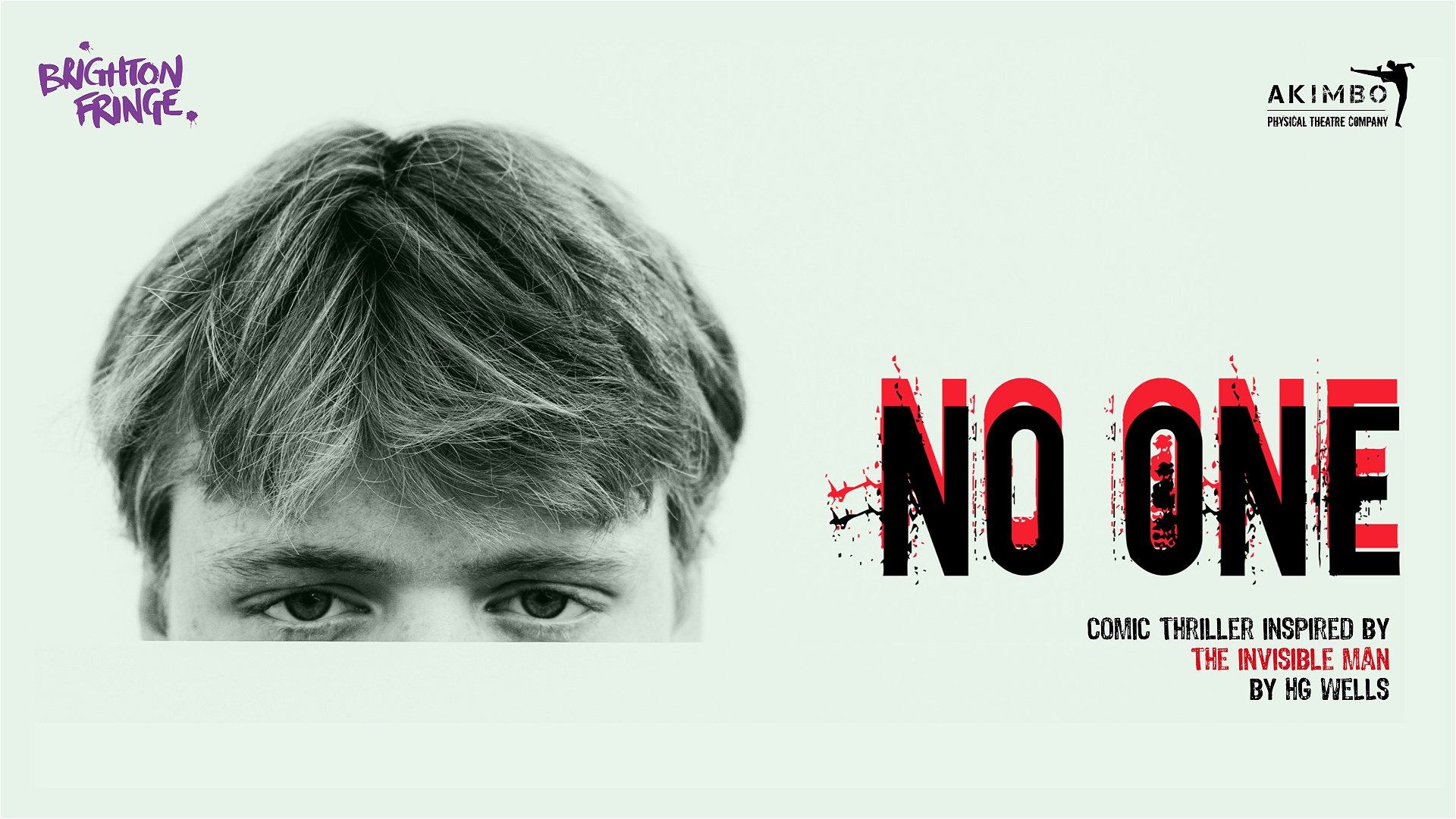
No One

Sometimes you see a piece of theatre that is so superb and shines so bright in every single way that it knocks you sideways. No One by Akimbo Theatre is exactly that.Billed as a “a modern re-mix of HG Well’s The Invisible Man as a high-octane thriller”, it’s possible to be dubious as to how exactly five actors supported by one tech on a bare stage that never has any more than one small stool on it can achieve the lofty heights of the special effects of what we might be expecting from an action film. How they achieve this is simply brilliant, as is their interpretation of the story and the way it unfolds.Using main character names from the original novel but set in the present day, we are introduced to Thomas Marvel who is the prime suspect in the disappearance of a young waitress Mia Kemp, as he is interviewed then interrogated by two very contrasting police officer characters. As they ask him questions he tells a story of how he met Mia and how they were dating. The police have video evidence from social media showing how Marvel has become a well-known magician, levitating different objects and people in a way that nobody can understand, and picture and video evidence of a party where Mia is seen to be dancing with No One. The photos and clips are played out by the entire cast, but as they are interrupted by the police they are invited to pause the video, run it in slow motion, and then backwards. It’s an incredible piece of physical theatre to witness an expertly choreographed fight scene forwards, in slow motion, and then backwards: all of them precisely the same. When it turns out that one of the Police Detectives, Rodriguez, is actually on the trail of Griffin, the Invisible Man, believing him to be a violent dangerous murderer, Marvel starts telling his truth, and we see the story unfold from the beginning, using all the different cast members. We see how Marvel meets Griffin who is hungry and cold, eating the food that Marvel leaves out for cats, how they become friends, how Griffin becomes the invisible magic partner and how the relationship with Mia Kemp really develops.The style of this piece takes a minute to adjust to at the beginning as it has a style of its own: physical, lyrical, chaotic, and ultimately still. Once in their world it’s a wild ride indeed, but often with hilarious moments plus fully realised scenes. There are many fight scenes that look so realistic that the audience actually gasped, but all these are in their rightful place and never gratuitous. We see dancing with invisible partners, fighting with invisible characters, and the same scenes played from different perspectives that add layer upon layer of understanding to scenes that have played previously. Each of the actors’ multi-rolling characters are fully formed with depth and believability and the switches between them are slick. Each of the actors stand out in their own ways, but special mention has to go to go to Pierre Moullier for his performance as Griffin which he plays almost entirely in flesh coloured underpants. His physical acting skills so close up are jaw dropping. The other amazing effect between them all is that you truly believe the other characters on stage can’t see him. There are deeper allegories here too: invisibility and how what might be seen as powerful is actually disempowering, how different people view the truth, how different perspectives can distort. Also how different people react to and tolerate other people’s differences. It’s a piece that could be discussed at length, as well as viewed as fantastic entertainment.This has everything: humour, depth, the whole gamut of emotions, gravity defying fight scenes, outstanding detailed acting, inventive story telling, slick changes. It’s quite simply flawless.

The Rotunda Theatre: Bubble • 24 May 2022 - 29 May 2022

#BLEEP

#Bleep is both a hilariously funny and deeply unsettling glimpse into part of a new doctor’s life. Confessed as semi-autobiographical, and told with passion, openness and raw honesty, it is hard to be critical of the (re)telling of a significant chapter of her life. Created by Ali B Poetry, we are introduced to the character of Wendy on her first day as a new doctor. Explaining that she never knew why she became a doctor except that she wanted to help people, she tells in beautiful, clever and laugh-out-loud funny spoken word poetry the different patients that she meets on her first day, becoming overwhelmed and overawed with the responsibility of actually treating patients. These are detailed and truthful and totally believable in their sometimes gorgeously grotesque aspects. Here she meets Peter, Scottish adventure leader, who talks about an opportunity of an into-the-wild expedition which she mulls over until it seems like an ideal antidote to her current situation. There is an acute change from hilarity to seriousness where we are suddenly aware that something is very wrong indeed. It’s quite a shocking turn and the subsequent exposition of self feels real and stark in its confrontation of mental ill-health. We are taken on a wild ride of facing every human emotion: from laughter to discomfort, from fear for her to uplifting hope; and everything in between.There is no doubt that Ali B is a clever poet and her delivery of the spoken word is fast, furious and funny. The writing is brutal and beautiful and honest, and she has charming energy on stage. She performs a rap to music and later also sings, which are nice choices in different places. Yet it’s not just spoken word and it’s not quite a play: even though it is entertaining and profound and moving, it seems slightly unfinished and unpolished as an actual play. She does describe herself in the early stages of becoming a theatre maker and performer and this seems a fair awareness. It’s a juxtaposition of amazing spoken word poetry but needs more training in acting, performance and some direction being required to become a fully realised play.

The Poets Ale and Smoke House • 23 May 2022 - 29 May 2022

Sylvia Vs The Fascists

This is an interesting experience from start to finish, as we are treated to moments from Sylvia Pankhurst’s life. With such a title you would expect it to be intensely political and that is certainly the case: very much through the eyes and life experience of our protagonist. She is clear at the beginning that this isn’t a recitation of facts, that if we are after facts, we will be disappointed; but that the truth will be shown. It’s a neat device to allow the playwright and director Rob Johnston the scope with which to add for dramatic purposes.Sylvia introduces and proceeds to narrate the show, and takes us through key moments of her life from pre First World War to the Second World War. She starts as a 19 year old idealistic young woman and student of the Royal College of Art who wants to paint real women, not the portraits and vacuous poses that appear in palaces and museums. She travels to different areas of Britain and meets all manner of women: potato pickers, factory workers and farm workers for example, and experiences first hand the inequality of class and how this leads to poverty and hardship. She admits she is repulsed by some, from her protected standpoint. She tries to instigate change but is thwarted by the privileged upper classes, becomes a socialist, then communist. Actor Emma Laidlaw plays Sylvia in this one woman show, which also incorporates some multi-rolling, which she does brilliantly. The switch to Winston Churchill, to upper class “well meaning" woman as she calls it, to Mussolini, to Oswald Mosley are clear and precise. Her physicality also changes with who she is portraying, including a hint of facial jowls of Churchill; tone of voice and accents. The timing is tight with appropriate sound effects running alongside the words in places. Emma Laidlaw is utterly believable as Sylvia. There are some funny moments, although this isn’t a comedy. Sylvia’s idealism is enchanting and hopelessly naïve. She keeps hoping for the revolution and at three points opens her arms wide to celebrate and embrace that “the revolution has started!” and time and again is proved wrong. There is a lovely, poignant and moving section concerning the treatment of an Italian tailor who is taken away for simply being Italian, as soon as Mussolini declares Italy on the side of Hitler in the Second World War; with the tailor's daughter waiting at the window for his promised return. This is a thought-provoking piece, but because it is totally narrated and told to the audience, feels almost like a history lecture told by a gifted performer, compounded by there being only the briefest of interactions between the characters. The ending, although moving, feels a little too much; even if you agree with Sylvia’s politics.

The Poets Ale and Smoke House • 21 May 2022 - 22 May 2022

Dark Sublime

Watching the projected opening credits to Dark Sublime it would be easy to mistake it for an actual British sci-fi TV show of the 1980s. This opening montage featured the actors appearing in dramatic poses complete with comical costumes and hair, alongside the obligatory plastic guns in lurid colours as each character poses to camera; it all sets the scene perfectly. We are introduced, in present day, to Marianne (a wonderfully gentle portrayal by Patti Griffiths): the star of said show. Her career peaked with Dark Sublime and she is living in the past – interestingly, not because of the show, but due to her love for her best friend Kate (Tess Gill), who does not reciprocate. Their friendship is in a pattern of unspoken knowing about this unrequited love, but neither of them quite break free from the push and pull of it. Into that mix are thrown two newcomers: a new partner for Kate: Suzanne (Kate Purnell) who throws things a little off balance with her calm acceptance of the situation and her quiet refusal to be put off by Marianne; and perhaps, most importantly, the bouncing energetic catalyst of Oli (Robert Purchese): an uber-fan of the Dark Sublime TV show. The play moves between scenes from Dark Sublime, which are so truthful to the time they are set and delightfully staged and acted. They are slotted into the development of all of their relationships in present day, and the impact Oli has which moves and changes the patterns of all of their lives. He appears like a comet, causing a certain amount of excitement and chaos. In less skilled hands this could have been a dull affair, but playwright Michael Dennis has the depth and gravitas in his writing of the multi-faceted characters, combined with some of the best ever comedy one-liners. There are so many genuine laugh-out-loud moments, and some delicious double entendres. There is a beautiful attention to detail for all the characters including Marianne’s obsession with different varieties of snacks and sweets placed in bowls for herself or guests. Joseph Bentley’s direction allows the characters to shine in each scene they appear in, whether it is as themselves or as the characters from the show which each of them also play. There are lovely performances from the whole cast including Steven Adams, who should also be congratulated for the amazing multi-functional and light flashing set. However, it is Robert Purchese’s portrayal of Oli which lifts this production to something truly special. He embodies the character from head to toe, with great comedic physicality alongside the full range of emotions, from super fan to disappointment in love. His skill is to play the character seriously, which makes it all the more hilarious. His reaction to the possibility of a long lost episode was an utter joy to behold. A truly uplifting and special piece of theatre: one that will stay in the memories of those present.

Brighton Little Theatre Co • 15 Mar 2022 - 19 Mar 2022

Duty

Duty is both fabulously simple and incredibly clever, shining the light on complex issues with deep and sympathetic understanding yet offering no glib answers. We are introduced to Petal, the character who the others make or break themselves upon. We see her parents, newcomers to Britain who bring with them their own expectations of life, gender roles and duty. Growing up in Britain in the now, Petal does indeed have dual heritage of British ideals and how gender equality or rather inequality is shown in her own life. In a very small scene we see a microcosm of her relationship with her mother, and through that we can see how their relationship has been throughout their lives. We feel her frustration with her mother, yet we see her mother’s point of view too, and her vain plea of how much she gave up for Petal we can see was actually true from the earlier scenes. We see how let down Petal is by her father as well, the proud man who was a doctor where they came from, and here he is a cleaner the mother says as she gives birth alone in a strange hospital in a strange country with unsympathetic staff. Petal’s place in the working world is also complex. She is so very well thought of by the community that she pours her heart into, far more than the three white men who vainly discuss how to appeal to a more multi ethnic community while ignoring the young black woman in their midst – a situation which would be bleakly funny if it wasn’t so profoundly true. Her relationship with the boyfriend who shares similar values to her father is juxtaposed with the fascinating hidden relationship she shares with one of those three white men, from a combination of curiosity and low self-esteem. Playwright Bomafabia Wokoma who also acts in the piece has created multi layered characters who are uncompromising and unapologetic in their virtues and flaws. Her understanding of human motivations and seeing the light and dark in each person is astounding. Even the man in the Board room who you really want to detest, especially after one unspeakable line, you see his loneliness and desperation and feel empathy for him too. This is also greatly helped by a cast of universally strong actors and a natural, realistic acting style and dialogue. The occasional multi rolling is effortless and immediately clear. You believe each one of them, and sometimes, you forget they are acting and just see real life. It may seem as though this would be a heavy piece but it has a beautiful lightness of touch, also occasionally bringing some dark humour in some appropriate moments. A captivating, challenging, and thought provoking piece of theatre: Duty deftly portrays the complexity of today’s world and all the history we bring to it, in a very personal and accessible way.

The Lantern @ ACT • 19 Jun 2021

Every Time A Bell Rings

The phrase "Every Time a Bell Rings" is well known and resonates especially at Christmas time: straight away we expect a link to the classic It’s a Wonderful Life, and are not disappointed.The saga begins with Clarence Oddbody before he meets George Bailey in the classic film, and the company intend this to be a prequel. In this, Clarence has tried many times to win his wings but has not been successful. Using the constellation talking device of the classic film, it is explained to us that he is to be sent to a group of Angels who form an elite squad, who can help him understand the ethos and the qualities needed in order to ultimately achieve his goal. Thus we are introduced to a portmanteau show, containing many different tales from this “crack team of Angelic educators” who each have a story to contribute. This is a panto-esque show for the most part, although it changes in pitch and rhythm for each story, an effect which works really well. As a filmed live performance, this also includes some clever editing and use of film angles for use of asides, and in the Second World War story, real archive footage superimposed over the actors which made the scene suddenly appear to have many more people on stage.The unique aspect of this show is that it involves real stories from the community local to the company in Bedford, including writing from the local community as part of the piece. This works both to its favour and to its detriment. It was fascinating to hear the true story of the Anzio Bell, from the Second World War; and the incredible story of Sandrine and Yarlswood Detention Centre. Both are powerful and heart wrenching, which juxtaposes just a little too much with the panto feel of some of the other content, and is a little too documentary especially in the latter. It also makes the show incredibly local, which is wonderful for Bedford of course, although it could be argued too parochial to translate nationally. The references are based around Christmas 2020 and the up-to-the-minute rules and regulations in this pandemic world, including observations about six people at your Christmas table jokes which, they say in an aside would have worked two days before the show was shown live. Their horror at opening a box containing 2020 by accident and huge numbers of current jokes are very gratifying and genuinely funny.There are some delightful moments and the attention to detail is considerable. These include a tableau of “Charlie’s Angels” on the command “Angel’s Assemble!”; the conversion from Clarence’s American accent to one from Bedford; and a tiny model of the street from It’s a Wonderful Life made from cardboard, which the actors shook icing sugar snow over - a street which showed the company’s previous production of Frankenstein the Panto at the cinema. There is also a pure panto section, and Neil Jennings is clearly one of the best Dames in any show, easily totally capturing the quintessential Dame characteristics. All the actors multi-role easily, but Neil Jennings steals it in this section.This is a musical with heart and soul. We experience the whole gamut of emotions as we watch, and also learn new things. It does try to perhaps do too much: be a documentary and local community project alongside being a new national show; but its ambition can be understood. There is a lovely message for Christmas about loving and cherishing what you can, whatever your situation. It is hugely enjoyable, and well worth catching.

The Place Theatre, Bradgate Road • 25 Dec 2020

Talk

Set in 1854 in the criminal wing of Bethlem Hospital for the Insane and being about the birth of psychotherapy, you would be forgiven for assuming this play will be heavy going. It is of course a play with gravitas, but writer director Mark Wilson handles this tricky subject matter with subtlety and wisdom, and thankfully at no point is anything gratuitous. This is about the changing ideas of the treatment of the mentally ill: it shows the struggle of those advocating ‘traditional’ methods dating back hundreds of years which include restraints, beatings and torture; with those exploring talking and listening to patients, particularly the importance of childhood experiences and the curative value in articulating them. Mark writes: 'it is a play about the universal and, indeed, timeless need to be heard.'Fascinatingly, the characters of the two doctors and one of the patients (Richard Dadd) actually existed, and, based on the writer’s research, the play tells their stories of this time, which gives the piece added depth and meaning. On one side we see Doctor George Haydon, who is exploring listening to his patients; on the other we have Nurse Janet Grey, who advocates traditional methods with passionate conviction. It is an interesting device to have the traditionally ‘softer’ female character in favour of what we see with modern eyes as barbaric; stating her case with such belief that the audience can see she does actually come from a place of caring. Hazel Starns gives a believable and sympathetic performance as the nurse which could otherwise have been two dimensional and easy to hate. In the middle of the two, is Doctor Charles Hood: more political in nature, reporting to the Government appointed ‘Commission for Lunacy’. He too explores talking and helped bring about a radical transformation in the treatment of the mentally ill long after the events of this play have taken place.Being in the round with no set gives this production immediacy and intimacy: the audience experiences everything very closely. The piece has a stylised quality at the beginning, which becomes a conversation between the two doctors in the first act with flashbacks to other events that they refer to as they talk. There is a quiet restraint over most of the characters which given the subject matter makes sense. Doctor Haydon (James Macauley) gives a multilayered performance, showing his deep caring for his patients and his quandary over whether talking is beneficial, his doubt in his methods and himself. His self-conviction contrasting with vulnerability and uncertainty is excellently portrayed. Doctor Charles Hood (Matteo Bagaini) shows an outward youthful confidence of one who believes he is right, and carries authority really well. The two patients we see are painter Richard Dadd (Bill Griffiths) and poet Emily Clayton (Janice Jones). There is a beautiful scene in the second half where they talk to each other and she helps him uncover a traumatic event in his childhood which has contributed to his mental ill health, where the writing is so lyrical and rich it is almost poetry. One of the therapeutic tennets of now is shown in the line: “I sometimes wonder if the greatest skill us knowing when to say nothing at all”, and when they question Emily about how Richard had a breakthrough, she states simply: “I walked beside him”. Bill Griffiths quite simply gives a tour de force performance as the painter: a lost soul trying to regain his sense of self and sense of reality; running the whole gamut of emotions: completely convincing and captivating. An important piece, sensitively written and directed, deftly delivered: a creative and compelling production.

Multiple Venues • 14 Feb 2020 - 22 Feb 2020

The Amazing Adventures of Little Red

Brighton company JW Productions approach this inventive and fresh re-imagining of the old Little Red Riding Hood saga with gusto. This is a musical version which includes interaction with the children in the audience from the start and continues throughout, complete with delightfully simple and effective choreography. The direction is tight: they are all drilled and know their places in each scene; the songs are catchy and fun and they can all sing well. The five adult actors are accompanied by a chorus of child actors multi-rolling throughout the piece, and together they all appear to be having huge fun, which is infectious and spreads to the audience. This version brings a new meaning to the genre ‘fairytale’: we discover that fairies exist in this universe and that most are not very nice at all. They are ruled by an evil Queen - cue much encouraged and enthusiastic boo-ing from the audience. Janine Pardo plays the role along the fine line of evil enough to make the audience enjoy hating her but not being so vile that it’s distasteful. The young audience are delighted with Little Red, played by Kate Hume, who talks to the audience regularly throughout, much to the children’s delight. She presents a very down to earth girl-next-door accessible character, yet we discover very early on that Red appears to have magical powers. The story line is a lovely new take on an old classic which is easy to follow for the young audience. Unusually for a children’s show, and somewhat essential, this also has enough for adults to find hilarious as well. There are some lovely throw away lines plus a lovely set piece where all the five main characters suddenly find themselves on stage and turn to each other exclaiming the next person’s name in surprise over and over in a loop, which is a hilarious homage to the Rocky Horror Show as well as funny in its own right. Hugo Joss Catton plays the big bad wolf with just enough evil to be scary for small children but not enough to give them nightmares, and also portrays the lovely father. His is one of the stand-out performances, confidently holding the audience throughout, such as his various tries at a happy birthday song for Red at the beginning of the show, then getting us all to sing it. He also has a beautifully smooth tenor voice which is rich and effortless in the songs. It is Gregory Ash Ashton playing both Shadwell the sheep and the quite bonkers Granny, who everyone is instructed 'don’t mention the war!' and soon has us up on our feet marching, who steals the show. His comic timing is absolutely superb, and the creation of Shadwell the Welsh sheep who wants to be a super hero, cue a song about super sheep, is brilliant. There is a wonderful message at the end for you to be whoever you want to be, find your destiny, and that everyone has a little magic in them; which is a lovely message of positivity for young ears and something that we need a reminder of from time to time. A super well rounded piece, cleverly told with great characters and songs, The Amazing Adventures of Little Red is a thoroughly enjoyable show from start to finish.

Brighton Open Air Theatre • 1 Aug 2019 - 4 Aug 2019

Quentin Crisp: Naked Hope

The minute he walks calmly onto the stage and surveys the audience you know you’re in for something very special. You’d be forgiven for thinking that instead of a play, you have walked into an audience with Quentin Crisp himself. Mark Farrelly, who also wrote this solo show, looks, sounds and moves like the infamous man he effortlessly portrays. The witticisms and wisdom he imparts throughout, including some fantastic one liners, really make you wish that you had the words written down for you as well. The show is in two parts. First, we see Crisp in his Soho flat, reminiscing about his life so far. Very quickly we get the measure of the man, escaping life as much as possible by being in a room that he doesn’t clean, which he reassures us "after the first four years the dirt won’t get any worse". In an age that persecuted all those who were ‘different’ he is incorrigibly himself, and you really do believe that there is no other way for him to be. There are some hilarious moments throughout, and in this first part, also some heart-breaking ones. For anyone other than him, the daily prejudice, discrimination and beatings resulting in self-ostracisation, these events would surely have broken them. There are moments when you really feel so sad, listening to him, especially at one moment when he quips "if you don’t suffer, how do you know you’re alive". He talks to the audience throughout, but there are some moments of multi-rolling in the first part (Naked) which are utterly convincing. At once Mark Farrelly is the Policeman who tells a crowd of onlookers that there is "nothing to see" and speaks derisively to Crisp. All of the characters that we are shown are absolutely believable, as if another actor has walked on stage and played the part. When Crisp is beaten up which we see entirely from his point of view, is incredibly well done: he is thrown to the floor in such a brutal way you really feel as if he has been attacked. "Why do I dress like this? Because this is the way I am" he states simply, even in the face of such aggression and hatred. This is portrayed in such a way as never to be ‘too much’ for the audience and in no way gratuitous. In the second part (Hope) we see a much older Quentin Crisp, living in New York, where he gives a talk to us about how to have a lifestyle. Farrelly changes on stage which works amazingly well, and becomes a 78 year old Crisp whose mannerisms and way of speaking have remained but otherwise he is believably older in movements and even his voice changes showing age. This second part shows us that although some things have stayed the same: he still derides relationships for example, but there is, as titled, hope. There is also the quizzical realisation that the rest of the world has begun to accept and catch up: "even if you only lean limply against a wall… gradually it begins to give way". This is an absolutely stunning piece of theatre, masterfully told by an incredible actor and writer, and imparts some crucial wisdoms as well as entertainment: "discover who you are. And be it. Like mad!" Mark Farrelly holds the audience beautifully from start to finish: an acting masterclass; you don’t want it to end. But when it does, you feel as if you have been in the presence of both the actor and Quentin Crisp himself: taking a little piece of the inspiration and genius of both home with you.

Rialto Theatre • 31 Jul 2019 - 1 Aug 2019

Numbers

It is extremely unusual to see something completely new and fresh in theatre, let alone something surprising, but Numbers is just that. A sensitive, poignant and totally absorbing look at mental ill health from the perspective of one young man – Jack – who has decided to seek help, although he tells us at one point that he’s basically fine, 'really'. But this is so very much more: it is deeply layered, nuanced and incredibly clever; the writer Alex Blanc has managed to capture a fascinating and thoughtful through-the-keyhole look at Jack’s life in an unexpectedly honest and deeply mature way. The result is captivating.Jack, played by Henry Waddon, both holds and drives the whole piece. In a simple set of just three chairs, Jack both starts and ends the play with speaking at a group therapy session. As he starts we realise this is not the nervousness of a young actor, this is the complete anxiety of the character he portrays so effortlessly and beautifully it seems as if he is just being himself. You completely believe what he’s going through in every scene which is so convincing the anxiety spills out into the audience and you feel it too. The acting is impeccable in this but Henry in the lead is absolutely incredible, with a multifaceted and multi-layered performance astonishing for his age.You are taken on a journey of some of the incidents that have brought Jack to therapy. There are some delicious moments of honesty between Jack and his girlfriend Brianna (Abi Harindra), and a particularly lovely scene where we see from both of their points of view: she thinks he doesn’t want to spend time with her; whereas he has a mass of things going on for him, including not being able to face people and also wanting to protect her from what’s going on for him. She has in the past called him her 'little ray of sunshine' and he wants to be that for her. This is one of many brilliant little moments in the play where we reflect on our own behaviour: we think we might be saying something positive or kind to someone but actually it could increase the pressure they feel to ‘act OK’.Jack listens to Michael (Joe Woodman) sharing his story at therapy, who asks a vital question: can he be helped, or are some people just too damaged? When they meet by accident in the worst bar in town and Jack tries and fails to say something positive to Michael: a superbly written and performed awkwardness of not knowing the right thing to say to reach out to someone. There is a desperation in the way Jack tries to help which you suddenly realise is also a self-reflection: if he saves Michael then maybe he can be saved himself.Writer Alex Blanc’s coup is to leave out the therapist: to not offer a specific diagnosis for Jack or Michael. There are hints of obsessive compulsive disorder, anxiety, depression, alcoholism and the mental ill health resulting from homelessness and zealous upbringing, plus more than a hint at an eating disorder – but the importance is placed on their individual stories, not the diagnoses. Even when their stories start subtly to contradict themselves and you glimpse that maybe their truth needs a bit more investigating. In a society that wants answers and to analyse and find facts and a way to fix things, this is a very brave, honest and important statement to make.The audience were slow to respond at the end: primarily due to there being so much to think about in what they have just seen. It is a great deal to go away and process, in the best way possible. This production sent this reviewer scouring the web searching for who this amazing professional company and actors were; to discover they are students is absolutely jaw dropping. This is astonishing, poignant, professional quality theatre which will leave you thoughtful and hopeful. Mercury Theatre Productions have struck pure gold with this and it deserves to be a national hit.

Rialto Theatre • 28 Jul 2019

Ogg 'n' Ugg 'n' Dogg

Ogg 'n' Ugg 'n' Dogg starts brilliantly, with Ogg and Ugg peering through the backdrop grasses, and simple choreography that made all the children laugh. The two performers emerge and introduce themselves in a caveman style then start talking in a normal way, pointing out that they fooled everyone, but that they are not actually hunter gatherers. It starts with energy and enthusiasm and the children are engaged straight away, being encouraged to tell Ogg and Ugg their names in the same way that the characters shared theirs. It’s a lovely way to include all the children from the start and let them know that participation is encouraged.The first (approximately) 20 minutes is absolutely great. Ogg and Ugg sing original songs throughout. The first song is about being hunter gatherers and they include the whole audience (adults too), climbing on chairs and creating a really fun atmosphere. They gather food from various parts of the room, including grapes, a dodgy looking mushroom. They also have a fight with a small snake, which turned out to be a balloon with a covering. When it popped, they got very scared and announced that it had shed its skin. The wolves are puppets, moved about and voiced by the same performers. At the start this works well, but each time they become the wolves they don extra clothing on top of their outfits, clearly to encourage people to just see the puppets. However, after the first transition to the wolves, they could easily have dispensed with putting on the extra clothes as the audience got it, and it took too long.There was a lovely section where a child from the audience is asked to help them look at the food they have gathered. This worked really well and all the children loved it, but it is only used once in the show. There could have been other opportunities for a child helper. There is also a lovely section where they perform a song and human beatbox as accompaniment, and a very clever setting of fire with the use of orange fairy lights.However, after a very promising start it does slowly go downhill. The back of the sliding grass panels is meant to be fire at one point but isn’t in the same vein as the other props so it doesn’t work. The most off-putting thing about this is the amount of time the audience spends looking at nothing, because the performers do everything themselves; switching between the humans and wolves and the putting on of an extra costume piece of grass skirt, seems to take an inordinate amount of time. The children were definitely getting restless as the show progressed, and they were still trying to take part, but the performers ignored some of them. While those interjections may have been unwelcome, the performers could have managed it better. The ending, where the performers change into modern people, albeit with bizarre dress sense, is just confusing and doesn’t work. It’s a shame as the show is a lovely concept and it starts so well, but by the end the children were much quieter and the applause was polite rather than genuine. It’s as if they had one good script writer and director who either disappeared or just gave up. There was definitely not enough material here right now for a complete show, but with some work this could be one to watch.

Komedia Main Space • 1 Jun 2019 - 2 Jun 2019

Beauty and the Beast

In a retelling of the classic Beauty and the Beast saga aimed at small children, four players multi-role in an uncomplicated and pleasant way. The stage is covered with boxes and items wrapped in brown paper. The first thing they all do together is build the fabled castle where the vain Prince lives, which is pure Fringe theatre. The set is beautifully simple and uses cardboard for virtually everything, including a teddy bear, a toothbrush, and the horse that Beauty and her father travel on, which is supplemented by cardboard tubing.Different forms of this tale have been told so many times that we accept this version without question. Here, Beauty has two vain sisters, and the rose from the original story makes an appearance alongside a magic mirror and talking candlestick, more akin to the Disney versions. In one hour, the story they tell is cohesive and works well.The players are committed to their various roles and their enjoyment is carried to the audience. There are lovely set pieces, including one where they get tangled in a rope and cardboard telephone, and the children have to help Beauty’s father understand the names of the countries that he is being told on the other end, by shouting out suggestions. There is lots of audience participation as you would expect in a show for young children. These include finding certain items underneath chairs and contributing ideas, such as telling Beauty things that they like so that she can think of nice things and not be scared. There are also parts when characters travel and the children are asked to make the noises of the animals in the fields they pass, such as 'moo' and 'baa'. Plus of course, they have to help the old lady say the magic spell which transforms the Beast both ways.The show may benefit from encouraging the children to contribute to the story earlier to ensure audience participation throughout, including having some backups prepared for quieter spectators. The children were very quiet in some of the sections of this particular show and needed more encouragement, but the actors confidence levels varied in terms of encouraging the desired responses. It might also be good to revise the spell to something simpler as there were a lot of words for small children to remember, which might explain the poor response when they were asked to say it.There is a lovely piece where Beauty meets a mirror with three different reflections, played by the others. This really showed their skill as actors and story tellers and lifted the piece. In an otherwise undemanding show this was quite sophisticated and could appeal to adults and children alike.This is a charming play full of heart and enthusiasm, and when the children could have their pictures taken with their favourite characters at the end, they were all beaming.

The Warren: The Blockhouse • 31 May 2019 - 2 Jun 2019

This Noisy Isle

Even before it starts you are drawn in as you are given a bag with a story booklet inside, and you are invited to decorate your bag with the coloured pencils provided. While some people may not have a chance to read it before the performance begins, the booklet itself is really lovely, with richly, well-written text and sometimes funny short pieces. When the tale begins, straight away we are all involved as one of the children is asked to volunteer to read the story to the group. Here we learn that we are the people from the land of Fire and Ice, there has been a massive war on our island which has destroyed our homes and our livelihoods and the land itself - we have had no choice but to flee. All we have is what we are standing in; we have no passports, no money, no possessions. We don’t know where we will land, whether the people will be friendly or not, or whether they will even speak the same language as us.Of course, this can be taken on so many levels by participants and that is obviously the point. Younger children will see the adventure in the tale, whereas the adults cannot help but be moved by the poignancy of a narrative which is factual to so many people in the world. Suddenly, we all have a direct link to the disenfranchised; we empathise with them, even while the children in the group are having fun thereby ensuring the message is not hammered home, but gently delivered.Using our map as a guide, we first meet Miranda, who speaks a strange language at first which we can’t understand. We spend some fun time being taught the language of this island where we have landed and suddenly we can understand each other. Here she talks about the other inhabitants of the Island: Caliban the monster and master builder; Prospero, her mother, the most powerful wizard ever known and sometimes nice and sometimes a dictator; and lastly Ariel the fairy who has been enslaved by Prospero, but still has magic. Here the peppered use of Shakespeare’s The Tempest works brilliantly to entertain, as the characters talk directly to everyone in our own personal theatrical experience and the children contribute and carve out the story, making each show unique. Each character, placed in a different area, knows our particular story and picks up where the previous one left off. It’s a special touch which makes the whole experience cohesive. There are little story cards en route continuously, which keep everyone entertained and there's treasure to find, which we then give to the different players to unlock secrets. The actors are absolutely committed to their roles and utterly confident in dealing with all manner of contributions. They are funny and bright and involve everything around them, including random noises in the open air. They hold the attention of everyone and get us all doing things. Caliban’s physicality was particularly impressive and truthful in his portrayal as well as very funny. The use of Shakespeare’s original text in Caliban’s 'blessing' and in Ariel’s song – which he sang with a ukulele, was a really pleasing and unexpected touch. The message that Ariel leaves us with and the ending are especially emotive moments and truly lovely. This is a brilliant, immersive, moving, almost promenade theatrical experience which impacts everyone involved, children and adults alike.

MEET: Brighton Spiegeltent • 31 May 2019 - 2 Jun 2019

Frankenstein the Pantomime

Frankenstein and pantomime are two words which should not go together, but in this brilliant mashup, they curiously do. It opens with energy - music, singing and dancing - and sustains this throughout with fast paced story-telling, even though, as they regularly remind us, they only have an hour.True to the original book by Mary Shelley, it starts with a boat rescuing Victor Frankenstein from the sea, where he starts telling the Captain his story after a very funny opening number which sets the tone for the show. The discussion between them is fairly true to the novel until Victor mentions that he was in his apartment in Geneva. The Captain argues it should be a spooky castle instead as that would be much more entertaining and dramatic. There are nods to many previous film versions of this classic: we are introduced to Igor Not-in-the-Book followed by Mrs F, Victor’s mother: a larger-than-life panto dame. They joke that neither of them are in the book and this adds to the fun. The way Mrs F changes the appearance of Igor into the one more associated with that character is gloriously slapstick and funny.The odd thing about this show is that it is perhaps truer to the novel than many subsequent famous and infamous re-tellings on stage and film. They frequently reference the book in a variety of humorous ways and this is both refreshing and very clever. They even mention occasions on which it makes no sense: the travelling between places apparently next door to each other, when in reality they are hundreds of miles apart. There is also a lovely section where the Monster learns English by learning the words 'dog', 'cat' and 'Prometheus' which both a lovely tribute to the subtitle of the original - A Modern Prometheus - as well as gently making fun of the fact that all of the language learning takes only three words.The set is simply classic Fringe: mainly painted boxes and moving flats which double up as everything needed throughout the tale. What sets this apart from ordinary is the intelligent and very funny writing of Neil Jennings, who also plays Mrs F; and Chris Smart who also directs. The five actors play a wide variety of instruments exceptionally well and their voices are pitch perfect and strong. They also manage some amazing harmonies, and the lyrics have been beautifully adapted to well-known songs. For example, the Monster sings 'I’m not a woman, I’m not a man' to the tune of I’m Every Woman when trying to self-analyse. The stand-up routine of bad jokes is the least successful component but the rest of the humour really works. There is plenty of encouraged audience participation, as you would expect, and when things don’t go quite to plan, as you would hope in a panto, it’s even funnier. This is a remarkably well thought out and richly written piece. Of course in panto the characters are always larger than life, and with this gothic horror it strangely works, helped along by a wonderfully talented team-playing cast.

The Warren: The Blockhouse • 24 May 2019 - 26 May 2019

Ross & Rachel

Billed as a 'dark, uncompromising play about the myths of modern love', this starts promisingly enough but soon veers off. It is unclear at the start that this is a one woman show - perhaps she is practicing to herself for a conversation that was happening later, and the male character would appear? But no, this is a dialogue between Ross and Rachel, and it is hard at times to discern who is speaking, especially as much of it is spoken quickly. Beyond a slight tonal voice change, there was no physical change in the actor, which, however slight, would have helped to avoid confusion.The beginning holds much potential: why is her name always second, why does he always speak for her? Especially for women who have been brought up on the idea of striving for a 'fairytale ending' together? At the beginning, Rachel has lost sight of who she is in her own right, and this is an interesting theme to explore. We gain insights into her thoughts and feelings, her crush on her work friend Daniel, and her fantasies of a romantic tryst between them. It is clear that being with Ross has squashed her individuality. However, after a very short time the whole play changes as he is diagnosed with a brain tumour and given 12 months to live. So, what could have been interesting then becomes her coping with his impending death, having been about to leave him. Guilt, despair, a whole gamut of emotions could have been explored but was instead shown as numbness. The way Ross died at the end was drawn out in a way that just felt highly manipulative, while this left Rachel free to find herself outside of a couple and make it interesting again, the play ended.The whole play seems to relate to the actual characters Ross and Rachel from hit TV show Friends, which is a little odd. Rather than simply using the names as a conceit to indicate the 'ideal' couple that so many people in the 90’s believed in, the references in the play are all about the characters in the show, even the reference to the infamous 'we were on a break', with Rachel still seeming to be obsessed about Ross having slept with someone else. This was was hard to believe. Showing a couple who have more in common, bear closer resemblance to life, and have more grounding in reality would have made for far more poignant viewing and been closer to how the show was described and billed.It’s a play that obviously resonated with some audience members, who were sobbing, but there were also several seen yawning and looking at their watches. Some of them raved about the actor’s performance, but it lacked depth and was disingenuous. At one point she broke down in sobs but it just wasn’t believable - a shame, the publicity promised much but the script was immature and weak.

Rialto Theatre • 18 May 2019 - 22 May 2019

A Steady Rain

Biilled as a dark duologue between two Chicago policemen and you would be forgiven for thinking that A Steady Rain might be categorised as 'niche' theatre. In a stripped back stage with two chairs and some empty beer cans and bottles, the audience first experiences the steady rain from the title, as it rains throughout: it is literally a curtain of rain which even makes the air moist. The script is flawless. The central two characters are hard-bitten, down to earth, not-so-nice cops, and yet the craft of their performance means that you feel sympathy towards them. You can't help but feel for Denny, with his strong family values, even in light of the way that he carries these out. Despite his protestations, Joey, the loner, wants the family life that Denny has...even down to the dog. Of course, it's far more complicated than that and the script is absolutely packed. Writer Keith Huff knows exactly when to tell the detail of an individual story, even the conflicting detail of each of the two in the same story, and when to move ahead with less. The two cops swear a lot, but some of the writing is as rich as poetry and it still works, such as when Denny describes pimps as having a smell of 'moral rot'.The director Sean Lippett-Fall should be congratulated, especially on the staging and setting, keeping it stripped back and letting the story tell itself. The actors, Culann Smyth and Ben Pritchard, embody the characters. Their accents are perfect and you completely believe they are who they portray. They hold the tension beautifully, at no time overplaying their characters. They are simply honest and truthful to the unfolding tale. This is an acting masterclass, a tour de force, quite simply brilliant.Denny steps forward through the curtain of rain throughout the first three quarters of the play, with Joey behind the curtain. The moment when Joey eventually smashes through and stands in front, while Denny moves behind, is an incredible yet subtle metaphor for who they are and their story arc through the play. Rain accompanies their individual stories, their arguments, their fights. It pervades their personalities, acting like an oppressive force. When the rain suddenly stops, the audience feels it palpably. The sudden quiet almost a sense of the sun coming out. This show is about two Chicago cops, friendship since kindergarten, human frailty, mistakes, and what harm anger, intolerance and lack of patience can do. There are several moments in the play where the audience holds their breath, the tension mounts in almost an unbearable, yet beautiful way. There is the realisation that falls on the audience like drops of rain, that things in this story are not going to end in a rosy way, but it is always surprising, in a natural way that never seems forced.This is an exceptionally good piece of theatre. A rare moment of absolute privilege and honour to experience such masterful storytelling, when you know you have witnessed something truly special.

The Lantern @ ACT • 17 May 2019 - 26 May 2019

Those Magnificent Men

An intriguing tale made more interesting by the telling, Those Magnificent Men is both delightful and funny from beginning to end. You would expect quirky quality from The Foundry Group and the founders of The Ornate Johnsons and this definitely delivers.This two hander features the understated talents of regulars Brian Mitchell (who also co-wrote) and David Mountfield who is, in a word, charming. They set the scene in the beginning, talking straight to the audience about Sir John Alcock (played by Mitchell) and Sir Arthur Whitten Brown (played by Mountfield) who were the first to make a non-stop cross Atlantic flight exactly 100 years ago. In these days of being able to get on numerous planes and go just about anywhere, we needed to understand that at that time not only had it never been done, but many thought that it was not even possible. This whole piece goes on to be packed full of fascinating information told in an interesting and comical way.Part documentary and part theatre, the two play all the incidental characters as well, using simple props such as hats to indicate a different person. They move through the characters with ease and it is always clear which character is speaking. They often also become themselves as well, bickering about how they should tell the story. Mitchell is intent on accuracy, yet Mountfield wants to add in fictional pieces to make it more dramatic and they jump out of their characters to argue about it in a hilarious way. Mitchell maintains that the story of them crossing the Atlantic is dramatic enough by itself and he’s not wrong. They do also note the discrepancies in the memoirs of the men they play. For example, one mentions a flask of coffee and the other says cocoa, which is a lovely illustration of the difference in memory. This retelling includes both, making it all the more real.The use of props is ingenious; they use household objects such as a clothes airer, sheets and tables, and at one point they actually build part of the plane on stage. It’s like watching a Blue Peter-style masterclass. The audience experiences them actually flying the plane from Newfoundland: through fog banks 'like mashed potato', narrowly escaping landing in the sea (twice), up and down in different altitudes, and through chipping ice off the propellers in order to get the engines working again. Even though we know from the start that they succeeded, it is still exciting and at times tense to watch, including the entertaining landing in a bog in Ireland. They bring an air of hearty humour reminiscent of Morecambe and Wise throughout the piece, and even when things seem to go slightly wrong, such as picking up a clipboard and all the papers scattering everywhere, they include it and make such spontaneous quips that it’s even funnier as a result. A unique piece of Fringe theatre: a true story, faithfully told, with both great comedy and respect.

Rialto Theatre • 12 May 2019 - 26 May 2019

The Goose Who Flew

The Goose Who Flew is a short, but delightfully told, allegorical tale of a dispossessed goose in a strange new land. The young children in a semi-circle are introduced to Goose, who loves to play with his friends and family in the summer time, and looks forward with excitement to his first turn of leading the flock to warmer lands for the winter. A variety of strange items litter the playing area which become all sorts of different things: places, people and creatures, as the tale is told.Amber-Rose May performs this one woman show with ease and quiet confidence. She moves effortlessly between being scenery and changing the landscape to beautiful puppetry of the quite extraordinary goose. A feather loving character called Flossy is played with her foot, and a spider type creature called Bolty she moves with one hand: sometimes moving all three characters at the same time. There is a funny little section where Flossy dances with Goose on top of a bucket which made everyone smile. She also deftly moves between the neutral narrator, a doctor at the hospital and a paper loving funny bureaucrat.Lots of Odds Theatre in collaboration with Half Moon Theatre have brought this story together after being inspired by children who had left their home country and learning of the difficulties they faced, what helped them, and ultimately, their resilience. The show has the tricky task of sharing Goose’s story to an age range of between three and seven, plus their adult companions. There is a Kafka-esque section with the bureaucrat, going through the different coloured forms, pulled out from vast concertina files, that Goose may need to complete in order to stay in this new land; where Goose is asked if his old Country is safe to return to. Goose of course cannot understand the man’s questions. The allegory here is powerful.Ultimately, although at the beginning Goose is confused, alone and very frightened; all the people that he meets on his journey in the new land do help him, and the systems are set up to provide him with medical help and accommodation. Compared with the current political climate it would be nice if Goose’s story was the way people actually experience support in a new land after tragedy strikes. It very much gives a sense that this is how it should be, rather than this is how it is, which is understandable as a tale for under eights.Music is played almost throughout, with some city sound effects too: traffic noises and people shouting. Some of the very young children were getting restless towards the end as the pace is slow, and it seems that many would have liked to interact and be part of it. However, this is a tale full of heart and hope. Amber-Rose May sings a wordless refrain at points throughout that the children and adults were still singing on the way out. It was absolutely charming.

Brighton Dome • 12 Apr 2019 - 13 Apr 2019

Trench Brothers

Trench Brothers opens with a lone Indian Army First World War soldier walking slowly in spotlight through the audience. Above the stage sit over 100 primary school children, flanked on both sides by other primary school children. Two other Indian Army soldiers sit on the bare stage with traditional Indian instruments: Tabla drums and Sitar; below them is a full orchestra.This is a music concert: the culmination of four years of a First World War Centenary project commemorating the contributions of ethnic minority soldiers. It has gathered a huge amount of information on the soldiers predominantly from India and the West Indies. The programme that accompanies the production makes fascinating reading, and the summary at the end of the concert regarding the men we had seen pictures of through the production was very moving. The MOBO nominated Cleveland Watkiss has a deliciously rich blues voice which contrasts Damian Thantrey’s clear and beautiful opera voice extraordinarily well. Both men have solos and duets, but were a little underused. Unfortunately, there was a great deal of time that the words being sung by the choirs could not be understood, and as they sang the majority of the songs, this really impacted on the experience.The central theme was imagined letters sent to loved ones describing the soldiers’ experiences, brought together from memoirs of survivors. However, letters home at the time were mainly about reassurance to their loved ones, with the fear very much between the lines. There is a big difference between letters at that time and of subsequently looking back and reflecting. The overt lyrics about fear and blood and death however truthful, is truth in hindsight, and does much to discredit the efforts of soldiers to reassure their loved ones back home. Lyrically, there were aspects of this that were just too much, and musically, with the exception of Trench Brothers, the melodies were not always interesting. There was also a puppet pigeon, used to imply letters carried which is factually inaccurate as pigeons only carried coded messages. As this piece was about honouring the memories of real people to have such a blatant inaccuracy was jarring. The accompanying simple choreography, adults and young people playing certain roles in fully authentic costumes and the constant use of puppets was at times very effective, but overall it gives the whole piece an overly sentimental feel.There are some exceptionally good things about this but also some that were not. Audience members were overheard while leaving talking about the two men with the Indian instruments and noted that they were hardly used and just sat there; which is true. Only two songs used the Indian instruments. As this was a music production honouring ethnic minority soldiers, it has to be wondered as to why there was not more ethnic minority infused music from India, and from the West Indies?This is a laudable and worthy project and subject, and the production was slick, yet promised more than it delivered.

Brighton Dome Concert Hall • 17 Oct 2018

Alan Bennett's Say Something Happened

Alan Bennett is a national treasure, and his writings are justly well respected. Say Something Happened was originally broadcast on BBC television in 1982, and this production manages to capture the feel of the 1970’s incredibly well. So much so that you feel you’ve gone back in time and are in the living room of Mr and Mrs Rhodes as they bicker, banter and finish each other’s sentences. This dramatises the meeting between June, working for Social Services in registering the elderly in the area, and the elderly couple that she meets. June is tentative, quoting her manager at every opportunity in a way that can only be hero worship, and explains that she’s “never done this before”. It does seem that the couple, Mr and Mrs Rhodes, who call each other “Mam” and “Dad” in sweet northern accents, are there to help June rather than the other way around. However, as the meeting goes on, it slowly becomes apparent to the audience that they are very isolated, despite their protestations that they like it that way. They are fine with just each other, but as June blunders with the indelicate statement, “but you won’t always have each other”, Mrs Rhodes snaps the reply “don’t you think we know that!”. This is a tender moment.Alan Bennett’s delicious way of weaving genuine comedy with poignant almost tragic moments is a joy to experience. The subject of getting older is one that is not generally discussed, yet it will affect us all as the alternative is not desirable either. Mr and Mrs Rhodes, although quite capable, are forced to face the truth that their daughter is off doing her own thing and they are left without support of family; that they are in fact getting old. The help sign that they are given at the end to place in the window ‘if something happens’, and the way they stare at it, speaks volumes. They have become, or are becoming, the elderly people they think of other old people as, and they might have to swallow their pride and ask for help. Something older generations forty years on still struggle with.Barnes Community Players make a decent job of telling this poignant, funny, and sometimes tragic story. They bring out much of the comedy evidenced by the audience laughter. It was clear that this was an amateur production, with June’s accent seeming to waver a little and they didn’t seem used to listening to the audience in order to allow them to finish laughing. But as they all came out with tambourines and the help sign at the end of the piece and sang along to Help by the Beatles, it’s clear that they wanted the audience to leave feeling uplifted and happy, which is a laudable aim.

theSpace @ Surgeons Hall • 22 Aug 2018 - 25 Aug 2018

Por Favor

Set against the backdrop of a school production of West Side Story, this is the story of Mr Taylor, a teacher in charge of putting on the production. It also features Jodie, a troubled pupil at the school, who nevertheless turns out to be the most naturally gifted actress that Mr Taylor (Jeff) has ever worked with. The story is set over a number of months, as we hear their individual stories and what changes for both of them when their lives collide. It seems that most of the teaching staff have already written Jodie off, and they do their utmost to discourage Jeff from casting her in the play. He stands up for his belief that she will make the best Maria, and casts her despite them. Jodie has never aspired to do anything beyond become a nail technician, and accompanies her best friend to the auditions without any ambition for herself. However she discovers that she comes alive when acting, and as Jeff says, 'she just gets it'. He becomes her mentor, and she loses all her friends who perceive her to be doing something 'poncy'. She even loses her boyfriend, and realises that ultimately he was not interested in who she is as a person. This is a tender development to her character arc, her realisation that she is a person worth being interested in.Each of the scene changes are accompanied by music from West Side Story and it helps if you know the piece. We watch as she does indeed ‘get it’, we watch her wobble and we watch her succeed. Mr Taylor becomes the mentor we all wish we had on our side growing up, and we wish Jodie to succeed and go on to a future at drama school with the chance of fulfilling a potential nobody even knew she had.The character of Jodie is played flawlessly. She is utterly believable and gives an astonishing performance. The change when she becomes Maria in West Side Story is jaw-droppingly good. Perhaps suffering from the comparison, Jeff is not as believable and seems to drop in and out of character. There are some odd directional choices, and some needless box moving which becomes a little distracting. It also felt a little like a rehearsal rather than a performance in some places. The story itself, if it had focussed on the dynamics of the relationship between these two key characters, would have been plenty and fascinating to watch. Despite a well written script, the writer also threw some other issues in there which would have been worth a separate performance as they have significant gravitas of their own. The ending, however real, was disappointing and sudden and leaves little satisfaction as you leave still wondering what happened. However, seeing the actress perform the part of Jodie is a shining light in the piece.

Greenside @ Infirmary Street • 20 Aug 2018 - 25 Aug 2018

Beep

Beginning in a frightening dystopia with five people wearing surgical masks manhandling one other as the audience enters, then as the show starts transforming to a happy young party student crowd is a little unsettling. The atmosphere that this creates however quickly dissipates but leaves you on alert throughout the show, an alert state that is not actually needed as the rest of the play, even the ending, does not match this tension.This is a youthful production and an interesting concept. What if men had a legally required microchip implanted in their arms which beeped every time they told an untruth? This is set in current time where the government has passed this law due to 80 percent of men in parliament being caught in deceptions. The two young women in the group mostly embrace this new rule which stops the men in their lives, including their boyfriends, from telling lies. However, the young men and soon the young women ponder the issues this brings. What about telling your mother that you love her roast dinners in order to be nice, when you hate them? What about telling your girlfriend that actually yes, her bum does look big in that? There is also a secret of infidelity between at first two of them, which is then told to another, and then another, until five out of the group know, except for the best friend / boyfriend from whom this is hidden. A neat illustration of how a lie is at first kept to protect everyone, including those committing infidelity, but ends up hurting everyone involved. Perhaps pointing out an obvious morality tale but actually this is deftly told and well portrayed by all the actors involved. The boyfriend was visibly shaking with emotion.This is a well directed piece and all the actors involved portray their characters well and are believable. The odd friend in the bunch: Eddie, played by Charles Barnett, steals it with some belly laugh moments. There is some interesting choreography between the scenes but it’s a shame this couldn’t have been staged slightly differently as the very small space was packed and without raised seating or staging area, only the front two rows could really see anything that the characters were doing below waist height, and nothing much if they sat down. The plot is very interesting and shows the relationships between six university age people well. The cracks in the relationship between Rose and Matt are evident: she tests that the beeping lie detector works by showing him a dress but gets more than she bargains for, showing her boyfriend as being at best controlling and at worst misogynistic, noticed by the audible intakes of breath and other audience reactions. The ending, however, although shocking, wasn’t believable with the characters that had been created, a point hard to explain without giving a spoiler. It was this plot point that perhaps needs further examination, as this has the potential to be more than it currently is.

theSpace on North Bridge • 20 Aug 2018 - 25 Aug 2018

James Dean Is Dead! (Long Live James Dean)

Springing up from the wreckage of his famous car (a Spider), James Dean talks honestly, candidly and sometimes with discomfort about his life. He makes no apologies as he discusses his childhood, issues with his father and the death of his mother when he was a mere nine years old. It is tinged with regret, as he frankly tells us he is only twenty four summers old. The extraordinary thing about this solo show is that you feel as if you are meeting James Dean. The actor’s resemblance to James Franco is uncanny, and he played James Dean in the film biopic. You’d be forgiven for doing a double take.Kit Edwards gives an incredible performance, holding the audience in palpable anticipation. The set is humble, with effective use of lighting for scene changes. The sound is also worthy, demonstrating how much you can achieve with very little. He is fierce, sometimes sad and oozing sexiness as he talks openly about hedonism in a way that is both repellant and inviting.The show itself is not a linear look at his life, but is portrayed as a stream of consciousness. The men he loved, the men he had sex with that he lusted after, the men he didn’t lust after but had sex with anyway because, he explained, that’s the way Hollywood works, that’s “an audition”. His frank descriptions of what he let others do to him, including becoming a human ashtray, is as compelling as it is upsetting. He talks about Lee Strasberg, who asserted that he was talented and unique and then subsequently crushed him in a performance at the actor’s studio. This is something, it seems, which Dean never recovered from. He's proud that Marilyn Monroe described him as the only person she had ever met who was more damaged than she was.Dean talks about the effect Hollywood had on 'nice' boys, because they couldn’t cope with the nature of the aforementioned auditions. He describes a vile Hollywood, where directors or anyone with power use and abuse what they call the 'boys'. He explains that he didn’t mind this very much, because he wasn’t one of the nice boys. Set in the early 1950’s when America ruled the world, the audience are left wondering how much has really changed. Given the prevalence of the #MeToo campaign, Dean showcases how much you have to give of yourself in order to become a star, regardless of how talented you are. Dean's narrative is tragic, and he talks about his connection to the story The Little Prince with such longing. He had so much more to give, and will anyone remember him? An incredible performance, holding the audience in the palm of his hand throughout. A strong, startling and forceful piece which will stay with you long after you leave.

C venues – C aquila • 19 Aug 2018 - 27 Aug 2018

From Today Everything Changes

Before Chris’s wife died, she made him promise to be himself. She had known he was gay before he did, but things were different ‘in those days’ and you stayed together. Newly widowed and embracing ‘from today everything changes’, he begins online dating, not really believing he has anything to offer – especially to men younger than his own pensionable age. Grindr is confusing and he is stood up by a few men before he meets the perennially late forty something man who is interested enough in him to want to form a relationship.The daunting nature of dating after a relationship of thirty plus years strikes a chord regardless of sexuality. The fact that at over sixty years old, Chris has never courted a man. He doesn’t know what to do, which could make for some shy awkward moments which weren’t shown as well as they could have been. His life is not without difficulties, he seems to have a temper he struggles to control and he’s incredibly insecure. He sweetly hopes his partner doesn’t object to him having a family – a son and daughter and grandson. He has an interesting relationship with his daughter, who at first blows up due to shock, but then becomes so incredibly understanding and is instrumental in patching things up between her dad and partner when things go wrong. This is not unbelievable per se, but there was little emotional journey for the daughter to work through, it appeared very simplified in the telling.This is a laudable subject, very worthy and fairly unknown, so perhaps unique in terms of exposure at theatre level. However, the piece is more a narration of a story than a play, controlled by the main character, Chris. Everything is told to the audience – how he feels, what they looked like, even when the wine is poured, all in specific detail. The two other players in the piece – the new boyfriend and the daughter, sit at the back throughout the piece until they are required to come forward. The mixture of audio book, radio play and narrated story is a little confusing. We're here to watch a play, and you don’t get what you expect. The characters are downplayed and the actors have a lot less to do as everything about them is explained to the audience. As the audience it is important to see and feel what the characters go through rather than have it described to us.This is a pertinent tale which should of course be told, but the way it is told is also very important. The message that this is the first day of the rest of your life is a vital one to be telling, and while the actors did their jobs reasonably well, it could have been so much better.

theSpace on North Bridge • 14 Aug 2018 - 24 Aug 2018

3 Years, 1 Week and a Lemon Drizzle

This is an intensely personal, sometimes funny, sometimes uncomfortable window into the relationship of two sisters at the toughest point of their lives so far. Alexandra and Kate Donnachie play themselves in this piece which as they say is written by Alex and Kate but mostly by Alex. The way they portray themselves is utterly real; a fascinating insight into two incredibly close sisters who are also close friends while still showing some sibling rivalry - while all the time beaming their warm and funny personalities into the space.The three years and one week of the title relates to the age gap between the two of them they explain to us, as they do everything, straight out to the audience. They tell us that this show is put together following Alex asking Kate what ‘that time’ was like for her when they were still teenagers, although they don’t look much older now. ‘That time’ was when at age 19 Alex was diagnosed with anorexia nervosa and at one point was given only six months to live. Kate as the younger lived through this from 16 onwards, and for that time, became the older sister.It’s between the lines that this piece becomes the most vibrant. The care and attention that Kate shows to her older sister of whom she is incredibly protective. An older sister that she didn’t know had fragile mental health, a sister she had to be strong for and put her own feelings to one side as she prioritises Alex who she clearly loves very much. The subtle caring glances she still gives to her sister throughout the piece are both heart-warming and heart-breaking. Alex, on the other hand, as a personality, is harder to pin down. From fierce and funny to fragile, in seconds. Watching her try to eat part of a mars bar then put it back in its wrapper and get covered in saliva while Kate attempts to talk to the audience was not as disgusting as it may sound; it was heart-wrenchingly sad, as was the practical care that Kate showed by taking some wipes and cleaning her hands, with no fuss, and no words. On the face of it, it’s of course impossible to tell how much is performance and how much is genuine, but it feels completely authentic and real. Which makes this piece hard to call a show – more docu-drama theatre. Added to by the facts which Alex tells us about eating disorders printed on cards, which tell the audience that claim more lives than any other mental health illness. While eating marshmallows, which then make her sick.It’s a very brave thing to do, to bare all this in front of an audience. These are professional actresses and their flawless performances show this. It is a choppy piece, funny, sad, poignant, deeply distressing in places: which mirrors life, which is no doubt, the whole point.

Underbelly, Bristo Square • 1 Aug 2018 - 27 Aug 2018

Cooked

With the teaser image of a banana on a plate and a blurb that includes previous accolades listed on its promotional material, Cooked promises to be a darkly comic rom-com where a new beau on the first date meets the new date's ex who has reluctantly agreed to cook them dinner. To say this would be met with disappointment is vastly understating the experience.We are first introduced to Lucy with a newborn baby. She turns out to be the new beau, Adam’s, sister but this is only made clear in the second scene. Instead, we spend roughly 20 minutes with Lucy and Adam in a scene reminiscent of an 80s TV sit-com, which nobody expects as the whole premise of the play is that Adam is going to dinner. He’s met a guy in a bookshop and is going on a date. We did not need 20 minutes backstory for that. Acting realistically with a prop that’s supposed to be a baby is tricky but should not be impossible, yet it’s barely credible here. This opening had some obvious gags which the audience at this viewing didn’t laugh at, including a very unfunny massaging of breasts scenario which was uncomfortable to watch. This opening was more like watching a school play than a Fringe production.The idea of the ex meeting the new beau is an interesting one, but there is nothing new in this play. The second scene where Adam (played by John Black) meets Henry (played by Tobias Clay) is really lovely. Henry peels a carrot and prepares food with such anger – it’s very funny. His attempt to ignore the guest while singing angrily to tunes, whilst Adam tries to be polite and diplomatic, is very entertaining. An extension of this scene as the main meat of the play would have been a lovely two hander, in the safe hands of two good actors, portraying their characters with sensitivity and humour. However, this play suffers from very poor directing: the interplay between the characters, except for the scene mentioned above, just seem forced and not believable. There is no chemistry between Adam and his new date Brett, there is no chemistry between old lovers Brett and Henry, and not much between Adam and Henry either. Some lines are delivered as if they are being read, others are just inaccurate, including a line about little black dots in crème anglaise being vanilla pods, (they are of course the inside of a vanilla pod), which may seem like a small thing, but so much is made of Henry being a good chef, and any budding chef would know that. It’s unclear whether that is one of the many writing inaccuracies or whether it’s a director error but the outcome is the same. Some lines are so overdone in their content and their delivery that it’s like watching an old war melodrama.The plot leaves much to be desired and unfortunately the ending can also been seen a mile off, as there was no reaction from the audience at this viewing. The scenes with the baby are just bad. If the direction had been tighter and more effective this could have been more interesting to watch, although the plot would still need serious rewriting. For example: a new mum who has not returned to work, with a very young newborn, refers to case files which she would not have access to. Maybe some of the jokes would have been funny if they had been directed differently but it’s quite hard to tell because they were just not funny. The only thing that lifts this whole show from being awful is the Adam and Henry scene. This seems more a first draft work in progress than a finished play.

Rialto Theatre • 30 May 2018 - 3 Jun 2018

Goldilock, Stock & Three Smoking Bears

If you ever wondered what a fantastically dark comedy musical mash-up of the traditional tale of Goldilocks and the Three Bears and the classic 1998 film Lock, Stock and Two Smoking Barrels would be like, then look no further. The four actors from The Wardrobe Theatre take on a fast-paced crazy story, playing all of the huge range of characters that make this piece come alive, and it buzzes with energy from beginning to end.At the beginning we meet Goldilock, who has a market stall in London and is unsuccessful at selling, for example, broken plastic buttons. There is some plot confusion at the very start while we are introduced to all the different characters, by way of some incredibly quick and effective costume changes - not unlike the film which this show affectionately parodies to brilliant effect. All quickly becomes clear as we meet the gangster who is obsessed with chairs and his side-kick, plus Vinnie – the ex-footballer-come-unsuccessful-actor who works for them - played brilliantly by Andrew Kingston. Then we meet the gangster’s wife, some interested stereotypical Scottish people who have a porridge shop where the bears get their porridge, and of course, the bears - who are three famous bears, referred to as Rupe, Padds and Winnie. Like the film, the plot is convoluted but makes perfect sense, involving £2000 which is owed, stolen from and paid to these various different groups of characters, plus a bespoke golden chair. There is also some lovely fun made at the expense of the original Goldilocks story: why is the porridge such different temperatures when it was all made at the same time?; and Goldilock in this version decides to go and have a lie down at home because it’s “a bit less weird” than lying down in a stranger’s house.There are some sequences here which pay such tribute to the film, it’s clear that they have really studied it, including the slow-motion sequences and the different camera angles which this film was the first to employ in mainstream cinema. The slow motion scenes are used brilliantly: for example, the party with the three bears, which uses almost picture stills in between action. Most excitingly, the card playing scene is absolutely superb. Before seeing this show, it would have been hard to imagine how the overhead camera angles and close-up shots that were used in the film to show the various card hands being held could have been effectively shown on stage. They nail it.This is a bundle of delight from start to finish with some fantastic physical comedy and all four talented actors bringing everything to this production: an original piece devised by the theatre company. Harry Humberstone perhaps steals it with his dual performances of deliciously spaced out bear Winnie (the fact that the actor himself is so slim adds to the humour of portraying the normally rotund bear) and his performance of the lead chair-obsessed Gangster. There are stereotypes in this production, but the stereotypes work to excellent effect. And the golden chair gives the audience, like the film, a brilliant cliff-hanger ending. An absolutely gold plated show, a must see.

The Warren: The Hat • 29 May 2018 - 3 Jun 2018

The Gingerbread Man

If you want a wonderful retelling and reimagining of the classic tale, told by two talented performers on a deliciously simple, yet complex, set, then look no further. This is a children’s show that holds the audience and builds the story in the imagination of both young and old.The Gingerbread Man is the classic tale of the Gingerbread Man having to 'run as fast as he can' told by a traveller on a train station platform to the worker there to kill time because his train has been cancelled. As the story unfolds, the two actors play out all the various parts in the story; from the couple who first create the Gingerbread Man to the farmyard animals, to the people in the city to which he flees. At the end we find out who these apparent random strangers are, which is hugely satisfying.How the Gingerbread Man comes to life at the start is beautifully created with initially subtle puppetry and lots of audience interaction from everyone, especially the children. This follows a raucous cake-making session with flour, sugar and spices literally going everywhere and filling the very young members of the audience with slapstick delight. While the farmer tries to dunk the Gingerbread Man in his tea, the farmer’s wife tells him to run away with the all important catch phrase. There are really delightful scenes and intelligent directional choices throughout the piece. There are moments where the actors play the chase parts of the story out in physical slow motion which is an inventive touch and hugely funny. Most of the set is constructed with different suitcases which turn into: an oven, a church, a city filled with sky scrapers, banks of a river, and even travelscapes for some of the most famous landmarks in the world including the Eiffel Tower and the Taj Mahal. The fox in the river segment of the traditional story (which in this version does not end where you think), is again achieved with simple, yet effective, props and set and very skilful puppetry. The performers themselves at times leap about in a carefree, yet specifically, choreographed way: sometimes springing onto a ladder fixed into the set only by its two ends, sometimes jumping from standing to on top of a tall suitcase. They move with fluidity and grace and acrobatic precision, yet still seemingly effortlessly, acting out all the different characters. There is a fun song with four geese puppets with words that were telling part of the story, but the song was sadly too quick for all the words to be understood. There was a hilarious puppet gospel choir scene in a church that developed out of a very large box - a scene that notably could easily have been longer especially as the audience were clapping along.This show was billed as being suitable for ages three and up, yet there were audience members from the ages of zero with no discernible upper limit. It’s true to say that whatever the age, audiences will find something in this to enjoy, although perhaps ages three, or even four and upwards would find it more enjoyable. With the story developing in a different way from the traditional one and with a pleasingly open ending, this is a production that adults, as well as their children, would enjoy. A clever, funny, fantastic production, very skillfully designed, staged and performed.

The Warren: The Hat • 25 May 2018 - 27 May 2018

This Boy Tom

An original musical about school bullying with only children in the cast might not seem a first choice for top Fringe viewing, but it absolutely is. The production buzzes with energy from beginning to end, the show oozes talent from the young cast, the music is original and the choreography is tight. We are introduced to the Tom of the title, sensitively and brilliantly played by Eliot Milward, singing solo with an angelic voice and hinting at the all important back story. He then appears with a big distinctive mark on his face and the exclusion begins to be shown, followed quickly by ostracisation and bullying. Only the new girl at school, Flora, played by Clara Shepherd-Thompson, is keen to find out more about him and why he is so hated. There is a beautiful duet between them while they sing about finding 'a new friend'. Slowly Flora becomes convinced by the others that she too should shun Tom, cleverly shown by her succumbing to peer pressure to safeguard her own social standing, in a very real and believable way. The bullying escalates into physical violence, and eventually cyberbullying which is of course such a current, and often, invisible issue. This is inventively shown with projection of the text conversation and Tom's subsequent reaction. All these scenes are handled with truth and sensitivity and with wonderful acting by Eliot Milward and Clara Shepherd-Thompson particularly. The score is inventive: catchy music and clever lyrics, with waves of harmonies and balance within the songs. As too the dancing: skilled and drilled. These young people can dance, sing and act in this clever, uplifting, poignant story professionally and deftly told.One song with the refrain 'I am safe when I'm in my home', give us a glimpse of the home life of all the children and it's clear here that whilst, for some, this song is true, for others it's the opposite. Especially poignant is a snippet of a scene during this song with one of the major bullies, which gives us an understanding into his character. The song is beautifully heartbreaking. There are stand out performances from many of the children, but another worth a particular mention is Barnie Gregory who plays Sid. He is hilarious and has a crazy amount of stage presence for someone so young. Yes there were a couple of pitchy moments in one or two songs and the ending is perhaps too neat and quick, but overall this is a hugely emotionally impactful show which the packed audience appreciated with whoops, cheers plus the odd tear, at the end.

The Old Courtroom • 6 May 2018 - 3 Jun 2018