Reviews by Oliver Lennard

Jokes And Their Relation To The Unconscious

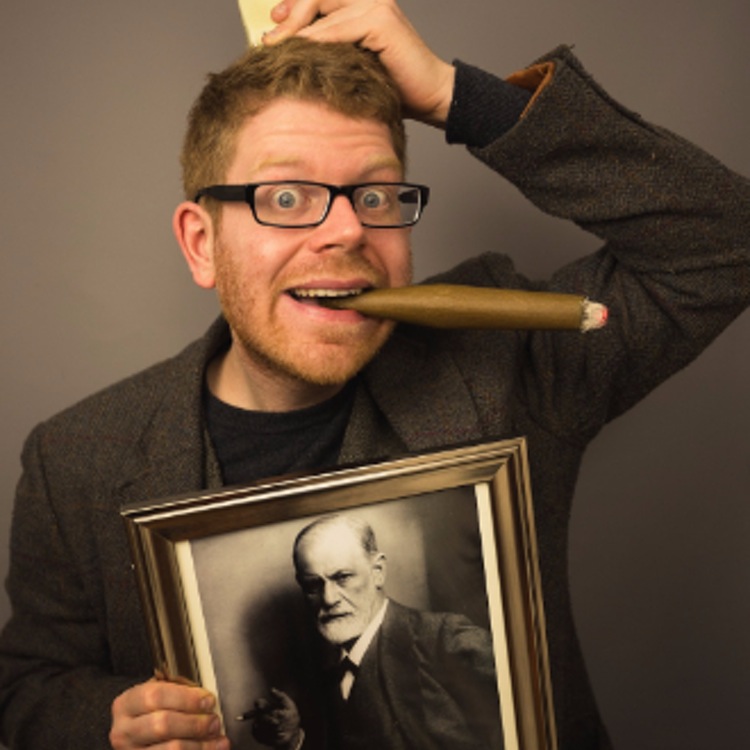
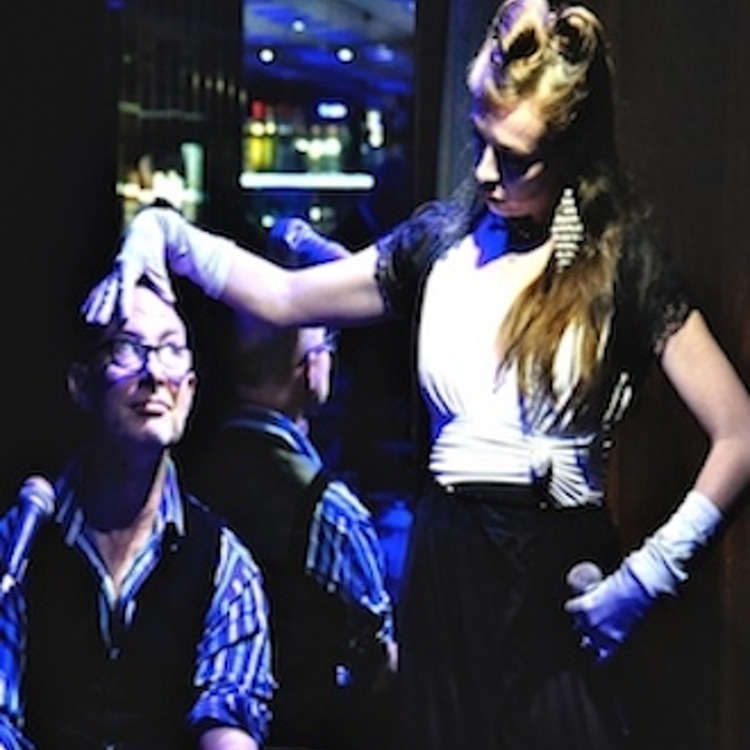
Taken on a whirlwind of what it means to have desires, unconscious and conscious thoughts, Alex Sergeant performed an entertainingly educational stand-up show. Based on the theories of psychoanalyst Sigmund Freud, Freudian expectations were humorously established throughout.Early on in his routine, Sergeant reveals Freud’s belief how sex predominantly governs one’s identity in society. Deploying what he called “Comedic Trick Number One”, Sergeant asked a member of the audience the last time he had sex. Shocking, yes, but the ex-university lecturer’s incredibly open manner garnered a ripple of laughs from the audience. What made it even more amusing was Sergeant’s admission that one should not ask people such sexual questions. These comedic moves endeared the audience to what was to be a simultaneously refined and wacky performance on Freudian theory.Indeed, Jokes And Their Relation To The Unconscious continued to explain theories of Freud in a whole host of contemporary issues. From the ego to the phallus, the variety of intellectual thoughts conjured up by Sergeant kept the audience entertained throughout. From the more specific examples of the Shard in London to more general ones concerning pub culture, the ego and the phallus were but a couple of theories made amusingly clear. Undeniably, Sergeant’s psychoanalytically-politicised perceptions made for a highly-charged political show at times.Sergeant’s effortless deployment of tone and timing made it a relentlessly captivating performance. His further inclusions of personal anecdotes were another way to keep the audience interested, so much so that such interest occasionally manifested itself in a friendly shout-out from an audience member. Never flustered by this, Sergeant always professionally responded in an aptly comedic manner. The effort put into this one-man show was evident to see. Creating a warm atmosphere that put everyone at ease, this evening of comedy from Sergeant makes it hard to wait for his next.  

Sweet Waterfront 1 • 29 May 2017 - 4 Jun 2017

Jacob Hatton: True Brit

Amidst all the current political debates surrounding nationalism, I was curious as to the sort of person that would put on a show called Jacob Hatton: True Brit. Expecting such thoughts, Hatton cleverly confronted this expectation by bringing an inflatable elephant labelled ‘BREXIT’ onto the stage. The assumption that this would be what inspired Hatton’s show was instantly and humorously undercut by the revelation that this show’s genesis was borne out of his dog’s death, six months prior.Indeed, Hatton’s perception that Britain is a nation of dog lovers led him to reflect on whether this was attributable to what he considered the social awkwardness typical of Brits. Rather than ask each other about how they are feeling and doing, Hatton says that Brits tend to talk through their dogs and imagine what they would say to one another instead. The animal theme was to continue later in Hatton’s performance. In just one of the many random deviations from a previous sketch, Hatton asks an audience member to tie his hands behind his back. Engaging further with the audience by wryly saying that “We’ve all been here before”, Hatton then asks two audience members to hold pitta bread aloft in the air. So begins the one man of this show giving the angry bird a human voice whilst devouring the pittas. The unexpected twists and turns of this performance are attributable to the shipping forecast established as a motif at its start. One minute calm, the next frenzied; these are the unrelenting conditions of Hatton’s performance. Whilst entertaining at times, one could not help but wonder how enjoyable being taken from one skit to a vastly different one, really was. What did work in Hatton’s favour, however, was his emotional awareness. Drawing on his childhood, he revealed a less-than-child-appropriate holiday trip to Calais with his father. Impressed by the booze, dodgy dealings and, most importantly of all, Milka chocolate, Hatton’s happiness is soon destroyed upon returning to school. As fellow classmate Edmund is unimpressed by little Jacob’s ventures in comparison to his forays into Narnia (get the literary reference?), Hatton’s recognition of humans often embellishing reality into more fantastical tales warmed the audience to how attuned he was to the human psyche. The abundance of in-your-face humour that ran throughout this performance was wrapped up appropriately by the grand reveal at the end. Where Jacob Hatton is concerned, prepare for a shaky show of entertainment for your evening.

The Warren: Studio 3 • 27 May 2017 - 29 May 2017

Tracey Tracey

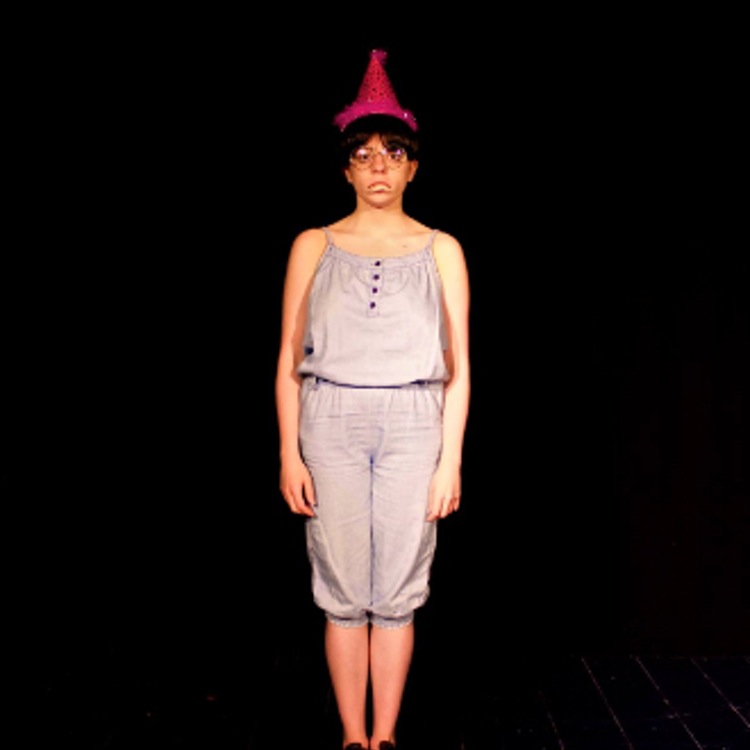
With pronounced teeth and wide eyes, eponymous protagonist Tracey Tracey’s entrance onto the stage paved the way for a larger-than-life, one-woman show from character comedian, Nicola Cross.In spite of her bold physical presence, it was Tracey’s initial silence that powerfully created a bleakness beyond compare. Relying solely on controlled movements and reactions with inanimate objects, Tracey Tracey’s shyness and low self-esteem soon became apparent as she spends her birthday alone. The sympathy simultaneously created with this revelation is further heightened as Tracey starts singing ‘Happy Birthday’ to herself.However, joy is suddenly afoot as Tracey’s party hat suddenly transports her and the audience to a fantasy world. As Tracey’s party soon becomes awash with guests, she catches the eye of Brian. The subsequent confidence created by this extreme change in situation results in Tracey’s hilariously uncontrollable dancing.Then, it is Tracey’s first ever date night. Nervous about how to prepare and what to do whilst on the date, she looks to the audience for guidance. Having already masterfully endeared the crowd, Tracey’s breaking of the fourth wall goes down an absolute treat. The audience members’ advice is soon rewarded as they witness Tracey’s overtly sexual writhes with Brian. Tracey’s happiness is abruptly undercut, however. Waking up hatless from her “sex-induced” slumber, cruel reality strikes once more as she finds herself alone. The protagonist’s sudden solitude makes her seek solace from the audience again. With emotional boosting in abundance, the comedic timing with which Tracey lets her false teeth fall out in shock could not have been better. Hilarity continues right up to the performance’s end. As Tracey takes off her wig, glasses and false teeth, whilst making a hysterically funny, monstrous noise, this tender moment of revealing that beauty is truly skin deep is equally as farcical. It is the constant juxtapositions throughout Tracey Tracey that mirror the ups and downs of human life, whilst epitomising making a negative out of a positive. Comedy and tragedy come in equal measure and equal quality in this impressive performance from Nicola Cross.  

The Warren: Theatre Box • 19 May 2017 - 22 May 2017

Frankenstein: Man or Monster

A refreshingly innovative take on Mary Shelley’s 19th century novel, Augustus Stephens’ one-man performance effortlessly portrayed mental illnesses through the depiction of Victor Frankenstein, Igor, Elizabeth, as well as the Monster. While maintaining the original tropes of Shelley’s novel in his show, Stephens cleverly brings it into the contemporary by raising awareness of mental health issues within it.Revolving around Frank, Frankenstein: Man or Monster has multiple personalities (called D.I.D, Dissociative Identity Disorder). The regular switches from one personality to the next manifest themselves through schizophrenia in Victor and the Monster, Obsessive Compulsive Disorder in Igor, and through an eating disorder in Elizabeth.Though Victor and the Monster both suffer from schizophrenia, they individually suffer from different symptoms. Victor has paranoia and delusions of grandeur, one such delusion showing itself through his belief that he is studying at Ingolstadt University, whilst in actual fact he is more likely to be trying to get his A-Levels at Brighton. The fact that his delusions convey themselves through the educational implicitly, highlights how society needs to be more knowledgeable of the above mental conditions that are more common than one might initially think. The Monster’s schizophrenia, meanwhile, is far different. Amidst hearing voices, hallucinating and having confused speech, his view of the world is very narrow and cannot understand why people don’t see it in the same way, thus making him confused and upset.The sudden musical interludes from the characters throughout reflected the various, ever-changing rhythms of the lives of people with such conditions. Indeed, the jarring nature with which they entered the performance, mirrored the deviation from what is considered normal behaviour in society, was made even more so by the comforting tone of the music in contrast to the often-sad sentiment of the lyrics. Stripped back and incredibly emotive, Stephens’ one-man performance will leave you begging for more. The lack of props on stage made the audience focus more intently on the characters’ reaction to whatever situation they found themselves in. For in the “civilised” society that Stephens alludes to in Frankenstein: Man or Monster, the normative conditions it creates illuminate how all walks of life will inevitably encounter the same situations, but just won’t deal with them in the same way. This subtle allusion proved hard-hitting and gave the audience time to reflect on the blessed differences that comprise our society. With the behaviour of the main characters being based on conversations and communications with people who have or have had these conditions, as well as Augustus’ own experiences of mental illness, Stephens boldly, but respectfully brought these issues to light. Undoubtedly, a performance to be enjoyed by all.  

The Warren: Studio 3 • 19 May 2017 - 21 May 2017

The Maydays present: Happily Never After

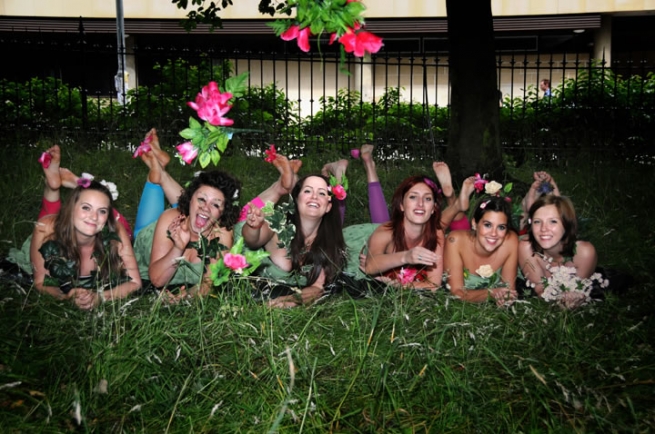
Being inspired by fairy tales, Gothic themes and the warped imagination of Tim Burton was all-too-clear in the wide and undeniably impressive range of sketches, theatre troupe The Maydays gave.The swiftness with which they could go from a scene of abject despair to gut-clenching hilarity meant that no change instigated by any one of the female quartet proved too big a challenge. Indeed, the complete absence of fluster between each scene transition showed improvisational theatre at its best.Initially asking for audience members to shout out what their grandfather’s professions were, the chosen job of ‘carpenter’ set The Maydays going. Starting in a carpentry yard, the faultless four devised an effortless song to the soundtrack that started playing without any hesitation whatsoever. The soundtrack’s often-at-times haunting quality wonderfully set up scenes where characters would kookily act against the tone of the music. Unfalteringly hilarious! Just ask the regular and uproarious laughter that came from the audience.The Maydays’ ability to portray one end of the emotional scale to the other, and everything in between, makes it hardly surprising that they have won awards in the past. Not only were the troupe dab hands at portraying human characters, but nonhuman ones too. From portrayals of rocking chairs to trees and animals, not one hint of wooden acting was to be found. The way the beginning of the carpentry-inspired story came full circle at the end in the context of a romantic reunion will unquestionably mirror the complete love you will have towards any of the fantastic performances this troupe give in the future.With the theatre troupe’s aptitude to take you on a fantastical yet believable journey means they are sure to go down as greats in theatre history. Continuously questioning the eccentricities of life, what requires no thought is your decision to buy a ticket to any of The Maydays’ performances. I defy anyone to find a better improvisational theatre troupe. Tim Burton would be proud! 

The Warren: Studio 2 • 18 May 2017 - 20 May 2017

Woof Woof Meow Meow

Described as ‘a stand-up comedy brought to you by pet-loving funny guys Simone Belshaw and James Sarek’ in the Caroline of Brunswick’s 2017 Summer Comedy Guide, this performance initially went at a snail’s pace to garner laughs from the audience. Indeed, Belshaw’s introduction to the show felt more like an interrogation as her bombardment of questions to the audience that tried to settle them in, alienated them instead.Meanwhile, Sarek’s opening gambit of the Woof Woof section was to relate typical dog behaviour to his human self. While gaining a few smirks from the crowd, Sarek’s use of the modern trope of breaking down distinctions between the human and the nonhuman animal highlighted the performance’s aim to raise awareness about animal welfare. As his impressions of dogs in various scenarios followed, his comedic timing could not have been better. The amount of time left between his impressions and his reveals created a stilling atmosphere that produced a room full of suspense-filled faces, waiting in anticipation for what was going to happen next. The audience members’ subsequent curious faces were then humorously undercut by Sarek’s sudden breaks from character as he gave deadpan explanations as to what he had been enacting prior. Sarek’s use of time did not fare quite as well in the next section however. Before he began his spiel on his ‘Top Five Celebrity Dogs’, Sarek asked the audience if they liked following celebrity dogs. The short amount of time permitted for the show – just shy of half an hour – rendered it unnecessary for such questions to be asked and hinted towards stalling. Belshaw returned to the stage and, with her return, used cats to portray feminist issues in society. From giving a hilarious new meaning to ‘cat-calling’, to making men’s likening of childbirth being ‘their favourite pub burning down’ more female-focused, Belshaw’s witty stint got regular laughs from the audience. Though one may have to hold their horses before this performance gets out of the dog house, Belshaw and Sarek should not chicken out just yet. For if the duo develops upon the occasional instances of humour they showed in this performance, it may just mean that Woof Woof Meow Meow will eventually have a cat in hell’s chance of having a future. 

Laughing Horse @ Caroline of Brunswick • 16 May 2017 - 4 Jun 2017

Results Will Vary

The quartet of performers who make up Pop Heart Productions brought to life a piece of improvisational theatre with several compelling aspects and showed promise for the future.With a narrative chosen by the audience, each evening of Results Will Vary will end up playing out differently and the key for this improvisational shows will be to maintain a consistently high standard. For this performance, Pop Heart Productions cast members had to devise several skits around the subject matters of ‘shit jobs’ and ‘cliques’ - all chosen by the audience - and the ease in which the actors transitioned from one scene to the next brought about a slick routine with an added plethora of improvisation techniques. It was the performers mix of concrete and increasingly abstract scenes that kept the audience entertained throughout although the fluidity with which the production ran was halted at times by the occasional break in character as well as laughter from actors off-stage.In spite of this, there's much to recommend in this performance of impressive word-play. Not only did this evening of eclectic episodes humorously teach me the sensuousness of shallots and the emotional layers of onions, it also showed the potential that this theatre company has for the future. Though still rough round the edges, there's plenty to come from Pop Heart Productions.

The Iron Duke Pub Guesthouse Kitchen & Theatre • 25 Nov 2016 - 26 Nov 2016

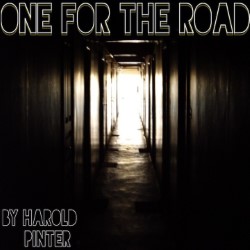
One for the Road

Harold Pinter’s short play, One for the Road, concerns torture, and you can assume it’s talking about state-sanctioned torture, given Rising Phoenix Repertory’s decision to tack on a clip of the playwright saying “political theatre is important” at the play’s end.Victor is tortured and Nicolas is tortured. Gila is his wife (and barely features). There’s little content, so the RPR’s production aims to run on feeling, especially the menace for which Pinter is famous. But not much is made of One for the Road’s script. The image of a little and a big finger approaching someone’s eyes is openly polysemic, but that is all it is, and it’s oddly a great indicator of the play en masse. The words occur, repeat but there’s no emotional grounding for them. For instance, Louise Dylan’s Gila is mostly silent, and when she does speak she’s used as a device to augment the brutality. She’s there for the audience to be told she has been raped; a sociopathic insert by Pinter to up the despair, though RPR’s take hasn’t framed this as anything other than what it seems on the page. And this is how the rest goes, although not as tastelessly. Language is flung at a wall to see what sticks. The words shock without building anything with the fragments of our short-term perception and, as soon as something could stir, it’s thrust again into numbing repetition. It does appear as though I am blaming RPR’s production rather than the text, because productions add context to the relative skeleton of a drama, but the blame works two ways. One for the Road isn’t a skeleton: it’s a heap of bones, so it’s worth considering how the Rising Phoenix Repertory create something consistent and a little hypnotising out of it. Mauricio Salgado’s direction forms a correspondence between Pinter’s sharp, repetitious dialogue and sharp, repetitious actions, all backed by a liminal tick-tock. Chairs are spun around; Gila stumbles back and forth up stage; Nicolas presents his fingers in the same clinical sequence each time. It would put an audience into a thrall if the language didn’t double back on itself. There’s also a bracing turn by Seth Numrich as the torturer (and apparently apparatchik) Nicolas fighting to maintain his precision in the face of his bestialism taking over—a coolly controlled bout of uncontrollable cruelty.Torture still exists, so the piece retains content-relevance. Formwise, Rising Phoenix Repertory have a good crack at a smelly and stubborn play, and for that they deserve their fair helping of praise.

Quaker Meeting House • 23 Aug 2016 - 27 Aug 2016

All In

Here’s what happens in order: A parody of bourgeois conversation by actors in black morphsuits; a light show to the gaiety of the Ode To Joy; unembellished description of said piece; a demented, Sesame-Street-type lesson on cooking and friendship; a plastic-covered man holding his drink in a nightclub while an omnium-gatherum of object names gets projected behind; footage of North Korea’s Arirang Mass Games; a penumbra-umbra light show to wrap it all up.“A darkly playful exploration of the millennial condition” the Catalan company Atresbandes claim in their description. Well, the only accurate part of the statement is that some condition is explored. Not millenial - All In is too vague for that - and not playful, unless rampant eclecticism and abrasiveness is playful. It’s not dark either: it’s more upsetting than dark. The condition explored is alienation which is a pretty standard theme to contemplate especially in the soul-searching Summerhall. As bitty as it may seem, every part of All In is connected in its look at groups and what it feels like to be in and out of one. That should be great but the only element that entices is the play’s bookends. The middle, the sandwich meat of the show, is completely unpalatable. It doesn’t feel worth it to sit through the segment about friends and making meals; it’s the longest and most monochromatic experience of All In and it ruins it in its humourlessness. It made me want to scream “I get it!” and leave. On any interpretation of the goings-on, nothing rouses, even in a Brexit-centred take. It’s possible, given that one character excludes himself for his foibles and from the mention that the Ode to Joy is the EU’s unofficial anthem, that the work is some expression of the loss suffering at the hands of our country’s majority.This reading can’t revive an already leaden body. All In’s success in opening and closing itself proves that Atresbandes have something going on. They can do more without such obnoxious displays and I’m not being stuffy here. The show is, for its bulk, unedifying from all points of view.

Summerhall • 16 Aug 2016 - 26 Aug 2016

Single Varietal

Bob Stourton has an orchard. This orchard makes cider, specifically Hambledon Gold Single Varietal Cider, a famed brew from South West England. Bob dies and suddenly his children, Molly and Tim, are thrust into the care of the smallholding, and conflicts grow over its handling. Unfortunately what follows is an utterly joyless 45 minutes.They’re not sure whether to sell off the orchard to Tamara Cavalier, the CEO of Euro-Artisan Ciders, for a healthy price because the cost is disrespecting the wishes of their late father. While negotiations happen and deals crystallise, they wassail - an ancient custom of reciting verses and singing to the mother tree of an orchard before a season - along with their boozer companion and Bob’s oldest friend, Knocker.A variety of themes - tradition and globalisation, familial strife and ownership, and even death - are on offer. Yet all are treated so gracelessly and so tediously that the shallow approach wears thin in just five minutes, making the rest an appalling spectacle to behold. Even Jack English’s accordion playing can’t mitigate the plot. The wassailing, a fervent call to spirits, ranks as one of the worst moments in play. This should make clear what this production is like. Every point of wit, every display of character is stamped out by clunky dialogue and clunkier delivery. Aside from the ruddy Toby Greenfield (as Knocker), everyone is infuriatingly tiresome and purposeless, shuffling to the side of an already claustrophobic space when their scenes end. Their idling when out of character is more authentic than anything they’ve been trained to do.Unfortunately awful and just like cider, I don’t much care for Single Varietal. It’s an effortless production and I don’t mean that as a good thing. The team behind it need to work a lot harder if they want to survive in the cut and thrust of the Fringe.  

Spotlites • 16 Aug 2016 - 19 Aug 2016

Ears on a Beatle

Billed as “not simply a docu-drama”, Ears on a Beatle promises perspective on the post-Summer-of-Love, post-Fab-Four decade in which the two protagonist agents find themselves.Rookie Daniel and battle-hardened Howard do the grunt work in investigating John Lennon and his revolutionary comrades. Lennon, seen as spouting Bolshy nonsense—and as an audience member told me pre-show, so far left he should have “moved to Cuba”—is seen as worth tailing, recording, and his group worth infiltrating. But it’s not a reactionary piece, at least in spite of a nostalgia-tripping reactionary audience: Daniel and Howard can’t help being invested in the musician’s life and personality when their own are so dreary and parasitic. Even with the apparently independent FBI, the “Ears” of the show, the burgeoning culture of the mega-celeb cannot be avoided.Paul Broesmith defies expectations of his gruff Howard by not entirely succumbing to kitsch. His character’s a tropey lump of a mentor, like the “You’re out of line!” police commissioner you see in every cop drama ever. Writer Mark St. Germain tries to humanise the man by giving him family troubles, but this humanisation is its own cliche; it’s only because Broesmith’s so austere that it has a chance of working. Ben Adwick’s neophyte spook is passable, turning from bumbling to upright, but this a tame characterisation and the complexity of his character is, in no small way, weird.The play’s description asks “Where do you draw the line between coincidence and conspiracy?”. Cool question, but Ears on a Beatle starts to get downright tinfoily towards it’s end. Fledging Daniel begins thinking the assassinations of the Kennedys and MLK are linked and, because this strand doesn’t go anywhere, it’s right disturbing. And not in a dramatic way.The majority of the play isn’t bad. It’s semi-snappy and the actors make a decent pair of agents, even if they humiliatingly have to reference celebrity names—you know, because of ‘nostalgia’. But Ears on a Beatle was a genuine three-star until it’s tubby, flailing ending. Like so many Fringe shows, it’s got ending sickness, although the play really tries to pack a bunch in its three codas and fails spectacularly. Why Germain felt it right to include Lennon’s death is beyond me. So that’s Ears on a Beatle by Lost Boys UK: a decent production marred by a gristly ending. 

Greenside @ Infirmary Street • 15 Aug 2016 - 27 Aug 2016

Spaced: Whisky Theatre

Imagine you’re fifteen. Imagine you’re using BBC Bitesize modules to help cram for the GCSE History exam the following day. Imagine, also, that you’re trying stave off revision by drinking whisky. This is Spaced: Whisky Theatre. It’s a show by John Mark Di Ciacca, also known as the Whisky Anorak.He’s a well-regarded connoisseur and raconteur of all things whisky. What this show aims to do (and there are several) is bring you up to speed with the happenings of the Cold War: the bombs, the hysteria and the drinks that were drunk. He’s telling a story. A great, complex story which’ll run for ninety minutes. Is Di Ciacca really a storyteller, though? His show makes him out to be more of a teacher, and one who’s not that experienced in a classroom. So he’s not so much a tour guide through the post-modern, post-WWII world as a supply teacher who’s keen on talking alcohol. His style is unrehearsed: he’s either talking off-the-cuff or while staring at his iPad. For an hour and a half. What he tells is not only a potted history of the Cold War but also a very simplistic, even bland one. If you could read his script it’d probably be a succession of uniform, bullet-point paragraphs, each cribbed and barely reformulated from the relevant Wikipedia article. And this is frustrating, because the Whisky Anorak genuinely has skills when it comes to talking his namesake. When he’s explaining the provenance and the tasting notes of the drinks he magics a dreamy, atmospheric haze it’s easy to get lost in, leading you through notes of salt, peat, or butter as he times the audience’s sips and gives an aesthete’s touch to the otherwise lazy proceedings.Spaced: Whisky Theatre isn’t dinner theatre. Truly, it’s not even theatre. There’s potential here for something less dry, more in the deliquescent style of the tastings: struggling to spot the tastes he’s suggesting teeters on the edge of the dramatic. There could be a fusion of storytelling and drinking though the Anarok’s method, but it won’t be found here. And Di Ciacca doesn’t seem to care: he faced similar criticisms of his show in 2014. The man knows it needs change, and it won’t happen. So that’s how Whisky Theatre will stay, probably: a lumbering lump of a show.

Valvona & Crolla Scottish Foodhall@Jenners • 9 Aug 2016 - 28 Aug 2016

Under Ice

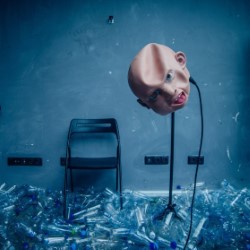
Lithuanian director Arturas Areima mounts an adaptation of Falk Richter’s play of the same name, Under Ice. If these names ring obscure, fear not: know that Areima is a brilliant director with a spirited cast of performers and Richter’s words manage to make an impact.Loud and proud with genuine contempt, Under Ice attracts those of a certain mettle. It’s theatre that has to be braved rather than sat through. So buckle up and enjoy the sound and fury of an uncomfortable hour. Rokas Petrauskas plays a corporate man who lives a life of hate. It’s not so much that his life is sapped of meaning, but rather that it has a singular, angry one: to serve capitalism. He’s trapped in a quotidian bubble of work, only vaguely able to spot a life above the one he lives. Trapped under ice, he’s frozen and aching, slowly realising that he’s been reared since childhood for this automatic lifestyle. Being a consultant, he must also suffer the indignity of being consulted on employee assessments. Dovydas Stončius and Tomas Rinkūnas begin as trenchant assessors, demeaning Petrauskas’ man at every turn; however, they soon morph into others, particularly Stončius, who turns from consultant executive to dictator in the course of one fiery speech.It’s a thumping polemic on the market, especially on the commodification of culture and the ease by which the “pure knowledge” of economics can slide into the “pure knowledge” of fascism. It works outstandingly well, too, delivering socialist sentiment by espresso shots rather than by mild pour-over. Areima mixes loud with louder and, while the pace of it isn’t perfect, when the message seeps through it comes in a flood of wrath; the likes of it are not seen elsewhere in the Fringe. Sometimes, it’s not even the volume that makes it, but the staging. For almost the entire show, Petrauskas is sat in a armchair, backed into it by a sea of microphones; this mirrors how his life is recorded and scrutinised, hindering his progression to a better life. Even the floor being filled with bottles has a purpose, giving a palpable crunch when anyone walks along it, proving redolent of the Great Pacific garbage patch, an intractable monument to market waste in the Maldives. Also, look out for the balletic video display by Kornelijus Jaroševičius, which contributes to the heady split focus.Not all of it scores, though that is the line the show’s chosen to cross in its bellicose way. Under Ice is as form-breaking as a play can get without messing itself up. With Areima, Richter, Petrauskas, Stončius and Rinkūnas, it’s an 18-wheeler of a performance firing on most of its cylinders. 

Summerhall • 8 Aug 2016 - 21 Aug 2016

Bend in the River

Deep Water Theatre Collective mount Bend in the River: a tender, Thornton Wilder-esque look at the modest living of lepers. The place: Marine Hospital 66 in Carville, Louisiana. The time: 1941. The subject: A possible cure for leprosy, or, as the biographical Dr. Faget calls it, Hansen’s Disease. Meet the patients, the struggles, the suffering and, ultimately, the brighter side of a stigmatising disease in WWII-era America.There’s a perfectly balanced script here. It’s a difficult task to track seven characters over two years, but T.S. Hays and Dustin Ballard’s plate-spinning act pulls it off. It’s got something, too, that most Fringe theatre doesn’t have: it nails its length. A neat fifty minutes is all that’s needed, though I suspect with such writing talent they could‘ve aimed for something longer.There is a pre-eminent plotline, however, and it is the main one: the love story between Evangeline, the fledgling sufferer, and Gabe, the long-term patient with a bandaged face. It’s unadorned, sure, but the performances, by Aubrey Hays and Kristofer Adkins, are so earnest and so sad that even the most po-faced will feel for them. Adkins charms and Hays, in particular, wields gloriously lachrymose expressions.This pair could easily hold one’s attention for the entire play. Not that there’s merit lacking in the show’s other tales: Ryan’s Pierini Stanley Stein offers the maturer, less blue-sky side to the hospital, but his presence is a boon. Nevertheless, the cast is still a mixed bag. There’s faltering and false reactions: some actors fail to react in a justifiable way given the rather grave circumstances, and some line readings work out dodgy.On a more technical level there’s not much here that adds to the dexterous script. Each actor sits onstage, surrounding and viewing the action while providing a hand in fumbly scene changes. It’s a bit ungainly, not so much producing Brechtian alienation as being distracting. But, there’s the odd additive spark, like Adkins’ recollection of his drug trial history, which suggests that more inspiration could yield more zest. The majority is mostly plain. Which is fine, yet there’s that nagging sense of a missing direction, something to tie the fragile staging together and make it the blended piece it wants it be. Deep Water Theatre Collective’s only here for a week, after not quite getting their Indiegogo campaign off the ground. Here’s to a well-financed next year, because it’s clear the company has talent. Yes, they should sure up their direction, but one has to respect what they’re putting on show: the focus on the hidden ground of the American South has me hopeful for an even niftier play in 2017.

Greenside @ Nicolson Square • 7 Aug 2016 - 13 Aug 2016

Fourth Monkey's Genesis and Revelation: Ascension Part 2

Here we go again. The other half of Fourth Monkey’s Ascension is here, though according to them the parts are “complementary, but independent”. And they are complementary, if by ‘complementary’ you mean utterly the same in tone, image and structure. Part 2 is no less opaque than its younger brother, offering the same yelping maelstrom of Revelation. With luck it’ll stir you for its late viewing time at five to midnight.Emily Ralph’s red-painted lady leads the piece while our previous hero, John, takes a backseat. The weird cadence of Ralph’s speech aside, I’m guessing she’s meant to be the Whore of Babylon. We see her interact with various peoples, the aim being to explore the different vibes and feelings of those caught in the endtimes. I’m speaking vaguely here because, well, what’s the point in being precise? Ascension’s so fitful and out-there that, at times, it shares more genetically with dance than theatre. There is some continuity with the first part, though: we check in on the boisterous, trekking horsemen; we also get another iteration of the KGB-style demon with reaper claws. But even the new stuff we’ve essentially seen before.I’m tempted to give Ascension Part 2 two stars for not changing it up, yet there’s one scene that’s stopping me. There’s this seven-headed, Rupert Murdoch creature who controls the world media at Reaper Claws’ behest. She invites a group of magnates to strike a deal, though it’s one-sided: she’ll control them because she, ultimately, controls language, which they cannot live without. If this sounds indecipherable, that’s fine. Just know that Fourth Monkey’s gnomic vision plays out well here. It’s the first outstanding moment in their entire two hours, and you wish they could have maintained this. Just as in Part 1, Sam Cornforth is top dog for this scene. His arch archdemon cuts a louche figure in an over-the-top and heavily underused role. Following his absence he was soon missed.Like it starts, Ascension ends weirdly, and this isn’t to do with content. Formally, it feels like it should be leading somewhere. But it never acts on that feeling, and I know why it’s so strange. It’s Ascension’s issue in general: no matter how inventive it gets, the show’s all climaxes wihout a sense of progress. And that’s a bummer: there are twenty-seven lively actors here, but the show’s all fits and starts.
theSpace on Niddry St • 6 Aug 2016 - 27 Aug 2016

Fourth Monkey's Genesis and Revelation: Ascension Part 1

The Genesis + Revelation cycle by Fourth Monkey promises “traditional Bible stories with a contemporary twist”. I struggle to see what’s contemporary about Ascension Part 1; it’s a mishmash of apocalypse imagery and shouting, unfettered by sense. Not that this is a bad thing. Drama students get to show off their loudest and wildest selves, and occasionally they bring us along for the ride.Artistic Director Steven Green plucks parts from the Book of Revelation, crushes them in his hands and throws them on a fire, and presents the blaze as a show. I’d like to call this a loose adaptation, but it’s honestly so gnomic you can’t tell whether some secret one-to-one correspondence exists with the biblical source. There is a throughline, however, in William Hunt’s John, the scribe who’s desperate to chronicle the end of days. He’s struggling, as some freaky foursome (some allusion to horsemen) have blinded him, leaving him to master a second sight. He’ll meet said foursome, a laddish bunch of trampers on a purifying journey and he’ll also endure trial by ghostly bureaucrats and the company of clowns. Don’t expect to get it, but expect to get caught up in the atmosphere - the whirling, writhing atmosphere. Unfortunately, rapt interest is rare. There’s too much in sound to see and hear, and I often found it alienating, particularly since it’s a midnight show. The physical theatre is the lowlight, giving too little room for a massive cast to move with force.There are 27 actors in Ascension’s cast. The standouts are Stamatia-Ann Katriou, Eleanor Wright and Sam Cornforth. Katriou in particular is chilling as a KGB-style demon with reaper claws. Conversely, Wright cuts across the torrent with her naturalistic mother-figure, a marvellous change to the fiery rest. Then there’s Cornforth who, in short, is a master clown and definitely one to watch. He’s got the best physicality of any Fringe performer I’ve seen; his clown-man diminishes and increases, saddens and brightens with a gripping virtuosity.The Book of Revelation is a mess, so it’s no wonder Fourth Monkey’s Ascension takes a left-field approach. It’s shock-and-awe, brute-force theatre which is bound to wake you for its midnight action. I’m pleased for my ignorance here; I’ve got no idea what to expect in Part 2.  

theSpace on Niddry St • 5 Aug 2016 - 26 Aug 2016

The Road to Huntsville

Stephanie Ridings does a lecture on state homicide with drama. Framed on one level as a straightforward research project into Death Row, Ridings can’t help but get involved in another sense.Death Row is where those deemed irredeemable await their execution. Many women fall in love with these men; it’s not clear why though we learn the affections described by the term hybristophilia, a condition of attraction to people who’ve committed gruesome acts. We don’t know why it happens and that lack of clarity is where the show deviates from stiff facts into drama. The problem with this is that it’s not believable drama. In fact, Ridings comes off as disingenuous. She describes herself in the brief as “trying not to be judgemental”. There are, however, judgements made though I doubt she’d ever be considered scathing. The concern regards how fake the show feels (and that’s not a meta-point she’s trying to establish, she’s indeed doing sincerity). Ridings tells us she went out on a limb and started correspondence with a Death Row inmate, Johnny. His letters flash up on screen all typo’d and bona fide. Out of these letters comes a reason to visit him in Texas so she jumps on a plane and hops off, straining her rocky marriage. She’s wed to a man known as Stompy, a sly epithet because he stomps off when things go wrong - he may even stomp off here. So Ridings finds herself in a podunk town in Texas while her relationship with Johnny gets all the more difficult. It sounds cutesy, and it is, especially the sugary jokes in the opening. This shouldn’t matter because the set up’s so fascinating. But Ridings doesn’t seem genuine. There’s this very unsettling moment when she shows footage of her crossing a bridge in a car (we’re told alone) but the shot’s established as though someone else is filming her. This uncanny feeling stays and isn’t lifted, not even in the unrestrained climax. It doesn’t matter how real the reportage is, what matters is that it doesn’t feel real.The uber homely manner, the text messages shared between her and her husband, the narrative arc to a real-life event - it all doesn’t seem candid. And that’s a shame; Ridings has acting chops and a knack for spinning a story. It’s the presentation that lets it down. 

Summerhall • 5 Aug 2016 - 28 Aug 2016

The Rose of Jericho

Kevin Hely stares, bares his teeth and darts along the stage. His character’s an ex-soldier, hard-as-nails and sweary; you’ll see why he had to choose the army, a seemingly better home than the one he couldn’t stand as a child. He’s been abused; mutilated emotionally by a family who, frankly, didn’t care for him. In his words, they were c-words.The Rose of Jericho is unswerving, firing a bitter shot at the sickly nostalgia of WWI commemorations. There’s no romanticising: war’s a terrible effort for terrible people born of terrible backgrounds. The language of the monologue reflects the grim content. It’s stark, lucid and determined to put you off war by the vivid details of its horrors. At times, its mission to make itself clear means The Rose of Jericho gains a pallor; it’s a bit too plain and safe for a play trying to emotionally deter. For those in the audience already anti-war, a pacifist reproval needs more than basic prose to keep it chugging along.There is a moment late in this play when it hits a suitably bold style, one it’s been looking for for the previous thirty minutes. Unfortunately, this is the style of Wilfred Owen in his famously polemic Dulce et Decorum Est. Hely shows off his skills in a sour delivery of the poem, and you can infer from this what the monologue could have been with a meaner script. Honestly, I’d have been content watching Hely rattle off the works of Sassoon. His wrathful, arduous method works wonders on WWI poetry. The poetry doesn’t continue, however. The ex-soldier has a frustratingly damascene conversion at the hands of Owen and gets political. Sadly this means he also gets boring, losing his edge as a consequence of his admirable intent.The Rose of Jericho doesn’t revolutionise and doesn’t it shock in any of the ways it’s trying to, but Hely is a canny performer who can bring to life to even the stodgiest of prose. I’d see him again, though maybe not this monologue. Maybe a show of pure war poetry next year?

theSpace @ Surgeons Hall • 5 Aug 2016 - 27 Aug 2016

Sins Borne

Absolutely implausible and performed implausibly too: there are moments where Sins Borne’s premise works but they are too sparse.EJ’s a crusty old hermit: a widower shut off from the world and the tumult of societal change. His estranged son, Barry, comes to see him. The TV’s on - it’s showing footage of a Black Lives Matter protest. Then it goes insane. The plot fuses Charles Manson, white supremacists and remote-detonated bombs in a church. It’s a thriller, tackling racism. That’s a lot for a stripped down, two-man show in a tiny venue. I like the temerity, most importantly because it shows that the tenor of Hollywood can be found in something very small, but the thing’s got too weak a constitution. It’s not great and that’s mainly due to the bizarre acting. John Baldwin’s EJ, for instance, is nicely gruff and offhand but doesn’t react appropriately when the stakes are ratcheted up. For example, there’s a terrorist situation, and he seems pretty cool about it. Lance Fuller, on the other hand, is properly sociopathic as Barry, though he also bungles lines, especially the ham-fisted, anti-racist ones.There’s a white supremacist in this play, plus a man who is racist in a more provincial manner. The draws of the script are in the message: obviously anti-racist, but the audience knows the play itself isn’t racist, so it’s unnecessary to tell us of this fact in the dialogue. Using the ‘n-word’ demands an extreme level of care, but when that care deflates the drama, it’s clear they shouldn’t have said it. Not much else to say about Sins Borne, because it’s so plot-thick that I can’t comment on its race dynamics and the father-son relationship. It’s just a little limp all around. There’s a modicum of ballsiness but there’s no good way of channeling it. 

theSpace @ Jury's Inn • 5 Aug 2016 - 27 Aug 2016

Isabel(le)

Isabel(le) concerns Isabel Brade, a freewheeling brothel owner with a penchant for dance, and Emma, her great-granddaughter and narrator of the show. Together they’ll teach us about their relationship, their church and why sometimes you have to stick it out despite the condemnation of others. There’s the seed of good show here, but it needs overhauling if it wants to impress.Brothels vs. churches seems a great jaunt; however, writer-performer Emmaleigh Isabelle Riviera’s chosen form isn’t right for the story. It should be daring: a woman who’s got the gall to stand up for sex positivity and free ideas in an insular part of Canada. But that’s not what we’re shown. It’s unmistakable that Riviera loved her ‘Nan’ dearly, but it’s a mistake to assume we’ll love her too. There’s not much to suggest that we should. Riviera’s narration drags with flat recollections and simple anti-religious sentiment. The brothel gets what feels like a five-minute mention among a sea of snippets, all barely related, from Isabel and Isabelle’s lives. The moments of levity don’t cohere, either, being either tawdry dances or punchlines so lengthy they kill all humour before they’re delivered.There are practical concerns. Emma has her laptop onstage with her, though I guess there’s no other way to ‘tech’ without a ‘techie’. The actors also sit too far upstage, so much that they distance themselves from us and this highlights what’s wrong all round: distance. Nothing’s pulling us into Isabel(le)’s world save for Riviera’s insistence that it is fascinating. In fact, this insistence becomes so overwhelming it almost substitutes for content, tarnishing the play’s highlight in her final, teary valediction. There’s certainly gold to be mined from Isabel’s life, but something - perhaps more dramatisation - needs to aid this excavation. What certain is that the current humdrum presentation is not what Isabel’s story deserves. 

Greenside @ Infirmary Street • 5 Aug 2016 - 18 Aug 2016

Dreaming Under the Southern Bough

stage@leedscompany mount an original adaptation of Tang Xianzu’s A Dream Under the Southern Bough. Xianzu was a playwright and he died 400 years ago, like our dear Bard. But he’s obscure and Chinese; therefore he’s the kind of under-appreciated source ripe for a Edinburgh Fringe performance. It’s now Dreaming Under A Southern Bough, though—for some reason. The production’s also muddy and passionless—for clearer reasons.Meet Charles ‘Chunny’ Fen, the ex-soldier who’s returned from war with nothing do. He joins a hippie commune. Then he finds himself in a literal ant colony (emphasis on ‘finds himself’ because this is an existential journey he’s on as well as a weird one). How does he enter the colony? No idea, but the point is that it’s fantastical. And yes, really: he’s a man among ants. These things are alive, speak and want Chunny to help them in the ant-wars with neighbouring anthills. He’ll find ant-love, get ant-drunk and have hot ant-sex, all in 40 minutes. However, this isn’t the antic ant-tale you expect. It’s more fantasy genre fiction than myrmecology. It’s over too quickly. I understand the source material is brief, but there aren’t nifty workarounds to centre the confusing action. It’s an effort to grasp, and that befits its dream-like stature, but this also means it’s an effort to care. stage@leedscompany is student-based but Southern Bough is written and directed by academics. Even with expert hands you can’t help but feel some context is lost. Foggy subplots, paper-thin characters and tentative staging don’t help the already baffling plot. Of more concern is the modernisation of the language, which turns the potentially potent Chinese into a bland soup of fantasy tropes. There’s courting, there’s war, and nothing’s very special about it. There are poetic insights, but they don’t cohere with the more pedestrian dialogue. Blanketing all this is Southern Bough’s least inventive facet: its direction. Primarily ‘enter, walk to spot and speak dialogue’, it’s upsettingly static for a play about warring ant colonies.At the very least, stage@leedscompany deserve credit for what they’re adapting. Their aim for this work is consistent with fringe theatre DNA: to reveal hidden glory in the unsung world of art. It doesn’t succeed but there are decent performances, especially the princess, whom I’m struggling to find the name for since Southern Bough is really that obscure. Not a stellar piece, though if stage@leedscompany follow their exhuming instinct next year I’ll be sure to check them out. 
theSpace on Niddry St • 5 Aug 2016 - 13 Aug 2016

Nzinga Warrior Queen

When the polyrhythm is heard in Nzinga Warrior Queen’s opening, you know this isn’t a comedy of manners. We’re seeing South African nation Angola in the 17th century (when it wasn’t Angola), when the Portuguese tried, and succeeded at establishing a slave trade. They had an obstacle, however. That was Nzinga, a ruler by the age of 50 and anathema to foreign occupation.Writer/performer Mara Menzies takes centre stage with the help of musician Yamil Ferrera. Framing the story by reference to her grandmother, she uncannily becomes the warrior queen, donning skirts and cowry shell necklaces to complete her transformation. Engaging and measured, she offers her story to the crowd. Menzies does this with ease, as someone who can use range to access a pleasant variety of figures and impersonate a man's speech and stature with astonishing accuracy.The show’s blurb says Nzinga had “unrivalled determination, incredible wit, intelligence and resilience”. There are shades of this, certainly, but Nzinga Warrior Queen cannot hide its core as a standard origin story: it sketches her rise from hunter to royalty and fits it some Machiavellian jostling in between. Respectable, no doubt - as a story, plus a piece of untaught history. But the play’s ironically unadventurous for a tale about seizing female power in 1633. Even with Ferrera’s atypical percussion the show proffers staid theatre. There’s this lovely dynamic of Nzinga’s power grab against the forces of imperialism: Nzinga manoeuvres through the politics of a tentative Portuguese colony; there’s also an old friend who’s switches sides and betrays her. There's some real dramatic tension here, but then the shows axes the problem without due care.I’m not chiding a company for having humble aims in their storytelling. Humility can be powerful; it’s more that Nzinga Warrior Queen has two capable performers who aren’t given enough to work much magic.

Scottish Storytelling Centre • 4 Aug 2016 - 19 Aug 2016

Taiwan Season: Solo Date

Looking like a cyberpunk priest, Tsai Pao-Chang’s hero is swamped in technology — AI, encrypted files and dating sites. We see a bereaved protagonist, Ho-Hien. His lover has just died in a plane crash and he cannot find peace, especially so when a file belonging to his deceased shows a torrid history. How can he keep faith and trust in someone when every new revelation feels like it’s been engineered to hurt him?Love and simulacra are a popular mix right now and the two are destined to be even more partnered in the future, so Taiwan Season: Solo Date stays relevant for the most part. The novel staging helps: a frame of a great black box in whose confines Pao-Chang struts and frets; covering the entire frontmost surface is a gauzy material onto which Ho-Hien’s digital life is projected.The drama doesn’t always play into the virtual torment which Solo Date is trying to stir. You know Pao-Cheng’s aiming for anguish because of the opening scene where Ho-Hien performs a Taoist ritual attempting to reach Hell, but only the play’s end really feels hellish. Other times it’s predictable, as in the navigation through an Okcupid-style website, or just plain melodramatic, as in Ho-Hien’s unhealthy chats with a certain AI. The unreserved style isn’t a bad one, however. The extreme tone it strikes and the questioning of one’s being is redolent of Blade Runner. In fact, Solo Date’s surprise ending matches that film’s in shock value and, although a bit kitsch, it works on a nice metatheatrical level.It’s refreshing for a piece’s projection to be integral to the drama. Even if it’s so-so in places, I like the fact that the drama fits around the projector and not vice versa. Still, what’s presented does baffle: some is magnificent, a display of digital mercury in the way the images form and reform, but some is campy—as in BBC-sci-fi-from-the-seventies camp—and it’s not helped by gratingly lo-fi audio recordings.Pao-Chang strikes in odd places with Solo Date. It’s sci-fi that takes itself semi-seriously, and while this points to a flaw in its muddled conviction, when it hits its rare stride it’s almost awe-inspiring.

Assembly George Square Studios • 4 Aug 2016 - 29 Aug 2016

The Unknown Soldier

Centenary productions saturate the Fringe, yet the conceit at the heart of The Unknown Soldier puts it slightly above the masses. And masses are relevant here. The Great War has ended: dead soldiers abound and the Armed Forces lack the wherewithal to send them back. So former infantry play gravedigger, like our sole protagonist, Jack (played by Ross Ericson, who also wrote the piece). He’s a man with something to look for in the wasteland, but monologue this technically isn’t: Jack talks with an unseen, unheard interlocutor. We’ll learn who he is. We’ll also learn the identity of the unknown soldier.It’s a shame the play is mostly standard WWI fare: it’s hearty men who miss home-cooked meals and the girls at home. There are many stale moments, but Ericson doesn’t work harder in these. Instead, he opts for balance: reserved when retrospecting though ready to explode when called for. The energetic scenes are his best, with weaker charm in his quiet side; he can get mawkish, occasionally. Still, cheerily taking us through his profession and memories, he’s the host a surly battlefield needs, even when he slurs an unconvincing West Country accent. Production-side, director Michelle Yim weaves powerful anguish in a raid sequence that plays to Ericson’s strengths, but the actor generally cannot elevate his material. There’s too much too bland despite the play’s strong motif.If only the idea of the unknown soldier took precedence. It’s a great image that receives far too little treatment and reveals far more character than the wartime trappings of second-rate works. A soldier forced to remain in No Man’s Land after armistice? Fantastic, but don’t have a character ask us ‘why am I fighting this war?’. There are also issues with pacing, but the lack of focus is the real letdown.There is potential. Although missing a complex hero, there is a solitary, complex idea that runs through the The Unknown Soldier. This makes it a perfectly acceptable treatment of war, or at least its uncertain, morbid aftermath. 

Assembly Hall • 4 Aug 2016 - 29 Aug 2016

Inferno

Inferno is the first and, arguably, best part of Dante’s Divine Comedy. Sin manifests itself. We see the evidence of our transgressions, even when they exist in a nasty, draconian framework. In their blurb UCLU Runaground boasts that their adaptation of this work will include ‘physical theatre, shadow puppetry, UV lighting, liquid light shows and an original soundtrack’. Regardless of the absence of shadow puppetry, which must have been excised recently, it’s a heavy load for a student production to take on. The company’s got mettle, clearly. But the smoke machines and poor projections don’t justify themselves; so don’t stay for these, stay for the physical theatre, because some of it is exceptional.Dante, poet-hero, is brought through nether regions at the behest of Beatrice, goddess of divine love. Fellow poet Virgil accompanies him, acting as metaphysical docent to Dante’s bewildered tourist. They go deep down into the earth, flying through each circle of Hell to reach the goddess (and sidestepping the encounter with Satan in the original poem). Why? Well, it’s harder to understand without the context of the Comedy’s Purgatory and Paradise, so just accept that Dante is going to learn about God and humanity. He’s going to see sin incarnate, and here lies Inferno’s golden ticket: the mutilated symbols of sin are UCLU Runaground’s cast, people who can move and fuse into all manner of beast and bacchanal. Hell’s guard dog, Cerberus, is three twisted bodies lying worm-like onstage, and here is the dilemma: only some of the physical theatre is worth it, but when it hits it’s a great boon to an otherwise lagging production. Centaurs are towering, fleshy bulks whose chunky bases sport supple human tops; Furies synchronise action through the uncanniness of UV-paint and darkness. It’s these moments that prove UCLU Runaground’s burgeoning professionalism. But they are rarer than they should be. Choreography commonly disappoints with loose routines that overrun their welcome. There's little tautness or dynamism onstage, to the extent that lengthier sequences come across as padding. Without substance, there’s a stoop into campiness; the actor playing Plutus and Malacoda suffers the brunt of this. Camp could work, but it muddles the rather dour aura that Virgil and Dante give off. All in all, the piece needs speeding up. Jack Tivey’s Dante moves towards melodrama when given the chance to pause longer than necessary. The opening drags too. Chucking the gristle would allow more time for the hero to work in his perspective; as it were, he’s a bit of an everyday audience to such a chilling event.Inferno has the potential to be a great dramatisation. Directors Polly Creed and Roberto Valdo Cortese’s vision is coruscating, but it’s not executed to the degree it demands. Overstuffed tech and overlong movement deserve the cut in favour of leaner dialogue and narrative. However, Inferno’s high points show there’s ample talent in UCLU Runaground, a company that cannot be said to lack ambition. 

Spotlites • 4 Aug 2016 - 23 Aug 2016

Captured

Forsaken love. Reunited lovers. Man and woman. The man whose illustrious career kept the woman afloat in a subtle, stifling bondage. She had to get out; she’s jettisoned comfort for a modest career in a poor area. Now he’s back with a seemingly intractable load of baggage. Is there desire for permanence, or is he just looking for a fling?Awfully similar to David Hare’s Skylight, though it’s less heady than that play: more of a Skylight-lite than anything. We’re not seeing Tom and Kyra, however, but Isaac and Sophie. They’re the couple that couldn’t work, and there are fascinating reasons why they failed together. He’s a photographer and she’s a nurse. Immediately you think Junior doctors’ strike, but her profession plays second fiddle to his; photography is the leitmotif. Sophie used to be Oscar’s model and muse, and this former relation is the lifeblood of White Slate Theatre’s Captured. It can be mesmerising to learn how each partner viewed this dynamic, though talk of photography lets the door open for flimsier writing. It’s hard to love silly metaphors about cameras, particularly the poeticisms that jar with the otherwise natural dialogue. There’s also delving into unbidden rom-com territory with hokey effusions and gushy audiovisual montages. Liam Harkins is the stand-out in this two-hander. His Isaac sidesteps pretension and so comes across more everyday bloke than world-class photographer. This is useful in their arguments, because it helps Captured avoidthe high-octane, flagging style of a French New Wave film. The fact that he’s immensely likeable does wonders too, particularly when Sophie starts to deconstruct his cheery persona in the darker side of their relationship. Jenna May Hobbs is a fine Sophie, nailing her bitter passages, though she can move too wildly onstage. Yes, her character’s drunk, but more control would complement Harkins’ stark naturalism.It crackles, occasionally. Captured is knowingly related to its crisp, two-hand romance cousins; it’s almost over-familiar (I don’t advise watching Linklater’s Before movies first). But there’s enough, especially in Harkins’ portrayal and the change of perspectives, to give Blank State’s play an exclusive voice. 

Underbelly, Cowgate • 4 Aug 2016 - 28 Aug 2016

Tent

A man and his unseen companion in a tent. They’re hiking; trudging through the mountains to reach...somewhere. Tent puts on cryptic dressings to let the performer, Yuuya Ishizone, riff on life, its problems and Japanese living.It’s a days-long affair. Ishizone climbs out his tent, looks around, whips out his iPhone and starts vlogging. But it’s not a sloshy recall of yesterday’s adventures—he’s terrified. He doesn’t know where he is, doesn’t know where he’s going and he doesn’t stop gabbling. Sounds a tad Beckett, but these lines lack atmosphere, let alone depth. It’s a cycle of platitudes that, like the journey we’re on, does not appear to end. The high rate of suicide in Japan is a topic of interest, and the protagonist brings it up, encouraging a belief that the show’s going to hit its stride. Then he discards the subject, without development or care, and it’s this all the way through.Most trying of all, Ishizone isn’t a practical performer. When he records himself on his phone, for instance, he speaks as though the camera’s the only thing watching him. He mumbles and mistimes his words with an offbeat lack of technique. His thick accent doesn’t help him, which is not to say that his words are inherently indecipherable, but more that Ishizone lacks the self-awareness to make himself clearer.There was a part in Tent when a camping lantern fell over. This was an accident, but Ishizone tried an ad-lib to make it jive with his story. Awkwardly, all he could muster was an imitation of a Jedi trying to make the thing stand upright. It was a quick improvisation, and it sheds light on the rest of My Complex’s piece. Tent has an opportunity for something wilder and less predictable, but it squanders that in favour of cheap remarks.  

Spotlites • 4 Aug 2016 - 28 Aug 2016

Mrs Roosevelt Flies to London

Five-star performance in a three-star play. In Mrs. Roosevelt Flies to London, Mrs. Roosevelt, well, flies to London. It’s Mid-WWII, post-Blitz England with a city blown to pieces, and Eleanor Roosevelt has come to cheer us all up. But this First Lady was no fatuous figure. She was kind, astute and, more importantly, had a liberal disposition, even when a much-loved imperialist led Britain. What Mrs. Roosevelt Flies to London suggests, or tries to, is that her 1942 tour of our nation wasn’t the cursory gesture you’d expect it to be—not like George Bush in Iraq—but a brilliant survey of our plucky, juddered land.Alison Skilbeck, writer and performer, takes a phenomenal turn as Eleanor. You’d be hard-pressed to see better control in an actor. She should be good; after all; she’s a RADA teacher, and one who’s offering a masterclass through her performance. Finesse, power and a zigzag among many characters; it’s all here. There’s a reason you hear the audience “Bravo!” at the curtain call. However, and it’s a sad thing to admit, Skilbeck’s writing doesn’t quite match her acting. The script’s well-researched, and she’s got some of the dramaturgy down pat, but the play is unruly in places. It’s framed as a recollection by Eleanor in her dying Cold War days. That’s strong: there’s a wistful sense that after her good deeds during and after the war, like overseeing the UN Declaration of Human Rights, the impending doom promised by MAD and the competing superpowers reduced her efforts to nothing. This is undeveloped, though, and there are too many references to FDR’s campaign which don’t aid the understanding of her tour. Most of all, the piece doesn’t build in any discernible form, leaving each leg of her journey a similar experience.Come for Skilbeck. Her Eleanor’s got moxie and a clear head; two things you both need when facing tragedy. A so-so script, but who cares? She’s a sell-out performer and has got my eyes peeled for her next work. 

Assembly Hall • 4 Aug 2016 - 29 Aug 2016

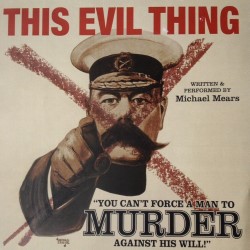
This Evil Thing

Many appreciate conscientious objectors because they seem on the right side of history. Because war’s pointless, isn’t it? Many British appreciate Muhammad Ali for spurning Vietnam; but could an audience appreciate the conscious objectors (C.O.’s) of the Great War? It seems even taboo to say it. WWI is part of British cultural identity; history lessons have taught us to accept its causes without heed. As a country we respect that war to no end, so we look on its C.O.’s with scorn - at least prima facie.Michael Mears seeks to challenge that. He’s laying out the pacifist movement with a swathe of figures including Bertrand Russell and the little-known John Hubert Brocklesby. The arguments are elucidated and there’s precious precision: he notes the movement had a different, inchoate life before conscription in 1916. It’s these subtleties that make the show play out like a warm BBC documentary. Warming that documentary style is Mears, a genial performer with the horsepower of a Porsche when he’s driving the good parts of his show. Breaking down and reconstructing a set of wooden crates, the man’s going at it with such gusto you think he’d topple over any second. The control of his own work is staunch; even when rushing here and there he maintains poise, flitting between parts with ease from Brocklesby to a ruminating Russell. Like so much historical drama in the 2016 Fringe, the self-written script is, while specific, deathly intent of covering too much in too little time. The Russell sections shine - he being an intellectual giant facing off against the prime minister and cronies - and the other sections shimmer in quieter ways, but together they become a vastly overstuffed 85 minutes. It drags and dulls when the C.O. movement’s development comes to a creaking halt via incarceration, turning one-note. The BBC style ceases then and the show begins to resemble a pallid textbook you’d find on some woebegotten library shelf.It’s hard not to care for Mears. His energy and choice of subject deserve respect. The scene between Herbert Henry Asquith and Russell is a properly dazzling bit of tension. Nothing matches that encounter, though. For all the moments of revelation, This Evil Thing is too plodding to be the awe-inspiring exposé it’d love to be. 

New Town Theatre • 4 Aug 2016 - 28 Aug 2016

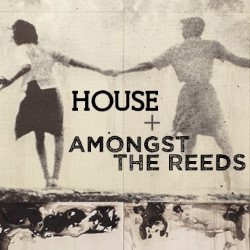
House and Amongst the Reeds

London-based Clean Break fit two plays into one show: House, a tight family drama set in a British-Nigerian household, and Amongst the Reeds, a nondescript tale of homelessness, friendship and pregnancy. It’s unclear why it’s a two-hitter and that makes this review complicated: one play is better than the other. But despite a weaker half, it’s clear this double bill deserves your attendance.Somalia Seaton continues the great British legacy of social realism in House, a focused but never narrow look at the intersection of culture and family. Pat’s returning home after a long absence, willing to atone with her estranged mother. However, she’s not necessarily the one who should apologise; acrimony flares as each member of family—Pat, her sister, and her Mama— share blame for actions of past and present.It’s raw, smart drama and every bit of this sad triangle is felt. Director Róisín McBrinn works subtlety in the tiny interior of the George Square Box; a cramped stage begets a perfectly realised East London flat. A clever move, McBrinn doesn’t do the obvious and contrast the humble setting with shouting and in-yer-face abjectness. She puts a dampener over it, taking it off only when the drama reaches its terrible peak. The key thing House does is show sensibility. The characters are so very balanced, so well-distinct, even with a short time to reveal themselves. Shvorne Marks makes a forthright Pat, handling the conflict of guilt and resentment with masterly precision; on top of this, we have Michelle Greenidge. Greenidge gives one of the best performances I’ve ever seen at the Fringe. You’d expect a god-fearing mother to shriek at her heretical, errant child when she returns after five years. She doesn’t. She’s plaintive instead, and it’s so precisely, hauntingly empathetic. For a play that should, sensibly, focus our ire on a neglectful mother, it’s an astonishing feat how Greenidge subverts the expected. Mama’s failed herself and her world; she slumps in chair and blocks the pain out with KJV Bible verses. Even the hardest heart must feel some pity.House starts slow, and layers on themes a little too thick in the kick-off, but when the three simultaneously take the stage, it’s social realism at its height.Following this, Chino Odimba’s Amongst the Reeds gets high on its own fumes and doesn’t stick the landing. Oni and Gillian are disenchanted, feral teenagers, squatting in a disused office block. There’s dirt, bodily functions and yearning in the kind of combo found in Phillip Ridley plays, but the work is strapped for atmosphere. Weak characters harm its flashy impressionism. Mobility, race and gender are all at play, though it’s hard to care for our heroes when their presentation is so muddled. Homelessness and abandonment deserve attention; it’s a real shame there’s not much here beyond the gritty set-up. 

Assembly George Square Theatre • 4 Aug 2016 - 27 Aug 2016

Wilde Without the Boy

It’s indefatigably Wilde. You don’t even need the show’s title to know it’s Wilde. Gerard Logan simply is Wilde, from the non-stop quips and allusions to the tender look at his own condemned urges.Wilde Without the Boy is a monologue, dramatised from the author’s own De Profundis, a 50,000-word letter composed to his former lover, Posie - that is, Lord Alfred Douglas; an awful man by all accounts, but it’s clear Wilde loved him. The true extent to their relationship is unclear. But that’s the difficulty inherent to “The Love That Dare Not Speak Its Name”. It’s not an easy thing to grasp, for Wilde and for us, and that’s why Wilde Without the Boy is so strong. It’s not simply restating that reason is the slave of our passions. It’s an analysis of why love often needs both competing halves, and what happens when one’s intellectual notion of a relationship clashes with reality.Wilde’s in Reading Gaol. He’s serving a sentence for acts of homosexuality. There’s bits of his trial in the monologue, and we learn it wasn’t the plain case of getting caught in the act. There’s history behind his arrest, and it’s all weaved in the fabric of the relations with Alfred Douglas. There’s also inserts of The Ballad of Reading Gaol, done more in the righteously mad manner of Spoken Word than delivered verse. These can get gooey, but at least provide contrast to the urbane bulk of the the show. Fortunately, Wilde’s inimitable manner is kept in the text. Gareth Armstrong, the piece’s director and dramaturg, made a neat choice in appropriating De Profundis, and Gerard Logan’s suave, furious and stimulating presence lifts the words to a lofty place and gives them the well-enunciated love they need. But there’s also hate. The letter toes the line between affection and disgust, and Logan communicates this well. Sometimes, though, even he is unable to carry the more monotonous passages that fail to add new thoughts to the plight, but he’s as professional a performer as you could want at the Fringe.It’ll envelope you, titillate you and more than once you’ll have to check you understand the mile-a-minute witticisms. It’s elevated, and it truly is Wilde.

Assembly Hall • 4 Aug 2016 - 29 Aug 2016

Last Call

Angst. Millennial or Generation X — we don’t know, but it’s definitely angst. A teen has run away from her Belgian home because she doesn’t feel connected to life or herself. She’s not intent on doing anything while on the run; she’s more interested in slinking through the doors of bars and stranger’s apartments, though she can’t shake the yearn for home. This is graphic novelist Phillip Parquet and director Adriaan Van Aken’s new work, Last Call. It’s an ode to uncertainty, so it should fit well with the flighty spirit of the Fringe, where companies stake careers on unfixed notices. It should also fit the bill of Summerhall’s Big in Belgium series: it’s big, it’s Belgian and it’s attempting something cutting-edge in form. Last Call, in its live form at least, is a comic book projected onto a screen, and in segments sized so the audience can keep up. There’s a man playing piano and guitar. There’s also Sara Vertongen, narrating and foleying when she can. Vertogen’s got a pleasant, dulcet delivery, and she’s not the problem. The form is. Despite feeling new, it’s not enough to make the work dramatically credible.Parquet’s creations are vast. The idea is that the roving of your eyes should substitute for the movement normally associated with theatre, helped by the instruments, the sound effects and Vertogen’s voice. It’s all too slow-paced, though. Of course, it is knowingly still, reaching for a clipped, noir style heavy on internal monologue, but it plods to a deathly march. It’s not succoured by story, either. Last Call is what an older demographic thinks a newer one feels, and that perception is hopelessly vague and impotent. Moreover, it reveals a depressing disconnect between adjacent generations. The only aspect that doesn’t disenchant is Parquet’s drawings: great scapes of black-and-white zeal. Whatever this live version is, it doesn’t serve his vision.Het nieuwstedelijk’s Last Call straddles theatre and comic books, and strains itself in the process. The novelty of the form and the room for improvement means I’ll catch what they put on next year; just know that it didn’t work this time around.

Summerhall • 3 Aug 2016 - 28 Aug 2016

Camille

Most Fringe shows think they can squeeze two hours into fifty minutes. Not Camille: it’s focused and the pace of it is of a kind gallingly absent from Edinburgh.Musing, Camille takes the stage quietly, though don’t assume this means she’s content. With Ewa Pasikowska on piano and violin, Kamila Klamut’s hero sits, ruminates and occasionally moves in a flurry of kinetic modelling. Camille Claudel is our plaintive protagonist, the lover and muse of sculptor Auguste Rodin. Her story is told gradually, using fragments of her real-life letters, although ‘story’ might not be the appropriate term here. Camille simply begets feeling, and what a feeling it is. Spurned by lovers and family, Camille is consigned to a mental institution, forced to wither out her days with the memories of her modelling and her self-hatred. It’s more poem than play, yet this is not to undermine the vivid physical current of the show. Camille is a hybrid of the concrete and the conceptual, almost more of a sculpture than a piece of theatre.It should be said that the English translation doesn’t fare that well. It’s either too obvious, as when she dodges ambiguity by telling us explicitly that Camille’s brother has put her in an institution, or else uses awkward idioms like “cut to the quick” which are ill-fitting with Klamut’s accent. Nevertheless, the direction (Mariana Sadovska, Carol Brinkmann Ellis, Vivien Wood, Alexandra Kazazou) and lighting (Bartosz Radziszewski) trace the angles of Camille’s life with dark grace. There’s little light so any sparing use of it makes contours and shapes that lend finely to the sculptured nature of Rodin’s work and Camille herself. By the stagecraft, our hero is as much formed as the clay that populates the stage. There’s a particular mesmeric piece of choreography that has Klamut scramble around a table: this is worth the price of admission alone, crucially giving the show the vital kick to get across the subjection she’s facing.Klamut is sublime and so is the direction. I can’t love the script but that’s a minor contention. The Fringe, even the formally playful Summerhall, needs more drama like Camille. It’s concentrated, caustic theatre and perfect for anyone seeking a different pace of show. 

Summerhall • 3 Aug 2016 - 28 Aug 2016

Travesty

It’s a bowl of sugar mixed with grit. Liam Williams, Edinburgh Comedy darling, has written a play and it’s a two-hand romance. Travesty charts the relationship of yuppies Ben and Anna, from their intrepid beginnings to the later, harder trials. But the whole thing is spiced up: actors Lydia Larsen and Pierro Niel-Mee swap genders, so Niel-Mee’s a girl and Larsen’s a boy. The intention is clear: a swap might throw light on the gender dynamics often left out in this overdone genre.It doesn’t do this, regrettably. The gender-switching is unremarkable post-opening and sadly highlights how two-dimensional Anna’s character is. Ben (Williams’ self-insert) is the far more interesting partner, in a classic case of a male writer giving all the pathos to a man. Still, Larsen’s got a wonderfully cold-blooded presence as Ben, who’s fun when he eventually heats up. The company behind Travesty, Fight in the Dog, say they aim to be “bridging the gap between the worlds of theatre and comedy”. There was a fair amount of laughter in the audience, but the jokes weren’t anyway near the standard of Williams’ standup. It’s got broad humour, and by that I mean it’s aimed at every Guardian reader who’s ever lived. I don’t think it’s healthy for an audience guffaw at absolutely any reference to their middle-class lifestyles. The issues with humour indicate what’s generally wrong. On the blurb, Travesty suggests it’ll explore “the ethical dimensions of modern love”, promising to deconstruct the romance genre. The attempt at some self-awareness might be refreshing if this is the first yuppie-couple play that you’ve seen, but I want to assure you that that type’s been done before, and better, whether it’s the 2015 Fringe’s Solid Life of Sugar Water or Duncan MacMillan's Lungs. Travesty takes a big, blunt hammer when it wants to make cultural analysis and smashes us over the head with it; it’s not pleasant. There’s an attempt to soften the blow by making Ben erudite (read: self-insert), but even this can’t soothe the out-of-place declamations. A lot of these would work woven into a standup set, but theatre isn’t a soapbox. The characters might as well hold up a sign saying: “Look how sincere we are!”. Admittedly, a couple of their thoughts stick, but even then it’s all for nothing when they’re trampled by the sick, saccharine moments of the play’s conclusion. I love Liam Williams’ comedy. I can’t abide his drama, though. It’s very, very twee. But it’s tweeness with a self-referential badge on it, and it wears the thing like a nit. Here’s hoping he’ll take his observational knack and apply it to a finer product next time. 

Assembly George Square Studios • 3 Aug 2016 - 28 Aug 2016

Ten Storey Love Song

Ten Storey Love Song may be the greatest Fringe show I’ve ever encountered. And I’m going to try my hardest to explain why, because it truly is worth your time.Middle Child Theatre are based in Hull. Their website says they’ll “never play it safe”. Did they play it safe in Ten Storey Love Song? God no. It’s an adaptation of the novel by Richard Milward, described by Irvine Welsh as a “major talent” and a clear sibling to the likes of Trainspotting. But Love Song’s prose hits you even harder than Welsh’s, helped by the pulsing dramatisation of Soho Six writer Luke Barnes. He’s pulled, mined, and torn up the source novel, thrusting it onstage with the ample aid of Paul Smith, Middle Child’s artistic director.A tower block in Middlesbrough. Three stories of five people. Meet Bobby, Johnnie, Georgie, Ellen and Alan Blunt “the C*nt”. Bobby’s an artist. Soon to be the patronee of a pretentious London curator, though sweetheart George doesn’t like his drug-taking or, more precisely, his gulping down of every Winnie-the-Pooh-emblazoned pill he can find. There’s Johnnie, a hard man wielding a penchant for porn-style sex done on, rather than with, his girlfriend Ellen; though she knows she better leave before he blows up. Finally, there’s “the C*nt”, a racist pedophile who loiters by the schoolyard. But even he’s not the simple devil you want him to be. Five wretched people who deserve better. Will they get better, though? They may not, but make no mistake: this play’s got humanism right down to its DNA. Laughs are a certainty when Luke Barnes’ script is so bloody punchy, but still finds a way to lead on to the most bitter, sympathetic conclusion to a character you’ll see this festival. It’s one of those moments when any suspension of disbelief slips; not because it’s unreal, but because you can’t believe how bitingly good it is. The actors sit in on the Jack Dome’s teensy stage. There’s a DJ booth behind them manned by James Orvis and Anna Wilson: together they whip up a trippy techno storm that slots, razor-sharp, into the play’s atmosphere. Notice, too, the projections by Euan Baker: all ketamine-induced fury and psychedelic confectionery with a real mastery of the craft.Ten Story Love Song is a play for the working class. It’s also a play for women. It’s like they’ve taken all the buzzwords they can find — Brexit, feminism, strivers and skivers — and distilled the anger behind them into a shot of pure theatrical adrenaline. Don’t be surprised if you feel like a changed person afterwards. 

Pleasance Dome • 3 Aug 2016 - 29 Aug 2016

Happy Dave

Bloody Happy Dave. I can’t lie, it sounds bad on paper: office boy reclaims the glory days as a DJ. He was good, he tells us. His raves were the greatest in England, or they were until the bilious Criminal Justice Act of 1994 that outlawed them.Cut to present day: Dave’s a Canary Wharf man in an ad agency. It’s no less a charisma industry, the ad game, but it’s ultimately not for him. Instead, he’ll band together the young and disenfranchised and give them something he thinks they’ve never had: happiness. Not garden happiness. He’s talking of happiness as freedom from worry. And you know what? You might feel that way by the play’s end.It’s not an original structure. It’s basically The Wrestler with rave DJs, yet the vigour in the direction and performance gives it momentum. On occasion, it’s worth ignoring plot for other traits. Though some criticise Happy Dave as having an anti-millennial bent, one must remember that this is a character speaking, and not playwright Oli Forsyth; one must consider the context of why he’s saying it. Of course, more nuance in his message would be welcome, to probe more into the generational divide it spots.Happy Dave is close to excellent, however, and insanely polished for a Fringe show. The company, Smoke and Oakum, have a cast of five, and together they rouse; they are nimble handlers of quick-fire dialogue and humour. It’s favourably comic when it wants to be too, letting you gloss over the plot, which is a tad protracted. With some tweaking, this would be the perfect show for a London transfer. Zeitgeisty, angsty and joyful, Happy Dave is tragicomedy in Oscar-bait clothing, the kind of inspirational tale commonly nominated for Best Film. Andy McLeod as the eponymous ‘happy’ Dave will beguile you, thrill you, then leave you before ascending his rig to be the “messiah of a lost generation”. Just don’t take him too seriously. 

Pleasance Courtyard • 3 Aug 2016 - 29 Aug 2016

Mule

Drug-smuggling. Ibiza to Peru. One of the worst prisons in the world and two women trying their best to survive. Omnibus’ Mule is inspired by the Peru Two: two girls who entered the drug trade and paid for it with a prison sentence. Whether forced into it or having smuggled willingly, the characters (played by Aoife Lennon and Edith Poor) are in Peruvian Jail for 11kg of coke and some sensationalist journalist has come to learn of their struggle - for a flagging British broadsheet.Let no-one deny the inspiration is relevant: Michaella McCollum, on whom Lennon's character is based, was released from jail two days ago. What can be said is there’s a nice marriage of script and direction, primarily because the director and writer are the same talented person: Kat Woods. There’s a feeling to the play and that feeling comes across snappy, fickle and lairy — and those aren’t Rice Krispies characters. Lennon and Poor, the play’s only actors, do a virtuoso job of handling many characters with many (I counted 11) accents. The multiple roles are the best part of the piece, even if the minor characters feel stereotyped, like the Peruvian customs officer who keeps slipping into Spanish because he’s... Hispanic and can’t help it?The messed-up timeline makes the lack of explained motivations even harder to decipher. The narrative accelerates through several months, then takes it back, then forward again. And the vigorous direction manages to justify this structure. As a side effect, however, the form confusingly posits the nasty journalist as the main thread holding the story together.Still, that’s not the real issue. The great flaw of Mule is that for all the body-switching, coked-up madness there’s no discernible development in Lennon and Poor's duo. They appear to just go through the motions of their jail time with an air of light concern. There are little flecks of camaraderie in their cell, but when have we not seen this in a prison drama? The protagonists aren’t characterised; there’s nothing to set them apart. There’s an opportunity in the conflict of the Northern Irish one's Protestantism with her blithe illegality, but this isn’t well-formed. The Scottish one remains blunt and Scottish.The story lacks focus, all the more glaringly in the light of the other top-notch elements at work. Lennon and Poor are wicked performers: the former playing innocence remarkably well, the latter showing a true breadth of expression. Behind the scenes, Woods has flair in getting her words onstage but the words themselves aren’t great. There’s latent skill in Mule aching to pop out, so it's irking to know Omnibus can do better.

Gilded Balloon Teviot • 3 Aug 2016 - 29 Aug 2016

The Communist Threat

It’s 1950 Vienna and two British spies are sent to kill a traitor. Yet, despite having the same aim, the characterisations of the two are very different. Cambridge graduate Kip is a celebrated war hero and an esteemed operative. With his privilege-induced idealism, this doesn’t necessarily make him any less likeable than his counterpart Albert, whose obvious working-class routes instantly set him up as the character the audience are presumed to warm to. Surviving a POW camp, the tough persona he had created to deal with such a situation was reflected in his spade’s-a-spade attitude towards life. Hiding out in the squalid basement of a luxury hotel they presume the traitor’s arrival to be imminent, but as time moves on both men realise that nothing is quite what it seems.Surprisingly, similarities came in the smart attire and the penchant for whisky that the professional partners shared. This stood in noticeable contrast to the dinginess of the hotel in which the play was set, however. Indeed, the differences continued with one such instance revealing Kip’s “liking" for the lords.Though the class clash and the secret mission are both well-established formulas of political theatre, the antithesis between the individuals gave this performance its much needed flare. The risk of this play becoming too conventional was prevented by the many plot shifts throughout. In spite of the plot not being particularly unique, the nuanced characters are what really drove this play forward. Unexpected aspects found within both their characters held the audience’s attention and interest throughout but this wasn’t quite enough to make it a wholly entertaining performance.

The Rialto Theatre • 2 Jun 2016 - 5 Jun 2016

Desert Bloom

Decked out in her Nevada-based caravan, it is initially unclear in what direction Rosa Rita's tale will take. What is made clear, however, is her love for the literary. Declaring her admiration for Whitman, Dickinson and Emily Bronte, her mentioning of them originally seems unambiguous. Yet, what they begin to represent are the female lead's lust for escapism from the tragic instances she goes on to detail, not only of her own life, but her late mother's Marilyn Monroe. Explaining how many situations within her mother's life affected her own, the non-linear manner in which they are told mirrors the ups and downs of both their lives. With meticulous attention to dates, this piece from Plush Tiger Productions was clearly well-thought-out. However, such a focus on factual accuracy could not detract from the emotionally-charged performance given. From her contented, though simplistic, life in the trailer park to her upset at discovering she has thyroid cancer, the extremes of emotion Rosa experiences are more than akin to those of her mother. That a medical condition of the illegitimate daughter of JFK is brought up also reflects the many gynaecological issues Monroe had to contend with in her own life. This inclusion of the double was done subtly and foreshadowed how their lives reached a certain state due to the works of men.Ultimately, this fictional play arising out of fact mirrors the psychological human condition. Wishing to escape reality and human attempts at depicting things and situations resembles how captivatingly Rosa Rita will transport you into her world in Desert Bloom.

Sweet Dukebox • 30 May 2016 - 5 Jun 2016

No More Miss America!

I originally held out much hope for this production from How to Deal with Rude and Unruly Women, however being there was like serving a prison sentence. Eerily dispersed amongst the pews, the cast wearing nothing but their underwear made me think this was going to be an in-yer-face piece of theatre. However, the torrents of rain outside were the only hard-hitting events to take place that evening.The play’s being centred on America's beauty pageant of 1968 attempted to epitomise the overly patriarchal society that resided at the time; an undoubtedly admirable undertaking. However, its attempts at doing so were nothing you wouldn't have seen before. The succession of news reports that were projected on the walls before the all-female cast descended into relentless wailings and obtrusive audience immersion. Though used to live up to the theatre company’s name, the lack of dialogue failed to challenge the oppression the women were under in this piece. What was worthy of praise, however, was the mixture of news reports involved. Some being rather abstract to the message No More Miss America! tried to convey, such reports highlighted how subtle patriarchal oppression can be.In spite of its foundation cleverly using the female body as a battleground for competing ideologies, too much focus on the physicality of it prevented this play from exploring such conflicts more deeply. Yet, if this production were more embellished, future audiences would definitely leave screaming out for more.

Sweet St Andrew's • 28 May 2016

Queer Side Story

As he shimmied onto stage, Gregoire Aubert’s performance of Queer Side Story could be nothing other than entertaining. Based on the well-known musical West Side Story, Aubert’s combination of exuberance and charm valiantly queered up the characters within it.The costumes were nothing shortof spectacular. Ranging from a skimpy black number to a rather ornate dress, the diversity of costumes mirrored the myriad of issues that members of the LGBT community have faced over time. The revealing and bright costumes also mirrored Aubert’s unabashed pride at being homosexual. The many costume changes did nothing to hinder the flow of the performance however, due to the continuous flow of amusingly provocative chat whilst he was getting changed behind the onstage screen.Indeed, it was the attention Aubert perpetually paid to the audience that made them warm to his efforts and aims. Whilst stating that certain areas of the world have come a long way in giving rights to those of the LGBT community, this celebration of queers, queens, gays and trans from yesteryear and nowadays also highlighted how discrimination still persists in certain areas of this planet.In this adaptation of West Side Story, the many alternative perspectives of the songs are conveyed not only through passionate dancing and exquisite costumes but banter, laughter and emotion. The intertwining of music and political message alongside personal anecdote made this a truly raw performance that continuously captivated the audience’s attention. This all-inclusive piece was a fabulous way to kick-start anybody’s evening.

New Steine Hotel, Bar and Bistro • 27 May 2016 - 5 Jun 2016

Gran Consiglio (Mussolini)

Opening in 1943 Rome, Gran Consiglio is set with The Grand Council of Fascism meeting to discuss the deposition of Benito Mussolini. As he waits within a small study-room of Palazzo Venezia, the overwhelmed and tired Duce reflects on his life prior to this moment. Starting with his upbringing – the decision made by Mussolini’s father not to allow him a joyous one paves the way for the many childish acts the Italian dictator undertakes as an adult. Charged by physical theatre, mania undeniably underlies all the scenes. Though stemming from tragedy, the succession of disparate scenes gave this performance much comic flare throughout.Aside from the ubiquitous physicality of the piece, what stood out rather significantly was Tom Corradini’s characterisation of the Italian dictator. From his faux friendship with Adolf Hitler to his supposed liking of Josef Stalin, the non-linear trajectory of this play mirrored Mussolini’s seriously unstable persona. Corradini’s drawing on cultural stereotypes of such people further fueled the humour of this piece. Not only limiting the mockery of nations to foreign ones, the deprecation of his own nation at times added a surprising level of rationality to Corradini’s character. However, this was just testament to the extreme nature of Mussolini that underpinned this production.Recalling how destiny drove him from humble origins to becoming the supreme leader of Italy, Gran Consiglio conveys how much of Mussolini’s sanity was lost on this formidable journey. In spite of the merging of clowning and theatre within this piece, the simultaneous depth with which this controversial political leader is explored made it a continuously engaging performance.

The Rialto Theatre • 25 May 2016 - 30 May 2016

Piaf: Love Conquers All

This character-driven play from Moving On Theatre had something for everyone. From romance to hatred, happiness to tragedy, there was no emotion left unturned in this provocative production detailing Edith Piaf’s life both on and off the stage. The dulcet tones and sultry swishes of Laurene Hope immediately transported the audience to another world of a time previous.What was initially striking was the simplicity of the set; this stood in wonderful contrast to the complex life the French songstress led. The difference between the two also appropriately foreshadowed the extremes of emotion that were to be purveyed throughout the performance. The first scene detailing her falling pregnant at fifteen with Petit Louis, the joy that came with the child they produced was very quickly replaced with the tragedy of Piaf’s inability to care for the child and its eventual death from meningitis not long after. In spite of her child’s death what continued to survive was Piaf’s zest for life and song. The excessive personality that was so indicative of Piaf was translated in the perpetually passionate delivery of Piaf: Love Conquers All. As a result of this, the production could simply not have been performed without mention of the many men in her life. Humorously highlighting her numerous lovers, the audience were most spell-bound by the one she shared with Marcel Cerdan. But, in yet another extreme shift in tone within the show, her joy soon disintegrates into drug-fuelled despair when he died in a plane crash. How Piaf’s life was depicted by Hope relied on the dichotomisation of her unceasingly tumultuous private life compared with her highly successful public one. That both aspects were covered was a clever move on the theatre company’s part as a result of it mirroring the mélange of confidence and vulnerability that made Piaf the adored individual that she was and continues to be. Always wearing her heart on her sleeve, this inability to hide her emotion was shown in the intimacy Hope shared with each and every member of the audience. Though tragedy was never far in the French star’s life, her final ray of sunshine came with her having the last laugh in leaving behind the pimps, pushers and blackmailers that had formerly plagued her existence. 

Sweet Dukebox • 23 May 2016 - 26 May 2016

Mixed Doubles

Centring around the lives of four individuals within a fictional village, the fact that the premise of the show was built around a made-up comedy charity festival instantly made the performance an extremely self-aware one. With it being explained early on that one of the four had previously participated in an amateur dramatics group, the many instances of obvious gags were made hilarious by the troupe's impressive use of comic timing as well as their knowing expressions and asides to the audience.Add into this their pool of popular cultural references from across the twentieth century to present day, the societal and technological changes shown over this time period continuously juxtaposed comically the general behaviours of people then and now. Awkward though many of the comic interactions were, the four's early establishment of their village characters' ill-fated attempts at comedy within the festival gave them a free pass to break out of character every now and then. This could only be done, however, by the quartet making the audience feel at ease from the off. That this was the case proved extremely evident with their reliance on the inclusion of a member within one of their sketches making it just one of many of the highly humorous skits throughout. Ultimately, like the adjective used to describe the pairings of this comedy troupe, the variety of comic techniques used within the plethora of sketches meant that there's something for everyone in this show.Having previously established themselves on Radio 4, Mixed Doubles – which comprises the performers Will Close, Megan Smith, Paul Aitchison and Rose Robinson along with the director Hannah Jones – are destined to increase their popularity. Having performed at the Edinburgh and Adelaide Fringe Festivals in previous years, their return to the former this year means that their successful run can do nothing but continue.

The Warren: Theatre Box • 22 May 2016 - 26 May 2016

Thorn

Detailing the many instances of one finding a metaphorical thorn in their side, Tom Jordan's first came when he was five. From discovering he had lymphoblastic leukaemia, Thorn explores the wavering extents to which we, as humans, explain our lives in a universe abundant with complexities.Drawing on his religious convictions, Jordan emphatically delivers his perspective of the subject. Speaking as himself, as well as portraying friends and family members, the versatility shown in the anecdotes of this production suitably fit the differing perspectives that so regularly accompany the subject of religion.In just one of many, Jordan explains that his decision at eighteen to leave his small home-city in Queensland, Australia for the metropolis that is Sydney, didn't come without its fair share of snags. His bedroom being nothing more than a kitchen floor and the return of his leukaemia at the age of twenty-two inevitably made him question the purpose of his existence. Further upset came with him dejectedly expressing how he only had two sermons under his belt after finishing Bible School. However, the gain that suddenly surpassed this pain came in the form of him now having 300 sermons to his name, as well as making many appearances on national television espousing his views. This couldn't help but make the audience glad of his success, and at only 25 as well! Though sermon-like at times, Thorn was a refreshing take on how flexibly one can incorporate religion into their lives and for some, this performance could well be another of those life-defining moments.

Sweet Dukebox • 16 May 2016 - 22 May 2016

The History of Everything in 60 Mins (more or less)

Ben Watson's meet and greet as we entered the theatre made his audience immediately warm to him. It was personal touches like this that proved to be the most enjoyable part of his fact-driven foray into his more-or-less sixty minute history of everything.His first performances involved the natural transition through the ages. Opening with the Big Bang proved rather fitting for the energetic performance that was to grace the stage. His then detailing of the many ages of humanity - the Bronze, Stone and Ice etc - were all accompanied by appropriately amusing pop songs. Ice Ice Baby was a particular highlight. While the majority of the production was light-hearted, Watson also included some more serious messages within his performance. Admitting that climate change and other such natural occurrences are often out of human control, he stressed throughout that human interference often speeds up the destruction that these environmental changes produce. The ill-founded human changes that often arise from the desire of nations to be the strongest, were illuminated by Watson in the show. Yet, his perpetual optimism shone through in the slick song transitions between describing the fleeting empires and reflecting upon the more harmonious relations between countries.The swiftness with which he changed into his impressive repertoire of costumes made his dynamism pleasurably exhausting to watch. The attention to such aesthetic details clearly conveyed the amount of thought that had gone into this elaborate production. His stating that in the beginning there was nothing, stood in stark contrast to the way in which he made each audience member feel as though they were the ones who made his performance the roaring success that it was. One to watch out for, Watson's foray into the history of everything has surely secured him a place in the future of the world of theatre.

The Rialto Theatre • 14 May 2016 - 29 May 2016

Blues and Burlesque

This clever infusion of comedy and burlesque from Dexys’ former piano man Pete Saunders proved to be a treat. Initially only opening with Saunders, this left the audience confused as to when the burlesque half of the Blues and Burlesque would be coming. They were soon reassured when the main man teasingly asked if one of the dancers should be brought on to the stage and, once in the limelight, the sassy burlesque dancers gave it as good as they’ve got, in playful contrast to Saunders’ own unrelentingly dour demeanour.Main mistress Lady Beau-Peep was the undeniable star of the show. In spite of Saunders’ impressive lyrics and faultless piano playing, the Lady’s provocative interactions with the audience were what truly made for an all-inclusive atmosphere. Her preying on bashful audience members never caused offence, mainly due to her ability to make herself look more ridiculous than each of her victims, diverting them from their own embarrassment.However, there were times when the show seemed over rehearsed and occasional, unintended asides to one another prevented it from being as slick as it could have been. In addition, the abruptness with which the performance ended shattered the performers’ spell.With Saunders quipping early on that he wanted to make it a show explaining his miserable existence, his decision to include humorously depressing songs alongside uplifting burlesque resulted in the much enjoyment throughout. If you’re looking for a great combination of music and laughs, this fifty-minute show of feistiness and fun is a sure-fire way to get it.

The Rialto Theatre • 12 May 2016 - 5 Jun 2016

The Girl Who Fell In Love With The Moon

Puppetry, poetry, dance and live music are interwoven in this splendid succession of stories from five zany friends. When the car in which Jack, Clive, Selina, Scarlet and Luna are travelling in towards Komedia Studio breaks down, the eccentric quintet find themselves within a deep, dark forest. So begins the often blurred lines between imagination and reality in this visual spectacular from The Human Zoo.Wishing to make the best of a bad situation, the five-piece decide to tell each other stories. They don’t divulge in the latest tabloid gossip, but choose instead to tell cautionary tales for the post-fairytale age. This modern take on traditional storytelling sees tales of Hollywood dreams, plastic surgery, technology obsessions, identity and self indulgences come alive through song, word-play and dark humour. Throughout the performance, each character tells their own tale, reflecting their own personalities, hopes and fears. Although the stories are often surreal and supernatural, they allow us to discover more about the characters onstage and their relationships with each other. However, the contemporary subject matters chosen mean that many of the flaws presented will also feel all too familiar to too many of us.Despite this awareness, the show isn’t heavy handed or judgemental. The audience was kept rapt throughout, with many scenes causing young and old alike to erupt into heaps of laughter. The design is witty and playful, astutely using props to make visual jokes, such as when Selina’s dress unexpectedly produces wings. The show’s humorous nature and confident, relaxed cast allow the audience to feel more like friends around a fireside than paid ticket holders.Like most good fairytales, reality is distorted into the extremes. With the grotesque, astonishing and wondrous depicting the limitless experiences humans can have, this imaginative production produced boundless enjoyment for all. The undeniable variety and versatility shown by the very talented cast makes The Girl Who Fell In Love With The Moon a must-see musical. 

Komedia Studio • 12 May 2016 - 14 May 2016

Notflix

Theatre Company Waiting For The Call wasted no time in making us feel included within the show. Every member of the audience was handed a slip of paper upon entry asking for the name of the last film they saw and a synopsis of it in one paragraph; the one that was then chosen from a bucket was Force Majeure for the improvisational troupe to make an entire musical out of. However, in order to give them time to get their brains in gear for what would be a taking hour-long exercise of thinking on their feet, Notflix had their audience warmed up by host Katie Pritchard. Her sweet self-deprecation with regard to her size completely contradicted her bold efforts at getting a laugh from the crowd. Skillfully imitating inanimate objects through music – a sink with the backing of Kate Bush’s Wuthering Heights surprisingly being a particular triumph – along with a Beyonce-esque song about lettuce and the audience were well on their way for a taste of what the evening had to offer. When the keyboard player accompanying the female quintet randomly decided to play a tune the actors had to cut their dialogue in order to then burst into song, which they did effortlessly throughout. Their understanding of one another was clearly shown through their ability to get on each other’s wavelengths. Hence, an avalanche in the Alps, a gay wedding and one very bitter café owner later, the show’s variety of scenes mirrored the versatility of its cast. For a lively and entertaining night of improvisational comedy to perk up the routine of the week, hurry along to see the girls in action. Though a different performance every time, the quality of their opening night leaves me in no doubt that the rest of their shows will not leave you disappointed.

The Rialto Theatre • 10 May 2016 - 15 May 2016

Not Yet Suffragette

Time is of the essence in this absolutely faultless performance from EntreprenHER Productions. Detailing the endless hurdles women have had to face over time, from the start of the suffragette movement in the early 1900s to present day, Natalie Cutler’s very first one-woman show offers hope for the many that still have to be overcome.One of the first scenes depicts a woman named Flora who wishes to serve her country in the First World War, protesting that she can fight on the front just as well as any man. There was simply no better way to commence the show, the incorporation of a militaristic environment set the combative tone found throughout the play in its fight against the subjugation of women.The rife sexism across each decade following the 1910s was made apparent as Cutler explained the most prominent problems within each of them. From women’s inaccessibility to the labour market to lack of reproductive rights, this performance certainly didn’t shy away from giving it to the audience straight – and rightfully so. Joking that the hem of women’s dresses was getting shorter with each decade reflected the message that this production aims to espouse: that people’s patience should be doing the exact same thing when it comes to gender equality or lack thereof.The wide range of stage techniques which included “comedy, music, dance and political incorrectness” kept the flare of the piece relentlessly alight throughout. Such diversity mirrored the ever-changing issues that women have to face on a daily basis, and how greatly they differ between the western and eastern world.The slick delivery of this production makes it hard to believe that this is Cutler’s first solo attempt at a show. Overwhelmingly thankful that I saw its world premiere in Brighton, I have no doubt in her getting this performance booked across the globe. For any men out there fearing a tongue-lashing, fear not, it is a show suitable for both women and men – just ask the man in the audience who cried out for an encore.

The Warren: Studio 3 • 9 May 2016 - 28 May 2016

Glengarry Glen Ross

Directed by Roger Kay, Glengarry Glen Ross depicts two days in the lives of four real estate salesmen who have been supplied with the names and phone numbers of some new leads. They use underhanded and dubious tactics to make sales, in particular to peddle the two real estate developments of Glengarry Highlands and Glen Ross Farms. From this, begins a whirlwind of devious tactics and fake fraternities. The play opens with the stage adorned by three tables, a dastardly pair sat at each one. Taking turns to plan out how to dupe the others, the light focuses on only one pair at a time, representing how those in darkness are completely unaware of the deceit occurring elsewhere. The entire stage is completely lit after the first scene and foreshadows that the true essence of all the characters will be revealed at the play's resolution. Underlying this play's events are perpetual splays of hyper-masculinity. Examples of these can be found in the homophobic term “cocksucker” being used regularly, as well as the sexism shown towards the barmaid in the opening scene; if not lecherous, the men are dismissive of her.The supposedly weak link in the chain is John Williamson, played by Duncan Henderson, who is responsible for supplying the leads on the properties. He finally comes up trumps; however, he subsequently acts as the catalyst for the determined estate agent, Shelly Levene's arrest. This is the result of Levene's greed in taking the money from Williamson's leads on the sale of properties.Steve Chusak's suave characterisation of Ricky Roma makes it entirely believable that he would be the most lucrative agent. However, all good things must come to an end as Williamson, yet again, is responsible for one of the top dogs losing out and a cheque cashed in too early results in Roma being down several grand. As the arrogance that Roma once had is suddenly lost, it makes his downfall all the more satisfying for the audience to observe.The importance attached to money within this production is representative of a capitalist structure and all the ideologies that accompany it. With such a structure relying on the ruthlessness of human beings, this behaviour is clearly and cleverly epitomised in Glengarry Glen Ross. It’s to such an extent that it appears dismaying at times but thanks to resourceful writing, it is proved rather hilarious at others.Tragedy and comedy intertwine magically in this performance from Pretty Villain Productions. The dark humour that is so emblematic of this play is affirmed in hapless agent George Aaronow's closing statement that he hates this job. His pessimistic retorts however, are no match for the amount of joy such a well written, well performed show brings to its audiences.

The Rialto Theatre • 7 May 2016 - 14 May 2016

My Paper Girlfriend

Animation, mime and speech come together in this neat one-man show about love at first-sight going wrong. My Paper Girlfriend details the ill-fated attempts of the hapless, romantic Wesley Griffiths falling in love and the simple life he craves is reflected in a simple, naïve plot and sparse black and white animations.Kicking off in a park, animated beautifully through a backdrop of Dean Gibson’s illustrations, it follows typical romantic comedy tropes. A chance meeting with the girl of his dreams leaves protagonist Wesley Griffiths hopelessly in love, the only trouble being she doesn’t turn up to the first date. All standard stuff, but it turns out the object of Griffith’s affections is not all that it seems (although sharp-eyed observers may have guessed this from the title).The recognisable plots and scenarios hardly break the mould, but it’s the warmth from Wesley Griffith’s delivery that lifts the show above the mediocre. His gentle and charismatic character conveys an innovative story although which can, at times, be tricky to follow. Whilst the sense of riddle about Griffith’s girlfriend is central to the plot, it could have been made more explicit as it wasn’t clear to the audience and, for some time, the mystery turned in bewilderment.Much promise was shown in One Man and his Griff’s theatre debut. Only 35 minutes long, the semi-serious message showing the lengths people will go to find ‘the one’ gave promise for a longer outing next time.

The Warren: Studio 2 • 7 May 2016 - 5 Jun 2016

Julius Caesar

Inspired by popular Roman-esque style fetish wear, designer Kelli des Jarlais alongside writer Ellen Carr brings the Shakespearean play into the modern day setting of a fetish club. Unorthodox though it sounds, this contemporary take on the Bard's tragedy does not deviate from the performance's original themes of gender and power.Abundant with writhing bodies, sensual noises and sexual interactions, the other world that the audience were transported into was not solely smutty however. Such antics were incorporated to test the gender binaries that would have been at play at the time in which Julius Caesar was set and that still continue today. This was on one level challenged aesthetically through the male characters adopting more typically feminine attire. The alternative choice of clothing was then reflected in the ambiguous power dynamics that the male and female characters had with one another.With the cast not wishing for the audience to be a passive one, regular attempts were made for audience members to join in on low-level fetish acts such as biting and licking. In spite of the intense atmosphere in which this production was set however, the theatre company were respectful to audience boundaries and those who were happy just to watch rather than take part.Admittedly not a performance for everyone, it was a refreshingly brave take on a traditional play. A performance triumphant enough to warrant 'Hail, Caesar!'

The Warren: Studio 3 • 6 May 2016 - 5 Jun 2016

32

Shebang’s 32 follows the lives of lifelong friends Becky and Maisie, from their birth in Staines General Car Park, to the present day and subsequently, the age at which this show is named after. Marred by many a setback, the professional pair have thankfully decided to turn their negatives into a pool of positives and present it to us as a comedic cabaret. Its opening dance number to Survivor's Eye of the Tiger instantly showed how the best friends differed in their levels of physical fitness. This proved a completely appropriate way to start the show, as the characters’ stark contrast continually resulted in numerous jokes that were to grace the audience throughout. Becky's foray into teaching French was a particular highlight, with one audience member thinking so too as he joined her in speaking the language. Not at all stunted by his call-outs, she joked that the top student of the class was in. The musical accompaniment that was Edith Piaf's Non, je ne regrette rien was particularly amusing, as Maisie gave viewers the opportunity to throw paper planes at Becky during her recital. Despite the abundance of comical skits that adorned this production, there were elements of tragedy as well. Maisie's recounting of her attempts at aerial acrobatics was just one of them. Impressively contorting into various positions, her pitfall came as one of the bars failed and resulted in her breaking several of her vertebrae. Thankfully, as the performers pointed out, there was no damage to her spinal cord; a moment of optimism that was reflected in Maisie's darkly humorous comment of it being “a low moment”. The narrative of the cabaret centered on the many short-lived and unsuccessful jobs they had had. This was hilariously reflected in their purposeful misuse of props that they continually produced from their collection throughout the show. The pair undeniably brought a cabaret jam-packed with comedy; the endless applause and uproarious laughter from the audience were indicators enough and the effortless flexibility they employed in catering specifically to their audience leaves me in no doubt this show will go far.

The Warren • 6 May 2016 - 22 May 2016

Owl Time

Inspired by a phrase from Virginia Woolf to describe dusk, Owl Time is a gentle production that provides political punch. While focusing on the necessity for humankind to harmonise with nature it follows the story of Matchgirl, who lives in a refugee camp in Calais (known as the Jungle). As she dreams of better times at her now abandoned farmyard home, she finds the help of a spiritual guide.The duo also highlight the darker perils of human nature, such as institutionalisation. In one instance, members of the police force cause a migrant in Calais to lose 1.2 kilos of blood. The duo argue that there were once no such things as dogs, only wolves, and that humans have also allowed themselves to be restricted, with our minds heavily influenced by the media and establishment.Another issue raised was the global emphasis on strict international borders. This concept was then undermined by distributing food to audience members that, although commonly consumed in Britain, actually originate from across the globe. Recounting her experience in a Yazidi-Kurd tribe, Matchgirl explained that, in spite of the tribe containing a multitude of faiths, they all respected and cared for one another. She believes this was because of Gaia, the concept that the universe is one living organism.The interaction continues throughout, with the audience being asked direct questions, such as whether a harmless, contributing individual such as Matchgirl should be permitted to stay in a foreign country. As a result of this performance taking inspiration from the literary genius of Woolf, it is unsurprising that clever wordplay is used to contrast a Parliament of Owls to the government's parliament. However, it did provide some hope that the empty words of MPs may one day grow into positive actions in solving worldwide poverty. Morpheus Theatre make it a privilege to feel included in the intimate relationship that Matchgirl has with her spiritual guide, as they transform difficult political issues into a worthy and compelling discussion.

Sweet Dukebox • 6 May 2016 - 29 May 2016

A Talent for Lying

Set in a cafe, this helping from Octopus Soup Theatre initially provides nothing that an audience wouldn't have seen before. With an awkward nerd and a glamorous girl that is completely unaware of her beauty, this random meeting of complete opposites Aidan (Liam McCarthy) and Lucy (Sinead O'Brien) ending up at the same table hardly screams originality from the off. However, the constant interruptions from the cranky waiter (Ivan Luis) provide the light relief that is needed in this succession of cringe-worthy conversations between the pair. Wannabe writer Aidan lacks the inspiration that he desires in order to write his novel, instead seeking solace by copying the words from already established writers - an activity that Lucy does not take much time in noticing. However, his seemingly lacklustre life is mirrored in that of the individual he is sharing his table with. Excruciatingly insecure, she feels the need to make it known that she has a boyfriend in Declan, someone it soon transpires that Aidan knows too - of course! Though both may be aware of him, hints are illuminated as to neither of them being overly intimate with him despite Aiden's insistence that he's driving to his place the next day and would be more than happy to give his female counterpart a lift. So begins the escapism that encapsulates this production.Lucy provides the spark that is so lacking in Aidan's life in getting his literary abilities off the ground. Both devising scenarios away from the cafe in which they currently find themselves, the two imagine how bright their futures could be together. Young romance leading to a family, even in their imaginings comes the inevitable spectre of death, with Aidan initially bumping off Lucy in the tale which goes down less than favourably with her. Constantly not wishing to, but always managing to, offend Lucy, his relentless, bumbled attempts at doing so cannot but help make the audience warm to the possibility that they could be an item in reality.Ultimately, in spite of this play providing the message that anyone can reach for the skies, the duo are brought back down to earth in this tragi-comedy by the resolution of A Talent for Lying, with both of them parting ways. The harsh realities that the protagonists fight against throughout this performance continue until the bitter end with Aidan receiving yet another jibe from the waiter whose perpetual lack of customer service stands in comic contrast to the message 'Good Vibes Only' emblazoned on his shirt. Sweet though this play was, it was also rather predictable.

Sweet Dukebox • 6 May 2016 - 8 May 2016

My Dear Miss Terry

The word 'Dear' within the title of this production from Jean Rogers is exactly the right word for the intimate relationship that is evoked from the love letters sent between Irish literary genius George Bernard Shaw (Paddy O'Keeffe) and adored English actress Dame Ellen Terry (Jean Rogers). Opening in complete darkness, it is clear from the off that that this show will be an insight into the private lives of these two lovers. Speaking from beyond the grave, the duo's inclusion of contemporary references, such as wondering if their form of love in the epistolary could be seen as cyber love, was a clever move on Rogers' part as it immediately made all ages feel welcome.Despite the love letters often being emotionally-charged, what is also in abundance within them is its humour. With jokes not being spared at Terry's numerous marriages, as well as the Irish stereotype that they are never averse to a fight, Bernard Shaw's quip that Terry was ‘tired of five husbands but never tired of me’, purveys the teasing tone that the two shared. How comfortable the duo feel with regard to this situation is seen in the terms of endearment becoming more tender as the play – and their affair – progresses. The dimmed lighting in certain instances which focuses on just the two of them highlights the ever-increasing closeness of the couple. Stating that they only met twelve times over their thirty years of knowing each other, the odd stumble of words from Paddy O'Keeffe, though perhaps unintentional, only added to the romantic feel of the piece as it coincided with the tongue-tied instances that so often occur in such lustful situations.The staging of the two tables at opposing ends of the stage initially evokes that we are seeing two people as individuals in their own right. However, what stands out most vividly is the two florally-adorned garden chairs attached together, though facing different directions. With the continuation of the play comes an increase in affection between the literary lovers and the addition of flowers on the chairs to represent the two's natural feelings towards one another, rather than the ones they have to act or write for stage. Despite this production detailing a succession of love letters between individuals of a time previous, what evidently remains ageless throughout is the idea of romance. Even though an evident plethora of emotions were shown, what truly made this production so enjoyable was the solace that Bernard Shaw and Terry found in one another, away from their otherwise turbulent lives. 

Rialto Theatre • 31 Mar 2016 - 1 Apr 2016

The Theatre Workshop Presents...Monologue Jam!

Tragedy and Comedy blend seamlessly together for this series of monologues performed byThe Theatre Workshop. A stellar cast deliver a remarkable performance of ranging emotions, shown within such wildly varying situations that there is sure to be something catered to everyone’s tastes in The Theatre Workshop Presents...Monologue Jam!The first two pieces by Alice Kerrigan and Laura Loutit began with a light-hearted tone, which was the perfect way to introduce the audience to the high calibre of acting that was to be put before them for the remainder of the production. It’s early placing was also apt in the sense that the shift in tone later on delivered a far more hard-hitting comparison. Many of the monologues centred around issues concerning romantic relationships. The immense variation in circumstances ranged from adolescent angsts to mature moral decisions by adult characters. However, what remained constant across all the performances was the appropriate maturity that was attached to dealing with the issues within each situation.One actor who cannot go unmentioned, and deserves a substantial portion of this review, is Evie Hooton. The effortlessness in her transition from bubbly daughter to grief-stricken sister is testament to her being the undeniable star of the show. Initially jokingly complaining about always going on walking holidays in the UK while her friends sun it up in Spain, her humorous tone is then replaced with one of absolute seriousness as she witnesses her younger brother Max dressing up in their mother’s clothes. The sharp contrast of performance tenderly plays with the audience’s heartstrings and Hooton’s swiftness in bringing a tear to her eye would leave even the most hard-hearted of individuals moved.With such an array of emotions being dealt with in such a diversity of circumstances, there is no doubt at least one of these monologues will resonate with a personal experience that you have gone through. Beautifully performed, relatable and with much variation, this is a company that you should not miss. Make sure to book your ticket quickly for the next production fromThe Theatre Workshop, and maybe bring a box of tissues too.

The Iron Duke Pub Guesthouse Kitchen & Theatre • 20 Mar 2016

The 3 Dancers

Charity Rambert's efforts across England, Scotland and Wales have successfully showcased their professionalism in the three thirty-minute performances of interpretative theatre that graced the Theatre Royal stage. Provoking abstract thought, they more than encouraged the audience to think outside the box than they would normally about the many emotions attached to the daily human interactions we experience.Hydrargyrum was the first to grace the stage. The succession of screeching noises that initially greeted the audience resembled something akin to something dangerous approaching ever-closer. Aleksandra Vrebalov's deployment of such music, therefore, proved to be a clever choice, as it hinted at the emergence of something different which was reflected in the attire of the sextet's change of clothes, from being originally draped in black robes to underwear that blended in with the performers' skin. The beeping sounds like a transmission from afar conjured up the idea of electricity and what stemmed from this was the frictions that occur between humans on a quotidian basis. Such frictions normally take place between the individual and a group. Patricia Okenwa's jaunty chorography mirrored the sparks that can rise from electrical discharge which was appropriate in portraying the similar volatility that human interactions can at times produce. Also included was a mirror that sprawled the entire width of the stage from the start of Hydrargyrum. Its consequent overlooking over all the performers highlighted the difference in perspectives that can arise from the singular, objective physical form of someone or something to the subjective attributes that are often attached to them by other groups. Charles Balfour's choice to light the front half of the stage whilst the back of it was shrouded in darkness further supported this idea of division.The second helping from the company, in the form of Transfigured Night did nothing to relieve the hunger with which the audience would wish to succumb. Based upon Richard Dehmel's poem Verklärte Nacht, the piece follows a woman who confesses to her lover that she is pregnant with another man's child. Similar to the previous performance was the use of costume to subtly deliver hints as to how the performance will progress. Yet this time round the emphasis lay more with the backing dancers. The dark colours with which they were adorned stood in contrast to the passionate red dress of the lead dancer, Simone Damberg Wurtz. The mixture of genders that comprised the secondary performing group is worthy of note as their regular separation into smaller groups were consciously all one gender at certain points. This disparity foreshadowed the ongoing, gendered power struggles that would take place between the couple that were the main focus of Transfigured Night which is further represented through the mixture of combative dance as well as choreography of a more affectionate nature – a perfect representation of the tempestuousness of love, especially when the case of adultery is included within it. Its division into three scenes suggests three different outcomes. The first is fraught with the fear of rejection, the second the idealised dream of acceptance and forgiveness, whilst the third ending is more realistically ambiguous with the lovers romantically staying together but in a battered and bruised state. The aforementioned forceful nature of the dancing in the first scene is emblematic of the fear of being rejected. The persistence shown by Damberg Wurtz in wanting to keep her lover is in juxtaposition to the final stance of the whole performance in which Miguel Altanuga embraces Wurtz from a lower position, thus showing his desire in wanting her to stay.Last but not least, inspired by Picasso's painting 'The Three Dancers', the same-titled production from choreographer Didy Veldman provided the final cherry on the top for Rambert's platter of performances. The application of Cubism to movement and choreographic structure was clear within this performance. The diagonal, pointed mirrors that cut into the single white-lit square onstage broke the harmony that initially took place between the potential lovers from Picasso's painting. The lovers were depicted through half the dancers being in white and the other half in grey. The destruction acted to reflect the increasing tension of the would-be lovers within it. The choreography was testament to the circumstances in which people find themselves to be lovers – the writhing of consensual bodies over one another combined with those moments of lone self-reflection afterwards. Each performance showcasing such a variance of inspiration, styles of choreography and music means that there is something available for everyone from Rambert. Just ask their 90 years of being in the business!

Theatre Royal Brighton • 16 Mar 2016 - 19 Mar 2016

Lysistrata

Set against the backdrop of modern day, debt-ridden Greece, this modern adaptation of Aristophanes’ Greek comedy Lysistrata, first performed back in 411 B.C. refuses to be as specific as focus on the Peloponnesian War of the original version and instead broadens its horizons in making this piece of theatre from the Ancient Greeks more accessible to an audience of the 21st Century. Both to those familiar with the piece beforehand and those who knew absolutely nothing about it, this play from Actors of Dionysus stayed true to the tone of the original evidenced by the endless belly laughs throughout even if the plot was not quite the same.The perpetual word play, double entendres and sexual innuendos rendered this performance appropriately in-your-face, playing on the word ‘coming’ being the most common example of these instances. The catalyst for many such situations was the mélange of heterosexual happenings as well as those of a more homosocial nature that had homosexual undertones, which made reference to the fragility of gender relations between men and women at the time the play was originally written. The effortlessness that the actors displayed in playing characters of various ages and genders instantly reassured the audience as to the competent performance that was to follow. Not only was it a testament to the individual actors’ strong acting ability, but it was the utter ease with which each character interacted with one another that made the performance the constantly cohesive one that it became. Andrea Newlands deserves a particularly special mention for her performance as the comical, yet believable, mother-hen figure of the women’s campaign not to give their men sex until they agree to end the war with peace. Her change in accent in the role of game show host – yes, there is a game show in Lysistrata – towards the end of the performance further displayed her remarkable acting prowess.The clever use of props was also not a feature that was or even could be missed. Disregarding the enormously erect genitalia that was on display for a large section of the play, the four-poster bed at the beginning of this production from Actors of Dionysus quickly made it apparent that this was a play predominantly concerning sexual politics. The next scene having a coin-patterned backdrop, with the word 'BANK' hanging above it didn't require much imagination as to the sexual act it would soon spell out. Yet, this was done cleverly in triggering the abundance of amorous scenarios that were to follow.Though unorthodox in nature and deviating from the plot fairly substantially, the message that it tries to purvey still remains. And with a vengeance too. One for all to see – apart from the innocent eyes and ears of young children of course – you really shouldn’t miss out on this intimate cast of five in this comedy of epic proportions.  

Wickersley School and Sports College • 11 Mar 2016

Rosie Wilby: The Science of Sex

Brighton's Science Festival continues to attract packed-out audiences of all ages and this time round it's the amazingly eccentric Rosie Wilby with her theatrical exploration of the links between science and sex. Exploring concepts such as what makes one gay or straight, what pheromones are and the scientific origin of kissing, Wilby will not fail in attracting you to her effortless charm in Rosie Wilby: The Science of Sex.Throughout, Wilby made accommodations for the various audience members and their (often openly expressed) sexualities; a cheer for bisexuality from a woman in the front row was a particular highlight which Wilby took no time in acting upon. Looking at the change in scientific attitudes towards sexualities over time, Wilby explains theories such as those of Havelock Ellis and sex-perts, William H. Masters and Virginia E. Johnson. In this particular segment, Wilby found great difficulty in understanding Ellis’ failing to realise that his wife was in truth a lesbian. Surely, her request to honeymoon in Lesbos was indication enough? This was just one of the many hilarious instances of word play that were to be in welcome abundance throughout her wholly entertaining performance.Striking the balance between citing personal anecdotes as well as explaining the links between love and sex, it was the perfect excuse for Wilby to flourish in her oh-so-natural role as a comedian. Though seemingly out-of-the blue at times, Wilby’s many allusions to jokingly killing off those she cared for in the past in this production of hers did nothing to dim the enlightening engagement she had with the audience. In fact, the many instances of dark humour brightened up the otherwise cold, dark February evening. Ending the performance with an uplifting reveal of her new partner, after an array of amusing verbal abuse of her former one, provided a heartfelt message of what a wonderful thing it is to acquire love in the first place. Her bashful bow off the stage involving hiding behind the easel whilst poking her head meekly round the side was testament to the ‘adorable aunt’ vibe she gave off throughout. Though the diagrams she drew on the easel were at times, she confessed, somewhat limited, what knew no limits was the ease and enjoyment with which the audience felt when watching her show. By rendering a science lesson anything other than boring, one should not underestimate the comedic talent that oozes from Wilby - any of her shows would surely ignite a spark into your day. 

The Iron Duke Hotel • 27 Feb 2016

Mystery at Frankenstein Castle

Time is of the essence as you and your newly formed team are transported to the authentically and adorned castle laboratory from which Victor Frankenstein has mysteriously disappeared on a terrible, stormy night. And so sets the scene for an evening of interactive entertainment as you, yourself, take part in the Mystery at Frankenstein Castle. With only one hour to solve the plethora of scientific riddles that litter the laboratory, the collaborative efforts of yourself and the rest of your team are more than put to the test in order to revive the lifeless body that remains covered beneath a sheet, in an exhilarating race against time before lightning strikes the facility.Not only was the success of this piece of interactive theatre immediately made apparent by the authentic décor in which the team found themselves in, but also by the expertly eccentric laboratory helper Igor Fritz played by Steve Griffin. Striking the balance between playing a role akin to a character found in Mary Shelley’s 1818 novel, Frankenstein, and helping team members where appropriate, his characterisation was in enjoyable juxtaposition to the modern sensibilities of the group in which I found myself. Add in the abundance of period props and design, amongst which were golden metallic scales and old-school maps that were suitably indicative of the time, for that hour you are utterly and completely transported out of the 21st Century. The problems ranged from those of an anagrammatical nature, to those that required more abstract thought and sometimes the clues were as simple as directing you to the page of a book. Mill Goble’s efforts in getting a scientific professional on board resulted in carefully-crafted clues that were conveyed in layman’s terms to accommodate all those who take part in the Mystery of Frankenstein Castle. Such an exercise relied on the inclusion of different thought processes that gave each member of the team the opportunity to solve them, avoiding any exclusion that felt fundamental to the overall enjoyment of the experience. With afternoon sessions suited for those aged 12 and over, and evening sessions strictly catered for over 18s, there is ample opportunity to attend. The expert characterisation combined with the suitable design of both set and props succeeded in achieving a truly immersive experience that would be sure to brighten up anyone’s evening. All it missed was the absence of movement from the lifeless body that at all times remained covered beneath the sheet. Having it move without warning towards the end would have raised the stakes of the ticking clock and truly transport those involved back to the fearful time upon which the play was based. However, it is clear that this production from Sweet Venues is a definite must-see and you should waste no time in immersing yourself in the Mystery of Frankenstein Castle.

The Dukebox Theatre • 13 Feb 2016 - 18 Feb 2016

Private Lives

Regarded by many as Noel Coward at his best, this production is Director Tom Attenborough’s valiant attempt at Coward’s classic Private Lives and reignites the tempestuous relationship between former husband and wife Elyot Chase (Tom Chambers) and Amanda Prynne (Laura Rogers) from its first performance in 1930.Opening with Chase and his new wife Sibyl (Charlotte Ritchie) on the balcony of their honeymoon hotel, it is clear how incompatible they are. Chambers depiction of arrogant and buffoonish Chase stands in stark and humorous contrast to Ritchie’s overbearingly, adorable representation of Sibyl. Similarly, what little Amanda’s new husband Victor (Richard Teverson) knows of his immoral spouse sets the play up for an plenty laughs as it soon transpires that Elyot and Amanda are on their respective honeymoons in the exact same location.However, the joy that should be held from the audience witnessing the dastardly duo's passionate longing to relive old memories falls short with the provocative dialogue often falling flat. The ease with which the excellent Rogers captivates, with her combination of vulnerability, allure and vulgarity, cannot salvage the flatness that occasionally purveys throughout.This is an indulgently theatrical production of Coward’s Private Lives with meticulous attention paid to period details, however the cast lack conviction in their roles. Coward’s play is full of charm, warmth and nuances, however whilst there is much to commend this polished production, the superlative decadence has occasional moments of dreariness.

Theatre Royal Brighton • 4 Feb 2016 - 6 Feb 2016

The Grouch Who Couldn't Steal Christmas

The lean, green, Christmas-hating machine runs wild in this year’s holiday season production from The Fertile Theatre Company. This traditional Christmas fare provides the necessary ingredients for children’s entertainment although parents might wish for something more substantial.Dr. Seuss’ original tale, How the Grinch Stole Christmas, has been a hit with children for the past 50 years and is a seasonal family favourite along with Rudolph the Red Nosed Reindeer and Frosty the Snowman. Loosely based on Dr Seuss’s works, The Fertile Theatre Company’s musical The Grouch Who Couldn’t Steal Christmas is a lively enough adaptation of the traditional Scrooge tale although suffered from vocal performances not being polished enough with the audience often struggling to hear the lyrics.Much of the action is focused on the excellentNick Duke Crane as protagonist Phineas Grouch and Catherine Carpenter’s sickly-sweet Cindy Boohoo. Duke Crane is sly, energetic and engaging as the broken-spirited and heavy-hearted Scrooge character attempting to ruin Christmas for all in Whooterville whilst the cloying Carpenter won me over despite initial reservations. Aside from Duke Crane and Carpenter, this musical adaptation was one-dimensional. Children’s theatre is at its best when providing kids with the delight of engaging characters and providing adults with shelter from irony and cynicism, whilst watching their offspring chortle along. It is this alchemy where The Fertile Theatre’s Production falls short. Playfully directed by Jessica McCloy Campbell and produced by Sophie Watson this sugary production charms its young audience but lacks the subtlety and depth that Christmas pantomime delivers to delight entire families.Colourful, comfortable and competently executed, The Fertile Theatre Company’s musical, The Grouch Who Couldn’t Steal Christmas is, in short, a kids show. The littlest Who will certainly lap it up, although the biggest What may need a glass of something stronger to remove the sugary taste.

Rialto Theatre • 4 Jan 2016 - 6 Jan 2016

Golem

Brightness infuses the evening from the off in 1927’s theatrical delight, Golem. Opening with stunning visuals, the show fuses live performance, animation and film into an intriguing live performance that delivers a powerful message with a refreshing angle.Loosely inspired by Gustav Meyrink’s 1914 novel, Golem initially depicts the bleak lives of siblings Annie and Robert, living with their Beethoven-loving and anarchy-approving grandmother. Dark comedy arises from Robert’s crippling inability to express his love for co-worker Joy, whilst Annie attempts to overcome their socially-created rut by forming a progressive rock band of supposed revolutionary outlaws, named Annie and the Underdogs. Fifteen years pass without the band performing a single gig, until Robert buys a Golem, a man made of clay, who will obey his every command. Robert’s life is completely transformed as the Golem’s obedience helps him achieve his every desire. But as the automaton and his continual advancements appear to improve the lives of the household, this obedience transforms into dominance and, finally, control. With the purveyance of technology and its hold on us an oft-told story, Golem occasionally hammers home its message with none too fine a point, however 1927 have succeeded in creating a new twist that tells of the dangers of technology through its use. Ironic comedy is extracted from the numerous tragic instances and the original desire of the family to rebel against the established social order results in both Robert and his grandmother entering a new one.1927’s production is a gem of a show. Suzanne Andrade (writer and director) along with Paul Barritt (animator and designer) have created a visually spectacular feast that was superbly received during its run at the Young Vic and Trafalgar Square studios and is a highly polished production. For a society obsessed with moving with the times, this is an ingenious reflection of our ever-increasing technological age delivered to sparkling and animated effect.

The Old Market • 29 Dec 2015 - 16 Jan 2016

Titus Andronicus

The Cambridge Theatre Collective offer up a largely genderbent production of Shakespeare’s bloodiest tragedy, set in a high school. Despite some positives, the show makes puzzling decisions and could do more to maximise the emotional potential of the text.The gore is never gratuitous (a real danger when staging this particular play) but an unintentionally funny moment occurs when the severed heads of Titus’ sons are borne onstage in Sainsbury’s bags. Marking out the warring factions with different school ties was a clever move but when Tamora and her sons appear to Titus dressed as Revenge, Murder, and Rape, Demetrius and Chiron (Matt Bradley and Jerome Burelbach) wear Minion onesies in what appears to be an out of place decision to play that one scene for laughs. The script itself is skilfully cut to an hour and fifteen minutes, but utilising more than one track for musical transitions would have prevented them from becoming repetitive. And the symbolism of red lighting washes could easily have been substituted for something more subtle.Bradley and Burelbach have convincing brotherly rivalry and do a decent job portraying the slimy siblings as both grandstanding and craven. But the trick to making Titus Andronicus emotionally powerful is creating sympathy for the characters who perform even the most egregiously horrible deeds: that way we can see some of ourselves in those characters and take the warning about revenge to heart. Both Lola Olufemi as Aaron and Nisha Emich as Tamora had the despicable sides of their characters down pat, but I would have liked to see them find something to love in their roles. Olufemi could seek to show internal justification for Aaron’s villainy before the motivating presence of the baby is introduced; Emich could display grief over Tamora’s executed son as a constant spur to her machinations. Kay Dent as the eponymous general reaches for frustration rather than deep grief in the famous ‘stones’ monologue; a quieter, more broken Titus might have elicited more sympathy as well as established a contrast from the similar frustration expressed in the opening scene. Seth Kruger delivers a strong performance as Saturninus, being the sole cast member to fully buy into the high school setting with an appropriately petulant characterisation. Delivery from all the cast could be strengthened with pre-show vocal warm ups for diction and checking the proper pronunciation of the words “wont,” “plebeians,” “Zounds,” and “execrable.”There is potential in this production, despite the missteps. But the play is bookended by audio from news footage of school shootings, saying, “The looming question is ‘Why?’” - a question that it never quite manages to answer.

C venues - C • 16 Aug 2015 - 31 Aug 2015

Bismillah! An ISIS Tragicomedy

Brilliantly acted and superbly written, Bismillah! is one of the best shows I have ever seen at the Fringe or anywhere else. Matthew Greenhough’s side-splitting and touching script shows us an hour in the life of Dean (Greenough), a British Army soldier being held prisoner in an Iraqi basement guarded by ISIS mujahid “Danny” (Nate Birdi). The tone shifts dramatically moment by moment through the banal, the quietly horrifying, and the near-unbearable tension of their fight for dominance, but skilful writing means beat changes never feel clunky or unnatural.The questioning of both characters’ motives for engaging in the conflict that has led to the play is probed informatively and with great sensitivity through the course of this dazzlingly intelligent script. Greenhough has clearly researched contemporary academic views on terrorism, so much so that the character of Danny should almost come with a citation to the work of political scientist Professor Louise Richardson. That is the intellectual level on which this show is operating.Blocking and staging nicely mirror the constantly changing status of both leads, without ever being too obvious about it. Whether it was a deliberate choice or not, the dingy stone walls of Just The Tonic’s Fancy Room are perfectly atmospheric. Both Greenhough and Birdi give naturalistic performances appropriate to a message so obviously rooted in present-day issues. Birdi borrows the style for many of Danny’s funnier moments from arguably the most famous contemporary terrorist comedy, Chris Morris’ Four Lions, but also gives the character a heartstring-tugging emotional conflict and engaging hint of naivety appropriate to the script’s overarching theme of childishness. His tiny leg twitches and eye movements are an acting masterclass and his bold delivery choices are the mark of a skilled creative artist.This is a fiercely intelligent, masterfully acted theatrical treat, which prompts tears of both laughter and sympathy.

Just The Tonic at the Caves • 10 Aug 2015 - 21 Aug 2015

Newcastle Brown Male

Rahul Kohli is not just a skilled comic; he has brains, heart, and guts enough to make Newcastle Brown Male something truly special.Right from the outset he presents an affable, quick-witted, and easy-going stage presence. His opening few minutes aim at finding commonalities between his audience and himself, and whilst some stronger gags might have made a more impactful start to the show, this tactic is later revealed to be highly thematically appropriate. Kohli is not just performing for laughs; he is attempting to create some real art. He discusses racism, terrorism, homophobia and sexism, keeping things light even in the more tense moments, and without ever letting the comedic momentum fall away. In addition, his opinions are clearly and carefully considered. Kohli deftly brings us up to his intellectual level, delivering lightning-fast explanations of US foreign policy and immigration history and firing out strong punchline after strong punchline once the show gets going.A section about feminism is better-researched in its set-ups than its punchlines; If Kohli reworked this block with more confidence in his own ability to lead his audiences up the intellectual ladder it would prevent it from dragging. One or two gags, for instance pops at Dundee and references to Game of Thrones, are a little obvious.Despite these minor issues, the climax to this well-structured show reveals a moving message. To try to do something artistically and emotionally significant with a stand-up show, especially a Free Fringe show by a performer in only their second year at Edinburgh, is evidence of creativity and integrity that deserves support. Go and see this show: comedy needs more Rahul Kohlis.

Laughing Horse @ The Counting House • 10 Aug 2015 - 29 Aug 2015

Alice

Shipley College’s Scruffy Penguin Theatre Company provides a riotously energetic rendition of Lewis Carroll’s Alice in Wonderland that has much to recommend as a theatrical experience, though less as a piece of storytelling. Although billed as children’s theatre, little ones without a firm grasp on the story already may get lost as the script leaps right into the action. Much of the wordplay might sail over their heads as well. There is a habit of telling, not showing: opportunities are missed to use music either during transitions or to differentiate locations. Alice (Katie Webster) is frequently heard saying things like, “Here is a path,” “Here is a tree,” or “We have been running for 10 minutes,” with no other indication to the audience that those objects or events are there. It’s unclear what is occurring or what the stakes are, and whilst a certain amount of unpredictability is inherent and deliberate in Carroll’s original work, there is little here in which we can emotionally invest. None of the characters grow or change and no lessons are learned by the time a rather underwhelming ending dribbles onstage.However, the energy and pace with which the script is delivered is fantastic. The young cast are clearly game for anything, shimmying up rickety ladders and throwing themselves into chaotic scene changes with great enthusiasm. It is refreshing to see performers visibly enjoying themselves, throwing out adlibs and covering for each other when mistakes are made, especially in a show so prone to dark and gritty interpretations.Angus Meldrum as the Red Queen avoids the obvious trap of making the character as vicious as Tim Burton’s interpretation and bravely uses the humour and clowning to great comic effect. Anton Renouf as the Cheshire Cat puts his own stamp on the role, again resisting the temptation to embrace the sinister over the silly. Unfortunately, the script only occasionally allows Alice to be more than just a walking doll for mad things to happen to. But Webster takes advantage of the moments when Alice’s prim and patient frustration boils over into sadness or anger and could dig even deeper in those beats to produce a greater emotional impact. The show is for the most part well-packaged: costumes and sets are exquisitely detailed and beautiful. However, the company needs to consider the importance of sight lines in a venue with stadium seating and move the action further upstage where it will not be obscured. Diction and volume also varies with some lines being swallowed or slurred. Though its haphazard script prevents it from reaching true greatness, Alice’s biggest asset is a cast whose enthusiastic and professional attitudes shine through in all they do. Those on the fence about seeing it should fall down the rabbit hole.

Greenside @ Nicolson Square • 10 Aug 2015 - 15 Aug 2015

Stand-Up Philosophy – Free

Stand-Up Philosophy is a low-key, quirky little Free Fringe show featuring professional philosophers sharing thoughts, answering questions, and trying their hands at comedy. Although it has more to recommend as philosophy than stand-up or performance it is a fun way for philosophy buffs at a loose end to spend an hour.Charlie Duncan Saffrey, a visiting lecturer at the University of Westminster, compères for a trio of different philosophers discussing a new topic every day. He creates a supportive and welcoming atmosphere for the would-be comics, some of whom are visibly nervous, though studying how comedy showcase MCs create enthusiasm in a room would help start the show off with greater energy. The comedic material itself is often clumsy, pun-based, and awkward; if Duncan Saffrey wanted to boost the stand-up element of the performance then booking a professional comic to close out would help. The show is certainly friendly, but could look more professional: insisting that sets be memorised rather than read from paper and that performers utilise the microphone would improve the image.But when the segways into philosophical arguments are made the show is educational and thought-provoking. The audience has a chance to put queries to the philosophers, all of whom are charming and approachable, which will slake the thirst for deep thinking that any experts in the audience who felt that the preceding routine lacked detail might have. There is also the chance of hearing about an esoteric topic outside what might be considered academically mainstream: Patrick Levy, for instance, touched on the philosophy of sleep, which in four years of university study this reviewer had never encountered.If you are attracted to Stand-Up Philosophy for its comedy then it may not be for you; if you are attracted for its philosophy then you will find a fun little enterprise that is right up your street.

Silk • 8 Aug 2015 - 29 Aug 2015

Mrs Shakespeare

Mrs Shakespeare is a bold and thought provoking show about a woman struggling to find her own identity in a male-dominated world, as told by a gender-bent reincarnation of William Shakespeare, as she revises Hamlet into the story of Ophelia’s social and sexual empowerment, hampered both by the male characters of the original coming back to protest the revisions and her male psychiatrist’s insistence that she is delusional.Irene Kelleher takes the titular role with seemingly limitless energy and a broad emotional range. As the only cast member she also inhabits the roles of Henry the psychiatrist, Polonius, Claudius, the Sexton, Gertrude, Ophelia, and Hamlet, changing gear smoothly and clearly. An opportunity was missed to make Hamlet, the de facto leading antagonist, a more sinister and oppressive presence with a quieter register and more calculated physicality: Kelleher presents the Dane as pompous and arrogant, character niches already inhabited by Polonius, Henry, and the boorish lackey Claudius. At each new character introduction she ramps up the desperation with which Shakespeare is searching through these personas to find her own identity, whilst maintaining an appropriately childlike characterisation, showing a thorough and intelligent planning of the character’s trajectory through the story.Writer/Director Ian Wild’s script contains many in-jokes and references for Shakespeare fans to recognise, whilst never making the snippets and quotes feel unnatural, keeping things accessible to those less familiar with the Bard’s work. He skilfully keeps the central question – whether Shakespeare is a true reincarnation or a suffering delusional patient – unanswered, just long enough for the realisation of the truth to have maximum impact.The show is not without some niggling little problems. Action that takes place on the floor downstage is obscured to those behind the second row, owing to the venue’s stadium seating, and needs to be moved back. A brief musical interlude in which Shakespeare plays ping-pong is superfluous and upsets the pacing. Kelleher’s performance is scaled to a much bigger venue: some of her more energetic pieces are too big and loud and could be reduced.But when the penny finally drops, the show’s tragic, emotional and intellectual message explodes like a firework in a rainstorm. A powerful play, powerfully performed - don’t miss it.

Paradise in The Vault • 8 Aug 2015 - 30 Aug 2015

101 Reasons Why I #@%$ Katie Hopkins

Though billed as theatre, 101 Reasons Why I #@%$ Katie Hopkins is essentially a lecture on odious media figure Katie Hopkins, complete with biography and PowerPoint presentation, but sadly little analysis or engagement.Large portions of the show consist of reading out Hopkins’ shocking tweets or quotes, and then reading out what Internet commenters and more established performers said in response. Rather than just moving on to the next quote, deeper engagement with only a few of Hopkins’ positions by way of original commentary could have lifted these sections. The jokes are largely obvious or rely on more unoriginal devices, such as the old “here is a list of things I hate” contrivance, or using Internet memes unironically as punchlines The show also undermines itself in two key ways. Firstly, it clearly aims to hold the moral high ground by condemning Hopkins’ fat-shaming and ableist remarks. But it also slutshames her with a tabloid picture of her having sex and appropriates a quote from another source to call her a ‘c**t’ and a ‘wh**e’. A superfluous tangent about Ann Coulter features a transphobic remark about her possibly being a man. The result is that later attempts at sympathy for Hopkins seem insincere.Secondly the show ends by advising that we simply ignore Katie Hopkins, when its own existence stands in contradiction to this message. No attempt is made to solve this paradox. The show recommends one thing whilst charging eight pounds a ticket for doing the exact opposite, and indeed contributing to the problem it ostensibly tries to alleviate. As art or as entertainment there is nothing to recommend about this show.

Sweet Grassmarket • 6 Aug 2015 - 30 Aug 2015

The Leeds Tealights: Discuss

The Leeds Tealights show off considerable performance skills in this slickly choreographed, highly creative, and frequently fantastic hour of sketch comedy. Variety and unpredictability fizzes through the show’s entire length.The idea of linking sketches together in an overarching narrative is no longer new enough to be called revolutionary (the show owes much of its comedy DNA to previous Fringe student sketch shows, especially 2012’s Perfect Strangers and 2013’s Dressing Down, both from Cambridge), but the Tealights carry off this ambitious and challenging format choice excellently.Some issues hold the show back from total brilliance: Tony Blair and BNP are outdated, And Jerry Bens exists largely for the sake of one amazing joke about phonetics in the middle and otherwise needs reworking, and Keith’s Oompa Loompa schtick has been done before.But for every line or sketch that doesn’t quite work, there are two that shine. The political material in UN Drama is razor sharp and Millionaire is like attending a class in sketch-writing. For every setup like Unicorns that is not fully capitalised on, there is something totally off the wall and wonderful like Duke of Edinburgh or Church Roof that milks every laugh possible and isn’t afraid to push the envelope. Some of the best lines of the show are the asides and casual throw-outs from these enthusiastic and hardworking performers. A quality show and a paradigm entry in the tradition of student sketch comedy.

Just The Tonic at the Caves • 6 Aug 2015 - 29 Aug 2015

FanFiction Comedy

FanFiction Comedy is a chilled-out hour of laughs that doesn’t try to change the world or do anything radically new with the artform; it’s just having fun, despite a few hitches. A rotating pair of guest comics are led by regular hosts Heidi O’Loughlin and Steven Boyce in reading out their own fan stories based on existing well-known works, and then commenting on them.Although O’Loughlin’s low-energy, awkward style suits the afternoon gig and the intimate venue of the Assembly Theatre Box, her opening patter could be stronger, both in confidence of delivery and material. One gets the feeling that she is saving her best stuff for her own show. That said, any balls that landed in the rough were deftly scooped up by Boyce, whose ability to casually create punchlines out of nothing makes it look easy, as a professional always does.Where O’Loughlin comes into her own is in the meat of the show: the fan fiction. In an unauthorised written sequel to the 1996 film Dunston Checks In she showed an ability to juxtapose the weird with the banal for hilarious effect, as well as original, interesting takes on the topics brought up. Here we see why basing a show around fan fiction is such an inspired idea: any major surprises in the story can all be completely rationalised and make sense within the context of the narrative. Boyce’s acerbic and bemused questions following each reading nicely deflate the oddness and cringing in time for the next tale to ramp them up again.O’Loughlin and Boyce chose their guests well: on show at the performance I saw was Brendon Green, a dazzlingly inventive comic who drew the audience right into his detailed fictional world and kept them there, recovering deftly from the occasional joke that did not land as strongly as expected. A throwaway remark of his inadvertently made the excellent point that some form of suitable background music for each story might help lift those sections of the show so that the whole hour is not all on one energy level. Also performing was Sofie Hagan, who showed masterful ability to create tension and dispel it with creative, unexpected punchlines. Though some twists in her tales went to an awkward place she was sensitive enough to the mood of the room to mostly turn them around.Ten pounds for a show in which half the comics are unknown until you get in might seem like a gamble to some more cautious or cash-strapped Fringe-goers. I can only review the show I saw; as a whole it cleverly resists blanket criticism by being different every day. But O’Loughlin and Boyce are disarmingly charming and talented enough to encourage those on the fence to give it a try.

Assembly George Square Theatre • 6 Aug 2015 - 31 Aug 2015

Niamh Marron – Stand Up Chameleon

Effervescent comic and sometime Irish TV face Niamh Marron delivers an unpolished and often forced hour of fairly standard comedy material with occasional witty zingers being the only bits that lift the show.Marron’s opening patter is largely observational with a tired joke about the ovine-oriented sexual habits of Welshmen thrown in, and is followed by a series of anecdotes about occasions she has embarrassed herself. Her energy and pace are high, which does match her material well. Delivering it without the aid of pre-written notes would help smooth over clunky segues. Marron frequently uses crude or shocking lines and then punctuates them with a 'What?!' or a 'D’y’know what I mean?! With careful application this could be reminiscent of Yakko’s famous Animaniacs catchphrase, 'Good night everybody!'. But the key to shock humour is surprise, and Marron’s gags feature such old staples as paedophile priests and Stephen Hawking attempting to ice-skate that this delivery technique becomes more like a mannerism from Eric Idle’s irritating 'Nudge nudge, wink wink' character in the Python sketch 'Candid Photography.' Frequently recurring ableist gags are examples of jokes that are shocking in the sense that they go against supposedly dominant standards but are common and old enough to be unsurprising – and therefore unfunny. The occasional lines that work are the ones that come out of the blue; the set could be improved by giving thought to how the material could be both shocking to sensibility and surprising to sense. Stand Up Chameleon is not terrible, but with a whole Fringe of other comics to pick from there is little here that is fresh, interesting or worth recommending.

Laughing Horse @ The Free Sisters • 6 Aug 2015 - 30 Aug 2015

Magnum Hopeless

George Rowe delivers a decent hour of Free Fringe stand-up that never reaches truly great heights and contains more than a few missteps, but nevertheless contains a spark of something new and intriguing.From his stories and onstage persona it is clear that Rowe has tempered his craft in some rough rooms: he dominates the stage with a commanding showmanship and presence well suited to taming unruly crowds. His material is observational and anecdotal: never revolutionising the art form, but tried and tested, accessible stuff geared at having a bit of fun. His stories are well structured and his imagery surprising and colourful. The truly interesting moments come when Rowe shares sensitive and thoughtful viewpoints, subverting the Essex lad persona that the football and ‘I’m no good with women’ material presents just at the point where you think you have him sussed. A moment of reflection on his quick judgement of characters in his stories is genuinely touching, as is his taking the time to explain mid-anecdote that he did not want to take advantage of a vulnerable person for his own gain. Letting that intelligent, thoughtful side grow could be the beginning of a subversive and artistically interesting act.Some gags do cheapen the rest of the hour by punching down: Rowe is occasionally heard to make a prison rape or paedophile joke, or an ableist or transphobic blunder. He is good enough to let these cheap, warmed-over lines fall from his act: they are not needed and drag him down. It is interesting that his show is themed around not living up to idols of masculinity; were he to be similarly iconoclastic with these stale idols of comedy and let his own voice shine through his act could soar.Magnum Hopeless may not be the strongest hour of stand-up at the Fringe but it could be the beginning of George Rowe’s artistic journey. Its potential earns it a recommendation.

Laughing Horse @ Moriarty’s • 6 Aug 2015 - 30 Aug 2015

Jack Barry: This Title Came to Me in a Dream

In his debut hour of Fringe stand-up, Jack Barry delivers an entertaining and energetic set which, despite his insistence to the contrary, contains an undercurrent of awareness and intelligence. His callbacks and the details of his little fictions are especially strong, constructing fresh worlds from an original perspective with just enough grounding in reality to invest in. What really sells the show is that Barry is so happy: he is visibly loving being a comic and excited to share his material, permanently grinning and chuckling along. Even when he discusses suicide and animal slaughter he is so relentlessly joyous that he never loses the room.There are some weaker moments. The ‘I legally can’t tell you the name of Company X, so here’s a transparent and obvious description of it’ gag is a very old one. Though he does acknowledge the ubiquity of jokes about Tinder, his own are not strong enough to make inclusion worthwhile. The reversal-of-ambitions-about-comedy-and-day-job piece is a repackaging of a Phil Wang joke from at least three years ago, and the ‘I’m shocked that X was alive until it was killed!’ gag is an old Private Eye classic. The reading out of a letter two-thirds through the show needs a subversive twist to round the section off. Nitpicks aside, there is very good stuff throughout the rest of the hour. A routine about reincarnation is the hilarious highlight. Attempts to include a message or a moral are welcomed but the one we get in the final minutes feels a little shoehorned; extending the reincarnation piece and including more callbacks (Barry is Eddie Izzard-like in his excellent use of callbacks) and moving it to the end could make it a better climax to the show. Jack Barry is a chipper, friendly, and optimistic performer with a strong debut hour of stand-up and enormous potential. If I were allowed to give half-stars, it would be a 3.5. I anticipate the rest of his career with great interest.

Pleasance Courtyard • 5 Aug 2015 - 31 Aug 2015

Amy Howerska: Sasspot

Reviews have to be written in the context of the cost of the ticket, and while Amy Howerska’s debut stand-up hour is by no means bad per se, it never quite rises to a level high enough to justify the hefty £11.00 price.A slight wobble in whichever hand holds the microphone and a tendency to say, “So, um…” a lot reveal that Howerska is not yet fully confident on the stage. She comes out guns blazing but her material isn’t especially strong: a few of the gags are repackaged versions of things you feel you may have heard before, or will hear elsewhere at this Fringe. It’s not that they are stolen,, they’re just the sort of fairly obvious standard fare that a lot of comics starting out will turn to. Though her anecdotes reveal that she has clearly lived an interesting life, she never quite raises the roof or brings her stories to satisfying comedic climaxes. Taking a leaf from sketch comedy’s book and adding buttons on the end of each section to completely subvert what has come before would help with this, as would remembering Eddie Izzard’s rule, “Establish, reaffirm, kill.” The show moves along at the same level throughout: never terrible, but never excellent either.Howerska does demonstrate that she has an eye for structuring an hour-long show by interspersing her act with occasional readings from her childhood diary to provide an ostensible change of format and keep things engaging. However the content of these sections is neither stronger nor substantially different from what surrounds them, so they never quite go as far as they could. The final 15 minutes reveal that she is an emotionally authentic performer, genuinely connecting with the material and family stories she tells us. Again, there is little here that is outright bad (with the exception of a clumsy ableist stereotype of people on the autistic spectrum), it’s all just okay.Howerska clearly has potential; I don’t think this is her year but would like to see her return at the next Fringe with another year under her belt. Like a fine wine, she needs time to reach her peak. If Sasspot was part of the Free Fringe or cost £4.00 a ticket it would get a recommendation. But this August, for this price, you may be better off spending your money elsewhere.Broadway Baby Radio interview with Amy Howerska

Gilded Balloon • 5 Aug 2015 - 30 Aug 2015

Everything That's Wrong with the Universe

Everything That’s Wrong With the Universe is a one-woman sketch show performed by Gemma Arrowsmith. Whilst the writing often fails to take advantage of creative and intelligent setups, Arrowsmith herself is a treat to watch.Some of the sketches have original and intriguing primers. Some of the commentary could have been fresher: jokes at the expense of homeopathy, alternative medicine, and vapid entertainment magazines are mainstream enough now that they can quickly become repetitive. Arrowsmith is a YouTuber as well as a comedian and actor: reading Internet hate comments, mocking slacktivists, hipsters 'born in the wrong era,' and the misogynist subtext of Twilight will all be already familiar to digital natives, though less tech savvy audience members may find a chuckle or two in it. 'Barbie Surgery' and 'Game Novelisation' make interesting and important points about the expectations placed on women, though the jokes in both could be stronger.Though it doesn’t feature the strongest sketches at the Fringe, Arrowsmith herself really is so good onstage that she makes the whole show. She is simply a brilliant actor, a cut above all other Fringe sketch comics. She switches from character to character with astonishing speed and versatility, mastering every accent and change in physicality. Her above-average scientific literacy frequently bubbles up: this is a sketch show for the erudite by one of their own. Even with my word limit it is worth stressing again just how great the performing in this show is. I will be on the lookout for Arrowsmith’s name in future as a mark of something worth watching.The execution may be better than the writing but it is such a treat for a reviewer to watch a professional at work (a veteran acting tutor and graduate of the Guildford School of Drama, no less) that this show merits a recommendation.

Underbelly Med Quad • 5 Aug 2015 - 31 Aug 2015

Richard Melvin Presents… Live at The Stand Podcast

Live at the Stand is an opportunity to attend the recording of the podcast of the same name, featuring a rotating lineup of comics performing sets and taking part in games and interviews. Sadly its format impedes what could have been a decent enough show.Though none of the comics presented anything revolutionary I am reluctant to come down on them because I don’t feel I was able to see them at their best. Each had at most a five minute slot, too short a time to do anything significant or special. Joey Page, for instance, has a habit of changing tack mid-story, which came across as unfocused in a tight timeframe but would work well in longer sets. Ashley Storrie presented the same foul-mouthed, “sorry-not-sorry” stage persona that, in the short time allowed, was no different to that which can be found on the bill at any Student Union Open Mic night in the country. Some had added burdens to bear. Whenever Gareth Mutch said anything "family-unfriendly" a horn would sound which restricted his ability to build any momentum and so, through no fault of his own, his set passed unremarkably. The highlight of the show came when Fern Brady took the stage and for three uninterrupted minutes was allowed to deliver her confident, well-structured material. But this could not continue, as the horn rang again to indicate that the other comics were now free to heckle her. Rather than continue with her set she wisely abandoned it and deflected the incoming barbs expertly - but that segment could have been stronger had she simply been left to her own work. Many of the comics have their own shows so you would expect they usually reach higher standards, leading me to suspect that the problem is the format of Live at the Stand itself.Between some sets come interview segments or panel games, themselves just a structure for the comics to deliver material in even smaller chunks, which kill any pacing and energy. By his own admission compere Richard Melvin is not a comic but a radio producer: stronger opening material and quicker links between acts would have kept the show flowing better. The performance ends with a song from legendary anti-folk musician Lach, and even his laid-back charm and obvious wit is not enough to overcome the restriction that his song had to be about the previous hour.Had all the artists been free to work as they wished in a more standard showcase I have little doubt they would have produced something worthwhile. The lineup changes daily, so with a roster of experienced enough comics lightning could strike. But I can only review the show I saw which systemically hampered its own performers.

The Stand Comedy Club • 5 Aug 2015 - 20 Aug 2015

What Would Spock Do?

What Would Spock Do? is a well-packaged and lovingly-written show held back from greatness only by a loss of potential emotional depth.The versatile and engaging Sam Donnelly plays Gary Thompson, a secret Star Trek superfan pressured into revealing his embarrassing nerdy passion by passion of another kind, namely a romantic entanglement with a Trekkie co-worker. Donnelly also portrays every other character, including Gary’s colleagues, relatives, and his love, crafting a unique physicality and voice for each and switching from one to the other with energy and clarity.However the show never quite reaches the emotional depth or commentary on art as escapism of writer/director Jon Brittain’s earlier Trek-themed work, My Imaginary Friend Patrick Stewart (a blink-and-you’ll-miss-it character cameo establishes that the two share a narrative universe.) This is partly a function of the script itself, which clips along at a pace that is engaging but leaves less time for emotional or thematic exploration: hints at parallels between being a closet Trekkie and a closet homosexual are suggested through the character of one of Gary’s childhood bullies but never fully developed. But also, Donnelly’s performance itself does not always match what we are told. Gary says he loves Star Trek because as a child it helped him feel more confident but the man we see is never short of confidence; he occupies the stage with great charisma and physical presence. Despite denying it, he is more Kirk than Spock. Donnelly’s energy levels are mostly at a 10 throughout the hour; I would have liked to see him use more silence and stillness to take them down to a more vulnerable, awkward place during the sadder moments. Those moments were there, but could be deeper and hit harder: the advantage of being miked up is that lower, softer registers can be used without audiences straining to hear, and in a small venue like that a diminished physicality could still be clearly seen.For the most part the production is technically slick, creating different moods and locations on the small stage with soundscapes and lighting changes that are effective but not ostentatious. Some transitions between blocks of the script are superfluous: since the show proceeds in the same manner after they have taken place they left me wondering whether something else was supposed to occur in them that has been cut. The script itself contains plenty for Trekkies to enjoy whilst still remaining accessible. A story beat concerning the recreation of one of Gary’s favourite moments from the show is immediately predictable, but the creative and thematically appropriate use of a character desperately wanting to say something during a period of socially enforced silence is exceedingly clever.What Would Spock Do? is rather like the character of Spock himself: sometimes lacking in the emotional department, but with brains and skill enough to get the job done.

Gilded Balloon • 5 Aug 2015 - 31 Aug 2015

carMen

If visual stimulation is what you're after, there was no shortage of it in this homosexualised production of Georges Bizet's opera, though its’ emphasis did result in a lack of passion between protagonist Jose and the male Carmen. Failing to connect with the audience, the members' attention was often diverted to the projected images of scantily clad men behind, yet far from adding to the sensuousness of the piece, it rendered the opera mere smut at times.That's not to say that there was a lack of intimate moments within the play. Jose's first sexual encounter included all the necessary writhing and lustful expressions, and so too did the final embrace between the lead and Carmen have all its dramatic beats. However, even these snippets of impressive performances couldn't prevent the show from reigniting the true nature of the French opera.Where its’ strength lay was undoubtedly in the faultless musical accompaniments. The musical shifts from one scene to the next encouraged the audience to stick with an otherwise average show. Indeed, it was this aspect of it that I believe garnered the most applause. Though criticising certain techniques deployed in this play, the efforts Secret Opera went through to make it a more contemporary-relevant performance is admirable. However, certain English translations from the French were not as appropriate as they could have been, which furthered the lack of passionate punch that was so desperately needed. Although, respect should be given to the theatre company trying to make homosexual relationships more mainstream. Just don't expect any boundaries to be pushed.

The Warren: Main House • 5 May 2015 - 9 May 2015

The Treason Show

Composed of a succession of satirical sketches, this festival special of The Treason Show ridicules all the supposedly powerful members of this planet. In so doing, it also highlights the ridiculousness of the many institutions we humans have worldwide.From political powerhouses such as Donald Trump and David Cameron to reality stars like the Kardashians, nobody was safe in this relentless comedic arena. There were even instances where the dead were ridiculed. However, dark humour was only one of many forms of comedy deployed within this production that made it accessible to everyone.The opening song in which the issue of the EU referendum was raised, was one example of the many occasions in which cultural stereotypes were pushed to the limit, and sometimes, humorously far beyond. From the extreme meticulousness of the Germans to the great individualism of the Scots, the hilariousness of such usually divisive, nationality-based character traits actually united the audience through uproarious laughter.The enjoyment that came with this performance was seen most clearly in the audience’s roar for an encore and is testament to the unfaltering comedic talent contained within every sketch.

The Brunswick • 16 May 2014 - 29 May 2014

Grandma! The Musical

Felix Zschieschow and Megan Clifton return to the stage as comedy duo ‘Grandma’, and given the evening of continuously bizarre situations that the pair find themselves in, it is at first rather difficult to determine what direction their production, Grandma! The Musical is aspiring towards. The local pair return with their surreal brand of musical comedy and abundant references to popular culture, the likes of which include Meatloaf, Bonnie Tyler and Sean Paul. Grandma! The Musical showcased previously-performed works of these famous artists through the pair’s own imitations, while also performing other that they were yet to hear themselves.It was in these slightly more spontaneous moments where the act could truly test their improvisational capabilities. The way this would work, is that the narrator would announce the topic they would have to centre their improvised song on, and the duo would have to conjure up something immediately. It’s a technique employed by countless improvisational troupes around the world. Unfortunately, at times the songs in which they had to improvise ended up just being a repetition of the same lyric over and over again with little professional creativity. One example of this was when imitating Bonnie Tyler and Meatloaf, Zcheischow and Clifton concluded with simply repeating the names of the performers towards the end of the song. Fortunately, they were received by a more forgiving audience – a lot of that deriving from a fair proportion being friends or family to the performers – although had the audience been less accommodating than this one, their efforts may have been judged far less favourably. However, its lack of innovative style and professional courtesy was rather fitting for the obvious and self-reflexive humour that Grandma! The Musical tries to evoke. Unusual though it may seem, the performers regularly break out of character and their sloppy use of props added a touch of self-aware amateurism to this piece of musical theatre. Whether deliberate or accidental, these features helped add an element of charm to the production, despite its amateur style. The instances of immersive theatre helped the audience warm towards the efforts of the performers and a somewhat appreciation for those involved in making it a feel-good production. In spite of the narrator (Daniel Palmer)’s affectionate hugs with members of the audience and Grandma’s claim to know nothing about musicals, Zschieschow and Clifton do push their ignorance to the point of ridiculousness with their unimaginative lyrics which had too much reliance on repetition. Yet despite it all, the duo appear to successfully create their desired effect. The enjoyment in performing to a sold-out audience was evident in the performers’ expressions and the audience themselves couldn’t help but laugh by the end; although presumably because otherwise they would have lost the plot, which was definitely lacking in the actual musical. Despite not being a show that will broaden one’s horizons, there is a degree of charm that carries the audience through all the ridiculousness that the performance brings. For anyone at a loss of an evening plan, Grandma! The Musical is a suitable solution. Just don’t expect to be thinking about it long after you leave the auditorium. 

Unknown • 1 Jan 1970

Nik Coppin - GSOH Upstairs at Three and Ten

Nik Coppin, London funnyman, was not long back from his hols when we caught him at the ‘Upstairs at Three and Ten.’ Sporting a Spiderman hoodie he was determined not to let us leave without sharing some interesting Antipodean anecdotes, his fascination with Australian, arachnid wildlife and general cheerful enthusiasm. It proved an entertaining hour.Faced with a small audience and its inevitable intimacy, Coppin fared pretty well. His set was well constructed for such a small event, with its allowance for chit-chat and a casual approach. Good grief, is the chap a digresser! Most of his original topics of discussion were lost along the way, but this was no disappointment. The comedian is no gag machine and the few that he did produce were a little uninspiring. Yet Coppin’s self deprecation and energy make cosy bed fellows and allow him to rattle off funny stories, gently mocking his audience along the way.It would be stimulating to see Spider Comic performing in a larger space. With a bigger crowd come greater expectations (indeed “with great power comes great responsibility,” ho ho). Charm may not be enough to get Coppin through. On this occasion however it was hard to find flies in the ointment.

Unknown • 1 Jan 1970

Fear of Projection

Fear of Projection is the tale of Assistant Lecturer Ed, a troubled academic, who makes a hapless attempt to cover the presentation of a deceased colleague. A bemused audience witness his attempts to master a subject matter he knows nothing about, a tendency to reveal intimate details and a love affair with a very communicative er…PowerPoint Projector. Indeed the Projector is intrinsic to the entire piece (do you get the title now?), even breaking down to enable Assistant Lecturer to go and have a breakdown offstage. This reliance on the contraption makes the material seem a little thin in places, even though ones opinion of projectors may change on a viewing of Fear of Projection, from Geography teacher’s dusty accomplice to flirtatious love machine. The projector’s animation sequence is worth going to see and Assistant Lecturer Ed performs the show with a lot of gusto. One feels however that the show has shot itself in the proverbials by lacking the confidence to do more with an hour than just project. This show keeps on track, but is let down by a script that needs a little work and a lack of resources. Frankly, the coy commentary illuminated on the back-wall reminded me as to why it is impossible to conduct affairs of the heart in instant message, comment or text-speak. For that I am grateful.

Unknown • 1 Jan 1970

Lady Boys of Bangkok

What is a Ladyboy exactly? How different the founding principle of The Ladyboys of Bangkok is from any old drag show you see in Brighton. Having never been, but hearing many stories about the show, I decided to take a look on Thursday 15th May. It was an experience that answered my first question but inspired many others as a result.The first thing a Ladyboy is: a convincing female. Though I cannot say a great deal about the dancing, the chaps walk with the poise of beauty that only women can have (sorry guys). Unlike drag queens, Ladyboys are not a humourous confusion of gender ideas, but evoke curiosity through an exotic public display of the feminine, that hints at masculinity underneath.Misunderstand me not- their show is not a pinnacle of high culture. This is entertainment with a confident and mischievous attitude. The stunning choreography makes up for some awkward costumes and macho gracelessness. The Chart Hits pop music is mimed, but performed with an appropriate enthusiasm. Ladyboys of Bangkok is all about the strange and opaque image. It is not a commentary on the difficulties of the human condition, funny or otherwise.I came away with from show feeling disappointed that I could not know the Ladyboys a little more. What do they do when they are not performing? How do they feel about doing what they do? The program paints a luxuriant picture of Thailand. I feel a little as though the Ladyboys bring this picture with them, in exchange for themselves. It would seem that it takes a lot to be a Ladyboy. For its entertainment and uniqueness, Ladyboys of Bangkok is definitely worth seeing.

Unknown • 1 Jan 1970

The Haunted Moustache

I remember as a small boy having a strange dream about growing a very long and impressive moustache. I can’t say it’s become an adult priority, but if I had a lip-wig like David Bramwell’s I would be a happy, hairy-faced man. Not only was its previous owner Ambrose Oddfellow, 19th century legendary freak show host, but it allows him to weave magical stories about drug-addled eccentrics, amnesiacs like Drako Oho Zarhazar, supernatural occurrences and the quest to find the eternal meaning behind his fabled whiskers.The Haunted Moustache is quite excellent. A monologue that keeps you fascinated until the very end; here is a piece with simple presentation, but inordinate style. Bramwell’s search for the story behind his artefact takes the audience on a colourful tour around Britain that is never patronising or guilty giving too much away. Living in Brighton, I was pleased to see his stories on familiar oddities weren’t merely awestruck anecdotes, but indeed showed sympathy for the people they caricatured. Sometimes Bramwell is a tad over-indulgent with his subject matter, but when narrating his wild experiences he has the control of a competent ringmaster. Go and see the Haunted Moustache without further ado.

Unknown • 1 Jan 1970

The Marilyn Monroe Show

The Marilyn Monroe Show is a new musical written by Michael Dresser and directed by Michael Alvarez. Its aim appears to be that of catching glimpses of Marilyn in three different guises, the young Norma Jean (Diana Chrisman), screen icon Marilyn (Evelyn Connors) and urban disguise Zelda Zonk (Jessica Sherman). All of these characters interact on stage, together relaying her story chronologically, yet as if the actress was indeed three separate people (and personalities). Postmodern or what, eh?A nifty little device of TMMS; it impressed me much. However for the first act it was hard to discern whether this feature was working or disabling the performance’s overall impact. Some nervous and tired singing at the start did not bode well, but I must admit that I was utterly gripped for the final act. The musical built up to a dramatic finale, with final, rousing hymn ‘Wake up’ convincing me that coming to The Marilyn Monroe Show had been worth my time.Marilyn Monroe’s life seems to have been a troubled one. When visiting 20th Century Fox one day, a sealed letter that was passed round prompted all the executives Marilyn visited to unzip their trousers. Nowdays, word of such an occurrence would ignite a controversy. I was pleased to see that Dresser’s creation does not treat Marilyn’s sexiness lightly, but was still aware of her energy and fateful magnetism. The Marilyn Monroe Show, with its intricate direction, talented performance and some catchy songs, is likely to develop into a must-see musical. On its opening night, however, it seemed a little untested.

Unknown • 1 Jan 1970

Alice's Adventures in Wonderland The Musical!

"Alice in Wonderland," by Lewis Carroll, has the potential to be turned into a musical for all the family. And yet there is a darkness to this tale – the madness, loneliness and violence present within its surreal narrative –that would make one think twice about bringing it to the eyes and ears of a young audience. But then, how many children have loved stage and screen conversions of Roald Dahl?"Alice’s Adventures in Wonderland: The Musical" gets around this issue rather nicely. It focuses on the inventiveness of Carroll’s poetry, the dedication of a family to filming his work (projecting a 1903 homemade movie) and the vibrancy of bringing music and dance to such a concoction, (through "The Looking Glass Orchestra" and members of "K-Bis Theatre School"). The Sunday performance’s young members of the audience appeared to be interested in the musical, regardless of the vague and impressionistic construction. No performer’s talent, from The "Looking Glass Orchestra" to young Florence Langhorn (“Alice”), could be doubted and Yvo Luna’s “Mad Hatter” was particularly charismatic. The musical score, moreover, was accomplished and offered some memorable and likable tunes. For a Spring evening, "Alice’s Adventures in Wonderland: The Musical" came across as warm and undemanding. As we approach the middle of May however, it would be good to see something a little zestier. Busier boards with more adventurous set pieces would certainly wake things up, with the addition of some exciting stage lighting. The poetry, film and dance of the production, each taken as a theme, seem a little solitary, brought together somewhat by the overriding musical score. Yet confusingly, the piece tries to evince an overall feeling of happiness. This is the central problem of AAWTM, which despite this presents a lot of talent and creativity.

Unknown • 1 Jan 1970

Lady Garden

In gardens, beauty is a by-product. The main business is sex and death.[Sam Llewelyn]Me oh my!Lady Garden are quite a talented bunch, really.Presently playing at the Little Marlborough Theatre, this comedy troupe is certainly worth a dig. With sketches reminiscent of “Smack the Pony” and “Not the Nine O Clock News,” their performance is an energetic and excitable one, with the humorous theme changing from vulgarity to social commentary. This is not comedy for the faint hearted, and I was on several occasions thoroughly scared by the references to female anatomy at this show, so much so that for the rest of the review I’ll pretend lady-garden is really something sweet and floral.Particularly prominent sketches include one involving a bitter yoga teacher and her perturbed pupils, and the unpleasant techniques of a persistent charity worker. However a longer sketch about a deluded Health adviser called Bev showed a lot of depth. Enough maybe, for an expansion of this character in different settings? Perhaps this is not the aim of the land girls of “Lady Garden!” But with their youthful promise (said he patronisingly, all of 23) one cannot help but consider how they would take things further. Indeed, a few skits had endings that were a tad predictable or too reminiscent of other shows. But...meh. The soil holding “Lady Garden” in place is both fertile and solid. So there.

Unknown • 1 Jan 1970

The Raymond & Mr Timpkins Revue

Golly.It’s a shame that this event turned as much of a damp squib as the weather. Few problems could be found with Ray and Mr. T themselves; hosts of the show and providers of situational interludes; this accomplished double act raising a titter or two with their musical clowning. However, the comedy provided by the three acts proved to be utterly lustreless.Shelagh Martin came across as an interesting character with some good ideas for gags. But she failed to establish the necessary intimacy with the audience for her comedy to work, so most of her jokes fell as flat as Norfolk, and were not broadly understood. Moreover, her delivery was a little rushed and vague, giving the listeners no clue as to whether they were listening to the beginning of an anecdote, or had just missed a punch line. Chris Luby, next up, certainly cut a dash with his military attire and moustache. Yet his impressions, however talented they doubtless were, made you feel as if you had stumbled across someone in the throes of shell shock. Luby called the audience to attention, but their mirth had most definitely gone AWOL. Finally Noel Britten, when his turn came, managed to drag the standard of the show up a wee bit. His appeal is most definitely that of embarrassing-prankster-Dad meets social-commentary punster. And this works quite well. Out of the bunch he was easily the funniest and ensured nobody made an early exit. He also found time to eat his own peeling skin, which may have been a gag, or a neurotic reaction to the whole, awkward affair. Top marks to him.Sorry Raymond and Mr. Timpkins, but I hope your Revue next week is worth the reviewing.

Unknown • 1 Jan 1970

The Comeback

The philosopher of comedy Henri Bergson once noted that it was Mankind's lack of elasticity in the face of the ominous laws of nature that prompted humour. This idea seems particularly striking when one considers the face of Alan Power, co-director and writer of The Comeback, whose earnest mug seems capable of expressing great innocence, anxiety and joy, all within the same, dappy grimace. It takes a little while to warm to the antics of Eddie (Power) and Larry (director Simon Jenkins) at the show's beginning, but before long Tony Blair puppets, crazy chefs called Brian and dancing ninjas inspire a great deal of mirth. A play that bases much of its humour in preposterous lines and physical embarrassment, The Comeback feels right because for all its outrageousness and brass it makes room for the awkwardness and the cringe-worthy moments of life. Yet its soul is pure silliness; its cast are quite obviously a few croissants short of a picnic; and its motive is not to satirise or polemicize, but just to be an utter wazzock in front of a cackling audience.Special mention must also go to the versatility of supporting actors Martin Atkinson, Dan Bennett and Sophie Cook, who play various ridiculous roles and also to Billy Humphries as the gruff but sensitive super villian, Dr. Durbfield. A little criticism must be made of the play's overuse of certain themes, such as homosexual anxiety, but all in all, The Comeback is most definitely a show that is worth coming back to again.

Unknown • 1 Jan 1970

Songs For A New World

The artistic mode known as the musical usually rests on the foundation of a dramatic plot, with passionate music marking the profound and emotive elements of the production's story. Songs For A New World takes a much more vaguer stance than this and instead relies on a theme of voyage, which the songs of the production are loosely associated. Does this attachment to the musicality of the piece pay off?Well partially. A New World, a turgid, cheesy number, helps to subtly hold the production together with its recurrence and skirts it away from merely being a concert. However, with Songs For A New World, it becomes hard not just to sit back and lose interest in what is occuring on stage, due to the lack of intrigue inspired. The space is sparse, though efficiently utilised, but highlights how Augustine's is a poor venue for this ambitious musical. At points, such as in the beautifully sung I'm Not Afraid of Anything, the vocal line is utterly inaudible. Songs For A New World has achieved something serene and sublime - with some dashes of humour in the well performed number Surubaya Santa - but needs to reinvestigate how to hold the audience's attention for the musical's duration. Glitz, an extremely talented and attractive cast, some well placed chairs and a supportive orchestra is not quite enough, one feels. Despite the criticisms made, Songs For A New World is worth seeing, especially for its sparkle and quality of performance. It needs to perchance find other ways of employing the vague plot it has been given; this plot's vaguery partly being the musical's charm, which would allow its fresh, new outlook to flourish. The songs of Songs For A New World are really rather good too.

Unknown • 1 Jan 1970