Reviews by Nicholas Abrams

Moliere: The Last Laugh

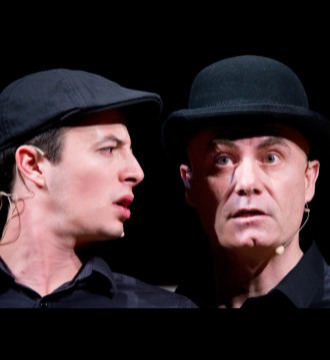
After a day wandering the sun-soaked streets of Prague, with heavy legs and increasingly heavy eyelids, a one-man biographical drama about a seventeenth-century French playwright did not, on paper, feel like the ideal antidote to exhaustion. Yet Molière: The Last Laugh proved unexpectedly engrossing - part history lesson, part theatrical memoir, and consistently engaging throughout.Most people will know Molière through the reputation of plays like Tartuffe, but far fewer are likely to know much about the man himself. This production, performed entirely by Gordon Duffy-McGhie, seeks to fill in those gaps, tracing the playwright’s life from the son of an upholsterer to one of the most celebrated - and controversial - figures in French theatre.Structured around the conceit of Molière collapsing backstage during a performance of The Imaginary Invalid, the show unfolds as a kind of final reckoning. Duffy-McGhie guides us through the playwright’s rise to fame: the adoption of the Molière name, the formation of his theatre company, the patronage of Louis XIV, and the scandals and critics that followed him throughout his career.What could easily have become static instead feels remarkably fluid thanks to both the performance and several inventive theatrical touches. Duffy-McGhie gives a confident and intelligent central performance, balancing humour with moments of weariness and reflection. More importantly, he manages to make Molière feel human rather than purely historical - ambitious, flawed, occasionally vain, but deeply devoted to theatre.The production also finds clever ways to avoid the visual inertia that often plagues one-person shows. Powder becomes a representation of hostile critics and public scrutiny, while recurring feathers and prop work help create movement and texture across the stage. These small visual flourishes give the storytelling a theatricality that lifts it beyond straightforward narration.What I found most satisfying, however, was the sense of discovery. The evening often felt like watching a particularly well-acted documentary - educational without becoming dry, informative without ever feeling overly academic. I left knowing far more about Molière than when I entered, and crucially, wanting to revisit his work with fresh perspective.At times the pacing occasionally dips, particularly during some of the denser biographical sections, but the warmth and intelligence of the production carry it through. By the end, Molière: The Last Laugh becomes less a history lesson and more a tribute to the strange immortality theatre can offer: an artist long dead still managing to command a stage centuries later.

Divadlo Inspirace • 28 May 2026 - 30 May 2026

boxeur

There is something undeniably compelling about the idea behind Boxeur. Two immigrant boxers - one fleeing fascism, the other poverty and antisemitism - circling one another against the backdrop of a Europe collapsing into war should, on paper, make for an emotionally bruising piece of theatre. And at moments, Pequod Compagnia’s production hints at exactly that show. But too often the production struggles to land its punches cleanly.Performed in English for Prague Fringe after touring Italy and France, the production feels caught between languages. Stefano Pietro Detassis has clearly worked hard to perform in English, but memorising dialogue and fully inhabiting it are two very different things. There are stretches where the delivery feels effortful rather than instinctive, flattening moments that should crackle with tension or emotional force. The result is that scenes which likely carry greater weight in the original Italian can feel strangely muted here.That issue is compounded by a narrative that is already somewhat difficult to follow. Boxeur charts the life of Eugenio Lorenzoni, an Italian worker who flees fascism for Paris, finding work in factories and hope in boxing, where his fate becomes intertwined with Victor, a Tunisian Jewish boxer. The show moves between political history, personal biography, and sporting rivalry, but the storytelling never entirely settles into a clear rhythm. Even allowing for the multilingual nature of the production - which includes lengthy passages in French - there were several moments where the plot became frustratingly opaque.And yet, frustratingly, there is clearly a stronger show lurking underneath this one.The final section suddenly sharpens into focus. Detassis reveals that parts of Eugenio’s triumphant return to the ring were fictionalised; in reality, he never made it back to Paris after the war, instead being shot while attempting to escape the Nazis during a death march. The image of Eugenio urging his brother to keep running through the forest before being killed is devastatingly effective theatre - simple, direct, and emotionally honest in a way much of the earlier material struggles to be.It is telling that the final five minutes contain the evening’s greatest emotional impact. Suddenly the production stops reaching for mythmaking and simply tells the truth. In doing so, it finds the human story that had previously felt obscured beneath the shifting structure and uneven translation.Detassis gives a committed performance throughout, but there remains something missing physically. For a play so rooted in boxing, the sense of athletic danger never fully materialises. The movements lack the sharpness and coiled aggression that might help ground the political material in something visceral.Still, the audience remained deeply receptive, and it is easy to see why. Boxeur is ambitious, sincere, and driven by genuine political conviction. Its closing moments carry real emotional heft. It is simply a shame that the production does not sustain that same clarity and force across the whole evening.

Divadlo Inspirace • 28 May 2026

Arthur Vinegar: Good Boy

I’ll admit it: when Euan Fraser pitched Arthur Vinegar: Good Boy at Prague Fringe’s Meet the Media event, I was sceptical. The description appeared to involve clowning, carrots, and a man in a vest asking whether he was “a good boy.” This did not, on paper, sound entirely like my thing. Still, I had a free hour and very little self-preservation instinct, so off I went.It’s fantastic.Or at least, fantastically daft.Fraser’s show exists somewhere in the overlap between clowning, physical comedy, absurdism and stand-up. There’s a loose premise involving Arthur Vinegar waking up every night in front of an audience armed only with carrots and an overwhelming need for approval, but trying to summarise the actual contents of the show makes you sound like you’ve had a minor head injury. There’s a cow called Daisy. At one point an audience member shoots her. There’s an extended sequence involving Arthur trying to locate his missing trousers somewhere amongst the crowd. None of this sounds funny written down. In the room, it absolutely is.What makes the show work so well is Fraser himself. Audience interaction can often feel like a dangerous game of roulette at the Fringe - either electric or painfully long - but Fraser handles it with the confidence of someone who could probably have become a very good stand-up comedian had he chosen a slightly less carrot-intensive path in life. He has an excellent instinct for callbacks, gently teasing audience members without ever tipping into cruelty.One woman, asked to define a “good boy” quality, offered the phrase “being responsible, not irresponsible,” which Fraser proceeded to mine for comedic gold for the rest of the performance. The joy comes partly from watching how quickly he can transform an accidental audience contribution into a running gag that keeps evolving in increasingly ridiculous ways.There’s also something oddly endearing beneath the chaos. For all the slapstick and nonsense, the show’s central idea - a grown man desperately seeking reassurance that he is, fundamentally, “good” - gives the absurdity a strange emotional grounding. Not enough to make this a deeply moving meditation on masculinity or self-worth, thankfully, but enough to stop it becoming pure sketch-show randomness.If there’s a weakness, it’s the ending. A final sequence underscored by Lou Reed’s Perfect Day slightly overstays its welcome, and the show loses a little of the relentless comic momentum that carries the earlier sections so effortlessly. Fraser himself even jokes at one point that he’s running out of ideas while performing an increasingly elaborate cow-milking routine, and the final few minutes do feel as though the show is searching for a conclusion rather than hurtling towards one.Still, that’s a small complaint in what is otherwise a hugely entertaining fifty minutes. Most importantly, I never quite knew what was coming next - always a good sign in comedy, and even more impressive in a Fringe landscape increasingly full of carefully engineered quirkiness.As we left, audience members were loudly singing the show’s praises. Slightly annoyingly, they were right.

Metro Comedy Club • 27 May 2026 - 29 May 2026

(W)holy Helga

Fringe audiences tend to be remarkably forgiving of chaos - particularly when that chaos arrives wrapped in confidence, absurdity and the possibility that absolutely anything could happen next. (W)holy Helga leans heavily into exactly that energy, delivering an hour of religious clowning, sexual repression and audience humiliation that is frequently very funny, occasionally uncomfortable, and still a work in progress.I first met Nazaret Froufe at Prague Fringe’s Meet the Media event, where she openly admitted she was still rewriting sections of the show ahead of opening night. In fact, when I asked whether she even wanted reviewers attending so early in the run, she actively encouraged it. There is something admirably fearless about that approach and, fittingly, it mirrors the show itself: bold, messy, playful and not entirely finished.Froufe plays Helga, a deeply devout young woman with braided blonde hair and increasingly confused feelings about Jesus. Entering with a ukulele rendition of Ave Maria, she quickly establishes the show’s blend of innocence, provocation and silliness. From there, the performance unfolds as a sequence of clowning sketches stitched together by Helga’s spiralling religious ecstasy and sexual awakening.The influence of Philippe Gaulier is unmistakable throughout. If you are familiar with Gaulier-trained performers, you will recognise many of the rhythms, comic games and physical dynamics immediately. Froufe is clearly a talented physical performer and she commits fully to the ridiculousness of the character, whether gyrating against a crucifix, moaning through prayer, or orchestrating increasingly awkward audience participation.And audience participation is absolutely central here. Several audience members are dragged onstage to become unwilling accomplices in Helga’s increasingly unhinged rituals - from receiving communion via Pringles and Coca-Cola to dressing as clergy while Helga grinds against them in religious ecstasy. Some of the comedy comes from watching ordinary people attempt to survive the experience with dignity intact.At its best, the show generates exactly the kind of dangerous unpredictability that good clowning thrives on. Froufe works well with the audience and there are flashes where she finds genuinely brilliant improvised moments. But those flashes are not yet consistent enough. She does not quite possess the confidence within the character to fully sustain and shape the ad-libbing, and occasionally interactions drift rather than escalate.The larger issue is that the central comic idea simply is not substantial enough yet to sustain a full hour. A sexually repressed religious woman becoming increasingly aroused by her devotion is amusing, but the show circles the same joke too many times without developing it sufficiently. There are only so many moans, thrusts and moments of simulated possession that can retain their shock value before the material begins repeating itself.That said, the foundations are absolutely there. Helga is a strong comic creation and Froufe is undoubtedly a performer with instinct, charisma and physical precision. What the show now needs is sharper shaping and a broader range of material to deepen the character beyond the central premise.Even in its current form, though, (W)holy Helga remains an entertainingly strange hour that earns plenty of laughs and leaves the audience never quite sure what indignity might happen next.
Café Club Míšenská • 27 May 2026 - 30 May 2026

Last Train From India

One of the occupational hazards of the Fringe is developing an internal warning system whenever a show promises to tackle “the human cost of war.” Sometimes that instinct is unfair. Sometimes you discover something genuinely revelatory hiding beneath the worthy premise. Last Train From India, from UnErase Poetry, lands somewhere in between: sincere, thoughtful, and clearly made with passion, even if it never quite uncovers a perspective that feels dramatically new.The setup is intimate: three lifelong friends gathered in a room on the eve of a wedding just as news of Partition breaks. Imran, a Muslim man, decides he must return to Lahore to be with his family. His fiancée Amrita remains in India, while their friend Jassi prepares to leave for Edinburgh University to study English Literature. Around this triangle swirl conversations about nationalism, religion, love, and the cost of political decisions made far above ordinary people’s heads.The structure blends conventional dialogue scenes with spoken-word poetry. At regular intervals, a moment in the drama prompts one of the characters to step forward and deliver a poem expanding on the emotional theme at hand: war, heartbreak, displacement, memory. The poems themselves are often very well written and impressively performed. Unsurprising, perhaps, given UnErase Poetry’s enormous online following. There’s no denying the company know how to craft emotionally resonant language, and the performers deliver it with conviction.The difficulty is that the show rarely moves beyond resonance into revelation.Partition itself remains an endlessly compelling historical backdrop, but the play doesn’t seem to discover a particularly fresh angle on it. Star-crossed lovers divided by political violence is hardly unexplored territory, and here the story unfolds with a certain inevitability. We understand fairly early where everyone’s journey is heading, and then spend the next hour watching it arrive exactly there. The result is a production that feels longer than its sixty minutes.At times, the poetry also labours points the audience has already understood. A poem about the human cost of war follows a scene demonstrating the human cost of war; reflections on division follow scenes about division. Individually, the pieces are polished and heartfelt, but cumulatively they begin to feel repetitive rather than illuminating. The final message - that humanity has failed to learn from the mistakes of the past and continues to repeat cycles of violence - is earnest and admirable, but not especially surprising.That said, there’s still plenty to admire here. The dialogue occasionally crackles with humour and warmth, preventing the production from becoming relentlessly sombre. The chemistry between the three performers is strong, and the audience at this performance clearly connected deeply with the material, rewarding it with a standing ovation.I admired Last Train From India more than I was fully absorbed by it. It’s thoughtful, sincere, and crafted with genuine care, but for all its emotional ambition, it never quite found the dramatic complexity or unpredictability needed to completely pull me in.


Malostranska Beseda Galerie • 27 May 2026 - 29 May 2026

Saikiran Live

There is something slightly disarming about seeing a comic who has racked up tens of millions of online views performing to an audience of seven in a basement at the Prague Fringe Festival. Yet that intimacy ends up working very much in Saikiran’s favour. By the end of the hour, the room feels less like a Fringe comedy crowd and more like an extended family gathering - albeit one where somebody has handed the funny cousin a microphone.Saikiran arrives in Prague with an interesting challenge. He is one of India’s most successful English-language stand-ups, shot to viral fame through routines about dark skin and marriage that struck a chord with millions online. But comedy rarely travels cleanly across borders. Jokes that kill in one country can feel oddly flat elsewhere, stripped of the cultural shorthand that made them sparkle in the first place.To his credit, Saikiran seems entirely aware of this. Early on, he admits he has come to the Fringe partly to test whether his style of comedy works internationally. The answer, broadly, is yes - though perhaps in a slightly different form than it does back home.What makes the set land is not edgy provocation or razor-sharp satire, but warmth. This is resolutely family-friendly stand-up: no aggressive crowd work, no parade of swear words, no desperate attempts to shock the audience into submission. Instead, Saikiran mines humour from family dynamics, middle-class aspirations and the peculiarities of growing up in India. His mother, father and older brother become the heart of his show, and the material taps into something universal enough that the cultural specifics rarely become a barrier.There is also something refreshingly unpretentious about the performance. Saikiran has clearly spent years honing this act through corporate gigs and mainstream audiences, and that polish shows. He is immediately comfortable on stage, relaxed with the audience and adept at creating an easy rapport. Even in a tiny room, he never appears rattled by the modest turnout. If anything, the smaller audience seems to suit the conversational tone of the evening.Not every joke lands with knockout force, and there are moments where the material feels a little too safe. The show rarely takes major creative risks, and those expecting a boundary-pushing comic voice may leave slightly underwhelmed. While I laughed consistently throughout, there were few moments that genuinely blindsided me with originality or bite.Still, there is real skill in making an audience feel comfortable for an hour, and Saikiran achieves that with ease. The comedy is gentle, personable and consistently likeable. More importantly, the hour passes remarkably quickly - often the clearest sign that a comedian knows exactly what they are doing.Whether Saikiran becomes a breakout global comedy star remains to be seen. But as an introduction to an Indian comic voice that feels accessible without becoming bland, Saikiran LIVE is an engaging and thoroughly pleasant hour in good company

Metro Comedy Club • 25 May 2026 - 30 May 2026

Binding Agent

Kidnapping someone and then offering them a smoothie is, admittedly, quite a strong opening move. Binding Agent understands this immediately. Harry Smithson’s dark comedy drops us into a hostage situation that is equal parts threatening and absurd, before steadily revealing itself to be one of the sharpest pieces of new writing I’ve seen at the Fringe this year.The set-up is deceptively simple. Simon, a corporate employee of sorts, wakes tied to a chair and is joined by the unnerving Herne, who refuses to properly explain why any of this is happening. Later joined by Annette, a language teacher with strong opinions, the trio spend the evening locked in a bizarre conversational tug-of-war that veers wildly between politics, philosophy, workplace culture, Nixon, smoothies, and increasingly fraught attempts to make sense of their situation.Smithson’s script is exceptionally well judged. The dialogue crackles throughout, packed with sharp observations and genuinely funny lines that land naturally rather than feeling engineered for applause. One anecdote about Annette’s after-school language club — where students translate poems into their own languages before reading them aloud to an audience who cannot understand a word — drew one of the biggest laughs of the night. The packed crowd responded enthusiastically throughout, with the humour arriving consistently without ever undermining the darker undertones of the piece.The performances are equally strong across the board. Sam Hill gives Simon an anxious, slightly defeated energy that works perfectly against Matilda Tucker’s more grounded and quietly exasperated Annette. However, it’s Joseph Reed who dominates the room as Herne. He manages the difficult balancing act of being charming, ridiculous, and deeply unsettling all at once. At no point do we fully trust him, yet the show wisely avoids turning him into a cartoon villain.What impressed me most, though, was the play’s restraint. Many Fringe shows built around mystery eventually collapse under the pressure to explain themselves. Binding Agent resists that temptation entirely. We never receive neat answers about Herne’s motives, but the ambiguity feels deliberate rather than evasive. More importantly, the show actually knows how to end — a surprisingly rare achievement at the Fringe. The final moments land perfectly: satisfying, unsettling, and earned without overexplaining.A smart, tightly constructed dark comedy that deserves a long life beyond this festival run.

The Rotunda Theatre: Bubble • 14 May 2026 - 17 May 2026

735

Anyone who’s ever sat through a team-building seminar, a mandatory training session, or a manager enthusiastically explaining “workplace culture” will recognise the world of 735 almost immediately. Thomas Pagett’s one-man corporate satire drops us into the life of an employee known only by a number, endlessly completing pointless tasks while an unseen manager issues instructions from above. It’s an idea with clear comic and thematic potential, even if the execution struggles to sustain it.Pagett regularly recruits audience members to play co-workers, eventually leaving five slighty uncomfortable volunteers stranded on stage for much of the performance. I particularly felt for the first participant, brought up within the opening minutes and seemingly trapped there until the end. One poor soul spent a substantial portion of the show sitting silently in a ball pit, which perhaps says more about Fringe endurance than corporate oppression.Audience interaction always carries risks, especially when your scene partners aren’t trained performers. Conversations became difficult to follow as volunteers understandably failed to project their voices — though Pagett himself often struggled to cut through the cavernous acoustics and background rumble of the Rotunda. Large stretches of dialogue simply disappeared into the tent ceiling.The satire itself is hardly subtle: modern work is repetitive, corporations treat employees as disposable, and managerial language is deeply absurd. Fair enough. But the show spends close to an hour circling this single idea without ever really developing it further. By the time 735 finally quits and is immediately replaced by another audience member, the message has long since submitted its resignation letter.

The Rotunda Theatre: Bubble • 2 May 2026 - 16 May 2026

This Is How I Got Arrested...

There’s something inherently risky about putting the ending of your show in the title. It sets up a promise. Sitting down for This Is How I Got Arrested…, I found myself less concerned with what would happen, and more with how we would get there. As it turns out, the journey is energetic, engaging, and often very funny. The destination, however, is harder to pin down.Azaelia Slade’s one-woman show introduces Sophie, a young working-class woman recounting her upbringing, relationships, and eventual foray into smuggling drugs out of Ireland. It is delivered at pace, with frequent audience interaction. Various audience members are drafted in to play roles, giving the piece a sense of spontaneity that keeps it lively throughout.Slade is a strong performer who brings a restless, engaging energy to the stage. The sequences from Sophie’s school years are effective, with well-observed details about friendships, family, and social pressures. Later episodes, including her time in Zantos, hint at a darker and more chaotic turn in the story.The difficulty lies in the structure. The early sections take up a significant portion of the runtime, leaving the central premise feeling compressed. We spend a long time establishing Sophie’s background, but not quite enough time watching events build to a satisfying conclusion.This becomes most apparent in the ending. An audience member is asked early on to set a timer for 58 minutes, and when it goes off, the show stops. It is a neat idea, but in practice it feels abrupt. The story does not quite reach a clear resolution, and the key moment suggested by the title, Sophie’s arrest, never arrives. It left a sense that part of the narrative is missing.That said, the show is consistently entertaining. The audience interaction works well, and Slade’s performance holds everything together even when the script feels uneven. There is a clear comic voice and a strong sense of theatrical play.This is an enjoyable hour with a compelling performer at its centre. With a tighter structure and a clearer ending, it could develop into something sharper. As it stands, it is a lively and engaging piece that does not quite deliver on its own premise.

The Actors - Theatre • 2 May 2026 - 4 May 2026

Perfect Little Flirt

There’s a particular kind of bravery in reading your teenage diary out loud to a room full of strangers. Not paraphrasing it, not shaping it into something neater or more theatrical, but presenting it as it was: earnest, contradictory, and often unintentionally hilarious. Perfect Little Flirt leans fully into that impulse and, for much of its runtime, it is both excruciating and very funny.Sal Fothergill’s show is built around her real diaries from the early 2000s, written when she was 14. These entries form the backbone of the piece, interspersed with commentary and the occasional visual aid. The material is, in many ways, doing the heavy lifting. Teenage Sal is a compelling writer, even if she did not intend to be, and there is a sharp comic pleasure in revisiting her obsessions, anxieties, and throwaway remarks with adult hindsight.Some moments land particularly well. Recollections of school productions, awkward social encounters, and shopping trips dominated by H&M feel both specific and widely recognisable. Lines that might once have passed without comment now draw laughter for their bluntness or misplaced confidence. There is also a more uncomfortable thread running through the diaries, touching on perfectionism and disordered eating, which adds texture and a sense of honesty to the piece.The difficulty lies less in the material itself and more in what the show is trying to do with it. For much of the runtime, it is essentially a sequence of diary readings and reflections. This is engaging in the moment, but it is not always clear what larger argument or narrative is being constructed. Not every entry lands, and the shape of the show begins to feel loose.In its final minutes, the piece pivots towards broader social commentary, touching on patriarchy, media influence, and the pressures placed on young girls. The seeds of this are present throughout, particularly in the image of the diary itself, branded with the phrase “perfect little flirt”. However, the transition feels abrupt. The earlier material has not quite been marshalled into a structure that supports this conclusion, and so the ending lands with less clarity than it might.There is, however, something fitting in that uncertainty. Late in the show, Fothergill reflects on the difficulty of making the piece, and the decision to simply write it and accept whatever judgement follows. That same openness carries through the performance.There is a lot here that is enjoyable, and plenty that resonates. It is funny, uncomfortable, and sharply observed. It just does not quite cohere into a fully realised whole.

thirteen • 1 May 2026 - 2 May 2026

A Solo from the Pit

Elias Faingersh’s A Solo from the Pit is an unusual and engaging blend of musical storytelling and personal confession. A virtuoso trombonist, Faingersh reimagines his journey from the orchestra pit of the New York Metropolitan Opera to the intimacy of the Fringe stage – and he does so with humour, technical brilliance and a dash of theatrical flair.The structure is clever: each chapter of his life is paired with an opera he once performed in, from Tosca to Carmen, drawing witty and sometimes poignant parallels between the dramas on stage and those off it. A story about annoyed neighbours and interrupted practice sessions becomes a playful riff on Tosca’s tensions, while other moments – a faltering audition, a lost love – find their echo in the grand emotional sweep of Verdi and Puccini.Faingersh’s musicianship is superb throughout. The opening, a haunting Hebrew prayer rendered entirely through the trombone, is a stunning display of tone and control. His use of looping pedals and vocal layering is inventive, allowing him to build rich soundscapes from a single instrument. A mid-show composition depicting a couple’s argument and reconciliation is especially inspired – funny, textured and musically sharp.If there’s a weakness, it’s one of pacing. At a full hour, the show slightly overstays its welcome; trimming an opera or two would give it tighter focus and a more satisfying arc. Likewise, while it opens with something transcendent, the ending doesn’t quite reach the same emotional resonance.Still, A Solo from the Pit is an excellent piece of musical theatre – a celebration of craft, courage and creative risk. Faingersh’s journey from the world’s grandest orchestra pit to a humble Fringe stage proves that sometimes stepping out of the ensemble can make for the most memorable solo of all.

Tinni Tinni Arts Club • 24 Oct 2025

Troppo Bella Per Essere Vera

In Troppo Bella Per Essere Vera, Maria Vittoria Barrella delivers a sharp and engaging performance as a scientist desperate to be recognised for her intellect rather than her beauty. Told entirely in Italian - with an English script thoughtfully provided - this one-woman play moves briskly through a series of witty, tightly written monologues that blend irony, self-awareness, and social critique.The premise is fascinating: a brilliant academic, tired of her achievements being overshadowed by her past as a model, builds a machine capable of erasing every trace of her former image from the internet. Of course, , the plan backfires, forcing her to confront the impossibility of separating identity from perception. The idea might sound abstract, but Barrella grounds it with warmth and precision - her delivery is crisp, her comic timing faultless, and her shifts between irony and sincerity are deftly handled.Director Maura Pettorruso keeps the staging simple but expressive, using music and small visual touches - a fluttering fan, a shimmer of glitter - to punctuate changes in tone. It’s a clever use of minimal resources, ensuring that attention never drifts from the performer.At times, the logic of the narrative teeters on the edge of surrealism, and it’s possible that a nuance or two is lost in translation. Yet the clarity of Barrella’s performance and the sharpness of Massimiano Bucchi’s writing carry the audience through. Beneath its humour lies a clear-eyed commentary on how women in science - and indeed in any field - are still judged by appearances before achievements.Tightly written, well-paced, and performed with charm and intelligence, Troppo Bella Per Essere Vera is a thought-provoking monologue that deserves to reach wider audiences. A hidden gem that feels ripe for touring - and one that lingers in the mind long after the glitter has settled.

CUT | Centro Universitario Teatrale Unict • 24 Oct 2025

When life gives you garbage

There’s an intriguing idea buried somewhere in When Life Gives You Garbage - a meditation on clutter, chaos, and the rituals we use to rebuild ourselves. Unfortunately, like the piles of rubbish strewn across the stage, it never quite finds form.Greek performer Savvina Romanou-Pylli spends much of the show navigating her own domestic debris, speaking in Greek with English and Italian surtitles projected above. The concept - cleaning the house as a metaphor for cleaning the mind - has promise, but the execution feels indulgent and opaque. At one point she eats peanut butter from a banana, and I found myself wondering what it was meant to signify. Perhaps I missed something profound.There’s room for abstract physical theatre, but audiences still need a thread to follow. Here, that thread gets lost among the clutter. Even the lighting seemed confused - a single LED beam fixed squarely on me throughout the performance, a fitting symbol for misplaced focus.When Life Gives You Garbage aspires to say something about resilience and self-renewal, but the result feels more like an unfinished workshop than a finished piece. The mess might be the point - but that doesn’t make it compelling to watch.

Fabbricateatro • 23 Oct 2025

Sickly Victorian Rat Circus

There’s a charmingly ramshackle energy to Sickly Victorian Rat Circus, a two-hander from US company Small Buns Duo that blends shadow puppetry, clowning, and circus skills to tell the tale of two mice displaced from their home by monstrous humans. With its overhead projector, hand-cut silhouettes and clutter of props, it feels like a storybook come to life - albeit one stitched together from scraps and string.Performed and co-directed by Staza Stone and Jonas Whalen, the piece uses little spoken language (the mice chatter in squeaks and gibberish) and instead relies on physical comedy and visual storytelling. The premise - about finding safety, belonging and a new home - is simple but sincere. At its best, the show has moments of real warmth, particularly in its audience interactions. The opening exchange with children in the crowd sets an inclusive, playful tone and a later moment when a volunteer joins the action earns genuine laughter. It’s these stretches, where the performers connect directly with the audience, that feel most alive.The shadow puppetry is a highlight: projected onto an old-school overhead, it’s endearingly low-tech and gives the show a handmade, slightly anarchic aesthetic. The imagery could, however, do with tighter coordination. At times the puppets’ movements lag behind the live action, diluting their impact. The circus elements are less convincing. A brief five-ball juggle and some basic balancing tricks suggest enthusiasm more than virtuosity and one can’t help but feel that the storytelling would have been stronger if the circus had been used more sparingly.The production seems caught between audiences. Its silliness and sweetness clearly delight younger viewers, yet the title - Sickly Victorian Rat Circus - suggests something darker or more absurdist. A rebrand towards a more family-friendly identity might serve it well, as would a touch of streamlining; there’s an excellent 30-minute children’s show somewhere within this 45-minute frame.Still, there’s much to admire here: an inventive use of minimal resources, two likable performers, and a heartfelt message about home and resilience. It’s a little rough around the edges — but that’s also part of its scruffy charm.

Sala Hernandez • 23 Oct 2025

Leslie Bloom Solves A Murder

It’s no bad thing when a show does exactly what it says on the tin. Leslie Bloom Solves A Murder promises cosy chaos, drag-fuelled comedy and the kind of murder mystery where the clues are less important than the cake – and that’s pretty much what you get. A perfectly pitched Sunday teatime show, this is the sort of gentle silliness that knows its audience and plays to it with gusto.Leslie Bloom (the creation of Simon Topping) is an over-60s parkour instructor, beat poet and neighbourhood busybody – or at least she imagines herself to be. She’s hosting a Neighbourhood Watch meeting when, shock horror, someone turns up dead. Cue gasps, clipboards and a roomful of suspects pulled from the audience. It’s less Knives Out and more Midsomer Murders with jazz hands, and that’s part of the charm.Topping, as Leslie, is a warm and seasoned performer who knows exactly how to work a crowd. There’s plenty of audience interaction – from selecting suspects to calling out plot suggestions – and on this particular afternoon, the mostly retiree audience were more than happy to get involved. There was waving, shouting, impromptu ad libs, and Leslie handled it all with the ease of a performer who’s clearly been doing this sort of thing for a while.The show works best when it leans into that ease – riffing off the room, riding the waves of laughter and letting the character’s quirks take centre stage. A segment involving Leslie’s subconscious felt overlong and didn’t add much, and the final singalong number could have landed better with a more familiar tune (it’s hard not to feel the theme from Murder, She Wrote was a missed opportunity).Tonally, this is comedy-theatre more than murder mystery. If you’re expecting tight plotting or red herrings, look elsewhere. But as a lightly interactive character romp, it delivers. There’s real potential here for Leslie Bloom to become a returning Fringe staple – much like the recurring detectives in every murder mystery, she just needs to develop her own set of character tropes and catchphrases to build a lasting legacy.For now, Leslie Bloom Solves A Murder is good fun, affectionately silly and well tailored to its demographic. Not every gag lands, and the structure could use a trim, but the audience clearly had a lovely time – and sometimes, that’s the mystery solved.

Studio, Gala Theatre • 26 Jul 2025 - 27 Jul 2025

Aftertaste

Just before Aftertaste, I found myself in a café with two hardened Fringe veterans, chewing over the now-endless inflation of star ratings. Once upon a time, three stars meant, simply, “good – go see it”. These days anything shy of four is met with a polite grimace and the whiff of failure. Keep that in mind, because Aftertaste is a solid three-star show in the old-school sense: engaging, occasionally incisive, but rough round the edges and proudly uninterested in tidy conclusions.Juniper (heartbroken, wine-sodden, aggressively sardonic) is ricocheting through dating apps and one-night stands with the determination of a lab rat in a maze. Her best friend Mads – the sort of person who brings orange juice and tarot cards while offering unsolicited life advice – lets herself into the flat on a regular nutrition-and-nurture patrol. Around Juniper orbits a succession of men who look so uncannily alike that, until curtain call, I assumed a single über-versatile actor was hopping costumes. Discovering there were three felt like the show’s final punchline.The studio set is littered with bottles, books and emotional detritus. It’s authentically chaotic, though perhaps too literally so: several scenes devolve into careful obstacle courses as the cast thread themselves between props. The same literalism afflicts the pacing. Long, naturalistic pauses – to pour wine, fetch Scrabble boards, stare moodily at the middle distance – tip past vérité into inertia. A little underscoring, or even a decisive lighting cue, might have helped the air move.Speaking of tech, the only sound we hear is during scene changes, accompanied by a brief wash of violet lights. It’s a curious choice: for a play so interested in the throb of life after hours, the silence feels positively monastic. The effect is heightened by a script that, when it stirs, has a wickedly dry tongue. “Is it better to objectify women or to bore them?” Juniper asks, and the line keeps echoing long after the laugh has faded.Narratively, the play circles rather than travels. We begin with Juniper curled under a duvet; after an hour of awkward dates, fleeting hook-ups and well-meaning pep talks, we end in almost the same position. Slice-of-life drama is allowed to resist neat arcs, but theatre can still gift us momentum – here, the promise of commentary never quite becomes more than gesture.Yet – crucially – Aftertaste is not boring. It has voice, perspective, and flashes of honest pathos. When Juniper drops the armour for a moment of scared vulnerability, the temperature in the room shifts. There’s a sharper, keener play buried under the clutter; trim the pauses, trust the dialogue, and develop the narrative arc, and it might yet emerge.Until then, consider this a recommendation in its original three-star spirit: a good hour, imperfect but worthwhile, and proof that “not boring” is still a perfectly respectable bar to clear at the Fringe.

Studio, Gala Theatre • 26 Jul 2025 - 27 Jul 2025

Secret Admirers

“Now, to students, that type of thing is probably hilarious,” quipped Caroline Aherne’s character Mrs Merton, deadpan, to Vic and Bob. That line came to mind more than once during Secret Admirers, a new musical from the Foot of the Hill Theatre Company that mixes romantic angst with a high-concept FBI surveillance comedy. It’s big, bold and faintly bonkers – and while not everything lands, there’s more than enough here to make it worth your time.The concept is knowingly ludicrous: everyone in the world is surveilled by a dedicated FBI agent, and two of these agents (Emma Henderson and Kian Standbridge) are tasked with nudging their awkwardly mismatched subjects, Lucy and Adam, into romance. As the human couple’s relationship sours and stalls, the agents begin to catch feelings themselves – all under the all-seeing eye of a mysterious Overseer, who is less than thrilled by these emotional developments.The show runs on two tracks: a comic meta-spy narrative and a more grounded romantic drama. The balance isn’t always even. The FBI sequences have energy – there are gags, conspiratorial winks and some ambitious choreography – but also a heavy whiff of drama-soc silliness. There’s fourth-wall breaking, CIA-style clipboards and a good deal of postmodern mugging that occasionally tries too hard. Judging by the laughs from the student-heavy crowd, it’s hitting its mark with its target audience, even if it doesn’t always withhold from leaning on the obvious.Where the show does shine is in the relationship between Lucy and Adam. Their story arc owes more than a little to The Last Five Years – especially in its bleaker middle stretch, when things fall apart with musical precision. There’s a better show buried just beneath the surface here: one where the central couple don’t get back together, and their unresolved emotional tangles are allowed to sit, unanswered. The “happy ending” feels unearned, as if the writers lost their nerve in the final scenes. A gutsier production might have left things unresolved – or at least less neatly tied up.Musically, there’s a lot to like. The score, by Luke Mallon, ranges from big belt numbers to more introspective pieces, and while the lighter, comic songs are serviceable, it’s the emotional ones that truly resonate. Emma Henderson as Agent Skye gives a powerhouse performance – vocally assured and emotionally rooted – and brings much of the show’s weight with her. Standbridge, as her partner-in-surveillance, is equally engaging, while Niamh Williams as Lucy gives a warm and expressive turn.Less successful is the choreography. The cast clearly aren’t natural dancers, and the early musical numbers suffer from awkward movement that feels like a holdover from traditional MT staging. Ironically, once the choreography is dropped midway through, everything relaxes: the cast look more at ease, the voices come forward, and the show begins to breathe.Technically, it’s a bit of a haze – quite literally. The haze machine is left on for the duration, meaning much of the action plays out in a kind of diffuse fog. Add to that some distractingly programmed moving-head lights and it starts to feel like the tech is trying too hard to be impressive, rather than simply supporting the story.Secret Admirers isn’t perfect – but it isn’t boring either. It has ideas, voices, ambition, and a slightly chaotic heart. With sharper direction, subtler tech and a little more trust in its quieter strengths, this could grow into something genuinely moving. For now, it’s a fun, slightly foggy and endearingly overcooked hour – with a few moments that genuinely linger.

The Assembly Rooms Theatre • 25 Jul 2025 - 27 Jul 2025

Drop of the Ocean

Children’s theatre doesn’t need bells, whistles or a vanload of tech. Sometimes, all it needs is a handful of clever props, some gentle songs and a performer who knows how to talk to both toddlers and tired parents. Drop of the Ocean has all three – and while it may not linger in the memory, it delivers a pleasing and quietly magical 45 minutes for its young audience.The premise – in as much as there is one – is simple: the sun and moon want to play together all day and night, and the ocean (sparkly, swishy and full of surprises) holds the key. What follows is more a gentle sensory journey than a structured story, as the ocean introduces us to a parade of aquatic creatures – a squid, a swordfish, a “bongo fish” – each with its own little number and novelty.At the centre of it all is Paula David, who radiates warmth and calm in equal measure. She holds the room with quiet confidence, talking directly to the children without ever patronising, and gamely adapting to a Sunday lunchtime crowd that was perhaps a little light on children. (One enthusiastic youngster made it to the stage to interact with the props – and was immediately rewarded with their own solo undersea adventure.)The show opens with a small but lovely moment of theatre magic as David sprays sparkles into the air, which rise to become stars. It’s simple, effective, and sets the tone nicely. Throughout, the production finds small ways to enchant – from the textured, glittery set to soft, undulating lighting that evokes the sea without overstatement. Lanterns become celestial bodies; glowsticks and fabrics become aquatic animals.The songs themselves are pleasant enough, though not particularly memorable. Given we’re invited to sing along at points, you wish the melodies had a bit more staying power – but they serve their purpose and avoid overstaying their welcome.There isn’t much of a plot, but that’s no bad thing. This is more about mood and engagement than narrative. It invites curiosity, rewards attention and never overcomplicates its central question: what might the sea tell us, if we just stop and listen?Drop of the Ocean isn’t a show that reinvents anything – but it doesn’t need to. It proves that simple, thoughtful storytelling, paired with strong design and a charismatic performer, is still more than enough to keep young minds gently entranced.

Studio, Gala Theatre • 24 Jul 2025 - 27 Jul 2025

Heart of the Country

There’s a version of Heart of the Country that I’d love to have seen. One where the oddball premise – four Scottish performers spinning tall tales and tunes about Lyndon B Johnson around a campfire – lands with the charm and profundity it clearly hopes for. Sadly, this wasn’t it.The show bills itself as “less a biography than a counter-mythology”, which is a poetic way of saying “we made stuff up”. Fair enough – fringe theatre thrives on imaginative leaps. But those leaps need somewhere to land, and here, they mostly just circle the fire and vanish into the smoke.The structure is loose: stories about LBJ’s life (sort of), each ending with the refrain “and that young boy was LBJ”. Initially funny. Eventually grating. The performers take turns narrating in a style that lands somewhere between campfire anecdote and podcast audition – pleasant enough, but lacking the dynamism or theatricality that might elevate it beyond spoken word.An audience coin toss supposedly determines whether we get a song or a story next, but as every piece is performed by the end regardless, the illusion of choice feels just that – an illusion. It’s a neat idea in theory, but without consequence, it adds little beyond mild confusion.The cast are likeable and clearly committed, and there are flickers of musical and lyrical talent throughout. But for a show all about the power of storytelling, the stories themselves rarely ignite. There’s little movement, little interplay and a lot of sitting still and talking – which is fine if your words crackle. These mostly smoulder.There’s potential here, and some thoughtful ideas flicker beneath the surface about myth, history and democratic storytelling. But Heart of the Country ultimately feels like a show still trying to figure out what story it wants to tell – and why we should want to listen.

Café Club Míšeňská • 29 May 2025 - 31 May 2025

Little Drops of Rain

There’s a moment early in Little Drops of Rain – a Taiwanese import from Bon Appétit Theatre – when you realise you’re in for something delightfully different. No dialogue, no text, and barely a nod to traditional plot structure. Just four performers, some puppets, and an arsenal of equipment that looks like it’s been borrowed from a sound engineer’s fever dream.The story, such as it is, follows a young girl navigating a parched world who stumbles upon a single drop of water. Along the way, she meets rainclouds, robots, and various other abstract weather-related phenomena. Whether or not you can follow the logic of her journey feels largely beside the point. This is less about narrative coherence and more about mood, texture, and the gentle magic of watching objects come alive.The puppetry is delicate and effective, but the real stars here are the sound artists – two performers who conjure every splash, stomp, rumble, and robotic clank live on stage. Their setup resembles a medical rig: all cables, bars, and mysterious instruments that produce astonishingly specific noises. It’s inventive, charming, and frankly impressive that they managed to ship it all the way from Taiwan.But while the show sounds gorgeous, it doesn’t quite land emotionally. The central character’s journey, while beautifully rendered, lacks the clarity or tension to fully engage – particularly for the younger children it seems to be aimed at. The atmosphere is lovely, but there’s a risk of style drifting too far ahead of substance.Still, at just 45 minutes, Little Drops of Rain is an enjoyable and gently hypnotic experience. It may not stick in the memory as a complete story, but as a piece of sensory theatre, it has moments of quiet wonder. More cohesion and a clearer emotional arc would take it further – but even as it stands, this is a show with heart, ingenuity, and a lot of beautifully timed splashing.

Malostranska Beseda Galerie • 29 May 2025 - 31 May 2025

Stealing Stories

After last year’s wonderfully chaotic Getting Over Hugh, I made a point of catching Acting Out’s return to the Prague Fringe with Stealing Stories. I’m glad I did. While this new show hasn’t quite shaken the company’s love of a jumbled plot or sudden tonal swerves, it’s undeniably entertaining – and oddly compelling, in spite (or perhaps because) of its flaws.Billed as a sharp comedy about creative ownership and queer identity, Stealing Stories asks some big questions: who gets to tell which stories? Who owns a lived experience? And can straight, cis writers credibly portray queer lives without tipping into appropriation? These are fertile topics – though here, they’re explored in a script that veers wildly from pointed satire to melodrama to sincere debate, often within the same scene.Once again, writer/director Sean Denyer proves he’s brimming with ideas. Possibly too many. Just as the audience settles into a funny exchange – like a book launch Q&A where a character reminds us, “This is not a pantomime” – we’re suddenly plunged into an earnest subplot involving an Afghan refugee. There are also lesbian romantic triangle plays, a friendship breakdown, and more than one impassioned monologue about who can write what. If Getting Over Hugh was a “fabulous hot mess”, Stealing Stories is its slightly more mature sibling: still messy, but starting to make sense of the chaos.Some improvements are evident. Lighting transitions – a major issue in last year’s production – have been refined, though the end of each scene would still benefit from a snap fade rather than a slow drift into confusion. The acting across the board is strong and helps keep us grounded, even when the script goes off-piste.Despite its inconsistencies, Stealing Stories is a show I’d recommend. It’s fun, fast-moving and performed with infectious energy. There are great lines (“We’re all in drag, but some of us are just boring”) and more than a few laugh-out-loud moments. It also raises worthwhile questions – even if it doesn’t always answer them.Ultimately, Denyer doesn’t quite stick the landing when it comes to balancing satire with sincerity. But like last year, the show’s chaotic heart is part of its charm. And once again, I left the theatre amused, bemused, and slightly envious of the fun the cast was clearly having on stage.

A Studio Rubín • 29 May 2025 - 31 May 2025

Hemlines

I almost didn’t see Hemlines. A delayed flight had other ideas – but, as it turns out, the Fates were on my side. Fitting, really, for a show about Florence, Eleanor and Doris: three eternally toiling seamstresses who may or may not be the modern reincarnation of the Greek Fates, now stitching the threads of life with a bit more banter and Irish dancing than I remember from classics class.Moon Bureau’s latest offering comes to Prague fresh from a spin around Australia’s fringe circuit, and it arrives with all the energy of a long-haul flight’s second wind. There’s singing! There’s jigging! There’s a maypole! (Yes, really.) What the press release describes as “a celebration of sisterhood” turns out to be a musical – surprise! – though the songs sneak up on you. It’s not until Florence breaks into the first number that you realise you’re watching a bona fide musical. A little more signposting wouldn’t hurt, but once the toe-tapping starts, you’re in safe hands.Clocking in at 45 minutes, the show never drags. The dialogue is sharp, the physicality impressive, and the songs... well, they’re good. Not “download immediately” good, but clever, catchy and tightly performed. More importantly, they serve the story rather than stopping it dead – which is rarer than it should be.The ensemble – Madison Chippendale, Lana Filies and Alicia Badger – are a joy to watch. Their chemistry fizzes, their timing is bang on, and they somehow make maypole choreography seem like a perfectly reasonable theatrical choice. They’ve crossed a continent to be here, and on this evidence, Prague Fringe should be very glad they did.Hemlines might not change your life, but it does remind you why you came to the fringe in the first place: to see something smart, strange and unexpectedly moving, all within spitting distance of a medieval pub. The Fates have clearly been stitching together something special.

A Studio Rubín • 28 May 2025 - 31 May 2025

Don't Let Me Die Before Sunday

Anxiety. Trampolines. The Chuckle Brothers. Don’t Let Me Die Before Sunday is a witty, winding, and occasionally wayward one-person show from Skin & Blister Theatre, exploring the pitfalls of making theatre when your own mental health keeps interrupting the rehearsal process.Ella McCallum plays Aoife — and also herself — and also an actor playing Aoife — and, at times, a production team in a WhatsApp group chat. It’s a deliberately tangled web of meta-theatrical knots and McCallum keeps the whole thing buoyant through sheer force of performance. Her versatility and charm bring a sense of life and clarity to a show that at times revels in its confusion.The set-up is deceptively simple: a woman walks into A&E, convinced she’s dying. From this familiar spiral of health anxiety, we’re spun into a world where the show restarts, rewrites itself, and occasionally bounces off a trampoline. The early scenes in the hospital — brought vividly to life by McCallum’s shifts in character — are the strongest, and there’s real warmth and bite in Elspeth McColl’s writing, particularly when skewering mainstream cultural touchstones (Richard Osman’s House of Games gets a deserved mention).There’s clever use of projection to show text conversations and development texts, opening up the writing process to the audience — as if we too are sitting in a rehearsal room, slowly losing confidence in the show we’re meant to be making. This is both the show’s greatest strength and occasional downfall. While the aim is clearly to induce the disorientation of anxiety, the reset midway through – complete with trampoline – starts to pull focus. Scenes in the final third begin to drag, losing the earlier energy and clarity. Whether this is intentional or not is up for debate, but audience investment dips just as the performance becomes more chaotic.Production-wise, this felt like a work still in progress. A little more polish in the lighting and staging could elevate the already strong material, particularly in guiding the audience through the more abstract sequences.Still, Don’t Let Me Die Before Sunday is smart, self-aware, and sometimes very funny — not always an easy combination when tackling mental health. It’s powered by a performer who knows exactly what she’s doing and a script that’s brimming with heart, humour, and a mild existential crisis or two. A confident production — though it might benefit from a little less trampoline next time round.

The Rotunda Theatre: Squeak • 3 May 2025 - 5 May 2025

ED Recovery

‘I learned how to vomit silently…’ When these words are uttered midway through Lia Locatelli’s performance, it’s clear that this show isn’t going to pull its punches. It would be an easy cliche to call this a ‘powerful and moving performance’, and this show is certainly more than an easy cliche of eating disorders.As the statistics projected at the end explain, the number of people with an eating disorder or mental illness has significantly risen over the last decade. Those statistics are pretty shocking; one person dies every 52 minutes from an eating disorder, and almost 10% of the population suffers from an eating disorder, with young females the most likely; it has the second highest mortality rate of any psychiatric illness (just behind opiate addiction). Director Lia Locatelli spent a year collecting the testimonies of young people affected by eating disorders and has collated them into a sharp and insightful verbatim piece in Ed Recovery. Lia speaks each extract from these young people, and transitions between each extract are broken up by dance/videography from Caterina Rossi. There’s much to commend the show - indeed, it’s a topic that affects more than just the 10% of people with eating disorders. It affects their family, friends, and others close to them. Body shaming, anorexia and binge eating are all covered in this engaging piece that has been written to highlight an issue that has been on the rise since COVID-19.What was even more striking was that the entire performance was in English. It takes a lot of courage to perform a show about eating disorders in a language that is not your own - and, a couple of pronunciation issues aside (binge eating, pronounced as bing eating, stuck in mind), it was a largely successful translation. Ed Recovery is being performed over four nights, with two performances in Italian and two in English. Performances in English are precisely what Catania Fringe will need if it’s to continue growing and appealing to an international audience. I confess that I hadn’t understood at the start of the show that it featured verbatim extracts of young people with eating disorders (the issues of using Google Translate on a website that’s entirely in Italian). More of an issue was that I didn’t understand it during the performance. Each individual extract wasn’t defined enough - there were no costume changes, no changes of voice, nothing that separated out each character. The use of space was minimal throughout the piece - and it would have benefitted from a director who wasn’t also the performer to provide some guidance on using the stage as a whole (a common issue in fringe theatre shows).I also wasn’t convinced by the dance interstitials. While I can appreciate that separating out the verbatim extracts was needed, was a dance routine set to traffic video loops in New York what was needed? It felt like a missed opportunity to advance the story or provide some narrative context to the extracts.Various sound clips accompany the choreography and set the scene for several of the verbatim extracts. In a small theatre with concrete walls, the volume set meant that the sound echoed and overlapped too frequently—for that size theatre, the volume needed to be set a bit lower.When the play turns to darker moments, such as a graphic explanation of how years of vomiting leave you unable to vomit merely through your fingers, the power of these young people’s confessions shows through. It’s in those moments that the show comes alive and becomes increasingly engaging, and more time should have been given to these critical passages.Ed Recovery is a brave show that isn’t afraid to illuminate the complex and horrifying nature of eating disorders. Lia’s performance is full of real emotion, providing a strong and vibrant voice for these emotional stories. However, there is potential to develop this piece further, and the scope for further direction gives more power to the script and performance.

Fabbricateatro • 24 Oct 2024 - 27 Oct 2024

News

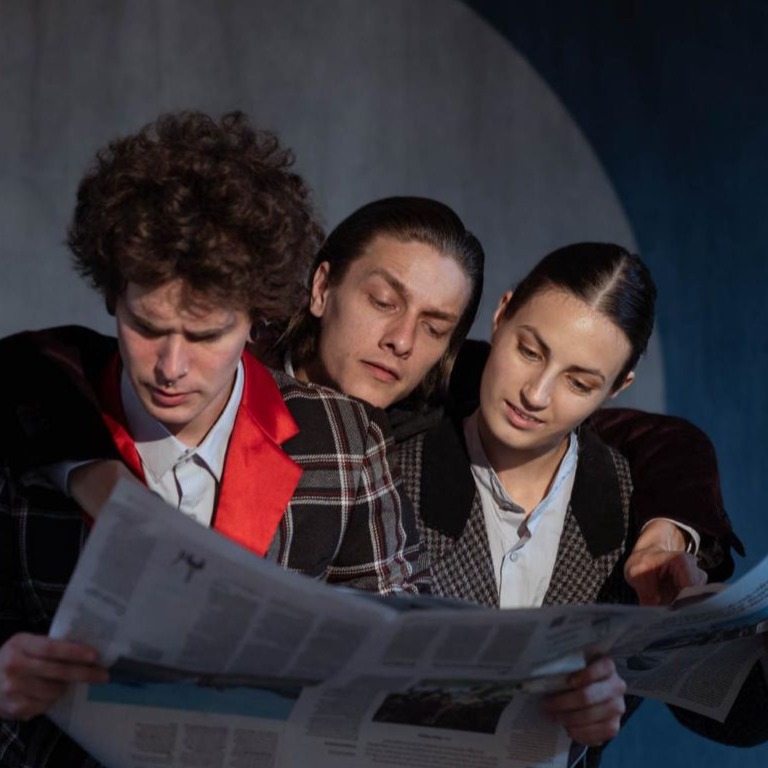
In the shadow of Europe’s most active volcano, Mount Etna, and by the beautiful coast of the Ionian Sea, the Catania Fringe has, perhaps, one of the most glamorous locations for a Fringe Festival. Don’t get too enamoured, however, as, in typical fringe fashion, the basement of a hotel has been transformed into a fringe venue packed with a busy Sicilian crowd waiting for News by Ukranitan 044 Mime Company.In this fifty-minute show, the trio of Ukrainian characters take their turn bursting onto the stage. The collective of physical performers are Kateryna Spodoneiko, Pavlo Vyshnevskyi, and Oleksandr Symonenko, Ukrainian performers currently based in Rotterdam.News opens with Pavlo taking out today’s newspaper and attempting to read it through a pantomime of physical theatre. He is shortly joined by Kateryna and Oleksandr, and the three characters twist and turn, laughing and crying throughout this non-verbal production.There’s some traditional clowning along with more innovative moments as they perform complex choreography sequences involving nothing more than a stool and, of course, a newspaper. Several short scenes merge into one another throughout the opening thirty minutes of the performance, enabling all three performers to showcase both their individual styles and their group performances.The performance takes a more intriguing turn in the last fifteen minutes. Up until this point, there appeared to be little narrative beyond three separate characters wanting to read the newspaper. However, in the last fifteen minutes, as the characters fight and argue over who keeps the newspaper, the show takes a darker turn, where characters both become the news and wrap the news around their mouths and faces.Knowing that the performers were from Ukraine gave these final scenes a sharper taste and pulled together the show's narrative threads. Are we making our own decisions, or is the news impacting these decisions? What begins as three individuals reading weather reports, looking at comics, and all the other trivial parts of a newspaper ends with the news ultimately controlling their decisions and thoughts.It’s a powerful message to end the show, mainly when it started with what seemed to be a simple mime. This compelling show is particularly relevant in recent times and works well as an international show. Which country doesn’t have issues with dealing with truth in the media? News is a perfect example of fringe theatre from a company that is certainly one to watch. There was a fresh and quirky vibe throughout the show, which was well crafted, directed, and performed.

Four Points by Sheraton Catania Hotel • 17 Oct 2024 - 27 Oct 2024

On the Edge

On The Edge follows four characters dealing with trauma, each played by Jesse Dupre. Australian Bonnie is an influencer wannabe, Cheryl is an aggressive parkour expert, Janet is a complaining widow, and Linda is their put-upon group leader. Jesse excels at making each character distinct with a variety of accents and props. However, one problem with one woman playing many parts is that to make each character feel distinct, stereotypes can occasionally be portrayed (the influencer wannabe is everything you would imagine her to be).Trauma therapy is at the very heart of On The Edge, and the show opens with a trauma therapy session hosted by Linda before Jesse introduces all the separate characters into the narrative. The true-to-life representation of the therapy process is a key ingredient, and there’s been careful and composed research by creators Jesse Dupre and Ally Cologna to both portray and explore this sensitive subject.There’s also a confusing aspect to the plot. At times, I wasn’t entirely sure whether there were four characters or whether this was all Linda’s imagination. As the show begins to break the fourth wall, this left me even more perplexed, and if the final ten minutes had resulted in the revelation that the creation of characters was indeed part of the psychological nature of trauma, I doubt the audience would have been surprised.The show mixes media into its equation with video sequences played against live acting. These sequences work well, and Jesse is able to carefully navigate the conversations she’s having with her video selves. On The Edge ends with recorded voice tracks featuring people affected by trauma, sharing their real-life experiences. Whilst the  use of media was an enjoyable aside, the video sequences didn't add much to the plot and the emotional real-life experiences felt somewhat tacked onto the end rather than integrated into the piece.This is Jesse’s first solo work, although theatre-goers might recognise the name from Haste Theatre, which she formed several years ago with four other female artists. The company has had several hits across a variety of theatre festivals throughout the world, including Oyster Boy and The Hideout. Branching out into solo theatre with a character-based show playing four separate characters left me feeling that the show might well have been devised as a Haste Theatre four-hander.While it’s certainly an interesting concept with a talented artist at the heart of it, it never quite manages to pull all the pieces together into a central narrative or a conclusion that ties all the threads together. The flyer said, “Come expecting laughter and tragedy, leave with a sense of hope and affinity,” and whilst there's many positives to take away from this piece, unfortunately, it never quite managed to fulfill the flyer's promise.

A Studio Rubín • 30 May 2024 - 1 Jun 2024

When We Died

When We Died is an evocative and haunting exploration of grief, loss, and the process of healing. This solo performance, skilfully performed by actress and playwright Alexandra Donnachie, delves into the complex emotions surrounding death and the aftermath of losing a loved one.The play opens with an embalmer at a funeral home being confronted with a corpse who she recognises and, whilst the production doesn’t reveal the full details until much later on, from the outset there’s a clear feeling that, whatever the secret maybe, it’s not going to be good. Donnachie's portrayal of the embalmist, Rachel, is raw and authentic and draws the audience further and further into the depths of her character's inner turmoil.The development of When We Died was a personal journey for Donnachie, who wrote the script based on both research and personal reflections. Donnachie drew inspiration from real-life stories and her own experiences, which helped create a narrative that is both poignant and brutally honest.The minimalist set design, featuring a stark funeral home with subdued lighting, enhances the play's sombre mood. The use of the LED batons could, under a less experienced team, have ended up gimmicky - however they manage to create an atmosphere that oscillates between the chilling and the tender. A special mention should go to composer Curtis Arnold-Harmer whose soundscape underpins every scene in a way that never overpowers the scene, allowing the focus to remain firmly on Donnachie’s performance.As the plot twists and turns so does Donnachie herself in increasing manner and movement coordinator Christina Fulcher deserves significant praise for not allowing Donnachie’s contortions to seem at odds with the melodrama unfolding. The pacing is deliberate, allowing the narrative to unfold organically, and giving the audience time to process the emotional weight of the story. Clever direction ensures that the play never veers into melodrama, maintaining a balance between the harrowing and the hopeful.Donnachie’s writing is excellent and she delivers a script that is well-paced, thematically heavy and challenging, but infused with levity and wit when she senses her audience needs to breath. It is beautifully detailed so that despite the lack of a set and no props, the world and each scene are completely formed in our minds.When We Died is a compelling and emotionally charged production. Alexandra Donnachie’s exceptional performance, combined with thoughtful direction and a powerful script, makes this play a standout in this year's Prague Fringe.

A Studio Rubín • 28 May 2024 - 1 Jun 2024

Getting Over Hugh

Described as a supernatural rom-com, Getting Over Hugh might better be expressed as a fabulous hot mess of a show. Whilst it’s certainly an entertaining hour, the jumbled chaos of ideas never quite works out what type of show it wants to be.The plot is almost completely nonsensical which I will do my best to give it justice. Late twenties Rory ends up sitting next to late forties Alan to watch a matinée performance of the gay classic Beaches. Alan, recently widowed after the death of his husband, is somewhat surprised when a man young enough to be his son starts making moves on him and agrees to meet with him for a drink later in the week.When Alan returns home for the evening, the ghost of his ex-husband appears (the eponymous Hugh) and chastises Alan for flirting with young Rory. Hugh has been regularly appearing since his death, but only Alan can see him. Also, he’s dressed in a Regency period outfit (as this is, apparently, what he wore for his wedding).By the end, Rory turns out to be wealthy, with Microsoft wanting to buy his tech company. The man who witnesses Hugh’s suicide turns out to be the one who killed him. Alan starts dressing as a hipster, Hugh stops wearing Regency outfits and dances with Alan to Diana Ross while his ashes are sprinkled on the stage. Oh, and I forgot to mention that the reason for Hugh’s suicide was that he caught Alan in bed with his (straight) brother.Getting Over Hugh certainly doesn’t lack ideas; however, what it does lack is the overall narrative structure that allows all these ideas to coalesce into a plot. There’s just too much going on at any point in time—whether plot points are being introduced or a sudden shift from comedy to heartfelt sadness. There comedy of finding your husband and brother in bed together is awkwardly juxtaposed against the tragedy of the suicide, which isn’t played for laughs. When the finale exposes the cause of Hugh'’s death, it’s unclear whether you’re meant to laugh or cry. Similarly it's not quite clear what emotions we're to feel with Alan’s suicide attempt, as Hugh attempts to talk him out of it (still, as I say, dressed in a Regency period outfit).There are numerous issues with the staging throughout. Let’s start with the scene changes—usually done in a blackout or with minimal lighting. Less often, as this show does, done in quite a bright floodlight. The characters turn ‘dead-eyed’ at the end of the scene and then rise from the metaphorical dead in this bright ghostly light to set the stage for the next scene. Staging issues continue throughout, and by the end of the show, the stage is littered with popcorn, suicide pills, and Hugh’s ashes.I was left with many questions by the end. Why is Rory, a man with a successful tech company, interested in Alan, a late-forties widower? Why is Rory watching Beaches in a matinée performance? Why does the ghost of Hugh reappear after his suicide? How does Rory get hold of the train station footage from the police to expose that Hugh was killed? Why did they decide to use what looks like a red concertina for chairs, despite using two chairs to tie this between? Why did the show decide to end with the revelation that the man who killed Hugh has received seven years for manslaughter?It’s a shame I couldn’t share a drink after the show with the cast and put these questions to them, as it’s clear they’re having a fantastic time on stage. This energy helps keep the audience engaged and on-side throughout, whilst the trio kept the show together despite everything going on. There’s much to be said for a show that keeps the audience both entertained and guessing what’s going to happen next, although I left with the feeling that there might have been a couple of drinks involved when writing this marvellously jumbled mess.

Café Club Míšeňská • 28 May 2024 - 1 Jun 2024

King John

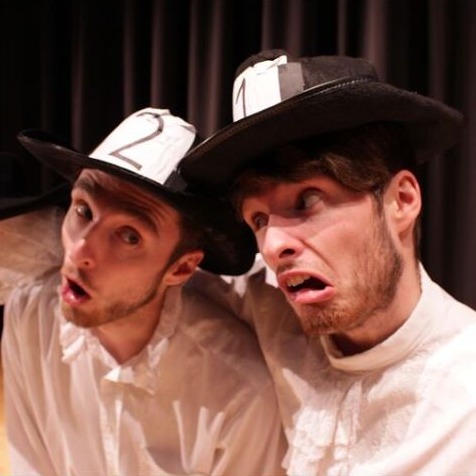
King John - Terrible King, Even Worse Play? Well, that’s not the view of Rendered Retina theatre company who, in their own words, have cut two hours, added plenty of songs, and turned it into the Bard’s best blockbuster.As with many of Shakespeare’s tragedies, King John is packed with characters, plots, and an overly long running time (three hours!). The plot can sound a bit of a handful: King John of England and the King of France battle for power, forge a tentative truce, and fight a whole lot more. As one of Shakespeare’s early works, it has been accused of lacking the rhythmic grace of his later king-based plays.With a leap and a bounce, the trio of Tom Mangan, Alex Mangan, and Jordan Choi grace the stage to announce with aplomb that they’re going to ‘fix’ what has been described as Shakespeare’s worst play. There’s a touch of the Reduced Shakespeare Company’s Complete Works of William Shakespeare about the proceedings, but the talented trio bring their own energy to the performance.The performance segues between Shakespearean dialogue to move the plot forward and witty, well-crafted musical numbers accompanied by guitar. The split approach works well and helps make the Shakespearean dialogue accessible to a mass-market audience by providing a musical explanation in many cases.Simple staging but clever use of props helps give this a ‘perfect fringe show’ vibe. Hats help represent a cast of twenty, with jails and castles pulled from a simple box. There are plenty of clever flourishes and tricks throughout that add depth to this show and keep the energy pulsing—cardboard cutouts leaping to their deaths from castle ramparts, thrilling fights that repeat at double-time, kingly conferences with a plentiful cast (but only two chairs).There’s an appreciative audience at the show, and it’s clear that the energy and skills of these three have found their mark. The five-minute recap at the end was a particularly strong way to highlight the best bits of the show and give the audience one more opportunity to appreciate them.Coming to the Prague Fringe, you’re never quite sure what’s around the corner (apart from the stag dos). This was a truly excellent performance from a talented trio. The last time they performed at Prague Fringe was 2019. Let’s hope we don’t have to wait another five years for their next show.

Divadlo Inspirace • 27 May 2024 - 31 May 2024

Noises Off

Sardines, Telephones, Tax Avoiders, Axes, Whiskey, Flowers and more Sardines. One of the most famous British Comedies is back on tour with a star-sprinkled cast.Noises Off is a carefully choreographed ballet that replaces plié’s with props and requires perfectly synchronised split-second timing to bring the house down at the final curtain. The play’s schtick is that we watch the play-within-a-play three times, firstly at the dress rehearsal, secondly from behind the scenes mid-tour and finally from the closing night.In true farce fashion, there’s everything you would expect from a show devised in the early 1980’s. Multiple doors, mistresses in skimpy clothes, trousers falling down, cactus’s being sat on and a slightly out-of-date Arab sheikh turning up at the very end.Veteran actress Felicity Kendall plays veteran actress Dotty Otley, playing veteran housekeeper Mrs Clackett, who deals with countless plates of sardines and a phone that bedevils her all night. Kendall’s Dotty is less a farcical figure and more a sympathetic sort and whilst the laughs were there, they were perhaps more muted than the role presents. Similarly Sasha Frost did not quite provide the laughs as the dolly-bird Brooke Ashton (in what, to be fair, is an underwritten role) whilst Pepter Lunkuse as Poppy Norton Taylor and Hubert Burton as Tim Allgood also didn't quite confidentally conjure up the shambolic stage management team.There is, however excellence from Joseph Millson’s acrobatic feats as Garry Lejune, who makes full use of the superb set from Simon Higlett, along with Tracy-Ann Oberman as gossipy matriarch Belinda Blair. Matthew Kelly also plays up the camp comedy as old-soak Selsdon.It’s a crowd-pleasing show performed to exhausting perfection here, but there’s something slightly off amid all the chaos. This is a more sympathetic take on the comedy masterpiece and doesn’t quite deliver the laughter that director Lindsay Posner’s 2011 production managed. There’s a sadness to many of the characters that wasn’t previously there.Whilst the sequences we all remember are still performed, it’s almost as though the cast are going through the motions without quite the same conviction as before. Is this a social commentary on where theatre is these days? Is this a critique on touring companies? Is this now a play-within-a-play-within-a play? Has Noises Off turned from a bawdy farce to a nuanced reflection on modern day life?As the script says perhaps, ‘Think of this as the dress rehearsal. That's what it's all about, doors and sardines. Getting on, getting off. Getting the sardines on, getting the sardines off.That's farce. That's - that's the theatre. That's life'.

Theatre Royal Brighton • 18 Oct 2022 - 22 Oct 2022

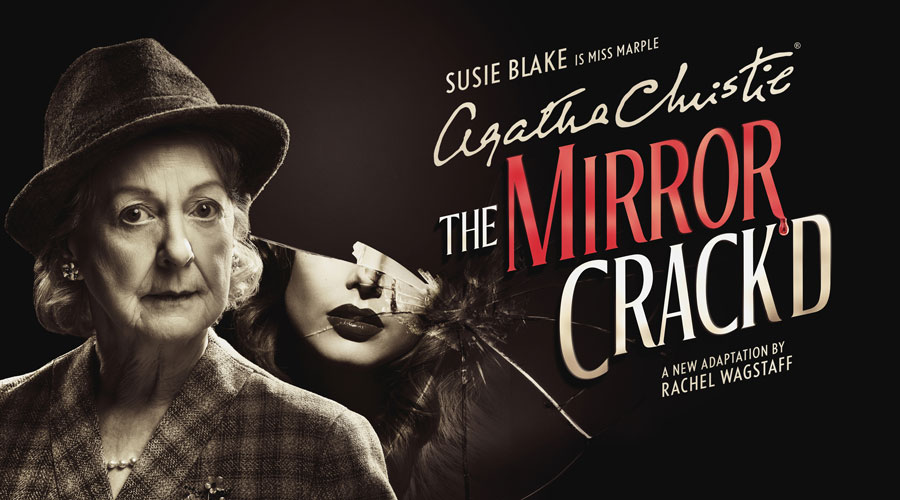
The Mirror Crack'd

Years may pass and tastes may change, but Agatha Christie remains as fashionable as ever.Christie’s ability to weave a story through an intricate cast of characters has meant that her legacy has remained as strong as ever. With Witness for the Prosecution and The Mousetrap both firmly at home in London’s West End, it’s clear that audiences can’t get enough of classic British murder mysteries.With a brand new adaptation by Rachel Wagstaff, The Mirror Crack’d combines classic Christie storytelling with an exceptional cast to deliver an atmospheric gem of a show.Susie Blake is a sublime Miss Marple and could very well have popped out of a Sunday afternoon TV adaptation – it’s a rare ‘role she was born to play’. An engaging Oliver Boot as Chief Inspector Craddock and Joe McFadden as Jason Rudd were part of a strong ensemble alongside several other highlights – of particular note was Chrystine Symone offering an emotionally charged support as Lola Brewster whilst Veronica Roberts is particularly enjoyable as Dolly Bantry.Another star of the show is Sophie Ward, who takes on the role of the faded actress, Marina Gregg. Though Gregg is a classic Christie character - Ward’s performance is no cliché, and gives Gregg a genuine intrigue that will leave you guessing her true motive till the very end.Director, Philip Franks, uses the story’s twists and turns to transport the audience back to the night of the party with some clever staging that keeps the build-up from dragging. There’s smart staging from designer, Adrian Linford, and the glass hallway structure helps blend the scenes and action together with a deft touch.Understandably, for a Tuesday night in Eastbourne, this is a conservative production. But given the nature of this production, playing it with a straight bat seems very understandable.The Mirror Crack’d is a polished performance that delivers a memorable classic crime tale. The twists and surprises comes from the plot, rather than the production, but you’ll enjoy an engrossing evening with this excellent production.

Devonshire Park Theatre • 8 Sep 2022 - 17 Sep 2022

Smoking Gun

A dodgy MP, a new and potentially dangerous drug and a mysterious whistle-blower. In Fast Familiar’s new show you’re not just watching the action, you’ve very much at the heart of it.Smoking Gun is brand new interactive show from Dan Barnard, Rachel Briscoe & Joe McAlister. Over the course of five nights, you’ll investigate NHS records, review security camera footage and track down the clues. With new evidence being revealed every morning, players need to piece together the mystery and make their decision as to who, if anyone, they should reveal to the press.Every morning new information is sent to players – videos, photos, websites, emails and the like. Players review the evidence, follow any leads, and prepare for the live 30-minute chat every evening (either at 6 or 9pm). The live chat takes place on an app similar to WhatsApp (cleverly custom made for the show) in groups of up to ten people.Certainly the chat that I was in during the five nights was both entertaining and investigative. The 30 minute time limit focused minds on investigating the case and the anonymity provided a level playing field. There was the flush of pride when I presented new evidence to the group and my heart lept at moments when chasing breadcrumbs suddenly started coming together – and it’s a hugely enjoyable and rewarding experience.It rather tailed off in the final days – and ended with a somewhat unsatisfying conclusion. There were moments where I was trying to ‘hack’ websites and emails trying to discover any more breadcrumbs, but sadly there weren’t that many left to find. Also, don’t expect a black and white final answer, Smoking Gun deals in greys and audiences are left to make up their mind for themselves.That said, it’s been the talk of the household over the last five nights – and whilst there’s flaws in the overall process – it managed to engage us more than anything seen since lockdown started. Flaws or not, Smoking Gun is a piece of theatre that left me gripped. On the sixth night, they host a Zoom chat to meet your fellow team-mates and ask questions to the producers. At the end they plugged their next show, The Evidence Chamber... I have eagerly signed up. I recommend you do to.

Westminster • 24 Jun 2020 - 28 Jun 2020

BREXIT

If someone were to ask me what BREXIT (the show) was all about, I’d find it difficult to sum it up in a few words. Set a few days before the Brexit Referendum, BREXIT, by Tom Corradini Teatro is a hard show to pin down.My inkling is that this is a show designed for an international audience. It's packed full of physical theatre and meant to be enjoyed on a European tour. Certainly Tom’s track record of shows would suggest that this is familiar ground. Previous shows such as Gran Consiglio (Mussolini) and I Fratelli Lehman were physical comedies, telling the respective tales of Mussolini and the Lehman Brothers, with very limited language.Corradini Teatro's most recent work, BREXIT, has an underlying narrative throughout about a father and son, Charles and Eric, one of whom supported Leave and the other, Remain. Physical comedy is peppered throughout the piece, with mimed showering, watching TV and alarm clocks, and is certainly done with some aplomb. The physical comedy parts were well executed, but still left the impression of a drama school warm-up exercise - albeit from students at the top of their class.Adding in the narrative and dialogue about father and son further took it away from just being a physical comedy, which made me question whether this was as suitable as his previous work for international audiences. The narrative was confusing, going backwards and forwards in time, and lacked a successful hook. Without any physical theatre, the narrative would have left this show feeling rather lightweight.When the respective parts came together, there were moments where I could see a brilliantly engaging production. Jeremy and David, the puppets explaining the Houses of Parliament or the British Empire, were a fantastic way to get across a complicated topic to the audience. There were also moments where the physical performance was a masterclass, such as the physicality of becoming dogs or, my personal favourite, eating the 'Chicken Ha'.Ultimately, this came across as a jumble sale of a show. You were never sure what you going be there, there was no clear theme, and items seemed to be put randomly together. Brexit is somewhat old-hat these days and a show about it needs to offer something new. BREXIT (the show) is an enjoyable hour, but one that needed to be clearer about its audience, its message and what it was trying to achieve.

Rialto Theatre • 31 May 2019 - 2 Jun 2019

Smashing

Smashing the hetero-patriarchy with occasional assistance from the audience, Annabelszki provided a smorgasbord of stand-up, sketch comedy and spoken word to an appreciative audience. But was this a show or a political rally? A question that remained unanswered by the end.An audience who pay to see a show described as ‘smashing the hetero-patriachy’ are likely to be easily pleased by moments that, for example, call attention to inequalities in women’s pay, or period poverty. Suffice to say, the underlying material won't be particularly difficult to come up with. But it’s the delivery of the material where Smashing stutters and becomes hit and miss. Hits certainly included the self-penned poems, whilst a miss was the sing-a-long to a re-written Oliver’s Pick-a-Pocket or Two.The very nature of a show of this type means that some parts will end up being be more successful than others, with Annabelszki’s own spoken word seemingly the most popular. Poems on subjects ranging from period pain to shaving were deftly delivered and well-written, with pleasing choruses to return to alongside a narrative verse. It was clear that Annabelszki was confident in both her material and her abilities as a stand-up. Certainly one of the highlights of the show.Sketch comedy came in the form of a double-act featuring a mute audience participant on stage alongside dialogue played through a speaker. It was always going to be tricky to time the recorded line delivery to match with Annabelszki’s pace, and the notable difference between a live actor speaking and a pre-recorded answer meant this was destined to struggle. Perhaps Annabelszki should find someone willing to be in a double-act with – from last night’s audience, I’m sure there would be plenty of volunteers.Annabelszki has the energy and enthusiasm for her subject matter to make this an enjoyable show, and there was creative depth in the mélange of different styles of delivering the message. However simply having strong strong themes from the underlying issues isn’t enough to create a successful show – and some of the sections should have been dropped at the ‘Work in Progress’ stage. There’s an enthusiastic show here, with a challenging topic to turn into comedy – but ultimately a comedy needs to land the laughs and have people talking, not only about the topics raised but also the jokes and routines that should make it a memorable evening.

Exeter Street Hall • 4 May 2019 - 12 May 2019

Mistress to the Midnight

It was the well-designed poster, an excellent homage to Hammer Horror films from the past, that caught my eye and had me take darkened alleyways, hustle past begging urchins and gin-soaked wenches (standard Brighton fare for a weekend) to Brighton HorrorFest.Mistress to the Midnight is a 60-minute spoof paying tribute to the Hammer Horror films of years past – and is packed full of all the usual tropes that you’d expect to see. Anyone who has seen Dracula, or any similar film, won’t find themselves lost. Featuring everything you’d expect a film of that era to – a lawyer sent overseas, a girlfriend written to daily, a evil Chateau above a small Eastern Europe Village (Chateau MaPants – a recurring joke; if you’re trying to work it out, think about trying to get into it) and things that go bump in the night.Opening with the cast explaining the history and demise of Anvil Studios (the production company responsible for the film) the show spends the first five minutes setting the scene. It’s an excellent start, packed full of jokes, and the cast seemed to have a gleam in their eye. Once the scene is set, the smoke machine turned to full, the ‘movie’ begins. Given the strength of the opening five minutes, it left me wishing that the cast would break out of the movie and go back into a modern-explanatory scene directed towards the audience. Making more of the characters playing the roles – Donald Featherstone, Racquel Holliday, Bertram Mallister – as well as the history of Anvil studios and founder Beverley Anvil – would have provided a bit more depth to the spoof as well as keeping the jokes from becoming too repetitive. An aside such as ‘During the next scene’s filming Bertram died on set, see if you can spot it’ would help tee up the next joke.With a cast of three attempting umpteen roles during the show, the character and quick-changes are superb - backstage must have been manic. There are always going to be prop and set limitations with a show of this nature, however they need to make more of what they’ve got. There’s a scene set in a bedroom which replicates a bed – and left me hoping that something clever was going to happen with the two other characters holding the sheets. Other scenes could also make cleverer use of props – and a door wouldn’t have gone amiss in the show, given the amount of exits/entrances. It’s a perfectly enjoyable hour – the cast are excellent and the quick changes formidable. The central theme of a British Horror Production Company’s history alongside a film from their back catalogue works, although there needs to be more balance between the two. I couldn’t fault the ‘film’ itself, although I didn’t necessarily need to see it all – we know what’s going to happen so there’s time to pause and return to exposition. There’s a rough diamond here that could be polished to something rather special.

Sweet Werks 2 - Werks Central • 20 Oct 2018 - 21 Oct 2018

Margo & Mr Whatsit

Exciting, emotional and, most importantly, entertaining, Margo and Mr Whatsit is the tale of eight-and-a-half-year-old Sophia and her imaginary friend Mr Whatsit, an inseparable duo until the time comes for Sophia to grow up and take on a new, more mature imaginary friend – Margo.Sophia (Katy Dash) is a young girl in foster care, with pictures of her previous foster homes above her bed as she is constantly searching for her forever home. Mr Whatsit (Michael Smith) is the imaginary friend who’s been with her through thick and thin. However, Sophia has decided that Mr Whatsit belongs to the past and, as the show begins, we watch as Sophia carefully places Mr Whatsit into the closet, seemingly to never return. She then turns her attention to her new, improved imaginary friend, Margo – a prissy, punctilious and prim Hattie Brown.The three actors were superbly talented and had the audience wrapped up in the story from the very start. It was a joy to watch Sophia, Mr Whatsit, and Margo weave their way through the multi-levelled plot.Alongside the excellent three actors, the other star of the show was certainly the set, a fantastic creation which started off as a child’s bed before ending as spacecraft in the grand finale. Along the way there were slides and steps, hidden lights and a whole manner of ingenious contraptions. A superb construction and one that added to the imagination rather than leaving everything up to it.Paddleboat Theatre’s script successfully weaved between the story of Mr Whatsit & Margo whilst playing a deft touch with the subjects of Sophia’s fostering and her desire to finally settle down. There’s moments of poignancy as we learn more about Sophia’s past and the stories of the pinned-up houses above her head.As with most children’s shows, there’s audience interaction involved. However, this is, perhaps, one of the weaker aspects. Children were invited onto the stage, but rarely involved in the action and there’s probably much more that could be done here. Rather than questioning the kids on stage, I’d recommend using them as props or in more interactive scenes. Having shy kids on stage by themselves isn’t going to lead to quality material or a great sense of involvement. The better interactive moments came when the audience were involved as a whole.It’s an entertaining show that, to its credit, doesn’t labour the foster-care plot too heavily and leaves the audience to draw its own conclusions. It was hard to judge how well received it was by all ages in the audience, however I had a slight suspicion that, whilst the children certainly enjoyed this magical tale, it didn’t wrap them up as much as the adults.Like any good tale, we’re left rooting for our heroes and hoping that all ends happily after all. Paddleboat Theatre don’t disappoint with this and I doubt you’ll be surprised by the happy ending. Certainly one to recommend and a pleasure, whatever age you are.

The Warren: The Hat • 30 May 2018 - 2 Jun 2018

Half Baked

It’s rare when the title of a show manages to effectively review itself. Unfortunately, this is the case for Half Baked. As the very first show from new Brighton-based theatre company Covert Accomplice, you might not expect a fully polished performance. However, everything from the writing to the performances only ever seemed to get halfway there.Four twenty-somethings, a mixture of not-so-recent graduates and self-proclaimed failures, are stuck in dead end jobs in a dead end town. Sky wants to go on a life-changing gap year, but her friends Elly, Tweak and Frankie seem to have no plans beyond where to buy the next packet of crisps. Any ambition they once had has been ground down by a cycle of rejection and a lack of opportunity and they forget their sorrows with endless parties.Too often it feels like the show’s form too closely mirrors its content, with the results giving off more of a student workshop vibe than that of a completed play. A prolonged scene where the characters are stoned sees the cast having more fun than the audience, especially as some of the so-called jokes were as dull as a poorly rolled joint.In all fairness, writer and director Chance Bliss Dini seemed to want to develop characters and their interactions, rather than having a focus on a plot. However, this just resulted in a storyline that didn’t go anywhere fast, and took a long time to get there. The show would have benefitted from editing; for example an under developed storyline about domestic abuse was introduced without ever being given the time it needed to be effective.The show was not helped by a magnificently unconvincing performance from Louis Heriz-Smith who spent much of the play looking as though he’d wandered onto the stage somewhat by accident. Bright spots existed here and there and, as a package, the play is not without merit. A general sense of ennui gave me flashbacks to misspent student days, whilst Frankie was excellent: a well-written character with an intensity convincingly played by Sam Razvi. There was a natural chemistry within the group, making for a believable bunch of friends.It was an enjoyable evening and there were enough moments where I was briefly caught up in the story, before some clunky dialogue, forced moment or unconvincing performance broke the spell. The play either needs a more engaging plot, or sharper dialogue. Preferably both. Without which, I am once again drawn to the title for the perfect summary:Half Baked.

Rialto Theatre • 17 Oct 2017 - 19 Oct 2017

Fried Mind Show: David Terrence

Start with a few cold-reading tricks, dash in some sleight of hand, add in a heavy dose of comedy on top and you’ve got the recipe to make any mind-reading show come out well. David Terrence has all of the right ingredients and, whilst you’re not going to see anything new, he certainly delivers a solid, entertaining show.If you’re ever in Covent Garden, spend half an hour watching the street entertainers and you’ll quickly realise that the routines are built out of expectation, rather than delivery. Terrence has this figured out and, with the addition of his easy-going personality, quickly won the audience over, as they lapped up each of the mind-reading routines. While he doesn’t quite have the showmanship, he knows how to please a crowd.Terrence is comfortable with his audience and was quick-witted enough to deliver amusing responses to his volunteers. Magic may have moved on in the last 30 years, but Terrence happily harkens back to the golden age of TV magic. As a show, everything was a few decades old: I haven’t heard the old chestnut about Germans and their beach towels for many-a-year. Terrence also never really tried to sell the idea that he has ‘genuine’ mind-reading abilities. A routine where he used echo-location to determine an object whilst blindfolded wasn’t fooling anyone and many of the tricks have been performed better many times before. Ultimately, Terrence doesn’t seem to know whether he’s wanting to perform a magic or a mind-reading show. An enjoyable hour, with a lovable host, but Terrance’s natural home is on the after-dinner speaker circuit, or doing corporate gigs, where his mixture of comedy and mind-reading will no doubt be well received.

The Claremont • 24 Mar 2017 - 30 Mar 2017

Bram Stoker's Dracula

Sink your teeth into this immersive performance of Dracula from Brief Hiatus, which takes audiences on a tour of Preston Manor through dimly lit corridors and opulent dining halls, bringing to life the legends of Dracula, Van Helsing and the gothic horror of Bram Stoker’s famous tale.This adaptation, by David Shopland and Callum Hughes, of the gothic classic stays close to the original text, but rather than being in a traditional theatre, the setting is Preston Park Manor in Brighton. Audiences are invited into the main hallway of this historic stately home, welcomed to the evening and then split up and taken through the journey of Stoker’s bestseller. The story leads us around the manor, transporting us to settings such as Renfield’s sanatorium, Mina’s private bedroom, dusky inns in Transylvania, cabins on Russian ships and much, much more. It all makes for a very enjoyable retelling of this classic tale and the Manor is used to excellent effect. As the hunt for the famous Count begins, it becomes clear that behind the scenes, not only are cast members dashing through corridors to prepare the next act, but also that audience members are treated to different parts of the play dependent on which group they are in – this was an excellent way to encourage repeat visits as it did make me want to see the parts that I had missed.The cast look to be having a fantastic time, ranging from Rose Shaw’s simpering sexuality as Lucy Seward, to the Dracula’s nemesis, monster hunter Professor Van Helsing, played with compelling skill by Seth Morgan. None of the cast disappoint, with Ben Baeza (Harker) Edd Berridge (Dr Seward), and Rosanna Bini (Mina) all absorbing. In addition, there are several recurring minor characters who are equally enthralling, with Faye Lord worthy of a mention in despatches for her portrayal as a sanatorium nurse.In terms of ‘scare-factor’, this is a production that isn’t going to leave you jumping at the slightest twitch. Instead, it aims to be full of atmosphere and to wrap the audience up in its tale, with additional comic moments provided by Conor Baum’s brash Texan Quincey Morris, who was clearly an audience favourite. There’s certainly more that could be done here, particularly with the immersive setting, which offered more potential for innovation than what was used. In addition, the finale wasn’t up to the standard of the rest of the play and seemed a tad incongruent with what had happened before it.Nevertheless, this was an excellent version of Dracula in a fantastically gothic setting. Director Conor Baum has worked some dark magic and I could well see Dracula vanishing, only to reappear in the darkness at the same time next year. In the meantime, get yourself down to Preston Manor and have a bloody good time.

Preston Manor • 11 Nov 2016

Wait until Dark

Wait until Dark is a claustrophobic thriller which finds increasingly clever ways to complicate the limited single setting of a basement apartment. A decent cast is let down by a production that never quite achieves the tension and suspense required to build towards the climactic conclusion.Frederick Knott is better known as the author of Dial M for Murder, which enjoyed West End and Broadway success before Hitchcock turned it into the memorable film. Knott only ever wrote two further plays, with 1966’s Wait until Dark his only other hit. Originally set in a Greenwich Village apartment in NYC, the recent UK revivals have transposed this to Notting Hill and this is the path taken by director Patrick Kearns. Knott’s thriller centres around three con-men trying to locate a heroin filled doll hidden in Suzy Hendricks’ apartment. Hendricks is a recently blinded housewife whose husband is conveniently at work throughout much of the play leaving Hendricks in her apartment slowly cottoning onto the ruse that the con-men have come up with.As its very climax, Wait until Dark should be about ingenuity and natural advantages as the sighted characters hold their breath and try to sneak around an opponent familiar with the house’s geography with the dingy basement apartment meant to be full of pitfalls that Hendricks navigates and lifelines that these eventually provide. The script to Knott’s play even guides producers on how to build the set to accentuate the tension however there is only a passable nod to this in talking Scarlet’s production, leaving the suspense somewhat lacking.When the play was turned into a film, movie theatres had a gimmicky trick of slowly turning out all the lights in the theatre until, finally, the ending was in complete darkness. It’s a gimmicky trick that worked, and there is a whole range of lighting inspired effects that can add to this claustrophobic tension. It was odd, therefore, that this production didn’t come with a lighting designer, or at least not according to the programme. Wait until Dark requires exquisite timings from actors, sound and lighting technicians to make this tricky puzzle work onstage. Whilst Director/Sound Designer Kearns’ decently executed the sound element, the same can’t be said for the lighting. The final climatic scene being played out in complete darkness was somewhat lost by the significant light bleed from the tech booth.It’s a pleasure to watch the actors though and Anna Brecon is an excellent Suzy Hendricks, making the early naivety through to dawning suspicion and desperation seem all too believable. Roat, played by Peter Lovstrom, has the East End gangster voice down to a tee, almost as though a director has given him a copy of Guy Ritchie’s Brit Gangster film Snatch and told him to replicate Bricktop. Amongst the rest of the cast, both Harry Hart and Samuel Clemens are convincing, in particularly Clemens who manages the nuances of the “good cop” part skilfully and persuasively.There’s much to commend this production, and Knott’s play is a staple that should be on anyone’s ‘must watch’ list. Talking Scarlet’s Wait until Dark passes for an enjoyable evening, but doesn’t quite manage the claustrophobic thrills that the play is well known for.  

Emporium Theatre and Cafe-Bar • 2 Nov 2016 - 19 Nov 2016

Runts

To bully or be bullied? That is the question. It certainly seems to have been for award-winning writer Izzy Tennyson who has delivered a script that suggests teenage life is a maelstrom of psychological bullying, homophobia and vindictive cruelty. Armed with a brutal script about adolescence, this is an edgy, exhilarating drama from a stellar young cast.Alexa is posh. Or at least she used to go to a private school but thanks to her father losing his job and leaving home, she’s been sent to the local comp. It’s this set-up that introduces us to Alexa's class, an ensemble of teenagers hiding a multitude of behavioural issues within their layered characters. A superb cast had the physical and emotional trauma of adolescence nailed to a tee and ranged from an outright vicious pack mentality to subtle psychological bullying. Tennyson’s script quickly snapped from laughter to fear and violence to vulnerability, with bullies quickly becoming the bullied. There’s a strong mix of well-observed characters, from Harriet (Bronte Sandwell) the not-quite pretty enough girl, masterfully delivering snide comments and smirks, to apathetic Egg, an outstanding performance from Maisie Meadows, whose clingy and nervy behaviour made us want to push her away, as much as Amy Lubach’s Alexa did. Settling on which cast member stood out the most, provoked discussion long after the show’s conclusion. Each was complex, believable and familiar and it was clear that this cast of first-rate young actors had fully mastered the art of painful teenage vulnerability. The ease in which Runts casually throws about homophobia, troubled home-life and allegations of assault, with a typical teenage exaggeration, gave an added dimension to these darker topics. Moments of bitter laughter were swiftly followed by terrible thoughts, as the line between banter and bullying became ever more blurred.Runts could very well have been an opening episode for a TV series, and it wouldn’t be surprising for Tennyson to gravitate toward this medium. We were introduced to central characters, learnt background stories and clear plot-lines were set. Certainly Runts had the feeling of setting the scene for future episodes. However, this made for an unsatisfying conclusion which tailed off after a scene with Kitty, who was played magnificently by Rosie Taylor-Ritson, being physically assaulted. Runts is a compelling play lifted further by excellent actors.If Tennyson does end up developing it for TV, I would more than recommend using the same cast.

Marlborough Theatre • 12 May 2016 - 15 May 2016

Captain Morgan and The Sands of Time

An adventure set on the high seas that is story-telling at its very finest. Captain Morgan and the Sands of Time brings childhood memories flooding back and delivers a tale that will have audiences enraptured and not wanting to go to bed, whatever their age.Morgan, Joe Newton, and his First Mate Hammond, Edward Richards, take the helm for this gripping tale of pirates, monsters, duels and daring. They’re supported by a cast of forty, or rather between them, Newton and Richards play forty separate roles. With accents and mannerisms from the four corners of the earth, each of their varied roles is a worthy character in itself and you’ll be hooked into cheering on favourites, booing villains and rooting for the heroes.Captain Morgan is on the search for the elusive Sands of Time, a purpose that is to to set the scene, allow several great characters and give a framework for an entertaining yarn. The action set on the small stage with nothing but a couple of chairs for company, Newton and Richards’ energy and physical theatre take us from pitched battles on the high seas to captivating sirens luring crews to their demise.It’s all glued together with an astonishing soundtrack from David Ridley. Armed with nothing more than a violin and accordion, it’s an effective way of taking the audience from taverns to caverns and ships to cells, alongside a repertoire of sea-shanties. It complements the scenes perfectly and couldn’t have been done better.The true magic comes from imagining yourself as a child watching this exceptional story unfold. Uncle Newton, Uncle Richards, please tell us the story of Captain Morgan again.

The Warren: Main House • 11 May 2016 - 12 May 2016

Peter Antoniou: Happy Medium

Charming, comedic cold-reading coupled with misdirection and mind-reading in a show that entertains without breaking new boundaries. Peter Antoniou opens his psychic show by getting the majority of the audience to reveal their online passwords in a routine that delivered a punchy opening. And that’s what the show needed, more routines that brought mind-reading into the 21st Century. Instead, we were left with unoriginal mind-reading routines involving sleight of hand and cold-reading, an industry technique used to imply that the reader knows much more about the person than they actually do. While the mind-reading mechanisms remain a mystery, the results were the same each time. Questions were written on cards at the start of the show and Peter demonstrated his mind-reading abilities in drawn-out routines that ended with the same result over and over again. Psychic shows often work on two levels, the audience needs to be misdirected into how the mind-reading occurred and then subsequently blind-sided by the outcome. Misdirection was successfully achieved in each case, but the outcomes never seemed in doubt as Antoniou spent much of the show repeating the same guessing game with multiple audience members who, in all fairness, were often amazed by his ability to repeat the same trick. Antoniou is at his best when interacting with the audience. A likeable and entertaining comic who had his participants relaxed, engaged and enjoying the show. He has an affinity for quick ad-libs and undoubtable comic timing, which were all performed in a friendly manner. Update the sequences and Antoniou can combine his comic routines with a new twist on a tired genre. At the moment, he’s a likeable act with a show that delivers too much standard psychic fare.

Sweet Waterfront 1 • 5 May 2016 - 12 May 2016

Would Like To Meet

A show aimed squarely at the date-night crowd that’s silly and fun, providing its mainly female audience with plenty of laughs in this charming production. Those firmly used to spending their Fridays watching Sex and the City will feel right at home in this scattershot spin on a romantic comedy.Sophie Dearlove is Liz, a woman in an unhappy relationship with Gordon, once Gorgeous Gordon, now simply Gordon the accountant. Longing for escape and release, Liz sporadically fantasises about her own husband’s demise. Opposite Liz, Laura Tindle is the habitual dater Ally, constantly on the look-out for that would-be husband. Whilst Liz and Ally search for solutions to their lives, Stuart Barham and Neil James are men-folk on the periphery and flitter in and out of scenes in several roles. The cast have the occasional dodgy accent which detracts from the dialogue, but Dearlove is the standout and nails every scene she’s given. Her character is more rounded, with the longest and loudest laughs coming from her witty earnestness and the show is at its strongest during her scenes which become ever more enjoyable.Sprinkled throughout the show are speed-dating montages and real-life dating horror stories. The speed dating scenes successfully add to an on-going plot line and provide some substantial rapid-fire passages. Whilst the dating tales have moments of humour, they ultimately add little to the narrative and could well do with being removed. Dating facts and figures appearing during these tales seem out of place, as do the occasional graphics that pull attention from the drama unfolding. The show is at its strongest developing Janet/Liz/Ally et al’s plot and the second half delivers many more laughs, with the pay-off in the final scene being cleverly set up. If you’re looking for a great girls night out, Would Like to Meet has plenty to recommend it. Best enjoyed with several large glasses of chardonnay and a few friends, Would Like to Meet is at its best when sticking to traditional rom-com fare and wouldn’t seem out of place following an episode of ‘Friends’ on a Friday night.

Rialto Theatre • 11 Feb 2016 - 14 Feb 2016