Reviews by M Johnson

The Cadaver Palaver

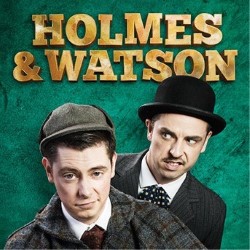
I was excited to see that Samuel Carroll had returned to Edinburgh with his new chapter in the adventures of Bennett Cooper Sullivan; a Victorian adventurer performed solo by Carroll with boundless energy and sophistication. One of the joys of reviewing is seeing artists grow in their craft.The physical performance was exceptional and grounded, and the storytelling is well written. I was giggling from the start, but perhaps a little too well written for some of the sleepier audience members due to the early start time. However, Carroll was a master of his audience and brought them round by the end, all of us hanging on every word.We started with a jailbreak. Sullivan would be happier exploring the mysteries of ancient lands, but duty calls – the Royal Society – and sadly our hero must return to urban life, and London, when an unsuccessful assassination attempt brings him to Edinburgh. Carroll flourished as a madcap range of other characters such as surgeons, professors and bar keeps.The character has morphed between chapters from a curious civilian bystander to a professional adventurer with a toolkit of improbable skills. He learns much from everywhere he goes, cracking jokes both high and low brow along the way.The show had a wonderful give and take. Sullivan would start to explain the situation he was in, and we were all fascinated to know how on earth he was going to get out of that one (or how Carroll was going to act that as one man?) – and he nailed it every time. For me, the sign of good mystery writing is that I can see how the plot fits together just ahead of the reveal, and this show gave me such a wonderful moment of realisation.What I appreciated this time was the depth to Sullivan. There were moments that had real heart, where he would reflect or have doubts, or face an injustice head on and not be able to change things. In addition to the glorious innuendo.This year the show took place at Summerhall in the Anatomy Lab, in what would have been the Royal Dick Veterinary College in its Victorian heyday. I had hoped, given Carroll’s skill for detailed period script writing, he would be inspired for a historical caper that drew upon the long history of medicine here in Edinburgh – not to mention Burke and Hare and all the skulduggery surrounding them. I couldn’t have been more thrilled.The resonance between story and location was delicious. We were listening to a lecturer regale us with their adventures in unstudied lands and new sciences, sat in the same seats that served the Victorians all those years ago.Storytelling at its finest. The Cadaver Palaver is perfect for fans of Sherlock Holmes or Oscar Wilde.

Summerhall • 31 Jul 2025 - 25 Aug 2025

Degenerate

We file into our seats around a single woman, Maria Teresa Creasey, taped up and face down on the ground. We’ve had weirder weekends. I was expecting a jab that never came from Creasey about me being a little too comfortable with taking duct tape off women.My role as a reviewer is often to make sense of what a show is like or about for our readers, but Degenerate actively resists the process of sense making. The show hops genres at milliseconds' notice – horror, drag-esque lip syncing, stream of consciousness, character comedy, stand-up, prop comedy, and tap dance. It somehow avoids feeling fractured through the sheer hutzpah of Creasey, who rolls us through the tonal whiplash.The very loose storyline involves Creasey coming to terms with aging, as a woman and what that means regarding the roles she is now expected to play. What is Hollywood’s obsession with younger and younger women? In these flashes, Creasey speaks directly to me, as someone who has completely forgotten what age they are – I am post-30, and I stopped being an actor after becoming sick of constantly being asked to read for love interest, mother, or hag, and that’s it. Her response is to embrace the idea of an eternally young and sexy vampire.The show has a shotgun approach to audience interaction. You might be able to avoid the blast by curling up really tight in the back, but everyone is getting hit at some point. Throughout the piece, Creasey talks to members of the audience as if they are fellow performers in the show or goes for more traditional stand-up crowd work.The bits that worked least for me were the moments where Creasey imitated and lip synced along to extracts from women in horror films. Some of these were stronger than others. In good drag, it doesn’t matter that you’re lip syncing because you are also ascending or cracking jokes about the source material. Here, it felt these moments were played a bit too straight. They were a good chance for Creasey to flex her acting muscles, but they took chunks of time away from the fascinating performance surrounding them. I wanted more in the room than some quick references.Creasey is a masterful MC of her own strange, satirical horror-variety act. I will keep the description light to avoid spoilers, but the finale is surprisingly affirming.

Pleasance Courtyard • 30 Jul 2025 - 23 Aug 2025

Cerys Bradley's Queer Tales for Autistic Folk

As I went on a Friday it was a relaxed performance. It’s great to see a show actually committing to a relaxed performance, as I’ve attended many that don’t change anything about the performance. As someone who is disabled but doesn’t entirely gel with relaxed performances, I’m glad nonetheless to see this one actually being so.Queer Tales for Autistic Folk takes place in three parts: it begins with a standup introduction before we get into the game proper, and ends with a funding-mandated thought-provoking coda.There is a sheer self-deprecating core to Cerys Bradley’s performance that is endlessly engaging. The show is based around Bradley predicting the audience prompts to the adventure book, something they admit on stage as an autistic person is a real struggle. This means the improvisation is not as polished as the prepared sections, but that gives the show its undeniable charm.The game at the core is a legally distinct Choose Your Own Story (not a Choose Your Own Adventure book), and the cultural touchstones in the set are equally nostalgic: going to Blockbuster and renting VHS tapes, that kind of thing. We start our adventure going to work, and the internal monologue narration of the storybook allows Bradley to crack jokes at neurotypical life from the perspective of someone outside it. We didn’t have as many instant deaths as I was expecting from the genre, and I have endless respect for the audience member who chose to die rather than play zip-zap-boing.The show is heavy on audience interaction: if you’re looking for something in which you can blend into the background, this is not it. The biggest laughs of the night are about diagnosing parents and aimed at the Arts Council. It was clear I was among my neurodiverse community.I absolutely loved a moment featuring VHS tape covers, and longed for more reveals like that. They were each a work of art. If you’re reading from the Arts Council, this show has a thought-provoking and challenging ending that resonated deeply with me, particularly as someone on a 15-year waiting list for an ADHD diagnosis. Bradley speaks truth to power when they state that diagnosis matters until it doesn’t. We all have our queer adventures to live.The real gift of the show is Bradley’s ability to engage as a storyteller and highlight the importance of shared joy, taking part together and sharing our silly stories.

Underbelly, Bristo Square • 30 Jul 2025 - 25 Aug 2025

BLUBBER

I’ve always hated sculling, and synchro. Katie Greenall is an endlessly charismatic performer who has the audience eating out of her hands instantly in Blubber, a light and playful piece that nevertheless points to some real darkness in existing as a fat woman today; taking a small step towards creating that space to exist now, and going forward. As a fat woman, who finds it hard even now to call myself fat, Greenall ‘s experience really touched me in my soul.Greenall has been making work about her body for years now, and this is the last, “because it’s too hard”. She is tired of her body being a site of discord and discourse, of not being hers. I don’t want to give the wrong impression that the show is fun and earnest and Greenall is an entertaining, self-deprecating performer, resulting in a very enjoyable time. She describes herself being severed from her body and attempts to create a mythology of her own to be able to create a place for both of them to exist, and perhaps reunite. This separation between body and self is something I’ve had to come to terms with in my own life, and the art I have been making. I used to conceptualise myself as a brain in a jar.We go on a journey of attempted self discovery, starting by being happiest in the water and a tale of happy fat favourite animals, whales and walruses playing and using that as an entry point back into the body. It feels like Greenall lived my exact life, I was called a water baby and my chosen animal was the seal. Blubber has moments of absolute truth, but the separate parts feel disparate, all the elements don’t quite hang together, into a coherent whole.The rest of the creative team have done a wonderful job, every element of the show has been carefully crafted for precise impact. I partially loved the gleaming, radiant mythic pool hall.The bits that really reach me is the darkness in the deep end of the pool. Greenall set out to make a show about synchronised swimming, and that she’d come to terms with her body. In the end reality is more complex than those original aims. It's rare to see an artist set up to do something and fail, and be so truthful and earnest about that failure. Greenall explores the real difficulty that comes from forming a liberatory community within fat people. The hard truth is many fat people do not want to stay the size they are, and are actively trying to make themselves not fat. Fat people who are not trying to lose weight, or are happy at the weight they are, are few and far between. So it can be difficult opening up and being vulnerable to fellow fat people, because you are not always in the same fight. It’s as if the LGBTQ+ community was suddenly full of self hating people in straight marriages looking for down low sex on Grindr.I do very much agree with Greenall explaining how she fell into the sucking abyss of feeling unlovable and undeserving of any love or care because of one's fatness. This is an abyss Greenall is still in. For me, shaking off that black thought spiral was a lesson that came with time; it certainly didn’t happen in my early twenties. If you can’t believe yourself to be loveable yet, then look through the eyes of those who already love you. Which seems to be a strength Greenall is drawing from already , as we hear the recorded voices that form the finale of the piece of those who love Kaite talking about her body.The final participatory collaboration was a glorious moment of shared ritual, and of building a community where there is no clear one now. Not my first swimming pool baptism, and hopefully won’t be my last either. For me, it was a real moment of seeing your life reflected in another, the communion of shared suffering with a stranger.

Summerhall • 13 Aug 2024 - 26 Aug 2024

Into the Woods

I used to have a difficult relationship with Into The Woods; as someone who primarily watches musicals at Fringe, where it is often cut to just the first act, I have felt like I’ve never had the proper experience of seeing it; or whatever was going on with the film. I am so happy that Bare Productions provided the excellent introduction to the classic Sondheim musical. In the audience, I was surrounded by folks bopping along to every beat of the musical and it ended in a well deserved standing ovation.It is a testament of the skill of the local actors and creatives from Bare Productions, who have been honing their craft from their days in am-dram to the semi professional position they are now in. They have grown into the deft performers they are today. It's also a testament to Edinburgh’s theatrical landscape that it acts as an incubator for this development. Into the Woods is an adaptation of a number of Brothers Grimm's fairy tales, with some added original characters all happening in the same lille community, where a Witch is causing trouble for the locals. The infamously difficult Witches Rap was performed by Felicity Halfpenny with total clarity. It’s a show that could ride or die on the Witch casting, she provides the moral complications of the show and has to carry the conflict of act two. Halfpenny rose to the occasion brilliantly.The cast need serious commendation for coming to grips with the challenging verbose score with such aplomb and grace. Harrison Owens as Jack did a fantastic job with Giants In the Sky, maintaining a child's gushing sense of excitement but never rushing.The real revelation for me was Ethan Baird as Baker. These characters have been cut out of fairy tales, so they have a tendency to be seen as 2D, and that was before James Cordon got a hold of the role. Baird's performance was nuanced and found a depth to Baker that I have never seen in the character. He navigates the tragedies of the second act with honesty and vulnerability.It was a delight to see actors who were both totally disciplined when it came to the score, yet also relaxed onstage, able to seemingly vamp and improvise in comfort - bringing new life to an old text. It takes excellent direction to achieve both of those at the same time. Director Domninic Lewis has put together a powerhouse production.The reason it’s not the full perfect five stars was there were a few tech flubs that I was not expecting to see so late into a run, missing singers voices, microphone feedback, and actors not in the light. Not to mention some accidentally, unbalanced stage pictures. There were a couple of points where I could not follow what was happening in setting up, and Sonheim is notoriously wordy, and I didn’t have the knowledge of the musical to fall back on. Also I was disappointed the set wasn't taken more advantage of.I cannot wait for what comes next for Bare Productions as they swiftly rise to local legends.

Paradise in Augustines • 2 Aug 2024 - 10 Aug 2024

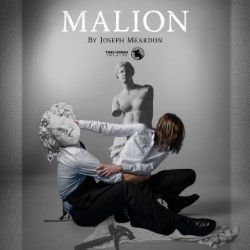
Malion

I was intrigued by the idea of a feminist interpretation of Pygmalian myth because it's seen now as one of the classic stories about men being pigs; and by modern standards it is full of non consensual sex acts. This adaptation takes that as its starting point and runs with it. It's about boys being boys in the worst and most violent way possible. In the original myth; from within the soup of misogyny that was ancient Greek culture; the sculptor Pygmalian, for whom no real woman was enough, builds and then falls in love with one of his own status, which then the goddess Aphrodite turns into a real woman.It’s really good to see male playwrights and directors using feminism as a lens through which to make art, this is something I want to encourage, both here at the fringe and beyond. It’s a unique feeling to be watching a play by men for men, but the story is a feminist one.In this version of the myth Galatea is a daughter of Aphrodite, whose marble body is given life when Aphrodite imbues Malian's statue with living spirit. She has a little more agency than in the original, Gatea is also here as a test. It is a little unclear if the test is god given or from Galatea herself, but she wishes to test the love of Malian before fully revealing herself to him. In the original Ovid the statue didn't have a name, she was still an object, even in the happy ending where she becomes Pygmalian’s wife. A sign of how far we have come, and yet have still to go.We begin in ancient Greece. Good effort has gone into the design; someone clearly spent some time on the same bits of Pinterest as I do. Everyone needs a little more practice moving around in the historical costume. The ancient style dialogue is flowery and more incomprehensible than good storytelling. The starting in ancient Greece is mercifully brief, and doesn't connect through into the modern day story.The show really starts to sing when it gets to the modern-day. As Malion tries to show his two friends his work of art. I’ve worked in plaster myself and you do get asked some very odd questions. The locker room talk is turned up to 11 and it makes me squirm and have to look away. I was surprised to be hearing so much pornogaphy, the worst sound effects I’ve heard this Fringe. Malian believes himself to be above the crass objectification of his friends. The inevitable violence against Galata was well built too, and horribly lingered on.The main flaw with the piece is that the show has not transitioned well from rehearsal into the space it is being performed. Actors are outside the light on stage so regularly that it stops looking like an artistic decision and more like sloppy blocking. The moments where I think the actors are meant to speak to us from darkness the use of voice is so muttering that it does not carry and is hard to hear. This means I'm a bit unclear about some of the characters. For example I'm not sure if Jordan Monks and Ben Kay are playing the mythical twins Cupid and Eros and they are also Malian's friends, or if they are simply two separate pairs of characters played by two actors.There is real potential here; this is a show who's heart is in the right place, but there is work that needs to be done, particularly with clarity of performance.

theSpace @ Surgeons' Hall • 2 Aug 2024 - 24 Aug 2024

Cosmos

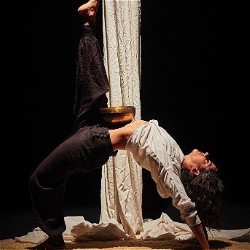
I wanted to be able to recommend this performance. Ashtar Muallem is our solo performer for the evening and the piece was created in collaboration with Clément Dazin. Muallem is a Jerusalemite artist who did her circus training in France. These are exactly the kind of artists and work I want to see elevated at Fringe, particularly given the escalating but ongoing Palestinian genocide. Unfortunately, the show is trying to do too much, all at once, and therefore does not give the ideas time to breathe.The piece needs a clearer artistic aim. Is this show a participatory ceremony, where we all take part in a ritual? Is it using contortion to parody yoga and wellness influencers who are doing impossible things with their body as they pretend you can be just like them? Is it a dark comedy that actually means its earnest message? Is this a claiming of space for Palestinian art and artists, and a clarion call for their freedom to be liberated from their colonisers, or is it a story about losing one's religion? I would have watched a full show of many of these kernels of ideas but they don’t get the depth they deserve. It leaves us feeling like we are skimming over the surface - you can’t sink your teeth into anything before the moment is discarded.The show has moments that ring with truth, the contortionist and aerial work is sublime. As is Muallem’s communication of the sheer disorientation that comes from being colonised; winding descriptions of Dazin’s grandmother and of Jerusalem and the simple solution proposed to end violence in the world. A strange, humble and honest ending. Strange after the dry irony that makes up much of the rest of the piece.

Summerhall • 1 Aug 2024 - 11 Aug 2024

Sh!t Theatre: Or What's Left of Us

The duo, Louise Mothersole and Rebecca Biscuit are having their turn to folk moment. Things are a bit shit right now, and when the world goes mad it is common in the past to turn to folk music as a way to ground oneself in the chaos. It’s steadying to think of all those who have come before us and sang these songs and lived full lives like us. My particular manifestation of this is researching and listening to a lot of waulking songs. I also spend way to much time thinking about kintsugi.They are dressed as peasants, with a series of extravagant, weird, both horrible and wonderful headdresses. The barrels dotting the stage; dark wood pub bench; and the tryptic of wood cut inspired portraits make up our performance space. There is a real attention to details, from the tankards, to the gleaming halos of twisted wood and light spread out over the heads of the audience.This was my introduction to the anarchic fringe icons Sh!t Theatre, whilst I knew of them I didn’t have any expectations for what the show would become: I had no idea what sword of damocles I was sitting under. The show is theoretically about folk music, but as it goes on, and Biscuit and Mothersole leave little crumbs of information, you start to think it might be about something else. A lot of folk songs are about death.There is light audience participation in the form of singing along with the songs, and a demonstration of wassailing complete with drinking song. With an extremely funny moment as when offered the bowl of mixed booze an enterprising hand shoots up, only for the bowl to be handed to and the last stops of drink shared out among a school group. Some things never change.Mothersole and Biscuit’s stage presence, friendship and bond is palpable, and it is the thread that pulls through the show. Don’t be fooled by the name, both are highly skilled singers, and charming hosts. I adored the harmonies. The content of the evening included introducing the audience to the idea of a sing around, attending a folk festival on acid, and their visit to a famous folk pub in Yorkshire, before it was fire bombed and destroyed. The pair revel in the beauty alongside the imperfection. The impressions of the people at the folk night were perfection itself. I did not expect to be so touched by the tales of these passionate people behind pub doors, of course there is always a revival, and that is wondrous in itself.By the time you are able to put the pieces together everything suddenly falls into place. My heart is hit like a train and I spend a lot of time sobbing to The Parting Glass. Biscuit and Mothersole let the emotion pour out of both of them, you cannot tear your eyes away.This is my first Sh!t Theatre show, and much of the show is mediating on if they can still go on in this different state, with no white face paint, and little projection. For this audience member this strongly feels like Sh!t Theatre, a step on its long journey. It’s a surprisingly optimistic conclusion. I offer a musical paraphrase to avoid spoilers: Lenord Choen ‘Forget your perfect offering / There is a crack, a crack in everything / That's how the light gets in’. The cracks make Sh!t Theatre more radiant.There is a sing along in the bar at Summerhall afterwards, which I would have loved to attend to help ease off the water works, but I was sadly on the move again to see another show. Don’t make my mistakes.

Summerhall • 1 Aug 2024 - 25 Aug 2024

Trust

People You Know Productions are going for a cross between Posh, and an Agatha Christie novel, except that nobody here actually wants to work out who the killer is. That’s far too sticky a situation and who would want that staining the family reputation. What would father say? It’s a shame that neither the performances or the script deliver on that promise, it becomes like watching someone do their best Boris Johnson impression for 50 minutes.A group of university friends meet again at the family pile, in order to celebrate a birthday party, which becomes a surprise wedding. We experience the night in fragments and flashes, chopping and changing about in time, in an ambiguous manner that leaves the audience a little scrambled for what has happened and what is drunken revelry. Effort had been made with the props and costume, and the cast looked the part.The comedy comes from jokes worthy of the worst stag do from the men, and your standard catfight bitchiness from the women. That I am not entirely sure if the production wants us to laugh with them or at them. The piece is performed with gusto, although the performers seem a little unprepared for the thrust stage.Due to the fragmentary delivery, the darkness in the story is a bit muddled and the true darkness is backed away from. The story also draws some strange false equivalencies - I’m not sure if I would describe gay panic on the same level of darkness as kidnapping, abuse and murder.The show contains one of my real irritations in theatre stereotypes, every woman in the story is in love with one man. However, with the increased diversity of representation in many shows now the modern twist on this is to add pining gay people, still in love with the same straight man. Stacking a trite female stereotype onto a trite queer one.It also runs afoul of the Game of Thrones-style shallow characterisation. For example, if we have lots of dialogue between characters saying something about a figure in the story, but you don’t show an inkling of this in the performance of that character or the plot as a whole, it doesn't make it feel true to the audience. It is precisely this weakness that undermines the final twist of the story, making it unearned and confusing. It frustrates me because there are touches of a really interesting scenes - the moment where the two women in the piece, actually talk to each other like adults, about the way they have been lied to and tricked and set against each other was revelatory. It's a shame it had to come after some slut shaming and a cat flight.

ZOO Playground • 4 Aug 2023 - 19 Aug 2023

And Then The Rodeo Burned Down

The show is performed by a brilliant pair of queer, tumbling, absurdist clowns. It's a thigh slapping good time. Xhloe Rice and Natasha Roland are our pair of clowns and the full team includes their lighting designer. The pair paint clown make-up on their faces and get to work.We are mostly in the world of the Rodeo, from the perspective of Dale the Rodeo clown, who's working hard to be a cowboy one day, but right now is near the bottom rung of the hierarchy at play. Startlingly, an equally leather clad, cowboy boot wearing a mirror of him ia following Dale. This figure turns out to be Dale’s shadow, and he is talking to him and he has lots of questions. Rather than waiting for Godot, these two are trying to work out who was the opportunistic arsonist that set fire to the rodeo, and thankfully we get slightly more answers than in a Beckett play. The piece is gloriously playful with gender and examining the extremely masculine world of the rodeo.The chemistry between the performers is a delight to behold, best put to use when rapidly changing between characters and stuffing perspectives, giving the cast the chance to flex their acting range. The budding friendship which grows into flirting between the two is charming and heartwarming. The plot of the piece has been extremely well thought though with no moment left unchallenged. The meta meditations on storytelling as a structure and the economic and financial struggle of performers feel on very receptive ears for an Edinburgh Fringe audience.The performance manages to strike the balance of being both shabby and scrappy and slick. With the excellent costume and visual look of the piece, alongside dystopian edits to perfect songs to soundtrack the show. The staging is in the round and the piece simply sings in that staging, it gives the performers extra dimensions to tumble and fall and move. To avoid spoilers I will simply say I didn’t want the show to end and I wanted more.

theSpace @ Niddry St • 4 Aug 2023 - 17 Aug 2023

Report to an Academy

Report To An Academy is not Franz Kafka’s best work, but Robert McNamara brings the elusive central character with precision and animal rage that is very watchable. The titular report is being given by an individual who used to be an ape, played by McNamara, who observed his human captors well enough to eventually pass as a human. The Academy of Academics wishes to hear his report on the process. However, he feels that as it was so long ago and his apelike existence has faded from his mind, he is not able to give the Academy what they have requested.McNamara's physicality and presence is the most intriguing thing about a stage adaptation of this specific text. In the original short story, the physical person of the ape is absent. We only encounter him via his words in the report, which he stresses is an inaccurate method of communication for representing the truth of ape life. This is because, over the years it has faded from his mind; but also, you cannot communicate ape life in human tongue. It is a challenge McNamara rises to well, limping from his two bullet wounds from when he was captured, at times demonstrating the ape’s slow deliberate mimicry of human movement, at others leaping to a smoothly rehearsed set of steps from a variety show.In McNamara's vocal performance, he captures the mimicry and inconsistent tone of a language learnt though observation and practice, but with that animal instinct still coming through. Unfortunately, when it becomes particularly animalistic, the lack of clarity with the diction of the words makes things a bit hard to follow.The weaker elements of the performance include the breaking up of the report being given by the man as moments of reflective movement. While they act as good buffers to the storytelling, they feel underused. As do the choices of accompanying music, that come and go without really having much of an impact on the stage action. Also, there are a few attempts at audience participation that come out of nowhere, which are surprising for the audience, and feel out of place in the work.Having opened strong, the ending of the piece sadly fizzles out, and I was a bit unclear as to what had happened. As with any Kafka there is much interpretation to be made, and satirising the idea of Western civilization as a place of freedom by presenting it as a mere heavy blanket of conformity that even an ape can learn, thus demonstrating that the ape has in fact left his place of freedom and security, and not found it here in Europe. If you are a Kafka fan, I wholeheartedly recommend this production. If not, I would say there are clearer and more accessible places to start exploring his work.

Zoo Southside • 4 Aug 2023 - 27 Aug 2023

Funeral

After a slow and rocky start, Ontroerend Goed’s Funeral becomes an emotionally resonant space for processing a person’s grief. Ontroerend Goed are famous for making interesting interactive and participatory performances. Funeral feels like a continued experiment on that form that was partially successful.The start in particular is a mixed bag, with really good ideas of moments of audience interaction; shaking the hand of each other audience member; washing your hands before entering the space; these sit alongside moments that feel unnecessarily busy. For example, getting the particularly recalcitrant audience to gather round at the start; passing around a series of logs.One of the mistakes made is really not giving the audience enough time to clock that we are being offered a stamina and cardio torture exercise as a seat. We are offered a log to sit on, but the logs are quite small and really not designed for a person with balance issues such as myself. The decision to offer these as seats must have been made by a skinny person without any disabilities. Not to mention the number of audience members with bulky rucksacks. For a chunk of the piece, I am twisting in pain, in the utmost silence as this extremely serious and potent show takes place. I think to myself that it would be rude to fall off my slim log as a performer is weeping their eyes out in front of me. So I sneak ever so slowly to my knees instead. Allocating seats in this way is frankly a rookie error that Ontroerend Goed should not be making. I become considerably more charitable once I am not waiting for the pain to end. The language used to describe those who have passed on is a collection of everyday descriptions, the things you might not realise would remind you of someone who has passed on until they do. It is a smorgasbord of the serious and frivolous. I think it works well for this piece because it keeps things grounded in the everyday, and allows each person time to speculate and meditate on the grief they are carrying. Images and symbols move from one moment to the next with a real beauty and depth of appreciation. Once I realise what was happening, it brings tears to my eyes. I am not going to share the moment in full because of spoilers but the tenderness and care with which the performers treat the audience is essential to creating a space where we can feel free to weep openly. I am not sure if I would describe it as a performance of communal grieving, though. The language used to describe the experience of grief, together with the lost people described or the list of names submitted by the audience to be read out in the performance, felt very individualised. I am extremely susceptible to performances like this and cry at almost anything. It might have been that we are at Week Three of the Fringe and I need a good cry. But I am too thick with crying to join in with the Esperanto song the audience is taught at the start. The audience’s singing is terrible, but feels right for the moment.Moments of pure transcendent loveliness, moments that were less so. I would recommend this show for someone feeling on the fence, but sit on the floor.

Zoo Southside • 4 Aug 2023 - 27 Aug 2023

Lucy and Friends

Lucy McCormick may think she's the diva of her feral, budget cabaret of brazen filth but the real joy is taking part in the push and pull of being in an audience under her spell.McCormick is trying to put on a full Spiegeltent cabaret extravaganza. However, as the Arts Council funding fell through, some improvisation is needed to get this show on the road. What follows is a charming hour of McCormick asking, directing, and carousing the audience into taking part to support her solo shows. We help in a variety of ways, from all rising to sing songs between the acts in a messy queer communion, or throwing confetti at the right time, or using a torch to light her as she races across the space.You can easily forget the sheen of amateurism because McCormick is a powerhouse performer, flicking from moment to moment, from terrifying, to sobbing, to sultry, to raging at the machine. Her stage persona is gloriously inconsistent, keeping the audience on their toes. She's a star who loves the stage and she just wants to be enough for the audience as she is. She needs no one and can look out for herself, but she's actually looking for friends. Do you know how hard it is to make friends as an adult? If you lose sight of her during the show, she’ll have cracked off two jokes before you catch sight of her again. Waving a knife, doing her best impression of psycho, trying desperately to jack-off to the items in a woman's handbag, sitting silently on a box staring at the audience, sticking edible goods into orifices, absolutely nailing an entire Adele song in order to crack a dad joke. McCormick is a master of pace; the piece hops between a staged version of being inside an ADHD brain, a thousand thoughts and jokes all firing at once; to waiting, deliciously, ear-ringingly awkwardly waiting, waiting with the audience in the palm of her hand.I have been gunning to see McCormick live since her performances at Fierce in Birmingham, where she gained quite the following. This show is not one people wander into by accident - the audience fully understand that they are going to see naked flesh and sex acts. In this show, it leads to less visceral shock value in the performance than you might expect. McCormick has an audience and they are extremely happy to revel and have fun with this cackling harlequin. I would have been extremely happy to have been put in a group chat with these people.

Pleasance Courtyard • 2 Aug 2023 - 23 Aug 2023

An Interrogation

After co-directing Edinburgh Fringe-favourite turned international sensation Six The Musical, Jamie Armatage's latest creative project is writing and directing a promising and suspenseful classic crime drama.We start in the interrogation room, two actors sitting at a table in front of three cameras, the clock ticking on finding a killer's victim and the stage set. If they act quickly, maybe they can still save the woman who has disappeared and whose life is now in danger. Visually, the police station looks like it has fallen out of Life on Mars, as does the detective's boss, played jovially by John Macneill. The years of cuts to the police and austerity drag us visually back to the 1970s too. However, the multi camera set-up and the minutiae of police procedure remind me more of Line of Duty in tone, with plenty of time spent describing things vividly for the record. We straddle eras of crime drama here.Bethan Cullinane plays our detective with a hunch to nail, and time slipping away; Jamie Ballard plays a high flying successful CEO, who nobody could fathom being involved in a murder (just look how much he loves and supports his ailing mother). These two performers carry the show on their shoulders. It becomes a real pleasure to watch the push and pull of power and lies, evidence and admissions in the well paced script. A really good use of naturalism, the time pressure of trying to save this missing woman, really turn the screw in tension.For such an elaborate staging, however, I want more from the tech and video. I can see some benefits to such use of technology, as I am now able to rest the head that is being held at a funny angle in order to see round the tall person in front of me and look at a screen to watch both actors' faces. However, I still grow disappointed at its creative use. This technology is certainly able to draw the our focus to key moments but it often simply portrays shots of the room that we can see anyway. Its usage feels a bit as if the production is drawing inspiration from multimedia productions such as Katie Mitchell’s adaptation of Waves, without understanding what made them so effective and transformative.Nevertheless, An Interrogation is a solid well-crafted mystery, brought brilliantly to life by Ballard & Cullinane.

Summerhall • 2 Aug 2023 - 27 Aug 2023

The Maids

Whilst the cat's away, the mice will play. The Maids leans on elements of class panic, including the fear of what the staff will get up to when you are gone. It could be anything. It could be murder. This performance is part of the Korean Season at this year's Fringe and is performed in Korean without any English subtitles. The Korean performers deepen the race analysis of the play, in a world where these positions of domestic work, to this day, are more often performed by asian women and women of colour. At first, I am surprised that this performance of The Maids has a splash zone where we are advised not to sit, but the more I think about what the show is actually about, the more it makes perfect sense. In Jean Genet’s original text, whilst their master is away a pair of maids get into increasingly more elaborate sadomasochistic fantasies, where at times they both play their Madame in charge and both play the Maid. They imitate each other and their master, and attempt repeatedly to act out violent fantasies against the Madame. Reality and fantasy become muddled and indistinct for the audience - what is play, what is funny, what is truth, what is violence, what is sexual tension? Genet’s plays feature the downtrodden in society mocking and role-playing as their oppressors, in order to stand up to them.The Maids is a pretty lesbian play and a classic femdom story, and sits alongside more recent ventures into the genre like Disney’s Cruella. Jean Genet as a practising homosexual knew what would have been deemed unacceptable on stage in 1947, and in the text they are sisters. When your existence is a crime you take what representation you can find. Due to this quite open premise, The Maids is really suitable for adventurous adaptation. This production is performed to begin with mostly in silence with excellent use of props. The use of water is inventive, fantastic and extremely well thought though. Both performers should be commended on their highly expressive physicality and facial expression. You can read in their faces the exact moment fun and play turns to pain and horror. The moments of warmth and kindness, and sharing of a joke between the two, are really heartwarming moments of bonding within the dark and oppressive loom of the house in which they work. The show has an excellent use of pacing, perfect pauses and waiting for the tension to build, only to crash over into violence again. I adore the choreography and the physical theatre, as the pair dream of more complex fantasies. You can clearly follow the storyline from the symbolic staging.Later in the piece, it spills over into spoken language, which first begins as an opportunity to mock and perform in the roleplay more accurately. As the piece progresses, it becomes an opportunity for the pair to converse more fully. I am dying to know what is being said in these later points. In my heart this is a four star production, but as there are a couple of moments where I am not sure what is happening in specific, I settle at three. I would recommend this production.

Assembly George Square Studios • 2 Aug 2023 - 27 Aug 2023

A Spectacle of Herself

In A Spectacle Of Herself Laura Murphy slides the serious and the silly up against each other as she successfully weaves the philosophical, the personal and the political together into the mess they truly are.Murphy is a charismatic performer drawing from clowning, parody, the world of Drag Kings, alongside aerial work and academic meditations of feminism, queerness, mental health, identity and neurodivergence. Whilst adding a sprinkling of horninesss levels matched by Fleabag, with a righteous celebration of the word cunt, echoing The Vagina Monologues.The sections of aerial work are moments of true transcendence. These are captivating and charming, providing flashes of queer euphoria breaking through the backdrop of panic attacks, overstimulation and righteous rage against the world we live in.Murphy has no time for people perceived as famous smart men, either in history or today featuring her parodies of Einstein and cunting Elon cunting Musk. Musk being particularly wince inducing. Providing an alternative to Musk’s idea of space, a space shaped inescapably by capitalism, masculinity and the patriarchy. Murphy provides a reclaimed erotic love for space, performed with tenderness.The pacing of the piece is sadly a bit sporadic, at points I felt like I was waiting for a song to end rather than still enjoying the joke. To avoid spoilers I shall be vague but there was a point in the piece that rushed us towards a precipice and I was craving the jump and destruction and I felt I didn’t get it. This piece had the longest wait on a joke, for payoff that I have seen in a while and it was fantastic.The performance has been carefully crafted, and the work to provide AV and captioning for almost all of Murphy’s speech should be commended. It is a serious leap for general accessibility.Despite the academic trappings the piece's real clarion call is for us to get out of our anxious, rage-filled, heads for a bit and just be a body, to rave - despite the world around us.

Summerhall • 2 Aug 2023 - 13 Aug 2023

Little Gift

M6 Theatre Company have put together a heartwarming show filled with the Christmas spirit, with some truly charming use of puppetry, storytelling and stage magic It is exactly the kind of show you would expect to see at the North Wall Arts Centre at this time of year. Our solo performer Guy Hargreaves plays a cross between a train conductor and a guardian angel, who’s got the best job in the world, helping people by spreading a little magic. He and his friend, a bird called Sylvie, take the audience along with them on his job to help Ted, an lonely old man and puppet played skillfully by Hargreaves. We see how one small act of kindness and a bit of magic, can grow into something beautiful. The little gift of a plant pot and seed that grows becomes Ted’s motivation to reconnect with the world outside his window.Hargreaves uses a motley collection of classic storytelling, physical theatre, sleight of hand and stage magic, to keep us intrigued as to where the story is going next. Whilst the overall pacing is a little inconsistent, and the piece takes a bit time to get going. The highlight of the piece is the character of Ted, who is delightful, and his transformation from a harrumphing OAP grumbling at the noisy neighbours, to absolutely smitten by his new frond-y friend is lovely to watch. Hargreaves has a wide and wonderful range of grumbling, muttering and groaning that instantly endear the audience to Ted. The attention to detail is excellent, Little Gifts takes small charming scenes, such as Ted and his plant sitting on a snowy vista and heightens them with a little stage magic, with Hargreaves gently sprinkling the pair of friends with falling snow. That lifts them into little moments of awe.Designer Joss Matzen and Lighting Designer Adam Carrée have made a beautifully designed show. It takes a lot of careful planning and effort to make something look this slick and easy. I particularly enjoyed the strong recycled-eco aesthetic to the props combined with a brilliant use of colour. It’s very impressive what you can achieve with 50 suitcases, and a bundle of ingenuity. Particularly good use made of directional sound, when Sylvie was flapping around the stage, or we were zooming across town or in and out of peoples houses. The show has an enchanting sense of wonder and awe about it. If you like your Christmas tales free of Christanity, but still with thematic morals to love thy neighbour, that will charm and absorb little ones, Little Gifts is for you.

M6 Theatre Company • 19 Dec 2020 - 23 Dec 2020

An Intervention

It is a complete delight to watch these two actors practice their craft. Sadly, An Intervention, even with a new reworking for this rehearsed reading, is far from Mike Bartlett’s best work.We follow Charly Clive and Ellen Robetson who are playing old friends, one a teacher with a drinking problem, and the other in a relationship their friend doesn't approve of. They are the kind of friends that argue, so we follow them as they have a disagreement about the Iraq war. As we jump through time we see each of the characters lean on their friend as they struggle with personal and political trials, in a messy and passionate demonstration of the power of friendship.Clare Lizzimore has cleverly directed the piece using clever framing and some very slick video editing, to really hit home during this time of lockdown, social distancing and pandemic. As the world became suddenly, painfully aware of the importance of strong networks of friendship for the world's happiness and mental health amongst an epidemic of loneliness. I won’t spoil the wonderful moment of connection, but it was beautifully done.Clive and Robetson were excellent together. The fact they are childhood friends and have been working professionally together making comedy as Britney since 2016 comes across clearly in the piece. They have a natural chemistry that brings the important themes of the piece, that of long term friendships and having to tackle things you are not proud of with the people you love. Their pacing and comedic timing was beat perfect, as though they have been living in each other's pockets for years, which they may have actually done. They shine when the dialogue is working with them, and lift it well when it’s working against them.Bartlett is one of the most exciting British playwrights currently working, his 2009 play Cock, is one of my favourite plays. Both An Intervention and Barlett’s much more well known play King Charles III, premiered in the same year, 2014. King Charles III is arguably the more popular with it’s national tours and a Broadway production. I know which one I saw at the time. Indeed both of the plays have similar issues of being full of potential at opening, and by the end of the piece having a sense of having wasted that potential. When the plot turns against the characters, they just seem to sit about talking about how bad that is. The characters don’t really react to the plot beyond acknowledging it as bad, or have any consequences for their earlier behaviours.

Old Fire Station - Cafe • 12 Dec 2020 - 12 Jan 2021

Quines

When joining Gerda Stevenson for a performance of extracts from her poetry book Quines, you might be expecting an afternoon of her simply reading her excellent poetry. In fact, Stevenson weaves together singing, music, history, guest-performance and poetry together into a stellar show. We start with acknowledgement of the distant past – Stevenson opening with singing the oldest known gaelic song, and a poem for Nessie. Starting with the mythic and distant origins of Scotland, and move mostly forward though time to living memory. Stevenson is a absorbing and engaging performer, as we move from the earliest published women’s work to the astronomer who discovered the horsehead nebula. She moves from prelude to material self-assuredly. It was such a treat to hear from an expert on Elizabeth Melville and to hear him and Stevenson perform some of her epic where the character hears the voice of god. Finishing, for us at least, with a poem dedicated to Moira Shearer - comparing her famed dance in the Red Shoes to her Charlestone in blue shoes in The Man Who Loved Redheads, in an uplifting look at the joy, sensuality and control that comes when dancing.The poems performed are a mix of English and Scots. It is a truly wonderful chance to hear Scots performed. Being English myself who has merely lived in scotland for three years, I followed the Scots poems clearly, but I suspect the nuances of the metaphors went over my head.Sevenson brings a new take on the older gaelic songs. At points accompanying herself on a Bengali Pump Organ or Tibetan Singing Bowls. This in no way distracts from the power of the texts, in fact, Elizabeth Melville’s Calvinist interpretations of contemporary, (and far too bawdy), songs sound excellent accompanied like this.Stevenson’s performance is an excellent and informative taste of her poetry, performed in a unique method that challenges the boundaries of spoken word.

Paradise in The Vault • 20 Aug 2018 - 26 Aug 2018

She-Wolves

Laura Careless’ solo show, inspired by the book and BBC series of the same name by Helen Castor, is an intricate, forceful and nuanced production examining the life of five different pre-Elizabethan English queens. It impressively conveys a wide range of characters and their different experiences in a compelling exploration of women in power at a time where that was almost unheard of.The piece shifts genre; incorporating dance, storytelling, music and projection, all woven together. Each of the five wolves is a collaboration with a different specialist, including vocalists and artists, with illustrations reminiscent of heraldry; this makes them all feel unique and individual, whilst also part of a cohesive whole. The characters are familiar enough to be recognisable from history and unique enough to feel like fresh, radically relevant interpretations for today. Margaret of Anjou - now with renewed fame for being for being the inspiration behind Cersei Lannister - is shown during a civil war, having a particularly bloody and terrifying scramble to keep herself and son alive. Whereas Bloody Mary (Mary I) is shown quite softly; a force of resistance against the symptoms of being voiceless for so long, suffering but still continuing on.Careless makes clever use of a box of tricks filled with a collection of beautiful costumes and some truly regal capes. She is an captivating performer, her movement, channeling a controlled energy. Careless carries the piece smoothly from each different moment, from dance, to singing, to acting and back again. Each of the different sections of choreography respond differently to the challenge of wielding power, from rage and struggle to the glamorous teetering acceptance. There is a throughline - an undercurrent of a palpable sense of feral fury.These women are not in the old rhyme ‘Willie Willie, Harry, Steve,/ Harry, Dick, John, Harry three/...’, or the modern equivalent, the Horrible Histories, The Monarchs Song. They are mostly absent, and that is kind of the point. A few here are losers of civil wars, some thankless regents. Many of the women traded their own personal power for the power of their sons, their blood, and their future. She-Wolves is exactly what it sets out to be, an absorbing and slightly feral look at a series of female medieval rulers. If you are dithering about whether to go, you should.

Greenside @ Infirmary Street • 13 Aug 2018 - 24 Aug 2018

A Life on the Silk Road

The National Theatre of China have brought their visually stunning production of Life On The Silk Road to Zoo Southside. It is a physical theatre feast, beautifully performed with mesmerising choreography and it is worth making the time for its slightly longer run time of 80 minutes. You'll have enormous respect for the performers' stamina to pull it off.The show follows the life of 2nd Century BCE diplomat, explorer, imperial envoy from Emperor Wudi and national hero, Zhiang Qian on his travels along what would become the Silk Road, as he makes contact with tribes, is captured, married and has children, loses his companions and family to a sandstorm, and braves the dangerous mountain passes. The detailed nuances of the plot may be a bit confusing and rapid – such as one of the quickest boy meets girl, gets married and has a child sequences – but it never leaves you too lost and is always beautiful to watch. If anything one can see it as having potential for expanding the piece into a two-act full-length show.The National Theatre of China make use of the large stage space at Zoo to bring a visual treat. The wide back wall serves as a projection screen for subtle but beautiful background to the dance. The costumes are sumptuous and mostly beautifully muted tones so as to not clash with the projections. However, there is a slight issue with being able to tell the difference between minor characters. This show is an international collaboration between artists from China and France; French composer Uriel Barthelemip provides the lush recorded sound while musician Pan Yu, performs excellently live on stage. However, the true triumph of the show is the combination of the use of fabric and the exquisite choreography. Flags and drapes feature heavily in the piece, as both a visual pun on the title and as excellent versatile props; the fabric becomes tents, sandstorms, snow and avalanches. The cast seem to act as one being, moving and breathing in unison in spectacular fashion. Wu Junda’s performance as the hero, Zhang Qian deserves an honorable mention for the sheer stamina and grace of his performance. Qian was both a traditional hero on his hero's journey, but is also allowed moments of suffering, humanity and loneliness, which really brings out his human side. Combined with the excellently physical and nuanced facial expressions of Tian Ge who plays Qian’s loyal horse, the two have a chemistry that is wonderful to watch. This makes the treacherous journey through the mountains, complete with falling snow and avalanches, such a showstopper.The Fringe is one of those crazy times of year when an incredible internationally-renowned piece that would rarely be available in the UK is just around the corner. I urge you – if you are into physical theatre – go.

Zoo Southside • 12 Aug 2018 - 24 Aug 2018

Orpheus

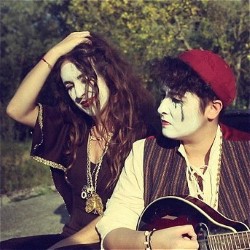
Alexander Wright, our poet for the evening, tells us that this piece was written in The Meadows – the park not very far from Summerhall where they are performing now. Both the barefoot boys, Wright, with his long hair and hat, and Phil Granger with his patchwork harem pants and acoustic guitar, look like they could have been freshly plucked from the locals regularly seen strewn across the grass. It really feels like that is the performances spiritual home. This is a show that deserves to be heard out under the sky where you can hear the wind rustling through the leaves on the trees. Our performing duo seemed a little penned in by the black box space they occupied. It would have been a delight to watch them roam free, outside or in a pub or one of the many other spaces the piece has been performed. At its core, Orpheus is centers on two guys, a guitar and a story. It is one of those enchanting reminders of the simple yet profound power of storytelling. Carefully crafted lyrically-poetic dramatic form meets the songs of Bruce Springsteen. Beautiful slightly more traditional appreciation of colour and nature are combined karaoke and greasy spoons to create a modern Parthenon in which Dave, the normal human, can fall in love with Eurydice, a dryad. When she dies, simple Dave travels to the underworld to try and get her back. Orpheus is not just the classic tale of love and loss usually explored by this myth. Wrights text and Granger’s adorable songs – such as the first song Dave wrote on the guitar – conjure up memories and illustrate a childhood very clearly, leaving you pining for a past you never truly had. This youthful innocence, makes the social isolation Dave feels so much more heart wrenching. The isolation that can sweep in and swamp the purposeless individual when we fall between the cracks of society, work and friends – is communicated so simply, but very effectively though the music and words of the performing pair.This show is very much the story of Dave by Dave the whole poem is told from his point of view, he is a modern day version of the mythic Orpheus. It is these reinventions that work so well to bring this old story home. Particularly excellent was a moment when the Greek gods and goddesses were fleshed out into people standing around a cafe. In some ways it feels a bit of a shame that Eurydice alone seemed untouched from much from the classics, she was very much a walking talking myth, radiating divinity immorality and magic. She felt a bit out of place in the story.A production that is simply full of love and heart and music. A bare foot, long haired, leather notebook and guitar wheildling kind of show. Orpheus would be proud.

Summerhall • 2 Aug 2018 - 26 Aug 2018

Saucy Jack and the Space Vixens

Saucy Jack and the Space Vixens is the plastic-and-glitter-wearing spiritual sister of shows such as The Rocky Horror Picture Show. Durham University Light Opera Group (DULOG) are the team behind this year's version of the classic Fringe musical: although they have brought buckets of enthusiasm to the loopy space opera, sadly overall the show feels unfocused, under-rehearsed and underwhelming.We are set in Saucy Jack's dead-end dive bar, in a far corner of the sleazy side of the galaxy. The bar's patrons, performers and local criminal undesirables dream of getting out of town: however, bar owner Jack is not fond of letting a good act go, and coincidentally, anybody who tries to go gets killed by the 'slingback killer'. Into this den of vice arrive The Space Vixens, intergalactic deities who fight for truth and justice though the power of disco. They are hot and in heels, and hot on the heels of the murderer. As the two groups collide, old flames are reignited, new couples fall in lust and love, and we discover how far people will go for ‘love, independence and good head’.The two standout performances were Sammy and Jubilee. Sammy, the talented saxophone player in the bar, was dressed like he had walked out of the credits to The Fresh Prince of Bel Air. He spent the whole show practically vibrating with energy as he threw himself into the movement, whilst the over-the-top playing of the saxophone really struck a chord. Jubilee is the leader of the trio of Space Vixens and has a voice like a dream. Her unshakeable sense of character is the trickiest role in the show. During the flashback to her past, we see a younger version of Jubilee - and young, pliant and silent Jubilee and older, self-assured, confident Jubilee are very different people but still the same person.Sadly the rest of the performance lacks finesse. The dialogue floats about, going between not big enough to carry the ludicrous character or storyline, and sometimes reams of just shouting. The choreography was fairly simplistic and over-reliant on standing in lines and unison, which was made worse by the fact the cast really struggled to do anything in unison. Jack had a habit of drifting vaguely around the stage in a very distracting manner, whilst Booby - the drag queen character - had clearly seen enough RuPaul to get a few coquettish hand gestures down, but the rest of their physicality was wooden. In a show where it is crucial for Booby to walk in glitter boots, the fact that they could not do so without looking unbalanced and uncomfortable was a real shame.As a performance that often takes place in a real bar, the performers have to work twice as hard to create that atmosphere in a theatre, and it never quite made it to those levels. There also seemed to be a slight lack of awareness of the cult nature of the musical: for example, audience members often come dressed for the show, and are expected to join in with the dance numbers. It is always slightly embarrassing when members of the audience are better dressed than the cast. Whilst they did pull people up onstage to dance at the end of the show, it felt much more like a school disco than a intergalactic disco in a bar on the edge of space.This production is sweet and well meaning, energetic and fun, but poorly performed. If you don't mind that, you will still have a enjoyable time.

C venues – C • 1 Aug 2018 - 19 Aug 2018

Valerie

Through the thick haze and wash lights, the three piece band of performers that make up Valerie can just be seen, shimmering like figures from the past. Clocking the guitars and drums, you can tell, this is going to get loud. Last Tapes Theatre Company’s Valerie is an intimate, intense and forceful show that combines the shock, awe and atmosphere of gig theatre with a deeply personal and absorbing nature of autobiographical performance. Robin Kelly plays the grandson of the titular Valerie. He married into a family with a history of mental health disorders. We see how today the youngest of that generation is starting to look back onto his family tree, to consider with new scientific understanding the genetics of such conditions and the ramifications for the current families. This inspires the grandson to attempt to tell the story of his grandmother. It is a grungy rock ballad to the difficulties of love and resilience, particularly when the one you love is suffering, wrapped up in heartbreaking modesty, that Valerie herself doesn't think there is much to tell.Instead of focusing on a linear plot or empirical truth, the show leans into creating atmosphere, mood and gut-wrenching sensations almost phenomenological in their nature. You can feel the ebbing rage behind some of the tracks that comes off the stage in palpable waves. Frankly, I need more 1950s housewives furiously playing electric guitar in my life. It is such a glorious juxtaposition between original story and the chosen communication method of gig theatre.The three performers of the ensemble are made up of Valerie’s grandson, Kelly, his partner, Cherie Moore and Tom Broome. There is an eerie mirroring of the generations when the current generation, Kelly and Moore play Valerie and her husband Graham; an uncomfortable doubling that only comes from autobiographical work.There is always a mistaken perception when people try to make art about science that it is going to be a dull lecture, losing time to make sure the audience is up to speed enough to get the nice metaphor. Valerie succinctly sidesteps this trope because there is the omnipresent reminder that the science had a real personal impact on those on-stage before us. If you are looking for a warts-and-all examination of the strain mental health disorders can have on a marriage, and the family as a whole for that matter, Valerie does not fail to satisfy.

Summerhall • 1 Aug 2018 - 26 Aug 2018

Status

Chris Thorpe's solo show for this year is about grappling with national identity as a white british man. It uses a mix of storytelling music, song, wonderful visuals and projection, to tell us the story of struggling with your national identity when your nation does something you fundamentally disagree with. Status seems to re-cover a lot of the material from his previous work Confirmation, of how you negotiate with something fundamentally alien to you. Except this time it is not a Nazi, but a part of the character Chris himself. The whole piece practically vibrates with fury. It loosely begins with the character's response to his nation ‘shooting itself’, and follows his attempts to run away from that nation, escape it, bury it, and cut it out of himself, to a grudging realisation that this is not something you can truly exhume. It brings to mind the truth in the Neil Gaiman quote ‘Wherever you go you take yourself with you’. No matter how unreal and fictional nationality and borders are, they still have real world consequences you cannot escape.Thorpe is a gently but forcefully charismatic performer, sometimes accompanying himself with some gloriously angry guitar. There is a truly excellent recurring motif of privilege in action, where being English saves Chris from a beating. That we return to and analyse with each new layer of soul searching. Then there were some points where the balance felt a bit off, for example when Chris goes to monument valley and has a prolonged vision quest where he speaks to a coyote. The whole irony of the white man on a vision quest was slightly played off, but it still felt like an uncomfortable choice. Where the story truly shone were the moments where Chris spoke to cardboard cutouts, or the faceless representative of Englishness. These were new, exciting, personal and interesting in ways the vision quest didn’t quite carry.Thorpe has a talent for bringing out gut-feelings in his audience. The violent description of how to pull out your nationality really made me squirm and feel queasy. Sadly though, that was more as a surface reaction to the gore than the deeper discomfort of trying to remove your nationality. Status has been written from a place of grief, it varies wildly between the denial, anger and bargaining stages of grief. Thorpe himself seems to be in denial, saying its ‘not a Brexit play’ and this character is not Thorpe, but just called Chris, with Thorpe saying ‘I’m not even sure if I like him’. These may be asides that I am over reacting to, but by taking that step away from the content, and making it about a character of Chris, it puts distance between Thorpe and Chris, and it calls the authenticity and truth of the story into question slightly. When to the audience it clearly seems like it is a white man’s white guilt play brought about by Brexit, and it is Thorpe’s personal story. Putting that distance in wrong-foots the audience in a way that I can’t see a reason for. It reduces the impact and power a purely autobiographical piece could have wrought. It may be the depression talking or Thorpe may be preaching to the choir, but his statement that being English is a bad thing we should all want to be rid of, did not shock me. Being English has always been a blessing and a curse, except now we are leaning into the curse side. Had it truly taken Brexit to see that.Status is going to win awards because it is formally interesting, political, current and good at conjuring a very instinctive gut feeling – but even character Chris himself seemed unconvinced by its conclusion. You have to take responsibility and use your privilege to enact change in the world, and to run away and to deny that is a privilege in itself.

Summerhall • 1 Aug 2018 - 26 Aug 2018

Thor and Loki

Thor and Loki is a wildly silly parody adaptation of the Ragnarok myth that is heaps of fun – even if it does go on a bit. If you came here for Marvel-style men with rippling muscles and male power fantasies you will be disappointed – unless you are into older gentleman then you have Odin, dressed in boxing gear. If you came more for myths like the Þrymskviða, involving Thor in a dress, you will be thrilled.On Asgard, Thor has been reinvented as a gloriously underwhelming vegan and bad poet. The epitome of a lover not a fighter. Whilst he tries to be the warrior his American-football armour wearing brothers, and father want him to be, his heart is not in it. Meanwhile on Jotunheim, the scaly and horned giantess Loki has a bark that is much worse than her bite, or should I say roar. All she wants to do is picnic in the park and make dreamcatchers. When this makes her a laughing stock among the other giants she decides to try to join the army. With the popularisation of these myths by Marvel the plot of the war between Asgard and Jotunheim is a very accessible plotline. The cast are performing their hearts out, and having a great time doing it. The ensemble is watertight, as they play multiple characters, play in the band, and bring out a tap dance break at points. The writing has produced a strong set of characters, great songs – I particularly enjoyed the gleeful song about building a wall, and good gags and one liners. Sadly the plotline itself needed a cut and tidy. The references to America in the costumes and songs worked well with the general neon design aesthetic of Asgard at a music festival – including lots of glitter.The show is a really refreshing look at the Ragnarok, that is working against the violent hero trope in an irreverent and tongue-in-cheek fashion. If you are a fan of witty adaptations, it is worth making the time for.

Assembly Roxy • 1 Aug 2018 - 26 Aug 2018

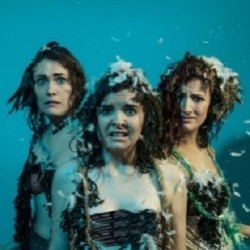
Sirens

Have you ever wondered what it would be like if figures from Greek myth were around today? Well, Zoo Co Theatre Company have got you covered. In Sirens, three of the half-bird, half-woman creatures are transplanted to modern day Hastings. The trio have to learn about how to be modern women and explore how far things have changed for women, or more accurately, how things have not changed since 2000 BC. The show makes use of projection for bags of visual storytelling, and has an endearing self-aware sense of humor. This allows the piece to show the rage and fury felt by the sirens and to communicate it clearly, but without getting bogged down in endless anger.When the sirens wash up in 2018, their voices still seem to have a murderous effect on men. Luckily they run into Tobi who teaches them to sign - all shows are relaxed, creatively captioned and BSL inclusive. This gives the three the chance to find their independence, and to explore the modern world, with all its trials and difficulties. However, the lie-filled stories told about sirens are still being spread - even today. The show is brimming with parodies, jokes and references. Particularly wonderful were the heist film parody sections and a glorious drag routine to Queen's I Want to Break Free.The show is visually delightful; the design strikes a nice balance between the otherworldly mythic past and the modern day. The costumes are gorgeously detailed, and the folding set works smoothly with the projection to create a flexible performance space. The cast are a tightly-knit ensemble, and the relationships between the three siren siblings have a natural feel to them.If anything it felt a bit rushed and short. There was a lot happening with each of the three women having their own plot lines, and the overarching one. A lot had been crammed into the 55 minutes. If anything you wanted it to have room to breathe. All of the sirens had movement sequences about their own internal struggles with the modern world that were so quick it felt like they were over before they really started. Overall Sirens is a tongue-in-cheek performance about trying to take ownership of your own stories. The ending in particular is really good at underlining how things have not changed, and how people still don’t listen to women.

Pleasance Courtyard • 1 Aug 2018 - 27 Aug 2018

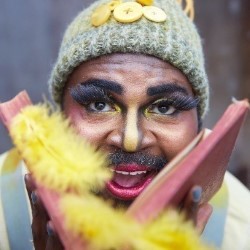
Duckie

Le Gateau Chocolat has brought his background in drag to this kids show, which is a solo act loosely based on Hans Christian Andersen's The Ugly Duckling. We follow along a duckling called Duckie, as they find their voice, literally.In the animal circus, Duckie is struggling to find his place. He is not very good at quacking, or dancing. So he decides to try and find a friend who might help him understand what he is good at. We follow Duckie as he meets a number of animals, each of them affording the chance to slip in a great musical number. The show is glamorous and exciting for the younger audience members, and has plenty of asides and inside jokes for the older people in the room. I particularly loved the classic burlesque fan dance, done with two pieces of cardboard.The music of the show has been drawn from classical with extracts of Swan Lake, to the classics of drag - my personal favourites being Flamin-girls Just Wanna Have Fun, to Disney, the latter being an unsurprising hit with the younger audience members. Le Gateau Chocolat is a mesmerizing performer, with a wonderfully emotive singing style. My very tiny gripe with the production was at some points, due to the fabulous eyelashes Le Gateau Chocolat was wearing, we struggled to see his eyes - which was such a shame as he was working so hard up there. With this performance he is pushing the boundaries of what may be strictly considered cabaret or drag, and I am very grateful for it.This version manages to sidestep the not-entirely-nuanced-original-materials message of 'be conventionally attractive and people will like you eventually'. Instead of a wild transformation of who they are, Duckie learns to see his differences as his strengths, not weaknesses. The message is not 'bend to society' but use tolerance and self acceptance instead.If you are looking for an entertaining and spectacle of a show for you and the young people in your life, Duckie is a charming, uplifting performance, sprinkled with a I-am-what-I-am mantra that is drawing on many varied inspirations, elegantly and clearly.

Summerhall • 1 Aug 2018 - 12 Aug 2018

Grace

Katie Reddin-Clancy’s solo show has the potential to be fantastic – with a delicious, sharply observed script that is slickly performed. It is a show that appropriately evades simple labels, a mix of character comedy, cabaret, variety, new writing, monologues, solo-show and theatre, all wrapped into one. The piece is charged with a social discussion point of the day, with a subtle exploration of gender, specifically when combined with performance identity and how that allows the imposition of illusion into reality. The work includes a variety of conflicting viewpoints. However, in the end it is difficult to see how it all hangs together as one piece.Zora, is making her return to the stage after the collapse of her previous show The Grace and Archie Show, where her male alter ego, Archie, performed alongside his lover and the now deceased, Grace. Archie was created as way for Zora to get over her stage fright, but complexly became just as real in his own right when Grace fell for him, and not Zora as a whole.Whilst we wait for Zora to arrive as she suffers from stage fright offstage; we are treated to a collection of colourful characters, from the stalling theatre manager, to Zora’s agent, to an amdram enthusiast who will take to the stage if it is left bare for too long. Each of these felt unique and fascinating and slyly funny in their own right. Reddin-Clancy has a knack for conjuring characters at a glance. Aided by beautiful costumes throughout, each was individual and different and clearly had a sense of character. However, some of the characters feel like tangents who don’t belong in this show. This is not to say the characters were not good, but their stories didn’t really cohere together clearly into one show.Sadly, overall the different characters and jumping about in time, left a disjointed impresion, and made the piece hard to follow. After the impressive opening characters, and all the stalling, the audiences confrontation with Grace and the ending are not really worth the wait. It leaves us craving a satisfying ending - even a post-modern one. Whilst the piece is fractured, giving us multiple viewpoints, there is not really enough meaty material for us to draw our own conclusions in a truly post-modern way. Grace is a confusing if well-meaning show that is trying to make a point about lots of serious things, but doesn't land them very clearly. If you have an interest in gender or vaudeville, or the entertainment industry’s poor treatment of performers, this is the show for you. Otherwise, see it after some more development.

Gilded Balloon Teviot • 1 Aug 2018 - 27 Aug 2018

Flight

Darkfield – creators of last years Séance – have brought their shipping container back to Summerhall for their latest aeronautically themed immersive audio performance, Flight.The inside of the container has been fitted like the inside of an aeroplane, and looks very impressive – even to us frequent flyers. Our luggage is stored in the overhead lockers, and we are away. The majority of the short performance takes place in total darkness, with the real magic of the piece being supplied via headphones. The piece has been based on the Schrodinger’s Cat paradox, where inside the box (with some poison) the cat is both alive and dead at the same time. In this case, it is the audience who are the cat. What starts off as a normal flight, with crying babies and air hostesses with drinks carriages, begins to fracture and splinter as these different realities collide.This show is a testament to the sheer power of audio and imagination. The sounds used create some truly glorious sensations, like the absolutely beautifully rendered recreation of the way your ears pop when a plane takes off which was phenomenal. Darkfield are practiced at tricking your senses, making you believe people are moving next to you and behind you. Particularly skin crawling was the parts when people whispered in your ear. It was a shame the weakest part was the overarching plot. Whilst there were amazing moments created, it never felt like you were truly in danger. It wasn’t clear what we were supposed to be afraid of, which made the ending feel a bit underwhelming. If you have never experienced a show like this before, this is the perfect place to start. Darkfield have created an excellent set of sensations, even if they do not wholly string together.

Summerhall • 1 Aug 2018 - 26 Aug 2018

Yen

Gritty Theatre is living up to its name with their current performance of Anna Jordan’s Yen. If you want a dark play that weaves classic tragic love stories with modern themes – Yen is the perfect piece to choose to bring to life. However, the uncomfortable feeling left by the play is blurred as it is difficult to tell if it is coming from an invaluable reminder of the closeness of poverty and conjuring empathy and understanding for those struggling; or if the play is truly able to shake the accusations of serving up the downtrodden to the wealthy as poverty porn. This duality was made more complex by the fact the play is set in Chelmsley Wood in Birmingham, less than 15 miles from the performance space.In Yen a pair of brothers Bobbie aged 13 and Hench 16, have fallen through the cracks of family, friends and society. They, along with their dog Taliban, are living though each day as it comes, with porn, gaming and pinching booze. Their mother sometimes visits by passing out in front of the house and drinking all the beer. Life goes on in this unstable subversion of the nuclear family, until Jenny from across the street visits. Just when you think the piece is swerving into a romance, the undercurrent of violence and repressed fury bubbles to the surface, leaving the shell-shocked remnants left to pick up the pieces and start again.There were a surprising number of slips and flubs – that will iron out with practice – such as peculiar pacing, clumsy movement. These held down some of the early slower scenes, but eventually the piece found it’s stride. The four actors handled the material well; particularly the shifts from poorly displayed love to violence. Blake Heaven and Dominic Thompson had great lopsided chemistry as the dysfunctional brothers. Every time Demelza O’Sullivan, the boy’s mother, came on stage she was impossible to take your eyes off, taking complete ownership of this wrecking ball of a mother who had her sons completely wrapped her little finger, but didn’t see the damage she left in her wake. Tilly Farrell Whitehouse’s slow-burn performance of Jenny had a few truly captivating and heart-breaking moments. The cast struggled with some of poorly scripted moments of the text, doing their best to carry off them off with some believability, and they mostly succeeded – but quite key points of the play were a bit of a struggle to accept.Yen is an at times funny, at points heart wrenching analysis of the damage that can be done by family and close friends, and how that follows us though life. Gritty Theatre’s show stays on your mind, but not necessarily for the right reasons.

Multiple Venues • 30 May 2018 - 4 Jun 2018

The Sandman

This Victoriana adaptation of a gothic adaptation of a children’s fairy tale figure is not exactly breaking new ground. It could have come from any number of the white-shirt and braces wearing wacky student troupes here at Fringe. The Sandman, has some good moments, and a dark sense of humour but generally doesn’t stand out from the busy crowd.Eta Hoffman’s dark take on the kindly sleep-sand scattering figure of the Sandman. Hoffman’s transformed The Sandman into a haunting figure that steals eyes from the bad children who won’t go to sleep, a figure that haunts the tale of Nathaniel’s descent into madness.In Shindig Theatre’s adaptation, Nathaniel’s father meets with Coppelius, a mysterious man who wanted his father to make something for him. When Nathaniel’s father refused Coppelius killed him. When Nathaniel is older, he leaves his fiancée behind briefly to go away to university. In the town he hears mysterious singing from the house across the street. When someone who looks a lot like Coppelius sells him a spyglass with which he can see the source of the singing. The beautiful and cold Olimpia, a woman of few words for whom Nathaniel immediately falls for. However, there something not quite right about Olimpia, something rigid, mechanical even. A secret so dark you may never wish to have seen it.The trio’s stylised performance were sound but weren’t quite as over the top as they needed to be. The movements were often there, but the expression did not spread to their faces. This was also true of the points of choreography and physical theatre, there were good ideas, but they hadn’t been pushed to their full potential. This was particularly disappointing when the characters are as one dimensional as classic gothic horror tropes, so you can really go for it. It was a really good decision to swap the gender of the professor, making it a mother missing a daughter story was an interesting angle to go for.There were a number of poor choices – if you are going to store props in pockets, don’t put the cast in tight shorts. Apart from that the sense of set and costume design was strong. On occasion the lighting was frankly bizarre, at some points leaving half the stage in shadow. The performers were drowned out by very loud atmospheric creepy whispers, which rather fail to work if you can’t hear the cast over them. The direction seemed a bit startled by the surprise thrust staging. And then there were the prop placement difficulties – putting a hat stand through the roof rather detracted from the opening.Once it gets into its stride, The Sandman might be worth seeking out if you are already a fan of the myth – but it’s not going to convert any newcomers.

theSpace on the Mile • 21 Aug 2017 - 26 Aug 2017

I Love You, You’re Perfect, Now Change

I Love you, You’re Perfect, Now Change is earnestly performed by a youthful and small cast – the reason for scraping the second star – but the uninspired script and the overall piece really struggles to succeed. The music isn’t catchy, the plot is not worth remembering when it’s good, and errs on the offensive side when it’s bad. Moments are passably funny and the cast do what they can, but that’s about it.In a series of scenes – from first meetings, through the minefield of dating, marriage, kids and eventually flirting at funerals – we are treated to men and women mostly struggling to get along. It was difficult to grasp any overall message as the tone of the scenes shifted rapidly from dark cynicism one minute, to surprising levels of hopeless romanticism the next. The show struggles to fuse these tone shifts into a coherent whole, resulting in a bizarre and messy through-line. Unsurprisingly this fails to create any clear overarching message or point.The cast of four do their best with the material, singing and acting well. They did a good job chopping and changing between partners and ages, from the nerdy young ones, through the frustrated young singles then through to the older generation. The music doesn’t move much beyond classic show tune.It was an odd choice to have a young and reasonably talented cast working on a sanitised version (no Satisfaction Guarantee here) of a musical about the knots we tie ourselves into over love, sex and dating. What remains is the peculiar kind of unconvincing PG love you get in youth musicals. The best song, the Marriage Tango, where two parents try to get laid before their kids interrupt, really had the wind taken out of it; the actors seemingly struggling to say the word sex with any kind of convincing delivery.For a piece ostensibly about love and dating we never move beyond uncomfortably rigid heteronormativity: lesbians exist only as a punchline and society’s gender roles are viciously enforced. This was particularly clear during Tear Jerk, a frankly uncomfortable song in which the poor guy spends the whole time beating himself up for wanting to cry at a movie – even worse a chick flick. I can hear the sound of some fragile masculinity shattering.If you find men crying and women lying during a bad date hilarious, this is the show for you. Otherwise, I would recommend finding something else.

C venues – C • 21 Aug 2017 - 25 Aug 2017

The Staff Room

It is really reassuring to see an honest piece about the hard work of being a teacher, whilst also avoiding a bland generic sanctifying of all teachers. The Staff Room, takes us behind closed doors where the kids can’t hear us, and shows a slither of the day to day life of teaching. It’s a heart-warming and palatable show, but overall is not particularly memorable.Author and director Michelle Payne’s years as a dance teacher have paid off, she’s got a real ear for staff room gossip and natural dialogue. We have a trio of teachers a nice representation of a variety of teachers. Hilary Murnane portrays the goody two shoes, perfect teacher, vegan, anti-sugar tax History teacher Alison who believes that the children should be taught more than their school can handle. Craig Webb plays Geographer Hugo who fell into teaching, he picked Geography for the trips. Whilst he can’t quite remember his students’ names he does love telling tales about what his class get up too. Ria, played by Raye Berham wanted to be a physiotherapist, but is currently a Sports teacher who cares deeply for the wellbeing of her kids. The three actors were utterly convincing as the motley crew who are just stress-eating their way through to the end of term.There is a ring of truth to the issues thrown at the staff, from the sad reaction of a parent discovering her daughter had an eating disorder, to the truly genius parents evening scene. We were treated to a brilliant example of how same child when viewed through the lenses of three different teachers can go from perfect student to nightmare devil. Such as the class clown who excelled at sport but drove the academics mad and the shy child who is so quiet one of the teachers doesn’t recognise them as in their class. All in between a little flirting with the single fathers. Underlying the observational comedy is the quiet message showing why it is so difficult to keep a hold of good teachers.If you are after a chuckle about the secret lives of teachers – or if you’re still under the impression that teachers are not people but rather creatures that sleep like bats under their desks - I would totally recommend The Staff Room. 

theSpace @ Surgeons Hall • 21 Aug 2017 - 26 Aug 2017

Our Carnal Hearts

Our Carnal Hearts is a wicked and totally absorbing cathartic purging experience, exalting the darker shades of humanity that dwell within us all. Particularly focusing on seething green-eyed envy and our burning desire for distraction. Rachel Mars’s gloriously charismatic choirmaster looks like a revolutionary office worker decked out in a white shirt and belt. She leads a quartet of black-garbed women, who provide gorgeously atmospheric choral accompaniment.Part choir practice, part pagan ritual, Mars guides us through the ceremony: that combines service, sermon – including audience participation – and storytelling. These extracts and songs are interwoven with a loose framing device telling a story of a fairy who comes to visit you and grants one wish. The catch: whatever you wish for, your neighbour will receive twice over. It sneakily and deftly prys open the lid to the place we keep our shameful bits.The rite itself is deeply engaging, layering music on the poetic visceral script. It was a treat listening to the text, which beautifully blends together mundane normality and phantasmal spectacle. What works really well is the sense of the whole piece building wonderfully, slowly, stickily to a triumphant celebration of honesty in envy. This might be the first time I've been genuinely intrigued by the input from the audience. The way the performers and audience interacted was fascinating. Interaction was slipped in unexpectedly, but also made the audience feel totally safe, which is quite an achievement in a show about carnal desires.The piece plays with the form itself, it is an incredibly self-aware production, talking openly about where we are and why we are here together. They have worked hard to ensure the show resonates with the performance space itself. Introducing the smells – particularly coffee - onto the music and words, to gain that added layer to build up the atmosphere.If you would be up for an interactive Welcome to Nightvale style blend of normality and scalpel-sharp interrogation of our innermost terrors – brought to life by the great voices of a choral quartet this is the show for you. If you want a piece that pushes your expectations about form, modernity and your innermost desires, Our Carnal Hearts is for you.

Summerhall • 15 Aug 2017 - 26 Aug 2017

Red Button

Red Button is a quirky and peculiar piece of science fiction theatre that doesn’t quite find its feet. As it is sadly let down by a messy and ambiguous script.On a floating city above the war-torn land below where the mutants roam, Help Corporation is here for you providing you with drugs, running your radio stations, providing your daily doses of propaganda and giving out buttons that destroy the world out to couples they like. Greg and Beth are one such couple – singled out to receive a button that could end the world. The play follows the months afterwards as they warp and change in response to such power.The show is soundtracked by the percussive songs on the radio, all with excellent, surreal song titles, played energetically and eccentrically on a collection of household objects and PVC pipes – Blue Man Group style. They were very compelling to watch and provided a neat counterpoint to the action on stage. The show was mostly well performed. Including one of the most disconcerting bad trips I have seen – making excellent use of speaking in unison. The cast did their best with the heavily one dimensional and stylised characters. Greg’s character arc genuinely involved discovering he had no personality. The difficulties crept in from the script itself. It was tough to tell what the point was supposed to be. Horatio Theatre Company claim that their work is from a political or social perspective. I would not be able to tell you the political message of the show: authoritarian, totalitarian dystopias are bad, don’t get addicted to drugs kids, power corrupts or listen to your local prostitute – it could have been any of them. Also the costume didn’t help distinguish between different characters, meaning you could happily assume that the cast all played on character throughout the entire thing. Which was logistically confusing.If you are into dystopias, eerie drugs trips and bizarre propaganda or have a particular interest in homemade instruments Red Button might be worth for you. Otherwise, it’s not worth seeking out.

theSpace on North Bridge • 14 Aug 2017 - 19 Aug 2017

The Emily Triptych

Emily Dickinson is flitting about the meeting room in the Quaker Meeting House. A beautiful room, with views spreading out from the huge windows, down Victoria street to Grassmarket and across to the National Library of Scotland on George IV Bridge. This mostly-solo piece focuses on resonating with this lovely space allowing the performance to respond to the city around, and the levels of light and atmosphere created in the space.Miranda McCauley is charming and playful as Dickinson, totally absorbing when moving about the space. There is a wonderful sense of freedom to the work, it doesn’t feel pinned to a stage. She handles the letters, diary entries and poetry with ease, bringing them breathily to life. It is a little unclear as to what age of Dickinson McCauley is aiming to portray. The performance seems youthful, and she plays with figures representing her parents – but it is vague as to whether this is meant to be childish play, or an older teenage mockery. The first production focuses on a struggle of faith. Dickinson is struggling with the societal pressure to attend church and trying to come to terms with her own worship. It builds on the layers of residual spiritual presence by virtue of performing in the meeting room.There is a sense of reverence and respect both for Dickinson and the spiritual discussion she raises and in the exploration of faith – whilst maintaining a gentle sense of humour. The accompaniment was masterfully and subtly applied, often I was struggling to tell if it was part of the show or the space we were in. Ringing bells and the resonating wine glasses slip in and out seamlessly.The Emily Triptych is a three-part series of performances that make up one whole. Each takes place at a different time of the day, and have completely different content, although I didn’t find this out until after seeing the first performance. That being said, the first performance stood up on its own as a robust individual piece of work. I would be interested in checking out the rest of the work, and going to see part two and three.

Quaker Meeting House • 12 Aug 2017 - 19 Aug 2017

Pre-View

Traverse Theatre is currently hosting rehearsed readings of pieces from graduates at the University of Edinburgh’s Playwriting Masters course. The work of the emerging writers is performed and directed by professional directors and actors bringing the scripts to life – excellently. It is a powerful reminder of the raw power of a group of people telling a story simply.Each night consists of two scripts that had been cut down from their full length into 45 minute pieces. These pieces were made up from a selection of scenes from the script. This allowed you to get a sense of their overall style, atmosphere and feel, whilst also conveying the majority of the plot. Each night has a different pair of scripts so it will be a totally different performance than the two I saw. You may not know what you are going to see - I would totally recommend taking the risk. The evening achieved its aim making me immediately want get my hands of full versions of the script, or to see a full scale production.The directors had done an excellent job with the readings. One of the performances was a much more traditional style reading – actors in chairs, scripts on laps. The other contained scenes that were almost fully acted out with scripts in hand. It resulted in two lovely intense minimalist performances that still packed one hell of a punch. The actors really helped bring the characters to life seamlessly. It is always a treat to get to see actors demonstrate their versatility as they switched between the roles of the two plays. Today we were treated to two plays – Fecund by Carolyn Yates and The Skin of A Man by Brandon Shalansky. Yates is attempting to reject the label of a history play with Fecund. Her protagonist Brigid wants to control when she has a child, and on her wedding night goes to the local wise woman, Trotula, to attempt to delay her becoming a mother. Yates explores risks and dangers that often befall women who want education, control and autonomy to make their own choices.Meanwhile, Shalansky’s entirely gender blind casting of The Skin of A Man raises questions about how we handle the messy collection of genders, sexualities, and societal roles we navigate as we grow up and every day. Inseparable in childhood, clarinet playing Rowen and Sound of Music loving Bear struggle to find who they are and who they love. Shalansky makes use of a more experimental and disordered scene progression than Yates’s more traditional chronological narrative. Jumping from scene to scene of various different lengths, meant that, just like Rowan and Bear, the audience was disorientated and attempting to piece things together.I would send everyone and anyone who is into new writing, or possibly looking for work to put on. It was a fantastic insight into the big questions bothering the up and coming generation – what has got them putting pen to paper to write. If the other graduates work is as strong as the two I saw, you will be rewarded for taking a chance. 

Traverse Theatre • 7 Aug 2017 - 14 Aug 2017

Avalon

This is an insight into a piece of work in its infancy, and it does have a long way to go before it stands on its own two feet. This staged read though of Avalon is littered with clumsy tropes, a lack of consistency in its world building, and an ambiguity in what it is trying to achieve.The performance centres on the real life tragic Hollywood starlet Natalie Wood, who was best known for her performances in Rebel Without a Cause, Miracle on 34th Street and West Side Story. In mysterious circumstances that shocked America, Wood drowned off the coast of California, near the island city of Avalon on Santa Catalina Island, in 1981. Or did she? In a morbid turn, this play reimagines the end of this young woman’s life.This play envisions Natalie, played by Michele Martin, waking immediately following her apparent demise, as an amnesiac in a strange house. Her only company in this strange place is a man calling himself King Arthur, who is played by Sean Cronin. Apparently this building is on the mythical Isle of Avalon. But who really knows, it’s all rather unclear - there is no explanation given for her apparent survival, or indeed for how she wound up inside this house. The only thing that is clear is that King Arthur didn’t help her out of sea. This confusing lack of attention to detail continues throughout the meandering tale of Natalie rediscovering her memories while, naturally, teaching King Arthur to love again – after his wife Guinevere and best friend Lancelot fell in love leading to a conflict that pulled apart his kingdom. Both Natalie and King Arthur make use of filler exposition heavy flashbacks to pad out the time. Little happens, and not in a Beckett style sense of being in purgatory either. The pair are trapped in Avalon, until they can see a way to escape. The narrative’s presentation of Natalie was tied up in an antiquated view of women tinged with misogyny. It mixed together troubling tropes. On top of the previously mentioned amnesia, was layered the manic pixie dream girl accompanied of course by the brooding, aloof leading man. King Arthur was mainly employed as a foil for Natalie’s feminine civilising talents to put him in touch with his feelings again. However, speculations about Wood’s private life and death have been made fact in this piece, adding the uncomfortable rape victim narrative to the layers of Natalie’s characterisation. Both King Arthur and Natalie therefore really lack arcs, and the ambiguous almost romance between the two felt forced.Visually Martin was a dead ringer for Wood in her turn as Maria in West Side Story, on a low budget. She had a heightened, intense, stylised performance method which takes time to get on board with. Cronin’s golden jacket bedecked King Arthur seemed quite reticent, and wielded the world’s most disappointing Excalibur – although his snap changes between characters when jumping in and out of flashbacks multi rolling, were the most engrossing parts of the show.My main response was apathetic bafflement – confusion as to what the piece is trying to achieve. The plot, or the interactions between the characters and the flashbacks, did not create an interesting dynamic, or reflect interestingly on the lives of Wood or King Arthur.

Paradise in The Vault • 5 Aug 2017 - 12 Aug 2017

Anathema

Anathema is a promising first piece of work from Bearded Dog Theatre, starting strong with difficult topics not often discussed on stage – specifically the issue of male rape. The show focuses on the horror, fear and fury that develops in response to rape: showing examples of when the subsequent emotional wounds and request for support, comes up against the dismissiveness and disbelief of the wider society.The piece starts with Jamie being forced by two of his friends into admitting that he had been raped at New Year. We follow the run up to the rape using flashbacks, getting to know a wide circle of first year students as they form friendships in the run up to New Years. These flashbacks are interspersed with present day as Jamie and his friends try to deal with this revelation, and pass the horrific news around their friend group, only to be rebutted by some of the perpetuated myths about male rape. The piece’s main success was in building up this roster of characters – most of whom you like – and leaving the giant question mark hanging over them, as to who was the one who did it. The questions of which one of these supposed friends has a dark secret.Nial Kiely, the writer and also playing Jamie, has a real sense for an awkward conversation, at points really hitting the nail on the head with the language of student chatter. Including a stunning example of everything I loathe about the drinking game Never Have I Ever – and its ability to produce uncomfortable situations. At other points, the dialogue felt very forced to deliberately drag the conversation into the right place – it’s tough to subtly slip in statistics. The cast brought the text to life reassembly well, they made a convincing enough group of students. They handled the heavy material well, at some points managing to conjure up a level of horror that made you want to look away. Although it would be nice if the women could get more variation in their roles other than bitch or Mother Teresa.Sadly, for a show that intends to raise issues and ideas about male rape it never goes beyond the horror and drama in the actual event and immediate aftermath. Jamie comes up against society’s ignorance, and struggles with his intense emotional reaction. We even see Jamie’s actual rape as the finale to the piece in a moment of high drama. There is no sense of providing an alternative narrative to the myths, no exploration for Jamie’s ability to continue to exist with this burden as part of his life. No hope or valuable lessons for the future. Just the raw horror of the deed itself and the initial destructive power.What was particularly concerning, was the poor handling of the sub-plot regarding Clara. Clara is a virgin when she comes to University and proceeds to be pressured into sex by her boyfriend; something she remains furious about later in the piece. For a show about tackling the stigma of rape, the fact that this is never addressed as rape in the show is very worrying.If you’re interested in plays about underrepresented social issues, this one is for you. It is a good exploration of the pure pain involved, however, do not expect it to provide any suggested answers to the questions it raises.
theSpace on North Bridge • 4 Aug 2017 - 26 Aug 2017

The Intimate Strangers: Mister Bond

The Intimate Strangers: Mister Bond is one of those shows made up from two guys (most of the time), a collection of wigs, cloaks, scarves and, guns that are mixed together with a whole host of seemingly normal scenarios that rapidly get wildly out of hand. The performing pair work admirably to bring together their series of sketches, and will make you chuckle. The show is a safe collection of entertaining sketches – which you will enjoy at the time, but generally is a little too bland to be truly memorable.The scenes meander from bad dates, elderly women and guns (lots of guns) to quick-fire rounds of bad puns. Mostly the skits stay very safe, with a bit of drag here, and a camp figure there – men being feminine is funny is hardly radical new ground. It’s a shame because the slightly more surreal and weird ones were the sketches that really worked. The arcing narrative is that one of the performers has been cast in (not as) James Bond. The resulting finale with a collection of sketches was one of the great points of the show – I am very ready for the Bond villain Alan Bennett – but it too needed a bit of work on tightening it up, polishing the performance and the writing.The double act work well as a balanced twosome. One mostly plays the idiots, the other plays the smarmy ones – so frequently, I wished they would shake it up a bit. The sketches were initially performed shyly, but once they got into their stride they came into their own.The Intimate Strangers: Mister Bond was a sufficiently enjoyable show to watch, but easy to forget in the slew of Fringe comedy shows.

theSpace @ Jury's Inn • 4 Aug 2017 - 26 Aug 2017

A Different Way Home

In A Different Way Home we hear from two estranged members of the same family as they share their sides of a complex family story with us – chiefly how they manage grief after loss of a family member. It is a heart-wrenching play that illustrates the need for clear communication to maintain any relationship, and the tragedies that befall us when we let prejudice blind us to the things that bind us together.Brother and sister, Leslie and Maureen respectively, tell a deeply personal story at two points in time. Firstly we hear from Leslie, played by Steven Mann, who is tucked up in an armchair in 1986 as he relishes the opportunity to have someone to talk to now that his mother has died. We are treated to reminiscences about his life, Mann giving a comedic, warm and likable portrayal of Leslie. His tear-jerking description of the death of his mother earns sympathy and affection. Just when we think we can see the big picture, Maureen arrives onstage. After being given quite a bad rap by Leslie, Maureen, played by Sarah-Jane Vincent, begins to unpick the threads of the tapestry Leslie was weaving. My eyes were teary, not once but twice.Both Vincent and Mann rose to the challenge of their roles admirably. Mann’s conjuring admirable levels of bumbling, fumbling charm, it was a real shame we couldn’t hear him the entire time. Vincent has the real challenge of overcoming an audience deliberately prejudiced against Maureen. She allows the audience to decide for themselves – now they could clearly see how the pair had got themselves into this messy, silent estrangement.The conversational delivery and language really works to convey the homely, everyday feel. It is so rewarding and exciting to see a piece of work that focuses on older and experienced characters. Even though at some points it began to drag a little, the production held together. A Different Way Home is a powerful reminder to communicate with each other, and not to ignore old wounds, allowing them to fester and become toxic.

Greenside @ Infirmary Street • 4 Aug 2017 - 26 Aug 2017

Brave Macbeth

If you feel sceptical about the idea of Macbeth as a comedy for children, let me put your mind at rest. Startlingly, Brave Macbeth is a gleefully funny production – particularly all of the bits you might assume to be too dark. Captivate Theatre should be commended for their excellent and accessible Shakespearian adaptation. The combination of Shakespearian language and modern Scots is a match made in heaven.This is a fast paced blitz through the best bits of Macbeth. It hits all of the important parts in a manner which is clear enough for those new to Shakespeare, yet innovative enough for those who are more familiar. The show throws some much needed emphasis onto the good guys of the play, giving the ever decreasing collection of them their own great song that would reprise whenever some of them were bumped off. The cast work well together as a tightly knit team and they were clearly enjoying themselves. Banquo was relishing the opportunity to be a head on a plate. The ensemble’s strong characterisation really holds the whole thing together as they swap though a wide range of loopy characters including angels and devils, inept incomprehensible murderers and ill-suited messengers. Macbeth and Lady Macbeth made a good pair. The brave, roguish and, most importantly, good Macbeth is initially very much under his wife’s thumb, but grows into his position as the lead. Lady Macbeth is the true villain of the whole piece, talking her husband round with some serious henpecking and a heavy dose of Shakespearian/Scottish insults. The performance and music have managed to marry a sense of irreverence with the power of Shakespeare language. When Macbeth finally gets up to give his big speech, and escapes from his furious soliloquy hating wife, it’s a lovely uplifting moment. I particularly enjoyed the naming of Macduff’s children after other Shakespearian characters, though I suspect that went over the heads of the children. There was also a slightly unsavoury comment to Viola about her dressing in boys clothes, which Viola attempted to respond to but was promptly murdered before she could finish.However, Brave Macbeth is perfect for someone looking for a family friendly Shakespeare show that will leave them grinning.
Gilded Balloon at the Museum • 4 Aug 2017 - 16 Aug 2017

Robin Hood

This slick performance of Robin Hood by Manhattan Children’s Theatre (Edinburgh) will leave you laughing, humming the songs, and with a strange desire to shout ‘Hail King Richard.’This is a very traditional Robin Hood production, which has a lot of respect for the tales that have come before. We follow Robin of Loxley, who has returned home from fighting to find his people suffering from the overbearing taxes of The Sheriff of Nottingham. He becomes the outlaw Robin Hood to do what he can to steal from the rich and give to the poor. Maid Marian has been doing what she can to stand up to The Sheriff and protect the people. The Sheriff is outraged by Robin Hood and his Merry Men’s antics, so he hatches a scheme to try and get Robin to reveal himself.There were some spectacularly over-the-top moments, such as Robin Hood in drag dressing up as an old woman in a cloak, only to rip off the cloak to reveal another cloak underneath. These were nicely counterbalanced by more heartwarming moments, such as the homely and welcoming reveal of Sherwood Forest in the clear morning rain. However, sometimes it was not clear whether the chop and changing of tone, from the dark serious atmosphere of the opening to the reveal of Robin in drag, were quite intentional. It was initially tough to tell whether this was going to be a straight faced Robin Hood, or a more self aware play. It does slowly become clear but it sets you off on the wrong foot a bit. The cast worked well together and were a strong ensemble. David Mahoney’s performance as both Little John and The Sheriff deserves a particular mention. His scheming villain unable to stop Robin or get the girl was great to watch and he was clearly enjoying the creeping villainy.It is the music that really carries the show though. From the atmospheric opening all the way to the jazzy villain duet the music really helped the show flow. I was humming one the tunes for the rest of the day. They should also be commended for the silly but inventive onstage bow and arrows, created entirely through imagination, a bit of choreography and excellent comic timing. There are plenty of jokes for kids but also the adults, with a few quiet innuendos slipped in here and there alongside quiet comments about Dewberry the Sheriff’s sidekick fan art of Robin. Robin’s messages of compassion for your enemies and the need to build the world you want to see are clear for the older children, and the singing and stagecraft will hold the attention of the little ones.I would recommend this piece to any fans of the legends, or those looking for a strong musical aimed at children.

Assembly George Square Gardens • 3 Aug 2017 - 20 Aug 2017

Robin’s Hood

C Theatre's production of Robin’s Hood is a silly pantomime style show featuring the classic characters. The show is earnestly, if not skilfully, performed with fun fight scenes, but even for a children's show, the plot is on the wildly convoluted side. It takes the wind out of the jokes and the oomph out of the endingKing John has taken away everyone’s weapons, leaving Robin without his trusty bow. Like the original stories, Robin actually loses a lot of the fights he picks. When Maid Marian sets up a wrestling match, Robin needs the help of his friends Friar Tuck and Jill Scarlet to train and get ready. However, the Friar is pining after Jill Scarlet while Jill is trying to get Robin to notice her. The story has been modernised somewhat; gone are the bows and arrows, and hooded cloaks, replaced with wrestling and green beanie hats. However, Medieval influences are not completely banished - there are still tunics and swords a-plenty. This timeline fusion may throw off the adults, but children will roll with it.The stand-out points of the show are the comical wrestling scenes. They were well choreographed and great to watch. King John’s performance as the over-the-top, power-grabbing younger brother of the true King Richard also never fails to raise a laugh. His rendition of Michael Jackson’s Bad is a great choice as a villain song. Unfortunately, the rest of the cast, whilst full of potential, are not as strong. Their acting seems muted and perhaps a bit shy. This means they struggle with carrying the wild plot with believability necessary for it to work. The piece suffers from a lack of plot consistency. It is surprisingly vague as to who was supposed to be the villain. King John is mostly being manipulated by Maid Marian and it is unclear as to whether she was doing this for moral or selfish reasons. The final decision regarding who gets to be in charge after the finale goes against everything that the good guys had been striving for during the show. The reliance on repeating scenes lead to their overuse and also drains the comedy from them, particularly the training montages.The piece makes some changes to the myth. Will Scarlet is Jill Scarlet whilst Maid Marian is less the romantic interest and more a scheming self-aware troublemaker manipulating King John and Robin to do what she wants. This is in some ways a welcome breath of fresh air into the legend; it fleshes out Maid Marian from a one dimensional love interest. Unfortunately, the handling of Jill Scarlet is less astute. Jill was head over heels in love with Robin at the start, which was the source of much of the humor. Yet halfway through, she and Friar Tuck share as much as a meaningful glance, and all of a sudden her love for Robin is swept aside. Robin’s Hood means well, and is a passably enjoyable, if messy, show for pre-existing fans of Robin Hood who feel the classics need a bit of a revamp. I cannot recommended it for anyone not already seeking out tales about Robin of Loxley. 

C venues – C too • 3 Aug 2017 - 28 Aug 2017

The Lulu Show: Life on the Never-Never

The Lulu Show: Life on the Never-Never is exactly what you want from a cabaret. Hilde Louside’s sly and sexy piece examines the financial crisis – via burlesque, jazz and sharp humour. Lulu and her jazz trio are a masterclass in blending tradition and pushing what is possible with the form.Louside’s is a magnetic stage presence, impossible to ignore, demanding the audience’s attention with a flick of her eyelashes. The performance starts off deceptively simple with a few songs about shoes and chocolate; lulling you into a false sense of security. Cleverly raising the idea of giving into your fantasies the pleasure of indulging and consuming. She goes on to open up about her romance with finances. Being seduced by the bank to keep spending, and tracking the reasons and effects of all these people spending money they don’t have. This continues right up to where we are today; where the consequence-free party is still going.Lulu’s routines are subversively funny, energetically and stylishly performed; the lyrics are witty and darkly clever, and the songs catchy. The choreography oozes glamour and panache, as Lulu burns though a huge number of costume changes and stage tricks; clothes on, only to come off again. Her distinctive sultry singing voice pairing beautifully with the atmospheric classic jazz. Also the vignettes contain as much educational information as a problem play, with a better sense of humour.This is the ideal show to be taking place in a dark basement. With its flawless vintage aesthetic it looks right at home slotted under the Rose Theatre. This is an excellent, educational burlesque show I would recommend to anyone as it works for established and new cabaret fans. Also for anybody interested in innovative ways of exploring complex ideas onstage, such as the financial crisis. 

Gilded Balloon at Rose Theatre • 2 Aug 2017 - 28 Aug 2017

Trumpageddon

Trumpageddon has a strong premise – a facile Q and A with the man of the hour. It is enjoyable enough but occasionally struggles to be larger than life, particularly when the source material is himself so overblown. The piece still stands up as a strong slow burn satire – or therapeutic excuse to shout at Tump, if that’s something you like to get off your chest.Simon Jay’s impersonation of Trump is gruesomely watchable, all false bluster and dripping orange face, particularly when he’s being creepy and unpleasant towards any women with a pulse. Sadly he needs to work on his American accent, but when you get past that the impersonation remains convincing.The audience are invited to ask Trump questions, and occasionally get up on stage to help with the answers. These sections of improvisation are interspersed with video clips of phone calls from world leaders and a visit from Melania. The hilarious and traumatic opening video was particularly great as it illustrated how we got here, using clips of classic American late night comedy shows and news clips. His Melania needed some work – there is plenty to mock about the first lady, but that wasn’t it. The apocalypse-preventing finale is a scenario I suspect some of us have imagined wistfully.The show lacked a bit of clarity that will come with practice. Trump really is a goldmine of comedy, yet the show’s reliance on interactivity meant you had to depend on the audience for good questions.Trumpageddon was born last year, when Trump was merely a candidate, and this was all still a silly joke. Now, parts of the show feel bitterly realistic and it’s not as much fun anymore. This time around, the show’s gentle impersonation has taken a turn towards dark satire – particularly given that most of the words used are direct quotes. It’s got a fascinating, fingernail-pulling, creeping horror that good satire manages, which make you laugh, even as you want to cry.

Gilded Balloon Teviot • 2 Aug 2017 - 28 Aug 2017

Mavis Sparkle

There is more to Mavis Sparkle than meets the eye. The simple-seeming cleaner on her last day chats happily away as she finishes up her dusting, trying to decide where to go next. Mavis travels the country with her trolley of tricks, moving from one job to another and sprinkling glitter from her fingers, whilst accompanied by a bedazzled cuckoo clock and a shy but incredibly endearing hedgehog called Spike.As Mavis goes about her day, we start to get a glimpse of the magic in her routine. Her trolley is a treasure trove. Using transformative stage magic, props tricks, and a well designed set, she turns her tea break and her mopping into a delightful dance. They are very nifty sequences that make you unable to look away for fear of missing the magic. Most of the illusions are just simple reveal tricks which will not fool many little ones, but they’re still infectious when performed with Mavis’s panache. In between, Mavis tell us more about her family: about how her father the Magician met her mother the Dancer, and about the performance they used to do. She shows us some of their stage tricks by transforming a section of the trolley into a stage. Even when we get to see behind the stagecraft, the performance remains spectacularly effective.The storytelling sections between tricks allow Mavis to tell the us more about her past. These are nowhere near as gripping as the illusions and, sadly, allow a chance for interest to lull. These sections could do with a little cut. However, whenever attention began to drift, Spike is wheeled out with Machiavellian timing to re-enrapture the audience. He is an excellent and very cute companion that has the audience wrapped around his little finger. The overall message of following your sense of adventure was well targeted for the slightly older children, and accompanied by a heart-warming finale with shadow puppetry and stars. Not to mention the magnificent final transformation of the mystical trolley. 

Pleasance Courtyard • 2 Aug 2017 - 20 Aug 2017

Joan

An unashamedly silly retelling of the story of behind St. Joan of Arc. Once it gets started it successfully combines subversive fun and poetic spirituality. The story follows Joan throughout her life, from early encounters with Saint Catherine as the Saint guided Joan and her journey from home after witnessing the death of her mother during an English raid. Plotting Joan’s rise, adopting the clothes of a man, Joan lead an army as they lifted the siege of Orleans, restoring Charles VII to the throne and her subsequent fall and capture by the Burgundians, her trial and torture and eventual burning at the stake. Throughout, Joan is an engaging and entertaining figure to watch.Lucy Jane Parkinson - also known as the drag king LoUis CYfer - gives an endlessly energetic solo performance. Handling both Joan’s calm spirituality and innocent delight at exploration, and the wickedly observed men Joan meets along the way with charisma and energy. Showing the audience the magic behind the transformations, if anything, simply reinforced the impressiveness of Parkinson’s performance - and illustrates how thin the lines between genders in performance are. Lucy J Skilbeck’s script handled well the shifts between visions of saints and much more modern colloquial audience interaction moments.You can feel the Fringe origins of Joan quite clearly. The piece makes use of plenty of audience interaction and tongue in cheek banter, although the use of black space for the performance made it feel like it might have been better suited to a more intimate venue. When I did catch the lyrics to the songs they were cleverly written and the music was catchy - but there was a definite issue with clarity. Also with the script - I thought I was familiar with the story of Joan of Arc, and found myself getting lost in the story.The design of is simple but effective, a very versatile performance space that suited the huge variety of locations it needed to represent, whilst also harking back to a cabaret influence. Half of the wizardry had to come under the excellently deployed costume and makeup. The lighting and sound had a lovely sense of atmosphere, conjuring beautiful sunrises, battlefields and even disco smoothly whilst the sound design was expertly deployed to add mysticism to choice moments.Joan is one of those shows that manages to be silly and bombastic, whilst also quietly reminding you to be who you want to be, no matter how complicated or simple.

Birmingham Repertory Theatre • 26 May 2017 - 27 May 2017

Reefer Madness

Reefer Madness is an adaptation of a PSA film from 1936 of the same name – famous for being embarrassingly awful – that warned parents of the dangers of marijuana. It feels weird in this day and age, now the position of weed has moved from the “leafy green assassin” to a drug that is slowly being legalised. This change in ideals is a seam of comedy for Impromptu Productions to mine, from the awful characters from the film to the hilarious perceived effects of weed.Jimmy Harper (Jamie Dodd) and Mary Lane (Rachel Clements), are two straight laced lovebirds who fall in with bad types like the charismatic dealer Jack, who promises Jimmy swing dance lessons if he will try a little bit of the mysterious reefer. I want what this guy is smoking. Jimmy’s first puff makes the devil himself rise bringing an all singing-all-dancing orgy. Mary Lane tries to track down her love, but he turns her away for “Mary Jane”. Mary Lane is then preyed upon by Jacks cronies until she too takes a hit and falls into debauchery, and a fight breaks out. It’s a mental spectacle of a show, from the fun choreography and big dance numbers to the semi nudity, with appearances from both Satan and Jesus and lots of writhing around simulating sex. The performances were universally strong, the cast clearly relishing the opportunity to be such ridiculously caricatured characters. Carlos Sandin, as the crazed pothead Ralph Wiley deserves a special mention for the sheer physicality of his performance. The show was wittily written and the score is a glorious mishmash, a bit of jazz and a bit of rock and some show tunes thrown in for good measure but it was hard to hear the cast singing above the music which was a real shame. There is some highly involved audience participation where cast are in and out of the audience’s laps. Watch out if you are in the front row in the orgy number, but don’t think you are safe at the back either.However as the characters in the source material are very weak it leads to some very one sided characters onstage, and some very awful stuff happening to them. The comic relief is Mae Coleman (Yasemin Gezer), an addicted, abused woman in a very unhealthy relationship with her drug supplier. I had a sense of humour failure that we were supposed to find the physical assault of a character funny in a - ‘Shut up’ *slap* laughter - kind of way. It’s not quite satirical enough to not be really dark, nor ridiculous enough to be passable as a joke. It needs to be made clearer that the violence is not a punch line and more a satire of violence.Reefer Madness is a show that will split audiences. You will either love it, or wish to escape/hide in the back row of seats where you think they can’t find you. I would recommend it to people up for slap-dash humour and highly interactive audience members. 

theSpace on Niddry St • 22 Aug 2016 - 27 Aug 2016

The Snow Child

A short and well-formed chamber opera, which shows lots of potential, but needs to pick up on the details. This is an adaptation of The Snow Child by Angela Carter that stays very true to the original.A count and countess go riding on a midwinter day, while the count talks about the attributes he wants in a woman. The pair find a girl alone – the perfect girl from the count’s dreams. This makes the countess jealous and she tries her best to get rid of the mysterious Snow Child. The piece does not shy away from the darker side of the story; whilst the girl is described as a child, she is the perfectly formed girl of the count’s physical desires, leading to her becoming an ambiguously paedophilic sexual object, utterly helpless to the will of the count.The opening is weak, hampered by the Snow Child singing from sheets that are difficult to hear and understand. However, once the piece gets going it goes from strength to strength, the chorus being an absolute pleasure to hear. A wonderful atmosphere is created with touches of eerie strings, adding a lovely texture to the score, admirably constructing the cold and barren landscape around the characters. The simplistic and repetitious text of the original work suits being heightened to operatic form. The countess’s voice and performance is nuanced and emotional to watch, plotting and scheming that bleed into helplessness and pity. The narrators, too, are a flexible ensemble that work hard to keep the piece flowing smoothly.The piece has been beautifully designed, with a carefully constructed symbolic world build up from the smallest hint. Papers scattered across the stage are the fresh snowfall; black, white and red are the only colours seen onstage; flickering candles hang above, providing a mystical setting to perform under. The costumes of the principles are classic and look elegant and timeless - except for the necklace worn by the countess; a shame given the thought that has gone into the production as a whole. I would recommend this to anyone interested in seeing opera at the Fringe, but who doesn’t know where to start.Postscript 25/8/2016After publication, we were contacted by the company with some clarification. The performance I attended was actually two separate productions. The first production The Deserted House, by Marco Galvani, was the first 10 minutes of the performance. Helena Moore, soprano, unhelpfully dressed as her character in The Snow Child but not playing that character performs The Deserted House. This was the weak opening described in the review. If I could give this piece a separate star rating it would have achieved two stars.The Snow Child begins afterwards. It is structurally improved by the absence of the confusing opening, and maintains its rating of three stars.The information about two performances was not mentioned on the Ed Fringe website or obvious whilst watching the show.

Paradise in Augustines • 22 Aug 2016 - 26 Aug 2016

Dreamcatcher

This is a show that had so much potential in its material and utilised none of it. Most of the piece takes place inside the dreams of an amnesiac. The scenes of stilted dialogue performed very woodenly are broken up by short sections of lovely dance.Marcus, a researcher, has built a machine that lets you see, or perhaps experience, or perhaps enter other people’s dreams (like Inception). It’s not clear. His colleague, the Professor, will publish Marcus’s work – if he can prove the machine works. The Professor has a Patient, in a coma, who witnessed a murder, so he wants to use Marcus’s machine to find out who committed the murder (to prove it works, and not for any nefarious reasons. Honest). The rest of the play takes place inside the dreams of the Patient, as they try and find his memories. Or perhaps some of it happens in Marcus’s dreams. Or perhaps some of the scenes take place in reality, and some in dreams. It’s difficult to unravel, as there is no indication, either by differentiation of performance style, lighting, sound or anything, to help the audience work out where these scenes are meant to be taking place. The short dance interludes are the redeeming features of the show, and the sole reason this production scraped a second star. The duo of dancers provided great smooth and energetic performances of the contemporary choreography, working well at both the more aggressive and contemplative pieces.The story is a mess, with endless plot holes and confusion. Marcus can’t dream, yet we spend many scenes with a female spectre of his who walks around looking sultry and dismissive: scenes which I must assume are not happening in reality or in the Patient’s head. The Patient also has a mystery woman in his dreamscape, who dresses in white and is disappointed when the Patient does vague, bad things. There are some very confused whore/virgin metaphors going on here. For a play that claims to be about searching for the ‘true meaning of perfection in a capitalistic world’, that message just seems to be tacked on the end like a moral in a children’s tale. The script needs a serious edit. By the end of the show, I still had no idea who a large portion of the cast were meant to be. There is the militaristic guy who beat up the Patient, and the green and black punk lady that was a bit of a stirrer, and of course the mystery women. I’m not sure what these characters are supposed to represent or bring to the story. They just seem to exist to give Marcus and the Patient someone to talk to. There is lots of wandering around the stage pontificating, whilst trying to frame it as a conversation between two people. The costume design is about the only well done part of the production. Each of the characters had a very distinctive look. The make up on the dancers seems a bit last minute: it would have been nice for it to have some connection to the show. It was clear that the lighting design was trying to be different, but it does result in a lot of poorly lit scenes where the cast were difficult to see. The dances are soundtracked by cinematic music pieces, or electronica-dubstep, that is played almost uncomfortably loudly over the speakers. 

theSpace @ Surgeons Hall • 22 Aug 2016 - 27 Aug 2016

God's Anointed

Grace and Laurie are two friends who decide to become prophets, in order to disprove the dying words of their friend, Eve, who recently committed suicide. Reading Eve’s suicide note changes their world views entirely, in an attempt to dislodge the perceived haunting presence of Eve, they decide to attempt to disprove Eve’s belief that there is a God, and he makes people evil. They decide to try being good and evil, one each, becoming “Gods Anointed” prophets.The two lead actors really struggle with the heavy dialogue. Both are unable to inject variation into their tone or delivery; they have calm mode and shouty mode – that’s about it. Also, Laurie has a bad case of wavy hands. It takes half the show for anyone who can act to get onstage, and then they get killed off pretty quickly. There are long chunks of the show that take place on the floor of the stage, which are invisible to anyone behind the front row. Thank god for the tech indicating when people were murdered.The lead characters have to be absolute idiots for the plot of the show to make any sense. These university students get the slightest whiff of an alternative world view and they are tearing their hair out trying to convert to it. The script is dragged down by verbose and badly poetic dialogue – that would be hell to deliver even as a monologue – but is rammed awkwardly into conversations between Grace and Laurie. A lot of what they do is stand around and talk about the ‘philosophy’ behind the plot.Then the script goes off the rails. A scene starts with Laurie narrating his evening being evil becomes interspersed with Grace asking questions about how the scene progresses, changing and influencing Laurie and eventually bursting straight into the scene itself. From where? Was she hiding behind a curtain at the student bar, the walk to Laurie’s flat and during the seduction scene? Furthermore, thematically, the script shows a nasty romanticism of suicide during the finale of the piece, when the suicidal Eve is described as having “too much soul”.The script is littered with problems, painful dialogue and is not saved by the performances of the cast. I am unable to recommend this show to anyone.

Greenside @ Infirmary Street • 22 Aug 2016 - 27 Aug 2016

Holmes & Watson: The Farewell Tour

Sherlock Holmes meets a theatrical farce in this intelligently written double act that sparkles like the Blue Carbuncle.The Farewell Tour introduces us to Holmes and Watson’s last joint adventure before Holmes retires to Sussex. However, Lestrade and Mrs Hudson (the other two performers) and the stagehands have all mysteriously disappeared, along with all the set. Therefore, it is down to Holmes and Watson to take on the roles of a Prime Minister in a pickle and his mistress the vaudeville singer, whilst also keeping an eye out for the long shadow of Moriarty. This is a well-researched piece with quotes from the original stories woven into the script, the Victorian era setting, and plenty of use of ‘the E word’, but it also utilises more modern interpretations of the tales, as the two attempt to dance around the homoerotic undertones and fall flat on their faces. As always, the story is just as much about the relationship between Holmes and Watson as it is the mystery. Throw in some well-choreographed, ridiculous stage fighting, a seduction scene confusing for everyone involved, some excellent lurking and a post-coital handshake, and it becomes an excellent romp of a mystery that will have you laughing along.The performances of Holmes & Watson are great, taking enough of the original material to make them familiar, but adding a personal flair to each. Holmes, tending to distraction and addiction, ends up saying the wrong thing, and Watson prances around the stage, enjoying the opportunity to perform his favourite Shakespearian roles; the easy rivalry allows the two to fight for the limelight. The script is ingenious, full of zinging dialogue which causes fits of giggles. The costumes are on point, putting Holmes in his signature deer-stalker and great coat. There is lovely interplay between the technicians and the character of Holmes, as Holmes snaps his fingers for light and sound cues to trigger.It is a shame the scenes on the floor are difficult to see beyond the front row. This is particularly disappointing as they are the heartfelt ones, which leave the audience fidgeting for the comedy to resume. Holmes is full of smooth faced focus, but this runs the danger of him looking lost and bored in the background of scenes.I would recommend this show to anyone who is a fan of the Sherlock Holmes stories or characters, but also to anyone looking for an intelligent two-hander.  

theSpace on the Mile • 15 Aug 2016 - 27 Aug 2016

Immortal

A splendidly constructed World War Two piece, that struggles to be heard.A group of American and British airmen are shot down behind enemy lines, one member of their crew is badly injured, so they take refuge in an empty school. The show opens with a gripping and gory piece of battlefield surgery. The play revolves around trying to work out what to do next, do they risk moving the injured soldier, or stay and hope the Nazi’s don’t find them. Whilst they delay, the soldiers tell tales of how they ended up where they are today. Golden boys of America, brushing shoulders with the last man alive on his London Street. Doses of bleak comedy from the bits carry the team through, until a German woman appears at the door. The performances were crisp and believable. Particular credit to their accent, with the right amount of dated feel to create that genuine World War Two feel. All of the soldiers were excellently unsteady, but the shot soldier, ex-member of the Cambridge University Gliding Society – now slowly bleeding out on a table, deserves specific mention for maintaining his death throes continually throughout the entire performance, with a disturbing accuracy. Also Caoim Blair’s haunting description of the bombing of Hamburg will stay with me for a long time.May Curtiss the set designer, and whoever was in charge of costume & makeup did a fantastic job. A parachute, opened and frozen in freefall forms the backdrop of the abandoned schoolroom - where the five soldiers hole up - conjured to life with a blackboard, globe and beautifully period set dressing. All five of them could have really walked out of a warzone, covered in grime and numerous bleeding injuries they all looked the part. Eerie radio messages from the aircrafts, breaking up with static helped evoke, a tiny portion, of the terror felt whilst on an aeroplane crashing to earth.It was incredibly disappointing that it was so difficult to hear the actors speak. The combination of lack of projection, talking over each other in many scenes, and some very clipped and antiquated accents, meant that for large chunks of the show I was playing catch-up trying to work out what on earth was going on. It took me a while to get a grip on who everybody was, and far too long to work out why one of them had suddenly become Australian. I was very thankful to be near the front of the audience. The script also has its weaker moments as it fails to provide believable circumstances for such a story to take place. Why do these troops turn to performing their backstories to each other to pass the time whilst hiding from the Germans in the first place? And also how does the American leader instinctively slip into the guise of the various secondary characters. Is acting and improvisation generally a part of the Air Force training? The inclusion of a supernatural presence seems to be an attempt to move away from the familiar tropes which modern audiences associate with World War Two dramas, it’s a shame the idea is abandoned before it takes off.I would recommend this show to those interested in a black comedy with a Bruce Bairnsfather atmosphere. 

Greenside @ Infirmary Street • 15 Aug 2016 - 27 Aug 2016

Journeys

A Spaniard, a Frenchman, an Englishwoman and an Italian get on a train and treat us to a series of energetic and amusing clowning sketches that weave together the stories of the individuals as they travel on a very important journey. Also features a phenomenal number of other characters, pulled from within suitcases, and the skilful physicality of the persistently flexible cast.The four performers explode onto the stage, clearly conveying the stress and chaos of travelling through a busy train station whilst being observed by other, judging, travellers. From within the suitcases come small accessories that are the starting point for the quartet’s main characters onto which the actors build carefully observed physical characterisation to produce solid and totally convincing individuals, all running from something. Pierre, a Parisian artist, with some hilarious muses; Conchita, a mother who has upset some dangerous individuals by fabulously beating them at their own game; Marco, the younger brother of a star soldier, who is an embarrassment to his family. Finally, Lola, who is euphemistically referred to as an actress, is escaping a familiar love triangle.The performance is very polished, the cast work as a tightly knit ensemble, every member performing a huge number of different characters over the course of the different storylines, but the portrayal of each new character was precise and clear, never allowing any hint of confusion to slip in. The humour of each new scene is brought out brilliantly, no matter how dark, with an excellent sense for the ridiculous. Even in the battlefields of World War Two there are laughs to be had. The scenes are witty and never went the way I expected them to go. The cast are very sharply dressed, in what initially appears to be that vague ‘in the past’ go-to for theatre – shirts, waistcoat & smart dresses – but as the piece progresses we begin to learn our time and location. Projection was used to undercut the transitions between the storylines, showing views from the windows of the train.Here is a show where it really is the journey, not the destination, that is important. The ending of the piece takes a surprising and dark turn that is incongruous to the previous tone of the piece, in an attempt to add a level of poignancy to the comedy. The destination of the train is hinted at, and it is a place no one wants these characters to end up. Then, once the audience has come to terms with the downer ending, the script comes off the rails again, with a final tableaux to a different place entirely that disregards the previous plot twist.I would recommend this show to anyone who wants a master class in physical characterisation, whilst having a good laugh, as long as they don't mind disappointing endings. 

Gilded Balloon Teviot • 8 Aug 2016 - 29 Aug 2016

Bang! To the Heart

I you are looking for a bombastically visual hip hop dance show, and you don’t mind a nonsensical and cliché plot, this is the show for you.In a futuristic dystopia – looking like a vertical oil rig crossed with a shanty town, on the projection, and looking like a concrete jungle according to the set – two gangs, the Angels and the Zombies battle, for unclear reasons, then join together members mixing forming the Brothers, causing a love triangle plot to form. The show opens with a slow burn introduction where a graffiti artist paints onto the projection screens that I wish was better lit so we could see the dancing of the graffiti artist a little clearer. Moving into a comedy chase scene that had a video game vibe that lightened the mood before the gang violence and tragic love story started. The performances were energetic and absorbing. The choreography, whilst mostly hip hop, utilises a mix of styles, including popping, break dance, ballet, contemporary, depending on the piece, and the specialism of the performers. This means that the group struggled to achieve real unison but resulted in some excellent smaller group pieces. The trio of women worked very well together particularly, their sad dance during the fighting between the boys. However, the larger group pieces were still very impressive, weaving gesture work with acrobatics, jumping on and off from the set.The performance has lots of visually stunning projection that teeters into overwhelming at points, when I just wanted to watch the dancers, I took to ignoring the side bars, only to realise I’d missed some information, like the names of the Zombies, then when I was scrambling for that, I’d miss some of the lovely choreography onstage. The set is innovative, versatile and well designed and added a lovely layer of levels to the production. It is a shame about the long pauses in action as it is moved around. Costume was fun and worked really well at differentiating the dancers’ allegiances, and added to the personality of the women. The lighting was a on the kaleidoscopic side, using lots of colour following the scheme of the show, although I did get a bit bored of the: ‘it’s pink wash because the women are dancing’, look. The accompaniment rarely strays from hip-hop & R&B, with the occasional bit of dubstep thrown in.I found it very strange that everyone else in the show was names apart from the Angels, the supposed good guys. The Zombies and the women were all names on the screens, but I had nothing to grasp for the Angels. It they were named on the screen I must have missed it, and I suspect that is entirely possible. The characterisation of the men was severely lacking, the women each had a personality the audience could grasp but the boys were all run of the mill gangster types or brooding leaders turning them into dull background characters. The plot is entirely unexplained, there is the one guy not in a gang who runs around occasionally being a mediator, who may or may not be the same guy who was the graffiti artist. Why is there a boxing match between the gangs in the first place? Does the leader have some mystical powers as he freezes a fight and changes the outcome by manipulating the frozen figures? There is lots of heavily implied violence to the three women onstage, why do they stay?It’s ostentatious, colourful and athletically performed dance piece that is a slice of cheesy fun.  

Zoo Southside • 5 Aug 2016 - 29 Aug 2016

I Used to Hear Footsteps

A documentary style piece of storytelling which merges fact and fiction, past and present in an interesting tale, that sadly fails to curdle the blood.Jack Britton, our solo performer dressed in a lecturer’s jacket ripe for getting covered in chalk from that promising blackboard presents evidence for the presence of one or more ghosts in the house he grew up in. Using historical information, interviews with those who have lived in the house, Britton tirelessly puts together a compelling case for a haunting, and teaching you a new word along the way. Apophenia – the tendency humans have to perceive patterns in meaningless data. However, how many witnesses and records do you need to gather before the data is not random?Britton comes across as an earnest and quietly spoken storyteller, guiding us through his personal search for answers. Making great use of the venue, utilising the blackboard and sink and the lecture-style space to his advantage, lending a pseudo-academic feeling to the show. Britton’s shadow a constant ominous presence whenever the overhead projector is on. At some points Britton ingeniously uses a combination of projectors - hidden amongst the collection of sadly unopened boxes that made up the set - to summon ghostly figures and text onto the wall. At other times he makes use of the oldest trick in the book, a dark room and a dimly lit figure reading from a book. These sections really worked. While bathed in darkness, eyes dimly lit, Britton delivers a chilling tale about waking to a face just inches from your own was enhanced by an eerie soundscape. The use of shade and the unnerving score made the audience feel stranded in the dark - abandoned, but not alone.Unfortunately, we spent a lot of time listening to, and then dissecting evidence for the ghost, which caused points in the show to feel like they are dragging. It is a bit of a shame that the clinical evidence gathering rather takes some of the fear and mystery out of the supernatural aspects of the show, preventing the perceived spiritual activity- swinging cups, footsteps on the landing, figures at the end of beds- from reaching their full potential as scary stories. I would recommend this show to both those who believe in the supernatural and cynics like myself. This is a niggling and fascinating piece of minimalist theatre.

Summerhall • 5 Aug 2016 - 27 Aug 2016

As Yet Undecided

As Yet Undecided is an intriguing piece of ‘nonfiction’ with a cast of characters including Doubt, Time and Procrastination. Join Jessica Walker, our abandoned solo performer, in this experimental, work-in-progress piece. She’s an actor/director left to carry the mantle of a full-run Fringe show after losing the lead actor.The show follows Walker as she, having just discovered the loss of her performer, faces the various trials associated with putting together a show in one month. Dressed in dungarees and a white shirt, Walker looks like a stage manager who has been accidently pushed onstage, and is not particularly comfortable there; striding around the stage with a slowly building anxiousness that stirs up painful, empathetic memories. We’ve all been there, or in a similar enough situation that Walkers panic is catching. Walker’s performance is solid, and great fun, if under rehearsed. Although comfortable playing ‘herself’, it is difficult to detect when Walker changes into one of the various other characters into the piece. This delay reduces the enjoyment of the piece and added further confusion to an already convoluted plot, which is a real shame because certain other characters are a real highlight, particularly the Travel Agent, once their identity is revealed.Walker throws everything at the wall and sees what sticks. She begins the show chatting with her personification of Doubt, a health & safety manager. Procrastination becomes a friend that just wants to watch Netflix, and Time is the always-calm jogger. These are good ideas that, with rehearsal and refining, could become fascinating characters in their own. From here, the plot jumps to manipulated Shakespeare (Lear and Richard III both crop up, bizarrely shoehorned into the piece), which felt unexplained, and as though it was added in to take up time. Unfortunately, the storyline continues to splinter: we finish up with storytelling grandmothers, references and clichés. Openly acknowledging that there are problems with the structure of the piece doesn’t make those problems go away, it just ‘makes them meta’.Part improvisation and part script, the core of As Yet Undecided is continually in flux. Walker is continually evolving the piece, exploring possibilities over the course of the Fringe run. The performance I saw was all new material. Walker’s Twitter feed seems to be the best place to find information about what kind of performance you may get night-to-night. Unfortunately, during the performance I saw, all the sound was broken and the lighting, though it started in sync, became less and less relevant to what was going on onstage as the show progressed.Yes, you can tell that this show was assembled hastily in two weeks without a director. It was more a series of aimless, unrehearsed vignettes. However, it was still an enjoyable performance, and with a bit of rehearsal it will improve greatly.  

theSpace on the Mile • 5 Aug 2016 - 27 Aug 2016

Finders Keepers

Hot Coals Theatre have put together a slick physical comedy, full of beat-perfect gags leaving you laughing out loud at the flick of an eyebrow, whilst some of the more grotesque may make you gag. Mixing visual jokes, intelligent quips and lashings of toilet humour, the two performers bring the grotesque world on stage to life. Welcome to the Pharaoh & Sons Daughters Junkyard, inhabited by a delightfully disgusting father and daughter duo, who live peacefully until a mysterious figure on the run from the law abandons a small, swaddled form among the broken TVs and other rubbish. A scramble begins, initially attempting to simply stop the poor baby crying. Eventually we see the formation of a new family on the scrap heap. No words are needed between Clare-Louise English and Jo Sargeant. They make a smooth and heart-warming double act as the father and daughter team respectably. Completely in sync as they stride through their daily routine. There is a cheeky sense of competition between them as they squabble over the food scraps but also a clear demonstration of the strength of love between the two of them. The pair work seamlessly together, with a fine-tuned sense of comic timing and audience response, occasional breaks of the fourth wall adding to the hilarity. Sargeant’s character sweetly plays with a teddy, dreaming of having a baby, but should be careful what she wishes for. English also plays the mother of the abandoned child, providing a tangible sense of the cold world that exists beyond the broken fence. The design of the show was beautiful, thoughtful and detailed. From the climbable set, with nooks and crannies to appear from, to the costumes, which brought out the essence of the characters with aplomb, allowing the stark contrast between the mother and the tramps to stand out. The sound design was excellent, adding to the humour and the specific aesthetic of the show, I would have completely understood if the eurobeat music was found on records abandoned somewhere in the junkyard. The piece is designed to be deaf inclusive, which means the lighting has an extra role in this performance, to provide a visual guide for some of the sounds. The lighting design handles this brilliantly, with lighting effects representing some of the sound, flickering festoons for the baby crying, and a flashing blue light representing the prowling police. There were a few points where the plot leaves a lot of questions about the mother unanswered. Why is she fleeing from the police whilst giving birth? Why does she stop being chased by the police? It’s all a bit too convenient for the plot. However, these are small annoyances in the grand scheme of the show, as it sweeps you up with a lovable brand of gross and touching humour. This is a simultaneously grimy and charming piece of great physical comedy, that teaches you, it doesn’t matter how mucky your fingers are if you have a warm heart. That is inclusive for deaf audience members.

Zoo • 5 Aug 2016 - 27 Aug 2016

Bloody Mary

Timelines blur as Queen Mary Tudor stands reading the Financial Times in this capable performance that draws parallels between the purging reign of Bloody Mary and the policies of the Conservative party. Unfortunately, it fails to really go anywhere.Mary swans around on stage in beautiful period costume. We hear about her rise to the throne, the damage to the country caused by Blair – sorry – Edward and his heretical protestant views. However, Mary is here, with her cleansing fire and austerity to mother England back to strength. The use of today’s political rhetoric in Mary’s speech is a fascinating dynamic, that is easy to miss for those not aware of it. It is difficult to pull out which dialogue came from which era, except for the buzzword that is austerity.The solo performer playing Mary has a strong grasp on her regal demeanour, and the poetic delivery of the faux Tudor speech, cutting a convincing figure. It is a shame that there was little variation in the delivery of the lines, it was lacking in levels or changes in tone to match the changes in subject. The same strong regal delivery adorns speech about beheadings, burnings, the state of England, and the death of Mary’s miscarried child. The script has lots of ideas to explore; the mysticism and dangerous social nostalgia we have for the glorious past, where everything is better than now, the way extremism has always been around, and the way people in power have a tendency to bend the rules for themselves, as Mary says “rules are not for everyone”. However, the piece never really does any more than touch on these, raising them as points and then moving on, leaving a disappointing sense of never truly developing a message. 

C venues – C cubed • 4 Aug 2016 - 29 Aug 2016

Hurricane Michael

Hurricane Michael is the kind of production I come to Fringe to see: a very specific, niche show, seemingly outside of my interests, that is found to be a surprisingly charming hour of entertainment.In 1987 a devastating storm hits the south-east of the UK - if you are using flexible definitions of both ‘devastating’ and ‘storm’. Hold onto your handkerchiefs – the storm is so fierce that it may have dislodged a roof tile. Gasp! Protect the children! Endearingly buffoonish Met Office Meteorologist, Michael Phish, created and performed by Mr R Layton, is all ready to raise the alarm and protect the British public, but finds himself prevented by a conspiracy. Through secret tapes found years later, we discover the truth.Layton is very convincing as the exiled weatherman. In his yellow jacket and red trousers, Michael, the lefty militant meteorologist, feels more like a 70s children’s presenter, looking lost in the noir trench coat and trilby of the confessional videos. He is much more at home bumbling around the met office expounding the importance of meteorology. Layton has a knack for taking unexciting events, and building them up with excitement and a fervent energy, raising the stakes, and pulling the audience along with him, in spite of the mad surrealism of the situation.The show has a fascinating brand of off-kilter humour. The loudest laughs coming from very unexpected places. The writing is slick and witty (I’m still not sure how we got to “gay erotica” but it happened). Though be careful: blink and you will miss it. Layton enjoys having fun with theatrical conventions, at points taking a pause in the show to explain the difference between an aside and a monologue. Some of the other charters in the show are taken on by members of the audience, one of which requires more participation than others.However, the show takes a while to get going. Starting off with flashbacks and with the found tapes sub plot drags out the beginning unnecessarily and confusingly leaving the audience in the lurch. It does give them the chance to hear the deliciously horrible screeching earpiece noise twice though. Same again with the ending, the wind falls out the sails at the final denouement which was a disappointing for such a weirdly lovable story.

Assembly George Square Studios • 4 Aug 2016 - 29 Aug 2016

Skrimshanks

“We have a reviewer in tonight” crows a tall, stunning, grotesquely padded and malformed white-painted clown. The audience and I laugh, but I skim the rest of the crowd looking for a sign on a fellow reviewer, trying not to look to guilty. I had never been to a bouffon performance before, but I had heard stories, and knew noone was safe from the jesters onstage.On arrival at the door you are asked a question that dictates whether you are placed in the audience, observing, or into one of the circles chalked onstage, like a bizarre cross between a cult and playground hopscotch. A timer is started, and the interrogation of the audience begins. Those onstage can ‘earn’ the right to sit down through interacting with the performers.Skrimshanks is, at points, a deeply engaging freeform performance. Here the audience is almost as important as the cast, relying heavily on the audience’s participation for its material. Both performers have a very good patter when approaching audience members, being outrageous with the confident ones and chatty with the terrified ones. This loose style allows the show to flow from calm chats, to surreal conversations, to laugh out loud declarations. This kind of performance obviously changes entirely from night to night, depending on the willingness of the audience to take part. I found myself laughing my way through most of the show. Unsurprisingly the comments became very referential to fringe and the arts and the ridiculousness of the entire situation, but there were very on point – making good use of the mad-chalk drawings on the floor, and hopping in and out of terms like “critical acclaim” and “cult status”.The two performers begin to write a review of their own show during the piece, and they know the flaws with the piece. “It has no structure”, “it’s all on one note”, “they put people onstage and ignore them throughout the entire show”. It is true that doing away with structure can leave the audience feeling like the piece isn’t going anywhere. They do leap in with “I’m bored now, let’s move on” but need to be slightly quicker, else the audience loses that sense of edge. Personally I was disappointed that the mad diagrams on the floor were not used more. It seemed like they were being used as a throwaway joke rather than for something more.I would recommend this show to people who are not concerned when theatrical convention goes out the window. I was fascinated by these two performers’ ability to turn the most sheepish audience member into a mine of laughs.

Assembly George Square Theatre • 3 Aug 2016 - 28 Aug 2016

Beyond Price

This is a wonderfully complex piece; part intertwining story, part vocalised ruminations of Jack Klaff, a Fringe veteran who gives a stunning performance. The production claims to be a collection of highlights taken from shows that could not make it to Summerhall this year. It is more like a slowly unfurling exploration of what to take into consideration, not just when building a programme, but looking at the value, use and point of the arts.Klaff gives an utterly absorbing performance, slipping in and out of roles, weaving from storyteller, to whimsical lecturer in his discussion of the process behind building a programme for a venue like Summerhall, where to start and where to go. The lecture like atmosphere made me want to take notes, but I was too busy hanging on his every word to reach for a pen. His softly spoken manner encourages the audience to lean in, drawing them further into the performance. Klaff is equally comfortable presenting impersonations of economists, his friends, and Boris Johnson, as he looks at the kind of questions these people ask. What do people get from art? What is the reward? What makes it unique? Smattered amongst these heavy questions and answers are some ‘games’, incorporating audience participation as they have fun trying to aim projectiles at targets.Eventually pulling the scattered threads of thought, conversation and storyline together into a cogent and resonant point, Klaff manages to articulate something very difficult to express: how to detect good art. Does it allow you to participate, are you watching with tear streaked eyes or have you turned away. Have you felt that emotional pull? Does it feel like the piece has been thought through, yet there is still something completely unknown about it? Once you have found that great art, how on earth do you put a price on that experience?It is not a performance I would call accessible. While, at its core, it is an audience around the fire with a storyteller, the jumping around throughout the piece between points, scenes, and games that were ephemeral and sometimes tough to grasp and connect could at points leave you lost and struggling to see if you had failed, and missed something or weather the next link had not been revealed yet leaving the observers frustrated and waiting for Klaff to get to his point, unable to connect the dots because they did not have all the cards.I would recommend this show to anyone who is interested in an excellent exploration of the uneasy relationship between money and art. However, this show goes past that, exploring essentially what makes great art work, and absolutely beyond price. 

Summerhall • 3 Aug 2016 - 28 Aug 2016

Tall Women in Clogs

A surprisingly funny show made up of a series of bizarre vignettes including film, speeches, dance (there is some dancing in clogs, but nowhere near as you expect from the title), singing and shortbread all strung together into an amusing performance illustrating life as a modern woman – particularly a tall woman.The troupe juxtapose styles, in an almost Python-esque “And now for something completely different’ way, and with utter confidence, brazenly staring down the audience into giggles. Some of the sketches pack a serious punch. A wonderful rant against Joan Didion and the hordes of stick thin, angular, sunglasses and black wearing, cigarette smoking, paperback novel reading, alternative women that aim to emulate her, and her hatred of soft things. The rock-n-roll dance with the girls who didn’t give a fuck what you thought of them was just a great time all round and worked well as a counterbalance between the duet in clogs – with two of the girls just fooling around in silly shoes to silly music. I’m also severely tempted to start an homage series of ‘our lady of the men’s room’ selfies in response to the sketch containing a year of selfies, presented lecture style to the audience. Not only are the skits funny, but also asking some sharp questions about what it is like to be a woman, in today’s society. A series of formations that are repeated throughout the show, turn out to be answers to questions such as, height order, leg length, levels of education, etc. Two stories of love are portrayed by a sweet-as-apple-pie woman who sings a song of unrequited love, complete with entertaining jabs about what a visit B&Q will teach you about Scottish masculinity. Another is a tale of moving to Mali and love across languages and cultures.However, not all of the scenes work well. The show is slow to start, the audience unsure if they are allowed to laugh or not. The first few videos are lip-syncs by one of the cast, and are not very funny at all, but slow the pace right down. It’s not really until the Selfie series that we twig that we are allowed to laugh at this. The audience interaction is clumsy and awkward when members of the audience are pulled up to dance onstage whilst the rest are meant to join in with a karaoke – neither of which were the audience prepared for in the slightest. The finale also falls flat, particularly with the very weird projection, that isn’t quite weird enough to laugh out loud at, and just leaves you slightly confused.Generally this is a show with its heart in the right place containing sharp questions about women’s roles in society – but no easy answers. It will make you laugh, and occasionally make you slightly confused.

Greenside @ Royal Terrace • 24 Aug 2015 - 29 Aug 2015

Dawns Ysbrydion / Ghost Dance

Ghost Dance, or Dawns Ysbrydion as is the Welsh title, uses three female dancers to explore the parallels between the displacement of Native Americans and the Ghost Dance of 1890 – a religious movement that became incorporated into multiple Native American belief systems – and the destruction of a Welsh village in order to allow the construction of the Tryweryn reservoir.The design was both versatile and beautiful. The whole stage is covered with blocks which, as the show progresses, become the maps of beloved rivers and homelands of people and their ancestors – only to be broken, torn and destroyed during the rest of the show. These blocks prove impossible to rebuild into the original whole and leave the performers scattered, adrift on the fragments, creating a stunning moment impossible for the audience to forget. The most compelling point of the show was when one performer beat one map panel to pieces whilst another tried to cower behind it. The collections of stunning tableaux unfortunately distract you from the story being told, dragging the pace down. The choreography is hit and miss – one section with three men travelling through the snow is captivating to watch, as the trio weave, fall and twist their way across the stage – but sadly this is the highlight of the choreography. Some scenes felt very peculiar and insular in a large venue; others suffered from being uninteresting and the ending felt very prolonged and frankly boring. In a show that should really pull at the heartstrings of the audience, it was very disappointing.Whilst most of the story and information was carried across by the translation smoothly, there were moments that were lost. In one static scene the three performers became three Welsh men who gathered and chatted into one microphone where it became difficult to make out faces. This made it hard to feel much empathy for them, even more so for those of us with the English translation, as when they had this fast-paced conversation the translation simply said that they ‘discuss’ their situation.Whilst some of the effects worked, others fell flat. There is a lengthy section where the set is broken to pieces as an exploration of the rage felt by those ripped from their home and set adrift. The explanation for this only arrives near the end of the scene, but it feels hollow as there is no anger in the destruction going on onstage. The scene seemed only to exist to set up a grand finale which didn’t work very well and was pretty underwhelming.Although the lighting design was gorgeous and clever it was generally too dark, leaving you straining to see the performers’ expression and movements and eventually disassociating you from them entirely. The sound design was fantastic: Y Pencadlys provided a live electronic musical accompaniment, putting as much blood and sweat into the production as the dancers.Overall the performance has visually stunning moments, but falls flat due to the more ambiguous scenes that confuse the audience.  

Zoo Southside • 24 Aug 2015 - 29 Aug 2015

Father Christmas Needs a Wee!

An entertaining pantomime-esque show that is great fun for both adults and children. The show is based on a book of the same name by Nicholas Allan, designed to help children learn to count. From this simple premise, I was surprised to find, wonderful show is launched, that had me laughing, joining in with the song-and-dance numbers, and leaving with a spring in my step.Father Christmas’s Head Elf is helping Father Christmas prepare for Christmas Day. She doesn’t want a repeat of last year! Father Christmas is a bumbling honest fool, who sometimes forgets to leave presents behind, and always gets distracted by the food and drink left out for him in each house, leaving him in the titular predicament. Over the course of Christmas Eve, we watch Father Christmas and the Head Elf deliver presents, and encounter challenges along the way. The two characters in the show were likeable and very well performed. We are firstly introduced to the Head Elf, who is a long-suffering colleague of Father Christmas. She is performed with enough steel to make her handle Father Christmas believably and enough gentleness and comedic ribbing to make her likable. The performance of Father Christmas is excellent and extremely enjoyable to watch, voice and mannerisms completely on point. Both performers rocket around stage with gallons of energy, jumping from dialogue to song and dance numbers. Music had been worked smoothly into the show. Father Christmas was introduced in a very funky number that had everyone grinning. It was in the songs that you could see the original material most clearly, one song focused on counting the drinks that Father Christmas drank, and getting the audience to join in. Whereas other songs were simply for comic effect, such as the song detailing all the various aquatic things we shouldn’t think about when we need a wee. We had a few dramatic solos that were mocking Christmas number ones. The songs were catchy, I’ve been wandering around singing them.The audience interaction was marvellous, well thought through and important to the story line. Father Christmas was a veteran ad-libber, cheerfully and confidently managing the audience. He had everyone on his side by the end, all standing up and joining in with dance numbers. The smaller kids really loved the show, and the tricky pre-teens got into it eventually too!The set was pretty and very versatile, becoming three different locations really easily. The costume and props were simple and effective, with a few surprises. Namely the puppets that occasionally appeared. I now have a new favourite character from Fringe, and it is the tempting cockney mince pie.This was an excellent romp of a show that had both children and adults laughing along.

theSpace @ Venue45 • 20 Aug 2015 - 29 Aug 2015

Beauty Of The Beast

A slow burn performance, which builds to a surprisingly hard hitting climax, using a dance and self-aware comedy.Beauty of the Beast explores the complexities of male relationships; friendships, pack dynamics and teamwork, looking at the camaraderie, vulnerability and hostility produced by these interactions – an unlikely inspiration for a dance piece but made all the more interesting because of it.We are introduced to a gang of friends who induct a new member into their pack after checking out the outsider thoroughly beforehand of course. Following the opening – which is simultaneously beautiful and an extended joke – there is a constant sense of tension throughout the entire production; a burning feeling that the characters are on the verge of exploding into violence or aggressive cheering as the show explores the power and team dynamics within the troupe. It begins slowly with a collection of short, darkly comedic sketches, interspersed with dance. The sketches establish the characters of the guys and the process of becoming a member of a group, you expect it to be a violent initiation, but are blindsided by dramatic poetry reading, fart jokes and lots of pelvic thrusting. Eventually the show’s energy and interest picks up, and the piece takes-off with more focus on dance. The choreography was excellent and versatile, allowing different segments inspired by such things as a night on the town with friends, pack dynamics, a man and his dog and the evolution of man. The piece doesn’t shy away from the darker moments, such as the breakdown of the leader. Arguments between close friends result in some really hard-hitting moments. During the group pieces they utilise fantastic lifts to look at support and strength in the relationships. The dances are hard to tear your eyes away from, technically complex choreography yet easily accessible for people unfamiliar with modern dance, you always knew what was going on and was being said. A series of solos were also similarly strong performances, the finale, illustrating how our friends help put us back together when we break, made me cry.The design of the show is excellent, the costumes are quietly provocative, poking fun at stereotypes. The original music is lovely and suits the varied themes of the dances and the added music brings a new level to the show, without feeling out of place. This is a confident and distinctly masculine performance, which will lull you in with a comedic but slow start, and then hit you hard with a gorgeous and thoughtful production.

Dance Base • 18 Aug 2015 - 30 Aug 2015

The Wendy House Trilogy: Edmund

This is a show I really wanted to enjoy; each part of the production tries very hard to achieve an ambitious vision, but don’t quite make it.Despite marketing itself as a homage to Lewis Carrol, Edmund contains no reference to the story of Edmund from The Chronicles of Narnia – the closest it comes to this is when this show’s protagonist looks in a wardrobe and puts on a fur coat, flirting with the character of ‘Lucy’ (his sister in the Narnia books), in a situation which is surprisingly unaware of its incest.We are invited into a bedroom of an old house, where an old woman, Wendy, lies dying and refusing to go to hospital, taunted by a vengeful spirit, Linda. Edmund is Wendy’s grandson, who is stuck with trying to organise care for the dying lady. That is the serious storyline. There is also an almost farcical plot-line with a bureaucratic care-giver Nurse and his lying, salacious and kleptomaniac assistant, Lucy, which culminates in an argument over her love and a debate over euthanasia. If this sounds confusing and difficult to blend together, you’re right to think so.Wendy, the old lady in the bed, is not actually in the bed. The show opens with Edmund talking to her and the vengeful spirit Linda who answers for Wendy. However, it took me an alarmingly long amount of time to realise Edmund and Linda were not talking to each other. The show is full of moments like this – poor choices that leave it hard to follow and even harder to believe. Particularly the point when Lucy is stealing jewellery and attempting to seduce her way out of trouble by lying seductively across the bed, everyone forgetting that Wendy should be there.The poor script is not salvaged by good performances of the characters. Of the three actors, all of them stumble over lines. Edmund has an inability to make eye contact with anything, struggling the most with his lines. The care-giver is the only convincing character in the show, though the same actor’s performance of the man in the feather boa (don’t ask) never ascends above tired stereotype. Linda and Lucy are performed by the same actor, with little differentiation between the two. Linda’s only purpose seems to be to spit sarcastically about plot developments, which would probably only make sense if you had seen the rest of the Trilogy. Additionally, the actors seem ill-prepared to be onstage, both Linda and Lucy wearing the same necklace and bracelet, making the scene when Lucy steals jewellery look ridiculous, as she is already decked out with the nicest jewellery onstage.The technical design suffers from the constant use of flickering lights, which make watching the show incredibly uncomfortable. The immersive set is impressive, though the floor isn’t flat, thudding and moving under the actors’ feet during inappropriate points of the show. Whilst trying to think of a redeeming factor for this show, I settled on the sound design, precisely because I didn’t notice it – though this may mean there was no sound design at all. This is fairly indicative of how difficult it is to watch this show.

Greenside @ Infirmary Street • 17 Aug 2015 - 29 Aug 2015

The Hobbit

The American High School Theatre Festival brings a sliver of Tolkien’s Middle Earth to an Edinburgh stage in their very ambitious fantasy adaptation of The Hobbit, performed using huge quantities of inventiveness and fabric.Bilbo Baggins is a hobbit who thinks he likes nothing more than to sit at home and smoke his pipe. But his adventurous Tookish blood is stirring. He is unexpectedly recommended by the wizard Gandalf the Grey as a burglar to a team of dwarves. The dwarves, led by Thorin Oakenshield, are determined to regain their gold which is trapped in the Lonely Mountain and guarded by the dragon Smaug. Bilbo and the expedition team encounter many troubles and characters along the way, but their adventures have only just begun when they reach the mountain.Recreating Tolkien’s world and story onstage is a tall order that the show rises to with lots of energy and ideas. Waterfalls are created by waving fabric, rocks and seats by brown sheets draped over chorus members. Scenery is painted onto huge backdrops and intricate illustrations are reproduced on fabric covering hoops. This set, combined with the great costumes, helps invoke the world of Middle Earth while maintaining the flexibility needed for the vast changes in location and setting. The one noticeable exception is the fur coat Thorin wears, which is more evocative of Cruella de Vil than a holdless dwarven lord.There are strong performances from Joshua Davis as Frodo, Myah Schulz as Gandalf and Quinn Einnigan as Thorin. The three work together well and pull off a believable, mismatched team vibe, heightened by the fact that Davis is the tallest person onstage. Kura Wassill deserves a mention for her role as Balin, whose interjections constantly have the audience chuckling. Some tricks are necessary to illustrate the abundance of magic taking place in this show. While some moments work, such as when all of the dwarves are trapped in the spiderweb, many are more of a miss than a hit. The use of puppets during a scene where the characters are climbing trees to escape wolves is not particularly successful, mainly because it is unclear that what Old Took is holding is a puppet. The ring turning Frodo invisible is amusing for the wrong reasons. Whilst the main characters are strong, the characters they meet along the way give weak performances. Particularly difficult to comprehend is the goblin general, who is played by two people who speak in unison. What the goblin general says is unintelligible as the words come through a mask. The Hobbit is a challenging piece to adapt for the stage, even for a Tolkien fan. Unfortunately, this production results in lots of scenes with the characters standing around discussing what they are going to do next and some warping of the original storyline to make the story fit within the realms of possibility. This leads to some continuity errors – for example we start by seeing five dwarves, but at the end of the battle, we are informed there are six left. The battle takes place in slow motion, which makes the scene drag. However, overall it is a solid piece of youth theatre that will only improve as the run continues.  

Church Hill Theatre • 17 Aug 2015 - 21 Aug 2015

Let England Shake

Let England Shake is a dark and funny performance full of good ideas and performed by a great all-female ensemble. However, the show needs some more thought to make the separate stories sit together as a coherent whole.Seats Back Theatre Company’s show is a collection of short stories, containing historical, mythical and supernatural creatures transposed into the modern day and performed with satire. At the same time, it makes a clumsy attempt to illustrate some moral points about social media, lad culture and feminism. The concept for the show is solid, but unfortunately some of the stories are handled poorly, and the separate stories feel disconnected as there is little flow between them.The stories making up this play are about the following: an actress suffering from online trolls; Boudicca defending her bloodline; Puck performing a questionable stand-up comedy set; a cursed phone that slowly traps its owner inside it; a collection of holiday reps that are called by the mythical Sirens. The segment about the troll headquarters - where all the online trolls gather to produce the most visceral tweets - is hilarious, and makes you wish it was true, if only so you could walk in and arrest them all. For me, the highlight of the show is the excellent and aggressive monologue performed by Puck, in which he defends the use of rape jokes. It is sinisterly truthful, tearing at A Midsummer Night’s Dream, showing the darker side of Shakespeare’s play to the audience. The performance of Puck is fantastic. He slides and prowls around the edge of our consciousness before roughly forcing himself into the moment onstage. Perhaps the actor could afford to be more physical, in order to more clearly indicate that Puck is other-worldly. The actors playing the holiday reps also give surreptitiously smart performances.However, not all the stories are as successful. Boudicca’s story simply seems to be that she likes murdering some people. She also makes woman-out-of-time comments about what she sees on TV, which is fine for a few short laughs, but doesn’t add to the show. I feel that something more interesting could have been made about a warrior queen, rather than have her stabbing unpleasant boyfriends. I spent most of the cursed phone scene trying to work out which myth it was based on, because the performances and the story itself are not particularly engaging. There is a solitary attempt to connect the stories up, when Puck gives Ms Vienna the cursed phone. This moment left me lost and unsure how to reconcile the two stories into one linked section. The scene with the sirens is the best-acted scene of the play, but feels aimless. The show creates a general feeling of disconnection. Each of the scenes manage to produce a few laughs, but apart from Puck’s scene on rape, none of the stories add anything new or interesting to the debates around feminism or social media. The supernatural, mythological or historical characters do not provide a fresh look or raise any new questions.

SpaceTriplex • 17 Aug 2015 - 22 Aug 2015

Correction

This is a mesmerising, funny and well-crafted example of modern choreography, which explores what you can achieve when you are put under restrictions.The dancers are unable to move their feet; they are tied into one spot on the stage, and placed in a line. This confinement results in fabulous moments as the dancers test the limits of their space – weaving in and out of each other’s, reaching, leaning and yearning for freedom whilst trying to break free of their bounds, into a new world. There is a sense of loose storyline and character that is easy to follow, meaning the audience really cares for the dancers and search for freedom. The opening draws laughter as the performers incorporate in visual comedy, building up a set of rules for how they can move, and then breaking them all for comic effect.The choreography is enthralling to watch, from seemingly physics-breaking leaning and sweeping movements that flow along the whole line, to intricate gestures in perfectly coordinated conflict sections: beautiful collections of near-misses. The performers need congratulating for their fantastic stamina, as they repeatedly fall to the stage and rise again, and energetically attempt to break free from their bonds, but end up merely frustrated.Large sections of the piece are performed without accompaniment, bringing a sense of immediacy to the performance. The music by Clarinet Factory, a wonderful woodwind quartet, is sweeping and excellent at bringing pace and tension to moments that need highlighting. The lighting is very well designed, both in the subtle moments, with the striking opening and slow illumination of the line, to the fantastic finale of the show.I would recommend this show to everyone: it is a great piece of dance, accessible for people new to dance, and intriguing and new for old hands. 

Zoo Southside • 11 Aug 2015 - 19 Aug 2015

Early Grave, Fashionably Late

Come and join Mr Cooper Sullivan as he tells the tale of how he became embroiled in a murder which takes him on a wild adventure that will have you giggling the whole way though. In this solo-performance Samuel Carroll recreates assassination attempts, cock-fighting, chases through the streets of Dublin onstage and plays a wide range of characters from seedy gamblers to the Queen of England (no not that one).Mr Sullivan is an explorer, cartographer, dandy and spectacularly ineffective amateur detective, who one evening after using his storytelling talents, wit and charm to canvas funds for a trip to Peru, stumbles into witnessing a murder. This results in him becoming a ‘very curious bystander’, trying to track down the perpetrators initially with a confidently blasé level of ineffectiveness. Resulting in energetic fight scenes and chases, performed excellently and believably by Carroll alone. Eventually Mr Sullivan’s investigations take him to London, and Brighton and into the very corridors of power in search of answers. The character of Mr Sullivan is suavely charming in his performance, just at ease flirting and engaging with the audience as he is onstage recreating his tale. Carroll’s characterisation is unshakeable throughout the entire performance and the storytelling style allows him to show off Mr Sullivan’s many facets – from the fight scenes to a wonderful speech about the glory that is coffee and perhaps one of the most hilarious post-coital descriptions of the night before I have ever seen. Bizarre, yet making good use of Mr Sullivan’s turns of phrase. However, we would occasionally lose some of Mr Sullivan’s words in his clipped and speedy delivery. The tale is excellently researched. The writer knows his era very well and possibly had a little too much knowledge of Victorian transportation than you would ever need. There are nice little cameos from historical figures that help pin down the story in time. The comic tale includes a surprisingly sweet character arc for Mr Sullivan and a sad moral that the rule of law does not necessarily equal justice. However the show could do with a little cutting to bring it into an hour. The plot becomes a bit drawn out and the introduction of several crucial characters right at the end feels a little anticlimactic after all the running around before.Overall this was a really well performed and funny piece of character storytelling that I would recommend to anyone interested in an in-depth yarn.  

Arthur Conan Doyle Centre • 10 Aug 2015 - 29 Aug 2015

Fourth Monkey's Grimm Tales: The Bloody Countess

Fourth Monkey are back with another stellar ensemble piece, providing late night gothic horror - even more frightening, as it is based on a real-life horror story.Countess Ezesbet Bathory was a Hungarian aristocrat who was the most prolific female serial killer in history. She was part of the inspiration for Dracula, and the stories around her say she used to bathe in the blood of virgins to maintain her youth and beauty. The show follows her marriage to Ferenc Nádasdy, his eventual death (providing a gloriously ironic funeral speech), and their shared love of torture. The Countess continues to sadistically torture and drain the blood from peasant girls, eventually setting up a school for young aristocratic ladies in order to maintain a supply of victims.The show relies heavily on its ensemble, who are exquisite. They handle a vast array of characterisation and performance styles, from a frighteningly realistic baying mob to utterly convincing trees, so much so that you forget the forest is made of people. There is so much violence and abuse in the piece that effectively communicating this to the audience symbolically relies heavily on the physicality of the ensemble, who rise to the challenge magnificently.Even the Countess is played by three different actors, each bringing something different to the role, from a falsely youthful innocence to a sadist who has complete freedom to run wild, to eventually become the commanding presence of the eldest Countess. However, whilst the youngest and eldest versions of the Countess had clear objectives and character arcs, the middle version was somewhat less developed as a character.The design is exactly what the show calls for, the three Countesses donning wonderfully gothic gowns, with carefully sculpted hair and makeup, clearly taking inspiration from the film Bram Stoker's Dracula. The sheer quantity of blood spattered across the stage gives the impression that the deeds onstage are even more gory than they are. The costume accessories that represent the blood and gore of the tortured women are successfully grotesque and hit home - one of the most powerful moments in the show is when we see the victims put on their wounds onstage. The sound design, too, is wonderfully eerie, while the lighting design is simple and effective.While the show works very well in the round, there are some issues with sightlines on the corners, when key action occurs behind the backs of cast members. Some of the ensemble are better than others at their onstage reactions to the various torture methods used; as soon as that believability slips, the fear and tension created drains away. A few characters are barely introduced, leaving them open to misinterpretation, particularly Anna, who confusedly left some of the us in the audience under the impression that she was a representation of death. Occasional plot points suffered from similar confusion: when the Countess calls on the ‘Black Spirit’, it is slightly perplexing as to why.All in all, I would recommend this show to anyone who loves fairy tales and gothic stories. It provides exactly what they would want from the genre.

SpaceTriplex • 7 Aug 2015 - 29 Aug 2015

Rent

A solid production of Rent that will entertain you for an evening but won’t remain with you.Young bohemians are struggling to pay the rent in AIDS-ridden 90s New York as characters collide on one Christmas Eve. We watch the fallout, during the following 525,600 minutes (that’s a year to you and me). All of this takes place in a set constructed of primary coloured wooden blocks that was sadly reminiscent of a school. There are protests, arguments, people fall in love, out of love, they make up and break up all to a rock and roll soundtrack.The show pulled off heart-wrenching moments with aplomb. Will I was a powerful moment and a beautiful monument to those who have succumbed to AIDS, chalking up names on the stage blocks which unfortunately added to the schoolroom sensation. I was certainly welling up during I’ll Cover You (Reprise), a softly heart-breaking moment handled smoothly by Rob Young. The chorus choreography, when they were working together in an intricate physical knot, was great and fascinating to watch. However when they separated out again the choreography lost a lot of its confidence.The characters in Rent are notoriously tricky. Hannah Simpson’s Maureen was a blast of sultry energy to the production. Daniel Burns cleverly brought out Mark’s nerdy side in an attempt to give him a bit more of backbone, which worked, but did bring a grating nasal tone to his singing voice. Stephanie Napier’s Mimi was convincing disorientated addict, bringing a youth, naivety and humanity to her. Mimi and Rogers’ Light My Candle was the most believable I have seen. However what Mimi gained in innocence, she lost in confidence; she was a distantly less convincing erotic dancer, skittering across the stage unsteady in her heels, and colliding with more people than she seduces.Some very peculiar directorial decisions had been made, whilst they cut the mugging of one of the main characters, going for an effective but almost comedic symbolic approach, they thought it was a good idea to have one of the chorus members sexually assaulted right in front of a section of the audience, during the same song as the mugging, only for the victim to leap up and join in with the dancing moments later. Elements like this really jarred, particularly as it looked like it was happening in a playground.Character decisions for Joanne were also odd, cutting Joanne from most of La Vie Boehme, meant the audience had no chance to watch her interact with the other main characters. Georgina Clifton did the best she could with what was left of her character arc, but really struggled to make her anything but annoying. Being unable to hear huge chunks of key moments like La Vie Boehme, stripped the performance of all of its energy.

Greenside @ Nicolson Square • 7 Aug 2015 - 22 Aug 2015

To Kill a Machine

Performed by a superb cast, this is a painful and tragic exploration of Alan Turing’s life and the many attempts to break him as a person. The piece explores less of Turing's codebreaking successes of World War Two, focusing instead on his much more pioneering work in computer science, like weather machines that can think. To Kill a Machine studies the thin line between man and machine, and asks – if something thinks differently to you, is it still thinking?Turing’s life is full of material to make into a tragedy – there is love and loss, war, secrets and betrayal. We see snippets of Turing’s life starting from his time at school with Christopher, where his teachers think he lacks discipline and Turing corrects their mathematical mistakes; through university and his recruitment to join the code-breaking effort at Bletchley; to his life after the War and his trial and punishment for being homosexual.Turing’s life story is interspersed with gameshow-esque moments, showing society's continued attempts to ‘eliminate’ Turing by exposing his secrets, and investigating what Turing was working on – can machines pretend to be human? These were consistently clever scenes that began as interesting and informative and quickly became merciless and horrifying. I have a huge amount of respect for Robert Harper and Rick Yale’s ability to keep smiling widely, ever the gracious and energetic hosts, as the faces of the audience became more shocked and sickened.The show uses naturalistic snapshots of moments from Turing’s life woven together with much more symbolic and physicalized scenes that represent a larger concept. The moment when Turing is defending himself in court whilst being strapped aggressively into hormone-treatment drips is terrifyingly gripping.Gwydion Rhys' performance of Turing as a gentle, harmless individual with too much going on in his head – not someone detached from this world, but permanently thoughtful – is stunning and absolutely unshakeable. Rhys’ Turing had a strong air of authenticity, making him utterly convincing. Francois Pandolfo handled his performances as Turing’s multiple friends with a confidence and versatility that was a joy to watch. Turing suffered repeated cruelties by the government and history. This production was a moving reminder to treat people, even if they are different from you, with decency and compassion. I would recommend it to anyone and everyone. It is a sinister and powerful demonstration of what goes wrong when instead of respecting our differences, we fear them.

Zoo • 7 Aug 2015 - 31 Aug 2015

Distinguished Gentlemen (But Really Just a Couple of ***ts)

This is a lewd, ridiculous and over the top show that will leave you stunned and cackling.It involves adultery, blackmail, and buggery, and is set in Georgian era England. Two distinguished gentlemen of the landed gentry fall for the same mystiques of an unattached young man, and proceed to court him in an extremely un-gentlemanly manner. A farcical romantic pursuit begins, as the young man gets the two gentlemen right where he wants them – wrapped around his, ahem… little finger. However, this young man has secrets – most importantly his name – and may have much more nefarious plans for the two gentlemen.The writing is very clever: a blend of Georgian mannerisms and brutally racy interjections and cock jokes. These two styles of writing complement each other surprisingly well, and it is absurdly funny when the actors switch between the two styles for comic effect. Once the story has kicked off, the pace is relentless. The three men land insult after insult after insult. At points you can barely catch your breath because you are laughing too hard.The incredibly energetic yet poised cast pull off their obscene and outlandish characters with absolute confidence. They manage the heightened and caricatured performance of the era, whilst pulling off extremely physically energetic scenes. A scene where the two lords viciously ride their horses along the edge of their property, whilst hurling thinly (and less thinly) concealed insults at each other – all the while not spilling a drop of wine – is hilarious to watch. All three performers are unshakeably in character, even when they drop the period for a punchline.The costumes, wigs and make-up used in the performance are great, adding a sense of authenticity and pantomime to the production. The sound design is very well thought through, subtle and atmospheric when it needs to be, and grotesquely over the top when called for.The show takes a bit of time to kick off when the characters are introduced, and slows down a bit at the end for the denouement, leaving the show feeling a little slack at moments. Their excellent show last year The Importance Of Being Earnest As Performed By Three F**king Queens And A Duck was more successful, because everyone knew the characters that would be involved, and less time was needed to set up the plot; then, they could launch straight into the lunacy. However, this show itself acknowledges that exposition is hard to make funny.This is a riotous and hysterical show that I would recommend to anyone wanting an hour of hilarity. It’ll teach you a few new innuendos too.

theSpace on the Mile • 7 Aug 2015 - 29 Aug 2015

This Much (or An Act of Violence Towards the Institution of Marriage)

This Much (or An Act of Violence Towards the Institution of Marriage), despite its lengthy title, is a fast-paced, intense and powerful piece of new writing, filled with intriguing characters. Watching their relations build up, shift and change is like watching an explosion go off in slow motion, or rather an implosion, with an unsteady rebuild after the fog has cleared.Gar is stuck in the reality of having Anthony – his long-term partner – ready to tie the knot as soon as Gar is ready. However, Albert is a risky, game-playing bad boy who is attracting a lot of Gar’s attention. Every decision Gar tries to make feels like a mistake, or a lie or a compromise on his happiness. There is no right decision to be made.This is an exceptionally well written and well performed production. It is less an act of violence towards marriage than a long overdue analysis of the institution, and a long hard look at how we define ourselves through our relationships with those around us. The trio work incredibly well together. Gar (Lewis Hart) is our anti-hero of the piece, an artist who struggles to take life and love seriously. Hart captures the playfulness that Gar begins with, dealing admirably with Gar’s tendency to monologue by making the monologues light and whimsical. As Gar’s decisions change him, Hart manages to bring out a tragic misery in Gar’s new situation. Some of the more emotionally torn moments will haunt you.Albert, played wonderfully subtly by James Parris, is an enigma lurking on the edge of Gar’s life, yet still seems to be a completely real and believable person. Anthony begins dangerously close to a neurotic stereotype, but his character blooms into a heart-breaking and strong individual. The audience come to deeply care for all of the characters, building alliances with them only to have them broken down and reformed anew in an endlessly engaging tangle.The set has been ingeniously designed to provide a very flexible performance space, appearing cluttered yet still allowing the cast to navigate with consummate ease. Dominic Kennedy’s sound design really helps weave the show together. From obvious moments such as the gloriously Gaylist-worthy soundtrack to much more subtle details such as directional sound and the radio that plays entire shows in the background bring touches of reality.Despite the show’s scenes moving through lots of locations, the audience are rarely left behind. The only moment where I got lost was the transition into the funeral - it took me a while to work out we had moved through time and space. There is also a moment when Anthony is meant to trash a hotel room which almost worked if he hadn’t been ever so careful about not breaking anything.The show tackles some very complicated issues providing no easy answers and at the end the conflicts are tantalisingly unresolved. However it opens wide the door for discussion of the ideas. It’s an absorbing character drama and I would recommend this show to absolutely everybody.

Zoo • 7 Aug 2015 - 31 Aug 2015

A Midsummer Night's Dream

A solid and entertaining piece of Shakespeare that’s well handled by its young cast. In Flying High Theatre’s rendition of this classic comedy, the plot of the show is very quickly established: an exiled pair of lovers, Lysander and Hermia, attempt to escape the city, followed by a jilted suitor, Demetrius, and the friend of Hermia who also has an unhealthy love for Demetrius, Helena. They escape to the mystical and fantastical world of the forest, inhabited by fairies and ruled by their Queen, Titania. However, Titania’s estranged husband Oberon has returned and the resulting feud results in all the chaos of the evening.The show looks absolutely beautiful: a wondrous forest meets an explosion in an art studio. This performance has pulled out all the stops to produce an ethereal and arcane design. The fairies look wonderful, with beautiful make-up, and particular applause is deserved for the individually designed dresses for each of the fairies.Woven into the story are a series of original songs with onstage accompaniment, adding moments to reflect on the story so far, in a really nice touch that worked very well. They were, however, very static moments that perhaps could have been improved with more choreography.Rachel Bird’s Titania was a joy to watch, swanning across the stage with a regal power and Julia Bird’s Puck’s sneaking was endearingly mischievous. Ceri Baily performed very well in the part of Bottom, the am-dram luvvie, though she can afford to ham it up a bit more to make the most of the farcical part. The choice to make Oberon a voice-over character, represented by a glowing orb onstage, worked well for some moments, and terribly for others; it was a little silly watching the fairies scramble to stuff him on top of the stepladder, ready for his cue.The lovers were particularly unlovable in this production, as the script-cuts for the expositional opening left them little time to establish their characters before the chaos set in. Demetrius was angry and aggressive, Helena weak and slightly stalker-ish. Hermia and Lysander were sweet, but looked uncomfortable in each other’s presence, and were hard to hear. They all needed their blocking refreshed, as they did variations on chasing each other up and down the stage in straight lines and awkwardly hugging each other. The confrontation scene where all the lovers reunite with the wrong people, was almost violently aggressive, missing all the humour that normally permeates the scene.In a fringe filled with many versions of Midsummer, I would only really recommend this show to those who come for the fairies.

theSpace on Niddry St • 7 Aug 2015 - 22 Aug 2015

A Very British Childhood

We are invited into the supposedly idyllic lives of an average suburban family, where absolutely nothing is amiss. Honestly.However, as the endless summer sun beats down on them, the façade of being a perfect family begins to crack. The father comes home with a peculiar story about his journey home from work. The phone rings. The next door neighbours’ daughter has gone missing. The search for her drags everyone’s darkest secrets out into the sunlight.The performance looks wonderfully like a doll’s house has been brought to life onstage. Mother and daughter are disturbing carbon copies of each other in little yellow dresses, while father and son have identical red cardigans. Victoria Johnstone has done a fantastic job with the costumes. The dialogue plays with repetition and is robotically delivered, which creates the impression that we are watching a performance by dolls. The result is the right level of freaky and sinister under a veneer of pastel normality, which also leaves room for comedic moments. The cast manage the tricky dialogue very well, and they work together as a sound ensemble.However, as the characters appear to be doll-like, it becomes difficult for them to express emotion. The scenes where characters become angry with each other feel false. Scenes that should pull at the audience’s heartstrings feel unreal, making it difficult for the audience to sympathise with the characters or care about their breakdowns. Furthermore, the sound effects need to be quicker on their cues. In one instance, the line “I can hear her coughing” was followed by a few beats of uncomfortable silence before the effect arrived. This is a gloriously sinister production that will only get better as their run continues.

Pleasance Dome • 7 Aug 2015 - 30 Aug 2015

Dyspraxia and Politics: The Two Sides to Don Biswas

Learning difficulties, the truth in conspiracy theories and politics are the topics of a brave stand up. Don Biswas is indeed brave, he is a cool presence onstage casually looking back into the audience as he cracks his jokes, and whilst his patter is agreeable and interesting, the jokes are more miss than hit.We start with a set by a compare - a different stand up each night and so not worth reviewing here. Biswas soon takes to the stage, kicking off with a section on learning difficulties, specifically dyspraxia and Asperger’s. Any audience members who didn’t know what dyspraxia is find themselves educated as well as amused. Biswas handles this material confidently, and manages to get the audience to laugh at learning difficulties without offence. The butt of the jokes are mainly himself or one of society’s big problems such as racism providing a segue into Biswas’s discussion about politics. He becomes more animated as we cover immigration, left wing politics, and left wing hypocrisy. Whilst his spiel is engaging and resonates with me it’s not particularly funny.Biswas has a dissociated performance style, the topics he covers do not run together in a coherent style. We jump from politics, to middle class Indian family competitiveness, to conspiracies back to politics, life in London. This muddle can be quite difficult for the audience to follow along with.I would recommend to anyone with dyspraxia or Asperger’s for a light-hearted look at learning difficulties, or people who likes to cheer loudly at the mention of conspiracy theories, but not to anyone else, if you’re not personally invested in the topics they are unlikely to resonate with you.

Laughing Horse @ The Counting House • 6 Aug 2015 - 16 Aug 2015

Butoh Beethoven

In a piece that is at times frightening, at times energising and constantly absorbing, solo-performer Vangeline is our white-collared conductor, guiding us through a piece which abstractly explores the work and legacy of Beethoven and Tatsumi Hijikata, the founder of butoh. Using subtle and raw choreography, brilliant accompaniment and the power of her presence, Vangeline succeeds in bringing an essence of these iconic individuals to life on stage.The show enthrals from start to finish. Vangeline’s performance is deeply engrossing and demands attention. Even as she stands on stage in almost total darkness, the tension created pulls our focus towards her, leaving us waiting with bated breath for the next glimpse of her movement. From her endlessly expressive face to her masterful pace control, with commanding stillness interspersed with moments of high energy, the choreography is powerful yet simple. The show has been impeccably designed, and works really well in the space. The presence or absence of light adds a second dimension to the piece. One of the highlights of the piece is when Vangeline’s shadow is dancing with her, its flickering form mirroring her intricate movements.  Music, words and sounds wash over the audience and guide the performance along though the sections, providing both a structure for the piece as a whole and a deeply immersive sensory overload. Vangeline has a real feel for the accompaniment, whether it is Beethoven’s fifth or the sound of the ocean incessantly crashing in the distance. However, the symbolism behind a dress made from white-collared shirts and the audience of pigs is arguable.

New Town Theatre • 6 Aug 2015 - 17 Aug 2015

Flight

Flight is an incredibly impressive example of acrobatic theatre, if not a particularly interesting take on the story of The Little PrinceThe storyline follows the original as closely as you can without infringing on rights. Roses are swapped for cactuses, snakes for stingrays, and the Sahara for Mexico but essentially this is the same story. The pilot from the original tale has stopped flying planes and now only drives. He once again crashes his vehicle and is stranded, when he is visited by a new female prince, who has no interest in your gender politics and therefore is called The Little Prince. The Prince tells the pilot tales of her home island, and her journeys from it into the world of adults. We then follow what the Prince learns through her experiences, and watch her leave the pilot, eventually returning to her home. Their acrobatics are fantastic, complex and incredibly impressive to watch. It is clear there is a high level of trust and support within the ensemble. They are carefully designed to weave subtly into the storyline. The transitions in and out of them are so smooth that they often almost pass unnoticed. Some of the lifts create really fantastic moments. In particular, a moment when the prince goes swimming is an absolutely enchanting scene.The tale has been adapted into a storytelling style which is very soothing to listen to, and easy to perform whilst on the top of an acrobatic lift. This means that characterisation is limited as often the lines of character were narrated for them, as they stood there. This means that it is much more difficult to care about the characters; even the Prince herself was disassociated from the audience due to the narrative style. The performance style also means that there is very little change of pace. A few moments like the car crash draw you in, but the majority of the production is a slow, calming selection of scenes. This has a slightly sedative effect on the audience, leaving some of the younger members restless and chatty (less impressed by the fifth lift than they were by the first one). In a tale full of fascinating and memorable characters, the memory and narrative style of the adaptation limited the amount you could have achieved with such fascinating source material. There was audience interaction which added nothing to the production, either to the storyline or for the audience, and it felt tacked on and forgotten. There were also technical mistakes, surprising to see quite a way into their run. However, this is a really extraordinary piece of acrobatic theatre. If you are looking for a solid performance faithful to The Little Prince or a show that will introduce children to the story, this show is for you. Just don’t expect it to shed a new light on proceedings,

Assembly Roxy • 6 Aug 2015 - 31 Aug 2015

The Periodic Fable

Science and panto combine in this energetic family romp that means well, but ultimately fails to stick together as a whole.Two Glaswegian scientists, Dr Karen, also known as Big Pal, and Dr Erin, who has some amusing anger-management issues, are two scientists with spectacular lab coats, who are preparing for the big science conference. However, they are transported to a new dimension by their supervisor during a botched attempt to steal their research - Panto Land. The show follows their adventures through Panto Land, learning about science as they go, and their attempts to get home in time for the conference, dealing with getting lost, dangerous wildlife, riddles and misogyny along the way.The show has some really good moments and some of the science is genuinely impressive. The tricks with the Van Der Graff generator were particularly great. There is a nice range of sciences fitted in: there’s bits of psychology, chemistry, physics, ecology, astronomy, and biology resulting in a very impressive prop jellyfish. Throughout the show there is a selection of projection that is either hilariously dated or intentionally retro, which provides the setting and joins in with the songs.Generally the roles are as one dimensional as you expect from a panto. The supervisor makes the most of his villainous role, spouting ridiculous aspersions about women, and he had lots of material to improvise with after Tim Hunt’s recent comments. The show really does introduce all the children to academic competitiveness and the Matilda Effect. I found this particularly funny but the details of the plot go over the children’s heads, simply boiling down to a boy vs. girl dynamic for the children in the audience. The moments of audience interaction were well thought through and interweaving audience members into the show worked well. However, the show is rife with problems and the story is bonkers. In a show purporting to be full of real science, it is never made clear that the crossing into another dimension via a big red button is not real science, which is a bit dangerous considering the young audience. It runs the risk of becoming mixed in with the the real science onstage. The songs are a bit dull, and you cannot really hear them so they don’t get the audience going. The choreography need some work: the moves are repetitive and not very exciting. The characters are also not very interesting so you don’t really mind what happens to them and the cardboard set looked like it might break at any moment.The bits of the performance that were pantomime in style needed some work, and an injection of energy. The science sections worked reasonably well alone, but logistically the science and the panto storyline felt a bit cobbled together and didn’t sit well as one entity. This hashing together feels clumsy, even considering the concessions one would normally make for a children's pantomime. Generally as a piece of theatre, the production needs a rewrite; as a science show the experiments are pretty good, but they feel very out of place.I really wanted to love this show as someone who really enjoys panto and as a science student, but I would only recommend it if your kids really want to see scientific experiments, and don’t mind sitting through the dull characters to get them.

The Assembly Rooms • 6 Aug 2015 - 30 Aug 2015

Brush

This is a sweet and imaginative show that really draws you into the story that the delightful characters wish to tell.The show follows a family – Grandma, Mother, Father and Son- where the Son wants to have a brother to play with, so his Grandma tells him a story about the temple which he should visit in order to get a brother. In the dead of night, the Son sets off with his pet pig on a mission to reach the temple, having many adventures and learning how to be a good brother along the way.BRUSH Theatre invite you into the world that they construct around you using a collection of stamps, rollers and, of course, brushes on endless pieces of paper. The performers build each scene around them, using the simple tools to produce wonderfully inventive locations and moments. Each new scene is full of ingenious little tricks and secrets, which keep both children and adults absolutely absorbed. One brilliant backdrop becomes a landscape, a face, a tree and a crane. This skill extended to the props. A standout moment from the show was the encounter with a forceful and slightly terrifying cat.The cast were a polished ensemble working very well together. Characters were clear, easy to understand and likeable, jostling and joking their way around the stage, and despite lots of audience interaction, the characters never slipped once.There were a couple of pronunciation issues that were mostly forgivable for a show working in both Korean and English. The only one that needs fixing was confusion as to whether the Son’s pet was a pig or a dog, which was eventually clarified but only just before the show ended.This was a funny and gripping production that I would recommend to parents of younger children. You will be just as fascinated as your children are.

Assembly Roxy • 6 Aug 2015 - 30 Aug 2015

Wilde Without the Boy

This is a haunting and powerful solo show that lingers with you long after leaving the theatre, sticking closely to Oscar Wilde’s signature style: simultaneously intellectual and accessible.Just as Wilde is about to be moved to a new prison – so that he can be released without a media fracas – his manuscript, De Profundis, is returned to him. His reading of the letter is interspersed with sections of Wilde’s trial and extracts of The Ballad of Reading Gaol, Wilde’s poem about a fellow convict’s execution, and life in the jail. The show is a dramatization of Oscar Wilde’s 50,000 word long letter De Profundis, to Bosie (Lord Alfred Douglas), his lover, written whilst Wilde was incarcerated in Reading Gaol for ‘gross indecency with another man’. The original letter already has the feeling of a dramatic monologue, which is unsurprising, considering its author - Gareth Armstrong had a stroke of genius in deciding to dramatize the work for stage.Oscar Wilde is played excellently by Gerard Logan, a performer experienced with solo shows, who handles the character of Wilde with eerie accuracy. It feels like Wilde himself is in the room. Logan’s mannerisms are close enough to evoke Wilde’s characters, but too human to be fictional. His Wilde is utterly believable in an incredibly moving performance, tracing Wilde’s transition from hollowness, as he describes his broken pleading with Bosie, through duress to his eventual redemption. Essentially it is a story of someone extracting themselves from an abusive relationship, a tale made even more tragic when you know they returned to each other again a little after Wilde was released, for a few months. It is a painful experience for Wilde to relive and a cathartic experience to watch. In the end, it is Wilde’s noble lack of anger that is really fascinating to observe, and provides a surprisingly uplifting end to the piece about prison and injustice.The only moment from the entire show that is more miss than hit is the small section of The Ballad of Reading Gaol. It is very peculiar to see Wilde shouting and stamping about the stage repetitively; it doesn’t pull on any emotion, and instead creates confusion. A slightly dodgy light focus also causes the lion in the royal coat of arms to be missing his crown, though the design is mainly simple and effective.This is a show that makes me want to go away, find a copy of the script, and go through it all over again. You don’t need to know anything about Wilde in order to enjoy the core story of injustice and tumultuous relationships; knowledge just heightens the pleasure.

Assembly Hall • 6 Aug 2015 - 31 Aug 2015

Jekyll

Hypnotist Theatre have a story they wish to yell at you, loudly, while writhing in semi-darkness so we cannot actually see whose story it is. While this creates powerful moments, it loses its oomph after the third or fourth time, and the show as a whole fails to sustain its power.In this adaptation of Robert Louis Stevenson’s Strange Case of Dr Jeykll and Mr Hyde, Hyde is a sinister self-help coach with enough charisma to enthral huge public devotion for her (very suspect) methods. Jekyll is new to the cause, and we watch her descent into adoration for Hyde. Through a series of surprisingly brutal scenes, we see Jekyll’s transformation from a meek individual to a force to be reckoned with, and then her development beyond into a force to be feared. Internet sensation Hyde’s radicalised followers are people who reach out and take what is theirs, no matter the consequences to those around them. Hyde has the clear confidence of a predator, as she prowls around her victims (oh, sorry, people she is helping ‘be better’). Jekyll’s transformation from a timid young woman - who can barely get off a train - to a scarily forceful individual whose aggression is only matched by their sense of supreme self-control, is totally believable. Jekyll’s moments of reaction are horrid to watch because they are utterly deliberate. Both Jekyll and Hyde have mastered their stares: Hyde’s piercing glare as she takes her victims down, and Jekyll’s overwhelmed and adoring face of a zealot, whilst she watches Hyde on the screen. The ensemble were also of a very high standard and worked very well together as a whole.Unfortunately, the piece is let down by its structure. It is very repetitive, with a huge section of the scenes consist of people standing in darkness yelling their particular section of the story at you in an onslaught of action. The concept is successful at overwhelming the audience, but leaves you confused as to what bits are important to the narrative. This performance style is used again and again, just giving us the impression that the company is out of ideas. It also means the audience knows what is coming in every scene as soon as the lights go up, draining the tension away.Hypnotist Theatre have flung modernity at the piece to bring it up to date, so that Hyde sports an orange jumpsuit and her story is spread by online video, while Jekyll has various piercings, but they are left with weirdly out-of-date references. Jekyll is a door-to-door salesman, and the journalist writes on paper and talks into a dictaphone (which admittedly was a USB stick in disguise), leaving us confused as to when exactly the piece was set.The plot with the journalist is particularly tricky to follow and seems to serve little purpose: he calls various people and leaves messages that are hard to distinguish from when people are answering the phone. I was almost glad when we went back to writhing in the dark. And after being battered by yelling, strobe and explosively loud white noise throughout, the end of the piece is equally anticlimactic, with a disappointing lack of comeuppance or closure for any of the characters.

C venues - C • 5 Aug 2015 - 31 Aug 2015

Jurassic Park

The Park family screening of Jurassic Park goes awry due to a missing video tape. Not to fear, the three family members produce a rip-roaring, energetic recreation of the movie. Including all the iconic characters and beloved moments, with none of the budget and twice the innovation of the original.The newly reunited Park family are navigating family tensions as they work their way through the story of Jurassic Park. They recreate the iconic moments on stage with a marvellous simplicity, from the herds of dinosaurs, to a T-Rex chase. They provide just what the audience want to see performed with flair, powerful showmanship, and endlessly flexible physicality. However, there is no need to have seen the film in order to enjoy the show (although it may improve the performance). The story of the family’s surprisingly hard hitting and heart-breaking drama is just as interesting and if not more so than the recreation of Jurassic Park. Watching the family grow closer together, through working as a team to achieve something a little silly and nostalgic, captures something we all love about nerd culture. This is a slick and seamless production. The trio’s characterisation was extraordinary, they absolutely nailed the essence of each new role. From the family to the more peculiar individuals who arrived onstage, including the highly entertaining and bizarrely educational Mr DNA to an entire scouting team smoothly performed by one person. Obviously in a show like this, what you’re really interested in is the dinosaurs. The three took them in their stride capturing the core of the huge variety of creatures portrayed with comic ease. When props were used, they were woven into the piece with ingenious flexibility. It is impressive how terrifying a rucksack with powerful sound design can be.Everyone knows and loves Dr Grant, Dr Sattler and Dr Malcolm, but now you can also add the Park family to that list. Superbolt Theatre provide evidence that you can do something hilarious, new, fun and challenging in an adaptation of a popular culture sensation. Whilst exploring the essential message of the original material, that ‘Life finds a way’.

Assembly Roxy • 5 Aug 2015 - 30 Aug 2015

Titania – A Solo Cabaret

A really specific, niche or academic inspiration for a show, adapted in a completely unexpected style that still absolutely suits the material with high levels of audience interaction for the brave among you.Loosely inspired by Shakespeare’s A Midsummer Night’s Dream, this solo-show is an intimate musical performance hosted by Titania, Queen of the Night, a mystical songstress who inhabits a forest. She becomes entangled in an argument with her partner Oberon. In revenge for this Oberon decides to enchant her with a love potion that will make her fall in love with the first thing she sees when she awakes.These moments are woven together with beautifully ethereal musical interludes, turning Shakespeare’s famous words into sweeping songs that carry you away to running through forests, the heat of India, and the ocean - where mermaids ride upon dolphins’ backs - as Anna-Helena McLean conjures the worlds around you. McLean is a talented presence onstage as she performs a variety of roles, varying from a small and giggly fairy to the monstrous and sinister Oberon. As a musician, she is totally absorbing to watch and marvellous to hear. Armed with a loop pedal, a cello, and a powerful set of lungs McLean slowly wraps her sounds around you weaving together into beautiful sensations that give you tingles. As the various fairies McLean performs try and tempt mortals from the path and into the woods, the audience are pulled into the show, handed flowers to turn them into the fairies Peaseblossom, Cobweb, Moth and Mustardseed. The audience is encouraged to join in with parts of the music, improvise trumpet solos, percussion and animal noises. The character of Nick Bottom has a wonderful sensation of alarmed surprise at being chosen by Titania, mainly because it is an unsuspecting audience member, much to the entertainment of the rest of the audience. This adds a certain amount of realism to the scene where he is fawned upon by fairies.The only points I got lost at were in differentiating between the characters. McLean’s Titania and Oberon became less clear as the show progressed, requiring a knowledge of the script to keep track of. Frankly, I was unsure whether Puck was there at all or whether Oberon was saying all of his lines.I went into this show expecting to really enjoy the music, which indeed was spectacular. I was not expecting to be drawn up onstage and tended to by fairies, which was an added, if surprising, experience.

Summerhall • 5 Aug 2015 - 30 Aug 2015

Splitfoot

Splitfoot by Piper Theatre tells the tale of the Fox sisters “Devil Daughters” who, in post-civil war New York, convinced the public that they could communicate with the dead. They became the founders of the Spiritualism movement and then publicly denounced it. A visceral and intense piece, it is filled with ingenious ideas which sometimes run away with themselves leaving the audience behind.The show explores the Fox sisters’ rise to renown, the accusations of fraud placed against them, their subsequent fall from grace and collapse of their family with a heart-wrenching tale from the end of Leah’s life. We are guided though the story by a shaman-esque character who, as he plays out his own story, eventually becomes trapped by the conventions of theatre.The production is intensely physical with the cast filling the claustrophobic thrust stage with their presence. The front row is not for the faint-hearted but those who brave it will have a fantastic experience. Characters die, painfully realistically, inches from the feet of the front row and excellently choreographed fights occur at your eye level. The performances of the cast, who take on a multitude of roles, were brilliant. Particularly poignant was the tragically comedic mother of the Fox sisters.The show is excellently designed. The costumes are fantastic and represent the era and also look easy to move around in for the performers. In a piece based on the supernatural, the music, whispers and seamless sound effects permeate the show and work incredibly well, really adding another layer of depth to the production.However, there were issues of confusion in the production. The main storyline is tricky to follow as it demands your full attention and a slice of guess work. Characters are introduced very quickly, with little description so you have to try and work out which ones are important enough to remember for later. Generally the difficulty with the production is that it gets carried away with symbolism. Some of the moments of physical theatre are excellent but other times it just seems like characters are simply filling time with random movements. There seems to be some meaning wrapped up in a red scarf but it is not easy to understand as its role changed.I would recommend the show to anyone interested in the tale of the Fox sisters. It's a very powerful show that is enthralling to watch, but risks the danger of confusing the audience. 

C venues - C nova • 5 Aug 2015 - 22 Aug 2015

Paradise Lost (lies unopened beside me)

I have never before been moved from laughing to tears pouring down my face – in the space of one sentence – until I saw this piece. This is a phenomenal show that draws a huge amount of pathos out of a dusty text. Using a combination of exciting choreography and storytelling that begins casual and becomes heart-wrenching, the solo performer simply produces a bold and beautiful retelling of Milton’s Paradise Lost that is equal parts thoughtful, comic and tragic.God, guides us through the creation of something that you care for, because what else do you do when you are presented with a blank space and then the sudden responsibility that brings. Through this lens the complexity of the creation of heaven and the angels becomes suddenly understandable and comparable. You know what it feels like to love Lucifer best because he shows a more spirit and less grovelling than the rest of the angels, and you feel bitter betrayal when he betrays you. So after everything is destroyed and God decides to try creation again - with man – you know what he is going though, and would have made the same mistakes as him. You feel sympathy for God. That is not a sentence I thought I would ever write.The performance is utterly endearing, unexpectedly charming and delightful. God appears to be part engineer, part clumsy clown and all slightly dysfunctional father figure, who always intends to do the right thing, but don’t always know what that is. A simultaneously amusing and sad character who is quintessentially human. The material demands a lot of the choreography, these are dance pieces that have to convey the entirety of creation, of angels, mankind, heaven and earth but also the destruction of heaven, the fall of angels and mankind. The choreography rises to this challenge using contained energy and simple angular, finicky moments for creation – which conveys the detail, repetition and analysis of construction. However, the destructive dances were absolutely phenomenal, particularly the battle of the angels, where the style becomes fluidly angelic and violently aggressive, as God is seemingly everywhere on stage – his endless description of the battle becoming the heartbeat that the audience cling too as everything is destroyed. Lucifer falling from heaven is an image that will haunt me for a long time.The design of the show was magnificent. The effects were unexpected and spectacular, adding a whole new level to the production. The sound design was familiar yet sensational, and the lighting design was at simple, and powerfully effective.This was a mesmerising show, which contained witty storytelling, visually stunning dance, woven together into a heart-breaking and poignant adaptation of such a well-known text.

Summerhall • 5 Aug 2015 - 30 Aug 2015

To She or Not to She

A slow-burn comic piece of theatre about theatre, To She or Not to She will have you chuckling all the way though, and absorbing the deeply felt feminist message without notice.This solo show is an autobiographical account of one woman’s journey following her passion of Shakespeare and acting, from school plays, through drama school and into the theatre industry. A journey chock-full of anecdotes and stories, from melodramatic teenagers, and king-pin agents, to the perfect explanation of why nobody should ever watch drama warm-ups (hint: they look ridiculous). However, running through the show is a sense of personal discovery of the sadly endemic tale of being unable to play interesting roles, simply by being a woman.Emma Bentley has a strong grasp on character, the array of extra characters that rock up during the show is distinct and entertaining: just the right mix of reality and caricature for them to be real people, yet iconic enough to instantly recognise. Bentley’s transitions from a young and fresh-faced 14-year-old, confident she will convince her drama teacher to cast her as Hamlet (an idea that is sadly and unfairly laughable in hindsight) through drunken flirting as a student, to life as a young woman trying to live the dream in London, are completely believable through the use of subtle costume, stance and vocal changes to illustrate the growth of character. This makes Emma, with her endlessly watchable facial expressions, an endearing and lovable narrator. There is also an anger felt in the piece, bubbling under the surface of the ‘follow your dream’ story. Bentley manages to capture this without feeling aggressive or preachy. There is a fantastically dark scene, where voiceover of snippets of women in theatre, talking about the treatment they receive every day washes over the stage, an agonising scene to experience. The uncannily accurate description of the auditions process has you giggling, then transfixed with horror.As the storyline is fairly predictable, there is a danger of losing the audience’s interest by lack of tension in the plot, though this is mostly tackled by interspersing break scenes, moments with Olivier’s famous speeches - even so, there are still moments when the audience’s attention will wane.Bentley sets out to prove that being a brave, drunken and messy human being is not something tied to your gender - I for one agree.

Pleasance Courtyard • 5 Aug 2015 - 31 Aug 2015

Damsels in Success: Fairytales Retold

Mum and Dad are out and it is time for a bedtime story with a twist. We are invited into a gorgeously decorated storytelling cove and, when we are all sitting comfortably on the scattered cushions, the stories begin.The babysitter decides to read the children a story to get them playing nicely together. The story charms all of the children – even those who think stories are stupid. However, the tale of the Princess and the Pea leaves the children more confused than entertained. Rosie, the middle child, decides to retell the stories in a new way, so that they make more sense. With the help of her brothers, the babysitter and the audience, the stories of Hansel and Gretel, and Sleeping Beauty are energetically played out in front of us. This time however, the children each have their own take on the characters and stories we know so well.The charm of the show dwells in the lovable characters of the children, and the cast pull them off seamlessly. Jeremy, Rose and Alex are instantly recognisable, from the dinosaur fact-loving youngest son to the bookish but confident daughter, as well as the Lego-loving elder brother who is too old for stories. They are utterly believable while retaining enough stock character that the audience can instantly root for them. The cast clearly enjoyed their performances. The gothic babysitter relishes her performance as an evil stepmother and is fantastically sinister as a result. Prince Charming – dashing, dangerous and armed with an umbrella – is hilarious to watch. This audience was sitting enthralled from the start in this performance, and the show is carefully balanced to be funny for both children and adults alike. It is a shame that there is very little actual change to the original stories. Rather, the children get stuck on one detail and then change it – and not the most objectionable detail of the tales either. Today, they were absolutely fine with the fact that every cannibalistic witch has treasure, but were unable to accept a duck carrying two people. This did improve as the show progressed, with some more significant plot points being altered, leading to a much more interesting shakeup of the fairy tales. There is a collection of plot holes. The children start the show claiming to not know any of Grimm’s tales, while later they do know that they are split up into stories and later on again say they have favourite tales. But these moments, while confusing, do not radically disrupt the overall enjoyment of the piece.Not Cricket Productions have put together a lively and entertaining show guaranteed to charm audiences. There is a real joy in watching the characters discover the stories for the first time. The tales of 'Hansel and Gretel and the Dinosaur' and 'Sleeping Beauty the Lion Taming Princess' are just as endearing and engaging as the original tales we know and love, and have a better message as well.

C venues - C nova • 5 Aug 2015 - 31 Aug 2015

Divinely Bette

The challenge with a one-woman show is that, not only is it your sole task to keep the audience fully engaged and entertained, but there’s nowhere to hide. And it’s a challenge I couldn’t help but think of watching Divinely Bette. The task of singing, acting and dancing is a massive ask and it felt like it may all have been a little too much for Kim Sheard’s talents. Especially when trying to fill the shoes of a personality as massiver and vivacious as Bette Midler. And, unfortunately for Miss Sheard, especially when performing to a small audience, for whom many, the humour of the show seemed lost. That’s not to say that she didn’t perform well in places. Her characterisation of Bette, in particular, was a fitting tribute and there were some funny moments during the stories she told. I also couldn’t help but warm to her stage presence as she winked and flirted with the audience.Unfortunately, although her dancing was performed with the timing of one clearly trained at stage school, it failed to light up the stage and looked far more suited to a chorus line. And although her voice had some quality to it, it’s not easy to belt it like Bette. Sheard committed fully but, faced with some big, big notes she fell off the top of her range on more than one occasion and sounded off key on others.I'll admit that, with little knowledge of Bette Midler, I didn’t recognise many of the songs and some of the ones I did know weren’t done justice. However, I couldn’t decide whether it would have been a benefit or a hindrance to have been a bigger fan as some lovers of Bette may not have been impressed by the lacking vocals. But then a one-woman show, particularly this woman, is a particularly difficult challenge.

Unknown • 1 Jan 1970

Mike Sheer: Jerk In Progress

From the moment Mike Sheer appeared it was clear we were in for an energetic show. Bounding to the stage, he displayed instant presence and charisma and his improvised opener of removing the empty front row of seats was both original and clever. The crowd responded with a few titters and it seemed that we were in for an hour of laughs.Unfortunately appearances can be deceptive and all the energy in the world can't make up for poor material. The majority of Sheer's puns seemed to fall flat and his long drawn-out anecdotes about McDonalds and ‘potential’ proved downright boring at times. When, halfway through the show, we were asked if we’d like a short break to go to the bar, I wasn’t sure if this was an attempt to get alcohol down people’s necks in the vain hope that we might find the punch lines more amusing or if he himself needed a break from the struggle of it all. Whatever the reason; if you need a break after half an hour, it’s probably safe to say it’s not going well.Sheer came back for the second half as fired up as ever, undaunted by the audience’s lack of enthusiasm. And in his improvised sections he really shone. In fact, if he’d focussed more on this instead of relying on stories full of toilet humour, it could have been a very different show and this could be a very different review.As things are though, despite a natural charm I really warmed to, Sheer just doesn't have the jokes. As a reviewer I can afford to be generous but paying to see a comedian means expecting more than a couple of quips that make us giggle; we can get that from our friends in the pub.It was unfortunate, though, that he never seemed to gain momentum as there were some funny moments; just not enough to fill an hour’s slot or win over an audience that didn’t seem behind him most of the time. Mike Sheer certainly has something, he just doesn't have enough of it yet.

Unknown • 1 Jan 1970

Teechers

Having spent the majority of my life in school (both as a student and a teacher) this was a play that I was sure I‘d be able to relate to and one that I was looking forward to. The production by Upstage Theatre Company certainly didn’t disappointTeechers by John Godber depicts life in a rundown comprehensive school; told through t he eyes of three of its students all of whom have taken drama ‘for the doss’. The show is fast-moving and thoroughly entertaining with dialogue and characters that are both realistic and amusing and a soundtrack that immediately made me smile.As school is common to us all, it was clear that the audience were also relating to the good humoured and witty banter amongst the characters on stage. For me; comments about new teachers never finding a seat in the staff room and always being put on cover certainly rang true. The story is told against a simple set of 7 chairs, but the use of these was highly imaginative so that they were transformed into such things as tables and even a wall timetable. In fact the overall production was a credit to the show with the cast also forming several montages throughout the play in order to create their set. And for this, I can only commend the cast; with several scene changes, costume changes and indeed character changes the show never lost energy and the cast dealt with the changes well.Of course no production is perfect and some of the acting was a little weak. However there were notable performances from some of the cast; in particular the girl whose characters included Bobby "Oggy" Moxon. Moxon is the ‘cock’ of the school and the character provides yet more entertainment as he attempts to chat up ‘Gayle’ whose character was also played very well.

Unknown • 1 Jan 1970

Richard III

Entering the theatre in the midst of a party it was clear that this was going to be an energetic play. As the audience settled into the seats and began to clap along with those dancing onstage I sensed that we were all in for an enjoyable evening. The dancing stopped as the play began but the energy never left the stage. Thea Beyleveld drew the audience into Richard’s evil mind immediately, with her all-important opening speech showing her prowess as an actress.To purposefully cast one of Shakespeare’s most well-known male characters as a woman was a brave step by Director Chris Warren and one that I feel paid off. The aim was, obviously, to see if changing the sex of this classic villain changed the mood of the play. What we soon see however, is that even as a woman, Richard is vengeful and scheming and will let nothing stand in the way of her ultimate goal of becoming King. For those unfamiliar with the play, Richard is the younger ‘brother’ of King Edward. Bitter over her physical shortcomings, she resents Edward’s power and plots to use her superior intelligence to take the throne. By manipulating those around her, she cuts a bloody path to the crown, leaving behind a trail of murder and sorrow.Chris Warren deserves kudos for having the confidence to make such a big change to such an established work. Seeing Richard as a woman, definitely added a new and exciting dynamic whilst still maintaining the air of intrigue which is the play’s biggest strength.The gender-swap was surrounded by some other interesting directorial decisions; particularly the use of puppets to play the Duke of York and his brother, a comic moment not usually seen in Richard III and one which added yet another layer. Keeping focus on the story by using a minimalistic set, Chris has really emphasised the skill of the actors, who, in turn, brought to life the beauty of Shakespeare’s text. Notable performances were Laura Hymers as Lady Anne, whose anguish and despair served to highlight Richard’s evil, and Doug Baker as Hastings, providing comic relief and a few laughs amongst the audience. Ben Waring as Buckinghamshire, Sarah Ratner as Queen Elizabeth and Judith Barbeler as Queen Margaret also acquitted themselves well.Refreshing a well-trodden play is never an easy task but, with a simple twist and a strong cast, Chris Warren has succeeded admirably. No discontent here…

Unknown • 1 Jan 1970