Reviews by James Haikney

Four Magicians

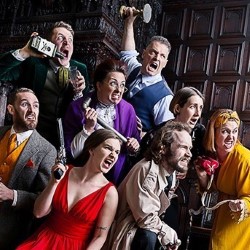
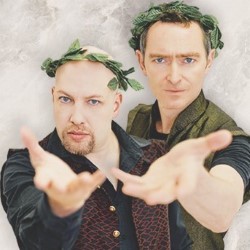
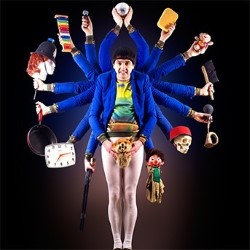
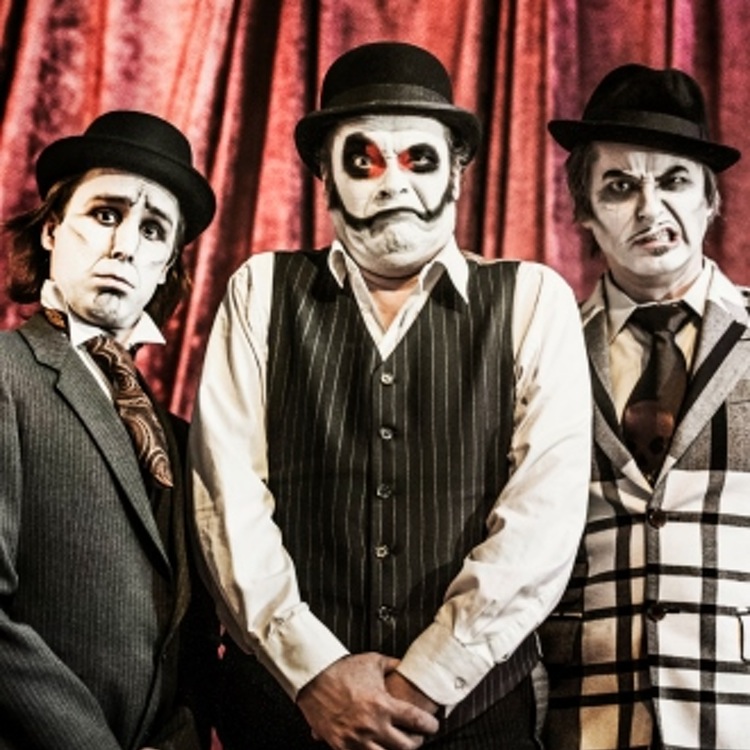
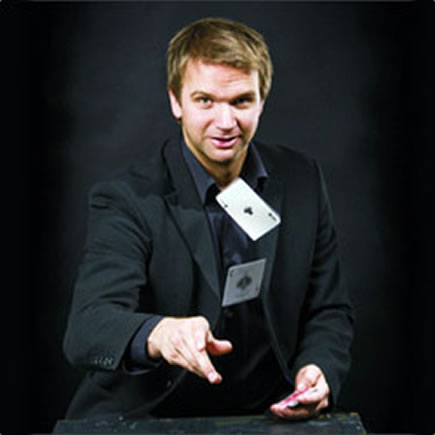
There’s not a free seat in the house at the Dundee Fringe for this performance by the Four Magicians. In a magic world full of Colin Clouds, Penn and Tellers and Dynamos, it is refreshing to see that some old-school charm still sells out a room.These confident tricksters do not just perform the classic “pick a card, any card” tricks you might expect. From haunted dolls to plunging a sword through the neck of a spectator (yes, that’s right), every illusion is carried out with professionalism, leaving jaws on the floor. For the younger audience members down at the front attending their first magic show, to the seasoned adults in the back – including one who had brought his keen grandson – this show truly has something for everyone. Although, the children asking about the punchline to the Prince Andrew joke may have to wait a few years.From start to finish, this show is an absolute delight. The Four Magicians are skilled, funny and charming. It has been a long time since I have felt such boyhood wonder.

Sweet @ Keiller Centre • 20 Sep 2025

Tristan Wolfe – Break:Out

I don't usually condone audience members interrupting a show. However, when his one-liner makes me laugh more than the act's material, you know there's a problem.The good thing about this show is that it’s clear effort and heart have gone into it.With all honesty, the show reminded me of a bad X Factor audition, except unironically. A naive singer steps up in front of a small panel to judge them. The panel knows it’s not great, but the singer continues until the inevitable gasp of laughter because it’s just a little too awkward.This show had all of the above – singing (yes, really), silences, awkward laughter – and here I am giving my decision at the end of it.The usual comment after a bad singing audition is, “You need to do something else with your time.” With the heart and effort that Tristan Wolfe clearly possesses, maybe it’s time for a career rethink.

Laughing Horse @ City Cafe • 13 Aug 2025 - 24 Aug 2025

Tell Me Where Home Is (I'm Starting to Forget)

As Michael DeBartolo glides on to the stage to Over the Rainbow in a Dorothy dress and red ruby trainers, the room lights up. It is a natural charisma that instantly puts a smile on everyone’s face. You might say he had us at “hello”.His coming-of-age story is spilled all over the stage as he recounts tale after tale. From a very unkosher incident with a Kevin Bacon VHS to making love over the phone with straight crushes, this show delves into the messy, explicit and camp personal journey of DeBartolo.After witnessing this powerhouse performance, the titular question has an easy answer for Michael DeBartolo: his home is on the stage. An emotional third act leads to an absolute corker of a finale that had several jaws on the floor. Let us hope this plays to bigger, fuller rooms because this show is an absolute triumph.

theSpace @ Symposium Hall • 11 Aug 2025 - 16 Aug 2025

Parker Callahan: Soda Pop

This show is deliciously dumb – in the smartest way possible.Parker Callahan arrives on stage in nothing but a pair of red, white and blue Speedos – his outfit for the entire show – and immediately calls the cops on the gays. What have we done? I honestly still do not know. What follows is a gloriously unfiltered hour of gay brain static. Callahan’s 365 party girl/homophobic Republican/multimedia presenter persona never lets up as he delivers, genuinely, one of the most chaotic hours you will see this year.There is no point in analysing the show too much, as it spoils the experience. However, if there is a queer performance spectrum, Soda Pop breaks it, sets it on fire and inhales a bottle of poppers through the glittery smoke.

Assembly George Square Studios • 30 Jul 2025 - 24 Aug 2025

James Barr: Sorry I Hurt Your Son (Said My Ex to My Mum)

‘Domestic abuse isn’t funny, but this show is’ is a wild tagline for any comedy show – but it feels fitting for James Barr’s Sorry I Hurt Your Son (Said My Ex to My Mum). Back for its second run at the Fringe, the show has been substantially reworked – from the material and timing to the lighting – although the core story remains the same.As soon as the audience steps into Buttercup at Underbelly, things feel different from last year’s show. From the upbeat entrance music to the remixed trigger warning at the start, it’s clear that Barr is changing up the vibe. He even goes so far as to bring out balloons, which he throws into the audience. As Barr states early in the hour: “If I’m laughing, I’m surviving.” This is not a show of tragedy, but of strength and joy.Barr now wears a headset microphone – giving either TED Talk or Britney, depending on who you ask. It may seem like a small change, but it speaks volumes. With no handheld mic to restrict him, Barr can move freely across the stage, using his whole body to tell the story. It’s a simple but smart shift that reflects not just a growth in performance style, but a deeper confidence in owning his narrative.Barr recalls some surprisingly tender moments with his ex: moving in together, introducing him to Barr’s mum (the formidable Colleen). That is, until one little dick changes everything. The stories that follow are distressing and uncomfortable, yet delivered with great care – never gratuitous, always honest.Later in the hour, a few of the more disturbing moments hit audience members right in the gut, and they audibly react. What began as a romantic recollection becomes something far more sinister. But Barr doesn’t flinch. He holds the space carefully, never letting discomfort become alienation. That’s the strength of this hour: we’re not just witnessing a story – we’re part of the healing process. Barr earns our trust and, with it, our full attention.What makes a five-star show isn’t just the strength of the hour, but the evolution behind it. James Barr hasn’t just refined his material – he’s reclaimed it. What was once raw is now razor-sharp: braver, funnier and more gloriously empowering. By the end, there’s a shift you can feel in the room – a quiet, defiant release that lingers long after the lights go down. This is more than catharsis. It’s a comeback.

Underbelly, George Square • 30 Jul 2025 - 24 Aug 2025

Tiff Stevenson: Post-Coital

Tiff Stevenson is officially the only comedian at the Fringe who has ever made me laugh at a bit about farting. It’s a subject that routinely (pardon the stand-up pun) bores me. And yet, I found myself doubled over at the Hive at Monkey Barrel, watching her tickle the audience’s funny bone again and again.One of the opening routines involves manifestation – a new age trend that isn’t quite what it seems. Stevenson turns it on its head as she speaks to one twenty-something woman at the back of the room. It’s not just funny – it’s eye-opening to the rest of us.The breadth of her material is striking. From finding a guardian angel through TikTok to her days as a ‘grid girl’, her jokes are both hilarious and thought-provoking. But it’s the moments when she speaks about dealing with her father’s dementia that reveal Stevenson’s deeper skill: she doesn’t just pluck jokes from everyday subjects. She skilfully weaves her way through the darkness, acting as our torch through the tunnel – finding jokes and catharsis in the shadows.Post-Coital finds Stevenson at the top of her game – the kind of show that proves why the comedy world rates her so highly, and why the rest of the world needs to catch up. Audiences might disagree about whether the show is “sexy yet”, but there’s no debate about whether it’s funny. With Tiff Stevenson, it always has been.

Monkey Barrel Comedy (The Hive) • 30 Jul 2025 - 24 Aug 2025

Britt Migs: Dolphin Mode

There’s an unfortunate problem with Britt Migs that we’ll get out of the way early: she’s a five-star performer in a three-star show.Dolphin Mode is a good debut hour. It opens with a video recording of Migs on the underground, practising some self-care while duplicate versions of her try to tear her down. They even ask silly questions, my favourite being, “What are eyeballs made of?” After this, Migs bounds on to the stage, admittedly in her ‘flop era’ following her divorce, but still brimming with energy. She’s more than happy being “a beacon of hope for sad married ladies,” but as a performer in front of a crowd, she’s engaging, charismatic, and electric.Lasting just over 35 minutes (the day I saw it), the show’s material is a bit hit-and-miss. When it hits, it’s really funny stuff, with great potential to go from strength to strength – and it does. When it doesn’t, it’s a bit thin and, unfortunately, propped up with “and I was like… and he was like… and I was like…” If more work went into the structure and pacing of the show, Britt Migs could have a real gem on her hands. It’s just a shame that we, as an audience, left Buttercup at Underbelly craving just a little bit more.

Underbelly, George Square • 30 Jul 2025 - 25 Aug 2025

Stuart McPherson: Crisps and a Lie Down

The Cab Vol caves are dark, dank and drippy. It’s good, therefore, that Stu McPherson immediately adds a bit of silliness to proceedings, something I definitely wasn’t expecting. Last year I wrote that McPhersons show was his most accomplished to date. This year, working with director John Aggasild on Crisps and a Lie Down, he takes a huge step up.Speaking about his “little family” that he’s created – himself, his girlfriend and their dog – it’s a chilled-out start, the kind of vibe I usually associate with McPherson. But it’s his physical impression of his dog excited to go for a walk where I first burst out laughing.McPherson and Aggasild work in perfect harmony and the direction really feels like an asset, drawing out sides of him I’ve never seen before. Even when he jokes about wanting to appeal more to the “thickos” in his audience (is he talking about the Americans that he frequently translates for? I’m saying nothing…) the craft on display is sharp.From sound effects to secret strokes, McPherson proves himself a comic wise beyond his years, delivering razor-sharp comedy with a deceptively gentle touch. Crisps and a Lie Down proves once and for all that Stu McPherson is the real deal – confident, creative and unmissable.

Monkey Barrel Comedy (Cabaret Voltaire) • 28 Jul 2025 - 24 Aug 2025

Snow White and the Seven Drag Queens

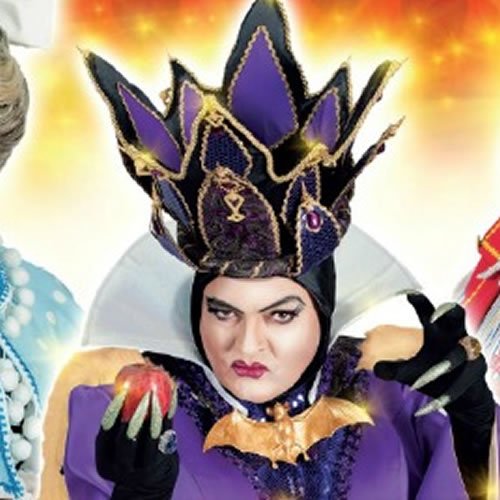
It’s adult pantomime season again – oh no it’s not! - and with it comes a selection of x-rated jokes, filthy humour and songs a-plenty. This year’s offering from The North East Adult Pantomime, the first adult panto I’ve ever attended, is Snow White and the Seven Drag Queens.The QMU in Glasgow is a strange venue choice (memories of my Freshers’ Week came flooding back). The stage isn’t that big and could barely hold the seven drag queen performers during their opening number – a parody of Ex-Wives from the musical Six. Even so, it’s a great start to the show that had us in stiches, hearing from drag queens with stage names such as Janice Dickinyourson, Dixie Swallows and Orphelia Balls.Deborah Taylor-Smith filled in for an unwell Scarlett Moffatt as The Wicked Queen, Snow White’s step-mother, with a brilliant performance. "How wicked is she?" I hear you ask. During an onstage conversation when Snow White asked another character why they disliked The Wicked Queen, an audience member shouted out, “Because she’s a cunt!” Ah, Glasgow, never change. But it’s Celebrity Big Brother Winner David Potts who is the stand out, delivering a fabulously camp, scene-stealing performance as The Wicked Queen’s henchman. Dressed all in black with a tan that would make Donald Trump envious, Potts commands the stage and struts around cracking his whip and screaming obscenities at other characters. It’s just hilarious. RuPaul’s Drag Race UK superstars Michael Marouli and Tomara Thomas are also highlights of the evening. Their chemistry onstage together is impeccable, especially during a scene baking a cake with a man from Amazon (cue every ‘big package’ joke here). It’s clear that they’re true professionals in every sense of the word. I didn’t quite know what to expect from Snow White and the Seven Drag Queens. The drag community as a whole has just lost a stalwart in the world of British drag – The Vivienne. Because of this, part of me expected this evening to be a more sombre affair than it was. But it was the complete opposite. It was escapism for a few hours. Drag queens came together to do what they do best – perform and entertain. A world without drag would be a less exciting and less joyful world. Hearing the reaction of other audience members on the way out, it seems happiness was radiating throughout the building.

22 Queen Margaret Union, University Gardens • 9 Jan 2025

The Manchester Revue

At the end of the show, the cast on stage said “If you’ve enjoyed the show, we’ve been The Manchester Revue. If you haven’t, we’ve been the Cambridge Footlights.” So, I guess, here come my thoughts on The Manchester Revue.The main thing with many sketch groups is that out of the six or seven cast members, there’s usually two, maybe three, standouts who elevate their sketches to the next level. With The Manchester Revue, they all shine. Remembering my favourite sketches after the show, each cast member starred in at least one of them. It’s rare to see such raw talent onstage at one time, but that’s what The Manchester Revue bring with their show.The other thing, despite potential standouts in the cast, is the all-important question: are the sketches funny? For the most part, yes. Admittedly, when it’s not at its funniest, it’s simply that it’s not as funny as some of the other sketches. It’s very apparent that this cast get what’s funny. There are a few sketches in particular where I felt there must have been a discussion of “This is funny, but what can we do to make it even funnier?” Two sketches in particular – a kleptomaniac competition and a stag do’s game of Never Have I Ever – have those beautiful levels of humour where it’s clear that the cast have really thought about what would have the biggest impact.I’m so happy for this cast. They have a bright future ahead of them. I can happily say that The Manchester Revue is the funniest sketch group I’ve seen at the Fringe for years.

Just the Tonic at The Mash House • 13 Aug 2024 - 25 Aug 2024

It's OK, I Still Think You're Great

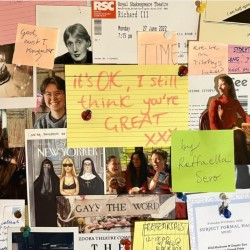
Two chairs, a table and a back wall filled with train tickets, polaroid selfies, drama posters and a cardboard cutout of Shakespeare – is this a re-creation of my university flat? The play hasn’t started and It’s OK, I Still Think You’re Great is already nailing it. My twenties melancholy and existential dread are back. Thanks guys…The plot of this three-hander is simple. Friend comes back to visit old friend at old flat. Friend meets new ‘perfect’ flatmate. Tension. Secrets. Feelings. I’m making it sound generic, but it’s not. The thing with this piece is it’s not just a story: it’s an experience. It’s that feeling you have in your twenties when you’re too old to be spoon-fed but too young to have full confidence in yourself, your abilities and your standing in the world. In one way or another, this comes through in each character, even if they pretend they’re absolutely fine. All three performances are outstanding. Just when I thought one of the talented actors onstage was the stand-out, another would creep up and stun us with a killer of a line delivery or heart-breaking confession. Flossie Adrian, Olivia Khattar and Dominika Wiatrowksa are absolute stars. Along with writer Raffaella Sero and director Lania Hamilton, they have crammed the experience of being in your twenties into a fifty-minute show. It’s astounding. Witty, incredibly well-written and emotional in parts, It’s OK, I Still Think You’re Great is something I wish I had seen in my twenties and is the show I’m recommending to people for the rest of the Fringe.

theSpace on the Mile • 12 Aug 2024 - 17 Aug 2024

Nina Rose Carlin: Seeking Representation

As a smiling Nina Rose Carlin appears on stage with a suitcase, she asks for a one-way ticket to Tinseltown. If only it was that easy to make all a performer’s dreams come true. She’s about to tell us all about her true Hollywood story, and she’s seeking representation. The show consists of anecdotes, impressions, songs, audience participation and some light sketch comedy – a lot packed into a fifty-minute show. On the whole, Carlin is a strong performer and her passion for showbusiness shines through. However, the show tried to be a little too much of everything and not enough of one or two things, which would have made the whole thing a lot stronger. It’s understandable that for Carlin’s Edinburgh debut, she wants to show off as many of her talents as possible. It’s just a shame that it came across more cluttered than anything. Despite this, I enjoyed the show. Carlin shows a lot of promise (the audience seemed to especially enjoy the impression of her agent Tracy, seemingly taking inspiration from Joey’s agent Estelle in the TV show Friends). Nina Rose Carlin will have a true Hollywood story in the future, just after a little restructuring.

theSpace @ Surgeons' Hall • 12 Aug 2024 - 24 Aug 2024

Married At Fringe Sight

For the first time this Fringe, I was in the front row for a comedy show. However insane this may make me sound, I love being in the front row for a comedy show, but as a reviewer, I never want to put anybody off if I’m writing notes. Luckily, Married At Fringe Sight is a show so funny and joyful that I didn’t need to take any notes. Instead, I just got carried away in the magic of it all.After scanning a QR code and filling in some answers to some dating questions, we meet our hosts, and co-founders of The Queer Comedy Club in London, David Ian and Jeremy Topp – both fabulously funny. It’s their task to pair up three sets of couples in the audiences, depending on the answers they gave to the questions they answered (some funny and some completely unhinged). The whole show is an hour of sharp crowd work and many of the audience members picked on were able to volley really well with David and Jeremy. When hosts are good at what they do, an audience feels comfortable and the level of comfort in the room is a testament to the talent of both comics onstage.Since every audience is different, that means every show is different. All I can say is if MAFS is as good every night as when I saw it, David Ian and Jeremy Topp have a real hit on their hands.

theSpace @ Surgeons' Hall • 3 Aug 2024 - 24 Aug 2024

Chris Tavener is Faking Cool

It’s a lot to impress me with comedy songs. Growing up, Tom Lehrer set the bar for me very high and I’ve seen my fair share of duds over the years at the Fringe. I’m happy to report that not only is Chris Tavener is Faking Cool a great show, but Chris Tavener himself is spectacular. Entering with a guitar, sunglasses and something very James Dean-coded about him, Tavener is absolutely at home on that stage (even if his internal monologue says otherwise). From here, Tavener treats us to songs that are not only funny, but are genuinely good songs. I found myself humming one or two that evening after the show. From millennial travellers to his thoughts regarding iPhones and Samsungs, there's something in this show that will make everybody laugh. Tavener dealt with a few rowdy interruptions on his final night at The Space with huge professionalism, seemingly something that may stump even some stand-up comedians. He may be faking cool, but Chris Tavener has a huge future in this business.

theSpace @ Surgeons' Hall • 2 Aug 2024 - 17 Aug 2024

Raul Kohli: Raul Britannia

Before I even enter the venue, there’s a man with a huge pink microphone advertising Raul Kohli’s show, the noise blasting up and down Blair Street. It’s Kohli himself, and he is pumped up. I love to see it. Even if I wasn’t reviewing, I would have definitely taken a chance on this show for the sheer confidence.It’s quite a quiet room, but there’s a buzz about it, which is really great to see. Kohli bounds onto the stage after entrance tunes by Punjabi MC and Spice Girls (I thought it was an odd choice to put these tunes together, but by the end of the show, it made so much sense). He’s in a Newcastle United top, radiating passion and excitement.Kohli’s show is smart and sensitive and includes some devasting takedowns on racism in the UK and some brilliantly up-to-date takes on current issues in England. However, at it’s core, the show is about what it means to call yourself British – a tough sell for a Scottish audience. But not to worry, his explanations on pegging, comparisons between Rishi Sunak and Shamima Begum and his take on ‘Nigel Farage’s wet dream’ keep the audience hooked for the full hour.But it’s the final ten minutes that really cement the show as something special. An intense, vulnerable and emotional monologue, that had the lady in front of me in tears, reminds us that, although we’ve listened to an hour of comedy, the serious subjects that Kohli has spoken about are no laughing matter.I came out of the show feeling happier, prouder and, dare I say, a little more British? That’s an achievement right there.

Just the Tonic at Cabaret Voltaire • 1 Aug 2024 - 25 Aug 2024

Shitty Mozart

It’s been a couple of days and I still don’t really know what to make of this show. A few words I wrote down in my notes were ‘bizarre’, ‘unhinged’ and ‘what is this?’. I can confirm for those in doubt: this show is utterly batshit crazy. The shows consist of songs, vulgar cartoons and a lot of bees. Shitty Mozart himself, Aaron Nemo, is very talented. His songs are funny and the lyrics are witty and clever. The cartoons aren’t completely up my alley, humour-wise. They’re very early YouTube-coded and something a teenager would probably enjoy. The structure is all over the place and, in fact, towards the end of the show, he admits that he missed out an entire few minutes that he needed to include for the final monologue. The audience, however, doesn’t care and goes along with this crazy ride. I’ll admit, this show is difficult to review because as a critic, I do see faults, but as an audience member, the absurdity that the show brings is infectious. At the end of the day, go for the silliness, but don’t expect a masterpiece.

Gilded Balloon Patter House • 31 Jul 2024 - 26 Aug 2024

Will Owen: Like, Nobody's Watching

I’ll start this review with what I really want to say to the gays out there: if you see one stand-up comedy show this Fringe, see this one. Will Owen’s Like, Nobody’s Watching is like a warm hug to the audience’s collective inner child, especially any audience member who is ‘confident and happy’, myself included. As he bounds on stage (to the thumping sound of Rush by Troye Sivan) Owen takes control of The Crate at Assembly, holding our attention for the fifty-five-minute wild ride and not letting go. The show is absolutely packed with laughs. From a family member’s four-minute Rihanna tribute to a cringe-inducing world record, there are several moments in the show where it’s clear that Will Owen is most certainly the star he always believed he was as a child. His banter with the audience was just perfect – from asking a group of girls which TV show judge they were (the only answer is Sharon Osbourne, stunningly absent from the answers given) to his dealings with a particularly obstinate police officer in the front row – a highlight for the rest of the audience. When said policeman tried to derail the show at points, Owen did a masterful job at keeping the show on track, making us laugh in the process, a scary task for any comedian. Not only is Owen’s material spot on for any Loose Women-watching, reality television-loving, Brat-listening gay man, the deep love and affection that Owen shares for his queer identity absolutely shines through, especially in his occasional, mostly one-way, chats with his tech. From a selfish perspective, the message I took from this show is that if Will Owen and I knew each other when we were kids, we would instantly be best friends. As a comedy reviewer, I see a performer who oozes talent, much like the gold confetti on his posters plastered around the city.It certainly wouldn’t surprise me if Will Owen is one of the names on everyone’s lips come the end of August.

Assembly George Square • 31 Jul 2024 - 25 Aug 2024

Ian Lockwood: The Farewell Tour

Okay, here we go. If Jenna Maroney from 30 Rock and Jack McFarland from Will and Grace had a baby, it would be Ian Lockwood - and I mean that in the best possible way. Only these two characters would perform a one-person show with the idea that they would kill themselves at the end. Yes, I’m serious…The show itself starts with some context: Lockwood being interviewed by the one and only Barbara Walters about his career, feuds and lifestyle. What more does he have to achieve? Not much, it appears, as this is the final show of his farewell tour. The Wee Coo is quiet on the night I see the show, but I forget about the thousands of ‘Ian Freaks’ in the nosebleed section above us, so the vibe is electric. As the show gets going, we’re treated to Lockwood’s first song, Nasty. It’s a self-explanatory bop about his bad side, and we’re treated to some delightful runs, riffs and several dance breaks with duplicates on the multimedia screens behind him. But behind the glitz, glamour and showmanship are feelings of real heartbreak. Why does Lockwood really feel the need to end everything? Who are his real friends? It’s a show that not only shows off Lockwood’s chops as a performer, but also his humanity. Ian Lockwood is a total star. The songs are hilariously funny (my personal favourite being Not Like Other Girls), and he deserves to be playing to a much larger room – even though, in a way, he already is.

Underbelly, George Square • 31 Jul 2024 - 26 Aug 2024

Lou Taylor: Jeans and a nice top.

I always take into account what music a comedian picks for an audience walking into their show. I’ve been impressed with certain choices, as mentioned in other reviews, but Lou Taylor picking Mis-Teeq and DJ Pied Piper was inspired – and there was more incredible nostalgic content to come.The show begins with how every 90s Saturday morning should – with Live and Kicking on the television. Taylor lets us know that the tiny girl in the still shot is her. It was the best day of her life. She confides in the audience that as a child, she really wanted to be an adult and as an adult, she’s constantly thinking of the past. From text etiquette and adverts from her childhood to more vulgar topics like first times to a certain voucher for her boyfriend, it seems like Taylor really does have everything covered. Nineties kids will be in absolute heaven (one reference in particular near the beginning of the set unlocked a whole bunch of memories for me). The routines throughout the set were well-constructed and perfectly delivered.There are also some hilarious pre-recorded videos throughout the set which had the audience absolutely howling throughout. I won’t spoil any of the content as they’re brilliantly funny (some just completely absurd) but they’re a strange, yet wonderful, palate cleanser before some more sharp stand-up.Lou Taylor’s vibe is that of the funniest friend at a party, telling the funniest stories, and Jeans and a nice top is one of these shows in the Fringe that you’d go and see just to feel sheer joy and happiness. I can’t recommend it enough.

Pleasance Courtyard • 31 Jul 2024 - 25 Aug 2024

Alice Snedden: Highly Credible

After five years away from stand-up at the Fringe, Highly Credible is a triumphant return for the hilarious Alice Snedden.After a quick catch-up with her audience (including an update about a mole removal), we get into the main body of the show, which all started as a result of some ‘big city living’ – her car was stolen. This is the incident when she realised she was turning into her dad – seemingly losing a vehicle is a Snedden family tradition. It’s a fabulous story that’s weaved throughout the set, culminating in a bona fide Shyamalan-style twist that left the audience aghast. Not only this, I guarantee you this show has the strongest cummerbund material you will hear this Fringe.I was pleasantly reminded of how fantastic her comic timing was. The set-up to so many of her jokes was as funny as the punchlines due to her incredible delivery (a deadpan comment about her mother's culinary skills had me absolutely howling). The tiny add-ons and extraneous information included just made the jokes so much better. She’s an absolute genius at what she does, and it’s such a pleasure to have her back in the city.

Pleasance Courtyard • 31 Jul 2024 - 25 Aug 2024

Showtime!

Em Hoggett brings her twist on the one-woman cabaret show to C Venue. She’s certainly got a story to tell and from the very beginning, she, or should I say The Master, has us hooked.It’s a testament to Hoggett’s talent as a performer that she’s able to keep up an insane level of energy for this wild ride of a show. It’s not just her acting chops that are put through the ringer. Her musical talent shines through. Classically trained on piano, Hoggett keeps a keyboard in the corner, seemingly becoming a comfort to her during this dark narrative. The keyboard appearances are always a highlight (I’ve never seen someone play the piano behind their back before, quite a mean feat.)Hoggett’s story is a personal and intense one. The final ten or so minutes are particularly harrowing, evidence of Hoggett’s ability to keep an audience hooked. It’s very powerful. I’m not here to critique her own story – that’s not for me to do. The hour itself is a great start for Hoggett, who has much greater plans for the show going forward. On the whole, Showtime! does suffer from some structuring issues, however, the show demonstrates why Em Hoggett is one of the freshest faces on the cabaret scene.

C ARTS | C venues | C aurora • 31 Jul 2024 - 25 Aug 2024

Stephen Mullan: Rascal

When did Stephen Mullan become a rascal? I thought it was just as we walked into The Box at Assembly. However, as he tells us, it all began in his childhood, as he tried to find out a little more about life. There was always something quite impish about Mullan. His subtle smile and several stories about ‘getting the hornies’, his facial expressions, the wild impressions of his Argentinian mother and Irish father. But it goes deeper than that. When he’s not speaking about lighter topics such as the way positivity is presented in different cultures, his backstory and relationship with his father are ones of real heart-break. But they’re experiences that this fabulously talented performer has overcome and is stronger, and more playful, for.Rascal is a fabulous hour filled with laughs, gags and enthusiasm. It’s one of those shows we need at the Fringe – it’s guaranteed to make us laugh.

Assembly George Square • 31 Jul 2024 - 25 Aug 2024

Gearóid Farrelly: Gearóid Rage

When an audience walks into a venue with Padam Padam by Kylie and Espresso by Sabrina Carpenter playing, you know It will be a great show. And that’s exactly what Gearóid Farrelly’s Gearóid Rage was.Striding out in a blue suit with infectious energy, Farrelly tells us that this show is about everything that annoys him. He’s sick of being the cheerful gay man that people want to talk to. He’s upfront with us, letting us know that he thinks kids are…annoying, shall we say, as are the people who have kids (as he explains in a wonderfully disgusting few minutes on the perils of ice cream).But it’s not just his material that’s brilliant. His charm and charisma are off the scale fantastic. Farrelly fills up The Crate at Assembly with a certain magic that deserves a much bigger room – the wild laughter from the audience confirms this. We’re treated to seeing a master of his craft at work, sailing through material and audience interaction like it’s the easiest thing in the world.A performer like Gearóid Farrelly reminds me of a swan: gliding smoothly on the surface, while the feet paddle like crazy underneath the water. It takes a lot of skill to appear so excited on stage, while subtly being in control of the show and the audience the whole time. He’s an incredible performer.

Assembly George Square • 31 Jul 2024 - 25 Aug 2024

Spring Day: Exvangelical

As a smiling Spring Day walks onto the stage, the first words out of her mouth at her show Exvangelical are ‘Hello risk-takers!’ as she appreciates that hers is one of the first Fringe shows this audience has seen.When she was thirteen years old, Day joined a religious cult and this show is the story of her life during her time there and when she left thirteen years later, something she admits that she’s never spoken about on stage before. She begins by giving us some background on her upbringing, namely her father (more of a golden retriever due to his ADHD) and her internet troll mother. There are some great gags related to her Cystic Fibrosis, including one about her destroyed dreams of becoming a WWE wrestler, and it’s clear that this is where Day is at her strongest – when she’s making us laugh at the darker things in life.The show has some genuinely heart-breaking moments (I won’t spoil anything in this review) but as the show reached its final act, there were gasps around the room as Day bravely let us into some deeply personal moments from her life. The structure of the set needs to be worked on a little, but this is something that will be fixed throughout the run, I’m sure. Her strength as an engaging storyteller is something to be admired, especially when appearing so vulnerable on stage and she deserves much credit for that. Spring Day has created a show that, overall, reminds the audience that the most important person to love in life is yourself.

Pleasance Courtyard • 31 Jul 2024 - 25 Aug 2024

James Barr: Sorry I Hurt Your Son (Said My Ex to My Mum)

As we enter Buttercup at Underbelly there’s a range of musical choices – Ava Max, Rihanna and Kelis to name a few, all intercut with each other. Each song is a different genre, filled with different emotions – all becoming one. Fitting, then, for James Barr’s wonderful show Sorry I Hurt Your Son (Said My Ex to My Mum).After some great crowd work, Barr begins with a very strange question, one that leads us to find out more about not only his, but his mum’s, body count, a hilarious biblically-themed nickname and, most importantly of all, his most recent relationship. As one can guess from the title of the show, the relationship wasn’t a happy one, and this show is a powerful and brave exploration of the abuse that Barr suffered under a Gen-Z bawbag (we are in Edinburgh, after all).This is a courageous story to tell on stage to a group of strangers. Barr himself admits that maybe he’s not ready to tell it. But his structure, timing and delivery of the material are incredible. In the darkest moments of the show, you could hear a pin drop and I could feel my heartbeat in my ears. But as humans, we heal. This show is definitely part of that process for James Barr (there’s a fantastic five minutes on one of the most unusual places he found his healing after the break-up) He doesn’t have all the answers to the questions yet, but what he does have is a moving and eloquent show which won’t just make people laugh, but will finally answer the question ‘What is Piers Morgan like when he’s not on television?’

Underbelly, Bristo Square • 31 Jul 2024 - 25 Aug 2024

Tiff Stevenson: Husband Material

You can always rely on three things from the Edinburgh Fringe: a huge, purple, upside-down cow, a ton of flyers everywhere and Tiff Stevenson giving us a hilarious show.This year’s show is Husband Material, an hour about the ups and downs of Stevenson’s married life in her 40s (even though we as an audience have multiple times to dispute that she actually is in her 40s, nobody seems to take the opportunity!) There’s also some sharp political satire that’s incredibly relevant to the current times we live in.Whether she’s speaking about the size of her handbag or just commenting on some truly basic bitch names of older men in the audience, Stevenson has us hooked. As a comedian embarking on their eleventh – yes, eleventh – full Fringe show, Stevenson knows how to keep an audience engaged. She knows how to structure jokes properly and her wide grin at the end of certain punchlines is absolutely infectious. Her strong performance is enhanced by the knowledge that she is a performer absolutely on top of her game, someone at home on the stage and who you can rely on for gag after gag.We’re in a venue which Stevenson admits is a little odd for a comedy gig (the sticky floors make it more than likely that our bags will contract some kind of STD), but I would have remained stuck to my seat (literally) for longer than the hour. Husband Material is a brilliant, life affirming show from one of the most underrated and funniest comedians in the UK today.

Monkey Barrel Comedy (The Hive) • 31 Jul 2024 - 25 Aug 2024

Stuart McPherson: HORSE

As Stuart McPherson sailed through his material on being a Pepe’s Piri Piri conspiracy theorist, out came one of the strangest heckles I’ve ever heard: “I spilt mayo last night.” How the heck McPherson managed to have the room erupting in laughter moments later is still something I’m impressed by.As one-third of the Some Laugh podcast and a part of the Scot Squad team, I’m surprised at the smaller audience for the final preview night at Monkey Barrel 2 – an audience who needed a little while to wake up. McPherson’s in a very different place today than he was last year with his show Love That For Me. Currently in the honeymoon phase of a new relationship and potentially worth one hundred million pounds – yes, really, even if his bank manager can’t believe it – the show focuses on where he is now and who he wants to become, even if he’s not totally sure of that right now. With his girlfriend’s dog Sophie proudly cheering him on in the audience, the show is an absolute joy to watch, as McPherson describes the complexities of modern living with a charm and savviness that is as engaging as it is funny.Whether he’s telling us about his girlfriend teaching him how to brush his teeth properly or his nights cosplaying as a deaf person, what was most enjoyable as a reviewer was knowing that the room was in a safe pair of hands. HORSE is Stuart McPherson’s most accomplished show yet. He’s at home on that stage, oozing passion throughout.And I love that for him.

Monkey Barrel Comedy • 29 Jul 2024 - 25 Aug 2024

Do I Want to F**k My Dad

Rebecka Vilhonen has crafted a well-structured show surrounding her sexscapades following her breakup with her boyfriend. Do I Want To Fu*k My Dad consists of a series of amusing anecdotes from her time living her ‘slut season’, focussing on her particular penchant for daddiesVilhonen is a stand-up comedian from Finland, who now lives in Hungary. It is clear she has honed her craft. She is exceptionally likable and her delivery makes it feel as if you are having a conversation with a good friend down at your local. She is able create a rapport with the audience and the show feels less like a scripted monlogue but a little chit-chat with your hilarious chum. Opting to perform this show wearing no more than a swimsuit and an anorak she has a strong presence and she held the attention of the sold-out room throughout. Not every joke landed or was met with guffaws of laughter but it was a delight to be in her presence for a short time as we heard about meeting with the man dressed in ‘all-white’ and others. It often, rightfully, felt like this was a form of therapy for Vilhonen, giving her time to air her concerns and views on therapy and contraception whilst also delving into her fetishes and wants. The small theatre space was packed full, with a predomintantly Czech audience. Vilhonen admitted that she had a hard time marketing this show due to the strongly worded title and poster, which showed her bare ass, with various online search engines hiding this entry to the Prague Fringe. It is true I also did not see many posters for this show whilst out and about so it was good to see this did not deter visitors. It took place in a basement near the King Charles Bridge and although there were a couple of awkward moments where the music did not play as expected, this was more than made-up for by the unexpected, yet joyful, way she has chosen to end. It's a treat to find someone who is willing to make a fool of themselves in such a jubilant fashion.Female comedians have a hard time breaking into the business but I hope Vilhonen is able to as she is a gifted storyteller. I left the show feeling far more knowledgeable about donut fillings then I had ever anticipated and if anyone out there has daddy issues or are wondering what having daddy issues actually entails then this is the show for you.

Charles Bridge Hostel & Apartments • 30 May 2024 - 1 Jun 2024

Happily Ever Poofter

Richard Watkins has been touring his show Happily Ever Poofter for over six years now and the fact it still delivers is a testament of how good the writing is. Even if the Barbie movie may have come along and used some similar story elements, this show still stands up as a heartwarming and hilarious tale of a prince stuck as the only gay in his kingdom. The show is written and performed by one man tour-de-force Watkins.This was my first time seeing Watkins’ tribute to all things ‘Disney’ alongside the gay scene we know and love in our own modern world - and it was a delight to be one of Prince Henry’s’ citizens at his first perfomance during the Prague Frionge of 2024. Watkins - who plays Prince Henry, alongside a few other characters in his tale, was able to hold the audience in the palm of his hand throughout. Despite noisy distractions from the room next door his performance remained thoroughly entertaining and charismatic, talking to the audience as if we are old friends. The show features many tongue-in-cheek pastiches of well-known Disney favorites and they were all performed well, often invoking much laughter from the crowd, particularly as Someday My Prince Will Come took on a whole new meaning.During Prince Henry’s quest to find his One True Love we also meet the camp, magical, Fairy Godfather (Watkins again) who whisks our hero away to the real world to find out what being gay can be like. There was also a dark turn in the middle of the tale where one of the men he meets, Mr Sleepy, (Watkins wearing a harness and baseball cap) goes down a rather unfortunate path. I am unsure whether this tone-shift was needed as it was never referenced again and stuck out as somewhat baffling during a show where frivolity and fun were the distinguishing features of every other scene. There was also a boyfriend played by a willing, consenting, audience member. At the show I attended it was a citizen named Tom was called up to the hot seat, where he was also able to plug his own Prague Fringe show whilst being romanced and sung to. Watkins was able to bounce off all the audience members well throughout the show - going wherever the interaction took him with witty remarks and banter.The set was rather bare, but the costumes were the perfect fit for the show. Being both posturing and easily interchangeable. His boots are of particular note, not to mention his finalé costume. His performance incorporating two hand fans was also remarkably well-executed. The sound and lighting worked perfectly in the small space and there were many lighting cues for the operator to do, so I was very pleased that even for this first show they all seemed to go smoothly.Overall this is a highly fun show, with a strong message that is still relevant today. If you are looking for a good evening’s entertainment you will not go wrong with this delightfully entertaining comedy.

Malostranska Beseda Galerie • 29 May 2024 - 1 Jun 2024

Colin Cloud: After Dark

Let’s just get this out the way: Colin Cloud’s After Dark is the most powerful, impressive and poignant magic and mentalist show I’ve ever seen.Now for the review (with no major spoilers)…As I line up outside the McEwan Hall, the excitement is palpable. The excited chat from the group behind me is wild. The potential of being brought on stage, having embarrassing secrets revealed or potentially being hypnotised seems too much for them. As we enter, we’re given paper fortune tellers and the opportunity to write a secret to put in a locked box on the stage. So far, so nerve-wracking. The charismatic Colin Cloud strides on stage, his first Edinburgh show in four years, and immediately hangs a prediction envelope high above the audience. The show continues with a wonderfully impressive IMDB-based celebrity routine which gets the whole audience involved and an eerily accurate reverse-hypnosis routine with a pocket-watch and random – random! – numbers on a calculator. One of Cloud's methods of asking for volunteers was getting a sense of names through letters on the fortune teller. About 45 minutes into After Dark, I heard three words booming over the microphone:‘Where’s James Macfarlane?’ Yes, I, along with three other people, was chosen to go on stage to help with a razor sharp routine (my 12-year-old self was gleefully excited, whilst my very present 32-year-old self was panicking slightly). Not only did I help with the routine, but Cloud also revealed my cat-related secret. Still no clue how this happened – the box of secrets was locked! And in full view of the audience the entire time!I don’t think there are enough adjectives and superlatives I can use to describe the power and impact that the final 15 minutes of the show had on me and several other members of the audience. Cloud had promised that he would be revealing ‘his biggest secret yet’ (which I won’t divulge here. I don’t reveal other people’s secrets – who am I? Colin Cloud?) This section is structured to perfection and we as an audience were absolutely hooked. That’s all I can really say without giving anything away.After Dark is a triumph of the highest order. For the next few nights, Colin Cloud will be the hottest ticket in town. His passion, honesty, vulnerability, showmanship and humour are on full display during this jaw-droppingly clever hour. Oh my goodness, go and see this show - it's a five-star masterpiece.

Underbelly, Bristo Square • 17 Aug 2023 - 21 Aug 2023

David Ian: (Just a) Perfect Gay

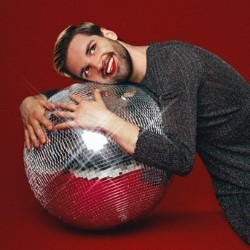
In his debut hour, David Ian attempts a huge feat: to answer the question that many gay men think about their entire lives. That question: what is a “perfect gay” and, more importantly, is he one himself? The answer? Well, that would be telling…David Ian struts on stage with a huge smile and a beauty pageant sash (there’s a matching crown as well, but it would probably mess up his flowing Jennifer Aniston hair). First up is a science lesson – what qualities make up a perfect gay? Many things it turns out! The nodding heads of the gay men in the audience make me think we have a few experts in. After setting the hilarious foundations for the show, Ian gets into the nitty gritty. His gay origin story, which includes a couple of straight flatmates, the Wimpy restaurant chain and Spice Girls wallpaper, is such a joy to listen to. My favourite thing about Ian’s material is how direct it is in discussing queer life and culture. Whether Ian is talking about the god-awful necessity of Drag Race or a manic seven-night-stay in Las Vegas, nothing is watered down or sanitised. The show is gloriously filthy - enough to make the straights feel uncomfortable but the gays feel seen. This is most definitely not Heartstopper, nor should it be. What really touches me about this show is the overall message. In today’s society, it seems queer men especially hold themselves to a standard that is unattainable – being a “perfect gay”. This show dispels those myths and makes us laugh along the way. This is a show I wish I had seen when I was a gay teenager. As a 32-year-old, it gives me hope that younger queer people can come to this show and, afterwards, know that everything is going to be okay because David Ian is in their corner. I really think this is a special show. The laughs, fears and tears packed into this hour make it one of the best LGBT shows to see this Fringe.

Just The Tonic at the Caves • 3 Aug 2023 - 27 Aug 2023

Wildcat's Last Waltz

If you had told me that halfway through Wildcat’s Last Waltz, I’d be witnessing a Northern grandmother and three audience members performing wild dance moves combined with yoga and aerobics over pounding techno…well, it’s the Edinburgh Fringe, I probably would have believed you to be honest.The Front Room at Assembly has been turned into just that – the Wildcat of Sheffield’s front room, equipped with table, two chairs and tea and coffee making facilities. We’re also welcomed with fabulous live singers performing classics such as Summertime and Dream a Little Dream of Me. The Wildcat (the comedy creation of the fantastic Joshua Welch) sits at the table partaking in her least favourite chore: dusting! After some deserved ranting, the house lights come up and we're invited to come up and get some tea and biscuits, whilst being treated to another wonderful musical interlude. This gives the audience the ability to interact with our new favourite grandmother and really breaks down the barrier between performer and audience. It’s a simple, yet effective strategy to get the audience involved with something familiar. This doesn’t seem like a show anymore, it’s just a really nice gathering of pals, old and new.From here, the Wildcat recants hilarious stories of her past, including how she met her husband Geoffrey and mortal enemy Geoffrey’s mother. There’s relatable chat too, from the Royals and Princess Diana to her television viewing habits, especially Corrie, and a hilariously unfortunate accident she once had in Sainsbury’s. Ultimately, underneath all of the hilarity, is a show about love and loneliness. This is shown through some terrifically emotional monologues. These aren’t funny stories, they’re almost cries for help. They’re moving and very touching. It makes us realise that something small like the audience coming up to get tea really meant a lot to the Wildcat.The biggest compliment I can give Joshua Welch about his show is that Edinburgh will completely fall in love with the Wildcat of Sheffield. I couldn’t decide whether she is the perfect talk show guest or the perfect talk show host. At the end of the day, she’s both. I found myself engrossed in her stories and impressed by the way she owned her Front Room. It was an absolute joy to sit through.

Assembly Rooms • 3 Aug 2023 - 26 Aug 2023

Amelia Bayler: I Work in Customer Service but I’m Actually a Pop Star

The Blundabus is absolutely packed for Amelia Bayler’s I Work in Customer Service but I’m Actually a Pop Star. She greets us to the sound of Everything She Wants by Wham! Retrospectively, it should have been any song by Madness because this show was fundamentally unhinged and I loved every second of it.I’m genuinely finding it difficult to describe this show - in a good way! By weaving her signature comedy jingles with consistently funny, sometimes heart-breaking, stand-up, Bayler hasn’t just created a show, but a full experience for her Blundabus audience. It’s an hour that has to be experienced to be fully appreciated.From a re-enactment of a ‘fabulous’ job disciplinary to a brilliant working from home song, with full Britney headset included, it’s a strong start to her show. We as an audience are completely drawn in and Bayler has us in the palm of her hand. This trust that’s established early on means that the crowd are fully on board for absolute bangers such as Tupperware, Patisserie Valerie and, my personal favourite, Wimpyyyyyyyyyy (the number of ‘y’s may vary).There are touching moments in the show too. There’s a point where Bayler fears that she has lost her voice as a performer and as a stand-up. Who is the real Amelia Bayler? Can she be a serious performer? It’s her performance of Good Morning from Singin’ In The Rain that proves what a talented singer she actually is. Behind the fabulously nonsensical lyrics is a performer with a brilliant voice.Consistently charming, clever and most importantly funny, Amelia Bayler is a chaotic walking encyclopaedia of pop culture. If I had to recommend a show to someone who wanted the full Edinburgh Fringe experience, it would be I Work in Customer Service but I’m Actually a Pop Star. This show should be on everyone’s ‘must-see’ list – Amelia’s an absolute star.

BlundaGardens: BlundaBus & Magical SpiegelYurt • 3 Aug 2023 - 12 Aug 2023

An Asian Queer Story: Coming Out to Dead People

With such an emotionally heavy title as An Asian Queer Story: Coming Out to Dead People, I was a little worried what to expect from this comedy show. However, as Ricky Sim walks onstage, there’s a sparkle in his eyes – a sparkle that never dimmed and was one of the shining lights throughout the hour.The main narrative of the shows concerns Sim’s sexuality and the devastatingly hard decision of whether or not to come out to his mum, who has terminal cancer, before she passes away. As I say, it’s heavy stuff. Luckily there are some good laughs throughout. Sim was strongest when he spoke about his life as a queer man. It was relatable and well performed. Some of the other routines felt a little underdeveloped. A potentially brilliant routine about some Urban Dictionary queer terminology wasn’t explored as much as I had hoped. I feel that in the first half of the show, there could have been more of a connection made between Sim and the audience. I felt like many in the crowd didn’t quite find that sweet spot of feeling comfortable enough to know what they could and couldn’t laugh at. As a result, some of the material didn’t feel like it was hitting as it should have been.Where Sim shines is his powerful storytelling ability. The final 20 minutes of the show are incredible. As he speaks about his relationship with mum and her final moments with her, it's clear that so much preparation and passion has gone into this final routine. We as an audience hung on to his every word. Looking round, several tears were being shed from multiple audience members. It was such a powerful few minutes. It was this level of audience connection that I had wished for Sim’s first half.For me, this show was one of two halves. Although I’m incredibly grateful to Ricky Sim that I’ll never think of binary code or the music of Sean Paul in the same way again, I know other material could, and should, have been stronger. In terms of his scripting and weaving in stories of his wonderfully brave mum into his set, it was magical to listen to.

Just the Tonic at The Mash House • 3 Aug 2023 - 27 Aug 2023

Phil Ellis's Excellent Comedy Show

Phil Ellis. Where do I even start with Phil Ellis? Let’s start where he himself starts the show – with a binbag over his head, in a cat costume, with painted on whiskers and singing Jellicle Songs for Jellicle Cats. Do I have your attention yet?Phil Ellis’ Excellent Comedy Show is Ellis’ tenth show at Edinburgh and there’s no doubt that he has earned his sold-out crowd at The Hive at Monkey Barrel. As a performer, Ellis is chaotic and furiously frenzied whilst also giving off very safe ‘weekend dad vibes’. Whether he’s speaking about the last good wink he had or the adventures of his scally grandad, Ellis consistently makes us laugh. The hour is interspersed with songs, performed by Ellis and an impressive live band. Hits such as Starman and Wonderwall are lovingly performed in true Phil Ellis style. Others such as Downtown are hilariously screamed in audience members’ faces (I was lucky enough to be serenaded and am currently laughing writing this as I remember it.) The structure is seemingly non-existent compared to your average comedy show which is what makes this hour so unique. The energy that Ellis creates in the room is so palpably unpredictable, it’s incredible to think that he’s actually in control the entire time. He has the entire audience in the palm of his hand – as if we’re just watching our funniest friend tell the funniest stories… dressed as a cat.From Tik Tok sketches to an incredible improv rap, this show has it all. With this show, I think Phil Ellis may be the first comedian to have completed ‘comedy’ at the Edinburgh Fringe. It’s a surreal and unforgettable hour which firmly cements Phil Ellis as one of the finest and funniest comedians in the UK today.

Monkey Barrel Comedy (The Hive) • 3 Aug 2023 - 27 Aug 2023

Adults Only Magic Show

The vibe is wild as I sit down for Adults Only Magic Show. I’m definitely the most sober one in the crowd. On the stage are magical props and a heavy box hanging from the ceiling. This would definitely be an interesting night. Our MC and audience hype man for the evening, Magnus Danger Magnus, struts on stage. He’s professional, witty and charming in every way. After some great crowd work and some fun with Shaurna the sign language interpreter (yes, this magic show was a signed performance), we meet our magicians – Sam and Justin – giving their 206th performance of this show.It seems that the show would have been easier to create and perform if our magicians built the show around their audience. It was clear that the less-than-sober crowd, especially the two women sitting next to me, were very easily astounded. But this isn’t the case because the magic is genuinely brilliant. There’s a Penn and Teller-style phone trick, an impressive, but x-rated, quick change routine and a red-hot word revelation which leaves everyone with their jaws on the floor. The chemistry between our three performers is also really indicative of the passion they all have for this art form. In a surprisingly moving video clip, Sam gives some background of how he and Justin began working together and how they were forced to build from the ground up. It really gives this group some heart and differentiates them from being “just another magic act”. Adults Only Magic Show does exactly what it says on the tin. It’s a fun, riotous evening filled with thrills, gasps and an incredible escape which I don’t think either one of our magicians wanted to lose. It’s a late-night show that’s definitely worth your time.

Assembly George Square Studios • 2 Aug 2023 - 27 Aug 2023

André de Freitas: What If

It’s a little dark and drab as the audience politely waits in Bunker Two at the Pleasance. As André De Freitas bounces on to the stage for his debut full length show What If, the atmosphere completely changes. It’s obvious before he’s even opened his mouth that he’s an absolute firecracker of a performer. It’s a confident start from De Freitas, or ‘The Portuguese Papi’ as he likes to call himself. He admits his onstage appearance is a little muddled (in his opinion, part American and part lesbian). He tells us immediately that he likes to perform in English because it is his happy language. It’s from this early point in the hour that the show just radiates joy. This joy allows De Freitas’ audience to relax and join him on this rollercoaster of an hour.The striking thing about De Freitas’ onstage persona is how fleshed out it is. You wouldn’t guess this was his first Edinburgh. He’s incredibly professional. Some of the best jokes of the night came from his impressive crowd work. Because of his three-dimensional stage persona, the crowd connect with him in such a natural way – one of the quickest and strongest performer/audience connections I’ve seen in a long time. In terms of his material, De Freitas works hard to find the clever punchlines where easier ones could have been used. Routines about mental health issues within his family are handled with great care and respect but are still brilliantly funny. There’s an element of gentleness about him that makes his stories so interesting to listen to.There’s a couple of reasons why I haven’t spoken in depth about the show’s material itself. The first reason is that I don’t want to spoil anything – some of these stories have to be heard to be believed. The main reason is because the draw of this show is André himself. The Portuguese Papi has created a comedy show about belief, passion and never giving up on your dreams. Watching him, you can’t help but get behind him, wishing him to succeed. I couldn’t wipe the smile off my face the entire hour. Papi, Eu desejo tudo de melhor para você!

Pleasance Courtyard • 2 Aug 2023 - 27 Aug 2023

Robin Tran: Don't Look at Me

As Robin Tran walks on stage, she greets us with a warm smile and soft voice. It’s something I wasn’t expecting, having just heard Wheezer as part of her walk-on music. She surprises all of us by revealing her real voice, which completely disarms her audience in The Box at Assembly. Does she want to be a voice for the transgender community? No. Does she want to be a hero for the cause? No. Robin Tran just wants to be her true, unapologetic self – and that’s what she is for the next hour.She gives us a unique insight into her world. As well as being transgender, Tran is also autistic and has ADHD. However, with these admissions, her material never paints her as a victim. Tran says from the outset, she just wants to be a shitty transgender woman (although people might look at her and see a giant baby who found a dress). We hear about her success, or lack thereof, on dating sites, her hilarious porn-watching habits (kick-started by the pandemic) and her ‘aggressively gay’ relationship. With such toxicity online nowadays regarding transgender issues, it’s incredibly refreshing to hear about Tran’s life, unfiltered and uncensored. She’s definitely someone who’s not afraid to talk about uncomfortable things. The Box becomes a safe space to laugh about some of the things we might not fully understand. Tran is in control of the room the entire time and her comic timing is some of the best I’ve seen at this year’s Fringe.Although there are some moments of real pain throughout Don’t Look At Me, Robin Tran balances this with hope. Underneath the stories of her mental health are gleaming moments of hilarity. The laughs in her show represent the warmth that she naturally gives off as a performer. As we reached the end of the moving last act, I realised that this show had made me happier than I was before I came in. Yes, the material was consistently brilliant, but the show touched me on a deeper level. I felt the hope that was so prominent as a theme in the show. It was a real honour to watch and experience this hour.

Assembly George Square • 2 Aug 2023 - 27 Aug 2023

Jay Lafferty: Bahookie

A microphone stand and a metal pole await a grinning Jay Lafferty as she takes to the stage. The crowd in Sportsmans at Gilded Balloon is excited and pumped up. For me, I feel an overwhelming sense of calm. I have so much trust in Jay as a performer, it’s as if I’ve given the Bahookie comedian free reign from the outset to make me laugh. And, by jings, did she succeed.There’s a lot out there in this year’s Fringe. As Jay astutely points out, a lot of the themes of shows this year are trauma-based. Thus, Jay has decided to make her show all about joy. Whether she’s speaking about the many difficulties of self-help diaries, her experience of ‘spinny room’ or just updating us on poor old Sandra from the morning meeting, Jay weaves an infectious sense of joy through all of her material. The foundations of the show are based upon something joyful too: bettering ourselves as human beings. Jay turned to pole-dancing as a way of changing her life and improving her mental health. If there’s something I absolutely love in general, it’s seeing someone speak about something that they’re passionate about. Although she calls herself ‘the Liz Truss of pole-dancing’, you can tell in Jay’s tone just how much it means to her (even if she injures herself in ways that she didn’t know was possible).For me, the highlight of any Jay Lafferty show is her crowd work. Members of the audience shouldn’t be nervous if Jay picks on them, they should be honoured. Throughout the hour, the crowd interactions are professional, skilful and, most importantly, hilarious. Jay’s talent as an emcee is one of the reasons why she always finishes shows with the audience on her side. Her well-written jokes and brilliant observations are one thing, but it’s her natural charm and personality that win over even the coldest of comedy hearts.Not only did I leave Bahookie laughing, I left feeling joyful and happy! Hearing some of the comments of audience members as they exited, it seems as if they did too. With Bahookie, Jay Lafferty has cemented herself as one of the strongest comedians on the circuit today. It’s a marvel how consistently brilliant her shows are.

Gilded Balloon Teviot • 2 Aug 2023 - 28 Aug 2023

Brokeback Mountain

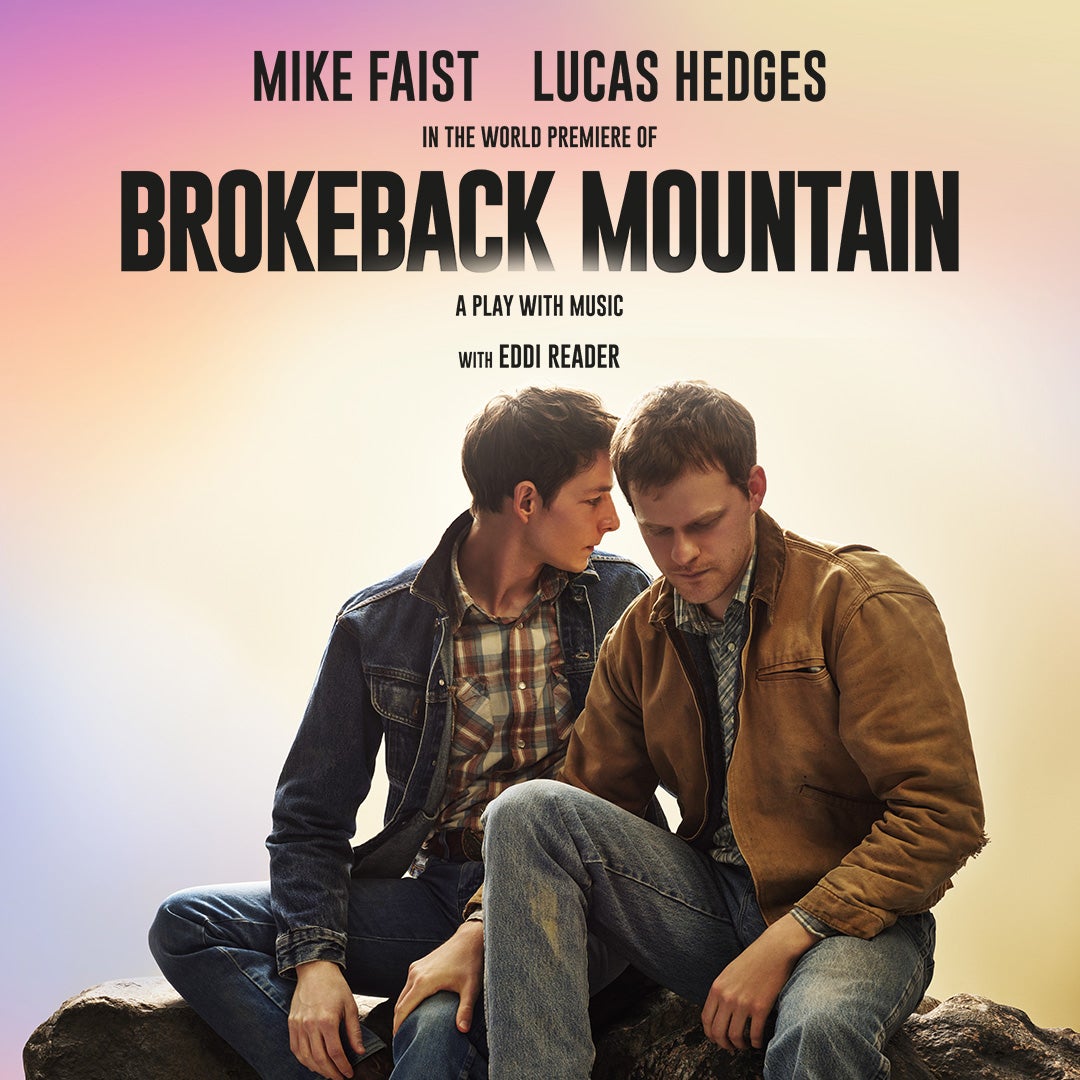
Annie Proulx’s short story Brokeback Mountain was first published in 1997, and a hit film was made in 2005. Now it has been turned into a play by Ashley Robinson with music by Dan Gillespie Sells at London’s newest West End venue @sohoplace.Mike Faist and Lucas Hedge take on the lead roles of Jack Twist and Ennis Del Mar and I was pleased to see that the two of them had been able to put their own stamp on these characters who are so associated with the award-winning actors that played them on the big screen.Mike Faist brought a youthful exuberance and boyish charm to the somewhat tough exterior of Jack Twist. His yearning to break free of the constraints of the traditional ‘expected’ life was both earnest and tender. Lucas Hedge, as Ennis, was full of confusion and self loathing at his feelings for Jack. He had a nervous energy to him throughout, as if he was about to get caught out in his lie at any moment. The two of them had great chemistry and it was clear that the opening scenes had been a fun and creative way for the two of them to explore their relationship. Throughout the show the older Ennis, played by Paul Hickey, watches on with the rest of the audience. His presence was palpable but he always felt tacked-on and was sometimes more of a distraction rather than to provide any extra layers to the story. Emily Fairn is captivating as Alma. It is a tricky role due to the limited time she gets compared to the leads but as soon as she is on stage you can’t help but get drawn in to her story. The last piece in this jigsaw is Eddi Reader as The Balladeer. She sits with the band just off to one side throughout the show. The music used is very evocative of the time and period, as well as the film. Her soaring vocals take the audience members on a journey. Dan Gilliespie Sells, who wrote the music, describes The Balladeer as the ‘story’s soul’ and the show is definitely better off for her and Gillespie Sell’s contributions. The Mountain Theme particularly stuck out to me as a treat to hear.Brokeback Mountain is directed by Jonathan Butterell who really brings out the best of his cast. The performances are vivid, and not reduced to caricatures. The show has been staged in-the-round and although it sits nicely in the auditorium it sadly means that everything is very static and that the breadth and scope of Annie Proulx’s novel is lost as characters come and go, but nothing can portray the rugged wild mountains and lakes of the story. Ton Pye’s set design is clever and utilises as much of the space as possible. The fireplace and bed being key moments of several story locations.Overall, this was a very good production of a difficult story. The short scenes needed to portray a story that covers many years in an hour and half makes it a difficult production to pull off. We yearn for longer scenes with these characters. I also wish there was a bit more collaboration with the different elements of the show. We had The Balladeer stuck out to one side, and Older Ennis lurking around the stage while the characters lived out the show. I wanted some more times where they interacted, though the few small moments they did have were done well. If you loved the film you will enjoy this production, and the performances are a treasure.

Multiple Venues • 10 May 2023 - 12 Aug 2023

Queer Folks' Tales

As the audience enter the auditorium at the Scottish Storytelling Centre, the four storytellers are already on stage: poet Janette Ayachi, powerhouse crime author Val McDermid, burlesque artist Tom Harlow and producer and host for the evening Turan Ali. Tonight is a celebration of queerness, otherness and full on sluttery.Ali steps up first in a fabulous velvet jacket and tartan trousers and announces that we’ll hear eight queer stories – two from each guest – as well as some shorter, micro stories. This introduction puts me at ease and sets the tone for the whole evening. It’s apparent that Ali is so incredibly proud of this night. It’s a genuine pleasure for him to be here with us tonight, sharing these tales. After the first micro story of the night from Ali, a failed hook-up with a slutty sailor, our first storytelling is introduced – the magnificent Janette Ayachi. Her two stories over the course of the evening track her love life from university to the present day and the discovery of her queerness. The sections from Ayachi are unapologetically vulnerable and fresh. There’s something hypnotic about her vernacular. It’s almost as if the audience needs to take a few moments to properly tune into the way she expresses herself. However, once we’re on that frequency, Ayachi becomes a presence that when speaking, everyone is quiet – not out of politeness but out of fascination. Next up is Tom Harlow who presents himself as “a culmination of all his father’s failures”. Dressed in wonderful leopard print that would put Kat Slater to shame, his first tale is an intimate story about identity which involves a lot of Disney films (mostly The Little Mermaid), trauma and his parents. It’s a story that really touched me, as another gay man in his early thirties, and I’m sure many of the audience members based on much of the marvellous reactions he received. His second story was a brave tale of combating the anti-trans trolls on Twitter and how that led him to attempt to become the gayest thing at Disneyland Florida. It was both hilarious and touching.Turan Ali is our next storyteller. Titled Freefalling and Flushed With Success, his stories are incredibly well scripted and thought out. When he’s not producing this evening or shows for the BBC, Ali is a stand-up comic, and you can tell. He understands comic timing and how to tell an effective story. The audience hangs on his every word in his first story, as he describes his Austrian friend, an “assertive insertive” literally hanging on to a hunky hook-up for dear life. His second story, one of ‘discovery’ shall we say, includes a hilarious section about a teenage Ali attempting to explain some adult content to his puritanical Austrian mother. Much like the best stand-up comedians, this material has been tried, tested and perfected for an audience by Ali. It was a joy to watch.Val McDermid tells our final stories. Her first tale was a love story rooted in 1980s Sheffield but ending up in the far away regions of New Zealand. The second was more personal and turned out to be more of something that we would expect from a McDermid novel: a story of betrayal and revenge as she reminded us that we can be blinded by love. Even though McDermid initially admitted that she was out of her comfort zone with this form of public speaking, it was still a masterclass in storytelling and the audience was wowed. Queer Folks’ Tales is a note perfect evening filled with warmth and queer joy. There’s also a wonderful realisation that everyone in the space, no matter who they are, is accepted for being themselves. The audience was celebrated for being themselves as we heard some individual micro stories from them after the interval. The night is not about status, it’s about togetherness. This was further solidified after Tom Harlow’s first story when he turned to Val McDermid and said “I can’t believe I’m on the bill with you.” She responded with “No – I can’t believe I’m on the bill with you!” For me, this was the moment when the evening turned from being a show to a shared experience. This is the type of evening that I wish I had growing up as a queer person and I can only imagine it will go from strength to strength.

Scottish Storytelling Centre • 13 Apr 2023

Shirley Valentine

Willy Russell’s iconic one-woman play Shirley Valentine premiered on the stage in 1986. Sheridan Smith had been born just five years earlier, in 1981. She has now reached the required age to take on the part, and we are blessed as she could have easily been born to play this role. It is a perfect match of actress and character.Smith plays Shirley Valentine as if we have simultaneously just met her and know her intimately. We, the audience, are there as reliably as her kitchen wall whilst also needing to be told exactly how her friends and family fit into her life. It is a fine line to tread, though Smith accomplishes it easily. The show opens with Shirley in her kitchen. The design by Paul Wills is simple yet elegant showing hints of rooms – and life – beyond the kitchen. His task is more complex than a lot of set designers as this room has to function for the famous cooking of egg and chips. The act two set was stunning to behold. A special mention must also go out to the costuming by Paul Wills (again) and Jessica Dixon as her outfits matched wonderfully with the sets – and lighting by Lucy Carter – to create a sumptuous image to marvel at. The entire visual spectacle had unity and integrity throughout and so credit must go to director Matthew Dunster.It is, however, Sheridan Smith’s moment. The warmth displayed is engaging from start to finish. On the night I watched there was a very loud and well timed cackle from an audience member rather early on in the show. Smith remained in character whilst acknowledging the laugh in such the way the entire audience burst into applause and laughter simultaneously. It was an early indicator that we were in very safe hands for the next couple of hours. It’s rare to feel that everyone around you is able to find something in the play that speaks to them, but that happened in this theatre. It is the nature of Willy Russell’s play that it has an affinity with the human psyche and the desires that we all share. By the end of the night I was moved, all those around me were moved and possibly even Smith herself was moved by the audience reaction that followed. This is one of those shows that will live long in the memory. Masterfully written, beautifully staged and exceptionally performed.

Duke of Yorks Theatre • 17 Feb 2023 - 3 Jun 2023

Good

Dominic Cooke’s new production of Good was due to arrive in October 2020 but was delayed due to the Covid-19 pandemic. The themes of this play would have been easily compared to Trump’s America and the events in Charlottesville. As it happens October 2022 works even better for the play as the events of the last couple of years in this country are a stark reminder of the potential, seen in horrors of the past.This version of C.P Taylor’s best-known play is stripped down to its bare roots. All characters, bar one, are played by one of the three named actors - David Tennant, Elliot Levey and Sharon Small. The trio never leave the stage and the set reduces the action to a very limited space at the front of the room. The entire show purposefully feels very claustrophobic and intensifies the writing to great effect.David Tennant takes on the lead role of Halder, whilst Sharon Small and Elliot Levey take on the characters that revolve around his life. David Tennant is electric as Halder. He portrays the man as in a constant battle with his own belief; not easily swayed, whilst being swept up into the Nazi regime to do the unthinkable. We can see the transformation coming but it is great to experience an actor of his calibre take us there.Sharon Small is listed as Helen in the programme but this is an injustice as she plays many roles, mostly females but also a major in the army. Although she has many notable moments in the show there is one scene where she repeatedly switches between the women in Halder’s life, often with just one word, to great effect.Elliot Levey shines as the remaining characters. He is listed as Maurice and this is the character you remember most. Maurice is the Jewish friend of Halder who watches on as Germany, and Halder himself, turn against him over several years. One of his final scenes is a masterclass on how to say so much, whilst speaking so little. The parallel between Good and our current times is stark. The restrictions on our right to protest proposed by Patel matches one of the first moves by Hitler. The burning of books seems similar to threats against the BBC, and the recent rise of anti-trans rhetoric speaks for itself. Vicki Mortimer’s set design is perfect in its simplicity. Bare and clinical it suits all settings and the reveal at the end is fantastic. Similarly Zoe Spurr’s lighting works well and helps shift the focus at the right time. The use of the follow-spot during Halder’s ‘lecture’ and at other points of the action, is a great addition. The sound design, by Tom Gibbons, suits Dominic Cooke’s vision but I found it to be so overused it distracted from the play itself. Rather than see a character make drinks we would just listen to the appropriate sound effect. At times it felt like a GCSE student had found the sound effects folder and gone overboard. A crackling fire, a roar of motorbikes, doors opening and closing, a record being played. Looking at the piece as a whole I understand why this decision was made but whilst watching the play I found myself focussing on the decision to do this, rather than the play itself, which is a shame. In the second half certain props began to be used. This worked in drawing our attention to this aspect of Halder’s decisions but, once again, it inadvertently caused my mind to consider ‘why’ this choice was made rather than just being able to appreciate the effect.Ultimately this is a play I have been thinking about non-stop since I witnessed it, which is the purpose of a piece such as this. I know very little about C.P Taylor’s back catalogue but based on this production I would definitely like to explore his works further.

Harold Pinter Theatre • 6 Oct 2022 - 24 Dec 2022

Only An Octave Apart

It is not easy for two performers to keep an audience engaged and enthusiastic throughout a 90+ minute show with no interval. Justin Vivian Bond and Anthony Roth Costanzo are more than capable. Their show Only an Octave Apart first opened Off-Broadway just last year. It has now arrived in London and is running at Wilton’s Music Hall until 22nd October.This show is cabaret plus. It is all about highlighting the differences between their voices and styles. On paper this should not work, but in reality it is a tour-de-force. It takes a while to get going and the opening ‘title’ song, which follows five minutes of awkward rehearsed ‘ad-libbing’, does not give the stars the chance to shine as inidividuals. Once the first costume change has taken place Justin Vivian Bond begins to inject some humour into the songs with a great rendition of There are Fairies at the Bottom of Our Garden. Only then does the show really start to pick up and it becomes a ride you don’t want to end.The night, however, belongs to Anthony Roth Costanzo. His countertenor voice lends itself beautifully to his operatic style. His performance of Crudel, perché finora where he sings both the male and female roles brings the house down.From opera to disco this show packs it all in. I don’t want to reveal too much here but the finale is a great example of how the classical can meet more modern music styles in a bizarre mash-up that makes perfect sense in the context of this show. The two performers also do a great job of showing what it is like when you don’t fit in with what society expects of you and is a celebration of all that is unique.If you are looking to be entertained by two performers at the top of their game showcasing their vocal skills in an eclectic evening that you won’t forget in a hurry then you will not go wrong with this show. Fly your freak flag high and get yourself a ticket.

Wilton's • 28 Sep 2022 - 22 Oct 2022

Wonderville

Central London has been deprived of a venue that regularly hosts nights filled with Cabaret and Magic for some time. That has changed with the opening of a brand new venue on Haymarket specifically designed to bring you both in abundance. Wonderville has arrived with a bang.On arrival you are quickly shown to your seat/table in a venue that seats around 100. This is the perfect number for a night such as this, as it means the bars and servers are not being swamped, whilst giving you the chance to get to know each other a little bit throughout the night.Some of the more outlandish members of the audience may practically become a character in the show. Around the room are peppered throwbacks to magicians of yesteryear. At one end of the venue is the main stage. The stage itself is lower than the audience but every seat seemed to give a good view of the action. Across the front of the stage are two creaky red curtains that have to be clumsily tied back by the stage managers whenever they open. The two main hosts, and several other performers, did venture out into the room, among the audience, for a more intimate feel to proceedings.On Press Night we were joined by two hugely charismatic hosts. Desmond O’Connor was able to weave an intriguing sense of mystery, with a little twinkle in his eye and a funny aside. He was out-performed, however, by his co-host. Chastity Belt knows how to work a crowd, deliver a song with her remarkable voice and possesses a wicked sense of humour to boot. They were the perfect hosts for an event such as this and knew how to play off the audience.There were various cabaret acts throughout the evening, including a eyebrow-raising routine from the enigmatic sword-swallower Snookie Mono. Tara Talland was literally suspended by her hair, above a quickly-emptied table in the middle of the room. However, it was the hilarious Abi Collins who won the audience’s hearts with a truly delightful hula hooping comedy set involving the assistance of a somewhat willing audience member.The magicians were the true stars of the show and at the press night we had four different acts to enjoy, including the close-up talents of Fay Presto who went around the tables during the various breaks in proceedings. Mostly these breaks existed to allow glasses to be refilled, but was also a great opportunity for Fay to show off her skills. As yours truly is someone that used to specialise in close-up magic I relished the opportunity to see a master at work. The muggles at my table were left astounded by her routine, and her tricks with bottles were extraordinarily well done.Billy the Kid was the first magician to take to the main stage and she was great at engaging with her audience. Marc Oberon came across as the more accomplished of all the acts. His mind-reading tricks came one after the other at us with such hurtling speed that it became ridiculously impressive. His opening routine with the levitating cane was also a joy to behold. The evening was rounded off by The Matricks. They brought out the expensive set pieces to recreate some of the more well-known stunts. Although each trick was impressive, I felt this act did lack some of the charisma of the more established performers that had been on-stage before them.Overall the whole evening was a delight to attend and will hopefully stick around for a long time to amaze and entertain revellers for night after night.

57-60 Haymarket • 17 Aug 2022 - 30 Oct 2022

Drag Queen Wine Tasting

As I take my seat in Mono Restaurant for Drag Queen Wine Tasting, I’m immediately struck by how professional everything looks. Three large wine glasses at each place, paper for writing tasting notes and even an aroma wheel, it seems that this show hasn’t left anything out. As the table fills up, there are huge smiles all round as we await our hosts. It's a simple start to the show. The iconic Vanity Von Glow giving us a great rendition of Dead or Alive’s You Spin Me Round (Like a Record), the first of several brilliant live numbers. It was an odd feeling seeing this – a drag performance at 12:30pm in front of a totally sober audience. I’m used to this being the complete opposite, so it was a mostly polite response from the audience to begin with. As the show got going, the audience began to relax, mostly in part to Vanity’s excellent hosting duties and crowd work. After introducing wine expert Beth Brickenden, and the wonderful Mono Restaurant staff pouring everyone their first glass, we got a crash course in all things wine, starting with how to hold the shaft…sorry, the stem of the glass properly. With the use of our aroma wheel and other cheat sheets provided, we were able to look for flavours, work out acidity and look at the “legs” of the wine. More swirling, sniffing and tasting came with the next two wines – a red and a rosé – and by this time, the whole table was chatting, laughing and snapping photos. This was my favourite part of the experience – the connection with others. Coming to the show alone to review was slightly daunting, especially since literally everyone else at my table was there in groups. However, I was able to make three new friends quickly, with one of them even paying for my pre-show drink (the first time I’ve had a woman buy me a drink in a long, long time.) By the time the third glass came, I felt like I was just out to lunch with a group of pals watching some fabulous entertainment. The staff even brought round a small snack for us during a break in the show. Although the less said about my new friend’s vegan alternative, the better!Vanity and Brickenden have fantastic chemistry and it’s that perfect blend of entertainment and information that really drive the show. As someone who always thought wine tasting seemed a little pretentious, I walked out with my mind changed. The information shared was actually really interesting, and learning about it with people as inexperienced as me made for a great experience. We were all on this fantastic journey together and it was just delightful.

Mono Restaurant • 8 Aug 2022 - 26 Aug 2022

Sam Nicoresti: Cancel Anti Wokeflake Snow Culture

Zany music and a psychedelic multimedia screen await the audience as we take our seats for Sam Nicoresti’s show Cancel Anti Wokeflake Snow Culture. Bearing in mind the title, I don’t quite know what to expect from this show as Nicoresti comes out to the stage with hand sanitiser, wearing a mask, a fabulous skirt and shirt promoting the protection of transgender kids. This would be an interesting show…Nicoresti immediately claims that, with everything going on in the world right now, they want to change the rules and shake things up a bit. Like many of us, they’ve made some discoveries about themselves in lockdown, namely that they may be transgender. In an effort to understand the full argument, they’ve spent the last year looking at media from both the left and the right. The show then divides its time between straight stand up from Nicoresti and an InfoWars-esque podcast from right-wing alter ego Nam Sicoresti (who "says what he really thinks”). This podcast is performed into a camera and is projected on to the multimedia screen. What starts off as an intriguing, satirical look at right-wing media unfortunately becomes a superficial – dare I say, at times, lazy – parody. I would have expected more from Nicoresti than cheap Jordan Peterson jibes and the general “you can’t say anything anymore” narrative, especially given they had informed the audience of their apparent amount of research. As the show continues, most of these segments became repetitive rather than thought-provoking.There are moments of the show that are very touching. Nicoresti’s material about their sexuality and experience during lockdown certainly hit a nerve with several audience members, including myself, as we related to the queer experience. To see someone on-stage being openly honest that this was the beginning of their queer journey created more of a connection with the audience, generating a reaction from some of Nicoresti’s more personal material. This was the type of material that I wanted to see more of - because it was brilliant. However, these moments of tenderness were undercut by the right-wing mockery that Nicoresti returned to all too often.I feel with this show, we have joined Sam Nicoresti in a transitional period in their life and career. They demonstrate in their material about queerness that they know how to build highly entertaining routines (the segment about solving the gender debate was fantastic). In my opinion, this is where their strength lies. In today’s political climate, it’s easy to create routines mocking one side or another. However, in starting their queer journey, Sam Nicoresti has the opportunity, not only to make us laugh, but to inspire audiences with their experiences. I look forward to what they bring next year.

PBH's Free Fringe @ Banshee Labyrinth • 6 Aug 2022 - 28 Aug 2022

Sugar

After a year away, Mabel Thomas brings her acclaimed show Sugar back to the Fringe, this time in person. The room is sold out and it creates an intimate setting for the story to be told. This smaller setting really works, as the online environment last year was a uniquely individual experience. In my view, it won’t be long until Sugar, and other Mabel Thomas stories, will be told in front of much larger crowds.The story remains the same as last year – a coming of age story for Thomas’ character Mae from the ages of six through to eighteen. Mae begins the story losing her favourite playground game to class mate Grant – a boy! This is something that not only shocks six-year-old Mae, but will shape her experiences going forward. From the ages of six to ten, it’s clear that Mae just wants to be grown up and will try and do anything to be seen that way. Thomas does an incredible job of entering the mindset of a child, reminding us all of the mind games present in a six-year-old, something that brought a smile to my face when the memories were unlocked from my own life when I watched the performance.When the character reaches the age of sixteen and she starts to discover her sexuality (namely with her friend Susan) Thomas’ acting chops really began to shine. Navigating the queer world is difficult, especially for a young queer person, and a scene involving a gay bar and an Australian accent had the audience in stitches. Thomas is fantastic at switching emotions in an instant. This is something that was clear to see in the final act of the play.The final fifteen minutes or so are very difficult to watch. This is mostly due to Thomas’ ability to engage the audience and take us with her on this crazy ride. Her likeability and her talent at making the audience care for her character mean that when something horrendous is happening to the her on stage, we can only sit back and watch and wish we could help. There are a few funny moments in the final section of Sugar, but there’s no laughter because we’re too emotionally involved in the story for anything to be funny. There are nervous laughs from Mae in trying to justify everything to herself and as an audience, like with the online version of the show, we simply become helpless onlookers.This is an electrifying in-person debut from Mabel Thomas. As I said in my review last year of Sugar, this could, and should, be put on television. It has all the makings of a six-part series. I believe Mabel Thomas will be a star. If Sugar is anything to go by, it’s not a question of ‘if’, but ‘when’.

theSpace @ Surgeons Hall • 5 Aug 2022 - 27 Aug 2022

Aliya Kanani: Where You From, From?

“Excuse me sir, would you mind if I gave this gentleman the free seat beside you?” says a keen and kind Aliya Kanani before the beginning of her sold-out show. I can’t help but smile back and push the seat towards her. Her manner reminded me of every air hostess I’ve ever seen. It wasn’t too surprising, then, when around half way into her set she reveals that she used to do exactly that. It makes me hope I wasn’t as much of an irritant for her as some of the people in her routine.It makes me smile looking back on the notes I took for this show because about half a page is simply filled with words like “warmth”, “passionate” and “confident” among others. Coming on to the stage, Kanani immediately made everyone feel at ease. The set starts with what turned out to be one of my favourite moments of the hour – jokes about Edinburgh. These were jokes that, not only were funny, but most importantly, didn’t feel shoehorned in at the start of the show to make the audience feel validated. Everything felt so natural.As the show progressed, Kanani’s “otherness” came to the forefront, and it was incredibly interesting, not only to learn about, but to laugh along with. The material really tested the audience’s limits of what was okay to laugh about and what wasn’t, at times feeling a bit like a social experiment. Kanani’s real strength in this set is turning her “otherness” into power. She has full control over how it is presented – usually with a mischievous smile – and how much truth is expressed. This is one of the major themes in a lot of her routines, and we as an audience have a lot of fun laughing along with the extrapolation of some of her answers to the question “where you from, from?”Kanani’s delivery at times can be a little fast and some of the punchlines did get slightly lost in the speed, but it’s a small thing to work on. Her overly smiley, cheery nature worked well, especially with more serious jokes when the audience got so lost in those happy emotions, that when we did get hit with the intense punchlines, it was unexpected. This was used to great effect during the air hostess routine and I’m sure anyone in the room who has ever worked in retail could absolutely relate.One thing I do remember feeling after seeing the show was a sense of joy I didn’t have before I arrived. We as an audience spent an hour coming together as a group not only to laugh, but to celebrate similarities and differences. The title of the show Where You From, From? may be an indicator of division but, through a brilliant hour of comedy, Aliya Kanani was able to unite us all together with that mischievous smile.

Just the Tonic at The Tron • 4 Aug 2022 - 28 Aug 2022

Chelsea Birkby: No More Mr Nice Chelsea

As we enter the venue, Chelsea Birkby is waiting at the entrance with a tray of glasses of water for us because it can get pretty hot inside the room. It’s a nice thing to do. The seating is made up of church pews. It’s a nice setting. Early ‘00s tunes are playing (Nickelback and OPM – so ten-year-old James is in heaven). It’s a nice thing to hear. Birkby’s leaflet states that her hour is “a stand-up show about what it is to be nice”. In this regard, the show succeeds. However, I was left wanting more than just “nice”.Birkby comes on to the stage and, surprisingly, shatters expectations by saying that she doesn’t want to be nice anymore and is trying to be a bit more of a bad girl, a joke she openly admits would be a bit funnier if this re-brand didn’t happen at her debut show. It’s a strange start, but as we move into the opening material surrounding the deconstruction of ‘00s pop-rock, Birkby finds her feet and settles in to her routine. I’m a fan of any type of nostalgia material so I was engaged throughout and the observations were smart and witty. Sections from her diary that she wrote aged seven were also brilliantly captured and turned into routines that I’m sure everyone could relate to in some sense, myself included.Birkby shines when it comes to one-liners and quick gags. There were several lines that I enjoyed immensely (my favourite being about the artist Pitbull) and it’s apparent why she’s written for Mock The Week and Radio 4. I found that audience interactions were slightly hit and miss. Banter with a latecomer was professionally handled, but others, including a front row interaction with someone drinking Diet Coke went on for a bit too long. However, with more boisterous interactions, Birkby was more than capable of getting the show back on the right track.I found the show as a whole a little clunky in parts. For me, the whole theme of “being nice” seemed a little shoehorned in. I don’t think there was enough of it throughout the set. In the final twenty minutes of the act, Birkby moves on to some genuinely interesting material regarding mental health and therapy. Birkby recalls an incident that happens to her which makes her think about herself and her “niceness”. It’s an emotional incident that encompasses the entire theme, enough that I thought this would be the final routine of the act. However, she quickly moves on to other material and doesn’t spend enough time letting the audience feel the full weight of that story. This, unfortunately, quickly weakens the impact of the incident and her thoughts about “niceness” become inconsequential. If the final twenty minutes of the show are restructured, I feel she would have a very strong final act.As I said in the beginning of this review, this is a nice show. However, I know Chelsea Birkby has a lot of potential. It’s clear in her status as multi-competition finalist. With a little work, I think a brilliant career awaits.

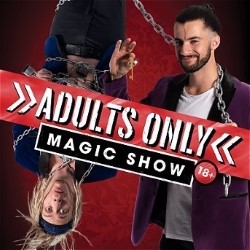
Just The Tonic at the Caves • 4 Aug 2022 - 28 Aug 2022

Tom Ward: Anthem

It’s a loud and rowdy Saturday night at Monkey Barrel. Eye of the Tiger blasts through the room and the sold-out audience is pumped beyond belief for Tom Ward’s Anthem. It’s a brilliant atmosphere and the most excited I’ve seen an audience in any of the shows I’ve seen so far. An excellent rollercoaster of a show would follow.Ward walks on stage in a blue windbreaker jacket and fabulously silly hair. My mind instantly compared him to Wendolene Ramsbottom from A Close Shave, although Ward likes to think of himself as looking like ‘James Blunt on glue’. As he begins the set with an absurd and hilarious song about house shares, it’s clear that some louder members of the audience want to be more involved. Ward calmly quiets them down and continues on. However, who would have known that the mention of Tunbridge Wells would provoke another reaction from them. The rest of the audience is firmly behind Ward, and these hecklers’ attempts to derail the show are swiftly halted in some of the most professional few moments I’ve seen from a stand-up comedian in a long time. They leave the venue and Ward receives a well-deserved round of applause.Ward’s ability to combine observational comedy with music is what makes him stand out from the crowd. It’s relatable, clever and, most of all, very funny. There are some great routines about adverts using friendly jingles to promote immoral agendas that go down very well in the room. His talents as a voiceover artist work brilliantly here and give his impressions a real edge. It’s his routine on the ‘Victimhood Olympics’ that impresses me most though – he and a girl he met at a party trying to one-up each other in terms of how much they’ve suffered through their life. The routine is structured perfectly and uses Ward’s full skillset of incorporating sound effects, impressions and fiercely funny observations. It’s a magnificent few minutes of material.Throughout the hour, the audience has grown close to Ward as a performer (Ward’s hiccup with the hecklers at the beginning was actually beneficial to that audience connection, I believe). As the show moves to a close, it becomes increasingly wackier, to the point where the audience, including myself, is just enjoying this strange ride. However, we have faith in Ward to guide us through to the finish. A final piece of audience interaction gets off to a slightly rocky start, but finds its way towards its conclusion. A scarily accurate acapella version of Cher’s Believe seems a little shoehorned in, but was an enjoyable end to the show.Tom Ward proves many things in this hour: he’s a consummate professional, he has the ability to structure jokes and execute them effortlessly, and he has confidence in his identity. During the audience disruption, he remained in control of the situation and the room as a whole. There was no slip in his persona as a stage performer, to the point where, if I was told that the disruption was part of the show, I would have believed it. Overall, Anthem is packed with first-rate gags, impressions and absurdist humour. I couldn’t have spent my last Saturday of the Fringe in a better place.

Monkey Barrel Comedy • 3 Aug 2022 - 28 Aug 2022

Adults Only Magic Show

The vibe is wild as I sit down for Adults Only Magic Show. I’m definitely the most sober one in the crowd. On the stage are magical props and a heavy box hanging from the ceiling. This would be an interesting night...Our emcee and audience hype man for the evening, Magnus Danger Magnus, struts on stage. He’s professional, witty, and charming in every way. After some great crowd work and some fun with Shauna the sign language interpreter (yes, this magic show is a signed performance), we meet our magicians – Sam and Justin – giving their 206th performance of this show. It seems the show would have been much easier to create if our magicians had based it around performing in front of a drunk audience. My experience on the night is that a less than sober audience, especially the two women beside me, find absolutely anything amazing (adding some extra commentary after the tricks are over too). Luckily, Sam and Justin haven't created the show with this mindset because the magic is genuinely brilliant. There’s a Penn and Teller-style phone trick, an impressive, x-rated quick change routine, and a red-hot word revelation which leaves everyone with their jaws on the floor.The chemistry between our three performers is also really indicative of the passion they all have for this art form. In a surprisingly moving video clip, Sam gives some background of how he and Justin began working together, and how they were forced to build from the ground up. It really gives this group some heart and differentiates them from being “just another magic act”.Adults Only Magic Show does exactly what it says on the tin. It’s a fun, riotous evening filled with thrills, gasps, and an incredible head-to-head escape which I don’t think either one of our magicians wanted to lose. It’s a late-night show that’s definitely worth your time.

Assembly George Square Studios • 3 Aug 2022 - 28 Aug 2022

Tiff Stevenson: Sexy Brain

Sexy Brain is Tiff Stevenson’s tenth Edinburgh show – a mighty feat for any comedian. The main question any comic in this position will be asking themselves is, how they can offer fresh material but at the same time keep the unique voice that they’ve built up over the years? Luckily with this show, this potential problem was never an issue. This is Tiff Stevenson at her finest.It's a bold start from Stevenson, who comes out on stage and proclaims that she is a sexually independent woman in her forties. She’s strong, she’s confident, nothing stands in her way. Nothing, it seems, apart from her “sexy brain” – her term for her ADHD. It seems to affect a lot of her life and we hear a few examples throughout. Some are brilliantly constructed, lengthy journeys through her thought process. Others are simple and quick one liners – including a brilliantly cringe-worthy example in front of her step-son which got some suberb reactions in the room.As with past shows, there is a strong feminist message that runs throughout. This is the unique voice that Stevenson has built in her previous work. Her material is not only funny, but engaging and thought provoking. Whether she’s taking issue with the culture surrounding ‘Karens' or simply looking out for the wellbeing of leading actresses in movies, the audience is engrossed. This is one of the strengths of the show. I noticed that, not only were people laughing, but smiling in recognition and nodding along to some very well-made points. Honestly, I’m surprised there weren’t at least three applause breaks in this show.What’s really lovely about Sexy Brain is that Tiff Stevenson has built a show around a condition that some may think of as a weakness and turned it into an almighty strength. Her material surrounding getting older as a woman, her femininity and her gender didn’t come from a place of victimhood. It came from a place of power. For the entire hour, she was charge of the room. I could have easily, and happily, listened to more for much longer. Sexy Brain is an absolute belter of a show.

Pleasance Courtyard • 3 Aug 2022 - 29 Aug 2022

Sam Morrison: Sugar Daddy

Dealing with grief is something that is very difficult because it’s so personal and particular to the individual. Deconstructing that same grief and turning it into a comedy show is not only more difficult still, but also incredibly brave. Sam Morrison is that brave individual who’s taken on this task. The end result is one of the most powerful and fearless hours of comedy you’ll see this Fringe.As we begin, Morrison introduces the real heart of the show – his partner Jonathan, who tragically passed away from Covid during the pandemic. After a joke, which Morrison states is a “litmus test” to see how we react as an audience, the show really gets going and Morrison is in full control of the room. Grief, as Morrison states, is not linear. It seems the show is a bit like that too. At times, the material switches between anecdotes of a trip to Provincetown before the couple met, and the aftermath of Jonathan’s death, including a moving story where Morrison sits alone on a beach on their anniversary. It sounds like a risk to have such a non-linear set up, but there’s so much emotional weight behind these routines that the audience is engaged and willing to accompany Morrison on this journey through his grief.There is an authenticity to Morrison’s performance that shines through. He has a seat with him on stage and every so often, he’ll sit down to speak about Jonathan. It’s touching and also creates a connection between Morrison and the audience that goes beyond what I’ve seen other performers do this year. He becomes a friend that we want to support, listen to and help in any way we can. Throughout, Morrison reminds us that he’s grateful that we came to the show because it means he gets to talk about Jonathan. He also reminds us that he's written this show as a means to help his grief process – he wants to be doing this. Whether he’s talking about it in the room or in one of his three gay widow support groups (he’s currently winning at all three), it’s all part of the journey.The whole show is a real honour to sit through. Coming together to speak about trauma (or as Morrison defines it “unmonetised content”) is such a healthy experience. Not only is this an affecting show with a wonderfully satisfactory conclusion, it’s unapologetically queer, filled with love and hilariously funny.

Gilded Balloon Teviot • 3 Aug 2022 - 29 Aug 2022

Morgan Rees: Bi and Large

As the audience arrives for Morgan Rees’ show at the Pleasance, there’s a pair of shoes sticking out behind the curtain. Most people notice, one man pretends to stamp on them, but we don’t really know why they are there. The doors close and the shoes are still there. Finally, as Rees is introduced, he pops out from behind the curtain in a red mesh shirt and those same shoes, having stood stock still for about 10 minutes. And to think someone wanted to step on him…Rees brings an instant energy and warmth to the stage as he begins to talk about himself and his life. Discussing his humble beginnings and family life (including a YouTube obsessed aunt) there’s an immediate connection between himself as a performer and audience members, that only grows over time. As Rees trusts us with more of his story, he tells us about his sexuality and his discovery that he is bisexual. This is a running subject throughout the show as he reveals to us different family members he came out to and their subsequent reactions. What made this so different to other routines about sexuality I’ve seen this year is that it didn’t come from a place of victimhood or self-mockery. Rees was proud of himself and constantly said that he was excited about coming to his friends and family – most of them anyway.It's Rees’ personality that really shines through this set and makes him different to other LGBT+ acts I’ve seen this year. He talks about really important issues, such as biphobia, and makes it accessible and interesting to listen to. There are a couple of unapologetically queer moments in the show (the exclamation of “bumming is mint” came as a shock for a few cross-armed men in the audience), but it’s that sense of fun that offsets any potential awkwardness that comes from the subject. Rees does a great job to make us feel comfortable, while offering some great gags in the process.Coming out to his aunt and uncle seemed to be the easiest thing for Rees (I won’t spoil any surprises) and it was during this routine that I was constantly laughing. As a queer man myself I related to a lot of the material and overall, what he has done with this show is create a mainstream hour of comedy that is not only important to learn about, but is laugh out loud funny too. My view after seeing this show is that Morgan Rees needs a bigger room because if he makes this great connection with a larger audience, he’ll be flying.

Pleasance Courtyard • 3 Aug 2022 - 28 Aug 2022

Finlay Christie: OK Zoomer

When Finlay Christie won the prestigious So You Think You’re Funny? competition in 2019, it seemed like his next year would be filled with preparation for his first Edinburgh show in 2020. Then, of course, Covid arrived and those plans were derailed. That’s why I was a little surprised to see that in Christie’s debut hour this year, he seems to have gone through somewhat of a rebrand. On his poster and as he walks on stage, his focus is more in terms of his online credentials – YouTube views and TikTok followers that he has built up over lockdown. As he explained that the show was going to be focussing on his life as a young person, the rebrand makes sense. The honours of receiving the SYTYF? prize certainly catches the attention of reviewers (mine included), but for building a brand and fanbase, the future is TikTok.The first thing that comes across about Christie’s performance is his passion for comedy and stand-up as a whole. He mentions several times that this debut hour is incredibly special to him. With these admissions comes a genuine humbleness that was superb to see.In terms of the material, Christie is our personal insider into Gen Z culture. The routines are well-timed, relevant and, most of all, very funny. Yet what I enjoyed most about his first routine, highlighting the differences between “boys” and “men”, was how expertly traditional the structure felt (for me, it was reminiscent of some early Jerry Seinfeld routines). I was grateful as well that Christie, as a young person, didn’t fall back on to the easy “war on millennials” trope, which could cheapen some of his punchlines. It shows that he has a handle on today’s culture and it shines in his set. Another nugget of Gen Z culture he lets his audience know is that their attention spans don’t usually tend to last too long. To counter this in the show, the audience is always given something new to focus on every so often, be it a slideshow, a song or a home movie. It seems Christie has translated TikTok culture to the stage with ease.Towards the end of the set (and in an increasingly hotter room) it was a pure joy to see some back and forth between Christie and the crowd, who were now hanging on to his every word. He made this look effortless. It’s rare to see a debut comic build up such a quick rapport with his audience, especially after describing himself as a young Gen Z man, privately educated and someone so numb to today’s society that he’d prefer to have his phone than be happy.Overall, a very strong start and a triumph of a debut hour. TikTok may play a big part in the future of the Fringe, but, if he keeps going like this, Finlay Christie will be the future of stand-up comedy.

Gilded Balloon Teviot • 3 Aug 2022 - 28 Aug 2022

Alison Spittle: Wet

The Pleasance Attic on a sunny afternoon is hot, especially sitting in a sold-out crowd. Scanning the room, I can see makeshift fans and plenty of cool drinks. As I didn’t have either, I didn’t know how I was going to be able to survive the hour ahead. Thank goodness then for Alison Spittle.Bounding into the room in a fantastic yellow dress and Midsommar-esque headband, she immediately put a smile on my face. As the material started, the smile got wider – as did many other people’s. As a fan of her appearances on The Guilty Feminist and her Wheel of Misfortune podcast with Fern Brady, I knew we were in for a great show.The Attic is a great room for creating an intimate atmosphere allowing comedians to connect with their audience. It worked for London Hughes back in 2019, and it certainly worked for Alison Spittle. Around twenty minutes into the show, after a few shudder-inducing sound effects involving her potential X-Men origin story, it was clear the crowd was hooked, with the majority hanging on to her every word. I feel as if there comes a point in every comedy show where the audience gives themselves over to the comedian and trusts them to make them laugh. For me, this was that moment.My favourite routine came after a peaceful moment, what Spittle called the “opposite to meditation”. The concept of the section, announced somewhat out of the blue to the room, initially struck the crowd as one that they most definitely didn’t want to hear. However, as the material hit its stride, we were all absolutely dying to hear the end of it. With these types of routines, it’s an absolute pleasure to see Spittle coax an audience in with gentle beginnings and then devastate us with some killer punchlines. Suffice to say, we’ll all look at geese very differently from now on. Spittle had us all right in the palm of her hand.From pregnancy tests to menstrual cycles, aqua aerobics to three lines of cocaine, there’s a lot to like in this hour of comedy. It’s an incredibly polished routine – well thought out and professional. Alison Spittle has created a show where there’s nothing cheap, nothing groan-inducing – just hilarious.

Pleasance Courtyard • 3 Aug 2022 - 28 Aug 2022

Glenn Moore: Will You Still Need Me, Will You Still Feed Me, Glenn I'm Sixty Moore

There’s not really any way to describe how much I enjoyed Glenn Moore’s show other than to say that by the halfway point, I had put my notepad away and was just enjoying the ride.Silly, captivating, at times blissfully chaotic, the set is an absolute joy to sit through. Built around the last two years of Moore’s life and his uncertainties on whether or not to progress with his career or to have a baby with his partner, the gags are belly-achingly funny with hardly any time for the audience to catch their breath before the next gag comes along. At times, I found myself still audibly laughing from jokes made five minutes earlier that I was still replaying in my head. Even now, I sit writing this with a huge grin on my face.Throughout the hour, Moore is consistently brilliant. Whether he’s telling us about his bad Wi-Fi issues during lockdown, his fears for his child or simply asking a question such as “how do fridges work?”, everything is just extraordinarily funny. But it’s his Basil Fawlty-esque rant towards the end of his set that reminds me that it takes a very talented performer to appear so physically frenzied. You can tell a lot of work has gone into this hour. Not simply the jokes, but the performance, delivery and timing – all of which are impeccable.This is an absolutely astounding show. I can’t say more than that. The audience were in awe the whole time. Catch it while you still can.

Pleasance Courtyard • 3 Aug 2022 - 28 Aug 2022

Briefs: Bite Club

In 2017 I last saw Briefs in a Spiegeltent on the Southbank. Now the doors of Southbank Centre’s Queen Elizabeth Hall have opened themselves up to the Briefs Factory for the first time, and this is their first show in the UK post-pandemic. It is a welcome return for the boys on our small island here in the Northern Hemisphere.For those of you who have never seen anything presented by Briefs Factory before - they are a group of cabaret performers who set upon the stage with circus tricks, burlesque, drag, dancing, comedy, music and theatre. For their new show Briefs: Bite Club they have a beautiful new musical star as the linchpin. Her name is Sahara Beck and she has a stunning voice. She sings her own original songs throughout. Some uplifting pop numbers and some melancholic ballads with majestic vocals. Propped up by her band of three Sahara takes centre stage, leaving Shivanna (Faz Faanana) as host and the rest of the troop slightly lost in the grand theatre space of Southbank Centre's Queen Elizabeth Hall.Shivanna is a fantastic host, full of quips and does a great job in explaining the new trajectory Briefs Factory find themselves on following the events of the last few years. On a mission to spread love and joy in a world where so many people are doing the opposite can only be a good thing.Unfortunately there were no programmes or cast lists so I am unable to name individual performers but all the acts were sensational. I particularly liked the aerial artist whose leg control was extraordinary. He was a new addition to the cast and one that certainly has a big future ahead of him. He only had one solo routine and I certainly wanted more.There was a dancer and juggler who left nothing (and I mean nothing!) to the imagination during an incredible routine on the treadmill. Also there was a comedy cabaret dance performer who had the audience laughing throughout a very entertaining moment with his wig. The show stealing moment, however, goes to the co-creator of Briefs and former Las Vegas King of Burlesque, Mark ‘Captain Kidd’ Winmill for a breathtaking routine on a 'Dita von Teese' esque oversized glass of water, and a trapeze. Quite how he manages to perform those acrobatics while dripping wet is astonishing. Mark just had the one solo routine and it would have been great to see more from this performer in Bite Club.Sadly this show simply felt as though there were a lot of routines missing, or cut, for various reasons. It was great to see an original singer lead the show but it did seem to me that it was to the detriment of the rest of the performers, who had to take a step back. It is always good to leave your audience wanting more, and I will certainly be back next time they are in town, but it did seem somewhat lacking compared to previous years.

Queen Elizabeth Hall • 21 Jul 2022 - 31 Jul 2022

A Letter to Harvey Milk - The Musical

There has been much said in books and films about the life and times of Harvey Milk. The title character in this production, by Waterloo East Theatre, takes a step back. Instead this show puts a couple of fictional characters, whose lives were touched by the well-known public official, at the focus. Namely, a kosher butcher called Harry and a young woman who helps him discover a talent for writing.Both characters have been deeply affected by the assassination of Harvey some eight years prior, though only one of them had any direct contact with him while he was alive.This is the European premier of the show and there have been a few changes in order to accommodate the stage at Waterloo East Theatre, particularly the reduction of the orchestra to a keyboard and flute.The cast is led by the extraordinary Barry James as Harry. Barry encompasses the role so magnificently that it is impossible to tell where the actor ends and Harry begins; his mannerisms and expressions seem so at home within the character. The writing teacher Barbara Katsef is played by Josselyn Ryder and she shines in this performance. Her singing voice is a pure delight to listen to throughout the soaring melodies of the score. Whereas some other characters occasionally struggled to be heard over the instruments, Josselyn weaved a spell over the whole audience with her song. Her first scene where she encourages Harry to write what he sees shows off the great chemistry between the two. There is a third character who is also on-stage throughout and that is Harry’s deceased wife Frannie - played by Carol Bell. Carol brought a wonderful humour to the role, much needed in a play that went to some dark places. Her energy matched that of her on-stage husband and you really felt that they were a married couple deeply in love, despite their constant bickering before her passing.We do see Harvey Milk occasionally in flashbacks and a fine performance by Joshua Anthony Jones. Christopher Dodd, Harry Winchester and Rebecca Levy (who also plays the flute when offstage in the musical numbers) are great supporting members of the cast in various roles, although they all seem to be under-used - as this piece is essentially a three-hander.At the interval I had my concerns as to where this musical was headed. It all seemed a bit vague at that point. I later found out that the original show was ninety minutes through without an interval and I can see that format making more sense in the overall narrative. The second half did give us a story, and explained some of the more questionable actions of our lead characters in a sombre and hard-hitting way. It packed a fine punch but it all seemed to come a little too late.Gerald Armin, director, has done a fine job of transferring this to the Waterloo East Theatre stage and the use of gauze throughout the dreams and flashback sequences works well without taking up too much space.Laura I Kramer and Jerry James have created a small but mighty musical using the short story originally penned by Lesléa Newman. One of the stand-out lyrics for me felt particularly poignant with current events in America: "If enough of us hold hands, no-one can hold a gun." It is a shame that I do not think this musical will ever get the chance to play on bigger stages and will sadly be rarely seen so do take this opportunity to pop along and see it now while you can. It is a story that definitely deserves to be told.

Waterloo East Theatre • 9 Jun 2022 - 3 Jul 2022

The Lion

I had been looking forward to seeing The Lion for a long time. I was aware of Benjamin Scheuer’s autobiographical musical, but I had never had the chance to see it. This brand new production originally had its press night scheduled for May 27th, but was postponed due to illness. Being made to wait even longer to see this show meant the pressure was on the team to really deliver. To say it was worth the wait would be an understatement.Taking on the role of Ben is actor-musician and brand new talent Max Alexander-Taylor. It was a masterclass performance. A one-man musical can't be easy to accomplish, but Alexander-Taylor rises to the challenge – welcoming the audience as they arrive and cheerfully encouraging all to have a good time, before taking everyone on a journey into some dark times from the character’s past. From Ben’s troubles with his father, his constant love of music through to his fight against cancer we are all swept along on a roller-coaster of emotion that we never want to end. To make the show both heartbreaking and uplifting at the same time is a remarkable feat but it is thanks to Benjamin Scheuer’s incredible book – based on his real life experiences – and Alexander-Taylor’s performance that this is pulled off so well. The real Benjamin Scheuer was in attendance and gave Alexander-Taylor a standing ovation at the end – a testament to the power of his performance.The set design by Simon Kenny is very minimal. Bare light bulbs, used in Emma Chapman’s clever lighting design, rise from the floor and hang from the ceiling. The stage itself consists of one platform, simply holding the five guitars that will be used by Alexander-Taylor throughout the story. Some of the guitars have a more direct role in the story than others – the folksy music underlying the show briefly transforms into rock and back again as Ben progresses through his tempestuous teenage years. A short while later he finds himself back on the trusty acoustic and writing funny love songs for his girlfriend. Not a single song feels out-of-place or unnecessary and a special mention should go out to Andrew Johnson’s sound design too, as the balance of instrument and vocal was perfect throughout. The audience sits on three sides. Directors Alex Stenhouse and Sean Daniels have done well to ensure that everyone feels they are having an intimate conversation with Ben as he tells his story. Looking around the auditorium there were so many tears streaming down faces during the sadder parts of the tale that it was clear how many of us felt the emotion of the piece.The Lion is showing now in The Little at Southwark Playhouse for a very limited run prior to a mini UK tour. I urge everyone to grab a ticket. Max Alexander-Taylor will be a big name in the future and it would be a travesty to miss out on seeing him perform alone in this intimate venue.

Southwark Playhouse - Borough • 25 May 2022 - 25 Jun 2022

Wilf

Edinburgh’s Traverse Theatre continues its tradition of being non-traditional this Christmas season. This December’s offering is Wilf by James Ley, a play about ‘love and loss and pain and happiness… But it’s funny!’, a description, it turns out, much easier to use as a tagline than to execute on the stage. Wilf begins with a lot of promise: 80s music blasting throughout Traverse One before the play begins with a jolt. The lights go down, the music stops abruptly and the main character Calvin (Michael Dylan) forces himself on to the stage clearly in distress, about to tell ‘his story’. From there we meet Calvin’s driving instructor and unofficial therapist Thelma (Irene Allen) in a first scene which goes at 100 miles per hour, that I enjoyed immensely, but more in part to the expert direction of Gareth Nicholls. As the play progresses and we learn more about the toxicity of much of Calvin’s life, we meet Wilf, an old Volkswagen Polo and Calvin’s newest purchase after passing his test. After finally escaping an abusive relationship, Calvin takes Wilf for a road trip around Scotland attempting to find himself but instead discovering more about loneliness and self-love. I’m very much a champion of queer storytelling and, while I respect James Ley immensely as a queer playwright, for me, Wilf is a big swing and an even bigger miss. Such excellent direction and performances are, unfortunately, let down by the writing. Since the original stage production of Fleabag, I’ve noticed a lot of writers attempting to create those same fourth-wall-breaking characters: single, sex-obsessed, in denial and emotionally damaged who attempt to redeem themselves in the end. The issue with the character of Calvin is that he is played for laughs the entire time: his pain; his struggles; his story. As a result, all emotional weight is lost. I couldn’t take Calvin seriously throughout and thus any potential redemption in his story arc was lost on me. The writing favoured too many graphic sexual escapades of Calvin and not enough time trying to develop the character emotionally. Ironically, these attempts at gritty realism made me even more detached from him. Even when there were poignant moments for Calvin’s character, the mood is ruined by a sexually charged comment in a desperate attempt to be provocative. At times, the dialogue itself is a little all over the place. As Calvin and Thelma share their first scene together, there were a lot of buzz words and phrases, seemingly shoehorned into the dialogue to be as relentlessly relatable as possible, that just weren’t hitting – ‘cancelled’, ‘triggered’, ‘sashay away’, ‘emotional cum dump’. Once again, this results in the opposite of the intended effect. This is not how people talk. Furthermore, the general representation of Calvin’s character onstage through lazy stereotypes just made me feel demoralised as a queer person. It leaves me with a question: who was this play written for? Queer people? Young people? Straight women who have gay friends? I’m not sure. Overall, Wilf boasts strong direction and a charismatic central performance by Michael Dylan. It’s unfortunate that the script does not live up to that same standard.

Traverse Theatre • 8 Dec 2021 - 24 Dec 2021

Krapp’s Last Tape with Go On

As director Dominic Hill welcomes us to the Tron theatre for this triumphant double bill, the audience cheers midway through his announcement at his mention of the return of live theatre. It’s an absolute joy to be back at the theatre, and the whole audience definitely feels the same way. Tonight’s double bill is just over an hour long – a perfect length to coax post-pandemic audiences back out again. First up is Go On by Linda McLean in which the character Jane attempts to train an AI replacement of herself, Jayne (both played by Maureen Beattie). If it all sounds a bit Black Mirror, you’d be right – even more so when the play begins. The two characters talk to each other via a multimedia screen. They are dressed pretty much identically and it’s certainly very surreal to witness. Occasionally, the training took the form of speaking the exact same words at the exact same time, talking about everything like pets, pies and sex to larger emotions like pain and hope. As the play progresses and the narrative structure begins to blur somewhat, it’s not actually apparent which character is teaching who anymore. One thing that really stands out throughout is Beattie’s diction. Everything is crystal clear and she leaves the audience hanging on to every word of her performance. Her timing is also impeccable. While she is interacting with a screen, Beattie’s character walks around the stage, as the character in the pre-recorded film seems to be looking at where her physical character is throughout. It’s genuinely remarkable. Overall, an exciting start and a great companion piece to Krapp’s Last Tape.After a short break to set the stage, the curtains parted to reveal Niall Buggy sitting at a table on a dark stage for Krapp’s Last Tape. On his 69th birthday, a man listens to a taped monologue that he has made on a previous birthday and has a chance to look back on his life. Some of the enjoyment for around half of this play comes from seeing Buggy’s reactions as he listens to his younger self speak about his life, whether that was with anger, sadness or with a humorous reaction (the word ‘spool’ was used to great comedic effect). With such a simple concept, one may think it was a simple performance, but it was fascinating. For a few minutes at the beginning, Buggy’s character is merely walking around the stage eating a banana, but yet it is captivating. However, there is a tinge of sadness throughout the performance. As he listens to his younger self, there is the constant reminder that they are almost like two different people. Here, Krapp sits as an old man in a dark, lonely room as he listens to a man with many years ahead of him. Buggy does a fantastic job to convey this melancholy. It’s obvious that the past 18 months have had an impact on the arts as a whole, and these two plays, when looked at through the lens of the pandemic, give one pause for thought. When lockdowns started, many people were alone and all they had were memories of the past or hopes for the future. This pandemic has taught everyone in one way or another what it’s like to feel alone or lonely. Tonight, we came together as a group and celebrated two pieces of art which really encapsulated those feelings. The healing is well and truly underway for theatre.

Trongate • 7 Oct 2021 - 9 Oct 2021

Amy Matthews and Krystal Evans (WIP)

There was a comment made in an article in the Edinburgh Evening News just before the Fringe began about how, after the amount of time comedians have had to prepare for the 2021 Fringe, paying for a work-in-progress show was “an anathema”. I would challenge the writer of that article to attend Amy Matthews’ and Krystal Evans’ work-in-progress show and not think it’s worth double the price of admission. First up is Amy Matthews, whose natural stage presence is apparent from the start. She’s so professional, you’d think she’d be doing this for decades. She covers lots of things in her 30-minute set, from goat yoga, to her own privilege, to the difficulties of being a 90s kid (or ‘generation anxiety’ as she calls it). As a 90s kid myself, I really connected to the material and much of her sharp observations were absolutely spot on. The set included a couple of absolute gems worthy of an applause break (my favourite being a joke about the downfall of the aubergine emoji). The only slight disappointment was in the first few minutes when I felt the audience was a bit flat. Not a fault of Matthews of course, but it was a shame that some of her strong material was being greeting by only a few giggles when it deserved more. After her outstanding set, it gave me a real hope her future career. No doubt we’ll be seeing more from Amy Matthews, more likely than not in bigger venues and on more panel shows.Krystal Evans’ set was equally as strong. Since this was my first time seeing Evans, I didn’t know what to expect. The audience instantly fell in love with her charming persona and mischievous grin. As she began, she mentioned that her set was “humour with heart”, something that the audience really got on board with. The set mostly spoke about the spectrum of anxiety in Evans’ life, whether that was social anxiety, anxiety as a parent or in her general relationships. Evans was willing to admit these were pretty heavy topics for comedy and was happy to occasionally “throw out some filth” to make us feel better, moments that had everyone chortling. The delivery of the set was just perfect. The audience was told early on that we’d notice a “resting sarcastic voice” coming from Evans. I saw it more of a quiet confidence, similar to that of Dina Hashem. That confidence drew the audience in and we were hooked on what Evans would come up with next. Something I really respected about Evans’ set was that she wasn’t afraid to look at her notes and, especially, admit when a joke didn’t land properly. This only happened maybe twice throughout the 30 minutes, a testament to the strength of her set, but it shows a sense of professionalism which I very much admired. For both Amy Matthews and Krystal Evans, it’s clear that lockdown has given them time to come up with some solid material for this work-in-progress show. They are both laugh-out-loud funny and have a bright future ahead of them. In a way, I’m glad they haven’t rushed into a full hour show just yet. Working on and perfecting their material in these types of shows will only help strengthen themselves as comedians. When they finally do unleash full shows to the Fringe, the comedy world won’t know what’s hit it.

Monkey Barrel Comedy • 18 Aug 2021 - 21 Aug 2021

Laura McMahon, One of the Gals

One of the Gals is completely packed. So packed, in fact, that staff at The Street Bar have to bring down several more stools for the extra guests. The vibe is electric and reminds me of the atmosphere of live shows pre-pandemic. It’s clear that Laura McMahon has a lot of fans. Regrettably, after seeing her solo Edinburgh debut, I can’t say I’m one of them. Her press release filled me with a lot of hope – there were many reputable comedy credits to her name. However, there was also another, slightly abrasive, section: “If you hate Laura McMahon, women in general, or comedy then this isn’t the show for you.” I’ll admit I didn’t like the show, not for any of these reasons, but because, for the most part, I didn’t find it funny.It seems from the very start that Laura McMahon doesn’t want to take responsibility for anything. The show begins on a bold note. She states that comedy shows normally start with a support act, explaining that it’s usually an unfunny man who goes on for too long. Unfortunately, this was the type of humour that ran for around half of the show. The ‘men are trash’ narrative became alienating, one-note, and got tiring very quickly. Even Laura herself admitted that at times the show was like a lecture about how things in life have been ruined for women. Except it didn’t. At least with some lectures, they are engaging and thought provoking. The material in One of the Gals ran like an agenda of all the reasons Laura McMahon was right, and everyone else (men especially) were wrong. It was clear in McMahon’s set that there was scope for improvement with joke structure. Around the 40-minute mark, the material turned into a bizarre mess of personal anecdotes. These were made a tad grating by being propped up by “and I was like…and he was like…and I was like…” to bring us to the conclusion (I counted 8 “like”s in one story). With a little work on structure and delivery, this section has the potential to be a strong final act of the set. For right now, I felt like I was on the outside of her in-jokes. Although this final section needs some work, it gave McMahon’s personality a chance to shine through. As a performer, she’s a natural. Looking round at the crowd, they were hooked. It’s rare for a comedian to have that instant connection with their audience and this was a bond that only grew with time. The room was consistently in awe of her confidence on stage. After a tough 18 months for the comedy industry, Laura McMahon definitely retains her charisma. However, underneath the persona is a performer with a lot of work to do.

Multiple Venues • 12 Aug 2021 - 25 Aug 2021

Sugar

At just 22 years old, writer and performer Mabel Thomas brings her debut solo show Sugar to the Fringe. Described as 'One girl. Five ages. Many morally ambiguous decisions', this online show is more than just your average coming-of-age story. This really is something special.Thomas plays the main character, Mae, at different stages of her life. The entire monologue takes place in a bedroom. It’s a cosy and calm setting, something that wildly juxtaposes some of the material to come. Sugar begins sweetly enough. Mae, is eight years old and playing on the playground, losing her favourite childhood game to a boy, of all people – something she’s not happy about. As the situations change and Mae gets older, we see just how much something like this affects her. As Mae hits her mid-teens, she navigates the difficult world of relationships and discovering queer culture (or, as she says in a wonderfully succinct line, “Gay is hard!”) For the majority of the show, Thomas performs slightly off to the side of the camera. Up until now, this was something that I wasn’t particularly a fan of because I feel as if the character lacked a certain connection with the audience. That was until I watched the final 20 minutes of the show.The final section of the show, Mae at 18 years old, is unsettling, troubling and gave me chills throughout. This is thanks in part to the wonderful writing, but also the choice not to play directly to the camera. We as an audience become helpless onlookers as Mae tells her final story, unable to help or connect with Thomas’ character. It’s a bold choice, but one that pays off at the end.Sugar is a wonderful piece of theatre. This review is intentionally a little vague as I don’t want to give away too much. With some work, Sugar is something, I believe, the BBC could pick up and put on iPlayer, or make into a short BBC 3 series. It’s intelligent, relevant and powerful. Mabel Thomas has a bright future ahead of her.

Online@theSpaceUK • 6 Aug 2021 - 6 Aug 2021

The Preacher

One of the strangest Fringe shows of recent memory is A Young Man Dressed as a Gorilla Dressed as an Old Man Sits Rocking in a Rocking Chair for 56 Minutes and Then Leaves – a show that does exactly what it says on the tin. Depending on how you look at it, it's either a fantastic experience or an insufferably boring 56 minutes. The Preacher is somewhere along those lines.The Preacher is officially described as “a digital theatre performance of the Biblical book of Ecclesiastes framed as a stand-up comedy show”. Even after reading that a few times, I didn’t know what to expect. After watching it, I’m still not sure how I feel about it. I would say the show is comparable to Moses announcing The Ten Commandments in a tight five. It's worth noting that although this is standup, it’s not a comedy show. If you’re looking for an hour of laughs, you won’t find it here. This is a piece of theatre in which a character, David ‘Dave’ Davidson, performs a show. Much of this ‘show within a show’ isn't particularly funny and wouldn’t go down well in a comedy club. Given it’s literally a retelling of a book in the Bible, I’m not sure it’s supposed to. Some other reviews have judged it as a comedy set, which I don’t think was the intended idea. It is expertly crafted. Conceived during lockdown in Australia, Anthony Noack's 'set' is his own combination of the King James Bible and “new translations based on contemporary speech”. Noack is no stranger to the comedy industry, having been a producer at the Melbourne Comedy Festival, so he knows his stuff and it shows. The set begins with a few quick gags and broad jokes. It’s charming and innocent, but we’re caught off guard when, in the next breath, he speaks about feelings of “complete and utter hopelessness”, retaining the same boyish charm and cheeky grin. It’s unsettling yet intriguing, reminding me of the lull when the majority of standup comedians decide to get serious. Noack then continues with Ecclesiastes, taking breaks to sip wine, make fart noises, and make a few more general gags. Judging by Noack’s ‘show within a show’, perhaps comedy isn't his calling. However, it takes great skill to perform in an intentionally amateurish way, so Noack deserves praise for that. I’m somewhat torn about the overall presentation. Noack certainly has a “cool Sunday School teacher” approach, so much so he could probably aim this show at kids as a trendy way to learn about the Bible.I’m not a religious person, so the material wasn’t up my alley and I couldn’t quite connect with it. Then again, that’s not the point. For a general crowd looking for standup comedy, this is more miss than hit. For those willing to delve deeper into what is trying to be achieved, there is something to like in there. The Preacher confused me a lot. Like the Gorilla show, it’s a marmite experience. It’s certainly a bizarre 55 minutes, but that’s what Fringe is all about. Did I enjoy it? I still don’t know, but I definitely appreciated what it was trying to accomplish. I am still thinking about it days later, and not a lot of Fringe shows have that effect on me.

Fringe Player • 6 Aug 2021 - 6 Aug 2021

Jay Lafferty: Blether

There is an incredible sense of comfort that I feel upon entering the Dining Room at Gilded Balloon to see Jay Lafferty’s Blether. It’s still a strange situation at Teviot. This particular venue, usually holding a maximum of 120 seats, is now a 48 seater, with social distancing very much in place. My first in-person comedy gig since I can remember, Jay is, unusually, on the stage welcoming people to their seats, breaking the wall between performer and audience and immediately putting us at ease. This was something I didn’t even know I needed as an audience member – just somebody telling me things were okay.At the beginning of Blether, Jay’s first full show since 2019, she wonders to the audience if the pandemic has made her forget how to be a comic. I can definitively say it hasn’t. Live comedy is most certainly back and it is fantastic to see. Jay’s shows have always had a distinct charm about them. Even the titles of her previous shows such as Wheesht! and Jammy (now a radio series) bring a smirk to any Scot’s face. From the outset, it’s clear that Blether is no different. The opening routine was something that everyone could connect with and, personally, had me a little triggered – the early lockdown purchases of designer loungewear. The great thing about her material on pandemic life (something I’m expecting from almost every comedian this fringe) is that it was relatable without being too general. The jokes were individual enough that many of them could be part of a stand-alone routine in themselves. That’s something that takes talent. Jay’s also taken on a new role this lockdown: becoming a new mum. The challenges this brings, whether it’s a newfound hatred of Peppa Pig, the struggles of baby massage or the frequency of Zoom calls with family are all on full display here. It’s an expertly crafted routine which runs throughout the set. Jay doesn’t rely on making her child the butt of the joke to secure an easy laugh, rather it is the situations that arise due to having a child that the laughs come from (including some of the official terminology used due to being a mum over a certain age, a term one audience member behind me was more than happy to shout out). It’s a routine with a lot of sharp observations and well-earned laughs. Her brilliant crowd work in previous shows, as well as Jay’s reputation as one of the best comperes on the circuit today, meant that there was a certain expectation for her to live up to. Naturally, she did not disappoint. Jay’s audience work is some of the best I’ve ever seen. Her banter with the audience is worth the price of admission alone. She has the ability to make people feel as if they were always part of the show and not just an audience member – she remembers people’s names and their stories and she’ll link them back to her routines with absolute ease. These seem like such simple things, but it increases an audience member’s engagement with the performer by making them feel more included and not simply singled out in front of everyone. Jay makes it look effortless but she’s a master at successful crowd work and that deserves a lot of credit. As we came to the end of the set, I left with a huge grin on my face and a real hope for the Fringe ahead. Blether is a masterclass in stand-up comedy and Jay Lafferty has set the bar incredibly high for other comics of the Fringe.

Gilded Balloon Teviot • 5 Aug 2021 - 29 Aug 2021

All That

Is there a ‘right’ way to be in a gay relationship in the modern world? In this play, written by BAFTA Racliffe-winning, Offie-nominated writer Shaun Kitchener, two gay couples who live very different lifestyles are thrown together. Comic misunderstandings ensue and friendships are pushed to breaking point. Will they be able to accept each other’s way of life or will this turn into a living nightmare with no way out?The play takes place in the living room of a lovely house in suburbia. The set, designed by Delyth Evans, is simple yet very well done complete with oversized modern art, potted plants and all the necessary knick-knacks and ornaments that turned the stage into a believable home.At the start of this play we meet ex-boyband member Riley, played by Chris Jenkins. As Riley had the more outlandish backstory it is a credit to Chris that he was able to bring a great deal of realism and reassuring calm to his character. Riley and his devoted boyfriend Taylor have been together for ten years. They are in a committed monogamous relationship and are currently looking for new lodgers to move into their spare room. Jordan Laviniere (Everybody’s Talking About Jamie), as the highly strung ‘Stepford Husband’ Taylor had a shaky start but quickly settled in and was able to take the audience along on his journey of self-doubt and discovery with ease.Fulfilling the roles of the new lodgers were a couple with a very different outlook on what makes a great relationship. Parker (Matt Greenwood) is non-binary and is a whirlwind compared to the calm homeowners. Matt brings a very high-energy to their character from the start but it’s clear that the erratic exterior of Parker hides a more vulnerable side. The multi-layered characterisation was a well-crafted performance by Matt. Parker’s boyfriend on the other hand makes a much more subdued entrance. Jamie, the handsome (is that the right word?) Imran Adams (Hollyoaks), does not say much at first but his mere presence looms large from the very beginning. As we get to know the character in more detail it soon becomes clear that Imran Adams’s performance is a force to be reckoned with. He brings a ferocious magnetic energy to the character with just a smile or glance. Imran’s scenes with Jordan crackle with sexual tension and it is though he is almost daring the audience to ask why would anyone NOT want to fuck him? I must, at this point, also mention costume designer Delyth Evans as everything Jamie wore just oozed with natural sexuality. His more powerful outbursts toward the end of the show really struck home and it’s a shame that the scenes that followed were unable to quite live up to the strength of Imran’s. This is his stage debut and it is a very compelling unveiling of what he can offer.The writer, Shaun Kitchener, has written a belter of a play here. He knows precisely how to swing from comedy to heartbreak and is good at asking the questions that all gay men have debated in new and exciting ways. This production is directed by James Callas Ball. It is important to note that a show performed virtually in-the-round is always hard to pull off but he’s done well with having the more important scenes take place on a nicely positioned sofa. He also made good use of a round table so that all sides feel they have a great viewpoint of the drama.Special mention must go to lighting designer Jack Weir. I expect that a long ‘blackout’ scene is much more difficult to light than it may appear. Andrew Reynolds is the composer and sound designer. The music in All That really helped to imbue each scene with the right feeling. All That is a one-act show and is just about the perfect length for this to work. The cast of four have amazing energy and they all bring something unique to the show. The chemistry between them is electric. This play could have been written specifically for the Kings Head Theatre and is a wonderful highlight of their Queer Season.

King's Head Theatre Pub • 30 Jul 2021 - 21 Aug 2021

Be More Chill

I had very little idea of what this show was about, except that it had a bit of a cult following after its run on (and off) Broadway. It is not hard to see why Be More Chill has got people talking. It ticks all the boxes. The concept is a strange one. It’s as if the creators decided to mix an episode of Black Mirror with High School Musical, and then sprinkle some elements of Scott Pilgrim vs The World on top. On paper it sounds like it shouldn’t work. But it really, really does. Let’s look at these ticked boxes in more detail:Box One: The Cast. Be More Chill consists of a cast of just ten and all but one of these are designed to be played by someone young, giving some great opportunities for recent graduates to shine. And shine they did. The star of the show is undoubtedly Scott Folan as Jeremy Heere who gives an exceptionally accomplished performance. He is barely offstage for a second and has a remarkable number of solos which he delivers with ease. Taking the character on a true journey the audience cannot help but be swept up in madness of it all. Alongside him is Blake Patrick Anderson as his best friend Michael. Blake truly steals the show from Scott in the second half with what is the absolute best number in the score, Michael in the Bathroom, and has an incredible stage presence which makes him truly stand out. A feat that is even more remarkable when you realise this is his West End debut. Definitely one to watch. Miracle Chance, as Christine Canigiula, delivers a delightful performance as Jeremy’s love interest. The character’s quirky mannerisms are a joy to behold when delivered as naturally as Miracle can. Stewart Clarke as The Squip is fantastically evil. His presence looming larger and larger over the show as his power grows was a brilliant tour-de-force in how to take a character to extreme levels. Eloise Davies always brought a smile to our faces whenever she appeared as the lovestruck Brooke Lohst, especially when joined by her best friend/worst enemy Chloe Valentine, played by Millie O’Connell. Millie was zany and her song at the start of the second act had me laughing out loud. When the two of them joined up with Renée Lamb’s school-gossip Jenna Rolan another show-stopping number The Smartphone Hour ensued. It is testament to the writing that all three of these characters step beyond the stereotypes that we are first introduced to, and all have levels and different relationships with the main characters which develop throughout the show. Box Two: The Characters. All characters develop and grow throughout the show so we feel not just connected to the main two or three characters but everyone, including the side characters. I have already mentioned the three girls from the school who are all given several moments in the show to perform and to develop. We also have the school bully Rich, an outstanding performance from James Hameed. In most pieces this would be a simple portrayal of a bully and left at that. But the character here keeps cropping up and we follow his journey just as much as we follow Jeremy. Even though Rich gets less stage-time than Jeremy, we know exactly his physical and emotional location. James’ performance of The Squip Song is a particular highlight for me. In a similar way we have the school jock Jake, played by Miles Paloma. Again this character is given multiple scenes to grow and change throughout the show, rather than appear as a simple caricature. We also have Christopher Fry who is given various roles to play, including the teacher Mr Reyes and Jeremy’s Dad. Both characters have moments where they get to really stand out and surprise us. This is all thanks down to the brilliant work of the creators Joe Tracz (Book) and Joe Iconis (Music and Lyrics) as well as the director Stephen Brackett, who expertly translated this to the stage. Joe Iconis deserves a special mention as he is mostly the reason the third box is also ticked.Box Three: The Score. In modern musicals we tend to get one of two things; songs that stop the story in its tracks but are good fun and highly memorable or songs that help the story progress but are mundane and forgettable. Be More Chill accomplishes the rarer feat of having songs that tell the story, yet are all very enjoyable in their own right. Each one helps us understand a character’s motives or moves the plot along. A special mention must again go to the writers, and Blake, for the excellent Michael in the Bathroom as the absolute stand out moment of Be More Chill, but there is not a weak link anywhere in the score. I even went and played the soundtrack again when I returned from the theatre. A special shoutout should go to Louisa Green and the orchestra who get no visibility at all but whose presence could be heard throughout. There is also some great choreography, by Chase Brock, in the ensemble numbers which helps with the feel-good factor.Box Four goes out to the rest of the creative team. The set consists of nothing more than the edges of a tablet or laptop surrounding the stage, and a massive screen at the back which displays some very clever projections. The set design is by Beowulf Borritt and it suits the show perfectly. There are a few limited props or set pieces that get brought on but it is the projections, by Alex Basco Koch, that bring the show to life. Sometimes subtle and at other times really giving the show a matrix-y feel the projections are always present, as our computer screens in our day-to-day lives. The sound design (Ryan Rumery), lighting design (Tyler Micoleau) and costume design (Bobby Frederick Tilley II), particularly whenever the squip was on stage, are also fantastic.The fifth and final box is for the audience journey. I remember saying to my friend in the interval that I could pretty much predict where the story would take us in the second half, and although I got a couple correct, I certainly did not expect all the twists of the show. I was captivated from start to finish and that is mostly thanks to the wonderful book by Joe Tracz. A very decent story that would not, as I mentioned in my opening paragraph, feel out of place in Black Mirror is just what is needed in a West End theatre, particularly when so many shows currently out there are old films that have been rehashed and transferred to the stage.It seems only apt that I should give each of these ticked boxes a star and that is why I feel I cannot give Be More Chill anything less than five stars. This show is only currently playing for a limited run but I truly hope this is the beginning of its life in London and it will be given the opportunity to show its fantastic feel-good vibe in front of fuller audiences for longer soon. The following this show has may have just gained one new member in me.

Shaftesbury Theatre • 30 Jun 2021 - 5 Sep 2021

Henry Churniavsky: Lockdown Diaries 2020-2021... Any End?

Let’s admit it – Zoom calls are not ideal for stand-up comedy. It may be better for an audience as everyone gets a front row seat, but for the comedians themselves, it goes beyond the usual hassle of muting, un-muting and buffering. No matter how many in the audience, performing the set is an especially singular experience, the atmosphere is the polar opposite to what live comedy should be and if a joke falls flat, there is absolutely nowhere to hide. Despite this, Henry Churniavsky’s show begins and it’s clear that he generates a natural warmth and charm. Whatever nerves there may have been, they certainly didn’t show. Virtual audiences want to feel safe in the hands of a capable comedian, and it’s clear that Churniavsky is the man for the job. His grinning audience seems pleased to see him.The routine starts with the elephant in the room – the ever-growing normality of virtual meetings and Zoom culture. The initial few minutes of the set had the feeling of a fun online gathering, with several bookcases and interiors all on display for judgement. This immediate inclusion of the audience let down the collective guard and made for well-earned laughs in the following forty minutes.Describing himself as “a unique blend of Jewish and Scouse”, Churniavsky starts off with a series of jokes about “regular” Zoom meetings versus “Jewish” Zoom meetings, a routine which features some good general observations, but lacked the development and depth to be particularly memorable. I felt this was the case of a few of his routines: some potentially interesting topics were mentioned, but were not explored as much as expected, instead relying on some quick gags which didn’t pack as much of a punch. Zoom comedy shows have demonstrated that, not only does the comic have to be funny, but they have to keep an audience under control and engaged for up to an hour. This is where Churniavsky shines. He’s a natural emcee and his frequent chats to the audience made the set a lot more relaxed and intimate. His material got even more intimate when he shared his unique take on Gwyneth Paltrow’s website. The genuine ridiculousness of the source material made for some very funny observations and the reveal of a few punchlines in this routine was outrageous in all the best ways, a real highlight of the night. Overall, this forty minute show provides some guaranteed laughs, which is something that we could still all do with right now.

theSpaceUK • 7 Jun 2021 - 13 Jun 2021

Forever Plaid

On February 9th 1964 four young men were on their way to perform their first major concert as ‘Forever Plaid’. They never made it. Now at Upstairs at the Gatehouse those four young men are back for one final show. This is the story of Forever Plaid.Director and manager of Upstairs at the Gatehouse, John Plews has made it clear in the programme how highly rates in this show, as well as giving his reasons for reviving it in these rather difficult times. He has made a great choice and his direction skills for a stage with an audience on two sides was well done. Racky Plews (choreography) has also, as expected, weaved her magic touch into the more energetic numbers with some fantastic dance pieces, despite the limited space they have to work with.The stars of this show are, however, the four performers who take on the roles on Frankie, Jinx, Smudge and Sparky. Their comic timing, emotional reminisces, and most importantly tight vocal harmonies are a joy to behold and listen to. They took me on a musical journey which I thoroughly enjoyed from start to finish.Alexander Zane, as Sparky, despite being the smallest of the four has an outstanding amount of stage presence and his energy fills the room as soon as he makes his first appearance. Sparky tends to do most of the talking to the audience and we can’t help falling in love with Alexander’s wit and gorgeous vocals.The singer that really stood out for me was George Crawford as Jinx. His solo moments are sublime and, at one point when he really got into his groove, a big cheer went from the audience. He was an absolute delight to listen to.The more comedic elements of the show went to the bass singer of the group Smudge, played by Christopher Short. Every nervous shuffle he made was timed to perfection and he really pulled off some of the more complex choreographed gaffes very well indeed. As the bass he is given fewer vocal solos than the others but his presence can still be felt in every song.The final member of this quartet is Frankie, played by Cameron Burt. Like the others he too has a stunning voice. Frankie is the young man who really tugs at our heartstrings. His speech towards the end of the piece is particularly noteworthy. Cameron was also very good at setting the mood when the show was coming out of a fun segment and heading towards more sombre territory.Alone each of the four performers is terrific, yet when they come together they are truly sublime. They perfectly navigated through complex harmonies and dance moves. From classic songs such as Catch A Falling Star and Three Coins In The Fountain right through to an upbeat calypso medley that led them all to wearing sombreros and doing the conga around the stage they succeeded in every challenge this show presents them with.A big shout out is also due to Ian Oakley (keyboard and Musical Director) and Jess Martin (double bass) whose skills were also on full display. The whole creative and technical team too have done a great job at bringing Upstairs at the Gatehouse to back to life. Particular credit must go to Aaron J Dootson and Toby Burro. Their lighting and sound design was faultless and really helped bring the magic.Personally I see this show as a bit of a symbol for the theatre industry which is fighting back from the effects of the pandemic. Alone all the parts are great. The lighting, the sound, the performers, the direction, the music, the choreography, the writing. But it is when these all come together that something truly magical happens and we, the audience, are whisked away into a wonderful land where anything is possible.

Upstairs at the Gatehouse • 1 Jun 2021 - 27 Jun 2021

Heads or Tails

The topic of death is so incredibly subjective, with reactions ranging from resignation and acceptance to angst and fearfulness. I, myself, am horrendously scared of dying, mainly because I realise the fragility of life and the finality of its ending. Nobody really knows what comes after life and there is no chance of us coming back for a single second. Until now.Skye Hallam has created a one-woman show in which her character, 25-year old Steph, is given 40 minutes back on earth (the Jermyn Street Theatre in London to be precise) to “impart the wisdom of the dead on to us”. Throughout the five different sections of the show, we learn some of the details of what is to come: the fact that God isn’t necessarily the Father we all thought He was; which of our favourite departed celebrities are up to no good; and what exactly happens when you reach heaven for the first time. It’s a brilliantly creative way to tackle such a heavy subject. With section headings including Death Becomes Us! and Death Actually!, there is an unexpected and somewhat spirited feel that runs through this piece, even if there is a tinge of sadness every time God’s bold voiceover returns to remind us how much longer Steph has left on earth. Hallam is an absolute joy as Steph. As our guide to life after death, she helps turn what could be a depressing 40 minutes into pure entertainment. She doesn’t go into too much detail about her character’s personal life on earth, but more the concepts of her human life and how they relate to the afterlife. Topics we’ve always wanted to ask about like cancer, Donald Trump and the Nazis are maybe not as simple as we’d thought. Why did God put them on earth? Not even Steph can give us a proper answer to that one. This is something I quite liked about the piece. Having a character who doesn’t have all the answers to all the big questions, ironically, gives her more credibility. It would be too fraudulent if Steph had all the answers or at least a reason for everything and I’m glad the writing steered clear of that.As this is a pre-recorded, online event, the monologue is delivered to camera, making the show an especially intimate and personal experience for the viewer – just like death, itself. Throughout the piece, there are several cutaways to a side camera for a quick gag or an extra piece of cheeky information, reminiscent of the television adaptation of Fleabag. For me this didn’t quite work. After a while, I found myself wondering why a side camera was necessary at all. This “one-to-one” experience was so personal anyway, why would there need to be an even more personal way for Steph to connect with the viewer?By the end of Heads or Tails, I was moved to tears. This show packed an emotional punch which I was still feeling for a good 30 minutes after the credits had rolled, due to a dynamic performance from Hallam and a script with true heart. The genius of Heads or Tails is its focus on appreciating what we have and of being kind to one another because, at the end of the day, that’s all that matters in life. And the afterlife too.

The Living Record • 28 May 2021 - 27 Jun 2021

No Strings Attached

On the 27th May something remarkable happened. I walked into a room. I took a seat alongside several other people (socially distanced of course) and then the lights went down and I watched a piece of live theatre. 14 months ago this would have been somewhat mundane but it was hard not to get emotional at the mere prospect of watching a show. It was clear that the Kings Head Theatre team were happy to welcome visitors back and they all deserve some appreciation for being able to stage this show, even if it is not in their usual home but a short walk away in Islington Square. I was very happy indeed that this was the first show I had the honour to see.No Strings Attached is a fairly simple production to mount, in theory, as it only requires two actors. However, the difficulty arises when you realise nearly the entire show takes place inside a car. Logistically this would normally present a challenge, yet the creative team did a fabulous job in creating a makeshift car out of scaffolding which was affixed with headlights, exhaust, reclining car seats, opening ‘doors’ and much more. The fact they had all these working parts surrounding their actors while keeping the performers visible is a testament to the work that went into this production (which was originally programmed to be on in Spring 2020) so a massive congratulations should go to set designer Sorcha Corcoran and lighting designer and production manager Richard Lambert for the impressive staging.The two characters we meet are called simply Man and Boy. We join them moments after a liaison. Usual protocol at this point would dictate that they part ways. However, Charles Entsie has written a one hour show based on the conversation that follows. It starts off slow as the characters try to work each other out whilst keeping their cards very close to their chests but as the play rolls along and the tension ramps up they start to lower their guard. Yet are either of them really truthful with the other? It is clear why Charles’ script won the Adrian Pagan Award for New Writing. It is a terrific achievement for a new writer to have a dramatic piece of dialogue that hits so many beats whilst never dropping the atmosphere for a second.Shak Benjamin, as Boy, is mesmerising to watch. TV audiences are due to see him soon in an upcoming ITV Drama called The Tower and based on his performance here alone I will be tuning in for sure. Shak plays Boy with the edge of a guy from the ‘hood and from the streets. We can truly see every thought that crosses his mind, and in the moments where he lets his vulnerability slip we can see how afraid he is and the actions that those emotions lead him to.Razak Osman completes the cast as Man. Emotionally, Razak has further to go and he really pulls it off. Wanting to share his life outside of his car with Boy, while being careful to not reveal too much, the conflict inside Razak is clear to see. The chemistry between the two performers was electric and it was impossible to look away – even when the characters are distracted by noises from outside the safety of their car our eyes were glued, through the windscreen, to the pair inside.Aileen Gonsalves has done a wonderful job with directing No Strings Attached. Although there were not many places, physically, for the cast to go she truly kept the show feeling alive. Most importantly she is not afraid to simply let the characters exist. There are several moments of silence which feel incredibly natural. It is rare to find a director brave enough to let two characters build and shift emotion in awkward silence but she does. A feat that absolutely paid off.I would recommend anyone to go and watch No Strings Attached. At just 1 hour long, with no interval, this production is a sublime welcome back to dramatic theatre and keeps you on the edge of your seat throughout. Well done to all involved.

Islington Square • 25 May 2021 - 19 Jun 2021

THIS IS REALITY 2000

In July 2000 we found ourselves glued to our screens as series one of UK’s Big Brother aired for the first time and proved to be a major hit. These days we all find ourselves glued to our screens as Zoom meetings have taken over our lives. Objective Entertainment have combined the two, with their new online immersive digital experience This is Reality 2000.Several Broadway Baby reviewers teamed up for a very special, and very camp, edition.The premise of the ‘online immersive digital experience’ is not dissimilar to an online murder mystery night. Gather your friends (virtually – of course) and book your preferred timeslot. You will then be invited to select your character, dress up and get ready for some fun. There are two game options to choose from, one version for four to six players and lasting just an hour. The other is better suited to larger groups, with up to 12 participants, lasting two hours. You become bizarre but somewhat familiar housemates and there can only be one winner. Introduce yourself to your fellow players and try your best to complete each day’s secret objectives. Each day lasts five minutes in real-time, so you have to be quick in getting your character’s voice heard whilst trying hard to not become the next ‘evictee’.There is no cast as such, just one unseen host that guides you through the process and lets you know important information. There is also a pre-recorded Davina-esque voice for the eviction nights, etc. Reviewing this as a normal show becomes tricky because I would generally be throwing shade, or the occasional compliment, on my fellow Broadway Baby brethren, but it is a fact that you must come with a team of people willing to get stuck in, make fools of themselves and have a jolly good time.As long as you all participate fully, you will have an enjoyable experience. Therefore, I will review the setup and delivery of this experience. Before the game begins, do check your emails. You will have been sent your character information pack, which gives you some insights into who you will be on the night, as well as costume ideas. You will also be sent your secret objectives which should not be opened until the game begins and you will be instructed when to read these, and when to proceed to the next page. All these elements were well put-together, designed with each character’s style in mind and easy-to-follow. The game also was well conceived with players ‘arriving’ one by one as they were introduced and asked to turn their cameras and microphones on and giving us all a great time to marvel and laugh at each other’s outfit choices. Then each five minutes we were presented with a new ‘day’ in the house. There were very few commands given to us by the in-game host so we generally had to follow our instructions and hoped the others had similar directions on theirs. The time it took for each day felt about right. Everyone was able to contribute to the events without it becoming stale, but some of the challenges felt a bit like a business’s away-day rather than a Big Brother task. My understanding is that a lot of this is rectified in the larger version of the event where breakout rooms and more secretive tasks come into play. For my little team, however, it all just felt a tad like forced entertainment rather than mission-based objectives. That being said, the progression of each character is well balanced with everyone having a real moment in the spotlight and you definitely feel you get to know each other’s personalities well in the short time you spend with them.Objective Entertainment have now released a special VIP version of the event which includes cocktails from Little Nan’s Bar being delivered to your door and a grand appearance from the winner of Big Brother 7 – Pete Bennett. Our version of the show ended with a highlights reel of reality TV from Big Brother right through to Gogglebox, which added to the nostalgic atmosphere set up in each day’s introduction. Although this was a nice addition it made you realise how much further Objective Entertainment could have gone with the show by including some more entertaining daily missions, but all in all a good time was had by everyone. There can, of course, only be one winner and it is only fair that it goes to the most dynamic and charismatic player involved! Yours truly enjoyed giving his victory speech immensely. This is Reality 2000 is now booking right through until Spring 2022 and there are two time-slots available each evening as well as matinees at weekends. There is so much potential for this to do well but personally I can see it evolving from behind our screens into a real-life Big Brother experience once the restrictions are fully lifted, and I hope it is able to make the leap.

London • 1 May 2021 - 31 May 2021

The Tell-Tale Heart

The lockdown goes on and theatre will likely not return anytime soon. Thus comes my first ever review of a performance shown over the medium of Facebook Live.ThreeDumb Theatre’s Stephen Smith has cleverly taken Edgar Allan Poe’s short story, The Tell-Tale Heart, and dramatized it into one hell of a monologue complete with props and clever camera angles. The Tell-Tale Heart is one man’s confession of a dark deed that was committed in the night, and the events that occurred after. The story is, as you would expect considering its author, macabre, grotesque and filled with gothic imagery throughout. For a piece that is mostly focussed on an eye that is never seen, Stephen’s own eyes are magnificent at expressing the madness of his character as he recounts and re-enacts his story. To see them this up-close is a privilege given to us by the current state of affairs we find ourselves in.Clocking in at just 20 minutes this livestream is the perfect way to get your fix of theatre. I was wary of how this would work but was thrilled by the results. A massive credit must go to Stephanie Van Den Driesen whose music, sound and light effects were far better than could possibly have been hoped for. They were always bang-on cue and really helped ramp up the tension. David Smith’s camerawork also suited the tale well. Close-up shots of Stephen’s face, shimmering with sweat, as he enlightens the viewers with the truth of the horrific night when the deed was done. The props were minimal but perfect. The use of lanterns and open flames was particularly effective in lighting up no more than Stephen’s face helped keep the mysterious atmosphere strong.To captivate an audience with a 20-minute monologue is hard in the theatre. It is arguably harder to do so from your own house and when the audience has all their home distractions around them, but captivate he did. Our eyes were glued to his, hanging on his every word. He knows his craft well and was able to use silence to really build suspense, which must have been tricky in these circumstances. We were desperate to see how the story developed and really did not want it to end.The Tell-Tale Heart is being performed live only once more, on Sunday 10th May at 10pm and I would urge you not to miss it. It is free to watch but do please donate. A recording is available on the company’s Facebook page from where the performance can be accessed. Theatre companies need your love, but also your money, to be able to keep going during the lockdown. Supporting the arts is so important to help bring UK Theatre back from the brink of disaster. Other producers and theatre companies should take note though – this is how you create theatre when the theatres are shut. Keep safe and sleep well, unless the story haunts you through the night.

London, England • 9 May 2020 - 10 May 2020

Robin Hood

Panto season is upon us (Oh Yes it is!) and Queen’s Theatre, Hornchurch have repackaged the classic tale of Robin Hood and bought it to the stage in a wonderful way. The show is crafted by talented writer and Panto veteran Andrew Pollard. The cast are all multi-skilled as each actor doubles up as a musician to accompany their fellow performers in the various musical numbers from the sides of the stage. Watching the evil queen remove her elegant headpiece in order to sit at the drum kit is a wonderful sight to behold. The title character is played by the engaging Phil Adele. His first number, rocking out with an electric guitar, is lively and sets the mood for a show full of camp entertainment. Robin Hood is joined by Friar Tuck, Robert Took showing as much youthful exuberance as he can muster. His scenes with Dame Nanny are both funny, and adorable.Little Joan, pantomime newbie Ruth Brotherton, strides about the stage with a knowing twinkle in her eye. Even though we all know her ‘secret’ the comedic value is very entertaining none-the-less. Alongside Little Joan is the criminally underused Jessica Brydges as Will Scarlet. Although she was stuck at the keyboard for much of the show her main role was sadly not filled out enough, and it was a shame as she had the potential for much more.Now for the baddies – the Sheriff of Nottingham was played for laughs by Lawrence Cole and would certainly not have felt out of place had this Sheriff appeared in the old CBBC comedy Maid Marian and her Merry Men instead of Tony Robinson. He was a spoilt brat and stomped around the stage looking for girls to woo, and people to rob. He really came into his own in the second half and, by the end, was one of the stand out stars of the show. Joining the Sherriff in his dastardly plots was his mother – Morgana. Costumed up as a cross between Maleficient and the Evil Queen, Georgina Field was a wonderful cackler. Her jokes didn’t always land but that was no matter as she was then able to be the true villain whilst her son dithered around being obnoxious to everyone.Robin’s love interest was of course, Maid Marian, and she was played with earnest glee by Barbara Hockaday. She was one of the best singers in the company and her enthusiasm seeped into the stage and everyone around her. She was joined, bizarrely, by one sheep – Eweniss. Elian West was costumed up in an outfit akin to Shaun the Sheep and was grinning from ear-to-ear throughout. One of the kids’ favourite characters, Eweniss was full of joy. The cast was completed by Dame Nanny Fanny; John Barr in his 25th pantomime. This was a fantastic performance from a true master of their craft. The comedy scene in Act 2 between Nanny Fanny, Friar Tuck and the Sherriff of Nottingham was a major highlight for me, and thankfully made up for its Act 1 counterpart which was frustratingly played far upstage and it was clear that, at this point, the cast were having more fun than the audience. Apart from this one lapse the direction by Douglas Rintout was well done it was a testament to him that all the cast were able to shine. The music was comprised mostly of 90’s classics and Tom Self did a brilliant job as Musical Director which is not easy when the music is as woven in to the show as it is in the Queen’s Theatre, Hornchurch’s pantomime. Sundeep Saini’s choreography was a great touch. The ensemble numbers, featuring the very talented junior chorus, were fantastically enjoyable performances. Bethan Clarke was responsible for the fight sequences and the moments were brilliantly executed – particularly the sword battles.Richard Foxton’s set was a work of art, comprising of a turntable which was able to quickly take the audience from village, to hideout, to castle and all the other set pieces in-between. This was complemented by able lighting design by Stephen Pemble and Sound by Paul Falconer. All three elements combined to create a great final act where Morgana’s spell was put into action. If you are looking for a fun pantomime suitable for all ages then you will definitely not go wrong with Robin Hood. An exquisite company full of great performances and talented actor-musicians. The story of Robin Hood is not the most popular pantomime material but the team at Queen’s Theatre Hornchurch have fantastically turned this story into an enjoyable Christmas show full of fun.

Queen's Theatre • 28 Nov 2019 - 5 Jan 2020

TICKLE the Musical

While browsing some of the more risqué websites you may discover some titillating videos of various people trying to get each other to laugh, moan and groan simply by tickling. This all seems to be fun and games on the surface, but if you delve deep enough into the true story of how these short films are made then you may discover that something rather sinister lurks beneath.Tickle tells the story of two young men caught up in the murky world of professional tickling. James McDowall as Chris and Ben Brooker as Callum play it straight as two guys from drabtown with nothing to look forward to, except leaving. Until their world is turned upside-down when they meet Davina Diamond, delightfully played by Amy Sutton.James is convincing as Chris, the football loving student who finds himself stripped down to his briefs while his best mate tickles him for money. He has good chemistry with Ben and a pleasant singing voice. Ben Brooker has the more exciting storyline as he struggles with his sexuality and his feelings for Chris. His songs were heartfelt and his dilemma felt real. However, the storyline which had dominated much of the first half fizzled into nothing and quickly became irrelevant, which was a shame as it was definitely the more interesting of the various plots. Amy Sutton outshone the boys however, with a character filled with intrigue and charisma. Always ready to supply a double-entendre, or a knowing wink to the audience, her presence was a very welcome addition to the show. She also had a great voice and moved well across the stage in the few simple dance numbers. Her song It’s Not Gay was the clear highlight of the evening.The story of Tickle would not be complete without the woman behind the curtain – Tina Tickle herself, sumptuously played by a fully dragged up Richard Watkins. Richard’s performance reminded me of Frank-N-Furter in the closing moments of The Rocky Horror Show. Richard’s singing voice was wonderful and the characterisation was a joy to watch. The writing, however, did not quite live up to the performance from Richard. Tina was, sadly, not quite a strong enough creation to carry the show through the final moments. The presence of the wholesome characters Chris and Callum was sorely missed as we went to deeper and more ludicrous depths with Tina and Davina.The show’s Book, Music and Lyrics was written by Chris Burgess and he has done a good job. The songs are entertaining, if not memorable, and the non-stop puns about tickling were fun. However, the show lost its focus towards the end and struggled to keep the audience engaged with the changing storyline. The King’s head Theatre is always a difficult space for a musical but Sam Spencer-Lane did a good job with simplistic choreography which really suited the cabaret-esque style of the show. Robert McWhir’s direction was enjoyable. The concept of portraying the piece as a cross between a play and a piece of cabaret entertainment was well-done but a show in-the-round is always a difficult feat. Sadly, due to the blocking, I was struggling to see or hear the actors far too often as they would be on the other side of the stage with their backs towards me. The musical direction by David Eaton was another unfortunate product of the venue’s difficulties as the piano drowned out many of the words, leaving us particularly struggling to keep up when the song was being used to move the plot forwards.Overall this was an enjoyable night out. The cabaret setting was fun, and the jokes raised many laughs. However, it lost focus towards the end and there were issues with the sound and blocking. The performers did a fantastic job to overcome the shortcomings. Although this is not a theatrical masterpiece it is, indeed, a fun, camp evening.

King\'s Head Theatre Pub • 14 Oct 2019 - 26 Oct 2019

Preludes

Mental health. That’s the central theme of Dave Malloy’s purposefully anachronistic look at the period of celebrated Russian composer Rachmaninoff’s life following negative criticism to his first symphony.Rachmaninoff had found fame with Prelude in C-sharp minor, composed when he was just 19, but a poor debut performance of his Symphony No 1 received vicious reviews – probably because the under rehearsed conductor Alexander Glazunov was drunk. This dragged Rachmaninoff into a three-year spiral of depression during which he wrote almost nothing until his cousin (and fiancée) Natalya encouraged him to visit a hypnotherapist. This is where Malloy picks up the story. Theoretically, one would assume that Preludes is set around the turn of the 20th century. Well, it is, and it isn’t. We are in Rachmaninoff’s head – a no-man’s land. A place outside of time. An ethereal dream-like world created out of the past and the present, and the future and all the times in-between.Malloy splits our protagonist into two characters. Rachmaninoff (Tom Noyes) sits almost completely wordless at the piano while Rach (Keith Ramsay) plays the composer's psyche counselled by Dahl (Rebecca Caine). Natalya (Georgia Louise) and best friend opera singer Feodor Chaliapin (Norton James) try to keep Rach grounded while Steven Serlin plays a multitude of roles from Tchaikovsky to Chekhov that highlight key moments in his journey.The show begins on Rach’s first visit to his therapist trying to find out “what happened three years ago?” Rach can barely talk at first until he tumbles into the opening number that meticulously describes the hollow hours of his daily routine. It’s a musical mash up of classical and contemporary over a pulsing heartbeat that gives the first indication that this is not your mother’s musical. Indeed Malloy assembles a veritable hoard of musical styles that shouldn’t work but just do. The closing song of Act I, Natalya, seamlessly combines a relentless melodic refrain with the hauntingly romantic Piano Concerto No 2 and followed at the start of Act II with an electro-synth number that wouldn’t be out of place in hard rock band Lordi’s playlist – costume included.You’ll have gathered by now that Preludes isn’t a dry recital. It’s immediate, powerful and highly relatable for anyone that has questioned their own abilities. It recounts the pre-history of Rachmaninoff’s three-year depression to eventually answer Dahl’s question. What happened three years ago? “I failed” Rach says so gut-wrenchingly simply. It’s an astonishingly powerful moment.Rebecca Brower’s set and Christopher Nairne’s lighting emphasis the conflict in Rach’s mind. A grand piano sits on a smashed parquet floor framed by a series of LED-lit angular surrounds that recede upstage creating an Escher-style 3D effect that makes you feel like you’re falling into this dream. Alex Sutton’s direction never loses your focus, playing with the light and shade of Malloy’s piece like a master puppeteer. But it’s the star-making performance of Keith Ramsay that truly astounded me. Ramsay’s emotion is raw and visceral and at turns delicately tender with an authentic nervous chuckle. It’s a cliché I know, but I literally couldn’t take my eyes off of him.Ramsey’s triumph doesn’t distract from powerhouse performances elsewhere on stage. This is Tom Noyes’ professional debut and has to be one of the most accomplished I have seen. As well as being a truly outstanding musician he is also able to be incredibly in-the-moment and act alongside a very experienced cast in those rare and beautiful moments where he is noticed by the other performers. The wondrous Rebecca Caine was more than capable of keeping up with Ramsay’s wild state. As the ever-calming guide through the production her observations and questions always shining a torch through the mist, to help Rach recover his mind and creative passion.Preludes may share some DNA with Stephen Sondheim’s discordant Sunday In The Park With George, but Preludes brings us something completely new and I can honestly say it’s the best thing I’ve seen this year and seriously doubt I’ll see anything better before the year is out.

Southwark Playhouse - Borough • 11 Sep 2019 - 12 Oct 2019

*a great big sigh*

Only a couple of weeks ago I, and some friends, were in an Escape Room. The concept was that some art had been stolen and replaced with a bomb. We had to work out how to stop the bomb within 60 minutes or we would ‘die’. A very similar concept has been put to use in this latest offering by Moose and Noodle Soup entitled A Great Big Sigh. Walter and Tina awake to find themselves tied to some chairs and an ominous message explaining that they must find the correct combination to the safe or they would die. Thus begins 45 minutes of frantic clue-finding and learning about each other in order to survive.Walter and Tina wake up as strangers and quickly have to become friends so that they can work out how to escape with their lives but due to Walter’s behavioural struggles it becomes an increasingly difficult challenge.The entire play was written by its two performers. Maryhee Yoon, who plays Tina and Riley Marinelli as Walter. Maryhee Yoon was great to watch as Tina. She wore her tough-girl attitude on her sleeve and didn’t have time to put up with Walter’s shenanigans. Tina is very single-minded and Maryhee made sure this showed. Her exasperation with Walter was very nuanced and it was good to see her soft side come through towards the end. Riley was a delight as Walter. Goofy, childish and lost he rolled around the stage and had the entire audience laughing within seconds of waking up. It quickly transpires that Walter must have some form of Autism or Asperger’s. Whilst loveable and sweet, the character does, however, become increasingly frustrating as the minutes tick by and there appears to be no development. We do get backstory, which is wonderful to receive, but we get no sense of growth from Walter throughout their ordeal. Tina is able to put up with Walter’s traits, but Walter never seems to learn to reciprocate as the comedy spirals into a piece of out-of-place monologues and backstory.The direction is by Eifon Ap Cadno and he does a brilliant job with the space and concept given to him. Incorporating the use of the visible fire exit, and its signs, helps to give the fairly weak premise some plausibility and sense of grounding. The opening slapstick sequence with the two characters getting free of their bounds was particularly well-handled.The design by Becca White worked well with the one window being the only visible light. The set’s reveal at the end was delightful. A special mention must also go to Mia Rose Finnigan whose voice is heard over the tannoy warning the ‘participants’ how much time is left on the clock. It also handily works as a countdown for the audience as to how much of the piece is left to sit through. This is because although the characters are very well put-together, and the acting is exceptionally performed, the plot does not stand up at all.In the escape room I was recently inside, it was frantic and confusing and fun. There was no threat of actual death looming over us, but if there had been then everything would have been even more chaotic. In the play there is a very real bomb threat hanging over their heads from the second they awake but this seems to be entirely forgotten at times when it has been decided that we need some character exposition. The number of times they sit down to reveal some secret or family difficulties is entirely at odds with the world we have been presented with. There is no real explanation as to why Tina keeps talking to Walter after his misogynistic remarks or bizarre behaviour. If her life had really been at risk then she would have knocked him out and escaped long before the time had run out.Then there is the ending with it’s bizarre set of twists (some of which had ben far too obvious from the start) that must not be scrutinised closely or the entire plot comes crashing down. Together, these two points unfortunately make this production nowhere near as good as the first ten minutes promised. Riley and Maryhee have created some wonderful characters which I would love to get to know better but the scenario they have dropped them in does not give them the chance to shine as brightly as they should. Ultimately the entire show comes back to friendship and what it means to be a friend, or to have no friends at all. It is a very powerful and poignant message and the show had so much potential but, sadly, the only expression I could genuinely give the company at the end was just A Great Big Sigh.

Hen and Chickens Theatre • 4 Sep 2019 - 8 Sep 2019

Bumper Blyton

Bumper Blyton features a bumper cast of improv experts who give assured performances throughout, but too many bells and whistles lead to a muddled production. With a wide variety of winning moments, the audience certainly came away smiling; from Amy Cooke-Hodgson’s meta fixation on plot to Rhiannon Vivian’s pitch-perfect moments of surrealism (“Look, girls, I’ve knitted us a future!”), it’s clear that the audience is in safe hands, but it’s hard to shake the feeling that the cast’s astounding talents are obscured by the format.Before the audience even enters the room, it’s clear that Bumper Blyton does things a little differently. For one thing, suggestions are taken in the form of drawings. These drawings are then affixed to a particular side of one of many ‘story dice’. These dice are then handed out among the audience, who are instructed to hurl them towards poor Sally Hodgkiss, who stands with a wicker basket at the front of the room. If this sounds completely and utterly mad, that’s because it is. Be warned: sit at the front and be in danger of a cube in the head. But that’s not the end of it. The audience is asked for a particularly Enid Blyton-esque word—in this case ‘smock’—and the cast arrive on stage one by one, each repeating a word, with other members of the cast attempting to shuffle them into the correct order, and then also repeating a word, until the title of the adventure is assembled. Not only was the title quite generic in the end (‘The Gang Wearing Smocks, Hurray!’), but the amount of time it required didn’t seem to pay off. Unfortunately this sets the tone for a show whose many appealing qualities are dragged down by overcomplications and overproduction.Most of the humour in the show comes from the deployment of ridiculously RP accents and innuendo. Some of this innuendo is expertly used, mostly by Cooke-Hodgson, such as a memorable exchange at a Weightwatchers group (“I’m Roger Ham-Sandwich.” “Ah, we haven’t had a roger here in some time.”); others times distinctly less so (“Losing weight is mostly about putting less in your mouth.”). Bumper Blyton certainly operates within an interesting, and older than average, demographic, who responded warmly to these doubles-entendres, but it seemed to become something of a crutch in the more directionless scenes.One of the more bizarre aspects of the show was its music. The cast were ably accompanied by a live pianist, but when the performers first burst out into song it came as a distinct surprise. While all of the cast are capable singers, with harmonies integrated well, the songs seem unnecessary and oddly melancholic compared to the tone of the dialogue. The songs were short and few, and added little.It’s worth mentioning that the show in this case featured a wonderful and underappreciated mime by Vivian of catching and releasing a butterfly in the background of a scene, one of many examples of the cast’s sheer immersion and ease of performance, and the laughs flow freely with declarations that “calories are just lightweight thoughts” and through Hodgkiss’ forthright delivery. But between the forced musical choices and odd format, the improvised adventure—like the songs—feels more like a ditty.

Underbelly, Bristo Square • 2 Aug 2019 - 25 Aug 2019

Sketch You Up!

Sketch You Up! bills itself as “Catherine Tate meets Little Britain”, and mostly manages to replicate the character-driven performances that made Tate, Walliams and Lucas household names. Unfortunately, the show falls short of the mark, compounded by issues that were easy to overlook in the early 2000s, but feel dated nearly two decades later.Without a doubt, the energised performances from a well-balanced cast are the best part of the show, but these are undermined by strange structural choices and shallow writing. The show opens with the cast lamenting that the show isn’t called ‘Sketch Marks’, which is a harbinger of later off-the-shelf punchlines such as “I’ve wet myself” and, in reference to a chlamydia diagnosis, “you dirty bitch.” The cast are inexplicably reluctant to perform, tempted back by the promise of money; this framing device is never returned to, and sits at odds with what are otherwise very committed performances.Sketches that are described as “observational and familiar but with a contemporary Sketch You Up! twist” are in fact instruments of blunt irony that frustratingly lack depth. The joy of sketch comedy is to be introduced to an idea, a new way of looking at the world, and watch as it spirals out of control or collides with reality. Unfortunately for Sketch You Up!, the concepts can be understood in the first few moments and rarely escalate. Some concepts are excruciatingly familiar, such as rude waiting staff, and posh friends who despair at the idea of being poor. Disappointingly, sketches that had little promise were brought back multiple times to repeat jokes.This major flaw shows in a multi-part sketch set in a world where heterosexuality is marginalised while gay culture flourishes. So far, so political-correctness-gone-mad. The intended message of how bizarre and destructive the ostracisation of LGBTQ+ individuals can be is sabotaged by lapses into derogatory gay stereotypes such as demands for pornstar martinis, shrill screaming, and tight rainbow hot pants.As with much of the sketch scene at the Fringe, a talented cast is undermined by poor writing. Sketch You Up! might successfully mimic the non-PC comedy of the past, but whether an appetite still exists for this style in 2019 remains to be seen.

Just the Tonic at The Charteris Centre • 1 Aug 2019 - 25 Aug 2019

Spontaneous Potter

You’d be forgiven for thinking that Spontaneous Potter, from the eponymous Spontaneous Players, is just another improvised twist on a cultural classic. It’s easy to imagine a show that relies too heavily on the source material, is inaccessible for a casual audience, and feels lazy around the edges. Instead, Spontaneous Potter showcases faultless performers at the height of their magical powers. For those less familiar with Potter, expect an enjoyable evening of assured comedy (and refreshingly less assured when the laughs ask for it); for the die-hard Hogwarts acolytes, pack a defibrillator: the room echoes with twenty-somethings crying out “I can’t breathe,” and slapping their knees so hard they’ll bruise by morning. It sounds hyperbolic, but this show might genuinely kill someone.The Spontaneous Players are rock stars in boarding school gowns, and arrive on stage to thunderous applause and the trademark Potter mix of strings and choral music, selecting an audience-suggested title for their new Harry Potter adventure from—what else?—the Sorting Hat. In this case, the title was ‘Harry Potter and the Trip Across the World in a Bucket’, the show narrowly avoiding a glut of more lewd suggestions (I hope by suggesting the phrase ‘wand innuendo’ that you can fill in the rest). It does seem odd that the performers only take one suggestion for their whole show, in contrast to typical improv formats of combining at least three bizarre qualities, with the game normally being to reconcile all the nonsense; here there is only one prompt. This is remedied to some extent by the performers, as far as the audience can tell, running with the very first slip of paper they take out of the hat, no ifs, no buts.That said, it quickly becomes clear that there’s more than enough imagination among the cast to skip some suggestion-taking admin and get right to the comedy. The real magic of Spontaneous Potter is its delicate tightrope walk between enjoying the characters, locations and mythology close to the hearts of so many while also sticking the knife in where it’s deserved. The performers riff on the many unexplained aspects of the wizarding world, such as whether or not Hogwarts accepts mature students, and ingeniously dissect the metaphysical aspects of the Polyjuice potion: if it alters your physical attributes, like your hands, does it alter your brain? But it’s clear the mind of the user is retained in the transformation, even if their physical brain is changed. “Is there a soul?”This is not to suggest that the humour of the show is purely philosophical. When Hermione describes Lucky Charms as “the devil’s cum,” it becomes immediately clear this isn’t a family show. Malfoy is having an existential crisis, Ron and Hermione are struggling with their work/life balance, and F-bombs slip from the performers more easily than Expelliarmus. There was a tendency, with the Harry Potter book series and films in particular, to observe that the audience grew up with the characters: the boy wizard began to battle not only the Dark Lord and Helena Bonham-Carter, but also the perils of acne and dating. Spontaneous Potter goes further, retrofitting familiar characters with now-familiar worries, with a large scoop of silliness on the side. Crabbe, a bland Malfoy lackey in the Potterverse, wants to make something of himself, even if his dream is to go to the moon in a rocket made of buckets.This particular show ended as many improv narratives do: in a fashion so completely convoluted it comes back around and starts to make sense again. Dumbledore tricked Malfoy, and Ron and Hermione, to travel to space in two separate rockets, the geostationary orbits of which would create the correct harmonic resonance to spread Dumbledore’s drum music to all the wizarding schools of the world, defeating all the dark wizards, yada yada. This ‘Drumbledore’ affair was by far the audience’s favourite part of the evening and, remarkably, they stood and drummed along with the performers on stage when invited to do so. And it turns out, when 200 people are united, communicating in a language unique to this very period in time, it really does create something magical. Even if it’s nothing more than slapping on some furniture.As one of the performers said of this moment, in a slip of genuine sincerity, “This is fucking jaw-dropping.” That might not be the most useful pull quote for the show, but it’s accurate: Spontaneous Potter is improv at its very best.

Gilded Balloon Rose Theatre • 31 Jul 2019 - 25 Aug 2019

Notflix: Originals

Since their explosive debut a few years ago, Waiting For The Call Improv (WTFC) and their signature show, Notflix, have been tipped as rising stars. To say now that they are still rising stars is not to begrudge them the success they’ve had, but to suggest that the show is reaching ever-more-dizzying heights. If it isn’t already, Notflix is soon to be the hottest ticket in town, and it’s easy to see why: from a winning format, to vocal perfection, to sheer energy and stage presence, Notflix might very well be the best show you see at the Fringe this year, and the year after that, and hopefully forever.Taking film suggestions from the audience—which also offers a light warm-up laugh in reading out the accompanying synopsis (condensing any film into one or two sentences sounds invariably weird)—the WFTC team aim to transform the film of your choice into an entirely improvised musical. To the uninitiated, this might sound restrictive, with the cast being reliant on their cinema knowledge and prying open spaces in well-worn plots for impromptu musical numbers. In fact, the cast avoid getting mired in the detail, instead producing a musical that deploys the main characters and themes of the source material, while constructing a narrative that pays homage to the original without getting bogged down in every plot point. Not only is this useful for the cast, who shouldn’t all have to be Roger Ebert, but also for audience members who would be lost if the show adhered too closely to the film.In this particular show, the chosen film was The Silence of the Lambs, which allowed the cast to adroitly exploit the murky space between creepiness and hilarity. A cabal of Hannibal Lecters was legitimately discomfiting, and yet certain lines were able to turn whole scenes on their head: “Wafer thin ham is the gateway drug to human flesh” being a highlight.It almost goes without saying that the cast are incredible vocalists. Notflix is not without rivals in the improvised musical game, but having seen the major players I would argue that WTFC are the best singers. Prismatic vocals build into beautiful harmonies, and near-flawless subliminal communication among the cast allows for fierce choruses that brim with confidence and commitment. Emma Read was a particular standout in this show, showing off both her straight-out-of-Moana voice as well as her intuitive knowledge of song structure. Not that WTFC settle for basic chord progressions and easy patterns: a particular highlight was a Hamilton-inspired song, Breast Man Ever, which, with its quick rhymes and force-of-nature pace, was full of risk and genuinely exciting. The live band hinting at Mendelssohn’s Wedding March in the opening, to coincide with the ‘Best Man’ pun, was a fun Easter egg and speaks to the ease with which the band and the cast perform alongside each other. Is it too late to mention that the song was about a henchman seeking to acquire as many human breasts as possible for his boss?Set design and lighting are often the unsung heroes of these productions, and certainly merit a mention here for the deft transition to a bloody red during an especially heinous Hannibal Lecter speech, and then subtly bringing in pink during a ballad (also by the infamous cannibal), among other excellent moments. ‘NOTFLIX’ hangs above the stage in in enormous, red, glittery letters—but rather than being gaudy or precocious, it feels natural. Get ready: in the cultural consciousness, Notflix could end up sitting right alongside the streaming giant, and sooner than you think.

Gilded Balloon Teviot • 31 Jul 2019 - 26 Aug 2019

Harriet Dyer and Scott Gibson: That's Not a Lizard, That's My Grandmother

The brainchild of comedians Harriet Dyer and Scott Gibson, That’s Not a Lizard, That’s My Grandmother! is unlike any other show at the Fringe. In fact, it’s not much of a show at all—but that’s the best thing about it. From the way Gibson stumbles across the stage to operate the lights (why doesn’t he sit on the stool closest to the desk, rather than climbing over Dyer?) to how Dyer and Gibson arrive without much bombast, start chatting, and only seem to acknowledge that a show is taking place ten minutes in, this is an unpolished hour that includes some awkward pauses, unresolved tangents and—at least in this particular case—an interruption to set up an extra fan.But it’s brilliant. Dyer and Gibson are a perfect pairing. It’s clear that the two are genuine friends and love each other’s company, and the audience is warmly invited to share in an hour that fizzes and ricochets, Dyer (Cornwall & Devon Disco Champion three years running) and her endless array of anecdotes grounded by Gibson’s disbelief and assured stage manner. There are segments to the show, such as a ‘Fact of the Day’ and a quiz involving a member of the audience who, in lieu of a buzzer, is asked to imitate a peacock before answering the questions. The boundaries of these segments are blurred, as the ebb and flow of conversation has Dyer veer from a story about a cat with no face to Gibson opining on the peerless merits of Scottish water.Yet as the show continues, you begin to realise: this is the point. Segments are underprepared and discarded with ease; members of the audience are encouraged to ask questions and be inquisitive, and in several instances bring the performers back on track. This is a show brimming with “Oh my God, speaking of…” and “Anyway…” and “Wait, you never finished telling the story about the cat with no face.” Gibson turns the lights back up, and Dyer leaves the stage to show off a picture of her at a Disco dancing competition on her phone; she candidly discusses her struggles with mental health; Gibson mishears "the West Indies" as "Preston", sending Dyer into a fit of giggles. You are with friends.The Edinburgh Fringe is an institution. Thousands of aspiring comedians, actors, and performers of all stripes—amateur or professional—see the Fringe as a golden ticket, and with the emotional and financial cost of putting on a show it had better be the most golden ticket going. Gibson is frank that the hunt for punters and that elusive four- or five-star review can be destructive forces. So, rather than polishing that opening until it gleams like the sun, or staying up all night making sure the show-ending quiz is as funny as possible, it makes sense to release yourself from these stresses and get back to what makes comedy special: the moments of connection you have with strangers in a dark, often hot, room.That’s Not a Lizard, That’s My Grandmother! isn’t much of a show. But it’s exactly what the Fringe needs. And with a Pay What You Feel option, it’s well worth taking a break from the endlessly beating drum of Fringe frenzy and checking in with some friends—and, if selected for the quiz, you could even win a pair of children’s flippers.

Gilded Balloon at Old Tolbooth Market • 31 Jul 2019 - 25 Aug 2019

Murder She Didn't Write: The Improvised Murder Mystery

To say that Murder She Didn’t Write, from Degrees of Error, is a slick production is an understatement. Set design is masterful; Caitlin Campbell, the host today, is charming and engaging. From the performers’ commitment to character down to the very threads of their period costumes, Murder She Didn’t Write has all the makings of a four- or five-star show. Unfortunately, the thrill of improvisation—its unpredictability and almost infinite possibilities—is also its Achilles’ Heel, and some days you get unlucky. Through a combination of narrative misfires and questionable tech choices, this show wasn’t their best. But it’s clear, even in its lesser moments, that as far as the murder mystery game goes, Murder She Didn’t Write is the biggest player.Playing to an absolutely crammed Pleasance crowd, Campbell, in full detective regalia, enlists a member of the audience to the make the final call on the suggestions of the day: the case here being the first female pilot, involving a purple apricot. The performers then establish the characters—a particular highlight being the cocky lothario aviator Francois Homme d’Homme—before the very same member of the audience is asked to decide both the murder victim and the killer through colour-coded cards, the choices unknown to the rest of the audience and indeed in this show to the decisionmaker himself, who simply shuffled and returned his selection. In a stroke of bad luck for the show, Homme d’Homme was killed, his plane crashing, its brakes having been cut. This constituted the first missed opportunity. Not only was Homme d’Homme an amusing character with a markedly different status to the others and with much more to contribute (only the best characters die young), but it’s easy to imagine a different show where the cause of death and exact insidious method are an intriguing mystery. No Machiavellian schemes are required to snip some brake wires. The surviving characters then bounce around from scene to scene, finding clues and establishing motives. Ultimately Campbell steps in, sifts through the accumulated evidence, and identifies the killer.As a format, it’s tried-and-true. Unfortunately for today’s show, its weaknesses became apparent. It’s a natural instinct for good improvisers to make as many offers and to drop as many clues as possible, and these are clearly great improvisers, but the number of clues and motives meant that the identity of the murderer became meaningless. The fun is in the journey for improv, but the best part of any murder mystery is the solve. The killer confesses, and explains through a flashback how the murder took place. Again, in this case, the scene simply showed him cutting the brakes. It also didn’t help that in the Poirot-style explanation of the evidence that the fluid covering a seat was slyly changed from brake fluid (as had been established earlier) to vomit in order to grease the wheels of the narrative with a character specific tic.Murder She Didn’t Write employs some of the harshest scene-ending techniques I’ve seen in a long-form improv show. Much of the responsibility is given to the lighting technicians to go to a blackout, and this happens frequently. In many of the scenes, there was only time to turn over a chair or make a strange noise before the stage went dark and the show continued at pace. This led to some hilariously absurd moments, but led the show further away from the murder mystery itch it aims to scratch; surely part of the fun of murder mysteries is a forensic understanding of the details, both of the crime scene and the suspects. And, while it’s true that the fun of improv is mostly in pratting about, the abruptness of these scenes often fails to develop the characters in a satisfactory way.It comes as no pleasure to give a middling grade to a show that on any other day would have surely excelled, but there is also the responsibility of a reviewer to judge the show that they see on the day. Devising a comedic and satisfying murder mystery is truly a Herculean effort, but today Poirot couldn’t quite perfect it.

Pleasance Courtyard • 31 Jul 2019 - 26 Aug 2019

The Good Scout

Friends are often made under unusual circumstances. In the years before the start of World War II an exchange scheme existed that enabled British Boy Scouts and Hitler Youth to learn from one another. So, in the small village of Bassington, the local troop plays host to a cycling party of Hitlerjugend, but with tensions between the UK and Germany rising, are the foreign visitors to be trusted, or are they spying? This scenario forms the basis of director/writer Glenn Chandler’s The Good Scout, which is now at Above the Stag, following its highly acclaimed run at the Edinburgh Festival Fringe.The two scouts we follow are Jacob and Will. Will is played by the one newcomer to the cast, Daniel Cornish, and it seems to be a part written for him. In fact, it was written for his predecessor, Clement Charles, who gave an exceptional performance in Edinburgh. He is now on a six-month contract with the English Theatre in Vienna, which is where Cornish was last year; another take on dramatic irony, as that swap certainly wasn’t planned. Chandler has also made some revisions to the script based on the Edinburgh experience. Jack Wills’ camp fire glows even more brightly and his lighting is redesigned for the new space while Julian Starr has found yet more sounds to enhance the settings and heighten the moods. It now has a quite different feel, but still draws on the strengths of the Edinburgh original.Cornish’s performance is full of boyish vulnerability and sensitivity, masked by the confident front he shows to his friends and family. He gives a masterful portrayal of Will’s battle with himself which is extraordinary to watch. Charlie Mackay makes the perfect contrast, assertiveness and confidence being the hallmarks of his Jacob. He creates some highly impassioned, deeply moving moments and his only vulnerability is the lure of other youths, especially ones in powerful uniforms. The two boys from the Hitler Youth arrive on stage with plenty of exuberance and, between them, do a great job of raising the nervous energy in the room. With swastikas adorning their arms and a love for their fatherland, they highlight how they had been raised to stand by Hitler’s beliefs throughout the Hitler Youth programme as well as their scholastic education. Clemente Lohr towers over the rest of the cast and puts in a terrifyingly precise performance as Gerhardt. He takes command of the group quickly and efficiently and easily dominates them, much to Jacob’s delight and Will’s disappointment. The second houseguest is Friedrich, who is under Gerhardt’s control and far more reserved than his colleague. Simon Stache brings a nervous quality to his portrayal of Friedrich betraying an underlying fear of Gerhardt that makes his senior seem even more scary. He really comes into the emotional foreground in a beautifully sensitive performance when he reveals his inner feelings about the situation, his family and his future.The cast is completed by Amanda Bailey as Will’s mum, and Lewis Allcock as the mysterious agent who recruits Will to keep a close eye on Gerhardt and Friedrich. Bailey brings a much-needed calming motherly presence to the story and particularly to the troubled Will. Allcock has the opposite effect on Will’s mind, as he plants seeds of doubt about the boys' true intentions here in England. Finding himself increasingly isolated from their visitors and his best friend Jacob, Will has only his mother to turn to, whilst he waits for the exchange programme to play itself out. The plot takes a twist in the second half, as is only to be expected from the writer of Taggart. It’s a testament to Chandler’s very clever construction that all characters, particularly the four boys, are each given a good storyline and an ample share of the action. Although The Good Scout is a work of fiction, Chandler makes sure to remind us that it’s based on well-researched actual events. The play opens with an eccentrically imagined re-telling of a well-documented meeting between Robert Baden-Powell and Joachim von Ribbentrop.This and other comic scenes break up the action and are an enjoyable reprieve from the emotional core of the play, whilst giving sound background to where we are in the timeline to war. The Good Scout perfectly combines history and fiction to make an entertaining and touching tale of coming-of-age and friendship in difficult and unusual circumstances. It is, above all, a moving and often humourous ensemble piece full of exceptional talent.

Above the Stag Theatre • 26 Jul 2019 - 27 Jul 2019

Boy Toy

Above the Stag is – now that has two separate performance spaces – able to put on a dance production for the first time in its history. Boy Toy is a re-imagining of the well-known comic ballet Coppelia.The entire piece has been conceived, directed and choreographed by William Spencer. Spencer has clearly got some very clever ideas and has certainly taken a lot of inspiration from Ballet Boyz and Matthew Bourne. Spencer has, however, pushed the boat out a bit further than Bourne’s work (with the possible exception of Dorian Gray) in terms of raunchiness, LGBT content, and sexual fantasies. One particular fight scene with a pair of dildos springs instantly to mind! Spencer describes the piece as a “homoerotic jazz ballet” and I feel that sums up this production very nicely indeed. Featuring four performers Boy Toy tells the story of three young lads – Freddie, his boyfriend Simon, and Simon’s best friend Maximillan. Together they find a sex shop owned by the mysterious and perverted Dr C. All three later find themselves intrigued and enticed into the sex shop by the harness-wearing mannequin/sex doll on display in the window.Above the Stag’s studio is transformed into a suitable dance space, with minimal, yet effective set. Its four ‘doors’ at the rear of the stage changing purpose, with some clever neon lighting displays, showing where in Soho the current scene is located.Matthew Brazier shines on stage as Maximillan, with a very lively performance, and very enjoyable expressive facial features. His emotions were always very clear to understand and his elongated movements were exquisite. Lance Collins takes to the stage as Freddie in an extremely accomplished fashion. His bolshy, robust movements in the first scene give us a very clear impression as to his role in the on-stage couple. Full of bravado, yet also tenderness when needed, Collins was able to command the stage with a very magnetic performance indeed. Saul Kilcullen-Jarvis was an absolute joy to watch. His energy enthused the stage with passion and desire. In the second half of the play, when Kilcullen-Jarvis finds himself in the role of the mannequin his doll-like movements were perfect. In particular the sex scene between Freddie and Simon was the stand-out moment in the show for me. Both Saul and Lance really turned up the energy but it is Spencer’s choreography and direction along with Joseph Ed Tomas’s lighting design and Andrew Beckett’s set and costume design that really brought out the humour, love and power in equal measure in that climactic moment.Callum Tempest is the fourth dancer in this production. As Dr C he gets to really show off his comic skills. His hunched over doctor with disturbing and menacing fantasies lurks in the shadow and background for much of the piece, except for a surprising scene where he pirouettes whilst wearing a flasher’s long coat! In the closing scenes Tempest is able to join the other performers and dance his way into our hearts. Aaron Clingham is the Musical Director and Orchestrator for Boy Toy. Taking Léo Delibes original music and giving it a real jazzed up syncopated vibe full of percussion and synths. Spencer and Clingham clearly worked very well together in ensuring the Soho vibe of the show is able to weave its way into the score, where possible, to give the entire show one complete overarching concept. Sadly, there is not enough room for the orchestra to perform live and the quality, and volume, of the recording was dodgy at times but that is a minor criticism compared to the delightful experience the audience and I enjoyed.Coming in at just over one hour without an interval, Boy Toy is a great debut for the addition of dance to Above the Stag’s programming. Those who have never seen a dance production before will find this to be a very enjoyable introduction to the genre. Dance aficionados will also see and appreciate the joy, humour and warmth Spencer and the rest of the team have been able to create and bring to the small studio theatre at Above the Stag; and the possibilities the future holds for this dynamic pairing is very exciting.
Above the Stag Theatre • 25 Jun 2019 - 21 Jul 2019

Hair Of The Dog

Fraternity. Brotherhood. Companionship. A college fraternity is a staple of American college movies but, apart from that, is little known here in the United Kingdom. But the reality of a frat party goes far beyond what we see in Adam Sandler films. One story, reportedly based on real life events, is shown in all its colours (of the pride flag) at the Tristan Bates Theatre in Hair of the Dog.Hair of the Dog has, as its writer, co-producer and lead actor Brady Lernihan. Brady forms a part of new breakout theatre company Snowflake Theatre. Premiered in 2018, and currently enjoying a short run in the centre of London, Brady has written a wonderful script because “I wanted to explore my own sexuality and masculinity in different relationships,” based on his experiences living in America. Brady plays the role of Evan, who is the leader of the pack at the Fraternity group Iota Omega. This is their final formal and the students have come to Las Vegas to bow out in style. On the verge of leaving their student-selves behind Evan and the others face up to what their futures may hold in store for them, whilst simultaneously trying to enjoy one last drunken farewell. Brady does a truly amazing turn as Evan. We really believe he is questioning his own masculinity and neither versions of himself, which we get to see, feel overly fake or forced. He carries the show with both bravado and vulnerability and is able to show the grey areas in-between too. Joining the frat group is Evan’s on-off girlfriend Liz. Played by Emilie Finkielma, Liz tolerates the group’s unruly behaviour and sometimes joins in the fun, but really she just wants to get right to the core of Evan, as she feels he is holding back from her and is defensive about something. Emilie is very convincing as Liz. She is there to have fun but is far more concerned about Evan to really let loose. Occasionally the character came off as a bit of a sound-board for the boys rather than a solid, driving, decision-making character in her own right, but those moments were few and far between.Also, in the frat pack we have the ever-smiling John, Rory Thomas-Howes in a charming performance. Although Rory was a delight to watch we have very little time to get to know him, or his back-story about handling college frat boy life as an openly gay man. Instead, the stage time is handed over to John’s date for the evening – the outsider to the group Brett. Nick Mauldin was absolutely terrific as Brett. Asking pointed questions to Evan and the others without appearing to be over-critical or condescending he struck just the right balance. When we really got to know him, later in the play, he too was able to show a deep vulnerability which fully rounded the character. Brady, as Evan, and Nick, Brett, (who both co-produced the show) were strong fleshed-out leads who were able to get the audience really rooting for them, even though both characters had very clear flaws. A solid performance from the two of them. The antagonist of the story is Mike. Riley Marinelli is fascinating to watch as he tries to come to terms with his best friend unravelling before him. His final scene with Evan was very well written and performed by both actors, but sadly the character had few likeable features up until this point that it mattered little which direction the scene ended up going.One more special mention must go to the ever-silent Frenchie. Ewens Abid knows exactly how to keep an audience entertained with just one look. Even his attempts to blow up a giant inflatable whale as the audience were taking their seats was very enjoyable to watch. And I want to know exactly where he got his amazing suit!The rest of the cast (comprised of Stephen Kyem, Ethan Kelly, Paul David Surel, Sabrina Pui Yee Chin, Hanna Herno-Toftild) completed the line-up of boozy college partyers and were all wonderful additions and helped highlight the insecurities of Evan, so at-odds with the frat lifestyle he had helped build around him.Zois Pigadas worked wonders directing this piece in the Tristan Bates Theatre, making the same stage easily show two separate spaces with a few alterations and was able to really bring out the emotional core of the play. The lighting design, by Zoe Zhang was nicely done, but she was able to really go-to-town for the Penthouse Scene.This is the debut performance by Snowflake Theatre and it cannot be said that they don’t know how to make an impression. All, in all it was a very accomplished production. With a few tweaks and a bit more focus on some of the supporting characters this could be massive piece of work for the LGBT+ community and may really help those facing similar quandaries to Evan whilst at school or college. If the new generation are all a bunch of snowflakes then it is a generation I am proud to be a part of! On they are own they are all individual, beautiful and unique, yet bring them together and they can be very mighty indeed.

Tristan Bates Theatre • 24 Jun 2019 - 29 Jun 2019

The Light In The Piazza

In 2005, at The Lincoln Center Theater, The Light in the Piazza premiered on Broadway. Fifteen years later it has finally arrived in London, where it is now playing at the Royal Festival Hall for a short run. Described as neither an opera or a musical, The Light in the Piazza declares itself to be in the middle ground as a piece of Music Theatre. With a book by Craig Lucas, and music and lyrics by Adam Guettel, the show has a joyful, golden-age sound full of quaintness and delight.Renée Fleming and Dove Cameron lead the cast as mother and daughter - Margaret and Clara. Margaret has brought her daughter, forever destined to be stuck in a teenage state of mind, to Florence. This is the Italian city where Margaret and her husband honeymooned years ago and so she has returned for a vacation, but things take a bad turn when Clara is quickly wooed by Fabrizio, earnestly played by Rob Houchen.Renée is the true star of the show. On stage for the vast majority of the piece’s run-time of two hours and fifteen minutes, she is a delight to watch and hear. On those rare moments when she is really allowed to soar, with Adam Guettel‘s score, the entire auditorium warmly embraced every note. Dove Cameron was a bit of a revelation for me; having previously seen some of her TV work I was pleasantly surprised by her vocal tone, which greatly suited her portrayal of Clara and she certainly proved herself capable of sharing a stage with Renée Fleming. However, for all their prowess as singers, the emotional turmoil of the two central characters never really got off the ground.The only character whose passion really showed was Fabrizio. Rob Houchen‘s portrayal was exciting and vivid, even though the character’s slightly stalkerish behaviour was very questionable by today’s standards and it was somewhat startling that this was never questioned by any other character.Played by Alex Jennings, the role of Fabrizio’s father was confused. It seemed that the writer was ultimately unsure if he was to be a friend or foe. It must be pointed out that the story was originally published as a short novel by Elizabeth Spencer so I do not know why, on stage, it was so drastically unclear what this important character was there to represent. A special mention must go to Fabrizio’s brother and sister-in-law played by Liam Tamne and Celinde Schoenmaker. Celinde, in particular, had a great moment in the first act with one of the more difficult solo pieces in the show and Liam’s comic moments helped raise the mood when everything else was starting to feel slightly stale.The set was exquisitely decorated with Italian renaissance features and had a giant crumbling statue dominating one half of the stage; yet this felt at odds with the large orchestra, propped up very visibly above and behind it, so that the audience were never allowed to feel fully transported to Firenze. The set also remained the same throughout and therefore the only signs to point out changes in place or time were props and lighting. It must be said that the lighting design by Mark Henderson and Mick Potter’s sound design were both truly fantastic. Often in theatre, with an orchestra of this size playing over dialogue, speech would be lost but the team made sure we were able to hear every word, even if a lot of it needed translating from Italian! The orchestra themselves, conducted by Kimberly Grigsby, sounded delightful.All in all, it was a very lovely piece of theatre and, ultimately, this is why it sadly falls, lost, somewhere between the two theatrical categories the show longs to be a part of. The Light in the Piazza does not have the grandeur, or scale, of a full-blown opera, but it also lacks the emotional beating heart of a musical. The entire plot could frustratingly have taken place in the first scene alone. Everything after this felt tacked on but if you want to hear some of the greatest singers perform wonderful material whilst you have a smile on your face throughout then you will not go wrong with a trip to The Royal Festival Hall.

Royal Festival Hall • 14 Jun 2019 - 5 Jul 2019

Precious Little

Whilst training at drama school all performers undertake something called ‘Animal Studies’ where they learn to mimic those who have different motivations to humans. Generally, this is a skill which is then put in the memory bank and never really used again – but for one actress appearing in Precious Little at the Brockley Jack Studio Theatre, it has proved very useful indeed, as she gets to inhabit a Gorilla during every performance.Precious Little is a wonderful play by Madeleine George who has won various awards for her plays in the United States but is little known here in the UK. Precious Little tells the story of Brodie, a linguistics expert, who discovers that there are complications with the baby she is carrying. Her girlfriend takes her to the zoo and there she meets a Gorilla with whom she discovers a fascinating connection.It is, sadly, a rarity for a play to be performed by just three women with excellent, fully fleshed out characters but this is truly what Precious Little is. There are many characters played by the three women but they all easily distinguishable from one another, and all are very real. Brodie is played by Jenny Delisle. Jenny really gets to grips with her complexities and difficult choices that Brodie has to make. We understand every emotion, motive and desire she is feeling. Her passive aggressiveness towards her clinic doctor is particularly well displayed. Her scenes where she is mesmerised by the ape in the zoo are great to watch as we witness Brodie coming to conclusions within her own mind entirely without dialogue. It was a terrific performance.Jessica Kinsey has her work cut out for her playing a multitude of characters. In the opening scene she plays a gaggle of tourists and schoolkids at the zoo, all by herself and yet she manages to make this work incredibly well. It is her more developed characters, however, where Jessica really shines. As the clinic doctor she is able to portray a confident woman, tested by a difficult client, and finding herself unsure how to proceed along her usual lines. As Cleva’s daughter she is obnoxious but delivers a powerful moment later in the play and reveals a hidden depth. As Brodie’s girlfriend she is young and passionate but has no idea how to deal with Brodie’s news. In every role she stands out and draws our attention. The smallest difference in the Jessica delivers a line makes each character easily distinguishable from the next. Jessica was an absolute joy to watch in every scene. The trio is rounded off by Deborah Maclaren. Deborah gets the delightful opportunity to show her portrayal of the ape and I am pleased to say she nails it. She lumbers around her enclosure in accurate detail as one of our ancestors. The writer has not made it easy for her either as she must also, at points, talk to the audience, whilst not coming out of character as the gorilla. It was a masterclass performance, yet the other characters Deborah gets to play were equally well developed. As Cleva, Deborah says very little but each word she delivers was from the heart. We grew to love Cleva throughout the play although we barely knew her. This was due to great acting from all three performers, good direction, and great writing.Kate Bannister (Artistic Director of the Brockley Jack Theatre) has directed this piece and has done so extremely well. Making the decision to portray the scenes at the zoo via two separate angles at once worked extremely well. It added to the emotional depth of each side of the cage. Knowing when to leave a character in stage with just their thoughts is important for any director and Kate was not afraid of silence. There were times where she would just let the character be on stage with no dialogue and it was wonderful to be given the opportunity to witness their heartache and confusion as they made difficult choices.Karl Swinyard’s set was very well designed. The Gorilla enclosure with logs and a platform looked like it had truly arrived straight from London zoo. Ben Jacobs did wonderful work with his lighting too. The additional strips used for the scenes in the clinic really helped to add a harshness and clinical feel which was not present in the other scenes. Julian Starr did the sound composition but also composed a lot of the music in the play. The added tense music to the clinic scene bought a level of tension that had not been present in the jaunty music we had heard thus far. Martin Robinson’s costume design was spot on. Cleva particularly stood out for me. But Martin’s job was extra difficult due to the constant switching of roles that Jessica played. Jessica would usually just change her coat tie her hair differently, while facing the audience and that would be all that was needed. Simple but very effective. Precious Little was my first ever trip to the Brockley Jack Studio Theatre, but I do not think I could have had a better experience. This has made me want to go time and time again, if all their plays are this well selected and staged. The performers were excellent, and the writing was exquisite. I encourage everyone to go and see this show is you want to see female writers, directors, and actors at the top of their game.

The Brockley Jack Studio Theatre • 29 May 2019 - 15 Jun 2019

Sink

The current offering at The Space’s Foreword Festival, which champions new and upcoming playwrights, is Sink, by Tobias Graham. Sink is staged in a bathroom at a drug-fuelled house party in a flat. The friends come and go, taking drugs, hooking up, arguing, being sick and gossiping about the other revellers. The six friends are well played by the cast, but several parts were left underdeveloped by the writer. The actors tried hard to fill in the blanks but ultimately not all the characters felt like fully rounded individuals with lives outside of the bathroom. There is no lead character as such, but Crispin makes the most impact. Dominic Holme was a joy to watch, particularly when his drugs kick in and he goes on a trip to confront his own past. His various camp costumes all made an impact and he was believable in his love for his best friend Benny. Of all the characters it was Benny who I had most trouble with. He was wonderfully portrayed by Charlie Wright, with lots of self-doubt and confusions, and a genuine platonic (or is it?) love for his best friend, but a lot of the decisions made by Benny just did not make sense to me. Ultimately, it is Benny who we are meant to have the most feelings for, but we still did not understand the choices Benny took during the show. I truly wanted to like him as he was nice to everyone, charming and funny but I was given no reason as to why he was having his crisis later on, or why I should even care. His friendship with the confident hardman of the group, Caleb, seemed so at odds with any of Benny’s beliefs that I sat there for ages waiting for an explanation which sadly never came. Caleb was energetically played by Alexander Hackett. Full of confidence and swagger, he oozed danger and bravado wherever he went, but quite why Caleb attends these parties remained a mystery throughout, as he seemed to have no genuine respect for any of the other characters. He was somehow a both a leader and a misfit at the same time. Lissie, we discover, is the owner of the flat. Gloria Akinfe tried to deliver a strong performance and there was the glimmer of someone, fierce and torn about which way her loyalties lie, so it is a shame that the character never really got to display any emotion. Lissie is dealing with betrayal, death and a very uncertain future, so she should have been given scenes that deal with all that but she seemed to be merely a pawn used by the male actors, as opposed to a willful participant with her own feelings and desires. She was given one scene which showed promise of going somewhere but this entire plot was later discarded by the writer with no resolution, or if there was a resolution then it got lost in the context of a more developed relationship happening elsewhere. Amy, played by the delightful Alice Lucy, made a fantastic first impression, taking cute Instagram selfies on the toilet, but she sadly got lost a short while later in the middle of a scene and took a long time to fully recover from the stumble. By the end of the play she was once again stealing all scenes as she literally ate popcorn and watched her bickering friends. I would love to see her story arc again with Alice on top form, as there was definitely an intriguing dark side to her character which didn’t quite shine through during this particular performance. The final character in this ensemble is Rocky. Billy Ashworth played Rocky exceptionally well but, like Benny, the changes in his character were hard to follow. The Rocky in the final scene is miles apart from the Rocky in the first scene and all character growth appears to have taken place offstage or is merely mentioned by the rest of the cast. It would have been great to see more of him – to understand his journey rather than seeing the beginning and end product.The characters come and go into the bathroom from all angles and they change their various fancy dress costumes offstage so you are never quite sure what trope is going to walk through the door next. Kelli Baleta deserves a special mention for her costume design as they were all wonderful! The artwork for Sink is not a sink... It's a toilet. The play itself was equally baffling! The scenes overlapped too often, sometimes with two or more scenes happening at once. There is no hint as to why any of this was the case and so it was not until approximately halfway through the play that I understood the concept of the show, and why the characters were hitting on and arguing with each other's best friends and partners. This led me to missing various plot points and I spent more time trying to work out who all the characters were meant to be to each other, rather than enjoying the storyline(s). I ultimately feel like I missed a lot of early vital information and would need to watch the show a second time to be able to understand the main storyline properly. The play was directed by Patrick Bone, who was assistant to the directors on The Inheritance (my absolute favourite play in recent years) and I am slightly disappointed that he wasn’t able to clarify some of the play’s peculiarities with time and space to a confused audience. Although, the scenes with Crispin’s trip were wonderfully done. One rather frustrating concept was that the door to the stage was wedged open – and a curtain was hung it’s place. The curtain then acted as a door to the bathroom. It didn’t help that several cast members’ then tripped over the curtain. Why they did not simply use the door as a door was perplexing!The sound design by Keri Chesser was great with the party down the hall and chatter being constant and a nice backdrop to the action happening on stage. The lighting by Vanessa Morton was particularly good during the dramatic scene changes when the whole bathroom was drenched in a blood red light. The set was a simple bathroom consisting of a sink, a toilet, an overflowing bin and some drawers. It worked but it forced all the action to happen in virtually one spot. There was no reason they had to make it real-size while the rest of the direction was dreamlike and Brechtian. A lot of the stage went unused.It was a very good effort by the entire team and there was definitely some good dialogue by Tobias Graham, but he needs to work on developing all the characters and story-arcs, as well as ensuring that the audience are taken into account – we want to be taken on a journey rather than feeling like we are one step behind everyone else in the show. To want to see a show a second time, like I did with The Inheritance, is a wonderful endorsement for a play but to NEED to see a show a second time, just so it can be truly understood, shows there is sadly room for improvement.

The Space • 21 May 2019 - 25 May 2019

Mycorrhiza

The Space is currently running its Foreword Festival, a wonderful scheme giving playwrights the chance to submit early drafts of scripts. Four of the best are selected, teamed up with young directors and produced by the venue, each running for a week.This week’s offering was Mycorrhiza, which, as the writer Luke Stapleton helpfully points out in the programme, is pronounced ‘Mike-oh-rize-a’. The play is set on a small piece of land which gets cut off from the mainland at high tide. Two best friends, Alicia and Dean, come here to skip school and then end up back six years later. The show flips between the two time periods until each of the separate storylines are completed.Corrina Buchan, as Alicia, is wonderful to watch, particularly in the scenes set whilst the characters are skipping school. She balances aggression and insecurity, hiding a secret she wants to share but can't bring herself to. This internal struggle is made completley believable by the actor and there is no doubt that her's was the more dominant character of the two – Dean was wrapped around her little finger.Scott Afton was very likeable as Dean, goofy and in awe of Alicia in the childhood scenes, but able to bring a whole new depth to his character in the scenes six years on, in which he appears to be a lot more sinister and scared. It was clear from the start that the older Dean had a secret agenda, and Afton delivered a wonderful monologue towards the end of the play which had the whole audience on the edge of their seats.The writing was, on the whole, very good; Stapleton has a talent for building suspense and creating truely complex characters. The issue, however, with this episodic style of storytelling is that after a great build up there is a blackout and every new scene takes the suspense back to square one. The tension is then slowly built again, before being cut of by another blackout and laborious scene change, leaving the audience finding themselves minutes or hours after the last cliff-hanger. This then requires extra hard work to get the audience reinvested. I would have loved to have a scene play out to its end, without an Eastenders’ style cliff-hanger, giving the actors and director a chance to really dial the tension up to eleven. Each character had a time period during which they were in the spotlight: Alicia had a secret in the past, and Dean had a secret in the present. Unfortunatley, the other character in each scene did not really have any story arc at all, at least not until Alicia's in the closing moments. Up until that point it was as if her character had not changed at all in the six-year gap. The director, Sepy Baghaei, got the most out of the space and cleverly staged the audience around the ‘beach’ of this island, but the scene changes needed to be faster. The older versions of the characters had far more costumes and props than the younger characters which needed to be cleared and then brought back on between each scene, and the more props that appeared, the longer this process took, sadly detracting from the storytelling. The actors' blocking, however, was well staged, making their movements across the space believable and never forced, whilst keeping our attention fixated on the right place. Baghaei also did the sound design, including some good choices of songs between scenes, although there could have been some more spread throughout the scenes, underlying the tension at points. Lighting in The Space is always tricky but Vanessa Morton did a good job with what she had available, using harsher tones for the wintery future scenes.The highlight of the play was Dean’s monologue as it really showed off the best of the writing and acting displayed. Unfortunately, this character seemed to be too far removed from the Dean we had seen up until this point. If it wasn’t for the fact that we knew he had a secret, it could have been a third character entirely. Mycorrhiza was fun and engaging but not without it's problems. Stapleton, once he hones his craft, might well be a name to look out for.
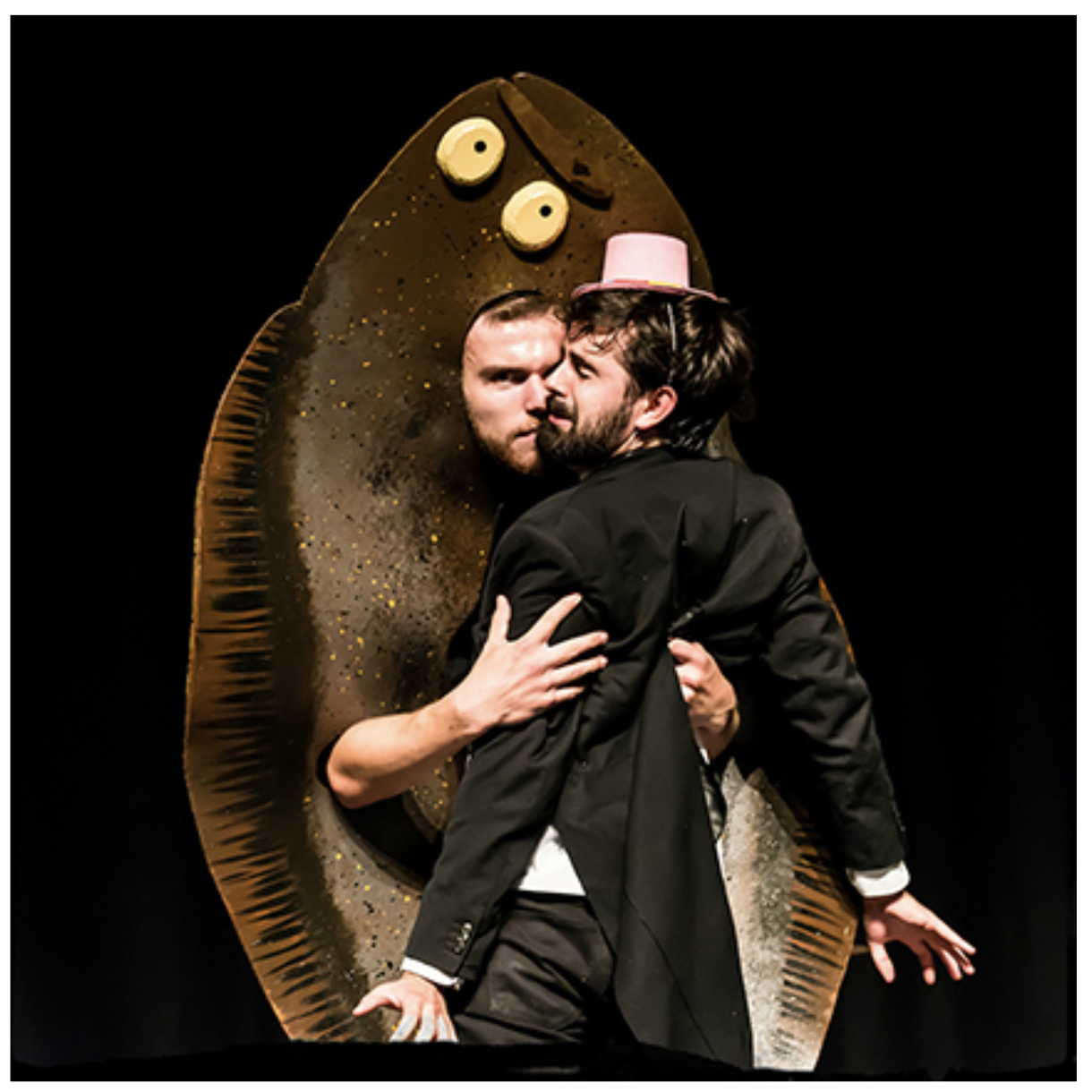

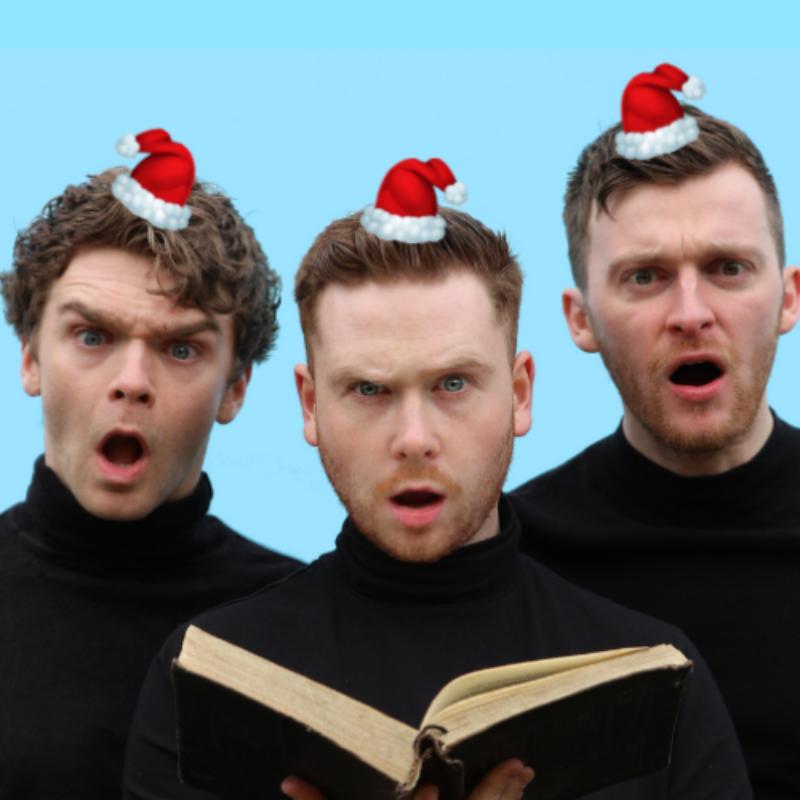
The Space • 14 May 2019 - 18 May 2019

Fanny & Stella: The Shocking True Story

The latest offering in Above The Stag’s main auditorium takes us back in time to a Victorian Working Men’s Club in Bermondsey. There we are introduced to two men – William Frederick Park and Ernest Boulton, more commonly known as Fanny and Stella.Fanny and Stella The Shocking True Story is a truly remarkable, little-known tale of two Victorian performers who spend most of their time on-stage, and off-stage, wearing women’s clothing. The idea of staging this as a Vaudeville performance with the two title characters re-enacting their recent ordeal is very clever and works a treat. The entire show is full of innuendo and euphemism, but with just enough moments of truth and genuine emotion that the important segments really shone whilst still being thoroughly entertaining.Tobias Charles is fresh out of drama school and this is his professional debut, playing the role of Fanny, and a very strong debut this is too! In and out of drag he stayed very tongue-in-cheek and was always in performance mode, which is exactly what was needed for this show. Practically all of the cast perform as multiple roles within this play and Tobias/Fanny’s performance in the courtroom as a witness virtually brought the house down. Playing the other title character is Kieran Parrot, and if there is such a thing as the X Factor then Kieran definitely has it. Stella has a more interesting, and emotional story to tell than Fanny and Kieran truly delivered. He was flirtatious, funny, charming and cutting all at once, yet there was this deep insecurity throughout. When he was in his male clothing his uncertainty of himself seemed stronger still. We were rooting for Stella to truly find happiness throughout the show even though nobody knew what could make her happy, least of all Stella herself. As incredible as these performers were by themselves it was when they were together, singing a Victorian-esque song with colourful language that the theatre became alive. They were a delightful double-act.It is astonishing, therefore, that Fanny and Stella did not completely steal all of the limelight leaving the rest of the cast forgotten and standing as mere props in their tale, but this was a rare case of having a truly ensemble cast, where absolutely every performer had a moment, and all the actors were just as strong as the others.Taking to the stage as the poor owner of the Bermondsey Working Men’s Club, shocked at the outrageous displays and language used on his beloved stage was Mark Pearce. It takes a confident actor to be able to get just as many laughs as the two leads-in-dresses but Mark’s performance was a riot! Thrilled, and outraged to be playing a multitude of barmy and grotesque characters Mark’s final exit got a well-deserved round-of-applause from the audience. He also got to make a startling reveal during the show which was very well executed indeed.Christian Andrews made a wonderful aristocratic fop. His comic timing was impeccable and his earnestness to please Fanny and Stella was sweet to behold. Tom Mann, as Louis Charles Hurt, is the most complex of Stella’s “loves of her life” and portrays his anguish and disappointment very well, whilst keeping within the Vaudeville style of performance. Blair Robertson Fiske gets to show off a variety of accents with his roles but it is his performance as John Safford Fiske which is the most captivating to watch. Being able to appear debonair whilst clearly thinking sordid thoughts – his portrayal of this man was spot on.It should also be noted that the performers were not just great actors but wonderful singers too. I would also like to give a special mention to Aaron Clingham who was on stage throughout, showing off a splendid thick Victorian beard, at a little piano as Musical Director. Fanny and Stella was written by Glenn Chandler (Taggart, Kids Play, The Boy Under the Christmas Tree) who has delved into this time period before with his previous works regarding Jack Saul. The idea to stage this story as a Vaudeville re-enactment by Fanny and Stella was inspired, with some very witty one-liners. Together with Charles Miller they have also created some wonderful songs dotted throughout the show. My personal highlights are Sodomy on the Strand and Has anyone seen my Fanny? but the entire repertoire is pure joy.Steven Dexter’s direction was very well executed. The show is very quick with many actors rushing around playing multiple roles, but not for one second were we, the audience unsure, who was playing who. He also made sure to keep us aware that this was a Victorian Cabaret show. He ensured the cast were constantly ‘performing’ this as a comic tale of Fanny and Stella’s tribulations. The hand gestures and knowing asides to the audience all served as reminders to this play’s true location. Carole Todd’s choreography was just right for the songs.Once again, the Above the Stag’s design team did a tremendous job in transforming the auditorium into a new location. David Shields (designer) and Andrew Beckett (Production Manager) truly took us back to a Victorian Stage in a working men’s club, complete with show posters, and a hand drawn curtain. Chris Withers (lighting designer) and Nico Menghini (sound designer) made this performance work for those of us not used to Victorian Working Men’s Clubs whilst keeping in style of the time.All, in all, this a wonderful hit and a story that deserved to be shared. I want to do a lot more research into this amazing pair of performers. In the meantime, do yourselves a favour. Go and be transported to Victorian England for an evening of delightful debauchery.

Above the Stag Theatre • 8 May 2019 - 2 Jun 2019

Boom Bang-a-Bang

May is here, so we are now in one of the highlights of the homosexual calendar – Eurovision. Above The Stag is commemorating this wonderful time of year by reviving a 1995 play by Jonathan Harvey (Beautiful Thing, Babies, Rupert Street Lonely Hearts Club) entitled Boom Bang-a-Bang. Set in a London flat Boom Bang-a-Bang tells the story of Lee, expertly portrayed by Adam McCoy, who is hosting a Eurovision watching party for his friends and his sister. However, fallouts, accusations and fights soon break out between his pals and it quickly turns into a fiasco.McCoy has the tricky task in this production of playing the ‘straight man’ (so to speak) to which all the crazy things happen around. He is able to remain composed through all the melodrama and doesn’t descend to the madness which many of his co-performers have to. There is a very touching moment in Act Two where McCoy is alone on stage for a dialogue-free couple of minutes and is one of the more nuanced moments in the play.Around McCoy are a gaggle of extreme caricatures. The first we meet is Lee’s neighbour Norman (Joshua Coley). Coley instantly lets us know that this play is to be viewed as an extreme comedy. He had the audience in laughter within seconds of his first appearance on stage and was very entertaining to watch. His eyebrows alone were some of the most expressive I have ever seen, particularly over the top of his round glasses. It was disappointing that Norman was not on stage more often. Christopher Lane plays Steph and very quickly takes over the show. We all know someone like Steph, bitchy about everyone behind their back but equally unkind to their face. Steph is the one stirring up all the trouble and Lane puts in a very commanding performance. Every line and action was delivered with just the right level of sarcastic campness and seemed truly unapologetic for all his words and deeds. Lane is able to portray Steph as very pompous and exceptionally, purposefully over-the-top. We never got the chance to see the softer side of Steph and that's a shame as the character therefore became increasingly two-dimensional and unlikeable. One character that Steph has an ongoing feud with is Lee’s sister Wendy. Wendy is played by Tori Hargreaves and is much more subtly played than others around her. There is a hidden depth behind every line and something mysterious always just below the surface. In the second half of the play, when her character was able to really let loose, it didn’t quite work as she became just as buffoonish as the rest of the cast but she was truly fascinating to watch in the beginning.Sean Huddlestan, as Roy, took a while to find his groove but managed to relax into his character during the second half dancing around the stage and thoroughly having a good time. The final characters we meet are the much-talked about straight couple attending this soiree – Tania and Nick. Florence Odumosu makes the best entrance of all with her loudmouth performance of Tania and arrives into the already extreme character-heavy party like a whirlwind. Nick, despite the big build-up given for his arrival by the other characters, seemed to stumble into the party from a different play altogether. John Hogg gave an accomplished performance but was not able to really make any impression at all until Act Two. Despite Florence’s wonderful arrival both Tania and Nick got lost the mix as their characters were the only ones, besides Lee, who had any real offstage problems and relationships and sadly could not compete with the pantomime performances happening around them.Andrew Beckett did a wonderful job with his direction and set design. The Studio space has been transformed into a nineties London apartment with a sofa in the centre of the stage, pointed towards the TV, and several doors leading off in other directions. The timing of all the comings and goings was well-executed and everything seemed to flow as naturally as possible for a party of this nature. Robert Draper had styled the cast well and Andy Hill’s lighting and sound design simple yet effective.Boom Bang-a-Bang is a hysterical farce and if you enjoy Eurovision or want to reminisce about nineties house parties you will have a riot. The audience member next to me was singing along loudly whenever a Eurovision hit was heard above the arguments. The softer moments, however, regarding Lee’s recently deceased boyfriend seemed at odds with the rest of the play and were frustratingly more interesting than the entertaining circus that was this party. This is probably the reason this particular Jonathan Harvey play is not performed as often as his other work, but it is definitely worth seeing as you will undoubtedly be smiling and laughing throughout.

Above the Stag Theatre • 3 May 2019 - 9 Jun 2019

The Dip

Upon collecting my tickets for The Dip I was also given a pair of earplugs. Indeed, there was a band playing on stage as we took our seats but I did not feel the need to use my gift so I pocketed them. I am very glad I did as every line of dialogue and every song lyric was a joy to listen to! Little did I know at the time but receiving the earplugs was just the first of many bizarre moments I was about to experience that evening!The Dip is presented by a new company called Milk and Blood. This particular production is the brainchild of Eifion Ap Cadno. It tells the story of two friends who, having consumed a large quantity of drinks (and also something considerably stronger), excitedly giggle about baba ghanoush. This leads Al, played by writer Eifion Ap Cadno, to suddenly find himself with the desire to kiss his friend Nick. It is at this precise moment that the trip begins and we are led into a rabbit hole quite unlike any other. Eifion is captivating in the role of Al. He is on stage for the majority of the show and he has the difficult task of attempting to hold the emotional core of the show in place whilst madness reigns around him. His look of utter bewilderment is spot on and we genuinely do feel for Al as he tries to explore his sexuality whilst on a high like no other!Max Young is adorable as Nick. Nick is witty and flirtatious but it is as Nick’s female alter ego Nicole where Max truly shines! Nicole is sincere, yet utterly insane. The looks of disgust and longing she throws towards Al are a joy to watch.Nick Mauldin strikes real presence in all his characters but it is as the terrifyingly odd Captain Flatfish where he reveals himself (maybe a bit too much) as an accomplished performer. Nick totally steals the show in the last few scenes. Also playing multiple roles is Iulia Isar. She pulls them all off with absolute relish but special mention must go to her portrayal of Lips. As the first character in the hallucination she got the tone spot-on and so we, the audience, were more than happy to go along for the ride.William Shackleton is utterly barmy and hilarious as the human embodiment of the aubergine emoji in the role of a policeman - Officer Baba. His interactions with the audience was a sheer delight. Sophie Hammer and Isaac Murphy complete the ensemble. Both played a variety of comic roles whilst being key components of the on-stage band, and they had great singing voices to boot! Sophie is also the musical director and did a great job when equipment failed, ensuring the show continued without hesitation. All the music was exceptionally polished so it’s a testament to her work! Nearly the entire cast doubled up as band members and so would be at the back of the stage playing drums or guitar when not performing, but yet still performing. Even the non-characters had character! Eifion's writing is extremely clever and he knows how to keep an audience entertained but there is also a collaborative feel to this performance and everylne involved has clearly helped shape this show into the madcap story it is now. The Dip is the LGBT+ version of Dude, Where’s My Car? we never knew we wanted but now that it’s here we cannot imagine life without it. Nothing makes sense and yet there is logic to everything. Even as a concept it is utterly bonkers yet completely brilliant. They had to go hard or go home so they went hard and it truly paid off. Sam Edmunds, director, and Becca White, designer, have done a wonderful job with their staging. It feels as if the show was always meant for this space. Nothing feels out of place and yet most things are. The entire auditorium was a colouful joyous mess by the curtain call and it was all the better for it. As an audience member it felt like I had actually been on a strange journey. The songs also were well written and there is one particular lyric I fear I may never get out of my head. The energy was exceptionally high from start to finish. It was clear the ensemble were having a great time and so, by default, the audience did too. I found myself smiling from ear-to-ear throughout. The Dip is a very ambitious outing for such a young company yet one they pulled off with relish. Milk and Blood is founded by East 15 alumni and the cast was made up of students past and present. This production is a testament to their training and should be one which their teachers are proud of.

The Space • 29 Jan 2019 - 2 Feb 2019

Extra Virgin

Extra Virgin tells the story of the awkward minutes after a Grindr hook-up. It begins with an orgasm, but then very cleverly builds up to a much bigger emotional climax by the end of the play. Written by Howard Walters and marking Peter Bull’s return to directing after ten years this is a thoroughly captivating hour of theatre. Noah (James Farley) and Elliot (Alexander Hulme) are about to go on a roller coaster as their past comes back to haunt them, but the question hangs in the air throughout the play ‘is this an anonymous hook-up, or is one of them playing a much more sinister game?’Alexander Hulme is the more masculine of the two characters, the muscular lothario who seemingly turned up for sex and nothing else, yet we can see the turmoil within him, and as Noah’s character pushes him further and further into revealing his secrets his anger is made more believable. His threatening behaviour towards Noah is terrifying, and we genuinely fear for Noah’s safety as the attacks start to get physical.James Farley absolutely shines as the young twink-turned-therapist Noah. His character has multiple layers and throughout the course of Extra Virgin we’re allowed to see the complexity of them all. The emotional punches which hit Noah seem to hit all of us and this is one of the strongest performances I have ever seen at Above the Stag. Timothee Chalamet should be nervous. Whilst Howard Walters’ play is not the most outrageous, it comes from a very real place. The twists and turns might not be total surprises but they do feel as though they belong in the narrative and it is definitely thanks to the entire team that created this production that we are able to be entertained throughout and we hung on every word. Peter Bull’s direction was spot on, too. Most of the action takes place on a bed, and with an audience on two sides they were well positioned to give everyone a great view of both actors whilst keeping the piece looking very natural. It truly felt as though we were spying on Noah’s bedroom. Special mention must go to Andrew Beckett. The set design was, as usual in Above the Stag, stunning. The various posters on the wall, the bookcases, and all the furniture – right down to the bedsheets and cushions, created one of the more realistic bedrooms I have ever seen in a theatre, let alone in a studio space. All the Above the Stag set designers should be immensely proud of their work. All in all this a wonderful hour of theatre, and if you have not yet been to the studio theatre in Above the Stag’s new premises this would be a wonderful fist choice. A brand new work of theatre for a modern audience in one act. If you like thrillers and always wondered how dangerous a Grindr hook up might get you need to give Extra Virgin a watch.

Above the Stag Theatre • 13 Jan 2019 - 10 Feb 2019

BOLSTOFF: A Modern Actor’s Introduction to Advanced Contemporary Performance

In BOLSTOFF: A Modern Actor’s Introduction to Advanced Contemporary Performance the lads from Wicker Socks (Fionn Foley, Michael-David McKernan and Ronan Carey) help guide us through the various acting methods of the much-maligned Hungarian master of bad acting. Using the notebooks they bought at auction they chart various techniques that all budding actors need to get ahead in the tough world of auditions, stage and screen.The central premise for this comedy show is so simple that many will be kicking themselves that they didn't think about it before. It is a great springboard for ideas and allows the lads to have a good range of vignettes but not too broad for them to lose sight of the core idea. Each section deals with a specific acting technique like getting into character or voice work. No technique wears out its welcome and the pace of the show is delightfully fast.It’s a very tight hour and there isn’t a lot of flab during the running time. Some sections feel like they don’t have clear defined conclusions and some comical threads feel like they are left floating in the ether but it could easily be argued that this is done on purpose.During the workshop, there are little character arcs that pay off nicely and it works well to help bring tensions within the group. This extra layer is not needed to make the show work and many would forgo it but it really helps it stand out. There is a great dynamic within the trio and the constant ebb and flow of petty witticisms sets a pleasing rhythm.The internal logic that is set out at the beginning of the show is never broken and shows an incredible amount of either forethought or intuitive nature. Even with the stupidity that plays out on stage, the ever-present character of Bolstoff seems real and it is easy to forget that he is entirely fictional. It is grounded in the tall tales of larger than life characters like Brecht and Stanislavski and for people that regularly have to suffer through am-dram, there is enough spot on swipes that there is a lovingly cathartic feeling to proceedings.Even though it is clearly well scripted it never feels like it and that is a key ingredient in good comedy. It’s densely layered and there are more gags on show than your average Netflix special. It’s either been workshopped to surgical like precision or hectically slapped dashed together, either way, it is brilliantly put together.

Smock Alley Theatre, 1662 • 14 Dec 2018 - 15 Dec 2018

The Boy Under The Christmas Tree

The Kings Head Theatre is once again offering multiple seasonal shows for their audiences to enjoy. Their late night offering this year is The Boy Under the Christmas Tree, written and directed by Glenn Chandler.Glenn Chandler is best known for Taggart - the world’s longest running TV detective series. However, he is no stranger to LGBT+ theatre with his production company Boys of the Empire Productions which is currently celebrating its 10th anniversary. The same company took Kids Play, also written by Glenn Chandler, to the Edinburgh Fringe this year where it recieved numerous 5 star reviews and won the Bobby Award.The Boy Under the Christmas Tree begins as you might expect with Lawrence Bennett discovering a mysterious boy, wearing next-to-nothing, lying beneath his Christmas tree on the morning of December 25th. Who is the boy? Is he alive? How did he get in and what does he want? These are the questions that must be answered but not before a madcap adventure begins. An adventure in which we never leave the confines of Lawrence’s flat. You may, or may not, be aware that there is no Christmas episode of Doctor Who this year so it is apt that we have Glenn Chandler‘s surreal script to fill the void. We are presented with a mysterious quirky Doctor, a colourful scarf, a bowl full of Jelly Babies, an enormous amount of whimsy, a story filled with Christmas magic and a whole lot of heart. This production will have you roaring with laughter and will have you leaving with a warmth inside which even mulled wine cannot compete with.Daniel Grice plays the titular role of The Boy, full of naivety and amazement at the world he has found himself in. His portrayal was full of boyish enthusiasm intertwined with robotic behaviour. Daniel had nowhere to hide as he was on stage for virtually the entire show wearing little more than wrapping paper to hide his modesty. He did well with a character whose background is virtually a blank slate. Jamie Loxton is Lawrence, our viewpoint into this wacky tale. He has a tricky role bridging the gap between the audience’s expectations and the oddities which then occur, but he pulls it off admirably. We never quite believe he is the down-n-out drunkard hinted at in the script as he plays Lawrence just a tad too cheerfully - but on reflection there were not many in the Kings Head audience who would not be cheerful to find a present like The Boy under their Christmas tree. Sam Sheldon has the enviable task of bringing this crazy play to life playing a variety of characters named the Visitations, presumably in a reference to A Christmas Carol. Sam’s expressive face and his on-point delivery was exactly the kick which was needed. He has a very good sense of self and his comic timing is perfect. Sam’s absence was keenly felt when he was not on stage. The energy, and the music, would swell every time he was due to appear. His performance was so good that one of his exits received a spontaneous round of applause from the audience. Though all three cast members gave solid performances there was absolutely no doubt that Sam Sheldon was the star of the show and is a name I will look out for in the future. The set was simple and every prop or piece of set was utilised in some way. The sound (designed by Julian Starr) and the lighting (designed by Jack Wills) were the only indicators we had that the play was about to descend into lunacy, as it swelled with each new visitation that was to come and then later reverting back to the normality of Lawrence’s bare flat. The set could be grander and have more going for it but as the show is currently playing on top of the Kings Head pantomime it was understandable that some concessions had to be made for logistical purposes. Glenn Chandler knows his story is not the most original tale in the world and many films are referenced which follow similar occurrences. This version is almost certainly the most fun. If there is a world in which you can get yourself a ticket then do, as it will be a much happier Christmas for you than in a world where you do not!

King's Head Theatre Pub • 11 Dec 2018 - 5 Jan 2019

Violet

To have an audience hanging on every word you say, for an hour, is a difficult feat indeed. It is one that is managed with aplomb in this fabulous one-woman play. We, the audience, meet Bertie. We have all met many people like her - a bartender down on her luck - but this is the first time we have truly had the opportunity to sit and listen to her tale. We join her at a crossroads in her life and hear her tale of how she met Violet and what occurred. Violet is written and performed by Bebe Sanders. She has cleverly written a tale set in the present, yet has its heart firmly located in the past. Ellie Gauge is the director and designer and has cleverly chosen to stage the play amidst a set made up of moving-boxes and old furniture filled with sand which hints at change, of memories made and memories lost, whilst at the same time keeping the audience always in mind of the beach. The coast, the edge, is a theme that is repeated several times throughout the piece and somehow always conjures up new emotions and feelings each time. It is a testament to the writing how well this is carried off. Bebe’s writing has just the right amount of irreverent humour to balance out the emotional core of the text. There are many lines which have you laughing one second and then crying the next. Only the very best storytelling has the ability to do this so major credit must go to the writing. It is, however, her performance which will be remembered. As Bertie she shines. There is so much charisma and warmth oozing out of Bertie that we cannot help but be swept up and taken on her journey with her. From scene to scene she takes on a story with a lot of heart. Her quick asides to the audience are spot on. She soon has everyone gripped in the palm of her hand waiting for her next deadpan quip. She can be exceptionally energetic when she needs to be (she does need to be) and she can be perfectly still when the moment calls for it. It is in that stillness we hear and feel everything that Bertie is feeling. After an hour in her company we feel that we are truly Bertie’s friends. We know her and the characters that have shaped her life, and we know Violet. Bebe and Ellie have clearly worked extremely well together that the join between the two is practically invisible.A special mention must also go to Julian Starr as the sound designer. The sound cues are delicate but well suited, transporting the audience from day to night and along the coast at the slightest effects which truly help bring this magical tale to life.The set itself is both barren and unnecessary yet somehow glorious and triumphant. A few of the set ‘changes’ do feel slightly clunky and may simply be there as moments for Bebe to grab a breath and get ready for the next chapter but it’s also during these times where we get to see the sand being poured out, which is a beautiful piece of symbolism. My heart goes out to Ben Giles, production manager, who must have swept up so much sand in the course of this production.All in all, I can not recommend Violet enough. This is my first experience of Poor Michelle Productions but I shall very much look out for future productions by this team. The Bunker Theatre too continues to grow in strength with consistently good starting places for new theatrical works. I believe there is a future for this play and I sincerely hope it is good. It is rare to come across a monologue where the writing is this delicate, the performance is this sublime and the production is this powerful.

The Bunker Theatre • 4 Dec 2018 - 15 Dec 2018

A Hero of Our Time

Mikhail Lermentov’s novel A Hero of Our Time has been newly adapted for the stage by Oliver Bennett, who also plays the lead - Pechorin, and Vladimir Shcherban. This is a modern-ish retelling of the Russian story full of current references alongside characterisations that would not look out of place at any local club whilst at the same time not losing any of its heritage.Pechorin, at first, seems to behave like Lord Byron or any other antihero on a particularly bad day. Oliver Bennet swaggers around the bare stage with an intensity like no other as the troubled lothario. As the story continues, however, we quickly realise that Pechorin has so many vices he is beyond any kind of redeeming qualities. The story is told by him. It is through his warped viewpoint that we are welcomed to his world. The production is deliberately Brechtian in its approach, with the audience often made to feel uncomfortable and the alienation effect is put to good use with the audience constantly being taken out of the action to watch events unfold on the stage without any emotional connections to the characters. Realism is not to be found here. James Marlowe, as the unwitting friend Grushnitsky, crosses paths with Pechorin and their comradery soon turns to rivalry as they vie to win the heart of Princess Mary. James is more than able to hold his own against Oliver’s powerful performance with the two bouncing off each other very well indeed. James' Grushnitsky has a wonderful charm about him but as this is Pechorin’s show the audience do not know who they should be rooting for. Scarlett Saunders completes the trio of actors in the dual roles of Princess Mary and Vera. Quickly alternating between the two she makes a very strong debut ably performing as a girl full of innocence and wonder, and a woman who has been betrayed and is full of worldly experience.A Hero of Our Time is not well-known in England. It is not difficult to see why. At the start of the novel the author has inserted a preface to hit back at its critics. He explains that Pechorin is not meant to have redeemable features and is made up of all vices which are present in men. He states that it not his job to present a moral. Lermontov goes on to write “Suffice it that the disease has been pointed out: how it is to be cured-God alone knows!” The team behind this production have taken a similar approach with putting Pechorin’s story on the stage without any comments, reflections or irony. Performing this show now, against a backdrop of the #MeToo movement I cannot help but feel that a trick was missed here. Some of the creative choices also struck me as a bit bizarre with the most heartfelt monologue delivered at first to the back wall, and the second half in total darkness.Robert Martland’s exquisite sound design and Alexis Garcia’s barren stage design really make the most of the Arcola Theatre’s studio space transforming it with the mere flip of a rug, pull of a curtain, or disconcerting sound cue. With the right source material HUNCHtheatre productions will definitely go far. The storytelling style is interesting, and the acting & directing is polished to a very high standard. They are certainly one-to-watch.

Arcola Theatre • 19 Nov 2018 - 15 Dec 2018

Little England

At the exact same time that Theresa May’s cabinet is in turmoil over the UK’s withdrawal agreement with the EU, Golden Age Theatre Company has set up camp in the Museum of Comedy to share their view of the post-Brexit future.Ian Dixon Potter (Writer & Director) is telling a story of a dystopian Little England in the not-so-distant future of Stoke on Trent, 2024. The characters’ views of the referendum, and what came to follow, are very much at the forefront of this production. Brexit is, quite rightfully, shown to be the cause of this Nightmare Scenario and we watch, helpless, as European Heidi (competently played with innocence and frustration in equal measure by Clare Aster) is forced to hide from government officials. Yet the political bias so keenly felt by Ian Dixon Potter is on full display here and it slowly begins to drain away any humour and all the jokes eventually become predictable and, sadly, one-note.Richard de Lisle, as Ralph, is always able to draw attention when he is on stage, rebelling against the authorities, but his character’s relationship with Heidi feels forced and tacked-on with the chemistry not being given enough time to develop, despite their joint-revulsion at the Brexit issue. Julia Faulkner carries the show as Dorothy, with some very witty off-the-cuff remarks, backhanded compliments and misguided moments of honesty but we yearn to learn more about her and her backstory without everyone she meets constantly harping on about Brexit and “foreigners”.Kate Carthy and Albert Clack convincingly portray the villains of the piece as suffering Brexiteers who feel they are on the right side of history despite sending their country, and themselves, down the river. Special mention must go to the unseen Robin Lustig, whose Bulletin news announcements never failed to get a laugh as the line-up of future cabinet members gets bleaker and bleaker. I particularly enjoyed the ominous rewording of TFL’s “See it. Say it. Sorted.” campaignThe writer has some very strong points to make and there is no doubt that this is a story that needs to be told but please put the politics aside for a page or two to give the audience time to fall in love with the characters. There were moments when this felt less of a play, and more of a TED Talk. Daily Mail readers: Enter at your own risk.

Museum of Comedy • 13 Nov 2018 - 18 Nov 2018

The Battle of Frogs and Mice

Choosing to adapt a fairly obscure Greek text like The Battle of Frogs and Mice (also known as the Batrachomyomachia) as a storytelling show for children would be a bold choice for anyone, so it's particularly impressive as a choice for an Edinburgh Fringe debut by Helicon Storytelling, but even more impressive is how excellently they manage to pull it off!This is Fringe theatre at its simplest and most effective. A small ensemble accompanied by a pair of musicians recounting the story of The Battle of Frogs and Mice (a parody of Homer’s Iliad) through a combination of puppetry, song and narration. In a snug space with limited technical facilities, Helicon Storytelling prove that you don’t need flashing lights to capture a child’s attention.The story itself focuses on an unfortunate tragic accident that befalls the Prince of Mice at the hands of the King of Frogs, and the resulting conflict that ensues between these two small but mighty species. Audience members are divided into Team Frog and Team Mouse on the way in, and smaller members of each team are entrusted to keep the puppets safe during the show whilst they’re not being used. This is just one of the many brilliant ways in which the ensemble demonstrated their natural ability to engage with their young audience. When a particularly young child gets upset or cries during your average children’s show, the performers tend to simply power through and the parent might eventually take the child out of the venue. Here, I watched several times as a spare member of the ensemble would quite calmly slip away from the main action of the stage and entertain the toddler one-on-one, before slipping back into the performance.It is this fluidity which is the greatest strength of The Battle of Frogs and Mice. The actors and musicians are very happy to engage with their audience, reacting to their comments and suggestions, and amending their own performance accordingly. All play multiple characters, made easily identifiable by very distinct repeated physical movements and vocal patterns employed by each actor, but also by the simple choice of affixing a new puppet to their shoulder as they changed character.The understanding of both the text and the technique behind the text is evident on the part of the production team. The use of music, seamlessly integrated throughout, is a nice Homeric addition to proceedings, never seeming overused or overpowering as can often happen with a live band, and always adding that extra spark of tension at just the right moment.The Battle of Frogs and Mice is one of those rare shows that really is enjoyable to all ages. From intimate storytelling to a massive ping-pong ball battle between Team Frog and Team Mouse, this is a show that families cannot afford to miss.

Assembly Roxy • 6 Aug 2018 - 19 Aug 2018

Penguinpig

There are times when a particular title will jump out at you and niggle in the back of your brain. If you’re not made even slightly curious by the title Penguinpig, I’d say you were missing out. And indeed you would be, for Penguinpig is a delightful adaptation of the Stuart Spendlow picture book of the same name, brought to the Fringe by Lincolnshire group Barmpot Theatre.Advertised at three to eight year olds, Penguinpig is the story of Sophie, who finds out about a marvellous-sounding creature called a Penguinpig on the Internet. Seeing an advert listing it at the local zoo, Sophie sneaks away from home to have a look, as her loyal dog Spike chases after her to bring her home and keep her safe.Almost everything is communicated through puppets by two strong performers, Isabella Chiam and Aiysha Nugent-Robinson, who deftly switch between the many roles asked of them. The puppets themselves are excellently made; the Penguinpig itself doesn’t disappoint and the design has been perfectly balanced to give you enough of a character without necessarily presenting an entire puppet. Sophie’s parents, for instance, are two pairs of male and female legs respectively, whilst many animals at the zoo are represented only by a paw or a head, but it never feels cheap or like corners have been cut. Instead, the balance between puppet and performer is perfect.Full marks must also go to the set design as a whole. Economical for such a small performance space, it nevertheless conveys everything it needs to. The use of a giant tablet shaped performance space for both regular puppetry and shadow puppetry is a brilliant choice. Plus, the story itself is a refreshing choice for children’s theatre: a story about technology which doesn’t end with the moral “go outside and ignore that nasty terrifying technology” but is rather a more balanced message about online safety in general and the role that parents can play.There are elements of the show that fall into the more traditional "Children’s Show at the Fringe" territory: audience participation, the occasional song, the obligatory reference to dabbing. They are nice enough but occasionally it does feel like some moments are only there because they would be ‘expected’ in a children’s show or to fill a bit of time. Conversely, with the songs, there are not actually that many of them so it is a little bit surprising when one starts. They are performed well, but could have been integrated more seamlessly.Younger children will not worry about such things however. Children toward the top of the advertised age group (seven to eight) might find the show a bit ‘basic’ for them in parts but definitely still enjoyable. I would heartily recommend this without hesitation to any parents with children aged six and under. Charming, modern and relevant, Penguinpig is an excellent start to anyone’s morning.

Assembly Roxy • 3 Aug 2018 - 19 Aug 2018

Rhapsodes

Back for another year, Adam Meggido and Sean McCann of Showstoppers! fame return to wow us with what is possibly the most impressive improvisational feat at the Fringe.In each show, the two men compete and cooperate in their daily endeavour to create a Shakespearean masterpiece from scratch. Naturally, audience suggestions form a key of part of the show, with the main story being inspired by the life of an audience member’s extraordinary relative – in this case, an Irish woman who shot Mussolini. But what really takes the show to the next level is their astounding repertoire of references. They can call up the most obscure allusion in an instant and all within the constraints of iambic pentameter.One extraordinary example involved a section where the pair would get audience members to suggest the first noun that came into their head. They would then expand upon this word, explaining how it related as a metaphor or a simile for the situation that the characters found themselves in. When confronted with suggestion of a cow, McCann not only took it at its base level but burst into a long and elaborate reference about Pasiphae, mother of the infamous Minotaur. The classicist within me did a conga. Such quick thinking is simply jaw-dropping.Modern references and allusions also come thick and fast, with topics like ‘cricket’ or ‘gardening’ proving no barrier to the pair’s skills. Improvised Shakespeare is not the only thing you’ll be getting for the price of your ticket. Pinter, Poe and Chaucer’s styles and schemes are also utilised throughout. Meggido shows a particular ability to manufacture pairs of rhyming couplets for words that you think shouldn’t even work but somehow do.Whilst Showstoppers! will always draw in the crowds (and rightly so), I can’t help but think that Rhapsodes might be a greater expression of improvisational skill. In many ways, it is beyond comparison. This show needs to be seen by everyone. There is no reasonable excuse for not going.

Pleasance Dome • 14 Aug 2017 - 27 Aug 2017

Julius Caesar

All-female Australian group Essential Theatre present their own gender-swapped take on Shakespeare’s classic. An intriguing concept, the production itself shows flashes of brilliance but also plenty of missed opportunities.Shortened to an hour and fifteen minutes, the story follows Brutus and Cassius plotting to prevent Caesar being crowned Queen of Rome. As is necessary for such a shortened production, bold cuts to the script have been made. Much like the show itself, these cuts vary in their effectiveness. Those that work best include the removal of Calpurnia (who is simply mentioned offhand by Caesar); the number of conspirators has rightly been reduced, and the pacing of the play up until Caesar’s death works wonderfully. It is these early scenes which show the play at its best.The more questionable cuts include the removal of Portia. Her absence severely undermines a passionate argument between Brutus and Cassius which is usually provoked by her death and typically serves as an important point of character development for the two characters. There are some odd things that aren’t cut. Despite the shortened running time, we’re still treated to the frankly unnecessary death of Cinna the poet but we don’t get to listen to Antony’s famous “Cry havoc!” speech.What will perhaps be most jarring to fans of Shakespearean metre is the inconsistency with which it has been edited to fit this new setting. Sometimes it’s been edited very effectively; the word ‘King’ becomes ‘Queen’, ‘man’ becomes ‘woman’ and so forth, which works very well. Yet sometimes this editing feels too haphazard; Antony’s famous line “For Brutus is an honourable man” becomes “For Brutus is honourable” and, for anyone familiar with the script, it jars horribly every single time you hear it.Similarly fluctuating is the quality of the blocking. Sometimes, the use of the round is perfect; the actors have been placed in ideal positions, visually interesting to everyone on all sides. Yet when it comes to delivering asides, some of the actors suddenly circle around the stage repeatedly, attempting to look every audience member in the eye as quickly as possible. Watching Antony’s funeral speech is like watching Mo Farah run the 10,000 metres, though without the emotional stakes. Brutus and Cassius’s respective suicides also lacked the required emotional resonance which rather undermined their deaths and indeed the entertaining first half of the play.Despite these problems, there are moments of excellence. Alex Aldrich’s Casca is superb; her explanation of Caesar’s refusal of the crown is one of the highlights of the play, delivered with exactly the right amount of comedy and sincerity. Helen Hopkins as Caesar is also exactly as imposing and dominant as is required of the character. The costume design is excellent, managing to simultaneously evoke both a Roman and a timeless aesthetic.The scene that sums up the production as a whole is that of Caesar’s death. The tension is excellently amped up and the lighting fades to present an excellent still image as the conspirators getting ready to strike. Yet when they strike, it feels clumsy. After being stabbed multiple times, Caesar still staggers around the stage to deliver her final lines before collapsing like a sack of potatoes. It’s a tad underwhelming and, what’s more, frustrating given the successful nature of the build-up.Julius Caesar is a play which, after a strong start, stumbles before it reaches the finishing line. Defeat is snatched from the jaws of victory but it is still entertaining to watch, showing so much potential and occasionally hitting it. 

theSpace on Niddry St • 14 Aug 2017 - 26 Aug 2017

The Tales of Peter Rabbit and Jemima Puddle-Duck

You would be forgiven for thinking that a production of The Tales of Peter Rabbit and Jemima Puddle-Duck performed in a circus tent might involve people dressed up as the characters acting out the tales. Indeed, this seemed to be the popular opinion in the queue before we entered. But this production is actually a storytelling show, accompanied by a small classical orchestra. It’s not a bad show by any means, but it might not be the one that you were expecting.Performer Michelle Todd is a charming and engaging storyteller. Dressed as Beatrix Potter, she narrates and sings through the two tales with gusto and sounds exactly like a children’s bedtime storyteller should sound. The Children’s Classic Concerts Festival Ensemble do a good job too; there was little to fault with their musical performance.But despite large cut-outs of Peter Rabbit and Jemima Puddle-Duck sitting by the stage, this is as much as we get. Whilst many children sat and listened politely, there were a significant number of others whose attention waned and who ended up crawling around the tent. The production itself even seemed to anticipate this by handing out activity sheets to all the children as they entered, as if they knew they wouldn’t be able to focus on the show itself. This almost seems like admitting defeat.There was plenty of padding and filler in the show. The compere did a decent job talking to the children in between tales and we were introduced to the percussionist who talked about hitting things for a while, but it all felt a bit like cruise-ship entertainment or a children’s holiday camp during these moments. The pacing of the piece suffered badly as a result.This show would be suitable for quieter and thoughtful children; the sort who are satisfied with purely musical stimuli and who don’t require any sort of visual accompaniment. Exhausted parents looking for something unchallenging might also enjoy themselves. But those children bursting with energy and excitement to see Peter Rabbit onstage might be disappointed.The Tales of Peter Rabbit and Jemima Puddle-Duck is essentially the audiobook version of Beatrix Potter’s tales with a small live band, and that might sound ideal to some. Just don’t go expecting to see some cuddly versions of your favourite characters.

Underbelly’s Circus Hub on the Meadows • 5 Aug 2017 - 26 Aug 2017

Bacchae

Both faithful and frantic, young company Flying Pig Theatre have produced a very satisfying version of Euripides’ Bacchae with a deft touch.It is worth noting that, despite being advertised as being transported to a crumbling Victorian mansion, this doesn’t really appear to be the case in any form or fashion. But it also doesn’t really matter. The brains behind this production, Catriona Bolt and Jonny Danciger, have clearly read their Euripides well and know how to exploit it to its full potential.Particularly impressive are the chorus sequences, transformed into impressive cult-like dances with the exact amount of fury and frenetic energy required to pull it off. Danciger has chosen the singing style well and a microphone at the back of the stage is cleverly used to allow words of the choral odes to be heard over the chanting and stamping. It’s also utilised well as part of the overall sound design, whether to mimic the sounds of birds gently in the distance or popping bubble wrap to create the effect of rustling leaves.If this energy is where the production is at its best, it is perhaps at its weakest when things become quieter for the last 10-15 minutes. Agave, played by Rosa Garland, was very impressive throughout the show, but the directorial choice to switch back to a quieter and more naturalistic scene hindered her and jars with the tone of the rest of the piece. The pacing also suffers here, and seemed to directly contribute to the show overrunning.Some of the actors aren’t as confident acting individually, certainly not compared to their own standards as the chorus, but the ensemble members as a whole are confident and impressive. Jonny Wiles was particularly good as Dionysus and I wanted to see much more of Francesca Amewudah-Rivers as Tiresias, though of course the script only allows for so much stage time for Tiresias anyway. The pair playing Dionysus and Pentheus alternate each night, which I imagine helps keep the production feeling fresh each night. Sam Liu was a fine Pentheus on the night, but before they even announced the alternation at the end of the show, I had the suspicion that he might have made a quality Dionysus. So much so in fact that I’m tempted to return another night.This really feels like a production by people who enjoy and respect not only Euripides’ original play but Greek Tragedy as a whole. It is strongly recommended to anyone with even the slightest interest in the ancient world.

theSpace @ Surgeons Hall • 4 Aug 2017 - 26 Aug 2017

The I Hate Children Children's Show

Magician Paul Nathan returns to Edinburgh once more with The I Hate Children Children's Show for an hour of interactive magic, name-calling and the occasional glass of champagne.The show has been a staple of the Edinburgh Fringe for many years and it’s clear to see why. Nathan is clearly in his element when interacting with children of all ages. Though the show’s name obviously hints that the children will be teased mercilessly, he has the canny ability to judge the reaction of each individual child and knows when to rein it in. He is in every way a calm, confident and likeable performer.In many ways, this is a very traditional children’s show: lots of audience participation, a menagerie of magic tricks and much applauding of each individual participant throughout. The routine is very well practiced and certainly works it spell on most of the audience. It is perhaps too traditional in that sense for teenagers; the few over the age of 12 who came onstage were significantly more awkward about it, as if they didn’t want to seem childish. This is perhaps understandable, especially when sharing a stage with five year olds. Nathan, to his credit, doesn’t let it knock him off his stride.There is a bit too much pitter-patter and audience back-and-forth between tricks. It feels like a long time before we see a trick and, over the hour, the number of actual tricks performed is limited. They are all, however, very clever so this could be considered a case of quality over quantity. Whilst it is the magic and the chance to participate that captivates most of the kids, Nathan’s jokes tend to be for the benefit of the parents (much like the champagne he hands round at the beginning). For the most part, they land well. One oblique reference to Nazi Germany toed the line however, as evidenced by the ripple of nervous laughter from the audience that followed.Perhaps this is evidence that the team are a bit too comfortable with the show and the time for further innovation and reinvention may be ripe. But The I Hate Children Children's Show is still very recommendable to all families, particularly those with children under 13.

theSpace @ Surgeons Hall • 4 Aug 2017 - 26 Aug 2017

The Gin Chronicles at Sea

Interrupt the Routine returns as 1940s radio group The Misfits of London for another highly enjoyable adventure of The Gin Chronicles.This year’s instalment is The Gin Chronicles at Sea, where protagonists John Jobling and Doris Golightly set off on an Atlantic cruise to take a break from their amateur detective escapades. But, of course, things are never so simple and the pair soon find themselves embroiled in a quest to hunt down the recipe for the best gin in the world, as approved by the King himself.For those unfamiliar with the group, their shows are presented onstage as a live broadcast of a brand new radio play, heavily sponsored by Gin & Tonic companies. The talented cast of four play 1940s actors who then play all the characters in the radio drama, displaying an impressive amount of vocal skill and variety as they often end up having conversations with themselves.The group is rounded off with a fifth member, who produces all the sound effects for the show, by hand, throughout, ranging from coconut halves for horses hooves to blowing into a bowl of water and hitting themselves with a leek for an old-fashioned car. As ever, this setup is delightfully entertaining and, with cue cards held up throughout prompting the audience to gasp and cheer, it’s quite easy to forget that the play isn’t actually being broadcast.It does take a little while to get going. The script isn’t as tight as it has been in previous years. The first half has a rather slow build-up and a number of the early jokes don’t land in quite the right manner. In particular, an over-the-top great aunt hits the radio play actors with an inflatable fish which sounds hilarious but doesn’t seem to fit in with everything else. But things soon pick up steam as the pair of them reach their intended cruise ship and we’re introduced to the colourful ensemble of bizarre and wonderful characters joining them on their holiday.The Gin Chronicles at Sea is still a must-see for returning fans of the company and people new to the concept will enjoy themselves thoroughly as well. The free Gin and Tonic upon entry will see to that.

artSpace@StMarks • 3 Aug 2017 - 19 Aug 2017

The Wonderful World of Lapin

Gentle and well-meaning, The Wonderful World of Lapin is a good attempt to introduce young children to the French language.Performer Tania Czajka begins by revealing her prize carrot, which she is growing in hopes of entering the Tastiest Carrot Competition. Unfortunately, Lapin the Rabbit and other creatures of the garden are far more interested in having a nibble themselves. This is as far as the plot goes. The rest of the show involves Czajka, who also acts as the puppeteer for all the creatures, stopping their repetitive attempts to eat her carrot. Repeated musical leitmotifs are used to great effect as each is associated with an individual creature, assisting the children in keeping track of the animals if they have trouble associating them with their French names. Indeed the whole sound design from Nik Paget-Tomlinson and Niroshini Thambar is gorgeous, with well-chosen background sounds accompanying the music. The set, designed by Iain Halket, is similarly impressive. It is simple but effective, being both utilitarian and pleasing to look at.But ultimately, there was more that needed to be done to fully capture the imagination of the children. There was no meaningful audience interaction until the last 10 minutes of the show and I feel this needed to be introduced a lot earlier. Up until that point, many of the children in the audience had been slightly restless. Czajka is a charming and entertaining performer, but a second actor or second puppeteer would have allowed a more engaging dynamic to develop onstage. Trying to simultaneously act, teach French and puppeteer at the same time ultimately means she is stretched too thin. A dedicated puppeteer would have freed her and allowed her to reach her full potential.The setup is perhaps a bit too simple for 7-8 year olds, the top bracket of the show’s advertised age range. With a slow pace, the show feels very sleepy and a bit too gentle to properly engage its audience. That having been said, the production succeeds in introducing children to basic French and is certainly recommendable in that regard.With a bit more content and a bit more ambition, this could be a show to watch out for in the future.

Scottish Storytelling Centre • 3 Aug 2017 - 27 Aug 2017

The Damned United

Powerful and demanding, Red Ladder Theatre Company’s production of The Damned United is every bit as belligerent and uncompromising as the protagonist of its story.An adaptation of David Peace’s novel of the same name, The Damned United tells the story of Brian Clough’s doomed 44 day tenure as manager of Leeds United. Interspersed with flashbacks to happier times when he was manager of Derby County, the show presents a picture of a proud man thoroughly unashamed of his own ideas, though perhaps too unashamed for his own good.Luke Dickson, David Chafer and Jamie Smelt are a strong ensemble of performers. Dickson is utterly believable as Clough, at one point sitting in for his real-life counterpart in a famous argument with Clough’s nemesis Don Revie, who appears in an actual television clip from the time. The play is at its best when Dickson stands together with Chafer, who plays Clough’s assistant manager at Derby County, Peter Taylor. As they stand on the touchline narrating the events of a number of famous matches, it’s impossible not to be swept up in the action of a match even though the result was decided over 40 years ago. The trio all enjoy and know their football, or at least convincingly give that impression, and it shows in the strength of their performances.The script definitely assumes familiarity with the story at hand. People unfamiliar with the tale may have a hard time initially piecing together the timeline of the play, which rapidly switches between Clough’s tenures as Leeds United, Derby County, and Hartlepool manager respectively. People unfamiliar with the world of football and who have no idea what Leeds United, Derby County or Hartlepool are, will have an even tougher time sinking into the story. But this is to be expected; the show makes no apologies for what it is and will appeal all the more to football fans because of it. In addition to this, the story is ultimately more about Clough as a character than it is about the world of football, and there is much to recommend for everyone in that regard.The Damned United will appeal to any football fan worth their salt, particularly those who remember watching Clough’s teams and their unique style of football. The non-initiated may have a harder time, but will still ultimately leave with a firm sense of satisfaction.

Pleasance Courtyard • 2 Aug 2017 - 28 Aug 2017

Creatives

At a college songwriting class in Chicago, an end-of-year competition involves the students performing each other’s anonymous submissions for a celebrity guest judge. It’s like no contest I’ve ever heard of in real life, and there’s something gloriously petty about the characters’ investment in it – it’s all very musical theatre dahling. The book writers seem uncomfortable to leave it that, however, rather feebly upping the stakes by repeatedly emphasising that the prize is five thousand dollars until it takes on shades of RuPaul’s ‘one hundred thousand dollars’ catchphrase.Although a jarring final act pulls the story into much darker territory, Creatives is so bursting with ideas that it’s hard to identify a meaningful thematic throughline. Each student embodies a different stereotype, because musical theatre dahling and this competitive song-swapping has the potential for these to be explored in interesting ways. Insta-famous in particular was an interesting attempt at updating When You've Got It, Flaunt It from The Producers for the Kardashian age. Sex tapes can pay for mortgages now, though I feel obliged to point out that most of them do not.The cast really sell what they’re given, which is particularly impressive in the case of Jay Cullen as a sort-ofgay village-idiot character and Zoe West as a fake-left butch lesbian. In a way, it’s refreshing to see unlikable portrayals of gay people in a musical. Singing is strong across the board – with Vasily Deris and Martina Isibor standing out for their great voices – though the music and lyrics they sing are mostly unmemorable.Tyler Fayose is truly magnificent as Sean O’Neil, an obnoxiously smooth, white-friendly hiphop bro. His opening number, On the South Side, is a good parody of vacuous, white-friendly hiphop. Omar Baroud portrays the festering resentment of the nominal lead with sensitivity, and he really comes alive when singing, but his characterisation was ultimately lost among the more heightened musical-esque performances around him. Though not as lost as one cast member, who kept delivering lines with their back to the audience.Creatives is billed as a ‘dark, comic pop opera’, which makes it sound like a slightly abstract musical about advertising executives. It is none of those things. It certainly isn’t an opera, nor is it reliably comic, and its lack of focus undermines any darkness. There’s a lot of interesting material here which could be reworked into something more coherent, but in the meantime the show is being propped up by the talents of its hardworking cast.

Pleasance Courtyard • 2 Aug 2017 - 28 Aug 2017

Future Perfect

Tall Stories return to Edinburgh for their 20th birthday with an updated version of Future Perfect. Pitched at children aged 6 and above, Future Perfect is an enjoyable 45 minutes with a wholesome moral and traditional setup.Dominic (played by Andrew Mudie) is a ten year old boy who regrets a decision he made in the past. Luckily for him, he meets a Time Agent (played by Sophie Alice) and it’s surely just a question of nipping back in time to fix the problem! Not quite. Dominic soon learns that he can’t change the past. The future, however, is very malleable.The production gets to this point quite quickly; Dominic is repeatedly told by the Time Agent that he can’t change the past but tries anyway. This use of repetition, combined with the simple nature of the moral, is very effective in getting the message across to the younger children in the audience. In a space no bigger than a corridor, Mudie and Alice capture their young audience’s imagination with their travels through time and prove to be a pair of very capable performers.Audience interaction features heavily throughout the show. Twice, the show indulges in a long pause for children (and adults) to write down things that they hope for in the future or regret in the past. The very word ‘regret’ proved to be a bit of sticking point for some children unfamiliar with the word, but the sequences worked very well over all. The show was confident enough to explore the ideas of the children and was all the stronger for it.I wonder if this confidence could have been displayed at another point of audience interaction. Several times, volunteers being asked to play versions of Dominic from different times in his life. Many of the children were keen and stepped up wonderfully to the challenge. Each time, they were presented with books containing a simple set of instructions for them to follow during the scene. For the most part, the scenes played out just fine but there was potential there to explore further and to allow the children a bit more free rein rather than having to remain mostly mute. Given how creative their ideas had been earlier, I was hoping to see more.But Tall Stories are very experienced at what they do and this shows in their presentation. Minimal props, set and costume remain enough to enchant their audience, especially when combined with a few moments of excellently chosen sound design. Whilst perhaps not as awe-inspiring as some of their previous shows, Future Perfect remains an excellent choice for any family with young children. 

Pleasance Courtyard • 2 Aug 2017 - 20 Aug 2017

All Quiet on the Western Front

Incognito Theatre’s adaptation of All Quiet on the Western Front is a solid, if predictable, production which ticks all of the necessary First World War boxes.Being an adaptation of Erich Remarque’s 1928 novel, it’s not hard to see why this might be the case. After all, just about every First World War drama has taken inspiration from it and its famous film adaptation in some way or another, meaning that all of it tropes are exceedingly well worn. Whilst the male ensemble do a good job in presenting a faithful adaptation within the constraints of an hour long running time, that’s about all they have the time to do.Incognito’s production attempts to blend elements of physical theatre, caricature and naturalism together, with varied results. The slow-motion physical theatre, for instance, looks impressive against the smoke and soundscape the first time you see it, but drags after a while and by the end feels like it’s just being used to cover scene transitions. It’s rarely varied in its attempts to portray the horrors of the war, involving a lot of screaming and gnashing of teeth, and all in all it feels like it’s trying a bit too hard.For a novel all about individual characters, it’s also rather difficult to keep track of who’s who. Characters are frequently swapped in and out of the story, and it’s only really when the ensemble portray extreme physical caricatures of particular characters that any sort of impression is made. One early scene portrayed the almost traditional scene of a group of soldiers visiting their friend who had recently has his leg amputated, but given that we’ve had little in the way of grounding for the characters by this point, it doesn’t strike the emotional gut punch that it should.The ensemble’s strength is in finding the comedy of these characters. When they’re joking, laughing and enjoying each other’s company onstage, suddenly these previously underdeveloped characters spring to life. A particularly enjoyable scene where the group discuss the various different methods to cook a pig in the middle of an artillery strike is perhaps a glimpse of what might have been. Another nice touch was the wide variety of British accents used to portray these German soldiers, a subtlety that I wish had been present in other parts of the play.Ultimately, if you’ve seen Journey’s End or any other First World War drama, then you’ve probably seen this show before, perhaps performed with a bit more nuance. All Quiet on the Western Front is so keen to tell us that the First World War was bad, but this is something that anyone who’s had a history class in school already knows and it doesn’t try to explore much else. Despite this, the ensemble are a talented bunch and are worth a shot for any keen history buff. 

Pleasance Dome • 2 Aug 2017 - 15 Aug 2017

David Walliams' The First Hippo on the Moon

From the team behind Captain Flinn and the Pirate Dinosaurs comes a brand new adaptation of David Walliam’s children’s book The First Hippo on the Moon. The ensemble of Les Petits has produced an entertaining, if formulaic, show for children.The story follows Sheila the Hippo, who is desperate to be the first Hippo on the Moon. Despite lacking the resources of her hippo rival, she recruits her friends in the jungle to build a wooden rocket for her and then help her power it through poo. It’s a simple yet effective storyline, filled with all the necessary moral messages about friendship and so forth. One box ticked.In some ways, it’s as if an entire Edinburgh Fringe Children’s Show checklist has been ticked off. Silly musical numbers? Check. Lots of references to poo? Check. Beautiful puppetry? Check. None of these are necessarily bad; in fact, they’re all done rather well and the performers must be credited for being able to maintain the energy and enthusiasm necessary to sell it. However, parents who have watched enough children’s show at the Fringe would be forgiven for thinking they might have seen this show before.For a show designed for a younger audience, there are perhaps a tad too many jokes and references aimed at adults. How many of these are carried over from the source material isn’t clear, but a particularly unsubtle Donald Trump reference feels as unwelcome and unnecessary as the man himself. Whilst most children paid attention to the show, several were fidgety throughout, not quite connecting with everything going on onstage.There are also a few issues with staging, with a lot of porcupine puppet action happening on the floor below most people’s eye line. Sitting in the middle of the second row and being several heads taller than their target audience should have prevented any visibility issues for me, but even I had trouble seeing things from time-to-time.Most of the puppets however were more than large enough and were utterly fantastic. Particularly impressive was the ostrich puppet, but all the puppets were clearly made with great skill and craftsmanship. In fact, puppetry was the strongest element of the play overall. News segments and a race through space were skilfully presented with a slick combination of lights and sound as the puppets appeared to increase in size due to well-choreographed handovers of gradually larger puppets between the actors.It’s perhaps time to mention the anthropomorphic hippo suit worn by the protagonist throughout the show, which looks like it came straight out of a 90s TV show. This would be fine in itself, but it has a mechanism where the mouth of the costume moves as the actor speaks. However, this is very rarely in time with any actual speech and thus is incredibly distracting (and slightly disturbing) to watch. They would have been better just keeping the mouth static. This would have allowed us to instead to focus on the actor’s eyes, which were cleverly visible through the costume and allowed a great expression of emotion.Ultimately, David Walliams' The First Hippo on the Moon is a solid and safe show, albeit one lacking an edge or a sense of risk. For a Children’s Show, that’s not necessarily a bad thing; parents often crave that guarantee of safety. But for children who have already seen several Fringe shows of the same type, this might not be anything new.

Pleasance Courtyard • 2 Aug 2017 - 20 Aug 2017

The Voice Factor [X]

The Voice Factor [X] is the playwriting debut of Michael-David McKernan, an hour of sharp satire and musings on the nature of fame for those that are unprepared for it.The tale charts Quincy's rise through a televised singing competition. He's a young lad from Swords and at first, he is uninterested in the competition, since he was signed up as a prank by his friends. When things start to go well, he finds himself drawn into the seedy world of talent competitions.McKernan also stars as Quincy and it is an interesting choice of character. He's unremarkable, that mate that still works in the local and you don't think about him unless he's right in front of you. His initial trepidation of involving himself in the vice-ridden world of reality TV helps ground the character in the audience's mind. So, when he makes his inevitable fall from grace it's more poignant. It's all basic Hero's Journey stuff, but here it works. McKernan makes the character likeable and familiar. Both through the acting and the script I was constantly reminded of Renton from Trainspotting.All the other characters are played by Daryl McCormack and he brings plenty of talent to the production. In opposition to Quincy's laid back nature, those that he interacts with are outrageous caricatures, all gargoyle grimaces and over the top accents. Usually, I'd lambaste this amount of scenery chewing when attempting comedy but it works a treat and there is plenty of snappy jokes throughout to enjoy. McCormack does get one subtle character as Quincy's dad, and these moments of reflected solemness really add emotional weight to proceedings.You'd think in a show about a talent competition there would be some singing and dancing but thankfully it is avoided here. Whether through chance or design this helps drive home the message that these programmes are not really about the music, but about the characters. Though the music that is heard underpinning certain scenes his class act in subtly.The Voice Factor [X] is a solid show from a talented bunch and is certainly worth your time.

The New Theatre • 9 Jan 2017 - 20 Jan 2017

God Has No Country

Written and performed by Donal Courtney, God Has No Country is the story of Hugh O’Flaherty a priest from Killarney that saved 6,500 lives in Rome during World War 2. This one-man play charts the true story of O'Flaherty through his early years, through his time at the Vatican and some of his latter life back in Ireland. O'Flaherty tasks himself with setting up an underground network to help those fleeing the Nazi's.The script is pared down to the very basics and it works remarkably well. Courtney has clearly researched the man and his life with great care. Writing such a play it would be easy to get distracted in recounting some astounding stories, with O'Flaherty the idiom "truth is stranger than fiction" holds true. But it focuses on what we need to know to keep the plot moving forward. While the characters journey is very pleasing he lacks a strong opposition. At first, the Nazi presence is faceless, an unknown horror. This works because he is fighting in a metaphysical realm, quite apt for a priest. But as O'Flaherty becomes more renowned he finds himself under the gaze of Herbert Kappler chief of the Roman SS. The later part of the play revolves around their relationship. Historically it makes sense that he is introduced when he is but it becomes such an important part of the production that you can't help but feel that it maybe should have been introduced earlier.Donal Courtney is a talented actor, he's put all of his heart and soul into this play and it really shows. He does a great job of inhibiting O'Flaherty and although it seems restrained there is a lot going on under the surface. There are many great theatrical flourishes that help ensure the show doesn't become an hour long monologue. During the course of the play, we occasionally are introduced to his allies and enemies that help or hinder his efforts, all played by Courtney. They are all distinct and shows he has a master of physical acting.God Has No Country is a great tale told by a fantastic storyteller and is certainly worth seeing if only to learn about the fascinating character that was Hugh O’Flaherty.

Smock Alley Theatre, 1662 • 7 Nov 2016 - 10 Nov 2016

The Quare Fellow

Money For The Sun's production of The Quare Fellow is an astounding bit of theatre. Written by Brendan Behan and based on his time spent in prison, the play revolves around the final days of a condemned man in Mountjoy prison. The Quare Fellow as they call him, much like Godot, (spoiler warning) never makes an appearance. Instead, we are treated to a myriad of prisoners and guards as they discuss and deal with the realities of prison life and the consequences of the death penalty.The production has certainly arrived at the right time, the script is from the 50s and maybe 10 years ago some of the topics would have seemed a bit outdated. But with things as they are and as they are going, topics like the Anglo-Irish Trade War suddenly take on new dimensions. Though the central themes of the play are timeless.The first act is quite simply hilarious. It is filled with plenty of gags and japes with a real sardonic wit. It works so well it feels like Dick Clement must have seen it and said "that would make a great sitcom". As the play progresses it becomes slower and more thoughtful. The changing in pacing works well to show the strain of the situation on the characters. We come to release that the jokes were gallows humour and as the time draws closer it is a coping mechanism that doesn't work so well. A great script is useless without the cast to pull it off and this production is swimming in talent. There is a good mix of stage acting styles on show. Even though some characters appear for bafflingly brief times, the cast ensures each character is memorable. This is Money For The Sun's first production and it is one hell of a calling card and certainly a production company to keep an eye on. If you are looking for some classic theatre with a contemporary feel or just want to see cracking good show The Quare Fellow is for you.
Smock Alley Theatre, 1662 • 18 Oct 2016 - 22 Oct 2016

Abberline's Artefact

Chief Inspector Abberline is known as the man that failed to catch Jack the Ripper. In what was once his house, retired shopkeeper John Davis finds that the former policeman’s soul cannot rest with the guilt of failing to stop the serial killer. A fine idea for a story, but a shoddy script coupled with lacklustre tech leads to a unsatisfying production.Jan van der Black is a fine actor and there is a distinctive feeling to the characters he plays. The physicality of both characters are distinct and it’s a shame that this is not utilised more. But without a better script there isn’t much to be done.The initial mystery works, the character trying to deal with his blackouts has great potential, but after Abberline appears it's sidelined and no resolution is given. It’s completely superfluous and it would be better just to concentrate on one character. But from the titular character's arrival the play starts to descend into a mundane extended monologue. The Ripper murders are endlessly fascinating and it's been the vehicle for many great works. I appreciate that they try and take a less titillating route, but the production fails to shine any new light on the incident.Quite often, the fact that between five or eight women were brutally murdered by the Ripper is used for merely for plot purposes. Abberline’s Artefacts tries to take a more tactful route, but by doing so only reinforces this trend. Abberline carries guilt but is absolved by the canonical five in quick succession as they tell him it wasn’t his fault. It’s hollow and rushed and provides the real low point of the production.We hear the Ripper victims talk to Abberline through tech ques, but they all sound like the same person putting on a variety of not very good accents. The voice acting is poor and there is a lot of cringe worthy ‘cor blikey govener I’m getting stabbed!’This is sadly a hollow production that fails to say anything meaningful on Abberline, the Ripper or any of his victims. 

SpaceTriplex • 22 Aug 2016 - 26 Aug 2016

Shoot the Women First

Shoot the Women First revolves around a mercenary company. Starting from their first assassination it quickly moves to a job in the Middle East which quickly starts to go wrong. The show is full of potential. It’s got plenty of good gags, but a lack character development and meaningful structure means it sadly misses its mark by a fair margin.The script is filled with good jokes; it's not a laugh a minute but it’s funny when it really wants to be. Dark humour abounds and it can be quite crude, fitting in well with the characters and the world that they live in. Unfortunately, it's not enough to carry the show.Simply the acting isn’t good enough and maybe in the hands of stronger performers this show would have worked much better. Both actors seem to have a lack of confidence in the material. A handful of awkward pauses, coupled with a lack of emotional resonance when it matters, slows proceedings to a snail's pace. It’s like having a John Pilger novel read at you.The plot is inserted far too late in proceedings, so the ending can’t help but feel rushed. We are promised hard-hitting unlikeable characters. It delivers on that, but by the closing we are asked to feel pity and empathy with them. With some backstory or explanations for their actions, it might have worked. As it is, they just come across as unlikable profiteers in unlikable jobs.Hardly any time is given to explaining what is being satirised. Those without the knowledge of the private global military industry and their blight on this world might feel lost and confused. I really wish this show had utilised its potential; with a rewrite and stronger performers it could be a hard hitting bullet of satire. As it stands, it's more of a wet flannel of disappointment. 

The Stand Comedy Club 5 & 6 • 16 Aug 2016 - 28 Aug 2016

Colin Hay: Get Rid of the Minstrel

Most will only know Colin Hay from his time as the frontman for Men at Work and appearing in an episode of Scrubs. For those willing to delve into his back catalogue they will discover a strong songwriter with a sardonic wit.In Get Rid of the Minstrel, we are treated to some of Hay’s most famous work in familiar and unfamiliar forms. Between the songs we are recounted with stories, anecdotes, and quips. He is joined onstage by a band including guitarist San Miguel Perez. There is a good selection of songs spanning his career, including his most famous. With such a long career, some people's personal favorites might not make an appearance, but this a setlist with broad appeal. Despite the many great songs to be heard it’s actually a cover of AC/DC that provides the highlight, a song I’ve previously despised.A good chunk of the songs are standard renditions but a few have been literally jazzed up. It's a good mix of the familiar with new flavours. Down Under serves a springboard for each member of the band to sidle into solos. Hay is originally from Scotland and although he didn’t spend much time here, it certainly seemed to form his sense of humour. Although he doesn’t delve too deeply into his life, it’s good to hear some context for what was happening when he wrote his songs. The story of his dad singing in the car is a real delight and plenty of wry jokes are scattered throughout the show to brilliant effect.This is a great show to delve into if you want to get a broad overview of the artist’s work. For fans of Colin Hay, it strikes a perfect balance between the new and the familiar.

Gilded Balloon Teviot • 15 Aug 2016 - 28 Aug 2016

Henry Rollins – Charmingly Obstinate

The force of nature that is named Henry Rollins graces the Edinburgh Fringe once again, bringing with him another hour of profound advice and big laughs. The former frontman of Black Flag is a man you’ll want to see talk, whether you are a punk or not.Rollins takes to the stage and scarcely moves from the spot, rooted to the ground like an angry tree. For a lot of performers this would look unnatural and would be off putting but even in his 50s Rollins raw physicality coupled with a natural amability makes him an engaging stage presence.He has lead a fascinating live and he’s happy to share. Usually people discussing how great their lives are is a quick way to bore the audience. But his enthusiasm for subjects is infectious and everything is told with the right amount of humility.During the running time a number of topics are covered, including his meeting with David Bowie, America, his love of music, and Mark Twain. He’s got an amazing insight and the show is littered with philosophical lines that most artists would hang entire shows on. Getting older certainly isn’t starting to making him mellow. Maybe he’s not as brash has he has been in the past but sometimes it is crude humour that still tickles him. He states during the show that he doesn’t know how to write a good joke. Maybe he doesn't but there is plenty of good jokes in there and if it interested him, he could probably be quite an adept comedian.The show is over an hour long but it certainly doesn’t feel like it. By the time he has left the stage, you get the feeling he’s only said half of what's on his mind and you’ll be clamouring to hear more.

Assembly George Square Gardens • 15 Aug 2016 - 18 Aug 2016

Medea: Greece Meets West

Billed as a “psychological drama conflating classical Greek mystery with jazzical profanity”, Medea: Greece Meets West contains very little Medea and not much more jazz.It’s not that the performers don’t pull their weight. In fact, Stella Markou shows off her clear vocal talent, accompanied by Joanna Nicholson on the saxophone and Billie Whittaker on the piano: a trio of talented performers. The first five minutes of music are hugely enjoyable and bode well for the show to come.The problem is that absolutely nothing changes from this point onwards. A sense of development is key in any performance, but the music here feels very repetitive. Markou comes in with tiny snippets from Euripides’ Medea every now and then, but with little variation and apparently limited direction. If the piece didn’t have the word “Medea” in the title, you probably would never have associated the two. It’s never a good sign when, midway through the performance, the audience are treated to a little background lecture on Medea in case they haven’t done their homework. Having to explain the story and its associated themes which should have been made clear through the performance itself is more than a little disappointing.There’s no sense of emotional connection to anything that happens. “I’m going to kill my children!” Markou sings every so often. Well, good to know I suppose, but can we have a few more details? Unfortunately, there’s little hint of anything more. There’s really not much more to say other than that I do wish the performers had had better material to work with - they could have made something more out of it. As it is, it’s not worth your time unless you’re the sort of person who hangs about in lifts just to listen to the music.

The Jazz Bar • 15 Aug 2016 - 22 Aug 2016

Wasted

It's quite a bold group that brings a show about life-failing drug users in post Thatcher Britain to Edinburgh, the home of Trainspotting. When it comes to drugs, black-humoured wit and misanthropic politics hardly anyone does it better than Edinburgh. Going into this production it felt like the cards were stacked against it. Lucky for them a strong cast underpinned with a sharp script means it's pretty good.On the anniversary of someone’s death three friends meet up to toast his memory. Finding the transition into adulthood much more difficult than they hoped, life after the banking collapse is taking its toll. Utterly miserable and incapable of change, the trio make their way through a hedonistic evening.Plays about middle-class white twenty somethings have a habit of being terribly boring and lacking any self awareness. The script by Kate Tempest avoids the many pitfalls set before them and in the end has crafted a well honed script with a sharp sense of humour.The characters will be familiar to many and though not particularly deep, they are not meant to be, they are surface thinkers. They seem real if not entirely likable. The three cast members all swap roles at certain points, which at first this seems jarring but it works to bring different aspects of the character to the forefront.There is a lot being discussed but it’s all in the background, hidden within the text. Its pretty impressive, deceptively simple but as you breaks down the components you realise how complex the piece is. You won’t find any moralising here: it’s a kitchen sink drama for the millennials.It probably speaks to me a little more than some because it is about my generation but it certainly has wide appeal. Those capable of dragging their Fringe carcasses out of bed for a show that starts before 11am are sure to be impressed.

Greenside @ Infirmary Street • 15 Aug 2016 - 27 Aug 2016

Hup

Though there are plenty of shows designed for children at the Fringe, finding shows aimed at the youngest can always be tricky. Babies and toddlers can be a difficult audience to cater for. This makes it all the more impressive that Starcatchers have pulled this off not only with apparent ease but with sheer style.Seated on the floor within the set, we follow the story of a mischievous raccoon, fascinated by the pair of violinists and a cellist who are sitting nearby. With no dialogue, we watch her explore the space and entice the musicians to embrace their inner raccoon by wearing some raccoon clothing. Hannah Venet plays the raccoon with a deft touch. Children are allowed to explore the set during the show and Venet integrates them seamlessly into what can only be described as her dance. She reacts to toddlers by her feet, improvises to move past them if they’re in the way and yet is so natural in doing this that the spell of the show is never broken. Karen Tennent should be proud of her theatre design which accompanies this, managing to make a set that feels open, welcome and comfortable, combining a demarcated performance area with the ability for the toddlers to explore as they wish.Abigail Sinar’s original score is wonderful. It masterfully weaves everything together and can be appreciated by people of all ages. One toddler enthusiastically clapped her hands together at the end of each piece. She, along with her fellow musicians Andrew Huggan and Katrina Lee, displayed their notable musical talent alongside well-developed theatrical ability. After all, how many cellists do you know who can keep on playing whilst being turned into a raccoon? The young children seemed very taken with the show as a whole, enjoying the opportunity to roam, play and listen. It’s hard to judge the mood of a toddler and occasionally some wandered off a little too far from the set, but there were no tantrums, no accidents and plenty of smiling faces.Modern theatre is often slanted in such an unsympathetic way as to make parents with very young children feel like a nuisance if they make the slightest bit of noise during a show. With this in mind, it is so good to have a company like Starcatchers catering for an audience that most companies are not brave enough to tackle. Hup is completely recommendable without any reservation to any parent with any young children.

Pleasance Kids @ EICC • 11 Aug 2016 - 28 Aug 2016

The Gin Chronicles: A Scottish Adventure

After their great success last year, Interrupt the Routine are back with a brand new episode of The Gin Chronicles.The show’s uniqueness is utterly charming. The cast play actors from 1940s group ‘The Misfits of London,’ who act in their radio show The Gin Chronicles, complete with corporate product placement, Foley artist sound effects, and half-time advertisements. With their old-fashioned microphone standing at the front of the stage, the 1940s feel to proceedings never once wavers.The plot of the radio show follows amateur detective John Jobling and his assistant Doris Golightly, who take a trip to Scotland in order to stop Nazi Hollywood actors from stealing all the juniper berries in their dastardly attempt to starve post-war Britain of its gin! If that doesn’t intrigue you, I don’t know what will.The ensemble of four is supremely talented. Robert Blackwood as Arnold Wilson playing John Jobling (real name, actor name, character name) fulfils his role as bumbling protagonist with impeccable wit and comic timing. Helen Foster as Margaret Pugh as Doris Golightly will leave you smiling every time she speaks. Nicholas Limm as Ronald Bridges shows his remarkable vocal talent through the sheer amount of characters he manages to play, often in the same scene, as does Emer O Connor as Celia Fairbairn who showcases her formidable ability to switch between characters in an almost effortless manner.The use of live sound effects is always a lot of fun to watch, as are the antics of Foley artist Luke Lamont. There will never be a moment when a grown man hitting himself on the head with celery is not fun. The additional visual jokes, be they glares between actors and Foley artist as one makes a ‘mistake,’ or the miming of antlers for a particularly ravenous reindeer, add something only possible in this theatrical radio style. Wonderfully terrible accents are accompanied by ridiculous costume and props. You wouldn’t believe the show is an hour long; the time flies by and you’ll be left desperately wanting to catch the next episode.The Gin Chronicles: A Scottish Adventure is a delight from start to finish and, to top it off, you get a free gin and tonic on the way in. Bargain!

artSpace@StMarks • 8 Aug 2016 - 25 Aug 2016

Frogs

School group Centaurs of Attention have an excellent company name and a rather good Fringe show to boot. This modern take on Aristophanes’ Frogs is full of the vim and vigour necessary to succeed, weaving together a new modern soundtrack with a clear understanding of the ancient jokes, as well.The girls of Benenden School in Kent can be proud of what they’ve accomplished. All of the ensemble commit to their roles with the necessary amounts of energy and silliness to pull the whole thing off. Izy Gibson’s Xanthius is consistently on-point, with a natural instinct for comic timing. Noorie Abbas puts in an entertaining performance as Charon, and special praise must be reserved for Mia Worlidge and Erin Yay, who displayed their exemplary skills on the guitar.Greek comedy can often feel a bit dated, but the cast used these jokes to their advantage, with the script containing just the right balance between modern and ancient references. The new soundtrack composed for the show worked very well, too. Hearing a Greek chorus actually sing the words ‘Brekekex’ was refreshing, and many of the other songs used were very pleasant to listen to. However, the singing could have done with a bit more volume and diction on occasion.As with all comedies, not all the jokes worked. One extended joke about lots of different people playing the part of Dionysius dragged a bit, although it did have a fairly good pay-off with some audience interaction at the end. Indeed, it was the more metatheatrical jokes that tended to miss the mark. The overall narrative of the play is also probably a little confusing to anyone not already familiar with the original, although that’s as much Aristophanes’ fault as anyone else’s.But all in all, Frogs is a solid addition to any afternoon’s entertainment. Centaurs of Attention have managed to make Ancient Greek comedy actually funny, once more.

theSpace on the Mile • 8 Aug 2016 - 13 Aug 2016

James and the Giant Peach

UCLU Runaground’s James and the Giant Peach is a fresh, fun and frantic adaptation of Roald Dahl’s classic.The tale is as you remember it. James, having lost his parents in a tragic rhinoceros accident, is sent to live with his horrible aunts. Whilst there, he encounters a man who gives him magical crocodile tongues, but accidentally spills them on a barren peach tree, prompting a single peach to grow to humongous size, within which lives a wonderful menagerie of similarly huge insects.In true Dahl tradition, much of the more macabre content is kept within this adaptation, which is to its strength. Some younger children in the audience were a little on edge, but those slightly older seemed enraptured. The members of the ensemble are strong performers, playing off each other well and interacting comfortably with their audience. The two playing the roles of the narrator and Aunt Spiker respectively were particularly notable. Silly voices were used to the delight of the young audience, although they became slightly unintelligible from time to time.In addition to excellent costumes, other elements were used to capture the children’s attention. The shadow puppetry earns points for innovation, although it could have been used more frequently and, more importantly, the shadows created could have been larger. I happened to be quite close to the screen at one side, but it may have been more difficult for children to see at the back. There were a few songs as well, which were fun enough but, like the shadow puppetry, more could have been made of them. The live sound effects produced by the actors were also enjoyable – a loud fart-like sound got the biggest laugh of the afternoon - but the fantastical nature of the play could have been enhanced for the children by the inclusion of more bizarre sound effects and soundscapes over the speakers.Nevertheless, James and the Giant Peach is still very much worth the time of any parents with children old enough to have been read Dahl’s original. It’s the story you know and love already, with extra little bits that add up to an enjoyable piece of afternoon theatre.

Zoo • 8 Aug 2016 - 27 Aug 2016

Sherlock

Bablake Theatre’s take on the character of Sherlock delivers a few laughs, though it offers nothing new to the already long list of pastiches and homages the detective has received over the many years.The show strings together three adaptations of Sherlock’s cases. Between the cases there are completely superfluous scenes of what appear to be cleaners: it’s not made clear who they are or why we should even care to know. The show would do better focusing on the titular character. The script is all over the place and could have done with longer time in the editing process, if it spent any time there at all. It’s not terrible, but it’s severely uneven. Writer Sam Griffiths either didn’t bother to do his research, or didn’t care that many of the jokes have been done countless times. That said, there is definitely promise in the writing, and I’d be keen to see where his potential gets him in future.Unfortunately Griffiths also plays Sherlock Holmes and is not born to walk the boards. It’s often difficult to understand what he is saying: a real setback when playing the main character. Also, reading from the script onstage when delivering a monologue is not really acceptable for a paid show.I know they are young, but most of the cast will have to learn a lot about acting and really knuckle down if they want to come back to the Fringe. The only actor that shows promise is Beth Carter, as she has mastered the basics, such as using facial expressions. Everyone has got to start somewhere, but this particular group have a lot to learn. There isn’t much to recommend this production. You’ll only want to go if you really love to support amature dramatics.

Greenside @ Nicolson Square • 8 Aug 2016 - 13 Aug 2016

Metamorphoses

Ossining High School have delivered a solid and enjoyable, if somewhat flawed, production of Mary Zimmerman’s Metamorphoses.The piece is, for the most part, very well directed and choreographed. Jessica Beattie clearly understands the strengths of her students, obvious both in their casting and in the use of their natural talents such as singing. The cast themselves show a great deal of determination, working well as an ensemble. Hunter Storm-Ridgeway’s Orpheus was one of many notable performances, alongside the well-tempered and heartfelt performance by Daniela Rodrigues as Myrrha.Myrrha’s story is one of the darker and more mature myths featured in Zimmerman’s adaptation, and this one in particular was dealt with fairly well by the cast as a whole. However, their age and immaturity stood out from time-to-time. Several members of the cast seemed to still have problems being romantically involved with other characters, be it a kiss or a hug. As several of the myths hinge on rather deep and complex romances, it meant that the series of myths being told became rather hit and miss with their success, depending entirely on which actors happened to be involved.The paddling pool used as the centrepiece of the show looked a bit lame, although full credit must go to the actors who committed to absolutely drenching themselves in it. However, this did provide problems throughout the show. Several actors almost took a tumble slipping on the sopping wet floor and this is something that must be fixed in future performances if their safety is to be taken seriously.Lines were stumbled here and there, and it’s clear that not everything is quite in place with this production yet. I’d be interested to see the same cast perform this show in five years time, when they’ve had a chance to grow some more and understand in more detail some of the issues that they’re dealing with. For now, it’s still a recommendable show and a good way to enjoy Zimmerman’s classic script.

Church Hill Theatre • 7 Aug 2016 - 10 Aug 2016

Dark Heart

Dark Heart is a Shrodinger's Cat of a show, managing to be both hopelessly amateurish and professionally polished at the same time.It’s the story of young girls inner turmoil as she tries to come to terms with the death of her sister, all while in the care of a psychiatric hospital. It doesn’t really tread any new ground in an already too often used carpet but does manage to avoid the plethora of missteps so many productions of this type take.There is maybe about seven minutes of acting throughout the entire show, so it’s billing a musical is certainly apt. During the running time, it packs in a lot of songs of various quality. The music is scored by Jessica Avellino and she certainly can write a tune when the mood takes her. It’s hard to place the genre, a lot of it sounds like sad 90’s R&B, others are a bit on the emo side. It works best when she seems to push herself out of her writing comfort zone, as a fair chunk of the songs are a bit samey. However, in the long run, it seems she might be destined for big things.The singing in the show is really impressive, I don’t think that I’ve actually heard so many clearly brilliant singers in a production at this level before. Whoever is coaching these kids clearly knows what they are doing. They are talented, and not in an X-Factor way that just mistakes being loud for talent, but they’ve also been taught to sing in their own voice, rather than how they think they should be singing. There is a lot of range here and the production does well to utilise all of them.Unfortunately, it is the choreography that really lets it all down. It’s just simply not very good, it’s too basic and often fails to fit with the theme. It’s also not executed very well. These kids are young and it will probably come to them in time. But the dancing could have covered the cracks in the show and it's a shame that it doesn't, because otherwise, we’d be looking at four stars here.Overall these kids are bit more talented than they have any right to be, and with application might become annoyingly accomplished artists. The show sometimes seems to be a pastiche of itself at times, but sometimes it’s worth supporting the stars of the future.

Paradise in Augustines • 6 Aug 2016 - 20 Aug 2016

Big Bite-Size Lunch Hour: Best Bites

Big Bite is celebrating it’s 10-year Fringe anniversary with a ‘best of’ showcase: although an enjoyable selection of short pieces - effectively boiling down to long sketches - they tend towards middling rather than the ‘best of’ that was probably intended.In isolation each play is fine, but nothing you wouldn’t see at your local scratch night. There is no drama: just funny concepts extrapolated over each running length. The writers and actors aren’t comedians and don’t really understand how to mine a concept for it’s rich comedic gold. So, there are jokes, but there’s not a lot of good ones, and there are a whole bunch of lame ducks.In several of the plays, the writer seems to suddenly realise that he or she is not meant to be writing a sketch, and throws in some profound sentiment, but these are clunky. The sentimental sections are not nearly as clever as they sound and are incredibly unnatural. It’s also too long. The performance I saw overran by fifteen minutes: a severe fringe annoyance. The Private Investigator piece closing off the show could have been cut in its entirety: the genre’s been done time and time again, and much better. Also, people hearing each other's internal monologue is a joke old enough to get a medal from the Queen.The acting is consistently competent; they seem to be enjoying themselves and there is some nice touches to the character they portray. It’s not a bad show, just not a very special one. If you want to see what’s happening at the semi-professional theater scene, it’s worth having a look. If you want to start your day with something light and easy going with a few laughs, you might really enjoy this.

Pleasance Dome • 6 Aug 2016 - 29 Aug 2016

Dark North and Hungry Jane: Two Plays of Supernatural Horror

After comedy, horror is the next most difficult art form to tackle; although comedy reigns king at the fringe there is still an eager audience waiting to be scared. Unfortunately they certainly are not going to find it in this production.Horror is all about pacing. The rhythm of the work is so important and the best horror is a slow build, but these productions fail to build at all. Their structures might be fine for drama but by the time the play gets to its finale, you’ll have lost interest and any chance of a fright will fly out of the window. They really have failed to get the basics of how to construct a frightening narrative.There is no atmosphere: the vast majority of running time of both plays sees people just standing around talking. I realise they are on a budget, but they could have been served better by just having one person read some M.R. James on stage rather than fly an entire crew over.The cast are not terrible but there is some baffling choices in character. Early in Dark North there is a quip about a family being like the Addams family, and when they turn up they are similar to the Addams but no in a funny way. There is too many of them and they need to be given their own little quirks but this just gets in the way of telling the story. Why does the aunt have a stutter? There is at least two If not four characters too many.If you want to be frightened, I’d stay safe and stick to asking how much your pint is going to cost. Edinburgh might be the most haunted city in the world but you wouldn’t know it from this show.

theSpace on Niddry St • 5 Aug 2016 - 13 Aug 2016

Joe's NYC Bar

Interactive theatre is a tricky beast. Too often the interactive element revolves around tokenistic nods to the audiences, or at other times it's difficult to lose yourself in the drama that’s unfolding as it’s painfully obvious you're watching actors. Joe’s NYC Bar has found the perfect middle ground and it’s utterly engrossing.Its genius lies in its setting: a seedy bar in The Big Apple. It’s familiar enough to be comfortable but exotic enough to lend an air of excitement. Imagine if Bukowski had written an episode of Cheers. The characters are pure Americana and feel like they've come straight out of a Paul Auster novel and feel familiar to every local bar in the world. There’s the idiot you love to hate, the conspiracy theorist, the surly but lovable bartender, and the uncannily attractive barmaid with her love life on the rocks. In a sort of weird Brechtian turn, somehow these characters feel more real than the ones you meet in life. The actors inhabit their parts so well that it starts to become difficult to separate reality from the fantasy.There is no plot: it’s just people sharing jokes, telling stories and coming to personal realisations. It’s the sort of show that you’ll get more out, the more you put in. Sporadically the audience are invited to take the floor (if they are not naturally doing it themselves) and it’s beautiful to see normal people realise that they are capable of being more thought provoking than they might have believed.If I were you, I’d take myself to Joe’s, get a brew and soak in the atmosphere.

Just The Tonic at the Caves • 5 Aug 2016 - 28 Aug 2016

Jonny & the Baptists: Eat the Poor

Johnny and Paddy return with another hour of rip roaring music based satire. This time they’ve come from the future to show us the errors of our ways. Songs and gags are a plenty in this apocryphal tale.Inequality is on the rise and they chart its start from the Thatcher era until now. After their 2016 fringe show is a earth shattering success, Johnny is enticed by Andrew Lloyd Webber and becomes a rich melody maker but Paddy falls on hard times. Can the duo repair the friendship?In many ways the show is a rallying call that we can live in a better world. It avoids being sanctimonious with a heavy dose of silly underpinning proceedings. For example they way they portray Webber is pretty daft and sides steps being quite scathing (even though you might think that severely deserves it). The running joke on his name just gets funnier the more it happens. Like last year the show has a great energy especially the songs. The tunes are real toe tappers and a couple are sure to get stuck in your head. Often with satire of this type the simplicity of the ideas proposed can seem trite within the political climate. The duo seem utterly earnest in what they say that you’re happy to go along with it. It’s the simple things that can add up.I doubt that this show is going to radically change anyone’s political views. However for the lefties of the world it’s cathartic and you’ll leave with a grin on your face and a song in your heart.

Roundabout @ Summerhall • 5 Aug 2016 - 28 Aug 2016

Robert Newman: The Brain Show

In a previous show, we witnessed Robert Newman intellectually tear down Dawkin’s view of evolution. Now in his second science-themed piece, Newman pierces deep into the heart of fashionable pop science and cynical neuroscience. It’s a show that again proves that Newman might just be the most intelligent comedian working today.The main thread of the show revolves around Newman’s inclusion in a scientific experiment that aimed to find what part of the brain dealt with love. This, argues Newman, only serves to perpetuate the notion that the human brain is much like a computer and diminishes the complexity of human nature to a simple formula.There is a lot of complicated ideas floating around during the show but they are simplified by humorous analogies. It’s a testament to great communication that the topics never become laborious or difficult to follow. Newman’s stage presence seems so effortlessly reassuring, that the audience is happy to follow him down any rabbit hole of ideas.Many of the jokes rely on a vulnerability that only a master comedian can obtain. The material about the next door neighbour is a thoroughly well-observed skit, and many will recognise a similar figure in their own lives. Some of the best jokes rely heavily on what seems like quite a clever idea or set up and then a stupid punchline follows. It’s a good system and it makes it difficult to detect when a joke is coming.Hardcore science fans might find the show shallow and a bit simple for them but most of us are playing catch up. Fans of his previous work will also find a few familiar jokes in the mix as well. If you are looking for a show that’s going to make you feel smarter by the time you leave the room while having a good laugh along the way this is a show for you.

Summerhall • 5 Aug 2016 - 28 Aug 2016

A Midsummer Night's Dream in Gotham

A Midsummer Night’s Dream in Gotham is exactly what it says on the tin. It’s A Midsummer Night’s Dream but with Batman. Why? That’s not readily apparent but who cares? It has Batman.The plot is that of A Midsummer Night’s Dream but with Batman. Lysander, Hermia, Demetrius and Helena all play out the traditional story and instead of being surrounded by fairies, they are surrounded by Batman (formerly Oberon) and Robin (Puck). Catwoman (formerly Titania) leads a contingent consisting of Hawkgirl, Bluebird and Enchantress. Why? BATMAN.There’s no real reason for this production to exist, besides Batman, but it is very fun. In fact, it’s a fairly enjoyable high-school production of Shakespeare’s original, albeit with words like ‘cell phone’, ‘Gotham’ and ‘Selina Kyle’ replacing words in the original meter. This does occasionally jar. Instead of being lost in the ‘wood’, the protagonists are lost in the ‘hood’. No, really. Also, for reasons that don’t quite gel with the original play, Batman and Robin hang around Gotham Junkyard and mess with these kids, because Shakespeare. And Batman.Nevertheless, the cast are all very likeable. Talent and volume does vary, but their enthusiasm is universal. Among the most noteworthy performances were those of Echo Patriquin and Scott Martin. Patriquin’s passionate portrayal of Helena is worthy of an actress twice her age, whilst Scott Martin’s natural comedic talent bubbles through delightfully in his portrayal of Frances Flute & Thisby. The stage design is quite impressive too, although for a stage as large as the Churchill Theatre’s, some of the cast still manage to be obscured somehow. By Batman.There’s not much more to say. It’s not a bad way of tricking a comic-book fan into seeing some Shakespeare, and it’s not a bad production of A Midsummer Night’s Dream. With Batman. Indeed, for some, that might be enough.

Church Hill Theatre • 5 Aug 2016 - 10 Aug 2016

Shaedates: or How I Learned to Love Myself

Shaedates is a show about finding yourself – quite literally. Although this one woman show holds together, parts that work are closely coupled with moments of cobbled surrealism within an unfocused narrative. Its got the vibe of a quirky American indie film and all the inauthentic sentiments that come with it.After Shae’s boyfriend fails to arrive to various events, she is forced into a self-realisation that it's ok to spend time on her own, which manifests as a second Shae to spend her time with. That’s pretty much the plot but it takes half the show to get to that point. There is nothing wrong with the setup, there is plenty of good stuff in it. But the lack of focus on what the show is meant to be about deters from the message. There is a section about a hide and seek competition that completely derails the show and has no later significance.A lot of the running time is dedicated to descriptions of people, the scenes etc. there is good writing here and at its best flows like a Steve Martin short story. Though it does feel like it is more suited to the written page rather than on stage. There’s also big chunks of surreal narrative but it doesn’t flow naturally, it seems forced and over studied. With a handful of solid one-liners in the show, focusing on these for future projects might provide a knockout.The acting is good it’s just a shame that the character is a bit bland. I never really grew to care about her as she seemed like a wet blanket even when her character arc requires that she becomes more confident. The take home message seems to be “it’s alright to be on your own”, maybe I’m missing something but I was unaware that that’s something people would be worried about.Break this show into all its components its good, however, it just lacks a real emotional kick.

Zoo • 5 Aug 2016 - 20 Aug 2016

Irons

Irons the new play from writer Colin Chaston certainly pushes the envelope of believability. We are meant to believe that West Ham United can score 5 minutes from a match starting. What next, Hibs winning the Scottish Cup? At the very least it’s nice to see a play about football that doesn’t revolve around hooliganism.Dean, Jase and Ash are lifelong football supporters and friends. They are united in their love of West Ham until an act threatens their friendship - Ash has a sex change and becomes Ashleigh, the women she wants to be. All three acts of the show take place at a series of away games with the drama unfolding as the trio watch the footie. It’s quite difficult to portray the feeling of being at a game with just three people and it never quite succeeds for a variety of reason. There is plenty of chanting throughout the show but it oftens gets in the way of drama, especially in the first act.It’s got a very conventional structure but it trundles along nicely and reaches a conclusion not nearly as schmaltzy as I was expecting. There is a subplot that is resolved almost as quickly as it’s introduced which feels like padding to take it up to an hour. The actors do a good job of making you believe they are lads from the Newham area though sometimes the football commentary sounds clunky and inauthentic. When it flows it flows really well but can often be derailed by the previously said chanting.I’m not entirely sure who the show is for but it certainly deserves to find it’s audience. It doesn't set the world alight with deepful insight or great jokes but it achieves most of its goals.

Greenside @ Infirmary Street • 5 Aug 2016 - 27 Aug 2016

The Game's a Foot, Try the Fish

Tom Taylor has produced a show so funny at one point I thought my lungs were going to burst. The Game’s a Foot is an hour of very silly and very funny comedy.Charlie Montague an upperclass twit who wishes to be a detective. When he is plunged into his first case he finds that it’s more difficult than he imagined and hilarity ensues. He is a brilliant character in the vein of Bertie Wooster and builds on a rich history within British comedy.Taylor really knows how to structure a joke. The feed lines are really well hidden, so you often don’t know you're listening to a joke till the punchline lands. There is also a great variety in the type of jokes throughout the show, which prevents you from second guessing him. He moves from narration to direct speech to breaking the 4th wall at such a speed you can’t get a handle on the underlying rhythm and makes it all rather exciting. In the end it’s the callbacks that really stand out in a show full to the brim with stand out jokes. He really knows how to build on an idea to take it to it’s full potential but also when to just throw something out.The entire cast is played by Taylor and although he doesn’t have a great range this is acknowledged. Moving around characters so often he sometimes forgets names, who he is playing etc. but it really adds to the charm. It’s anarchic and you never know what’s going to happen next.The show doesn’t break new ground, it’s a masterpiece in the genre. Fans of the Noel Coward’s of the world will not want to miss this show, you’ll leave yearning for another installment. If you want to see a brilliant hour of character comedy this comes highly recommended.

theSpace @ Surgeons Hall • 5 Aug 2016 - 27 Aug 2016

The Necessity of Atheism

The genius of the Romantic poets was their ability to bring emotion to the forefront in a world where faux-rationality reigned. They championed the sublime over the logical in poetry that still resonates today. Unfortunately, The Necessity of Atheism only aims for the head, missing the heart completely.Set just after Percy Shelley published his pamphlet, The Necessity of Atheism, the young Oxford alumni and his friend, Thomas Jefferson Hogg, find themselves embroiled in the political fallout. Tory and general bad guy Lord Eldon wants to see their heads on a pike, but will settle for expulsion.The early 19th century is a fascinating time: civil liberties were being eroded, a propaganda war was being waged on the poor by the elite, and many feared censorship in a heated political climate. So, I find it utterly baffling that this production is able to sidestep drawing any meaningful parallels between our time and theirs. There is one speech about William Pitt the Younger and his proto-police state but it’s rattled through as if they want to get all that boring politics stuff out of the way.There is no time taken to point out why we should care about Shelley, and if you lack a basic understanding of his life, you might be left in the dark. He’s portrayed in the foppish manner of Douglas Mortan in Bride of Frankenstein, too silly and shallow to anchor an entire play. Script-wise, it’s got that boring student vibe of people in rooms just talking about ideas rather than actually saying anything of significance. Some jokes work well but there are a couple of jokes about the Oxford and Cambridge divide, and in a country of deepening inequality these jokes are misdirected and boring.Unless you’re a massive Shelley fan, and a lot shallower than you like to make out, I’m not sure there’s much to get out of this production.

theSpace @ Surgeons Hall • 5 Aug 2016 - 20 Aug 2016

The Story of Mr B

ShakeShakeTheatre present the tale of a man named Bumblegrum in a quirky and enjoyable puppet show for children.The story explores the question of just why Mr Bumblegrum is so grumpy all of the time, delving into his surprisingly tragic past and then looking at the consequences of his subsequent decision to reject all forms of friendship. Although Mr Bumblegrum prompts a lot of laughs and giggles with his grumbly mumblings and amusing squishy movement, the show does touch on darker territory from time-to-time. In many ways, the best children’s theatre often does and the show manages to prompt a few insightful conversations between parent and child about what’s just happened. The two halves of the story aren’t quite as seamless as they could be, with several aspects introduced in the first half seemingly forgotten about in the second, but it’s still good fun.The design is gorgeous. The storybook genuinely feels magical, with wonderfully painted backdrops and a pop-up element straight out of a dream. Flowers grow from the grass lining the front of the stage before your very eyes to maintain a sense of wonder. The puppets too are lots of fun, foregoing legs in favour of squishy bottoms which make for a very amusing movement style which is portrayed with perfect puppeteering and timing.The two performers, Pierre Filliez and Jessica Nicholls, explore different styles of storytelling, putting a bit of shadow-puppetry into the regular puppetry mix, as well as full-blown costumed acting. The costumed acting by Filliez forms the narration section of the play, which has its up and downs. Although most of the meaning is evident, some of the English is a bit jumbled or mispronounced, which could prove a problem for children not yet entirely fluent in English themselves. Yet Filliez and Nicholls are entertaining till the last; in particular, Nicholls’ wide range of amusing squeaky noises never gets old as far as the children’s giggles can attest to.The Sun himself attests in the show that “Sun will always follow rain” and this indeed proves to be the case as The Story of Mr B will brighten up any rainy Edinburgh afternoon. Highly recommended to parents with children aged four and above.

Institut français d'Ecosse • 5 Aug 2016 - 28 Aug 2016

Opera Mouse

Opera Mouse is a pleasant Canadian import presented as a one-woman puppet show by Melanie Gall.The story, unsurprisingly, follows a young mouse named Tilly who wants to be an opera singer but who refuses to accept any help in the process. At half an hour long, the show is sharp and to the point, and this simplicity allows it to be followed quite easily by younger children. The short length of the show however means that there’s only so much that it can say.The idea of producing a show about opera for children seems an odd choice, but Gall pulls it off with, well, gall. She is a very talented singer and skilfully blends snippets from famous pieces like Carmen together with a puppet mouse who enjoys ear massages. Added dynamism could perhaps be found with an additional performer and an extra 10-15 minutes of performance, but what we have already is very good.The children present when I saw the show were all on the younger side of things, a fact noted by Gall herself more than once. As such, the audience interaction sequences of bringing children onstage to sing didn’t work quite as well as they perhaps could have. It’s worth noting though that older children, perhaps aged 5 and above, would probably enjoy these sequences a lot more.Opera Mouse is a very enjoyable half hour and should be praised for tackling a subject not typically associated with ‘traditional’ children’s theatre. 

theSpace @ Surgeons Hall • 5 Aug 2016 - 27 Aug 2016

Mary Poppins

This production of Mary Poppins draws heavily from Disney’s 1964 film, but fails to conjure the same magic.It’s worth noting that this production comes from local youth group Tribe Porty Youth Theatre, with a cast ranging in age from 5-18 years old. It would therefore obviously be unfair to hold them to the same standards as professional actors. But even with this in mind, I cannot in good conscience recommend this as a show that parents with limited time and limited financial resources should spend effort and money to see.There are some positives that the cast should take away. The boy playing Mr Banks gives a very good account of himself, whilst the girl playing Bert is the best of the main cast and looks like she was very comfortable on the stage. The dancers also put in a couple of well-choreographed dance numbers with a smile.But there are problems. Songs are lifted straight from the Disney movie (I won’t tell the copyright lawyers if you don’t?) but nobody can sing them besides Bert. Both out of time and out of tune, it makes me wonder why exactly the musical element was even kept in when this was clearly the case to anyone with a pair of ears. The lines of dialogue, also probably lifted from the Disney movie, are either inaudible or sound like they’re not being completely understood. The scene changes are awkward and clunky and the whole thing feels far too long even though it only lasts 50 minutes.Nowhere was this more evident than in the reaction of the children having to watch the show. They were restless, fidgety and only occasionally engaged, mainly by the sounds of Disney. There was no sense that the children were ever meant to be engaged by the show. It felt like a show being put on for the parents of the children involved in the production.Indeed, if it was just a school show at the end of term-time, it might have been forgivable. But as a show positioning itself alongside other shows for children as part of the world’s largest arts festival, it just doesn’t hold up. In many ways, it feels unfair of the company to have put these children in this position in the first place. Perhaps it was a good opportunity to cash in on the name of the show.If you don’t already know the cast, I can’t recommend you bring your children to this show. There are many other better shows for children out there to spend your money on. But regardless, I hope the cast do somehow find this experience educational and perhaps - for themselves - even enjoyable.

theSpace on Niddry St • 5 Aug 2016 - 13 Aug 2016

The Vaudevillains

This year Les Enfants Terribles are gracing us with a show that’s fun but is a hotchpotch of great performers, boring music, missed opportunities and laughs.Charlie the owner of the Empire has been murdered, and on stage no less, with every performer of the club the potential perpetrators of the crime their backgrounds are examined through the medium of song. And that’s the plot, that is the entire plot with 10 minutes at the end to tie it up. But hey, who needs a plot when you’ve got songs?Unfortunately, the music in this show is a real letdown. Mainly because it doesn't fit with the theme of the show. With the white makeup and the murder you’d expect to be treated to a heavy dose of Kurt Weill inspired toe tappers. But what we get is far too close to Webber for comfort. It’s just bland, we want to be transported to the Weimar Republic not an 80’s coma.Each song revolves around one character's past and the revelations of what terrible secret they hide. Unfortunately, the crime is exactly the same for each reveal, so it wears a bit thin by the 3rd one. It’s a real missed opportunity to be inventive. And that’s all you can really fault it on. It’s slick and there is plenty of nice touches throughout. The cast are good and you’ll find your attention being pulled in multiple directions. The Cerberus sisters especially, from their makeup to physicality of their arms, they really stand out.It’s also quite funny when it wants to be. There is a fight between two mimes that is lots of fun. The ventriloquist's section had me smiling through the entire skit and would be better suited earlier in the show.If you are a massive cabaret fan and you hoping to be treated to something new and exciting, you’ll be disappointed but it’s worth the face value of the tickets. For the average punter with hankering for a late show, you could do a lot worse.

Assembly George Square Gardens • 4 Aug 2016 - 28 Aug 2016

Mark Steel's in Toon

This year Mark Steel aims to give a brief overview of the cities and sights of Scotland. It’s effectively like your uncle showing you holiday slides with added jokes and minus the racism. Some would say it is bit of a brave move for a bloke from Swanley to do a show about Scotland, but his love of the country shines throughout.The show is divided into two sections, one covers pre/post Brexit material, the other half is about Scottish towns and the various humours facts attached to them. This split means the show feels a little unfocused and it’s really two shows fused together. A greater focus on one would probably lend to a more pleasing arc.Mark is a master at finding comedy gems hidden within local newspapers and the like. These are often the highlights of the show especially as he approaches these with affection, where many comedians fall back position would be scornful. In fact his great passion for the eccentric nature of the communities he visits is infectious.He’s got a good eye for what makes a community tick and is knows how extrapolating ideas to their illogical conclusions. His rants well constructed and well paced throughout the show. As always Steel’s politics is always simmering underneath the surface, for many it’s a good release but it’s unlikely to change anyone’s mind.There is a lot of recycled material, mostly from his recent Radio 4 programme. so to some extent serves as a best of compilation. Fans of the series will certainly enjoy getting to go over some great jokes again.

Assembly Hall • 4 Aug 2016 - 28 Aug 2016

Burnistoun Live at the Fringe

For many Rab Florence and Ian Connell are the unsung heroes of Scottish comedy. Burnistoun is the last great Scottish sketch show from the days where BBC TV still seemed interested in making comedy. So, it is definitely a treat to get to see them in the flesh.Thankfully all the sketches are new, rather than just a best-of from the three seasons of the TV show. Some fan favourites are joined by a host of new characters. Although not family friendly, the sketches are not as dark or outré as they have been in the past, which is fine, but if you are hoping for one of their odd sketches that sticks in your head for days, it’s not to be found in this show.The strength of the ideas vary, so do the quality of the sketches but there is always one belter of a line in each segment making it worth the time they have committed. The duo are joined by Caitlin Thorburn and Louise Stewart although they don’t get a lot to do they are utilised well. There s plenty of ad libbing throughout that helps cement the idea that they are having fun bringing the odd characters of Burnistoun to a live venue.For Burnistoun fans this a must see as this might be your only chance to see these sketches. Otherwise if you are looking for some great sketch comedy with a Scottish sensibility then you’ll want to get yourself a ticket.

Gilded Balloon Teviot • 4 Aug 2016 - 14 Aug 2016

John Robertson: The Dark Room

“You awaken to find yourself in a dark room”, it’s a phrase shouted many times during The Dark Room. When the hour is up you’ll be shouting it with glee like the rest of the audience, old and new fans alike.Billing itself as the only live text adventure game, during the hour comedian John Robertson tasks members of the audience to escape the eponymous dark room. Easier said than done, as each option presented leads further into a quagmire of non-sequiturs, homonyms, puns and death.For those that grew up with the BBC Micro or a Commodore 64, it is an all too familiar adventure of arbitrary grammar and warped logic. If you spent any of your childhood shouting “how the hell do I get this bloody Babel fish” you’ll love this show to bits.Those that maybe lead a less rickets-fuelled childhood when adjusted will find plenty to enjoy. The idea on its own is fine, but it’s John Roberts presence that really makes the show. His enjoyment of chewing the scenery in character is infectious – impressive considering how long he’s been doing this show. His character is essentially pitted against the audience, he’s the narrator and creator of The Dark Room; his sardonic and often blackhearted comedy is beguiling.There is a lot of audience interaction and Robert’s is an expert when it comes to dealing with a crowd; in fact he’s famous for dealing with hecklers and plenty of witty off the cuff barbs abound during the game.It’s hilarious and daft, chock-a-block with brilliant gags and madcap ideas. Robert’s is teetering from cult figure into mainstream success and it's richly deserved. Get yourself a ticket, strap yourself in and be prepared to explore The Dark Room.

Underbelly, Cowgate • 4 Aug 2016 - 27 Aug 2016

Spencer Jones is The Herbert in Proper Job

Almost every review of Spencer Jones takes the lazy route of saying he’s like Mr Bean meets something/someone wacky. The issue is, Mr Bean is just pale imitation of Jacques Tati’s character Mr Hullo. No, The Herbert (Spencer Jones’ alter-ego) is something much more interesting, unique, and original.It’s a difficult show to describe and it’s one that has to be seen to be believed, but I’ve got another 229 words to go so I’ll try my best . It’s an hour of surreal physical comedy, with lots of bizarre props and some beatboxing. There is also some great one liners lurking in the background as well.The show has its own internal logic and rhythm. Some people might get on board right away, for others it might take a while for Jones’s unique brand of bizarre to take hold. But it is undeniable, you're not going to see anything else like this on the fringe. Well unless you go see his other show I suppose.Props feature heavily throughout the show and their homemade look gives them great appeal. I imagine many people will go home and try to recreate a whole bunch of them to jazz up cleaning the floor. The eyes are especially are an especially good recurring joke and theme.Like all good surreal humour there is a dark streak hiding lurking the shadows throughout the show, it serves to unease and lend an unpredictable nature. On a surface level it just seems like harmless fun but delve deeper and it’s the tale of a character unloved and chastised by those around him.It took me a while to warm to this show but now I can’t seem to stop thinking about it, I’m sure this will reflect how many of the audience members will feel. I find it hard to imagine you’ll see any better physical comedy this Fringe.

Underbelly, Cowgate • 4 Aug 2016 - 28 Aug 2016

Iphigenia in Tauris

Champs Mêlés’ production of Iphigenia in Tauris is a two hour, French language translation of J.W von Goethe’s 18th century adaptation of Euripides’ original Greek tragedy with the occasional English surtitle. So it’s somewhat niche.If you’re not a French speaker or you’re not already intimately familiar with Euripides’ original tragedy or the surrounding myths of the Oresteia and the Trojan War, you might find it a little bit difficult to follow. The English surtitles pop up on a small screen stage-left which is just far enough outside your peripheral vision to make you regularly switch between it and the actual action on stage. That is, when they appear at all. As noted, they are ‘occasional’, usually appearing for most key plot points but there are regular 5-10 minute sections without any translation at all.This having been said, the show itself manages to be fairly compelling from beginning to end even with the potential language barrier. Elisabeth Duda gives a strong performance as Iphigenia, whilst Clement Hassid provides an interesting interpretation of Orestes’ ever-growing madness as the Furies continue to harass him. The physical and emotional skill of the entire cast is evident, and means that though you might not understand the words, you’re not completely lost at sea and large parts of the show are enjoyable.However, the show is in drastic need of being shortened. Two uninterrupted hours of what is already a fairly obscure Greek Tragedy is too much, whatever your language. I happen to already be very familiar with the original tragedy as well as the surrounding mythology, but the average Fringe goer probably isn’t. The show does provide a glossary of terms and names to help you, but I imagine that’s it a tad difficult to refer to in the dark. This doesn’t mean that you can’t understand what’s going on, but that you might miss out on some of the subtleties.So ultimately this show is recommendable, but mainly to those of a certain type. If it was an hour shorter and had more consistent, accurate subtitles, the show might appeal to a wider Fringe audience. For now, it’s mainly for the hard-core Greek Tragedy enthusiasts or those with a particular interest in French-language theatre.

Spotlites • 4 Aug 2016 - 20 Aug 2016

John Robertson: Arena Spectacular!

John Robertson claims that comedy is a sick industry (and he should know). Nothing terrible has happened to him this year, so he wishes to bring a middle of the road arena show to the Fringe to broaden his appeal. The problem? He doesn’t know how to write friendly accessible comedy, all he knows is bondage and video games.The show is seemingly unstructured madness, leaving him room to go on any tangent that crosses his mind. He’s got a great energy and jumps around the room and often adds a frisson of physical comedy to punctuate the end of a joke. There is plenty of audience interaction and sitting at the back certainly isn’t going to help you avoid it, infact your not safe anywhere. Although initially it appears aggressive it’s always good natured. It helps bring the room together as a cohesive unit and serves Robertson with plenty of material to bounce off.The themes he’ll pick are usually going to be pretty dark and nothing seems too taboo for his humour. He attacks everything with an aggressive earnestness that ensures the topics avoid becoming nasty and unpleasant.The shows builds up to a satisfying finale where everything gets tied up in a nice little bow, all done with a heavy sense of irony that ensures that it is satisfying but not mawkish.If you are looking for something anarchic and dark this show is sure to satisfy. With a blend of high energy and witty repertoire John Robertson brings a show that is more satisfying than many of the arena tours you're likely to see, and it’s much cheaper too.

The Stand Comedy Club 2 • 4 Aug 2016 - 27 Aug 2016

Andy Zaltzman: Plan Z

The Satirists for Hire returns to the fringe with another hour of bizarre similes, half baked ideas, and desire for a better world. Plan Z sees Zaltzman tackle Trump, Brexit and a myriad of other topics in his own unique fashion. It’s a real treat.People that turn up early will be treated to a recording of various facts, news updates, and adverts. It's worth getting in early to hear them and a good way to warm up the audience. The puns have taken a backseat for this show for which many fans will be thankful. As always he takes a serious topic and make it silly or vice versa: often a simple but effective way to extract jokes from the news.One trick he uses which is almost unique to Zaltzman is to take an analogy or metaphor that takes a bizarrely long time to set up, then he pulls the rug from under the audience with a quick-fire gag and it makes the whole journey worth it. He also seems more comfortable talking to the audience that he has done in the past and these moments shine in the show. There is one particular section about sports that’s especially good. And an honorable mention goes to his short, jokingly bitter section about fellow Political Animal John Oliver.Mixing surreal ideas, quotable bon mots, and niche facts into an hours of enjoyable satire. He may not topple the system but he certainly makes it more bearable.

The Stand Comedy Club 3 & 4 • 4 Aug 2016 - 28 Aug 2016

Perfidious Lion

Some shows stick in your head even if they are flawed. Sometimes the flaws actually add to why you enjoyed it. Perfidious Lion, the new hour from writer and actor Bettine Mackenzie, is such a show.Bettine plays Lucinda, a classic landed gentry falling on hard times. She’s hosting a dinner party but when the guests arrive, the kicker is we can’t see or hear them. It’s a solo show so all we see is Lucinda talking and her reactions, and it works well - most of the time. The writing is competent and any lazy plot twists or reveals are thankfully avoided. But it’s Bettine’s acting that really holds it together. If you are planning to be an actor you’ll have to see this show: it’s a complete masterclass. There is minimal use of tech, mostly just subtle audio but as things move along more music comes into play. There is a moment just about halfway through that really plays with audience expectations, which manages to be both funny and weirdly unnerving.Ultimately the show has two flaws that hold it back. It’s difficult to care about Lucinda, maybe for those that have met or know people like her it might work a bit better, but I had no reason to care for or be interested in the character. Yes, it’s a character study and they don’t have to be likeable, but I felt no more or less affection for the character when it started than when it ended.One woman talking to an entire party doesn’t really sustain an hour. It’s interesting and that really is a big part of the charm but you never really start to believe there is a whole host of characters in the room with her. The point might be just to focus on a woman, and show how she’s alone even among people, but without playing with the idea more, this starts to wear a bit thin. Despite this, it’s definitely worth your time - flaws and all.

Underbelly, Cowgate • 4 Aug 2016 - 28 Aug 2016

Chris Gethard: Career Suicide

Too often, successful American comedians make their way to the UK assuming that audiences are as easy to please as they are back home. Many wrongly expect that our frames of reference will be exactly the same too. I’m glad to say that US comic, Chris Gethard has brought a show to Edinburgh that has near universal appeal.True, his story of a drunken night out, while entertaining, doesn't seem as outre as he hopes, with our drinking culture. Not everybody gets the many references to 80s indy band, The Smiths - but these are minor quibbles.It’s a brutally earnest show. Most of the hour has Gethard discussing his lifelong depression and other mental health issues. In less capable hands this could have been mawkish or solemn, but it’s tackled with enough humour and detached irony that it really works. It is funny and poignant in equal measures.Gethard isn’t a bombastic comedian, he is a considered storyteller. There is no real change in his manner, whether when he’s being comedic or dramatic. He builds the tension and then, just before it gets uncomfortable, pops it with a punchline. It’s a show that resonates with people and at times I could hear sniffling. At the end I saw plenty of punters with tears in their eyes.Both here and in the US, the stigma of depression is still far too prevalent and this show helps to tear that down. It’s hilarious and moving, and a hour that many will really get a lot out of.

Pleasance Dome • 3 Aug 2016 - 29 Aug 2016

Immaculate

Arriving fresh-faced from Dorset, young sixth-form group Harpoon present their take on Oliver Lansley’s hilarious play Immaculate. It’s a script rich with comic potential which the performance doesn’t always live up to.This isn’t for lack of trying. A lot of the show works very well and has had a great deal of thought put into it. For instance, the irreverent idea of using glowing balloon eyes for Lansley’s tongue-in-cheek Greek chorus is an excellent and entertaining innovation. Bert Evans-Bevan puts in a great performance as Gary Goodman, nailing the right amount of cringe-worthy awkwardness to make the part truly come to life. William Ellis Hancock as Michael is also entertaining throughout.More needs to be done however on the chemistry and comic timing between the actors. Georgina James, Jacob Lane and Finlay Thomson as Mia, Gabriel and Lucifer respectively are all very good individually but they don’t gel quite as well together. Mainly it comes from a lack of variation; jokes and retorts are often delivered in the same way between the group – funny the first two times perhaps, but not the third. Sometimes it feels like the actors aren’t necessarily listening and reacting organically to each other, but are instead simply reciting a well-prepared line. As a result, a fair few jokes fall flat.Being a preview performance, there is time for the cast to work out these kinks, as well as the few issues with the lighting and sound that presented themselves. Perhaps somewhat harder to change is a few directorial decisions that feel like they’ve come straight from the classroom. It feels at times like the actors have been encouraged to study the ‘themes’ of the play in an overly structured and forced manner, as one would in a GCSE English Lit exam. As such, there are dramatic shifts in tone as we switch between forced comedic farce and equally forced dramatic moments where we’re meant to sympathise with Mia’s plight, which is never quite pulled off. It’s possible that this is down to cuts to the original script to make it fit into its Fringe slot. Nevertheless, the director should trust the script more, allowing subtlety to help some of the more understated comedy and moral messages come to the fore, rather than just forcing the issue.There’s clearly potential quality talent on display here however. With the experience of performing Immaculate at the Edinburgh Fringe under their belt, Harpoon may well return in future years with something slightly more polished and honed.

C venues - C nova • 3 Aug 2016 - 9 Aug 2016

Princes of Main: Cool

Princes of Main return with another sketch show chock-a-block with odd characters, witty one liners and silliness. It’s all tied together on the vague theme of how to be cool and when I say vague I mean almost nonexistent. It doesn’t really matter though; it's a show that lives or dies on its skits.There is a really good mix of long and short sketches and it keeps the pacing fresh. Nothing drags and they know exactly when something has run its course. A sign of good script editing or discipline, both shall serve them well in future productions.The variety of jokes is commendable and they range from daft to intelligent. Some of the more clever stuff has the habit of going over people's heads but they are always throwaway gags. Their line about Roman numerals might just be the best joke I’ve heard this Fringe.Not all the sketches follow the same formula either: some are just vehicles for characters, others are high concept. There are a good range of characters within them and though each member sticks to type they all work well within the roles. The best sketches contain the most outrageous characters but they need the more laid-back ones to ensure a good balance is maintained.The standout sketch revolves around a proposed method of transport, and I assume that it is semi-improvised because only an utter genius or utter idiot would commit the entirety of what is said to paper.With two solid Fringe shows under their belt the future's looking bright for these lads. I look forward to see what they can bring to us in the coming years

Underbelly Med Quad • 3 Aug 2016 - 29 Aug 2016

The MMORPG Show

The MMORPG show is a good idea but lacks the slick execution required to fully succeed. It isn’t likely to appeal to many outside of its target audience but as they say ‘know your audience’ and this show does.Paul Flannery starts the show with some Dungeons and Dragons inspired standup which serves to be the best bit of the show. From there it is a comedy pen and paper game played live with audience interaction and mixed results.The structure of the show impedes the concept. It's improvise so it's going to be different every night but there is either too much or not enough audience interaction. Flannery often asks the audience for suggestions but instead of rolling with what is offered he’ll wait until he hears something that suits him. With this he wants to stay clear off Tolkien like tropes for reasons that are not entirely clear. This accumulates and all the characters encountered on the adventure are ‘whacky’ animals and soons becomes tiresome.It will be different every night but on my viewing it was the closing chapter of a three part campaign. So, the first half an hour was basically a recap and it was neither entertaining or engrossing for newcomers and returners alike.When the game is actually being played it works much better and at its best does a good job of recreating the feeling of playing some tabletop RPG with some mates. There is something inherently wonderful with watching a room full of people hold the breath as a giant d20 die is thrown.With some tweaking I think this could be Fringe cult hit. It’s enjoyable enough but it’s not likely to entertain anyone that doesn’t know what a Drow is.

Gilded Balloon at the Counting House • 3 Aug 2016 - 28 Aug 2016

Mungo Park – Travels in the Interior of Africa

Mungo Park proved that any true Scotsman would do almost anything to avoid spending another bloody day in Selkirk. He was an African explorer before it was fashionable and a complicated man in a complicated time. Dogstar Theater’s show about his life is a playful and thought-provoking triumph.The show revolves around Mungo Park’s time spent looking for the source of the River Niger in 1795 and again in 1805. It charts the trials and tribulations he faced, the many interesting friends and foes. It’s not an in-depth character study of one man, but more a snapshot of a nation in blissful ignorance of what is to come, which becomes all clearer as the show progresses, for those that wish to see it.It’s a show that loves to play with binary oppositions: it’s a Hollywood blockbuster but on stage. It mixes comedy and drama very well and often you can’t tell where one starts and the other begins, a clever tool to toy with the emotions. It's got a fast pace, so it zips along nicely all underscored by a great soundtrack which does a lot to set the mood.Matthew Zajac plays Mungo and he is certainly cementing himself as one of my favourite contemporary stage actors. Not to give anything away but the characters entrance on stage is brilliant and it mirrored nicely at the end. He’s joined by Anders Christensen and Kingsley Amadi, both great actors. The trio have a fantastic chemistry and an impressive amount of energy.It’s a breakneck rollercoaster ride of a show with plenty of laughs to be had on the way. It blends its politics cunningly into the foreground, leaving a show with plenty of depth for those wishing to delve in. 

Summerhall • 3 Aug 2016 - 27 Aug 2016

Darren Walsh: S'Pun

Unsurprisingly Darren Walsh's S'Pun is an hour of puns. Depending on how you feel about puns you may add or subtract a star to my rating.The quality of the jokes ranges wildly, which is an inherent issue with this format of comedy. The gags that work best take the longest amount of time to set up, usually because they follow a feedline then punchline format. But shorter jokes suffer from thin premises and tenuous connections. They do run well together but there is no theme or idea underpinning the show, which can often create a love or loathe scenario for the average comedy fan.Walsh uses a mixture of visual and audio effects, which is novel and certainly helps sustain a feeling of energy throughout the show. The sections that work the best break from his usual formula and are often a silly idea involving an accent or impression.Sporadically he will ask for a topic from an audience member. This is a nice idea but for the performance that I saw there wasn't a knockout joke and unfortunately nobody tried to tip him up with a difficult suggestion. However, he does not seem comfortable with interacting with the audience in this way.There's not much else to be said about the show. If you love puns, well then he's good at them and there is lots of them. If you hate them, he isn't going to change your mind.

Pleasance Courtyard • 3 Aug 2016 - 29 Aug 2016

Lou Sanders: What's That Lady Doing?

It is a rare treat to see surrealist comedy this good. Sanders’ genius is to keep the audience off balance, no sooner have they wrapped their heads around one concept another comes flying at them,There’s not much structure or narrative to the show, it moves at breakneck speed and feels like you’ve over indulged in some amphetamines. Sanders onstage persona’s mood oscillates wildly from overconfidence, painful self awareness, sexual aggression and amiability in quick succession. Initially it’s a lot to take in, but it's endearing and ensures the character can get away with plenty of lame or dark jokes.Some sections are stronger than others but nothing last longer than it needs to, so if something isn’t to your tastes another skit will be along shortly. The section about slam poetry is especially well observed and filled with petty malice which the form so richly deserves.Jingles are sprinkled throughout the show and they are equally catchy as they are funny. Hearing inside the character's head is a neat trick. It especially used well after the appearance of a genderless character that enhances the previous joke whilst banishing fears of discrimination.Come the closing section lots of strands are woven together to create a ridiculously satisfying ending. There is some poignancy hiding throughout if you know where to look for it.The answer to What is That Lady Doing? is downright bust-a-gut comedy.

Pleasance Dome • 3 Aug 2016 - 28 Aug 2016

Nish Kumar: Actions Speak Louder Than Words, Unless You Shout the Words Real Loud

Nish Kumar has provided a wily hour of satire as some people could sit for the entire show and not realise it’s really a show about politics. Here he perfectly demonstrates that the personal is the political by weaving tales from his life and clever use of hilarious analogies.The hour is constructed well, it starts small and builds to a satisfying finale. He crosses topics such as the music of James Brown, The British Empire, and the EU referendum. There is no narrative to the show but he has honed the material that it fits well together, to the point you don’t actually realise the has been a change in gears till it has happened. He’s not afraid to show that he is passionate about certain subjects and by doing so it makes him a warming and engaging onstage presence. The conversational style he has adopted leads the audience gently to the ideas he wants to discuss. He’s articulate and self-deprecating meaning that hot topic issues feel safe in his hands.This is a show worth seeing if you want some solid stand-up or thoughtful satire.

Pleasance Courtyard • 3 Aug 2016 - 28 Aug 2016

Horse McDonald in Careful

Swapping her musical trappings for the theatre, Horse McDonald takes to the stage to present an undeniably intriguing and raw, if occasionally sensational, biopic of her own life.Though the audience seemed largely to be filled with long-time fans, people unfamiliar with Horse as a musician will still find much to enjoy in this show. Her discussion of LGBT struggles, including her own growing up in Lanark, is delivered with such heartfelt sincerity that it’s difficult not to be moved. Her performance style feels very open and relaxed, to the point where I think the show would be better classed as Spoken Word rather than Theatre.It seems odd to comment on a life-story feeling melodramatic at times, but it’s less the content and more the theatrical delivery that is occasionally overdone. Several key moments are accompanied by music, either her own songs or other famous pieces, and whilst at times it gels well, at other times it feels a bit forced. A moment where she describes her wife’s marriage proposal is accompanied by Snow Patrol and it feels like it could only have been more overdone if it was accompanied by Celine Dion singing My Heart Will Go On.However, this doesn’t undo the spell she casts in earlier parts of her tale, where she delves into dark events of her past that are both incredibly personal and yet utterly relevant to everyone else in the room. It’s difficult to expand on this without spoiling the narrative, which occasionally doesn’t transition as well as it could, but for the most part is unquestionably captivating.A unique performance with unbridled sincerity, Horse McDonald delivers a top ten hit.

Gilded Balloon at the Museum • 3 Aug 2016 - 29 Aug 2016

Knightmare Live: The Game Has Changed

For many like me Knightmare was watched with a religious fever back in the 90s. The theme tune still has the power to instil a giddy excitement in many. So, it is with a sense of trepidation and excitement the fans would hold for a live production of the programme. Too close to the source material would likely not compare well to the hundred something episodes that already exist, stray too far and you’ll disappoint the fanbase. Thankfully Knightmare : The Game has Changed walks straight down the middle and provides a thoroughly entertaining show.Set in a high fantasy dungeon members of the audience are challenged with completing as many rooms as they can, while being blinded with a helmet. They are guided by two guests who try and help them navigate the adventure. It’s part improvised comedy, part live action roleplay.Paul Flannery is a brilliant Treguard. His easy going nature coupled with a natural improvisational nature sets the pace for the show. He’s joined by a brilliant cast of performers and they have a synergy that lots of improv comedians would kill for. There is a clear love of the source material but they are not above a well observed pastiche.The are some fairly impressive props that do a good job of recreating the rooms that existed in the show and I’ve scarcely seen people get excited by large foam blades before. It does a great job of sucking you into the drama and you’ll be shouting or whooping at every suess of failure.Remakes and reboots of 90s nostalgia are all the rage at the moment and most fail because they don’t understand the fanbase. Knightmare Live is perfectly pitched for fans and newcomers alike.

Pleasance Dome • 3 Aug 2016 - 28 Aug 2016

Will Seaward: Magnificent Bastard

Everyone wants to rule the world but Will Seaward actually has a list of ways to achieve this. With a new scheme every day Seward hopes to achieve world domination with plenty of laughs along the way.The concept is strong and means that Seaward can riff on the many archetypes and cliches of the supervillain. He clearly relishes in the camp world of a Bond villain and it's pitched perfectly with madcap ideas and silly props. Too often comedians propose an idea and ask you to imagine it, Seaward brings them to life. The props are cheap but endearingly so.He’s certainly a commanding presence which his big booming voice goes along way to cement. There is plenty of jovial audience interaction, gifted with a sedate wit Seaward commands his participants with gusto and even fine brandy. For an evil genius he certainly is a likeable and gentle improviser.There is a new section each day based on his diabolic ideas to take over the world. Each idea is intriguing and there is a few you’d probably wish you’d have gotten to see. This does mean it is difficult to tell how much of the show is scripted. It's a good system as it makes the jokes sound natural and off the cuff.The only true villain in this show is how hot the room is. It is an hour of silly and fun comedy with plenty of fantastic visual gags. Will Seaward is truly a Magnificent Bastard.

Gilded Balloon at the Counting House • 3 Aug 2016 - 29 Aug 2016

This Glorious Monster: Wrong 'Uns

Wrong ‘Uns is aptly titled because there is plenty of them packed into this hour of sketch comedy. The easily offended beware, this probably isn’t for you.This show is a mixed bag and fails to rise above the average level set for sketch comedy, but it's certainly entertaining viewing. Many dark ideas are covered but there is nothing truly shocking to be found and it’s all treated lightheartedly. This leaves them in a middle ground, too dark for some, not dark enough for others. Perhaps it’s a good compromise, leaving them more appealing to a large audience.There is big streak of crude running throughout the sketches, often as throw away jokes with some pivot on it. One sketch about a father and son is particularly puerile and how it builds is perversely genius; unfortunately it’s punchline is week, souring a pretty good skit.Building on ideas is what they do best and there are a few sketches that initially don’t seem to deserve their running time. But as they come back, more is revealed and they hold together as a cohesive piece. On the other hand, moments like the returning psychic simply don’t work and slow down the section they’re in.The acting isn't anything to write home about, but they stick to what works and there's plenty of hilarious flourishes to the characters. There are glimmers of great observations and it feels they really shine when they base the characters on people they know. It’s so important for sketch comedians to seem like they are having fun, and these guys certainly are.This Glorious Monster shows lots of promise, but is a few steps away from taking Gein’s Family Giftshop’s crown of Fringe dark comedy. Sketch nerds won’t be blown away by the trio but for most there is plenty to enjoy. 

Pleasance Courtyard • 3 Aug 2016 - 29 Aug 2016

Ada/Ava by Manual Cinema

This is Manual Cinema’s first visit to the Fringe and they have brought with them a technical and awe-inspiring show that combines live music and shadow puppets.Ada and Ava have lived their entire lives together, so when Ava dies unexpectedly the surviving sister finds it difficult to carry on without her only companion. The story is told with four projectors as they swap slides and mix in real actors. It’s truly cinematic and it boggles the mind how complicated it must be. With these methods, it’s easy enough to make it look like someone is flying, but an utter faff to make them open a drawer. Both are achieved with great success.It’s got quite an odd rhythm and never quite takes you in the direction you expect it will. It moves from horror, to comedy, and drama in quick succession, and there was a more than a few moments where I had lump in my throat or something in my eye.The style is very reminiscent of German Expressionism, and it’s darkly beautiful. Seeing the scenes constructed before your very eyes is really something to behold. Further cementing its link with silent films, there is no dialogue, just sound effects and music. The score is great; it has distinct movements and recurring motifs that really help you understand what the character is feeling. You might not want to listen to on the way to work, but it certainly is a triumph in this setting.Ada / Ava has the makings of a cult hit and I’ll certainly be waiting in eager anticipation to see what Manual Cinema brings to the next Fringe.

Underbelly Potterrow • 3 Aug 2016 - 29 Aug 2016

The Lounge

There comes a time in most good plays when you realise you’ve become completely lost in a moment due to its sheer brilliance. The Lounge, performed by Inspector Sands and produced by China Plate, has a truckload of these moments.The Lounge is a farce set in an old people’s home which has the uncanny ability to twist your heartstrings as often as it makes you laugh. Much of the humour is wonderfully dark and surreal and much of it is achieved without anyone uttering a single word. The dialogue, when it comes, is also the perfect mixture of everyday language with excellently odd additions inserted at just the right moments.Lucinka Eisler as Marsha Hewitt is outstanding, combining fragility, frustration, and occasional murderous urges into a wonderful portrayal of an elderly woman. Giulia Innocenti and Ben Lewis also display obvious talent, playing multiple characters with an envious amount of ease. Innocenti plays with her physicality like an expert, managing to change character instantly by simply sitting down.It’s somewhat difficult to put into the words, but this is a play that sticks with you long after you leave the theatre. The questions and points it raises about the process of ageing and the state of social care in this country are exactly where they should be – uncomfortably close to the mark. The play is also complemented by a great set designed by Jamie Vartan. Gaps in the walls to the corridor behind the main room of the play allow us to catch snippets of the conversation had between the carers working at the home. Elena Peña and Amy Mae also deserve much praise for their excellent sound-scaping and light design respectively. Director Lu Kemp has also put an incredible amount of thought into everything, right down to who wears what during the scene changes.Quite simply, The Lounge is a play that everyone should see. You’ll laugh, you might cry and you’ll definitely be thinking about it for a long time afterwards.

Summerhall • 3 Aug 2016 - 27 Aug 2016

Ribbet Ribbet Croak

Ribbet Ribbet Croak is a gentle and successful piece of theatre for younger children, as well as being very suitable for PMLD and ASD family groups.The story is simple. Grandpa Frog and Grandma Frog leave the pond to plan a surprise for their little Grandfrogs. On the way, they get distracted by a multitude of silly ideas and problems which provide many opportunities for the children to get directly involved in the story. Natalie Green and Soniya Kapur are excellent with their audience interaction, genuinely listening to and reacting to their young audience’s comments no matter how surprising or amusing they may be. There is a relaxed looseness to the performance as well which almost makes the whole experience feel a little bit like a play camp rather than a piece of theatre.It is this looseness that also presents a few drawbacks for the piece. The show probably wouldn’t be to the tastes of older children who perhaps want a little bit more excitement or a more developed story – in fact, one older child was clearly more than a little bit discontent with proceedings. Similarly, though the duo are excellent at interacting with their audience, the fact that there’s only two of them leaves some of the children seeming a little bit side-lined, either because they’re not directly involved in the action or, for those more shy, because there’s nothing else for them to watch whilst the performer’s attentions are elsewhere. I do wonder if an extra performer, perhaps one always in control of the Grandfrogs (which are a little underused) could help with this.This aside, Ribbet Ribbet Croak is definitely recommendable to younger audiences, approximately under the age of seven. The use of sign language to assist with communication is a very good idea and one that more shows for children should experiment with. Their primary audience were very excited by the opportunity to get up onstage and help out, whether rustling paper or throwing leaves in the air. All in all, this is a calming piece of theatre that will still prove engaging to younger minds.

Pleasance Courtyard • 3 Aug 2016 - 21 Aug 2016

Michael Morpurgo's King Arthur

Story Pocket Theatre bring Michael Morpurgo’s novel about King Arthur to life with a solid and enjoyable production. Though occasionally meandering in its storytelling, it is a good afternoon’s worth of family entertainment.David Gant and Thomas Gilbey lead a very capable cast, with Gant playing Merlin and both playing Arthur at different stages of his life. The ensemble as a whole is very strong and talented, although there were occasional volume issues to contend with. It could also be slightly clearer when members of the ensemble are changing characters. Some changes were obvious (such as Guinevere into a masked Morgana) but other changes between the various indistinguishable Knights of the Round Table could have been lost on younger children.The adaptation itself is fairly fluid for the most part, although it suffers from odd changes in tone between comedy and more serious story-telling. Some more mature events, such as Morgana being Arthur’s half-sister and fathering his child, are kept in the adaptation which is certainly not a bad thing, but it feels undermined by some of the silliness either side of it. Whilst comic relief can always be welcome, here it is introduced by the script in ways that can occasionally feel jarring. It would perhaps be better to maintain a more consistent tone one way or the other. Similarly, the story of Gawain and the Green Knight, whilst entertaining, feels out of step with the rest of the production and with the production coming in at 75 minutes long, it could have possibly been cut or shortened to make a tighter overall play.But this aside, the production is very enjoyable to behold. Whilst a couple of children may have been sagging towards the end, they jumped to life when the sword-fighting began. Tight and well-choreographed, it showed the production at its best. Very impressive too was the construction of the dog puppet by Polly Beestone, with clear echoes of the other famous Morpurgo stage adaptation - War Horse. The minstrel songs accompanying the story add a welcome charm and the well-designed yet simple set, easily sliding together into the Round Table, was an excellent choice. The ensemble bounce off each very well and it’s always refreshing to see theatre for children that doesn’t seek to patronise its target audience.Michael Morpurgo’s King Arthur is a very recommendable production for slightly older children, perhaps aged 7 and above. These children might appreciate a slightly more grown-up tone, but younger children might struggle not to fidget outside of the sword-fights.

Gilded Balloon at the Museum • 3 Aug 2016 - 29 Aug 2016

Intergalactic Nemesis: Twin Infinity – A Live Action Graphic Novel

Intergalactic Nemesis was like being trapped in a lift that wouldn’t stop going up or down, it made me angry on so many levels.Billed as a real-life graphic novel, the cast stand behind microphones as comic panels are shown behind them and a foley artist makes effects, all accompanied by a live piano. It’s meant to capture the Golden Age of American radio when Superman was shouting “up, up, and away” and it at least it achieves this by being bloody awful.The script is utterly baffling in its banality. The entire show has the same beat: character goes somewhere, other character tells them to do something, character does that, then deus ex machina. The plot is paper-thin but also manages to be amazingly difficult to follow. Twin Infinity is actually the third part in a trilogy but this isn’t made clear in the marketing. The show expects you to have a working knowledge of the first two acts.Characters are introduced left, right and centre, with no explanation of who they are and we are expected to care about them. There is an entire subplot that revolves around knowing who a twin sister is but only the name is mentioned and nothing else. At first, I thought it was maybe a bit of trolling, like turning into a serial midway through, but it’s bad writing and unclear marketing to blame.The show is littered with jokes so lame I could feel the audience squirm in embarrassment. The humour on display is so basic that it rarely follows any of the rules. This stuff might fly at comic-con but a Fringe audience is going to be way sharper. The problem is compounded by the actors and the others on stage constantly gurning after every lame duck. Gurning after a bad joke doesn’t make it better: that’s why Christopher Eccleston isn't Dr Who anymore.It’s also far too long at an hour and a half. If I had paid for a ticket, I would have walked out when it passed an hour. I wish I had because in the last act they manage to introduce an ethnic sidekick that’s so bad and so embarrassing it would make Spike Milligan blush.There is nothing to recommend this show: it’s shallow, racist, and puerile.

Pleasance Courtyard • 3 Aug 2016 - 29 Aug 2016

Life According to Saki

Whether you’ve never heard of Saki before or consider yourself a die hard fan, this production is sure to please. Saki (Hector Hugo Munro) was an Edwardian short story writer and satirist in a similar vain to Max Beerbohm or Jerome K. Set in the trenches of WWI shortly before his death, Saki regales his men with stories in between bouts of monologuing.The script provided by Katherine Rundell is a solid piece of writing, and although Saki’s work does most of the heavy lifting, the show is peppered with plenty of gags and bon mots. It must have been a task adapting the stories for stage but they are all pitched perfectly. The show is very tech- and special effects-light, so clever use of costumes and puppets bring the harder-to-realise characters to life. The child puppet in Sredni Vashtar is especially good, as it conveys the perfect mix of innocence and malice that the part requires. The cast are exceptional at inhabiting the myriad of characters they play. The key to their success is that they make the characters believable rather than actively looking for laughs. That being said, there is a good amount of physical comedy throughout the show; the horse-riding in Esme is a riot.It is difficult to pick out a top performer from a such a strong cast, especially when they bounce off each other so well. David Paisley is the beating heart of the piece in the titular role, but when not providing a monologue he is often sidelined. Caitlin Thorburn just adds enough idiosyncratic tics to her characters to make her a stand out performer.If you see this show and have not had the pleasure of reading Saki before, I can ensure you’ll want to run to a local book shop and pick up a copy of his works.

C venues - C • 3 Aug 2016 - 29 Aug 2016

The Snail and the Whale

Joyous in every way, The Snail and the Whale by Tall Stories is a textbook example of how to do theatre for children right.The plot follows Amy Tobias as a young girl and Patrick Bridgman as her father who together tell their favourite bedtime story of The Snail and the Whale. This story concerns a tiny snail itching to see the whole world and who hitches a lift on the back of a humpback whale. The storytelling is elegant, seamlessly switching from songs to dialogue to full-blown audience interaction. The story itself is well-layered, with neat parallels to the father’s own job at sea and his daughter’s longing to follow him, as well as his own determination to tell her the bedtime story from afar by sending her a CD recording of himself doing so.Children aged 4 and above should love this show. Almost as soon as the show starts, they are immediately made to feel part of the story, as the girl hides among them because her father tries to get her ready for bed. To compare this sort of sequence to pantomime doesn’t really do it justice. It’s simple, effective and, above all, lots of fun. Audience interaction soon extends to singing, maths and even water guns. Parents, you have been warned.The perfect simplicity of this show extends into every aspect. The set was absolutely wonderful and cleverly constructed, with the bedroom furniture effortlessly turning into a humpback whale before you’ve had a chance to blink. The show’s various songs, sang and performed by Catriona Stirling, are very catchy and the only thing more charming than them is the cast themselves. Tobias, Bridgman and Stirling are masters of their craft, knowing exactly how to interact with their young audience without ever patronising them.The Snail and the Whale is totally and utterly recommendable to any family with children of primary school age. You’ve never heard a more pleasant bedtime story in the morning.

Pleasance Courtyard • 3 Aug 2016 - 21 Aug 2016

The Snow Queen

Trundling into view as part of C Theatre’s 25th anniversary is The Snow Queen. A decent adaptation of Hans Christian Andersen’s classic story for the most part, it doesn’t quite seem to reach its full potential.C Theatre’s pitch is to engage older children who are “fed up with pantomimes” and treat them to slightly more adult theatre. With this in mind, all the familiar territory of the story is suitably covered, but with a couple of interesting variations along the way. For instance, here Kay and Gerda are brothers rather than an unrelated young boy and girl, and as such greater emphasis is given to a newly added romantic interest between Kay and the titular Snow Queen. Similarly, other classic fairy-tales from Hans Christian Andersen are woven into the fabric of the play as stories that characters tell each other.Herein lies a problem. Storytelling, particularly children’s storytelling, is a vastly different skill from regular acting. The cast bounce off each very well when speaking normal dialogue, but all attempts at storytelling fall somewhat flat. The issue is the desire to ‘tell’ and not ‘show’; indeed, this is an issue with the script as a whole. The attention spans of several children in front of me were clearly tested by the relentless narration and the lack of visual stimulation to accompany it. An additional hindrance lay in the fact that the stories were being told to other characters rather than the children themselves, and the characters for the most part simply stood still to listen. Only The Emperor’s New Clothes was acted out in any way whatsoever and this was done so close to the beginning of the play that you might be forgiven for thinking you’d walked into the wrong fairy-tale.Much more engaging were the interactions between a pair of the Snow Queen’s bumbling henchmen, who played off each other strongly and supported the whole play from beginning to end. Both were received eagerly by the children sitting in the front row judging by the giggles. They too however were hindered in part by a suspect script. The target audience of ‘older children’ is a difficult one to judge with several lines and jokes completely missing the mark, either being too highbrow or too patronising.There is much to work with here however. The costuming is simple but very effective, particularly in the case of The Snow Queen. At times, the lighting compensated the slightly empty stage well and with a bit more help from sound, some scenes have the potential to become almost magical. The use of glitter to simulate the creation of snow by the Queen is a quiet, clever and mesmerising trick. This was a preview performance and therefore things like improved actor confidence and better comic-timing will develop naturally as the run progresses and will improve the show as a whole. Most importantly, if more is done over the next few performances by the cast and crew to hit the needs of the most important members of their audience – the children – then the show will truly come into its own.For now The Snow Queen is a decent stab at providing a twist on a classic. With a bit of tinkering, it could be enchanting.

C venues – C scala • 3 Aug 2016 - 29 Aug 2016

The Tiger Lillies

The Tiger Lillies are a band that everyone should experience at least once in their life times. Their mix of gypsy-folk, punk and cabaret with warbling falsetto vocals is a strange but heady concoction and make this a trio like no other. With black and white painted faces, 1940's style tailoring and an instrumental set-up that includes an Accordion, a Musical Saw and a Theremin, they truly are an intriguing prospect.Tonight's show was based on the life of the legendary French singer and all round entertainer Edith Piaf and included their own unique takes on her classic songs La Vie en Rose and Non, je ne regrette rien, both sung with real reverence and affection. Original songs give us an insight into some of the difficulties she was forced to cope with in her all too short life; prostitution, addiction and destitution, all covered in a 90 minute set that takes us through the highs and lows of Piaf's extraordinary life.Martyn Jacques, the founder and front man, counts Piaf as one of the band's influences and it is with a mixture of both respect and irreverence that these original songs are performed. At times they speak in sympathy of her hardship and at others seem to send her up. The Tiger Lillies are known for their incredible on stage theatricality and there is plenty of that to be seen in this show. Songs that deal with Piaf's addictions and apparent episodes of madness are particularly thrilling.This is a gig like no other; theatrical, thought-provoking and always dangerous, The Tiger Lillies are simply unique. After 37 albums and countless gigs around the world, the band don't look like they'll be throwing in the towel any time soon. Their songs are catchy, vibrant and always performed with an infectious energy. The Tiger Lillies live up to their legendary cult status.

Brighton Spiegeltent • 29 May 2016 - 31 May 2016

Max and Ivan: Unstoppable

Fringe veterans Max and Ivan bring their show Unstoppable to The Warren for this year’s Brighton Fringe. With wrestling, pots of cream and plenty of character comedy it loosely tells the tale of how the double act met pursuing their childhood hobbies. Max and Ivan conjure up plenty of strange personas and employ all of their vocal talents to morph into RAF taskmasters, a camp a capella duo and various members of their own exotic families.These two have very funny bones and are incredibly easy with an audience, making plenty of adlibbed jokes around the already funny script. They have a natural rapport on stage with their traditional straight man/funny man dynamic and comedy timing many could only dream of. When an audience member picked for a particularly physical on stage appearance turned out to be twice Ivan's size they were quick to find the funny side.The performance, although very amusing, was unfortunately under-rehearsed to the point that the majority of the show was read from scripts. Thanks to the natural confidence and ability of the duo, this often added a joke or two but occasionally meant that the flow of the performance was lost. Coupled with this, some of their sketches fell below the comedy standard set at the start of the performance and struggled to get the audience going.It is completely understandable that these types of shows need to have a scratch night or two to find their feet but it seems to me that Brighton Fringe audiences are paying for a finished product and this let the show down. The audience, myself included, found the performance entertaining and very funny for the vast majority but it will need some fine tuning to get it up to the standard of a nicely polished Fringe comedy.

The Warren: Studio 2 • 29 May 2016 - 30 May 2016

Off the Cuff: Crime and Funishment

Off the Cuff, the Brighton based improvisation troupe, bring their show Crime and Funishment to the Fringe. The five competent performers create a new and improvised take on the classic TV detective drama every night in front of our very eyes. Tonight's audience suggested starting point was the word “cabbage”. “Great oaks from little acorns grow” and so too do intriguing stories from the humblest of farmyard starting points. The improvised performance took us on a journey through a West Country farm to military espionage and a “1984” inspired big brother state in which Nigel Farage is a dictator and any mention of anything foreign is strictly forbidden. Although only able to comment on the specific version of the show seen, the most striking element was the detailed and solid structure these improvisers are able to adhere to. When sticking to a tight one hour slot, I can only imagine how easy it might be to let imaginations run away and overrun, or indeed not complete the narrative of the on-stage mystery. Off the Cuff manage to tell a completely satisfying and inventive tale in the time given and a story that, while not always making logical sense, still manages to capture the audience's hearts. Although all the improvisers are certainly competent, Tim Meredith was the performer who really stood out as adding detail, imagination and clarity to each scene. Unlike other performances of this genre, the group are able to comprehensively set the scene and make you believe in the story, no matter how ridiculous it may be. Off the Cuff are certainly a talented group and present an enjoyable hour of improvisation which has some real depth and narrative clarity. They are presented as a comedy group and although there were only moments of this on display this evening, I have no doubt that their ability extends far beyond just tonight's performance. If you are looking for an enjoyable hour of improvisation then you could do worse than stick with this lot.

The Warren: Studio 2 • 28 May 2016 - 30 May 2016

The Bookbinder

The Bookbinder is Trick of the Light's enchanting fairy tale of a young apprentice bookbinder's encounter with an old woman and her mysterious book. Using shadow puppetry, pop-up sets and plenty of imagination, they bring this charming story to life. Created using the everyday tools of the bookbinding trade, we see terrifying monsters, eerie towns, mysterious characters and perilous sea voyages appearing in front of our eyes, as the apprentice learns a difficult lesson.The audience were greeted by an old tradesman searching for a new apprentice but with a little time on his hands to tell us a story. The sole performer's delivery is always enigmatic and mysterious and lures the audience in. The set and props are beautifully detailed and nothing is left unused in creating the story. The detailing is so important to the production that plenty of it will go unnoticed more than a couple of feet away. The small puppets, for instance, are covered in lettering from books relating to their character traits. A nice touch that shows the heart that went into creating this piece. The performer even took time after the show had finished to point out the small details we might had overlooked.There are so many clever uses of everyday objects that it would be impossible to list them all here. The imagination and play that must have gone in to the making of this production is quite astounding. One of the standout images is of the treacherous depths of the sea created quite simply from a jug of water, a drop of ink and a well-placed light. The light was used to great effect in giving the image a monstrous glare but at other times being used to create dancing clouds across the sky or terrible creatures. The manipulation of light and dark, an important quality in fairy tales, was quite magical here.This small-scale piece of theatre is, at its heart, a simple fairy tale but is told with such confidence and care that it elevates it far beyond that. So much love and detail have gone in to the making of it that the end is truly wonderful. Funny, heart-warming and completely engrossing: catch Trick of the Light at the Edinburgh Fringe before they burn too bright.

Sweet Dukebox • 22 May 2016 - 28 May 2016

Shit-faced Shakespeare: The Merchant of Venice

For those of you who have yet to encounter the fringe phenomenon that is Shit-Faced Shakespeare, this is a show that does exactly what it says on the tin. The current production showing at The Warren (although they have now branched out internationally) is a trimmed, hour long version of The Merchant of Venice in which one of the performers drinks an unreasonable amount of alcohol before, during and quite possibly after the performance. This leads to a fair amount of missed cues, spontaneous audience interaction and extra lines of dialogue which the equally as inebriated audience, in the case of Thursday night, enjoy to no end.The structure of this show is simply faultless; a formula that has been refined over years of fringe and touring productions. We have an introduction from two presenter's who welcome us to the show and establish the concept as well as displaying empty beer cans as proof of the actors “shitfaced” nature. As well as easing us into the production they act importantly as minders and quasi-directors allowing the show to flow freely and not be too disrupted.If this were a straight production of the Shakespeare play it would have been almost as enjoyable. The acting is excellent and the improvisational riffing around the mistakes of the drunken actor are carried out in impeccable Jacobean manner. The pantomimic nature of the set and direction would be a little silly for a straight production but for the purposes of adding humour and confusing the already struggling cast member, they work perfectly.The only nagging doubts I had throughout the performance purely ethical. The show's accompanying literature assures the audience that “sensible precautions” are taken to ensure that no harm comes to the performers and is attested to by the on-stage presence of what are essentially two non-actors. However it does ask the question: what are we as an audience paying to see? Is the performer with it enough to know when they are behaving as character or as actor? It could certainly pose problems in more intimate scenes: an impromptu on-stage kiss for example. These sorts of boundaries are certainly blurred. But afterall, this is exactly where the fun comes from and the best theatre, surely, is supposed to be ever-changing, dangerous and challenging.Shit-Faced Shakespeare is incredible fun, brave and perfect for a fringe audience. There are few more superlatives left to describe the whole affair.

The Warren: Main House • 19 May 2016 - 28 May 2016

Fire Burn: The Tragedy of Macbeth

The story of Macbeth's tragic demise has been told many times by hundreds, if not thousands, of theatre makers. His sharp rise and subsequent fall from power always comes as a surprise to the titular Macbeth, despite a warning from three witches who try to impart their wisdom; cryptically warning him of upcoming troubles. Fire Burn: The Tragedy of Macbeth extends the witches roles, allowing us to see through their eyes how the prophecies they make play out. Seeing everything through the witches eyes certainly gives the play a different spin. Everything in Macbeth is viewed with an eye of suspicion and we are encouraged to take glee in his downfall. All-female casting has gained much more prevalence recently, in order to create roles for women in traditionally male led companies and, although often adding insight, occasionally can feel a little forced. However the cast give strong performances, with their characterisations both clear and engrossing, and this production’s natural re-telling of the story ends up fully justifying its artistic aims. We predominantly see the play in duologues, a device that works surprisingly well, however coming in at just over ninety minutes the play could have benefitted from further cuts without losing anything significant.Possibly the most striking aspect of the performance is in its clever design and use of props. The stage is clean, stark and elemental and when entering we are greeted with the hunched over witches, bent into unnatural shapes and poring over their bowls to mix concoctions and brew potions. These bowls are a clever device, allowing performers to apply and wash off the black face paint used as facial markings. Brechtian staging conjures up elements of many different cultures, from Pagan to Celtic to Wicken, and also has elements of Feudal Japan in the mix. The singlet red and silver costumes combined with the live drumming and use of a 'singing bowl' adds an interesting correlation between Japanese and British middle ages.There were occasional microphone issues and some of the sound effects seemed to go astray, however the main problem with the sound was the venue itself. Unfortunately there was a great deal of noise bleed from outside at times and this occasionally muffled the actors. Fire Burn: The Tragedy of Macbeth is an intimate performance and would have been powerfully enhanced by a smaller, more atmospheric and certainly less noisy environment.This telling of Macbeth certainly brings something new to the table. Strong performances and clever design took us on the journey of Macbeth from the point of view of the witches and gave us a fresh perspective an oft-told play. Fire Burn: The Tragedy of Macbeth is a dynamic and thoroughly enjoyable take on Shakespeare's bloody tragedy.

The Warren: Main House • 17 May 2016 - 19 May 2016

About a Goth

When little in your life seems to be easy then perhaps, for some, the only way to take control is to adopt a persona. A death-embracing, black-clad Goth is an easy go-to for a young homosexual man struggling with his sexuality and a myriad of other personal relationships. There is a certain solace in solitude and knowing the boundaries within which you must live breeds a kind of comfort. About a Goth plays out this struggle between who we are and the mask we put up for others.Tom Wells plays Nick, and charts the character's self-discovery and removal of the Goth persona which has become both his prison and his escape. We get a glimpse into Nick's inner thoughts, desires and fears and a sense of how he interacts with those around him. As we are taken through the story Nick slowly undresses, removes nail varnish, make-up and all the accoutrements of a Goth life-style. He sheds his skin as he comes to accept the person he is underneath.The performance is certainly brave. Mimicked masturbation and partial nudity in a performance, that one suspects may not be a million miles away from the real story, are courageous moves for this young performer. Various characters are portrayed throughout the performance, each having a distinct voice and clear mannerisms. It was only the Wells’ attempts at RP inflections and perhaps a little over-familiarity with the script that allowed some moments and nice pieces of dialogue to go unheard. The final passage of the performance, in which Nick sheds the last vestiges of his gothic appearance and reflects on the person he once was, is a particularly poignant one. The contrast between the persona displayed throughout, flamboyant and difficult to finally just Nick: naked, cleansed and natural voiced, is powerful. The show is advertised as rude and although there are moments it is not overtly vulgar; a throwaway comment about self-harm being the only worrying point although the blasé attitude with which the topic is brought up was alarming. Although tightly scripted and generally well-paced the 90s and 00s pop outbreaks added little to the overall performance.About a Goth is an entertaining document of a young man's life. I have no doubt that many will recognise Nick's plight, empathise with it and hopefully gain some confidence in the life-affirming conclusion. With more time taken to bring the comedy out of the already funny and succinct script, and a little editing of the physical moments, this will be a tight and no doubt successful piece.

The Rialto Theatre • 16 May 2016 - 20 May 2016

The Biggest Marionette Circus in the World Part II

Life-sized animal puppets with fully articulated limbs come to life in front of your eyes in a cacophony of singing, dancing and plenty of audience participation. The Biggest Marionette Circus in the World: Part II is a family show like no other. A clockwork ringmaster aims to lead us in the revelries including underwater scenes, dancing butterflies and circus personalities in this strange multicoloured world.Moments of wonder fill the stage as giant, terrifying and beautiful fish swoop upon the audience and we are taken on an underwater adventure. Children and adults alike are swept up in the magic of these scenes but unfortunately there are only brief moments that manage this wonderment. The majority of the performance is taken up with clunky stage management; and it tends to dampen the mood and quell the youthful energy. The main focal point for much of the performance is the charming but not so charismatic ringmaster. Aiming to whip children into a frenzy of excitement he unfortunately doesn't have the required patter and so attentions wane. We meet other characters along the way, such as the circus strongman and lion tamer, but throughout the action is disjointed and a mediocre appetiser to the main dish.The high point of the whole show is a scene that truly captures the imagination of young and old when, having been told to exit the theatre and reconvene outside, we are finally introduced to the 3 lifesize puppets: Giraffe, Elephant and Lion. The marionettes are operated beautifully and it feels as though the company are at home with these giant creatures. An hour of play and storytelling with these wonderful creations would have been a much better use of the time and a spectacle that would have been far more entertaining. This is not most polished or entertaining show but there are moments of wonder. The life sized animals are so beautifully operated that children can't help but gaze in awe. I am sure that parents will find their children intermittently entertained for an hour but when ranked alongside other dedicated theatre companies it doesn't quite hold up.

The Warren: Main House • 11 May 2016 - 22 May 2016

Dancing in the Dark

An inconspicuous townhouse in Fiveways plays host to the promenade performance Dancing in the Dark. It tells a touching tale of one family’s struggle to cope with love, loss and its own abnormalities.The audience are welcomed in to the house by the affable Jean, keen to show us her paintings and give us the full guided tour. It is soon clear that not everything is going to go to plan with the arrival of Jean's domineering mother in law. After a tense few minutes a game of blind man's bluff is suggested and we begin our journey through the house.Wired Theatre, veterans of the Fringe, show us how well they have honed their craft. The performances throughout are enjoyable and relationships painted skilfully. The action is effortless and, as an audience member, you never feel out of place or awkward. The scenes flow from room to room and we are guided along a family history that includes children's games of hide and seek, family parties and much more intimate, dramatic moments. The script is tight and although the company were silent in some of the scenes the dialogue still flowed well around these, would-be-awkward, moments.This company is not scared to take risks. I suspect that these performers are well above the average age of Brighton Fringe performers but tackle subjects such as suicide, transsexuality and homophobia with boldness and aplomb. The Fringe is all about taking a risk and Wired Theatre do it here to great success. Presented here is an intimate promenade performance and a company who understand the nuances of family life. A family drama that hits all the right notes.

41 Hollingbury Park Avenue • 7 May 2016 - 5 Jun 2016

The Marked

The Marked follows Jack's crusade against the haunting demons that follow his life living rough on the streets of London. Fuelled both by his own regrets and his mother’s history of alcohol abuse, Jack aims to survive his harsh environment and find something worth living for again.The show is a mix of puppetry, mask-work, larger than life characters and a clever use of set which combine to give it a unique and interesting dimension. As well as creating multi-disciplined shows, Theatre Témoin use their productions to comment on issues affecting society. Their previous Fringe endeavour, The Fantasist, portrayed issues affecting mental health, while in The Marked it is homelessness and addiction. Their mission to engage with deeper, more challenging issues has helped Theatre Témoin add much needed depth to their productions.One area Theatre Témoin have focused much of their attention on is in the movement of actors. A particular highlight being sequences which convey the passing of time performed effectively using darting and shuffling characters. Such is the speed and dexterity with which they move about the stage, it would be easy to forget there are only three performers in this piece. Performances throughout are thoroughly engaging and skilful, in particular Samuel Fogell as Jack, who conveys a real depth of emotion and physical presence. The show does take a while to get going and can feel a little lacking in humour and while the narration at the beginning aims to transport you into a fairy-tale, it can end up coming across dry and occasionally is a struggle to follow. Two pigeon characters are effective light-relief but are underused.With the production still in development, it will no doubt improve over time. The puppetry and masks work, and although the transitions seem clunky, they are also engaging and help move the story forward. A truly poignant moment occurs as faces of previously hooded homeless people, seen earlier in the show, are revealed, each with a life and story of their own. As enjoyable as elements of this show are it’s not yet the final product and perhaps need viewed again at the end of its journey.

The Warren: Main House • 7 May 2016 - 9 May 2016

Of Mice and Men

A classic piece of American literature and a popular text for study in education, Of Mice and Men was John Steinbeck’s first venture into writing a novella aimed for the stage. Although its language and themes may seem quite contentious in today’s society, performed by Birmingham Repertory Theatre and The Touring Consortium, the power of Steinbeck’s original story endures.Set in 1930’s California, just after the Great Depression, Of Mice and Men tells the story of George and Lennie struggling to find consistent work before the pair find stable employment on a ranch. Lennie, who has an appetite for soft things, is the stronger worker but lacks intelligence, while George, his only friend and travelling companion, keeps him out of trouble, while holding the dream that one day they will own some land of their own – to live the American Dream. How can they make their dreams come true in these truly testing times and how far will it push their fraternal love?Liz Ascroft’s simple, yet fitting set design gives the play the harsh backdrop it requires to be so powerful. The beautiful colours employed in both the set and the lighting (Simon Bond) conveys the harsh heat of the brutal Californian summer, as well as hinting at hope just over the horizon. The brilliant sound design by Nick Powell incorporates a great deal of live instrumental and vocal accompaniment but it is the voices that particularly add a sinister undertone to the play. These sounds are mostly made by the performers on-stage and this sense of constantly being watched only adds to the tension and intensity of the inevitable climax. The arc of this piece, however, is not entirely drawn out. The emotional core of the play comes from the audience feeling drawn in to George and Lennie’s relationship and the want for them to achieve their dream in such harsh times. Unfortunately, we never quite feel that desperation. Although the key performances from the intense William Rodell (as George) and Kristian Phillips’ hulking Lennie, are thoroughly convincing, there is little empathy to be had with them, and because of that, the play never reaches its emotional peak. The strongest point of the night comes from Saoirse-Monica Jackson, as Curley’s wife, who describes with such passion and longing her dreams of a life in Hollywood. Although her passion is palpable, the feeling that this is nothing more than a fruitless pursuit is sobering. Of Mice and Men is a poignant piece about hope of a better life in an increasingly Darwinian state and is as relevant now as it ever has been. With cuts in welfare being announced regularly and the apparent self-preservation in the upper echelons of society, for those existing on the breadline on the gap between a life of fulfilment and mere survival, its theme resonate much stronger. For every Lennie out there, we must hope that there is a George. This is certainly a clear re-telling of the classic tale and simple enough for everyone to understand. With some strong performances, there is much to enjoy from this adaptation of the novel. As a piece of theatre however, it doesn’t have the emotional impact one would hope for, and leaves the audience a little flat by the end.

Theatre Royal Brighton • 19 Apr 2016 - 23 Apr 2016

Canned Laughter

Some people claim that the 1960s and 1970s were the golden age of British comedy. There’s plenty of to enjoy from this era but it often lacks any real substance. Canned Laughter takes tired vaudeville inspired routines and bends them around an up-to-date narrative.It’s a funny show. Some of the gags and routines might be simplistic for today’s audiences but that’s the point – it’s era specific comedy.The script by Ed Curtis and Allan Stewart, is surprisingly deep, self criticising, and metatextual – it draws on Stewart’s career but has enough objective distance to avoid overbearing self revelations. At times its Kaufmanesque and any criticism you’d have of the script are addressed within the show; this could be nauseating but it really works here. Often the comedy and drama sections are kept apart but when they start to merge these scenes become great theatre.Gabriel Quigley as Maggie should get a mention at the very least for being the only female voice in what is portrayed as a man’s world. She doesn’t get a lot to do, other than move the plot along, but her character feels real and authentic.Allan Stewart and Andy Gray play Alec and Gus. Formerly a double act, the frame of the show is built around their first meeting in a few decades. Stewart and Gray are known for improvising on stage but they don’t get much of a chance in the play, which shows a lot of self constraint.Grant Stott plays Rory and provides beating dramatic heart of the show. I’ve often criticised Stott’s acting abilities in many publications of the years but here I’m happy to admit he’s really good. His fall from grace is utterly heartbreaking, but there isn’t much more I can say without giving away spoilers.Canned Laughter really works as a drama about comedy. Comedy nerds won’t see anything new but you can’t fault the form and craft on the stage.

King's Theatre • 29 Mar 2016 - 2 Apr 2016

I Am Thomas

I am Thomas is an economic show bound together with a fantastic cast. Though billed as a “brutal comedy with songs”, there are in fact more songs than comedy; this is largely fine as the songs are pretty good. Composer Ian Johnstone, who also performs as part of the ensemble cast, brings in a variety of styles, but his best works take their cues from Kurt Weill. Best known as a poet, Simon Armitage pens the lyrics which work well, though there are a few lines that are missed opportunities for jokes – whether that was done intentionally or not, I am unsure.The play, or the bits between the songs to be accurate, is inspired by the story of Thomas Aikenhead, the last person to feel the hangman's noose for blasphemy in Scotland and England. But rather than set it in the 17th century, it has a loose late 1970’s timeframe. By the end of the show everyone has taken a turn of playing the doomed Thomas which, as metaphors go, is perhaps a bit heavy handed; but it works well and is even played for the occasional laugh.In fact the show is packed with plenty of good jokes and you’ll have to be paying close attention to get all the best ones, which I fear some audience members might miss.All this would be moot without the stellar cast. All eight members are irritatingly talented; they all act, sing, and play multiple instruments. They achieve in this production what usually takes a cast of 20 with a live band and should maybe think about leaving some talent for the rest of us.I Am Thomas has a political point but it doesn't beat you over the head with it. Maybe its irreverent spin on historical tragedies and the ones we face today might not be to everyone’s taste, but if you like Brecht, jokes, and songs you’d be a blasphemer to miss this production.

The Lyceum • 23 Mar 2016 - 9 Apr 2016

A Threesome

Turning up to a Box Office and asking for "A Threesome" is always a great way to start the evening. Whoever named this show certainly knows how to make an audience member uncomfortable. Luckily, however, the man on the Box Office didn't even bat an eyelid; he'd heard it all before. So far I had avoided any excess awkwardness. This uneasiness was something I was going to have to get used to however. Although this production has the potential to make you feel awkward at the Box Office, it is in the theatre space itself that they show you what real awkward is.This show, part of ‘Hovegrown’ (a mini festival, pre-Brighton Fringe), is advertised as "suitable for students, the middle aged and old age pensioners - and that’s just the cast" so it is a little difficult to know what to expect from this potentially far-reaching programme. If this is the marker for the future of contemporary revue, however, I don't hold out much hope. A show that was meant to start at 8pm limped into life around ten past when some noise was heard from the bar area. After some time deciding whether this was part of the show (as I suspect it may well have been) or just a domestic disturbance, on came Ken with a music hall song-and-dance number, and an audience-assisted British history poem. Next was some light opera from Debbie and then a touch of stand-up from Kate. A truly eclectic mix. Individually, these talents were all quite entertaining and had the audience been any larger than the six in attendance, there probably would have been more laughs to be had and a little less awkwardness. The casual attitude towards audience interaction and lack of apparent script meant that there were times during the show where I'm not sure anyone knew what was going on. Apart from its disorganisation, the inexplicable decision that a 40 minute show needed an interval and the constant sound problems, it is the central lack of direction that was the biggest flaw. If this was simply a variety show presenting each of their talents, or a free scratch night to give you an idea of what may come in the future, it could have been a more agreeable performance. Yet it feels like the company didn't feel this would be enough and tried to be something a little difference. Instead however, what we get is a true mish-mash of stand-up, audience interaction, rap, spoon-playing, poem recital, opera and sketch-comedy that could quite honestly have been at the first rehearsal stage. Individually each performer has a commendable talent but why they were sharing the stage together in this shambolic set-up remains a mystery. The company believes this show caters for all audiences and so will be enjoyed by everybody. Unfortunately it's lack of direction and the feeling that you have wandered into a strange show-and-tell talents-workshop, makes this whole production a truly awkward experience.

Artista Studio and Gallery • 19 Mar 2016 - 25 Mar 2016

Hairspray

Hairspray is a breath of fresh from the normal Broadway musicals that trudge their way through the British stages. Too often the jukebox musicals have a plot you could write on an extra small fag packet with only a passing interest in their source material. Though this musical never quite lives up to the subtle brilliance of John Water’s original film, it’s an utter joy to watch.Tracy Turnblad is a young girl with dreams of becoming a famous TV dancer. When one of the dancers on the Corny Collins show must leave the Tracy sees her opportunity. Despite Velma Von Tussle’s body shaming shenanigans Tracy's talents shine through and she finds herself on the show. Trouble ensues when she leads a protest to turn the racial segregated show into an integrated one.The productions real strength comes from a solid script and Marc Shaiman’s 60s’ soul inspired score. It has real heart and tackles the topics of racism and body weight without becoming trite or over sentimental. The ending is schmaltzy and slightly inconsistent with the rest of the show, but I’m sure most people won’t mind that all the character arcs are tied up in a neat little bow. Some of the jokes failed to land on the night, not because they were bad, but because some cast members delivered them as jokes rather than something their character would earnestly say. It’s a fine line between satire and chewing the scenery and it’s important to get it right with a script laden with quality gags. At the very least they managed to get a usually conservative Edinburgh audience to give around of applause to a few dick jokes – something I’ve often failed to do!Freya Sutton does a great job of holding the production together; her carefree fun-loving performance is infectious. The character is sweet and earnest without becoming a trite irritating Disney princess.Top billing goes to Tony Maudsley as Edna Turnblad who gives an effortless performance. Maybe it’s his time spent working with soon to be realised national treasure Andy Hamilton, who truly understand how to construct a good comedy character. Too often this role is played for cheap laughs but Maudsely inhibits the part to the point it’s often easy to forget that there is an actor on stage at all.Hairspray is a joy to watch and if you don't come out humming with a smile on your face you might need to go home and hold a mirror under your nose to see if you are still breathing.

Edinburgh Playhouse • 24 Feb 2016 - 27 Feb 2016

The Tailor of Inverness

One-man show The Tailor of Inverness first hit Edinburgh stages eight years ago and has been touring ever since. In the packed theatre it was obvious that it is still in demand. It is a solid piece of work, but it has never been altered to address its criticisms.Matthew Zajac plays his own father Mateusz, recounting the story of how he becoming a tailor in Inverness. Starting in Poland, Mateusz takes us on a journey through a war torn world and the hardships that he faced. It's a cracking good yarn, told with plenty charm and wit, that covers an often forgotten part of the Second World War – giving it plenty of breathing space and managing to show restraint in avoiding any jokes about the Siegfried Line, etc.Matthew Zajac does well to jump between all the roles. Accompanied by a violin player to set the tone, there are plenty of great physical touches to the performance. The clothes in the shop are used in clever ways, filling up an empty stage with character. Matthew’s performance is outstanding. Having spent lot of time with the subject, his Scottish/Polish mixed accent is thoroughly authentic.If the play ended here it would be a nice character piece with a little bit of quirk, but then comes a revelation that detracts from the play as much as it adds; bringing extra layers to the story and the character, but failing to give the play a coherent message. It becomes a sort of on stage version of Who Do You Think You Are?, with Matthew giving a surprisingly lacklustre performance as himself travelling Poland trying to uncover the truth. In a lot of ways I felt betrayed, which is clearly the intention.This coda is tacked on and feels more of a catharsis than an attempt to make a coherent piece. The play isn't too badly affected by this but, if treated with the same care as the previous part, we'd be looking at a five star review.

Traverse Theatre • 9 Feb 2016 - 11 Feb 2016

Zippos Presents Cirque Berserk!

The Marx Brothers greatest failing is at the circus. Rather than crash a nice middle class event with their anarchic shenanigans, they transposed themselves into a strange and unusual place, thus diluting the humour. Cirque Berserk! meets them coming the other way trying to bring the circus to the theatre.The acts on stage are good, if a bit “Blackpool Pleasure Beach”-esque. There are plenty of impressive feats on display, but as a show it lacks any cohesion. We move from performer to performer without any structure to thread it together – which would be fine, but the director takes pains to ensure us in the pre-show literature that “it’s all about character and story-telling”.As someone who lacks the dexterity to hold two pints from the bar to the table without a fiasco, maybe I am too easily wowed by cirques skills, but I was often impressed and at times watched rigid with tension.By its nature some acts are more interesting than others, in part down to personal taste. The real stand out act are Ramona and Matti; they combine their acrobatics with a little more substance. The interplay between them is certainly majestic.The antithesis to this would be Tweedy the clown. Clowns are a lot like Tom Jones, they wear far too much make up, and haven't produced anything worthwhile since the 1960s, no matter what Time Out says. It’s not that Tweedy is bad, per se; just bafflingly average. The true comedic potential for a scenario is never truly played out; he just moves from one trick to the next, accompanied by a soundboard that sounds like it came free with a magazine and never quite properly syncs with the onstage antics.Despite being a show that tries to pass “berserkus” off as a verb, noun, and adjective, Cirque Berserk! is quite happy to carry on stereotypes, even if they are tangentially related. The Timbuktu Tumblers limbo in dust bowl rags, the Argentinean's say “Ariba!” and “Aye! Aye! AYE!”, and women in skimpy outfits dance between.If you’re looking for some cheap thrills and don’t want to get your boots muddy on the walk to the big top, then you’re not going to do much better than this.

Peacock Theatre • 8 Feb 2016 - 24 Feb 2016

Beauty and the Beast

Horsecross’s production of Beauty and the Beast holds a debt to the Disney version of the tale, and it never quite gets out from under its shadow. It’s a serviceable show and, when it works, it works well, but at times it feels uninspired.The show is built around a patchy script; it starts in a school room but this framing device never comes back to serves any purpose. This section could have easily been cut or the exposition explained by the main characters. This, coupled with a tepid opening song, starts the show on the wrong foot, but things quickly improves when Blair Atholl (David Rankine) arrives, his arrival nicely sets up what to expect from the better parts of the show.As with most pantos the strongest performer and the actor that seems to be having the most amount of fun in the dame, in this show played by Barrie Hunter. His delivery of the jokes were spot on; sadly this can't be said by the entire cast. They are all strong performers but, from a comedic stand point, some seem to lack the confidence in the material that is needed to deliver it effectively. There is one scene in particular where the physical comedy does not work, and the inclusion of the slapstick actually confuses the exposition that is being explained.Deadly Nightshade (Amanda Beveridge) is a solid villain and has plenty of good scenes. She usually shares her stage time with Poison Ivy (Angela Darcy) who at times steals the show. It's a shame that Deadly Nightshade and Blair Atholl don't have more stage time together, as they seem to have a genuine spark that could be utilised more frequently. Lynne Bustard's choreography is also a mixed blessing. She clearly has an eye for what works but, at times, it veers into 7 Club Seven territory which lends it an am-dram vibe. The musical numbers are mostly based around current pop songs, most of them I've never heard and hopefully never will again. Since they are performed by a live house-band they have adapted the tunes for the show effectively.It’s a good show and any of the parts that don’t work so well are rebalanced by a solid cast of actors.

Perth Concert Hall • 14 Dec 2015 - 26 Dec 2015

Snow White and the Seven Dwarfs

It’s that magic time of year when we theatre critics stop watching plays about middle class people and their problems, and get to watch a man in a dress tell dirty jokes to kids for a couple of hours. Sometimes we even go to the panto!The King’s Theatre Qdos panto has become a mainstay of Edinburgh's festive season, with its regular stars Allan Stewart, Andy Gray, and Grant Stott. This year the trio tackle Snow White and the Seven Dwarfs. Well I say “tackle”; more turn up in a series of comedy vignettes, while leaving Greg Barrowman (as Prince Hamish) and Frances McCann (as Snow White) to deal with all the boring plot stuff. The pair do their best with what little they have to work with. All together there are about 20 minutes of plot to trudge through to get to the good bits. The seven dwarfs are glimpsed a handful of times and are used to set up some Edinburgh/Scottish based jokes, but mostly the only gag is that they are average-heighted people on their knees. Nothing to write home about, but the actors do seem to be enjoy their time chewing the scenery. There is lots of production value on show, and I was pretty impressed by some of the special effects. Clearly a lot of time, care, and money has been poured into the show, though there is a magic mirror show casing some fairly dodgy animation, which is at odds with the rest of the production. Grant Stott’s turn as the Wicked Queen is perfectly fine, but he still lacks the quiet confidence that’s required to sell jokes to an audience when you have a stage to yourself. At the very least there is no stunt casting in sight. (I give it two years till we see Caitlyn Jenner as a Widow Twankey.) Stott certainly seems to perk up when he is sharing the stage with Stewart and Gray. All three have good on-stage chemistry, even if Stott struggles to keep up with the off-the-cuff wisecracks. Stewart and Gray really bring the show together, and the entire production is a vehicle for their comedy sketches. Their script is solid, but anyone familiar with the vaudevillian standards (or the Marx Brothers) will have heard a lot of them before. The show works best when a trope is turned on its head or when they are forced to go off script.It's a fine show with a good cast and plenty of production value. And I look forward to seeing the cast in the already-announced Jack and the Beanstalk in a year's time.

King's Theatre • 28 Nov 2015 - 30 Dec 2015

Henry V

The York Shakespeare Project return to Upstage Theatre, marking the 600th anniversary of the Battle of Agincourt with an all-female production of Henry V. Reimagined against the backdrop of a women’s munitions factory in the First World War, the overall aesthetic of the production is nothing less than professional. The set, the lighting, the costumes are equally a wonder to beyond and credit cannot go ungiven to their respective designers who have excelled themselves in bringing the space to life. From the moment you enter the auditorium, you are transported within an instant into the living, breathing world of the First World War munitions factory.Even with ensemble pieces, there are always characters that are categorised as the “lead roles” that outshine their fellow performers because the narrative is centred around them and their journey through it. Yet what was so remarkable about this company was that there was perfect unity between them. Not one of them stood out as the shining performer and that is meant as the highest appraisal. It’s commendable to see a company work in this way, not to focus all their direction on the leads, but create a community that becomes part of the world they are creating.With any text, dialogue is key; particularly with Shakespeare, when it can be rather difficult to follow the language. It’s very clear from the performance that a great deal of time and effort has gone into the direction and workshopping of this piece, so that each performer has a firm understanding of their lines. Even when the dialogue escapes you, the emotion that flows out of every single line of dialogue is more than enough to keep you on track. A notable example was a scene entirely in French, which I would have had no chance of understanding, yet through the emotion and the physicality, it was as clear as if they were speaking modern English. If you, like me, struggle to understand Shakespeare, fear not, for these performers compensate with these thoroughly understood characters and their talented performances. However this leads me into one of my criticisms, which may seem nit-picky but nevertheless important. Monologues and other dialogue heavy scenes were often distracted by silent events happening behind them, and though it’s commendable to see the chorus always active and being a part of that world, it was very easy to get lost in the comic moments that were being created in the background to the main action. One movement piece, though artistically captivating, played out behind a monologue with seemingly no connection to its content, which felt like an attempt to avoid the stage image of a solo performer setting the upcoming scene. Fortunately though, these were rare and made forgotten by other, more fitting physicality, one being a wonderful image of the English sailing to France, the ship constructed from the company and capturing that sense of community that I mentioned earlier.Although I have praised the company’s unity as an ensemble, Claire Morley’s portrayal as Henry V cannot go unmentioned. It’s a serious undertaking when being cast as any titular role, but Morley rises to the challenge and executes it successfully, showing the inner struggle between the burden of the crown and the King’s isolation from his people. The contrast between these two states could have been pushed a little further, to make pivotal moments more impactful, but nevertheless, Morley captures the spirit and heart of the role and never attempts to play it as a man. In fact, none of the cast do, which is all the more pleasing rather than risk it feeling caricatured and fake, and just goes to show that Shakespeare can, and should be more often, performed by all-female companies. Director Maggie Smales has a achieved a well realised interpretation of Henry V and has a talented team working with her in which every element, whether it be the cast, costume, lighting, sound, comes together completely like the pieces of a puzzle. It’s easy to forget that this is an amateur theatre company. It may have its flaws, but YSP have put together a fine production and is definitely worth going to see. 

Upstage Centre Youth Theatre • 21 Oct 2015 - 30 Oct 2015

Iphigenia In Splott

The link between Greek myth and a deprived district of Cardiff is not an obvious one, and Iphigenia in Splott raises this intriguing question tantalisingly. Sherman Cymru’s production presents the answer deftly, and while the eventual reveal is fairly blunt, it does not diminish too much what has come before.Far removed from the trappings of ancient Greek palaces, we are presented with Effie - our modern-day Iphigenia. A chance one-night stand with a wounded soldier breaks her heart and presents its own set of problems. Sophie Melville gives the performance of a lifetime as Effie. She is an utterly believable and terrifyingly real vessel of anger, attitude and arrogance. Her storytelling skills are exquisite and it is impossible not to be captivated by her words.Those familiar with the Greek myth – where the girl Iphigenia is sacrificed by her father Agamemnon to appease the gods and calm the sea – might notice that the story in the above paragraph does not seem to correlate to this. It is quite conceivable that you could come out of this production without realising that it even had its roots in Greek tragedy. This is a very loose adaptation, although Gary Owen’s script is very clever and there are a few hints and nods to the original along the way. Effie teases us with an announcement about the nature of ‘sacrifice’ at the beginning of the play. However, the ultimate reveal of what this sacrifice entails disappoints slightly; it feels a bit blunt and hammers home very unsubtly. Crucially, it seems a bit obvious for what is otherwise a very intelligent script.But a story is not all about its ending and the journey to the end is enthralling. The story is as much a fascinating character exploration as anything else. This is helped by the minimalistic but superb set-design which provides us with everything we need to appreciate Effie’s story. The use of lighting is genius, but praise too must go to the subtle use of sound throughout the performance.Iphigenia in Splott is fantastic and while not all of the build-up it creates pays off, the bits that do are very much worth it alone.

Pleasance Dome • 24 Aug 2015 - 30 Aug 2015

Beatrix Potter's Peter Rabbit and Other Tales

Lancaster Offshoots have created an enjoyable and surprisingly funny offering with their take on Beatrix Potter's Peter Rabbit and Other Tales.We are presented with shortened versions of several classic tales, including those of Squirrel Nutkin and Jemima Puddleduck, in addition to the title character Peter. Performed by a talented ensemble, audience interaction is at the heart of the production. Promenade elements have been cunningly interwoven into proceedings. The children are taken around the stage and through the tales by the ensemble, whilst adults can quite happily watch from afar sitting down – a decision I heartily approve of. There are occasional sight problems for those sitting - the use of drapes hanging from washing lines for scenery looks gorgeous but sometimes blocks the action further upstage. For those on foot however, the effect must be marvellous.The ensemble, as previously mentioned, work excellently together. Lucy Unsworth in particular proves to be very effective as Squirrel Nutkin, whilst Michael Dodds provides entertaining quips and asides to the audience as Mr Tod. Indeed, there are plenty of jokes for the adults littered in the script and they work well for the most part. Occasionally they go too far – at one point, some of the characters ponder the nature of drama and Edwardian values to cover a costume change, and everyone is left very confused. More importantly, it was so drawn out as to feel like it excluded the children from not only the joke but the show. The quality of audio recordings played throughout the show was also fairly questionable. Often they were too quiet, acted blandly or appeared to start randomly and were recorded with noticeably low-quality equipment. The use of a live microphone might have improved proceedings. But these were blips in an otherwise solid production.The promenade style of this show might not be for all children. The show is rightly recommended to those aged five and above, although there were younger audience members present, and the very young might feel too intimidated to join these beloved characters onstage. Yet even if they choose to sit with their parents, ultimately there is plenty here for everyone to enjoy. Beatrix Potter's Peter Rabbit and Other Tales is very recommendable.

Greenside @ Nicolson Square • 24 Aug 2015 - 29 Aug 2015

Elysium Fields

Potemkin’s People is one of two shows performing on alternate nights under the joint title of Elysium Fields from B-Land Productions. It concerns a political prisoner telling her captor a new fable about the artificial manufacturing of a nation and its self-inflicted path to destruction under the guise of beating ‘the enemy’ with their new weapon - words. For the most part, Potemkin’s People is thoroughly enjoyable. It presents an entertaining blend of drama mixed with farcical comedy. The use of a large mirror facing the audience is a genius touch and used to excellent effect. Laura Woodhouse’s performance was staggering. With her back to the audience for the majority of the performance thus communicating primarily through the mirror, she creates a character of many quirks yet one who is utterly believable. Tom Briggs’ performance takes a while to get going but eventually evolves into one of complete confidence and assurance. The comedic ensemble of four seem to have a neverending array of bizarre and amusing facial expressions and they take great delight indulging themselves with their lubricious characters. Emma Blacklay-Piech stands out with her performance as a malevolent capitalist mastermind which seems to have perfect comic timing.Sam Knights’ script is clever, funny and well-written - very suitable for a play about word warfare or ‘wordfare’. Occasionally, however, it’s not quite as funny as it thinks it is. The play on the whole is rather self-referential and whilst this does work a fair bit of the time, there are moments where it’s laid on a little too heavily. A joke about the mirror just being a plot-device feels quite forced and falls flat, stealing precious time from the rest of the play. This is time that perhaps could have been used to further explore the relationship between the prisoner and her captor as it’s not quite clear when or why the captor’s opinion of her appears to change and soften. As happiness dominates the end of the play, it becomes clear that there must be a dark twist coming. However when the ending comes, this revelation feels like it’s delivered with a mumble which was slightly disappointing. Nevertheless, Potemkin’s People is a remarkable play performed by a first-rate cast. With a bit of tightening of the humour and a slightly deeper exploration of its own setting, it could be exceptional.

Greenside @ Royal Terrace • 17 Aug 2015 - 29 Aug 2015

The Greatest Stories Never Told

Setting the evening’s tone from the outset, the audience take their seats while the actors prep onstage, cycling through an exaggerated array of warmup exercises that any performer will know all too well. This immediately brings attention to the meta style that fills the performance.The Greatest Stories Never Told is predominantly a sketch show, taking untold facts from history that are 'all true and relatively well researched' and re-enacting them with theatricality and comedy. Sound familiar? This production is very much Horrible Histories on the stage and captures the same fun and mayhem that you can expect from something of this genre. Diving into the past of Romans, the Renaissance and Soviet Russia (to name a few), with historical characters being warped with modern personalities and a melodramatic, self-aware style of acting, this has everything you could want from a production that aims to make you laugh. Costume changes are simple but representational and don't bring the performance down, keeping the focus on the performers. The combination of historical events with modernised dialogue allows for a lot of comic potential that delivers - most of the time.Some of the sketches do feel a little too long, with little purpose, while there are some nods to the audience that feel a little worn out. But these are only passing criticisms. The major issue that needs to be addressed is the transitioning between scenes. This improves gradually over time, but a more refined approach to dealing with the changes would keep the performance going rather than leaving the audience sitting in the dark in silence as the actors reset for the next part. Having already established their self-aware nature (that they are actors on a stage), starting the dialogue while the changes were being made in full light would abide by their own rules and keep the pace moving.The space suits them perfectly. Anything grander and more majestic would undermine the whole point of this piece which is to entertain and have fun. This is not a West End piece of theatre but, on its own merits, it is a fantastic piece of work. They meet the criteria that they set for themselves and never try to be something they’re not; perhaps more importantly, they are comfortable with what they are. Regardless of your age, this appeals to all and is a wonderful piece of entertaining theatre.

theSpace @ Surgeons Hall • 17 Aug 2015 - 29 Aug 2015

A Matter of Life and Debt

From the very moment you walk into the space, the aesthetic style of the piece is made abundantly clear. A freeze-framed abstract image is the first thing you see, with lead character Victoria Hendrix (Nina Cavaliero) segregated from the rest of her peers - a group of surreal looking characters all in green and one even wielding an owl puppet. A Matter of Life and Debt tells the story of Victoria and her struggles against the infamous insurance company after being filed as deceased, following a particularly vital mistake with her paperwork.A Matter of Life and Debt includes many wonderful performances of very colourful and outlandish characters, the Bellboy (played by Ollie Partington) to name but one. Victoria is well defined as a normal character in a mad world, from her performance style to her costume, clearly an outcast from the rest of this world. But the standout performance must be given to Jonathan Cobb who plays Carl, a pantomime-esque, larger than life, eccentric customer service provider, who dominates the stage with personality, movement and volume.With a surrealist style, there is a lot of scope for comedy, which is well employed throughout the piece by all of the characters in very distinct ways. The humour doesn’t so much come from the wordplay as it does from the execution by the actors. The comic timing and out-of-the-box performances fuel the audience’s laughter, but at times it does fall a bit flat. It’s difficult to strike a balance between being melodramatic (as their style demands) and playing for laughs, and this production was at times dancing on that line.As we are brought deeper and deeper into the seedy underbelly of the business, there is an increase in the amount of movement sequences used to emphasise this crazy world. At times, the movement choices were not quite justified within the context of a particular scene, yet they remained a visually interesting experience that stuck with the aesthetic that there were rolling with.The set was another wonderful feature of the production. Simple and elegant, the panels could be taken apart and rearranged to create different environments for the actors to interact with, transitioning, more or less, smoothly from one to the other. It wasn’t purely there for presentation and was an integral part of the performance. However, what the set failed to do was fill the large playing space. More often or not, the space seemed largely empty, even with a full cast onstage. Adapting their performances to suit the needs of the venue, would go a long way to tighten up the performances. A Matter of Life and Debt has a wonderful aesthetic that builds towards an interesting and entertaining production. Everything is there, but with a bit of work and tightening up, this has the chance to be a refined work of theatre. 

Paradise in Augustines • 17 Aug 2015 - 29 Aug 2015

Ferdinand

Ferdinand from Tasty Monster Productions is genuinely one of the nicest productions I have seen. A one man-show starring Luke Tudball, it explores a single dad telling the story of Ferdinand the Bull to his young son and how this tale becomes strikingly relevant to his everyday life and work.There were only four adults present at this performance, but Tudball successfully engaged with every single one of us. He is a masterful storyteller and thoroughly believable dad. Heather Bagnall’s script is simple on the surface, but deals with surprisingly deep themes of loss, bullying and being different in a world of gender stereotypes. It is remarkably effective and thought-provoking writing. With no children present at this performance, their reaction to it can only be hypothesised. It’s likely that some of the more subtle themes would have escaped them, but the basic message of the script would be clear to all.It could be argued that proceedings are a little predictable. There’s probably nothing in the terms of the overall moral message that children won’t have encountered in other media. There is also a single moment of audience interaction which feels a bit token and doesn’t feel particularly representative of the rest of the play. However, the story is told ever so well and it is one of those rare shows that is intelligent enough to work for both parents and their children.Both clever and caring, Ferdinand is a delight to watch.

Greenside @ Nicolson Square • 17 Aug 2015 - 29 Aug 2015

Sanctuary

If you are looking for some respite from hackneyed scripts and dodgy accents, you are not going to find it in Sanctuary.Written and performed by Susanne Sulby, this one woman show is trying to do something quite admirable: examining how war affects women around the world, which is partly why it comes as such a disappointment. The majority of the show's running time is spent with three women, their views and personal relationship to war. Characters are only ever seen in short bursts, so it never feels like anyone is given proper room to breathe and develop.A Bosnian prisoner of war has the most potential but is underused and underdeveloped. It feels like Sulby finds this character the most difficult to write and relate with - ironic, considering the point of the show.The journalist says about three lines before you realise at some point she's going to do a rousing speech like Peter Finch in the 70s newsroom satire Network. Until that point, her character only serves to remind us of how many wars there have been and draw parallels between them.Behind the reporter we are shown scenes of horror from WWI to the present day. This is a nice idea but doesn’t quite work and it times it only serves to demonstrate what appears to be a lack of understand of the minutiae of each conflict. Lumping the Nazis and Isis together comes across as naïve.The most developed character is an apparent stay at home mother that I guess is based on Sulby. Her cosy American dream is disrupted by all the war on the telly and she decides to take a stand - so far, so good. Unfortunately this amounts to sending some letters to the troops and whining. At no point does this character ever consider to analyze the power structures of the west and why they propagate conflict. She wants to end all war, but not enough to disturb her privilege.A couple of other characters pop up, all with baffling accents. One is based on or is meant to be Wilfred Owen, but instead of coming from the Midlands has picked up a muddled West Perthshire accent.A real misstep is a Japanese character that comes dangerously close to using Engrish. She has the clunkiest lines in the show managing to fit in origami, kimonos, and "atomic bomb disease" in a thankfully short space of time. Yes, the monologue is inspired by and uses direct quotes from a Hiroshima survivor, but it feels a lot gets lost in a direct translation.I really wanted to like this show and for what it is worth, Susanne Sulby is a fine actor when she sticks to voices she can do. But Sanctuary comes across as disingenuous. There is no real depth or analysis within the script. Taking a stand and trying to make your voice heard is admirable, but too much of it is told from a perspective of privilege.

theSpace on Niddry St • 17 Aug 2015 - 29 Aug 2015

Barry Cryer and Ronnie Golden – Old Masters

How can you review Barry Cryer? He's a British comedy legend, practically an institution. So, if I give him a bad review, you dear reader will probably think I'm some no good kid that can't tell their arse from their elbow and dismiss this as the ramblings of an idiot. But of course his new show is utterly fantastic.Barry shares the limelight with his long term buddy Ronnie Golden. The theme of the show is old age and they take great care to point it out at every opportunity. They certainly don't come across as old farts but as two men that enjoy working together and making audience laugh.You might expect Ronnie to be living under Barry's shadow but he holds his own and carries most of the show forward with a lot of the hour taken up with comedy songs.They range from topics such as bus passes and drinking at home. You'll find a variety of styles and a genre bending Bruce Springsteen pastiche stands out for getting a whole bunch of impressions in their as well. Turns out Barry Cryer can do a fairly good Johnny Cash.We comedy nerds can sometimes forget how good a classic X walks into a joke can be. Barry excels in writing and telling them. I can pretty much tell you every joke in the show from memory as they are so simple but effective.Barry and Ronnie live up to the name of their show. It's an hour that combines some good clean fun with laughs, what more can you ask for? Now I better stand up as I've been sitting on my elbows for too long.

Gilded Balloon • 16 Aug 2015 - 26 Aug 2015

Best of HUB

Seated and ready for some late night entertainment in the Pleasance Dome, Best of HUB brings the best of the best from the Fringe arena, providing a mixture of stand-up comedians and sketch show performers, in a dynamic, energetic and overall marvellous showcase of the talent that has come to the Edinburgh Fringe Festival.The standard of performance was phenomenal across the board. Ben and Alex (aka. The Pin) set the bar high with their opening act, delivering a fast-paced, witty 10 minute sketch show with intelligence and brilliance. Starting on such a strong note should have made it difficult for any act that was destined to follow, but as the night moved on, it just kept getting better. Tonight, the acts were The Pin, Alex Edelman, Lolly, Matt Winning, Pat Cahill, Daphne, John Hastings, Gein’s Family Giftshop and Aisling Bea. And following that show, you can bet that any member of that audience would gladly go and see them for their solo acts. If you’re planning your Fringe experience and are looking for something in the comedy field, starting here should be first on your list.Comedians, particularly in stand up, can lose the energy that they start off with when they are trying to pace themselves through a one hour time slot. But with Best of HUB, because they were restricted to a 10 minute slot, they pull out their best material and deliver it with much energy and enthusiasm that they can’t afford to waste time with, when building up in the opening minutes. Each act was on fire and the audience was very rarely silent. The venue was constantly being filled with the rapturous laughter of the room. The variety of the acts was something else that was remarkably commendable. No two comedians performed in the same style or the same material. If by some small chance there wasn’t one act that you didn’t like, they’d surely be something that you did and that played to its advantage, because the show was always providing something new, and providing new content to laugh at, and never driving itself into a cycle of repetition and repeated gags.Returning every Wednesday for the duration of the Fringe, Best of HUB promises to bring you the best from the comedic playing field for a two hour extravaganza that just keeps giving and giving.

Pleasance Dome • 12 Aug 2015 - 26 Aug 2015

Antiwords

Antiwords is a piece inspired by Václav Havel’s play Audience, featuring an awkward dialogue between a dissident playwright and a drunken brew master. Spitfire Company and Aurora Theatre’s reworking is amusing, if a little weary at times.The repetitive nature of the piece is of course half the point. Of the very few lines actually uttered (in Czech, with subtitles projected behind), many are repeated with the same action to help emphasise the point. At a basic level, the brew master keeps pouring the playwright beer and the playwright avoids drinking it in a variety of ways. The brew master will then leave, drunk, before returning and allowing the two actresses to swap roles. The use of masks, wonderfully made, allows each actress to adopt the other’s character silently with just a change of physicality.The sheer amount of beer not only drunk but downed by the two actresses (and one lucky/unfortunate audience member) in this production deserves some sort of comment and commendation. This is it.The pace is a bit plodding which, deliberately or otherwise, does create a sense of drowsiness about proceedings. The physical humour is very good but feels limited – the number of ways that the playwright avoids drinking his beer could have been expanded. Also, the introduction to the play seems padded out; it takes a while for us to see the masks in action - when we do, the mask work is good but doesn’t seem like it’s quite used to its full potential. Antiwords is one for fans of the absurd, the occasional giggle and a second beer.

Summerhall • 10 Aug 2015 - 30 Aug 2015

Noises Off

Having ventured far away from the Fringe into a tucked away little village hall in a particularly small auditorium, the first thing that you clasp your eyes on is the absolutely remarkable set - one that could have been taken straight out of any professional venue. What follows is a phenomenal demonstration of theatre-making, taking one of Michael Frayn’s most complicated plays and making it look easy.Noises Off follows a company of actors preparing for the grand opening of their new play Nothing On, but the increasing tensions within the cast start to threaten the quality of the production and, as is the nature of farce, everything burns down into chaos.The next two and a half hours consists of multiple entrances and exits, intricate plot points and humorous misunderstandings, all beautifully executed by this cast of very talented actors. Across the board, they give remarkable performances with distinct characterisation, for both their roles as the ‘actors of Noises Off’ and the ‘characters of Nothing On'. Transitions in and out of those roles when the director yells “CUT” are sharp and clearly marked, without having to resort to technical tricks, keeping the production natural and alive despite the larger-than-life personalities. And with the script demanding a lot from its actors, with numerous technical challenges that threaten to destabilise its quality, they all hold their own and master the execution of the play with ease.  What is lacking from this production, particularly in the first act, is pace. Farce requires a high level of momentum and energy to drive the performance forward and achieve the chaotic nature the script demands. Though this increasingly got better as we moved into the second and third acts, a hesitation to jump on cues and temptation to emphasise certain jokes dragged out the first act, when they could have benefited more by making it sharp and slick. In the words of Lloyd Dallas, director of Nothing On, “Bang you’re on, bang you said it, bang you’re off.”But overall, what the Edinburgh Theatre Arts company have created is a phenomenal piece of work. Michael Frayn’s script is certainly complicated, something that shouldn’t be taken lightly, but the execution of this marvellous play is sublime. The set looks incredible, the performances are amazing, and this was only opening night. All it needs is to be tightened up, maybe made a little slicker, and this company will have a truly magnificent show. It may be out of the way, but it’s worth the journey.

St Ninian's Hall • 10 Aug 2015 - 22 Aug 2015

The Improveteers!

Once the show begins and the lights come up, the lighting designer (or so we thought) walks away from the desk and takes to the stage in silence, before introducing himself as our host for the evening. From the offset it’s clear that these guys aren’t as showbiz as some of their rivals, but what follows is an hour of the usual madness, with the usual improvisation games that you will have seen in one place or another, including favourites such as Freeze In/Freeze Out and the Rotating Scenes.The improvisers themselves are valiant performers, confident in their abilities to keep a scene going regardless of what weird and wonderful features are thrown at them. Though this audience was a little too quiet to begin with, once they had that encouragement, the performers, and the show, were brought to life. Improv is driven by the audience and their willingness to shout out ridiculous ideas and TheImproveteers! are very efficient at getting them involved in that process. What is particularly wonderful is that they occasionally make things difficult for each other, pushing each other’s abilities to avoid playing it safe; this is well rewarded with hilarious outcomes. But the wonderful thing with Improv is the fact that mistakes get laughs without risking the quality of the show. And at the end of it all, they are clearly having fun with it, which makes all the difference. What really brings their performance down was the hosting. Though they are beautifully confident when it comes to their improvising, the hosting breaks the momentum, lacks humour and requires much more slickness to keep up the enthusiasm of both audience and performers. They move from one game to the next in silence, passing a scrap of paper around and more times than not, stumbling over their words when they should be racing into the next game. Tightening up these little things would not only add more professionalism to the group, but would also keep the energy at a consistently high level.The Improveteers! are clearly confident performers and skilful with their execution of the games and suggestions provided for them; the lacklustre format is what brings them down. 

theSpace on the Mile • 10 Aug 2015 - 15 Aug 2015

Nick Doody: T'ai-Po

Since Nick Doody's first fringe show Before He Kills Again I would have expected him to have achieved more success than he seems to as he is simply one of the best gimmick-free stand-up comedians you can see at the Fringe.T'ai-Po is filled with great gags from start to finish. There is something for everyone - from basic set-ups and punchlines to flourishes of surrealism, meta comedy, satire and a splash of darkness for good measure. It's all written in a consistent and coherent tone.The show is cut into bite size pieces with topics as varied as marathons, parenthood, the election and airport luggage. From that list you might worry that he is just another observational comedian but his approach to these topics is often unique - showing passion when appropriate and pointing something out with common sense in order to mine it for laughs.Doody shines as a writer above all else but his easygoing no-frills approach to delivery puts crowds at ease. There isn't much audience interaction but there is some trolling I really appreciated and would like to see him develop this more.With this all in mind I find it galling that the performance I saw wasn’t better attended. So, get yourself down to the Cannon’s Gait, hear some great jokes, put some money in the bucket and support a fantastic stand-up comedian.

Canons' Gait • 8 Aug 2015 - 29 Aug 2015

The Glass Menagerie

The Glass Menagerie is a hard play to get wrong. Tennessee Wiliams’ words have an innate power all of their own. It is also, however, a difficult play to master. With this in mind, the group from Cleveland High School should be proud with the decent amount that they’ve accomplished.Williams’ classic follows the Wingfield family - or a memory of them - as Tom Wingfield explains in his prologue. Struggling with life after being abandoned by their father, a disillusioned Tom lives with his mother and sister. His sister Laura is incredibly shy and burdened with a limp, whilst his mother Amanda yearns for the comfort and glories of her younger years. Determined to find a match for Laura, she persuades Tom to invite a gentleman from his work to dinner – much to Laura’s chagrin, when it turns out that she recognises him.All four actors put in a decent performance, with Phillip Morton’s Tom Wingfield probably being the standout. All could do with being louder. A few issues with projection and clarity do hamper the beginning of the play somewhat, but, with the cuts made to the script, this performance holds together for a fairly pleasant hour and a half.There seemed to be more than a few technical mishaps, either from cues or initial programming. Quite often basic cover lighting seemed to flicker off and on, leaving the actors with only their backlighting. The actors, to their credit, power on regardless. Also, the decision to have an almost constant stream of music playing distracts from the action considerably, especially alongside issues with projection. Similarly, it seems to end only because the end of the song has been reached, rather than starting and stopping for particular cues. Unless you’ve never seen The Glass Menagerie before, this production won’t blow your mind, but it serves up an enjoyable experience nevertheless.

Church Hill Theatre • 8 Aug 2015 - 12 Aug 2015

Francesca, Francesca...

Delving into the short life of 20th century photographer Francesca Woodman, Francesca, Francesca... is an intriguing piece, albeit somewhat vague. It seems to be posing questions to its audience but it’s never quite clear what all of them are.“The show may contain nudity,” says a member of Front of House collecting ticket stubs. Well, yes – that’s something of an understatement. The nudity however is used with a clear purpose in mind and not simply for shock value, with nudity being a crucial element of Francesca Woodman’s photography work. After a while, it even becomes fairly normal. The relationship between Francesca and her friend Sloan is portrayed excellently by Chelsea DuVal and Skylar Hamblen. The play’s strength is its portrayal of character and this unusual friendship highlights the merits of respecting different interpretations of the world around you, as well as art and intention.The storyline is where things get a little too vague. It is presented in a series of ‘snapshots’, appropriate for the life of a photographer. The programme explains from the beginning that Francesca committed suicide at the age of 22, but bar a few subtle lines of dialogue, you may not have entirely guessed that if you’d happened to not read the programme. The nature of the play also makes it a little difficult to understand as all the scenes feel slightly unconnected from each other. A little more exposition may be necessary to fully sell the story to an audience.The visual presentation of the play is wonderful however. The use of projection on two sheets – a thin cloth sheet and a more opaque paper background – creates a beautiful effect, although the projection at times is a little difficult to see as the angle seems a bit off-centre. The use of a live camera during a recreation of one of Francesca’s photography shoots is also innovative and well worth applauding.With a tightening of the story and its presentation, Francesca, Francesca… could be a great show. For now, it’s still a curious oddity that’s worth your time and will have you pondering answers to questions you haven’t quite formed in your head.

Venue 13 • 8 Aug 2015 - 29 Aug 2015

Moribund

Moribund: a show about death and the afterlife that fails to get a rise out of the audience. It’s not that it’s a terrible production but death is a once in a lifetime experience, so there needs to be more pizzazz in a 50 minute slot entirely dedicated to it.The show follows the tale of the recently deceased Eleanor Hush as she is talked to at length by Driscoll Bleak. Who or what is Driscoll Bleak? That’s never made clear, he seems to have emotions and memories of life but also seems to be Charon (ferryman of the dead). Early on it’s made clear that Eleanor must go on a journey if she wants to live again but we never get a sense that she has moved from the original spot. It all leads up to a tacked-on and forced moral.Each set piece goes on for too long as they aren’t filled enough ideas to justify their length. There is good stuff in there but it gets drowned out by the mediocre. A dance routine about rigor mortis is a fantastic idea but fails in its execution.The onstage duo try their hands at most of the talents you’d expect in cabaret but they don’t excel at any of them. It would be best if they focus on one skill to build on and work around that.The script is well researched and there is a lot of nice titbits of information doled throughout the show. Expanding further on information that isn’t common knowledge and turning them into routines might be a way forward. They have a talent for coming up with ideas but not the skill to extract the potential.Death is a taboo subject and people can get easily offended but with Gimcrack Production’s apparent attempt to avoid any offensive or squeamishness, they fail to put any emotion into the affair. The production comes across as clinical and cold. With every song, dance, and speech about death it’s maddening that they fail to say anything profound or interesting on the topic.

The Street • 8 Aug 2015 - 29 Aug 2015

The Oxford Revue Presents – Free

Alex Furrow, the compere for Oxford Revue Presents, has a lot to contend with, La Belle is a big venue and it must be difficult to pack it out with an eager crowd. Unfortunately any goodwill he manages to build is undermined by the acts on the bill.First up is Tom Dowling. He states that he is a comedy character but there is nothing to denote this other than the fact he has put on an accent.There is a lack of solid jokes to carry the set. The first character, an Irish folk musician, does a song that’s funny rather than a funny song. There are just no gags in there; at best, titter-inducing lyrics. He looks confident on stage and has potential but needs to get the basics of writing and delivering good jokes down before trying anything more experimental.Next on the bill is Adam Mastroianni who proves to be the best the show has to offer. Clearly influenced by Woody Allen-esque stand-up, he has plenty of jokes and they come at you thick and fast. You can tell he has put in some hard graft with a pen and paper. There is an inspired fast-fire monologue near the end of his set that shows real potential. His jokes at the moment are mostly forgettable but in time I’m sure he can become a master joke writer.George Mcgoldrick has picked a hard path for himself by performing subtle and thoughtful short stories in the key of …err Tim Key. It’s admirable but his delivery leaves a lot to be desired. He’s got a dour voice and clearly plays it up. Every paragraph of every story and poem is delivered with the exact same intonation. His performance starts to become white noise, which is a shame as I really wanted to pay attention. His material is not entirely suited for the bill he’s on but I hope he keeps plugging away.At the end Alex Furrow rounds everything off by doing some material. It’s serviceable and easy going. He has a terrible habit of making noises directly after a punchline which can ruin the joke. Either he doesn’t have enough confidence in the material or he is worried it might offend but only the most strictest of Mormons would finding anything risqué in their. His audience interaction is really good but he often commits the sin of forgotten to repeat what the audience is saying back into the microphone.With a bill that changes from day-to-day I’m sure you could do a lot worse than this show. 

La Belle Angèle • 8 Aug 2015 - 30 Aug 2015

Grandad and Me

The Letter J’s production of Grandad and Me is simple, moving and effective. Accessible to younger children, it deals gently with themes of loss and memory. A young girl misses her recently deceased grandfather and, with the help of a friendly mouse, revisits the times and experiences they had together.Judith Williams, Jon Bishop and Ruth Jannsen form a wonderful trio, musically transporting us on this adventure. The protagonist does not speak; instead, it’s left to the two musicians to use the words. They mainly rely on lyrics but occasionally diverge from this: a nonsensical version of the shipping forecast is used to great effect. Movement is also the main language of the piece. It’s clear what is happening every step of the way. The play never attempts to over-complicate its message or story.It’s possible that slightly older children might get a bit restless. The overall feeling of the play is very calm and placid, and might not excite some, though one moment involving a rocket ship and a colander is a nice break in pace. The set is beautiful, as is the projection used throughout the show although, to me, some of it seemed a little out-of-focus. Grandad and Me is a pleasant and relaxing piece of theatre, well-suited to those wishing for a gentle introduction for their children to theatre or a pit-stop just before lunch.

Summerhall • 8 Aug 2015 - 23 Aug 2015

The Rules: Sex, Lies and Serial Killers

The Rules: Sex, Lies and Serial Killers is a witty and intelligent black comedy with psychopathic humour that will chill and charm you in the same sitting. Psychopaths Mel, Jay and Stephen meet up to hang up their guns and exchange stories, safely protected by a set of rules that prevent any exposure that could threaten their anonymity. But when one of the rules are broken, tensions start to rise and allegiances are tested, and the last place you want to be is trapped in a room with a bunch of serial killers.This is an incredible piece of new writing, taking an interesting concept and shaping it into something that doesn’t stop evolving. Each character has a disturbingly likeable personality, with impeccable comic timing and a sharp wit that makes it all the more disconcerting when they transformed into the frightening and malevolent figures that gave them their serial killer credentials. To switch so effortlessly between these very radical changes in character is a commendable achievement by each member of the cast, particularly Mel, who with a snap of her fingers changes from a snarling, contorting fit of rage to the natural disposition of a seemingly ordinary businesswoman. Across the board the performances are wonderful. Each character is clearly marked with a specific personality trait, but all share the core of evil and hatred underneath it all. The play between these two states and the perfect blend of comedy and suspense will have you on the edge of your seat one minute and heartily laughing the next. The Rules: Sex Lies and Serial Killers possesses a rare ability to switch effortlessly, adding much to the unsettling atmosphere of the whole aesthetic.Sometimes revelations can be predicted before they happen, but that fails to undermine the hilarity or horror of the impact, and others are intricately weaved across the script, only to be tied up towards the end without any real effect. The ending too, was a little sudden, suffering a rather rapid jump in character development that made it unexpected. But then again, these are psychopaths. They are unpredictable.The Rules: Sex, Lies and Serial Killers is an inspiring piece of new writing, one that is well structured, well scripted, brilliantly acted and exceptionally put together, offering a fantastic addition to the black comedy genre. 

theSpace on the Mile • 7 Aug 2015 - 29 Aug 2015

Antigone Now

Part of the American High School Festival, Antigone Now is nothing if not endearing in its attempts to impress. Travelling all the way from Michigan to perform at their age is an achievement in itself. Unfortunately, the standards of this high school production are not enough to earn them a positive recommendation this time around.Antigone Now is a modern reworking of Sophocles’ Antigone by Melissa Cooper, generally following the lines of the original story. Antigone buries her brother Polynices against her uncle Creon’s orders, following the laws of the gods rather than the laws of men, and thus we are left with the famous classical dilemma. The script itself is nothing to write home about; fairly bland dialogue along with a slightly awkward attempt to Christianise everything with references to ‘God’. “Hosannah!” cries one cast member eagerly, before later praying to Dionysius. It’s a little jarring, but these are quibbles in comparison to larger problems.Bluntly put, the acting ability of the cast varies greatly as it always will with actors just picked from a limited pool at the same high school. It is Drew Pype as Creon who shines from them all, giving a good stab at mastering the characterisation of a man tormented by insecurity, family loyalty and his own personal sense of duty. Julia Fertel’s Antigone has glimpses of promise, but is too focused on shouting and hand gestures to get much more from the character. The rest suffer from more basic problems – projection, clarity, a lack of variation in delivery occasionally bordering on monotony. Displays of anger, sadness and happiness are over-demonstrated rather than actually connected with or genuinely felt. Anger seems to mean that you have an angry face, or shout. Sadness means that you sob into your hands. Happiness means running away from your sister’s grave when you are distracted by a digger and the sound of hope. Undoubtedly the actors will greatly develop in years to come, but for now they fall flat.The use of projection isn’t bad and the lighting has quite a good effect when the cast are standing in it. Some scenes fare better than others but, as a whole, you don’t need this Antigone now.

Church Hill Theatre • 7 Aug 2015 - 11 Aug 2015

Katie O’Kelly’s Counter Culture

Counter Culture is a very clever show; so clever that it took me halfway through it to realise that the title is quite a good joke. Set in a department store on a dreary December day, the show quickly introduces a host of eclectic characters, all played by the superb Katie O’Kelly.The oldest employee is leaving the store, which leads to the setting up of a scheme that allows the boss to move all other staff onto zero hour contracts. The day unfolds with small events on the shop floor as the characters each come to revelations about themselves and the time we live in.The stage contains only two props – a chair and a clothes rack. O’Kelly uses these in imaginative ways and creates a rather convincing department store. Without any costumes, a change in character is denoted with an expression or physical tick. I caught myself subconsciously mimicking each character as I was so engrossed.Gemma, the protagonist, is endearing and the facts of her life are teased out in a perfect manner of showing, not telling. The baddie of the piece almost falls into pantomime villain territory but their stage time is brief, so they avoid this fate.The story zips along and feels quite hectic, achieving O’Kelly’s aim to transport us into a busy day on the shop floor. It doesn’t rush to the ending – that comes naturally – but one character’s change of heart comes so unexpectedly that it’s a bit unbelievable. Unfortunately this flaw in the writing does hold the show back from perfection.Counter Culture is a great example of why we need more diverse voices in theatre; it’s a show that an angry, middle class, white man wouldn’t write. It’s politically to the left, but it’s fairly gentle – more about the characters than the rage. Simply put, it’s well-written, amazingly performed show with lots of heart.

Just Festival at St John's • 7 Aug 2015 - 30 Aug 2015

No Strings

No Strings tells the unoriginal tale of two, middle-aged married people hooking up for one night of meaningless, pure sex, with Shona looking to get back at her cheating husband and turning to the more experienced Jamie for that satisfaction.With stilted dialogue and an odd structure, the writing was very rough around the edges. The script wore its heart on its sleeve and not in the endearing sense. No attention had been given to the possibility of subtext which heavily contradicted the motives of the characters, who wanted an uncommitted; no strings attached one night stand. Jamie in particular, who in one minute wants to preserve the anonymity with his latest lover, completely abandons his rule in the next with next to no development that justifies such a jump in his character.To their credit, the actors tackled with the difficult dialogue to try and make it remotely natural, but even then they couldn’t save it, and there performances as a result felt badly paced and painfully artificial. Kirstin Northcote, who plays Jamie’s wife Louise, was arguably the better performer of the group, who despite all odds, managed to maintain some naturalism, but was regrettably underused across the entire production.Scenes ended in odd places, others didn’t even feel relevant and dialogue jumped around rather abruptly without development. The relationship between Jamie and Shona never really surpassed anything beyond the sexual, and though that may have been the point, if it was this wasn’t made clear in performance.The ending had the potential to be the most interesting part of the play, setting up a completely unexpected twist that could have thrown the legitimacy of one of the characters into question. But instead it was treated as a final, completely unnecessary gag, with what I assume was a director cameo.The recurring issue with this production is the writing, and though in its current state there are a lot of problems, with some heavy editing and refining of the dialogue, everything else should fall into place. 

theSpace @ Surgeons Hall • 7 Aug 2015 - 29 Aug 2015

Improvabunga: Funny Side Up

After a quick introduction to the performers, a few improvisational examples, such as a Lonely Hearts Ad from a toilet and a first date at the Battle of Waterloo, we were introduced to the gang behind Improvabunga.One of the wonderful things about improv is that the suggestions from the audience can send the piece down any direction, and it is the fun that the performers have with those suggestions that form a truly entertaining performance. But with Improvabunga there is a noticeable lack of suggestions from the audience. Rather than playing a number of improvisational games, the format was focused on one longer piece, which didn’t lend itself to the integration of many suggestions. What little influence the audience did have were a couple of proposals that set the scene (a psychological thriller set in Lidl) and four buzzers that signalled a change in a moment, such as turning a key word into a song or an Oscar winning moment. However this power could only be used once.  But this is purely a criticism of the format and not of the performers themselves. Though there was a little drop in confidence when it came to hosting, this time by Will Jackson, once they had dived into their work, their personalities, wit and charisma were brought to life. Characterisations, even when multi-rolling, were sustained, scenes flowed seamlessly and there was never a point where the momentum was lost. The improvisation was slick and well-executed and brought laughter through genuine comedy rather than the hilarity of mistakes being made on stage, and for that they need to be commended.  What really stood out with this particular troupe though, was their lighting operator and their live pianist, who, on the fly, provided dramatic lighting and mood-setting sound to further bring this wonderfully bizarre scenario to life. If it’s anything that makes this troupe stand out, it’s this.  Improvabunga remains an entertaining hour of hilarity for an afternoon show but it’s a little more clean-cut than other improv troupes you’ll see. Without the endless stream of audience suggestions, the performers did start to feel too safe, and possibly needed to challenge each other a bit more to push their improvisation even further.

theSpace on the Mile • 7 Aug 2015 - 29 Aug 2015

Jonny and the Baptists: The End Is Nigh

Johnny has accidentally told his niece that he can single-handedly stop climate change and so he embarks on a musical adventure with his bandmate Paddy to save the world. Do they succeed? No, but they provide an hour of hard laughs and catchy tunes to make up for it.The Roundabout would seem like an odd venue for a musical comedy duo, it’s a circle with 360 degree seating, meaning at any given point they have their back turned to a section of the audience. But they use the space masterfully, they are almost constantly moving, adding real energy and flow to the show. Johnny and the Baptists set themselves apart from other comedy singer/song writers by writing infuriatingly catchy tunes and by being genuinely good singers; a rare treat when almost every stand up has a guitar these days.The central theme of climate change provides a rich vein of material as they lampoon deniers, the press and the left in equal measures. If you really do believe that climate change is not an issue, this isn’t for you, and you’ll be asked to leave in the format of song; possibly the most undignified way to be forced out of a venue.If you want satire that’s thoughtful and silly, that’s funny and tear jerking and utterly brilliant buy a ticket now. The word might be falling apart but at least Johnny and the Baptist are making the end a little more enjoyable.

Roundabout @ Summerhall • 7 Aug 2015 - 30 Aug 2015

Horseplay – The Troy Musical

Napier University Drama Society presents a musical retelling of the Trojan War as their offering to the gods this festival. Sort of. The war itself is largely brushed over and instead we are treated to a hefty preamble. What results is more a rather stodgy mixture of moments than a cohesive production.It must be said that some of these moments are actually pretty decent. Georgia Rose Moran as Calchas puts in an excellent number in a wild evangelical style. David Fraser’s Priam takes every moment he can to make the audience giggle with silly voices and largely succeeds, whilst Cora McGookin as Hecuba is woefully underused as she shows excellent comic potential in her limited role. Lisa Aref as Eris, Goddess of Discord is fun during her brief appearance and the Spartan song about war isn’t bad either. It is Cassandra’s song about Greeks bearing gifts that is probably the best song written for the libretto. Excellently delivered by Meg McAuley, its recital almost makes you forget about what has come before.Except you can’t. After an opening number that sounds like it had the potential to be decent if most of the words weren’t inaudible, the show seems to forget that it’s a musical for quarter of an hour. Straight drama is not this production’s strong-point and we’re treated to a fair bit of exposition. When the music initially returns, there are mixed results. After being relatively light-hearted, it tries to make us care seriously about Paris and Helen’s relationship with a ‘heart-felt’ number, but it doesn’t really work and it’s mainly just a bit awkward.Frequent blackouts for every scene change kill the pacing and feel messy. Homer, played by Samuel Hogarth who to his credit does fairly well at holding the show together, is made to be blind; perhaps as a wink to classical tradition. But for the show, it is because this makes him Blind Homer. He walks into things. That is the joke and it lasts just over an hour. It’s also not evident why the cast is as large as it is. It could have been half the size and not suffered in the slightest. The quality of acting and singing can vary quite drastically from cast member to cast member, and the libretto itself doesn’t really help them out. Some of the songs feel like somebody had Rhyming Dictionary open in a tab in the background whilst the writing process happened. A fair few of the jokes are either delivered badly or were just bad to begin with.There is a certain charm about Horseplay, but it’s not enough to earn a recommendation. The good moments just don’t outweigh the bad. Ultimately, this Horseplay has gone far enough.

Greenside @ Infirmary Street • 7 Aug 2015 - 22 Aug 2015

Milton Jones and the Temple of Daft

Known for his deadpan delivery of pun-filled one-liners, Milton Jones returns to the Edinburgh Fringe with his latest show, The Temple of Daft. Using the framing device of a story about a treasure hunt in true Indiana Jones fashion, Milton Jones uses the full catalogue of his comedic genius to throw witty wordplay, misdirected narrative and random, out of the blue gags in a spectacular one hour performance that had the audience in stitches. The beauty of Jones’ performance is that you never know where the next thing is coming from. You can try to predict, but more often than not he will use that to his advantage and deliver something else entirely, keeping the laughs fresh and reactive and, with that result, with much volume. Some you will get from the off, others you sit there for a moment to work out and then the delayed wave of laughter kicks in. There is a great intelligence to his set, even if he does appear to be as mad as a box of frogs. From imaginary rabbits to political satire with flags, Milton Jones and the Temple of Daft has everything you’d expect to see at a Milton Jones stand-up show. The only thing that threatens to jar his performance is the amalgamation of an overarching narrative with the repertoire of one-liners that he has ready to fire at us. Though there are times when the context of the narrative acts as a build-up for a particular set of jokes, usually they will go off on a tangent, relating to things that have no relevance to the narrative that he has just constructed. His random and unrelated interruptions in panellist shows such as Mock the Week are all part of his weird and wonderful charm, but here it doesn’t quite work in the same way. For the most part though, this doesn’t matter, and it shouldn’t. Jones is a stand-up comedian with an alien personality and no matter how daft his performance becomes, it’s all part of the character that he is. And the audience love him for it. Just as the title suggests, this is a truly daft show, but it’s Milton Jones doing what he does best. Though this may not be the best of his best, this is predominately down to the structure rather than the content. He remains on form with his style of comedy and it’s definitely a show not to be missed this year at the Fringe.

Assembly Hall • 7 Aug 2015 - 21 Aug 2015

Sofie Hagen: Bubblewrap

Car chases, fan fiction and Westlife are all stories that Danish comedian Sofie Hagen brings to her set with a bubbly personality and fills the room with life with tales of the best thing that ever happened to herThough her repertoire does include the standard sex jokes and relationship dramas, this isn’t the forefront of her performance, instead referencing back to her childhood experiences and mocking the naivety of her younger self. This heavily plays on her competitiveness and love, or rather obsession, of Westlife, in a set that for the majority is well structured and cleverly delivered. There are periods of time where there are just chuckles and smiles, but she does build towards a climax in her stories that make the wait worth it. She does venture into some darker territories on some more personal subjects where laughter becomes a little sparse, but she quickly comforts her audience into laughing because that is what she does. Underneath it all though, there is a serious message, one that often or not gets warped by the loose structure of her set. There are moments when she takes a break from drawing off laughs and talks about the objectification of women, how they are programmed to judge based on looks and how that is what society tells them is winning. It’s nothing new in a feminist comedian to talk about these issues but what she does have to say is actually quite interesting and is inspirational. Yet it’s prone to being undermined by throwing in a joke at the end. There’s an uneasy balance between the serious issues and her comedy set, and though blending the two together with such subject content may prove to be distasteful, you may pause to wonder if you are watching a stand up or a debate.Sofie Hagen: Bubblewrap is a charming addition to the Free Fringe and will offer an hour of steady laughs and interesting discussion and is ideal for a gentle afternoon of comedy. Broadway Baby Radio interview with Sofie Hagan

Liquid Room Annexe • 7 Aug 2015 - 31 Aug 2015

Fourth Monkey's Grimm Tales: Little Red Cap

A bare stage, obscured by low lighting and backed by an eerie sinister soundtrack set the tone for this gripping retelling of the classic children’s fairy-tale, but this telling is definitely not for children. Fourth Monkey’s production of The Grimm Tales: Little Red Cap is an exceptional example of inventive storytelling with a perfect blend of abstract, physical sequences and outstanding performances from all its actors across a broad range of ages.The narrative follows both Little Red Cap and carer Rachel, whose stories parallel each other in perfect unison, each scene flowing seamlessly into the next to provide a fresh take on how to present this tale. The standout performances of the group were Rachel (Christine McGowan) and Will (Matija Vlatkovic), who were incredible throughout and had wonderful chemistry in the scenes they shared. That’s not to say the rest of the cast weren’t equally fantastic. Across the board the performances were brilliant, each playing their part in achieving an effective atmosphere. A group of them in dark clothing and creepy makeup were a constant presence throughout the piece, folding themselves into the set and at times repeated the main character’s dialogue in a hoarse, raspy echo. They acted as a constant reminder that, even in the lightest moments of the play, this is a Grimm Tale.Special praise also needs to be given to the wolf (played by David Elwood), whose design and performance was enough to give the full-grown adults nightmares, let alone any children. Combined with the aesthetically pleasing lighting design, the monstrous form of the wolf striding across the stage was a horror to behold.Each component of the aesthetic fit together like pieces of a puzzle, complementing one another, demonstrating a clear sense of collaboration within the company. The acting was allied with the sound effects and the physical transitions were allied with the lighting, all working together to achieve a truly polished performance. This is a fantastic piece of theatre done by a talented bunch of people: visual storytelling at its best.

theSpace on Niddry St • 7 Aug 2015 - 29 Aug 2015

Carnival Medea: A Bacchanal

From Georgia State University comes a wonderful reimagining of the Medea myth, reset in the colourful trappings of Trinidad’s carnival. This has two benefits: allowing a glimpse of Trinidadian culture whilst offering an interesting take on the Greek classic.Cassi Maddox’s portrayal of Medea is ideal in almost every respect. She proves equal to the task of bringing all aspects of Medea to life, being as adept at portraying Medea’s vulnerabilities as she is the traditional ferociousness of the character. She squeezes out the energy from every word and is a joy to watch. The innovative use of the two woman chorus is also excellent. Sometimes in sync, sometimes echoing and overlapping, the rhythmic speech is a delight to the ear. Full credit must go to the performers for daring to play as much with comedic elements of the lines as the tragic in a production of Medea.The costumes, designed by Cynthia McCoy and Sonja Patterson, deserve their own praise. In particular, Medea’s final costume brilliantly evokes the winged beasts that pull the sun god’s chariot in Euripides’ play. Dancing is also used to great effect at the beginning of the play, although this soon takes a backseat to the drama only to be suddenly revived near the end. The ending itself, without wishing to spoil, is a potential source of confusion. It was only through a post-show discussion that it was made clear what had actually happened. The ambiguity it turns out was an artistic decision, but a little more clarity in the script would have been preferable to finding out after the show.Despite this, Carnival Medea is both a visual and aural spectacle. There is something for everyone in this forthright and glamorous reinterpretation.

theSpace @ Venue45 • 7 Aug 2015 - 12 Aug 2015

The Dream Sequentialists

The Dream Sequentialists is a show about dream goblins. Immediate thumbs-up. Not designated specifically for children, this show nevertheless is a wonderful experience for all the family.The story follows a group of ‘Dream Sequentialists’ in their production of high-quality, happy dreams for humans. The Foreman, Snorwell, is rather highly strung however and is upset at falling profit margins. As he berates them and forces them to undertake dream training once more, his beleaguered assistant Warty Finks accidentally unleashes her pet, which turns out to be the first nightmare. Hilarity ensues.Family-oriented rather than child-oriented, this allows the script to play with jokes that might be considered too risqué by some for children’s theatre. The burgeoning homoeroticism between the Foreman and his dream composer Duvet or, more specifically, the Foreman’s lustfulness in face of an oblivious Duvet is played for laughs very well. Without wishing to spoil, certain one-liners are definitely there for the older audience and are delightfully irreverent to traditional family humour.Some excellent performances mean that younger members of the audience are never lost either. Lucy Mangan as Warty Finks is hilarious from start-to-finish, communicating only with burbles but somehow managing to be perfectly understandable all the same. Her physicality, and indeed the physical movement from all the cast, is brilliant and never neglected. Michael Clarke’s Snorwell does a great job at holding the show together. Sam Hind, Edward Jones and Josie Dale-Jones round off an exceptional core team of Sequentialists.There are a fair few jokes that don’t work quite as well as others. The eventual introduction of the Sandyman is a bit underwhelming, although it certainly has its moments. In addition, a couple of dream sequences don’t seem to take full advantage of the wonderful physical theatre we saw earlier and it can be a little bit difficult to keep up with where exactly the characters are with rapid changes of scene and location.However, The Dream Sequentialists is guaranteed to brighten your afternoon and should be seen by everyone who has always known that tiny goblins were messing with your dreams. 

Zoo • 7 Aug 2015 - 30 Aug 2015

Dolls

Dolls is about our relationships with toys, but there is nothing wooden about this show. Combining contemporary dance with circus skills, Cirk La Putyka have created a mesmerising hour of entertainment.The set looks fantastic and is used in some clever ways. With no stairs or ladders the company jump and haul themselves to their required destinations – no mean feat considering how high it is built. The doll’s house really adds to the atmosphere of the show and it is an impressive sight on its own.The five dolls have distinct personalities and specialities but are all impressive multi-disciplined performers. They are dazzling, moulded to the peak of physical perfection. I’ve never seen the human body move in the way that this troupe achieve. The story unfolds subtlety between performances and it can be easy to miss as there is usually a lot going on at the same time. What it does especially well is to set up the next dance or acrobatic piece with a theme, creating a coherent thread. It all feeds in nicely together and works better than seemingly unconnected vignettes.The show works best in the rare moments when all the performers are working together – it becomes a real sensory overload and a joy to watch. Dolls is visually spectacular and physically astounding; the fact that it melds two genres so well is its real crowning glory.

Underbelly’s Circus Hub on the Meadows • 7 Aug 2015 - 29 Aug 2015

We May Have to Choose

We May Have To Choose is a one-person show performed by Emma Hall. The structure is refreshingly simple. For 45 minutes, she states 621 different opinions and declarations about the world around her.What at first seem to be random statements going off on tangents slowly become more linked. As the show progresses, you begin to hear the single word or phrase that you deduce must lead to the next statement in a bizarre but intriguing game of word association. Emma Hall is a captivating performer, communicating her intro and outro silently through the use of cards and only speaking to enunciate her declarations.The declarations flit between light-hearted and serious, adding a welcome tone of dark humour to proceedings. A compassionate observation about migrants may be followed by a remark that all babies are surprisingly ugly. It’s hard to put a finger on exactly why this show works, but it mostly does. You do start to realise midway through that you’ve forgotten the vast majority of the statements preceding the current one, though: as Hall notes in a remark about Snapchat, all communication is temporary anyway.A truly different show on at the Free Fringe, We May Have To Choose is one for those looking for something genuinely unique and thought-provoking.

Laughing Horse @ Espionage • 7 Aug 2015 - 29 Aug 2015

Consumption

Consumption is a somewhat-successful commentary on the state of 21st century society, one obsessed with technology, appearances and consumerism, navigated by the central story of Seb, and the progression of his new relationship with the controlling Penelope. Using a combination of physical theatre and abstract imagery to frame the narrative, the show provides an intriguing aesthetic that challenges you with both visual and vocal strategies to think about the issues raised.For sure, Consumption won’t be winning any awards for feminism, with Penelope being a typical ‘daddy’s girl’ who Seb is eagerly trying to impress, getting wrapped up in the entrapment of appearance and judgement that drags him away from his friends and family and sends him on a downward spiral. Yet most of the characters and their performances are fake, stilted and unnatural, which is exactly the point. Seb remains one of the few performers in the group who came across naturally, living amongst this cast of stereotypes and robotic personas, and it is that contrast that boldly emphasises the madness of this world that is not so dissimilar to our own.Though the physical extracts of the piece are wonderful to watch, there are points where the movements do start to become a little repetitive, feeling less choreographed. There is also a slight issue with the sub-plot of Seb’s mother, which, though exploring other avenues of our commercialised society, feels a little tangential. It doesn’t really feel like its themes fit with the main narrative, which left it a little disjointed. And the ending sequence, though aesthetically interesting to watch, fails to provide resolution where it was desperately needed. It does, however, provoke you to think.This is an interesting piece of writing with a talented group of people that shouldn’t be sniffed at. Though it perhaps needs a bit of polishing, if it returns to the Fringe, Consumption has the potential to be a stellar show with a powerful message at its core.

theSpace on the Mile • 7 Aug 2015 - 15 Aug 2015

Abnormally Funny People

Abnormally Funny People showcases some of the best and brightest comedians living with disabilities on the circuit, oh and a token “normal”. It’s a nice idea and it works well, it could fall into mawkishness but never does, it’s a series of solid acts tied together by a theme.The show starts with a brilliant message to the audience telling us what to expect and fits in some good jokes that lampoon safety announcements.First on the bill was Gareth Berliner. He takes an easy-going conversational route and litters his set with amusing anecdotes and solid jokes. He’s also possibly the first comedian I’ve seen that has done material on airports that I’ve actually laughed at.Next up was Juliet Burton. Some of her material falls a bit flat as she uses delivery rather than a well-constructed joke to carry her through certain routines but her happy go lucky delivery will have you smiling till the next gag.If I had a pound for every time I’ve seen a “comedian” try and get laughs from miming along to Kate Bushes’ Wuthering Heights I’d be in a much better financial situation. I believed that the idea had been exhausted but Caro Sparks decided to prove me wrong, and I am glad she did. Her time spent working the cabaret scene has gifted her with fantastic timing.Headlining was the fantastic and foul mouthed Tanyalee Davis. She certainly knows how to work an audience, she found what was working and mined it for all it was worth.The line-up changes every day, but it’s clear the producers know how to pick good acts. If you want to see a showcase of solid acts Abnormally Funny People is worth the price of admission.

Stand in the Square • 6 Aug 2015 - 30 Aug 2015

Chris Martin: This Show has a Soundtrack

Chris Martin is trying something a little different this year by having his show underpinned with a musical soundtrack. One wonders why as after it’s mentioned at the beginning, it's isn’t really utilised in any interesting ways. It's a nice idea but never really alters the show one way or the other.It is enjoyable stand up though, Martin’s easy going approach to jokes and delivery works. It's accessible and understood and has the ability to please a wide range of audiences.At first the topic of the shows seems that it might be about the difference between real life and films. This soon gets forgotten and mostly revolves around the relationship between mum and dad and how it mirrors his relationship with his fiancé. Some stuff works well, a routine about builders shouting at women especially so. Other bits don't aren’t strong throughout but there is always enough going on to make sure you don’t get bored.I can recommend this show if you like solid observational comedy delivered by an affable up and comer, those looking for something more experimental as the title suggest will be disappointed, but that shouldn’t put any one off.

Laughing Horse @ The Free Sisters • 6 Aug 2015 - 30 Aug 2015

A Very Tall Storrie

Having been turned away from a packed venue on the day I was originally scheduled to attend, I was anticipating great things on my return the next day. I arrived to discover a hot, sweaty room at the back of the Counting House and the larger-than-life personality of Glasgow-born comic Ashley Storrie.Childhood misfortune, relationship issues and puberty are discussed, with much of the material straying into the darker subject matters. This isn’t clever comedy – the vast majority of Storrie’s gags are linked to either sex or drugs, backed by plenty of swearing. Half the room was laughing along with her, but the other half just looked uncomfortable.Her audience interaction at the top of the show (we meet Two Pint Tanya and Mighty Duck) is refreshing and spontaneous. There we also find some funny moments with her mum, comedian Janey Godley. But too soon she gets caught up in the structure of her set and loses the momentum and responsive reflexes that work so well at first. Even moments when she laughs at her own material add more naturalism to an otherwise stilted performance when she is on script.  

Laughing Horse @ The Counting House • 6 Aug 2015 - 30 Aug 2015

The Man Called Monkhouse

Bob Monkhouse was a complicated and enigmatic man. To some he was nothing more than a tanned gameshow host; to others he was a master joke writer. The Man Called Monkhouse delves into his life to shine some light on an often misunderstood public persona.Simon Cartwright starts the show with some cracking one liners from Monkhouse’s career - it’s a great way to ease the audience in. His impersonation of Monkhouse is utterly amazing, channeling his voice and mannerisms perfectly. Those in the back row might easily be fooled into thinking the man has risen from the grave.The rest of the show takes place over one night in Monkhouse’s office as he thinks back on his life and career. Set just after his notebooks of jokes were famously stolen, this helps tease out his malicious nature without beating you over the head with it. The set has lots of nice touches for the eagle-eyed fan and does well to give you a sense of time and space.Early on he receives a message asking if he would like to speak at the twentieth anniversary of his former writing partner Denis Goodwin’s death. It’s a fairly good reason for Monkhouse to discuss his memories out loud. These range from anecdotes to tall tales and bits of old routines. You get a fairly comprehensive overview of a fifty-year career.The script does well to give an even-handed overview; it clearly comes from a place of love, but doesn’t hide some of the less palatable aspects of Monkhouse. There are moment of tension and drama but are often followed up by a slew of gags.This show is brilliant whether you loved or loathed Monkhouse, or even if you don’t know who he is. It’s a sharp script backed up by a brilliant performance.

Assembly Hall • 6 Aug 2015 - 31 Aug 2015

David Tsonos: Walking the Cat

You’d imagine that it’s quite difficult to write an hour of stand up about owning a cat, and apparently it is, because about half way through David Tsonos' Walking the Cat he promptly changes topics. Cats are not the driving force of the show but rather a lazy crutch to lean on for some cheap laughs.The internet is proof that, for whatever reason, people love cats. At the beginning of the show, David asks the audience how they found out about it and almost everyone was there because they had been flyered and liked cats. So, at the very least he knows how to get his audience in – and for what it’s worth, many seemed to really enjoy themselves. But I’m afraid people ambivalent to cats won’t find a lot to enjoy.David is competent and knows how to construct a solid if not inspired gag. Before most punchlines he usually pauses to smile and give a little giggle to himself – this means you’ve got a lot of time to figure out what’s going to be said next. There are a few good gags in the set but most of its just tepid observation material on topics that have been covered at length.He certainly knows how to work his audience – by parading a series of pictures of cats when the show feels like it's flagging. Some audiences will lap it up, but others will be left wanting actual jokes.

Just the Tonic at the Caves (Salvation Rooms) • 6 Aug 2015 - 29 Aug 2015

Elaine Malcolmson: Arrangements

Arrangements is about death and depression but doesn’t leave the audience down in the mouth.Malcolmson is a low energy and laconic performer. And it works. It takes a while to fall in step with the rhythm she sets but once you are sucked in you realise something brilliant is going on.The show is based around a short story called Arrangements which Malcolmson reads out on stage. It weaves a narrative of bereavement, depression, and Paisley. The tale itself is strong and mixes the right amount of jokes and thoughtfulness. Arrangements could be a good read in of itself - there are some great jokes that work well on the page as well as spoken out loud.You probably don’t want to pay eight quid to see someone reading from a book (no matter how good) for an hour, but not to worry. The story is punctuated with stand up of varying length. These moments really add to the show as you get a better idea of the comedian behind the book. There are lots of great jokes that are expertly crafted.A real strength is that Malcolmson will follow up a joke after you think it has come to a natural stopping point. It serves to keep the audience on its toes as to where the next joke is going to come from. The material is centred on morbid topics but it never falls into bad taste and it’s clear that a lot of thought has gone into the show. Malcolmson has a terrific and unique stage persona.

The Stand Comedy Club 3 & 4 • 6 Aug 2015 - 30 Aug 2015

The Bookbinder

Trick of the Light presents a charming and an enjoyable addition to your afternoon in the form of The Bookbinder. A one-man show performed by Ralph McCubbin Howell, the show tells the story of an apprentice to a bookbinder who insists on rushing with his work. This results in a menacing run-in with a particularly vicious book and the young boy becomes trapped in its story with no easy way of escape.Howell’s performance is warm and engaging, balancing the roles of storyteller and multiple characters expertly. He enraptured the children in the front row with ease. The script is similarly friendly, occasionally snapping away from the action with amusing quips to break the tension when the script delves into darker territory. The story itself is a satisfying journey through the book and into the very nature of books. Children will easily be able to follow the story without trouble.The use of props is simple but effective. A light and the top of the gramophone make a perfect monster for the story, complemented by an effective musical soundscape by Tane Upjohn Beatson. The use of a pop-up book to tell parts of the story is also a very effective technique, providing a visual anchor to the words of the storyteller. A criticism would be that many of the puppet figures used were quite small and would have been increasingly difficult to see from the back of the auditorium. The show bills itself as intimate but could perhaps have adapted better to the sight challenges of this particular space.The Bookbinder is recommended to anyone in need of a good story, traditionally told yet fairly unique in its content. 

Assembly Roxy • 6 Aug 2015 - 31 Aug 2015

The 56

The Venn diagram containing those who enjoy watching football and those who enjoy watching theatre might not have the largest overlap in the world. However, no prior knowledge of football is required to appreciate this powerful piece of verbatim drama. For those who do enjoy the sport, it’s simply an added bonus.The 56 recounts the Bradford City Stadium Disaster of the 11th May 1985, when a fire ripped through one of the wooden stands during the last match of the season. Perhaps somewhat overshadowed in the national memory by events like Hillsborough and Heysel, it was nevertheless a poignant day that led to the future improvement of football stadium safety across the country. Using testimonies from survivors, the play presents the accounts and memories of three individuals in a verbatim style. Alternating between monologues and set on a plain wooden football stand, it is this simplicity that is the greatest strength of the production.The three young actors give incredibly composed performances, with Corinna Wilson in particular standing out with a simultaneously believable and sympathetic performance. The build-up to the event and recollection of the fire itself is devastatingly effective, particularly when used in conjunction with a real recording of football commentators watching the fire unfold.The potent narrative does, however, peak midway through and the recollection of the aftermath does not have quite the same depth or strength as the earlier material. It feels slightly empty in comparison, occasionally bordering on platitudes about Yorkshire spirit when a more in-depth examination of the long-term effect on these characters would have been more engaging. There were also some odd musical cues that jarred slightly and disturbed the immersion in the verbatim.Despite this, the production overwhelming succeeds in its task to bring the story of this day to life. The ending of the play faithfully recounts all 56 names of the deceased in alphabetical order of family names, with a moving impact. But perhaps more importantly, it brings the stories of those not traditionally told in theatrical settings to audiences who need to hear them. In a decade when all football fans were tarred with the label of ‘hooligans’, The 56 instead presents a touching account of community strength and everyday heroism.

Assembly George Square Studios • 6 Aug 2015 - 31 Aug 2015

Julius Caesar

Of the two offerings of Julius Caesar that the Bristol Old Vic Theatre School are offering this year, this review concerns the all-male version: a show brimming with great ideas yet somehow falling short despite this. It was a conversation that I overheard outside the venue which summed up the production for me. “Did you enjoy the show?” one mother asked her child. “Yes, I think so” replied the girl, “But I didn’t really understand it at all.”The six-strong male cast do an admirable attempt at creating a version of Julius Caesar for children. All six definitely display the right sort of energy and enthusiasm for the job. Maanuv Thiara particularly stands out for his role as a news anchor linking various events of the play together in a digestible manner for the young audience. Dylan David Wood as Cassius also shines, particularly for his part in fuelling audience participation. Audience participation is just one of many good concepts used by the play – the numerous conspirators stabbing Caesar are made up by members of the audience using cue cards. The problem is that too many concepts are crammed into this show at once and thus all are used sparingly at best.This ultimately creates a feeling of indecision about the play. Do we keep the original language or do we rewrite the whole thing? A middle path is chosen, but it ends up feeling like two different productions. On the one hand, we have the new text which feels like part of a good children’s show, combined with music, choreography and inherent humour. On the other, we keep on having this good children’s show interrupted by some fairly humdrum amateur Shakespeare. It seems like a bizarre criticism to make, but being more selective with the Shakespearean text used would have benefitted the production enormously. Some sections of Shakespearean text are relentlessly long and not delivered with the same poise or assuredness as the modern sections in between. For instance, the aftermath of Caesar’s death between Antony and the conspirators lacks tension or purpose from the perspective of a child; too much is unsaid and made too subtle for the young audience. Because of this, some of these scenes end up alienating the actual target audience of the show: children. Having had wonderful audience interaction with kids playing the conspirators, the end of the play and build-up to Philippi seems to revert to standard Shakespeare and the show forgets who it is meant to be for.It must be said that there are many positive aspects to enjoy. The choreography and use of music is a delight to experience and easy for the younger members of the audience to appreciate. The modern day setting and use of news broadcasts is an excellent decision and pays off in many ways, such as the choice to set Caesar’s funeral scene on a prime-time talk show and Mark Antony’s amusing phone-calls to keep Octavian in the loop. It’s thoroughly enjoyable for adults; perhaps just more so than for children. This show is bursting with potential and, with a rebalancing to better accommodate their target audience, could be even better.

Assembly George Square Studios • 6 Aug 2015 - 21 Aug 2015

Our Teacher's a Troll

It’s amazing how much you can get out of the word ‘Ak’ – the only word in the troll language. Snappy replies and entire monologues uttered by the titular troll using this word are made to be equally terrifying in this solid children’s production by Paines Plough. This feat is made more impressive when you consider that the troll itself is not even there, but instead created entirely by lights and sound. After all, why make a limited troll costume when a pair of strong storytellers and your own wild imagination can do the job for you?Our Teacher’s a Troll, written by the same Dennis Kelly who penned Matilda: The Musical, explores the lives of twins whose school takes an unexpectedly grim turn when a humongous troll is appointed headmaster. He’s apparently dedicated to stamping out all vestiges of ‘naughtiness’, so the terrible duo find their pranking all the more difficult to achieve.The script itself is infectious from the off, using language very similar to that of a traditional children’s book: think repetition, beautifully crafted phrases and repetition. The script never flinches away from the more gory descriptions, children having their heads bitten off to name but one. This decision works well; all the kids in the audience seemed fully enraptured rather than put off by the gruesome details. Things perhaps become a tad predictable within the very formulaic nature of the script, but this in turn could easily be argued to make things more accessible to the younger children.Effective use of the round and audience engagement from the two performers, Sian Reese-Williams and Abdul Salis, is also crucial to the show’s success. Both were able to effortlessly switch between multiple characters with a wide array of different physicality. Sometimes they would swap characters with each other mid-scene without causing the slightest bit of confusion for the young audience.The troll itself, as already explained, was a very effective use of light and sound earlier on in the play, although the effect wore off somewhat after a time. It could have done with further development to maintain the terror that the troll generated in its first appearance; perhaps extra sounds overlaid on the voice or more noticeable change in lighting as the play reached its climax. Proceedings also feel a little padded out here and there.However, Our Teacher’s a Troll is an excellent addition to anybody’s morning curriculum. Those with young children, or perhaps just those with an appetite for pranks, will enjoy this pre-lunch offering.

Roundabout @ Summerhall • 6 Aug 2015 - 23 Aug 2015

Gein's Family Giftshop: Volume 2

Gein's return to the Edinburgh Fringe once again to showcase their brand of dark sketches. After their success last year hopes have been high that they'll pull out another great show. They've done it, but it never quite hits the high water marks of Volume 1. That still leaves you with a damn good show.All three performing members of the sketch group are excellent actors, together they work like a well oiled machine, bringing their characters alive through physicality rather than silly accents. There is always something interesting going on stage.The sketches all bleed into each other and it works well as they do some rather clever stuff with it. Sometimes you can't tell when they have moved into new sketch ensuring the audience are off balance leading to surprising revelations. It's a simple method but I've never seen anyone do it to such a high degree.There are plenty of laughs to be had if you enjoy sketches about suicide and serial killers. Last year some of the darkest and funniest gags were loaded in the middle or near the end to ease audiences. This time round they have evened it out throughout the hour, showing they have more confidence.There is a certain amount of schizophrenia within the writing as they do two types of sketches. One type is packed to the brim with jokes and quips, the other has very few jokes until the punch line. They both work well and it allows them to develop work more interesting that normal sketch comedy. Even though the comedy can be bleak, it's not shocking or gratuities, it's just people with a dark sense of humour writing jokes that make them laugh, and there is something quite nice about that.Gein's are poised to be a leading voice in British comedy. Their sketches blend the perfect amount of cleverness and silliness.Broadway Baby Radio interview with Gein’s http://www.broadwaybaby.com/news/geins-family-giftshop/804

Pleasance Courtyard • 5 Aug 2015 - 30 Aug 2015

A Storm in a D Cup

Amelia Ryan is accustomed to accidents, inclined to insult, prone to gaffs, whoopsies, and boobies. Or so we are told, as it's hard to believe when she puts on such a slick hour of entertainment.The show follows Amelia’s life from youth to the present day told through anecdotes and songs. Different stages are denoted by the clever use of a gradual costume change. The stories, sadly, can be flat and are often just a way to provide a link to the next song – which leaves them serviceable but lacking in clarity or snappy zingers. Some jokes failed not because they are bad, but because they were not presented with the confidence to pull them through.A Storm in a D Cup really comes together when Amelia sings, she is gifted with an amazing voice and her rhythm and timing are impeccable. The songs are mostly other people's with reworked lyrics, so you are familiar with them, but you can see a punch line long before it arrives.An early song, 4 Non Blondes’ What’s Up, is meant to wow us with how she has come to terms with her dad’s sexuality. Perhaps the message falls flat because the audience feels that being ok with homosexual and transsexual relationships should be the default setting? But all the other messages of the show work well. It ends on a nice self reflective tone, which could easily have been quite schmaltzy but feels genuinely honest.If you are a cabaret fan there is nothing new and exciting here, the shows follows the anecdote, song, anecdote, audience participation, song etc. structure. It's slick and clearly a lot of work has gone into it but the bits between songs are underwritten. If you ever wondered what Kylie Minogue would be like if she was funny, Amelia Ryan is the answer.

Assembly Roxy • 5 Aug 2015 - 30 Aug 2015

Mark Steel: Who Do I Think I Am?

Who Do I Think I Am? is an hour long rip roaring stand up performance. The show is centred around Mark's search for his biological parents which spans the course of 12 years or so.As a central theme it works wonders in the hands of such a capable writer and performer. Most artists would turn a story like this into an act of self discovery and of revelations, but here it's just used as a vehicle for well-crafted jokes.By the end of it he still believes what he states at the start, nurture trumps nature in defining your personality, and that's a pretty refreshing take on the subject matter in a one man fringe show.If you are inclined to write to the Daily Mail to complain how left wing the BBC is, this certainly isn't the show for you. Mark's not as firebrand leftie as he can be, but there is enough rants about modern life to satisfy the rebel in all of us. A few jokes will be lost on younger audience members as some gag centre around famous names from the 70s and 80s that have mostly faded from the public consciousness. So, if you don't know who Lord Lucan is you might want to have a quick glance at his Wiki before you go to the show.Anorak level Mark Steel fans will have heard some of the material before, but he delivers it with such flare you won't mind hearing it again. He really is a master of timing and often you're lulled into forgetting that you are listening to a joke until the punch line lands. Nobody else writes and tells jokes quite like Mark Steel and this show is really worth your time.

Assembly George Square Studios • 5 Aug 2015 - 30 Aug 2015

Morro and Jasp Do Puberty

Jetting in from Toronto come clown sisters Morro and Jasp, masters of their craft and hilarious to boot. This show, delving into the realms of female puberty, goes exactly where you think it goes and yet manages to surprise and shock you all the same.The plot largely deals different aspects of puberty: mostly abject terror, be it the terror of an invite to the school dance or the trials and tribulations of menstruation (or a lack of it). It’s probably worth noting that the style of humour can be fairly toilet-based and might not be to everyone’s taste. However, it certainly seemed to be to the taste of most of the audience. Some of the jokes do perhaps involve a bit too much screaming; it can be a bit deafening for the front row at times. But it is worth appreciating the talent of the two actors. They manage remain utterly in their clown character from the start, right through to the bows, and are as equally capable of capturing your sympathy as your laughter.Without wishing to spoil, the use of audience interaction is done very well indeed and the duo had clearly done enough to encourage the participants to fully engage with their madness. The frequent blackouts are a little jarring, although do prove to be the source of one of the best jokes of the night. Though the story is not exactly revolutionary, it does have a fairly sweet ending and proves to be more than just a linking device for particular jokes. Past events are frequently called-back to and the result is a very entertaining show indeed.

Gilded Balloon • 5 Aug 2015 - 31 Aug 2015

Hal Cruttenden: Straight Outta Cruttenden

Parading onto the stage to a gangster soundtrack and with the threatening stance of a dormouse, Hal Cruttenden jumps in with his first gag and the laughs just keep rolling with this slick comedy routine. He has credits for Live at the Apollo and Radio 4, and it doesn’t take a critic to note that Cruttenden is a natural performer. His relaxed disposition and natural delivery feel spontaneous and, for most of the show, seemingly unscripted; he’s able to uphold its quality even when exploring a new topic plucked from an unsuspecting audience member.What’s interesting about Cruttenden is the contrast between his camp, ‘non-threatening’ exterior and the more serious, if not controversial nature of the topics that he explores with his set. Jokes about “terrorist training camps” come unexpectedly from his mouth, as does much more. Yet this doesn’t in any way make his show unenjoyable. Though there is bound to be a moment when his audience sucks in its breath out of immediate shock, there tends to be a broader serious agenda concerning the perception of men and people's online presence. Its just layered beneath the coating of comedy, and that is what makes Cruttenden so refreshing.At times his style does become a little repetitive to the point that you can detect where the twist in his build up is going to kick in, but ultimately there is very little I can criticise. Though his stage in Pleasance Two was perfect for the relationship he wanted with his audience, this could have easily been moved to one of Edinburgh’s bigger venues. Broadway Baby Radio interview with Hal Cruttenden

Pleasance Courtyard • 5 Aug 2015 - 30 Aug 2015

Emma Sidi: Character Breakdown

When you see a comedian get a laugh from taking a sip of water you know they’ve got good timing. In Fact, Emma Sidi inhibits her characters so much they all seem to drink water differently. It’s a small touch in a show filled with brilliant small touches.Character Breakdown is a great showcase of Sidi’s considerable talent. Each character is distinct and her voice work is impeccable. If you were to close your eyes during the show, you would swear there was more than one actor during the performance.Sadly the show is underwritten. All the jokes seem to come from a similar thought process, so you can start to second-guess when they are going to arrive. Essentially every character is an idiot with varying degrees of likeability, explaining their life or telling a story to the audience. At one point, there is a lecture, and this proves to be the best part of the show partly because it takes a different form to everything that has come before.Each character transition is punctuated with some dancing. This works great at first but starts to falter as the show goes on as the dancing becomes too similar and doesn’t link thematically with the characters.Emma Sidi is brimming with talent and is destined for great things. If you want to see great acting you won’t go wrong with Character Breakdown. If you want some laughs there is plenty to be had but there is a lack of side splitters.Broadway Baby Radio interview with Emma Sidihttp://www.broadwaybaby.com/news/emma-sidi/820

Pleasance Courtyard • 5 Aug 2015 - 31 Aug 2015

Zanna, Don't

What would the word be like if homosexuality was the norm? Zanna Don't is here to answer that question and bleed the concept dry, long after the amusement has left the building.Zanna Don't has a deeply irritating script. Set in an American High School where everyone is gay and hetros are shunned. In this "wacky" world only one joke exists, wouldn't it be crazy if everyone was homosexual! And it's paraded out in endless repetition whilst managing to miss some pretty good gags. It comes across as an idea John Waters rejected as too gaudy. I’m all for irony, but when you are trying to make an audience empathise with the plight of the gay community, it’s a bit of an own goal to get some cheap laughs from mincing.If you are a fan of musicals though there is a lot to be enjoyed here. The score isn't amazing but the songs serve their purpose and work quite well coming from one piano. Where the show really stands out is in the choreography, it works really well with plenty of nice touches and flourishes.The cast are all strong performers and some even manage to add extra dimensions to their characters (bringing it up to two). They should all be proud of themselves and will hopefully go on to bigger things.Some people just love musicals despite the quality of what's going on between the numbers, if that sounds like you, you'll find a lot to like about this show. 

C venues - C • 5 Aug 2015 - 30 Aug 2015

Molly

This year, Squint presents Molly – a show investigating the mindset of a sociopath with eerie echoes of the things you might see in Charlie Brooker’s Black Mirror. Slick, dark and unsettling, Molly is enthralling from the off. Set in what outwardly seems like a placid game show, the play takes the opportunity to explore Molly’s memories to find out what made her the way she is…and to help her remember what she has chosen to forget. The portrayal of teenage Molly by Lizzie Clarke is terrifyingly convincing. Manipulative and with a disturbing lack of empathy, she flits through life with a slightly slasher smile occasionally creeping onto her face. The moments of apparent normality all help punctuate the moments where Molly goes off the rails and the result is a production that always keeps you on your toes. The rest of the acting ensemble – Geoff Arnold, Rhys Isaac-Jones, Fran Regis and Louisa Roberts – are all excellent. They work seamlessly and selflessly as a group, jumping into the story as a wide variety of characters and pulling off entertaining pieces of physical theatre. A giant projected clock portraying the time left to the forgotten ‘incident’ at the end of the play is used to great effect. The tech team must receive much appreciation for their near-perfect timing of light and sound cues, further heightening the experience of the play. My one quibble – it’s slightly too long. Running at an hour and 20, it feels like we could have lost 10 minutes without much of an issue. A sequence to music in the middle of the play showing Molly growing up from high-school age to her late 20s goes on for just a bit too long. Similarly, the ending is drawn out for a while. When it seems like the clock is counting us down to the pivotal moment, it keeps on being put off through constant interruptions. By this point it’s fairly clear what’s about to happen and though the first interruption could be said to heighten the tension, the same cannot be said for the subsequent ones. Overall however, Molly is a stunning piece of theatre and definitely worth a watch, particularly for those who feel that their lives have been far too peaceful and cheerful recently.

Pleasance Courtyard • 5 Aug 2015 - 30 Aug 2015

Stephen Bailey: Should've Been a Popstar

Greeting the guests on the door with a bubbly personality in an attempt to brighten up the dark, underground bunker that would play host to his stage, Stephen Bailey set the mood for what proved to be relaxed, chilled out gossip with his audience. Despite what the show’s title may suggest, Stephen Bailey: Should’ve Been A Popstar is less about becoming world famous and more about finding your own X Factor, relating back to his childhood experiences and building towards the moral of being comfortable with who you are.Bailey has a natural chemistry with his audience and is where he truly comes into his own. Though the scripted sections of his set have their moments for comic potential, it’s when he interacts with his peers that he feels most comfortable – jesting with them and having a conversation with them, rather than picking out a target and bleeding them dry of any comic potential their life stories may hold. Bailey is an expert at making you feel at ease with his vivacious style and colourful disposition which comes to the forefront of his appeal.With a comedian such as Bailey, that is where his strengths need to be played. He is strongest when reacting to the suggestions brought up by his audience, and he knows it. However it felt that for this show he was buried more within his “scripted” set than doing what he does best. Topics for discussion included unfortunate Facebook posts, Twitter conflicts and WhatsApp arguments that were mostly recited from a scrapbook, which though received its appropriate response were far from the highlight of his performance.Despite the rather grim location, the space was perfect for the relationship Bailey wanted with his audience and the small space allowed his loveable personality to fill the room. However, it was purely a case that he needed to stick to his strengths and talk more with the audience rather than get caught in his material. But Bailey does have the potential to go a lot further than a bunker at the back of Pleasance Courtyard. Broadway Baby Radio interview with Stephen Bailey

Pleasance Courtyard • 5 Aug 2015 - 30 Aug 2015

Simon Donald: Barry Twyford Isn’t Meant

The nervous Barry Twyford (from Crackwhore and Mingpiece Market Research) takes to the stage and explains that he has accidentally booked himself to do a show at the Edinburgh Fringe. He hasn't got any jokes or scripts, just his wits and sadly he has none. It's a brilliant concept and provides a strong structure for the show to follow, as Barry becomes increasingly desperate to entertain.Because of the nature of the character it does take a while for the it to get going, but when it picks up speed it zips along nicely. It’s worth the price of admission just to see one the longest and best set ups to a punch line I’ve ever encountered.Barry is helped by a cast of characters include his creator Simon Donaldson over Trype a video calling service. It is a good way to provide a bit of variety and is used in imaginative ways.The show is uneven, some bits don't quite work because they lack clarity on exactly where the laughs are meant to be coming from. These are usually nice ideas but without strong jokes to back them up. There isn't as much crude humour as you would think from one of the creators of the Viz, but when it's used it works well.Everything builds to a satisfying ending before there is time to get sick of the helpless Barry Twyford. As shows go, it's quite stupid and ropey but very endearing and I doubt you'll see anything else quite like it.

The Stand Comedy Club 3 & 4 • 5 Aug 2015 - 16 Aug 2015

I Am Beast

Returning for their fourth Fringe, Sparkle and Dark bring their own fascinating and fantastical take on experiences of death and loss. The result is an intriguing mix of heartbreak and humour.The story focuses on Ellie, a teenager recently bereft of her mother. Struggling to maintain a good relationship with her father in the aftermath, she instead chooses to take to a superhero world of her own imagination. Preferring to battle the evil Dr Oblivion rather than her own feelings, she soon finds that her own imagination can turn against her in the form of the titular ‘Beast’.Lizzie Muncey’s performance as Ellie is solid from start to finish. She skilfully captures Ellie’s quiet decline as she slowly loses trust in the comfort of her imaginary world. Nick Halliwell, Gilbert Taylor and Louisa Ashton show an amazing amount of versatility, effortlessly switching from puppeteering to overdramatic supervillains to pub doors in the blink of an eye.The puppet of the Beast itself is very impressive and used to great effect, although it turns out to be the only puppet in the play which is a little disappointing. The story presented is effective, but is a little on the predictable side. It plays out pretty much as you expect it to from about five minutes into the beginning, which is not a terrible thing but an added dimension or twist to proceedings could have helped spice things up.The fight choreography is both excellent and side-splitting. The use of ‘slow-motion’ midway through fights is hilarious and beautifully executed. Credit must also go to the innovative set design with its simply lit windows for sequences on TV and the combination of artwork and projection helps put you in the mind of traditional comic-book superheroes.A touching and enjoyable production, I Am Beast is well worth your time.

Pleasance Courtyard • 5 Aug 2015 - 31 Aug 2015

Will Seaward Has a Really Good Go at Alchemy

Will Seaward Has a Really Good Go at Alchemy is probably unlike anything you will have ever seen. A cross between Brian Blessed and Stephen Fry, delivering factoids about alchemy in between the ensuing madness of a chemical set, in a big, booming voice that comes straight out of a pantomime, Will Seaward searches for the formula of the philosopher’s stone, using a different principle ingredient for each show offering an avenue of multiple possibilities. He’s a bumbling fool with a lot of fancy scientific equipment, which is where he gets his charm. Anything could happen and anything could go wrong.This time, that primary ingredient was Colgate toothpaste and a whole host of problems became a part of that process, including resistant matches, temperamental Bunsen burners and cracking petri dishes. The beauty of the show is that it is very difficult for him to script anything, because he is relying entirely on how the “ingredients” react with each other, spontaneously responding to both the audience and the frothing of toothpaste and tin (and that was just in our show). You cannot script this sort of comedy, which makes it inherently unpredictable, and that’s what makes Seaward a whole different comedy experience. There is hilarity in the fact that this man clearly shouldn’t be placed anywhere near fire, or chemicals, and he knows it. He even remarks that this is “the most ludicrous thing he has ever done” and it’s possible that this will be the most ludicrous thing you see, but the intimacy of the space the character that Seaward naturally possesses makes this a truly hilarious experience.On the flip side, the first half is full of exposition to set up the rest of the show which leaves little room for spontaneity, which was resulted with a lack of laughs and a slowed pace that ultimately rendered the first part rather dull. But once things started kicking off, the room was brought to life and Seaward, fuelled by the responsiveness of his audience and volunteers led us through a performance that was quite utterly mad.There is nothing else quite like it out there. 

Gilded Balloon • 5 Aug 2015 - 31 Aug 2015

The Secret Garden

The Secret Garden from Not Cricket Productions is a faithful and on-the-whole, effective, adaptation of Frances Hodgson Burnett’s classic tale. Rude and precocious Mary Lennox is taken to live with her uncle at Misselthwaite Manor. Upon her arrival, she finds many strange hidden attributes to the property, including a walled-off garden which all are forbidden to enter. Naturally, Mary finds the key and unlocks a charming story of secrets and rumours.Golfo Migos as Mary is a joy to watch. She captures the essence of a headstrong, slightly sulky 10 year old girl with ease. Joel Bates plays a great version of Colin, successfully presenting a troubled and lonely young boy with each line, even when obscured by his bedcovers for the majority of his introduction. Emily Thane is an imposing figure as Mrs Medlock and it is a pity she does not feature more in this adaptation.The intimate setting of the play in a small bedroom, with the audience sat on cushions, is an excellent way to present the story to children. It’s a little less forgiving on those with older backs and long legs however. Whilst a problem with the size of the space isn’t the responsibility of the company, the cushions are – and the resulting fidgeting from child and adult alike does distract from proceedings a bit. A few more chairs would not have gone amiss and would have aided those worried about blocking the action for any children behind them.The language of the play fits quite well with the time setting of the original book, meaning it can sound quite complex at times, but the children did not seem to mind. Even if they perhaps did not understand every precise word of what was being said, they certainly seemed to know what was going on. The use of the robin puppet was also a pleasant addition to the show; I wonder if it could have maybe interacted with the children directly to provide an additional element of entertainment.The Secret Garden is a solid offering of afternoon entertainment for children and adults alike, if you don’t mind sitting on a small cushion for an hour.

C venues - C nova • 5 Aug 2015 - 31 Aug 2015

Shakespeare Untold: Titus Andronicus (The Piemaker's Tale)

‘One-man Titus Andronicus for Kids’ sounds like one of those joke titles you suggest to late-night improv troupes. So imagine my surprise at discovering an expertly crafted one-man show that actually pulls that off.Shakespeare Untold: Titus Andronicus retells the vast majority of the traditional story through the new setting of the imperial kitchen. Our host for the afternoon introduces himself as Lovetticus, the sole worker in this kitchen, who then proceeds to colourfully recount how he acquired the role. Using a wide variety of culinary props and food as the characters for his story, the production skilfully skirts past showing any of the grizzly violence of the original, instead opting for descriptions and the unfortunate implications of a mangled Victoria Sponge. Certain details from the original are also tastefully withheld (such as the true extent of Lavinia’s assault), although most of the violence is at least explained to the children. A few were more taken aback by this than others; one girl clutched her father’s arm for the majority of the second half. However, the narration ultimately seems to have gone down well with most of them.Tom Giles is an excellent host, giving a solid solo performance and masterfully interacting with his audience. His sense of comic timing is impeccable. Throughout the script, there are all sorts of hints, references, winks and puns for the more knowledgeable members of the audience, but he also takes great care to make sure that the children are never left behind. Having two mid-show recaps of the characters where their complicated names are reiterated and their respective character props highlighted, be it two pepper grinders or some grapes, is a well considered decision.With this in mind, the initial setup in establishing the kitchen setting and a rapport with his audience does go on for a bit too long. It’s a fair while before the name ‘Titus Andronicus’ is even mentioned, but once things were finally established, the play truly kicked into gear. Whilst mostly rewritten, selected quotes from the original are deliciously sprinkled throughout and this is well worth a watch for anyone wishing to introduce their children to the world of Shakespeare. Alternatively, it’s well worth a watch for anyone with a penchant for vegetable violence.

Pleasance Courtyard • 5 Aug 2015 - 31 Aug 2015

The Hideout

Haste Theatre’s new take on the myth of Theseus and the Minotaur is one full of charm and humour. The narrative, however, gets a little bit lost in the Labyrinth.The adaptation is reset in a shady 1920s establishment where the gods Dionysus, Hades and Aphrodite decide to retell the story of the Minotaur in their own unique way. The three of them are excellent at interacting with their audience. Elly Beaman-Brinklow particularly stands out as a lecherous and manic Hades. She and Jenny Novitzky (Aphrodite) also provide an elegant tap-dance number in an intriguing portrayal of the Minotaur. A lot of the show is played for laughs, which works fairly well. The slight farcical nature of Theseus and Ariadne’s relationship in the myth is played on, as well as more basic humour: Sophie Taylor’s Theseus is played with a consistently amusing lisp.The play suffers, however, when the gods decide to tinker with the original story and it’s not really clear why. Initially intriguing, we end up treated to a confrontation between Theseus and Ariadne on-board a ferry to France, with proceedings just ending with an awkward apology from the gods. Deliberate or not, it’s a bit anticlimactic and undermines the enjoyable performance that preceded it. There were also a couple of issues with vocal projection and, save the dance routine, it’s not certain why everything is set in the 1920s bar, despite the fact that it’s a fairly marketable aesthetic.The Hideout is a thoroughly enjoyable afternoon of light-hearted entertainment. It perhaps lacks a bit of substance, but still holds much appeal.

C venues - C nova • 5 Aug 2015 - 31 Aug 2015

Pilgrim

Jetting in from Dublin, Pilgrim is a unique exploration of the maturity in valuing what you possess rather than clinging onto vain dreams of the future.Initially, Gonzo Theatre Company’s Pilgrim had me concerned at just how long an hour and 20 minutes was going to be as the thumping music and obnoxious behaviour started. Yes, I did enjoy my 90th birthday – thank you for asking. Thankfully, it becomes apparent that this is the first step on a long journey to redemption. When rumours come over the plane’s intercom of a terrible tragedy elsewhere, everyone knows what they are referring to and events suddenly take a more sombre, introspective turn as the protagonist’s plane is grounded in a small village in the middle of Nowhere, Newfoundland.Rex Ryan gives an amazing performance as Christie, somehow maintaining an incredible amount of energy throughout the entire show. He switches fluently between all facets of Christie’s character, from face-planting drunk to hungover cynic to guilty father-to-be. He is aided by a remarkable script from Philip Doherty, containing some absolute gems of lines, injecting humour as needed alongside the more thoughtful parts of the play. Aoife Spillane-Hinks’ direction must also be praised. The simplicity of the staging enhances the connection we feel with Christie’s story and she has managed to get so much consideration and feeling from Ryan in every single line.The story at times does feel like it meanders about a bit. There are moments where it’s not quite clear where Christie is or why he’s going there and there are cases of over-describing the world and other characters around him. The use of genuinely deafening music in some of the bar scenes is, whilst certainly effective at setting the scene, a little impractical when it comes to telling what’s going on. Thumbs up to the lighting however for the beautiful transitions between day and night.Pilgrim does not outstay its welcome, even at 1 hour 20 minutes. It is an excellent one-man piece of storytelling and the story itself is superbly heartfelt.

Pleasance Courtyard • 5 Aug 2015 - 31 Aug 2015

Tar Baby

Tar Baby is a show caught between two worlds, comedy and drama, poignant and silly, white and black. This reflects its co-writer and actor Desiree Butch’s life: she’s too black for some and not black enough for others, this duality leading to a deeply moving and funny piece of theatre.Desiree guides us through the attractions of carnival, which are all contained in one multifaceted box. She quickly has audience members on stage picking up grains of rice and packs of sugar, taking us through the history of slavery. It’s a perfect way to set the tone of the show; it’s anarchic and hilarious but has a serious point to make.There is a lot of audience interaction and it works so well because Desiree is always quick-witted and friendly. Even though the people on stage are guided (or forced) to say and do some quite uncomfortable things, there is never an air of malice. These sections are used to help tease out the audience’s prejudices or mistaken beliefs. If you are prone to white middle-class guilt, Tar Baby will have you squirming with shame and laughter in equal measures.The shows script is tight, focused, and thoughtful. Its structure is a masterclass in pacing and payoff. But it’s Desiree’s performance that really makes the show stand out. She is sickeningly talented, able to tell a joke as well as bring the room to teary thoughtfulness. Without her presence, the show could end up being a tough slog as we are forced to see how alive and well racism is today. She never comes across as preachy, even though that would be completely acceptable given the context.I can’t recommend this show highly enough; it’s the funniest and the most moving show I’ve seen this fringe and proves to be utterly unforgettable.

Gilded Balloon • 5 Aug 2015 - 31 Aug 2015

The Voice Thief

“Good girls should be seen and not heard”. This seems to be the guiding principle behind those working at the Mackenzie Institute for the Encouragement of Vocal Harmony (MIEVH). Not so for the Catherine Wheels Theatre Company, however. With The Voice Thief, they present not only a wonderful piece of children’s theatre, but an expertly crafted promenade performance.As a part of a tour group led into MIEVH for the very first time, we are presented with a seemingly benign vocal laboratory, but dark secrets whisper from every corner: guided from room-to-room by Beatrice Mackenzie and two smiley assistants, our group is lectured, entertained and occasionally serenaded by the maverick Dr Broderick Mackenzie. In his laboratory, he ‘fixes’ the voices of girls by stripping away the ‘whiny’ and problematic parts – all, of course, with their best interests at heart. But as the tour comes to an end, a whisper in the darkness distracts and troubles Beatrice, prompting her to lead the group into the restricted areas of the laboratory.The tour is wonderfully immersive. Care and precision has been taken with every part of the set-dressing: a copy of ‘My Fair Lady’ sits neatly on a bookcase in Dr Mackenzie’s office, and the Summerhall basement space itself is used remarkably well. Danny Krass’ sound design is the icing on the cake, with excellent speaker placement allowing the imaginations of children in the audience to be fully captured.The performers are also to be commended. Hannah Donaldson and Isabelle Joss make the switch between the Stepford smile of creepy tour guides and the shrieks of hyperactive children effortlessly, while Amy MacGregor and Crawford Logan make an exceptional daughter-father duo. Logan’s boundless energy helps set the scene right from the off and MacGregor is the glue that holds the performance together. Audience participation was done with aplomb and all four dealt well with a particularly enthusiastic child.Somehow, though, the ending felt abrupt. It seemed like there was a little more dialogue to come to wrap up the moral and plotline of the performance. Instead, the cast departed and it felt like some thematic threads were not quite concluded. Perhaps this was to allow you to dwell upon them yourself, but there was a sense of things being not quite finished.However, The Voice Thief is still a tremendous experience and well-worth your time even if you don’t have children. The children in the audience were transfixed by the lights and sounds on display, while older members of the audience appreciated the more complex and darker feminist themes hinted at by the play. Never patronising and always engaging, The Voice Thief is a delight.

Summerhall • 5 Aug 2015 - 30 Aug 2015

Is Your Marmite Watching You?

The point of a thought-experiment is to provide a way of exploring the consequences of an idea, not through a metaphorical prism, but through a literal imagining of what might happen as a result of something. The thought-experiment behind this event is cloaked, by its title as well as its content, in a series of patronisingly exaggerated and largely irrelevant quasi-hypotheses: what might it be like if our food talked to each other! What would my Marmite say to me if it could talk?The real point of this talk is the future of ‘the internet of things’ and the impact that it will have on consumers. The thought experiment is this: if every object was connected to an internet and had the potential to communicate data, what sort of data would it communicate? Secondary to this consideration is how this phenomenon might be utilised, for good and for bad, and how it might change our relationship with the external world.These are a complex ideas, but not complex enough to have to mollycoddle an audience through them. Divided into three sections, the event began with an interesting introduction, only to turn into a painfully silly and pointless creative piece imagining what food would say if it could talk. Not only was it deeply uncomfortable, this little piece was largely irrelevant, failing to answer or ask any interesting questions raised by the introduction. It added nothing and if anything it confused things, as it suggested itself as the main body of the underlying thought-experiment, and not just a humorous aside to it. With any number of interesting ways to develop the initial ideas – with a reasoned, intelligent discussion of them, for example – this was a big misstep and undermined most of the talk’s potential.So many questions were left answered. For example, the basic practicalities of how all this might work. The idea put forward was that everything might have some kind of electronic tag, capable of collecting, sorting and interpreting data with some degree of autonomy. Scanning a barcode on your lemonade, for example, might lead to a suggestion that you make shandy with it, because on the way to the supermarket it passed a beer lorry and some data was exchanged between them. But how might it send and receive these signals? How might it spontaneously communicate with us? A section dealing with answers to these kinds of questions would have been hugely satisfying and wouldn’t have needed condescending theatre to help it along.Whilst containing some interesting and important suggestions, this instalment of the Cabaret of Dangerous Ideas failed to follow through and patronised its audience along the way. About fifty people will be thinking about the internet of things right now as a result of this event; but fifty people are also desperately searching for someone to talk to them about it as if they were intelligent human beings.

Stand in the Square • 22 Aug 2014

Jazz Rite of Spring

The Rite of Spring lends itself extremely well to jazz interpretations: those wild off-beats and dissonances must be a jazz artist’s wet dream. Pianist and composer David Patrick’s arrangement for a jazz ensemble of 3 woodwind, 3 brass and jazz trio not only provides a recap of the famous themes but captures much of the texture of the original, which is remarkable considering the complexity of Stravinsky’s orchestration.Constrained by the finality of their hour-long slot, Patrick could be seen to hurry the band along and perhaps skip sections in order to finish before the lights were turned on. But this never distracted from the musicianship on display or how involved Patrick is with his band and the music: he could be seen laughing at the trombone’s display of extended techniques and was visibly delighted with the virtuosity of his drummer.As he should have been: for it is perhaps the rhythms that provide most of the trouble for musicians in The Rite of Spring. “How on earth do you count that?” is something I find myself asking several times during the piece. With the use of a traditional drum kit as percussion these complexities can be highlighted and their jazz-like qualities truly revealed.This is not to say that the drummer stole the show. As Patrick exclaimed during his closing thanks: “what a band!” This is a world-class ensemble completely at ease with each other and the incredibly complex music in front of them; it’s always special witnessing a group of musicians at the top of their game.An exciting and accomplished arrangement of a controversial masterwork, The Jazz Rite of Spring demonstrates a sensitive understanding and affection for the original, whilst also demonstrating its natural kinship to jazz’s musical language. Stravinsky aficionados as well as jazz fans will be delighted with this fascinating and intelligent homage.

The Jazz Bar • 20 Aug 2014 - 24 Aug 2014

Joe's Cautionary Tales

Hungry Wolf presents an energetic and enthusiastic offering for children at this year’s Edinburgh Fringe. At times a little too enthusiastic for its own good, it nevertheless retains a charm and determination that must be admired.Through extensive puppetry, a tale is spun about the glories and dangers of adventure. Joe lives with his grandparents who, to his irritation, hold him back from his adventurous urges. They eventually reveal their reasoning; they fear Joe may be like his parents who mysteriously vanished on their own adventures. The story seems to progress at the speed of light and is at times somewhat difficult to follow. One moment Joe is being bullied, the next he’s talking about monkeys and suddenly a spaceship has crashed. Though the show is billed at running for 40 minutes, our performance seemed to finish after half an hour and this might account for the hurried feel to proceedings. The cast’s endless energy and enthusiasm almost work against them; it’s a battle to keep up at times and it’s a battle that some of the children don’t seem willing to fight.The cast cannot be faulted for effort. Indeed, some of the puppetry is excellent. Eden Myall and Dan Ogalvie stand out with their performances as Grandma and Grandad, whilst Bailey Pilbeam successfully holds the show together as Joe. Some of the chorus members do need to focus more on their puppets rather than their own acting however. At times, some seem to neglect the puppet in favour of their own facial expressions and allow the puppet to become unanimated and forgotten.However, the children are readily allowed to engage with these puppets. Indeed, the decision to spend a few minutes at the beginning of the show allowing the children to play with the puppets is well judged. Before the narrative truly begins, the younger children are allowed to feel comfortable and secure with this strange new medium. The show advertises itself as suitable for ages 2 and up, but I do question this slightly. Though the aforementioned introduction moment is suitable for this age group, the script itself is a little complex for them. It does have a clever edge to it which I can appreciate, but a toddler probably would not. The rhyming scheme does help make things a bit simpler, but I feel that the majority of the show is probably suited for children a year or two older.A pleasant effort from all involved, Joe’s Cautionary Tales is still worth a peek to see this young ensemble fully commit to their experiment with Children’s Theatre.

theSpace @ Surgeons Hall • 18 Aug 2014 - 23 Aug 2014

Government Inspector

In this production of Nikolai Gogol’s satirical masterpiece, Sedos, ‘The City of London’s premier amateur theatre company,’ have forwarded the action a hundred years to 1970s Russia, complete will eye-blistering florals and trousers of unusual shape.It’s a setting that works well. The lack of self-awareness and clueless arrogance satirised in Gogol’s world is reflected brilliantly by some of the horrors of 70s fashion. Extravagant shirts with matching ties, hideous tweed, turquoise, silk scarves in every pocket. What were they thinking? Costume designer Edith Webb does a wonderful job in carefully arranged clashing colours and awkward tailoring. The costume design not only defines the aesthetic of the time but also supports the play’s intellectual structure. It’s not often I find myself as intrigued by the costumes as the actors themselves.But the actors are very good too. Quick-fire exchanges are quick and fiery; when an actor is alone onstage the space is controlled and we are teased along. Benjamin Press’ Khlestakov is particularly impressive, his sardonic slipperiness recalling Kenneth Williams and providing the finest comic moments of the production. Will de Rezny-Martin and Christopher Warren, doing their Tweedledee and Tweedledum turn as the bumbling Dob- and Bob-Chinsky, also provided laughs in almost their every line. If in doubt, use a door with wheels. It’s a simple way to provide the illusion of characters moving quickly between rooms with different layouts. It also nicely contributes to the dream-like quality of Gogol’s text, in which scenes often mirror each other in ways that are almost surreal. Crispin Thomas’ set design and Zoe Thomas-Webb’s direction utilise this all-purpose prop very well in terms of its contribution to the action. However, because of the thrust stage there were occasions in which not all angles were accounted for: sometimes key characters were obscured from a third of the audience.That’s perhaps the sort of pernickety point a po-faced government inspector might make about a play, but with so much else so good in this production, small problems like this make an impression. The Government Inspector is the sort of play you watch and think, ‘How was this written nearly two hundred years ago?’ Sedos, with intelligent design and energetic performances, keep the satire fresh without distracting too much from its serious core.

Zoo • 17 Aug 2014 - 25 Aug 2014

Peter Pan

This offering of Peter Pan from the American High School Theatre Festival never reaches the heights of the Second Star to the Right. It’s more on level with the first molehill on the left. This Canadian offering attempts to blend JM Barrie and Disney with puppets, but it unfortunately fizzles out very early on.I don’t want to belittle the effort that these young Canadian students must have put in. Travelling across the Atlantic to perform alongside big names at the Edinburgh Fringe must have been intimidating enough in itself and all the performers should be commended therefore just for making it this far. Nevertheless, I cannot recommend this show to paying audiences.There is not a great deal of variation in the delivery of the lines. More often than not they sound exactly the same and within the monotone there seems to be a lack of understanding as to what some of Barrie’s inherent wit actually means. Add to this the fact that the puppeteers often had conversations with themselves as two ‘different’ characters and things became terribly confusing for all those watching.The puppets themselves are designed fairly nicely, but are rather on the small side. They also lack controls for anything other than the head. Thus the puppeteers use their own hands in place of those of the puppet and the resulting effect was more like children playing with toys rather than puppeteering. As a kid’s show, this could have been a charming and quaint directorial decision to encompass Barrie’s overall theme of ‘play-acting’, but I feel like it probably wasn’t. When the puppets and human characters start mashing against each other in fight scenes reminiscent of Punch and Judy or the Potter Puppet Pals, all pretence of puppeteering and acting is lost.Of the few children in the theatre, one seemed reasonably engaged, though she took a nap against her mother midway through. One small boy decided to abandon all subtlety and stretch out on the entire front row of seats instead of watching. The remaining girl seemed more interested in her Cinderella doll. The decision to play the Disney Peter Pan songs during scene changes was probably to encourage child engagement but didn’t really work. I did enjoy the use of a laser pen for Tinker Bell however, even if the audience were not overly enthusiastic about bringing her back to life with their clapping.Hopefully the cast and crew have at least enjoyed their time in Edinburgh. Perhaps in years to come, they will return with bigger and better shows and can look back fondly on that time when they were young and messed around with Peter Pan dolls at the Fringe.

Church Hill Theatre • 15 Aug 2014 - 18 Aug 2014

West Side Story

Youth Music Theatre Scotland return for another successful year at the Fringe, this time with a remarkably professional and well-executed production of West Side Story, perhaps the most challenging but rewarding musical of them all.Leonard Bernstein’s complex score is a problem for any orchestra. Rhythmically very difficult, it takes real skill and an excellent conductor to pull it off. This young ensemble was almost universally excellent, with a particularly sharp and accurate percussion section.With a cast this skilled at such a young age it is impossible not to see them as professionals in just a few years. It really is amazing the level of training these young people are at, with several of them already extremely proficient in several disciplines. You can spot the specialist singers, dancers and actors but everyone seems to be very good at everything that Musical Theatre involves. Robert Forrest as Tony and Katherine Skene as Maria are both obviously classically trained singers. Their famous duets are universally excellent. Skene has a particularly fine voice: bell-clear and musically intelligent. It’s obvious that both of them will spend much of their lives onstage.Hannah Visocchi’s Anita is also excellent. Fiery and full of wit, Visocchi gives her the strength needed to fulfil her character’s force in the story and on the stage. She steals most of the scenes that she’s in.The direction and set design are of a professional standard, as is the tricky choreography. With the rhythms in Bernstein’s score so important to West Side Story’s success, the dancing really has to work and this cast are well-trained and confident in their ability to perform whilst executing difficult routines.It normally takes a professional outfit to put on a production of West Side Story. Its complexities mean that it takes a huge amount of skill to make it work. It’s remarkable that such a young group even chose to try it. Pulling it off with such confidence signals that Youth Music Theatre Scotland continue to do things right. Watch out for them in years to come.

The Edinburgh Academy • 13 Aug 2014 - 17 Aug 2014

A Race of Robots

Despite a fun-sounding premise, A Race of Robots unfortunately does not live up to its name. Clearly attempting to parody old sci-fi B-Movies, the word ‘parody’ falls by the wayside fairly quickly and all we’re left with is a B-Movie. A B-Movie with some songs.A Race of Robots tells the story of two friends who discover a robot abandoned on a beach by some aliens in the 50s. They take it to an old mad scientist for some reason, who promptly tries to take over the world. There is also a rival scientist, a husband and the return of the alien! Honestly, the plot isn’t particularly thrilling. It also plays out exactly as you think it will. There is limited self-awareness about this but it happens all too infrequently.Occasionally the script appears to remember it’s a musical and about five songs are shoe-horned in throughout the forty-five minutes. When the robot itself sings, it’s like a battery assault on our eardrums but the rest of the cast actually sing fairly well, if a little out-of-time here and there. The songs themselves however are fairly uninspired. It feels like the show is only including them to justify the title of ‘musical’.The cast do try their best and manage to get a fair amount of laughs here and there. A moment where a cliff is blown up is quite amusing. If this show were on in the late evening, perhaps with a drunk audience, it might be more recommendable. As it stands, even though it might qualify as harmless fun to some, it’s probably not worth your time.

Paradise in The Vault • 12 Aug 2014 - 16 Aug 2014

Occupied

Harry Buckoke’s Occupied is an intelligent and refreshingly light-hearted dissection of the 2011 occupation of Lady Margaret Hall by students of Cambridge University.The conceit of the play is a clever one. A group of students are occupying the theatre in protest against a production of The Producers. The characters are easily identifiable ‘typical lefties': a Wall Street occupier who won’t stop mentioning her activist credentials; an air-headed anarchist; a dreamy hippy songstress; an SWP propagandist. The humour is underpinned by a gentle satire of these archetypes of the left, but there is a serious awareness - perhaps even a sense of weariness - of how the negative public perception of them undermines their cause. Whilst sympathetic to the Occupy movement, Buckoke is able to look at it and view its problems with a clarity not often shared by his comrades. Aware of how the actions of the Occupiers were viewed by the student body, he is able to tease out the potential for humour arising from contrast between what the Occupiers sometimes naively think of themselves and what the audience might think of them.Though this large cast seem slightly under-rehearsed and occasionally falter, there is enough energy being exchanged to carry the script. Sometimes the size of the stage seems to affect the blocking, leaving people standing oddly far away from each other, but with the jokes coming with pleasing regularity this isn’t too much of a concern.The final few minutes are a brave attempt at forum theatre, in which the audience suggests ways the action can develop. This depends heavily on a receptive audience. I was lucky, and the actors seized upon audience suggestions with infectious energy and a clear sense of purpose.Occupied will definitely be enjoyed by anyone who has come across the Occupy movement, whether in Cambridge or elsewhere, but will also be appreciated as a smart, fun comedy by anyone who happens to wander along.

Greenside @ Royal Terrace • 11 Aug 2014 - 23 Aug 2014

Much Ado About Zombies

With such an intriguing name, the cynical part of me was almost prepared to be let down. How could this show possibly live up to its title? Happily, Thread Theatre Company has done an admirable job of delivering on their premise, even though there was the potential for a little bit more.The play revolves around a typical performance of Much Ado About Nothing during a zombie apocalypse. Charlotte Dove and Declan Baxter, two members of the stage team, dangerously ascribe to the philosophy of ‘the show must go on’ as they attempt to keep both the cast and the audience in the dark. As expected, this only succeeds for so long.Surprisingly, the show was not entirely zombie-centric. In fact, a large amount of the plot was dedicated to post-sexual awkwardness between John and Steph, the actors playing Benedick and Beatrice, as well as other personal relationships within the cast. Daringly, there was even a fair bit of actual Shakespeare and as crass as I feel for saying so, there could have perhaps been a little less Shakespeare and a few more zombies. Wait! Allow me to explain, angry literary mob!Initially the subtlety in the build of the apocalypse was nice, with the occasional noise or steadily worsening actor. But, perhaps wary of playing all their cards at once, the company hold the zombies back. This is sensible; once the trick is used, it’s gone. That said, the build-up feels a bit samey and repetitive during the middle section of the play. The lights go out several times, largely as an excuse for the actors to chat about their personal lives. After a strong beginning with a scurrying technical team and a collapsed actor, I was expecting a little bit more, but a lot of the development is kept offstage in all too quiet a manner. There are plenty of moments where more could appear to ‘go wrong’ or to be in some way affected by the apocalypse outside. At one moment, we’re basically treated to ten minutes of uninterrupted Shakespeare, which was good in its own right, but damn it, we’re paying for zombies! This section is perhaps best characterised by the introduction of Julia. The actress playing Margaret has apparently left before the apocalypse began. Desperate for a replacement, the stage crew are only able to find this random South African from the one-woman-show about masturbation in the theatre next door. Her overacted interpretation was sort of funny but also sort of felt like the play was stalling on its delivery. Subtlety is all well and good, but it needs to provide something at the end.That said, there are many laughs to be had. If you’ve ever been involved in a theatrical production, you’ll appreciate a lot of the back-and-forth between the cast and the amusingly inebriated Irish director, portrayed wonderfully by Shenine Rajakarunanayake. When the show finally gets back into the swing of things, we’re treated to a hilarious attempt to stage Claudio’s wedding despite Claudio’s apparent predilection for a recently severed foot instead. Why the stage team are so desperate for the show to continue despite everything is never really explained, but it doesn’t really have to be. Denied a curtain call for amusing reasons, this audience happily applauded anyway.Despite the slight wane in the middle, Much Ado About Zombies is worth a punt and promises to provide an enjoyable late afternoon of entertainment.

theSpace on the Mile • 11 Aug 2014 - 16 Aug 2014

Hamlet

I really hope there wasn’t an adult in charge of this. If there was, why didn’t you tell them what they were doing? Rarely has the text of Hamlet been altered with such baffling disrespect. In this production FramBag Theatre have rearranged it to fit some deranged teenage political fantasy-land. Beautiful, beautiful passages have been cut. This is not Hamlet. This is some of Hamlet appropriated by misguided adolescents, bereft of the full functioning of their prefrontal cortices.No ghost. No skull. No “What a piece of work is a man!” The cheek of depriving an audience expecting Hamlet of these lines renders me mute with rage and confusion. No suicide.Horatio says “to be or not to be”. And he’s a woman. Pretty much everyone who is at least occasionally a good guy is a bad guy who tortures people. These torture scenes are squirmingly awkward. The climax is some kind of extended Nazi orgy in a disco. Someone does a freaking handstand. All to a soundtrack as crassly adolescent as the material it accompanies.I’m rarely tempted to heckle at a play, but here I could barely contain myself. “I can’t hear you!” “That’s not the line!” “I can see you in the wings!” It really is absolute twaddle. I don’t mind texts being altered, as long as there is value in the action: as long it is really well thought out. The changes here render the story incoherent. Why not just write a new piece with your ideas?These criticisms must be viewed in context: “I must be cruel, only to be kind”. When I mention the lack of a fully functioning prefrontal cortex, I’m not suggesting collective brain damage. It has been suggested that the prefrontal cortex isn’t fully developed until an adult reaches their mid-twenties. These guys are all about eighteen. Young people make terrible decisions. Some terrible, terrible choices went into the making of this production, but they were made by young brains. Who knows? In a few years’ time maybe they will look back and think: “how did we think those were good ideas?” and go on to make something better. For anyone interested in Hamlet, avoid this show. For anyone interested in the developing brain’s capability for baffling incompetence - this one’s for you.

theSpace on North Bridge • 11 Aug 2014 - 16 Aug 2014

Classical Guitar - Jonathan Prag

Combining an interesting program with an intimate setting and impressive technique, this concert of classical guitar music will be of interest to specialists and those who will enjoy a quiet church setting to encounter some intriguing pieces in the often under-appreciated repertoire of the classical guitar.Beginning with some Irish songs, arranged by fellow guitarist Steve Marsh, Jonathan Prag introduces himself with a demonstration of the lyricism and occasional beauty of this rich musical tradition.According to Prag it was Bach, who, as with many guitarists, started it all for him, and the choice of the Prelude from the A minor Suite for solo lute is an excellent demonstration of why this is so often the case. Rearranged from the fifth cello suite by Bach himself, quasi-rubato explorations of elegant yet dissonant chord sequences develop into tricky, intricate runs. They are well supported with a seemingly impossible-to-maintain (with only that many fingers) bassline. It’s one of my favourite pieces and sits extremely well amongst the less conventional choices on the program.Next up, a trio of Cuban boleros by noted ‘trovador’ Sindo Garay. There seemed to be a slight tuning issue in this piece – but playing in drop D in a slightly chilly church will always create problems in this department. It was otherwise a wonderfully textured and expressive choice and Prag’s technique is close to flawless.The following piece was the highlight of the program. Nikita Koshkin’s Usher-Waltz is a staple of 20th Century repertoire; its catalogue of extended techniques signalling a redefinition of the kinds of expression possible on the nylon string guitar. It’s a piece inspired by the Edgar Allen Poe story The Fall of the House of Usher. In the piece, an increasingly demented A minor harmonic progression breaks down into chords pounded with the palm of the hand, with ghostly, beautiful harmonics, and various kinds of twangings and joltings not normally expected from a classical guitarist. It’s an incredible piece, and a brave one to include on the program. Prag rounds off with some clever pieces by contemporary composer Matthew Sear, based on impressions of the U.S.A., and a very beautiful Paraguayan piece by Agustin Barrios. The choice of encore, Vincent Lindsey-Clark’s Pulsar, is a final reminder of the depth of Prag’s technique. The repertoire of the classical guitar is a much under-appreciated area of Western classical music. Prag and his instrument deserve your patronage.

C venues - C too • 11 Aug 2014 - 24 Aug 2014

The Trojan Women

Updating Greek myths and tinkering with texts is a finicky process; how to maintain the spirit of the original while providing an audience with something new? Yet this new production from writer Georgina Thomas largely manages to stand firm under this pressure, insidiously intriguing from start to finish.The Trojan Women mostly follows the story of Euripides’ original tragedy (going a bit beyond its end), which deals with the surviving female aristocracy of Troy after the end of the Trojan War. In Thomas’ new adaptation, we are introduced to the women of Troy in a setting evoking 1950s post-war Britain, as the conquering Achaeans divulge their plans on how they intend to split the spoils of victory.Troy has been transformed from city-state into a corporation; the Trojan horse has not been wheeled through the gates but has instead infiltrated the Trojan ‘factories’. Initially this concerned me. With the original text centred on the direct horrors of war, the introduction of factories and corporate scheming in its place did serve to lessen this message somewhat. Indeed, I still think that the 50s aesthetic was probably enough and the story would have functioned just as well if they had left Troy and the Achaeans as political powers rather than corporate ones. The lines about companies do feel a little bit forced and blunt at times and a point raised about class divide never really gets developed. However, in its place we are left with a more deeply personal tragedy and in that respect, the play still works very well.What really pushed the show forward was the strength of the performances. Any mild concerns I had about the script faded to back of my mind as I was captivated by the action on the stage. The cast really took their new 50s characterisations to heart. Emily Anderson was every inch the ideal Andromache, managing to transfer as much energy and presence when she was not speaking as when she was. Cassiah Joski-Jethi’s Hecuba initially seems a little distant and uncaring, until you realise that she is actually perfecting the stiff upper lip ideal, bottling the rage and pain flung at her throughout the play until her final moments.Jack Alexander’s Talthybius has been given something of a villainous upgrade in this adaptation, not that he was exactly ‘non-villainous’ to begin with. Slimy and silver-tongued, Alexander exudes excellence as he refuses to bat an eyelid at the daggers being stared at him. Dan Burke’s Menelaus similarly owns the stage in his brief appearance towards the end and indeed all the cast deserve praise for their unwavering commitment.The absolute star of the night was Lizzie Roberts as Cassandra. Her portrayal of the young clairvoyant was gloriously unsettling and was something of a one-scene wonder. Unnerving even the hitherto unconcerned Talthybius, Roberts tip-toes and dances around the stage and is wonderfully at odds with the po-faced older characters she finds herself surrounded by.There were a few minor staging issues occasionally, with the audience seeing a lot of Hecuba’s back at one point, although performing to an audience on three sides is inevitably tricky. This cannot distract too much from this excellent production: the research into the text has clearly been done and references to the original are littered throughout this new script, right down to Menelaus’ droll line about whether Helen has gained weight or not. 3BUGS have provided a breath of fresh air with The Trojan Women without sacrificing too much of the original; it’s well worth a watch.

theSpace on the Mile • 11 Aug 2014 - 23 Aug 2014

The Penelopiad

Cambridge Shortlegs and Pembroke Players return to the Edinburgh Fringe with their production of The Penelopiad, an adaptation of Margaret Atwood’s novella. Switching between physical theatre, light-hearted silliness and darker drama, the production initially feels a little bit muddled and unbalanced. However, it ultimately irons itself out into a solidly performed story.The Penelopiad tells the tale of the Odyssey and surrounding events as seen from the perspective of Odysseus’ wife, Penelope. Narrating from the Underworld, Penelope relates her tale starting from her mythical birth and taking us through her initially unhappy transfer to Ithaca whilst expressing her frustration at her vain cousin Helen. The tale concludes with in line with the original epic, showing Odysseus’ eventual return and subsequent vengeance.The intent is to give the women of the story a voice, which is certainly a noble goal. Classical women are definitely in need of much greater representation and development. We do get that here, to an extent. Aoife Kennan’s powerful performance as Penelope is what drives the show forward and Rosanna Suppa’s portrayal of an incredibly self-obsessed Helen is deftly done as well. As for the men, Alasdair McNab’s Odysseus is excellent when the narrative actually allows him to appear.Then we hit a stumbling block. The major emotional force of the play is meant to be Penelope’s guilt over the deaths of her maidservants, who haunt her in the Underworld, but the play gives us little chance to really develop any sympathy for these characters. Instead of character development, we are presented with scattered pieces of physical theatre that lack synchronisation. Perhaps this could be attributed to early-run nerves, but on a larger level the pieces feel out of place with the other more naturalistic scenes. The maids are made the Greek chorus of the piece, but it is more difficult to sympathise with a chorus than with individuals. To an extent, this may be the fault of the adapted script, but I wonder if the physical theatre could have been removed in place of some characterisation for the chorus.The rapid switch between styles hinders the play. When Icarius comes out holding a plastic baby doll after a dark opening monologue, we’re completely baffled, but the performance eventually steadies out when Odysseus and Penelope are finally left alone, resulting in a particularly touching scene. It contained an admittedly understated moment of physical theatre, but the production would have benefited from choosing one style and sticking to it.The Penelopiad shows a lot of potential but is hoisted by its own petard. Partly, this is due to the limitations of the script, as in the vain Helen of Troy who shows nothing new. Moments of limited direction also play their part; the Furies are FURIOUS and thus yell things. Still, the performances are strong and will only get stronger. The Penelopiad is definitely worth your time, even if the script adaptation is somewhat limited.

C venues - C • 10 Aug 2014 - 25 Aug 2014

Sunday in the Park with George

Cambridge University Musical Theatre Society have brought their leisurely afternoon stroll Sunday in the Park with George to this year’s Edinburgh Festival Fringe. Well-staged and with decent performances, the production is still perhaps a bit too leisurely for its own good.This feels like an odd thing to say as cuts have clearly been made to streamline the musical into a much shorter running time. However the first 45 minutes or so feel stodgy and it’s unclear whether it’s the result of the original script, the cuts made or tiredness of the actors that makes it difficult to connect with anything during this period.Things do however pick up in the latter half of the musical. Suddenly, plot developments are starting to pique my interest and George, played by Andrew Room, gets a character introspection that finally allows him a wave of sympathy. Room perhaps needed to warm up a little better as some of the earlier songs seemed to get the better of him at times but this was an early performance and such things can easily be rectified.It is Jess Peet and Sarah Mercer who power the show along. Jess Peet’s Dot is endearing and well-suited to being the emotional heart of the production, whilst Sarah Mercer displays a powerful voice in her performance as both Old Lady and Freida. Her performance of the song Beautiful lives up to its name and it is at this point that the show really kicks into gear.The multiple role playing was confusing at times, particularly when some actors were forced to play different characters in rapid succession without leaving the stage. More effort could have been made with costume or physicality to distinguish the actors at these points.Sunday in the Park with George will go down well with Sondheim fans and will likely improve with time. A little more care and thought however is needed to open it up to the uninitiated.

C venues - C • 10 Aug 2014 - 25 Aug 2014

Always... Patsy Cline

Before this show, I had not heard of Patsy Cline. Now I have and I’ve heard her songs too. There’s not much more to say, although that’s not a bad thing. Basically just an excuse to sing Patsy Cline’s old songs, the production knows who its target audience is and unashamedly tailors itself to them.The narrative is somewhat thin, if very well performed. Paisley Ellis and Jennifer Bettke provide excellent performances as Patsy and Louise respectively, in addition to displaying their very powerful vocal ranges. The story itself follows Louise liking Patsy Cline’s music and then meeting her. Nothing much else happens. Jennifer Bettke made the most of the narrative however, gathering a few laughs from the audience.The set is dressed authentically and the members of the band are more than up to scratch. G. Wayne Canady and D. Scott Ferguson have successfully achieved their goals with this production. The problem is that the same effect could probably have been garnered from looping Patsy Cline songs on Spotify.However the hour was pleasant enough and at times bordered on immersion. This show is certainly more than recommendable to fans of Patsy Cline. The uninitiated may be less enthralled but might be mildly entertained if they happen to go along.

Church Hill Theatre • 5 Aug 2014 - 9 Aug 2014

Maia and the Sock Monster

Uncommon Productions Staffordshire should be commended for their bravery in presenting their debut effort at the Edinburgh Fringe. A devised, interactive story-telling piece based on a short story written by a child would be a tough act for professionals to pull off, never mind enthusiastic sixth-formers. With that in mind, Maia and the Sock Monster is a bit of a frantic muddle at times but does succeed in its goal to entertain younger children.The story revolves around a young girl called Maia, who is frustrated at the disappearance of her socks and goes to her Granny to ask why she keeps finding purple patches in their place. The answer, says Granny, is the dreaded Sock Monster! When all the socks in the world are stolen, they set off to defeat this terrible villain.Attempts have clearly been made to keep the narrative as simple as possible, to accommodate their young target audience. Unfortunately, things may have been streamlined too much. At one point, Maia engages in some basic ballet after going to sleep and I assume she is from then on dreaming. As she never seems to wake up, is the entire play a dream? Such questions are perhaps too existential to demand of Children’s Theatre, but the resulting scenes do feel a bit hashed together. Confusion was only enhanced by the fact that, though the cast used the space very well physically, they were not quite so adept at projecting their voices within it. I was having some difficulty hearing lines from the front row.Their desire, however, for children to come up and help them out during the performance turns out to be well-judged. The children happily join them in the centre of the room in the search for the necessary props to proceed with the show. This sort of audience interaction is the main strength of the production and one that perhaps the company should seek to specialise more in. With wide smiles on their faces, the children were clearly enjoying themselves. However, Less successful audience interaction came in the form of the ‘Granny Rap’ and attempts to sing-along. At one point, we’re directed to take off our shoes and socks in advance of a song about wiggling your toes, but it comes to nothing and most sheepishly put their shoes back on once the song is over. That said, one audience member gains bonus points for suggesting the Sock Monster call himself ‘Sockrates’ when he asks for a new name.‘Maia and the Sock Monster’ is an enthusiastically performed piece and will certainly entertain the target audience. The company need to tighten their devising process however, aiming to create a more cohesive piece rather than a series of amusing moments and perhaps need to sacrifice some elements whilst editing to create a stronger overall production.

Lauriston Halls • 4 Aug 2014 - 8 Aug 2014

The Bee-Man of Orn

With such a wonderful title, it’s a shame that The Bee-Man of Orn is not as thrilling as it sounds. Newbury Youth Theatre has had great success in the past, but this adaptation appears to be a rare misfire.The Bee-Man of Orn follows the title character as he attempts to discover who he was before he was the Bee-Man of Orn. I warn you now; the conclusion is underwhelming to say the least. Being unfamiliar with Frank R Stockton’s original 1887 story, I have no way to tell how faithful Amy and Tony Trigwell-Jones’ adaptation is. But the story is advertised as being ‘philosophical’, which is not really an encouraging word for a Children’s Show aimed at those aged five and older. Perhaps five year olds are more philosophical these days than I give them credit for, but I’m almost certain that long-winded discussions about capitalism aren’t on the average Key Stage 1 curriculum. Nevertheless, the cast persist for a good while with the talk, feeling like a dying ripple from the pool of Monty Python.Clearly this conversation was meant to be an extended ‘adult joke’ but it elicited the briefest of chuckles. It was not the only culprit though; if anything, the number of ‘adult jokes’ overwhelmed the show. The script seemed to forget it was a show for children, instead leaning heavily on self-referential, fourth-wall breaking humour that was overly cerebral and drawn-out. Aside from the fact that most of these moments were not funny anyway, the show made the critical error of completely ignoring its own target audience.Nevertheless, the cast went for it with gusto and full credit must be given to them for their riotous energy up until the end. However, some tired glances between actors towards the end made it clear that even their enthusiasm for the show had limits. Musical theatre is not this company’s strongpoint – the few songs that happened were tiresome and not particularly well-sung. As actors however, the young company were much better, fully committing to the sillier parts of the story. A particular highlight was a trip to the water and the introduction of a ravenous river pike. At this point, it seems like things might brighten up and improve. But then the moment is broken by a badly-written fourth-wall sequence, and things go downhill from there.The large horde of cast members serves to make the stage feel crowded. With better direction, this could have been avoided but many of the cast just seemed to be hanging around as a core group of actors drove the story forward. However, I did enjoy the creative use of hexagonal stage-blocks which, due to the sheer numbers onstage, were moved around efficiently and effectively. With better source-material, they could have helped define the show.But ultimately, The Bee-Man of Orn is just a very boring story. The children present in the audience were fidgeting throughout and were clearly not engaged. One child literally fell off her seat, so distracted she had become from the story. I cannot recommend that parents pay the money required to take their families to see this show. To the young company however, I offer encouragement. There is clearly talent present within the group, but what is needed is a better story to tell and better judgement as to who to tell it.

Quaker Meeting House • 4 Aug 2014 - 9 Aug 2014

The Duck Pond

About halfway through this performance, a mobile rings in the audience. It’s Tchaikovsky. He wants to know if he’s getting any royalty payments. He’s not, the performers tell him: they’re only using six notes from the theme of Swan Lake.Use them they do - the band plays them, a music box plays them into a mic, the audience, even, play them on glass bottles with varying depths of water - but despite its claims, The Duck Pond follows the story of the classical Swan Lake fairly closely. The tragic ending is portrayed as inescapable, the music an omen and an echo: for The Duck Pond, true love cannot find its completion in life.That might sound depressing, but The Duck Pond certainly isn’t. For their version of the story, withWings Theatre Company have replaced the famous corps of swans with rubber ducks in a fairground. Quite literally - the Prince Siegfried meets his lover Odette, here a man, by winning him in a game of Hook a Duck.The chorus of fairground workers, courtiers, and celestial ramp rats (you’ll see) are played by a fabulous small ensemble in woolly hats whose clowning keeps the tone light throughout. The room is won early with extended stagecraft, extensive audience interaction, and excellent original music - a pleasing mixture of cabaret, folk and rock performed live onstage.Siegfried and Odette’s courtship is particularly funny, awkward dorkiness ramped up as high as possible while they play fairground games, eat candyfloss and find only moderately convincing excuses to get each other’s shirts off. The audience are enraptured.Von Rothbart, the evil sorcerer of the original, is transformed into a sinister Soviet fairground owner. Tom Figgins plays this character’s grim humorlessness for laughs and he gets them, but he does not shy away from his role as dark centre of the piece. His reductive Russianness, reflected in the baleful choral music of his fairground, could merely be a reference to Tchaikovsky's nationality, but coupled with the explicitly taboo gay relationship at the centre of the story, it resonates deeper still with the country’s hostile attitude towards gay rights. The fame of Swan Lake allows withWings to play around with the story and still have its tragic events seem like fate. This of, of course, exactly what they want us to feel.There was a standing ovation at the performance I attended, and it’s inevitable there will be many more.

Bedlam Theatre • 2 Aug 2014 - 24 Aug 2014

Sophie Wu is Minging, She Looks Like She's Dead

Hang on... 15 in 1998? I was only 8 in 1998. So... 30? 31? Really? Sophie Wu doesn’t look dead, she’s actually very beautiful, charming, and youthful. Her speech patterns are very much the ones I heard at school. Perhaps her role as a student in Fresh Meat tricked me, because the idea that she’s practically of a different generation is freaking me out.Being a teenager in the nineties wasn’t so different from being a teenager in the noughties. There’s still the drunken spewings, tragic fumblings, the search for your killer look. Sophie Wu’s show is a series of stories from the year she turned 15. She’s impressively candid – assuming that these stories are largely true – and certainly what’s known as a ‘natural story teller’. She is a confident performer despite possessing an endearing fragility. Steeped in the comic phraseology of this generation (for example, the boys in her class possess the ‘banter look’) her stories will appeal to all the awkward teenagers born after 1985. Sophie’s tales are well structured and written in a familiar, playful vernacular which gives her show a youthful immediacy. At no point does it feel like the events we are hearing happened more than a decade ago: their significance seems to bear on Sophie as if they happened within the last year. Nostalgia isn’t what underpins these stories, despite being one of the stronger feelings elicited in an audience desperate revisit their teenage years, when the verb ‘to finger’ could be used with gleeful abandon. These are simple recollections, zany but sane, slightly bitter but never spiteful. Wu seems to have genuine affection for the characters in her past.Anyone who, like me, is a sucker for the wallflowers and misfits of this world will fall head over heels for Sophie Wu. This is an easy hour and a must-see for fans of Sophie’s performance in Fresh Meat, as well as for anyone who was a bit weird at school (and is probably still a bit weird now). My fascination with this suggests it’s probably time to grow up. Oh, to be 15 again.

Wee Red Bar • 2 Aug 2014 - 24 Aug 2014

Phill Jupitus is Porky the Poet in Juplicity

Before Phill Jupitus was a panel show staple (but in a good way) he was a performance poet. This show, in which Jupitus assumes the identity of his alter-ego Porky the Poet, reveals a side of him only hinted at in his work in television and stand-up. Underneath his slightly scary, sarcastic exterior is a real force of sensitivity, both passionate and compassionate, that not only manifests through his political leanings but in an examination of his interior life. Phill Jupitus really, really cares about things, and his passion is inspiring.This is not to say that it is through poetry that Juptitus reveals his sensitive side, although there is an element of that in the juxtaposition between this and his ticketed stand-up show. Only a handful of these poems could be called ‘sensitive’ (a sonnet about a painting that haunts him is both moving and remarkably skilful; two poems dealing with recently deceased friends are also genuinely affecting) in the sense normally applied to poetry. Mostly they are cultivated, highly patterned explorations of comic revelation. They feel like a set-piece that might be attached to a stand-up routine, rather than an isolated event.This is not a bad thing. Normally ‘performance’ poetry doesn’t interest me as much as more serious ‘academic’ writing. But Jupitus’ work only attempts to work in and of itself, it doesn’t aim to be part of a scene or movement that might be categorised and arranged thematically on the shelves at Waterstones. Most of his poems have a simple aim: moments of elegant compression that result in laughter. He is not deluded into thinking they add to the literary canon.Lurking behind this show is a political aim. Jupitus is a massive supporter of the Free Fringe and part of the function of this show is to demonstrate what it can achieve. A suggestion that performers playing at paid venues should do so on the condition that they also perform a free show met with big audience approval; it’s an intriguing suggestion and one that might inform the future of Fringe politics. Passion felt at a personal, emotional level - a poem about his real, absent father leaves him visibly angry - feeds into his passion for this cause. Jupitus is a hugely engaging and talented individual; it’s unlikely that there will be a free show as generous and sought-after as this one. Hopefully, in future years and because of what Jupitus is doing, that situation will change.
Jam House • 2 Aug 2014 - 23 Aug 2014

Ride of the Wagnerian

There’s nothing I would like to do more than go for a pint with Giacinto Palmieri and discuss Wagner. Maybe a discourse on the semantics of logical connectives could round off the conversation. Then The Jazz Bar for a bit of a dance. He’s a passionate, intelligent and interesting man; the kind of person who will pursue an interest until it consumes him. He really does know his stuff when it comes to Wagner.But why demonstrate it in this rambling, ill-suited format? Palmieri is comfortable onstage but doesn’t seem to be terribly self-aware. Not many people can tell jokes effectively in their second (or maybe even third) language, and much of Palmieri’s material suffers from odd structures, or ill-timed punchlines, or suspect logical inferences only a native speaker might pick up on. This is not to say that he isn’t a funny guy, his observations are smart, but too often the jokes just don’t click.Another problem is that, in attempting to mix a discussion of Wagner with comedy, the result has to be that one reinforces the other – otherwise there’s no point. I agree that more people should engage with Wagner (I’ve just put on Das Rheingold and it is spine-tingling). However, the target audience for this show (show? routine? talk? it isn’t clear), Wagner beginners (I think, but again, it’s not clear), aren’t going to be interested, even with some laughs to help them along. “Hey, I’m at the Edinburgh Fringe! You know what my life is missing right now? An understanding of the mythology of Der Ring des Nibelungen! Wow, isn’t it great that I can finally fill this well of ignorance that’s been burdening me for so long!” I mean, why focus on the Ring Cycle, possibly the most complex artwork ever made? Palmieri takes us through some well-chosen excerpts, but the structure of the whole is left unclear, as is its cultural significance, as is the controversy surrounding Wagner and the appropriation of his music by the Nazis. Many people refuse to engage with Wagner, much like Nietzsche, because they have become (wrongly) associated with Nazism. Palmieri might have prefaced his show with this problem – although, juxtaposing it with comedy may have presented him with difficulties.Palmieri mentioned ‘the semantics of logical connections’ in an improvised moment on the day I was there, and it was these moments that were most impressive. He is very, very smart. But without the right setting and structure to demonstrate this, his Ride isn’t exciting enough to sustain its purpose. It’s a shame, because I really do like the guy. I’m sorry to only give you two stars, Giacinto. Drinks this Thursday? 
Just the Tonic at The Mash House • 2 Aug 2014 - 24 Aug 2014

Princess Taz and the Fearsome Forest

The word ‘rap-dragon’ might simultaneously spark intrigue and a sense of unease, but fear not. Though we are being to the Fearsome Forest, things are not quite as frightful as you might think. In fact, they’re rather great.Princess Taz and the Fearsome Forest follows the story of Princess Taz, an unfortunately average girl born in a family of ‘Perfects’. Desperate to find her own talents in life, she escapes the palace with the French rapdragon Eehore. A wrong turn leads to her becoming involved in a campaign to prevent the Fearsome Forest from being knocked down to make way for a high speed croquet pitch.Written and devised by Elf Lyons and Callum Brodie, Lyons and co-performer Harry Benfield display virtuosic story-telling skills combined with excellent puppetry to take the audience through the narrative. The right balance of audience interaction is found almost immediately. Adults and children are presented with items on their way into the auditorium, with adults being given small scripts to be read out on cue during the play and the children being provided with a variety of masks and hats. This reviewer ended up being a talking tree and a scripted heckler! A lot of the children seemed to be provided with animal masks that didn’t seem to lead to anything, but that aside, the persistent interaction throughout the short piece kept the children engaged. Even the French rapping.Less than ideal spaces are part of the package with a free show, but both performers adapted well to the echoey nature of the room. Any problems with sight-lines were swiftly resolved by the children themselves simply sitting themselves down on the floor in the middle of the aisle. The puppets for Taz and Eehore were both marvellous, even if Taz was a little on the small side. This was admittedly the point as she was meant to be small but even so she was still a little too small for people at the back.An enjoyable show to be digested after lunch, Princess Taz will not fail to entertain.

Cafe Camino • 2 Aug 2014 - 16 Aug 2014

Jay Rayner: My Dining Hell

Jay Rayner is a real presence, a big guy with a big voice who is very comfortable with addressing an audience. During a very interesting hour we learn a lot about what motivates his writing, why we love coruscating reviews, and the different types of ‘bad’ restaurant. If you’re a fan of Rayner’s writing, and restaurant reviews in general, the rewards are bountiful.Rayner begins with a discussion of why we love to read bad reviews. He suggests that it’s to do with ‘social comparison theory’; after a long and stressful week filled with life’s little miseries, it feels good to sit down with the Sunday papers and witness someone being laid into. For the time it takes to read eleven hundred words, someone is having a much worse time than you are. This analysis is pretty much on the money and it’s also why, as Rayner admits, bad reviews are easier and so much more fun, to write. ‘It’s all about the story’ as he points out, and stories with happy endings are not always the most satisfying.Then there are his pet peeves, the things that immediately undermine his dining experience and attract the sharpest edge of his pen. There is the dreaded ‘would you like me to explain the concept behind our menu?’ and the enthusiastic waiter refilling your glass (which has its perils if your dining partner drinks slower than you do), whilst interrupting your dazzling conversation with a repeated ‘how is everything guys?!’ These examples are illustrated with brief videos starring Rayner himself, acted out with an exaggerated earnestness that captures the kind of pretentiousness that Rayner loves to undermine.A segment dealing with the language used on menus reveals some real gems: ‘Basil enthused pasta’ is just one. Rayner’s interaction with the audience is also impressive. A mispronounced ‘dreich’ earns a reproach from the Scottish contingent; he pauses just for a moment and replies ‘you have a vote on it in September!’ The wit in his writing is just as evident in his public speaking.The closing section, detailing his top five worst dining experiences, is similarly deft. For anyone with an appetite for eating out, or for insights into the reviewing profession, My Dining Hell is fine fodder indeed.

The Assembly Rooms • 2 Aug 2014

Half Baked

Oh, boy. I would love to know what the unsuspecting group of teenagers I sat amongst thought about this show. You guys looked terrified! It’s ok, it’s not real. It’s just a dark sketch show employing clown and physical theatre, with creative roots in Dadaism and Surrealist cinema. That’s not real blood.Half Baked and its creators Twisted Loaf (Nina Smith and Libby Northedge), winners of the Funny Women Award 2013, are not interested in compromise. Immediately there are challenges; the coherence level of some of the following pieces is suggested by Smith’s perplexing entrance, intimately clambering over everyone from a hatch behind the audience. It is clear that Smith and Northedge are highly trained and experienced performers, and their background in physical theatre is clear. Smith is a wonderful clown: poised yet infused with ragdoll vulnerability, she is an unnerving mixture of the terrifying and the adorable. Her default persona is that of a kind of dim-witted, open-mouthed Mrs Doyle, a useless but lovably degenerate sidekick. Northedge’s is a stately, bedraggled Cruella de Vil character. Both can open up and transform into highly realised characters, using voice as well as movement to conjure up the horsey posho, the council estate gossip. Theirs is an extremely brave and captivating chemistry.However, it’s Northedge that deals with most of the more ‘real’ characters here. In what could be a stand out sketch of this year’s Fringe, a Scouse carer reveals a deeply disturbing relationship with her ‘envegetabled’ client. The boundaries are tested and tested again, then broken (I’m a sick person, and I blushed something awful). Smith and Northedge’s method is to choose an archetype, and explode it. The more you think about these pieces, the more their intelligence is revealed.Twisted Loaf are total sickos and it’s wonderful. But it’s clear that this show will alienate a lot of people. I would estimate seventy per cent of people randomly encountering Half Baked would leave without a clue as to what just happened, but taking the risk with this show is essential. I suggest you see it (you really must), and discover what percentage you fall in yourself.

Laughing Horse @ The Counting House • 1 Aug 2014 - 25 Aug 2014

Beans On Toast

Patch of Blue return to the Edinburgh Fringe with their scrumptious offering of Beans on Toast: a triumph of simplicity which still captures the imagination and the heart. Forget your knockoff supermarket brand stuff; this is high-quality Heinz material – not the fancy Five Beanz stuff either, but good old normal beans, maybe with sausage.Hackneyed bean metaphors aside, Beans on Toast presents a simple and relatable story in an intriguing and engaging format. Jen and Scott’s relationship is shown in fragmented memory sections with whole episodes divided throughout the play, yet it never feels jumbled. The format is cleverly used by director Alex Howarth to manipulate the audience’s feelings and interpretations, leading to a nice twist towards the end.Jen and Scott are played collectively by a cast of six. Alexandra Simonet, Danielle Williams and Tanita Gold all play Jen in various different memories, whilst Joshua Garwood, Matthew Marrs and Callum McGuire play Scott. All do so with gusto, bringing their own individual quirks to the characters whilst maintaining an overall consistency. They are more than capable of playing out more serious and tragic parts of the play, yet there is always a lingering sense of playfulness and fun in the air with this cast. All fully commit to a very silly rendition of the 20th Century Fox theme tune before a movie, yet also display more developed musical skills throughout the show as well.The script feels very natural and real. The dialogue never feels stilted or forced and we’re quite ready to believe in any scene or location change from the student’s living room strewn before us, though these scene changes are often just indicated with a held-up sign. A scene worthy of particular mention is one involving MSN Messenger. Without wishing to spoil, the scene will register perfectly with those of a certain age who remember using it in all its early 21st century glory.Beans on Toast is the epitome of simple Fringe theatre. ‘Sweet’ and ‘lovely’ are two words that immediately spring to mind after seeing this play, but that is not to devalue its dramatic impact and intriguing development of character and story. You can’t help but feel determined to get to its root, only to feel slightly heartbroken when you do. There is no cheese with this serving of Beans on Toast; just well-cooked, solid substance with a sprinkling of wonder.

Zoo Southside • 1 Aug 2014 - 25 Aug 2014

Julius Caesar in Original Pronunciation

Fighting a giggle fit is not what an audience member should be doing during the first half of Julius Caesar. It was unprofessional of me, I know. But those accents... This group from Texas are attempting, through some very worthy scholarship, to recreate Elizabethan pronunciation so that we might hear Shakespeare as it was meant to be heard.Unfortunately, Elizabethan pronunciation is ridiculous. It straddles every border of the UK, but is most closely related to Northern Irish. There is a strong West Country streak, and then the Middle English notes: sounding the silent ‘k’ in ‘know’, for example. For the first half hour it feels like a group of Americans trying out all the English accents under the sun whilst attempting the gravitas appropriate to a Shakespeare tragedy. The automatic reaction to such incongruity is to laugh. So, I did have fun for a while, I suppose.However, after half an hour and all shades of the Shamrock and the Union Jack, it does begin to unify and the text reveals itself. In this very simple production, The University of Houston-Downtown Theatre Company have pared down the text as well as cutting out any unnecessary props or anything that might distract from the academic exercise they’ve undertaken. The result is a singularly uninspiring production of one of Shakespeare’s most vibrant plays, and only a superficial insight into long forgotten ways of saying words. The fact that you do get used to voices that are originally amusingly odd is fleetingly interesting, but getting used to them means you simply find yourself watching just another production of Julius Caesar, with nothing to distinguish it but the invisible research that inspired it.Whilst underneath this production is a lot of work, the end does not justify the means. Only real specialists will be interested in this show – and if you’re a real specialist, you probably already know what Elizabeth pronunciation is like, and don’t wish to be subjected to it for 85 minutes. It is worth researching this topic and listening to some recordings online, but ultimately a Julius Caesar with artistic drive and integrity behind it is the only one worth sitting through and paying for. This one just has funny voices.

Gryphon@WestEnd • 1 Aug 2014 - 9 Aug 2014

Tony and Mike - The Country Owl and the City Squirrel

It’s a rare show that can successfully entertain children of all ages. ‘Tony and Mike’ is one of these sought-after gems. A very pleasant afternoon can be had visiting the garden of a crooked little house on a hill.When Joe and Charlotte move to the countryside from the busy city, a particularly hyperactive squirrel named Mike hitches a ride with them. Already present in the countryside is Tony the Owl, who is extremely irritated by this loud interruption to his sleeping patterns and way of life. ‘Tony and Mike’ take a simple story and never let it get out of hand, so that even the youngest audience member knows what’s going on. Older children are kept engaged by encouragement to interact and help out Joe and Charlotte as they adapt to their new lives in the countryside.Tom Frankland and Laura Mugridge show off their versatility in the effortless switches between their human and puppet characters. Equally versatile and impressive was the quality of the tech, with lighting and sound combining well with a beautiful looking set. The puppets themselves were well-made and friendly-looking. Mike’s many ‘costume changes’ and props added some welcome variety to proceedings, as did his frantic dashes through the audience. It’s a pity that Tony was never brought to interact with the children on the same level. Also slightly odd was an unexpected dance number that cropped up in the middle of the play and at the bows with little explanation.This aside, ‘Tony and Mike’ is highly recommended to those who perhaps have children of multiple ages and are unsure as to what might be suitable for them all.

Summerhall • 1 Aug 2014 - 24 Aug 2014

The Dispute

Who was first unfaithful: woman or man? A scientific experiment designed to recreate the garden of Eden and answer this question “once and for all” is the premise of this heavily modernised version of Pierre de Marivaux’s 1744 original.This question had some resonance in 1744, as did the ‘Wild Child’ theme that underpins the play. Four teenagers are brought up in isolation and on day 6570 they are let out into the world to encounter their sexual counterparts for the first time. Nature leads the way, whilst being pushed by a sinister experiment supervisor, embodied in a monitor atop a glass mannequin.In 2014, this question doesn’t make a lot of sense. We’re 270 years more clued up as to how men and women work. Biblical questions have far less relevance to us in light of Ross and Rachel’s relationship in Friends. Relying on a question posed by theological debate long since rendered mute results in a lack of intellectually coherent material with which to grapple. The too-tempting answer is: ‘Who cares?’ We’ve discovered that it’s the complexities in human relationships that make them interesting, not the simple beginnings.However, the direction and design in this adaptation are excellent. The aforementioned glass mannequin is a fascinating object; it would not be out of place in some of the exhibitions currently filling Summerhall. The symmetrical, minimalist stage is utilised very well, with the blocking clever and effective throughout. Projected video sequences are well sourced and edited, and add something essential to the atmosphere of the piece.The cast is a young one and obviously very talented. However, sometimes the Shakespeare-in-the-park exaggeration of movement and diction jars with the modernity of text and production. The dialogue, whilst often charming, occasionally strays into near-cringe niceness. There is not enough of the sinister here to bring de Marivaux’s ideas to life. Whilst initially an interesting thought experiment, The Dispute doesn’t seem to be a play that translates well for a modern audience. Now that we have exploded biblical ideas about man and woman, the question loses its essential meaning, ruining the possibility of complex analysis. This means that, in the end, we’re just watching some teenagers frolicking beside a stream, and laughing at how silly they are. There are more interesting ways of exploring the human condition.

Summerhall • 1 Aug 2014 - 5 Aug 2014

Medea

Hell hath no fury like a woman scorned; so quotes or paraphrases every production of Medea ever made. But Hell seemed quite tame as Big Shoes Theatre Company’s production dragged itself over the finishing line. The result was ultimately not recommendable.The young company do try their best with their all-female version of Medea, but fall way short. Benefit of the doubt is given as much as possible in the case of a preview show, but ultimately this show has problems that go beyond early show jitters. The script is the main culprit, sounding stodgy and bland. ‘I want to die!’ shouts Medea offstage. Then she repeats it just in case we hadn’t realised the first time. Medea, Jason and Creon are all made to talk more like puppets than human beings. Georgina Graham-Williams occasionally managed to make her words sound more interesting than they were as she gave a fairly strong performance, but even she could not battle against the material she had to use. The adaptation reduces Medea’s deep internal trauma over her horrific plan into a few lines of mild indecision. She then comes to the conclusion that all men deserve to die, for no apparent reason. Well, alright then. I’ll just pop my clogs.The music and choreography deserve praise. The choral odes were my favourite bit of the show, strongly sung by a chorus who were a little shakier with their acting. Francesca Millar’s composition is expertly judged, even though a little more variation would have been nice. Unfortunately, this is in itself was not enough to distract and relieve from the overly drawn-out scenes in between. When Jason finally enters holding a knife as the play reached its inevitable end, the feeling was one of relief. Why exactly Jason just lets go of the knife and allows Medea to stab their child in front of him with no attempt to stop her is never really explained. At 75 minutes in however, I wasn’t going to complain.The masks and wings for the dragon costume towards the end were decently made and the decision to even include them is noteworthy, as most productions of Medea tend to omit them as they don’t know what to do with them. But it was too little too late. Medea drags through the afternoon and offers nothing new or even vaguely interesting about its source material, which ultimately proved to be beyond the young company. This company have had success in the past however, and hopefully they will bounce back.

theSpace on North Bridge • 1 Aug 2014 - 9 Aug 2014

The Jungle Book

Flying High Theatre Company’s adaptation of The Jungle Book is a charming lunchtime production, faithfully recreating its source material and providing entertaining moments of physical theatre throughout the 50 minutes.The script is an amalgamation of the original Kipling short stories “Mowgli’s Brothers” and “Kaa’s Hunting”. These tread an ever-so slightly darker path than the Disney version and the suitability of the production is rated PG for those aged five and up accordingly. Parents need have no fear however of their children being too frightened by the performance. Indeed, one girl left her front row seat only to sit on the floor and be much closer to the action. The script overall is perfectly usable, if not particularly mind-blowing.The show lists itself under physical theatre and music, although the former is far more prominent than the latter. One song occurred about half an hour into the production and that seems to be it. The physical theatre however was most entertaining, with all the cast fully committing to their animal personas. The ensemble performing as monkeys was a particular highlight, with creative elements of dance and comedy cleverly interwoven to successfully entertain audience members of all ages.More effort could have perhaps been made to outwardly state what creature each actor was for the benefit of children unfamiliar with the source material. This was particularly the case for the panther Bagheera, as a more exotic animal that younger children may not know of instinctively. Indeed, this reviewer must confess to having to sit back and try to remember what she was meant to be. Similarly, the decision to split Kaa into three actors felt a bit odd; it was potentially confusing and did not really add much. One actor single-handedly provided the hypnotising dance number and one actor felt like it would have been sufficient for the part.However, the acting as a whole was largely impressive. Bagheera gave the strongest individual performance of the afternoon, closely followed by Mowgli and Baloo. As a trio, they effectively and confidently carried the show to its conclusion. Some members of the larger ensemble with smaller parts seemed a bit overawed by their situation, but all get marks for effort and for pulling the show together by the end.There were some shaky elements to the tech, such as noticeable dark spots in the general cover as actors traversed the stage. However, The Jungle Book is ultimately a recommendable adaptation for both those who are new to the material and those who know it well. 

theSpace on Niddry St • 1 Aug 2014 - 16 Aug 2014

Title and Deed by Will Eno

Plays by leading contemporary playwrights are becoming more common at the Fringe. It’s an interesting phenomenon, creating a tension between giving quality theatre more exposure and going against some of what the Fringe was originally all about. I’ll let you decide your politics: the fact is that this play is one of the best of this year’s Fringe. Title and Deed is a fascinating new work from Pulitzer Prize finalist Will Eno, whose 2004 piece Thom Paine (based on nothing) gained one of the best critical receptions of the decade.A monologue told by a traveller looking to understand and be accepted by a new place, Title and Deed examines loneliness, culture and family with an acute sense of tragicomedy and wit. Eno’s writing is poetic, with a surreal charm and humour that recalls Beckett without being an obvious continuation of the modernist aesthetic. Title and Deed is challenging without being alienating, original without being subversive. Passages of writerly ingenuity are offset by simple anecdotes and one-liners satisfying enough to be included in any stand-up set. Whilst a complex and ultimately serious piece, there is enough humour here to keep everyone entertained.Conor Lovett’s performance is exceptional. His presence is gentle yet commanding; he is understated but possesses a quiet intensity that results in moments of spine-tingling anticipation. At every pause, there is complete silence from the audience. The script plays with the boundaries of the fourth wall in a way that demands a performer with the ability to control an audience without them realising that they are totally enthralled. Lovett is exactly that kind of performer. As the protagonist announces details of his past, laughter quickly turns to prickly tragedy and Title and Deed becomes more and more melancholic. Eno’s balance between laughter and tragedy is beautifully paced, with clever changes of tone slowly reeling us into his character’s world. The irony in the simple humour threatens to be blurred as things become more difficult, but is ultimately recouped by Lovett’s possession of his character and the resolution of the play’s ending.Not everyone will like the fact that such ‘high-end’ theatre is infiltrating the Fringe. Tickets are more expensive than average. But if this is way that things are going, then it seems to be in a direction that will sustain the vibrancy of contemporary theatre and make pieces of this calibre available to wider audiences. Whether you think this is enough to justify the ticket price is up to you, but if you value the art of theatre then there is no doubt that Title and Deed requires your support.

Assembly Hall • 31 Jul 2014 - 25 Aug 2014

Comedy Club 4 Kids

I didn’t expect to be hearing hard-hitting political satire this afternoon, but wow, that was actually quite a good Tibet joke. A Tibet joke from an 11 year old. Yes, 11. ‘Comedy Club 4 Kids’ is an hour of stand-up comedy with a difference; it’s largely catered to kids and occasionally stars them. I say ‘largely catered’ because an 11 year old just made an excellent joke about Tibet and I still can’t get this out of my head.With a shifting line-up, it’s obviously difficult to predict if the day you choose to go will be funny, but if today was anything to go by, you have nothing to worry about. This mix of adult and child comedians will have you chuckling merrily throughout the afternoon.We begin with Tim FitzHigham MC-ing us through the night, swiftly getting the children in the audience involved and capturing their attention. His mixture of jokes go down well, with many registering with the younger audience. Others go over their heads as the adults titter instead. Joe Wells then comes out with some simpler material – warnings about bogies. Nevertheless, this equally goes down a treat with the younger audience. Never have I seen children so eager for spinach, handed out as a bogey deterrent.We then come to our young comedians of the afternoon – Frankie Yeates Riddoch and Grace MacLaughlin. I think the audience were slightly surprised to see them come on after two adult comedians and they took a while to adjust accordingly. Yet Frankie soon entertains with a barrage of puns and some well-placed witticisms about crepes, Edinburgh and the Fringe. Grace engages in some altogether surprisingly heavy material, including Tibet amongst a sweatshop joke and other things. Whilst I was shocked, I laughed a lot. I do wonder how well these jokes registered with some of her contemporaries however. Regardless, keep an eye out for these two names on comedy circuits in a decade’s time. If they’re this good when they’re 11, imagine what they’ll be like then.Jonny & The Baptists round us off for the afternoon with an amusing musical performance; one that once again deftly toes the line between child and adult humour. This is certainly a show that has the ability to entertain those of all ages, though I pity the parents who might have to retrospectively skirt over what certain jokes meant. A few jokes from all did occasionally feel slightly inappropriate for the afternoon, not that the kids in the audience realised.Nevertheless, a solid afternoon’s entertainment can be found here. Perhaps the stars of the future will be too. 

Assembly Roxy • 31 Jul 2014 - 24 Aug 2014

Mike Belgrave's Krazy Komedy Show 4 Kidz

Mike Belgrave is a brave man. Children can be the harshest critics when you open yourself up to their opinions. He’s even braver for arming eight children with balloon swords and instructing them to stop him finishing his song. But he shows himself to be a true genius of children’s entertainment, pandering to his target audience of three-eight year olds. He skilfully engages them with his silly antics and allows them to feel like they’re one step ahead of the game.The material is unashamedly simplistic – rude noises, silly faces and amusing songs. It works a treat with his audience however. One little girl, Tegan, is so enthusiastic that she has to be ushered off the stage several times. A particularly commendable part of the show is his use of tech. Some simple projected animation with an “It’s behind you!” routine proves to be very funny for all watching. Likewise, simple jokes like coming back onstage with the wrong hat work wonderfully. Masterful use of reverse psychology (“You’re not to laugh at my lovely cat song!”) must also be praised.With no offence intended, this act seems like it could have come straight out of a cruise ship or a holiday park: silly antics to keep the kids entertained whilst the parents can switch off for a bit. Parents should however be careful to judge if their child is at the right age or mood to enjoy such a show. A few of the older boys seemed a bit agitated and frustrated at the silliness going on in front of them, perhaps feeling that they were too old for this even though they were clearly engaged. Likewise, a much younger girl seemed a bit intimidated by the loud noises. A few jokes could also be said to last for a little too long. Some of the children occasionally switched off towards the end of segments, only to be revitalised by the introduction of new material.Nevertheless, this show gets a definite recommendation. Mike Belgrave knows exactly what he is doing and produces a stunning show for young children.

Laughing Horse @ The Free Sisters • 31 Jul 2014 - 16 Aug 2014

Pomme is French for Apple

You can sense when an audience is tense even without turning around. It’s tangible. It’s a feeling that must be the result of many subconscious perceptions: the way people laugh, the way they sit, the way they breathe. Perhaps there’s some kind of ‘awkward’ pheromone, evolved to warn others of potential social discomfort. Perhaps it’s just the seats in Underbelly’s Belly Button, as comfortable as those cursory bum-rests you find under bus shelters.There was definite tension during much of Pomme is French for Apple. Normally this would suggest something is wrong, but in this case it was more difficult to interpret. A tense audience doesn’t always mean something hasn’t been thought through. Sometimes it belies a legitimate aim: to shock people into thinking about something in a different way. Liza Paul and Bahia Watson have an agenda: to re-examine our relationship with our bodies and the way it influences our culture and sexual identity. It is a work of feminism that makes an appeal to male and female audience members alike: we have a lot to learn about our bodies. And about chat-up lines. And ‘game’. I learned a lot during this interesting hour, as a dichotomy is suggested between the pristine bodily ideal imposed on women by media and culture, and the realities of an operating human body and its smells, secretions and embarrassing tangles with ill-fitting clothing.Paul and Watson are extremely daring with their candid, gross-out vignettes. The show begins with an explanation of the title - ‘Pomme’ sounds like the West Indian word ‘Pum’, a blunt term for female genitalia and well utilised pink scarves allow ‘Pums’ to be embodied; much of the material is gleefully obscene. However, once the nature of the show is exposed – and this is fairly early on – the humour begins to be carried by the performers rather than the material. Some of the more traditional sketches (mother disapproves of daughter dating) would be totally superfluous if it were not for Paul and Watson’s wonderfully skilful performances.Another problem with this show is that the nature of the material will only really appeal to those who already share, or are at least sympathetic with, Paul and Watson’s message. After the first few sketches there are moments that feel slightly tired; without developing new perspectives, the point is simply repeated.Paul and Watson know that people don’t often like being made to question their thoughts, and deserve praise for taking a significant risk.This is a far more intelligent and well-executed sketch show than most. But without a deeper exposure of the relationship between its comedy and its politics, Pomme is French for Apple isn’t quite the ripe, delicious fruit it could have been.

Underbelly, Cowgate • 31 Jul 2014 - 24 Aug 2014

Kitty in the Lane

An intense, poetic study of loneliness, cruelty and rural isolation, Kitty in the Lane is a mesmeric continuation of the Irish literary tradition, a reminder that our cousins over the water have a special way with words.An example: “the only calf I’ll be worrying about tonight is the one muscle-tight on me leg”. Áine Ryan’s text is Joycean in its playful linguistic dexterity, whilst its storytelling and sense of place belong to the tradition exemplified by Yeats. In Rural Western Ireland, Ryan’s Kitty suffers at the hands of the men she encounters: a psychologically abusive father she is forced to care for; a boyfriend who abandons her on the night she needs him most; a policeman who wickedly takes advantage of her vulnerability. She is a fully realised tragic character, hopelessly aware of her inability to alter the influences upon her life. She bristles with intelligence and charm but is continually put down by those around her. Escaping from her small-minded, cruel and ignorant community is her only hope; her chance is taken away with bitterly simple finality.Áine Ryan also performs this piece. Her Kitty – for this character is truly hers, and sharing her is an act of special generosity – is exquisitely wrought, her intensity tempered by whimsical reflection, her delicateness belying a streak of wild rage. Kitty’s damaged, wild-eyed fragility operates within a blanketing tension that is always threatening to break. It is a special performance, one that deserves to be sought out.The ending of Kitty in the Lane will challenge any audience. I was left perplexed by it and instinctively felt that it undermined the piece’s subtlety. However, Kitty is a classic unreliable narrator; seen through this narrative prism it maintains its integrity despite threatening to eclipse the memorable scenes that precede it. Whilst it won’t work for everyone, it can be seen as the culmination of difficulty essential to this piece’s success.It is rare to find a writer and performer whose gifts work together with such wonderful intensity and imagination. Seeing Kitty in the Lane will balance out much of the poxy, pointless theatre you will find this month; set aside a clear-headed, receptive morning and anticipate something that will leave you haunted. It is essential that we nurture talent like Ryan’s: go and buy and ticket so that it may continue to grow.

Spotlites @ The Merchants' Hall • 31 Jul 2014 - 25 Aug 2014

Cabaret Nova

Cabaret Nova has undergone a transformation since last year. Previously only showcasing acts associated with C venues, this year they are sourcing the best acts they can from those available at the Fringe, increasing the quality and variety of acts they can offer. Traditional, bawdy Cabaret involving nudity and naughtiness is mixed with comedy, music, and circus acts, as well as those more difficult to categorise. If the night I attended was representative of overall quality - and I’m sure it is - then the team behind Cabaret Nova are doing an excellent job of sourcing and arranging their material.Lords of Strut are an interesting mixture of dance, music and comedy. They have some insanely impressive physical abilities as well as charmingly silly, yet well honed, comic exchanges. They were an excellent start to the night.Self-described ‘enormous’ comedian Luke Benson also impressed with his slot. His routine satirises the obvious size jokes he’s been subjected to over the years. His observational stuff is also very good, as is his rapport with an obliging audience. Not many people attending a variety cabaret at midnight are sober.Another comedian notable for his size - although, it is his ability as a stand-up comedian is what we should really notice - was Imaan Hadchiti. At 105cm tall, he is the shortest full-time stand up in the world (it’s in Guinness World Records). Like Luke Benson, he satirises people’s reaction to his height, using some of the prejudice he has been subjected to as a way to bring his comic instinct alive. But, like Luke Benson, his observational stuff is good too. He seemed to be as well-rounded a comedian as any without such a unique feature to rely on.An excellent comic song from Luke Burridge and some occasionally terrifying knife juggling – as well as some near-naked dancing, a must at any late night Cabaret – completed an impressively balanced and interesting hour. Nights will vary, but with a much increased pool from which to draw Cabaret talent, Cabaret Nova will be one of the most fun variety cabarets around, with the mixture of things of things on offer meaning anyone attending is likely to be wildly entertained.

C venues - C nova • 31 Jul 2014 - 26 Aug 2014

Demi Lardner: Birds with Human Lips

As a recipient of the Gilded Balloon’s So You Think You’re Funny? Award Demi Lardner belongs to an elite group of comedy talent. Winning it can make a career. Lardner has enough talent to make it without such accolades, although it’s always good to find someone who clearly deserves them.The structure of her show is wonderfully creative. Part set-piece, part stand-up, Lardner intersperses her show with dialogue involving telephone conversations with her Dad and a weirdly intrusive alarm clock. These segue into confident and original sections of excellent stand-up, each section feeding into the other so that the structure doesn’t seem forced.Her jokes are the kind of startlingly smart and simple observations – on potential wordplay as well as human behaviour – that make you clap your hands and exclaim ‘why didn’t I think of that!’ However, she can also do the surreal, whimsical, antipodean hipster thing (in this case, ‘hipster’ is not an insult) that seems to be exerting an important influence on our comic sensibilities; the flight of fancy that lends her show its title is a nice example of this kind of comic offering.Mixing the sharp and the dreamy is a fairly unique ability; most comics do either/or. Lardner has an ability with language that allows her to do both with similar skill, each aspect to her routine reinforcing the other. Her brain is wired in such a way that she can immediately recognise a phenomenon’s comic potential, and quickly structure it into either a joke or some kind of routine. I would give anything to read her notebooks. Of course, comedians have to have a brain wired this way; what marks Lardner out is the literariness of her material, the evidence of a special way with words. She describes herself on her website as being a writer as well as a comedian, and it shows.Billed at an hour but only lasting forty minutes, Lardner did seem nervous and perhaps rushed through some of her material. But at only twenty years old and with stuff this good, this is easily forgiven. Birds with Human Lips signals an exciting talent; if Demi Lardner doesn’t make it, comedy will have lost something rather lovely. This means you should go and see her show.

Gilded Balloon • 30 Jul 2014 - 25 Aug 2014

Lysistrata

It takes a brave soul to attempt to tackle ancient Greek comedy with a modern audience. It takes one even braver to decide to turn it into a tragedy. This is no insult. Stunningly, Christopher Adams has not only made it work, he made it work incredibly well.The elements of Aristophanes are all there beneath the surface but have been radically updated into a modern setting. Reconciliation is now a male stripper, come to entertain Lysistrata and her friends Calonice and Lampito in her squalid apartment in downtown Athens. A hyper-sexualised beginning and suitable amount of cross-dressing honour the memory of Aristophanes’ script right from the get-go. But things take a darker turn as they fail to produce the money to pay Reconciliation. He, in turn, threatens to ‘send the boys over’. Frustrated at their own financial situation and infuriated by the ruling Greek ‘troika’, Lysistrata announces a plan to take over the Acropolis like in times of old. However, the plan slowly unravels in a glorious way that Aristophanes never imagined.One thing in particular irked me: the ending. When the play seems like it is about to come to a satisfying bittersweet conclusion, a decision is made to shock the audience with a surprise ending. Unfortunately it comes across as somewhat cheap, tacky and unbelievable. I would not usually be one to argue for more subtlety when it comes to adapting Lysistrata of all plays, but the shock nature of the ending felt like it cheapened the emotional journey we had been taken through. This issue aside however, the show was spellbinding. Louisa Hollway put in a star performance as the title role, creating an intriguingly flawed version of Lysistrata, barb-tongued but powerfully driven. Robert Willoughby also puts in an excellent performance, effortlessly switching between Lampito and a host of other characters. Charlotte Mulliner and River Hawkins round off an excellent ensemble.The soul of Aristophanes’ play is faithfully preserved with a variety of references throughout, though I wonder whether preserving choral odes with rhyming couplets was more trouble than it was worth for this adaptation. At times, it felt a little forced. But one certainly cannot argue with the stringent research of the original text that obviously went into this new script. Neither can one question the superb performance provided, especially for a preview show. The tech was as on form as the actors, with Finn Keane’s sound design only occasionally suffering in the few moments it was too loud to hear the dialogue onstage.Lysistrata is a wonderfully brave adaptation, embodying the spirit of the Fringe in its tackling of contemporary issues and the innovative twists it takes on the classic. A must-see for anyone who thinks they know their Aristophanes from their Aeschylus.

C venues - C • 30 Jul 2014 - 25 Aug 2014

According To His Need

Oddball alert! A guy wearing headphones sits strangely close to me and asks whether I like “communist romcoms.” There’s no space for edging over. I answer, “Well, I hope so. I’m reviewing this piece”. Then he tells me the Black Keys song playing in the background is his favourite. Then it goes quiet and the same song is playing on his headphones. He sings along exuberantly.Needless to say, he’s part of the show.According to His Need is a brisk, well-structured comedy gently satirising both po-faced, humourless hard-line student revolutionaries and identity-political pseuds. It is also a romcom: boy joins Socialist party only to meet girls after a dry spell. Boy meets girl, things get weird. We laugh. Mock-serious exchanges on aesthetics and Foucault are mixed with awkward sex and some cracking one-liners. 17-year-old writer Oliver Eagleton certainly knows his Marxist theory (his father Terry has probably been on the reading list of every English Literature undergrad in the UK) but here he is most prominently a crafter of comedy; the politics is almost entirely a vehicle for laughs. You will enjoy this show even without the ability to recall passages of Das Kapital.Michael-David McKernan, playing Nick, was not phased at all by happening upon a reviewer on the first night of his run. His instantly likable and charming presence resulted in a warm and beguiling performance. Ardal O’Hanlon came to mind and not just due to the accent. Hannah Mamalis’ Cass was an excellent contrast: tight-lipped, monotonous, cold. Their attempt to ‘combine ontology with orgasms’ is obviously doomed from the start, but they are an engaging pair. Cass’ caustic sarcasm neatly interacts with Nick’s playful bantering in a way that might force a smile even from the most sullen and irony-immune of SWP ideologues. According to His Need is an intelligent piece; witty and energetic as well as a display of obvious learning. It satirises the left, but lovingly so. This successful attempt at mixing comedy and politics makes for a pleasing start to the Fringe.

C venues - C nova • 30 Jul 2014 - 25 Aug 2014

Leodo: Paradise Lost

Not be confused with the Milton epic, Leodo: Paradise Lost follows the story of a young girl lost at sea and transported to a magical island beyond the horizon, Leodo. Or at least that’s how it starts. About twenty minutes in, it feels as if the narrative is largely forgotten about and we’re left with forty minutes of what appears to be simply celebratory drumming and singing. However, both are admittedly very impressive.For the first twenty minutes, I am somewhat mesmerised. Bar a few explanatory projections near the beginning, the story is told entirely through movement, without dialogue. The movement is fairly impressive and, combined with the intensity of the drums and superb technical effects, it captures the audience with its spell. It is something of an intense cultural experience, unlike anything most of those watching would have seen before. Some of the choreography, combined with Korean Dragon puppetry, is marvellous.But then the story seems to stop. Perhaps it is forgotten or perhaps the story is brought to an early close. Where once you were interpreting the silent movements and interactions, there is now nothing left to interpret. The skill of the drummers is very impressive, but any message the show intended to give appears to have died away. The drums eventually start to grate on the mind and I find myself frustrated. I was intrigued by the story of the girl and the dragon and I was disappointed not to be able to learn more.Leodo: Paradise Lost showcases a great deal of musical skill, but does not balance its other elements well. Certainly not one for those prone to headaches.

C venues - C • 30 Jul 2014 - 24 Aug 2014

Rachel Stubbings: Doing It for Himself

Rachel Stubbings gave me a Maoam. That’s not a euphemism. According to her, if I continue to wear my Berghaus fleece I’ll never have another blowjob again. But how else can I deal with the changeable Edinburgh weather, Rachel? My nice jackets make me too hot or too cold!Rachel Stubbing openly mentions she’s experimented with drugs. During her set you sense that this might have been the case. She often doesn’t seem to quite know where she is. One narrative thread, about attending a wedding alone, starts to stitch things together, only to become tangled with another, undermining both of their patterns and their ability to hold things together. She seems lost, winging it till she finds a section she knows well. Then, just as she is comfortable, she gets distracted and suddenly goes back to something else. This affects the pace of her set and results in a lack of energy in the room.There is also not enough depth to her material to fill an hour of stand-up. The premise of her set is her slightly awkward tomboyish nature and insecurities resulting from having a set of successful big brothers. This is alluded to but without her explanation of the title it would rarely be clear that this is what her show is supposed to be about. The set is structured around the events at her friend’s wedding, but what this story offers is stretched awkwardly over the hour. It could have taken up half the time and double the laughs per minute with a bit of condensation. There is so much more that Stubbings could do to fill the rest. There is skill in the selection and performance of her material. There just needs to be more of it, with a better structure to keep it together.My guess is that Stubbings is currently a better actress than stand-up comedian. Her charming mischievousness carries her set more than her jokes; although, to be fair, her jokes can be very good. With more focus on the theme of her set, and a lot of work of its structure, this could be a very good show. However, with too much of the energy in the room resulting from the consumption of palindromic confectionary, it’s not one to desperately seek out during these final few days. 

Underbelly, Bristo Square • 30 Jul 2014 - 25 Aug 2014

The Odyssey: An Epic Musical Epic!

Triumphantly sailing into Edinburgh come Audacious Productions with their frankly magnificent production The Odyssey: An Epic Musical Epic. At an hour and 50 minutes, it certainly lives up to its epic name but every moment is worth it. Endearing, energetic and ever so slightly silly, it is impossible to leave this show without a smile on your face.Geoff Page’s script actually begins slightly before Homer’s tale, helpfully explaining the background to the Trojan War and the myth of the Golden Apple to those unfamiliarly with the premise. From there, Odysseus endeavours to return home to Ithaca but faces many trials and tribulations along the way. The script is witty and enthralling, keeping the show family-friendly whilst still successfully dealing with the more adult parts of the original epic. Complementing the script is a strong libretto, with many stand-out numbers that allow individuals to shine whilst providing ample opportunity for all 31 members of the cast to enhance the show.Yes, you did read that correctly. 31 members of the cast.Amazingly, all of the cast are only aged between 12-16 but give performances worthy of actors three times their age. There is not a weak link among them. Ben Sharp and Holly Masters are an excellent Odysseus and Penelope, excelling both theatrically and musically. Heinrich Verwoerd, Conor Hunt and Adam Pennington are young masters of comic timing. Julian Ngong is simultaneously an adorable and impressive Zeus, leading a very talented pantheon of Charlie Weldon, Alex Booth, Kristina McMahon, Sophie Johnson and Tasha Brewis. Abbie Palmer, Frances Sayer and Rachael Chambers this versatile collection of leads, but praise must go to all members of the versatile ensemble. Indeed, there was not a weak link in the cast.Director Pete Sayer has done a wonderful job keeping the show together. In lesser hands, the stage would have seemed crowded and far too busy, but cast members slickly leave and re-join the stage at appropriate moments without the slightest interruption to the pacing. Sophie Price’s colourful artwork projections round off an incredible production, providing a colourful backdrop well in line with the light-heartedness of the script.For such a young company to provide such entertainment is nothing short of incredible. This show will warm even the coldest of hearts and I highly recommended you catch this talented group before they depart.

C venues - C • 30 Jul 2014 - 9 Aug 2014

Jungle Bungle

Bouncing into Edinburgh from Australia, No Mate Productions have arrived with their enjoyably infectious offering Jungle Bungle.Oliver meets a new friend on his first day at a new school: Claire. After establishing that she doesn’t mind that he’s ‘unusual’, they explore Oliver’s back-garden, only to find themselves lost in the jungle! When Claire gets fed up with Oliver and they part ways, she discovers a variety of personalities in Oliver’s bag of memories, learning an important lesson along the way.Rose Shaloo and Richard Lowe do an excellent job guiding the children through the show. Their performance was superb, with singing quality as excellent as their acting. Craig Christies’ songs are both simple and catchy, resulting in everyone’s attention being hooked from the first note. With the audience seated in traverse, the small space that remained seemed to limit the production slightly. It feels like the dancing and energy that went with the songs are used to somewhat larger spaces. Yet both actors make the most of their space, using the traverse style to invite children up to join in with the dancing. An interactive attempt to lead the children on an ‘adventure’ through the small space is a bit messier however and could be rethought, though the enthusiasm for more audience interaction is admirable. They displayed the right amount of caution, inviting the children rather than pressuring them and thus not upsetting those of a shyer disposition.Jungle Bungle is a wonderful display of energy and enthusiasm, delivering a simple story with a surprisingly satisfying moral. The songs serve to enhance the story, doing just enough not to overwhelm it. Full marks to the tech for getting the balance right. Barrels of fun, Jungle Bungle is well worth a watch for any family with children aged 4-10.

Pleasance Courtyard • 30 Jul 2014 - 25 Aug 2014

The Adventure Machine

You wake up at the Edinburgh Festival Fringe. Do you a) Retreat under the covers; b) Grudgingly make some toast; or c) Embrace the day with unbridled enthusiasm, because you’re fortunate enough to be in the same city as this rather wonderful show? This is the first decision you’ll make about The Adventure Machine, but if you choose correctly, it won’t be the last.The Adventure Machine focuses on two main characters, a young girl and a dwarf called Larry, who are on an epic quest to defeat an evil dragon terrorising the land. How they do this is up to you. For The Adventure Machine is an interactive story show, much like a Choose-your-own-adventure book. The audience is given three cards (A, B and C) at the start of the performance and the narrator of the story frequently stands up and asks for votes on what the main characters should do next.The show features the majority of the same cast as Shakespeare for Breakfast but these actors take the change of tone in their stride. They do so with such bright smiles on their faces that it makes you happy just to be there.How varied the plot of the show could really be from these choices is not entirely clear from one viewing. Options were occasionally repeated and others proved to be dead-ends that resulted in the loss of one of the audience’s three lives. Yet there were several tantalising options not chosen by the audience which certainly helped cement the illusion of choice even if the resulting story was largely the same. Similarly, completely new elements are taken from audience suggestion, such as a name for the main character and their best skills.The overall direction of the story is fairly basic, but satisfying and those of all ages will have fun. There could have been a little more audience interaction: though we were given three cards, card ‘C’ was only an option every so often and there were moments which felt like missed opportunities for more audience interaction, such as decisions made during the climax. Yet overall The Adventure Machine is well worth anybody’s time and is perfect for those with children of various ages, as older children will certainly not feel patronised or mollycoddled. The Adventure Machine is one of those shows that you cannot outgrow.

C venues - C • 30 Jul 2014 - 25 Aug 2014

The Big Bite-Size Plays Factory Goes Down the Toilet

This is a show about poo. Occasionally it’s also about pee and toilet paper, but mostly poo. At one point, a woman dressed as a giant poo comes on and sings ‘Somewhere under the U-Bend’ to the Wizard of Oz tune. On paper then, this may not seem like the most intellectually challenging of shows, but Bite-Size pull off the trick of making a show that is not only lots of fun, but surprisingly educational.The Big Bite-Size Plays Factory Goes Down the Toilet starts off with a ‘Secret Mission’ framework written by Sophia George. The children are initiated into a secret mission to uncover the facts about what you can and cannot flush down the toilet. We are then presented with three pieces by Lucy Kaufman to provide us with the answers. A historical piece introduces the concept of a toilet and an ancestor of Thomas Crapper, who unfortunately finds himself to be living a few centuries too early for his ideas. We are then introduced to Poosey (a poo) and her wonderful aforementioned song, before a wet-wipe is maliciously flushed down into the sewers killing an unsuspecting poo named Penelope! A trial is then held to determine the guilty party – was it the fault of the wet-wipe herself or the human who disposed of her?Initially the children were a quiet bunch, bar one or two brave hecklers asking Agent Pee what her surname was (turns out that it’s actually ‘Pee’ and her parents just got lucky guessing her career with ‘Agent’). Not knocked off their stride at all by this early heckling, strong performances from the cast soon encouraged more engaged responses out of the children. There were moments in the Thomas Crapper section (and early in the ‘Poosey’ section) where I felt there was the potential for more direct interaction however. Nevertheless, Annie Jackson and Becky Moult provided amazing vocals in the admittedly few but very well-placed songs. Miles Mlambo puts in an excellent performance when he is both the prosecutor and defence attorneys simultaneously, and William Knowelden does some expert multitasking when he manages both the tech-desk and a courtroom.Supported by Scottish Water, the moral of the show is what you might expect it to be but it is delivered very well. The show never feels patronising or preachy and entertains as much as it educates. No doubt some of the children (and maybe a few of the adults as well) will be more wary of what they try to flush down the toilet.An enjoyable 45 minutes with some surprising wit (“Can we please get to the heart of this faecal matter?”) and excellent songs in a well-paced and well-acted script, this show about poo rises above the levels of immaturity you might expect.

Pleasance Courtyard • 30 Jul 2014 - 25 Aug 2014

King Arthur

Sometimes in this show, there’d come some songs like this. They’d start off nice and low but were often hit and miss. Spamalot reference quota now fulfilled, King Arthur is a fairly enjoyable afternoon adventure, if occasionally unremarkable. It does not reach the levels of truly genius children’s shows that equally entertain both parents and children, but its young target audience were well catered for.The show largely focuses on Guinevere’s attempts to pretend to be a male knight, having been excluded from the tournament by Arthur and his knights. Morgana, irritated at a lack of an invite to said tournament, sulks and threatens an army of doom upon the kingdom. Arthur and his knights Lancelot and Galahad, with Guinevere pretending to be Gawain, ride out to face this evil. Rounding out the show, we have Jack, Arthur’s enthusiastic and put-upon squire and a particularly dotty Merlin, not least for his surprisingly beardy Lady of the Lake alter ego.With a decent amount of audience participation, the children in the audience seemed thoroughly enthralled. From happily waving the magical lake around at the correct time to eagerly assisting a hapless Lancelot with his ‘questions three’, the show had clearly hit the mark with them and they were thoroughly entertained. The show does not really break any new ground however. The story, while suitable, is nothing particularly out of the box and a fair few of the ‘parent jokes’ are little too forced, although this reviewer appreciated Merlin’s attempt to do magic with the powerful words ‘Caecilius est in horto’.The musical elements also interfered with the production. Perhaps it was an off-day, but the quality of singing seemed to vary between members of the cast. The songs themselves were not nearly as engaging as the other parts of the script, instead serving mostly to provide time for the occasional costume change.Still, King Arthur is a definite recommendation for those with younger children, particularly those fond of the concept and enthusiastic for participation. Older viewers can also appreciate an uncomplicated performance before lunchtime.

C venues - C • 30 Jul 2014 - 25 Aug 2014

Shakespeare for Breakfast

With a free croissant and tea in hand, Shakespeare for Breakfast almost had me sold before kick-off. What followed was a delightful morning romp through ‘Shakespeare Land’, a place littered with puns most foul and yet pleasing, as well as a menagerie of references covering every sonnet under the sun.When a young woman dressed as a boy (naturally) washes up on a beach, she gets whisked into an adventure with a variety of famous Shakespeare figures “of both good and evil hue”. Siding with the light, she embarks on a quest to prevent the forces of darkness from, quite literally, eating Shakespeare for breakfast - preferably in a pie (Queen Tamara’s idea). The cast display their versatility, with four of the five actors playing the main figures on both sides of the conflict. All are perfectly defined – Ariel from The Tempest becomes a cackling Third Witch very effectively with a simple costume change and an added hunchback.The overall standard of the production was high, regarding both cast and content quality. At times, the references made to being within a play were too heavy-handed. They came too frequently and wore thin, interrupting the flow of the story and the performance. But 10 a.m. is rarely a time for subtlety. Some of the jokes were much more successful than others, but by and large even the more cringeworthy puns were greeted with wry enthusiasm by the enraptured audience.Shakespeare for Breakfast is a strong offering for the beginning of anyone’s day at the festival and, with a bit of polish and fine-tuning of some of the weaker moments in the script, could be superb.

C venues - C • 30 Jul 2014 - 25 Aug 2014

Choose Your Own Documentary

When author Edward Packard created the Choose Your Own Adventure genre in 1979, he probably didn’t expect their huge success. He would not have foreseen 185 releases, from 1979’s The Cave of Time until 1998’s Escape from the Haunted Warehouse. He certainly could not have predicted that they would have sold in excess of 250 million copies in that time either. However, if there was one outcome of Packard’s book that he could never have predicted, it was that one day his series would inspire a live Fringe documentary. As unlikely as that may have been in 1979, it is lucky for us that it did, as Choose Your Own Documentary is a great show. Part storytelling, part documentary, it makes for a gripping and heartfelt journey through one man’s obsession.Choose Your Own Documentary tells the tale of Nathan Penlington, who one day, while reminiscing about his favourite childhood books, decides to buy 106 Choose Your Own Adventure books on Ebay. Inside these books he finds cryptic notes and distressing diary entries from the previous owner, named Terrance. The show then tells the tale of Penlington’s journey to find Terrance, and work out the mysteries hidden in these notes. But from then on, the plot of the show is completely unique. Acting as an interactive documentary, the audience, armed with remotes to cast votes, are given options to choose what clip is shown next. These range from where Penlington and his team go to find Terrance, who they speak to and even what they say - in all, 1566 different versions of the show can be seen.The show is carried by the charm of the host. Penlington presents the show in an awkward but likable way, using a PowerPoint and video clips as an integral part of the humour. Before the documentary part starts, he presents a look back at why he loves Choose Your Own Adventure books so much. This is a funny, and much needed for the uninitiated, look back at the series, that includes a wonderful run down of Penlington’s favourite depressing sudden endings.Of course, the risk of a show with 1566 endings, much like those from a Choose Your Own Adventure book, is that it can end badly, and at any time. Luckily for me, this did not happen, but Penlington repeatedly states that his show can and has ended very quickly in the past.The documentary sections that dominate the show are, for the most part, reasonably well executed. Some of the filming leaves a lot to be desired, but the appeal of the host and the people filming (Fernando Gutierrez De Jesus, Sam Smaïl and Nick Watson) means that this does not matter. The dedication and obsession that these guys have for their quest makes for a charming watch.Choose Your Own Documentary is a unique experience. While at times it was a little clunky with some technical problems hindering momentum, the charm and humour of the show and those involved in making it shone through. Obviously, a different audience could have a completely different experience from me. But, it is certainly worth the risk of a disappointing end. Choose Your Own Documentary is a funny, life-affirming and unique live experience, and one that comes highly recommended.  

Komedia Studio • 28 May 2014 - 29 May 2014

Puppetgeist

After winning Best New Comedy at last year’s Brighton Fringe, the puppet-based sketch comedy group Stickyback returns this year with new show Puppetgeist. After the success and rave reviews for 2013’s offering, A Puppet Named Desire, the theatre company came back to the Fringe with a new horror-themed show. While the puppetry is impressive, and the energy of the performers cannot be faulted, Puppetgeist fails by simply not being funny enough.Based around interactions between Dan and his foul-mouthed puppet best friend Bloo, Puppetgeist consists of a number of loosely-related sketches that parody horror tropes. While this theme is seemingly forgotten during some sketches, some of the ideas work well. Jokes about copyright infringement, the brutality of Disney films and angry bears all draw laughs from the crowd. The clear highlight of the whole show is the shadow puppetry sections. Quite unique, well written, and executed excellently, these sections really show the potential of Stickyback.When it comes to the consistency of jokes, however, Puppetgeist really fails. Far more sketches fall flat than work. Many just rely on tired concepts of puppets shouting and swearing, or a man in bad drag. The writing often comes across as lazy, with cheap jokes and attempts at shock humour often relied upon in the absence of any real punchline. It’s a shame really, as the show is executed very professionally. But the material they are working with is, for the most part, not good enough.Moreover, the shadow of last year’s show really seems to fall over Puppetgeist. References to the award-winning A Puppet Named Desire are made throughout, ranging from callbacks, to characters from the previous show popping up. However, few in the audience really seem to understand them, which creates a rather awkward atmosphere.Some of Stickyback’s ideas are really nice. The shadow puppetry and the well thought through sketches really stand out as having potential. It’s a shame, then, that the company seems to fall back on tired tropes of puppets being outrageous. There are far more misses than hits here, and that undermines the good ideas on offer. If you are a fan of puppet-humour, you will enjoy some segments of the show because Stickyback are technically very skilled. However, the show commits the cardinal sin of just not being funny enough. 

The Dukebox Theatre • 15 May 2014 - 18 May 2014

De Profundis

This musical represents a massive achievement in many senses. The concept is strong, and the composition is elegant. The solo performer is heroic and the staging is astonishing for such a venue. Furthermore, De Profundis is new writing with upmost integrity and class. The show, with music and lyrics by Paul Dale Vickers based on Oscar Wilde’s famous prison letter, was the winner of the Leicester Square Theatre’s first New Musical Project. Vickers does well to craft Wilde’s prose into a satisfying piece of musical theatre, balancing stand-alone songs with freer recitative passages. My main gripe was with some of the more liberally-interpreted lyrics – in order to shoe-horn the prose into song, Vickers has had to tamper with the text. His occasionally forced rhymes fall short of Wilde’s effortless elegance, but what modern writer could hold a candle to such an eloquent predecessor? Vickers’ music complements the words with a wistful, haunting beauty, and his softer ballad sections were particularly successful. However ‘The Love That Dare Not Speak Its Name’ – such an iconic turn of phrase, and so deeply meaningful to the gay community – became a nightmarish disco number (perhaps an unfortunate piano arrangement coupled with an unfortunate lighting state) which for me somewhat missed the mark. West End veteran Alastair Brookshaw truly astounds as Wilde. He avoids a campy portrayal and shows us instead the character’s vulnerability, with an occasional glimmer of his infamous wit. Brookshaw’s voice is delicate and precise, negotiating the considerable virtuosity of the piece with apparent ease. No less virtuosic is the Musical Director Michael Riley on piano – his playing utterly sensitive to Brookshaw’s emotive range. The lighting and sound designs evoke the prison setting, but more than that do well to ebb and flow organically with the tone of the piece. Despite occasional missteps, De Profundis is an incredibly intelligent and tender piece, performed and produced with a huge amount of love and respect for its august subject matter.

Leicester Square Theatre • 8 May 2014 - 8 Jun 2014

Patrick Turpin: A Brother for Jonathan

As the house lights dim and the small projector set up on stage starts flashing the words, ‘Turps is here!’, you know you are in for something a little bit different than your run of the mill stand-up. Turps - better known as the exciting young comic Patrick Turpin, is here to perform his show A Brother for Jonathan. Described as “part stand-up, part keynote presentation, part anecdotal love-in”, Turpin’s A Brother for Jonathan is a sweet, funny and engaging show for the most part and announces Turpin as an exciting emerging talent.Turpin owns the stage from the moment he arrives. Calm and charming, he has the type of style that could elevate mediocre material to something more. Thankfully, that’s not something he has to do here, with most of the hour-long set jam-packed with laughs. Starting with a detailed discussion of his rather large nipples and ending with a long letter sent to an 8-day-old Turps detailing his birth, A Brother for Jonathan is a personal journey through the comedian’s life. Performed with accompanying slides and family pictures, the show works best when Turpin is allowed to speak in long, anecdotal ways, showcasing his natural comedic ability.It only falls flat when stepping away from this formula. Attempts at one-liners and different styles of jokes do not quite fit in with the overall theme of the show. While Turpin is a natural comedian these parts don’t derail the show, but there are clear sections of the show that do not seem to work as well.That being said, there are far more hits than misses throughout A Brother for Jonathan. Turpin commands the stage with his storytelling and natural talent for making people laugh. This is a personal and heartfelt show (with added mammary jokes) and a true success. With better self editing and more focus, Turpin could become much more than a circuit comedian. One to watch out for. 

Upstairs at Three and Ten • 3 May 2014 - 4 May 2014

John Robertson: The Dark Room

The term ‘live-action video game’ is usually reserved for disappointing Hollywood adaptations of your favourite computer games (Tomb Raider, Silent Hill, the list could go on). However, Australian comic John Robertson’s adaption of his YouTube sensation The Dark Room is really rather different.Described as ‘a 1980s video game and a multiplayer death match, crossed with the world’s most dangerous pub quiz’ John Robertson’s The Dark Room is quite unlike anything you would have seen before.After growing up on a diet of text-based adventure games, Robertson wished to show the 90s gaming generation what they were missing with their high tech PlayStations and Xboxes. The result was an interactive YouTube video game, based solely on the concept of awaking to find yourself in a dark room. This unique project, which despite seeming highly illogical, is actually based on a map; complete with a story and a way of being completed. It was such a smash success – gathering over four million YouTube hits – it propelled Robertson to international fame.And as a live show, the concept is quite ingenious. The moment the game starts the audience are hooked. Robertson, appearing to the crowd throughout the game as a floating head, is an energetic and engaging host. Audience members are called upon to play The Dark Room and there is even time for a democratic round where everyone gets to join in. The interactive side of the show, combined with the vast array of options available in the game, means that no two shows will be the same. It is this originality and surreal charm that makes the live action version of The Dark Room so entertaining.However, when the show is not focusing on the game, it starts to lose its way. Beginning with a small bit of stand-up, which doesn’t quite seem to fit and then bizarrely ending with a comedic song about Soviet Russia, the show as a whole does not really make sense. While some would argue these extras were needed to make the hour-long running time not too repetitive, the beginning and end really divert from the main event. It is a great shame because without these unnecessary distractions, especially the song at the end which seemed to be included to make up time, The Dark Room would truly be a great concept for a show.As it is, John Robertson’s The Dark Room is a unique and entertaining show. Anchored by the pure energy and charisma of Robertson himself, the video game sections of the show are highly successful. It is let down by significant problems with the structure and timing but the main event is good enough to recommend regardless.Whether you are a nostalgic video game fan or just someone looking for something unique and original at the Fringe, the live version of The Dark Room is something that needs to be experienced.

Upstairs at Three and Ten • 2 May 2014 - 25 May 2014

The Bacchae

Get your coat. You’ve pulled…an interesting show out of the Fringe guide to watch. Seriously though, bring your coat. This adaptation of the Bacchae takes place in the hills of Holyrood Park and, for the most part, uses the site very well. You probably won’t be as cold as the actors however: pre-show warnings regarding nudity were extremely well-founded.The Bacchae, Euripides’ last tragedy, follows the story of King Pentheus and his eventual punishment for refusing to worship the new god Dionysus, namely by being ripped apart by a group of frenzied women including his own mother. Knowing this prior to the play is helpful; this adaptation is not particularly forgiving if you fall behind with the story. Nevertheless, this is not simply about observing the story but also the experience. The echoing of cries and music around the cliffs of Holyrood is very atmospheric and the frenzied dancing and writhing of the Bacchae does not require words to be understood. A non-English chant uttered towards the end is a moment of brilliance from all involved.This atmosphere is only broken by a few moments that highlight that this is not a demarcated Fringe space. Members of the public freely walk by and look slightly confused at the sight of half-naked people running around. A man on a BMX charging through apologetically does disturb the immersion and the atmosphere somewhat. Though this is no fault of the cast, who deal with it brilliantly, it is something to be considered when dealing with site-specific theatre. Another thing that could perhaps be more carefully considered is the placing of the audience. Due to the way the ground slopes and where some of the main action takes place, it is difficult to see what is going on when people are lying on the ground (which happens surprisingly often). Most notably, the ‘dismemberment’ of Pentheus is completely obscured to anyone more than halfway back across the mat.Occasional sight issues aside, the experience is enthralling. Volume is surprisingly a rare problem, only noticeable occasionally when people are not quite angled correctly but all of the cast project very well and make very good use of their surroundings to echo their voices. There is one issue with speaking in sync, often a bugbear for those attempting a Greek chorus. First night jitters may have gotten the better of some actors who speak too quickly in the synchronised moments and thus make the resulting speech slightly unintelligible. Yet these moments are too few to ruin the production much. Similarly the accompanying music is used very effectively. Though usually in plain sight, it is at its best when played from behind or away from the audience’s line of sight.All in all, the ambition and scope of this production must be praised, especially when you consider that it is completely free. The time passes quickly despite the Edinburgh cold: there is always something interesting happening somewhere to keep your attention fixed on the production and not the weather. The cast fully commit to their roles, unembarrassed by their nudity which is not used simply as a cheap gimmick. This is a production that you will remember for many Fringes to come and well worth a look. You certainly cannot argue with the value for money.

Unknown • 22 Aug 2013 - 24 Aug 2013

Jason Manford - First World Problems

After an unassuming entrance where he wanders onstage in jeans and a checked shirt, Jason Manford thrust aside his microphone stand and quipped “Alright chairs in here, aren’t they? Do your best not to fall asleep”. The chairs inside the vast EICC main arena may be of a satisfyingly rare quality, but in this entertaining hour of stand-up, sleep is unlikely to be on the cards for all but the most resolutely set-against audience members.Manford is perhaps not the trendiest of stand-ups: as well as his prior indiscretions, he shies away from the sort of avant-garde conceptual work so in vogue in favour of a straightforward routine. Nonetheless, this set showcases the talent and charm that got Manford on to BBC1 in the first place, as well as discussing the sort of subjects that saw him hooked off it again.He is a stand-up in a more classical sense, operating largely in observation and stories of mundane irritations all loosely fitting under the title of the show, First World Problems. This is a show that has been touring extensively in presumably smaller and more intimate venues, and even contains a section whereby audiences would have submitted suggestions during an interval had there been one. However Manford handles this scale change well; his rapport is fairly quickly established with a geographically themed opening, toying with regional stereotypes and moving effervescently on to all manner of topics.Manford plays with the line of offensiveness with a childish glee: his words aren’t especially crass but his language is peppered with elements of toilet humour and querying whether mimicking accents from abroad is offensive (of course, resolving in his favour that it isn’t). It perhaps isn’t to everyone’s taste, but you can’t disagree with the genial quality with which it is delivered. He ad-libs well at points, determinedly involving the audience even when some sat 100 feet from him and has some extremely humorous tales to tell - hearing an account of performing in Afghanistan was especially titillating.In all, First World Problems is by no means groundbreaking, but Manford is an extremely hard-working comic and even his detractors must admit through gritted teeth that this work pays off into a funny, amiable and accessible show.

Multiple Venues • 20 Aug 2013 - 12 Apr 2014

The 25th Annual Putnam County Spelling Bee

The 25th Annual Putnam County Spelling Bee (from here on mercifully abbreviated to APCSP) follows the trials and tribulations of six young spellers, along with some extremely fortunate/oh-god-what-did-I-sign-up for audience participators. Trying to pull off a Broadway musical on a Fringe budget is fairly challenging but the team from Mad Hatter Productions have not let this get in their way. The result is a thoroughly enjoyable evening. Hannah Shayle-Kennedy’s performance as Olive Ostrovsky is brilliant throughout, as is Barney Fritz’s flexibility in switching between Leaf Coneybear and Carl Dad. There really isn’t a weak link in the cast and all should be praised for their enthusiasm and commitment to the role. The music is also dealt with very well. The offstage band was tremendous. For a show that perhaps lacks a large hand of standout numbers, they kept the audience entertained and engaged with every song regardless. Simple yet effective, the four helped carry the show to the end. A special mention must go to one of the audience participators who managed to spell several more words than the cast were expecting and kept them on their toes. Audience participation is a very unpredictable element and can be difficult to manage but the cast did a very good job of keeping things on track, even if they did have to somewhat manhandle some of the participators during a dance. For a fun and quirky evening, you can’t look much further than the 25th Annual Putnam County Spelling Bee.

Unknown • 20 Aug 2013 - 26 Aug 2013

Captive Minds

Ironic isn’t it? A show about a psychopath and it made me want to kill someone. It’s too easy to have reactions like this to plays such as Captive Minds. Yet it’s important to acknowledge these insensitive and unintelligent reactions. Sometimes they manifest for interesting reasons.One reason: the words themselves. Exchanges between people in real life are generally interminably dull. We exchange banalities, clichés and other kinds of linguistic fluff because we have to; it’s how we oil social mechanisms, it’s necessary to operate in society. But this fluff rarely has a place on the stage. Should art that relies on language elevate its medium, trim the stuff that does little except acknowledge the presence of another person? Yes, it should. Small talk in play scripts almost always results in dull, dull theatre. Of course, it can be reworked and made into something interesting. But this is not a feature of Captive Minds. Instead, its text is a living, toxic tissue of cliché and stock phrases, relentlessly exchanged between characters in any situation no matter how difficult or emotionally complex. In some ways collating a whole script this way is impressive because a story - and one that is potentially interesting - does manage to take place. Although when people can’t say anything interesting to each other, the story becomes obsolete.Another reason: the performances. Slow, slow, slow. Listening to small talk is bad enough when it’s not slowed down so that every agonising banality can be scrutinised. One on one exchanges need energy, they need pace. When humans talk, they talk quickly. It’s not hard to keep up with fast dialogue. The cast aren’t incompetent but they really need someone to tell them to get on with it.Captive Minds does have a story to tell. A girl re-examines her life after contact with a monster and the suggestion is that evil, in this situation, had a redeeming power. It has potential. Without the language to support the structure of the story, however, it collapses. It’s too easy to be cruel to plays like this; they’ve put a lot of work in and they’ve had some good ideas. However, with fabric this poor making up the tapestry of a good story, it becomes necessary to suggest ripping it up and starting again.

Unknown • 19 Aug 2013 - 24 Aug 2013

Flanders and Swann

Flanders and Swann’s songs occupy a strange position in British consciousness: some are well renowned and regularly emerge on adverts, whilst others are forgotten gems only known and loved by a select few. Tim FitzHigham and Duncan Walsh Atkins homage show plays both with a dedication that makes this performance a delectable hour for fans old and new.Now in its eighth year in Edinburgh, it is becoming something of an institution. Last year, the show was themed around what would have been Michael Flanders 90th birthday. This year, it Donald Swann’s 90th and thus, more songs led by his proficient piano, or his piping vocals are selected. The audience may have been most accurately described as 'mature', but they behaved with a barely concealed glee. Flanders and Swann, through their longevity and their skewed comic logic, have a cult status that means their fans tend to be rather fanatical and much of this set is pre-empted and sung-along to with a fierce passion.The set is based on the original material to the extent it resembles almost a cover version: FitzHigham embodies Michael Flanders’ deliciously decadent voice and utters many of the same lines and mock-embittered jokes as on the aged recordings, whilst Walsh Atkins is a superb pianist who chips in with a few choice quips. In the most part, the original jokes are left untouched, but a few of the references are updated: a nod toward Boris Johnson drew titters of recognition, perhaps as BoJo belongs more to the era from which Flanders and Swann themselves dwelt.All the old favourites are brought out: a rousing 'Gasman Cometh' opens the show with a joyfully if strangely politely shouted along to by the audience. 'House and Garden' is just as playful in its description of London’s 'hip' home designers now as sixty years ago. A surprise highlight in amongst all the jollity was the anti-war anthem 'Twenty Tonnes of TNT', a soft and delicate anthem about the amount of destructive material available for everyone on earth. As with the comic references, they are not updated (even a line about 'three thousand million people living on this earth') but lose none of the original pathos.The classic 'Hippopotamus Song' closes the show, again being sung through. With eight years in a row at the Fringe and their continual touring of the duo’s song, Tim and Duncan are clearly audience favourites. They are evidently approved of and will be back for many years to come.

Unknown • 19 Aug 2013 - 26 Aug 2013

The Shape of Things

Neil LaBute’s 2001 play has big themes: the morality of art; the morality of love. Yet they’re not really explored. They are plastered all over the walls as if a three year old was given an idea-filled pressure washer. The play’s premise - and the nature of its final plot twist - are obvious to the point of being insulting. It’s pseudo-profound at best; at worst it’s a one-upmanship of jaw-tightening clichés.At least, these were my initial thoughts on leaving. The dialogue in this play is clunky and simplistic. I stand by that. Yet the ideas that are offered in The Shape of Things are interesting. The story begins with a museum employee (Adam) questioning an attractive woman (Evelyn) who crosses the line around a sculpture. She objects to the censorship of its penis, and intends to spray paint a new phallus where one should be. She explains that it’s an artistic act itself, and they get talking, and then they start to date. They are contrasted with another couple, uninterested in art and symbolic of Adam’s previous life. Things unravel and some questions are tossed into the air. What boundaries does art have? How does a relationship with art affect relationships with people? These questions are provocative but it must be pointed out that they’ve already been asked, the Oscar Wilde texts discussed in the play itself being important examples.I’m not convinced by LaBute’s text, although many have been. However, this may have had something to do with this production. The performances from the men are lacklustre, flat and occasionally really quite odd, and not in a good way. The women are better but never impressive. Without the right energy in the exchanges LaBute’s banalities have no chance of being redeemed. A blackboard onto which a male figure is drawn and gradually added to as a visual aid to Adam’s metamorphosis is laughably unnecessary. Some might enjoy being introduced to the ideas in The Shape of Things, and you may have enjoyed the film, but this production fails to bring out whatever might be in the play.

Unknown • 19 Aug 2013 - 24 Aug 2013

Vernon God Little

Someone once wrote of the novel Vernon God Little that it ‘was a work of unutterably tedious nastiness and vulgarity’, and its author DBC (Dirty But Clean) Pierre ‘a man with no discernible literary talent whose vulgarity of mind was deep and thoroughgoing’. This play does feature amputee porn and a website called Bambi Boy Butt Bazaar. Yet they were face-palmingly, unutterably, tediously wrong: the novel is a wonderfully black and hilarious satire of American small-town ignorance and hypocrisy and of the ways in which society can tend towards rewarding the immoral. It won the Booker prize in 2003.Attempting a stage adaptation is remarkably ambitious. The story is difficult: Vernon Little is accused of being an accomplice to a high-school shooting after his best friend enacts a massacre before committing suicide. He becomes a scapegoat - his friend is dead and they need someone to punish - and he runs away to Mexico rather than fight his case, for reasons unclear until the end. Another problem is Pierre’s prose style: dense with linguistic flair, full of Texan ticks and tongue-feel. Preserving this aspect of the novel might seem to be essential: without Vernon Little’s ability with language, we don’t root for him in the same way. However, in this adaptation Vernon is not as present; he’s not the narrator, and he doesn’t even have the majority of the lines. Instead the dialogue between those involved in his scapegoating is preserved in all its coruscating splendour, bitterly tweaking the banalities and bizarre excesses of the American South and letting their moral lacuna illuminate Little’s innocence. It works because the dialogue maintains even some of Pierre’s most shocking and complex exchanges - and because the performances are universally excellent.Yet there is something bigger underlying this production: the use of music. The tendency of the townsfolk to break into inappropriate song is an extremely funny and effective way of demonstrating their darkly clueless insensitivity; a courtroom scene in which the main antagonist, Eulalio Ladesma, leads a rousing chorus of Amazing Grace, denying Little a chance to speak, is my favourite individual scene so far this Fringe. However, without Little’s voice and his way with words, this stage version falls short of the novel’s comic intensity. Little’s Texan drawl is not as convincing as almost all of the other cast members, a shame when the rest of the performance is intriguing. Ladesma is a great character, dripping with the grease of evil. This is a wonderfully dark and funny play which is sensitive to its amazing source material.

Unknown • 19 Aug 2013 - 23 Aug 2013

South Downs

Based on David Hare’s knowledge of 1960’s private school politics from the position of a boy attending on a scholarship, South Downs is an excellent play: funny, intelligent and exceptionally well-crafted. Hare is probably the best representative of the British playwriting establishment; perhaps no other living writer knows the stage like he does. Yet, Hare has never really pushed the boundaries of theatre. He is as solid - and in some ways traditional - as they come.So, South Downs will please almost all kinds of theatre-goer, from the casual to those devoted to the act of sitting down and watching a performance. The dialogue is paced so well that there is no hang-time whatsoever, no sense that things need to be moving on. This feeling is created as much by the actors as the script: an impressive young cast take charge, demonstrating a range of comic and emotional performances. David Kelly’s Blakemore is restless and awkward, maintaining an illusion of discomfort around others with sensitivity and stamina. Rufus McGrath’s Duffield (Blakemore’s prefect and confidant) is smooth and charming without ever becoming cloying or creepy; he always seems to care genuinely for Blakemore, making this a very interesting and quite touching relationship. Innocence is maintained throughout, despite some portentous indications of adolescent throws.Interestingly, sex is avoided entirely in this play. Instead, the themes are education and revolution - and how the two may interact. Hare has always been interested in the intersections between art and politics. However, he always toes the line when it comes to structure, dialogue and craft. He toes it so beautifully that it’s hard to criticise him. Whilst South Downs carries some political weight, it is almost always lost on an audience lapping up his charming tête-à-têtes. South Downs is too solid a piece of work ever to cause a tingling of the spine; yet this production never seems like the amateur one it really is. This is a professional and remarkably accomplished piece that, whilst never reaching transcendent clarity, is a reliably intelligent hour of theatre.

Unknown • 19 Aug 2013 - 22 Aug 2013

Jake Morrell

Hailing originally from East Anglia (“the sticky out bit of Britain… that isn’t Wales”, as it was helpfully described), Jake Morrell and his Magnificent Band’s musical exploits hit the Fringe’s final week. For all the bombast of their moniker, said “Magnificent Band” were a three piece of perennially smiling keyboardist, bassist and drummer. They are fronted by Jake Morrell, their cheerful and very young looking singer and guitarist, and whilst their set had some moments of vigour, it was the lack of bombast that one was largely left with after hearing just over half an hour of their music.This was their opening night, but it carried a roughness that was both charming and a little amateurish. The gig started almost fifteen minutes late, the band perhaps underestimating the time it took to drag a drum kit on stage and sound-check, and Morrell bringing up the band’s efforts to hawk CDs and tee shirts after the show with “My mum will kill me if I don’t tell you” was made all the more sweet by said mother vocally agreeing from the back of SpaceCabaret.They opened with a jaunty “Sparrow”, which shimmered along without real incident save occasional belts from Morrell that filled the room. The venue itself is oddly laid out for live music given it’s width and lack of space on stage, but the band worked well from it, projecting outward despite their enforced stationary nature. The sound quality is strong given the aforementioned rushed sound-check: perhaps the percussion is a little loud, but the drummer is competent enough that this discrepancy is not insufferable. Sonically, their sprightly strain of indie-pop could be fairly described as ‘middle of the road’, though this is bucked occasionally by Morrrell’s rich voice. Whilst the instrumentation rarely ventures from formulaic, Morrell himself sings at times with a real delicacy, such as the close of the soft and slow tempo “Life is Wonderful”. Mid-set highlight “Catch Me” is also excellent, though rather oversold with the ambitious description that it would “soon be heard on Radio 1”.Morrell’s himself is a refreshingly unassuming frontman with an affable demeanour. He shared a few jokes with his band, particularly a cheerful “Lewis the Drummer”. Said drummer’s stick-twizzling antics throughout were an amusing addition, but he also who pulled out a sharp drum solo in their closer which, due to the tight ship run by Fringe venues coupled with the band’s late start time, arrived rather sooner than expected. “Leave them wishing more” is an adage many touring musicians swear by, but at least for now, one wonders how much more this competent but rudimentary band have to give.

Unknown • 18 Aug 2013 - 24 Aug 2013

The Beginning

The beginning of The Beginning does in fact begin before you realise it. Michael Pinchbeck sits in a chair in front of a desk with an array of neatly arranged and labelled objects, upstage and visible but outside the stage marked out. It is a while before any of the three actors move onto their stage. Pinchbeck places a series of pieces of paper underneath a small camera, which projects different messages onto a screen. It’s a neat and engaging little visual device that means that each section of this production is demarcated quite clearly, each action onstage has a simple visual referent on screen.The Beginning is itself very clearly labelled. It’s about beginnings, the start of the creative process, the moment at which theatre starts to happen. As such, the whole piece is couched as if it is taking place prior to lights-down in a theatre; calls for the actors to take their places are played at the start and end. Before either of the other actors (Nicki Hobday and Ollie Smith) move onto their stage they dramatise the build-up, enumerating different variants by which an actor might begin a play, one with a script, one without.The Beginning is ‘A love story to theatre’. Starting something, creating something is positive and exciting, the beginning of a relationship between performers. Source material from A Midsummer Night’s Dream and the music of Serge Gainsbourg runs throughout as the company draws similarities and select indicative moments.This is all intelligent and often visually stimulating, yet the production never quite gives itself space to be really satisfying. We’re naturally in a kind of limbo, watching a play that purports not to have begun but there’s only so much stalling and repetition that can be easily put up with. Each section seems to itself begin to go somewhere, before it’s halted by the company as they move onto their next idea.It’s unashamedly self-indulgent, and by virtue of the concept feels more like watching a series of workshopped ideas than something more gratifyingly cohesive. There’s plenty to look at and enjoy in this lively and engaging production but little pay-off.

Unknown • 18 Aug 2013 - 24 Aug 2013

A Conversation With My Father

Hannah Nicklin is a remarkably unpretentious, simple, intelligent theatre-maker. She’s also a regular protestor - and A Conversation with My Father sets out to show that these two roles aren’t all that different.Several years ago, Nicklin filmed the titular conversation; her father is a policeman, and the discussion opened up a dialogue about protests and protestors. Only the audio survives, so Nicklin’s performance is a re-examination of those same issues. She uses the original recording, alongside projected images and videos of protests.It’s not ostensibly what you’d traditionally call theatre - Nicklin’s piece has all the informality of a conversation with the audience, only we don’t reply just yet. She guides us through different protests she’d been on, the equipment she takes with her, the experience of being kettled. At the same time she explains her father’s side of things: his equipment, his experiences. Yet it’s not about sides for Nicklin - it’s about finding the individual in the collective, about the way in which two humans participate in an activity from different perspectives.Nicklin’s style is deliberately innocent, frank and open. it can catch you off-guard - nothing’s being sneaked past you here and everything is very clearly and genially explained. Yet the piece is unexpectedly moving and invigorating and its impression is a lasting one. It’s testament to Nicklin’s intentions: ‘we need stories more than lawmakers’ she says, because of the empathy inherent to her medium. A story triggers an emotion, inspires activity - activism, even.This isn’t a piece that’s designed to make you agree with its writer: it’s not necessarily that sort of empathy that Nicklin’s after. It’s supposed to engage you on a deep emotional level and to make you understand that any collective political action starts with personal motivation. From this calm, safe environment comes a production of simple and lasting power.

Unknown • 14 Aug 2013 - 24 Aug 2013

The Emma Packer Show - What's the Point in Living If You Can't Cha-Cha-Cha?

The Emma Packer Show is audaciously bad. Packer certainly doesn’t lack confidence; she commits to each of her character studies to the point of aggression. During this uncomfortable and unstimulating hour Packer presents us with: Beverly a tight-dressed Essex girl; Margaret a severe etiquette-mistress; Kay Greenwood a Daily Mail toting pensioner; Amy Jones a chav; and Susan Cavanaug, an Australian saleswoman. These characters are wholly uncreative and show a staggering lack of imagination. Not only are the ideas for the characters themselves tired and clichéd but the writing itself lacks any three-dimensionality. Each conforms exactly to the stereotypical image we have of them, never challenging those fixed identities or ironically undermining them. These characters are also joined by several others projected onto a screen whilst Packer makes her costume-changes. One is a librarian, who wears a buttoned up shirt and cardigan and speaks in a hesitant, raspy voice. This type of unfair stereotyping is possibly admissible in, say, a sketch show where the quick characterisation is a means to a different, funnier end, yet here it’s the end in itself. We’re shown the character for several minutes and then it leaves the stage or screen. Nothing more. On top of this, the show is needlessly offensive. In one section, several audience members are branded ‘sluts’; other characters are variably homophobic and racist. Susan Cavanaugh even goes so far as suggesting that 9/11 might not have happened if the pilots had brought snacks packed in Tupperware. In better hands, this might have been part of an ironic insight into the offensive psyches of the characters, but here it feels woefully misjudged. There’s an inconsistent amount of audience interaction throughout - whilst Packer’s early incarnations roam amongst the chairs confronting us and ad libbing, as the production continues she becomes more static. Rather than building to any particular narrative or conceptual conclusion, it just stops. In the first few minutes, Packer comes over to me, shines a light on my notebook and examines what I’d written so far. I’m only glad she didn’t ask me at the end.

Unknown • 14 Aug 2013 - 24 Aug 2013

Who Are You Supposed To Be?

For many people, a date in August had been looming. A date marking an event of history. Televisual history, at any rate. Said date does not mark a moon landing, a royal coronation or an election. Indeed, said event is not an actual episode of television. Instead, many people have been salivating at the prospect of discovering ‘just who will be the next to pretend to be an alien’. Such people, with no dysphemistic purpose intended, are known with furious pride as ‘Nerds’, or the more anglicised ‘Geeks’, and Who Are You Supposed To Be? celebrates them, particularly those of that most British persuasion: Whovians. In what would seem odd provenance for a play rooted in the most British of cultural phenomena, Who Are You Supposed to Be is Australian in origin, both in writing and in this production company’s staging. However, the narrative itself is directed toward this apparent anachronism, seeing an Australian female superfan (a competent Jennifer Lusk, clad in an immaculate fifth Doctor costume) travel to fictional ‘Nerd-Vana’ Convention in London, where she meets a podcast presenter (A slightly shakier Cameron K McEwan), whom she engages in a series of fierce debates and a tentatively budding romance. There is no sense that this company are not sufficiently knowledgeable in the field. The play is intensely heavily researched (without wishing to stereotype ‘geek’ culture, in a way even more meticulous than the atypical academic understanding and knowledge accrued about such things) and also delightfully consistent in its usage of this research. Rather than a ‘Big Bang Theory’ approach whereby clunky quotes are thrust in as punchlines, often at entirely inapposite moments, each character speaks from a solid standpoint and cites with hyper-specific detail. This is not to say that such quotations are clamped down upon: rather these pithy, mirthful statements run rife throughout and build to an intense conclusion. Indeed, at one point during the play’s close, the dialogue consists solely of a spectacular fracas of high-brow nerdy references from a plethora of sources and eras. Many typical topics, particularly the possibility of a female Doctor and the ‘Political Correctness’ controversy it inspires are touched upon with a concise nuance. This being said, the opening lines are clunky, given the aforementioned referential nature of the piece later on. Evidently somebody felt a ‘warming up’ period of exposition was required but this only renders the later elements more tortuous. Some of the usages are also a little formulaic; The Peter Capaldi reference everyone knew was coming almost drew groans with its ton-of-bricks subtlety and playing the entire Doctor Who theme between each scene (the 1963 ‘spooky’ original, of course) was perhaps a little excessive. However the end draws itself together neatly with a charming yet unsuspected resolution between the bickering bloggers. Who Are You Supposed To Be is a strong production in a niche with so many tropes it is difficult to innovate, but perhaps one whose niche is too narrow even within a subculture to invigorate a more generalised audience.

Unknown • 14 Aug 2013 - 26 Aug 2013

Gotcha!

A one-man show scheduled for over an hour and a half can be a daunting prospect for both performer and audience. Yet by the end, it was only the stamina of the performer that was drained as the audience eagerly lapped up his words. ‘Gotcha!’ follows the lives of eight characters in Glasgow, principally the lives of traffic warden Ernie and his soldier grandson. Throughout the play, issues of Scottish society are raised, focusing mainly on booze and the war in Afghanistan but occasionally branching to look at things like the NHS and football sectarianism.The play proudly advertises itself as being essentially Scottish and initially this filled me with misgivings as I feared whether ‘Scottish culture’ might be interpreted as a few colloquialisms and a couple of accents. Yet it does actually manage to pull this off without relying on a brand of nauseating patriotism; instead the decision to examine several very flawed characters presents an image that is at the same time believable, interesting and not particularly rose-tinted. Some of these characters are not to be sympathised with and the actor’s portrayal very successfully manages to damage the views his characters are spouting rather than seeming to promote them.The same actor also manages to pull off playing both male and female characters without any sense of farce. When a wig and a handbag are put on or a burka is donned, it seems to be treading the line of being ridiculous, but the monologues that follow are possibly some of the most serious and heart-wrenching of the play.Costume changes in a one-man show are always going to be a bit awkward and this is no exception, though it is clear much time and effort has been put into making the costumes as quickly changeable as possible. All in all, Gotcha! is a solid show that, though perhaps slightly long considering a slow start, thoroughly managed to capture the imagination of its audience and present often overused topics like Afghanistan and alcohol in a new, refreshing way.

Unknown • 14 Aug 2013 - 26 Aug 2013

Shostakovich Late

Any venue that gives out wine on entry is likely to endear itself to the audience, but ROSL on Princes Street is endearing even without such generosities; a delightful space lined with patterned wallpaper and mirrors facing a small stage where the evening’s musical accompaniment was to be performed from.First up were Yelian He on celllo and Yasmine Rowe on piano, known collectively to a fair degree of international acclaim as ‘Y-Squared’. He spoke eloquently before beginning the piece, (Shostakovich’s Sonata in D minor, op 40), winsomely recalling his days of tutelage and his fondness for the piece as it marked his graduation from the monotony of scales.It opens with a lilting and soft timbre ‘Allegro non Troppo’ which bursts into a frenzied and almost morbid ferocity before melting away as quickly as it had arrived. A demented ‘Allegro’ in ¾ time followed, before a sombre ‘Largo’ and a rhythmic and exceedingly Russian final ‘Allegro’ marked with fearsomely paced cello arpeggios from He drags it to the end.Following this were the New Zealand-born Rothko Quartet making their debut in the UK and also marking the debut performance of their first piece, the angular ‘Refrain’ from Kiwi composer Alex Taylor. Viola player Alex MacDonald explains that it was ‘written at a time of social paralysis’ and under this provenance, ‘Refrain’ is appropriately skittish; a flighty beast filled with silences and blasts of almost atonal chorales and closes with furious staccato stabs across all four instruments.They closed with Schnittke’s Quartet No. 3, a moral tonal but still striking effort; a beautiful ‘Andante’ with real poise picks up into a bright ‘Agitato’ before ‘Pesante’s’ pizzicato descant quavers the piece and the night to a cool and appropriate close. An apparently rare foray into contemporary music was one only fitting for this new, young and prodigiously talented set of musicians and made for an excellent evening.

Unknown • 13 Aug 2013 - 20 Aug 2013

Medea

To choose Seneca over Euripides (thus making this a Roman rather than a Greek tragedy) is a brave decision by Kudos and one that occasionally backfires. For the most part, this is a decent production but there are niggles throughout that hinder enjoyment. Seneca’s Medea does not differ too much from that of Euripides in terms of story but rather in presentation. There is the opinion that Seneca’s tragedies were not written for theatrical performance but were rather to be read at dinner parties. Therefore, Liz Rodgers as Medea must be commended for largely exercising a firm control over the wordy language. She is certainly at her most impressive during the moments where Medea is at her most calm and most malevolent. Her delivery creates a real sense of foreboding, however this sense is lost in the more passionate moments. Perhaps getting overexcited or trying to fit the show into the time slot, some of the words during Medea’s angrier and madder moments feel rushed and lose the audience’s attention. The chorus are similarly up and down. Speaking apart or in quick succession, they overcome the verbosity of their speeches with their performance. However, this falls apart when attempts to speak in unison are made. Badly out-of-time with each other, these sections simply sound like noise. Tricky at the best of times if not meticulously rehearsed, it would have been better to abandon the idea and simply divide the lines between the two chorus members for a less jarring experience. The music and sound choice for certain scenes varies between the atmospheric and the hilariously inappropriate. Why is a brief guitar riff played when Creon stands up? Why is Jason apparently delivering his final dialogue with Medea through a terrible megaphone behind a curtain? And a crash of thunder when Medea reveals her scheme is needlessly melodramatic, even by the standards of classical tragedy. Lighting is also a bit all over the place; at one point, I noted that Medea’s ankles seemed to be lit very well but for some reason the rest of her wasn’t. For the most part however, this is a decent classical tragedy. Costume and a more modern aesthetic work very nicely with the sparse white performance space. As Seneca’s Medea is largely a monologue for the title character, the show can be carried by the performance of its lead actress. Though there are times when it seems that parts of this translation of Seneca are misunderstood by either the actors or the audience, the overall impression is one of competence and a potential path to something more.

Unknown • 13 Aug 2013 - 24 Aug 2013

The 27 Club

The 27 Club as a concept is comprised of a much revered collection of musicians who died aged 27. The event is much the same: A four-piece band on bass, guitar, drums and piano emerge. Jack Lukeman himself struts out, toting a cane which he twirls throughout the opener ‘Alabama Song (Whiskey Bar)’ by The Doors.Lukeman is a huge presence on the stage, blessed with a charismatic poise and a stupendously wide range, including an especially powerful tenor. His bandmates are all very capable musicians but their regular exits from the stage when Lukeman took to the fore, as well as their total silence in terms of audience interaction compared with Lukeman’s continual explanation marked him out as the star.The songs themselves are gorgeous, such as an a capella version of ‘Ol’ Man River’ for Jesse Belvin where Lukeman’s sonorous voice rings out or Robert Johnson’s Crossroad Blues where he strode through the audience dolefully playing the banjo.There is nothing distasteful in the invocation of these heroes, especially when Lukeman spoke so eloquently about the artists that he clearly had admiration for. Janis Joplin (where Derek Cranin on keys played with a delightful honky-tonk swing) or Jimi Hendrix are highlights and beautifully discussed beforehand. However, given that a giant year counter is projected on stage for the earlier songs, it is somewhat odd that they are not chronologically presented, instead selecting what was clearly intended as a balanced set list but gives the evening a lopsided feeling.Furthermore, some of the artists seem to have been stuck in rather ham-fistedly; One must wonder what Cobain himself would have made of this almost crooned version of ‘Smells Like Teen Spirit’ that rendered the rage of the original rather defunct. Then there’s a rather middle of the road version of ‘Motorcycle Emptiness’ (though giving Stuart Nisbet’s understated guitar a chance to come to the fore) just after a lovely soulful intimacy had been created by what came before. The show was brought to the end by a recurrence of the raucous ‘Alabama Song’, the audience leaving wowed more by Lukeman’s voice and presence than by the slightly gratuitous concept to which it was applied.

Unknown • 13 Aug 2013 - 24 Aug 2013

Vanity

On the first night I tried to go to Vanity the tiny room was completely full: I couldn’t even see past people hanging around at the door. On the second night I was one of five. This is a very unusual and potentially alienating piece of drama, despite its simple design. A girl and a man are on stage, the man holding a gun to her head. She confesses a series of crimes that become more and more far-fetched. After twenty minutes the ironies behind this act begin to become clear and interesting; during the remaining ten there is a sense that the point has been made. Whether this is its final transformation into a legitimate example of Artaudian Theatre of Cruelty depends upon how much you’ve had to drink and what your motivation is for seeing a show so late in the evening. For me, it just about crossed the line into a successful piece of performance. But it’s close.There are big problems: lines were forgotten very frequently; although this show is on very late it’s short; and when attention is drawn to the piece’s artifice its intellectual underpinnings are undermined. Hopefully this has been sorted, because there is some intelligent thinking behind this show. The way it plays with duration and repetition helps to evince the discomfort of admitting culpability, although for many it will simply help them eye the door. Asking what it means to be culpable and to admit culpability at all is the directive of this show, and it’s a very stimulating platform from which ideas may emerge. How far does admitting something atone for the action? What does it mean to say the phrase ‘I did this?’ Whilst these questions are never uttered, the text is designed so that they can be extrapolated without any biased input. There is mental work to be done to gain something from Vanity, that’s for sure.Whilst this show will seem like a waste of time to many, there is something behind its bold theory and experimentation. This is an interesting late-night, unusual piece - but don’t go if you’re not prepared to think.

Unknown • 13 Aug 2013 - 26 Aug 2013

The Mad Hatter Bum Party

The Mad Hatter Bum Party confers a false and fairly nauseating dignity on being without a home. They’re joking around about one of them having urinating where someone sleeps: ha ha! Ha. Such fun. All in it together in this street-smart utopia. We don’t need society if we have each other. But I will fight you for the last scrap of food.I mean, come on. Homeless people don’t look like they’ve just frolicked through Urban Outfitters on their way to check out a new Vans Authentic colourway. Have this entire group of people run away from affluent suburban London? Costumes are important. You can’t make being homeless look cool. Being homeless really sucks. Even if you belong to a ‘homeless performance troupe’ it sucks. This young cast look like they’re about to present a children’s television program rather than a play about the homeless.In fact, this subject is treated as if it were being presented to children. Privileged children, at that. As with many plays by young writers and companies it has no nuanced appreciation of what it’s dealing with. They get an idea, become enamoured with it, and it blinds them to the hollowness of their conceit, the short-sightedness of their metaphor, or the dreadful unoriginality of their story. Still, somehow it becomes something and something that may well be competently executed. Yet a paucity of thought cannot be overwritten by technical achievements: without a centre that involves some kind of meaning, some kind of offering, no play can claim a right to exist.There is much in this play executed well. Directors Dan Sellick and Jack Sterne have orchestrated some good work with props and puppetry, which is often very effective. One of the two stars above is for this aspect of the play alone. A final monologue coloured with the linguistic ticks of rap will interest some but those people need listen to Tupac or Rakim to get a real idea of how sophisticated rap can be. The Mad Hatter Bum Party and its creators mean well: they’re young and have time to go on to better things. I don’t think, however, that there is anything to this piece other than a well-coordinated use of props and an attitude to the homeless which is hopelessly, almost offensively, naïve.

Unknown • 12 Aug 2013 - 23 Aug 2013

How Hard Do You Hum When You Cum?

The funniest piece in this collection of performed poems isn’t about the human body. It’s about a sandwich. How Hard Do You Hum When You Cum? is such a promising title; unfortunately the show itself continually disappoints. This is largely due to the risks it doesn’t take. The description suggests a frank discussion of what human bodies do and what they do to each other. This is an important discussion: we’re woefully backward in our ability to discuss what’s happening with our mortal frames. Texts or television programs or plays that try and nurture an honesty and intelligence about the body are important. Yet, rather than demonstrate the kind of candid and unashamed attitude required to ‘fall in love with our most embarrassing features’, these poems rarely rise above a clichéd look at the most normal of sexual experiences. The kinds of things discussed are either things most of us can talk about with close friends, or they’re quite obviously something the writer doesn’t really know about. Sometimes the admissions are really quite old-fashioned; this isn’t a show containing a great deal of controversy. There is also quite a range of poetic ability on display, from the reasonably adept to the very clunky. Poor rhymes and scansion can often be redeemed by judicious performance but here these flaws are often made even more apparent. However, there are one or two composed with some wit and flair: the sandwich piece maintains its quality for a considerable length, and a piece recorded and played over the top of a silent performer contains some effective voicing and characterisation. Glitzy gold costumes suggest an attempt to glamorise these awkward situations and afford them a new importance, an interesting idea but one that isn’t developed with any force. Despite some ability to entertain and a few likeable performances, How Hard Do You Hum Do You Cum? fails to reach above the intrigue of its title.

Unknown • 12 Aug 2013 - 23 Aug 2013

Sanctuary

Discussing the topic of abortion in a church venue may seem like a controversial and edgy thing to do. Yet though central to the plot, Sanctuary never seeks to preach – at least, not about that. Rather, it focuses on the relationship at the heart of the matter and presents it in its uncomfortably believable, fragile glory.It does take a while to do this, however. Three quarters of an hour is not that long for a play, but the pacing is very leisurely. We meet a couple; we see them have to make a decision about a pregnancy; we see the impact on their relationship. Quite simple and to the point, yet not quite wholesome enough to grip the audience. This is largely because the end is revealed in the middle of the play through the delivery of two monologues. Though perhaps one of the most interesting and heartfelt bits of the play, delivered excellently by the pair of actors, the choice to state the result at this point means the audience lacks anticipation for anything following it and are thus just waiting for the end to happen.The script does a good job at presenting two very believable characters, yet at times it tries a bit too hard. Some dialogue at the beginning in particular seems a little forced in an attempt to make it sound conversational. Long awkward pauses that are an accurate depiction of real-life go on slightly too long for the stage and the patience of the audience. There are also some odd things about the set aesthetic – a table appears to be made of plexiglass whilst some objects are real and some appear to made out of paper. Perhaps it’s attempting to display the monotony of real-life, but they feel a bit awkward and out-of-place.The performance of the pair of actors is quite engaging; both clearly understand their parts very well and present two very flawed if ultimately sympathetic characters. Whilst a decent character piece, an increased pace and less overly-realistic approach to some of the dialogue would improve things for Sanctuary. The monologues delivered were intriguing and perhaps the play would have been better incorporating this style more often.

Unknown • 12 Aug 2013 - 16 Aug 2013

Sanctuary

Buried deep under Edinburgh, accessible only via a side street and past an inconveniently parked white van, Paradise in the Vault is the perfect venue for this chilling chamber opera. A father and daughter hide themselves away from the end of civilization, but are forced to choose who else, if anyone, to allow into their new-found sanctuary.Perfectly balancing atmosphere and lyricism, Matthew JH Pearson’s score is the real strength of the show. Rarely has an overture felt so integral to the following work. The use of leitmotifs and repeated ideas is effective but never heavy-handed, and I’m still haunted by the ominous rising semitone on the line ‘It isn’t safe’. Director Harry Benfield’s libretto is relentlessly naturalistic, yet never jars with the operatic vocal performances – the words and music fuse so perfectly together you can’t imagine them apart. Cleverly, characters trade modes of speech and melodic lines as they influence each other’s thinking.The four young performers dealt well with having to act and sing solidly for fifty minutes. A four-hander opera is never easy on voices, and you could detect some wear-and-tear in the vocal tone, but none of the actors lost a single pitch, and diction was impeccable. Jon Richome gave his character Robert the gravity of a man far beyond himself in years, and faithfully portrayed a tortured father juggling pride and love for his daughter. Playing his teenage daughter Sarah was the boisterous Ellie Jackson, again dealing well with a character whose age does not match her own. Yusuf, played by Jack Hamilton, spends the hour trying to join the others, and Hamilton’s inscrutable but seemingly earnest performance leaves the audience guessing as to his intentions. The tone of the opera changes entirely when Gemma Chance’s Delia interrupts with her Valkyrie-call, injecting the space with disturbed nervous energy and vocal acrobatics.The ending, whilst being a great plot decision, was not built up enough to be a point of culmination – I was surprised at its abruptness, but maybe that’s the idea. Given the hugely dramatic subject matter – the end of the world – the libretto and performers do well to save the show from being over-blown or Science-Fiction-like, focussing wisely on relationships and group dynamics. This opera has left its insidious mark on my consciousness in the best possible way, whether chilling or heart-warming I can’t decide.

Unknown • 12 Aug 2013 - 16 Aug 2013

Pirates of Penzance

It’s difficult not to enjoy yourself watching Pirates of Penzance and this production from Durham is no exception, although it does occasionally feel like it’s trying to undo itself. The limitations of bringing a show to the Fringe mean that you cannot expect a full-blown orchestra and a chorus the size of Norway. Yet an uninspiring opening number from a three-quarter-dozen pirates accompanied only by a piano makes you realise how much vital these elements can be to G&S and how much more therefore you need to compensate for the lack of them.The nine do try bravely to sing as if they were a cast of nineteen and produce some brilliant individual performances but never quite manage it as a whole. This could also be said for the show itself. The audience all seemed to have frequent volume problems for some of the songs, particularly the chorus numbers that need to be carried off with noise and energy. Instead these songs come off as a bit tired; perhaps this can be attributed to a mid-Fringe energy dip. But nothing can hide the fact that the voices of the nine cast members are simply not strong enough as a whole to make up for the lack of a proper chorus.This is not to say that they are bad singers; indeed, there are some standout individuals. Elissa Churchill as Mabel takes most of the plaudits, but Lucy Oliver’s Ruth and Alex Humphries’ Pirate King also give strong performances, as does Natalie Goodwin’s Frederic. Here we meet another issue of the production – gender-swapping. Whilst an intriguing idea and interesting twist on a typically male-dominated G&S script, it doesn’t quite pay off and actually hinders the performance in parts. Bar the case of Frederic (usually played by a tenor), the voice types don’t quite work for the switches, most evident when three guys amusingly dressed as General Stanley’s daughters are forced to only mime along with the three girls. Already struggling from volume issues due to lack of numbers, one wonders whether this joke would have been better to be scrapped in place of double the cast members. With three male and six female actors, many play multiple roles which results in frequent awkward shuffling offstage mid-song when they think no-one’s looking.A new verse in the Modern Major General about flyering on the Royal Mile is relatively amusing, if a bit tired and such can be said for the production as a whole. If you’re a G&S fan, you’ll have a pleasant hour and a half but don’t expect to be blown away unless a lot more energy is injected into the performance.

Unknown • 11 Aug 2013 - 26 Aug 2013

Junk

If the fringe has a competition for ‘the most cool stuff a director can think of and put into a show’, Junk is a shoe-in. Fluorescent dust, water balloons, a shower, songs, dancing, oh-so-much symbolism and use of space. It is packed with add-ons, techniques and things, things everywhere. Yet whilst this might usually turn me into snootiest of young-fogey reviewers, I actually enjoyed this peacock display of directorial flare. And this is why: because, generally, it enhanced the text. Melvin Burgess’ novel for young adults, of which this play is an adaptation, is a dark story about teen runaways and their descent into heroin addiction. Its subjects are difficult and unpleasant. This young cast don’t quite have the experience to carry this material on their own performances; a realist adaptation would never have worked. Allowing a symbolic architecture - if, at times, rather a crude one - to support it onstage allows themes to be explored in a way that avoids the suggestion these young artists have appropriated material as if were their own. The conceptual wiring involved in witnessing the presentation of addiction (not to mention prostitution, abortion...) means that if you can’t believe that these people have really experience these things, you can’t trust them. Director and adapter Matt Bulmer is smart for tackling this problem by avoiding realistic exchanges in favour of symbolic gesture. The use of water is the most intriguing of these symbols. Administering a dose of heroin becomes a quasi-religious ceremony, with addicts anointing each other in transcendent ritual. There is the interesting hint towards cleanliness or ‘being clean’ and its paradoxical status as desired object and enemy in the addict’s mind. However, occasionally these rituals were too prolonged or not transporting enough to be convincing. The use of narration also undermined some of the action; there was a sense that we should be watching these things happen rather than hear about them - but this is always the danger when adapting from prose. This is a stimulating and energetic production with some bold, intelligent creative decisions worthy of the original text.

Unknown • 11 Aug 2013 - 17 Aug 2013

Inquiry into the Death and Resurrection of Jesus Christ

Hosted at the Edinburgh Christadelphian Church by the local community group there, Inquiry into the Death and Resurrection of Jesus Christ purportedly sets out to examine evidence of the matter. This evidence is portrayed in the form of a very structured inquiry, with members of the Christadelphian community portraying a select number of eyewitness accounts.I have my own views in the regards to the religious and historical elements behind this but I shall set these aside in order to focus on the task of writing a theatrical review rather than an academic article. Yet to analyse this hour of performance theatrically is difficult for it does not seem much like a show. There is nothing remarkable in terms of tech or blocking - we are in a room with the light on and one by one, people are called to the stand in the guise of figures from scripture, such as Joseph of Arimathaea or the disciple Thomas. It is clear that nobody in this performance (all of whom are members of the Christadelphian community) is a natural actor and therefore it seems unfair to judge them so. For their part, they all did a good job in the delivery of their lines and everything was clear and audible. There is also no costume or any attempt at set dressing other than a lectern. The chairman leading the inquiry makes no attempt to hide the script on his table.As to the content delivered, that is another matter. A modern doctor is on hand at one point to provide a surprisingly graphic description of crucifixion considering that there are children in the room. There does not seem to be much balance on display - all of the ‘witnesses’, bar the modern doctor, are taken from gospel accounts and scripture. You may not be surprised at what the inquiry held in a church ultimately concluded on the matter. But somewhat interestingly, some these accounts are apparently devised (according to later questioning), such as the case of a centurion responsible for confirming the death of Jesus. There is no source of direct testimony for him but the script has provided one for him presumably from interpretation of other sources.I felt an opportunity was missed for the audience to put their own questions to the witnesses during the performance, although this may have been a little bit unfair to those brave enough to do the show but perhaps unused to acting and maintaining that character. The most interesting point of my night was the ability to ask questions of the doctor and other figures in the church afterwards. My questioning revealed that the script of the show is fifteen years old and nobody in the community is quite sure who wrote it or for what purpose.I can only recommend attending this if you are intrinsically interested in the matter at hand; there is nothing really to appreciate theatrically. Yet if you are already interested, then you may find that you already aware of most of the content relayed and that it does not dig deep enough for you. Should the community wish to present this again next year, I believe it would be worthwhile revising the script and perhaps engaging in more audience participation to avoid what was unquestionably a static performance. An attempt to inject more character rather than gospel truth into the mouths of performers would also not go amiss.

Unknown • 7 Aug 2013 - 9 Aug 2013

Godspell

The Lord giveth and the Lord taketh away. In this case, he’s given me a production of Godspell from Ohio and taken away my sanity. It’s never a good sign when you hope a show is reaching its conclusion then, realising that it is only halfway through, die a little inside. The main problem appears to be bad direction. I spent a large part of play asking myself ‘Why is everyone sat down all the time?’ Then whenever they stood up, I realised that it seemed to be because everyone had an uncontrollable urge to put their hands in the air. This is not the only hand crime frequently committed because apparently, acting is gestures. Apparently Hell is a place where people wave their arms about and make odd noises. Maybe it’s worth a holiday – it sounds like Blackpool Pleasure Beach. Heavy-handed symbolism is used alongside these exuberant gestures. Oh dear! Judas Iscariot has dropped his Jesus bandana. What could this possibly mean? The Jesus bandanas, incidentally, were presented at the beginning of the play to each cast member by Jesus in a really long song. Each cast member had their own unique and increasingly tenuous interaction with Jesus – is elbow bumping something people actually do? The script has mercifully been cut to a mere 90 long minutes, but the cuts feel a bit all over the place. The resulting schedule of song, parable, song, parable makes each parable feel like a celebrity infomercial. They are often delivered with the understanding of one too. Occasionally it feels like the cast aren’t quite certain what the words they uttering actually mean, although to their credit they persist to the end with unwavering enthusiasm for just about everything. Singing quality is largely decent but does vary among the cast. It seems that every cast member has been given their own song to shine in which, whilst a nice inclusive idea, doesn’t ultimately aid the production. The main singing problem appears to be diction rather than volume, with cast members not emphasising the ends of words sang and thus allowing them to escape unheard into the voids of purgatory. Whilst I understand that the musical is clearly meant to revolve around a large ensemble, I wish the director had had the courage to allow people to leave the stage occasionally so it doesn’t always resemble Henman Hill on a Sunday at Wimbledon.When Jesus announces that the second coming will happen when you least expect it, I stifle a laugh. Hopefully if it does come, it won’t be in the form of a High School Musical lightly doused in Christianity. The word that comes to mind is trite. Any moral message this was once intended to pass along is lost behind infuriatingly bad one-liners, worn-out pop-culture references and ‘hilarious’ fourth-wall breaking remarks. It’s not completely irredeemable – all can be saved from sin, after all. Choreography (when the actors actually get to dance and not wave their arms) is used quite well, probably helped by the cast’s undying enthusiasm. Ultimately however, there is little that can save Godspell from divine fury.

Unknown • 6 Aug 2013 - 10 Aug 2013

The Radicalisation of Bradley Manning

The Radicalisation of Bradley Manning does three things: it tells the story of Manning’s life; it calls into question the ethics of the army culture in which he found himself; and it seeks to provide an explanation for Manning’s temperament and actions by dramatizing his Welsh schooling.This National Theatre Wales production certainly succeeds in the first two instances. We’re given a fragmentary picture of Manning’s life, as Tim Price’s script darts from his final torture, to his army training, to his homosexual relationship, to his discovery of malpractice and US cover-ups. At each of these junctures, the moral dilemmas faced by Manning and others in the military are shockingly displayed, as we see the brutality of the training regimes, the systematic bullying inside and across ranks, and the stigma attached to being a homosexual in the army.What seems slightly out of place, though, is the production’s raison d’etre - the idea that Manning’s radicalisation was a consequence of a quality peculiar to Welsh tuition. The school sections, a message tells us at the beginning of the show, have been made up, whilst ‘everything else is true’. Now, even if we accept this (which seems a pretty shaky thing to do, given that ‘truth’ seems like a bit too nebulous a quality for a work of art to possess) then the production runs into some sticky ground. If the main argument of the play is based on something that has been made up, rather than at least based on factual foundations, then how far can we be expected to accept it?Manning’s schooling, the play has it, is based on contradiction - the young Bradley learnt about rebellions, uprisings, and radicalism, from the Chartists to Aneurin Bevan, whilst at the same time being expected to submit to the authoritarian demands of his teacher. Manning is already susceptible to insurrection but it’s this culture that really eggs him on, supposedly turning him into a man who would take on the US government. These sections of reimagining are a bit too perfectly prophetic to be true. Which, of course, they aren’t. It’s not hard to see why National Theatre Wales would want to make Manning’s story revolve around his Welshness but I’m not sure it quite stands up.Appropriately, the production has taken over St Thomas of Aquins’ High School; you have to walk through corridors patrolled by soldiers to an eerie soundtrack before you reach the stage. The direction is full of impressive visuals, not least the excellent moment where Manning releases his files to Wikileaks and the air is filled with sheaves of paper. The throbbing soundtrack, with plenty of Lady Gaga, is occasionally rousing and powerful, but by the end of the show it’s easy to feel a little tired of the flashing lights and booming music.There’s no doubt considerable skill and clout on display here and the ensemble cast are well drilled to provide the plentiful variety of characters and situations Manning meets and faces. Yet the piece just slightly suffers from its own attribution of fact and fiction.

Unknown • 6 Aug 2013 - 25 Aug 2013

Find Me

Find Me manages to reveal simultaneously how far we’ve come and how far we have to go in our attitudes to mental illness. Written in 1977, it is the disturbing true story of Verity Taylor, who was imprisoned in Broadmoor hospital after setting fire to a chair and causing six pounds worth of damage.Yet Find Me is not an essential or devastating piece of drama. Instead it suffers from being one of those pieces frequently performed in schools because it’s about something that is profound, whilst also being accessible. It relies on actors playing multiple roles, a technique not as difficult or interesting as many people think. Very rarely is it a necessary part of a play’s architecture.This view might seem cynical but imagine a piece in which one actor commits to a substantial role of someone with a serious mental illness. There’s a lot at stake; it’s a complex emotional investment. When this burden is spread it’s lighter; it’s easier to bear witness to and easier to be involved in. ‘Multiple actors in multiple roles’ sounds like a selling point but usually it signals the avoidance of significant emotional content in favour of appeasing those assumed to be not used to or sceptical of real and difficult theatre.However, the actors involved in Find Me tackle their roles with a competence that occasionally reveals real talent. There are weak links but the multiple role format does well to cover them. In fact, there isn’t much to criticise; Find Me is a piece easy to watch and easy to like.This is its problem. Despite its admirable telling of an important event, it still keeps itself a safe distance from the real difficulties of mental illness. The dialogue is never inept but it is also never subtle or penetrating. It belongs therefore to the kind of ‘art about mental illness’ that can never say much more than ‘mental illness is hard’ because the way it deals with it is to try and make it easier. We’ve come a long way since the ignorance and prejudice of 1977 but until audiences can be trusted to be offered something as difficult as its subject matter, then madness is still being treated as something that needs to be pacified before it can be thought about.

Unknown • 6 Aug 2013 - 8 Aug 2013

Romeo and Juliet

The Edinburgh Graduate Theatre Group’s Romeo and Juliet is just the sort of production that can give Shakespeare a bad name. It’s vague, poorly acted, unimaginative, badly stylised and consequently incredibly tedious to sit through for anyone who isn’t a family-member or friend of the cast. Looking through the EGTG’s recent programming, this isn’t always the case - for an amateur theatre group they’ve commendably engaged with some interesting material - Butterworth, Churchill, McDonagh. This Romeo and Juliet is first and foremost overwhelmingly bland. Director Lorna Slater observes in her production notes that ‘Romeo and Juliet is the play everyone thinks they know’ and that she has taken a ‘fresh look’ at the text. Well, anything new she gleaned from this reading experience hasn’t found its way into the production, which does little more than go through the motions. It is Shakespeare-by-numbers. Firstly, the design: Slater has ‘used only partial costumes to give the play a hint of renaissance feel.’ She wants the characters ‘to be both timeless and of a particular time’. It’s not at all clear how this effect follows on from her method. She’s hedging her bets and the result is vague. What we get instead is a production set in the purgatorial Amateur Dramatic Shakespeare Land, where everyone wears terrible faux-Elizabethan costumes supplemented by an array of Primark chinos and black jeans. It reveals nothing at all about the text and distances the actors from anything close to a lively and insightful reality. The performances consistently suffer from a stultifying generality and lack of close attention to the text. This means that none of the actors are able to bring anything to their characterisation: both Sam Gray’s Romeo and Lauri Young’s Juliet are entirely unmemorable and uninteresting. Everyone skates over their lines as if they wish they had something else to say instead; they’re not using the richness and complexity of the text at all. Everyone’s rather on autopilot, marking pre-rehearsed gestures and emotions. Shouting becomes shorthand for angry and upset. Rarely does anybody on stage approach a single scene with any clear intentionality and conviction. Small exceptions to this are Sian Fiddimore’s nurse, who has a certain gumption, and Brian Thomson’s Lord Capulet, who is the most natural and comfortable performer on stage. Which says rather a lot. It’s no wonder, though, that the actors aren’t able to give interesting performances when the whole production has been approached without imagination or clarity. This is the Romeo and Juliet that everybody thinks they know.

Unknown • 5 Aug 2013 - 10 Aug 2013

Casual Violence Presents: House of Nostril

Jamie Hamilton is an energetic and inventive sketch writer, with an unusual ability to take conventions from other genres and spin them until they become surreal.The conventions he uses here are the Adams-family-esque dark, wealthy and eccentric family and the strange, supernatural house they inhabit. The evil house, the cursed bloodline – these are areas full of comedic potential and Hamilton along with the rest of his company have made excellent use of their premise, whilst never making it too easy.Perhaps what is most noteworthy about this sketch show is the quality that it maintains. While never quite rising to five-star comedy rarity it never dips very far below four – the rating above is not averaged from fives and threes and twos but from each sketch representing a similar and impressive, level of execution. This makes House of Nostril a rare sketch show indeed.The extras accompanying the show – a live musician providing an eerie and amusing soundtrack, a projected video smoothing the transition between sketches – are also impressive and well-utilised, the video in particular is remarkably well put together and never there just for the sake of it.The performers are all adept and well-suited to the material; all possessing that sly glint in the eye verging on the corpse that makes a live sketch show such fun. One actual moment of corpsing was dealt with wonderfully, being incorporated back into the show in a way that improved the original sketch.House of Nostril is an enjoyably bizarre sketch show, revelling in the macabre but never becoming overly dark or unpleasant. It avoids the kind of shock-based comedy that can too easily become a parody of itself. Most sketch shows involve an hour of occasional belly laughs in between furrowed brows, this one is one hour of near constant tittering – an average you’re unlikely to find unless you make a visit to this mysterious family pile.

Unknown • 4 Aug 2013 - 25 Aug 2013

Barry Brennan’s Bi-Monthly Dungeons and Dragons Sessions – A Geek Tragedy

No in-depth knowledge of Dungeons and Dragons lore is required to appreciate the excellent comedy this show provides. Those in the know however will receive a +2 bonus to enjoyment rolls. ‘BB – DnD’ tells the story of a group of table-top role-players threatened by the imminent departure of one of their four. At the prospect of an end to their game which has broken all length records in Western Europe, the remaining three attempt to coerce the fourth into staying.The audience seems to be weighted more towards those who have occasionally encountered the words ‘Dungeons and Dragons’ in their lives rather than those who have actually played it. Placing myself in the latter camp I lapped up the chemistry and back-and-forth sniping between the Scottish quartet, as well as particularly brilliant performances from an English girlfriend (the source of all evil) and Barry’s batty mother. Everything is over-the-top and deliciously so. The show never takes itself too seriously, not even in the somewhat abrupt and unexpected end to proceedings which comes across as a bit lazy and could be expanded upon.Performing in the round presents many challenges to actors and the cast seem to initially cope with it well, interacting directly with audience members from time-to-time when on their feet. However there are times when certain members of the audience must be seeing a lot of the backs of the cast, particularly towards the end when two halves of the cast square off against each other. This is inevitable at some points with a show in the round, but the same care applied at the beginning of the show could also be applied more at the end to great effect.As marvellous as the title is, DnD is never actually played during the show; have no fear (or perhaps hope) of hearing a tale of four adventurers venturing into caverns unknown. But it doesn’t need to be played. The tale of four role-players venturing into Barry’s mum’s basement for tea and biscuits is entertaining enough. There are a few misfires with the jokes, by and large those that try a bit too hard to pander to any geeks in the crowd. However, the majority of the show is fantastic, even if you haven’t got the faintest idea what a saving throw is.

Unknown • 3 Aug 2013 - 10 Aug 2013

The Bear Goes Walkabout

Events like The Bear Goes Walkabout are premonitions of the future of British classical music. A rallying like this of two organisations (the Melos Sinfonia and the Helios Chamber Opera) dedicated to promoting young talent is something to be excited about: our music is in their hands. And what capable hands they are. The two world premieres that comprised the first half of this event indicate that composition rooted in the classical tradition has yet to go stale. Joel Rust and Philip Ashworth are postgraduate composition students, studying at elite institutions under prestigious teachers, with many years of classical training behind them. They belong to the breed of contemporary composer that rejects the heavy tide of electronic and digital music in favour of traditional orchestration, whilst embracing the difficulties of modernist aesthetics. This is troubled and dissonant music, but the influence of the canon is still reassuringly audible. Rust’s Red as Blood is the more difficult of the two. Constantly shrugging off metrical and tonal stability, Rust’s music gets at the dark, mysterious core of the Icelandic tale behind his libretto and adds new layers of discomfort and intrigue. The stately, processional exit is a fascinating resolution to a tale about bitter feuds fuelled by blood. Ashworth’s Bare is more recognisably a direct result of being immersed in the European classical tradition, and is perhaps the more accomplished of the two. The orchestration is superb, combining lyrical solos with tutti aggression (his RCM Doctoral profile involves ‘investigating large-scale musical architecture’, and it shows). William Walton’s ‘The Bear’ is a little-known short opera based on Chekhov’s play, and provided the humour necessary to counterpoint the darkness of the first half. The singers, expertly accompanied by the Melos Sinfonia under Oliver Zeffman, deal with this troublesome music with remarkable character and dexterity, whilst Ella Marchment’s direction is subtle but accomplished and creative. However, there was a problem that threatened to undermine these achievements: the stage and its relation to the audience. A gap of several metres put even the front row fairly far away from the action – those at the back would have witnessed little. And with one half of the orchestra crossing and obscuring one half of the stage, and a lack of levels on which the singers could make themselves apparent, it was occasionally difficult to follow what the characters were doing. But this may well have been the only option: being held inside a church, the opportunities to rearrange seating and stage were probably limited. The Melos Sinfonia and Helios Sinfonia are two collectives that should be closely observed. Despite some problems with staging, this was an evening of exceptional young musicians playing the music of exceptional young composers. The lengthy applause, so beloved of the classical music audience, was unusually well deserved.

Unknown • 3 Aug 2013 - 4 Aug 2013

In the Kingdom of the Blind

That’s an awfully good-looking prop, I think to myself as a character takes a knife to an apparent rabbit carcass. Then, as he hacks away at the meat and places it in the pot, I look closer and realise how very real it actually is. This sums up most of In the Kingdom of the Blind. Cutting beneath the surface of the play structure reveals an uncomfortably real and believable experience. Ultimately, this is a delight to watch.The story focuses on three characters who, after meeting over the internet, decide to forego modern life with its comfort and live ‘naturally’ in the wilderness. Naturally, this goes about as well as you would expect. Yet the focus of the play is really on the human interaction between three very different characters. Portrayed in an ultra-naturalistic manner, these characters are utterly believable. Helped by dialogue and the surprisingly convincing set, the play is almost fully immersive.A few frailties in the script prevent the show from completing this. Occasionally topics of conversation are brought up somewhat randomly and then fizzle out to be replaced in a similar manner. When the conversations happen, they are quite engaging but it feels like the linking between scenes and conversation threads could be clearer. Deep secrets from the pasts of the characters are brought up without much provocation and occasionally left quite vague and unresolved. The present is much more interesting than the past for the characters. A single cough speaks many more words for the play than a revelation about one of the character’s shady past. The end also took me somewhat by surprise.These quibbles aside however, the performance was exemplary. Brutally real and viscerally engaging, the play exposes you to the harsh realities of nature, both human and otherwise.

Unknown • 3 Aug 2013 - 24 Aug 2013

On the One Hand

Paper Birds’ On the One Hand looks and feels a lot like a John Lewis advert. Four women, all at different stages of their lives are on stage, on a set comprised of dangling furniture, a neat red and white chequered floor and vibrant green grass. A jaunty and positive soundtrack plays throughout, as we see different snapshots of the women’s lives. The production is challenging and questioning, but in a safe, optimistic and warm way.Yet On the One Hand is better than the two minutes of heart-warming, humanity-affirming schmaltz that John Lewis churns out each year. At its centre is a probing examination of contemporary female role-playing. Paper Birds present us with a first-year English student, a woman setting off with a backpack to ‘find herself’, another who is selling her new product - a peg designed to keep socks together - and an elderly and infirm grandmother suffering from dementia. At the face of it, none of these characters seem very adventurous for a production to deal with - but that’s On the One Hand’s strength. By being deliberately conservative in their horizons, Paper Birds are able to portray and examine an existence which is thoroughly normal. They’ll almost certainly come into criticism from some quarters for this but amongst a plethora of gritty, more aggressively modern fringe shows, it’s surprisingly refreshing.The production is very clearly conceptualised: we’re watching four people pretending to be four other people and the performers acknowledge that. Acting becomes a metaphor for the same role-playing that women undertake each day - ‘I was Juliet, and now I’m the nurse’, notes one of them. Age changes what is expected of each of them - be it a university education, a stable job, or motherhood. About to be filmed for a television commercial, one character is told to pretend to have children, as it will appeal to consumers.Familiarity is crucial to this production - we’re supposed to be able to identify closely with the scenes and characters on stage. It might be a little cosy and bourgeois and it might seem that the problems these characters agonise over aren’t really all that pressing in the grand scheme of things - but, chances are, that’s a pretty accurate reflection of the lives of the audience too. Throughout the play, the time remaining is written up on the fridge - it’s a device which stresses how our lives are intersecting with those shown on stage and also how our experience in the theatre - or even our choice to go to the theatre - is a portion of who we are and how we live out our lives.The transitions between scenes are excellently shaped, as is the way in which the actors interact with the quirky set, clambering up onto the suspended bath, or sticking their heads through the door of the fridge-freezer. The style of performance feels spontaneous but never improvised and you sense the relationship between not just characters but actors too.There’s a great deal to think about in this excellent production and its approachable familiarity helps us access its more challenging observations all the more keenly.

Unknown • 3 Aug 2013 - 24 Aug 2013

Static - Free

In Static, a man in his early twenties describes growing up. Not much else happens. He does this by referencing large current affairs events from the past twenty years - 9/11, the July 7th bombings in London, the riots. At the end of the play, the audience has been informed that these events happened (in case they were unaware) and then everyone leaves to go about their daily business.Static is an unremarkable show. This does not necessarily mean that it is bad, but simply incredibly average. Essentially a monologue, Hugh McCann gives an earnest and expressive performance, keen to capture his audience’s attention. Occasionally he does this quite well; a segment regarding his character’s rather disturbing dreams about a shooting at his school stands out as the most interesting. He also proves his ability to present multiple characters effectively with different voices and physicality, though this could be improved by quicker switches between these characters.Unsurprisingly, there are bits of static played intermittently throughout the show. Occasionally the actor will completely freeze during these bits, other times he will simply pause. The purpose of these bits is not apparent. Perhaps they are there to break up the scenes but one feels that if this is the case then they need not have lasted nearly as long as they did.Static describes itself as a ‘political’ and ‘storytelling’ show, which is unfortunate. There is not much of a story told bar that of an average young adult and his experience of large historical events. The most interesting parts of this story were when the character was talking about personal events rather than political ones. A segment about social-awkwardness during a party is far believable than a description of participation in the London riots. The play does not seem to want to make any political statements – but merely to state that these political events happened. Any political leanings it occasionally hints at are usually nothing that has not already been said before.Static is a decent exploration of a character, a less decent exploration of political issues. As a free show, it cannot be said that it does not provide value for money. Value for time? If you’re looking for something with a bit more political bite, perhaps not. If you want a decent one-man character piece, then perhaps so.

Unknown • 3 Aug 2013 - 24 Aug 2013

There Has Possibly Been an Incident

A plane crash; tanks stopped on Tiananmen Square; a ruler standing on a palatial balcony; the interrogation of the perpetrator of a mass shooting. There Has Possibly Been an Incident consists of three monologues and one dialogue, fractured and woven together. The success of Chris Thorpe’s new play is that it’s not just about these events but that it formally recreates and examines the cognitive and sequential conditions by which they occur. It’s a remarkable and intelligently unified piece.This is a play which inhabits the present. Actors sit in front of microphones, holding (if not always reading) their scripts. As they speak, there’s no sense that they’re deliberately building a set of narratives but, rather, each individual snapshot of the present is placed on top of the last and a stratified story emerges. These stories are composed of repetition and coordination; the audience is left to do a lot of work discerning the relationships between each moment, translating them into something more familiar and perceivable. This style gives the characters a certain optimism - they’re living entirely in each individual moment, imbued with possibility and potential, unhindered by the disappointments of the past or the fixed answers of the future.It’s a style which also allows Thorpe to zoom in and out, from the smallest possible component of each situation - the personal, individually human experience - to their cosmic, symbolic implications. A man standing in front of a tank, rooted to the ground by his shopping, has an effect because of ‘what he has made himself mean’ - but, as Thorpe intercedes, ‘fuck all that, because this is a guy standing in front of a tank.’There’s a great deal in this play that is in its own conversation with A Conversation With My Father, another production at Northern Stage at St Stephens - the relationship between the personal and the political, the fact that, in this universe, humanity might be ‘the only thing that cares’, where each human has the individual potential to change things, to act. Thorpe’s play, however, is less definite, less sure of our own ability to achieve the outcomes we might strive towards.The design and staging are particularly appropriate to what’s going on in the play - blinds run along the back of the seated actors; we’re on the threshold of something, there’s something behind them that we can’t yet see, and we’re being held in an indefinite waiting room. The scripts and the microphones add to the sense of disconnect, and whilst the mode of delivery is cold and clinical, it’s got a frightening precision and clarity; we’re detached from the immediate action of the stories but they’re being relayed to us with extraordinary force.This is a truly impressive, difficult piece of theatre that demands a great deal of concentration from its audience. It powerfully dramatises the uncertainty of the mechanisms of change, and the tentative effects of human action and reaction upon the events of the world. It’s a play set in the present, for the present.

Unknown • 3 Aug 2013 - 24 Aug 2013

Bristol Improv Presents... / PBH's Free Fringe

Watching actors improvise can be the most fun thing ever. In a way, it’s difficult not to have a good time. When things go wrong it’s funny, when things go right it can be wonderful. Whilst Bristol Improv are not the finest improv troupe to hit the Fringe, they certainly have skills. Props are central to their act, deciding not only an individual’s performance but the entire direction their story can take. A volcano was the central object on the day I visited. A volcano resting under a medieval city, ruled by a despotic king and his patricidal son. It was fun, there’s no doubt about that.Yet the quality an improvised performance must have is energy. You can’t expect ad-libbed comedy material to sparkle evenly, but with the necessary pace the lines that don’t work can get swept up and quickly forgotten. Whilst some performers were clearly committed to the moment, others seemed to be lost, unable to tap into their colleague’s sense of the rhythm of each emerging scene. It meant that, often, the stand-out exchanges were the ones meta-comically questioning someone’s choice of phrase or prop, and whilst this kind of self-awareness is a successful comic technique it meant that the real moments of wit were undermined.It’s significant that some of the best moments of comic ingenuity came from the lighting desk, cutting to black when a scene was flagging, or after a line best left isolated. Bristol Improv do know how to have fun together onstage, and to include the audience in it, but when the best jokes are about the things going wrong, something is, well, going wrong. Yet, such is the wonderful nature of improv – on the day you see them, they might be sensational. My suggestion is that they probably won’t be, but it will still be quite fun.

Unknown • 3 Aug 2013 - 24 Aug 2013

Moraletry - PBH's Free Fringe

Ethics and morality aren’t typically seen as trendy when it comes to comedy, poetry and performance; they are often seen as unfun and old-hat. Yet, it could be argued that they are ever the central theme when it comes to any kind of show; each word carries some moral burden because it claims something, and said or understood incorrectly, they can have dangerous effects.Ok, I may be overthinking this, but when presented with the idea of a show involving poetry, comedy and a look at contemporary morality I was excited: if this worked, it could be something really special. Unfortunately, whilst Moraletry (poetry + morality - yes it is a bit clumsy) is not a complete failure, it doesn’t have a great deal to say, and what it does say it doesn’t say particularly well. Gary from Leeds and Richard Purnell are associated with the slam poetry scene - one that relies on the ways in which performance can enhance the written word. Whilst there are moments of accomplished poetic composition, particularly from Purnell, most of the time the performance aspect fails to hide some basic messy scansion and ill-conceived humour. I feel as if Gary and Richard probably do have more interesting things to say than they let on. Having the idea to make a show about morality at all is one that deserves the doffing of a reviewer’s hat, but Moraletry is also poorly executed; lines need to be learned more thoroughly, props need to be organised well in advance, and slicker transitions between sections would all go some way towards improving the offering of this show’s contents. Moraletry suggests that it will attempt to give ‘answers to big moral questions’. A poem about the Israel/Palestine conflict contains some sophistication, and there other moments that might be called thought-provoking but these serve only to highlight an uneasy juxtaposition between the comic and the serious that further undermines the workings of this troubled show. Gary from Leeds and Richard Purnell had and may still have a promising idea, but it will take a lot more work before it can come to fruition.

Unknown • 3 Aug 2013 - 24 Aug 2013

Baconface - It’s All Bacon!

It’s the worst kept secret at this year’s Fringe that the UK debut of little-known alternative 80s comedian Baconface is in fact enormously well-known alternative comedian Stewart Lee. However, given the paltry amount of information available on the Fringe website or elsewhere, (a cryptic Facebook page is the only provenance publicly listed) a plethora of myths have abounded. According to the man on the street, Lee would simply be doing his late 90s material in a Canadian accent, be immersed deep within character comedy so as to be unrecognisable or even not speak at all. None of the above are entirely false or unequivocally true. Rather, ‘It’s All Bacon’ is just that, a bizarre hour of meandering comedy concerned entirely with bacon. As is mentioned before, everyone present is in on the joke, but even cushioned with this knowledge, it is hard not to be taken aback by the sight that greets you when Baconface takes to the stage. First there’s the delivery: Lee’s Brummie brogue is unrecognisable behind a gravelly Canadian tone. After that, it must be said that the legendary mask itself is utterly, utterly ludicrous. It is impossible not to find yourself regularly gazing into its pink depths with confusion and delight, as Lee strides around the stage with the mask swinging like some pork-laden JarJar Binks. This is not to say that the material is not sufficiently engaging that facial decoration detracts from it. The earlier promised ‘story about a bear’ plays out in gruesome and hilarious detail. There are atypical moments of Lee in this: the seemingly throwaway lines whose vast significance is revealed inordinate amounts of time later and ludicrous stories packed with symbolism if you can twist your brain hard enough to fit into his skewed logic. What is most engaging, however, is when Baconface rails against those comedians who have copied his act, decrying Louis CK and Chris Rock with fervour. As with much of the act, it isn’t totally clear whether Lee’s intention is in mocking those who claim ownership of comedic material or those who do indeed thieve it; perhaps both, or perhaps neither, but the effect is spasmodically brilliant and baffling in equal measure. There are rough edges and it is difficult to see where the longevity of such a character lies when the bacon has begun to sour, but for now, this is a fascinating hit.

Unknown • 3 Aug 2013 - 25 Aug 2013

George Galloway’s Fighting Talk

George Galloway arrives on stage chewing gum and wearing a military style jacket. He reminds me fleetingly of Jean Reno in Godzilla: ‘What’s with the chewing gum?’ ‘It makes us look more American’.It seems a fitting entrance for such a conflicted public figure. He is joined by veteran Scottish actor and director David Hayman, who looks worn and pained, but has an instant rapport with the audience - jokingly enquiring as to why we’re spending our Saturday afternoon listening to a talk on the Afghan war.I couldn’t help but think a more pertinent question might be: How is it that so many people are here to hear George Galloway speak? Recently branded both a misogynist and an anti-semite, Galloway has been ridiculed and scorned for recent comments about rape, and about Israel. His recent outburst at an Oxford University debate (in which he is recorded saying ‘I don’t recognise Israel and I don’t debate with Israelis’) was one of the most remarkable from a public figure in recent memory. So, I was surprised that Galloway was offered this platform at all. Howeverhis discussion with Hayman did turn out to be one worth hearing.For example: how many of us know that the credits of Rocky V close with a dedication to ‘The Freedom Fighters of Afghanistan?’ And that these ‘freedom fighters’, having defeated the Soviets, and removed the basis of British and American support, are now what we call the Taliban? It sounds like Galloway is making fun, but his words certainly offer a different perspective upon the significance of our presence there. Galloway and Hayman are natural public speakers and good friends, and with a room full of people against the Afghan war conversation was measured and affectionate. But there is a problem with this: without some voice of dissent, events like these become political love-ins, with an air of smugness that spoils the intellectual process of contemplating complex issues. Hayman is a brave and admirable philanthropist but here he seems blind to the fact that his call to ‘stop meddling’ is at odds with his own humanitarian work in Afghanistan, and at odds with his even suggesting what might be done there to help.Fighting Please was an interesting and important discussion. However, without a stronger counterpoint to obvious anti-war rhetoric the conclusions were always predictable, and in the end much of what took place was two friends patting each other on the back, rather than a real contribution to this difficult debate.

Unknown • 3 Aug 2013

The Improverts

Bursting onstage in a blaze of colour, noise and applause at half past midnight in Bedlam, the Improverts return once more to the Fringe. For a show that has been at the Fringe in one guise or another for twenty three previous years, it was amusing to note immediately that none of the five strong male cast appeared old enough to have been born for their show’s inception.However, to reference this show’s longevity is not to imply it is in any way outdated: indeed, with this youthful troupe came a fearsome exuberance in their approach, with games and gags coming thick and fast. The technical team should be commended for keeping up: adding words or genres suggested by the audience to the slide show mere seconds after their first elicitation and similarly finding themed music for the scenes was a nice touch that suggested someone was a dab hand at Youtube searching.Rather than the long form ‘Harold’ (or variant) that most Fringe improv troupes utilise for their performances, the Improverts instead elect to play a variety of short form games. It’s a format suited to the high-octane environment that the technical team created and to the drunken crowd and it is also one which is expertly well rehearsed, with players trading in and out seamlessly between games and taking turns introducing games to rush proceedings along.However, this simplicity also proves to be the show’s main flaw: at times, it smacks of a lack of ambition, especially with the device of slapping the stage to cue audience applause, a get-out whose response sometimes feels overdone compared with what came before it. Significant errors such as missing letters in the (now erroneously named) Alphabet Game, flagrant corpsing and accents going so awry they merited overt fourth wall breaking references to the audience are laughed off, as they should be, but perhaps too regularly.There is no doubt that the Improverts are a group of very, very funny young men (whilst there appear to be some girls in the troupe, this night’s cast were all male and indeed could very conceivably have been siblings for their appearance). However, what was absent was any moments of cumulative brilliance, those moments when the stars align and improv comedy seems its most spectacular. Perhaps this was denied them by their shorter formats and their continual rotation of groups and certainly it didn’t spoil what was undeniably an extremely proficient and amusing show, but after closing on a predictably riotous game of Freeze Tag, it did leave one with a sense that these boys might have more to show than what this evening’s entertainment offered.

Unknown • 3 Aug 2013 - 25 Aug 2013

Macbeth

Director Matt Dann writes that his production of Macbeth is ‘informed, not by an imposed concept, but by the texture of the text itself: lean, taut, bristling with muscular tension’. He is perhaps right to be wary of ‘concept’ Shakespeare but this stripped-down production lacks the focus on Shakespeare’s language necessary to underwrite its lack of conceptual framework. Dann is aware that under the strain of making Shakespeare work within a concept his language can be neglected. Too often the Bard’s most beautiful words are reduced to tee-tum iambics, or simply mumbled into the wings. Dann and his company avoid these mistakes but without making it clear the focus of the production is on the text itself. Without a concept hanging in the background taking up all of a director’s thinking-space, there could be more attention directed towards bringing Shakespeare’s words alive in a way appropriate to their craft. This lack of attention is most noticeable during the soliloquies; whilst they are all engaging, they rarely allow Shakespeare’s most bewitching language to sparkle.Yet this direct and competent production does have its moments of success. The final witches’ scene is a highlight: a pleasingly simple idea yet graphic and disturbing. Modern but generic military attire suggests that Dann wants us to consider the permanence of these tragic conflicts without associating them with any particular political concern. This does something towards evincing the ‘tautness’ for which he is searching. Dann’s cast is also a good one. Thomas McNulty’s Macbeth is impressive for its effortless, understated intensity. The witches are chilling without being caricatures; Beth Greenwood is particularly memorable for her subtle and terrifying rage.With many other versions of the Scottish play happening this month, it becomes necessary to ask: why this one over any other? A simple answer is that it isn’t dreadful, as so many are. But beyond that, it doesn’t contain enough sound or fury to make it notable. Without a ‘concept’ it must be Shakespeare’s words that become the centre of a production; without either, even a text like Macbeth can feel hollow.

Unknown • 2 Aug 2013 - 17 Aug 2013

Facehunters

SWEARING?! LESBIANS?! DRUG ABUSE?! HOW TERRIBLY AVANT-GARDE! Apologies for the shouting but Facehunters seems keen to stress that if you have a message of any kind, you’re best off SCREAMING it. Best to add flashing lights as well to distract people from the glaring holes in it. Facehunters is a musical listed as ‘new writing’ (despite being here last year), supposedly based on the story of Dorian Gray. It appears that the plot is based around two girls having their picture taken, then there is some irrelevant subplot about drugs where a minor character dies. That’s about all I can make out. A friend of mine recently described plot in a musical as being the pickle at the side of the plate (nice to have but not a deal breaker) and Facehunters certainly takes this mentality, except it takes the pickle and throws it in your face, occasionally shouting ‘LOOK, ISN’T THIS IRONIC?’ Before I go any further, I should explain that the entire cast are clearly very talented and it is this that single-handedly allows the show to progress beyond the one obligatory star. The singing, acting and dancing on display is clearly well-practiced and I imagine many of the cast will do better things in years to come. Once you peer past the surface, Facehunters’ substance abuse is far worse than any that its characters partake in. The problem lies in the fact that the beginning of the play seems to deliberately serve up these characters as ridiculous, over-the-top and unlikeable. The show tries to sit down next to you as you watch and lean over to nudge, saying ‘Wow, aren’t these guys dicks?’ It does a very good a job at this. Unfortunately, the show forgets its self-awareness later on and tries to make the audience sympathise with its band of degenerates. Quiet, serious songs clearly meant to pluck the heartstrings go by unnoticed. As previously mentioned, a minor character takes drugs and dies. Apparently drugs are bad for you. Who knew? We’re meant to care. We didn’t. Most of the songs are a chorus of loud, organised chaos, performed with appropriately fast-paced choreography. The songs are probably witty – too bad half the words are inaudible. Loud music will grab the attention of an audience but if you can’t hear the lyrics, it is pretty hard for anyone to engage. A fairly amusing song about hipsters shows that the show could perhaps have more success if it allowed its audience to actually hear what was being sung. As it is, most of the songs seem to be exactly the same, with occasional torrents of swearing meshed with a vomit of Urban Dictionary terms. As mentioned before, these songs are not necessarily bad but the same song nine times loses the effect it may have had at the beginning. Facehunters devotes its energy to flash – strobe lighting, shouting, frantic choreography. Only a small subset of people might enjoy this show; perhaps people who find all the London-based worn-out hipster jokes hilarious every time they hear them. Those of us not weighted down with this horrible burden however will not be entertained.

Unknown • 2 Aug 2013 - 17 Aug 2013

Comedy, Evolved

Watching Americans do sketch comedy can be painful for the British. It’s our discipline - stop touching it with your unironic hands. Yet it has been done well: Dave Chappelle is a master, and Saturday Night Live is one of its greatest ever exponents. In Comedy, Evolved, Darwin’s Waiting Room have some good ideas, but they all belong to a fairly innocent American style of humour that fails to animate a sketch in the ways achieved by Monty Python or Mitchell and Webb. There’s no real darkness here, no real irony, which means that none of these ideas take root and become truly memorable. However, it does seem that this is a group of performers rather than writers. There isn’t a weak link in this selection; with each member successfully embodying various kinds of American comic characters it is clear that Darwin’s Waiting Room is a collective containing some seriously talented comic actors. Several tropes are explored: the geek, the stud, the wallflower. Yet it feels like this kind of talent could be better used in another format: a sitcom, a comic play. Sketches rarely rely solely on performances; they rely on ideas. What this group needs is a structure strong enough to reveal and sustain their performing talents. Unfortunately, their sketches don’t quite cut it. Perhaps it is the length: for a sketch to be over ten minutes long there has to be something really good sustaining its development. The opening piece, in which a girl is literally reeling in guys from the sea of dating, starts out well but quickly becomes a simple reiteration of ‘isn’t dating hard! Isn’t dating funny!’ For a cynical Anglo-Saxon this kind of humour feeds rather than assuages a tendency toward misanthropy. Comedy, Evolve’s title is misleading; there isn’t any innovation here. However, these performers are very charming, and this does atone for some of the shortcomings of the material.

Unknown • 2 Aug 2013 - 24 Aug 2013

A Circus Affair

The big problem with A Circus Affair is that its performers, Sarita and Mr Kiko, spend too little time doing what they are good at (circus) and far too much time filling out the show into a woefully uninteresting love story.Sarita and Mr Kiko are better than your average street performers. The Australian duo juggle, hula-hoop, dance and perform choreographed acrobatics with some skill; there are occasional mistakes, but the tricks being attempted are challenging enough that they are easily overlooked. The opening sequence is low-key and charming, as Mr Kiko glides in standing on an inflatable ball, and wrestles a helium balloon into a suitcase. It’s unspectacular, but characterful and genial.The trouble starts with the narrative: Sarita and Mr Kiko meet at an audition, get cast as a double act, fight, fall in love, fall out of love, fall back into love, get married, have children. Each phase of this story takes up far too much time, rendering the actual circus tricks subordinate. It’s extraordinarily tedious and unfunny, and really lets down what talent the pair do have.The mode of storytelling gropes towards replicating the techniques of silent cinema, as mimed narrative actions take place to a jaunty soundtrack. There’s a particularly frustrating central section that is entirely told through projected video, with Mr Kiko simply lying on stage, asleep. It’s not exactly what a paying audience should expect to see. It burns minutes, and it’s a cop-out.The ‘romantic’ element of the play is even occasionally unintentionally sinister - in one video, Mr Kiko pursues a clumsily sexualised Sarita with a love potion. There’s a lot of gratuitous thigh-rubbing and awkward physical contact that is at odds with the overall tone of the show.It’s a shame, really, because the pair really do have a certain charm and perform some excellent acrobatics. It must admittedly be difficult to stretch a two-person circus act to a full-length show but A Circus Affair is unimaginative and banal in its overall execution.

Unknown • 2 Aug 2013 - 10 Aug 2013

I'm With the Band

The best allegories can stand on their own two feet. You can read Animal Farm without much knowledge of the Russian Revolution and still learn a great deal about power, terror and totalitarianism. I’m With the Band, a new play by Tim Price, suffers from having little life of its own - you’re forced instead to watch a set of clever referents.England, Scotland, Wales and Northern Ireland are all represented as constituent members of a band called The Union. The action begins with the revelation that the band is in financial trouble and Scotland promptly leaves. The play then explores the repercussions of an independent Scotland. Most commendable about this production is the way in which it examines the relationships between all four countries; it made me realise how little of a look-in Wales and Northern Ireland have had in the media coverage so far.That said, the course of events is rather predictable once it’s been established that Price is anti-independence. Scotland turns to new technology but needs the assistance of England to do so, Ireland turns in on itself and starts up relations with the Republic, so the Union becomes unbalanced. Wales tries to learn the electric guitar but is a poor replacement for Scotland and eventually England attempts to find a ‘new sound’ in desperation. It all feels rather more like innuendo than allegory, as the audience is supposed to ‘get’ what Price really means, rather than being allowed to watch and learn from the action as it stands. Very little of what Price has come up with is particularly insightful or challenging and the style quickly becomes wearing.This is all a great shame, because the blend between music and performance is adeptly managed by director Hamish Pirie, who makes the most of this hybrid piece. It can’t, however, make up for a rather unsatisfying theatrical experience.

Unknown • 2 Aug 2013 - 25 Aug 2013

Sans Salomé

Who doesn’t love a good meta-play? One of three Fourth Monkey plays up this year, San Salome has two parallel storylines: Oscar Wilde attempting to stage his controversial late work Salome just prior to his incarceration running alongside that of a bickering lesbian couple is an intriguing and elegant production.The stage is marble white and sparsely set, with a neat added touch of hanging scrolls containing excerpts from ‘An Ideal Husband’, the comedy which Wilde has just had staged and is determined not to recreate. The backdrop is sporadically backlit with luminescent light that brings an evocative quality to the scenes.It is Wilde’s play that gets in the title and it is Wilde’s storyline that has more time and effort devoted to it. This storyline and writing is much stronger, shot through with Wilde’s trademark wit and panache as well as retelling a genuinely fascinating era of history. Euan Forsyth made a fine Wilde, eccentric but not excessive and able to get his tongue around some sharp lines with eloquence. His chemistry with Bosie(a delightfully foppish Brendan Ryan) is also excellent. Hannah Hutchinson’s Sarah Bernhardt brought a certain style and gait to proceedings and even made a commendable attempt at an archaic French accent, whilst a laddish but earnest Brookfield (Cameron Moore) grounded the play neatly.The modern storyline follows a lesbian couple Oli (Rachel Stock) and Mia (Fia Oxenham) who both put in sterling if rather limited performances, comparatively hampered as they are by their arc of the play being a little underwritten until the ending, where it rings finally and excellently true.Fourth Monkey’s trademark devising and physical theatre is strongly in evidence here. Particularly powerful is the entire cast’s continual presence on the stage, dropping into tableau when not called into action. This constant business brought new life to scenes on the underground or at a coffee shop and also made the closing more powerful, as each small sect of the large company is resolved and exits the stage until only Wilde and Mia are left and the respective narratives draw to a close. The contrast between these endings is beautifully enacted and is what ultimately justifies the second storyline as well as hammering home the quality of this eloquent production.

Unknown • 2 Aug 2013 - 24 Aug 2013

A Laughing Matter

Hush Theatre is on a mission ‘to deliver a comparable experience to both deaf and able hearing audiences. This they achieve - both deaf and able hearing audiences would have been equally appreciative of some bits of the show, whilst equally nonplussed about others.The two actors follow through on their promise by performing an hour of silent comedy onstage, or at least partly onstage. Sections of the show are broken up by video segments that somewhat tie into the stage show, projected onto a screen which is not quite large enough. It is the reliance on tech in the place of words that is ultimately the Achilles heel of the show. Before the show even began a major technical issue delayed the start. It was of no major consequence, yet it does highlight how much of a crutch the projection is to the show as a whole.Dialogue is presented as speech bubbles on a PowerPoint presentation, with the actors constantly shifting the slightly-too-small screen around to fit the relevant speech bubble on. Because are they are so focused on this, their expressions and physicality during these parts are a lot less exaggerated and entertaining than other parts of the show and these segments are far less effective as a result. It doesn’t help that some of the speech bubbles contain typos. Similarly, the video segments, whilst quite well edited and put together, grew a bit wearisome after the first few and I yearned for the actors to return to the stage. The videos seem to be there to tie the show together by highlighting the actors being chased for picking up a briefcase marked ‘Do Not Open’. When it is finally opened, the contents are left unexplained and thus does not impact upon the overarching narrative. More technical malfunctions including repeated videos do not help the situation. Perhaps the production would benefit from being billed as a sketch show rather than a theatrical piece.When the actors are actually on stage their performances are exemplary. The chemistry between the cast is palpable. The content of their silent comedy is simple but effective, accessible to all. A man hurts his foot; the two men try to outdo each other with sandwiches; one man engages in apprentice dentistry. There is also a decent amount of audience participation. A young girl, for instance, was shown a sneak-peak of a prank one man is about to play on the other and enjoyed it immensely.A Laughing Matter could be a very good sketch show on the stage or on the screen if they focused on one or the other. Yet by trying to be classified as ‘theatre’ and attempting to force a narrative upon the film, it hamstrings itself. Nonetheless A Laughing Matter remains a solid choice for safe, family-friendly comedy.

Unknown • 2 Aug 2013 - 10 Aug 2013

Roughs

Last time someone ‘breathed new life’ into Beckett they were issued an injunction. In 2006 a theatre company in Italy staged a performance of Waiting for Godot starring two women as Vladimir and Estragon, whilst lawyers representing Beckett’s estate begged them to stop. Apparently he wouldn’t have approved. The impossibly detailed performance instructions that usually accompany Beckett’s work don’t allow much possibility for re-imagining. He’s one of these wacky modernist writers, sure, but when it came to how his writing should manifest onstage he was unusually strict. Yet this is a necessary condition of his language and universe. To contravene it is either to do something ignorant and insolent, or do something very special indeed. d’Aminate have achieved the latter. Choosing to perform Roughs for Theatre I and II together at all is an interesting move; these two pieces are little-known and very difficult to juxtapose in a way that suggests that they might be related. Rather than tweak the pieces themselves, Adam El Hagar and Michael Rivers separate them with a devised physical piece in which the world of the first play melts into the second. I’ve seen several ‘devised’ and ‘physical’ pieces before. They hardly ever work. Still, with this one, it clicked. It was two people moving physically through ideas. Physical poetry! Yes, actually, it kind of was. Roughs I is a piece about the necessity of company to give existence meaning. It’s moving, funny and bizarre in that very special Beckett combination. Roughs II is less comprehensible: two bureaucrats discuss a man’s imminent suicide, exchanging banalities and non sequiturs. A light keeps going out. But even without the intriguing sandwich piece this is excellent Beckett: El Hagar and Rivers are exceptional actors, possessed by the humour and pathos necessary to make these pieces work. If this performance of Roughs I and II were presented simply as is, there would be a similar number of stars at the top of this page. Roughs demonstrates that d’Aminate is a special partnership and a company to look out for. Doing new things with Beckett shouldn’t really be possible, but El Hagar and Rivers show that with the right combination of bravery and intelligence it is still possible to present these works in new and relevant ways. Beckett’s lawyers should have no trouble with this excellent piece of theatre.

Unknown • 2 Aug 2013 - 26 Aug 2013

Cut!

Knee-high boots, a wayward German accent and a toothbrush moustache – major alarm bells for any production, but even more so for a one-man show. Especially one that isn’t about Hitler. Posterkrantz is one big lazy German stereotype, a megalomaniac director whose story this odd and inconsistent play tells. Writer Michael Alamaz never really clarifies what is going on, where the action is taking place, who the audience are, or why Posterkrantz is talking. Sometimes he addresses us as the human beings that we are, sometimes we are baying fans, sometimes he has conversations with invisible people on stage and sometimes with a cameraman made of plastic and polystyrene held up by a very visible yellow stand. There are two other figures on stage, shop-window dummies, one of whom appears to be dressed as Lawrence of Arabia. These are never referred to. The general impression is that the narrative tells of the rise and fall of Posterkrantz in the world of 1920s cinema. The ‘razor sharp dissection of Hollywood’s Golden Age’ that the marketing copy promises is completely lacking and the conversations that Posterkrantz has with his imaginary friends are staggeringly repetitive, lazily exposited and bland. Watt’s performance doesn’t go any distance to redeeming the flaccid script; his Posterkrantz is much the same at the beginning as he is at the end. There is potential for lively characterisation which would at least go some way to explaining the insanity of the text, but Watt doesn’t take the character of Posterkranz nearly far enough. The script chops and changes so much that it needs to be met with pace, which is again lacking. As well as overseeing this jumble, director Tomek Borkowy has made some very bizarre choices that shouldn’t still be in the show. The play opens and closes with Posterkrantz transforming from and into a masked mannequin. In order to cover this transition, bright lights are flashed into the audience’s eyes. However, the temporary and uncomfortable blindness doesn’t last long enough to hide Watt picking up the mannequin and placing it behind the flat. Late in the play, Watt carries out the model cameraman. The yellow stand gets jammed between the two flats making the exit, so Watt just discards his poor colleague where he is. It’s a rather irresistible metaphor for a production which simply falls flat on its face.

Unknown • 2 Aug 2013 - 25 Aug 2013

Edinburgh Science, Edinburgh Magic!

Ron Butlin is the Edinburgh Makar (poet laureate) and he is a skilled and sensitive writer. However, with musicians Dick Lee and Anne Evans he has created a show so nice, so twee, that it smooths over the colour and interest of its subject matter; the contribution that Edinburgh has made to science. Such niceness seems almost surreal and it means that no-one under the age of forty will take the show seriously, which is a shame because it’s about something very interesting indeed.Edinburgh Science, Edinburgh Magic! begins with a pretty melody on a flute,which is joined quickly by a clarinet. Dick Lee’s music is certainly competent; he’s an experienced and highly trained musician, as is Anne Evans and they work well together, tackling some tricky runs and syncopation. However, his composition is so straight down the line, so predictable, that this skill is forgotten under the presence of yet another jazz-influenced bassline. Butlin’s poetry is well-crafted, with occasional moments where insight meets felicity of linguistic pattern (a special union in poetry), but it has so little bite that its contents are necessarily mush. Even a piece of prose about discovering the joys of swearing manages to have a mulchy centre.Still, there are interesting things in this show. The knowledge that James Simpson discovered chloroform by simply trying out a load of drugs with his mates is an interesting insight into the Victorian scientific method. James Hutton, the ‘father of modern geology’ and one of the first people to suggest that the Earth might perhaps be older than the number of ‘begats’ in the Bible, is an inspiration to us all. Butlin has chosen important subjects and this should be recognised.I’m probably horribly damaged by exposure to the internet and its resident horrors, but here there is too much foot-tappery and jollying along for there to be any really effective exploration of an interesting subject.

Unknown • 2 Aug 2013 - 15 Aug 2013

The Walls

PhD student Carrie leads us through several case studies of female mental illness, spanning centuries and hitting quite close to home. We explore these postcards of women’s experiences and find surprising resonances with Carrie’s own story. This tender yet straight-talking play throws up a lot of questions but stops short of actually making a point as such, leaving us with an unsettling, probably intentional, sense of disquiet.The Walls manages deftly to avoid labels and jargon surrounding mental health issues - we are rarely given bald statements of diagnosis. This helps us engage with each character as a person rather than as a cluster of symptoms, going a long way to brush aside taboos which grow from pigeon-holing. Carrie stumbles over her wording whilst conducting an interview - we are allowed to be unsure.The cast offered some powerful performances, mostly devoid of sentimentality. Lauren Chandler’s Jane Yaeger captured a nineteenth-century primness that tellingly persisted even in her darkest moments. Lucy, a modern-day rock-philosopher/coffee shop worker played by Chloe Petts cut straight to the heart of things and Petts’ relaxed humour helped keep the tone positive. Unfortunately, Lucy is given a bizarrely poetic starscape monologue, which seems in massive conflict with her straight-talking attitude. Marshalling the host of women into a Word document at the side of the stage was Carrie, played by Sophia Chetin-Leuner. Her ‘bookish’ portrayal set a tone of understatement, giving a touching sense of being absolutely genuine. In a play focussing on female sufferers, the male characters felt like vacuously brutal place-holders, needed for the plot rather than being given a chance to explain their motives. All round the American accents were a bit shaky at times, leaving me wondering if it couldn’t have been transposed to a non-specific setting.The cabaret bar setting is quite astute - this play is a stream of simple acts, held together by a compère of sorts in Carrie. The Walls certainly succeeds in starting a dialogue about female mental health, even if no firm statements are made. A word of warning - if for whatever reason, like myself, you are sensitive to issues of mental health, this over-long play will constitute something of an emotional battering. Dark, yes - but also beautiful.

Unknown • 2 Aug 2013 - 17 Aug 2013

Duvet Dave

Who is Duvet Dave? I’m not really allowed to say exactly who, but I can describe him. He’s an irresponsible and belligerent slacker who thinks the world owes him a living because, in his opinion, he’s a creative. He’s wrong. He’s like Jez from Peep Show, except Jez is funny. The play begins with Dave slumped in a corner whilst a very over-acted chav (Dave’s term, not mine) has a telephone conversation next to him with two other chavs at the back of the audience. It’s a painful GCSE drama exam: grating exaggeration, uncomfortable timing and a lacklustre, lengthy set change to wrap. Unfortunately, this was the tone for the first half. A flashback involving Dave and his university friends is so full of sighing and heavy breathing, I considered that some kind of bronchial pneumonia must be going around Bath University. People do fill silences with annoying sighs (my family are terrible for it) but not in every possible gap in the conversation. After a while it was almost surreal: a forgotten Beckett piece made up entirely of unnecessary exhalation. However, things improve slightly in the last twenty minutes. A scene with Dave and his two successful, hard-working friends from university has one or two moments of real discomfort and the final exchange contains some sensitive observations. There are some quite good lines elsewhere in the piece too, although some actors don’t realise it. A lack of focus undermines the good things in this production. Will Richie’s script is confused and clichéd, but he has an ear for dialogue that could be trained for better use. The performers lack energy and conviction, but occasionally they demonstrate some talent that could be developed.The overarching failure of Duvet Dave is that its protagonist is not remotely likeable. Whilst it does contain a noble message - if you want the apple from the tree, go and pick it - if you leave a production thinking ‘if anyone deserves to be homeless, that guy does’, something weird has happened. Without any sympathy for Dave, whatever we’re supposed to be getting from this piece is irrevocably lost. This is student drama at its most basic level. Sometimes this can be endearing: we’re watching people progress, people learn. However, with so much else going on, Duvet Dave is something probably best left crumpled at the foot of the theatrical bed.

Unknown • 2 Aug 2013 - 7 Aug 2013

Harder Please

Our bodies are not challenged in the way our ancestors would have been used to. We no longer have to root for grubs or track antelope for days in order to feed ourselves and our families. Our figures are flabby and unfit for the kinds of exertion primitive man would have relied on to survive. So, we are comfortable. There is no need to stand erect and alert. We have it easy. The opening monologue of Harder Please is a plea to make the life of the protagonist harder: to challenge her body in ways almost masochistic. By doing this she might restore natural levels of physical suffering in a way that alleviates the ennui and atomisation of modern western existence. It is the highlight of this piece; the way the evolved human body must respond to the habitat of modern city life is a fertile and important thinking-ground and Levey’s text is ambiguous enough to allow ideas to seed but never flower into the garishly obvious.Levey then figures this idea through a metaphorical sexual fantasy involving David Cameron, Nick Clegg, Angela Merkel and a personified city of London, in which she is the willing passive receiver of their domination. A Buck Futt festival happens at Buckingham palace and 30 St Mary Axe (the Gherkin) is used as a sex toy by the attendees. Things become very bizarre and at times very, very funny.However, Levey’s complex and wayward text, whilst generally original, is still relying on tired ways of expressing oppression: we’re being screwed by the state, screwed by our environment and screwed by the ConDems. This kind of rhetoric undermines some of Levey’s intelligent political comments.Levey’s performance is convincing and contains the kind of sly humour necessary to untangle some of her webs of irony. However, much of the text gains little from actually being performed. Sometimes, it seems as if this piece were originally a piece of prose, brought onto the stage for reasons not quite thought through.Such an unusual piece of drama defies normal kinds of recommendation. However, Harder Please is a provocative piece and Levey’s use of language is deliciously obscene (at one point she describes how she is ‘Kieving’ in her knickers: Wonderful.) Perhaps this piece suffers from the difficulties it brings upon itself. Perhaps this is deliberate: the body of the artwork mimicking the body of its subject. Levey is right to suggest that it takes challenges to affirm our existence. This piece offers one that is unique, but without a stronger rhetorical core it cannot quite become the kind of essential experience desired by its protagonist.

Unknown • 2 Aug 2013 - 17 Aug 2013

Tejas Verdes

It was strange returning from Tejas Verdes. Walking out of the gate, I didn’t know which way to go or what I should be doing. I wanted something. I wanted to find things out. What does it mean to be able to say ‘I will never live under tyranny, I will never be tortured’? Tejas Verdes reminded me how little I know. It was devastating. It’s perhaps the most generous thing an artwork can do for you, making you realise that there’s something you need to find out. Plays like this are essential to our political and ethical consciousness. This one is also a beautiful work of art. Tejas Verdes was a seaside resort for wealthy Chileans, until the coup d’état of 1973, when it was turned into a detention and torture centre operated by Pinochet’s Junta. Thousands of suspected political opponents were tortured there and thousands were ‘disappeared’. Structured into seven monologues, the play tells the story of a disappeared girl and six other characters related to her life, her torture and her murder. Not all are directly implicated; some are her friends, another is a Spanish lawyer defending Pinochet in a press conference many years after her death. The text is translated from Fermín Carbal’s Spanish original. It is sparse, taut and hauntingly direct, maintaining a poetic intensity despite being written in simple, unadorned prose. The presentation and juxtaposition of the characters allows a textured analysis of the events without ever being steered towards a conclusion. We are simply there to hear them. The horror speaks for itself. Madeleine Potter’s performance, playing all seven characters (which is not demanded by the script), is exquisite. She is restrained, but preternaturally poised and alert. To memorise and live out each of these monologues and the grotesque histories that accompany them is an astonishing act of emotional generosity. Potter was noticeably affected as she bowed at the play’s close, giving herself to the text until her reserves of feeling seemed almost to be spent. Hers is an exceptional craft, expertly tightened by Robert Shaw’s direction. The achievement of Tejas Verdes is not just that it reminds us of the appalling crimes committed under Pinochet’s fascist Junta, but that it gives a voice to these memories in a way that transcends its specific political situation and invites an examination of your own ethical life. It is a devastating intervention on historical apathy as well as a reminder of residual guilt. It is essential, brutal theatre that demands and deserves our attention. It is something I will never forget.

Unknown • 2 Aug 2013 - 26 Aug 2013

Something Fishy

Another outing for put-upon mother-of-three Ruth Rich, Something Fishy charts an ill-fated school trip to Marrakech. As a piece it stands on its own without its chronological predecessor Double Booked, although I feel I enjoyed it more having been acquainted with its characters the previous day.Writer-performer Ginny Davis once again shows off her skills for plotting elegant situational comedy. Ruth tags along on a school trip to chaperone her wayward son Freddie. Home alone is daughter Ellie on strict instructions not to misbehave. Each character is a potential liability for Ruth as she tries to keep control of her family and friends over two continents.Infused with Moroccan sounds and hues, the show does a good job of evoking exotic Marrakech. Davis’ repertoire of sharply observed characters is extended to include mysterious Souk-dwellers, as well as the more familiar snooty Tim’s Mum and Ruth’s own dotty Welsh mother. Energetically yet faithfully realised, these bit-parts are instantly recognisable and constantly charming.This time the threads carefully woven at Davis’ writer’s-desk frayed slightly, leaving a few loose ends and a less satisfying dénouement than in Double Booked. The English teacher Mr Williams, for example, wafted in and out without ever really getting involved, potentially to the consternation of those audience members who hadn’t the first-hand experience of his previous significance.This show is worth seeing for the craft of its creator as a feat of both precise penmanship and personable performance.

Unknown • 2 Aug 2013 - 24 Aug 2013

Verb Garden: Radical Scotland

Our host Bob Starrett is a cartoonist, writer, trade unionist and political activist heavily involved personally and politically with the history of the Glasgow shipyards. Google has confirmed this for me, for during this one hour talk I wasn’t told who was talking or how these facts might be related to ‘Radical Scotland’. However, introductions aren’t necessary when in the company of friends. Eight of the perhaps eleven people attending seemed to be close acquaintances of Starrett, looking to each other to verify stories and offer insights into the political concerns of the Scottish working class. Whilst this familiarity was initially daunting for an outsider, it soon became apparent that to bear witness to such a reunion can be a unique and touching experience. During the discussion were readings from Starrett’s book, The Way I See It. These shipyard anecdotes were amusing and well-crafted, encapsulating the solidarity that breeds inside large, isolated and demanding places of work. Assured by Starrett’s coterie that all of what we were hearing was true, those of us unfamiliar with the gallows humour of these comrades were quickly included into its warmth and wit. It seems appropriate in the spirit of the fringe that I was thrust unsuspectingly into an event like this. Radical Scotland features a different event each day, dealing with the history and future of Scotland’s vibrant activism, and whilst this mostly concerns those ardently involved with left-wing politics, it should also be of interest to anyone who considers themselves politically aware. If it maintains the level of interesting characters and insights that this occasion involved, Radical Scotland will be a valuable contribution towards sharpening the fringe’s political edge.

Unknown • 2 Aug 2013 - 25 Aug 2013

Waves

Alice Mary Cooper ushers us into a tiny black room, onstage are a cup, saucer and red cork cricket ball resting on a cardboard box. We are invited into the room as if it had been previously arranged, as if we all knew the woman that Cooper is about to tell us about. ‘Liz’ is someone who touched us all somehow, and we are there to hear her story.It is a remarkable opening. Initially there is a sense of confusion - Should we know Liz? - my brain doesn’t instantly tap into Cooper’s technique. But once you realise what is happening and embrace this fictionalised inclusion, a feeling roots you there in Cooper’s presence, denying any distraction from whatever else you might have been thinking about that morning. Cooper is convincing and charming enough to persuade even the most resistant audience member into becoming part of her tale.However, once the story begins this feeling becomes lost. At least, I yearned for it to return. Cooper’s story is magical: the re-imagined tale of the invention of butterfly stroke, created by a woman whose relationship with water revolves around a tragedy experienced at the shore of her island home. It is told beautifully; Cooper is a performer and storyteller dedicated to instilling a sense of wonder in her audience. But I do wish more was made of our reasons for being there. I wanted to know how I knew Liz, why I needed to be there to hear about her life.Perhaps this is a selfish request from such a sensitive and well-crafted piece. Such interesting experiences should be acknowledged and cultivated. As Cooper says good-bye and invites us to return to our normal lives - fictional and real - there is a sense that something very special has taken place, but also that this something doesn’t quite realise the emotional power that it contains. It’s not a waste, more an exciting glimpse of something truly beautiful just out of reach.

Unknown • 2 Aug 2013 - 23 Aug 2013

Set List: Stand-Up Without a Net

Setlist is just a bloody good idea. This much is clear. Forcing well-known stand-ups to squirm as they invent routines based on hilarious audience suggestions is always going to be an amusing watch. However it is perhaps this inevitability that rankles somewhat: that this night did exactly what you might expect of it, which in a show based on improv, is a criticism. Setlist has changed venue since last year, moving from Just the Tonic to the plush surroundings of the Pleasance Ace Dome. Given these expensive and classy new trappings, it was strange that the actual acts seem to have downscaled. There are now only four performers in the bill each night, and whilst Setlist’s lineups are a mystery based on the vagaries of available stand-up’s calendars, the smaller number means one day’s line-up can seem to be far more high profile than others. It is fair to say (with no offence intended to the listed performers) that this night’s is one of the lesser known. Ben Norris was our genial and quick-witted opener who rattled through his material with a sharp albeit brief style. A highlight was his ‘big closer’, ‘Explaining Jesus to Jesus’, a fine quip being ‘I don’t want to make light of this topic… and yet I have to’. We continued with Tim Rabnett, who despite a few amusing lines probably served to prove just how difficult this conceit is for the performers; he raced through his words at a spectacular and panicked pace. Michael Fabbri followed, and also battled with the format, though perhaps more gamely than previous acts. He was at his most successful when employing what is best described as a reckless abandonment approach: brain and mouth disconnected and he railed about albinos with a fervour that took even him aback. The closer of the night and easily the most successful was Aisling Bea; she even attempted to frame the words as they appeared within typical stand-up liturgy and with a mischievous twist. This was just as well, as the breakneck pace of the earlier acts had evidently left them with some time to fill. As more and more words appeared on the screen, she worked on and even grew a little impatient with the slow rate they appeared, such was her panache, before closing magisterially and fleeing the stage. It must be said that the technical team were not quite on task throughout, with performers often left awkwardly hanging with a blank screen or presented with the words they had just used. Furthermore, the concept often does half the work for the performers; the words themselves regularly causing such hilarity that any feeble response in the aftermath will seem a success. However, it is nonetheless a brilliant idea that many promoters must be kicking themselves for not having got to first that makes for an amusing, if not enlightening evening.

Unknown • 1 Aug 2013 - 24 Aug 2013

Real Horror Show

It is perhaps embarrassing how long into Colin Hoult’s The Real Horror Show it took me, until I realised what I was watching. The first section went by in a confused blur of clunky dialogue and terrible acting with very few laughs and more importantly, no scares. It made me look back and forth at the fringe brochure, which show a ghoulish red-lit face, and warns me to ‘Prepare to scream with terror’. I even questioned whether I’d accidentally walked into the wrong show.This is, of course, the point. You expect horror, and are given ‘real’ horror, which turns out to be Hoult’s dark and disturbing examination of contemporary society. And once you realise what he’s trying to do, Hoult creates moments of unsettling visionary clarity, which shock far deeper and longer than things that usually go bump in the night.There’s one scene, in total darkness, that’s more conventionally scary: the emergency exit signs are blacked-out, bright lights intermittently shone into the audience’s face and the room filled with haze. The characters on stage are trapped inside a room, and they think someone else is in there with them. In reality, they’re all hopeful temps waiting for a new job assignment, but one by one, they’re slowly slaughtered. It’s truly frightening and effective satire.Other sketches include a boy who thinks he’s a werewolf pestering people on the tube, an excellent sequence involving a comic obsessive’s trip to the ‘Empower Zone’ (A CV clinic) and a final macabre tale in which a pensioner is brutally disembowelled by a gang of youths.Each of these tales has excellent moments and leaves a lasting impression, but the work still feels incomplete and occasionally clumsy. The scenes themselves go on for a little too long for the impact to be as crisply felt as it might be.At its best, Hoult’s production has the insight and darkness of Martin Crimp, though with less of the taut clarity. This is definitely an unusual and fascinating production to watch, in spite of its flaws.

Unknown • 1 Aug 2013 - 26 Aug 2013

Titty Bar Ha Ha

Some good friends snubbed the opportunity to see this with me: I was made to see my first cabaret all alone. I must have looked very odd. Luckily it was probably the most fun I’ve ever had, so all bones to pick have been forgotten. Titty Bar Ha Ha is a clandestine 1940s nightclub, owned by recent divorcees Hope and Gloria who, after being mistreated by their menfolk, have turned to life of gin, sex and suggestion – and we are invited to join the fun.And fun it is. Relentless, rollicking fun which makes an hour seem like the spin of a roulette wheel. The show begins with a cleverly written and powerfully sung invitation to join the party, to ‘vajazzle your bits’ and embrace the atmosphere of a place dedicated to freedom and communal naughtiness. There is some audience involvement, perhaps an oh-so-innocent game of ‘spit or swallow’. I’ll leave you to guess what that might involve. It’s the funniest thing you’ll see for a while. The games involving the audience are the real joy of an event like this; Hope and Gloria are so charming and self-aware that even the most po-faced of punters seems to come alive under their direction. Watching a middle-aged man ‘floss’ himself with a satin glove is one of the finest acts of self-fulfilment I’ve ever seen. How often is it that you want to be onstage yourself at shows like this? Trust me, after ten minutes you’ll want to down your drink and don any costume you can in order to become part of the act. It really is that infectious and inclusive.Cabaret is a special thing. Many people seem to think it’s just mindless booty-flashing and filth. But whilst there’s plenty of that, Titty Bar Ha Ha is shot through with an intelligence that its subject matter belies. The lyrics are extremely well crafted and delivered and Hope and Gloria’s off-the-cuff interactions are always hilarious. This is an exceptionally well-realised show that will bring joy to both experienced cabaret goers and those innocent to the delights of such a fun and fascinating way of seeing through the night.

Unknown • 1 Aug 2013 - 25 Aug 2013

A Brief History of Beer

We really don’t know much about beer. For example: the difference between lager and ale? One is fizzy and one is flat, of course. One is cold and one is warm. One is for those in tracksuits, one is for those in tweed. Wrong, wrong, wrong.William Glenn and Trish Parry have created a show that debunks myths like these and reveals how our consumption of beer is in fact intertwined with the progression of history. From ancient Iraq to a can in the park, beer has been our friend and foe in ways much more interesting than we realise. A Brief History of Beer gives us this information through a series of quantum hops akin to those made by the Starship Enterprise, light-heartedly taking us back and forth through time in an attempt to find what the essence of ‘beer’ really is and why it means so much to us. The effects used to do this are well-prepared and often amusing; Glenn and Parry really care about beer and it shows in the way they have assembled this performance.However, the conceit can become overbearing and distract from the subject matter. Beer is fun, but the repeated use of sound and visual effects seems to get in the way of exploring some interesting ideas. For example: the importance of beer in the industrial revolution, and the relationship that women have with beer. Both ideas are potentially fascinating, but both are tantalisingly glossed over rather than meaningfully engaged with.Despite not quite getting at their most important material, Glenn and Parry are a charming presence, clearly enjoying each other’s company in performance. There is no acting greatness here (although Glenn’s Canadian accent is wonderfully Terence-and-Phillip-esque), simply two people who really care about something choosing a theatrical medium in which to express why. They’re honest, and likeable because of it.Beer is important to society, for better or worse. For this reason we should make more of an effort to consider its providence - an essential revelation in this show is that almost all of the big beer brands are owned by an enormous global corporation, ‘InBev’. You’ll soon realise after watching this that the idea of San Miguel being ‘authentically Spanish’ is absurd (if you hadn’t already, that is).With a lot of interesting information packed into an engaging format, A Brief History of Beer is of interest to anyone who’d like to know what’s in their pint, which should be lots of us. A free show revealing the secrets of our favourite beverage? I’ll drink to that.

Unknown • 1 Aug 2013 - 20 Aug 2013

The Shawshank Redemption

There is much about Stephen King’s novella The Shawshank Redemption that is suited to a stage adaptation, the action taking place in the claustrophobic rooms of a prison, its narrative driven by the relations between inmates, guards, and parole officers. This high-profile adaptation at The Assembly Rooms is a proficient but rather unremarkable production which is overshadowed by Frank Darabont’s superlative 1994 film.Andy Dufresne is a banker who finds himself imprisoned for the murder of his wife and her lover, a crime he claims he did not commit. Dufresne finds that he is different from the other inmates and swiftly begins to involve himself in the prison’s finances as a means of gaining power and respect. He’s subjected to brutal sexual attacks from other prisoners and finds that his actions have implications for the lives of the whole group.Kyle Secor’s Dufresne maintains a consistent sense of self-righteousness, intelligently and often comically outwitting the guards and parole officers. He lacks vulnerability though, and despite being raped and beaten remains persistent in his idealism. Omid Djalili, who plays Red, Dufresne’s closest friend in the prison, is used as a narrator. Consequently, his character becomes more centred upon his relationship with the audience than with Dufresne. Djalili is adept, but never exposes himself - it’s very safe acting that doesn’t really deliver emotionally.In fact, this is a consistent problem in the production; there is little emotional and psychological claustrophobia on this huge stage. Director Lucy Pitman-Wallace and designer Gary McCann have tried to create different smaller room spaces by re-arranging five (very wobbly) tall cell-structures. None of these different setups is particularly imaginative and often some half-hearted projection is put over the top which doesn’t line up on the screens and is amateurish and unnecessary. Given that so much is left to the audience’s imagination, we can cope without projected books in a library. A lot of the staging is problematic, as from where I was sitting I was unable to see any of the actors when they weren’t standing up. The production is very watchable and entertaining enough, but I can’t help but feel that this has more to do with the quality of King’s story than anything that this adaptation in particular has done to it. For a production with such a large creative team, I expected something with a more interesting vision.For a high-end Fringe show, with a higher-end price tag, The Shawshank Redemption doesn’t particularly impress. It’s safe and competent, but rarely exciting, emotional, or innovative.

Unknown • 1 Aug 2013 - 25 Aug 2013

The Sleeping Trees' Odyssey

Sing, muse, of three sweaty men, dressed all in white; James Dunnell-Smith, Joshua George Smith and John Woodburn are The Sleeping Trees and their Odyssey is lively, loud and ebullient.The trio profess to ‘reimagine classical texts, without rereading them’ – and their modus operandi is certainly evident in the show. Here, laughs come from the absurdity and energy of these manic men; it’s rarely particularly clever but it’s usually marvellously funny.Added to the narrative is a peculiar but entertaining backstory – Ares has been sent by Hades to capture Homer who has some vital information: the foolproof method of defeating a god in battle. Accompanied by a lesser-god on work experience, Ares is lured into listening to Homer’s tale.All of the familiar episodes are present; the trio begin with a brief retelling of the Trojan War finale, we encounter the Sirens and the Cyclops, before a final showdown with Poseidon. The transitions between each scene and each character are incredibly well-imagined, and their physical inventiveness provides a consistent flow of laughs, as the trio shift and slide, gurn and growl, becoming the varied dramatis personae of the epic.Most funny, though, are the absurd little additions that the men have made to the tale. They recurrently visit the scene back in Ithaca, where Penelope scolds her increasingly depressive son for not eating his greens. In the Cyclops’ cave, Odysseus runs into a barmy bat which helps him on his journey. It’s this scattergun zaniness that gives this particular group their own unique appeal.Occasionally the gags are a little too predictable and sometimes doing a loud silly voice is a weak substitute for more inventive humour, but on the whole this is an exciting and exceedingly funny show.

Unknown • 1 Aug 2013 - 25 Aug 2013

Voices Made Night

‘You can tell the bits, but can never complete the picture.’ The final sentiment of Magnet Theatre’s Voices Made Night reflects the nature of a show composed of fragmentary short stories. Voices Made Night offers continual glimpses and revelations of human interactions and relationships. It is a precisely energetic, provocative piece of physical theatre which suggests rather than clarifies, probes rather than resolves.Setting and culture are integral, not contextual, to the production. Mia Couto’s stories, upon which the play is based, maintain a folkloric strangeness and authority whilst at the same time portraying a contemporary community. The characters are not only types and symbols, but real people. The society is rigid and stratified - everyone is poor, but some people are poorer than others. Throughout, female characters are controlled by convention, and those who step out of their accepted roles are feared and mistrusted.The company are an impressive and unified ensemble, each of them able to stand out as a vivid character or recede into expressive choric roles as the situation sees fit. One actor stands apart from the group, signifying the writer himself. He looks on engrossed and often surprised by his own creations; sometimes he feeds them lines, but sometimes the relationship is inverted, and the characters seize their own agency. ‘Life is a web weaving a spider’, one character says - so too is this story often seen weaving its author.The final story, in which an old man digs a grave for his ageing wife, is markedly the best of the show - it’s dark, comic, and profoundly simple. Occasionally the other stories lose their narrative clarity as the characters shift - and the deliberately unresolved endings don’t help the overall momentum of the production - yet the sincere and rigorous psychological integrity maintained throughout is enough to provide the necessary unity.It would have been preferable to have been closer to the action: we can see the chalk-dust billow from the actors’ bodies, but we can’t quite feel it. Perhaps, too, there is more stylised labour and strain than is quite necessary - very occasionally the performance style overbears the simplicity of the stories.Voices Made Night is an intelligently selected, structured and devised production. It is consistently stimulating and engaging, and provokes its audience members to complete the picture of the community themselves.

Unknown • 1 Aug 2013 - 26 Aug 2013

Solstice

This darkly comedic two-hander plunges us straight into the aftermath of a murder in the Scottish Highlands. Gemma and Will argue and reminisce as they wait for darkness to hide the body, a darkness which never comes this far north at the solstice. Ably played but oddly discordant, this piece writhes and twists but ends with a satisfying thud.The careful spinning of Will and Gemma’s backstories obliges me to avoid any more detail on the play’s content. The strength of the writing lies in the long game - the payoff is we collect fragments from which to construct the characters. Where it falls down is its line-by-line changes of tone, as we bluster from fright to tears to ‘just kidding’ without pausing for breath. With clumsy swearing, the language failed to ring true in what is admittedly an uncommonly high-tension situation.Will was played by Mark Kydd, who gave a good turn as the burly Englishman. The character had to encompass his darker, violent side whilst blithely cracking wise, which left his comedy a little stilted. It takes a twisted mind to make toilet jokes at a murder scene and Kydd gave force when needed but never a murderous glint. Annabel Logan excelled as Gemma, with her doleful eyes and childlike sobs. Her brokenness was pitched perfectly to give credence to her erratic behaviour, without overstepping the mark. Together they created an appropriately odd couple - plausibly implausible, with his towering strength and her emotional manipulation.Solstice boasts one of the more lavish sets I have seen in smaller theatres this year and the lighting evoked a mysteriously endless twilight. Not infrequently there were major sight-line issues, with the mid-stage sofa unclear through the head of the woman in front of me and even the cadaver obscured to all but the front row. Lacking focus but chilling - and packing a killer ending - Solstice offers a solid, intriguing hour.

Unknown • 1 Aug 2013 - 26 Aug 2013

Grounded

Grounded is the tale of a female fighter pilot (Lucy Ellinson) who loves the freedom of the blue sky. However, after falling pregnant during a brief jaunt on leave, she takes maternity leave and returns after her pregnancy to discover she has been shifted sideways into the ignominious position of drone pilot. The staging sees Ellinson, bedecked in olive green flight suit, stood within a wooden cube structure with gauze covered faces. It is lit from the inside, giving it an oddly ethereal quality. Whilst the performance is bereft of props, during leaps in the narrative loud music is blared and spotted UV lights glare. Ellinson is an extremely confident performer, striding around with the cocksure strut of the fighter pilot. In the loud snap changes between sections, she stands authoritatively and fiercely. The technical work is excellent; sound cues are timed expertly with Ellinson’s flinging actions and subtle light changes mirror the mood as much as fix the setting. The writing is confident and sparse, lucid without being prolix and expert at building tension. The subversions of atypical gender norms (the notion of ‘Having a boy back home to fight for’ is one such reference explicitly mentioned) are delightful and well encapsulated by Ellinson’s macho demeanour. There is also some beautiful imagery to be found in the contrast between flying a plane and a drone and in the difficulties in balancing family and military duties in such unusual chronological proximity. All of the above was excellent. However, what really marked out Grounded as superb was its almost unparalleled success at one of the most difficult elements of the one-man show: exactly why or how the story is being told in the first place. Rarely are naturalistic monologue performances satisfactorily explained; with no notion of ‘eavesdropping’, the way there can be with the typical dialogue of stage-plays, the whole procedure can be rendered performative. However, without spoilers, Grounded’s final scene is ingenious, entirely justifying the staging from what had been previously an aesthetically intriguing decision to one that was both entirely unexpected and yet theatrically and contextually perfect. This is a fascinating and superbly performed production that brings real innovation to the genre.

Unknown • 1 Aug 2013 - 25 Aug 2013

Austerity Pleasures

This show consisted of political satire. As if the title and a flyer depicting comics Alex Chapman and Ben Morgan inserted into a Socialist Realism poster starring David Cameron’s shiny face in the sky wasn’t enough, it opened with an alternative slideshow of Twitter-suggested political pun titles for the show. If you are getting the sense that this is all laid on a bit thick you would be correct; this slightly too straight-forward approach unfortunately reared its head sporadically throughout the two performers otherwise amusing sets.The pair chose the easiest method of simply taking turns with their sets and up first on the day of the opening performance, Morgan had a right to be nervous. He did seem to take time finding his feet, unaided by an initial Powerpoint malfunction, but recovered well before delivering a set of social satire.Morgan was an observational stand-up who arrowed in on subjects such as football and the the Olympics with lightly barbed remarks. He spread his net wide in search of target and as a result his material demanded he work in rather exposition-heavy sections to make topical observations that stopped being topical over a year ago fit in. He also seemed prone to the heavy-handed misdirection joke, but nonetheless he presented a well-directed tour de force of funny if safe satire.Alex Chapman, former Chortle student stand-up competitor and predictably liberal political commentator fared slightly better with a set that evaded the formulaic in favour of some intriguing insight, refreshing and surprising given his opening admittance that ‘I hate David Cameron’. His allusions to and usage of his being a philosophy student were very witty.He did seek approval often, asking if ‘anyone knew this’ a few too many times, but this lack of confidence in his references was unnecessary. With acerbic and sharp commentary combined with the garrulous spin of a logician, he gained a great deal of support and reciprocation from the audience.This show does not strive to change the world but to snigger at it from the sidelines. In this goal it succeeds and is a perfectly adequate way to spend an hour. However, to be truly revolutionary one suspects a more revitalised set of topics and a less innocent method of discussing them would really push this pair from Bill Hicks fans to Bill Hicks’ colleagues.

Unknown • 1 Aug 2013 - 24 Aug 2013

Double Booked

Ruth Rich’s madcap scheming to avoid a diary clash fills this hour of light comedy at the Pleasance Courtyard. Ginny Davis’ tightly-plotted script is witty and charming and her solo performance is masterfully vivid.Stay-at-home mum of three Ruth is horrified to discover that she has managed to get trapped into both a school concert and a dinner with her mother on the same evening. The script of Double Booked is interlaced with side-plots, as Ruth deals with her son’s pranks, her mother’s missing teeth and a lascivious English teacher. One of Davis’ skills lies in bringing all these threads to a chortlingly good resolution.Another strength of the production is the force with which the other roles are realised. This one-woman show is populated by half a dozen endearingly wacky characters, each carefully observed and faithfully represented. Davis is equally at-home playing the serenely self-absorbed Timmy’s Mum as she is with the Hugh Grant-esque Mr Williams. Furthermore, her portrayal of the teenagers showed a keen ear for today’s neologisms and attitudes without falling into unfair parody. Davis is an actor in supreme control, as she flicks effortlessly between voices and physicalities.The dynamism of these other characters was in contrast with her portrayal of Ruth who, as an every-woman figure for the plot to revolve around, ended up comparatively weak. The language of the piece feels like a reading of a novel at times, rather than theatre per se, as Ruth narrates events even as she acts them out.Alternating with Double Booked is a sister-play called Something Fishy, which stands on its own whilst involving the same host of recognisable characters as in Double Booked. This is a play which will certainly appeal to mums, but also to those who appreciate good comedy writing.

Unknown • 1 Aug 2013 - 25 Aug 2013

Tiddler and Other Terrific Tales

Tiddler and Other Terrific Tales immerses children and parents alike into a world of wonder. Set inside the towering Underbelly tent this pleasingly mature and intelligent childrens show explored a variety of folk tales. The stage was elegantly sparse with a few rudimentary features. Three performers clad in tweed jackets, smart waistcoats and fedora hats emerged on stage carrying suitcases stuffed with props which they stacked about the stage. These items were then slowly brought to life as the cast acted out a series of stories that often featured animals and resembled simplistic fables. These stories were largely delivered in verse and used repetition.They frolicked from these story-telling elements into sections of mime which made the re-setting and movement of the props become less of a chore and as much a part of the show as the rest. They had an impressive variety of presentation styles including flashing torches, silhouettes and puppetry.The use of music throughout was impressive: as well as numerous original compositions aided by basic dancing, two of the actors are clearly accomplished musicians themselves, whipping out a clarinet and accordion to supplement these interludes.The most impressive feature of the entire production is that it was never patronising, there were no lazy jibes or slapstick moments. A children’s show need not be juvenile to be enjoyable and Tiddler and the rest of the Terrific Tales made for a real treat.

Unknown • 1 Aug 2013 - 26 Aug 2013

Who Wants to Kill Yulia Tymoshenko?

Former Ukrainian Prime Minister Yulia Tymoshenko has been framed and is now forced to share a cell with a prostitute and possible murderer, Lina. This precise and informative piece not only brings to our attention a terrible political situation, but - by exploring it through the main characters’ relationship - really helps us feel the all-too-frequently distant rumble of injustice.For those who don’t follow Ukrainian politics, Tymoshenko is a real-life politician and major player in the 2004 Orange Revolution, now held captive under what the EU considers politically-motivated charges. More than a politician, she represents hope for a downtrodden nation, the very spirit of a land in peril from all sides, a folk hero in modest white dresses and iconic blonde plaits.The Yulia of this play embraces her mythical qualities but also displays a very human side, engaging us in a truly intimate manner. She is rational yet mumsy, strong but fallible - she is a person after all. Ines Wurth, who plays her as well as producing the show, finds the truth behind the headlines and clearly believes passionately in her character’s cause. When Yulia is in danger of becoming high-flown in her rhetoric, her cellmate Lina is there to bring her back down with earthy ignorance and wry humour. Played on alternate days by different actors, I saw Katerina Arbanas, whose physicality captured her character’s life experiences perfectly. Damaged yet somehow endearing, Arbanas was the perfect foil to Wurth’s upright and saintly Yulia. High praise for all concerned comes from Vaclav Havel’s endorsement of the project, which also holds the blessing of the Tymoshenko family.The kitchy faux-Soviet advertising does nothing to represent the show, even distastefully placing Tymoshenko in a pose usually reserved for the greatest dictators of the USSR. This piece is not about the Cult of Personality - quite the reverse. By deconstructing the icon that is Yulia Tymoshenko, by showing her real suffering, politics become tangible and moving. This is its principal success - as a call to arms from the heart as well as the head.

Unknown • 1 Aug 2013 - 25 Aug 2013

Quietly

Plays based on historical and significant conflicts often tend toward the bombast and spectacle: either exploring the actions and feelings of the major players in positions of power or else looking at the predicament of the many. Quietly rather fittingly deals instead with the unobtrusive and age-old conflict of two strangers and is set in the sullen confines of a Belfast public house.Typical of Traverse, the set is gorgeous with no detail spared: a bar filled with dusty spirit bottles and bedecked with tatty paraphernalia, several heavy stools and high tables and even an apparently functional fruit machine fill the thrust stage.Polish barman Robert (Robert Zawadzki) begins alone on what is evidently a quiet night before being joined by grizzled Catholic Jimmy (the excellent Patrick O’Kane). Together, they exchange begrudging pleasantries and watch Northern Ireland play Poland at nearby Windsor Park bringing sporadic and elegiac discussion of their nationalities’ flaws and attitudes. This is broken by bearded and similarly dilapidated Ian (Declan Conlon), a protestant attempting to address an ancient grudge with Jimmy. His arrival sparks to initial hostility that moves fairly quickly to outright violence before settling into a turbulent stichomythia that is slowly but elegantly rendered.Quietly’s plot is a simple narrative that does take a long time to fully unfold but it is one rendered all the more brutally tragic by this methodical retelling: the lyrical prose style and deliciously lilting Irish accents ensure you remain rapt, as does the intrigue of it running chronologically alongside an actual historical football match being played (albeit one whose commentary fades in and out during the more intrinsic sections of story).The script is delicate, with a calm pace of explanation and the historical plot contains many enthralling but not falsely serendipitous links in image, topic or actual location to its contemporary retelling from Ian to Jimmy. Its physical staging is similarly well considered, consisting of little outright blocking and certainly no superfluous and anxious attempts at ‘keeping it interesting’.O’Kane is the standout performer: when not spitting accusations with a simmering vulgarity at Conlon, he broods like a dog with its hackles up over the apologetic and deviatory responses. Zawadzki also does well with what he is allowed, performing convincingly and with a dash of wry humour. It is a faint but fair criticism to suggest that his role in the ‘truth and reconciliation’ process never resembles the mediator role his presence suggests and the script explicitly mentions. This absence would be innocuous but for the failure to indicate properly his own representative position in the context of the disagreement meaning the play’s final moments (which, like much of its dialogue, subtly grounds the turbulent history of the Troubles into a modern context) pull its punch somewhat.Nonetheless, Quietly is an excellent and powerful production that examines a topic of real weight and sorrow with both a sensitivity and an analytical precision. Its narrative nestles neatly between the past and present with a real grace and will likely fascinate, if not necessarily mesmerize an audience member.

Unknown • 1 Aug 2013 - 25 Aug 2013

CeilidhKids at the Fringe - Free

Satisfying energetic children can be a task for even the most patient of adults, but CeilidhKids seem to have found a simple but effective solution to combine family bonding with children dancing and jumping around to their hearts content. Vast hordes of families swarmed into the hall at The Counting House and members of all generations lined the walls as we waited for the music to begin. The organisers did not seem overwhelmed in the slightest by this incredible first day popularity; as one simply stated, this was their day job.This became quickly apparent by the high skill and efficiency with which the workshop was orchestrated. A gradual warm-up game of ‘Follow-the-leader’ proved to be a simple but effective way of getting the children on-board with following microphone commands, whilst allowing accompanying adults to ready themselves as well before the real dancing began. The dances themselves were tailored and edited down from their adult counterparts for their audience; ‘The Flying Scotsman’ for example simply became ‘Trains’ with those not moving in parts of the dance happily being swaying trees instead and at least one jump-filled dance seemed to be newly devised specifically for the children. Partners were helpfully directed as ‘adult’ and ‘child’ rather than ‘male’ and ‘female’. Advanced and daring adults might find themselves dancing with multiple children at once, but of course advanced children will remember to bring multiple adults along with them to allow for effective grown-up tag-teaming between dances and maximum enjoyment for themselves.CeilidhKids offers a great opportunity for those with young children and an interest in Scottish culture. For those potentially put off by large crowds, an advertisement at the end touted the possibility of extra sessions at 11am, so check online for details. Fun to satisfy all ages rarely comes for free, or with such delightful enthusiasm from those running the show, so pop in and ceilidh your woes away.

Unknown • 1 Aug 2013 - 25 Aug 2013

The Bunker Trilogy: Macbeth

Recast in a WWI bunker, claustrophobia is the order of the day as you watch events unfold in a very small room from an even smaller bench. The cast are in competition with the discomfort provided by these benches for an hour and a half and emerge gloriously triumphant. To portray the story with only four actors is a feat in itself, but the script brilliantly adapts Shakespeare’s original language to its new setting.To create an immersive experience for an audience set in the round can be difficult, one awry glance at another audience member and your immersion can be shattered. Yet the actors simply relish yet another attention-grabbing challenge to beat. Macbeth and Lady Macbeth present a stunning pair, working seamlessly with each other. When Macbeth raves at the presence of Banquo’s ghost, Lady Macbeth’s reassurances to the audience to keep their seats allow you to believe that the dinner feast could truly be happening in this dirty bunker.The set itself is brilliantly created. No inch of the room is left uncovered – my favourite addition was that of a metal plaque above the bunker telephone which listed instructions and contact numbers for its usage. Light beaming in from beyond the sandbags completes the trench mentality. The use of gasmasks in the production is superb. True, it is partly to compensate for having to cover the sheer amount of characters with four actors effectively. However, never have you heard something quite so chilling as the three witches delivered through a faceless gasmask breathing heavily. Banquo’s ghost similarly dons the gasmask, placed unwillingly on his head before his strangulation.This production is simply brilliant and well worth seeing.

Unknown • 31 Jul 2013 - 26 Aug 2013

Squidboy

People who have seen Squidboy will be competing to find the best way to describe it. Here’s my entry: a children’s story written by David Lynch, directed by Taika Waititi (Eagle vs Shark) and performed by a tall, lean Zach Galifianakis. It drips with a surreal, whimsical, hipster Kiwi charm. Many find these kooky Antipodean performers irritating but there’s definitely something interesting emerging from way down there.Squidboy is in fact the creation of Trygve Wakenshaw. Wakenshaw’s brain is very interesting. His body, too - and the way they connect is interesting. As is the way they then connect with you. He is lithe and elegant, like a dancer, and he is highly trained in physical theatre. His movement is perhaps the most extraordinary thing about his piece; subtle but articulated, his long limbs not unlike the rubbery tentacles of his alter-ego. However, Wakenshaw also uses some of the most basic kinds of slapstick humour; in fact an essential aspect to this piece is the way it mixes ‘high’ and ‘low’, in terms of subject and technique. The story could be one written for a child: a fisherman wakes up from a dream about a squid and can no longer tell whether he is squid or man. He goes on an adventure with his imaginary friends. Yet it also hits notes of real existential nuance; it isn’t being silly simply for the sake of it or to teach the audience some clichéd idea that thinking more like a child will make you happier. It’s a story about existing in a world in which others are around to share your wonder. It’s a real and sophisticated piece of art.However, the profundity isn’t sustained enough for Squidboy to reach the transcendent qualities some are attaching to it. Whilst its childlike surface covers some intriguing complexities, it will still mostly be enjoyed as a piece of well-executed and charming physical comedy. Is it too far to call it the cult show of the Fringe? Perhaps. But only just.

Unknown • 31 Jul 2013 - 26 Aug 2013

Seann Walsh: The Lie-in King

Though a wayward arachnid hanging from the ceiling threatened to steal Walsh’s show on the night I was there, his genuine reaction to it – ‘HOLY SHIT’ – turned into ten minutes of a fantastic ad-libbed routine: ‘I’ve never been heckled by a spider before’. It’s testament to the comic gifts that Walsh possesses. Comfortable moving in and out of his prepared material, he is always alert to the audience and to the possibility of using his surroundings to add to his act. A heckler attempting to give him a ‘high ten’ is destroyed; a door to the toilets becomes the door to a 24-hour shop across the street. The Lie-in King is, as Walsh admits, about his failed attempts at self-improvement. Having recently moved into his own flat, Walsh discusses the pitfalls of hosting your own parties and having constant access to Facebook and Sky Sports News. Living across the street from a 24-hour shop isn’t good if you want to ease off the booze. This material is familiar territory but Walsh’s confessional and observational approach lends it a freshness sorely lacking amongst his contemporaries. Walsh also has some serious acting chops: a section in which he impersonates other comedians is adept and intelligent; an impression of much-maligned Michael McIntyre is especially delicious. With the spider incident adding another ten minutes to the show, Walsh was made to rush through his closing material, however the final twenty minutes also contain the weakest sections. The closing set-piece felt forced and unnecessary in comparison to the convivial, chatty feel of the first half. Walsh has said recently that he honed his craft working in a pub and talking with punters, and it is when he is talking right at you that he is at his most charming and effective. The Lie-in King is a well-written and -performed show and Walsh’s presence is wonderfully animating; this show might just signal Walsh’s rise to the top tier of the comic jungle.

Unknown • 31 Jul 2013 - 25 Aug 2013

Greg Proops

Back at the Fringe for the twentieth year in a row from his native San Francisco, Greg Proops is a veteran who has spent years on the comedy circuit in a variety of roles and an ever wider variety of shows. This longevity implies an assured and practiced performer and in this respect he certainly delivers.He strode back and forth across the vast stage, regularly not at the front and often not even facing the audience, such was his confidence. This was well-placed as the audience whooped and often applauded his witticisms and impressions throughout. The material and its delivery in general is probably best described as Righteous Indignation and while it does edge uncomfortably close to parody at times with Proops remonstrating ‘the young folk’ or citing various cultural stereotypes, it is always amusing and well expanded.His background in Improv is abundantly clear: much of his material seems to be summoned from the air, off the cuff or on topics that are too current to be in any real sense prepared in advance. All of this is embellished with his vast command of accents or his expert use of physical comedy, aided by the skipping and lackadaisical spinning about the stage. The topics that appear to be prepared do not markedly stand out, indicative both of his ability as an improviser and perhaps also of the lack of truly ground-breaking material.He had to contend with a number of difficulties throughout: mock arguing with the lighting desk after asking them to lower the lights to prevent him from melting onstage or berating the loud band playing in the tent alongside him with the fist-shook promise that ‘I’ll come over there!’ That he dealt with all of these laudably is perhaps to be expected. The overwhelming impression is a well-oiled comedic machine practiced to consistently deal with every eventuality in a uproarious if never spectacular fashion. Still, that uproarious-ness is very much there and very much worth a watch.

Unknown • 31 Jul 2013 - 14 Aug 2013

Alex Horne: Lies

As he confesses in the opening lines of his show, Alex Horne ‘hates stand-up’. (This is a lie). Nobody who hates stand-up can be quite this good at it. There are many such lies throughout. ‘This is just a comedy show’ is another such one. This is far from ‘just’ anything.Alex Horne: Lies is indescribable. (This is a lie). However, to try and describe this show would be to do it no semblance of justice. This is also useful for me, as Alex Horne: Lies also proves exceedingly difficult to describe, especially without spoiling the wonderful illusions and twists and turns that precede it. Suffice to say that it is a live comedic discussion of his life, except it isn’t live, or ‘his’ life. This is aided by special guests such as Val McDermid and Michael Caine who are actually present in the room - except they aren’t - and they don’t actually aid much either, instead choosing to flirt or bicker with one another or make feeble passes or insults at an increasingly irate Horne. Confused? Perhaps you should be. Horne has acted upon his entirely false hatred of stand-up, virtually abandoning the concept - or at least going as far as you can go and still be in that section of the Fringe guide. This is some new beast entirely.Alex Horne is an impressionist painter. (This is a lie). But the way he operates has a strange reticence of Monet or even Cezanne,innocuously applying sly lines here and there. They eventually emerge from the swirling cataclysm that his meandering delivery creates as beautiful, profound and devastatingly funny references. This last detail is crucial; this is no high-brow comedic contraption that remembers the hubris and forgets the humour but is filled with elegant wordplay and delightfully undermined observations and held together with the skill and panache of a juggler. “An hour of this!”, he keeps exclaiming during the surreal opening, and while he means it in deprecation it instead creates increasing wonder that it and he can maintain the conceit and indeed build further layers upon it, and yet still have audiences laughing regularly and fiercely. At one point, he leaves the stage entirely, content to let his ‘guests’ speak and content that his audience have fully bought into his delicious concept.This show is a delightfully obfuscating jaunt which is as much an exhibition of exquisite showmanship as a very amusing hour of stand-up. And, as he confesses in the closing of the show, Alex Horne loves stand-up. For once, this isn’t a lie.

Unknown • 31 Jul 2013 - 25 Aug 2013

Gareth Richards: Gareth Goes Electric

A show title that implies a comparison between Bob Dylan and a minor comedian is clearly a rather ambitious, even presumptuous one. Though comical titular musical comedian Gareth Richards’ own Going Electric (symbolised by him moving in his opening song from small plastic electric instrument the ‘ElectroChord’ to the small plastic electric instrument the ‘QChord’) is amusing, you suspect it is unlikely to be one viewed with quite the same historical significance.The basis of the show and what encompasses most of it is the story of Richard’s rather unlikely supporting of Englebert Humperdinck at Royal Albert Hall and how expectedly awful this turned out to be. These tales are amusing, but with Richards not only telling and retelling the story but also reading out tweets sent to him after and a Facebook status from the time, it is rather drilled into the ground. Furthermore, given that the gig itself occurred in November 2011, one does wonder exactly how long Richards has been dining out on it for.The songs that so angered Humperdinck fans themselves are relatively amusing, though when speaking Richards has a strange habit of starting entirely new sentences only to dive back into his previous train of thought, forcing these same sentences to emerge as the start of entirely new bits; hence, some of his segues are less clean than they could be. Nonetheless, Richards is a likeable individual with a calm if bumbling demeanour whose flaws could largely be covered with the euphemistic label of charm, but it’s fair to say that this show requires a heavy dose of the sort of drugs Dylan was keen on to be regarded as anything other than mediocre.

Unknown • 31 Jul 2013 - 25 Aug 2013

Oresteia

The Cambridge University team behind Oresteia have achieved many things I would have considered impossible with Aeschylus’ source material. A version of the Oresteia that made me laugh out loud would not normally be a good thing but those behind the reworking of the trilogy into an hour long script clearly know their stuff. Fully aware that Greek Tragedy can occasionally border on farce, they took this element and made it their own whilst ultimately remaining faithful to the spirit of the original.Set in Las Vegas, this adaptation pits the Trojan War as a rivalry between two casinos. A recently paroled Agamemnon achieves the destruction of Troy with the help of Cassandra. Upon his return home, his wife Clytemnestra greets him with a knife across the neck and his children, Electra and Orestes, swear vengeance on their mother. Bar the setting, this might seem like a relatively straightforward adaptation but this is not so. Electra is brilliantly portrayed as a mildly sociopathic video-gamer whilst Orestes is a witless martial arts student. Rounding off the collection of excellent performances is a nameless old woman irritated at being referred to as ‘Chorus Leader’ and two mismatched watchmen.The show takes a little while to get going with its opening monologue, which does not hint at any of the more comedic elements to come. Yet once the backstory is relayed, the play truly kicks off and never wavers until the end. A slight gripe of mine would be the scene changes. Frequent blackouts chopped up and slowed down the pacing. The habit of having another character announce the time and setting of each scene like a movie subtitle was also perhaps out of necessity with the compression of the trilogy, if not desirable. Volume was occasionally an issue but not enough to detract from enjoyment and such things will be weeded out as the run goes on.The ensemble performance is brilliant. Electra deserves special mention for such an amusingly unsympathetic performance, whilst Clytemnestra and Agamemnon form an engaging couple. ‘Chorus Leader’ almost steals the show, proving you don’t need a big name to go far. There was not a weak link in the cast and all are thoroughly entertaining. A brilliant final scene presenting the trial of Orestes as a gameshow hosted by Athena hammers home how on top of their source material those involved in adapting Aeschylus were. It is a rare treat to be able to enjoy this classic story as both tragedy and comedy. Perhaps they are more Euripidean than Aeschylean in their innovation, but are equal to both in their brilliance.

Unknown • 31 Jul 2013 - 17 Aug 2013

Kubrick3

Alan Conway spent several years pretending to be Stanley Kubrick, a man he knew very little about – and people believed him. This is a fun and fascinating starting point for a piece of theatre. This collaboration between PIT and New Diorama charms and entertains, but doesn’t quite deliver as satisfying a theatrical experience as it has the potential to. The production is very good at marrying its style with its subject-matter. Conway is played by four actors, one male, three female, all dressed in the same grey shirt, tie, cardigan and slacks. Conway is back in ghost form, justifying his life to his frustrated son (Andy McLeod). It’s very appropriate that a man with such an unstable identity should tell his life story without ever having a fixed stage persona, as the four Conways simultaneously play Alan and the significant characters of his life. Fitting, too, is the way in which each scene melts into the next as a screen is wheeled back and forth across the stage, the actors disappearing and changing behind it in order to tell the next part of the story. It’s slick and impressive stagecraft. Ed Cobbold plays the male (and main) Conway, and communicates the man’s haphazard shambling quality excellently. Of the women, Leah Milner stands out; her physical and verbal comedy is consistently chuckle-worthy as she shifts between Julie Walters, Conway’s wife and other characters with entertaining agility. The problem, though, is that the production is rather limited by the conceptual approach that the company have taken. By choosing to stick to the true events of Conway’s life, rather than just beginning with the basic idea, the only scope for imagination has been over how to portray it, rather than what to portray. They could have done to do a little more conning themselves. More importantly, though, having shown us the story of Alan Conway, the company don’t really do anything with it. This isn’t really a piece of theatre that properly grapples with any questions – why, for example, did Conway do it? In the final section of the play, a clip from a real interview with Conway is played – he intriguingly talks about the pleasure he felt from seeing people meet Kubrick, their idol. It’s a jarring and intriguing motivation, but one that this company leaves unexplored. This is undoubtedly a fun, ably-executed show. It’s just a shame that the company weren’t a little more adventurous and rigorous with their initial conceptual decisions. For a story about such a variable and indefinite man, there’s little ambiguity here.

Unknown • 31 Jul 2013 - 26 Aug 2013

The Beta Males in ... Superopolis

The concept sketch show has been gaining prevalence at the Fringe in recent years, and key proponents of this must be Betamales. It is a serendipitous but also perilous position to be both critics’ darlings and fan favourites, but Superopolis justifies the hype as a real tour de force of sketch comedy.The theme this year is comic book action heroes (‘Jumping on the Nolan bandwagon’, as one ‘Male remarks) and the setting is the sprawling Superopolis. This is their first year at the Fringe as a five man troupe and it tells; their trademark freneticism and energy is all the more exacerbated by the additional crowding of the performance area, one already rammed with charmingly dilapidated cardboard props and costume. There is utter commitment to each role, both in ludicrous voice, characterisation and the sweat literally dripping from each troupe member by the end from constant running around.The pace in general is exquisite: the gaps between sketches, which in another show would be regarded as short enough to slide by given the demented pace at which the ‘Males changed costume, set and character, were here marked by short radio interludes played over the speaker.What is most marked is their variation. No joke was dragged into the ground, and nothing recurred beyond its welcome point; the only true recurring sketch being that of an impossibly strong topless man regaling an audience with sad tales of lost love which was delicately aided by sad piano music. Nothing is overdone, except perhaps the fearsome volume on the speaker which drowned out a couple of early lines; it must be a testament to the quality of this show that missing one word felt like a travesty.Most prevalent are the fourth wall references, but these are far too delightful to ever grow tiresome: in particular, their attempt to do ‘Rich’s sketch’, an anachronistic and atrociously stilted scene which emerges as being born out of a lack of research in the genre. Equally, the audience interaction is a beautifully sparse device that bookends the show and apparently allows a lucky audience member (forcibly dubbed ‘Brian’) to change the ending of the show, bringing this madcap caper to a regrettable close. Keeping up this level of energy and quality throughout the Fringe will be a tall order, but one suspects the Beta Males are up to the task. I would recommend you attend and find out yourself.

Unknown • 31 Jul 2013 - 26 Aug 2013

Human and Other Things

Fresh from the Namat Theatre in Cairo, Human and Other Things offers a select glimpse of Egypt, albeit in a rather frustrating manner. Occasional moments of intrigue are balanced out by intermittent points of sheer bafflement and all of these instances appear quite suddenly before the play returns to its slow and steady pace. Though on reflection it seems like not much happens in the fifty minute performance, the energy of the actors at least captures your attention enough to distract you from this fact. The story of the play revolves around a paralysed man in Cairo, who answers a knock at a door to find a strange woman who bursts into his house and begs to be hidden from malicious followers. As police surround his home and surrounding buildings, it is clear that something much deeper is wrong than the man suspects. What this is exactly is never quite explained, but a basic knowledge of current affairs and the recent political history of Egypt allows one to assume confidently the cause of the commotion. The entire play is in English and in a bizarre way this actually hinders it. It feels like the script has been translated from the original language whilst keeping the original actors. The idioms feel misused and somewhat clumsy and one wonders whether the dialogue could have been slicker. The script itself also suffers from a few structural and pacing problems: quite out of the blue the couple have suddenly slept together and I have no idea why. Without wanting to give too much away, developments at the end of the play suggest a more sinister situation than the premise, or at least hints at a darker metaphor. All three actors should be praised for their commitment and energy in their performance. Despite script difficulties, they ploughed ahead regardless and interesting use of body language and physicality spoke louder than words ever could.

Unknown • 31 Jul 2013 - 10 Aug 2013

Milo McCabe: Schiz

It can be annoying when someone points out that being schizophrenic has nothing to do with split personalities, but they would be right. So in case you’re a psychiatrist and confused by the title of this show and you’re expecting to see something about hearing voices, this character-based comedy is, in fact, about split personalities. Just so you know. McCabe is a talented performer, adept with accents and mannerisms. He seems like the kind of actor uncomfortable in his own skin, someone who must become a character in order to really feel confident around others. The conclusion of the show hints at this aspect of McCabe’s personality and makes for an intelligent way of tying things together. Troy Hawke, the opening character, is an aristocrat working at Wilko. Hawke is probably McCabe’s most fleshed-out and observed incarnation; there is some intelligent and effective satire in his use of incongruous social stereotypes. As the show progresses the characters seem to lose this satirical edge and become more bizarre – but no less entertaining. The use of prepared video throughout the show, in which McCabe talks to and introduces characters between costume changes, is sometimes effective; however, often these things are more distracting than an essential part of the act. Perhaps the most impressive aspect of this show is McCabe’s ability to improvise. Whilst in character he engages with the audience with impressive tit-for-tat repartee. In these exchanges there are interesting glimpses of where he ends and his characters begin, and in this hinterland are the most exciting moments of the show.McCabe thinks differently to most people. He has an unusual imagination, seemingly wired to create and unite idiosyncrasies in order to form characters of real comic integrity. Lots of acts do this sort of thing, but most do so without his gifts as a performer, and very few will match up in terms of originality and invention. This is the voice in your head saying: definitely worth a watch.

Unknown • 31 Jul 2013 - 25 Aug 2013

The Boy Who Kicked Pigs

‘New writing? New wronging!’ proudly exclaims production company Kill The Beast’s website. This delighted and demented expression is one that sums the style of The Boy Who Kicked Pigs well. While it opened with an ear-splitting scream and saw its first death inside the first five minutes, it was a darkly fun and largely family-friendly romp throughout. The Edinburgh Festival Fringe is renowned for its misleading and gratuitous monikers. Hence, it is refreshing that The Boy Who Kicked Pigs, adapted from a cult novella by former Doctor Who and famous scarf wearer Tom Baker, is essentially the story of a boy, Robert Caligari (ably and demonically played by David Cumming), who kicks pigs. Well, piggy banks, at any rate, but ones who become inexplicably sentient. One such kick causes an accidental road death which so ignites Caligari that he, goaded on by Trevor the pig(gy bank), takes up ‘murdering’ full time; this has amusingly ghastly consequences for just about every character we come across in this insane spread, including himself. Set in front of a vast and quivering projector screen and with the cast clad in drab clothes and made-up in grey, the whole aesthetic suggested some black and white film-noir. There is an immediate footnote that unlike the largely cross-atlantic works of the genre, this was a production that felt exceptionally British in style, a vestige of being written by a man most famous for playing arguably the most quintessentially British character of all time. However, interestingly it was not ‘Dr Who’ which immediately sprung to mind as a point of reference but rather the collected works of Pratchett. Ludicrous characters arrive without any obvious application or explanation and for the most part die spectacularly without such trivialities emerging; the intentions and scenarios bear the same wonky logic. It is easy to see how this was a ‘cult’ novel; its dialogue is occasionally hilarious and often entirely obfuscating in its humour. The plot has a skittish nature created by the short vignette scenes and judicious use of multi-roles. In a four-hander play, this was fairly universal but most notable from the sprig-haired Natasha Hodgson, whose nurse or work-experience boy would burst spectacularly onto the stage moments after her obnoxious sister Nerys had left. The physical theatre elements, particularly those in the exceptionally gory climax, are impressive, and there is thoughtful but not forceful use of the backdrop for setting throughout. In all, this blackest of black comedies creates consistent macabre mirth and even manages a satisfactorily sane culmination, at least in narrative terms; a feat that seemed impossible even halfway through its manic progression. It will be intriguing to see what more Kill The Beast have to offer.

Unknown • 31 Jul 2013 - 14 Aug 2013

Morning and Afternoon

A cynic would suggest that a one-man show written and performed by an acclaimed director is one likely to fall into certain pitfalls; history is littered with those who have stepped nobly out from the chair or from behind the camera to disastrous effect. It is pleasing to report that in the most part, these are avoided in this thoughtful and heart-tweaking, if rather routine production.Morning tells the story of a man losing his wife and gaining a child, whilst Afternoon is another man who ran away from home as a boy and is now longing to return home. Both are extensively detailed and both, via the modicum of a minute long interval, are performed single-handedly by the aforementioned acclaimed director Andy Hinds, artistic director of Classic Stage Ireland. Indeed, perhaps ‘told’ rather than 'performed' is more accurate, as this performance resembles classical storytelling as much as theatre, Hinds unravelling both narratives largely in exposition.In the program of Morning and Afternoon, said plays are listed as ‘subtly interlocking’, but this is perhaps ambitious as the actual link between them is fairly brazen, and so is the style, that of wandering discussion that focuses in on sentimental details with a lucid and lubricated prose. This florid writing at its best brings a heartfelt delicacy which Hinds draws along with poise. However, at its more meandering it does tempt a certain verbosity which lures the only trap that Morning and Afternoon does venture a foot in: its bloated length.It is an increasingly tired cliché to suggest that Fringe audience’s cannot handle a performance over an hour (Morning and Afternoon extends to a stretched but not bulbous hour-twenty). However, when a performance is essentially an extensive monologue the pace and pauses, coupled with a physical performance so still it verged on statuesque and was only cracked by erratic and somewhat pre-meditated directed movement, does certainly stretch. Also contributing were the judicious and theatrically pregnant pauses. Whilst this suggests that the play needed more tonal alterations, the forays from introspection to fierce protrusion were its weaker elements, the exertion robbing the lines of their ornate quality. It is not exact length but instead the sense of length the slow expulsion brings.The technical work was also somewhat strange; lights cross-faded at points that were presumably intended to mark distinct narrative shifts but were both a little ill-timed (potentially due to Hinds’ jolting movements) and not distinctive enough to really render a new state.This should all be countered with the reassurance that it is by no means ‘a bad’ production: Hinds is a capable performer, understated but gently tragic and with a very elucidatory turn of facial expression. Much of the story is moving, some to the extreme, Morning with a sad grace and Afternoon with a fierce bristle. However it is the more prosaic section which obscure such elements and is only in flickers that these emotional tenterhooks snare.

Unknown • 31 Jul 2013 - 26 Aug 2013

Lysistrata: The Disco Vaudeville Rock'n'Roll Musical

The title is probably the most interesting thing about this adaptation of Lysistrata, but any potential that it implies is sadly missed by the show itself. Lysistrata: The Disco Vaudeville Rock'n'Roll Musical sounds like it should be a barrel of laughs, taking a very silly Greek comedy and supposedly making it sillier. Yet somehow this adaptation has drained most of the humour that Aristophanes wove into it and has left in its place an incredibly dull musical.Aristophanes’ original performance would have indeed incorporated song and dance routines, now sadly lost to us. Unfortunately, bar a tap-dance battle between the chorus and the police, which itself shows signs of promise before ending rather limply, these songs and routines are not particularly memorable. They’re certainly not at all funny and serve as a reminder of how long an hour and a half really is. This is not to say that they’re not sung well (though Lysistrata herself quite blatantly mimes using a guitar at one point), but even a company of fairly good singers can only work with the material they are given. The singing quality was very strong, and a special mention must go to the leader of the female chorus, who was very good both theatrically and musically, even when the show itself was not helping her out. By and large, the acting was acceptable though some of the cast appeared to have an aversion to expressing anything with their faces. As a young company, time to settle into the run may well improve this. The costumes must be mentioned as they felt suitably updated whilst retaining an ancient feel.11:30 a.m. is a very odd time to try and put on a raunchy Greek comedy and perhaps this accounts for the slightly schizophrenic tone. At times, hilarious rude Aristophanes lines are watered down and limply replaced, while other jokes were dragged out so long they lost all humour. This made the swearing in the second half come as something of a shock and it feels completely out-of-place with the apparent earlier attempts to tone it down. Lysistrata, and most other Greek comedies for that matter, only work if you fully commit to the ridiculousness of the situation. In an attempt to be both a comedy and musical, Lysistrata commits to nothing and falls flat on its face because of it. It tries to add some ridiculousness of its own – three of the characters are turned into pig puppets for no adequately explained reason. One of them is given a ‘hilarious’ accent. Nobody laughed. Not even when they had erections.There are far funnier translations available for free in circulation. This adaptation seemed stuck somewhere between ancient and modernised and thus ends up as a weird unsatisfactory mesh of the two.

Unknown • 31 Jul 2013 - 11 Aug 2013

Rambert Dance Company: Dark Arteries

Rambert is quite possible the most important dance company performing in Britain today; at the very least their influence is far-reaching. Known for presenting large scale works, it’s usually worth the entry price just to see the scale of the performances. Their new production Dark Arteries does not disappoint, although it falls short of the company's own high-water mark.The piece starts with the Whitburn Band on stage in tiered seating, with low droning coming from the tuba players that moves between slow to fast, representing energy shifts found in the world and throughout history. The music composed by Gavin Higgins wouldn't sound out of place in a 1940s’ noir film. It’s a good solid composition but doesn’t quite fit with the choreography by Mark Baldwin.There are plenty of great flourishes and recurring themes, but the piece is too long and appears to lose focus in some movements. At times it seems shackled to the music and other points appears to deviate from it. With no clear narrative I found it difficult to follow and my attention wavered from time to time. But throughout it is clear how much talent is on display.The 3 Dancers was the second piece of the night and proved a real highlight. Inspired by Picasso’s painting, Les Trois Danseuses, it attempts to bring Cubism to life and largely succeeds. The music by Elena Kats-Chernin has a great French vibe and goes a long way to hold the themes together. The set and lighting also set the scene brilliantly, creating multi faceted perspectives. Large shards are lowered during the piece, impressively close to the dancers giving a palpable feeling of danger.A love triangle is played out in front of us examining themes that Picasso dealt with during the time period the painting was created in. It’s a macabre dance, with humour and passion. Simone Damberg Würtz was allowed to shine in this, and she provided to be the stand out performer from an incredibly talented pool.The final piece was Transfigured Night, choreographed by Kim Brandstrup to Arnold Schoenberg’s Verklärte Nacht, which in turn is based on a work by German poet Richard Dehmel. The costumes and set design are also influenced by the works of figurative painter Egon Schiele. With all these early 20th century Germanic influences it provides the piece with a deep melancholic vibe without blundering into Wagner-like melodrama.Divided in to three sections the narrative unfolds after a devastating confession. Each movement represent a different possible outcome. They are all work well, but the last movement representing the lovers compromising in and uncertain of each other is truly heart wrenching and beautiful. 

Unknown • 1 Jan 1970

Exterminating Angel

Naturalism, at its best, carefully communicates the subtle stories behind the realistically portrayed events on stage. Those who attempt to write naturalistic plays know how difficult it is to create a coherent experience for their audiences: a single missing or underplayed aspect will push the play off balance and the audience into boredom.Now try improvising a naturalist play. Tricky? What took Chekhov several drafts is a mammoth challenge to achieve spontaneously on stage.Tom and Noeleen are about to throw "the worst dinner party imaginable." Their guests are comfortable chatting about bees and whether they really need their little toes (it turns out they could live without), but when the underlying tensions rear up around the table, the characters don't know how to cope. Improvising the content of a pre-decided structure, the five actors of Exterminating Angel depict a dinner party in which no one can leave the room, for some mysterious reason. Unfortunately, the mysteriousness of this reason makes the increasingly melodramatic actions of the characters seem random.This performance was a drama-school exercise rather than a fully formed play. I left with the feeling that a simple explanation of what the company were trying to do would be much more interesting than watching the final result. The company have a lot of work to do before audiences will understand and enjoy this work as much as a fixed-script play.Theatre is a spectator sport, but this performance lost sight of communicating with the audience because it was caught up in its self-imposed challenge of improvised naturalism. This cast simply aren't ready to take on that challenge in front of an audience. Improvisation lends itself to incoherence or melodrama, and that's exactly what happened on the first night of Exterminating Angel: it was a little silly, and it didn't make sense.

Unknown • 1 Jan 1970

Love and War: The Songs of Howard Goodall

It is a great honour for any composer to have their work cherry-picked by fans and turned into a revue. Sondheim’s had five so far. Problems arise when songs lose their context and are shoe-horned into places they don’t really belong.In other musical theatre song-cycles, such as Songs For A New World or Side By Side By Sondheim, we are presented with a series of numbers which are largely self-contained in terms of plot. Love and War gives us a narrative-based frame for Goodall’s songs, which means we can’t help but engage with the piece as if it were a formally structured musical. In this case it comes up lacking, because the ‘collage’ of song choices leads to characters being dressed for the 40s, but singing 90s power-ballads (‘Everything We Know’ from Love Story) and making reference to Janis Joplin. I’d buy it if it had a more timeless setting or was presented as a concert performance, but it seemed like a period production that couldn’t maintain its historical accuracy.That said - some of the songs themselves stood out as examples of Goodall’s talent. ‘Pasta’, a patter-song documenting the diet of struggling twenty-somethings, and ‘We Dance On’, a darker number about the grim determination to dance through the Blitz, generated momentum that kept our attention truly fixed. Michael Stacey brought the house down with ‘Nocturnes’, a funny and touching song about passing on our cultural identity through the music we play to children. Harmonies from the four-strong were generally solid and their voices blended well, but when the tuning was missed, it was missed spectacularly.The beautiful set by Sarah Booth consisted of an impressionistic blur which served as a seascape, the sky over the trenches, and the swirls of history: a literal collage to emphasise the show’s directorial approach. Goodall’s music would have been good enough to sustain over two short acts, but the narrative was a distraction imposed by the directors which actually took away from the power of the subject-matter.

Unknown • 1 Jan 1970

The Devil and Mister Punch

Deep in the bowels of the Barbican lies a show which defies categorisation. Comedy or tragedy? Musical theatre or performance art? The Devil and Mister Punch makes and breaks stage conventions with every strike of Punch’s bat.One of the strengths of this show is in its conception – the narrative relentlessly highlights the sheer horror of Mister Punch’s deeds. We are enticed by the beautifully-crafted puppet world to accept the action as children’s entertainment, until emphatic cries of ‘murder!’ and avid drum-beating force us to realise the atrocities committed. Punch kills three people, including two members of his own family, just to get them to shut up. That’s the way to do it.On sheer craftsmanship in their musical performances, Improbable Theatre Company cannot be faulted. Saskia Lane gave a truly virtuosic display on the double bass, with enthralling extended solos. The entire ensemble joined in with genuinely gripping musical passages – this is no rag-tag bunch of actor-musicians, they provide an enchanting devised score expertly executed. My one major gripe was with the occasional songs which both stopped the action and failed to make comment on it. Reminiscent of Sufjan Stevens in their vocal delivery and wistful outlook, these songs were perfectly lovely in themselves – however they were to all intents and purposes irrelevant and irritating in the context of the show.There were some astounding displays of sheer physicality from lead player Nick Haverson, including an incredibly convincing transformation from man to monkey and back again with both humour and deep sadness. Haverson’s knack for marrying showmanship with gravity carried Punch’s tragicomedy, and raised the piece from a string of vaudeville acts to a poignant commentary on the nature of performance, the mask and the face, and on the death of traditional puppetry.This is not a show for children, as the naked Germans and penis-monsters can attest (it’s OK if it’s a puppet… right?). Similarly it is not for those seeking out-and-out comedy, laden as it is with stodgy pregnant pauses. To use a popular entertainment form for serious theatrical purposes was brave, but in this case Improbable perfectly balanced the two, giving an intellectually stimulating yet entertaining evening.

Unknown • 1 Jan 1970

Toxic Bankers

Sovereign debt, bad credit, riots and scandals – the Euro, and the sky, is falling. With eerie accuracy, Andrew Taylor and Desmond O’Connor foresaw the current climate in enough time to write this musical exposé. With anti-establishment feelings running high, and with a poster depicting a banker-spider-monster looming over Canary Wharf, I’d expected this show to be a sharp and witty polemic against the capitalist system. Toxic Bankers turned out to be an office rom-com with an economic twist.The central character Fiona is a sweet-but-shy data analyst who has to set aside her self-doubt and ‘family issues’ to save the day. Ably and heartbreakingly performed by Hazel Gardner, her problem was that her constant whining made her an unsympathetic character. The contrast between her and the boss of an ‘ethical’ hedge-fund was huge – Jonathan Dryden Taylor’s bolshy performance as Tony steamrollered Gardner’s weepy character. Tony had the energy, the charisma, and the laughs – Fiona had the sobs, the interiority, and the ‘issues’. Ultimately, the audience preferred the banker.The scenes were fast-paced and really quite funny, often drawing belly-laughs, tempering the heavy subject matter. Taylor as script-writer and director managed to race through the necessary Economics lectures without losing us or being patronising – quite a feat. A nice touch was the video screen, offering handy graphs and documentary-style interviews with the office-workers.Such was the charm of the book-scenes that I found myself fearing the lurid lighting changes which signalled the start of the songs. The problem with the musical numbers was that they rarely went anywhere – we’d stop for three minutes in a fuschia or cyan emotion-world where Fiona would sing about how sad or lonely or in-love she was. The intricacy of the lyrics showed a certain wit and wry humour, but musically it was static and, appropriately, derivative.What do we learn? Admirably, Toxic Bankers presents both sides of the argument for and against unbridled capitalism. The morality of the fiscal sector, mental health, self-harm, suicide – these are perhaps unconventional themes for a musical comedy. Somehow Taylor and O’Connor manage to entertain and enlighten despite the subject matter. Toxic Bankers humanises the economic crisis and provides an entertaining evening.

Unknown • 1 Jan 1970

Romeo and Juliet

‘Ooh, he were good, that Mercutio! Shame he had to die, really.’ – overheard on the tube home from Action to the Word’s revamp of Romeo and Juliet at the Camden People’s Theatre. Martin McCreadie’s Mercutio was indeed captivatingly energetic, but worthy of a stay of execution? His relentless violence and sheer sexuality typified this reading of the Bard’s tale which grabs the audience by the throat and shouts it into submission.Director Alexandra Spencer-Jones has created a dark urban world in which to re-imagine the star-crossed lovers, framed by a CSI-style debrief which set the stark tone. The issue with any change of setting is the inevitable contrast between spoken dialogue and its context. The ball becomes a cheesy family disco, the Apothecary becomes a drug-dealer – all this doesn’t change the sense of the drama, and in fact probably helps us relate more with the text. However, in terms of acting delivery we were given cut-and-thrust hyper-realism largely at the expense of Shakespeare’s high-flown poetic verse. I feel this is a jarring contradiction without any positive aspect, since the result is a piece in which people shout and fight for two and a half hours.The jewels at the centre were the lovers themselves, played by Eddie Usher and Violet Ryder. Ryder’s Juliet was strong and defeminised, with her hipster glasses, baggy t-shirts and legs akimbo. She was controlled in her falling in love, very modern and touching in her self-doubt. Usher on the other hand fell head-over-heels and did it admirably, but shone more and more as the body-count rose and his conscience contorted. The general roaring and stamping may have left me cold, but Usher’s crushed squeaks proved to be the real emotive force of his performance.Despite the ‘balcony scene’ and even a few laughs in the first half, Action to the Word have presented a stark and violent realisation of a much-done text, justifiable but ultimately alienating in its uncompromising bleakness. Fidelity isn’t my issue – there’s a whole lot of violence in the writing – it’s just that I don’t want to sit through a harrowing evening of grief and bloodlust.

Unknown • 1 Jan 1970

Pitch Perfect

In a blank-canvas office, the corporate machine squeezes one last drop of inspiration from two ad-men at the end of their tether. The rising jeopardy of their looming deadline, plus the sexual politics between them and their sultry superior Alex, should have promised a lively evening’s entertainment. Sadly, the poor acting delivery often masked the wit of the script.Billed as a comedy, Pitch Perfect certainly had its funny moments, but unfortunately these were light and sparse, heavily punctured by long lectures on the power of branding. With projected animations serving as scene titles, moralistic pronouncements on truth, and the polemics against marketing culture, it felt in places like an Agitprop work against the tyranny of advertising. Interesting though some of these elements were, they felt out-of-place against the backdrop of a light office comedy. In this show the big ideas got in the way of the laughs, or perhaps the laughs got in the way of the big ideas.One thing’s for sure: if the actors are uncomfortable, the audience is more so. Jonathan Lewis’ wordy script got the better of Simon de Cintra and Ray Eves as Buck ‘n’ Mulberry, with them frequently stumbling over lines and always shifting nervously side-to-side. They seemed to be unable to find either comic timing to carry the laughs or strength to pull off the monologues, and the audience’s collective stomach tightened for them. By contrast, Louise Tyler was calm and in-control of herself playing Alex, even whilst her character ranted and raved. She managed to make her didactic monologue honestly captivating, which was quite a feat. All three cast members gave turns as comic side-characters, and these were often the best-received moments in the show.With such diverse themes as religion, image-versus-text, generation gaps, and art as masturbation; Pitch Perfect seemed to lose itself in wistful musings. If you’re after an evening of advertising theory with a few laughs then great – if not, then maybe you’re better-off elsewhere.

Unknown • 1 Jan 1970

Carmen

In this North London retelling of Bizet’s opera, our feisty titular heroine is caught between two men in a world of crime, sleaze, and skinny black jeans. Will she stick with Escamillo the violent criminal, or will she be rescued by floppy-haired bouncer Jose? OperaUpClose are a company on a mission – to bring the opera classics kicking and screaming to a new audience. Don’t expect fidelity to the libretto, score or even plot, but do expect an evening that somehow distils its subject matter into an hour and a half of seething sexuality.The centre-piece of the production was Carmen herself, played in this instance by Christina Gill, although the cast alternates. Gill brought all the self-important feistiness of a certain type of modern woman, and managed to avoid the fake bawdiness of some Carmens. Instead she offered us a decidedly more real, if less picturesque, sexuality – she gave one of the few opera performances I’ve seen where I’ve thought, ‘hey, I know people like that.’ She thrilled us throughout with her sensual vocal tone, and charmed us with an occasional sultry darker edge.The men in the cast, lanky Camden hipsters that they were, were always in danger of being swamped by the women’s self-actualised sexiness. Christopher Diffey as (Don) Jose used this to his own advantage, and broke our hearts in the section vaguely reminiscent of the ‘Flower Aria’ episode by revealing his tragic need to appear the manly protector. Escamillo, played by Nicolas Dwyer, made up for his less than imposing physicality by virtue of his rich vocal tone and liberal body hair. However, in a glaring costuming error, his orange jump-suit implied he’d escaped from Guantanamo Bay, only to wash up back in the borough of Islington.The problem with bringing opera up close is that you become very aware of its mechanics – the bulging jugulars, the spit, the sheer volume of a tenor warbling in your face. Seated on the end of a row, I was also brought up close to the ‘romance’ of the piece. I haven’t been that close to two people snogging since… well. Gaitanou and Cooper’s vision was always for in-yer-face opera, and for better or worse they give us that on many levels, but they also furnish us with a sexy, fun and emotional show that I’d happily watch again.

Unknown • 1 Jan 1970

Frisky & Mannish: Extra-Curricular Activities

The self-proclaimed professors of ‘pop hermeneutics’ return in stunning form to the Udderbelly, revealing their miraculous insights into the world of music and mass-culture, like the best GCSE Music teachers you never had. Come armed with a thorough knowledge of the last century of popular music, and be ready to have it twisted and mashed up beyond recognition in an evening of hilarious observations matched by incredible musical talent.I want to steer clear of mentioning particular songs, as half the fun of this duo’s shtick is the jaw-dropping realisation of what they’re lovingly ripping off. I will however direct you to YouTube (it’s inescapable…) to see one of their classic offerings ‘Grime’, pronounced ‘Grahm’. It’s a Carpenters' hit re-imagined in the dirty urban skank of today’s city streets (“Sorry, Karen…” – Frisky), and is so singularly well-conceived that it makes me both beam with pleasure and shake my laptop in frustration I hadn’t thought of it myself.Frisky’s voice is one of the best I’ve heard in a while, on or off the comedy circuit. Her range is astonishing, not just in terms of the notes she nails, but in terms of the variety of styles she sings in – from fluttering soprano to the throaty belt of Heather Small. Dressed like a pop-princess-themed cupcake, she shook her assets like Shakira and river-danced like a native. I guess I have a soft-spot for twinky tinkler Mannish on keys, whose quirky energy spilled over his keyboard – his occasionally bizarre personal choreography never hiding how bloody good he is at the piano.The pair’s uncanny ability to see the similarities between songs makes them seem like half-crazed conspiracy theorists, holed-up in their attic spotting patterns in the charts. On their wall they must stick posters of Barbara Streisand and Duffy and Kanye, joining Andrew Lloyd-Webber and Lana Del Rey with pieces of string. What we get to see is a collage of tunes and well-observed musical impressions which keeps us guessing and gasping and laughing with every number.

Unknown • 1 Jan 1970

Alex Mendham and His Orchestra

Dinner and a show: a winning combination. Pizza and proper swing music: heaven. Pizza Express’ ‘The Pheasantry’ plays host to Alex Mendham & His Orchestra, a ‘time machine band’ dedicated to historical authenticity in their performances. Looking around the audience, I felt I’d found a home with the vintage-store princesses and oily-haired jazz-men – the kind of folk who appreciate the figure of a feller in a waistcoat. As dashing and glamorous as everybody looked, the evening was let down by the constricted venue and basement acoustics.Mendham’s orchestra sets itself apart with an earnest commitment to the time period – ‘from their vintage instruments to the pomade in their hair, no detail is overlooked.’ They’re also rightfully proud of their repertoire of music that hasn’t survived the century, mostly reviving forgotten gems rather than pandering to the ‘Swing When You’re Winning’ generation. This is no style-over-substance outfit – even the details of the orchestrations were a delight to hear, with banjo, violin, woodblocks and sousaphone adding a by-gone feel to the swing-band sound.The playing was broadly excellent, with some entertaining solos particularly from the trombonist (although I’m biased…), but ultimately the large band felt cramped and constrained in a space which didn’t work with the head-count. This compromised their timbre because they just couldn’t let rip, and probably contributed to the moments when the ensemble wasn’t as tight as it should have been.At the centre of the performance was Alex Mendham himself who compèred, sang, played sax, imitated a train, and treated us the visual spectacle of front-facing conducting. This was purely for the audience’s benefit – conducting with a wink and a smile – and is a phenomenon I’d only ever seen in old film clips. Mendham’s singing was also enchanting, with his swoopy period drawl that could’ve come straight out of your granny’s gramophone.I would have loved the whole show to have been ‘in character’, since what gestures there were at between-song banter were at odds with the feel of the show. Given the opportunity, I would definitely see the Orchestra again in a larger venue to see what they can really do. Plus I need to justify my inter-war wardrobe.

Unknown • 1 Jan 1970

Tick...tick...BOOM!

Tick…Tick…Boom! is a show created by Jonathan Larson (of RENT fame) centred around a promising musical theatre writer ‘Jon’, who is running out of time. Will he write the next Hair? Will he lose his girlfriend? Will Stephen Sondheim like his work? Will he actually do any writing at any point? Do we care? I didn’t – and the fact that even I felt alienated, ‘starving artist’ that I am, reveals the extent to which Tick…Tick…Boom! fails as a show.A major problem for me is the sheer egoism of Larson as a writer in this case. He’s written a largely autobiographical musical whose central character has the same name, and used this to act out a wish-fulfilment fantasy about gaining admiration from Sondheim. Tick…Tick…Boom! feels like a boyish fan letter to the great master, or worse a shrine to the god of music and lyrics made of cuttings from Company and Sunday in the Park with George. Although the ‘Sunday’ parody song is quite funny, other references (blowing out candles, Cape Cod, reference to his 35th birthday) are downright crass. Larson’s own music and lyrics just aren’t good enough to survive the comparison.The weight of Larson’s (sorry, ‘Jon’s’) character fell on the shoulders of Tony James-Andersson, who got lumped with the wordy narration and extended monologues. Barely leaving the stage and talking almost constantly, James-Andersson’s stamina was certainly tested. Unfortunately, he didn’t manage to keep us engaged for the whole 90 minutes, and rarely gave us the energy required to keep this show moving. Despite some excellent rock vocals, his songs missed the nervous anticipation inherent in the concept and didn’t let us like him enough to care about his situation. Helping out were JJ Criss and Natalie Viccars who played a host of other characters. They developed each one into coherent and striking people you genuinely cared about, and generated some much needed forward-momentum.Tick...Tick…Boom! gets performed on the back of RENT’s success. I don’t think it’s fair to Larson’s memory to dig up this lesser work for want of a RENT spin-off. It’s interesting to see how this earlier piece feeds into the sound and style of his Magnum Opus, but beyond that curiosity this musical lacks the ability to validate itself on its own terms.

Unknown • 1 Jan 1970

Showstopper! The Improvised Musical

What can a reviewer say about a musical that’s different every night? By extension, what can a reviewer say about any show, since surely no two performances are the same? If you’ll indulge me for 300ish words, I’ll tell you about tonight’s performance and my opinion of it. You won’t be able to see what I saw, unless your audience-mates happen to demand a Bollywood musical set in North Korea with music by Jason Robert Brown, like mine did. But in this instance it’s no gamble – Showstopper! may have a lucky-dip of musical styles, but the cast’s showmanship can carry them through any audience-member’s twisted plot suggestions.Tonight’s offering: ‘East Side Story’, a tale of love separated by the 38th parallel. Would North Korean Kim, the proprietor of an unlikely Pyongyang jukebox bar, and his South Korean wife Lorelei evade the gender-confused shoe-fetishist General and live together happily? Of course they would – and along the way they proved to Kim Jong-un that love defies all boundaries, including the Korean Demilitarized Zone. In a world where North Koreans are rock’n’roll entrepreneurs and South Koreans are starving farmers and dictators, the two countries were united by Capitalism, exchanging bowler hats and reflective shoes, and we were sent off with a final American rock number.Dylan Emery acted as leader of this drama game, appearing as the ‘writer’ of an off-the-cuff musical. Skilfully intervening when the action got too silly and even accompanying the hauntingly beautiful river sequence on the guitar, Emery marshalled the troupe with dry humour and some rollicking good ideas for scenes. It may have been a surprise when a small but passionate group of Musical Theatre devotees demanded Jason Robert Brown as a stylistic influence, but Ruth Bratt as Lorelei along with pianist Chris Ash gave us an astute parody of Brown’s soft rock here’s-my-backstory ballads. All six of us ardent JRB fans laughed lots.It may not seem it but this is a glowing review, and a hearty recommendation. The cast were hilarious and classy, managing to avoid the cliché of songs being funny because they’re rubbish. Their musicality was great, and even their dance-moves were slick. They leave you wondering how the hell they do it – which is surely the hallmark of something special. Do you buy a ticket for something you can’t predict? I say risk it.

Unknown • 1 Jan 1970

Spinach

When is a musical not a musical? When it’s a sung play, of course. Leafing through the advertising material you’d be forgiven for expecting Spinach to be an evening of bleak pretension. Bold declarations that it is neither a musical nor an opera are followed by a synopsis referring to the characters’ ‘terrifying fate’. Abduction, memory loss and pharmaceutical conspiracies are certainly heavy themes to be dealing with – but Spinach kept us laughing hard for eighty minutes with the darkest of dark humour and a whole lot of Northern charm. One aspect that kept the mood light was the score – there’s much humour to be had in setting everyday speech patterns to music. London Road this ain’t, but instead the musical style was more akin to The Umberellas of Cherbourg, in which every inane ‘Bonjour, Maman’ has a sly wink due to its musical self-awareness. The music in Spinach is diverse to a fault, for example resorting to the musical theatre trick of aping a tango when discussing South Americans. I found myself appreciating the recognisable ‘numbers’ not just for their wit, but also because they broke up the sung dialogue. The small cast of four coped extremely well with the sung-through score/script, with Claire Greenway particularly shining as clean-freak Maureen. Greenway’s smaller roles, from middle-class hobo-dodger to ethereal saxophonist, allowed her to win the audience over with versatility and a wry smile. The star-cast leads Cassandra Compton (massive West End credits… and X Factor) and Ben Gerrard (Hollyoaks) barely left the stage, doing a remarkable job of sustaining their energy over the course of the show. Compton’s voice was arrestingly beautiful when she was given the chance to show off, but wasn’t afraid to growl a vicious low range when the occasion warranted. Gerrard’s singing was a little rougher, but complemented his natural wholesomeness as the reluctant hero. Craig Whittaker as Darren burst into life later on in the piece, treading the uneasy line between the show’s darker and lighter sides. ‘Spinach is not a musical.’ But it is through-sung and star-cast, cheesily choreographed (I can confirm jazz hands) and is essentially a romantic comedy. Its intriguing fragmentary structure as the pair struggle to remember their story sets Spinach apart from some less sophisticated shows. However, I would implore the creators to declare it ‘a musical’. It’s a good thing! And Spinach happens to be a particularly interesting one.

Unknown • 1 Jan 1970

Dick!

Let me start by suggesting that people of a nervous disposition need not read this review, since you sure as anything won’t enjoy the show. Click away, indignant ones, and read a review of Scrooge. The rest of us are ready to revel in this particular Yuletide offering with all its whory glory. Dick! may not be to everybody’s taste, but if you relax into it you’ll find it gives your diaphragm quite a workout.You may have guessed from its title that this is not a show for children. The set further reinforces that idea – decorated as it is by sparkly festive semen. Dick! takes us through the familiar territory of Dick Whittington’s rags-to-riches journey to London, but distorts its tale through the feverishly sexualised mind of writer/director Stuart Saint. Our well-endowed protagonist Dick! is led by his codpiece into the murky world of a Sohoho nightclub with his trusty pussy, Dave. Here they meet the proprietress Sofonda Cox and her ravishingly urban relative Alice. Pitted against the evil diva Queen Runt but aided by the lovable Fairy Bell-End, will our plucky collective be able to find the treasure, unlock Alice’s chastity belt and pun their way to victory? Journalistic integrity requires me to redact the ending. Safe to say, it’s climactic.The small but tight-knit cast deserve commendations all-round, for stellar individual performances and for the bizarrely familial ensemble they have formed. Gary Albert Hughes’ Dick! managed to maintain a sense of swarthy grace even as he manhandled his imaginary hose. Rae Brogan’s Alice balanced Disney-esque innocence with bawdy Brixton-isms to create a character of infinite nuance and smut. Dave ‘Fuck-off-Dave’ the Cat, played by Nathaniel Tapley, lent a debonair sophistication to proceedings. Laura Hyde as Fairy Bell-End destroyed all the debonair sophistication with one charmingly-Northern swish of her magic bosom. Seductive and sultry Lucyelle Cliffe’s evil Queen Runt menaced us through her various campy disguises, and she did well to keep her profound sexiness even when dressed as a tree. Our matronly dame Sofonda Cox was played by Miss Dusty O, whose voice and eyebrows fell three octaves between set-up and punch-line. Her fabulous costumes had more than a whiff of Liza, and she dealt us press-night hacks a few blows with effortless ad-libs.The most shocking thing of the night for me was the high quality of vocal talent from the group – I was certainly not expecting the two sensational belters that were Hyde and Cliffe. I enjoyed myself (music geek that I am) spotting the songs they’d lovingly repurposed – a particular favourite being the dramatic piano sting made from Britney Spears’ ‘Toxic’.It has more pussy than The Lion King, more cock than The History Boys’ after-party, and I was wetter than that time I was front-row at Singin’ in the Rain. What do we like, boys and girls? Dick!

Unknown • 1 Jan 1970

American Idiot

Thank goodness they didn’t call it Greenday: The Musical, because if they had, they wouldn’t have got half the audience they did. American Idiot fills musical theatre spaces with people you don’t tend to find in the West End – 30-something rockers and eye-linered late teens. Greenday’s output is nuanced and somewhat theatrical, so the fanbase expects something more than your average jukebox string-of-hits, and yet also expects a faithful live show worthy of Billie Joe himself. American Idiot provides both a rock-concert feel and a sophisticated piece of theatre in the cavernous space that is Hammersmith Apollo. Will you enjoy it if you’re a die-hard Greenday fan? I think it would be hard not to. Will you enjoy it if you’re not quite so into them? I think it’s entirely probable.The plot is kinda elusive. Three friends decide to move to the city, one is way-laid by his pregnant girlfriend, one is lured into the army, and the third gets caught up in a world of narcotics. On their own, these three threads are tragic but well-explored stock stories of the trials of ‘modern youth’. American Idiot is brilliant by shoving all three in a blender, presenting us with a sometimes baffling collage of experiences, which more often than not the audience must work out for themselves. This is quite a coup, since not only does that allow Greenday’s back-catalogue to be split into three subject areas (rotting in suburbia, hyperpatriotism and war, partying into oblivion), but it also represents the baffling string of unconnected events that most of us experience day in, day out.It seems wrong somehow to single out individual performances – American Idiot is very much an ensemble piece, it happens on a very deep stage far away from the audience, and the characters are loosely sketched. Alex Nee shone in the lead role of Johnny, a proxy for front-man Billie Joe Armstrong, by invoking the spirit of the band, without merely mimicking its lead singer. Vocals were generally strong across the cast, and the best bits were the complex harmonies behind the mellower songs.The choreography was astonishingly brilliant. I don’t hesitate to call it the best musical theatre choreography I’ve seen live. Little wonder – devised as it was by Frantic Assembly co-founder and artistic director Steven Hoggett. Quite often characters dance out their rage, and here the movement becomes violent, tribal and ritualistic. In the softer sections dance became more poignantly expressive – during ‘Last Night On Earth’ the drug-inflicted couple are tied together by their syringe paraphernalia. Choreography may not seem to be the ‘point’ of a Greenday stage show, but I’m banging on about it because it bowled me over. This is a baffling show, neither rock concert nor book musical, with plenty of strobe to keep you from engaging with the plot. However, underneath its violence and attitude there’s a glint of brilliance.

Unknown • 1 Jan 1970

35MM: A Musical Exhibition

35MM is subtitled ‘a musical exhibition’. The show guides us through a collection of photographs and offers snapshots of lives, loves, and losses. The show succeeds on the quality of some of its songs and cast. Where it doesn’t quite hit the mark is when the theme is so diffuse we fail to feel for the characters, and when the songs are so rooted in pop convention that the performers struggle to find any drama. When composer/lyricist Ryan Scott Oliver chooses to make us laugh, he does so admirably. In the so-called ‘song-cycle’ bracket of recent American musicals, it is the comedy numbers which truly hit home. Rosie Ward took the lead in ‘The Ballad of Sara Berry’, a campy disco track charting the rise and fall of a prospective Prom Queen. She was great, the song was hilarious, the audience loved it. Kirsty Marie Ayers’ big make-‘em-laugh moment was her song ‘Twisted Teeth’, which proved to be a romantic ballad for the Twilight generation. Her singing was flawless, the comedy was precise, the writing was witty. Unfortunately, both of these women had also been subjected to songs which were desperately sad, and it’s nigh-on impossible to make an audience member really feel for character who has only just appeared, and will be gone at the next click of the shutter. The three guys suffered similarly at the hands of the writer, with the added complication that their parts were mostly exceedingly high and loud. Niall Rooney stood out with a more genuinely soulful voice, and his first emotional number ‘The Seraph’ really pierced the heart. In later songs, as with the others, he was forced to stand and wait as the music goes on an 8-bar instrumental break without any dramatic intention. As a cast, the five of them were faced with some devilishly tricky ensemble passages, but most of these didn’t quite come off in the heat of the moment. I would have preferred to experience these musical postcards in more of a concert format, since what little staging there was merely served to highlight the lack of drama. A CD version is on sale – which, if paired with the photos, seems to me to be a more fulfilling way of engaging with the subject matter. To re-enact a photograph on stage (musically or otherwise) is to take something permanent and make it fleeting. By taking heavy subject matter and squeezing it into throw-away three-minute songs, 35MM is less SLR and more like a disposable camera.

Unknown • 1 Jan 1970

The Secret Garden: In Concert

This picture-book musical follows a young orphan girl who casts off her mourning clothes and warms the hearts of those around her. It is a tale of growth and renewal after the long winter of grief, and set to some achingly beautiful songs, inspired by English folk music. The beautiful writing is matched by the strength of vocal performance across the large cast, although quite often the show loses itself in its nostalgic mysticism. Frances Hodgson Burnett’s children’s novel The Secret Garden was adapted into this musical by Americans Lucy Simon (music) and Marsha Norman (book and lyrics), which premièred on Broadway in 1991. Though based on a children’s novel, this is far from kids’ entertainment – the troubling issues surrounding life, death, and the children left behind are tackled head-on, and the storytelling is complex. We drift between reality and memory just as our heroine Mary Lennox wanders between the roses and the lilies in that English country garden. In this musical which is nostalgic for a forgotten time in which people were nostalgic for forgotten times of their own, action and tension is scarce. However, if you can deal with that deficiency, it is more than made up for by strong choral singing and some truly moving solo performances. The centrepiece of the production was the young Ana Martin as Mary Lennox. She captured her character’s ‘sour’ impudence in a sophisticated way – she drew immense humour without ever playing for laughs, remarkable in an actress of her age. Alexander Evans as her uncle Archibald Craven gave a gutsy and emotive operatic tenor, fearsome in his bellowing and scintillating in his soft, tearful falsetto. Injecting the show with some much-needed energy was Jordan Lee Davis as Dickon, a spritely Yorkshire likely-lad who teaches Mary the joys of nature. He infused his bright and poppy tunes with a magical power of creation which lit up the stage. The set left more than a little to be desired – a rustic and rural musical about life-affirming growth and changing seasons is the wrong place for garish plastic passion-flowers and astro-turf. I appreciate the King’s Head is not the place for elaborate sets, but in this case suggestion would have been preferable over cheap imitation. Nevertheless, his is not the first excellent musical theatre piece I’ve seen at the King’s Head, and I’m sure it won’t be the last.

Unknown • 1 Jan 1970

The Mikado

In this energetic operetta, The Tabard’s own in-house company Pulling Focus give us a bizarre romp through a blood-thirsty country club. Or feudal Japan. Or both – however you read it it’s fun, it’s smart, and there are some great vocal performances.The Mikado boils down to a marriage farce and a comedy of manners. What adds that extra frisson of naughtiness is the constant threat of bloody capital punishment – will the lovers Nanki-Poo and Yum-Yum get married, hanged, or buried alive? This shows a certain something of Gilbert and Sullivan’s Victorian attitude towards non-Europeans – even a society as formal and graceful as Japan’s is built on savage brutality. Furthermore, the concept behind the operetta seems startlingly un-PC to our modern sensibilities, built upon oriental-ish archetypes, as evidenced by the characters’ names. What Pulling Focus’ staging does brilliantly is to turn that colonial attitude towards its subject matter totally on its head – instead of peddling some faux-exotic Orient, their setting is a British country club, where the tweeded English gentry are the ones clowning about instead of plastic geishas and paper samurai. Don’t let me make you think the operetta is rather serious. It is not. It starts off from a pretty silly premise and spirals out of control – the nightmarishly madcap comedy of the Queen of Hearts’ court. The text is a treat in itself, but the company adds just such a wry commentary in their ironic tra-la-la passages and in their updated lyrics that we’re ambushed by humour from two different centuries. The ‘Three Little Maids from School’ strutted and pouted like Mean Girls, with the heroine Yum-Yum, played glitteringly by Emily Davies, cast as the unfortunate Lindsay Lohan. If most of the characters channelled Made in Chelsea, then Suzanna Kempner’s Katisha was certainly going for The Only Way Is Essex. It was quite a feat that she maintained her rough-as-haazes accent even through fiddly operatic coloratura passages, and she did it hurling herself viciously across the stage. One gripe I had with the modern touches were the lyrics to ‘I’ve Got a Little List’, which were clumsy in their rhyming and failed to match Gilbert’s tight craftsmanship. Vocally the cast were very strong. Wandering minstrel Nanki-Poo was played by Michael Riseley, whose soft high range could make a grown man weep. The a capella madrigal section was clearly musically accomplished, and if the overall vocal tone was a touch MT rather than G&S the youthful cast can be excused. I could list more strong performances, but the real star of the show for me was the concept. Well observed social criticism meeting pure entertainment.

Unknown • 1 Jan 1970

Payback: The Musical

Who am I? What price, fame? What is reality? These are just some of the inane issues dredged up to validate this otherwise empty narrative. Payback: The Musical is saved by its engaging cast, high quality production values, and the fun factor in its music. The government has privatised the justice system, and now paternity cases are dealt with on a TV show called Payback. Ratings have been slipping, and the producers need a gimmick to grab back their uninterested daytime viewers. Young Brazilian favelito Guilherme may be just that – could it be that he’s actually the son of disgraced rocker Billy Life? The twist at the end made the audience-member in front of me spit. Mirthfully, I think. Payback’s music runs the gamut from Bossa to Broadway to Blues, and revels in its disperate sources. The live band (including wailing Latino trumpet) did a great job of keeping the atmosphere energetic, but no one alive could pull off the lame ballads that this show throws at you three times an act. There were occasions when the brighter songs caused the band to drown out the singers – the state of the lyrics I could hear meant I didn’t mourn the ones which became inaudible. The cast, as mentioned, were excellent. Katie Bernstein as Isabel gave a natural and engaging turn as Guilherme’s devout girlfriend. The show’s host Matt Matthews was given palpable hateful grit by Matthew White, and Howard Samuels had a silly but well-executed cameo as vagabond rock-star Billy Life. Harmonies throughout were rich and exciting – it was great to hear genuine Rhythm & Blues music used to full effect on stage, even if it was often spoiled by lowest-common-denominator sign-language choreography. The programme claims that this show ‘is genuinely trying to say something about the state of celebrity culture’. It is not. It is shamelessly hawking the worst traits of its subject matter – back-story videos off X Factor, heart-beat suspense music off any old talent competition, chav-bashing off Jeremy Kyle – whilst pretending to be above all that. A more kindly interpretation would be that Payback was always intended to be fluffy entertainment, and any ‘message’ was just super-imposed by the publicity. Yes, Payback: The Musical is entertaining, but cheaply so. It may be robust in production but it’s inescapably hollow at its core.

Unknown • 1 Jan 1970

Another Way

This bitter-sweet musical errs self-consciously on the side of the sweet, providing a Rom Com where everything seems to go right. The bald storylines of Another Way’s six characters don’t give us much to go on – two people fall in love, two people struggle with illness, two people have to choose between artistic integrity and commercial gain – these are certainly stories we’ve seen before. What Another Way does well is to weave these strands together beautifully, and provides achingly tender accompaniment in music by singer-songwriter Benedict. What the show claims to do differently is to push its relentlessly positive agenda, something which Musical Theatre has of course been doing for at least a century, and which feels entirely alien to contemporary experience. Interval Productions received excellent notices for their last musical at the Cockpit, Streets, which transferred to the Hackney Empire. Director Bo Boland shows how surely his finger is on the pulse of modern Musical Theatre by crafting seamless transitions from scene to song and providing some excellent expressive choreography. I query the opening sequence, a gesture at immersive theatre (in the least true sense) which had the audience kettled on stage for far too long with very little pay-off. The cast were particularly strong, from Matthew Collyer’s shy-but-sweet geek Alex, to the less adorable but equally engaging Bart Edwards as Toby the womaniser. Pitch-wise the vocal lines are consistently astronomical, so it was a welcome relief to hear Ria Cherrelle Horsford’s sultry alto sections as Vivien. In a strange way this is a jukebox musical, except one in which you probably haven’t heard the music before. Benedict’s song-writing style feels touchingly genuine, although the actors found it difficult to find meaning in heavily repeated phrases, which work on an album but pose problems on stage. I did enjoy Another Way, but despite its emotionally truthful performances, choreography and music, I just couldn’t believe its message of happily ever after.

Unknown • 1 Jan 1970

Seven Brides for Seven Brothers

What a charming narrative – a mountain man cons a young lady into marital servitude, at which point his six younger brothers steal six other women, holding them captive over winter. The disparity between the cold facts of the plot and the joyous Old-Timey fun of its execution is at times astounding to a modern audience. A more charitable view would be that the show’s take on gender politics is naïve – set in a land before Universal Suffrage, playing to an original audience before social emancipation. If you’re willing to leave your high-horse stabled out front (you may be able to tell that I find that difficult at times), you might just enjoy all the ass-slappin’ wife-nappin’. Eldest brother Adam Pontipee (Sam Attwater – Hollyoaks, Dancing on Ice) goes to town to pick up a sack of potatoes and a wife to look after his six Biblically alphabetised brothers – Benjamin through to Gideon. Milly (Helena Blackman – How Do You Solve a Problem Like Maria?) longs for more excitement than her little Oregon town can offer and agrees, only to balk at the workload. As I say, the story is nostalgically simple, with manly male stock types and silly, frilly females. Blackman tries to buck the trend with her gutsier moments, but the writing is too narrow to give her room to express something other than indignant resignation. That this production buys so fully into the narrative world comes as a surprise in contrast with the vocal performances across the board, which made no effort to capture the style of the period. Even the accents were barely generic-American, let alone specific to Oregon. This was all compounded by the single worst sound setup I’ve ever encountered in a musical – normally not something a reviewer would mention, but in this case it was truly excruciating. That said, the choreography and set matches the show’s reputation for visual spectacle, especially impressive for a touring production. The eye-catching ‘Social Dance’, such a great moment in the film, is truly improved here by the live spectacle of daringly acrobatic routines. ‘Lonesome Polecat’ however missed the mark for me by quite some way – such an iconic number fluffed by being far too fast. Elsewhere, redwoods and log cabins fly in from all angles, and the backdrop of the Rockies does a good job of evoking the savage beauty of these then-uncharted lands. You may think I’ve come down harsh on a show which is ultimately ‘a bit of fun’. It is that – and this production captures the energy rather well. However, no engagement has been made with the material – no attempt at period vocals, no tustling with the moral issues thrown up – so that ultimately the company and audience are just going through the motions. I’d like to think musicals, including revivals, can be so much more.

Unknown • 1 Jan 1970

Dick! Comes Again: Bigger, Longer, Harder!

Are you back for more Dick, or are you inexperienced in these areas? Of course I’m referring to the madcap world of adult panto at the Leicester Square Theatre. Brought to us a second year by the High Priest of Smut, Mr Stuart Saint – Dick! Comes Again: Bigger, Longer, Harder! matches its predecessor for bawdy humour and sheer dick-witted-ness.Little did she know – that poor audience member – by choosing to sit on that particular chair she was setting herself up for a full evening of come-ons and put downs from the cast, culminating in her being left holding a 14” sex toy. The actors felt at home riffing off the script at anyone and everyone’s expense, and some of their topical gags must have been exceedingly recent additions, judging by the scandalised laughter of the audience.Dick! follows the broad plot outline of his name-sake Whittington, trundling off to London to seek fame and fortune with his pussy, Dave the Cat. Dick, played by Dave Bibby, and Dave, played by Nick Read, have developed a great comic double-act. Perhaps an unlikely pairing, Bibby’s Barry Scott-like laddishness was tempered by Read’s sultry Antonio Banderas. Cutting through the Christmas cheer like a sarcastic knife through fruit-cake was Miss Dusty ‘O’, ad-libbing liberally but managing to maintain her serenely humorous contempt for proceedings.Laura Hyde’s return to the show, this year as the innocently ugly Alice Fitznicely, shows that you can achieve anything if you put in the hard twerk. Sparring throughout were Soho’s answer to Elphaba and Glinda – Queen Runt and Fairy Bell-End, played by Paula Masterson and Laura Curnick. The three girls gave a sassy rendition of a Streisand disco track, to the immense joy of my plus-one.Audience members who grappled with Dick! last year won’t have many differences to spot in this new production, but this does nothing to deflate its proud achievement. Stuart Saint’s Dick! could keep me coming again and again.

Unknown • 1 Jan 1970

Chopin After Lunch

After the bustle of Princes Street and the Royal Mile with their American Indian/Celtic/Oriental drumming combos and hundreds of flyers, the last thing I expected in the middle of Edinburgh’s most crowded main street is the quiet calm of the Royal Overseas League. Silence isn’t something we are used to during the Festival period, and whether you had a leisurely liquid lunch on George Street, a Boots’ meal deal or, like me, a hurried banana as you left the house, calm will descend upon you as you wonder the labyrinthine tartan corridors of the League following the signs to the concert room.The pianist Nicola Eimer kept focus throughout the recital, which meant that when she wasn’t playing she looked disengaged with the audience. What was remarkable, however, was her engagement with the music itself. This was most notable in the short changes of mood and ironic humour of the opening Schubert Impromptu which Eimer insured did not interfere with the work’s overall coherence.The Bechstein piano’s lower register had excessive - often jarring - clarity for such a small space, presenting an additional challenge for Eimer which on the whole she overcame. A fabulous Schumann Arabesque really showed off Eimer’s sensitive side, her performance leaving the audience dumbstruck for a moment before the applause began, while her surprising power came into its own during the Chopin’s Opus 34 Grand Valses. Eimer’s playing makes the ideas of each work easy to follow without sacrificing their organicism or the structures overall shapes.Don’t be fooled into thinking the Chopin After Lunch series will be a Chopin-only affair. Eimer’s well-planned programme was careful to contrast composers as well as moods. A glance through the programme of ROSL music series reveals a balanced and exciting variety of ensembles inhabit the calm alternate universe of the Royal Overseas League during the Festival. The Leagues patronage through its concerts and competitions means that it will continue to attract some very exciting young performance talent.

Unknown • 1 Jan 1970

Facebook: The Musical

It’s easy to lie into a computer keyboard, isn’t it? It’s also frighteningly easy to tell the truth – more of the truth that perhaps you should. This is the central idea behind Facebook: The Musical as the lives of its six characters are at first represented and then gradually changed by their obsessive use of Facebook. Horny teenager Justin creates a Facebook profile for Carmen, the perfect woman, in the hope that it will help him seduce Rose ‘best voice in the choir’ Turner. Carmen touches increasingly more lives through her online existence but soon it becomes evident that Justin and Rose are loosing control.The musical is at its strongest when exploring how we construct and connect to identity through Facebook. Justin and Rose at opposite ends of the stage, wilfully and accidentally misleading each other through the Facebook Chat messages shown on a screen between them had the audience in stitches. Pity that they were also openly laughing at the clunky lyrics and the composer’s addition of the full cast in harmony to the finale of what felt like every song.There’s plenty meat on the Facebook bone for a good musical – privacy, strangers, internet sex and even paedophilia – but it felt as though the plot barely grazed the surface in it’s struggle to cover all the bases. As a whole, the night lacked unity and focus. Genuinely funny lines and fantastic ideas alike were swamped in trite rhymes and an over-convoluted plot – the script is in need of a serious edit. Tafline Steen’s talent for sarcasm, Alasdair James McLaughlin’s comic timing and the singing voice of Catherine Millsom all contributed to the cast’s generous enthusiasm. But stranded unlit or without mikes at key moments, swamped by loud but unmemorable music, or given parts too high for them to sing even the strongest of casts begins to look ill. And who on Earth likes synthesised oboes?Those looking for songs about poking, adding friends, statuses and outrage at pointless redesigns will not be disappointed. On the way out the audience were even given “I Poke U” stickers. But only a small proportion of the two hours managed to make an impression beyond novelty value – and believe me, if you’re a Facebook user you’ll have heard all possible poke jokes before.

Unknown • 1 Jan 1970

Above the Clear Blue Sky

Although dangerously like an extended Russian Eurovision entry, Above the Clear Blue Sky’s stadium rock surrealist take on the standard a capella ensemble is an entertaining and interesting way to spend and evening. Accompanied by bass and drums, the group bust through a projection screen dressed in colour co-ordinated baby-grows to cycle through their rich Euro-pop arrangements and a strange snatch of Bach - New Born, Georgia on my Mind, Bohemian Rhapsody...Surreal visual effects are the key to the shows presence. Moving torches, psychedelic dancing and a costume change are all supplemented with several short films including a Rolf Harris-style goo painting. There’s also plenty of audience participation with feathers, danger tape and gloves, and an enormous parachute to keep us busy. Some of the audience found the level of participation required intimidating - be warned - but the friendly smiles of the group has most of us at ease.The arrangements were great, especially the descant parts, but the high point of the show was the a capella and unplugged Can’t Buy Me Love whose Renaissance-style simplicity was somehow much more effective than all the sounds and lights of the big pop numbers. The mellifluous low notes of Seseg Khapsasova add a depth of personality to the groups’ sound that many harmony groups lack, and if they can overcome their jarring Russian accents and over-simple message of love and peace they are certainly set to take the UK by storm.

Unknown • 1 Jan 1970

Allegations

The black man and the white man find themselves in a children's playground, telling each other their tragic stories. What results is an emotional landscape of a colonialism-torn Africa (country not specific), and if you can see through the torture, racism and death a serious message about facing the past emerges. Accompanied by African/contemporary percussion, the two actors pull of a very ambitious cast of characters and two epic tales of woe. The opening scene in which white man is held to siege by black revolutionaries in his own house is particularly effective and sets the tone of the whole play.The radio-style writing was dealt with well by the two actors, who despite not spending much stage time together managed to build up a relationship through the percussion playing offstage and their brief duologues. One scene in which the black man is burnt by a marijuana butt was particularly arresting for its fast-paced switching between characters; perhaps the turn towards the melodramatic in order to distinguish from the similar tale of the white man was necessary.Ignorance of the stage theatre tradition lets down the writer, who nevertheless has plenty to say; I overheard several audience members discussing the issues raised in the show on the way out and this is definitely a sign that it’s on the right track. Strong acting and strong ideas do not compensate for inexperienced writing however, the constant stream of violence and torture means that no dramatic shape emerges and the audience is often restless.

Unknown • 1 Jan 1970

Applause

This high-school production of the Broadway classic hits the ground running with its tale of big-name theatre-star Margo Channing gradually usurped by the devious and considerably younger Eve, who becomes Margo’s assistant in order to steal her boyfriend - as well as the show. Set in 50s London in cheap bars and expensive apartments, Applause’s humour and integrity make it a firm member of the musical theatre canon. With this full-length production with big dance numbers, large cast and well-chosen costumes, the Caddo Magnet High School has every reason to be proud of its students.The witty script is delivered in superb deadpan style by Tori Smith as Margo, lines like “Isn’t she a treasure? I think I’ll bury her,” capturing well the spirit of Bette Davis’s portrayal in All About Eve. Jessie Mahon is also to be congratulated for her Eve, and she stood out as actress and dancer throughout, especially in the Gypsy scenes. Although lacking in formal singing training, the stage presence of both meant they were perfect for their roles. The big dance numbers (including several lifts) were gloriously energetic; during the big crowd scenes, several of the chorus, especially Madeline Hiers and Martyn Dello, were particularly personable additions to the stage. I was very impressed that none of the cast let the technical problems throughout put them off their stride - very professional!Although currently lacking in experience this young cast are (fingers crossed) ones to watch out for in the future.

Unknown • 1 Jan 1970

Assassins

Alone in a sixth-floor storeroom, will Lee Harvey Oswald use his gun to kill John F. Kennedy, or will he use it to kill himself? Styled as a gruesome gameshow ran by the enigmatic Proprietor and his Carol Vordeman, the Balladeer, the participants each get one chance to shoot the president and change the world - and now it’s Lee’s turn. Sondheim's famous musical is a series of character portraits of the men and women who have killed (or tried to kill) presidents of the United States. By personifying the gallery of presidential assassins the musical invites us to think about what causes personal motivation - with some great tunes along the way, of course.The audience is greeted by an enormous tableaux of assassinated presidents laid out on either side of the stage live a hall of fame in Madame Taussauds and making it clear immidiatly that this is to be a lavish production. Making good use of its glamorous ballroom location the set features life-size portrait frames, giant mirrors, barbed-wire fences and a projection screen while the costumes have been carefully chosen and helped the characterisation a lot. An already-large cast is fleshed out with an charming ensemble of various ages, although their youth means the choreography is severely limited by a need to be remembered easily. The quality of singing and acting is good throughout. The actress playing Lynette "Squeaky" Fromme certainly rose to the challenge posed in her name, and brought out the humorous side of her character beautifully.A major flaw is to be found in the echo of the space. The cast failed to compensate properly for the blurring and loss of consonants caused by the high ceilings and stone walls and in consequence the audience was constantly straining to hear what was being said and sung. For the couple sitting next to me, the effort needed to follow the complicated story-line was just too much, making them loose interest entirely and spend the whole musical making out. This is a four-star production of a five-star musical, but the audibility issues mean I can’t justify a higher accolade than three.

Unknown • 1 Jan 1970

Bette/Cavett

Bette/Cavett is a hilarious re-enactment of the 1971 chatshow encounter of Bette Davis and Dick Cavett. If you are still reading chances are that, unlike me, you like drag, know who on Earth these people are, and have already decided to see the show. But if, like me, you are lucky enough to go long without any foreknowledge of the world of Bette Davis, you’ll find no better introduction to this acerbic and melodramatic Golden-Age diva. From the 70s-chat-show decor to the period ad breaks featuring the ‘Ayds’ weight-loss method, everything about this production is a glorious celebration of all that was camp about the 70s with perhaps a hint of a deeper message underneath the glamour.The control that Smeaton and Munro have over their performances is astonishing. The set up of diva and interviewer is one that naturally leads to an unbalanced show, but the unselfish teamwork of both actors meant that both were integral to the laughs and those laughs were twice as loud. The audience were in stitches from the very beginning (the quiz at the beginning really got us going) and a slightly-drunk couple sitting in front of me took it upon themselves to steal a pack of fliers, so impressed were they with Bette’s green-tinted sun glasses and Dick’s dreadful toupee. There were plenty of people for them to flier waiting outside, in fact, all three shows I’ve seen at Zoo now have started at least quarter of an hour late. I’ve discovered reading Broadway Baby Offline in the queue is a happy time-passer, provided it doesn’t begin to rain.The nasty streak inside me wonders what the purpose of reenacting a chat show, footage I can presumably watch for myself, might be; but when I look up Bette on YouTube later I should be surprised to find the original is as funny as this silly and slick show. And then, like me, you can wonder what on Earth you’ve been doing with your life that you’ve not heard of Bette Davis.

Unknown • 1 Jan 1970

Burst

Burst is a highly ambitious set of interlinked character portraits set in 20s England and Sudan. A visually gorgeous adaption of the Arabic novel Season of Migration to the North, the alternating soundscapes, dances and scenarios exploring the set up of a group of characters drawn together by the Sudan’s establishment as an independent nation. Particularly of note is the intelligent, if technically-imperfect, sound design helping to establish the quick switches between England and Sudan without interfering with the action.From the poster down to the lighting and costumes, Burst is a delightful sensuous experience. The production is at its strongest when action on stage was taking place simultaneously in both countries. The simplistic but effective characterisation of the mother was an anchor point for the audience in the shifting perceptions of the rest of the world the play presents to us one by one.The play is too ambitious for a one-hour Fringe show. The complicated storyline does not have time to unfurl, and the atmospheric scenes such as the wedding dance sequence seem too long compared to the tightly-packed expositional scenes. Some historical aspects of the production jarred - an upper-class accent on a railway clerk, the use of James Joyce as a figure of 20s London glamour - and coupled with the personal nature of the story the exotic post-colonialist setting it is not used to its full potential. The play runs the risk of appearing like a bid for Arts Council funding rather than artistic integrity, but given an extra hour in show time and some talented male actors, perhaps Burst could make a comeback next year as a serious piece of theatre.

Unknown • 1 Jan 1970

Caucasian Chalk Circle

The Governor and his wife are forced to flee in the wake of a peasant uprising, but neglect to take their newborn baby with them. Maid Grusha takes care of the boy and becomes increasingly attached until she feels he is her own son. When the birth parents return, who will keep custody of the heir to power? Bertold Brecht’s classic retelling of the Chinese legend is here retold once more in flawless ensemble performance by 3BUGS fringe theatre.A Grand Guignol aesthetic has lead to lovely, eccentric costuming featuring black lipstick, multiple ties and cheese cubes in Y-fronts (don’t ask) and this depth and unity of vision permeates through every aspect of the production. Acting is melodramatic in the best sense, combining an exhilarating pace with great clarity especially in the case of Georgie the Governor’s wife, who seems to have twice as much to say as everyone else in about half the time and pulls it all off with an ease Helena Bonam-Carter would be proud of. A strong cast means that multiple roles are largely concealed, although very strong similarities between the hilariously sadistic army sergeant and her other roles meant that those characters received more emphasis than their role in the text justifies.The music composed for the Singer verges on the repetitive, and I found myself dreading her entries as they often got in the way of the story; of course, this is likely Brecht’s intention, but knowing that didn’t help me escape the tedium. The full-cast singing moments were the weakest moments in an otherwise well-executed production, and it was a shame that the company wasn’t confident enough to cut their losses and leave the music out. If a few bum notes won’t ruin your day, then the vitality and fun of this production will blow you away.

Unknown • 1 Jan 1970

The Drowsy Chaperone

A musical theatre fan (á la Wayne Koestenbaum) shows the audience one of his favourite records to find respite from his ‘non-specific sadness.’ The fictional Drowsy Chaperone musical comes to life from the record and is annotated by the fan in the manor of a Director’s Commentary on a DVD with titbits about the cast and the songs. A suspiciously-mature American High School cast bring the awful, awful record to life.The dramatic purpose of the framing device was unclear; I was often left trying to figure out the meta plot where I now suspect none exists. If you can take it as read, then Man in Chair, our commentating fan, is a fabulous character who holds the show together and certainly got the most laughs. In this production, Man in Chair is a particularly magnetic dancer and singer and is a valuable asset to an already strong cast. Mrs Tottendale is a strong comic force while Janet van der Graaff provides high quality singing and dancing, all supported by a huge company including two maid/reporters who were both clearly leading-lady material.From sophisticated jibes about music theatre and its audience to more puerile numbers like the iced water / neat gin confusion, (goddamn prohibition!) this musical goes all out for the “so bad it’s good” award. This talented cast didn’t have the savoir faire to pull it off every time, but this is the most accomplished amateur show I’ve seen yet! And at £5 a ticket is well worth a visit.

Unknown • 1 Jan 1970

Fresher. The Musical

Five students meet for the first time in the flat they are to share for their first year of university. Could there be a better set up for a musical? Awkward drinking games, freaky fancy-dress costumes and a convoluted love pentangle await our conveniently-diverse students as they negotiate the minefield that is first impressions at university. Imagine the Inbetweeners but with sympathetic characters and amazing music and you’ve got the idea.The affectionate humour that had the audience hooked was cleverly geared to the cast’s individual strengths, humour deriving from the characters and dancing as well as verbal jokes and the scary stare of Stevan Aspinall. The complicated love story is well told and is not dominated by pushing the fresher theme too much, no mean feat with such a fruitful concept. The coming-out sub plot could happily have been reduced, it’s stage time out of proportion to its function in the main story for what was a very superficial emotional transition; while I would like to see more of Hayley, whose intriguing character didn’t have time to engage with all of the others.Perhaps more variety would have perfected the score; but the very high quality of the music and its performances speaks for itself. The cast’s experience really shows in the lovely chorale numbers and Natahsa Barnes’s challenging character singing was musically and dramatically sublime. The enthusiasm of the pianist/MD was highly infectious. The warmth and energy of this production will stay with me for a long time, though hopefully not the yellow and cyan colour scheme.

Unknown • 1 Jan 1970

Hildegard of Bingen and the Living Light

Hildegard of Bingen is a twelfth-century German abbess now famed for her extraordinary writings and music. Linn Maxwell’s one-woman show combines seven of Hildegard’s original songs with dramatic enactments of the story of her life to make a religious and musical cabaret which shows a profound engagement with what the work of Hildegard has to offer to us today.I fancy myself as a bit of a medievalist, so I was disappointed to feel a little like an impoverished nephew trapped in the drawing room of a particularly mad maiden aunt with an odd passion for nuns. A late start and lack of front of house staff meant the audience was disgruntled by the time they took their seats and the unnecessary amplification, for Maxwell is evidently an accomplished opera singer, meant I felt a bit battered into my seat.The last five years or so of medieval scholarship have not been assimilated into Maxwell’s interpretation of Hildegard and I felt wider reading would have helped Maxwell to capture the alien nature of medieval culture as well as the alien nature of Hildegard. Audience members hoping to learn about Hildegard should be warned that much of the show, for example the ‘authentic’ medieval instrumental accompaniments, is imagined for the completeness of the performance. Maxwell’s achievement in re-imagining the larger-that-life character that is Hildegard in beautiful costume and vivid personality cannot be underestimated: it is work like this that can keep the beauty of medieval music alive.

Unknown • 1 Jan 1970

House of Mirrors and Hearts

A scream offstage and Laura enters covered in blood. A terrible accident... but can Anna ever forgive her daughter for the suspicious circumstances in which the family father dies? On the search for an obscure seventeenth-century poet, would-be academic Nathan instead finds a place in the family of Anna and her daughters, or so it seems. That this musical play is something special becomes clear from the very first few bars of music: its beautiful score and magical book deliver a piece of new theatre that establishes the reputations of Eamonn O’Dwyer and Robert Gilbert as a team to watch.The book of this musical is its greatest strength. Managing to maintain a gripping emotional story-line while juggling a large number of interlinked but definitely-different themes is no mean feat, but at all times the book is tightly-constructed with almost no redundant material. The integration of poetry, location and symbolic artifacts is a masterclass in classic drama; but don’t think the play is a sort of paint-by-numbers of theatrical technique - the scene between Nathan and Laura when they take some empties outside to be smashed is one of the most heartfelt and emotive I’ve seen all Fringe, artificial though it undoubtedly is in construction.Somewhere between Terry Riley and Sondheim, the music has been carefully constructed to aid and extend the action onstage. At first I found the abundance of vibrato irritating, but it soon became clear that, especially in the case of Nathan, it is carefully planned and controlled and a distinct vocal style in keeping with the mood of the book emerges over time. The operatic vocal performance of Noa Bodner is particularly powerful and beautifully-acted while Rachel Holbrook thrives in the particularly challenging part of Lily the attention-seeking younger daughter, and imbues the gradual changing of her character with an admirable depth that is perhaps not explicit in the script.It’s hard not to make the play sound depressing: it’s (explicit) message is to see beauty in the breaking of things - and I don’t mind warning you not to expect a happy ending. Perhaps this is why the show has had disappointing audiences so far. The play certainly isn’t broken, however, and a better-constructed slice of musical theatre is hard to come by at the Fringe, especially in a production with such a talented cast. So have another glass of wine, Anna certainly will, and head down to C to see this moving and memorable musical.

Unknown • 1 Jan 1970

Jack Pratchard

Jonathan Storey’s beautiful paper theatre is the setting for the tale of Jack Pratchard, the falling-piano casualty who discovers the City of the Dead under a drunk man’s hat. The distinctive and appealing visual style combining dusky block colours and lighting effects is a constant delight, the silhouette section particularly successful and engaging. Through the frame at the front of the theatre many living paintings are glimpsed, created by the endless recombination of scenery and characters inside in the style of the old-fashioned toy paper theatres. Prachard’s use of the space outside the frame - the turntable of a gramophone, spaces in and around the stage area - reveal an accomplished craftsman at work.Dressed like Gepetto and with a deliberately-inane script, Storey’s fairy-tale performance suggests a youthful audience, but the target audience is in fact unclear. The disjointed story telling while Pratchard operates the theatre or changes the vinyl on his record player means that the emotive effects of the already weak story are diminished. The show is at heart a vehicle for displaying its wonderful paper theatre: I was left with the distinct feeling that I would have enjoyed it more had I been playing with it myself.

Unknown • 1 Jan 1970

Jewish Chronicles

This show, says its author and performer Daniel Cainer, has been catalogued under theatre because it’s neither particularly funny or particularly musical. Observational humour at its finest. I suggest instead that a section be created in the Fringe catalogue for “simply charming”.The show is a collection of story songs in the style of Flanders and Swann crossed with ballads from religious-themed musicals that constitute a mildly satirical look at modern Jewish culture. Cainer explains to us in song why cocaine is kosher, the origins of the phrase 'lie back and think of Jerusalem' and has the audience learn Yiddish catchphrases in order to respond correctly during the songs. Despite a visually plain (the only ornamentation is the large 'Yamalka' sign on the piano) and musically pedestrian production, the level of general goodwill created by Cainer in the theatre is most impressive, the family atmosphere strong enough that audience members previously strangers felt able to chat amiably as they were leaving, so bonded were they by the shouts of 'Aiy aiy aiy!' Cainer is like an amiable regular down at the local; his audiences are hard pressed not to like him.At heart, these songs are as much about the contribution of family history to identity as they are about a specific Jewish experience, it is unfortunate that Cainer feels the need to point that out. The introductions to, and in some cases explanations of, the songs need tightening; but if you can find it in your heart to give this nice Jewish boy and his mid-life crisis a listen, you’ll not go disappointed.

Unknown • 1 Jan 1970

Ladies of the Sacred Heart

Not another comedy about nuns! I cried, being one of those people who don’t find nuns intrinsically amusing, but I must confess I found it difficult to suppress a giggle when the lights went up and I saw the icon of Ronan Keating placed so reverently amongst the candles centre-stage. I was won over immediately with the warmth and sensitivity of the opening sequence which interwove stories of nun existence with their morning prayers, passing thoughts from nun to nun with Ericksonian word-snatching and well-rehearsed grace.Unfortunately there is little to praise in the remaining hour of the show. While all three performers are potentially fine comic actresses, the script was simply too tired to be funny and the mysteriously-undefinable plot left confusion rather than hilarity in its wake. The Ronan icon was ruined by its use in a trite joke (and wasn’t there something similar in the Vicar of Dibley?) and with the first glimpse of a pink translucent vibrator the audience's hopes of an original or funny show curl up for the winter.The frigid (and mysteriously English) Sister Mary the Superior is played by a particularly brave and consistent actress, while Maud the Guinness-swilling horny one with her pronunciation of the Bible as bib-lea got the loudest laughs from the audience. The three actresses dealt well-enough with their characters for one to wonder why they had agreed to be in the production, whose overall effect is one of a sort of female-led best man’s speech without the wedding or the free champagne to justify its existence.

Unknown • 1 Jan 1970

PianoDivalicious!

This gal can play the piano. With every part of her body. Switching tunes at the drop of a feather boa, Amy Abler blasts her way through a frenetic programme of jazz, rock and classical piano all the while charming the audience with her happy humour and slinky piano technique. She describes herself as ‘Beethoven burlesque,’ but this doesn’t quite capture the huge range of her show - ‘Pianodivalicious’ seems like our best option!I was lucky enough to be sitting next to a rather surly teenager in a tracksuit who seemed determined to punish his parents for bringing him by scowling as much as possible. Not an effective tactic, need I add. Once he realised the burlesque part of the evening didn’t actually mean stripping, he relaxed and I definitely caught him smiling once or twice; by the end of the performance he was enjoying himself enough to chastise me for not clapping hard enough and pushed his way ahead of me in the queue to buy the CD. A victory for Amy Abler, I think - parents everywhere take note.A lot of Amy’s numbers are on the frantic side of things; a highlight was the fastest Moonlight Sonata I’ve ever heard without the aid of a computer recording. I’d have liked to hear a few more slower numbers though, something soulful and sexy to balance out the hyperactive set. Although not quite as virtuosic as a concert pianist, whether Abler is playing along with a Fats Wallah record or improvising a spaghetti Western based on Rachmaninoff (Paganini Var. 21 - I was quite proud I knew the number!), her music is a treat for piano aficionados and general music lovers alike.

Unknown • 1 Jan 1970

Last Five Years

The focus in this studio production is on the music and on the actor’s voices: Jason Robert Brown’s jazz pop score and our double-star combo can hardly fail to please! Every song is a single, and I’ve been singing Still Hurting ever since the performance.The Last Five Years is the story of the rise and fall of a relationship between Cathy a failing actress and Jamie a successful novelist. The two characters move independently across the timeline of the story, taking it in turns to sing and only coinciding once in a duet at the centre of the musical when the couple get married. Telling the story twice isn’t such a smart idea in the world of restless Fringe audiences and Brown’s highly-unified musical language on a single piano exacerbated the problem in this production.Ben Cork demonstrates an enviable singing talent as Jamie. The fabulous sound in all of his range (even falsetto) a treat to hear at the end of the festival when so many performer’s voices are tired. His humour and interaction with the audience are wonderful, but sometimes he is too large for the space and runs the risk of dwarfing his partner. Tabitha Tingey’s character nevertheless comes through loud and clear in a mature understated style which has the audience weeping during A Part of That. Although it left a few gaps in the story, the directorial focus on the singing certainly paid off in these two musical performances: for great singing and wonderful music this production really is the place to go! And you will cry.

Unknown • 1 Jan 1970

Little Shop of Horrors

Welcome to Skid Row, a New York slum where only those who don’t have any choice would go. Seymore is a penniless and geeky florist assistant, hopelessly in love with the unattainable Audrey. Little does he know, when christening a new plant Audrey II in her honour, that Audrey two will grow up to be significantly more dangerous than the average Venus fly trap. Many of the audience will already know a few songs from 60s-rock inspired score, and this is production is a good opportunity to get familiar with the show for those who don’t know it.This high-school production showed promise but much of the singing and dancing lacked conviction, bringing down what appears to be a sensitively-directed production. The good singing of Mushnik was not matched by the rest of the cast, and all the voices were constantly in danger of being swamped by the badly-synthed band as glimpsed with expressions of bored concentration at the back of the stage through the windows of the set. A mis-cast Scrivello (a camp wife-beater?) nevertheless got titters from the audience, but the real star of the show is the extravagant Audrey II puppet and it’s multiple-actor voice, whose gradual growth and graduation to carnivorous activities dominate visually as well as dramatically.

Unknown • 1 Jan 1970

Musical of Musicals (The Musical!)

Don’t let the Edinburgh Academy theatre and the audience of grandmas put you off the scent: this is a professional production of an off-Broadway show. Five different miniature shows are presented one by one, each a pun-filled take off of the works of a different musical theatre style. We’ve got Andrew Lloyd Webber, Rogers and Hammerstein, Sondheim, Jerry Herman, and some sort of mysterious Chicago/Cabaret hybrid... their styles are all made fun of (lovingly) by transposing the same plot into all five and bringing in as many clichés - plot, music, lyrics, you name it - as possible.The cast rotate for each of the five mini-musicals, meaning everyone gets a chance to play the lead and resulting in some great performances. I was particularly impressed with Abbey, the over-the-hill starlet who just keeps on going, whose sudden blossoming into the star of the show has the audience reeling; similarly, the aging Lisa Minnelli parody went down very well in the stalls. The rotating cast also means the standard of ensemble singing is very high for this level of production, and the show is at its strongest when the full cast are singing and dancing (and in some cases falling over).Unfortunately the book isn’t clever enough to full of all the pastiche moments and there are places where the material is spread too thinly. An excellent Phantom of the Opera spoof in which the similarities between The Music of the Night and Puccini are spoofed by a sudden twists into Nessun dorma in full Pavarotti style is watered down by the repetition of the joke and pointing out what is happening several times. In the Rogers and Hammerstein parody, the jokes about the lead being called ‘Willie’ seem almost endless. These problems do not let down the musical overall, however, and anyone who loves musical theatre enough to be reading this far will love the show.

Unknown • 1 Jan 1970

Photo 51

Combine the Tellytubbies with a political agenda and you wouldn’t be too far off this exuberant adaption of the story of the double-helix hypothesis. Combining luscious luminous juggling and physical theatre with visual and textual quotations from the letters and publications of the scientists involved, this company of Exeter youth are certainly talent to watch out for at future Fringes. Rosalind Franklin’s x-ray photo number 51 was instrumental in the work on the structure of DNA going on at King’s London in the 1950s, however her work went uncredited by the male scientists in her department and Franklin sank into obscurity. Photo 51 tells her story with a view to exploring the people and social issues behind the science as formative influences on the nature and content of our modern theories.The technically-accomplished music and sound design by Christopher Bosher is a highlight, and undoubtedly the single biggest contributor to the success of the production. Combining concrete and acoustic sounds for fierce emotional effects throughout, the music responds to the action on stage as well as setting the agenda for much of the stage-time. The ensemble are universally strong in their roles as child-like laboratory scientists, passing characters, chalk boards and lights from actor and actor seamlessly. The magnetic Martha Crawford’s noises of surprise and delight never fail to keep up the energy as the story shifts once more through narrative to spectacle. Given the power of the mime acting throughout, it is perhaps inevitable that the character-acting segments are overdone.In concept and execution, this is experimental theatre at its best: newcomers searching at the edge of the tradition. Their calculatedly-vague use of the scientific and historical tradition is sure to charm audiences, though longer shows in this style would run the risk of monotony.

Unknown • 1 Jan 1970

Seven Wonders of Magic

Lewis Barlow is an old-school parlour magician working within the great close-up tradition of tricks with coins, cards, ropes and money borrowed from the audience. In this show, he sets out to pull apart the composite elements of magic and demonstrate the eponymous seven basic effects that, elaborated and combined, make up all magic. Unfortunately this great concept is swamped in the individual patter for each of the tricks. Rather than coming away with anecdotes about the great magicians, analysis of illusion history and astounding demonstrations, the audience is left with a string of close up magic effects which although brilliant are simply not what the advertising leads us to expect.The highlight of the show is a very tight coin transportation routine on a black baize table, which I learned after the show has won an award for individual close-up magic. The coins appear and disappear in increasingly unlikely configurations until the poor couple who have come up from the audience are completely bewildered. Similarly impressive is the mentalist effect in which cards held by eight members of the audience are guessed correctly, not because the divination is particularly impressive but because of the clever way the routine ties in with the rest of the show - I won’t give it away!Whether doing flourishes in handcuffs, levitating and laminating cards or using his charming self-depreciating humour to make the audience laugh and miss a key moment of his incredibly accomplished slight of hand, Barlow is a wonderful and traditional magician to have at a party or to encounter in a casino. The transition to presenting a stage show could have been better handled.

Unknown • 1 Jan 1970

Sound and Fury's 'Private Dick'

Imagine if Frank Sinatra and David Walliams put on a film noir parody with Deano Wicks from Eastenders. That’s pretty much what to expect from Private Dick - that and a load of ‘dick’ jokes. The three-man team that are Sound and Fury are exuberant in this gritty tale of real-life smut and highfalutin similes. I loved the barkeeper of three ethnicities, the church of the throbbing heart in which the scriptures are romance fiction, and the cross-dressing secretary with her difficulty in answering the phone while it’s still ringing. Not so great was the rather long wrestling scene between the sports trophies - although the drunker members of the audience loved that as well.The strength of this production comes from the three actors’ amazing audience interaction. Patrick Hercamp in particular had some great banter with the audience, in one scene using a man in the front row as a hatstand, in another somehow priming all the girls in the audience to moan ecstatically on cue. Don’t go to this show expecting a coherent play, or even a film noir satire, just an hour of silly jokes and sillier walks. I have to be honest - several people walked out in the middle of this show. But as all of them came back with pint, it didn’t really matter.

Unknown • 1 Jan 1970

Spontaneous Broadway

Geoff Paine (from Neighbours) leads a team of experienced improvisers in this ‘never-before performed’ musical based on audience suggestion. A prepared plot about musical theatre performers as each of the improvisers takes it in turns to introduce themselves is Spontaneous Broadway’s contribution to the already crowded improvised-musical scene. The actors each take on a performer stereotype and remain in character during the show: we have Chad Bradley the Mr G-like dance specialist, the recent drama school graduate, Dame Helen Highwater the old battleaxe professional, and so on. Unfortunately this preamble, though amusing, left little time for the actual musical, which was rushed and felt facile compared to what other musical improvisers are doing.The spontaneous orchestra advertised turned out to be John Thorn on keys and a drummer. Well-versed in the clichés of music theatre music, Thorn's improvised overture was a highlight (if a desperate ploy to give the actors more time to plan) but his unabashed lifts from classic songs - like My Way, Angela from Taxi, and for some reason much of Cabaret - distract from the performance as the audience spends it's time guessing where the songs came from.The improvisers had the audience in stitches throughout, but the sophistication of the humour involved was low even for impro; at least two scenes relied heavily on not being good at a Kiwi accent. The actress playing Dame Highwater was adept at combining puerile gags with a more mature character-based humour, but jokes referring to the characters of the improvisers rather than the improvised musical itself became repetitive quickly.

Unknown • 1 Jan 1970

Spring Awakening

This musical is about adolescent sex. Onstage.Spring Awakening follows a group of teenagers struggling to cope with the clandestine world of sex in conservative 19th-century Germany, and doesn’t pull its punches - the original Frank Wedekind play was banned in Germany for its explicit subject matter. There is a risk in modern versions of shows famous for their once-shocking subject matter of relying simply on their scandal value to make the production buzz, but this production has a more mature take on the play leaving room for the actors and audience to explore the issues beyond the historical context of the show.I should tell you that the hype around Spring Awakening is huge. The heavily-adapted musical version has been a cult hit amongst musical-theatre fans across America and the UK and I know of at least six student productions coming up in the new year. If you can’t sing The Days of Purple Summer then you just aren’t in musical theatre. Many companies were disappointed not to get the rights for the fringe production - or at least, they will be until they see how wonderful this one is!The imaginative and effective blocking relies heavily on the whole cast working together and at times watching the show is like watching the insides of a complex and beautiful machine. The company exude a wonderful ensemble attitude in their interpretation, their hours spent together on the RSAMD MA programme enabling powerful acting and stunning movement during the big numbers. The superb leads Helen Hart and Andrew Keay rightfully command most of the audience’s attention, although the humorous buffooning of Seth Leiber and the ever-present characterisation of Kristopher Bosch make them stand out from the ensemble. This young cast bring a mature note to the show everyone is talking about.

Unknown • 1 Jan 1970

Suspicious Package

Suspicious Package is an interactive film in which the audience of five play the main characters. Guided by their own personal screen, the showgirl, the heiress, the journalist, the detective and the producer wonder around C too, gradually unravelling a dark and delightful mystery in the very best tradition of film noir. Somewhere between a live-action murder mystery and an immersive film, expect concealed identity, parcel switches, chases through the atmospheric Grassmarket and surprising interactions with shop keepers.Introduced to their new identities by the lovely Gyda, each audience member has unique film clips, maps, music, dialogue and instructions to guide them through the fourty-minute experience. The integration between the film segments explaining the background of the characters and the ‘real-life’ encounters in which dialogue is read off the screen is well-though out, as is the gradual amassing of information in each of the individual time-lines. Original music sets the atmosphere beautifully and the mystery of what is going on elsewhere in the game is a constant titillation. Perhaps the adaption from the New York version didn’t work as well as it should have though, as as one point my character's MP3 player ran out of material and I was given baseball game footage to amuse me while I waited for the others to catch up.I advise potential attendees to practice their New York accents now and to take friends who are good actors who don’t mind being silly in public. No Fringe experience is complete without a visit to one of the several experimental, innovative and interactive shows that Edinburgh does so well - book your tickets now as limited numbers as well as return customers mean Suspicious Package will sell out in Edinburgh just as it did in New York.

Unknown • 1 Jan 1970

Swann & Company Present: The Sad, Miserable Tale of Albert Belacqua and His Family of Doomed Neurotics

Meet Robert Swann, the talentless writer, director and star of what is possibly the trippiest travesty of a play ever to be seen at a Fringe. The late, drunk arrival of one of the actors at the back of the auditorium causes chaos onstage as the cast fall out of character and argue amongst themselves in true Ricky Gervais style. We learn most of the cast were chosen for their good looks, some of them merely nepotistically, that everyone hates Robert and his play and that the play is actually based on the true story of one of the actresses slightly off-the-wall family.Multiple centres of action throughout and good use of props especially walking sticks and talcum powder constitute the production’s contribution to the Pirandello tradition. A tambourine lurks ominously by Robert’s sister the pianist, who has composed a deliciously awful score for the whole play. From Chopin to Christina Agularia, she always has something studiedly inappropriate to play. Robert himself is a highlight, his bad acting particularly accomplished and always audible.This is exactly the sort of play students should be experimenting with, but this production can’t honestly be described as experimental. Fringe audiences already familiar with meta-fiction and structuralism will find nothing new, nor will they enjoy the repetitious humour once the overall joke has worn thin.

Unknown • 1 Jan 1970

Swing!

A wonderful farsical musical romp in the tradition of Mapp and Lucia, Glee and The Stepford Wives, Swing! is the story of a lower-class family who move to wealthy suburban Wafthead and become embroiled in the petty machinations of the local Lawn Tennis Club. Sexy tennis coaches and miniature quiches abound as the yummie mummies of the Club attempt to influence the outcome of the under-16s’ tournament by a variety of increasingly unlikely methods. Highlights include knowing references to Tim Henman, a chorus of disembodied percussion instruments and a gangsta-rap Bar Mitzvah.The show is at its best deploying the sort of character-based humour found in Glee, the three mothers in particular seducing the audience with their particular brand of horny conservatism and their discovery of the lunge walk. The show is at its worst when descending into puerility where perhaps a more accomplished script would have held back; the scene in which the plot hinges on the identification of a semen sample causes rolled eyes all around. One actor is unfairly stretched in three roles of teacher, postman and tennis celebrity, and each of these bit parts really deserve the chance to shine a less cramped cast (and less tight trousers) would have offered. Despite these minor setbacks, Swing! promises clever lyrics, fabulous hair design - whoever did that is a genius - and an enjoyable afternoon with the strawberries and cream.

Unknown • 1 Jan 1970

Tick, Tick ... Boom

On the eve of his thirtieth birthday, Jon’s pre-life crisis takes the form of a musical monologue with supporting cast. This show is about a struggling musical composer in 90s New York whose girlfriend leaves him for her career and whose best friend is HIV positive. If that sounds familiar, that’s because it is: tick, tick... BOOM! is essentially an embryonic version of Larson’s later (and considerably more accomplished) musical Rent with a bit of Sondheim worship thrown in. Fans of Larson - and who isn’t? - will love the chance to see the ideas behind Rent taking shape both thematically and musically. Fans of good writing will love the chance to nit-pick at the undramatic and unintelligent book and lyrics.The show was written for studio performance and the cast of three really use the small theatre in The Space to their advantage. Quick and often humorous costume changes take advantage of the flexibility of the blank set and the cast are able to fill the whole space with sound as well as speak in barely a whisper when called for - all to great emotive effect. The live band really benefited the show, the lead guitar in particular adding a nod-along quality that was appreciated by the packed-in audience.Although David Hepburn didn’t display the vocal accomplishment I expect from a lead role, he more than compensated with his personable acting ability, which made his rather whiney character sympathetic to the audience - in fact it took a few hours after the show for me to realise how irritating someone like Jon would be in real life. Debora Haig was very strong as Susan, her fabulous singing and complicated multiple-role acting doing her much credit. I certainly hope to see more of Debora in future shows!

Unknown • 1 Jan 1970

Uplifting

When strangers Bill and Jim get stuck in a lift, it's pretty inevitable that they should end up reflecting on life and end up best of friends. Resigned to their fate, they start talking, but perhaps they are incompatible after all: Bill is a middle-aged middle-management with a bald patch and little success with the ladies, while Jim is unemployed, doesn't exactly have a way with words but certainly knows his way around a woman.Well observed and often funny with it, the script smoothly integrates sketches into its sitcom-style plot - and the actors coped magnificently with the diverse set of cameos to act. In the vein of Porridge or Only Fools and Horses, the play showcases the full range of comedy base points through sketch spoofs of picking up in a club, weather reporting and many more. The downside of this comprehensiveness is that often the humour is hackneyed - but of course these topics get hackneyed for a reason. I'm not much of a giggler, but I was in stitches at the man-eating chav character, for all she was stolen from Vicky Pollard. I loved the hilariously geeky scene where the characters realise they don’t have a mobile phone signal in the lift because it acts as a Faraday cage and invent the concept of Schrodinger’s Dogs. (Don’t ask.)This play is a true cockle-warmer, the perfect chill-out show demanding little from the audience but giving lots of love back. It's the sort of show that would work great on the telly after Richard and Judy - I had a bit of a cold when I went to see Uplifting, and came away as uplifted as I could ask for.

Unknown • 1 Jan 1970

Vaudevillains

Greeted by the eccentric theatre owner and a glamorous showgirl, the audience wander into a Pleasance Dome transformed especially for this one-off show into the elegant Empire Theatre, replete with carnivale-style proscenium arch, full-costume band and, most importantly, working bar. Ladies and gentlemen, please put your hands together for Les Enfants Terribles’s exquisite world-class exclusive vaudeville extravaganza. On the bill this evening: the world’s greatest knife thrower (99% of the time), a marvelous mime, a bullet-catching magician, a ventriloquist whose dummy has a life of its own... and the worlds only Siamese triplet strip tease the Cerberus Sisters.The fabulous opening number, the catchy Tonight at the Empire which I can’t seem to stop humming, is interrupted by the backstage murder of Charlie the theatre owner and the usual programme is suspended while each of the acts takes it in turns to try to convince the audience they had no part in their slave-driving owner’s demise. In perfect rhyming couplets, Oliver Lansley is a scintillating compere for the evening and guides us through each of the acts with commanding stage presence. A uproarious impro in reaction to a phone going off in the audience didn’t quite make it into verse, but showed the deep control and understanding of the crowd - who were in stitches throughout - that underpins the production as a whole. Beautifully paced, the murder mystery framework gives the usual vaudeville format a deeper sense of motion and allows the magic, miming and freak-showing that is par for the course in vaudeville to take on new significance.While not exactly a challenging exploration of show-business exploitation, all the elements of a great show are present and correct and the level of detail and stagecraft from the misplaced lipstick on the triplets to the saxophone-playing surgeon is as inspiring as it is entertaining. Les Enfants are a force to be reckoned with.

Unknown • 1 Jan 1970

War Notes

Lili la Scala leads us through an hour of song from the world wars. Interspersed with real-life letters from soldiers involved in the Middle East conflict, the show brings the spirit of the songs to life in a modern context as well as in the musical prowess of Lili’s accomplished interpretations. The classic war songs are executed beautifully, but Lili’s connoisseurship extends to more obscure numbers like the “affectionately racist” Mr Woo’s an Air-Raid Warden and a German-language version of Lili Marlene.Proceeds from Lili’s CD go to the Help for Heroes fund, but Lili’s warmth manifests in her performance as well as offstage, bringing an authentic and varied pathos to the singing which has the audience completely enthralled. She rightfully shies away from copying the classic recordings, but captures the period’s styles and aesthetics perfectly within a modern classical technique. Her anecdotes about the songs and how she came to discover them are charming, if erratic, and the balance between singing and story is well thought out to create a very satisfying programme.The show is clearly a labour of love for Lili, who welcomes each audience member personally and whose attention to detail extends as far as period microphone technique and the use of a vintage piano. Very few manage not to cry at some point during the show, and the obvious engagement of some of the older audience members is for me as much a part of the show as what goes on onstage. On the afternoon I attended, Lili noticed one woman in particular was very moved during We’ll Meet Again and found her at the end of the show to ask for her story. This show is both a wonderful introduction and a moving tribute to some of the most powerful music around.

Unknown • 1 Jan 1970

West End Glee Club

The Sears Basset Glee Club is looking for a soloist for its London debut, and we - the audience - get to vote on who it will be. In this GM-hybrid of Glee, musical theatre revue and How do you Solve a Problem like Maria, four up-and-coming musical theatre stars pretend to be four more up-and-coming musical theatre stars vying for the love of the audience through solo numbers from the full gamut of musical theatre canon.Drawing from Rent, The Phantom of the Opera, Les Mis and more, the music is the focus in this show - and the four student performers really get to show off their abundant vocal talent. Elise Roberts is a divatastic explosion as Ms Hands the group’s teacher and Graham Norton-style game show presenter, really bringing the house down with her sultry Don’t Tell Mama. An operatic and intelligent rendition of Defying Gravity from Wicked wins the audience for Lisa Lynch; while the more understated Jonny Purchase brings flawless technique and consistent characterisation to Phillip, a character so underdeveloped he could only be played with irony - which Phillip does well. This windfall of talent was let down by samey arrangements and half-hearted choreography in the solo numbers, but as the show got into its stride so did its direction and everyone was smiling on their way out. Fans of Glee will recognise the characters of the four contestants as well as most of the songs they sing. You won’t recognise much else though, as the focus is very much on the soloistic West End side of things rather than on the plot, funny characters and group singing of pop hits we associate with Glee. Sophie, 10, told me she was disappointed that Claire didn’t win, but loved the show especially the group song at the end which was a medley of Summertime from Porgy and Bess and Seasons of Love from Rent. Indeed, she is right: the show was at it’s strongest when all four students were singing together. My personal highlight was the mashup of love duets in which the two couples fought for the spotlight - more of this please!

Unknown • 1 Jan 1970

Zanna Don't!

Zanna is a match-making fairy at Heartsville High, where the school Chess club rule the school and being gay is normal. Informed of a new arrival by Cindy the little birdie, Zanna sets out to make sure this quarterback is made welcome - romantically. All goes according to plan until the new school musical about heterosexuals in the army stirs strange feelings in the new boy for that oh-so-forbidden fruit - womankind. This reductio ad absurdum of homophobia is cleverer than I can make it sound without giving too much away, and the students of Latymer Upper, London do both musical and themselves credit in this charming and energetic production.The show is marked by strong comic leads; particularly impressive are Jocie Juritz (Candi) for her understanding of the inbuilt humour in the script and Henry Fewster (Arvin) for his ability to insert his own. (Humour.) The ‘so bad it’s good’ attitude wasn’t picked up on by all of the company, however, and in some places an undesirable sincerity of performance was quite noticeable. Not so in the wonderful bull-riding scene replete with Wild West dancing and full-cast singing, which was a most memorable moment; the singing of Jesse Farragher (Roberta) and the character dancing of Theo Lloyd-Hughes (Tank) reveal a good deal of natural talent. Combining the perfect high-school musical with a lively and able cast, Zanna! is a production that will make music teachers everywhere jealous.

Unknown • 1 Jan 1970

Lili La Scala: Songs to Make You Smile

I love Lili. I also love obscure vintage songs. Combine the two and, as you can imagine, I’ll be very happy indeed. Think Ivor Novello, George Thornby and Cole Porter, a lost Gracie Fields and a strange song called ‘The Biggest Aspidistra in the World’. The rule is, I’m told, she has to find original sheet music for the songs before she’s allowed to sing them. Looking over the shoulder of the pianist, I see that for some of the songs they really do play from vintage scores.Lili’s a great performer, striking in black with smouldering red lipstick and hair. Whenever she sings, the audience listens, laughs and falls in love with her a little more. Hers aren’t jazz interpretations, but modern cabaret performances inspired by period recordings - a lovely memory of the era but also a living tradition. She’s got a 30’s-style radio mike and everything, not to mention heels even higher than her voice.I would have liked to see more of the charming banter Lili inserts between songs. A mix of prepared stories and improvised interactions with audience and accompanist, these non-singey bits are excellent but too thinly spread to hold Lili’s act together as they should.

Unknown • 1 Jan 1970

Sunday in the Park with George

‘Colour and light’ exclaims Georges, and this production takes that seriously. In a striking and ambitious design, One Academy Productions offer a visual feast of lighting, staging and costume. The Sondheim score isn’t bad, either.Credited by many other composers and critics as Sondheim’s masterpiece, Sunday in the Park is a subtle and complex work which demands constant attention from its audience. The show’s genius lies in how faithfully it represents painter Georges Seurat’s artistic vision. Sondheim constructs his accompaniments from pointillist constellations of seemingly unrelated notes – notes that just shouldn’t work. His lyrics form a coherent whole only when viewed from three steps back, by noticing the resonances of repeated ideas: the hat, the dog, the grass. This approach to musical theatre composition may be original and brilliant, but it can be difficult to enjoy even now, 26 years after its Broadway opening.The ensemble dealt well with the tough vocal parts. The song ‘Sunday’ was exceedingly well-executed; with none of the terrible vibrato you hear on some recordings muffling the intricate harmonies. Growing steadily to its incredible climax, ‘Sunday’ came to be a ritual – spiritual in its affective force. The ‘chorus’, each with highly characterised named parts, added a welcome dynamism to the intentional stasis. Occasionally I was left wanting more from Robert Dalton as Georges/George. Slips in pitch on held notes were unfortunate, and he got lost in his own rubato during ‘Finishing the Hat’. He lacked a certain engagement with the audience, or a sense of mania during the rapid painting scenes. Rescuing Dalton’s shortcomings were Sarah Gibbons and Ruthie Luff who alternate the role of Dot. Gibbons’ gutsy and sophisticated vocal performance was matched by her charming and endearing characterisation, and although Luff’s voice was clearly tired, her more feisty portrayal of Seurat’s lover contrasted nicely with Dalton’s reserve.Sunday in the Park demands a huge commitment to technical and artistic vision which makes it an unconventional choice of show, especially for a Fringe production. The lighting was complex and integral to the meaning of the drama. The period costumes were exquisite and the set, representing Seurat’s works, was suitably stylised and multi-functional, if a little wobbly at times. The orchestra dealt fantastically well with the fiddly score, and the cheeky on-stage horn player was a nice touch. The fact there’s a large band typifies the production values of this flagship show.For Sondheim fans this musical is a must-see, not least because it is so rarely done, but also because of the respect paid to the book and score by the talented cast and production team. In all honesty, even I find the show tough to listen to in parts. Relentless clashes and extremes of vocal range do not make for an easy-listening musical, but Sunday in the Park with George is greatly rewarding.

Unknown • 1 Jan 1970

Toulouse-Lautrec: The Musical

Call me strange, but watching this show twice (in English and in Japanese) has been my most fascinating theatre experience in a long time. This is a musical about a Frenchman, written in Japanese and on alternate days translated into English. The many layers of cultural identity boggle the mind, and are unfortunately far more interesting than the content of the show itself.Jun Sawaki is quite well known in Japan for playing the Phantom, the Beast, Che Guevara, in native productions of major Western musicals. His self-penned one-man show charting the life of artist Henri de Toulouse-Lautrec stays within the sound-world of these 80s/90s mega-musicals. With a cast of one (plus an on-stage pianist whose keyboard seems to be set to honky-tonk), Sawaki has to command attention for an hour, invoking colourful locales and creating various characters all by himself. This he does with remarkable showmanship and high energy, which may seem over-the-top to Western eyes and ears. Once you buy into Sawaki’s high-octane performance, complete with spins indicating a change of character, the effect is quite entertaining.On Engligh-language days, Toulouse-Lautrec is performed by Sawaki’s Scottish grasshopper, Alex Nasmyth. Presenting a more reserved and nuanced performance, Nasmyth does well despite the terrible translation which frequently places stress on the wrong syllables. Having seen Nasmyth first, I was ready to criticise his decidedly odd gesturing. On seeing Sawaki’s own performance, it became obvious that the Brit had been instructed to copy his master’s movement, which he was evidently uncomfortable doing. Sawaki’s highly stylised bluster did not work for the more reserved and naturalistic Nasmyth – a totally different approach was required.The show itself is little more than a blow-by-blow account of the artist’s life, narrated by himself. The songs are not memorable, and have the predictable qualities of J-Pop, or the worst of Boublil and Schönberg. In fact, the parting shot of the musical has the artist singing his own name, ‘Lautrec, Lautrec, Henri de Toulouse-Lautrec,’ uncomfortably transliterated into Japanese, and set to a tune from Les Misérables (‘Who am I? Who am I? 2-4-6-0-1!’). Two love songs consisted of nothing more than repeating his beloveds’ names, neither of which work particularly well in Japanese: ‘Madeleine’ and ‘Suzanne’. I did however enjoy ‘The Green Fairy Absinthe’, despite a lack of originality, and Nasmyth’s trance-like performance of this song was quite compelling.With terrible, sometimes painful lighting and with minimal set, this show can’t offer the spectacle that the music requires to carry it through. The spectacle comes instead from jumbled cultural threads in the production – Nasmyth’s Japanese-inflected acting, Sawaki’s Anglo-American-inflected music. Performances are in English on Sun/Tue/Thu, and in Japanese with subtitles on Mon/Wed/Fri/Sat. Choose well, or see both. Or neither.

Unknown • 1 Jan 1970

Operation Adelmo

Adelmo Guidarelli fills the space with his rich baritone, and with impressive poise for such an energetic act. He uses a Punch and Judy stand as base camp for a series of opera-themed costume changes ranging from Cleopatra to the clown from Korngold. Singing the Toreador aria from Carmen or other extracts from operas, he’s noticeably pleasant to listen to. The glamorous assistant Miss Ruby is also a delight: gloriously over-the-top, she grins from ear to ear and uses playing a variety of instruments ranging from tambourine to trombone as an excuse to wiggle as much as possible.Sadly, the music isn’t really the point of the show. It’s billed as musical satire but is in fact silliness set to music. One of the most musical jokes was a mash-up aria revealing the similarities of Puccini to Andrew Lloyd Webber; I say revealing, anyone who knows Puccini will already know all the Phantom of the Opera jokes Guidarelli is likely to come up with. One of the least musical jokes was an Ode to Spam, a retexting of the Ode to a Haggis whose humour derived entirely from the supposition that spam is an intrinsically funny substance. One joke stretched over a whole four minutes of the show - a problem which characterises much of the humour in Guidarelli’s act.This nod to Scottish culture was sadly not reflected in the rest of the act, which was shamelessly American-oriented. A low point in terms of international relations is a twenty-minute solo chamber piece apparently satirising Opera by setting itself in a baseball game. In the UK, if you’re into opera it’s unlikely you’ll know the rules of baseball - sorry, Guidarelli. There were a couple of American girls in the audience who seemed to appreciate this skit, but the majority of the audience were as silent as a crowd hushed before a game-winning home run. Don’t think that baseball simile is worth twenty minutes of your time? Then don’t go to the show.

Unknown • 1 Jan 1970

Monteverdi: Flame and Frost

I’ve no idea why this show is called Flame and Frost, but I don’t really mind. It’s a jukebox opera using the music of Monteverdi to tell the story of Narcissus and Echo. It follows operatic conventions, but the story is told entirely through mime as the audience - I was glad to hear - isn’t expected to understand the Italian lyrics.Part of the pleasure of the show lies in recognising the songs and appreciating how they’ve been adapted and used out of context. Old Monty’s tunes have been used for a whole manner of nefarious ends: choral numbers as party scenes, love duets as illicit seductions, and a counter tenor as an excuse to cast a laugh-raking drag queen. The show is also musically stimulating. The harpsichord and theorbo are treated like modern jazz instruments at times, and the unexpected additions of other instruments for various symbolic purposes is very effective.The narrating device is terribly written and adds little to proceedings, but it’s performed beautifully by a trumpet-playing tenor whose voice would be perfectly suited to reading Roald Dahl’s The BFG as a book on tape. He’s a stand out singer too, as are the fabulous soloists in ‘Chiome d’oro’ from the Seventh Book which was adapted as an introduction to the final chorus. Aided and abetted by its narration, the basic story wasn’t communicated very well after the first half of the show, but then no-one in their right minds expects opera to make sense. They do, however, expect it to be constantly entertaining. The director of Flame struggled to fill the time given by the longer songs with interesting action, while the mixed ability of the student cast meant that the music wasn’t a dependable substitute for story as it would normally be in an opera. Nevertheless this show has an interesting concept and some wonderful music, and anyone mad for Monteverdi’s music will enjoy what this lot have made from it.

Unknown • 1 Jan 1970

Orpheus and Eurydice

This was my first venture over to C eca, a venue with a reputation amongst some as being out of the way. This is not true – it’s only a short walk from C main on Chambers Street and not too far from the Royal Mile itself. The benefit of eca’s perceived seclusion is that it escapes C main’s raucous nightlife, and a production as delicate as Five One’s Orpheus and Eurydice perfectly suits this intimate venue.The script, written by Andrew Hanley and director Melissa Nally, invokes Orpheus’ attempt to rescue his new wife from the Underworld through direct storytelling in verse interspersed with more naturalistic scenes. Although a little stilted, these rhyming couplets have a timeless quality and hark back to the days of bards. Lyrics for most songs only add to the stasis of performance – for example, the letter song uses the uninteresting phrase ‘Dear Eurydice’ repeatedly, and this soon changed from poignant bell-tolling to a painful ringing in the ears.Orpheus’ minstrel profession traditionally validates the music in adaptations of Orpheus. Oddly enough, this production’s onstage instrumental talent came mostly from Eurydice, played by Brooke Bettis. It was she who plucked through the disappointingly simple chords, whilst Michael Kane Libonati’s Orpheus managed only one D-minor strum.Most of the musical accompaniment comes from an ethereal offstage piano played by the show’s composer and co-writer, Hanley. This spatial disconnection was sadly symbolic of the songs’ withdrawal from the plot. In this show the songs stop the action and express an emotion, rather than to progressing the story. Bettis and Kane’s challenge is to transform themselves into picture-postcard tragic lovers with little other character development. Bettis was given the opportunity to show off her acting range by multi-roling all the parts except for Orpheus – her turn as gatekeeper Charon was a welcome, spunky addition to an otherwise dreamy production. Both performers’ voices are beautiful and sincere, different in a good way, but sometimes caught in the throat and constricted by the small venue. When either Bettis or Kane really let rip vocally the effect is emotional and the tone powerful. So head over to C eca. And don’t look back.

Unknown • 1 Jan 1970

Candid Cabaret

I had never been to a strip club before. Arriving early at the Sapphire Rooms, I was the first person there by some ten whole minutes. This gave me opportunity to marvel at the UV glow of my G&T, the forest of metal poles, and the mirrored walls which reflected the club’s artwork/catalogue into infinity.Candid Cabaret sells itself on the smuttier side of its genre, however this is false advertising. Sure, some of the participants toed the line between performance art and sex act, but the show lacked a sustained sense of sensuality which the blurb suggested. Our compère was a pretty Scottish lass but had no trace of sexiness, let alone sass or – god forbid – personality. She, along with her rag-tag bunch of performers, gave a dullness to proceedings that no squalid glitter ball could light up. The mixed bag of acts did contain some real gems. Parker Genné, in her ‘Miss Louisa’ persona, gave an oddly sexualised mix of character comedy, well-executed opera, and spaghetti. Her voice control was incredible – especially as she was wolfing down her plate of pasta. The 3 Gaga Heads from Japan did the most incredible things I have ever seen concerning morph suits, but if they thought their following fart routine, complete with strap-on front-bums, was funny or sexual then they might need professional help. The ‘boylesque’ stylings of Tom DeLish were another highlight, although I could sense that some of the regulars were unhappy with him being the only actual stripper of the evening. I haven’t seen much on-stage male stripping, but DeLish’s routine was well structured and his movements were sharp – I presume this was a shining example of taking one’s clothes off the right way. I also enjoyed his rough-and-ready rendition of ‘Taylor the Latte Boy’ – one of my favourite songs – which showed a commitment to the gender-bending tradition of burlesque.All in all I feel that Candid Cabaret was sexualised rather than sensual – like the dead eyes of a call-girl. At the end we were told to finish our drinks and leave before the venue resumed as a strip club at eleven.

Unknown • 1 Jan 1970

Edinburgh Literary Pub Tour

Meet Mr Clart, the drunken and prurient tour guide of the famous Edinburgh Literary Pub Tour. Clart, whose name means ‘dirty’ in Scots, promises to guide us around the drinking holes and whorehouses of Scotland’s great writers. Robert Burns, Sir Walter Scott and Robert Louis Stevenson were all, we’re told, partial to a dram, a bar brawl, or a fumble with the barmaid. There’s to be walking and getting rained on between pubs, but plenty of drinking.‘Oh really,’ says a middle-aged audience member, tossing her curls over her shoulder and her water bottle into her bag, ‘that’s hardly the way to be talking about the great figures of Scotland’s past! These great intellectuals spent their time debating philosophy and each other’s great works.’Meet Mrs McBrain (pronounced ‘McBrian’) who’s come on the tour in order to meet like-minded individuals and perhaps find an agent for her new play. Poor Clart is no match for her Morningside housewife’s will (think Jean Brodie with added bite) and so they end up running the tour together, competing to see whose side of the story will persuade the audience the most. It’s a great device, firmly grounded in the traditions of Scottish literature, which provides inbuilt dramatic tension and shape to the tour. It’s also great fun, and allows conflicting and entertaining perspectives on the past to be aired equally. Any modern culture historians among you will love this stuff.Led by Clart and McBrain, the tour traipses around the Old Town, stopping outside literary landmarks for 20-minute scripted segments. The guides dazzle with tales of the writers, dramatised extracts from their works, and self-aware jokes about their modern interpretations. Oh, and did you know Burns wrote some really dirty poetry?It’s a stunningly sophisticated script, sometimes Shakespearean in its rhythms and conflicts, always Shakespearean in its ability to work on multiple levels for Scots and tourists alike. Clart and McBrain are both superb in their roles, McBrain especially really having a great time and bringing the audience along with her.As it turns out, pubs don’t particularly feature in the tour, but merely serve as stopping places in between the walking and the tour proper. I for one was delighted to be able to get a pint and meet some of the others on the tour, so this suited me fine.The show lost momentum when it came to talk about modern Scottish literature. This section was less researched than the others, possibly because the writer doubted it was of interest to tourists, and the resulting listing of names was neither complete nor enlightening. There’s something not quite right about a literary tour which walks past the hotel where J.K. Rowling finished Harry Potter and the Deathly Hallows and fails to mention both it and her.

Unknown • 1 Jan 1970

Edinburgh Tonight with Joe Simmons and Lorraine Chase

Imagine Richard and Judy. Now replace Richard with a smoother Graham Norton and Judy with that cockney ex-model from Emmerdale. These are our presenters, Joe and Lorraine, and it's Edinburgh Tonight!Whether threatening guests with oral sex, finding ways to corrupt the front row or getting involved in even the most acrobatic of the guest acts, Joe and Lorraine are abuzz with infectious energy and camp. They could find the fun in any situation, but find easy game in the shivering smörgåsbord of Fringe that is Edinburgh Tonight.The Four Poofs to Joe and Lorraine's Jonathan Ross are the glorious Michael Topping, his outstanding eyebrows, and his apt piano interludes. Despite his position behind the piano, he's a great addition to the show and earns some of the loudest laughs from the audience.Joining Lorraine, Joe and Topping each afternoon are a well-balanced selection of acts from around the Fringe. The burlesque artists, comedians, drag queens, singers and, um, more comedians that are interviewed or perform a section from their shows are all great entertainment. Whether straight off the train or simply stuck for ideas as to what to see, watching Edinburgh Tonight is a great way to discover acts or to simply get an overview from the comfort of a single seat.Sadly, the show is let down by some misleading advertising - Kate Copstick isn't in it. Copstick is one of the Fringe's most controversial critics, famed for her ability to be incredibly nasty. She's the Simon Cowell of the Fringe, only instead of high trousers she has white streaks in her hair. She's billed as presenting her latest 'opinions' (read 'bile' if you love a good bitch as much as I do) each afternoon at Edinburgh Tonight, but sadly she wasn't in attendance at the performance I saw. In fact, I saw her walking purposefully in the opposite direction just before the show started. I gather from talking to one of the crew that she's a regular skiver but secretly a very nice person. This is annoying on two counts - not only was I expecting to see her, I was rather hoping to hate her too.When the Copstick's away, the mice will play, and Edinburgh Tonight becomes fairly indistinguishable from other talk shows. What's good about the idea of this show is that it's not just a parade of PR slots, there's also supposed to be some proper criticism from Copstick - or at least, some hilariously nasty criticism from Copstick. Like the X-factor, or Strictly Come Dancing, it's the nasty judges that stop everything descending into an incestuous pit of thespian anecdotes and joyous back-slapping. Without Copstick, it just isn't Edinburgh Tonight.

Unknown • 1 Jan 1970

FRESHER the Musical

Five new students arrive at university for a year of alcohol-fueled partying. For the first time ‘you can be the person you want to be’, they tell each other excitedly while preparing for the freshers’ fancy dress party.Life looks like a giant game of ‘Shag, Marry, Avoid?’ and the prospect of actually doing some studying is still distant on the horizon. It’s only in the hungover haze of the next morning that they realise that deciding who you want to be isn’t as easy as it looks, and that deciding who you want to be with is even harder.Expect Schwartzy songs, Schwartzier jokes, and to learn a few interesting drinking games along the way.One of the characters, Hayley, really captured for me a certain type of person I met when I was a fresher myself. She’s not just a stereotype in the style of American high-school movies, and her transformation over the show really has something to say about adulthood and the way that our society mediates it. It’s very unusual to encounter such depth in a musical, and that’s exciting.Some serious character work went into the portrayal of Hayley by Grace Eccleston. Both she and her director are to be congratulated for a stunning performance that really brought out everything in the writing. Everything from Eccleston’s facial expression down to her fun yet dull Frankenstein's costume was perfect. Hopefully she’ll be adding her human touch to many more musicals - she’s fantastic, and in this character she’s original too.Hayley first comes into her own during ‘Isn’t that funny?’ - the first plot song of the musical and my favourite number. Composer Aspinall is at his strongest when he adds dialogue over his music - his lyrics are occasionally less inventive than I would like - and Grace Eccleston and Alexis Gerred really take advantage of this ireful yet superbly sweet song to steal the show.Sadly, this song happens a quarter of the way in, meaning that the show only gets going after fifteen meandering minutes. It wasn’t too late to save the show, but it was certainly too late to earn it five stars.

Unknown • 1 Jan 1970

Homemade Fusion

If you are a fan of hilarious songs and impeccable singing then this is the show for you. Kooman and Dimond’s thoroughly modern musical somehow manages to entertain us for fifty-five minutes with a plotless song-cycle whose characters change with every new piece of music. Subject matters also change, but seem to revolve around the relationships of current twenty-somethings, be they touchingly bitter-sweet or hilariously dysfunctional.The real strength of this show is the ensemble of six whose sheer musicality is unparalleled. When whole-cast songs break into harmonies the effect is astonishing - even more so considering that the group do not have a Musical Director. It is a real treat to see a show which values the quality of singing so highly. Even though I saw the very first performance of their run they never once came slightly out of tune or fluffed a pitch - call me a pedant but I reckon that’s the hallmark of great musical talent.Individual performances were well balanced within the group and showed that each had impressive acting range. Christina Tedders and Jamie Noar gave a riveting performance of ‘Temp and Receptionist’ (also known as ‘Cubicle of Love’) which carefully morphed from repressed office romance into workplace filth-puns and back again. Dina Mahdi managed to battle through cross-Atlantic differences in the names of candy bars to give us a funny and somewhat disturbing love song to chocolate. The stand-out performer for me was In Short Productions newbie, Fred Ward, whose ballad ‘Lucy’s Laugh’ is somewhat better written than the others. Despite a few obvious slips in the piano accompaniment, Ward’s affection for Lucy’s unattractive laugh was genuine and palpable.My main gripes are with the music and lyrics themselves. Musically, the show very much inhabits the sound-world of Jason Robert Brown, even blatantly ripping off ‘Still Hurting’, but without his relentless boundary-pushing in terms of virtuosity. The lyrics in the ballads are wet - full of meaningless song-isms that can’t possibly add to the story. The two ensemble numbers have titles which show this perfectly: ‘I Will Be Me’ and ‘Can’t I Just Be’. Even syllable stresses aren’t always written in the right place. That said, the show boasts some truly excellent songs, disappointingly all grouped towards the end. Homemade Fusion is saved from its authorial weaknesses by the cast, whose conviction of performance and attention to musical detail shine through. Although this musical has a lot in common with In Short’s previous show Edges (venue, style of music, mix of dull ballads and fantastic comedy songs), it is very watchable, even if you’re a person who ‘just doesn’t like musicals’. As a person who ‘really does like musicals’, I wonder at the validity of a character-less, plot-less musical which can’t offer real intrigue or catharsis. Still - this is a well put-together and entertaining show which will most likely expand your understanding of sexual deviancy.

Unknown • 1 Jan 1970

Scene of the Titans

A huge final number, full cast on stage, twiddly runs over the final note. ‘Four stars!’, I wrote happily in my red reviewer’s notebook, snapping it shut and starting to think about whether The Piemaker was still open. Well, folks, I never got my tattie dog, because the show went on for another long, long hour.Now, I had noticed the show was wordy - and I’m talking entire scenes which could have been replaced with one sentence - but it wasn’t a huge problem until it became clear the lazy writing was going to drag the show on to nearly two hours. In the Fringe environment, where shows are expected to be fifty minutes tops, you’d better be doing something pretty special to justify two hours. These guys aren’t.Gay rights were considerably less advanced in Northern Ireland than they were in the rest of naughties UK, and this musical is based on a real-life story which attracted much press coverage at the time. It’s not really a happy ending, but its a story of hope and happiness. Suitable musical fayre then, with obvious marketing potential. In order to take this show to the next level, the writer needs to distinguish between what’s dramatic action and what’s unneeded activity, and not be afraid to depart from what actually happened in order to make the show as good as it can be.Scene of the Titans is about the formation and spiritual triumph of a gay-friendly - read ‘gay’ - rugby team in 2007 Northern Ireland. Sexy soldier Colin walks into Belfast’s only gay bar. Ding dong! The local unlucky-in-love Terry would do anything to impress him, even rugby, and it’s boy meets boy from then on in. It’s like Harvey Milk, but about rugby and with added songs in Northern Irish accents.You’ll have noticed the naked man in the show’s marketing material. ‘There’s a fine line’ says Sophie the funny, formidable and rather fanciable drag queen, ‘between a fetish and a sport.’ Yes, I can confirm there is partial nudity on stage, but don’t expect anything too raunchy - it’s more sweet than sexy.Great high-camp performances from Sophia, Cillian and the ‘marketing’ are not matched by the rest of the group, who tend to have one or too strong scenes and let the lest of their roles slide. For example, coach Vicky is incredibly hilarious in her first scene, but rather fades into the background after that - partially due to the uneven distribution of her jokes in the play.Music is similarly patchy. Strong songs like ‘My God is Gay’ and ‘Let the Boy Get the Boy’ are mixed in with frankly dreadful tat. Again, an hour spent with a red pen crossing out the weak parts of the script and score would have worked wonders for the star rating.

Unknown • 1 Jan 1970

The Deacon

Edinburgh is a beautiful city, with its ancient monuments, imposing churches and symmetrical townhouses. I got to see most of it on the long walk to Stockbridge Parish Church. Though it took me far from the heart of the Fringe, the journey only added to the intense Scottish-ness of Peter D Robinson’s new musical based on the life and times of Deacon Brodie, one of Edinburgh’s best-loved historical villains.Brodie lived a double life: respectable by day, dastardly by night. His outlook was allegedly inspired by that of MacHeath from the Beggar’s Opera, and in turn inspired Robert Louis Stevenson’s Jekyll/Hyde duality of man. This musical pays homage to these double-men in its mode of exposition. An innkeeper tells Brodie’s tale, and slowly the tavern-dwellers get sucked into the narrative. As they act out the story, their own lives and the lives of their roles become blurred and intertwined.As the only company in this venue (other than the Church of Scotland…), Carpe Diem Productions have made the most of their artistic freedom. They fill their huge stage with probably the largest cast you’ll see in Edinburgh outside of the Tattoo. Quite often the ensemble are just milling in the background, it seems they have been used primarily for set-dressing.The high production values evident in the gorgeous costumes and mesmerising lighting were let down by fluffiness in the songs. Far too many inane ballads dragged the show to a limp in the second half, mixed metaphors in the lyrics were confusing, and the over-all lack of rhyming was jarring rather than classy.Some useful performances were led by the charming Innkeeper and his long-suffering wife, played by Duncan and Linda Robertson. Brodie’s trio of thieves had the best voices and well-developed individual characters, which is more than can be said of most in this production. I felt that the romantic leads were decidedly lacklustre. Ignoring their age difference, their voices did not work well together (his a faux-opera tenor and hers more naturally folky), and they had absolutely no sexual tension.The Deacon is a nationalist work. From the bagpipe background music as you enter the church, to the Scottish folk song performed as-is, to the sung Burns poem (what did he have to do with anything?!), to the performers’ heavy accents, this musical reeks of Auld Reekie. Which is a good thing – until you find yourself two hours in to a show without an interval and you’d do anything to avoid another folky ballad.

Unknown • 1 Jan 1970

Bonesong / Unknown Position

Misdirected sexual attraction is the plate of the day from the Cambridge University Opera Society. With two servings of bizarre but well-conceived new writing, the audience are satiated even without dessert.The two chamber operas are quite distinct, so I’ll digest them separately. First was Unknown Position, about a woman who falls in love with a chair. This curt description does not do the work justice – it is a sincere portrayal of this woman’s frustration and release which was played incredibly convincingly. In three parts: we meet a couple who break up after returning from Tesco; then come the confessions of the seat-lover; and finally her ex tells us of other people who are sexually attracted to inanimate objects. This structure is lacking in overall shape, and the final aria drifted in such a way that the audience didn’t know if it had ended. The opening sequence was weakest – the contrast between the naturalistic libretto and the formalistic performance was comic rather than dramatically innovative. Gwilym Bowen’s stooped performance showed a lack of acting polish, and he rarely lifted his eye-line above the floor of the stage. Louise Kemeny, however, showed great comfort on stage and her aria to the chair was subtly but convincingly sexualised. She showed impressive voice control as she interacted with her wooden lover – even on her back.Bonesong, which followed, is a compelling, disturbing and brilliant ‘study in bloodlust’, with a colour palette of deepest black and red. The three singers showed remarkable conviction, and Bowen dealt much better with his character in Bonesong – his physicality more suited to a psycho killer than a jilted lover. The moody lighting successfully created a dark atmosphere, but sometimes faces were lost to such an extent that mouths could not be seen moving. When the gloom lifts and we are treated to blinding white light bouncing off the butcher’s curtain, the horror movie feel is at its strongest and most compelling. Once more the highlight was Kemeny, this time for her beautifully entranced blood-bath – moving even through the gore.The music to both operas was composed by Kate Whitley, mixed with Joe Snape’s electronics in Bonesong. While occasionally leaning towards noisy bluster, the score gives us examples of exquisitely engaging atonal music, in particular during the chair aria. Snape’s found sounds, comprising electronically manipulated ripping and creaking of body parts (presumably non-human…), are simultaneously gross and engrossing.Both works make the audience feel complicit in acts of depravity, following the long operatic tradition of finding beauty in the darkness. Please don’t hold me responsible if you see this show and are of a nervous disposition... pleasant dreams, and bon appétit.

Unknown • 1 Jan 1970

Austen George

‘I haven’t played original stuff for a while’ was Austen George’s mumbled apology to the Acoustic Music Centre audience after encountering difficulty remembering his chords in his opening song. Looking bedraggled and with a wild mane of blonde hair, George began onstage alone, firstly at the piano and then moving to guitar, playing fairly unpolished jazz-infused folk that was pleasant but coloured by his apparent strains for the next chord or line. Four songs in, his band were then plucked unceremoniously from the front row of the audience and seemed to calm George’s nerves, lifting the malaise of the first part of the show. They settled into a jaunty skip that recalled Belle and Sebastian, but problems still abounded when it emerged via a sheepish conversation with his bass player that George had been playing in the wrong key and the band battling to keep up. This occurred a further two times.When it was good, it was very good: his final solo song’s haunting refrain ‘I’m out of love’ brought a real tender moment. His voice was strong, warm and throaty throughout and his band provided some welcome harmonies. The songs themselves verged on formulaic but were well-performed and had moments of excellence but there were simply too few of these moments, and too few songs amidst the meandering and mumbling.The set nearly ended catastrophically with George apparently having to leave without a proper closer or even a sentence due to time constraints. While he found three minutes of borrowed time to play a rousing ‘Summertime Blues’, during which the band clambered onstage to join in, it really was a case of what might have been.

Unknown • 1 Jan 1970

Romeo and Juliet

It is generally accepted that the best facet of Shakespeare’s work and what has made him stand the test of time is his verse. One would therefore have to question the logic behind staging a re-telling of one of his most famous works of verse that is a re-telling in the literal sense. ‘Explain the plot with numerous obtuse and utterly incomprehensible diversions’ appeared to be the alternative brief of this production; if it was, it was a success - but this is the only aspect in which it could be described thus.The madness took place on a deep stage dotted with a drum and two microphones. We open on a song punctuated by off-putting thumping drums and wails from the two performers David Fereira Bastos and Sara Ribeiro. They then grab their microphones and clumsily move them around from unlinked to unlinked scene. On house right a man stood at a desk, iPad and laptop in hand and provided the ‘accompaniment’ of clicking, buzzing, echoed shouting, and ominous electronica; to call it music is ambitious.So much of this production is disconcerting: the crass and unnecessarily sexualised performances; the reeling from verse into howls that are a parody of powerful acting; and ridiculous affected modern lines and references. The frankly excruciating elements of attempted audience interaction (where Ribeiro claims to channel the undead spirit of Jim Morrison… me neither) or silly fourth wall breaks stand totally at odds with the fantasy world created in the esoteric elements of dance or physical theatre. The constant bobbing ‘drunken uncle at a wedding’ dancing from the electronic desk is a distraction throughout.Spectacularly, this apparent attempt to cut away all that makes Shakespeare great in favour of just explaining his story has actually made said story incomprehensible. You have to ask what on earth the point was. There are a few elements that worked, such as the well-controlled lighting and the moments when the sound appears by chance to be in time with what is happening on stage, but these moments are scant few and the show so clustered and cluttered that they fly by, the only facet of this interminable hour and a half that does.The death scene is probably one of the most climactic endings in theatre. Inexplicably this company elected not to finish there, but instead extend a performance that needed no extending with a semi off-the-cuff (in the sense that it was mumbled and nonsensical) storytelling section that fell flat because no audience member felt comfortable or engaged enough to reciprocate. ‘Great art’ should never be a euphemism for unwatchable theatre and if it is, count me out of both.

Unknown • 1 Jan 1970

Trojan Women

At some point in the creation of this production, somebody decided that they were better at writing than Euripides. Anyone with knowledge of Greek Tragedy should know what such hubris will inevitably prompt. Trojan Women is supposedly a reworking of the play by Euripides, following the tales of four surviving women of the Trojan royal house following the sack of Ilium. In reality it merely borrows the title and any plot elements that it finds convenient. Those that are deemed inconvenient are mercilessly changed and edited to suit the whims of the author, with grim results on stage.Attempts are made to intimidate the audience from the start with a mildly menacing collection of tickets, with any tension created by this immediately broken as several members of the tech crew burst out of the room giggling. Several attempts are made on stage to have a go at emotion but there is no base to any of it; actors sound like they are reciting lines in an angry voice rather than actually being angry. Occasionally some of the actors break past bad direction and writing to deliver a brief bit of quality; Andromache in particular stands out early on in the play, though she too is stymied by the decision to murder her son Astyanax on stage – sorry, did I just spoil the Trojan War for you?This does not even compare to the decision to try and rape Cassandra on stage. Not only is such a risky idea in extreme bad taste but it just looked farcical. Then in retaliation she kills Agamemnon. To put this in perspective, this does not happen in the original text and it somewhat hamstrings a fair chunk of Greek myth. Who needs the classic that is Aeschlyus’ Oresteia when you can merely use rape as a cheap gimmick on stage and then follow it up with terrible stage combat?Costumes at least look nice enough if the combat and the sellotaped stage knife do not, and the actors do genuinely seem to be putting in quite a bit of effort, which with better writing or direction may well have achieved something. Yet what remains instead is mediocrity at best and the fall from this hubris is long indeed.

Unknown • 1 Jan 1970

Auld Alliance

At the beginning of the The Consort of Voices, the Edinburgh-based choir providing the music for this concert, strode in dramatically from the back of the church led by their bashful conductor, who explained the provenance of each song before they began. Their set had a great deal of variation. The music was sometimes frantic and loud, with cries of “Hiver!” in Debussy’s Trois Chansons, while at others it became soft and haunting, exemplified by the strains of French lament Nymphes Des Bois, delivered atmospherically from the very back of the church. The sound rang around the church and washed over the charmed audience. A real highlight was a rendition of Loch Lomond set in a minor key, which was unsettling and beautiful in equal measure. The gorgeous walls of harmonies in these anthemic songs were captivating. After every song there was a brief but delightful pause where the audience sat enraptured in silence, as if willing the singers to continue and refusing to break the spell with applause.My only criticism would be that while the crescendos were stunning in the quieter parts, they struck slightly less powerfully when louder and this highlighted slight differences in volume of the singers.Nonetheless such parts were still graceful: the company had simply set the bar so high for themselves with their stunning opening that deviations were marked. Finishing with a rousing Piper O’ Dundee, they left to thrilled applause and left me inclined to hold fire on channel-hopping away from choral music in the future.

Unknown • 1 Jan 1970

Neil Delamere: DelaMere Mortal

Delamere Mortal is a stand-up show with a difference. The conceit is its basis around the comic’s two appearances as a teenager on mid 90s Irish schools quiz show Blackboard Jungle. Delamere, now at the ripe old age of 33, compares his life as a sixteen and a half year old answering bizarre questions on a quiz show to now in order to determine who is better at numerous self-set categories, often via studying excerpts from Blackboard Jungle projected on a screen.Of course, in practice such a conceit cannot dominate the entire set: much of his stand-up spins way off from the topic. His first ten minutes are comprised of some impressive crowd work that he harked back to throughout the show, justifying it as material and not merely an absence of same.His good natured delivery in his undulating Dublin accent was a highlight and brought to life his amusing if periodically a little safe material that occurred in the gaps between the clips, which where the real highlights. The show’s interactive elements were hilarious. Segues into fuzzy 1990s quiz show where Delamere would play clips and immediately jibe at his younger self’s haircut or his friends’ expressions were excellently timed and beautifully observed. Similarly a section where he imposed his own version of the quiz show upon audience members to prove how unfair the questions had been, replete with compliments for his favoured side and savage mockery for the other, was masterful.In all, he gave an assured and impressive performance with jovial if a little middle-of-the-road stand-up, but it was his resourcefulness with features such as the slide shows that marked him out as a cut above similar comedians. Delamere Mortal proves Neil Delamere as one to look out for in the future.

Unknown • 1 Jan 1970

The Boy Friend

The A-level drama students of St Marylebone CE School in London give this frothy oldie a new lease of life. In a surprisingly intelligent production, their tongues are firmly in their cheeks, and every bygone dance-move laced with irony.When people claim to hate musicals, they are generally referring to The Boy Friend and its ilk. Farcical plots loosely connect lavish musical numbers with little or no consequence. This production embraces that tradition, and although it can’t provide elaborate sets or beautiful costumes, the performers throw themselves into the highly stylized mindset with gusto.Written in the 50s to satisfy the post-war craving for pre-war entertainment, the musical charts the rise and rise of poor little rich girl Polly Browne as she pretends to be a lowly secretary in order to get the guy. Of course, the guy turns out to be the born into riches. The moral? Money begets money and rich people are happier.The cast is led by an arrestingly beautiful Polly with a lovely singing voice, who does well to channel Julie Andrews’ bright eyed optimism. The four Young Ladies worked excellently as an ensemble, each with clear characterisation and a jolly-hockey-sticks sense of humour. The guys were led by the titular boy friend Tony, whose vacant earnestness earned him a place in all our hearts. Comic turns came from the older couple Lord Brockhurst and his overbearing Indian (in this production) wife. Lord Brockhurst’s voice was period-perfect for the role as he spoke-sang his way through ‘It’s Never Too Late to Fall in Love’. Occasionally non-English accents were shaky, with the French ones in particular being wildly, if amusingly, inaccurate.The Boy Friend is harmless entertainment, if a little raunchy for its pre-watershed slot. Despite the drearily synthesized backing tracks and lacklustre costuming (Pierrot and Pierrette looked more like martial artists than sad clowns), the group inject a much-needed youthful vigour into proceedings. Taking the resources available into account, this is a darn good attempt.

Unknown • 1 Jan 1970

Beethoven and Schubert

Sadly displaced from their usual venue, the St Andrew’s and St George’s West festival-within-the-festival have set themselves up in Royal Overseas House. The warren of tight corridors, kitchen noise, and the mass of grey hair made this feel like a cheap cruise. The dullness of venue perfectly complemented pianist Clare Jones’ performance style.Despite its billing, Jones’ programme was a dreary buffet of disconnected shorts. The Beethoven was Sonata Op 14 No 1, and the Schubert was the Impromptu Op 90 No 4. These, along with Marianne Martinez’ Allegro, formed the opening section. Jones dedicated the next section to ‘singing, dancing, and having a rather nice time.’ Not another strain was heard from the titular composers: instead we got Mozart, Chopin, one of Jones’ own compositions, and Legrand. Jones may have been forgiven this oversight if the ‘rather nice time’ section had lived up to its name.Her playing was unrefined and arbitrary. She could play the notes, which in some of her repertoire is no mean feat, but her scalic passages and arpeggios were rarely even. She tried to mask this with liberal application of the right foot but to no avail. Instead her programme, which for the most part demanded clarity, was muddied by imprecision and the sustain pedal.Beyond these technical details I felt her performance lacked a sense of drama, or even musicality. My boredom stemmed from her paucity of dynamic variation – she played everything at a solid mezzo-forte. Emotive pauses were scant, making cadenzas seem dull and even blurring the line between one piece and the next. The earlier works were almost exclusively in sonata form, and unfortunately her recapitulation sections, rather than being triumphant returns to the original material, were tawdrily perfunctory. She just hadn’t earned a glorious homecoming after the emotionless development sections.This was a fair bash at some tricky works, but that just isn’t good enough for someone of Jones’ calibre. There was no sense of bravado or energy – she shuffled on, played her pieces and shuffled back off again. I hadn’t noticed she’d returned for a second bow until the applause recommenced. Luckily you won’t be able to see this concert again, as it was for one night only.

Unknown • 1 Jan 1970

13

Have you seen that Jason Robert Brown musical where the smart Jewish guy falls for the neurotic Irish Catholic girl? Despite being the premise of three of his shows to my mind, in this case the lovers are less than thirteen years old. Brown’s clearly self-styled protagonist is catapulted from The Big Apple to Appleton, Indiana, where he is forced to find new friends and carve a niche for himself before his life-defining Bar Mitzvah party. Staffordshire Gatehouse Youth Theatre’s young cast give an energetic and vocally-accomplished rendition of a needlessly complex score, providing a polished and thoroughly enjoyable hour-and-a-bit to leave you beaming for the rest of the day.The plot may be reminiscent of other, lesser high-school musicals, but Dan Elish’s book and the plucky cast capture the cutting and inappropriate humour of real pre-teens; difficult subjects are approached with the blissful ignorance of youth, with the character Archie, who suffers from a degenerative terminal illness, providing much of the you-can’t-say-that humour. Sex, or rather the vague discovery thereof, forms a strong undercurrent to the show, kept relatively clean by the inexperience of the characters (‘What comes after ‘tongue’?’).The romantic leads were superbly cast and performed with sophistication beyond their years. The young man as Evan had a staggering sense of comic timing and a great musical-theatre tenor voice as clear as a bell. Opposite him in the role of Patrice shone a young woman whose mixed-yet-vibrant vocal tone sounded like Sherie Renee-Scott of The Last 5 Years fame, as one audience member gushed when we were shuffling out of the auditorium. As such it felt as if she were born to sing Jason Robert Brown. However, 13 is really an ensemble piece and every cast member pitched in with highly individualised characters, with the group giving some excellent company numbers.The three-sided revolving flats which formed the set were clever and stylish – perfect for the Fringe. As mentioned, the choreography was punchy, ambitious, and never generic. If the last week in Edinburgh is getting you down then 13 is the perfect pick-me-up – high in both energy and quality.

Unknown • 1 Jan 1970

Tim Key - Masterslut

The audience quietly filed in to see Tim Key pacing the stage like a panther, brandishing a rose like an inept but enthusiastic fencer and weaving around his microphone stand, a large and disconcertingly full bubble bath and the shuffling spectators. This was the first surreal touch of this flawlessly brilliant show and some distance from the last.Key is nominally a poet: this is for what he is best known with appearances on Charlie Brooker’s ScreenWipe and regular Radio 4 credits. In this fashion he studded Masterslut with poems read from the backs of pornographic playing cards, but it was so, so much more. Every single line he uttered, even those seemingly off-the-cuff or worked into conversation, was hilarious and often wrong-footing. His delivery added spice to everything: by varying his volume in a demented fashion and stepping away from and immediately back towards the microphone he exuded an aura of total ease and control, despite the show being consistently on the verge of insane. Elements of audience interaction really were audience interaction: far from the usual inane queries into day jobs, he opened by charging from the top of the stalls around the rows, kissing, hugging and clambering over everyone in his path. There were regular and perfect callbacks to lines that had initially seemed throwaway and his timing throughout was impeccable as he sang, rambled and read with rampant quick-wit yet perfect control. This wasn’t a set of comedic poetry so much as a set that was comedic poetry.Credit must go to his cheerful albeit harangued sound-man ‘Dougie’ who found himself mocked throughout in a manner that clearly suggested he wasn’t prepared for Key’s focus to suddenly turn to him. Despite these distractions, he did a sterling job keeping up with Key’s spasmodic segueing into his next performance medium, be it cueing videos, rolling slides in a part where Key vigorously analysed one of his own poems from draft 1 to 43 as well as starting, stopping and apparently even choosing the eccentric music that skipped along throughout (Key even complimenting his choice at one point). This was all perfectly in sync with the madness occurring on stage, even at times when it appeared impossible to have any communication. The reason for this review’s vagary on content is that to describe any of the bizarre goings on in detail is to do it a disservice and deny you the opportunity to enjoy it for yourself: you must see this show. To repeat, you must see this show. Key is a mastermind and Masterslut is a masterpiece.

Unknown • 1 Jan 1970

Remember Me

The “romantic and provocative” Remember Me, while initially a little obtuse, strikes a neat balance between art installation, audible sensation and theatrical performance. It was staged within Summerhall’s sombre “Black Tent”, a large steel and canvas structure whose name grew even more apt upon entering its dim insides, where the audience sit lit sparsely by muted spots. This dingy lighting faded to total darkness sometime before the performance’s opening, making vision unnervingly impossible at first. A cassette crackled throughout, beginning with stock “eerie” sounds joined by a lurching operatic vocal whose prevalence by the finale is huge.Throughout the performance are experiments with gender representation and with theatrical presentation: it is split into roughly three different stages, each more surreal than the previous. The actors stand first behind a thin sheet of glass that dominates the darkened stage; then obscured from direct view but angularly reflected forward. They eventually retreat entirely behind split mirrors for the finale. However despite this increasing complexity of setting throughout, it is the earlier stages that feel the more obtuse: the female lead facing away from the audience and stripping slowly, subtly and sensuously but never sexily seems a little overwrought, and the stuttering nature of the tenor track played over the occasionally deafening PA clearly made it difficult for the performers to mimic it with total accuracy.The highlight and what truly ignites the act is the final sequence, listed most accurately in the program as an “unexpected mirage” designed to show the conflict between male and female representation. The sight of actor and actress (a word used purely for gender indication) stripped naked and cavorting, entwined but totally separate in a whirling, blending maelstrom caused by skipping from scene to scene via a trick mirror was visually fascinating. It took impressive technical acumen to blend the two performer’s jerky movements together under the now bellowing tenor and pulsating strobe lights but it was their contorted, snarling expressions of anguish that resonated with an accessibility that meant this audience sat in an uncomfortable silence long after the house lights rose. Though initially difficult to penetrate, Remember Me is an intriguing and challenging performance that displays creditable ingenuity and is worth sticking with.

Unknown • 1 Jan 1970

Abigoliah Schamaun: Girl Going to Hell

When extremely enthusiastic New York comic Abigoliah Schamaunn bounded in “from the back of the room to the front of the room!”, her iPod stopped dead as she arrived onstage. “That’s the only moment of perfect timing in the show” she quipped seconds before it roared into life again and drowned out the rest of her sentence. This haphazard moment of impromptu, almost slapstick comedy summed up the hour to follow.Her stand-up was confessional and burgeoned on oversharing: she cracked on the death of her father, her fluctuating sex life and the awkward conversations that emerge from discovering her name is German and not Jewish - jokes that “Kill in New York”, she promised after a kibbutz of Hebrew references soared over the audiences heads. Anecdotes about her attempts to romance a dwarf and “a guy who looked like Voldemort” drew the biggest laughs from her meagre but good natured crowd. The darker sections, while always rescued by a good final self-deprecating gag, did sometimes grow uncomfortable as more and more mock-misery was heaped on to Schamaunn’s performing pyre.To say she had good stage presence is misleading, as more often than not her act spilled off the stage. This occurred both physically with her hyperactive leaping around and in content with her addressing and arresting many of the intimate audience in turn, asking and even bringing embarrassed victims onstage to display their tattoos or most notably to share their ménage a trois experiences.Reportedly added after discovering a reviewer had called her “Brilliantly shocking” and wanting to live up to it, her big finale was impressive enough that it ought to remain a surprise. A word of warning though: it involved acupuncture needles and, like Abigoliah’s personality and show, is good fun but not for the faint hearted.

Unknown • 1 Jan 1970

National Theatre of Scotland Presents Love Letters to the Public Transport System By Molly Taylor

Writing a show is a difficult enough task; to then both act and direct said show is worthy of a titan. Indeed, the words ‘Writer, Director and Performer’ initially stirred misgivings, but it happily turns out that an iconic bus seat and pile of old tickets are all that Molly Taylor needs to hook our attention.National Theatre of Scotland presents Love Letters to the Public Transport System by Molly Taylor, to give it its full listed and incredibly catchy title, is a one woman show celebrating the unsung heroics of the drivers of our buses, trains, and those mythical trams that we’ve heard so much about in Edinburgh. Following the stories of three characters, Molly narrates a powerful monologue of love, tears and heartfelt desperation on their part. To captivate an audience singlehandedly with a story is a tall order and it took a while to get into the feel of things; the beginning seemed a bit awkward and the eloquent words initially too much for Taylor to control. Performing at dinner-time also provides the task of distracting the audience from their stomachs and at times a desire for food perhaps won the battle for attention.Yet soon, both audience and performer grew in confidence with how proceedings were going and the stories came to life. Molly Taylor managed to bring great energy to her performance with mere inclinations of the voice and simple gestures that spoke a thousand words, making her performance highly animated. She was so entertaining that the used ticket machine next to her could probably have started tap-dancing and the captive audience would have been none the wiser.Catch the bus to George Street and allow Molly Taylor to indoctrinate you into an appreciation for an everyday convenience you barely notice. It might make your bus ride home a more momentous occasion.

Unknown • 1 Jan 1970

Once Upon A Time...

‘Improv Comedy’, for a genre whose very definition implies limitless scope, seems to be becoming an increasingly tired medium. An over-reliance on the safety net of “games” coupled with rigorous structuring can leave an audience wondering exactly what future improvisation has. Back at the Fringe for the fourth year running, ShellShock! has made a creditable attempt to revitalise by introducing a storybook element designed around the re-telling of fairy tales in alternative settings: the programme promises efforts a la ‘Three Little Tudor Pigs’ and ‘80s Cinderella’. This has handily broadened their demographic to include children.The young troupe were led by the slightly older and irreverently titled ‘General Purpose’ who stage managed and orchestrated the majority of the show, as well as giving an explanation of what ‘is’ improv comedy at the opening.This rather hands-on approach at times made the production seem clunky as actors were crudely summoned forth at first to perform a First World War version of Little Red Riding Hood after some rudimentary Whose Line-ism to open the show. This new plot included Private Red Riding Hood delivering “Frog cookies” to a Field marshal as well as a cunning ‘German spy’, an inexplicable pole vaulter and a star turn from a French cook who successfully introduced rat to Red Riding Hood’s recipe and the first genuinely plausible accent to the production.The show was a little fraught by unpolished touches that begat an unwelcome am-dram atmosphere: Blustery delivery and a lack of timing also abounded when the scenes dragged a little; Edges of curtains were sought rather panickedly at exits, which could be haphazard and matched with the numerous delayed entries. The actors were competent and sporadically revealed both their comedic talents and their limitations; an audience request to speak in Chinese accents was so catastrophic it had to be averted by General Purpose at the next appropriate pause.There were some standout performers: a harrumphing Field Marshall and a robotic Queen Victoria were both bit parts played with aplomb. The fairy tale ending managed to bring itself into some sort of cohesion with a surprising and unforeseen ease with all story arcs resolved with a clarity rarely seen in Improv shows.Indeed, the eventual denouement being such a high point of the show suggested a looser hand from the show’s controller would have benefitted the stunted sections in the middle. By no stretch was it a failure but these youthful performers perhaps need to be imbibed with the confidence required to break loose and really bring their reasonably innovative but currently hampered show to life.

Unknown • 1 Jan 1970

Measures to Measures

In this offering from the American High School Musical Theatre Festival, Shakespeare’s text is revamped into a slick news room in a specially commissioned work from Chris Wynters. The Duke is now the station chief, the monks are now lawyers, and the nuns are now… Sexy nuns. The question asked of us baldly in the programme is: ‘If you believe the truth must be told, what measures are you prepared to take?’ In pursuit of the story, this journalist may have to tread on a few young toes.The cast was led by the fast-talking manager played by Dominik Buconjic, who bustled around with great comic energy and gave us a few genuine laughs. There was no need for him to sing however, his character and the show could have done without. Surely Wynters could have foreseen the eventuality that a school production would have an excellent young actor who would have fared better without sung solos? That’s not to say that this production didn’t have its share of fine voices – Josh White as star reporter Claude Bijou gave some solid tenor moments, and Hannah Smart as Isabella wowed with her emotively powerful alto belt. My personal favourite was Nadine Cordery who took the role of Davina the sassy secretary and made it her own.As a concept, this show works fine. I even buy into the thinly-veiled attack on the American Republican-Hawkish-Evangelical conflation. The opening sequence was punchy, stylish, modern, and genuinely interesting. However, as the musical progressed, Wynters as writer and Karen Towsley as director became too strongly tied to youth musical theatre tradition and to the Shakespeare original. Gone was the moodily stylized choreography, reminiscent of Ghost, and in its place came distractingly poor backing-singer hand gestures. Gone was the energetic and direct news-speak, and in its place came stodgy verbatim Olde English.The less said about the sexy nuns (‘Tempters’ in the cast list) the better. I saw this show before noon and was ill-prepared for writhing twelve-year-olds. That said, at its best this musical is spectacular and thought-provoking. Frustratingly, it is slick and slack in equal measure.

Unknown • 1 Jan 1970

Fabled

Searching for words to describe Fabled is difficult, which is appropriate as Lois Tucker does not utter a single one for the entire hour she is on stage. Apparently stuck in some sort of bizarre storytelling multidimensional box, she proceeds despite her own confusion to act a series of different narratives told by a variety of distant and semi-interested narrators. Brief power cuts and interruptions in the stories suggest a slightly more sinister background to the entire situation.I use the word ‘apparently’ in the previous paragraph as the plots of the individual stories and indeed the overarching plot of Lois herself are not the most penetrable. A brief possession scene, superbly lipsynced by the performer, reveals some minor hints in a period of exposition and casual chats by the narrators occasionally point back to a menacing situation, but this never seems to quite be resolved in any way, shape or form. It is simply still there by the end of the play.Despite story issues, the performance of the play itself is excellent. Lois Tucker is clearly a very talented silent comic with an equally talented person in the tech box providing her sounds. Such synchronicity between the two allows the audience to almost believe that Lois is in fact single-handedly playing the 20th Century Fox theme tune with her air trumpet, cymbals and violin. Certainly I have seen nothing else in the Fringe quite like this and thus this is definitely an interesting piece to see, particularly if you are tired of witty one-liners or mounds of exposition being vomited on you and want to engage in more universal humour.

Unknown • 1 Jan 1970

The Night Porters

Neither hilarious nor haunting, the claim this play makes to such titles falls as flat as the claim that it is a comedy. Two men sit in a hotel lobby during the night shift. The elder appears to be training the younger and has a fascination with ghosts; the younger is outwardly sceptical but, shock horror, turns out to be actually quite scared. Occasionally there are references to deadbeat dads and alcoholic mothers and naturally there is a bang every once in a while to wake up the audience more than scare them. There are two of these moments that work; the third that is meant to happen at the end of the play was so obvious that blind koalas in Canberra saw it from a distance.Never has a play made me so physically angry in the audience before, mainly due to the vast amounts of potential that goes wasted. The two performances from the actors are decent and it is this alone that earns it an extra star. It is clear that they possess acting talent but it is severely hampered by the script they are forced to use. Frequent possibilities to have some funny quick-fire back-and-forth banter go wasted with lines that ramble on for too long or use swearing in place of wit or a punch line.Had the play not claimed it was a comedy, my opinion may have been tempered. Indeed, there were several moments that were vaguely tragic and serious and I cannot help but feel that whoever plastered the programme with the words ‘hilarious’ and ‘haunting’ had never seen the moments that were arguably the best of the play.Night Porters shone with things that it could have been, but somebody instead decided to ham-fistedly squeeze it into a tired things-that-go-bump-in-the-night formula that nobody could find funny if they tried.

Unknown • 1 Jan 1970

Born to be Mild

Stand Up Hero and The World Stand-Up’s performer Andrew Watts is angry. He’s angry because he was due to go on Sky 1s trap-door comedy talent show Don’t Stop Me Now where stand-ups must make audiences laugh or be sent to fall into obscurity. He was rejected days before as his weight apparently made the trap door mechanism unsafe. On the evidence of this set they needn’t have been worried: there was no chance he wasn’t going to have the crowd laughing.Watts quick wit was shown throughout in his sharp responses to audience reaction, such as mock berating those who let out noises of sympathy and in a number of original misdirection puns. His background as a lawyer evidenced itself in his unusual and almost inadvertent use of citation to back up his points. He discussed a wide array of topics such as his distaste for character comedy, his experiences with his girlfriend and having a nervous breakdown onstage, promising throughout that all of it was true and that he would always be honest.His audience settled upon this promise of honesty most of all and in fact seemed rather taken by it. They let risky references to the trials and tribulations of dating a feminist, his approval of the coalition government and (most daringly given the audience and location) the inadequacies of Robert Burns slide by with self-deprecating chuckles that matched his endearing manner.The profundity of some of his lines wrong-footed his audience. The remark that there’s ‘Nothing funny about being happy’ was an elegant observation that drew a smattering of applause alongside the laughter. Several clever scientific puns and slow uptake jokes drew a similar response.However, while the man is very intelligent this shouldn’t be seen as a euphemism that implies some sort of comedic shortcoming; nodding heads and belly laughs could be witnessed within seconds of each other, proving that Watts has plenty of strings to his bow.

Unknown • 1 Jan 1970

Battlefield Band

‘An oasis in the Fringe… with bagpipes’ is how piper and most talkative Battlefield Band member Alasdair White described their show. There is much in this statement: set away from the stretch of the Royal Mile and Cowgate in The Queen’s Hall, this is not strictly speaking a Fringe show. For one thing, it lasted a spectacular two hours. There was an interval (an opportunity to go and buy their myriad CDs, we are told) and even interval drinks: it was a far cry from dingy basements and bucket-shaking.With such professional surroundings, a professional show might be expected. In this department, Battlefield Band do not disappoint. The outfit has been going in various guises since 1969, though unsurprisingly there are no original members left. They were beautifully amplified and mixed together and they varied their set well. Though they stuck largely to the tried and tested method of playing sets of tunes as well as charmingly explaining the historical provenance of every song, they fitted in a slow and delightful cover of Otis Redding’s ‘That’s How Strong My Love Is’. White told us that this was a ‘wee smoochy number’ and guitarist Sean O’Donnell lent his husky vocals to it, which really filled the space.They had great onstage rapport, exchanging quips and the odd jovial remark. They also displayed stunning musicianship: it was frantically paced and note-perfect. The most impressive section occurred when White and fellow fiddler Ewen Henderson engaged in a sort of highland folk battle, taking turns to shred their fiddles fiercely. O’Donnell and multi-instrumentalist Mike Katz left the stage at this point for an air of theatricality and their return made the song’s denouement majestic. This was a cracking performance.

Unknown • 1 Jan 1970

On the Edge

‘This is much more than just a tale of physical erosion off the coast’, promises the flyer for newly written play On the Edge. A first facetious thought is ‘you would hope so’, but in the end it is a relevant line because it sums this production up: in its quest to be a quirky tale it becomes a strange mix of styles that, while often interesting, never quite sticks.The plot sees a group of siblings, who have all gone their own ways, assemble at their family home to attempt to remove their renegade father from it before it falls into the sea. It therefore touches on all the usual unfortunate themes of family reunions: arguments, regret, reminiscing, apologising and ultimately displays of begrudging affection. The set was extensive, with a very high production value and a superb attention to detail, down to arrays of mugs, bottles of wine and even a stack of vintage LPs that were all referenced in the script. The music for the play was provided by jazz greats such as Dizzy Gillespie and John Coltrane, which was a relaxed addition that supported the cast who, although reliable, sometimes verged a little on being shouty.However, the contradictions in the piece’s presentation were off-putting. I had the style pinned down as naturalistic because that went some way to justifying why characters’ lines kept overlapping and they kept speaking over each other. This wasn’t especially troubling, until a surreal tango sequence during which the lights switch to a soft orange wash and the cast cavort around together despite having previously all expressed an inability to dance. This scene ended as abruptly as it had inexplicably started. Similar issues of oscillating between extremities included the dialogue moving from swearing and shouting to extensive quoting of Shakespeare and the actors moving from the back of the stage until they were perilously close to the front. This was an attempt to leave no stone unturned, but instead left the cast unable to settle.The plot was excellent and the script solid, but this apparent confusion with dramatic direction was disconcerting. At an hour and twenty minutes it drags a tad toward the end, but it is resolved satisfactorily and is a firm performance that had the potential to be better.

Unknown • 1 Jan 1970

One Rogue Reporter

One Rogue Reporter describes its presenter Rich Peppiatt’s progression from Daily Star lackey to vehement tabloid terror. The sardonic nod in the title to the ludicrous defence given by numerous hacks squirming in the stand at the Leveson Inquiry is a sign that they will not be given an easy ride. Indeed, the show opens with numerous clips from Leveson, expertly and cheekily snipped together to show Rebekah Brooks and company disgracing themselves and continues in the same caustic but ultimately comical vein throughout.Peppiatt resigned from the Daily Star and made his resignation letter public to the Guardian prior to embarking on this campaign, so clearly he has both a point to prove and a fair degree of insider knowledge on the shady dealings of tabloid reporting. Despite his strong feelings on the subject, he commendably evades just spitting rage and potentially losing his audience or the legitimacy of his complaints. Instead he is an easy going and affable host of the show which resembles a conference, clicking from slide to slide of his presentation.His slides included pictures of articles, editors and atrocities committed to be jibed at, as well as numerous videos. An extensive analysis of the wording of an inane celebrity article was a real highlight: Peppiatt’s scientific and infinitesimal investigation made each hysterically selected word all the more hysterically funny. There were also several serious discussions of the actions of numerous editors and their sensationalist methods of reporting. Interspersed at apposite moments throughout are his attempts to ‘turn the tables’ and exact retribution on the editors being discussed. Paul Dacre, Richard Desmond and Kelvin Mackenzie are some of those featured in hidden camera sequences that humorously albeit rather juvenilely embarrass them and their companies as well as branding them hypocrites.However, while these ersatz interviews were lightly amusing, they did not quite ring totally true. The main reason this show was so impressive was because in an era saturated cosy and soft political satire, it was so far from tame. One gag regarding the Leveson evidence of recently indicted News of the World ‘journalist Neville Thurlbeck was so risky Peppiatt was contractually obliged to read it from a piece of paper in statement format, after which he quipped that lawyers had told him to ‘treat every show as if it is your last’.He closes on a fierce monologue on press morality that turned into a picture-supported poem before storming off stage. Judging on this performance, he needn’t worry about his newfound unemployment for long.

Unknown • 1 Jan 1970

Awkward!

Nominative determinism is a theory that someone’s name will influence or even dictate their life. Followers of said theory might have noted that Awkward!, a new piece of writing from young theatre company Peppered Wit Productions, was doomed to uncooperativity from the start. Oddly and unfortunately in this instance the theory rang true; this was an uncomfortable show that never really sat together.Awkward! tells the story of a couple enlisting the help of some friends and relatives to move into their new house. The first half that saw boxes removed from the van and characters being introduced consisted largely of crass phallus gags with the subtlety of an atom bomb and about the same effectiveness in lowering the tone. This was not improved by literal phallus gags tumbling from a box for no apparent reason other than allowing two actors to engage in a vicious faux-Lightsaber fight with them. Even as the scene progressed - the van was unloaded and we kept learning more about the characters - this lewd approach was laid on with a trowel so heavily that it merited an opaque fourth-wall breaking mention to the script’s bawdiness from one of the actors. The performances nonetheless are strong, although in their monologues the actors tend toward ‘reading’ instead of a more natural expression.The play takes a sudden dark shift almost exactly halfway in, and with it the script tightens as we discover (without giving anything away) a dark secret between two characters’ relationship... and then two more. And then the rest of them. All this is punctuated by question after expositional question being heaped on by the characters, until we reach a point when it feels as if we are being led up the proverbial garden path by this script. The denouement resembles a particularly macabre soap opera episode as conflict and a lack of resolution abounds - even a violent strobe light fight scene that one could never imagine fitting in the first half took place. The actors creditably progress with this change in tone: Rob Hall as Nathan, who unexpectedly assumes the play’s lead part, is a particular highlight with his frenzied and forceful gestures, but by now the audience really are playing contextual catch up.It’s hard to know exactly how to sum up this play cohesively, since it wasn’t cohesive itself. The first half was relatively amusing but largely fluff in its content, whilst the second was much stronger and powerful, but so ill at ease with the show’s opening it is emotionally hamstrung. Neither part is intrinsically flawed, but some work is required to make a better-fitting show out of the sadly aptly named Awkward!

Unknown • 1 Jan 1970

Miss Marchbanks

Tight collars and tighter dialogue were on display as Charlotte Productions continued their ‘adaptations of forgotten literature’ with Miss Marchbanks, a delightful romp of a Victorian play that managed to fulfil its potential whilst belying its stuffy roots.Given that the original subject matter is the sort of show regularly turned into a turgid Sunday afternoon BBC2 drama, it came as a pleasant surprise to find that Miss Marchbanks was both salacious and hilarious. It had a tortuous plot rife with sexual and actual politics, as visitors both invited and unwelcome came into the parlour to meet with Miss Marchbanks (played splendidly by Lorna Stephen) or her perennially absent and absent-minded father (Dave Coates). They were all welcomed in and walked around by another highlight performer, the scurrying and somewhat harangued servant Nicholls (James Beagon). There were some of the same long pauses that puncture the lungs of said period dramas, but they were always injected with a tension that was more comedic than uncomfortable.The useful feature of the parlour as the only room of the show meant more and more character combinations could be contrived through the pretence of holding ‘evenings’, afternoon teas or surreptitious conversations. This led to well-rounded characters with many facets shown. Ellen McNicoll stole the show as the pompous Mrs Chiley, Miss Marchbanks hysterical confidante; her shocked asides were exceedingly well-timed. However, every actor played their parts with confidence and aplomb; there was not a weak link in the cast.The set was minimalist, but well put together, as were the costume, the cut-glass accents, and even the stilted shuffling walks. Indeed everything about this university production struck the balance between charm and professionalism, down to the hilarious and confessional programme notes. It ended with a clever fourth-wall breaking conceit that saw Nicholls inform the audience that ‘Mr. Marchbanks would like some privacy now’ and then usher them out, showing that even such a now hackneyed genre has space for innovation.

Unknown • 1 Jan 1970

Three Words

Congratulations to Byteback Theatre for presenting a splendid physical show and going some way to alleviating my, not-uncommon, instinctive scepticism for the genre. Three Words follows the life of Larry; the quintessential ordinary man. Yet it soon becomes clear that Larry’s life is not quite everything it seems. Presented through movement and words, the show is a subtle and superb mix of the silly, the surreal and the sinister.Initially frustrating, the mysterious opening soon drew me in as it dawned on me that this was part of the fun: trying to figure out what things meant and how things might turn out. Once that curiosity was stoked, the show became incredibly absorbing. Earlier segments tended to be greeted by laughter as the audience naively giggled at things that seemed outwardly silly and harmless, but grim realisation of the true horror behind such actions soon dawned to take their breath away. A few faults must be noted. Projection was used to assist the story but much more often than not served as an irritating distraction from the performers. The night I saw the show, the video spilled over the projection screen and onto and over stage, and was mostly incomprehensible. Some moments of larger and more exaggerated physicality tended to be a bit much, notably at the beginning and the show’s very end. Far more effective were smaller movements and tender gestures such as the sweet and eloquent passing of a flower. But these flaws do not detract enough to completely mar this great show. Overall, Byteback Theatre has scored a winner here with their debut Fringe performance.

Unknown • 1 Jan 1970

Three by Poe

I knew three things about the show before it started; that there are horror stories, that there are three of them and that they are presumably related to Poe. The prolonged darkness at the beginning is somewhat unexpected but perhaps it is atmospheric. Time passes by long enough however for our eyes to acclimatise to the darkness and the music loops to confirm the lack of atmospheric intent. Rustling of the curtains betray backstage panic. This is perfectly understandable for the first performance of the show and I am intent to let it slide, but then it rears its ugly head twice more. Between the three stories, the audience is left to sit in darkness for several long minutes to simply chat amongst themselves and any effect that the stories might have had on them is hamstrung by the wait.This is an immense pity because the delivery of the stories themselves is very well done. Though in the first he cannot seem to quite decide on an accent, the actor clearly possesses a natural ability for storytelling. He portrays multiple characters in each story without a sweat, convincing the audience of his various storytelling identities with an unsettling sincerity. His performance bordered on being worth an extra star. However, there were some slips in the third story and the script he held during it, though supposedly just a prop, seemed to occasionally serve its primary purpose.Three by Poe has the potential to be a very good show, but it is let down by its inexcusably long pauses for arguably unnecessary costume changes that destroy the atmosphere of each story. Yet a story is not just in its ending but also in its telling. Therefore, it is worth the trip to immerse yourself in this rich storytelling experience, even if it is but for a moment.

Unknown • 1 Jan 1970

The Many Mishaps of Mr. Vinegar

Never before has a kazoo been blown with such gusto; so far so good as the two performers began the show with a confident song. An attempt to encourage the participation of the younger members of the audience fell somewhat flat. It will take more than a kazoo to make any of these children consider doing anything quite so daring as clapping their hands together. The performers were not dissuaded by this and assuredly ploughed on with the story.‘The Many Mishaps of Mr Vinegar’ follows the misadventures of, as you may have already guessed, Mr Vinegar. After he and his wife are forced from their home in Pickletown by an accident, a chance event sends Mr Vinegar on a quest to buy a cow for his wife. Naturally, things do not go quite as planned and a series of swaps leave Mr Vinegar in a pickle. The story is laced throughout with jokes, puns and exaggerated movements. Not infrequently the wordplay is unappreciated by both child and adult; gaps for laughter are met with silence and the shifting of bums on chairs. However, the slapstick humour struck a more successful chord with the children, with laughs getting more frequent as the show progressed. Such self-assuredness allows a post-lunch journey to Pickletown to be enjoyed, albeit with a few bumps along the way.

Unknown • 1 Jan 1970

25: 13 Red, 12 Blue

Before the lights had barely dimmed, the main actor confidently strode on stage and began the central monologue of how his life in Hull was bad. This is how the play began and is as about far as it seems to want to go. By the end not an awful lot had changed. Life was still not too great for him and not amazing for any of the characters that 25: 13 Red, 12 Blue decides to make us follow. These are the lives of the young people of Hull, who apparently all seem to work at Wetherspoons.Several stories are presented for us apart from the main one. The one following a conversation between a paranoid conservative and his internet troll is by far the most interesting of the lot if only because it varies the tone a little, although credit must be given to the actor of the central monologue who gives a solid performance.Throughout the play however, we are treated to a barrage of political satire for dummies. Conservatives are bad, Liberal Democrats are traitors and Labourites are not much better. Such is the political commentary we are presented with during the performance; commentary so cutting that any teenager with a vague knowledge of the outside world might have stuck it on Facebook a half million times. UKIP are also deemed briefly worthy of a one line bashing just in case anyone thought the paranoid conservative might be insane.One story arc seems to thrive on this in particular, with a girl writing letters to the three main political leaders, presumably to allow the writer of this part of the script explain how ‘wrong’ they are this week. It is mentioned in the guide that this play is devised and I thoroughly believe this. There seems to be another story arc that serves absolutely no purpose whatsoever; a boyfriend and girlfriend occasionally seem to dress up , notably as Spongebob Squarepants, make a prank call and then she is pregnant. Nothing more is ever mentioned. Perhaps being pregnant is some sort of political metaphor. Perhaps it is the coalition’s fault?The actors cannot be faulted for their performances. Smooth, confident and with a deep sense of character to even those involved in the most pointless story arcs, they are the saving grace that allows this show to reach 3 stars. Indeed, if you have been avoiding the news, world or life in general for the past year or so, you might even find the political commentary insightful and inspired. But if not, you will probably be preached something you have heard before, though this may well appeal to some of you amongst the choir.

Unknown • 1 Jan 1970

Winfamy

Weirdly, the house lights come on as the show begins and by house lights, I mean the ordinary light-switch for the room. Winfamy is part of the Free Fringe and thus is naturally nestled in the side-room of a bar; heavy tech is therefore not expected. Winfamy is essentially a sketch-show that masquerades in the form of a documentary and thus with its overarching narrative claims the title of ‘theatre’ rather than comedy. Each sketch follows people who do ridiculous and sometimes mildly horrific things supposedly to earn a place in people’s mind and celebrity culture in general.I have never seen a black comedy like this before; so dark it makes the pits of hell look a glamour disco. The line between comedy and tragedy is so finely blurred in this show that humour and horror are both natural reactions to the same sketch. Without wanting to spoil too much, subjects such as black-market organ donation and a decapitated husband are quite normal in the surreal frame of things. The actors all pull off these insane characters splendidly, being utterly convincing in each role and each showing a brilliant amount of acting range as they portray the madness on stage. The dark nature of the comedy successfully helps open up a discussion on some of the topics at hand rather than mockery (a sketch involving questionable acts to birds is not included in this statement.)Tech expectations were not particularly high as I said earlier, but unfortunately that does not justify the interruptions of sound that burst in throughout the play. Though seemingly for scene changes only, eventually recorded clips of sound were played in the middle of sketches and froze the action on stage. The fact that only half of the sound clips are actually intelligible did not help matters and served only to jar the pace of the sketch and show significantly. The overarching framework of a documentary is never given much depth either. It would have been better to scrap any idea of a narrative altogether and just focus individually on these mad people in front of us rather than try to squeeze it into the framework, especially when the main benefit of the framework is to use the awful sound.Nevertheless, this is a solid show and well worth spending your time to see, as your wallet need not suffer at all if you do not want it to. Just be prepared to giggle before immediately chastising yourself for doing so at such horrific things.

Unknown • 1 Jan 1970

Jacques Brel: In Song and Dance

The songs of Belgian-born chanteur Jacques Brel are renowned for their colourful imagery and dramatic storytelling. His music oozes effortless Francophone charm. Upstairs in the French Institute of Scotland, Christine Bovill and Heels Over Head Dance Theatre reinterpret his oeuvre through dance and movement.The show is sung by Christine Bovill, whose sultry inflections suited Brel’s style perfectly. Her throatiness, in combination with her Piaf-like outrageous rolled Rs, sometimes resulted in swallowed notes and hoarseness. Again this adds to the over-arching emotion of the songs, although I fear she may not last the run. Brel’s most famous number ‘Ne Me Quitte Pas’ came first in the set, and she seemed to have not quite reached her stride, but by her solo ‘J’Aimais’ she had me riveted.Joining Bovill on stage was Agathe Girard, adding a layer of interpretation through the medium of dance and physical comedy. It was the more humorous songs in which she triumphed, with the younger characters of innocent Madeleine and bored schoolgirl Rosa coming off best. Her solo number ‘Les Bourgeois’ was effective through witty repetition of actions alongside the strophic song form. However, in the more sombre songs her presence was more a distraction, with ill-conceived choreography and frankly lacklustre clarity of movement.The music came from two top performers; Dmytro Morykit on piano and Lizy Stirrat on the accordion. Stirrat’s time to shine came as the audience filed into the space, with astonishingly fiddly flourishes as she embellished a French waltz. Morykit kept the show together, but although his fingers were as nimble as Stirrat’s, his playing occasionally seemed insensitively bashy under the singer.It may seem logical that Brel’s work should be brought to life on stage, especially when his back catalogue of hits contains such dramatic and evocative numbers as ‘Ne Me Quitte Pas’ and ‘Amsterdam’. However, in this production I felt that the often basic nature of the imposed dance-drama made such a staging redundant. With a few exceptions, Girard acted out the songs word-for-word, aping a physicalised translation of the lyrics. Instead of adding new insight into well-known works, the staging merely walked us through Brel’s stories with a surface-level interpretation. All in all, I left in a merry mood, waving my little Belgian flag and determined to Spotify Jacques Brel.

Unknown • 1 Jan 1970

The Happy Prince

When I was little I had a Jackanory audio tape which I would listen to as I fell asleep. On one side Kenneth Williams read William Thackaray’s The Rose and the Ring, and on the other some unknown theatrical voice intoned two of Oscar Wilde’s fairy stories, The Nightingale and the Rose, and The Happy Prince. English Cabaret’s version of this latter tale carries all the worst traits of television Jackanory, but loses Wilde’s dreamlike world of rich imagery and declamatory speech.This is a play-within-a-play, in which three youngsters demand a tale from a musical magician, played by the show’s writer Sue Casson. Along the way the kids allegedly gain something from their experience, although they are far from transformed. One wants to fly like a bird, he gets to play the Swallow. Another wants to be mighty, he gets to play the Prince. The young girl wishes to learn about the magic of theatre. She does. The meta-level ‘company-of-actors’ shtick sat uncomfortably with Wilde’s fairytale, and any moralising done by the cast came from the narrative frame rather than from the narrative. Casson seems to have imposed a meaning upon the story which, for me at least, just isn’t there.Her music, on the other hand, was occasionally brilliant. The Prince’s lament had a strikingly beautiful melody with sorrowful folk inflections. It was the in-story music that I enjoyed the most, since the ‘real world’ songs tended towards the bland Seventies soft-pop of early Schwartz, for example. At its best, the score reminded me of the work of Richard Rodney Bennett – childlike but never childish, and certainly not straight-forwards. Unfortunately the singing voices, perhaps tired, didn’t show off Casson’s compositions as well as they could have. Most of the noticeable acting came from Casson, although Tom Dawkins as the Prince may have shone, given more to do. He was playing a statue, after all.As much as I love the Wilde original, I cannot recommend this show which hacks apart his delicate prose, and enforces an arbitrary message. For an ardent Wilde fan, English Cabaret’s The Happy Prince was hard to swallow.

Unknown • 1 Jan 1970

Breabach

After striding into the Assembly Ballroom to tumultuous applause, guitarist Ewan Robertson’s wry remark was, ‘Hope you enjoyed the dramatic entrance there.’ The chuckles of the audience mixed with the four other band members who make up celebrated highland folk band Breabach perfectly encapsulated the warm and winsome evening to follow.Back at the Fringe after two years and two albums away, they played through sets comprised of several different tunes, sampling eras of history and locations around Scotland. Each was explained by a single band member charmingly taking turns to speak and chat: piper and flutist Calum Macrimmon dedicated the roaring ‘Gig Face’ to his girlfriend sat in the audience, whilst fellow multi-instrumentalist James Duncan Mackenzie was left blushing after his unfortunate corduroy shirt and trousers combination was pointed out by Robertson.The sets were markedly varied, encompassing flutes, bagpipes, guitars, double bass and violin, as well as choral elements and lusty shouts that punctuated any changes. Opener ‘New Paradigm’ had an almost oriental lilt that perfectly contrasted with fiercer and faster efforts like ‘Captain Campbell’s Quickstep’. The audience were sometimes called upon to sing along with melodies, including during a Gaelic track that faded to a delicate acapella section.There was no percussion and none required: James Lindsay’s throbbing double bass combined with stomping feet kept the collective in time and prevented any tune from lapsing even in tempo changes. Megan Henderson even set down her fiddle and clambered to the front of the stage to supplement the tunes with step-dance on several occasions, adding a rattling rhythm to proceedings.Their cavernous sound fitted well under the glitzy ceiling and vast chandeliers. What especially impressed was that they made such vast and multi-layered music that it seemed to demand more musicians than the five onstage. The roars upon their exit meant they swiftly returned for an encore so impromptu that the house lights had begun to rise and it can only be hoped that Breabach’s return to the Edinburgh Festival Fringe will not be another few years in the making.

Unknown • 1 Jan 1970

Eleanor Conway's Midnight Rumble

Even in the death throes of the Fringe, it seems nobody is prepared to sleep at a sane hour. Indeed perhaps it is in this obstinate refusal to accept the dying of the proverbial or literal light that a fair mass of punters pack into Eleanor Conway’s Midnight Rumble, a talk-show stand-up bonanza.Upon entering, the audience answer rudimentary ‘embarrassing’ questions on cards. These are then collected by the bubbly host, Eleanor Conway. She explains the format and promises numerous guests as well as a vague prize. This convoluted structure is presumably added to differentiate Midnight Rumble from the countless free comedy showcases that litter this city late at night. In practice it serves as more of a distraction that clutters the smooth running of the show: the designated round-card bearer at one point strode out of the tent entirely and the record keeper was so stunningly drunk he gave up on recording the acts.First of said acts was Deborah Francis White. Though a well-established comic, in practice she struggled with this audience’s dubious charms. Despite promising excerpts from her show at last year’s Fringe, in reality there was so much boisterous activity and interruption that after a few attempts to gamely struggle on she eventually settled on attempting to auction off a rowdy crowd member. This was amusing, but smacked of surrender and she left the stage dejected.Faring better was Chris Henry. The local’s material had the immediacy required to get an audience onside and he delivered a successful series of observations heavy on word play if a little light on any spark or flair. His observations on Scotland and Scottish humour in a festival awash with foreigner’s tak perhaps rang true most of all. At his close was the host’s most successful moment as she looked through the cards and picked on numerous audience members. Though rendered immediately on the front-foot by the nature of the questions, she nonetheless picked apart a number of squirming show-goers and had the rest laughing along, finally giving her a chance to shine.Last to the stage was Rob Deering. The comic and guitarist was the most high profile performer in this bill and delivered a short set that bristled with wit. His use of a loop pedal was excellent and rarely formulaic, and his puns so sharp that even our record keeper - now so inebriated he was unable to stand up straight as well as speak - declared him bashfully to be ‘Very good.’ Essentially Midnight Rumble is as ludicrous, humorous and alcohol sodden as you should desire or expect from any midnight show. It might not be big and it definitely isn’t clever, but at this point it sure beats going to bed.

Unknown • 1 Jan 1970

Chris Dangerfield: Sex Tourist

A common adage given to budding creative writers is “Write what you know” to allow for the honesty and candour that makes your output more accessible. It is certainly in the name of honesty and candour that Chris Dangerfield, self-proclaimed former heroin addict and current sex tourist and his less-stand-up-more-a-collection-of-earnest-and-repugnant anecdotes takes to the Hive stage.It’s easy to hate parts of this show. Sections where Dangerfield acted out forcing a violent act of fellatio from a Thai ladyboy, his constant streams of foul language and casual misogyny and his cheerful admittances that he had shot people, dealt drugs and regularly sees prostitutes were all difficult to stomach. His topics were as foul as a flyer promising “drugs”, “guns”, “anal issues” and human faeces implied. All were explained in his South-London “geezer” delivery with regular asides to the audience - including constant demands for the exact time and knowing questions about whether he was alone in his fulfilment of these acts, which he of course always was. At times the content and his casual explanation of it were genuinely nauseated.But at other points, as is the case with petroleum engineers or Tory cabinet members, one couldn’t help but admire the easy efficiency with which he worked. The easy-going patter of his set is practiced from a life spent living it. There were particles of charm and even atoms of wit that studded the set: his confessions of falling in love with a transexual and crying on a travellator were genuinely amusing and heartfelt. It just seemed a shame that these moments of delicacy were drowned in a flood of faeces references.However, they say “Write what you know” and therefore it would seem Dangerfield’s hands are tied. With a background this lurid he was never going to write jolly observations on the weather. Pleas from skittish liberals that “If only he weren’t quite so rude” entirely miss the point: Sex Tourist is both far less and much more than a comedy stand-up set: it’s just a wander through a vulgar and tragi-comical period in a man’s life and for that impressive sincerity it is not entirely without merit. Just mostly.

Unknown • 1 Jan 1970

Terror On Presley Beach

This show suffers from a major conceptual problem. In trying to replicate shoddy 50s B-movies, and doing so badly, dottyb/Robot Parrot productions serve us with a double-whammy of well-intentioned naffness.A group of excitable teens bop their way through an aptly bizarre sci-fi romp. With rock’n’roll music and a missing scientist who turns up in the unlikeliest place, you’d be forgiven for confusing Terror on Presley Beach with Return To The Forbidden Planet, except Terror lacks the extra layer of Shakespeare humour. Elvis, Boris Johnson and a gorilla make unexpected cameos, but serve to further disintegrate the already diffused plot.Another issue with the air of self-conscious gaudiness is the resultant quality of music and lyrics. It may well be intentional, but the lyrics are star-shatteringly bad. This reviewer noted down some favourites, including: ‘we’re surfing aliens from another world’, ‘tell us’ apparently rhyming with ‘ballast’, and ‘Johnny Machismo / Ooh ah ooh wee / Johnny Machismo / That’s me’. The music, in a loving and close parody of early Elvis, serves its function but is overly repetitive, with excruciatingly long intros leading to long periods of uncomfortable silent bopping.The songs were by-and-large barked by the cast, whose vocal lines were too low to project nicely. Bucking the trend was the unfortunately named Jonathan Ross, who gave a convincing Elvis impersonation and shone as the nervous youngster Frank.If you have a particular fondness for campy sci-fi then you might be able to bear this show. If you can deal with light-up talking alien heads, that would be a plus. I for one groaned my way through 45 minutes of bad jokes and lurid costumes, and felt thoroughly discombobulated by the end.

Unknown • 1 Jan 1970

Boy In a Dress

What happened in this hour long show is still not quite clear; there was singing, nudity, drag, and a large cupboard to be sure. An erratic story was also present, performed by its writer La JohnJoseph, and apparently detailing some sort of semi-autobiography. Erratic is certainly the best way to describe the show, as it rapidly flipped between capturing the imagination of its audience and them checking their watches.Credit must be given where credit is due; the piece certainly managed to raise some interesting points and questions about gender identity, leaving the audience to dwell on how much our society takes assumptions about being male or female for granted. Yet at times the show seemed to enjoy its pulpit too much and what was intended to be a prompt for internal debate instead stepped over the line into preaching and lecturing.Its chosen venue of The Stand is somewhat misleading; though there are a fair few remarks of both a witty and crass nature, it is not truly a comedy. Musical numbers are interspersed throughout the show and it is these that usually capture back the audience’s attention as the singing quality is relatively high, though their length is occasionally self-indulgent.Boy in a Dress is an ultimately insightful if slightly jarring show, with a high opinion of its message and a firm intent to deliver. It just about manages to use brief nudity for more than a cheap shock and certainly leaves its audience pondering the questions it wanted them to think about.

Unknown • 1 Jan 1970

The Mermaid of Zennor

Zennor is not, as it turns out, a distant alien empire, but a small fishing village in Cornwall. My inner child briefly feels disappointed. Yet this soon passes, as it ultimately does not detract from what is a heartfelt and engaging story. The production follows the journey of a mermaid onto land and her mixed interactions with the thoroughly Christian villagers. A tale of belonging and otherness, it deals with surprisingly heavy issues for a show aimed at children, but gets them across to its younger audience successfully.The cast is large, 12 actors in total, and sometimes the small stage space feels awkwardly cramped; it is debatable whether it is necessary they all stay on stage for the majority of the play. They certainly justify it during interesting sequences of physical theatre, however, showing much dynamism with their displays of underwater adventures. It is perhaps in comparison to these scenes that others seem quite static and bland. The play is listed as being devised, and the shift in quality from scene to scene seems to betray this more than the innovative moments of movement. One particularly hashed scene stands out in which a brother courts his sibling’s love interest. However, the scene is passed over so quickly and is so flat that it loses any purpose, and the plot thread is never picked up again. The scene either needs to be developed or scrapped altogether.A few first day jitters have perhaps got the better of some of the young cast, but certain performers stood out with excellent performances despite this. Marcus Tischhauser in particular was very entertaining, with a commanding stage presence and good range between his two very different characters. Jude Mack as the Mermaid also proved to be worthy of the title role; her acting never faltered whether she was in command of the mermaid puppet or portraying the legged mermaid herself. However, all the actors shine when it comes to an oddly dark scene involving the taking of communion, and it is only confidence issues that hold some of them back from expressing and projecting as largely and loudly as I think they are all capable of.The Mermaid of Zennor is a thoroughly entertaining show for all ages and will certainly only get better as its run continues and the actors gain more confidence. It is certainly a good way to spend your time, and children will connect very well with the performance. With a few edits and a boost of faith, this good show could be great.

Unknown • 1 Jan 1970

Auntie Myra's Fun Show

The marketing for Auntie Myra's Fun Show misleadingly promises something pretty outrageous. In fact, this wonderful kid's magic show gone wrong has very little to do with the more infamous Myra the title and show picture suggest, or indeed Margaret Thatcher. This is an amusing, anti-charming late-night drag show, and Myra Dubois is a class act.Dubois is a cabaret performer who, like most arty people, has hit upon hard times. Her innovative solution is to become a children's magician and take her show to the Fringe. Sadly, this isn't proving as lucrative as expected, possibly because Myra isn't very good with children, or possibly because she is a terrible magician.Dubois' roots are parodied with the inclusion of classic drag show elements like costume changes, torch songs, audience interaction, etc. but the main meat of the show is a series of store-bought magic tricks executed with shambolic aplomb. The show culminates in the cabaret-stage premiere of a new magic trick - fresh from the box. A mixture of giant pun, bad magic trick, good magic trick, and parody of the magic industry, this sequence is particularly impressive.Myra's indifferent attitude and increasing intoxication as the show rattles onwards are hilarious. From the rather violent distribution of ‘fun bags’ made of black bin liners to her inability to remember the names of audience members she was coming on to, Myra Dubois is incredibly skilled at being unskilled.It is true that the show lacks overall shape (Myra quotes her Time Out review in the show), but it's also easy to argue that an overall shape wouldn't be in the spirit of the thing. The show is so bad it's good, but of course it's supposed to be so bad it's good, so really it's just good.Do not attend while sober.

Unknown • 1 Jan 1970

Scotch Broth

A gaggle of children charged into Paradise at the Vault for Scotch Broth, promised sing-a-long fun with long-time Fringe performer Dennis Alexander. A tartan trouser-clad Alexander bearing a guitar, kazoo and innumerable yo-yos gave a creditable effort of balancing the twin concerns of organising the children and letting them have fun. He did at times fight a losing battle for their attention when up against the delights of having just discovered how to play a kazoo, ‘I’ll bet you go to bed really early tonight’ he quipped after one particularly cacophonic effort halfway through a song, but his romp through a selection of folk tunes largely had the children clapping, singing and dancing along with his efforts.The appeal was obviously aimed at, but not entirely limited to children, he drew a chuckle from some of the assembled mums when announcing that his opener was ‘A cover of a Lady Gaga song, except I didn’t like the words, so I changed them… As well as the tune’. There were far more touches designed for children: a section involving a yo-yo challenge delighted, whilst a supplied Postcard containing pictures that allude to each song drew woops from the excitable children as they spotted the ‘Three Crows’, the ‘Twenty Story Tower Block’ and ‘Sam the Glasgow Cat’ in pictographic form.The whole affair, as is to be expected of an event relying on unplanned children’s participation, edged towards shambolic at times. A girl invited up to learn to play kazoo fled to her mother during the first notes, leaving Alexander standing comically alone for the remainder of the song. However this didn’t detract from the performance and indeed much of its humour was derived from the near farcical elements and Alexander’s tragi-comical asides. Honest and unpretentious fun is to be had for people of all ages interested in classic tunes and a good sing-a-long.

Unknown • 1 Jan 1970

Whistle Down the Wind

Maybe it was lack of sleep. Maybe it was lack of food. Maybe it was lack of affection in early childhood. Whatever the reason, I bawled my eyes out at Norfolk YMT’s beautiful production of Whistle Down the Wind. The sobs and sniffs from elsewhere in the audience suggested that the cause of this emotional outburst was in fact what was happening on stage.This is not Lloyd-Webber’s setting of the tale, but rather a version adapted by Russell Labey and Richard Taylor. The score is folky and delicate, with some astonishingly beautiful moments and more than a few tricky bits of recitative. These were navigated serenely by the able young cast, turning the idea that youngsters need strong melodies on its head.The story follows the Bostock children as they discover a man they presume to be Jesus in their barn in Yorkshire. His identity forms the battle between youthful innocence and adult suspicion. The siblings each give stellar performances, and work well together as a group. Tilly Chitty was suitably adorable as Nan, with just a hint of girly bossiness. Marland Barsby as Charles has a great treble voice and gave a boisterous performance as the brother who is always in the wrong. My main episode of weeping came at Nicola Myers’ cracking solo as the eldest, Cathy. She gave her character a gravity beyond her years, which made her childlike belief all the more touching.The set was beautifully evocative, if overly clunky for a fringe venue. The hordes of stage-hands required to get big sets on and off for short scenes were distracting, although their ambition cannot be faulted. That this beautiful production should be a youth project is nothing short of miraculous.

Unknown • 1 Jan 1970

Quantum Battlestar Deep-Space Voyager Tardis Wars: The Million-Dollar Space Epic

If the title has somehow not given it away already, a warning should be given to the unenlightened. Read the title and see how many shows you recognise in it, then consider how well you know them, as your enjoyment of this show will be directly proportional to your own personal level of geekiness. For the record, I enjoyed it quite a lot, but certain companions of mine wrote themselves out at about the halfway mark.QBDSVTW: TMDSE (the title is never being mentioned again) follows the journeys of the Starship Nebula and its crew as they endeavour to the defeat the latest threat to the galaxy: Wibbles. As you may have guessed, the plot is not particularly complex; rather the ensuing hour is a menagerie of puns and references tailored for a very specific audience. Star Trek and Doctor Who crop up the most, though there are a fair few more subtle references within that you may well giggle at and then feel ashamed at yourself for knowing.Although this show may not be great theatre, it is a hilariously silly hour of farce. It is incredibly self-referential, almost to the point of irritation, and it occasionally feels as if the audience might be more appreciative if the fourth wall was not constantly bludgeoned. Moreover, a seemingly genuine piece of audience participation is ruined at the end when we discover that the ‘audience member’ was a plant; ignorance was far more entertaining.Yet despite this and its incredibly selective target audience, this show is a fantastic way to start a night for the right people of a nerdish persuasion. I personally laughed so hard at points that my tin-foil hat (included in the ticket price) fell off multiple times. Comedy Russians, giant space boobs from the planet Venus, and more sci-fi references than you can shake a Wookie at it, this show is an entertaining distraction, but the uninitiated should stay well clear of the starboard bow.

Unknown • 1 Jan 1970

Theseus and the Minotaur: A Love Story

Flamenco dancing is perhaps not the first thing I would associate with the legend of the Minotaur and indeed neither is the idea that the conflict between the monster and Theseus had anything more to it than simply not wanting to be eaten. Imagine if the title is about a romance between Theseus and the Minotaur itself, I remember joking before I saw the show. Yet bizarrely it actually is and even more bizarrely it actually works. Elements World Theatre has bravely decided to explore these untapped elements of the myth and somehow managed to pull it off.The play begins at the end with two news reporters covering the triumphant arrival of Theseus and conveniently filling in a great deal of plot information for those unfamiliar with the myth. Yet soon the question is put to Theseus of how much he loves the woman he has brought back with him; the infamous Phaedra. As Theseus ponders this question and his ability to love at all, the story of his fight and flight from Corinth is recounted as are his encounters with Ariadne and the Minotaur itself. The age old question of monster or man is raised and the Minotaur comes off surprisingly well when compared with the incredibly forgetful Theseus. Our sympathies are duly played with.The play is fully aware of what it is and never gets ahead of itself. Occasionally everyone acknowledges that things can get a little bit silly with the idea that Theseus may love the Minotaur and moments of light humour are enjoyable throughout. The quality of the dancing was excellent too; nothing is quite as intense as being able to actually feel the hammering of flamenco reverberating around a very small and intimate venue.Occasionally some of the acting falls a bit flat; certainly it does not seem to be quite up to the same standard as the dance and gorgeous music and unfortunately a few lines delivered by the main dancer are lost in her accent. But as it was a first performance, this cannot be said to detract too much at all from the overall experience. I was engrossed and fixated by the show almost from beginning to end regardless and it certainly can be said that it managed to convey its interesting ideas about love and lust across to the audience through a fascinating medium. If dance is not your cup of tea, this show might go down the wrong way but otherwise it is a worthwhile show for those tempted to take a chance and see something quite unlike what else you might find on the Royal Mile.

Unknown • 1 Jan 1970

Rosie Wilby - How (Not) To Make It In Britpop

How much do you know about obscure mid 90s Britpop band Wilby? Not much? Evidently anyone with a real niche interest in obscure Britpop bands should make it their business to find out more and it is providing this niche need that Rosie Wilby bases her part story-telling, part stand-up biopic of her former life as a Britpop songstress.Wilby was an unassuming host, shuffling onstage at the start of the set, and this carried into her show. Whilst her slideshow and her discussion were interesting and often endearing, her jokes sometimes fell a little flat, veering towards middle-of-the-road topics such as the Olympics. In this sense, she was perhaps hampered by the rigorous confines of the story-telling effort but her general act was inconspicuous: it was telling that when Wilby seized two audience members to come onstage and play a couple at a wedding that she had sung at, they appeared to have as much stage presence as she did.Indeed, it was interesting that she at one point described her past as ‘unsuccessful singer-songwriter, now moderately successful comedian’. This strange line was proved stranger as the best parts of her set were when she downed the mic and took up the guitar to play a selection of her songs, which were delicate and rich efforts accompanying her throaty and soaring voice.Much of the rest of her set comprised of her flicking through an occasionally rather self-indulgent slideshow of her past as lead singer of her eponymous band. While there are plenty of cultural touchstones, such as mentions of Menswear (met bizarrely with resounding cheers), the Verve and awful patterned trousers, it is when she stops speaking and begins singing that her show really escalates: in the finale Wilby muses on her struggles in life so far and how she has overcome them before singing a touching rendition of ‘the last song she ever wrote.’ If anything it had wondering why she didn’t make it in Britpop more than whether she will make it in stand-up.

Unknown • 1 Jan 1970

John Paul Jones

Jean Paul Jones is an eighteenth-century US naval commander with Scottish roots; and this is the musical of his life. It’s fundamental flaw is that it hasn’t decided if it’s a musical or a modern opera. The whole production has the taint of talented and intelligent people trying to be populist but not entirely comfortable with dumbing down.A high-brow attempt to be subtle in plot and historically complete in its biography leaves the book too confused and thematically incoherent to be a satisfying musical. Meanwhile, the patronising and undramatic framing device tenuously involving Robert Burns removes deeper meaning from the genuinely interesting story of Jones. Tangentially-related quotations from Burns and Shakespeare are curiously mixed in with silly jokes about having lots of sex and how Benjamin Franklin is a bit of a looser.The solo roles are similarly confused as to the genre they’re working in. Backed by the Consort of Voices and members of the SCO, one can forgive the inappropriately operatic singing of Douglas Nairen - and in fact he’s got fantastic voice. The Consort were obviously having a great time, especially portraying the Oklahoma-style peasants in various taverns, but undoubtedly bring a whiff of the ecclesiastical recital to the production. Helen Wilding was bang on the music theatre money as Delia, the saucy but simple French Duchess.Wagstaff’s musical style is often described as ‘patchwork,’ leading one to expect something much more eclectic than the catchy blend of Parry’s Jerusalem and Celtic rock that forms the basic sound here; the relatively unified sound leaves me in no doubt that Wagstaff is a talented popular composer. Gorgeous orchestral arrangements conjure the various settings very effectively, but there is an over-reliance on physical musical effect in the attempt to crowbar significance into the duller scenes. The music is great fun and its Disney-aesthetic is exactly what a West End musical needs, it’s just its powers are used for evil rather than good, almost lulling the audience into a false sense of entertainment where the book is lacking.So, will John Paul Jones turn into a commercial musical or an Arts-Council opera? The producers say they plan to take it to the West End, so expect future productions to have a much more focused story.

Unknown • 1 Jan 1970