Reviews by Andrew Forbes

Hymns for Robots

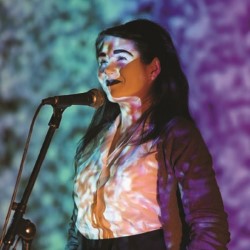
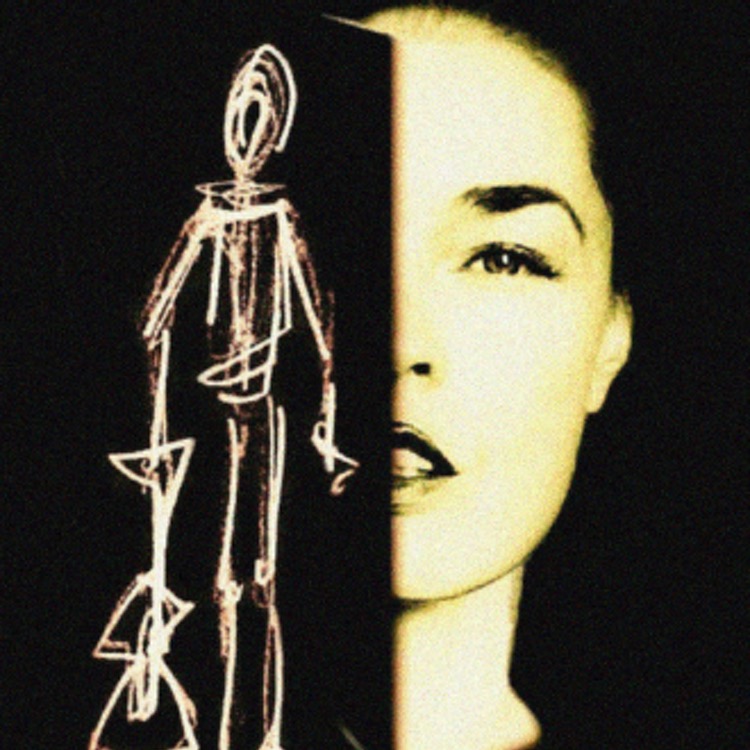
As you arrive in the space, the audience is serenaded by a cacophony of sounds which are not precisely music (this is a theme that will become repeated throughout the hour), and once the show begins, the sounds simply stop, as a lone, somewhat bookish-looking individual arrives, and quite literally sets the tone. This smart use of silence - of lack of sound being itself a seductive sound – is indicative of the steely intelligence of music pioneer Delia Derbyshire, who managed to unsettle a generation of kids, and their parents, with tunes that could not easily be identified as being created with any traditional instrument whatsoever. Hymns For Robots takes us through certain highlights and low points of composer Derbyshire’s life (at least the grace notes), but it’s not remotely necessary to have heard of her to enjoy the play. Indeed, the main pull point for many potential audience members – the fact that she was responsible for the remarkable arrangement of the original Doctor Who theme – is only part of an eventful life ("Did I really write this?" asks an awed composer Ron Grainer upon hearing the iconic sci-fi tune for the first time. "Most of it," is Derbyshire’s wry response). The stage is cluttered with old-style recording paraphernalia, as well as many references to Foley and sound effects: a wine glass is not merely a vessel with which to get tipsy, and your very first phone call (back in the Fifties, at least) may have looked more like a couple of tin cans strung together. Added to this, there are several subtle gags that are kisses with the iconic BBC Radiophonic Workshop, including an irate listener giving feedback (to coin a phrase) in the voice of a Vogon from The Hitchhiker’s Guide To The Galaxy.Time slips out of joint as Derbyshire tells us that she sees life being out of tune, a world that has gone wrong. Given that the job interviews we see her endure (at the BBC and Decca, for instance) are stymied by institutional sexism and post-war preoccupations around class, this is in no way surprising. Hymns For Robots is not quite a life story, more a collection of ‘greatest hits’, as Delia recalls the blitz – in which sound inevitably formed her young mind – to a series of not always successful relationships, which are not always consummated (sometimes for painfully obvious reasons). As Derbyshire, Jessie Coller is precise and coolly controlled (one might almost say composed). We learn about her no-nonsense approach to her work, and her inability to accept work that she considers substandard (she destroys a piece that she is unhappy with, despite the fact that she’s been commissioned to perform it in public within hours. Her need for absolute perfection will finally burn her out. But even in private, she will always be creating strange, haunting music. It is appropriate that in 1964, she worked on Inventions For Radio, a series of electronic sounds to illustrate people describing their dreams.In 1980, Delia Derbyshire’s original theme for Doctor Who was re-worked for a brash neon age, much to her horror: anything less than perfection was, in her mind, unacceptable. But her perfection took a while to achieve; the joy of working at the Radiophonic Workshop in the 1960s is that you can get paid to take a wander down some very long creative corridors. Hymns For Robots is at its heart a prayer for the celebration of mistakes – a plea for the freedom to get lost in order to find out where you should be, to have the space to explore the unexplored so that one can discover something magical. An appropriate theme, given that this year’s Fringe hashtag is Into The Unknown.

C venues – C aquila • 2 Aug 2018 - 27 Aug 2018

The Lampoons: House on Haunted Hill

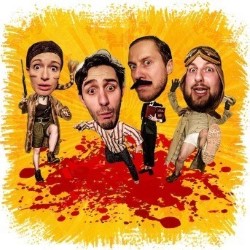
A late night slot at the Pleasance Dome perfectly suits the latest offering from The Lampoons, a raucous, defiantly silly parody of the creaky well-loved William Castle classic, delivered with just the right level of absolutely no respect whatsoever.Like many of the parody versions of films on offer at the Fringe this year, you needn't have seen the original movie in order to get the jokes. Sure, the humour may be even sweeter if you’ve already enjoyed a wasted evening laughing at the overwrought relationship between Vincent Price’s character and wife Annabelle during a late-night screening of Haunted Hill, but the version here – delivered with plummy intonations and tortured looks – is so cheerfully and brilliantly telegraphed that the audience is helpless to resist. In fact, the audience is an important element of the show, providing a healthy amount of the special effects: so when a treacherous rainstorm soaks the main characters of the story, those sitting watching are employed to fire water pistols at the actors. One of the great joys of House On Haunted Hill is the way that The Lampoons get the audience to excitedly join in, and then get annoyed when the audience – inevitably – get rather too over-excited, and refuse to put down the water pistols. Christina Baston in particular gives good dead eye. Following a quite spectacular (and, upon reflection, a spectacularly pointless) costume change, the plot (such as it is) kicks in: a disparate bunch of possibly clichéd characters are forced to stay in a creaky old house overnight for the chance of winning ten thousand dollars. At one point there are as many Vincent Prices as there are Lampoons actors (each competing with one another in terms of moustache size). Subtlety is entirely absent from this hour, but crucially so is any degree of self-indulgence – each joke pulled apart for the maximum amount of laughter that can be wrestled from the audience, one highlight in particular being the selection of potential murder weapons, which gets a certain character into a bit of a pickle. The gags whizz past furiously, with hallucinations of a dancing cats jostling up against a repeated joke of an actor wanting her moment in the spotlight to impress a visiting agent. Even if you happen to be familiar with the original House On Haunted Hill, it’s very unlikely that you’ll see what’s coming next at any given moment. House On Haunted Hill is breathlessly fast moving, very funny, unashamedly stupid – and very much what your fringe experience should be made of.

Pleasance Dome • 1 Aug 2018 - 26 Aug 2018

Janeane Garofalo: Put a Pin in That

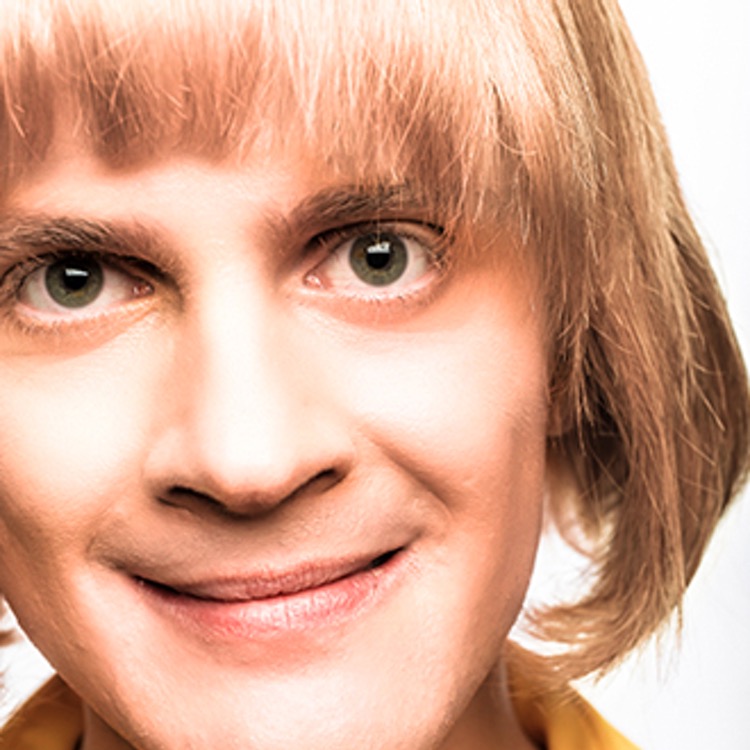
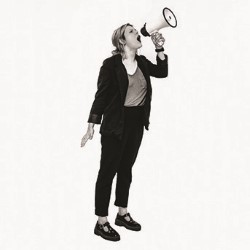
‘I’m not mad,’ Janeane Garofalo is keen to point out. ‘I just speak in a strident tone.’ In this loosely formed hour, the actress, writer and activist (she tells us that she’s not that skilled at telling jokes) bounces from subject to subject, being distracted by a shiny new topic before having fully deconstructed the one at hand. Put A Pin In That is an acutely self-aware title, built on conversational tangents which see Garofalo whizz around topics like selections on a high-powered sushi bar, though none are fully explored before another three possibilities come over the horizon. This energy extends to Garofalo’s physical performance also - hardly content to contain herself to the stage, she strides out to the audience on multiple occasions, only to dive back onto stage before the house lights have found her. ‘I know I’m self-deprecating,’ she acknowledges before admonishing an audience member: ‘But that doesn’t mean you have to agree.’ She suggests that a good career in the nineties (or as she labels it, ‘a fluke’) is the reason why the bulk of her audience are here, and it’s true that there are a few in the crowd who are clearly too young to have ever heard of Abby the radio host or Louise Thorton (‘Did you ever see Ratatouille?’ she asks a teen, before whirling on the rest of the audience to explain, ‘I’m just trying to make a connection.’) Partially because of the tangential nature of her delivery, Garofalo is less interested in the larger set-pieces or themes that allow other stand-up hours to hang together, and indeed some of the audience who are expecting her to expound on her political stance or feminist views may feel slightly frustrated: He Who Did Not Win The Election only gets a cursory mention (and then only to acknowledge that he won’t be discussed), and there is certainly less anger and – yes, a strident tone – than many might have been hoping for. It’s possible that she’s softening her set for the uptight Brits (she jokingly apologises for using the word ‘menopause’ at one point), but it’s unlikely: she keeps the cultural references US-centric (it’s our job to keep up) and is as demandingly funny when riffing on buying art supplies as when referring to historical genocide (yes, the subjects do change around quite a bit). The hour honestly feels like it could be different every night (Garofalo appears genuinely surprised when the light at the back of the room warns her the hour is up: ‘I’ve been doing this since 1985; you’d think I’d have a system’), and it seems like she’s only beginning to get started when the sixty minutes are over. Successfully, she presents the persona of someone with whom you could spend an hour (and the next four), clinking a bottle of (non-alcoholic) beer with, setting the world to rights, demanding a better future for our children – and then getting distracted by daytime TV. Like an evening spent with a good friend, you may not remember the jokes in detail - but you will want to keep the diary free for next time.

Gilded Balloon Teviot • 1 Aug 2018 - 19 Aug 2018

Foil, Arms and Hog – Craicling

The line of excited punters outside Nicholson Hall is long. I mean, ridiculously long. Every new person joining the end of the line is surprised and cautious; ‘Is this really the line for Foil Arms and Hog?’ It seems that, because much of the audience here tonight will have discovered the Irish comedy trio via their phenomenally successful YouTube videos (each ending in a rendition of ‘Doomdah!’), it’s all too easy to trick oneself into thinking that FAH are one’s own little secret: no-one truly comprehends what the ‘Over A Million Hits On YouTube’ really means. Also on the posters is a line declaring that it’s the live shows that the boys are really proud of (as opposed to the aforementioned videos). It may sound like a slightly plaintive plea for legitimate recognition, but it’s a fair point. And it’s revealing that in this (very) large room, and with this (very) large crowd, the boys are more than adept at rising to the challenge. They’re warm, engaging, and genuinely charismatic. Indeed, it takes them about ten minutes to stop chatting with the audience and get on with the first sketch. They get involved with a critic who hasn’t been quite quick enough to hide their notebook, and lead several hundred people in a rousing bout of applause for a delighted looking woman who’s brought the boys some home-made chocolate and dried fruit muffins (‘Urgh, I hate dried fruit’ comes the joking response). Of course, the dried cynical heart of this critic has at least considered the possibility that these audience members are plants to explore some ‘spontaneous’ comedy. It’s doubtful – it’s all too natural – but frankly, even if it is a scripted trick, it doesn’t matter. There’s such easy joy in the room that the trio could do pretty much what they wanted. This means that it’s genuinely lovely that they do a lot more than they have to. There are some genius gags that – as tradition dictates – we can’t reveal in too much detail here, many of which are doing double, or even triple duty. There’s not precisely call-backs, but there are gags that subtly train the audience to get to a later joke even quicker. A conceit in this show is that each sketch is ended with a hit on the high hat from a drum kit (thereby replacing ‘doom-dah’ with ‘boom-tish’). Normally at the fringe, this would be highly annoying (we’ve witnessed enough improv performers slapping the stage while shouting ‘SCENE’), but here – largely again due to the genuine charm of the cast – they get away with it, and it’s a neat way of punctuating the scenes for an audience that may well be more used to watching these guys on their phones. At the beginning of the show, they discover someone in the front row is from Dublin. ‘We play Dublin all the time,’ they respond in mock confusion. But it’s true that the Fringe is a very special place to catch them, and they’ll send you out into the Edinburgh streets with a big smile on your faces.

Underbelly, Bristo Square • 1 Aug 2018 - 26 Aug 2018

The Pin: Backstage

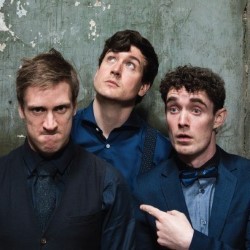
The Pin return to the Edinburgh Fringe with an Alan Ayckbourn type conceit: as suggested by this year’s title Backstage, the bulk of the show has performers Alex Owen and Ben Ashenden apparently biding their time as the warm-up act behind the red curtain while long-established big name performers Phillip and Robin (also Owen and Ashenden) get the actual stage time and plaudits. When, Alex and Ben wonder, will they have their chance to hit the big time? After a while, the divide between the four-ish comics become blurred, particularly – as you may have already guessed – we get to see a lot more of backstage than we do front of the curtain. Once you recognise that the main gag here is that we know that Owen and Ashenden are indeed sketch performers (as opposed to the bulk of other comedy shows, where, for the most part, the actors leave their real life personas – well, backstage - for the majority of the skits, there’s a curiously distancing element to the evening’s sketches. To be clear, this isn’t a negative thing: it’s clearly a very deliberate choice, and indeed there’s something very cute about having a sketch repeatedly heralded before its actual arrival, and in often being told that what we’re watching is indeed a sketch, and even further, having the very concept of a sketch broken down to its barest DNA (‘just a harmless mix-up’). This often means that the audience has a pleasing amount of control in their own response to each gag. Which then in turn allows The Pin to push certain sketches past their natural narrative boundaries. There are plenty of so-called ‘straight’ sketches in the hour, but it’s clear that the pair are fascinated by what is at its core a reasonably ridiculous concept: the humour of a great deal of sketches depends on the significant characters not bothering to signal very basic information to one another that would negate much of the confusions that lead to the joke. It is indeed mix-ups and misunderstandings that power much of the material in this hour (except where, in one case, you could argue that the confusion comes from a complete lack of misunderstanding). The pair’s natural chemistry – from Owen’s giggly skittishness to Ashenden’s slightly nettled persona – is the engine here, as the comedy ranges from answering job adverts in the paper to an attempt to cash in on the Nordic drama craze. As is often the case with sketch shows, to say any more risks spoiling the jokes. It all ends in a collapse of the divide behind the curtain (if not an actual collapse of the curtain), as Owen and Ashenden attempt to wrestle top-billing status from Phillip and Robin. For the happy audience at Pleasance Two, top billing is already safely assured – The Pin are as sharp as ever.

Pleasance Courtyard • 1 Aug 2018 - 27 Aug 2018

The Archive of Educated Hearts

"People are amazing, aren’t they?" So asks a lone voice in the darkness. It is, of course a rhetorical question: The Archive of Educated Hearts is a tiny gem, far away from the hysterical melee of the Fringe. It examines the unnoticed warriors that we can be, and often are in the everyday banal, grey and unimportant days of our lives. All of which makes The Archive Of Uneducated Hearts sounds joyous and uplifting. And it is, but not without cost. It’s the story (and stories) of death, multiplied by two: a death that we know is coming, and the death before that; the moment in our life that can be cleanly divided into before and after; the life that was normal and usual and full of discarded domino pieces and actual, physical photographs that you can hold (rather than scroll past), and the life that is waiting – and willing against – the inevitable end. Of course, we all know that we’re going to die. But being able to know when to mark that event in a calendar – to know, in fact, that to buy a calendar is an act of ruthless optimism - tends to focus the mind. And so our guide - Casey Jay Andrews - tells us the stories of women: indivdual, but connected by news that is unfair and devesating. Those photographs are laid out on a table and we hear stories - both from Andrews and the women themselves, reminding us that even the people who are in the audience with us are hefting unseen icebergs of life and loss. Andrews is the sole performer (and consider a full house, plus the cast, means that there will only ever be six of you in the Archive), and she has a serene, calming tone, albeit one that (almost) masks a steely composure. Andrews dresses in daffodil yellow (which may be a clue as to some of the more potentially upsetting nature of the text). In a significantly small performance space, where performer and audience knees are almost touching, The Archive Of Educated Hearts certainly has the potential to be imposing: but Andrews is metaphorically if not physically holding your hand. The performance is less than half an hour, but may well be the most transformative half hour you’ll have at the Fringe. There are moments of quiet sorrow and desperate unfairness here, but in this life – and your life – filled with clutter and unremarkable things, you are reminded that we all have the power to be (that indeed we already are) remarkable, powerful and magical. On a dreary, drizzly day, when so many of us will receive news that multiply death by two, the world seems just a little brighter.

Pleasance Courtyard • 1 Aug 2018 - 27 Aug 2018

Wife

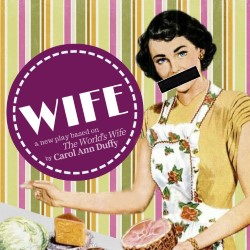
There’s a great variety of women in Wife – taking as a cue Carol Anne Duffy’s The World’s Wife – from ‘Mrs Quasimodo’ to Michelle Obama, whose farewell speech is predated by Duffy’s original poem, but nonetheless makes an appearance here.Wife is witty and fast paced, a swift hour of performance poetry from Ella Duffy (delivering the words of her own mother), as she kaleidoscopes through all manner of women – wronged, defiant, proud and bold. You get ‘Mrs Beast’, cheerfully indicating that her man may or may not live up to his name between the sheets, while at another time, Sigmund Freud’s other half wryly observes what we may all be thinking: sometimes a sausage is just a sausage – whereas sometimes it’s a lot more (or a lot less). There are some astute directorial choices on display, particularly when the performance neatly sidesteps a couple of moments that could have been culturally clumsy.Considering that the hour is essentially one woman delivering speech after speech, this show crackles along with a significant amount of fizz and humour. Obviously, a great deal of this is down to the poetry in the original work, but Ella Duffy is consummately skilled at drawing out the nuance and complications in each character: inhabiting each personality with entirely different characteristics – no mean feat when so many of them have so much shared DNA in the way of age and circumstance.While there are a few women who do not survive the journey from poetic page to Edinburgh stage, there are plenty who are given much more of a voice than they arguably were in real life: the Kray sisters, for instance, are a drawling, sneering, sexy powerhouse of the East End. Duffy implores us to ‘remember the ladies’ – something particularly appropriate this year, considering the hashtag that has been bubbling under on twitter: #sololadiesalliance – and it’s true that every single one of the women presented here could hold an hour by themselves. As a collective, though, they make up an engrossing, moving and captivating hour.

The Stand Comedy Club 5 & 6 • 23 Aug 2017 - 27 Aug 2017

Data Night

Data Night is a fun, frothy feminist fable mixing clever and silly in the same test tube. Olga Koch and Catherine Brinkworth come together as creator and creation in a modern take on Frankenstein.The new robot is called Alan (after Alan Turing) and the mechanics behind her creation are given as much detail as the creature is in Mary Shelley’s original story – which is to say, almost none whatsoever. And whereas in Frankenstein the eponymous scientist immediately rejected his creation in revulsion, the creator in Data Night takes great pains to be a mother figure to her little monster. Along the way, as you may imagine, daughter is able to teach mother as much as the other way around.Koch and Brinkworth say a couple of times – both at the start and end of the hour – that theirs is a ‘baby’ show, and that they welcome any feedback. Like any new parents, they’re clearly equal parts proud and nervous. It’s true that the story is a little scrappy around the edges: both performances are occasionally a little cautious, and it feels like the work needs more rehearsal and tighter direction. But for the most part, this is largely irrelevant, because what’s actually on stage is beamingly good fun, and both performers are hugely charismatic (the show is most fun when they break the narrative logic, or directly address the audience). Crucially, the script is very sharp, stuffed with plenty of good jokes about the Bechdel test and displaying friendship by being mean. Even more crucially, most of the gags are unashamedly and unapologetically aimed at an audience that will be pretty much exactly like the women themselves: references to Etsy shops and She’s All That abound. And while there’s a leaning towards arch, knowing jokes (putting the ‘meta’ into meta-data), the plot even finds time to be genuinely moving.In short, like any Frankenstein’s creature, it’s pretty much all here, and it won’t take much to stitch on what’s still needed. The show moves along well, and has a clever tongue sewn in its mouth: there’s a very decent, slyly knowing script and two extremely engaging performers who work a lot better when they momentarily forget that they’re on stage. With only a little bit more stagecraft and more confidence, this is a beast that deserves to be resurrected. Plus, the script itself could benefit from another fifteen minutes bolted on: and frankly, how often do you hear that on the fringe?

Just The Tonic at the Caves • 17 Aug 2017 - 27 Aug 2017

We Are Not a Muse

The image of the tortured brooding man, bewitched, bothered and bewildered by some winsome and naïve woman, is long burnt into of literature. Emily Bronte’s Heathcliff has a lot to answer for. Traditionally, these great and tortured men (quite often thinly disguised versions of the writers themselves) drive the plot while inspired by (and despairing over) a beautiful muse – only to abandon her when the next one comes along. Sometimes, characters in some of the greatest feminist literature in history suffer the same fate. In We Are Not A Muse, Imogen Hayes and Signe Lury, playing publishers Tite and Snobbo, rip up and examine the politics and gender disparity of some of history’s authors, arguing whether or not feminist literature could benefit from a healthy hack of bowdlerisation, giving all those winsome muses endings more suited to the patriarchy. And if not, it matters little: to borrow a line from Alan Bennett – “winsome, lose some”.The piece begins with the pair of literary agents sitting besuited and bestride their domain, telling us that they ‘know better’. If a book does not meet with their exacting standards, it is put through the shredder (complete with a sound effect that sounds like a pub bore deep into his fifth hour of mansplaining). We get three books to rip up: a sharp, clever telling of the story that may be familiar to audiences, rapidly followed by the edited, ‘improved’ version. Despite the risk of testing repetition, both Hayes and Lury have enough charm and wit to keep things inventive and sparky. There’s very smart stage craft on display, too: when the women have to play three characters in a single scene, they transfer the lead role between actors in a simple, but very inventive way.The seductive power of brooding male leads is highlighted early on when Hayes and Signe have a disagreement about who should play the male part – and who gets stuck with the apparently less fun ‘girl’ part. But in truth, the parts are juggled between the pair with verve and energy, with fun dance, and clever puppets: a highlight is Old Father Thames promising his daughter much (and presumably telling her that the world is her Oyster Card).The title We Are Not A Muse perhaps promises slightly more – or at least something slightly different than it suggests: it would be fun to see Tite and Snobbo proven wrong and see the female characters regain their agency. This is not the case, which feels like something of a missed opportunity. What is on stage is funny, smart and fast-paced: an inventive hour of smart jokes and clever stagecraft.

theSpace on North Bridge • 7 Aug 2017 - 19 Aug 2017

You, Me and Everything Else

Those of a certain age will remember the heart bruising joy of creating a mix tape for a loved one. They may have agonised over getting the sounds just right, keen to represent the very best of themselves. Such romantics will have wanted to display themselves with all their complications and nuance in the right place, whilst also showing that they were ready and open to listen to the soul they were attempting to communicate with. In 1977, Dr Carl Sagan had a similar challenge, except that his recording was to be delivered out into the furthest reaches of outer space. As you read this, it’s still out there.Tasked with calling occupants of interplanetary craft, and not wanting to repeat the single image that had been sent on Apollo 12 in 1969, Sagan’s team struggle for a while to agree on what to send on board Voyager, convinced that a depiction of humanity needs a little more… well, humanity. They decide at last to enlist the services of Ann Druyan, a passionate author who spends too much time staring into space. When she meets the man for whom ‘staring into space’ is literally a job description, chemistry is inevitably mixed with astronomy. They begin to fall in love with one another, both betraying existing partners. You, Me And Everything Else lives up to its title, however: this isn’t a love story – or at the very least, it’s not a love story at expense of everything else. There’s a lot packed into this hour without it ever feeling over-stuffed: as well as Ann and Carl’s burgeoning romance and invocations of Voyager’s long journey, there are neat barbs at the contents of the Golden Record itself: the US gets to claim pop music with Johnny B Goode, while the British are stuck with Elizabethan chamber music. In addition, the depiction of sexuality is somewhat limited: as far as NASA in the seventies were concerned, humans could touch the outer reaches of space, as long as they also remained inside the closet.Appropriately enough, this production is excellent at evoking time and space – and not just in the conceptual sense: a 70’s coffee bar just before Christmas, a raucous party, the cluttered studies of the scientists, and indeed Voyager itself as it spins into the beyond are all beautifully portrayed. Interestingly, there’s no attempt to replicate the American accents, which is likely the correct choice: we can get on with the delicacies and intimate moments hidden inside the large moments. A stand out moment is Ann’s brainwaves, flickering as she calls up an image of Carl, are recorded for eternity, sounding indistinguishable from the static of the Big Bang.There are many strands running through the hour, but the company still finds room for much nuance and delicacy: a conversation about the best way to die, and Linda’s response when she discovers she has been betrayed is seasoned with dignity and defiance equally. On the other side of the triangle, despite Ann’s undeniably bad decisions, we see in her a sweetness and genuine passion that makes it difficult to judge her as ‘the other woman’. You, Me And Everything Else is a tight, focused and sweetly delicate ensemble piece.To intimacy, and beyond!

Zoo • 4 Aug 2017 - 14 Aug 2017

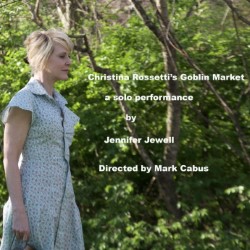
Christina Rossetti's Goblin Market

Adapted and performed by Jennifer Jewell, Goblin Market is a solo performance, with Jewell taking on the roles of two young sisters and the goblins they encounter. It’s a sharp, solid hour of the poem simply told, with no bells and whistles. It’s refreshing to see to see a performer confident enough to deliver their work without reliance on overly elaborate staging or lighting effects. It does, however, mean the woozily dark lyricism of Christina Rossesti’s work provides for a very intense experience.There are several possible interpretations of Goblin Market – the most common to do with sexuality or restrained female genius. It even gets a call out in Oranges Are Not The Only Fruit. For the most part, Jewell carefully side steps these potential versions, leaving us to decide what we think the poem is actually about. This places a reasonable amount of responsibility on the audience’s heads, as there are no easy clues to cling on to: are the goblins figments of childish hysteria? Is there a thread of abuse running through the words?Happily (although curiously), Jewell and co-adaptor Mark Cabus make one startling decision: the entire piece has an Appalachian flavour, complete with bluegrass music. This is somewhat unexpected (Rossetti’s other famous work was the words for In The Bleak Midwinter, and her uncle was John Polidori: it’s fair to assume she never encountered a banjo in her life), but absolutely works. More importantly, it absolutely works whether you think it a great or simply hideous idea: Rossetti’s words spoken in a Southern American accent really pick apart the frustrations and sufferance of the two young women – there’s a lot of common ground to be explored between the largely religious American South and England at the height of the Victorian era. Hearing Goblin Market performed in this way on an Edinburgh stage manages to highlight the otherness of Rosseti’s words. Jewell has been touring this piece for a while, and it would be fascinating to learn if the response was markedly different elsewhere. In the Appalachians themselves, for instance.In the end, then, Goblin Market is not the easiest journey for an audience. There are no helpful markers or easy interpretations to allow us to sit passively and have the story fed to us. We, like the girls in the poem, have to make a decision: to gorge ourselves, or to refuse. There is lots to enjoy here, both bitter and sweet. Come buy, come buy.

Greenside @ Royal Terrace • 4 Aug 2017 - 26 Aug 2017

Puppet Fiction

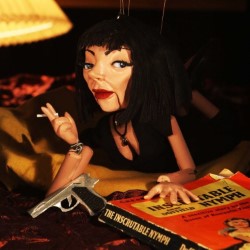
In order to snare the attention of an average jaded and time-poor festival-goer, you’re going to need a pitch that can stop them in their tracks on the Royal Mile and accept the flyer that you’re thrusting into their hands. And as pitches go, ‘Pulp Fiction, but with puppets’ is a winner. The film is now over twenty years old (don’t bother checking Wikipedia, you really are that old), and has passed into legend of soundtrack CDs and movie posters. So if you do your own version, there’s a bit of pressure to get it exactly right – even if everyone in the audience can see the strings.As befits a highly quotable film, there are major chunks of this show that are pretty much lifted verbatim from the movie. As one of the puppeteers comments: ‘We haven’t been sued in six years – so fuck ‘em.’ This – as you might expect – hints at the content warning you may have been expecting. Yes, this is a puppet show, and no, it’s not for kids: there is swearing, drug references, gunplay and liberal examples of the Tarantino love affair with certain offensive words.It’s tempting to say that all your favourite scenes are included, but really – since a fair amount of slicing and dicing is required to ensure Puppet Fiction comes in under the hour – there’s actually a fair amount that’s not on stage, including the iconic Mia Wallace. Essentially, Puppet Fiction concentrates only on the film segments that include both Jules and Vincent – those characters played by Samuel L Jackson and John Travolta. So while you miss out on Christopher Walken discussing uncomfortable hunks of metal and Uma Thurman extolling the virtues of a five dollar milkshake, you still get Pumpkin and Hunny Bunny holding up surprised customers. The puppets, incidentally, are excellent. Amanda Plummer’s features particularly are very well realised (as is, somewhat curiously, her voice), and Marvin – who you may remember as being the unfortunate passenger who ends up with no head – has a decent special effect to replicate his situation here, along with a gag where a direct quote – ‘Did you see that gun? It was bigger than him’ is literally true.If you’re a fan of the movie, there’s frankly no reason not to like this: as I’ve indicated, you already know most of the script. That said, the show really soars when it’s brave enough to blend the pulp with something more substantial: there’s an excellent moment in which a certain mid-90s Jane Campion film gets a side swipe, as well as a pertinent answer to Jimmy’s question regarding signs outside his door.But even when it’s doing nothing more than repeating Vincent Vega’s mumbled rhapsody to differently named quarter pounders, this is lots of fun, partially because the dialogue is sharp, and mostly because it’s Pulp Fiction, as told by puppets.And as Winston Wolf told us: personality goes a long way.

Laughing Horse @ The Counting House • 3 Aug 2017 - 27 Aug 2017

Trygve vs a Baby

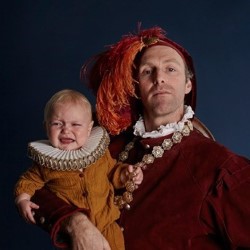
Phineas Wakenshaw is a consummately confident performer, effortlessly charming packed out audiences with a sweet smile and immense stage presence. Even more impressive, this is his very first Fringe appearance. And if that’s not enough to make you bitter and jealous, it’s worth pointing out that this artist is only just thirteen months old.Trygve Wakenshaw (Phineas’ dad, who made such a splash on the Fringe a few years back with Squidboy) has devised a mesmerising piece of clowning and smart idiocy in which he interacts with his very small son in a series of hilarious vignettes. After opening with a genuinely startling sight gag, Phineas and Trygve play together, spooling out gag after gag, all of which are delightful and inspiring.Wakenshaw Senior creates some fascinating worlds with just a few whips of those impressively long limbs, occasionally running towards a new twist on an old pun (which makes the audience feel cheerfully clever). The phrase ‘from the ridiculous to the sublime’ gets hideously overused, but it’s very appropriate here. Sure, a lot of the show’s charm depends on the simple reality of having a cute toddler being funny (and make no mistake, Phineas already knows how to work an audience), but this is not an hour that is gimmick alone: Trygve is doing a lot of work to shift his performance to the whims of his son. Indeed, a couple of the jokes are softly reliant on the assumption that Phineas’s attention span is going to be practically zero. It’s also worth pointing out, should you be worried, that young Phineas is clearly very happy and comfortable. The piece gets even more impressive when you begin to unpack the logistics of it: if Trygve’s son is just over a year old now, that logistically means that the details for the brochure will presumably have been finalised when he was merely around six months: long before there was any firm guarantee that this would work. And it does work, on several levels: there’s a lot of joy, if not flat out broodiness, in the room. If the Wakenshaw family doesn’t have a directory of potential babysitters for the next ten years by the end of the Fringe, we’d be very surprised.It's rare that we can state that a show is genuinely unrepeatable. But there’s no way that you’re going to get to see Trygve Vs A Baby this time next year. Don’t walk, but toddle, crawl – and yes, run – to this show.

Assembly Roxy • 3 Aug 2017 - 27 Aug 2017

The Truman Capote Talk Show

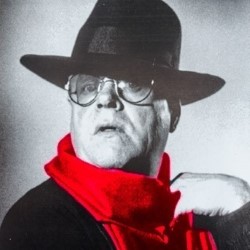
Truman Capote regards us with a look that cannot be readily deciphered. Perhaps it’s regret; maybe it’s curiosity. More likely it’s pity. “You have something I never had,” he informs us gently. “You weren’t me.” Bob Kingdom delivers an appropriately waspish delivery as Truman Capote, a writer who could make a reasonable claim to have been the first celebrity to have created their own legend. “Man and myth,” he remarks, “and you can’t tell the diff”.Truman Capote was such a glorious, easily mimicked character that the real litmus test is presenting such a huge personality for an hour without ever descending into caricature, or even worse, parody. With Capote’s pitched tones, arched eyebrows and pursed lips, this is a Herculean task of impossibility: even the man himself sometimes stumbled in presenting a version of himself that didn’t seem like a bad impersonation. It’s to Kingdom’s credit that the task is effortlessly completed.Naming the hour The Truman Capote Talk Show might be slightly misleading for some, since it might suggest that Capote has the slightest interest in talking to anyone that isn’t him. In fact, it’s a solo show, filled to the brim with the writer’s meditations on film stars, sex, parties, and his own beautiful hair. There’s no real attempt by Kingdom to craft a narrative in the hour, aside from Capote’s maxim about the four stages of American fame, but frankly, there really isn’t any need to — when you have Truman’s words to work with, why would you settle for anything else? Those wanting a meta-commentary on Truman Capote will be mildly frustrated, but then Capote could indeed by mildly frustrating and since one of his favourite subjects to wax lyrical about is himself, he provides quite enough meta-commentary on his own. Breakfast At Tiffany’s, arguably Capote’s most famous work, gets about as much mention as Capote himself might have desired, which is to say not all that much. There’s a little more time spent on In Cold Blood, but only a little; the relationship formed between Capote and Perry Smith could fill an hour by itself.It’s an hour of stories simply told, Capote languid in a comfortable chair, gifting us with carefully selected stories ranging from his childhood, growing up with family members to the bright lights of New York city, and public adoration. Capote is presented as a man who was obsessed by how he was viewed by the world, even if he had to manufacture huge swathes of his personality. “I was always 100 per cent Truman Capote” he tells us, perhaps in protest. And so it is proved — Bob Kingdom is 100 per cent Truman Capote.

Assembly Rooms • 3 Aug 2017 - 27 Aug 2017

Catriona Knox: Adorable Deplorable

Behind every great man stands a great woman. And behind some not-so-great men, lurk some absolutely terrible – but curiously admirable - women. This is essentially the hook for Knox’ hour of character comedy, as she introduces us to the not-quite-as-famous partners of politicians and world leaders. In one case, the rules are not exactly bent, but folded slightly so that we get to meet the ‘First Man’ of today’s British politics.As is somewhat tradition in a Catriona Knox show, there are plenty of opportunities for audience members to get involved, but there’s no need for anyone nervous to get overly anxious, since – as is also near tradition – Knox spends the first few minutes as the audience finds their seats bounding energetically to pumping music, during which we can assume she is carefully scoping out potential friends to play with.Knox is in absolute command of her characters, throwing away witty one-liners with confidence. While the names of every single persona may not be immediately familiar to everyone, it’s fair to say that if you’re the sort of person who gets vaguely guilty about ignoring the pleas for donations at the end of Guardian articles, there is plenty here to appeal. We get to meet the wives (or in one case, ex-wife) of some of the most ridiculous figures in the current climate, and in another, vitally important scene, the real message behind yoga sessions is revealed. While in real life these women can be derided (and often are, online) and accused of having made their own bed in which they now have to lie, Knox – mostly down to her sheer infectious charisma – infuses all her characters with charm and wit.Knox rattles through the hour with a considerable amount of energy and breathlessness, being equal parts clown and sage. All manner of scenarios are presented, from a massage table to a first kiss on the dance floor. Despite the tight structure, Knox still allows her performance to be loose enough to be genuinely surprised – and delighted – by an unexpected audience reaction.The hour culminates in a rousing call to arms – a kind of ‘Deeds, not words’ declaration about four hundred years too early from a woman ahead of her time. It’s a suitable end to the show, sending the audience back out into the busy throngs of the Fringe, secure in the knowledge that every one of them can change the world.

Pleasance Dome • 2 Aug 2017 - 28 Aug 2017

Ingrid Oliver: Speech!

Ingrid Oliver delivers an hour of speeches in Speech! From a TED talk to the ramblings of a right-wing shock-jock, and all manner of voices in between, the connecting thread between all of the scenes is public speaking – the voices we hear, whether we want to or not. There’s a rich variety to Oliver’s characters, ranging from the not-at-all confident to the supremely self-assured.There’s a very elegant joke about Brexit which – now that Oliver has done it, seems obvious. That, and a passage from a ‘woke’ valley girl, and a student council leader discussing safe spaces and the like, make Speech! feel like a very vital hour, only possible in this year: it will certainly feel relevant to anyone who woke up on the morning of the election (either one) with a dull sense of disbelief and horror.We’re presented with a version of Katie Hopkins who’s presumably taken charm lessons from Julia Hartley-Brewer, and a workshop leader who doubtless will send shivers of horrified recognition down many spines. There’s a great joke about the rich variety of politicians in the Tory government, and neat sideswipes at the likes of Milo Yiannopoulos which hint at a bristling and dismayed anger hidden under the gags. But rather than let the rage take over, Oliver makes a suggestion that’s seemingly inspired by MP Jo Cox’s most famous quote.It’s certainly possible that a certain portion of the audience may have bought a ticket on the strength of her TV appearances, and while Oliver doesn’t indulge the fans, there is at least a brief Doctor Who reference to satisfy the appetite. The hour speeds by with the giddy glee of a toboggan on a particularly steep slope, and Oliver comes across as the sort of mate that you’d want to spend an evening with, sinking a bottle of wine together and, crucially – not actually putting the world right – but embracing all that is right and wonderful about the world we already have. It’s a passionate, cheerful and very funny hour. Ingrid Oliver’s Speech demands to be heard: preach, sister, preach.

Pleasance Courtyard • 2 Aug 2017 - 27 Aug 2017

Dot. Dot. Dot.

“Shall I tell you a story?” a girl asks. She doesn’t receive an answer. “You’ll like it”. Her audience remains convinced. She remains undeterred. “I’ll tell you anyway.”Two young women, childish and petulant, bicker and fight, coming across as a mix between Enid Blyton and the characters from a Blue Remembered Hills revival. The phrasing and pacing is confusing to begin with (having both your actors fall asleep with their eyes closed for nearly a minute within the first five minutes of your show is a bold opening statement, no matter what anybody tells you), and in all honesty doesn’t become altogether clearer in the next 45 minutes. Nonetheless, there’s a lot explored in Dot. Dot. Dot. about female pre-pubescent friendships, and the opposing loyalties and cruelties that engenders. There are some elegant gags here – both the character’s names, for instance, and it’s clear that the extended pauses between scenes are meant to be representative of the title. But it’s the pauses that also indicate a sticking point with this production. This reviewer actually adores over-long pauses, even ones where the audience are actively frustrated by the lack of action, but when such delays happen here (and they do annoy the audience, or at least make them restless), they appear to have no purpose. In the publicity, Dot. Dot. Dot. declares as inspiration Waiting For Godot, which similarly has opaque and bewildering avoidances of plot propulsion. But whereas Godot is a play frustrated by a resolution that refuses to arrive, Dot. Dot. Dot. appears to be a piece that actively runs away from story. We should underline – that in of itself isn’t necessarily bad; but the piece seems to be still a work in progress. Characters speak, or do things (like shout in each other’s faces, or pace up and down) because it’s the next thing in the script, rather than any emotional cue. There is talent here, and both performers have enough charm and grace to pull off a show. What they need gifted to them, in abundance, is bucket loads more confidence, and the willingness to commit fully to each idea as it’s presented. It’s not clear from this production if they have an external director, but an outside eye would be able to sharpen the soft edges (or alternatively, allow the entire thing to be woozy and hazy: at the moment, the piece attempts to be both). At one point, a girl shouts into an empty box, proving metaphor unavoidable: “Hello?” she demands. “Have you got any stories in there?” The box gives no response. There is great promise here. All the performers need to do is break out of the box. 

The Warren: Studio 3 • 31 May 2017 - 2 Jun 2017

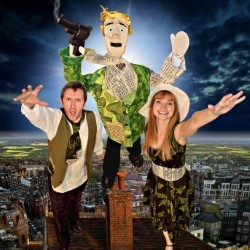
The Peter Pan Syndrome

Are we ending our indulgence of ‘man-babies’? If Adam Sandler films were the tipping point and presidents with Twitter tantrums were the moment when it stopped being funny, there’s a sense that men should finally grow up.So Peter Pan Syndrome is timely. The show claims to be aimed at women who are saddled with boys who won’t grow up - so this show has more in common with Kiley’s sequel, The Wendy Dilemma. It’s pitched as a survival guide for wives, girlfriends, sisters and mothers who may be wondering, with some justification, why it’s their job to accommodate someone who refuses to grow up.A stuttering start to the show puts the audience on the wrong foot, a position from which they never recover. Henry Sargeant is acutely aware of this, joking that his ‘test’ for PPS (Peter Pan syndrome) is genuinely ‘testing’ and warning ‘This goes on for fucking ages.’ The show is inordinately stuffed with lines like ‘This is more fun for me than it is for you’ and indeed, the audience are a mix of folded arms and bemused scowls. Once our performer has experienced an ‘awfully big adventure’ on stage for about the fifth time, you hope this is somewhat the point: perhaps he really is taking the PPS.The best jokes are confidently thrown away: there’s a lovely evocation of snake charming and the representation of Pan’s shadow, a sweetly simple effect, is quite literally thrown away before all of the audience have arrived. There’s a neat scene with Wendy appearing on a fame-hungry chat show, as well a sequence with Tinkerbell that appears to be a comment on rape culture - as befits a show loosely inspired by a pop-culture psychology book, it’s possible we’re reading too much into this.The show doesn’t deliver on its promises, but it does everything on its own terms and the best moments, annoying or not, are those of puerile immaturity - even if it’s obvious that this is also when the audience visibly twitch. That said, everyone enjoys seeing Pan’s cold-blooded nemesis scamper around waving a huge appendage - a sort of croc-cock if you will. It’s telling that on the night of this review there’s a small group of twenty-something men in the audience who spend a lot of time trying to distract the actor by chucking things on stage, which is as erudite an example of Peter Pan syndrome as you might care to find.In the end then, a beguiling yet frustrating hour. It’s clear that the show lives or dies depending on whether the audience are willing to go along with it (this time: not so much) and there’s plenty of sound material here. But it’s instructive that it’s up to everybody other than Peter Pan to make the effort, leaving you with the inescapable sense that there’s still no better response to the performances of an energetic child than ‘That’s very nice dear. Now play nicely, Mummy has a headache.’

Brighton Spiegeltent: Bosco • 18 May 2017 - 21 May 2017

Patti Plinko: Dreadful Little Girl

Patti Plinko glances around the stage in search of the next musical instrument. “We were told,” she acknowledges almost shyly to the audience, “that whenever we’re looking for anything, we should head there with purpose.” She grins, and moves forward. “The only purpose we have is when heading towards our whisky.” So saying, she launches herself at a very decent brand, takes a healthy glug of the bottle, and throws herself into the next song.It’s this mix of almost-fragility and self assured kick-ass attitude that make up the hour of songs at The Warren, in which Patti doesn’t always fully require her microphone to fill the expanse of the Main House. At times, she has a snarling deliciousness to her delivery, wrestling the songs – and her audience – into delighted submission with energy and verve. “Out of breath on the first song,” she remarks ruefully, shortly before blasting into the next one. It’s an evening of glorious women – “angry women, hot women....women I like – women I don’t like.” Even Le Pen gets a brief mention. The songs largely explore very intimate themes, occupied as they mostly are by two of the most private activities: sex and reading. The spirits of both Sarah Smith and Virginia Woolf are invoked, with woozily erotised lyrics (“I curtsey at your hem”). There’s a number that wears the cloak of Little Red Riding Hood, and there’s a biker-chick type song that feels like it could be a Hunter S. Thompson novella all of its own. A strong literary bent runs all through the show’s spine, all of which is not to say that the evening is in any way a diatribe or an alienating platform: it’s a growingly glorious and fierce celebration. There are songs that celebrate Sapphic fascination, delivered like a troubadour’s tune (“Take my hand and dance with me .. just like a gentleman does”), and others like The River Witch, that comment on all those women that have been drowned, burned and trolled. An anthem for today’s Nasty Women, indeed. With lines like “fifty thousand angels gasping”, there are many lyrics and ideas on display here that you would like to steal as your own. From delicate ingenue to foot stamping dervish, Patti Plinko delivers a powerful hour of naked honesty and seductive screams. She is woman, hear her snarl. And Brighton Fringe is truly lucky to have her. 

The Warren: Main House • 9 May 2017 - 10 May 2017

1 Woman, A Dwarf Planet and 2 Cox: Samantha Baines

This is a pleasant, goofy and geeky hour which largely talks about a three point plan to get one woman closer to a Cox. And yes, the Cox in question is Brain – and so it’s appropriate that it’s his song, via D:Ream, that greets the audience as they arrive. Before long, Samantha Baines presents the pull of her show: to combine comedy with science. Or, as she puts it: ‘I’m just a woman who wants to get more use out of her Physics GCSE.’The show is less the comedy lecture that some Coxheads might have been hoping for, and more straight stand up. While this means the hour is perhaps softer – even fluffier – than we were expecting, Baines’ humour is infectious and silly enough to maintain genuine chemistry, even if we could have done with more acid in the mix. The show is packed tightly with puns – each one signalled with the trill of a bell (which, c’mon, absolutely should have been nicknamed Jocelyn) and there are plenty of great gags in the hour, but the best moments are the slightly despairing ones, talking about the impossibility of being able to choose a variety of GCSEs that would enable one to study both the arts and the sciences, or indeed what a lonely place it can be in the science community for women and girls. In fact, the show is most successful when it’s not funny at all: speaking about the well-meaning but clumsy ways multi-national companies try to stick their branding on the current fashionably of feminism, or the erasing of female achievements in science. There’s exasperation expressed at how female astronauts are quizzed about their grooming habits in a way that their male counterparts are not. Apparently, in space nobody can hear your regime. This briefly segues into a discussion of the way that women are viewed in the world of comedy. None of this is a polemic or soap-box discussion, although Baines herself slyly mentions that her stage persona is non-threatening, underlining the point that if she were angrier, her audiences might stop listening. There’s a beautifully emotional beat to end the show, reclaiming a misogynist obituary and finally delivering the punchline on the most obvious pun of the evening. In order to truly give you an accurate reading of the show, we’d need to see the same jokes again with a different audience (you know, like a real science experiment), but it’s safe to say that this is a funny, sweet show where everything is perfectly aligned. 

The Warren: Studio 2 • 6 May 2017 - 21 May 2017

Richard Carpenter's Close to You

Richard Carpenter is, for those that remember him at all, a somewhat complicated character. The most positive thing said about him is usually ‘brother of…’, not helped by his uneasy and tense relationship with the media, coupled with the undeniable talent of his more famous sibling. In this show, Richard finally gets the chance to voice his frustrations that hard work and dedication can too often be eclipsed by a beautiful voice. After all, who’s really keeping things together around here?Matthew Floyd Jones pitches his version of Richard perfectly; dressed in Ken doll style in high waisted slacks and fixing us with a glassy stare, that is only slightly less disturbing than the fixed smile that looks like the expression of a fundamentalist Christian, being presented with proof of an empty universe. He’s quite literally a one man band, and it’s never clear if that’s because of his talent for many instruments, or more about a control freak quality in his approach. There’s a gag early on that the real Richard (and his lawyers) may not approve of the hour, and all the songs that fans may be expecting are not in fact present and correct, but repurposed in a way that will delight anyone who has followed his Frisky And Mannish gigs. And while the words may not be the same as before, it doesn’t stop people who are obviously fans of The Carpenters sha-la-la-ing along to the familiar beats. In addition, Jones has fun replicating Richard’s curious habit of misappropriating cultural trends, like mixing sombre, achingly regretful lyrics with a cheerful calypso beat. It’s this that is one of the major strengths of the hour. As Jones proved in his previous guise as Mannish, it’s impossible to successfully rip the piss out of something so viciously for a comedy hour, unless you actually fully, unashamedly love it. And there’s such affection, such admiration for Richard nestled within the acid swipes (‘Grade A piano’) that demands you see Richard in a new light. And while he doesn’t shy away from the grotesque, carnival freak show elements that some audience members may have been expecting, Matthew Floyd Jones gives us – and Richard Carpenter – precisely what is deserved: dignity and humanity. It’s a complicated argument – wanting a larger share of the praise without wishing to steal it from anyone else – and Richard is presented as a noble character who’s painfully aware that he may appear petulant. Here, he’s given the chance to be a Superstar. This is, in every sense of the phrase, a Richard Carpenter Tribute Night. 

The Warren: Theatre Box • 5 May 2017 - 29 May 2017

LAID

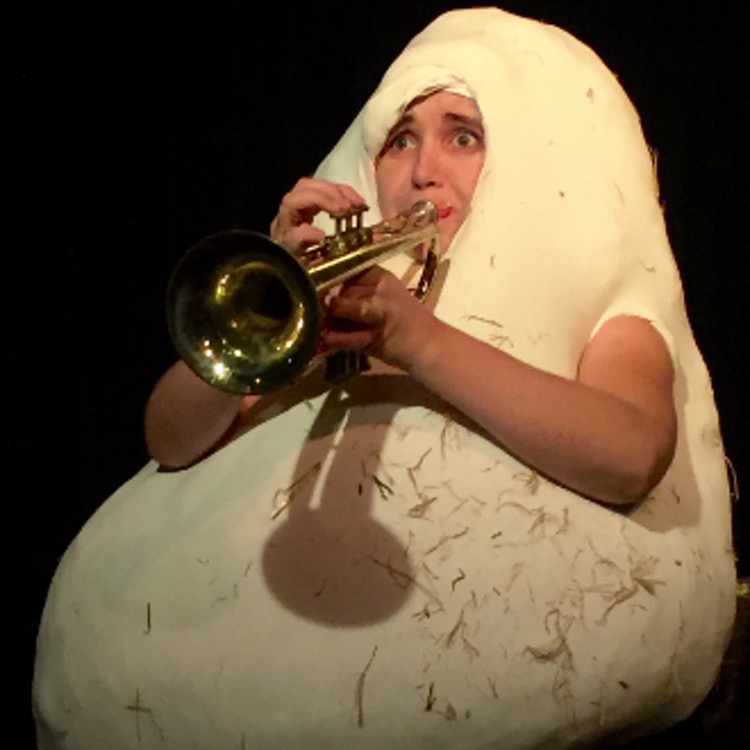
A woman lays an egg a day and faces a tumultuous decision: will she raise her egg, or eat it? In this hysterical (in every sense of that word) show, Natalie Palamides takes a relatively simple (if decidedly offbeat) concept and relentlessly whisks it into a story where you’re left battered, shattered, and shell-shocked. And those aren’t just bad puns.Palamides – who feathers her nest with training at the famed UCB Comedy in America– has delivered an hour that is tightly packed with high emotion and base laughs. It’s a very neat trick to repeat a joke (as this show occasionally does) without lessening the gag’s impact on the audience each time, but Palamides is in such absolute control of her audience that each time the central conceit is duplicated, we’re all of us heart in mouth, head in hands to see how things will turn out. It’s a cardinal sin for this reviewer to use the phrase ‘rollercoaster’ quite so early in the Fringe, but it’s a very apt description for how skillfully we are pulled in all directions. You can dock me five reviewer points later, it’ll be worth it. Laid is in equal parts moving and beautiful, as well as being delightfully dumb and crass. It is very rare (as rare as hen’s teeth, perhaps) to see a show that can be painfully hilarious and genuinely traumatic within the same heartbeat, but Laid manages exactly that. We see all aspects of our heroine’s life, from birth to awkward fumbling (hereby answering that question: who ‘came’ first, the Chick or the egg), and there’s even a very neat Streetcar Named Desire gag. The childish innocence of the characters, blended in with lashings of existential anguish, make Laid feel like the anxiety dreams of Charles M. Schulz. Palamides ranges from wide-eyed hurt whose offspring have to put on a brave face (at times literally) to wine-soaked grieving mom. There were many audience members who were burying their faces in their partner’s shoulders as the plot veered into unexpected yet inevitable territories. There’s a genuinely upsetting moment at around the midway point in the show, and long before the audience has quite recovered from the shock, it veers violently into an appropriately sick joke that invokes the spirit of a banned Monty Python sketch. This is a genuinely special time at the Fringe, delivered by a supremely talented performer. It’s an hour of relentlessly funny clowning, but also of dark sorrow. After all, you can’t make a show this good without breaking some hearts. 

The Warren: Theatre Box • 4 May 2017 - 11 May 2017

Hotel Europa

As audiences members we almost always experience performance in a passive and inert way. Sitting satisfied in a large group watching others perform for us, we are allowed to interpret the work as we are directed to, or however else we wish. We may profess to being affected by a piece of theatre or a poetry reading, but with alarming frequency these events give us a one time jolt of questioning or dissenting thought and then fade away into the daily realities of living our lives. So to encounter theatre that aims to modify the audience’s role in order to have a more constructive effect on our opinions thereafter is both refreshing and important. Various practitioners within the TOgether network have here combined to create such a work, Hotel Europa.Hotel Europa is presented as forum theatre, a facet of the theatrical method rather intimidatingly called Theatre of the Oppressed. In reality this means that the play that is performed for us can later be altered by us. Invited onto the stage, we can ask the actors to behave differently, scene by scene. The play essentially charts how neoliberalism and capitalist ideologies dominate Europe, represented by a hotel, and how debt, consumerism and interdependence have led us into an ideological cul de-sac from which we cannot emerge without considerable damage. The hotel’s owners take loans and essentially subscribe to neo-liberalist capitalism in order to make their business profitable, while their son tries with all his might to convince them, the hotel employees and everyone else that there is another way: Utopia.This performance is brilliant simply for its alternative theoretical basis. The company is formed of seven different nationalities, so very little dialogue is used, with movement, brief songs and chanting employed to create meaning and drive plot. This could be performed in any country. Simple, but effective representations of various ideologies, a top hat to signify capitalism for example, are used to express the situation we now find ourselves in. It's remarkably clear, though it inevitably simplifies capitalism into being an outside, wholly evil entity. Hotel Europa’s best feature though, is revealed when the forum theatre kicks in and we begin to suggest alternative ways a scene could be played out. In this way, the difficulties of escaping the cycle that global capitalism has set in motion is rendered crystal clear. It is frightening, and it stays with you long after the performance has finished. Perhaps the company could afford to have a slicker way of facilitating this participation, as there are awkward moments that are results of miscommunications, but ultimately Hotel Europa lays bares the truth – we’re trapped in something we didn't all choose, but only together can we escape it.

Just Festival at St John's • 23 Aug 2016 - 27 Aug 2016

A Divine Comedy

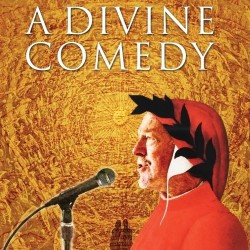
The problem with epic poetry is that it's just so…..epic. Our time is presently dominated by modes of communication that are prized for being brief: 140 Twitter characters is no place for Dante’s 14,233 line poem Divine Comedy, and you certainly couldn’t cram his wonderful, overflowing images and characters into a gif. We are at risk of losing interest in this lengthy, heavy kind of work, despite its undeniable storytelling power, emotive language and literary significance. Luckily, Mike Maran, a Fringe veteran in his final performance, has created an adaptation of Dante’s poem that can speak more freely to all, while retaining the fascinating essential story that has so much meaning.Maran’s easygoing adaptation allows him to take Dante’s place - it is he who travels through hell, purgatory and heaven in search of love and its meaning, encountering various historical characters during the journey. We see the circles of hell, where divine justice proves to be rather hard to interpret. Some seem to be in hell unfairly. We see the ledges of purgatory, where we have to learn to overcome our sinful characteristics. Finally, in heaven, we approach the shimmering, vivid, arcane concept of love.This excellent piece of storytelling relies on Maran’s charisma and unhurried tones. His clear love for Dante’s work is infectious, and as he quotes liberally from the italian text we get a sense of the power and artistry of the poem. He succeeds in making Dante so wonderfully accessible, and has a healthy sense of humour about the inevitable seriousness of an allegory about heaven and hell. His frequent references to his own flaws and tongue in cheek comparisons with Dante himself provoke easy laughter, with contemporary references kept to a minimum but used to retain our attention. At two hours including an interval, Maran’s success in keeping his one man piece interesting is remarkable. He is helped by the sheer power of Dante’s tale, so compelling, so beyond the normal scope of story. In your mind's eye you can imagine the landscape of hell, the expanses of heaven and the cliff edges of purgatory. You can imagine that there is something more, something beyond our daily concerns, past the clichéd concepts of love that fall short of describing its complexity. It would be nice to see Maran’s complete vision, as this piece is currently still a work in progress, and sometimes he could do with an extra pair of hands, but ultimately he succeeds in making you want to run off and read an exceptionally long poem written 700 years ago. Turn off your phone - this is something worth spending two hours on. 

Valvona & Crolla • 23 Aug 2016 - 27 Aug 2016

Eurohouse

For many people unaffected by it, the debt crisis in Greece is a distant, vaguely distressing situation, failing to provoke public outcry due to a misapprehension that it is somehow very uniquely Greek, and surely entirely the fault of the Greeks. Multi-skilled performers Bertrand Lesca and Nasi Voutsas challenge that view with their show Eurohouse, an exhilarating, intelligent fusion of theatre and lecture.Co-produced by Fellswoop Theatre, Eurohouse dissolves the complexities of an economic and political crisis into an arresting performance. Distorting the distinctions between actor and character, the pair examine the imbalance of power that existed (and still exists) within the European Union, through a mirroring of that imbalance between two friends. As this parable continues, real events are also symbolised in various humorous, angry, and ultimately quite disturbing ways.The cornerstone upon which this show is built is tone and atmosphere. The performers chat with us ‘before’ the piece as if we’re old friends, welcoming us into the performance. By establishing their French and Greek identities while also establishing the absence of a fourth wall, humour is brought to the blend. For the first 15 minutes we laugh consistently. This makes the transition to examining the problems of the European Union even more stark. Later, the piece becomes rather dark. The same events occur, but suddenly we aren't laughing anymore. It is no coincidence that Lesca talks to us constantly, while Voutsas is largely silent. The ultimate impact of having a likable Lesca representing the irresponsible central European banks and governments is that we see the selfishness of their approach. They want to create a wonderful union for European nations, but cannot abandon their primacy and dominance. Meanwhile Greece stands by, failing to resist until the last second, until it's almost too late.If all this is fascinating, then perhaps it's a shame that the direct link to reality is made so late, at the end of the show. The danger of this mirroring parable approach is that it doesn't take into account the true complexity of the situation. That's partly the point, but no separation is made between the banking sector and the general nations of central Europe. Equally, Greece is admonished only for not resisting, while banks are blamed entirely for lending the state the amounts they borrowed. The piece does best in exploring the hypocrisy of central European nations within the EU, and how Greece’s pride and dignity has been assaulted by this. The stylish, contemporary way in which that argument is presented will lead you to a better understanding of Greece’s plight. 

Summerhall • 16 Aug 2016 - 26 Aug 2016

Beryl

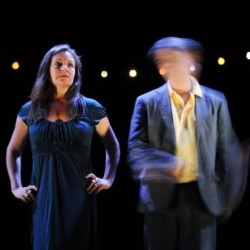
Beryl takes place in a cluttered bedsit, where the vivacious titular character runs a service that allows curious potential crossdressers to experiment with different looks. The rather grumpy oddball, Frank (Alan Rogers) has engaged these services, but Beryl (Lesley-Ann Reilly) has trouble figuring out what it is he wants. As their encounter turns from crossdressing to pseudo-therapy, Frank and Beryl discuss their pasts and what has led them to this point.The play is an excellent model for the fate of many newly-written short plays. It is full of intriguing ideas and refreshing characters, but doesn't succeed in fleshing either of these out fully. A high point is the playwright/actor Reilly’s characterisation of Beryl: she creates an endearing, chipper and yet somehow tragic woman who clearly tries to help herself by helping others. The character drives the plot, occasionally providing the jolt of pace and energy that is needed in a play that has a tendency to collapse into sluggish or stagnant sections, which aren't helped by oddly repetitive fragments of dialogue.The play's central problem is that is it doesn't attain the dramatic gravity that its later revelations require. The sinister edge that the company attempts to introduce falls flat, leaving Frank and Beryl’s divulgences looking an awful lot like they’re shoehorned in. We simply don't care enough about the characters. In parts, the play doesn't explore them deeply enough, while in others it goes so deep into their psyches that it feels odd that we don't have a better sense of who they are. What does Beryl exist on the stage to do? It’s not always very clear.At Large Theatre Company state that they want to create opportunities for theatre makers to develop their craft, and you can certainly see the potential in Beryl. It is a pity that it, like Frank, cannot decide what it wants.

Sweet Grassmarket • 15 Aug 2016 - 26 Aug 2016

The Surge

With the parliamentary Labour party at apparent loggerheads with a huge chunk of its ordinary party members, and a Prime Minister arguably governing without a strong mandate, the growing alienation of the British electorate from their representatives has rarely been in sharper focus. The King’s Players, a long established drama society from King’s College London, have astutely taken this opportunity to examine the frustrating labyrinth that our democracy has become.The Surge uses the flavour of multiple formal disciplines to create a satisfying blend. The basic mixer is theatrical scenes, focusing on newly elected MP Jessica Wiles, who is attempting to gather support for a bill in parliament. Unwilling to leave behind her activist roots, she becomes the face of student protests in favour of the bill. For these protests and the passage of time and place, the ensemble utilise physical theatre, providing an alternative and fluid method of driving the plot. Wiles faces obstacles from all sides, and comes to question her power within a system that is designed to work in a very specific way. Spoken word and filmed material supplement this combination, creating an interesting cocktail that asks important questions. This piece has clearly been well organised and directed by Caitlin Evans. Considerable thought has gone into this form-combining work. In large part, these combinations work. The ensemble is used frequently to build a cacophony of sound that is a wonderful representation of the claustrophobia of a modern life dominated by information and the misinterpretation of that information, particularly by the media, and by extension the population. Both poems provide nice moments of stillness, and their focus, while different, is wide enough to remind the audience that what they are watching is a symptom of something much larger. Emily Ashbrook’s Wiles cuts an aptly frustrated figure, with Imogen Morrell providing important energy and conviction as the MP’s confidante, though their early scene moves so quickly to characterise them that their relationship is on the precipice of entering the realms of cliché. Will Sullivan’s music is an essential component that gives legitimacy to the physical theatre sections in particular, and creates a thoughtful atmosphere where we are willing to engage with the questions we’re being asked. Is our parliamentary system out of date? Is protest a workable democratic method for being heard? These are central issues that are particularly relevant to the embattled Labour leader, himself a renowned grassroots activist. The Surge’s difficulty is that it fails to provide any sort of answer to any of the questions it poses. On the one hand it is hopeful, representing a worldview where we simply have to tough it out to prevail, but on the other it happily lapses into portraying all MP’s as self-serving, small-minded twits who couldn’t care less, no matter how much we protest. Both of these cannot be true. Stereotyping of various ‘evil’ MP’s is a convenient oversimplification. Ultimately though, The Surge is an ambitious piece that gets you mulling over how to get out of our political maze. For that alone it gets my vote. 

Greenside @ Royal Terrace • 8 Aug 2016 - 27 Aug 2016

Criminology 303

One of the wonderful things about the Fringe Festival is that it’s the only time of year that theatre in Scotland truly panders to our increasingly short attention spans. Even the keenest of theatre aficionados struggles with an indulgent, bladder-bursting three hour classic. Sometimes the pomp of lengthy, large scale theatre can alienate potential viewers. No such troubles at the Fringe: the plethora of half-hour to hour-long shows means that you can see four in a day and still have plenty of time to ruin your liver or spend a half-hour waiting on steakbake in an overcrowded Greggs. Tangent Theatre Company’s Criminology 303, beginning at 21.30, lasts a mere 35 minutes, but still retains many of the qualities that make theatre such an exciting spectacle.The action is split between a present day lecture, in which the audience play the students, and a murder investigation in the mid 70s. We flash back and forth between both time periods, which centre on policewoman Norma Bates (no relation, one suspects, to the corpse in Psycho), played by Jilly Bond. She shares the stage with Julian Gartside, who plays the prime suspect in Bates’ investigation. As present day Bates unravels, haunted by memories of her only unsolved case, we see repeated flashbacks playing out before us. Is Gartside’s peculiar, standoffish Laird responsible for a young man's murder? Or is it something altogether more mysterious?Criminology 303, the first play ever written by Rose Miller, makes use of some remarkably entertaining methods in an attempt to capture our attention and suspend our disbelief quickly. The casting of the audience in the role of Criminology students is a clever move, and draws some chuckles from a packed auditorium. The use of filmed material and multimedia to help aid flashbacks and introduce an uneasy feeling that is important in the overall effect of the play.However, this piece is so short that it damages itself. A number of positive elements are negated by the fact that the play could easily have afforded to be twice as long. For instance, while both actors do solid work, neither truly gets a chance to fly. Gartside comes closest with a disturbing monologue, but the play simply hasn't earned the atmosphere for us to respond in the desired way. The overall tale is so short that play’s end is abrupt and peculiar. There is promise here, certainly, and it’s a pleasure to want more of a play rather than less. The basic craft of creating the atmosphere required for a thrilling play though, has been neglected. An entertaining diversion, but Criminology 303 could benefit from a little Playwriting 101.

Venue 13 • 6 Aug 2016 - 27 Aug 2016

Sexual Fears of a Modern Day Virgin

Sexual Fears of A Modern Day Virgin. Not the snappiest of titles, but they say sex sells. The place is packed with slightly bashful people, all acting casual, but all intrigued by a show billed as an exploration of virginity. It's nice to see this Fringe marketing campaign working for Rant and Rave Theatre Company, who have forgone the theatrical vogue of naming shows with snappy one word titles. This could easily have been called ‘Sex' and featured a racy, provocative, meaningless poster, but it’s mouthful of a title gives potential audiences a better idea of what they're getting themselves into.In a tiny studio on Infirmary Street, the cast of five chatter their way through a peculiar fifty minutes. Connor is shocked, but supportive, when his boyfriend Ben reveals on their one year anniversary that he identifies as a woman, Ellie. This would be a bit of a bombshell for most, but they resolve to work through it and move in together. Meanwhile, sardonic young art student Jordan, played with excellent humour and endearing self-awareness by Lewis Wilding, struggles with his indifference to sex. At the same time, a lesbian couple, one adventurous and the other rather more cautious, experiment in the bedroom to spice up their relationship. Taken scene by scene, this is an entertaining exploration of a credible world. By and large the acting is strong, with convincing characterisation from most of the cast creating believable LGBT persons who aren’t entirely defined by that fact. The company are quick to point out that the piece was devised by the actors during rehearsal, and while this is impressive, it also explains the curious disjointed effect of the overall play. No meaningful crossover between the sets of characters takes place, and the scenes in which they do meet feel rather contrived. The script too, while often solid in Jordan’s scenes, begins to indulge itself in scenes between Ellie and Connor, rising in drama but lapsing into peculiar repetition. All this can be forgiven: each story is coherent within itself.Sexual Fears of A Modern Day Virgin’s only pressing issue is its confusing message and foggy dramatic purpose. Two of its stories have no real conflict to resolve, while the third, which asks the intriguing question of how a gay male relationship could respond to one partner transitioning to the female sex, comes down so heavily on the trans partner’s side that it fails to accept the legitimacy of Connor’s discomfort and therefore inadvertently turns Ellie into the unreasonable, emotional female stereotype. Rant and Rave have created something with potential. It's just hard to shake the feeling that it needs a little more polish.

Greenside @ Infirmary Street • 6 Aug 2016 - 20 Aug 2016

F*ckboys for Freedom

Perhaps you aren’t aware of fuckboys. Perhaps you haven’t even heard the term. Luckily for the uninitiated, Facepalm Theatre have come to the Edinburgh Fringe complete with snapbacks and swear words to teach us about this wonderfully millennial condition. Most of us have met a fuckboy at one time or another, and exploring their existence has proved fertile ground for a lively comedy piece.Facepalm Theatre swagger through the hour of F*ckboys For Freedom with all the abandon and banter of their central character, a young man who, in an attempt to gain approval from peers and in pursuit of the opposite sex, becomes a ‘fuckboy’. We follow his ludicrous experiences with the gym, drugs, alcohol, sex, and even Kanye West as he becomes increasingly shallow and selfish. After a tragedy spoils his fun, he starts on the road to redemption.The humour of this show lies in large part in the slapdash form it takes. Relentlessly self-aware, it repeatedly finds humour in highlighting purposefully clumsy theatrical conventions. For instance, multiple, deliberately two-dimensional characters named “Generic”, designed only to further the plot, feature heavily. One of these discusses the alarming concept that when he leaves the stage he will disappear or die, his role fulfilled. This sort of humour helps to maintain an intimate atmosphere, with the audience complicit in the deconstruction of normal theatrical rules. This approach paid dividends, with many chuckles directed at Max Reid, who played role after role with various cod accents and manic expressions. The downside of this humour lies in its overall effect of the piece. Billed as a blend of satire and politics, the show attempts to make a serious comment about rape culture, but is either unwilling or unable to stop the banter long enough to do so. The audience participation is clever, tricking an audience into complicity with rape culture and the objectification of women, but by then the characters have been rendered so deliberately two-dimensional that we simply waited for the next joke and laughed it off. It’s hard not to feel like F*ckboys for Freedom is an opportunity missed, so close to exploring what really creates this inclination among young men to routinely mistreat women. It’s a truly funny piece of theatre, and seems comfortable to remain within that zone.

Sweet Grassmarket • 5 Aug 2016 - 27 Aug 2016

The House of Edgar

Often, the expectation brought to mind by the genre “Musical” means that successfully producing a new and original one at the Fringe Festival is no mean feat. Several enduringly popular musicals are performed on a huge scale, with large casts and spaces providing the exciting all singing, all dancing, electric atmosphere that make the musical experience so unique. It is easy to forget that the musical style can have real impact on a small scale, if done in an intelligent, skillful way. The Argosy Theatre Company have shown, with their sensitive and well worked show The House Of Edgar, just how impressive a Fringe musical can be.The narrative focuses, unsurprisingly, on the home of the influential and renowned 19th century American author Edgar Allan Poe. Our action occurs after the death of Poe, as the executor and inheritor of his estate Rufus Griswold sorts through Poe’s texts and takes possession of the house’s keys. The smug, facetious Griswold (Eoin McAndrew, wonderfully dislikable in the role) criticises and laughs at his onetime friends work, dismissing it as trash, but his obvious jealousy and disrespect set in motion a series of mysterious and from our viewpoint, compelling, sequence of events.This musical has committed well to theme and aesthetic. It is dark, romantic and deeply poetic like Poe’s most famous works, many of which feature as songs. The original music that accompanies them hits that special sweet spot between memorable and moving. Composer and writer Thomas F. Arnold has created tight, contrasting melodies with complex, busy chord changes and harmonies. Again, the small number of musicians, at a mere three, is a refreshing reminder that is is possible to create wonderful accompanying sound without a full orchestra. The company does well to showcase the singing talents of several members, with the performances of The Raven and The Tell Tale Heart particular highlights both within themselves and for showing the company's skill at creating contrasting sounds and emotion. One evokes Poe’s sorrow and longing; the other his fascination with madness and death.It is Poe’s ultimate sadness and grief that is the central focus of the piece, which serves as a passionate defence of his work. Well acted by a talented cast, who are directed by Beth Cowley, it also avoids the classic musical pothole of paying too little attention to acted scenes in favour of rushing to the next song. It does well to examine self-doubt, depression and the hope and comfort of eternal love in a truly moving way. Admittedly some group movement and dance sections don't quite come off as planned, inhibited in no small part by the size of the space, but overall The House Of Edgar is an excellent example of an exciting, original musical. Go and let yourself in.

theSpace on the Mile • 5 Aug 2016 - 27 Aug 2016

Emerald Diaries

The Fringe Festival will always be best used as a place for experimentation and experience building, both for performers and for audiences. You may, as a spectator, take a dip in the wild, deep waters of physical theatre or dance and see if they appeal. Perhaps, as a performer, you may try your hand at an alternative discipline, actor to poet, dancer to playwright. Kingdom theatre company have used a healthy dose of experimentation in their latest show, Emerald Diaries, a show that blends Irish Dance with song and story.Andrew (Juan Casado y Barton, himself experimenting in his first theatrical leading role), uses his leave from the navy to finally meet Mary (Aileen Goldie), with whom he has been conducting an (ultra modern) relationship with via text. Attempting to rendezvous with Mary, Andrew is drawn into her dance class by the comic dance instructor Aggie Dooley (Jacqueline Hannan). Roped into the dancers’ scheduled competition after showing his vocal skills, Andrew tries to make Mary fall for him, all while the threat of his curfew to return to his ship hangs over their budding relationship.As with any show that attempts to blend multiple forms, some things work, while others do not. In the list of the former must go the inclusion of Irish Dance group, the Siamsoir Irish Dance Academy. Their three choreographed set pieces are entertaining to watch, especially the heavier number sandwiched between the more traditional pieces. The company also do a solid job of performing as background ensemble cast.The same cannot be said for the overall acted dialogue. Casado y Barton is a trained dancer but doesn't quite convincingly make the transition from dancing to acting. He isn't terrible, but with a love story the only real focus of the piece, strong characterisation and scriptwork are essential. With these left by the wayside, the love between Andrew and Mary never quite comes to life. The inclusion of Hannan, an experienced actress, and a well worked monologue performed by her only draws attention to the fact that the other performers lack acting experience. Additionally, the show is unhelpfully categorized as a musical. The inclusion of two songs does not a musical make, though they are performed with a refreshing roughness that belies the often over-polished musical style.There is comedy here, and the seeds of something, the influence of recent successes like Sunshine on Leith creating a love story that makes you smile. This piece needs a little heart though, and a little more attention to building an on stage relationship we can really believe in. Perhaps then this new experiment will pay off.

Greenside @ Nicolson Square • 5 Aug 2016 - 27 Aug 2016

Fourth Monkey's Genesis and Revelation: Sodom

Of all the forms of theatre regularly utilised in our part of the world, physical theatre remains the most beleaguered. At its best, it can be the emotive, striking way of delivering information beyond words, like its practitioners want it to be. At its worst, it is a shortcut used to court critical acclaim and give meaning or significance to half-baked concepts. Physical theatre is often misunderstood or over-interpreted. Fourth Monkey Theatre Company are experienced practitioners of the art, blending physical theatre with ensemble drama to retell stories. They have returned to this year's Festival Fringe with another offering: Sodom, part of their Genesis and Revelation series.The ancient biblical tale centres on the city of Sodom, created cleverly using mottled, lava-like tendrils across the stage. The city is afflicted with a curse that causes its inhabitants to physically and mentally deteriorate. Sudden, random acts of violence are rife and self-harm is constant. The city's leader, Lot, hides from all this, ignoring his wife and locking away his two daughters, but the citizens expect him to find and stop the source of their affliction, as he has the ear of god. He insists they are being punished for their own depravity, but all is not as it seems.Ami Sayers’ piece is a dark and disturbing exploration of trickery, selfishness, and the lengths that we go to to convince ourselves that our intentions are good. It is a shame then, that these interesting thematic elements are trapped, like Lot’s daughters, in a place where they cannot reach the outside world. The form of Sodom leaves it unable to communicate clearly. Traditional theatrical scenes mix freely with stylised physical theatre in a blend that leaves both with less impact, as if diluted. For example, the piece relies on a serious and sombre atmosphere, and many of the actors work hard to create this, with particular praise deserved by both versions of daughter “1”. However, with this atmosphere created by well-scripted dialogue, later physical theatre sections actually provoke laughter from some audience members. This could simply be ignorance, but is likely a result of the show being neither fish nor fowl.It is important to stress that many of the scenes are interesting and well-acted. Interesting allusions to rape culture and inequality are made. The chorus fulfills its role and provides a disturbing voice that chills. However, even within the scenes, double casting obfuscates and confuses what is a simple narrative. It seems odd that a decision has been made to tell such a simple story in such a convoluted way. Fourth Monkey are proud of their ensemble approach, and their commitment to forms of theatre beyond tired naturalism is commendable. But in their desire to blend these with more traditional theatre they have created a contrast that has left the production looking strange.

theSpace on Niddry St • 5 Aug 2016 - 27 Aug 2016

A Matter of Life and Death

We very rarely think about our own deaths. That's unsurprising, considering how frightening it is to entertain the idea that one day, everything will just stop. But within this fear there is a positive – death is one thing that all people share, an event we all know will one day arrive. Cup Of Brew ask us to contemplate death and what it means for friendship and life’s purpose in their brilliant production, A Matter of Life And Death.Simon and Paul are old friends, who still spend time together despite Paul’s strange, extreme reluctance to involve himself in Simon’s mid twenties party lifestyle. Paul eventually reveals that he is the personification of death, and what follows is an exceptionally well-crafted comic drama.Wonderfully easy in its humour, laughing quite literally in the face of death, this two-hander benefits from a crackling chemistry between its actors. Both Jared More and James Esler do well to work the contrasts between their laddish banter and the serious discussion that examines friendship and futility. It is a credit to the entire company that a production that relies so heavily on believable characters and rapid dialogue is so utterly compelling to watch. Sam Hill’s direction is slick but well thought-out, turning the 50-minute piece into a perfect Fringe-sized morsel. Without a distracting set, elaborate scene changes or undue technical cues, Freddie Rosen’s witty, perfectly weighted script is allowed to speak for itself. The things it has to say are not preachy, but they are profound. What is friendship in the face of death? Can we face life with the thought of death ahead? The answers to these questions are not spoonfed to us, but with humour and good judgement this production evokes the admirable human ability to laugh and get on with life.

Greenside @ Infirmary Street • 5 Aug 2016 - 19 Aug 2016

Cuncrete

The sheer size of the Edinburgh Fringe Festival means that any performer that manages to distinguish themselves from the wild, multifarious pack is left at a critical crossroad. On the one hand, they gain the pedigree and platform to return to the festival with a better chance of finding success again. On the other, they are saddled with the weight of expectation, with audiences anticipating the familiar elements that helped them fall in love with the show, while hoping for something bolder than a simple rehash of the original piece.Rachael Clerke found success at the 2014 Fringe with a comedic one woman show about Scottishness, but returns here with Cuncrete, featuring a punk rock band of drag kings with an entirely different focus in mind. This is a pertinent performer who doesn’t fear renovating her image.Cuncrete is a compelling mess, a fascinating and rough fifty minutes that commits fully to its punk aesthetic. The show essentially takes the form of a gig, with preening drag king punk band the Great White Males providing loud, messy tunes that fully support their billing as anti-virtuoso but also provide an intense background noise that helps carry forward a sneering script. Part sung, part spat, Cuncrete confronts the realities of capitalism and ugly masculinity within the bricks and mortar of the world around us. Particular focus is given to the housing crisis and to the manufactured consumerism and jealousy that perpetuate capitalism as the dominant ideology of the Western World.The malleable, cheaply produced material, concrete, is a recurring motif, used variously to symbolise the quick and easy highs that consumerism offers and to offer a grotesque insight into the hedonistic masculinity that is the driving force of so much that is wrong with our culture. Clerke’s alter-ego for this show, Archibald Tactful, is a hideous, sleazy and entertaining figure who is representative of all sorts of things, but is best regarded as the most selfish, arrogant and manipulative part of human nature.We could analyse Cuncrete brick by brick, but the show is best experienced as a whole. It is only a shame that not all of its lyrics were entirely audible, though it would perhaps undermine the in-yer-face, punk style to have a tidy little lyric sheet printed in a little program. The show is broad, bold, brutal and manages to make a compelling connection between masculinity and rapacious capitalism. It is also overwhelming, and in a strange sort of way the actual connection between that same capitalism and the concept of home ownership or the act of building itself remains curiously oblique. It’s a riveting and complex piece, but one thing is certain: Clerke and her Great White Males are building themselves a reputation.

Summerhall • 3 Aug 2016 - 26 Aug 2016

Snakes and Giants

Sometimes a good performance doesn't fulfill the purpose of normal theatre. It doesn't raise pertinent political questions. It doesn't strive for laughter or for tears. Instead, it explores seas of uncharted human experience, feelings there aren't yet names for, existences that cannot be described. Award-winning international company The Flanagan Collective have created such a show in Snakes and Giants, a piece that combines theatre with movement and music to explore the unexpressed.The piece skillfully weaves together the narratives of two women: one in her late 20’s, struggling with a breakup and learning to live alone, and the other an ancient loner, clutching a pot of tea in a closing dance hall, recounting scenes from her long life. Multi-talented pair Holly Beasley-Garrigan and Veronica Hare play these respective characters, as well as narrators. They achieve a captivating and intimate setting, playing out each story as if to each individual audience member. Scenes of physical theatre and song maintain an air of wonder, as though we're witnessing the retelling of a legend.The special quality of Snakes and Giants is in the way that it combines its narratives not through intersecting plot, but through theme. There are great differences between the characters - the ancient woman’s scenes have a mythic quality, with talk of giants and elders, while the younger character speaks directly to the experience of any young person living alone: Netflix, huge TV’s and alcohol. These contrasts allow the performance to explore loneliness, memory and history from many different angles. The elder knows where she is from but has realised that her world has disappeared; the younger feels as though her life lacks purpose, unsure of where she is from and her place in the world. She talks about how she feels each generation somehow loses the capacity to be as happy as the last. What is our connection with the weight of history? What is it to belong, and what is home? Those that came before us can sometimes feel like giants, people with a purpose and meaning to their lives that we cannot possibly attain. Yet as the world changes around us constantly, we can only enjoy it, move with it, accept it. Snakes and Giants contains all of these ideas alongside many others. To try and pin all of them down on the page would be foolish. The vagueness and great scope of the piece may leave some with a feeling of dissatisfaction that there isn't a more tangible message to grasp, but sometimes you have to let a performance wash over you. The images we are left with are a stage picture, built and then destroyed, glasses of wine and cups of tea, long thin shadows of giants cast against the wall, leave each of us with thoughts and feelings that defy easy wording or description. Sometimes live performance gives you something nothing else can. 

Summerhall • 3 Aug 2016 - 27 Aug 2016

Every Wild Beast

It's not often you get to see theatre in what is essentially an attic. A quirkily decorated attic, laid out with clutter and beautiful hanging light bulbs, but an attic nonetheless. The huge number of shows at the Fringe means that companies utilise incredibly diverse spaces to set the many stories they have to tell us. Lion House Theatre have defeated the shortcomings of their small, cramped space, and turned it into part of the folkloric charm of their original new play, Every Wild Beast.Protagonists Barri and Sam meet when the self-professed ‘sketchy' Sam breaks into Barri’s home to hide from the police. Though alarmed by this, Barri joins him on his peculiar quest, which is as much about running away as it is about searching for something mythical. Encountering friendly farmers and hostile policemen, Barri and Sam make their way across a strange landscape, a country that is both familiar and alien to us, towards an encounter that changes their purpose and meaning forever. This is a wonderfully intimate, thought-provoking show, helped in no small part by the creaky attic in which we’re all crammed, like sardines in a tin. Every Wild Beast is a wonderful combination of styles and stories: a plotline based on myth, folklore and legend mixes freely with contemporary dramatic dialogue and dialect. It is to the play and its performer's great credit that the piece connects so freely with its audience. Sullivan Beau Brown, who is blessed with an entertaining, expressive face, is used most heavily as a chummy narrator figure, and through him the story of these two strange characters is wired directly to the audience. Thoughtfully and believably acted by both Tom Coliandris and Casey Jay Andrews, who is the play’s author, the only criticism of the show that can be offered is an occasional lack of pace and urgency to the drama. By and large though, the whole combination works to create an audience that it totally invested in the tale before it.What do we have to do to matter in a complicated world? Is there such a thing as fate? Every Wild Beast does what folklore does best - try to make sense of a human existence that can seem random. The beast Barri and Sam pursue is any fear you want it to be. The magic water they seek is the solution to all our problems, sometimes feeling so near, but not quite within reach, or not quite real. Folk tales have been reimagined here, reminding us that we too are folk about whom tales can be told: around campfires or television sets, in theatres or in attics.

C venues - C nova • 3 Aug 2016 - 29 Aug 2016

Tomorrow's Parties

Forced Entertainment have a legendary reputation for creating innovative, engaging and challenging theatre and performance. Therefore, Tomorrow’s Parties naturally comes with weighty expectations of being, in one way or another, brilliant.Essentially two performers stand in front of us and for an hour or so they imagine and tell us about potential futures. They speak directly to us, contradict each other, tweak each other’s suppositions and always have another idea to throw out into the space.It certainly has some brilliance about it. The characters’ costumes and the simple coloured lights around the set create an atmosphere that is pensive and curious, as if we’re looking into the kind of late night session when people start talking in suppositions. It’s incredible how engaging it is simply listening to hundreds of fantastical possibilities. Will the whole world become a theme park? Will groups of people share one body between them? The easy, casual way in which the two performers – who are rotated on a night-by-night basis – explain their hypothetical futures is so engaging that you can’t help but consider each one that they articulate. Some are lengthier than others but more importantly, as you engage with one future, the second performer will almost always state an alternative or similar one with a key change. This constantly reminds us of the sheer volume of possibilities for the future and thinking about this can produce many effects. Sometimes it’s frightening, sometimes it’s funny and sometimes it’s strange.Another element that makes this show so interesting is the number of futures that are based on or inspired by present fears or present injustices. The future in which we take a pill that makes us aggressive and wild at the weekend so that we’ve worked out all our frustration in time for work on Monday is a future that may practically already be here for some. Sometimes the supposition is that very little will change – the poor will still be poor while the rich get richer.Tomorrow’s Parties is able to draw attention to the injustices (intolerance, loneliness) that exist all around us. Yet at times it is really very funny. It builds to peaks, with one performer getting carried away with their dystopian or utopian future for several minutes, only for the other to shoot that future down. Ultimately, the show produces a feeling that is hard to describe, like most good theatre should. The feeling is somewhere between hope and awe, tempered with a little pessimism. The only issue that Tomorrow’s Parties could conceivably be argued to have is that it always feels like it’s going to kick off and never really does. Although it seems likely that in a show about the future, that’s part of the point. 

Summerhall • 24 Aug 2015 - 29 Aug 2015

The Edinburgh Concerts

The Edinburgh Concerts was, believe it or not, a concert series organised in Edinburgh. NEXT UK are a group who move around the UK “showcasing and promoting the best in new musical theatre writers and performers”, and in their 50 minute performance we were treated to several different performers in different combinations, performing approximately 10 new songs written by up and coming writers. There was a good spread of different styles represented within the selected songs: as well as a number of emotional ballads of the type that are quite prevalent in musical theatre, there was a liberal sprinkling of excellent entertaining numbers. Something For The Pain, one of a number of inclusions written by the clearly talented Eamonn O’Dwyer, was particularly funny, being both well performed and well written, lyrically and musically. The philosophy of many a midday drunk was amusingly explored, and we found ourselves wondering about the play which it is surely part of.This was a recurring issue. While it is possible that some of these songs have been written and submitted to NEXT UK as part of works in progress, or as standalone songs, it seems likely that many of them are parts of full musical theatre plays, about which we received no information. I Can’t Live Here Anymore, another highlight, this time written by James Michalos, was such a tragic and saddening piece that it was impossible not to be curious about the why and the who that had created this emotion in the character. It was a frustrating experience, without any way of getting context. This was also to the detriment of the performers - many of them performed well vocally, but did very little acting. Clearly the element of musical theatre that sets it apart from other forms is the songs, and quite rightly they were the focus of the evening, but to truly showcase the writer's work and the performers skills, we need some sense of the totality.The performers and organisers deserve a great deal of credit though; you cannot argue that they aren’t doing a good thing. The performances were generally good, with some excellent vocal tones and some good displays of control. Any weaker sections were brief, and the key success was that new material was performed to an audience with a real interest in it. The atmosphere and tone of the entire event was casual and relaxed, and this was key for keeping the audience involved and engaged with each song, and it’s definitely possible to see the potential in some of the work. Perhaps we really will see some of these writers and performers finding great success in the future. 

SpaceTriplex • 23 Aug 2015 - 29 Aug 2015

The Ex

Dutch jazz punk veterans The Ex, have been going for thirty-five years. In that time they have traversed as many styles, from free jazz to African rhythms, rattling through studio albums and band members in the process. Tonight’s gig is their first in Edinburgh for twelve years and is therefore something of a special occasion. The equipment on Summerhall’s Dissection Room stage is reassuringly battered: gaffer-taped amplifiers and speakers begging to be blown.Before they can be though, My Two Dads treat us to their noisy, repetitive brand of droney psychedelia. A constant kick drum sample is the heartbeat of their half-hour set. Wounded Knee’s Drew Wright strums a two stringed guitar over the top – any other strings would be unnecessary. He quickly establishes a driving, propulsive rhythm of minimal simplicity, locking trance-like into a groove and refusing to change chords for ten minutes. He sings strongly, powerfully. Unwavering shamanic chants reverberating through the walls, through our bones. Dylan Mitchell provides foreground sonic chaos – he marshals waves of noisy oscillation, his effected guitar feeding back on itself, rising and falling unstoppably. They jam for the full thirty minutes without changing the formula. Some are clearly into it and beat the air hypnotically; some, the majority stand apathetic, unmoved by the pair’s trip.The reaction is not so mixed when The Ex arrive. They are immediately commanding and frenetic, post-punk clatter duelling with Terrie Hessels’ noisy guitar freakouts. Hessels provides visual energy to accompany his tortured playing – that he breaks a string in the first song is instructive of the passion with which The Ex perform. Andy Moor is similarly physical as he wrenches huge slabs of industrial bass from his butchered baritone guitar. Amidst this punkish danger stands Arnold de Boer whose simple guitar lines and deadpan vocals seem slightly at odds with the music around him. By the end of the show he’s visibly into it a lot more; when, earlier, he shouts “Shut up!” you want to believe in the anger of the chorus but never do.Their set feels relatively short and the tone never changes – only on At The Top Of My Lungs do things slow down, drummer Katherina Bornefeld emerging from behind her kit for lead vocal duty. She is the star of the show – her rhythms are inventive and off-kilter yet remain inescapably danceable. The advantages of being around for so long are evident though: every song is a belter and warmly received from a crowd of die-hard fans and the usual Summerhall curio crowd. Four Billion Tulip Bulbs sets intricate guitar duelling against formidable rhythmic pummel; De Boer comes alive in That’s Not A Virus and by the time we reach Maybe I Was The Pilot we chant along with him: “All the pilots get rich/All the passengers pay for it”. It’s angry, clever and oddly funky. In other words, The Ex in a nutshell. May they continue for another thirty years.

Summerhall • 22 Aug 2015

Islands

Islands is a bit madcap. Caroline Horton's play, which she stars in, was commissioned by the Warwick Arts Centre and the Harlow Playhouse, and is a blatant, angry attack that explores the decadent, exploitative world of tax havens. The story charts events in Haven, an island floating above the real world (referred to as 'shitworld'). Haven's inhabitants are grotesque creatures who obsess over their own pleasures, but their way of life is challenged both by two newcomers and by events in the financial world.This production is deeply challenging, extremely entertaining and a little gross. The performers are dedicated to bringing the audience into their superbly created world. Audience members are frequently addressed, and an in-the-round set-up leaves us totally unable to be more than a couple of metres away from the action at any time. You cannot avoid being drawn in. Deeply uncomfortable scenes of sexual violence are used to analogise exploitation. Disturbing violence is shown to represent potential revolution. It's a brilliant, difficult play.The narrative is unveiled using many methods on top of scene acting: song, game show and newsreel parodies as well as radio show parodies are all used to deliver information, keeping us interested and slightly bewildered. This narrative is an interesting mixture of parable story and bare-faced lecture. The play effectively charts the financial crash and examines how, after briefly panicking, the super rich, particularly in the UK, simply turned their problems into the public's problem, causing the austerity that we are now experiencing. The seedy, disturbing, extremely funny song on this subject essentially states this outright. More subtly however, we see the trials of the character Eve, which mirror the trials of everyone who wants into the affluent world of high finance. Like many others like her, Eve is ultimately exploited by the people she works for. Direct quotes from Thatcher and various capitalist and Neo-liberalist influences are placed into the play, and remind us that we're talking about the real world. This isn't pretend, and the fact that this play was created in consultation with the Tax Justice Network is a worrying reminder that these repulsive characters before us are parodies of the real super-rich.But Islands faces the same problem that repulsive, blatant plays have faced before it: it risks alienating its audience. The message is telling us to wake up, and clearly suggests that etiquette and sensibilities are used to keep us from fully realising the extent to which we are exploited. Some people may find this play unnecessarily shocking, but hopefully most will see its brilliance. 

Summerhall • 22 Aug 2015 - 29 Aug 2015

Borderlands

We are on the border between England and Scotland, life and death, fluid and solid. We are on the banks of the River Tweed among the centuries old stone of Dryburgh Abbey. Established in 1150; burned down in 1322; all but abandoned by 1584, the Abbey’s ruins remain today as a remarkably well-preserved reminder of medieval monasticism and sacred solitude. It also provides the setting for Dudendance’s remarkable site-specific piece, Borderlands, which channels the immense history of the Abbey in a piece of performance that is equal parts dance, liturgy and visual art.The twelve performers are dressed in white, flowing robes. They are ecclesiastical ghosts, purity personified. Most are hooded, with exposed hands; feet and faces are painted white. Monks of a pale order. They roam within the Abbey walls, its lichen graves and ancient trees. We follow them, presumably for an hour, but it could be longer; it could be less. Time, in this holy place, seems to work differently, stretching and compressing as the Abbey breathes in and out.They drift from one point to the next like a glacier: slow, purposeful, natural. One walks between the trees; one lies on a stone ledge and sits up; one emerges from the cloister, beckoning with a flag. We are guided through the grounds by director Clea Wallis, who occasionally signals to the performers to begin the next stage of the action with a bell. In spite of this obvious signifier of formal structure, Borderlands never feels forced or prepared. Paul Rous’ choreography flows like an amorphous solid – we get the sense that the dancers have been here forever and will continue after we leave, part of the architecture and part of the border.The silence is broken: we hear choral voices reverberate through the walls. The Andante Chamber Choir sing The Requiem Mass beautifully, purely. A sacred polyphony for a sacred performance. Then, more sound. Occasional recorded soundscapes – chirping crickets and crackling radio voices – seem out of place and distract from the beauty and simplicity of the other elements. It’s frustrating and unnecessary but short lived. We walk around the back of the Abbey and we return to peace, losing ourselves once more in the ritual.Borderlands is a truly impressive feat, a new mode of worship that we are briefly privileged to observe. The movement is glassy, spectral, hauntingly beautiful. The point remains obscure and, perhaps, will frustrate some expecting a more ‘traditional’ dance piece. For those willing to open their minds to the Abbey’s history however, Borderlands is truly compelling. A beguiling piece of living sculpture, deeply textured with the past and its echoes in the present.

Summerhall • 22 Aug 2015 - 23 Aug 2015

You're Not Like the Other Girls Chrissy

Caroline Horton enters laden with suitcases against a pastel French tricolour. She is Christiane, the unique Chrissy of the show’s title. She waits at Gare du Nord, queuing for a ticket to England in the hope of reuniting with Cyril, her fiancé. This proves difficult though – it’s 1945 and European infrastructure is in turmoil. She has to wait. And wait. We wait with her and listen as she tells us her story.She is sent to Staffordshire to learn English – she picks up the language quickly and her monologue is delivered in wonderfully endearing half-fluent half-broken English. She meets Cyril at a tennis club and the pair get engaged the following Christmas in Paris. When war breaks out, Cyril enlists and they are separated for five years. Chrissy tells us of the long years in between, of her determination and how she survived occupied France.Horton is a lovely performer: Chrissy is endlessly charming and we never tire of her presence. Mostly, this is because Horton does not always paint her in an overly positive light: Chrissy seems difficult, stubborn and, at times, annoyingly blasé to the unfolding horrors of war that surround her. That such personality traits are represented is refreshingly three-dimensional – Horton does not deify her character and the piece is all the better for it.We never really learn anything about the other characters that populate Chrissy’s story – her family and Cyril are distant; names and fleeting descriptions. It would have been nice to get a deeper sense of them, as it would the problematic juxtaposition of Chrissy’s bourgeois privilege with the increasingly challenging wartime backdrop.The focus, however, remains resolutely on Chrissy. This is in no way a bad thing though, as Horton devotes 55 minutes to strengthening the relationship between her and us. By the time the show’s conclusion arrives – an unsurprising but highly personal denouement – we are well and truly won over by Chrissy and her charms.You’re Not Like The Other Girls Chrissy was nominated for an Olivier and performed extensively by Horton on tour. That it remains powerfully entertaining show is a testament to its craft and love.

Pleasance Courtyard • 22 Aug 2015 - 29 Aug 2015

Darkness Falls – John's Gospel

The Gospel of John is the most interesting of all the New Testament gospels. While the other synoptic gospels share material, over 90% of John’s Gospel is unique. It is also traditionally considered a ‘spiritual’ writing as opposed to the more historical writing of Matthew, Mark and Luke. It is interesting, then, that Saltmine choose to dramatise John’s gospel within the quiet, sacred confines of Palmerstone’s Place Church.Darkness Falls takes the form of a play within a play: John has been imprisoned in a stereotypical labour camp for ‘sedition’, presumably for spreading the stories of his gospel. He quickly befriends his hardened cell-mates and begins to tell them the story of Christ, having them act out familiar biblical tales: water is turned into wine, Lazarus is raised from the dead and so on. Over the course of the action, the previously spiritually bereft prisoners are, completely unsurprisingly, won over by John’s tale and they slip into the roles he gives them with questionable speed and effortlessness.There is nothing especially wrong with Darkness Falls: the actors acquit themselves well - especially Ben Kessell who, not put off by the stature of the role, plays Jesus with a warm sincerity. Occasional sung interludes are beautiful, if too infrequent. The set, all reclaimed wood, rope and industrial cages, does a decent job of conjuring up a believably dystopian prison camp – even if there’s nothing overly original or spectacular about it.Equally though, there’s nothing that marks out Caroline Wilkes’ production as one to see either. We all know the story of Christ; it’s a good one, Richard Hasnip’s adaptation is completely straight and when the crucifixion inevitably arrives, it does so with great power. However, the Gospel directed by John isn’t staged overly inventively – it tells us a story we already know and it certainly doesn’t win anyone over to its religious cause.Naturally this isn’t the aim of Darkness Falls, but it’s hard to tell what is. John’s story is told with conviction and, for those who believe, this is doubtless a wonderfully creative affirmation of their faith. For everyone else though, this is a moderately entertaining yet familiar piece about the power of scripture for those who seek it. The richness and uniqueness of John’s Gospel is sadly lost to the darkness.

Palmerston Place Church • 19 Aug 2015 - 22 Aug 2015

To Sleep To Dream

To dream or not to dream? For the residents of Lhaytar, the only remaining city on an otherwise flooded Earth, the answer is definitively the latter. Not that they have much of a choice on the matter – the government has banned dreaming along with all other acts of personal creativity. Jack Richards doesn’t fit the narrative though. He dreams of a golden moth, a brown twisted structure and of other 'Realms' where he no longer dreams but seems to be awake. He finds others similar to him and together they choose to sleep, to dream, to dream perchance to revolt.For us in the audience the answer is definitively the former. Not that we have much of a choice on the matter – on each seat is a blindfold and around the auditorium are twenty-three speakers. We experience Jack’s story in complete darkness but are engulfed by sounds, three-dimensional aural stimuli that transport us to Lhaytar’s dystopian streets as well as the layers of dreams that Jack falls through every night. It is a singularly personal experience that necessarily changes with every audience member’s imagination. In the post-show discussion, it becomes clear that some see the story play out as a colour film; some as an animation; some in black and white; some as a series of still images; some as a kinaesthetic experience. Subjectivity, like no other show. Steve Fanagan’s sound design is perfect and Chris Timpson’s spatialisation ensures that no one is left out; everyone sleeps, dreams and imagines beautifully unique things.For writer and director Daniel Marcus Clark, the answer is unclear. He sits on a stage throughout (we assume) and narrates the action. His voice is smooth and radio-worthy like no other. This is his story and he tells it like a master. He lulls us into accepting his world, even when his writing falls into a plot hole. The notion of 'writing' here though is completely at odds with the usual definition. The narration is sparse and sound fills the gaps: bubbles, scrapes, clanks, bleeps, radio waves, sound waves, water waves, thud bang scratch squeak siren hiss voice breath run shout breathe dream dream dream…To dream or not to dream?Have I already asked that? Or was that someone else? Everything recurs; we question our consciousness; do we sleep? Perhaps we dream. Perhaps. The 2015 Fringe comparison here is Fuel’s Fiction, which takes place in pitch-blackness, its story told via headphones and superficially personal narration. Whereas that show and it its predecessor Ring rely too much on the basic binaural concept and quickly boring quiet-quiet-BANG soundscapes, To Sleep To Dream invests us in a narrative and invites us into its world. Yet, because we are not constrained by headphones, we share an experience with those around us, our ears breathe together. Our perceptions change, together.It is clear that earfilms are completely unique experiences, unlike anything you can hear or, indeed, see. And, like a dream itself, they remain absolutely within that moment: when the blindfolds come off, the images slip away, ethereal memories melting into the night. 

Summerhall @ Tom Fleming Centre • 18 Aug 2015 - 29 Aug 2015

Hooray for All Kinds of Things

Sandy Nelson's comic play examines the intriguing events of the 2010 Reykjavik Municipal elections, in which comedian and actor, Jon Gnarr, became the Mayor of Iceland's capital, despite his candidacy and formation of the "Best Party" originally being designed as a satirical joke. Nelson's play takes us through the key moments that affected Gnarr during this time - particularly the things that led to the Best Party taking the election a little more seriously.Nelson is entertaining as the affable Gnarr, telling easy jokes and holding our attention well. Through him, Gnarr is successfully drawn as the laid-back and likable character that he clearly was, while frequent appeals and small exchanges with the audience lend the production an air of collusion, joining Gnarr on his mission. In more dramatic, less comedic scenes, Nelson still holds up reasonably well, though he passes up opportunities for emotional depth in favour of exposition. The other performers, Rebecca Elise and Jamie Scott Gordon, are both solid but limited in what the script allows them to do. Their primary characters, Gnarr's co-conspirators Kristin Helgadottir and Ottarr Proppe respectively, are effectively foils through which we learn more about Gnarr, and are sadly therefore not particularly interesting - Elise's excellent monologue about the relationship between art and politics aside. The two are better utilized in playing other supporting characters with great humour, from classic politician stereotypes to other eccentric members of Gnarr's party. That's the negative that keeps creeping into the show though: too much is explained, not enough is shown. Nelson has great opportunities to show some more sides of Gnarr; his clear irritation with the political system that must have led him to start his joke party in the first place, or the serious side of Gnarr that knows life isn't a joke, to name some examples. We don't really see these, we get told that they're there. There's a hollowness to the character - or a hollowness to the play. The lovely monologue mentioned earlier is the closest the play ever comes to justifying why the events it depicts should appear onstage, aside from as a jolly diversion. 

The Assembly Rooms • 18 Aug 2015 - 30 Aug 2015

The Daily Tribunal

Within five minutes of entering the space, The Daily Tribunal cast have sat me down in the front row and appropriated my pen for the purpose of the show – an examination of the media (how it works generally and specifically how it corrupts). This is told from the perspective of the show’s two homeless characters who begin writing articles of their own.Consequently, I was unable to make any notes. Fortunately, this production is hard to forget. The Rooster Theatre Company show admirable dedication to one of their stated goals: to make "no place safe from theatre." They clamber over chairs to get to audience members in order to question or address them specifically; they had no qualms returning to me multiple times to keep me involved in their story. This audience involvement also had a purpose beyond the company’s goals - it is crucial in making The Daily Tribunal's points about media tactics. The questions directed at the audience are inflammatory, uncomfortable and designed to provoke certain answers and feelings. Their link to fear mongering tabloid press headlines ought not to be lost on anyone. The performers happily ask the same question repeatedly until a certain response is given and thereafter scream and shout about that answer. When they questioned me, they seemed to enjoy my uncomfortable, awkward squirming as I gave the 'wrong' answer. While all this is entertaining and engaging, the same could not be said for scripted dialogues. As there simply isn't enough of a narrative to sustain lengthy scenes between the characters, much of the dialogue wandered listlessly along, despite the obvious talents of the two performers. Clearly, a deliberate decision was taken to move the play away from the more classic, straight theatre style, but this really results in frustration when the story that we start to invest in is abandoned and then picked up again, seemingly at random. It's possible to see that some sort of message about the press is being sent, but the clarity of this is lost in the strange mix of styles. The show is both a parable and a lecture, an analogy and a pantomime, and so it ends up meaning very little. Unfortunately it isn't performatively brilliant enough to get away with that.The seed of something brilliant is here. The basic concept makes for a fascinating beginning, but the decision to challenge theatre conventions hinders the show rather than helped it. I'd also like my pen back.  

Sweet Grassmarket • 17 Aug 2015 - 30 Aug 2015

The Accidental Adventures of Sherlock Holmes

Sir Arthur Conan Doyle’s most famous creation is given a shaky new lease of life in this parody adventure by Tobacco Tea. Holmes (Jasmine Atkins-Smart) and Watson (Thomas Parker) haven’t had a case for a very long time. Holmes is bored and experimenting with LSD on Mrs Hudson while Watson is worried that he won’t be able to pay the rent without a new adventure to write about.Then Isabella Lime arrives - a new client with a new case. When Holmes accidentally kills her, he starts making up an outlandish murder plot to avoid arrest. Except, naturally, all is not as it seems. To say anything more would be to give too much away but, as is to be expected, there’s a lot of preposterous clue solving and an ever-growing master plan behind the scenes, linking everything together.To give the production its due, some of the material here is funny in a knowing, metatheatrical spoof kind of way. The plot points and deductions are a nicely parodic take on the over-intellectualism and absurd logical leaps characteristic of Doyle’s books and especially the BBC’s Sherlock. Sadly though, this Accidental Adventure has neither the richness of the books nor the pace of the TV series and its own calling card - the humour - is often lacking outside of the occasional spoof reference.Everything takes far too long to happen. For example, Joshua Phillips’ Moriarty who, in a nice touch, is addicted to detective fiction, finds himself repeating a lot of the same information for a very long time. Our crime fighting duo don’t help - Holmes is neither incisive nor decisive, with Atkins-Smart adopting the correct level of smugness but forgetting to be charismatic or quick enough to make us forgive it. Parker’s Watson is bumbling and useless but doesn’t charm.All the cast multi-role but even this doesn’t inject the visual or physical energy that the piece so desperately needs. Director Chris Cutting has managed to stretch twenty minutes of average material into an hour-long show so there should be at least two other adventures to accompany the one but sadly there is only one.The Accidental Adventures of Sherlock Holmes isn’t particularly bad per se. It’s just long and boring. Despite the well-observed parody elements, this really does feel like an accident.

C venues - C • 16 Aug 2015 - 31 Aug 2015

Quiet Violence

The room smells of Deep Heat. The reason, Sophie Rose explains to us, is because the big physical show upstairs warm up in her studio space. Quiet Violence, she assures us, is not a big physical show.This welcoming preamble isn’t part of her monologue, she is simply chatting with us. Yet it is highly instructive of her tone: conversational, confessional, confident.She tells stories of her encounters with others. She watches football with Stanley, who lives in the flat downstairs. She goes to rubbish house parties with her flat-mates. She has bad sex with Craig, her nearly-boyfriend who would never make her soup. All of this is told in the same warm, open and funny manner with which she greets us.The piece straddles the line between a traditional personal monologue and extended spoken word piece. Occasionally this feels slightly awkward but, since Rose tells everything in her own inimitable style, it’s difficult to criticise. Moments of verbose poetry are countered by charmingly playful images: Stanley’s “nice ‘n’ spicy Nik-Nak knees”; the awkward “doorstep Charleston” she dances outside Craig’s flat, a lonely shuffle whilst waiting for a man that she knows doesn’t love her.It is in these moments of everyday observation where Rose is at her best – she riffs on carrier bags like an experienced stand-up – and yet the show is underscored by a pervasive ennui, the existential crisis of a 20-something woman at odds with Modernity. Rose navigates and narrates the world with a refreshingly honest confusion. Why does she feel the need to wear high-heels one size too small? Why do we buy cheap toilet paper when we happily waste money elsewhere? Why do we choose to live in Jenga tower blocks: crammed, impractical and too expensive to rent?These are the acts of quiet violence that we willingly commit against ourselves every day. Rose doesn’t pretend to have the answers as to why we do so, but she poses all of the right questions. Her monologue doesn’t move but it does charm, gently provoking us to consider our lives as they stand and whether we need to change them. Quiet Violence is not big, it’s not physical; but it is clever, it is quiet and it is, in its own charming way, absolutely necessary.

Zoo Southside • 16 Aug 2015 - 30 Aug 2015

Stockholm

Todd and Kali are a young couple. They live in one of those all-white, open-plan apartments that only exist in interior design magazines. They are self-destructive. But that’s ok, because soon they are going to Stockholm and “everything will be better”.Bryony Lavery’s brutal excavation of modern love caused a stir upon its 2008 Frantic Assembly premiere; now the USS theatre company take it on and their production techniques are very much formed from the Frantic mould. The physical routines that form the production’s skeleton are simple, fluid and well performed by the two performers. There’s nothing new or gasp-inducing here, but it remains visually engaging. The use of a larger physical ensemble is a nice idea, although they feature for a fraction of the production’s length and feel hugely surplus to requirements.Jamie Sharp and Alice Mountford play Todd and Kali well – we clearly see the characters’ individual strengths as well as their glaring weaknesses. At times this characterisation seems almost too clear; a little more ambiguity between the two would serve the production well. John Lonsdale directs competently and his design is well conceptualised: two black cubes become all the rooms of their house and couldn’t be more different or oppressive than the spacious white Modernity of their apartment, projected on a screen behind them. Jonny Fowler’s videoscape is atmospheric and complements the action deftly, if unremarkably.Fundamentally, the production doesn’t solve the problem of the play. That is, both characters are hugely vile people and it is of no surprise that their relationship is nothing more than shouting and retroactively applied jealousy, punctuated by apparently gold medal-worthy sex. As a result, we don’t really care when they fight or when they make up. It’s obvious that both are equally trapped by their partner, that they are both captor and captive and that their joint Stockholm syndrome isn’t going to go away anytime soon. USS’ production is solid and flowing but, rather like Stockholm itself, remains cold and difficult to access.

Te Kore • 10 Aug 2015 - 14 Aug 2015

Eclectically. Arranged. Poe and The Tell-Tale In Part

Fusion Theatre return to Greenside with a Poe-faced and incoherent piece of physical theatre that often makes even less sense than its overwrought title.Eclectically. Arranged. Poe and the Tell-Tale In Part is a devised piece that takes its cues from the Gothic stories of Edgar Allen Poe. The source material is rich with darkness; The Tell-Tale Heart is the most obvious stimulus, although allusions to other Poe stories are also present. To its credit, the aesthetic of Sally Bruton-Lang’s production is appealing – plain wooden chairs compliment a bed with no mattress, rusting springs exposed to become the bars of an industrial cage. The adaptation, too, shows some promise and whilst it’s often a struggle to piece together exactly what is going on, the intention here is admirable.It’s a shame then that it comes across as a piece of ‘edgy’ A-level physical theatre by numbers. There are typical loud-quiet-loud soundscapes, bizarre and pointless routines of Berkoff-style movement and performances that border on the hysterical. The seven actors are young and inexperienced – not bad qualities by any means – but as a result everything is either a little too quiet or a little too enunciated. They are neither natural, nor are they wholly stylised. The physical moves are performed competently but they never add to the narrative. On the contrary, they often only serve to confuse us as we try desperately to understand what’s going on. Everything is taken far too seriously and you long for a moment to make you smile, if only briefly.Maybe there is a point to all of the shouting, lifting and straining of vocal chords, but we are never given the opportunity to discover it. Fusion Theatre have tried hard to say something profound but, this time around, everything is too eclectically arranged for its own good.

Greenside @ Infirmary Street • 10 Aug 2015 - 15 Aug 2015

ErictheFred

An ambitious clown show from veteran performer Chris Lynam, ErictheFred never quite lives up to its multimedia promise despite some impressive and funny moments along the way. Entering dejectedly onto the stage, Lynam tears off his wig and tutu in disgust at a bad performance he’s given. He sees a vision – perhaps his younger self, perhaps an alter ego – of a clown making up his face. He follows suit, becomes ErictheFred and treats us to a physical display of what happens when a great performer becomes jaded, wanting desperately to relive his past glories.The use of projection is initially promising: there is a gauze screen between audience and performer with which Lynam interacts. He dreams and remembers; warped hallucinations that we are able to see as well. It would have been nice to have more of this – as it is, the projections feel slightly underutilised. Moreover, no matter how pathetic, funny or grotesque Lynam’s clowning is, he is ultimately performing behind a barrier and we feel isolated physically and emotionally as a result.It is, therefore, in the more ‘traditional’ moments of clowning that Lynam reaches his peak. He chases butterflies, plays instruments and, in a brilliantly surreal piece of jet-black comedy, faces death itself. He is a hugely talented performer and the show’s conclusion – his desperation becoming too much for the production to contain – is a Fringe moment to savour.The original score propels things along nicely and there are moments of wonderful silliness amidst the dark psychology of our faded protagonist. The problem is that the silliness, the darkness and the projections never really cohere. It feels like it’s been planned in sections – one light, one dark, one film, repeat – and while it’s technically well-executed, we never feel connected to ErictheFred or concerned for his wellbeing.An intriguing take on life for the ageing performer, ErictheFred never goes far enough in any direction to be truly compelling, although no one is doubting Lynam’s impressive clowning skill.

Assembly Roxy • 8 Aug 2015 - 30 Aug 2015

Woolly Eyed Turtle 3D

Emily Johnson and Maeve Bell are a double act from Ireland. A proud Irish identity filters into their work; their show Woolly Eyed Turtle 3D is a fast and funny race through the rural stereotypes of Flackin O’Shlackin, the 'smallest town in Ireland'. The piece is equal parts theatre and sketch show and, although its scattergun approach means that things aren’t as focused as they could be, laughs are frequent and the duo’s talent is obvious.The plot is both local and international, important yet completely irreverent. Noreen is returning home to Ireland from New York to visit her dying mother. The stories of the other patients and staff of the nursing home where she stays – the brilliant 'Saint Mother Mary Magdalene of Hope Care Home' – are also told, creating a rich tapestry of absurd village life. An old man fancies a model from a 'no-sex line' (Catholic guilt brilliantly parodied); a nurse talks to a turtle; we take part in seated aerobics. Johnson and Bell effortlessly and instantly adopt every persona required in a lovely display of physical character clowning.Most of the of the play’s humour derives from astute observations of Irish life – what at first seems to be stereotypical becomes something deeper and questions are posed as to the nature of social acceptance and inclusivity. The more self-consciously ‘funny’ moments are cutaways to obvious sketch territory: reality TV, directions using absurd local landmarks, an out and very proud lesbian couple living in Paraguay. These often lack a real punchline and can feel jarring as a result. Having said that, the characters – and, indeed, the actors – are so endearing that it’s hard not to crack a smile.Woolly Eyed Turtle 3D is a ramshackle blend of styles and jokes united by the unfailingly physical enthusiasm of its two writer/performers. A simple, silly and wholly entertaining hour of fun.

Cafe Camino • 8 Aug 2015 - 29 Aug 2015

The Mountain Top

In April 1968, Martin Luther King Jr went to Memphis. He made a speech about how, having survived an assassination attempt, he was not afraid of death. He had ‘been to the mountaintop’. The next day, he was shot dead on the balcony of his motel.Katori Hall’s Olivier award-winning play asks what happened that evening, after the speech but before the shooting. We see King in room 306 preparing points for the next day’s sermon, shouting for cigarettes and cowering at the sound of thunder. Into this walks a maid, Camae, who brings him late night coffee. It quickly transpires that Camae is not all that she seems: she smokes prestigious Pall Malls, treats King to a Black Panther-style oration and claims that she has spoken to God, who is apparently a woman. Is she a maid, an activist or something else entirely?As the doomed civil rights hero, Mark M. Cryer gives an assured performance. His default demeanour is one of gentle ministerial respect but he conveys the nuances of King’s character well – he was a notorious womaniser and the early exchanges with Kiana Sosa’s Camae have an unmistakable and uncomfortable sexual tension. As the play progresses and Camae forces King to face up to who and what he really is, Cryer can get his teeth into moments of fiery anger and anguish. Sosa is superb: enthusiastic but reverent, joyful but deeply sad. Her tears are real and we very nearly join her.That we don’t is somewhat instructive. The acting is impeccable in isolation but, when together, Cryer and Sosa never quite have the onstage spark needed to make the piece truly great. The play takes a slightly unexpected turn for the spiritual towards its conclusion and the production doesn’t quite know how to handle it – some moments are played with a tongue-in-cheek self-awareness, others are totally straight. Cryer also directs and he does so with a subtlety that is highly respectful of the source material. There isn’t anything mind-blowingly original in the production concept, but it’s perfectly functional and, given that this is significantly longer than a typical Fringe play, it never really drags.Cryer’s The Mountain Top is a fine production of a fine play. It doesn’t quite hit all of its intended emotional resonances, but its intentions are admirable and its passion is clear.

Venue 13 • 8 Aug 2015 - 22 Aug 2015

Twin Primes

As any GCSE maths student will tell you, a prime number is one that has only two factors: one and itself. Furthermore, there are an infinite number of primes that are separated by just one number, like 11 and 13, called twins. The characters in Florence Read’s play are, quite appropriately then, slightly out of step with each other: sometimes in possession of themselves but in search of their ‘one’, sometimes vice versa. It’s an interesting idea but the play’s form is frustrating and the whole experience comes off as distinctly less than the sum of its many parts.Twin Primes is a collection of eleven short scenes, all featuring two characters and all performed, quite capably, by Alexander Stutt and Katie Piner. Some are darkly comic – a cannibal meets a willing victim online and takes her on a date – whilst some are far more serious – a student returns to his abusive piano teacher. There is nothing wrong with these fragments in themselves except that they are, necessarily, all too brief. The result is a dramatic sketch show that isn’t as funny as a regular sketch show and says far less than a piece of drama.Katherine Bussert directs with pace and the two actors multi-role with confidence and skill. A washing line of costume pieces is gradually emptied as the show progresses in a simple but neat visual accompaniment to the action. Yet the focus is always on what is absent from the writing rather than what is present in the production. Read has some nice scenes here but simply putting them together and expecting that to say something profound about humanity is bizarre. When her characters are good you want far more than she gives you; when they’re not so good you want them to go away, fast.Every non-prime number can be made by multiplying primes together. If the prime characters displayed here are similarly instrumental in building up humanity, then we should be very worried indeed. 

Greenside @ Infirmary Street • 7 Aug 2015 - 15 Aug 2015

Fiesta de los Muertos

It’s one of the very few natural certainties that as we begin, so we must end – everything that lives, one day, has to die. Humans, perhaps uniquely aware of our own mortality, deal with this fact through ritualising death with every civilisation having different customs, fables and folktales about the afterlife and the importance of dying. Taking cues from the Mexican ‘day of the dead’ festival, Modern Troubadours set some of these ancient stories to live music in a fascinating and thought-provoking exploration of what lies beyond this world.Sarah Nichols presides over the evening with grace and quiet confidence, telling the stories with great solemnity and respect. She is a warm, engaging host and we are lucky to have her as our guide through the underworld. Her backing musicians are equally talented. Percussionist and artistic director Aldo Aranda moves between drums, singing bowls, glockenspiel and other traditional sound-makers with a fluid virtuosity. His presence is commanding and he provides much of the visual energy of the piece. Flautist Gaëlle Dohen provides a complimentary lightness across a similarly large array of woodwind instruments. Nichols herself completes the soundscape with occasional harp playing – the Troubadours are an odd sonic trio but completely appropriate for the stories they tell. Dancing and vocals are sometimes added, ensuring that this really is a fiesta in all senses of the word.It’s slightly too long – one fewer story would have sufficed to ensure a tighter experience. Having said that, the combination of fine storytelling with energetic and unorthodox orchestration is an effective one. Ultimately, what really makes the piece shine is, like many of the stories it tells, it is in no way morbid: Fiesta De Los Muertos is a wonderfully reaffirming celebration of both life and death.

theSpace @ Surgeons Hall • 7 Aug 2015 - 22 Aug 2015

On Track

A gallery space with assorted artworks: chainsaw, feathered headdress, a map of the world. The words “Kristien De Proost, 2015” on the back wall in bold capital letters. They relate both to the exhibitor and the exhibited – in the centre of the room is De Proost, running steadily on a treadmill. She doesn’t stop running for the duration of On Track, a deeply confessional yet distanced monologue about objectivity, objectification and the impossibility of self-knowledge.De Proost starts by telling us facts about her body. She examines herself in minute detail, from the colour of her teeth to the thickness of her toenails. Her statements are short, blunt, inescapably factual. When she moves on to describing her personality, her likes and dislikes and her deepest desires, the facts are much less verifiable. We trust that she is telling the truth – why wouldn’t she? But there is always the lingering question of validity: no matter how genuine we wish to be, is it ever possible to describe oneself in such excruciatingly honest and objective terms? De Proost appears to know exactly what she is as well as what she isn’t; yet can we ever really be certain of this? One can’t help but be put in mind of Rousseau’s amour propre, or ‘self-love’, seeing oneself through the eyes of others proudly and with vanity. For Rousseau, once humanity reaches this point there is no turning back – we morph into needy and self-obsessed beings. Is On Track, essentially a performance art self-portrait, an affront to this idea, or its ultimate support? That no answer is forthcoming is not a bad thing – De Proost poses these questions and, like every great artist, allows us to decide for ourselves.If this sounds like a cold experience, it isn’t: De Proost is genial company and there are moments of great humour here, especially in the occasional musical interludes. Her performance is near faultless. She holds nothing back both in terms of what she says and, of course, what she does – you often forget that she is constantly in motion, running ever onwards yet going nowhere. Only when the gallery attendant – played by De Proost’s father – gives her water, a towel and so on, do we realise the scale of her physical accomplishment. This is made all the more impressive by the fact that, for the first half an hour at least, she never even seems to break into a sweat.On Track is an intriguing and intelligent crossover between theatre and performance art. It doesn’t always answer the questions it poses, but then you wouldn’t really expect it to. Wonderful, urgent and beguiling.

Summerhall • 7 Aug 2015 - 30 Aug 2015

Incarnadine

Macbeth gets the prequel it never needed in Chiaroscuro’s portrait of the thane as a young warrior. We meet the witches, the Lady and the doomed Scot himself in a well-meaning but bafflingly staged imagining of how Shakespeare’s villainous tragic couple came to meet.The main problem, it seems, is spatial. Incarnadine takes place on Scotland’s rugged heathland – it is a harsh environment, cold, bleak and the kind of place where witches could conceivably be found wandering around with wounded soldiers in tow. Except that in Gail Sawyer’s production we are never transported outside of the theatre’s walls: there is no set or sound design to conjure up the haunting atmosphere that is desperately required and her young performers are left to flounder in limbo. The choice to use no set or scenery of any kind is a bold one. If done well it can prove to be supremely effective, however the space at Greenside is so big that the actors often find themselves orbiting one another with no sense of place or purpose. In lieu of any set, the middle distance is continually stared into in many wistful attempts to conjure the moors out of thin air; sadly they’re never really believable.There are some good things to be had here though. Felicity McCormack shines as the manipulative Gruoch and Zoe Lambrakis as her bewitching foil Truath is strong and commanding. Peter Dewhurst does a decent job as Macbeth, although he never really gets much to get his teeth into and has to make do with clichéd lines about how “there are many paths that we can take”. The rest of the ten-strong cast perform well – the occasional battle scenes are competently choreographed and performed with vigour and there is undeniably a lot of young talent to be found in Chiaroscuro’s ranks.Fundamentally though, this is a flawed production. The logical sequel to Incarnadine would be a highly predictable and stale Scottish play that wouldn’t know where it was. An interesting production with some promising actors that sadly never lives up to its own concept.

Greenside @ Royal Terrace • 7 Aug 2015 - 15 Aug 2015

Building God

David Lee Morgan's Building God is a poetry performance that discusses, deals with, judges and examines past state revolutions and the present state of affairs. Set to music created by CloudFistConceptz, Morgan tells us that his show lasts 42 minutes, although he spends a little time giving us some background on his work and organising his set.Building God, Morgan explains as he adjusts sound levels, is a “continuation of ideas” introduced in his previous show, Science, Love and Revolution. He feels like he raised some questions that Building God can start to answer. Morgan discusses all of this in his inclusive, genuine and somewhat absent minded way, leaving anyone unfamiliar with him unsure of what is coming next.His transformation upon the first word of his first poem What Is To Be Done? is astounding. His physicality becomes somehow rigid, his voice becomes impossible to ignore. This is a man with a keen intellect and a priceless talent for expressing the injustices and concepts that are so hard to explain in any other medium. If you didn’t know why the revolution hasn’t come, or what’s wrong with the self-interest of our world and the systems we’ve set up in it, you will by the end of this show. The music provides an excellent continuity and flow to the work, and helps to set tone for the poetry, which is delivered with fierce expression and rhythmical precision. Even if you didn’t understand the language you would grasp the tones and general meanings. Malcontentedness, hopefulness, helplessness, fearfulness and longing live within Morgan’s syllables and intonations, and in his performance, often accompanied by movements that seem to come to him instinctively, these feelings and thoughts are uncaged to roam around the room, visiting each of us. It’s spellbinding. Morgan’s two great strengths are his skill at creating brilliant imagery and his sincerity and honesty. The wonderful imagery is illuminating, and refreshingly effective in that his images truly do allow you to grasp the complex ideas that he trades. Added to this is his humbleness and truthfulness; you believe that Morgan really does want us to take heed from past revolutions, and that this performance is truly about sharing his thoughts. These two things combine with his performative skill to produce a show that has a profound, thoughtful effect and should not be missed.  

Banshee Labyrinth • 7 Aug 2015 - 31 Aug 2015

Mind the Gap

Six passengers travel on the tube from Stratford to Ealing Broadway. One is an objectophile, one is a drunk, one is the runner up in the 2014 Irish beatboxing championships. A confusing mix of people that forms a perfect metaphor for Mind The Gap: an awkward blend of spoken word, bad jokes and beatboxing that never coheres into an understandable whole.Ostensibly about the barriers that we erect in public, especially in London, and the transformation of public transport into a contact-free space, Mind The Gap is instead nothing more than a vehicle for co-writer Marika McKennell to showcase her spoken word talent, which is average at best and deeply derivative at worst. Other characters pop up occasionally: they add nothing of any note and you wish that they followed the silent rules of the underground and kept their mouths shut. That we should feel like this is deeply regrettable given that one of the show’s purposes is to inject human contact back into commuting, but it’s inevitable when the characters are as annoying and unlikeable as these. We don’t care about their relationships in spite of the try-hard ‘dramatic’ dialogue and the overall result is a show that ends up being about absolutely nothing. Appropriately then, there is nothing especially good or bad about the acting: everyone remembers their lines and says them in the right place. Beyond this, there is no characterisation of any depth and one wonders what exactly the directors have been doing. At each station (and there are a lot on the central line’s route) a voiceover tries in vain to make us laugh but the bad puns aren’t fooling anyone.What makes Mind The Gap all the more tragic is the utter waste of its headline star, the undeniably talented beatboxer Cull. His vocal dexterity when underscoring the poetry is a most welcome distraction; he really is very good and he singlehandedly saves the show from disaster. However, his talents can only save so much. Mind The Gap does the bare minimum it needs to get by and the experience is an utterly forgettable one. Time passes, words are spoken and then, after 55 long minutes, it stops.

Greenside @ Royal Terrace • 7 Aug 2015 - 21 Aug 2015

Lemons, Lemons, Lemons, Lemons, Lemons

123,205,750. The average number of words spoken by an average person over an average lifetime. In Sam Steiner’s play, which is anything but average, the government has limited the daily number of words per person to 140. It’s an intriguing concept, a device that allows us to see human relationships in new light. Steiner isn’t really concerned with the political implications of such an act, but with the human ones. By experiencing the dystopia through the experience of a young couple, we ask ourselves about the nature of communication in our own lives and how, often, we evade the things that really need to be said.Bernadette (Beth Holmes) and Oliver (Euan Kitson) meet in a pet cemetery. She is a lawyer; he is a musician. They fall for each other, their differences pulling them together and pushing them apart. The time frame constantly skips between their conversations in the word-limited present and the past, when they were free to say as much as they wanted. We see that they say no less to each other under the new “hush law” – they use fewer words but the meaningful content of their communication is identical. Holmes and Kitson compliment each other well: she is sparky and ambitious; he is passionate but insecure. Together they are the perfect couple and their chemistry is delightful to see grow and devastating to see crumble. Ed Franklin directs with class and intelligence, ensuring that the couple never really see eye to eye, always drifting farther or nearer but never directly touching nerves.Steiner’s exclusive focus on the human consequences is admirable but it does come at the expense of context. We don’t get any sense of how or why the act came into being and, as a result, Lemons feels like a great concept and nothing much more. By the end everything starts to get stretched thin, although seeing Holmes and Kitson trying desperately to adapt to new forms of language is never dull.It’s unsurprising that Lemons was the big winner at this year’s NSDF. On display here are theatre’s youngest stars and brightest hopes.

Zoo Southside • 7 Aug 2015 - 22 Aug 2015

Manalive!

Box Tale Soup's latest show, Manalive, is an uplifting, intelligent and emotive triumph. Set in a dreary boarding house, a listless group of its boarders have their lives fundamentally changed by the mysterious, enigmatic Mr Innocent Smith. The show asks us: Do we appreciate the lives that we live? Are we really living our lives to the full? Or are we drifting through our days?The company, who make all of their own props and set, and who created this adaptation of G.K Chesterson's novel, have blended performative styles and techniques to create a stunning piece of theatre that will mesmerize you. Original music, rhythmical poetry, physical theatre, puppetry and theatrical performance are all skillfully utilised, and what is striking is that all these forms of performance fit naturally into the narrative, keeping it fresh and interesting. The music, used throughout the show, sets a hopeful, almost mystical tone, and entertains us through the slick, minor set changes. The poetry is used to deliver information quickly, and also for comic effect. It is brilliantly performed with pace and energy by Antonia Christophers, and its contrast with the earlier theatrical performance keeps the audience's attention firmly on the story. Noel Byrne and Christophers’ performance is littered with different accents and skilled puppetry, and their sincerity and commitment to their various characters makes this show a joy to watch. Innocent Smith, the largest puppet, is frequently attached to Byrne's feet, and is manipulated in such a way that cannot help but bring a smile to your face. Yet later, the drama and sinister edge that are brought to him and the other characters is astounding. In their theatrical scenes as Mr Moon and Miss Hunt too, Christophers and Byrne perform with wonderful chemistry. Structurally sound, the performance makes use of flashbacks as yet another way of showing us information rather than simply telling us. Two distinct teams emerge as a way of drawing attention to the shows theme. On the one hand, the Gradgrinds of life, represented by the dullard Dr Warner; on the other, those who believe life is for the living.That's perhaps the true beauty of Manalive: it inspires you, makes you smile and pushes you to appreciate some of the things that surround you every day. To say much more would give too much away, and this show is far too good to spoil.

Greenside @ Infirmary Street • 7 Aug 2015 - 29 Aug 2015

A Reason to Talk

Sachli Gholamalizad moved from Iran to Belgium when she was five. For the two years that she and her brothers waited for their father to make the journey, her mother was her protector in this strange new country with its formidable barriers of language and discrimination. This intercultural disconnect is the stimulus for Gholamalizad to address the much wider one that exists between her and her mother - two very different women with two very different sets of cultural values.Gholamalizad’s confusion is clear – she wants to understand her mother, to live inside her world, but seems unwilling to accept or forgive her for the actions she took in the past. For not understanding her when she wanted a boyfriend; for when she wanted to be “just like everyone else”. For not being there for her in a world where cybersex and traditional Iranian love songs apparently coexist. These barriers and contradictions also exist between audience and performer: Gholamalizad sits facing away from us, made visible using the webcam in her laptop. We interact with her via lens and screen, the effect of which is beguiling. She makes eye contact with every one of us, we see her anger and her pain but she does not see ours. She bares her soul yet remains an outsider, always out of reach no matter how close she seems.Accompanying this are confessional pieces of text: the thoughts that are too hard for her to say out loud, typed in real time, her emotions made painfully readable. Video interviews with her mother give the piece a wonderful if tragic three-dimensionality, as we witness the first time that mother and daughter opened up to each other in this way.Gholamalizad gives a superb performance, one that’s made all the more impressive by the fact that she is essentially acting on screen rather than onstage. Her eyes flicker, her head tilts subtly to the left: she tells us so much and yet manages to give nothing away.It’s not a perfect piece – it’s 20 minutes too long and some of the focus is slightly lost as a result. In spite of this, however, A Reason to Talk is equally moving, provoking and daring. A bold and beautiful piece of art.

Summerhall • 7 Aug 2015 - 30 Aug 2015

Writing

A charming, witty and engaging show, Writing is an exploration of just that - the process of writing, as seen from a child’s perspective. Emma Clarke and Olive Merrill take us through a creative five-year-old’s world; navigating lunch box surprises, cut-out paper dragons and simple but vital reading and writing lessons.Performed with no traditional dialogue and with wide-eyed enthusiasm and a buoyant, playful curiosity, Clarke and Merrill imitate children themselves. In some of the gentlest and most inclusive clowning you’ll see all Fringe, they run around the space and encourage us to get involved in their antics. Their huge grins may be exaggerated but they are also infectious - you can’t help but laugh along with them as they associate sounds and letters for the first time. Handing out whiteboards and dry wipe pens, we join them in their writing lesson where they have to describe a monster. The juxtaposition between their wild childish creativity and the lessons they have to sit through is highlighted wonderfully. For example, they are bombarded with information to help them describe the wonderful images in their heads yet they can only manage “the monster is big”. Of course, we all have to start somewhere but in seeing the extent of the primary school barrage - informed by the company members’ own backgrounds in education - you wonder if something has gone dreadfully wrong in the way that we teach children the most basic yet creative of skills. It would have been nice, perhaps, to have had a little more insight into these political problems that underpin our education system. Although you can’t blame Clarke and Merrill for not doing so in what is a very family friendly show. The lingering beauty of Writing is in simple yet resonant images such as their simple puppet friend - a bamboo skeleton in a red school jumper - as well as the opportunity to revisit childhood again, unhindered, pen in hand. A wonderful piece of devised simplicity with universal appeal.

Greenside @ Infirmary Street • 7 Aug 2015 - 15 Aug 2015

Pope Head (The Secret Life of Francis Bacon)

Garry Roost is both writer and performer in this broad, jumbled examination of the life of the troubled artist, Francis Bacon. At times as unnerving and surreal as the artist's most famous works, this one man show takes the form of a confessional, explanatory rant.Roost is captivating to watch as the mercurial artist, who at times is deeply unpleasant and creepy while also frequently boiling into wild rages, depressed frenzies and thoughtful musings. The production, with direction from Paul Garnault, gives him plenty of opportunities to show all of these sides of Bacon, as it takes us through moments and periods of the artist's life. These are signposted by topic lines in the script, for example Berlin, London, 1942, the studio.It's just as well these lines tell us the time and place because the show otherwise has no clear definition. There are no scene breaks and no clear throughline that we can latch onto, making this production a real challenge to follow. Roost occasionally becomes other characters in other places, who speak to Bacon about various things, but the effect is bewildering. The language also produces this effect especially during moments where Bacon is contemplating his art. Sometimes he just seems to speak and speak, saying names and dates and places without any real direction.The highlights tend to come during paragraphs about Bacon's sexual proclivity and practice. These are variously funny, uncomfortable, disturbing and outrageous. Roost makes good use of the three standing screens - the only set piece on the stage - to produce these feelings. For example, he hides behind one before popping out or sprawls himself onto one like a bedsheet. It is these moments, and when he approaches the audience as if to tell us a secret, in which he is most engaging and when it is easy to follow the narrative. Another highlight that is genuinely funny is when Bacon, who is working as an ARP Warden, seduces a man who is smoking on the London streets. The real problem this show has is that it lacks focus. It isn't particularly funny and doesn't hone in on Bacon's art for any in-depth discussion. Surprisingly, no print, photo or representation of any of his pieces appears at any point, so anyone not already familiar with his work is left totally isolated on the occasions that it is brought up. The exploration of Bacon's unabashed, unsentimental and at times outright aggressive attitude to sexuality and his homosexuality is interesting and at times uncovers some poignant moments, but it is certainly not the main focus of the show. So we're left with Bacon the man. Unfortunately Bacon the man was interesting in life because of his art, and so is a hard character to like on any other basis. 

Summerhall • 7 Aug 2015 - 30 Aug 2015

Souvenirs

Ashley (Ellice Stevens) has just moved to a new town. She finds some other children who tell her to break into the house of the Birdman (Alex Welsh) and steal something. His house, she discovers, is full of junk: cardboard boxes, old furniture and other mismatched trinkets. For him though, the objects have deep meaning, they are souvenirs from his past. Over 55 playful minutes, the unnamed Birdman tells Ashley some of these memories in a fun and gently moving exploration of childhood and the power of storytelling.Each section is written by a different writer, yet under Sam Wightman’s assured direction and the cast’s boundless enthusiasm everything just about hangs together. Alexandria Wallace sets the tone well with an enthusiastic introduction that captures childish imagination beautifully. Grace Holme’s intricate and poetic memory about Birdman’s alcoholic mother is tonally distinct from its surroundings but is slightly too much for the production to contain. Nevertheless, an inventive use of props – the ensemble transform Birdman’s souvenirs into the details of each his stories of his past – and some simple but effective physical routines mean that there is always something visually interesting going on, even if the writing occasionally loses focus.The acting is stellar: the ensemble members are able multi-rolers and Stevens and Welsh manage to forge a touching and tender relationship amidst the colourful chaos. Like many pieces of original theatre from young companies, Souvenirs slightly overstays its welcome – Max Kennedy’s final memory, “Fabric”, is by far the longest of the three and could lose some of its flab – but it remains engaging throughout. The star of the show is undoubtedly music director Michael Chidgey, whose constant underscore of multi-instrumental live looping propels the action forward and, like the production itself, it’s fun, technically adept and constructs great things from layering simple elements together.A piece of understated magic with universal appeal, Souvenirs shows much promise and avoids many of the pitfalls of similar shows. A wonderful Fringe souvenir.

Zoo • 7 Aug 2015 - 22 Aug 2015

The Communist Threat

A hotel room in Vienna, 1950. A member of the British secret service, Nightingale, sits with a gun, waiting for his superior for whom he has instructions. When he arrives, apparently on holiday, a tense and engaging dialogue starts, about espionage, loyalty and cricket. It’s essentially The Dumb Waiter meets Another Country and, whilst The Communist Threat isn’t the most intellectual piece of theatre, it nevertheless remains a highly enjoyable and watchable spy thriller.The chemistry between the two actors (who also wrote the piece) is wonderful. Kieran O’Rourke is excellent as Nightingale, a working-class Northerner not used to fieldwork, who has been stuck in Vienna for far too long. David Holmes’ Kip is his ideal opposite: a privileged connoisseur of Scotch who revels in explaining to his administrative colleague the precise method for “termination” disguised as suicide. As is typical for a terse spy thriller, not everything is as it seems about either character and they both set about trying to decipher the other before their traitorous target arrives. The dialogue is quick, often very funny, and director Jesse Briton succeeds in gradually notching up the tension. The piece is perfectly balanced: we always remain alert, interested in the next gambit the operatives might take.Somewhat disappointingly, everything is tied up neatly at the end – there is little of the ambiguity about the motivations and fates of the heroes that you may expect of the genre. Nevertheless, this remains an entertaining experience throughout: a production that knows exactly what it is and what it’s trying to do. Questions are posed about the nature of personal and national loyalty, and the role of friendship in deception. The play doesn’t answer these questions in any great depth but that’s not what the piece is for. We never really feel threatened by the encroaching communist forces but that doesn’t stop this from being a perfectly entertaining hour of twists, fine acting and cricket.

Zoo Southside • 7 Aug 2015 - 31 Aug 2015

Nina Simone Black Diva Power

Ruth Rodgers-Wright plays an excellent Nina Simone in this 70-minute performance that combines many of the musician's most enduring and striking melodies with the story of her relationship with the civil-rights activist Lorraine Hansberry.The play, Nina Simone Black Diva Power, presented by the Universal Arts Festival and Arts Events Australia, is innovatively structured - the glamorous, sequinned Nina narrates her own tale while Hansberry hangs around in a nearby chair, her interjections triggering short spates of dialogue between the two. Meanwhile, the ever present pianist, the brilliant Steven Grant, is both cast and crew, the other characters nodding their approval and acknowledging him as he vamps his way into Mack the Knife or Strange Fruit. It's like a late night in a New York jazz bar, a vibe that contrasts sharply with some of the subject matter later touched upon.The script is minimal, extremely clear and to the point. No single section of the dialogue feels longer than two minutes, which allows more room for Rodgers-Wright to show off her spectacular vocals in song after song. In fact, dialogue is frequently placed mid-song, creating a seamless, blended structure that is less like a piece of theatre and more like a musical gig. A word of caution though: while this production is slick, and the music is wonderful, the same structure that gives it such a laid back, jazzy vibe also leaves a strangely dissatisfying feeling for the theatre enthusiast. It's hard to feel that Simone's political activism was really given anything more than a cursory examination. Certainly, the character that begins the play as a successful musician with no real understanding of the civil rights movement changes drastically; she later has lines a hardcore militant revolutionary would be proud of. The production touches on brilliant points and the performative differences between Rodgers-Wright's intelligently Uncle Tom-esque rendition of My Baby Don't Care and the political, intense Young, Gifted and Black is striking. But fundamentally this production becomes the Nina Simone songbook and a showcase of the cast’s considerable musical talents.This is a four star show, if you consider the quality of performance, the spectacular musical interpretations and the points it gently implies but it is not the show it is advertised to be. Go to this show if you love the music of Nina Simone and want to see it performed well. Do not go if you expect a play that will examine the ‘where’, the ‘when’, and the ‘why’ of Simone's political activism. The songs only tell a small part of that story.

New Town Theatre • 6 Aug 2015 - 30 Aug 2015

Playback Impro

The concept of Playback Impro is both a simple and an effective one. Simple because the material used to create its humourous improvised sketches comes directly from audience members’ stories, and effective because this method allows the performers to dodge what is perhaps the most difficult part of creating an unscripted, unplanned performance: coming up with a structure on the spot.With that issue sorted out by our keen, active audience, the four-person company A Drunken Sailor were able to concentrate on delighting us with a friendly, inclusive and, most importantly, hilarious performance. Some of the stories tackled included Oyster-card theft, goal-scoring, topless singing and a desperate search for water. This diverse range of subjects was explored through an equally diverse range of genres and styles that the performers dipped into for comic effect. A soliloquy of classic Shakespearean grandeur was performed off-the-cuff, sinister strings were strummed to create a Hammer horror-like atmosphere and they even succeeded in working in a biblical chorus.As is the risk with most improvisational theatre, the occasional awkward moment crept into the performance. Sometimes even the most fertile mind can't come up with an entertaining way of presenting a teeth brushing scene. The show's opening, explanatory section wasn't as smooth as it could have been, with the cast seeming to give each other example stories that were extremely difficult to dramatise in a funny way. For a few brief moments, it seemed like it wasn't going to work, and that we were about to inch through 50 excruciating minutes before, thankfully, the performers began to gel. This is an occupational hazard. To avoid it, the company would have to prepare material beforehand, which would betray the concept that breathes so much energy and humour into the show.Perhaps Playback Impro's strongest selling point is that it allows us to indulge ourselves in our memories and stories. Through it we are allowed to share the things that make us laugh, or make us proud, and see them brought to life by a talented cast of performers. Their greatest strength lay not in their performative skills or even their improvisational bravery but in their skill in including us as an audience and gauging our mood. They were not scared to go for a cheap laugh when they felt we needed lifting, and that was beneficial to the mood of the room. They were not scared to openly communicate the genre or method they were about to use to the audience, which helped to bring our multinational and mixed age group to a common understanding that made the experience an entertaining and enjoyable one. In fact they had very few fears at all.There can be no spoilers here, but it seems safe to guarantee an energetic, funny and thoroughly enjoyable performance that will let you laugh. I'm not making it up.

Laughing Horse @ Jekyll & Hyde • 6 Aug 2015 - 30 Aug 2015

Traces

Traces has been amazing audiences around the world for nigh on a decade; it is a testament to the visual and theatrical power of the show that it’s lasted as long as it has. With an all-invigorated international cast, Les 7 Doigts de la Main’s most influential show is as buoyant, playful and impressive as ever.Contemporary circus always runs the risk of placing style over substance, of being all spectacle and no thought. The endearing charm of Traces is in how it circumvents these traps. The performers tell us their names, personal facts about their lives, their likes and dislikes. They aren’t circus freaks and nor are they robotic trapeze twirling superhumans. They are people: they laugh, joke and congratulate each other between sequences, they ensure that Traces remains a refreshingly human circus experience.Of course, all the typical acrobatic stunts are still displayed here: trapeze, cyr wheel and Chinese hoops are performed with huge skill and physical prowess. Yet the magic of the show is that it knows when to give us time to breathe out. There are moments of warm humour amongst the apparatus, slapstick joking and brilliantly intricate ensemble movement sequences that blur the boundaries between circus, dance and (very) physical theatre. More atypical sequences also feature – wooden chairs, skateboards and a basketball demonstrate the potential of the everyday to astonish, if approached with an acrobatic imagination.Perhaps disappointingly there’s no real narrative here: fundamentally Traces is a succession of set pieces that merely differ in tone and scope. In that respect, it isn’t a perfect show and no deeper reactions are elicited than warmth and amazement. Sometimes though, that is all it needs. Traces is a superb display of humanity and physicality. Dazzling and prototypical, the seven fingers could well be performing for a further ten years to come.

Assembly Hall • 6 Aug 2015 - 31 Aug 2015

Lunch

Lunch is a puzzling piece of theatre. Presented by Sakhisizwe Edutainment Productions, it sits between engaging narrative and zany extravaganza, using a rather strong cocktail of theatrical performance, physical theatre and music to tell its story. Two council employees, working in their district's archaic toilet and sewerage system, decide to fight against positive modern change to that system on the basis that it will destroy their jobs, however awful they are. However, selfishness, cowardice and rashness cause issue with their strike.The performance is brimming with so much energy that it is impossible not to be curious about what is going on on stage, while at the same time it is frustratingly difficult to figure out what on earth it is you are seeing. The cast break from dialogue into songs or chants frequently, and it isn't always clear why. These outbursts are often accompanied with physical set pieces, flips, trips and even at one point, a cast wide impression of a giraffe. It's fascinating to watch but also deeply confusing.The clarity suffers largely at the hands of the performers: the bottom line is that we cannot really make out a good half of the total lines. They're lost in a unintelligible limbo, somewhere between accents, dialects and the sheer speed at which they're being delivered. The same energy that is such an important aspect of the show is part of its undoing. That's a terrible shame, because the performers are excellent to watch in other respects. Some of the scenes towards the end of the play, particularly where the young rebel stirs up other workers, are exciting and tense - because of the context it's quite easy to follow what is happening here, despite not always making out what is said. If only that were the case for the whole play.Perhaps Lunch simply doesn't export well. It’s themes and messages are extremely engaging, but it feels like it has more to say than it is successfully able to. An early monologue about the life of a prostitute is delivered well and gives us information about a world that most of us know nothing about. The fact that we see the two workers are willing to fight for the jobs that earn them so much disrespect and loathing is a window into a desperate world where any work is good work. All this is in the play somewhere, but unfamiliar speech patterns and lightning fast delivery never let us truly take anything away but vague implications. 

Just the Tonic at The Community Project • 6 Aug 2015 - 30 Aug 2015

The Human Ear

The Human Ear is a production that is crafted with all the beautiful complexity of the appendage to which its title refers. A series of disciplines - performance and direction, lighting and sound, scripting and organisation - all interlock precisely to create the narrative. The show looks closely at the sibling relationship between Lucy and her estranged brother Jason, and what love, loss and loneliness can mean for our relationships with others.This Paines Plough production makes use of Alexandra Wood's fractured, splintered script, that jumps from present into past, from character to character, from tone to tone and back again in an instant. Each leap is accompanied by a soft change in lighting and a faint noise that disrupts the background music, as if we've changed the channel and are watching something slightly different but almost the same. The effect is profound - it's difficult not to watch the stage obsessively. Nuggets of information about Lucy and Jason's relationship, both in the present day (when they meet again after 10 years) and in their tumultuous past, are given to us piecemeal. By doing so, we hunger for the next one that will allow us to piece together a more complete story. This structure allows the script to look at the many sides of sibling relationships over the course of 70 minutes. In the same scene, moment by moment, either sibling can be on the defensive or on the attack, apologetic or apoplectic. They plead with each other for reassurance and unconditional love while also pushing each other away and blaming each other for things they can't possibly be responsible for. Through other character's interactions with Lucy, the show examines the fact that we can insult our siblings all we like, but we will not stand someone else doing so. It's all very accurate. The two performers, Sian Reese-Williams and Abdul Salis, with direction from George Perrin, produce something very special here. This team has managed to keep the deliberately fractured narrative ultimately clear as well as create something you can't tear your eyes from. Salis has to switch from Jason to Ed (Lucy's boyfriend and family liaison officer) frequently, often midline, and both he and Reese-Williams have to flashback in the middle of sentences, often into words or phrases that are of a completely different mood. It's stunning to watch and the sincerity and truthfulness with which they play every single moment is what makes their performance so watchable. They build steadily and naturally to fantastic dramatic heights and lows, and give us genuine insight into a relationship that is so hard to understand.Ultimately, the production asks us questions about what the mind will do when confronted with grief. How much can we remember, and how accurately? Why do some things stay with us while others are forgotten? The Human Ear is a show that is fragmented so that it can show us what is really important when memory and grief are put to one side. 

Roundabout @ Summerhall • 6 Aug 2015 - 30 Aug 2015

PAN

PAN, the Korean word for festival, is a showcase of traditional dance and drumming and forms an eye-opening if not always compelling introduction to the country’s performance.The festival that we witness is split into two “banquets” – the first is a succession of choreographed pieces to recorded music; the second involves live drumming, a hugely important element of Korea’s musical history. The fourteen performers are obviously hugely talented: moving in perfect unison, they master the highly formal dance patterns and percussion rhythms required of them and it is wonderful to see such sequences – even if the smiles seem a little too fixed.The narrative is very loose. Ostensibly an expression of Hongik Ingan, the Korean national philosophy, and the struggle for a world of peace and light, in practise PAN never reaches these lofty heights. Although often a feast for the eyes, the first ‘banquet’ is never as intellectual as it thinks it is and the rigidity of the choreography, whilst formally necessary, means that the piece is often frustratingly slow. The over-loud PA at the Assembly Hall does it no favours and things improve markedly once the performers take control of the musical accompaniment. The intricate percussion instantly grabs our attention and lends a much-needed visual energy to proceedings.Ultimately, PAN is an intriguing snapshot into a world of performance that is often closed to us. For that reason alone it’s a worthwhile experience if not an overly entertaining one. The performers are wonderful although the style of the dancing, especially in the first half, won’t be to everyone’s tastes

Assembly Hall • 6 Aug 2015 - 31 Aug 2015

Mitch’s Movie Pitches

Mitch (Eric Sigmundsson) loves movies. And he really, really wants to make one. Over 55 crafted minutes, he pitches several to us: a homophobic Santa Claus terrorises a gay couple; a couple find love being burned alive watching a short film; a blind man attempts a tightrope walk. All of this is performed with intermittent and increasingly complex live vocal looping that encapsulates the feeling of being inside a creative yet failed mind.Sigmundsson, who also takes writing credit, is an intriguing presence – slightly awkward and occasionally stuttering over his ideal castings for his films, it’s hard to know where he ends and Mitch begins. This isn’t meant as a criticism – his persona is both likeable and natural and, as a result, we feel his frustration with his lack of success. His speech is low-key but amusing and the plot descriptions of his increasingly outlandish film ideas are crammed full of references and knowing winks for Hollywood buffs. This, however, is by no means a requirement for enjoying the show: Sigmundsson’s Mitch is a charming and enthusiastic enough host for it never to come across as smug.Sadly, whilst his company is charming, if a little intense, Sigmundsson isn’t often very funny. This is a problem in a show comprised mainly of long monologues of ridiculous film pitches that are clearly meant to raise laughter. They do – up to a point – but the smiles dry up towards the middle of the show as yet another pitch begins with no real variation in tone or purpose. The ending provides a much-needed deviation from proceedings but the physical and sonic chaos that ensues is all too brief to make any lasting emotional impact, especially viewed relative to the preceding 45 minutes of largely similar material. The use of live sound, whilst executed well, is brought in and out of the narrative seemingly at random in a manner that quickly turns from curious to distracting.Sigmundsson is clearly a talented and naturally funny performer and his next show will be one to watch with interest. This time around though, he seems to be slightly stuck in post-production.

Summerhall • 6 Aug 2015 - 29 Aug 2015

Things Can Only Get Bitter

Act One’s Things Can Only Get Bitter takes its name (with a slight twist) from the now infamous campaign song used by New Labour in the 1997 election campaign. As one might expect from this title, the play begins with political backbiting. In this 50-minute show, the staff and associates of mentally unstable MP Stephanie Glendenning spend their time conniving, moralising and manoeuvring their way into positions that will best serve their careers. Meanwhile, Stephanie's mental health falls by the wayside or is openly exploited.Some strong performances from the cast allow this production to explore how basic human desires for success, stability and influence almost inevitably create the kind of cynical, self-serving politics with which we are so familiar. In particular, through Emily Broad's understated and subtle portrayal of Michelle Middlemore - Stephanie's campaign manager - we experience the frustration of someone who simply wants to be successful. Meanwhile Alex Gatherer's Victor Cavendish serves us well as the character through whom we examine the crushing paradox created by trying to reconcile friendship with political ambition. The characters Samuel Arnold-Forster and Lily Llewellyn make up the more familiar examples of the archetypal political classes - ruthless, sly and utterly self-motivated.More a political drama than a satire, the script is at times guilty of being too helpful, tube-feeding us already clear character motivations, but it generally succeeds in creating these characters with speed and clarity, allowing a great deal of action to take place. That speed, however, is the sticking point. While the play commendably launches straight into the thick of its subject matter, it thereafter feels like it is hurtling along at such a breakneck speed that genuine dramatic and funny moments are lost or have minimal impact. Voices are raised, tables are struck, but amid the pace and tension it becomes difficult to absorb the material being explored. Jokes that could break this relentless movement are mistimed, leaving us unsure of time or place until the script blatantly states either.Essentially though, if political drama floats your boat then this just might be the play for you. It's stuffed with dirty tricks, double-crosses and explores some interesting ground, but like most outgoing governments, it feels like it needs just a little more time. 

Spotlites • 6 Aug 2015 - 15 Aug 2015

The Double Life of Malcolm Drinkwater

The Double Life of Malcolm Drinkwater is a play about secrets, recycling, and the industry of murder. It takes place on the housing estate that Malcolm moves into, in pursuit of his latest job. Malcolm's secret is that he is a hitman, and over the course of the short play we encounter several other characters with secrets of their own.It's an extremely funny play, with an extremely funny cast. Patrick Monahan is so effortlessly hilarious that the laughs creep into the room before the performance even begins. His introductory and concluding remarks create and sustain a casual, intimate atmosphere that benefits the play immensely, particularly as it makes extensive use of monologues that directly address the audience. Monahan and the other performers, Gary Colman, Lucy Frederick and Archie Maddocks, cope better with the monologues than they do with dialogue. They all have a way of holding attention while alone onstage, probably as a result of most of them being stand-up comedians in their own rights. Monahan, particularly hypnotic, joins the audience a few times during his speeches, sitting in empty chairs and touching shoulders. It's classic audience participation, but it doesn't feel contrived - it works very well, as it maintains the intimate air that helps bring so much humour to the show.When the performers are acting together, though some scenes do work well and display a good degree of playful chemistry between those onstage, many others drag and seem to have no purpose, or are somewhat repetitive in their humour. Generally, this is a play where humour comes first and message takes a back seat, although occasionally it pops its head above the parapet and makes a social comment. Likewise, the plot seems of secondary importance for some time before it accelerates suddenly, culminating in an almost farcical finish. On these terms it largely succeeds - it's genuinely funny, and captures an atmosphere that you'll rarely find in a full-scale, commercial theatre.

Laughing Horse @ The Counting House • 6 Aug 2015 - 30 Aug 2015

Wojtek: The Happy Warrior

In 1942, a girl traded some food for a Persian bear cub. When the bear, whom she named Wojtek (Polish for ‘happy warrior’), became too big for her to look after, members of the 22nd Transport Company of the Polish army agreed to look after him. Whilst in their care, Wojtek became ‘one of the men’: he wrestled, saluted and drank alongside the soldiers. During the Battle of Monte Cassino, the largest land battle in the war, he carried crates of ammunition to the front. Quarter Too Ensemble tell this incredible true story in a wonderfully inventive show that blends humour, live music and moments of truly moving beauty.The performances are superb. Wojtek is played by every cast member, each taking their turn as his story develops. They effortlessly adopt the bear’s physicality: lolloping on hands and feet, fists clenched, occasionally standing to hug the soldiers and to wash in the regiment’s hand-made shower. They each bring their own personality to the character, although Christian Woolf’s imposing height seems especially well suited and his turn as Wojtek is memorably strong and tender.The staging is simple yet complex. Basic props become the regiment’s camp, various military trucks and the trenches and weaponry of the Italian battlefield. Ropes, tyres and crates are continually repurposed in a fine display of visual invention. It’s not the most original staging device but it’s pulled off with finesse and style. Accompanying all of this is live music, simple but perfectly played Polish folk songs on violin, guitar, harmonium and many other instruments besides. The songs underscore the emotive moments, drawing us into the soldiers’ unimaginably difficult world.Wojtek doesn’t say anything deeply profound about the nature of warfare or animal captivity but that isn’t what the show is for. It aims to tell a remarkable story in a remarkable way and it succeeds wholeheartedly. A beautifully realised piece of theatre for all ages, this is an understated gem that pulls the heartstrings and leaves you smiling. We are all happy warriors by the end, as theatre’s power to include and delight all is magically reaffirmed.

New Town Theatre • 6 Aug 2015 - 30 Aug 2015

Kafka's Ape

Franz Kafka’s short story A Report to an Academy takes the form of an informative lecture given by an ape called Red Peter. In it, he describes to the academics his journey from Africa’s Gold Coast to the music halls of Europe, a journey that includes training to become a music hall entertainer and learning to drink alcohol. Kafka’s Ape, adapted for Montreal’s Infinitheatre by Guy Sprung, updates the details – Red Peter is taken not to Europe by hunters but to America by private military corporation Graywater. He gives a keynote, not a report, and we are the shareholders of the fictional company rather than early 20th century academics. The story is the similar, albeit one that now has American military operations squarely in its satirical sights.As the eponymous ape, Howard Rosenstein gives an incredible performance. His physicality is flawless: leaping around the auditorium with hunched back and wild eyes, then awkwardly straightening up by his lectern to continue his speech. He is utterly convincing as the newly humanised ape and his perspiration shows just how much effort it is taking to sustain such a commanding performance.It is a shame then that Sprung’s adaptation doesn’t live up to heights of Rosenstein’s towering presence. By updating the focus of the satire to American foreign policy, Sprung gives himself almost too broad a target. Yes, the message is easier to relate to than Kafka’s original and it is easy to picture Red Peter as a hand-to-hand combat instructor but the political nature of the humour can’t help but come across as very heavy handed. The piece tries to make a number of undeniably important points about the commercialisation of warfare and the economic and physical subjugation of humanity in contemporary culture – some of these it succeeds in making well but others are made with the subtlety of the weapons that Red Peter now sells for Graywater. The name of the company itself is a lazy take on Blackwater, the American PMC whose former guards were sentenced for slaughtering unarmed Iraqi civilians, and is instructive of the level of satire often displayed here.Clearly then there is an important and admirable message behind Kafka’s Ape. However, despite a terrific central performance, one can’t help but feel it would have been more effective for Sprung to ape Kafka’s formal subtlety a little more.

Assembly George Square Studios • 6 Aug 2015 - 31 Aug 2015

The Remnants: Threadbare

Archimedes (Alexander Wilson) is interested in scopophilia, pleasure derived from looking. He looks at us, an experiment to see how long he can sit before we leave. Mercifully, Phoenix (Emily Johnstone) interrupts and tells him a story about two lovers. Carmella Brown and Michael Jinks play out the peaks and troughs of a passionate relationship whilst watched, narrated and judged by Archimedes and Phoenix – and us.Threadbare is the second part in Isla van Tricht’s Remnants double bill and is noticeably better and more mature than its predecessor. Van Tricht’s penchant for postdramatic meta-material remains, although this time wedded to an engaging story. It’s a best-of-both-worlds scenario and whilst we aren’t quite moved by the production, it remains compelling and provoking.Brown and Jinks have wonderful chemistry as the pair of lovers. Van Tricht tells their story non-chronologically: they must flit between wildly different emotional states in an instant and for the most part they pull it off with ease. Wilson plays the logical Archimedes with charisma and Johnstone’s Phoenix is his perfect opposite. She gives an assured, emotional performance that perfectly complements his: heart and head personified, battling it out over the story’s soul. Is it fiction? For whom? Should we believe everything we see or should we question it, including thought itself?Rosa Crompton’s production seems to suggest that, in the end, it is the heart that triumphs in all of these points, that it is satisfying and important to believe in the power of stories. However, Archimedes’ logical philosophy that fiction is just fiction, forces us to challenge this. We are constantly being reminded by the commentary and by the skipping time frame that we are watching a piece of theatre, yet surely to take it as it comes – as Phoenix perhaps would – would be to miss its hidden beauty? Such postdramatic questions were posed inadequately in The Remnants: As Thyself; in Threadbare, van Tricht realises the best way to engage us in the process is by telling a story that we care about.Perhaps the tapestry that van Tricht creates here is threadbare: we can never see every angle or consider every interpretation. It is, however, much more fully formed than her previous work, which doesn’t need to be seen for Threadbare to be appreciated and enjoyed.

C venues - C nova • 5 Aug 2015 - 31 Aug 2015

Munch

Thanks to E. L. James, S&M is both ‘in’ and grossly misunderstood. Indeed, anyone that thinks Christian Grey’s dungeon is the start and end of all things kinky would be well advised to see Munch, Sitch ‘N’ Kink’s self-proclaimed ‘A to Z’ of BDSM. From watersports to waxplay, we are taken on a highly lyrical and sometimes very funny journey through the world of doms, subs and PVC.The setup is threadbare: our hosts Will Cousins and writer Ben Richards describe their visit to a “munch” – a gathering for those interested in the kinkier end of the sexual spectrum. That’s as far as the plot gets; the show then takes the form of a series of set pieces based on their experience, equal parts sketch show and tongue in cheek lecture. The difference between this and other offbeat double acts is in the show’s language: Richards’ script is full of fast, obscure plays on words, puns and spoonerisms of which the name “Sitch ‘N’ Kink” is highly representative. If a joke can possibly be made then it is; the pair barrage us with a hugely admirable display of verbal dexterity. Occasional musical interludes are, if anything, even more intricate and the chemistry between the two performers, so important in a show like this, is genuine and delightful to watch. The lo-fi overhead projector (dragged from a 1970s geography lesson) and ramshackle ten-second costume changes could not be more different from the highly polished nature of the text but they nevertheless lend the piece an endearing charm – there always seems to be the danger that everything is going to fall apart.That it never does almost seems like a shame. There are often points where the dialogue seems almost too slick for its own good – certainly, there is no way that we can absorb every wordplay offered here and, whilst the poetry is wonderfully performed, you can’t help but wish for everything to occasionally slow down, if only to appreciate it better. Furthermore, whilst most of the jokes are terribly clever, they aren’t always terribly funny. There are only so many puns on electric shock stimulation you can take before it all becomes a bit grating. That said, there are some excellent moments along the way: an interlude with a grotesque puppet that looks like a chained up Gerald Scarfe creation is hilarious, as is a brilliant reworking of Mary Poppins’ most famous song. Mostly though, it sticks to the same intricate, pun-laden language and, if you’ve seen the first ten minutes, then you’ve pretty much seen the whole show. The skill is undeniable, the energy never drops and anyone who delights in puns and wordplay will find much to enjoy. For others though, this is a curious take on a curious world. Like BDSM itself, Munch is worth giving a go but it is absolutely not for everyone.

Underbelly Med Quad • 5 Aug 2015 - 31 Aug 2015

The Remnants: As Thyself

A short and beguiling piece of theatre, As Thyself is presented here as the first part in a conceptual series of plays by Isla van Tricht, although it was originally a standalone piece. Rosa Crompton’s production oscillates between postmodern textual obscurities and viscerally powerful dance sequences, telling intimate stories of love, loss and identity.We open in a small, gallery-like space: a flickering television, geometrically abstract sculpture, Caravaggio’s Narcissus. An attendant explains the painting with enthusiasm. He makes the artwork clear, too clear, and is interrupted by dancers and other speakers. They tell stories about lust and love, betrayal and acceptance. At times they gang up on each other, at others they speak in perfect synchronicity. Are they part of the same self or they engaging in extreme self-searching? The answer is not immediately apparent; it’s probable that they are both. Although finally labelled as Faith, Hope and Love, our anonymous trio don’t really suit these names. We need time to get under the skin of these characters and concepts – we feel responsibility to reconcile the play’s own self – but everything is over before we get a chance to.Van Tricht’s writing is never bad, although it is sometimes painfully self-aware – Alexander Wilson applies the same analysis to his own performance as he does to Caravaggio, in what feels like a postdramatic interlude from a bad Martin Crimp play. Other moments are shot through with real beauty though: Carmella Brown’s monologue about a good friend confessing his three-year long silent love for her is heartfelt and painfully real.Unquestionably, the stars of the show are Sophia Young and Tom Gadie, who perform Kate Burke’s choreography with breathless, passionate anger. Or perhaps it is love that motivates their movements; sharp yet fluid, supportive yet destructive. It is often difficult to tell as van Tricht and Crompton carefully tread the fine line between ambiguity and frustration. The self, or piece of theatre, that they conjure is redundantly aware of its own incompleteness. One wonders if the production would withstand the rigours of the scrutiny applied to Caravaggio; one suspects that it wouldn’t.As Thyself is an intriguing piece of contemporary performance that nevertheless doesn’t say as much as it thinks it does. It makes bold statements and provides bold images; its length means that we can never quite piece them together and they remain only remnants of a greater whole.

C venues - C nova • 5 Aug 2015 - 31 Aug 2015

The Pie-Eyed Piper of Hamilton

Pantomime is not just for Christmas, according to Òran Mór, whose take on the genre is a wonderfully satirical look at the corridors of power. The plot is a traditional one: the mayor of City State enlists the help of a Scottish boy with a ‘magic pipe’ to rid the streets of rats. The typical panto tropes are all present and correct; the jokes are fresh and topical and the cast of four are clearly having a great time.Jimmy Chisholm’s mayor, complete with Boris Johnson blonde wig and not so Boris Johnson tight yellow shorts, provides a lot of the laughter, blustering around with hilarious upper-class gumption. His occasional wisecracks about the ridiculousness of the plot points and the simplicity of the set also raise smiles – this is a production that knows exactly what it is, and it isn’t afraid to play around with genre conventions. Paul James Corrigan deftly provides us with two dames for the price of one: the mayor’s daughter is overly made-up, exaggerated and grotesque; the piper’s mother is tattooed and broadly Scottish. Both characters are funny, wonderfully realised and Corrigan is excellent at getting the audience onside. Annie Grace and Kirstin McLean provide wonderful support throughout and Grace’s piping is genuinely impressive.Dave Anderson’s script is light on its feet, but unafraid to push political buttons. In a climate where journalists and politicians routinely refer to ‘swarms’ of immigrants, the Mayor’s attitudes to rats (and, later, Scots) is instructive of a prejudice that is rearing its head more and more in contemporary Britain. The Piper doesn’t pretend to have a solution to this, but it does remind us of the power of laughter to bring hateful ideology into sharp focus. If anything, it seems a shame that these themes aren’t dealt with more extensively – the more thought-provoking material towards the end is eschewed in favour of an audience sing-along. That this should happen in a supposedly ‘adult pantomime’ is a little disappointing – it shouldn’t have to dumb itself down because of the tropes of the genre. Singing a comedy song at double speed remains stupidly fun but it’s slightly disappointing it comes at the expense of developing an interesting political point.This aside, Anderson has succeeded in bringing pantomime to wholly new context. On this basis, summer pantomime deserves to become tradition.

Assembly George Square Studios • 5 Aug 2015 - 31 Aug 2015

Electric Dreams

Rose’s earliest memory is a ruined birthday party at the age of eighteen. The rest of her past is a blur to her: snatches of information, electric dreams. She meets Sebastian, a Chilean migrant and opponent of the Pinochet regime, on a bridge. Together, they try and piece together Rose’s past while Sebastian tries to forget his.Based on Naomi Klein’s imposing yet influential Shock Doctrine, Dumbshow create a perfectly enjoyable mystery that also attempts to address the failings of global neoliberal capitalism, local council cuts and CIA-sanctioned torture. To their credit, the cast of four give it a good go although, given the size of the intellectual leaps required here, it’s no surprise that they often resort to slightly awkward exposition to tell the story.The premise is that Rose has been ‘shocked’ into forgetting her past, in the same way that societies can be shocked into accepting political and economic ideologies at odds with the people’s interest. Not the easiest of tales to tell, yet Michael Bryher’s direction is quick enough to keep us engaged throughout. The political heart of the show grows gradually and, come final scene, we have been won over by Klein’s thinking, albeit in a simplified form.Pia de Keyser is wonderful as Rose: brittle yet resolutely determined to discover the secret of her previous life. Other performances don’t quite match this, although there are lovely moments to be had here: Jack Cole’s Sebastian is endearingly compassionate and Rollo Clarke underscores with sparse but perfect piano.Electric Dreams tries to do an awful lot in its sixty minutes. For the most part it succeeds – even if it has to resort to a clunky-feeling library-based framing device to do so. This is Naomi Klein at her most accessible but that doesn’t necessarily mean that the drama is compelling throughout. Its message and scope are admirable although for the most part, it’s nowhere near electric enough.

Pleasance Dome • 5 Aug 2015 - 30 Aug 2015

Scattered

When their estranged father dies, twins Nicky and Jake reunite to execute his will. The unexpected arrival of Sam, a half-brother they never knew they had, forces them to question their relationship as the three new-found siblings patch over domestic scars, creating new ones in the process.Scattered is the debut production of young company Triptych Theatre: it is fast, frequently funny and, whilst it fails to move, it accomplishes exactly what it sets out to do. That is, to create a vivid snapshot of a broken family in mourning whilst telling a quietly engaging story in the process. Devised and written by the company, the dialogue between the trio is quick, light on its feet and unafraid of injecting a dark humour into the reality of the grieving process – it becomes apparent that their father has left somewhat unorthodox instructions regarding the scattering of his ashes and there are many laugh out loud moments to be had as a consequence. Tim Sandifer directs with a confident economy: the space is simple but well used and we remain interested throughout.The piece loses its way towards its final scenes – the relationships between the characters never really develop and, as a result, the plot devices become either more outlandish or are forgotten about. Scenes are foreshadowed but never shown and in their place is a frustratingly unconvincing denouement that lurches from farce to shock in a way that seems at odds with the otherwise charming blend of humour and drama. Despite this, the cast remain impressive throughout. The tension between Michael Parker’s Jake and Benny Ainsworth’s Sam crackles from start to finish, the two constantly at loggerheads over who is fit to inherit the position of family patriarch. Sally Paffett shines as Nicky, the frequently patronised ‘little sister’ who nevertheless often has to hold everything together.Scattered is a confident debut show from a company that is full of promise; a blackly comic if occasionally frustrating ride through the murky labyrinth of family secrets and blood ties.

C venues - C nova • 5 Aug 2015 - 31 Aug 2015

Talking with Angels: Budapest, 1943

A crucifix, a menorah, the smell of incense. A single chair for a single performer, acting out her four roles. Shelley Mitchell enters this already sacred space slowly, her focus highly practised. She tells the extraordinary true story of Gitta Mallasz, a Hungarian artist who discovered faith in the most unorthodox of ways.Mallasz and her three friends are pagans without a God. They read ancient scripture but are not beholden to a particular religion: the Bible, the Bhagavad Gita and the I Ching are all devoured in search of answers. Suddenly they receive a message: Hanna, a graphic designer, channels four distinctly different ethereal beings calling themselves angels. Theological dialogues between the angels and the artists play out in the increasingly dangerous context of Nazi Hungary and are adapted from Mallasz’s own transcripts by Mitchell, who both plays Mallasz and embodies the angels.Mitchell’s performance is superb. She switches between Mallasz and her heavenly tutors with effortless physical ease. A slight change in posture and a subtle vocal transformation is all she needs to make the changes utterly believable. She makes it look easy but her technique is honed with pinpoint precision. She is an enigmatic presence and her characters crackle with spiritual life.Sadly, the same cannot always be said of her adaptation. The show’s eighty minute running time is ambitious but never fully justified. The level of precision and grace on display is admirable but that should never come at the expense of a loss of focus. Too often, especially in the middle of the show, Mitchell becomes bogged down in increasingly impenetrable metaphysical philosophy, as the angels impart such thoughts as “If you listen, even the stones will speak”. Such a statement is perfectly thought-provoking in and of itself, but, coming as it does after 55 minutes of largely similar material, we stop thinking and start dreaming. Indeed, the show’s final act is propelled far more by Mallasz’s biographical story – she sheltered and saved over a hundred Jewish women and children from the Nazis in the war’s final years – than it is by the angels’ unchanging faith-based monologues.This makes for a deeply frustrating experience. Mitchell is a supremely gifted and highly trained performer and her biographical source material is philosophically and historically compelling. However, she indulges herself too much in trying to create a shared spiritual experience that is never quite realised. When, eventually, the menorah is lit, our patience is very nearly extinguished.

Summerhall • 5 Aug 2015 - 30 Aug 2015

Cleansed

Cleansed is classic Sarah Kane: disturbing, difficult, packed with violence and potentially quite profound. Fear No Colours’ production makes a good effort to make sense of a play that seems to revel in hiding its purpose. In a place that is a torturous dungeon, an asylum and a prison all at the same time, Kane’s play examines love in it’s many forms through the eyes of people who are in love. There are some high-quality performances from members of the company here. Siofra Dromgoole plays Grace with thoughtfulness and variation, as the character searches for the love of her dead brother, Graham. Her vocal performance in particular is varied and measured, helping us grasp Grace’s representation of love perhaps the best - the love of familiarity and comfort. As Grace’s incestous relationship with Graham plays out on stage, it is the playfulness, contentedness and desperation with which Dromgoole delivers the lines that help us to see past revulsion and into what the relationship represents. Grief, loss and a desire to retain the memory of someone are all involved here. Another strong performance comes from Raymond Wilson, playing the young Robin. His unrequited, eager-to-please portrayal accurately captures the love of a boy, and he brings energy to a production that has a habit of dragging slightly.Fear No Colours deserve a lot of credit for their efforts on this production - syringes of blood sprayed onto areas are cleverly used to represent amputation and injury, as the script calls for tongues, hands and feet to be removed. Their decision not to have clear scene changes though is less successful. While the rapid succession of scenes in the script challenges the possibility of conventional set changes, this production often simply leaves actors lying on the stage until their next section. Their groaning and shifting, while admirable in its dedication to characters, is a distraction from what is supposed to be the central action on stage. The lack of clear sections make the play hard to follow. A decision to include, during a blackout, a quote from Kane about how the violence in her plays is just “the newspapers with all the boring bits cut out” serves only to draw attention to the fact that the production fails to connect the violence on stage with the real world. Some of the right ingredients are here for a truly impressive production of Cleansed. Ultimately though, a production like this has to make some sort of sense - have something that an audience can cling onto. The individual threads of Cleansed are what give it some coherence, and in this production they seem to mix and mingle too readily. Sometimes they come together too quickly, giving us no time to absorb what’s happening. At other times, fumbling in the dark seems to last too long. The overall effect is to produce the feeling Kane often produces: confusion. There is some power here, and some poignancy, but it needs a little more clarity. 

C venues - C nova • 5 Aug 2015 - 31 Aug 2015

The Stolen Inches

The Small Things Theatre Company's The Stolen Inches brilliantly puts family relationships under a microscope. It follows Simon Wenlock, a short, 24 year old shoe designer, as he decides to sue his parents for bringing him up poorly. This inevitably leads to clashes, particularly as his favoured, taller twin brother Sebastian is producing a reality documentary about the supposedly happy family at the same time, designed to kick start his own career.Despite a festival appropriate length of a mere hour, Cordelia O'Neill’s first full length play manages to explore, in some depth, issues relating to masculinity, favouritism, parenthood, societal norms and the media's expanded role in our lives, without these explorations ever becoming contrived or try-hard. It is delightfully complex in theme and message, and manages to find the sweet spot that a good deal of theatre is often seeking - we leave the auditorium full of thoughts and questions.The cast deserve a great deal of credit for this. It's difficult to pick a stand out performer from the four, Ed Howells, Holly Blair, Neil Andrew and Phillip Scott-Wallace - all of them perform with excellent levels of character depth and degrees of emotion. The mix of scene styles - some played as if to a documentary camera and others when this camera is off - is brilliant in that it allows us to see the contrast between the phony, idealised behavior of all the characters with their truthful feelings and thoughts, and the cast do this so well. Scott-Wallace’s Sebastian is both the golden boy and the arrogant man about town, Howell’s Simon both the hurt, excluded victim and the self-righteous revenge seeker, who is ultimately responsible for everything that happens.The script is well reasoned, natural and contains both moments of real humour and real emotion. On a basic level too, it is extremely well acted, with exactly the right levels of pace, clarity and energy. The standard is notably high.Perhaps it's only weakness is the jarring fact that the actual court case proceedings remain completely unexplored besides a few words between Simon and Sebastian. The making of the documentary is the main focus, and you can't help but feel that the company has missed the opportunity to stage some potentially excellent scenes in this different environment.This play’s real brilliance though, is the level of authenticity brought to it's subject matter. It's murky. We begin feeling sure of who the victim is in this tale, and as the narrative progresses this surety is eroded. Who shapes our identities and who's responsible for our problems? As with most families, there are two sides to this story. Perhaps there are four or five.

C venues - C nova • 5 Aug 2015 - 26 Aug 2015

(Un)tied

Georg Büchner’s fragmented masterpiece Woyzeck has always attracted experimentation, from one-man shows to Punchdrunk’s latest, The Drowned Man. Recent graduates Company ON continue this experimental tradition with style and originality. Their devised piece (Un)tied resembles an intimate folk tale that focuses on the doomed love story between Woyzeck and his lover Marie.The action takes place in the round; we hem the performers in with blue wool, the flimsiest of barriers, but one that nevertheless keeps the emotionally unstable Woyzeck (Takunda Kramer) in the centre. He is trapped by his thoughts, dark visions that warp his world and his behaviour, that leave him with only one course of action. Kramer is excellent and portrays Woyzeck’s descent into animal madness strongly and sensitively. He prowls desperately around Marie (the similarly excellent Edina Loskay) with love and anger in a visceral performance that is magical to watch. The story is led by the Narrator (Orsolya Nagy), whose brand of narration often takes the form of beautiful Hungarian folksongs. She encourages us to contribute to the soundscape: we hum, we stamp our feet and we ensure that Woyzeck is truly surrounded by oppressive outside forces. This subtle breed of immersion is the polar opposite of Punchdrunk’s expansive interactivity but is no less effective for it.The sense of folk story-telling is never far from the surface, whether it be physically represented, as in the Narrator’s fairytale red hood, or in the text itself, as when Loskay recites the Grandmother’s cautionary fable about a boy who escapes to the moon. Original passages are also included but all are written in the spirit of Büchner’s text. If there’s a play that encourages these kind of textual additions it is surely Woyzeck and their inclusion strengthens the production, ensuring (Un)tied stands up as a piece of drama in its own right.Whilst a prior reading of Woyzeck is by no means essential to enjoy (Un)tied – the love story is universal enough to resonate regardless – enjoying some of the production’s more obscure moments would benefit from a knowledge of the original. You can’t help but think that if the piece was slightly longer it could offer more in the way of detail and explanation. As it is, whilst the 30-minute running time is perfect for creating a sense of brief other-worldliness, there are moments that have been overlooked in Woyzeck and Marie’s relationship that would give a fuller picture if included.These small oversights aside, Company ON have succeeded in reimagining Büchner’s manic parable in new, interesting ways. (Un)tied, with its woollen perimeter and haunting traditional music, brilliantly captures Woyzeck’s fragility and lingers well after the lights come down.

Sweet Grassmarket • 20 Aug 2014 - 24 Aug 2014

Amy K

The expectations and contradictions of the modern world are explored in Deborah Gibbs’ well-meaning but heavy-handed production inspired by Franz Kafka’s The Trial. Our protagonist Amy K, after Kafka’s Josef, is told one morning to shut her curtains as “they are watching”. She is consequently late for work and her day spirals downwards from there on in. Throughout her day in this contemporary dystopia Amy encounters variously unpleasant characters who castigate and criticise her for being inferior, from psychotic managers to an over-zealous gym instructor. The point is clear: we have been conditioned by modern society to conform absolutely to the ideals of a life mediated by images and technology.It’s a worthy message but one that is simply too big for the production to contain. Our reliance on social media is attacked, as are the diet and clothing industries for promoting unrealistic expectations for us to aspire to. Our current mode of capitalism is also criticised, especially its need to blur the lines between leisure time and work time. There are entire shows that only deal with one of these problems, or even certain aspects of them. In trying to tackle them all, Amy K addresses none with any depth and gives us no room to breathe: Amy is relentlessly hounded by these social systems and the result is less Kafkaesque and more incoherent.Stylistically, Amy K owes a great debt to Berkoff’s original adaptation of The Trial but what was original back then now just looks like ensemble physical theatre by numbers. The depictions of a bustling city as a machine being driven by profit and in which we are nothing more than cogs are competently choreographed and ably performed by the nine-strong company but they don’t offer us anything new.Individual performances do manage to impress. Victoria Blackburn stands out as Amy; the ensemble revolves around her and she’s solid enough to carry the physical routines as well as the more emotive moments. Most of the characters don’t have nearly enough to do although Laura Pujos manages to turn the Landlady into an intriguing presence and Xelia Mendes-Jones shines as Amy’s vicious mother, all clipped consonants and maternal efficiency. Occasional musical interludes feel out of place but they do at least give the cast the opportunity to showcase their impressive vocal ability.Ultimately though, Amy K’s problems are almost entirely textual. The great strength of Kafka’s novel, and indeed of Berkoff’s play, is that Joseph K’s crime is never revealed, we remain as in the dark as him. Not only does Amy K find out exactly what the cause behind her day’s problems is but the reveal and problems it throws up are dealt with in a blindingly obvious way, at times literally descending into a sermon. The issues at Amy K’s heart are important but Gibbs sadly doesn’t give us the chance to engage intelligently with them.

theSpace on the Mile • 18 Aug 2014 - 23 Aug 2014

Seawall

Putting on Sea Wall at the Fringe is a bold move. Simon Stephens’ devastating monologue was written for and first performed in Edinburgh by Andrew Scott and, whilst there’s nothing wrong with performing works written for specific actors, Sea Wall seems like it should be an exception. Jonathan Oldfield fully embraces the role of Alex, a distraught father who has lost everything but, although this revival brings the magic of Stephens’ text to a new audience, it doesn’t really escape from the shadow of the original.The star of the show is undeniably the script itself: Alex talks completely naturally in digressions and false starts, incomplete anecdotes and occasional bursts of urgent energy. This is complemented by moments of poetic beauty, the image of God being located “in the space between two numbers” being one arresting example.Of course, any great text needs a great performer to carry it off and Oldfield does admirably as he explains to us, naturally and with great fragility, the “hole running through [his] stomach”. You’d be hard pushed to find a simpler show at the festival: no set, no props, hardly any lighting changes. Just Oldfield, Stephens’ words and a sense of deep, unrelenting loss. Oldfield is wonderful, taking us through Alex’s pain with dignity and, often, great humour. However, he doesn’t reveal anything new about Alex and his performance is crafted very much in Scott’s image and style.Therefore, in a world where a recently filmed official version of Scott’s definitive performance is available on the Internet for less than the price of a ticket, this production becomes hard to recommend. Fans of the original won’t find anything new here and those who haven’t seen it before ought to watch the film for a better rendition of the text. Punters who have even heard of the play doubtless won’t be disappointed: Kernel Theatre’s production remains a powerful one and Oldfield is a compelling if not original presence, but it’s the majesty of the text that reigns supreme.

Bedlam Theatre • 17 Aug 2014

Why Is Life Like Sparrows?

Anni Dafydd emerges onto the stage wearing layers of mismatched technicolour clothes. The patchwork outfit perfectly describes her show: offbeat, muddled but oddly endearing.Why is Life Like Sparrows? takes the form of a gently surreal sketch show. There’s no narrative thread to be found here, but all the vignettes are linked by a pervasive sense of oddness. The opening sketch sets the tone: Dafydd plays a piano while singing impossible or absurd questions: “Why can’t I lick my elbow?”; the eponymous “Why is life like sparrows” before cracking and just belting “Why?” The song is brief, sung well and never returned to, a model that applies to most of what Dafydd offers. Her sketches are short and performed vigorously and well. But, with the exception a projected piece about dissection, the ideas are left hanging.There are some great moments amidst the weirdness. These mostly take the form of colloquial Welsh conversations, in which, for example, Iraq is brilliantly confused with Tonypandy. There’s nothing uproariously funny here, but Dafydd’s enthusiasm is infectious. It helps that the pace is high throughout and the piece doesn’t outstay its welcome. Although some sketches last mere seconds and could very easily be lost amidst the sweep of the longer pieces, there’s nothing that feels out of place.The more surreal moments are of a more acquired taste and all too often the concept isn’t strong enough to make up for the lack of punchline. Two women shovelling sprouts into their mouths is faintly disgusting, but that’s not really enough.Ultimately, Why is Life Like Sparrows? is as its title suggests: curious, fun and just a little bit pointless.

Venue 13 • 17 Aug 2014 - 23 Aug 2014

Actors

There’s an hour to go before an amateur production of Hamlet – the star of the show still hasn’t turned up, the rest of the cast hate each other and the director’s an egomaniac. Welcome to the dark side of amateur dramatics, shakily brought to life by Trinity College Dublin’s Underscore Theatre in a hit and miss comedy that often strays worryingly close to the thing it’s trying to satirise.At its best, Actors sends up the quirks of traditional am-dram societies – anyone who’s read Michael Green’s excellent Art of Coarse Acting will instantly recognise some of the characters on display here, from the leading diva to the ‘professional actor’ who somehow hasn’t got the major role. There are some genuinely funny touches too, from terrible costumes to bickering cast mates, that will raise a smile from any am-dram veteran.Admittedly, this kind of humour plays to a somewhat niche audience, so the jokes’ targets have to be broader. In doing so, however, Annie Keegan’s script manages to miss more often than it hits. Everything falls back on the same old character stereotypes: there’s the proud one, the quiet one, the creepy one and so on. We’ve seen these relationships too many times before and the jokes are stale and obvious. Keegan’s direction is also mystifying – characters often leave the stage for no discernible reason. Whilst this is useful from a narrative perspective, it does beg the question: where are they going and what are they doing? In the rare moments when the whole cast is onstage, there is a noticeable drop in energy. For such an apparently volatile group of people, there isn’t much tension between them.Amidst all of this, there are some good performances to be found. William Brady steals the show as the camp, egotistical director who has serious delusions of grandeur and James Belfast is solid as the lead of the production. Most of the action revolves around him and he handles everything with ease while creating a likable character in the process.This doesn’t save Actors from being a mainly one-note production though. It’s a cruel irony that what starts out as a send up of bad am-dram comes awfully close to resembling just that.

Paradise in The Vault • 12 Aug 2014 - 25 Aug 2014

The Constant Soldier

A soldier sits in an anonymous room. He doesn’t know who he is. All he has for company is a bottle of whisky, a revolver with one bullet left and Cartwright, a psychotic figment of his imagination. That is, until Kate arrives and tells him his name is Ben and that they used to love each other. The Constant Soldier is a taut piece of new writing by Christopher Patrick that examines what happens to soldiers after the fighting has ended.It’s an intriguing setup but one that never really moves beyond its initial premise. Ben’s life is still a mystery, as is Kate who, if she is indeed real and not another product of Ben’s fragile mind, doesn’t shed any more light on her own life or precisely what “home” is for her and Ben. This ambiguity may well be intentional and it reflects Ben’s deteriorating sanity nicely, but it also means that we never really care for any of the characters; even Ben himself never really wins our sympathy as the acts he committed in the battlefield gradually emerge.Having said that, there are some lovely details here: Ben listening to old vinyls to keep himself from losing it completely is an arresting image, as is repeatedly firing his empty gun at his head, knowing it won’t hurt him. The portrait painted is one of a man confused and lonely, broken by war, the atrocities he witnessed and those he took part in.The performances are all generally solid and whilst nothing overly spectacular is on display, each actor brings their character to life with confidence. Christopher Jenks has the most to do as the troubled soldier and he acquits himself well, showing Ben’s internal struggle with ease. Hayley Bristow’s Kate is also impressive, as she struggles to come to terms with what Ben has become, while managing to keep a brave face. Charlie Graham has the most interesting role and his Cartwright is hammy and demented in all the right ways. Although he tends towards hysteria in the final moments, Graham fits the part well as the embittered personification of Ben’s ‘dark side’.The Constant Soldier is a reasonably good modern tragedy that showcases Patrick’s emerging talents as well as those of the young cast. All have great potential but this time around, everything falls a little short. The result, unfortunately, is a drama that isn’t quite as important or hard-hitting as it thinks it is.

theSpace @ Jury's Inn • 11 Aug 2014 - 23 Aug 2014

The Boy in Blue

Bringing a show to the Fringe is a daunting prospect even for established theatre companies. For Lambrook Prep School to bring not one but three shows to Edinburgh with performers as young as ten is therefore nothing short of extraordinary. The Boy in Blue is the only original play of the three, written and directed by Peter Bird, taking the form of a gentle ghost story about a boy that haunts the friends who got him into trouble.Understandably with such a young cast, the experience is decidedly mixed. Most approach it with confidence and fun; they’re clearly having a great time as they play exaggerated 1950s versions of themselves. A few are more nervous and some lines are either lost or missed but this is understandable and as the run progresses the performances will undoubtedly become more confident. Mainly though, the boys relish the experience of performing. Who can blame them? Lambrook have given them a fantastic opportunity and their time at Edinburgh will stay with them for the rest of their lives.It’s a shame, then, that the play that they’ve been given is so uninspired. Even for a family show, the hauntings lack any kind of fear factor and the jokes inexplicably take the form of satirical barbs at, for example, George Osborne and Ofsted. Not only are they out of place but they’re too obvious for any parents in the audience to enjoy and too mature for their children. The cast don’t care about any of this of course, they’re just happy to be there and so, obviously, are their families who make up the vast bulk of the audience. However, any neutral families out there will be much better served by other shows that are enchanting and magical for all. None of this is meant to denigrate the efforts of the boys, who should keep enjoying their Edinburgh experience. For the casual punter though, this is not a show that can be recommended. 

Quaker Meeting House • 11 Aug 2014 - 15 Aug 2014

Pieces of Eight

Aberdeen’s Literal Lines bring their confused and incoherent sketch show to Edinburgh for the first time. Over fifty unrelentingly dismal minutes, the cast of five prove just how difficult it is to bring successful comedy to the Fringe in a display from which no-one emerges with much dignity.The sequencing is bizarre. The first sketch is the best: two sisters chatting about their lives in a café. Morag Skene and Yvonne Heald raise a couple of laughs, although the majority of the sketch is delivered in impenetrably thick Scottish accents that seem almost deliberately difficult to understand for anyone not used to the dialect. After about ten minutes of this, the lights go down and a wholly different premise takes up the rest of the show: Jeremy Kyle goes back in time to solve disputes between historical figures. Why this wasn’t a single sketch is baffling; after seeing three quarters of the show devoted to it we’re left questioning whether the opening sketch ever happened or if it was just a nightmarish hallucination.The ‘Jeremy Kyle in History’ premise was generally woeful and stretched thinner than Kate Moss on a diet. Elizabeth Reinach, who also wrote this section, sits backstage behind a giant cutout of Kyle, visibly reading the lines from a script without any charisma or sense of comic timing. The rest of the cast do their best, but even they look embarrassed by the end. It’s not offensive or childish humour that’s the source of the awkwardness. In fact, it’s precisely the opposite: every joke is obvious, every line is played safe and the whole experience is desperately devoid of humour. The historical costume changes are so elaborate that after each sketch the lights come down for minutes at a time. Whilst this would normally be a source for complaint, here it’s a blessed relief from the onstage action.Pieces of Eight is an appallingly unfunny sketch show from grown adults who really should know better. 

Greenside @ Nicolson Square • 11 Aug 2014 - 16 Aug 2014

The Hunting of the Snark

Chicago’s Forks & Hope Ensemble brings Lewis Carroll’s famous nonsensical poem to magical life in this youthful and ebullient adaptation. Faithfully following Carroll’s original verse, the thirteen-strong cast bound chaotically around the stage, breathing new life into the narrative.We’re greeted by the ensemble warming up on the large thrust stage of Greenside’s downstairs space. Their childlike antics and games set the tone for the rest of Josh Sobel’s production: a playful, energetic and imaginative experience that fully embraces the quirks of Carroll’s poem and, if anything, takes them further.The settings are deftly conjured out of simple props – a length of rope, old suitcases and handheld lanterns become the ship, the island, the fearsome bandersnatch and everything else in between. There’s the sense that nothing is fixed and anything is possible. To further this, the cast glide, stumble and fall all over the space with effortless, wonderful physicality. The eight ‘fits’ of the poem, from dreamscapes to expeditions, are created quite effortlessly and not once in its fifty-minute running time does Hunting feel as if it is running out of steam. If anything, it feels as if it ends slightly early, although its abrupt full-stop is more a fault of Carroll’s poem than the cast’s efforts. It’s a testament to the performances that we want the piece to continue.It’s difficult to single out individual performances in what is such an obviously ensemble-dependent production, although Alex Huntsberger shines as the driven and self-important Bellman and Errol McLendon presides over the chaos as a Carroll-like narrator figure with strength and class.Everything about Hunting is in its own nonsense world, so when contemporary references are made, as they occasionally are, they feel slightly jarring. The commercial dubstep-lite used to underscore some of the movement sequences lends an undeniable pulse to proceedings but even so feels a little out of place amidst the otherwise slapdash steampunk aesthetic.Having said that, the resounding impression given by The Hunting of the Snark is one of childlike joy and playfulness. It’s a production that glows with the power of the imagination and the magic of buoyant youth.
Greenside @ Nicolson Square • 11 Aug 2014 - 15 Aug 2014

Leave Me

Boy meets girl. He seems reserved, she more outgoing. They go back to her apartment, he doesn’t leave in the morning and gradually they fall in love. So far, so straightforward. An act of sexual violence then turns everything on its head as Act One show a darker side of relationships that is sadly all too common.Leave Me, written and directed by Kate O’Connell-Lauder, tackles its difficult subject material head on with a bravery that is welcome to see in such a young company. The gambles it takes don’t always pay off but there are some touching sequences to be found and the issue and portrayal of rape is dealt with respectfully and with sensitivity.Thomas Greene is impressive as Isaac, the warm boyfriend turned drunken aggressor, as he tries to come to terms with his actions and where they might lead him. Jo Beck shows Ella’s transformation from an innocent girl who asks to be kissed to a defiant woman betrayed by her lover with a tender performance made all the stronger by the fact that she is an understudy and had arrived in Edinburgh on the afternoon of this particular performance. The pair can therefore be cut some slack if their chemistry is a little off. Their individual performances are admirable but when together, as they are for the majority of the piece, the intimate, physical sequences lack a certain spark. They both appear more comfortable in the second half where anger is their primary passion, as opposed to lust.Neither character is explored in any depth but you get the sense that this was deliberate on O’Connell-Lauder’s part: the characters are ciphers, blank slates upon which we can project ourselves. The message clearly is that this could happen to anyone; the piece is genuinely thought-provoking to this end. However, this also means that the dialogue is oddly non-specific and this works against whatever realism is to be found in the situation – there are only so many context-free arguments that can be had before it all becomes a bit repetitive.That said, the play does try to engage neutrally with a thorny subject, which is to be admired, as is the length of time it takes to tell Isaac and Ella’s doomed story: at 40 minutes, the show is the perfect length to get its point across without outstaying its welcome. Nia Squirrel’s solo violin accompaniment also adds a touch of class, although why her playing isn’t used in the frequent (and tiring) blackout transitions is unclear.Leave Me is a brave, intimate piece of theatre that you sense will only become better as its run progresses. At this stage though, it can realistically be taken or left.

Spotlites @ The Merchants' Hall • 10 Aug 2014 - 25 Aug 2014

This Wide Night

Chloë Moss’ 2008 play about two women reunited after getting out of prison is confidently revived by SUDS in Eliza Gearty and Tom Herbert’s searing production. Lorraine (Kitt Barrie) is fresh out of prison after a twelve-year sentence. She turns up on her friend Marie’s (Lucy Skinner) doorstep. Their friendship is gradually rekindled as they navigate the pressures of post-prison life seemingly without any rehabilitative help from the authorities.Moss wrote the play as a commission for Clean Break – a company that works with women in and around the legal system – and you can tell. Lorraine and Marie feel very much like real women tragically let down by the bureaucratic structures designed to protect them. Stylistically, This Wide Night shares a moving, brutal realism with other Clean Break commissions, most notably Vivienne Franzmann’s recent Pests. Neither play has much in the way of actual plot and instead let the interactions between their protagonists take centre stage. Where the plays differ is in their use of language: where Pests is explosive and poetic, This Wide Night is more subdued, more ‘real’. Moss’ characters are easy to understand and sympathise with – despite their involvement with drink, drugs and violence, it is Lorraine and Marie’s addiction to each other that drives the play forward.Their friendship is beautifully observed and the acting does the text justice: Barrie and Skinner ricochet around Marie’s “studio flat” (in reality little more than a bedsit) with great nervous energy. Barrie is superb; her clenched fists and taut delivery eventually give way to a softer side as she confides in Marie about her son. Every movement is poised but controlled; her speech – simple yet smart, hard yet moving – is pitch perfect. Skinner is in every way Barrie’s equal and portrays how Marie’s confident façade crumbles in the face of her old friend with heart-breaking passion. Crucially, both actors complement each other well. Their friendship seems completely genuine and the production is all the better for it.It’s not a perfect production – it takes too long to get going and the frequent scene changes, invariably taking place in near black-out, could be slicker – but on the whole SUDS delivers an immediate and powerful experience. This Wide Night isn’t always easy to watch, but it remains a rewarding piece that shines with the humanity of its characters.

C venues - C nova • 10 Aug 2014 - 25 Aug 2014

My Luxurious 50 Square Feet Life

In Hong Kong, thousands of people – poor families, students, white-collar workers – live in dystopian-sounding “sub-divided units” that sometimes only amount to 50 square feet. This, in many other Western countries, would be considered a breach of human rights. Cinematic Theatre explore this appalling fact and the politics behind it in an occasionally engaging but often all too obvious manner.The main problems are rooted in the text, although how much is lost in translation is unclear: the piece is alternately performed in Cantonese and English and, while this reinforces the universality of the plight faced by the residents of the units, you can’t help but wonder if you’re missing something. Too often we are told, forcefully, that these conditions are inhumane and unjust; they obviously are, but why not simply show us? The initial scenario is promising: a fifty foot square drawn on the floor with markings to show the bed, shower, minimal furniture and so on. Different individuals are placed within this overtly restrictive environment and we see what they do and how they cope. This is all the show needs to be: an intimate and intense piece about the contradictions at the heart of one of the most successful capitalist economies in the world.Unfortunately this doesn’t happen. Dodgy multimedia elements are introduced – a projected text conversation, a pastiche of reality TV that induces cringes rather than laughter – for no discernible reason. For space reasons the “installation” part of the production hasn’t made it to St. John’s, so we can’t get the full experience. Having said that, this problem is solved by some genuinely impressive technical trickery and movement, the only part of the multimedia experience that feels in some way connected to the show as a whole.Mostly though, the show felt limited by its ‘multimedia’ label, director Ching-man Lo seemingly unable to let her actors show us the moral truth at the show’s heart without helpfully throwing visual accompaniment or sound design at us too. The acting itself was adequate although most characters didn’t get a chance to do much at all and what little they did do was marred by the obviousness of the script.My Luxurious 50 Square Feet Life is a frustrating show. Cinematic Theatre are obviously passionate about bringing details of Hong Kong’s wealth inequality to light and they should be praised for trying to do so. Unfortunately, their theatrical execution leaves a lot to be desired.
just Festival • 9 Aug 2014 - 11 Aug 2014

The Gospel According to Jesus, Queen of Heaven

Every evening, the understated sacred space of St. Mark’s church plays host to what is surely one of the most remarkable shows of the Fringe. In flickering candlelight, Jo Clifford performs a breathtaking and moving monologue as a transgender Jesus, filtering classic New Testament parables through beautiful queer lenses.A show like this is daring. It garnered its fair share of controversy when it premiered a few years ago in Glasgow – hundreds of demonstrators picketed the venue – and even recently St. John’s rejected the show from its Just Festival, ironic given its claims to be “Edinburgh’s equality and diversity festival”. Why it was rejected is unclear; you would be hard-pushed to find a more inclusive and compassionate show in the whole city. Clifford has the right to be very angry at their decision but if she is, she doesn’t show it. Rather, she embraces that most Christian of values: acceptance, delivering the show with dignity and warmth.Clifford’s performance is akin to a sermon. She stands before us, gently yet passionately leading us towards the truth Jesus preached: that every individual is deserving of respect. Clifford makes the astute point that many other cultures worldwide, most seen as much more primitive than ours, appreciate and respect non-binary individuals. It is our Western, ‘progressive’ society that treats anyone that doesn’t conform as outsiders, worthy of no respect. These problems show no sign of going away and it is for this reason that Clifford’s show is more vital than ever.The stories of the Good Samaritan and the prodigal son (reimagined as the prodigal daughter) are told with humour, verve and, in Clifford’s able hands, take on a new significance. The final third is where the piece truly shines: a beautiful communion that embraces the dual power of theatre and ritual. The silence and reverence that the space induces among us is put to brilliant use and Clifford’s words resonate long after the echoes have faded.Entering Clifford’s “queendom of heaven” is a thought-provoking, moving and uplifting experience. This is a show that that demands to be seen.http://www.broadwaybaby.com/news/the-jo-clifford-e...

artSpace@StMarks • 5 Aug 2014 - 23 Aug 2014

I Promise I Shall Not Play Billiards

In the mid-19th Century, Madeleine Smith was accused of poisoning her lover, Pierre Emile L'Angelier. The jury found her neither innocent nor guilty, returning the uniquely Scottish verdict of “not proven”. Fiona McDonald explores the effect this had on Smith in her new play, brought to dignified life by Jen McGregor’s Tightlaced Theatre.Smith (a quietly impressive Susanna Mulvihill) sits centre stage surrounded by possible aspects of her personality: an innocent girl who fell for L’Angelier; a cold calculating murderer; a socialite who wants to leave the past behind. They surround her, taunt her and tell their own deliberately contradictory stories that force us to come to our own verdict. All four performers acquit themselves well, accurately and convincingly showing the possible embodiments of Madeleine’s emotions – Debbie Cannon is particularly good as the conniving murderess that doesn’t care what others think of her, sneering and laughing with wild abandon. Mulvihill herself provides the highlight of the piece, her final monologue perfectly portraying a once respectable woman who has fallen slightly through the cracks of society.That this final speech is the highlight isn’t surprising: Madeleine is, after all, the only genuine character that McDonald chooses to include. Personified emotions, however well acted, can only ever be singularities, fixed forms that lack the nuance of an actual person. All of their contributions follow the same pattern: a lengthy and quickly tiring monologue that don’t give the actors any opportunity to move beyond the emotions allocated to them, be it meekness or hysteria. Each of these monologues is preceded by a dance sequence that is often as stiff as the actors’ crinolines and tells us nothing new about Madeleine’s situation.Perhaps the most disappointing factor here is that it could have been so much more innovative and interesting. McDonald has identified a fascinating story and managed to construct a dramatic narrative that is almost entirely forgettable. You can’t help but wonder at how much better it might have been as a one person show: all the complexity and humanity that Madeleine Smith undoubtedly possessed being portrayed by a single, complex human would have been a much more rewarding treatment of the story. As it is, although the individual performances are near faultless, the total is a good bit less their sum. “Not proven” is the ideal verdict. 

The Royal Scots Club • 5 Aug 2014 - 12 Aug 2014

Private View

 Plunge Theatre’s Edinburgh debut unflinchingly explores 21st century femininity in this confrontational piece of modern feminism in which three women explore perceptions of female body image.With no narrative to speak of, Private View takes the form of a series of thematically linked vignettes. The three performers, Izabella Malewska, Tutku Barbaros and Lilly Pollard, guide us through an uncomfortable world of body hair removal, chocolate cake and prejudice in a quest to understand female ‘perfection’. Confronting personal confessions and insidious media ideals, their sketches are thought provoking, if somewhat unfocused, and owe stylistic debts to disciplines as varied as verbatim theatre and performance art.All three performers are wholly committed to their cause and as a result, potentially hackneyed images re-emerge as striking techniques for grabbing our attention. Pollard wraps herself in clingfilm; Barbaros scrawls over her body in felt-tip marker and all three apply make-up by smearing their faces with food. They become grotesque idols to a god of false, idealistic beauty. The techniques and the symbolism used throughout are undeniably obvious, but that doesn’t stop the images they create from being powerful and important.This is all offset by verbatim passages that seem heavily inspired by the recent Everyday Sexism hashtag. We hear short sound-bites from the wider world: one woman is wolf-whistled in the street, another told to “look good for the meeting” and so on. For all of their food smearing, attention-grabbing antics, Plunge are at their best in these moments of reflective, everyday anger. These sequences gradually become more and more confessional: the cast-mates tell their own stories, often with a warm, dark humour, confronting patriarchal society with humanity.Both stylistic halves of the show work well; Private View’s problem is that its scatter-gun presentational style means the whole piece ends up coming across as a little unfocused. In trying to address so many different aspects of the issues at hand, Plunge risk of not exploring anything in depth and the overall experience is weakened as a result.That said, with more work on tightening up the different aspects into a cohesive whole the show has great potential to grow into a vital, hard-hitting piece of theatre. It’s not quite there yet, but Plunge Theatre is definitely a group to watch.

Just the Tonic at The Mash House • 4 Aug 2014 - 24 Aug 2014

Landscape with Skiproads

What happens when the past collides with the present? If the philosophical is made tangible, does it still have the power to transform? And can myths ever hold any relevance to our lives? These are the questions that Belgian performer Pieter De Buysser sets out to answer in his quietly remarkable one-man show about objects, families, and a mysterious boy called Zoltan.De Buysser walks into the Summerhall’s Old Lab smiling affably and carrying a cardboard box. He makes his way through plinths displaying odd and varied objects: a single glove on a single mannequin’s hand; near-empty bottles of vodka; an unknown electronic gizmo. These are pillars in a temple to everyday historical artifacts, soon to be reincorporated back into the everyday. De Buysser tells us the history of his cardboard box, its hand-me-down journey from revolutionary thinkers--from Trotsky and Breton to Debord and finally to him. When he first opens the box, the boy Zoltan appears to him, knocked off his horse and searching for his one true love. Pieter befriends Zoltan, for whom time apparently works in different ways. Together, they restore meaning to the lives of ordinary citizens who’ve become disillusioned with work, life, and each other. They do this by introducing historically significant objects back into the world: sand from Plato’s cave, Henry Ford’s unused rocking horse, Aquinas’ table cut-out and so on. By bringing these objects into contemporary contexts – a hospital bedside, a classroom, a suburban living room – De Buysser follows in Breton’s footsteps and recalibrates history for his own ends.Moreover, De Buysser shows the power these objects still possess to change lives and minds. His performance is finely crafted, his words are accessible and the show as a whole, perhaps surprisingly given the potentially heavy subject material, is completely unpretentious. He is light on his feet, easy to listen to and tells his story with complete passion. Where the show falls down slightly is in its length – the formula behind Zoltan’s adventures is somewhat repetitive and as a result the show doesn’t quite earn the entirety of its eighty-five minute stay. You can’t help but feel that, as magical as the stories behind the individual objects are, the general coherence of the show may have been served better had one of them been left out.However, this is not said in any way to denigrate De Buysser’s efforts, the power of which should not be understated. In Landscape with Skiproads, he has created a thought provoking and theatrical détournement of some of the most culturally important objects of the modern world. Bringing the magic of myth to everyday banality, this is an eye-opening landscape that deserves to be appreciated.

Summerhall • 4 Aug 2014 - 24 Aug 2014

Stackard Banks is Self-Discovered

An Amazonian tribe, a German arch-nemesis and The Bourne Ultimatum are just three of the things on the mind of world-renowned adventurer Stackard Banks, played with much gusto by Ed MacArthur in his near-solo show about exploration, identity and, inexplicably, The Bourne Ultimatum. Blending fast-paced comic storytelling with very original musical interludes, MacArthur creates a genuinely funny piece of theatre where the jokes hit far more often than they miss.The premise is interesting: Banks “comes clean” and tells the story of a disastrous expedition to the Amazon for the first time. Believing wholeheartedly in his own supremacy, he eschews the use of technology for the trip and soon finds himself in a whole heap of trouble. MacArthur clearly enjoys playing the prejudiced explorer and on the whole he pulls off the part with aplomb. Most of the humour is universal enough to get most of the room laughing along with him, a notable example being a great set-piece where he acts out a three-way argument with himself. These more chaotic moments are when MacArthur can really prove his comic mastery and even if things go slightly awry he improvises his way out of it with skill. The songs, however, prove to be more divisive: odd phrases are deliberately shoehorned over the music, a technique that quickly grows repetitive whilst not really adding to the narrative.Other sounds succeed where the songs do not. Comedy effects and pre-recorded voices are used throughout to great effect: MacArthur can focus on building a cast of strong main characters rather than getting sidetracked doing funny voices. This being a free show, the equipment is understandably lo-fi with most samples being triggered from a laptop at the side of the stage. The system works well, though; any technical mishaps are weaved skilfully by MacArthur into Banks’ slowly collapsing world.The show isn’t perfect and interesting ideas are often introduced and quickly forgotten: a subplot involving Banks’ German rival doesn’t go anywhere despite initial promise. That said, Stackard Banks is Self-Discovered is so light on it feet that this doesn’t really pose a problem – if anything it adds to its slightly slapdash charm. The non-musical parts of MacArthur’s show are frequently hilarious and the obscure Bourne Ultimatum references are the icing on the cake for anyone sad enough to get them (I definitely was). A thoroughly enjoyable hour of free comedy theatre.

Ciao Roma • 2 Aug 2014 - 23 Aug 2014

Watching Windows

In 1964, a young bride is discovered standing on a high window ledge at her own wedding reception. Twenty years later, a business deal is on the verge of collapse and thirty years after that, a group of students discover a mysterious box. One window conceals three secrets and young theatre company bitter/sweet invite us to peep through the blinds and watch.This, as it turns out, is quite the literal invitation: the window is permanently present, a thin wooden barrier between audience and ensemble. Unfortunately the window itself is only integral to the first story, meaning that for the later scenarios, all it really adds to proceedings is a literal fourth wall. This physical separation seems unnecessary; a great many plays make intruders out of audience members without it. In the case of Watching Windows though, neither the writing nor the performances are quite good enough to create a feeling of truly uncomfortable voyeurism. This is a shame, as the concept of the show is interesting and the stories, which all concern family secrets and prestige, are intriguing. Each one has the potential to work as a more developed standalone piece.Writer/director Amanda Liddle instead chooses to split the stories up and have us revisit them throughout the piece. Consequently, none of the characters are more than stereotypical sketches that we have neither the time nor the desire to know anything more about. The men are all chauvinists, the only difference between them being exactly when they decide to shout offensively in their female counterparts’ faces. The women are slightly more complex but still only really exist in two dimensions. We don’t get the chance to get to know them or their tantalising back-stories in any detail. Moreover, jumping around in time calls for multiple scene changes and, whilst these are competently handled by the cast, the standard ‘blackout, play some abstract sound, lights up’ routine quickly wears thin.Bearing this in mind, the 12-strong cast should be cut some slack. Olivia Michel plays the troubled bride Alexandra with a focussed intensity that’s great to watch and Lukwesa Mwamba is similarly promising as a tough investor who demands that contracts be upheld. However, many appearances are all too brief and it’s easy to imagine just four or five actors easily telling the same stories with the same number of characters, showcasing more skill in the process. That this doesn’t happen is frustrating.Watching Windows has a promising concept but ultimately it tries to do too much; bitter/sweet have potential but are denied the opportunity to shine. You can’t help but feel that it might have been best to keep this particular window shut.

theSpace @ Surgeons Hall • 2 Aug 2014 - 9 Aug 2014

Mafia on Prozac

Jay (T. Anthony Marotta) is a troubled man. He’s been dreaming of Al Capone and wants to take down the mafia. Unfortunately, he himself is a mob hitman and he and his long-time partner Tee (Ray Paolino) are about to introduce a man in a sack to the bottom of a river.So begins Mafia on Prozac, Edward Allan Baker’s noisy yet philosophical black comedy that never quite lives up to the promise of its title. The premise is strong: a classic double-act reimagined Mafioso-style on a Rhode Island pier. Jay is exuberant, loud and constantly in motion; Tee is calmer, more introspective and doesn’t have time for Jay’s “fruity notions”. They bicker like a married couple and Marotta and Paolino clearly have a ball as the best friends who are forced to re-evaluate what they do. Michael Stille as Matt – the man in the sack – also gives it his all and makes the most of the humour as well as the more serious sections. It is at these more philosophical points that Baker is at his best and there are some thought-provoking moments about fate, decision-making, who digs the grave we lie down in and what, amidst all of that, the role of friendship is.This is offset by the humour, which misses more often than it hits. At times it comes tantalisingly close to a pastiche of the old-school mob classics: Jay’s triplets are called Frank, Frankie and Francis and both The Godfather and Goodfellas are referenced throughout. Baker, however, is clearly too much of a fan of the genre to send it up completely and often has to resort to cheap knob gags in pursuit of laughs. Consequently, the hitmen never seem that dangerous – they’re too busy making fun of how old they are to be threatening – and any deeper thoughts that they espouse run the risk of being lost beneath the banter.The overall effect is that of a black comedy that is neither funny nor dark enough to be truly effective. The performers give it everything and Barry Pearson’s direction is tight and focussed, but ultimately Mafia on Prozac falls just short of the standards it sets for itself.

theSpace @ Surgeons Hall • 1 Aug 2014 - 9 Aug 2014

Hamlet

New theatre company Gin & Tonic makes an assured debut with an abridged version of Hamlet that breathlessly energises Shakespeare’s masterpiece with a confidence not often seen in such a young company.The six-strong cast lend tremendous vitality to their roles, although the real star of the show is the text itself, adapted for the typical 55 Fringe minutes by directors Henry Conklin and Elske Waite. You can’t help but be swept along by the pace of the production. Before you realise where you are, it’s a Mouse Trap-style ploy and Hamlet’s out to catch his murderous uncle. Everything feels charged--even the soliloquies, heavily cut, pulse with taut energy. Such an adaptation means that there’s little room to explore the subtleties of the original – Hamlet’s madness is never really in any doubt – but this doesn’t faze the ensemble and they play the interpretation well.Olivier Huband is magnetic as the troubled prince. He ricochets around the stage, his flailing, angular limbs and pained, furrowed brow brilliantly conveying the trauma of Hamlet’s inner turmoil. His madness is reflected in the double-casting of the rest of the ensemble, an unoriginal device, but effective nevertheless, especially in the cases of Peter Stanley (Claudius/the Ghost) and Isobel Moulder (Gertrude/Ophelia). Moulder probably has the hardest job here, but she switches from the breathy and obedient Ophelia to the Hamlet’s regal, stern mother with practiced ease. Pedro Leandro is also notable as Polonius, whose long-winded passages of ‘wisdom’ form welcome comic relief.There’s nothing especially wrong with this production but the pace is so unrelenting that there isn’t any time to consider the humanity of the play – even ‘to be or not to be’ seems ever so slightly rushed. Some of the performances of the minor characters are also noticeably not up to the same high standards of the rest of the piece. These brief lapses of concentration are understandable, given the scale of the task, but also mean that the production isn’t as successful as it should be.Gin & Tonic are clearly packed with young potential. At a Fringe packed with Hamlets, theirs is well worth checking out. Conklin and Waite preside over an impressive, unapologetically high octane interpretation of the Bard’s most famous play.

theSpace on North Bridge • 1 Aug 2014 - 23 Aug 2014

The Rose of Jericho

In a bare room, ex-soldier Danny (Kevin Hely) tells his life story: a troubled childhood, new beginnings in London and the horrors of Kosovo and Iraq. It’s a story that stays with you and resonates well beyond the confines of the theatre.An astonishing monologue by Alex Martinez, The Rose of Jericho is a shatteringly powerful piece of theatre about masculinity, family and war, charged with a corrosive political anger that seethes at policy makers who tacitly put innocent people in danger. There’s nothing especially new in the concept but the honesty of the text: Hely’s visceral performance ensures that The Rose of Jericho packs one hell of a punch. The story is bleak – we encounter child abuse and civilian casualties, all watched over by the spirit of Wilfred Owen – but Martinez writes and directs with an immediacy that deftly draws us into Danny’s world. The language is unflinchingly raw, passionate and, often, blackly funny. It’s dark – very dark – but humanity and humour still shine through; grim smiles are raised nearly as often as the expletives peppering Danny’s speech. With so much to contend with, the text could very well be overwhelming in the hands of a lesser actor. Fortunately, Hely is a magnetic presence. His performance grabs you by the throat and forces you to pay attention to every dark detail of the battles he has with both himself and “the enemy”. The line between these two is not often clear and one of the great strengths of piece is that it deeply and sensitively explores the moral ambiguities of the broken squaddie’s soul. Whilst the last few moments do seem crammed in and somewhat rushed, you don’t really care or even notice, such is the strength of Hely’s performance. Every movement is tense with animal energy, every line is piercing, every image is burnt into the air and Owen’s most famous poem gets a recital it deserves: moving, tragic and beautiful.The Rose of Jericho is not an easy piece to watch but nor should it be. Martinez and Hely have created a profound piece of theatre that demands to be seen.

theSpace @ Surgeons Hall • 1 Aug 2014 - 23 Aug 2014

Enigma - Emmy Goering (Hitler's Diva)

Never has pre-show music been better selected: upon entering the second theatre space at Surgeon’s Hall we are greeted with a single mournful violin battling against heavy acoustic drums. Both play simultaneously, detracting from rather than complementing each other: the track is neither powerful nor beautiful. Enigma – Emmy Göring (Hitler’s Diva) – surely a contender for the most confused title of the Fringe – has the same problems; a portrayal of a woman that is neither moving nor innovative, it’s a frustratingly dull play that wastes its premise and its performer.Enigma takes the form of a monologue delivered by Emmy Göring (Karin Pettenburger), German actress and wife of Gestapo founder Hermann Göring. Over coffee, she takes us through her life and friendships with leading Nazis, not least the Führer himself, in a subtle rumination on life before, during and after the third Reich. The concept is undeniably promising and Göring’s life has obviously been fastidiously researched by Werner Fritsch. Unfortunately Fritsch fails to do anything of interest with his research and, notwithstanding the odd poetic flourish, the text plods along with no real urgency or sense of compelling drama. To compensate for this, Hartmut Nolte directs Pettenburger all over the stage, as if aimlessly pacing around the room whilst telling the story will make up for the lack of dynamism in the text. It doesn’t. When she sits in the front row of the audience things become a bit more interesting and confessional but this sadly doesn’t last.It’s Pettenburger who saves this production. Her performance is often touching and she plays Göring with an impressive subtlety. Whilst she doesn’t succeed in making Göring a sympathetic character this is mainly a fault of the text and she does her best with what she’s got – a moment where she reimagines her husband as an elephant is oddly beautiful and she portrays Göring’s inner child, sweet-tooth and all, with real skill.This can only take the piece so far, however. As strong as Pettenburger is, she can’t rescue Enigma from its bland writing and clunky direction. A shame, as there could be a genuinely fascinating theatrical piece about Emmy Göring and her obviously intriguing life. This, though, isn’t it.

theSpace @ Surgeons Hall • 1 Aug 2014 - 9 Aug 2014

Bond!

There is only one way that Gavin Robertson can possibly start Bond!, his one-man parody of Ian Fleming’s greatest creation. Walking out into a single spotlight, sharply dressed and with hair slicked back, he faces the audience, pulls out a gun and fires.What follows is a wonderfully inventive spoof James Bond story that lovingly sends up the clichés of the films using nothing more than three door-frames and a brilliant physical performance from Robertson. Everything from a handgun to a laser-cutter Rolex is mimed with the utmost precision; Robertson elegantly and convincingly conjures everything out of thin air in an impressively choreographed display that is joyful to watch.The story, like that of most of the films, isn’t really that important. There’s a girl with a terrible name, an evil villain with a somewhat far-fetched plan – Robertson even manages to squeeze in a car chase. The final twist is a clever one that raises questions about the relationship between authors and the characters they create, although Bond! is no Pirandellian drama: the plot is unashamed hokum from beginning to end and really only exists to allow Robertson to show off his undeniable skill. He charges through the show at great speed and there are some great set-pieces along the way, including a museum break-in that’s fraught with peril and Bond making a characteristically outlandish escape.Where the show is at its funniest is the simple observational parody material about the Bond films themselves; there are some lovely in-jokes for fans of the series. Much of the actual comic material here is disappointingly lazy though – there are too many bad wordplays and puns in the text. The mime, though brilliantly accomplished, often falls back on immature images. There are only so many times you can watch characters caress themselves in the shower and still find it amusing.This makes for a deeply frustrating fifty minutes: on the one hand Robertson’s performance is admirable - deeply impressive in fact - but the theatrical content, barring the occasional film reference, is weak and uninspired. If anything, Bond! is a stirred martini: the ingredients are all there but something just doesn’t feel right.

Zoo • 1 Aug 2014 - 24 Aug 2014

Gordon

Sometimes less is more. Gordon, a one-man show by Ian Winter, tells the story of Barry, a successful but overworked salesman who succumbs to the pressures of modern life and begins losing the things most dear to him. This is a simple premise performed in the simplest of ways: no lighting changes, barely any set, and one solitary performer. Fortunately, Winter is a captivating presence. He doesn’t need to hide behind technical trickery, but lets his words speak for themselves.Barry’s monologue is raw and deeply confessional, encompassing loss, madness, and addiction. At times, the accumulating darkness in Barry’s life seems a little unbelievable – could all this gloom really befall one man? – yet Winter is strong enough to carry it through. He stands, immovable, and spews bitter poetry at the audience like a depressed John Cooper Clarke. The occasional implausibility of Barry’s situation pales alongside Winter’s tightly focussed performance. Barry’s encounters with others – a desperate drive to protect his son from bullies; a woman kissed and never returned to – are described with humanity and, often, informed by a rich, dark humour. His story is as touching as it is harrowing and you can’t help but be swept along by the language.At times though, the sheer force of the words becomes too much. An occasional pause was needed to allow the gravity of Winter’s words to really sink in. Instead, however, we are barraged with densely packed descriptions of madness that don’t quite give us time to breathe. As a piece of text, Gordon is undeniably impressive, but in a tight, 50-minute performance it feels slightly overwhelming. As a result, whilst the show is unapologetically intense, it doesn’t quite pack the emotional punch you feel it should.That said, Gordon remains an impressive piece of work and Winter is utterly believable as the man who has lost everything. An uncompromising prose poem, all Gordon needs to remember is that, sometimes, less really is more.

theSpace @ Surgeons Hall • 1 Aug 2014 - 23 Aug 2014

The Quant

The world of high-level economics is no less mystifying after this one-man show by Jamie Griffiths, but he does at least shed some light on the individuals caught up in the financial system. Griffiths’ persona is that of a physics graduate turned investment banker, or “quant”. He lectures us “new recruits” on derivatives, leverage, and credit default swaps with vowels that are slightly too clipped and pronunciation that is slightly too received. This makes sense when the lights abruptly change and we see the human behind the banker – a lonely boy from Wales who dreams of changing the world. In any other context, he’d be a quaint figure, but this is business and quaintness is simply not profitable. Consequently, we see the two characters gradually merge, innocent ambition swallowed up by a money making machine.Griffiths plays both parts well. His lecturing banker sneers in all the right places and explains economic principles to us with an amusing arrogance. His cautionary tales of previous traders who run foul of ‘risk’, in one form or another, are frequently engaging, eye opening and funny. On the other side of the coin, we see a desperate yet driven man who nearly makes us feel sorry for him – until you remember that he’s made his living gambling with billions of pounds of imaginary money – to potentially great human expense. The day-to-day life of Griffiths’ troubled trader is relatively unexciting – anyone expecting Wolf of Wall Street levels of debauchery will be severely disappointed – but that doesn’t stop the stakes from being intoxicatingly huge. In the end, both halves of the character become subservient to money and manipulation. As a result neither of them is especially likable. Whilst the show remains intellectually engaging (although the speed of the explanations mean that we’re left pretty much in the dark about the actual mechanics of the system) it can’t help but leave us feeling cold.That said, there are more nice details here. As the lecturer, Griffiths wanders the auditorium, sitting in the audience and addressing us directly, all of which add to the seminar-like atmosphere. Otherwise, he performs in front of a projector screen showing a PowerPoint presentation, which works well as a visual accompaniment to his obtuse economic theories. Ultimately, The Quant is a gently fascinating window into another world and a show worth catching for anyone interested in the shadowy world of high capitalism.

Hill Street Solo Theatre • 31 Jul 2014 - 24 Aug 2014

God Is in My Typewriter

Anna-Mari Laulumaa’s one-woman show about the life of troubled poet Anne Sexton is as uncompromising and uncomfortable as Sexton’s work itself. God Is in My Typewriter follows Sexton from birth to untimely suicide, as she experiences child abuse, mental institutions, and Pulitzer Prize winning fame. It’s a tragic story we’ve heard many times before, but it’s given new life here by Laulumaa, who gives a visceral and passionate performance throughout.Sexton’s poetry is notoriously confessional; she wrote about her personal life with brutal, heartfelt honesty. Laulumaa does the same, giving a highly physical performance straight from the gut. Inspired by Butoh dance, she alternates agonising stillness with raw, primal energy. Through movement, we witness Sexton’s inner self: a scared, fragile child encountering womanhood with confusion and bravery.Heightened emotional states reinforce this: Laulumaa alternates between joyful laughter and funereal depression with childlike ease. This emotional balance is well served by other elements: Sexton’s husband is represented as a stuffed lion; her daughters are dolls. Laulumaa throws them around the stage with animal fury, but always returns to them, like a child to a favourite toy. Indeed, the speech she gives her daughter in the final minutes is one of the emotional highlights of the piece: “I was unhappy”, she says, “But I lived”. It’s very nearly too much to bear.God Is in My Typewriter is a delicately balanced piece of physical and emotional intensity and for the most part, Laulumaa carries it off. The show falters down when this balance is forgotten: Laulumaa cumbersomely composing some of Sexton’s most famous work on the eponymous typewriter is simply awkward, and having Sexton occasionally address the audience directly is jarring. Since we know how the story ends, the final quarter lags and we trudge solemnly towards the inevitable.This should not detract from the piece as a whole, however. As Laulumaa warns in the opening minutes, “This is not a comedy”, nor would you want it to be. God Is in My Typewriter doesn’t tell us anything new about Anne Sexton, but this doesn’t stop it from being an admirable and deeply powerful piece of theatre.

Hill Street Solo Theatre • 31 Jul 2014 - 24 Aug 2014

Red Tap/Blue Tiger

A taut piece of modern drama about broken homes and broken lives, Red Tap/Blue Tiger marks Richard Vincent’s successful return to theatre and sees the emergence of exciting young talent in the form of The Albion Company. We follow 21-year-old Norton (Edward Firth) who has just been told by his mother that his biological father is not the abusive man who raised him. He’s angry; his mother is unconscious and his apathetic older brother is in a coma. Red Tap/Blue Tiger follows his search for answers and, possibly, redemption.From the start, the pace of Elliot Brown’s production is unrelentingly high. Norton, Mina and Dean (Norton’s pregnant girlfriend and best mate respectively) career from one confrontation to the next with explosive speed and energy – even the quieter scenes are charged with the tense knowledge that things may kick off at any moment. The dialogue is quick, often very funny and supremely effective in the hands of this brilliant young company. Firth bursts uncontrollably, perfectly, around the stage, Norton’s disillusionment writ large across his face. Roanna Lewis is similarly excellent, portraying Mina with great strength and sensitivity. Her final monologue is one of the show’s highlights: emotional, passionate and full of the rage and naivety of youth. The backdrop for this not-so-teenage angst is Rhys McDowall’s effectively minimal set: a suspended window and a door which stands alone, a deconstructed family home that shows no sign of recovery.The piece loses its way slightly in the final third when it briefly and distractingly directs its anger towards televised misery squabbles in the vein of Jeremy Kyle. Norton’s increasingly violent outbursts also mean that we don’t feel as sympathetic towards him as perhaps we would like to. These faults are small; the class divide and social deprivation driving the characters forwards is never far from the surface, ensuring the play remains politically relevant.Red Tap/Blue Tiger reimagines the Angry Young Man for the 21st century. Norton is disenfranchised from his family, doubtless seen as feral by those above him yet smart enough to see his life for what it is. Vincent and Brown have created a frequently thrilling piece of theatre that showcases its exciting young theatrical talent. 

Assembly Roxy • 31 Jul 2014 - 25 Aug 2014

A World Beyond Man

In 1912, Captain Georgy Brusilov sailed to the Arctic. Having been imprisoned by the polar ice for eighteen months, navigator Valerian Albanov left the ship with thirteen others and set off across the ice in search of land. A World Beyond Man is Stephanie Dale’s adaptation of this remarkable true story, brought to brilliant life by Cassian Wheeler and director Peter Cann.Albanov (Wheeler) sits on a low wooden bed surrounded by chests and sheets, poles and pieces of wood: nautical artifacts from a failed expedition. Using these simple items, he tells us his story. It encompasses snow blindness, delirium and the odd polar bear, a portrait of a man determined to survive no matter how much the odds are stacked against him.Wheeler is compelling. He differentiates between Albanov and other members of the expedition with ease: a change of accent or a subtle adjustment of posture is all that it takes for us to be transfixed by his storytelling. Albanov is portrayed as both a strong leader and a vulnerable individual in a wonderfully multifaceted performance that resonates well after the show finishes.Wheeler glows with warm passion in an otherwise icy room. The stage is bathed in cold, steely light and the chill is reinforced by Derek Nesbit’s wonderfully sparse sound design: quiet dissonant strings and metallic whistles contribute perfectly to the Arctic ambience. The space shivers with life and whilst things aren’t quite as bleak as the title of Albanov’s published diaries In the Land of White Death would suggest, there is a palpable sense of isolation created by the use of space and sound.Excerpts from Albanov’s diaries are occasionally read, although they seem somewhat surplus to requirements. The notion that Albanov would read odd sentences from his own memoir when he seems perfectly happy to simply tell us his story the rest of the time is bizarre; the production is compelling enough without constantly needing to remind us of its ‘based on a true story’ credentials.Having said that, A World Beyond Man should be praised for bringing this heroic and little known historical tale to light. Whilst the text doesn’t always hit the spot, Wheeler’s performance more than makes up for it. An impressive debut production from an exciting new company.

Sweet Grassmarket • 31 Jul 2014 - 17 Aug 2014